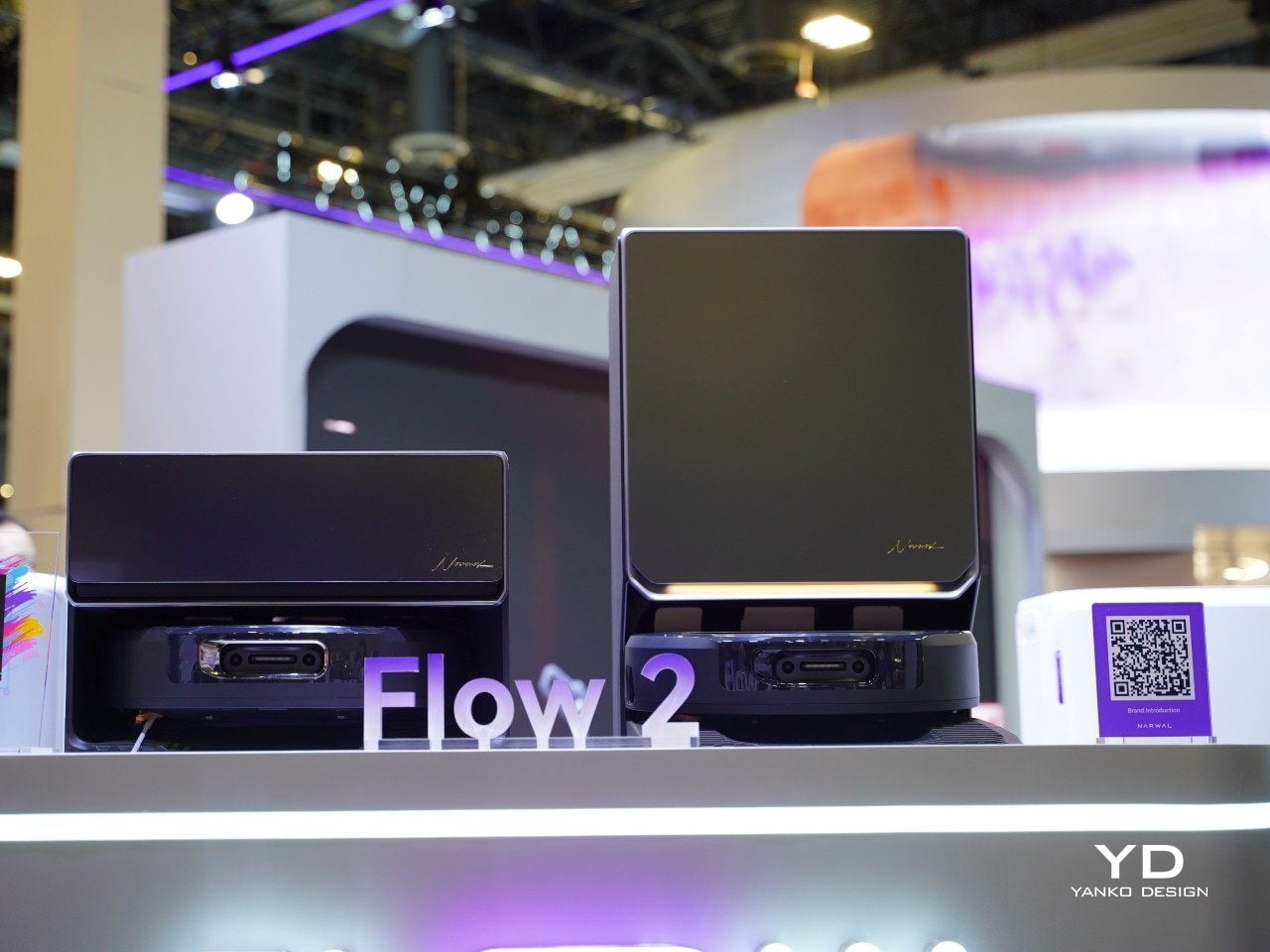
Narwal Flow 2 at CES 2026: Sees Everything, Cleans Smarter

Robot vacuums quietly went from novelty to background appliance, yet many still behave like polite bumper cars. They avoid walls, follow schedules, and send maps, but they do not really understand what they are seeing. A cable, a sock, and a pet toy often get the same treatment, which is why people still hover nearby during automatic cleaning runs, ready to intervene when the robot inevitably gets confused by something obvious.

Narwal Flow 2 is the latest step in the brand’s attempt to build a robot that actually sees and decides. It builds on earlier DirtSense and dual-camera work, but now leans on a NarMind Pro autonomous system and a foundation-model brain to recognize unlimited objects, assign risk levels, and adjust both path and cleaning strategy. This is less about more suction and more about better judgment, the kind that changes behavior based on whether it is looking at a table leg, a pet bowl, or a crawling mat.

Designer: Narwal

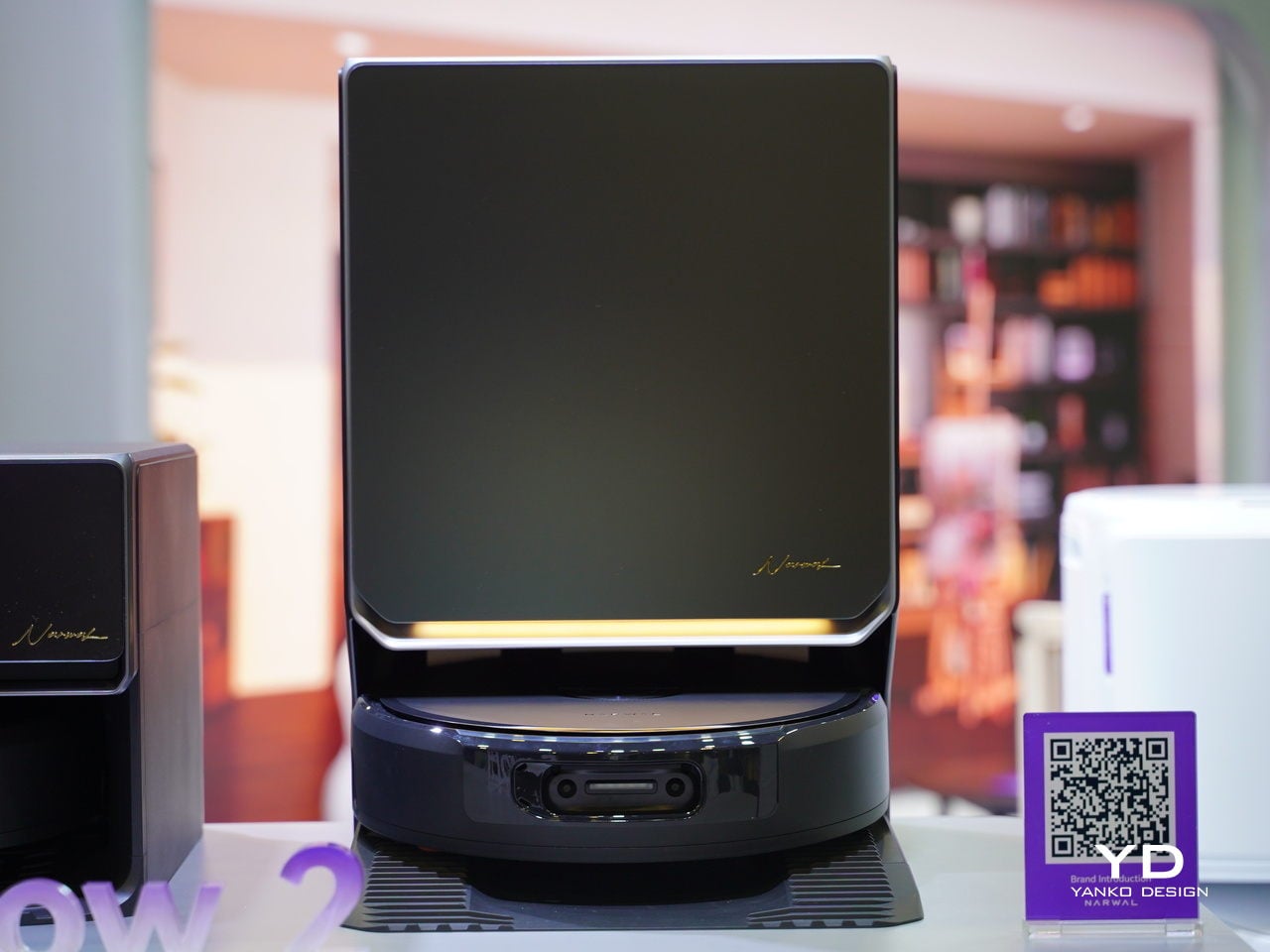
The 2026 flagship also adopts a brand-new design outlook, with a rational arc-form dock featuring a frosted glass panel on the front and easy-lift water tanks shaped for straight-up lifting. The integrated status light bar communicates through the frosted glass instead of scattered LEDs, giving the dock a more premium, sleek presence. It is designed to look less like an appliance you hide in a corner and more like a considered object that can live in visible spaces without visual friction.

A Robot That Sees and Decides

The Narwal Flow 2 uses dual RGB cameras and a VLA OmniVision model running on a 10 TOPS AI platform to capture 1.5 million data points per second. It categorizes objects as no-risk, low-risk, mid-risk, or high-risk, then adjusts distance and behavior accordingly. Walls invite close cleaning within 8 mm, pet bowls get 20 mm of space, and high-risk items like pet waste trigger a protective bypass at 70 mm.
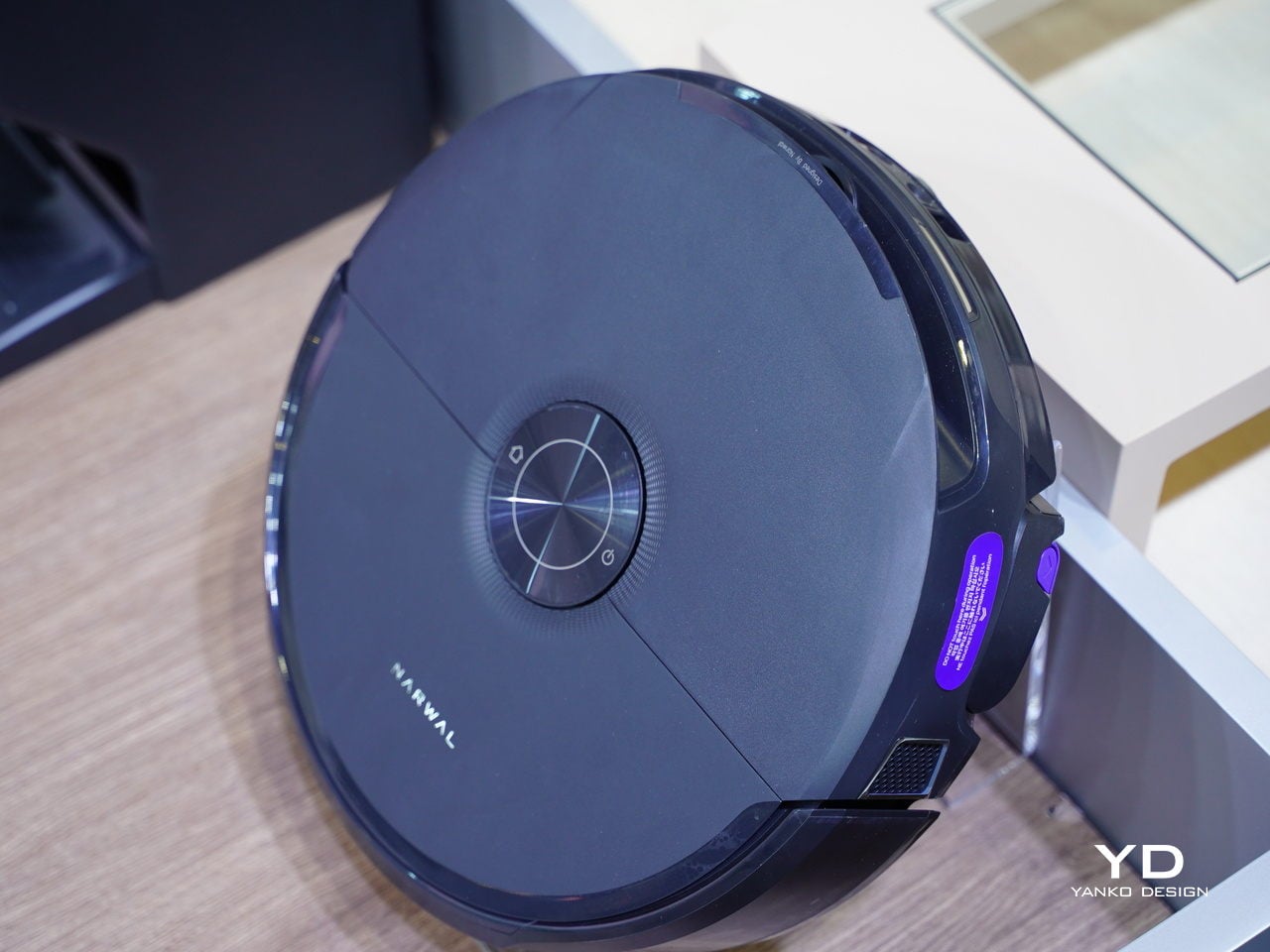
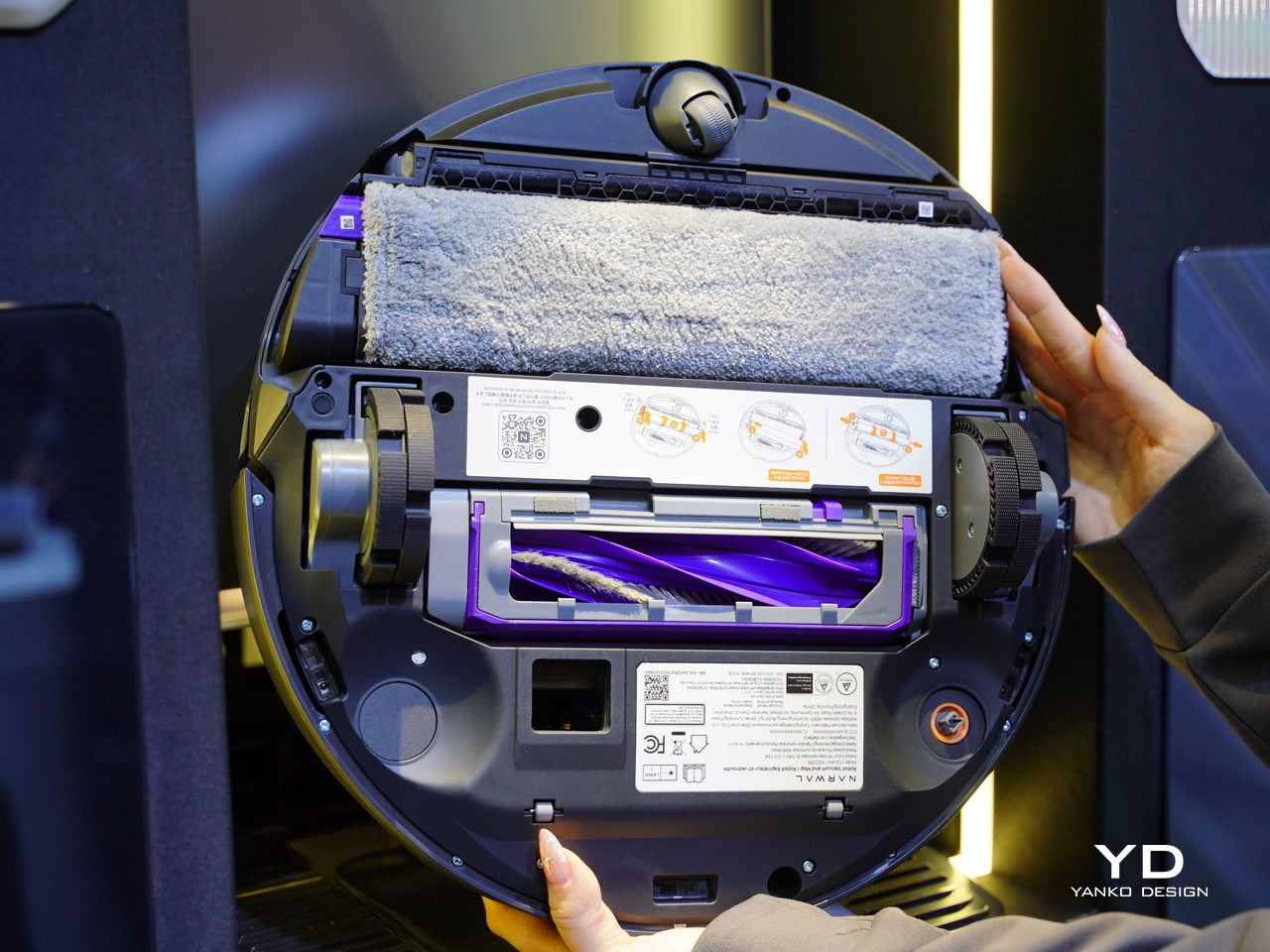
Adaptive smart cleaning means Flow 2 uses different strategies for dry debris, wet spills, and heavy messes. Dual-direction mopping keeps the side brush from dragging dirty water into clean zones, with a reverse pass to protect the brush and a forward pass to lift stains. Cloud-based recognition feeds back into the model, so the robot becomes more tuned to a specific home over time, learning which corners collect dust and which zones need extra attention.

Living with Pets, Babies, and Busy Schedules

In Pet Care Mode, Flow 2 automatically identifies pet-active zones and adapts for deeper cleaning there, while treating pet bowls, beds, and toys as objects to avoid bumping or soaking. The same visual system that keeps it away from waste can be used to scan for a missing pet on command, turning the robot into a quiet scout when you are not home and want to make sure your dog is not locked in a bedroom.

Baby Care Mode shifts behavior around cribs and crawling mats. Flow 2 can drop into ultra-quiet mode near a sleeping baby, recognize toys left on the floor and nudge you to pick them up, and avoid rolling over dedicated play areas to keep them as clean as possible. The goal is not to replace parenting, but to make the robot feel like it understands which zones are more sensitive than others, adjusting volume and intensity without manual scheduling.
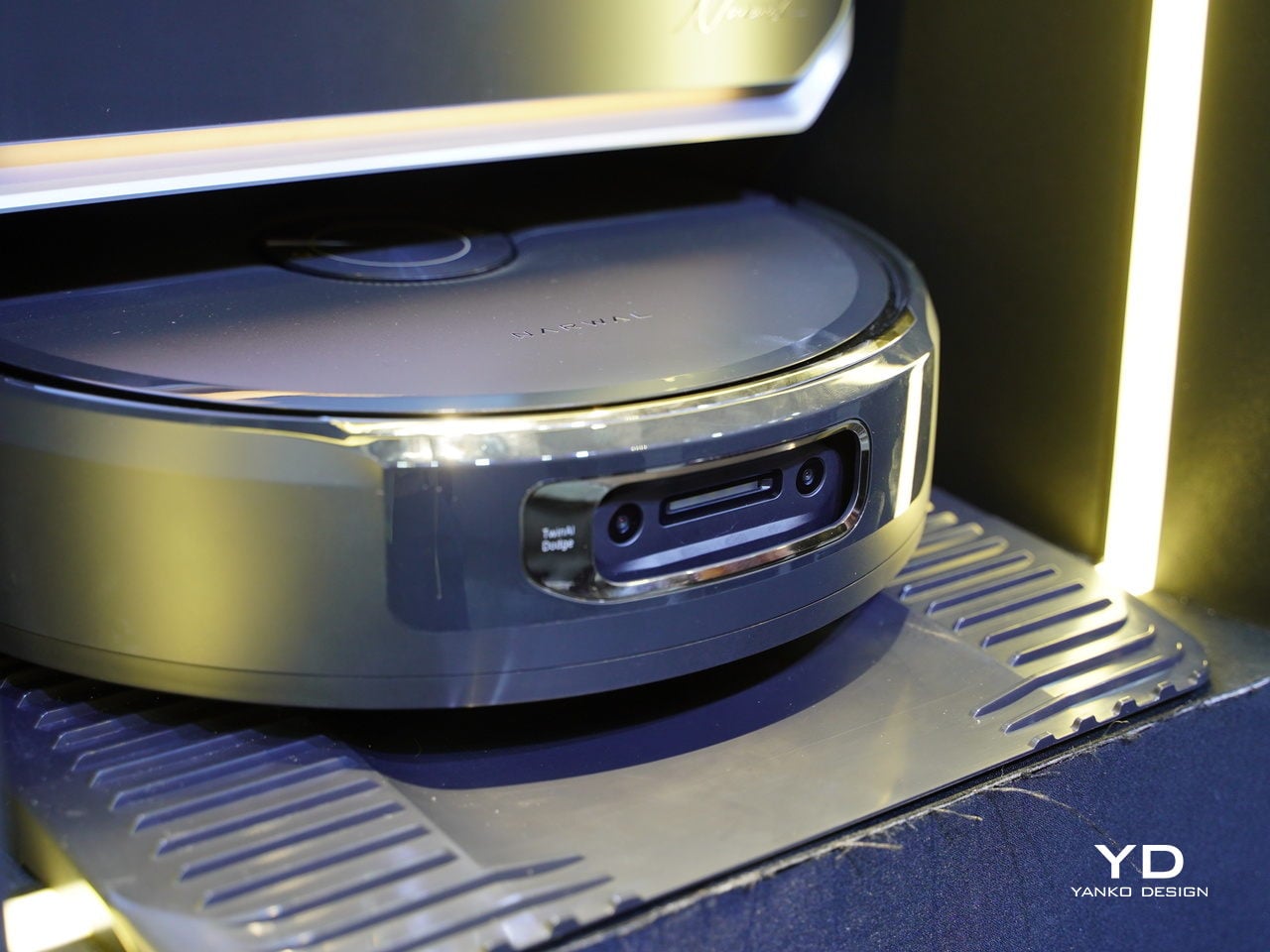
The updated dock and mapping round out the picture. TrueColor 3D mapping turns the home into a more intuitive map where you can tap rooms or furniture for targeted cleaning, while AI Floor Tag remembers floor types and zones. The all-in-one base station now uses a reusable dust bag and washable debris filter, along with hot-water self-cleaning and hot-air drying, so the system stays hygienic without filling a trash bag with single-use consumables every few weeks or emitting odors between runs.

Mopping That Stays Clean While It Cleans

The FlowWash mopping system treats the mop like a moving track rather than a pair of pads. Sixteen angled nozzles continuously infuse the track with fresh water, while a reverse-rolling mop applies 12 N of downward pressure and 140 °F heat. A tight scraper presses against the fabric to strip away dirt in real time, so the surface touching the floor is constantly refreshed instead of slowly turning into a gray sponge you would not want to touch.
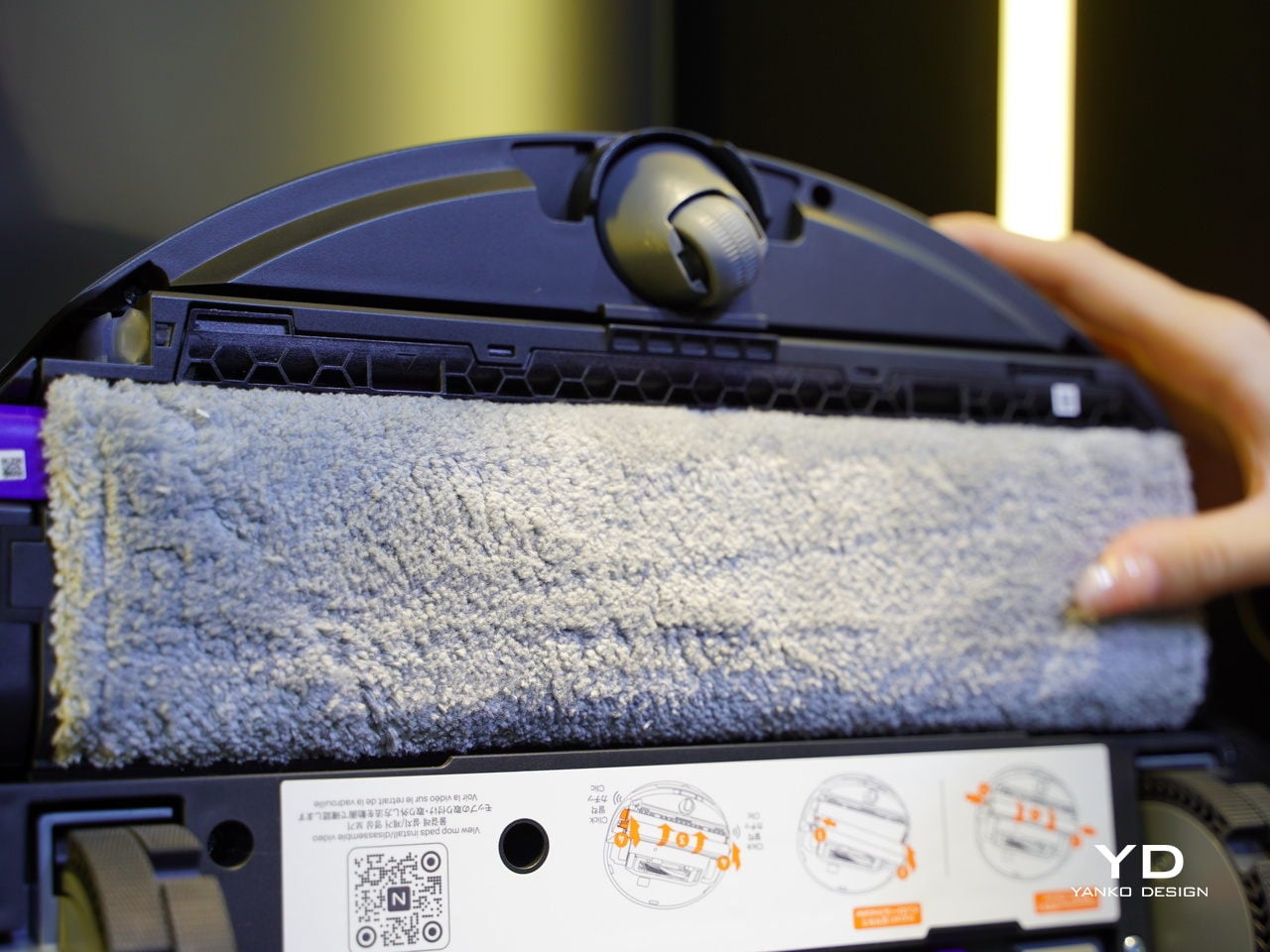
Wastewater extraction and storage, with a built-in stirrer in the dirty tank, prevents residue and odors from settling. That matters in homes where mopping is not just about dust, but about food spills, pet accidents, and whatever kids drag in from outside. The system is designed so that by the time Flow 2 returns to its dock, both the floor and the mop have been treated, not just one at the expense of the other.

On a mixed floor with tile in the kitchen and wood in the living room, Flow 2 can push harder and use hotter water on stubborn kitchen stains, then ease off as it moves into more delicate areas. EdgeReach capabilities let the track mop get within 0.19 in of walls and baseboards, reducing the need for manual follow-up with a traditional mop that you have to wring out by hand.

Beyond the Floor
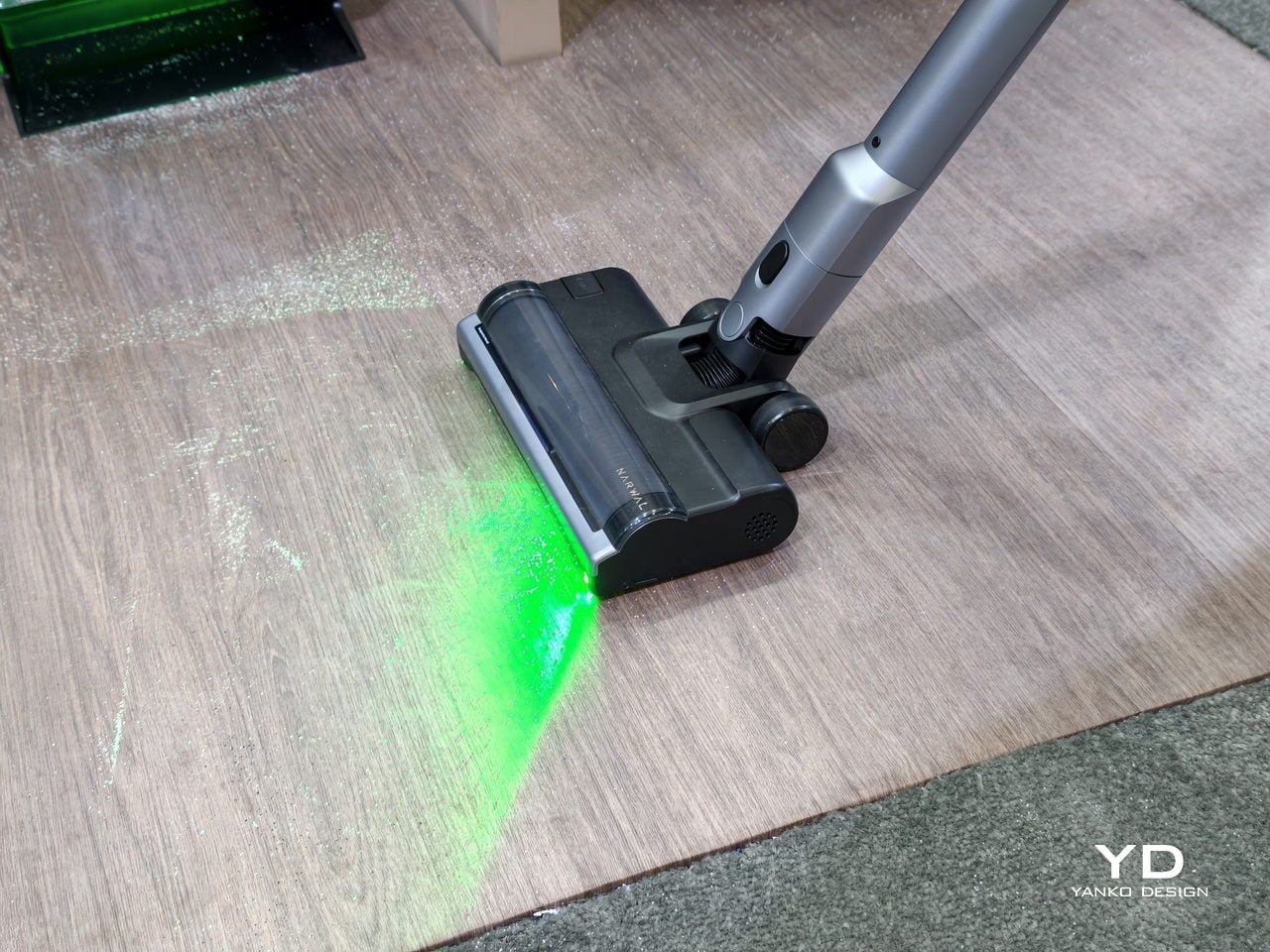
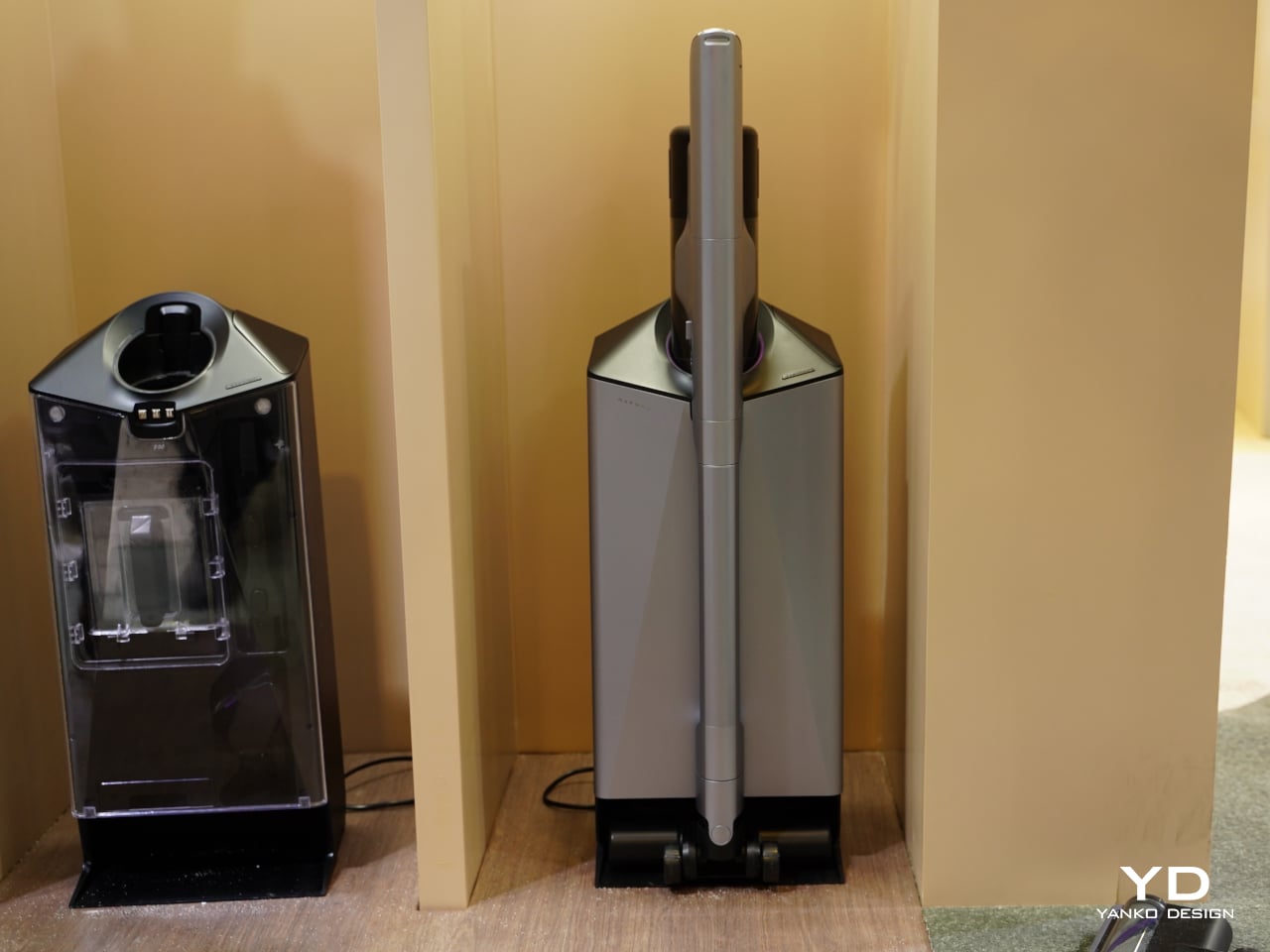
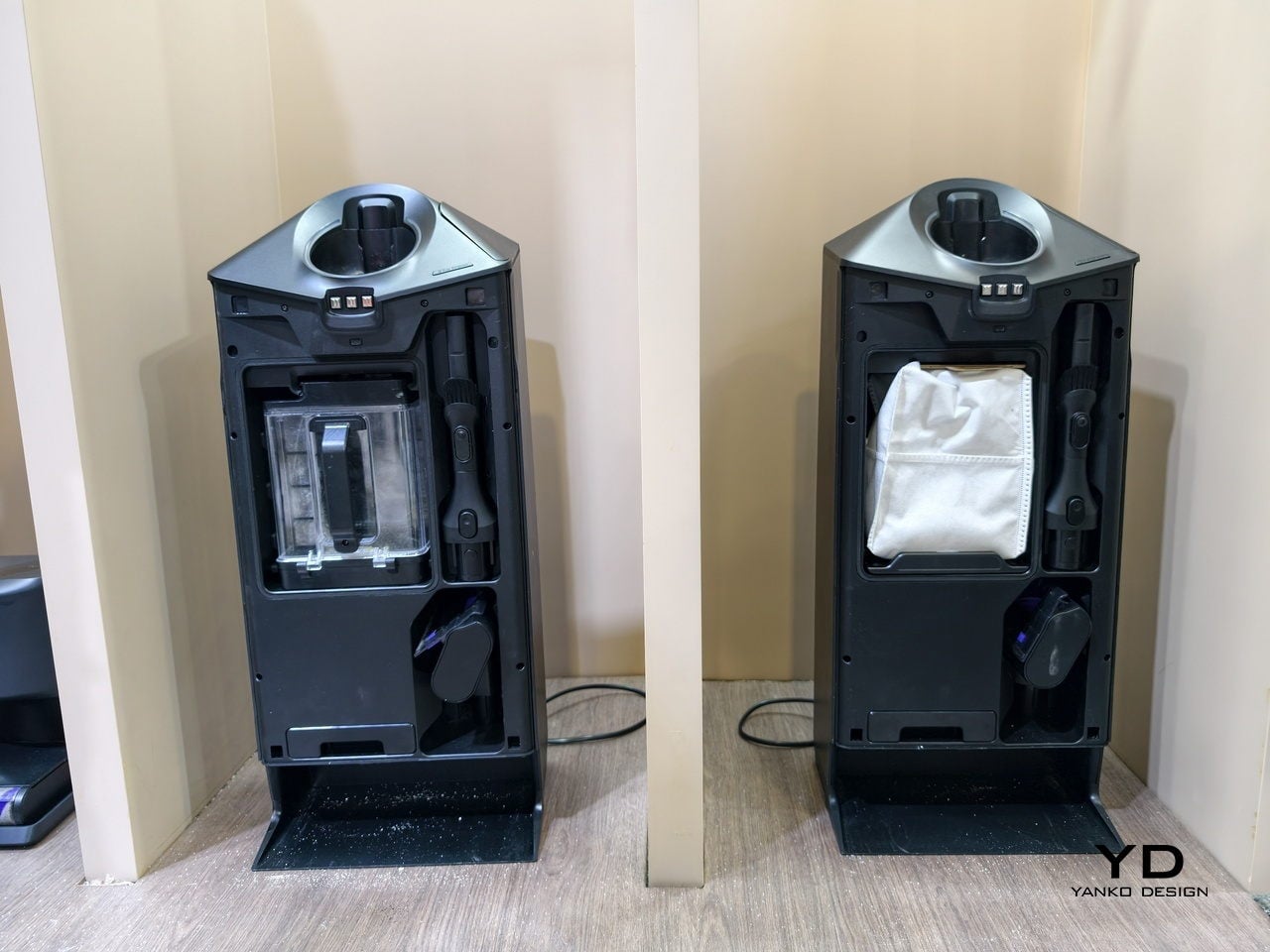
The Flow 2 is not the only thing Narwal is launching at CES 2026. The V50 Series cordless vacuum brings the same auto-empty, smart dirt detection philosophy to a stick form, with a compact dock that handles a 3.2qt dust bin, active dust scraping, and push-in charging. At 3.1lb with dual detachable batteries and 210 AW of suction, it combines CarpetFocus Mode and full-cycle de-tangling with a dirt-detection headlight and multi-cyclone H13 filtration, turning a handheld into something that feels almost as hands-free as a robot.
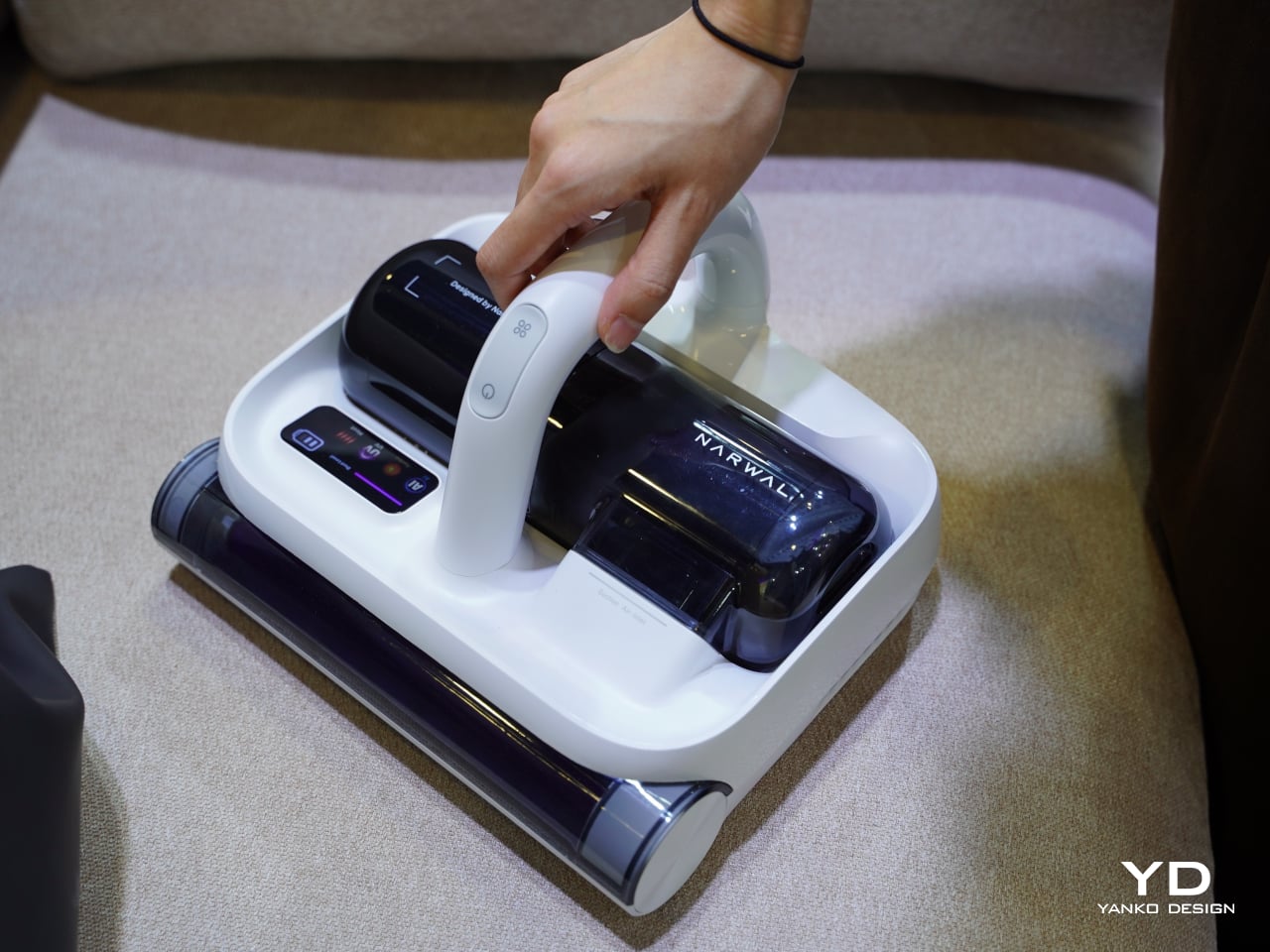
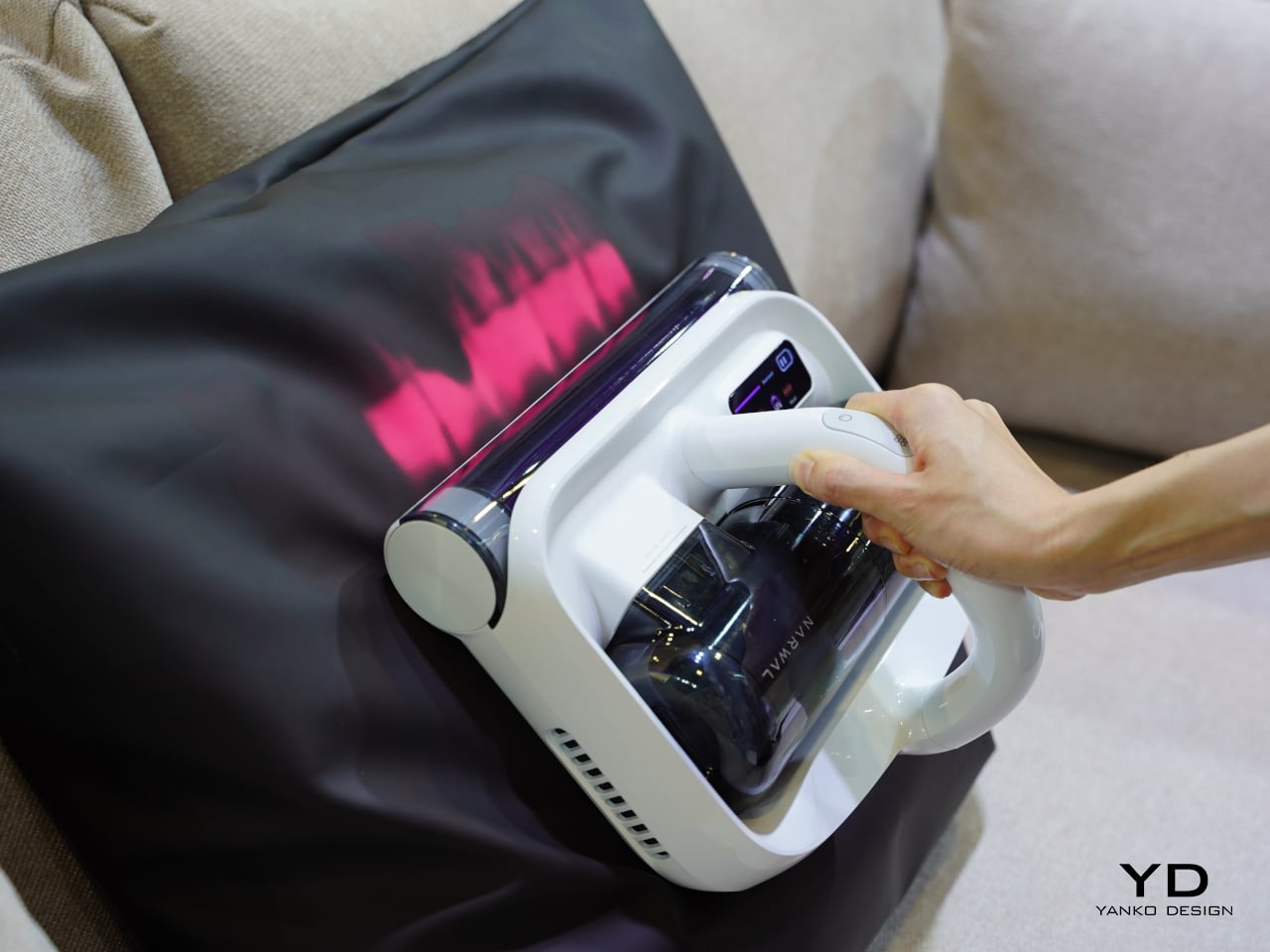
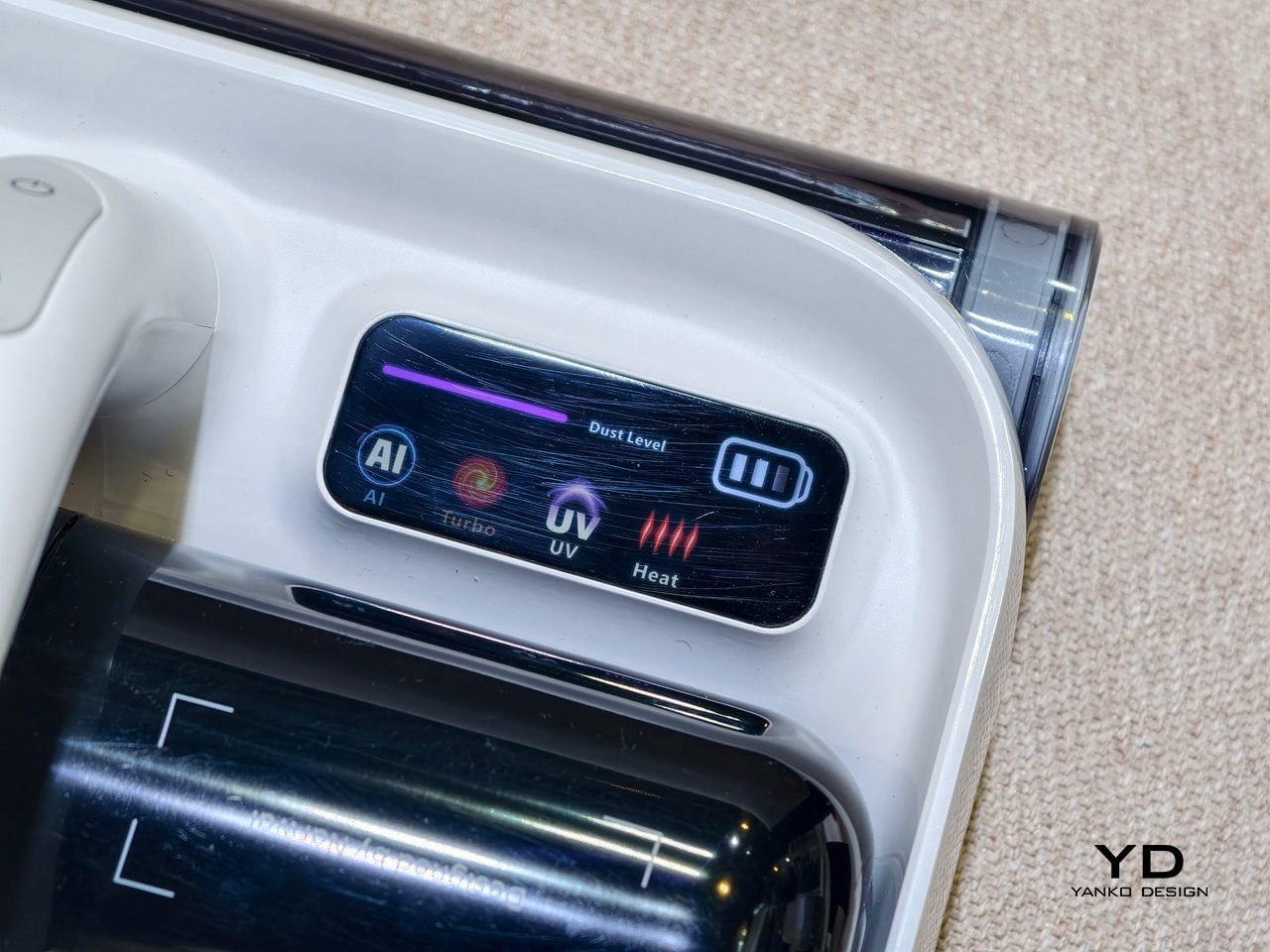
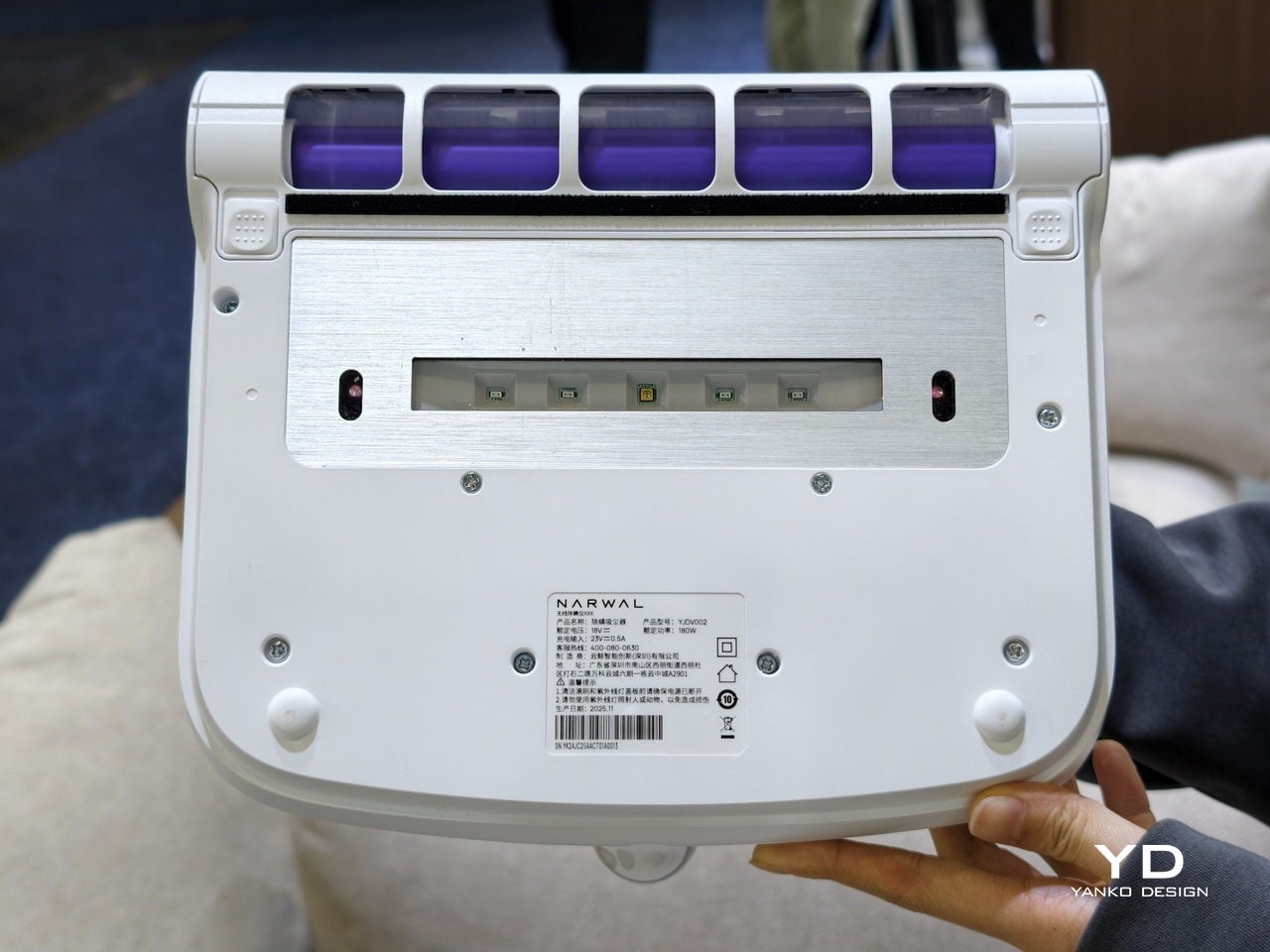
The U50 Series mattress vacuum targets a different corner of the home, using 137°F iron-heating, UVC sterilization, 60,000 taps per minute, and 16,000 Pa of suction to pull mites and allergens out of mattresses and upholstery. It weighs just 3.7lb and uses sealed, disposable dust bags with a transparent window, so you can treat beds and sofas without dealing with messy dust cups or touching what comes out. Together, V50 and U50 show Narwal extending its maintenance-free, AI-aware design language into spaces the robot cannot reach, keeping the entire home cleaner without multiplying the number of chores you actually have to do.

Narwal Flow 2: See Further, Think Deeper, Clean Smarter
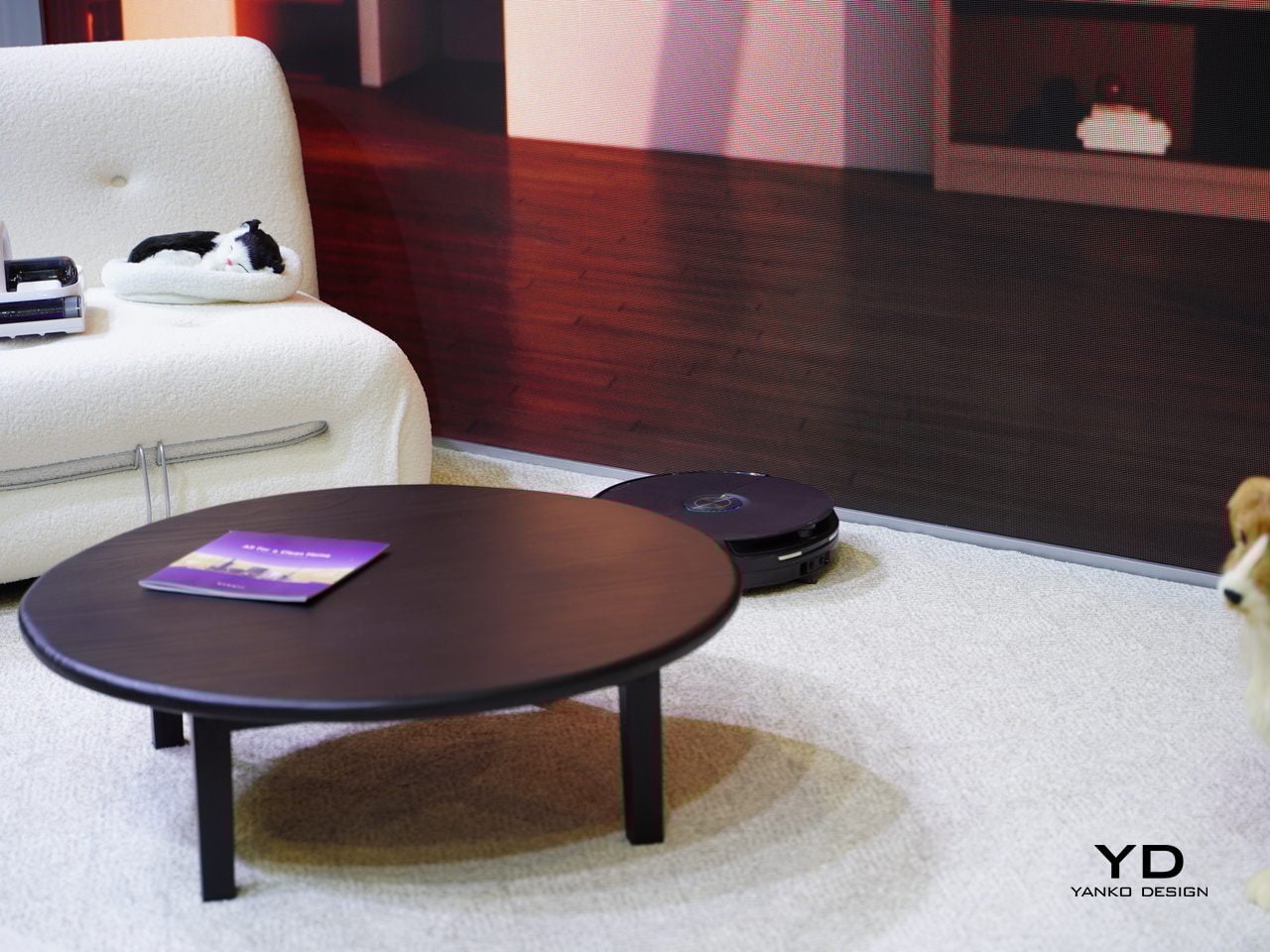
Flow 2 is a sign that robot vacuums are finally moving from smart enough not to fall down the stairs to smart enough to adapt to how you live. It still has big suction numbers and a long spec sheet, but the interesting part is how it sees pets, babies, and messes differently, and how it keeps its own mop clean while it works. For a category that has been chasing power for years, that kind of judgment feels like the more meaningful upgrade, especially when the alternative is manually zoning a map and hoping the robot does not knock over a water bowl or wake up a napping toddler on its next routine pass.

The post Narwal Flow 2 at CES 2026: Sees Everything, Cleans Smarter first appeared on Yanko Design.
LG’s CLOiD robot can fold laundry and serve food… very slowly

When LG announced that it would demo a laundry-folding, chore-doing robot at CES 2026, I was immediately intrigued. For years, I've wandered the Las Vegas Convention Center halls and wondered when someone might create a robot that can tackle the mundane but useful tasks I despise like folding laundry. With CLOiD (pronounced like "Floyd"), LG has proven that this is theoretically possible, but probably not likely to happen any time soon. 

I went to the company's CES booth to watch its demonstration of CLOiD's abilities, which also include serving food, fetching objects and fitness coaching. During a very carefully choreographed 15-minute presentation, I watched CLOiD grab a carton of milk out of the fridge, put a croissant in an oven, sort and fold some laundry and grab a set of keys off a couch and hand them to the human presenter.

Throughout the demonstration, LG showed off how its own appliances can play along with the robot. When it rolled over to the fridge, the door automatically opened, as did the oven. When the LG-branded robot vacuum needed to move around a hamper, CLOiD helpfully cleared the path. But the robot also moved very slowly, which you can see in the highlight video below. 

The appliance maker is selling the setup as a part of its vision for a "zero labor home" where its appliances and, I guess, robotics technology can come together to take care of all your chores and household upkeep. Maybe I'm jaded from a decade of watching CES vaporware, but I left the slick demo thinking the concept is unlikely to amount to much anytime soon.

On one hand, it is exciting to see robots competently performing tasks that would actually be useful to most people. But this technology is still far from accessible. Even LG isn't making any firm commitments about CLOiD's future as anything more than a CES demo. The company has instead said that CLOiD is a signal of its interest in creating "home robots with practical functions" and "robotized appliances," like fridges with doors that can open automatically. 

That may be a more reasonable target for the company (and yet another way for LG to sell us more appliance upgrades). But it's still pretty far from anything approaching the fantasy of a "zero labor home."

This article originally appeared on Engadget at https://www.engadget.com/home/smart-home/lgs-cloid-robot-can-fold-laundry-and-serve-food-very-slowly-181902306.html?src=rss

These robotic sneakers gave me a surprising boost at CES

I'll admit that I've always kind of taken walking for granted. Other than a knee injury more than a decade ago, my ability to walk long distances has largely been limited only by my own choices. That's not the case for everyone, though. And robotics company Dephy has created a pair of robotic sneakers, called the Sidekick, that are meant to help people who want to walk more than their bodies might otherwise be capable of.

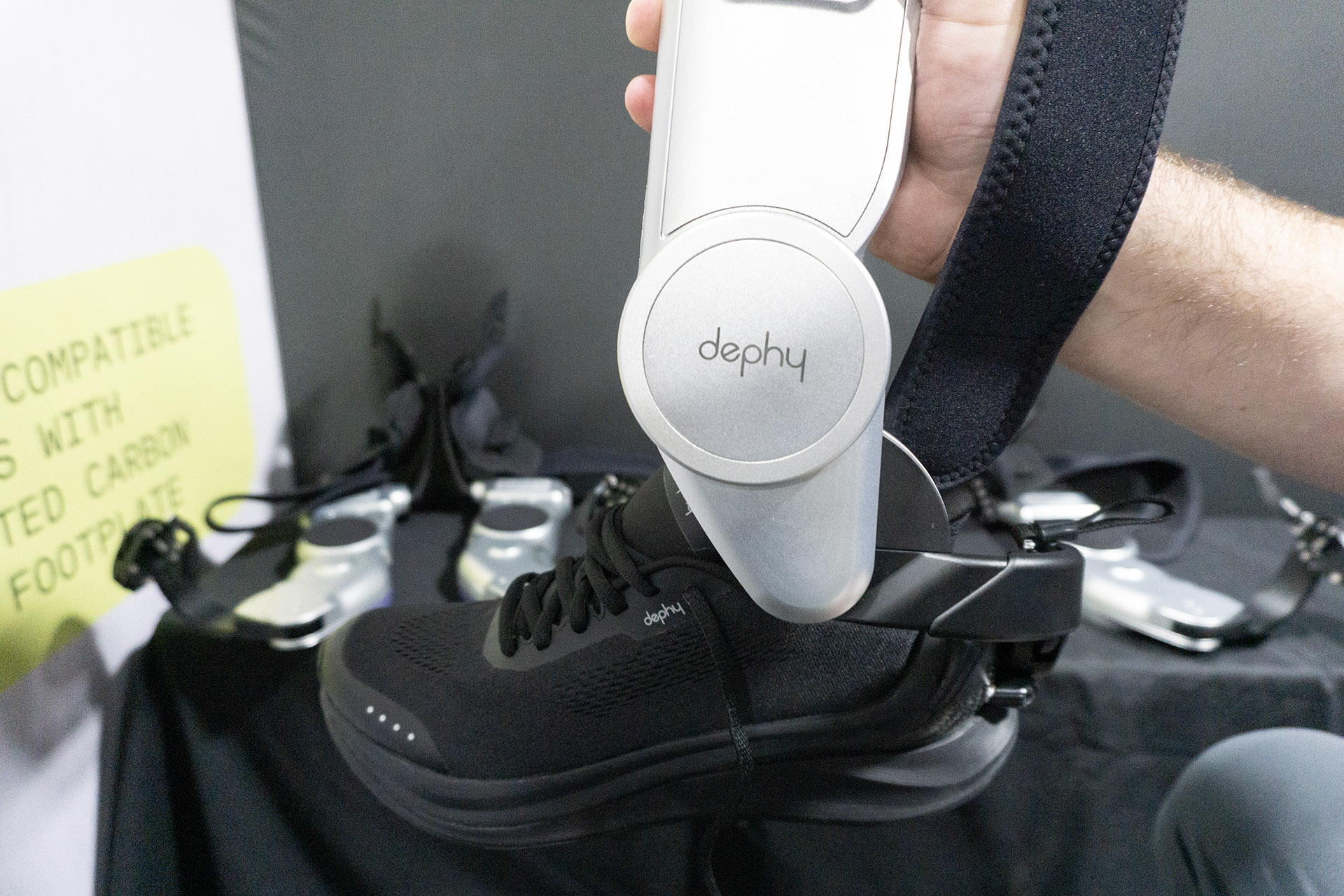
The system consists of two parts: an ankle-worn exoskeleton and a special pair of sneakers that attach to it. The exoskeleton hooks onto the back of the shoe and is secured with a strap around your calf. The battery powered device is equipped with sensors that can detect and adapt to the wearer's gait in order to deliver an extra "boost" with each step. 

The whole setup is pricey, at $4,500, but Dephy is betting that people who have "personal range anxiety" might be willing to pay for the extra confidence the Sidekick can provide. "This is a device that's kind of like [having] an extra calf muscle," Dephy CEO Luke Mooney told me. 

The Sidekick.
The Sidekick.
Karissa Bell for Engadget

I was able to take the Sidekick for a spin around the CES showfloor and it was a truly surprising sensation. The best way I can describe walking with the Sidekick powered on is that with every step forward there's a noticeable upward push from under your heel. It wasn't enough to throw me off balance, but it did feel a bit strange.

The Sidekick has adjustable power levels based on how much help you might need. At the highest level, it definitely felt unnecessarily pushy. The lower levels were still noticeable but felt less disruptive. I just felt… bouncy. Later, when Mooney turned off the power entirely, I noticed that my feet felt weirdly heavy in a way they hadn't just a few minutes before. 

Mooney was quick to tell me that I'm not Dephy's target demographic. "A lot of times people who are fit, or like athletes, actually struggle to adopt to the technology because their body's so in tune with how they move," he said. "Whereas folks who are not as physically active and fit, their body's ready to accept help."

The company's technology will be used in products more focused on athletic performance, however. Dephy has partnered with Nike on its upcoming robotic sneaker currently known as Project Amplify. Mooney declined to share details on the collaboration, but the shoemaker has claimed that some early testers have been able to improve their mile times by two minutes. 

I tried the Sidekick early in the day. Several hours later, though, when I was walking between the Las Vegas Conventions Center halls for the third or fourth time, I started thinking about those robotic sneakers again. I was getting close to 10,000 steps and hadn't sat down for hours. My feet were sore. I remembered that strange, bouncy boost and thought it sounded kind of nice.

This article originally appeared on Engadget at https://www.engadget.com/wearables/these-robotic-sneakers-gave-me-a-surprising-boost-at-ces-174500005.html?src=rss

Spotify now lets you share what you’re listening to in real time via chat

Spotify is rolling out more social features to keep people on the platform. It's adding a new tool to its messaging platform that lets users see what their friends and family members are listening to in real time.

Once activated, a user's listening activity will be displayed at the top of the chat. The other person in the chat can tap the bar to play a particular track, save it or react with an emoji. People can also, of course, comment directly to either praise or rag on the song selection.

There's another little addition to Spotify's messaging system. Users will now be able to invite chat participants to start a Jam, which is the app's collaborative listening feature. Premium users will find a "Jam" button in the top right corner, which sends an invite. This lets two people add tracks to a shared queue and listen together. Free users can join one of these sessions, but cannot initiate.

It's worth noting that the messaging platform is currently just a one-on-one affair. There's no option for a group chat, so users won't be able to spy on multiple people simultaneously. These tools are rolling out gradually for iOS and Android right now, but won't be broadly available for a few weeks.

This article originally appeared on Engadget at https://www.engadget.com/entertainment/music/spotify-now-lets-you-share-what-youre-listening-to-in-real-time-via-chat-173749120.html?src=rss

IKEA’s first CES appearance included a $6 Matter smart bulb

I know IKEA is all about small, efficient spaces, but their meeting room inside the Venetian during the company’s first-ever CES was the same size as my (not large) living room. Plenty of people were as excited as I was to see what the Swedish designers brought with them to the show and the room was thick with humans. A bowl full of BELÖNING bars helped ease my mounting claustrophobia and I was able to check out the new smart home lineup.

Like most things IKEA, the 21 Matter-compatible smart home devices are simple, sleek and silly affordable. They include a $6 smart bulb, an $8 smart plug, a $6 smart remote and a slew of home sensors. A slightly pricier ($15) globe bulb is a direct answer to my longstanding wish for more attractive (but affordable) smart bulbs.

One of my favorite of the new devices was the BILREA remote control. It’s a smooth, riverstone-like object that either comes with two simple buttons or a button and a scroll wheel. It pairs up with and controls IKEA’s smart devices and lamps but what I really love is the magnetic mount integrated into its body. You can either attach the remote to any ferrous surface or use the small metal chip and included adhesive to give the remote a home on a wall or elsewhere. Why have so few other companies come up with a way to neatly and simply organize these tiny yet crucial controllers?

The whole suite is Matter-compatible and, as such, it needs a hub to function. IKEA has its own, DIRIGERA, but, true to the Matter principles of interoperability, you can also use a Matter hub you already own. The new line of smart home devices should start showing up in IKEA stores and on its website sometime in January.

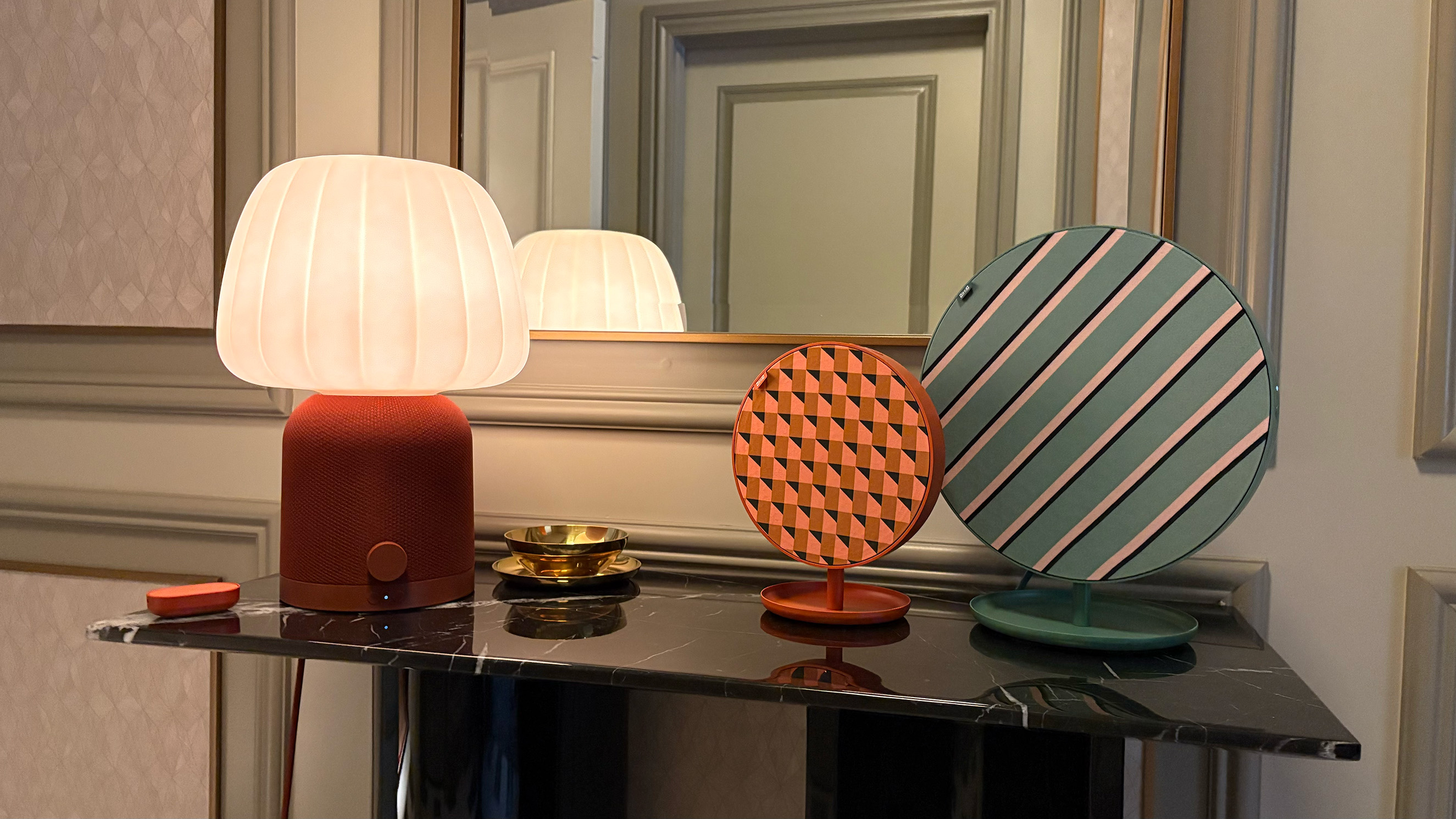
Lamps and speakers from the TEKLAN smart home collection.
Amy Skorheim for Engadget

Apart from the egalitarian and utilitarian items, the Swedish brand also brought a new collection of products, TEKLAN, designed in collaboration with designer and photographer Tekla Evelina Severin. These include circular Bluetooth speakers in color-saturated patterns and solids ranging from eight to 18 inches. There are also two new speaker lamps, called KULGLASS, that have glass lampshades inspired by soft serve ice cream. Those devices went on sale on January 1 this year.

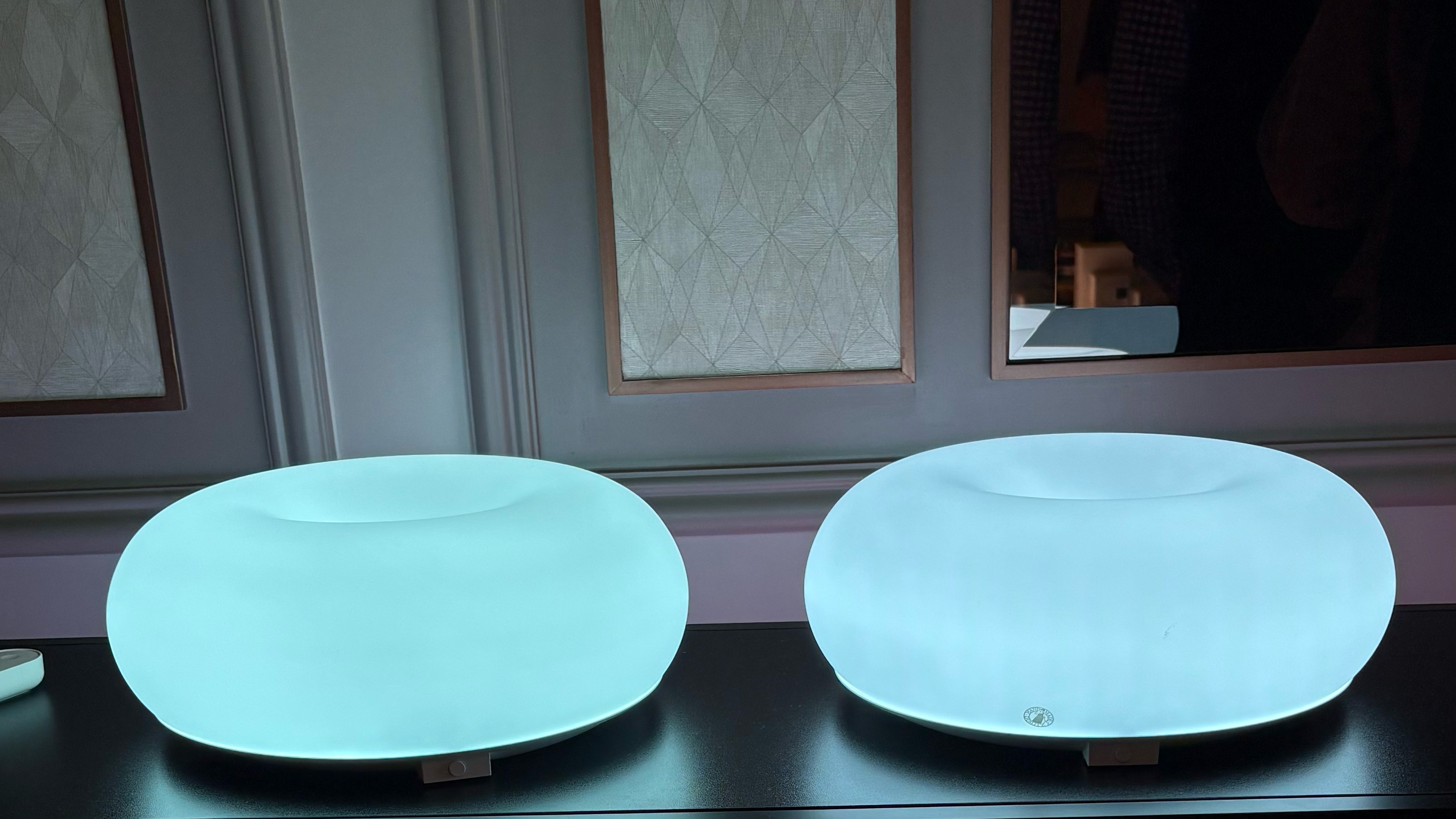
Finally, I made my way (three feet) over to the curious, donut-shaped lamps. This is the smart version of the store’s popular VARMBLIXT lamp that debuted three years ago. It’s controllable through the app or the remote I mentioned above and gently cycles through a rainbow of color patterns, shifting slowly from shade to shade. I got lost for a while watching it morph from white to pink to red and back again. For a moment I forgot I was wedged into a room too full of people. I figured those around me probably wanted a look at the lamp for themselves, so I took a longing glance back at the BELÖNING bowl and squeezed out of the room.

The popular VARMBLIXT donut lamp is now smart.
Amy Skorheim for Engadget

This article originally appeared on Engadget at https://www.engadget.com/home/smart-home/ikeas-first-ces-appearance-included-a-6-matter-smart-bulb-172623474.html?src=rss

AI-powered Razer Motoko headphones with 4k cameras do what smart glasses can

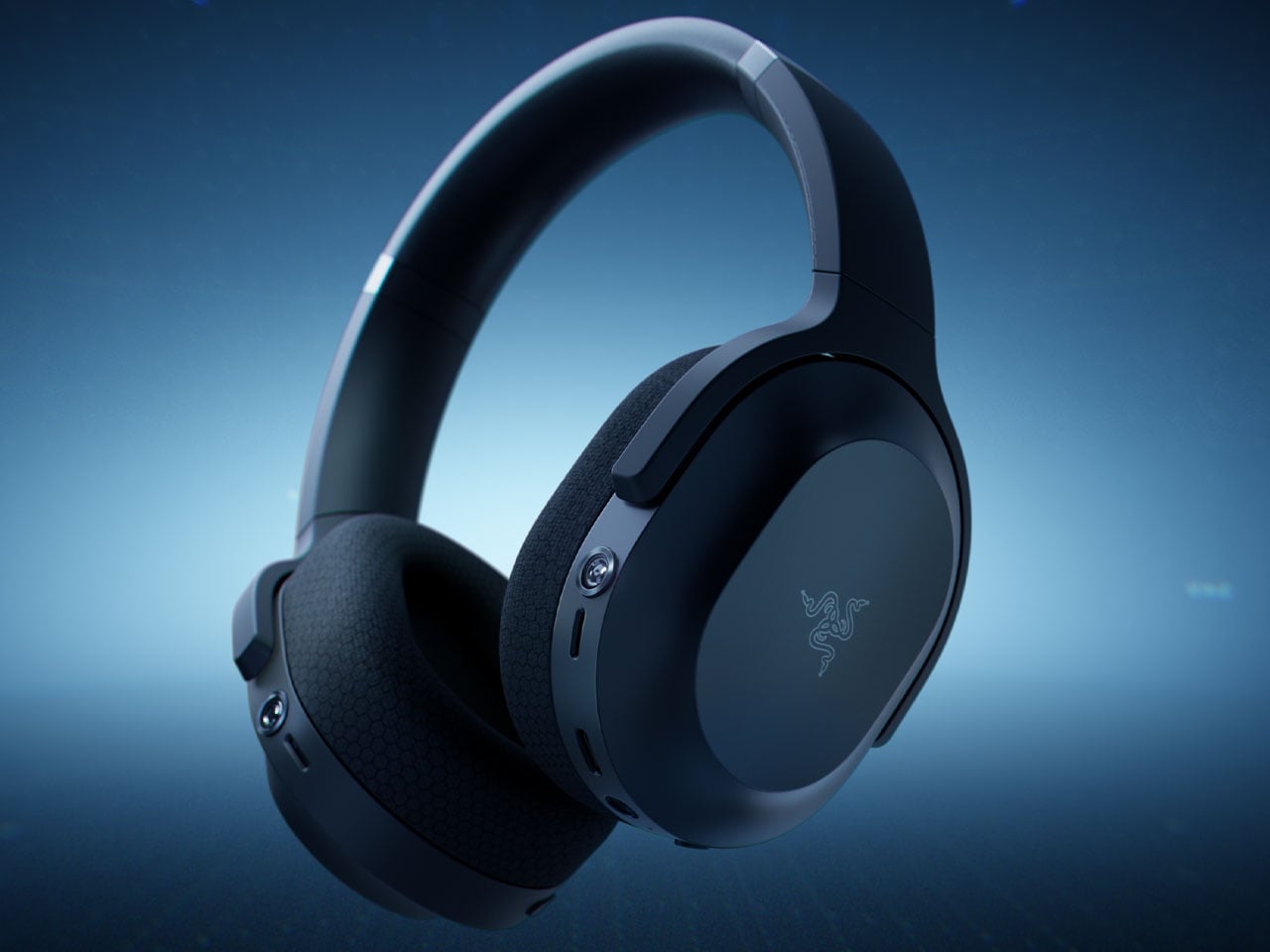
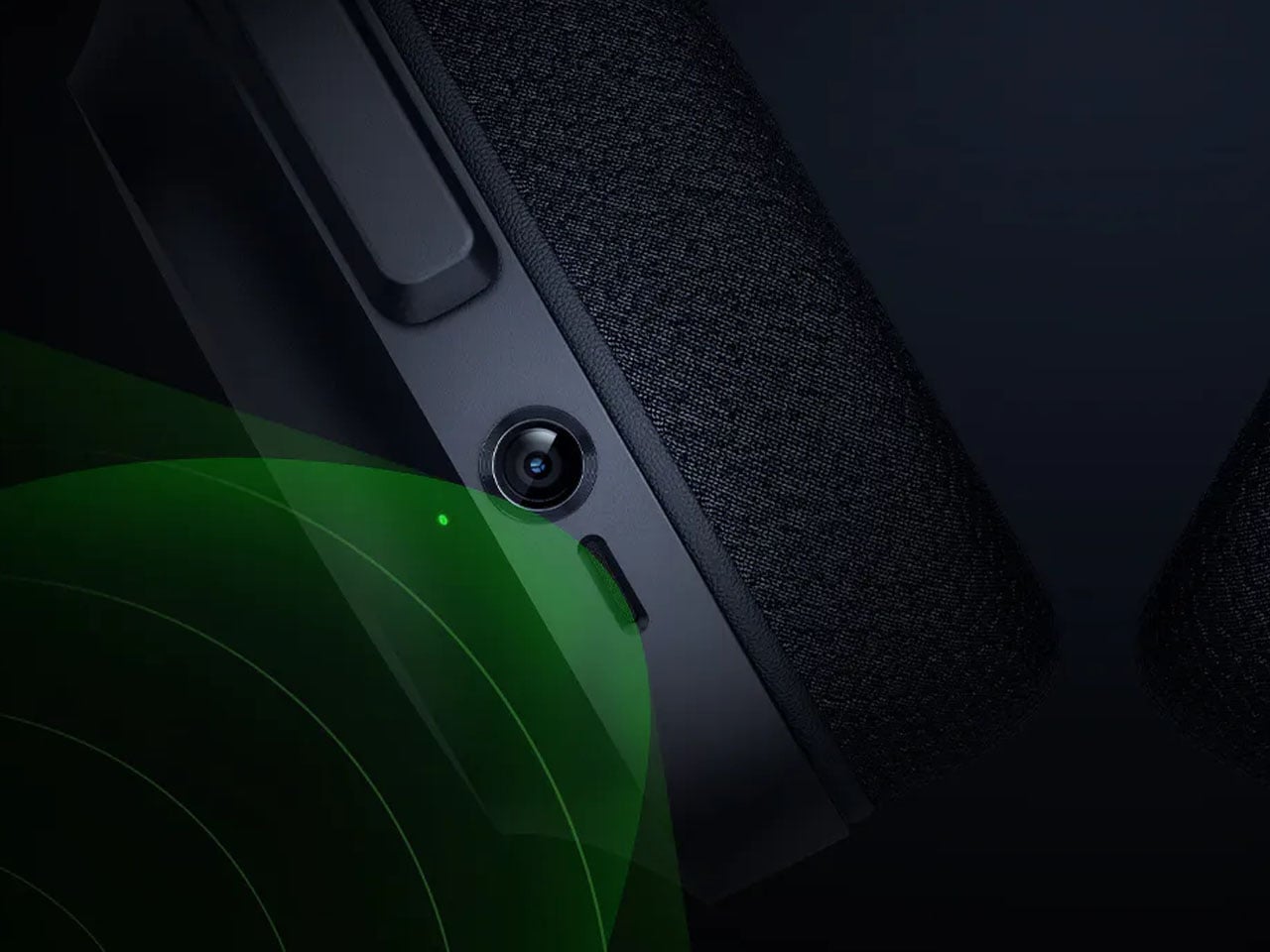
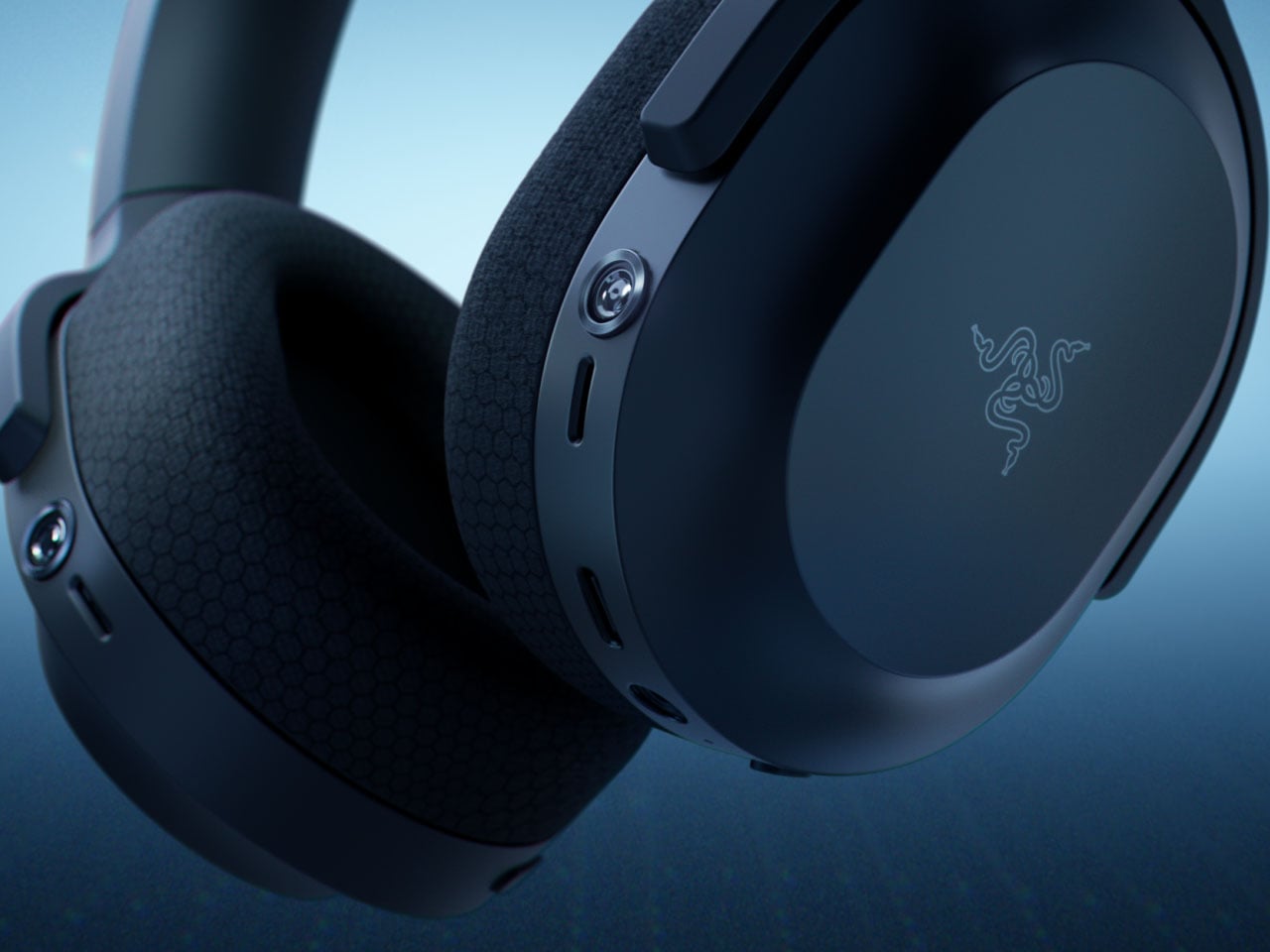
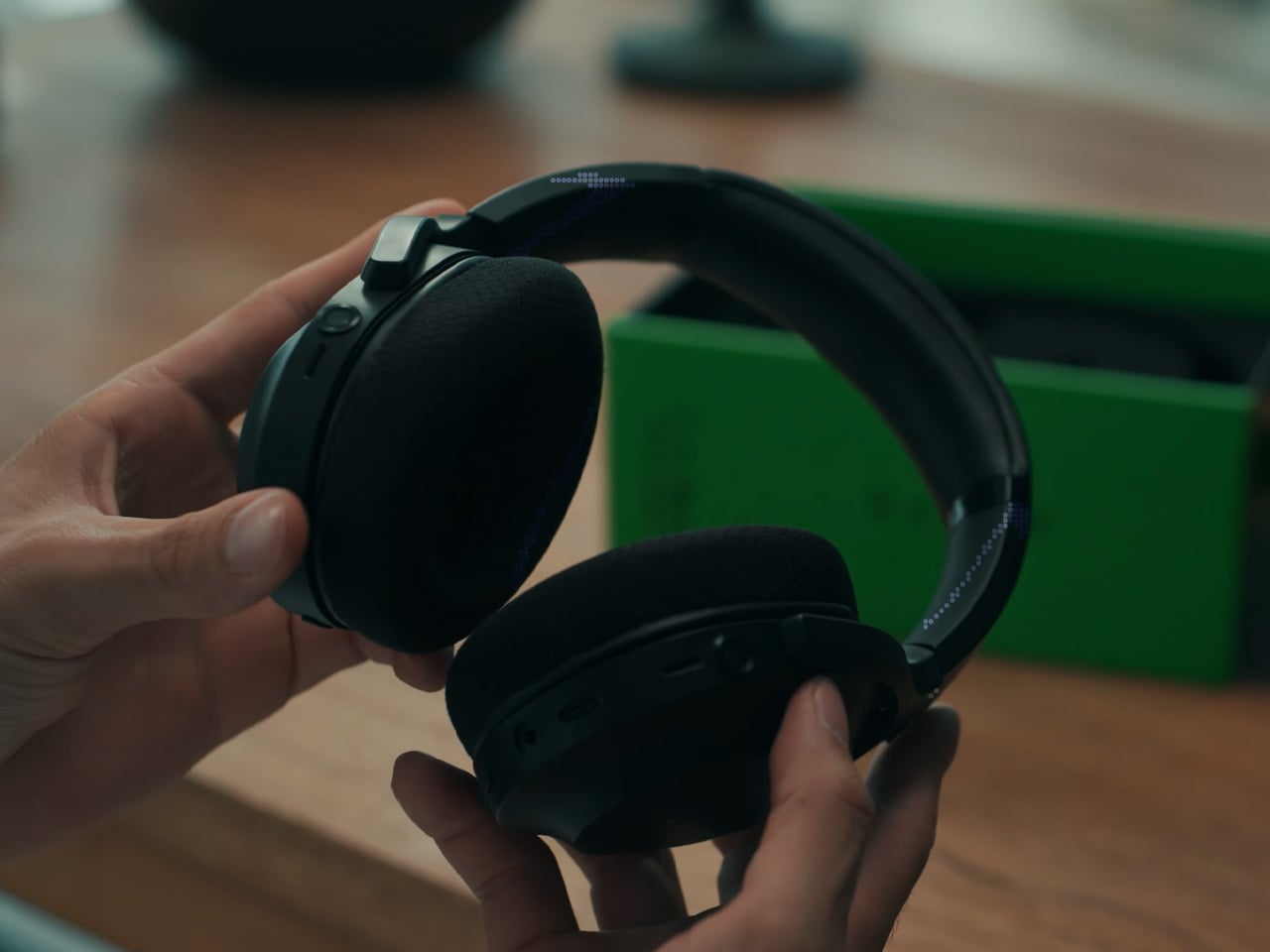
Every year at CES, Razer has some exciting tech on offer. This year is no different as they’ve come up with headphones that go beyond audio nirvana. Dubbed Project Motoko, the over-ear headphones are the next frontier of wearable AI, since they have eyes. Yes, the concept cans are loaded with a pair of Sony 4K cameras (with 12MP resolution), to make you ditch your smart glasses for good reason. Since most of us wear headphones more than smart glasses, this innovation makes complete sense.

AI is the name of the game at this year’s CES, even though we’ve seen cramming of machine learning technology in things where it makes no sense or is not useful at all. The Motoko headphones are different as they build on an accessory we already use a lot. The in-built cameras analyse the world around you, seeing what the user sees, in first-person view. They can do pretty much what other smart glasses can, and yes, they play ear-pleasing music when you need to zone out.

Designer: Razer

According to Nick Bourne, Global Head of Mobile Console Division, Razer, “By partnering with Qualcomm Technologies, we’re building a platform that enhances gameplay while transforming how technology integrates into everyday life. This is the next frontier for immersive experiences.”

Motoko headphones can do translations in real time, beam weather updates, provide navigation input, and a whole lot more. The biggest advantage Razer should be appreciated for compared to smart glasses is that the Motko can fetch information from multiple AI assistants, including Grok, Gemini, ChatGPT, Perplexity, and Meta. Most basic functions run on the headphones, like checking the calendar updates and schedules. For other deeply embedded tasks, you have to pair them with a phone or PC. For the most part, someone unassuming won’t be able to tell the difference between a normal pair of headphones and these.

The headphones are built on the Qualcomm Snapdragon platform, making them AI-powered in a real sense. You can recognize objects, track exercises, or even summarize information. The stereoscopic vision extends the field of view beyond the human peripheral vision capabilities. In combination with the audio input and the far-and-near field microphones, the headphones detect dialogue, voice commands, or ambient noises. Thereby, the headphones use all this data in machine learning applications, which ultimately assist the user in daily tasks, work, and, of course, gaming. Down the line, you could be using them for preparing meals in the kitchen, immersive AI guidance in strategy games, or translating in real-time when travelling abroad.

As per Ziad Asghar, SVP and GM of XR at Qualcomm Technologies, they are thrilled to work with Razer to push “AI wearable computing into a new era where intelligence, performance, and immersive experiences converge.” There is no word yet on the probable timeline for the release of the headphones, but they definitely are exciting tech to experiment with and use in daily life. The AI-assisted feature should work at a deeper level with the headphones, and it’ll be exciting to use them hands-on.

The post AI-powered Razer Motoko headphones with 4k cameras do what smart glasses can first appeared on Yanko Design.
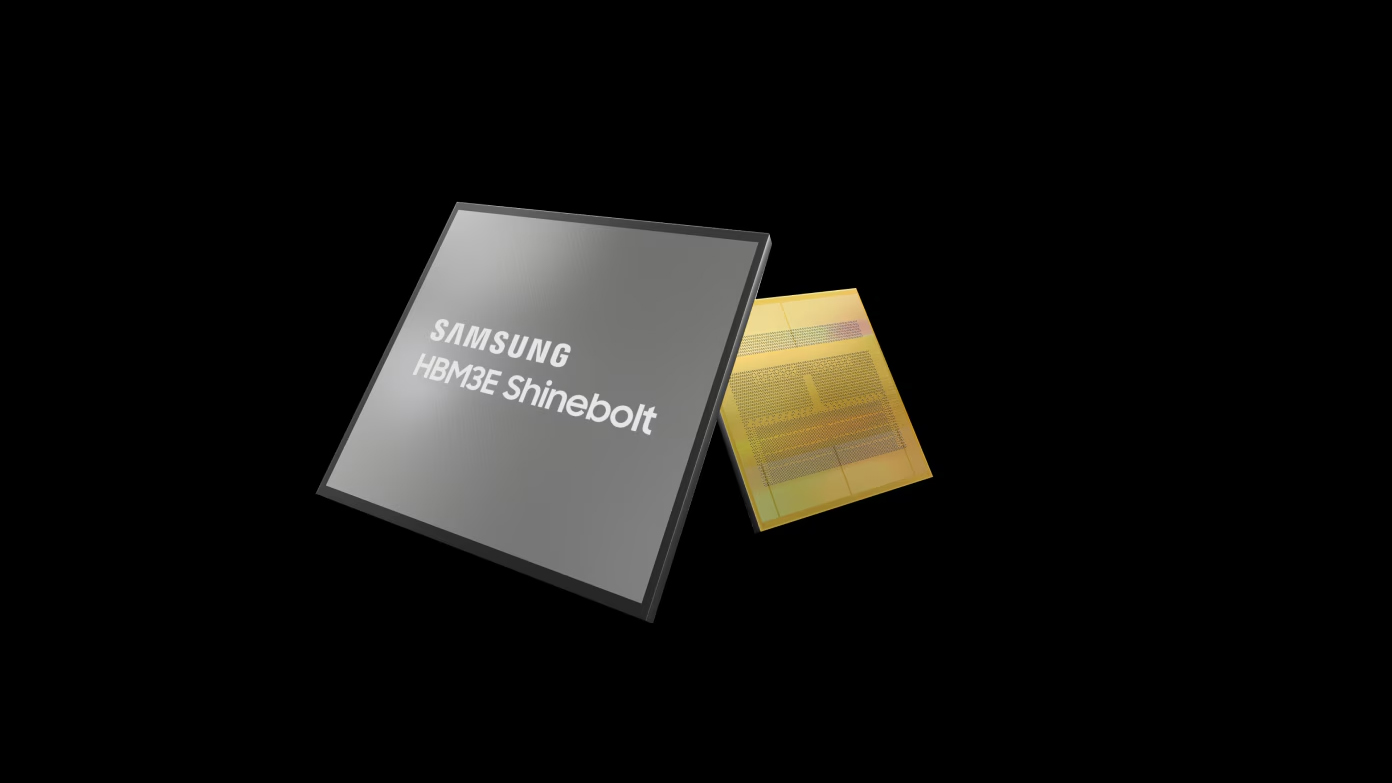
Samsung says RAM costs will likely lead to price hikes soon

Samsung says AI data center-fueled RAM scarcity could raise the company's prices. Wonjin Lee, Samsung's global marketing leader, sounded the alarm in an interview with Bloomberg on Tuesday at CES 2026. As recently as early December, Samsung told Reuters that it was monitoring the market but wouldn't comment on pricing. So, the change of tune can be seen as a deliberate signal to soften the ground ahead of an official announcement.

"There's going to be issues around semiconductor supplies, and it's going to affect everyone," Samsung’s Lee said. "Prices are going up even as we speak. Obviously, we don't want to convey that burden to the consumers, but we're going to be at a point where we have to actually consider repricing our products."

Marketing image of Samsung HBM RAM against a black background
Samsung appears to be softening the ground ahead of an official announcement.
Samsung

The global RAM shortage is the result of AI data centers gobbling up high-bandwidth memory. Memory manufacturers have shifted their output priorities to meet that demand, leading to a snowball effect where even the low-bandwidth RAM found in automobiles is affected.

"AI workloads are built around memory," Sanchit Vir Gogia, CEO of Greyhound Research, told NPR in late December. "AI has changed the nature of demand itself. Training and inference systems require large, persistent memory footprints, extreme bandwidth, and tight proximity to compute. You cannot dial this down without breaking performance."

It's been more than three years since ChatGPT launched and kicked off the AI craze. During that time, companies have hyped chatbots and other generative AI tools as a technology that will take us to the promised land, making life easier as machine learning automates our daily lives. It isn't yet clear if an AI bubble is set to burst, but some financial forecasters have sounded the alarm. Regardless, it's hard to see how consumers and workers are getting anything but the short end of the stick so far.

This article originally appeared on Engadget at https://www.engadget.com/ai/samsung-says-ram-costs-will-likely-lead-to-price-hikes-soon-170653524.html?src=rss

Nosh is an AI cooking robot for the meal prep crowd

I’m fascinated by AI cooking robots which, as far as I’m concerned, automate the one fun bit of cooking. Sadly, it’s far easier to make something that can stir a pan of ingredients as they cook compared to building something that would successfully peel a carrot. Nosh is the latest unit to use CES to announce itself to the world, gearing up for its launch in the next few months. Like its many rivals, you load ingredients into the unit and then Nosh will assemble them for you. Unlike its many rivals, you can have more than one ingredient tray, opening up the possibility that you could prep multiple meals at the same time.

Even if you’re not familiar with the category you can guess how this thing works: You’ll select a recipe from the hardware’s 500-dish strong repertoire. Then you’ll prepare the necessary raw materials and slide them into individual compartments in the trays. Once done, you’ll be able to push the tray into the unit when you’re ready to eat and let it get on with the job of cooking. There are water and oil reservoirs, a spice rack mounted in the top, and a camera that uses computer vision to keep an eye on the meals as they cook. As each morsel is added, a mixer arm spins to ensure the food never stays in one place for too long. 

From the marketing materials (as well as my own common sense) it’s clear Nosh works best with sauce heavy meals. Pasta dishes, soups and curries will work pretty well in the system, which may limit how often you’ll want to use it across a regular week. That said, the idea of having this as a low-effort alternative to pre-prepared meals from the oven or microwave is preferable. I’m just not sure how engaged I’ll be in finely julienning carrot batons after an 18-hour day at the content factory.

Nosh is launching in the near future but early birds can already put some cash down to get the unit for $1,200, a deep discount on its $2,000 retail price. And, for all my snootiness about the utility of AI cooking robots in general, I’ll admit — I am looking forward to trying one of these out. 

This article originally appeared on Engadget at https://www.engadget.com/home/kitchen-tech/nosh-is-an-ai-cooking-robot-for-the-meal-prep-crowd-170000610.html?src=rss

LEGO’s New Smart Bricks Launched at CES 2026 Bring Star Wars Builds to Life

If you thought LEGO couldn’t possibly get any cooler, think again. At CES 2026, the iconic toy company just dropped what they’re calling their biggest innovation since the Minifigure debuted back in 1978. That’s nearly 50 years of building history, so yeah, this is kind of a big deal.

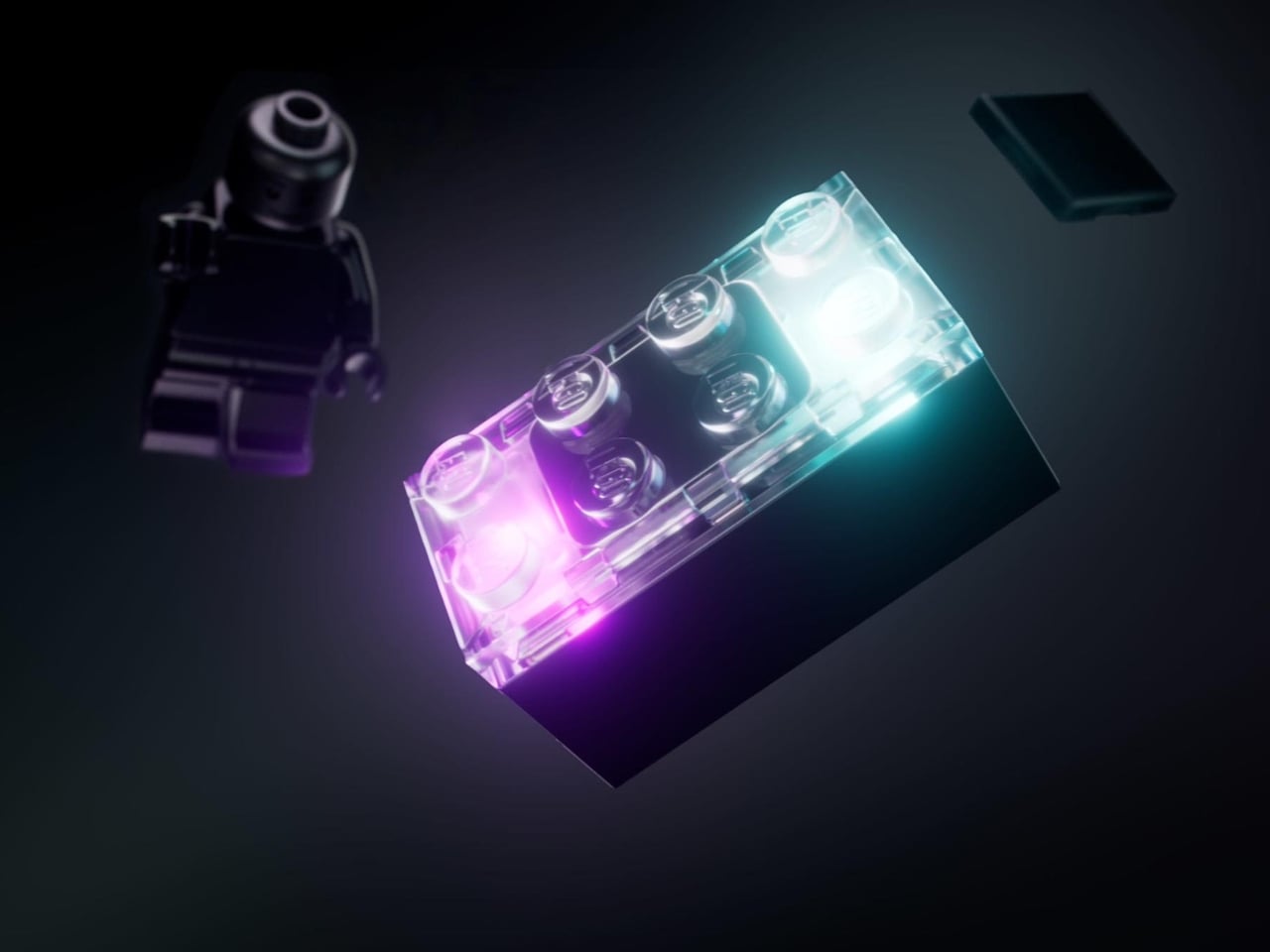
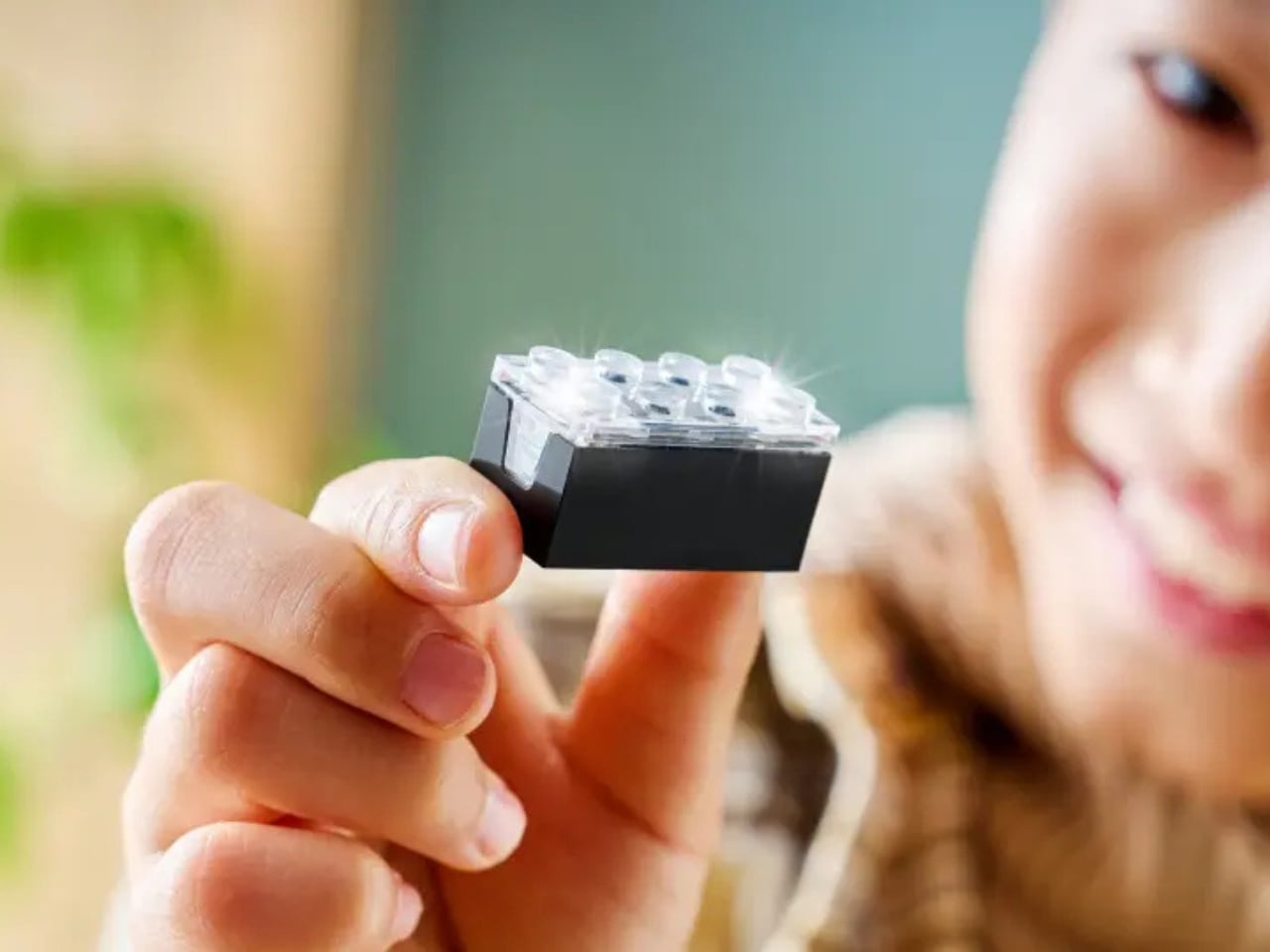
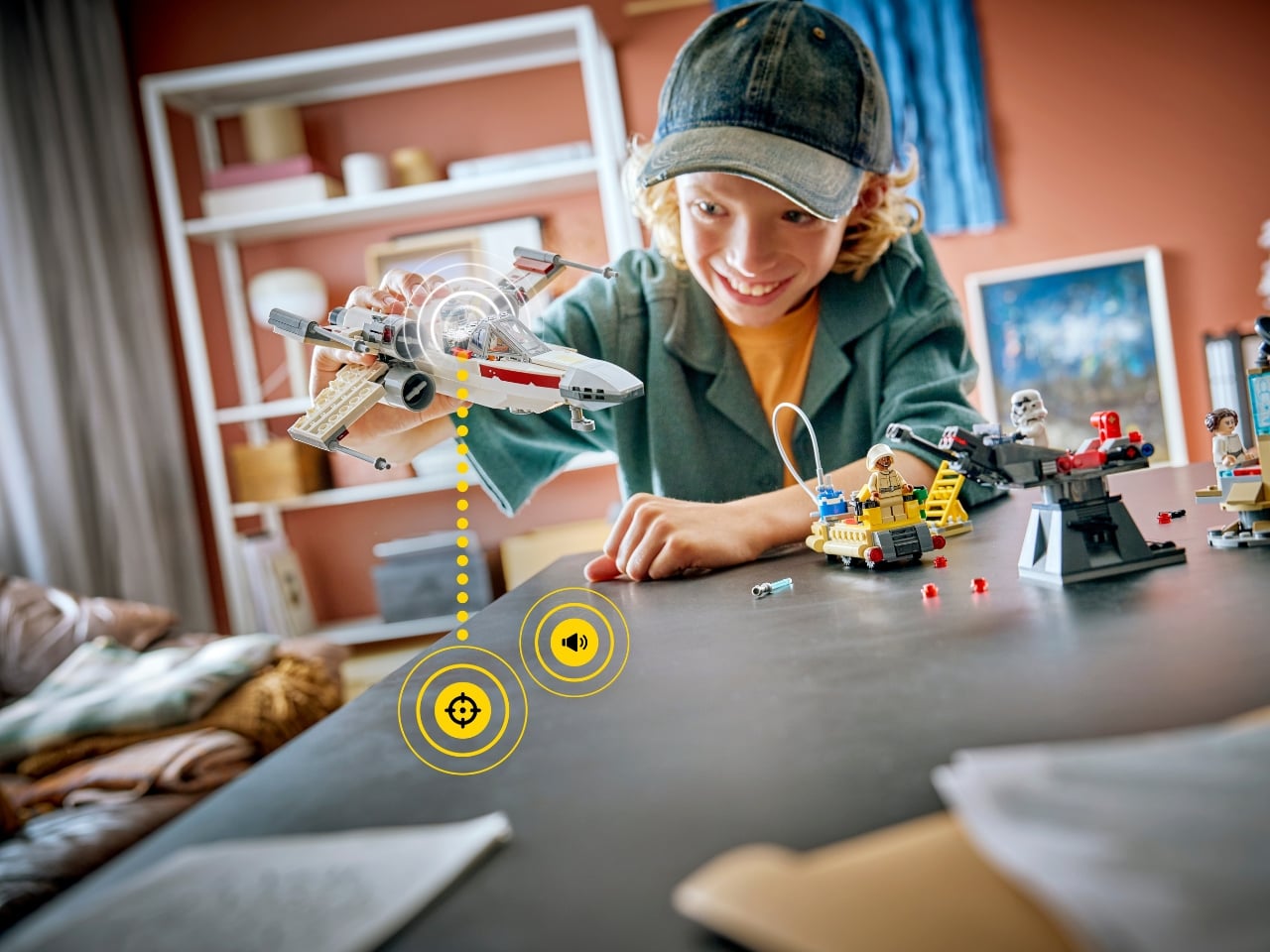
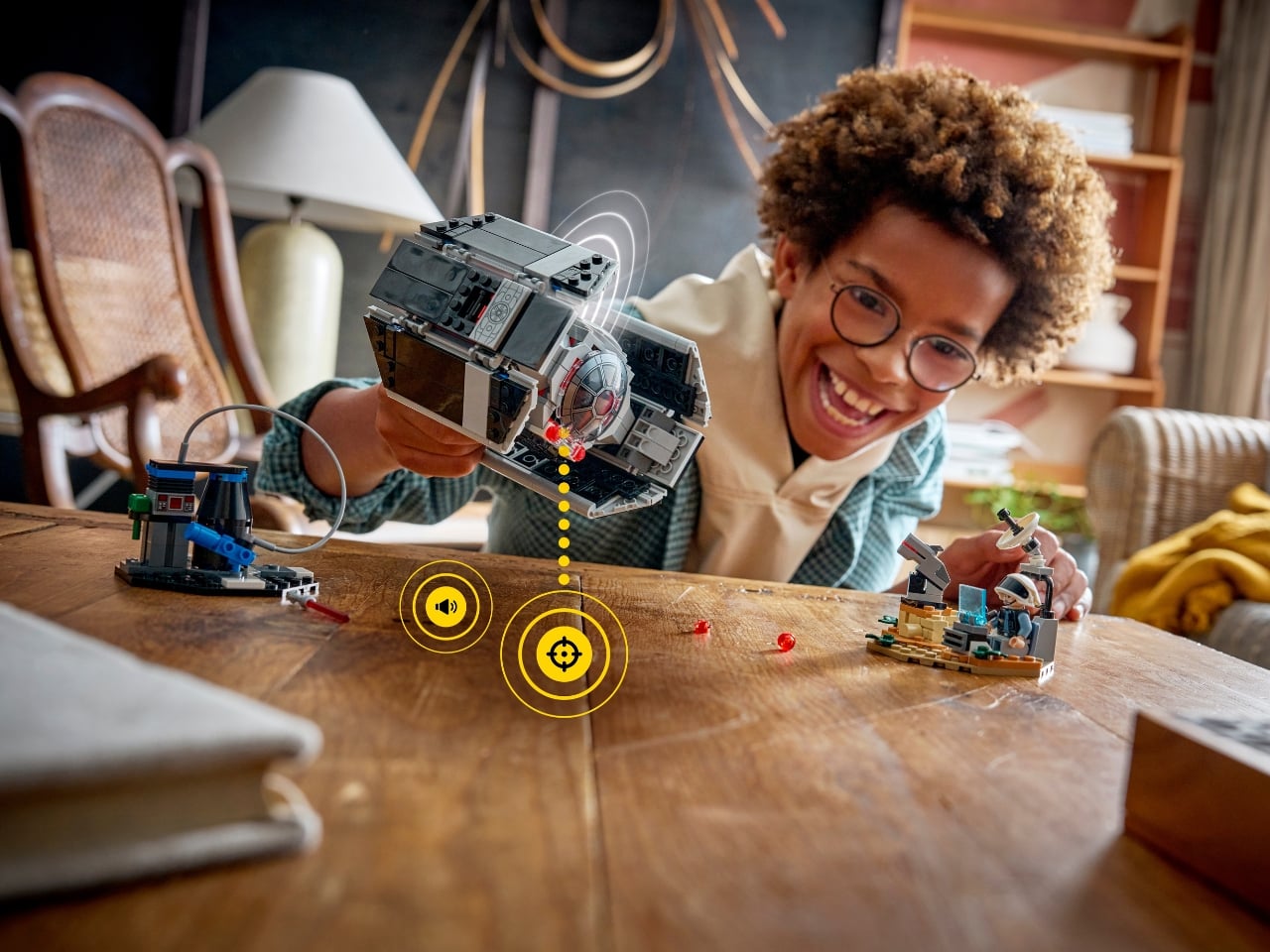
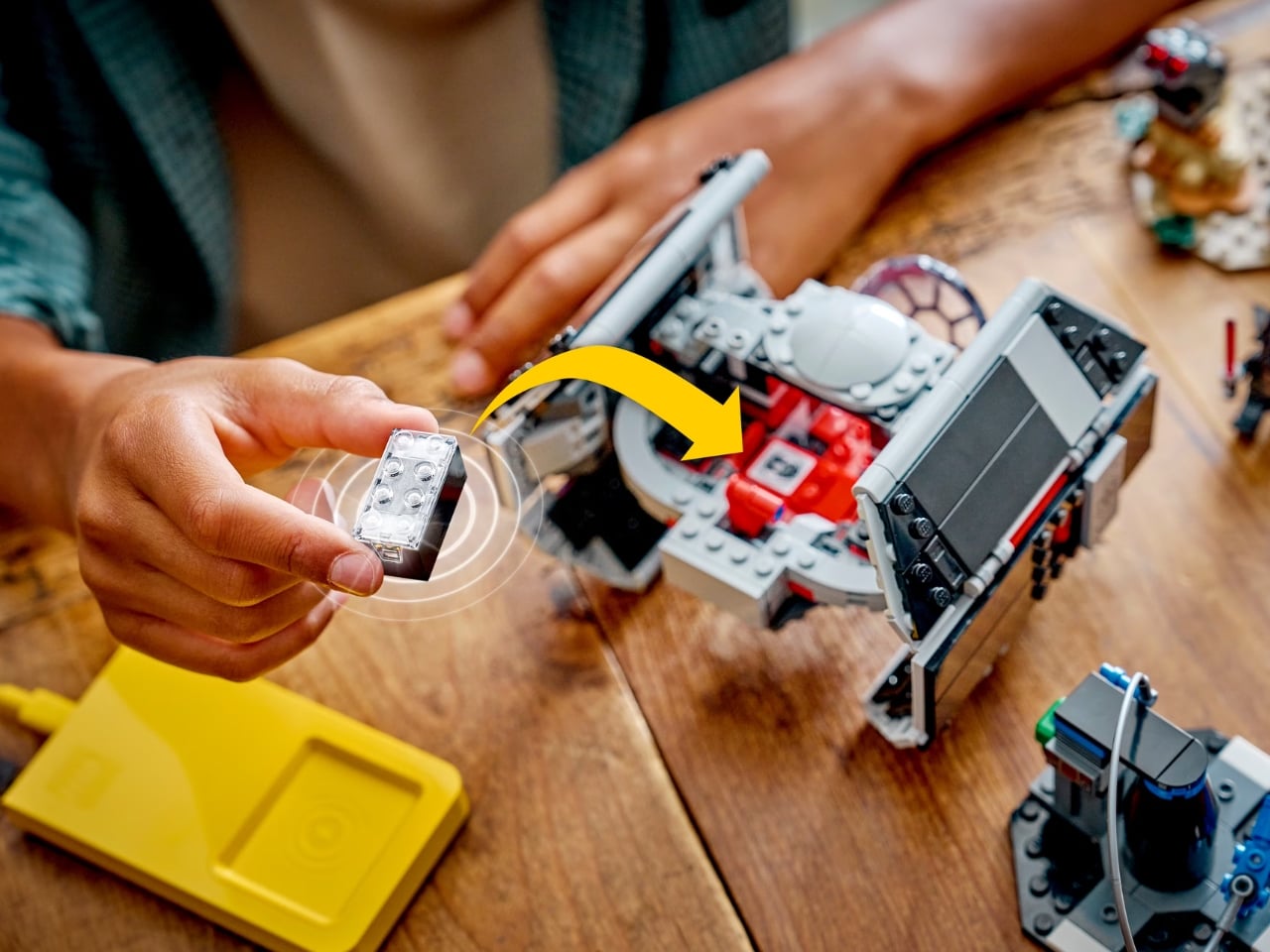
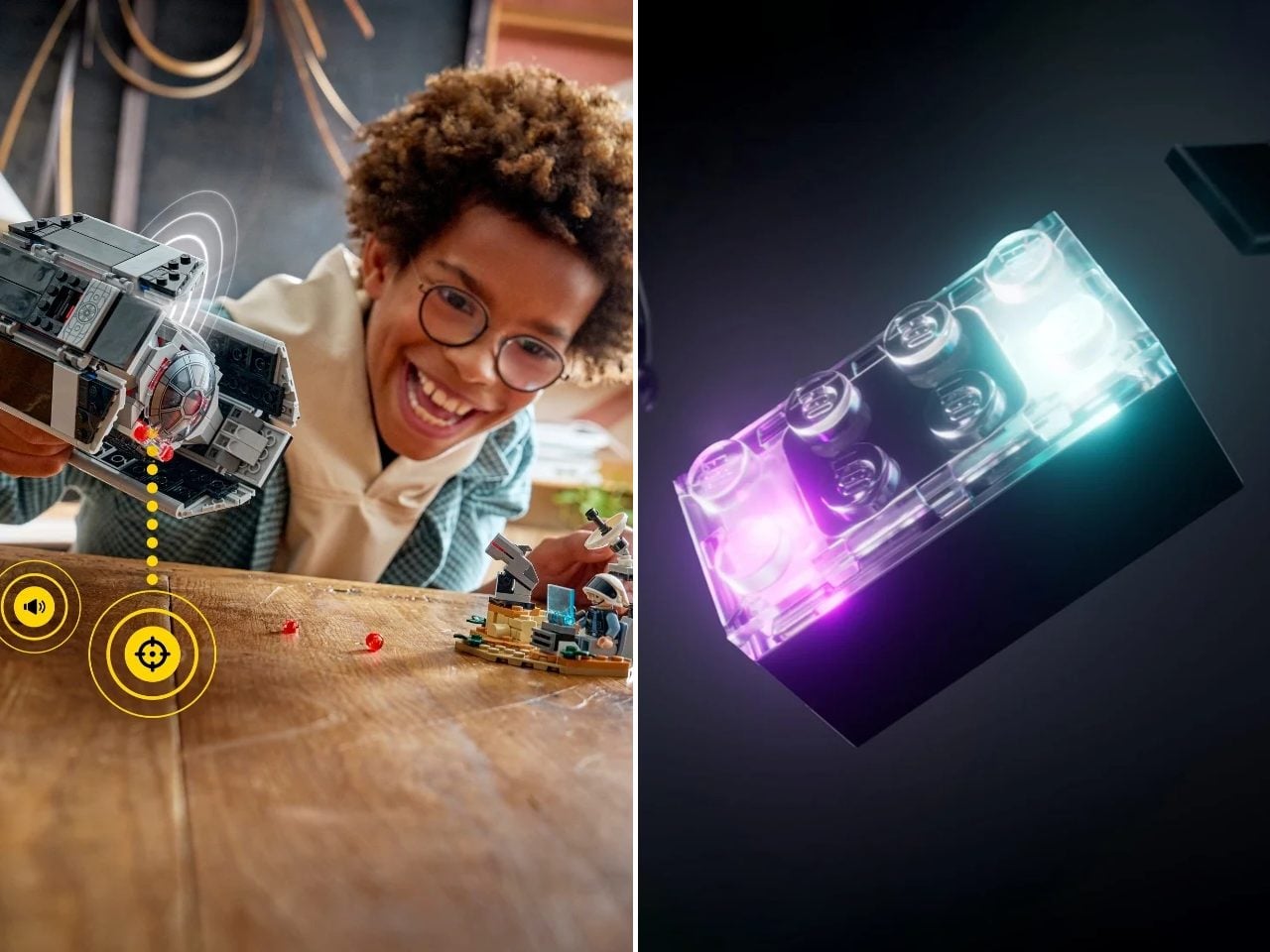
Meet the LEGO Smart Brick: a standard 2×4 brick that looks totally normal on the outside but is secretly packed with more tech than you’d think possible. We’re talking motion sensors, LED lights, a tiny speaker, and a custom-made computer chip that’s literally smaller than a single LEGO stud. The result? Your builds can now react to how you play with them, complete with authentic sounds and lighting effects. And the best part? No app or screen required.

Designer: LEGO

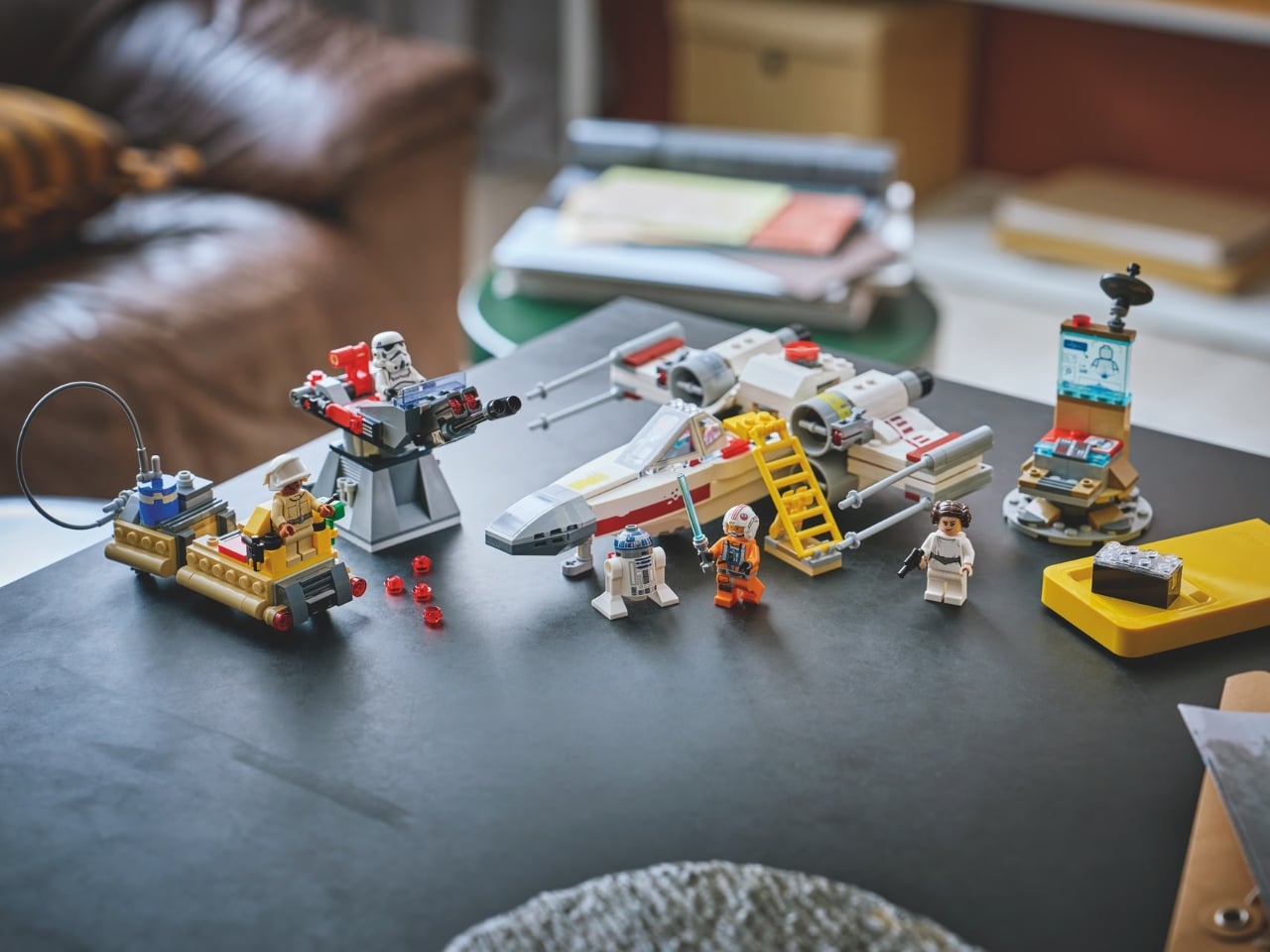
LEGO is launching this new Smart Play system with three Star Wars sets hitting stores on March 1, and honestly, they picked the perfect franchise to showcase this technology. Because if there’s any universe that deserves the full immersive treatment, it’s Star Wars. And if there’s any fandom that would gobble these builds up, it’s those that love the galaxy from far, far away to bits.

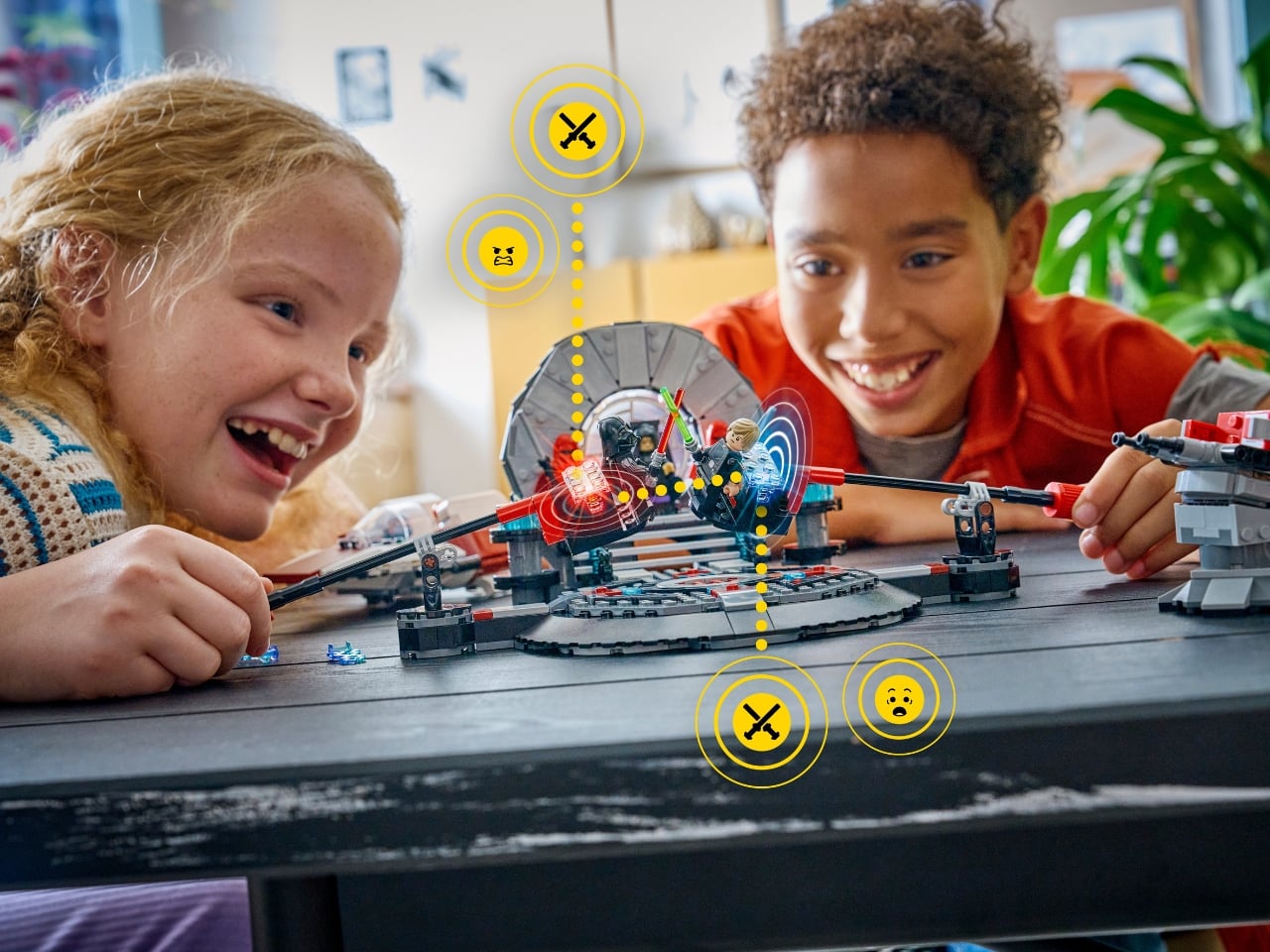
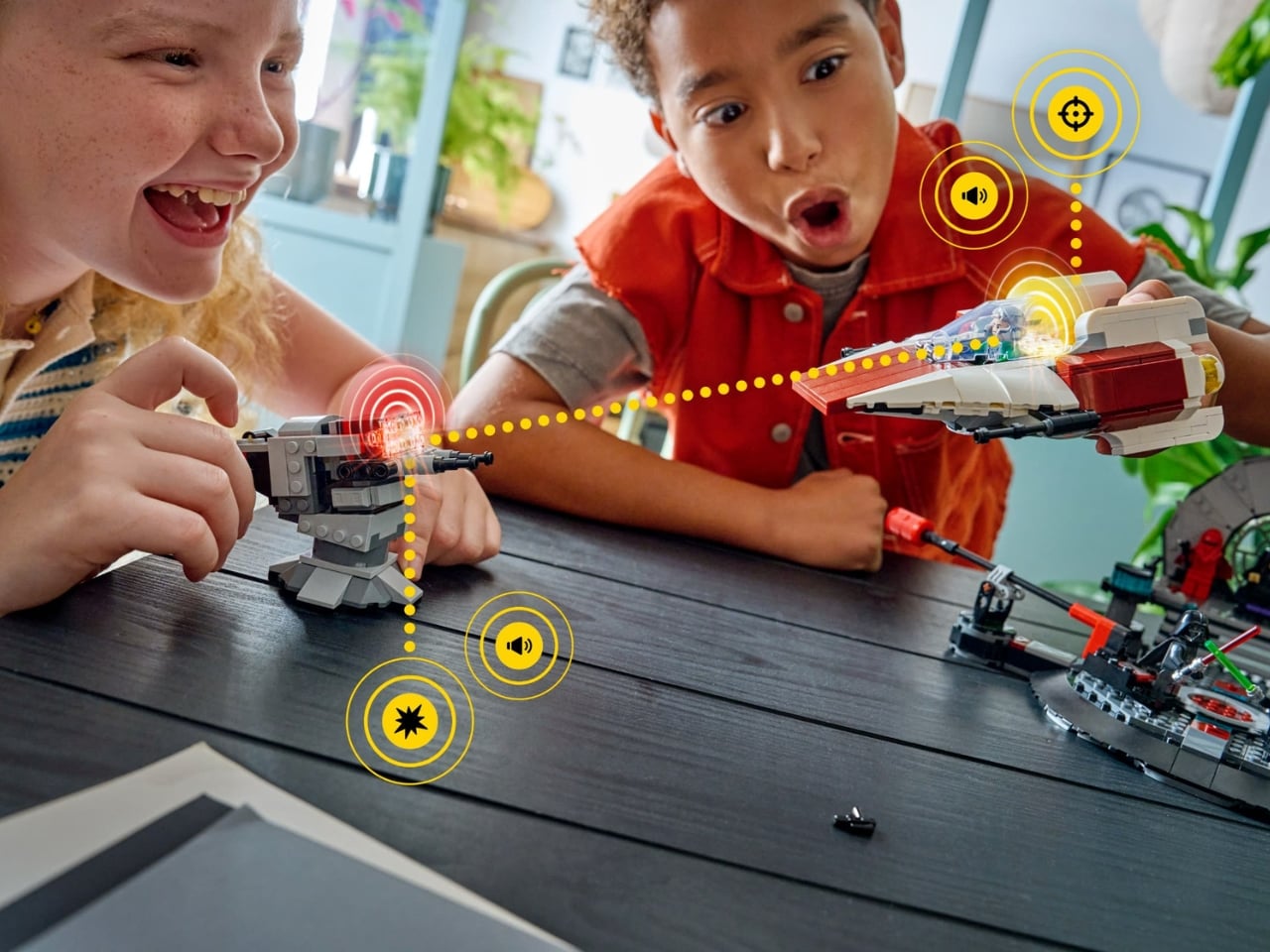
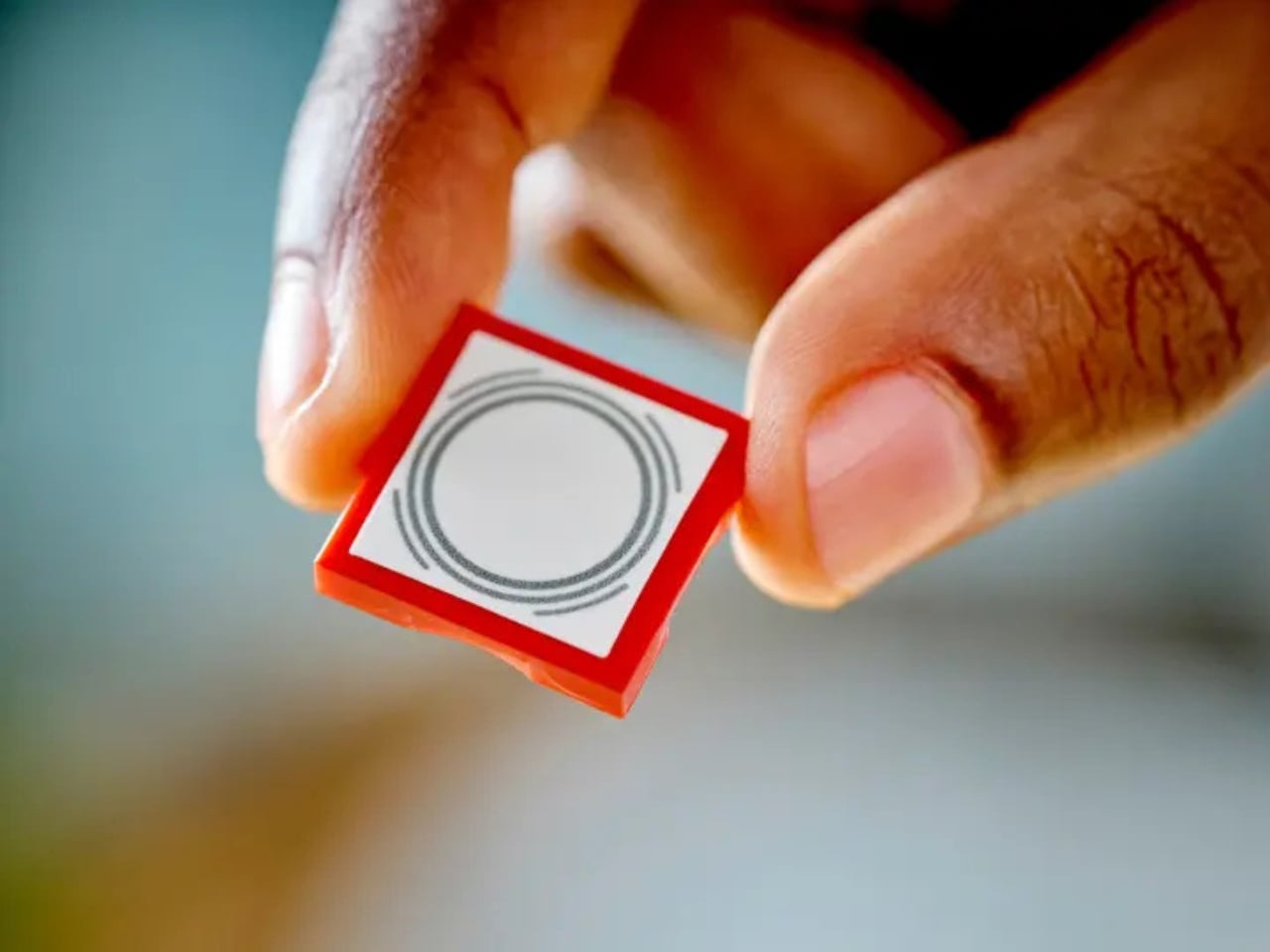
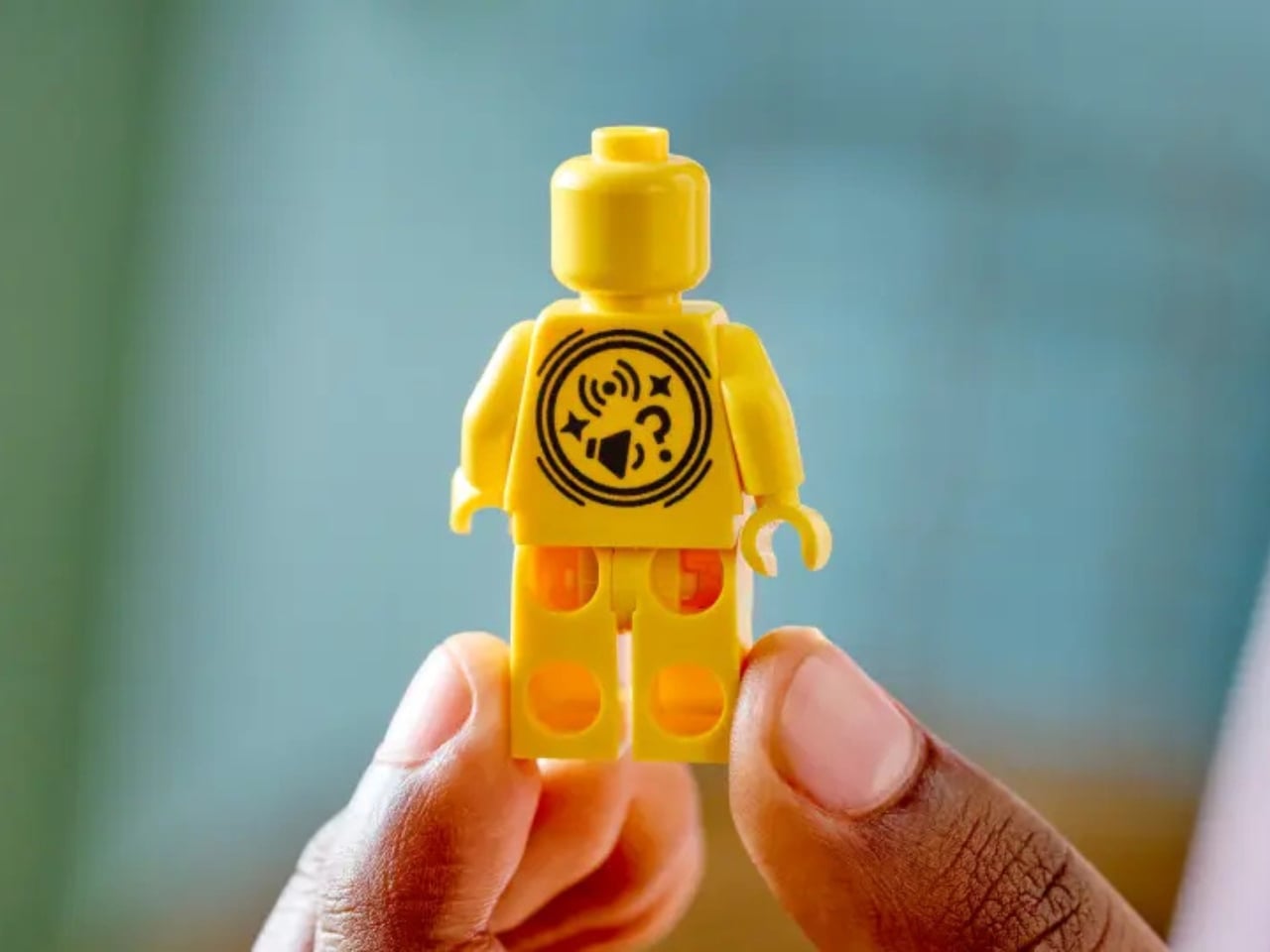
The Smart Play system works through three components working together. There’s the Smart Brick itself, which is the brain of the operation. Then you’ve got Smart Tags, which are special tiles that trigger specific responses when the brick detects them. Finally, there are Smart Minifigures that activate character-specific sounds and interactions. The bricks communicate with each other using something LEGO calls BrickNet, a proprietary wireless system that creates what they describe as a “decentralized network” of interactivity.

In practice, this means when you place a Smart Brick into Luke’s X-wing and fire it up, you hear authentic engine sounds. Move it around, and the accelerometer responds with appropriate whooshes and laser blasts. Park it at the command center, and you’ll hear refueling sounds. Put Emperor Palpatine on his throne, and the Imperial March starts playing. It’s the kind of detail that makes Star Wars fans absolutely giddy.

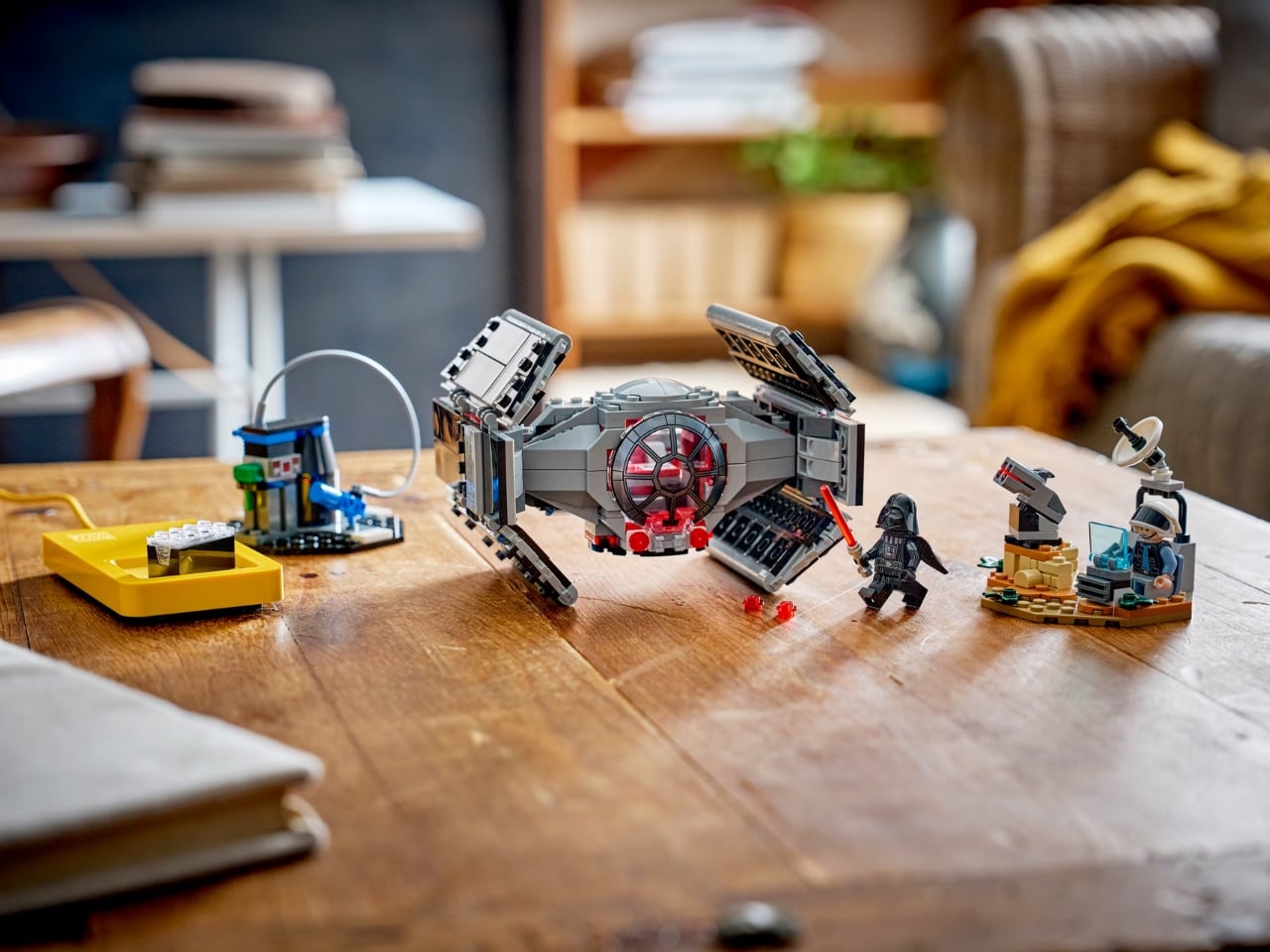
The three launch sets cover different price points and iconic moments from the original trilogy. The most affordable is Darth Vader’s TIE Fighter at $69.99 with 473 pieces. It includes a Smart Darth Vader minifigure who breathes menacingly and delivers his famous lines. The mid-range option is Luke’s Red Five X-wing at $99.99 with 584 pieces, featuring Smart versions of Luke and Princess Leia, plus good old R2-D2. The premium set is the Throne Room Duel and A-wing at $159.99 with 962 pieces, which recreates that unforgettable final confrontation from Return of the Jedi. This one comes with two Smart Bricks and three Smart Minifigures, including Luke, Vader, and Palpatine.

What makes this feel different from LEGO’s previous tech experiments is how seamlessly integrated everything is. There’s no coding required like with Mindstorms, no video game component like Dimensions, and no augmented reality app like Hidden Side. The Smart Play system enhances the physical building and storytelling experience without pulling you into a digital world. For parents worried about screen time, that’s actually a pretty compelling selling point.

Of course, some play experts have raised concerns about whether adding technology might diminish the imaginative play that makes LEGO special in the first place. But LEGO’s approach here seems thoughtful. The tech is designed to respond to creativity rather than dictate it. Kids still build whatever they want, but now their creations can talk back.

Pre-orders open January 9, and LEGO has already teased that more Smart Play sets are coming later in 2026, including a Millennium Falcon, Mos Eisley Cantina, and a Landspeeder. They’re clearly betting big on this platform.

For collectors, these inaugural Smart Play sets represent something special: the ground floor of what LEGO is positioning as their most significant evolution in decades. Whether that claim holds up remains to be seen, but one thing’s certain. The Force is definitely strong with this one, and your childhood dreams of building Star Wars worlds that actually come alive just got a whole lot closer to reality.

The post LEGO’s New Smart Bricks Launched at CES 2026 Bring Star Wars Builds to Life first appeared on Yanko Design.
19 CES gadgets you can buy right now

CES 2026 is nearly over and it’s been a fruitful one with a lot of new, weird and impressive tech. But you don’t have to wait until later this year to get your hands on some of the things announced this week in Las Vegas. A surprising number of gadgets are up for pre-order, if not outright available to buy already, from chargers and docks to projectors, keyboards and smart home gear. CES remains a place for companies to showcase concepts and big ideas, but these are the gadgets that have real prices and real order buttons as of today. Check out all of the CES 2026 gadgets you can buy right now below.

This article originally appeared on Engadget at https://www.engadget.com/19-ces-gadgets-you-can-buy-right-now-164325541.html?src=rss