LEGO Shrek’s Swamp Build Captures What the Official Set Missed Entirely

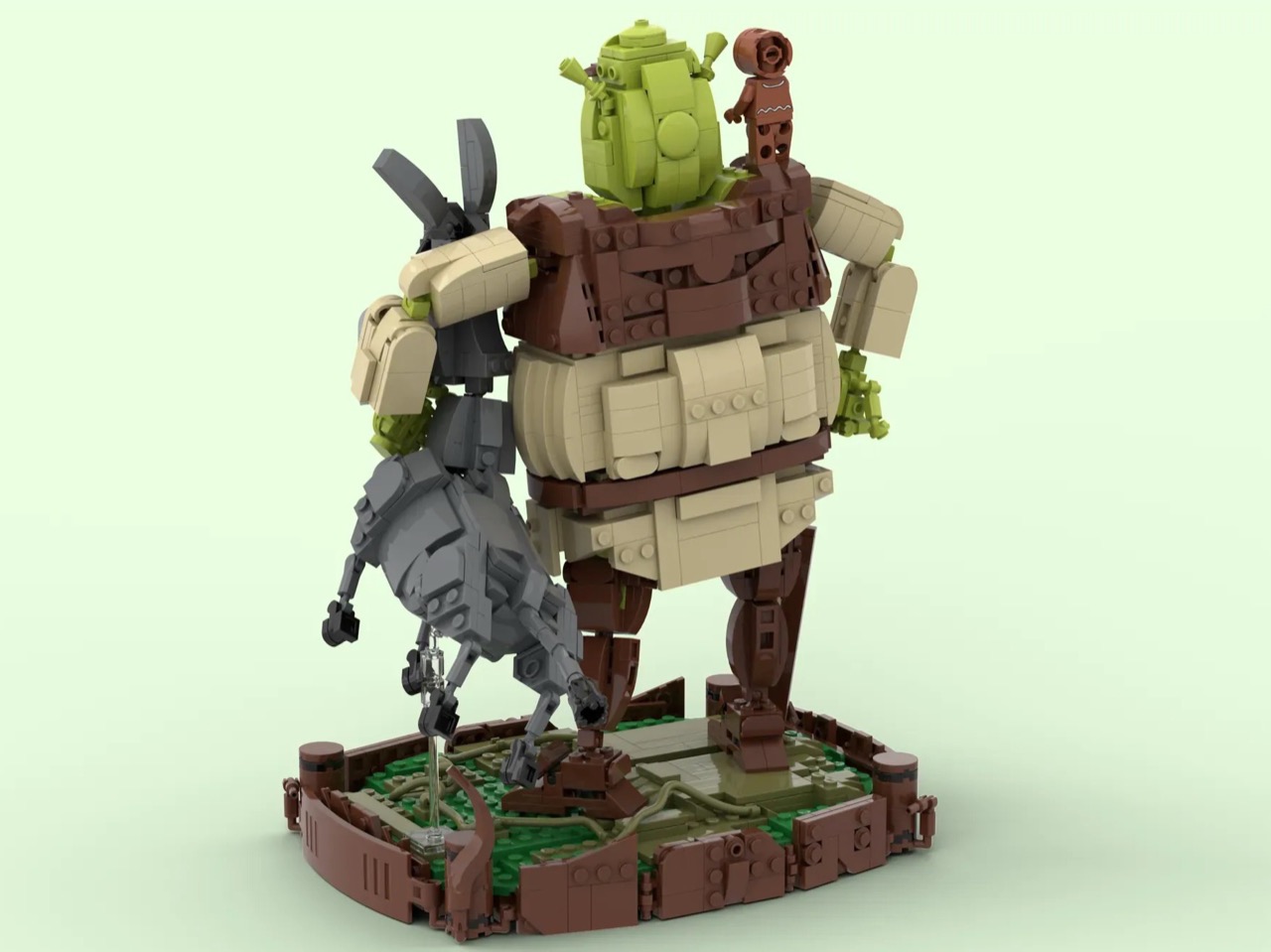
Layers. Ogres have them, onions have them, and now this remarkable LEGO Shrek build has approximately 1,300 of them stacked into one of the most charming character tributes currently seeking support on LEGO Ideas. While collectors can already buy Shrek minifigures, this project offers something entirely different: a fully brick-built display model that brings sculptural ambition to Far Far Away’s most famous resident.

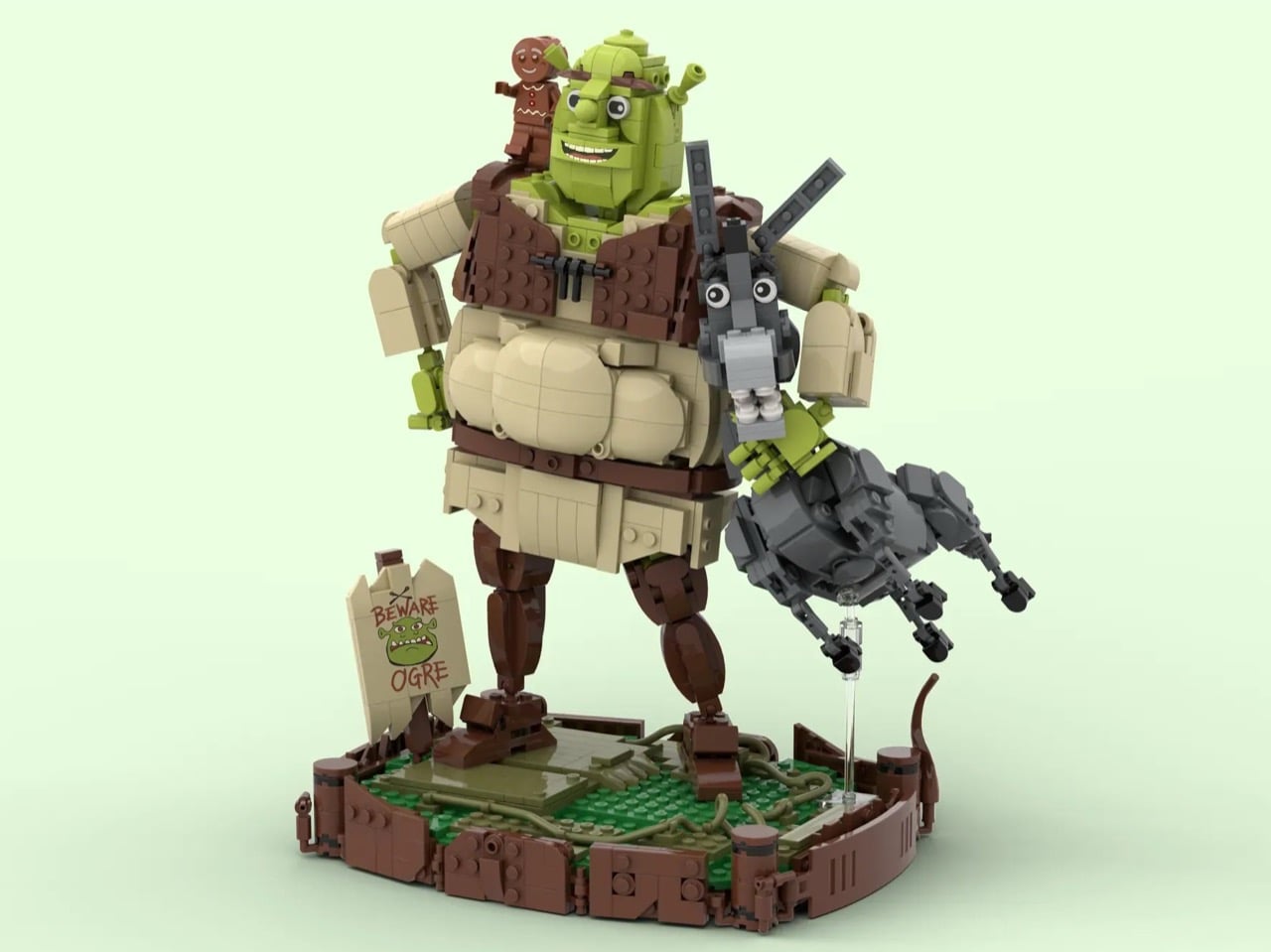
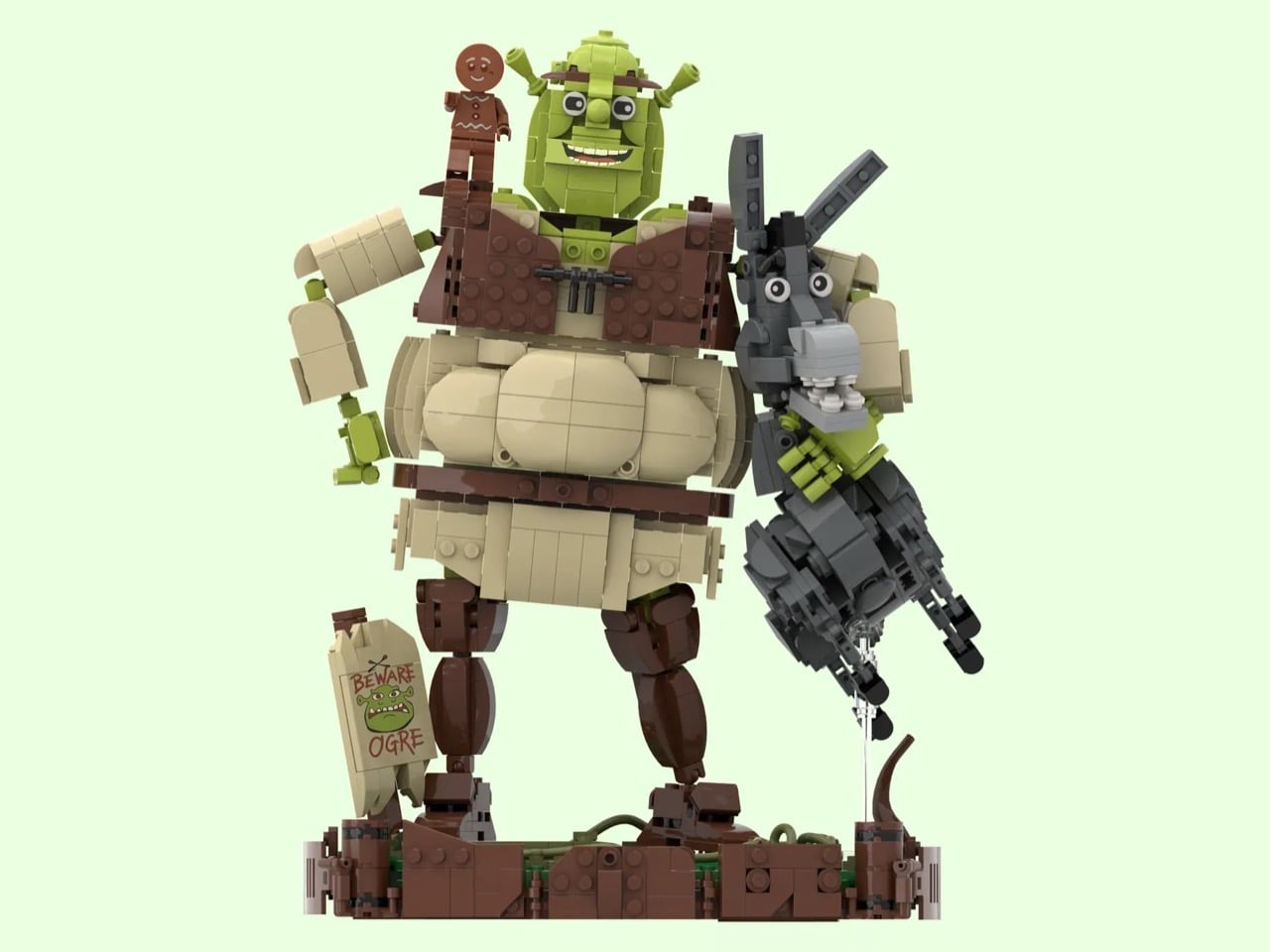
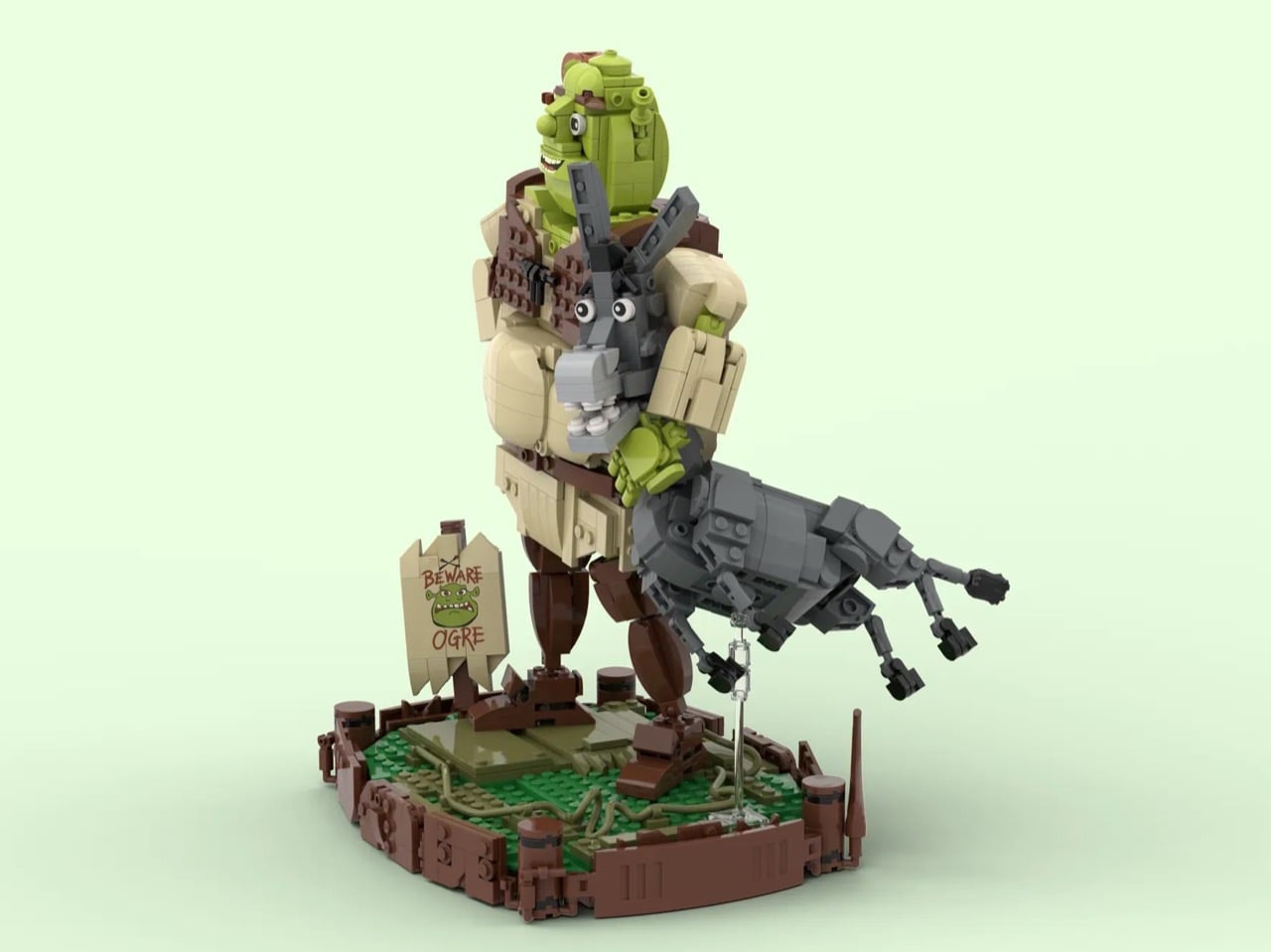
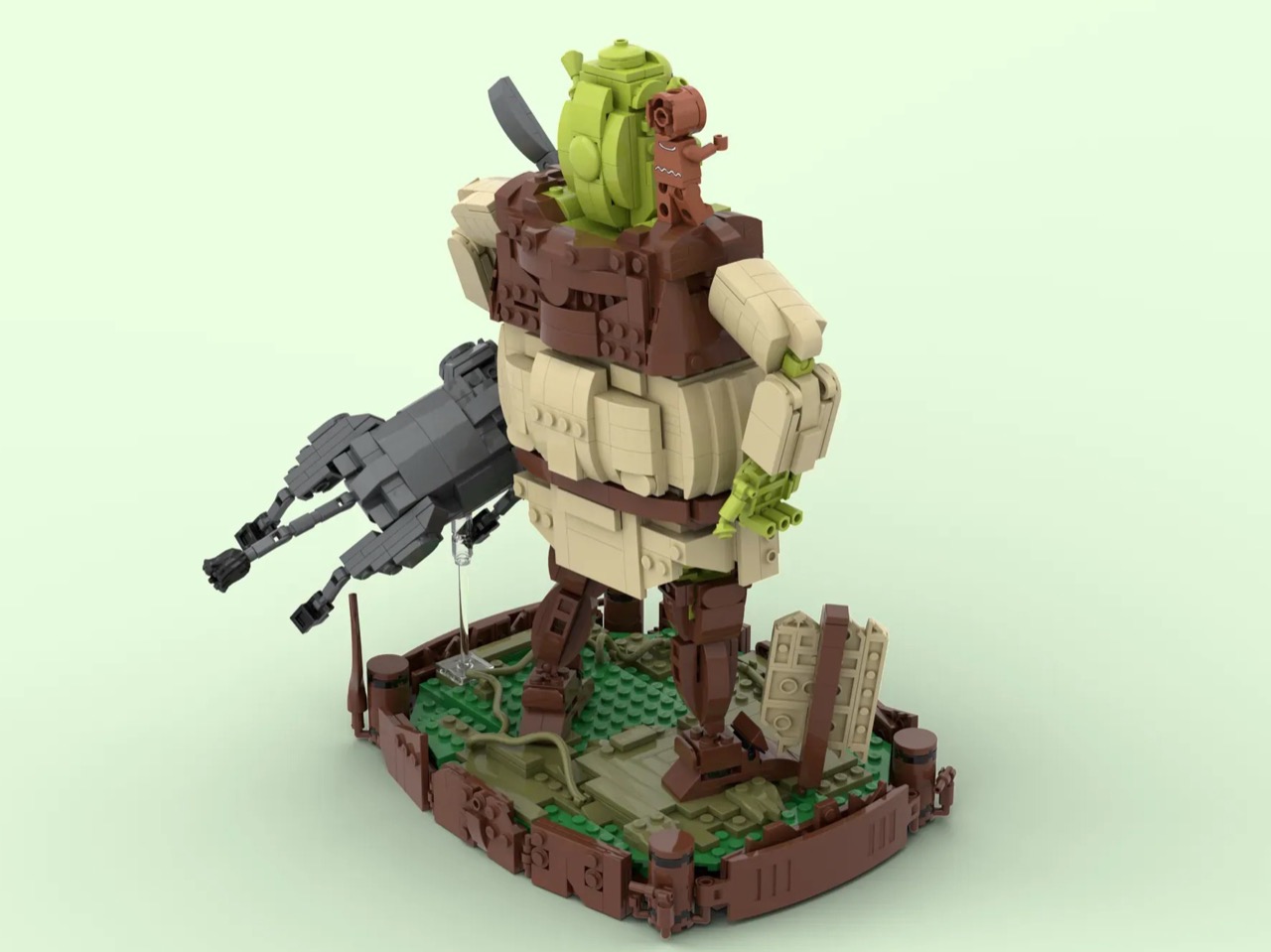
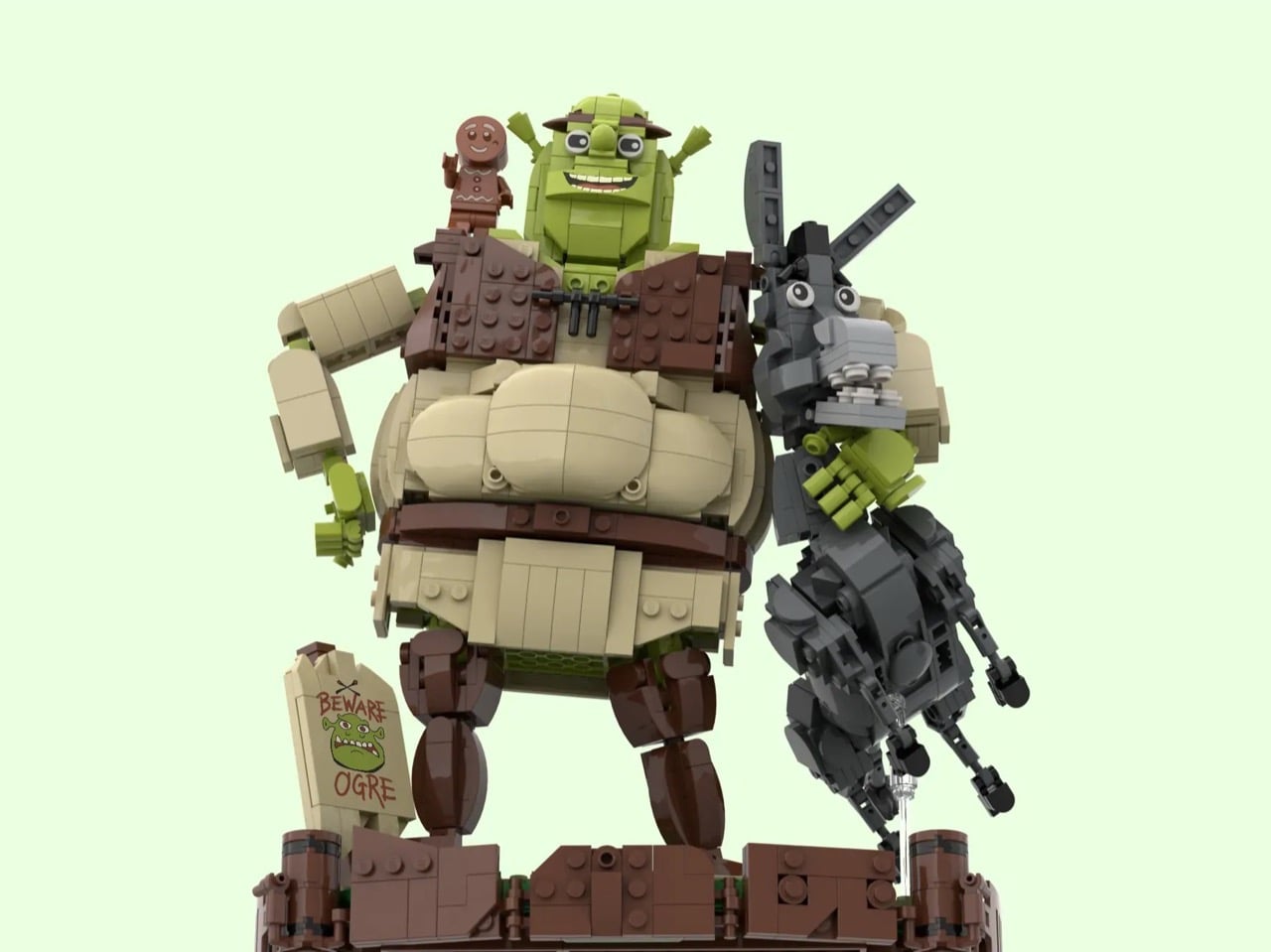
Creator Memorph has transformed roughly 1,300 LEGO pieces into a display model that perfectly balances character accuracy with structural ingenuity. Donkey finds himself in a friendly headlock while the Gingerbread Man perches on Shrek’s shoulder, both built at smaller scales to create a dynamic composition. The swamp base completes the scene with textured vegetation and the iconic “BEWARE OGRE” warning sign, making this a love letter to DreamWorks’ beloved franchise that goes far beyond what traditional minifigure sets can achieve.

Designer: Memorph
Shrek hit theaters in 2001 and immediately became the anti-Disney fairy tale everyone didn’t know they needed. DreamWorks took every princess trope, dunked it in swamp water, and gave us an ogre who just wanted to be left alone with his layers of emotional complexity. The film spawned three sequels, became a meme goldmine decades later, and somehow made Rufus Wainwright’s cover of “Hallelujah” the definitive version for an entire generation who’ll fight you about Leonard Cohen’s original.
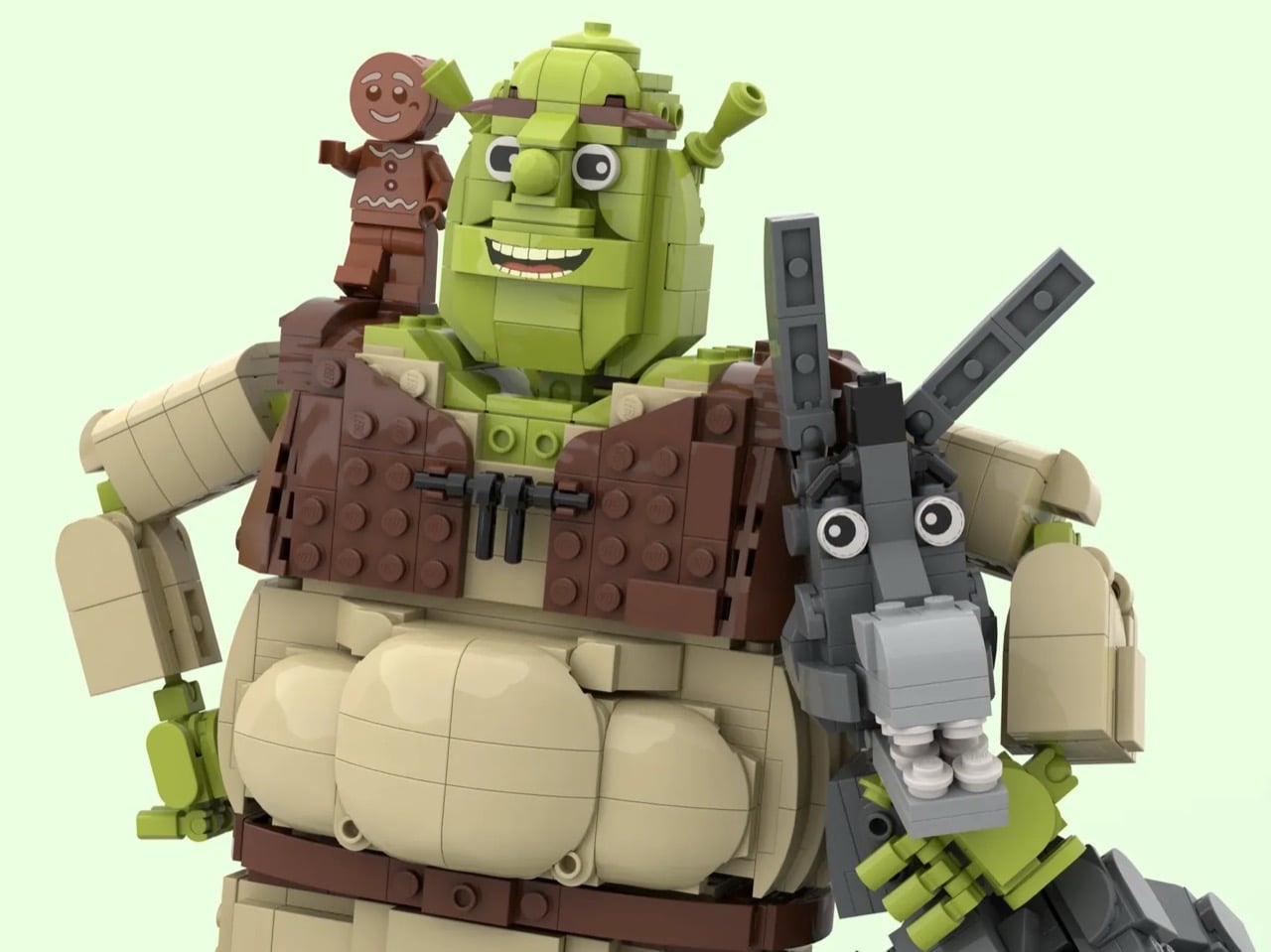
Twenty-plus years later, people still quote the movie constantly, still reference the swamp aesthetic, and still have strong opinions about which sequel actually holds up. Memorph nailed this perfectly, with a build that accurately captures Shrek’s personality through curved slope pieces that form his rounded belly, strategic color blocking that transitions seamlessly from green torso to tan skin, and that trademark smirk with eyebrows raised in perpetual annoyance. His stubby fingers articulate, the arms have decent range of motion, and the vest sits with a slight rumple that makes him look lived-in rather than rigidly geometric.
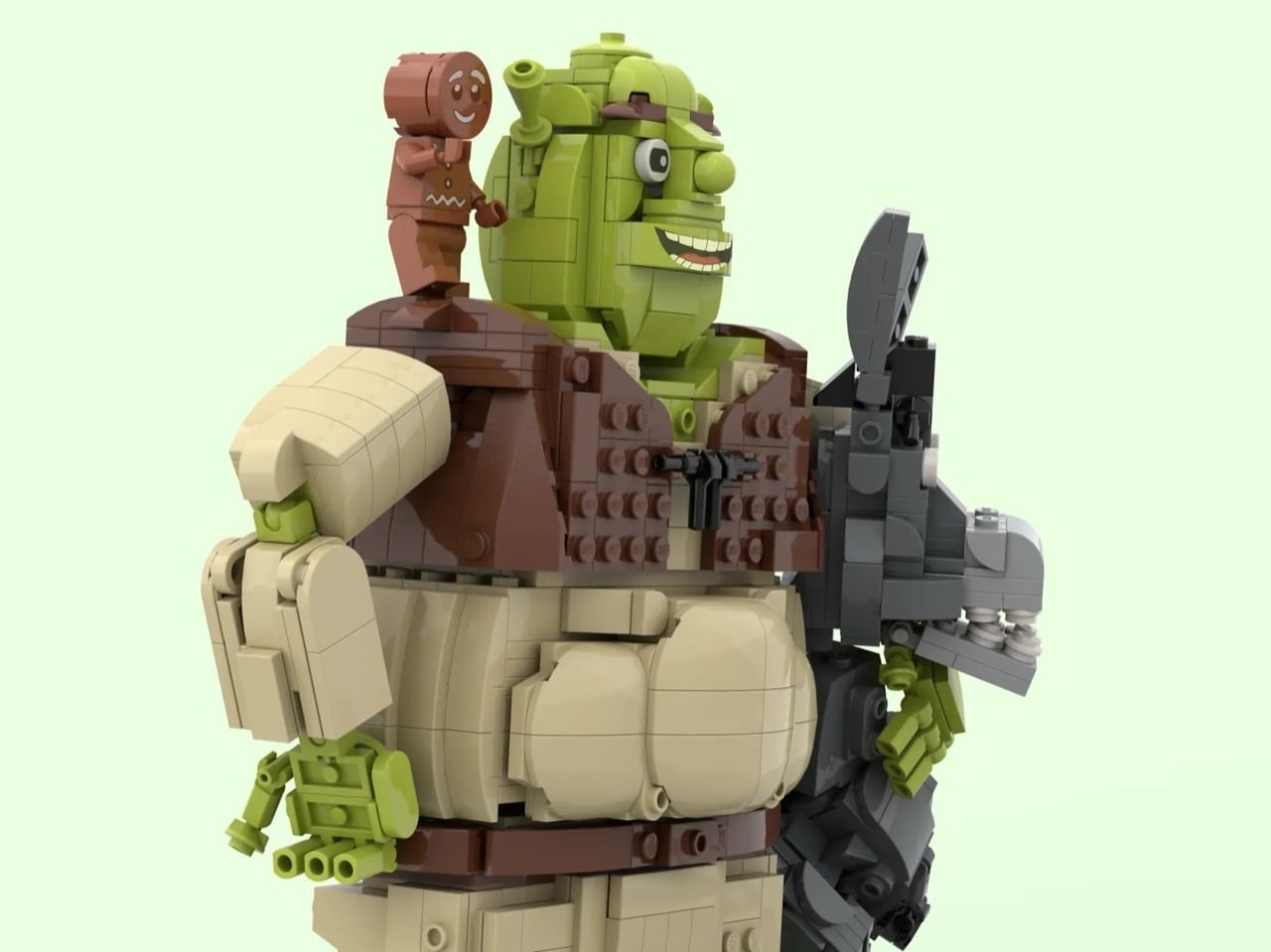
Donkey stands at roughly a third of Shrek’s height, and the scale difference creates visual hierarchy that keeps your eye moving around the whole composition. Those big eyes and articulated legs pack surprising detail into a much smaller footprint. You can immediately tell it’s the motor-mouthed sidekick even without color cues. The Gingerbread Man perched up on Shrek’s shoulder is actually a modified minifigure, fitting the scene’s scale perfectly. The swamp base uses textured green plates and brown borders to ground everything, plus that warning sign with the printed “BEWARE OGRE” text. Yeah, it’s a sticker or print, but building those letters from bricks would have looked like garbage.
LEGO already makes a Shrek set with standard minifigures, the kind kids bash together during playtime. This exists in an entirely different category. You wouldn’t compare buying an action figure to commissioning a sculpture, right? Brick-built character models target adult collectors who want both the building experience and something shelf-worthy when they’re done. The brick-built Mickey Mouse sold well, BrickHeadz became an entire product line, and there’s clearly appetite for display pieces that require actual building skill. At 1,300 pieces, this hits that zone where the construction feels substantial without demanding you clear an entire weekend. You could knock this out over a few evenings and actually enjoy the process instead of grinding through repetitive sections.
Memorph submitted this through LEGO Ideas, which operates as crowdsourced product development. Projects need 10,000 supporters within a set timeframe to trigger an official review by LEGO’s team. Right now this Shrek build has 187 supporters with 425 days left on the clock. Hitting 10K doesn’t guarantee production since LEGO still evaluates manufacturing viability, licensing agreements with DreamWorks, and whether it fits their current lineup. Plenty of projects reach the threshold and still get rejected. But it’s literally the only mechanism for turning a fan concept into something you can buy at a store.
You want this on your shelf? Go to the LEGO Ideas page and click support. Takes thirty seconds if you have an account, maybe two minutes to create one if you don’t. The platform costs nothing, you’re just registering interest in the concept. We could use more brick-built character models that actually capture personality instead of looking like someone’s first attempt at geometric abstraction. Shrek proves organic curves and expressive faces work when the builder genuinely understands how LEGO pieces interact. Plus, any excuse to get Donkey in a headlock is worth supporting.

The post LEGO Shrek’s Swamp Build Captures What the Official Set Missed Entirely first appeared on Yanko Design.
The NLRB just gave up on SpaceX workers who claim they were illegally fired

The National Labor Review Board (NLRB) has dropped a case accusing SpaceX of illegally firing eight employees who criticized the company's CEO Elon Musk, The New York Times. The employees were originally fired in 2022 after circulating a letter that referenced reports of Musk's sexual misconduct and called the executive "a frequent source of distraction and embarrassment." The NLRB filed a complaint claiming the firing was illegal in 2024.

Originally, SpaceX's opposition to the NLRB's case was that the agency is unconstitutional, The New York Times writes. Complaints about the NLRB's independence and power are not uncommon. Amazon has previously claimed that the board's structure "violates the separation of powers," a critique the company has made even more recently about the Consumer Product Safety Commission. The NLRB dismissed its SpaceX case following an even more unusual line of argument, though: that regulating SpaceX actually fell under the jurisdiction of the National Mediation Board, the government agency that handles mediation in the airline and railway industries.

Because the company will technically let anyone book a space flight with it, and it operates under a license from the Federal Aviation Administration, SpaceX's lawyers argue it should be treated like an airline. According to The New York Times, the National Mediation Board issued a decision affirming that logic in January, and not long after, the NLRB dismissed its SpaceX case using the same line of thinking.

Elon Musk and his companies maintain a close relationship with the Trump administration. Musk spent over $250 million to help re-elect President Donald Trump, and he briefly served as a special government employee overseeing budget cuts and layoffs across various government bodies as part of the Department of Government Efficiency. The NLRB gave up its own authority to regulate, rather than it being stripped of funding or employees, but the decision still fits a larger pattern of independent agencies being disempowered during the second Trump administration.

This article originally appeared on Engadget at https://www.engadget.com/big-tech/the-nlrb-just-gave-up-on-spacex-workers-who-claim-they-were-illegally-fired-215332847.html?src=rss

Infinix Note 60 Pro looks like an iPhone 17 Pro with Nothing’s Glyph Matrix on the back

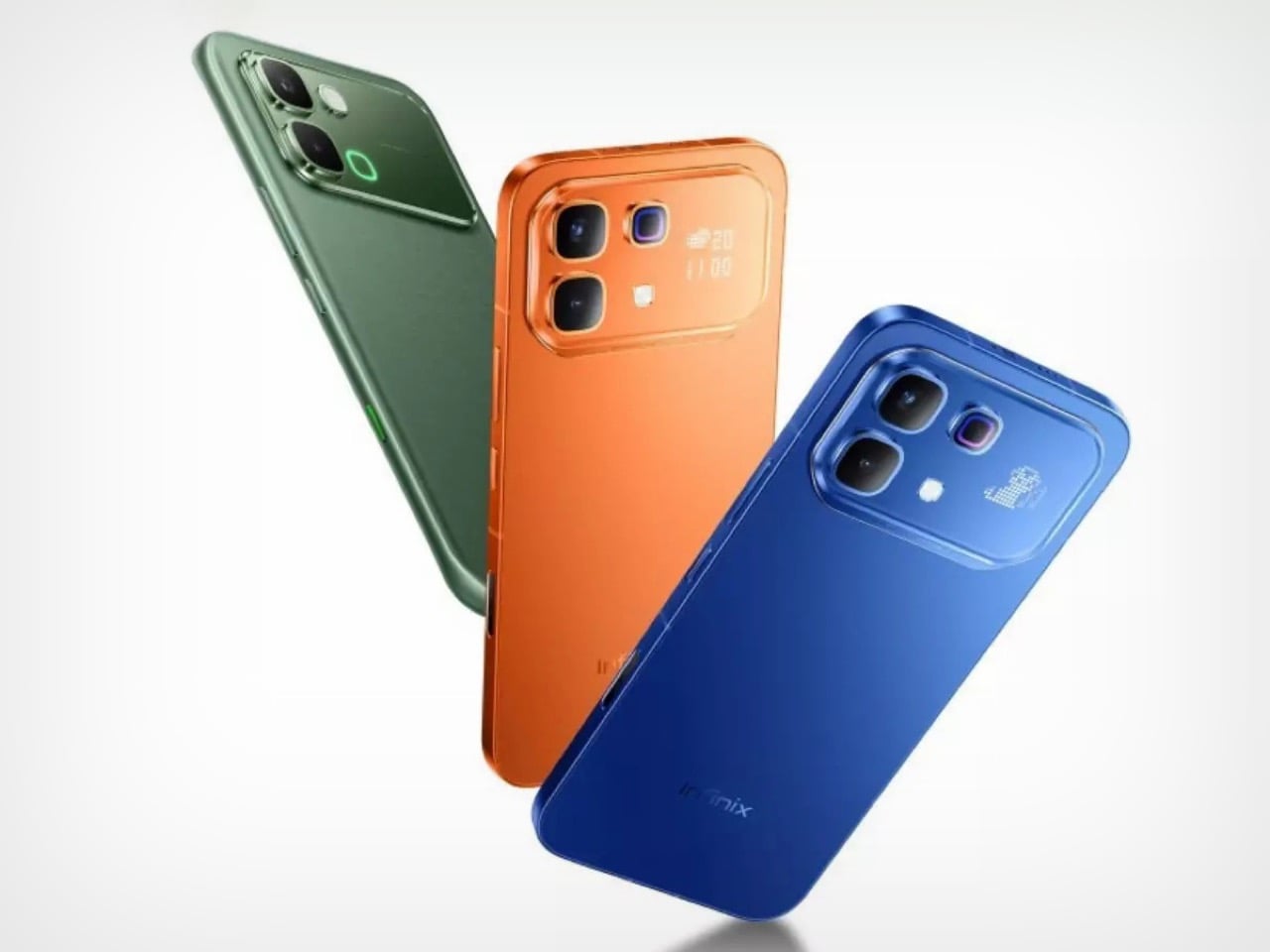
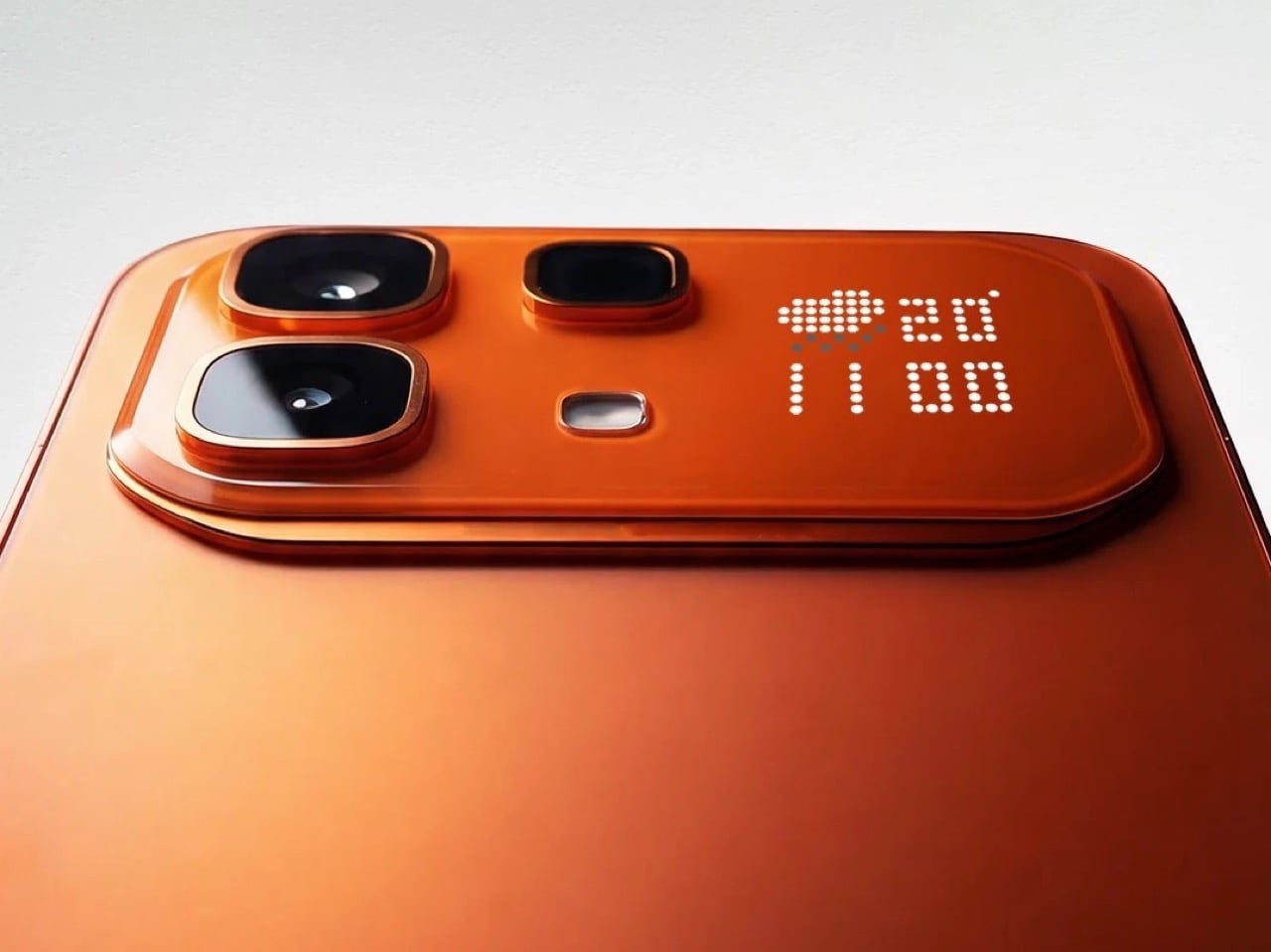
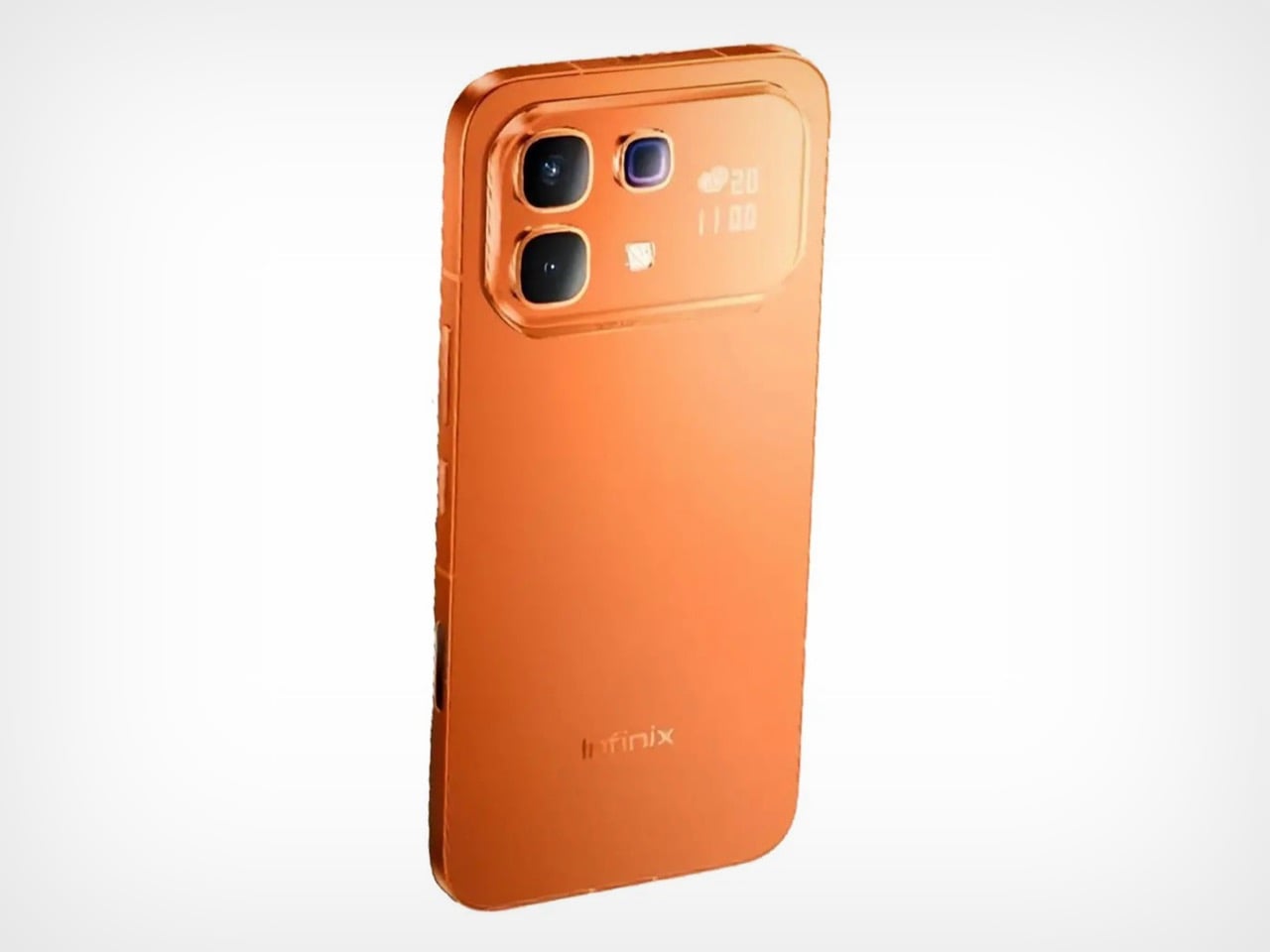
Infinix looked at the iPhone 17 Pro, looked at the Nothing Phone (3), and decided both phones had one good idea worth combining. The Note 60 Pro’s camera plateau is lifted directly from Apple’s design playbook: that horizontal pill shape spanning the phone’s width, housing three vertical lenses on the left side, available in a Solar Orange finish that’s Apple down to the shade. The right side of that plateau, though, gets filled with a dot-matrix display borrowed from Nothing’s Glyph experiments, showing weather, time, notifications, and music controls in small illuminated dots.

This collision of reference points could have produced incoherent design, but Infinix committed hard enough to make it work. The plateau provides a unified canvas rather than trying to bolt disparate elements together, and the matrix display gets proper size instead of being minimized into uselessness. You can actually read the information displayed without straining, which already puts it ahead of the Phone (3)’s too-small implementation. The question isn’t whether Infinix executed the feature better, but whether the feature itself is anything more than a solution looking for a problem.

Designer: Infinix

Let’s be direct: this is a derivative design. It’s a collage of other companies’ proven successes, banking on the idea that combining two popular aesthetics will create a third. While the integration is clean, it reveals a lack of a core design identity from Infinix itself. This is the strategy of a market follower, not a leader. The approach is to create something that feels familiar enough to be desirable but different enough to be noticeable. It’s a tactic for grabbing attention in a crowded mid-range space, but it does little to build a unique, recognizable brand language for the long term.

Of course, the spec sheet is designed to impress, and on paper, it does. Switching to a Qualcomm Snapdragon 7s Gen 4 is a solid move for performance credibility. That chip drives a large 6.78-inch display with a 1.5K resolution and a 144Hz refresh rate, numbers that are undeniably competitive. A 6,500mAh battery with 90W charging is equally impressive. The risk with spec-heavy mid-rangers is that the software experience often fails to optimize the hardware. The real test will be in the day-to-day performance, software support, and whether the user interface is clean or laden with bloatware.

As of now, Infinix has not released official pricing or a specific launch date, which keeps the final verdict in limbo. The company’s typical strategy involves aggressive pricing in markets across Africa, Southeast Asia, and India, so we can expect it to land in a competitive sub-$400 bracket to undercut established players. Its success will ultimately hinge on that price tag (as well as how functional that ‘glyph matrix’ is). If it’s priced too close to the devices it’s mimicking, the derivative design becomes a liability. If it’s cheap enough, this combination of high-end specs and borrowed aesthetics could be a disruptive formula in its target regions.

The post Infinix Note 60 Pro looks like an iPhone 17 Pro with Nothing’s Glyph Matrix on the back first appeared on Yanko Design.
Did Ferrari And Jony Ive Just Build The ‘Apple Car’?

Five years after Jony Ive left Apple, and two years after Apple killed Project Titan, we finally know what the Apple Car’s interior *could* have looked like. It just happens to have a prancing horse on the steering wheel instead of a bitten apple.

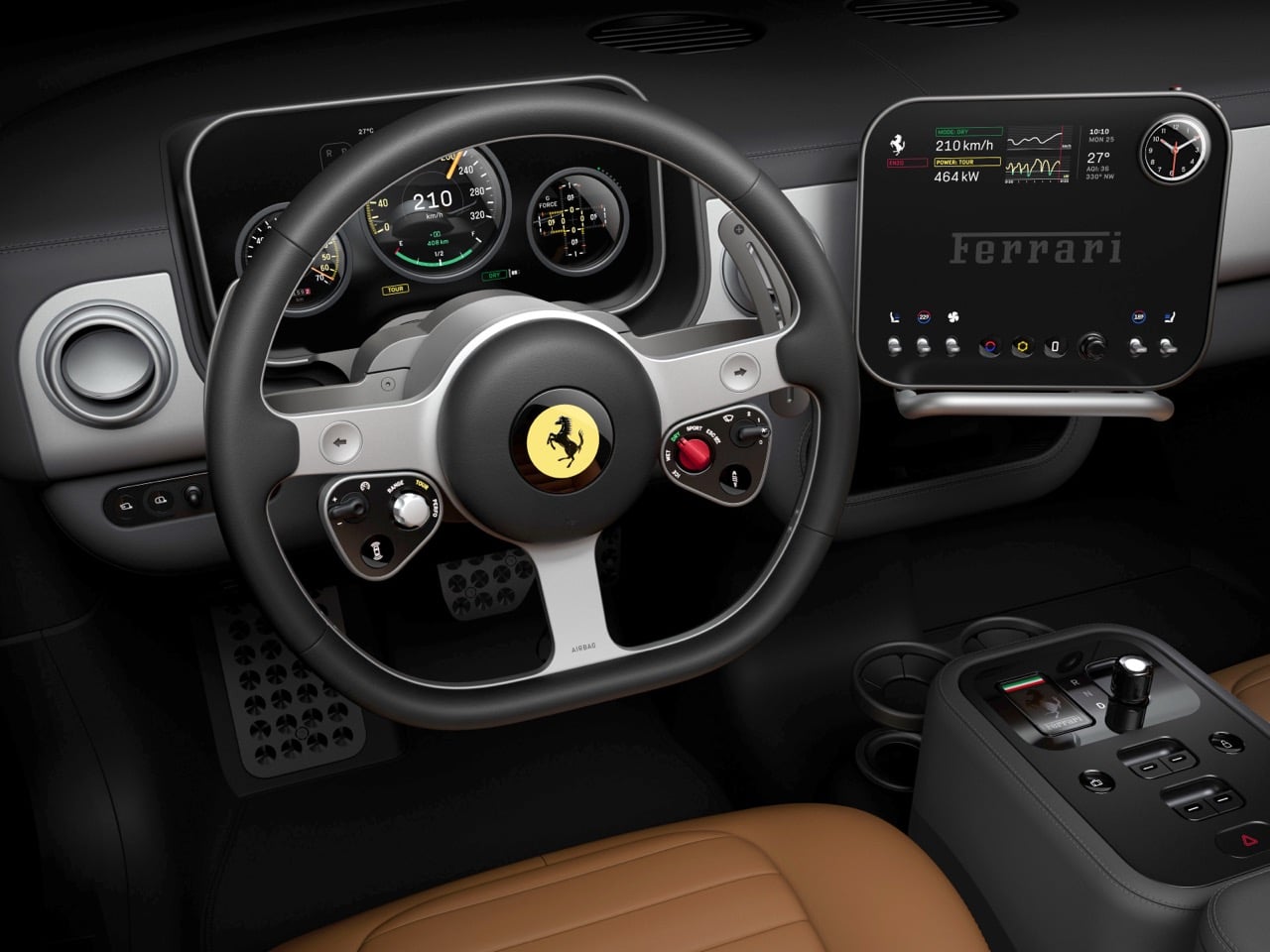
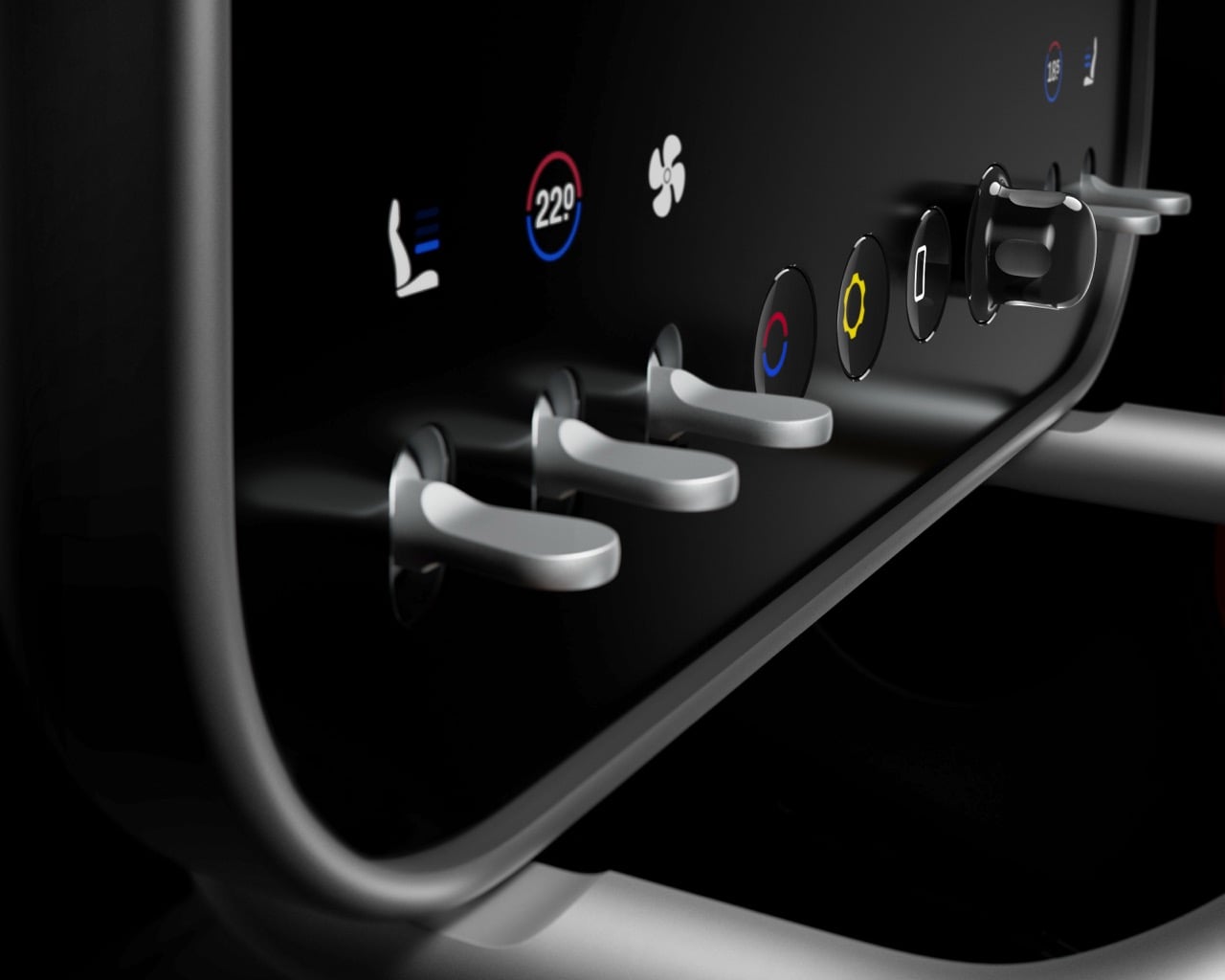
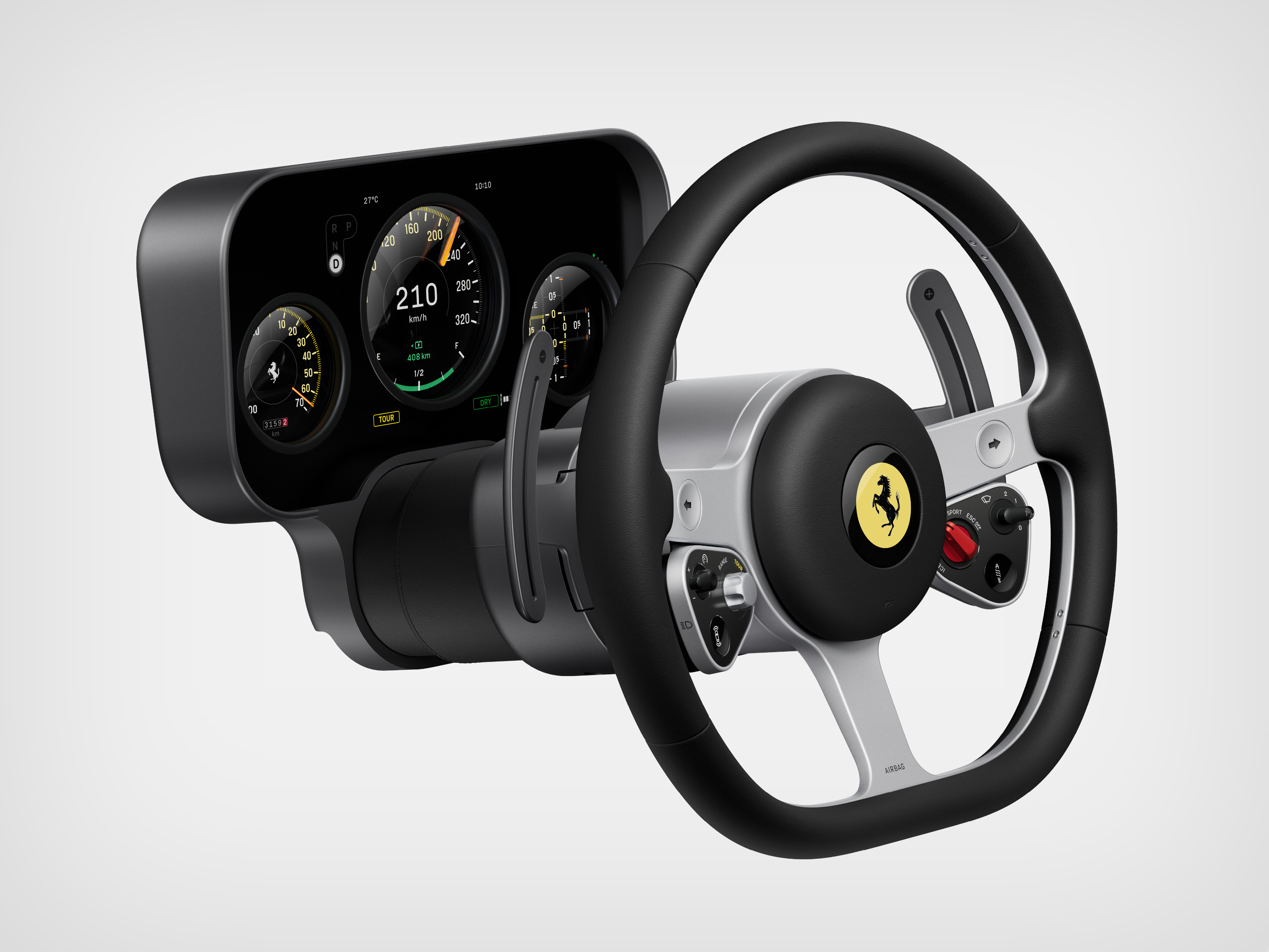
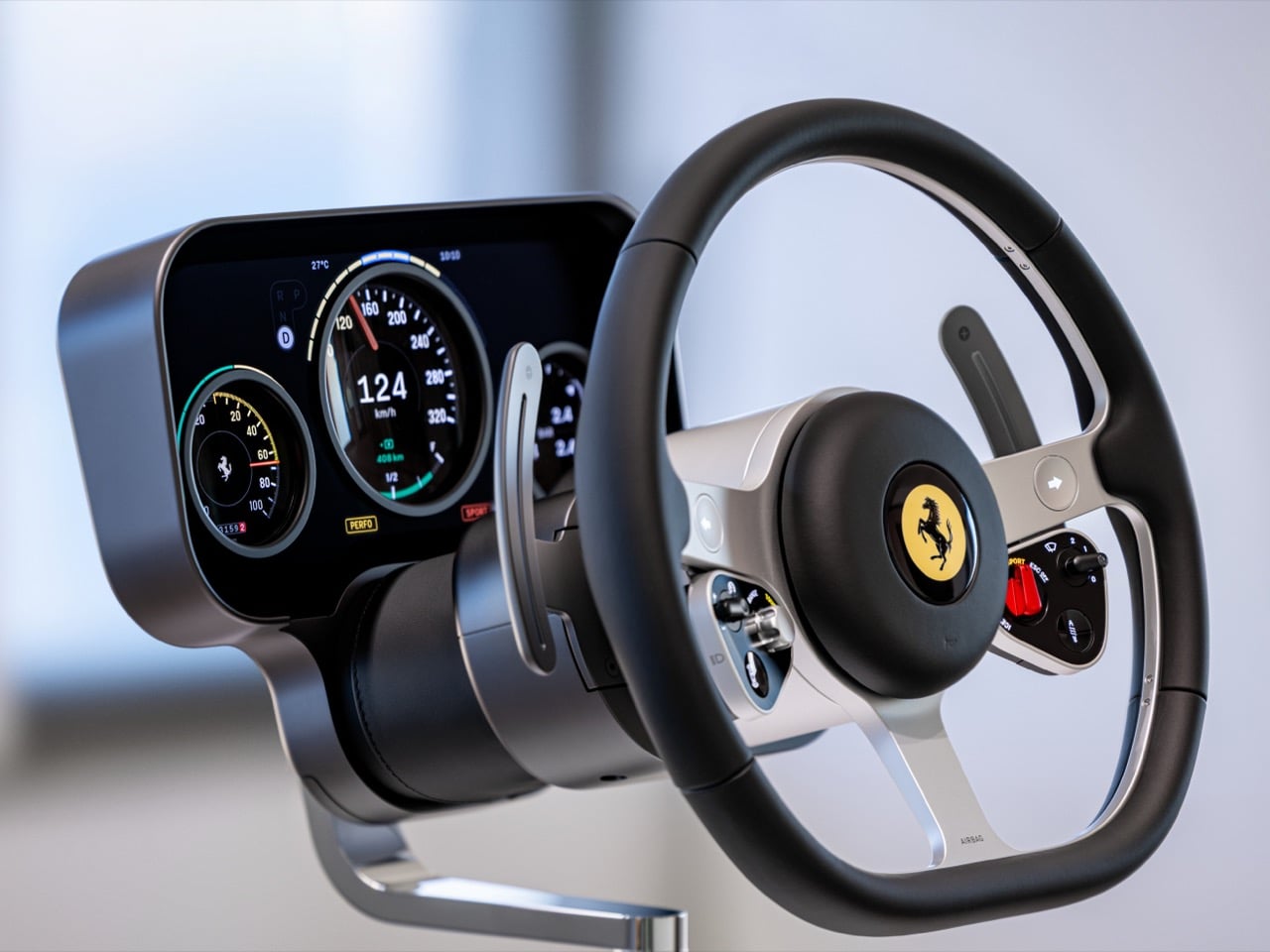
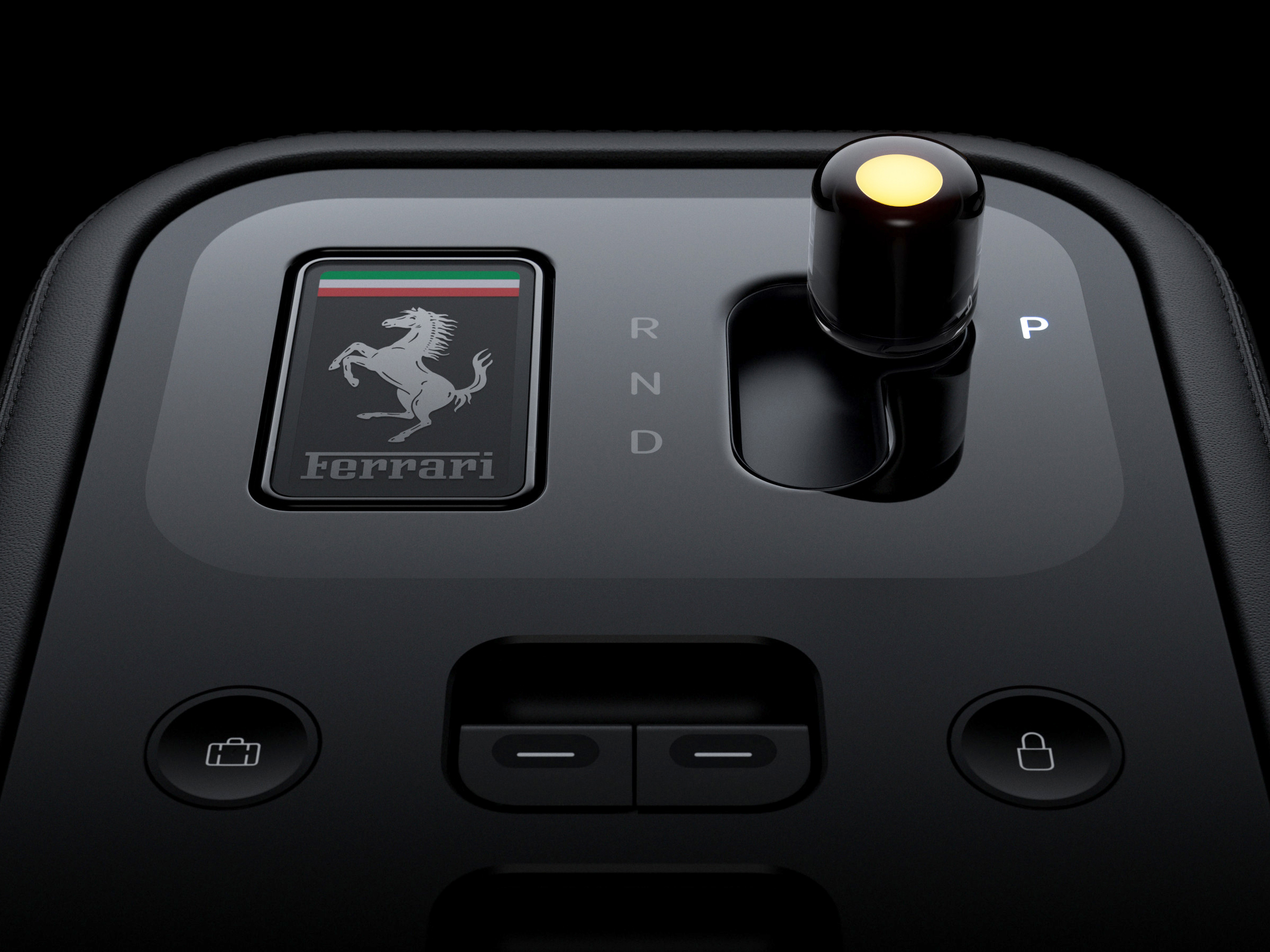
The Ferrari Luce, revealed last week in San Francisco, is a transplant of Apple’s design language into automotive form. Everything about this interior, from the E-ink key fob to the OLED dials to the obsessive material purity, carries the unmistakable signature of Apple’s design peak from 2015 to 2019, when Ive still occupied his Cupertino office and the car project remained alive.

The Apple DNA is Everywhere

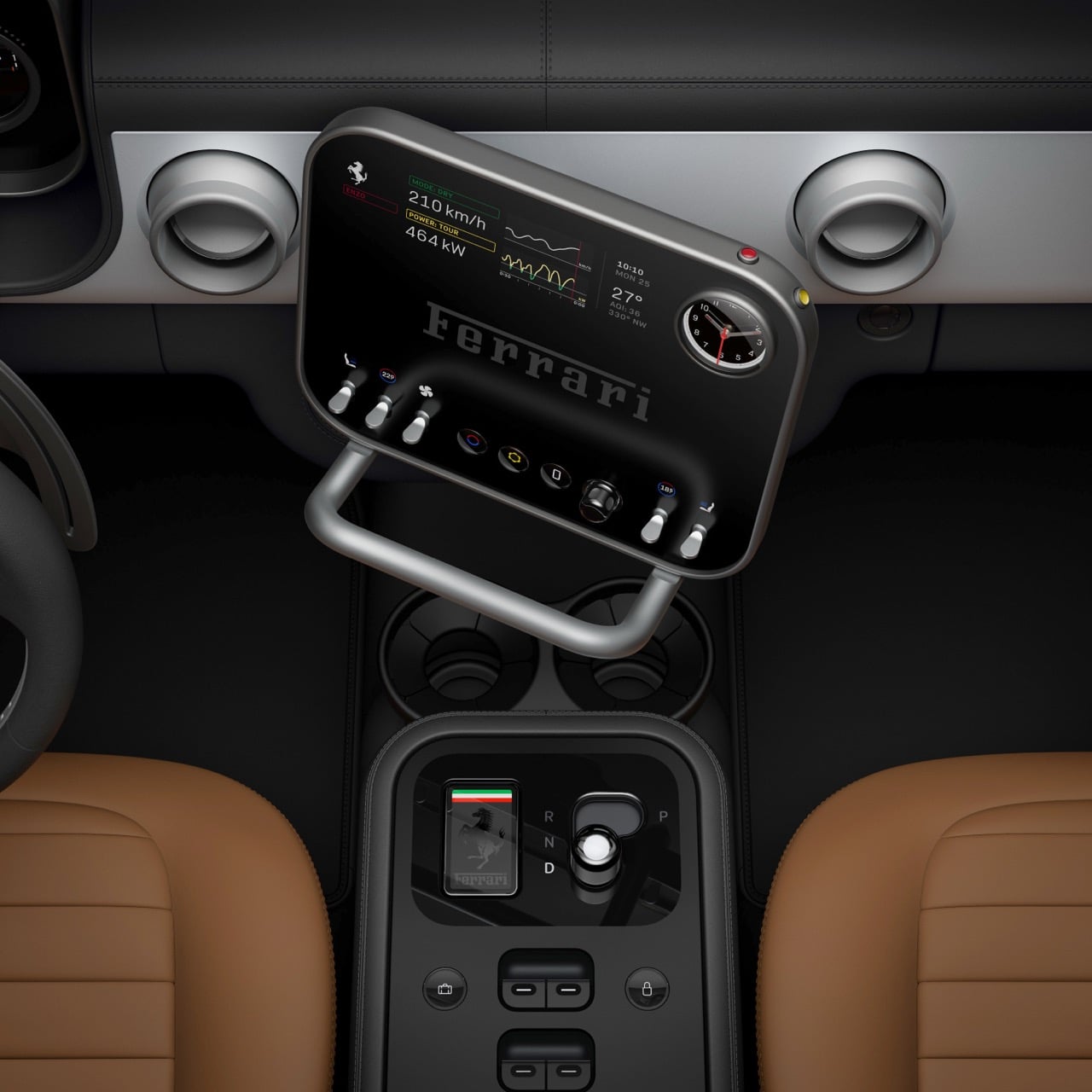
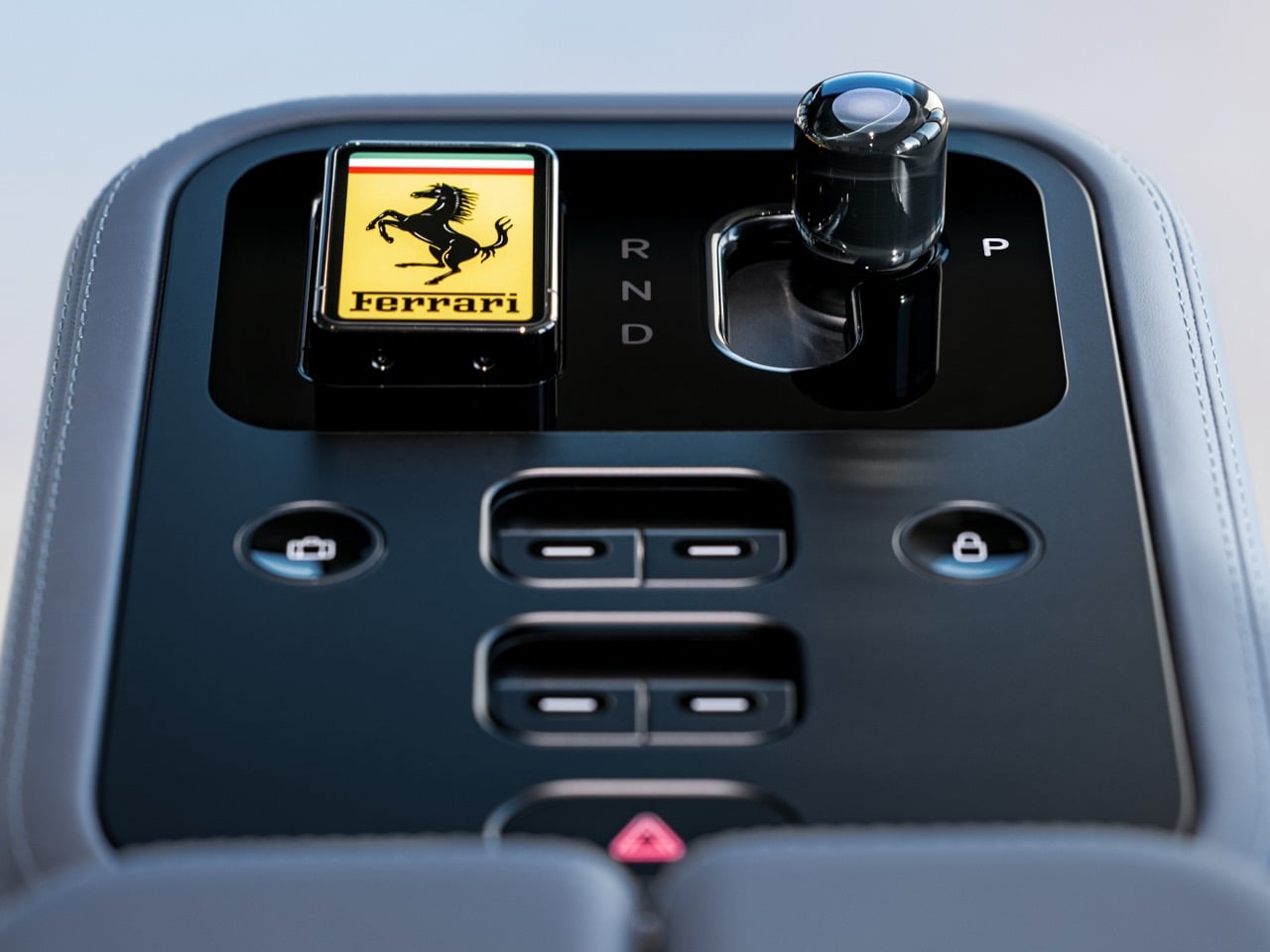
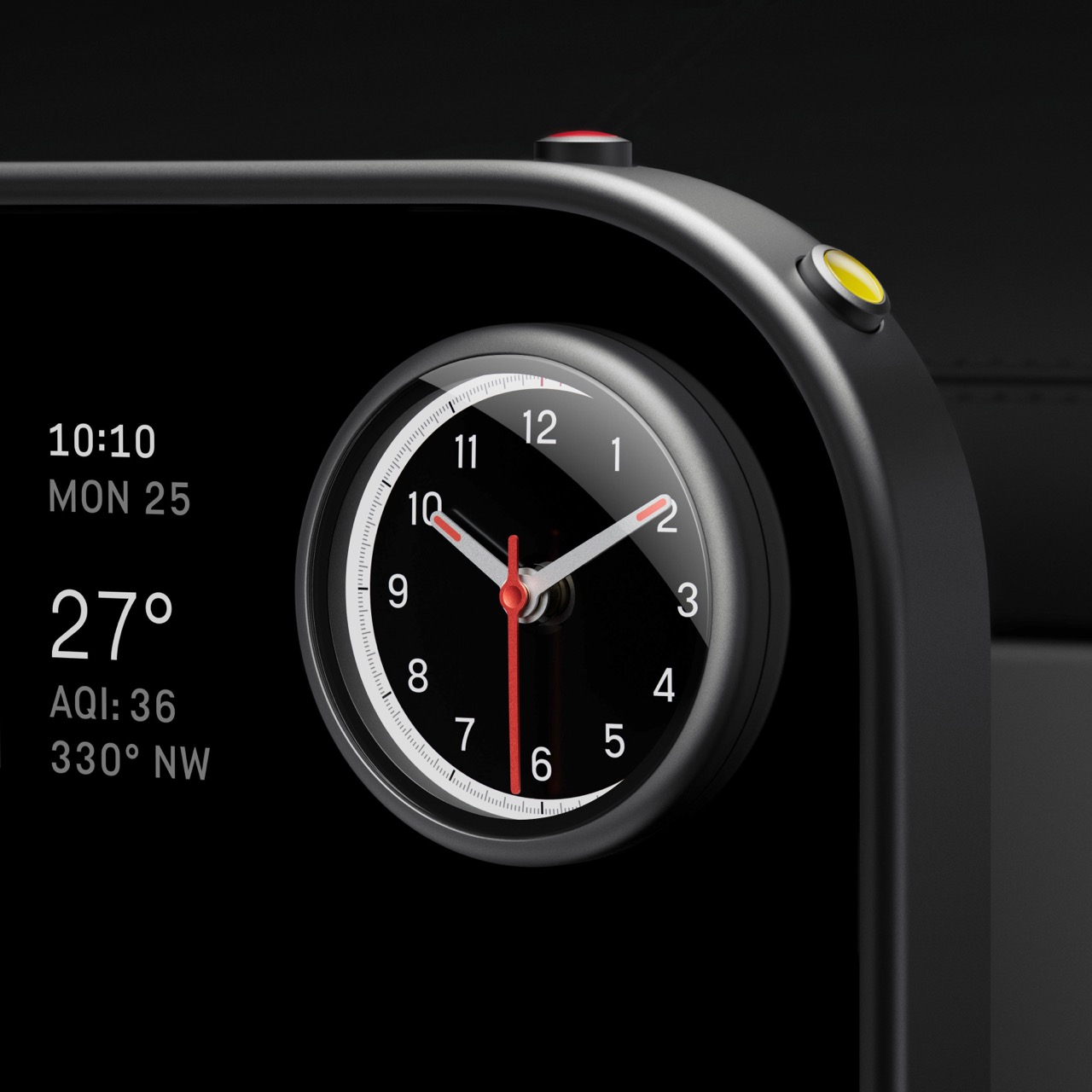
Walk through the components and the Apple DNA becomes impossible to ignore. The key fob magnetically docks into the center console and changes color via E-ink display. This is MagSafe technology meets Apple Watch complications, translated into a car key. The center screen features an analog clock that transforms into a chronograph and compass with the press of two buttons. Pull up any image of Apple Watch faces and the interaction model is identical.

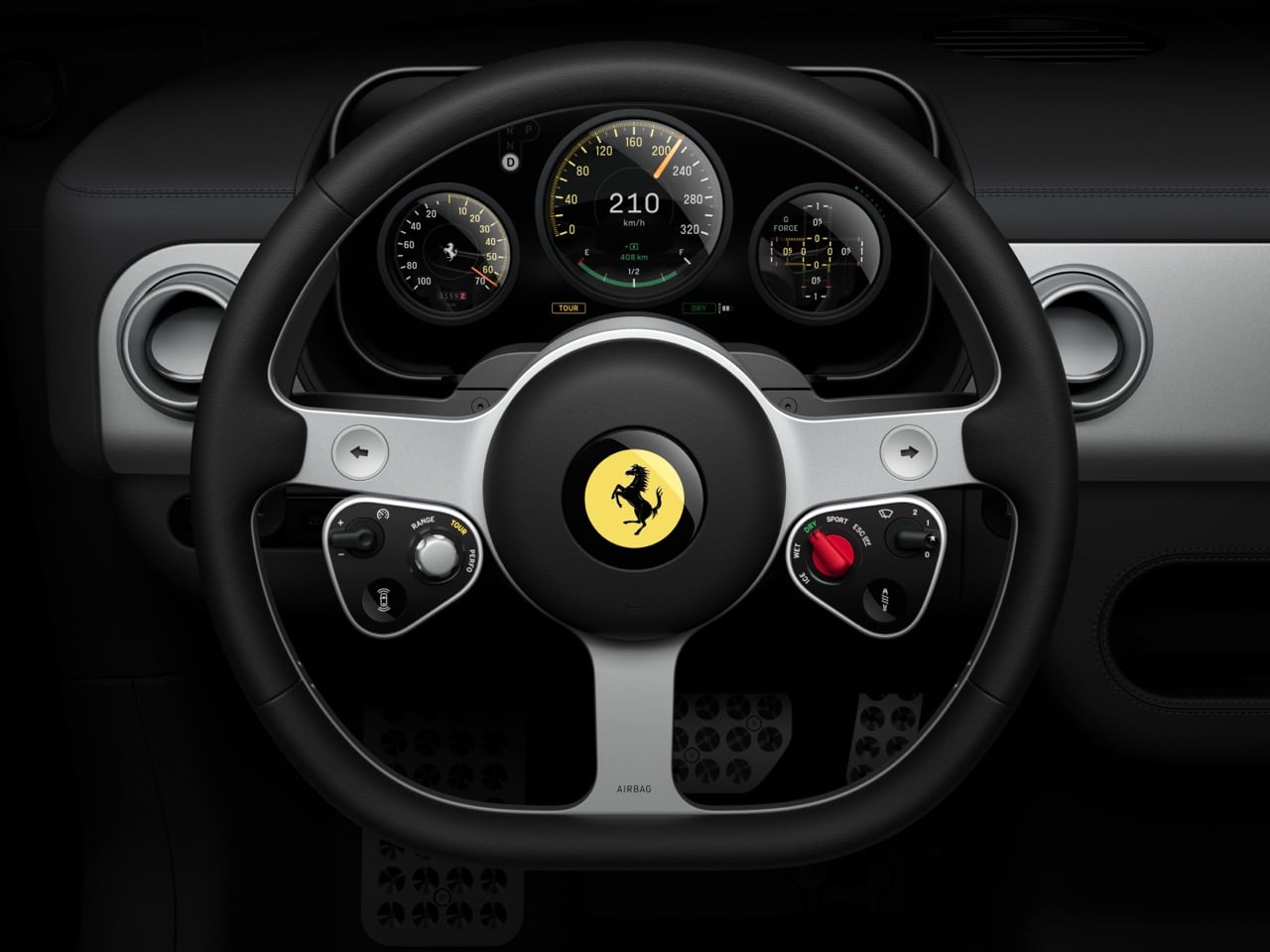
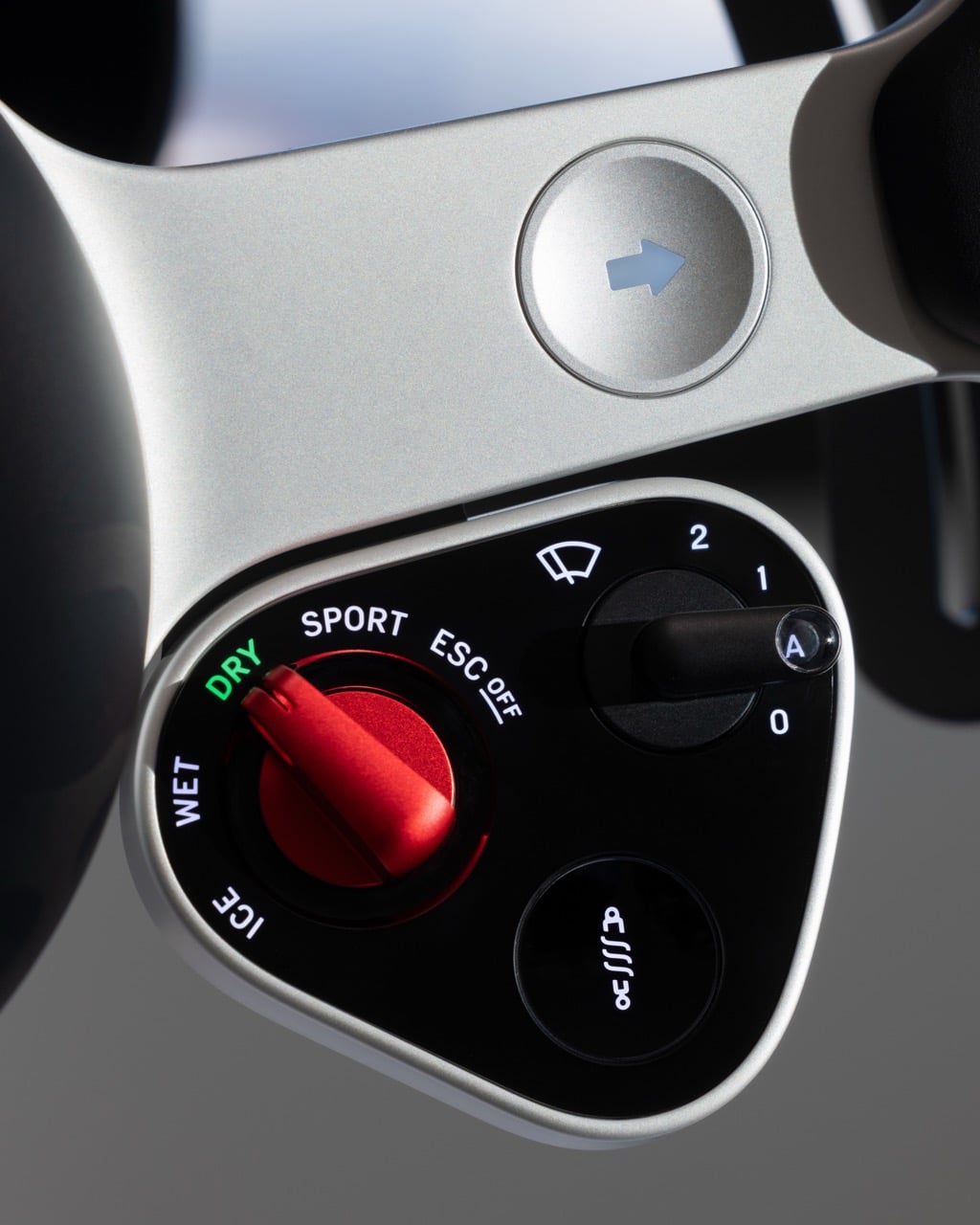
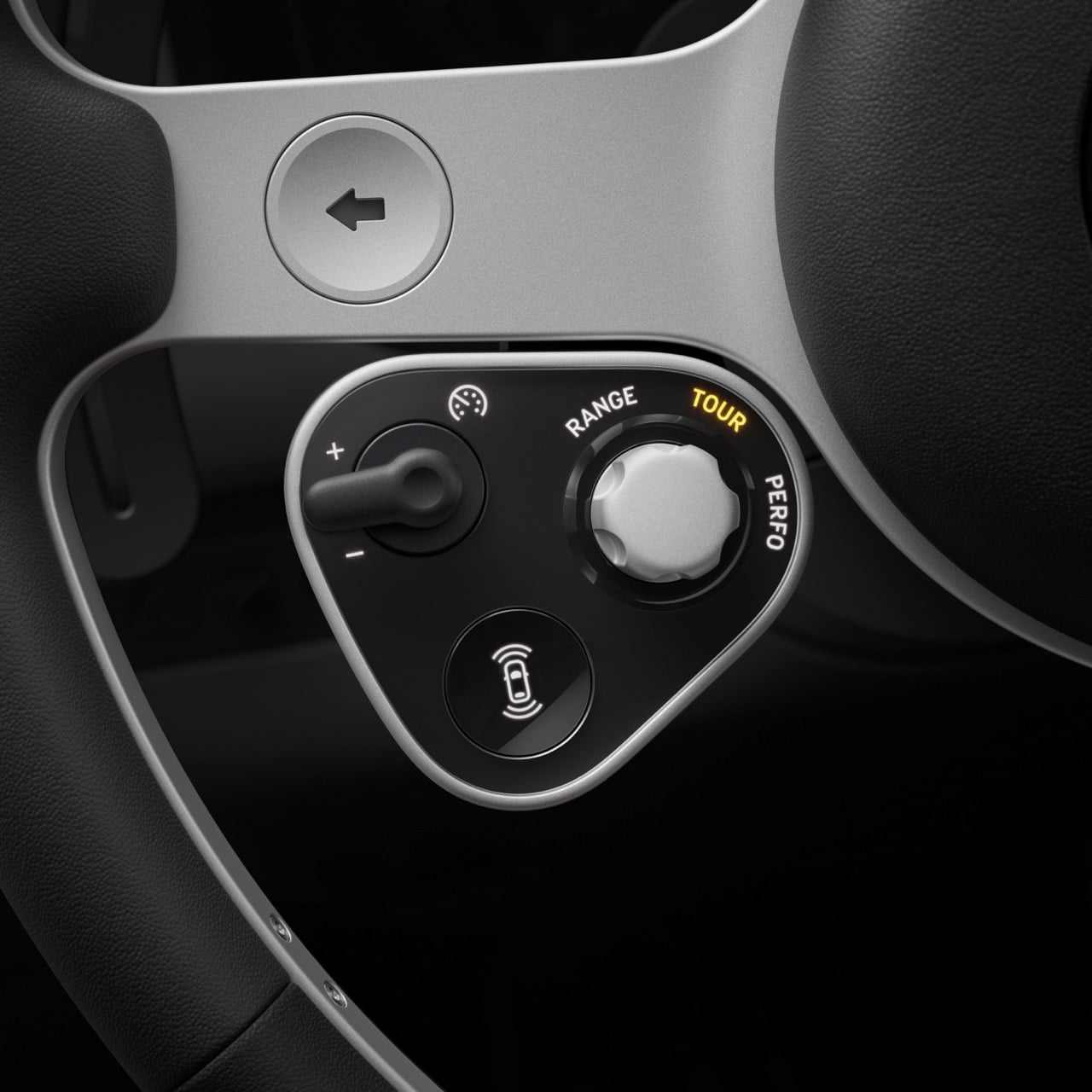
The toggle switches and knobs scattered throughout the cabin represent the physical interface philosophy Ive has been refining since the original iMac. The Digital Crown on the Apple Watch, the mute switch on the iPhone, the volume controls on the HomePod. These are the same careful considerations about how humans interact with objects through touch and rotation. The OLED binnacle behind the steering wheel uses a parallax effect to create depth perception, the same technology that made the iPhone X’s face recognition possible, now applied to gauge clusters.

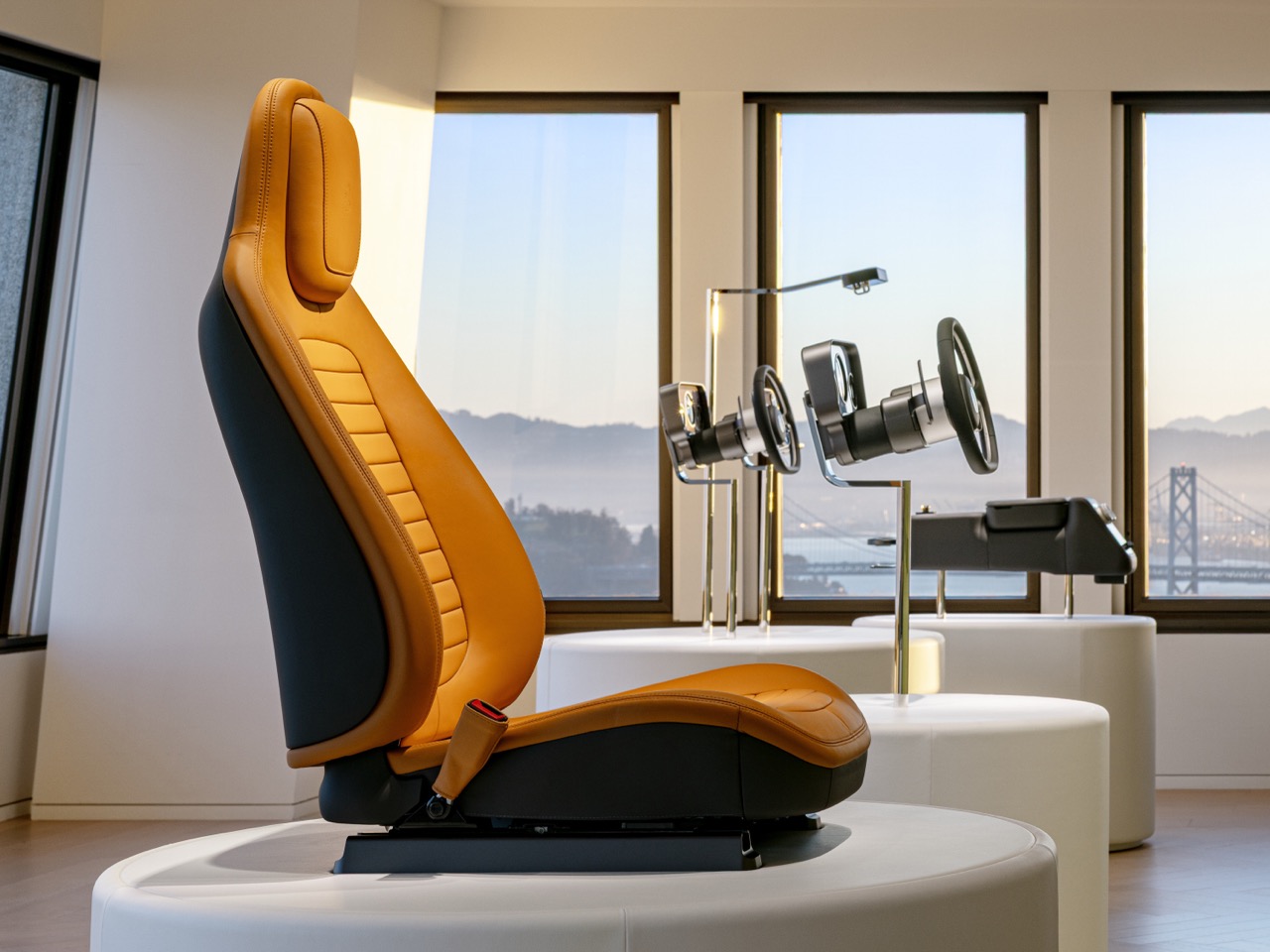
Then there’s the material palette: recycled aluminum with a microscopic anodized texture, Corning glass surfaces, leather in muted tan. This is the 2017 iPhone X material story. This is the unibody MacBook recipe. This is every premium Apple product from the past decade, reassembled into automotive architecture.

Wait, Is This the Same Jony Ive?

Consider what Ive said at the reveal: “It’s bizarre and lazy to assume the interface should be digital if the power source is electric.”

This is the man who killed the headphone jack. Who removed every port from the MacBook. Who spent twenty years eliminating physical buttons, physical connections, physical everything. And now he’s arguing that physical controls matter? That tactility is essential? That you can’t just solve everything with a touchscreen?

Maybe the context really does change everything. A phone lives in your pocket. You can look at it. A car moves at 200 kilometers per hour. Looking away kills people. Or maybe Ive has simply evolved. Perhaps LoveFrom represents a different philosophy than Apple did, one less concerned with relentless minimalism and more interested in appropriate solutions. Or perhaps this is who Ive always was, and Apple’s commercial pressures pushed him toward deletion when his instincts wanted refinement.

The Luce interior suggests that physical interfaces weren’t the enemy. Bad physical interfaces were. Give Ive the freedom to perfect a toggle switch, to make a dial that clicks with precision, to create a button that feels inevitable, and he’ll choose physical every time. The question is whether we’re seeing growth or contradiction.

The Timeline is ‘Interesting’

Apple started Project Titan in 2014. By 2016, Ive had become increasingly involved as the project shifted from full autonomy toward driver-focused experiences. He left Apple in 2019 but reportedly continued consulting on the car. In 2024, Apple abandoned the project entirely. During those years, Bloomberg reported that the Apple Car was supposed to feature premium materials, minimalist interiors, physical controls prioritized over touchscreens, and a “living room on wheels” concept.

Here’s what actually happened: Ive leaves Apple in 2019 and forms LoveFrom. Two years later, in 2021, Ferrari announces the partnership. That means conversations started immediately after his departure, possibly before. Ive spent a decade developing car interior concepts at a company with unlimited resources. Then he got to actually build one at a different company with unlimited resources and, crucially, manufacturing capability that Apple never developed.

My guess is Ferrari didn’t hire LoveFrom for an overhaul. They hired them for battle-tested thinking that never shipped.

Why Ferrari Said Yes

From Ferrari’s perspective, the logic is clear. They’ve never built an electric vehicle. Their customer base is deeply skeptical of electrification. They need to signal that the Luce represents something genuinely different, something beyond an electrified 296 GTB. So they hire the two most famous industrial designers on Earth, who happen to have spent years thinking about this exact problem at a different technology giant.

It’s outsourcing credibility as much as design. When people inevitably say “that doesn’t look like a Ferrari,” Ferrari can point to LoveFrom and say “well, exactly.” They’ve purchased permission to break from tradition by hiring people with no Ferrari tradition to break from. The prancing horse gives LoveFrom legitimacy in automotive circles. LoveFrom gives Ferrari legitimacy in technology circles. It’s a perfect exchange.

But the question remains: did Ferrari want Ive’s vision, or did they want Ive’s brand? Because what they received feels unmistakably like Apple-thinking while wearing a Ferrari cap.

The May Reveal Will Answer Everything

The real test arrives in May when Ferrari reveals the exterior. Right now we’ve only seen the interior, which is LoveFrom’s natural domain: screens, materials, ergonomics, spatial relationships. The exterior is different. It has to work in a Maranello showroom next to a 12Cilindri and an SF90. It has to look fast while standing still. It has to carry seventy-nine years of design language forward into an electric future.

Can Ive do that? Has he ever designed anything with that kind of visual aggression? His career has been defined by approachability, by objects that invite touch, by forms that recede rather than announce themselves. Ferraris don’t recede. They dominate spaces. They demand attention. If the exterior looks like an Apple product in May, then this really could be what the Apple Car might have become. If it looks genuinely Ferrari, then maybe LoveFrom understands they serve the brand rather than the reverse.

What This Tells Us About the Car That Never Was

The Luce interior reveals something bittersweet about the Apple Car that never was. This is the closest we’ll get to seeing what that vision might have looked like. But it also proves why Apple was probably right to kill the project. It took Ferrari, a company with seventy-nine years of automotive manufacturing experience, five years and presumably nine figures to turn Ive’s concepts into reality. And they still don’t know if customers will accept it. Imagine Apple attempting this from scratch, competing with Tesla on price, managing recalls and service networks and dealer relationships.

The Luce interior is stunning. It’s also a monument to why the Apple Car would have most likely been an operational nightmare, given that Apple isn’t an automotive company.

The irony is perfect: Jony Ive finally got to build his car. He just needed Ferrari to do the hard part.

The post Did Ferrari And Jony Ive Just Build The ‘Apple Car’? first appeared on Yanko Design.
Facebook is offering Meta AI-powered animations for profile photos

Meta has been going all in on AI, whether people want it or not, and now it's bringing more features in that vein to Facebook. The network's latest move is to let people use Meta AI to animate their profile photos. Because what better way to express your individuality than to use a pre-canned AI-generated animation on your own face?

Meta AI is also coming for your Facebook Stories and Memories. The network's Restyle lets you use gen-AI to change up the aesthetic of your posts. You can once again use pre-canned stylings or give the AI assistant your own prompt.

In the company's own words, the new tools that will create "share-worthy moments that spark meaningful interactions and conversations with friends." I guess meaning is in the eye of the beholder. If you're desperate to behold even more AI slop, Meta recently said its Vibes feed of exactly that content will be getting a standalone app.

This article originally appeared on Engadget at https://www.engadget.com/social-media/facebook-is-offering-meta-ai-powered-animations-for-profile-photos-201022506.html?src=rss

This Itch.io bundle to help Minnesota includes over 1,200 games and costs just $10

You have likely heard about the masked agents of ICE mucking around in Minnesota for the past few months, resulting in numerous violent incidents and deaths. Itch.io is hosting a bundle to help raise money for the Immigrant Law Center of Minnesota, which was organized by charity creator Jes Wade.

The No ICE in Minnesota bundle includes nearly 1,300 video games and tabletop games and costs just $10, though those with deep pockets can certainly donate more than that. It has a goal of $100,000, which it certainly is on pace to meet.

There are some nifty titles here, particularly for those interested in indie puzzle games and life sims. The standout is likely the stellar puzzler Baba Is You, which won the Game Designers Award at the Tokyo Games Show in 2020. This is a game that has to be played to be understood, as players are given the opportunity to change the rules to find novel solutions to complex puzzles. It's very good.

The bundle includes the life simulation game Calico, which involves players running a cat cafe on a magical island. The art style is gorgeous and the gameplay is relaxing. Also, calico cats are awesome.

Other titles include the bee-collecting sim Apico, the musical sci-fi adventure Periphery Synthetic and the space-based roguelike Hyperspace Dogfights. Scroll through the list to see if anything else strikes your interest, but mark out some time on the calendar first. Scrolling through nearly 1,300 games can take a while.

The Immigrant Law Center of Minnesota is a nonprofit that provides free representation to low-income immigrants and refugees. The organization also provides support for those who have witnessed violent attacks and advocates for public policies which "respect the universal human rights of immigrants."

I live in Minneapolis. ICE is still here in full force, despite the media moving on to shinier objects. We really do need all the help we can get. The long-term presence of these masked, armed agents is really starting to destroy the local economy and many people are quite literally trapped indoors. To say morale is low would be an understatement. Schools are still being raided and people are still being brutally beaten. American citizens are still being arrested for dubious reasons. This is all happening after the killings of Renee Good and Alex Pretti.

That's why these fundraising bundles on Itch have become so important. They really do shine a light on important topics. This is organizer Jes Wade's second ICE-related bundle, with a former focusing on California relief efforts. There have also been bundles to help raise money for the NAACP Legal Defense and Educational Fund and Community Bail Fund and to raise cash for charities working in Ukraine.

This article originally appeared on Engadget at https://www.engadget.com/gaming/this-itchio-bundle-to-help-minnesota-includes-over-1200-games-and-costs-just-10-190643987.html?src=rss

Sam Bankman-Fried wants a re-trial for fraud charges

Former cryptocurrency poster boy Sam Bankman-Fried is trying to get another chance in court. He has filed a request that for a new trial on claims that new witness testimony could alter the case made against him by prosecutors, according to Bloomberg. His odds for getting the re-trial, where he'd be representing himself, seem pretty slim. This is a separate motion from a formal appeal of his previous conviction.

Bankman-Fried is one of many cryptocurrency leaders who have since been prosecuted for fraud. After being jailed for witness tampering, he was found guilty of seven charges of fraud and conspiracy in 2023. Bankman-Fried was sentenced to 25 years in prison for his actions as CEO and co-founder of crypto exchange FTX.

This article originally appeared on Engadget at https://www.engadget.com/big-tech/sam-bankman-fried-wants-a-re-trial-for-fraud-charges-185910093.html?src=rss

Stop Hunching Over Your Laptop: This Stand Has a USB Hub Built In

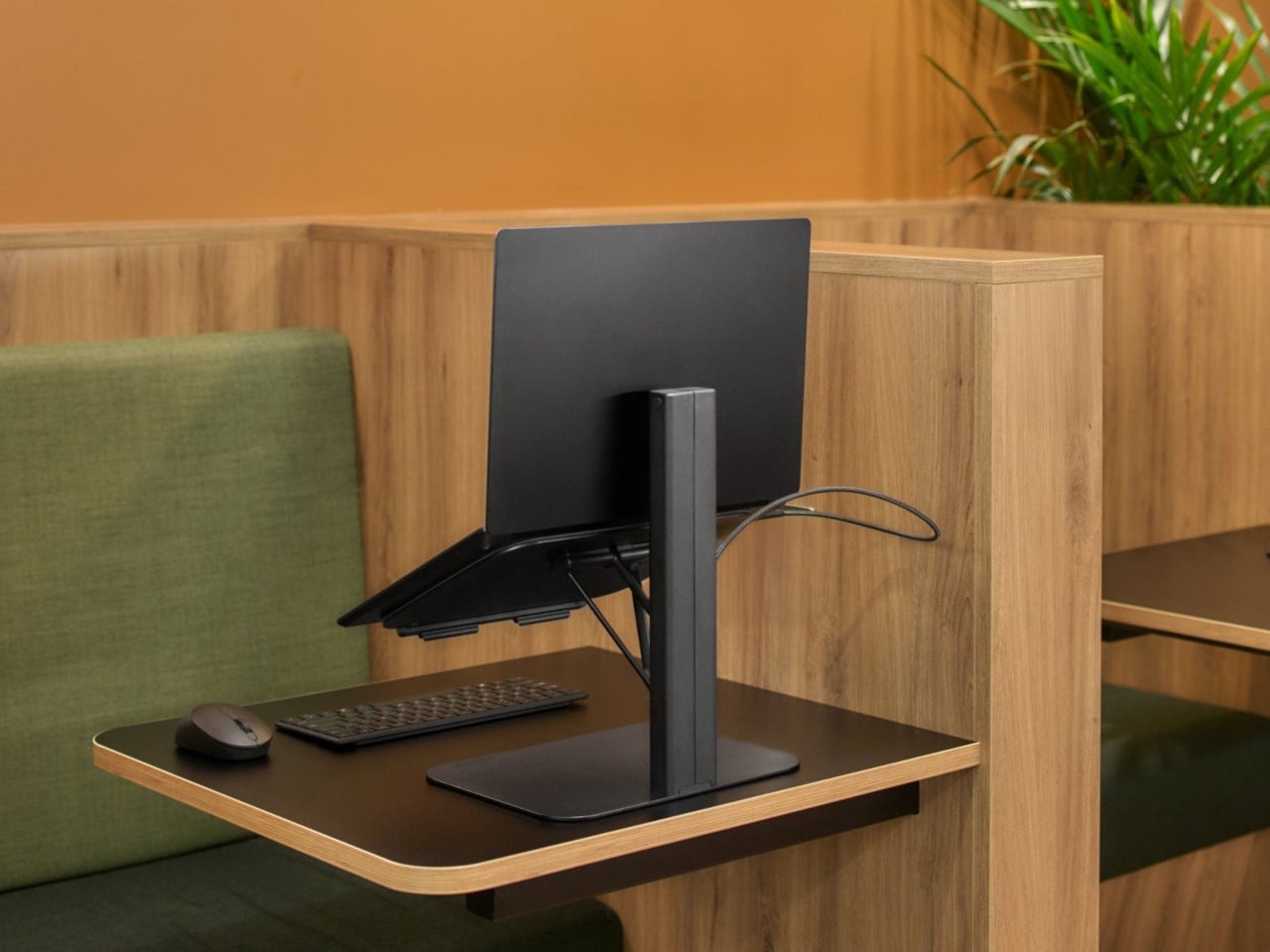
Working from whatever surface is available means café tables, office booths, hot desks, all places where the laptop is always too low and the power outlet is always just out of reach. People stack laptops on books, hunch over for hours, and drag a small zoo of dongles and chargers around just to make a temporary spot feel like a real workstation for a few hours before packing up and moving again.

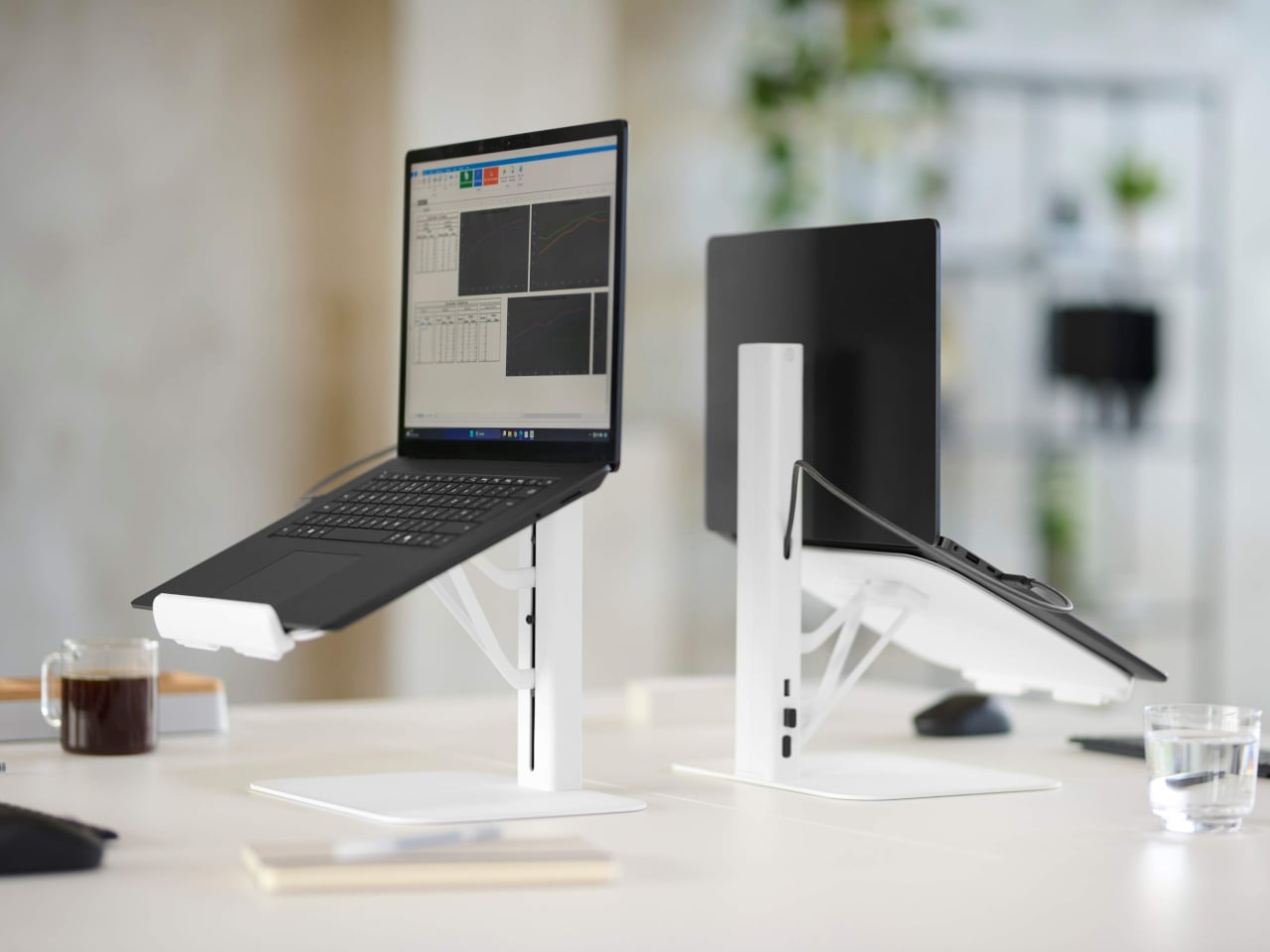
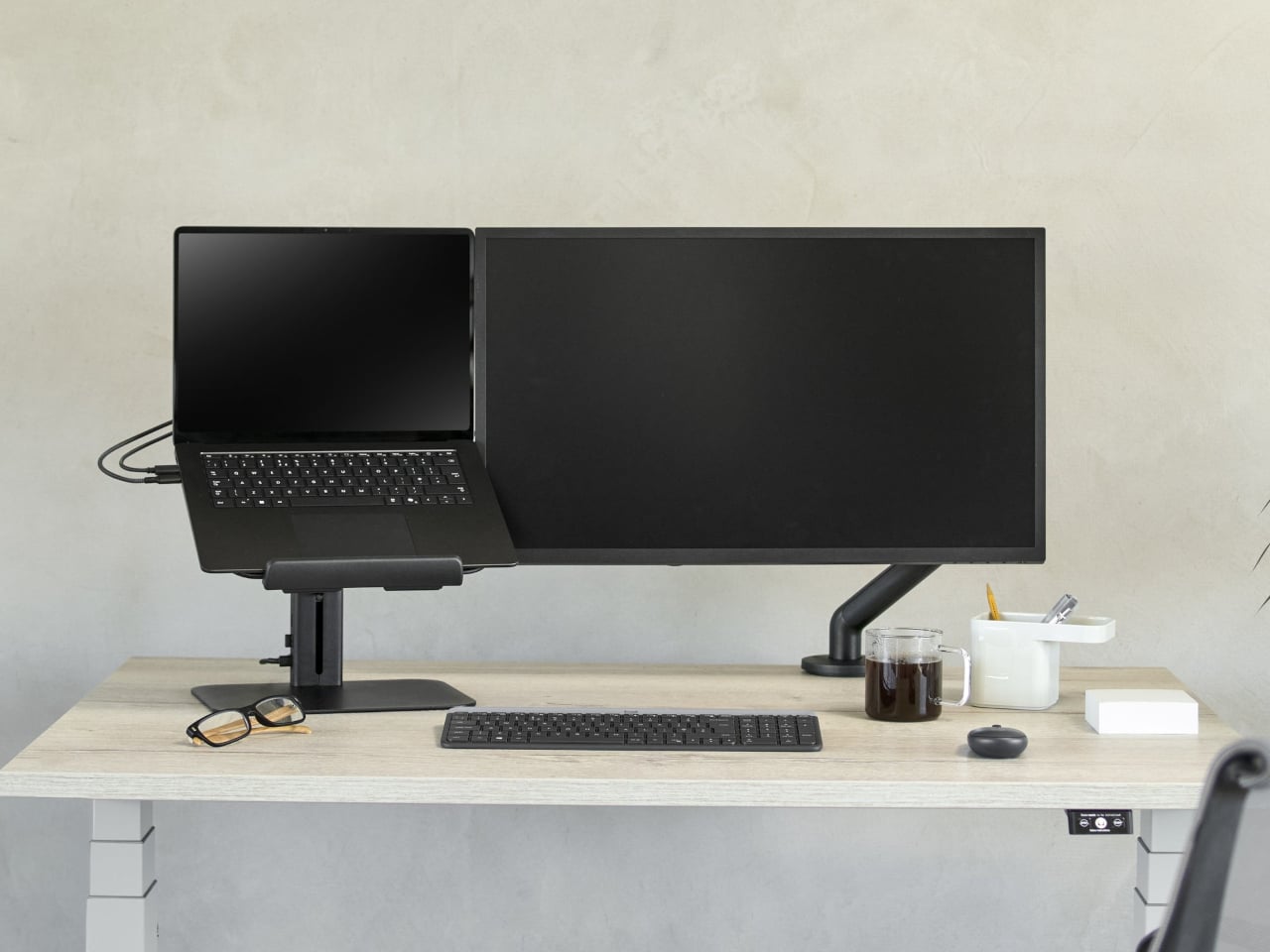
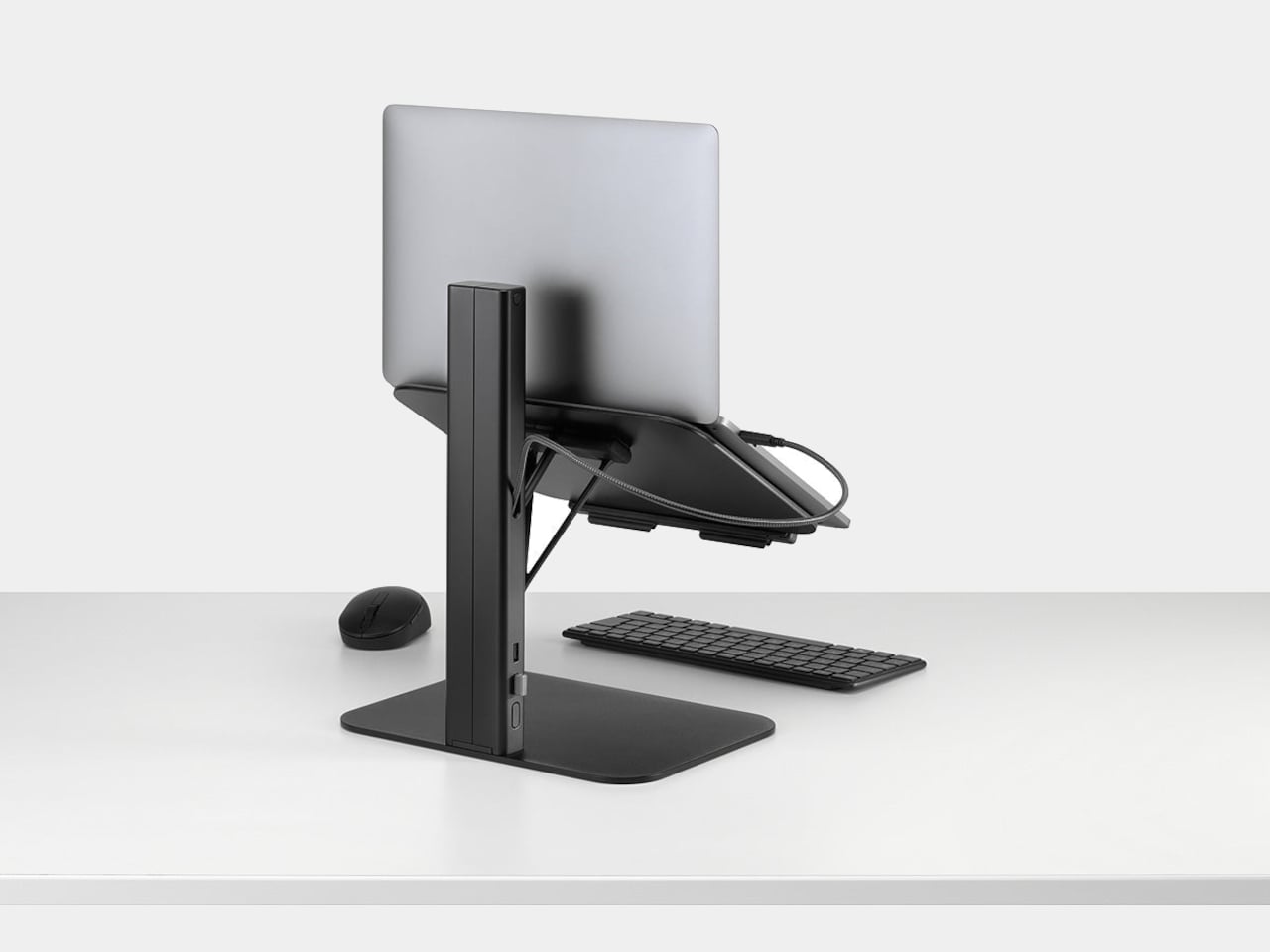
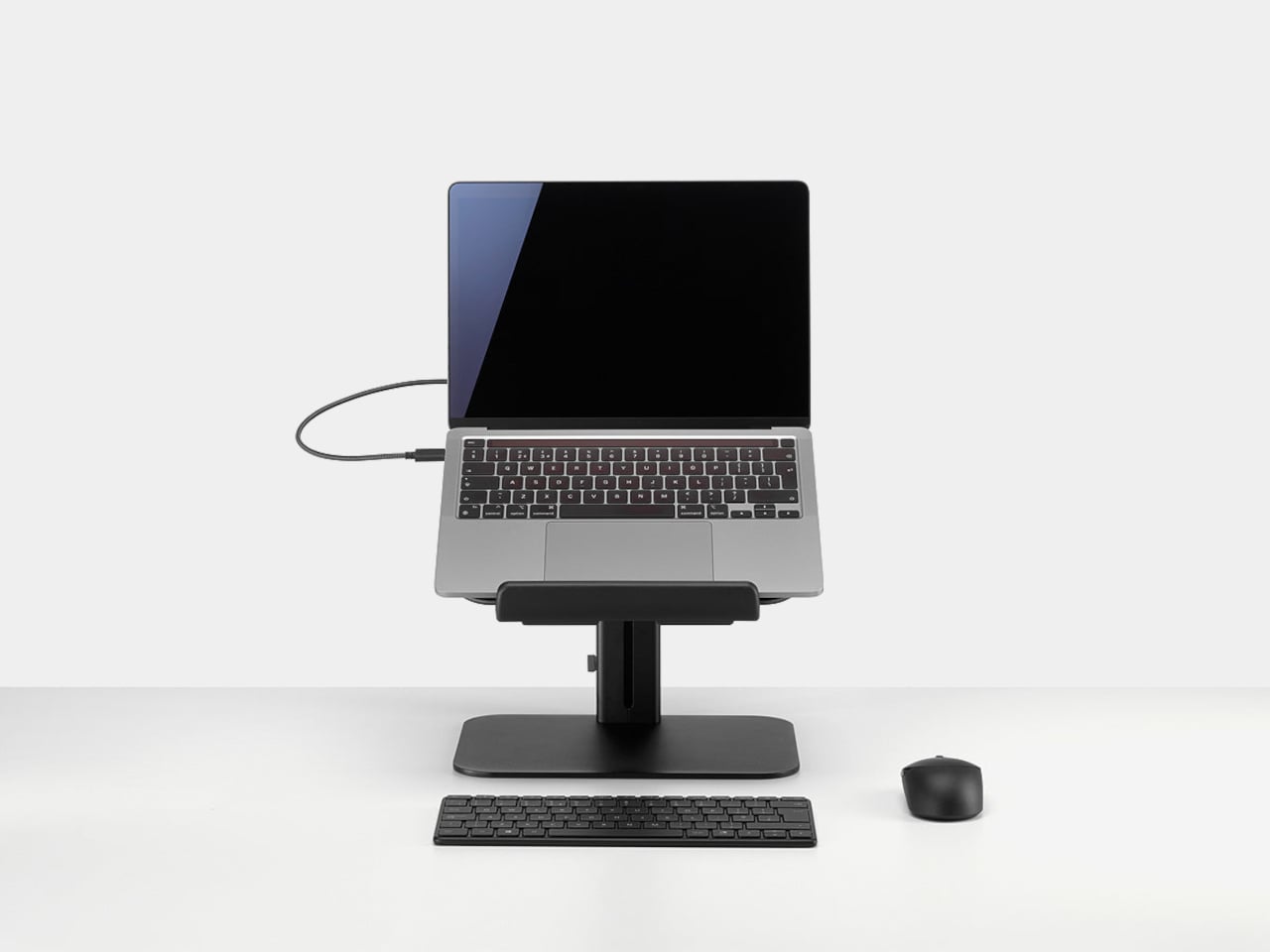
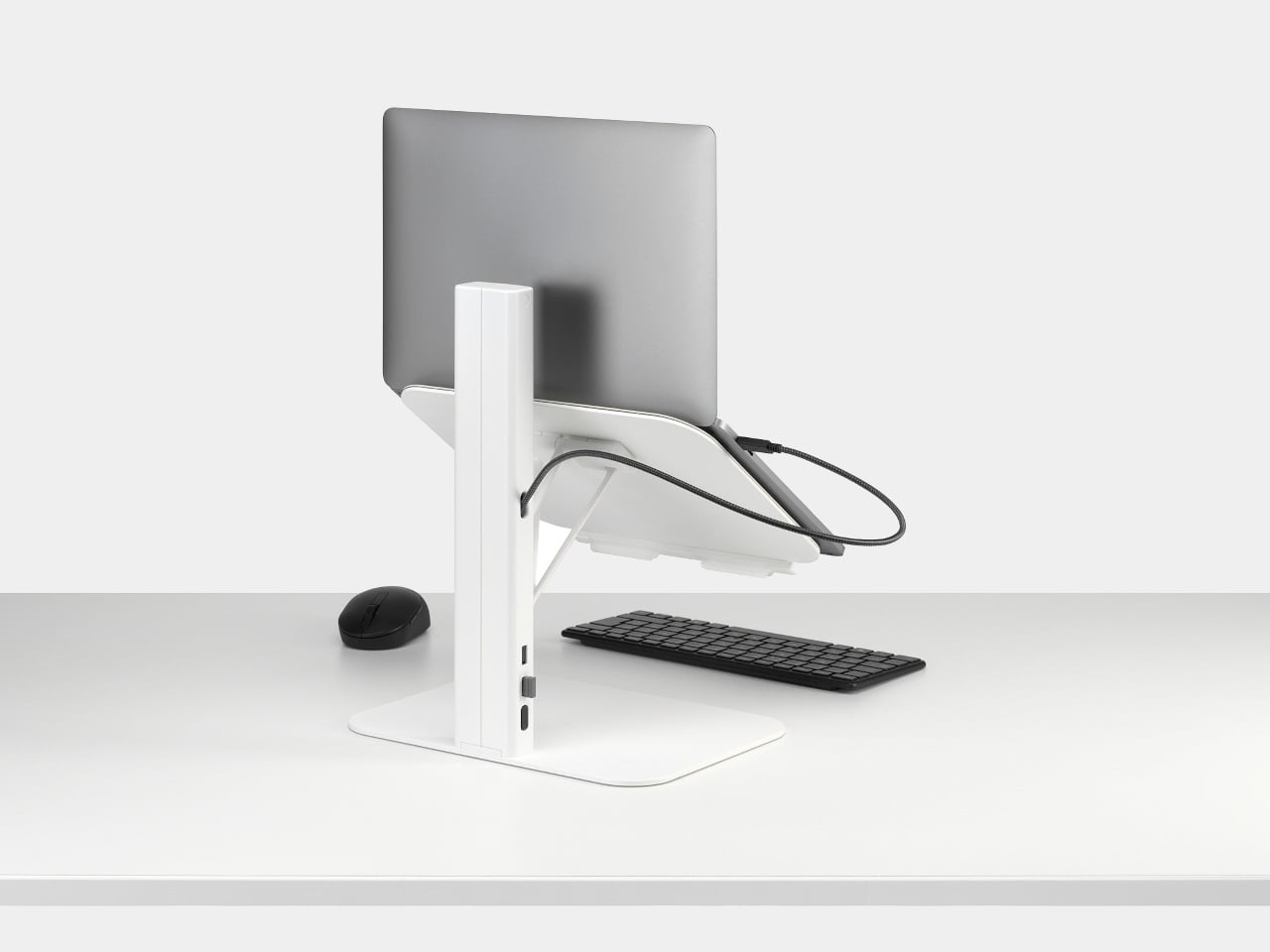
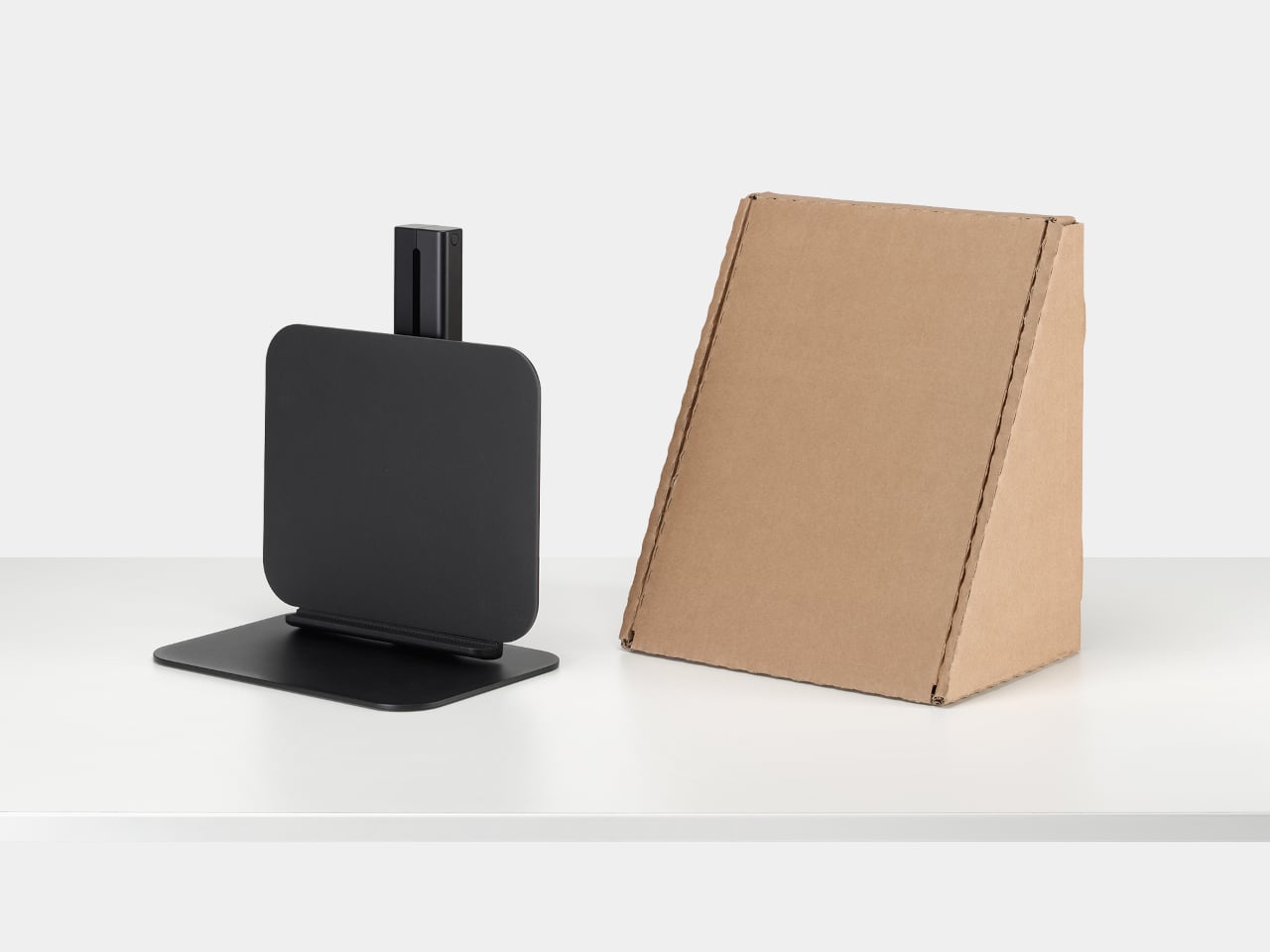
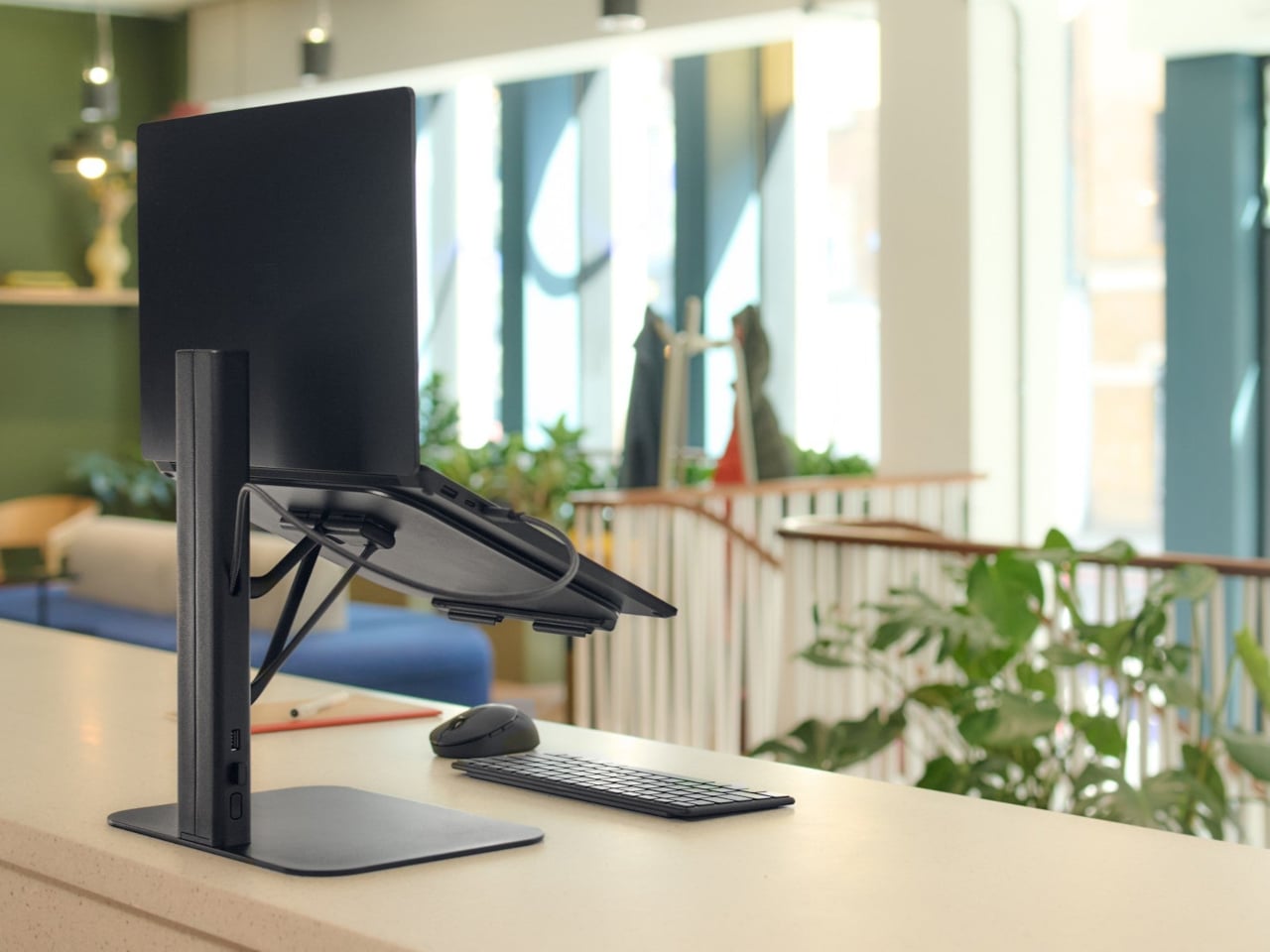
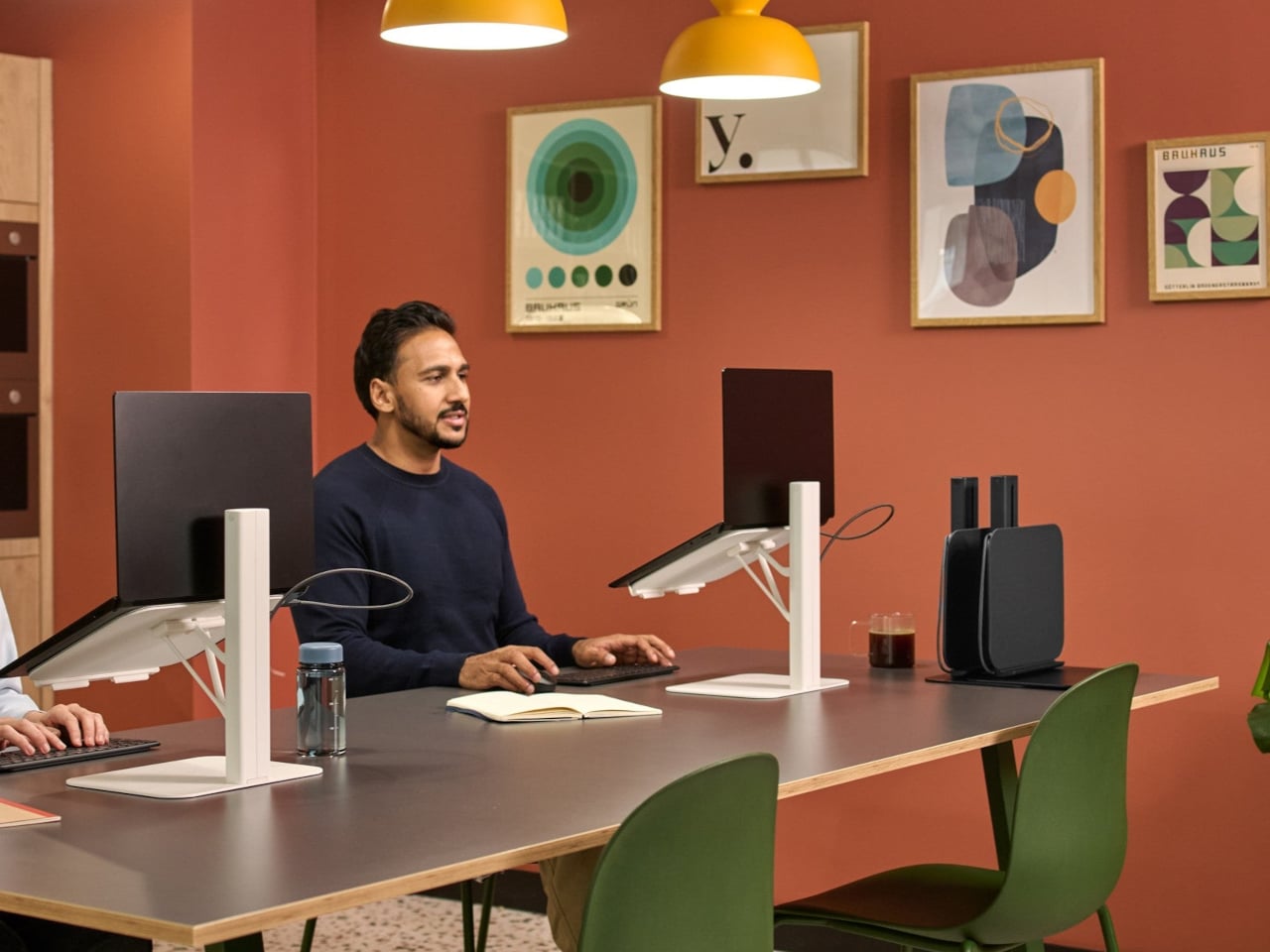
The Lana laptop stand from Colebrook Bosson Saunders is a compact riser that lifts your laptop to eye level and hides an integrated USB hub in its spine, so your keyboard, mouse, and power all run through a single USB-C cable. You drop your laptop on it, plug in one cable, and the temporary desk suddenly feels less temporary, less improvised, and less like you’re working from a surface that was meant for lunch rather than spreadsheets.

Designer: Colebrook Bosson Saunders

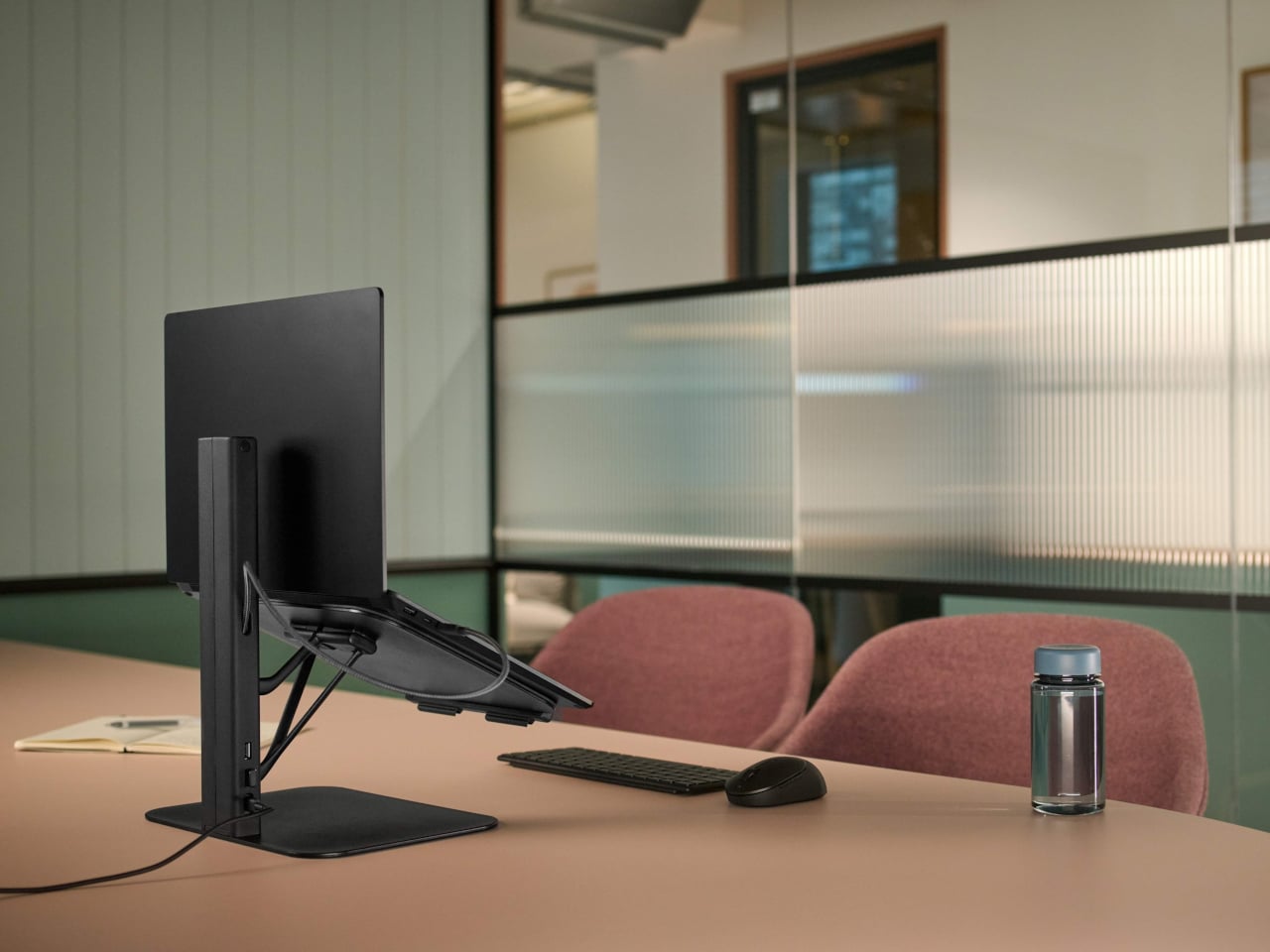
Imagine a scenario where you arrive at a shared bench or booth, and Lana is already in place. You sit down, plug your laptop into the stand’s USB-C, and everything comes to life: an external keyboard, mouse, maybe a charger if the stand’s hub is connected to power. There won’t be any crawling under the desk for sockets or untangling cables from the previous person, just one motion that turns a generic surface into your setup.

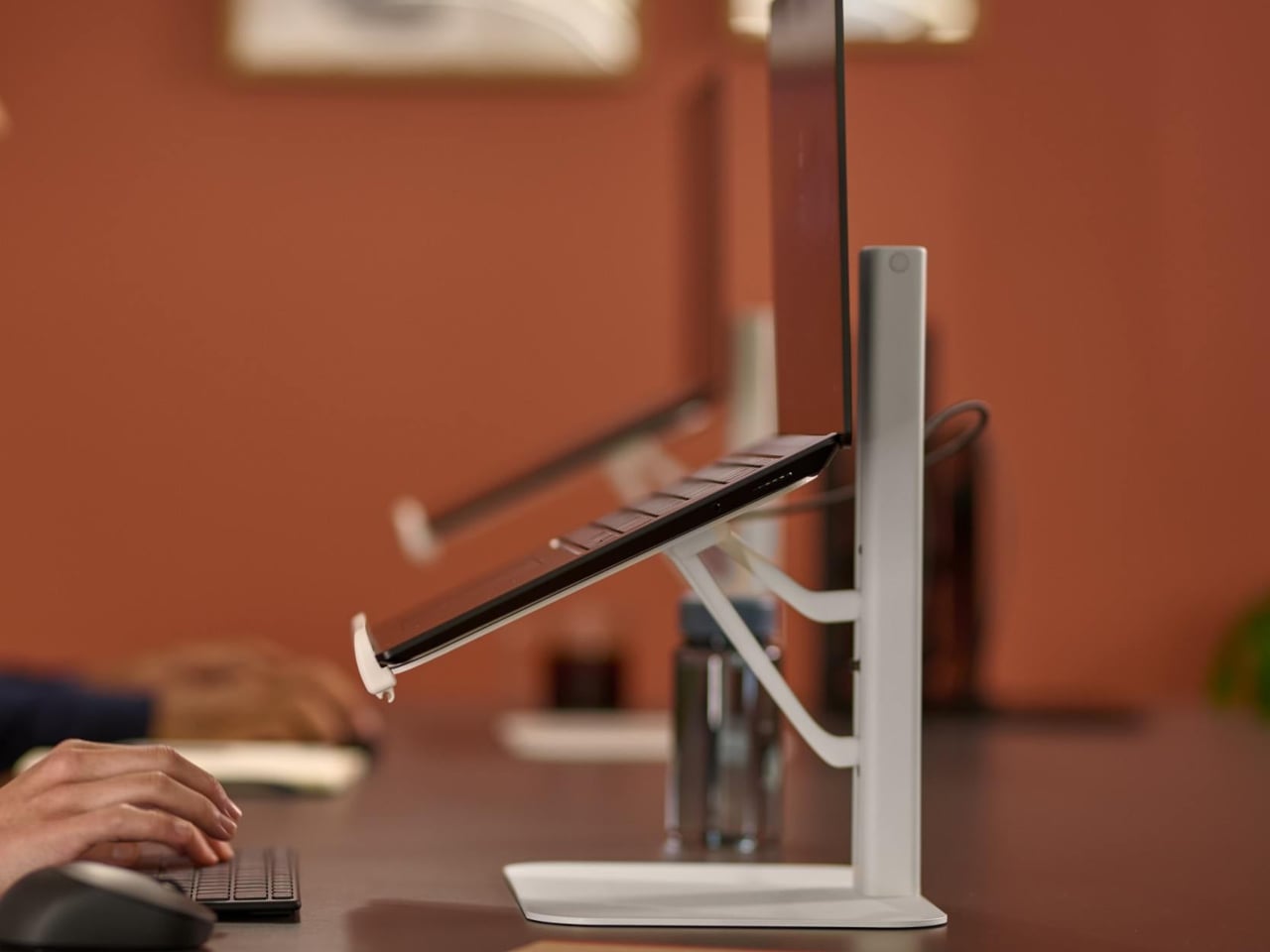
Lana is designed to “eliminate musculoskeletal strain and fatigue,” adjusting instantly for healthy posture even in “temporary touchdown spaces.” You raise the laptop until the top of the screen is roughly at eye level, use a separate keyboard on the desk, and your back, shoulders, and eyes stop paying the price for every impromptu session. It’s a small change that matters more when you’re constantly moving between locations instead of staying put.

The stand fits into the variety of furniture it’s meant for, pods, booths, and communal benches, where there’s rarely room for monitor arms or full docking stations. Lana’s footprint is small enough for a booth table but tall enough to get the screen where it needs to be. It’s flexible, convenient, and “uncompromisingly ergonomic,” as Colebrook Bosson Saunders puts it, which is a rare combination in spaces that were never designed for long stretches of work.

The 12-year warranty that CBS offers says a lot about how confident they are in the mechanics of the stand. The plastic-free packaging goal and the fact that Lana is part of a British-designed and engineered lineup tie it back to a broader ecosystem of ergonomic products rather than a one-off gadget. It’s meant to be a long-term fixture in shared spaces, not a disposable accessory you replace every year.

Lana is less about reinventing the laptop stand and more about making hybrid work setups feel intentional instead of improvised. By combining a proper riser with a USB hub and a single-cable plug-in, it turns pods, booths, and benches into places where you can actually work without wrecking your posture or your patience. For something that just sits there, that’s a surprisingly big job done quietly well.

The post Stop Hunching Over Your Laptop: This Stand Has a USB Hub Built In first appeared on Yanko Design.
Hubble showcases the Egg Nebula in all its dying-star glory

Hubble may no longer be the gold standard, but it can still capture some impressive images. The telescope's latest snapshot is our clearest view yet of the Egg Nebula. Roughly 3,000 light-years away from Earth, the nebula's name is derived from its dense layer of gas and dust cloaking a central star.

The new image shows the nebula's four beams of starlight (from that central star) escaping from its gas-and-dust "shell." On either side of the disc-like cloud are fast-moving outflows of hot molecular hydrogen. The orange highlights in this image indicate the glow of infrared light.

As the beams of starlight stretch out from the center, they illuminate concentric rings of gas. The gas’s ripple-like pattern suggests it was created by successive bursts from the star, with a little more ejecting every few hundred years.

Hubble image of the Egg Nebula. A disc of gas and dust surrounded by beams of light and concentric rings of dust.
SA / Hubble & NASA, B. Balick (University of Washington)

The Egg Nebula, found in the constellation Cygnus, was first discovered in 1975. Nebulae in this preplanetary phase are rare finds. Since the stage only lasts a few thousand years (and because they're often faint), they're relatively difficult for astronomers to spot. By comparing this new image with previous Hubble snapshots of the Egg Nebula, astronomers can learn more about it and shed more light on its processes. But for the rest of us, it makes for some pretty sweet eye candy, right?

This article originally appeared on Engadget at https://www.engadget.com/science/space/hubble-showcases-the-egg-nebula-in-all-its-dying-star-glory-174239769.html?src=rss

Microsoft will start refreshing Secure Boot certificates in March for Windows 11 and Windows 10 ESU users

Get ye to Windows Update, because there's a good chance you've got new Secure Boot certificates to install. Microsoft just announced that it will be refreshing those certificates, which were originally introduced when Secure Boot debuted in 2011, as a security precaution. Secure Boot was a way for Microsoft to protect systems from running unsigned and potentially malicious code before Windows launched. It went on to be an installation requirement for Windows 11, as well as anti-cheat software used in Valorant, Call of Duty: Black Ops 6/7 and Battlefield 6.

Without the new Secure Boot certificates, Microsoft says your system will still function normally, but it will enter "a degraded security state that limits its ability to receive future boot-level protections." Basically, you won't be protected from malware and viruses targeting vulnerabilities in older versions of Windows. As expected, Microsoft also notes that unsupported versions of Windows won't be receiving the new Secure Boot certificates. They're only coming to Windows 11 systems, as well as Windows 10 PCs subscribed to Microsoft's Extended Security Updates.

Microsoft says many users will be able to pick up the updated Secure Boot certificates by visiting Windows Update, but a few may need additional firmware updates from their system (or motherboard’s) OEM. You’ll also be able to track the status of your security certificates in the Windows Security app in the “coming months.”

"As cryptographic security evolves, certificates and keys must be periodically refreshed to maintain strong protection," Nuno Costa, Partner Director of Windows Servicing and Delivery, wrote in a blog post today. "Retiring old certificates and introducing new ones is a standard industry practice that helps prevent aging credentials from becoming a weak point and keeps platforms aligned with modern security expectations."

Costa says Microsoft has been working with OEMs like Dell and HP to ensure a smooth transition to the new Secure Boot certificates. Many new systems built in 2024 already have the updated certs, while "almost all" devices shipped last year have them as well. Microsoft has also been alerting IT customers to this transition since last year.

This article originally appeared on Engadget at https://www.engadget.com/computing/microsoft-will-start-refreshing-secure-boot-certificates-in-march-for-windows-11-and-windows-10-esu-users-170000777.html?src=rss