Stay Classy, San Diego: This LEGO Anchorman Set Recreates the Entire Channel 4 Newsroom in 1,500 Bricks

Anchorman: The Legend of Ron Burgundy turned twenty in 2024, and somehow, the film has only gotten funnier with age. What started as a Will Ferrell comedy about a hilariously fragile male ego navigating the very real 1970s newsroom gender wars became one of the most quoted, most meme’d, most endlessly rewatchable comedies in modern American film history. “I’m kind of a big deal,” “I love lamp,” “60% of the time it works every time” – the lines are so deeply embedded in pop culture at this point that people quote them without even knowing where they came from. San Diego’s most legendary fictional anchor deserves better than a passing reference in a listicle, and LEGO Ideas builder footonabrick clearly agrees.

The result is a just-over-1,500-piece MOC (My Own Creation) that reconstructs the Channel 4 News Team’s world with an almost obsessive attention to detail, covering the broadcast studio, the newsroom offices, and even the KVWN news van parked out front. The studio section is immediately recognizable: a curved tan backdrop wall, three wall clocks ticking away above the anchor desk, dual blue Channel 4 News Team screens flanking the set, and the full team seated behind that iconic brown desk with their Channel 4 mugs. It looks like a freeze-frame from the film, and that’s entirely the point.

Designer: footonabrick
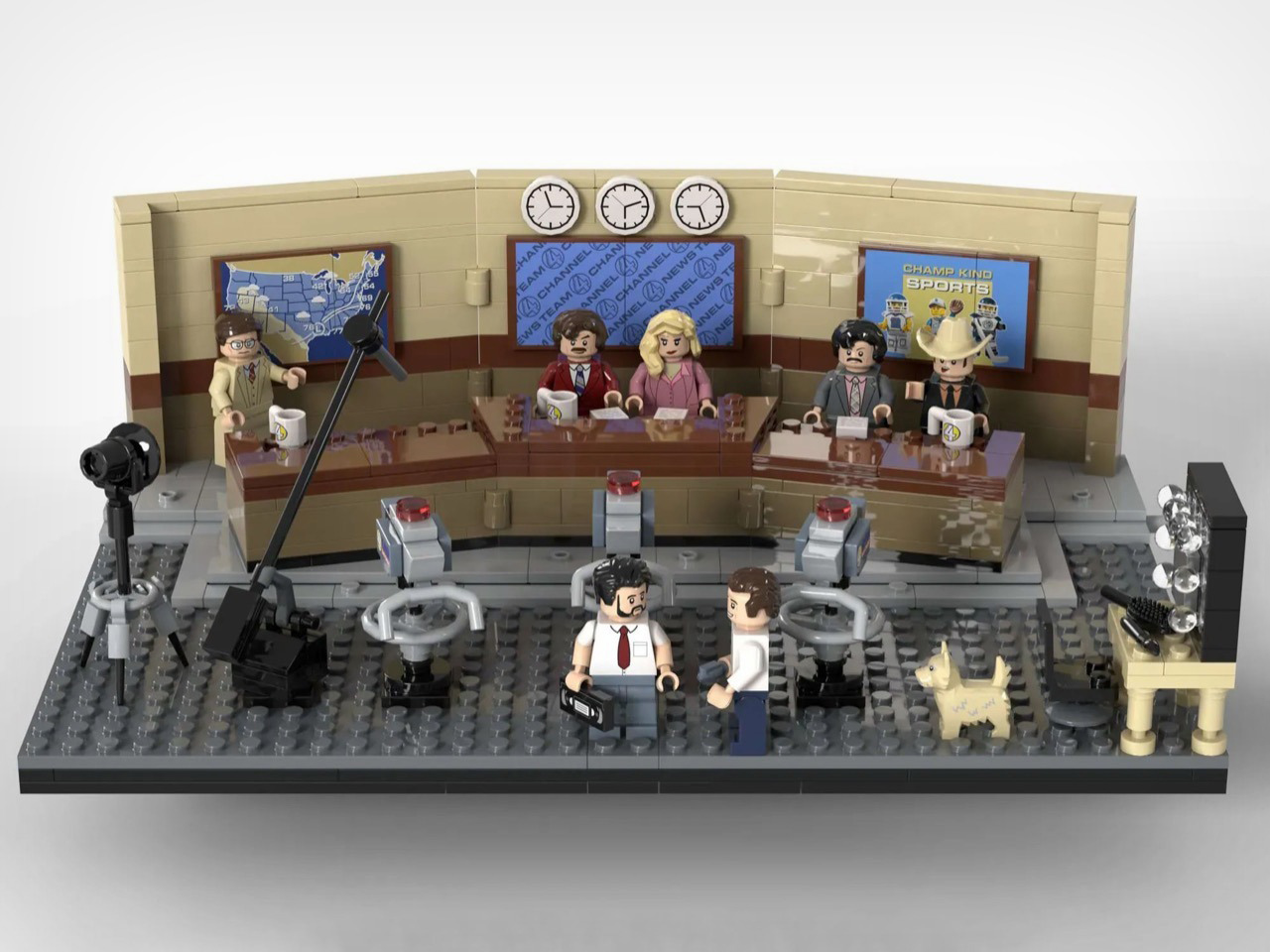
The broadcast desk is the centerpiece, and footonabrick nails the warm tan-and-brown palette of that gloriously dated 70s newsroom aesthetic. Ron and Veronica sit front and center behind their Channel 4 mugs, with Brian Fantana, Champ Kind, and Brick Tamland flanking them across the curved desk. The curved wall behind them is one of the trickier builds to pull off cleanly in LEGO, and the segmented panel construction keeps it looking smooth without losing the layered depth of the real set. Camera equipment on the studio floor, a boom-arm mic stand, and a vanity mirror station on the side round out the production floor detail beautifully.

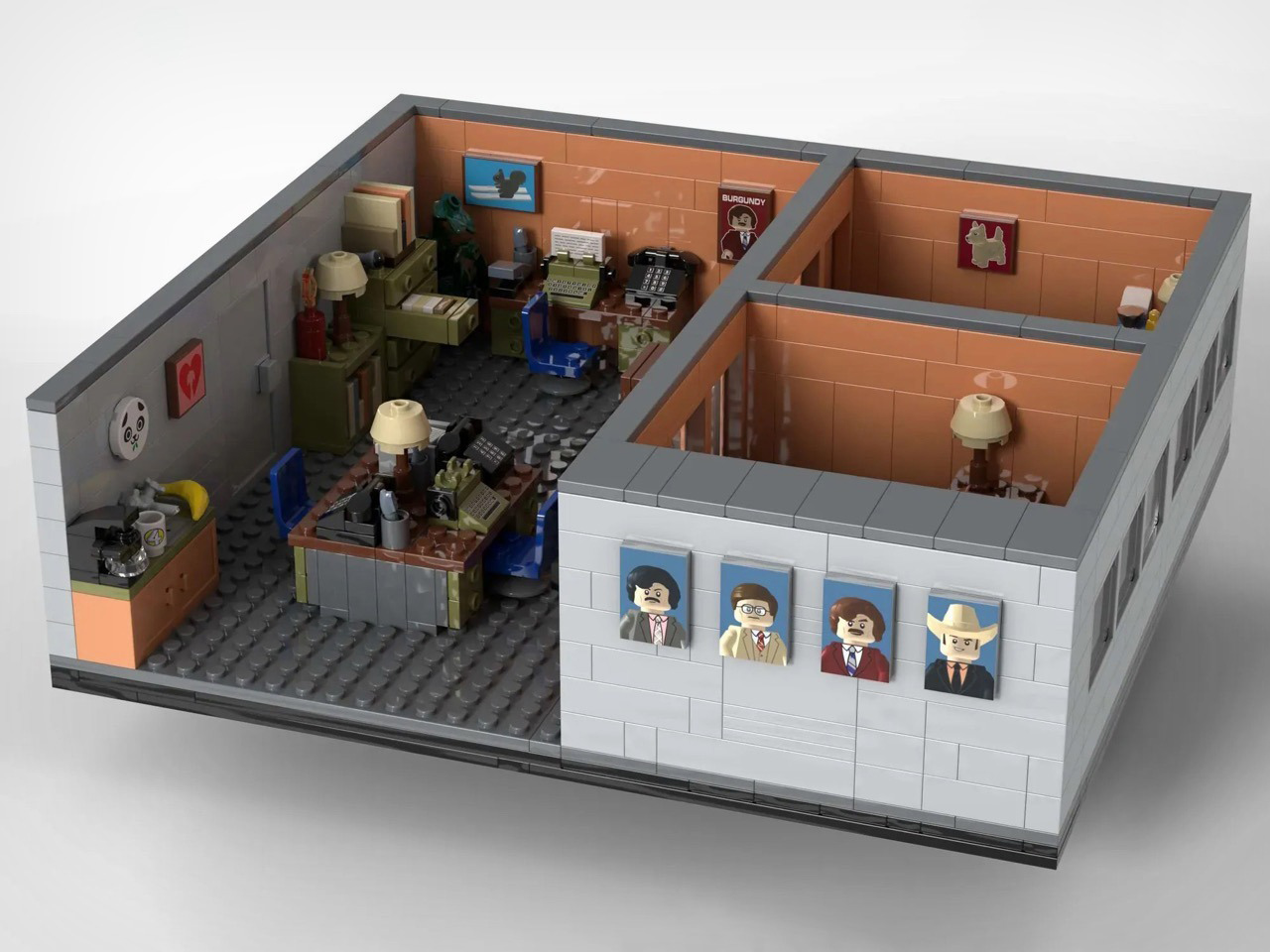
Turn to the office areas and you’ll find a bunch of details and easter eggs. Ron’s private office has his nameplate desk, a glass of scotch rendered in a transparent amber round piece, and a “Missing” poster for Baxter tucked onto a side shelf. Brian Fantana’s cologne closet, one of the film’s most beloved gags, is recreated with an open cabinet stocked with colourful brick-built bottles, with a “Brian Fantana” book sitting on his desk for good measure. The hallway outside features a glass-panel wall looking into Ron’s office, and a Ron Burgundy door nameplate that even Veronica would have to respect. My favorite detail, though, is the row of four team portrait tiles mounted on the exterior office wall, each one a miniature LEGO-art-style illustration of the Channel 4 crew. Tiny, considered, and completely unnecessary in the best way.
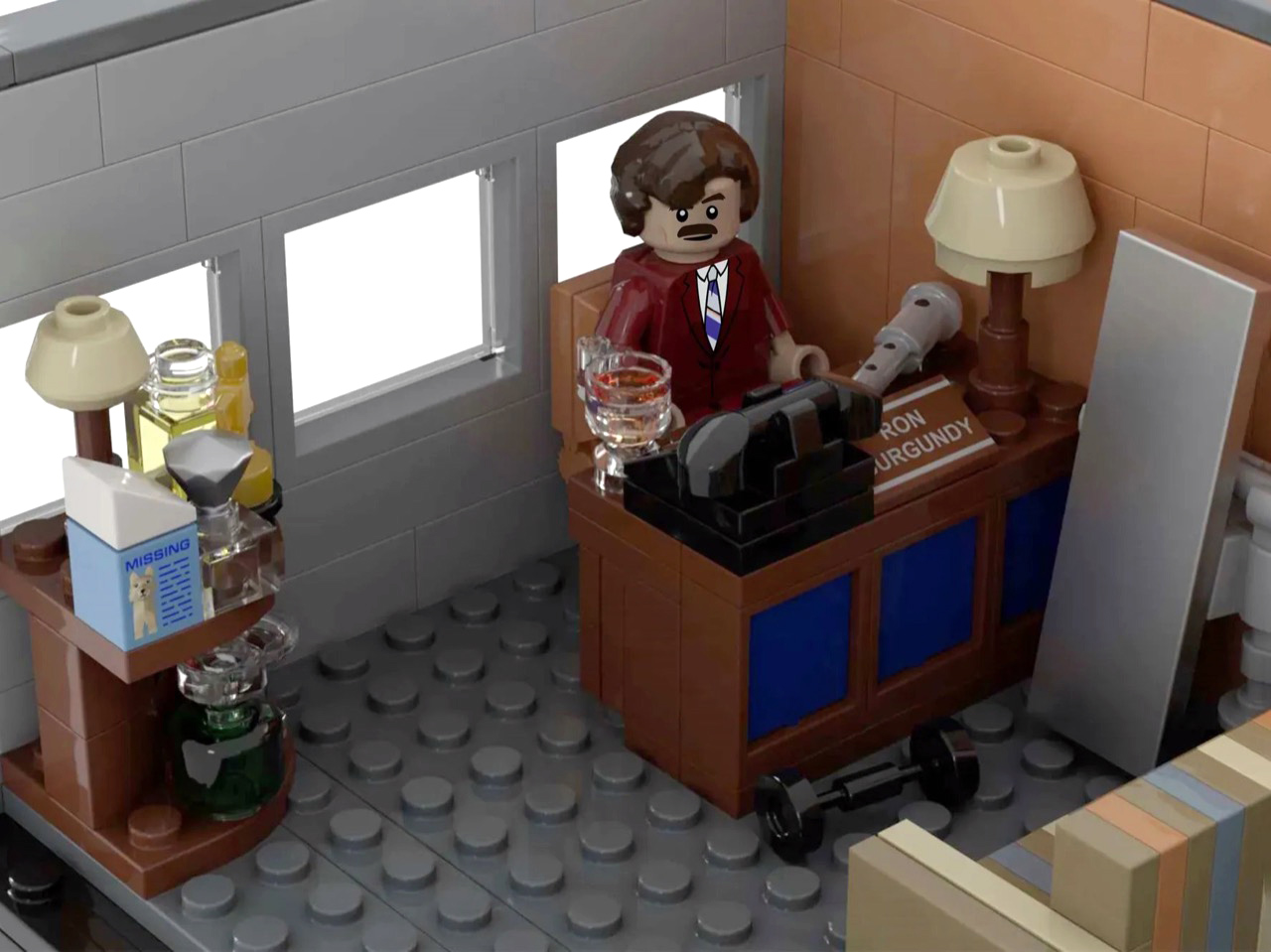

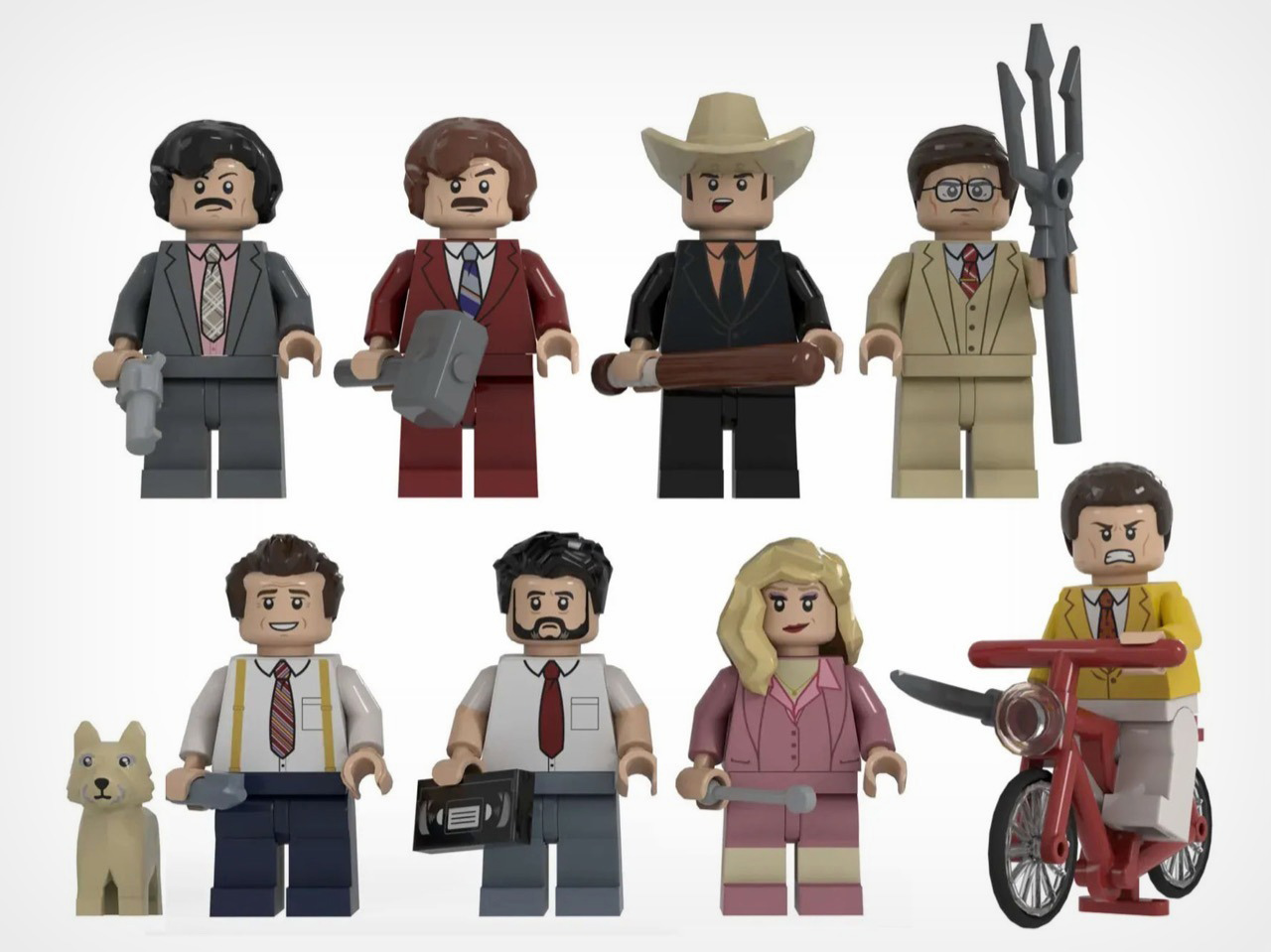
The eight minifigures are pitch-perfect. Ron arrives in his burgundy suit with a jazz flute and a scowl that says “I have many leather-bound books.” Brick Tamland, naturally, comes with his trident. Champ has his signature cowboy hat, Fantana carries what appears to be a cologne bottle, and Veronica is rendered in her pink suit with that particular expression of someone perpetually tolerating Ron’s nonsense. Baxter the dog is included as a separate figure, and there’s even a bonus Ron on a tiny red bicycle, which is exactly the kind of specific deep-cut that separates a good MOC from a great one.
footonabrick’s Anchorman set is currently gathering votes on LEGO Ideas, the community platform where fan-created MOCs (My Own Creations) need 10,000 supporters to trigger an official LEGO review and potential retail production. With 344 votes on the board and 421 days left on the clock, there’s plenty of runway. If you want to see this land on store shelves, head to the LEGO Ideas page and cast your vote. You stay classy.

The post Stay Classy, San Diego: This LEGO Anchorman Set Recreates the Entire Channel 4 Newsroom in 1,500 Bricks first appeared on Yanko Design.
Microsoft will yank Copilot from some Windows apps and let you move the taskbar again

After one too many of you threatened to switch to Linux, Microsoft has published a long list of changes it plans to make to Windows 11. In a lengthy blog titled "Our commitment to Windows quality," Pavan Davuluri, the executive vice president of Windows and Devices, said the company has spent a "great deal" of time in recent months reading feedback from users. "What came through was the voice of people who care deeply about Windows and want it to be better," he said. To that end, Windows Insiders can expect to see some of the changes Microsoft plans in response to all criticism begin rolling out starting this month.  

Most notably, Microsoft ease up on the AI pedal. "You will see us be more intentional about how and where Copilot integrates across Windows, focusing on experiences that are genuinely useful and well-crafted," writes Davuluri. As a first step, Microsoft says it will remove "unnecessary Copilot entry points," starting with apps like the Snipping Tool, Photos, Widgets and Notepad. 

Elsewhere, users can look forward to additional taskbar customization, allowing them to position the interface element at the top or sides of the screen; less disruptive updates, with the option to shut down or restart your device without being forced to install a new patch; and a faster, less janky File Explorer. "Our first round of improvements will focus on a quicker launch experience, reduced flicker, smoother navigation and more reliable performance for everyday file tasks," said Davuluri.  

Looking beyond the next two months, Microsoft notes it will work to improve performance across Windows, with “lowering the baseline memory footprint” of the operating system a key area of focus. Presumably, this plan of action is as much a response to the global memory shortage as it is user feedback. PC manufacturers are struggling right now, with a recent estimate warning the market could shrink as much as 8.9 percent year-over-year in 2026 due to the high cost of RAM and SSDs. On the subject of reliability, the company says reducing OS-level crashes and releasing higher quality drivers is a priority, as is making Bluetooth and USB connections less prone to errors and disconnects.

Microsoft's promise to fix Windows 11 is long overdue. In January, the company released a couple of emergency updates after what should have been a routine security patch caused bugs that left some PCs unable to shut down and broke Outlook. The general state of the operating system has led many to explore Linux alternatives like Bazzite. With Apple also recently releasing the $600 MacBook Neo, a laptop that few Windows manufacturers can match right now, Microsoft’s dominance in the PC market is looking vulnerable for the first time in more than a decade.

This article originally appeared on Engadget at https://www.engadget.com/computing/microsoft-will-yank-copilot-from-some-windows-apps-and-let-you-move-the-taskbar-again-202857203.html?src=rss

The White House proposes new AI policy framework that supersedes state laws

The White House has announced a new AI policy framework that calls for Congress to craft federal regulation that overrules state AI laws. The Trump administration has made multiple attempts to overrule more restrictive state-level AI regulation, but has failed so far, most notably in the passing of the “One Big Beautiful Bill.”

The framework focuses on a variety of topics, covering everything from child privacy to the use of AI in the workforce. “Importantly, this framework can succeed only if it is applied uniformly across the United States,” The White House writes. “A patchwork of conflicting state laws would undermine American innovation and our ability to lead in the global AI race.”

In terms of child privacy protections, the framework ask for Congress to require companies to provide tools like “screen time, content exposure and account controls” while also affirming that “existing child privacy protections apply to AI systems,” including limits on how data is collected and used for AI training. The framework also says carveout states should be allowed to enforce “their own generally applicable laws protecting children, such as prohibitions on child sexual abuse material, even where such material is generated by AI.”

The energy-use and environmental impact of AI infrastructure is a going concern, but the White House’s policy proposals are primarily worried about the cost of data centers. The framework suggests federal AI regulation should make sure that higher electricity costs aren’t passed on to people living near data centers, while streamlining the process for permitting AI infrastructure construction, so companies can pursue “on-site and behind-the-meter power generation.” The framework also calls for fewer restrictions on the software-side of AI development, proposing “regulatory sandboxes for AI applications” and asking Congress to “provide resources to make federal datasets accessible to industry and academia in AI-ready formats.”

While a recently AI bill from Senator Marsha Blackburn (R-Ten.) attempts to eliminate Section 230, a piece of a larger law that says platforms can’t be held responsible for the speech they host, the framework appears to propose the opposite. “Congress should prevent the United States government from coercing technology providers, including AI providers, to ban, compel or alter content based on partisan or ideological agendas,” the White House writes. The framework is similarly hands-off when it comes to copyright and the use of intellectual property to train AI. “Although the Administration believes that training of AI models on copyrighted material does not violate copyright laws,” the White House writes, it supports the issue being settled in court rather than by legislation. Though, the White House does think Congress should “consider enabling licensing frameworks” so IP holders can bargain for compensations from AI providers.

The clincher in the White House’s proposal is the idea that federal regulation should preempt state law, specifically so that states don’t “regulate AI development,” don’t “unduly burden American’s use of AI for activity that would be lawful if performed without AI” and don’t punish AI companies “for a third party’s unlawful conduct involving their models.” The idea that AI companies aren’t liable for the illegal or harmful uses of their products is particularly problematic because it lies at the heart of multiple intersecting issues with AI right now, including it being used to generate sexually explicit images of children and allegedly playing a role in the suicide of users.

Ultimately, though, the framework might be too contradictory to be useful, Samir Jain, the Vice President of Policy for the Center for Democracy and Technology, writes in a statement to Engadget:

The White House’s high-level AI framework contains some sound statements of principles, but its usefulness to lawmakers is limited by its internal contradictions and failure to grapple with key tensions between various approaches to important topics like kids’ online safety. It rightly says that the government should not coerce AI companies to ban or alter content based on ‘partisan or ideological agendas,’ yet the Administration’s ‘woke AI’ Executive Order this summer does exactly that. On preemption, the framework asserts that states should not be permitted to regulate AI development, but at the same time rightly notes that federal law should not undermine states’ traditional powers to enforce their own laws against AI developers. States are currently leading the fight to protect Americans from harms that AI systems can create, and Congress has twice correctly decided not to pursue broad preemption.

President Donald Trump has attempted to have an active role in how AI is developed and regulated in the US with mixed results, primarily because, as Jain notes, Congress has been unwilling to give up states’ right to regulate the technology on their own terms. Without that, its hard to say how much of the framework will actually make it into federal law.

This article originally appeared on Engadget at https://www.engadget.com/ai/the-white-house-proposes-new-ai-policy-framework-that-supersedes-state-laws-192251995.html?src=rss

Track Trailer reinvents Tvan, one of the toughest off-roading trailers with roomier MK6 model

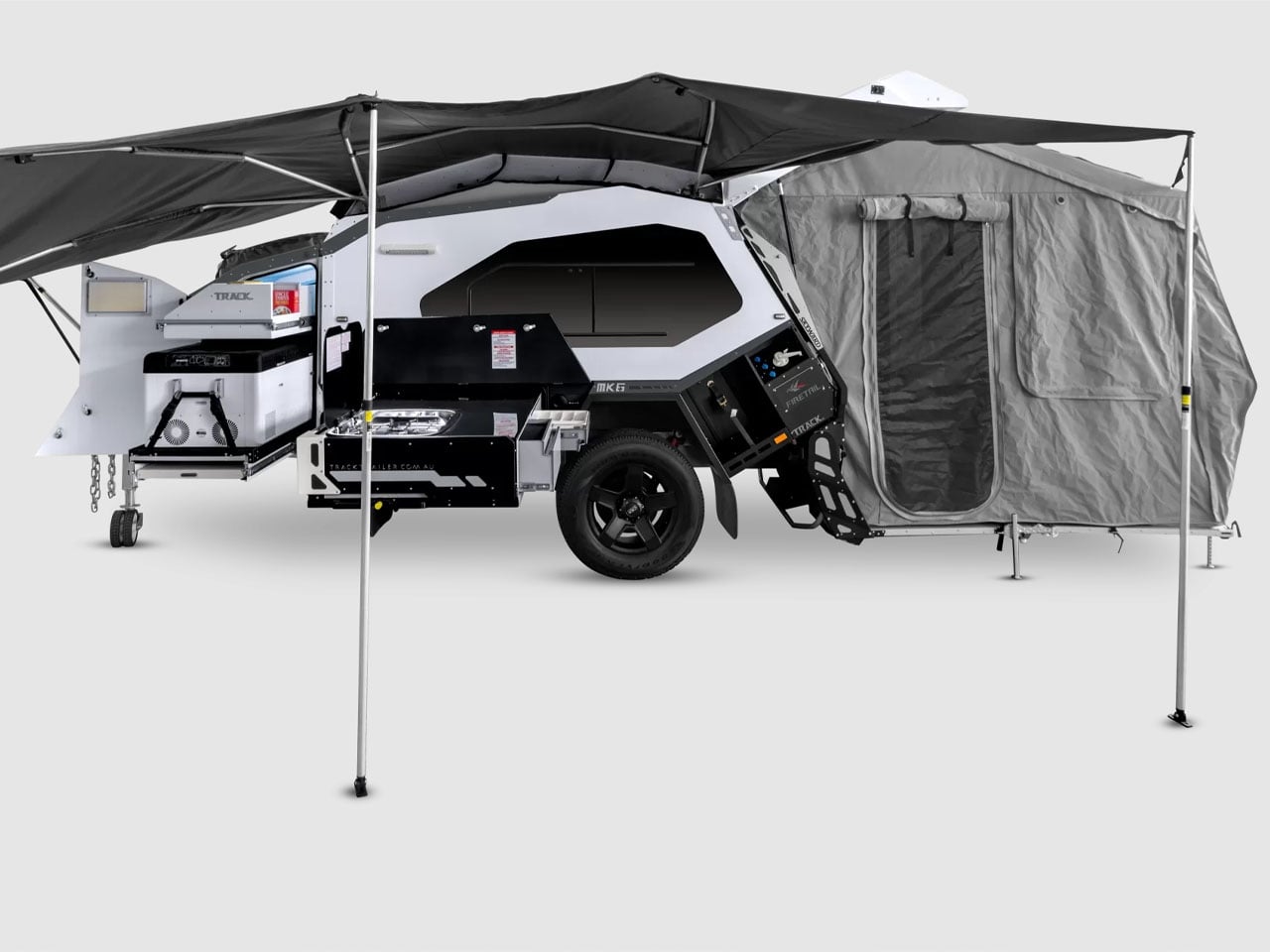
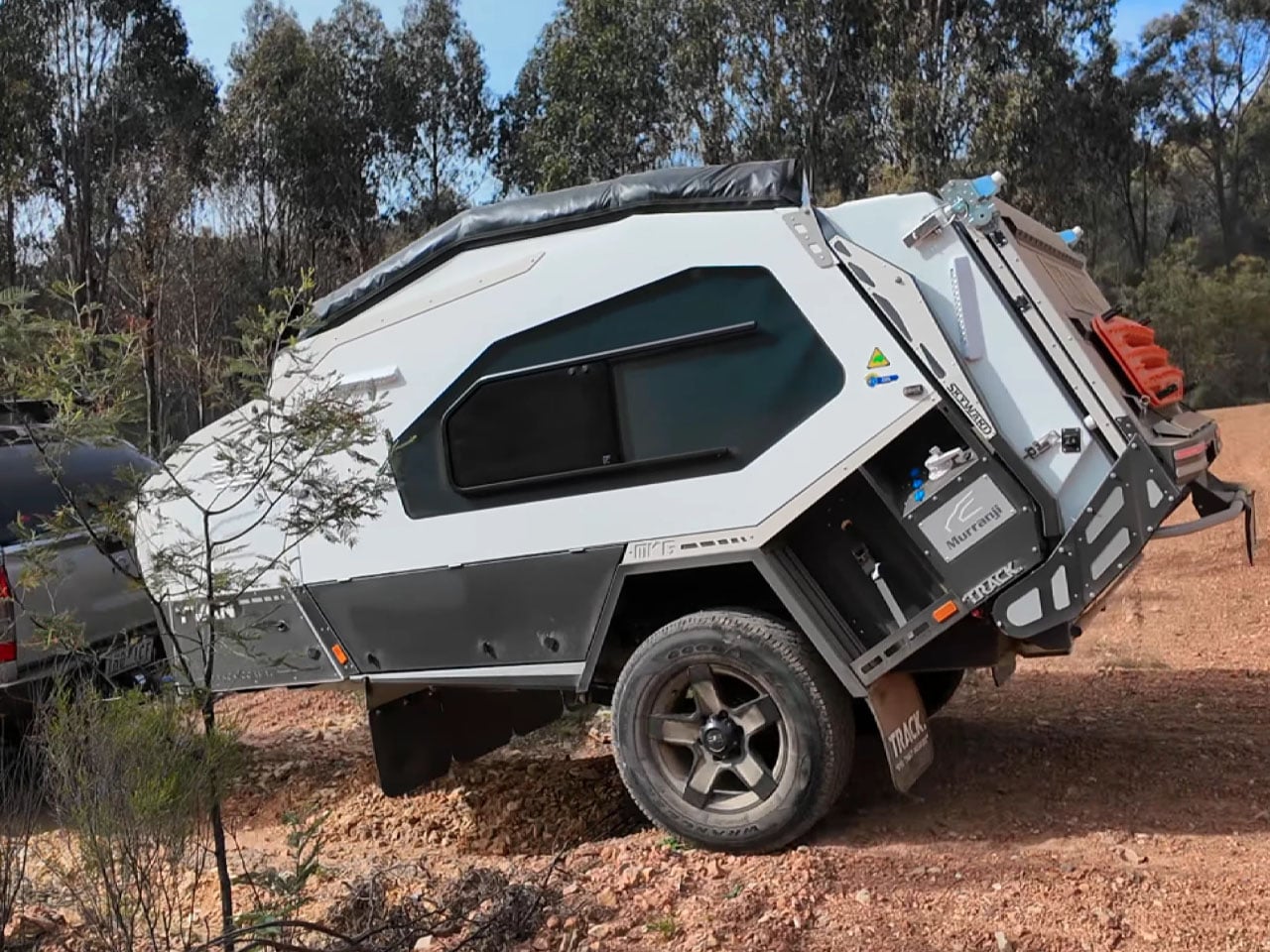
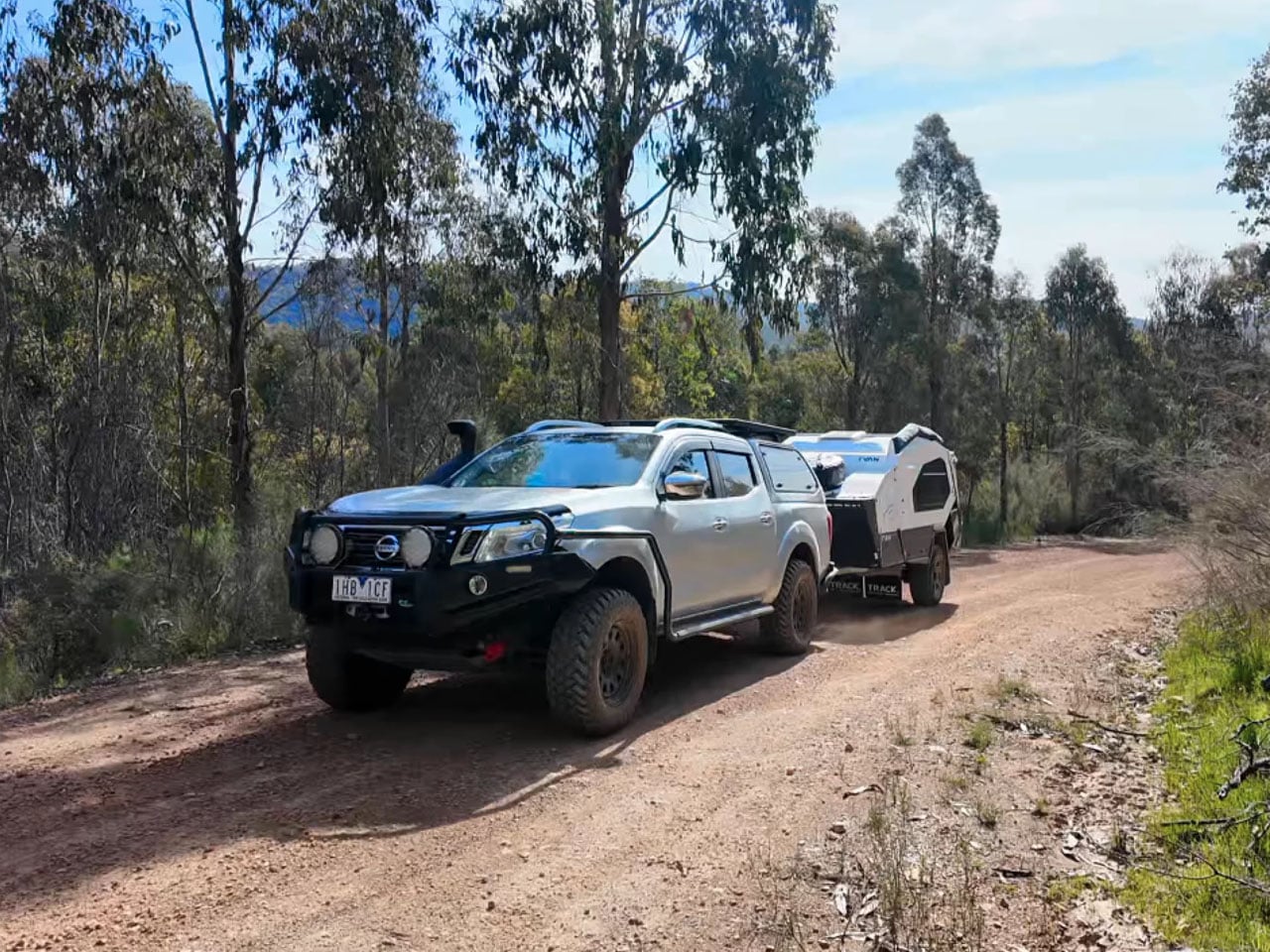
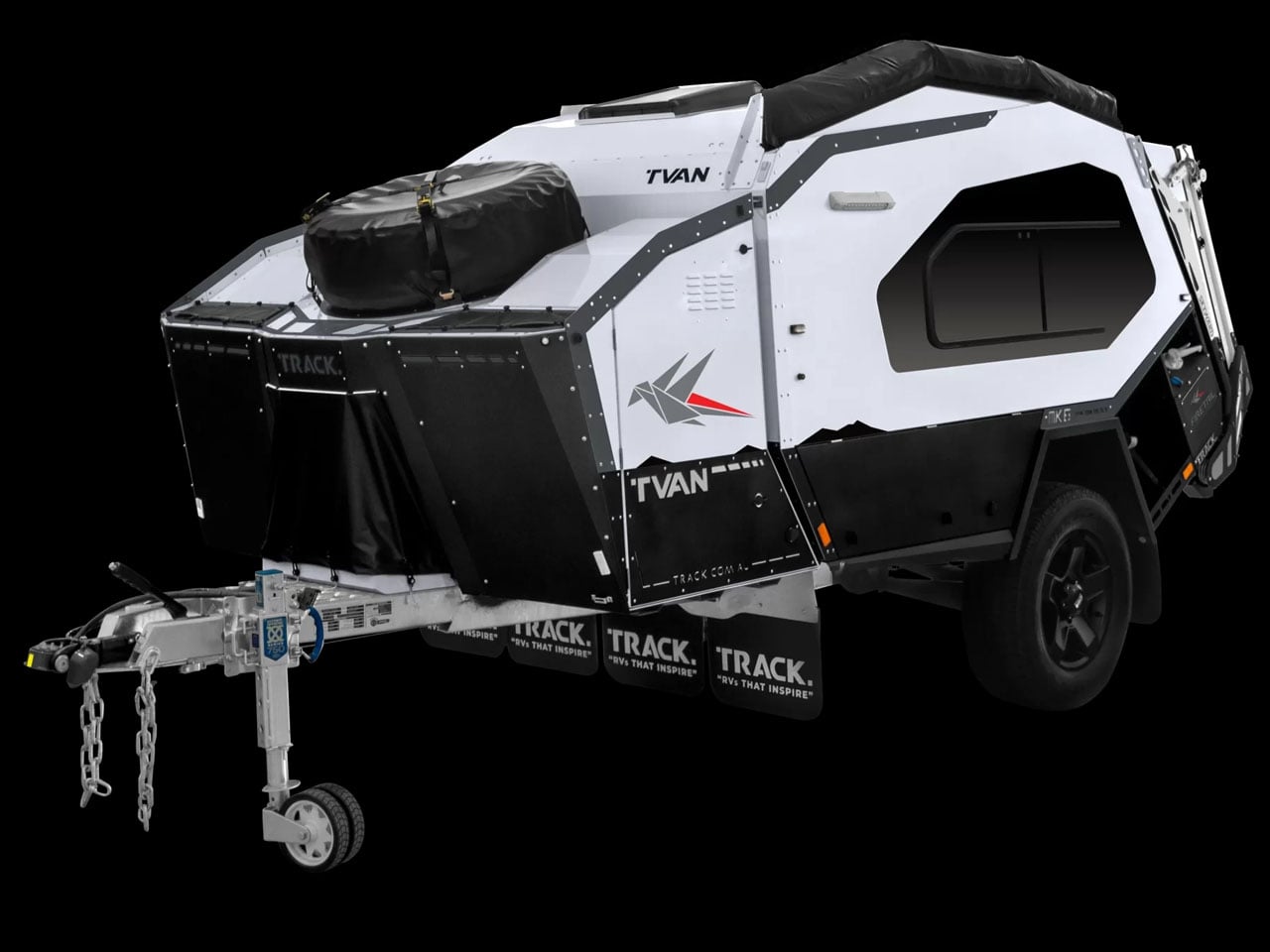
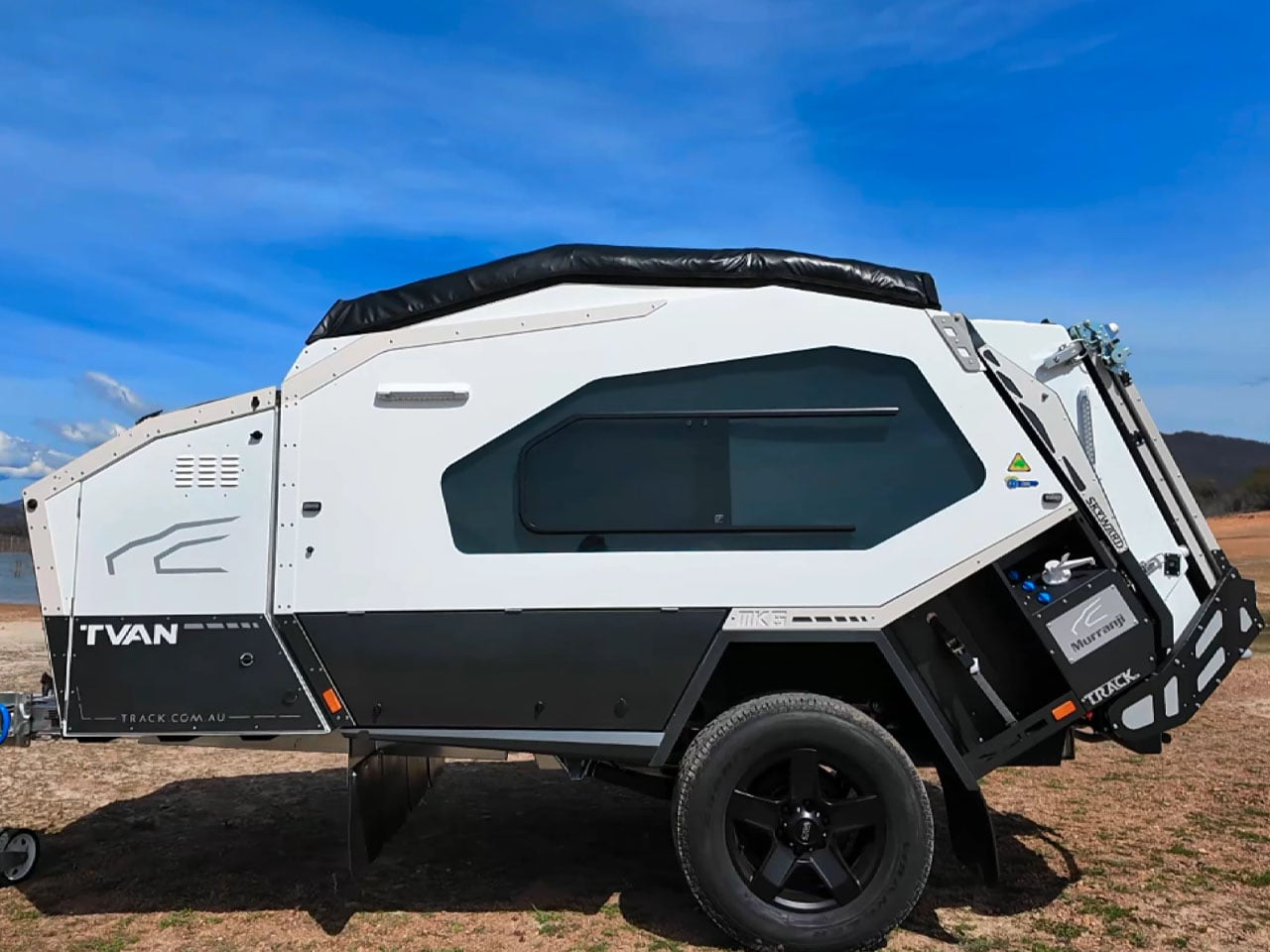
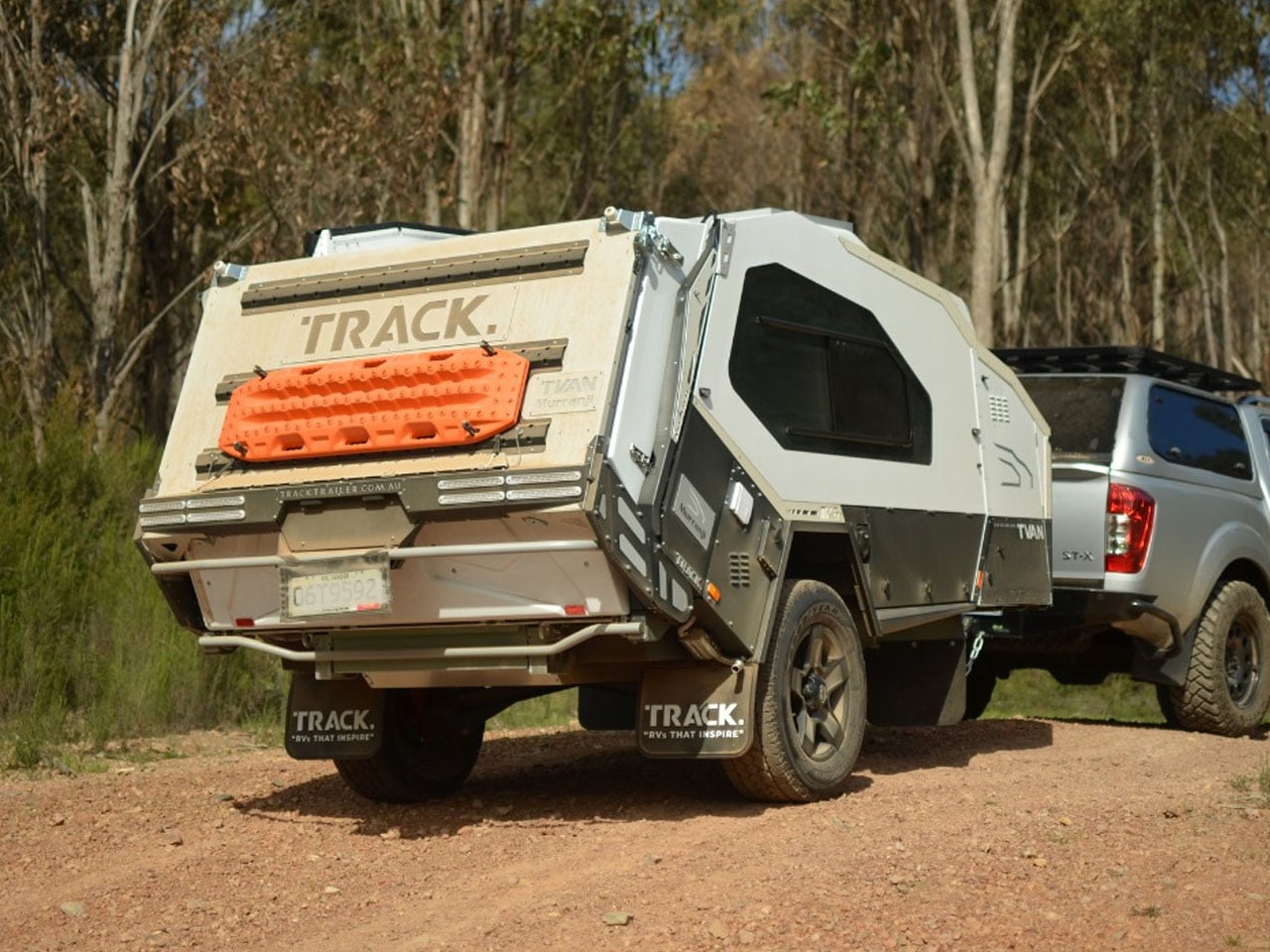
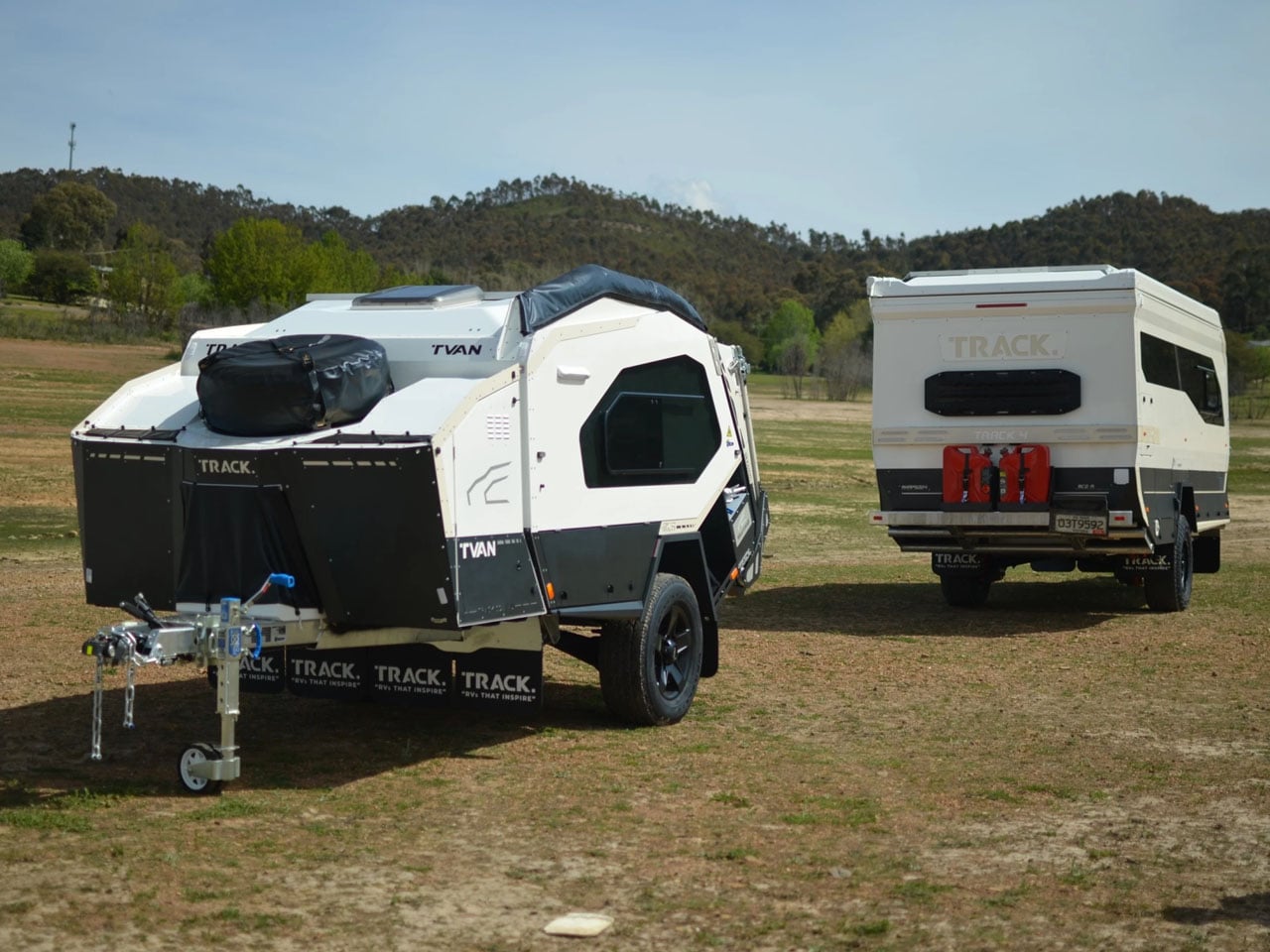
Track Trailer, the name behind the famous Tvan off-road camper trailers, needs little introduction. It has been powering the overlanding experience in Australia and worldwide for a good part of four decades now. Over the years, we have seen some interesting variants of the Tvan, which has now reached the MK6. The sixth iteration in the successful portfolio, Tvan MK6 Model, retains the same aluminum body, which runs in the bloodline, but is more spacious and even more comfortable.

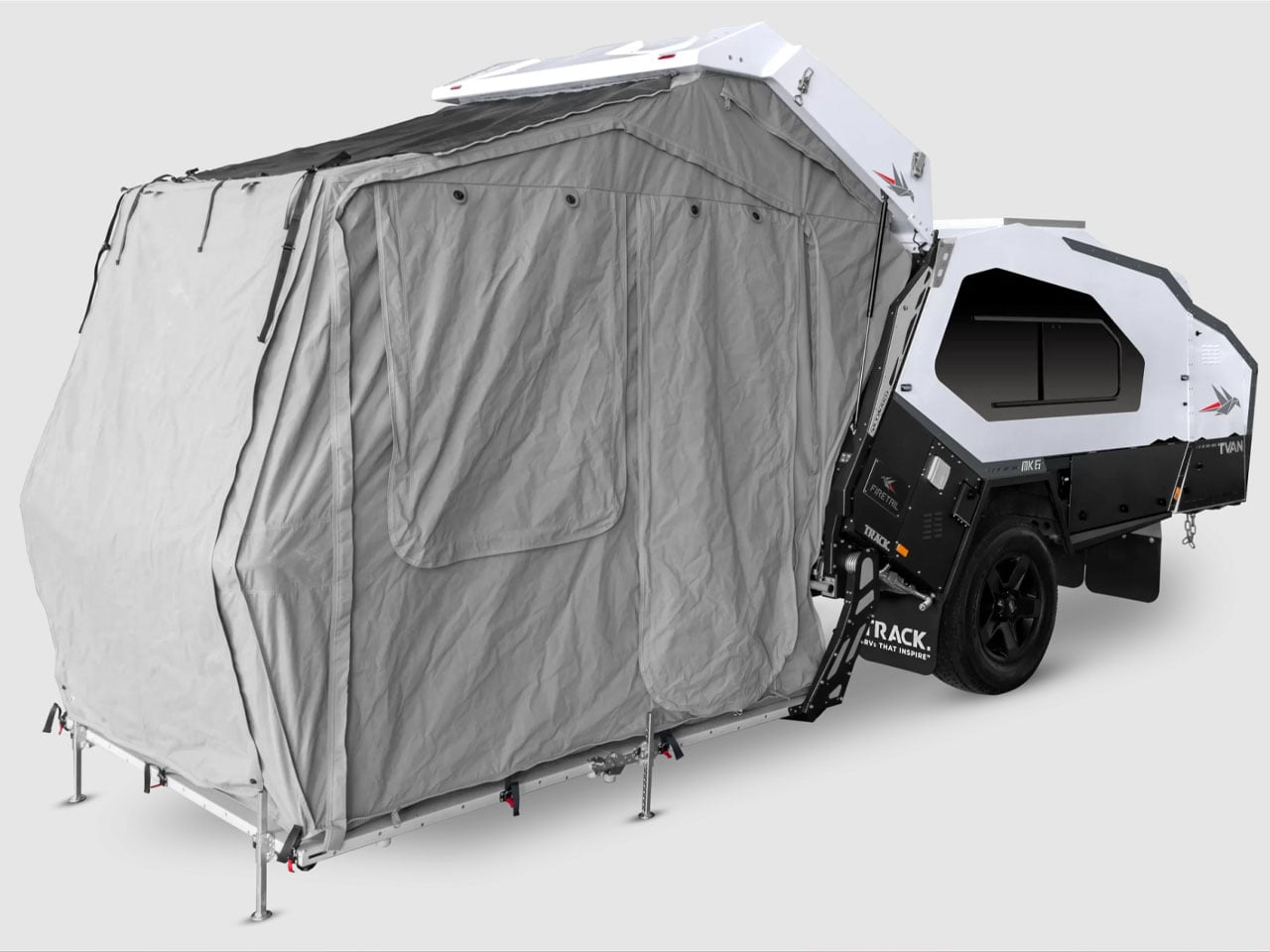
As the appearance suggests, the new Tvan MK6 is available in four variants and is almost identical to its predecessors. What changes are the interior space and the headroom, which make the MK6 a different entrant in the same effective branding of the world’s toughest off-roading trailer.

Designer: Track Trailer

Track Trailer first tried reworking the interior space with the MK5 model. It was done staying within the confines of the Tvan styling: no pop-up roof attachment, but a slight raise in roof height. With the MK6, the company has also stayed true to its design ideology. It has only increased headroom, stretched the neck forward, and pushed the sides of the trailer outward to increase the interior space by up to 20%.

The expansion to the trailer permits more natural light inside the cabin, which is constructed using an aluminum sandwich-panel construction. Moreover, the MK6 features a durable chassis based on an advanced suspension system that enables it to roll comfortably on rugged terrains and off-road destinations. With its ruggedness assured, the camping trailer is ideal for all types of adventures, which is facilitated by its quick setup and clever storage designed throughout its exterior and also on the inside.

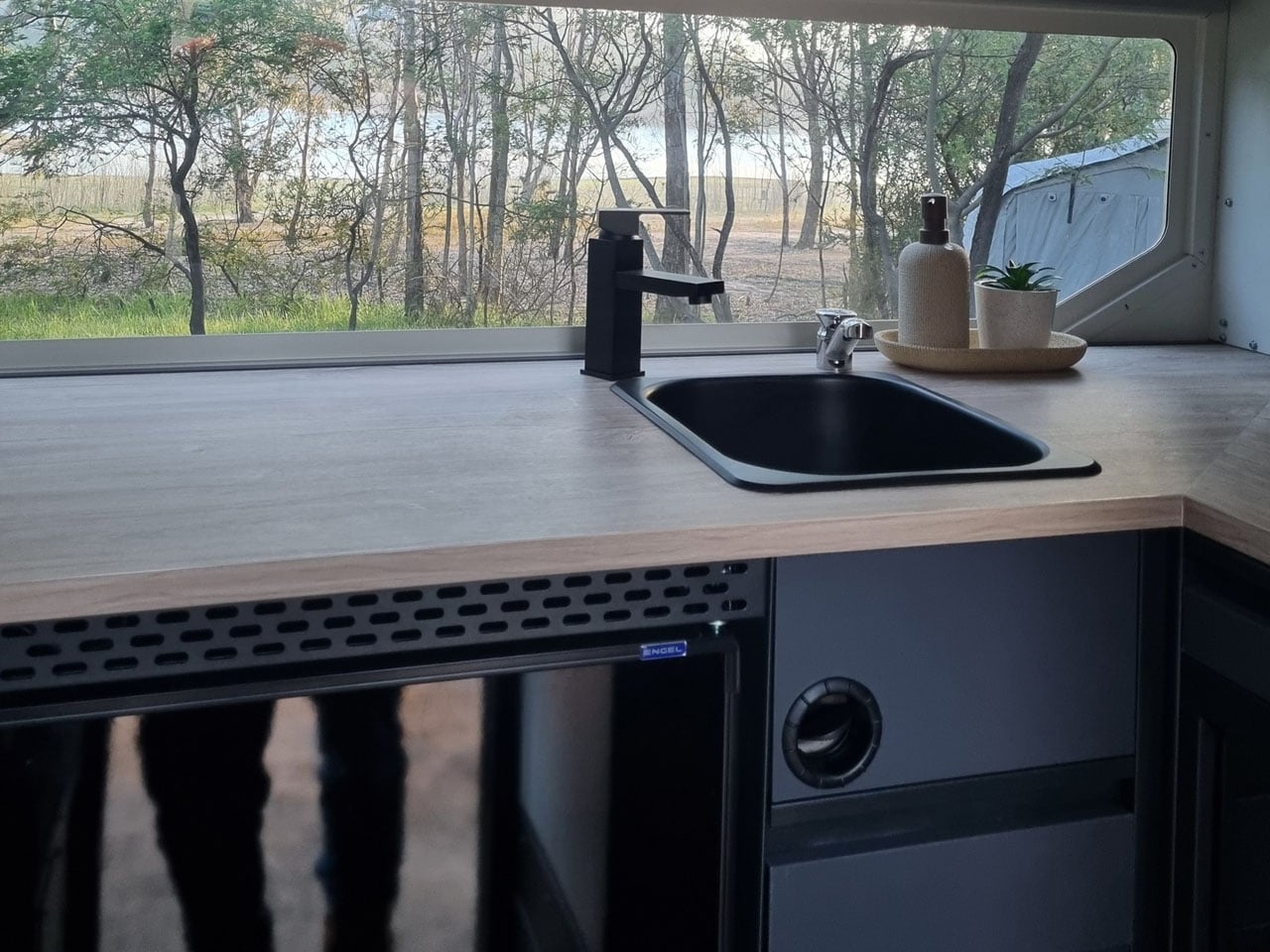
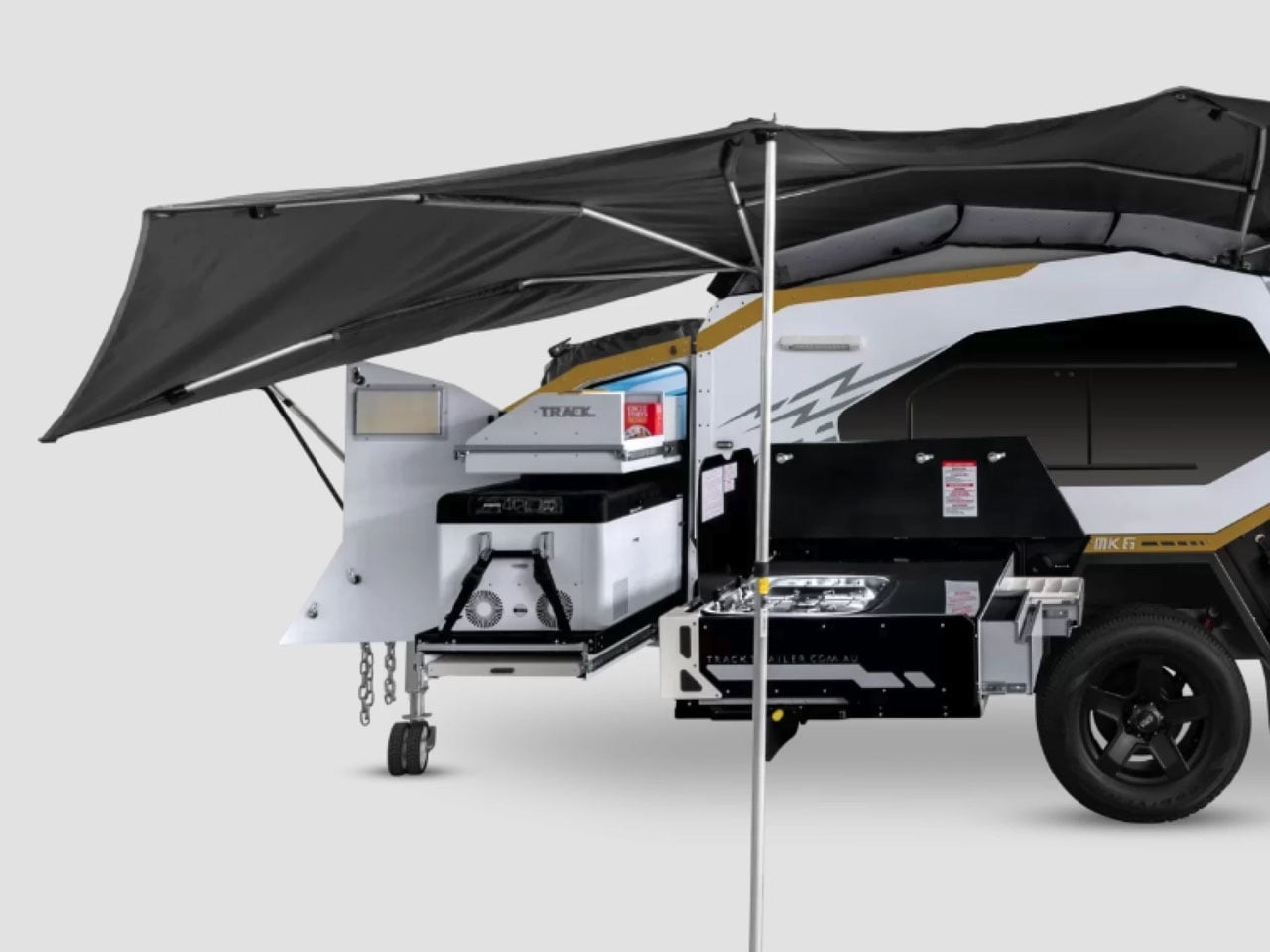
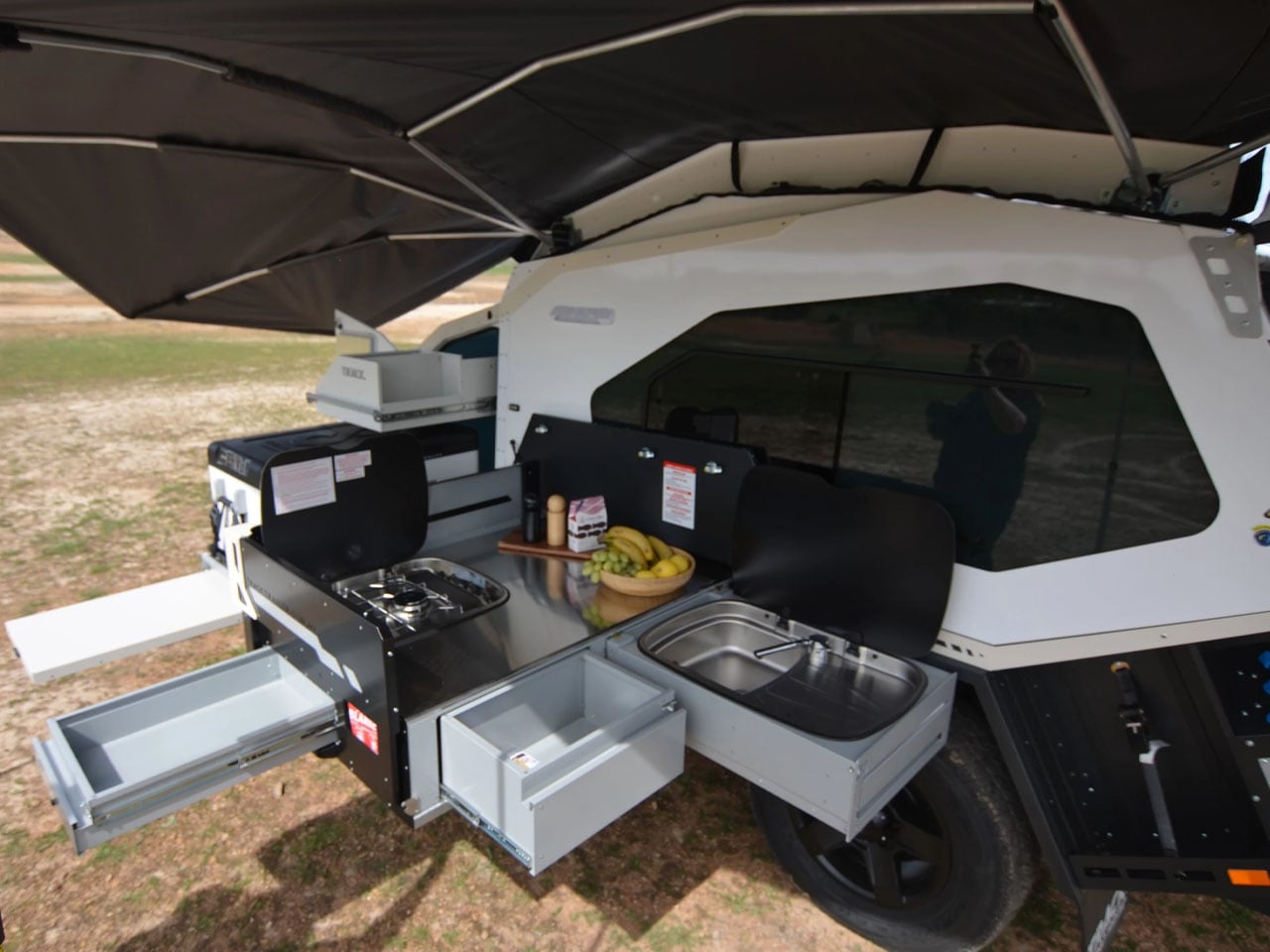
MK6 measures 16-foot-long and 6.3 feet wide, the trailer has an interesting storage cabinet in the extended nose up front, comprising a pantry and up to 95 liters fridge/freezer. Slightly further back is the slide-out kitchen with a three-burner gas stove, a full-size sink connected to a 108L fresh water tank, and a storage drawer topped with a prep area.

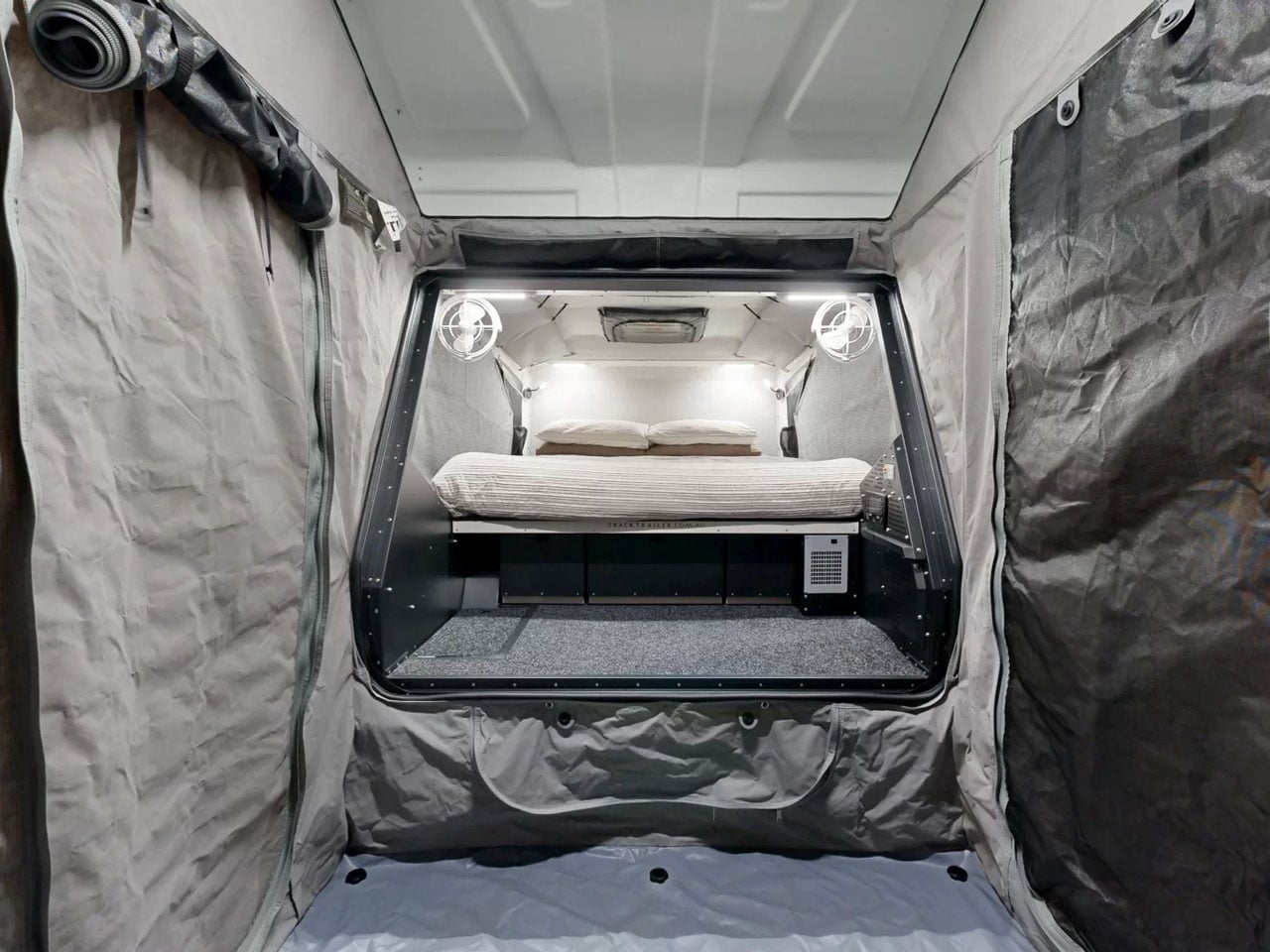
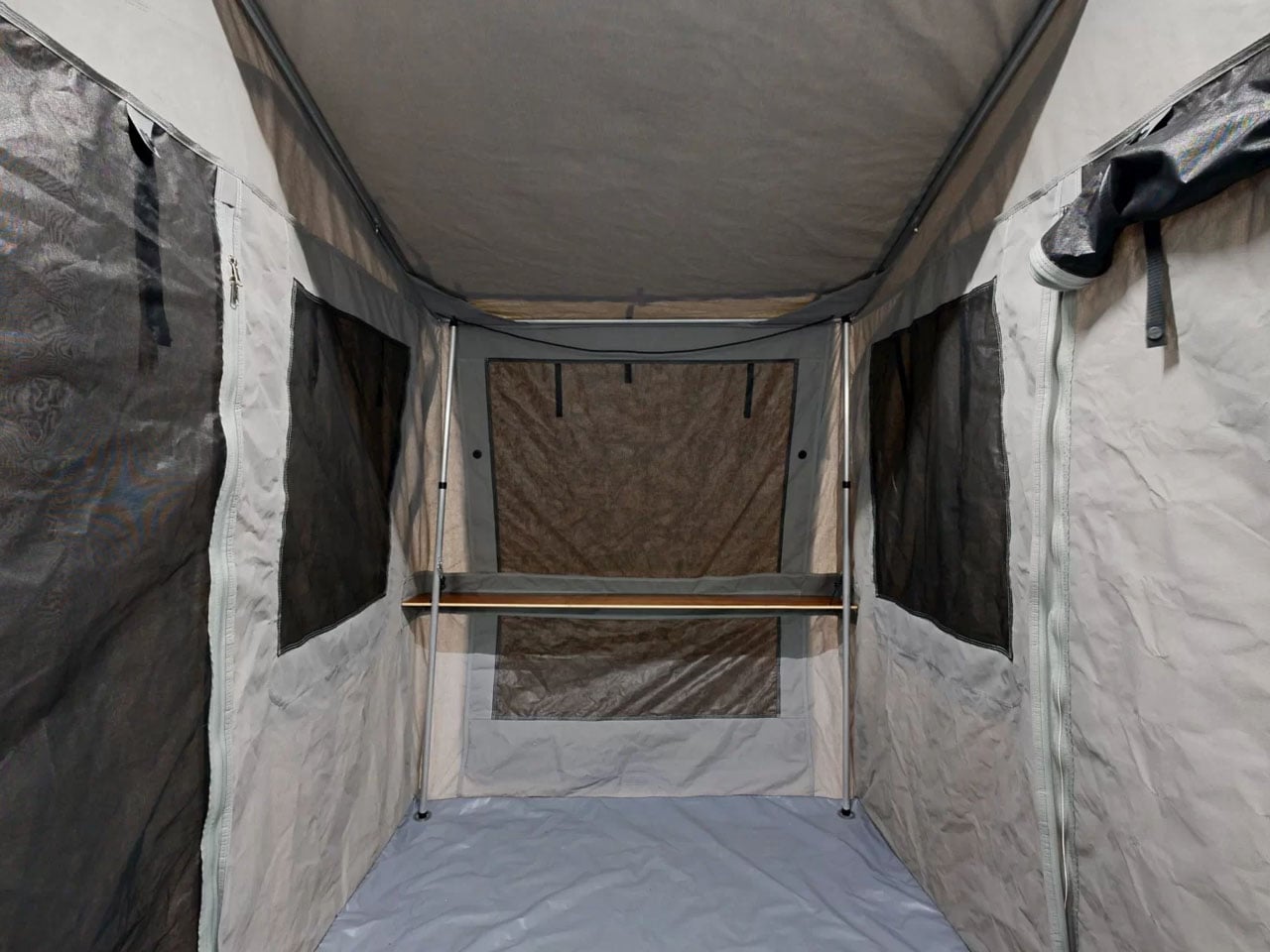
The most interesting part of the MK6 camping trailer is the rear hatch design. It features Track Trailer’s patented Skyward Lift Up Deck, which combines the hatch and the hard-floor deck. The electric lock system allows the two to lift up in unison for quick and direct access into the living space of the trailer. Just when you need it, a tent can be attached to the trailer to increase the living quarters.

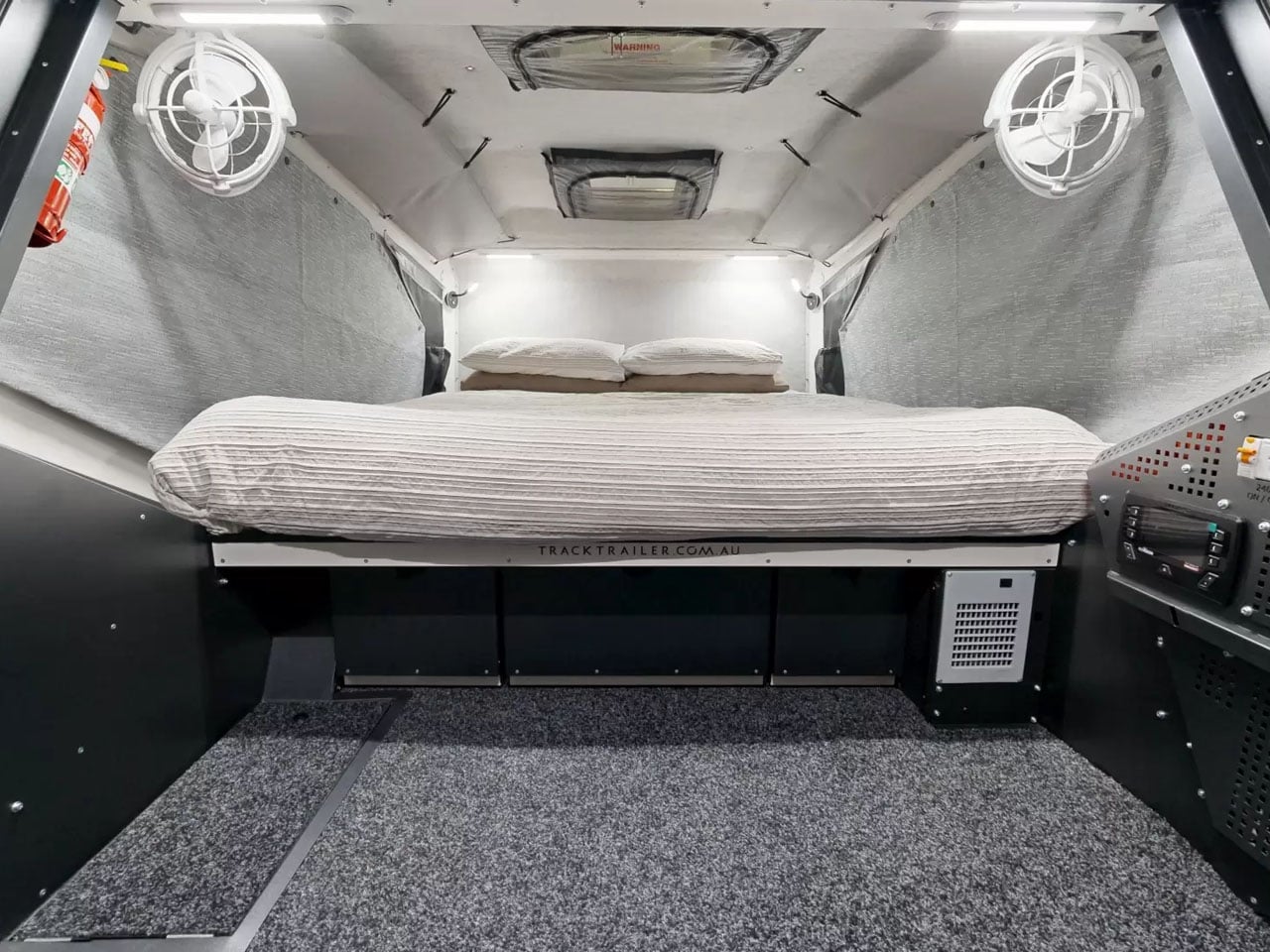
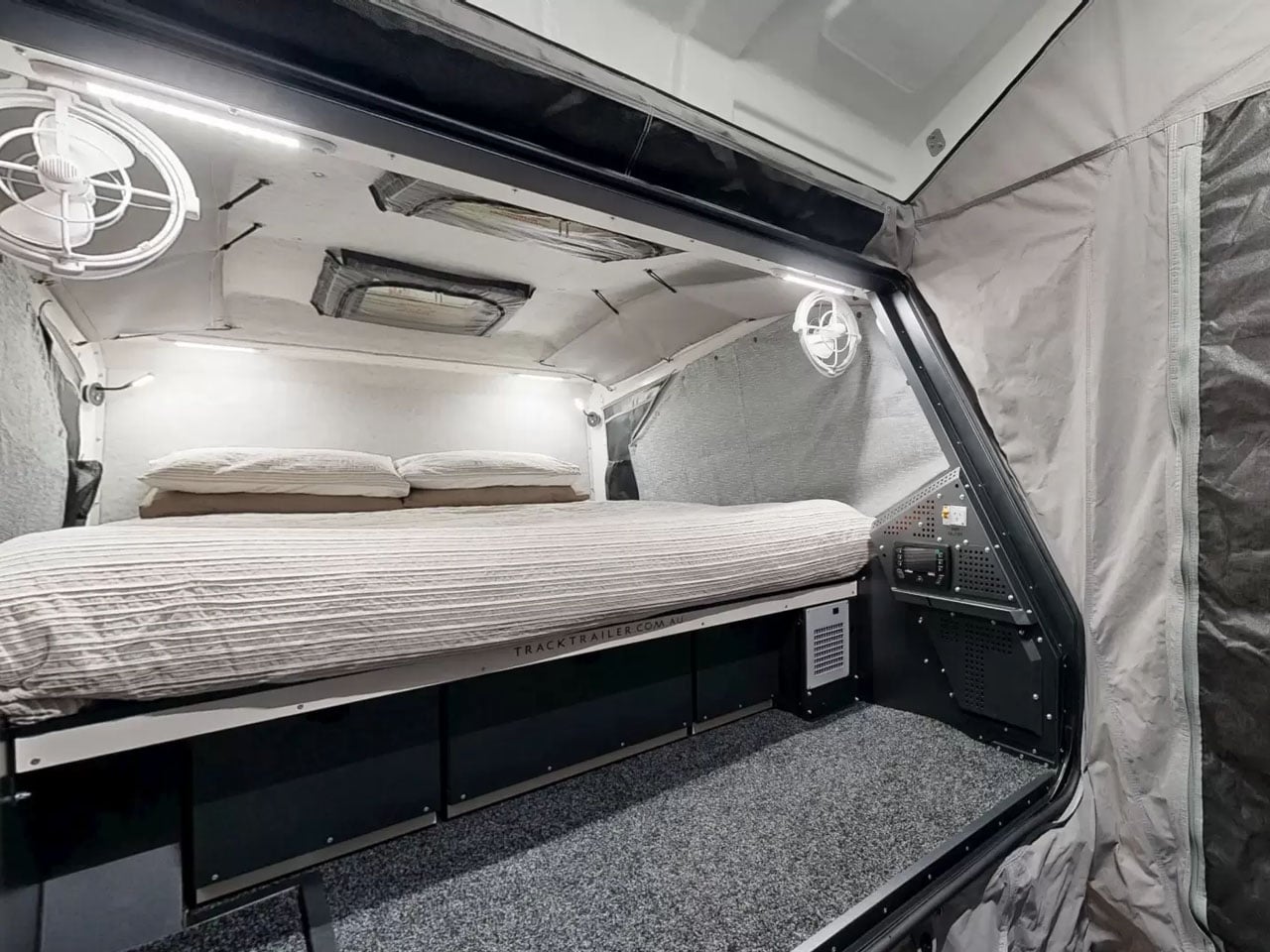
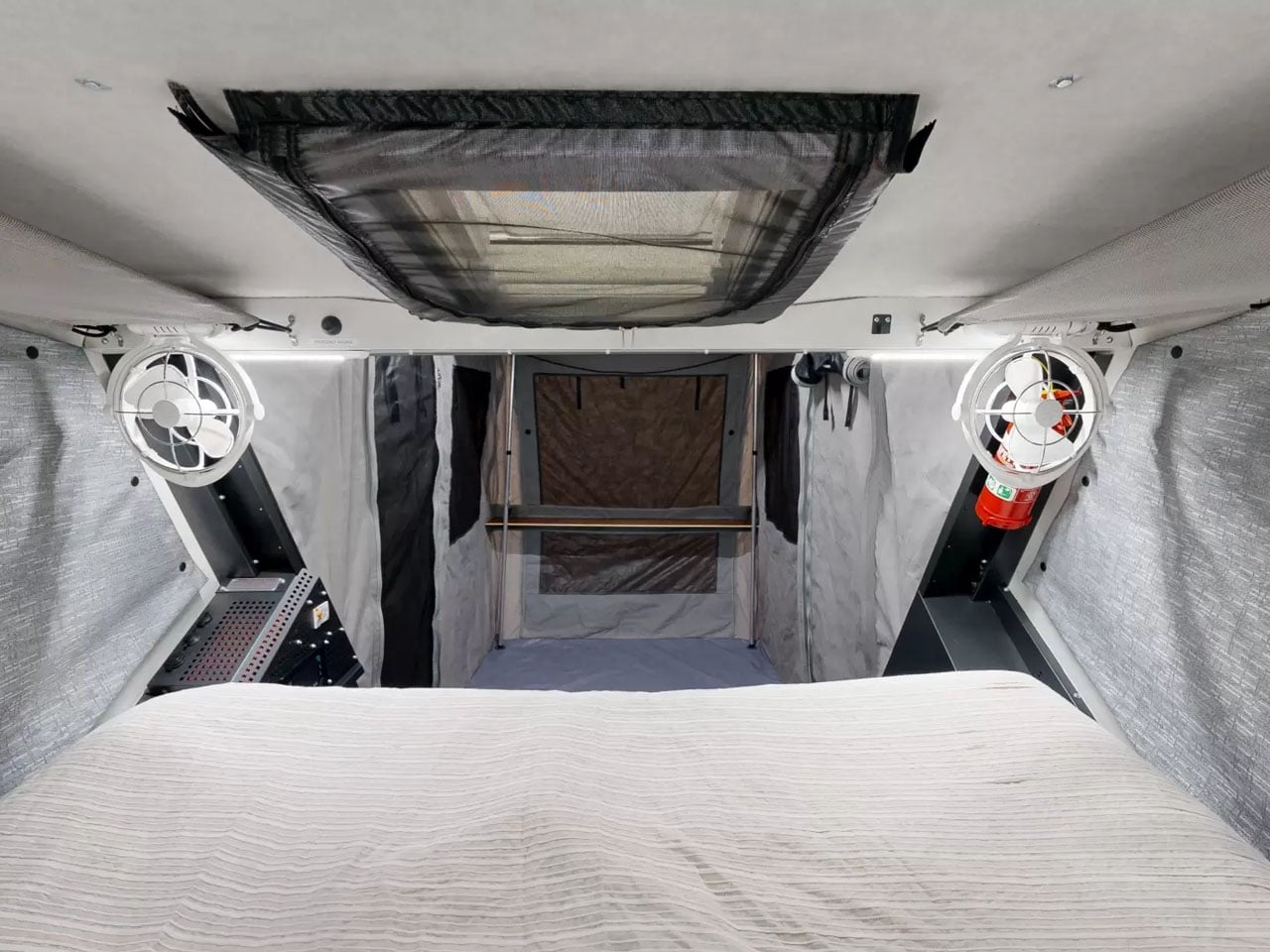
Inside is a double bed surrounded by large windows and overhead and sidewall storage. LED lighting and dual roof hatches complete the design. Since the MK6 is available in four variants, each is designed differently for off-the-grid living. The entry-level Inspire features a 125Ah lithium battery that draws energy from a 200W rooftop solar panel, while a 350W inverter takes care of the power backup. Firetail accommodates a pair of 125Ah batteries, a 2000W inverter, and some premium features in the kitchen.

Tvan MK6 Murranji adds a 200W solar panel to the Firetail setup, but leaves out the inverter. The top-of-the-line, Lightning, on the other hand, comes with a 500Ah battery. It features a 2,000W inverter and a 360W solar panel to complete its all-electric setup. Each of these models can have further upgrades with add-ons like awnings and more. MK6 starts at AU$69,900 (approximately $50,000) with the mentioned amenities.

The post Track Trailer reinvents Tvan, one of the toughest off-roading trailers with roomier MK6 model first appeared on Yanko Design.
Three people have been charged with illegally exporting NVIDIA GPUs to China

The US Attorney's Office for the Southern District of New York has charged three people with illegally exporting NVIDIA GPUs to China in violation of the Export Control Reform Act. NVIDIA's chips have become a critical component in the rush to train and run increasingly complex artificial intelligence models, one the US has sought to manipulate with export controls and profit-sharing schemes with NVIDIA.

The three people, Yih-Shyan "Wally" Liaw, Ruei-Tsang "Steven" Chang and Ting-Wei "Willy" Sun, two employees and one contractor working for US IT company Super Micro Computer, allegedly circumvented export control laws via a multi-step scheme that involved creating fake orders for servers with NVIDIA chips from Southeast Asian companies, that were then secretly sent to China. The plan involved paying a logistics company to repackage the servers in Taiwan, staging dummy servers to be inspected by Super Micro Computer's compliance team and falsifying records so Liaw, Chang and Sun's employer was unaware where the servers were actually being sent.

The DOJ claims Liaw, Chang and Sun facilitated the illegal purchase of $2.5 billion worth of servers between 2024 and 2025 in direct violation of US export laws. Super Micro Computer is not named as a defendant in the US Attorney's indictment, but the company's stock price has been impacted by the scheme, CNBC writes. In a statement released on Thursday, Super Micro Computer announced that it's distancing itself from Liaw, Chang and Sun. "The individuals charged are Yih-Shyan "Wally" Liaw, Senior Vice President of Business Development and a member of the Company's Board of Directors; Ruei-Tsang "Steven" Chang, a sales manager in Taiwan; and Ting-Wei "Willy" Sun, a contractor," the company writes. "Supermicro has placed the two employees on administrative leave and terminated its relationship with the contractor, effective immediately."

This isn't the first time people have attempted to illegally smuggle NVIDIA's products out of the US, and it likely won't be the last time. Reportedly $1 billion worth of NVIDIA's AI chips were illegally sold in the three months after the Trump administration tightened export controls, and back in December 2025, Texas authorities seized more than $50 million worth of NVIDIA GPUs bound for China. As long as there's demand for AI, there'll be demand for the hardware that makes it possible.

This article originally appeared on Engadget at https://www.engadget.com/ai/three-people-have-been-charged-with-illegally-exporting-nvidia-gpus-to-china-184928430.html?src=rss

Here’s how not to leak military information with your Strava run

A French officer recently leaked the location of an aircraft carrier because of a run on the sports app Strava. This is not the first time this has happened, as the app tracks location data.

It was used to access the location of US military bases back in 2018 and members of the Secret Service accidentally shared their whereabouts while protecting then-US President Joe Biden. The same has happened to President Trump and other world leaders.

In other words, the use of Strava to track runs is becoming a global security risk, but it doesn't have to be. If you happen to find yourself in an undisclosed location as part of a military entourage, here are a couple of ways to keep things private.

Don't want to give up those Strava runs? Just change the settings. On the web, click on "Do Not Share My Personal Information" on the feed page and then look for "Opt Out."

This is also fairly easy for smartphone users. Just head to "Privacy Controls" for the app and follow the prompts on both iOS and Android. Both versions include an option to disable the sharing of personal information, including location data.

Most sports apps track location data, but they don't all share Strava's spotty history. There are plenty of apps out there to choose from, and some are quite good. No matter which one you download, be sure to take steps to change the privacy settings.

Believe it or not, people still jogged before smartphones. Just lace up a pair of shoes and get out there. For extra protection, leave your phone and smartwatch at home.

Are you stuck on an aircraft carrier somewhere in the middle of the ocean? It could be tough to get your steps in, so consider bothering the top brass for a treadmill.

This article originally appeared on Engadget at https://www.engadget.com/apps/heres-how-not-to-leak-military-information-with-your-strava-run-183635879.html?src=rss

Nintendo is reportedly making a Switch 2 with a user-replaceable battery for the EU

Nintendo is reportedly preparing a new version of the Switch 2 with a user-replaceable battery, according to Nikkei. This is to comply with a 2023 EU "right-to-repair" policy on portable electronics that mandates easy battery replacement.

The regulation also covers the Joy-Con 2 controllers, so they are reportedly being redesigned to allow users to replace each lithium-ion battery. We don't know when this new Switch 2 will hit store shelves, but the policy gives companies until 2027 to make the required changes.

This is great news for Europe, but the rest of the world isn't quite so lucky. There are no reported plans by Nintendo to bring this console refresh to other regions, but IGN notes that this could change if countries adopt similar policies to the EU. Tossing a perfectly good handheld console in the trash because the battery craps out isn't exactly fun, so here's hoping they do.

This EU legislation has forced other companies to make changes to their products. Apple has modified the design of newer iPhones to make it easier for consumers to swap out the battery. It's long been rumored that Sony will update its DualSense PS5 controllers for the same reason.

It has also been suggested that the original Switch may stop being sold in the EU by the end of 2027. It's either that or redesign the now-ancient device. Nintendo hasn't issued an official response to any of this just yet. Engadget has reached out to the company and will update this post when we hear back.

This has been a big week for the company's flagship console. It just received a software update that lets many older games run in 1080p while in handheld mode. There's also a little game called Pokémon Pokopia currently taking over the world.

This article originally appeared on Engadget at https://www.engadget.com/gaming/nintendo/nintendo-is-reportedly-making-a-switch-2-with-a-user-replaceable-battery-for-the-eu-172318540.html?src=rss

This Fan Made the Sony-Nintendo Handheld the Companies Never Would

The retro handheld market has a strange problem. The hardware keeps getting better, the screens get sharper, the processors get faster, and yet most of these devices land looking like prototypes someone forgot to finish. Generic shells, forgettable proportions, and LED lighting as a substitute for actual design thinking. For a category built entirely on nostalgia, very few of these devices actually look like they belong to any era at all.

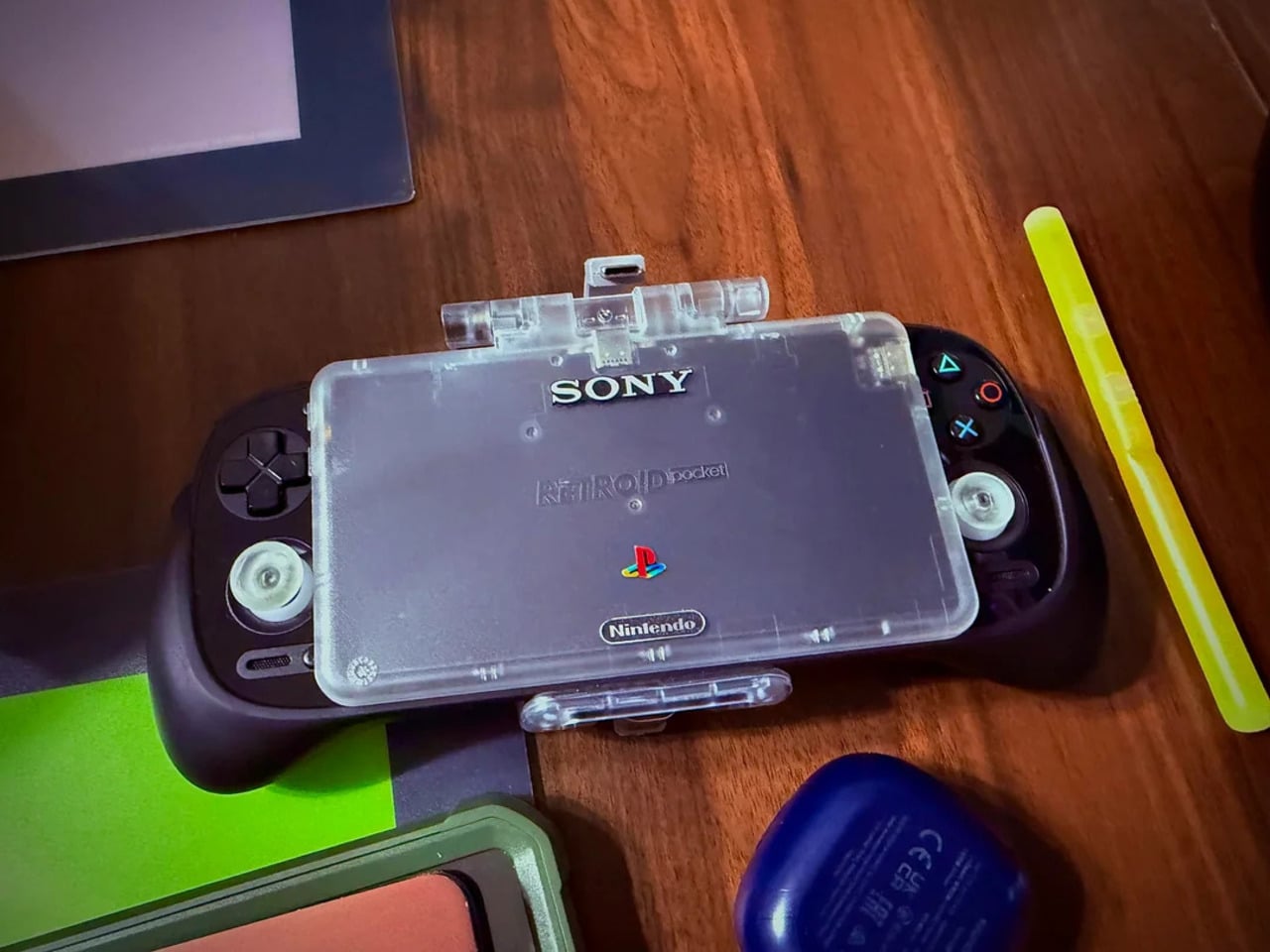
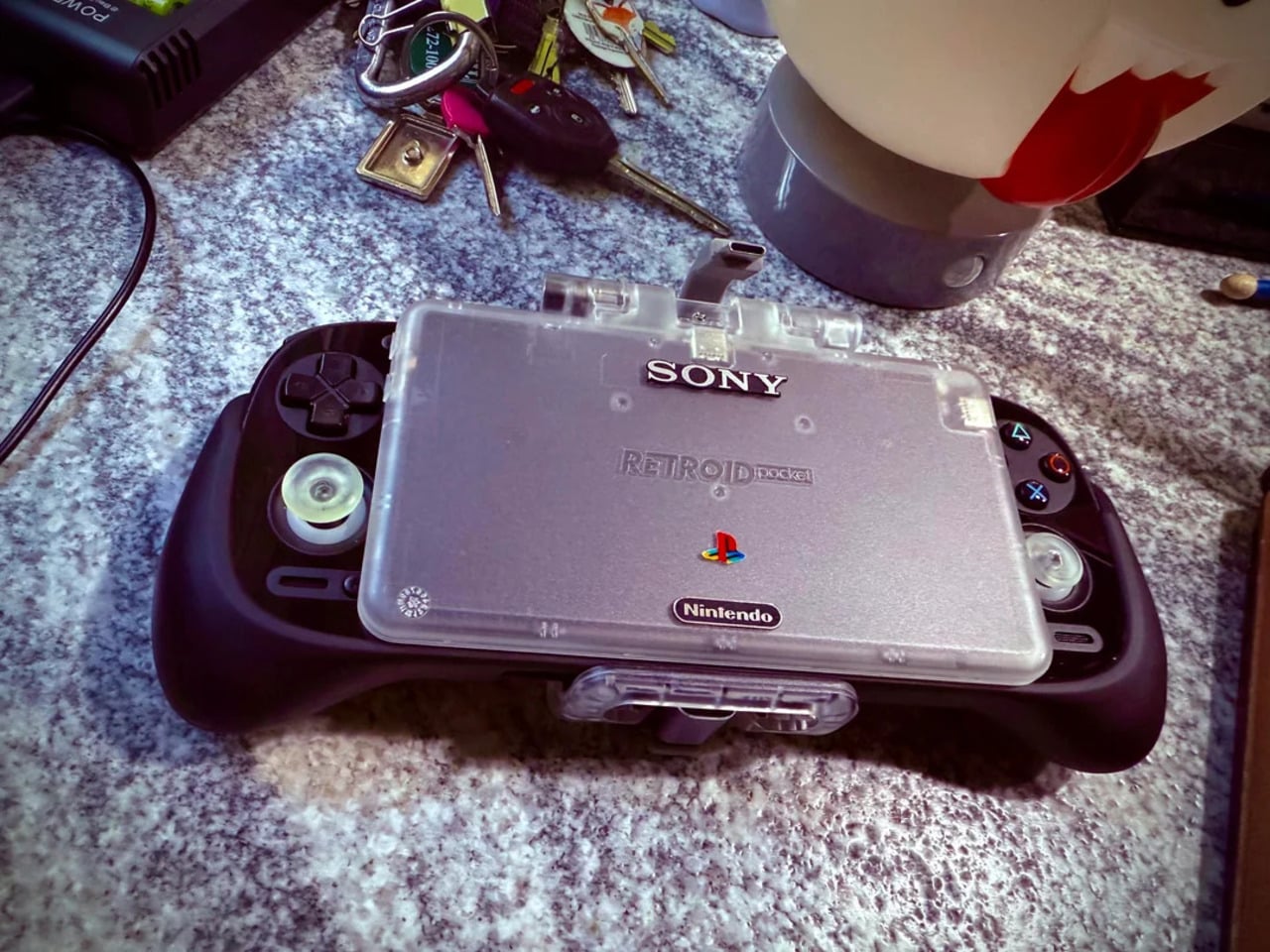
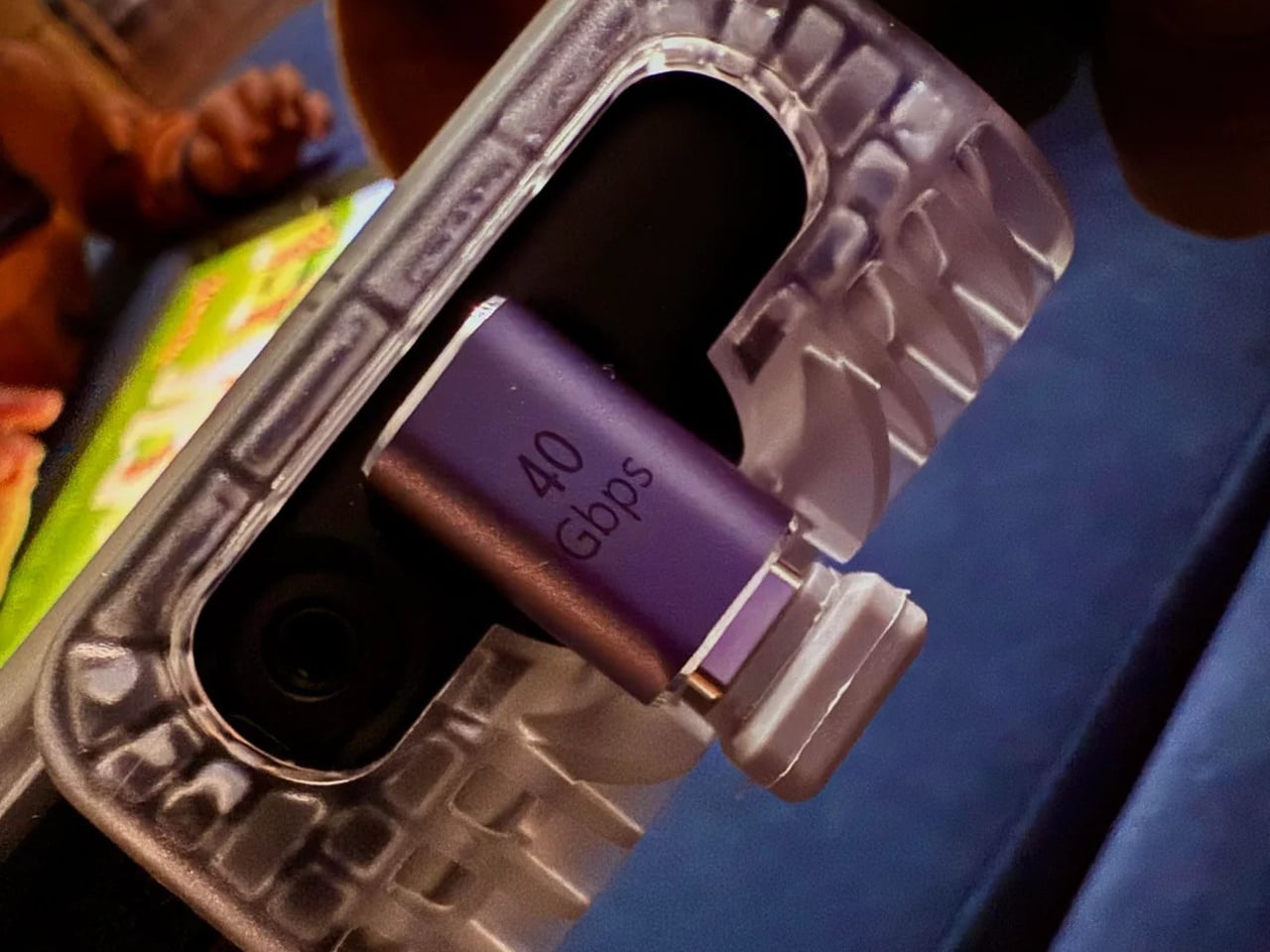
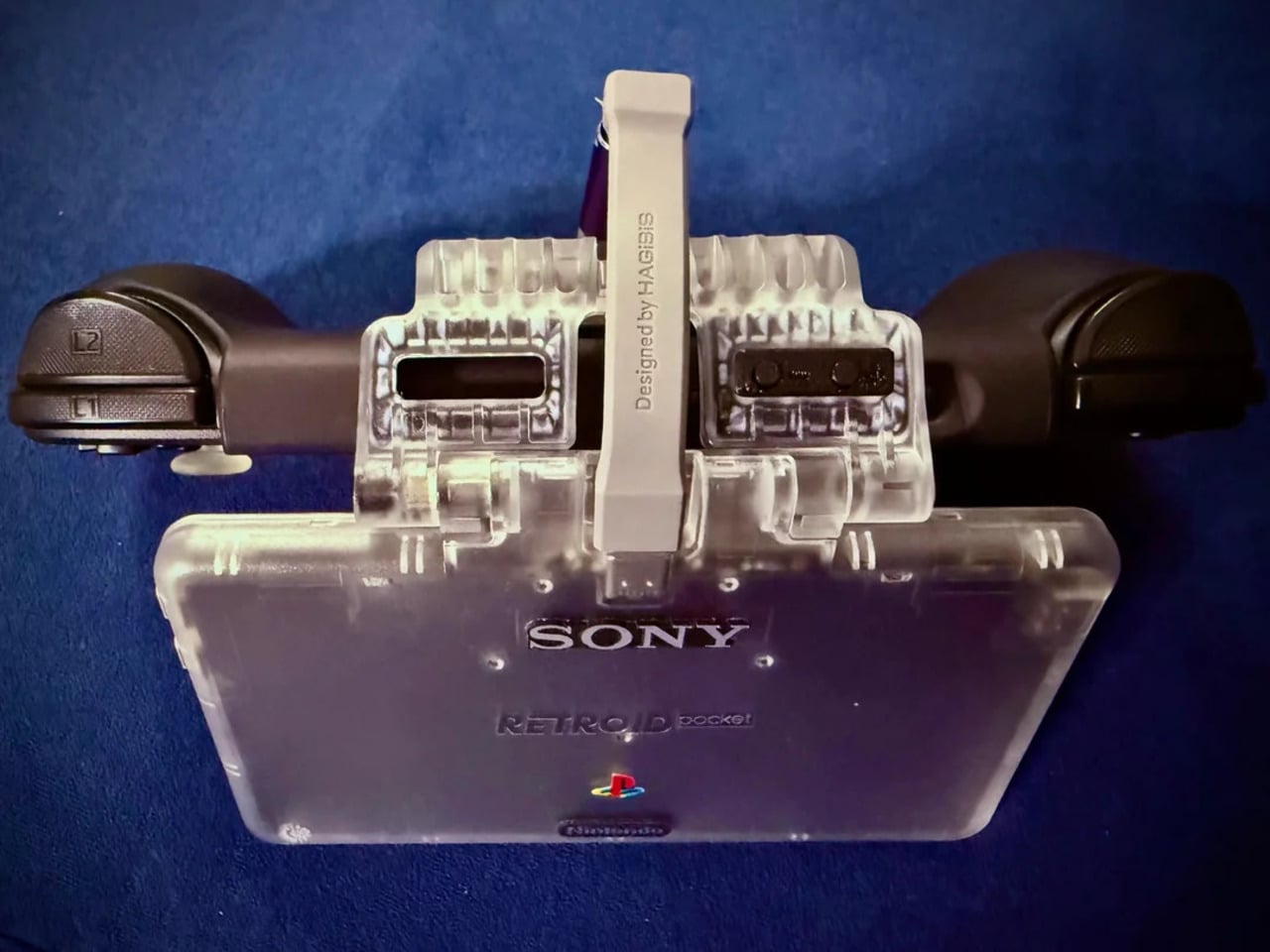
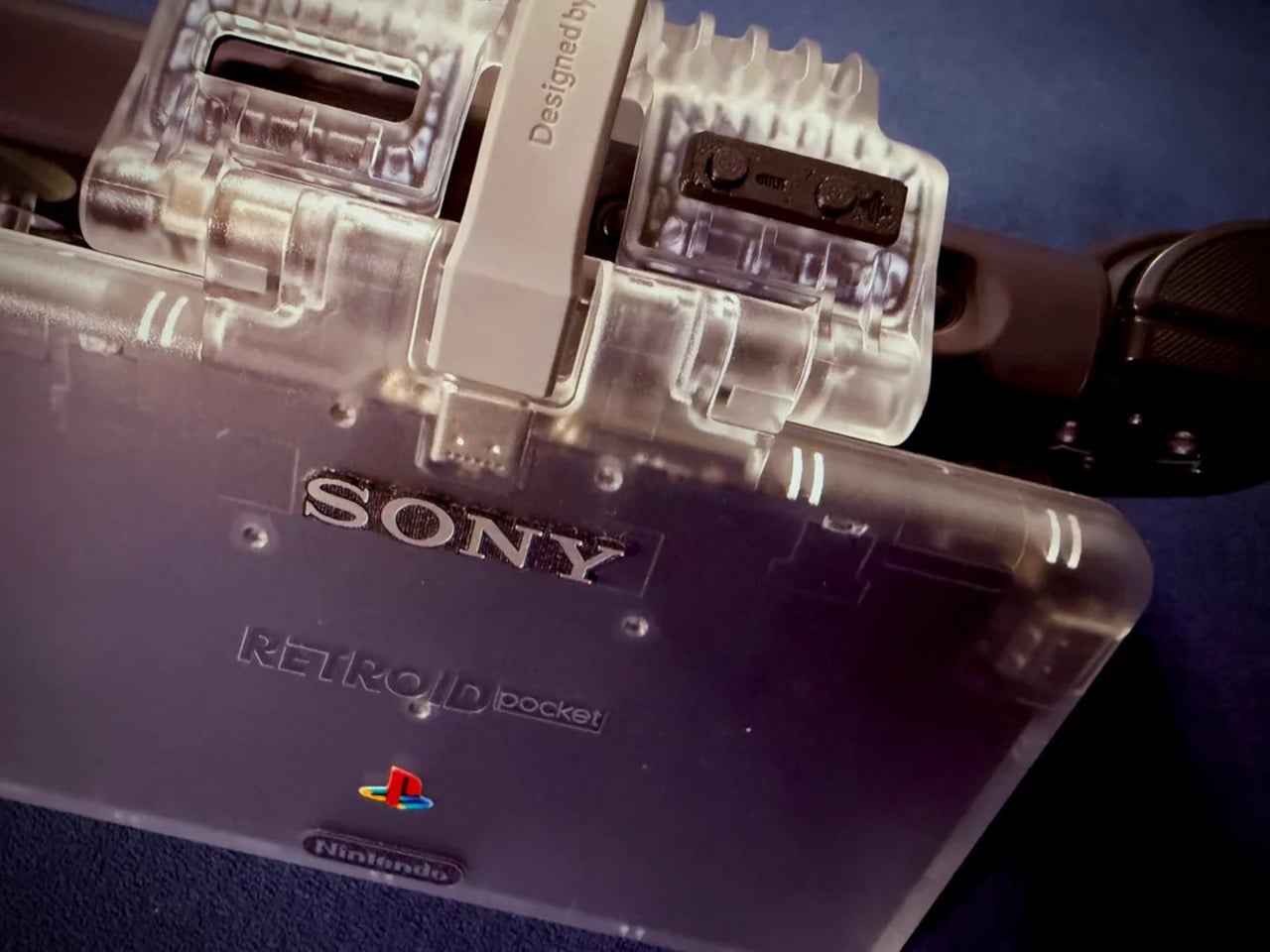
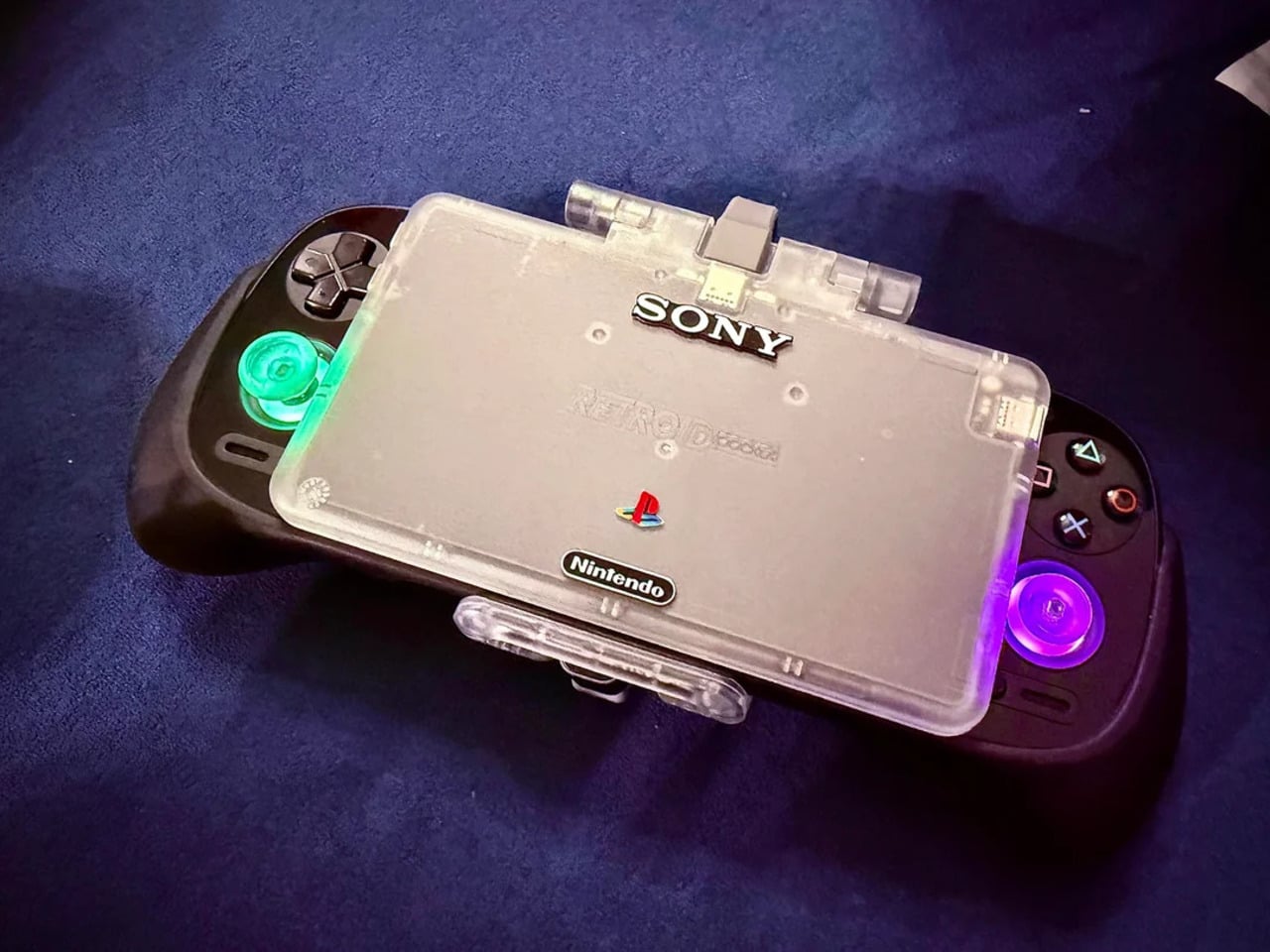
That tension is what one Reddit user decided to address. Starting with a Retroid Pocket 5, a $199 Android handheld running a Snapdragon 865 and a 5.5-inch AMOLED display, the mod layers Sony and Nintendo branding onto the same shell. Vinyl decals, translucent polycarbonate, a 3D-printed volume rocker from Etsy, and a cable replaced in PS2 color. The result looks less like a sticker job and more like a concept render from an alternate 1999.

Designer: Mitchieyan

The translucent shell is doing most of the work. It pulls from the visual language of the N64’s Funtastic series, those clear and atomic-purple controllers Nintendo released in the late 1990s, where showing the circuitry was the design choice rather than concealing it. Over a piano-black grip body with PlayStation-colored face buttons, the frosted polycarbonate shifts from grey to near-white depending on the light. It shouldn’t feel considered. It does.

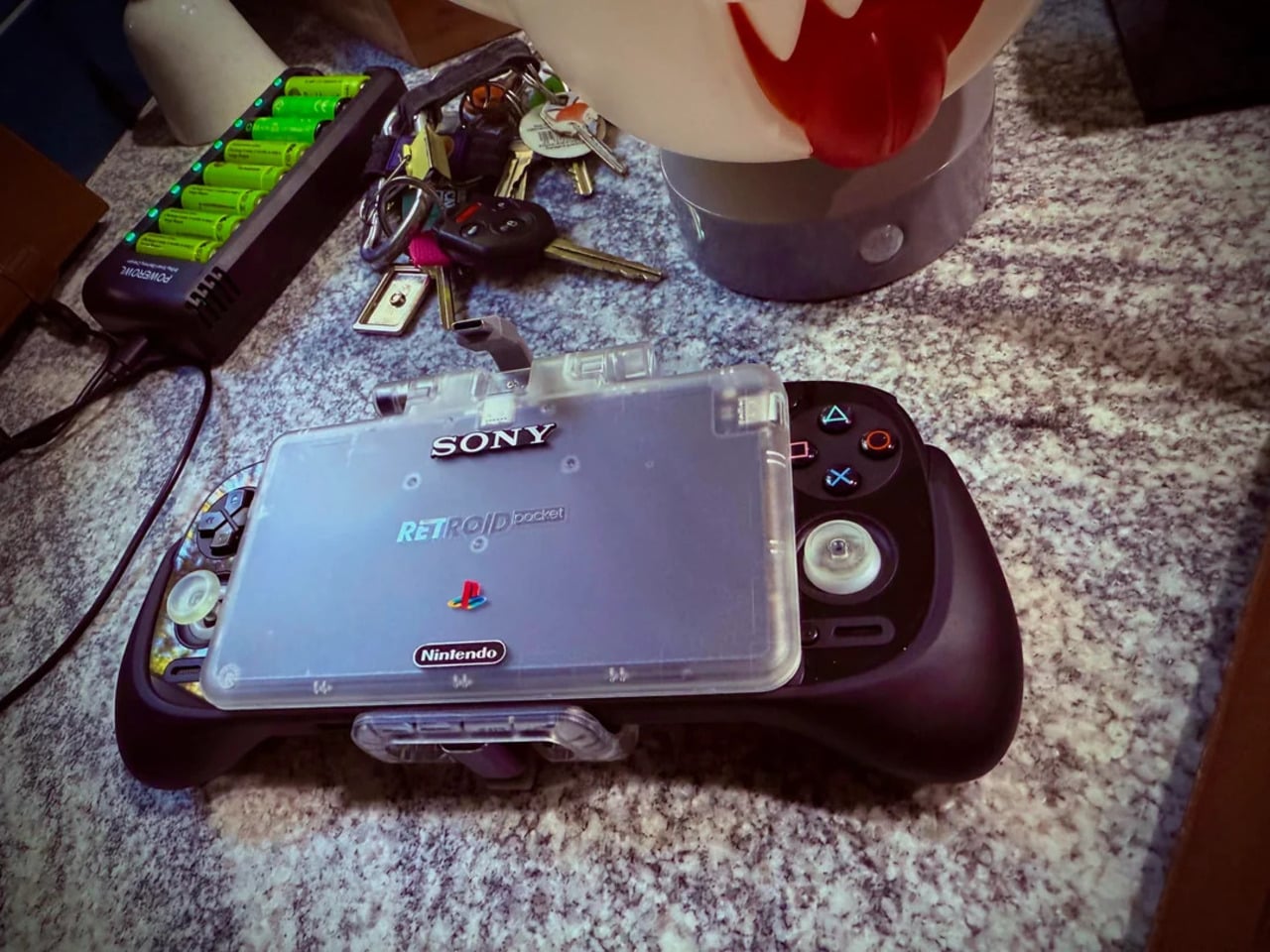
The branding placement is where intent becomes clear. The Sony wordmark sits centered on the upper face, exactly where it appeared on a PSOne. Below it, the PlayStation four-color logo. At the bottom bezel, the Nintendo badge mirrors its position on a Game Boy Advance SP. None of it is licensed, of course. These are adhesive vinyls placed by someone who grew up with both systems and wanted their coexistence on one device to feel inevitable rather than absurd.

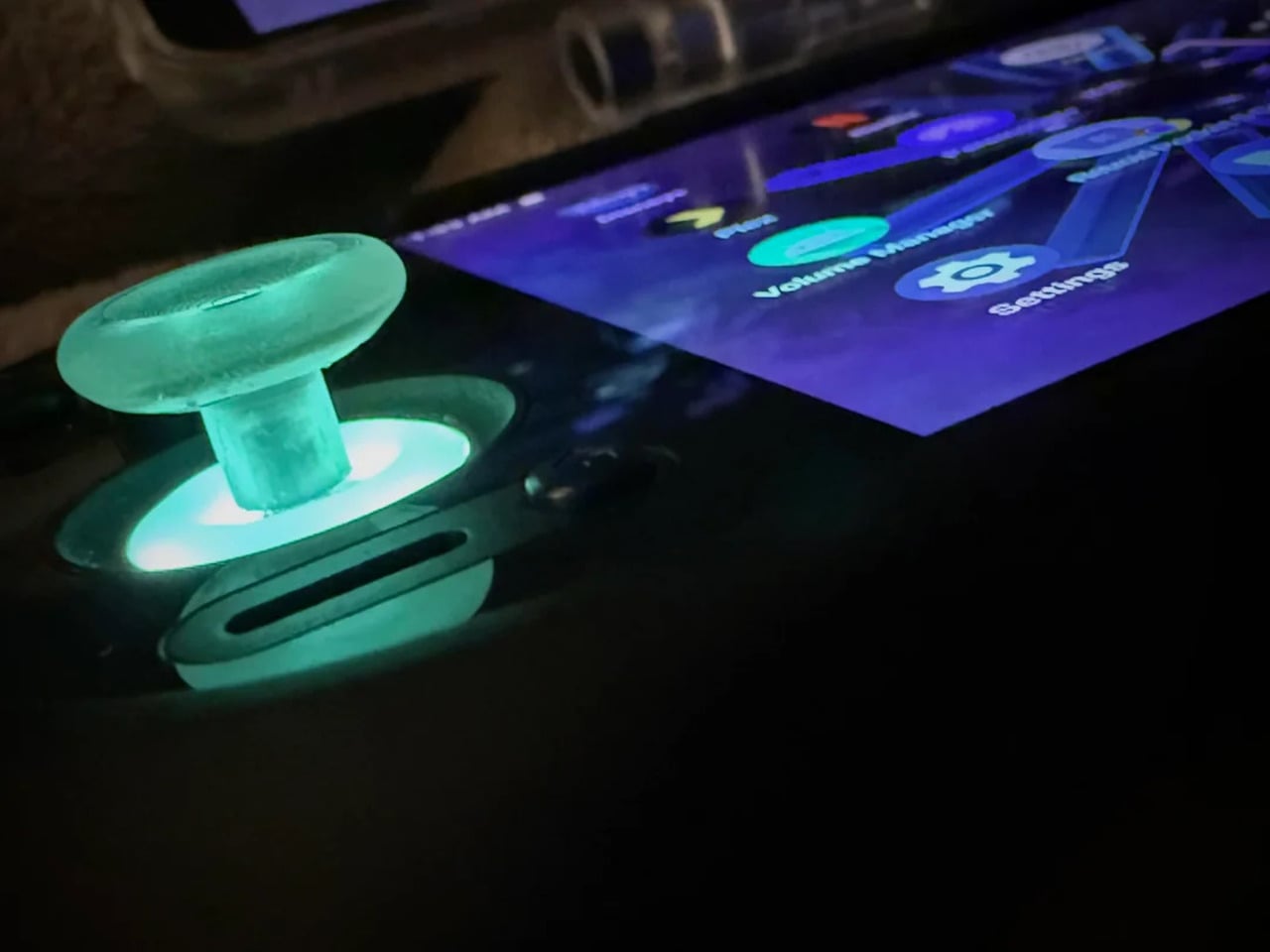
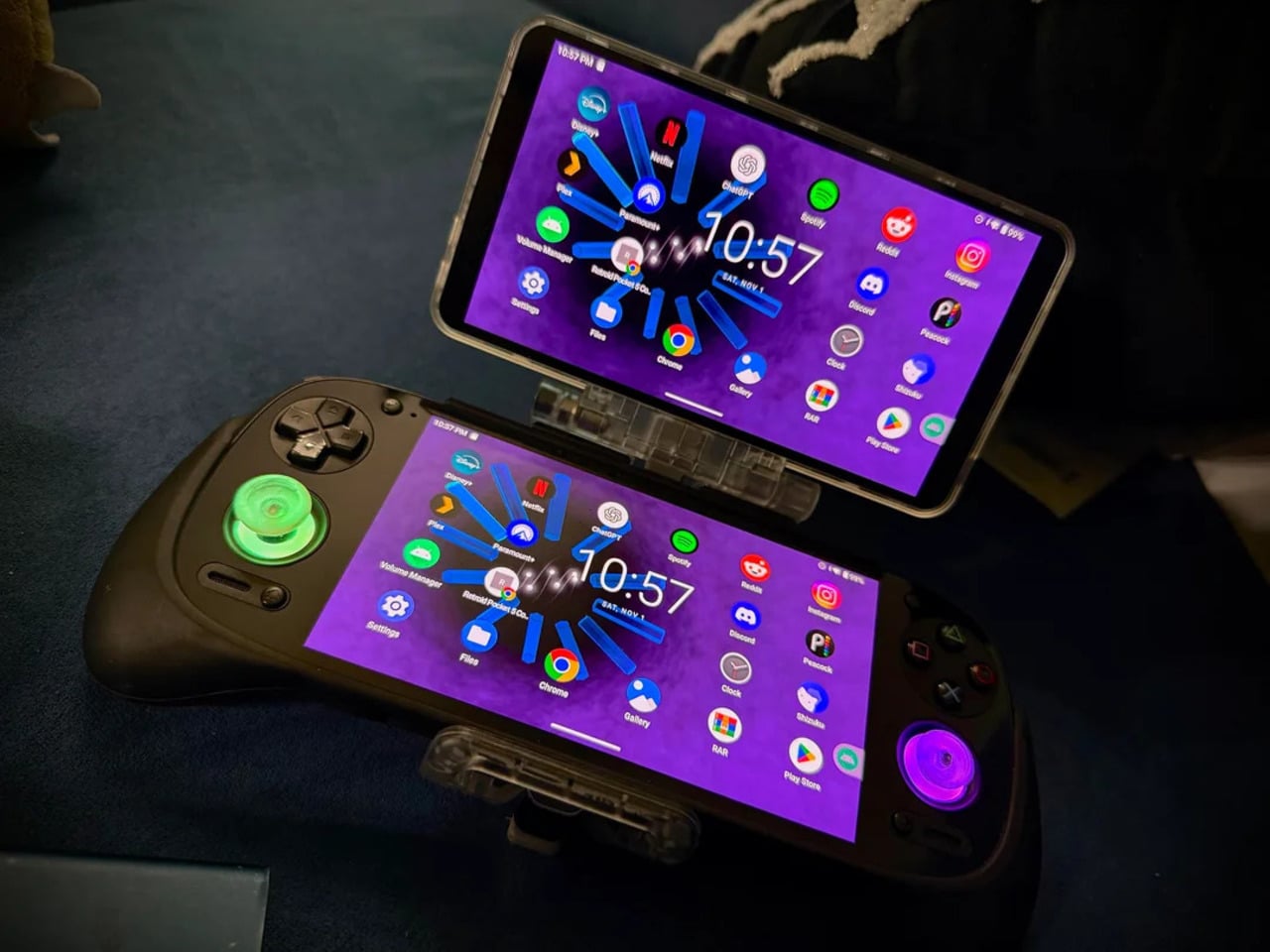
Not everything here reaches backward. The analog sticks are translucent caps over hall-effect sensors, lit teal on the left and purple on the right, owing nothing to 1999. That generation didn’t have RGB anything. The lighting reads as a concession to the present; the one feature announcing this is still an Android device in 2025, not a prototype from some alternate Sony-Nintendo licensing meeting. Whether it sits comfortably alongside the retro shell is a fair question.

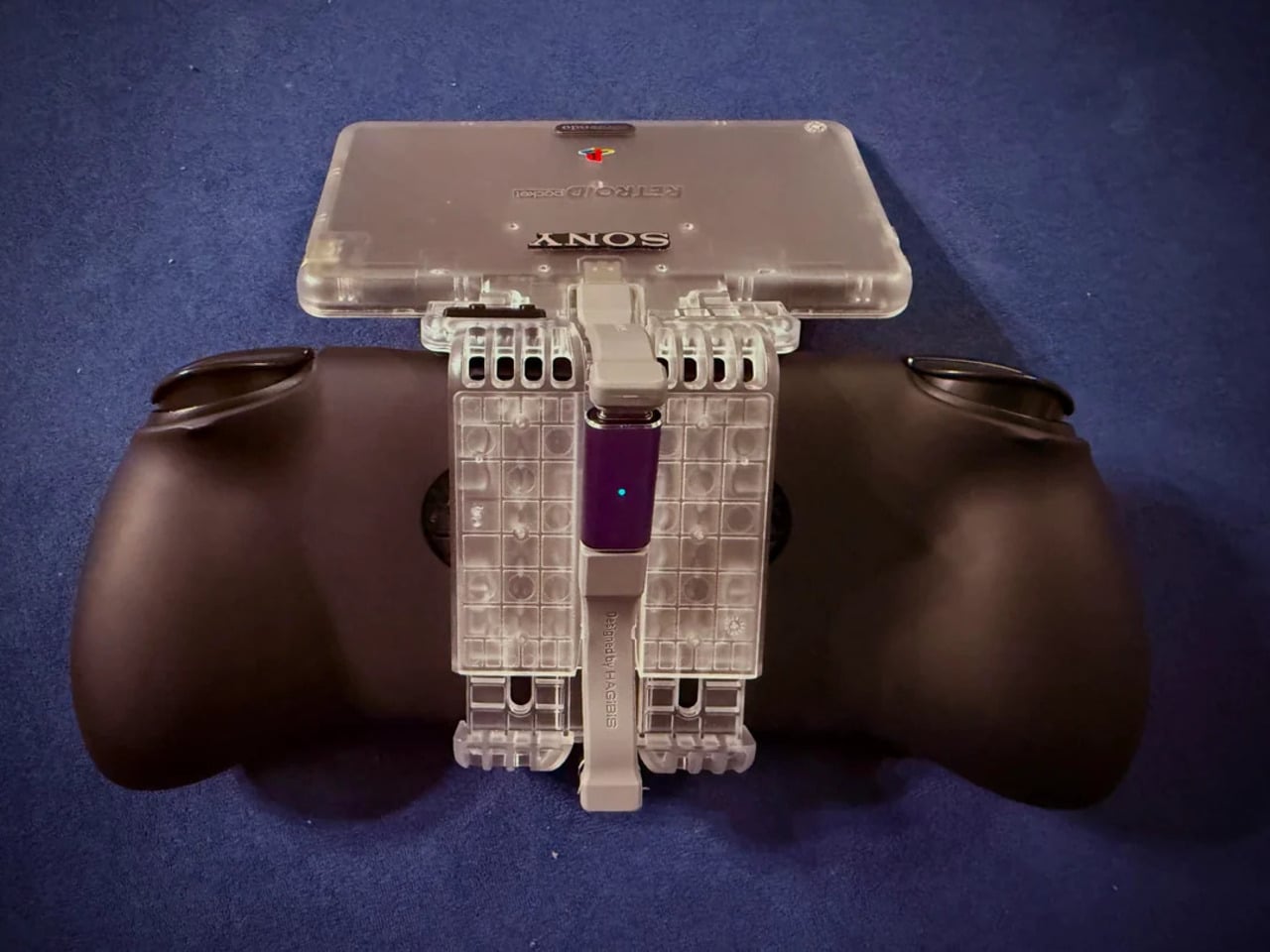
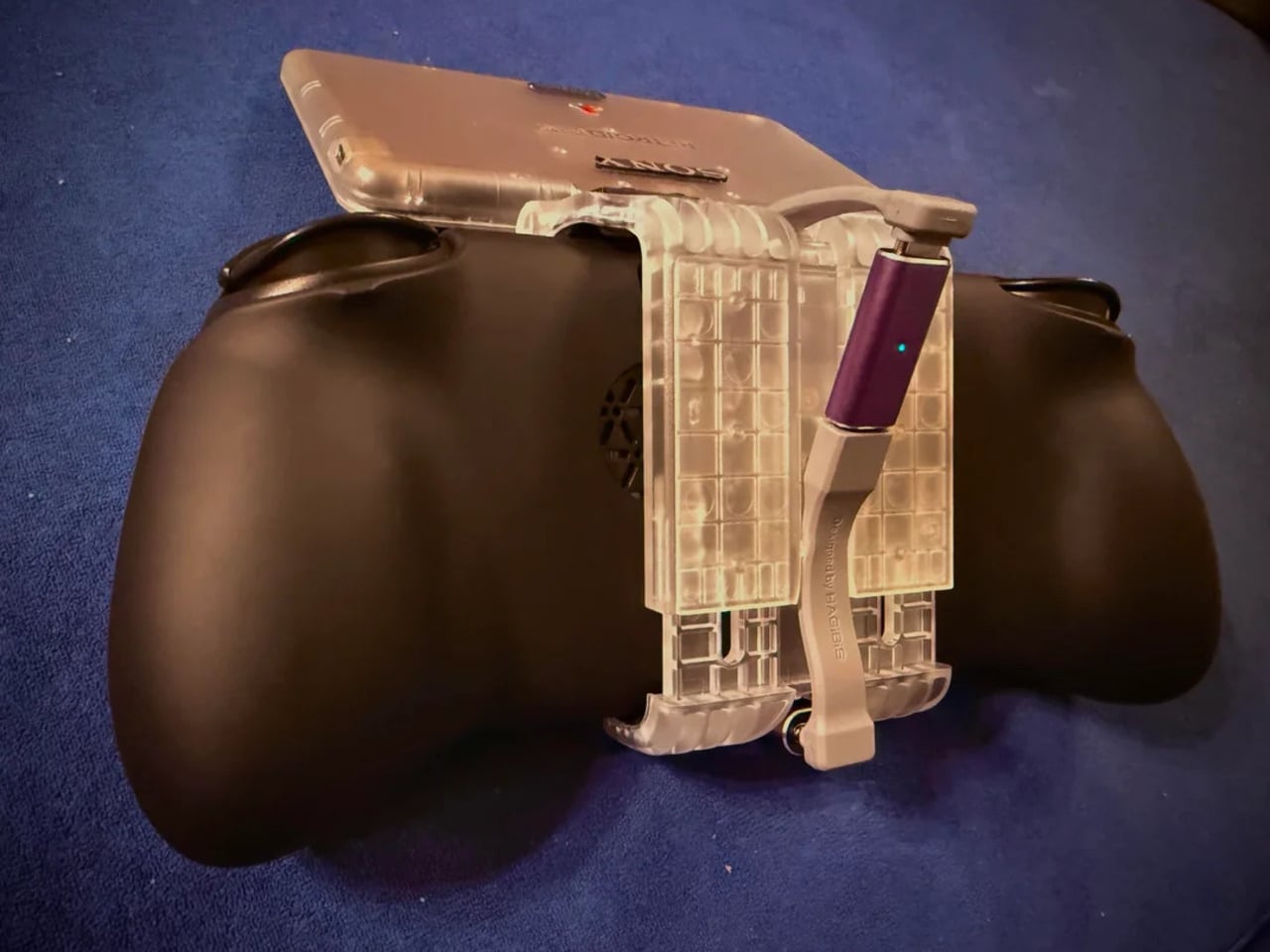
The rear view shifts the frame again. A large dual-grip body in smooth black rubber dominates the back, a clear plastic hinge connecting the screen to grip in full view, structural and unapologetic. The 3D-printed volume rocker at the top edge puts a physical control where fingers naturally land. The back half feels closer to a DualShock than a Game Boy, which is either the point or the problem, depending on what you wanted this thing to be.

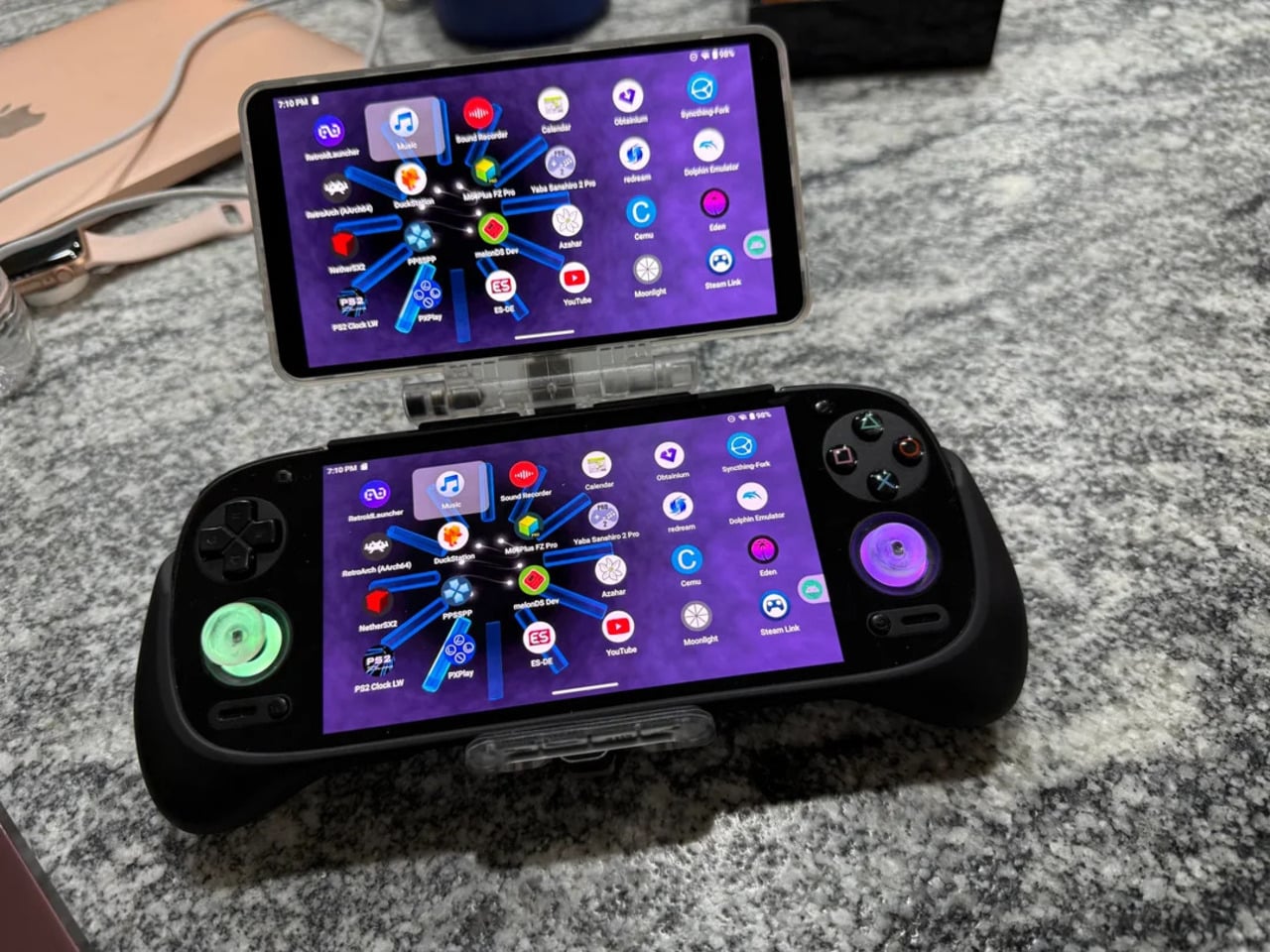
Flip to the front screen, and the emulator grid makes the whole thing literal. DuckStation for PS1, Dolphin for GameCube, PPSSPP for PSP, melonDS for Nintendo DS, and a live PS2 wallpaper cycling behind all of it. This device runs both companies’ libraries simultaneously without asking permission from either. The branding on the shell, in that context, stops being a novelty and starts reading as a plain statement of what the hardware already does.

The retro handheld category is large enough now that sameness has become its default. The Retroid Pocket 6, the current flagship from the same manufacturer, drew community criticism for being indistinguishable from competitors: glass front, LED sticks, rounded edges, and no particular character. A fan mod building identity out of borrowed logos is one response to a problem the manufacturers haven’t solved. It’s also just someone enjoying a hobby and being honest about what they want.

The hardware to play PS1, PS2, GameCube, and Game Boy Advance all on one screen already exists and costs under $200. What the market hasn’t resolved is what that device should actually look like, or whose name should go on it. This mod doesn’t answer either question. It just makes the gap between what’s technically possible and what anyone has bothered to design feel a little harder to dismiss.

The post This Fan Made the Sony-Nintendo Handheld the Companies Never Would first appeared on Yanko Design.
Netflix’s Assassin’s Creed is officially set in ancient Rome

Netflix’s live-action Assassin’s Creed show has entered production and will officially be set in Rome in the year 64AD, confirming previous reports.

The upcoming adaptation, then, will return to the setting of 2010’s Assassin’s Creed Brotherhood, although the latter’s story took place more than 1,000 years after the events we'll see in Netflix's show. Ubisoft confirmed in a press release that the Netflix series will tell an original story centered on a war between the Templar Order and the Assassin Brotherhood, who each have very different ideas on how the future of mankind should look.

The full ensemble cast has also now been announced. Sandra Guldberg-Kampp (Foundation), Youssef Kerkour (A Knight of the Seven Kingdoms), Mirren Mack (28 Years Later: The Bone Temple), and Louis McCartney (Broadway production Stranger Things: The First Shadow) have all been cast as recurring characters. Netflix previously announced Lola Pettigrew (Trespasses) and Toby Wallace (Babyteeth) as possible leads, along with a number of other series regulars.

Roberto Patino (Westworld, Sons of Anarchy) and David Wiener (Halo, The Killing) are serving as creators, showrunners and executive producers on the show, which is primarily filming at Rome’s iconic Cinecittà Studios. No release date has been announced.

Assassin’s Creed won’t represent the first time that Netflix has adapted a Ubisoft property. 2023’s Captain Laserhawk: A Blood Dragon Remix was based on a Far Cry 3 expansion, and last year Sam Fisher made his TV debut in the broadly well received Splinter Cell: Deathwatch.

This article originally appeared on Engadget at https://www.engadget.com/entertainment/streaming/netflixs-assassins-creed-is-officially-set-in-ancient-rome-171533234.html?src=rss

This Origami Stool Has No Legs, No Bolts, and Opens With One Press

Furniture storage is one of those problems that design has mostly surrendered to square footage. You either have room for a stool, or you don’t, and folding alternatives have historically resolved that with compromise: wobbly joints, hard edges, the kind of utilitarian resignation that makes it obvious the piece exists to disappear rather than be used. The Press Stool starts from a different premise, borrowing its structural logic not from joinery or hardware but from the physics of folded paper.

The concept begins with a simple observation: a flat sheet of paper has no load-bearing strength on its own, but folding it generates rigidity. Crease a sheet, and the forces redistribute across the form. Press the folds, and the geometry resists compression. This is the same principle behind accordion-style bellows folding in classic cameras, where pressing the structure generates mechanical force. Here, that same force is redirected toward something you can sit on.


Designer: Jaehyun Bae

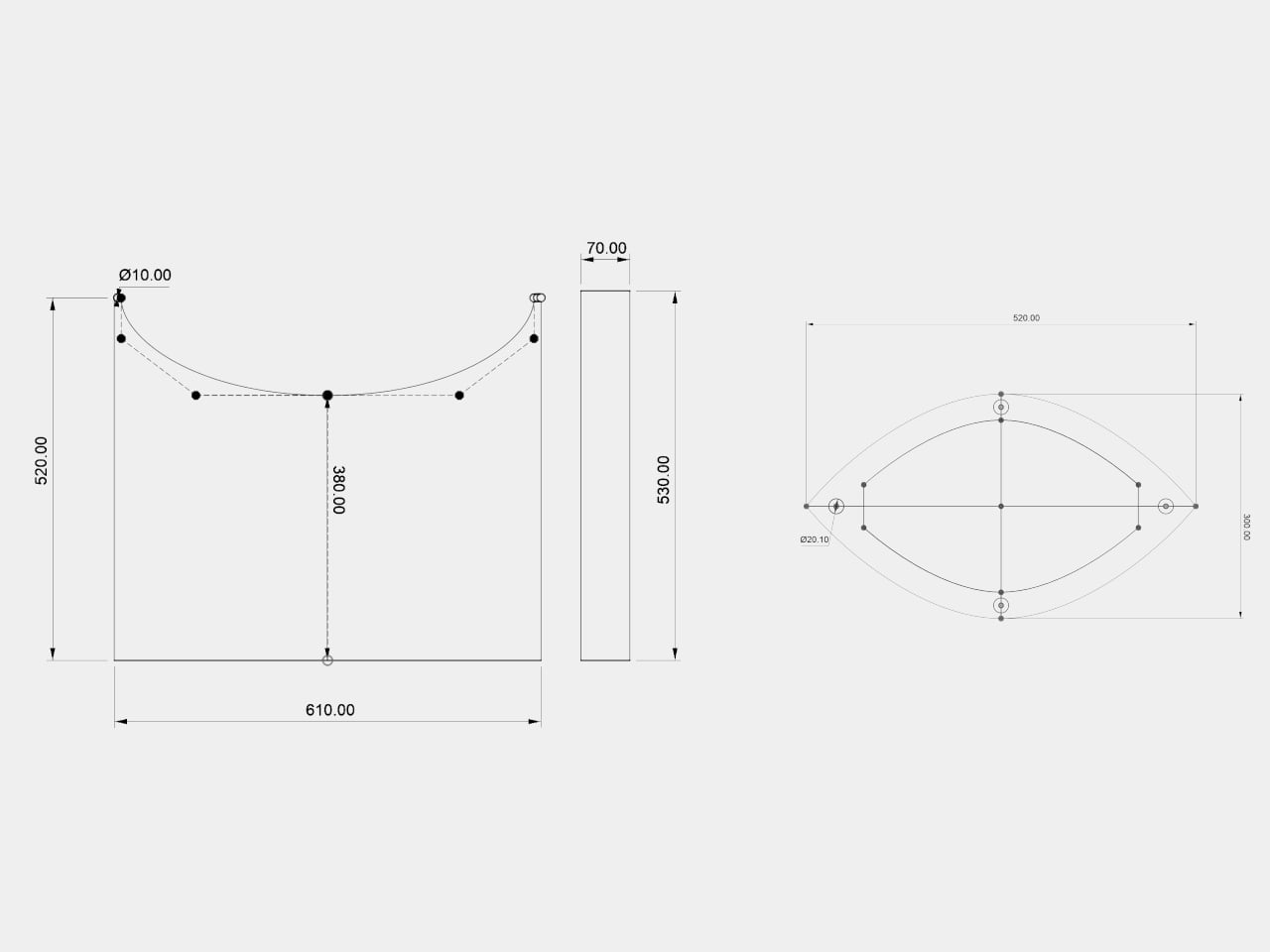
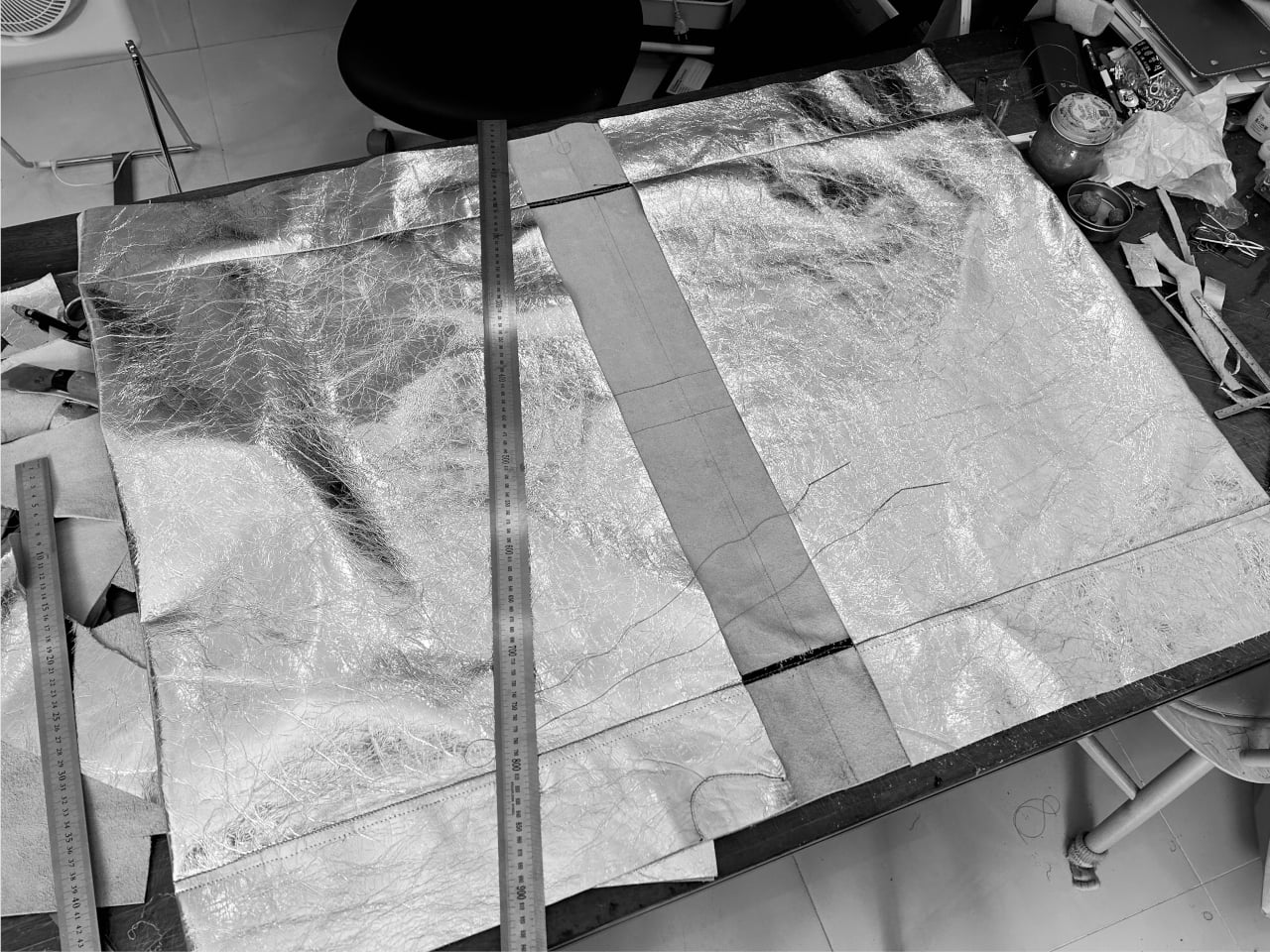
In its flat state, the stool collapses into a wide, deflated oval roughly 610 mm wide and 520 mm deep, with gently curved sides and pinched, gathered ends where the material compresses to a narrow tip. The metallic silver material has a pronounced crinkled texture that lands somewhere between industrial foil and fabric. It ships flat. It weighs little.

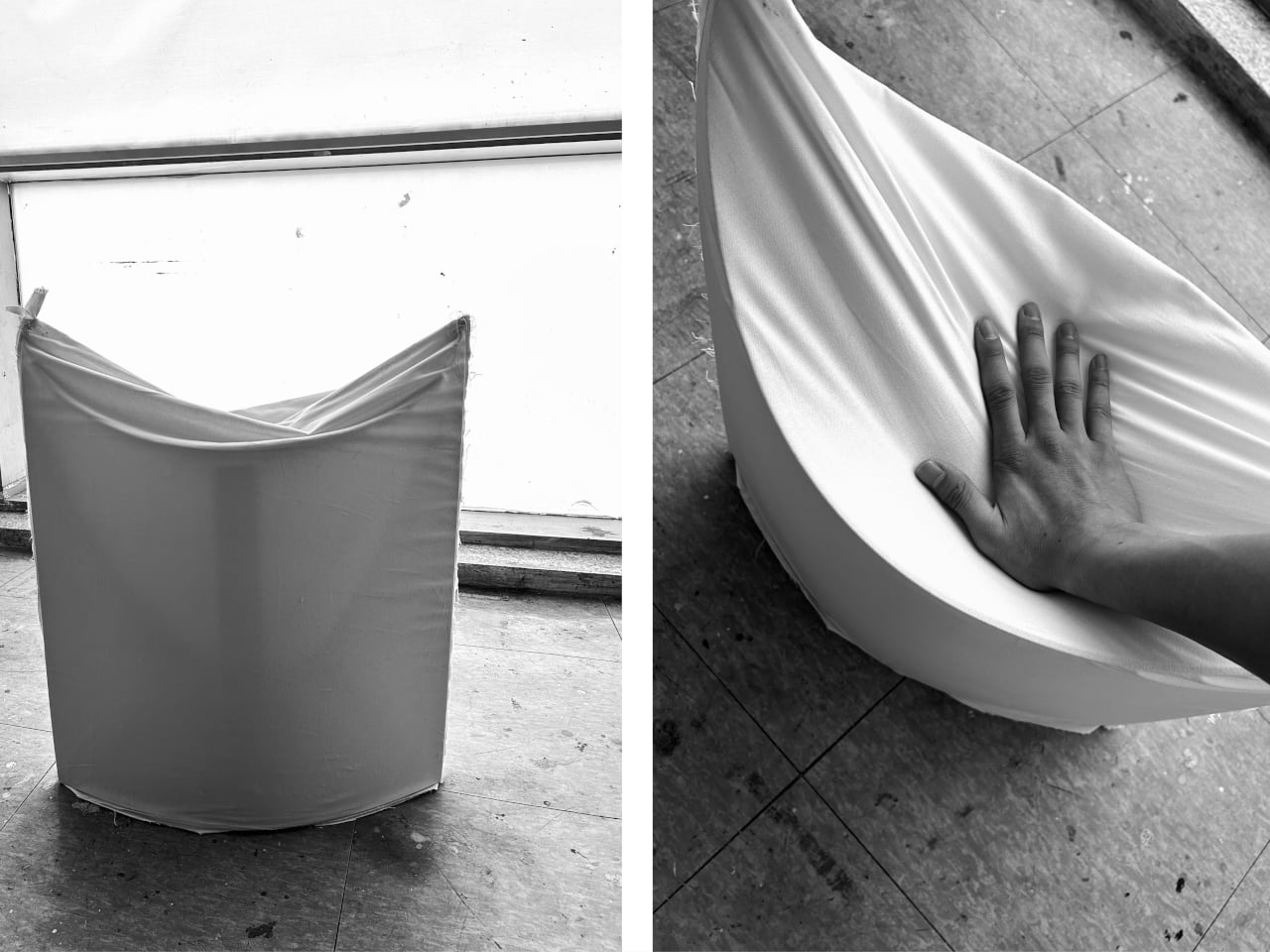
Pressing the form open deploys it into a three-dimensional stool standing 530 mm tall, with two flanking vertical panels and a concave seat formed by the inward curve at the top. No latches, no assembly. The structural resistance comes entirely from the geometry of the fold itself, the way a creased sheet can bear more than expected when compressed along its axis. The fold-generated tension does the structural work that legs and frames usually handle.

That argument holds up as a concept, though the prototype leaves practical questions open. Material identity isn’t explicitly documented, load capacity is unspecified, and the crinkle finish that gives the piece its visual identity is also the surface most exposed to wear. A stool takes more daily abuse than most objects that look like they belong in a gallery, and the long-term resilience of the material composite is untested in any published form.

What’s clear is the conceptual economy. Form follows mechanism follows idea, without detour. Flat objects that become structural through pressing rather than assembly represent a genuinely interesting class of design problem, and the Press Stool makes that problem visible and tangible. How far the logic scales beyond a prototype is the question that follows it out of the studio.

The post This Origami Stool Has No Legs, No Bolts, and Opens With One Press first appeared on Yanko Design.