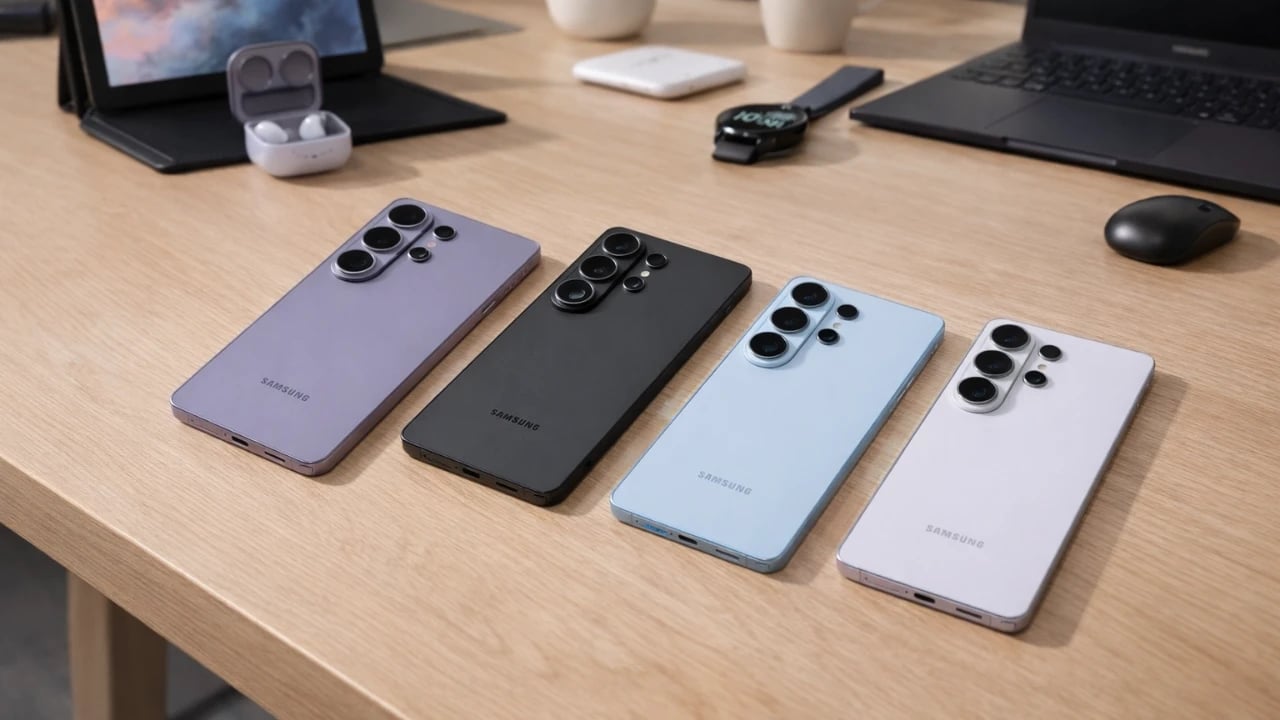
The Samsung Galaxy S27 Ultra is generating significant anticipation as it promises to deliver a host of new features. With advancements in display technology, battery performance, camera capabilities, and security, this flagship device could set a new standard for premium smartphones. If these rumored features come to fruition, the S27 Ultra may not only challenge […]
I really don't know how Apple did it. The MacBook Neo is a $600 laptop that doesn't feel like an afterthought, which is a curse that has befallen so many cheap Windows notebooks. Sure, it has a slower A-series processor and it's limited to 8GB of RAM. But the MacBook Neo still feels as deeply considered as Apple's most premium hardware. Its screen, trackpad and overall usability is so far ahead of the competition, every Windows PC maker, including Microsoft, should be ashamed.
I've argued that a cheap MacBook could be the best for Apple to peel away Windows users, and after spending almost a week with the Neo, I'm convinced it will do just that. It's just fast enough to handle basic productivity work. It's sturdy enough to be tortured by kids in classrooms. And you really can't beat its $599 starting price. Once Windows users learn it's not that hard to switch to macOS, Apple will likely have another hit on its hands.
What's so Neo about this MacBook?
I'll admit, I laughed at the MacBook Neo's name at first. It really does feel like a desperately hip name ASUS or Acer would slap onto their machines (in fact, Acer is doing so right now), rather than something Apple would even consider. But the Neo name is more than just a dated reference to the Matrix — it's also a clear signal that this is a new type of MacBook. It's the first one Apple has ever been able to sell so cheaply. It's the first one powered by a mobile A-series chip. And for many people, it will likely end up being their first Mac.
The MacBook Neo also marks the first time Apple has built a value-focused notebook under $1,000. The adorable handle-equipped iBook G3 looked like a system geared towards kids, but it launched at $1,599 in 1999. The original MacBook Air, which Steve Jobs revealed by pulling it out of a manilla envelope, sold for $1,799 in 2008. MacBooks only got semi-affordable when Apple dropped the Air's entry price to $999 in 2014. (The starting price has bounced between $999 and $1,099 ever since.) It dabbled in the concept further by keeping the M1 MacBook Air around at Walmart stores for $699 in 2024 before eventually dropping its price down to $650 last year. If you were lucky, you could also find it for $499 during some holiday sales.
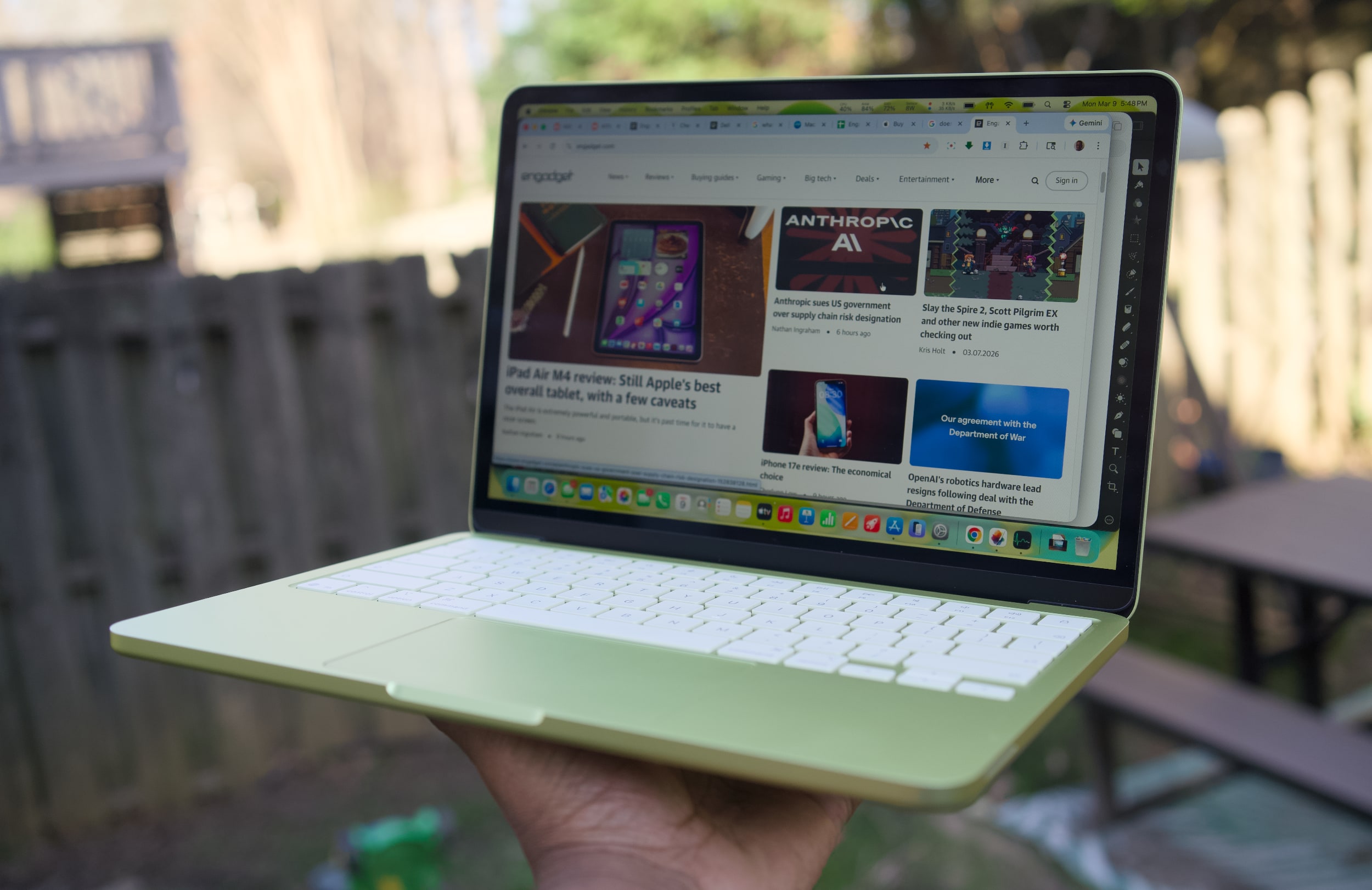
A citrus MacBook Neo being held up with one hand.
Devindra Hardawar for Engadget
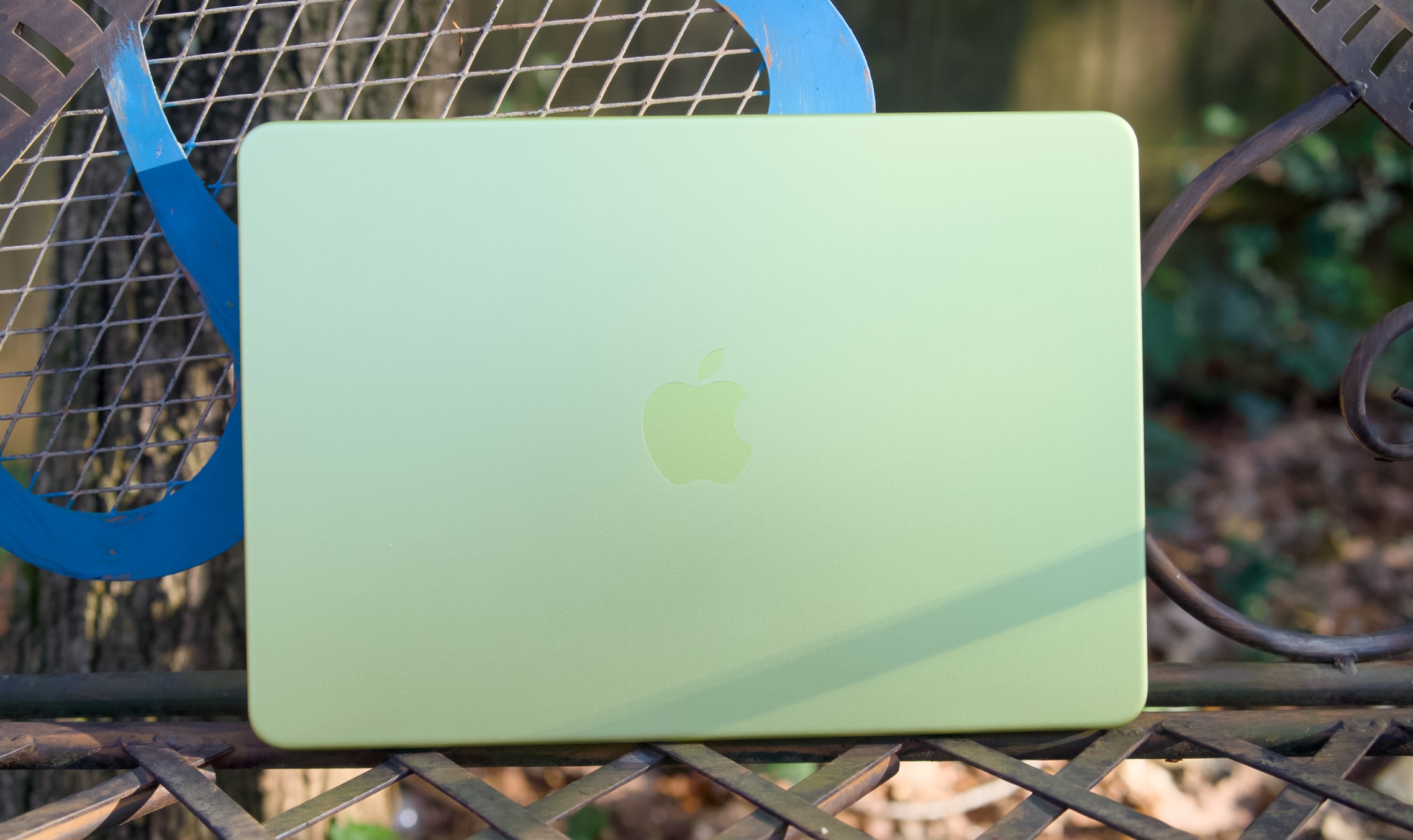
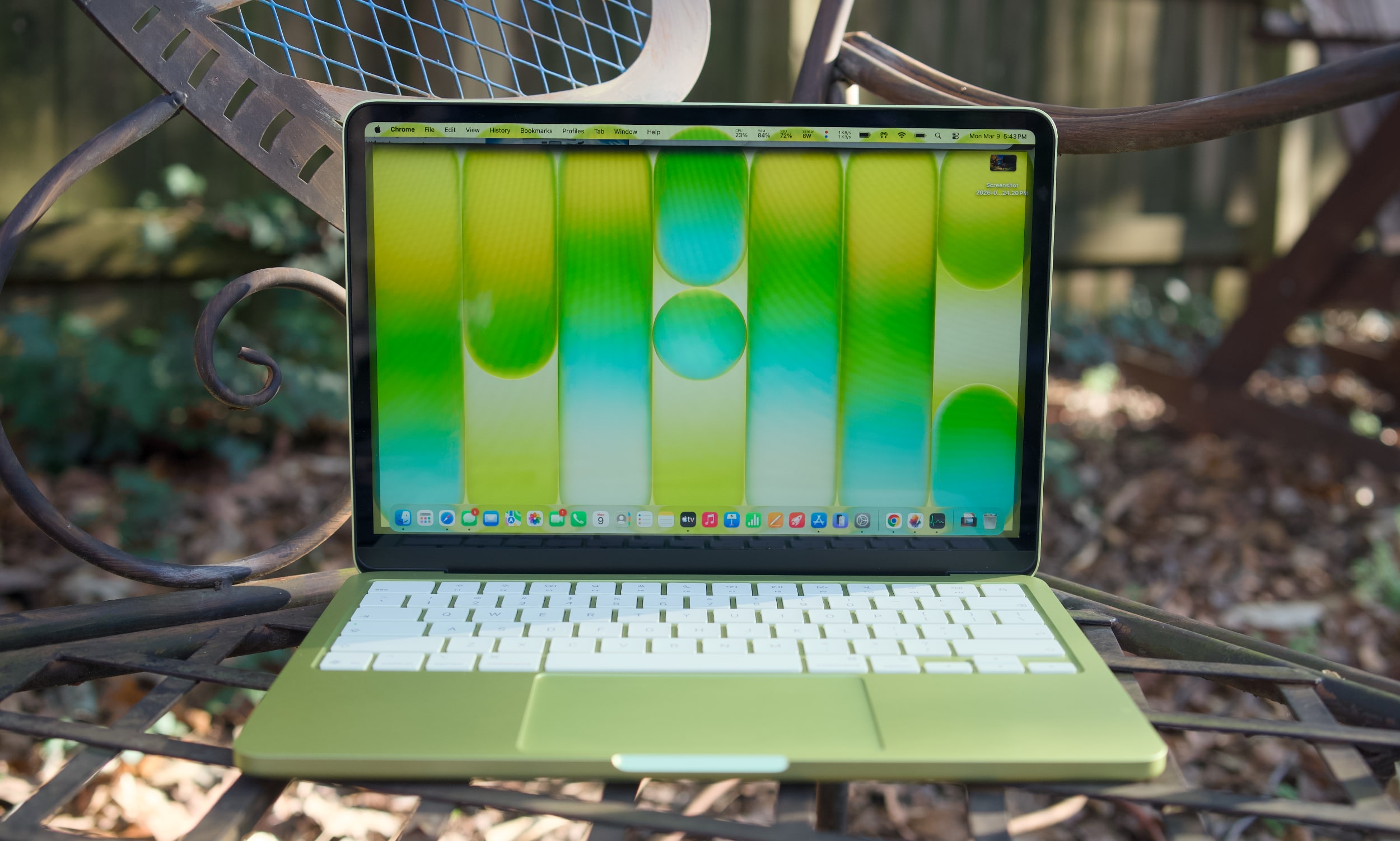
While the M1 MacBook Air was a great value over the last few years, its last-gen Apple design aged quickly. The Neo looks far more modern, with an all-aluminum case that resembles the current Air (it's a bit smaller, but weighs the same 2.7 pounds). Color is the Neo's biggest draw, with bolder options like the greenish citrus and pink blush, along with Apple's typical dark and light case options. The citrus hue is the most unique, as we've seen rose gold MacBooks before. It would have been nice to see other strong colors too, like a brighter blue or something with a hint of purple. The people want personality, Apple!
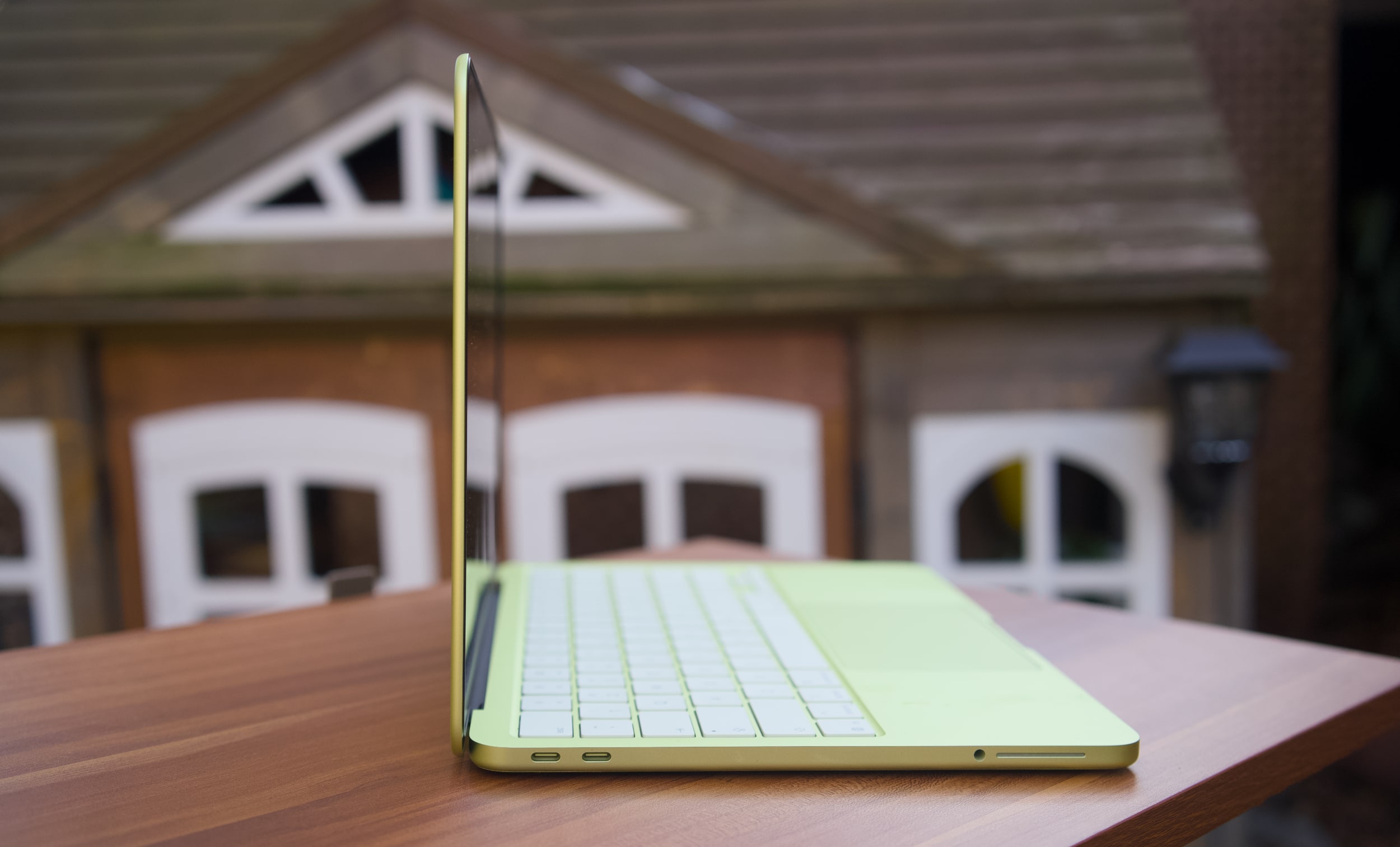
Under the hood, the MacBook Neo is a story of compromise, more so than any MacBook before it. Apple had to find a way to deliver its premium user experience while also cutting costs significantly to reach its $599 price. Relying on the A18 Pro, which powered last year's iPhone 16 Pro, was likely far more cost effective instead of using an older M-series chip that isn't being built anymore. That A18 Pro chip also means the MacBook Neo has to be fairly limited when it comes to ports: there are only two USB-C connections on board (one is USB 3.0, and the other is USB 2.0). There's no MagSafe charging connection, which is a shame since the MacBook Neo will likely end up around trip-prone kids in schools and homes.
A citrus MacBook Neo's USB-C ports.
Devindra Hardawar for Engadget
The biggest compromise lies in the MacBook Neo's RAM and disk space. It starts with just 8GB of RAM and a 256GB SSD. You can shell out another $100 to get 512GB of storage and a Touch ID button, but there's no way to add more RAM. Typically, my first piece of advice to any prospective computer buyer is to get at least 16GB of memory, as that's the easiest way to see faster performance when juggling tons of tabs, apps and large files. That's particularly true for Mac laptops, since Apple's unified memory is baked into its A-series and M-series chips.
The MacBook Neo's 8GB limitation shows the precise audiences Apple is targeting with the MacBook Neo: casual users. Those include people who need secondary machines for light workloads and schools relying on Chromebooks. I'm not reneging on my 16GB RAM recommendation — if the idea of less RAM in your main computer makes your skin crawl, the Neo isn't for you. The MacBook Air is still around, and it can easily be equipped with tons of RAM and storage.
Apple also deserves credit for squeezing in an impressive 1080p webcam in the Neo, something I haven’t seen in any other $600 Windows notebook. And while the resolution is impressive, Apple’s image processing also manages to deliver sharp and vibrant image quality. It’s usually easy to tell the overall quality of someone’s computer on group video calls based on their video quality. The MacBook Neo will have people thinking you’re calling in from a pricier MacBook Air or MacBook Pro.
When I first demoed the MacBook Neo at Apple's launch event, its keyboard felt a bit flimsier than those on the Air and Pro. But I may have just been distracted by the crowd and noise. My review unit's keyboard feels just as accurate as the Air's, allowing me to type at full speed (near 100 words per minute) without any issues. There's none of the weird input problems I noticed on Dell's far more expensive XPS 14.
The MacBook Neo's trackpad is similarly responsive and accurate for swiping and gestures. That's particularly surprising, since Apple isn’t using a haptic Force Touch trackpad like all of its laptops for the past decade. The Neo's pad clicks down mechanically — and yet, it doesn't feel as muddy as similar trackpads we see on budget PCs. It's also notable that Apple was able to make the Neo's trackpad completely clickable, whereas PC mechanical options often only click along their bottom half or third.
A citrus MacBook Neo on a table outside.
Devindra Hardawar for Engadget
Enough Mac for most
I didn't expect much from the Neo's A18 Pro processor and limited specs, and yet it still managed to surprise me. It easily handled having dozens of tabs open across multiple browsers, a show playing on the TV app, photo editing in Pixelmator Pro and running the new Apple Arcade title Oceanhorn 3 without any significant slowdown. There's clearly some swift memory management going on, delivering just enough RAM for the task right in front of you.
The Neo's RAM usage typically hovered between 80 and 85 percent when I was trying to stress it, but it never went beyond that range. And if you're curious, the Neo typically used around 50 percent of its memory just to run macOS, even with no other apps running.
I'd bet most people wouldn't see a major performance difference between the MacBook Neo and the Air for basic tasks. Even their screens look similar: The Neo's LCD panel has only a slightly lower resolution than the Air's, but its smaller 13-inch screen size gives it a similarly rich pixel density. The screen looks bold and colorful indoors, and it's also bright enough to use in direct sunlight outside. That's not something you usually see on $600 laptops.
Oceanhorn 3 on a MacBook Neo.
Devindra Hardawar for Engadget
During a demo at the Neo's launch event, I saw its screen compared side-by-side to a $600 HP laptop. The difference was literally night and day — the HP's display struggled to show the vibrancy of daylight photos, while the Neo's made photos pop off the screen. Similarly, the Neo's side-firing speakers sound significantly better than the tinny garbage HP stuffs into its discount machines. The Neo's speakers are ideal for watching videos and streaming content, but they definitely lack the clarity and low-end bump from the Air and MacBook Pro's upward firing speakers.
Geekbench 6 CPU
Geekbench 6 GPU
Cinebench 2024
Apple MacBook Neo (A18 Pro)
3,372 /8,406
19,511
107/324
Apple MacBook Air 13-inch (M4, 2025)
3,784/14,745
36,273
172/660 GPU: 3,465
Apple MacBook Air 13-inch (M3, 2024)
3,190/12,102
30,561
N/A
Microsoft Surface Pro 12-inch (2025, Qualcomm Snapdragon X Plus)
2,315/10,915
9,539
108/530
I was definitely trying to push the MacBook Neo harder than a typical user, but it simply kept delivering. In Geekbench 6's CPU benchmark, the MacBook Neo sits between the M2 and M3 MacBook Air for single-core tests, and below the M2 for multi-threaded work. Apple's hardware still manages to put Intel and AMD to shame, with single-threaded Geekbench 6 scores that are higher than the latest hardware from both companies. But of course, that's just one benchmark — beefy CPUs with active cooling will still be more performant overall.
What’s most impressive about the MacBook Neo is that it manages to be a functional and well-rounded notebook at just $599. Microsoft’s “low-budget” $800 Surface Pro 12-inch was cute, but we found its performance incredibly underwhelming (and you still had to pay more for the keyboard). The 2.2-pound ZenBook A14 was impressively light, but again it was just too slow to be useful. Apple probably could have worked harder to make the MacBook Neo a tad lighter, but it’s still easy to hold and travel with. I’d much rather Apple kept it at the MacBook Air’s 2.7-pound weight, instead of making the Neo less powerful or more expensive.
The only time the MacBook Neo completely failed was when I tried to run complex games meant for Apple's M-series chips. Lies of P installed just fine, but upon launch it just stopped as it tried to load shaders. Honestly, I'm surprised I was even able to install it in the first place. The most gaming you'll do on the Neo are things built specifically for Apple Arcade and the company's mobile chips, or cloud streaming options like GeForce Now or Xbox.
During our battery test, which involves looping a 4K video, the MacBook Neo lasted 12 hours and 15 minutes. That's far below the 18 hours and 15 minutes I saw on the M4 MacBook Air, but it's still enough to last you during a typical work or school day. Again, Apple also had to sacrifice plugging in a bigger battery to keep the Neo's costs down.
A citrus MacBook Neo on a table outside.
Devindra Hardawar for Engadget
Should you buy the MacBook Neo?
It's rare for Apple to genuinely surprise me these days, but the MacBook Neo did just that. It's a $599 computer that can handle basic workloads just fine, all the while looking like one of the company's more expensive notebooks. Most importantly, it delivers more speed, a brighter screen and an overall better user experience than any competing $600 Windows PC. It's so good, I think it'll make many people wonder why they've stuck with sub-par PCs for so long.
This article originally appeared on Engadget at https://www.engadget.com/computing/laptops/macbook-neo-review-apple-puts-every-600-windows-pc-to-shame-130000878.html?src=rss
Gemini 3.1 is an AI writing model designed to assist with creative and content-focused tasks. In a recent evaluation by The Nerdy Novelist, its performance was tested in areas such as brainstorming, outlining and prose development. One notable feature is its ability to adapt a single idea across multiple genres, such as reworking a concept […]
The Samsung Galaxy S26 Ultra builds on the legacy of its predecessors, offering a blend of refined design, innovative technology, and practical enhancements. While its exterior may seem familiar, the device introduces a range of advancements that elevate the flagship smartphone experience. This detailed analysis explores its design, hardware, and standout features, while also addressing […]
X has told UK’s MPs or Members of Parliament that it suspended 800 million accounts to combat state-backed campaigns on the website, according to The Guardian. Wifredo Fernández, X’s head of global government affairs, told the officials that the suspensions happened over a 12-month period in 2024 and that the accounts were suspended for violating X’s rules on platform manipulation and spam. Russia was allegedly behind most of the accounts that were flooding the website with spam, followed by state actors from China and Iran.
The Russian accounts were trying to “stoke division” and disseminate a “particular type of narrative” to manipulate the 2024 US Presidential Elections, he told MPs on the foreign affairs committee during a video call. Fernández also claimed that the attempts to manipulate discussions and spam on the service aren’t done yet. “There are efforts every single day to create inauthentic networks of accounts,” he said. Apparently, X suspended an additional “several hundred million accounts” last year as well, presumably also due to foreign state-backed manipulation campaigns.
To note, Statista estimates the number of users on X to be 429 million in early 2024. The Guardian also says the platform has approximately 300 million monthly users worldwide.
This article originally appeared on Engadget at https://www.engadget.com/apps/x-says-it-suspended-800-million-accounts-in-2024-over-spam-and-manipulation-123000201.html?src=rss
Shark has been making some intriguing devices lately, and its newest offering is one I’m personally very excited about. The company has just announced the ChillPill — a gadget it’s describing as a “3-in-1 personal cooling system.” It’s a modular system that offers a fan, mister and cold plate in one portable accessory, and is available today (March 10) for $150. Just in time for the summer, I guess. I’ve had a ChillPill to test for a few days and while I think it’s a bit pricey, I’m impressed by the sophistication and versatility you get for the money.
The ChillPill looks kind of like a strange, modern pair of binoculars. It is made up of two tubes connected via an inch-long silver rotating hinge. Unlike a pair of binoculars, though, one of the halves of the ChillPill can swivel on its hinge to about 100 degrees in either direction, so you can twist it to your heart’s desire. The hinge clicks firmly into place, and feels solid, so it can hold steady in whatever position you’ve chosen.
The smaller of the two tubes is where the controls and the USB-C charging port sit. There is a switch near the bottom here that locks the controls so the ChillPill doesn’t accidentally turn on when it’s in your cluttered purse. This is important, since turning on the device and adjusting the intensity levels is a matter of pressing the other end of this tube and rotating the dial. There’s a screen that takes up the top surface and it’ll show your battery level and what speed or mode you’ve selected.
The matte, slightly larger tube is where the attachments go, and the other end of this is an air inlet. Shark calls the attachments “caps,” and like mentioned earlier, these are the “High-speed fan” cap, a “Dry Touch Mist” cap and the “InstaChill Cooling Plate.” The fan is basically an inch-thick disc, while the other two are a bit taller (or deeper), and the misting pod has a tank with a wick in it. You have to fill this with potable water (and the instruction manual repeatedly warns against using oils, fragrances or other additives) before turning the device on.
Swapping the caps out is a fairly easy affair thanks to the self-explanatory symbols on the edge. Twist the parts till the circle or lock icons are on top of the solid white dot on the other side, and you’re all set.
The Shark ChillPill in use in various scenarios.
Shark
Of the three attachments, I was most excited for the cold plate, but was pleasantly surprised by how much I liked the mister. I was initially skeptical when Shark’s reps told me it was a “dry mist,” and I assumed it was probably much wetter than they promised. But when I filled the container with cold tap water and turned the ChillPill on, I found the resulting cool air and mist very refreshing. And though my chin, which got the most of the water vapor, did get a bit wet, it all dried off very quickly. Plus, if I didn’t want to risk any moisture on my face at all, I could just hold the device a bit further away. I also think it would be thoroughly enjoyable when aimed at other areas, like my neck or back, for a quick cooldown.
Same goes for the cooling plate attachment. It uses basically the same technology as the under-eye plates on the Shark CryoGlow LED face mask and the Shark DePuffi device. The company’s InstaChill technology essentially gives you a super cold surface that you can press to your skin (or, in theory, any surface that needs to chill) to quickly cool things off. Not only can this be great after, say, a hot yoga session or running to the subway in the middle of summer, but it can also be quite calming. I set the plate to the lower of the two chill settings and rubbed it all over my face before a call with my boss. I can’t say I was completely relaxed during the chat, but I was certainly a lot less strung out than I might have been without the ChillPill.
Finally, though the fan is the least exciting, it does work as promised and gets so powerful at the top level of 10 that I was genuinely shocked. It was like a mini cyclone in my hand, and if all you want is for moving air (that doesn’t have to be cooled), the ChillPill offers plenty of oomph and a wide range of intensity options.
For the money, I wish that Shark included some ChillPill accessories like the wrist strap, clamp, belt clip, crossbody strap or travel case. I also would love for the company to find a way to keep all the attachments on the device so I don’t have to carry loose caps with my ChillPill or buy a carrying case. I also found the half of the device with the power button on it to be a bit prone to becoming slick or greasy, making it a bit slippery at times.
Ultimately, I really enjoyed using the ChillPill to keep me cool. I can see this being a popular device in a hot, humid country like Singapore (where I’m from), and you best believe I’ll be ordering a few as gifts for my family members. Well, maybe just one or two. I’m not rich, after all, and these aren’t that affordable.
Update, March 10 2026, 3:42 PM ET: This story has been updated to edit the degree at which the two tubes can rotate on the hinge.
This article originally appeared on Engadget at https://www.engadget.com/home/sharks-chillpill-puts-a-mister-fan-and-cold-plate-in-one-portable-package-123000848.html?src=rss
The latest OpenClaw 3.8 update combines the features of its previous iterations into a unified release, introducing key updates in functionality, security and customization. According to RoboNuggets, one standout feature is the addition of post-compaction processes, which allow users to retain critical conversation details even after data summarization. This ensures that essential information is preserved […]
Leaked benchmarks for Apple’s M5 Max processor reveal a substantial leap in performance, positioning it as one of the most powerful chips available in the market today. Designed specifically for the MacBook Pro, the M5 Max not only surpasses its predecessor, the M4 Max, but also competes with high-end desktop-class processors. This advancement underscores Apple’s […]
Xbox’s ambitious Project Helix has taken center stage at GDC 2026, revealing a hybrid console-PC device designed to merge console simplicity with PC-level performance. Spearheaded by Xbox CEO Asha Sharma, the initiative reflects a broader strategy to address declining hardware sales and refine the Xbox ecosystem. Powered by AMD’s Magnus chips and RDNA 5 architecture, […]
LEGO has been on something of a quiet creative tear lately, and March brought a batch of sets that feel less like toy-aisle filler and more like design objects with a sense of purpose. From fan-submitted Ideas concepts to official Icons releases, this month’s standouts prove that the medium of interlocking bricks is capable of cultural commentary, mechanical ingenuity, and the kind of display-shelf presence that makes grown adults rearrange their living rooms. We picked five that caught our eye the hardest.
What connects these builds is an unusual level of ambition in how they handle subject matter. A soup can that contains an entire art studio. A sewing machine that actually functions. A 1977 computer recreated in startling fidelity. Two F1 helmets that had their real-world counterparts carried through the Melbourne paddock. And a book nook that folds shut like a novel and hides Victorian London inside. LEGO bricks have always been about building, but these five sets are also about storytelling, and each one does it with enough design intelligence to reward a closer look.
1. LEGO Campbell’s Soup Can
In 1962, Andy Warhol turned a grocery store staple into a cultural lightning rod. Now, a LEGO Ideas submission is translating that same iconic cylinder into a buildable object that opens to reveal a miniature recreation of The Factory, Warhol’s Manhattan studio. Building smooth curves at a 24-stud diameter in a medium designed around right angles requires serious geometric problem-solving, but the real ambition is conceptual. This is a container narrative, where the exterior tells one story, and the interior tells another.
Pop the lid, and the metallic interior walls contrast sharply with the familiar red and white shell. Printed artworks cover the floor and walls, echoing Warhol’s habit of painting directly on the ground with canvases scattered around him. The Warhol minifigure (signature silver wig included) presides over a space populated by props sourced from the actual studio: the disco ball, the motorcycle, the couch where visitors mingled. It is both a display piece and an education in pop art history, packed into a form that would sit comfortably on a bookshelf between actual art books.
2. LEGO Functional Sewing Machine
Most LEGO builds that replicate real-world machines are static approximations, capturing shape while ignoring mechanism. BrickStability’s sewing machine breaks that pattern. Turn the crank on the side, and the needle element actually moves up and down, translating rotational input into linear reciprocating motion, the same fundamental conversion real sewing machines have performed since the mid-1800s. A sewing machine that does not sew is a sculpture. One that moves when cranked is a teaching tool, and the difference between those two categories is the entire point.
The visual fidelity matches the mechanical ambition. The body is predominantly black, faithful to the color of nearly every vintage machine before white motorized models took over. Ornate gold brickwork traces the decorative detailing that Singer and similar manufacturers applied to their cast-iron machines, a design language that treated industrial tools as domestic furniture. LEGO spools of colored thread sit alongside brick-built tailoring scissors, completing a scene that feels like a small corner of a seamstress’s workstation frozen in time.
3. LEGO Apple II Computer
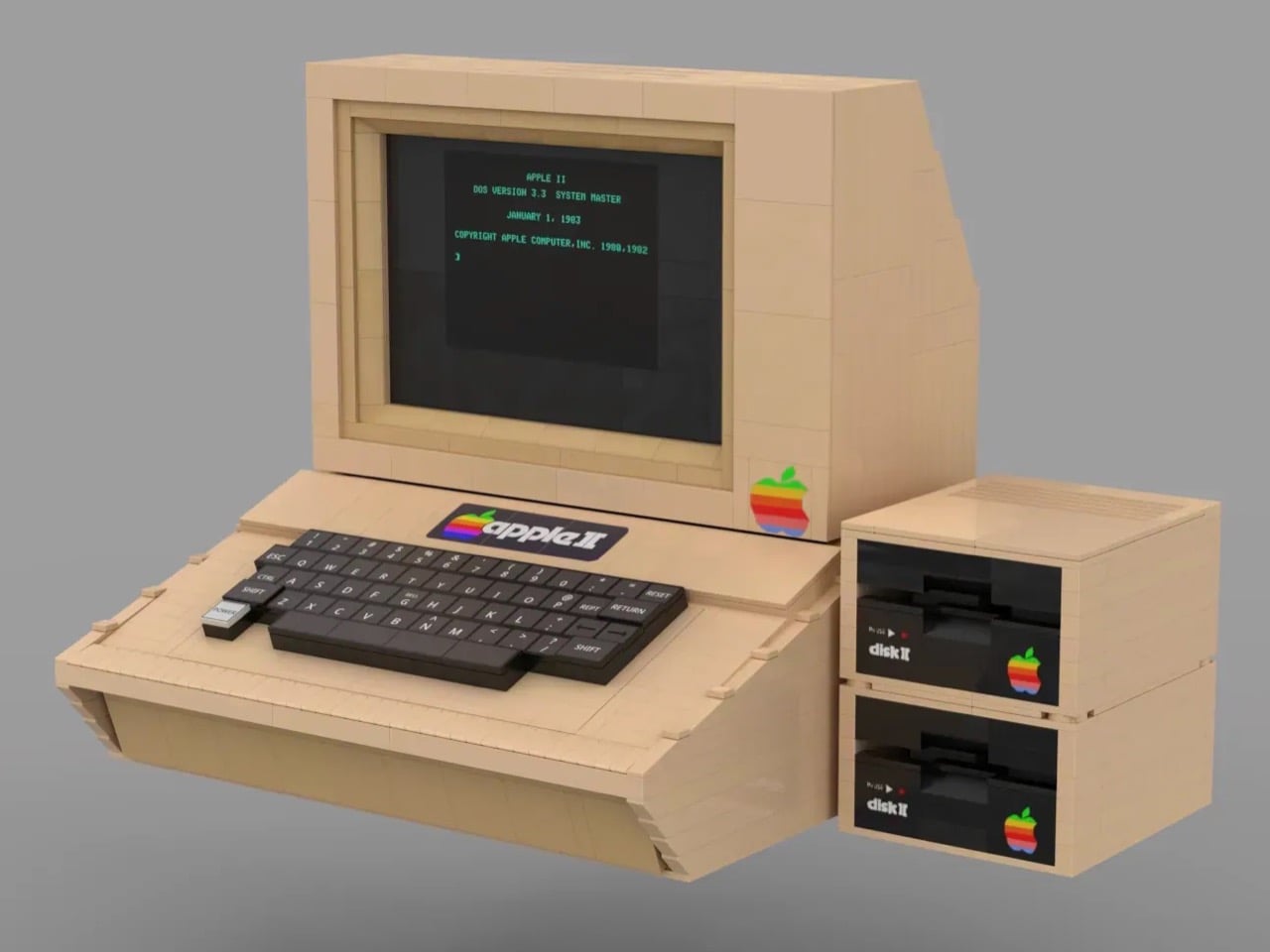
Steve Jobs walked through the kitchen appliance aisle at Macy’s in 1977 and decided a personal computer should feel like it belonged in a home. The result, designed by Jerry Manock and powered by Wozniak’s engineering, was the Apple II: a warm beige enclosure that communicated domesticity instead of machinery. LEGO Ideas builder BrickMechanic57 has now translated that design philosophy into 1,772 bricks, and the attention to detail rewards anyone familiar with the original.
The Pantone beige carries consistently across the computer body, monitor, and pair of Disk II floppy drives. The rainbow Apple II badge sits front and center above the keyboard, and the monitor screen is removable, offering two display states: the authentic green-on-black DOS boot screen or a clean powered-off panel. That swappable detail reveals a builder who understands the Apple II was not just a machine but an object that changed state, and capturing both conditions respects the full experience of owning one.
4. LEGO Editions Ferrari F1 helmets (Hamilton and Leclerc)
LEGO revealed these two sets at the Australian Grand Prix in Melbourne as the 2026 season opened, with both drivers carrying life-sized brick-built versions through the paddock. The consumer sets are more modest (886 pieces for Leclerc, 884 for Hamilton, $89.99 each, shipping May 2026), but the detail transfer from real helmet to brick form is where the design work lives. Both replicate the drivers’ 2025 helmet liveries using printed brick elements and a new visor piece developed specifically for this line.
Hamilton’s version uses a golden yellow base that makes Ferrari’s identity feel unexpectedly bold, with his number 44 and sponsor graphics distributed across the curved surface. Leclerc’s helmet goes the opposite direction: predominantly red and white with a cleaner, more structured layout. The #JB17 tribute at the crown honors Jules Bianchi, and a smooth white visor band reads almost architecturally, dividing the piece the way a cornice divides a building facade. Both sets include their respective driver as a minifigure for the first time, each in a red Scuderia Ferrari HP racing suit.
5. LEGO Icons Sherlock Holmes: Book Nook
LEGO’s first official Sherlock Holmes set introduces a new product concept called the Book Nook: a 1,359-piece display designed to slot between actual books on a shelf. When folded shut, the Sherlock Holmes: Book Nook (set 10351, $129.99) presents a flat, bookend-style exterior with a tiled black silhouette of Holmes against a tan background. It is restrained, intentional, and designed to sit alongside a Conan Doyle collection without looking like a toy intruding on a literary shelf.
Unfold it, and the restraint gives way to density. The interior reveals a Victorian Baker Street facade: a bookshop with a revolving display window, a shadowy terraced residence with a sliding front door, and a recreation of 221B, complete with a fireplace, a clue board, and a violin. Five minifigures populate the scene, including Holmes, Watson, Irene Adler, Moriarty, and a newcomer named Paige (whose name is almost certainly a pun). The open display measures over 8 inches high and 14.5 inches wide, giving the street and interiors enough room to breathe without overwhelming a shelf. The Book Nook concept is smart because it understands how adult collectors actually live: not everyone has a display cabinet, but most people have bookshelves.
Where LEGO Design Is Heading In 2026
These five builds share something beyond good brick engineering. Each one treats its source material with enough respect to move past surface-level recreation into something more layered: a can that contains a cultural biography, a machine that honors its subject by functioning, a computer that captures two operational states, helmets that tell a story about driver identity, and a book nook that understands how display space works in a real apartment.
March 2026 is evidence that the LEGO design community, both official and fan-driven, is thinking harder about what a build can communicate beyond its physical shape. The best sets this month are not the biggest or the most expensive. They are the ones that made us pause and look closer, which is all any well-designed object needs to do.