An AI copycat of King Gizzard & the Lizard Wizard went unnoticed on Spotify for weeks

Despite making some moves to address the proliferation of AI-generated audio on its platform, Spotify failed to catch a copycat making imitations of music by King Gizzard & the Lizard Wizard. The long-running experimental rock band from Australia, has been a vocal critic of Spotify and was one of several artists that took their music off the platform in the summer. The move was in response to the discovery that outgoing CEO Daniel Ek was a leading investor in an AI-focused weapons and military company. Today, a poster on Reddit was recommended what appeared to be an AI-generated copy of one of the band's songs in Spotify’s Release Radar playlist.

The phony artist was called King Lizard Wizard and it had an album of tracks all sharing titles with songs by the original band and using their original lyrics. Futurism grabbed screenshots of the imposter, although it appears to have since been taken down; only the band's original page appears in searches for both their name and the AI name. A rep from the company provided the following statement about the issue: “Spotify strictly prohibits any form of artist impersonation. The content in question was removed for violating our policies, and no royalties were paid out for any streams generated.”

However, the phony King Gizzard band's album went unnoticed by the company for weeks before today's social post surfaced it. The Reddit thread points to several other anecdotal cases where someone attempted to trick listeners with AI-generated versions of popular bands. In September, Spotify unveiled a spam filter for catching AI slop, as well as policies for disclosing AI use in the content it hosts and how it would tackle AI impersonations. An instance like this, particularly when it features an artist that had left the platform in protest, creates a pretty big question mark about how well those policies are working. 

Update, December 9, 2025, 5:15PM ET: Added statement from Spotify.

This article originally appeared on Engadget at https://www.engadget.com/entertainment/streaming/an-ai-copycat-of-king-gizzard--the-lizard-wizard-went-unnoticed-on-spotify-for-weeks-220018144.html?src=rss

Ecno Evil Unit-1 is rugged, off-road, and wood-free camper you can’t break

If you’re into pomp and show, turn back now. This camping trailer isn’t for you. But if the bare essentials are enough to make your adventures fun, read on. Before that, though, check out the video above. It’s easily the strangest promo I’ve ever seen for a trailer. Cinematically shot 4k videos of full-equipped trailers are impressive, but just wait until you see the Ecno Evil Unit-1 being smashed with wooden planks and sledgehammers. It’s one heck of a demonstration of its structural toughness.

Developed by California-based Ecno Evil, the Unit-1 is a rugged squaredrop off-roader that’s built without wood, yet designed to withstand whatever you may throw at it. The HDPE (High-Density Polyethylene) construction makes the trailer absolutely durable, lightweight, and pretty cost-effective. The cost is also achieved by keeping Unit 1 to its skeleton, with subtle functionality accents only. It avoids the unnecessary camping equipment that the makers believe adventurers already own and should not be burdened further with mandatory gear in their rig.

Designer: Ecno Evil

If you stand by the thought that you should have the choice to furnish a trailer with your own stove, portable toilet, and power backup etc., then the Unit-1 meant to provide a reliable shelter out in the wilderness, should be the trailer you are looking at. Riding behind a capable tow vehicle, it can reach where you want it, providing you with an instant space with basic necessities to live out a few days in nature most conveniently. And more, if you pack it with your cooking and sporting gear.

Of course, the minimalist design and zero-wood construction are the chief highlights of the Unit-1. But you can’t take away the fact that the trailer has an external storage area in the rear, which is detached from the living area inside and makes it a feature to behold, especially for those who fail to keep the clean interior and the soiled gear separate.

The Ecno Evil Unit-1 is not a very compact cabin; it has a 12.4-foot floor space that sits on a custom aluminum tube chassis. The body is a simple, squaredrop box without interior paneling or exterior cladding. It’s just a durable HDPE camper which, without metal or wood inclusion, is completely resistant to mold, rot, or any such durability issue. The trailer is only provided with a single door entry; the hatch is separate and has two storage units. Two windows, one with the door and the other openable just opposite, make provision of the natural lighting inside, while the 6-inch trifold mattress occupies the floor space under a roof fan and open shelves spanning the interior.

Ecno Evil makes provision for lighting both inside and outside, while providing an option 100-W solar panel and an Ecoflow power unit, if required. At its bare best, the Ecno Evil Unit-1 starts at $13,990. This would be a 4 x 8-foot floor plan. Another option is the 5 x 8-foot model, which starts at $16,490.

The post Ecno Evil Unit-1 is rugged, off-road, and wood-free camper you can’t break first appeared on Yanko Design.

Google and Apple partner on better Android-iPhone switching

Google and Apple have long existed as polar opposites, each ruling over their tech kingdoms with little interest in cooperation. But the latest build of Android's Canary operating system hints at an unusual instance of collaboration between the brands, with a new feature that seems aimed at making data transfer simpler between Android and iOS mobile device during the setup phase. It is expected to also be available in a future developer beta of iOS 26. 

A representative for Google confirmed that the report from 9to5Google on this development is accurate, but didn't provide any additional details on how the transfer will work. Each brand already has their own dedicated Switch to Android and Switch to iOS apps for making the swap between ecosystems, but making the transition easier at the operating system level and adding support for moving more types of data certainly sounds promising. That said, features can go through a fair bit of iteration between the dev betas and the final launch, and Android Canary is a very early stage of development, so we'll be curious to see what actually arrives on our smartphones.

This article originally appeared on Engadget at https://www.engadget.com/mobile/smartphones/google-and-apple-partner-on-better-android-iphone-switching-204738960.html?src=rss

This $10 Measuring Tape Is Built for LEGO Bricks and Nothing Else

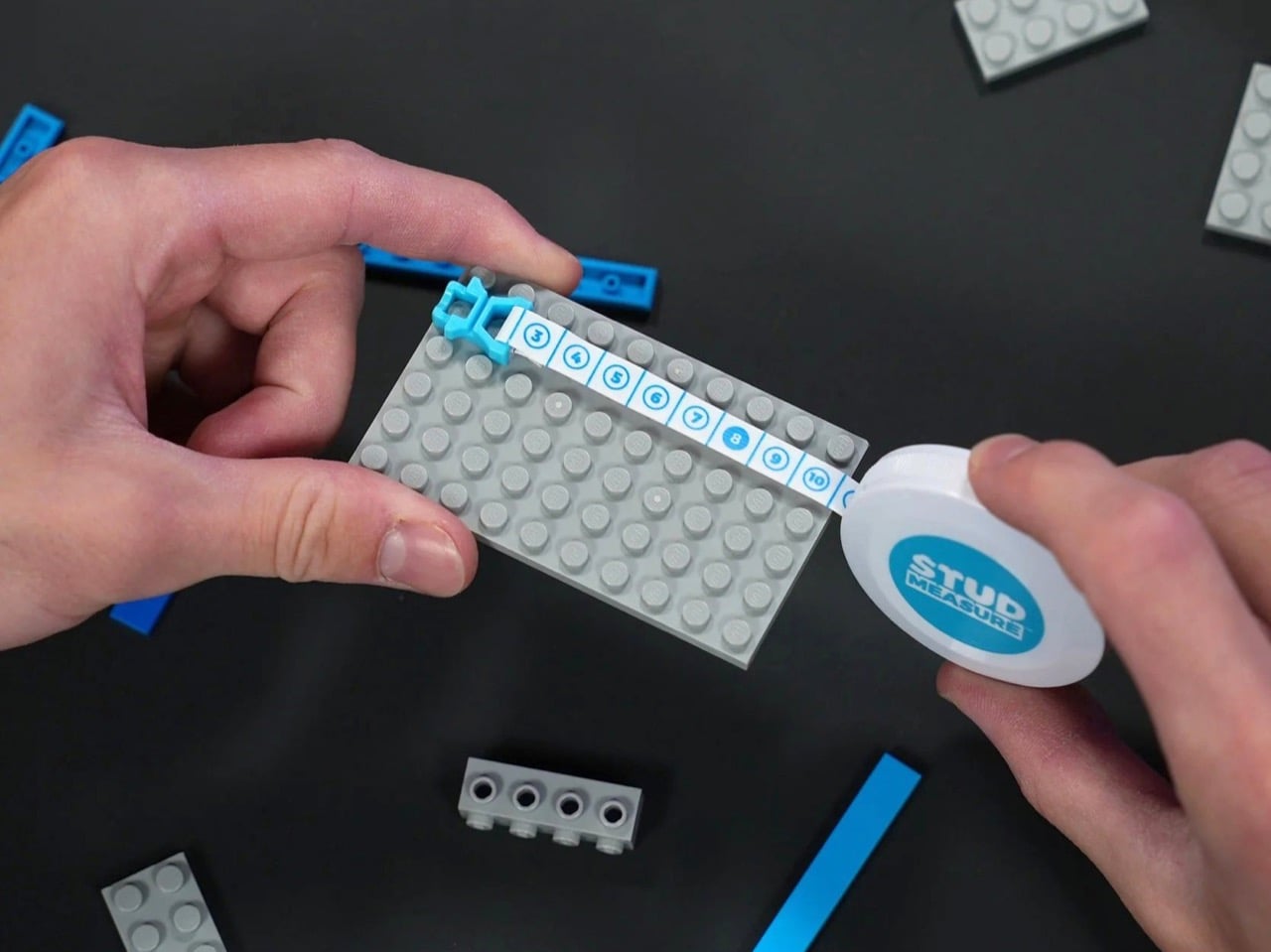
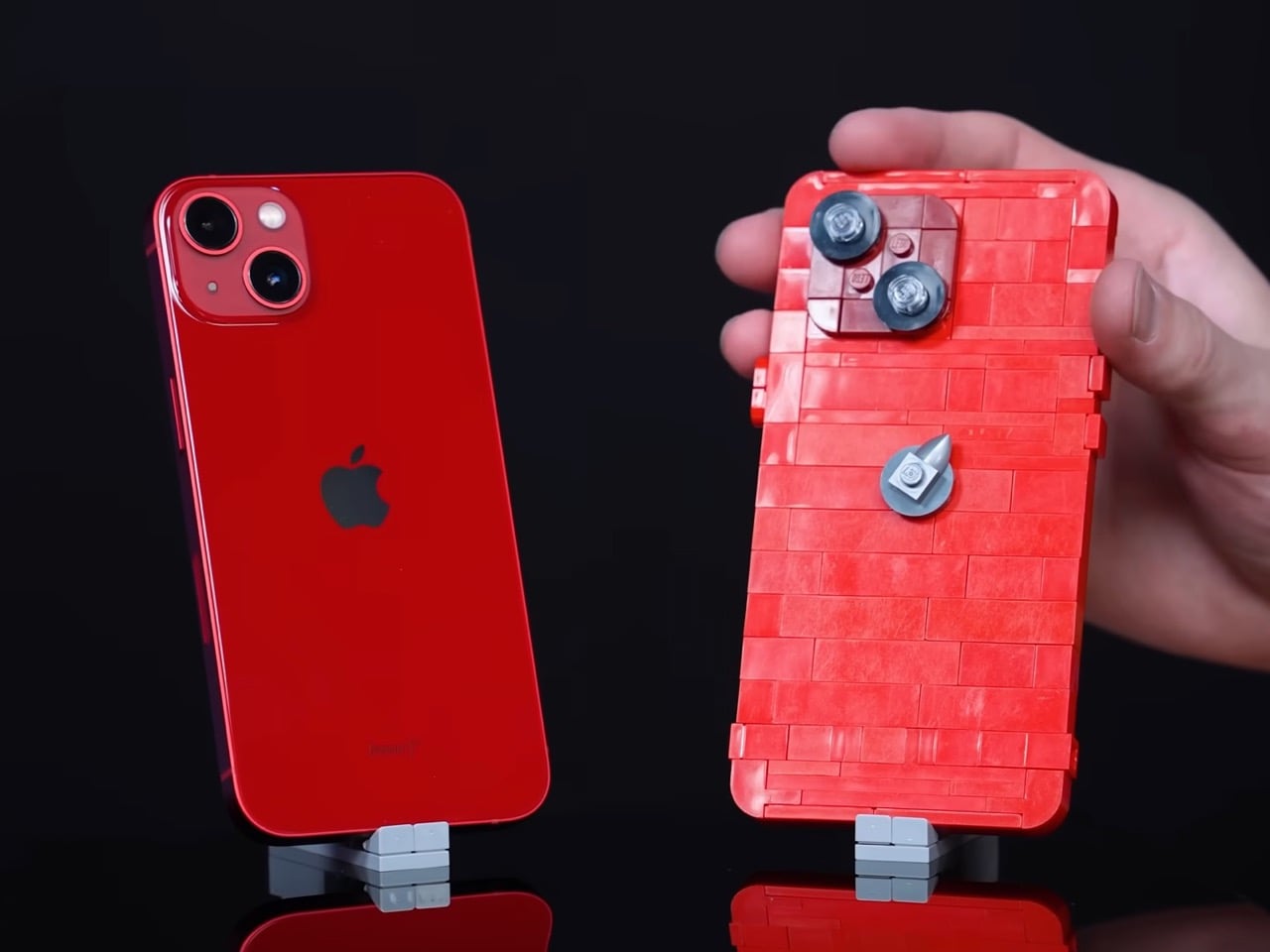
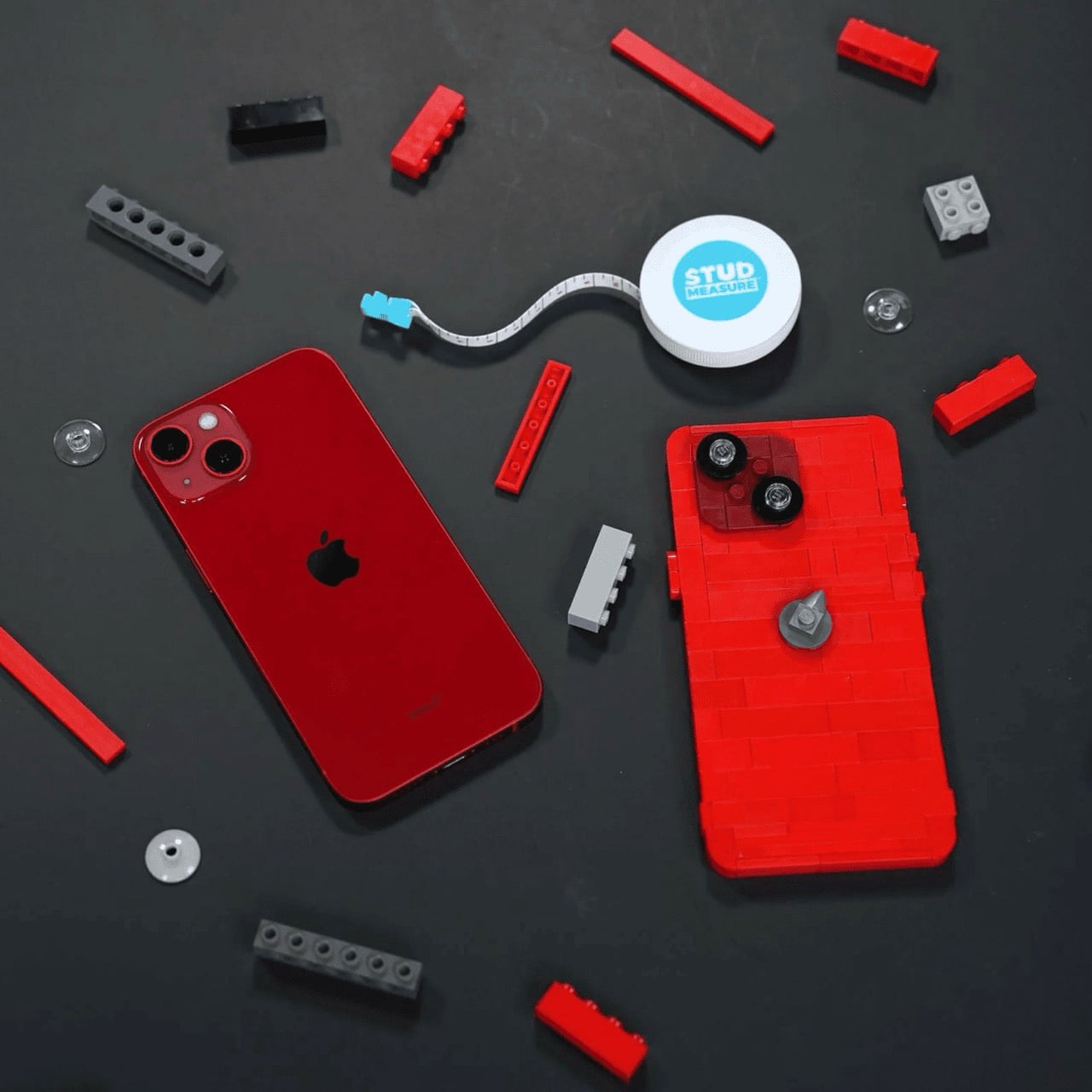
Every LEGO fan knows the brick separator, but far fewer have a dedicated way to measure their creations. The Stud Measure steps into that gap with a compact case, a flexible tape, and markings that translate directly into the geometry of the LEGO system. It is designed for anyone who has ever counted studs by hand across a long baseplate and wished there were a faster way.

Instead of dangling a metal hook over your build, you snap a bright blue clip straight into the studs. From there, the tape glides across the surface or up the side of a wall while the numbers tick by in studs, bricks, and plates. Whether you are mocking up a city block, planning a train layout, or scaling a real world object into LEGO form, the Stud Measure turns measuring into part of the creative process.

Designer: Brick Science

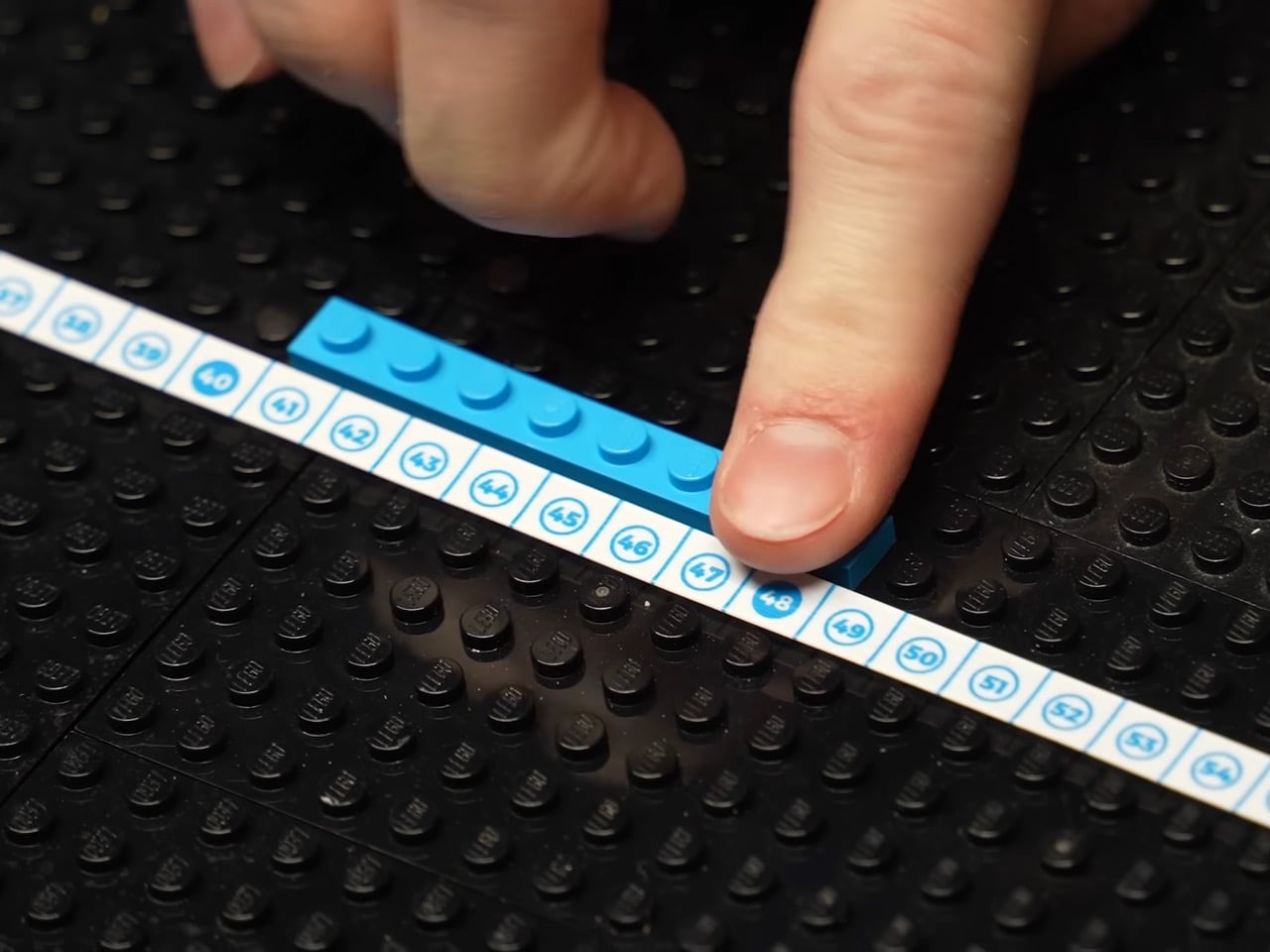
Riley from Brick Science, a channel with over 2 million subscribers, developed the tool and launched it through a dedicated shop at $9.99. That pricing puts it squarely in impulse buy territory, which feels about right for something this niche. The tape extends to 190 studs, which translates to roughly 60 inches or 152 centimeters in real world terms. For context, that covers the length of most standard LEGO train layouts and easily spans the width of a modular building display. You could measure an entire tabletop setup without retracting and repositioning, which matters when you are trying to keep alignment tight across multiple sections.

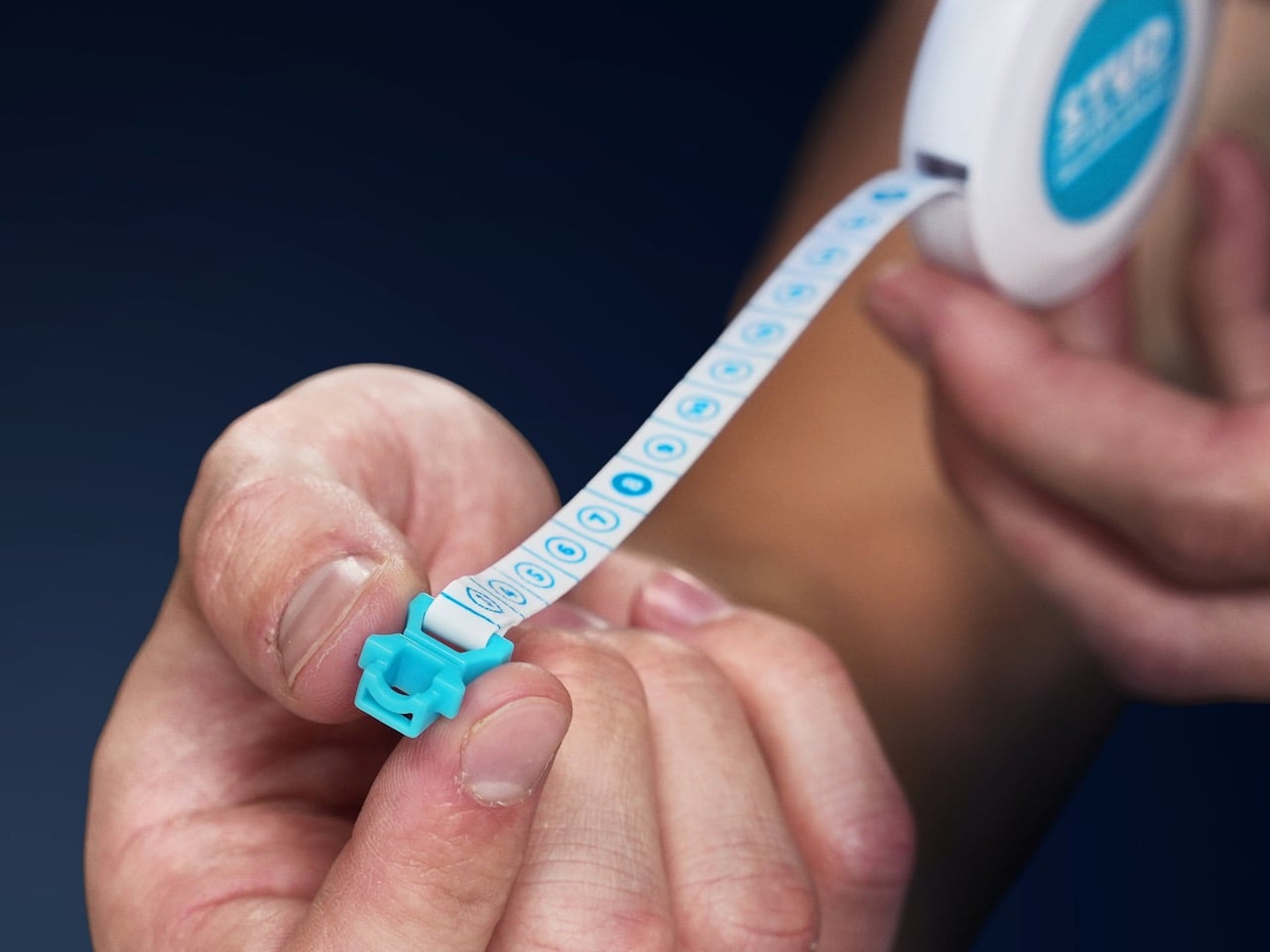
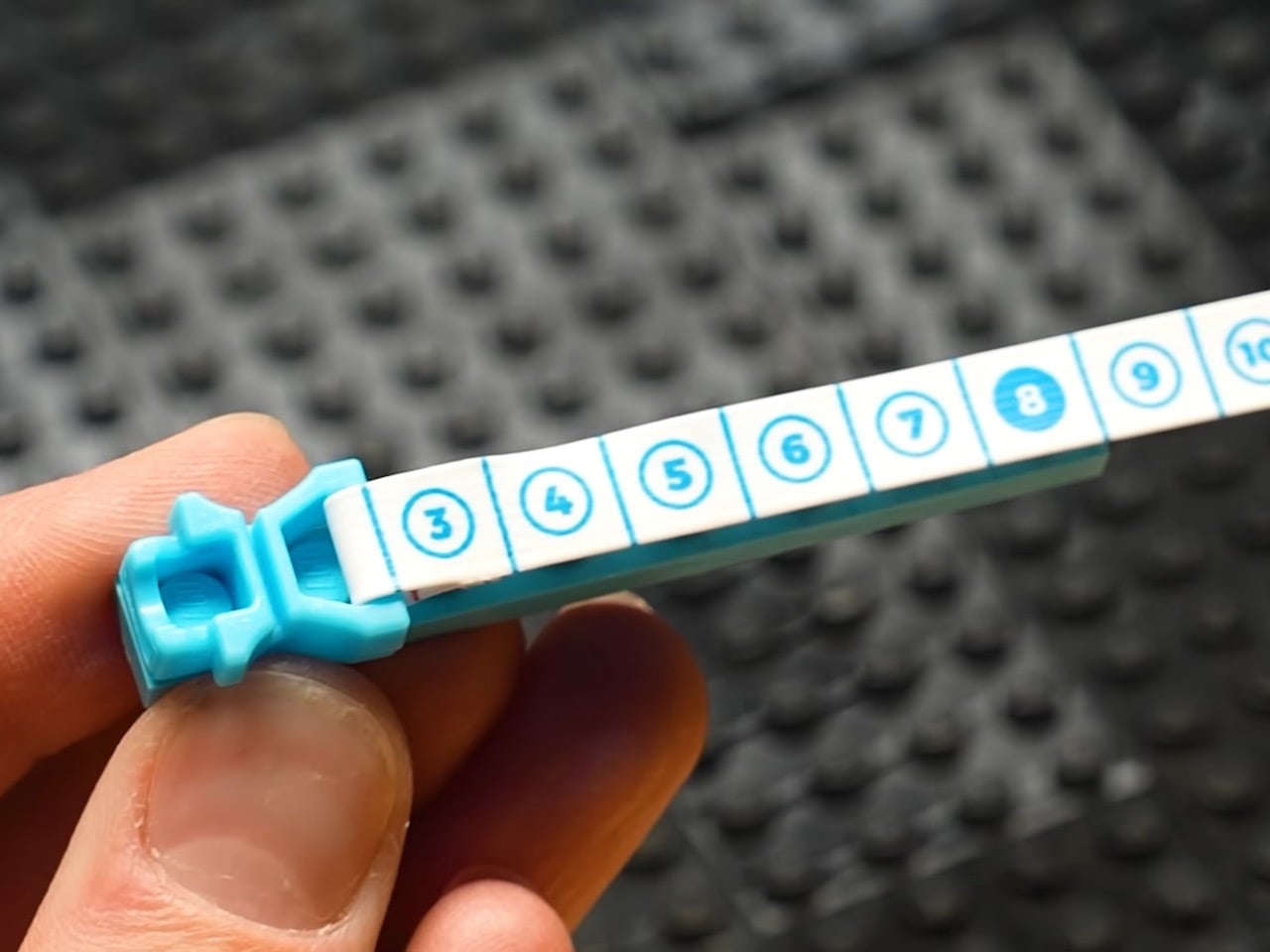
That little clip is the real piece of engineering genius here. A standard tape measure hook is designed for grabbing the edge of a two-by-four; it has no real purchase on the curved, precise landscape of a LEGO plate. The Stud Measure’s end piece, however, is molded to fit snugly between the studs, using the system’s own clutch power to anchor itself. This means your zero point is always perfectly centered and locked in place, leaving your hands free. It’s a simple, elegant solution to a problem that has plagued serious builders for decades, finally treating the LEGO grid with the same respect a machinist would treat a piece of milled aluminum.

Once anchored, the tape itself does the rest of the work. One side is marked out to 190 studs, a respectable length for even large scale projects. Flip it over, and you get a vertical scale marked in brick heights, with fine red lines indicating the one-third increments of a single plate. This dual-sided approach is what elevates it from a novelty to a legitimate design tool. You can instantly verify that two separate towers in a diorama are the exact same height, or plan a complex wall structure with openings that are a precise number of bricks wide and tall. It removes the tedious counting and guesswork, letting you focus on the actual build.

The Stud Measure is fundamentally a translation device, converting the abstract dimensions of the real world into the concrete, tangible units of the LEGO system. You can measure a shelf and know instantly you have a 120-stud canvas to build on. It closes the loop between imagination and execution, making ambitious, scaled projects feel far more achievable for builders who want to move beyond the instruction booklet. This is not a toy, despite its bright colors and its association with one. It is a piece of workshop equipment, just like a good set of calipers or a reliable square, designed to remove friction from the creative process.

Ultimately, it is a ten dollar gadget that solves a hundred dollar headache. The real value is not just in the time saved, but in the uninterrupted focus it allows. Every moment a builder spends recounting studs or converting inches to bricks is a moment they are pulled out of the design flow. By making the act of measuring so seamless and integrated, the Stud Measure lets you stay in that creative headspace longer. It is a tiny, ingenious piece of plastic that respects the builder’s time and effort, and that kind of thoughtful design is always worth a closer look.

The post This $10 Measuring Tape Is Built for LEGO Bricks and Nothing Else first appeared on Yanko Design.

TikTok announces shared feed and collections features

TikTok just announced a couple of updates that that should make the app a bit more social. There's something called Shared Feed, which is exactly what it sounds like. It's a feed that friends and family can watch together, though at different times. 

This feed is shared via direct messaging and pulls up relevant content to everyone involved in the chat. TikTok says this is a "new way to discover content together." It consists of a daily curated selection of 15 videos that are generated by TikTok activity.

These feeds are shared via invitation and the participants can leave the chat at any time. There's also a new dashboard that lets viewers check out their Shared Like history and other metrics. The Shared Feed tool rolls out globally in the coming months. It sounds similar to something Instagram began offering earlier this year. Instagram is typically the one copying TikTok, so this is a nice change of pace.

The tool.
TikTok

TikTok has also announced something called Shared Collections. This is like the aforementioned Shared Feed, but for saved content. The tool lets users collect, organize and share groups of videos, with TikTok citing that people could use it to share reading lists, local restaurants to try and, of course, products to buy.

All you have to do is save a video, create a Shared Collection and send that list to someone else via direct message. Users must follow one another to access one of these lists. The tool is available globally right now to folks over the age of 16.

Finally, TikTok is rolling out themed holiday cards that can be sent in direct messages. They will be available globally later this month.

This article originally appeared on Engadget at https://www.engadget.com/apps/tiktok-announces-shared-feed-and-collections-features-193857725.html?src=rss

How to watch Rivian’s Autonomy and AI day and what to expect

Rivian is about to give the public and its investors another taste of its future with an event focused on autonomy and AI on December 11. The company's Autonomy and AI day starts at 12PM ET. You can watch the event via the Rivian website. We'll be liveblogging the Autonomy and AI day right here on Engadget, so we'll be recapping the major news as it happens and sharing our reactions. 

As for what to expect, the name of the event clearly indicates that Rivian will be talking about autonomous operation of its vehicles. RivianTrackr speculates, quite reasonably, that the company will share more about what CEO RJ Scaringe has referred to as a Universal Hands Free feature. Scaringe recently said he'd spent two hours traveling around Palo Alto, California, in a second-gen Rivian R1 with the vehicle taking care of everything by itself. It stands to reason that Rivian will at least offer up a demo of Universal Hands Free ahead of the company’s more affordable R2 model making its debut in 2026.

Earlier this year, Rivian said that, for 2026, "a hands-off/eyes-off feature is planned for controlled conditions with our current Gen 2 vehicles." So, this Autonomy and AI day seems as good an opportunity as any for the company to share more details about that. When Rivian unveiled the first-generation R1T and R1S in 2018, it said those would support Level 3 autonomy, allowing for the driver to take their hands and eyes off the road for short spells while they're on the freeway.

RivianTrackr also suggests that we may hear more about Rivian's sensor strategy as well as its AI and fleet-learning initiatives. The company may offer up a more detailed autonomy roadmap as well. However, the publication suggests Rivian isn't quite ready to announce rollout retails or firm pricing for full hands-off driving features.

This article originally appeared on Engadget at https://www.engadget.com/transportation/evs/how-to-watch-rivians-autonomy-and-ai-day-and-what-to-expect-192838410.html?src=rss

Meta will let Facebook and Instagram users in the EU share less data

Meta will soon allow Facebook and Instagram users in the European Union to choose to share less data and see less personalized ads on the platform, the European Commission announced. The change will begin to roll out in January, according to the regulator. 

"This is the first time that such a choice is offered on Meta's social networks," the commission said in a statement. "Meta will give users the effective choice between: consenting to share all their data and seeing fully personalised advertising, and opting to share less personal data for an experience with more limited personalised advertising."

The move from Meta comes after the European Commission had fined the company €200 million over its ad-free subscription plans in the EU, which the regulator deemed "consent or pay." Meta began offering ad-free subscriptions to EU users in 2023, and later lowered the price of the plans in response to criticism from the commission. Those plans haven't been very popular, however, with one Meta executive admitting earlier this year that there's been "very little interest" from users. 

In a statement, a Meta spokesperson said that "we acknowledge" the European Commission's statement. "Personalized ads are vital for Europe’s economy — last year, Meta’s ads were linked to €213 billion in economic activity and supported 1.44 million jobs across the EU."


This article originally appeared on Engadget at https://www.engadget.com/social-media/meta-will-let-facebook-and-instagram-users-in-the-eu-share-less-data-183535897.html?src=rss

Dyson x Porter OnTrac Limited Edition Redefines the Commuter Kit as a Unified Design System

The Dyson x Porter OnTrac Limited Edition collaboration arrives as a pointed departure from typical brand partnerships. Rather than applying co-branded graphics to existing products, this project positions two objects as components of a single system built around commuter behavior. The headphones and bag share materials, color logic, and ergonomic intent. They function as a kit, not a bundle. The production run is limited to 380 individually numbered sets distributed through select retail locations in Japan and China, plus official online channels.

Designer: Dyson x Porter

Porter, the accessories division of Yoshida & Co., approaches its 90th anniversary with a history rooted in textile construction and hardware refinement. Dyson enters audio as an engineering house known for motors, airflow systems, and computational design. The collaboration required both parties to subordinate individual brand language to a shared design constraint. The scarcity is intentional. This is not a mass market recommendation. It is a design artifact that demonstrates what becomes possible when two craft traditions converge on a single behavioral problem.

Collaboration Context

Porter operates under Yoshida & Co., a Japanese company founded in 1935. The brand built its reputation on hand construction, obsessive material selection, and a visual language drawn from military surplus, particularly the MA 1 flight jacket. Porter bags are assembled by hand in Japan, often incorporating dozens of discrete components into a single product. The 90th anniversary celebration, designated Project 006, called for a collaboration that would extend Porter’s construction philosophy into new territory.

Dyson’s audio division emerged more recently with the Zone headphones in 2022, combining noise cancellation with air purification in an ambitious but polarizing form factor. OnTrac followed as a more focused over-ear design, retaining Dyson’s emphasis on driver quality, noise isolation, and extended battery performance. Jake Dyson, chief engineer and son of founder James Dyson, supervised the Porter collaboration.

Both companies ceded ground to produce objects that read as parts of a single system rather than co-branded accessories. Porter’s expertise in understanding how objects move with the body informed Dyson’s thinking about where headphones rest when not in use.

Headphones as Object One

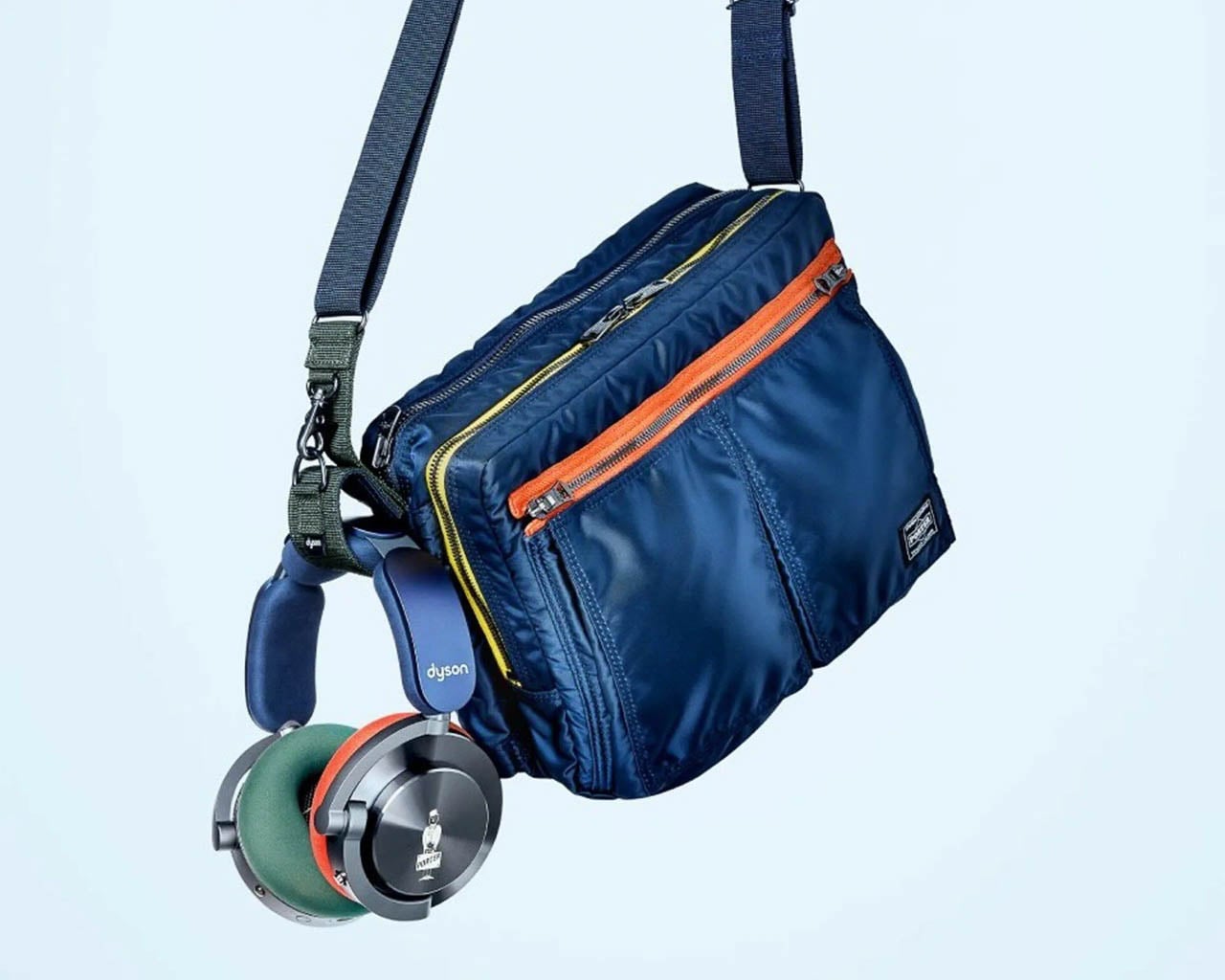
The OnTrac headphones in this collaboration begin with Dyson’s existing flagship architecture. The cups use angled geometry that exposes machined aluminum surfaces and microfiber cushions. What distinguishes this edition is the outer cap treatment. Custom panels carry the Porter logo, and the color blocking shifts to navy, green, and orange, tones drawn directly from the MA 1 flight jacket vocabulary that has defined Porter’s aesthetic for decades. The palette establishes visual continuity with the bag.

The driver assembly uses 40 millimeter neodymium transducers with 16 ohm impedance, spanning a frequency response from 6 Hz to 21 kHz. Eight microphones power the active noise cancellation system, capable of reducing ambient sound by up to 40 dB. Battery life extends to 55 hours with ANC engaged. USB-C fast charging restores usable runtime quickly. Bluetooth 5.0 handles connectivity, and the MyDyson app provides listening mode control and voice assistant integration. These specifications remain unchanged from the standard OnTrac.
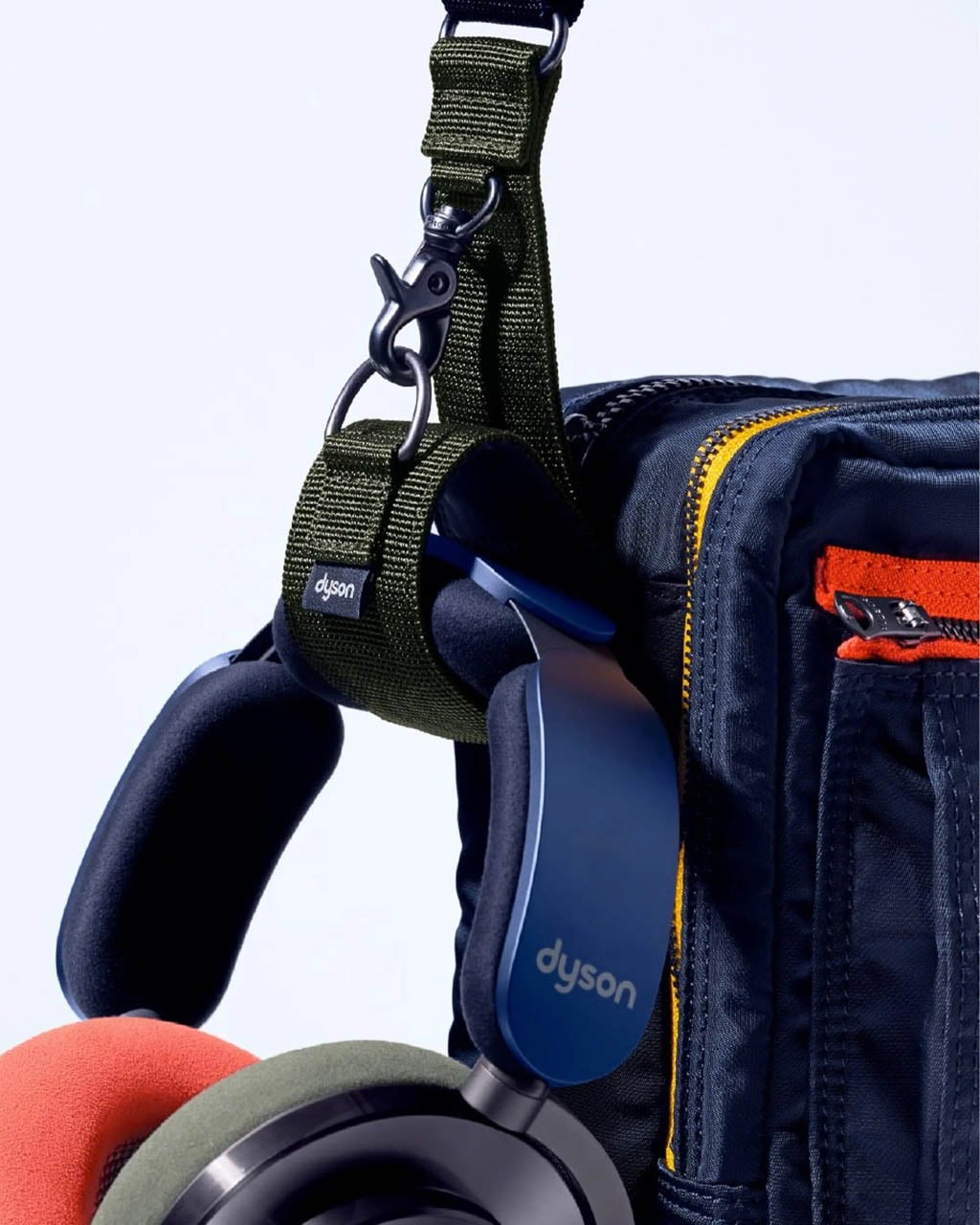
The weight sits at approximately 0.45 kg, a figure that exceeds many competitors as a consequence of Dyson’s aluminum construction and driver housing decisions. The cushion geometry distributes pressure across a wider contact area, and the microfiber surface reduces heat buildup during extended sessions. The comfort profile favors long commutes over lightweight portability. The headphones are designed to be worn for hours, not minutes.

The industrial aesthetic leans toward precision equipment rather than consumer electronics. Exposed metal, visible fasteners, and functional geometry communicate that these headphones prioritize engineering integrity over lifestyle signaling. The joystick controls on the right cup allow volume adjustment, track navigation, and mode switching without reaching for a phone.

Technical Specification Snapshot

Specification Value
Driver configuration 40 mm neodymium transducers, 16 ohm impedance
Frequency response 6 Hz to 21 kHz
Active noise cancellation Up to 40 dB reduction via 8 microphones
Battery endurance Up to 55 hours with ANC active
Charging interface USB-C with fast charge capability
Total weight Approximately 0.45 kg
Wireless protocol Bluetooth 5.0, MyDyson app integration
Construction materials Aluminum body, microfiber cushions, CNC machined outer caps

Bag as Object Two

Porter’s contribution is a shoulder bag engineered specifically around headphone storage and deployment. The design is not a general purpose satchel with a headphone pocket added as an afterthought. The entire geometry responds to a single question: how does a commuter remove, wear, and store over-ear audio equipment with minimal friction? The construction involves 77 discrete components, each cut and stitched by hand in Japan.
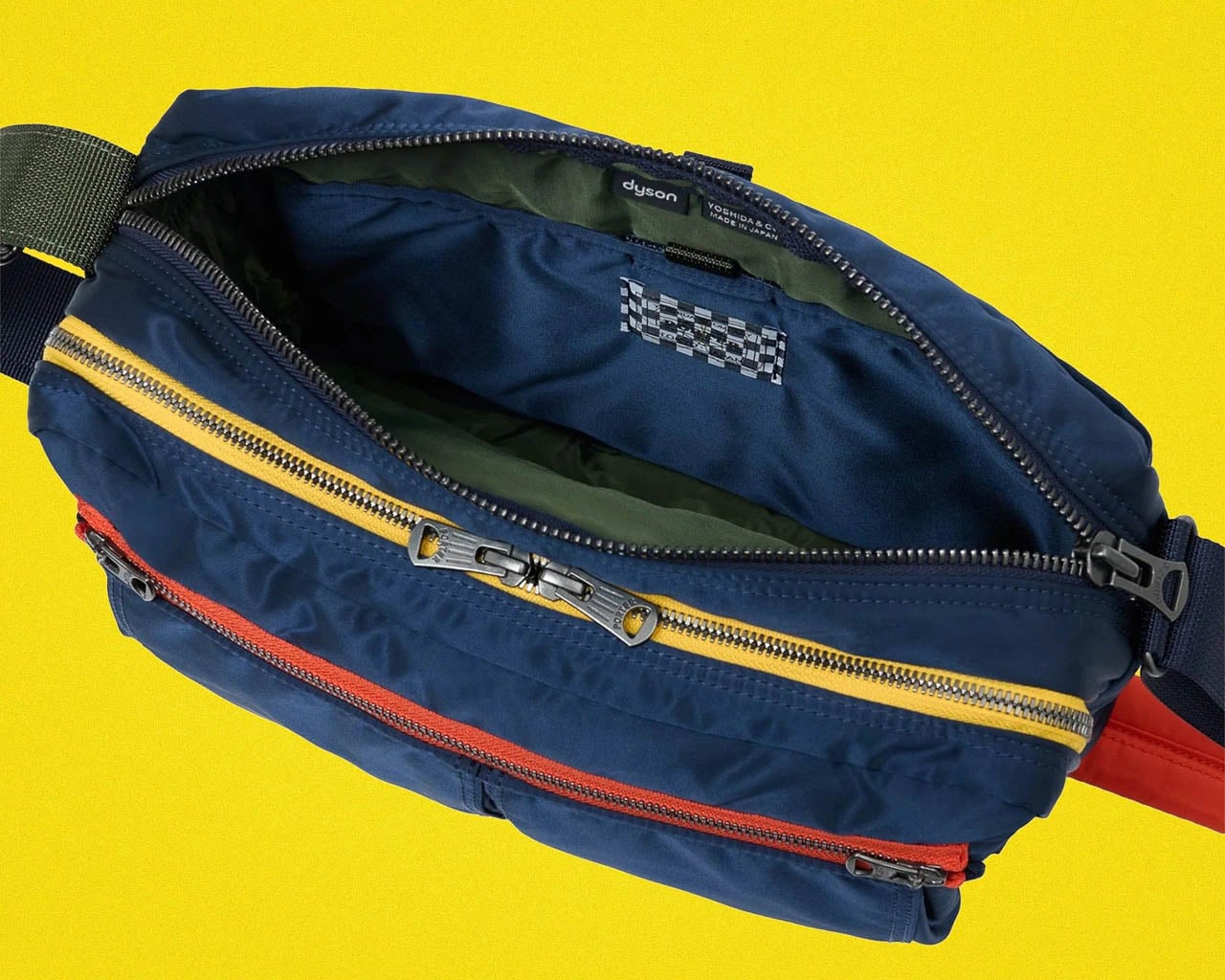
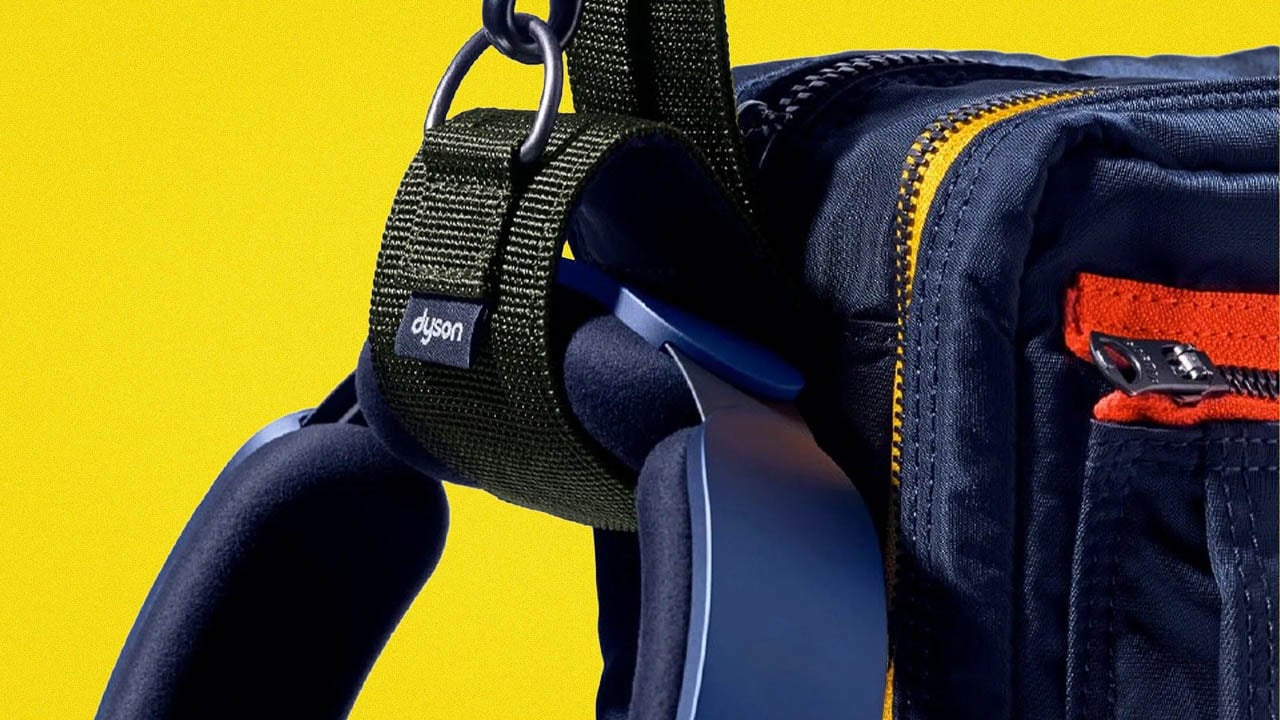
The outer shell uses water-repellent nylon with abrasion-resistant weave, a material choice that protects against rain, scuffs, and the wear patterns of daily transit. Interior compartments accommodate the standard commuter loadout: phone, wallet, tablet, small camera, cables. Pockets are sized and positioned to prevent shifting during movement. The signature detail is the dedicated headphone loop integrated into the shoulder strap. When the headphones are not in use, they hang from this loop in a stable, accessible position at chest height. The strap itself employs Porter’s Carrying Equipment Strap mechanism, allowing one-handed length adjustment through a quick-pull system. This ergonomic decision accommodates different body types and carry positions without requiring two-handed manipulation.

Color story extends throughout the bag. The body is navy. The zipper tape is bright orange. Interior lining and webbing introduce green and khaki accents.

Every material surface echoes the headphone palette, creating a unified visual identity even when the two objects are separated. The bag was designed with the headphones’ 0.45 kg mass already calculated into its geometry, ensuring weight distribution remains balanced during movement.

System Integration

The value of this collaboration lies in the integrated ritual it enables. A commuter leaves home with headphones docked on the shoulder strap loop. The loop holds them securely against the bag body, eliminating swing and bounce during movement. On the platform, a single motion lifts the headphones from the loop to the ears and activates ANC. At the destination, the headphones return to the loop without opening the bag or searching for a case.
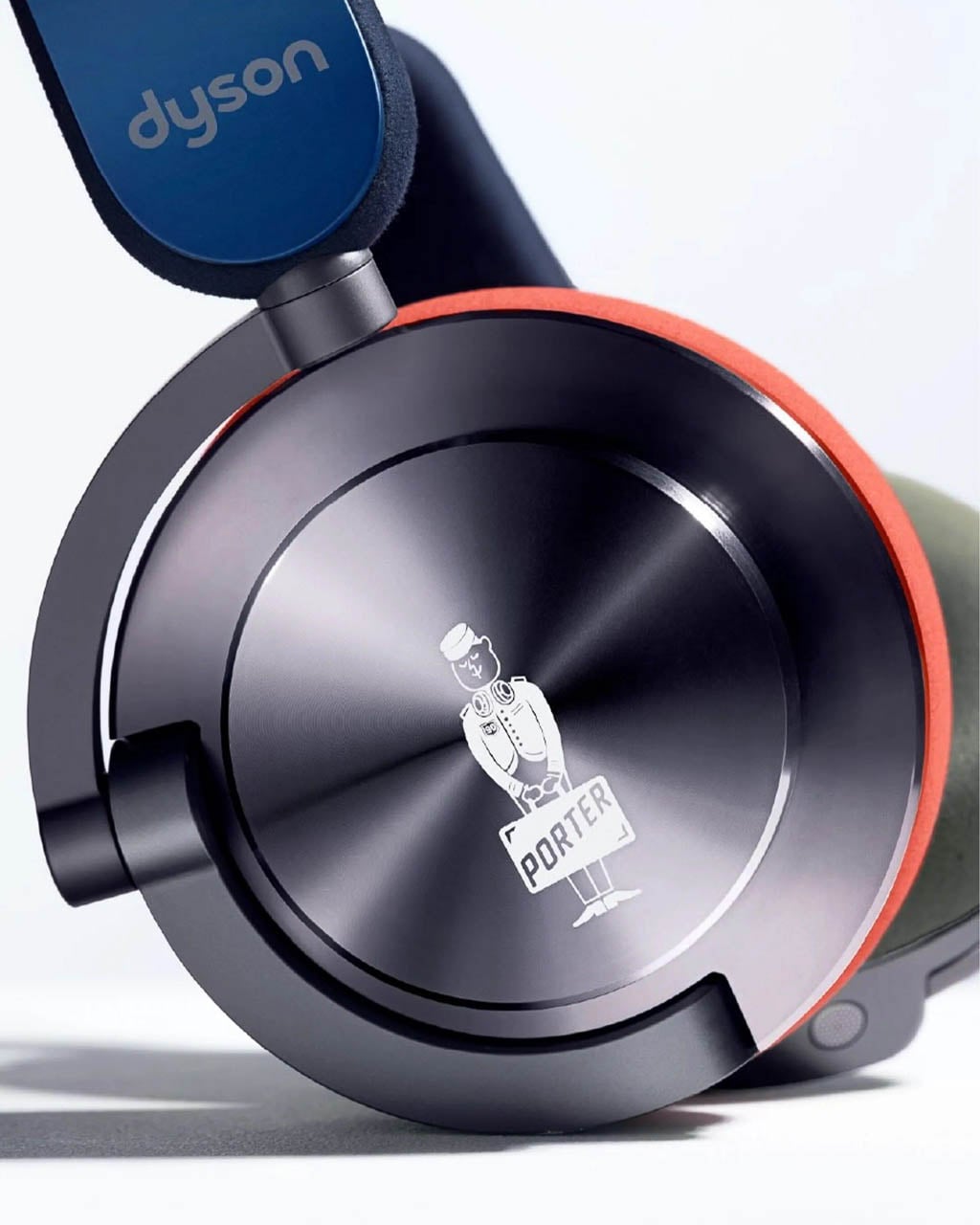
The strap adjustment system allows the bag to shift position for crowded trains or escalator navigation. The Porter logo on the headphone caps and the Dyson branding on the bag interior reinforce system identity through consistent placement and scale.

Design System Comparison

Design Element OnTrac Headphones Porter Shoulder Bag
Primary function High-fidelity audio with active noise cancellation optimized for commuting Compact daily carry satchel engineered around headphone storage and quick access
Material construction Aluminum frame, microfiber cushions, precision machined caps Water-repellent nylon, 77 hand-assembled components, reinforced stitching
Color language Navy headband and shells, green cushions, orange accent stitching Navy exterior, orange zipper tape, green webbing accents, khaki interior
Heritage reference MA 1 flight jacket palette adapted to audio hardware MA 1 flight jacket palette extended to bag construction
Signature feature Porter branded outer caps with co-branded engraving Integrated headphone loop on shoulder strap, one-pull length adjustment
System role Audio delivery and noise isolation during transit Storage, transport, and quick-access docking for headphones and daily essentials

Limited Edition Context

Production caps at 380 individually numbered sets. Each unit ships with a tech slice: a resin block containing frozen development components suspended like specimens. A steel aircraft-wire loop attaches this artifact to the bag. The tech slice serves no functional purpose. Its presence signals that this collaboration values process documentation as much as finished product. Pricing varies by region, with Japanese retail at ¥118,690, UK pricing at £649.99, and North American pricing in the $700 to $1,000 range depending on import and distribution variables.

This represents a significant premium over the standard OnTrac, which retails around $500. The delta purchases the Porter bag, the limited numbering, the tech slice, and the scarcity itself. Distribution is restricted to select Dyson and Porter retail locations in Japan and China, plus official online stores. The 380-unit cap ensures that most interested buyers will not acquire a set.
The collaboration positions itself as a design artifact rather than a mass-market commuter recommendation. This distinction matters. The limited production run is not a marketing tactic to generate urgency. It reflects the reality that hand-built Porter bags cannot scale beyond a certain output without compromising construction quality. The collaboration accepts that constraint rather than working around it.

The numbered tag and tech slice transform the set into a collector’s object, extending both companies’ internal prototype cultures outward to buyers.

Design Value and Trade-Offs

The integrated carry solves a genuine friction point in commuter life. Over-ear headphones are awkward to store and deploy in transit. The strap loop addresses this problem directly. Material quality on both objects meets expectations for premium products. The Porter bag’s hand construction and weather resistance exceed typical EDC pricing tiers. The 55-hour battery life and 40 dB ANC represent genuine engineering performance.

The trade-offs are equally visible. The headphones are heavy at 0.45 kg, heavier than many competing over-ears. This is a consequence of Dyson’s aluminum construction decisions. The premium pricing places this set beyond casual consideration. The 380-unit production run means that for most readers, this is an object to understand rather than acquire. Within the broader context of tech and fashion collaborations, this project signals a shift in approach. Most brand partnerships treat collaboration as a reskinning exercise: new colors, co-branded packaging, a press cycle. The Dyson and Porter set attempts something more structural. The bag exists because of the headphones. The strap loop exists because of the bag. The color palette exists because both objects needed to read as one. This is system design applied to the commute, not merchandise.

Closing Insight

Carrying sound functions as a design position in this collaboration, not as marketing language. Porter and Dyson asked a specific question: what would it mean to design a bag around the act of listening rather than the act of storing? The answer required rethinking strap ergonomics, loop placement, and access geometry. It required unifying two production cultures under a shared color language. It required limiting production to maintain the artifact status that justifies the premium.

Most products designed for commuting solve individual problems: block noise, carry belongings, protect against weather. This collaboration solves them together, as a system, with a coherence that most tech and fashion partnerships never attempt.


The project suggests a future where commuter accessories behave as a cohesive ecosystem, designed from the outset to interact seamlessly rather than coexist by accident. For the 380 people who acquire a set, the daily commute operates through a unified design language. For everyone else, the project demonstrates what becomes possible when two craft-driven houses apply system-level rigor to carrying sound.

The post Dyson x Porter OnTrac Limited Edition Redefines the Commuter Kit as a Unified Design System first appeared on Yanko Design.

Analogue is weaponizing your nostalgia with these translucent versions of its 3D console

Analogue just announced new colorways for its recently-launched Analogue 3D console. The appropriately-named Funtastic limited-edition consoles are heavily inspired by Nintendo's translucent N64 models from the late 1990s. Analogue even borrowed the Funtastic branding.

In other words, these are going for the nostalgic jugular for gamers of a certain age. There's even a see-through green colorway that calls to mind the Nintendo 64 variant that shipped as a bundle with Donkey Kong 64. Just imagine booting up that bad boy as you roam around the house spouting the lyrics of the DK rap song.

There are eight translucent colors to choose from and accompanying 8BitDo controllers available as a separate purchase. The consoles cost $300 and the controllers are priced out at $45.

The Analogue 3D Funtastic consoles go on sale on December 10 at 11AM ET, with the company promising they'll ship within 48 hours to ensure delivery by Christmas. The company is also restocking the traditional colors, which will be available for purchase at the same time but won't ship until January.

Two consoles.
Tim Stevens for Engadget

We praised the Analogue 3D in our official review. It's a fantastic way to play N64 cartridges, even if the original games don't always hold up. The 4K CRT emulation is top-notch and the overall hardware design is solid.

This article originally appeared on Engadget at https://www.engadget.com/gaming/analogue-is-weaponizing-your-nostalgia-with-these-translucent-versions-of-its-3d-console-181105740.html?src=rss

Rebug: The Toy That’s Getting Kids Off Screens and Into Bugs

Remember when catching fireflies in a jar was peak childhood entertainment? Yeah, me neither, because apparently we’re all too busy doom-scrolling. But here’s the thing: a group of designers just created something that might actually get today’s kids to put down their tablets and start chasing butterflies instead. And honestly? It’s kind of brilliant.

Meet Rebug, an urban insect adventure brand that’s basically the lovechild of Pokemon Go and a nature documentary. Created by designers Jihyun Back, Yewon Lee, Wonjae Kim, and Seoyeon Hur, this isn’t your grandmother’s butterfly net situation. It’s a whole ecosystem of beautifully designed products that make bug hunting feel less like a science project and more like the coolest treasure hunt ever.

Designers: Jihyun Back, Yewon Lee, Wonjae Kim, Seoyeon Hur

Create your own Aesthetic Render: Download KeyShot Studio Right Now!

The backstory here is actually pretty important. We’re living through what experts are calling “nature-deficit disorder,” which sounds made up but is very real. Studies show that kids who spend time outside are happier, more focused, and way less anxious than their indoor counterparts. But between screens and city living, most children today are more likely to recognize a YouTube logo than a dragonfly. The research is genuinely alarming: kids in urban areas with frequent smartphone use are significantly less likely to do things like bird watching or insect catching. Which, you know, makes sense when you think about it. Why chase bugs when you can watch someone else do it on TikTok?

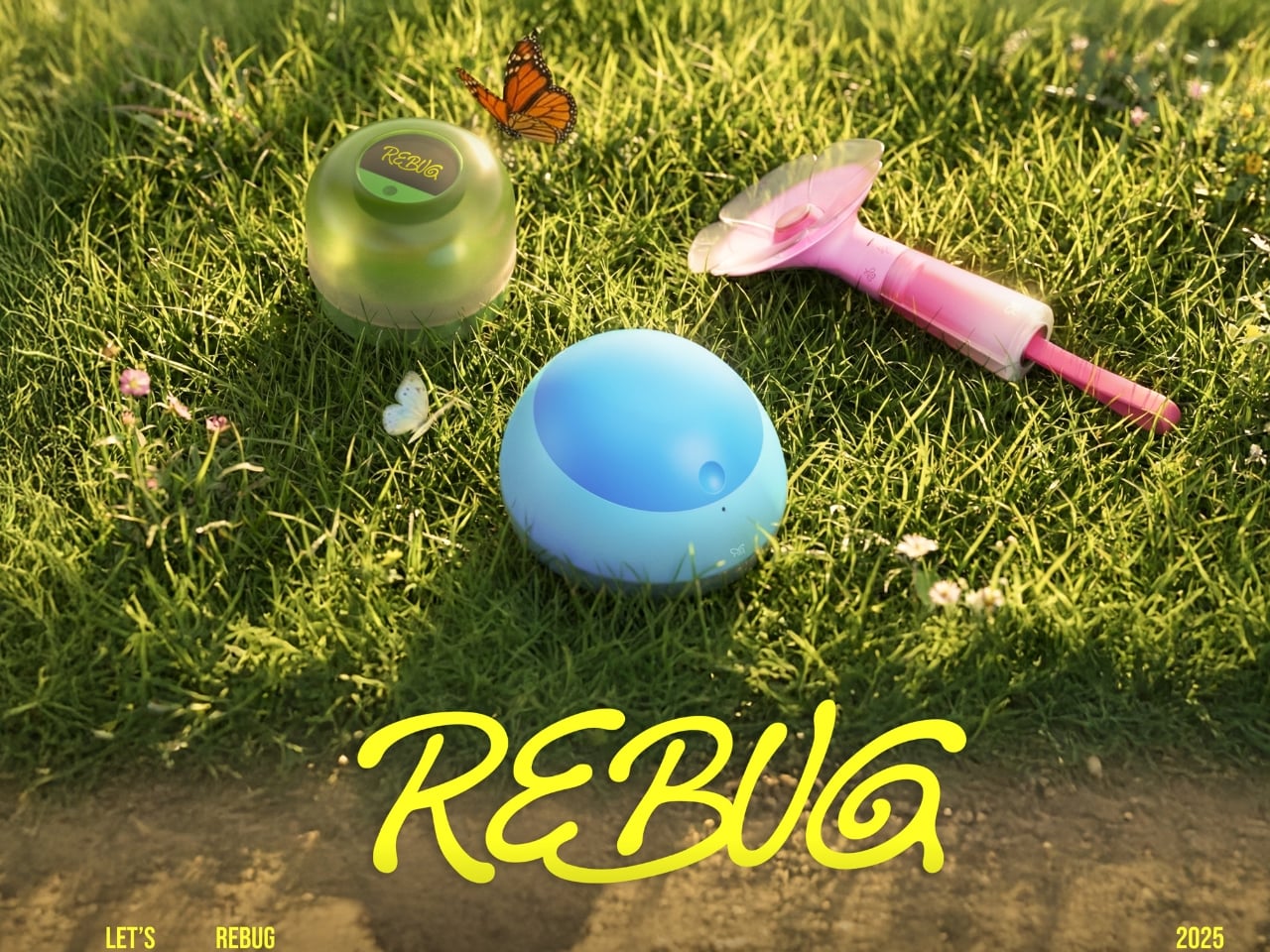
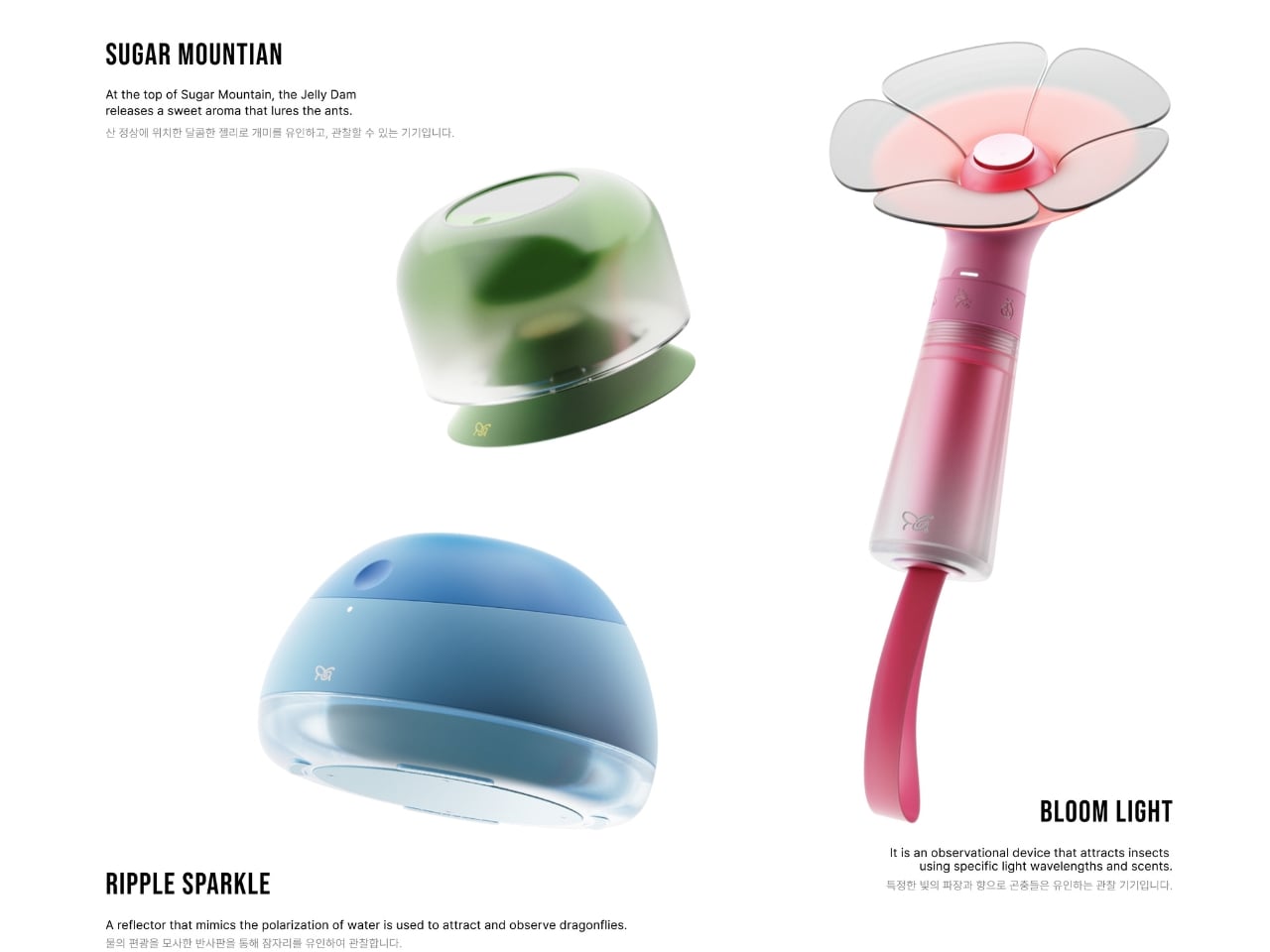
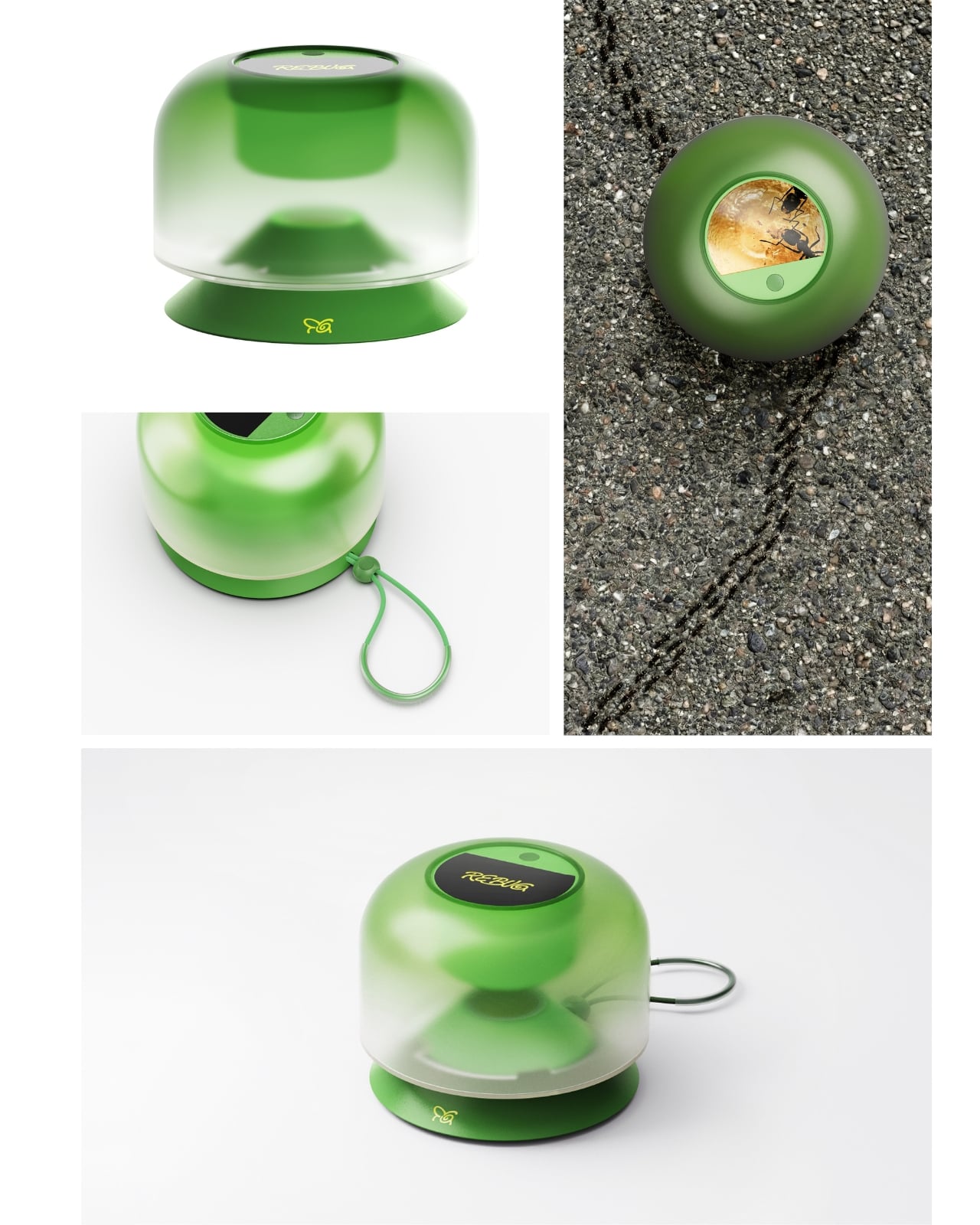
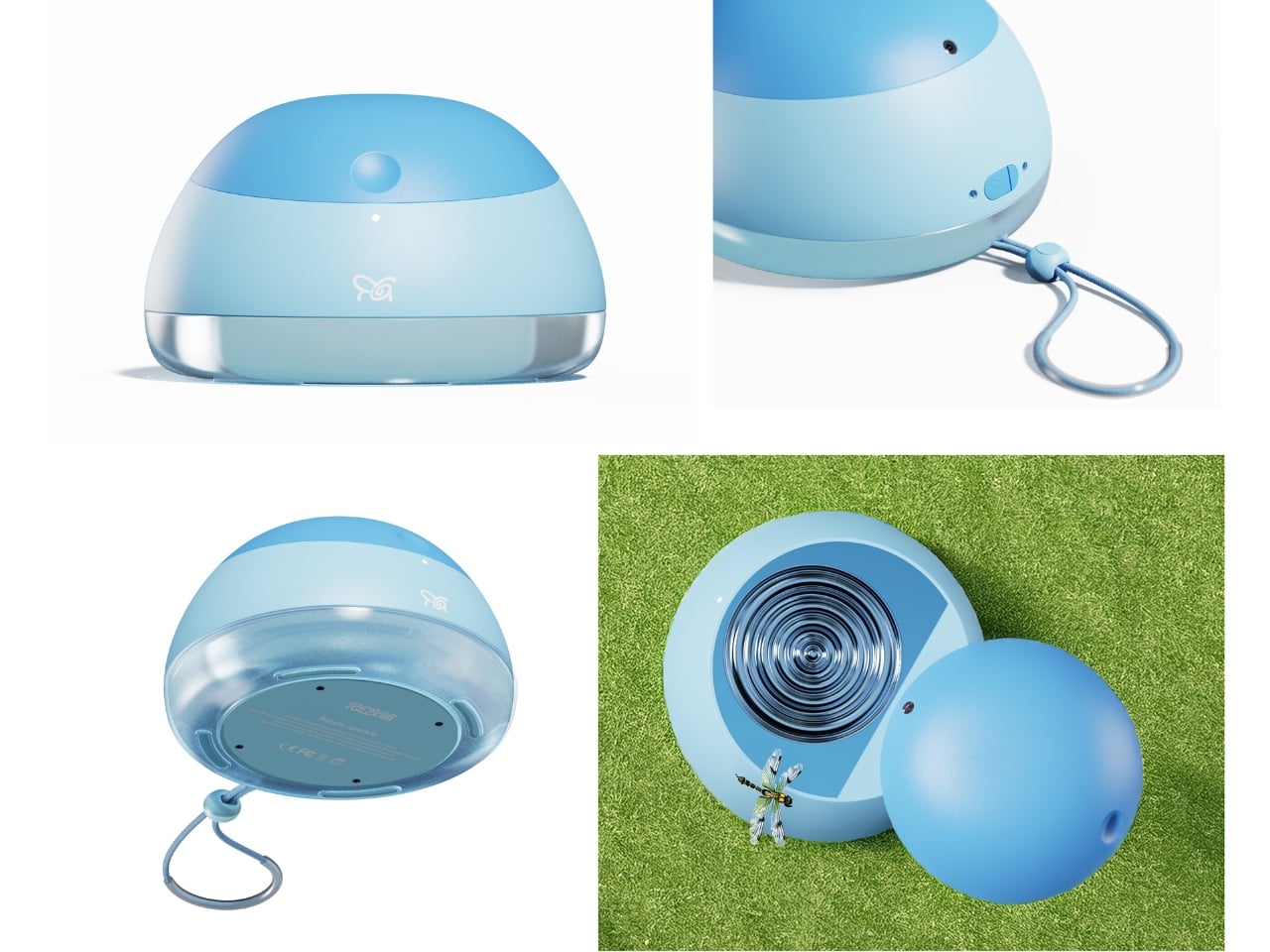
But Rebug flips the script. Instead of fighting against technology or pretending cities don’t exist, it works with both. The product line is this gorgeous collection of bug-catching tools in these dreamy pastels and neon brights that look more like designer home accessories than kids’ toys. There’s a translucent pink funnel catcher, a sky-blue observation dome that works like a tiny insect hotel, and my personal favorite: the Ripple Sparkle.

This thing is genuinely clever. It’s a device that attracts dragonflies by mimicking water ripples with a rotating metal plate. Dragonflies are naturally drawn to polarized light on water, so this gadget basically speaks their language. No chemicals, no tricks, just pure science-based attraction. The insects come to investigate, kids get to observe them up close, and then everyone goes their separate ways unharmed. It’s like speed dating for nature education.

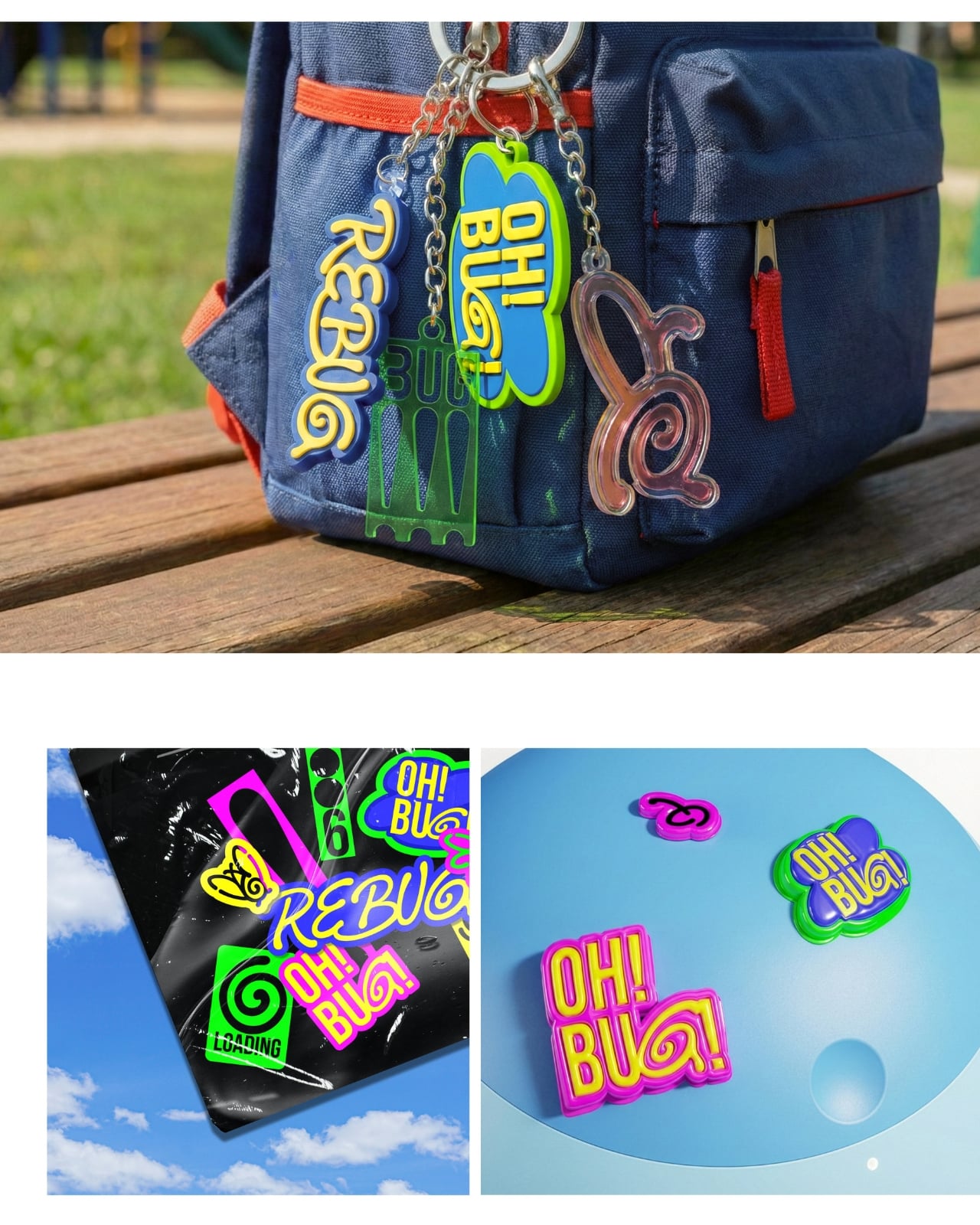
What really gets me about Rebug is how it bridges the digital and physical worlds without being preachy about it. The brand includes this whole archiving system with colorful record cards and an app interface where kids can document their finds. Instead of just telling children to “go outside and play,” it gives them a mission. How many insects did you meet today? Where did you find that beetle? The app turns each discovery into a collectible moment, which, let’s be real, is exactly how kids’ brains work these days.

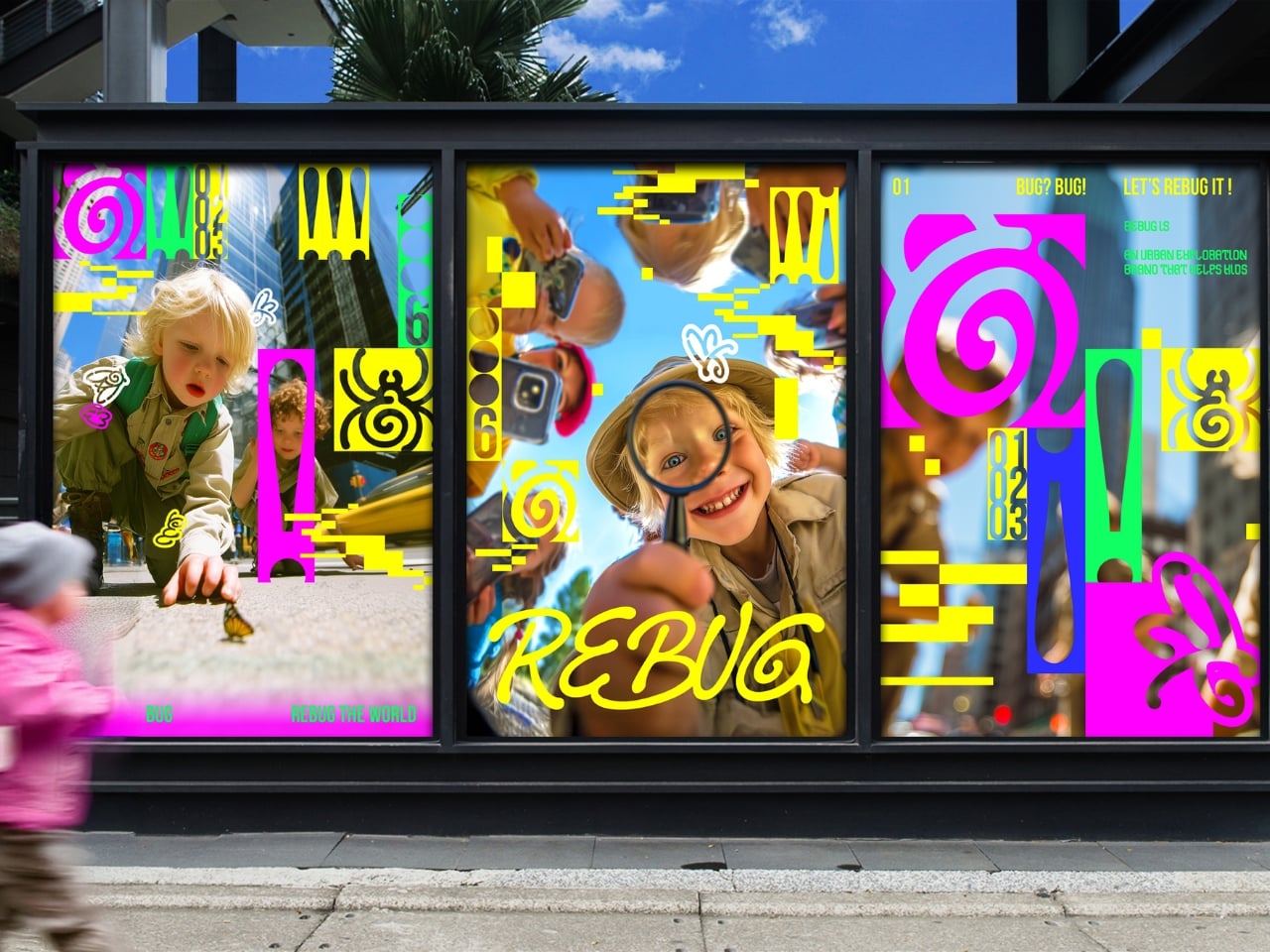
The visual design is also doing the most in the best way. The branding uses this electric yellow, hot pink, and bright blue color palette that feels more streetwear than science kit. The graphics pull from three sources: actual insect shapes, children’s scribbles, and digital glitch effects. That last one is particularly smart because it literally visualizes the brand’s whole mission of shifting kids from digital errors to natural wonders. It’s the kind of layered design thinking that makes you go “oh, they really thought about this.”

And here’s what makes this feel so timely: Rebug proves that urban spaces aren’t nature deserts. You don’t need to drive to a national park to find wildlife. There are ecosystems thriving on your sidewalk, in your local playground, in that patch of grass between buildings. Research shows that urban families often don’t realize these opportunities exist or don’t see meaningful ways to interact with city nature. Rebug hands them the tools, literally and figuratively, to start looking differently at their environment.

Could a beautifully designed bug kit actually combat screen addiction and nature disconnect? Probably not single-handedly. But it’s a start, and more importantly, it’s a conversation starter about what childhood exploration can look like in 2025. Plus, those product photos are absolutely gorgeous, which never hurts when you’re trying to convince people to try something new. Sometimes the best design solutions don’t reinvent the wheel. They just make you excited to get off the couch.

The post Rebug: The Toy That’s Getting Kids Off Screens and Into Bugs first appeared on Yanko Design.