Eco-friendly seed-pods made from plant and seafood waste could revolutionize bio-packaging

Born from discarded seafood shells, SEAD merges tradition with innovation, offering eco-friendly pods for heirloom seeds. It’s a journey of reimagined agriculture, where waste transforms into a resource and every seed sown signifies sustainability. SEAD’s design mirrors ecological harmony and agricultural resilience, promising a greener future. Join the movement where innovation blossoms and sustainability flourishes, one seed, one pod at a time.

Designer: Mara Zimmerman

SEAD represents more than just packaging; it embodies a sustainable ethos by repurposing waste material into a valuable resource. Its inception showcases the potential of replacing virgin materials with recycled alternatives, contributing to a circular economy and reducing environmental impact.

At the heart of SEAD lies the preservation of heirloom seeds, varieties passed down through generations, each carrying a rich history and cultural significance. Heirloom seeds, with their diverse traits and adaptability, play a crucial role in maintaining biodiversity and ensuring food security in the face of evolving environmental challenges.

The use of chitin (pronounced kai-tun) in SEAD packaging not only offers a sustainable alternative to traditional materials but also brings agricultural benefits. Chitin, and its derivatives, act as bio-stimulants, enhancing seed germination, and promoting crop growth. Its natural properties boost plant defenses against pests and diseases while improving water retention in adverse conditions.

Crafted through a meticulous three-step pressing process, SEAD packaging demonstrates the remarkable self-binding ability of chitin, eliminating the need for additional agents. Laser-engraved labeling ensures traceability without the use of inks or dyes, aligning with SEAD’s commitment to sustainability.

Inspired by nature’s design, SEAD packaging mimics the structure of fruits and vegetables, providing a functional and aesthetically pleasing solution. The innovative design features creases that allow for easy tearing, enabling users to plant seeds conveniently while keeping the rest of the packaging intact.

SEAD offers a holistic approach to sustainable agriculture, combining ecological principles with practical innovation. By seamlessly integrating packaging with planting, SEAD promotes zero-waste practices and fosters a deeper connection between consumers and the environment.

Just in four simple steps: Break pods along perforated lines, gently crush for better seed exposure, plant enriched seeds, and store remaining bars conveniently. These actions seamlessly integrate eco-friendly practices into gardening routines, fostering a deeper connection with the environment. Each step contributes to a greener future, promoting sustainability and preserving heirloom seeds. With SEAD, every seed sown signifies a commitment to ecological harmony and agricultural resilience, paving the way for a more sustainable tomorrow.

SEAD’s innovative seed packaging, crafted from discarded seafood shells, faces cultural barriers in regions like India and Mexico, where pure vegetarianism is prevalent. Mixing seafood with vegetables may encounter resistance due to dietary preferences. Convincing individuals adhering to strict vegetarian or vegan diets of SEAD’s ecological benefits requires careful communication. Despite these challenges, SEAD offers a sustainable option for open-minded consumers committed to environmental conservation. It’s crucial to acknowledge cultural sensitivities and cater to diverse preferences.

The post Eco-friendly seed-pods made from plant and seafood waste could revolutionize bio-packaging first appeared on Yanko Design.

Digital nomads can live and work in self-sufficient mobile home

One of the advantages of people who can work remotely (digital marketers, writers, virtual assistants, etc) is that they can work from literally anywhere. As long as there’s internet and a power source for when their devices run out of juice eventually, these digital nomads have the freedom to set up shop wherever they are and to live in things like mobile homes. We’re seeing a lot of products and concepts targeting this segment and I for one am very interested to see these come to life.

Designer: Institute for Advanced Architecture of Catalonia (IAAC)

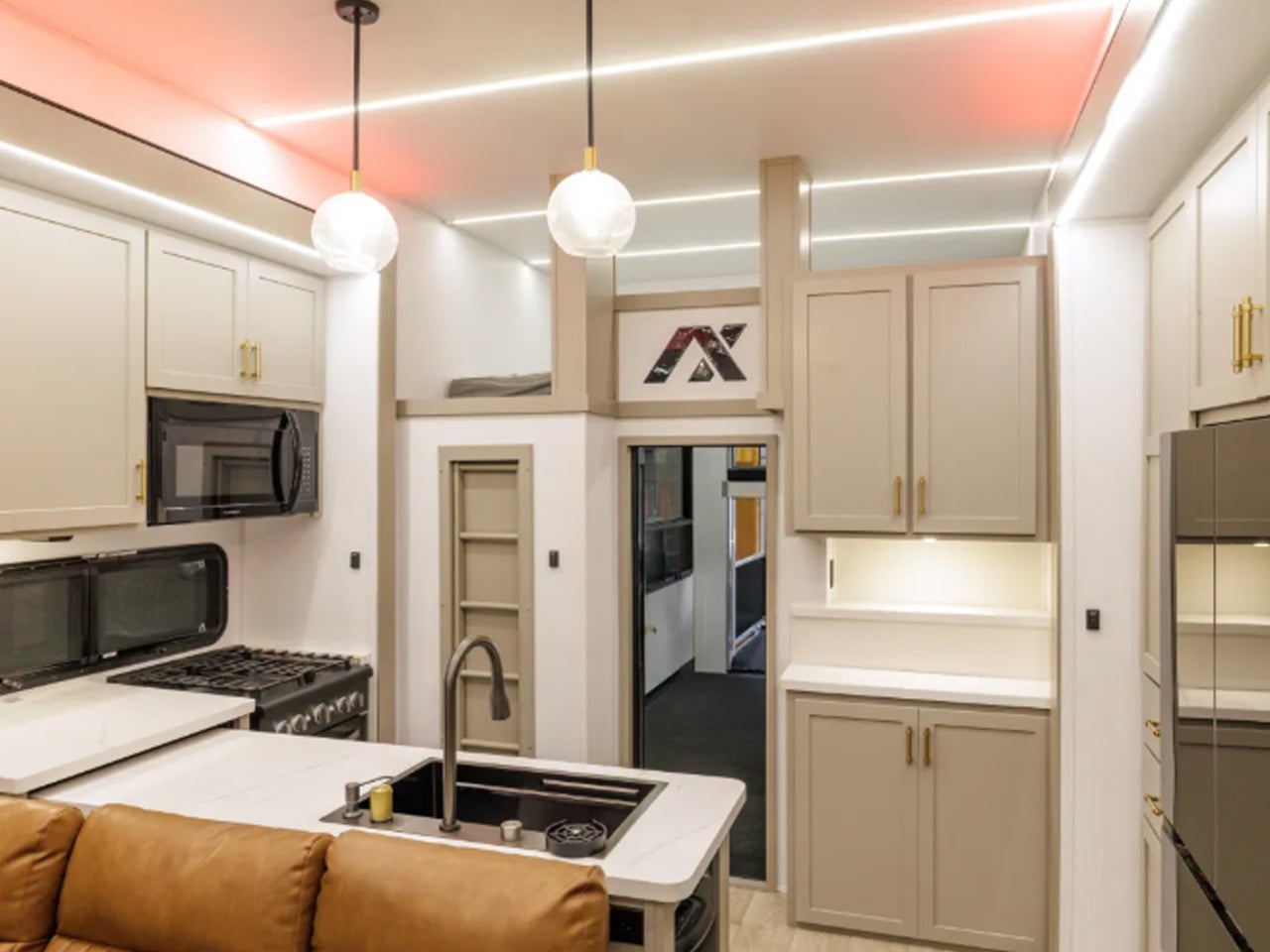
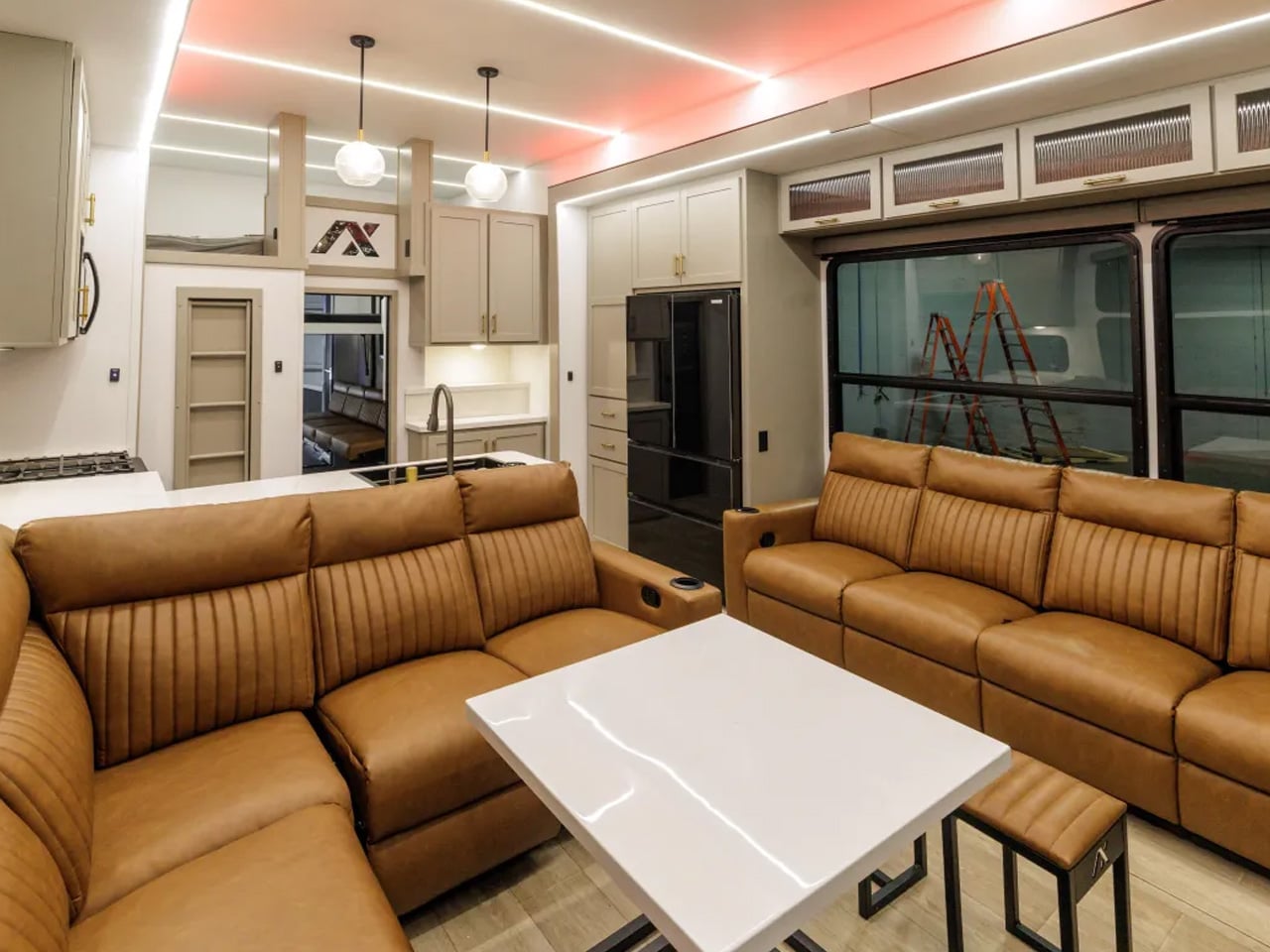
The Mobile Catalyst, nicknamed MOCA, was developed by masteral students from IAAC. Not only is it a perfect space for those that want to work while staying anywhere with a view but it is also an experiment into sustainable and self-sufficient habitat with a digital twist. It is basically a 5.4 meter long, 2.4 meter wide, and 3.6 meter high minimalist space that gives you the basic necessities of living. Its interior is made from dowel-laminated timber produced at the IAAC itself but sustainably harvested of course.

The front part of this mobile home has the basic amenities you would need to live in it like a kitchen, toilet and shower, and electric and water systems. In the middle and the back part is the space that can be turned into an office, a meeting area, a library, a recreation room, or even a space for small events. If you need privacy or partitions and also protection from different weather conditions, there are glass doors and a water-resistant cotton fabric that slides or folds with a pulley. There are also two beds on its “mezzanine” floor and you can reach it through a movable ladder.

And of course since MOCA is designed to be sustainable, you have three light-flexible mono-crystalline solar panels on the roof and LED strips as an interior lining. The house can run on its own for around 24 hours before it needs recharging. Water is also self-sufficient as the system stores, filters, and returns the shower water into reusable water. The entire mobile home is built with digital nomads in mind so they can live, work, and play anywhere they want, as long as the trailer can move and fit in that area.

The post Digital nomads can live and work in self-sufficient mobile home first appeared on Yanko Design.

Cozy & Serene Hut Lounge Bed Is The Perfect Outdoor Furniture Design For Your Yard

It is the peak Spring season with birds chirping in the air, and trees looking greener and prettier than ever! Spring is currently in full swing, and it is the perfect time to spend your days in the outdoors, taking in some fresh air, and letting the lovely spring sun soak through our skin. There couldn’t be a better time to be in your backyard! I mean, you can do a lot in your backyard! We shouldn’t underestimate our backyards, as they can be major spaces of fun, recreation, and relaxation. And a lovely addition to your backyard could be the Hut Lounge Bed by Marco Lavit for Ethimo.

Designer: Marco Lavit for Ethimo

The Hut Lounge Bed is a wonderful furniture design for the outdoors by designer Marco Lavit for the Italian outdoor furniture company Ethimo. Designed to provide you with a cozy space to relax and unwind in, and to function as a peaceful place to lounge about in, the Hut Lounge Bed lets you soak in some sun, and connect with nature. It is equipped with a conical, and semi-enclosed shape with makes you feel protected, while also allowing you to truly relax.

“Hut is a unique nest on a human scale, a place to pause and regenerate,” said Lavit. “A habitat where the alternating rhythm of the slats creates gaps that filter perception of this space, in a natural dialogue between inside and out.” The Hut is built using Accoya wood construction and features little gaps between the slats, which allow sunlight to stream in, while a massive circular mattress invites you in, and looks like a wonderful space for a nap. Accoya wood is an excellent material of choice since it is a high-performance modified wood that features a non-toxic treatment and can handle years of exposure to the elements and weather.

The wood is complemented by a circular metal rail which lets you hang a curtain to offer some privacy, or to provide some protection against the sun. The Hut Lounge Wood is a perfect fit for your backyard during the spring season, when the weather is kind, and nature is in full bloom.

The post Cozy & Serene Hut Lounge Bed Is The Perfect Outdoor Furniture Design For Your Yard first appeared on Yanko Design.

Hand-worn smart display concept safely shows information for bikers, mountaineers

Smartphones can provide all sorts of useful information and features, but there will always be occasions when you can’t just whip out the phone from your pocket to use it. Smartwatches are supposed to solve that problem by offering more condensed information on your wrists, but that can still be problematic for some class users, especially those who engage in outdoor activities. Although smartwatches are often marketed for athletes and people with active lifestyles because of their health-tracking features, actually using the wearable once the gloves come on can actually be difficult, if not impossible. Fortunately, your wrist isn’t the only body part you can use for a wearable, and this design concept tries to place a bigger display on the back of your hand instead.

Designer: Anuj Pate

Smartwatches are the most popular kind of wearable design simply because they are the most convenient and the most familiar. That doesn’t exactly mean they’re the best or only design possible, definitely not for all kinds of people. The rising interest in smart rings does indicate a sort of “smartwatch fatigue” that’s making people think outside the box on how to deliver some of those features through other means. A smartwatch’s display, for example, is only useful if can see it, which often means having to twist your wrist at the very least to have the screen at a proper angle.

Unfortunately, that’s not easy or even safe for some people whose hands have to be in a fixed position or can’t easily touch the smartwatch screen once they’ve started wearing gloves. That’s the case for cyclists, bikers, and mountain climbers who still need access to some critical information but can’t see their smartwatch for one reason or another. Rather than rely on complicated and distracting solutions like audio notifications or augmented reality goggles, zIng simply moves the display to a position where it can be easily seen even without twisting your wrist or squinting your eyes.

The wearable design concept practically puts a decently sized trapezoid-shaped display on the back of your hand. If you have your hand forward like when you’re holding bike handles or gripping a mountain wall, this immediately puts that screen within your vision. The display is also large enough to tap with a finger even when you’re wearing very thick gloves, which is often the case for biking and mountaineering gear.

zIng is just one of a new generation of wearable designs that are challenging the status quo of smartwatches. An ergonomic Apple Watch band moves the smartwatch away from the wrist and onto the back of the hand as well, this time a little below the thumb, though that doesn’t solve the cramped screen space. Admittedly, the zIng concept targets a very niche market, but it also clearly shows that there’s no one-size-fits-all wearable design that will be perfect for all use cases.

The post Hand-worn smart display concept safely shows information for bikers, mountaineers first appeared on Yanko Design.

Genimax HR off-road trailer is versatile enough to wear skis and tow behind a snowmobile

Tiny off-road trailers have their own charm. They provide a quaint way to live a weekend amid the trees out in the wilderness, where your ATV or an off-roading vehicle can go. This adventurous freedom is cut short for some months of the year when the snow blankets the earth. But with the Genimax HR, the fun is never going to be limited, thanks to its ability to wear skis and ride on snow behind your snowmobile.

Given the core functionality, the Genimax HR – an affordable pop-up roof camper – is developed for around-the-year camping. The lightweight body, made from aluminum and rust-resistant, durable composite materials, renders this 375 lbs (170 kg) trailer camper to go places without a fuss. Measuring some 60 inches in width (48 inches on snow), the camper rides on a high-performance independent suspension, which provides handsome ground clearance to enhance its off-road ability and be the skill to ride smoothly on snow.

Designer: Genimax Trailers

Designed specifically as a “ready-to-camp solution to go on an adventure with his little family,” the HR is the brainchild of Genimax Trailers, which has been in business (developing trailer solutions) since 2017. Besides its lightweight construction, the HR is readied for all seasons of the year with high-resistance polyurethane adhesive sealing up the spaces in the roof and walls.

The versatility of this easy-to-configure wilderness camper becomes manifold when riding behind an ATV on the unbeaten paths and/or behind a snowmobile when the adventure takes you on snow. And when you halt, just 2 sliding, lockable drawers, with a capacity of 200 lbs each, make for your facility. For instance, one of the side drawers of the trailer functions as a kitchen. It features a removable stainless-steel countertop alongside a folding built-in sink provided with a 10L water tank and faucet.

To elevate a family’s stay out in the wild, the Genimax HR can comfortably sleep 2 adults, and a child in the option roof tent. The camper becomes even more versatile with optional accessories and features that allow the residents to make the most of their ride. For instance, you can opt for an 80W rooftop solar panel with adjustable tilt or a retractable awning for the side of the trailer. Without the optional accessories, the base model of the Genimax HR starts at CAD 8,495 (approximately $6,200).

The post Genimax HR off-road trailer is versatile enough to wear skis and tow behind a snowmobile first appeared on Yanko Design.

Stone-shaped digital compass concept promises an adventure with each walk

Compasses are designed to give you your bearing, but they don’t exactly tell you where you’re headed. With today’s digital maps and navigation apps, that’s pretty much easy peasy, removing any stress from trying to find your way to your destination. At the same time, however, these modern conveniences also remove some of the adventurous feelings and the joy of discovery when wandering about before you reach your actual stop. That kind of whimsical and often serendipitous experiences are almost all but lost, especially with smartphones serving all information on a silver platter or always calling our attention with its incessant notifications. This modern and unconventional compass design wants to remedy that and bring back the joy of an aimless exploration by removing all unnecessary distractions so that you can be more present in your surroundings.

Designer: Modem Works x Panter & Tourron

They say that if you don’t have a destination in mind, any road will take you there, and while that adage is often used as a warning, it neglects to mention the wondrous discoveries you might encounter off the beaten path. After all, not all who wander are lost, as the popular quote goes, but also losing your bearings and your way can be a frightening thought. You could use your phone, but you could also be tempted to just go directly to your destination or, worse, never get there because of all the pings from social media that are begging for your attention.

Terra is a device that modernizes the age-old compass without turning it into a complicated device like a smartphone. There is no screen, at least not an obvious one, just a hidden monochrome display that lights up with symbols and sigils that will mark your adventure. Yes, it will show you your direction, but it won’t mark your destination. Instead, it encourages you to actually get your destination off your mind and take a different path instead.

The idea is that you will input your location and how much time you have available and the device’s AI will guide you along a set of GPS coordinates to accompany you on your adventure. But instead of screens and beeps, it uses gentle haptic feedback and artistic iconography to nudge our attention to little discoveries along the way, be it a kind mushroom or a flower you might have never seen before. And yes, it actually functions as a compass so you won’t get lost by accident.

Terra’s cross-like form seems to be a reference to the four cardinal directions, but its rough, organic shape is more reminiscent of a stone or pebble you’re likely to pick up along your walks. The design, however, is open to various other shapes that will hopefully remind you of the treasury of wildlife waiting to be discovered along your more adventurous excursions.

The post Stone-shaped digital compass concept promises an adventure with each walk first appeared on Yanko Design.

Magical Contemporary Pavilion Is The Perfect Addition To Your Yard This Spring

Spring is currently in full swing, and it is the perfect time to spend your days in the outdoors, taking in some fresh air, and letting the lovely spring sun soak through our skin. There couldn’t be a better time to be in your backyard! I mean, you can do a lot in your backyard! We shouldn’t underestimate our backyards, as they can be major spaces of fun, recreation, and relaxation. And a wonderful addition to your backyard could be the Cosmo Pavilion by studio AMDL Circle for the fellow Italian company Ethimo.

Designer: AMDL Circle

Studio AMDL Circile gave the classic garden pergola a contemporary and beautiful twist in the form of the Cosmo pavilion. This stunning and quaint pavilion is created to frame outdoor furniture settings while also providing protection from the elements. It brings a sense of comfort and coziness to the rough outdoors – although for rough can your backyard be? The structure is intended for the evenings, when the integrated LEDS shine upwards, away from the pavilion, scattering light across the fabric canopy, and in turn forming a warm and cozy ambiance.

The pavilion is created by joining FSC-certified teak columns, which is a typical material of choice for furniture, since it artfully weathers over time, with an aluminum upper structure, which beautifully spreads outwards to create a lovely sculptural roof. Ethimo describes the product as “a new dimension for outdoor living in harmony with nature” and makes it available in a number of sizes and configurations. “Cosmo meets a desire to create a private space, an ‘indoors out of doors’ that can be used in any season and at any time of day,” said Ethimo.

The Cosmo Pavilion makes for a wonderful addition to your mundane yard, it adds an almost fairytale-ish atmosphere to the space while functioning as a comfy and serene space to spend your evenings in. Quite obviously, it is quite a large structure, and can only be accommodated in yards with plenty of space, it isn’t a great fit, or rather will not be able to fit in small backyards.

The post Magical Contemporary Pavilion Is The Perfect Addition To Your Yard This Spring first appeared on Yanko Design.

Tron’s an AI-Powered Robotic Lawnmower with 360-Degree Vision and Auto-Mulching

Imagine your lawn could gently communicate its needs to a friendly robotic grass cutter designed to dart around your yard, ensuring every blade of grass is cut to precision. This wonder is brought to life by Airseekers’ Tron and Tron Max, the advanced champions of backyard maintenance. These machines are far more than lifeless robots; think of them as devoted groundskeepers overflowing with a zest for meticulous care and an innate ability to navigate the sprawling green haven that is your lawn.

Designer: Airseekers

Click Here to Buy Now: $1299 $2499 ($1200 off). Hurry, only 125/200 left! Raised over $585,000.

Armed with cutting-edge features like the 5-camera Air Vision system for unparalleled navigation, the ability to tackle challenging 65% slopes, and the innovative Flowcut technology that lifts and finely chops grass for a pristine finish, Tron and Tron Max stand out. Their smart AI mapping does away with the need for perimeter wires, offering freedom and flexibility in lawn care. The edge-cutting mode ensures neat borders, and with the capability to adjust the cutting height from 1.2 to 3.5 inches, they cater to a variety of grass types and preferences. If these features sound amazing, continue reading and supporting this project.

The accompanying app enriches the experience further, allowing for detailed zone mapping, real-time yard monitoring, and even remote-control mowing. It puts the power of precision lawn care at your fingertips. Whether it’s pattern drawing for that custom look or smart path planning to maximize efficiency, Tron and Tron Max are equipped to transform lawn maintenance into a seamless and enjoyable task.

Much like Elon Musk’s Tesla vehicles harness the power of Autopilot, utilizing pure vision to navigate through complex urban landscapes and highways with remarkable precision, Tron adopts a similar cutting-edge approach for lawn care. Its Air Vision technology empowers it to seamlessly maneuver across smaller gardens, intelligently mapping and adapting to each yard’s unique contours and obstacles. Tron Max comes into its own when the terrain expands, akin to a Tesla transitioning from city streets to vast, open highways. Armed with additional tech capabilities, it ensures comprehensive coverage of larger landscapes, maintaining the meticulous attention to detail and adaptive responsiveness that Tesla’s Autopilot offers to drivers on the road.

Now, Tron Max doesn’t just rely on its eyesight; it has an additional feature called RTK. Imagine having a super precise GPS system that tells you your exact spot within a few centimeters. That’s RTK for you! It’s like having a high-tech compass that ensures Tron Max never loses its way, even when the lawn is just one big green canvas with hardly a landmark in sight.

But the real game-changer comes into play under the dense canopy of a majestic oak tree, or in my case, a small forest of thirty-three oaks. Where other mowers might falter or lose their bearings amidst the dappled shade, Tron Max remains unfazed. Its secret? A reliance not just on RTK, but on its visionary capabilities. Even as the RTK signal plays a game of hide and seek beneath the leafy boughs, Tron Max continues its diligent work. Guided by its advanced visual system, it glides across the lawn with elegance and precision, undeterred by the challenges above.

Setting up this tech wonder is straightforward, so don’t worry about losing your weekend to it! The RTK kit with Tron Max is super easy to use — basically plug-and-play. It’s designed to be hassle-free, meaning you won’t have to puzzle over complex instructions. Just a heads up, though, if you’re eyeing the RTK kit, it’s exclusively bundled with Tron Max for now and isn’t available as a separate accessory. And for those leaning towards a greener setup, it even supports a solar panel option to keep things eco-friendly. As for the best spot for the RTK base station, it’s all good! You can place it on your roof or in your yard, wherever suits you best. It operates independently, so connecting it to any other device is unnecessary.

When it comes to braving the elements, both Tron and Tron Max are like outdoor warriors. They’re made to tackle everything from glaring sun to sudden showers easily. Thanks to their IPX6 rating, rain is merely a minor inconvenience, and their smart systems keep them cool even in the heat of summer. Plus, they’ve got the smarts to hold off on mowing when the weather turns foul, looking out for their wellbeing and the health of your lawn.

It’s worth noting, though, that mowing wet grass is a no-go, a rule Tron and Tron Max strictly follow for good reason. When grass blades are wet, they become more susceptible to damage — they can be torn rather than neatly snipped, leading to a less healthy lawn. Wet grass can also clump together, interfering with even cutting and potentially clogging the mower. Moreover, mowing wet lawns can compact the soil, restricting airflow and harming root growth. So, Tron and Tron Max are designed with the understanding to wait for drier conditions, ensuring your lawn stays in peak condition.

The ease of handling stood out prominently during a visit to Shenzhen to experience Tron firsthand. As endurance athletes of the robotic mowing world, both Tron and its larger counterpart, Max, have the capability to maintain your lawn’s beauty for a solid 3 hours on a single charge. Should your expansive greenery require extended care, I discovered that pulling out the battery and replacing it was remarkably easy, ensuring the mowers can continue their diligent work without pause.

Navigating your yard with the grace of a dancer, Tron deftly avoids obstacles like lawn chairs and toys. I even tested its agility by tossing my shoe in its path, and it did a fantastic job swerving around, barely missing a beat. But Tron’s work extends beyond simple grass cutting. It’s about creating a perfectly manicured outdoor area. Each grass blade is cut precisely, and all clippings and leaves are finely mulched, ensuring your lawn looks like a well-crafted masterpiece.

While Tron and Tron Max are busy keeping your lawn in shape, they’re also shaking things up compared to the usual gang of robotic mowers. They’re not about just following a wire or needing constant check-ins. They’re autonomous, smart, and designed to treat every part of your lawn with the care it deserves, turning obstacles into mere stepping stones in their graceful ballet of lawn care.

Woo, the inventor of Tron, expressed his understanding that everyone has their unique perspective on the ideal robotic mower. He welcomes constructive feedback, aiming to gather insights and experiences to improve Tron and Tron Max. His goal is to make them as user-friendly as possible, especially considering Tron does not require an RTK sidekick for navigation.

So, there you have it. Tron and Tron Max are your yard’s new best friends, ready to roll up their sleeves (if they had sleeves, that is) and keep your lawn looking lush, neat, and utterly enviable.

Click Here to Buy Now: $1299 $2499 ($1200 off). Hurry, only 125/200 left! Raised over $585,000.

The post Tron’s an AI-Powered Robotic Lawnmower with 360-Degree Vision and Auto-Mulching first appeared on Yanko Design.

This Starfish Inspired Coffee Shop And Bar Brings Buildings To Life With Biomimetic Design

Have you seen buildings that sometimes resemble plants, flowers, or animals? Wonder what that’s called? Biomimetic Architecture is a fascinating concept that takes inspiration from nature to design buildings. It’s about bringing the efficiency, resilience, and beauty of nature into our built environment. The Starfish Coffeeshop & Bar, a stunning architectural marvel, epitomizes this ethos with its seamless integration of organic forms and sustainable materials.

Designer: Thilina Liyanage

At first glance, the structure resembles a starry creature from beneath the waves. This organic aesthetic is no accident; it’s a deliberate tribute to the starfish, with its graceful arms extending outward. This innovative design approach not only captivates the eye but also serves a functional purpose, creating a space that feels naturally harmonious and inviting.

The central disk, reminiscent of a starfish’s body, serves as the nucleus of the coffee shop & bar. Supported by five columns beneath each arm, the structure exudes stability and balance. Here, customers can gather around a 360-degree bar, enjoying cocktails amidst a tropical ambiance. The surrounding seating areas, arranged in a radial fashion, invite visitors to linger and savor the experience, similar to relaxing in a beachside shack with open views on all sides.

One of the most striking features of this coffee shop & bar is its emphasis on natural light and ventilation. Glass panels, resembling the ampullae of a starfish, beautify the ceiling, allowing sunlight to filter through during the day. This not only illuminates the space but also reduces the need for artificial lighting, enhancing energy efficiency.

Moreover, the use of speculative locally sourced materials such as bamboo and wood underscores the project’s commitment to vernacular architecture. By leveraging indigenous resources, the structure seamlessly blends with its surroundings while minimizing its environmental footprint. This emphasis on sustainability extends beyond mere aesthetics, embodying a holistic approach to responsible design.

Perhaps the crowning touch of the Starfish coffee shop & bar is the lifelike sculpture suspended above the bar. Resembling a starfish or octopus, this installation adds a whimsical touch to the space, infusing it with a sense of wonder and playfulness. For customers seated beneath, it creates a sense of being immersed in an underwater world, further enhancing the overall experience.

With its open-air design and ample seating, the coffee shop & bar provides the perfect setting for leisurely conversations and shared moments. Families can gather around the central bar, enjoying refreshing beverages while soaking in the tropical atmosphere. Children can delight in the whimsical surroundings, imagining themselves exploring an underwater kingdom teeming with life.

For those seeking respite from the heat, the coffee shop & bar offers a cool oasis, where icy beverages and frosty beers provide welcome relief. Whether you’re sipping on a craft cocktail or savoring a cold brew, every sip is accompanied by the gentle rustle of leaves and the soothing sounds of nature.

As the sun sets and the temperature cools, the ambiance shifts, casting a soft glow over the surroundings. Couples can enjoy a romantic evening under the stars, sharing sweet moments amidst the enchanting backdrop of the starfish-inspired architecture.

The post This Starfish Inspired Coffee Shop And Bar Brings Buildings To Life With Biomimetic Design first appeared on Yanko Design.

CRKT’s sub $50 pocket knife is an incredibly slim and sharp EDC

With an aesthetic reminiscent of Arya Stark’s sword, the needle, in Game Of Thrones, the CRKT Flat Out is best described as ‘functional art’. It’s small, and deceptively thin, yet packs an absolute punch with how sharp and spry it is. In short, it’s the kind of knife you underestimate the first time, and trust blindly every time after that.

Designer: Matthew Lerch for CRKT

Click Here to Buy Now

Designed by veteran blade artisan Matthew Lerch, the Flat Out has a silhouette that feels instantly iconic. While most knives are made to be fairly broad (because nobody wants a flimsy blade), the Flat Out is exceptionally thin. Sure, vertically, the knife has a 4.42-inch handle with a sizeable 3.57-inch blade… but horizontally, it’s just about as thin as your finger, which makes it feel slim, and weigh less than most, at about 3.6 ounces or 102 grams.

The slimness, however, is just the first thing you notice with the Flat Out. It still sports a wonderfully ergonomic stainless steel handle, letting you firmly and reliably hold the knife during use, and an 8Cr13MoV steel drop-point blade that feels almost like a needle-point with how slim it is. The blade’s 3.57-inch edge  puts it well in the ‘mid-size’ knife category, while still looking and feeling small… and is sharp enough to get any job done, whether it’s cutting, slicing, shearing, or carving. That pointed tip makes it absolutely lethal for piercing too, turning the EDC into a worthy opponent against everything from delivery boxes and envelopes to even wood and leather.

Trained initially as a jewelry designer, Matthew Lerch found himself with a penchant for knife design rather soon in life. Working extensively with CRKT, the Wisconsin-based designer has been honored with some prestigious awards for some of his EDC designs. Slim yet hard-working, understated yet powerful, Lerch’s Flat Out knife for CRKT is a beautifully badass paradox.

The Flat Out is slim yet grippy, giving you a long handle to hold comfortably onto. The assisted flip knife sports a frame lock that holds the blade in place, and some rather beautiful-looking jimping (serrated texture) on top of the blade to comfortably rest your thumb while using the knife for a perfectly dependable grip while cutting and maneuvering. Fold the knife shut and it easily slides into your pocket, with a clip that securely holds the EDC in place for you to easily retrieve whenever you need… whether it’s for cutting open boxes, slicing branches in the outdoors, defending yourself, or just admiring from time to time.

Click Here to Buy Now

Click Here to Buy Now

The post CRKT’s sub $50 pocket knife is an incredibly slim and sharp EDC first appeared on Yanko Design.