UFO rocking chair combines a playful character with a striking, elegant design

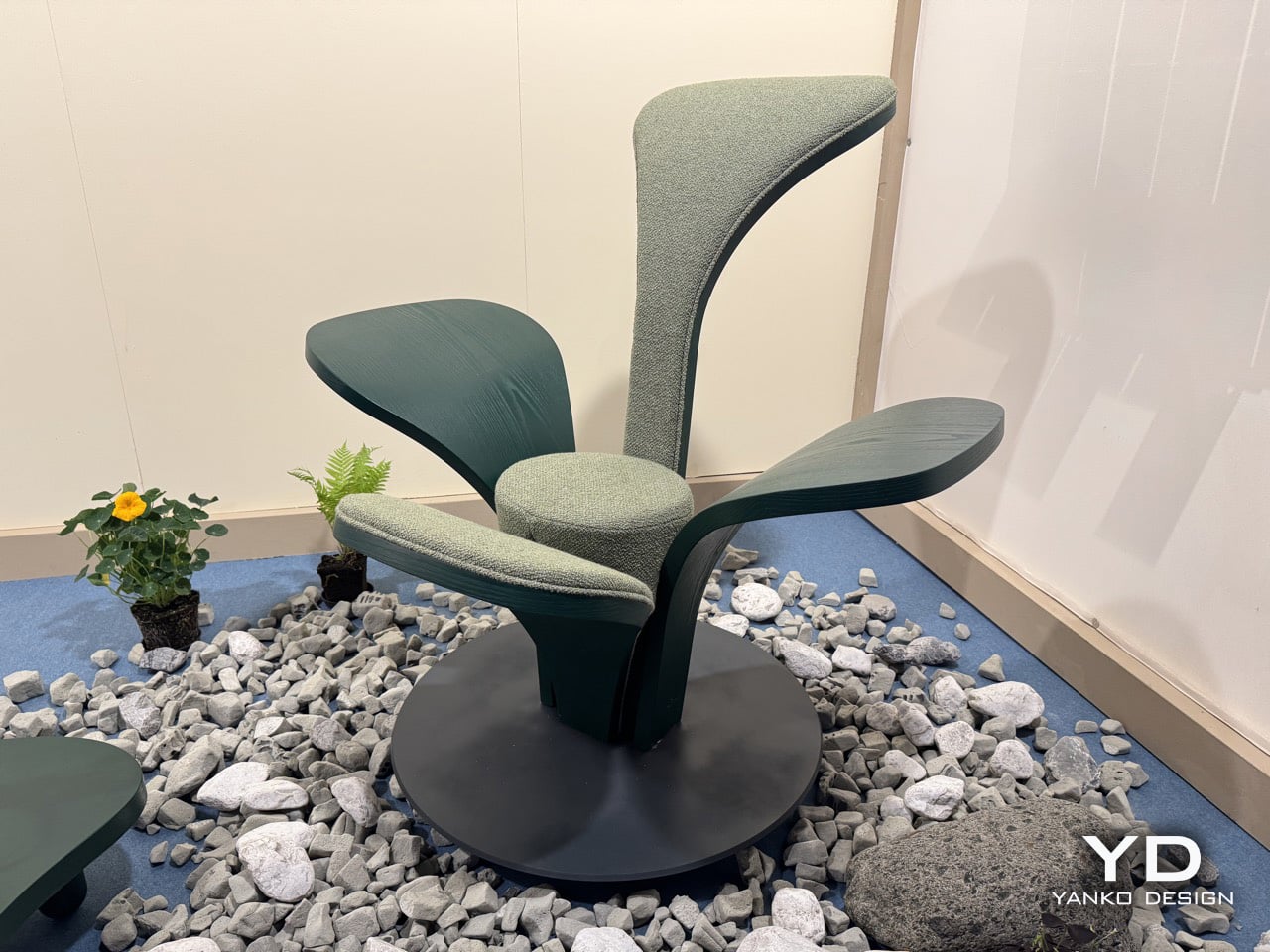
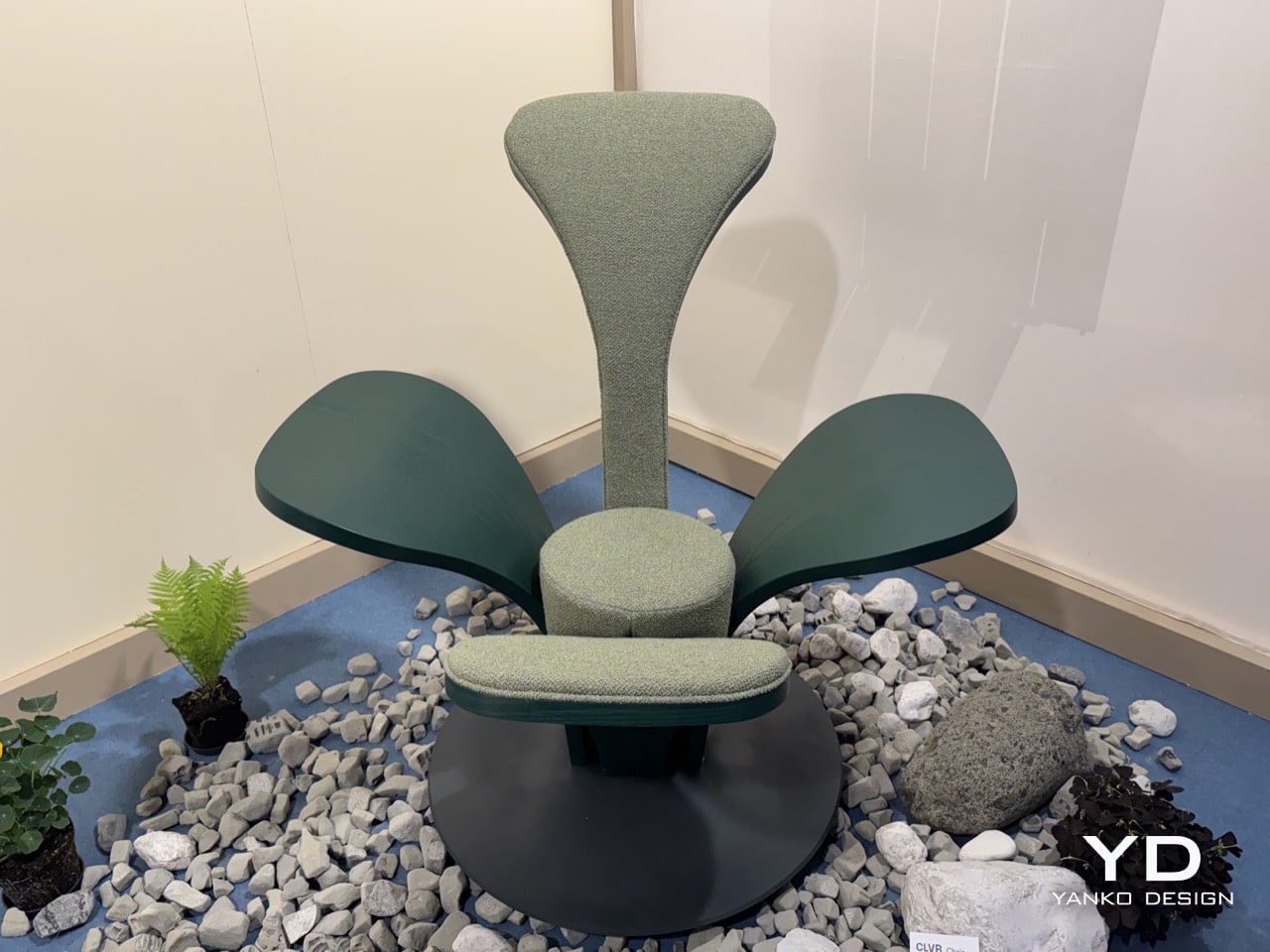
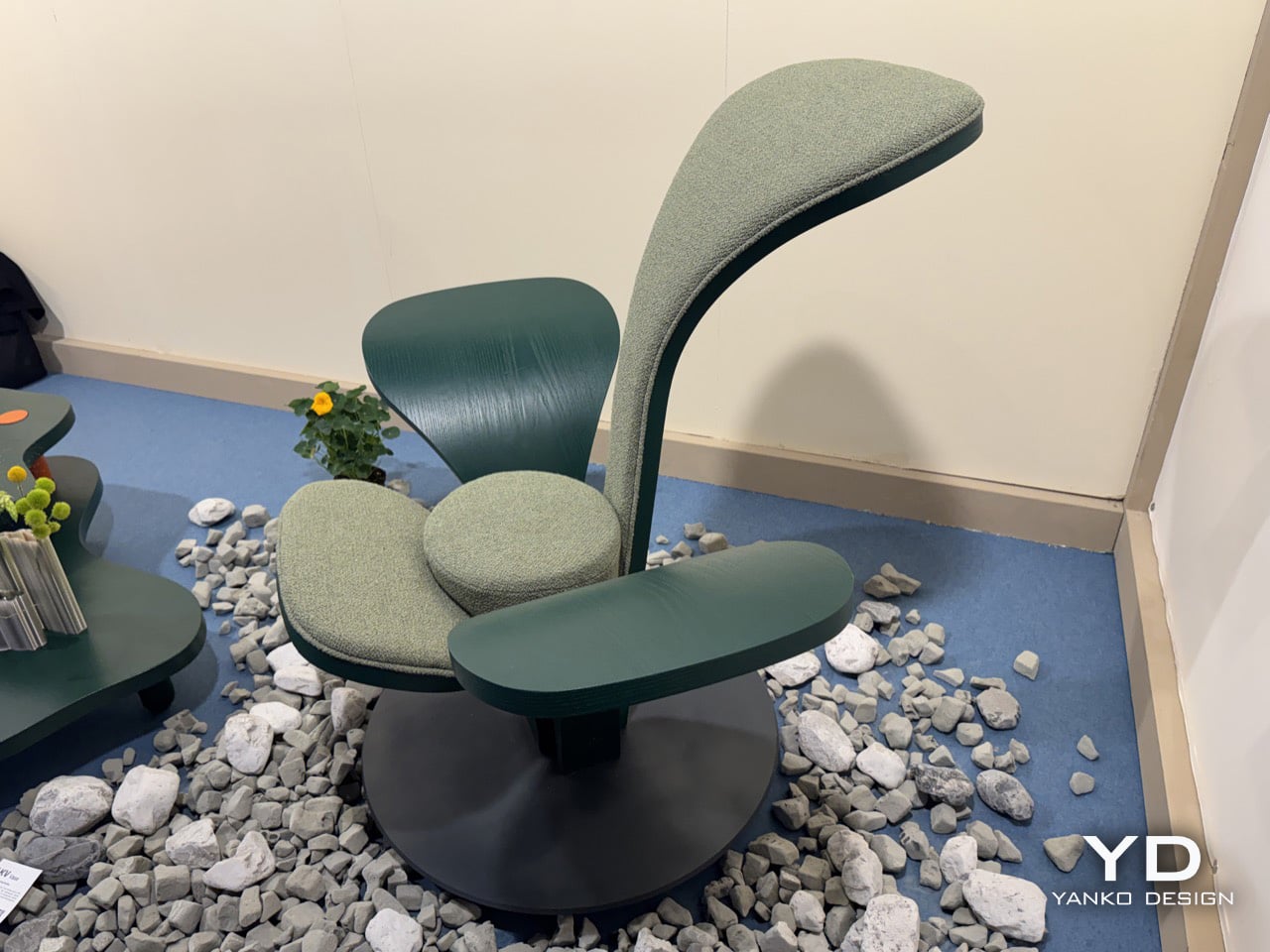
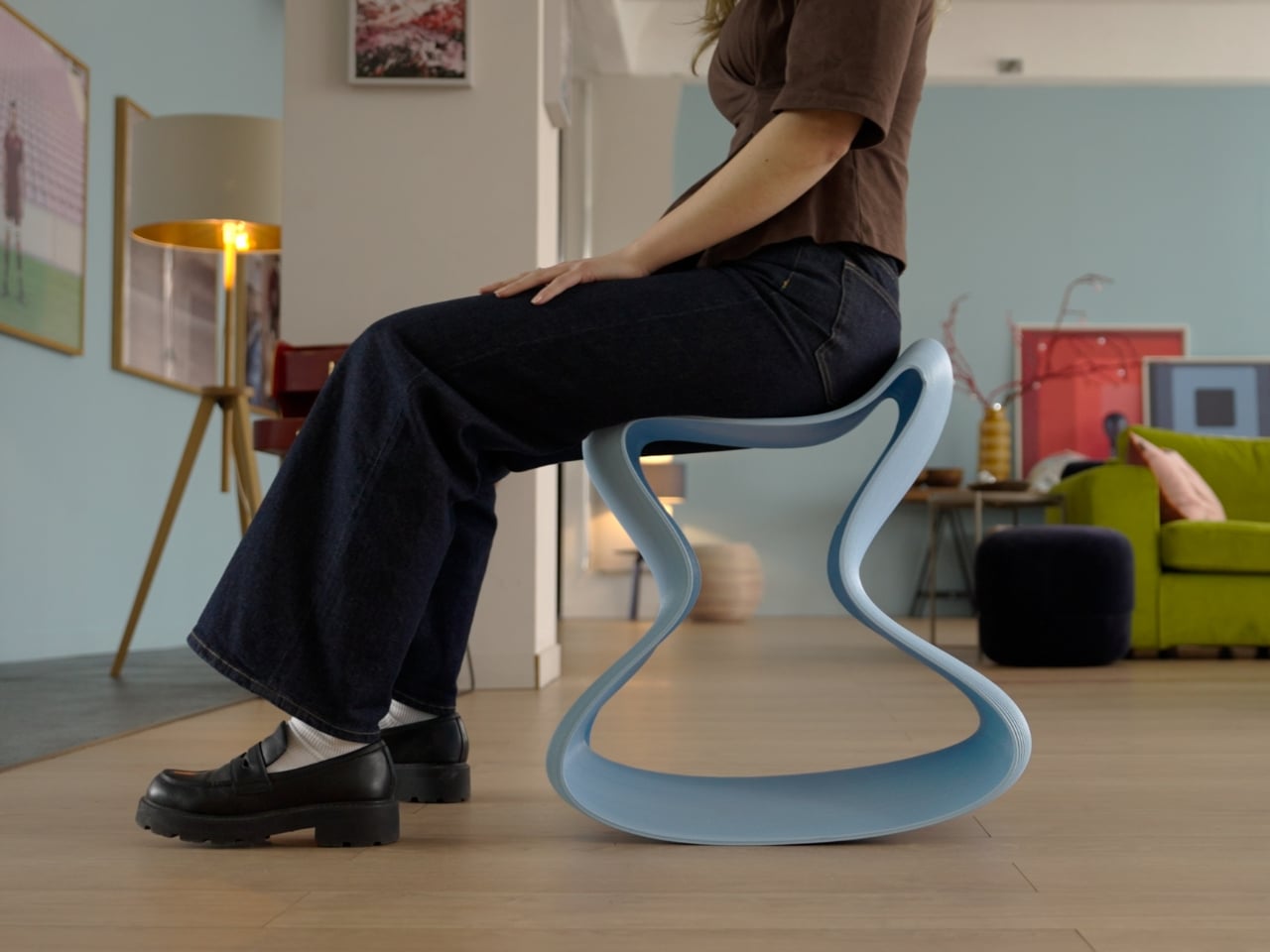
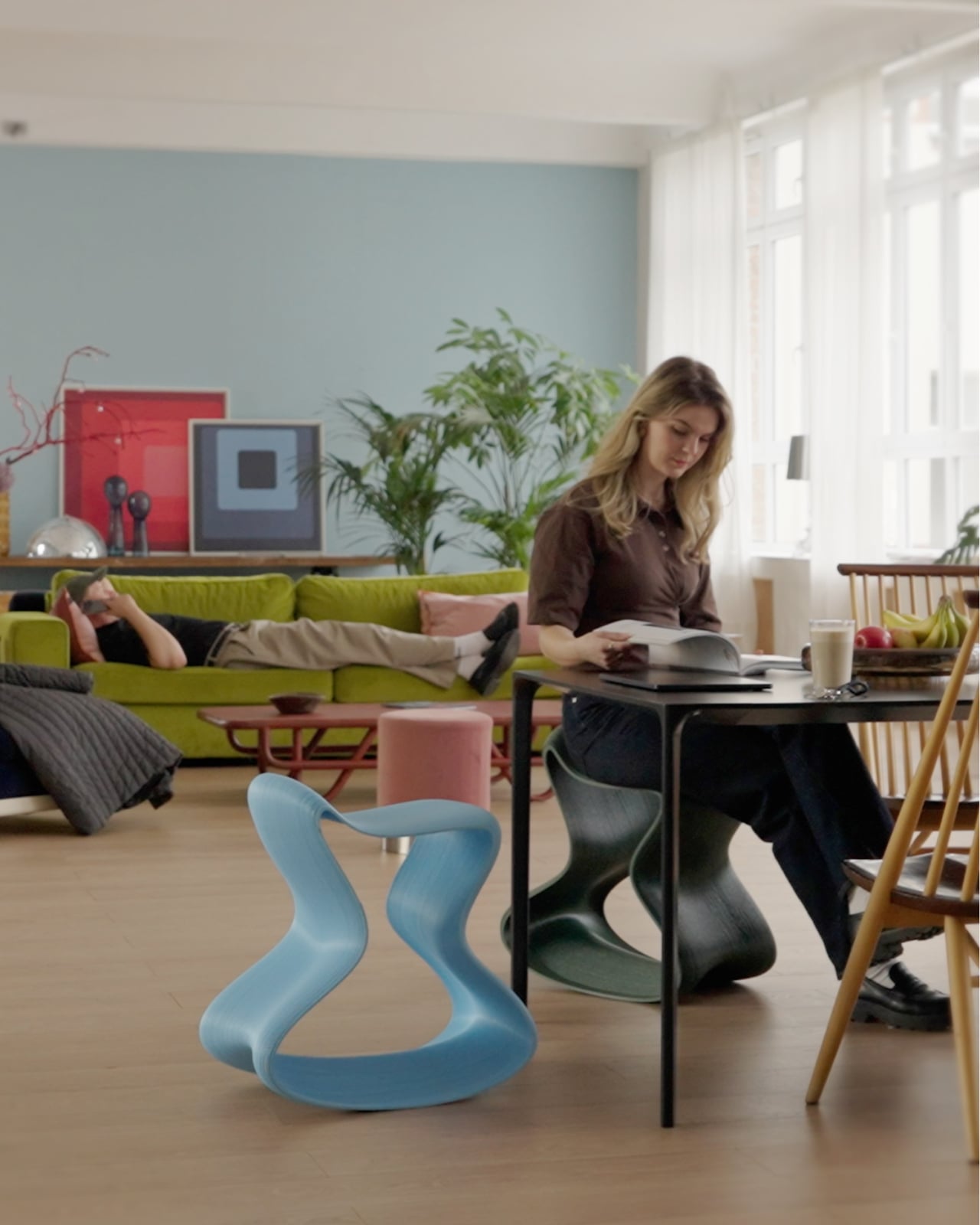
Humanity has always had a fascination with the heavens, including the possibility of other intelligent life out there in the stars. Of course, there is no definite proof yet, but there is definitely no shortage of reports claiming to have seen UFOs or unidentified flying objects. Popular media have made the flying saucer the most iconic form of UFO, even though there’s probably no logical reason why they’d take that shape. Nonetheless, that form has inspired many an Earthly design, including this distinctive chair that looks like a lopsided UFO from afar and a majestic, almost futuristic throne up close.

Designer: Mavimatt

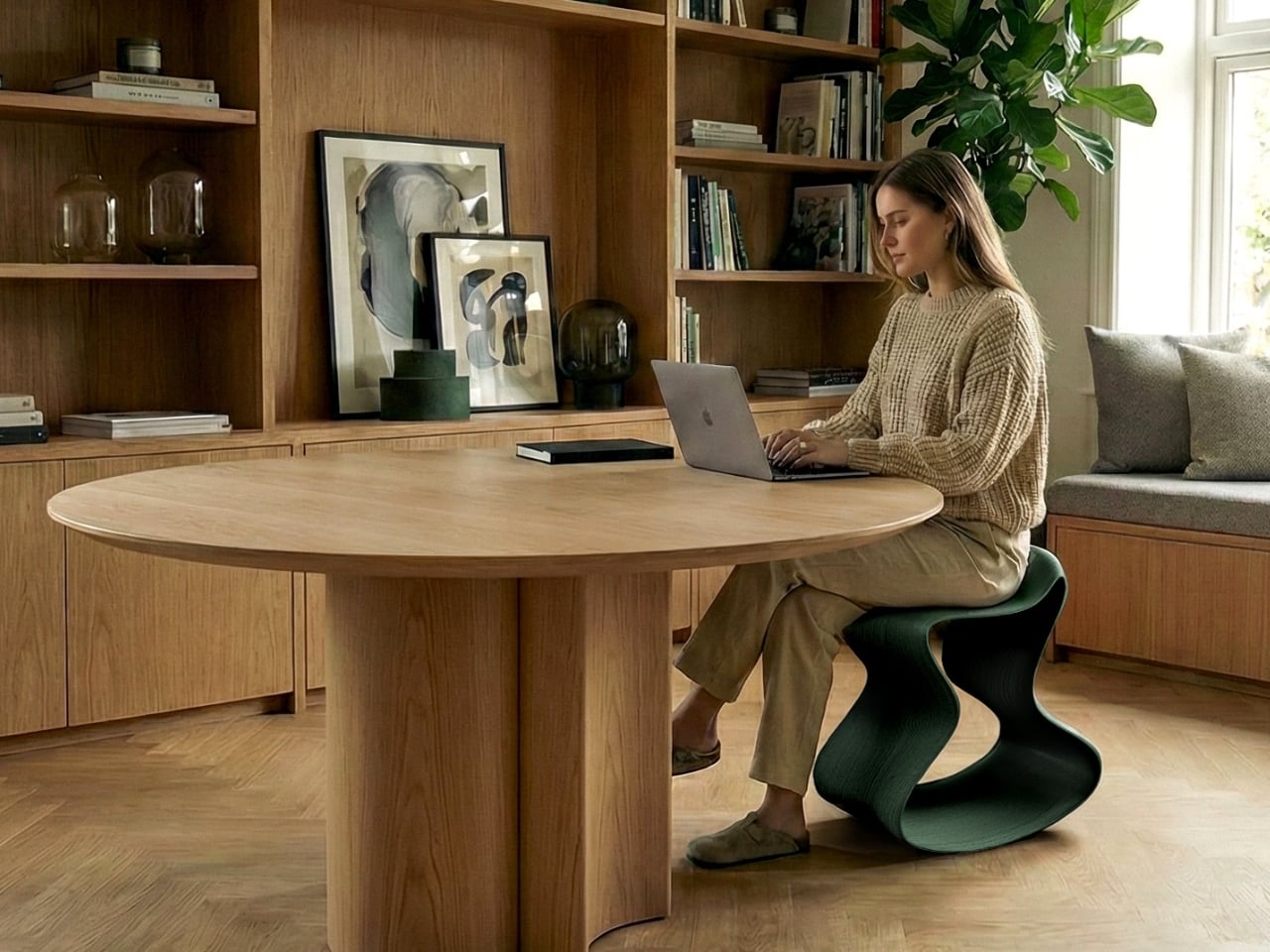
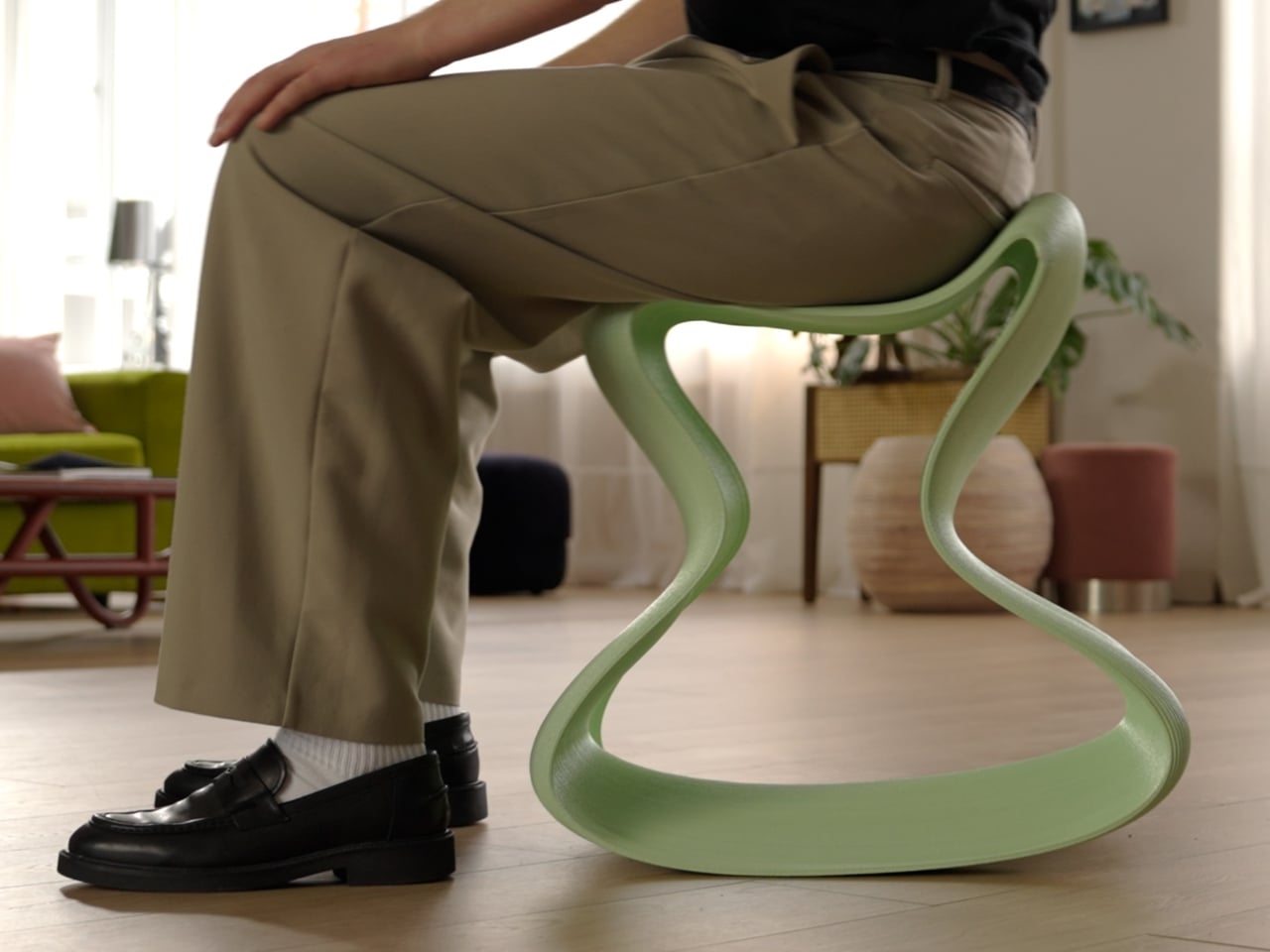
A rocking chair more often than not conjures up images of an antiquated wooden chair with arcs for legs that make it swing back and forth. Even among chairs, this design is already peculiar, mostly because it is far from the stable and unmoving concept that most people have for seating furniture, and this UFO-inspired treatment takes it to the next level, going beyond the stars, figuratively speaking. Beyond the initial shock factor, however, the design carries an air of class that will actually surprise you when you sit on it for the first time and discover, to your delight, that it can actually rock back and forth or even spin on its bottom.

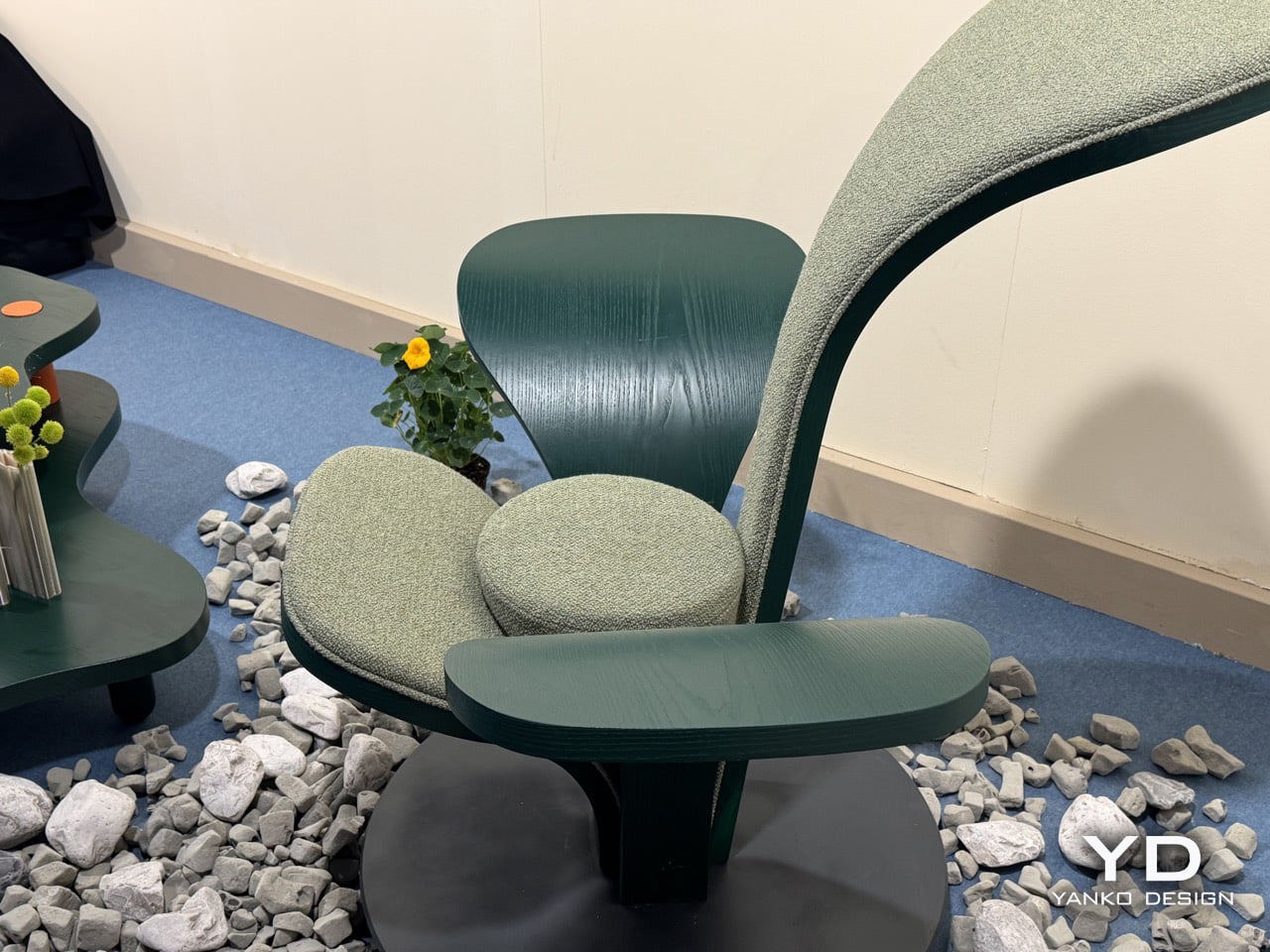
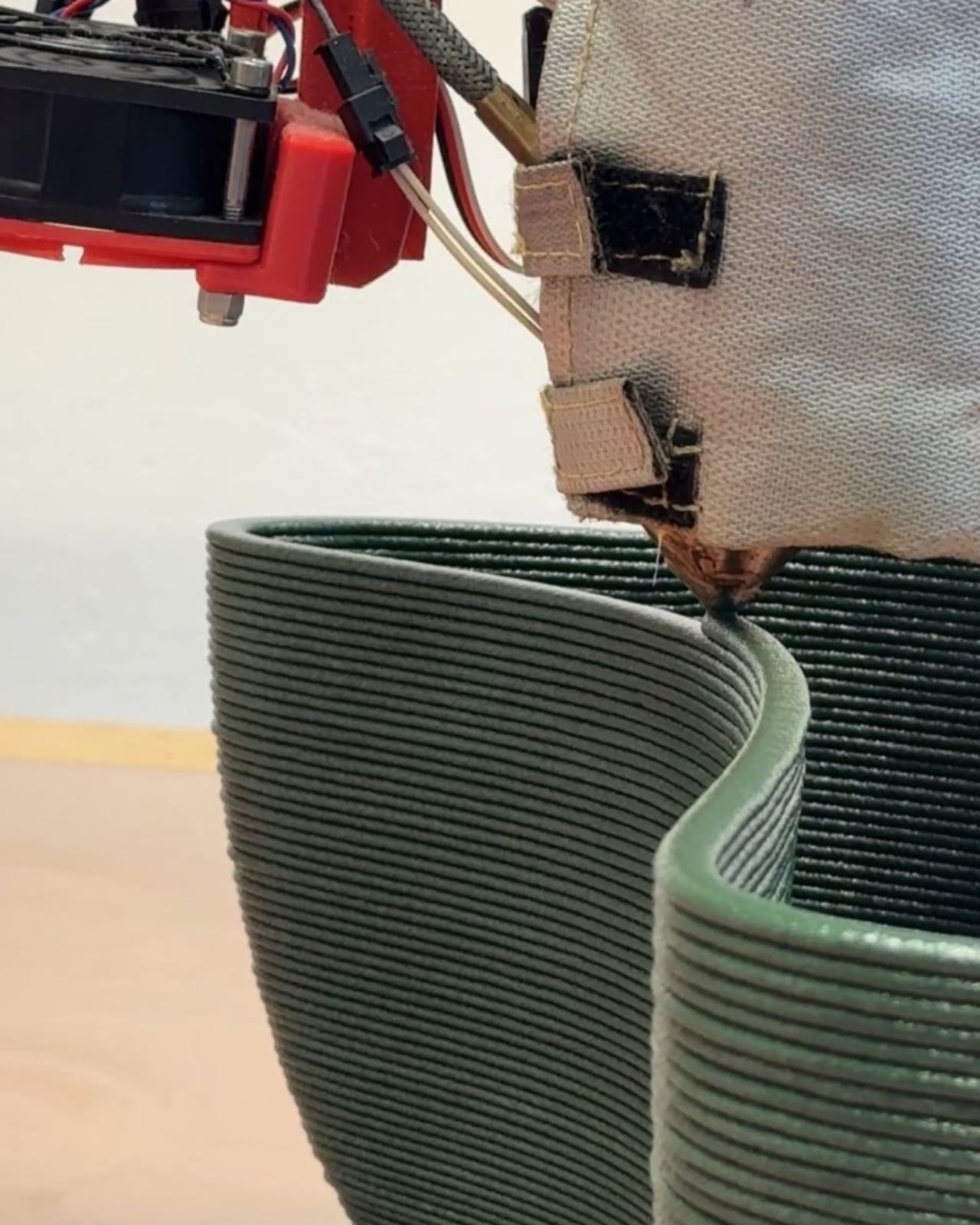
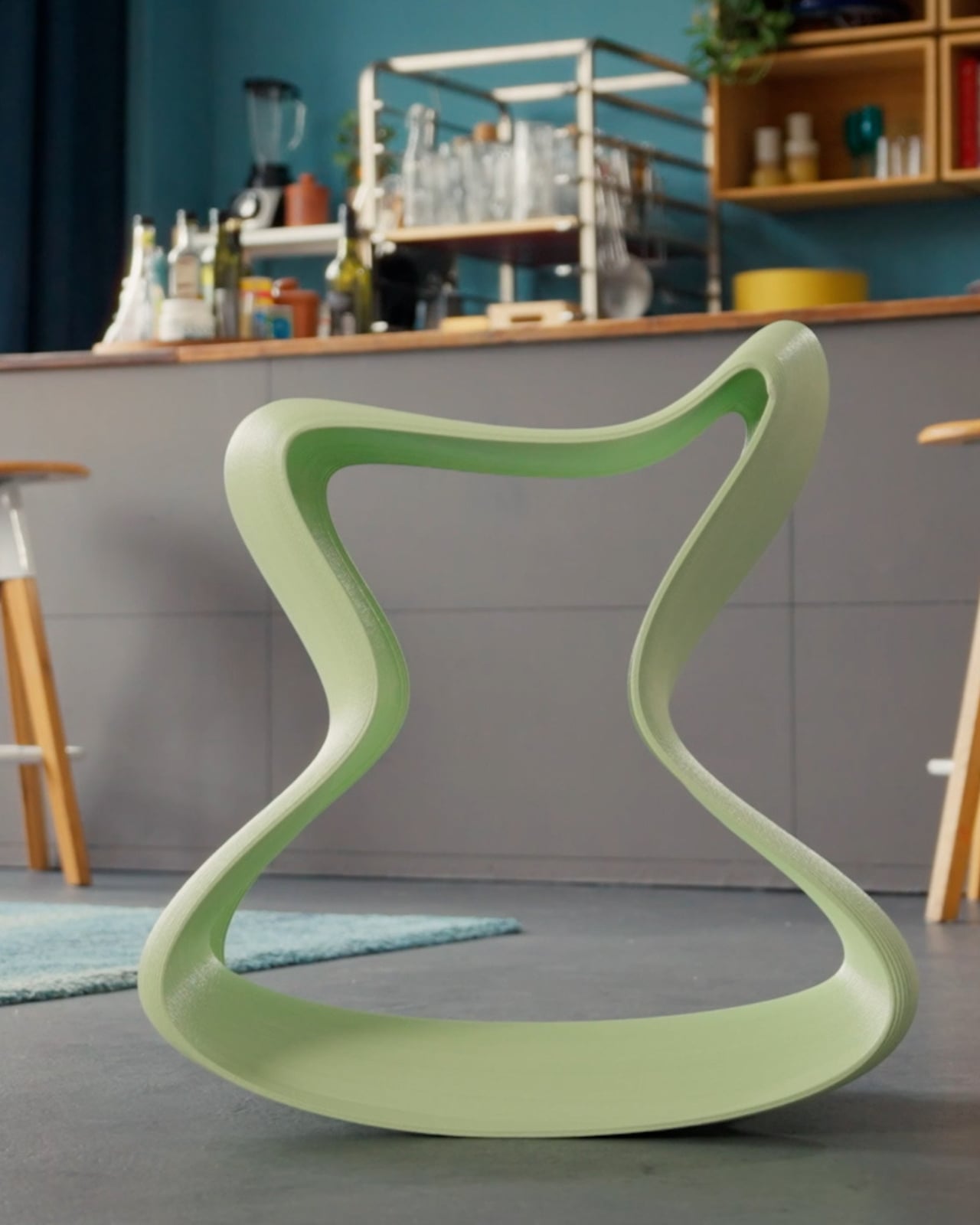
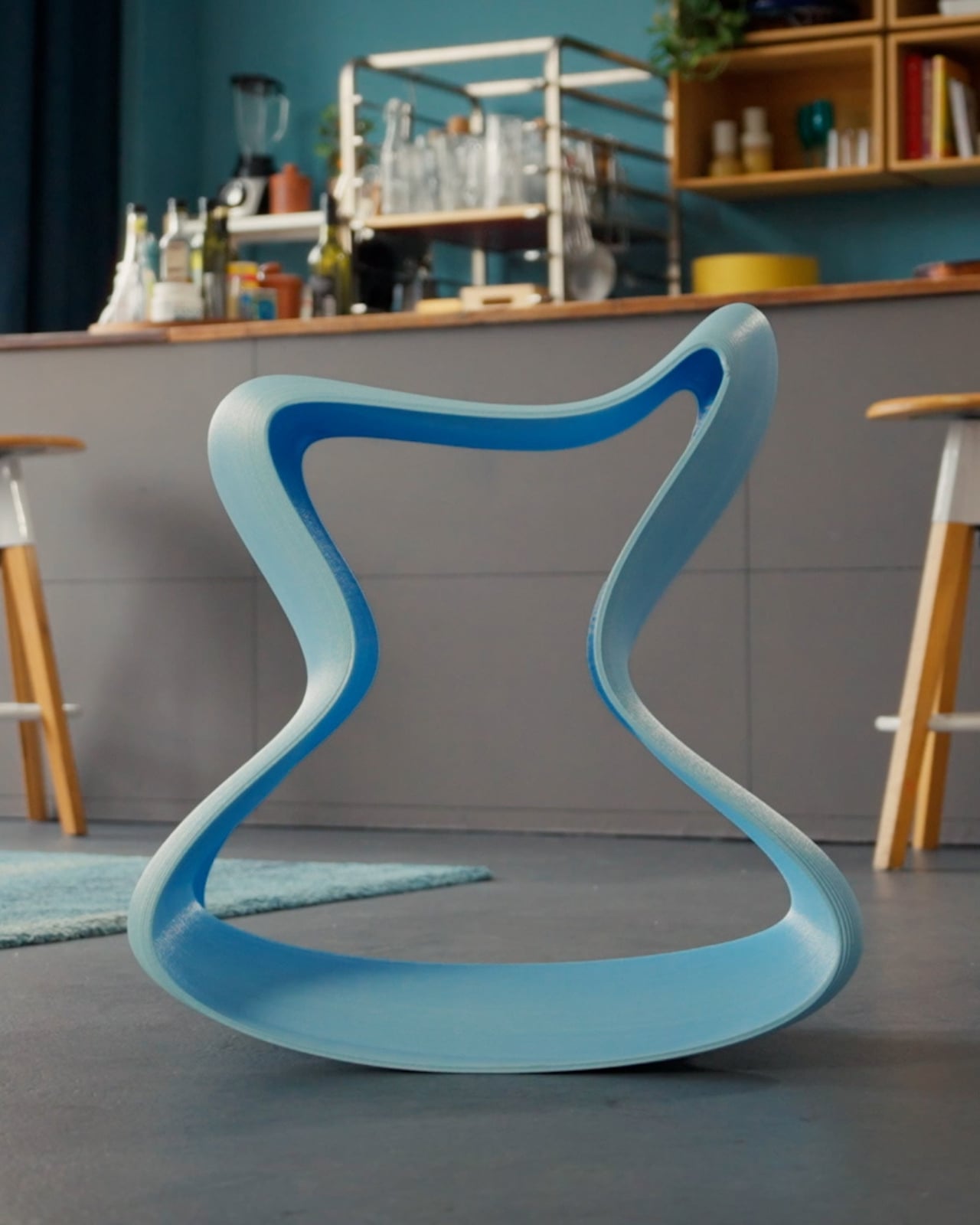
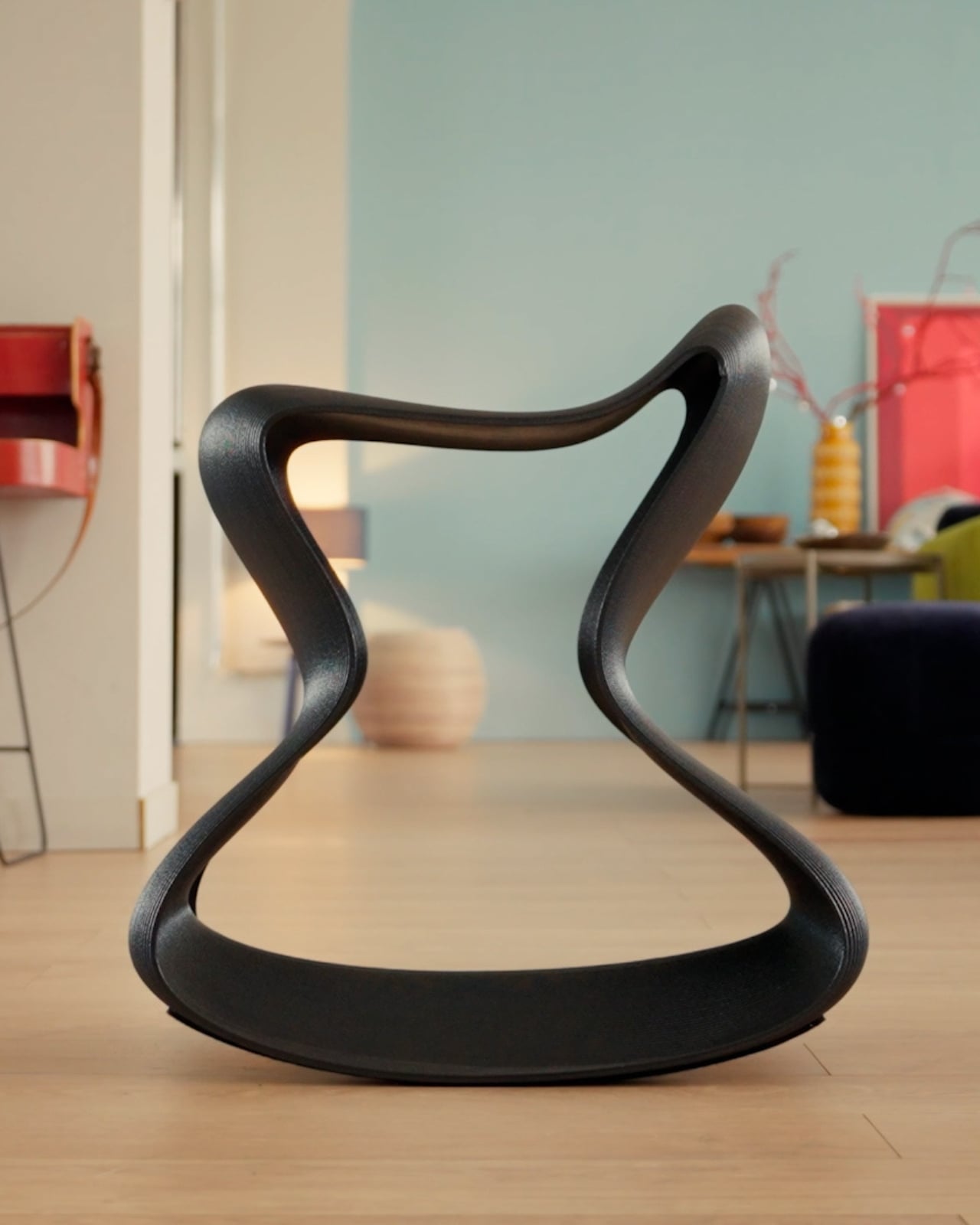
The bowl-shaped exterior of this unusual rocking chair isn’t exactly a perfect curve, which allows the form to move without tipping over. Viewed from the side, it looks like a UFO that is either in sharp descent or has already crashed on the ground, denting its front and causing the rear to stick up and out. Made from fiberglass or carbon fiber, the structure of the chair is as strong as you’d expect from a spacecraft, or at least a piece of furniture inspired by one.

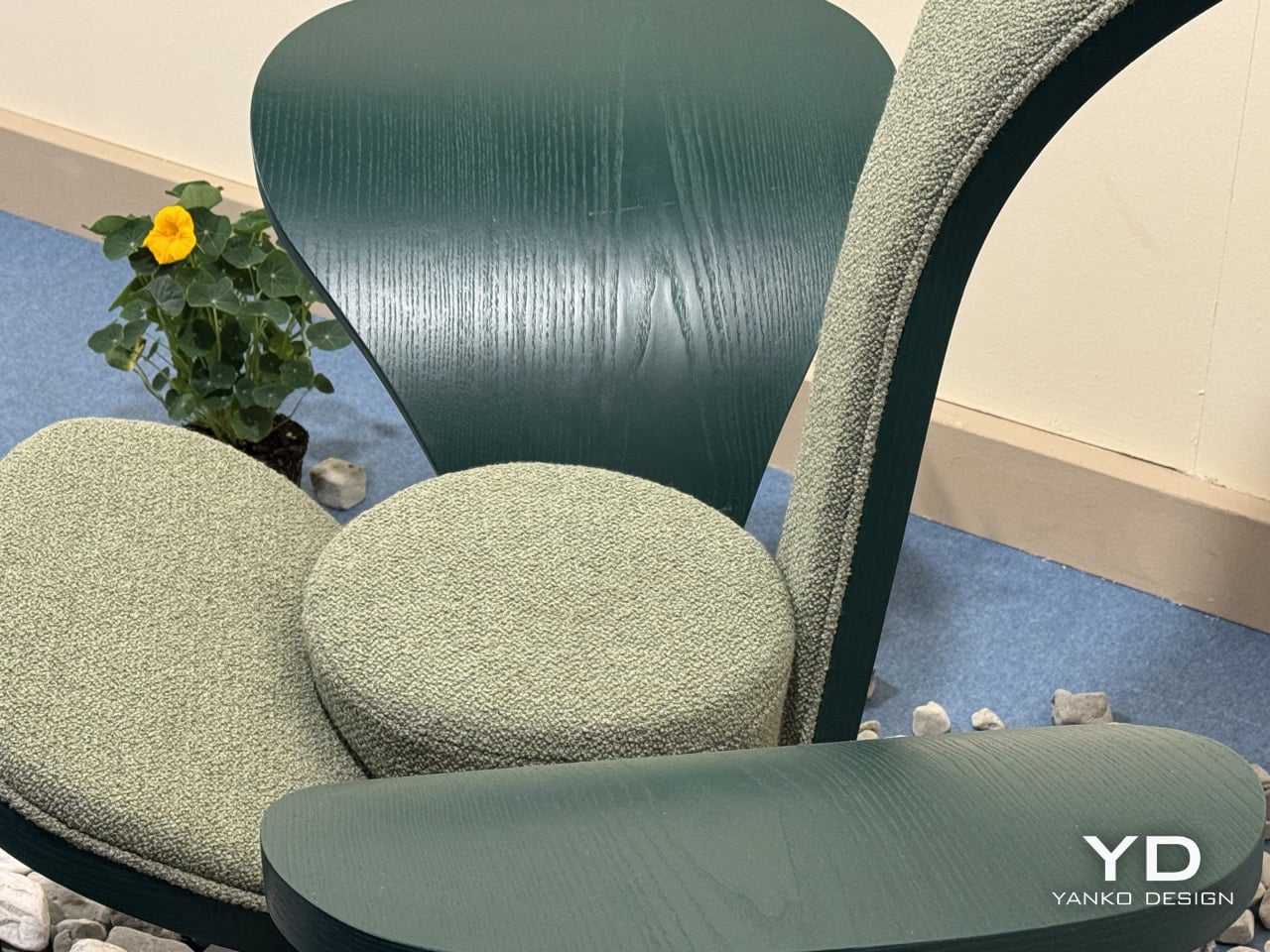
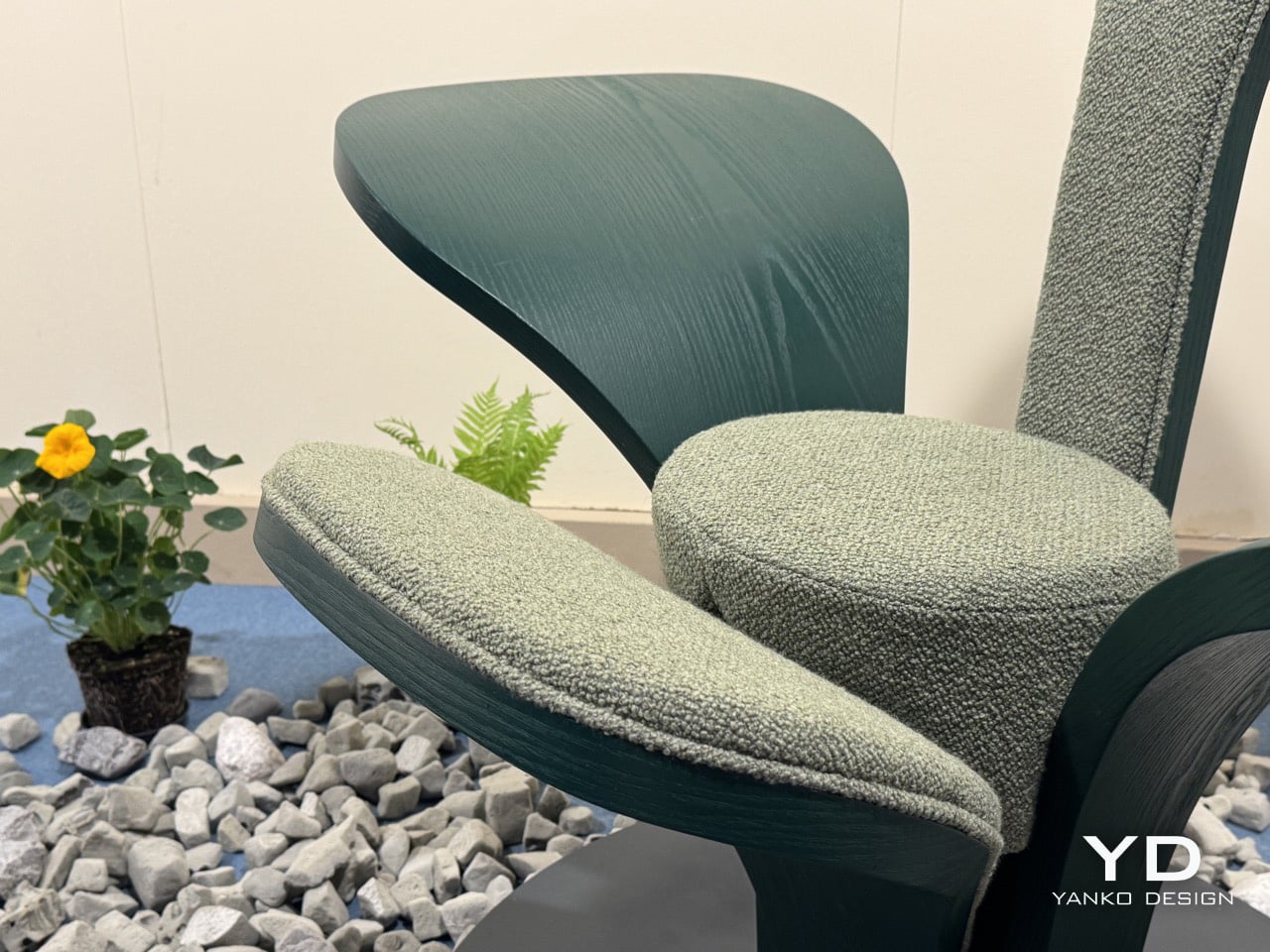
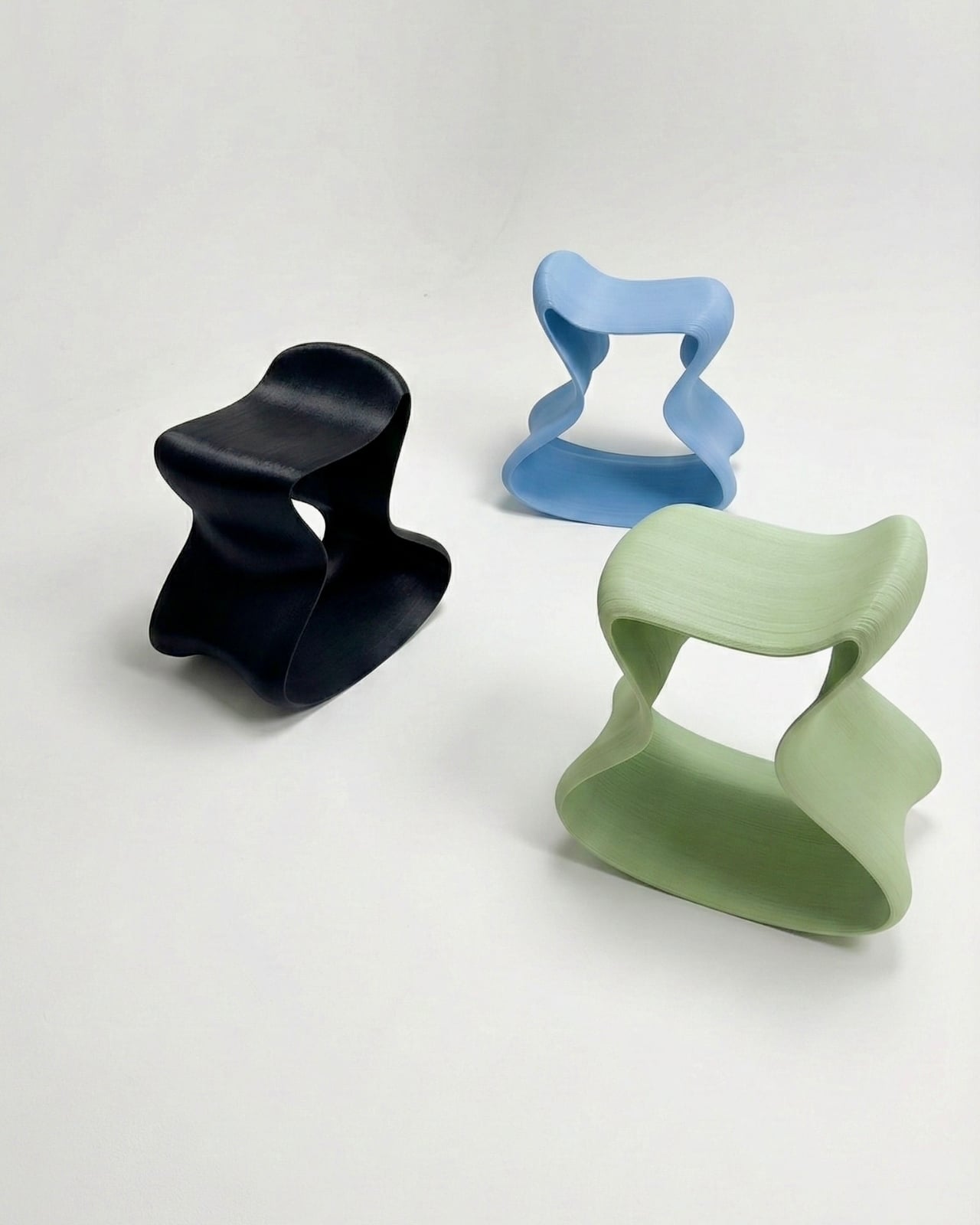
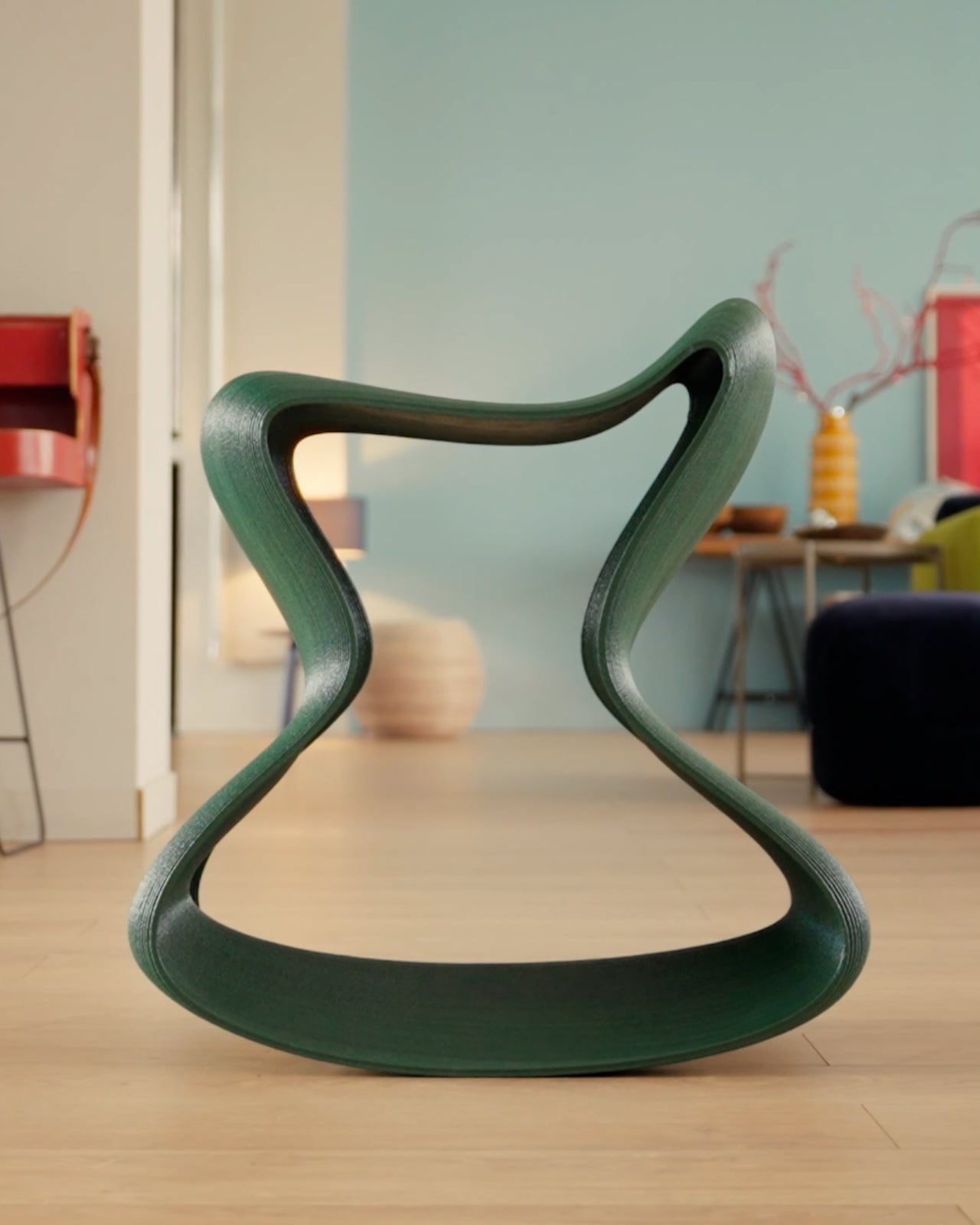
Viewed from the front, however, the chair looks less alien and more regal, almost like a throne from some futuristic civilization. There are no formal armrests for the chair, but the inner seat foam’s shape and material easily adapt to the body of the person, giving proper and comfortable support all the time. The radiating design of the seat puts the person right in the middle and emphasizes their presence, making them the visual center of the composition. Italian primofiore leather or fine fabrics are used for the upholstery, giving the chair a luxurious appearance and texture truly fit for monarchs or alien overlords.

Rather than simply sticking to the stereotypical appearance of a UFO, which would have meant glossy metal textures and colors, this UFO rocking chair opens the possibility of a wide number of designs, turning the shell of the chair into a canvas for display art, characters, or even the nighttime sky. Whether you associate it with a flying saucer or not, this Unidentified Furniture Object will surely capture anyone’s attention with its otherworldly beauty and give them the experience of their lives, sitting on a majestic chair that moves as if it were floating on air.

The post UFO rocking chair combines a playful character with a striking, elegant design first appeared on Yanko Design.

UFO rocking chair combines a playful character with a striking, elegant design

Humanity has always had a fascination with the heavens, including the possibility of other intelligent life out there in the stars. Of course, there is no definite proof yet, but there is definitely no shortage of reports claiming to have seen UFOs or unidentified flying objects. Popular media have made the flying saucer the most iconic form of UFO, even though there’s probably no logical reason why they’d take that shape. Nonetheless, that form has inspired many an Earthly design, including this distinctive chair that looks like a lopsided UFO from afar and a majestic, almost futuristic throne up close.

Designer: Mavimatt

A rocking chair more often than not conjures up images of an antiquated wooden chair with arcs for legs that make it swing back and forth. Even among chairs, this design is already peculiar, mostly because it is far from the stable and unmoving concept that most people have for seating furniture, and this UFO-inspired treatment takes it to the next level, going beyond the stars, figuratively speaking. Beyond the initial shock factor, however, the design carries an air of class that will actually surprise you when you sit on it for the first time and discover, to your delight, that it can actually rock back and forth or even spin on its bottom.

The bowl-shaped exterior of this unusual rocking chair isn’t exactly a perfect curve, which allows the form to move without tipping over. Viewed from the side, it looks like a UFO that is either in sharp descent or has already crashed on the ground, denting its front and causing the rear to stick up and out. Made from fiberglass or carbon fiber, the structure of the chair is as strong as you’d expect from a spacecraft, or at least a piece of furniture inspired by one.

Viewed from the front, however, the chair looks less alien and more regal, almost like a throne from some futuristic civilization. There are no formal armrests for the chair, but the inner seat foam’s shape and material easily adapt to the body of the person, giving proper and comfortable support all the time. The radiating design of the seat puts the person right in the middle and emphasizes their presence, making them the visual center of the composition. Italian primofiore leather or fine fabrics are used for the upholstery, giving the chair a luxurious appearance and texture truly fit for monarchs or alien overlords.

Rather than simply sticking to the stereotypical appearance of a UFO, which would have meant glossy metal textures and colors, this UFO rocking chair opens the possibility of a wide number of designs, turning the shell of the chair into a canvas for display art, characters, or even the nighttime sky. Whether you associate it with a flying saucer or not, this Unidentified Furniture Object will surely capture anyone’s attention with its otherworldly beauty and give them the experience of their lives, sitting on a majestic chair that moves as if it were floating on air.

The post UFO rocking chair combines a playful character with a striking, elegant design first appeared on Yanko Design.

Recyclable stool made from potato scraps and sawdust can be used for firewood

There are plenty of designs that advertise being sustainable, but many of them stop halfway through the product’s life cycle. They are usually made from sustainable or renewable materials, and some, but not all, are made with a reduced carbon footprint. That said, not many cover what happens after the product has served its purpose, which often means adding to the already enormous amount of waste we produce annually. Fortunately, there are some designs that do take that into account, creating a circular economy where the product or its materials can be used for other purposes. One example is this cork-like stool that, true to its wooden nature, can actually be used like firewood to heat up a space or, better yet, fuel workshops that will produce the materials to be used to create another stool.

Designer: Renaud Defrancesco

Wood is a much-loved material by designers and producers. It has an innate beauty and texture that’s hard to reproduce artificially, it is biodegradable, and, to some extent, also renewable. It takes time for trees to grow, however, and not all parts of the wooded material actually end up getting used. Many get left on the cutting room floor, either as small chunks or, worse, sawdust. The latter is easy to take for granted until they pile up and become pollutants themselves, at least until they dissolve and disintegrate over a long period of time.

Briket is a stool that tries to solve that material waste problem by giving a new purpose to waste byproducts not just from woodworking but also from the food industry. In a nutshell, this nine-legged stool is made from sawdust scraps as well as potato scraps, both biodegradable and environment-friendly materials we throw out by the ton every day. Creating the parts of the stool itself isn’t exactly hard either, as it mostly involves compressing these minute pieces until they become a rigid and solid mass. This, in theory, can be done anywhere there’s an abundance of wood waste, which practically means sawmills, carpentry shops, workshops, and other places that work with large quantities of wood.

What makes the Briket stool more interesting, however, is how it can be used for some unrelated purpose when it has reached its end of life. Inspired by wooden pellets used for bonfires and fire pits, it can serve as fuel to heat up a place or keep the fire of a workshop going, letting it serve people one last time before finally biting the dust, pun intended. In fact, the legs of the stool can be individually removed and replaced, making the piece of furniture almost immortal as long as there are replacement parts available.

In terms of aesthetics, Briket has a unique raw appearance and texture that is more similar to cork than wood, something that might not sit well with everyone’s tastes. Because of that, some people might even have doubts about its stability and reliability as furniture you will sit on. Fortunately, that doesn’t seem to be the case, and Briket stands as a shining example of a truly sustainable design from start to finish.

The post Recyclable stool made from potato scraps and sawdust can be used for firewood first appeared on Yanko Design.

Spidique Chair Harmonizes Computational Intelligence And Human Touch For A Sustainable Future

The introduction of plastic in manufacturing has been a double-edged sword, celebrated for its unmatched convenience and versatility, yet criticized for its environmental impact. The true ecological footprint of plastic largely depends on its post-production management. Efficient recycling significantly diminishes its environmental harm. Embracing sustainable design by minimizing plastic use while achieving robust and elegant structures is a path toward eco-friendly innovation. Inspired by this philosophy, the designer of Spidique created a plastic-based chair, using advanced simulations to ensure structural integrity and aesthetic appeal.

Designer: Siqi Yang

Spidique draws inspiration from renowned designers Ross Lovegrove and Luigi Colani. Lovegrove is known for using cutting-edge technology to craft futuristic and organic forms, evident in Spidique’s mesh-like structure reminiscent of Lovegrove’s Formula 1 metal perfume bottle. Colani’s mastery of round, organic shapes is seen in the chair’s fluid lines. These influences combine to create a design that marries modern technology’s mechanical precision with seasoned craftsmanship’s artistic touch.

Spidique’s manufacture relies on 3D printing technology, utilizing Ameba software and the Bidirectional Evolutionary Structural Optimization (BESO) algorithm. This algorithm is critical for topological optimization, designing a chair that is both structurally sound and material-efficient.

The design process unfolds in several stages, beginning with algorithm execution, where parameters are set to generate the chair’s initial shape. This is followed by evaluation and refinement, where designers assess the initial model for ergonomic and aesthetic qualities, making necessary adjustments to enhance comfort and visual appeal. Next, the refined model is prototyped using 3D printing technology and undergoes rigorous testing for comfort, durability, and user feedback. Based on this feedback, further refinements are made to ensure the design is optimal for production.

The iterative process continues until the design achieves the desired balance of comfort, aesthetics, and sustainability. This process highlights the interaction between computational precision and human-centric design. While the algorithm provides a precise and optimized structure, the human touch ensures the design meets ergonomic and aesthetic standards.

The designer’s research emphasizes 3D printing technology in furniture manufacturing, exploring its potential to drive innovation and enhance sustainability. A comparative analysis contrasting traditional furniture production with 3D-printed methods involved surveys of 20 furniture designers and 100 consumers, along with creating multiple prototypes using CAD software and 3D printers. Findings revealed that 3D printing could reduce material waste by approximately 25% and shorten production time by about 30%, highlighting its potential for significant environmental and commercial benefits.

The post Spidique Chair Harmonizes Computational Intelligence And Human Touch For A Sustainable Future first appeared on Yanko Design.
Scorpion-like chair is a computer cockpit made for immersive, lazy gaming

When speaking of computer chairs, you probably first think of overgrown office chairs with a tall back and plenty of padding. While that is indeed the most common design, there are some that take the idea to the extreme, creating what is better described as a cockpit rather than a chair. These often include not only a space to hide the desktop computer from view but also a way to mount not just one but multiple monitors as well. It’s an all-in-one battle station for gamers and computer users who want all their equipment in a single basket. But while that concept in itself is already unconventional, this rather peculiar design really pushes the envelope by embracing the form that immediately comes to mind when looking at these computer gaming “thrones”: a deadly metal scorpion.

Designer: Cluvens

Truth be told, we may have caught a glimpse of chairs with embedded computers and built-in monitors from sci-fi shows, but those have mostly remained the stuff of fiction and stage props until recently. There have been a few new designs surfacing lately, including from giant brands like Acer, and while some of these gaming pods or cockpits try to aim for a similarly futuristic aesthetic, the SK Scorpion puts a different twist on the idea. Instead of a piece of furniture, this over-the-top chair looks more like a sleek robotic insect designed to keep you within its grasp and keep distractions away.

The scorpion motif isn’t just for show, however. Just like the segmented “tail” of the scorpion, the chair’s back and top arch can actually move with a little flexibility, reclining the backrest down to an almost flat angle and moving the screens away for a more restful position. Instead of claws, the scorpion’s arms can swivel in and out, providing not only a place to put things but also some degree of customization for what is practically your small workspace. That said, the chair’s legs don’t inspire too much confidence and is one aspect of the design that tried to be too realistic without being practical.

As far as computer cockpits go, however, the functionality that the SK Scorpion provides isn’t exactly extraordinary. It can support up to three 29-inch monitors placed side-by-side, or more depending on your creativity, creating an immersive view that’s almost in your face. You sadly need to put a separate tray on top of the two arms for the keyboard and mouse, and other things you might need for play and even work, though there are accessories available for holding your cup and hanging your headset. There are no built-in lights as well, so you’ll have to make provisions for that on your own.

That feature list looks a bit sparse until you consider the $3,400 price tag, a mere fraction of what fully featured computer cockpits cost. The menacing scorpion design probably won’t appeal to all gamers, and its novelty will quickly wear off. At least its ability to almost like completely flat, providing gamers with a convenient though probably uncomfortable bed to take power naps, is admittedly intriguing. Then again, these designs are really meant more for hardcore gamers, those who don’t mind isolating themselves in a bubble, at least when they’re gaming.

The post Scorpion-like chair is a computer cockpit made for immersive, lazy gaming first appeared on Yanko Design.

Want a quick power nap at work? This clever chair will help you catch a few winks

Exhaustion is an epidemic. A staggering 62% of adults worldwide struggle with sleep deprivation, leading to a domino effect on health and productivity. Enter the Power Nap Chair, a revolutionary furniture design that tackles this challenge head-on.

Designed by Martin Tsankov, the idea of the Power Nap Chair came from his friend and business partner Milen Kisov, who discovered that power naps helped significantly boost his productivity at work. Scientifically proven to enhance cognitive function, memory, and cardiovascular health, short 15-30 minute naps are a game-changer. But finding a suitable space for napping at work has traditionally been a hurdle. Existing solutions like sleeping pods are bulky and expensive (not to mention that most offices don’t have them), and napping at your desk isn’t just uncomfortable, it’s also frowned upon… but the Power Nap chair offers a slick, cozy, and effective alternative.

Designers: Martin Tsankov & Milen Kisov

Sort of like a lounge chair meets a baby stroller, the Power Nap Chair comes with a relaxing design that you can lay down in, and a hood that cocoons you in your own personal private bubble. Simplicity reigns supreme – the chair is free of distracting technology, fostering complete disconnection. This makes it perfect for both open-plan offices and compact workspaces. Sustainability is woven into the very fabric of the chair. Carefully chosen, fully recyclable materials are used throughout, minimizing environmental impact.

The Power Nap Chair is built with three core components: a metal frame, an upholstered wooden body, and a foldable hood. The frame is crafted from machine-bent and powder-coated carbon steel profiles, echoing the chair’s triangular design for a sturdy foundation. The body is constructed from 104 individual CNC-milled birch plywood triangles, meticulously hand-sanded, and finished with non-toxic linseed oil. Each triangle is then encased in flame-resistant, biodegradable memory foam before being upholstered in a comfortable woolen fabric. The hood, made from the same fabric, is specially designed to fold for easy storage while providing essential privacy for napping users.

“Our main challenge is reversing societal stigma around resting in the workplace by creating a product fit for a modern lifestyle where relaxation and productivity intersect,” says designer Martin Tsankov, who won an A’ Design Award this year for the Power Nap Chair. The chair looks inviting, comfortable, and has a unique low-poly aesthetic that your eyes are sure to fall in love with right before they shut for your quick nap. The chair holds a design patent, although it isn’t in production just yet. A final prototype was, however, exhibited at the Stockholm Furniture Fair in February 2024.

The post Want a quick power nap at work? This clever chair will help you catch a few winks first appeared on Yanko Design.

3D Printing is Shaping Modern Product Design: Here’s How

In the ever-evolving landscape of product design, from ideation to realization, 3D printing technology is revolutionizing contemporary design practices. 3D printing technology employs computer-aided design (CAD) and fabricates objects layer by layer. Commonly used in manufacturing, automotive industries, and industrial product design for creating tools, parts, and prototypes, this process, also known as additive manufacturing, layers materials like plastics, composites, or bio-materials to produce objects of varying shapes, sizes, rigidity, and color.

Designers: Nexa3D and Mocu Desig

The commonly selected 3D printing technologies include Fused Deposition Modeling (FDM), Stereolithography (SLA), Selective Laser Sintering (SLS), PolyJet, and Direct Metal Laser Sintering (DMLS). XiP is an advanced resin 3D printer by Nexa3D, offering professional-grade printing at speeds 6 times faster than SLA printers and over 10 times faster than filament 3D printers. With a 4.8L build volume and a 9.3″ 4K Monochrome LCD, it delivers crisp details. Its compact desktop design houses industrial LSPc technology, ensuring stability with a billet aluminum enclosure and precision ball screw Z-axis platform. The printer supports a wide range of resins, including proprietary formulations for diverse applications, all dispensed through smart recyclable cartridges.

What are the benefits of 3D Printing?

• Reduces Costs:

3D printing offers significant cost advantages over traditional manufacturing methods due to its automation, resulting in reduced labor expenses. Moreover, its minimal waste production leads to lower material costs.

• Produces Complex Designs

3D printing exceeds the design constraints of traditional manufacturing, enabling the creation of intricate designs, including square or circular punctures or abstract designs with fewer restrictions.

• Promotes Internal Manufacturing

3D printers enable rapid prototyping, eliminating the need for outsourcing. This accelerates the design and production of new products, enhancing overall efficiency.

• Rapid Prototyping

3D printing enables the production of designs that were previously impossible with conventional manufacturing methods. By transforming digital files into physical parts within hours, this technology allows companies to adopt an on-demand manufacturing model for parts. 3D printing offers a comprehensive solution, facilitating prototyping, and short-run production, thereby transforming every aspect of businesses.

• Minimizes Waste

Traditional manufacturing generates substantial material waste due to inefficiencies while additive manufacturing minimizes waste by precisely utilizing materials, only using what’s necessary for each product or part. This is a great way to reduce material costs and improve environmental sustainability for companies.

• Manufactures Diverse Products

Industries across the board are leveraging 3D printing for a diverse range of products. From consumer goods like eyewear and furniture to industrial tools and automotive parts, technology is reshaping manufacturing. It’s also vital in healthcare for prosthetics and orthotics alongside architectural models. Additionally, the film industry benefits from 3D printing for creating intricate props.

Top 10 Examples of 3D Printing in Product Design

Here are Top Ten examples of how 3D printing is used in product design across various product types:

1. Handbags

Designers: Julia Koerner, Kais Al-Rawi and Emma Sanson

Acclaimed Australian designer Julia Koerner merges nature and computer algorithms with 3D printing and innovative resin-based techniques to create her award-winning handbag collection, resulting in visually lightweight yet rigid designs with a distinctive skeletal aesthetic. Inspired by the organic shapes of dried kelp found along the Pacific coastline, Koerner’s KELP MINI handbag seamlessly blends artistry with functionality. Each meticulously crafted handbag is created with sustainable plant-based materials and solar-powered manufacturing, offering clever design elements like hinged bases and snap closures, making them ideal for storing essentials with style and efficiency.

2. Tiles

Designer: bioMATTERS

MYCO-ALGA presents a groundbreaking interior tiling solution that transforms bathroom aesthetics. These 3D-printed tiles are crafted from repurposed natural waste and living organisms, featuring captivating designs inspired by organic forms. Sustainable at every stage, MYCO-ALGA tiles undergo a precise process encompassing digital design, 3D printing, organism cultivation, and bio-pigment enrichment. As a result, the outcome is eye-catching tiles with unique, non-repeating patterns resembling crawling organisms, that offer both lightweight durability and visual allure that effortlessly merge style with sustainability.

3. Air Purifiers

Designer: External Reference

Barcelona-based company introduces Pure Plants, 3D-printed sculptures doubling as air purifiers. Utilizing Pure.Tech technology efficiently absorbs and neutralizes indoor pollutants like carbon dioxide and nitrogen oxide. Mimicking plant structures with geometric patterns, these sculptures enhance decor while promoting healthier indoor air quality. Crafted from sustainable Pure.Tech biomaterial and PLA bioplastic derived from corn dextrose integrate aesthetics with eco-consciousness.

4. Footwear

Designer: Matthew Blunt

EXPLR 02 is a futuristic 3D-printed shoe blending wireframe-inspired aesthetics with organic elements. Crafted with advanced techniques, it epitomizes modern manufacturing’s versatility. While challenging footwear norms, questions linger about real-world durability. Yet, EXPLR 02 signifies a leap in innovative, personalized shoe designs, shaping the evolution of 3D-printed footwear.

5. Table Lamp

Designer: Felix Pöttinger for Gantri

The 3D-printed Hula table lamp, envisioned by Felix Pöttinger, ingeniously merges direct and indirect lighting to efficiently illuminate spaces, tackling urban living challenges by minimizing glare. Its ring-shaped shade, reminiscent of a hula hoop, is available in Snow, Forest, and Blossom Pink, adding a distinct flair to any setting.

6. Living Soil Walls

Designer: Ji Ma, David Carr, Ehsan Baharlou, and Spencer Barnes

The University of Virginia research team has developed an innovative 3D printing method using soil infused with seeds to create plant-covered structures like walls and roofs. The team’s eco-friendly approach integrates greenery into architecture, providing natural insulation, flood prevention, and green spaces. By minimizing materials and utilizing locally sourced resources, their process reduces emissions and waste. With plans to expand their prototypes and improve their soil ink formula, the team aims to contribute to carbon-neutral construction.

7. 3D Printed Homes

Designer: Progreso x COBOD

Architecture is no exception in the age of ubiquitous 3D printing, with many firms favoring this method for building structures. Cement company Progreso recently collaborated with COBOD to construct Guatemala’s first 3D-printed building to withstand seismic activity. This compact home, completed in just over 24 hours, merges modern construction techniques with traditional craftsmanship, featuring organic-shaped walls and a traditional palm leaf roof. With a footprint of 527 square feet, the structure operates as a fully functional living space capable of withstanding extreme seismic events.

8. Chairs

Designer: Johannes Steinbauer Office For Design

Oeschler’s new manufacturing technique, demonstrated in Johannes Steinbauer’s Office for Design’s 3D-printed seats, eliminates traditional materials while maintaining comfort and functionality. 3D printing is reshaping furniture design and manufacturing, introducing innovation in sustainability and functionality. With a simple yet versatile design, these chairs offer easy assembly and recyclability, signaling a promising future for 3D-printed furniture in the industry.

9. Recycled Wood

Designer: Aectual

Wood is a preferred choice for its eco-friendliness, yet shaping and recycling pose challenges. Enter 3D-printed wooden partition screens and window coverings, offering a breakthrough solution. While 3D printing democratizes design, it also increases material waste, prompting a search for sustainable options. Crafted from wood waste and fortified with natural elements, this innovative material resembles wood in appearance, texture, and scent. Moreover, its circular lifecycle allows for recycling into new forms, minimizing waste. Despite potential production cost concerns, its promise for intricate designs and sustainability makes it attractive for environmentally conscious designers.

10. Homeware

Crafted by Vienna-based designer Nicolas Gold, renowned for his expertise in “Tiny Furniture,” this collection employs 3D printing. The range comprises vases, bowls, planters, and lighting, all crafted from lightweight, recyclable bioplastic sourced from corn. This blend of architectural precision and modern technology results in sophisticated homeware where design, architecture, and 3D printing harmonize seamlessly. The Tiny Architecture collection showcases intricate patterns such as the asymmetrical Bloz and fabric-like Fald, crafted from partially recycled materials to enhance their individuality.

The post 3D Printing is Shaping Modern Product Design: Here’s How first appeared on Yanko Design.

Modular and multi-functional shelf and mirror is an aesthetic addition to your space

Normally, the shelves that I look for or I actually get have one purpose only: to hold and store my books. And I have a lot, and I mean a lot, of books. But there are times when I want to be able to get something that is also decorative or can be a conversation piece (although that still hasn’t happened yet since I still need for it to just be functional). A lot of designers now are creating ideas, concepts, and sometimes actual products, that can be multi-functional and modular and shelves are no exceptions.

Designer: João Teixeira

Wave is a conceptual design for a shelf that also doubles as a mirror. Even better, it is modular so you can arrange it into different layouts, depending on your need, your preference, or your mood. Just don’t expect a full mirror of course since the shelf part and the shape of the entire thing can be a bit obtrusive. But if you’re just looking for a surface that can hold your books, decorations, and other knick knacks that happens to have a mirror attached to it, then this is something you will be interested in.

Since the concept is named Wave, the shape of the mirror and the shelves is wavy and reminiscient of the letter S. It is modular yes but no matter where you place the different parts, you’ll still get the wave. The renders show that there are around 4-5 parts that you can assemble and play around with, depending on where you want to place the shelves part or if you want it to be horizontal or vertical in orientation.

If what you really want is to look fully in a mirror, you may be annoyed with the way this is designed. But if this gets made into an actual product, those who will buy it will probably just see the mirror as part of the whole design of the multi-functional shelf. You can also probably only just place a few objects on it (most likely not part of my book collection) but again, this is more for the added aesthetics rather than a fully functional piece of furniture.

The post Modular and multi-functional shelf and mirror is an aesthetic addition to your space first appeared on Yanko Design.
10 Best Office Furniture Designed To Create The Ultimate Working Space

Never underestimate how crucial great office furniture can be to a workspace! We spend the majority of our day sitting on our office chairs or typing away on our desks whether we’re working in our home office or a corporate one. Hence, these pieces of furniture need to be not only comfortable but ergonomic, and aesthetic as well. And we’ve curated a collection of furniture designs that meet all these criteria. From the ultimate task chair for you to a minimal cubicle-like furniture system – these innovative furniture designs are not only great for maintaining a healthy posture, but are also super comfy to work on, and will perfectly match the interiors of your modern office. Enjoy!

1. Coffin Chair

Shaped like a coffin, this interesting-looking office chair captures the emotions you feel regarding your dead-end corporate job. It is a unique and innovative chair for those who are quite stressed with their jobs but cannot leave. This allows them to process their emotions in a healthy manner.

Why is it noteworthy?

The chair completely captures the feelings you may experience as you go through another tedious workday. It encapsulates the sense of mundaneness and exhaustion you feel as you sit through another dreary meeting that could have quite easily been an email!

What we like

  • Inspired by a painting, giving it an artistic context
  • Captures the emotions of a dead-end job perfectly

What we dislike

  • Lacks cozy cushioning, so not a good option for sitting for long periods of time

2. Plenum Cabin

Created by Jaime Hayon for the Danish brand Fritz Hansen, the Plenum Cabin provides comfy spaces to work in corporate offices. The cabins have been designed to function as meeting spots for informal meetings, and they serve as integral focal points in office spaces.

Why is it noteworthy?

“With Plenum Cabin, my aim was to craft a space within a space – a haven for intimate conversations and informal gatherings,” said Hayon. “It’s not just a cabin – it’s an invitation to connect, to share, and to experience the best of human interaction in the workplace.” And the cabin really does function as a comfy and private oasis to work in.

What we like

  • Features a table, an internal cable management system, and an integrated screen

What we dislike

  • Space-consuming design, not intended for offices with space constraints

3. Flow Wall Desk

Called the Flow Wall Desk, this intriguing furniture design is intended to be an excellent piece of office furniture for spaces that don’t have too much space. It features a sustainable and simple design philosophy, and it is quite decorative as well, besides having great functionality.

Why is it noteworthy?

You can store and fold up the Flow Wall Desk, allowing it to look like a piece of art on your wall, when you’re not working on it. It looks like a ‘spiraling caterpillar’ when you unfold it!

What we like

  • Has a flatpack form
  • It can be easily stored away

What we dislike

  • Folding and unfolding the desk whenever you need to use it means we can’t have a constant setup

4. Accessible Office Furniture Concept

This office furniture concept merges mechanisms that will be needed by people from all walks of life. This innovative chair shifts forward to facilitate moving from the chair to a wheelchair, a feature that is used in cars made for accessibility.

Why is it noteworthy?

This unique concept involves a motorized track running across the ceiling, like trains on a rail. This ensures that the person doesn’t have to move around, the furniture will help move them around. A desk was also created, and it pivots and slides in and out as needed, like the chairs.

What we like

  • Features a smart glass that goes opaque if the person needs privacy

What we dislike

  • It is currently a concept, so we don’t know how well it will translate into a tangible product

5. Typo Chair

Dubbed the Typo Chair, this unique chair is minimal yet quite powerful. It is designed by AMDL Circle for the furniture brand Mara, and what makes it stand out is its playful bent form, which functions as a one-of-a kind and quite an uncommon element in furniture design.

Why is it noteworthy?

The Typo Chair is an ergonomic furniture design equipped with a light timber base. It features a gentle curve, which allows the chair to stand apart from other conventional chair designs. The cure is the star feature of the entire furniture piece.

What we like

  • The wooden and colored metal elements contrast to form a dynamic silhouette
  • The gentle curve adds some depth and character to an otherwise simple chair

What we dislike

  • There seems to be no option for customization, which can be inconvenient for some users

6. Qyos

Designed by the Spanish furniture brand Acitu, the Qyos is their first acoustic meeting pod. Qyos was designed to function as “islands of privacy”, allowing employees to work in peace without being disrupted by the rest of the office environment. The pods function as meeting spaces to boost productivity and focus better.

Why is it noteworthy?

The cabins are modular and sound-insulated cabins that were designed by Actiu’s research and development team. They’re excellent for making calls or completing tasks that require all your focus and attention.

What we like

  • Offers an escape from noisy office spaces
  • Can be easily put together and assembled

What we dislike

  • There are similar designs on the market, it has nothing too exciting to set it apart

7. Anthros Task Chair

Dubbed the Anthros Task Chair, this one-of-a-kind task chair is designed with a wholly fresh approach. The chair was made using scientific evidence and research, creating a furniture design that improves your posture, minimizes pain points, helps you focus better, and boosts productivity.

Why is it noteworthy?

The Anthros team observed wheelchair users and worked with them, to understand the importance of right seating. They used this invaluable experience to form a novel way to modern task chair.

What we like

  • The chair features 4D armrests, so you can adjust the height, pivot angle, and depth

What we dislike

  • Learning how to operate the chair can be a bit complicated

8. Catifa Carta

Say hello to the Catifa Carta – a lovely sustainable chair with a minimal ethos. The chair is built from dozens of sheets of paper, or specifically PaperShell – an innovation material created by transforming paper into a wood-like material. The end result is a functional and sleek office chair!

Why is it noteworthy?

The wood-like material has a lot of benefits to it. It is rigid, stable, and also quite charming to look at. The material is created by using wood-by products such as sawdust, chips, and waste wood such as the fallen branches from forests. This novel paper-like material is a sustainable alternative to plastic, wood, or fiber composites.

What we like

  • PaperShell has certain natural imperfections which imparts eah chair with a unique characteristic

What we dislike

  • Not sure how effective the ergonomics of the chair are for sitting for longer durations of time

9. Eto Desk

Designed by Australian designer Tom Fereday for the furniture brand King, the Eto Desk includes minimal angles and smart integrated accessories. The desk is an excellent option for your home office or even a corporate home, although its minimal and subtle looks make it a great contender for your home office.

Why is it noteworthy?

The desk is quite sleek and minimal and includes an aluminum frame and a timber veneer top that is available in three finishes – Smoked Oak, American Walnut, and Congo.

What we like

  • The desk is slim and equipped with accessible storage for your stationery

What we dislike

  • Aesthetics are a bit simple and unassuming, which may not be preferred by some. They could have worked on the aesthetics a little more

10. Lives Post + Beam workspace

Created by the Japanese furniture brand Okamura, the Lives Post + Beam workspace is created to be a flexible + versatile workspace for modern-day offices. The offices are designed to be comfortable and interactive spaces where co-workers can work and engage with one another, creating new ideas and fostering growth.

Why is it noteworthy?

The workspace is designed with a frame and sliding wall panels, and these panels are customizable, allowing users to customize square frames with fixed or moveable panels that can be attached to the top rail.

What we like

  • Allows companies to create personalized workspaces catering to the needs of their employees

What we dislike

  • It’s not available yet, so we don’t know how the final design will turn out to be

The post 10 Best Office Furniture Designed To Create The Ultimate Working Space first appeared on Yanko Design.
Multi-purpose furniture collection is both kid and pet-friendly

If you have both kids and pets at home, it can sometimes be a challenge to have furniture that can friendly for both of them. You have to get separate kid-friendly and pet-friendly items if you want to have them feel comfortable and at home in your space. So it would be nice if there are multipurpose furniture that they can both use and enjoy. And of course, we all love items that serve more than just one purpose of course to save space and money.
Designers: Wei Jingye, Song Kexin, Zheng Xiaolei and Zhou Haoyuan

Wowo Multipurpose Furniture is a collection of items that can serve that purpose for parents that need stuff for their human kids and their fur-babies. The pieces in the collection have round and playful forms and colorful hues which makes it attractive for those that will use the seats and tables. The shapes are inspired by the mouth shape that children make when they say the cute word “wowo”. The hollow structure combined with the “saturation color and mellow shape” adds to the comfort that both kids and pets will get when they use the furniture.

The kids can sit on the chairs with their feet hanging or knees bent, whichever is more comfortable with them. Some of the seats are hallowed so this is where the pets can stay, to give a harmonious space for the two kinds of “children”. The main part of the furniture uses 3D-printing technology and magnetic assembly structure while the supporting structure uses solid wood in primary colors, processed and formed by machine cutting and manual grinding.

The collection is made up of various chairs and tables, some with the hallowed parts and stands for the pets to rest and play with. The pastel colors also add to the feeling of warmth and comfort. And because of the shape and colors of the items, they can also serve as part of your space’s decoration when not in use (or even when in use), especially if pastel and warm colors are your aesthetic.

The post Multi-purpose furniture collection is both kid and pet-friendly first appeared on Yanko Design.