Amazon will reportedly cut its USPS shipments by at least two-thirds

A recent change in how the US Postal Service handles shipping partners appears to have forced Amazon to make alternative plans. The company reportedly plans to cut the number of packages it ships through USPS by at least two-thirds later this year. It says the decision came after USPS ended negotiations “at the eleventh hour” in favor of a new bidding process.

On Tuesday, the Wall Street Journal reported that Amazon plans to reduce the shipments it hands off to USPS. Last year, the company accounted for nearly 15 percent of the Postal Service’s package deliveries. Cutting that by nearly two-thirds diminishes one of the USPS’s most reliable sources of revenue. In fiscal 2025, the agency reported a net loss of $9 billion.

Amazon’s current contract with USPS ends on September 30. In a public response to the WSJ story, the company said it notified USPS in October 2025 that it would need to complete a new deal by December. “You can't add capacity for hundreds of millions of packages overnight — it requires major capital investment, long-term infrastructure planning, hiring, and logistics coordination,” Amazon wrote.

According to Amazon, USPS then pulled the plug on negotiations at the last second. “We negotiated with [USPS] in good faith for more than a year to reach a deal that would bring them billions in revenue and believed we were heading toward an agreement,” Amazon wrote in a statement. “Our goal was to increase our volumes with USPS, not reduce them — until USPS abruptly walked away at the eleventh hour in December.”

FILE - Postmaster General David Steiner speaks at an event marking the 250th anniversary of postal service's founding, July 23, 2025, in Washington. (AP Photo/Cliff Owen, File)
Postmaster General David Steiner (AP Photo/Cliff Owen, File)
ASSOCIATED PRESS

That’s when Postmaster General David Steiner implemented a new bidding process for last-mile deliveries, replacing a long-established one where USPS negotiated with shipping partners individually. He described the move as “a fair bidding process that enables the marketplace to find the best mix of local shipping attributes for the best volume-driven pricing.” Steiner was appointed to the post in May 2025, following the departure of former head Louis DeJoy.

Amazon said it submitted a bid in February using the new system but hasn’t heard back. “This creates significant uncertainty for our long-term network planning,” the company said. “Despite this, we participated in good faith and submitted a bid in February 2026. We've received no response.”

USPS plans to announce the bidding results in Q2 2026. Contracts are expected to be finalized by Q3. Despite apparently moving forward with the contingency plan, Amazon said it’s still “ready to continue this partnership.”

As for Postmaster Steiner, he spent Tuesday asking Congress to loosen USPS regulations and let him raise prices. Warning that the agency will “run out of cash” in about a year, he told a House subcommittee that he wants to raise the agency’s current $15 billion debt cap. He also asked for the ability to increase postage prices and reform its retiree pension obligations.

This article originally appeared on Engadget at https://www.engadget.com/big-tech/amazon-will-reportedly-cut-its-usps-shipments-by-at-least-two-thirds-200915702.html?src=rss

This classic 1979 LEGO computer brick hides a fully functional Mac mini workstation inside

Retro designs often carry a sense of nostalgia, but occasionally they evolve into something more functional and imaginative. The M2x2 workstation by Watt IV is a good example with the inventive reinterpretation of a classic LEGO element transformed into a fully working desktop computer. Created by Dutch designer Paul Staal, the device takes inspiration from the iconic sloped LEGO computer brick introduced in 1979 and scales it up into a practical workstation powered by a modern Mac mini.

The DIY centers around the familiar wedge-shaped Slope 45 2×2 LEGO piece, a part historically used in LEGO space-themed sets as a representation of computer terminals inside spacecraft cockpits. Staal enlarged this element to roughly ten times its original size, turning it into a functional housing that blends retro toy aesthetics with contemporary computing power. Inside the oversized brick sits an Apple Mac mini equipped with Apple’s M4 chip, transforming the playful concept into a capable desktop system.

Designer: Paul Staal

Rather than serving as a simple decorative shell, the M2x2 integrates several practical features that enhance its usability as a workstation. A slanted 7-inch IPS touchscreen is embedded in the front face of the structure, echoing the display graphic printed on the original LEGO piece while providing real functionality. The compact screen acts as a secondary interface, often used for quick system information or dashboards. Staal, for instance, uses it primarily to monitor and control his smart home through a Home Assistant interface while working on a larger external display.

The case includes front-facing ports enabled through a USB-C hub, along with an SD card reader for easy access to external storage and accessories. This arrangement ensures the device remains practical for everyday use despite its playful form factor. The system also retains portability elements inspired by early Apple computers, including a built-in handle at the back that makes the unit easy to move around a desk or workspace. While the M2x2 works as a self-contained computer, it is typically paired with a larger external monitor for full productivity. In everyday use, the Mac mini handles the heavy computing tasks while the built-in display functions as a control panel or status screen.

Perhaps the most creative detail lies in the oversized LEGO studs on top of the case. Instead of being purely decorative, these studs are designed to perform useful functions. One of them operates as a rotary control that can adjust volume or media playback, while the other conceals a wireless charging bay capable of powering devices such as AirPods or an Apple Watch. The studs themselves remain compatible with standard LEGO elements, allowing users to attach minifigures or bricks for a playful finishing touch.

The M2x2 is largely built from 3D-printed components, making it accessible to enthusiasts who want to build their own version. Staal modeled the structure in CAD software and designed it as a modular system consisting of multiple printable parts. Aside from the Mac mini itself, the required materials are relatively simple, including PLA filament, a small touchscreen display, screws, and a USB-C hub. Assembly instructions and downloadable files are available, allowing makers to replicate or modify the design to suit their needs.

The post This classic 1979 LEGO computer brick hides a fully functional Mac mini workstation inside first appeared on Yanko Design.

Hubble catches rare view of a comet crumbling

NASA and ESA have released new images from the Hubble Space Telescope of a comet breaking up as it exits the solar system, captured as part of study recently published in the journal Icarus. The images are notable not only because they offer a more detailed view of the inside of a comet, which could offer new information about the early days of the universe, but also because they were taken by accident.

Photographing K1, or "Comet C/2025 K1" as it's officially known, wasn't the original intention of the study. "This comet [was] observed because our original comet was not viewable due to some new technical constraints after we won our proposal," John Noonan, a research professor in the Department of Physics at Auburn University in Alabama said. "We had to find a new target — and right when we observed it, it happened to break apart, which is the slimmest of slim chances."

The comet broke up over a period of days into "at least four pieces," each with a "fuzzy envelope of gas and dust" around them, with Hubble specifically capturing the disassembly from November 8 through November 10, 2025. K1 was interesting before it started to crumble because at "around 8 kilometers across" (about 5 miles), it's larger than the average comet, and having footage of it shattering will likely offer new insights into the physics of comets in general. Additionally, the lack of carbon in the gases released by the comet as it broke is apparently "chemically very strange," which suggests the composition of K1 could bear scientific fruit, too.

Hubble has tracked comets of different sizes and compositions for years. Studying them remains a focus because comets are frequently made of ice and rock from the primordial period when solar systems were first forming. The ESA hopes to dramatically expand our understanding of that period with its "Comet Interceptor" mission, which is supposed to launch in 2028 or 2029, and aims to use photos captured from multiple angles to create a 3D model of a comet.

This article originally appeared on Engadget at https://www.engadget.com/science/space/hubble-catches-rare-view-of-a-comet-crumbling-185817544.html?src=rss

Perplexity’s Comet AI browser is now available for iPhones

Perplexity's Comet AI browser is now available as a standalone app for iPhone users. The tool initially debuted last summer on PCs, but cost $200 a month. The new app is free, as is the recently-released Android version.

Comet is an AI-powered browser, which has become a hot product category throughout the past year or so. This is basically a web browser combined with a chatbot that can perform some tasks on a user's behalf. Like related tools, people can ask it to summarize a webpage or conduct additional research for more context about a subject.

Perplexity says that Comet "acts as a personal assistant and thinking partner" to "turn curiosity into momentum." Those are certainly words. The company boasts that folks can use the tool to shop and make schedules. I advise some caution for both of these tasks, given that AI browsers are notorious marks that easily fall for various online scams.

One cool thing here is that the app takes full advantage of Apple's Liquid Glass technology. It certainly looks easy on the eyes and that address bar really pops. The iOS version does suffer from some limitations inherent to Apple's walled-garden approach, according to a preview by MacStories. Users cannot install third-party extensions here, though it can be made the default browser.

Finally, there's a privacy concern worth considering. Perplexity has been open about the fact that it uses browsers in part to collect customer data for ad targeting. There's a reason why something that used to cost $200 is now available for free.

The Comet browser is now available for iPhones, Android devices, Windows PCs and Macs. There isn't a native iPad app yet, but the standard Perplexity app is available for Apple's tablets so maybe the browser will follow suit.

This article originally appeared on Engadget at https://www.engadget.com/apps/perplexitys-comet-ai-browser-is-now-available-for-iphones-183947569.html?src=rss

UK reverses course on AI copyright position after backlash

Chalk up a win for creative artists against AI companies. On Wednesday, the UK government abandoned its previous position on copyrighted works. It’s currently working on a data bill that, if unaltered, would have allowed AI companies like Google and OpenAI to train models on copyrighted materials without consent. Artists and other copyright holders would only have been offered a mere opt-out clause.

After significant backlash, the UK backed off from that position. "We have listened," Technology Secretary Liz Kendall said on Wednesday. However, the government’s new stance is, well, not a stance at all. It currently "no longer has a preferred option" about how to handle the issue.

Still, backpedaling from its previous position is viewed as a win for artists. UK Music CEO Tom Kiehl described the decision as "a major victory," while promising to work with the government on the next steps.

WEST HOLLYWOOD, CALIFORNIA - MARCH 15: (Exclusive Coverage) (L-R) Elton John and Dua Lipa attend Elton John AIDS Foundation's 34th Annual Academy Awards Viewing Party on March 15, 2026 in West Hollywood, California. (Photo by Kevin Mazur/Getty Images for Elton John AIDS Foundation)
Elton John and Dua Lipa spoke out against the government's previous stance. (Photo by Kevin Mazur/Getty Images for Elton John AIDS Foundation)
Kevin Mazur via Getty Images

Last year, some of Britain's highest-profile artists objected to the government's position. Sir Elton John and Dua Lipa were among those speaking out. Even Sir Paul McCartney weighed in, warning that the AI industry could "rip off" artists and lead to a "loss of creativity."

"You get young guys, girls, coming up, and they write a beautiful song, and they don't own it, and they don't have anything to do with it," McCartney told the BBC in 2025. "And anyone who wants can just rip it off. The truth is, the money's going somewhere… somebody's getting paid."

The government will now weigh its options, taking "the time needed" to balance the wishes of artists and the tech industry. "We will not introduce reforms to copyright law until we are confident that they will meet our objectives for the economy and UK citizens," it wrote in a report. "This means protecting the UK's position as a creative powerhouse, while unlocking the extraordinary potential of AI to grow the economy and improve lives."

"Any reform must ensure that right holders can be fairly rewarded for the economic value their work creates, and that they are protected against unlawful and unfair use of their work. It must also ensure that AI developers can access high-quality content."

This article originally appeared on Engadget at https://www.engadget.com/ai/uk-reverses-course-on-ai-copyright-position-after-backlash-175630732.html?src=rss

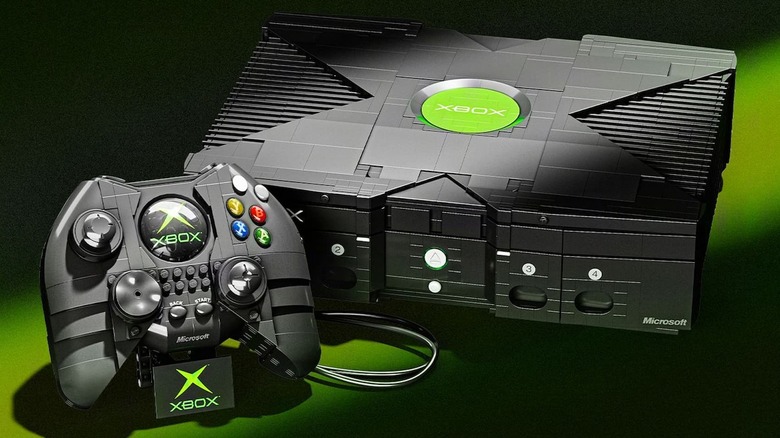
Microsoft will finally let you turn off Quick Resume for individual games

Microsoft is rolling out a number of Xbox Series X|S updates to those on its Xbox Insiders program, and one of them has been requested by the community for years. You’ll soon be able to disable the Quick Resume feature for specific games, meaning they'll boot up fresh each time you launch them.

As a reminder, Quick Resume is a feature that Microsoft introduced with its current generation of consoles. It lets you suspend a number of games simultaneously so they’re running in the background even when the console is turned off. When you want to return to a game that supports Quick Resume, it'll drop you back in exactly where you left it within a few seconds, often even when it’s been months since you last played that game. It’s a pretty neat feature, and still impressive more than five years since the Series X|S launched.

But over the years, players have discovered that Quick Resume isn’t ideal for every title, particularly always-online games. When you take these out of their suspended state, they’ll often shout at you for letting them disconnect, forcing you to manually close the game down properly and then relaunch it. Other games just don't seem to get on with it for a variety of other reasons. You can manually close any game you want at any time, but it takes a few more button presses than Quick Resume, so it’s easy to forget.

The latest Xbox update finally addresses this, letting you turn off the feature on a game-by-game basis by selecting "More Options" and then "Manage Quick Resume" on a game tile. That way you can ensure it’s only enabled for single-player titles in which the ability to instantly pick up where you left off is very appealing. It’s a change that has gone down well with ex-Xbox icon Larry “Major Nelson” Hryb, who said on X that he first requested it five years ago when still employed by Microsoft.

Microsoft is also adding more customization options to the Xbox dashboard in the upcoming update. You’ll be able to create custom background colors, rather than having to select one of the existing color options, while the amount of Groups you can add to your Home screen has been increased from two to 10. These can be reordered in the same way you reorder individual game tiles.

Select Xbox Insiders can start using the new features now, before they’re eventually made available to everyone.

This article originally appeared on Engadget at https://www.engadget.com/gaming/xbox/microsoft-will-finally-let-you-turn-off-quick-resume-for-individual-games-174639730.html?src=rss

Buddy’s Wind-Up Mood Lamp Is the Anti-App We All Need

Think about the last time you had to download an app just to turn on a light. Or pair a Bluetooth device, wait for it to connect, tap through a settings menu, and finally get it to do the one thing you actually wanted: cast a soft glow across your room. At some point, the technology built to make things simpler started adding more steps than it removed.

Chevy Chanpaiboonrat had a different idea. The Bangkok-born, New York-based industrial designer behind Buddy Design created a portable mood lamp with exactly one control: a single mechanical winding key, positioned at the back of the lamp body. No app. No voice commands. No wireless pairing required. Just a key, a twist, and light.

Designer: Chevy Chanpaiboonrat for Buddy Design

The Buddy lamp collection, which includes soft, animal-like forms named Puppy and Teddy, started as a thesis project at Parsons School of Design, where Chanpaiboonrat graduated with the School of Constructed Environment Honors award in 2023. That origin matters. The concept wasn’t rushed to market; it was worked through carefully, with the tactile interface emerging from the design process itself. The lamps offer eight science-informed gradient light modes, each grounded in color psychology and designed to support calm, focus, or better sleep. And the way you access all of that is the small key placed exactly where a tail would sit on the lamp’s animal-like body, a detail that manages to be both genuinely functional and quietly delightful.

Both Puppy and Teddy share the same core design language: soft, rounded silhouettes, a matte finish, and a compact footprint that sits comfortably on a nightstand or desk without demanding attention. Puppy leans slightly slimmer and more upright, while Teddy carries a rounder, more settled form. The proportions are deliberately drawn from classic wind-up toys, which gives each lamp a familiarity that’s hard to place at first. They don’t look like tech products. They look like objects you’d pick up and hold, and that instinct turns out to be exactly the point.

The interaction follows the form. Pressing and holding the key turns the lamp on. A short press cycles through three brightness levels. Rotating it transitions smoothly between the eight gradient light colors, moving from warm amber and soft pink through to cooler blues and greens. Each lamp runs up to ten hours on a full charge via USB-C, and the whole thing weighs just over a pound, making it genuinely portable rather than portable in name only. The physical proportions, the matte texture, the placement of that key: none of it feels accidental. The design is doing the emotional work that most products outsource to a companion app.

The brand describes itself as a tactile companion for overstimulated minds, which is a phrase that lands a little harder the more you think about it. The lighting is rooted in color psychology and wellness research, but what makes Buddy feel different isn’t the science. It’s the ritual. Winding the key is a small, physical action that no other object in your apartment is likely asking you to do. Every other device in your space wants your engagement through a screen. This one asks for something older and more direct.

Chanpaiboonrat has been running Buddy Design as a solo female founder since graduating from Parsons, and the brand has since earned the iF Design Award 2026, appeared at Wanted Design in New York, and found stockists including Lumens. For a one-person studio built on the premise that a winding key beats a smartphone app as an interface, that kind of traction is meaningful. It suggests the market is responding to the same exhaustion the product was designed around.

Part of what makes this feel timely is that Buddy isn’t trying to lead a revolution. It’s making a small, specific correction. A suggestion that not everything needs to be connected to everything else, and that lighting a room doesn’t require a subscription or a firmware update. Sometimes a winding key is exactly enough, and the fact that that feels like a refreshing thought is probably worth paying attention to.

The post Buddy’s Wind-Up Mood Lamp Is the Anti-App We All Need first appeared on Yanko Design.

Double Fine’s Kiln pops out of the oven and onto PC, Xbox and PS5 on April 23

Double Fine is following up on Keeper — one of our favorite games of 2025 — with Kiln, a “multiplayer online pottery party brawler.” The game was showcased during Xbox’s Developer Direct stream in January and now it has a release date. It’s coming to Xbox Series X/S, Xbox on PC, Xbox Cloud, PlayStation 5 and Steam on April 23. Xbox said Kiln will be Handheld Optimized from the jump. 

In Kiln, you'll use a virtual pottery wheel to shape a piece of clay into a vessel and then decorate it. The size and shape will determine how much health you have, the water capacity of your vessel and your speed. For instance, smaller pots will be able to attack faster, while a larger, slower pot might be more powerful. The shape you opt for (bowl, bottle, chalice and so on) determines which special ability you have. The decorations are purely cosmetic.

In the main Quench mode, the aim is to gather water and be the first team of four to put out the other side's kiln three times (which sounds a bit like a MOBA to me). Doing so won't exactly be straightforward, of course. When you run into an enemy vessel, you can try to smash it, and they'll probably attempt to do the same to you.

In one map, you'll be able to pour water onto sponges to create barriers. In another, there's a "disco dance floor that compels players to dance on the flashing squares for a short while." There's no in-game voice chat, but players could easily get around that using their console's built-in party features or the likes of Discord.

An open beta will take place on Steam from April 9 to 11. Pre-orders will go live at that time as well. The base version of the game is $20. A $30 "Fired Up" edition includes premium cosmetic options as well as extra chips, the in-game currency that's used to unlock customizations. Otherwise, chips can only be earned through gameplay.

This article originally appeared on Engadget at https://www.engadget.com/gaming/xbox/double-fines-kiln-pops-out-of-the-oven-and-onto-pc-xbox-and-ps5-on-april-23-171433966.html?src=rss

The Spider-Man: Brand New Day trailer is filled with MCU cameos

We just got our first trailer for Spider-Man: Brand New Day, the next big Marvel film. This is the fourth installment led by Tom Holland and follows the multiversal shenanigans of Spider-Man: No Way Home.

I'm about to get into some spoilers, for those still working through the MCU catalog. No Way Home ended with the entire world forgetting about the existence of Peter Parker, so this new movie will deal with the fallout from that. His whole support system is gone, though it looks like he still checks in on besties MJ and Ned from time to time.

Peter Parker may be lonely, but he's not alone in the film. He's teaming up with the Punisher, who is still played by Jon Bernthal after returning to the role in Daredevil: Born Again. In the comics, Spider-Man and the Punisher are long-time work buddies and occasional sparring partners. As a matter of fact, Frank Castle made his introduction in a Spider-Man comic that was published in 1974.

Bruce Banner also shows up in the trailer, potentially as Parker's professor. Mark Ruffalo is returning to the role, but we don't have any confirmation that he'll turn into the Hulk. It's worth pointing out that this is the regular human Banner, and not the hybrid version that's been popping up in recent MCU projects.

The trailer even highlights an iconic Spider-Man villain. Michael Mando is playing Scorpion, which is a pretty deep MCU cut. The character was teased all the way back in Spider-Man: Homecoming. The footage also shows Spidey battling ninjas that look suspiciously like the Hand, who were last seen in The Defenders on Netflix. This lends credence to rumors that Daredevil could be appearing in the film.

We don't have all that long to wait. Spider-Man: Brand New Day premieres in theaters on July 31. This is the final MCU film before the long-awaited Avengers: Doomsday, which hits cinemas in December.

This article originally appeared on Engadget at https://www.engadget.com/entertainment/tv-movies/the-spider-man-brand-new-day-trailer-is-filled-with-mcu-cameos-170215452.html?src=rss

This Baby Walker Grows With Your Child for 6 Years in 4 Different Ways

Most baby walkers have a shelf life measured in months. A 7-month-old wobbles through the living room gripping the handle, and by the time that same child turns two, the walker is already in a closet somewhere. The furniture cycle in a home with small children tends to follow that rhythm: buy, use briefly, replace with something else entirely.

The Safari Multifunctional Kids Furniture concept tries to interrupt that pattern by designing one piece that stays useful across the first six years of a child’s life. The name “Step-N-Play” gives away two of its functions without mentioning the third or fourth. It is, depending on the child’s age and the day’s agenda, a walker, a climbing unit, a play table and chair, and a toy storage solution.

Designer: Bharti Upadhyay

At its earliest stage, the walker is built for children between 6 and 18 months, with a frame measuring approximately 600 x 400 x 500 mm. The structure combines wood, ABS plastic, and soft silicone grips, with a 95-degree backrest angle designed for infants who are not yet seated with full stability. An anti-tip base and anti-pinch safety gaps cover the more obvious hazards of putting a barely mobile child in contact with a moving object.

As the child grows into the 1-to-3 age window, the same structure becomes a climbable stair unit. From ages 2 to 6, it transitions again into a play table and chair. A built-in storage compartment for toys and books operates across all configurations. The manufacturing approach pairs CNC-cut wood with injection-molded ABS plastic, a combination suited to years of contact with small hands and the occasional harder object.

The safari animal inspiration shows up in organic silhouettes and surface language rather than in literal animal sculptures attached to the frame. Smooth curves, generous fillets, and chamfered grooves define the form. The pastel color palette, wooden handles, and textured sensory balls read as a considered aesthetic choice rather than an afterthought, which matters in a living space where parents also have to look at the thing.

Safari is a student concept at this stage, so the harder questions remain open. How the ergonomics hold across such a wide age range, how the mechanical transitions between configurations actually work in practice, and whether a single object can genuinely serve a 7-month-old and a 6-year-old with equal competence rather than adequacy are things a physical prototype would need to answer.

The post This Baby Walker Grows With Your Child for 6 Years in 4 Different Ways first appeared on Yanko Design.