Upgrade Your WiFi with Unmatched Privacy and Safe Connectivity at Home or Anywhere in the World

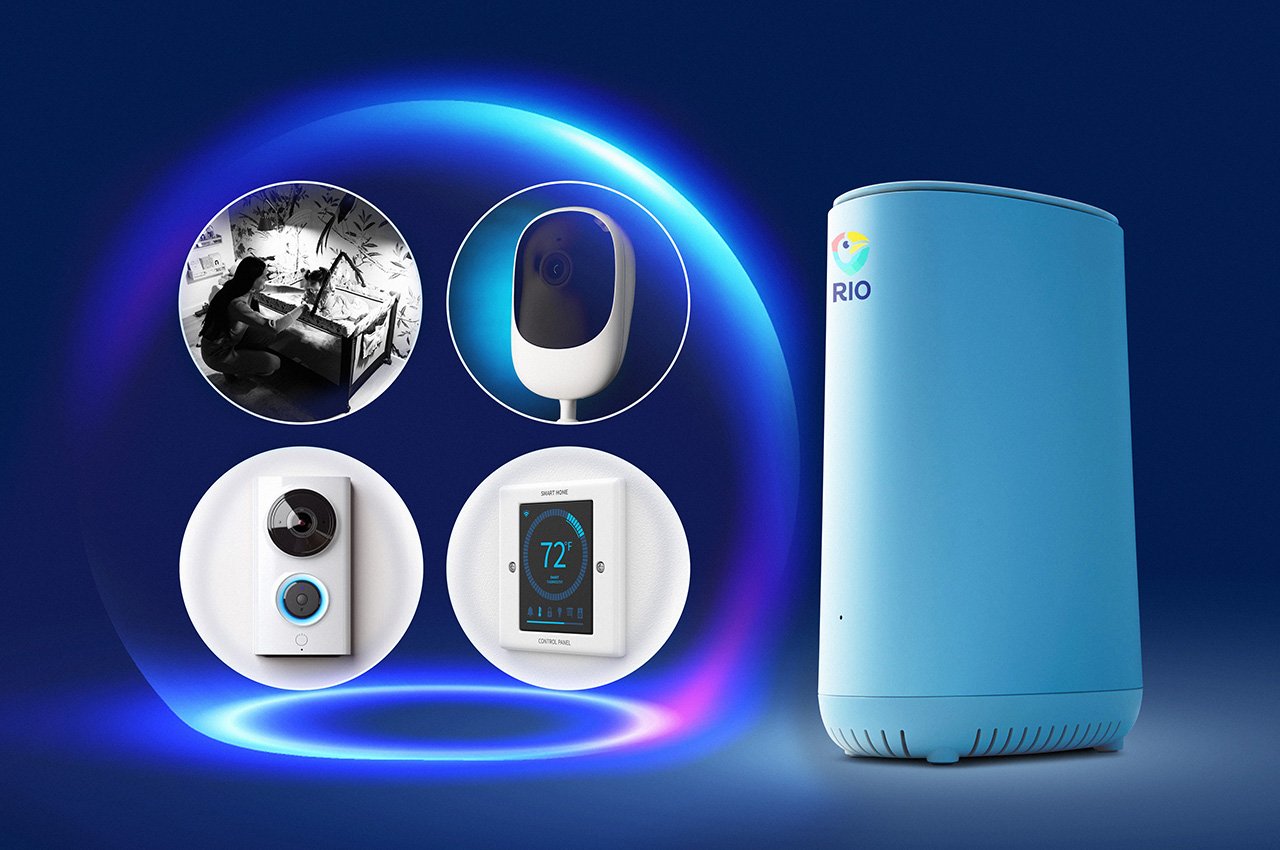
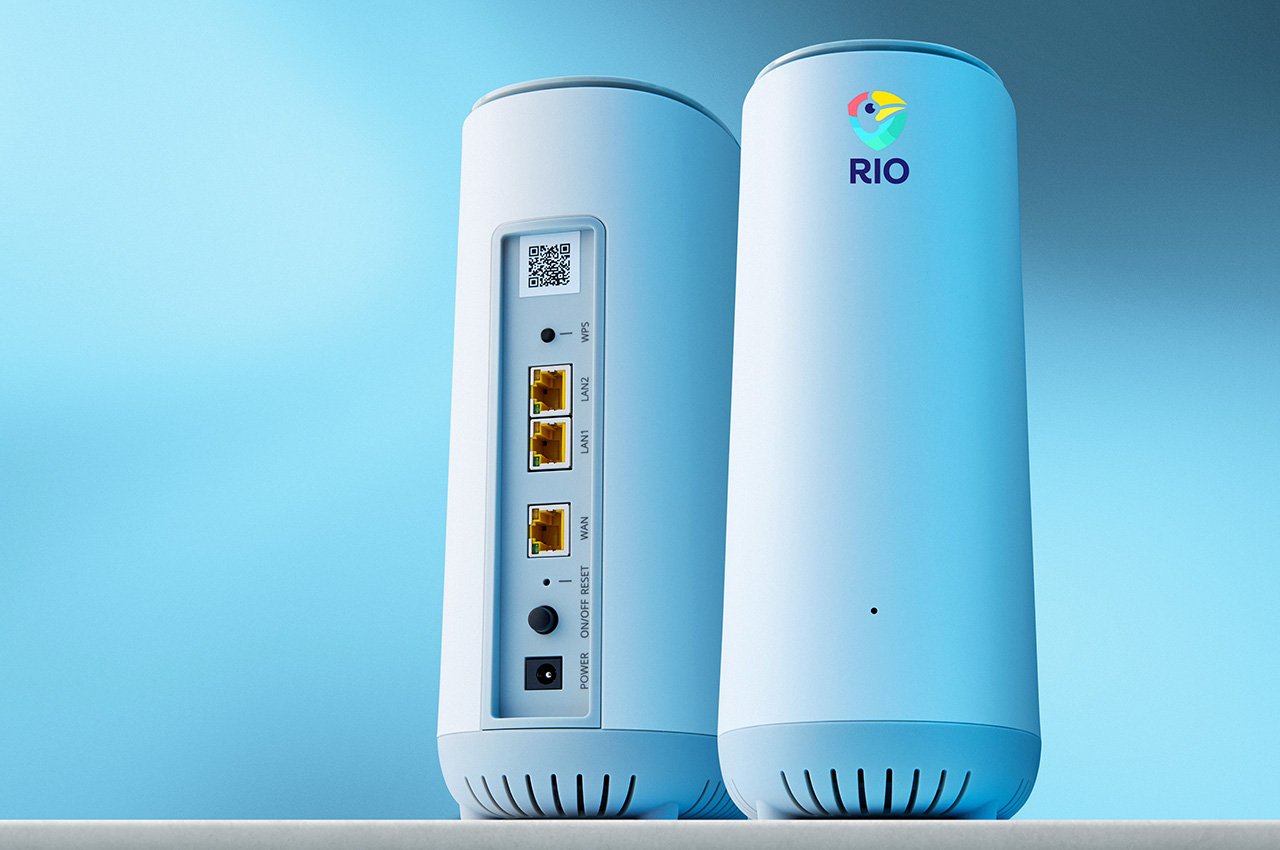
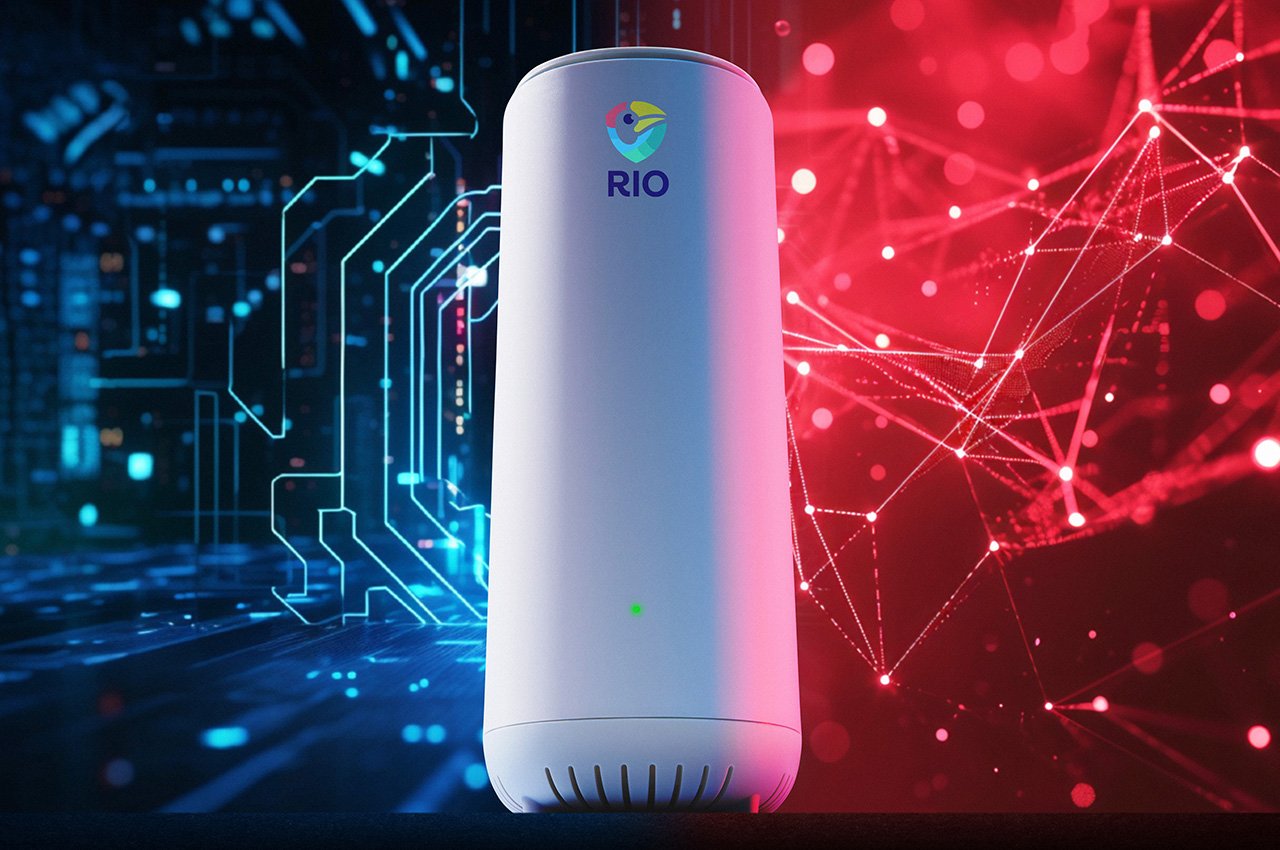
The Rio system, developed by executives at Foxconn, Intel, PC Matic, and InFocus transforms an ordinary WiFi router into a fortified security hub, aptly dubbed the “Fort Knox” of WiFi routers. This transformation addresses a significant vulnerability in personal internet security: the simple fact that traditional routers are protected by only a password, which has become an inadequate defense against cyber threats.

Designer: Rio Router

Click Here to Buy Now: $299 $549 ($250 off). Hurry, only 9/355 left! Less than 72 hours left.
Rio advances beyond basic security measures by incorporating features that control device access on a granular level. It only allows devices that have been pre-approved by the user to connect to the network. Any unapproved device attempting to connect is isolated in a holding area until explicitly allowed by the user via the Rio app. This proactive monitoring and approval system mimics the security checks of a VIP club bouncer, ensuring that only verified devices gain entry and interact within the network.

The company states that “Rio creates a secret code that hides and protects everything about your gadgets when they’re online. It scrambles up their names, where they are, and what they’re saying, so nobody can snoop on your online life.”
This indicates that advanced encryption is used to enhance the privacy and security of communications across your network by obscuring details about connected devices. This encryption safeguards device identities, physical locations, and communication data, ensuring that even if hackers intercept this information, they cannot understand or utilize it without the necessary decryption key, which is securely held by the Rio system and its legitimate users. This process is crucial for preventing potential eavesdroppers from accessing sensitive data, thereby protecting your network even if it is compromised and ensuring that privacy and security are maintained at all times. Given that a startling 80% of consumers have reportedly had personal information leaked onto the dark web, such encryption is beneficial and essential for safeguarding personal data against cyber threats.

This system adopts a method similar to a digital fortress. Using SecureRoom™ technology segments the network into up to 16 distinct compartments. Each compartment is isolated, preventing a compromised device from affecting the entire network.

Additionally, the Rio system is equipped with smart DNS and web filtering capabilities that proactively prevent access to suspicious or harmful websites, enhancing overall online safety. The Rio app facilitates real-time alerts and management, giving users complete control over their network from anywhere in the world.

Moreover, Rio addresses common household concerns about internet safety with built-in features that filter out unsafe web content and block potential phishing sites, creating a safer browsing environment for all family members. Its sleek design and easy setup mean that Rio protects and integrates seamlessly into your home or office environment.

Rio’s guest mode feature improves home WiFi security by providing visitors with a separate access point, making sure the main network stays protected. Whether hosting family gatherings, client meetings in home offices, community events, or children’s playdates, Rio connects each guest to the internet through a special “guest room.” This setup protects your primary network and offers guests convenient and temporary WiFi access. Once they leave, Rio automatically revokes their access, and if they need to reconnect, they must ask permission, effectively acting like a security guard for your WiFi. This seamless integration of guest access into your home network provides both protection and ease, accommodating a variety of hosting scenarios without compromising your network’s integrity.

Rio’s intuitive interface in its mobile app enhances the user experience by simplifying network management. Users can effortlessly adjust settings, monitor network activity, and switch geographic locations without the complexity of traditional VPN configurations. This feature is particularly valuable for users who enjoy international content or travel frequently, as it provides continuous access to home services. Also, Rio allows users to watch shows and movies from anywhere in the world without needing to set up a VPN on each device. Just connect to Rio, and instantly, your internet presence is invisible, assuring that your smart gadgets like Alexa, thermostats, baby monitors, cameras, and doorbells remain hidden from prying eyes, keeping your internet life private and safe.

Click Here to Buy Now: $299 $549 ($250 off). Hurry, only 9/355 left! Less than 72 hours left.

The post Upgrade Your WiFi with Unmatched Privacy and Safe Connectivity at Home or Anywhere in the World first appeared on Yanko Design.

Meta is testing cross-posting from Instagram to Threads

Meta is testing a new way to boost engagement on Threads using Instagram. The company is now testing the ability to cross-post photos from Instagram to Threads. Meta confirmed the experiment after a handful Threads users noticed the setting crop up in Instagram (TechCrunch was first to report the change).

According to the company, cross-posting from Instagram to Threads is optional, though users can opt to have automatically all new photo posts shared to their Threads account as well. (Those who are part of the test can tweak cross-posting settings in the Instagram app.)

Meta has been testing a number of features to boost the growth of Threads, which currently has 150 million users. The company has also experimented with cross-posting from Facebook to Threads and promotes Threads posts directly in Facebook and Instagram feeds, regardless of whether they use the app. It’s also encouraging creators to be more active on the app. Meta has been offering bonuses to creators in exchange for high-performing posts on Threads.

This article originally appeared on Engadget at https://www.engadget.com/meta-is-testing-cross-posting-from-instagram-to-threads-234245961.html?src=rss

CubeSeries pop-up trailer with aluminum body is strong, lightweight, and all-weather camping solution

Pop-up roof campers have their own advantages of space and towing convenience. Add to that the cost effectiveness of this camping solution and you arguably have the most perfect option for a small group of friends or a family on a budget. On that course is the Cube Series pop-up roof trailer; a home-away-from-home for the campers desirous of experiencing the enhanced version of all-season camping with the security and reliability of the best.

‘Strong, lightweight, and waterproof,’ the Cube Series pop-camper is a new kid on the market that presents a worthwhile solution to the tent-like canvas-lined pop-up roof campers that are susceptible to elements and make the unit slightly weighty. The new CubeSeries trailer is hard-sided, canvas-free pop-camper which is made from industry grade aluminum, resilient composites, and numerous alloys to ensure robustness and durability.

Designer: Cube Series

Courtesy of the aluminum construction overlaid with a fiberglass roof, the 17.6-foot CubeSeries trailer is lightweight at 2730 lbs, yet it features sturdiness (both in flat and camp mode) seldom seen in campers of this kind. The standout feature of this foldable camper still is the multipurpose roof system that allows the rig to grow from a towable low-rider during the day to a full backcountry home by opening up without much human intervention. The system thrives on a set of 12V electric actuators lifting the roof up while you fold out the side walls together in support.

The folding system is patent-pending, but according to Cube Series, it makes sure the camper can haul behind your truck without creating much drag, yet reaching where you like it, and then effortlessly gives you (in minutes) a space you can call home in the middle of nowhere, no matter the weather outside. The tough structure walls are provided with windows for ventilation and light, while the structure is approved waterproof and secure to withstand the elements and harsh weather conditions.

When open, the hard roof of the camper pops up to increase the height to an interesting 9.8 feet, leaving a clear 7.5-foot headroom. This makes ample space inside the trailer for a family of four or a small group of friends to live together. For this to be an inhabitable area for so many people, Cube Series has actually made some interesting interior tweaks.

The fully equipped space is furnished with a double bed on one side, and a wraparound sofa on the other. In the middle is the full-functional kitchen and a collapsible wet bathroom with a standing-height shower cordoned off with curtains. The dining lounge – comprising a sofa and a folding table – allows the table to drop down by evening creating an additional bed for two people. Handy for all-season camping, the four-person trailer also receives some off-grid capabilities to help increase the days in the outdoors from a weekend to a few weeks.

To that accord, the CubeSeries trailer comes with 94.5 liters of fresh and gray water storage, 53 liters of LPG to run the cooking business, and a 12V water heater with a 19,000-BTU air furnace to keep you rolling in the colder months. An electrical system comprising a DC truck-to-battery charger, AGM battery, and 30-A shore power out, accompanied by a 2,000-W inverter hooked to 1,140-W solar panels keeps the trailer powered at all times. The entire package starts at $55,730, though there is the option to include AC, more solar charging options, and, of course, more off-roading capacities as add-ons.  

The post CubeSeries pop-up trailer with aluminum body is strong, lightweight, and all-weather camping solution first appeared on Yanko Design.

Should You Upgrade to the Latest iPad Pro with M4? A Critical Upgrade Analysis

iPad Pro with Magic Keyboard

I’ve been using my existing iPad Pro powered by Apple’s very first M1, along with the Magic Keyboard and Apple Pencil. Never once does it even stutter, nor have I felt like the performance was sluggish. However, there are a few physical design aspects that I would love to change on the iPad Pro device itself, including the Magic Keyboard and additional features on the Apple Pencil. I’ve never had the urge to upgrade to a new iPad Pro, but I’ve had the urge and need for a second MacBook. Whether it’s the Air or Pro is yet to be determined. Now that the all-new iPad Pro, Magic Keyboard, and Pencil Pro have arrived, I’m starring at a new companion that could last me an entire decade before I would need to upgrade.

Designer: Apple

My colleague Sarang and I have covered the iPad Pro news here, as well as the breakdown of the new Apple Pencil Pro vs. the second-generation Apple Pencil. Here’s a brief summary to catch you up in case you don’t get over there:

All-new iPad Pro

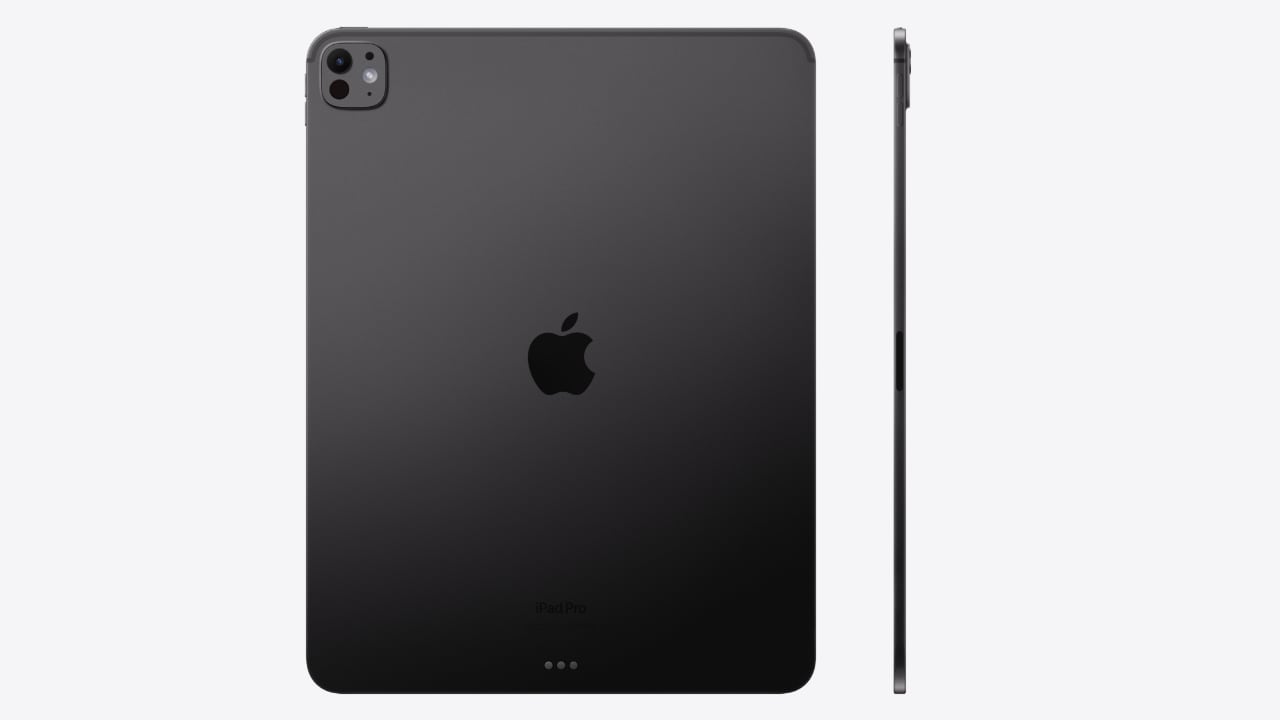
  • Design & Colors: The new thin, light design is available in silver and space black in 13-inch and 11-inch models.
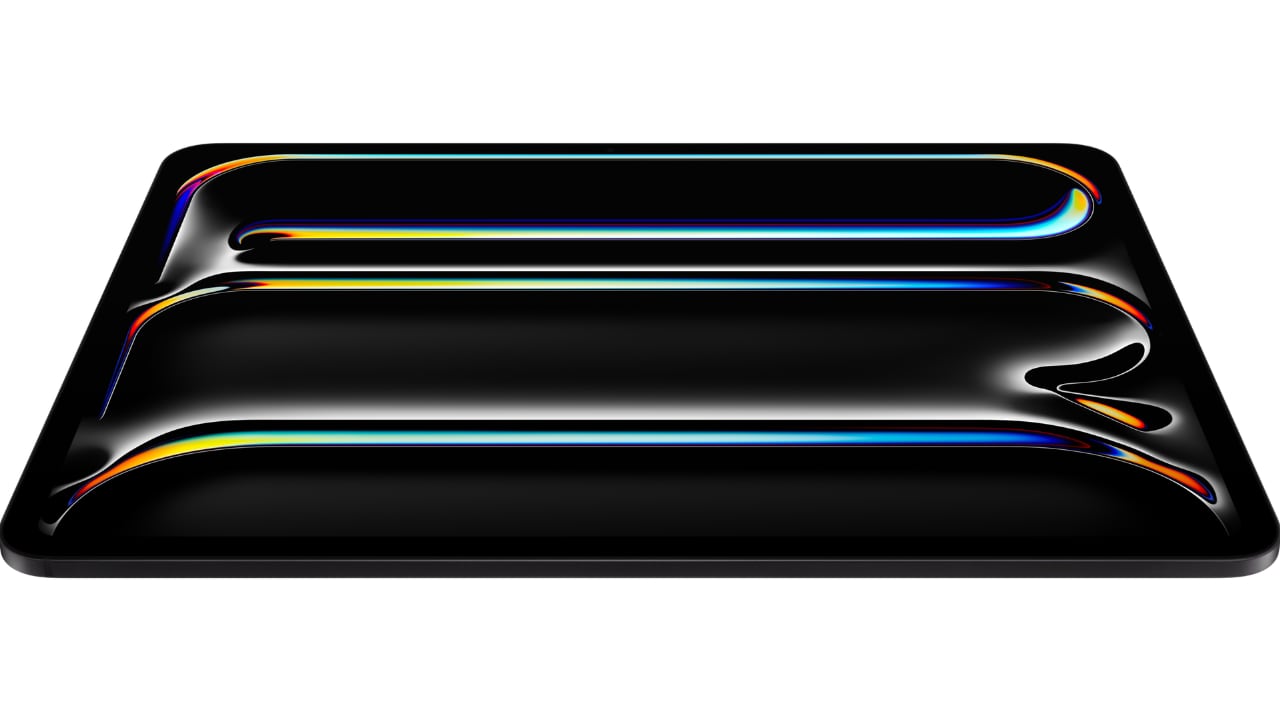
  • Display: Features the advanced Ultra Retina XDR with tandem OLED technology for exceptional visuals.
  • Performance: It is powered by the new M4 chip, which offers significant performance improvements and all-day battery life; it includes enhancements in CPU, GPU, and a new display engine.
  • AI Capabilities: It is equipped with a powerful CPU, GPU, higher bandwidth memory, and the most advanced Neural Engine for superior AI performance.
  • Accessories: Includes new Apple Pencil Pro for enhanced interactions and a redesigned lighter Magic Keyboard.
  • Pricing: The 11-inch Wi-Fi model starts at $999, and the 13-inch Wi-Fi model at $1,299. Additional options include Wi-Fi + Cellular models and special education pricing.
  • Availability: Orders will start today, with in-store availability starting Wednesday, May 15.

The remaining decision is determining which size of the iPad Pro is best for you, especially if you’re considering upgrading or switching from another brand. However, before we discuss the size, let’s first examine the new Magic Keyboard. This accessory is crucial in determining if the new iPad Pro can effectively replace a 13-inch MacBook Air.

Magic Keyboard: Transforming the iPad Pro into a Laptop Contender

I’ve been using the current-generation Magic Keyboard with my iPad Pro. Although it significantly enhances my productivity, it has its shortcomings. When fully extended, the first row of keys is partially obscured by the lower part of the device, which can be frustrating. Additionally, the keyboard’s design and materials don’t quite match the sleekness of the iPad Pro, making it seem somewhat of an afterthought.

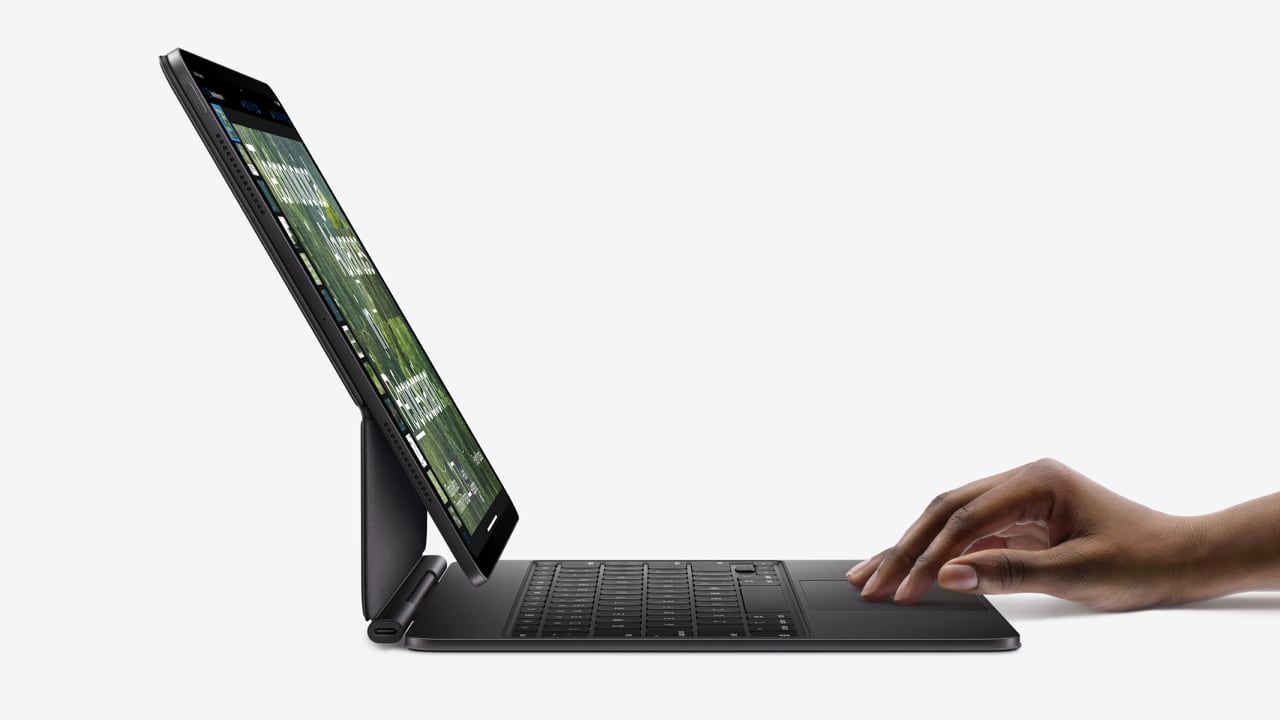
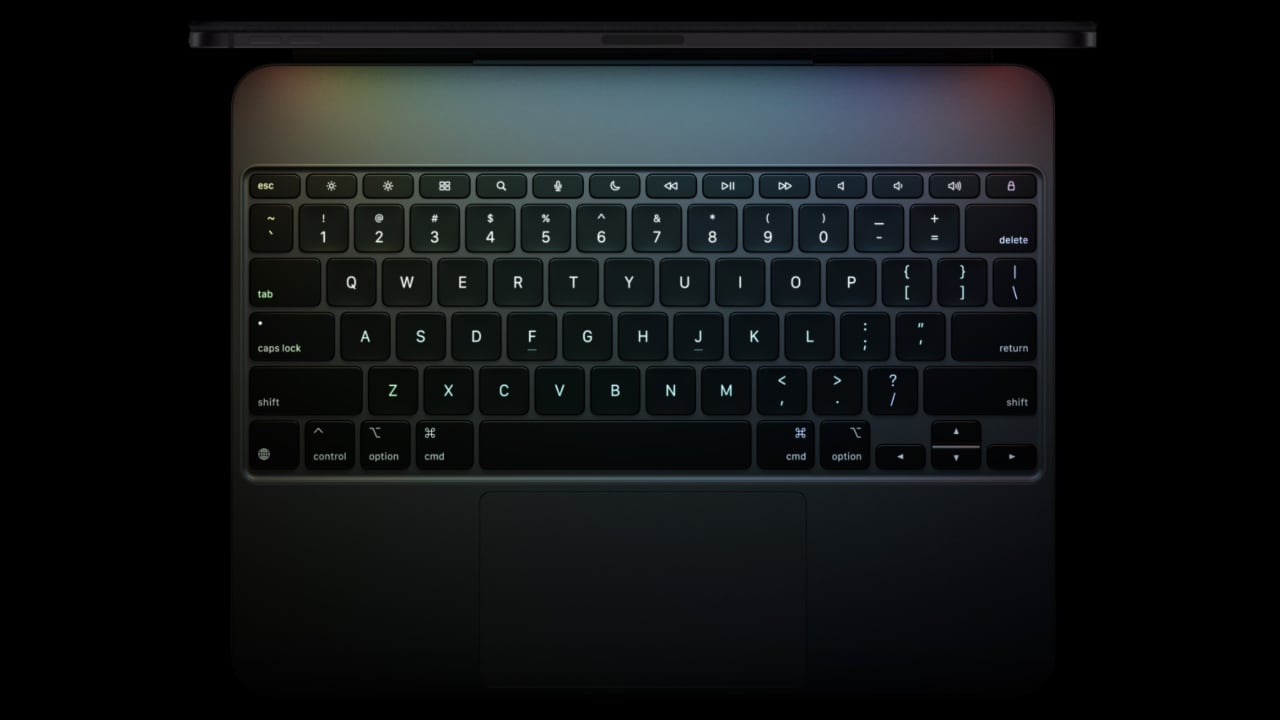
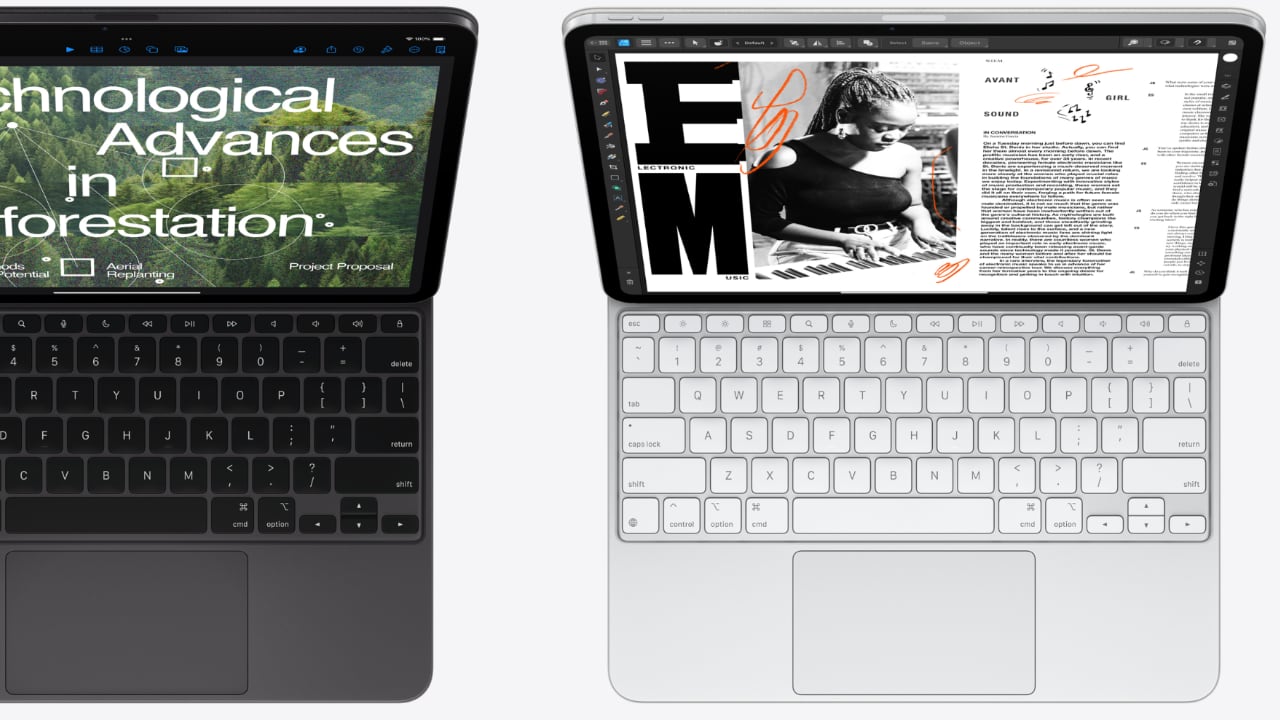
However, the introduction of the new Magic Keyboard for the iPad Pro appears to address my main concerns. The inclusion of a full function row above the number keys is transformative. This new 14-key function row provides easy access to controls such as screen brightness and volume, significantly boosting usability. The keyboard now complements the iPad Pro not only in its sleek profile and machined aluminum but it also feels like an integral part of the setup.

The redesigned keyboard also features backlit keys, which are ideal for any lighting condition, and its adjustable angles make it easy to find the optimal viewing position. A significant upgrade is the larger, redesigned glass trackpad with haptic feedback, enhancing responsiveness and intuitiveness—ideal for navigating large spreadsheets or highlighting text. Apple mentioned during the product announcement that the precise feedback from the trackpad will make every gesture—from scrolling and swiping to using Multi-Touch gestures—feel as natural as if you were using a MacBook.

Although I haven’t had the chance to test this out yet, Apple’s announcement suggests this should dramatically improve the user experience. It’s important to underscore the significance of a well-designed and constructed keyboard for the iPad, especially when in productivity mode, like during extensive writing sessions. The layout and key travel are crucial for comfort and efficiency. I’m eager to put this keyboard to the test and will share my findings in a detailed review later. Additionally, there are times when I prefer something slimmer and more streamlined, and that’s where the Smart Folio for iPad Pro comes in.

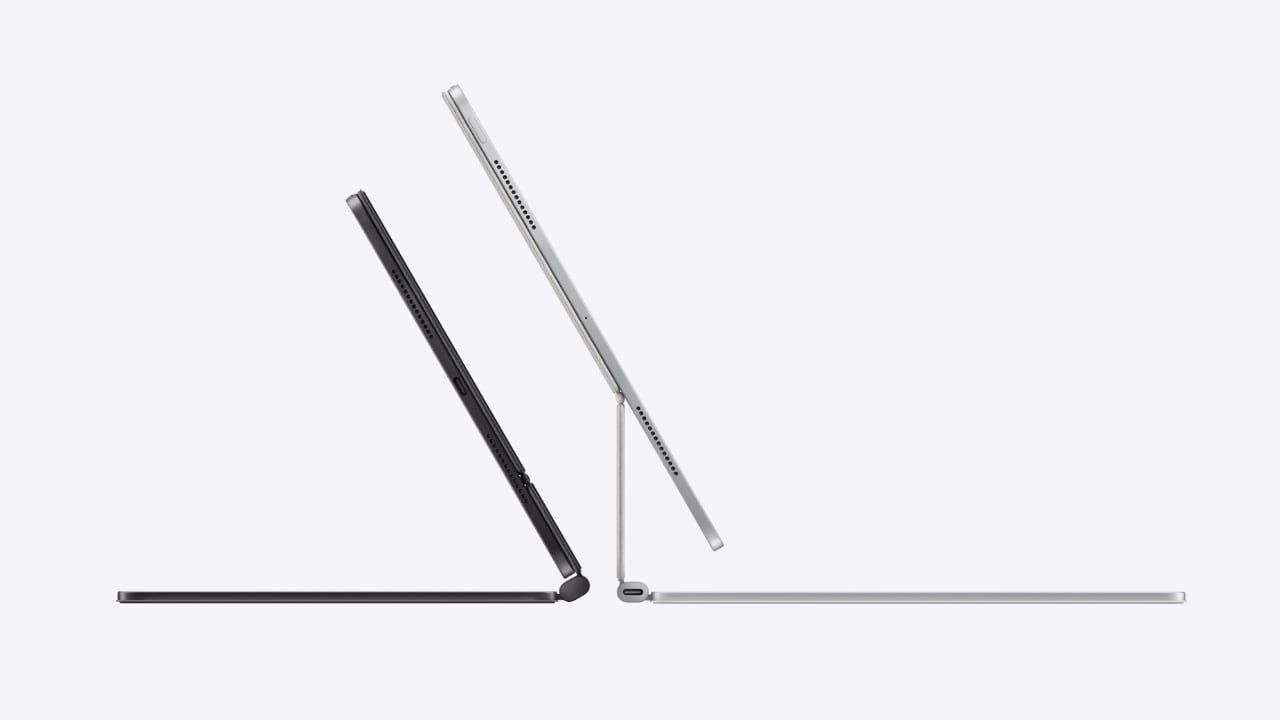
The new Smart Folio for the iPad Pro is the perfect companion. It attaches magnetically and now supports multiple viewing angles for reading, watching shows, typing, or making FaceTime calls. This versatility makes it ideal for various use cases, from viewing media to typing on the go. The Smart Folio is available in black and white, and it is a stylish new denim color. It is priced at $79 (U.S.) for the 11-inch model and $99 (U.S.) for the 13-inch model.

Overall, the updates to the new Magic Keyboard ($349) seem to rectify previous shortcomings and introduce improvements that integrate seamlessly with the iPad Pro experience. It’s slim, lightweight, and portable, featuring a floating cantilever design for smooth adjustability and stylish protection.

The toughest decision: 11-inch or 13-inch iPad Pro?

Practically speaking, the 13-inch model is a no-brainer due to its larger-screen real estate. Yet, there are times when I find myself wishing for the more portable 11-inch iPad Pro, especially when I’m working out of our Tokyo office where my business partner, Ewdison Then, uses the smaller pre-M1 iPad Pro. It’s also important to note the $300 price difference between the two models, with an additional $100 if you opt for the nano-textured glass. Keep in mind that choosing the nano-textured glass requires an upgrade to a 1TB or 2TB configuration.

2024 Apple iPad Pro: 11-inch and 13-inch model with Apple Pencil Pro

I understand that nothing lasts forever, but if you’re considering an iPad Pro over a fully equipped MacBook Air—which is about $800 cheaper—why not go all out? Choosing the fully upgraded 13-inch iPad Pro, which includes 2TB of storage, nano-texture glass, Magic Keyboard, WiFi+Cellular, and the new Apple Pencil Pro, might seem expensive at $3000, but it delivers a comprehensive package with top-tier functionality and performance. If you don’t need all the extras, you can opt for a more modest 512GB configuration with WiFi-only, Magic Keyboard, and Apple Pencil Pro for under $2000, aligning closely with the cost of a full-spec MacBook Air. Personally, my preference leans towards the former, though this heavily depends on the enhancements that iPadOS might offer in terms of multitasking features and app layout compared to MacOS. As it stands, we’ll have to wait for WWDC 2024 on June 10 to see what’s really possible.

Ultimately, the decision comes down to want versus need. Do I need the new iPad Pro? Not exactly, as my three-year-old model still works – perfectly I might add. I emphasize its age and mint condition because the impressive performance of the M1 chip and the build quality make me believe that an iPad Pro powered by the new M4 chip could potentially last me a decade before needing an upgrade.

The post Should You Upgrade to the Latest iPad Pro with M4? A Critical Upgrade Analysis first appeared on Yanko Design.

OpenAI partners with People publisher Dotdash Meredith

OpenAI is partnering with another publisher as it moves towards a licensed approach to training materials. Dotdash Meredith, the owner of brands like People and Better Homes & Gardens, will license its content for OpenAI to train ChatGPT while the publisher will use the AI company’s models to boost its in-house ad-targeting tool.

As part of the arrangement, ChatGPT will display content and links attributed to Dotdash Meredith’s publications. It also provides OpenAI with fully licensed training material from trusted publications.

That’s a welcome change after the company got in hot water for allegedly using content for training purposes without permission. The New York Times and Alden Capital Group (owner of The Chicago Tribune, New York Daily News and the Orlando Sentinel) have sued the ChatGPT maker, accusing it of using its content without permission. Comedian Sarah Silverman and a conspiracy-mongering car salesman (the latter for different reasons) have, too.

“We have not been shy about the fact that AI platforms should pay publishers for their content and that content must be appropriately attributed,” Neil Vogel, Dotdash Meredith CEO, wrote in a press release. “This deal is a testament to the great work OpenAI is doing on both fronts to partner with creators and publishers and ensure a healthy Internet for the future.”

Before the Dotdash Meredith deal, OpenAI struck an agreement with The Financial Times. “It is right, of course, that AI platforms pay publishers for the use of their material,” the paper’s CEO, John Ridding, said in a statement last month.

Dotdash Meredith, which also owns Investopedia, Food & Wine, InStyle and Verywell, will use OpenAI’s models to supercharge its D/Cipher ad-targeting tool. The publisher says its advertising system “connects advertisers directly to consumers based on the context of content being consumed, without using personal identifiers like cookies.” That’s an industry-wide shift on the horizon, as Google is moving to a cookie-less future — albeit later than initially advertised.

This article originally appeared on Engadget at https://www.engadget.com/openai-partners-with-people-publisher-dotdash-meredith-212832821.html?src=rss

Apple iPad Pro with M4 Chip Announced, Price and Availability

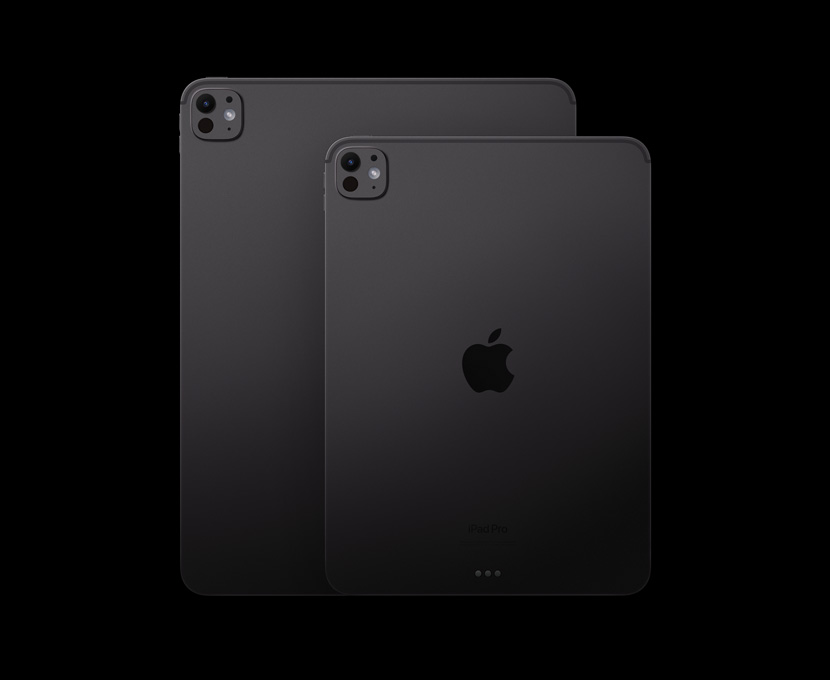
Apple has recently introduced the latest iteration of its iPad Pro, featuring substantial upgrades that significantly enhance both performance and visual experience. This announcement, made during Apple’s special event, showcases the introduction of the new M4 chip and two OLED panels, among other impressive enhancements.

Enhanced Performance with the M4 Chip

Central to the new iPad Pro is the M4 chip, which marks a significant advancement in Apple’s hardware technology. This chip is four times faster than the previous M2 chip, offering unprecedented speed and efficiency. This boost in performance makes the iPad Pro more capable than ever for professional-grade tasks, high-end gaming, and intensive multimedia projects.

Revolutionary Display Technology

The new iPad Pro models feature two OLED panels, which are not only thinner than the previous LCD panels but also superior in display quality. These OLED screens provide an exceptional brightness level of 1000 nits for standard HDR content and can peak at 1600 nits for HDR, ensuring vivid, lifelike images under various lighting conditions.

Camera and Connectivity Enhancements

Apple has also upgraded the iPad Pro’s camera system, equipping it with a 12MP front-facing camera that promises improved clarity for video calls and content creation. For connectivity, the new models include 5G capabilities with eSIM technology, offering faster internet speeds and better network performance on the go. The addition of 5G is a game-changer for professionals and creatives who need reliable connectivity wherever they are.

Pricing and Availability

The pricing for the new iPad Pro starts at $999 for the 11-inch model and $1,299 for the 13-inch model, both equipped with 256GB of storage. For those requiring mobile connectivity, the 5G cellular models are available for an additional $200, featuring eSIM technology for enhanced connectivity. Go here to preorder today. Units expected to ship May 15, 2024.

The post Apple iPad Pro with M4 Chip Announced, Price and Availability appeared first on OhGizmo!.

The Apple Vision Pro is already playing a critical role in the Automotive, Filmmaking, and Healthcare industry

Who knew that Porsche would become the Vision Pro’s most valuable customer?!

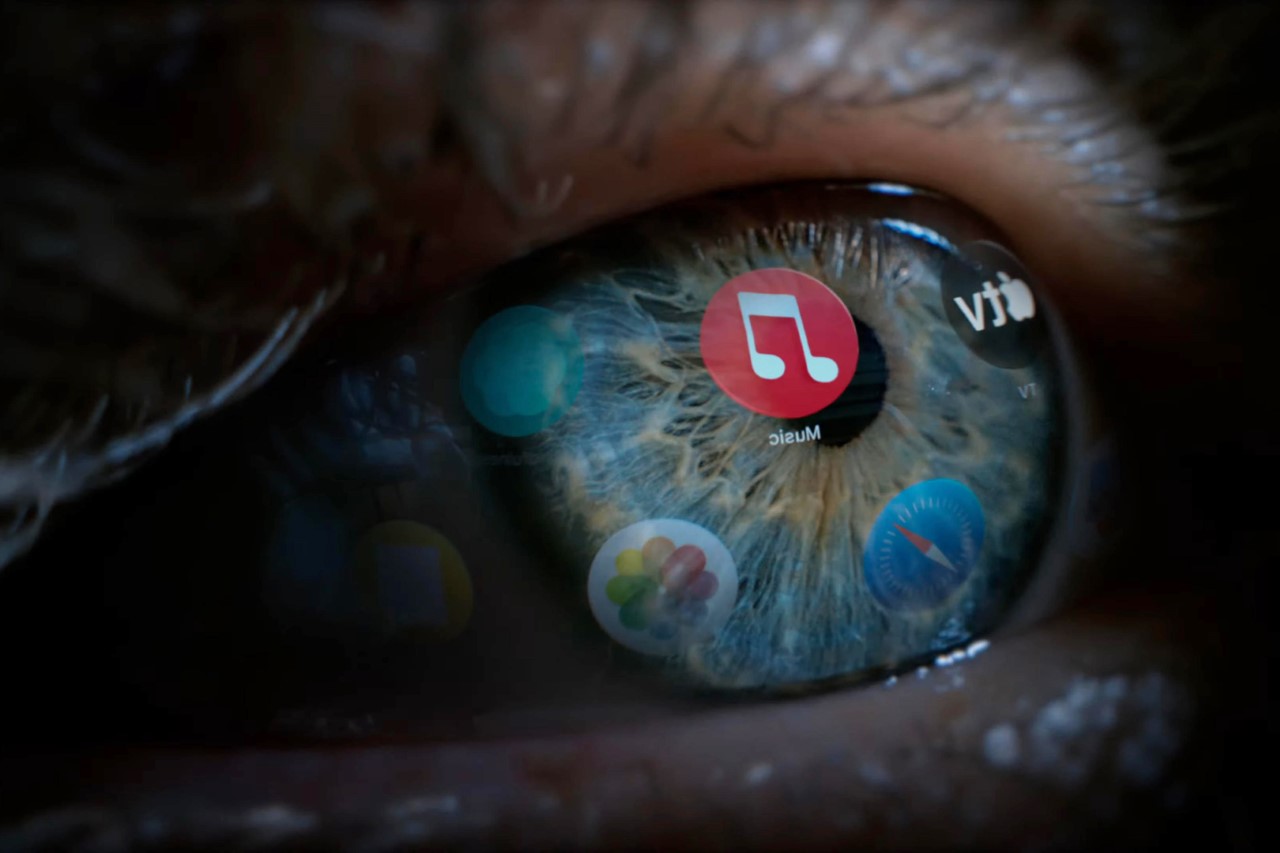
Addressing people for the first time since the Vision Pro went on sale in March, Tim Cook decided to give viewers an update of the Vision Pro’s success during this year’s iPad keynote. Although it isn’t clear exactly how many spatial headsets the company sold so far, although the Vision Pro is surely finding its footing in certain industries beyond just the average movie-watching and multi-screen workspace scenarios that Apple sold us on back at WWDC last year when the headset was first announced.

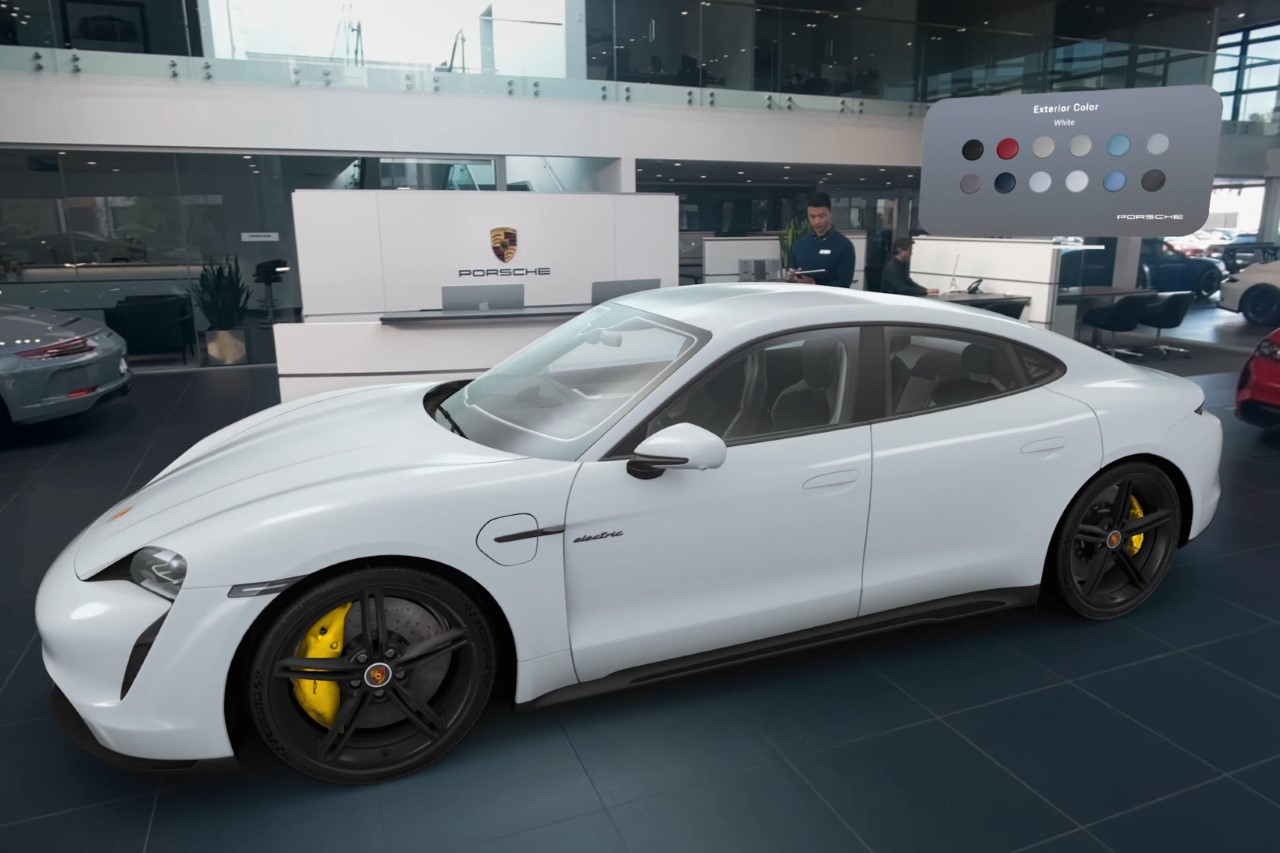
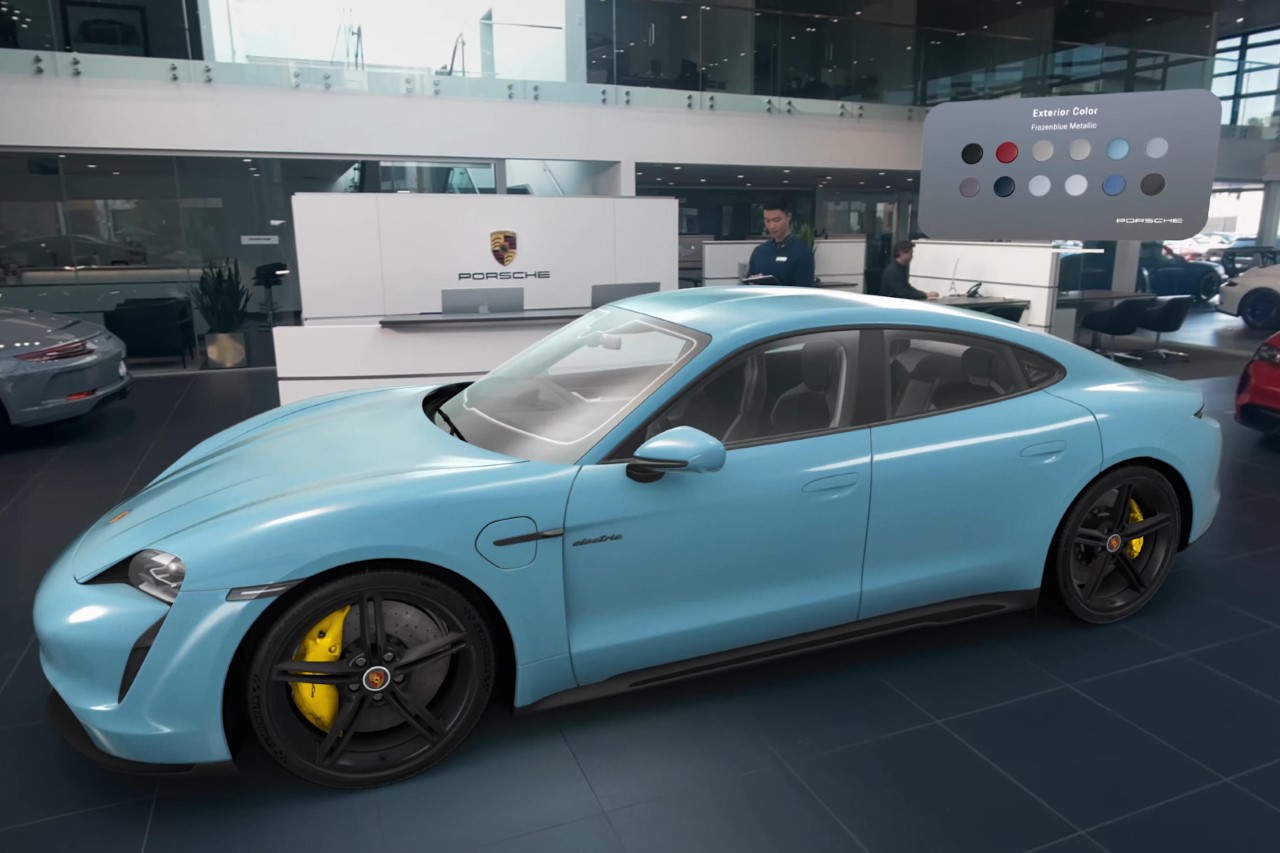
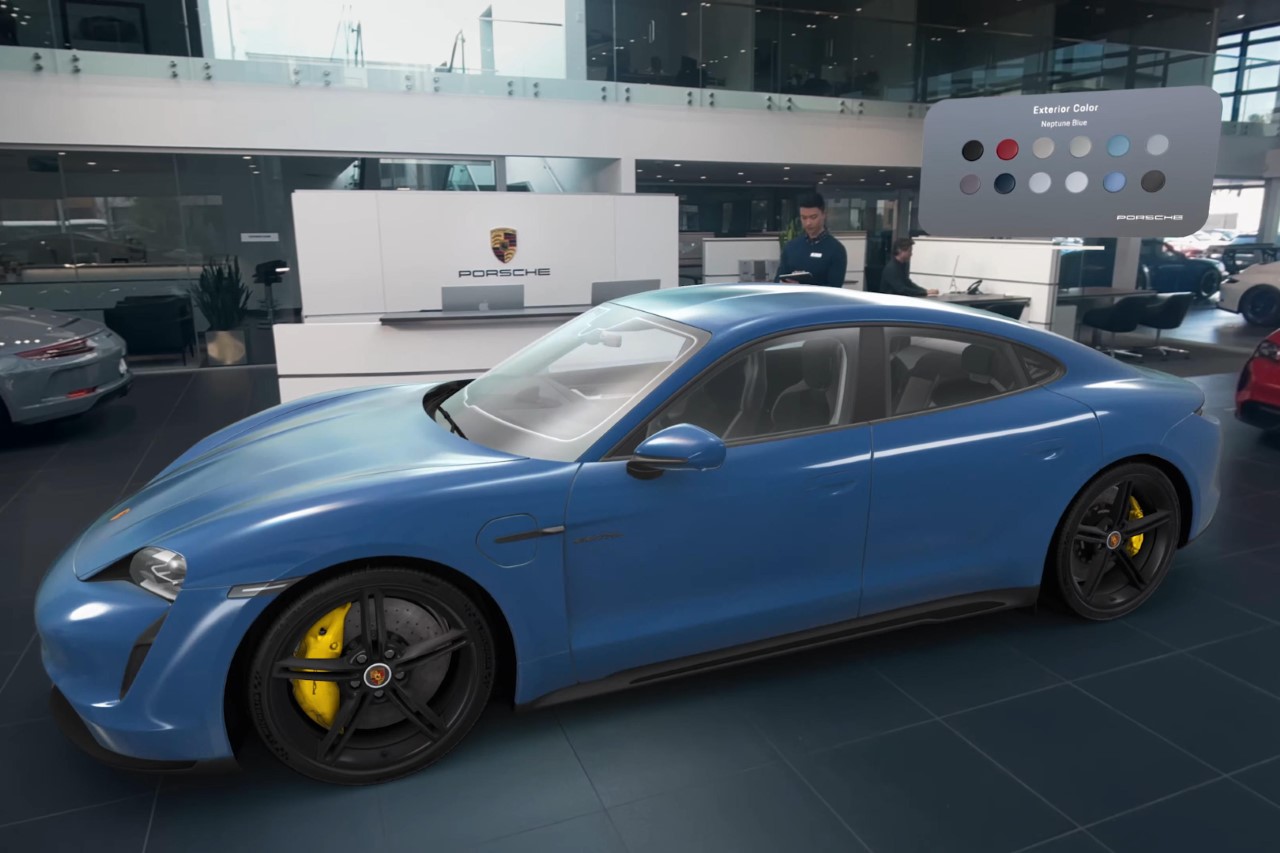
Cook mentioned that the Vision Pro is already becoming a crucial part of Porsche’s showroom experience, with the automotive giant investing heavily in building spatial experience centers around the Vision Pro and their cars. Prospective buyers can wear the Vision Pro to easily and quickly see all the car’s color options in virtual reality instead of looking at images or swatches in a catalog. The Vision Pro’s incredibly high resolution displays help customers experience the car in ways that were never though possible, allowing Porsche to provide a new dimension to their showroom’s UX in ways that other car companies cannot. Additionally, the headset also enables track experiences, and can also be used to train service technicians, harnessing the true power of Spatial Computing. Quite like the Apple Watch eventually settled into becoming a healthcare device, even though the company originally wanted it to be a fashion-tech wearable, the Vision Pro is only now finding its footing months after its announcement and delivery.

What’s remarkable is that Apple’s Vision Pro managed to breach the filmmaking industry and the healthcare industry just months after being delivered – something that Meta hasn’t really spoken at length about when it comes to their devices, and something that Microsoft’s own Hololens has taken years to achieve (at least in the healthcare and military research industries). Cook spoke about Dr. Tommy Korn, using the Vision Pro to improve surgical eye care through simulations and visualizations, while director Jon M. Chu was using the Vision Pro to oversee the entire post-production process for his upcoming film Wicked.

While entertainment and healthcare seemed like sure shot areas where the Vision Pro would create some form of procedural disruption, seeing Porsche invest so heavily in reinventing their showroom and technical training domains by relying on Vision Pros is fascinating. It’s been just over 2 months since the first Vision Pro was delivered to customers, so one can only wait and see what updates Apple provides us with over the next few months. The 2024 WWDC will mark the first anniversary of the headset’s announcement, and maybe we’ll get a few more upgrades to the device’s software as well as some updates on its industrywide acceptance. Hopefully even a price drop, perhaps? Or maybe that’s just wishful thinking!

The post The Apple Vision Pro is already playing a critical role in the Automotive, Filmmaking, and Healthcare industry first appeared on Yanko Design.

Apple’s 2023 iMac drops to a record-low price

It's been a busy day of Apple news thanks to some new iPads, but the company has plenty of other M-series devices, including the iMac. Apple slotted M3 chips into its desktop computers late last year, and now the base version of the 2023 iMac is cheaper than ever. Thanks to a coupon at Amazon (make sure to clip it!), you can snap up an iMac with an M3 chip, 8GB of RAM and 256GB of SSD storage for $1,149. The deal is available for the silver, pink, green and blue versions of the system.

A word of warning: while this is a decent deal on the surface, we do feel that the specs of the base 2023 iMac aren't quite up to scratch. It's difficult in this day and age to earnestly recommend a computer with just 8GB of RAM as apps become more and more demanding. That's why the iMac didn't score higher than 86 in our review.

On the plus side, the M3 chipset is very fast and the iMac's display remains terrific. Although this is a desktop system, it's lightweight, so it's not too difficult to move from one room to another or prop it up on something — the inability to adjust the screen vertically is a little disappointing.

There are some caveats to keep in mind here, but if you're looking for a nice, pretty new computer for relatively basic tasks (you're not going to be doing much gaming or video editing on a system with these specs) and don't mind splashing some cash, then this iMac might do the trick for you.

Follow @EngadgetDeals on Twitter and subscribe to the Engadget Deals newsletter for the latest tech deals and buying advice.

This article originally appeared on Engadget at https://www.engadget.com/apples-2023-imac-drops-to-a-record-low-price-203841344.html?src=rss

iPad Pro 2024 vs. 2022: What’s changed

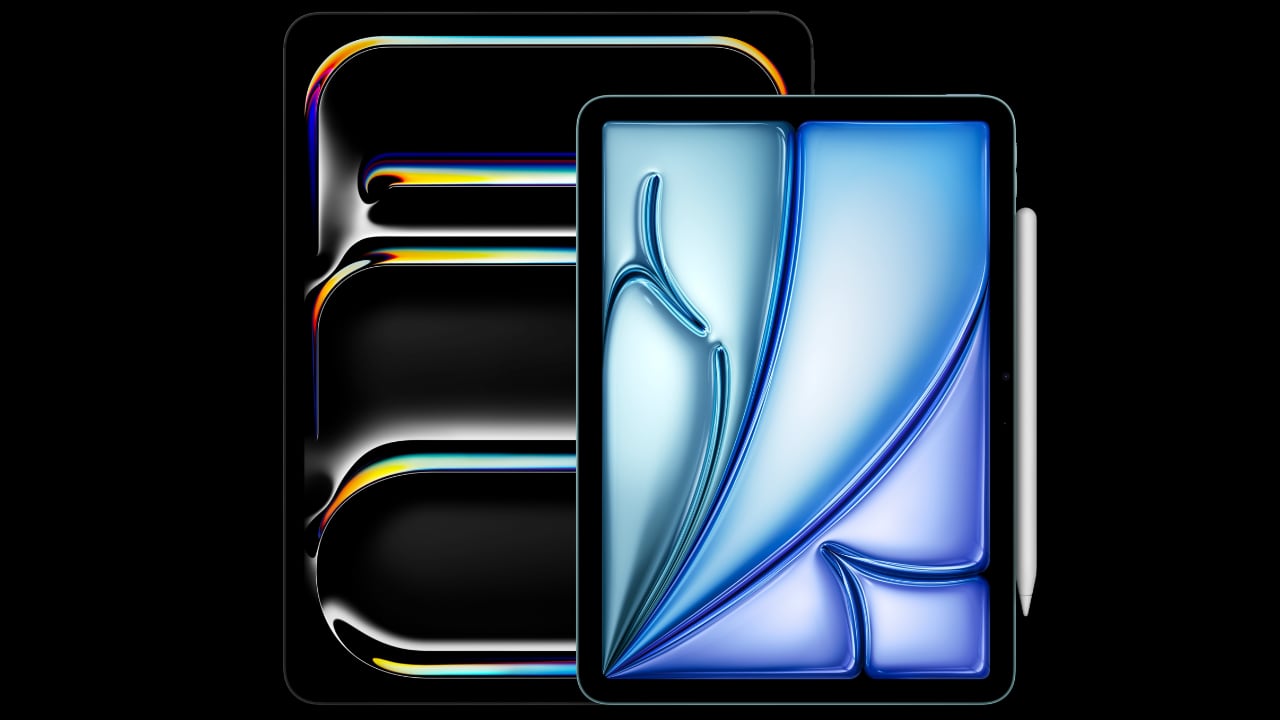
You may have heard Apple updated its top-of-the-line tablets at its Let Loose event on Tuesday. The 2024 model has some big improvements, including the new M4 chip, a “noticeably thinner and lighter” build, a superior OLED display and upgraded accessories. We broke down the key differences between the latest iPad Pro and its 2022 predecessor to help you figure out if it’s worth the (hefty) investment.

Graphic showing two iPad Pro models (2024 and 2022) side-by-side. The new model: 13
iPad Pro: 13-inch (2024) vs. 12.9-inch (2022)
Apple / Will Shanklin for Engadget

In Engadget’s hands-on at Apple’s “Let Loose” event, Deputy Editor Nathan Ingraham said the new iPad Pro’s thinner and lighter build and its Tandem OLED display are the first big changes you’ll notice when you pick up the latest model.

“In Apple’s extremely bright demo area, the iPad Pro screen showed its quality — everything was extremely clear, blacks were pitch-black and colors really popped,” he said after using it at Apple’s event. “After looking at the iPad Air display, it was obvious how much better these screens are.”

Side-by-side display comparison of the 2024 and 2022 iPad Pro models in front of a colorful background.
iPad Pro: 11-inch (2024 vs. 2022)
Apple / Will Shanklin for Engadget

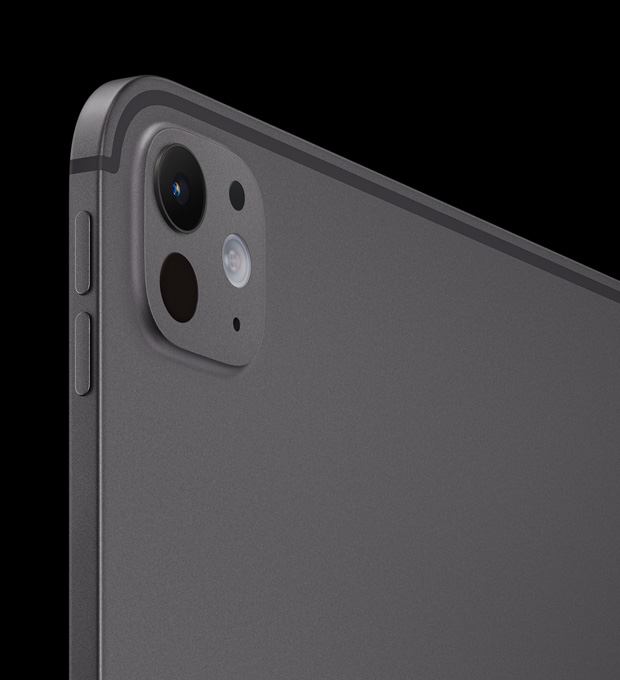
Another change you’ll notice when you compare the two iPad Pros side-by-side is camera positioning. The 2024 model moves its front-facing camera to the top-center when viewed in landscape orientation. The older model used Apple’s original iPad configuration, where the camera was centered above the screen when holding it upright in portrait mode.

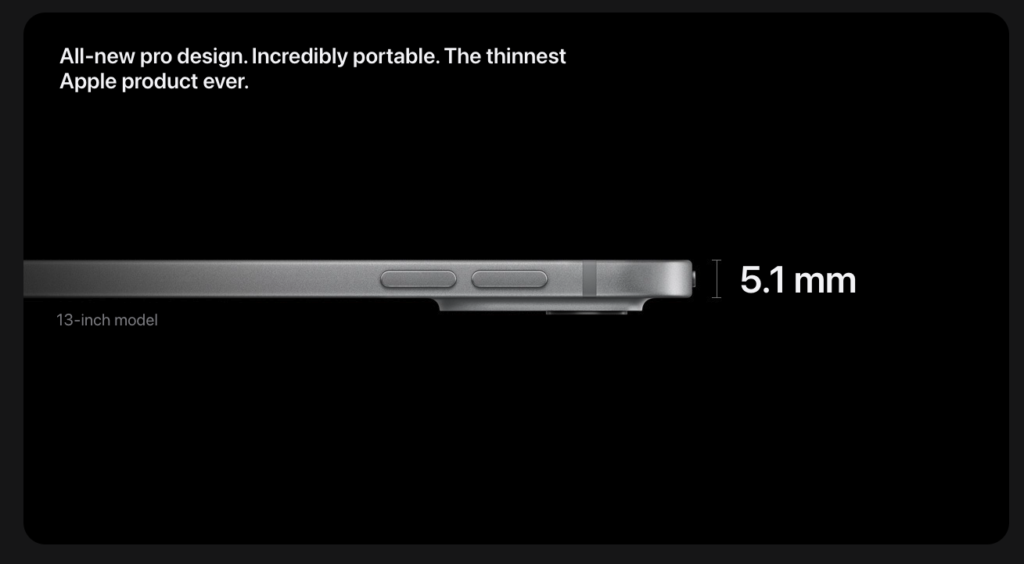
The new iPad Pro is also noticeably lighter and thinner than its 2022 predecessor. The 13-inch model is a mere 5.11mm (0.2 inch) thick and weighs only 579g (1.28 lbs), making it 20 percent thinner and 15 percent lighter than the 12.9-incher from 2022. Meanwhile, the new 11-inch variant is 5.3mm (0.21 inch) thick and weighs 444g (0.98 lb), making it 10 percent thinner and five percent lighter than the older one.

Considering the 2022 model was already a svelte machine, it’s no wonder we found the new iPad Pro surprisingly thin and light relative to its processing power. Speaking of which…

Two iPads in front of a colorful gradient background. M4 and M2 chips below denote the different versions.
Apple / Will Shanklin for Engadget

The iPhone maker unveiled a new Apple Silicon version on an iPad instead of a Mac for the first time. The all-new M4 chip has up to a 10-core CPU configuration (four performance cores and six efficiency cores), which the company says translates to one and a half times faster performance than the M2 silicon in the 2022 model.

I say “up to” because, similar to MacBooks and some older iPad Pro models, Apple is shipping different chip variants depending on your pricing tier. The 1TB and 2TB versions of the 2024 model have that 10-core chip, while the 256GB and 512GB models drop down to a nine-core M4 with three performance and six efficiency cores.

The lower-tier and high-end M4 variants include a 10-core GPU with hardware-accelerated ray tracing, a 16-core neural engine, 120GB/s memory bandwidth and 16GB of RAM. So the different models don’t sound dramatically different — you just get an extra performance core in the more expensive tiers. We’ll have to wait until we get some extended time with them to see how that translates into real-world experience.

By comparison, the M2 in the 2022 iPad Pro has an eight-core CPU with four performance and four efficiency cores. It also has a 16-core Neural Engine (of course, an older version than the one in the M4), 100GB/s memory bandwidth and either 8GB or 16GB of RAM.

Graphic showing the different accessories available for the two most recent iPad Pro models. Includes keyboards and Apple Pencils.
Apple / Will Shanklin for Engadget

The new iPad Pro also has some new accessories you can’t use with the 2022 model. That includes a new Magic Keyboard that Apple claims makes “the entire experience feel just like using a MacBook.”

You can thank its bigger trackpad with haptic feedback (like on modern MacBooks) and an aluminum palm rest. The older model used a microfiber-esque material and physically clicking trackpad, so the new one should feel more solid underneath your hands and aligned with MacBooks’ look and feel.

The new Magic Keyboard also adds a new 14-key function row (also similar to a MacBook) with shortcuts for things like brightness, Spotlight search, Siri / dictation and media controls.

Meanwhile, the Apple Pencil Pro — exclusively compatible with the 2024 iPad Pro and iPad Air — looks much like its predecessor but adds some extra goodies. Those include a new sensor in its barrel that lets you squeeze it like the lovely little stylus it is.

The new squeeze gesture can bring up tool palettes or activate shortcuts. Third-party developers can even customize the actions for individual apps. For the first time, it also adds haptic feedback to let you know if your squeeze was accepted or if something you moved has landed in its intended spot.

The new Apple Pencil also works with Find My (another first), so you can check on its most recent location in Apple’s location app if you lose it.

Both models also work with the cheaper ($79) USB-C Apple Pencil from 2023.

Well, it can’t all be good news. With all those upgrades, Apple is once again asking you to consider paying more for a high-end tablet. The 11-inch iPad Pro starts at $999, and the 13-inch model starts at a whopping $1,299. Those are each $200 higher than the starting prices in the 2022 model (when it was available).

But wait, it gets worse. Those prices don’t take into account the $299 (11-inch) or $349 (13-inch) you’ll pay if you want to add the new Magic Keyboard, nor does it factor in the $129 for the Apple Pencil Pro. You’ll have to pony up to make the new iPad Pro as much like a MacBook as possible: It will cost you almost what you’d pay for an entry-level 14-inch MacBook Pro with the M3 chip.

On the slightly brighter side, you get more storage this time around. The 2024 iPad Pro starts with 256GB, double the 128GB in the 2022 model. Moving up from there, the other storage tiers are identical to its predecessor (ranging up to 2TB for those with Scrooge McDuck bank accounts).

Here’s a table showing the full specs comparison between the 2024 and 2022 iPad Pro models, including separate charts for the 13 / 12.9-inch and 11-inch variants.

13-inch iPad Pro (2024) vs. 12.9-inch iPad Pro (2022)

12.9-inch iPad Pro (2024)

12.9-inch iPad Pro (2022)

Price

$1,299, $1,499, $1,899, $2,299

$1,099, $1,199, $1,399, $1,799, $2,199

Dimensions

281.16 x 215.5 x 5.1 mm

(11.09 x 8.48 x 0.20 inch)

280.6 x 214.9 x 6.4 mm

(11.04 x 8.46 x 0.25 inch)

Weight

1.28 pounds / 579 grams (Wi-Fi)

1.28 pounds / 582 grams (cellular)

1.5 pounds / 682 grams (Wi-Fi)

1.51 pounds / 685 grams (cellular)

Processor

M4

M2

Display

13-inch Ultra Retina XDR

2752 x 2064 (264 ppi)

12.9-inch Liquid Retina XDR

2732 x 2048 (264 ppi)

Storage

256GB / 512GB / 1TB / 2TB

128GB / 256GB / 512GB / 1TB / 2TB

Battery

38.99 Wh

10 hrs (Wi-Fi), 9 hrs (cellular)

40.88 Wh

10 hrs (Wi-Fi), 9 hrs (cellular)

Camera

Back: 12MP, ƒ/1.8

Front: 12MP, ƒ/2.4

Back: 12MP wide, ƒ/1.8 / 10MP ultrawide, ƒ/2.4

Front: 12MP, ƒ/2.4

Compatible Apple accessories

Magic Keyboard (2024)

Apple Pencil Pro

Apple Pencil (USB-C)

Magic Keyboard (2020)

Apple Pencil (2nd generation)

Apple Pencil (USB-C)

11-inch iPad Pro (2024) vs. 11-inch iPad Pro (2022)

11-inch iPad Pro (2024)

11-inch iPad Pro (2022)

Price

$999, $1,199, $1,599, $1,999

$799, $899, $1,099, $1,499, $1,899

Dimensions

249.7 x 177.5 x 5.9 mm

(9.83 x 6.99 x 0.21 inch)

247.6 x 178.5 x 5.9 mm

(9.74 x 7.02 x 0.23 inch)

Weight

0.98 pound / 444 grams (Wi-Fi)

0.98 pound / 446 grams (cellular)

1.03 pound / 466 grams (Wi-Fi)

1.04 pound / 470 grams (cellular)

Processor

M4

M2

Display

11-inch Ultra Retina XDR

Tandem OLED

2420 x 1668 (264 ppi)

11-inch Liquid Retina

LED

2388 x 1668 (264 ppi)

Storage

256GB / 512GB / 1TB / 2TB

128GB / 256GB / 512GB / 1TB / 2TB

Battery

31.29 Wh

10 hrs (Wi-Fi), 9 hrs (cellular)

28.65 Wh

10 hrs (Wi-Fi), 9 hrs (cellular)

Camera

Back: 12MP, ƒ/1.8

Front: 12MP, ƒ/2.4

Back: 12MP wide, ƒ/1.8 / 10MP ultrawide, ƒ/2.4

Front: 12MP, ƒ/2.4

Compatible Apple accessories

Magic Keyboard (2024)

Apple Pencil Pro

Apple Pencil (USB-C)

Magic Keyboard (2020)

Apple Pencil (2nd generation)

Apple Pencil (USB-C)

Stay tuned for Engadget’s full review of the 2024 model. In the meantime, you can recap Nathan Ingraham’s initial impressions of the new iPad Pro and Apple Pencil Pro, Devindra Hardawar’s recap of the new model’s features and Sam Rutherford’s run-through of the new M4 chip.

Follow all of the news live from Apple's 'Let Loose' event right here.

This article originally appeared on Engadget at https://www.engadget.com/ipad-pro-2024-vs-2022-whats-changed-202056821.html?src=rss

Meta is expanding its paid verification service for businesses

Meta is expanding its paid verification service for businesses, adding three new tiers to the program that offers extra perks to companies willing to pay a monthly subscription. The company began testing the service, called Meta Verified, with businesses last fall after rolling out a paid verification for individuals.

With the new plans, which are coming first to Australia, and New Zealand, Meta is offering a much wider range of services to business owners that rely on its platform. Under the new structure, the basic “standard” plan is $14.99/month. It offers a verification badge, higher ranking in search, impersonation protection, the ability to add links to images and access to customer support. (Each subscription covers a single Facebook or Instagram account, the program is expected to roll out to WhatsApp "soon.")

While that base plan is now the same price for businesses as it is for individuals, companies will pay a hefty premium for the extra perks. There are three additional tiers for business owners to choose from: the $44.99/month “plus” plan, the $119.99 “premium” plan and $349.99/month “max” plan. Each of these includes additions like the ability to add links to a Reels posts, fast-tracked customer support and more profile customization options.

Meta is adding new perks (and pricing) to its paid verification for businesses.
Meta

The most expensive plan also expands impersonation protection to up to five employees as well as extra customer service perks. It includes a semiannual “account review,” which will consist of “personalized guidance on their content strategy.” And it allows account owners to request a phone call from a Meta customer service representative for help with account issues and other problems.

During a briefing with reporters, Meta’s VP of new monetization experiences Pratiti Raychoudhury said the expansion of Meta Verified is meant “to meet businesses where they are in their journey on our apps.” She said Meta will continue to tweak its offerings as more companies sign up for verification. 

This article originally appeared on Engadget at https://www.engadget.com/meta-is-expanding-its-paid-verification-service-for-businesses-200412634.html?src=rss