The Ship of Theseus is one of philosophy’s most enduring thought experiments: if you replace every plank of a ship, one by one, is it still the same ship? Researchers at the University of Michigan decided that rather than debating the question in a classroom, they’d build it. And then they’d unbolt it, swap the legs, and build it into something else entirely.
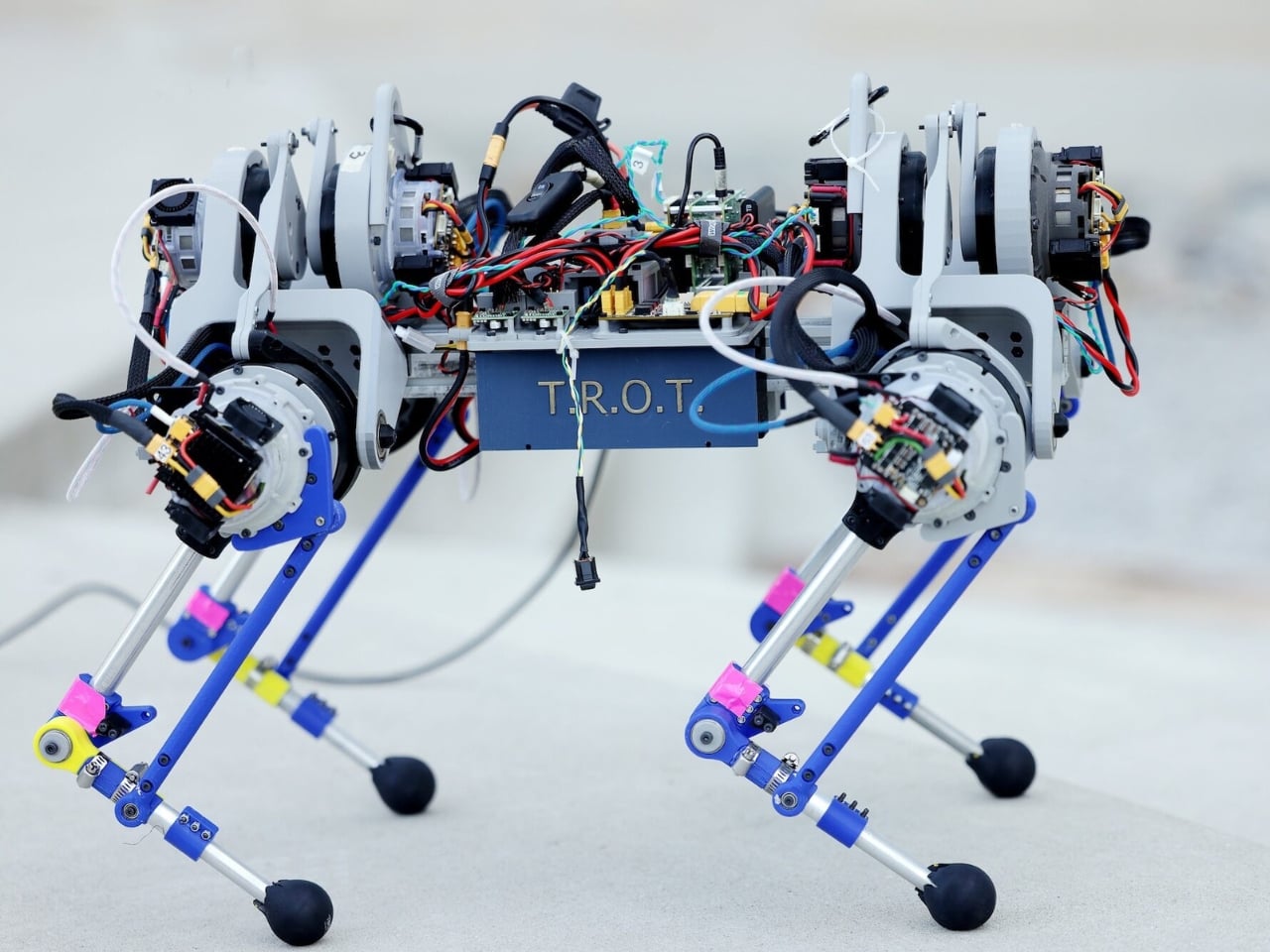
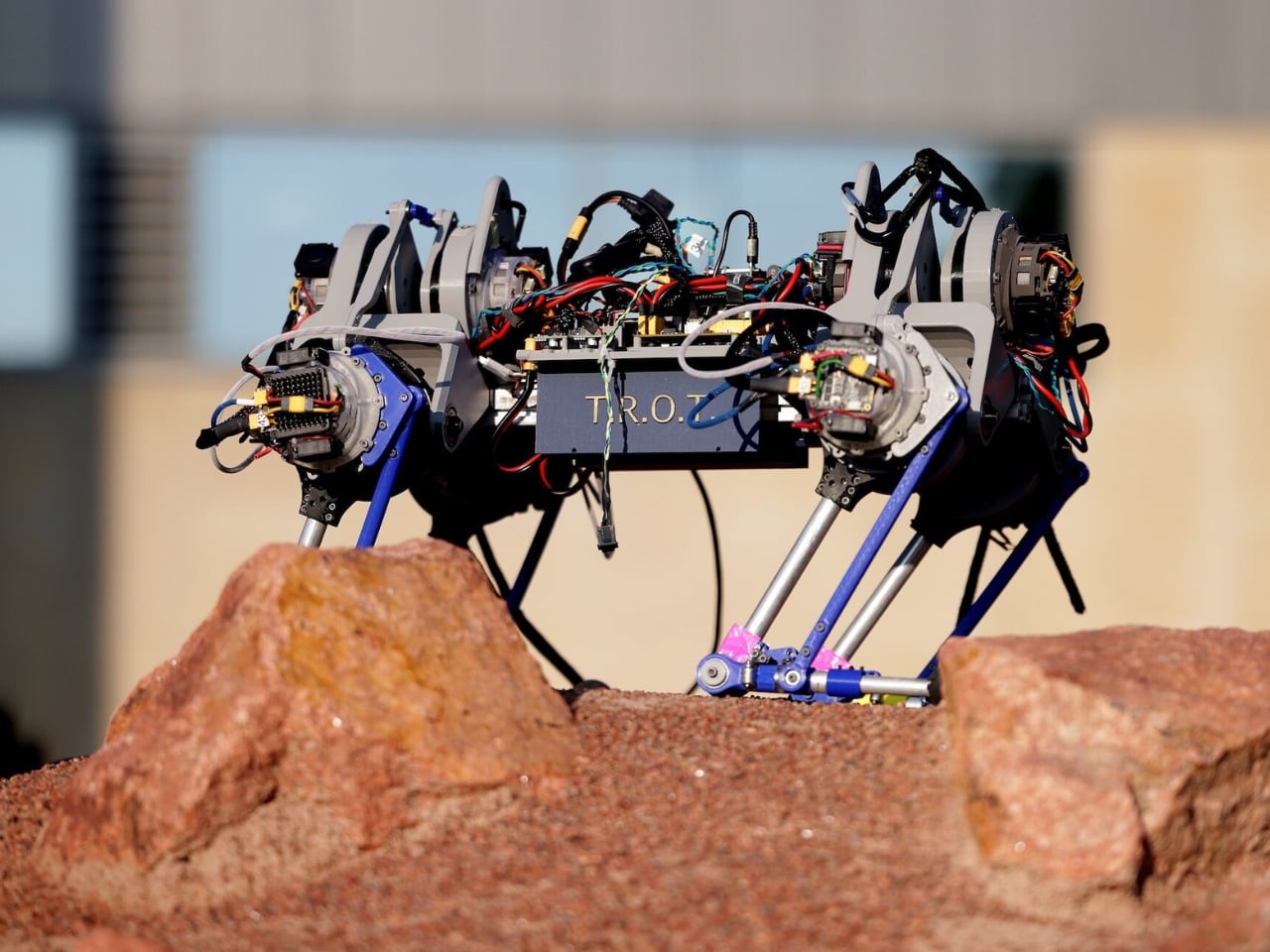
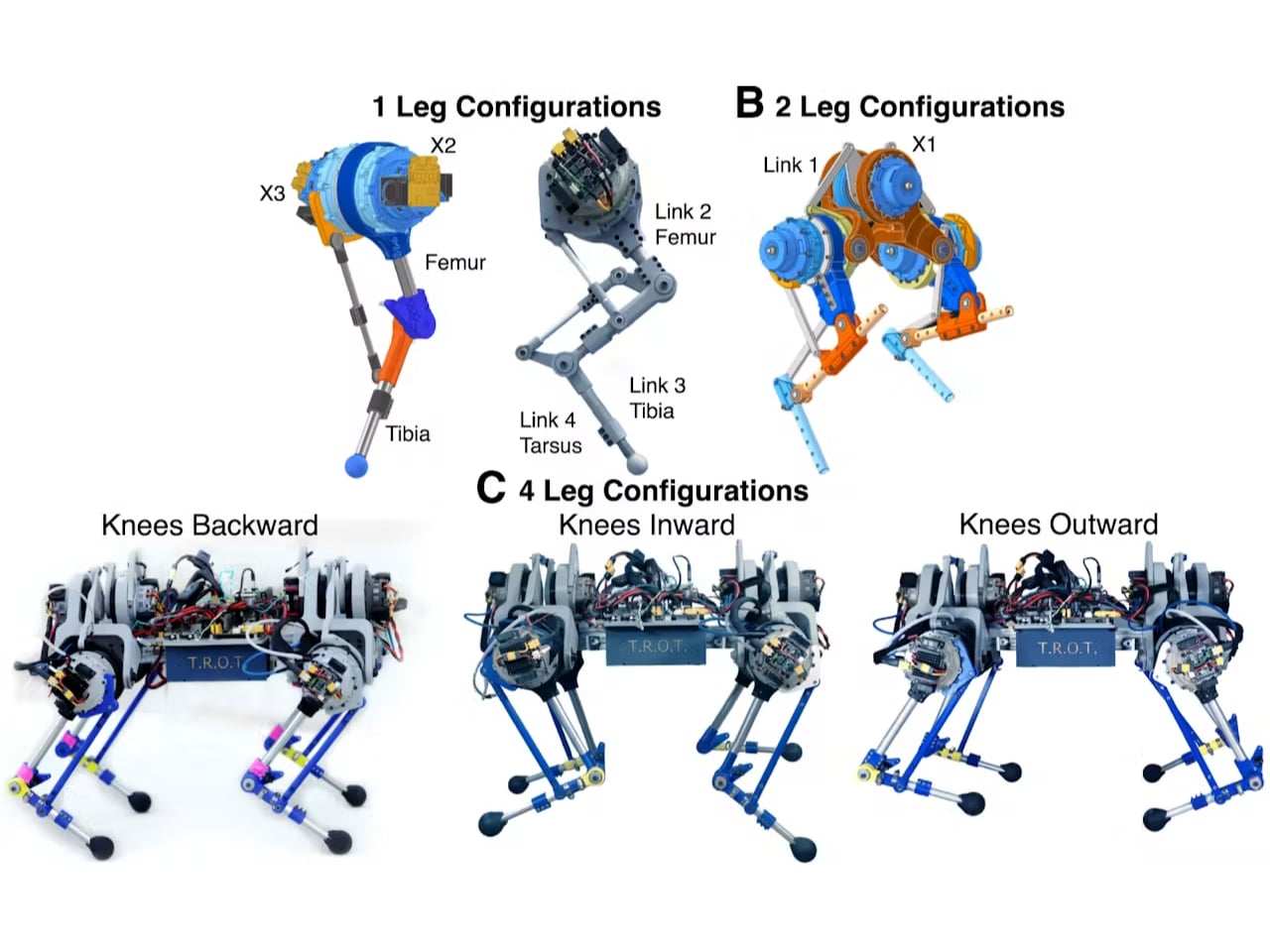
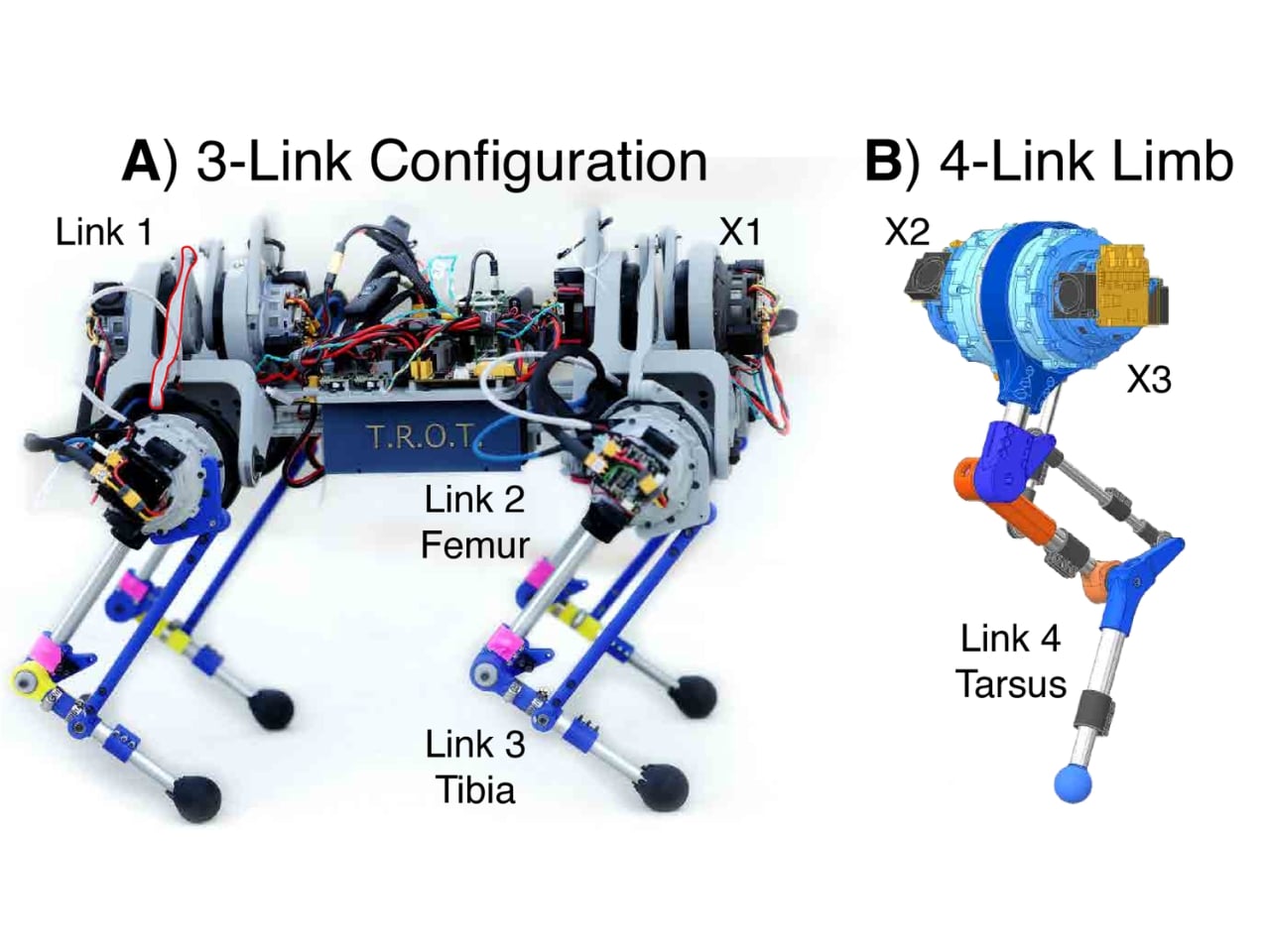
TROT (The Robot of Theseus) is a 10-kilogram, four-legged robot whose entire identity rests on impermanence. Its limbs unbolt. Its leg configurations swap between a two-link hopper, a three-link knee, and a three-link elbow orientation. You can rebuild the entire body plan over an afternoon and walk away with something that moves more like a gazelle than the dog-sized quadruped it started as. Same chassis. Same motors. About $4,000 in 3D-printed brackets and off-the-shelf parts. Its backdrivable motors even recover energy as they’re driven backward, mimicking the way tendons store and release force in a running animal.
That $4,000 figure is worth sitting with. For context, Boston Dynamics’ Spot runs closer to $75,000. But TROT isn’t a budget Spot. It’s a different idea entirely. Where Spot is optimized for a fixed body plan and real-world deployment, TROT is optimized for being taken apart. It’s an experiment in the value of non-permanence, and that’s a much more interesting design brief than “make it do more things.”
The team, led by assistant professor Talia Moore, designed TROT to help biologists ask questions that physical animals can’t easily answer. What makes a cheetah fast isn’t just muscle. It’s also leg length, segment ratios, and joint geometry. Isolating those variables in a living animal is nearly impossible. But with TROT, you can swap out a femur extension, flip the knee orientation, and run the same locomotion test again the same afternoon, with consistent hardware and no ethical review board required. The robot has been used to compress roughly 60 million years of evolutionary locomotion variation into weeks of lab data. That’s the actual scientific utility, not a metaphor.
What tends to get under-reported in the science coverage is the design language itself. TROT’s visual aesthetic isn’t cleaned up or consumer-ready. You can see the 3D-print layer lines, the exposed wiring, the actuators bolted directly to the brackets. It looks like something built to be understood rather than admired, and I think that’s intentional. The exposed construction is a form of communication. It tells anyone looking at it: this is not precious. Change it. That’s a genuinely rare posture for a piece of research hardware.
The open-source dimension also runs deeper than posting a GitHub repo. The team released the CAD files, not just the control code. That’s a meaningful distinction. Code describes behavior; geometry describes intent. Sharing the brackets and print files means a biology lab at a smaller institution can reproduce TROT without needing a dedicated robotics engineering team. The knowledge transfer is embedded in the shape of the parts, and that changes who can participate in this kind of research.
TROT didn’t arrive alone. The first quarter of 2026 brought a quiet cluster of modular robotics research: Northwestern’s terrain-adapting writhers, a self-configuring quadruped paper in PNAS, and Nature’s SoftRafts, all landing within roughly eight weeks of each other. Robotin debuted a modular home robot ecosystem at CES 2026. Analysts have put the modular robotics market on track for $18.94 billion by 2029. None of this is coincidental. The field has been asking whether modularity in robotics could move past novelty. Q1 2026 looks like the answer arriving.
Most robots are designed to be finished. They ship in a fixed form, and any change is a cost: a repair, a retool, a failure. TROT is designed around the opposite logic. Its value increases each time a limb is swapped. Its usefulness is inseparable from its willingness to be reconfigured. Whether a robot that constantly changes its parts stays the same robot is still a philosophical question. Whether that approach produces better science, and better design thinking, is looking less and less like a question at all.
The Ship of Theseus is one of philosophy’s most enduring thought experiments: if you replace every plank of a ship, one by one, is it still the same ship? Researchers at the University of Michigan decided that rather than debating the question in a classroom, they’d build it. And then they’d unbolt it, swap the legs, and build it into something else entirely.
TROT (The Robot of Theseus) is a 10-kilogram, four-legged robot whose entire identity rests on impermanence. Its limbs unbolt. Its leg configurations swap between a two-link hopper, a three-link knee, and a three-link elbow orientation. You can rebuild the entire body plan over an afternoon and walk away with something that moves more like a gazelle than the dog-sized quadruped it started as. Same chassis. Same motors. About $4,000 in 3D-printed brackets and off-the-shelf parts. Its backdrivable motors even recover energy as they’re driven backward, mimicking the way tendons store and release force in a running animal.
That $4,000 figure is worth sitting with. For context, Boston Dynamics’ Spot runs closer to $75,000. But TROT isn’t a budget Spot. It’s a different idea entirely. Where Spot is optimized for a fixed body plan and real-world deployment, TROT is optimized for being taken apart. It’s an experiment in the value of non-permanence, and that’s a much more interesting design brief than “make it do more things.”
The team, led by assistant professor Talia Moore, designed TROT to help biologists ask questions that physical animals can’t easily answer. What makes a cheetah fast isn’t just muscle. It’s also leg length, segment ratios, and joint geometry. Isolating those variables in a living animal is nearly impossible. But with TROT, you can swap out a femur extension, flip the knee orientation, and run the same locomotion test again the same afternoon, with consistent hardware and no ethical review board required. The robot has been used to compress roughly 60 million years of evolutionary locomotion variation into weeks of lab data. That’s the actual scientific utility, not a metaphor.
What tends to get under-reported in the science coverage is the design language itself. TROT’s visual aesthetic isn’t cleaned up or consumer-ready. You can see the 3D-print layer lines, the exposed wiring, the actuators bolted directly to the brackets. It looks like something built to be understood rather than admired, and I think that’s intentional. The exposed construction is a form of communication. It tells anyone looking at it: this is not precious. Change it. That’s a genuinely rare posture for a piece of research hardware.
The open-source dimension also runs deeper than posting a GitHub repo. The team released the CAD files, not just the control code. That’s a meaningful distinction. Code describes behavior; geometry describes intent. Sharing the brackets and print files means a biology lab at a smaller institution can reproduce TROT without needing a dedicated robotics engineering team. The knowledge transfer is embedded in the shape of the parts, and that changes who can participate in this kind of research.
TROT didn’t arrive alone. The first quarter of 2026 brought a quiet cluster of modular robotics research: Northwestern’s terrain-adapting writhers, a self-configuring quadruped paper in PNAS, and Nature’s SoftRafts, all landing within roughly eight weeks of each other. Robotin debuted a modular home robot ecosystem at CES 2026. Analysts have put the modular robotics market on track for $18.94 billion by 2029. None of this is coincidental. The field has been asking whether modularity in robotics could move past novelty. Q1 2026 looks like the answer arriving.
Most robots are designed to be finished. They ship in a fixed form, and any change is a cost: a repair, a retool, a failure. TROT is designed around the opposite logic. Its value increases each time a limb is swapped. Its usefulness is inseparable from its willingness to be reconfigured. Whether a robot that constantly changes its parts stays the same robot is still a philosophical question. Whether that approach produces better science, and better design thinking, is looking less and less like a question at all.
Nobody really announced the CD comeback. It didn’t arrive with a glossy campaign or some grand industry reset. It just started happening quietly, then all at once. Record stores began giving discs more shelf space. Artists started slipping them into merch drops. And younger listeners, people who grew up with every song ever made living inside an app, started buying physical albums they could have streamed in seconds.
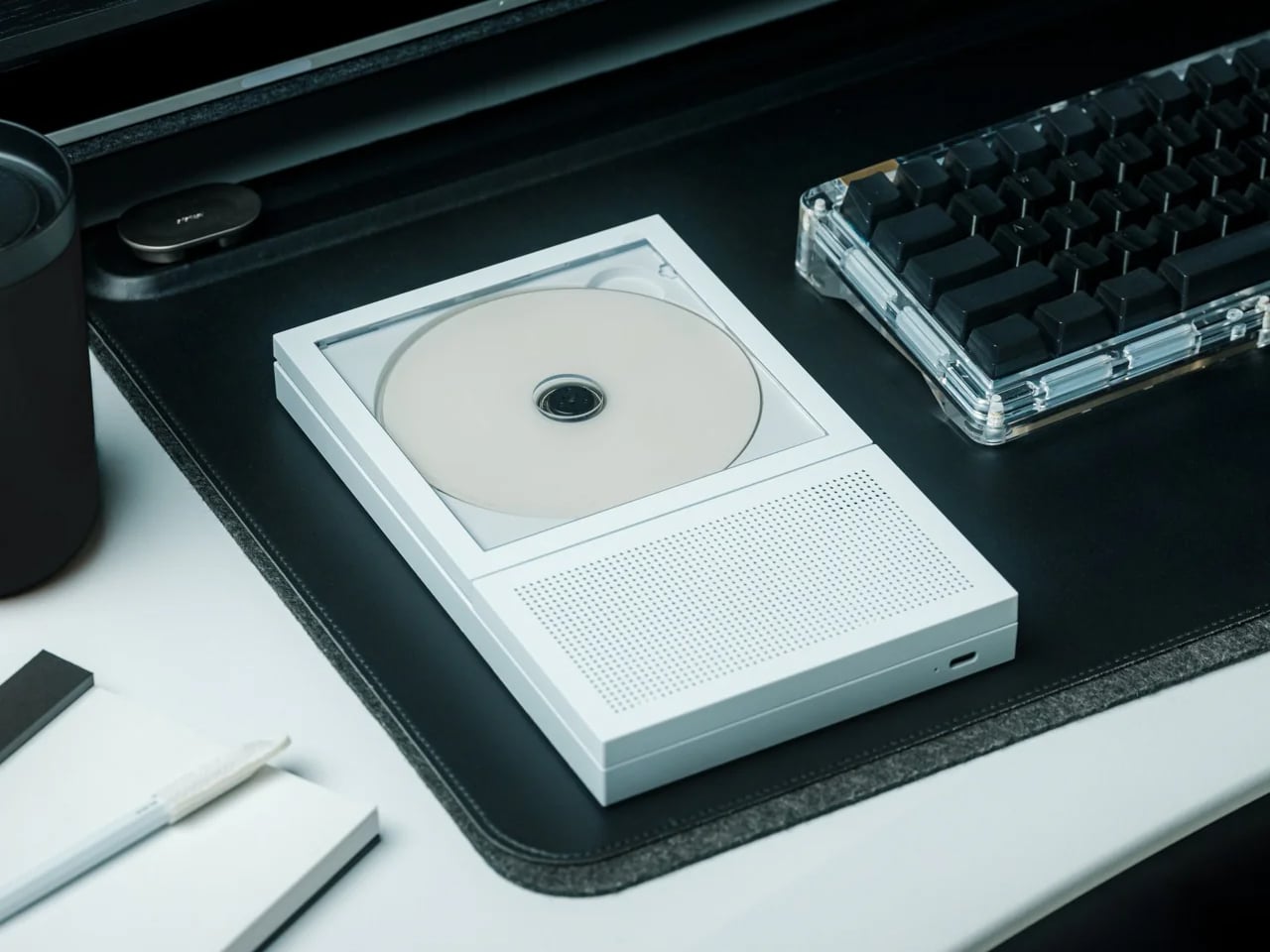
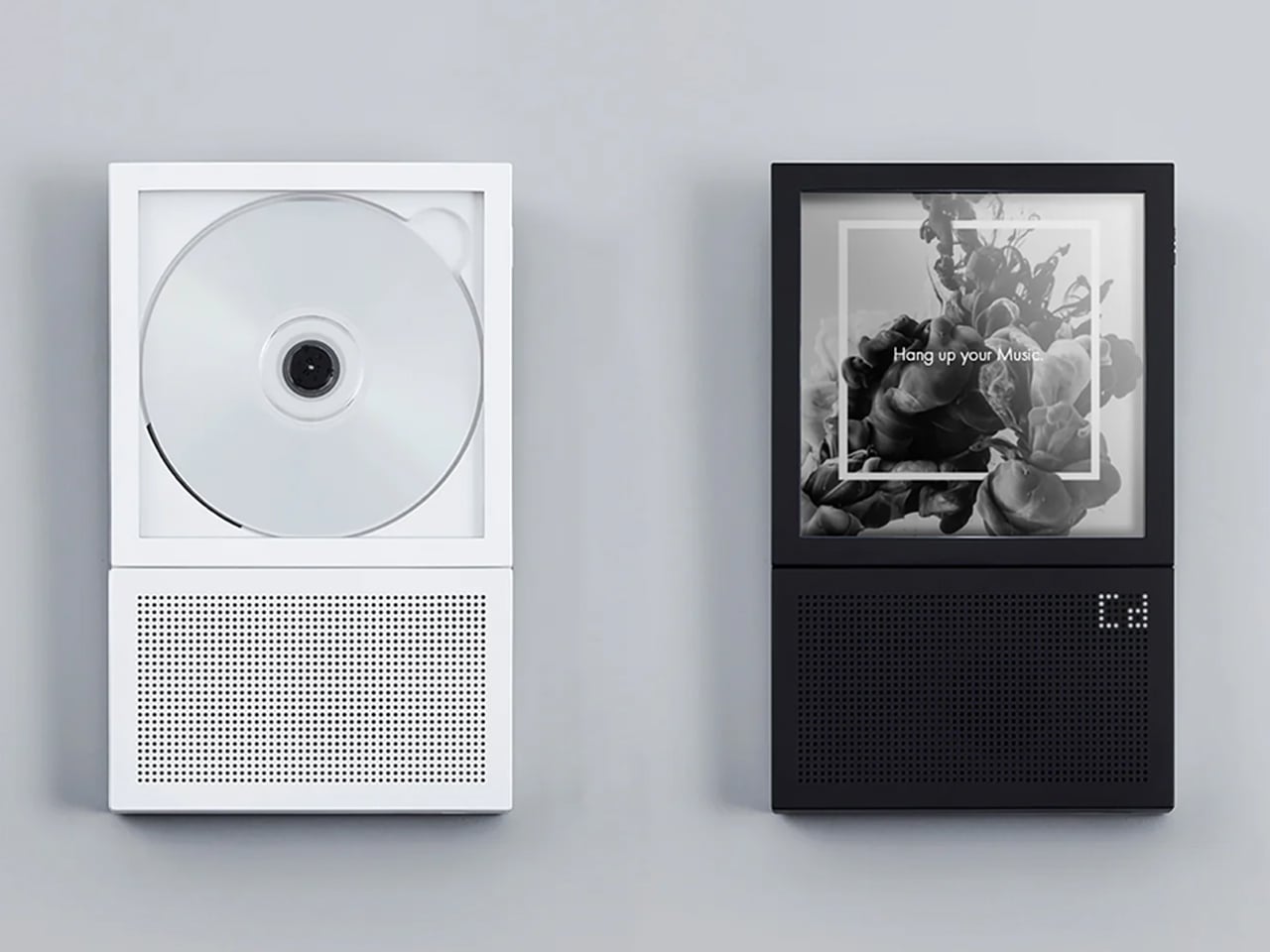
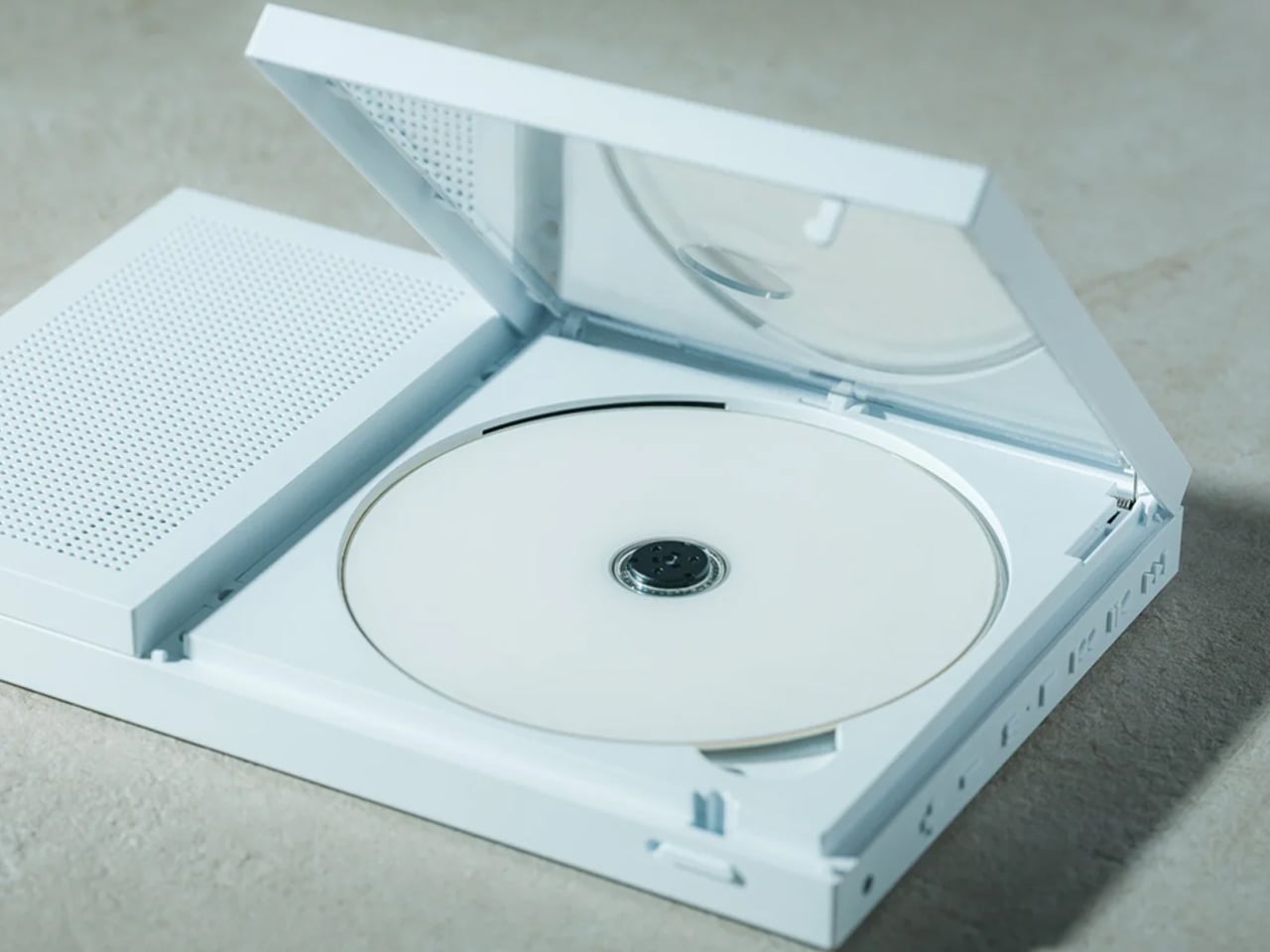
Quick take: This Portable CD Cover Player is designed around displaying the album cover while it plays. Compact, Bluetooth-connected, USB-C charged, and $199. The best reason to start buying CDs again.
The easy explanation is nostalgia, but that no longer covers it. A lot of the people buying CDs in 2026 do not miss the nineties. What they miss is something streaming never fully replaced: the feeling that music had shape. That an album was more than a handful of tracks waiting to be shuffled into the background. Streaming solved access completely. It never solved presence.
The Player That Makes the Comeback Make Sense
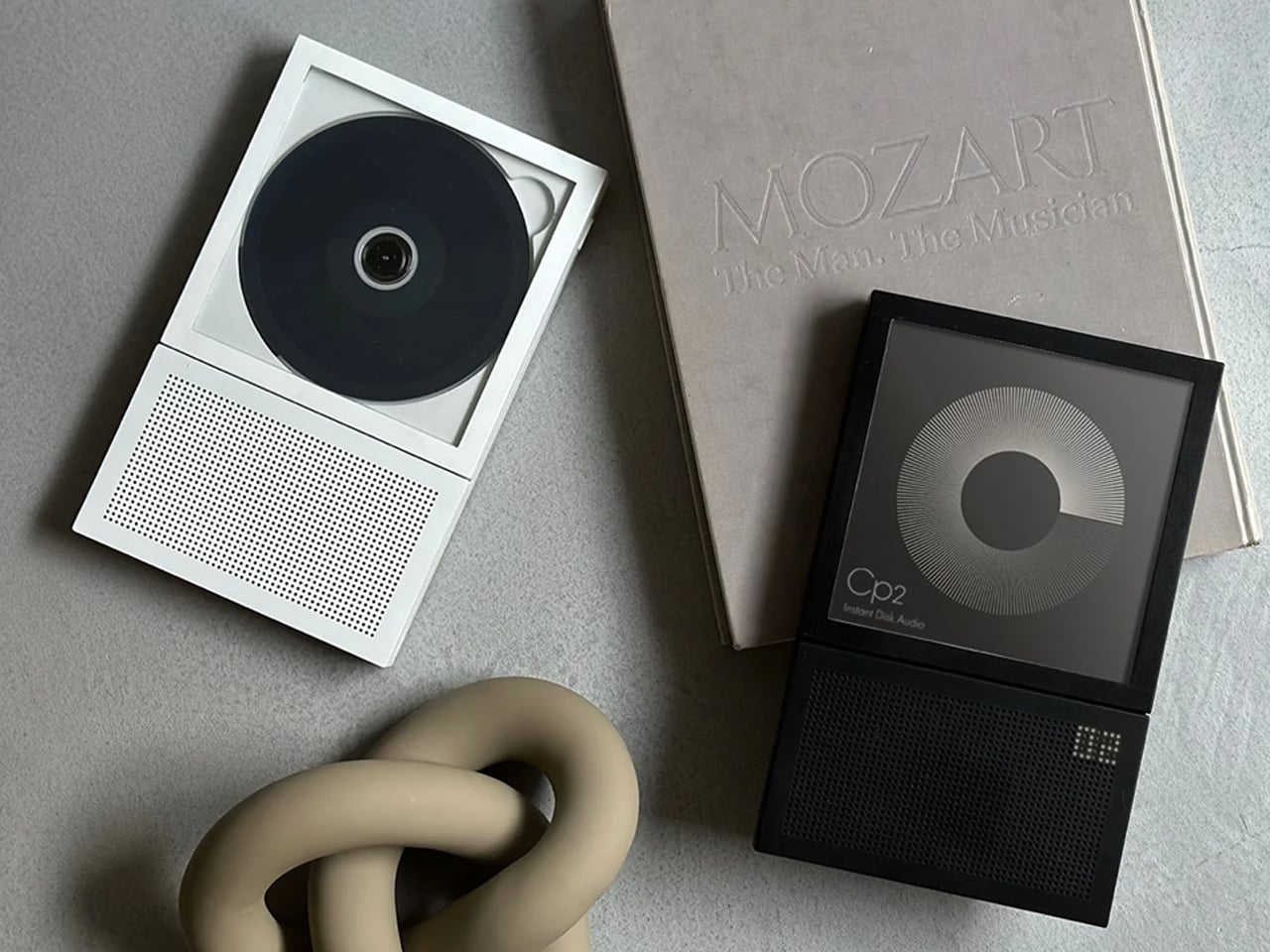
That is exactly why the Portable CD Cover Player feels so right for this moment. Most CD players treat the disc as the point and the cover art as packaging. This one flips that. The album cover faces outward while the disc plays, turning the artwork into part of the listening experience instead of something you glance at once and put away.
At first, that sounds like a small design decision. In practice, it changes the whole feel of the object. Music that used to sit invisibly inside a playlist suddenly has a face again. What you are listening to is no longer buried inside a phone screen or reduced to a thumbnail in a queue. It is present, visible, and strangely harder to ignore.
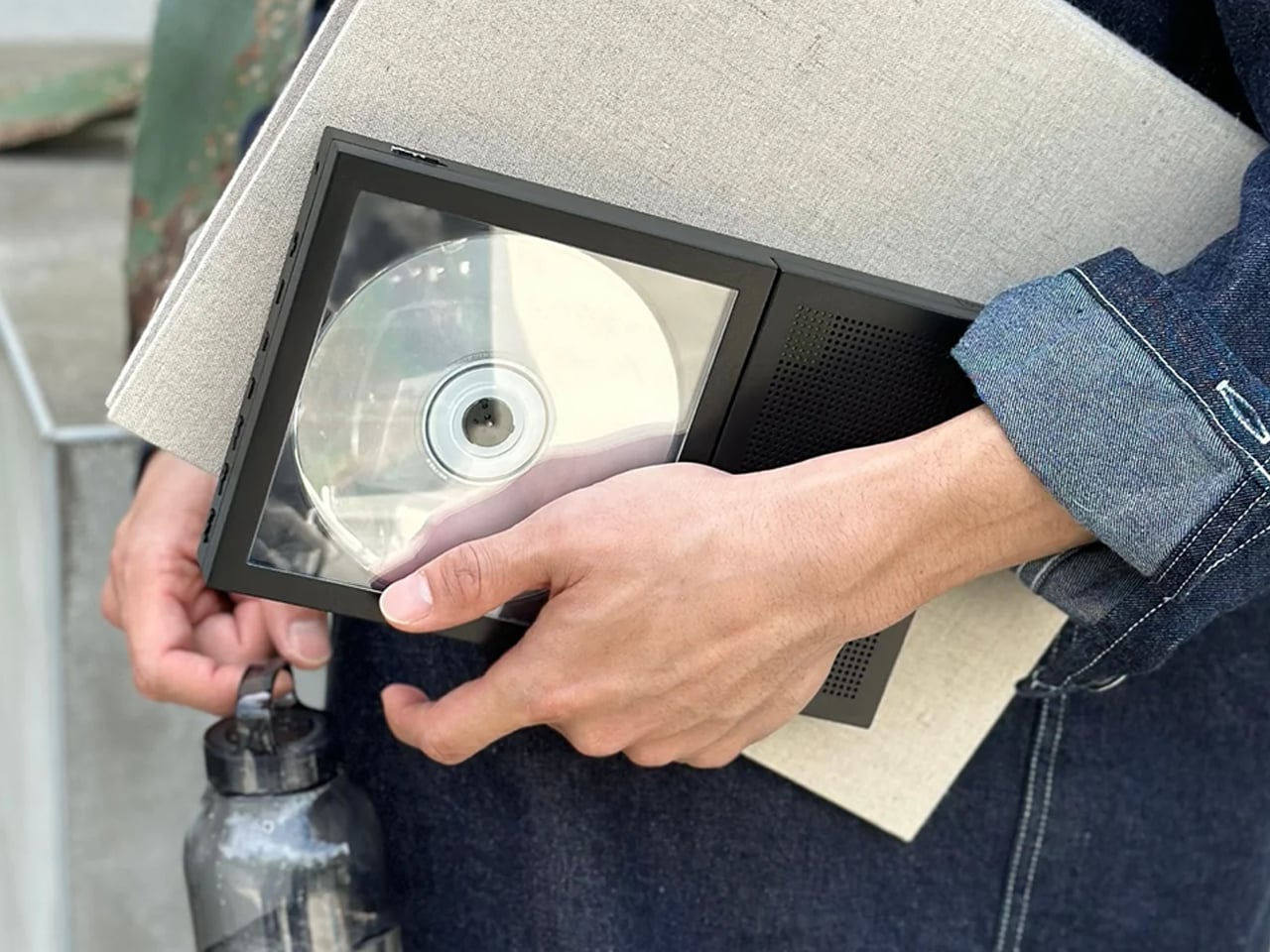
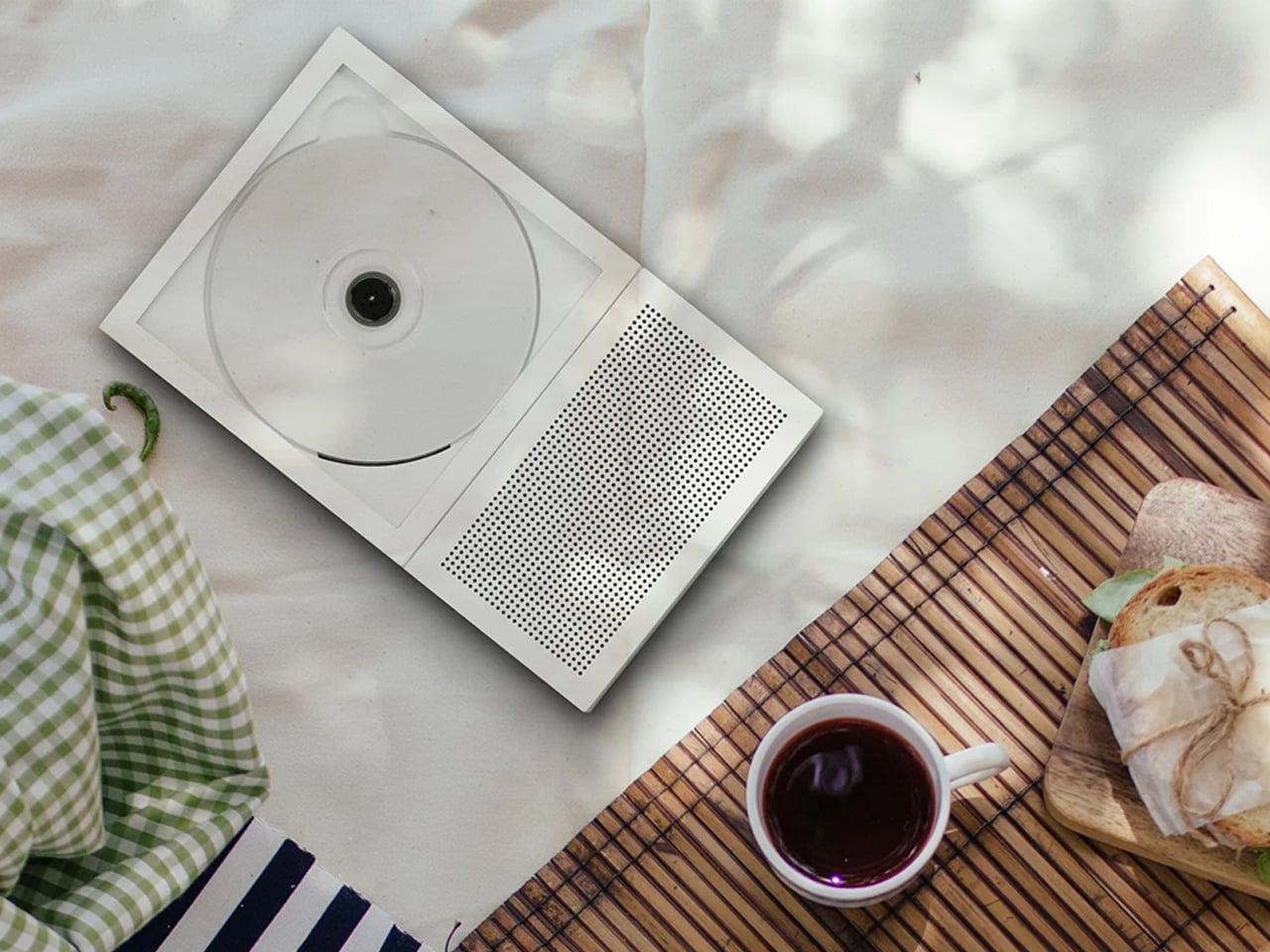
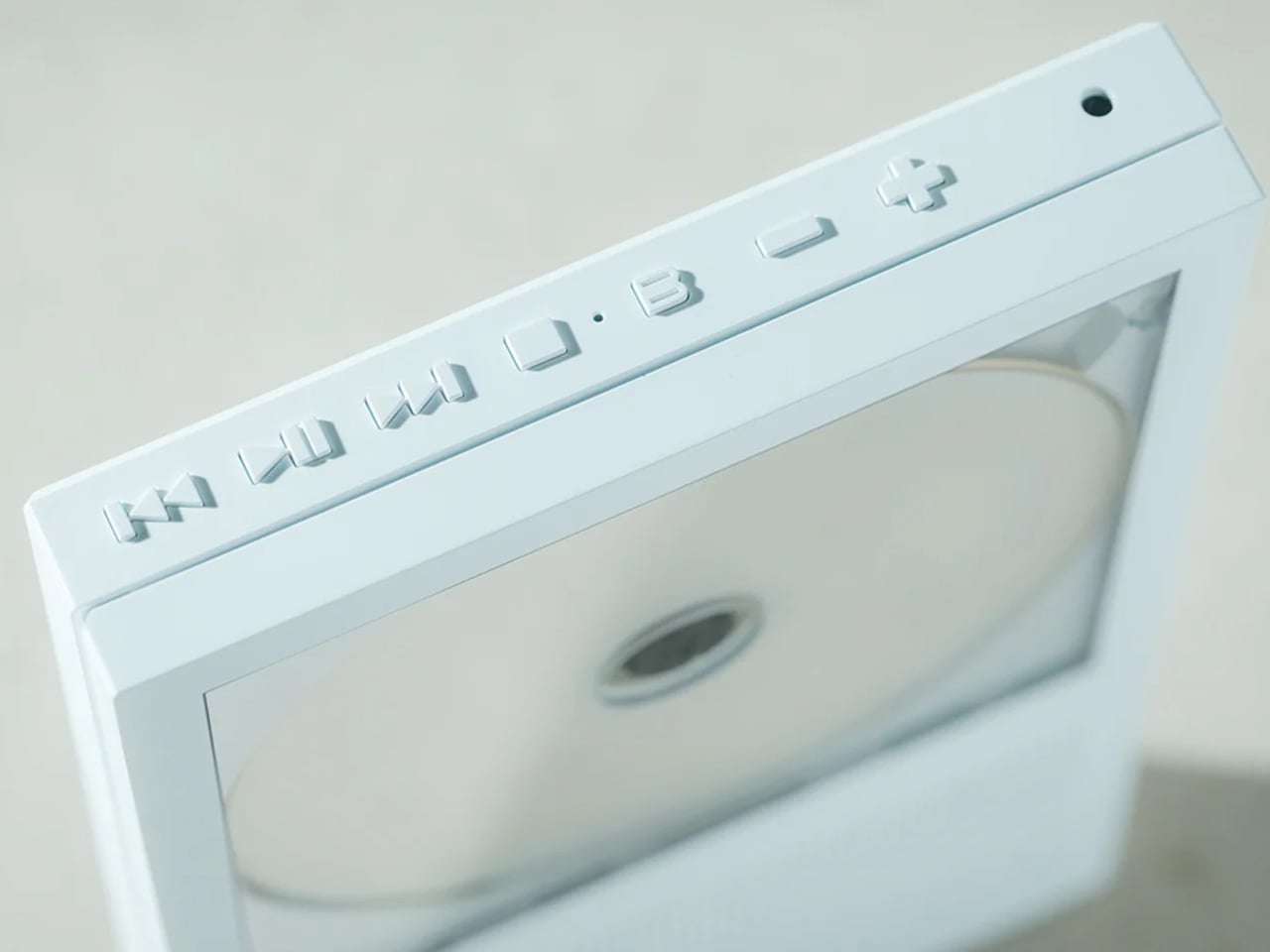
The player itself is compact, clean, and easy to move from desk to shelf to bedside table. It connects via Bluetooth or 3.5mm, charges over USB-C, and plays standard audio CDs. None of that is especially radical. What makes it interesting is that someone thought carefully about what should happen to the album art while the music plays, and built the whole object around that answer.
Why CDs Feel Different Again
When every song is equally available, every song starts to feel a little less anchored. The album loses its edges. The sequence matters less. Even the act of choosing starts to feel thinner. CDs bring some of that back. Not because they are more efficient, but because they ask for a little more intention. You pick an album. You put it on. You let it occupy space.
After a couple of weeks of listening this way, the shift is subtle but real. Albums I had not touched in years felt worth revisiting. New releases felt more memorable. I found myself choosing records partly because I wanted to see the cover on the desk while I worked, which turned out to be a better reason than most algorithmic suggestions ever offered. More importantly, it made streaming feel flatter by comparison. Not useless. Just thinner. Less present. Like music had been pushed slightly out of the room without me noticing.
Who It’s For
The listener rediscovering physical music
For anyone with a stack of CDs who wants a reason to use them again.
The desk listener
A better answer than propping your phone against a monitor and calling it a setup.
The album person
For people who still think in full records, not playlists and singles.
The Portable CD Cover Player is for $199. In a moment when music is available everywhere but feels present almost nowhere, that starts to sound less like a novelty and more like a correction.
GPS trackers are one of the few gadget categories that never really got the design treatment they deserved. Most are anonymous pucks or plastic fobs, optimized for function and ignored for everything else. You clip one to your keys or tuck it in a bag, and that’s the end of the relationship. The object itself rarely asks to be noticed.
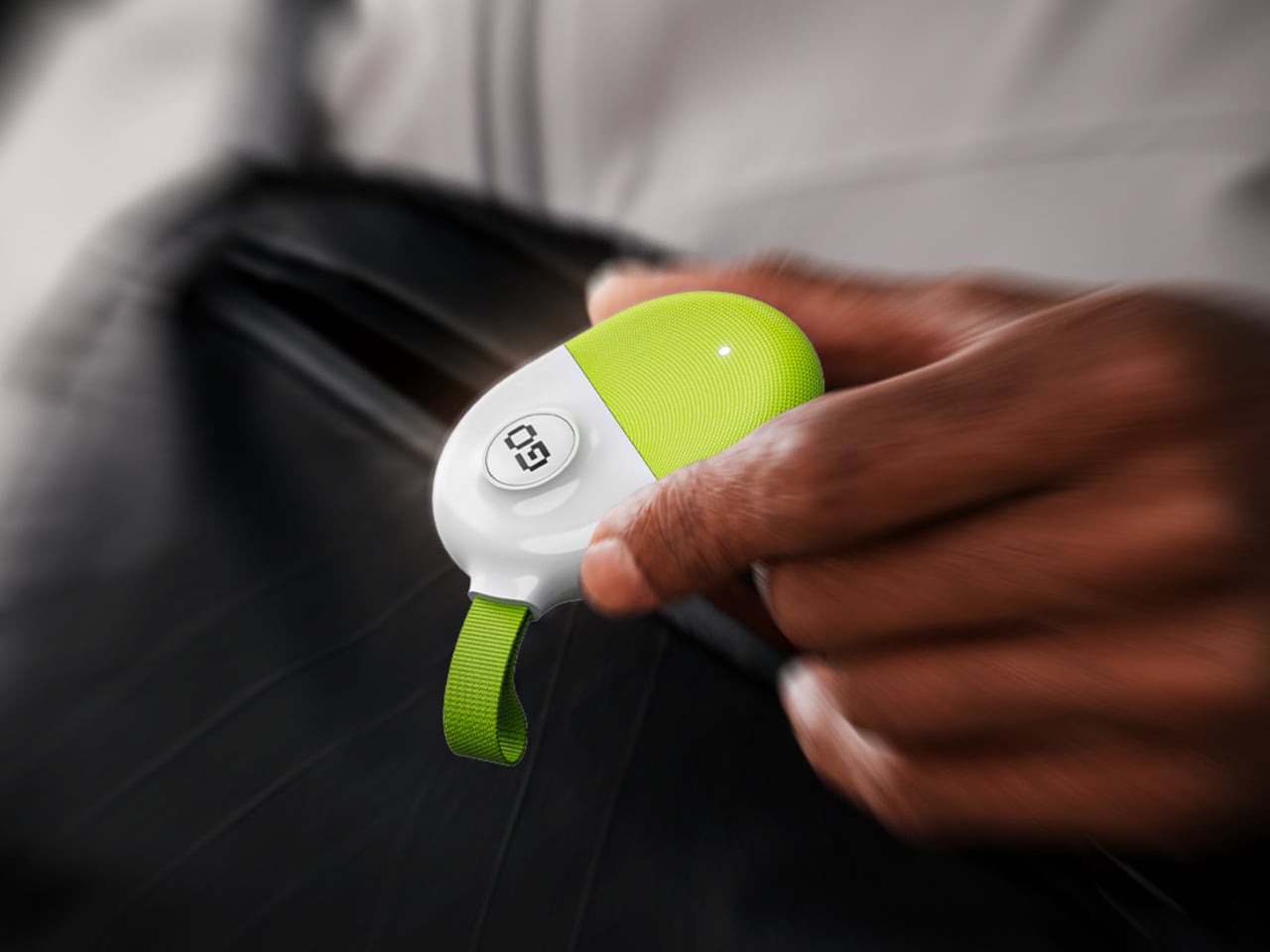
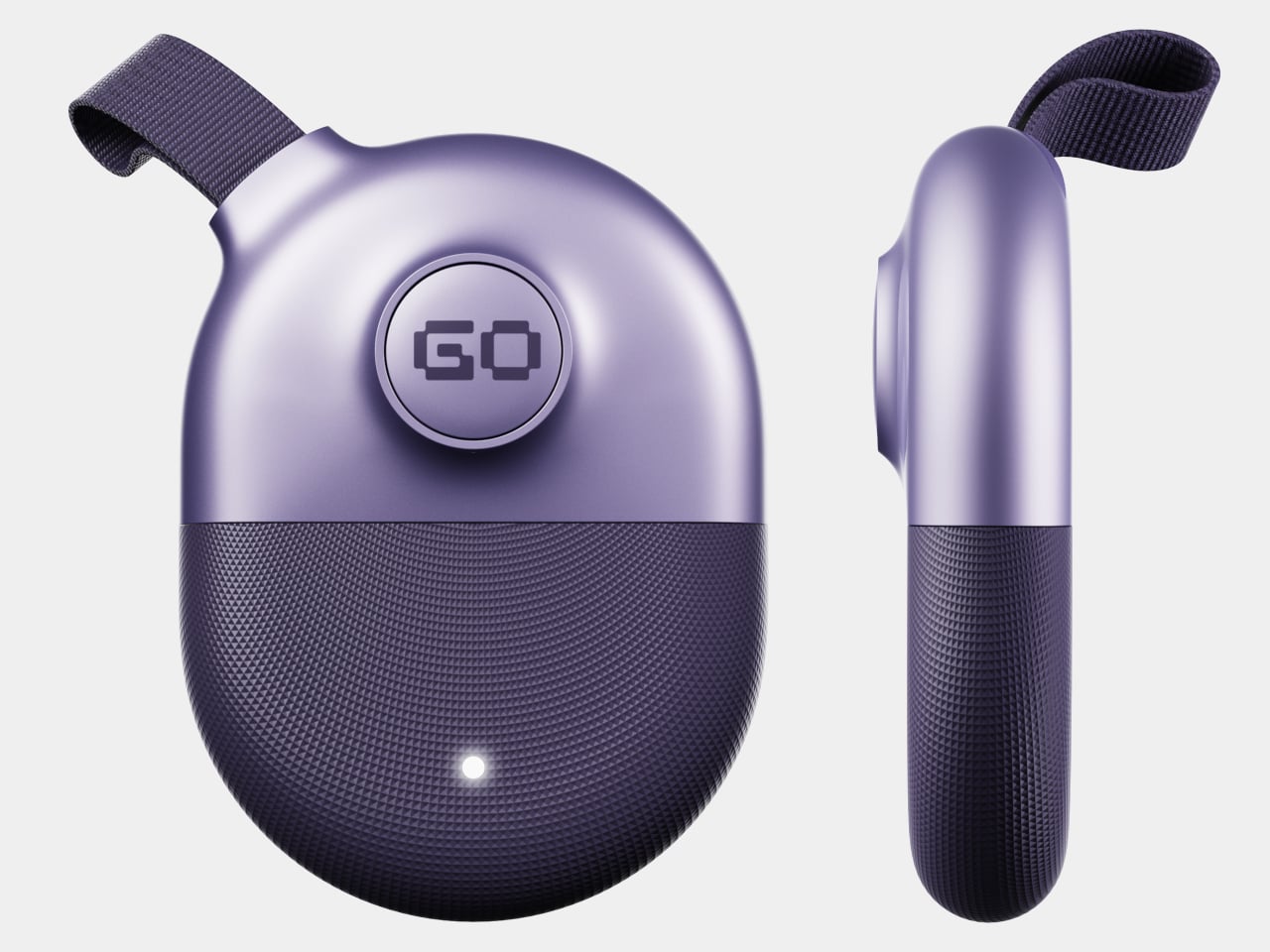
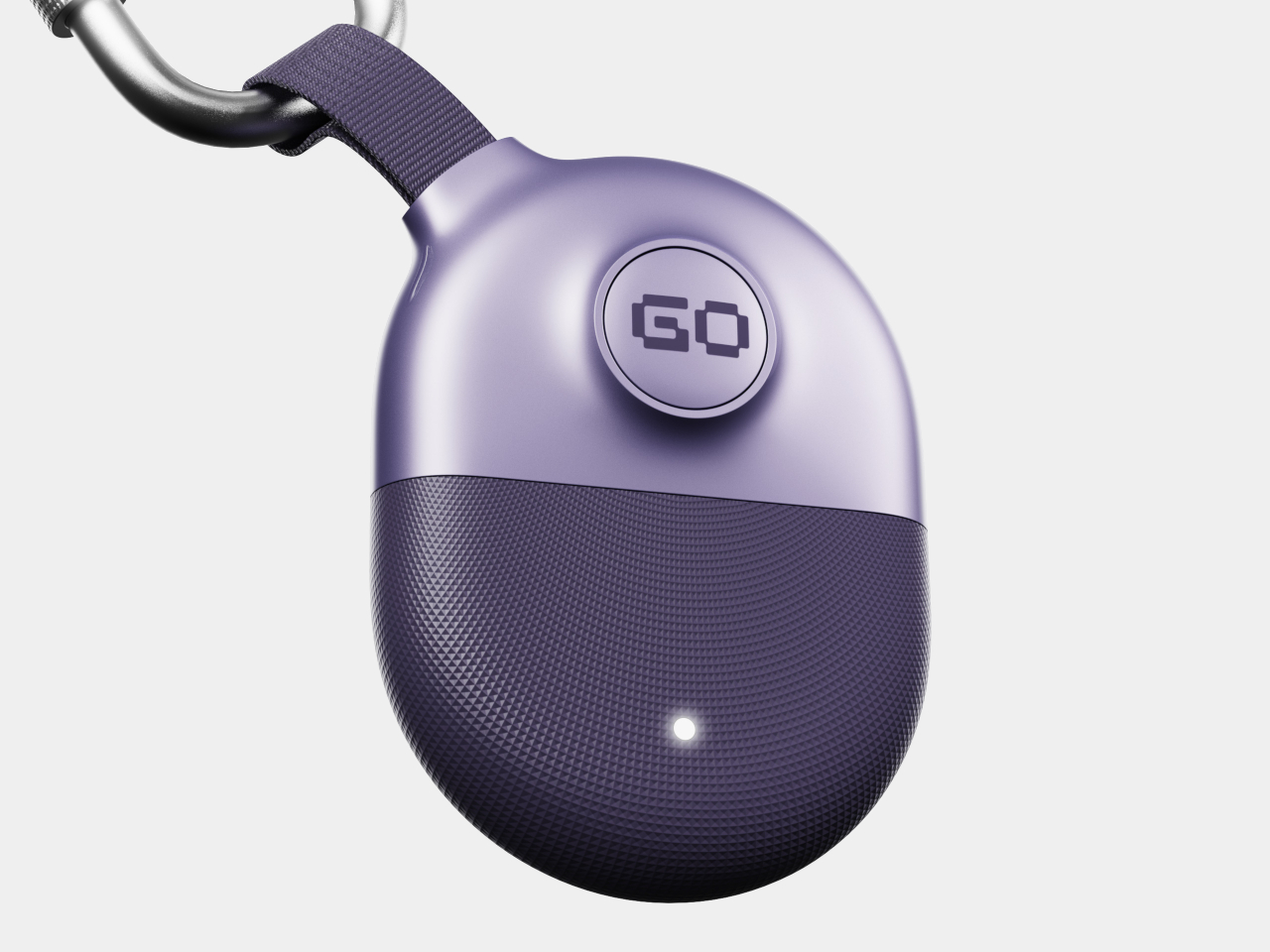
GoTag is a concept that takes that neglect seriously. Designed as a compact GPS tracker, it approaches the form with the same level of intention usually reserved for earbuds or wearables, where how something looks and feels in hand matters as much as what it does. The result is a small device that feels considered rather than simply manufactured.
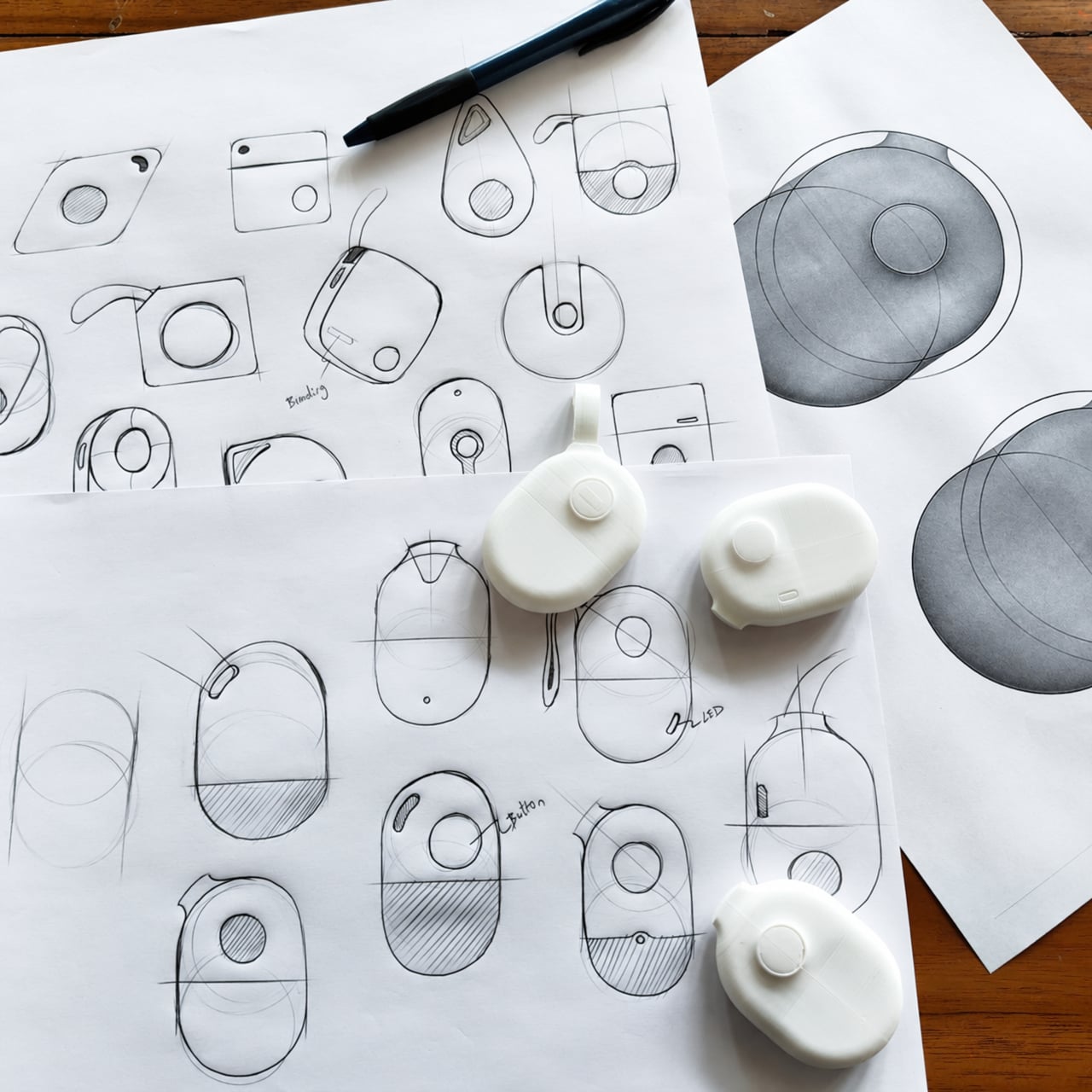
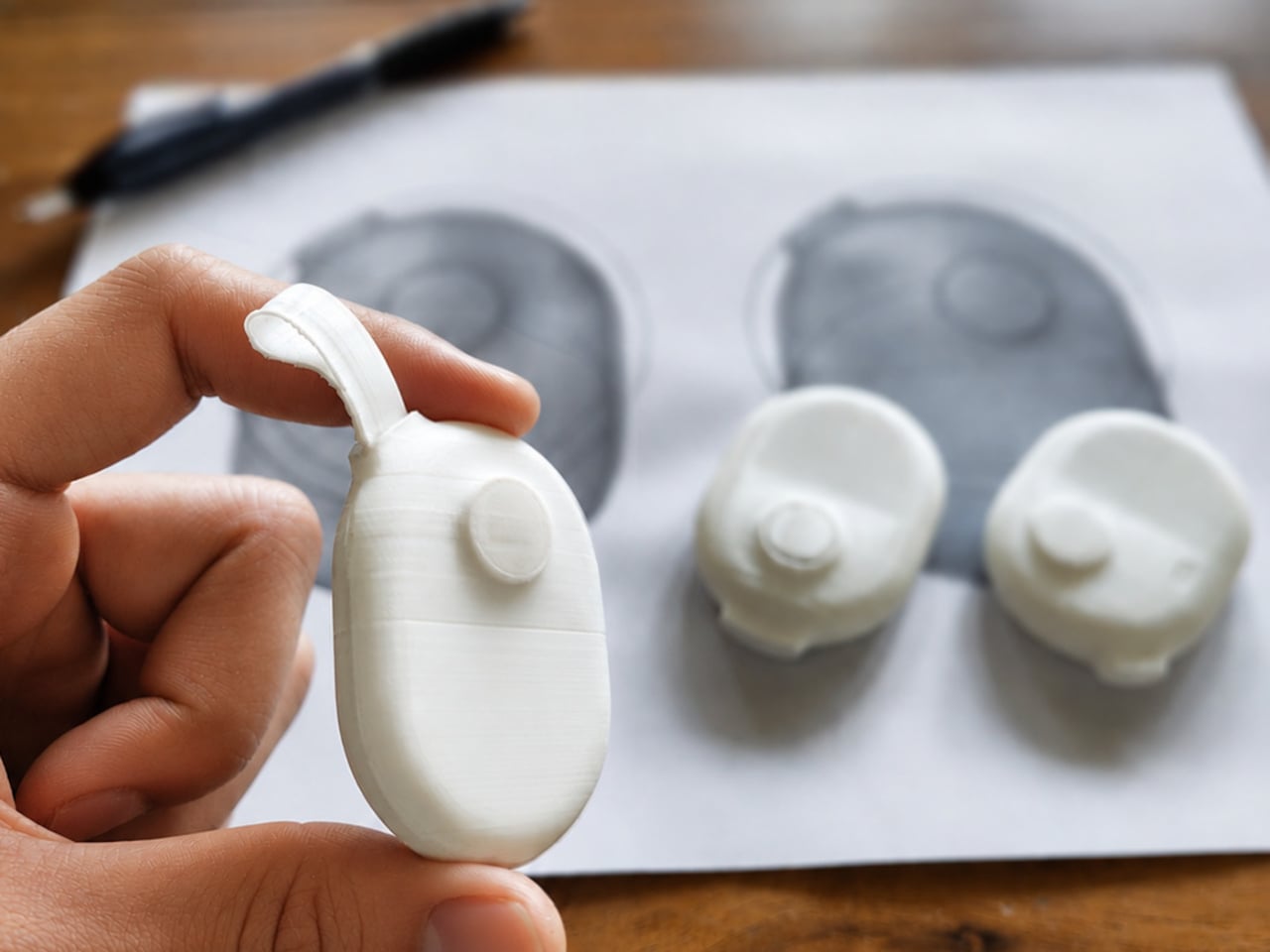
The design began with a wide range of sketch explorations, testing different forms and silhouettes before settling on the final egg-like shape. Foam models were made and held during the process, which helped confirm proportions and surface breakup in a way that drawings alone couldn’t. That in-hand testing shaped the balance between the smooth upper zone and the textured lower half.
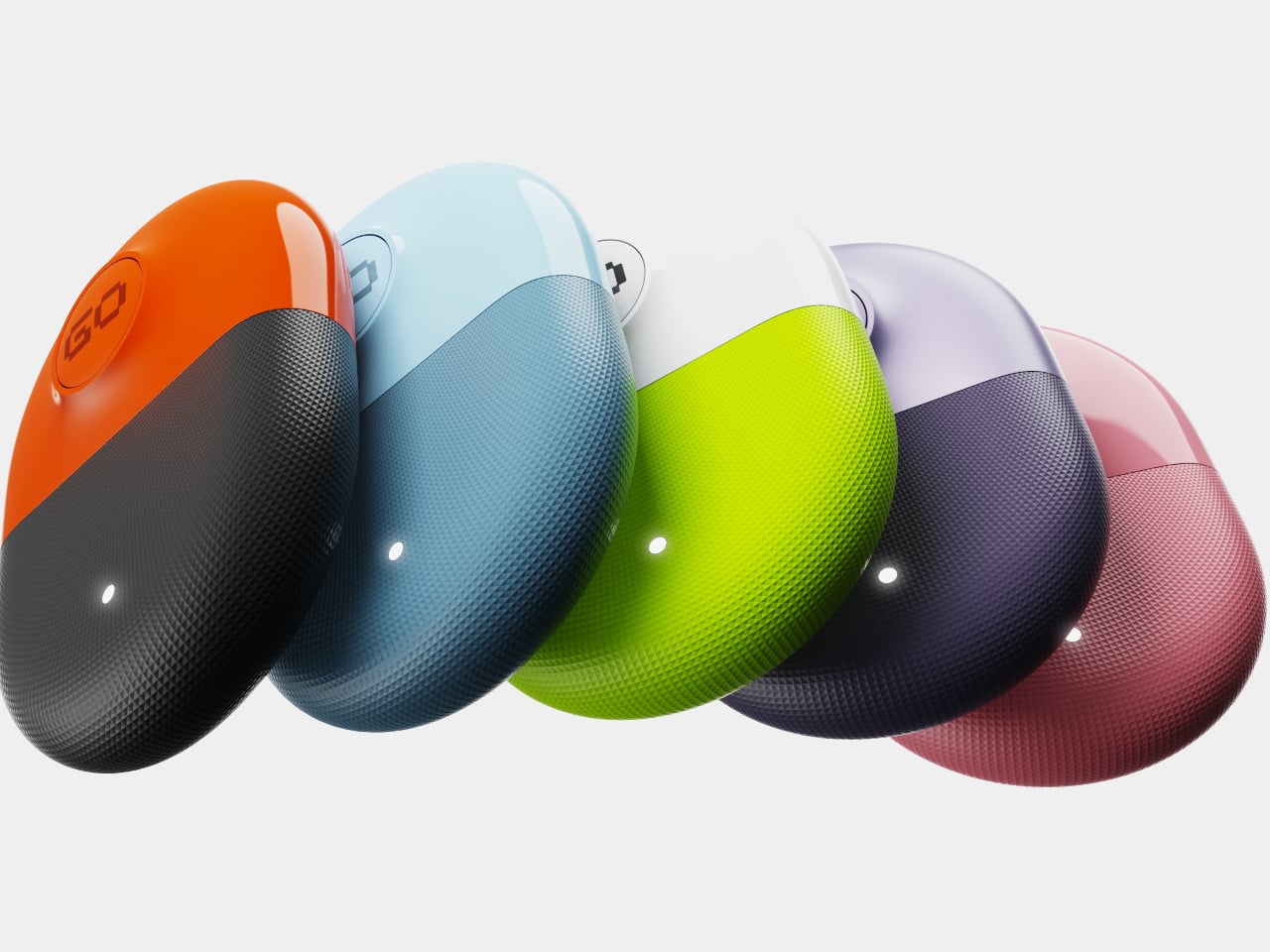
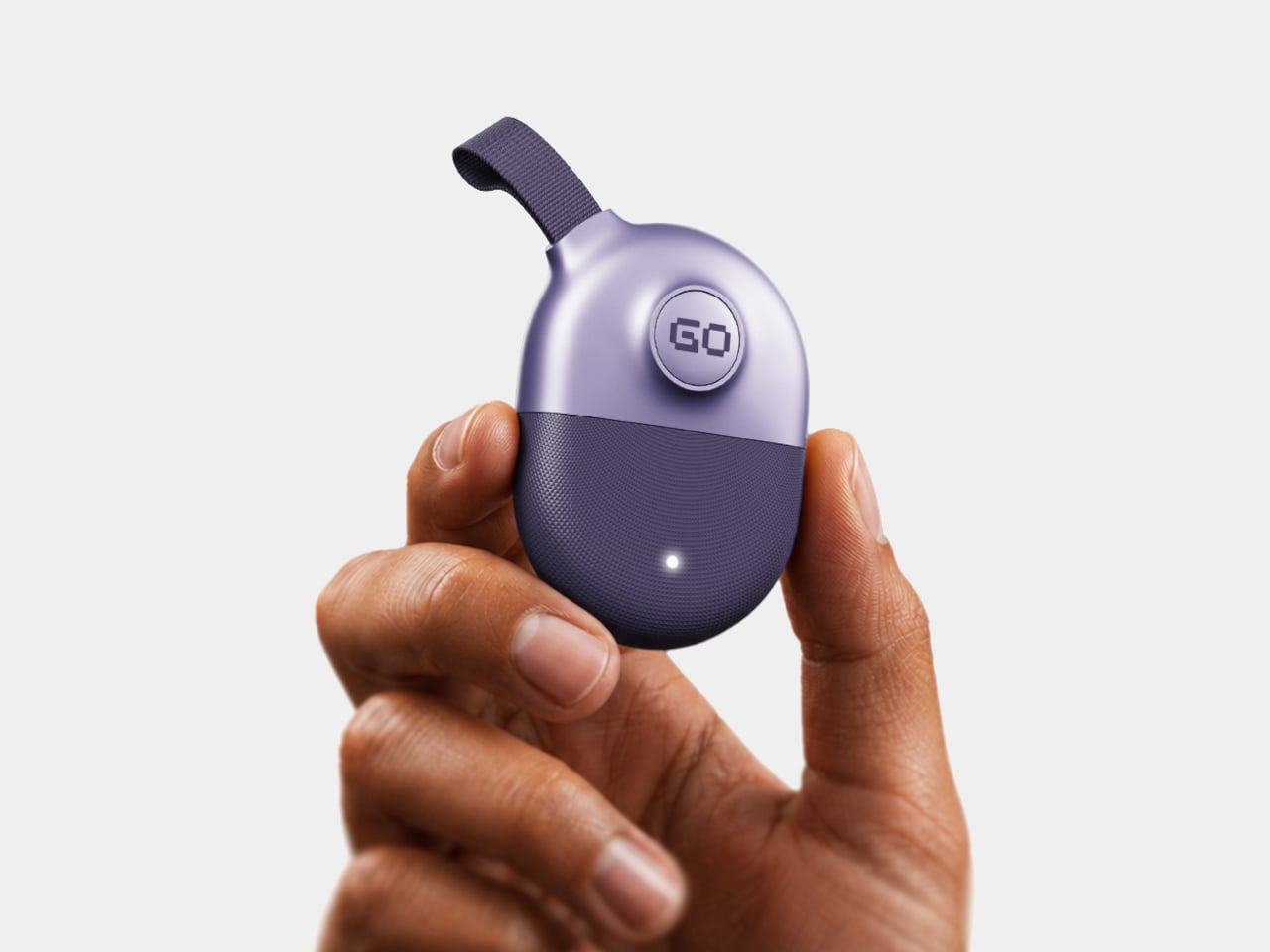
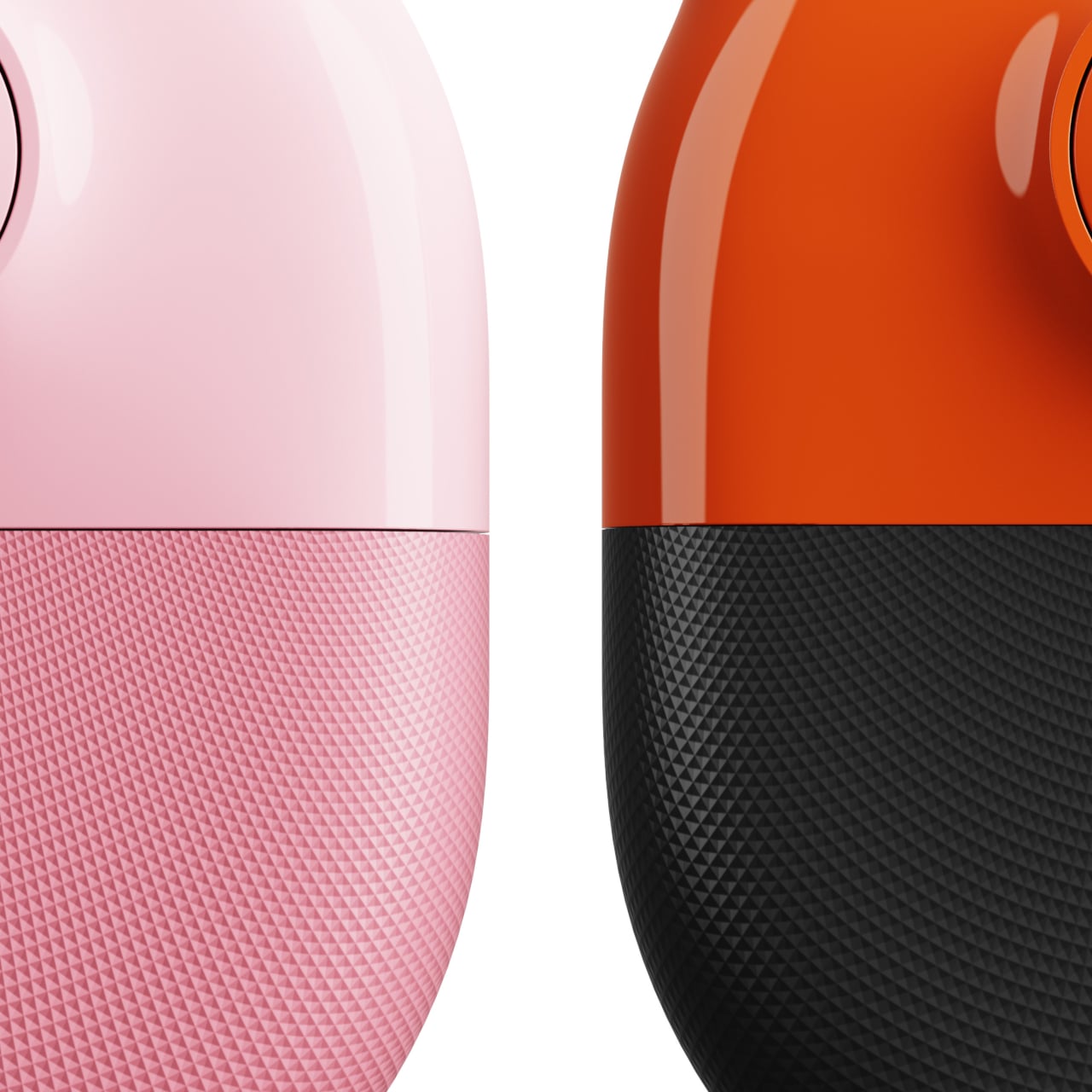
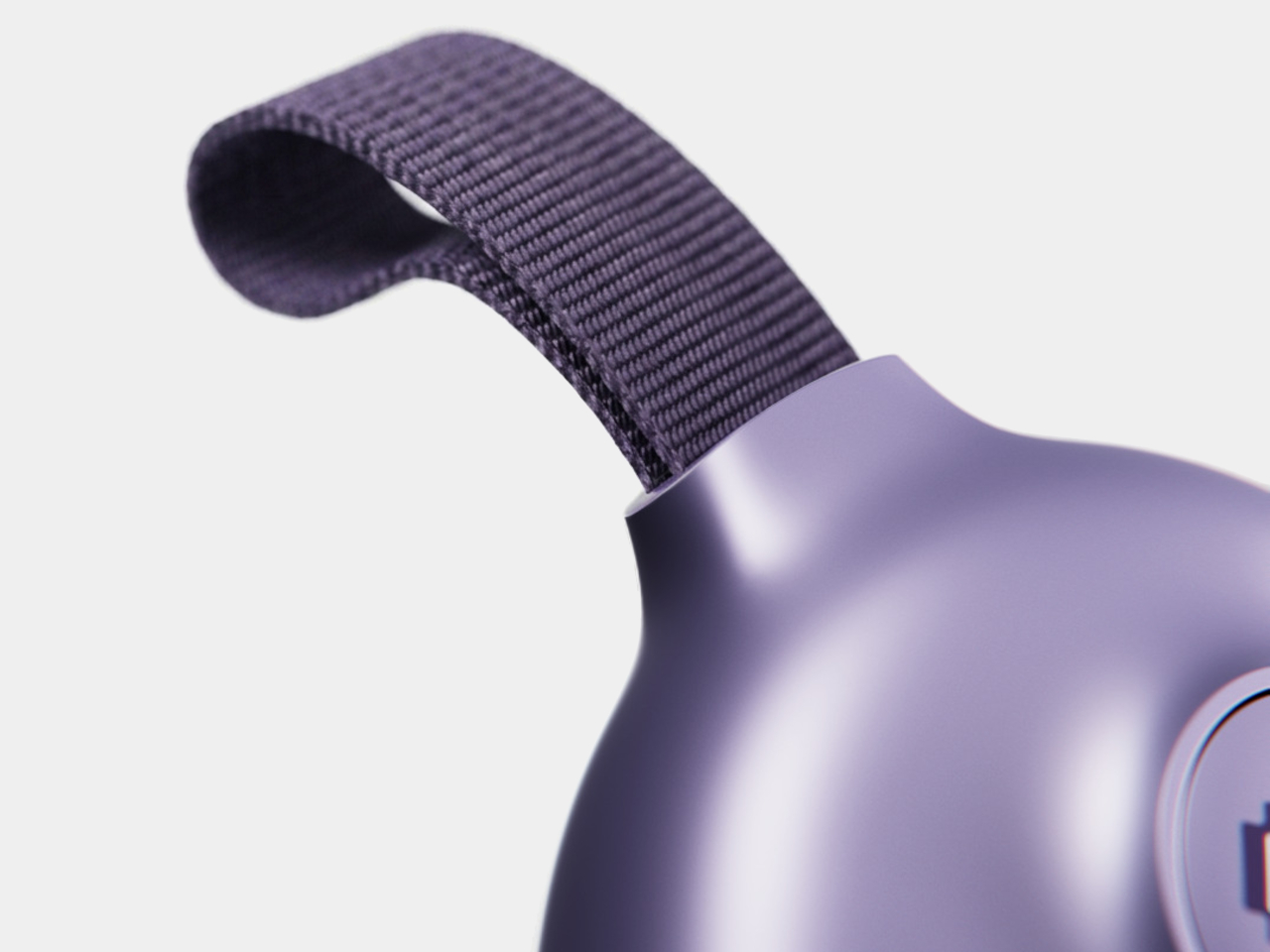
The finished form splits into two distinct zones. The upper half is smooth and slightly glossy, carrying a single circular “GO” button for all interactions. The lower half switches to a dense micro-diamond texture that adds grip and changes how the material catches light. A small LED sits flush in that lower section, while a woven fabric loop at the top connects to any carabiner, keychain, or bag strap.
The concept comes in several colorways, each pairing a lighter upper tone with a darker lower section of the same color family. Orange over black, lavender over deep purple, sky blue over navy, white over lime green, and pink over rose are among the variants shown. Each combination reads as a different product personality while sharing the same silhouette, which is exactly the point.
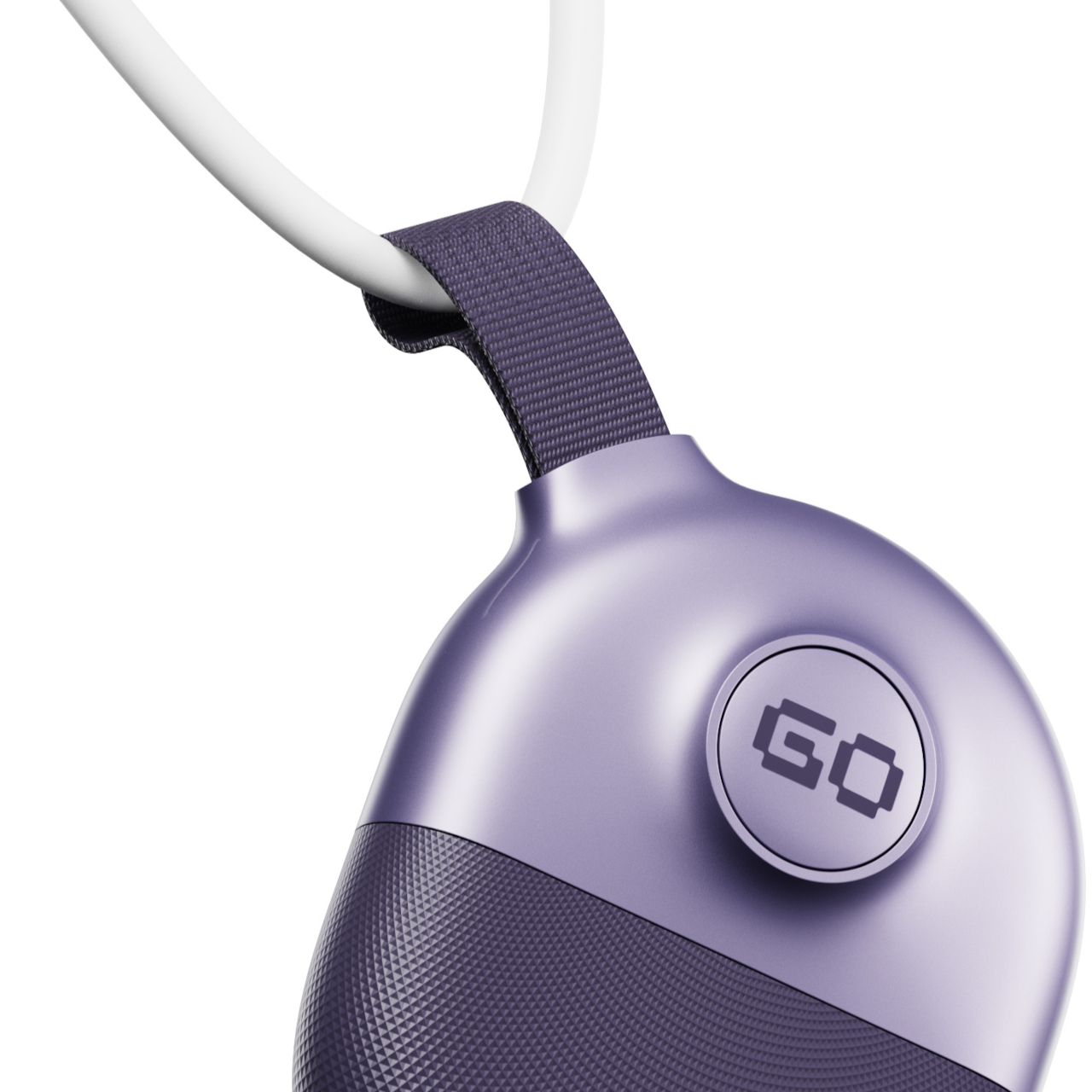
The woven fabric loop slides onto a carabiner, clips over a bag zipper pull, or threads through a keyring. That flexibility matters for something meant to move with you across bags, jackets, and gear rather than stay in one fixed place. Tracking a camera bag on a trip, or keeping tabs on a child’s backpack, both fit within what the compact form makes genuinely easy to carry.
The GoTag reads as friendly and minimal from a distance but rewards closer inspection with texture transitions and material depth that most trackers skip entirely. The surface boundary between smooth and textured zones is deliberate and precise, giving the object a quality of craft that usually belongs to audio accessories or small cameras. There’s clearly room to treat the object as something worth picking up and looking at, rather than something you set and forget.
The laptop has become the default portable workstation, but it has one limitation that’s hard to overlook: you’re still stuck with one screen. Freelancers, students, and remote workers have learned to manage with a single panel, but demand for more display real estate on the go keeps growing. Cramming a presentation into one corner while notes fill the other half gets old quickly.
Acer is addressing that gap with two new portable monitors announced at Computex 2026, along with a third product aimed at an entirely different audience. The PM161Q JB and PM131QT cover professionals and digital nomads who need an extra screen wherever they land. The Aspire Badge is something else: a wearable display for kids and young creators who want to carry their personality with them, literally.
Designer: Acer
PM161Q JB
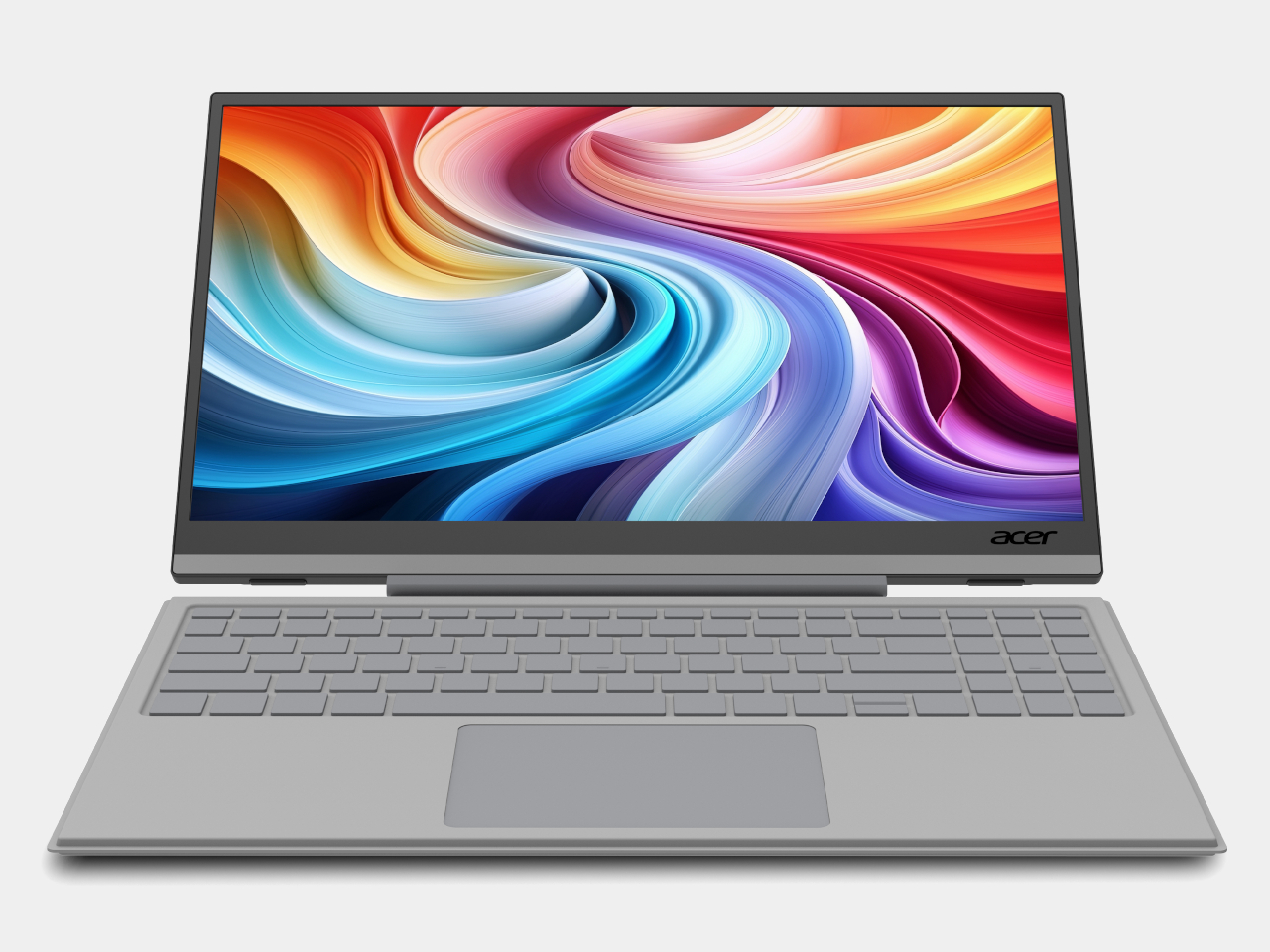
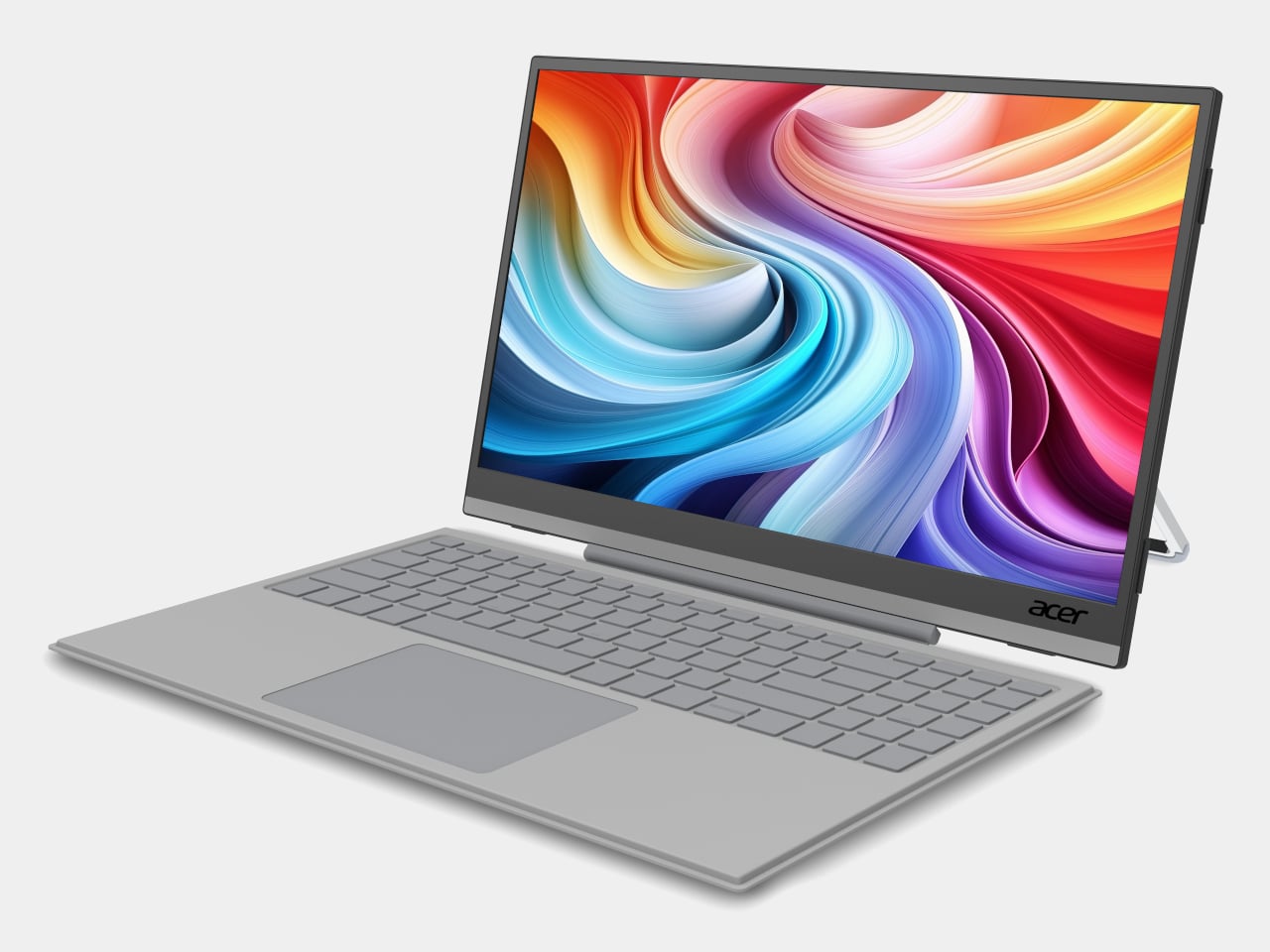
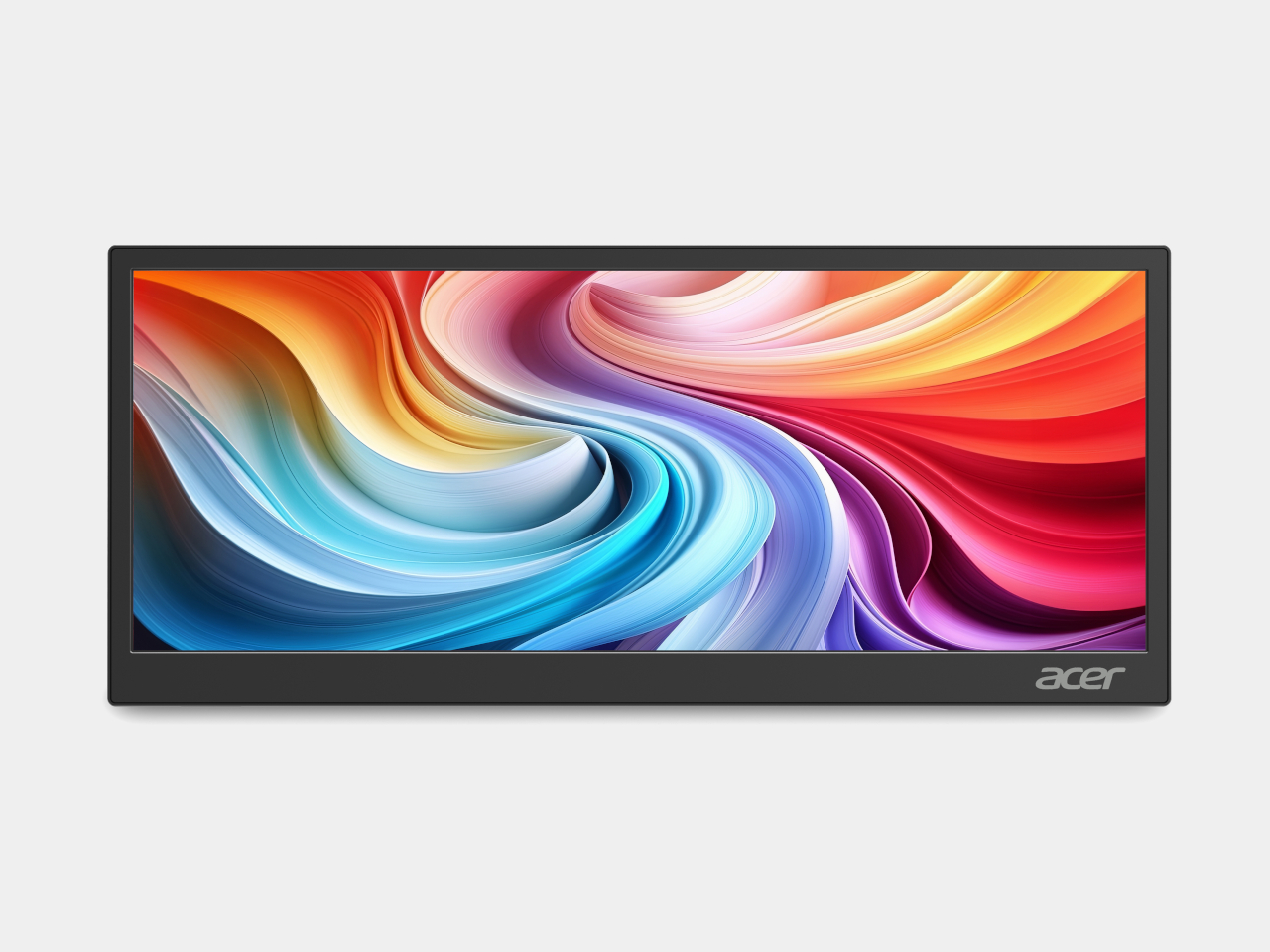
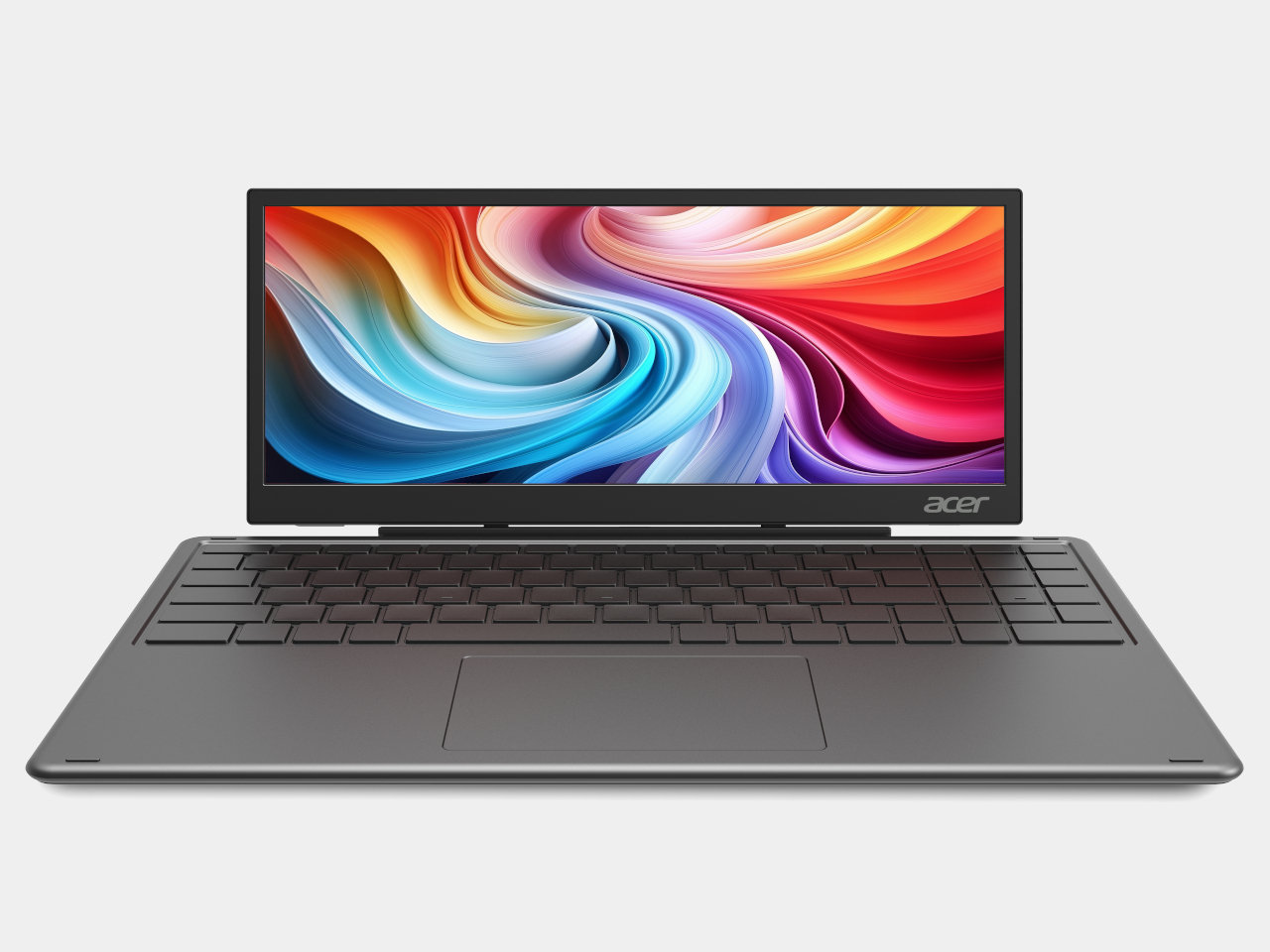
The PM161Q JB is the larger of the two portable monitors, coming in at 15.6 inches with a Full HD IPS panel and 170-degree viewing angles. A pair of Type-C ports and an HDMI input handle connectivity, and a single-cable setup means it’s ready to go as soon as you find a seat. A compatible detachable pogo keyboard turns it into a compact workstation without needing anything else nearby.
PM131QT
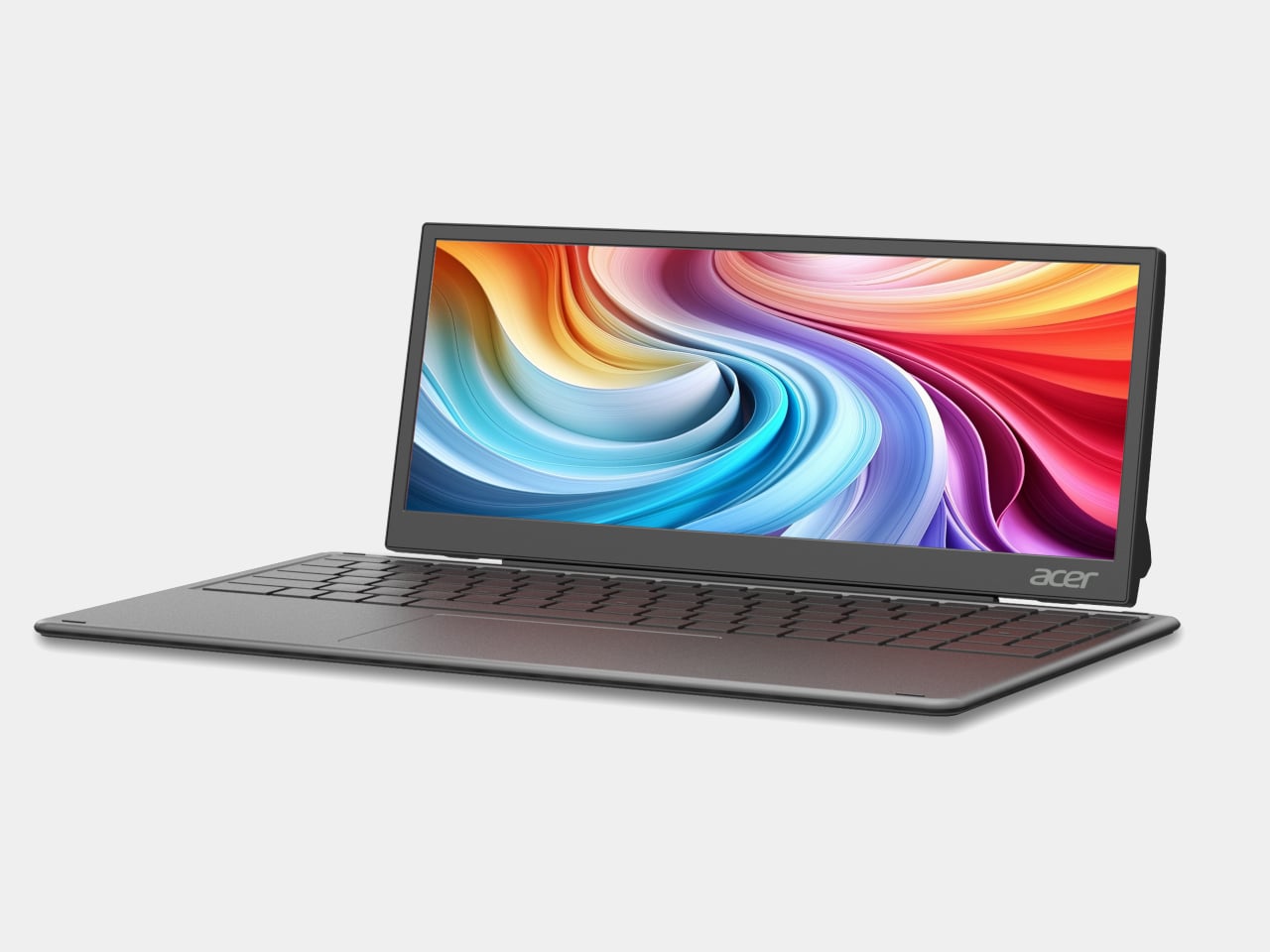
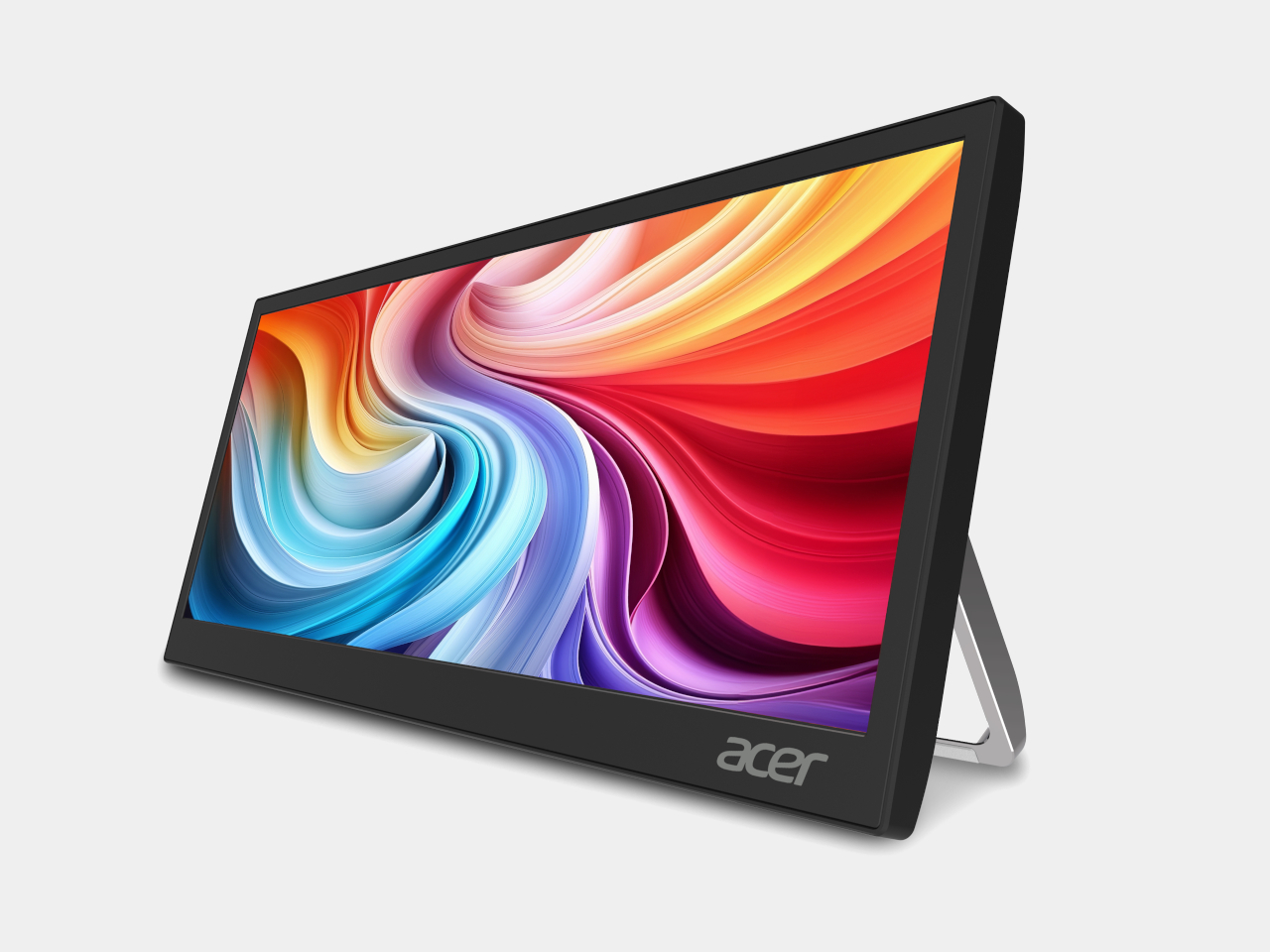
The PM131QT takes a different approach with a 12.3-inch touchscreen in an ultrawide 1920 × 720 format, a shape that suits secondary-display work rather than standalone use. Five-point touch makes it practical as an interactive panel, and the magnetic mounting design lets it attach to various surfaces, including a car dashboard. It also functions as a dedicated display for AI assistant interfaces on the road.
PM131QT
Both monitors connect over a single Type-C cable and support VESA mounting alongside a standard ¼-inch tripod thread, so a camera tripod becomes a workable monitor stand when there’s no desk in sight. The PM161Q JB starts at $149.99 in North America, arriving in Q4 2026, while the PM131QT comes in at $179.99 in the same window. Both reach Australia in Q3 2026.
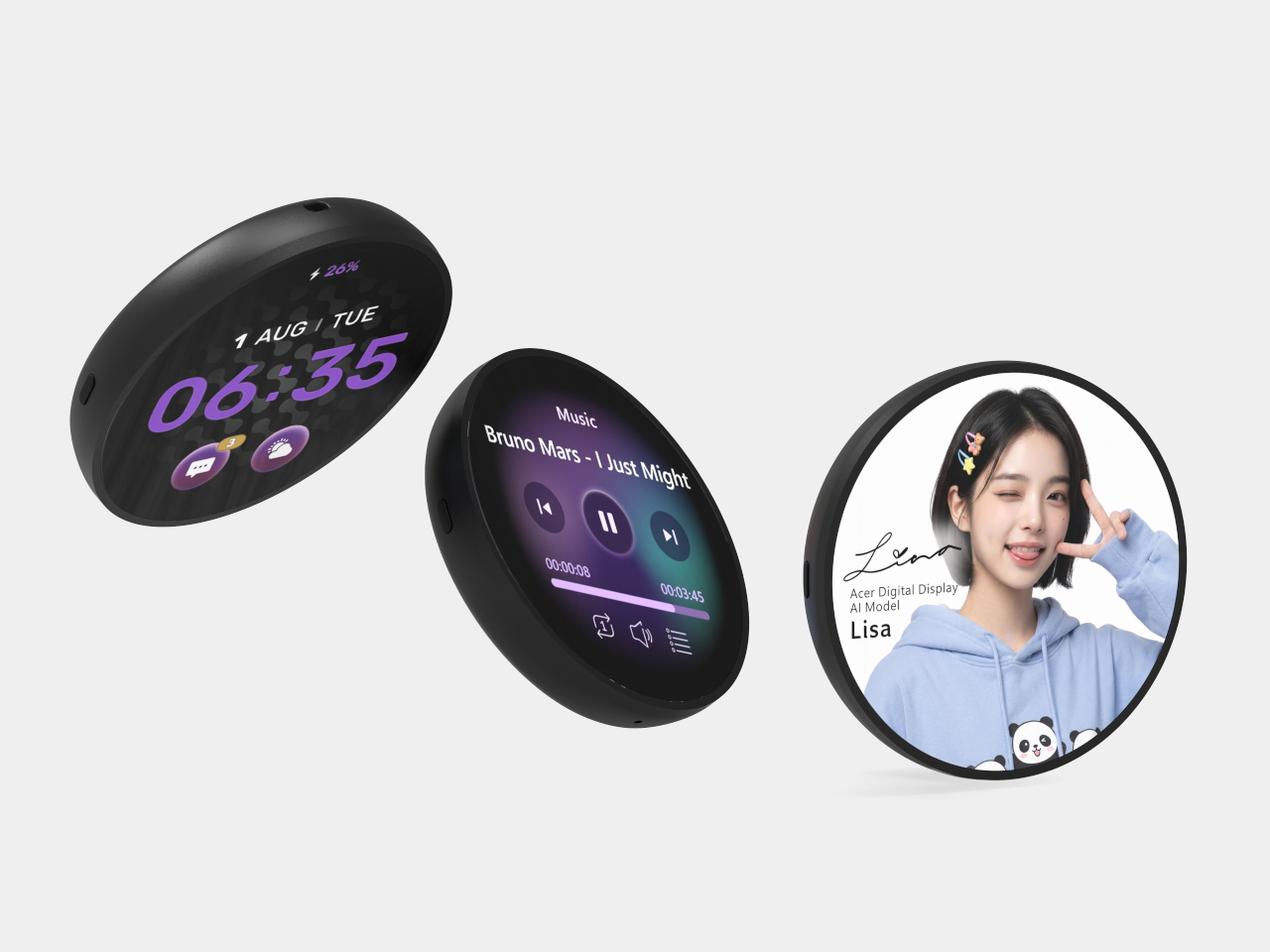
The Aspire Badge is a round wearable with a 1.85-inch IPS screen that clips onto a shirt, hangs from a lanyard, or attaches magnetically to a bag. It pairs with a companion app over Bluetooth 6.0 and displays any image or animation pushed from a phone. Battery life runs up to four hours at full brightness or eight at minimum, with contact charging to restore it.
The Badge isn’t purely decorative. It includes an emergency alarm, an SOS alert that flashes in Morse code, and a night flash mode for improved visibility in the dark, adding a safety layer that makes it more than a novelty for kids walking to school or staying out after dark. It supports JPG, GIF, and PNG formats, and comes in at $49.99 in North America.
The three products together cover a broader range of needs than a typical monitor announcement does. The PM161Q JB and PM131QT reflect how seriously portable screen real estate has become for people working away from a fixed desk. The Aspire Badge takes the same logic in a completely different direction, treating a display not as a productivity tool but as something you wear out the door.
Gaming PCs have fractured into more categories than any single device can cover. The player who needs maximum frame rates for competitive play sits on one end, the person who just wants to game from the couch without moving their rig sits on the other, and every setup in between has its own distinct demands. Most gaming hardware picks a side and leaves the rest unaddressed.
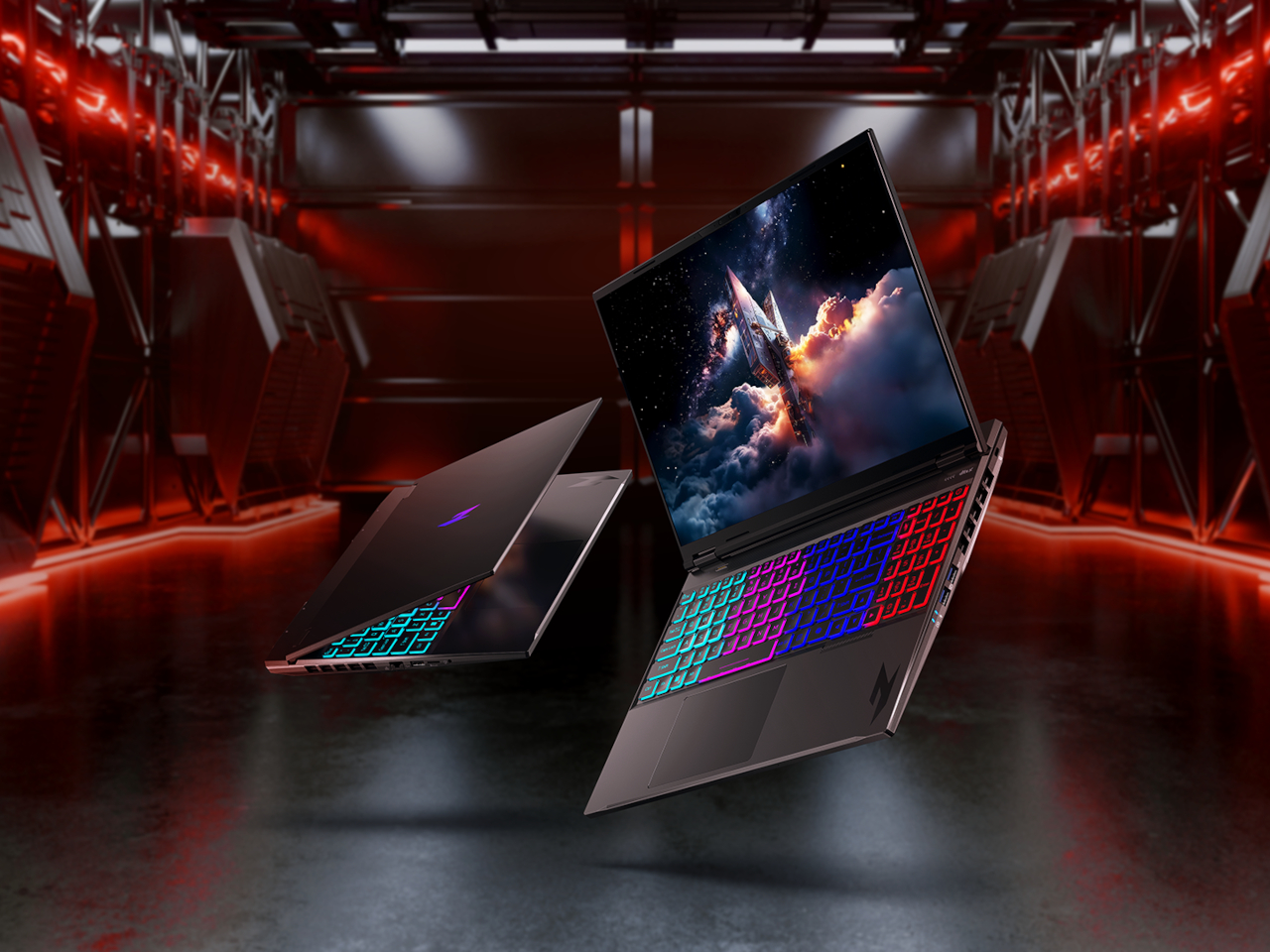
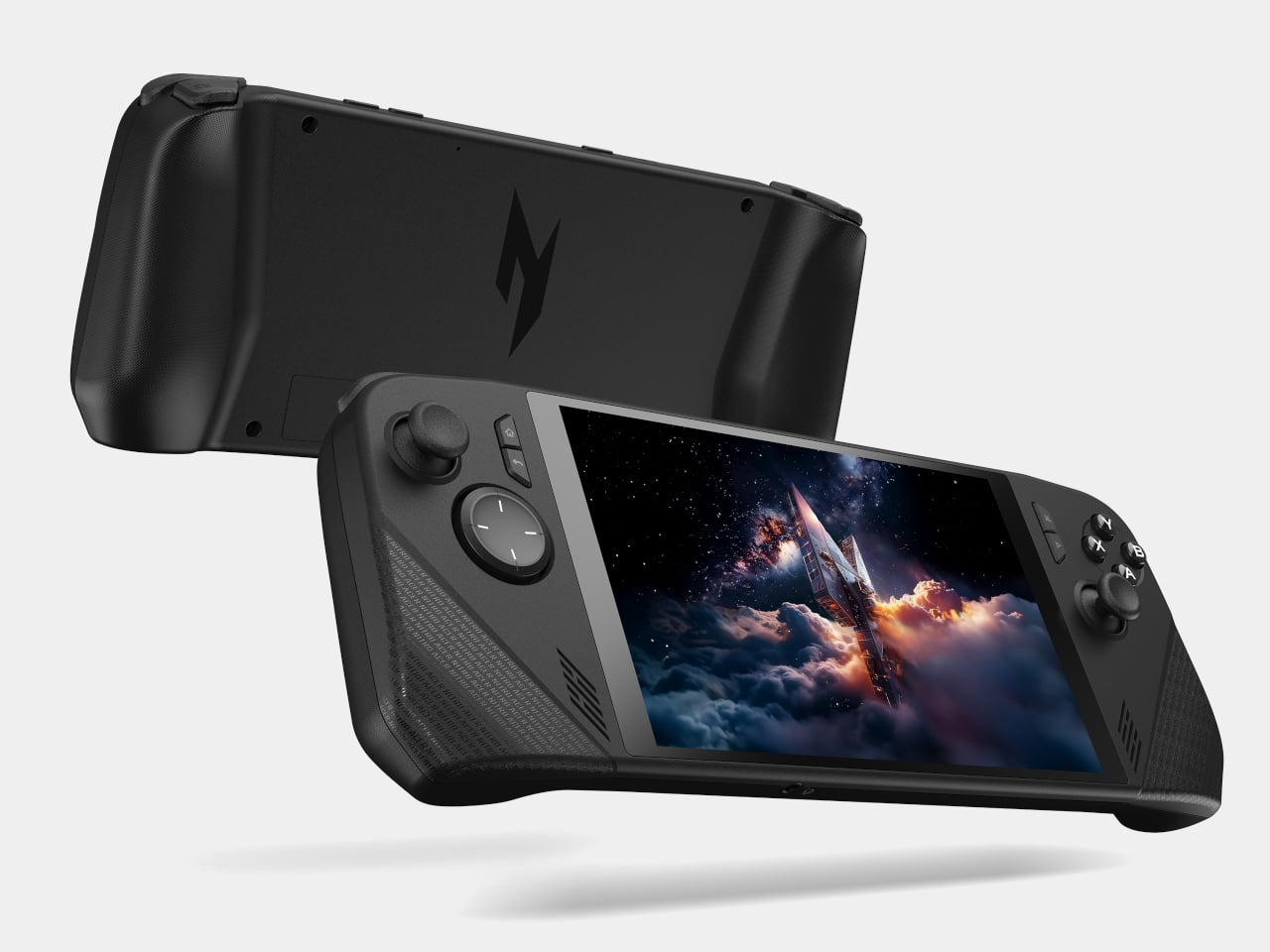
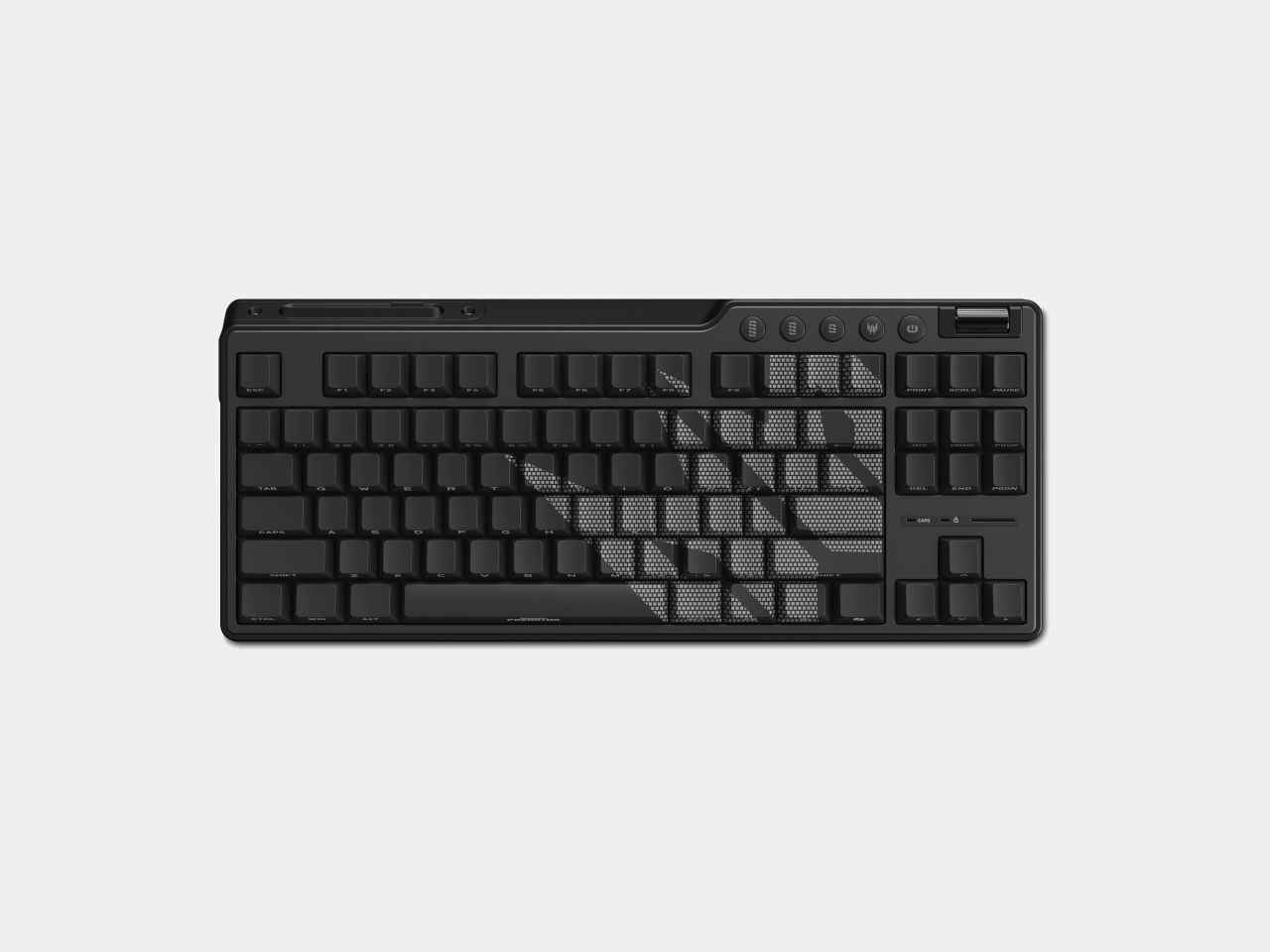
At Computex 2026, Acer addressed nearly the whole range at once with five new products. The lineup runs from the iF Design Award-winning Predator Helios 18 AI at the performance ceiling, through the Nitro 16 and the Nitro Blaze Link streaming handheld, and rounds out with the Predator Aethon 750 TKL keyboard and the Predator Robust Plus Backpack for getting all of it from place to place.
Designer: Acer
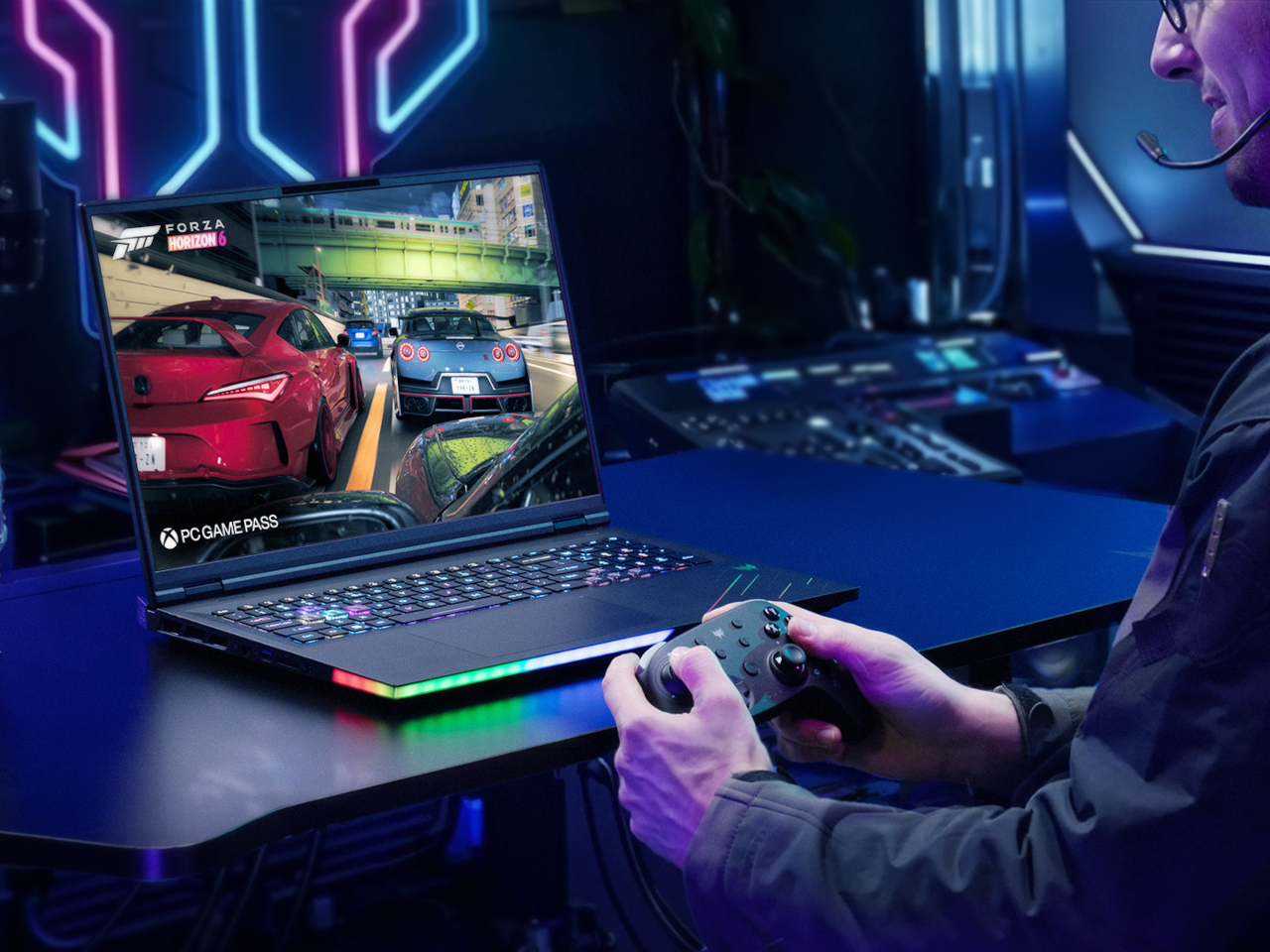
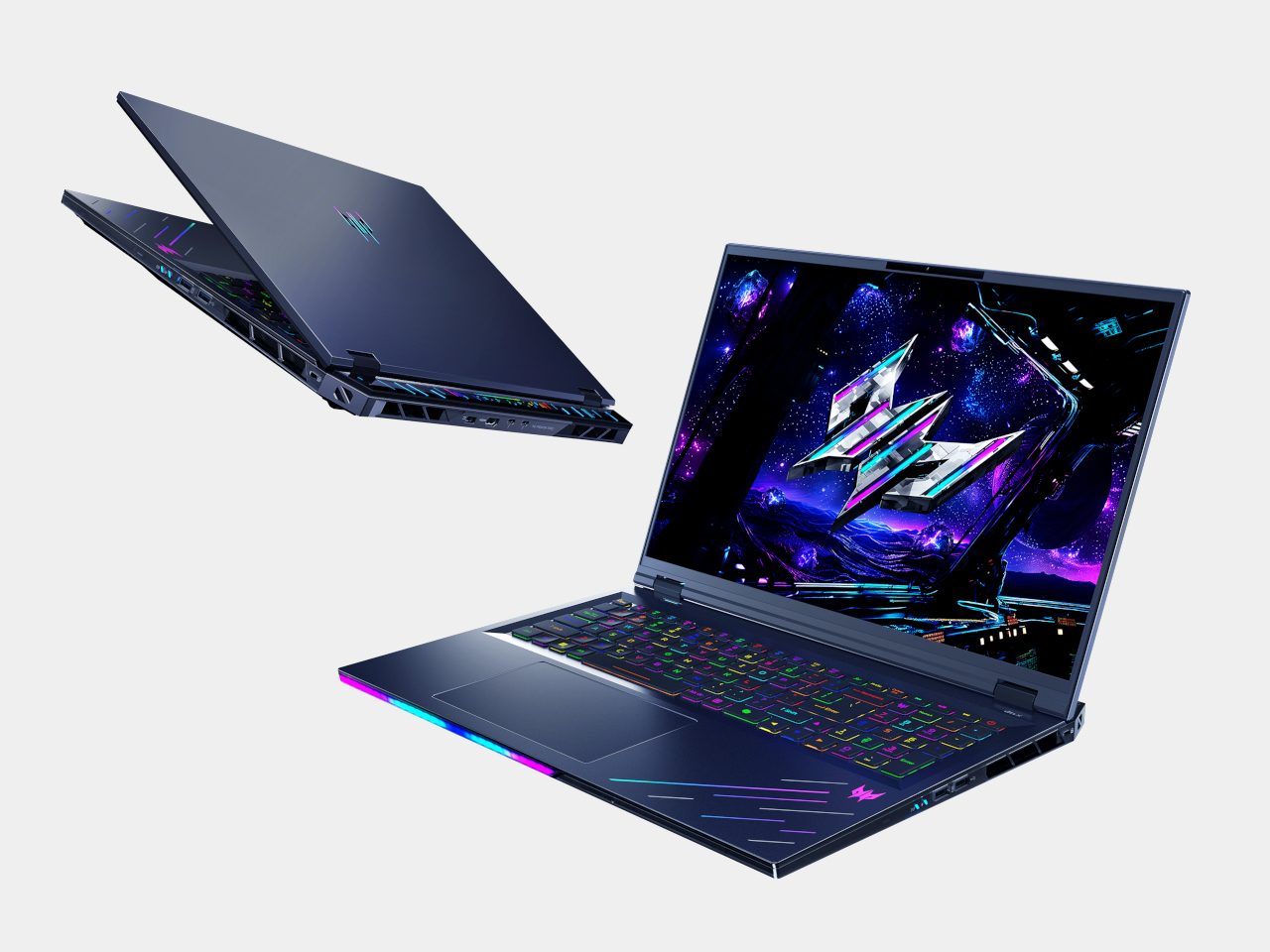
The Predator Helios 18 AI is where Acer went all out. Powered by an Intel Core Ultra 9 290HX Plus processor and up to an NVIDIA GeForce RTX 5090 Laptop GPU with 24GB of GDDR7 VRAM, it’s configurable with as much as 256GB of DDR5 memory and 6TB of storage spread across three PCIe Gen 5 NVMe slots. For a laptop, that’s a desktop workstation argument.
The 18-inch Mini LED display switches between 4K at 120Hz and Full HD at 240Hz through Acer’s Dual-Mode Display system. It reaches 1,000 nits in HDR mode and delivers Calman Verified color accuracy at 100% DCI-P3 coverage with NVIDIA G-SYNC. For a long competitive session or an extended run through an open-world RPG, the panel is built to match whichever demand comes first.
Keeping those specs from throttling requires hardware to match. Dual 6th Gen Predator AeroBlade 3D Fans each pack 100 metal blades at just 0.05mm, delivering a claimed 20% increase in airflow over plastic fans, supported by liquid metal thermal grease and vector heat pipes. Six speakers with Predator Vox technology handle audio, while Intel Killer DoubleShot Pro combines Wi-Fi 7 and Ethernet to keep online play stable.
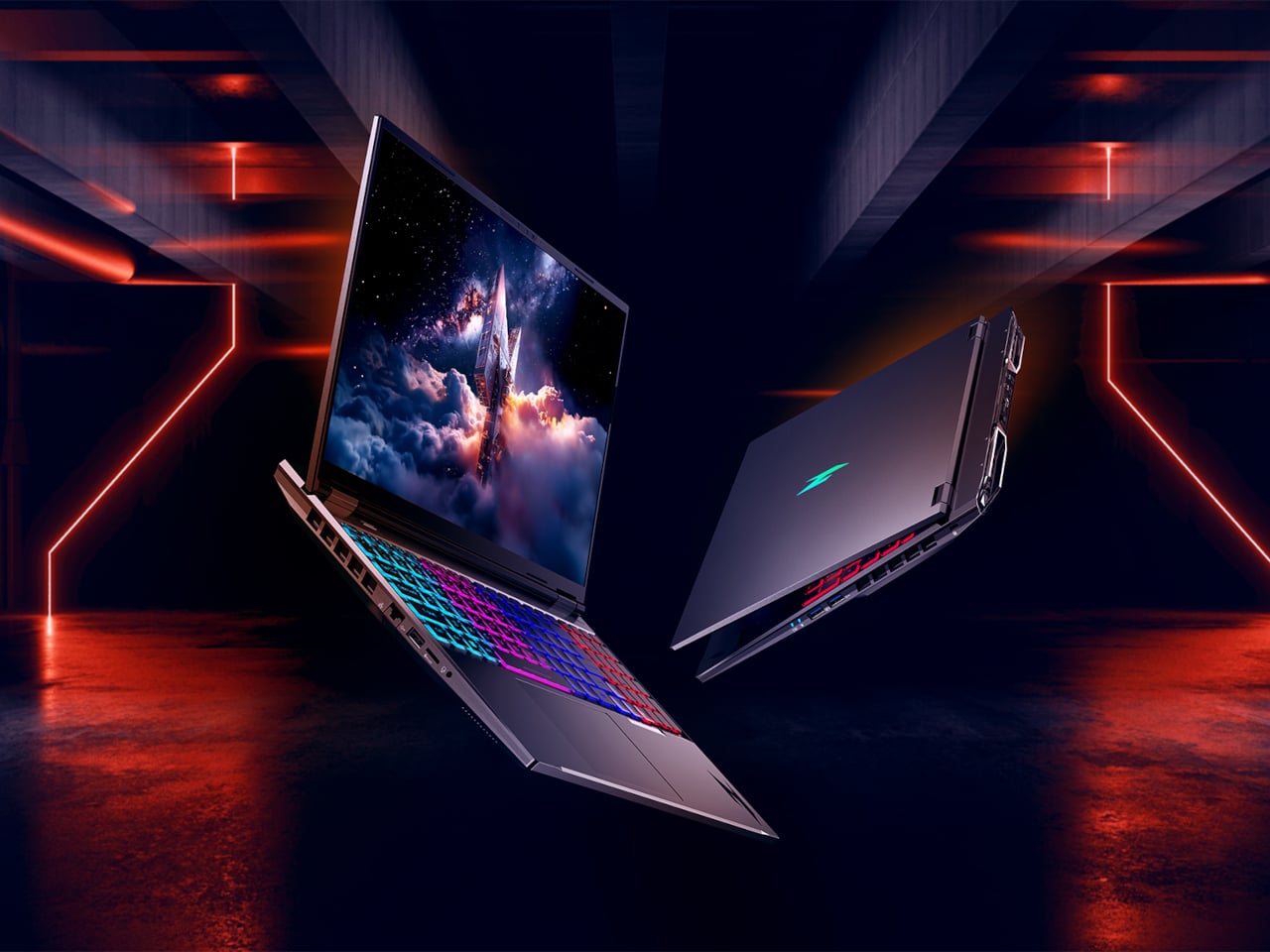
The Acer Nitro 16 doesn’t reach the Helios’s ceiling, but it earns its own headline. It’s the first Acer gaming laptop to feature the AMD Ryzen 9 9955HX3D processor, using 2nd Gen AMD 3D V-Cache technology to stay competitive even when unplugged. Paired with up to an NVIDIA GeForce RTX 5070 Ti Laptop GPU carrying 12GB of GDDR7 VRAM, it covers most of what serious gaming demands.
The 16-inch WQXGA panel runs at up to 240Hz with a 3ms response time and 100% DCI-P3 coverage, backed by G-SYNC. A dual-fan, quad-intake, quad-exhaust cooling system with vector heat pipes keeps thermals in check. At 2.5kg with a 92 Wh battery, USB 4 connectivity, and Wi-Fi 6E, it’s a more practical travel machine than most competing laptops in its performance class.
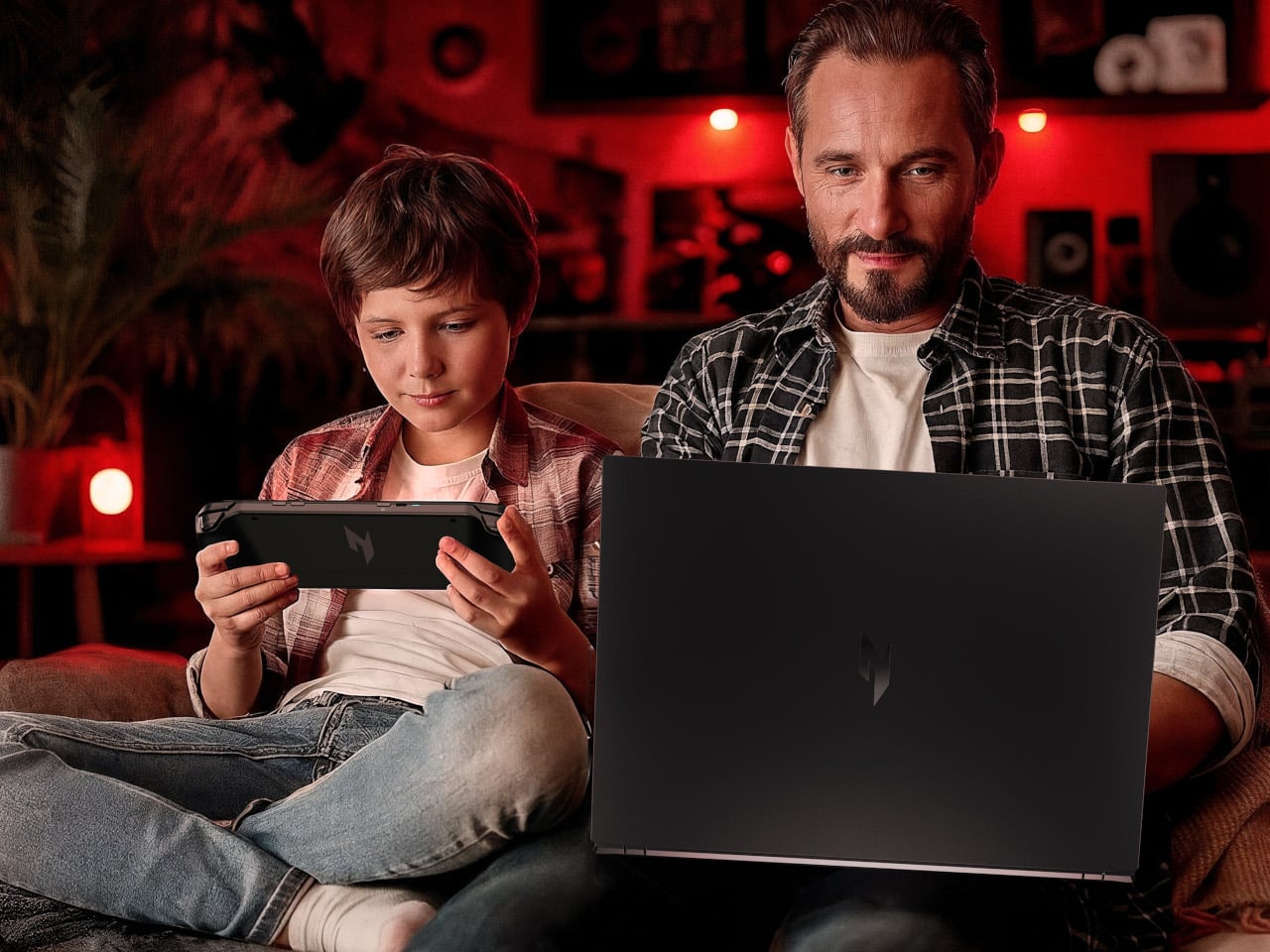
The Nitro Blaze Link puts a twist on the gaming handheld design and skips local processing entirely, opting to stream games wirelessly from a connected PC over Wi-Fi 6 via Sunshine and Moonlight services. It pairs naturally with the Helios 18 AI or Nitro 16, letting someone else in the household play from the couch while the main machine stays occupied elsewhere. The 7-inch WUXGA touchscreen and full controller layout handle the experience at a light 464 g.
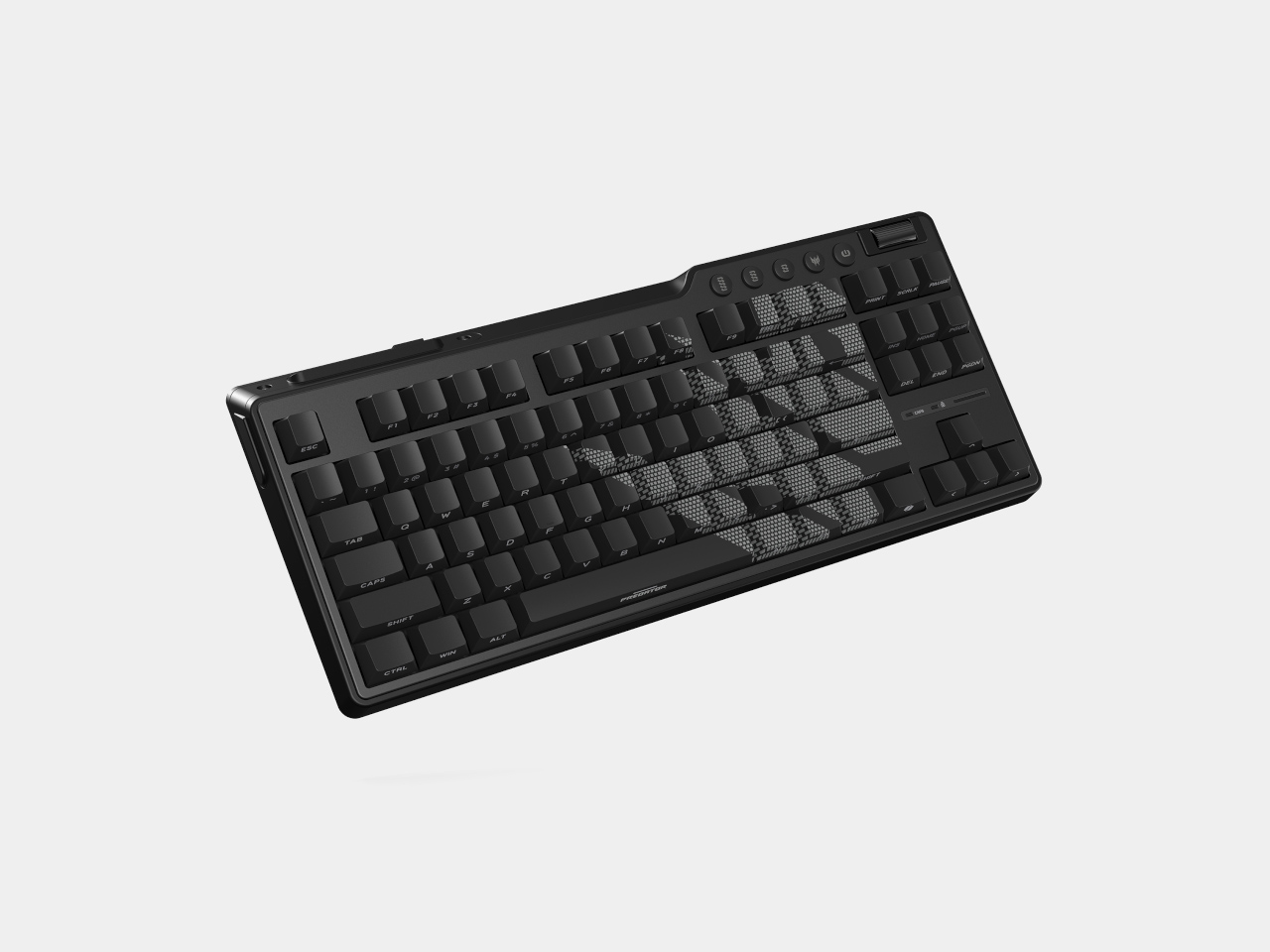
The Predator Aethon 750 TKL keeps the desk focused with a Tenkeyless layout that removes the number pad and anything non-essential for gaming. Custom Predator magnetic switches support WASD Rapid Trigger, Global Actuation, and Fine Actuation modes, while an 8,000 Hz polling rate and N-key rollover keep every input registering cleanly. Wired, 2.4 GHz wireless, and Bluetooth connections add flexibility for different setups.
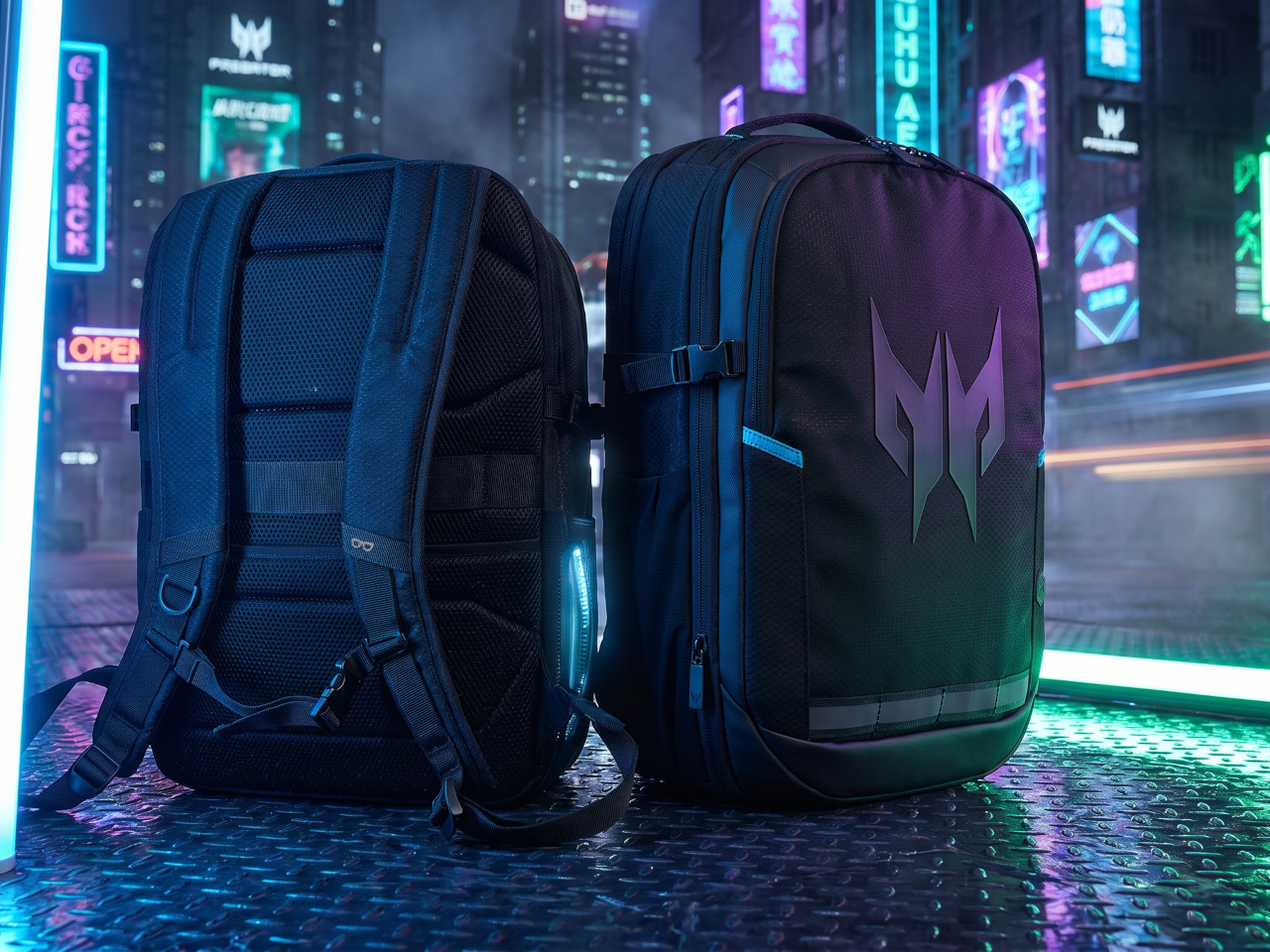
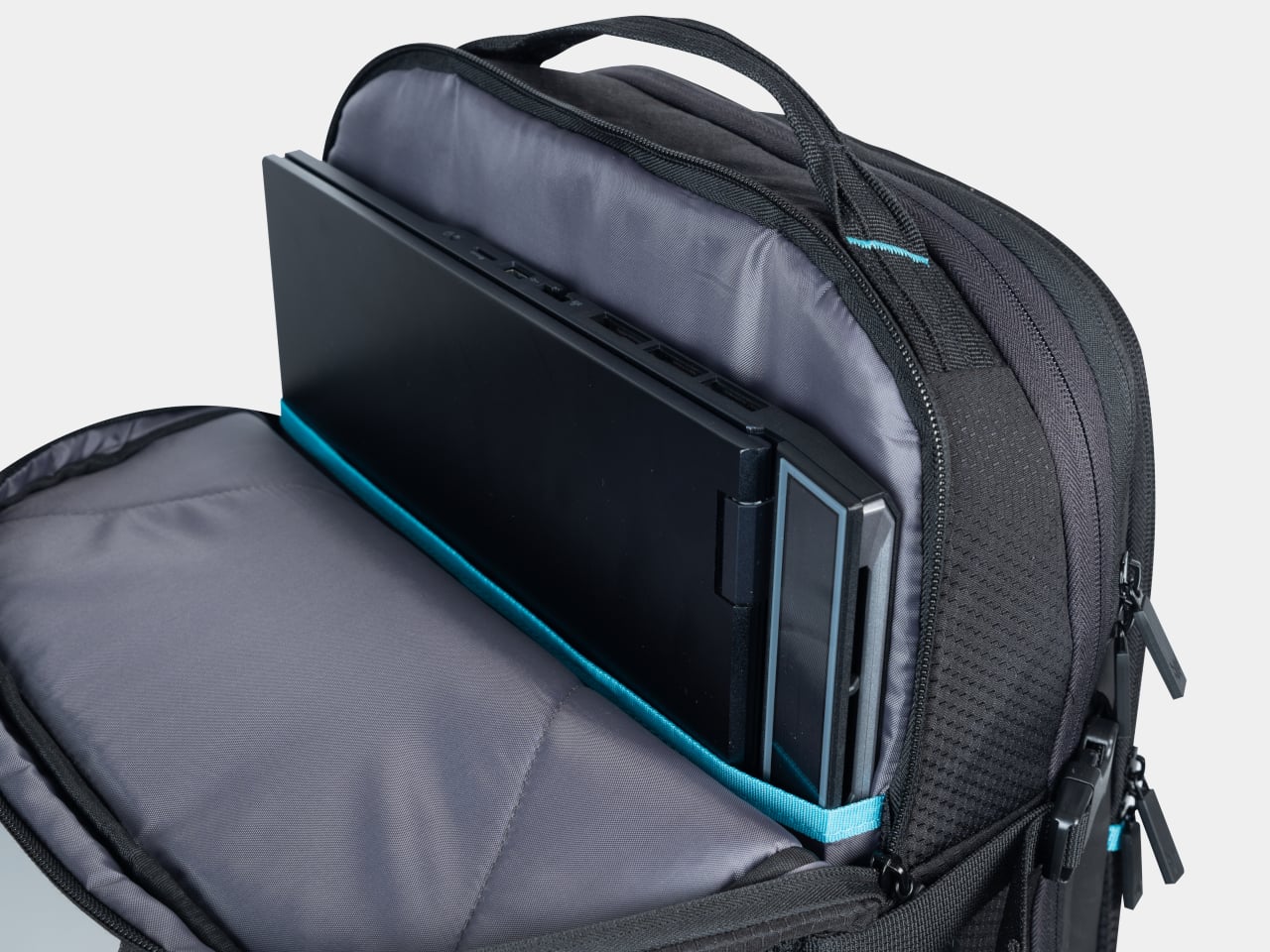
The Predator Robust Plus Backpack handles transport, expanding from 25L to 32.5L with a padded compartment for laptops up to 18 inches and a charging cable pass-through for keeping devices topped up on the move. A waterproof inner section and compression compartment round it out. The backpack arrives in North America in Q3 2026 at $199; the Aethon 750 TKL launches in EMEA in Q4 at €149.
Android tablets have long defaulted to 16:9 screens, a ratio optimized for video that leaves them awkward for anything resembling actual work. Documents get letterboxed, web pages feel narrow, and the creative canvas ends up shorter than it should be. That works well for watching but not for producing, which is why the 3:2 display, long favored by productivity-first Windows devices, has been largely absent from Android.
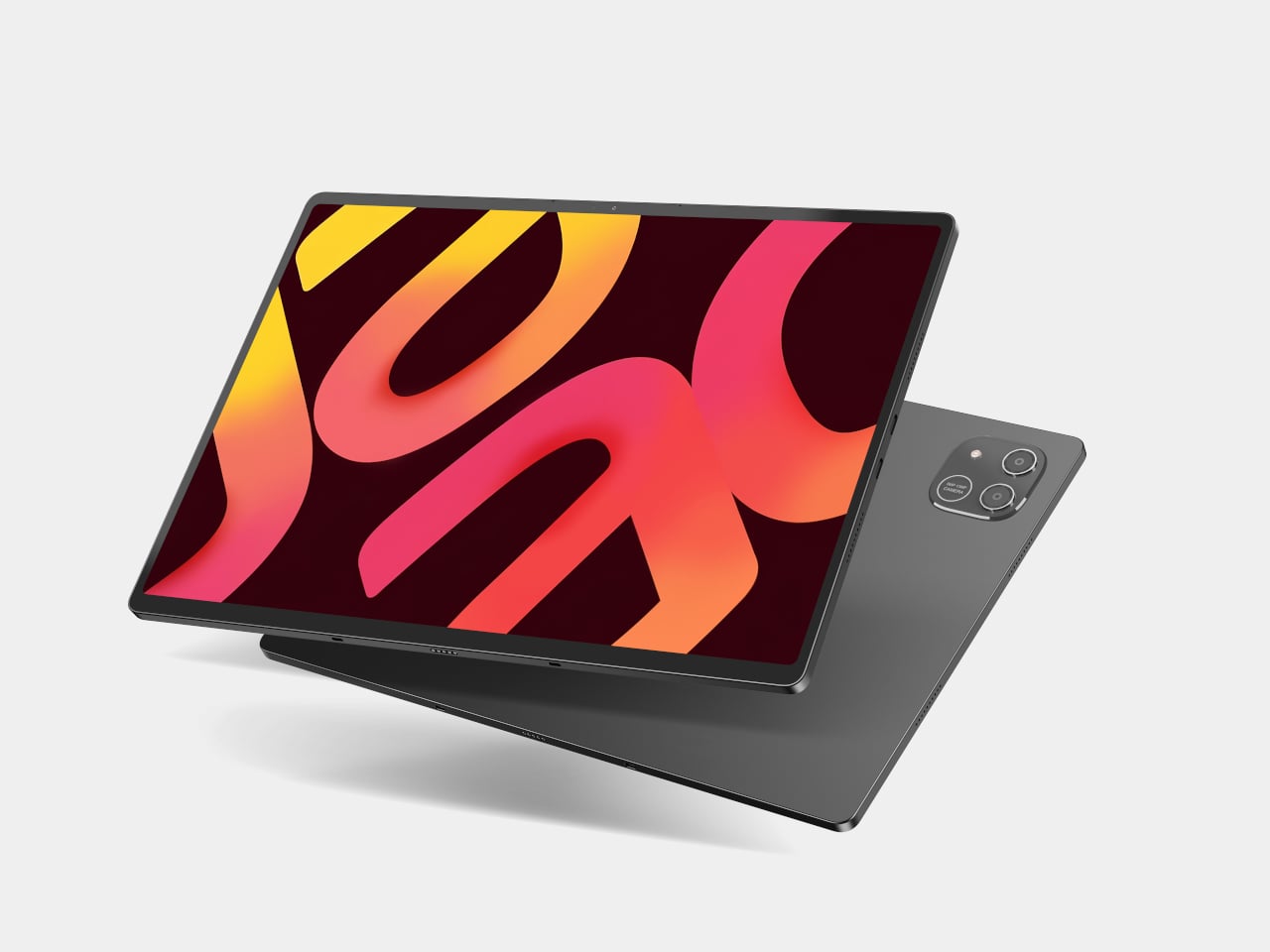
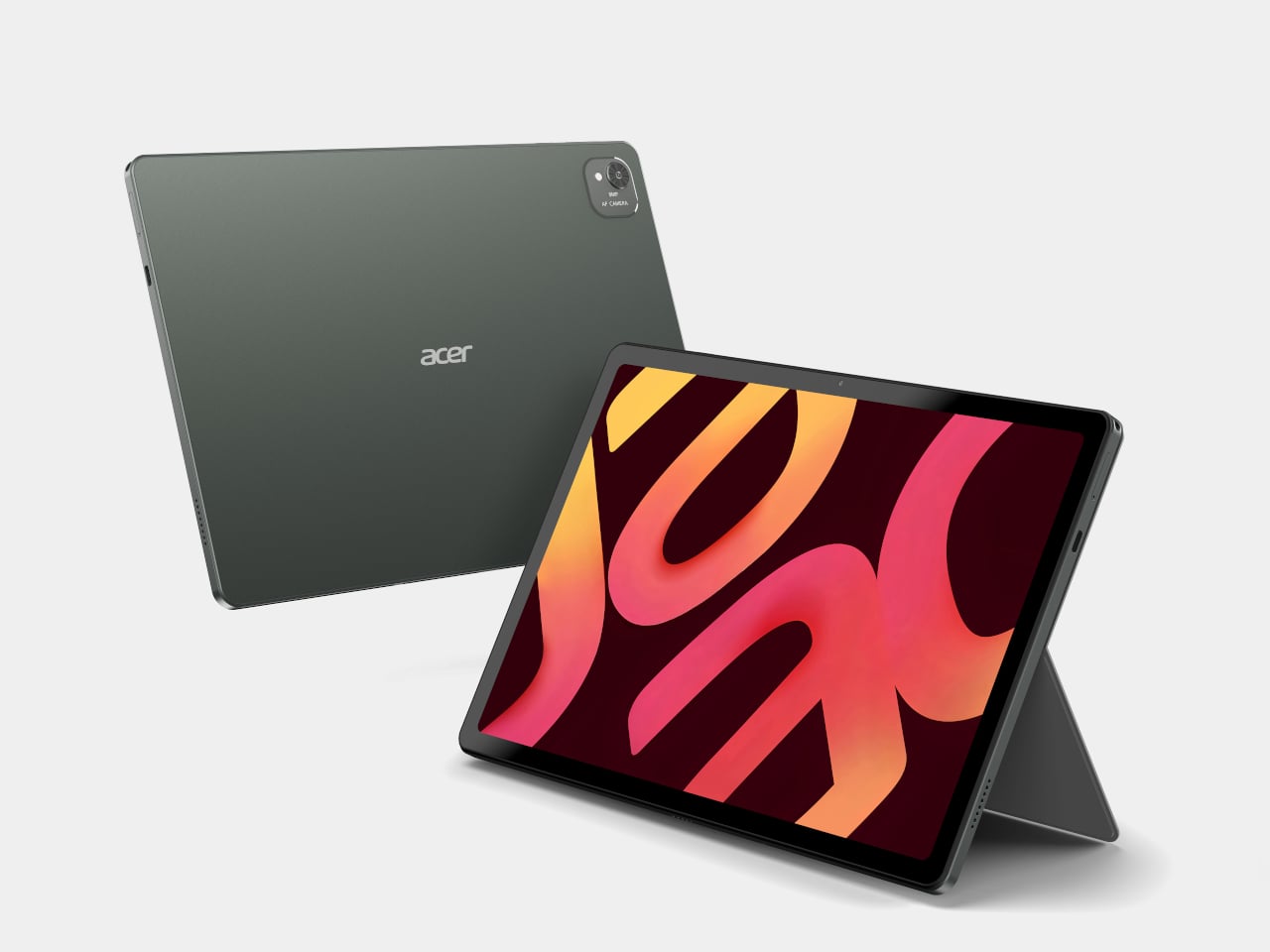
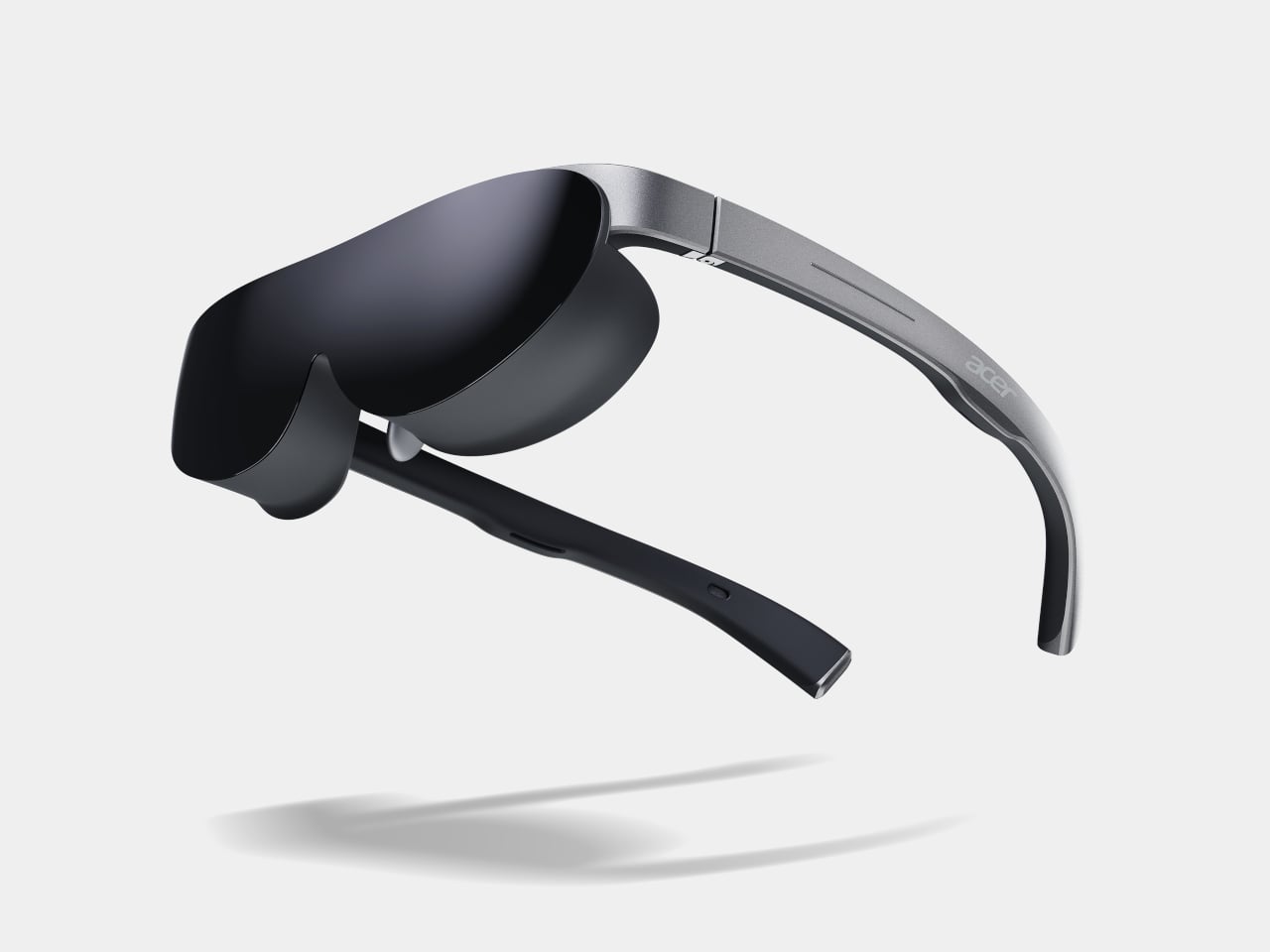
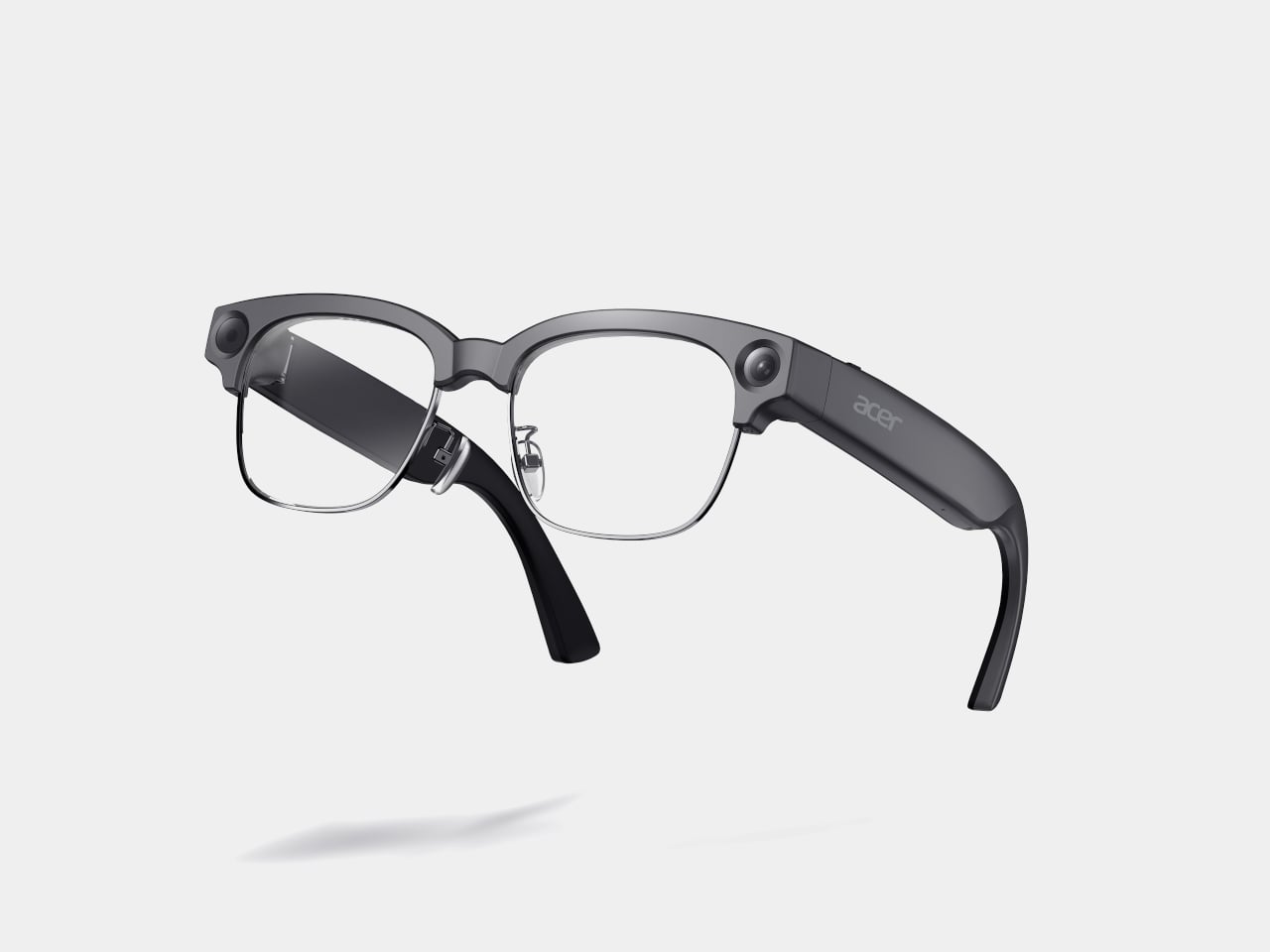
Acer is changing that at Computex 2026 with the Iconia Duo lineup, three new Android 16 tablets that debut the brand’s 3:2 aspect ratio across three different price points. Alongside them, two new pairs of smart glasses push the mobile experience off the screen entirely: the AR Vision GR0 for immersive wired display and the GI0 for wireless, hands-free AI assistance on the go.
Designer: Acer
Acer Iconia Duo S14
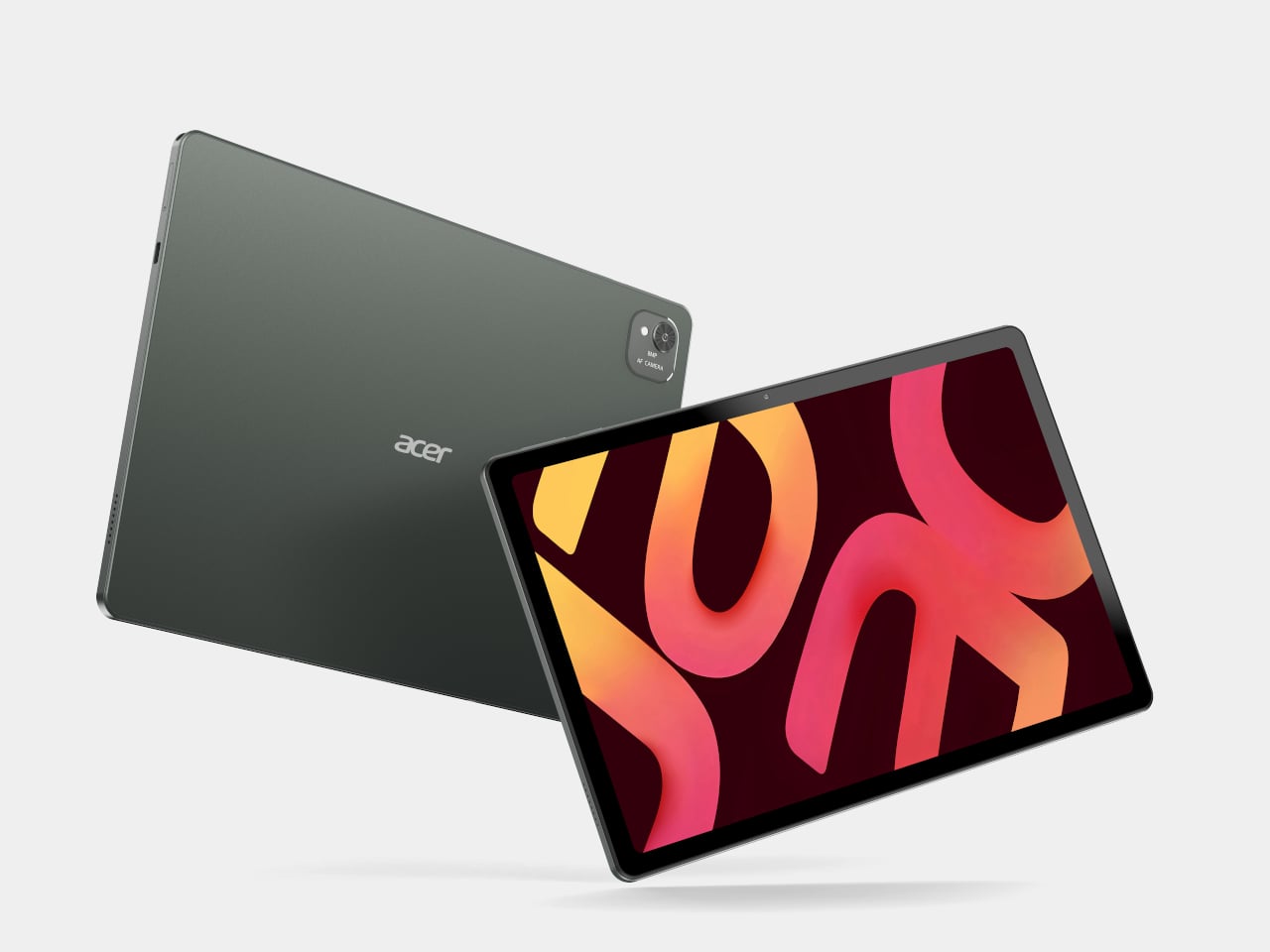
The flagship of the three is the Iconia Duo S14, built around a 14.2-inch 2.8K OLED display running at 120 Hz with 100% DCI-P3 color coverage. A MediaTek Dimensity 8300 SoC handles the processing, and DisplayPort in and out ports let it feed a larger screen during presentations or act as a portable monitor. At just 6.2 mm thin and 0.73 kg, it doesn’t exactly feel like a compromise.
Acer Iconia Duo S14
The 12.2-inch Iconia Duo S12 carries the same 2.8K OLED panel at 600 nits and adds nano-texture glass with anti-glare and anti-fingerprint properties, housed in an aluminum alloy chassis that makes it noticeably more premium to hold. The Iconia Duo D12 brings the same 3:2 format at a 2400×1600 resolution with a 90Hz refresh rate, starting at $399 for buyers who don’t need OLED.
Acer Iconia Duo S12
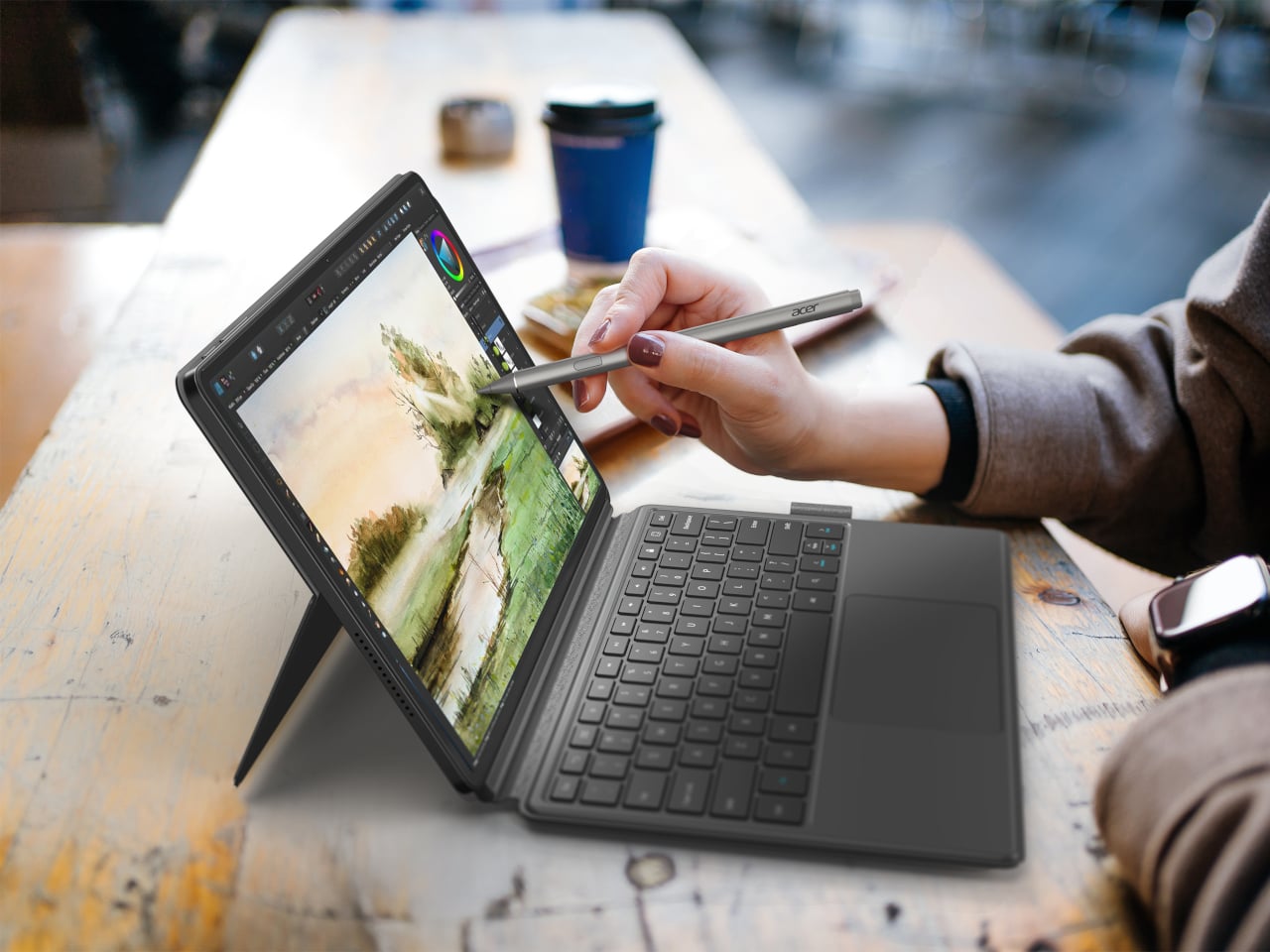
All three run Android 16 and support an optional Active Stylus, magnetic kickstand, and detachable keyboard, letting them shift from a drawing canvas to a laptop-like workstation with the right accessories. A microSD card slot in each model accepts cards up to 1 TB for local storage of large creative files, and battery life reaches up to 10 hours across the lineup.
Acer Iconia Duo D12
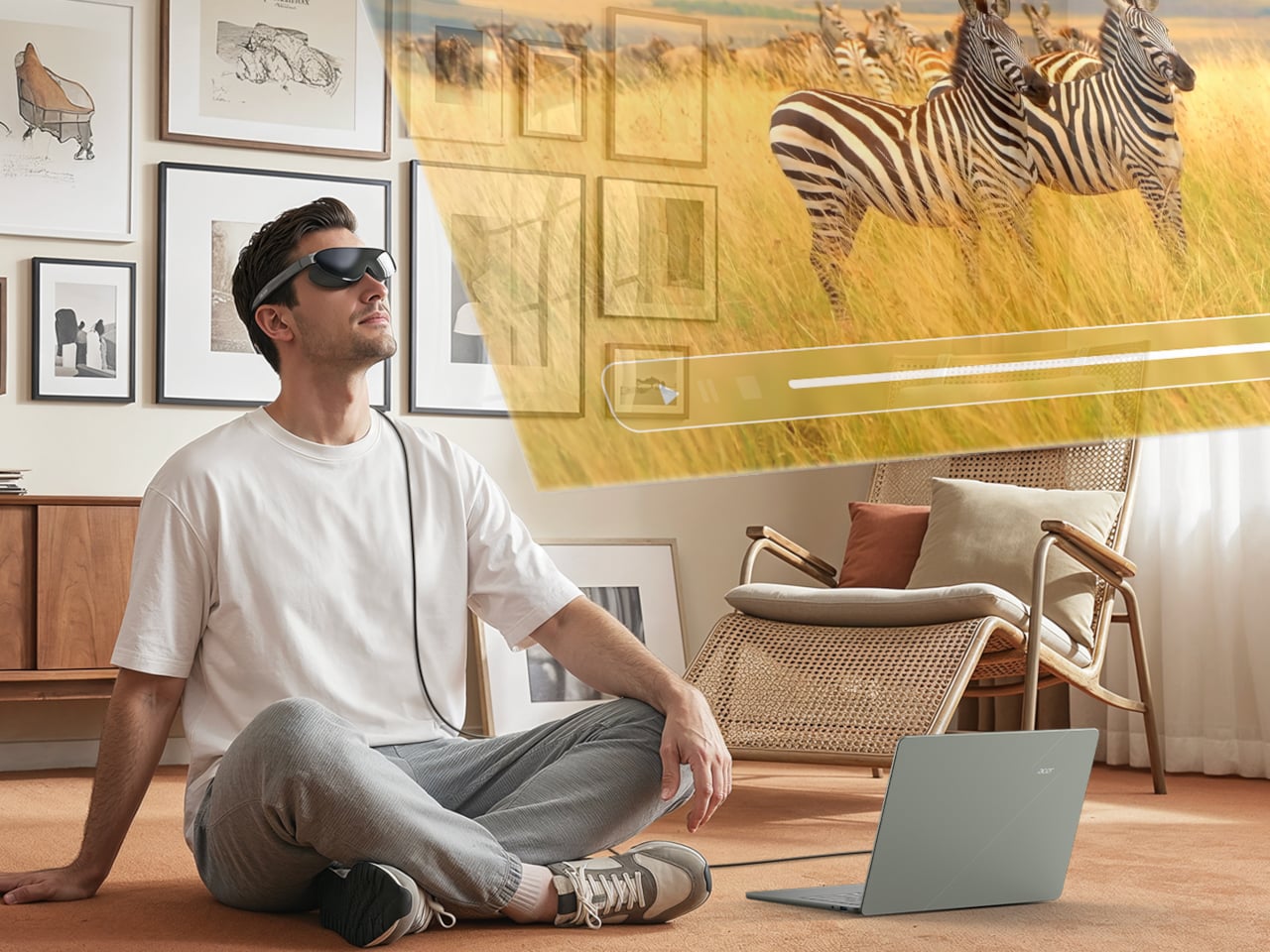
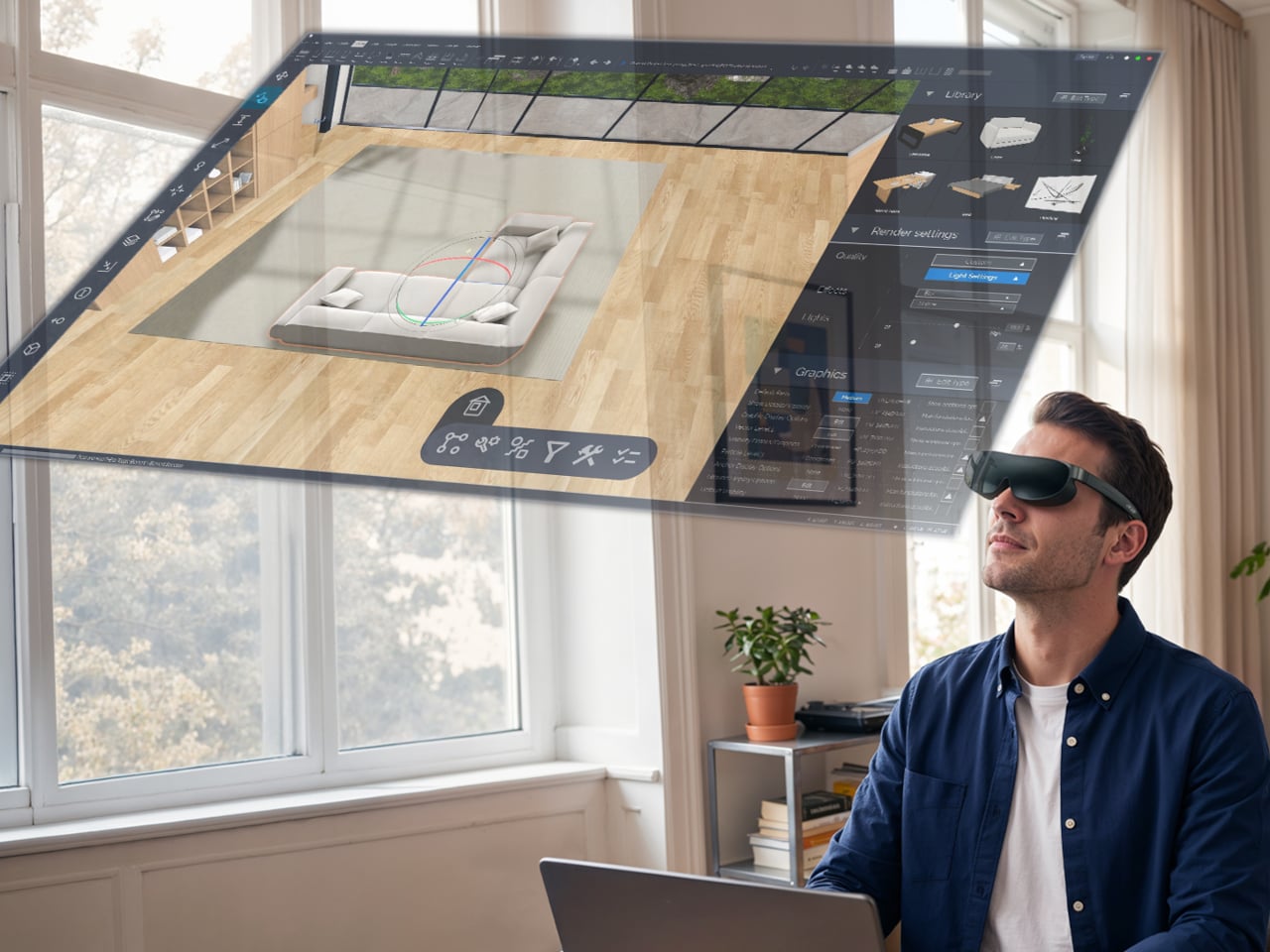
The AR Vision GR0 takes the display off the tablet entirely. The wired glasses connect to any phone, laptop, or tablet and deliver dual micro OLED FHD screens simulating a 172-inch screen from 6 meters away, with a 50,000:1 contrast ratio. They’re compatible with Android, iOS, and Windows, weigh just 69 g, and include a detachable light shield and a myopia magnetic lens option for prescription wearers.
Acer AR Glasses GR0
The GI0 heads in a different direction. Rather than a display, these 46 g AI glasses integrate a 12 MP camera and Google Gemini for real-time translation, AI captions, and voice-activated queries through three onboard microphones. They connect wirelessly over Bluetooth and Wi-Fi via the Acer AspireSync app, and they’re light enough to wear all day without thinking about them.
Acer AI Glasses GI0
The Iconia Duo S14 starts at $699 in North America in September 2026, the S12 at $549 in August, and the D12 at $399 also in August. The GR0 arrives at $499.99 and the GI0 at $299.99, both heading to EMEA in Q4 2026 and Australia in Q3. Together, they cover a broad stretch of mobile productivity, from an accessible Android tablet to a wearable AI companion.
The bag you carry into every café, co-working space, and airport lounge tells a story before the laptop opens. For years, that story was graceless — a tangle of cables, a charger shaped like a building block, a mouse that felt borrowed from a hotel business center. Nomad gear was assembled around survival rather than intention. Every surface it landed on looked worse for the visit.
Something has shifted. The tools built for people who work from everywhere are beginning to reflect the same care as the work itself. These eight gadgets share a quality that is harder to name than it is to recognize: they look considered. Each one earns its place in the bag not just by solving a problem, but by solving it in a way that leaves nothing clumsy on the table.
1. OrigamiSwift Folding Mouse
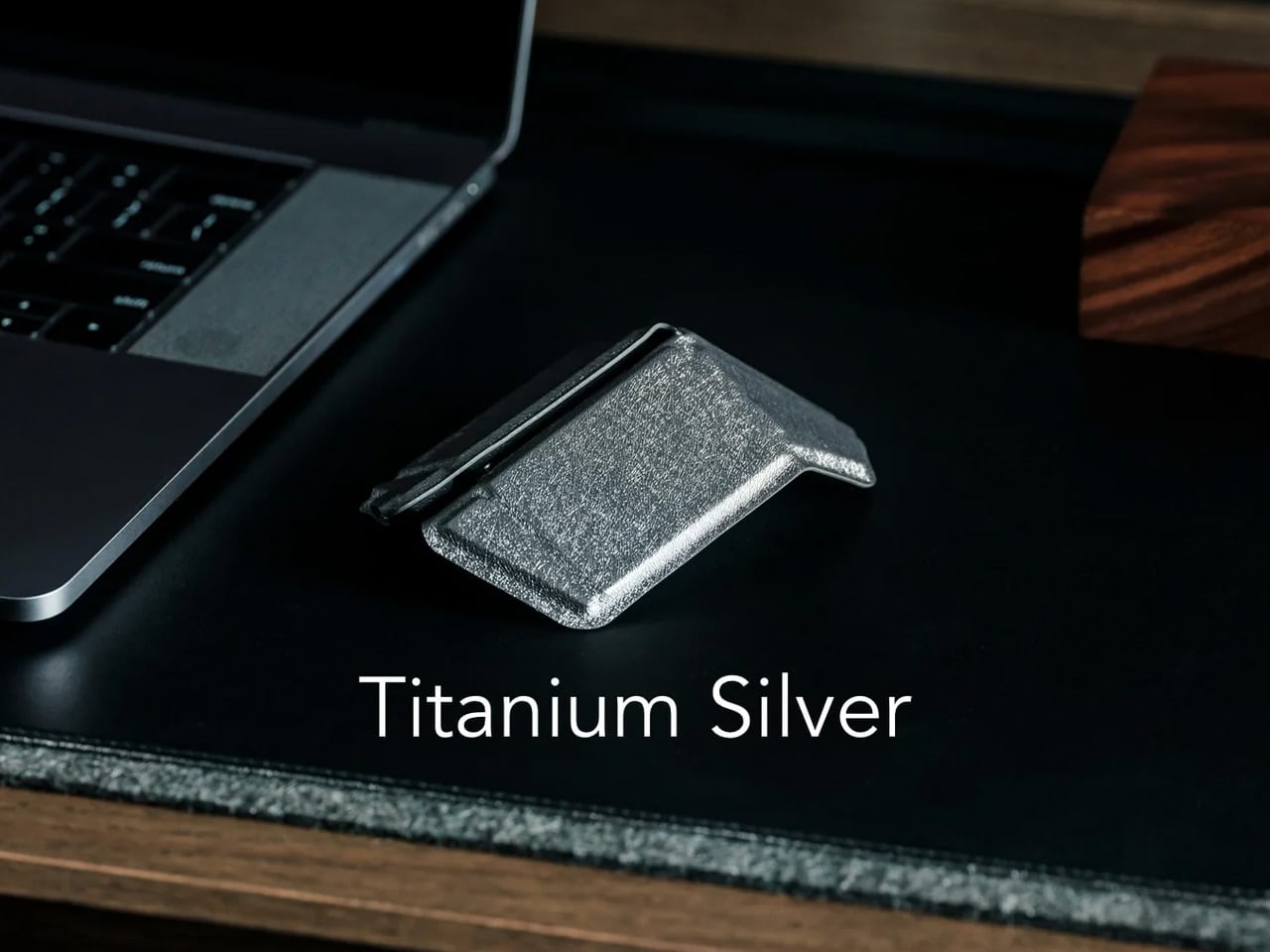
The travel mouse problem has never been about making mice smaller. Smaller mice create smaller hand cramps. The real solution is transformation, not compression, and the OrigamiSwift understands this from the geometry up. Borrowing the logic of its name, it collapses to card-sized flatness and snaps open — via magnetic clips — into a fully contoured ergonomic mouse that actually fits a palm. At 40 grams, it weighs less than a pen and disappears into a jacket pocket without announcing itself.
The polygonal folded surface earns its grip through geometry rather than rubber texture, which gives the form a visual coherence that most travel mice never achieve. Bluetooth 5.2 connects without a dongle, and three months of battery life on a single USB-C charge keeps it out of the daily rotation entirely. For the nomad whose work demands precision that a trackpad fails to deliver in the critical stretch of an afternoon, this removes every excuse for not carrying a proper mouse.
Folds to true card-size flatness without compromising full ergonomic comfort when open, which is the only trade-off that actually matters in a travel mouse
Three-month battery life means it charges about as often as a passport gets stamped
What we dislike:
The hinge mechanism is structurally the most complex part of the design, and daily fold cycles over the years could introduce wear that a solid-body mouse would never accumulate
Scroll feedback is softer than premium stationary alternatives, something certain users notice immediately, and others never register
2. Lana Laptop Stand
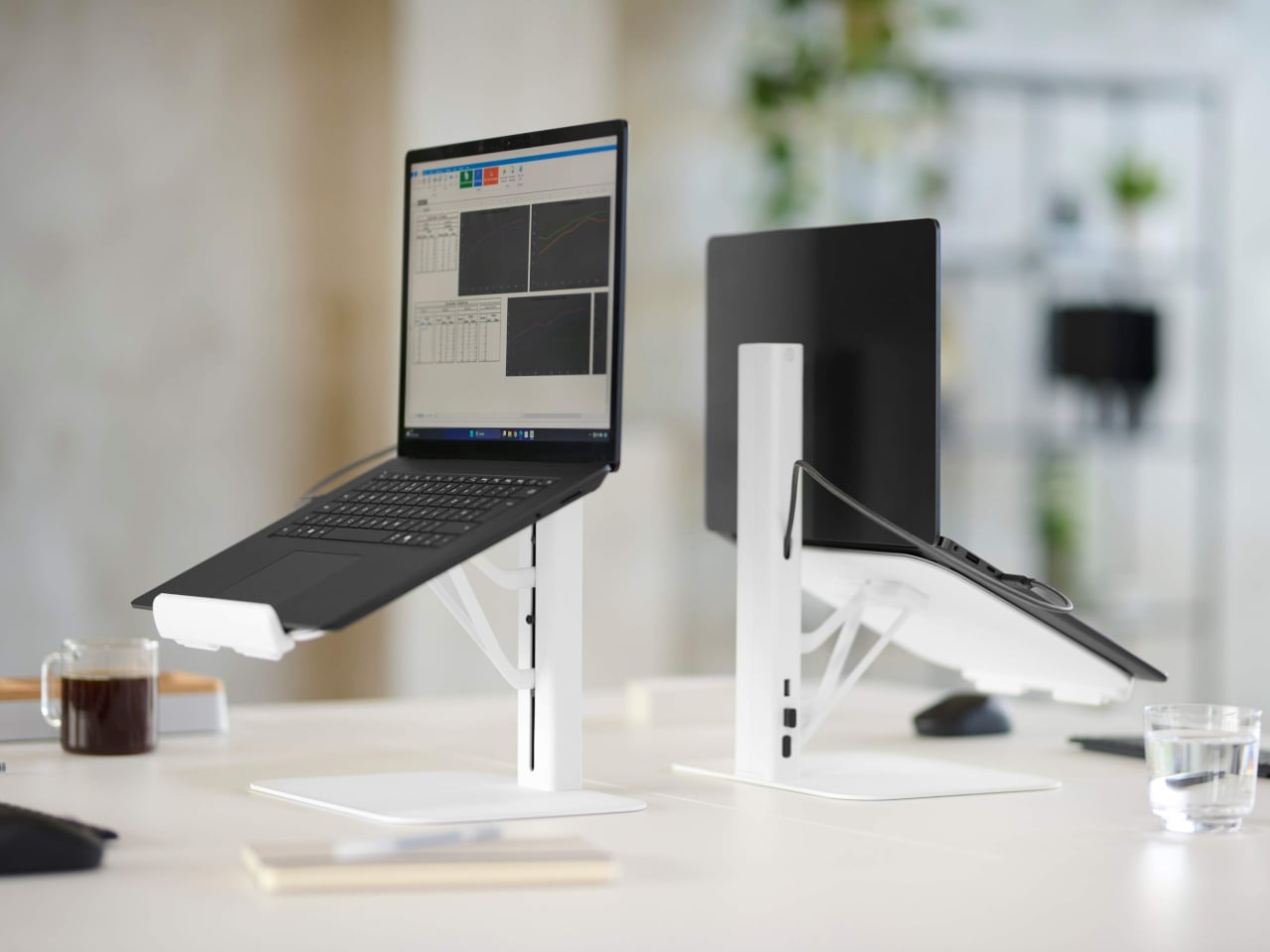
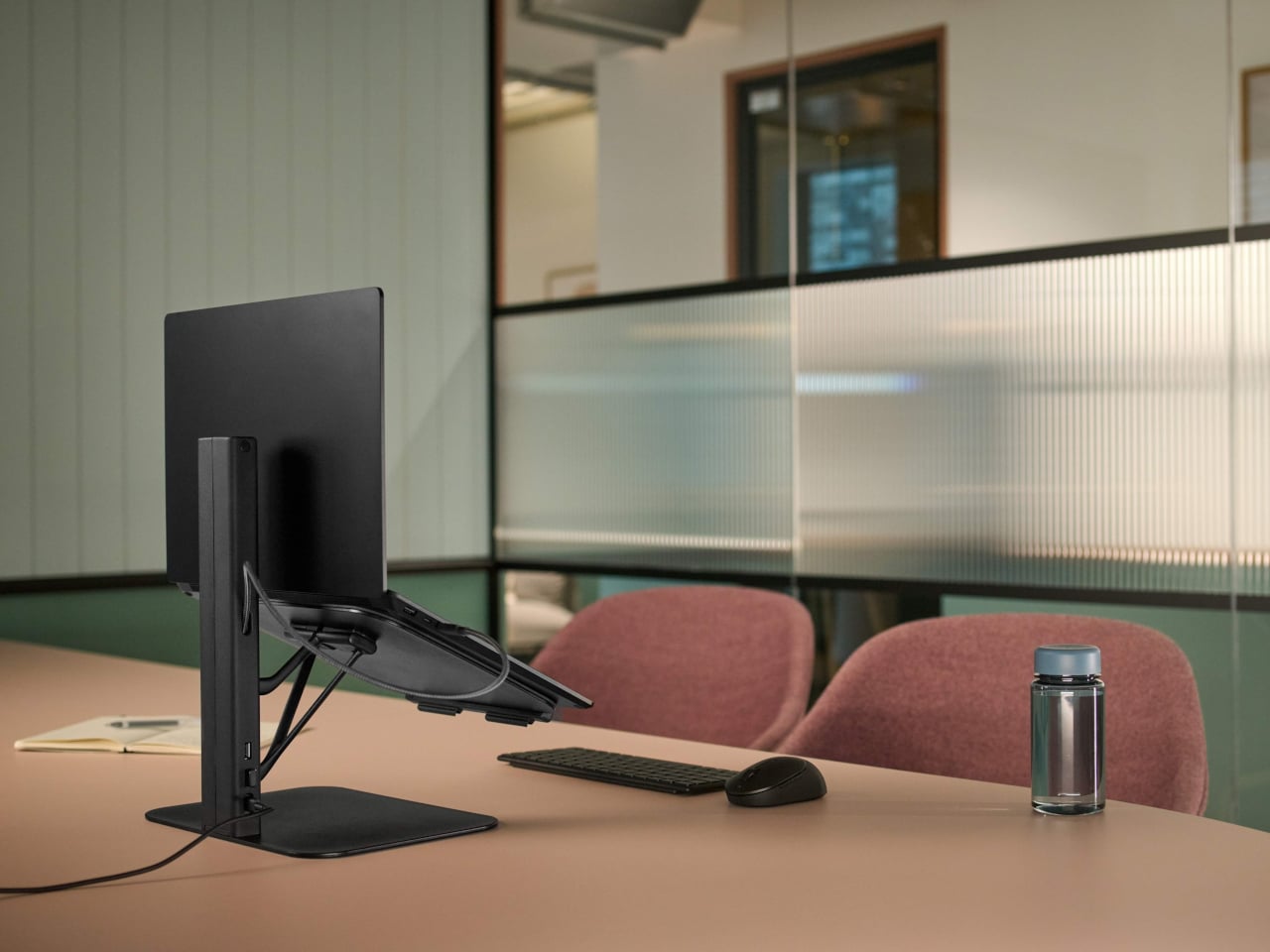
Working from borrowed surfaces has always involved a compromise that people accept rather than solve. Laptop too low, neck forward, shoulders rounded inward — the session ends the same way regardless of how productive the hour before felt. The Lana laptop stand from Colebrook Bosson Saunders is a compact riser with a USB hub integrated directly into its spine, meaning a single USB-C cable connects the laptop, keyboard, mouse, and power simultaneously. The temporary desk stops feeling improvised from the moment everything clicks into place.
Lana was designed specifically for the shared spaces nomads actually inhabit: pods, booths, communal benches — furniture built for lunch breaks, not extended output. The footprint is small enough for a café booth table, but tall enough to bring the screen level. A 12-year warranty from a British-designed and engineered product communicates something important. This is not a disposable gadget but a long-term fixture in a kit that gets used every single day, on surfaces that were designed for everything other than this.
What we like:
An integrated USB hub means one cable manages everything, collapsing the connectivity setup into a single plug-in rather than a small archaeology project
The 12-year warranty reflects an engineering confidence that most portable accessories never earn the right to claim
What we dislike:
Works best alongside an external keyboard, meaning it adds an item to the bag rather than replacing one
Price sits at the premium end of the laptop stand category, which is a real consideration for a product that functions before anything else as a riser
3. Nimble WALLY Pro Wireless
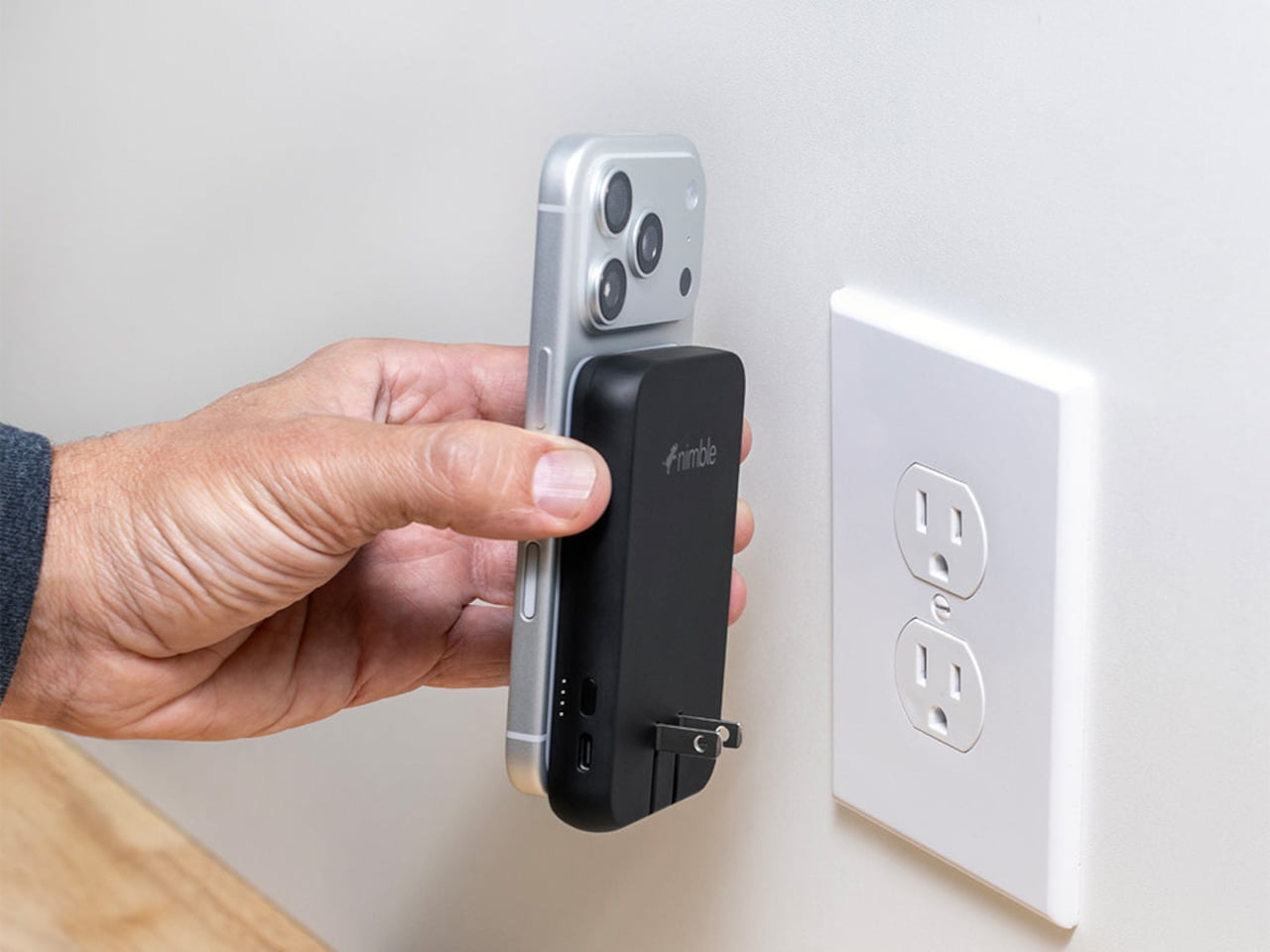
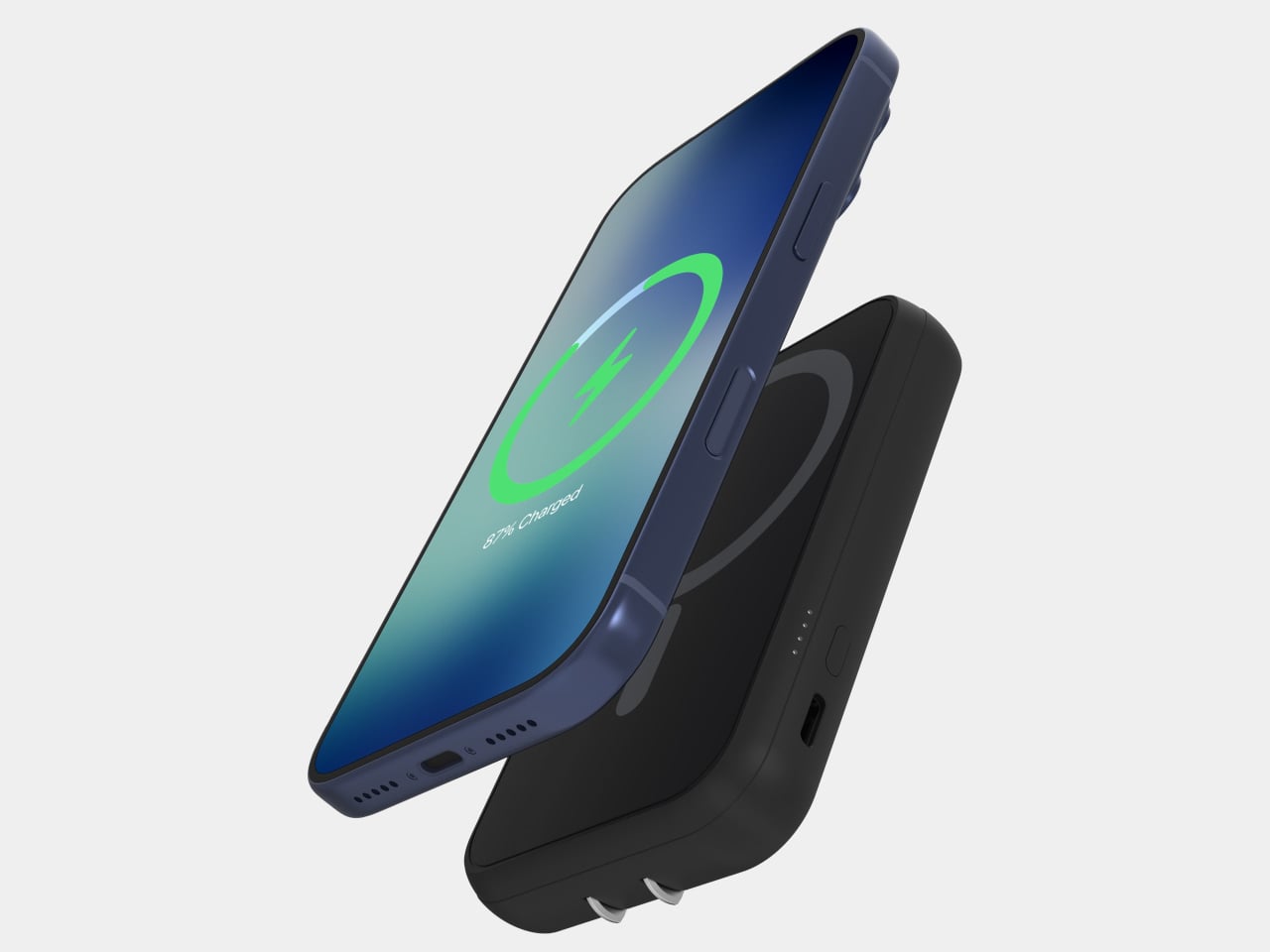
Traveling with electronics has long meant traveling with three separate charging accessories: a wall charger for the laptop, a power bank for the phone, and a wireless pad for overnight top-ups. Most people pack all three, use each one just enough to feel justified in carrying it, and leave one at a hotel room in a different country at least once a year. The Nimble WALLY Pro Wireless is a direct answer to that pattern. At 0.61 inches thin, it functions as a wall charger, a 5,000mAh power bank, and a Qi2 wireless charging pad, simultaneously.
Plug it into any outlet globally using folding prongs, and it charges its own internal battery while sending up to 15W wirelessly to a phone placed on its back. Pull it from the wall, and it switches to power bank mode without missing a step. The housing is 100% post-consumer recycled plastic, carbon-neutral certified, TSA-approved, and biodegradably packaged. At $49.95, it removes a genuine category of bag-packing anxiety rather than simply reducing it, which is the kind of simplicity that only feels obvious after someone else has done the work.
What we like:
Three accessories in one device, at under six ounces, address the entire charging layer of the nomad kit without requiring any rethinking of the rest
Recycled housing and carbon-neutral certification make the sustainability story as important as the engineering story
What we dislike:
A 5,000mAh capacity handles phones and earbuds cleanly, but will not meaningfully extend a laptop’s battery under any serious workload
Wireless charging tops out at 15W, which suits passive overnight top-ups more than emergency fast-charges before a gate closes
4. Rolling World Clock
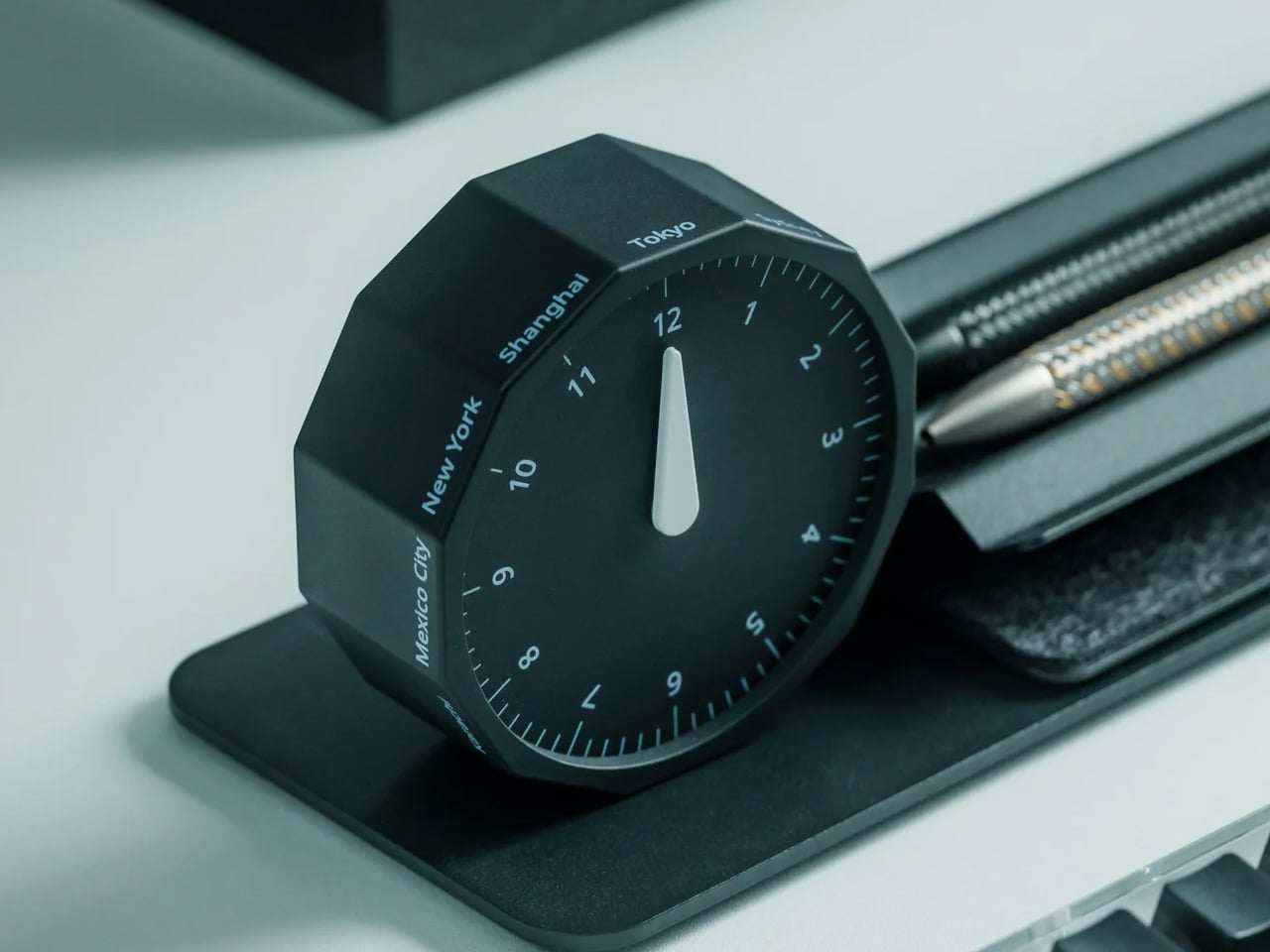
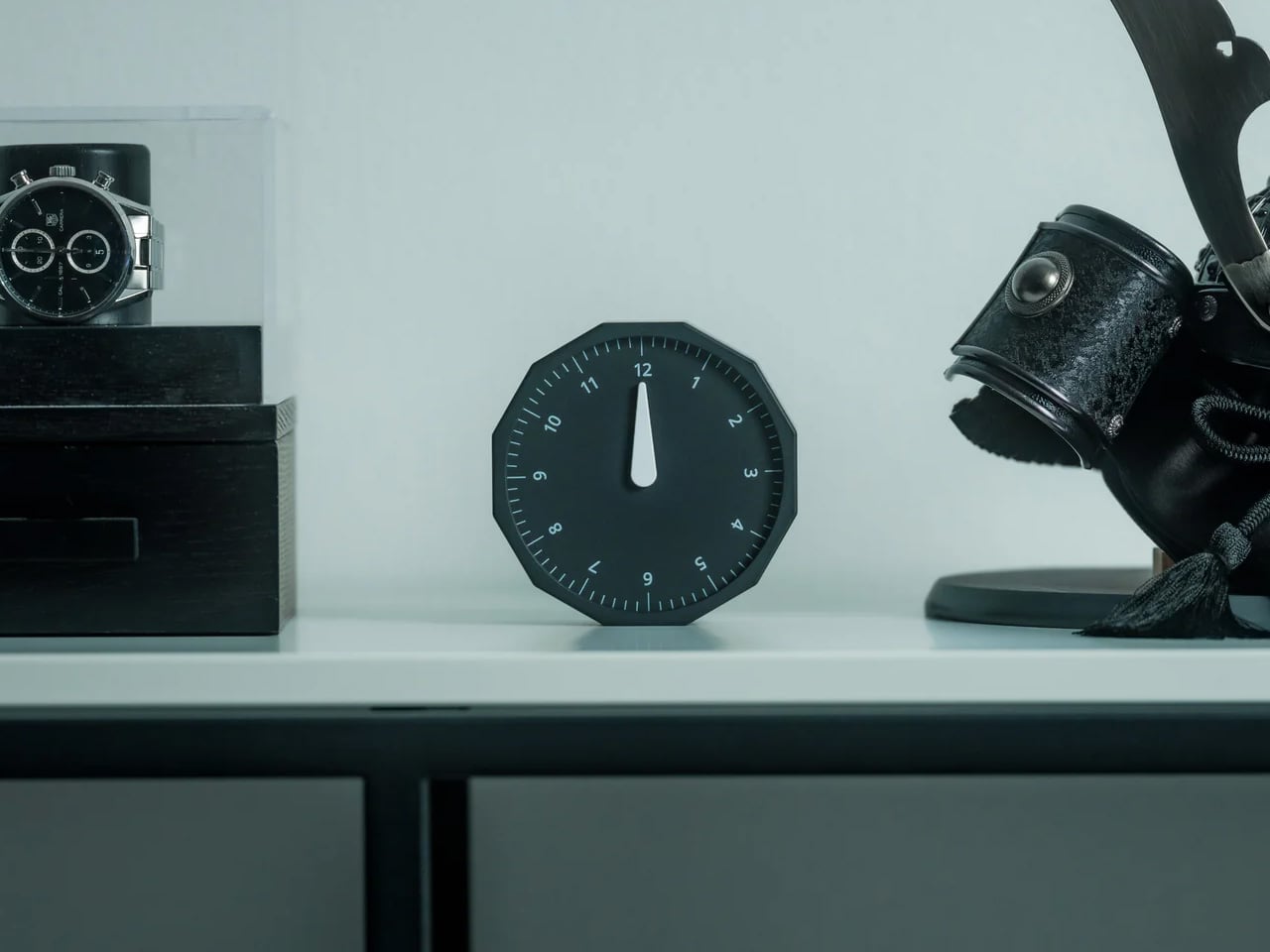
Working across time zones involves an arithmetic problem most people solve by unlocking a phone and navigating to a setting buried several menus deep. The Rolling World Clock removes the phone from that interaction entirely. A 12-sided dodecahedron, one analog hand per face, each face assigned to a city: roll it to any side, and it reads the correct local time in that location. The entire interaction takes less time than the lock screen.
Available in black and white at $49, it occupies the surface area of a hockey puck and sits at the precise intersection of functional object and desk sculpture. The design works because it resists adding more — no digital layer, no companion app, no charging port. On a surface full of screens and cables, a clock answered by physically rolling it is the object every person at the adjacent table wants to pick up and examine. That kind of unselfconscious utility is genuinely rare at any price.
Rolling to read a time zone is a screen-free physical gesture that removes a phone unlock from the workflow without requiring any habit change
The form communicates its function completely without a label, a tutorial, or a single button
What we dislike:
Twelve faces cover most regular international relationships, but nomads managing more than twelve cities regularly will need a secondary solution
The face-to-city mapping takes roughly a week of regular use before the interaction becomes fully automatic
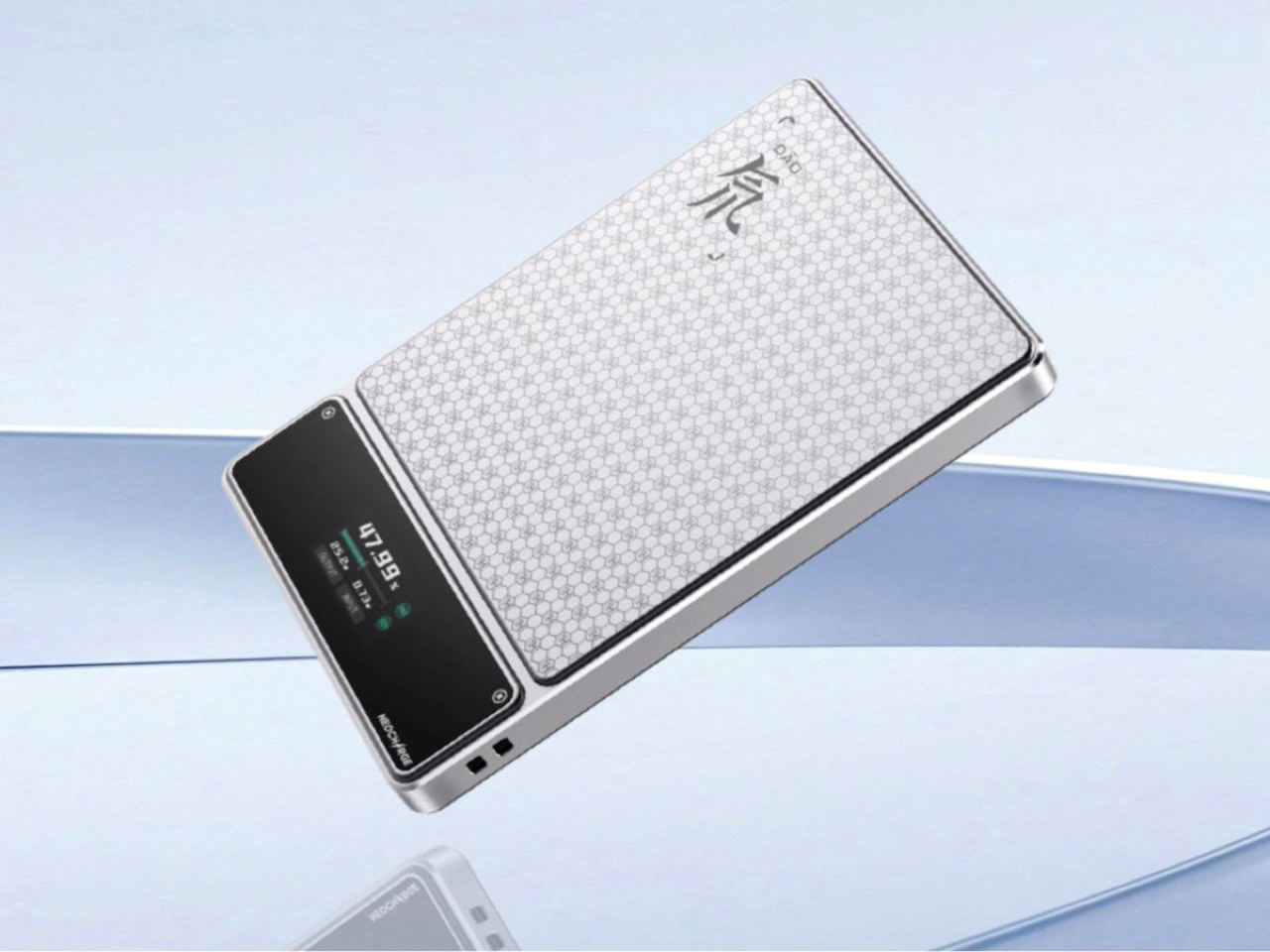
5. RedMagic Power Bank with Flight Mode
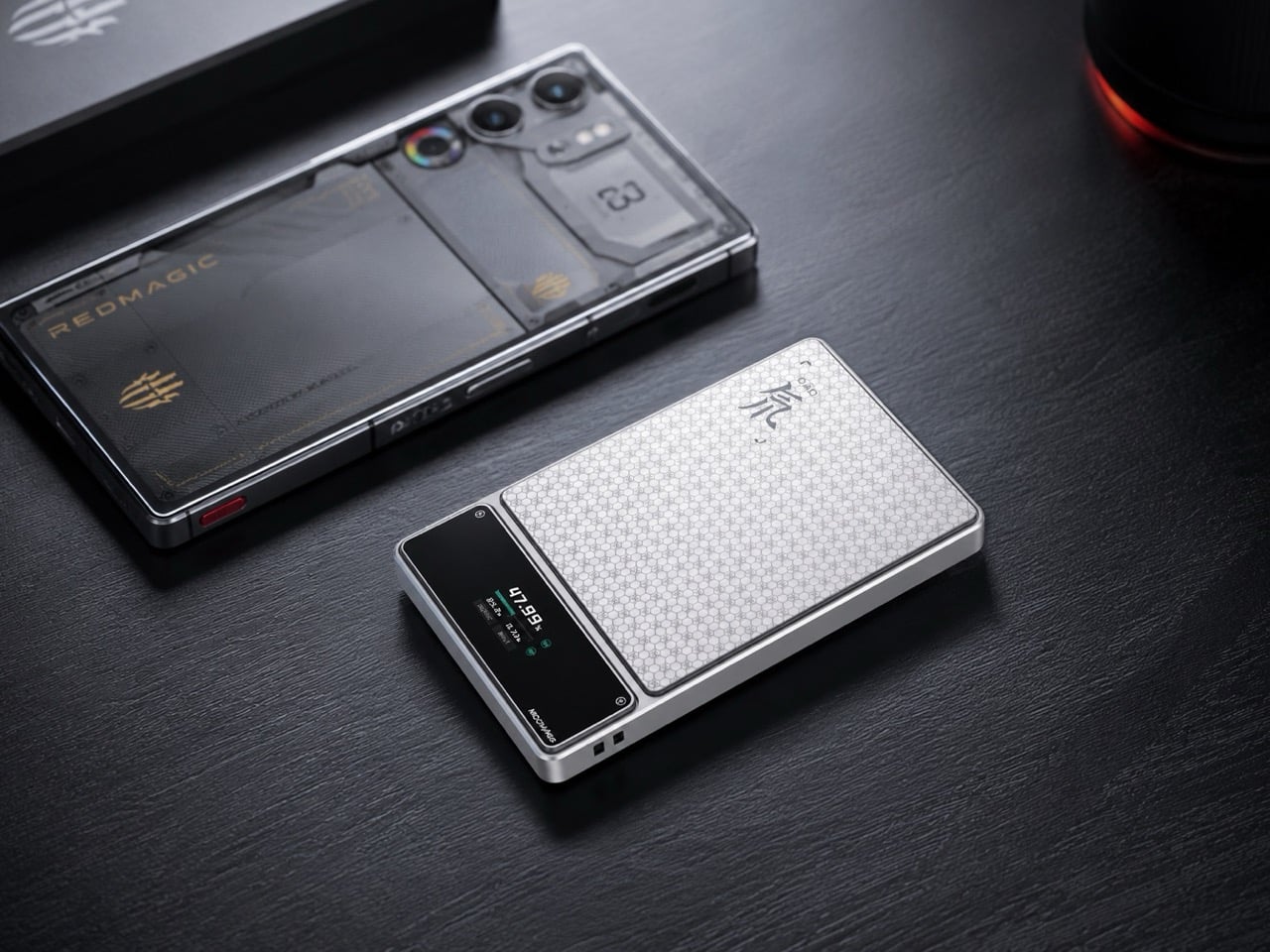
Aviation rules around lithium batteries have changed significantly in 2026 — multiple major carriers now ban in-flight power bank use entirely, and the regulations are still tightening. Most power bank manufacturers have responded to this by doing nothing. RedMagic responded by designing for the regulation directly. Their power bank includes a dedicated flight mode switch that disables active output functions on command, aligning with carrier requirements that previously involved gate-side arguments about a device nobody could quickly verify.
The one-touch flight mode cuts wireless transmission instantly, transforming a potential boarding problem into a one-press demonstration. Beyond the compliance story, the honeycomb aluminum finish suggests RedMagic wants you to leave this on your desk even when you are not traveling — a power bank that earns surface rights rather than disappearing into a pocket. For a brand that built its credibility making hardware for people who care about how their tools look and feel, the application to travel infrastructure is a natural extension rather than a category stretch.
What we like:
The dedicated flight mode switch turns a potential boarding conflict into a physical demonstration rather than a verbal explanation
Honeycomb aluminum finish gives the device a desk presence that most power banks, designed purely for pocket anonymity, never consider
What we dislike:
The flight mode feature is more useful than ever, but represents a design workaround for a regulatory gap that clearer aviation policy could simply close
Gaming-adjacent branding will read as the wrong register for some professional nomads who prefer their gear to carry no identity beyond the work
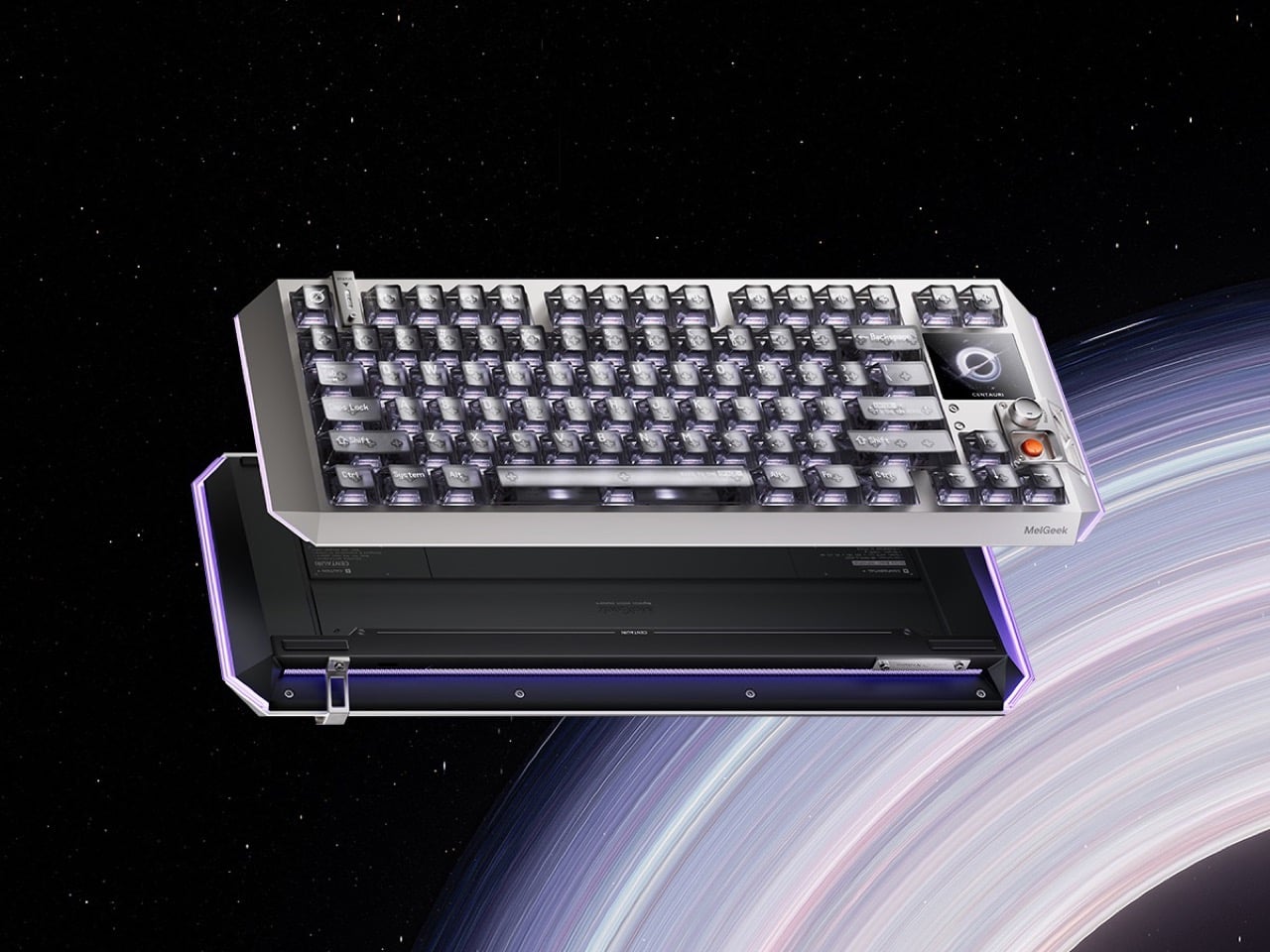
6. Centarui80
Fifty years of keyboard design produced better switches, heavier plates, and an entire hobbyist economy built around sound profiles — but the object itself stayed stubbornly analog in its ambitions. The Centauri80 breaks that contract. MelGeek embedded a 1.78-inch OLED touchscreen directly into the board at 325 PPI, the same pixel density as an Apple Watch face, alongside a physical rotary encoder called the Super Dock. Live wallpapers, macros, and lighting adjustments happen on the board itself, without alt-tabbing out of whatever the afternoon actually requires.
The engineering underneath supports the ambition. Six microcontroller chips drive TTC Flip King Hall Effect magnetic switches to 0.125ms latency at an 8000Hz polling rate — numbers that make the 80% aluminum unibody the most responsive input device on most desks, not just the most considered one. At $299 from MelGeek’s own store, the Centauri80 competes directly against the Wooting 60HE and the rest of the Hall Effect field while carrying something none of them have: a visual interface that turns the keyboard into a control surface with its own design language.
What we like:
A 325 PPI OLED screen embedded into the board makes macro and lighting control a keyboard-side interaction rather than a software detour through a menu nobody enjoys navigating
Hall Effect magnetic switches at 8000Hz polling deliver the kind of input responsiveness that makes every other keyboard in the same price range feel noticeably behind
What we dislike:
An onboard touchscreen and six microcontroller chips add genuine complexity to a device category where simpler hardware has historically outlasted ambitious feature sets
At $299, the Centauri80 is considered a purchase rather than an impulse one — the OLED and polling rate premium asks for conviction before checkout
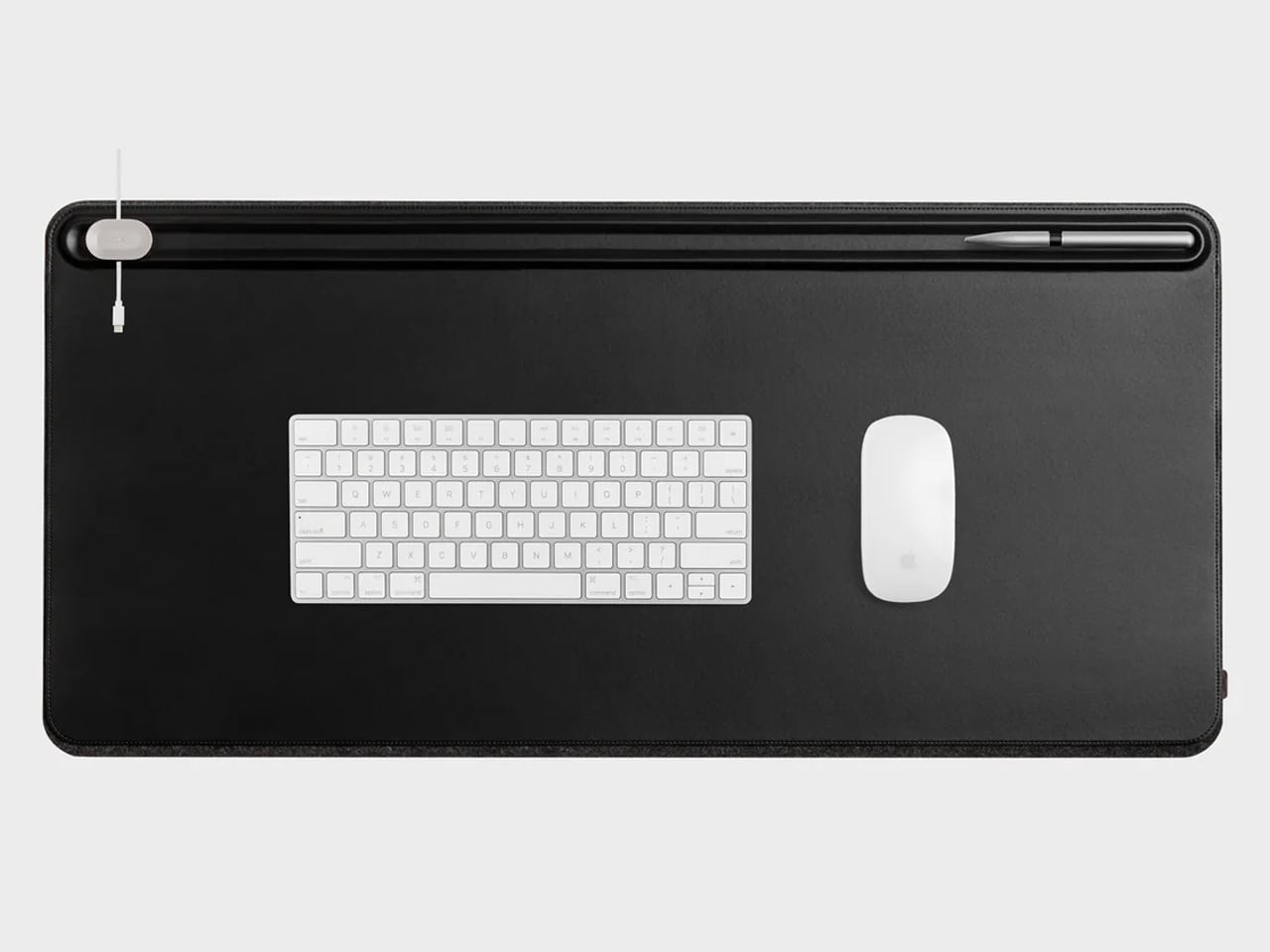
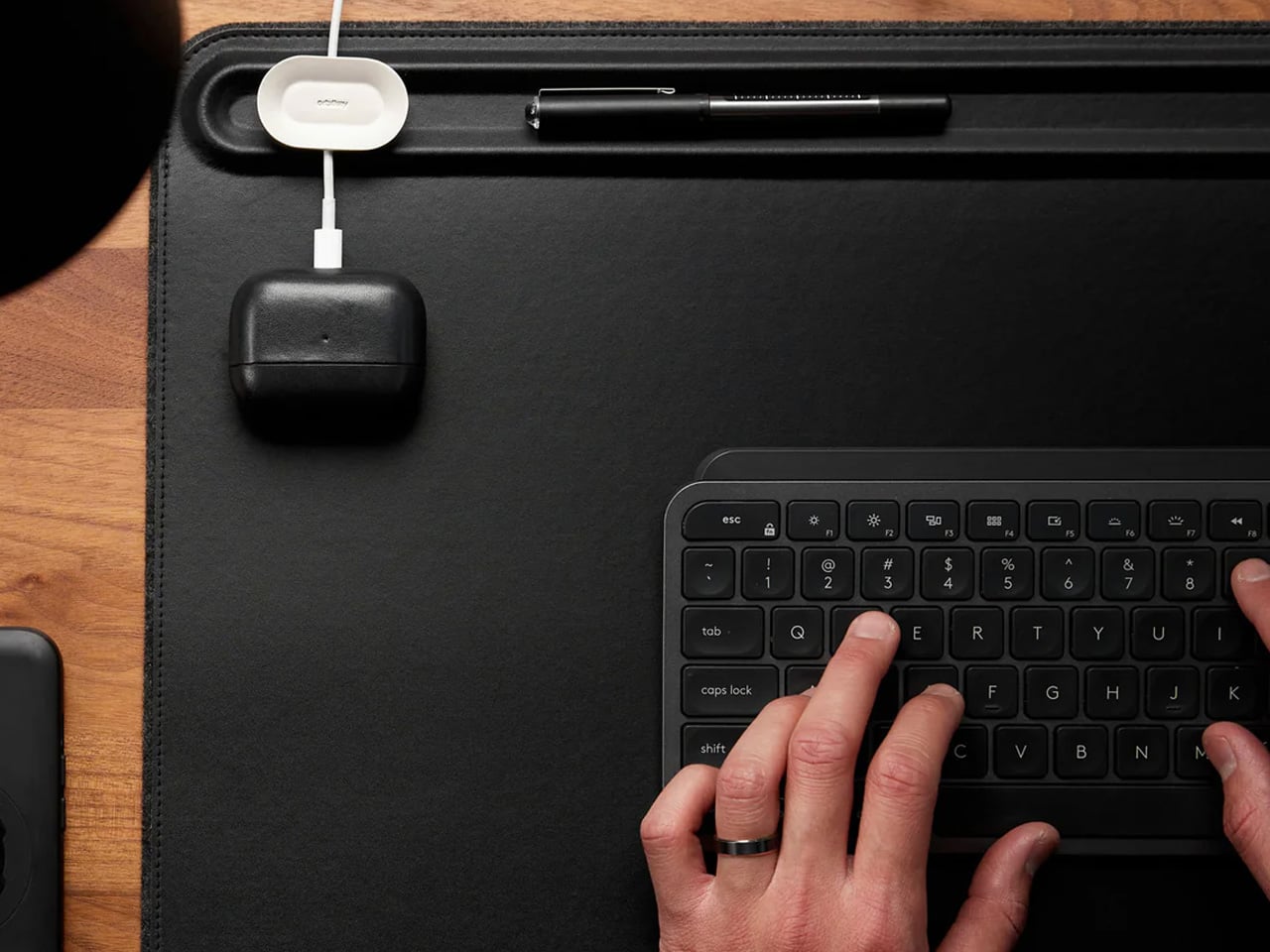
7. Orbitkey Desk Mat
A borrowed table is still a borrowed table until something on it says otherwise. The Orbitkey Desk Mat doesn’t announce itself — it simply reframes the surface it occupies. Full vegan leather across the top, recycled PET felt underneath, a document slot along the upper edge, and Qi wireless charging embedded invisibly into the upper-right zone. Place a phone there, and it charges. No cable surfaces anywhere in the composition. The mat claims the desk and turns it into something that belongs to you, at least for the session.
It rolls tight enough to travel inside most laptop sleeves, deploys completely flat, and develops a surface character over months of use that reads as the quality indicator it actually is. Magnetic cable holders keep charging cables from drifting off the edge mid-session. A pen loop stitched into the left side holds exactly one pen. These details were thought through rather than listed on a spec sheet, which is the difference between a product designed for desk photography and one designed for daily work. At $99.90, it is the kind of surface investment that compounds quietly over the years.
What we like:
Wireless charging disappears so cleanly as a feature that it stops being a feature and becomes simply a behavior: phone down, phone charges
Rolls compactly enough to travel inside a laptop sleeve, adding no dedicated bag volume to the packing equation
What we dislike:
Wireless charging tops out at 10W, making it a passive convenience layer rather than a serious fast-charging solution
The leather surface requires periodic conditioning at the fold line after extended travel use to maintain its original finish
8. HubKey Gen2
Every modern ultrabook ships with two USB-C ports. Every modern nomad workflow needs more than two ports running simultaneously. The HubKey Gen2 resolves the gap with eleven connections in one compact 7 × 7 × 3cm cube: dual 4K/60Hz HDMI outputs, USB-A 3.1, USB-C 3.1, SD and TF card readers, 2.5Gbps ethernet, a 3.5mm audio jack, and 100W power delivery through a single cable into the laptop. The port problem disappears from the workflow rather than being permanently managed around it.
The programmable shortcut keys and central control knob on the top panel are what distinguish this from a standard travel hub. Volume, mute, display toggle, and screenshot become physical actions handled by the left hand while the right hand stays on the mouse. For nomads driving external displays across video calls and creative sessions in co-working spaces, turning a connectivity device into a tactile control surface is the kind of upgrade that feels immediately obvious on the first day and genuinely irreplaceable from the second. The cube form fits anywhere without announcing itself.
What we like:
Dual 4K/60Hz HDMI outputs let you build a two-monitor workstation from a single cube that fits inside a laptop sleeve pocket
Programmable shortcut keys and a control knob give the desk a physical control layer that no other travel hub currently offers
What we dislike:
Tightly spaced ports mean thick cables or large flash drives can crowd each other along the edges during a fully loaded setup
The cube form, while genuinely compact, is less pocketable than flat card-style alternatives when volume and weight are being counted carefully
The Desk You Build Is Better Than the One You’re Given
The kit assembled here is not a packing list. It is a position that the tools a nomad carries every day deserve the same design attention as the work those tools are used to produce. A mouse that folds with geometric logic. A clock answered by rolling it. A charger that stopped being three separate objects. A hub that turned its top surface into a control panel. Each object solves a specific problem in a way that leaves the desk better than it found it.
The best version of working from anywhere is not about freedom from a particular address. It is about arriving at any table with a kit that makes the table feel chosen. These eight products do that together in a way that none of them manages alone — and that is the standard worth holding to when every other square centimeter of the bag is already spoken for.
Budget smartphones have always existed in a sort of software slow lane. Manufacturers have typically prioritized their flagship and upper-midrange lines when rolling out major updates, leaving the cheaper devices to wait months, sometimes longer, before seeing the same software features. That pecking order has been so consistent for so long that it’s practically become an unspoken rule of the Android ecosystem, especially within Samsung’s own Galaxy lineup.
Samsung’s Galaxy A17 5G is changing that, at least for now. The $199 phone, which only made its way to US store shelves earlier this year, began receiving One UI 8.5 before several pricier Galaxy models, including the Galaxy S22, the A55, and the A35. That makes it not only the cheapest Galaxy phone on the new software, but also a very unexpected one to lead the charge.
Designer: Samsung
The rollout began in South Korea on May 26, 2026, with firmware version A175NKSU5CZE9, before expanding to other regions. Samsung releases updates to multiple devices at a time, so getting new software the same week as other phones isn’t remarkable. The order, however, tells a different story. The Galaxy S22 was once a top-tier flagship, and both the A55 and A35 sit comfortably above the A17 in Samsung’s current lineup.
On paper, the Galaxy A17 5G doesn’t have much to shout about. It runs on Samsung’s Exynos 1330 chip, pairs that with a 6.7-inch display, and backs everything up with a 5,000 mAh battery. Those are solidly mid-tier numbers, and at $199.99, the phone was never going to compete with the Galaxy S25 or even the A55 on raw performance. That was never really the point, though.
Samsung promises six years of OS and security updates for the Galaxy A17 5G, which is genuinely compelling at this price. Google’s Pixel 9a offers seven years of support but costs $499 to start. At $199, the A17 gets surprisingly close to that coverage level, putting it in a different conversation entirely, one that’s less about what the hardware can do today and more about how long it’ll stay relevant.
One UI 8.5 brings a range of new features and interface improvements, including enhancements to Gemini AI. Not everything will run at full capacity on the A17’s Exynos 1330, since some of the more demanding AI tools favor higher-end chipsets. But for someone who bought a $199 phone expecting years of use, getting a meaningful software update rather than just a security patch is the kind of thing that counts.
Android 17 is also expected to hit stable release in the coming weeks, based on where Google’s release notes currently stand, which means Samsung will soon have to decide which phones get One UI 9. The A17 just showed it’s on the list for timely updates, and with six years of committed support on the books, there’s good reason to think it’ll be there when that time comes.
Onboard motherboard audio has improved considerably over the past decade, to the point where most users don’t notice a gap. That’s true enough for casual listening, but it starts to fall apart when you plug in a pair of planar magnetic or high-impedance studio headphones that demand more than a motherboard header can cleanly deliver. The signal gets muddier, the background noise creeps up, and the detail you paid for in those headphones quietly disappears.
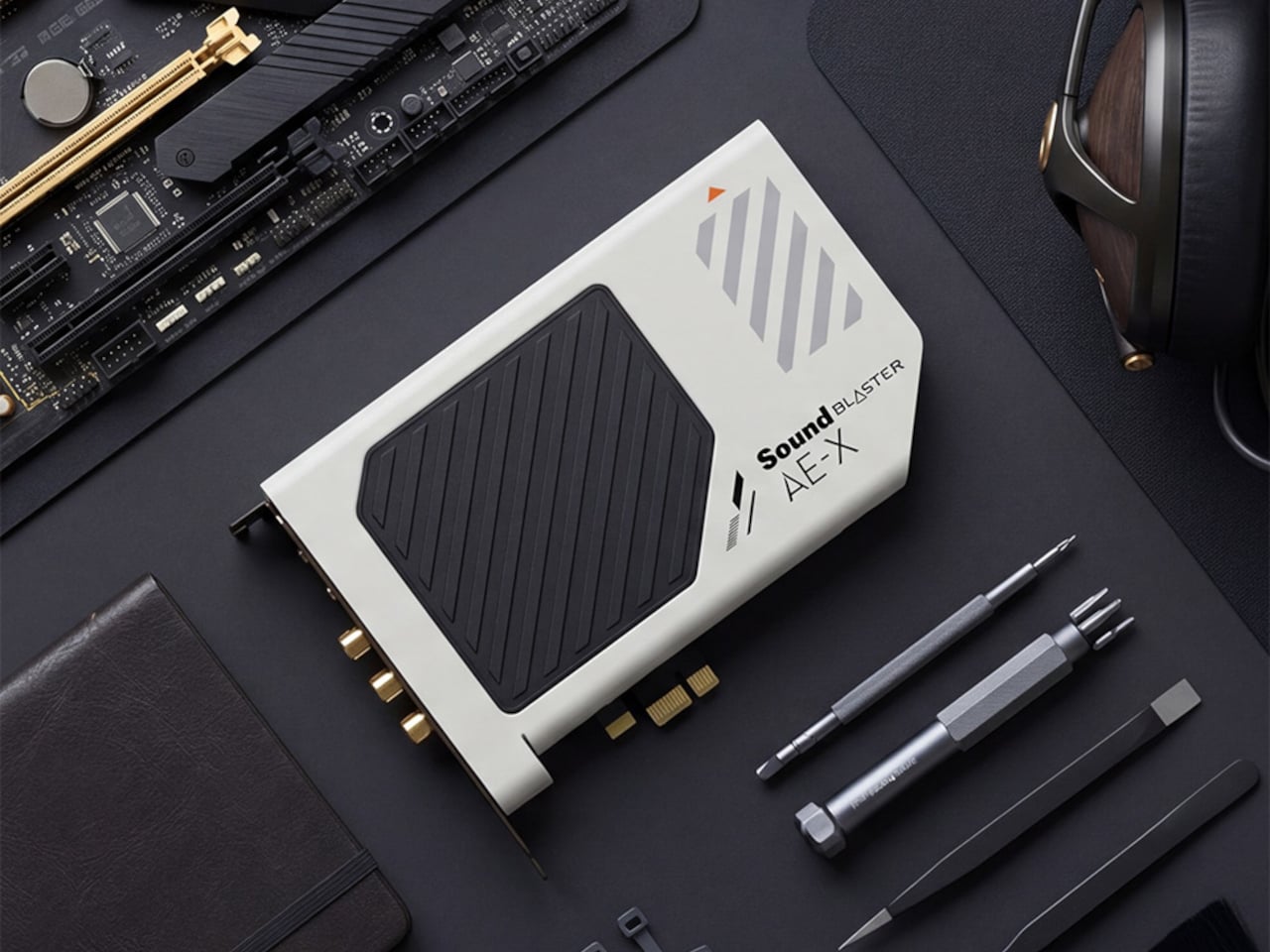
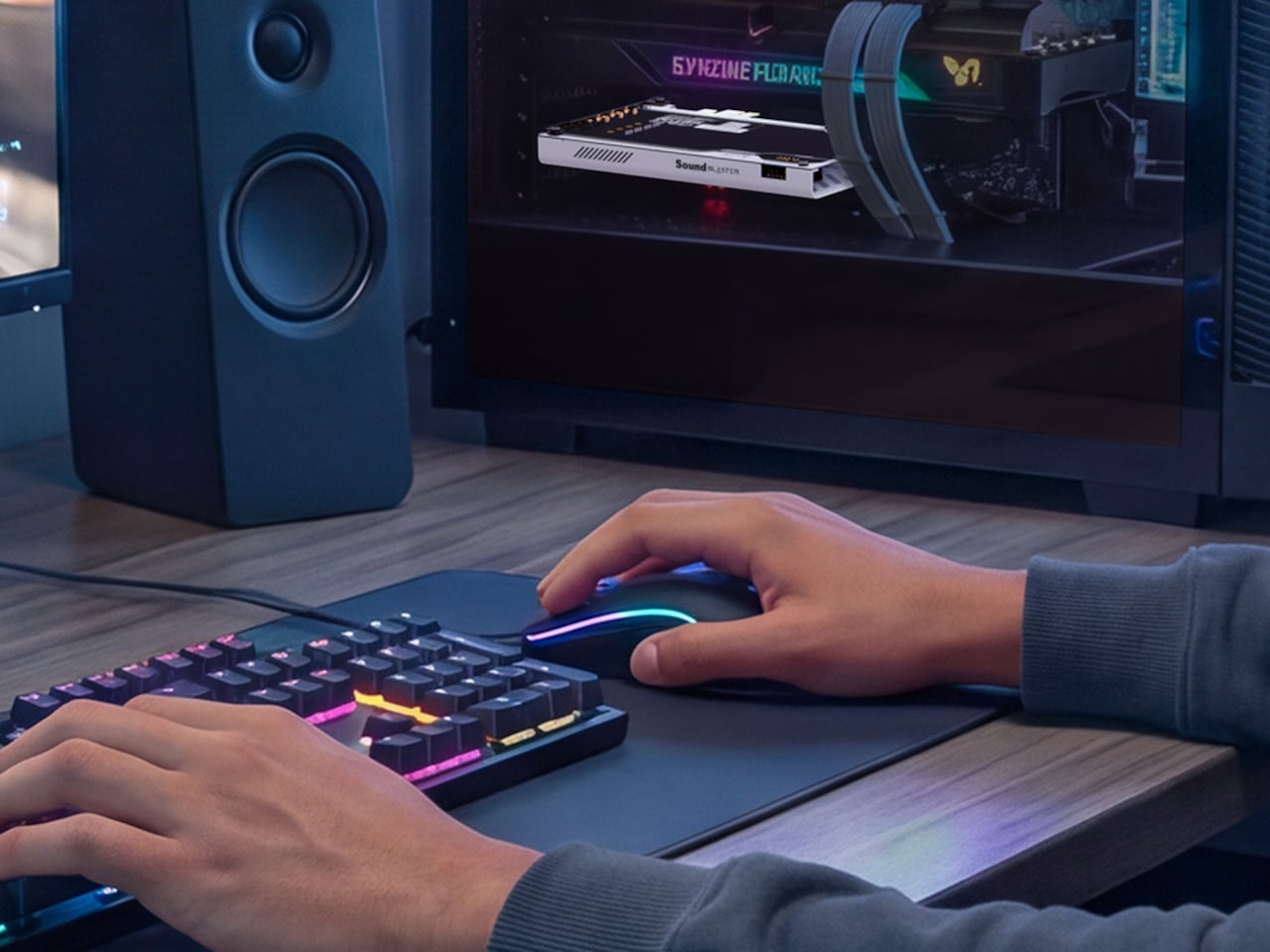
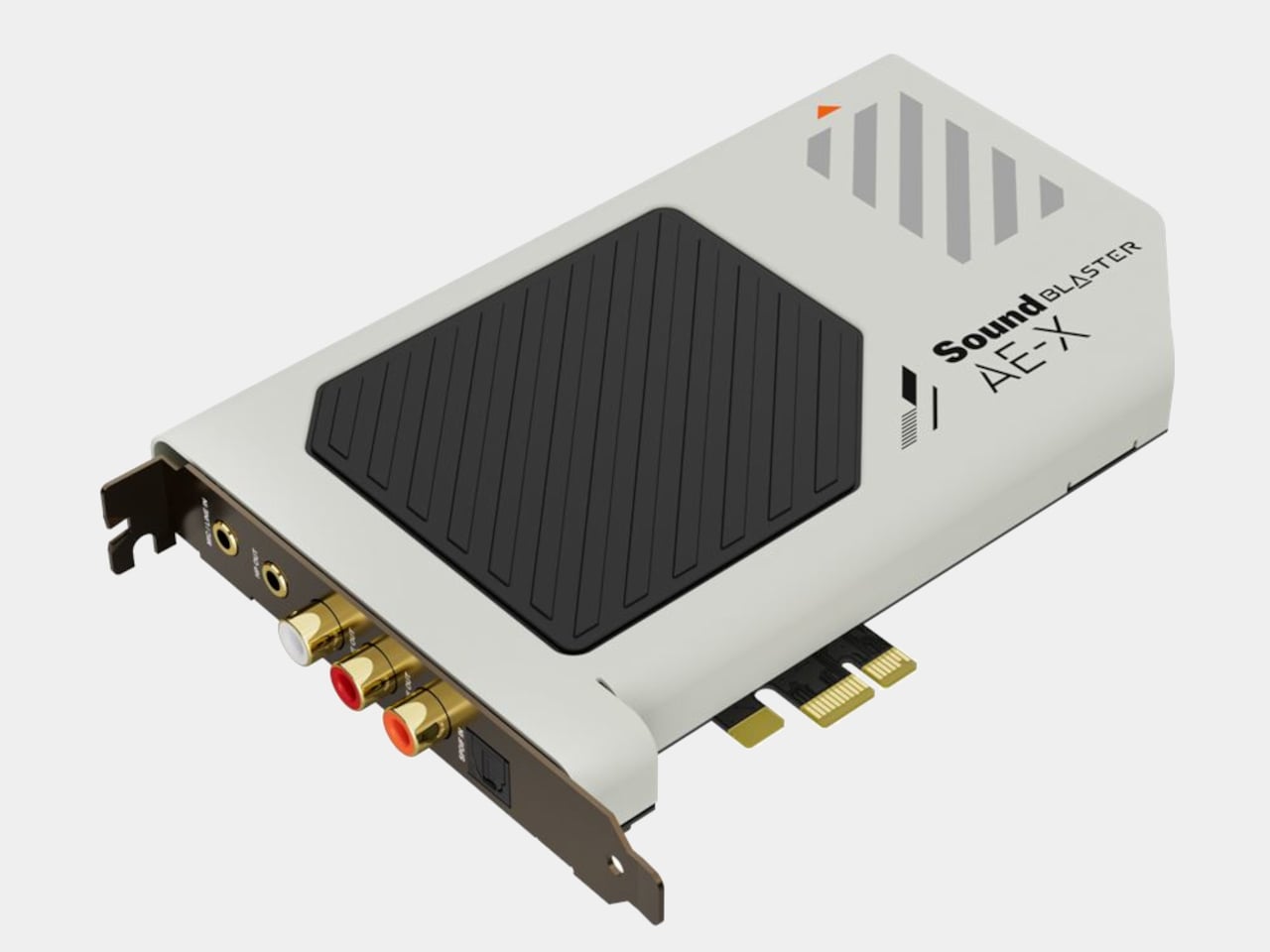
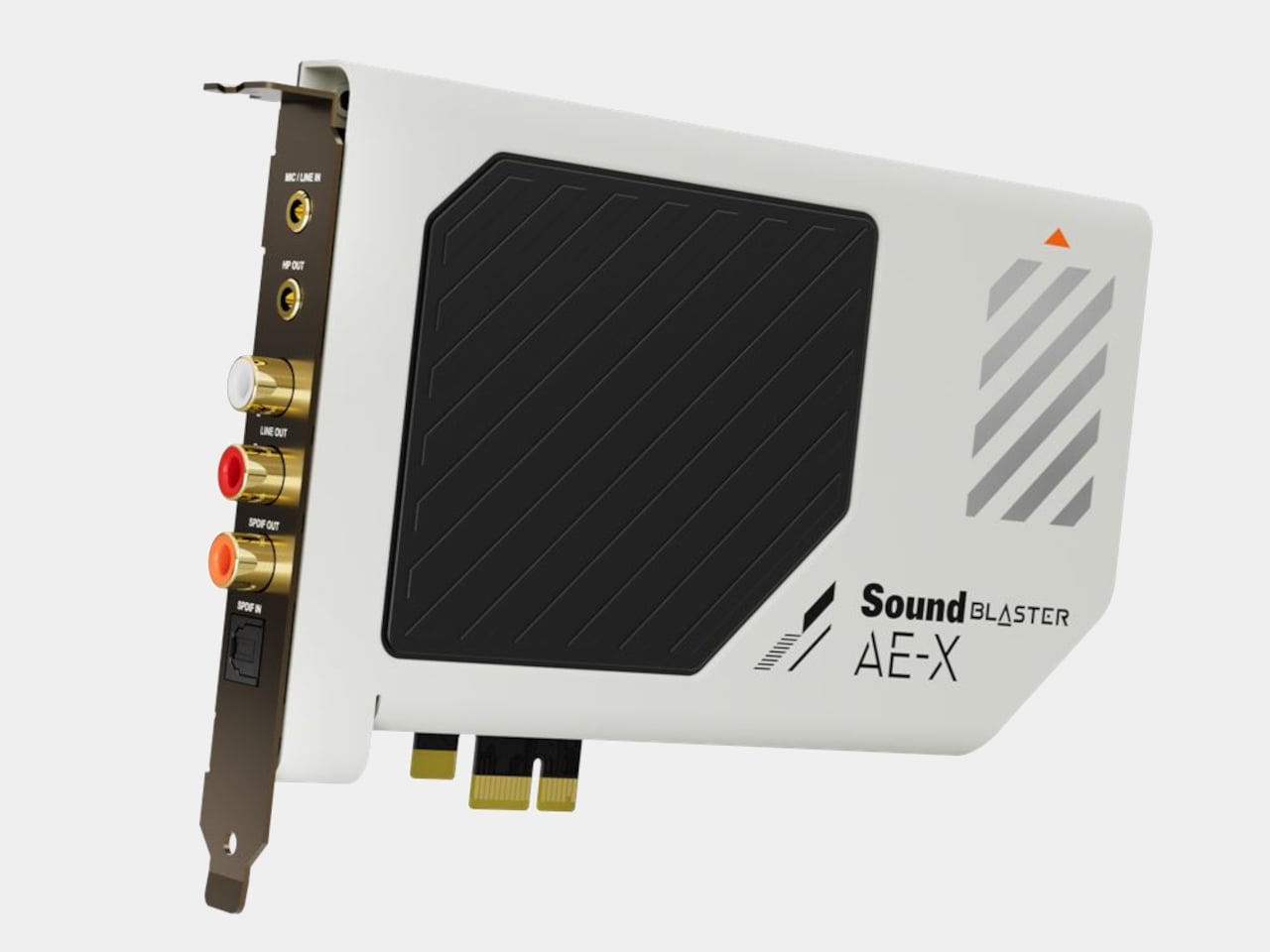
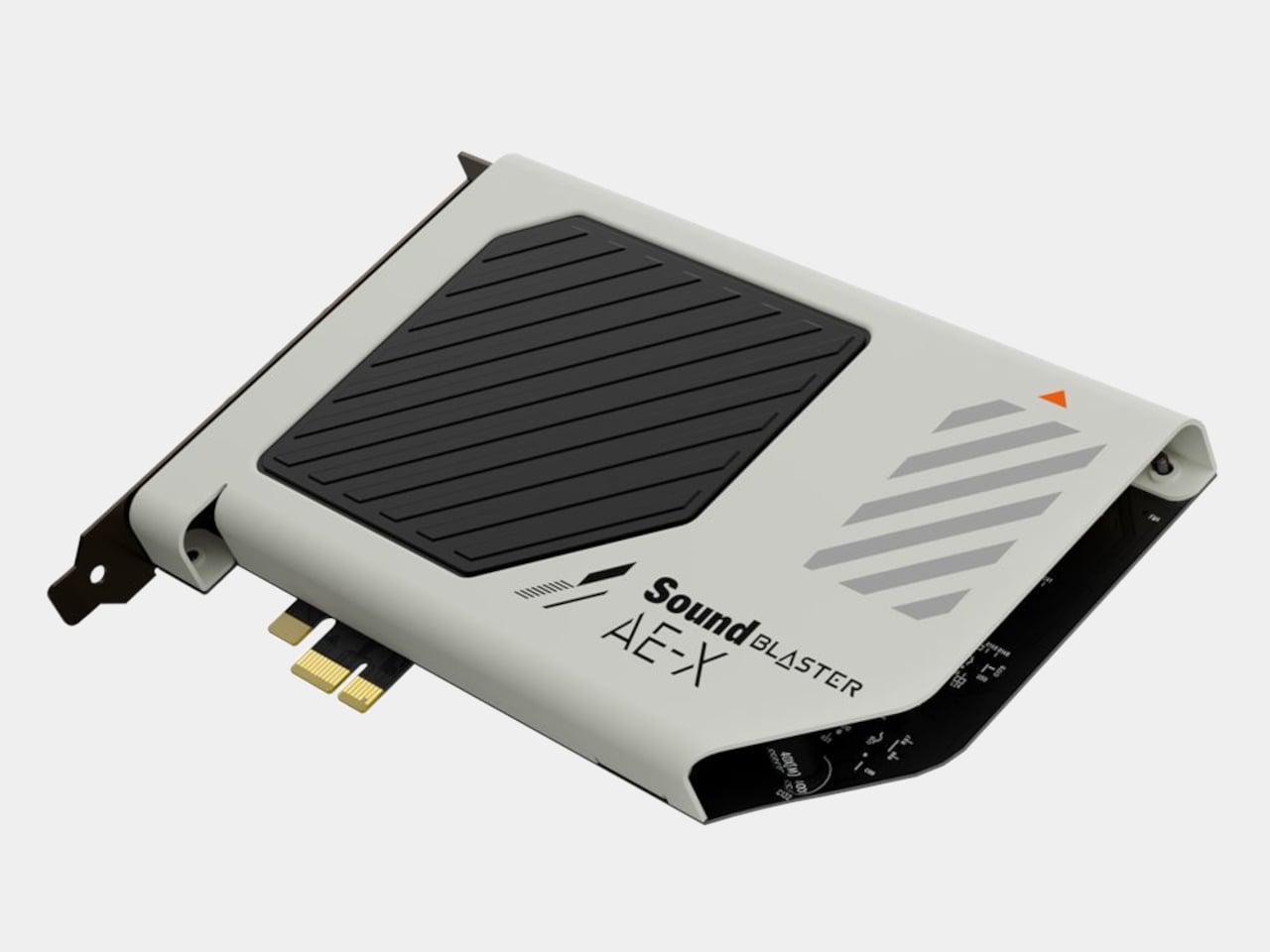
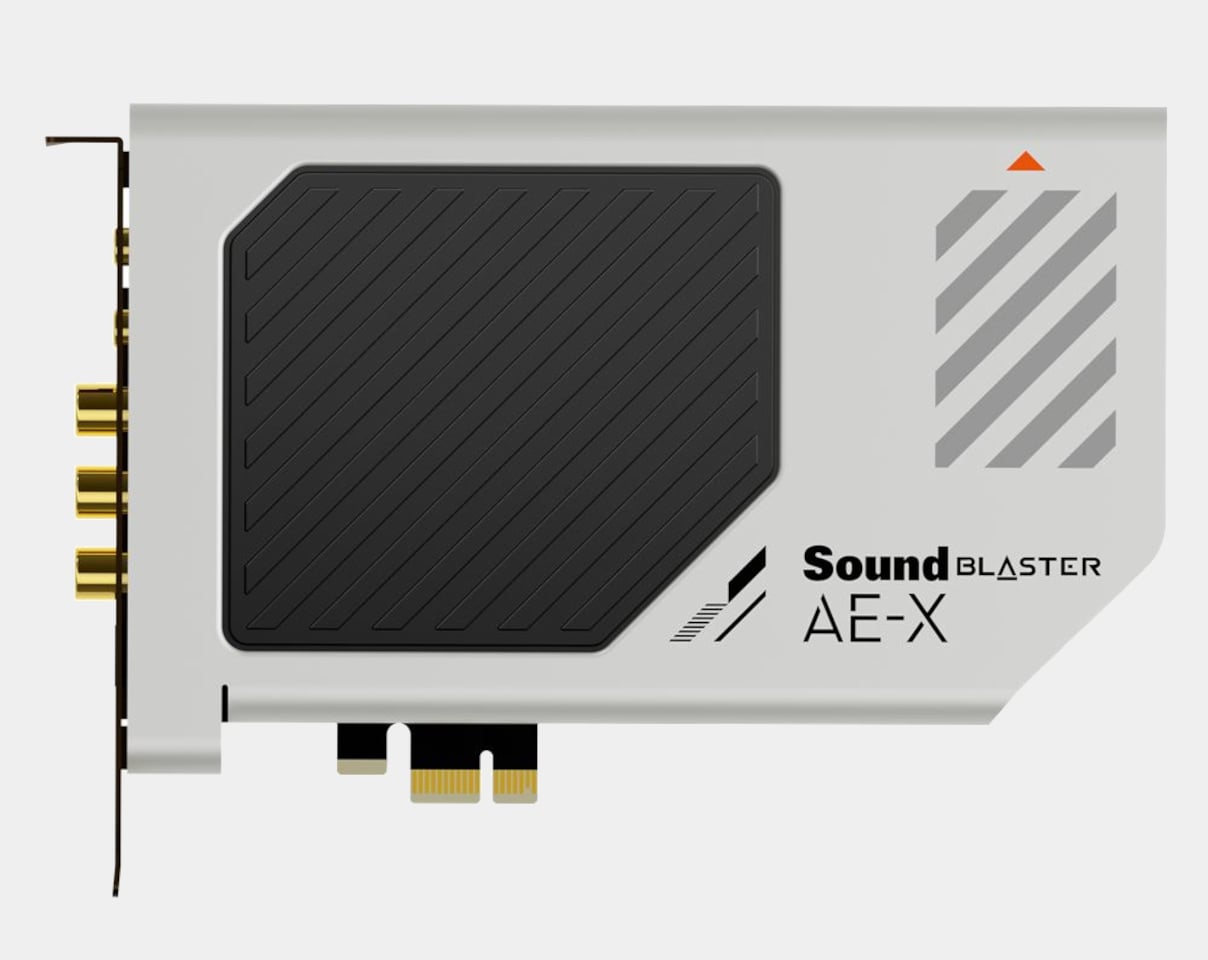
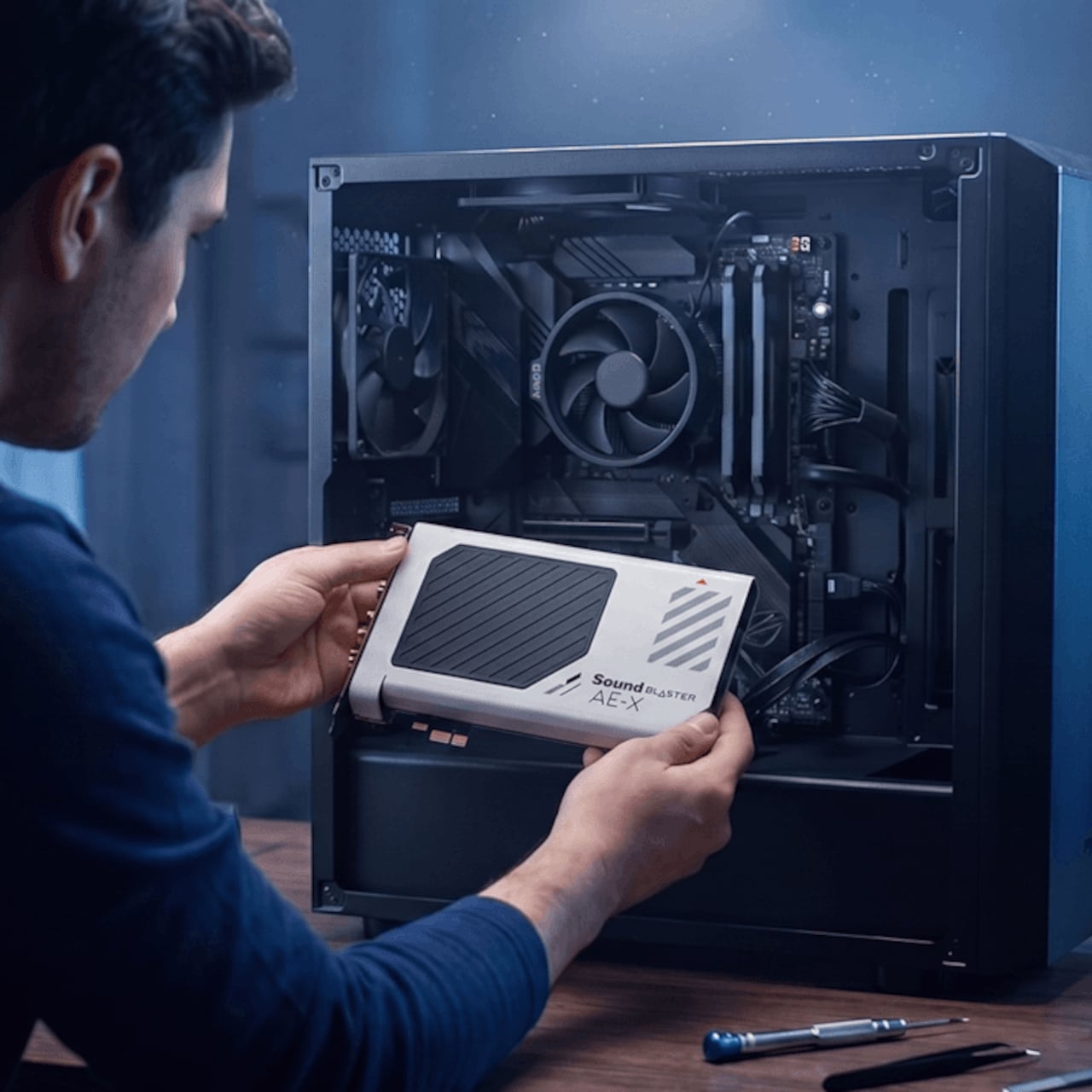
Creative’s Sound Blaster AE-X is a PCIe 3.0 sound card designed for exactly that gap. It slots into a spare PCIe x1 slot and takes audio processing entirely away from the motherboard, handling playback through a dedicated ESS ES9039Q2M dual-channel DAC with HyperStream IV architecture. The claimed signal-to-noise ratio sits at 130 dB, which actually edges out Creative’s own flagship AE-9 on paper, and the card supports direct DSD256 decoding alongside standard 32-bit / 384 kHz PCM playback.
The headphone amplification story is where a lot of people buying dedicated sound cards will actually feel the difference. The AE-X integrates Creative’s X-amp discrete amplifier architecture and is rated to drive headphones up to 600 ohms. That covers even the most demanding studio and audiophile headphones that tend to sound underpowered and thin when running off integrated audio. The amp handles each channel cleanly without the crosstalk and noise floor that shared circuits on a motherboard typically introduce.
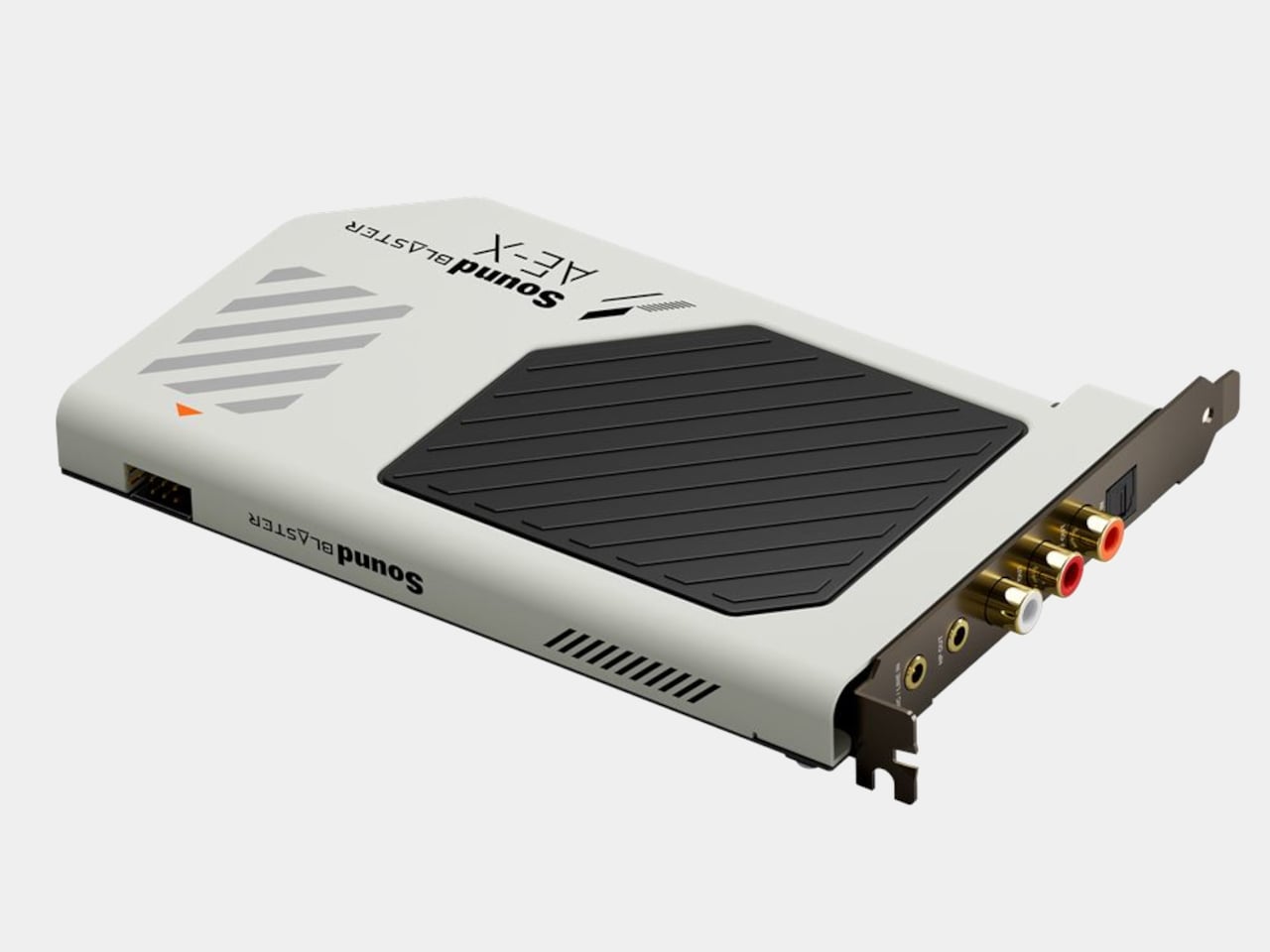
Connectivity covers the main bases: two 3.5 mm audio jacks, optical S/PDIF input and output, a digital coaxial output, and a pair of analog RCA phono outputs for connecting to external speakers or amplifiers. ASIO 2.3 compatibility adds low-latency operation for anyone recording, monitoring, or producing music rather than just playing it back. That same compatibility makes the AE-X a credible option for home studio setups that need clean round-trip audio.
The gaming side gets attention, too. Scout Mode enhances positional audio cues during gameplay, sharpening the directional information that makes it easier to track footsteps and environmental sounds in competitive titles. AutoEQ headphone calibration and customizable sound profiles are managed through the Creative Nexus app, so the card adapts to different headphones without requiring any manual EQ work. The same setup that handles a late-night music session can switch over to a competitive shooter without touching anything.
Pricing puts the AE-X at just under €190 in Europe and $179.99 in the US. That positions it well below the AE-9 while technically bettering it on the spec sheet across SNR and DSD support. For someone already invested in quality headphones or external speakers, a dedicated sound card at this price range stops being a luxury and starts looking like the obvious next step.
Motherboard audio makers have narrowed the gap significantly, but they’ve never closed it entirely. The Sound Blaster AE-X makes a clear argument that the ceiling for dedicated PCIe audio hardware has been raised again, and the ask for getting there hasn’t changed much. For anyone running 300-ohm headphones off a header that was never designed for them, the difference is immediate.