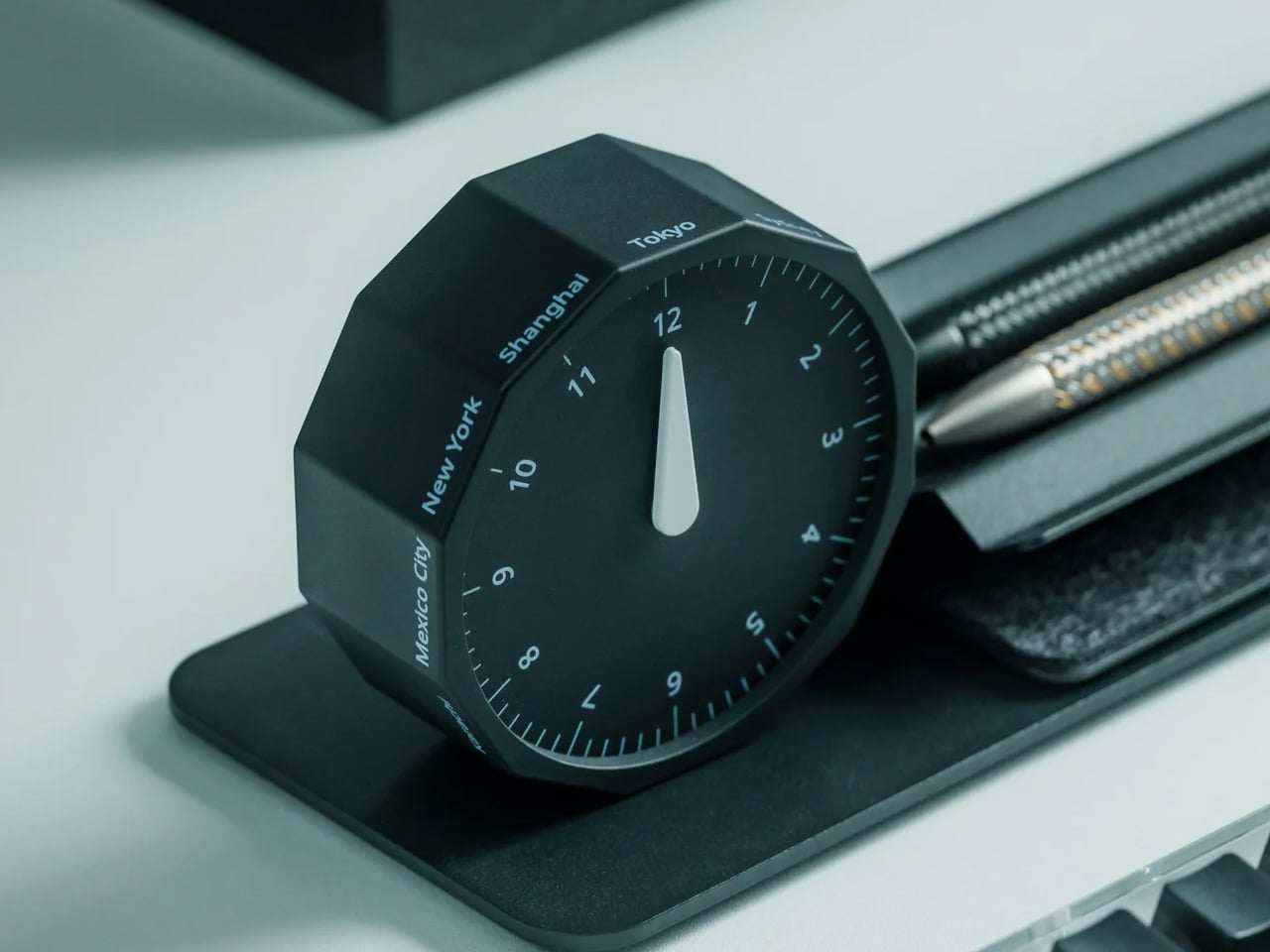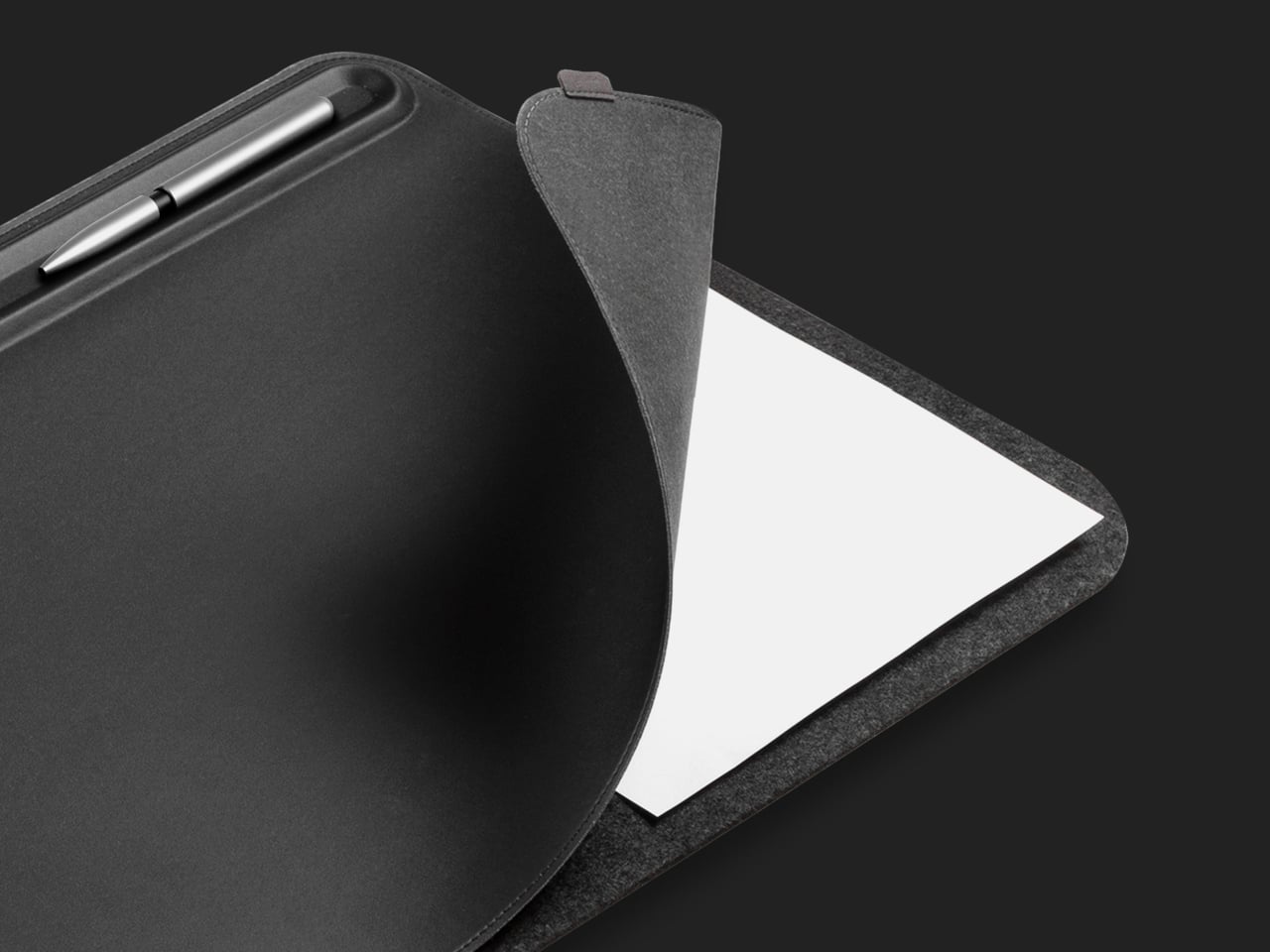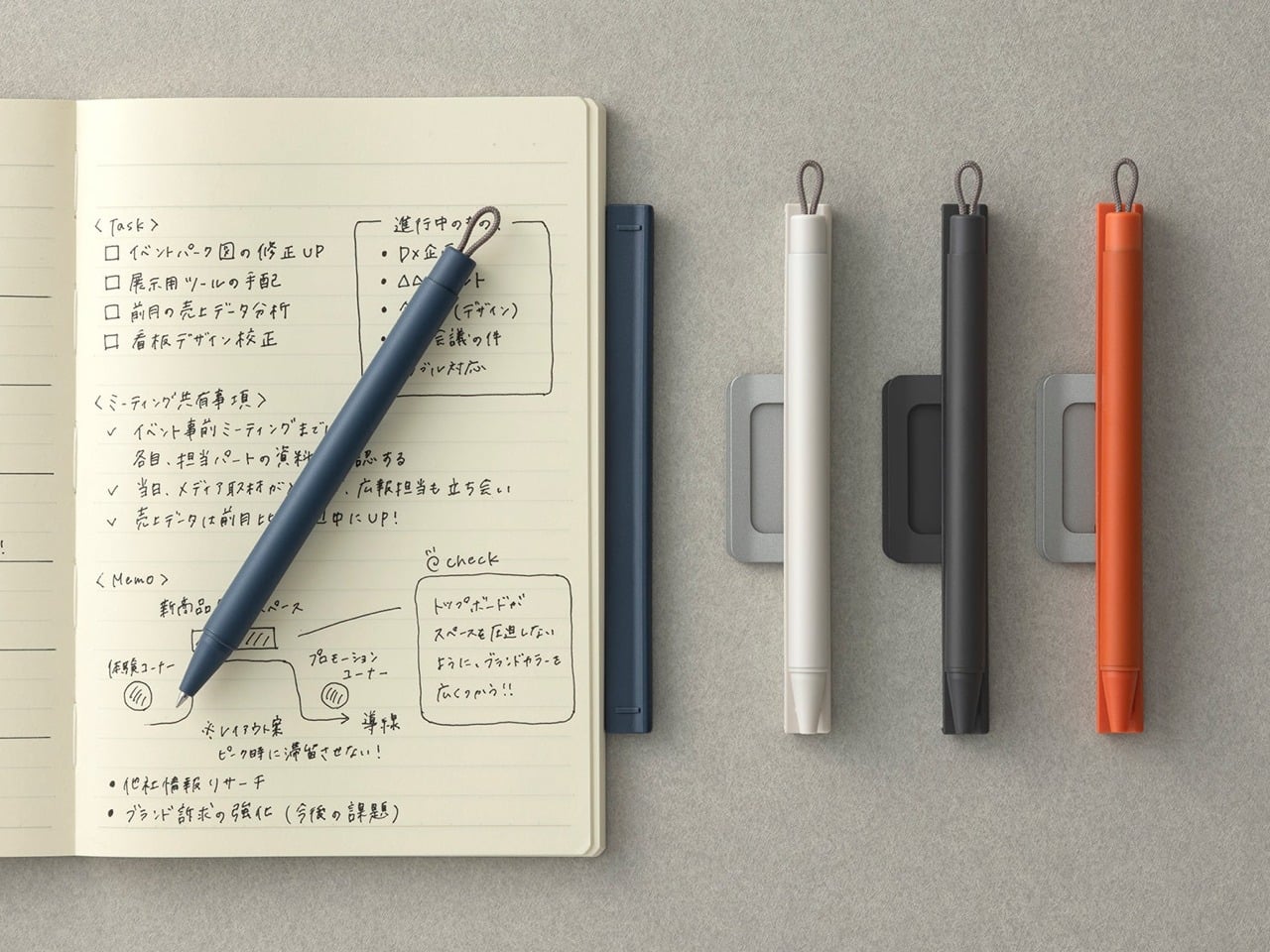
5 Japanese Pens & Notebooks So Beautifully Made You’ll Never Want to Type Again

There is a specific quality to well-made Japanese stationery that is difficult to name and easy to recognize. It is not about price or brand recognition. It is the sense that the object was designed by someone who used a pen every single day and got quietly frustrated with everything that did not work right about existing options. That frustration, refined into object form, is what separates Japanese stationery from what fills the rest of the market.

The five pieces here cover different parts of a writing practice: what you write in, what you write with, how your tools sit on your desk, and the one object that turns the act of putting a pen down into something worth watching. None are flashy. None announce themselves with features. What they share is a commitment to getting one specific thing exactly right, which is the design logic Japan has always understood better than anyone else producing stationery today.

1. Inseparable Notebook Pen
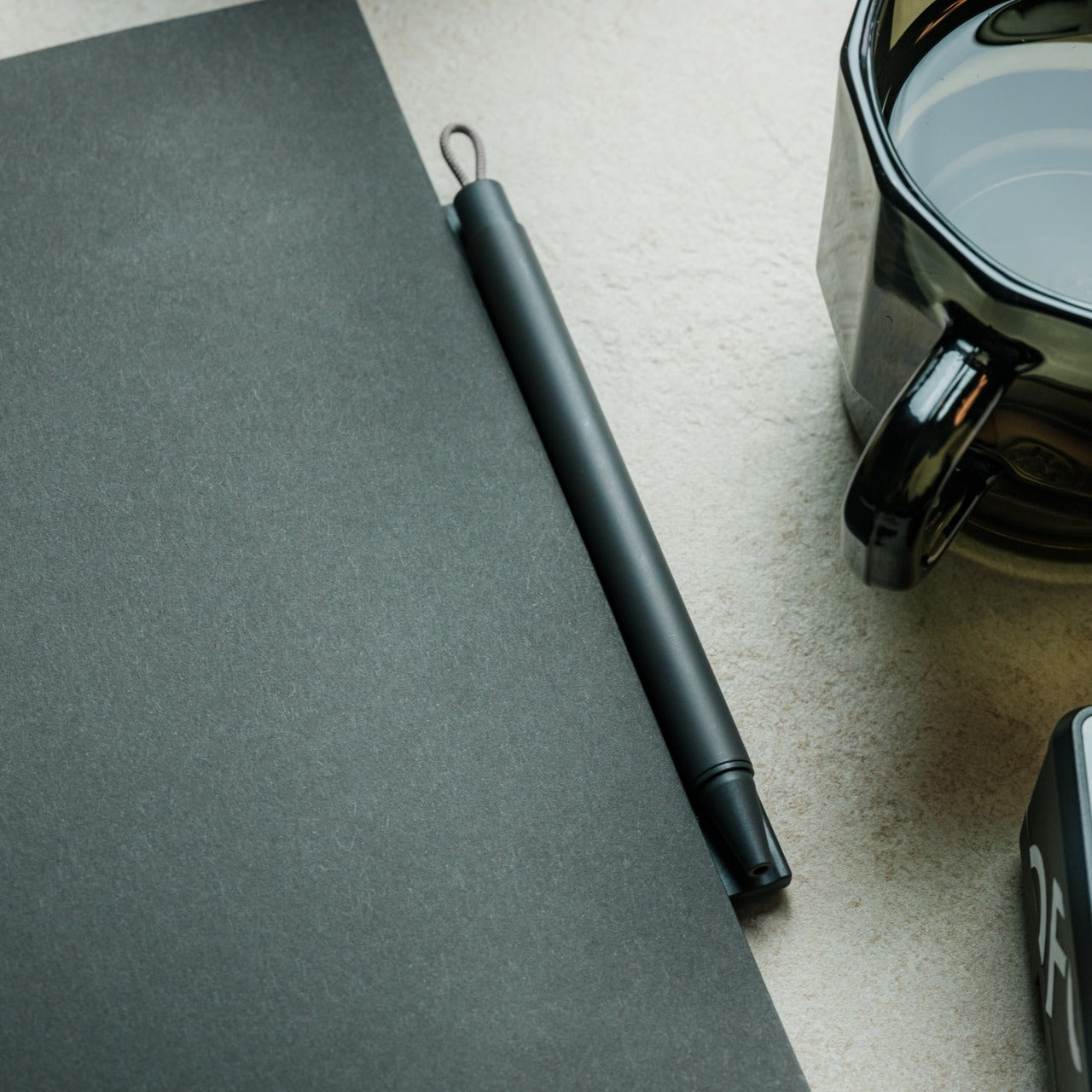
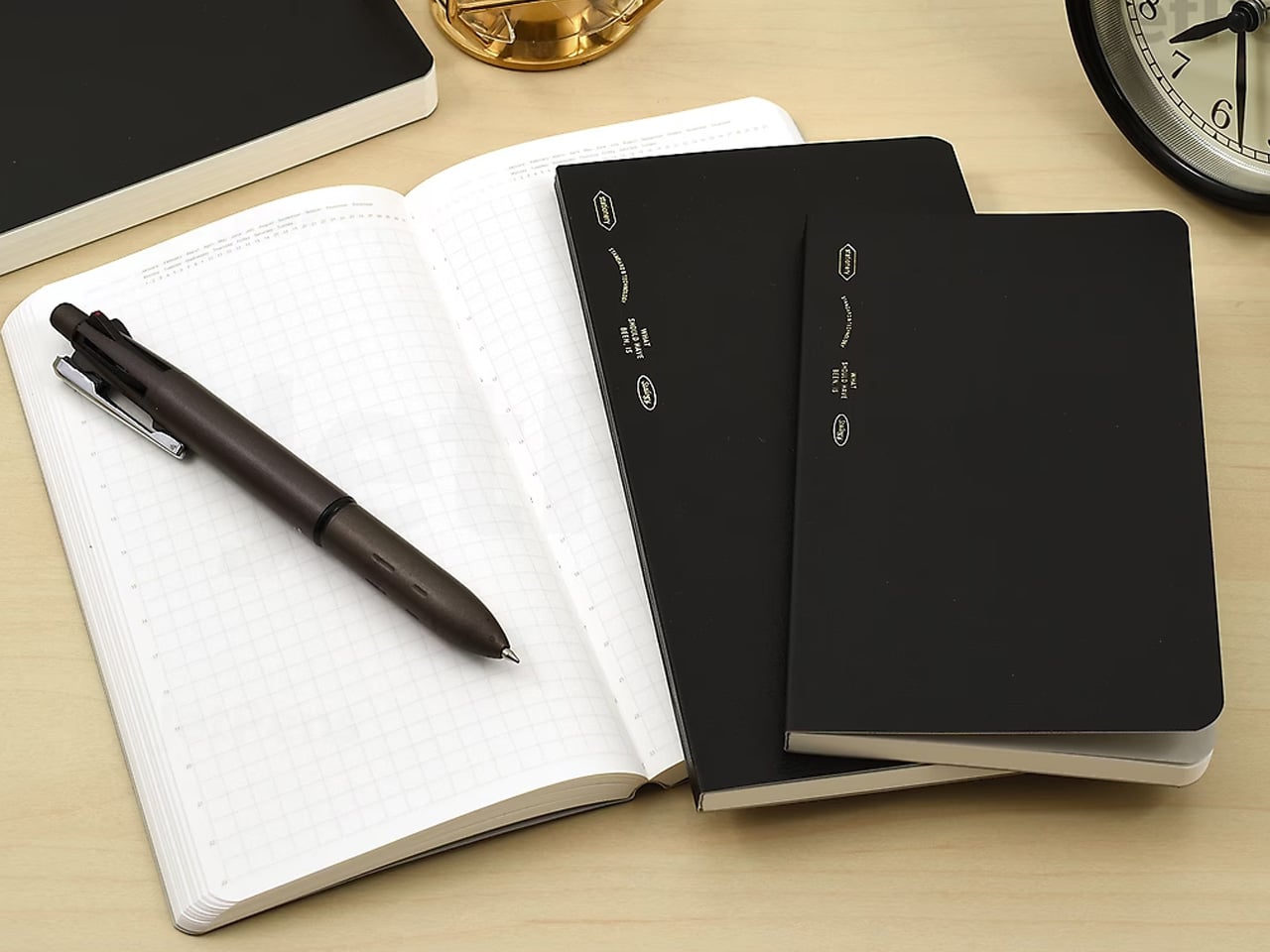
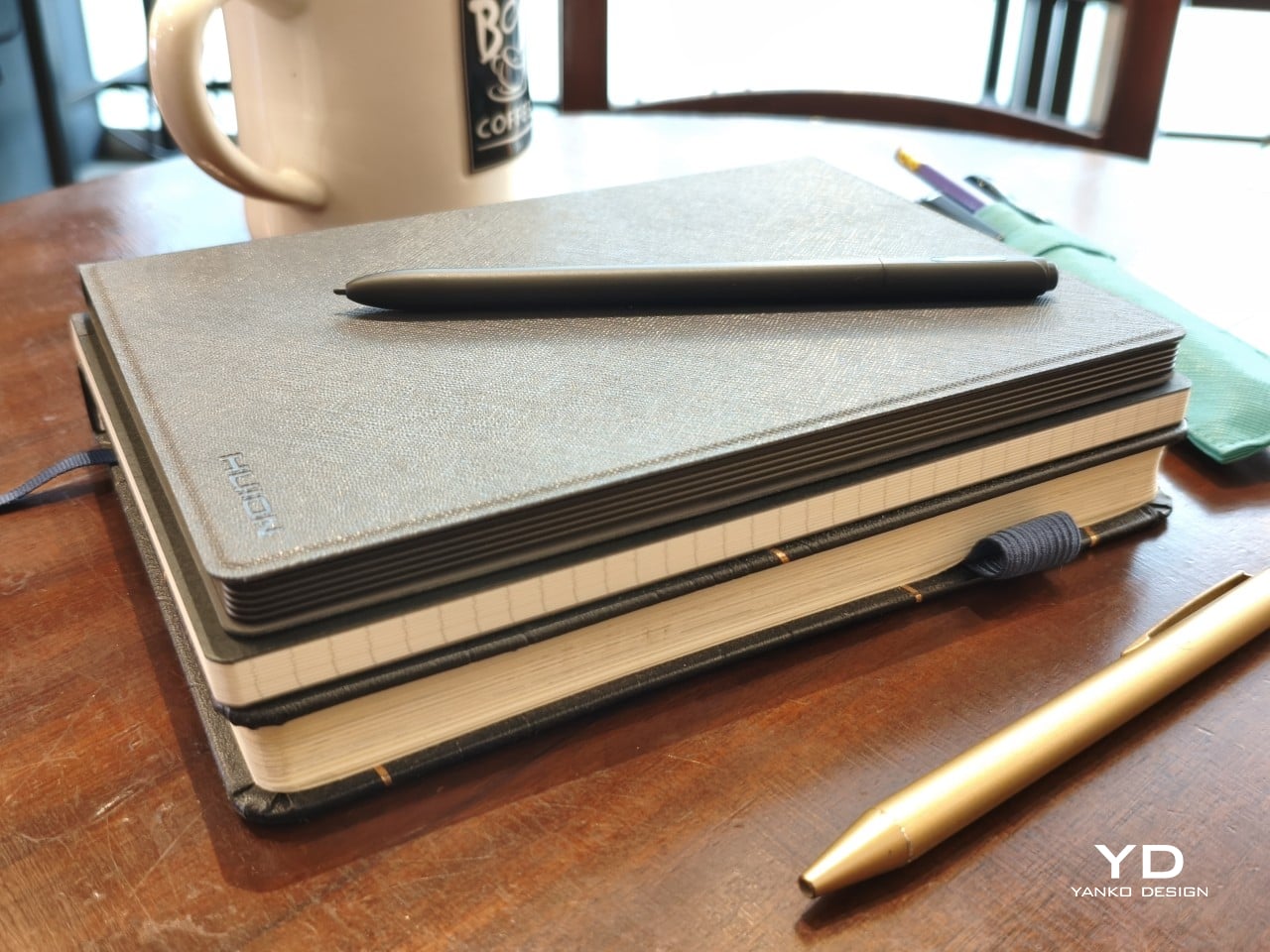
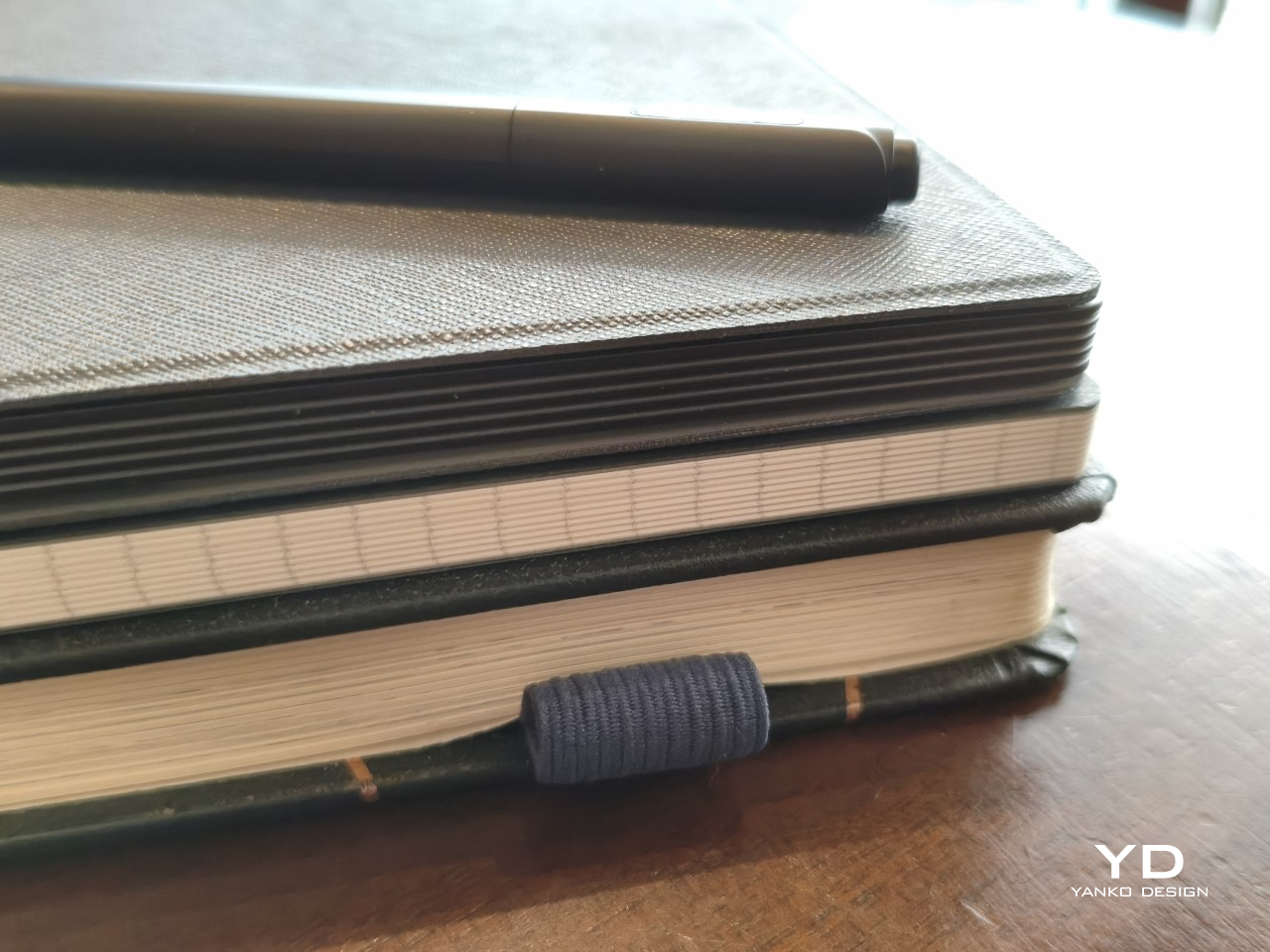
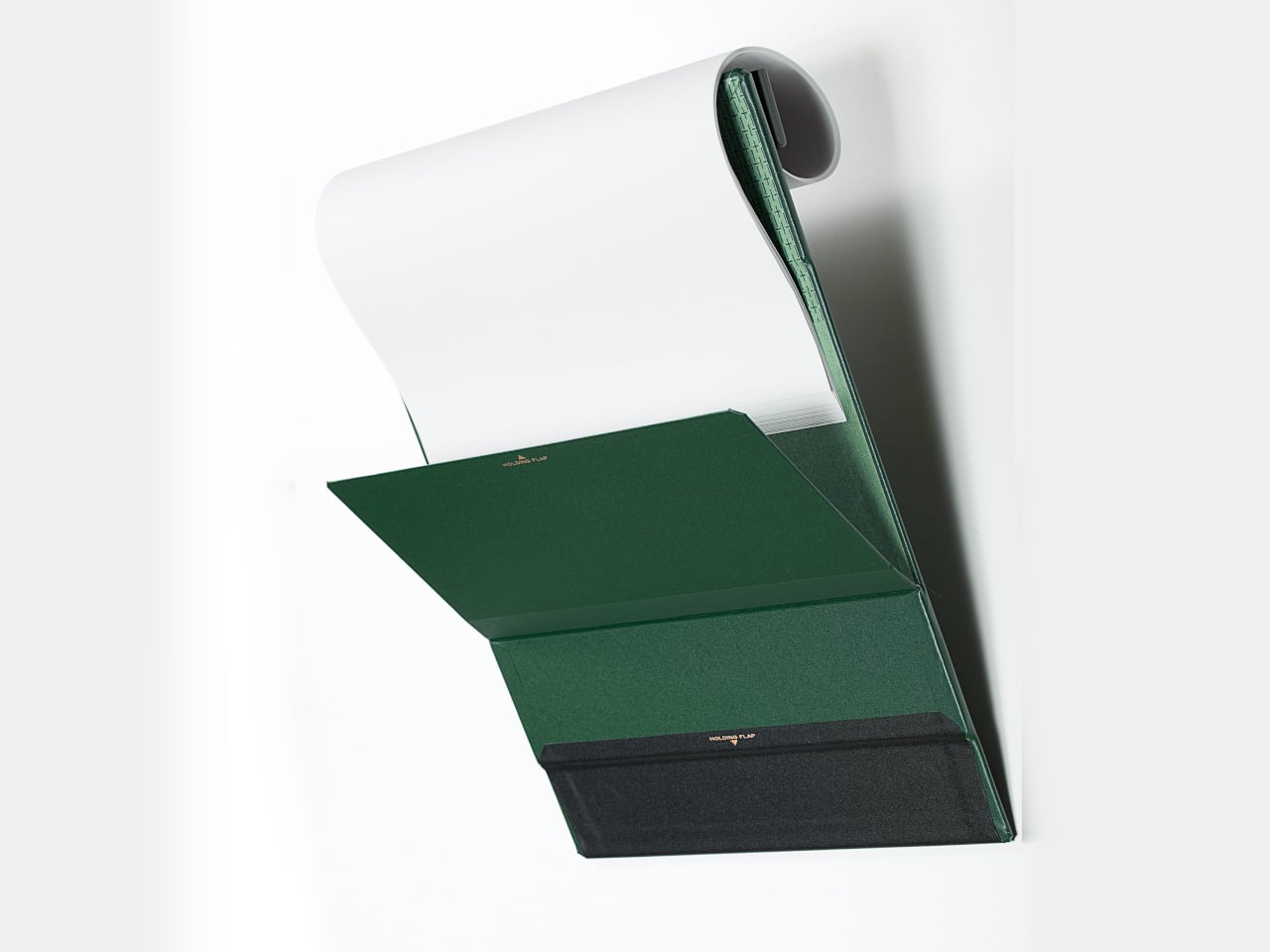
The Inseparable Notebook Pen begins with a problem every notebook user has encountered and simply accepted: the pen is never where the notebook is. These two are designed as a single unit. A magnetic clip system holds the pen flush against the cover with a precise, silent click, leaving no visual noise on the notebook’s exterior. When you reach for your notebook, the pen arrives with it, and the act of writing becomes one motion instead of two.

Beyond the mechanism, the design restraint throughout is the thing worth paying attention to. The pen body sits at a diameter that feels balanced in the hand without being engineered for drama. The attachment is strong enough to remain secure across a full day of carrying while remaining easy to retrieve mid-thought. For anyone who writes by hand regularly, this pairing restructures the small rhythms of the day without ever announcing itself. Tools that work this quietly are, by a significant margin, the ones worth keeping.

Click Here to Buy Now: $19.95

What we like

  • The magnetic attachment sits completely flush with the cover, adding nothing visible to the notebook’s exterior
  • One-motion retrieval removes the small interruption between thinking and writing

What we dislike

  • The pen works best paired with specific notebook covers, so testing compatibility with a preferred journal before committing is worthwhile
  • Cartridge replacement requires sourcing a compatible format rather than any standard refill

2. Stalogy Editor’s Series 365 Days Notebook A6
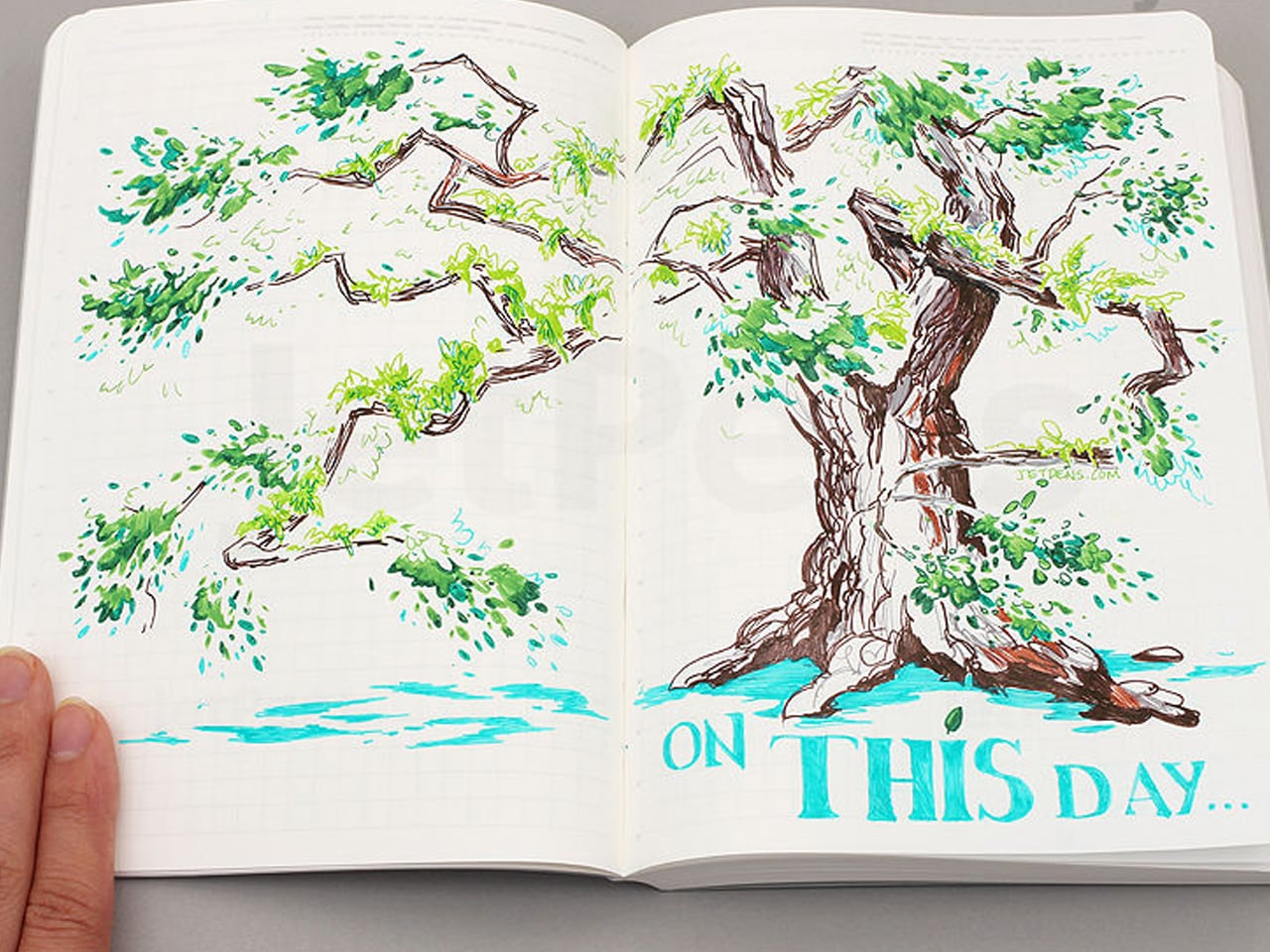
The Stalogy 365 Days Notebook carries no branding on its exterior. Just a clean cover and a precisely placed spine. Inside, 368 pages of cream-toned dot grid paper sit light enough that the notebook does not feel precious, yet substantial enough to last a full year of daily use. At A6, it fits a coat pocket without folding or flexing. That combination, nothing decorative on the outside and nothing wasted inside, is the brief Japanese stationery executes better than anyone.

The dot grid is subtle enough to disappear under handwriting but present enough to keep lines honest across a full page of notes. Minimal page markings give the notebook equal footing for structured planning, freeform writing, and quick sketches without any of those uses feeling like a compromise. For anyone carrying a notebook every day, the Stalogy provides the space and steps aside, which turns out to be the more useful and respectful approach any planner could take.

What we like

  • The bare cover carries no visual identity, making it entirely the user’s object rather than a brand’s
  • 368 pages at A6 gives a full year of writing without adding meaningful bulk to a carry

What we dislike

  • Date and time markings are printed small, making them difficult to read in low light or at a glance
  • Heavier fountain pen inks will ghost through the thin paper, limiting compatibility for dedicated nib users

3. Sailor 1911 Casual L Stable Fountain Pen
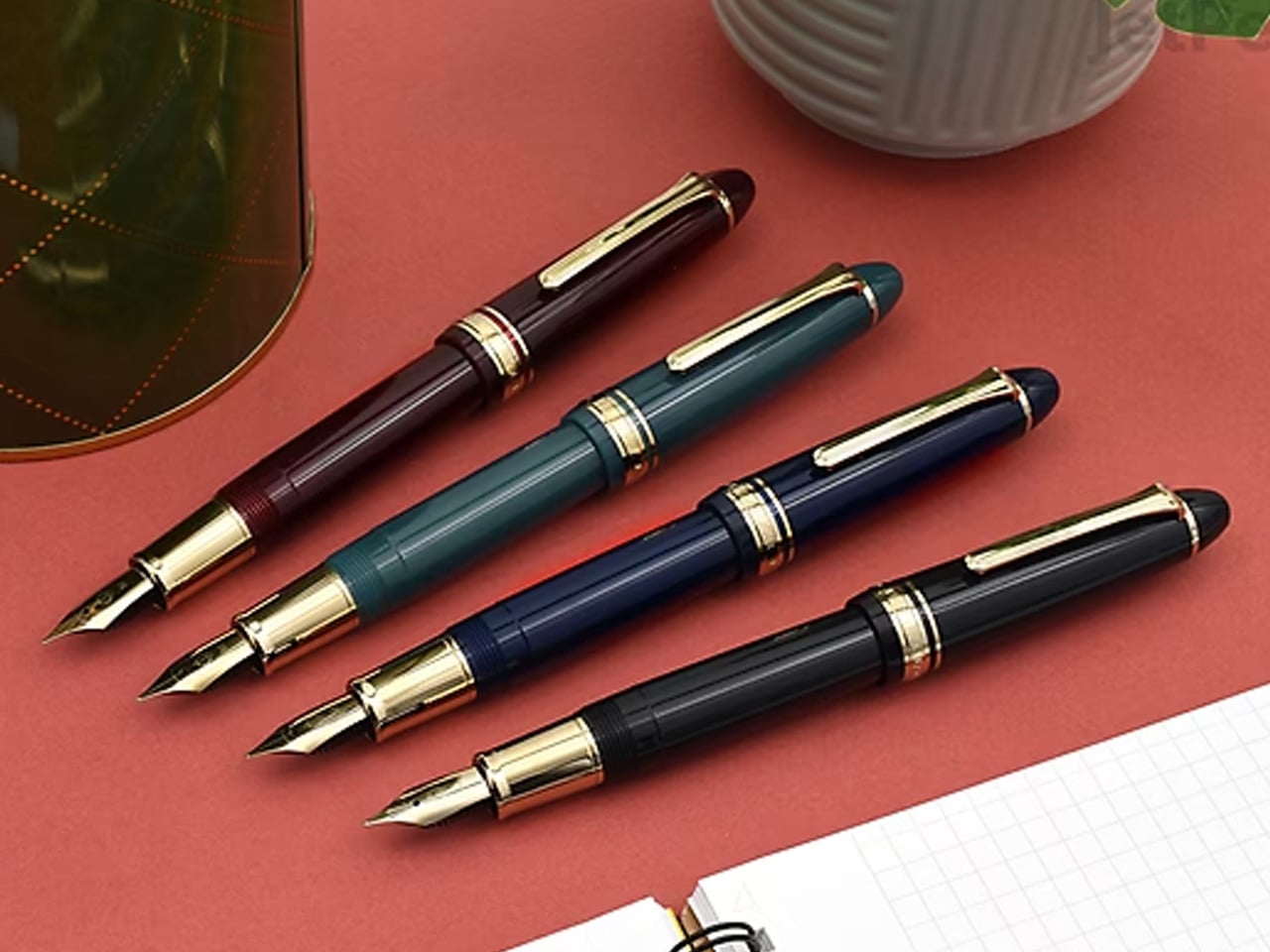
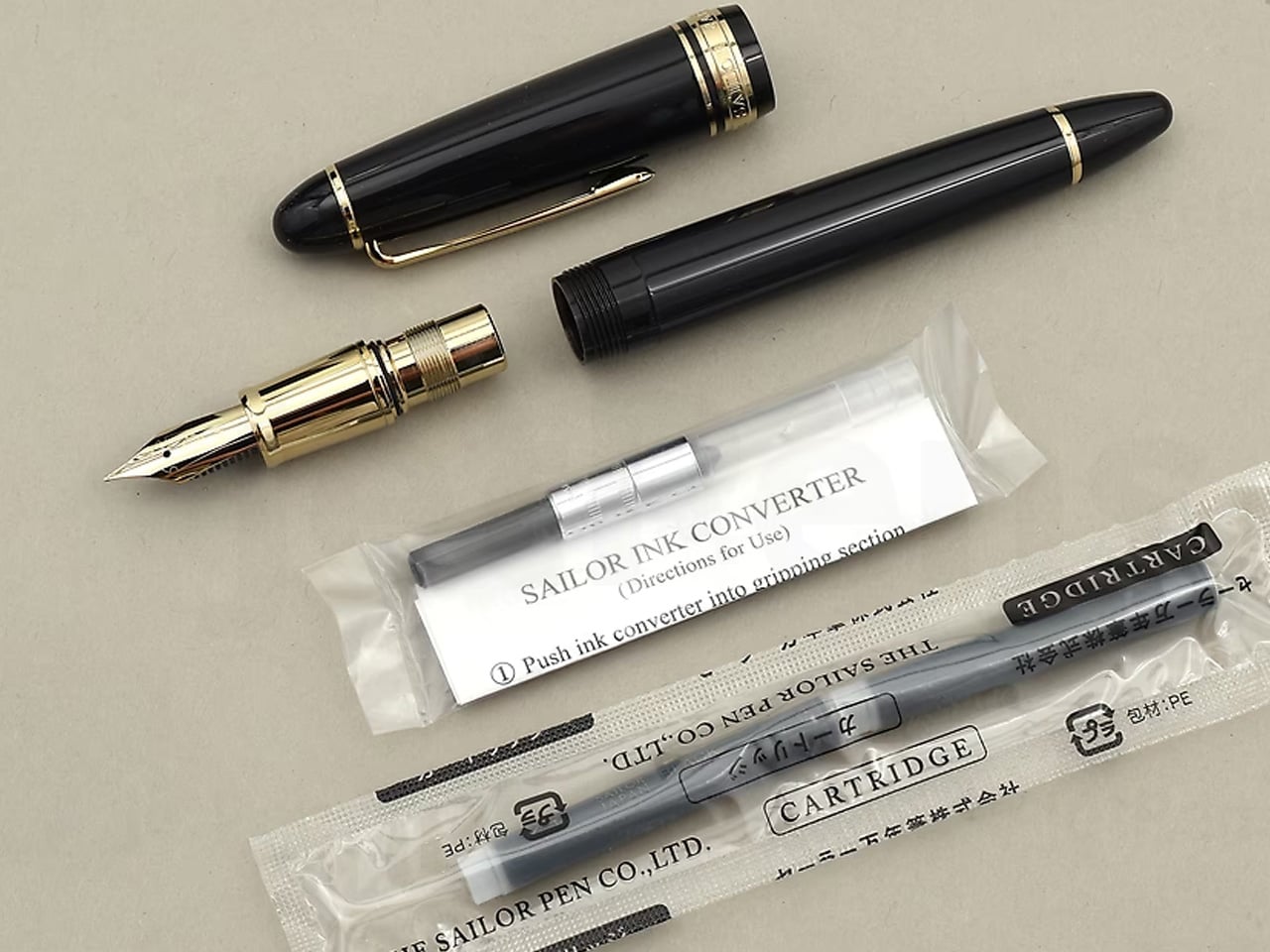
Sailor has been producing fountain pens in Japan since 1911, and the 1911 Casual L Stable, winner of the 2026 Japan Stationery Awards Fountain Pen category, represents what 115 years of that practice produces when the brief is balance over spectacle. The metal grip section sits low on the body, shifting the center of gravity toward the nib end. The result is a pen that writes with less deliberate effort, where the hand guides rather than grips across a page.

The 14k gold nib is the argument. Gold nibs flex slightly under the pressure of each stroke, returning to their original position in a way that steel nibs do not, and that quality is what writing enthusiasts describe as the nib feeling alive. For anyone who writes regularly by hand, a quality fountain pen changes the experience in a way that is difficult to reverse. The 1911 Casual L Stable is the specific pen that makes returning to anything else feel like a visible step backward.

What we like

  • The metal grip section lowers the center of gravity toward the nib, making sustained writing sessions measurably less tiring
  • The 14k gold nib’s flex produces a writing experience that steel nibs at any price point cannot replicate

What we dislike

  • Fountain pen ownership requires maintenance, including regular cleaning and occasional nib adjustment, which first-time users should factor into the decision
  • The pen performs best with Sailor inks for optimal flow, which means an additional purchase for those starting out

4. Levitating Pen 3.0
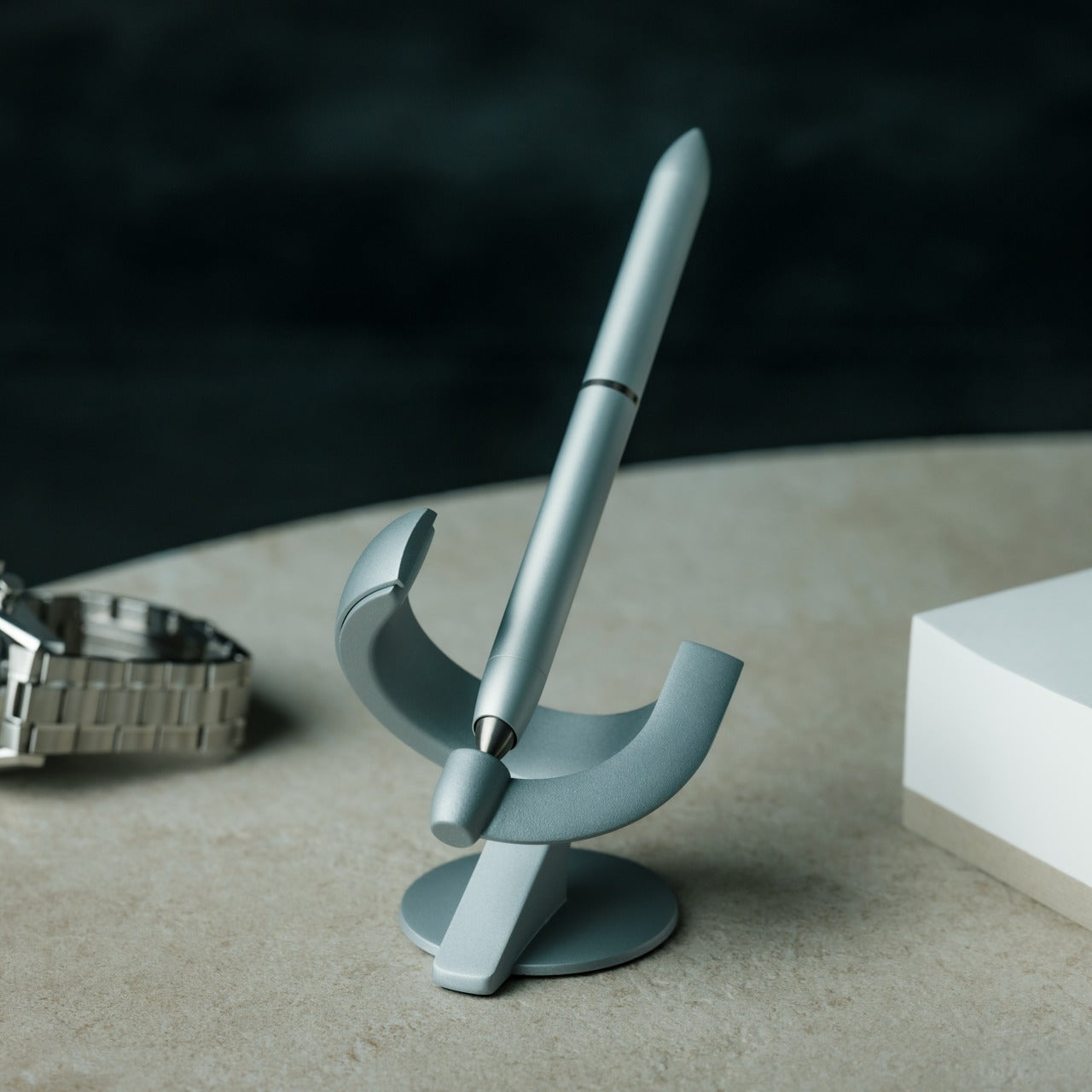
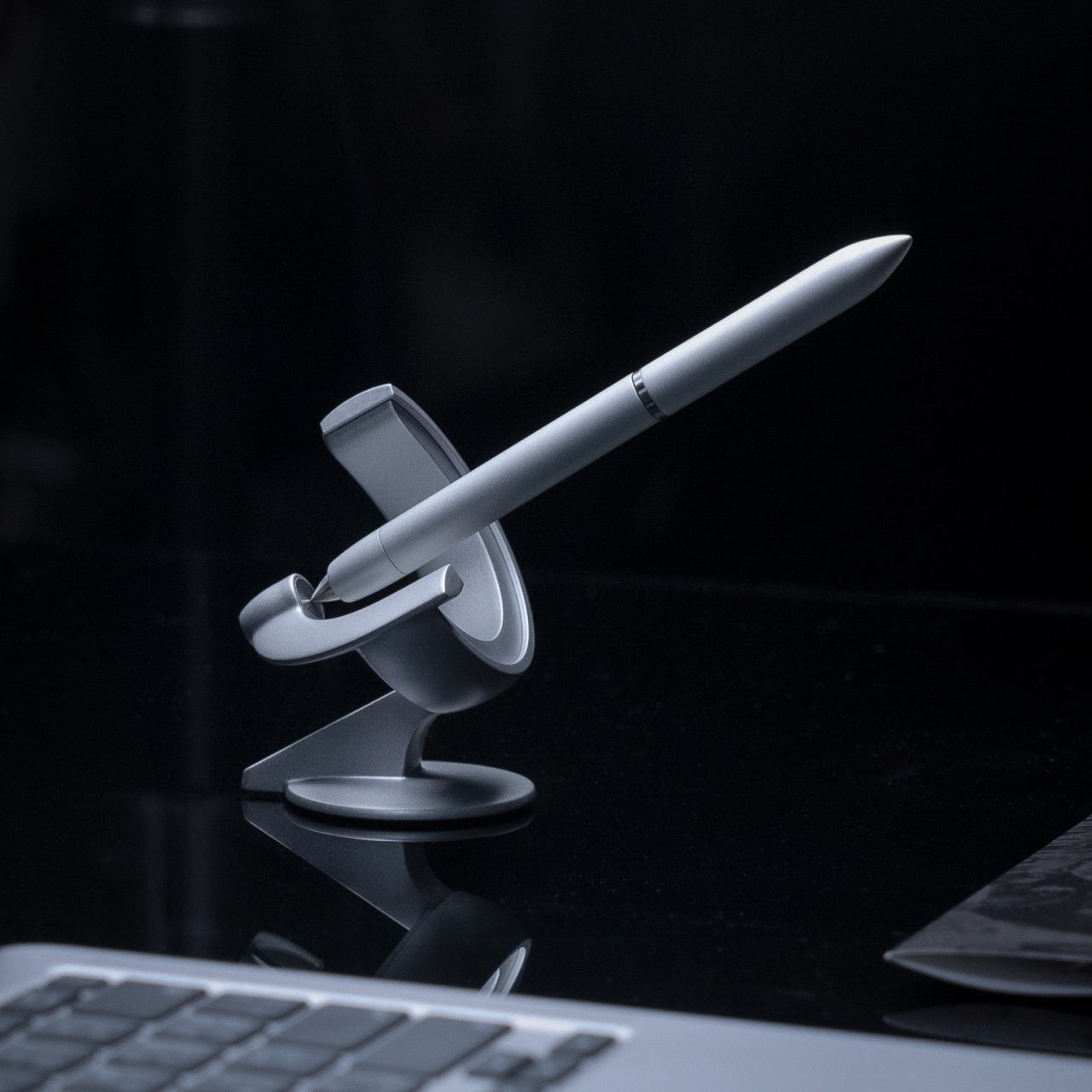
Most pens are designed to disappear into the background of your workday. The Levitating Pen 3.0 operates from an entirely different premise. Built from aerospace-grade aluminum, titanium, and brass, it hovers one inch above its base at a 60-degree angle, bobbing gently and spinning for up to 30 seconds when twisted. That behavior changes the ritual of writing before you have even picked it up. Reaching for a pen that genuinely rewards the act of reaching for it is something else entirely.

It still writes. A rollerball with a Schmidt cartridge, a fountain pen with a fine 0.5mm nib, or a 2-in-1 that lets you swap between both. The floating posture gets your attention. The ink earns it over time. The original design took its angle from Earth’s axial tilt at 23.5 degrees, a philosophical decision into a physical object. The 3.0 revises that to 60 degrees with a taller pedestal, giving the levitation the visual room it was always building toward.

Click Here to Buy Now: $129.00

What we like

  • The magnetic levitation base holds the pen visibly above the desk, making it a display object worth having when it is not being used
  • Available as a rollerball, fountain pen, or 2-in-1, so the writing experience can match personal preference without changing the design

What we dislike

  • At $129, the value sits in the full object and its desk presence rather than the writing instrument alone
  • The levitating base requires a charged surface to function, adding a power dependency that standard pen stands do not have

5. Midori MD Notebook A5
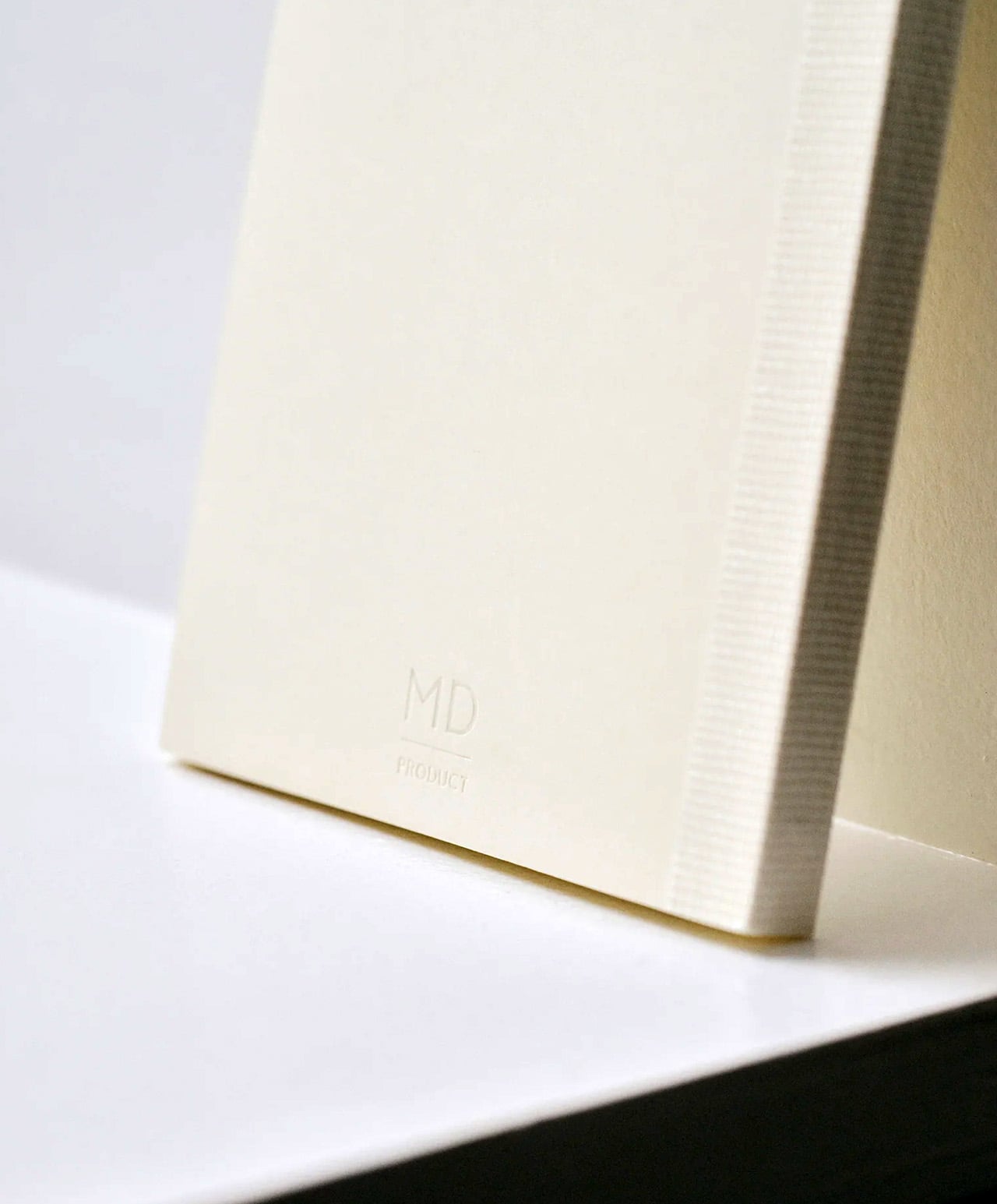
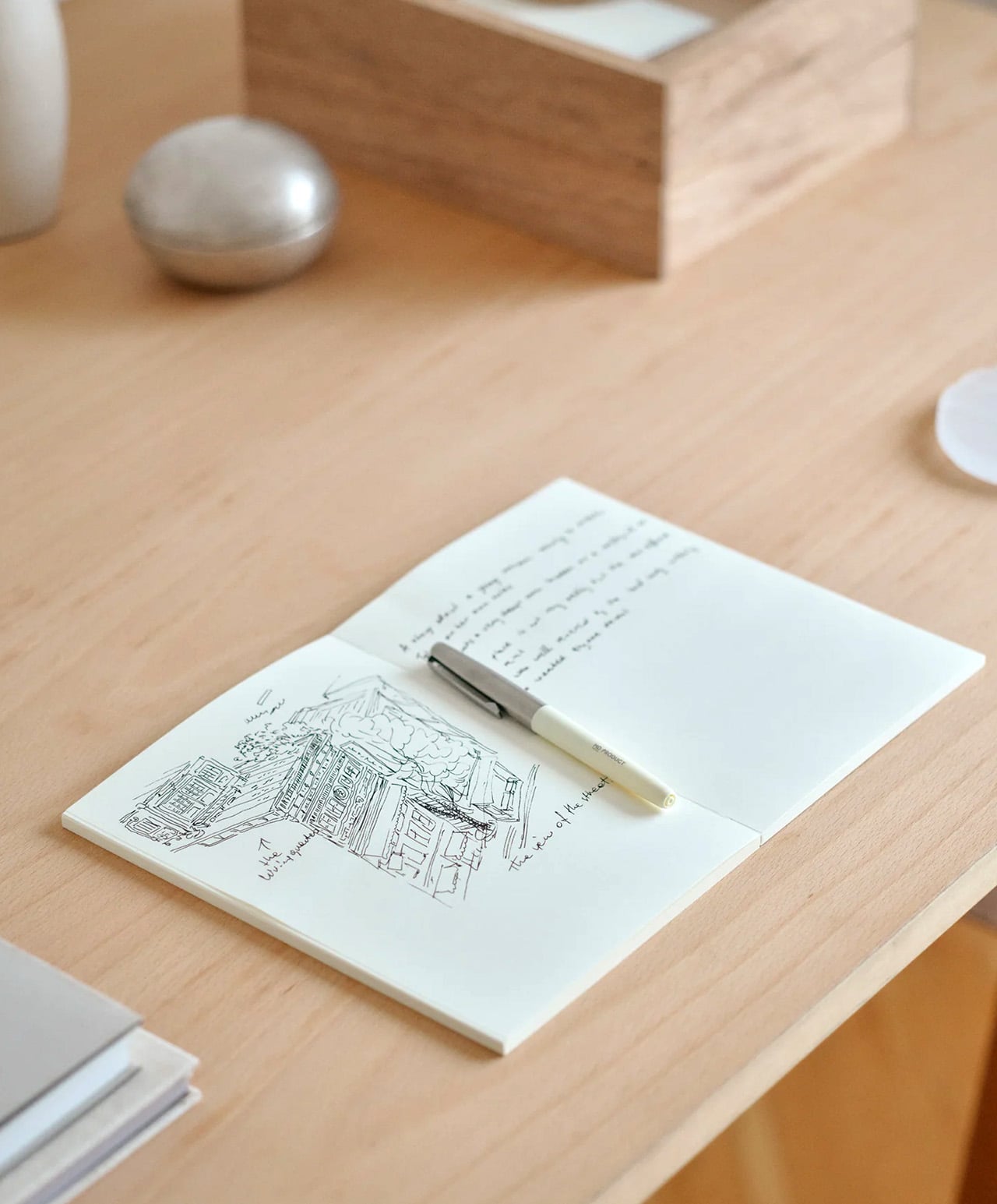
Midori developed MD Paper for one specific purpose: to write on it. The result handles fountain pen ink without feathering into surrounding fibers. Gel pens do not bleed through to the reverse side. Fine-liners hold their edge rather than spreading at the tip. That consistency across pen types removes the constraint of choosing your tools around your paper, which is a trade-off most notebook users have been making without realizing it was ever a trade-off to begin with.

Thread binding holds the quires together and allows the notebook to open completely flat from the first page to the last, with no resistance pulling the spread closed mid-writing. The same paper runs across the cover, endpapers, and text block, a material consistency most notebooks do not consider worth pursuing. A glassine wrapper protects the exterior.

What we like

  • MD Paper’s compatibility across fountain pens, gel pens, and fine-liners removes the need to choose tools around paper constraints
  • Thread binding allows 180-degree flat opening from the first to the last page, eliminating the resistance glue-bound notebooks create mid-spread

What we dislike

  • The cream-toned paper suits most writing but does not work for illustrators who need a bright white surface for accurate color reference
  • The glassine cover wrapper shows handling wear with heavy daily use and offers less protection than synthetic or hardcover alternatives

Once You Write With the Right Tools, Going Back Isn’t Really an Option

Japanese stationery earns its reputation not through marketing but through the accumulated weight of small decisions made correctly. Paper that accepts ink without complaint. A pen that arrives with your notebook without asking. A tool that makes picking it up feel like choosing something. None of these are dramatic accomplishments. Together they remove the friction between a thought and its written form, which turns out to be the only friction worth engineering against.

The best reason to write by hand is that the right objects make it feel worth doing. These five make that case without effort. A desk set up with tools this considered starts to function differently, not because the objects are precious, but because they remove the small interruptions that accumulate across a working day. Once you are used to that standard, returning to tools that merely function becomes a visible and permanent downgrade.

The post 5 Japanese Pens & Notebooks So Beautifully Made You’ll Never Want to Type Again first appeared on Yanko Design.


These 3 Camping Picks Each Replace 3 Things You’re Packing Right Now

Most packing lists grow the same way. One item leads to a backup, the backup leads to an accessory, and the accessory leads to a case for the accessory. By the time you reach the trailhead, half the bag is there to support the other half. The three products here were built with the opposite logic. Each one was designed to replace things rather than stack on top of them, and the results are hard to argue with.

A shoe that transforms across three configurations. A radio that covers sound, light, power, and emergency communication in one compact body. A flashlight that carries its own charging case, which also charges your phone. None of this is accidental multi-tasking. The consolidation is the design, engineered in from the first decision made about each product. Pack smarter or pack more. These three make that choice feel obvious.

1. New Balance TDS MSNB1

New Balance has been working through modular footwear ideas since the Niobium Concept 1 in 2020, and the TDS MSNB1 is where that thinking lands with real conviction. Developed alongside Tokyo Design Studio Revive, it moves through three distinct configurations: a rugged waterproof boot for the trail, an outdoor mule when the terrain eases, and a camp slipper once the day is done. Three footwear problems, one pair of shoes, one zipper system holding it all together.

The mechanism is a zipper that runs down the tongue and wraps around the heel, letting you assemble or strip back the shoe’s components without tools or compromise. The upper is stretch rip-stop with welded PU overlays and an eVent waterproof membrane keeping water out at the boot stage. Bungee elastic laces handle closure without external hardware. Two colorways are available: the Zinc Blue plays it safe, while the Pistachio Butter, a muted yellow-green, is the more visually distinct of the two and the one worth choosing.

What we like

  • Three fully resolved configurations that replace the boot, mule, and slipper most campers pack as separate pairs
  • Tokyo Design Studio Revive’s involvement gives the silhouette a lifestyle credibility that most performance footwear never earns

What we dislike

  • At $300, it sits well above what most campers consider for footwear that spends part of its life as a slipper
  • The bungee lace system takes a few outings to fully trust on uneven or technical ground

2. RetroWave 7-in-1 Radio

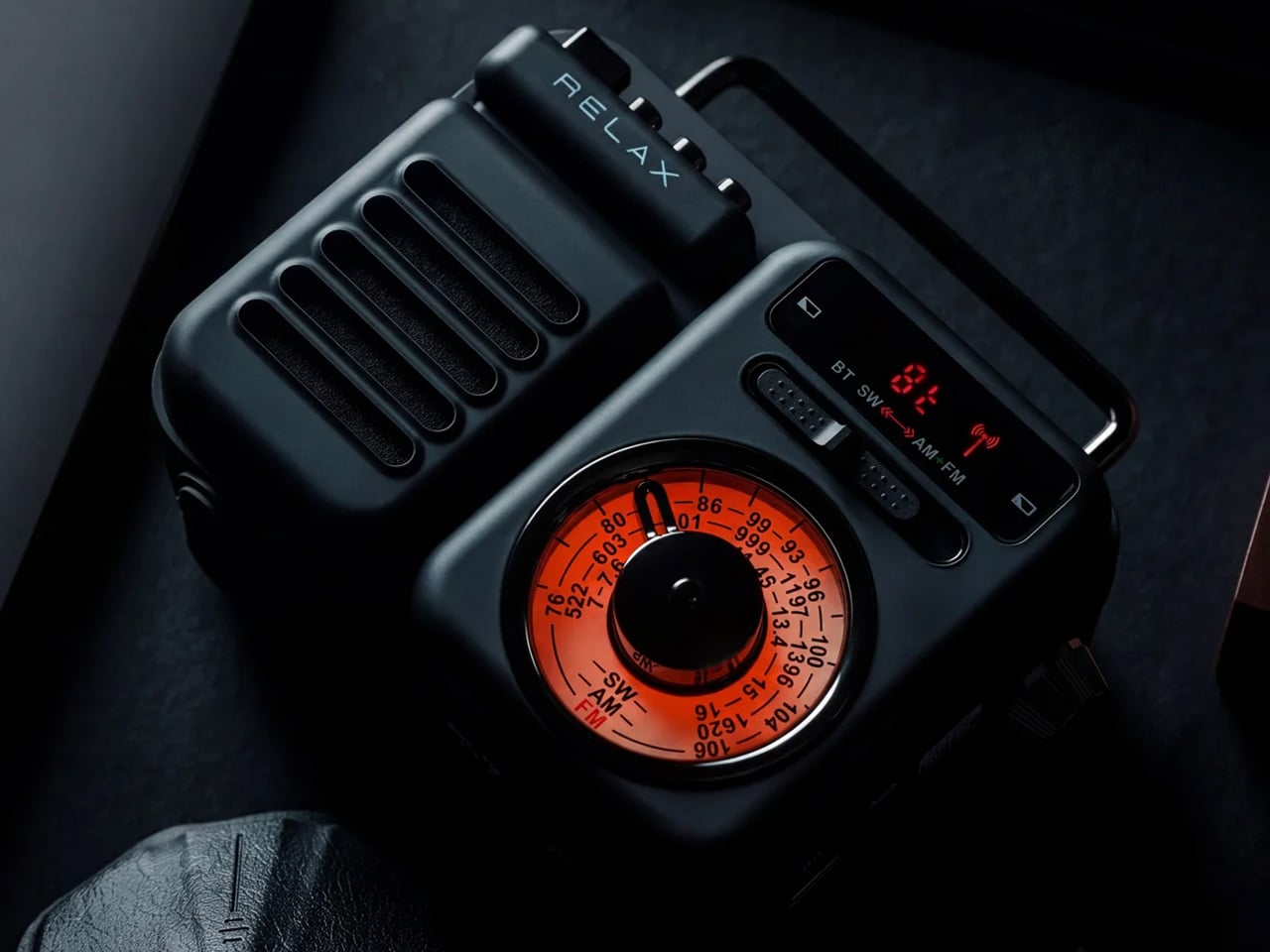
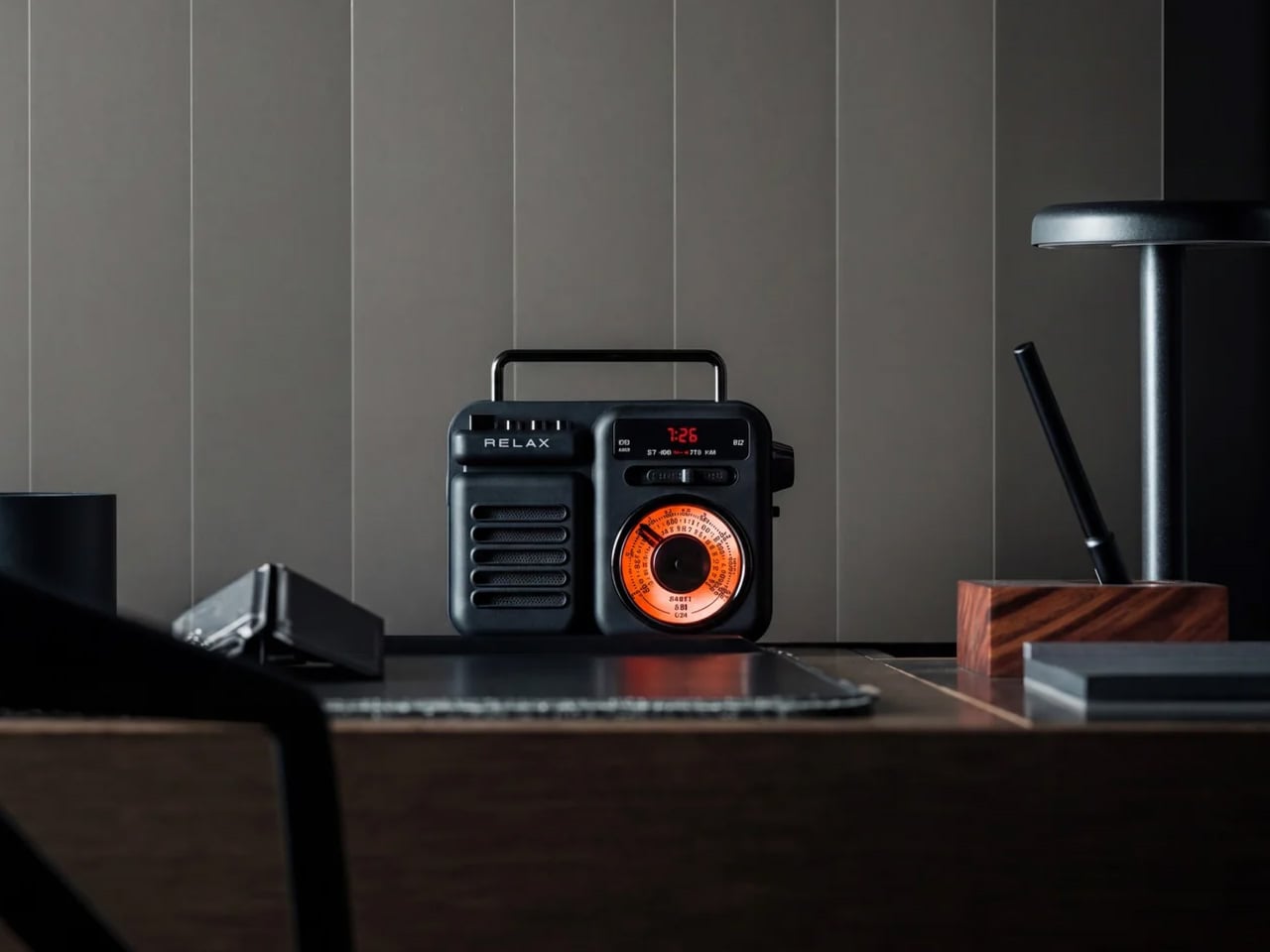
The RetroWave does seven things, and the design is honest enough to list all of them without burying the details. FM, AM, and shortwave radio. Bluetooth speaker and MP3 playback via USB or microSD. A 2000mAh power bank that charges your phone in the field. A built-in LED flashlight rated for six hours. An SOS alarm. A clock. The retro Japanese aesthetic and tactile tuning dial make it feel like a considered object rather than a spec sheet stuffed into a plastic housing.

What keeps it from feeling like a novelty is the engineering behind the redundancy. Hand-crank and solar panel charging mean the battery stays live even when you have been off-grid long enough to forget what a wall socket looks like. On a full charge, you get around 20 hours of radio time or five hours of Bluetooth playback. The body measures 5.04 by 3.86 inches, small enough to sit on a picnic table without demanding attention, and useful enough to earn it when it does.

Click Here to Buy Now: $89.00

What we like

  • Hand-crank and solar charging keep it functional without a power source, which is genuinely useful in the exact scenarios it was designed for
  • Seven functions in a body compact enough to pack without planning around it

What we dislike

  • The 2000mAh battery is modest for a device advertising phone-charging capability on extended trips
  • Solar charging is listed as supplemental only, meaning it supports rather than replaces USB charging in practice

3. Olight Baton 4 Premium Edition

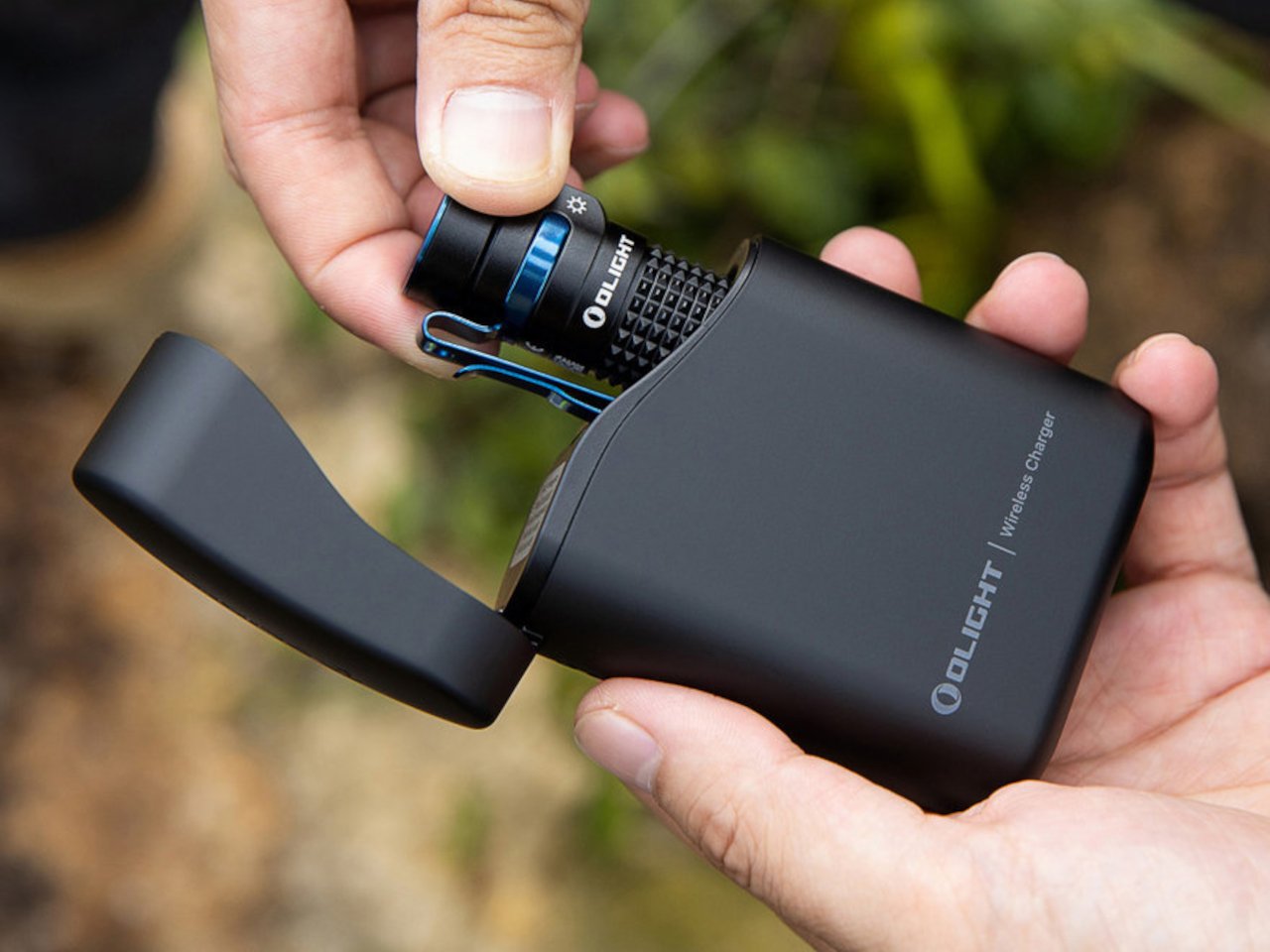
The Olight Baton 4 is not a remarkable flashlight on its own. At 1,300 lumens with a 170-meter throw, it performs well for its size, but the cylindrical body and standard controls do not make much of a case by themselves. The Premium Edition is a different conversation. It ships with a 5,000mAh charging case that borrowed its logic directly from wireless earbuds: a flip-top shell that keeps the flashlight charged, protected, and ready without ever pulling it out of the case.

Flip the cover open, press the side button, and the Baton 4 fires from inside the case. No rummaging, no fumbling with a small cylindrical object in the dark. The case also functions as a phone power bank, eliminating the need for a separate charger in your kit. For anyone building a lean camping setup, that single design decision handles the flashlight, its charger, and your phone’s emergency backup in one object. That is three things gone from the bag before you have even started packing anything else.

What we like

  • The flashlight fires from inside the case without removing it, a genuinely useful feature in low-light situations where speed matters
  • The 5,000mAh case charges both the flashlight and your phone, replacing a dedicated charger entirely

What we dislike

  • The Baton 4 without the Premium case has no standout features, meaning the value proposition depends entirely on buying this specific version
  • The case is designed for compatible Olight models, so it loses its purpose if you switch flashlights down the line

The Best Camping Gear Doesn’t Look Like It’s Trying

The thread running through all three is an engineering decision that came before the design decision. Each started by identifying how many separate things it could absorb, then built the form around that answer. The shoe carries three pairs worth of intention. The radio holds a communications kit, an emergency kit, and a sound system in one compact body. The Baton 4 case makes the standalone charger entirely redundant.

Good outdoor gear earns its weight by doing more than one thing without announcing it. These three manage that without looking like they are trying. The RetroWave looks like a radio someone kept from the eighties. The MSNB1 looks like a sneaker someone actually thought about. The Baton 4 case looks like an earbuds tin you already owned. The consolidation is invisible from the outside, and that is the part that takes the most work to get right.

The post These 3 Camping Picks Each Replace 3 Things You’re Packing Right Now first appeared on Yanko Design.

5 Best Tiny Home Accessories That Make Small Spaces Feel Intentionally Designed

The objects that last longest in a small space are never the ones that arrived by accident. A tiny home edited down to what matters, and nothing else, communicates something a larger home full of furniture rarely does: that the person inside knew exactly what they needed. The difference between a cluttered small room and a composed one often comes down to five or six objects chosen with patience rather than urgency.

Each of these picks earns its place by doing more than one thing well without announcing the effort. Some clear surfaces. Others set a tone. A few do both at the same time without the compromises that usually come with multifunctional design. The list runs from $87.50 to $250, and every item sits comfortably beside the others, which is the real test of a well-assembled small space.

1. Divoom FlowToo

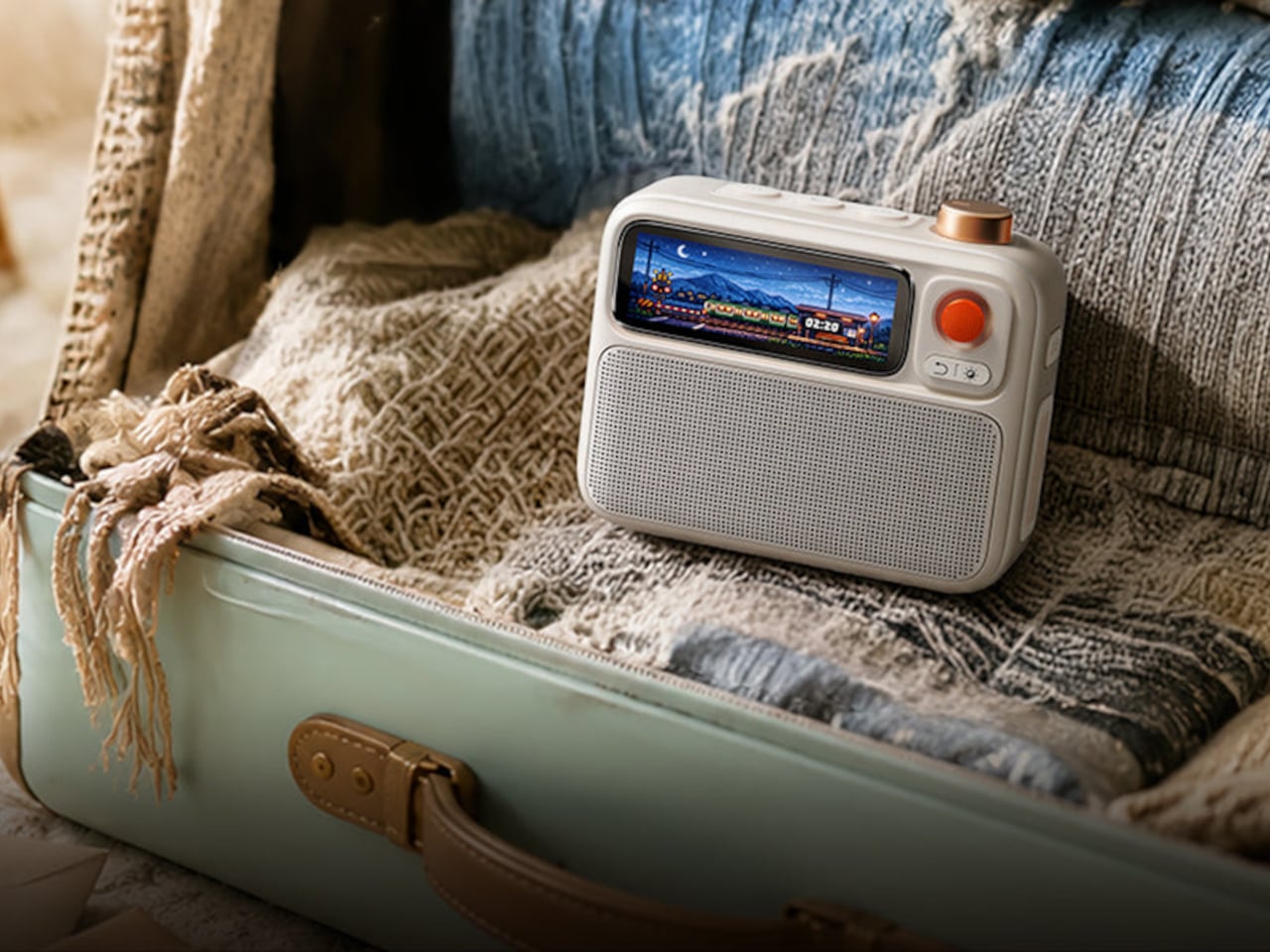
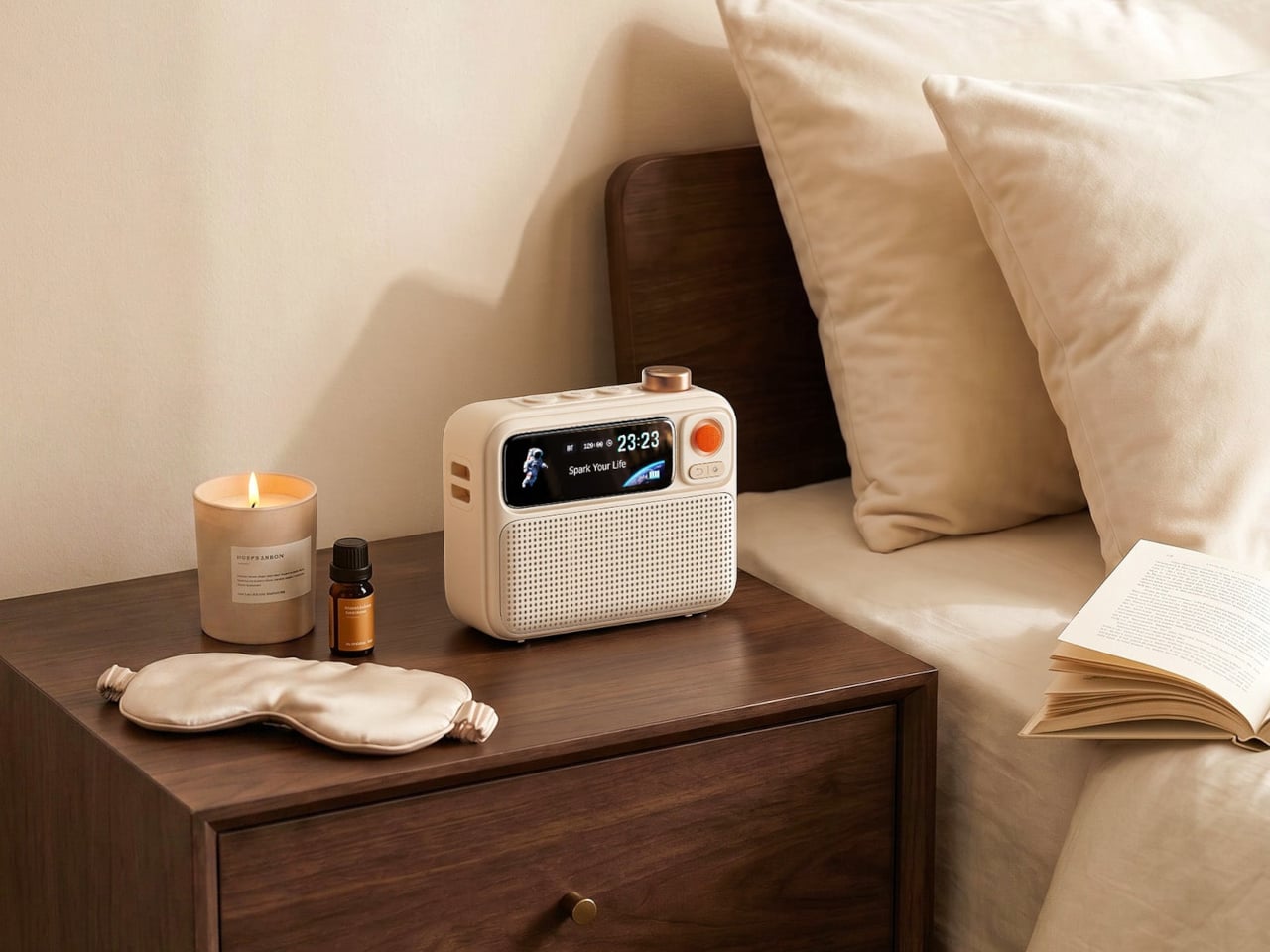
The FlowToo’s premise is direct: three devices come off the nightstand, and one goes on. It combines a Bluetooth speaker, white noise machine, and alarm clock into a single rounded unit that takes up roughly the footprint of a coffee mug. The 10W amplifier and 45mm full-range driver handle actual music, not the courtesy audio that most alarm clocks bolt on as an afterthought. For a tiny home where the bedroom and living space often share the same air, consolidating that corner of the room alone justifies the $99.99 price.

The 2.26-inch smart display shows clock faces, music visualizers, and sleep animations, all configurable through the Divoom app. The wake system builds gradually, natural sounds rising alongside a brightening display rather than a jarring tone, which makes a real difference in how the first few minutes of the day feel in a tight space where there is no corridor between the bed and the rest of the home. More than 90 built-in soundscapes cover everything from rain to forest ambience. Available in White and Black from divoom.com.

What we like

  • Combines a speaker, white noise machine, and alarm clock into one unit without compromising the performance of any individual function
  • The gradual wake system using rising sound and light genuinely changes the quality of the first few minutes of the morning compared with a standard alarm tone

What we dislike

  • Full customization relies on the Divoom app, which adds friction for anyone who prefers hardware controls for something they interact with every day
  • At 10W, volume fills a bedroom comfortably but will not carry into adjacent areas in open-plan tiny home layouts

2. ClearFrame CD Player

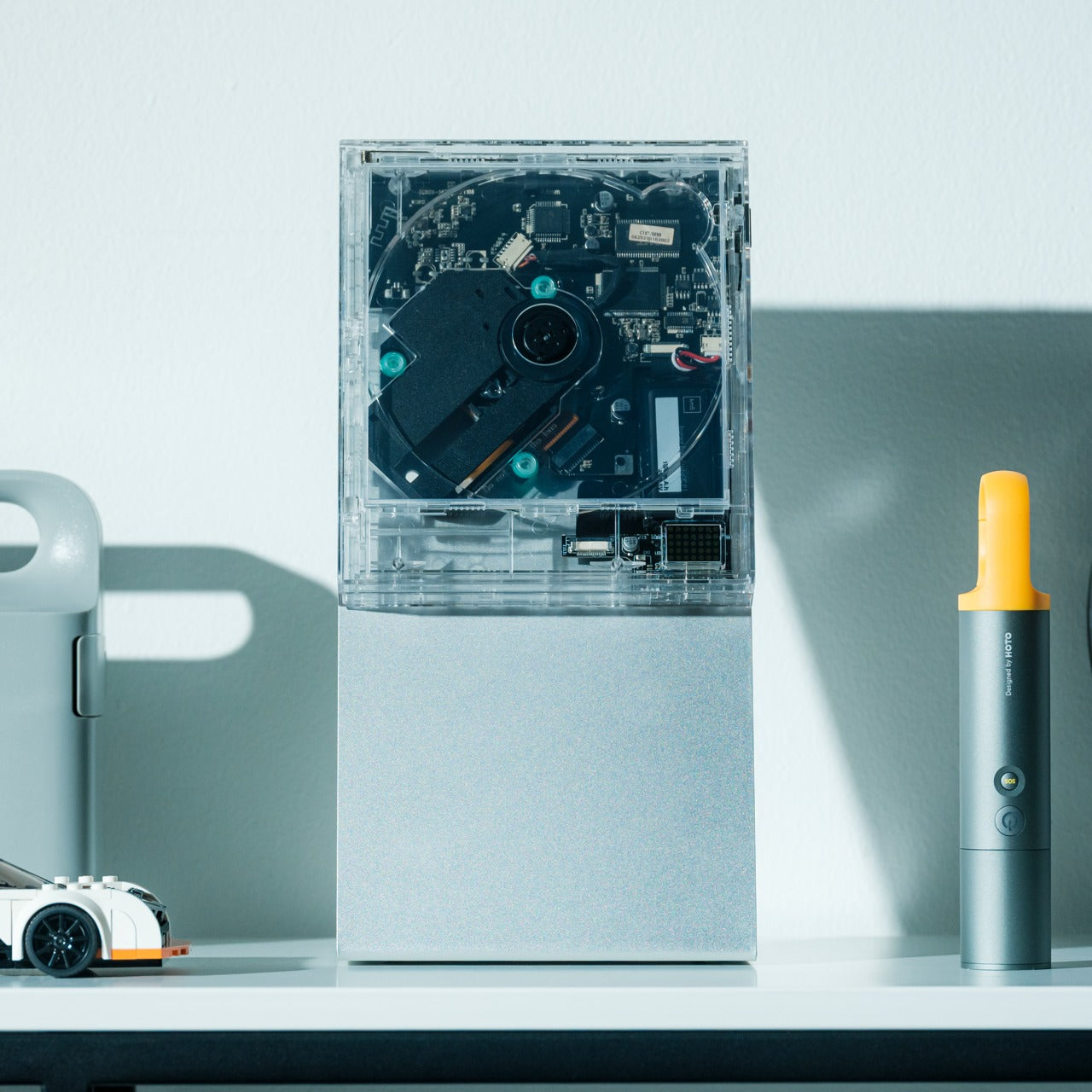
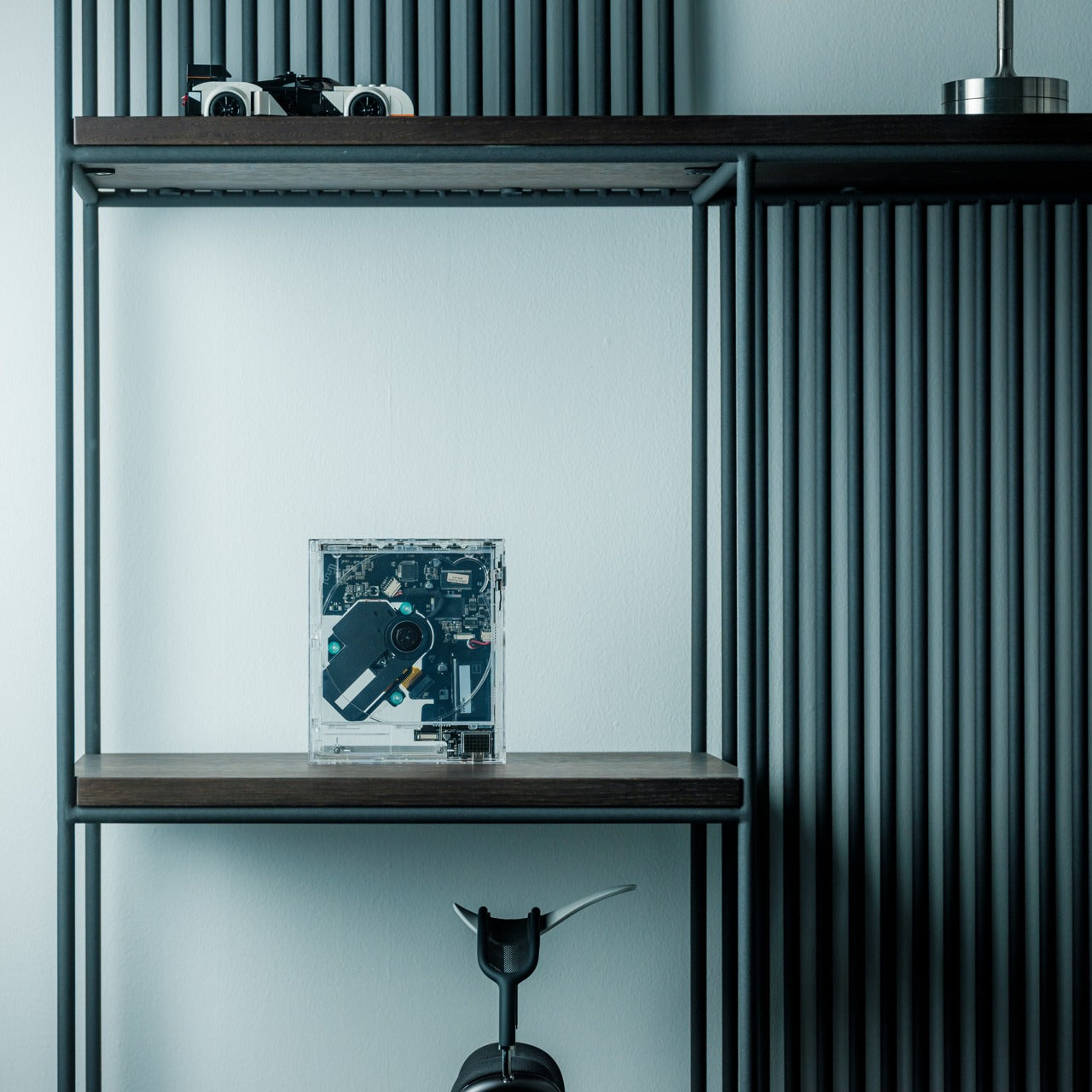
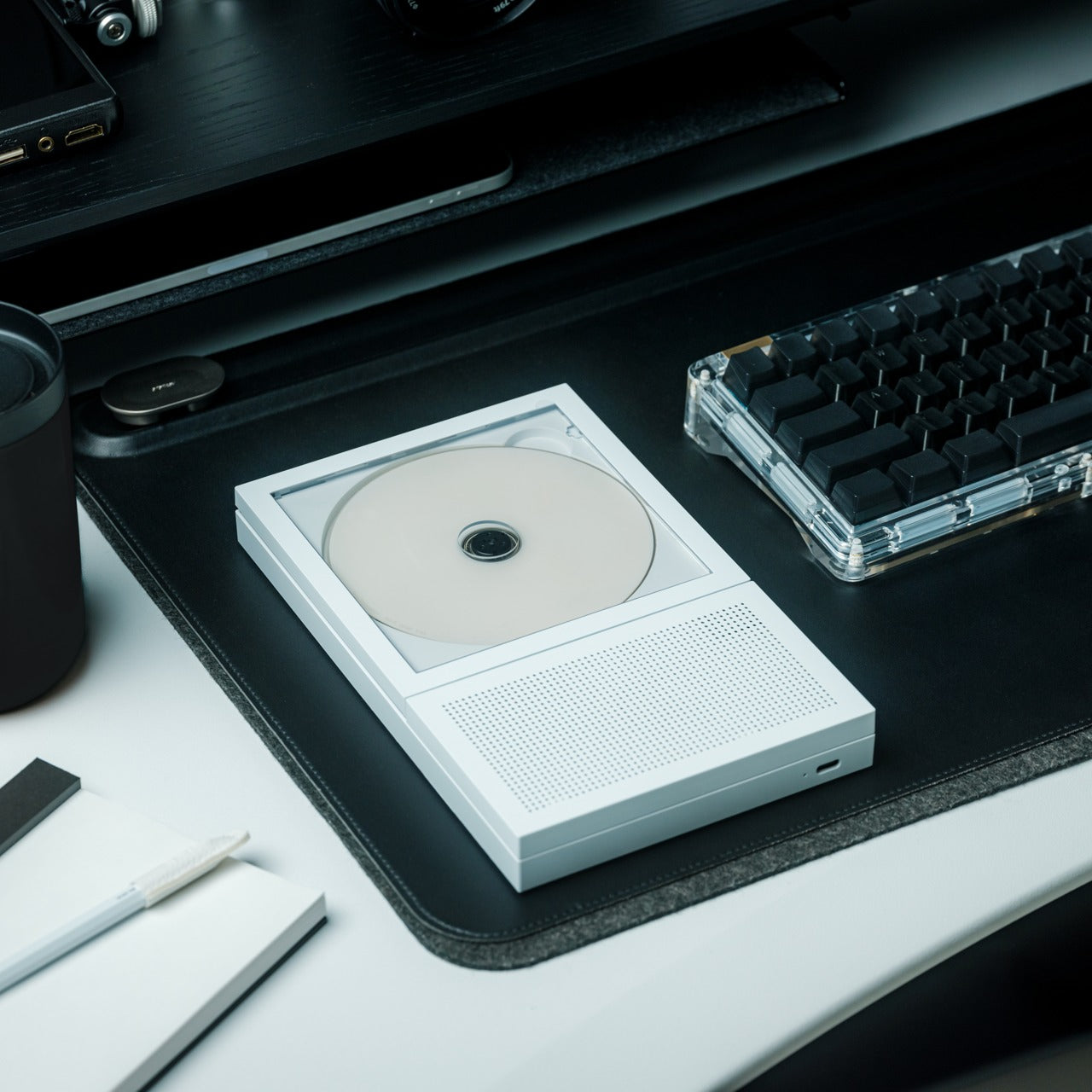
The ClearFrame starts from a premise most consumer electronics abandoned decades ago: that the interior of a device is worth seeing. The transparent polycarbonate body exposes the spinning disc and laser tracking mechanism, turning a listening session into something visible as well as audible. In a tiny home where every surface object carries visual weight, a CD player that doubles as a kinetic sculpture earns its shelf space before a single disc has played. The album art faces forward through the clear shell, meaning the sleeve you chose for the afternoon is also what the room is wearing.

The interface is a rotary dial and a single eject button, nothing more. USB-C charging runs the internal battery for seven to eight hours, and the 3.5mm output connects to any speaker system or headphones you already own. There are no apps, no firmware updates, no notifications interrupting the ritual of taking a disc from its sleeve and placing it inside. That simplicity is not a limitation; it is the point.

Click Here to Buy Now: $210.00

What we like

  • The transparent housing makes the mechanical act of playing a disc visible, turning a functional moment into something worth watching from across the room
  • The rotary interface asks nothing beyond placing a disc inside and choosing a volume, which is a relief against the usual screen-first experience most audio products now default to

What we dislike

  • No integrated speaker means the ClearFrame only works alongside an existing audio setup, adding a dependency for anyone who does not already own one
  • The polycarbonate casing picks up fingerprints readily and needs regular wiping to maintain the transparency the entire design depends on

3. Lumio Lito Book Lamp

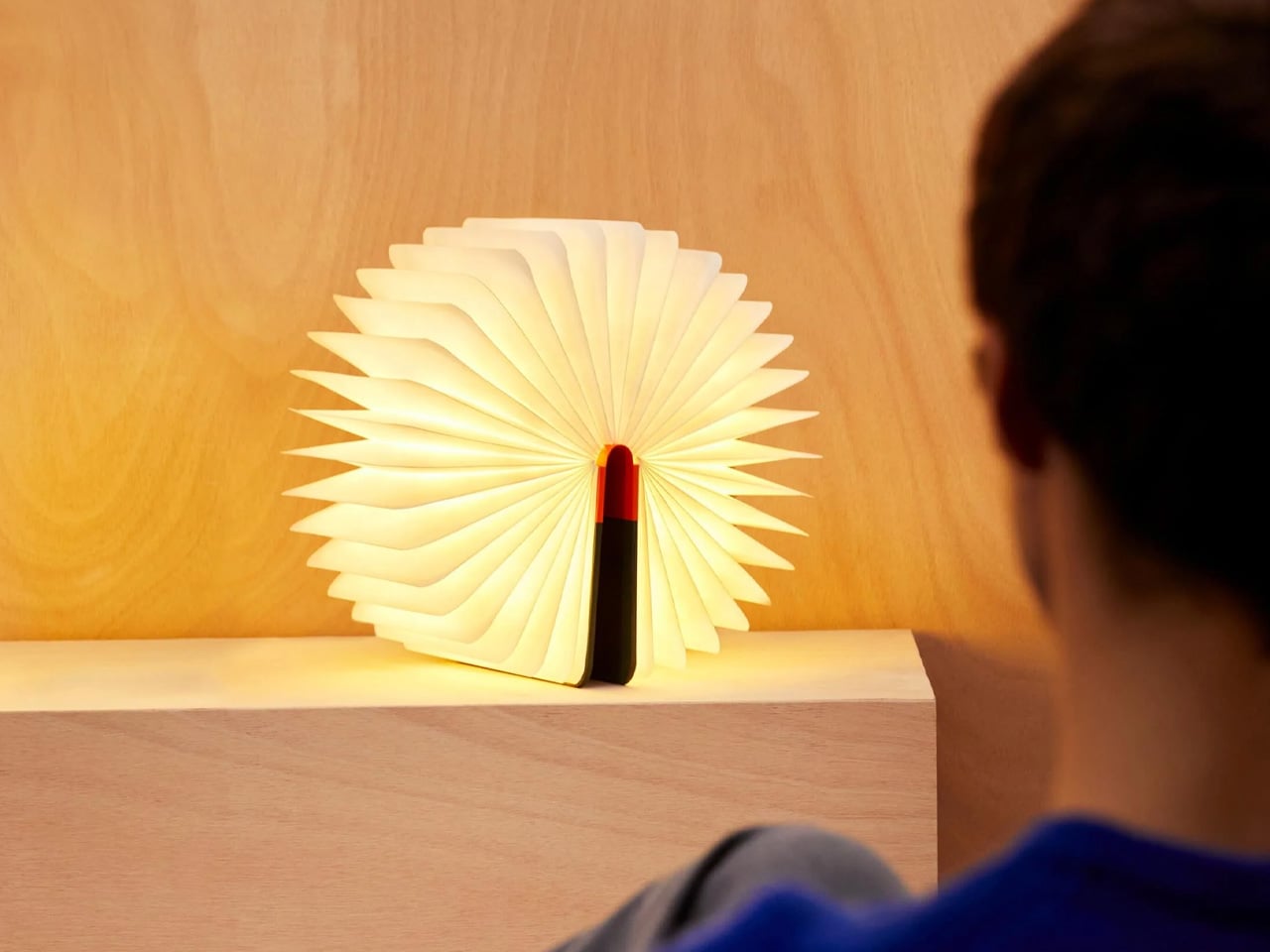
The Lito folds closed like a hardcover book and stores on a shelf with no surface footprint until it is needed. Open it, and a warm LED panel illuminates a room with enough light to read, eat, or simply sit without the overhead glare that makes a small space feel like an office. For a tiny home where every lamp cord is a commitment and every outlet already spoken for, the cordless eight-hour battery changes the equation entirely. The lamp belongs wherever the evening takes you, not wherever the nearest socket happens to be.

The maple wood casing signals a product made for permanence rather than one made to a price point. The magnetic spine holds any angle without a secondary stand or bracket hardware. A wall mount is available for the nights you want the light fixed rather than portable. The Lito ranges from $200 to $250 and is available directly from hellolumio.com. The walnut finish version is also stocked at the MoMA Design Store for $225, which says something about the category of object this lamp is actually competing in.

What we like

  • Stores flat on a bookshelf with zero surface footprint, returning the nightstand or desk to the room entirely when the light is not needed
  • The cordless design and eight-hour battery allow the lamp to be placed anywhere in the room, not only beside an available power outlet

What we dislike

  • Charging via micro USB runs slower than most current devices and settles into overnight charging as a habit rather than a quick top-up when needed
  • The maple finish, while beautiful, benefits from some care around moisture, which is worth knowing in any sleeping area adjacent to a compact bathroom

4. Ritual Card Diffuser

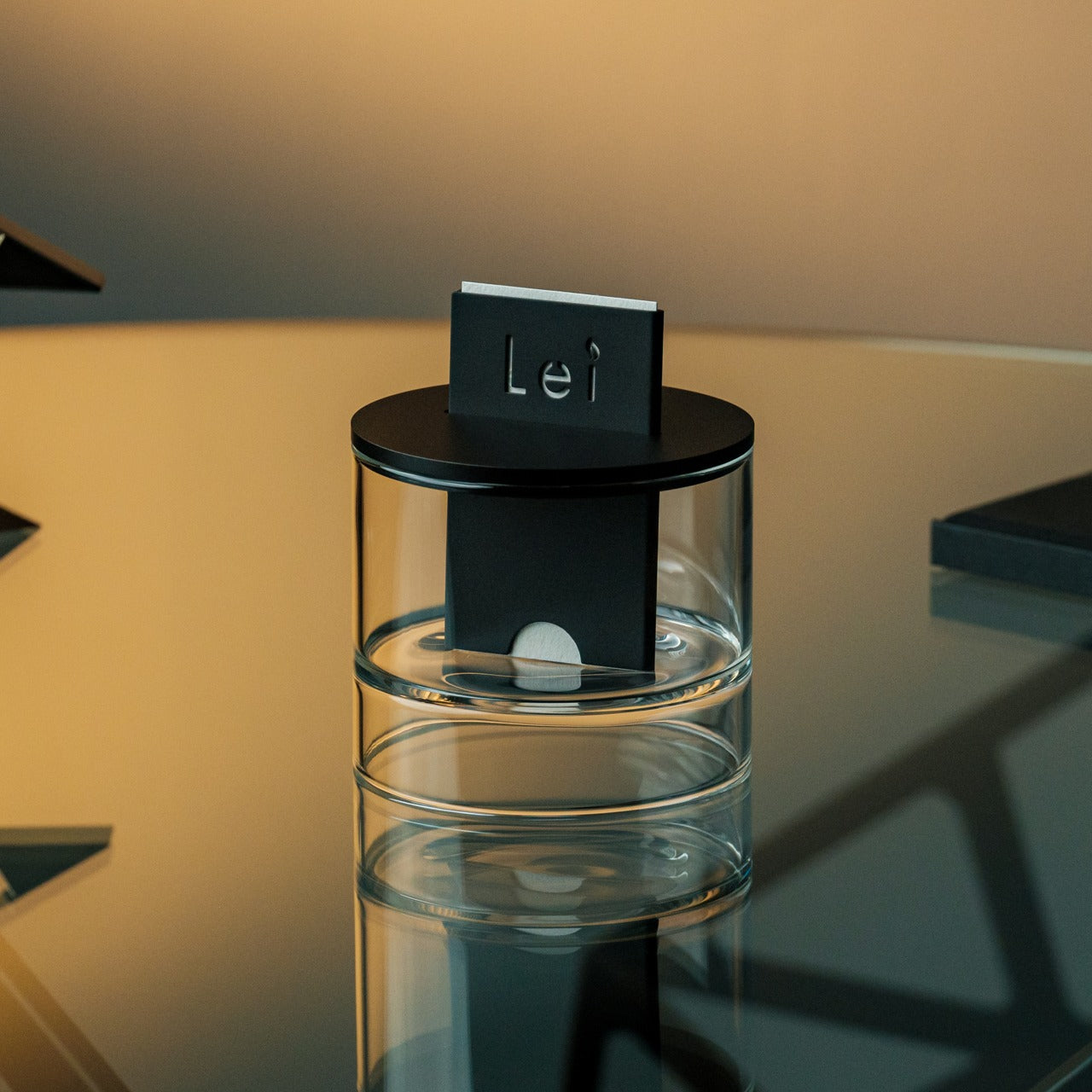
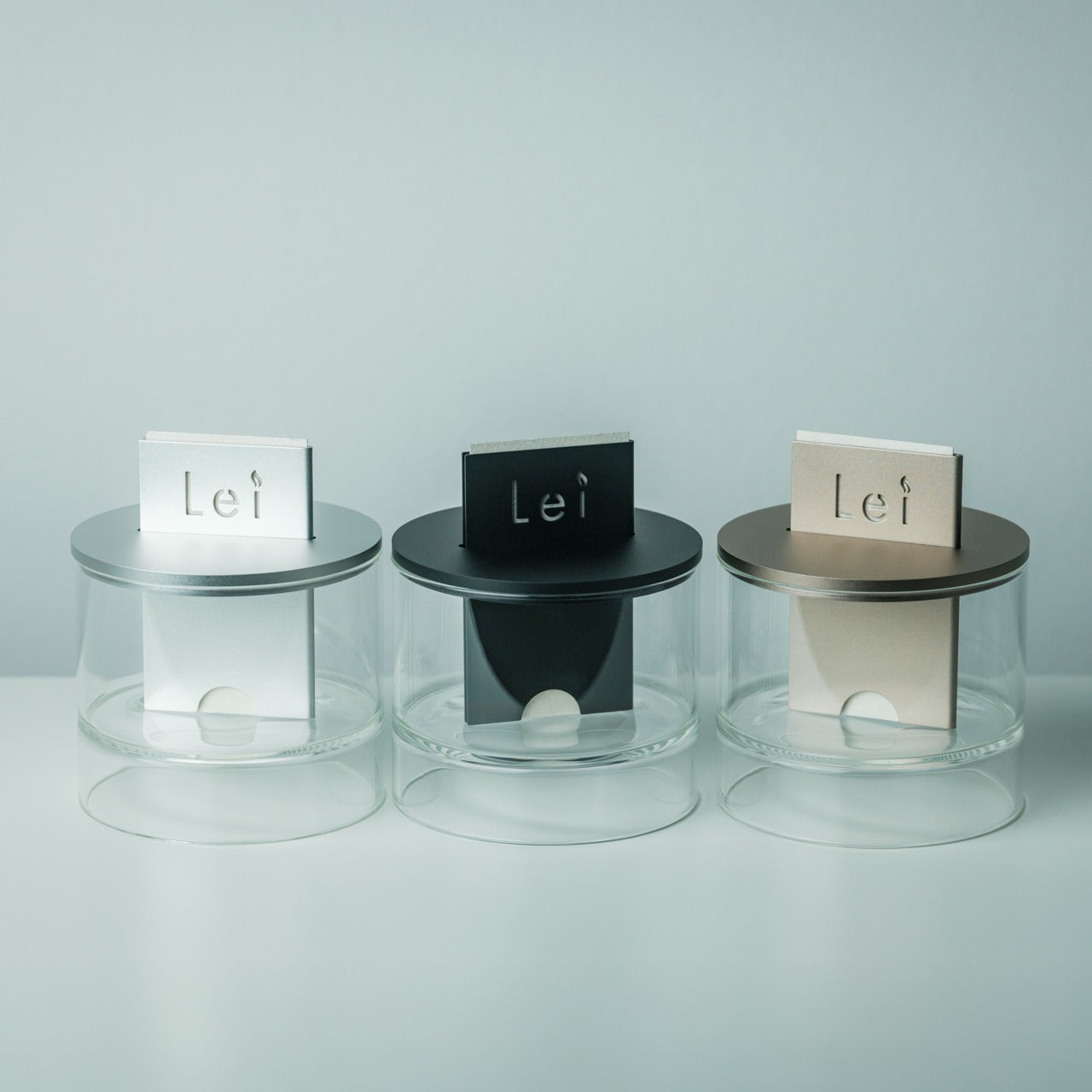
The Ritual Card Diffuser works without heat, water, or electricity. A handcrafted washi paper card absorbs a few drops of essential oil and releases the scent passively into the room. The anodized aluminum stand holds the card upright, the oil bottle beside it, and that is the entire arrangement. In a tiny home where scent is one of the few environmental variables you can control without renovating anything, this product manages it without adding visual complexity, cable management, or a water reservoir to clean each week.

Refreshing the card every few days takes about thirty seconds and becomes the kind of small, considered moment that makes a morning feel structured rather than reactive. The object is compact enough to sit on a windowsill beside a plant or on a bathroom shelf beside a single folded towel without competing with anything around it. That restraint is what makes it work in a small space, where every object needs to earn its footprint visually as much as functionally.

Click Here to Buy Now: $125.00

What we like

  • Requires no power source, water, or heat, removing every maintenance obligation beyond refreshing the card every few days
  • Passive diffusion keeps the scent present in the room without ever becoming overwhelming in the enclosed air of a compact interior

What we dislike

  • The washi paper cards need periodic replacement, which accumulates as a recurring cost over time depending on frequency of use
  • Scent intensity sits below what heat-based or ultrasonic diffusers produce, which may not be sufficient for anyone wanting something more assertive in a larger layout

5. Courant Catch:3

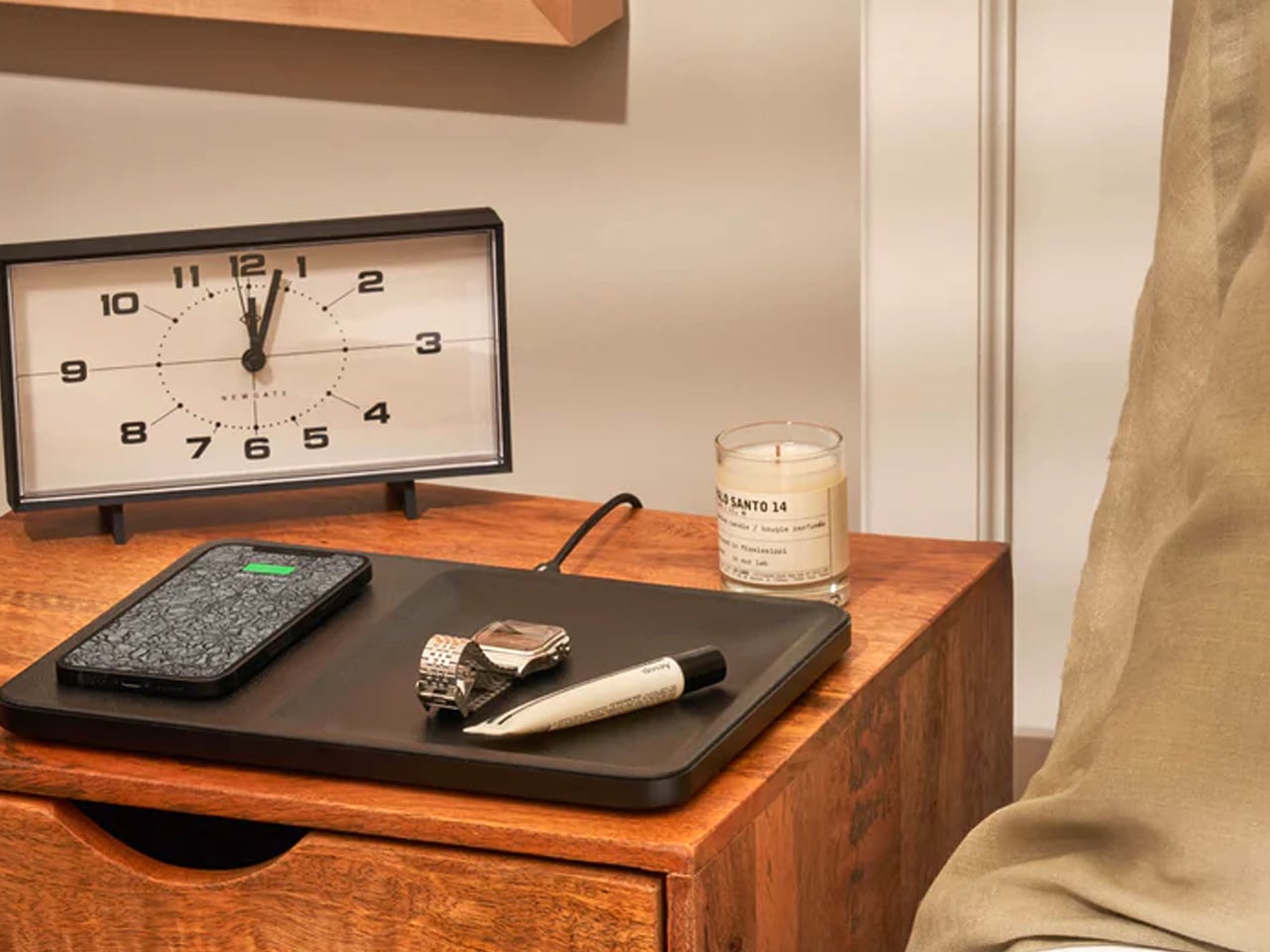
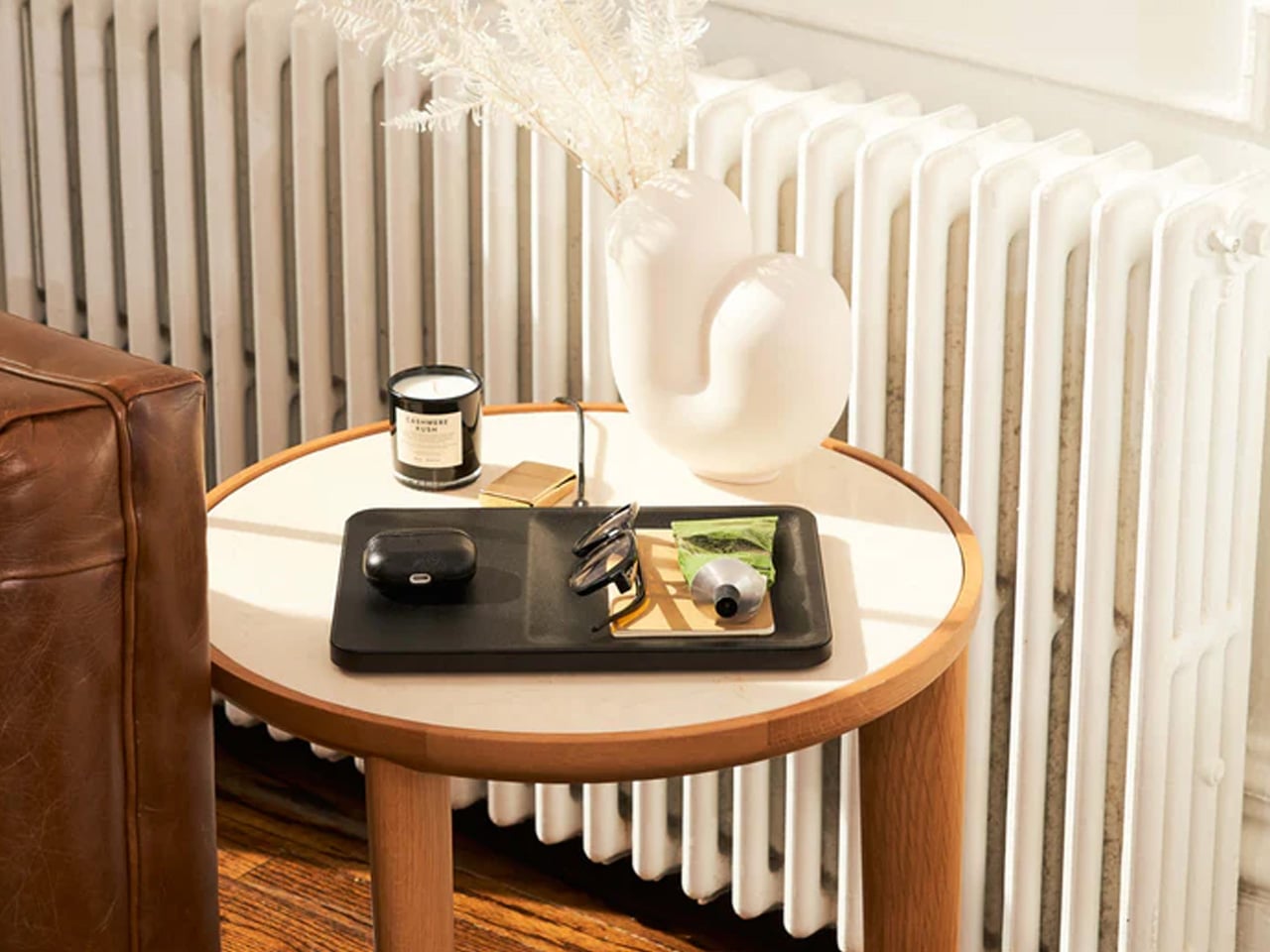
The Catch:3 is a wireless charging tray built around the understanding that charging should look like a decision someone made, not a problem someone solved. The Italian leather or Belgian linen finish makes it read as a catchall valet rather than a tech accessory, which is the right instinct for something living permanently on a surface. Keys, wallet, and phone go in together, and the phone charges from the single cable running to the wall. In a tiny home where the entryway shelf and the nightstand are often the same object, the Catch:3 removes the last tangle from the room.

Courant is currently retiring the Catch:3, putting it on clearance at $87.50 from staycourant.com, reduced from its original $175. That makes it the strongest value on this list for anyone who moves quickly. The product supports Qi-compatible devices including most iPhones from the 8 onward and a wide range of Android handsets. Five colorway options include an Oatmeal linen finish that disappears into almost any interior palette, which is the right version for a small space where nothing should be competing for attention it has not earned.

What we like

  • Replaces multiple individual charging cables with a single cord while keeping the surface looking composed rather than managed
  • The leather and linen finish reads as furniture-adjacent rather than tech-adjacent, which is the correct instinct for something living permanently beside the bed

What we dislike

  • The Catch:3 is being discontinued, meaning long-term support and replacement availability will be limited for anyone buying at this stage
  • Wireless charging runs slower than wired for most current devices, making it a reliable overnight solution rather than a quick charge before heading out

The Best Tiny Home Is the One Where Every Object Earned Its Place

Five objects on one shelf, and a room that communicates something specific about the person inside it. None of these picks arrived at that result accidentally. The FlowToo cleared the nightstand. The ClearFrame made listening worth watching. The Lito returned light to wherever the evening moved without committing to a wall socket. The Ritual Diffuser gave the air something worth breathing without making a sound. The Catch:3 put the last cable away.

A tiny home furnished with this kind of attention does not feel smaller than a larger one. It feels more deliberate. The objects that earn a permanent place in a compact space do it by performing their function quietly and looking right while they do it. Everything else tends to leave within the first month. This list was chosen with that standard in mind, and all five pass it.

The post 5 Best Tiny Home Accessories That Make Small Spaces Feel Intentionally Designed first appeared on Yanko Design.

7 Best Tech Gadgets of August 2026

August arrives with a lineup that feels genuinely considered. Not every gadget this month is chasing a headline spec or fighting for shelf space. Some of the most interesting things landing right now are smaller, quieter, and more honest about what they actually do — a folding mouse that disappears into a shirt pocket, a bedside unit that replaces three devices at once, and a dual-screen E Ink tablet that finally treats reading and writing as a single workflow rather than two separate tasks competing for the same screen.

There’s also something larger worth paying attention to. Samsung is officially pulling back the curtain on the Galaxy Z Fold 8 this month, and what’s shaping up as a tiered foldable lineup could redefine the category’s identity. Meanwhile, Google has quietly slipped a new smart speaker onto store shelves for the first time in six years. August, as it turns out, rewards patience — and knowing exactly where to look.

1. piBrick Pocket-CM5

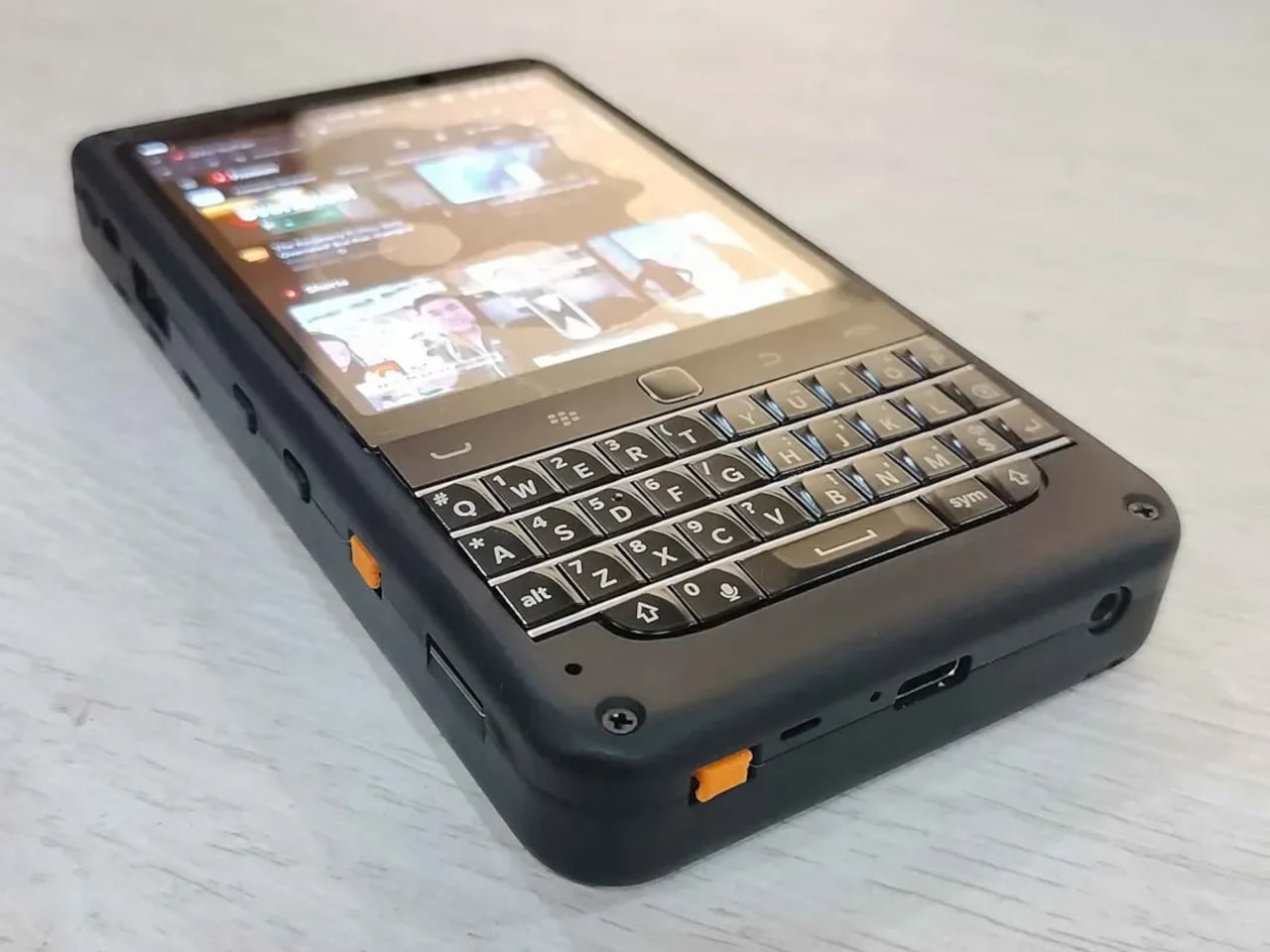
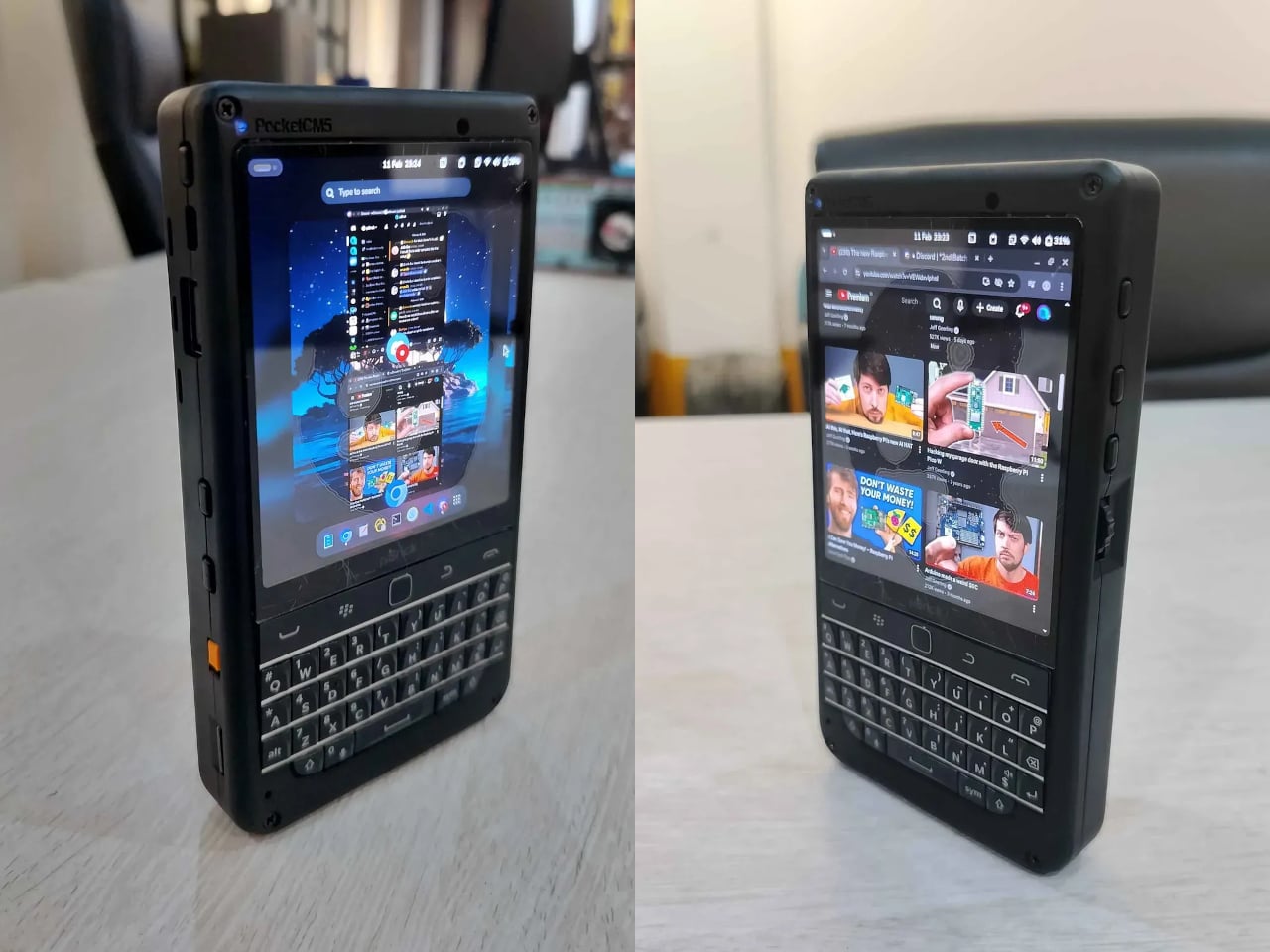
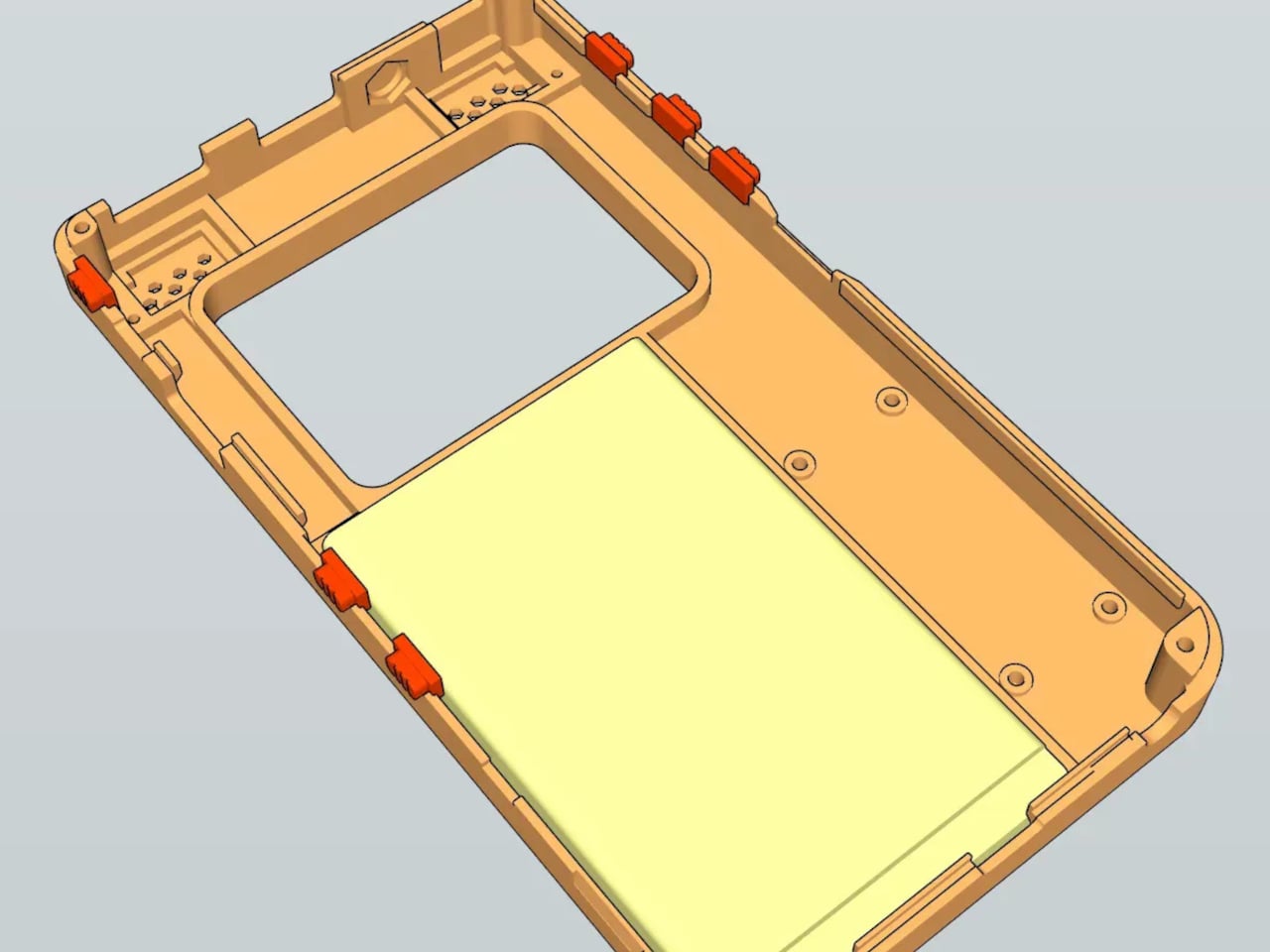
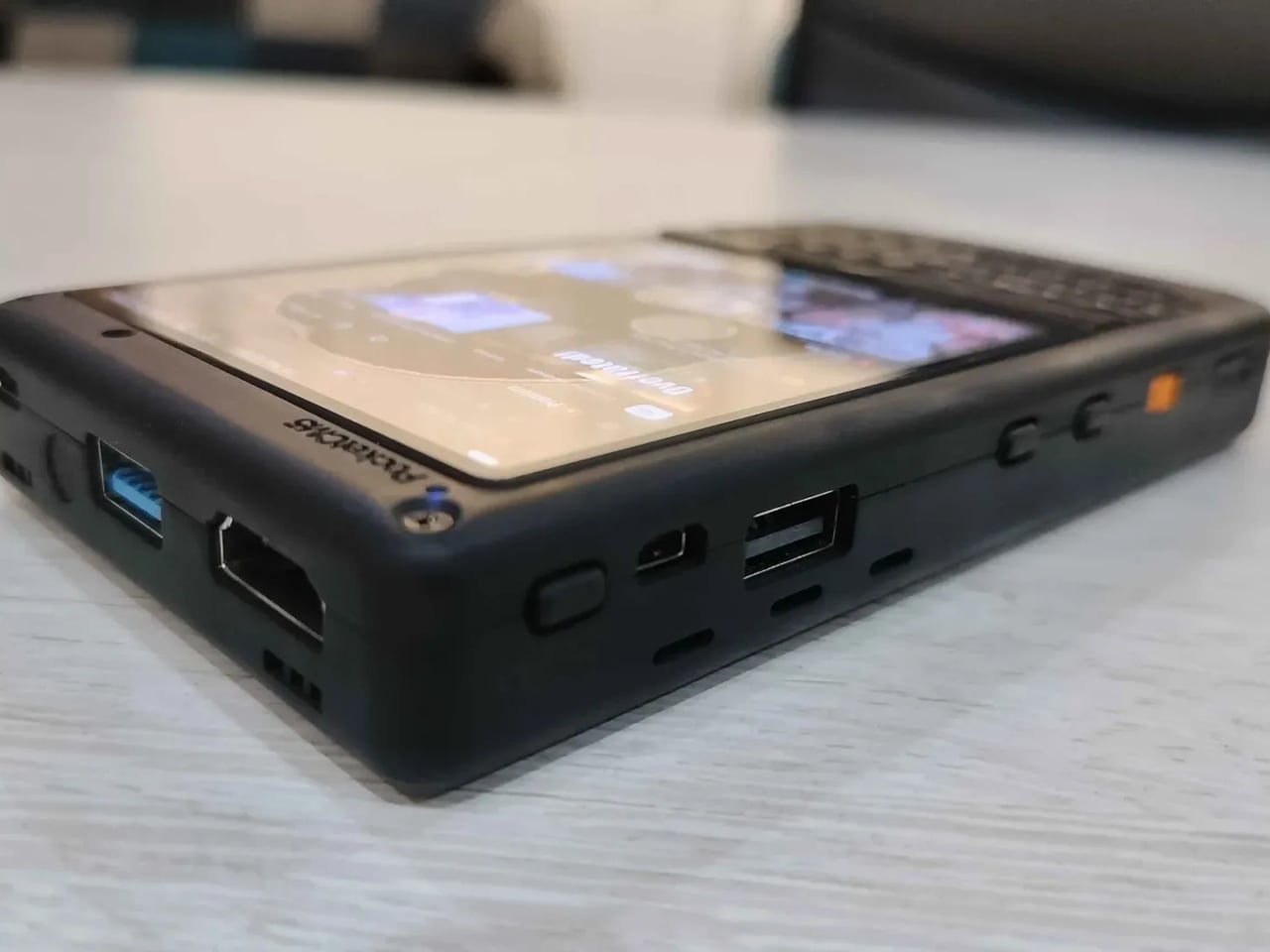
The piBrick Pocket-CM5 is one of those projects that reads better the longer you spend with the spec sheet. Built by Ahmad Amarullah on a custom PCB designed around the Raspberry Pi Compute Module 5, this open-source handheld costs around $172 in parts and arrives at smartphone proportions — 80 × 145 × 19.6mm. The 3.92-inch AMOLED display runs at 1080 × 1240 and 90Hz with Asahi tempered glass over the top, which is the kind of detail that separates a deliberate design from a prototype that merely happens to work. Full-size and micro-HDMI outputs mean the same pocket device can drive an external display when a larger workspace makes more sense.

The BBQ20 keyboard with its integrated BlackBerry-derived trackpad gives the piBrick a tactile depth that touchscreen-only handhelds cannot match, and side rotary encoders plus five programmable buttons extend the input options further still. A 5,000mAh LiPo keeps everything running, NVMe SSD support in 2230 or 2242 formats handles storage, and USB 3.0 with Type-A and Type-C covers connectivity. The most quietly useful feature is USB-HID mode — plug the piBrick into any external machine and its keyboard and trackpad instantly become a functional input device, independent of the Pi entirely. For a sysadmin who shows up at a server rack without a spare keyboard, that framing changes the device from hobbyist novelty to legitimate daily carry tool.

What we like:

  • USB-HID mode turns the whole device into a USB keyboard for any external computer
  • 90Hz AMOLED at this price point and form factor is a genuinely rare combination

What we dislike:

  • Requires hands-on sourcing, PCB manufacturing, and 3D-printed shell assembly
  • The compact BBQ20 keyboard layout carries a real learning curve for extended typing sessions

2. OrigamiSwift Folding Mouse

The OrigamiSwift is a Bluetooth mouse that folds flat to 0.18 inches — thinner than most notepads — and springs back into a full-size ergonomic form in under half a second. Designed by Horace Lam and built around the geometry of traditional origami folding, it weighs just 40 grams and connects over Bluetooth 5.2, with a 4,000 CPI HD infrared sensor tracking at up to 30 inches per second. For digital nomads and frequent travelers, the appeal is immediate: full-size mousing comfort that compresses to the front pocket of a bag without any structural compromise.

Soft-click buttons and a smooth, consistent glide make it discreet in quiet environments, and the triangular origami structure that enables the folding mechanism also gives the frame enough rigidity to absorb daily use without flex. Battery life is a genuine standout — one USB-C charge lasts up to three months, which removes the disposable battery cycle from the equation entirely. At $85, it sits in a price range where compromises tend to accumulate, and the sensor performance, weight, and build quality keep most of them from appearing. It works across Mac, iPad, Windows, and Android without additional drivers, which keeps the setup frictionless wherever you end up working.

Click Here to Buy Now: $85.00

What we like:

  • Three-month battery life on a single USB-C charge is genuinely exceptional for a wireless mouse
  • 40 grams means you stop noticing it’s in your bag until the moment you actually need it

What we dislike:

  • 4,000 CPI ceiling may not satisfy users working on high-resolution or multi-monitor setups
  • Stock is currently very limited, with only a few units available in the shop

3. Divoom FlowToo

The Divoom FlowToo costs $99.99 and replaces three things that have been quietly cluttering nightstands for years — a Bluetooth speaker, a white noise machine, and an alarm clock. It runs through a 10W amplifier with a 45mm full-range driver, which is enough to fill a bedroom at a respectable volume without the sound becoming harsh at the high end. More than 90 built-in sounds cover the categories people actually reach for at night and during focus sessions, from rain and ocean ambience to forest and calming tones, and the Divoom app handles everything from alarm scheduling to sound selection directly from your phone.

The 2.26-inch smart display is the part that makes the FlowToo feel like something designed with some care rather than assembled from a parts list. It cycles between multiple clock faces, music visualizers that react to whatever’s playing, sleep scene animations, and mood lighting depending on the mode and the time of day. The wake-up sequence replaces a jarring alarm tone with natural sounds that build in volume while the display gradually brightens — a small change that makes a real difference to how the first few minutes of a morning feel. Available in White and Black, the form is clean, rounded, and scaled well enough to sit beside most beds without dominating the surface.

What we like:

  • A 10W full-range driver makes this a real speaker, not just an alarm clock with Bluetooth bolted on
  • The gradual light-and-sound wake sequence is a meaningfully better way to start the morning

What we dislike:

  • Dedicated white noise machines and standalone speakers will each outperform the FlowToo in their respective categories
  • Full feature access requires the Divoom app, which adds dependency to a device built around simplicity

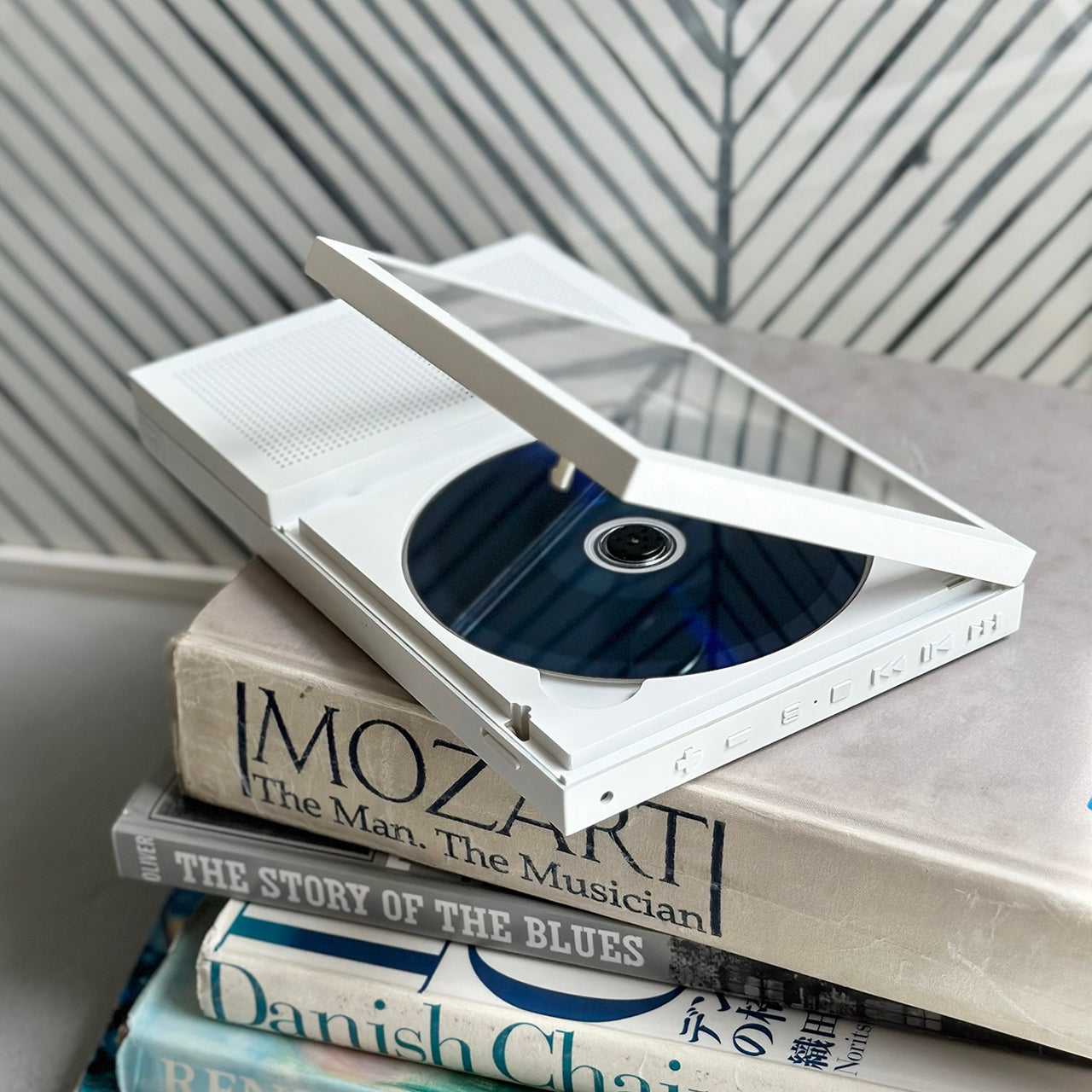
4. Portable CD Cover Player

The Portable CD Cover Player brings album artwork back to the physical center of the listening experience at a time when streaming has reduced most music libraries to a scrollable grid of thumbnails no larger than a postage stamp. The form factor is slim and designed to echo the proportions of a CD sleeve — built for the kind of listening that happens away from a desk, on a commute, in a hotel room, or anywhere else a record player cannot reasonably follow you without significant planning.

There is something the CD format offers that streaming still hasn’t managed to replicate — intentionality. You chose this album. You put it in. You listened front to back, the way it was meant to be heard. The Portable CD Cover Player leans into that ritual rather than treating it as an inconvenience to be engineered away. At a moment when cassette players and vinyl decks have staged a credible commercial comeback, there is a real and growing audience for physical music hardware that does not apologize for existing in 2026. For anyone rebuilding a CD collection or looking for a reason to use the one they never threw out, this is the device for it.

Click Here to Buy Now: $199.00

What we like:

  • Restores album artwork as a physical, tactile part of the listening experience rather than a compressed thumbnail
  • The intentionality of the CD format is something streaming genuinely cannot replicate

What we dislike:

  • The price requires an existing or rebuilt CD collection to justify the investment
  • Stock is tight, with only a few units currently available through the Yanko Design shop

5. Samsung Galaxy Z Fold 8

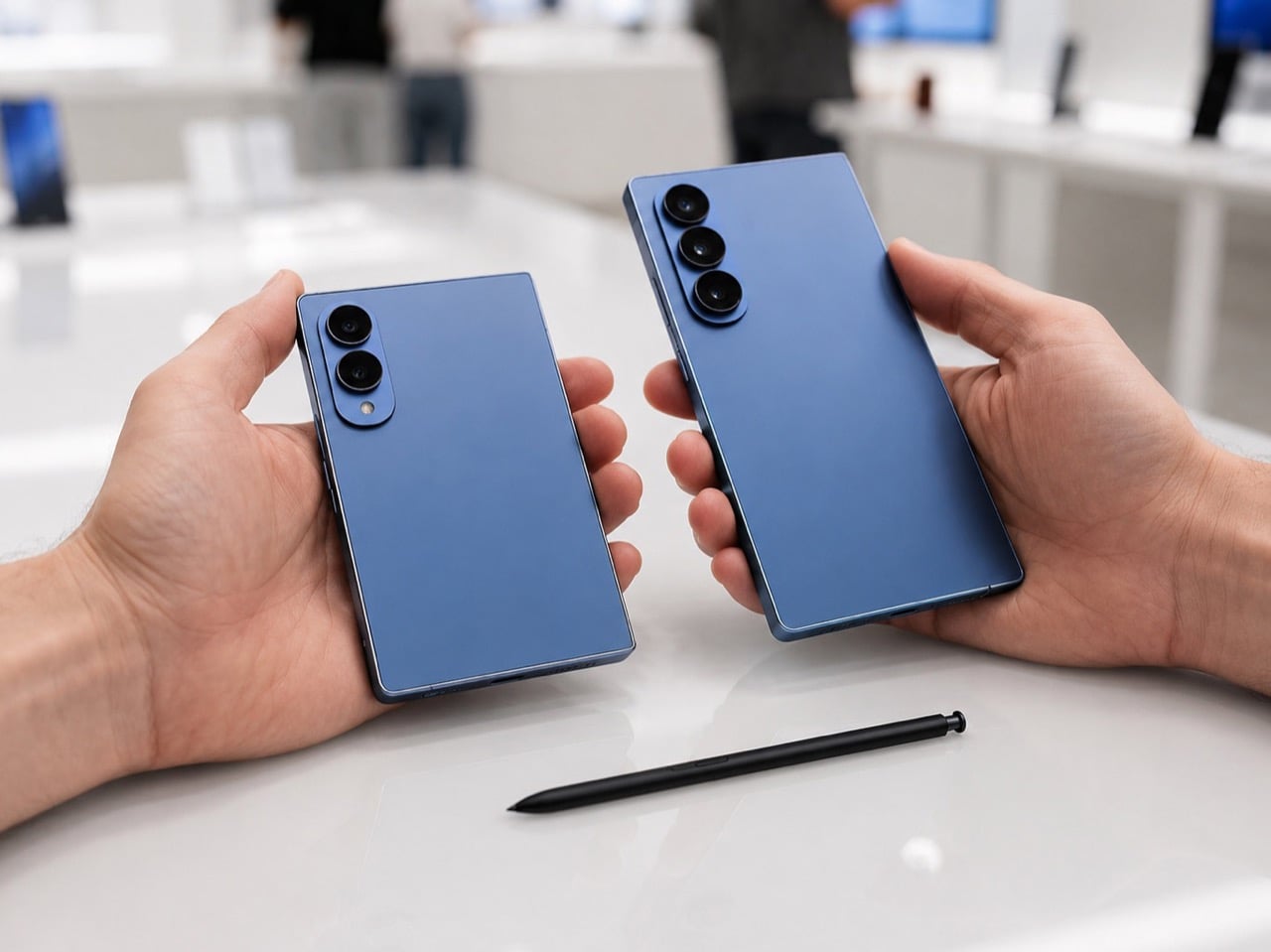
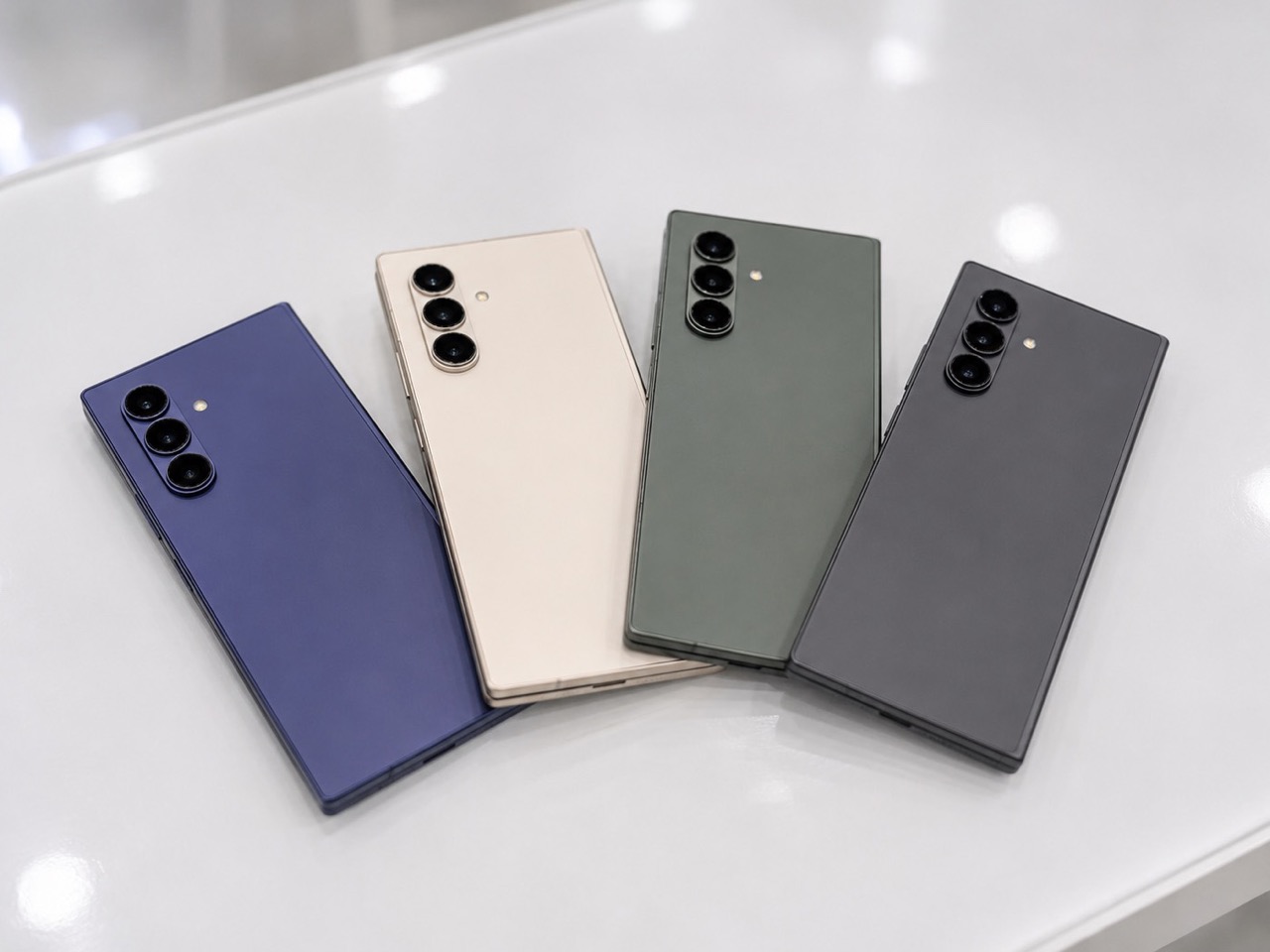
Samsung confirmed the Galaxy Z Fold 8 Unpacked event for July 22 in London, and what’s taking shape is arguably the most architecturally ambitious foldable lineup the company has attempted. Three models appear to be in play — the standard Fold 8 at 4.1mm unfolded, the wide-format Fold 8 Wide at a remarkable 3.9mm, and the Fold 8 Ultra, which is where the S Pen is making its return after being stripped from the Fold 7 to achieve that device’s headline thinness. Reports point to a titanium-plus-carbon-fiber construction for the Ultra, a material combination that works more naturally with the digitizer layer the stylus requires than the pure titanium backplate the Fold 7 used.

The Ultra is the model worth watching most closely. A 5,000mAh battery — the largest in the Fold line since the third generation — marks the first meaningful capacity upgrade the series has seen in years, and the S Pen’s return shifts the Fold 8 Ultra from a premium hardware story into something with actual software depth for power users. Samsung is also reportedly developing a digitizer-free stylus solution for future generations, which would eventually decouple S Pen functionality from physical bulk entirely. If the Ultra ships as the leaks describe, it becomes the first Z Fold that stops treating its own productivity features as a problem to be engineered around, and starts treating them as the reason the device exists.

What we like:

  • S Pen returns on the Ultra alongside the line’s largest battery to date
  • A tiered lineup lets buyers choose between thinness-first or capability-first without compromise

What we dislike:

  • Splitting S Pen support exclusively to the Ultra positions it as a premium within an already premium product line
  • Three distinct SKUs risk diluting the design identity that made the Fold recognizable in the first place

6. Google Home Speaker

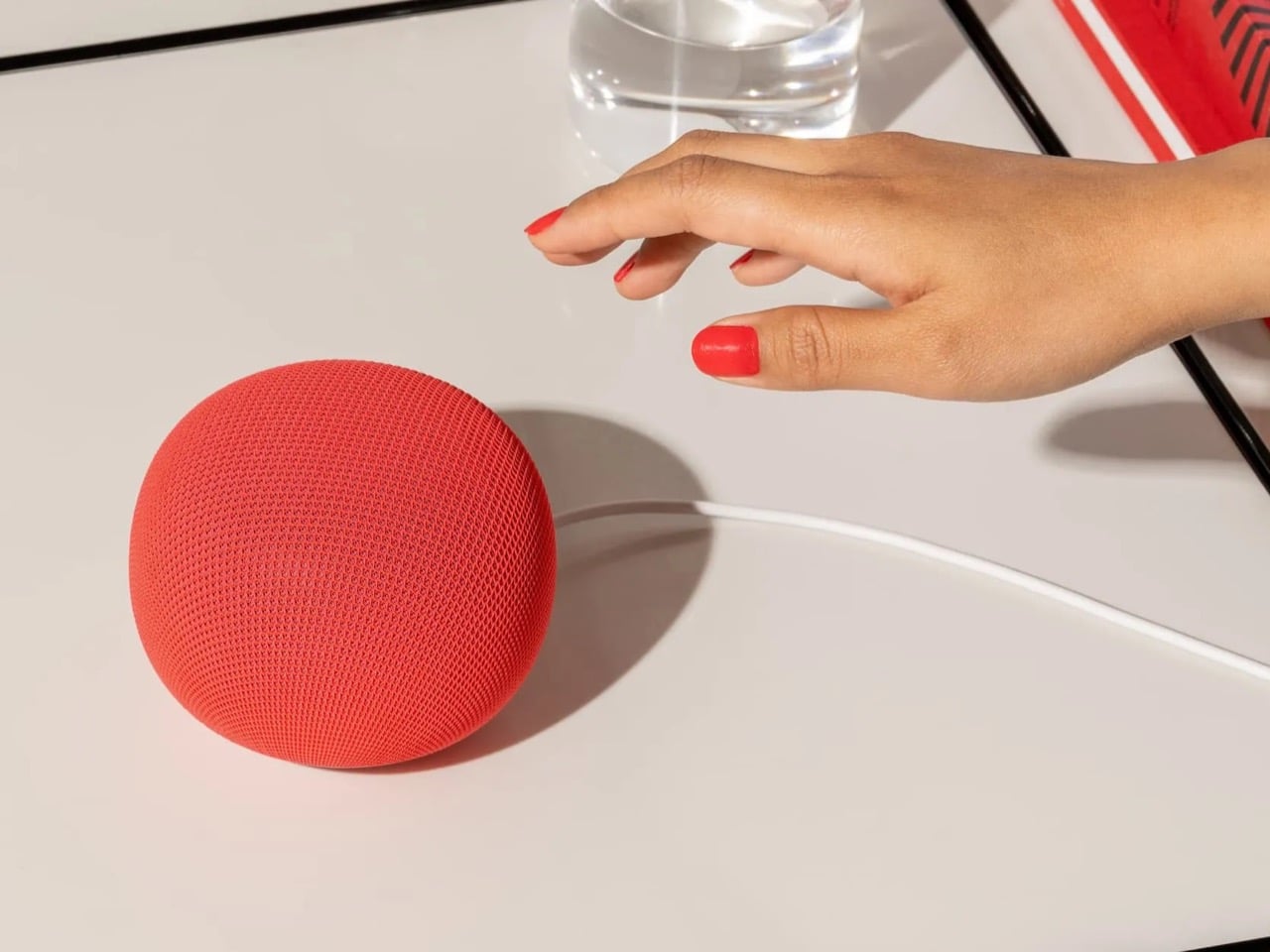
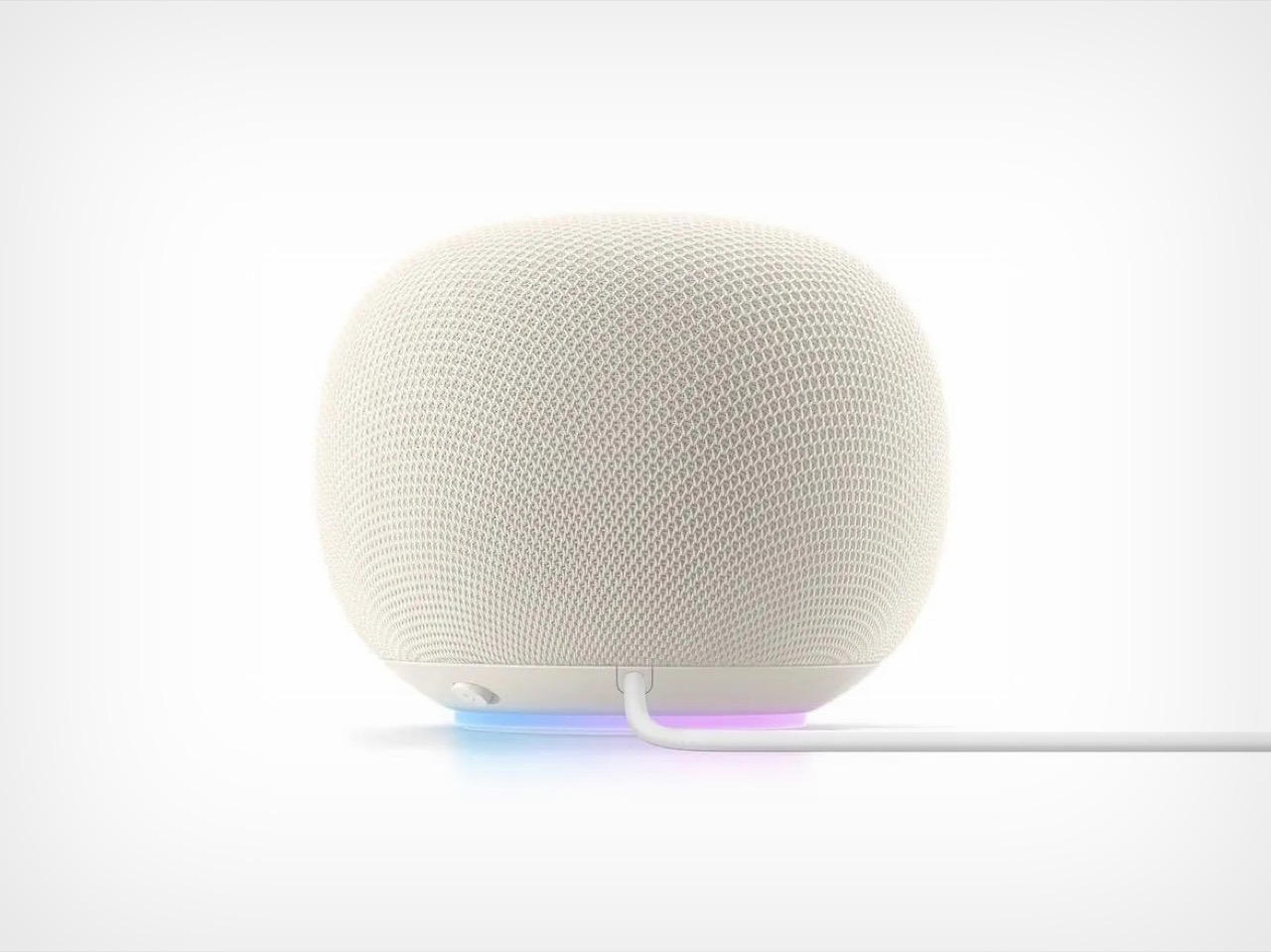
The Google Home Speaker is the company’s first new standalone smart speaker since the Nest Audio launched in September 2020. Nearly six years is a long time to leave a product category untouched in consumer electronics — Apple refreshed AirPods three times in that window, Sonos shipped new hardware, redesigned its app, and broke it, and still found time to come back. Google’s return is framed almost entirely around Gemini, now built directly into the speaker and positioned as the primary reason to put it on your kitchen counter rather than any particular advancement in audio engineering.

The hardware reads clean — small, rounded, and available in the kind of understated colors Google’s design teams have always been good at selecting. It features 360-degree audio, faster processing for more fluid conversational responses, and a new light ring that signals when Gemini is listening, thinking, or responding. Whether this launch represents a genuine recommitment to the smart home category or simply Google finding Gemini another product surface to occupy is a fair question to ask. The speaker is back on the counter after six years. Whether the company chooses to stay in the room this time is the harder and more important question.

What we like:

  • Gemini integration makes this the most conversationally capable Google speaker the company has ever shipped
  • Six years of hardware and processing advancement mean the gap over the Nest Audio should be substantial

What we dislike:

  • Google’s well-documented history of deprioritizing smart home hardware makes long-term software support a legitimate concern
  • The launch narrative frames the speaker as AI infrastructure first, and as a designed product second

7. Inkleaf Foldable Dual-Screen E Ink Notebook

The Inkleaf is a foldable dual-screen E Ink tablet with two 10.3-inch Carta panels that open side by side — one for reading, one for writing, simultaneously. That single feature solves a problem researchers, students, and writers have been navigating awkwardly for years, usually by propping a tablet next to a paper notebook or toggling between apps and losing their place each time. Designed by Kameron Yu, it closes to 8.4mm and 480 grams, thinner than a standard paperback, and each open panel measures 4.2mm — slimmer than the reMarkable 2 at 4.7mm, the Kindle Scribe at 5.4mm, and the Boox Note Air4 C at 5.8mm. None of those fold.

The cast aluminum body and precision-machined hinge barrel lay perfectly flat at 180 degrees when open, tactile page-turn buttons sit exactly where your thumb expects them, and the pressure-sensitive stylus ships in the box with no subscription fee attached. Android handles the OS with support for PDFs, EPUBs, MOBI, and TXT files, and an AI-powered handwriting search can surface any phrase across every notebook you’ve filled. First units are expected to reach founders in August 2026. At around $450, it is a serious financial commitment, but one the form factor and the problem it actually solves manage to earn.

What we like:

  • Dual-screen setup genuinely resolves the read-and-write-simultaneously problem that every comparable single-screen device ignores
  • 4.2mm per panel open is thinner than any single-screen E Ink device currently on the market

What we dislike:

  • The price point requires a real commitment to the E Ink workflow to justify
  • Android on an E Ink display still carries limitations in app responsiveness and screen refresh speed

August Belongs to the Gadgets That Get Out of the Way

August’s lineup doesn’t follow a single theme, which is part of what makes it worth paying attention to. The piBrick and the Inkleaf both treat computing as something that should fit your actual workflow rather than just your desk. The OrigamiSwift and the FlowToo make the case that the best everyday tech is the kind that removes something from your bag or your nightstand rather than quietly adding to it. The Portable CD Cover Player is a reminder that intentional listening never actually went away — it just needed hardware worth using again.

The bigger stories — Samsung’s Fold 8 and Google’s long-overdue speaker — tell you something meaningful about where two of the industry’s largest companies have landed on the question of what smart hardware is actually for. One is restoring capability it arguably should never have removed. The other is making up for six years of silence with an AI pitch and hoping nobody checks the calendar. Both are worth watching this month, for very different reasons.

The post 7 Best Tech Gadgets of August 2026 first appeared on Yanko Design.

5 Home Objects That Look Like They Belong in a Design Museum but Cost Less Than a Dinner Out

The design museum makes one quiet argument. Certain objects deserve to be looked at, and how a thing is made can matter as much as what it does. Most people accept this on a Saturday afternoon in front of a Noguchi lamp or an Eames chair, then go home to a shelf full of things nobody chose with the same intention. That gap is worth closing, and it does not require a renovation budget.

These six objects cost somewhere between a round of drinks and a dinner for two. None are functional in the way a charging cable is functional. They are functional in the way a good room is, changing how a space reads and getting noticed before anyone can articulate why. That quality has very little to do with price and everything to do with knowing where to look for it.

1. Carte Blanche Ceramics

Dutch designer Annebet Philips began this collection in cardboard rather than clay, cutting shapes with deliberately uneven edges and treating the paper prototype as the design language itself rather than a step to be discarded. Belgian brand Serax carries the result through to porcelain: a coffee and tea service that has since grown to include plates, a breakfast bowl, an egg cup, and a salt and pepper set. Every piece started as a childlike cutout on a blank page. Nothing about that origin was smoothed away in production.

What makes each piece genuinely strange is that it reads as a drawing of itself. Hand-painted black lines trace every fold and seam, giving cups and saucers the flattened quality of ink on paper rather than fired ceramic. Photographed straight on, a cup collapses into what looks like a quick sketch, the handle reading as a doodled loop rather than a ceramic ear. Everything is microwave and dishwasher safe, which keeps the concept in daily use rather than retreating to a shelf nobody touches.

What we like

  • The trompe-l’oeil effect holds in person, not only in photographs
  • Dishwasher safe at a design level that rarely permits it

What we dislike

  • Sold through Serax stockists rather than one direct channel, which makes sourcing specific pieces more work than it should be
  • Hand-painted lines vary slightly between pieces, which is part of the concept but can feel inconsistent in a matched set

2. ECHO Ceramic Speaker

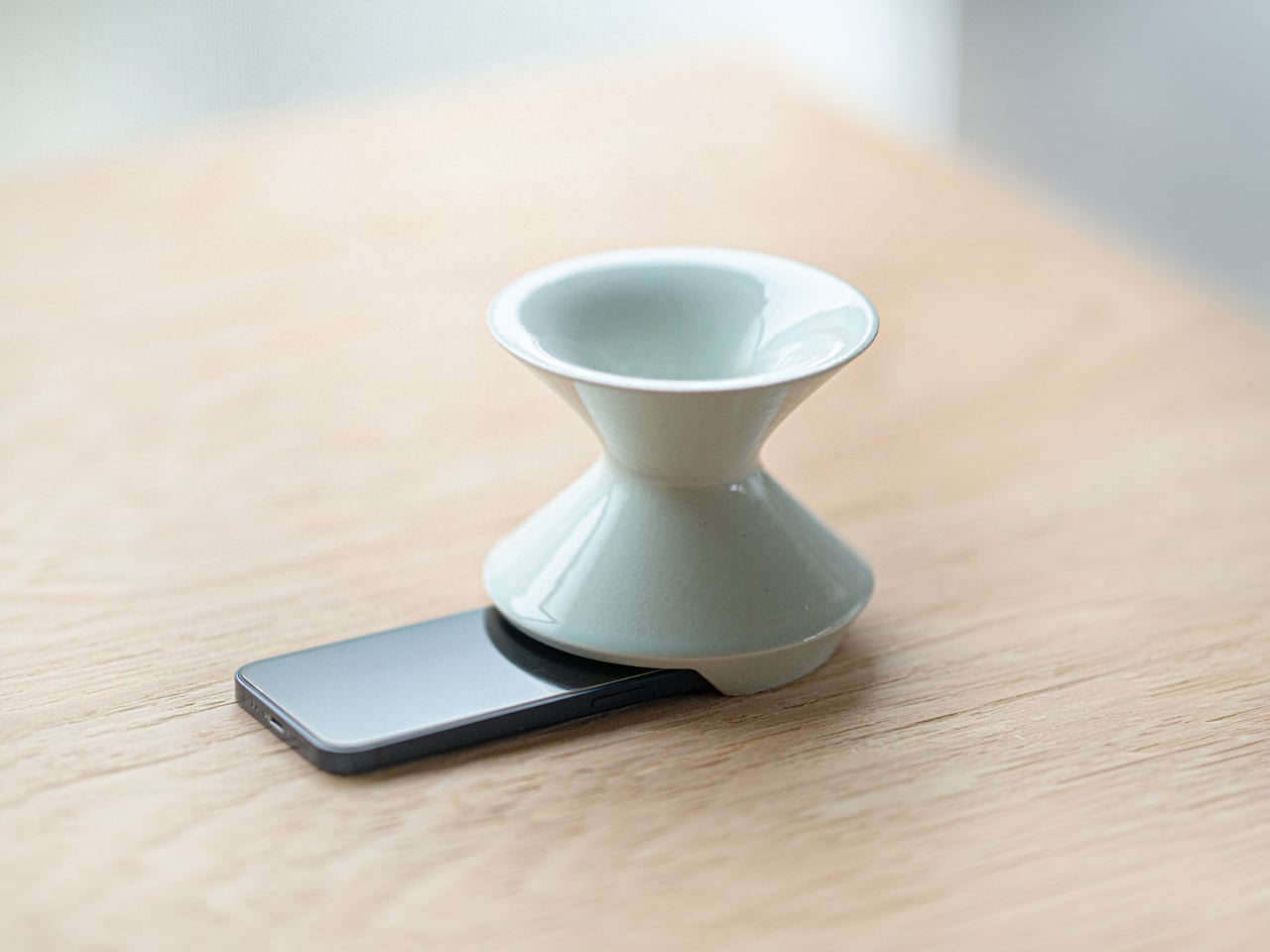
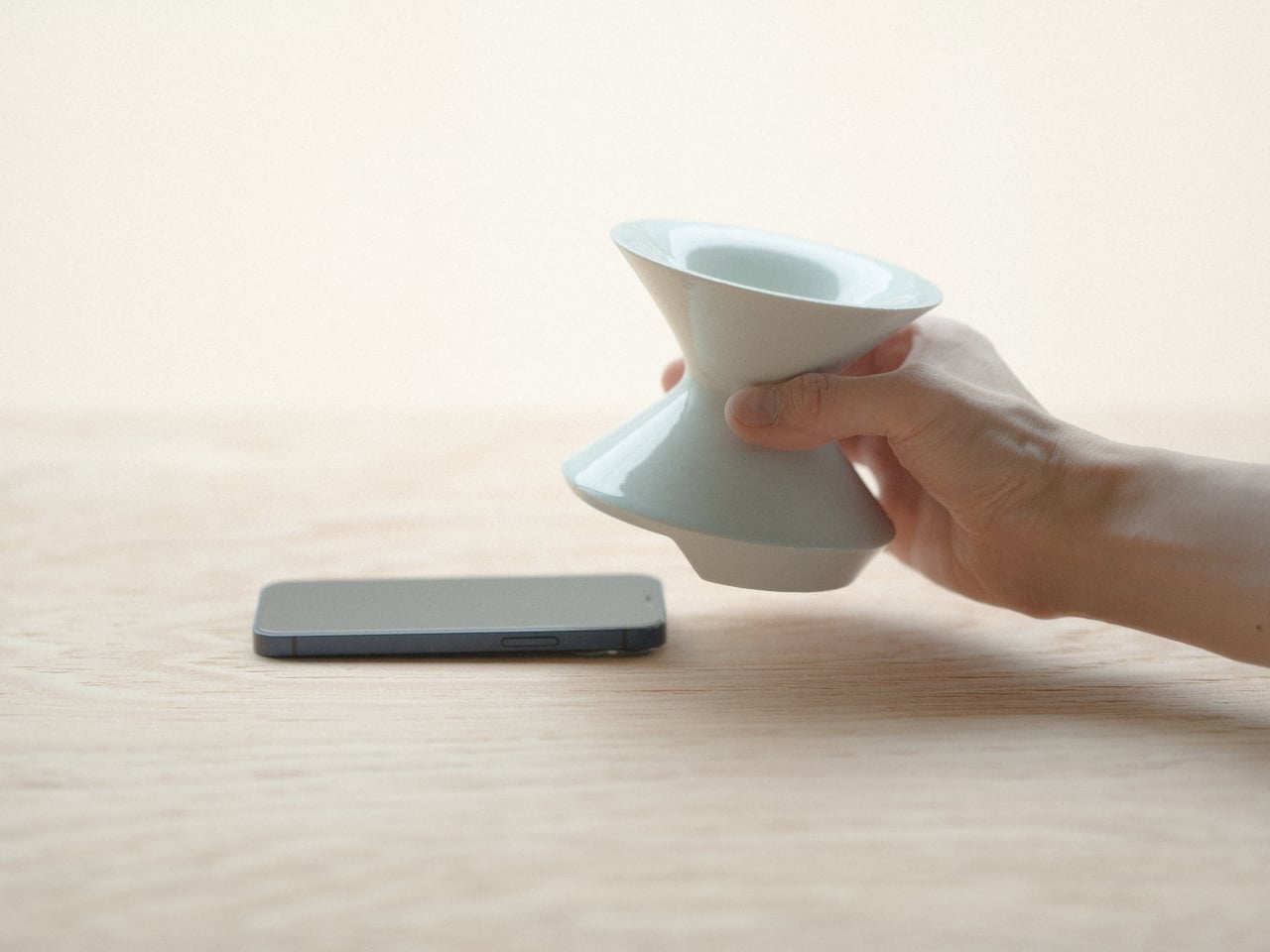
Most speakers announce themselves. They sit on surfaces with blinking lights and trailing cables, with the general suggestion of being placed there temporarily. Kenji Abe’s ECHO arrives from the opposite direction. It is a glazed ceramic chamber built on the acoustic logic of a seashell and a cupped hand that looks exactly like a small vase. Slide a phone underneath, and the cavity carries audio outward in soft, diffused waves. No power. No pairing. Nothing to charge or set up.

The decision to use ceramic was not incidental. Ceramic belongs to the visual grammar of a home, the language of objects that have simply always been there, and ECHO uses that familiarity to disappear into a room entirely. A guest would not identify it as a speaker. The glazed surface catches light the way pottery does, and when the phone is gone, it stays on the shelf with the composure of something that was never trying to perform in the first place.

What we like

  • Looks like a ceramic piece because it is one, not a speaker wearing a vase disguise
  • No charging, no pairing, no batteries to deplete or replace

What we dislike

  • The amplification is warm and subtle rather than loud, better suited to a quiet kitchen than a busy room
  • Designed for smartphones placed directly underneath, which limits where in a room it can be used

3. Petal Vase

Every day, thousands of tons of cut flowers are incinerated at flower markets because they reached the end of their shelf life before a buyer arrived. Rebloom Studio, a Korean design practice, collects those discarded blooms, processes them into pulp with Korean paper pulp and a natural binder, and molds the result around an interior glass cylinder. The finished piece is a vase made entirely from flowers that never got the chance to be seen by anyone.

No two Petal Vases look alike. The flowers used to make each one determine its final color, texture, and edge profile. The jagged rim, the petal compression visible in the walls, the slight asymmetry in the silhouette- all of it is preserved deliberately rather than corrected in finishing. When the vase reaches the end of its life, the biodegradable shell returns to the earth. It is one of those rare objects where the material story requires no explanation because you can already see exactly where it came from.

What we like

  • Every piece is genuinely one of a kind, not in the marketing sense but the literal one
  • The biodegradable origin is visible in the object itself rather than printed on the packaging

What we dislike

  • Availability depends on Rebloom Studio’s production schedule, and stock from a small Korean studio can be intermittent
  • The rough, irregular surface is the whole point, but buyers expecting a conventional smooth ceramic finish may need to adjust

4. Delicato Tray

The entryway surface tells a familiar story, and it is rarely flattering. Keys land wherever there is space, coins scatter to the edges, a watch ends up beside a receipt from last week. Joao Teixeira’s Delicato Tray for Oftwise is cast from Jesmonite AC730, a water-based, fire-rated stone composite, in the form of a rippled disc. The concentric waves are asymmetric by design: wider at the outer ring for keys and glasses, tighter toward the center for rings and coins.

At the center of those ripples sits a recessed pocket sized for a tealight candle, turning the daily ritual of dropping your things at the door into something closer to a ceremony. Because the tray is hand-cast, no two are identical. Small air bubbles, subtle texture variations, and minor color shifts are natural byproducts of the process. The result is two kilograms of warm sandy stone that makes a surface look deliberately arranged before anything has been placed on it at all.

What we like

  • The hierarchy is built into the form itself, so organization becomes almost unconscious
  • Hand-cast production means no two pieces are identical, in the way that actually matters

What we dislike

  • At €235 it sits at the very top of the dinner framing, and that math depends on which dinner you have in mind
  • Currently available in one color, which limits how it integrates into darker or cooler interiors

5. Luna

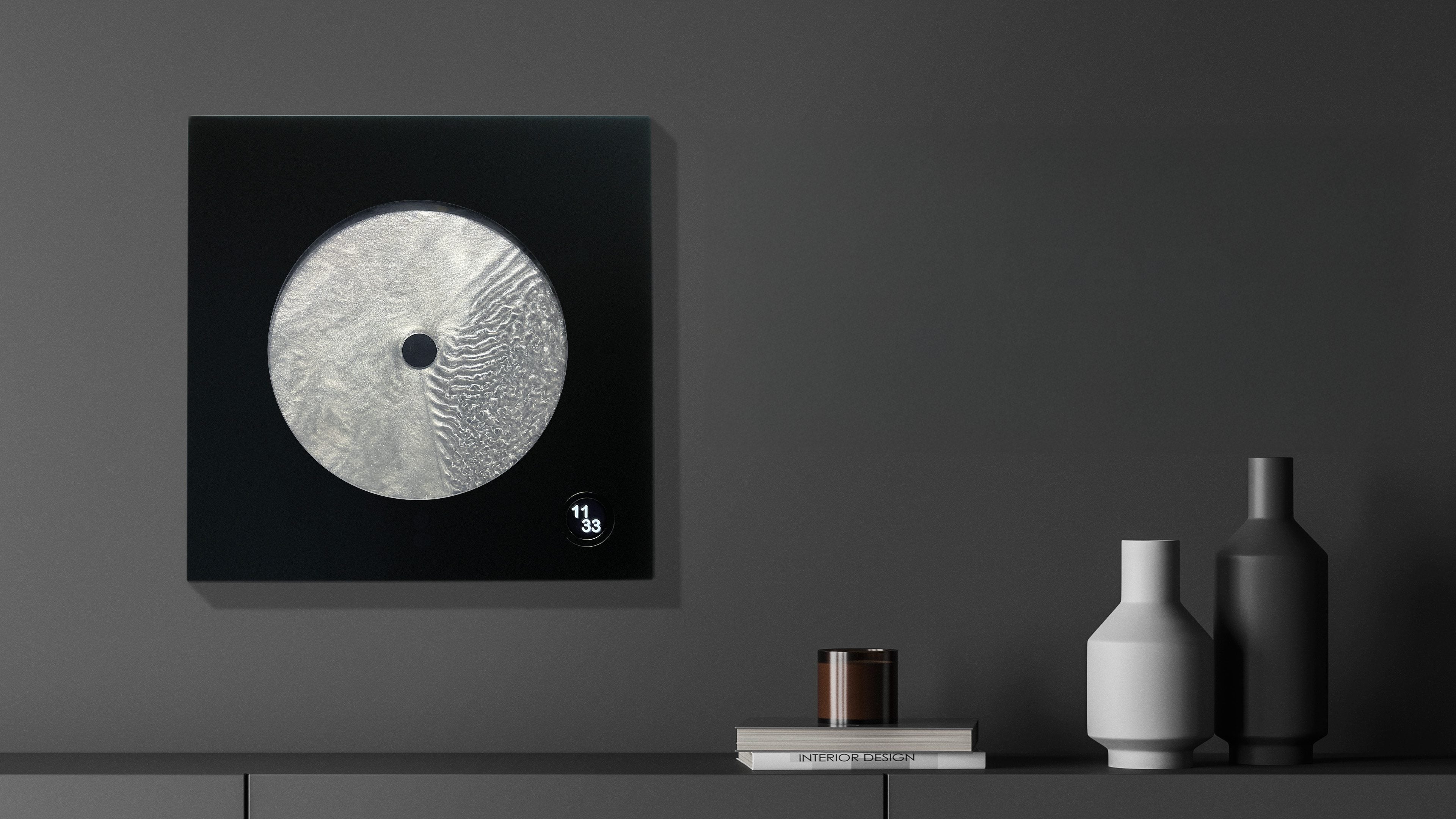
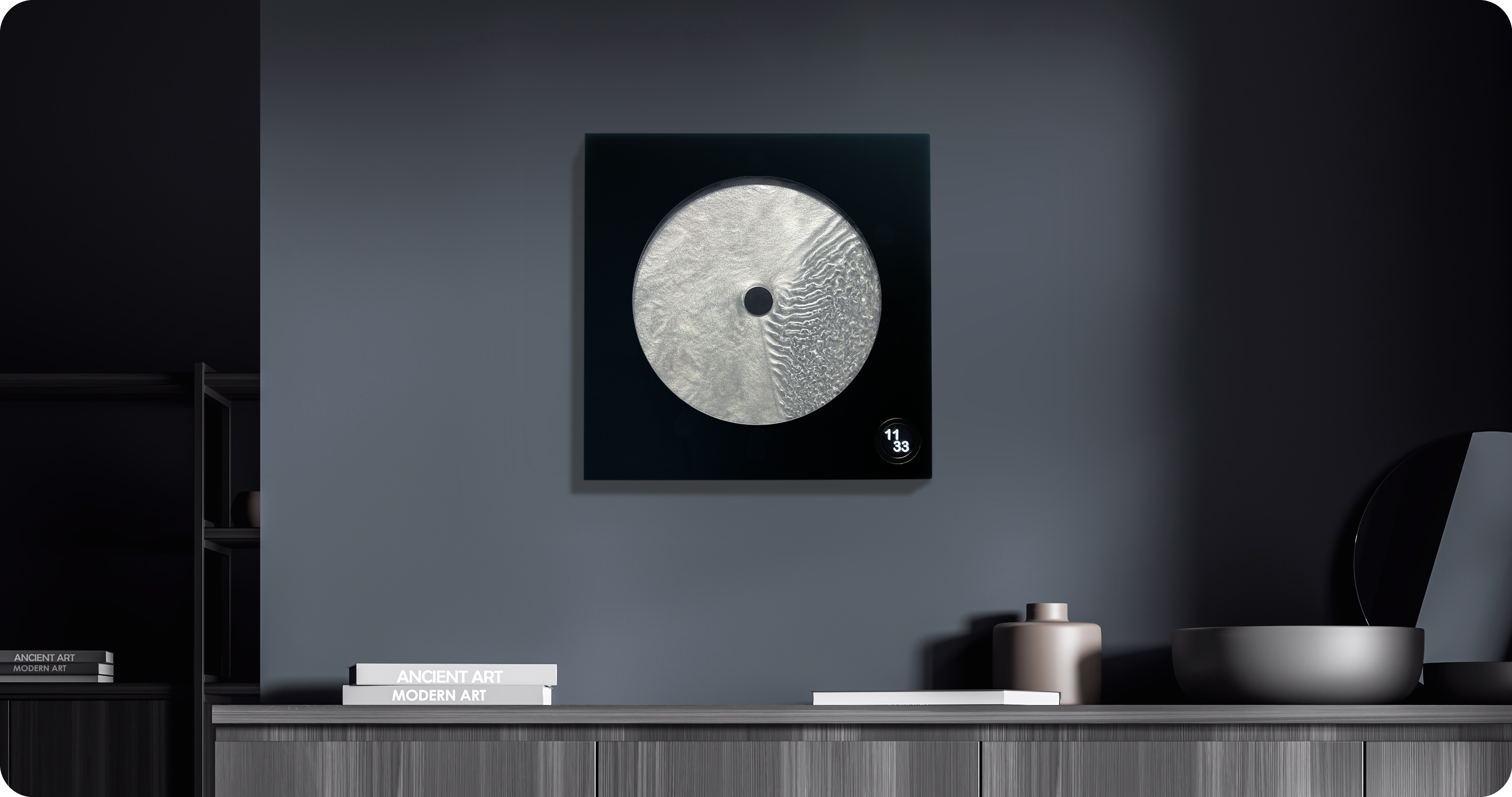
Robert Spillner spent years building components for Formula 1 teams before reversing the entire premise of his career. Instead of measuring speed, he built an object that stages time. Luna is a 400 x 400mm wall piece framed in matte black solid wood with a cast acrylic pane at its center. Inside, a single pointer moves through Zero Flow Technology, Spillner’s proprietary fluid made from distilled water, additives, micro-particles, and a small quantity of genuine lunar dust. Behind the pointer, turbulent patterns mark what has passed. Ahead of it, the liquid sits completely undisturbed.

The exact composition of the fluid is deliberately undisclosed, and that is the right call. The lunar dust is certified and billions of years old, documented with a certificate of authenticity that ships with each piece. Every Luna is signed, numbered, and limited to 99 per year, all made on demand in Germany. A small LCD touchscreen adjusts time and brightness without competing visually with the fluid. Spillner describes it as an art object with a time function, and the order of those words is correct.

What we like

  • The past-and-future visual logic is legible in the object itself, not only in the written description of it
  • Lunar dust certification and a limit of 99 per year make each piece traceable and unrepeatable

What we dislike

  • No public price is listed; the limited edition, handmade production profile suggests it sits above the other objects in this list
  • The 400mm square format demands a wall that can hold it as a singular focal point rather than one object among several

Editor’s Choice: Japanese Lantern Candle

The paper lantern is one of the oldest resolved problems in lighting design. How do you carry warmth from a candle flame into a room without losing it to the hardness of the fixture? Japanese designers worked through that question for centuries and arrived at a form that required almost no further development: a collapsible structure of thin ribs and translucent paper that diffuses candlelight into a soft, directionless glow.

What separates a well-made Japanese lantern from a decorative replica is the quality of light it produces and how it behaves in a room. Warm and sourceless, candlelight filtered through translucent paper fills a corner the way natural light from a small window does, without the hard edge of a focused lamp or the flatness of overhead lighting. On the floor beside a chair or a side table, it becomes the kind of object people notice and comment on before they have thought to ask what it is.

Click Here to Buy Now: $70.00

What we like

  • The quality of diffused candlelight it produces is genuinely different from any other fixture in a room
  • Stores flat, which matters in a small apartment where every permanent object has to earn its place

What we dislike

  • Works best as ambient lighting rather than a primary source for reading or close work
  • The candle paired with it needs to suit the scale and material to get the full effect

The Best Things in a Room Are the Ones Nobody Can Quite Explain

None of these objects ask for much. A shelf, a corner, a spare stretch of counter. They do not need a gallery to earn the attention they receive. What they share is the quality of being genuinely chosen, the sense that someone worked through a problem not just until it was functional but until it was right. That difference is immediately visible and, unlike most things in a home, it does not fade with time.

The museum argument is that certain objects deserve to be seen. These six make the same case from a kitchen counter, an entryway shelf, a bedroom wall. The price point is almost beside the point, though it helps. What matters is that buying thoughtfully and buying well tend to produce the same result: a home that feels assembled by someone who paid attention, rather than one that simply accumulated things over time.

The post 5 Home Objects That Look Like They Belong in a Design Museum but Cost Less Than a Dinner Out first appeared on Yanko Design.

The 3 Best Japanese Kitchen Tools You Need to Buy August 2026

Japanese kitchen tools tend to arrive with a very specific philosophy attached. They do less than you expect on paper and more than you realize until you’ve used them for a week. The three objects below cover different ends of that idea: a precision appliance from one of Japan’s most storied engineering brands, a pair of scissors built for the demands of serious kitchen prep, and a clay pot that has been doing its job correctly since the Kamakura period.

What connects them isn’t aesthetic or price point. It’s the sense that each was designed by someone who had a genuine opinion about what the object should do, then made it do exactly that. August is a good month to pay attention to the kitchen — the produce is at its best, the cooking is more instinctive, and the tools you reach for most tend to reveal themselves. These three are worth reaching for.

1. Mitsubishi Bread Oven

The name requires a moment. Mitsubishi, the Japanese conglomerate better known for cars and precision electronics, makes one of the most exacting home bread ovens available. The machine applies the same engineering discipline to baking that Mitsubishi Electric brings to everything else it builds: controlled heat, precise internal timing, and an attention to the baking chamber environment that consumer appliances from Western brands rarely match. The result is a loaf with a crust and crumb structure most countertop machines simply cannot produce, regardless of recipe.

What makes it worth covering in a design publication isn’t only the output. The form is unmistakably Japanese in its restraint — minimal, white, without the button complexity that clutters European bread makers at comparable prices. It occupies counter space the way well-considered appliances should: as an object with a clear visual point of view rather than a machine that apologizes for being there. Bread that comes out of it tastes like something was genuinely thought about. Because it was.

What We Like

  • Precision heat management produces a crust and crumb that typical home bread makers don’t come close to replicating
  • The minimalist appliance design treats the machine as a considered object rather than a utility box competing for counter attention

What We Dislike

  • Sourcing outside Japan requires import channels, which adds cost and complicates any warranty or service process
  • The price point places this firmly in investment appliance territory — this is a deliberate purchase, not a casual one

2. Precision Chef Kitchen Scissors

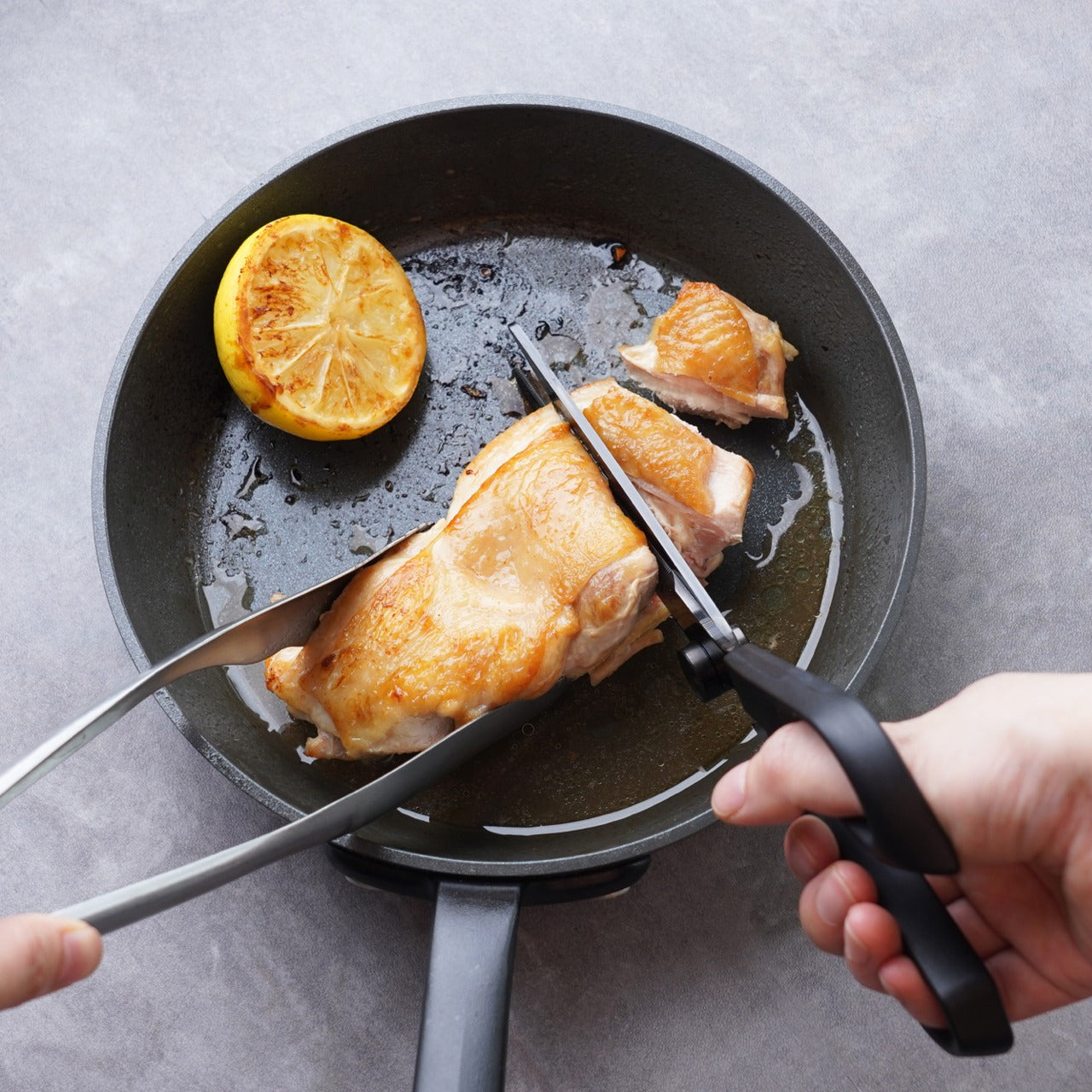
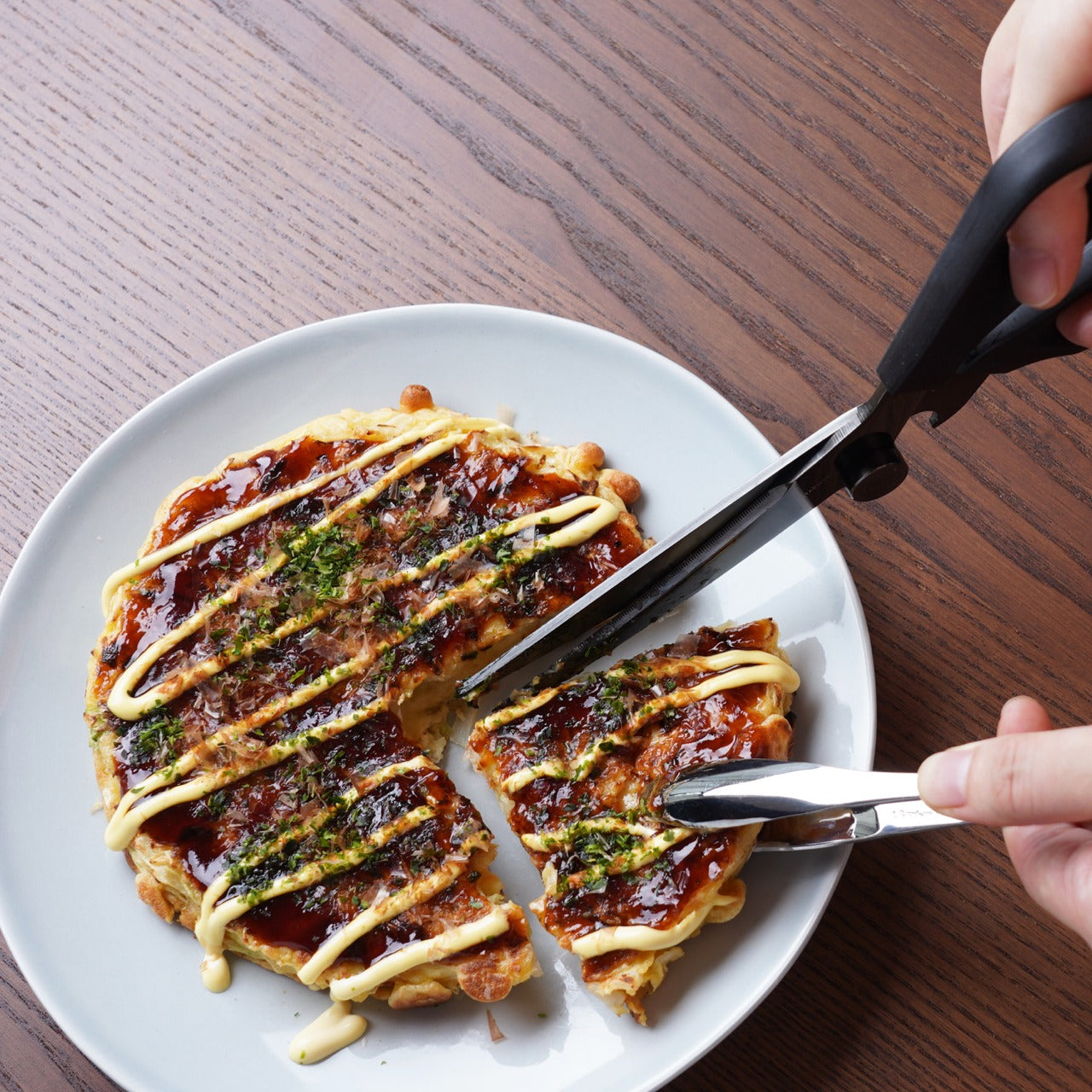
Kitchen scissors are one of those tools most cooks underestimate until they own a genuinely good pair. The Precision Chef Kitchen Scissors make the case for re-evaluation. Built with the material standards and blade geometry you’d expect from Japanese cutlery, they work through herbs, spring onions, dried chilies, and butcher twine without the handle torque that cheaper scissors force you to compensate for on every cut. Edge retention is where the quality gap between these and a supermarket pair becomes immediately obvious.

The design is deliberately restrained, which is exactly the right call for a kitchen tool that needs to sit in a drawer and get used without ceremony. Nothing superfluous in the grip, nothing decorative in the blade. Japanese kitchen scissors at this level function as precision instruments that happen to look like scissors. Once you’ve used a pair built this well for a full week of regular prep, the ones you owned before start to feel like a different category of object entirely.

Click Here to Buy Now: $95.00

What We Like

  • Edge retention and blade geometry handle repeated kitchen use without the performance drop that cheaper alternatives show within weeks
  • The restrained design means these function as tools first, rather than objects performing the idea of quality

What We Dislike

  • The refined aesthetic means they can disappear in a crowded kitchen drawer — worth designating a fixed home for them
  • Like most professional kitchen scissors, they require hand-washing to preserve edge quality, which adds a small but real step to cleanup

3. Iga-yaki Donabe Clay Pot

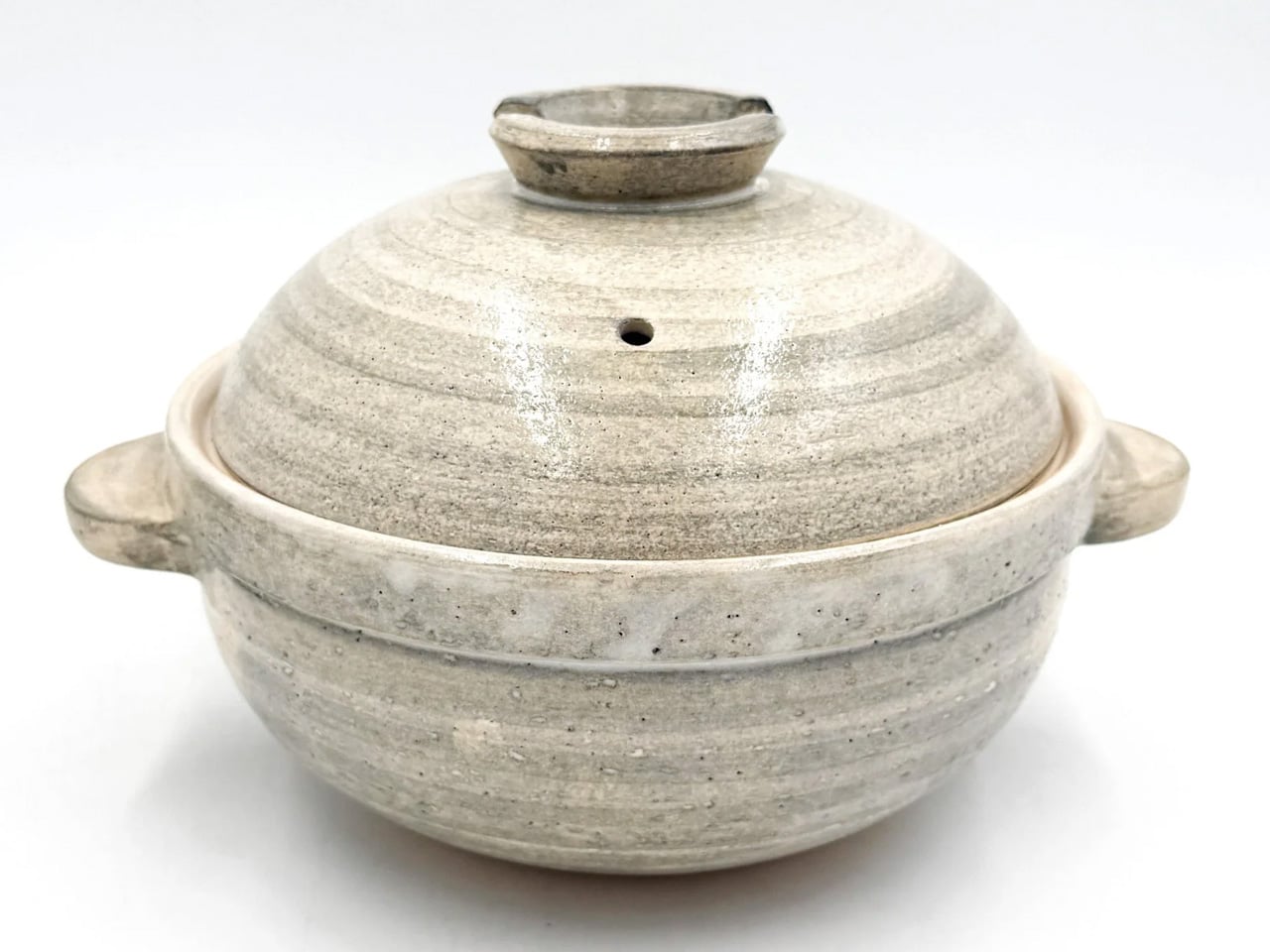
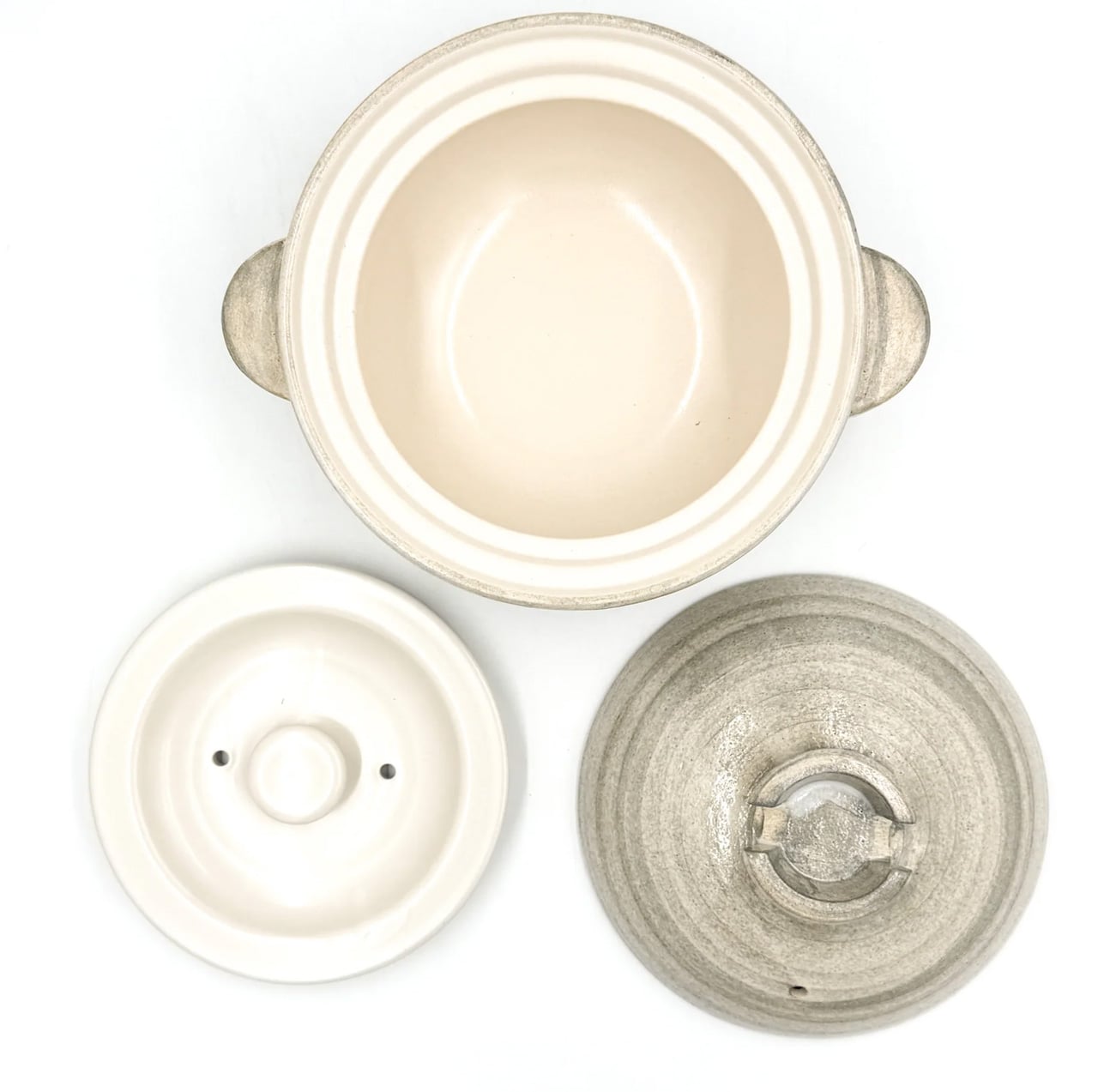
Iga clay comes from Mie Prefecture in Japan, where the local earth has been used for ceramics since at least the Kamakura period. The porous structure of Iga-yaki absorbs heat slowly and releases it with a consistency that metal pots structurally cannot replicate. Rice cooked in it sweetens. Broth deepens over a lower flame than you’d expect to produce it. The exterior stays rough and unfinished while the interior is glazed smooth — two surfaces on the same vessel, each doing exactly what it should.

Available from TOIRO Kitchen in several sizes, the donabe asks for a single seasoning step before first use — simmering rice water in the vessel — and then becomes one of the most reliable pots in the kitchen. It handles rice, hot pot, steaming, and slow braise with equal competence, which makes it the rare piece of cookware that earns its space by quietly replacing three other things. Store it with the lid off after washing, and it will be in your kitchen for decades.

What We Like

  • Iga clay’s heat retention produces results in rice and broth that no metal pot at any price point genuinely replicates
  • Real versatility across rice, hot pot, steaming, and slow cooking means one vessel covers what several usually would

What We Dislike

  • Requires a seasoning step before first use that the packaging doesn’t always communicate clearly upfront
  • The porous clay absorbs strong cooking odors over time and needs to be stored with the lid off after washing to stay fresh

Make the Kitchen Better, Not Faster

Three tools, three distinct registers of Japanese kitchen culture. Mitsubishi brings precision engineering to something as ordinary as a morning loaf. The scissors bring professional blade standards to daily prep work. The donabe brings centuries of ceramic craft to the kind of cooking that rewards patience over speed. None of them are trying to make the kitchen faster or more efficient. They’re trying to make it better, which is a different ambition and one worth paying for.

August is when most kitchens are running at full capacity — markets are abundant, evenings stretch long enough to cook properly. The tools you own in that window shape what’s actually possible in it. These three share a conviction that how something is made matters as much as what it does, and that conviction shows up every single time you reach for them. Start with whichever one your kitchen is currently missing most.

The post The 3 Best Japanese Kitchen Tools You Need to Buy August 2026 first appeared on Yanko Design.

The 5 Best Tech Gifts for the Guy Who Thinks He’s Already Seen Everything in 2026

There’s a specific kind of person who is genuinely difficult to shop for. He already owns the good headphones, already upgraded the keyboard, already knows the spec sheet of whatever you’re about to suggest before you finish the sentence. The products that actually land with him aren’t better versions of things he already has. They’re objects that make him stop, turn it over in his hands, and ask a question he hasn’t thought to ask before. That’s the bar this list is built around.

Every pick here does something the category wasn’t supposed to do. A power bank thinner than a phone. A mouse that folds flat enough to slip into an envelope. A speaker you can see straight through while it plays. A notebook that records the room while you write in it. A handheld Linux computer that doubles as a keyboard for any machine on earth. Five gifts, five moments of genuine surprise, and a price range wide enough that none of them feel like settling.

1. piBrick Pocket-CM5

The piBrick Pocket-CM5 is the size of a smartphone and runs a full Linux desktop. Built from a custom PCB, a 3D-printed shell, and an open-source parts list that totals $172, it arrives at 80mm × 145mm × 19.6mm with a 3.92-inch AMOLED display running at 1080×1240 pixels, 90Hz, and 560 nits of brightness. A BBQ20 BlackBerry-style keyboard sits on the face, complete with an integrated trackpad, rotary encoders on the sides, and five user-programmable buttons. Asahi Tempered Glass covers the display, and a 5,000mAh battery keeps everything running without a desk.

The feature that makes it genuinely surprising lives in the USB stack. Plugging the piBrick into any external computer or server activates USB-HID mode, turning its keyboard and trackpad into a fully standalone input device, independent of the Linux system running underneath. A sysadmin arrives at a server rack without a spare keyboard. The piBrick already is one. Full-size and micro-HDMI outputs let the same device drive an external display. NVMe SSD support in 2230 and 2242 formats adds real storage headroom.

What we like

  • A full Linux machine that moonlights as a USB keyboard for any device on earth — two completely distinct, genuinely useful capabilities in smartphone dimensions
  • Built for significantly less than a budget phone, with an open-source design that belongs to anyone who wants to build on it

What we dislike

  • Building the piBrick requires sourcing parts and assembling the hardware yourself, which puts it out of reach for anyone not comfortable with a soldering iron
  • The $172 figure is the parts cost floor, not a retail price — the full build investment in time and effort needs to be factored in

2. OrigamiSwift Mouse

Horace Lam designed the OrigamiSwift around a single constraint: a Bluetooth mouse that collapses small enough to carry without thinking about it. Folded, it measures 0.18 inches thick and weighs 40 grams, lighter than most pens. Open, it becomes a full-sized working mouse in under half a second. The origami-inspired triangular structure gives the folded form real rigidity, so it holds its shape through actual work sessions rather than shifting on the desk after the first hour. The soft-click buttons keep things quiet in shared spaces, which turns out to be something you notice immediately.

The internals match the ambition of the form. A 4,000 CPI HD infrared sensor tracks at up to 4,000 frames per second, Bluetooth 5.2 pairs across Mac, Windows, Android, and iPadOS within a 32.8-foot wireless range, and a single USB-C charge delivers up to three months of use. That last figure is the one worth sitting with. Most wireless mice need charging every few weeks. The OrigamiSwift needs it roughly once a season.

Click Here to Buy Now: $85.00

What we like

  • Folds to 0.18 inches thick and weighs 40 grams — small enough to forget it’s in a bag until you actually need it
  • Three months of battery life on a single USB-C charge, which makes every other wireless mouse feel like a maintenance obligation

What we dislike

  • Stock is limited at the time of writing, so availability may not line up with gift timing
  • The 4,000 CPI ceiling may feel restrictive for anyone whose work involves precision-heavy creative or illustration workflows

3. Xiaomi UltraThin Magnetic Power Bank

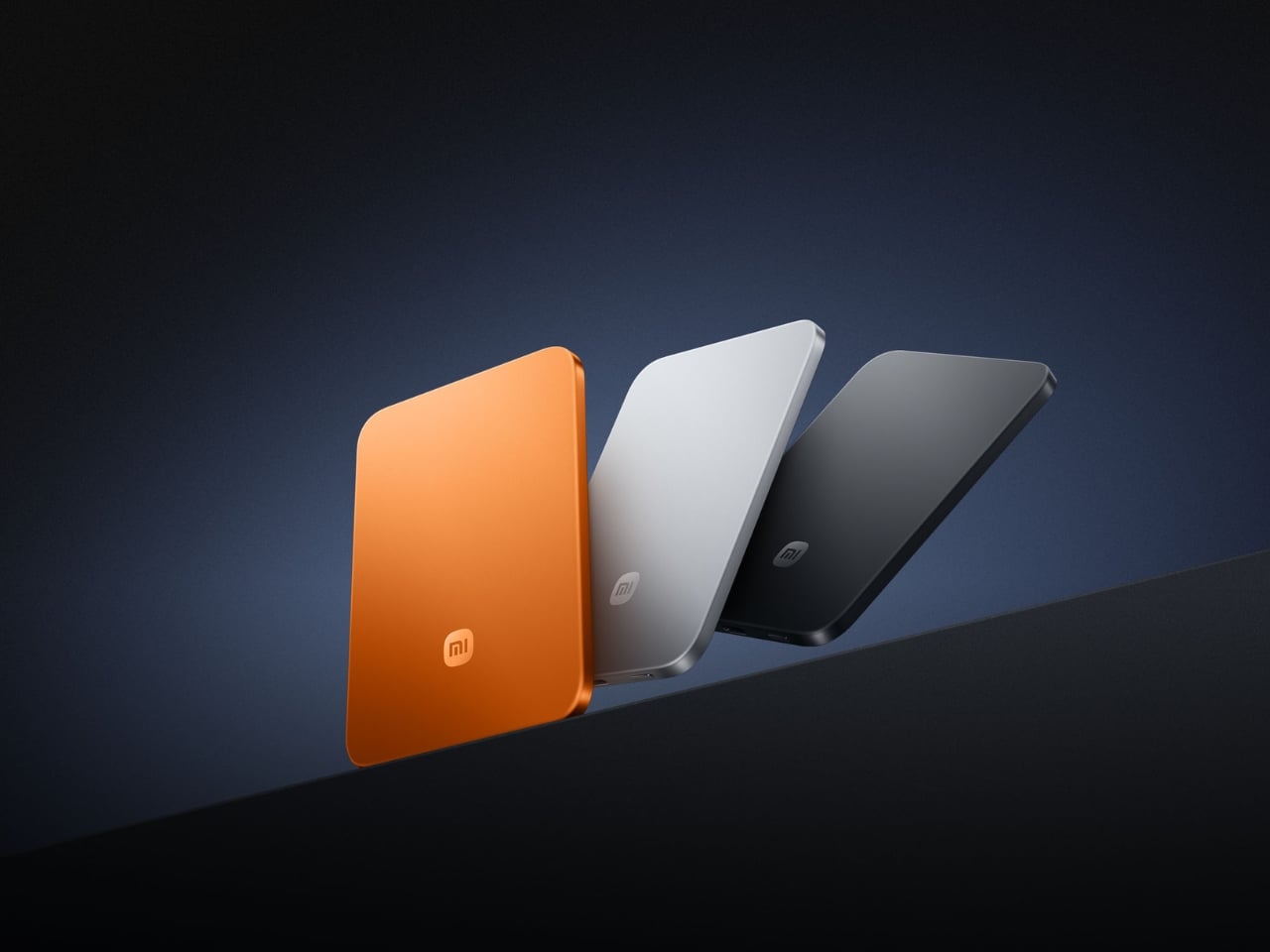
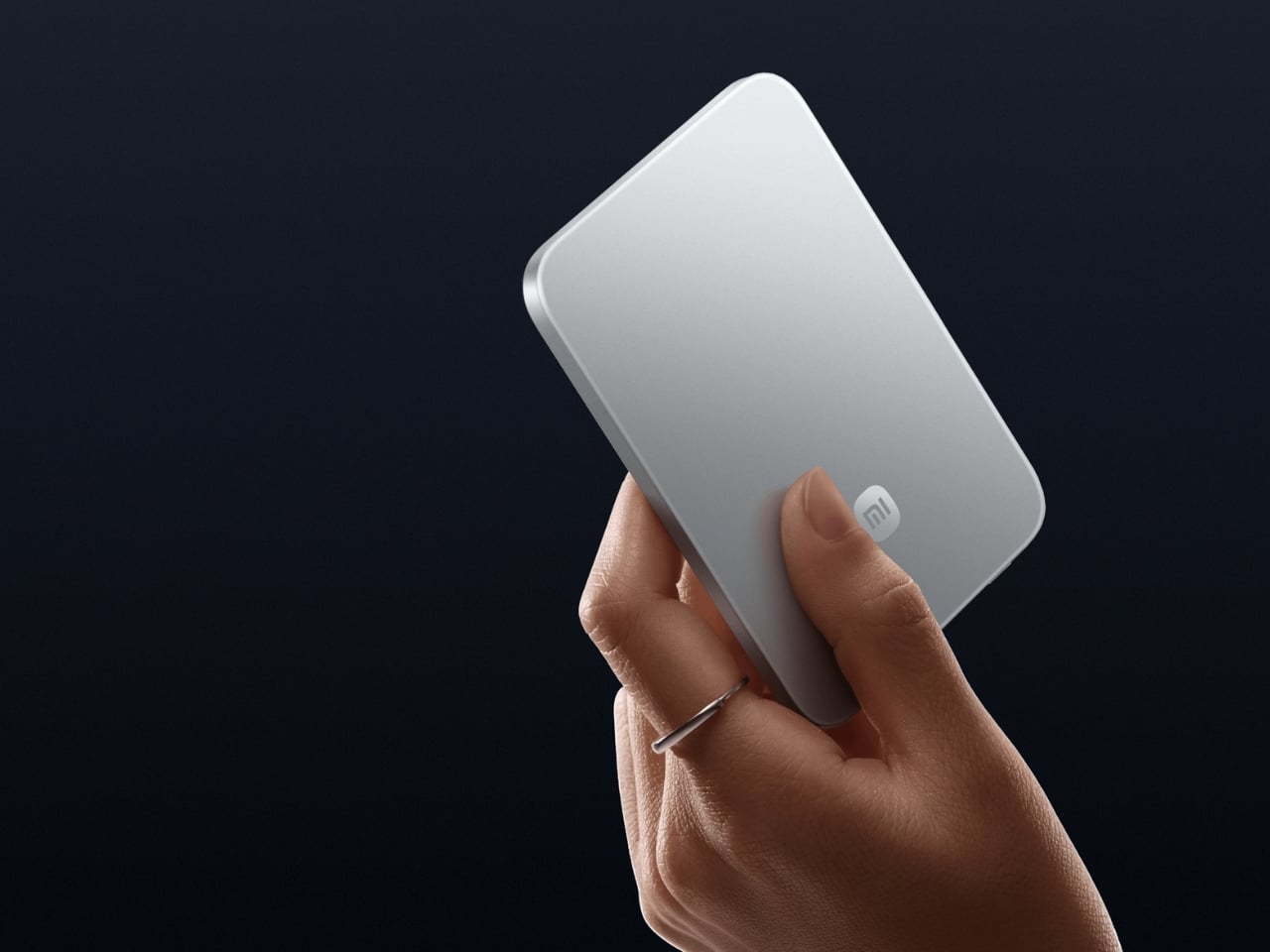
The power bank category has been stuck in the same design rut for a decade. Bigger capacities, same uninspired bricks. Xiaomi broke that logic at MWC 2026 in Barcelona with a magnetic power bank measuring 6mm thick, thinner than any current smartphone on the market, including the iPhone 17. The 5,000mAh capacity is made possible by silicon-carbon battery chemistry with 16% silicon content, the same material science pushing next-generation electric vehicle batteries into smaller form factors. It weighs 98 grams. The aluminum alloy shell has a photolithographically etched logo on the back, and the phone-facing surface uses fire-resistant fiberglass with an excimer coating for heat management.

Wireless charging tops out at 15W when paired with the Xiaomi 17 series and 7.5W for iPhones via MagSafe. A USB-C port pushes 22.5W wired, and the bank charges two devices simultaneously. Ten layers of protection cover overvoltage, overcurrent, overheating, and short circuits, with dual NTC temperature sensors monitoring heat in real time.

What we like

  • At 6mm and 98 grams, it snaps magnetically to the back of a phone and disappears there — the first power bank in the category to make you genuinely forget you’re carrying one
  • Silicon-carbon battery chemistry packs 5,000mAh into a profile that has no business fitting that much capacity

What we dislike

  • The 7.5W cap on iPhones is an Apple MagSafe restriction rather than a Xiaomi design choice, but it still stings
  • US buyers will need to source it internationally for now, as domestic availability is unconfirmed at the time of writing

4. Huion Note E

Huion built the Note E to pass as a paper notebook from any angle. The sides are rigid to mimic the page block of a bound journal. The cover is PU leather with a felt lining on the inside. At exactly A5 proportions and 348 grams without the cover, it is the size and weight of an 80-page notebook. The 8.4-inch laminated LCD screen uses anti-glare nano-etching that Huion’s own reviewer describes as writing on smooth Japanese paper, with DC dimming over PWM to reduce the eye strain that builds across a long writing session. Turning it to the side, nothing about it reads as electronic.

What genuinely separates it from every other stylus tablet is a feature buried in the note-taking app. The Note E records audio while you write. Play it back later and the recording advances in sync with your handwriting reappearing on screen, line by line, exactly as it was written. Every word is anchored to the sound in the room at the moment it landed on the page. The included PW510 stylus is battery-free, offers 8,192 levels of pressure sensitivity with tilt support, and attaches magnetically to the side of the device.

What we like

  • The audio-sync playback turns any page of notes into a timestamped recording — you can replay exactly what was being said in the room at the moment each line was written
  • The battery-free PW510 stylus with 8,192 levels of pressure sensitivity is included, alongside a cover that genuinely looks like a premium leather journal

What we dislike

  • No microSD expansion means 128GB is the ceiling, which fills up faster than expected once drawing files enter the picture
  • The cover attachment mechanism feels less robust than a product at this price point should, with prongs that require a specific sliding motion to engage

5. MorningBlues SonicGlass A1

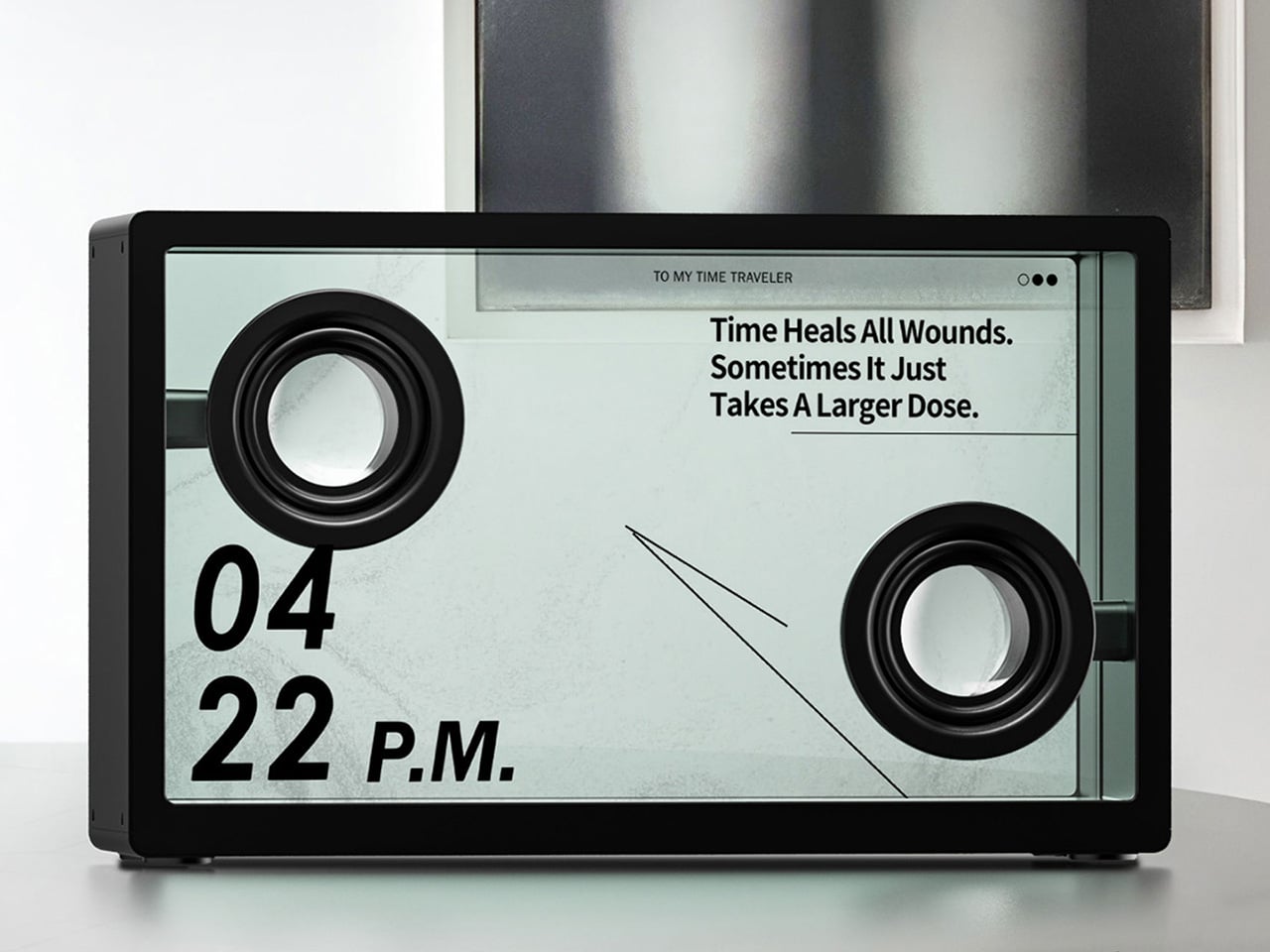
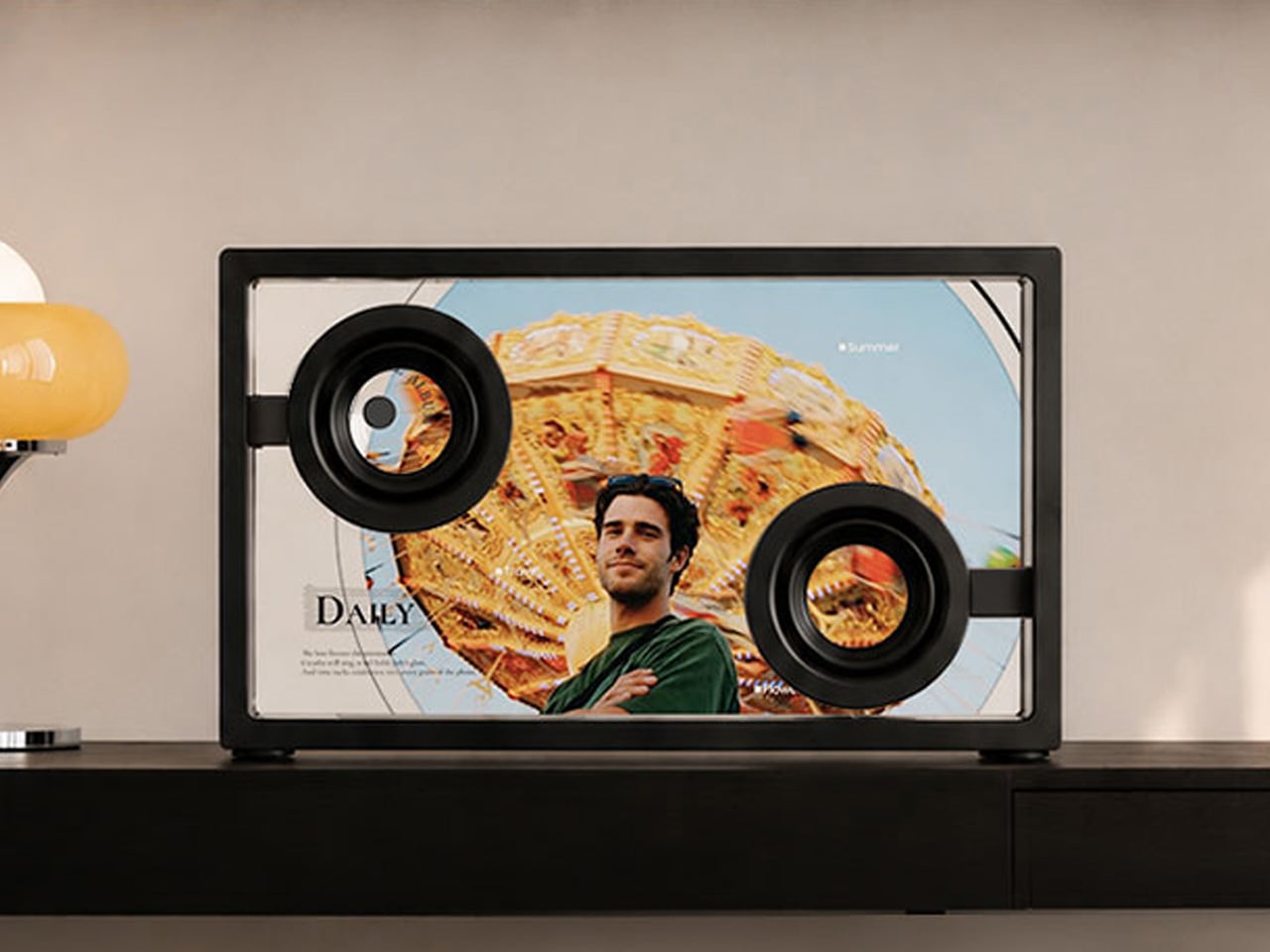
The MorningBlues SonicGlass A1 is a speaker most home audio brands would not have the confidence to make. The front face is a 21.5-inch TFT panel with over 90% light transmission, framed in black with the driver sitting fully visible behind the glass. When a song plays, licensed lyrics appear across the transparent surface in motion styles tuned to the track’s emotional character, a feature called MoodLyric, trained on hundreds of millions of playbacks with all lyrics licensed through LyricFind to properly credit the artists. The driver is not hidden. The mechanics are not disguised. The whole object is designed to be looked at.

A second layer called SceneSync generates AI visuals in real time matched to the genre playing, with pop, hip-hop, R&B, and rock each triggering distinct visual aesthetics on the glass. When the music stops, it shifts to ambient room mode: rotating backgrounds, a dynamic clock face, or an ASMR sleep display for winding down. A microphone turns it into a karaoke setup with live scrolling lyrics. The MorningBlues Music Hub 1 controller handles playback without involving a phone.

What we like

  • A transparent 21.5-inch display that animates licensed lyrics while the music plays and becomes ambient room art when it stops — the speaker category has needed something this committed to its own idea for a long time
  • SceneSync and MoodLyric together mean the visual experience is never the same twice, tuned in real time to the genre and emotional character of whatever is playing

What we dislike

  • At $646, the price is a meaningful ask for a product that hasn’t shipped yet

The Best Gifts Don’t Improve on What He Already Has – They Make Him Rethink the Category

What makes each of these worth picking is that none of them are better versions of something he already owns. The piBrick isn’t a better mini PC. The OrigamiSwift isn’t a better travel mouse. The Xiaomi power bank isn’t a higher-capacity brick. Each one rethinks the category assumption from the ground up, which is the only kind of product that genuinely surprises someone who already knows the market well and has largely stopped being surprised by it.

The price range runs from $85 to $646, which means there’s a real pick at every budget with no filler option anywhere in the list. Whether it’s the SonicGlass as the room’s defining object or the piBrick as the most interesting thing in a bag, each earns its place the way the best gifts do — by being something the person would never have bought for himself, but won’t want to give back.

The post The 5 Best Tech Gifts for the Guy Who Thinks He’s Already Seen Everything in 2026 first appeared on Yanko Design.

This Transparent Box Opener Handles Tape & Tags Without You Ever Putting The Package Down

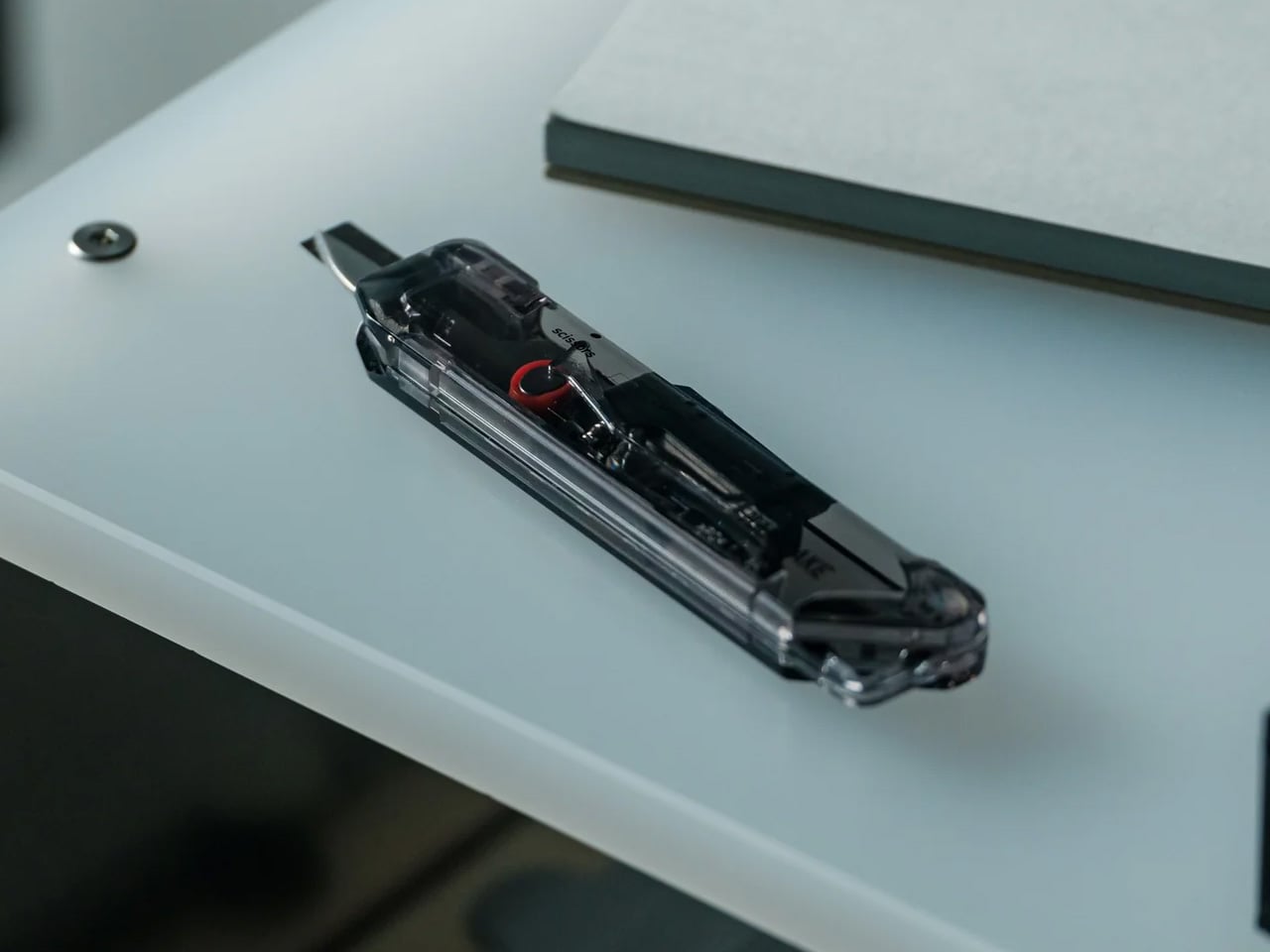
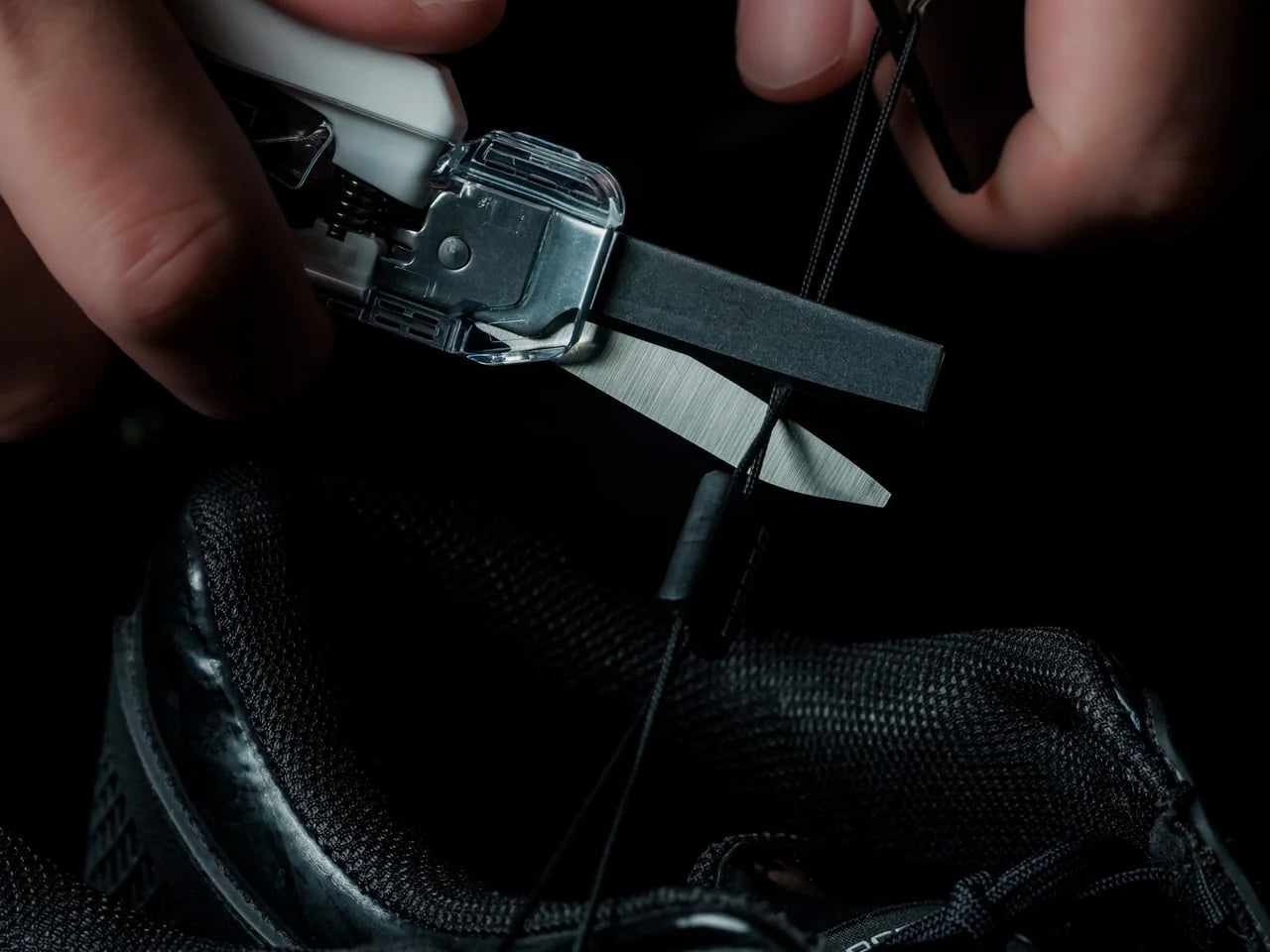
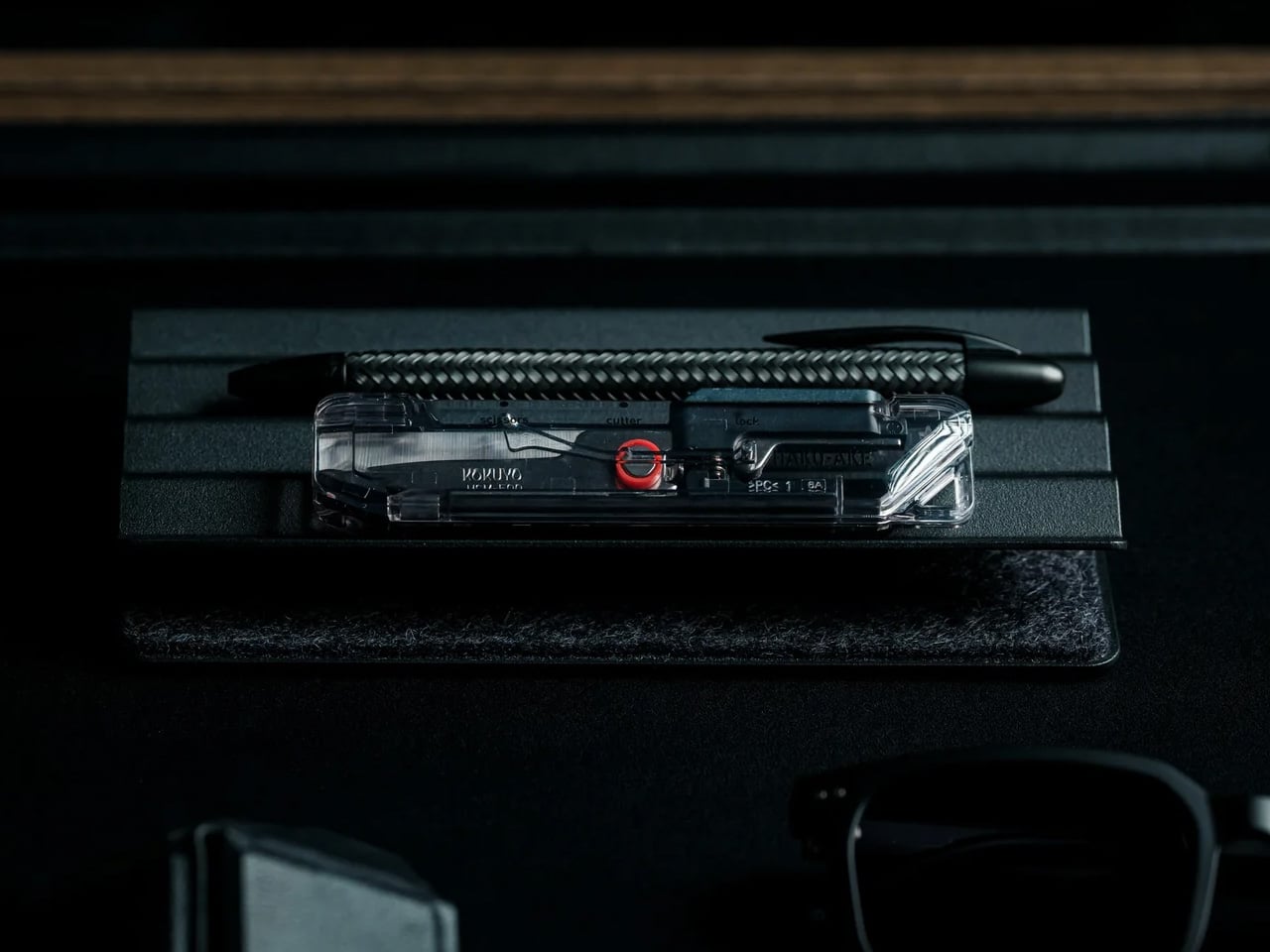
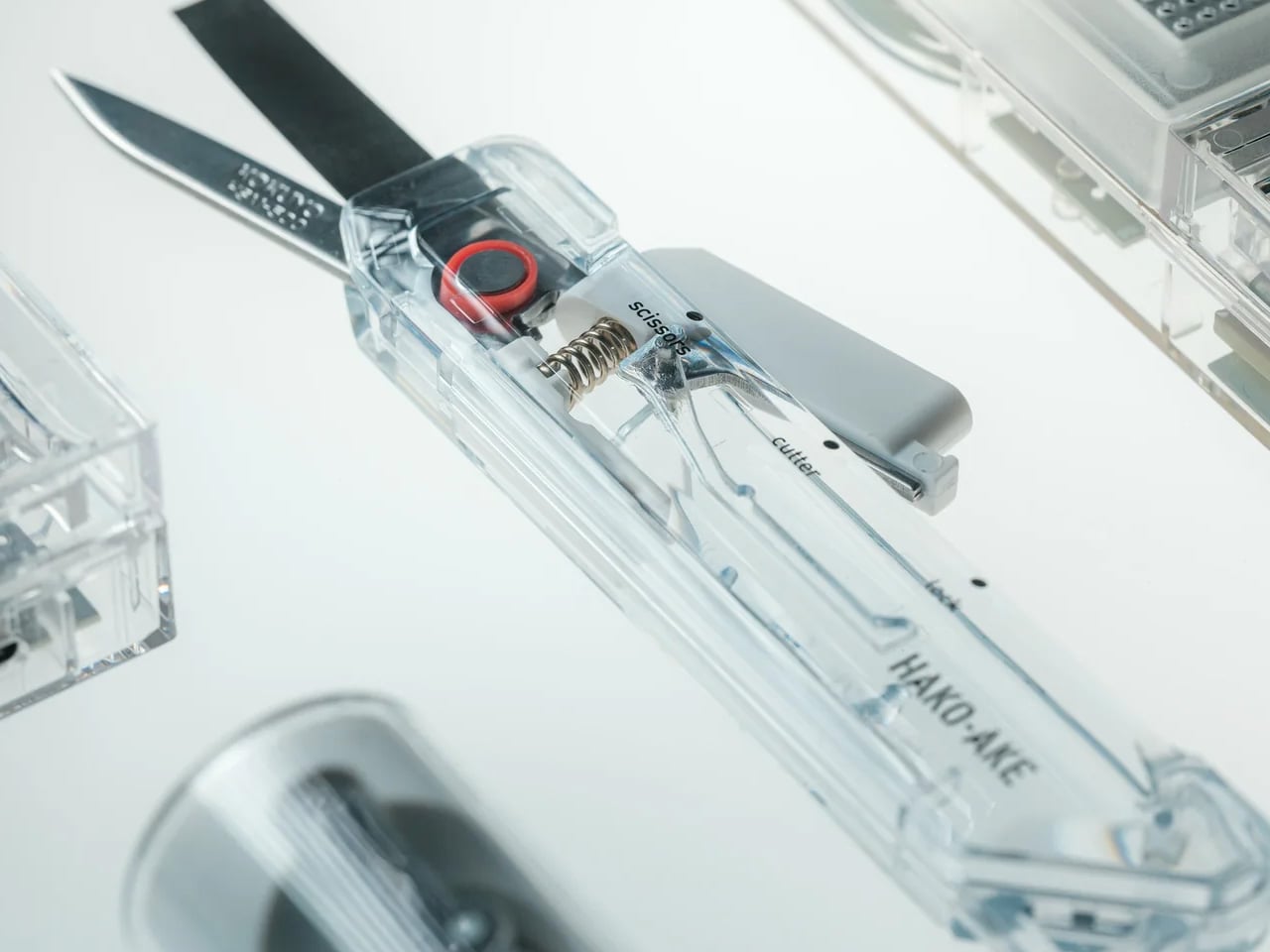
Most box cutters do one thing and leave the scissors somewhere else. The ritual of tearing into a delivery becomes a hunt for a second tool, or a decision to use the first one for everything and hope it does not cut too deep. The ClearSlide Box Opener removes that problem. A blade and scissors in a single compact body, it handles packaging tape and tags in one uninterrupted motion, without putting the package down.

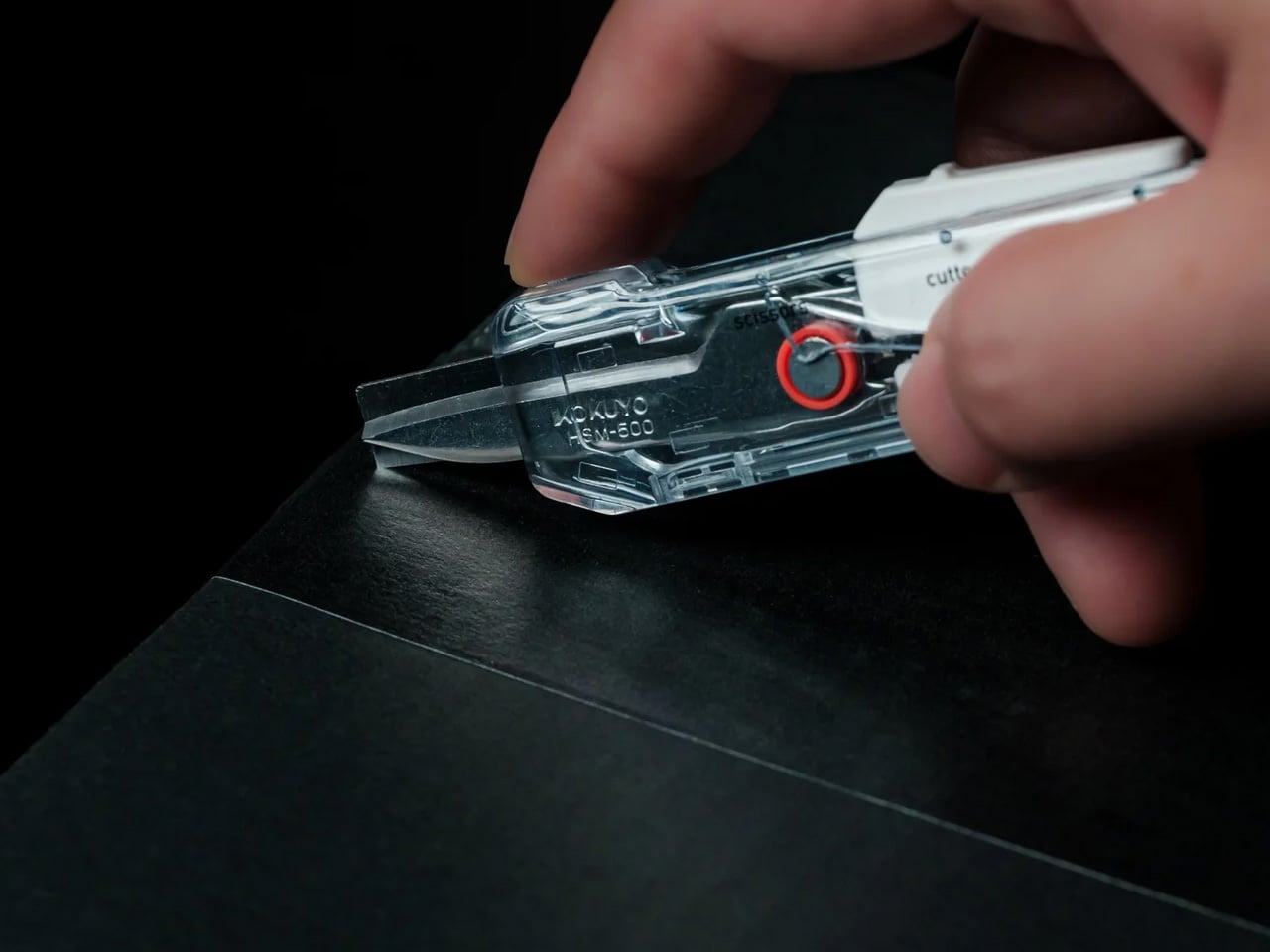
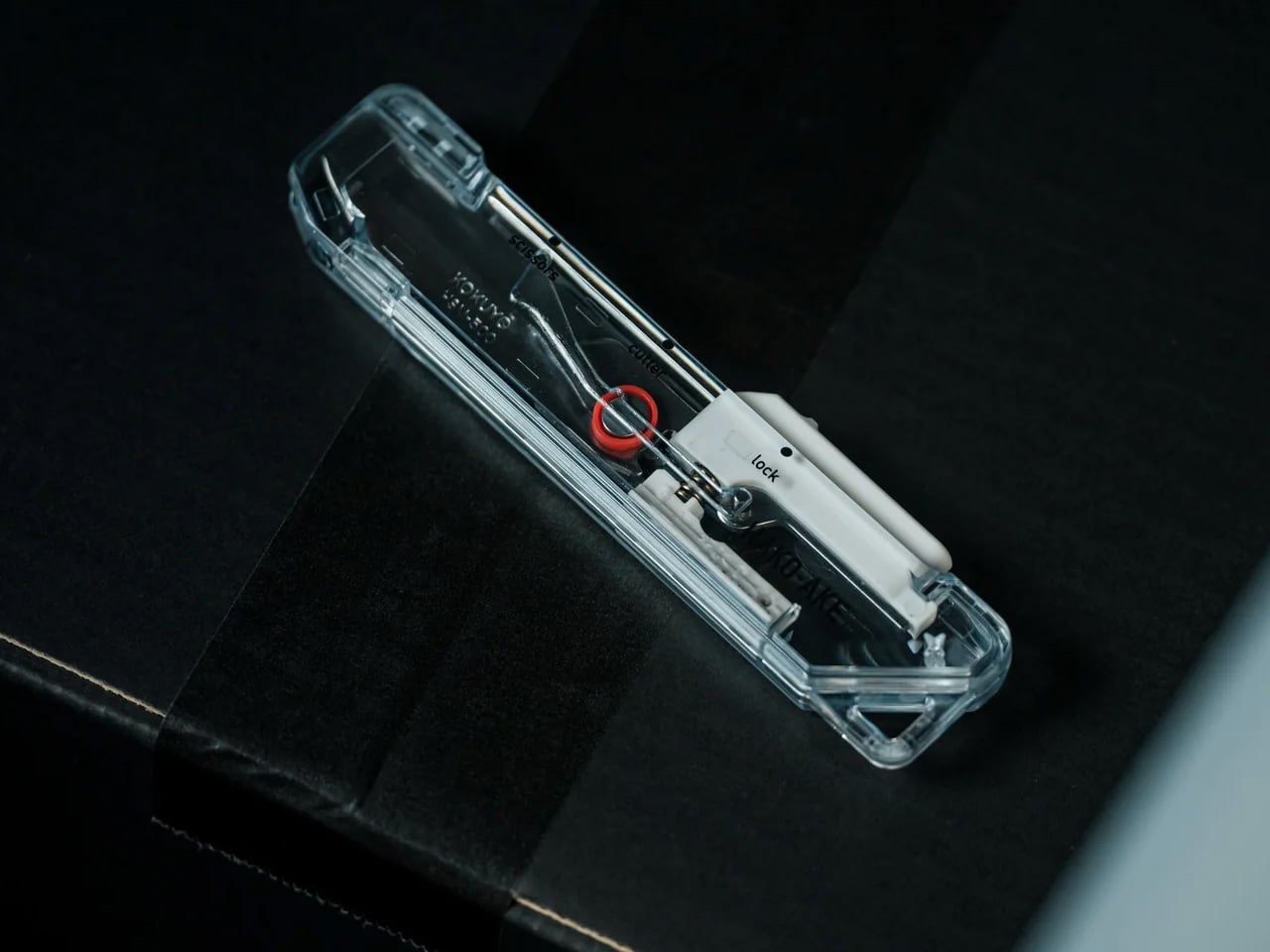
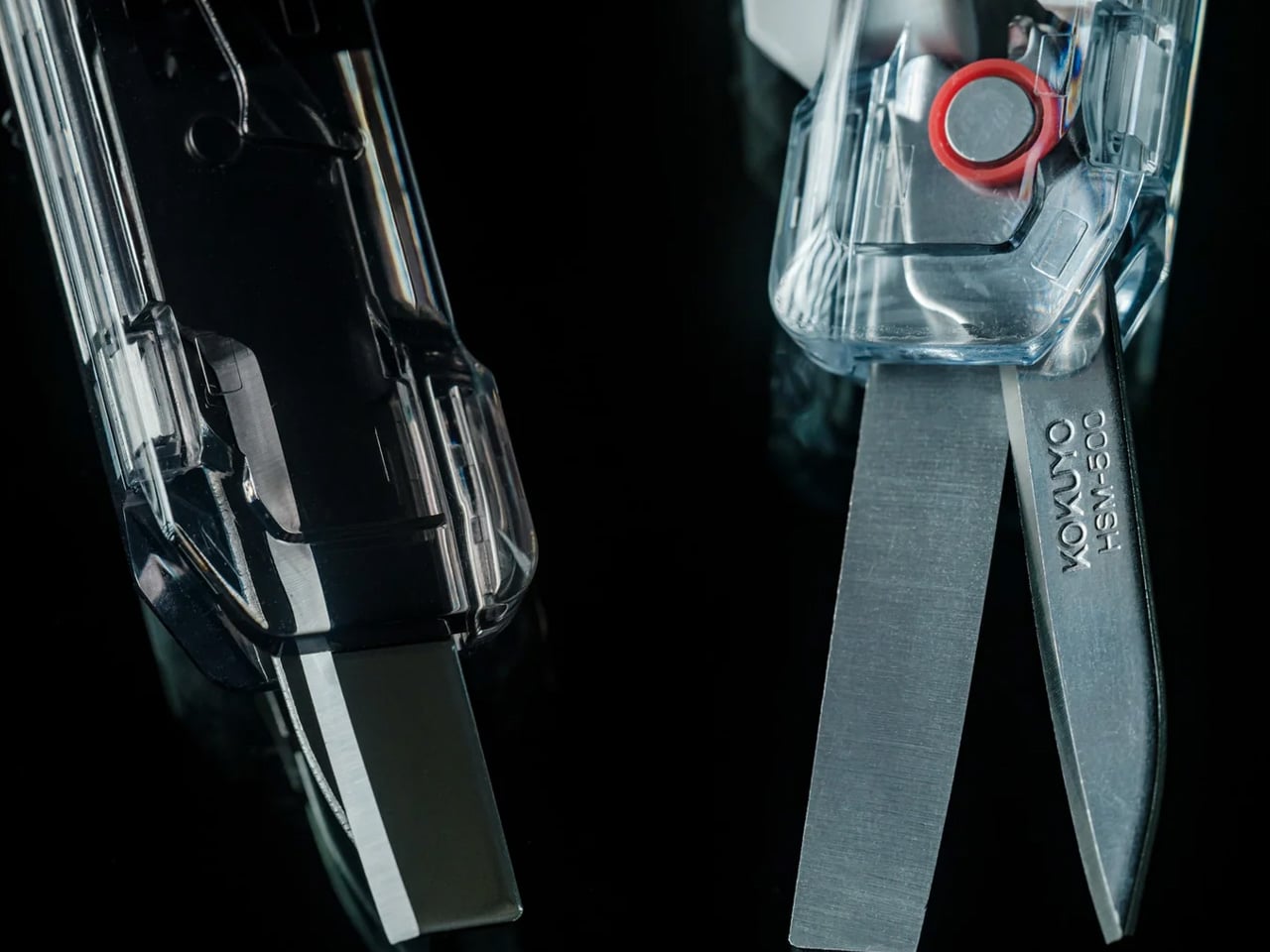
What makes it worth keeping on the desk is the mechanism. A sliding thumb control moves between lock, cutter, and scissors without requiring both hands; each position locks in before releasing cleanly. The blade extends just 0.12 inches, enough to slice through tape without reaching the contents inside. The transparent body shows the internal mechanism’s shift with every adjustment, turning a utility object into something that actually earns its spot next to the keyboard.

Click Here to Buy Now: $30.00

One Tool, Two Functions

Box cutters and scissors solve the same last step in two different ways. The ClearSlide puts both into a single form factor small enough for a pocket. The sliding mechanism moves through three positions: lock, cutter, and scissors, each one clicking into place before releasing with a clean spring action. That kind of tactile confirmation in something this compact is not common. It changes how deliberate the tool feels in use and removes the uncertainty from every position change.

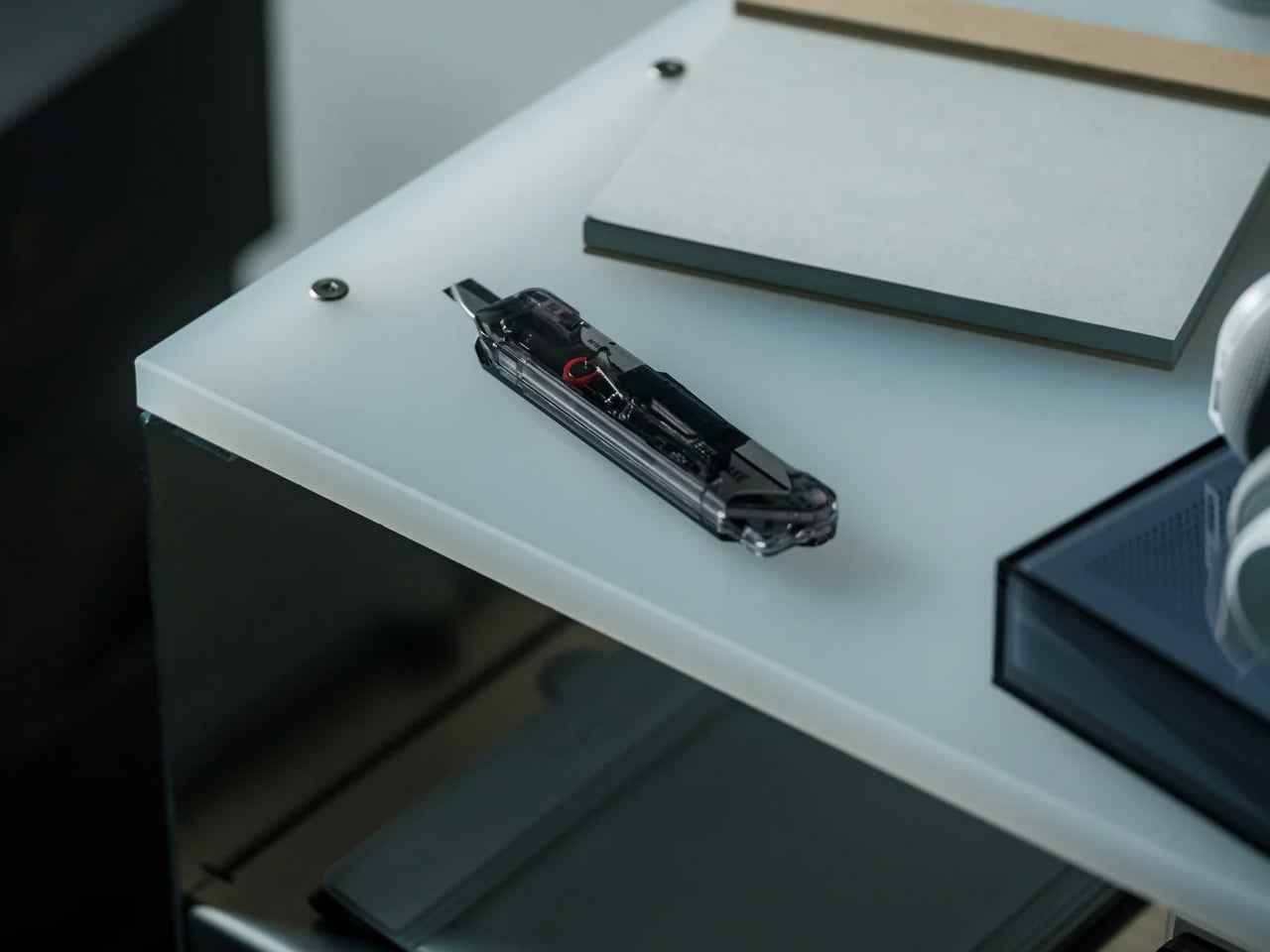
The blade extension is limited to 0.12 inches, which sounds like a constraint until you consider what it actually prevents. Most damaged deliveries come from a blade that cuts too deep on the first pass. At this depth, the cutter handles tape without reaching the contents underneath, which is the only job it needs to do. The scissors handle the rest: tags, inner packaging, anything that a blade would otherwise make worse rather than better.

Transparent by Design

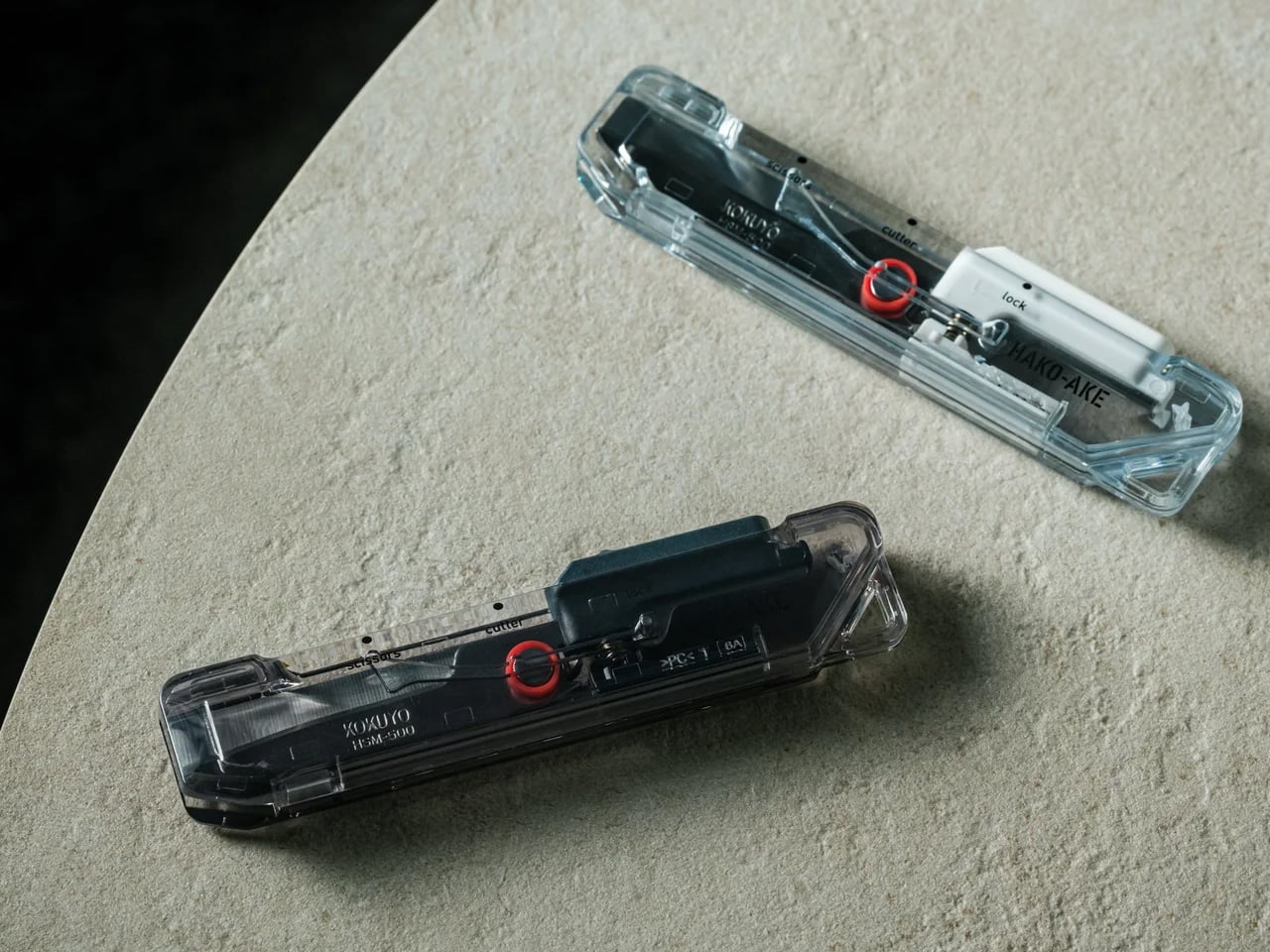
Most tools hide their engineering inside an opaque body. The ClearSlide does the opposite. The transparent shell makes the internal sliding mechanism visible with every position change, so you can see the active mode before making the cut. It is a functional decision dressed as an aesthetic one, or an aesthetic one that happens to be functional. The result is a tool that communicates clearly and carries a retro-tech character most utility objects never bother developing.

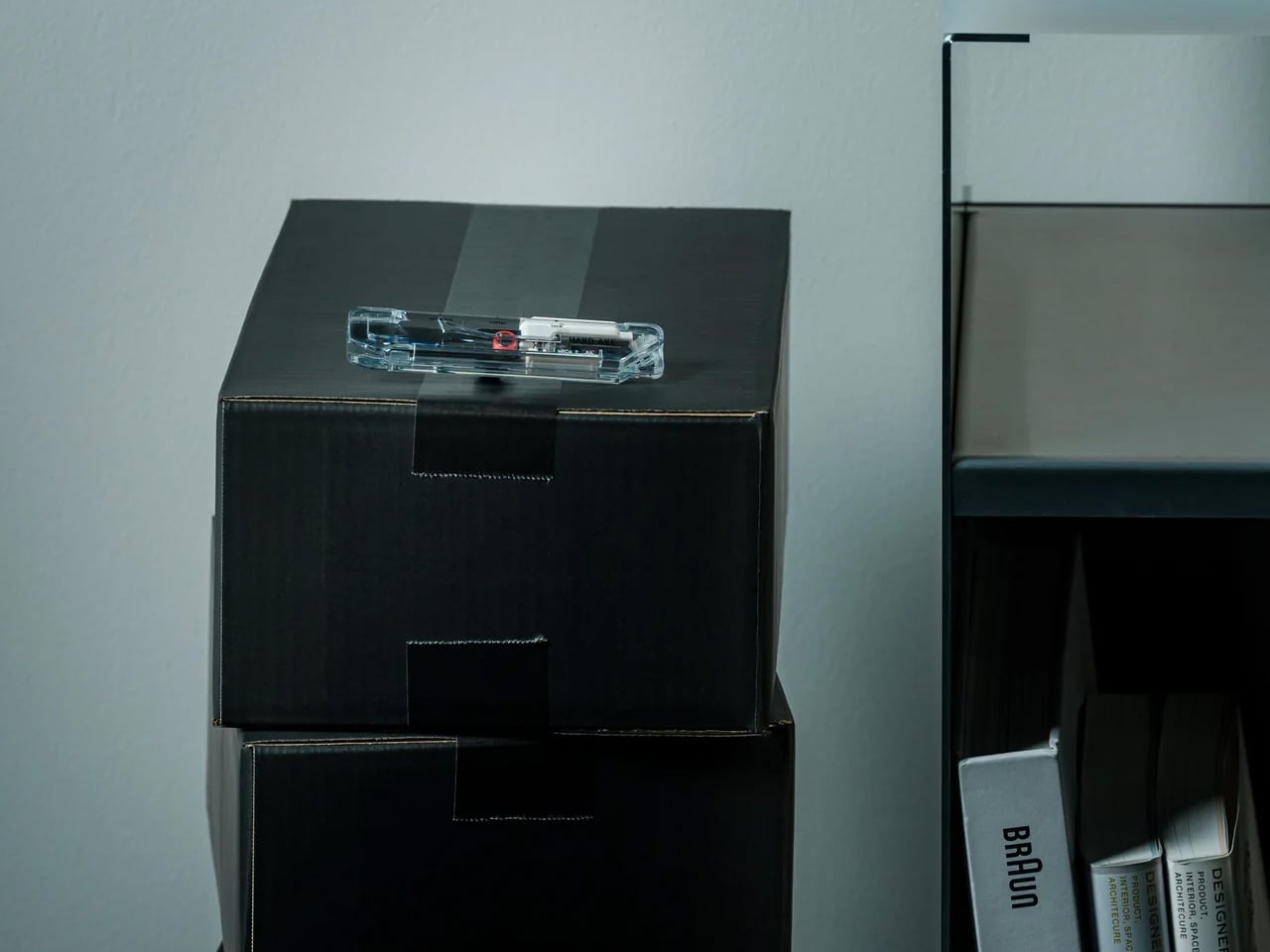
Compact enough for a pocket, fitted with a built-in strap hole for clipping onto a bag, and retractable for safe carry, the ClearSlide is designed to stay within reach. The frustration of opening packages is rarely about the cutting itself. It is about the pause before it: the drawer search, the tool switch, the moment where the delivery wins. This closes that gap. One tool, one pocket, one motion from the moment it arrives at the door.

What We Like

  • Blade-and-scissors combination: replaces two tools with one slim body that handles packaging tape and tags in a single session, without switching grip or setting the package down
  • Single-hand operation: the thumb-controlled slider moves between lock, cutter, and scissors with one hand, leaving the other free to hold whatever is being opened
  • Controlled 0.12-inch blade depth: cuts through tape cleanly while staying clear of the contents underneath, solving the most common frustration of opening deliveries with a standard blade
  • Visible internal mechanism: the transparent body lets you confirm the active mode before every cut, and gives the tool a distinct retro-tech character that sets it apart from every other cutter in a drawer

What We Dislike

  • Blade replaceability: the product does not specify whether the cutter blade is replaceable, which matters for anyone opening packages regularly and expecting long-term performance from a $30 tool
  • Limited color range: Clear, White, and Smoke Black are clean choices, but the transparent body has the visual potential to carry a wider palette than three colorways currently allow

The Tool That Ends the Two-Step

The ClearSlide Box Opener was built around a problem most people have learned to live with rather than solve. Two functions in one tool, controlled by a single thumb, with a blade depth engineered to protect what matters. For something that lives on a desk or clips onto a bag, that level of considered detail at $30 makes it difficult to justify keeping a box cutter and scissors as two separate jobs.

If the current setup involves reaching for one tool and then switching to another halfway through, that is the exact friction this replaces. Pick it up in Clear, White, or Smoke Black. Let the next delivery be the last time the packaging feels harder to deal with than whatever is inside it, and let the scissors that used to live in the desk drawer finally earn a proper rest.

The post This Transparent Box Opener Handles Tape & Tags Without You Ever Putting The Package Down first appeared on Yanko Design.
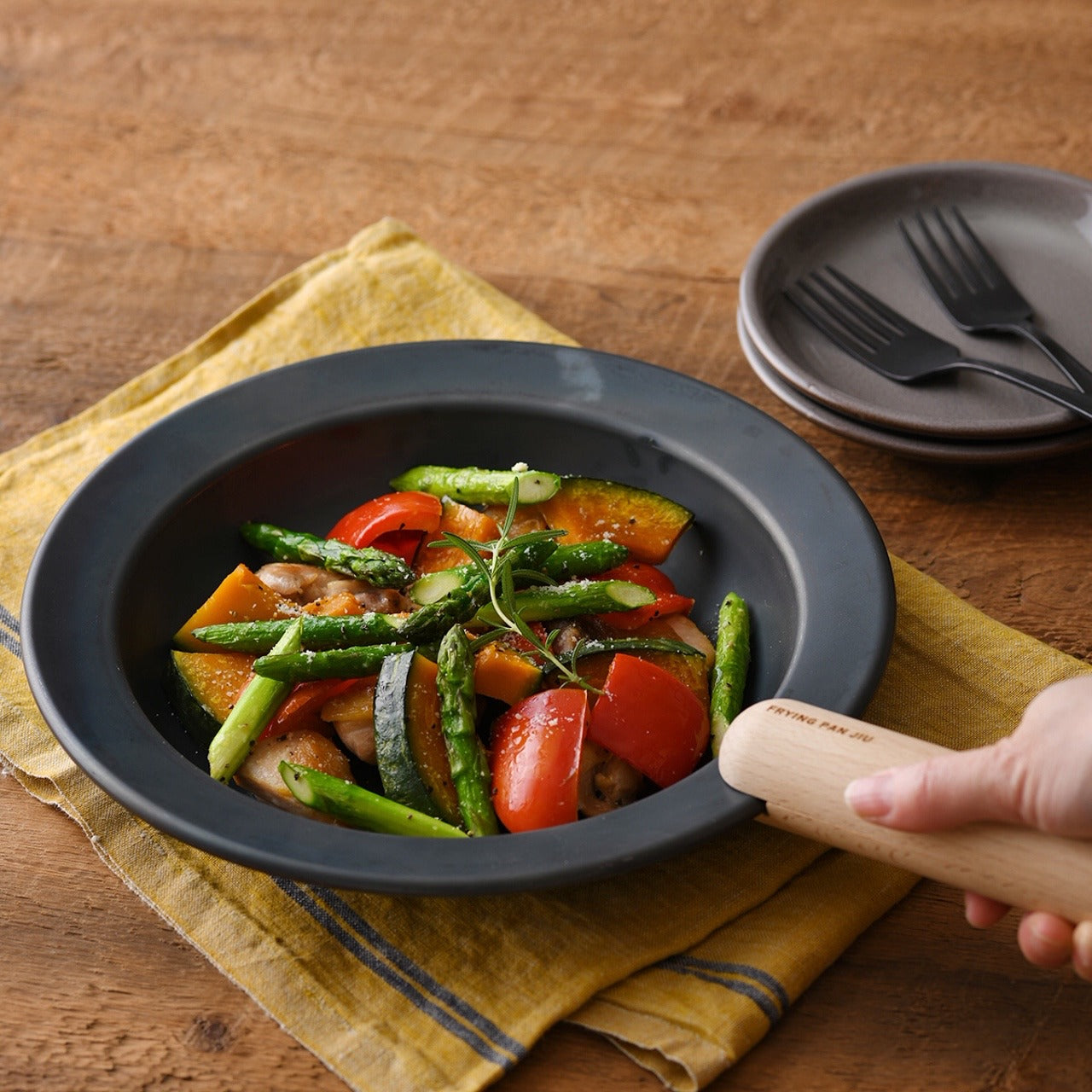
This Iron Frying Plate Sears Food on Bare Steel & Goes Straight From the Stove to Your Table

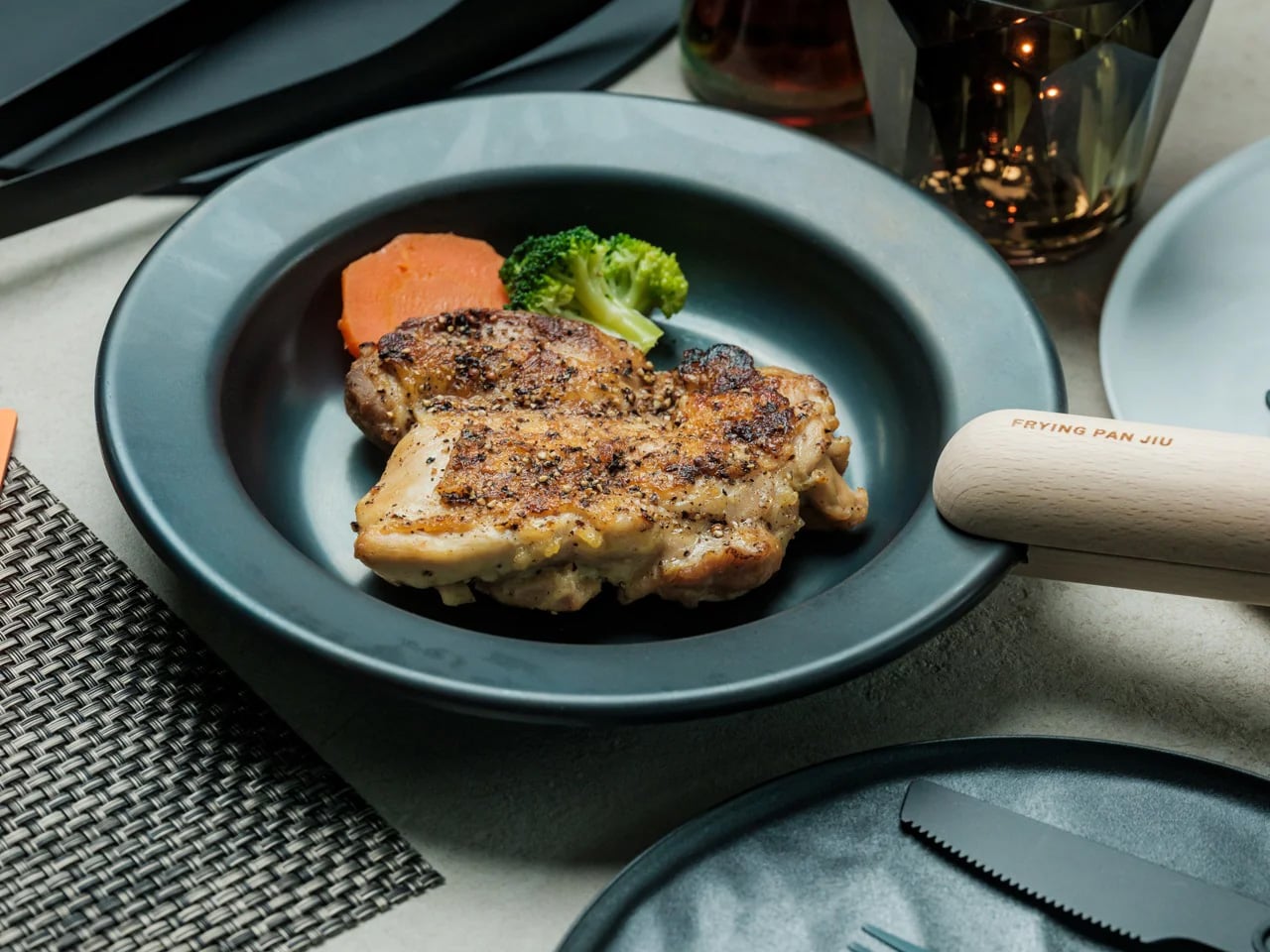
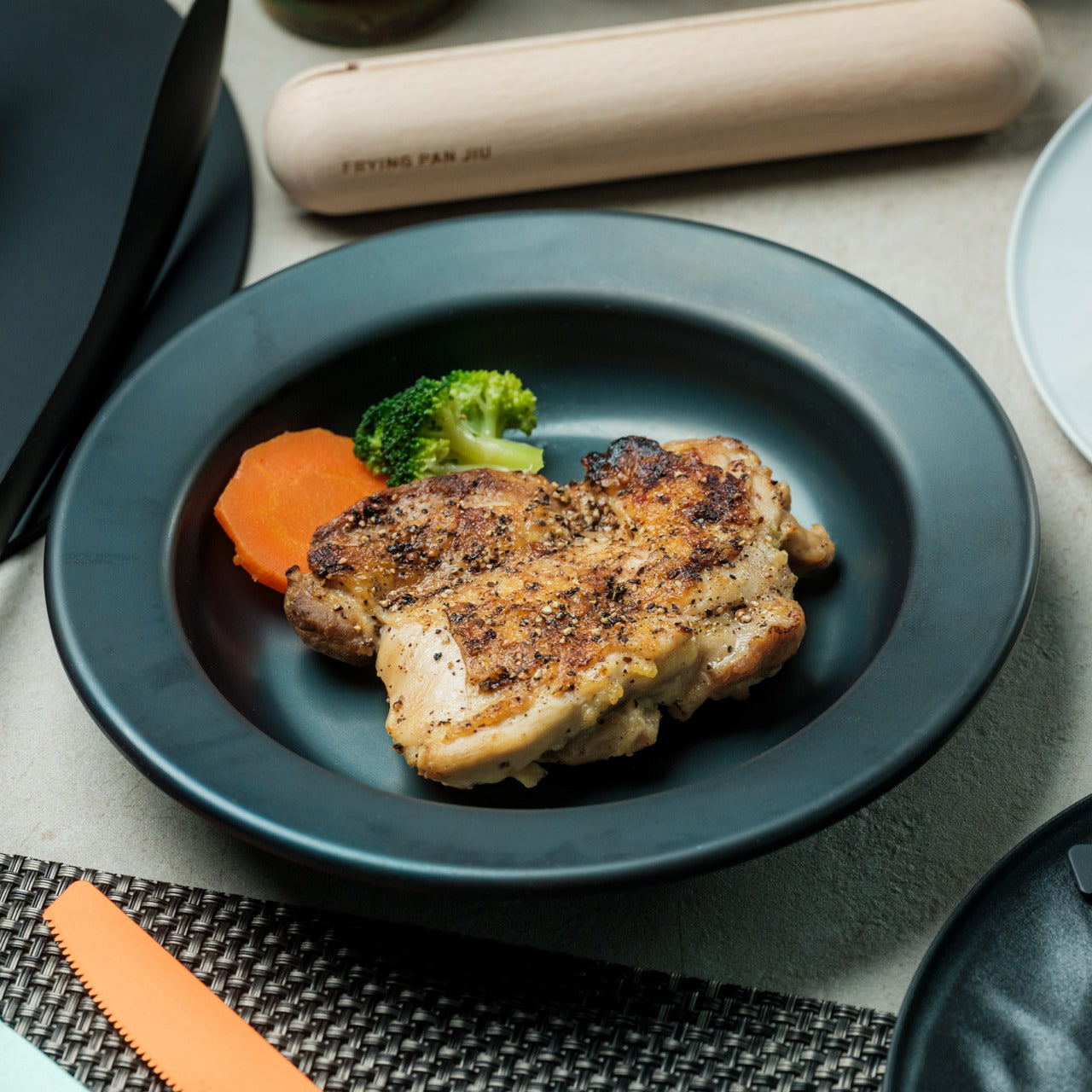
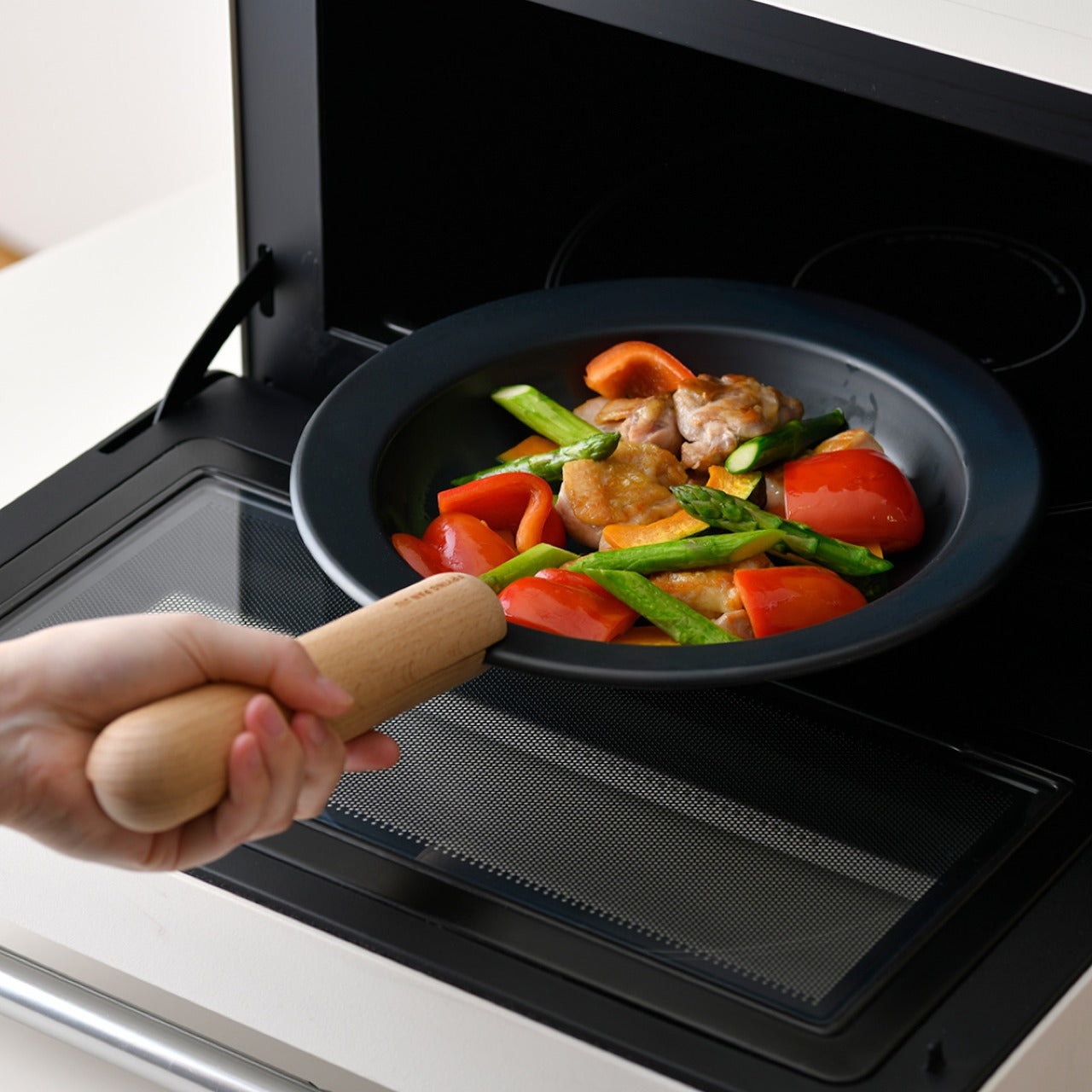
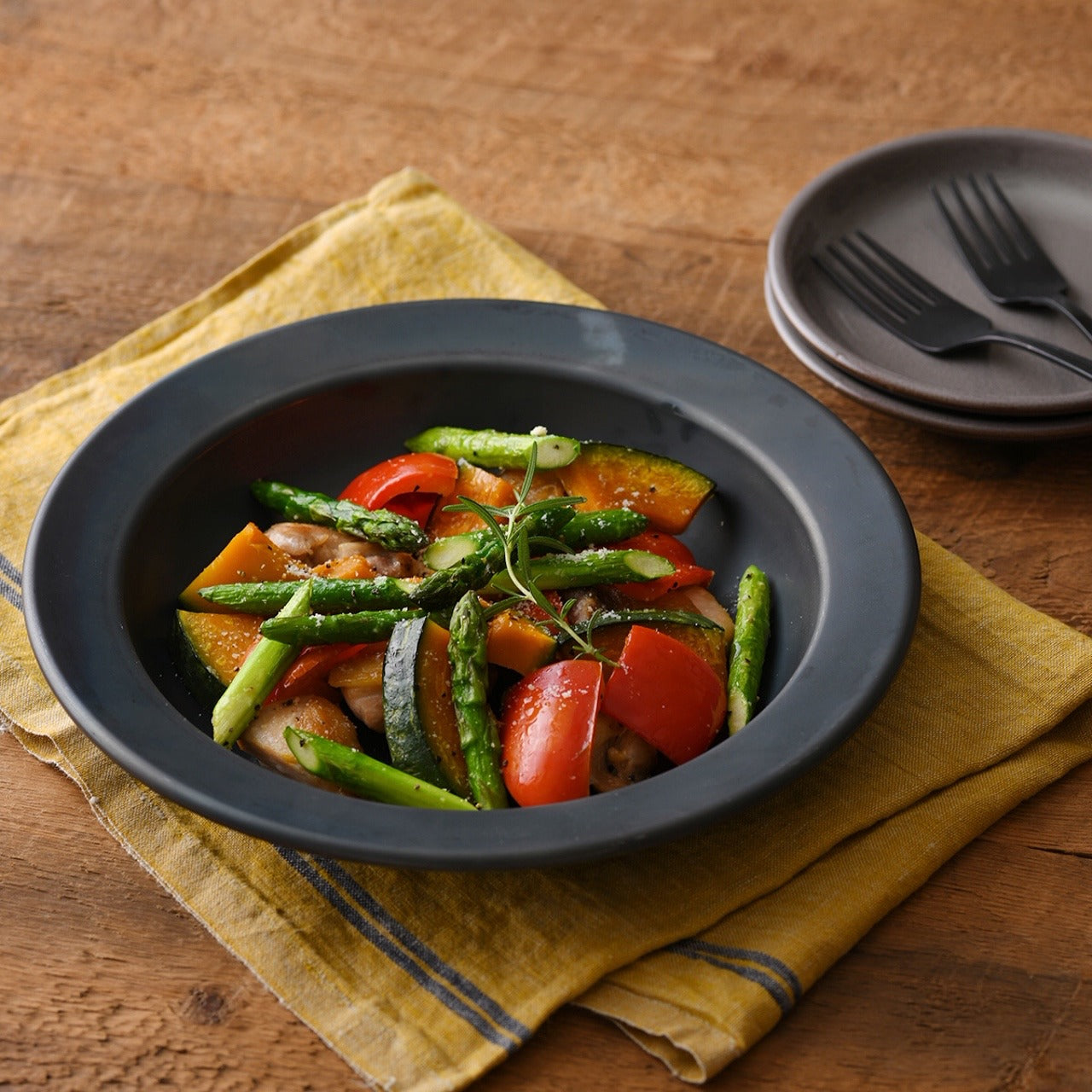
Most pans are designed for the cook. The Iron Frying Plate was designed for the meal. It removes the transfer step entirely, functioning as the cooking surface and the serving plate in one. When the food is done, it comes to the table on the same steel it was cooked on, without losing the heat, the texture, or the visual honesty of something made properly. That is not a workaround. It is a deliberate design decision, and it changes how a meal feels from start to finish.

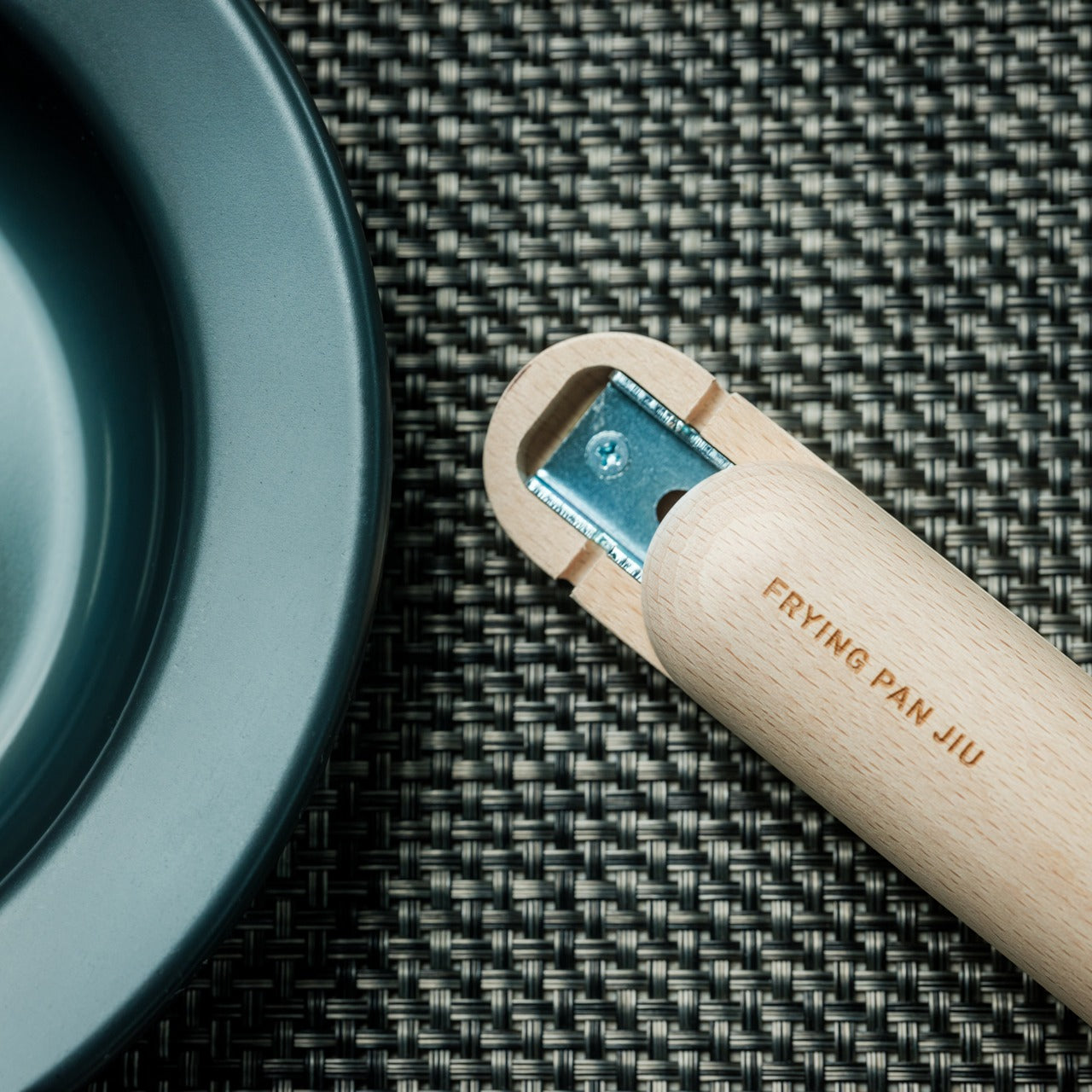
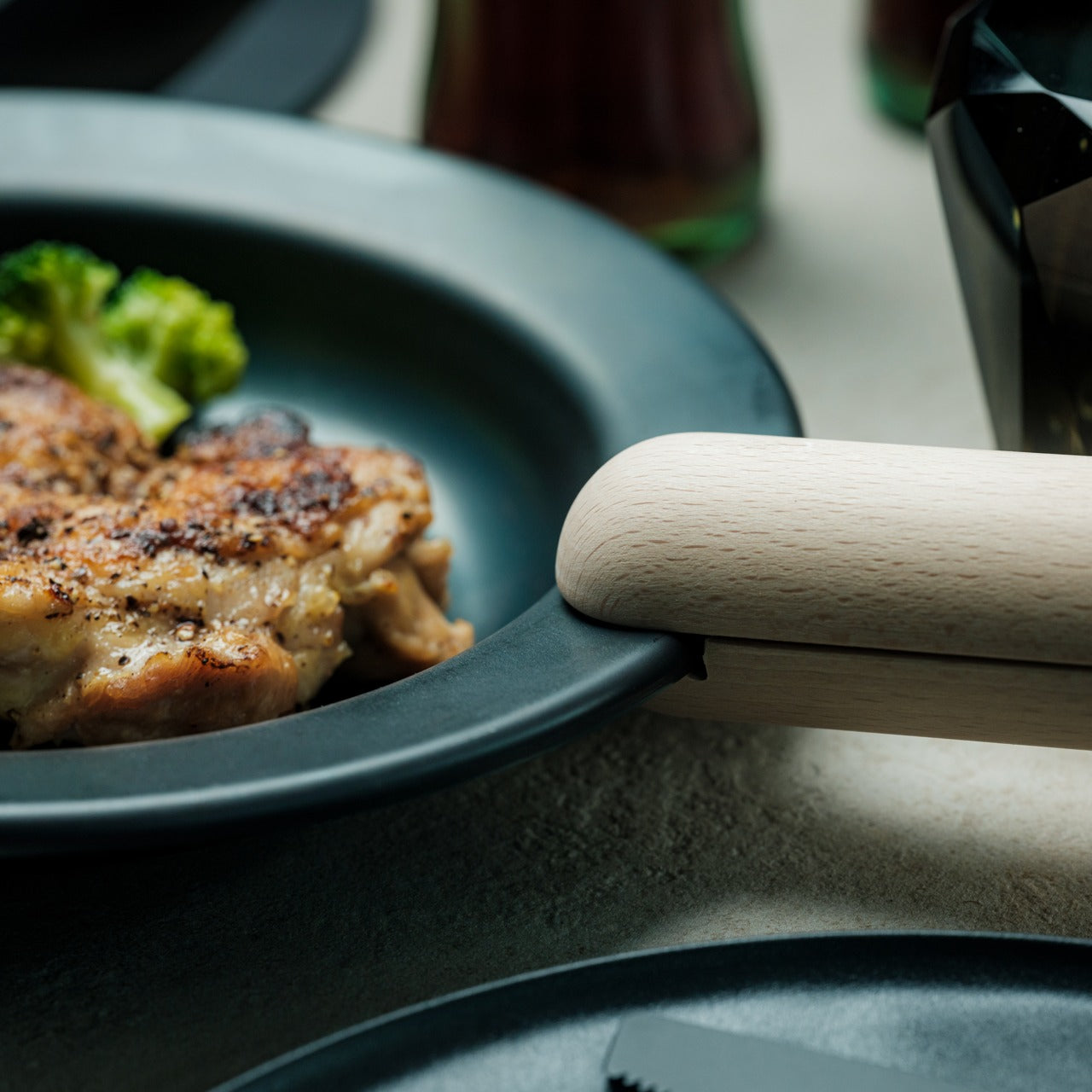
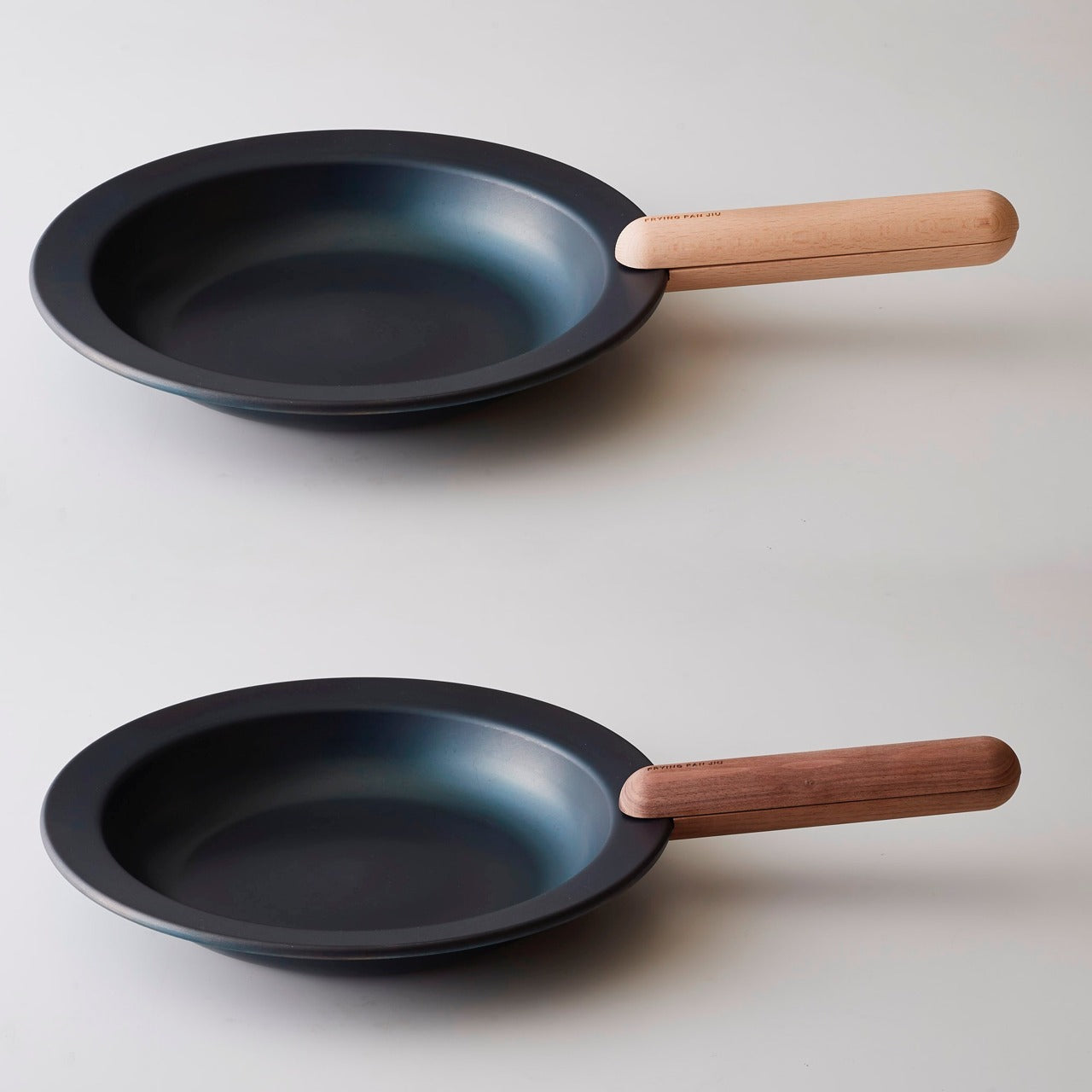
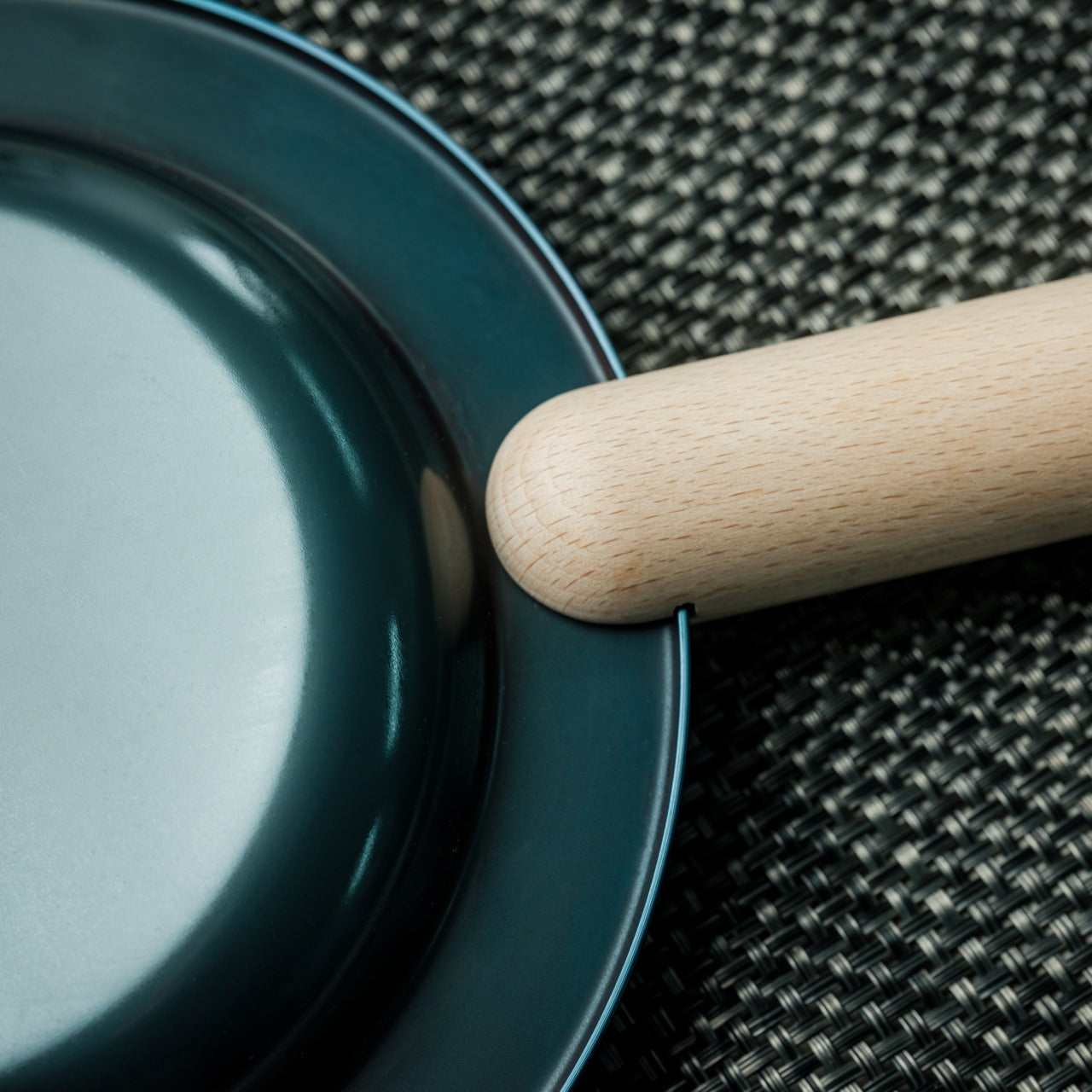
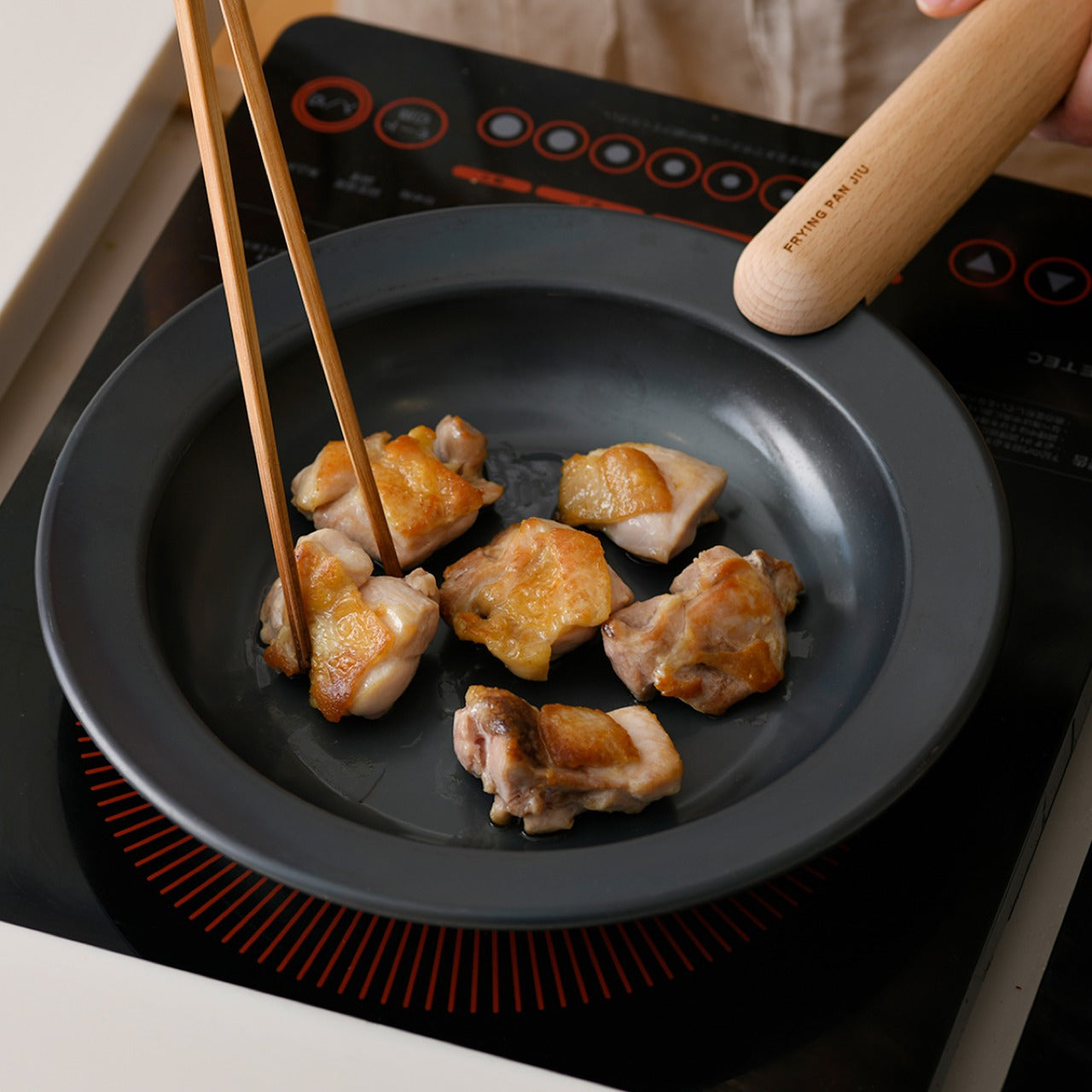
The plate is made from 1.6mm-thick mill scale steel, uncoated and rust-resistant, and arrives ready to use without any initial seasoning requirement. The wooden handle attaches and detaches with one hand, so the transition from stove to table takes nothing more than a single motion. Stick resistance builds naturally through use, and the steel itself develops character over time. There are no coatings to preserve, no temperature limits to track, and no gap between the way the food was cooked and the way it tastes.

Click Here to Buy Now: $69.00

Steel Without Compromise

Mill scale steel brings heat retention and natural stick resistance to the surface, and because JIU is uncoated, nothing softens what happens between the flame and the food. That directness is where flavor and texture come through cleanest. A proper sear forms the way it should, without interference from synthetic materials or temperature limitations. The surface improves with use, developing a natural patina that builds over time rather than degrading the way coatings tend to. Rust resistance is built into the material, so the plate holds up to regular use without the maintenance anxiety that follows other types of bare steel cookware.

From Stove to Table in One Motion

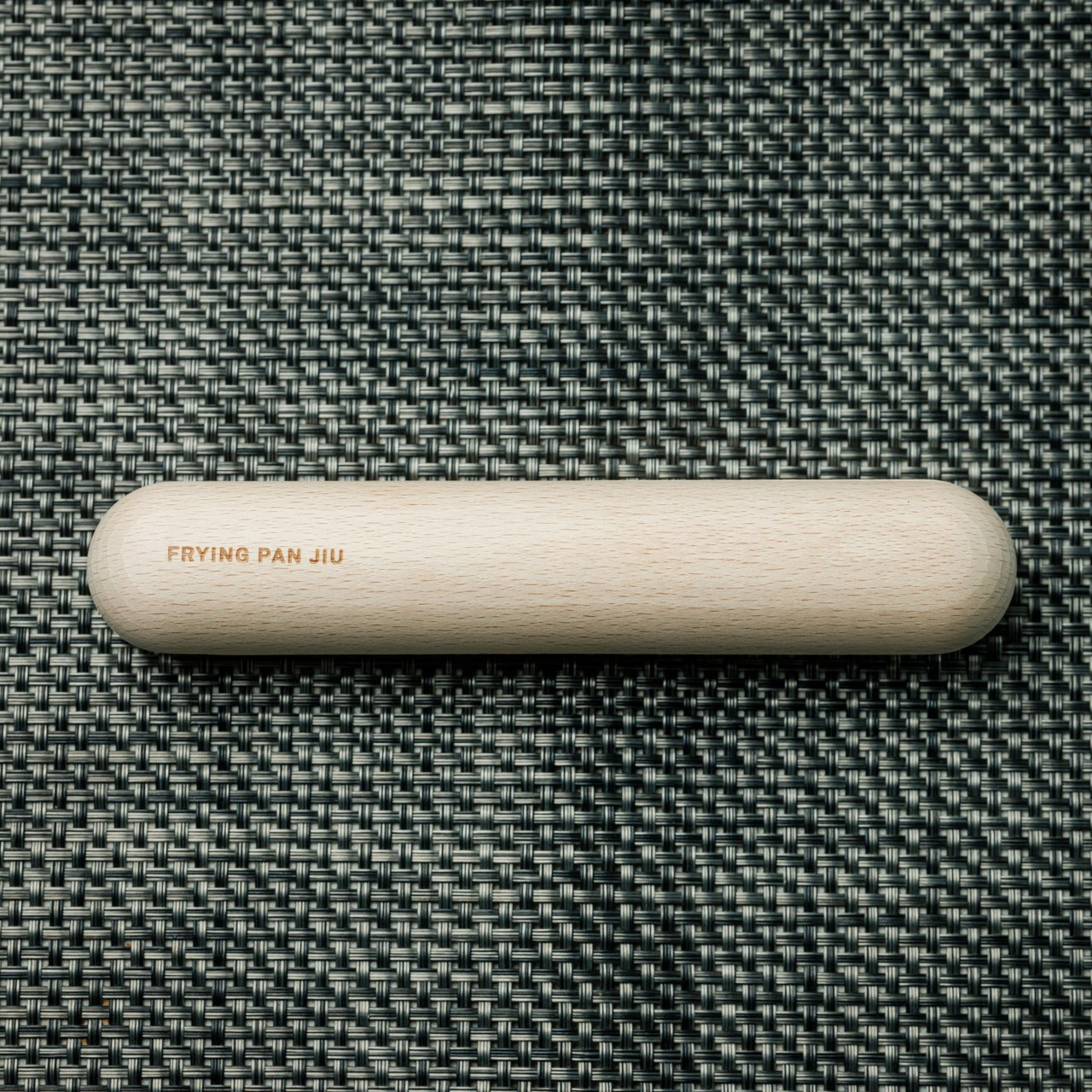
The detachable wooden handle is the detail that makes this work at the table. It comes off with one hand, which means the plate moves freely from the cooking surface to wherever the meal is being eaten without requiring tools, extra grip, or a second set of hands. The wood stays cool during cooking, and the mechanism is intuitive enough to become automatic after the first use. Cookware that disappears into a routine rather than interrupting it earns its place in a kitchen. JIU does that by solving the transition problem that most cookware does not acknowledge exists.

What We Like

  • Mill scale construction: 1.6mm-thick uncoated steel that builds natural stick resistance through use and delivers genuine flavor without synthetic coating interference between the food and the heat
  • Cook-to-table design: the plate is the cooking surface and the serving vessel in one, cutting out the transfer step where heat, texture, and presentation quality typically suffer
  • One-hand handle operation: the wooden handle attaches and detaches in a single motion, making the move from flame to table clean without requiring tools or both hands
  • Ready to use from the start: no seasoning ritual before the first cook; the plate performs immediately and improves with continued use over time

What We Dislike

  • Wooden handle durability unclear: the detachable handle is a strong design choice, but the product provides no information on its heat tolerance threshold or long-term maintenance requirements

The Pan That Closes the Loop

The Iron Frying Plate is the kind of object that makes a meal feel more intentional without asking anything extra of the person making it. The steel does the work. The handle comes off when cooking is finished. The plate goes straight to the table. Nothing is lost in the move from stove to seat, because there is no move to make. That level of consideration in a cooking tool is rarer than it should be.

If the meals you cook deserve better continuity from the moment they leave the heat to the moment they are eaten, this is the straightforward answer. No extra dishes, no coating to preserve, and a surface that gets better the more it earns its keep. JIU makes the case for cooking and eating on the same terms.

The post This Iron Frying Plate Sears Food on Bare Steel & Goes Straight From the Stove to Your Table first appeared on Yanko Design.
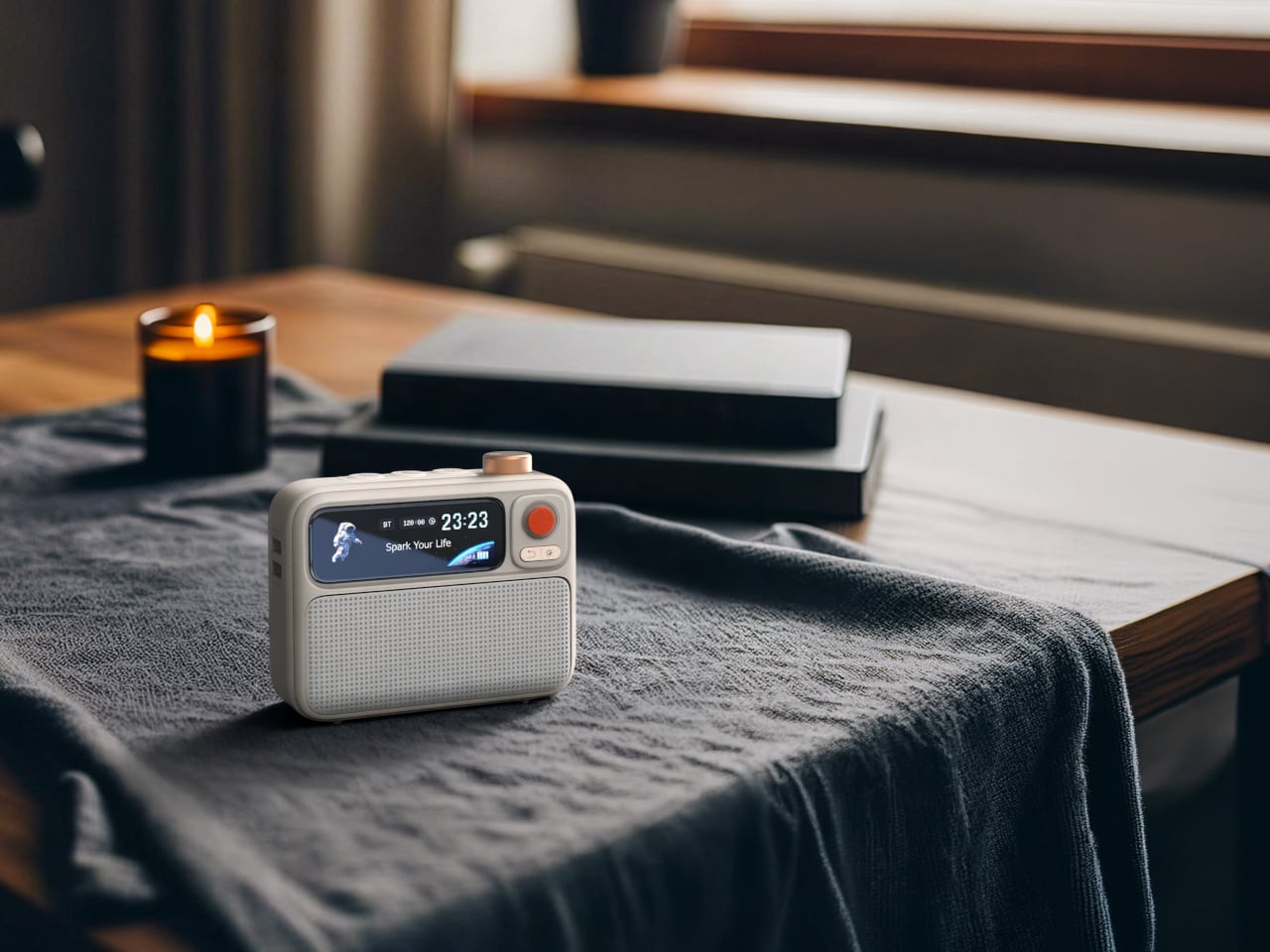
The 7 Best Desk Gadgets & Tools of July 2026 for College Students

A dorm room desk is rarely designed. It arrives with the furniture package or gets assembled in the first week, and everything that lands on it does so gradually: a charger from one order, a notebook from the bookstore, a lamp someone left behind. The surface accumulates. None of it is chosen. These seven products exist in deliberate contrast to that, each one here because it makes the desk feel considered rather than assembled.
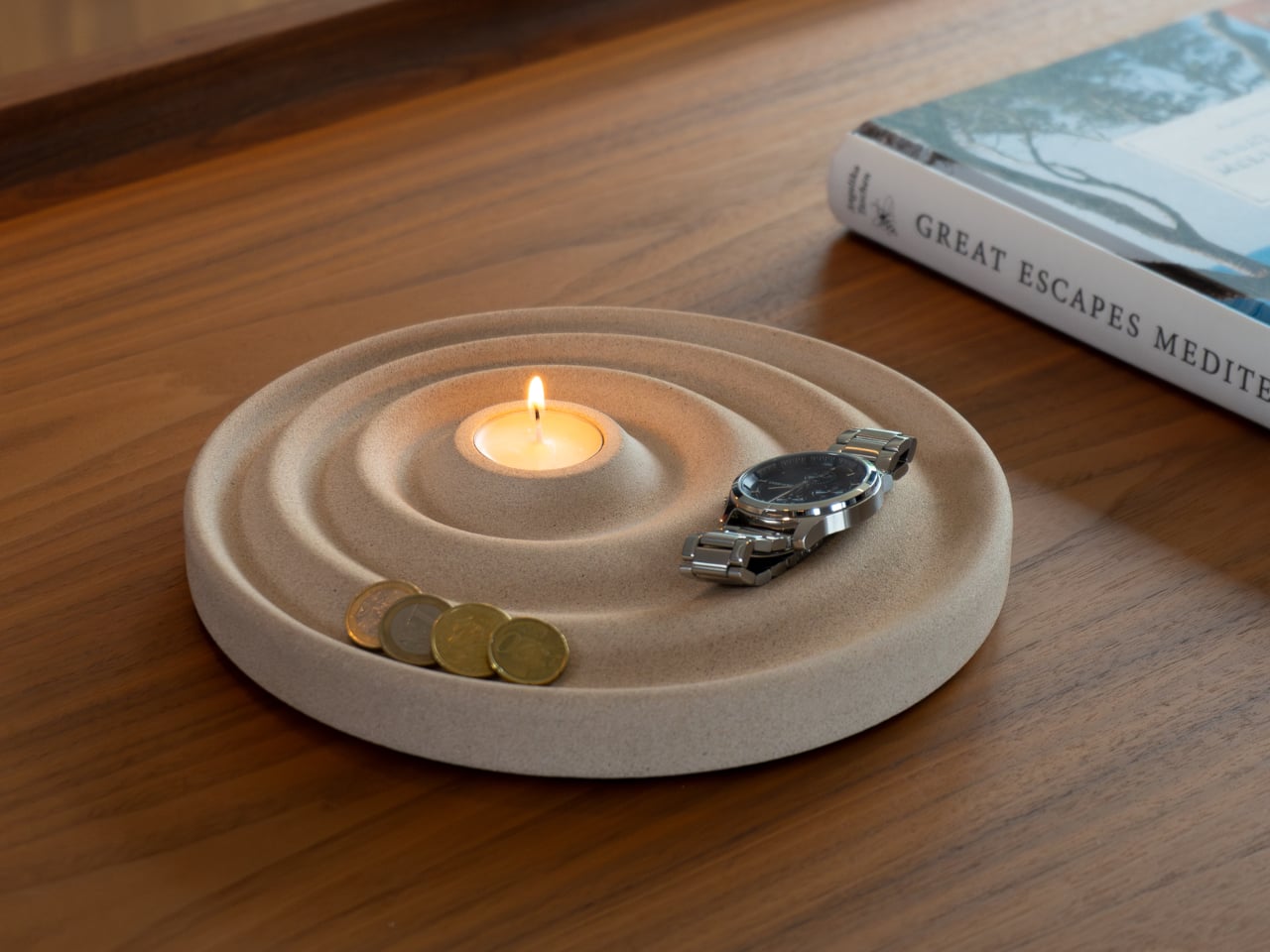
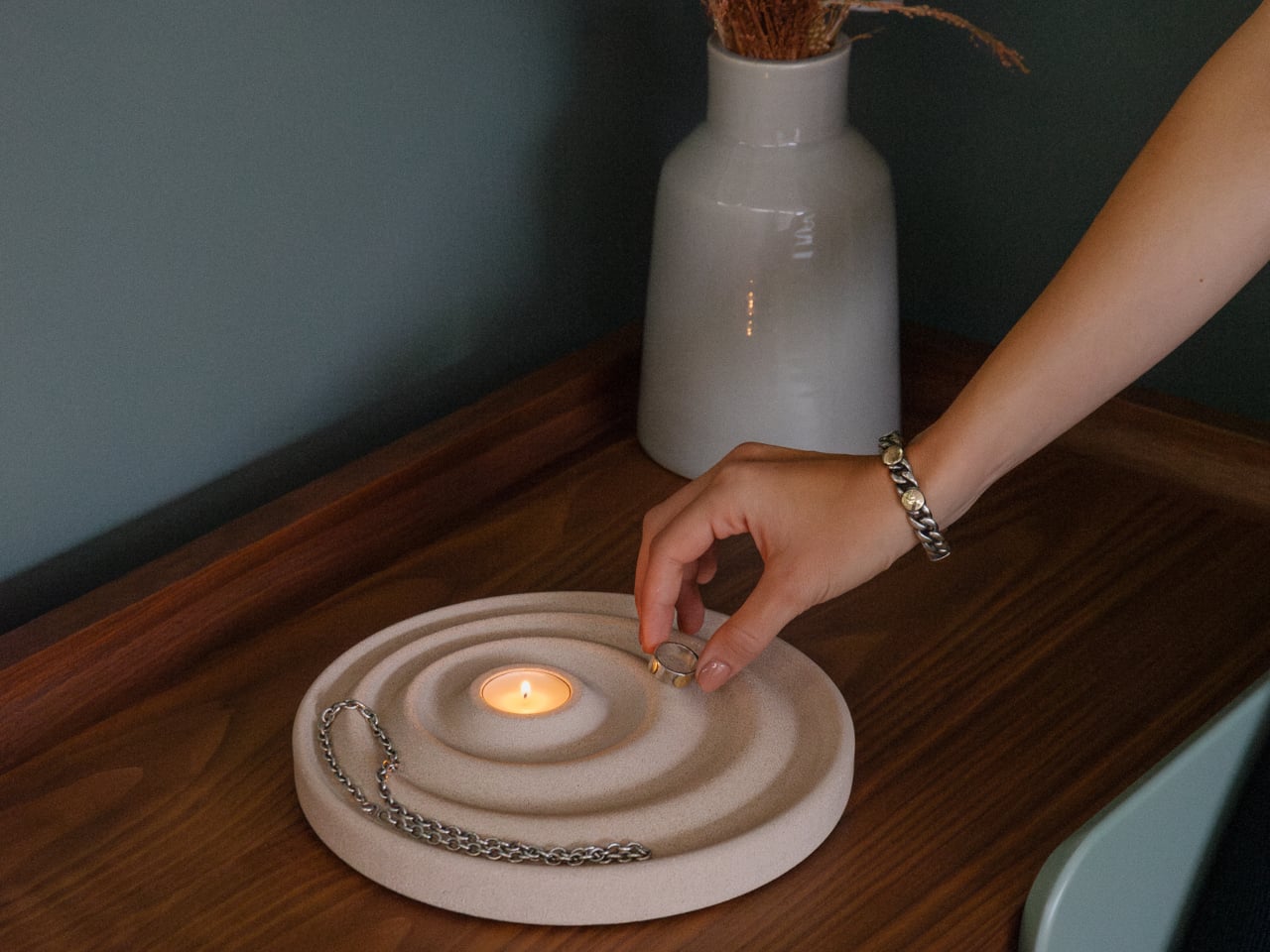
The premise is simple. A dorm room can look like a design studio if the objects on the desk are treated with the same attention you’d bring to anything else worth doing well. A precisely made pen changes how writing feels. A lamp without a cord changes how the room reads at 11 pm. Seven products, one desk, and a genuinely different place to spend the next four years working.

1. Varydes Virga Steel Pen

Most pens earn their place on a desk by being easy to forget. The Virga earns it by being impossible to ignore. Designed by Kjell Semmer in Berlin, it’s built from solid 316L stainless steel formed into an open lattice structure that reads less like a manufactured object and more like something that simply grew. Fine steel strands weave together and pull apart, dense in places, open and airy in others. Rotate it slightly in the light, and it shifts. You never quite see the same pen twice.

The name borrows from meteorology. Virga is the term for precipitation that falls from clouds but evaporates before reaching the ground: rain that exists but never lands. It’s a strange thing to name a writing tool after, and it’s exactly right. The pen lives between two states at once, organic and industrial, wild-looking and precisely made. Functionally, it stays simple: a smooth twist mechanism, a standard G2 refill, 12.7 centimeters long, 39 grams of steel in your hand. Every piece is individually examined and hand-polished before it ships from the Berlin studio.

What we like:

  • The open lattice geometry shifts visually with every rotation, making this genuinely different to hold and look at than anything else on the desk
  • G2 refill compatibility keeps it going indefinitely without tying you to proprietary cartridges or a single brand’s ink system

What we dislike:

  • At 39 grams, the weight is deliberate and welcome at the desk but noticeably heavier than most pens people carry in a bag throughout the day
  • The raw steel finish that makes it look so honest marks with fingerprints and needs a wipe periodically to stay looking as good as it photographs

2. OrigamiSwift Folding Mouse

The folding mouse has been a category of compromise for years: compact in the bag, limited in use. The OrigamiSwift ends that trade-off by treating the fold as a real engineering problem rather than a marketing convenience. At 40 grams, it collapses to 4.5mm flat, thin enough to slide between the pages of a notebook without leaving a visible ridge. On the desk, it opens in under half a second into a full-sized ergonomic shape that sits naturally in the hand and tracks precisely.

What earns it its place here is how it reframes portability entirely. Portable doesn’t have to mean diminished. The OrigamiSwift performs on a permanent desk just as capably as it does pulled from a bag in a campus café, which is genuinely rare in hardware built around a constraint. The fold mechanism stays satisfying after weeks of daily use, and the Bluetooth connection is reliable. At $85, it asks very little relative to what it returns each time it opens.

Click Here to Buy Now: $85.00

What we like:

  • Folds to 4.5mm flat, then opens into a full ergonomic form in under half a second without asking you to adapt your grip
  • Performs as well on a permanent desk as it does in transit, which is not a given in any product built around a folding mechanism

What we dislike:

  • At 40 grams, the weight registers as unfamiliar for anyone coming from a heavier desktop mouse and takes a few days before it stops being noticeable
  • Bluetooth-only connectivity rules out a wired fallback for tasks where even brief latency becomes friction

3. Inkleaf Foldable Dual-Screen E Ink Notebook

Every E Ink tablet solves roughly the same problem and leaves the same one unaddressed. You get one screen, which means you’re reading or writing, never both at the same time. The Inkleaf closes that gap with two full 10.3-inch Carta E Ink panels opening side by side. Source material on the left, notes on the right. Students moving through a textbook while keeping running annotations, or working between a PDF and a draft document, get the workflow every other tablet approximates but doesn’t complete.

Designed by Kameron Yu, the Inkleaf folds shut like a hardcover at 8.4mm closed and 480 grams. Each open panel measures just 4.2mm, thinner than the reMarkable 2 at 4.7mm and the Kindle Scribe at 5.4mm, and unlike either of those, it folds. It runs Android, supports PDFs, EPUBs, MOBI, and TXT files with no subscription attached to reading your own content. AI handwriting search surfaces any phrase across every notebook you’ve filled. Priced at around $450, with first units shipping to founders in August 2026.

What we like:

  • Two independent panels let you read and annotate simultaneously without switching apps, which changes the actual rhythm of studying rather than just adding a feature
  • Folds to a hardcover profile, thin enough to carry anywhere, and functions as a portable secondary display in a coffee shop or lecture hall just as well as at the desk

What we dislike:

  • At $450, it’s the most significant investment on this desk, and the value compounds most for students who genuinely spend long hours moving between reading and writing in the same session
  • Getting files, handwriting preferences, and AI search configured fully takes longer than it should before the device starts to feel like it actually belongs to you

4. Rolling World Clock

The phone is a bad clock. Not technically, but experientially. Reaching for it to check the time in another city means picking up a device that always has something else to offer, and three minutes later the thread is gone. The Rolling World Clock puts that information on the desk as a physical object: a 12-sided desktop piece that displays the current time across major world cities. It’s there when you need it and quiet when you don’t.

For a student working with an international cohort, coordinating across time zones, or tracking where a professor’s office hours land on the other side of the world, the clock makes that awareness tactile. You don’t need to reach for it. You simply know. It’s the kind of object that makes a desk feel like it belongs to someone doing real work, which is partly functional and partly about what a well-chosen object does to the space around it. Both things are worth having on the same surface.

Click Here to Buy Now: $49.00

What we like:

  • Puts world time on the desk as a physical object rather than inside a device, removing the distraction of unlocking a phone every time you need to check a collaborator’s local hour
  • Functions as a desk object in its own right, contributing to the setup aesthetically rather than introducing a single utility with nothing else to offer

What we dislike:

  • Requires a clear section of desk surface to be read easily, so it earns its footprint only on a desk organized enough to give it one
  • City selection is fixed by the design, so students with contacts in less commonly featured cities will still need a secondary source occasionally

5. King Jim MagFlap Magnetic Clipboard

The clipboard has been the same object for over a century: a flat board, a spring clip at the top, and a quiet acceptance of everything frustrating about it. Papers flap. Finished pages dangle. There’s nowhere convenient to mount it. King Jim, the Japanese stationery brand, took those frustrations seriously with the MagFlap. Three magnetic additions change how the whole form works: a front flap locks pages flat against the board, a back flap holds completed sheets out of the way, and a full-width clip spans the entire page edge rather than gripping only the center.

The board itself is magnetic, which means it mounts directly to a locker door, a filing cabinet, or any steel surface in the room. At $20.99, it’s the most affordable item on this desk, and possibly the one with the most immediate daily impact. It comes in four colors and three sizes, holds 30 sheets, and stays 0.7 inches thin throughout. For anyone still working through printed readings, annotated syllabi, or multi-page problem sets, it’s the version of the clipboard that should have existed already.

What we like:

  • Three separate magnetic solutions address three separate frustrations, and the full-width clip alone improves on any clipboard that only grips the center of the page
  • Mounts to steel surfaces, turning a dorm locker or filing cabinet into a document station that keeps paper off the desk without losing it

What we dislike:

  • A4 sizing aligns to European paper standards, so US Letter sheets won’t line up precisely with the position guideline printed on the board
  • The back flap holds completed pages reliably at rest but can need a manual reset in a busy lecture hall where movement occasionally pulls things loose

6. Anywhere-use Lamp

Most desk lamps assume the desk doesn’t move, the outlet is nearby, and the cord can be managed. In a dorm room, none of those assumptions hold reliably. The Anywhere-use Lamp is built for the actual conditions: no cord to route, no outlet to negotiate, placement wherever the light needs to be rather than wherever the hardware allows. That flexibility changes how the room works in the evening, giving a reading corner, a bedside surface, or the desk itself usable light without rerouting anything or making a permanent decision.

Good light is one of the least discussed ways a space changes in character. A desk that reads as designed at noon can look like a pile of unrelated objects at 10 pm under a single overhead bulb. The Anywhere-use Lamp fixes the evening version of the room without a cord snaked across the floor or a fixed mounting point that limits where everything else can go. It doesn’t call attention to itself. It makes everything around it easier to see, which turns out to be the more durable kind of value after the first week.

Click Here to Buy Now: $149.00

What we like:

  • Complete placement freedom means the light follows the work rather than the work following the outlet, which is the more sensible arrangement in any room not purpose-built around a fixed desk position
  • Removes cord management from the surface entirely, making everything else on the desk read as cleaner by default

What we dislike:

  • Battery-dependent operation adds charging to the routine, and forgetting it before a late-night session is a real failure mode worth building a habit around early
  • Portability means the lamp migrates to wherever it was last useful, which is a feature until you need it at the desk and it isn’t there

7. Orbitkey Desk Mat

The desk mat is usually the last thing anyone buys and the first thing that changes how a setup reads. Orbitkey’s version is built on the premise that the surface doesn’t just need better material; it needs a better system. Made from premium vegan leather over 100% recycled PET felt, water-repellent and easy to wipe clean, it anchors the desk both practically and visually. A quick-access toolbar runs along one edge, giving pens, a stylus, and small accessories a fixed address instead of leaving them to drift.

Beneath the top layer sits a document hideaway: a flat sleeve that keeps readings and notes stored flush with the surface, invisible from above, and available with a single edge pull. A magnetic cable holder clips freely along the toolbar and repositions as port locations and cable lengths change across different devices. Put everything else on this list on top of it, and the desk finally looks like it was chosen. It ships with a two-year warranty and a 30-day return window, both of which signal confidence in the materials.

What we like:

  • The document hideaway removes paper from the surface without removing it from reach, a more useful distinction than it sounds across a semester of printed readings and annotated handouts
  • The magnetic cable holder repositions freely along the toolbar rather than committing to one fixed anchor point, which matters as the setup changes across the year

What we dislike:

  • Arrives rolled and takes two to three days to lie fully flat; reverse-rolling helps, but patience is part of the initial setup
  • The Medium size works well for a single monitor but will feel narrow for anyone running a second screen alongside their laptop

Seven Objects, One Decision

Seven products, each one solving something the previous object on the desk didn’t. The Virga pen makes writing feel like a decision. The mouse makes portability feel like an upgrade. The Inkleaf turns the way you study into something that reflects how you actually think. The clock puts the world on your surface without the phone. The lamp puts light exactly where the room needs it, not where the outlet happens to be.

The MagFlap and the Desk Mat do the unglamorous work of making the whole setup hold together: paper managed, surface organized, every object with somewhere to live. None of these things announce themselves. They do the work and stay out of the way. That’s what separates a desk that reads as designed from one that just accumulated over time. Four years is a long time to spend in one room. The surface you work at is worth getting right.

The post The 7 Best Desk Gadgets & Tools of July 2026 for College Students first appeared on Yanko Design.