When you first see the Flipper One, it’s clear something has changed. Its predecessor, the Flipper Zero, had the playful, almost toy-like charm of a 90s gadget. It was clever, compact, and just a little bit mischievous. The Flipper One, by contrast, is not playing around. With its exposed metal, ruggedized shell, and dense, purposeful form, it looks less like a hacker’s Tamagotchi and more like something you’d find bolted to the dashboard of a military vehicle. The design language has become, in the words of Flipper’s CEO Pavel Zhovner, “sharper, smarter, more cunning, more brutal.”
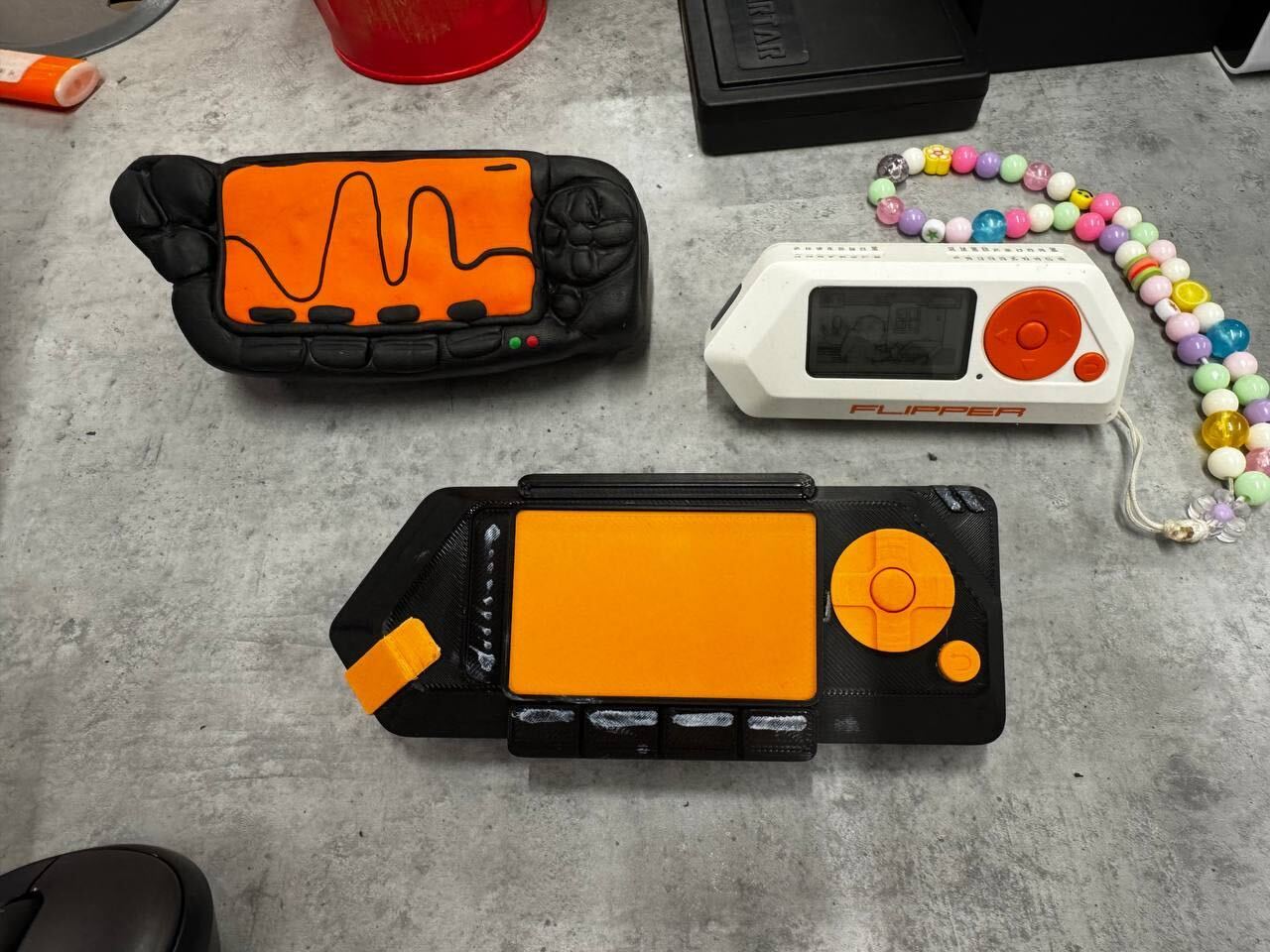
The source of this aesthetic shift isn’t another cyberpunk movie. While the team’s love for William Gibson’s Johnny Mnemonic is still part of the lore, the Flipper One’s design was shaped by a much more tangible artifact. “There was a very tangible, physical reference this time too,” Zhovner explains in an exclusive interview with Yanko Design, “the Yaesu FT-897D radio transceiver. It’s serious field communications equipment.” That single object unlocks the entire story behind the Flipper One’s aggressive new form. The team’s earliest prototypes, he notes, were shaped by hand in polymer clay to mimic the radio’s rugged, function-first ergonomics, and even then, they “looked remarkably close to it.”
Designers: Pavel Zhovner & Flipper Devices
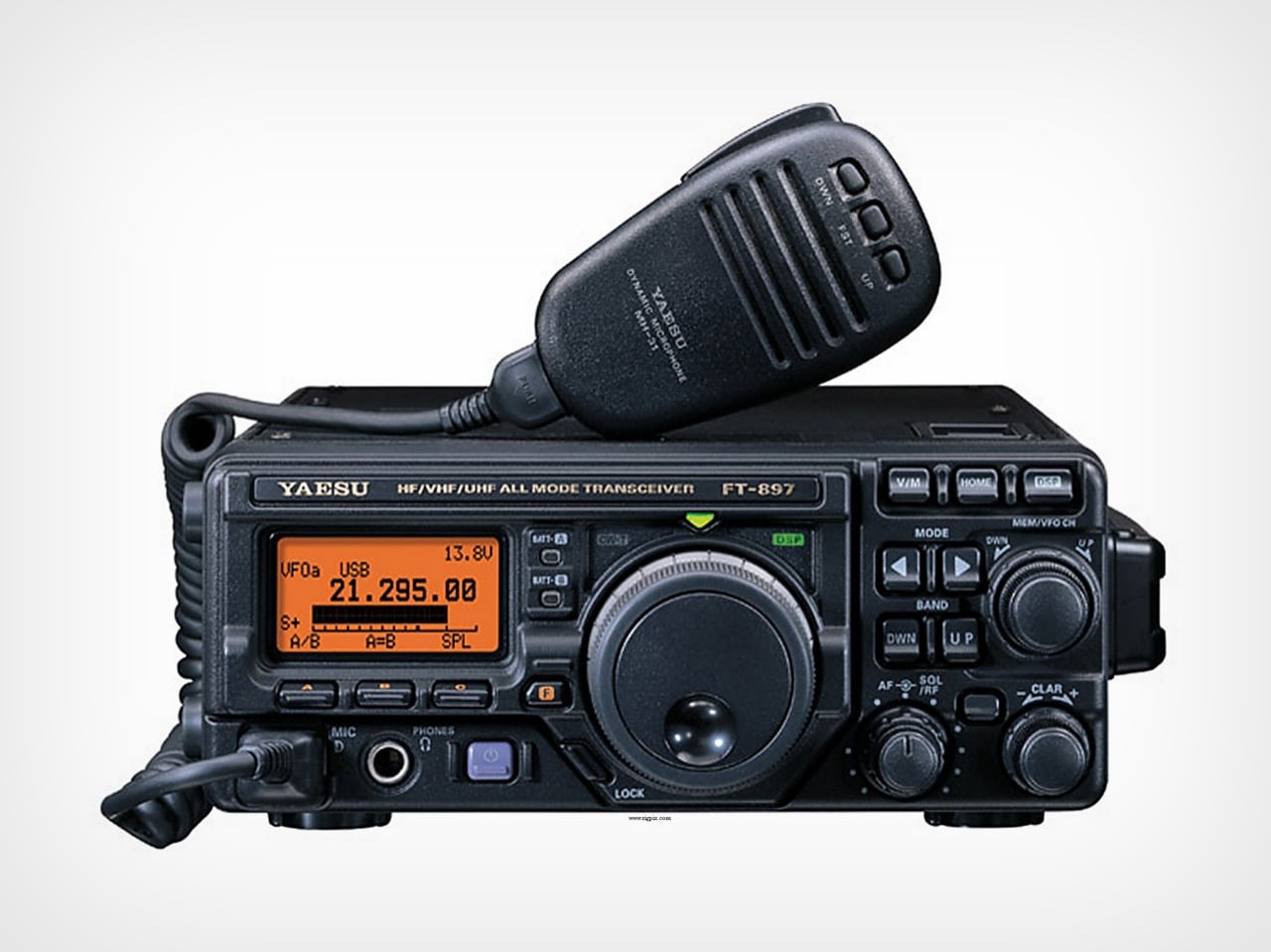
Yaesu FT-897D radio transceiver
This move from fiction to field equipment wasn’t just a stylistic choice; it was a direct response to the device’s new capabilities. The core challenge in creating the Flipper One wasn’t about living up to the Zero’s reputation, but a years-long technical quest. “For years, we were chasing the right balance between performance, battery life, and price,” Zhovner recalls. Every processor they considered “forced a compromise we weren’t willing to make.” The breakthrough finally came with the arrival of the RK3576 chip. “The moment we looked at its performance specs and peripheral support, we knew – this was it.”
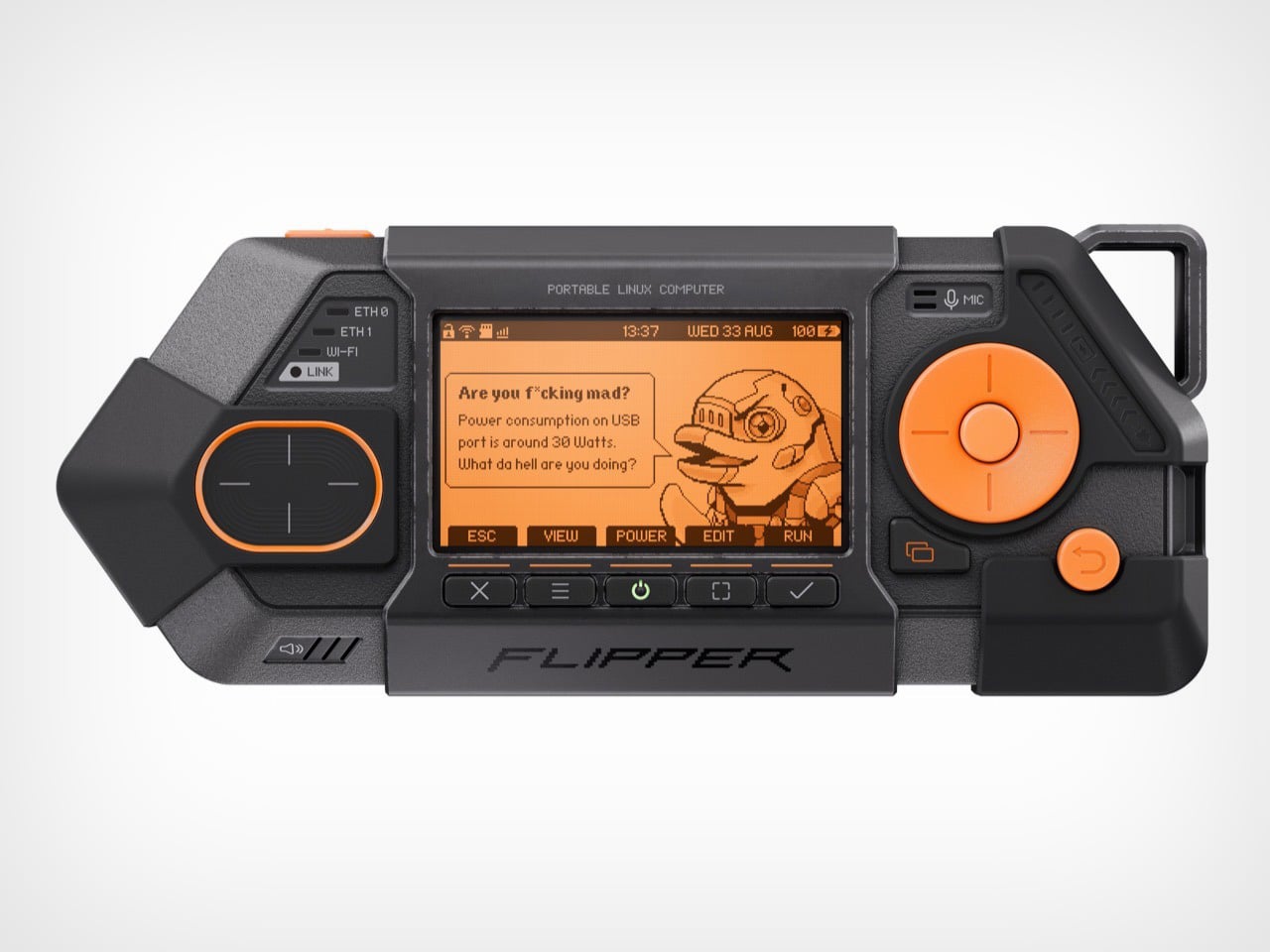
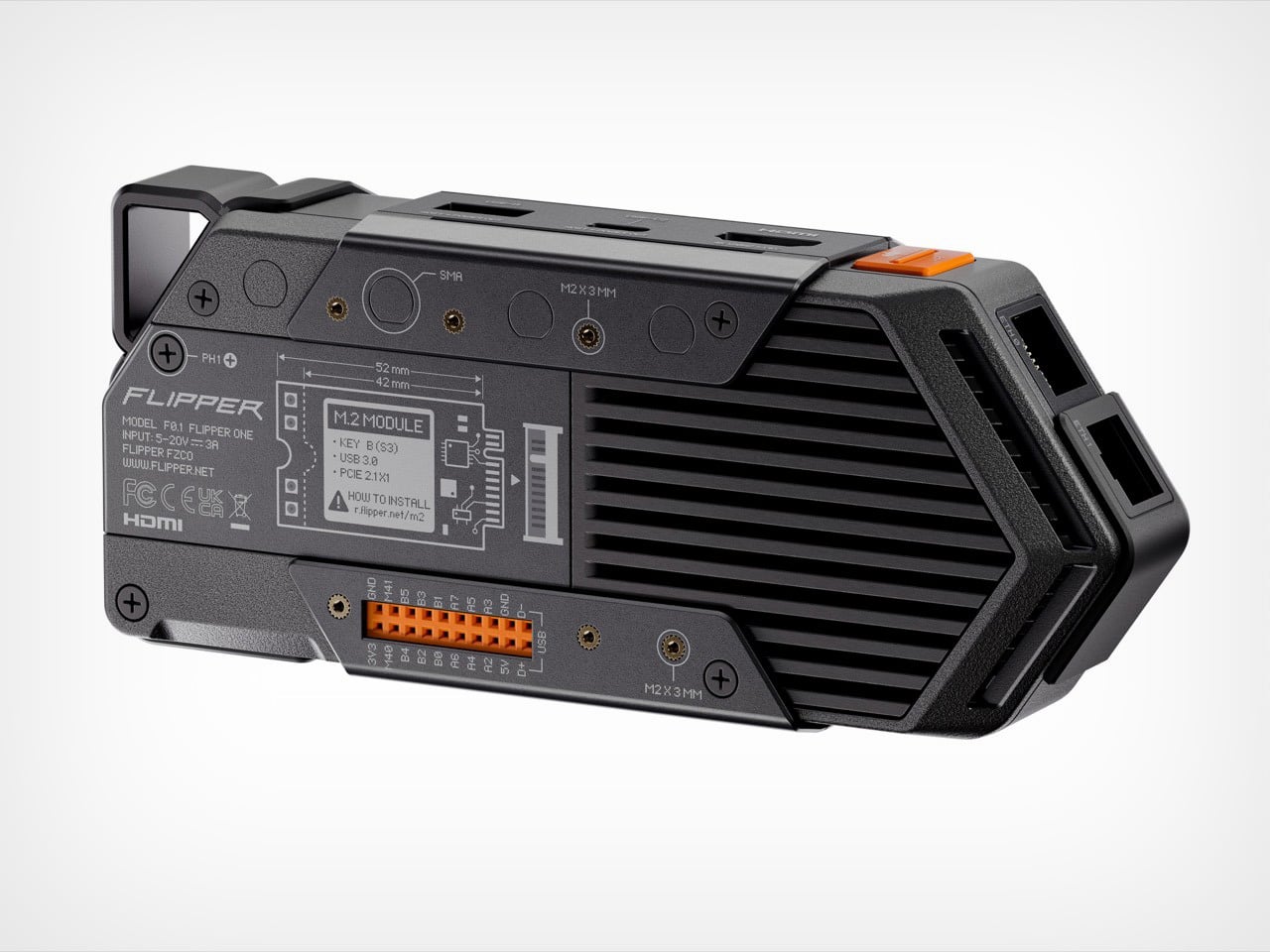
But that power came at a cost: heat. “Unlike Flipper Zero, Flipper One runs hot,” Zhovner says. Suddenly, the housing couldn’t just be a passive shell; it had to become an active part of the thermal solution. This is where the Yaesu’s design influence became critical. The rugged, armored look isn’t just for show. “The metal elements are doing real thermal work, acting as part of the cooling system,” Zhovner points out. The design team decided to lean into this necessity, creating a device that visually communicates its own power and thermal demands. The Flipper One wears its cooling system like armor because, in a very real sense, it is.
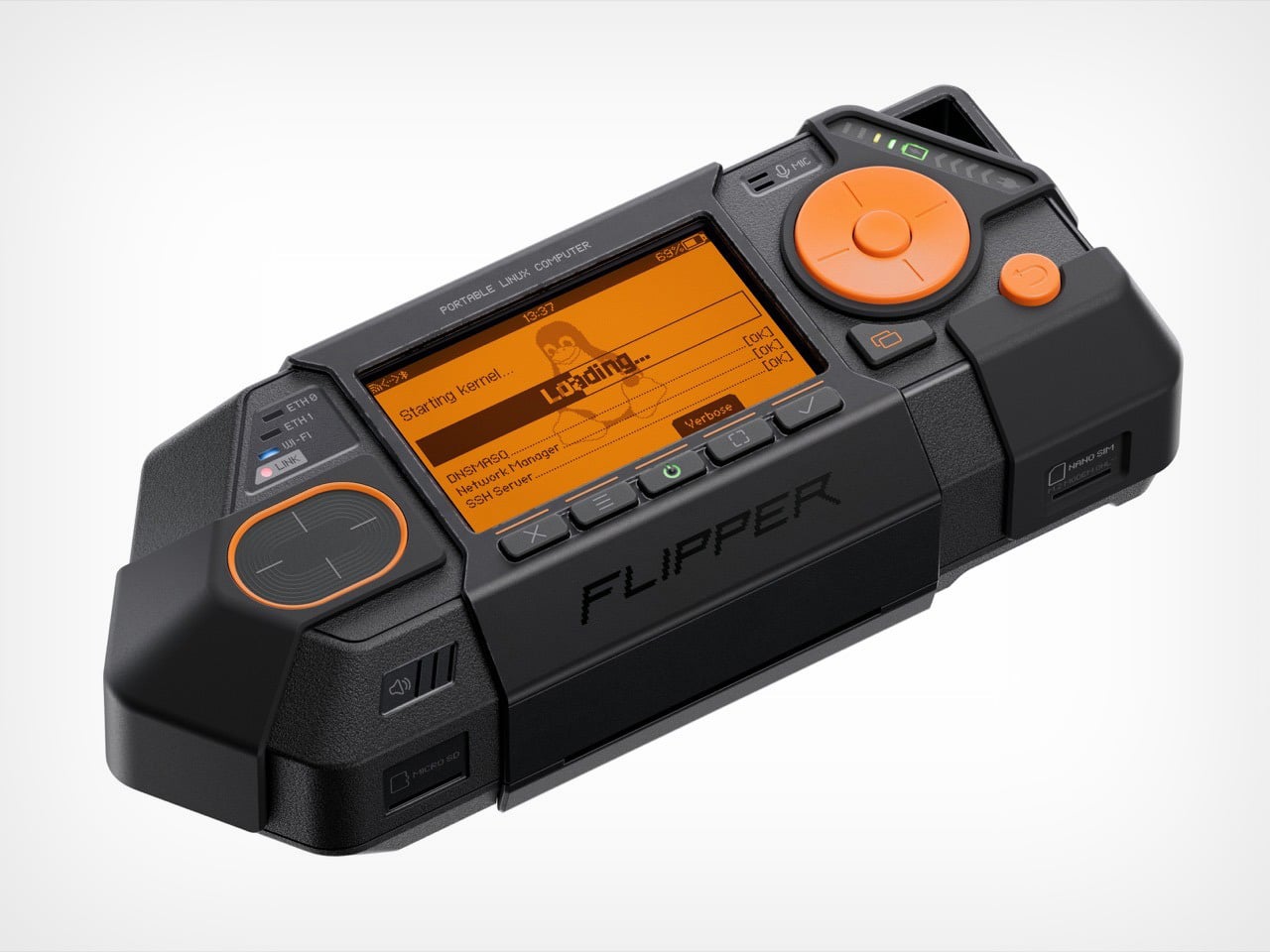
This philosophy of brutal honesty extends to the iconic dolphin mascot, which has also evolved. It’s now sharper, more angular, and decidedly less friendly – a reflection of the smarter, more powerful machine it represents. This commitment to a cohesive design language is rooted in the team’s belief in their core visual element. “We’re simply in love with our aggressive triangle,” Zhovner states. “It was never up for debate.” The goal was to preserve that instant recognizability while adapting it to a more demanding set of functional requirements.
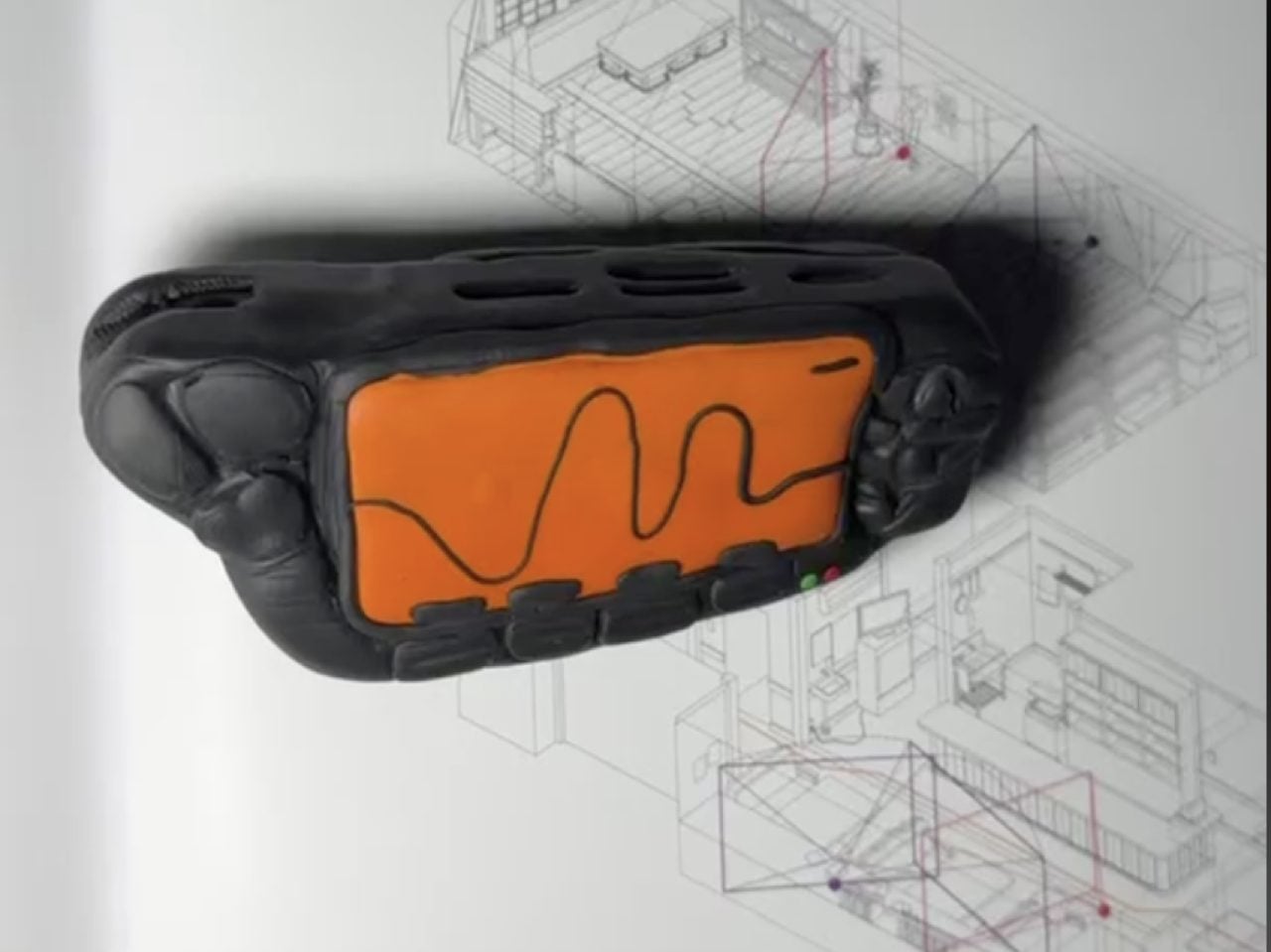
Preliminary clay model of the Flipper One
The device’s functionality was also shaped by hard-won lessons from the Flipper Zero. One of the biggest takeaways was that expandability should never come at the expense of usability. “With Flipper Zero, the moment you plug in any module, the whole experience degrades,” Zhovner admits. “It becomes harder to carry and pocket, and the port takes a beating over time.” For Flipper One, this led to a strict design mandate: modules had to integrate seamlessly. The team landed on two types – M.2 and GPIO – both designed to either “disappear completely under the back cover, or they extend flush along the rear surface.” It’s a small detail that reveals a mature approach to product design, focused on the realities of daily use.
Ultimately, the Flipper One’s serious, function-driven design is meant to signal that it’s an entirely different kind of tool. Zhovner is quick to clarify that this isn’t a replacement for the Flipper Zero. Instead, the two devices operate on different technological layers. Flipper Zero is a “Layer 0” offline tool for NFC, RFID, and other low-level interfaces. Flipper One is a “Layer 1” IP/network cyberdeck – a pocket-sized, open Linux computer. It can be a portable gateway, a smart home hub, a media center, or a radio platform for listening to everything from pilot communications to satellites.
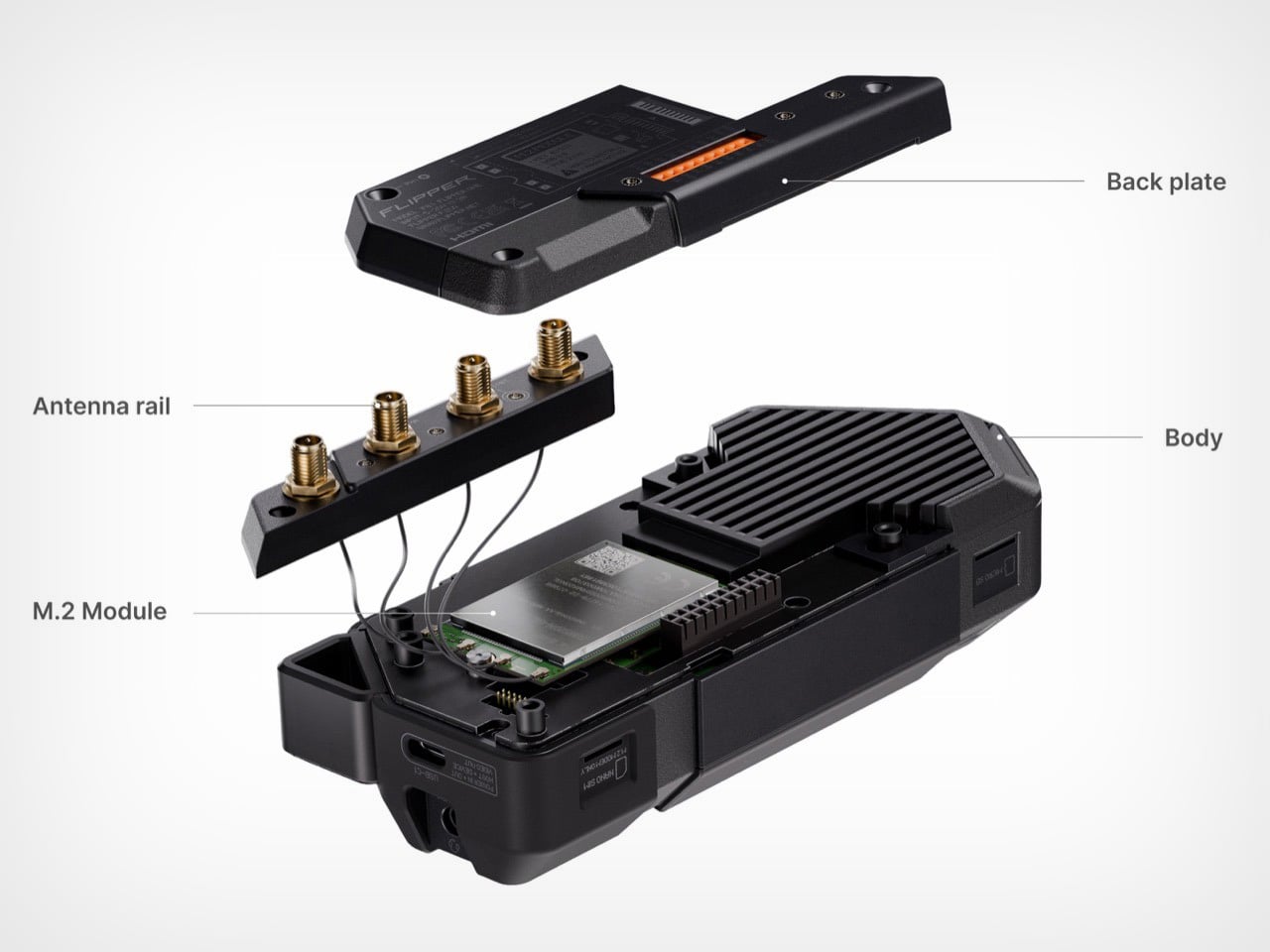
By grounding its design in the world of serious hardware, Flipper has created a device that feels less like a controversial gadget and more like a piece of portable infrastructure. It’s a tool that, despite its aggressive looks, is designed to be quietly useful, whether as a travel router in a hotel or a honeypot sensor guarding your home network. The Flipper One’s journey from a clay model inspired by a ham radio to a finished cyberdeck is a story of a company, and a product, that is growing up.
The post Flipper One Behind The Scenes: “Sharper, Smarter, More Cunning, Brutal” says Flipper CEO first appeared on Yanko Design.