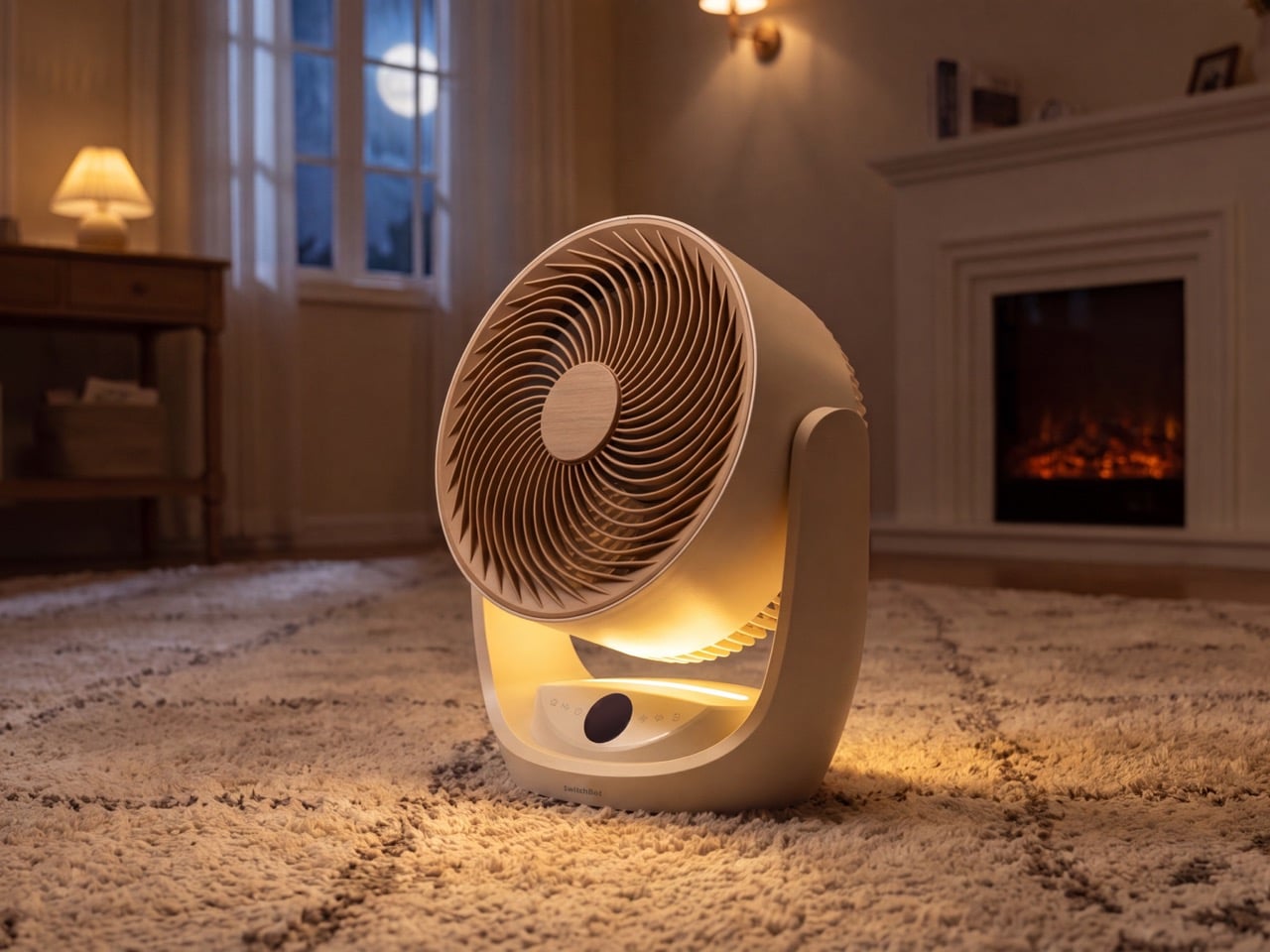
SwitchBot’s $119 Portable Battery Fan Brings Matter Over Wi-Fi to Patios and Campsites

The whole point of a portable fan is that it goes where you go. Bedroom in the morning, home office by noon, patio by evening, campsite by the weekend. That flexibility is basically the product’s entire reason for existing. Smart home integration has historically worked against that, though. Most connected fans are smart in exactly one place: wherever the hub lives. The Curtain 3 and the Blind Tilt, products we’ve covered in the SwitchBot lineup, both need the Hub 3 to talk to Apple Home or Google Home. The Hub lives on a shelf. Your fan moves. That tension has been quietly baked into smart home portability for a while.

Matter over Wi-Fi is the fix. It’s the open connectivity standard that Apple, Google, Amazon, and hundreds of other tech companies built together so that devices can join any smart home platform without a proprietary bridge in the middle. The Battery Circulator Fan 2 Pro has it built in, which means it connects straight to Apple Home, Alexa, Google Home, or Home Assistant from wherever it happens to be, bedroom, patio, campsite, corner of the living room you forgot existed. No Hub required. SwitchBot says it’s the first battery-powered air circulator to ship with Matter over Wi-Fi, and and boasts a 70-hour battery, making it last well over a long weekend when you’re out camping. Even more if you hook it to a power bank.

Designer: SwitchBot

A 3,600 mAh battery gives the fan its untethered freedom – that’s enough to run for several days, or even a full week of evenings, without needing a charge. On its highest setting, you get about four hours of peak performance, which is plenty for cooling down a room quickly. SwitchBot also built in a practical safety net for when the battery does run low. The fan supports both AC wall power and USB-C charging, so you can plug it in and keep it running indefinitely. This triple-power setup makes the portability feel genuine, because the fan is never truly out of commission; it just switches from being cordless to corded without missing a beat.


This fan moves a serious amount of air. It’s an air circulator, designed to generate a powerful, focused column of air that can travel up to 33.5 meters, or about 110 feet. With a max airflow of 477 cubic feet per minute (CFM) and a wind speed of 6.5 meters per second, it’s engineered for whole-room ventilation. This is the kind of performance that helps an air conditioner work more efficiently by distributing cold air evenly, or keeps a stuffy room from feeling stagnant. It’s a significant step up from smaller personal fans that are only effective when they are pointed directly at you from a few feet away, making this a much more versatile cooling tool for larger spaces.


At its lowest setting, the fan runs at just 21 decibels. That’s quieter than a whisper, making it an easy addition to a bedroom or a quiet office without creating a distracting hum in the background. This focus on low-noise operation is a critical detail, because a loud fan, no matter how powerful, often gets turned off. The fan also includes a subtle but clever lifestyle feature: an optional aroma diffuser. A small pad near the grille allows you to add a few drops of your favorite essential oil, letting the fan circulate a pleasant scent throughout the room along with the cool air. It’s a small touch that elevates the experience from simple utility to something that enhances the room’s overall atmosphere.

The fan’s physical design is built around its portability. Its clean, sculptural form is available in both black and white, with a large, integrated handle on top that makes it easy to pick up and move with one hand. The unit feels solid without being heavy, striking a good balance for a device meant to be relocated often. SwitchBot also included a thoughtful, practical detail for long-term use: a removable and washable filter. This fine mesh screen sits behind the main grille and is designed to catch larger particles like pet hair and dust before they get into the fan blades. It’s a simple addition that makes maintenance easier and keeps the air it circulates a little cleaner.

That direct Matter connection unlocks some genuinely useful automations. Because the fan can talk to any Matter-compatible platform, you can tie it into routines with devices from other brands. You could pair it with a separate temperature and humidity sensor, for example, and create an automation that kicks the fan on whenever the living room hits 78 degrees. Or, you could include it in a “Good Night” scene that turns off the lights, locks the doors, and starts the fan on its quietest setting. This is where the hub-free design really shines, allowing the fan to act as a truly independent and intelligent part of your home, wherever you decide to place it for the day.

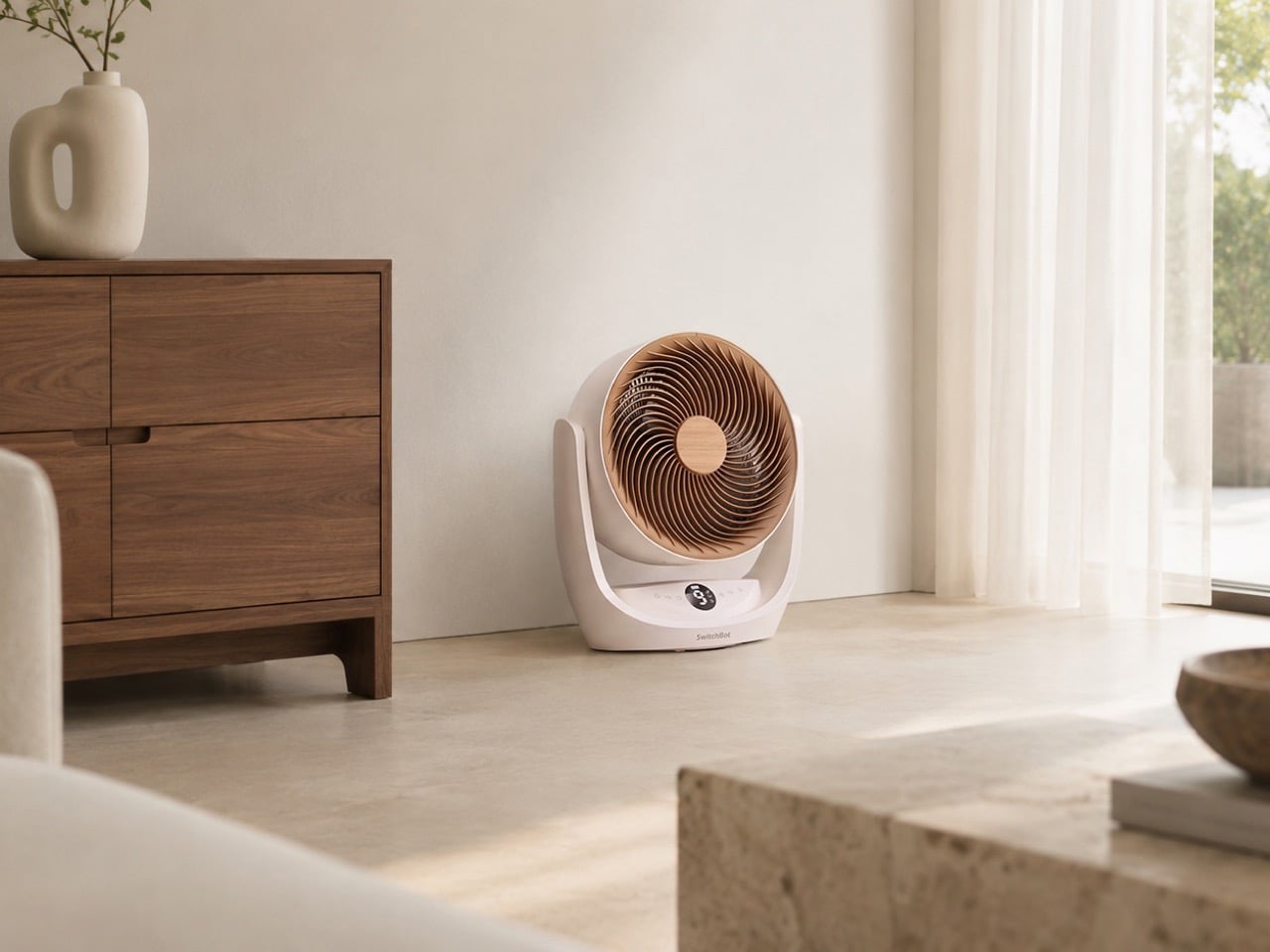
For years, the intelligence in our devices has been tethered to a power outlet and a central hub. By embedding Matter over Wi-Fi in a battery-powered device, SwitchBot has created a gadget that is smart everywhere, not just in one room. It’s a small but significant step toward a more flexible and intuitive connected home, where our devices adapt to our lives instead of forcing us to arrange our lives around them. For $119.99, you get a powerful air circulator, a long-lasting battery, and a glimpse of a more sensible smart home future.

The post SwitchBot’s $119 Portable Battery Fan Brings Matter Over Wi-Fi to Patios and Campsites first appeared on Yanko Design.

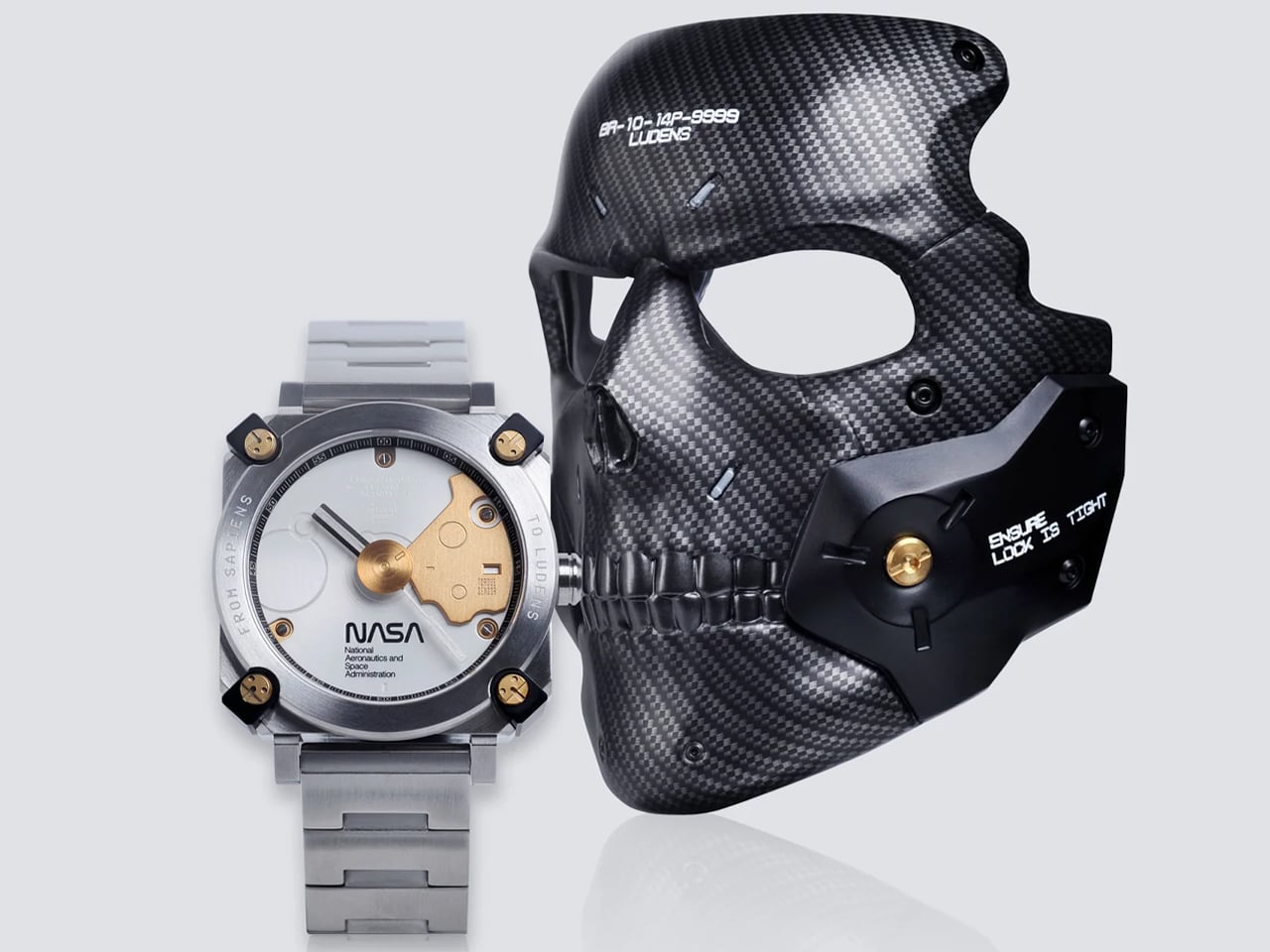
This NASA-inspired Kojima Watch lets you wear Ludens’ futuristic vision on your wrist

NASA-inspired timepieces have always been hot property for astronomy fanatics and watch collectors alike. The minimalist Nova Watch, geeky  NASA Artemis Watch 2.0, and the ultra-exclusive Amida watches prove it, all right. Now, Anicorn Watches has unveiled another space-themed creation that channels the spirit of interstellar exploration through its collaboration with Kojima Productions.

According to Anicorn, the timepiece captures the essence of Hideo Kojima’s iconic Ludens character. Conceived by the legendary artist Yoji Shinkawa, Ludens is imagined as an astronaut venturing into the digital universe, symbolizing the studio’s philosophy of exploring the unknown through creativity. Described by the watchmaker as a once-in-a-lifetime collaboration, the Space Ludens transforms that futuristic vision into a collectible mechanical watch.

Designer: Anicorn Watches

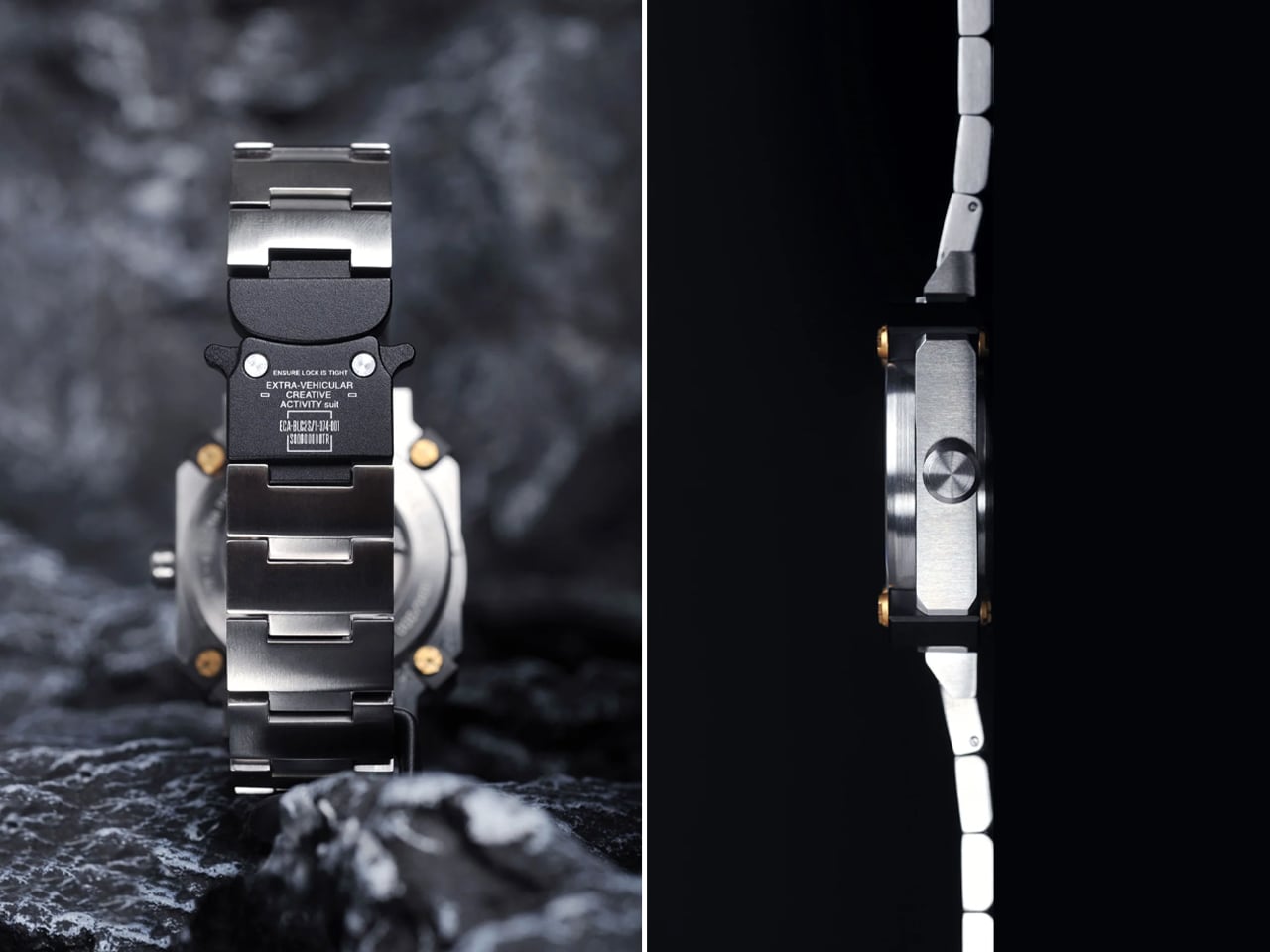
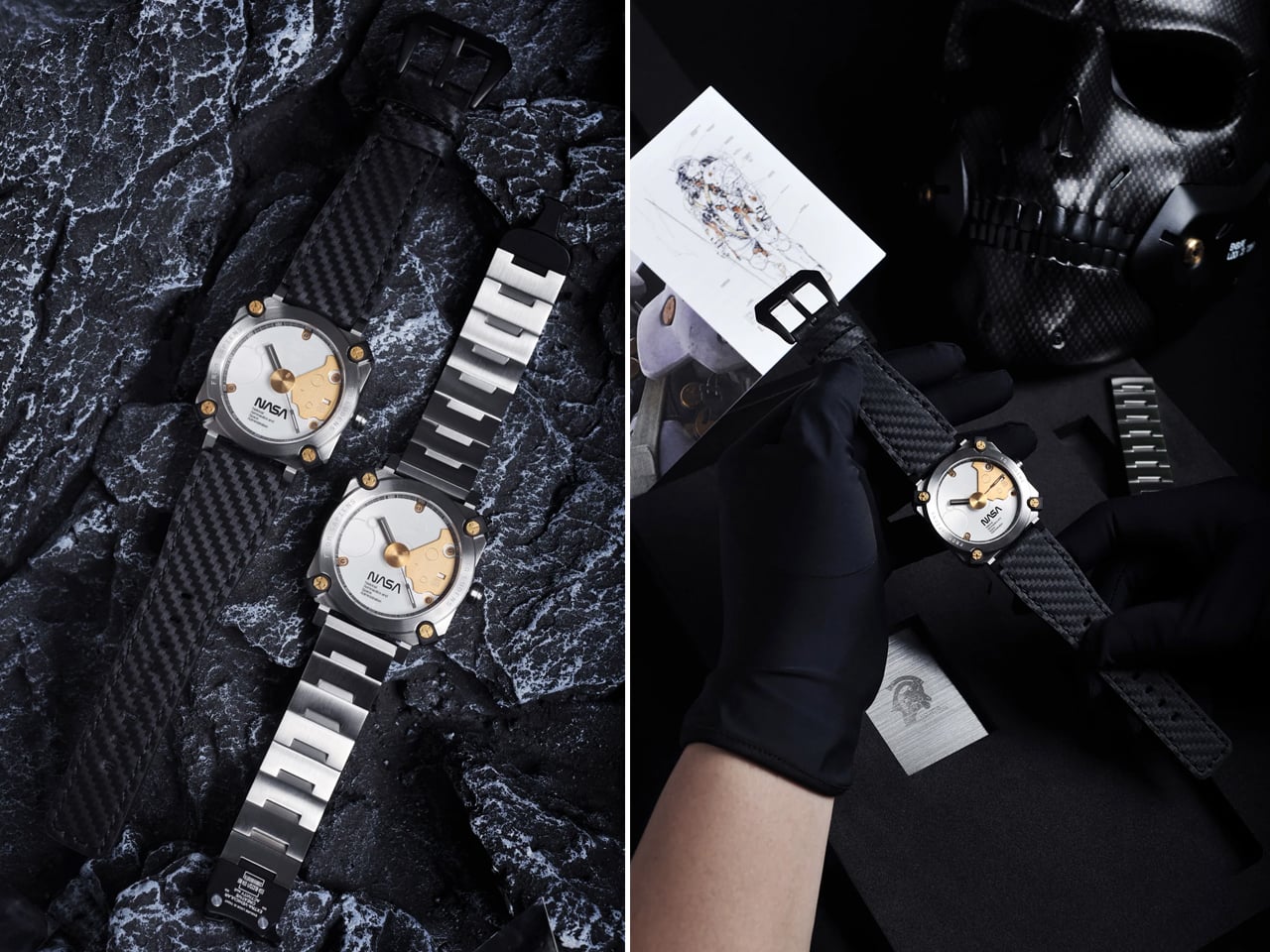
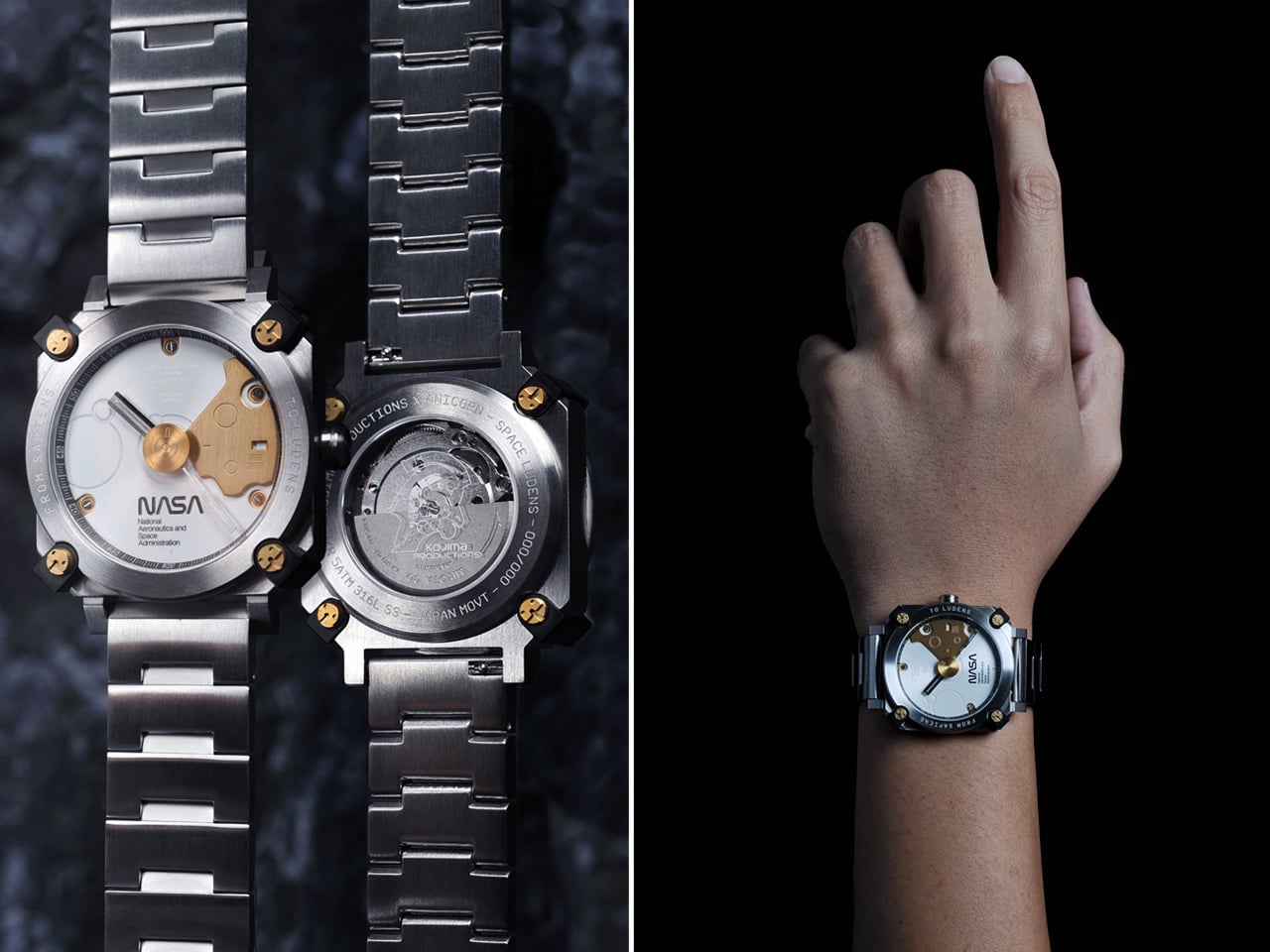
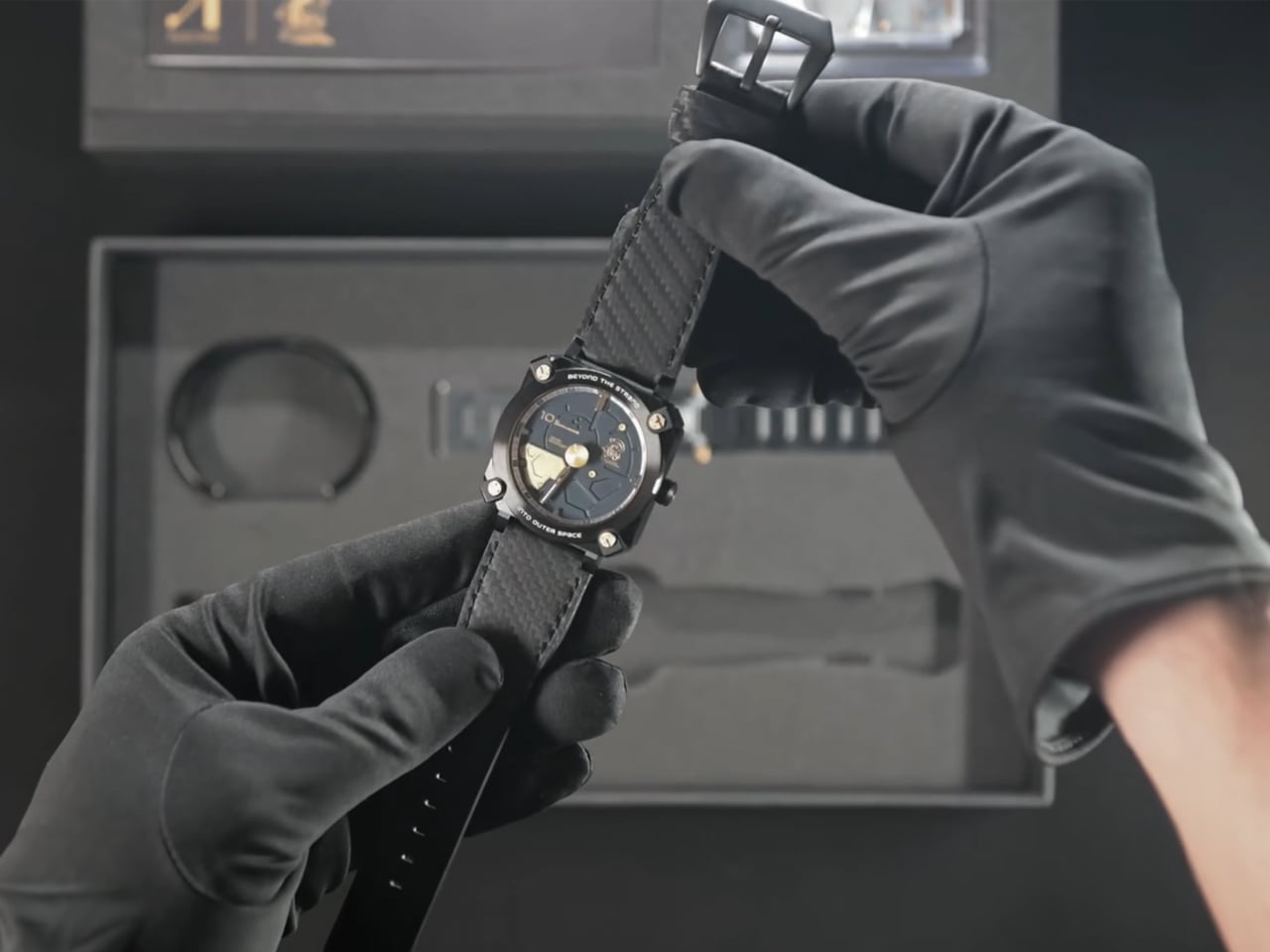
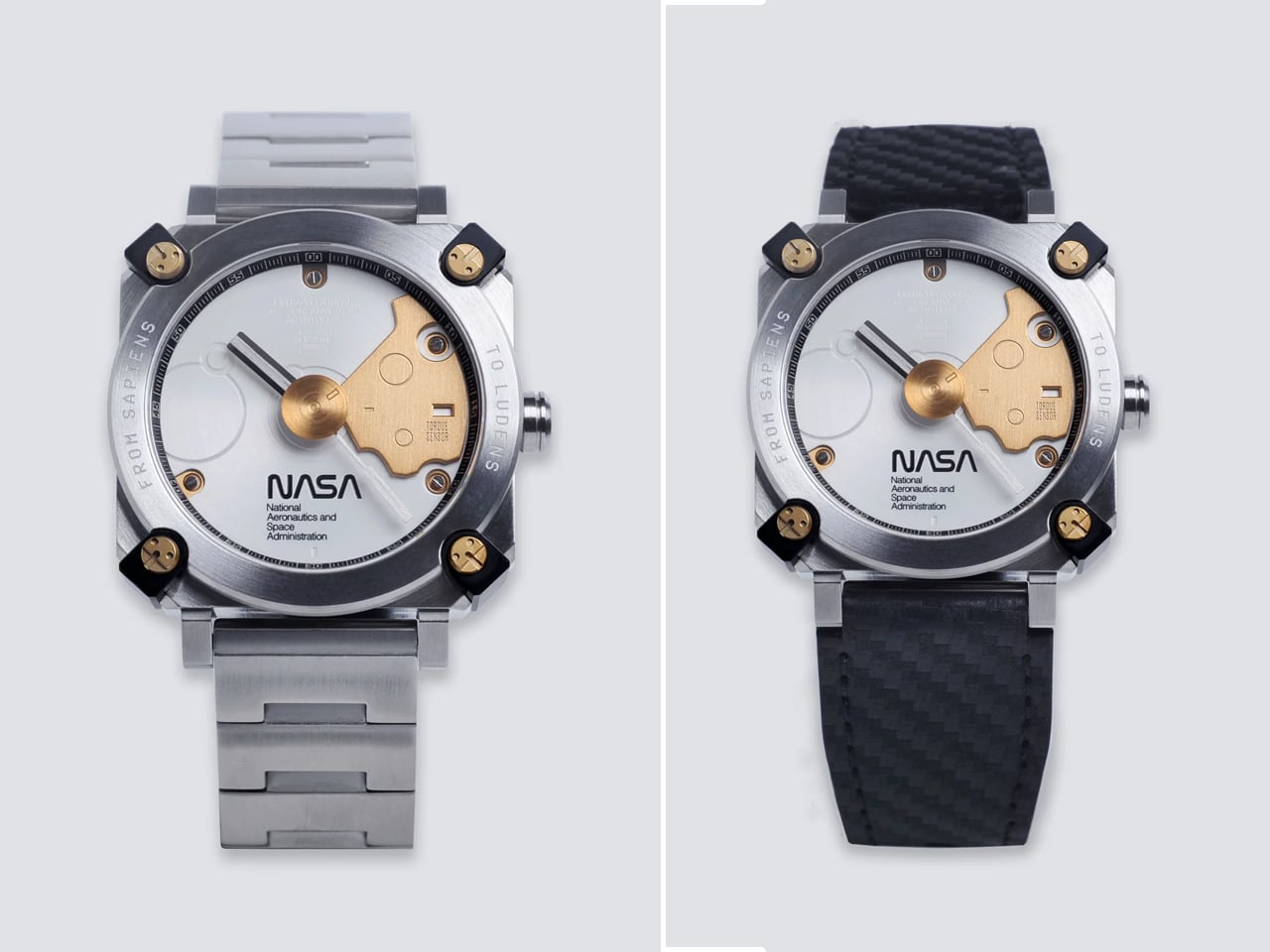
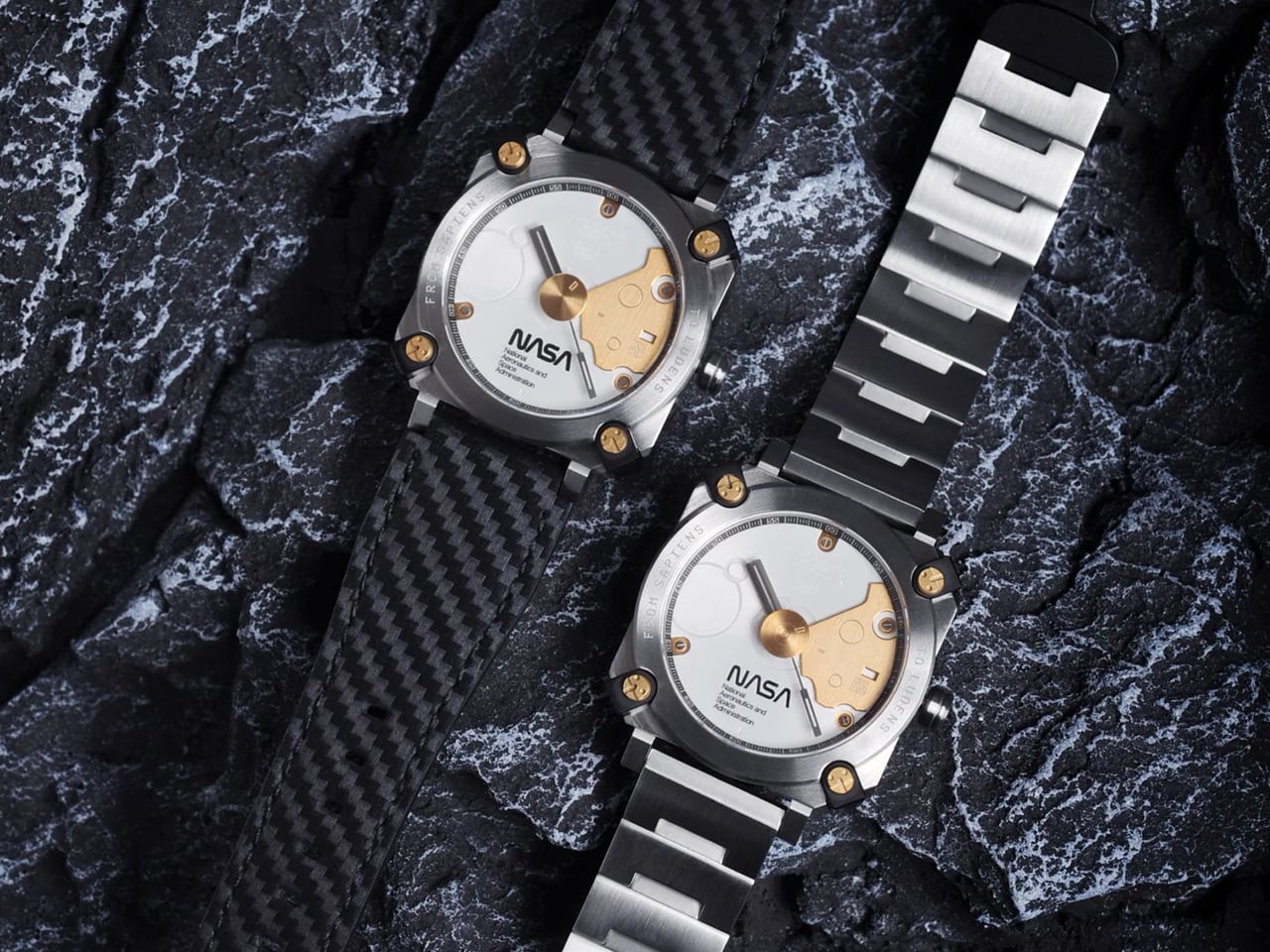
The NASA “worm” logo serves as one of the defining visual elements, reinforcing the idea of “bringing fun into the unknown universe.” Housed in a 42 mm 316L stainless steel case with a scratch-resistant sapphire crystal, the watch embraces an industrial aesthetic inspired by the Ludens EVA Creative Suit. Four exposed screws on the bezel echo the suit’s structural details, while the monochrome dial is accented with subtle futuristic graphics that stay true to Kojima Productions’ signature visual language. Super-LumiNova-coated hands and hour markers ensure the watch remains easy to read after dark without compromising its clean appearance.

Powering the Space Ludens is the dependable Miyota 8215 automatic movement with 21 jewels and a beat rate of 21,600 vibrations per hour. A transparent exhibition caseback reveals the movement in action, giving enthusiasts a glimpse of the mechanics behind the design. The watch also offers 50-meter water resistance, making it practical enough for everyday wear despite its collector-focused appeal.

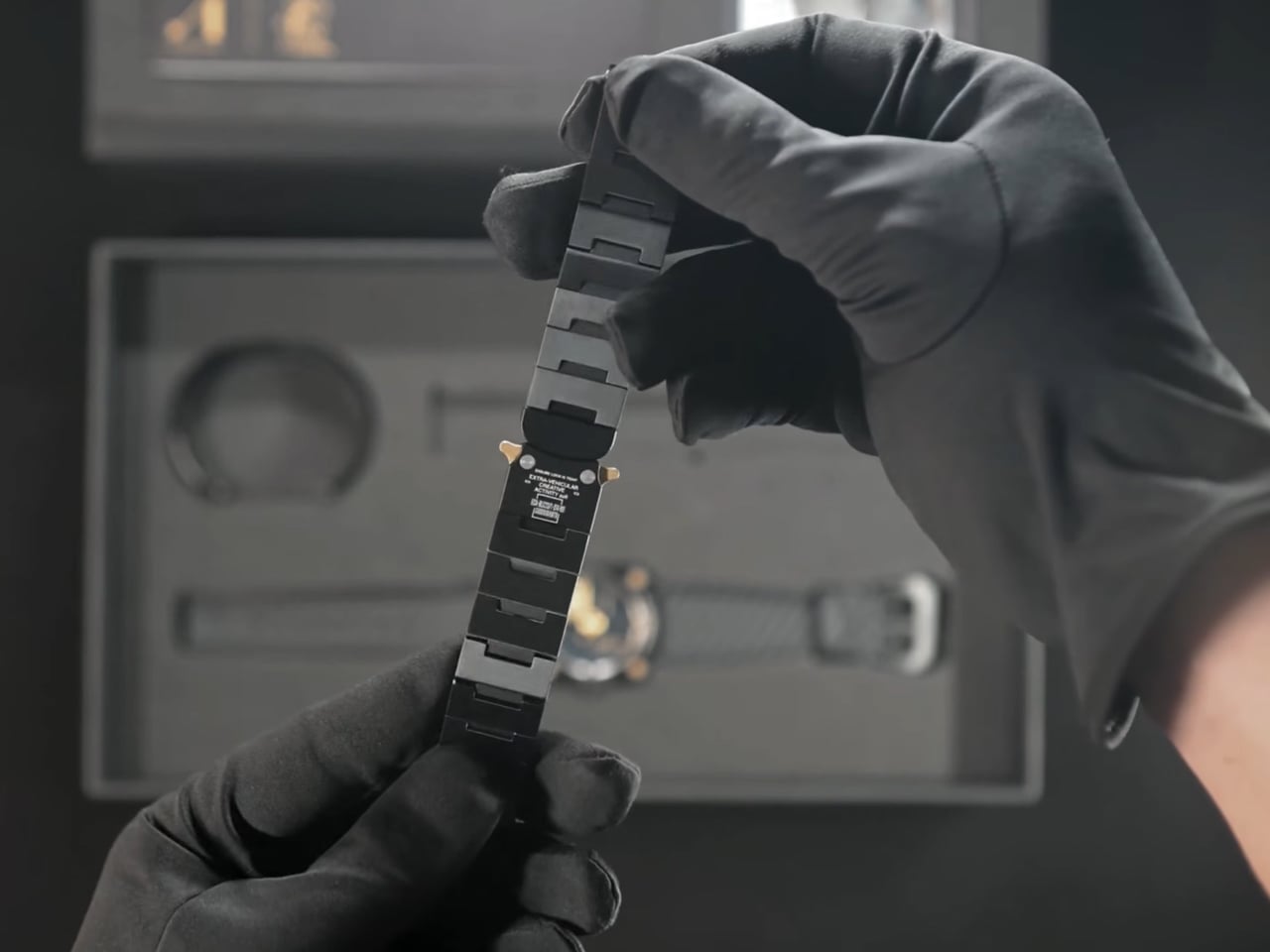
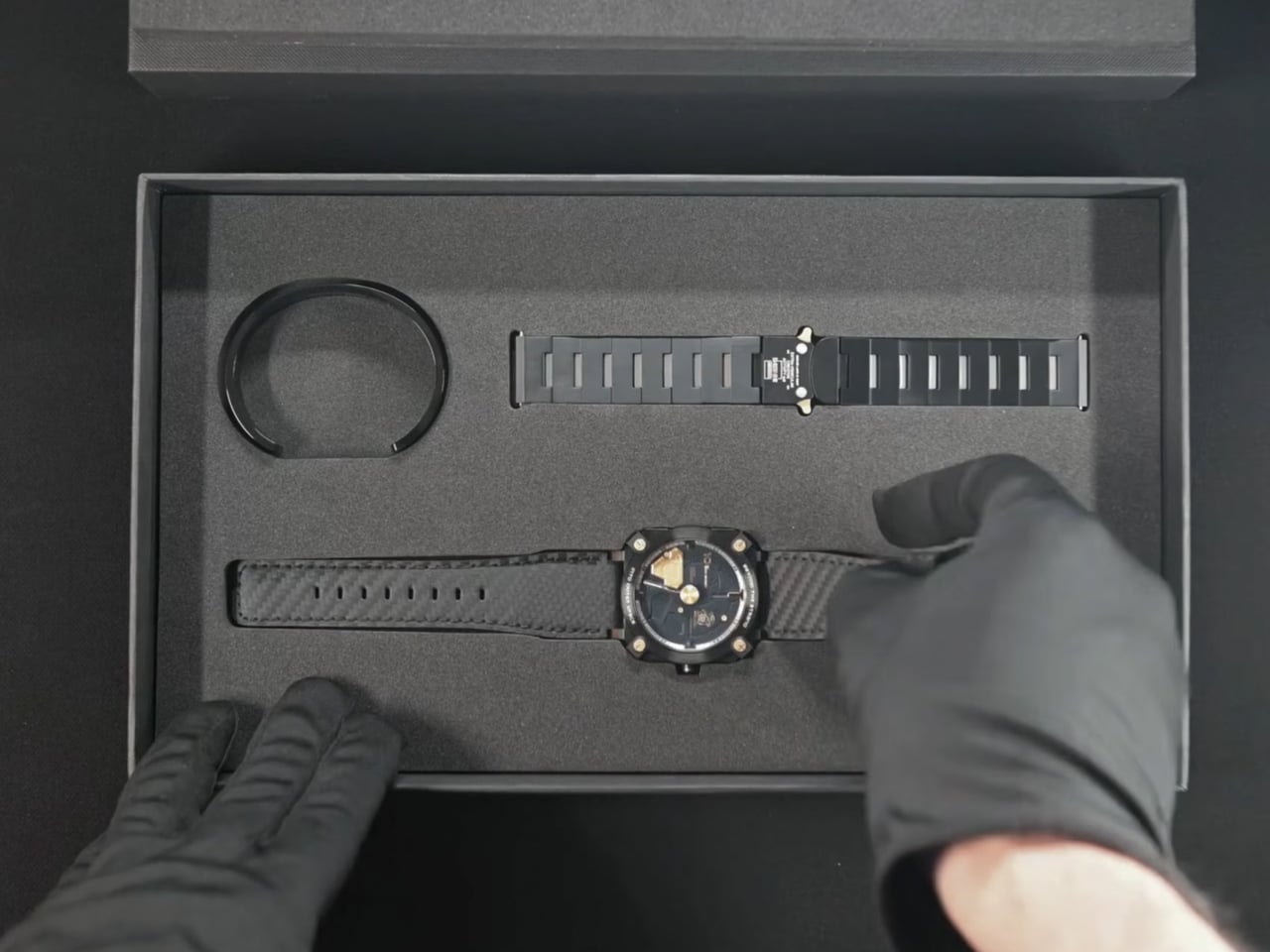
Comfort hasn’t been overlooked either. The timepiece comes paired with a durable black FKM rubber strap that complements the rugged case while providing a secure fit for daily use. Each watch is individually numbered and presented in custom collector packaging that celebrates the collaboration between Anicorn and Kojima Productions.

For enthusiasts seeking an even more exclusive offering, Anicorn also introduced the Space Ludens with Ludens Mask VIP edition limited to just 100 units. In addition to the watch, the premium set includes a detailed Ludens mask display piece presented in a collector-grade package, turning the release into a display-worthy tribute to one of gaming’s most recognizable creative icons. Priced at $1,540, the rare edition is without doubt “EVA Creative Suit on the wrist” for enthusiasts to own.


The post This NASA-inspired Kojima Watch lets you wear Ludens’ futuristic vision on your wrist first appeared on Yanko Design.
A $420 Phone Just Proved BlackBerry Fans Have Been Right All Along

Physical keyboard phones have been largely absent from the mainstream market for the better part of a decade. The touchscreen revolution swept them away so completely that finding a new phone with actual keys now means wading through a very short list of niche products. That’s fine for touchscreen loyalists, but for those who still swear by tactile typing, the options have been frustratingly limited.

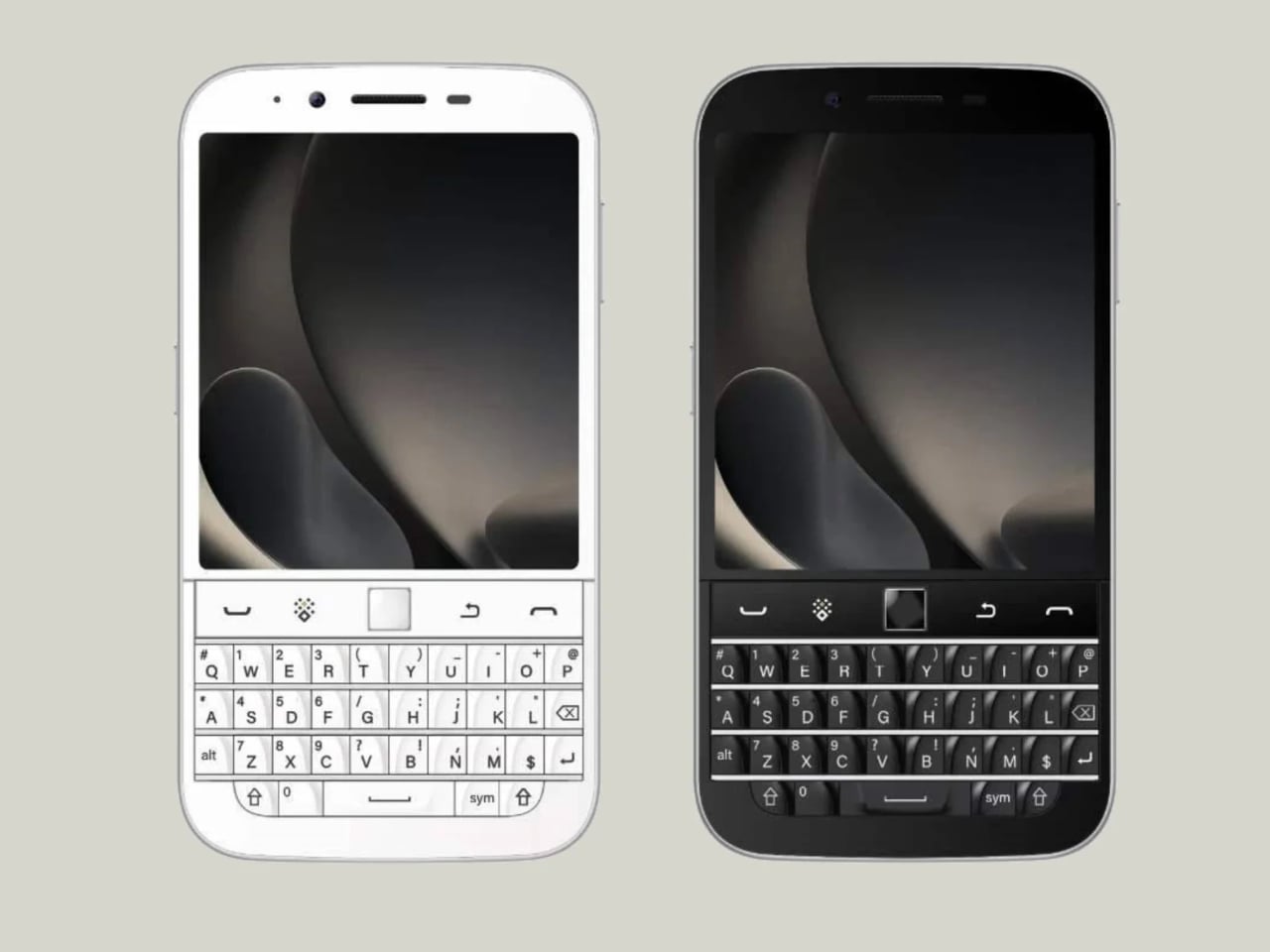
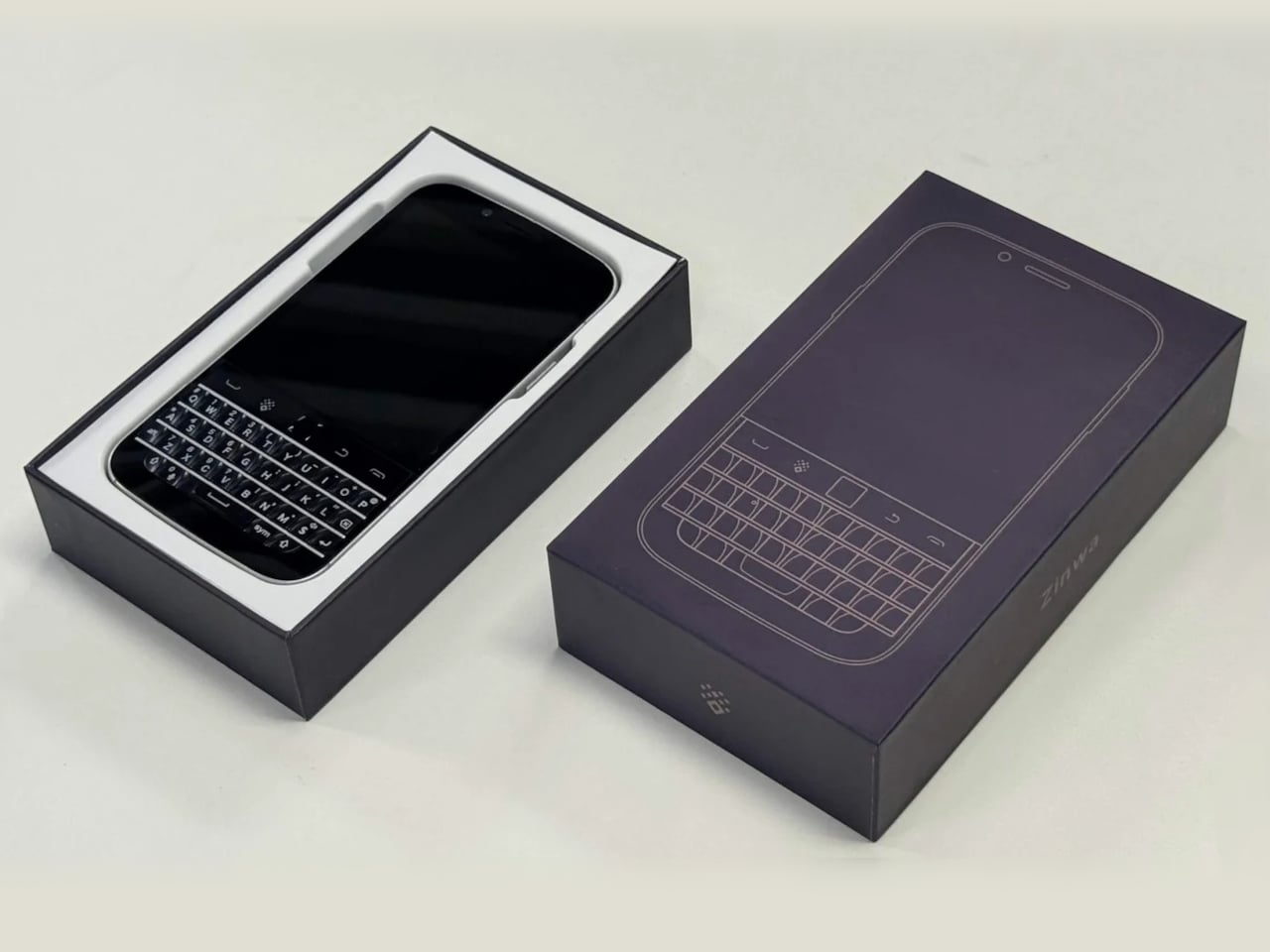
The Zinwa Q27 addresses that shortage head-on, arriving as a 5G Android smartphone built entirely from scratch with a physical QWERTY keyboard at its center. It isn’t a renovation of old hardware and doesn’t recycle any components from existing devices. The Q27 is an original design, and it channels the spirit of the BlackBerry Classic openly, as if daring you to forget how satisfying real keys felt.

Designer: Zinwa

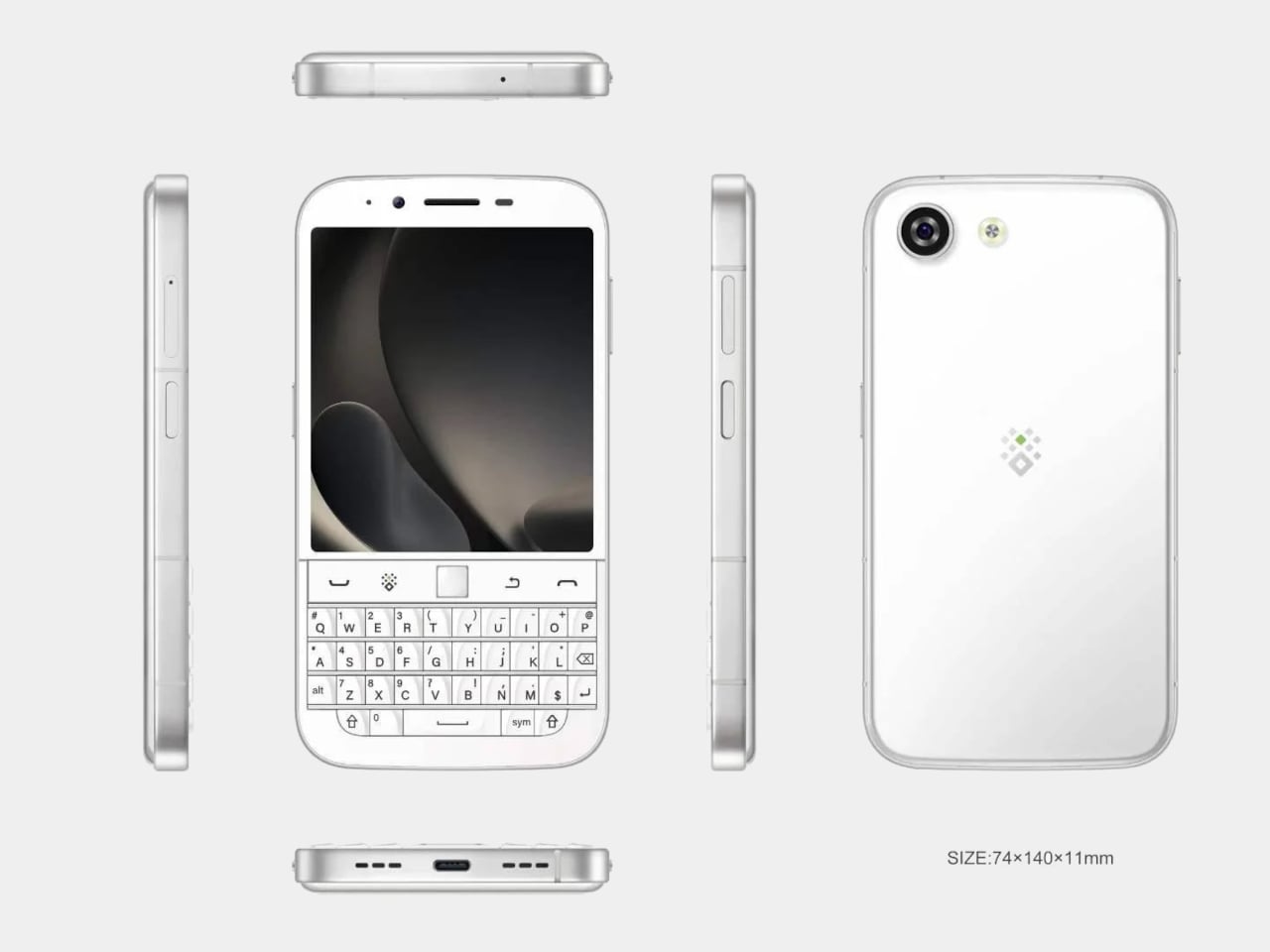
The layout places a 4-inch, 1080×1240 pixel AMOLED display above the thumb keyboard, keeping everything reachable in a single hand. At 140mm x 74mm x 11mm and 192 grams, the footprint is compact by today’s phablet-dominated standards. Anyone who once fired off emails on a BlackBerry will recognize this form factor instantly, and probably won’t need long to feel at home with it.

A MediaTek Dimensity 7300 chip and 12GB of RAM give the Q27 enough processing headroom for a full day of heavy multitasking. Storage options cover 256GB and 512GB, with microSD expansion available on both. It’s a configuration that suits the kind of user who lives in productivity apps, keeps a dozen conversations going at once, and can’t afford to babysit a slow phone between tasks.

Photography comes via a 50MP rear camera and a 16MP front-facing camera, while the 4,000mAh battery handles daily endurance with both 33W wired fast charging and 15W Qi wireless charging available. NFC, dual-SIM support alongside eSIM compatibility, and 5G connectivity round out the hardware, making the Q27 a surprisingly complete package for a phone designed to scratch such a specific itch.

Smaller details add to the overall impression. An X-axis linear motor delivers a crisper, more lateral haptic feel than the basic rumble of typical budget devices, while a dedicated notification LED and a Hi-Fi speaker bring back features that most modern phones quietly retired. There’s no headphone jack, which some will take issue with, but the USB Type-C port covers both charging and wired audio without trouble.

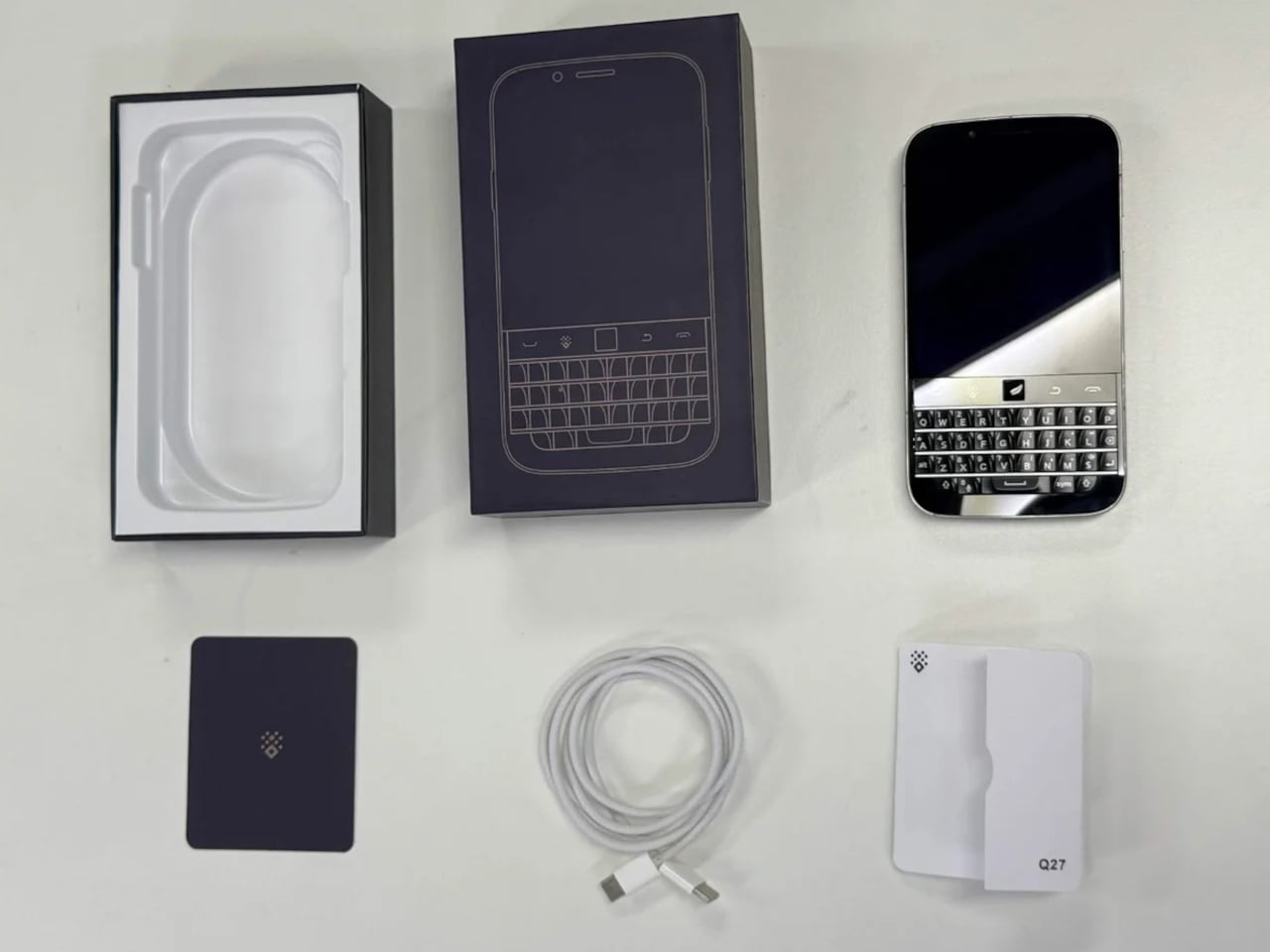
It ships with Android 16 and full Google Mobile Services, and comes in black or white, each unit with a pre-applied screen protector and protective case included. A charger isn’t in the box. Pricing starts at $420 for the 256 GB model and $480 for the 512 GB version, and because production will match pre-order quantity, there’s no confirmed ship date yet.

The Q27 also marks a shift in Zinwa’s approach. Previous models from the company involved transplanting modern internals into refurbished BlackBerry shells, but the Q27 is a wholly new design with no borrowed chassis. For a small outfit trying to keep the physical keyboard phone alive, that’s a significant step, and it shows the kind of commitment this particular corner of the market genuinely needs right now.

The post A $420 Phone Just Proved BlackBerry Fans Have Been Right All Along first appeared on Yanko Design.

A Designer Just Answered Facial Recognition With a Medieval Visor

Facial recognition has become one of the fastest-growing forms of infrastructure in public life. Cameras in airports, transit systems, retail spaces, and city streets capture biometric data routinely, often without the awareness of the people being scanned. The face has gradually become something closer to a credential, an identifier read by systems that process it instantly against databases that are constantly growing.

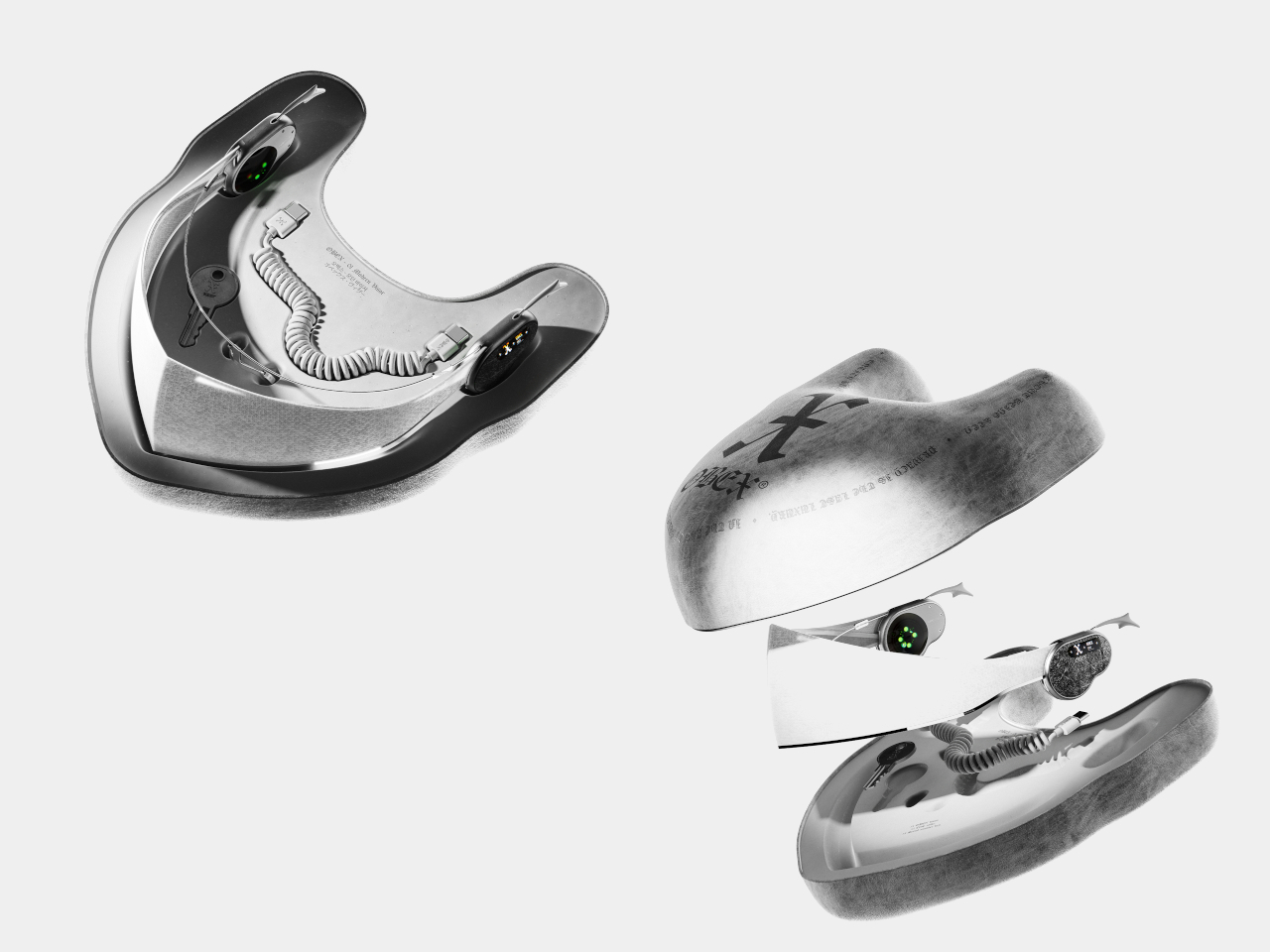
OBEX is a conceptual wearable that treats this shift as a design problem worth addressing through physical form. Rather than responding to surveillance with software or policy, it proposes a new category called “privacy armor,” a tangible boundary between the wearer and systems of biometric recognition. Its form language doesn’t come from consumer electronics but from something much older, the medieval visor.
Designer: Haechan Ryu

In medieval warfare, a knight’s visor concealed identity while creating distance between the person and the world beyond the armor. The logic behind OBEX borrows that idea and applies it to a different kind of threat, one that’s less physical and more informational. As surveillance systems continuously collect and analyze biometric data, the face becomes a vulnerable interface, and OBEX imagines what it would mean to shield it.

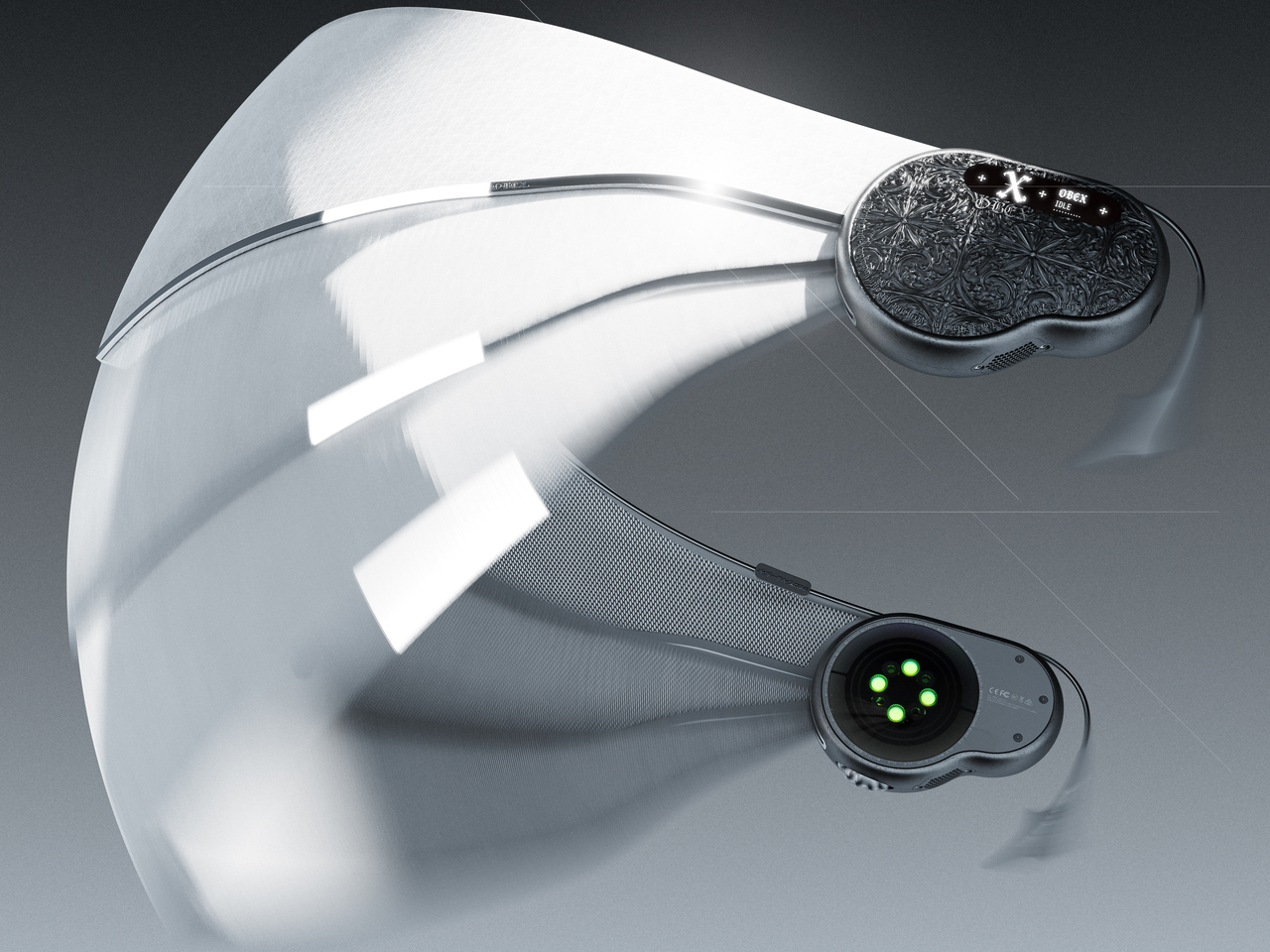
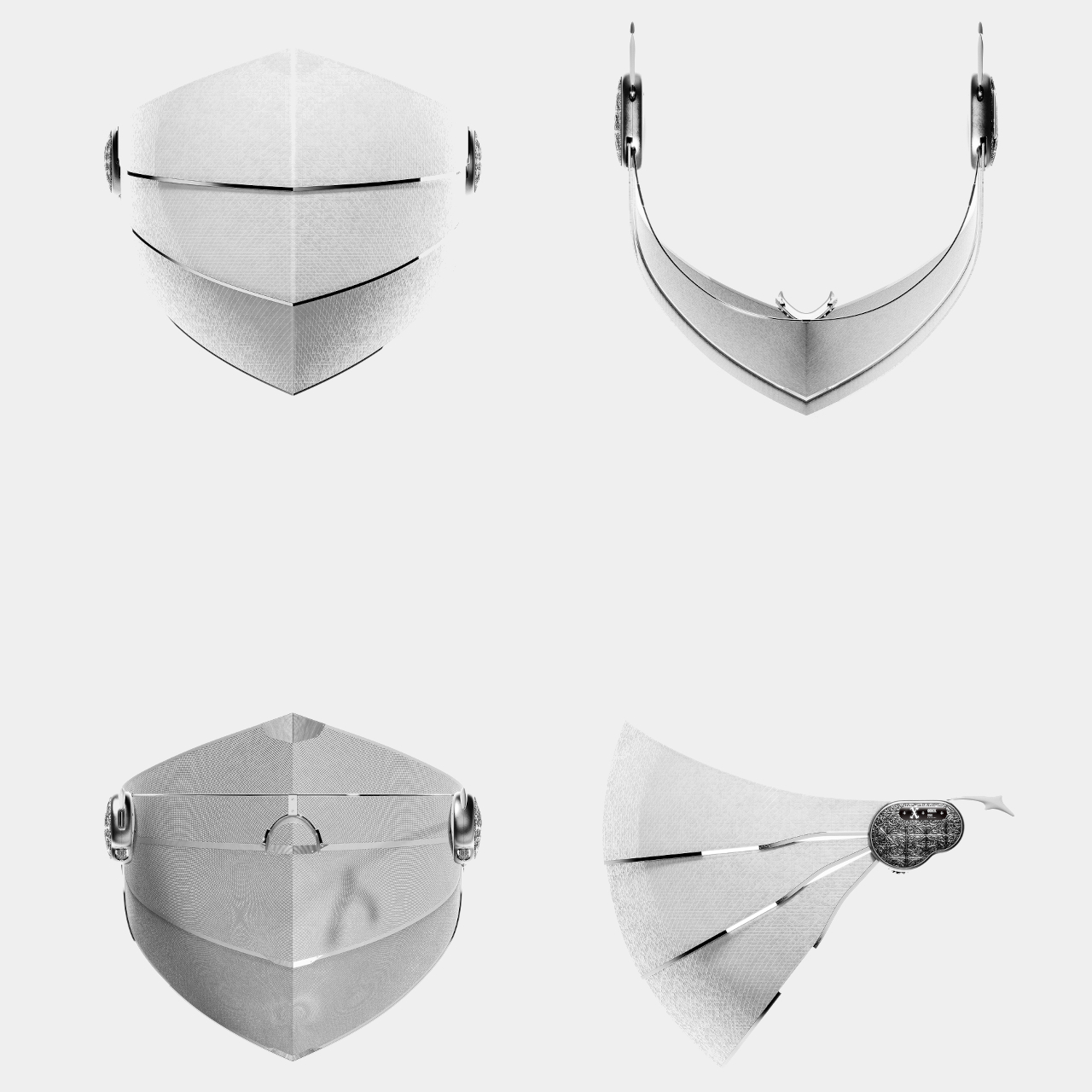
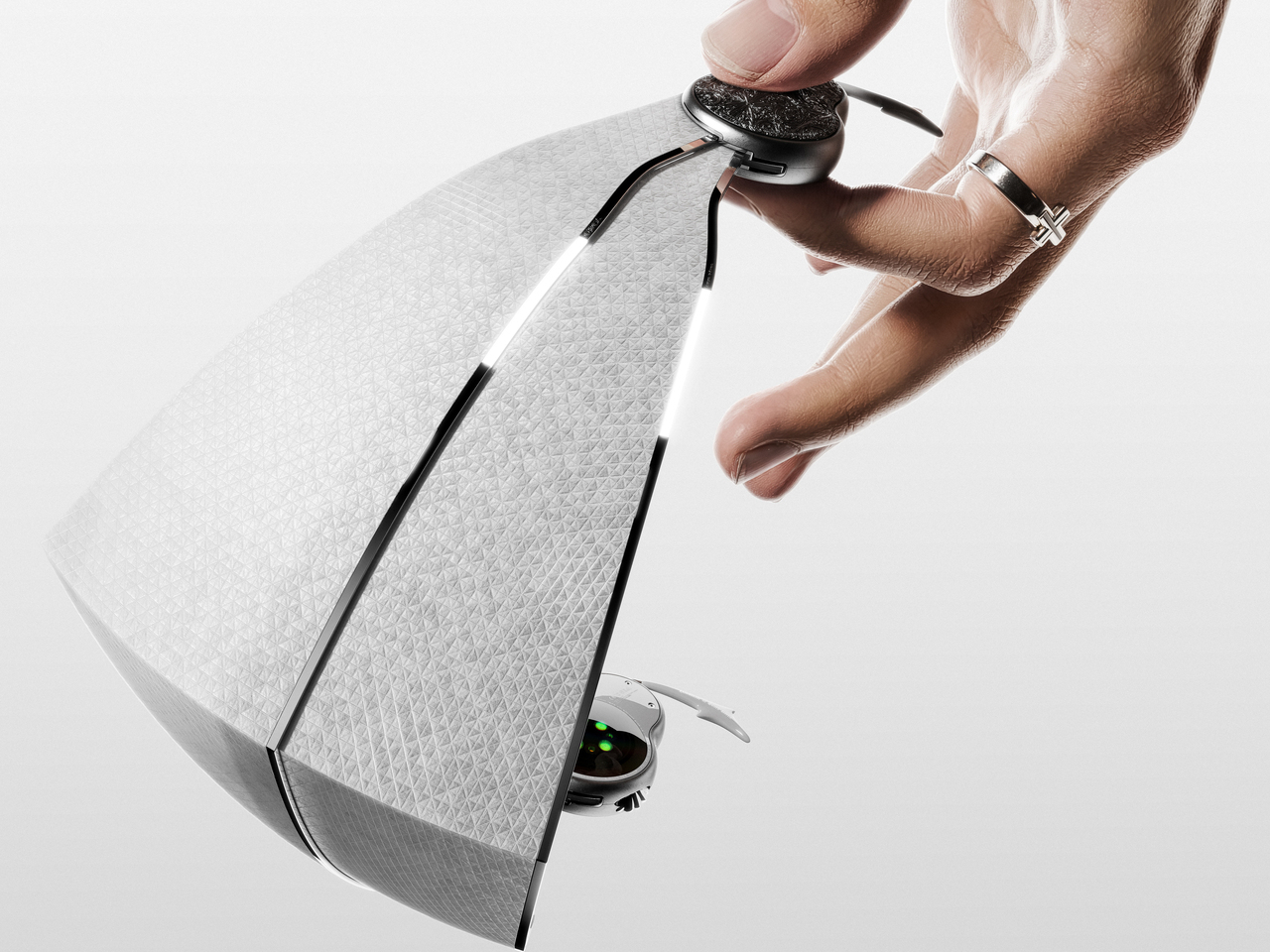
The visor itself is made from a micro-perforated optical film that allows the wearer to see out clearly while appearing opaque from the outside. It’s a deliberate asymmetry, the kind that surveillance systems rely on, reversed and put in the hands of the individual. The shielding motion references the sliding visors of historical armor, and the weight distribution is engineered to reduce strain across the head during long wear.

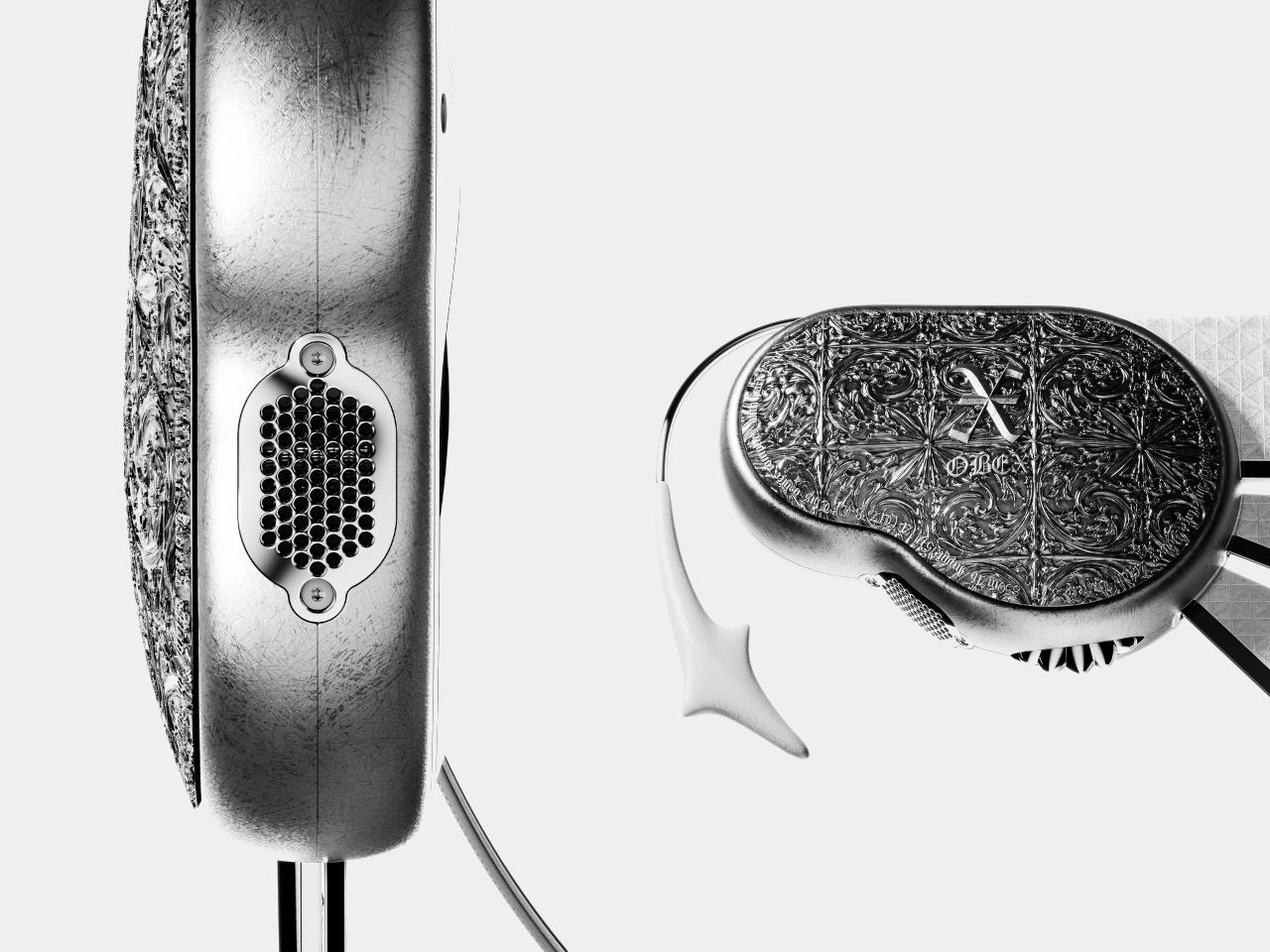
The temple module anchors the visor to the head and holds most of the active technology. Embedded PPG sensors monitor physiological data in real time, enabling continuous biometric monitoring through the wearer’s own biological signature. Dual directional speakers deliver audio feedback without cutting the wearer off from surrounding sounds, and a small bitmap display on the side communicates system status and shield activation modes at a glance.

The frame is precision-engineered titanium, chosen for its balance of strength and low weight. The outer surface carries a refined micro-texture that improves grip while minimizing visible wear over time. The ornamental detailing on the temple module draws from the craftsmanship traditions of medieval armor, with intricate surface patterns that make the component read more as a personal artifact than as a piece of hardware.

OBEX isn’t proposing that everyone should walk around in a visor. It’s asking what protection means when the thing being protected isn’t the body but the face’s function as an identity signal. The concept sits at the edge of speculative design and industrial practice, using grounded materials and structural logic to imagine an object that doesn’t quite exist yet, but one that feels increasingly necessary.

The post A Designer Just Answered Facial Recognition With a Medieval Visor first appeared on Yanko Design.