Starlink offers free internet access in Venezuela following Maduro raid

SpaceX’s Starlink is offering customers in Venezuela free access to its internet service after the US captured the country’s president, Nicolás Maduro. According to CNBC, some areas of Caracas and other parts of the country lost power and internet connectivity in the wake of the operation. 

Starlink says its focus is “on enabling connectivity for new and existing customers to support the people of Venezuela.” At the time of writing, Starlink does not yet appear to formally operate in the country, as its availability map states that service there is "coming soon." 

Still, Starlink says it is proactively applying service credits to active accounts in Venezuela until February 3. Those who have paused or canceled their service but still have the necessary Starlink hardware can also reactivate their account at no extra cost for now. 

Of course, those without a Starlink terminal won’t be able to take advantage of this offer right now. “We are actively monitoring evolving conditions and regulatory requirements,” Starlink said on a support page. “While we do not have yet have [sic] a timeline for local purchase availability, if and when there are updates they will be communicated directly through official Starlink channels and reflected on this page.” SpaceX previously pledged to offer free service in Ukraine following Russia's invasion of the country in 2022.

US forces carried out airstrikes and a ground operation to capture Maduro and his wife, Cilia Flores, on Saturday. The US has indicted the pair and others on several charges, including narco-terrorism conspiracy and cocaine importation conspiracy. Venezuela's Supreme Court ordered the appointment of Vice President Delcy Rodriguez as acting president in Maduro’s absence. 

According to the Department of War, US President Donald Trump has declared that his administration "will oversee Venezuela until a safe transition to a legitimate replacement" takes place. Trump has also laid out plans for American companies to tap into the South American country's oil reserves.

This article originally appeared on Engadget at https://www.engadget.com/big-tech/starlink-offers-free-internet-access-in-venezuela-following-maduro-raid-102705135.html?src=rss

CES 2026: Baby Sleep Monitor Tells Parents Exactly When To Put Kids To Bed (Without Them Crying)

Every parent knows the moment. Your baby finally drifts off in your arms after twenty minutes of gentle rocking, their breathing settles into that peaceful rhythm, and you begin the delicate transfer to the crib. The instant their back touches the mattress, their eyes snap open. Yukai Engineering’s Necoron, making its debut at CES 2026, aims to eliminate this guessing game entirely. The device monitors your infant’s heart rate through a small ankle sensor and uses LED color indicators to tell you exactly when your baby has reached a sleep state deep enough for a successful transfer.

The Tokyo-based robotics company brings the same thoughtful design approach that earned them recognition for products like Qoobo and Nékojita FuFu. Necoron was developed based on research from RIKEN, one of Japan’s leading research institutions, giving it scientific backing that sets it apart from typical baby gadgets. At the Yukai Engineering booth in CES’s Smart Home area, the prototype represents an intriguing intersection of biometric monitoring, sleep science, and practical parenting tools. Takara Tomy is collaborating on the project, with the companies targeting a 2026 market launch.

Designer: Yukai Engineering Inc.

The ankle band wraps around the baby’s leg with a soft fabric strap and houses a rounded white sensor module that, yes, looks exactly like a ‘house arrest wearable’, so to speak. But instead of tracking curfew violations, you’re monitoring optimal nap conditions, which feels like a fair trade when you’re on hour three of failed transfer attempts. The sensor feeds heart rate data to a separate main unit that displays color-coded LED signals: walk while holding, sit and hold, or the magic moment when you can finally lay them down. You press a button to start monitoring and then just glance at the color while your hands stay where they belong, supporting 12 pounds of sleeping chaos. The minute the Necoron’s light turns blue, your baby’s in the right state of mind to be put to bed without triggering the ‘back switch’.

What makes this work is the RIKEN research foundation, which identified specific heart rate patterns that indicate when babies have moved past vulnerable light sleep into something stable enough to survive the sensory avalanche of being put down. Temperature changes, vestibular shifts, tactile feedback differences, all of it conspires to wake your kid the second their back hits the mattress. Yukai’s algorithms predict when that transfer window actually opens instead of making you guess based on how long their eyes have been closed. The company hasn’t released the exact parameters yet, but the core logic tracks: deeper sleep stages show different cardiovascular signatures than drowsiness.

Yukai Engineering keeps building robots that solve real problems without feeling clinical about it. Their Nékojita FuFu made TIME Magazine’s Best Innovations of 2025 for blowing on hot drinks with randomized breath patterns. BOCCO emo won CES 2023 Innovation Awards as a family communication platform. They understand that helpful tech can also feel delightful, which matters when you’re trying to convince exhausted parents to strap another device onto their infant. Necoron launches sometime in 2026, pricing TBD, and whether it becomes essential nursery gear depends entirely on whether those algorithms actually work at 3 AM when nothing else has.

The post CES 2026: Baby Sleep Monitor Tells Parents Exactly When To Put Kids To Bed (Without Them Crying) first appeared on Yanko Design.

Grok 4.2 vs Gemini 3.0 : Speedier Code, Video Smarts & Improved Reasoning

Grok 4.2 vs Gemini 3.0 : Speedier Code, Video Smarts & Improved Reasoning

Is Grok 4.2 the most intelligent coding model we’ve seen yet? With its release in January 2026, this AI powerhouse has already sparked conversations across the tech world. In this comparison, World of AI explains how Grok 4.2 pushes the boundaries of coding precision, multimodal integration, and even video comprehension. But is it truly flawless, […]

The post Grok 4.2 vs Gemini 3.0 : Speedier Code, Video Smarts & Improved Reasoning appeared first on Geeky Gadgets.

Posted in Uncategorized

I saw Samsung’s 130‑inch Micro RGB easel TV at CES 2026 and now regular screens feel tiny

A television spanning 130 inches diagonally creates immediate questions about physics, aesthetics, and whether something this massive can exist as anything other than spectacle. Samsung’s answer at CES 2026 involves treating the R95H Micro RGB model as architecture rather than appliances, borrowing design language from gallery easels and luxury retail interiors to create what the company describes as an “extra-large window” that transforms room perception. The display sits on angular metal supports that create a triangular footprint, making the enormous panel appear suspended rather than heavily grounded. At just 35.7mm thick based on Samsung’s technical specifications, the screen maintains a profile impossibly slim for something measuring nearly 11 feet corner to corner.

Samsung revived its Timeless Frame concept from 2013, refining the original bold outlines into thinner borders that house integrated audio components while maintaining visual distinctiveness. The frame contains Samsung’s Eclipsa Audio system, solving the practical challenge of speaker placement for ultra-large displays while preserving the aesthetic of a unified object. When wall-mounted, the frame’s lower edge meets the floor rather than floating at eye level, reinforcing the window metaphor while distributing the weight more safely than traditional TV mounting. The Glare-Free coating becomes essential at this scale, preventing the massive reflective surface from mirroring the room and destroying contrast.

Designer: Samsung

The “Micro RGB” name is the key to the great visuals. Instead of using a standard white or blue backlight and then filtering it through quantum dots and color filters, this panel uses microscopic, individual red, green, and blue LEDs as the light source. This means color is generated directly at the source, which is a fundamentally cleaner way to do things. It’s how they are hitting that claimed 100% BT.2020 color gamut, a spec that display nerds have been chasing for years. This direct emission approach eliminates multiple layers of conversion that can introduce impurities and reduce color volume, resulting in purer, more vibrant hues that pop off the screen with an almost unnatural vivacity.

Of course, the easel stand, while gorgeous, demands a colossal footprint. You aren’t tucking this into a corner of your apartment; you are designing a room around it. The angular legs extend far from the screen to keep the whole assembly stable, meaning it occupies a significant amount of floor space both in front of and behind the panel. This is a television for lofts, galleries, and homes with minimalist, open-plan layouts where it can be appreciated as a sculptural object. The alternative wall-mount option, which has the base of the TV resting on the floor, is equally bold. It is a deliberate choice that forces you to treat the display as a permanent architectural feature, a commitment that most people are not prepared to make for a piece of technology.

Ultimately, this 130-inch beast is Samsung planting its flag. With OLED technology becoming the benchmark for contrast and black levels, Samsung needed a halo product to prove that its LCD-based technologies could still lead the pack in other areas, specifically color volume and peak brightness. The R95H is a brute-force demonstration of engineering prowess, a statement piece that screams technological dominance. While very few people will ever own this specific model, the underlying Micro RGB technology is the real takeaway. We will see this tech trickle down to more mainstream sizes like 55, 65, and 75-inch models in the near future, which means the advancements in color purity we see here will eventually land in living rooms that don’t require a special permit for delivery.

It is an absurdly beautiful, and almost certainly astronomically expensive piece of hardware. And that is precisely what makes it so fascinating. It pushes back against the trend of electronics trying to be invisible and instead makes the television a focal point of design and conversation. It’s a beautiful object that forces us to reconsider how a screen can interact with a physical space, moving it from an appliance to a piece of deliberate, functional art, sort of like the Serif TV, but on a much grander scale.

The post I saw Samsung’s 130‑inch Micro RGB easel TV at CES 2026 and now regular screens feel tiny first appeared on Yanko Design.

$599 MacBook: Apple’s Bold Move into Budget Computing

$599 MacBook: Apple’s Bold Move into Budget Computing

Apple is reportedly preparing to launch a budget-friendly MacBook, internally referred to as “J700,” marking a significant step into the affordable laptop market. Expected to debut in early 2026, this device is anticipated to be priced between $599 and $899, making it the most affordable MacBook in Apple’s lineup. Designed with students, casual users, and […]

The post $599 MacBook: Apple’s Bold Move into Budget Computing appeared first on Geeky Gadgets.

Posted in Uncategorized

A $999 Piece of Wood Just Became the Smartest Thing in Your Home

Picture this: you walk into someone’s house and notice what looks like a polished piece of wood mounted on the wall. You’d probably think it’s some minimalist decor choice, maybe a floating shelf that forgot its purpose. But then your host casually swipes their finger across it, and suddenly soft dots of light appear beneath the wood grain, displaying the current temperature and adjusting the room’s lighting. Welcome to the world of Mui Board Gen 2, where smart home technology disguises itself as furniture.

Designed by Mui Lab, a Japanese company based in Kyoto, the Mui Board Gen 2 is what happens when someone asks, “What if we made tech that actually knows when to shut up?” Lately, it seems that every surface wants to be a glowing rectangle screaming for attention but this device takes the opposite approach. It’s a smart home controller made from actual wood (not wood-textured plastic, but real maple or cherry) that only shows information when you need it. The rest of the time, it’s just there, blending into your home like a tasteful piece of trim.

Designer: Mui Lab

The concept behind Mui Board is rooted in something called “Calm Technology,” a philosophy that says the best tech is the kind that disappears. The device is even certified by the Calm Tech Institute, which is either very official or the most zen certification body you’ve ever heard of. The Japanese term “mui” itself means being in harmony with nature, and this controller takes that idea seriously by using natural materials and a low-key interface that won’t turn your living room into Mission Control.

So what does this wooden wonder actually do? It’s a full-fledged smart home hub that supports Matter, the universal smart home standard backed by tech giants like Google, Apple, Amazon, and Samsung. This means it can talk to hundreds of different smart devices, from your Philips Hue lights and Sonos speakers to your Ecobee thermostat and SwitchBot gadgets. You can control lighting, adjust your AC, manage blinds, and even stream music, all through a touch interface that uses simple dots and icons instead of a full color screen.

But here’s where things get really interesting. At CES 2026, Mui Lab unveiled something called the mui Calm Sleep Platform, which might be the most intriguing feature yet. The sleep-enabled version of the Mui Board Gen 2 now incorporates millimeter-wave radar technology to track your sleep without any wearables, apps, or cameras pointed at your bed. This is what Mui Lab calls “Spatial AI,” where the device uses natural human gestures as the interface, allowing your environment to sense and adjust itself without you lifting a finger.

The mmWave radar can monitor vital signs, measure sleep patterns, and even set alarms based on your sleep states, all while you’re completely undisturbed. Unlike fitness trackers that you have to remember to charge and wear, or smart displays with cameras that feel like Big Brother moved into your bedroom, the Mui Board just sits there on your wall, quietly doing its thing. All the data processing happens locally too, which means your sleep data isn’t getting shipped off to some cloud server.

Beyond sleep tracking, the board still functions as a family communication hub. You can handwrite messages directly on the wood surface and send them to family members through the mobile app. There’s something oddly charming about leaving a digital note on a piece of wood for your partner or kids. You can also check weather updates, set various types of timers, and sync it with Google Calendar for family event reminders.

The second-generation model embraces what Mui Lab calls the “Piece of Wood” design concept. They’ve eliminated all visible holes from the front, sides, top, and bottom, moving the power button and speaker to the back. It’s an obsessive attention to detail that makes the device look even more like just a piece of wood. They’ve also kept the display intentionally low-resolution because they believe showing less information at once actually makes for a better user experience.

Now let’s talk about the price tag. At $999 (sometimes on sale for $799-849), the Mui Board Gen 2 is not what you’d call an impulse purchase. This is a device for people who are serious about minimalist design and willing to pay premium prices for it. Is the Mui Board Gen 2 practical? Your smartphone can do most of what this device does, probably faster. Is it cool? Absolutely. There’s something genuinely appealing about a smart home interface that doesn’t look like it belongs in a sci-fi movie. It’s tech for people who’ve had enough of screens but still want their home to be smart. In a world where technology keeps getting louder and more demanding of our attention, the Mui Board Gen 2 is refreshingly quiet.

The post A $999 Piece of Wood Just Became the Smartest Thing in Your Home first appeared on Yanko Design.

Quickly Create Amazing Infographics With NotebookLM from YouTube, Books, Sites & Notes

Quickly Create Amazing Infographics With NotebookLM from YouTube, Books, Sites & Notes

Have you ever struggled to turn a mountain of data into something that’s not only digestible but also visually captivating? In this new guide, Matt Penny explores how Google’s NotebookLM is transforming infographic creation, making it easier than ever to transform complex information into stunning visuals. Whether you’re a marketer trying to grab attention, an […]

The post Quickly Create Amazing Infographics With NotebookLM from YouTube, Books, Sites & Notes appeared first on Geeky Gadgets.

Posted in Uncategorized

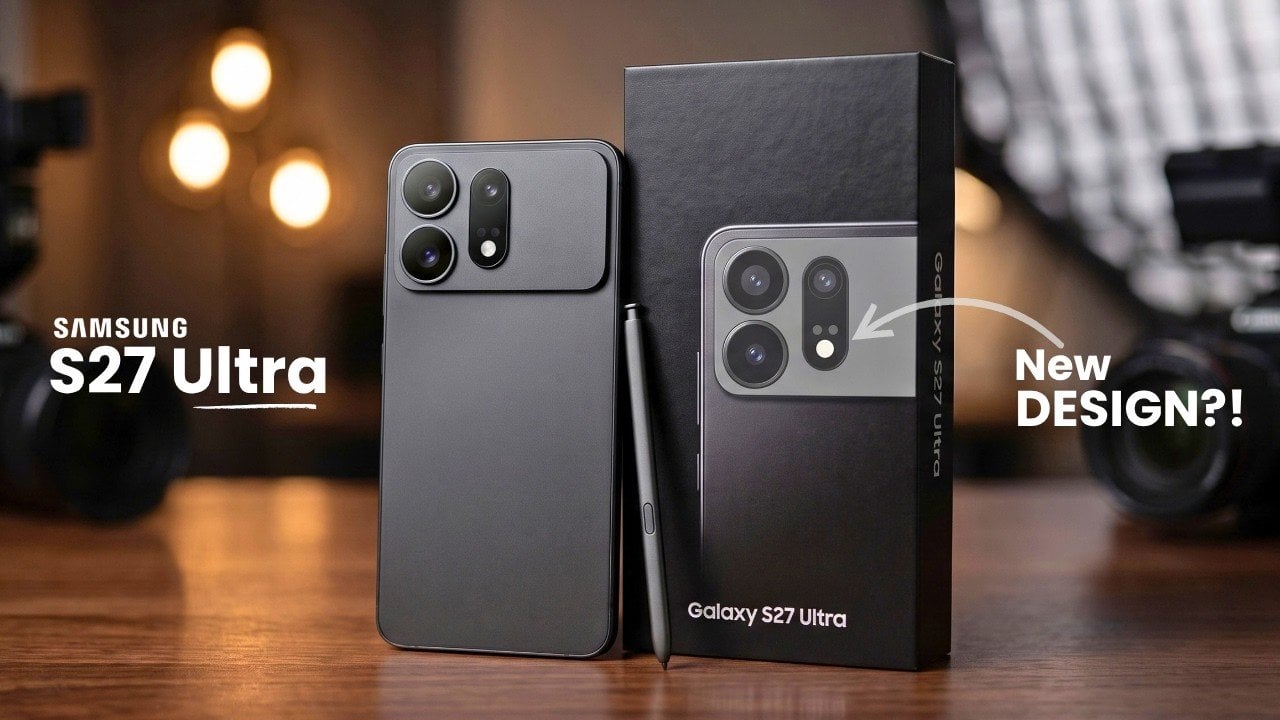
Samsung Finally Fixed It: The Galaxy Z Fold 8 Wide Brings Back the S Pen

Samsung Finally Fixed It: The Galaxy Z Fold 8 Wide Brings Back the S Pen

Samsung is set to transform the foldable smartphone market with the highly anticipated Galaxy Z Fold 8 and Galaxy Widefold. These devices aim to combine innovative technology with practical features, addressing the growing demand for enhanced functionality in mobile devices. By reintroducing the S Pen and delivering significant camera improvements, Samsung is positioning itself as […]

The post Samsung Finally Fixed It: The Galaxy Z Fold 8 Wide Brings Back the S Pen appeared first on Geeky Gadgets.

Posted in Uncategorized

How to Spot AI Photos Fast in 2026 Using Content Labels, Hive AI Scores & Reverse Search

How to Spot AI Photos Fast in 2026 Using Content Labels, Hive AI Scores & Reverse Search

Can you trust everything you see online? As AI-generated images grow more advanced, distinguishing between authentic visuals and artificial creations has become increasingly challenging. From stunningly realistic portraits to intricate landscapes, these images are designed to fool even the most discerning viewers. TheAIGRID takes a closer look at how you can confidently identify AI-generated visuals […]

The post How to Spot AI Photos Fast in 2026 Using Content Labels, Hive AI Scores & Reverse Search appeared first on Geeky Gadgets.

Posted in Uncategorized

SwitchBot’s New Onero H1 Robot Finally Does Your Chores

When humanoid robots started becoming the major thing that robotics companies were pursuing, there were probably two kinds of people who reacted to it. There were those that were scared that having robot overlords were just a few years away, and then those that were excited to finally have someone to do their chores for them. The former hasn’t happened yet, thank goodness, but it looks like we’re almost there with the latter.

SwitchBot’s Onero H1, currently making waves at CES 2026, may be the long-promised dream of having our own Rosie (that’s a Jetsons reference for you). They call it their “most accessible AI household robot” and it’s designed to be the household help that we need, one that will not grow tired or complain that it’s being overworked. Hopefully.

Designer: SwitchBot

One key aspect of this robot that makes it ideal for chores is that it has impressive flexibility and range of motion with its 22 degrees of freedom. It is an OmniSense VLA model with AI capabilities built in so that it can learn and adapt even without cloud connectivity. It is able to understand its environment with visual perception, depth sensing, and tactile feedback.

While it may not look like Rosie or Megan (again, thank goodness), this robot is a full-sized humanoid with arms, hands, head, and yes, even a face. It has a wheeled base so it can navigate easily throughout your space. Onero H1 also has articulated robotic arms labeled “A1” that can manipulate objects so it can help you or actually do your chores for you.

Some contact-intensive things that the robot can do include grasping and organizing objects, loading the dishwasher, cooking breakfast, preparing your morning and afternoon coffee, doing the dreaded laundry, washing the windows, and even opening and closing doors for you. It can also catch the jacket you throw at it when you come home. Talk about butler service!

Unlike the robot vacuums and single-purpose smart devices we’re used to, the Onero H1 represents something more ambitious. It’s part of SwitchBot’s “Smart Home 2.0” vision, where your home doesn’t just have gadgets but has systems that actually think and act on your behalf. The robot is designed to work seamlessly with SwitchBot’s existing ecosystem of task-specific robots, creating a unified smart home experience that feels less like managing technology and more like having a genuinely helpful presence in your home.

What’s particularly impressive is how it learns. The Onero H1 isn’t rigidly pre-programmed to perform tasks in one specific way. Instead, it adapts to YOUR home layout, YOUR routines, and YOUR preferences. It uses visual perception and tactile feedback to understand not just what objects are, but how they should be handled. This means it can figure out the difference between delicate glassware and sturdy pots, or learn where you prefer certain items to be organized. For those of us who’ve been juggling work, family, and the endless cycle of household chores, this kind of adaptable help could be genuinely life-changing. Imagine reclaiming those hours spent on repetitive tasks and using them for things that actually matter to you, whether that’s pursuing hobbies, spending quality time with loved ones, or simply enjoying a moment of peace.

Now, before you start clearing space in your home and budgeting for your new robot helper, there are a few things to keep in mind. While the Onero H1 will be available for pre-order through SwitchBot’s website, the company hasn’t announced pricing or a specific launch date yet, just that it’s coming “soon.” Multiple tech experts have noted that this is still very much a concept designed to show where the technology is headed, rather than a product ready for immediate mass adoption.

The SwitchBot Onero H1 represents an exciting glimpse into a future where household robots move beyond vacuuming floors to actually helping with the full range of domestic tasks. While we may need to wait a bit longer before Rosie arrives at our doorstep, it’s clear that the era of genuinely helpful household robots is no longer science fiction. It’s just around the corner.

For collectors and tech enthusiasts, the Onero H1 marks a significant milestone in consumer robotics history. It’s the moment when humanoid household robots transitioned from ambitious prototypes to accessible reality. Whether you’re excited about finally having help with the dishes or simply fascinated by the technology, one thing is certain: the future of smart homes is looking a lot more hands-on, literally.

The post SwitchBot’s New Onero H1 Robot Finally Does Your Chores first appeared on Yanko Design.