SwitchBot’s New Onero H1 Robot Finally Does Your Chores

When humanoid robots started becoming the major thing that robotics companies were pursuing, there were probably two kinds of people who reacted to it. There were those that were scared that having robot overlords were just a few years away, and then those that were excited to finally have someone to do their chores for them. The former hasn’t happened yet, thank goodness, but it looks like we’re almost there with the latter.

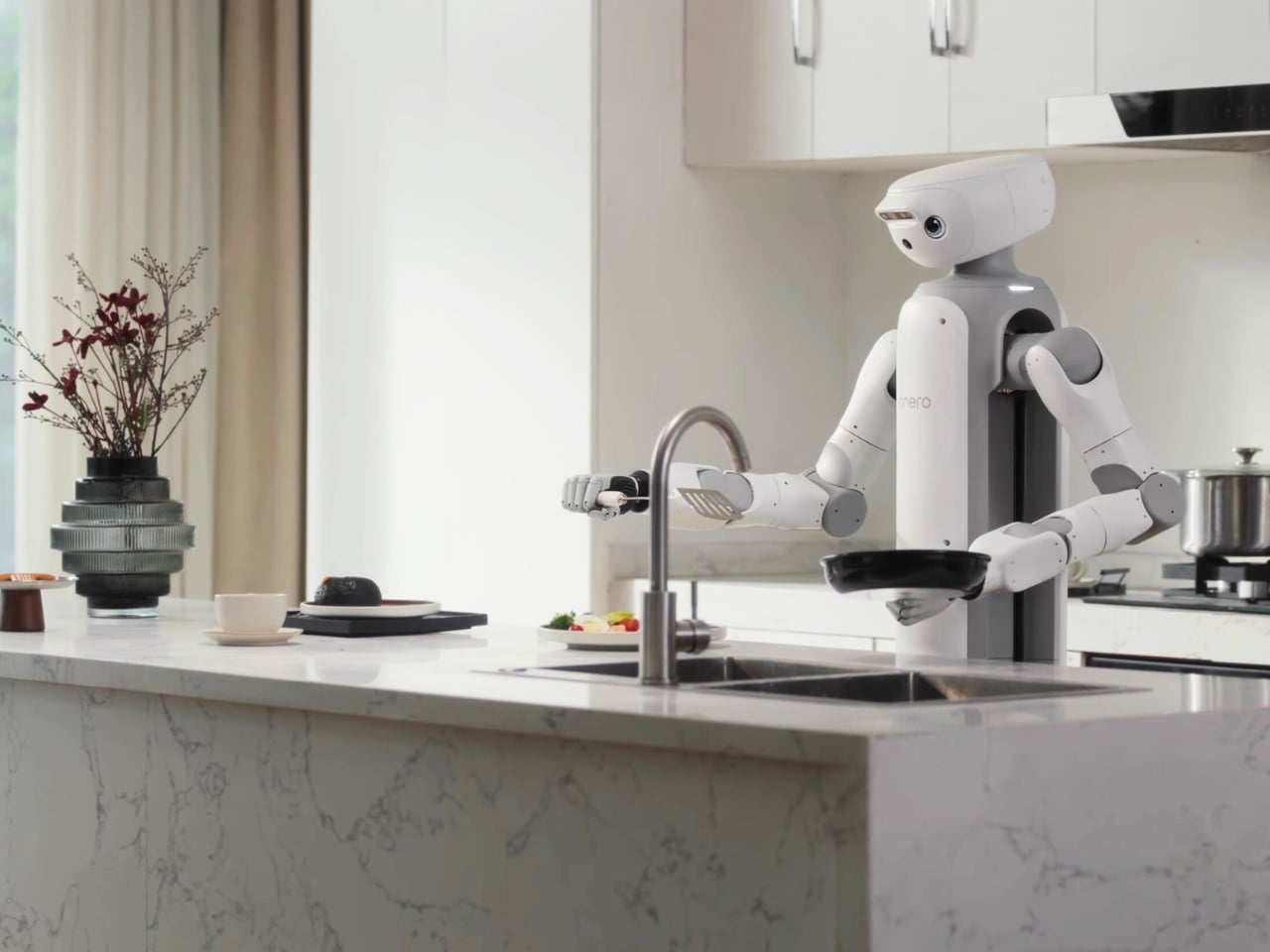
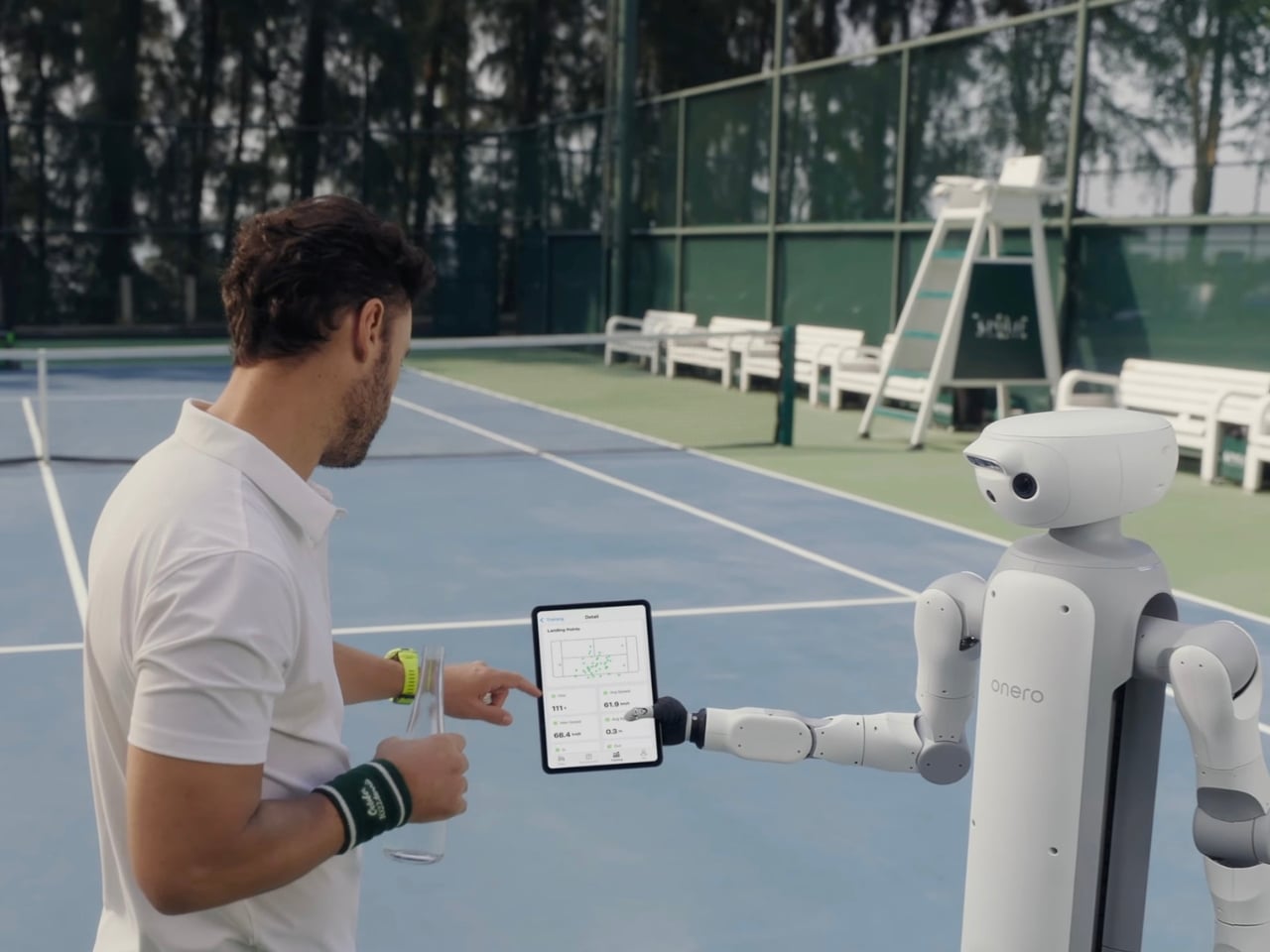
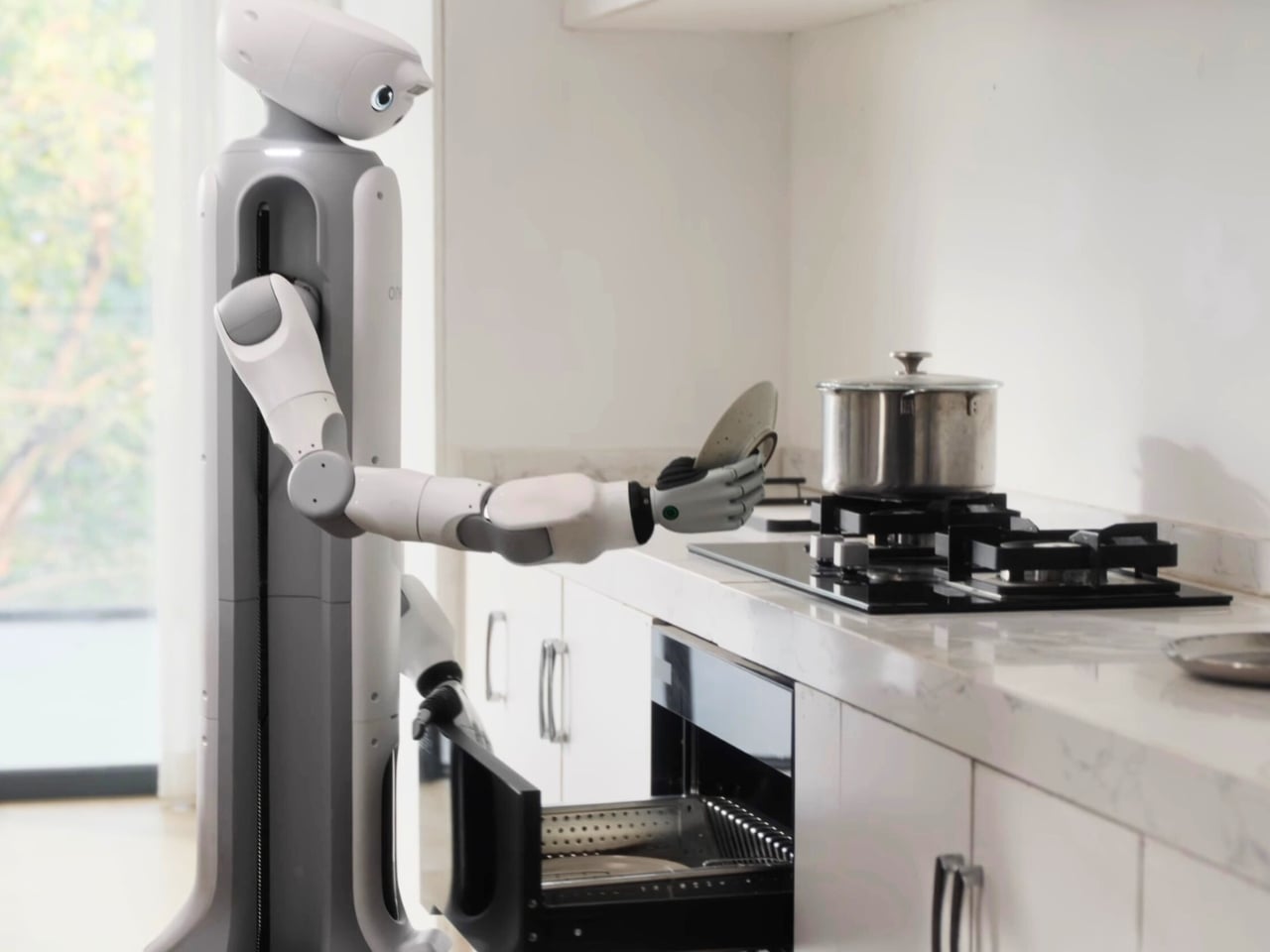
SwitchBot’s Onero H1, currently making waves at CES 2026, may be the long-promised dream of having our own Rosie (that’s a Jetsons reference for you). They call it their “most accessible AI household robot” and it’s designed to be the household help that we need, one that will not grow tired or complain that it’s being overworked. Hopefully.

Designer: SwitchBot

One key aspect of this robot that makes it ideal for chores is that it has impressive flexibility and range of motion with its 22 degrees of freedom. It is an OmniSense VLA model with AI capabilities built in so that it can learn and adapt even without cloud connectivity. It is able to understand its environment with visual perception, depth sensing, and tactile feedback.

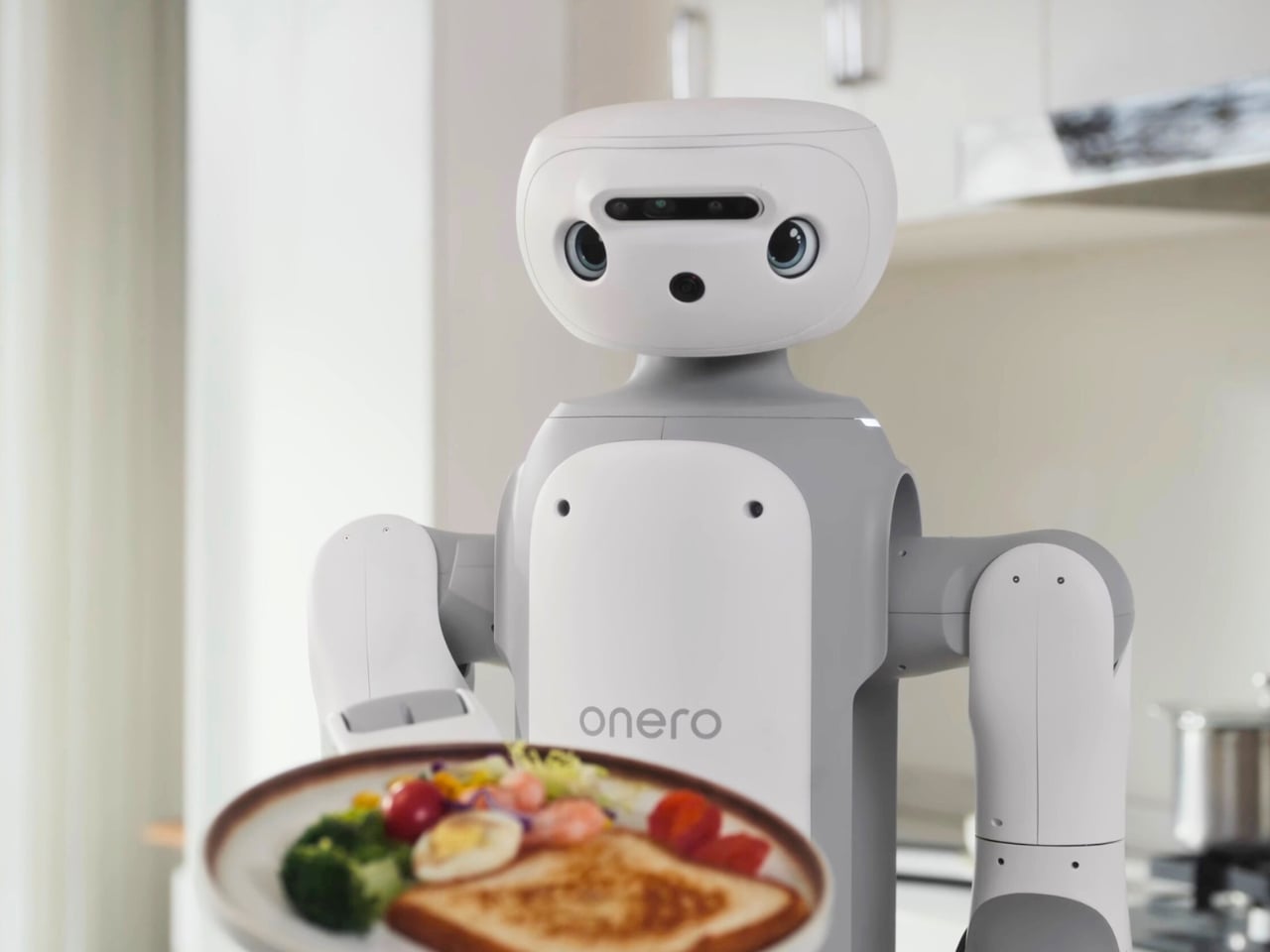
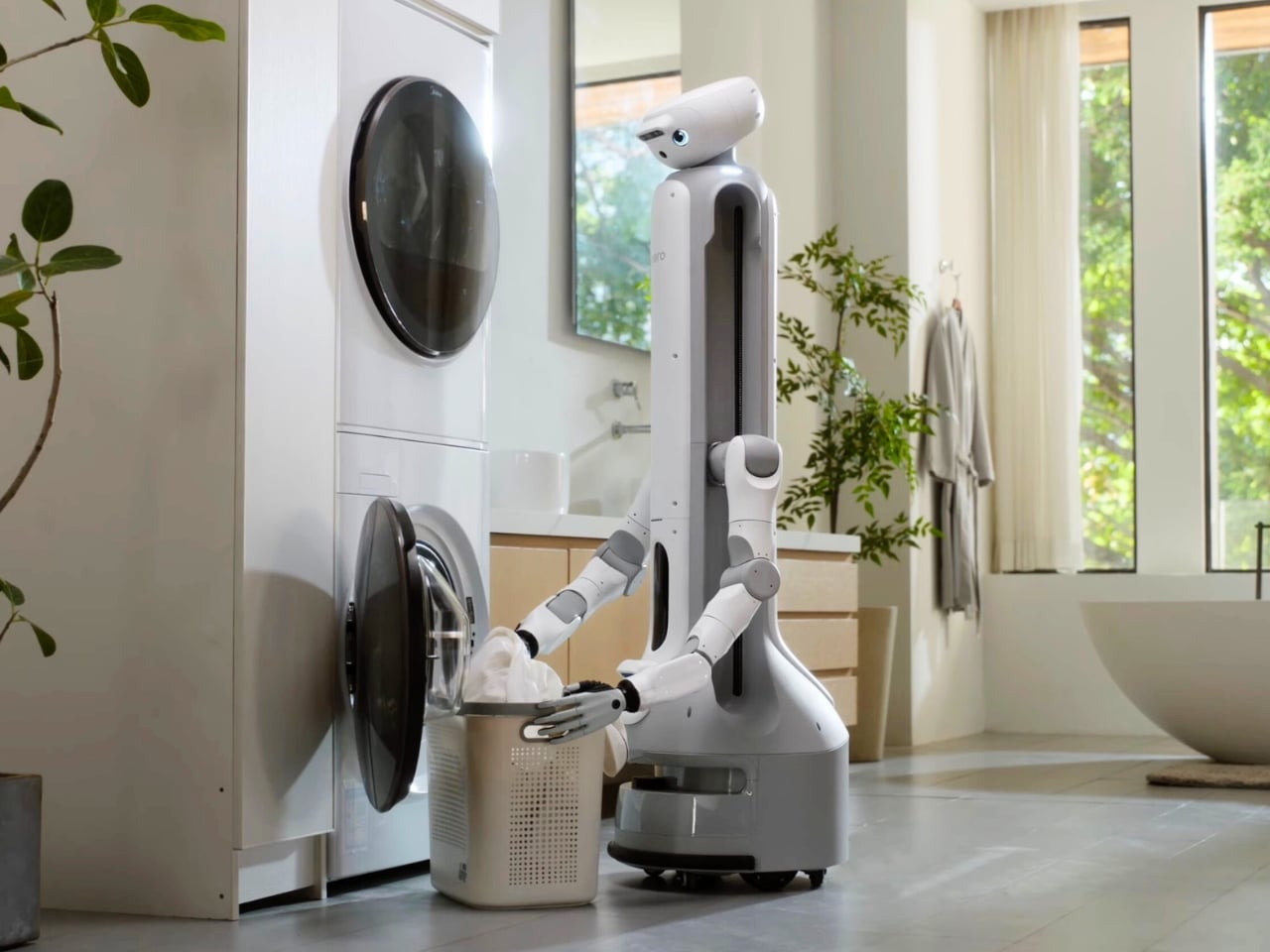
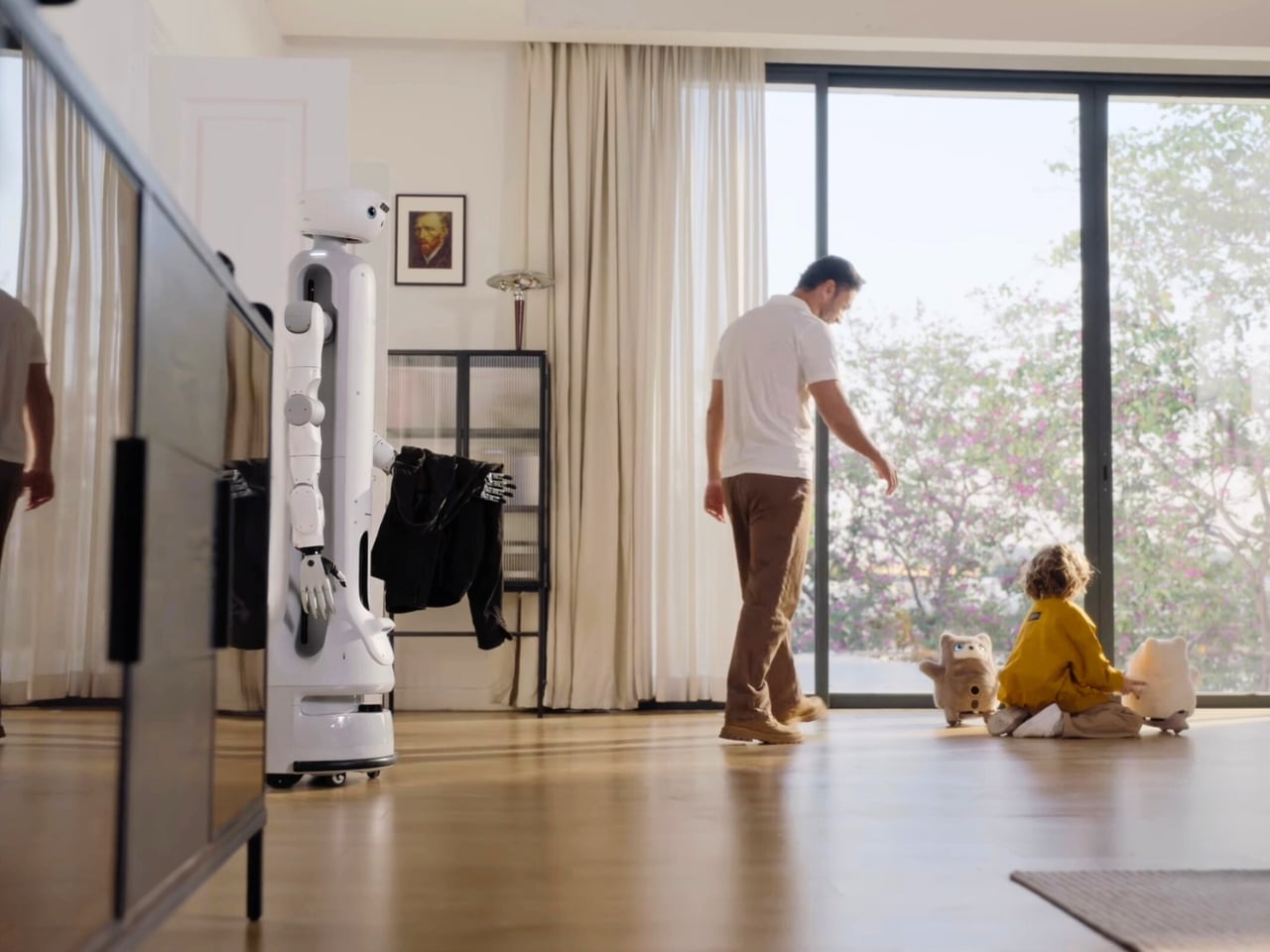
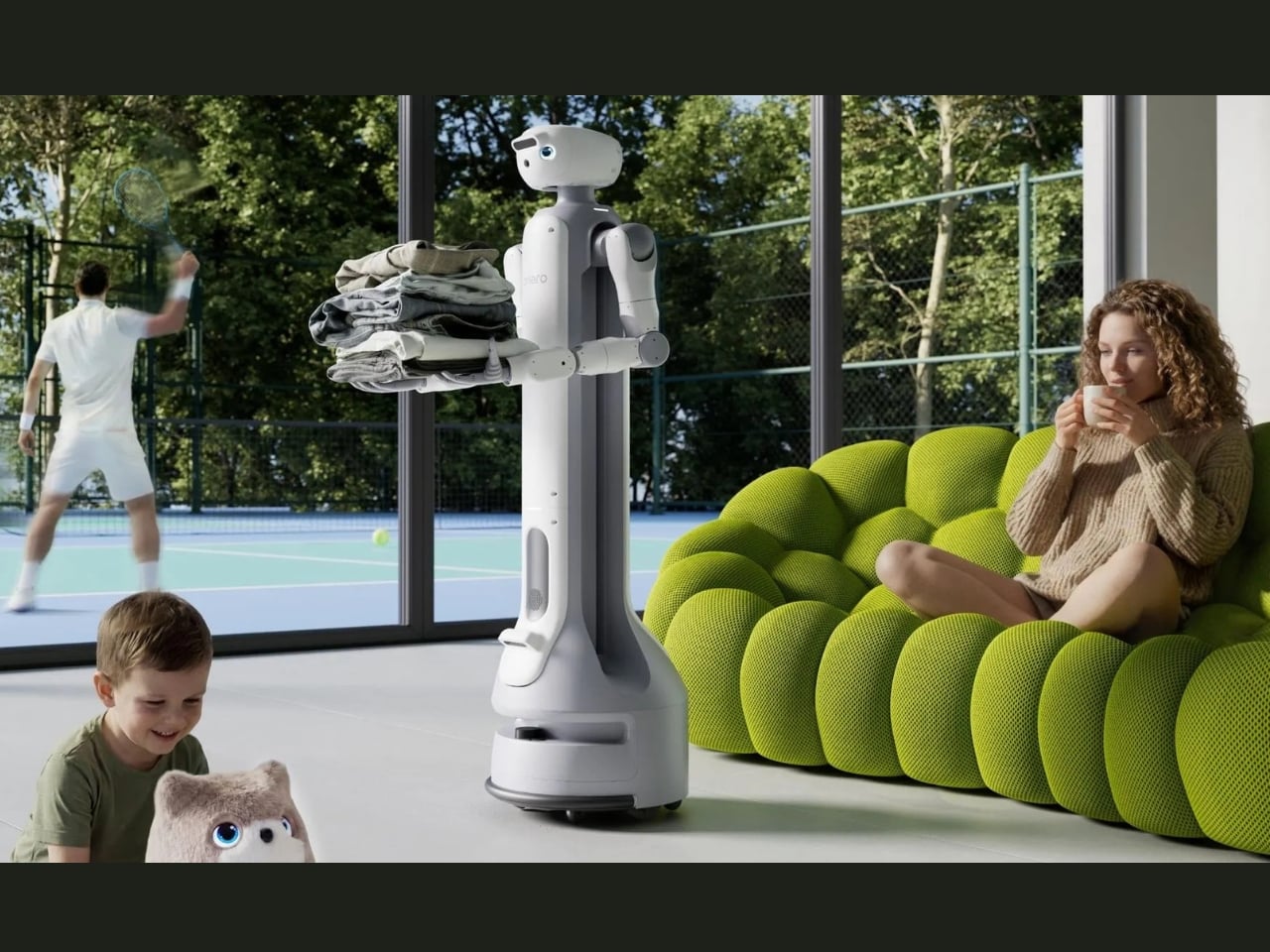
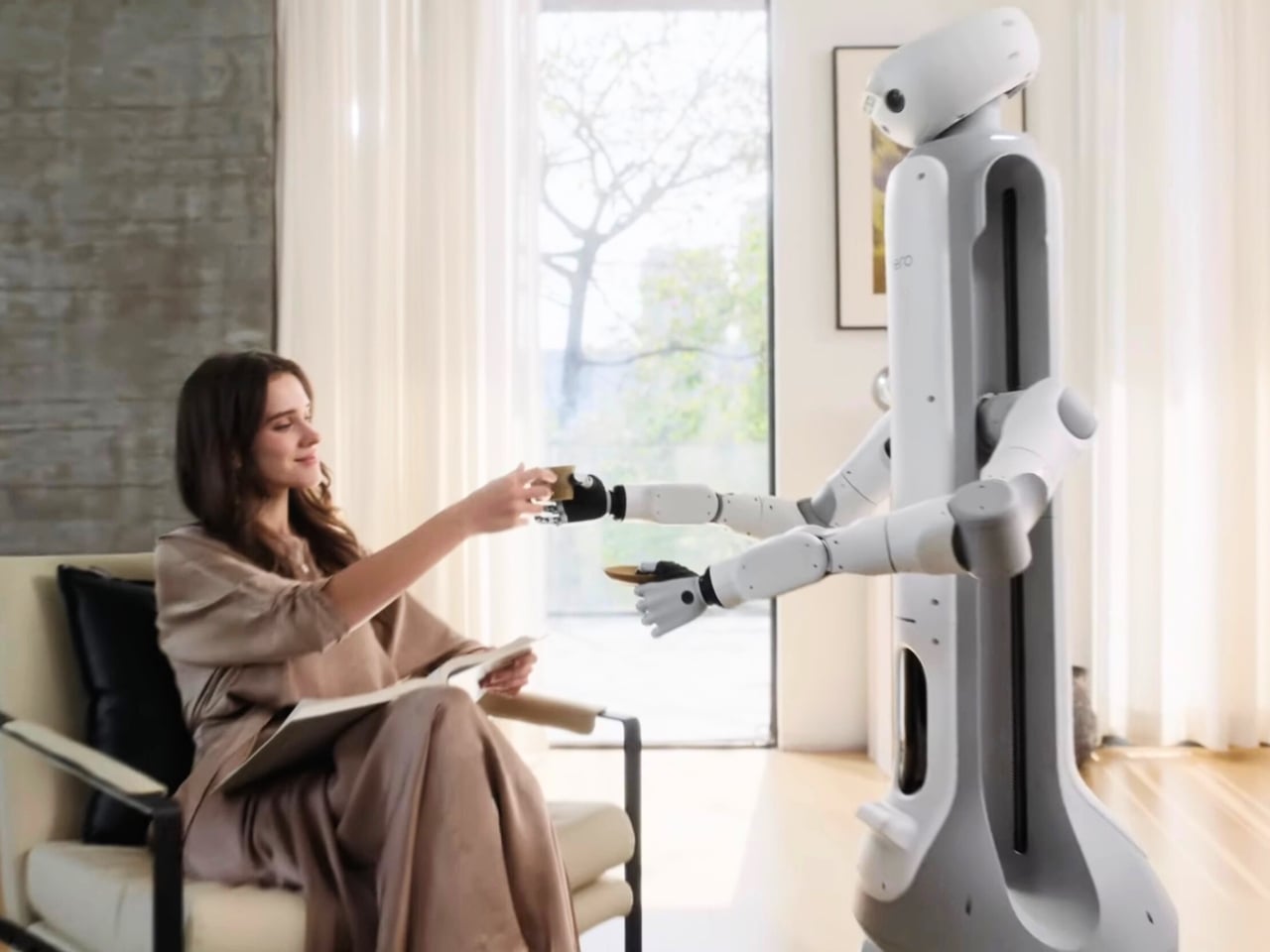
While it may not look like Rosie or Megan (again, thank goodness), this robot is a full-sized humanoid with arms, hands, head, and yes, even a face. It has a wheeled base so it can navigate easily throughout your space. Onero H1 also has articulated robotic arms labeled “A1” that can manipulate objects so it can help you or actually do your chores for you.

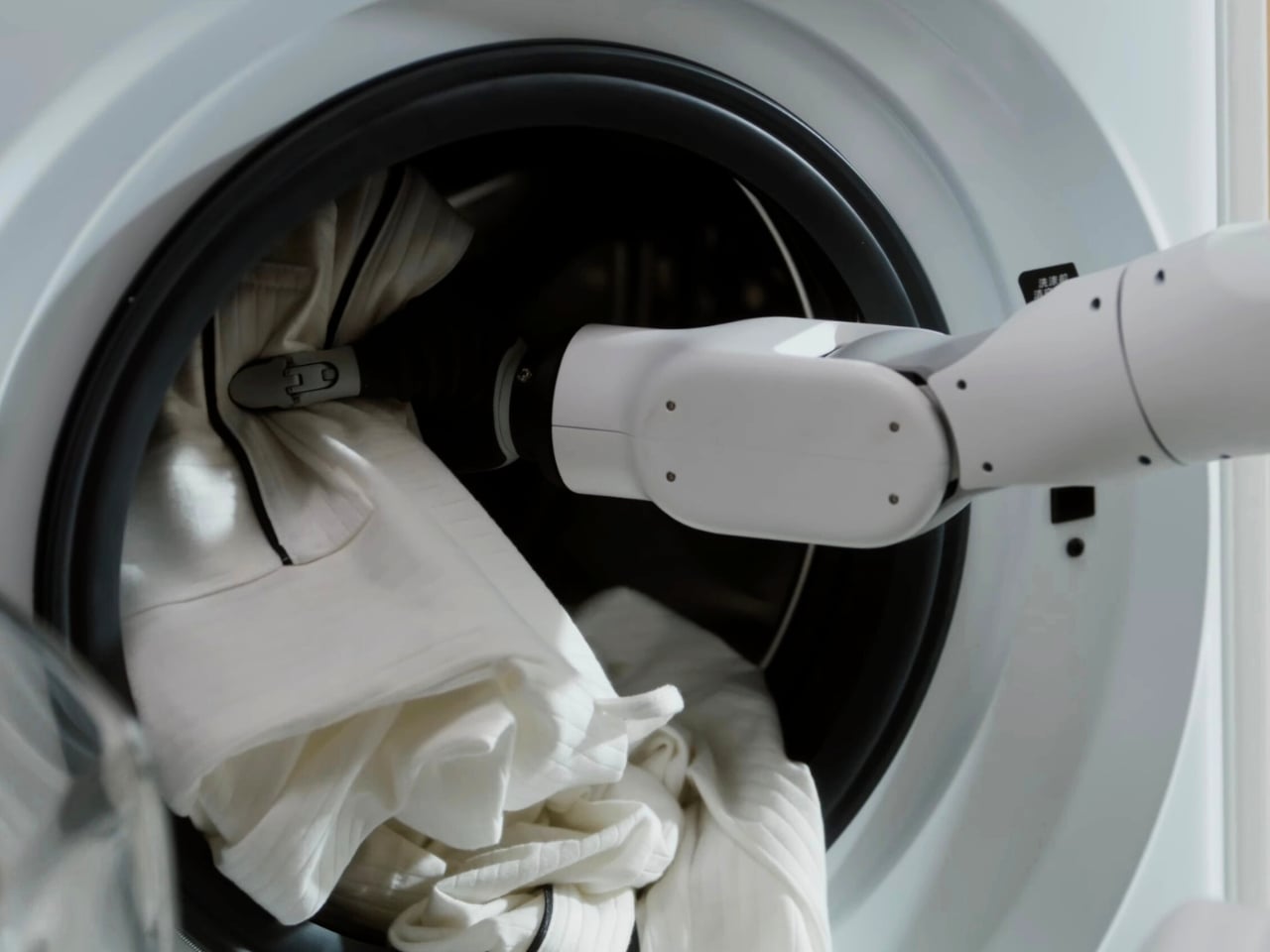
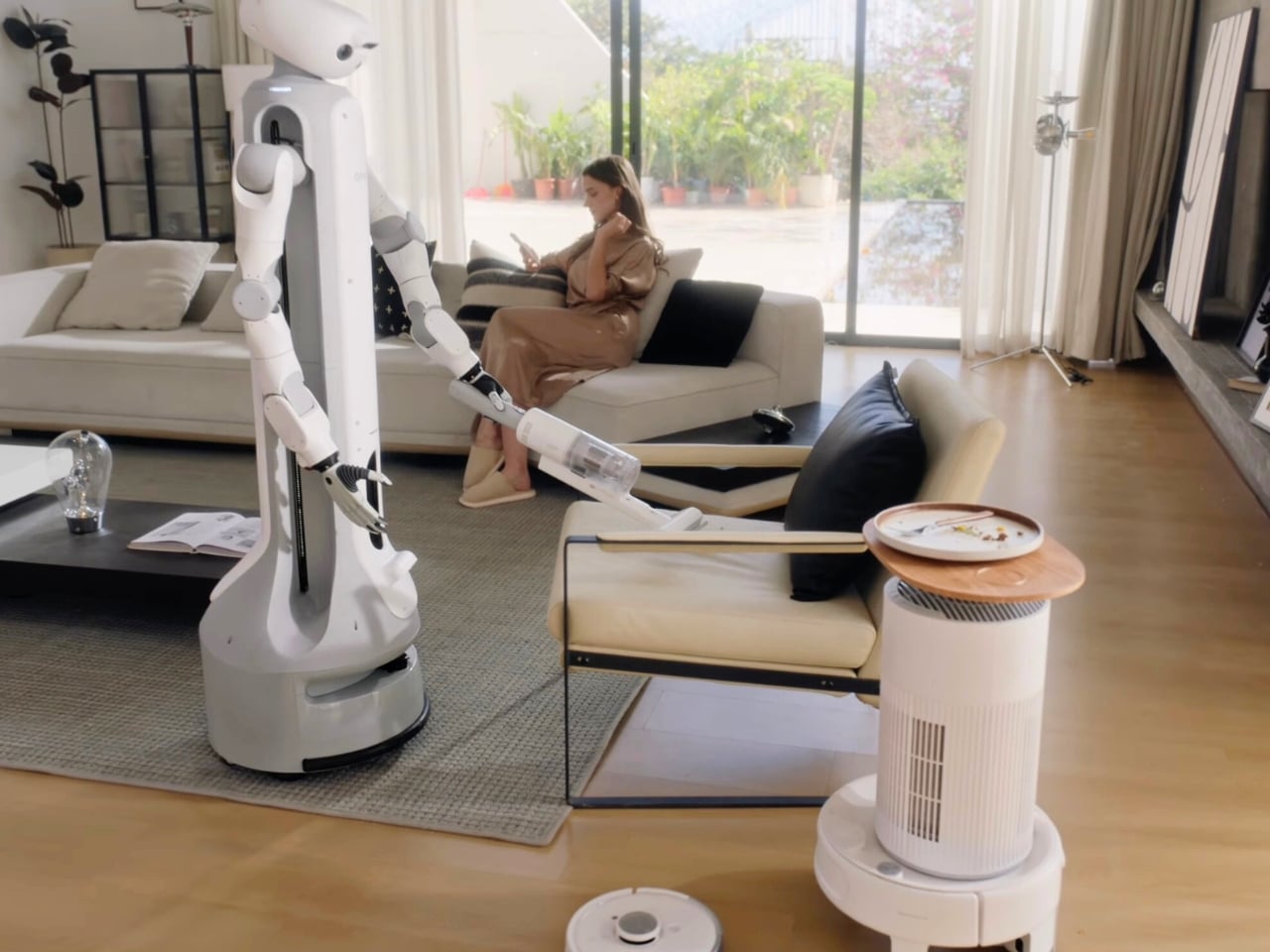
Some contact-intensive things that the robot can do include grasping and organizing objects, loading the dishwasher, cooking breakfast, preparing your morning and afternoon coffee, doing the dreaded laundry, washing the windows, and even opening and closing doors for you. It can also catch the jacket you throw at it when you come home. Talk about butler service!

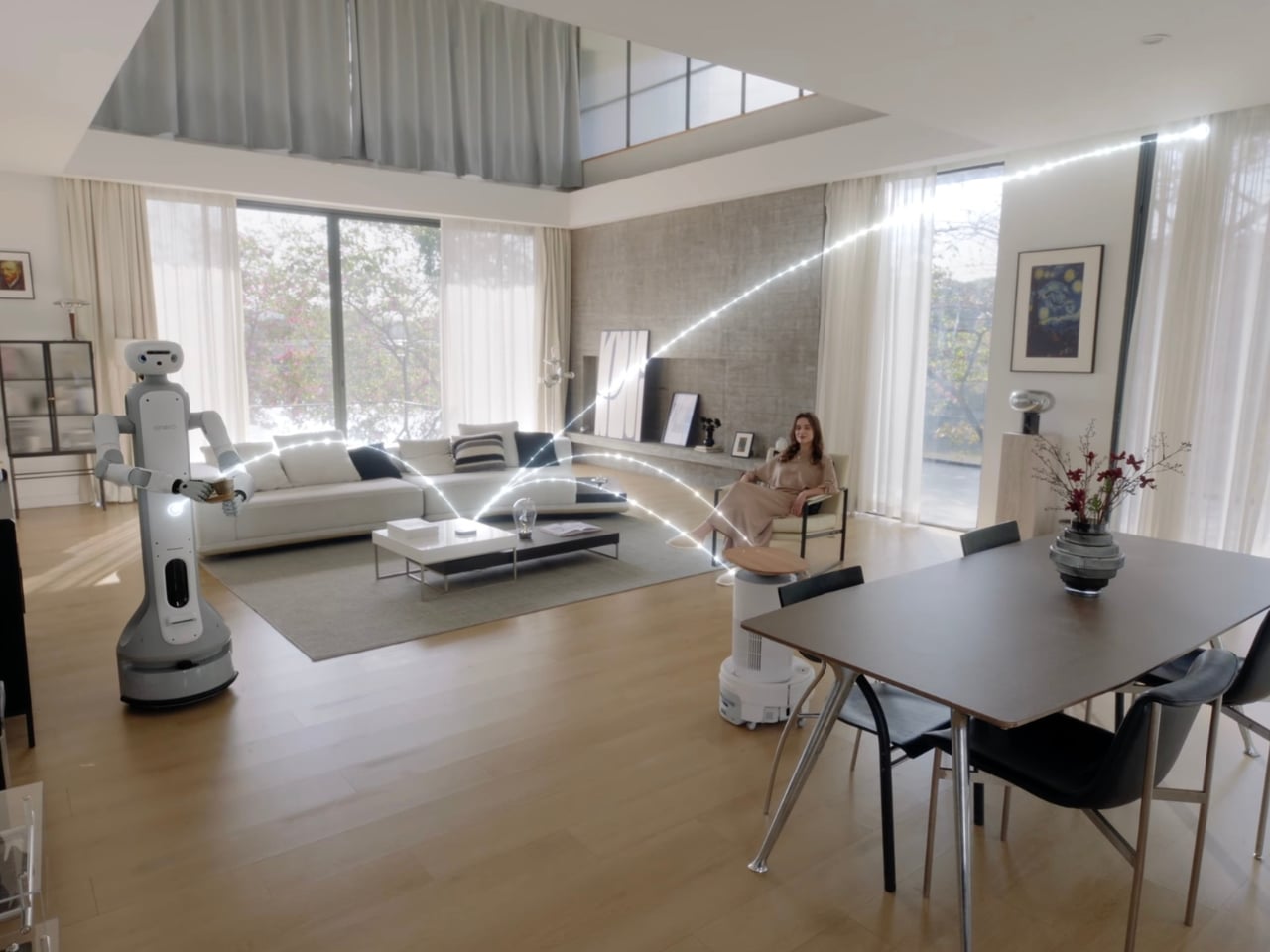
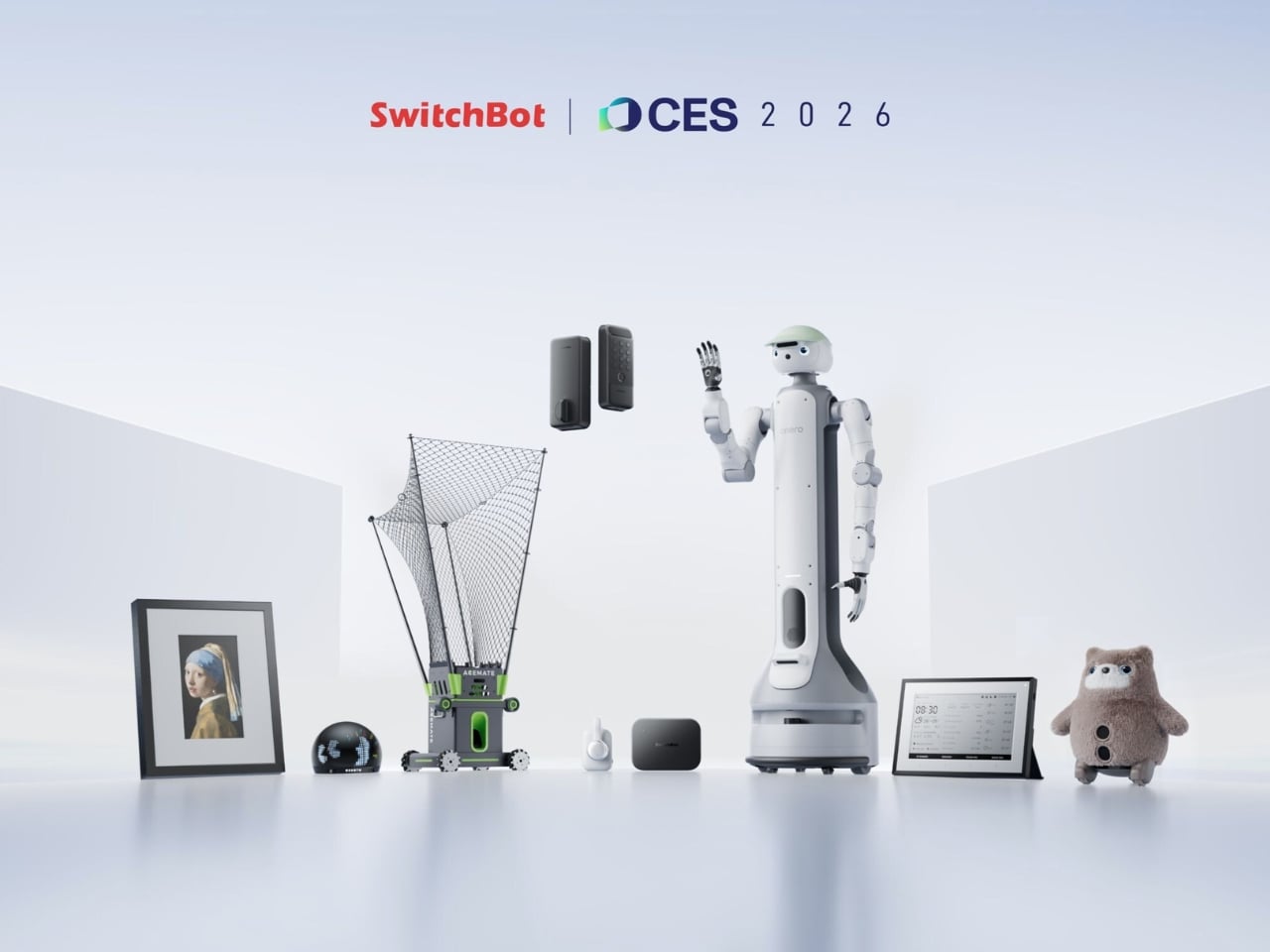
Unlike the robot vacuums and single-purpose smart devices we’re used to, the Onero H1 represents something more ambitious. It’s part of SwitchBot’s “Smart Home 2.0” vision, where your home doesn’t just have gadgets but has systems that actually think and act on your behalf. The robot is designed to work seamlessly with SwitchBot’s existing ecosystem of task-specific robots, creating a unified smart home experience that feels less like managing technology and more like having a genuinely helpful presence in your home.

What’s particularly impressive is how it learns. The Onero H1 isn’t rigidly pre-programmed to perform tasks in one specific way. Instead, it adapts to YOUR home layout, YOUR routines, and YOUR preferences. It uses visual perception and tactile feedback to understand not just what objects are, but how they should be handled. This means it can figure out the difference between delicate glassware and sturdy pots, or learn where you prefer certain items to be organized. For those of us who’ve been juggling work, family, and the endless cycle of household chores, this kind of adaptable help could be genuinely life-changing. Imagine reclaiming those hours spent on repetitive tasks and using them for things that actually matter to you, whether that’s pursuing hobbies, spending quality time with loved ones, or simply enjoying a moment of peace.

Now, before you start clearing space in your home and budgeting for your new robot helper, there are a few things to keep in mind. While the Onero H1 will be available for pre-order through SwitchBot’s website, the company hasn’t announced pricing or a specific launch date yet, just that it’s coming “soon.” Multiple tech experts have noted that this is still very much a concept designed to show where the technology is headed, rather than a product ready for immediate mass adoption.

The SwitchBot Onero H1 represents an exciting glimpse into a future where household robots move beyond vacuuming floors to actually helping with the full range of domestic tasks. While we may need to wait a bit longer before Rosie arrives at our doorstep, it’s clear that the era of genuinely helpful household robots is no longer science fiction. It’s just around the corner.

For collectors and tech enthusiasts, the Onero H1 marks a significant milestone in consumer robotics history. It’s the moment when humanoid household robots transitioned from ambitious prototypes to accessible reality. Whether you’re excited about finally having help with the dishes or simply fascinated by the technology, one thing is certain: the future of smart homes is looking a lot more hands-on, literally.

The post SwitchBot’s New Onero H1 Robot Finally Does Your Chores first appeared on Yanko Design.

Samsung Taps Bouroullec to Design Speakers That Blend Into Rooms

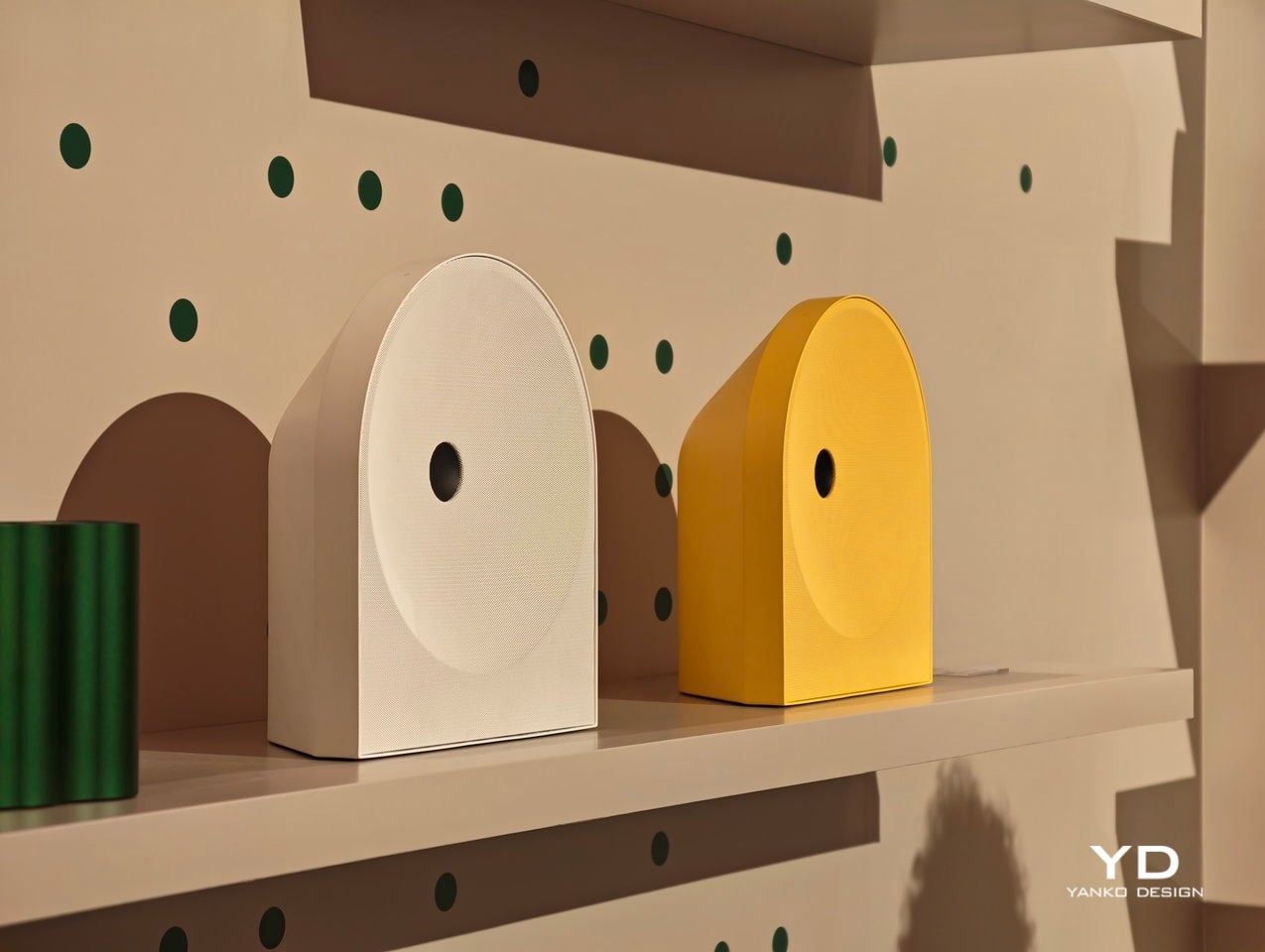
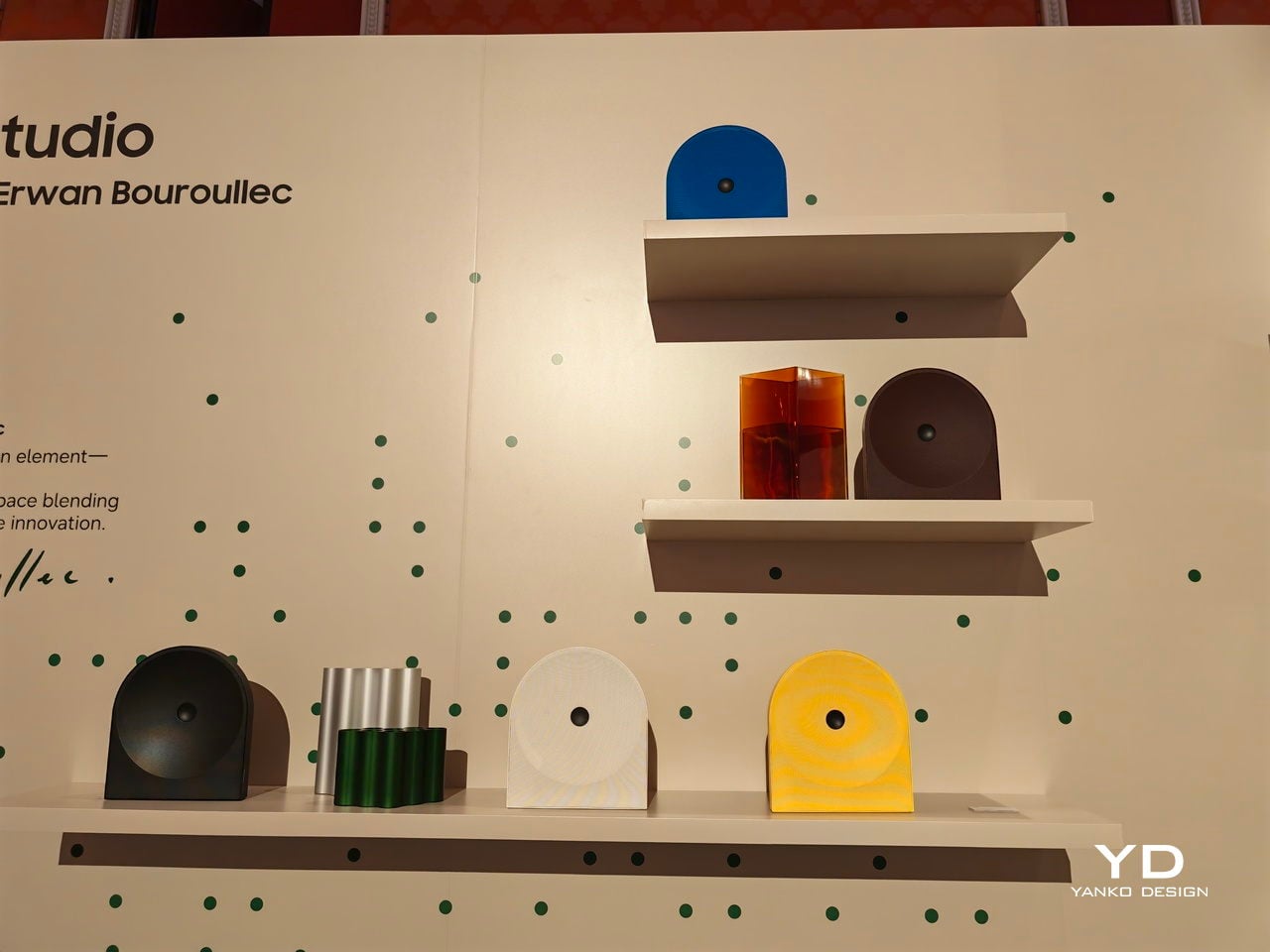
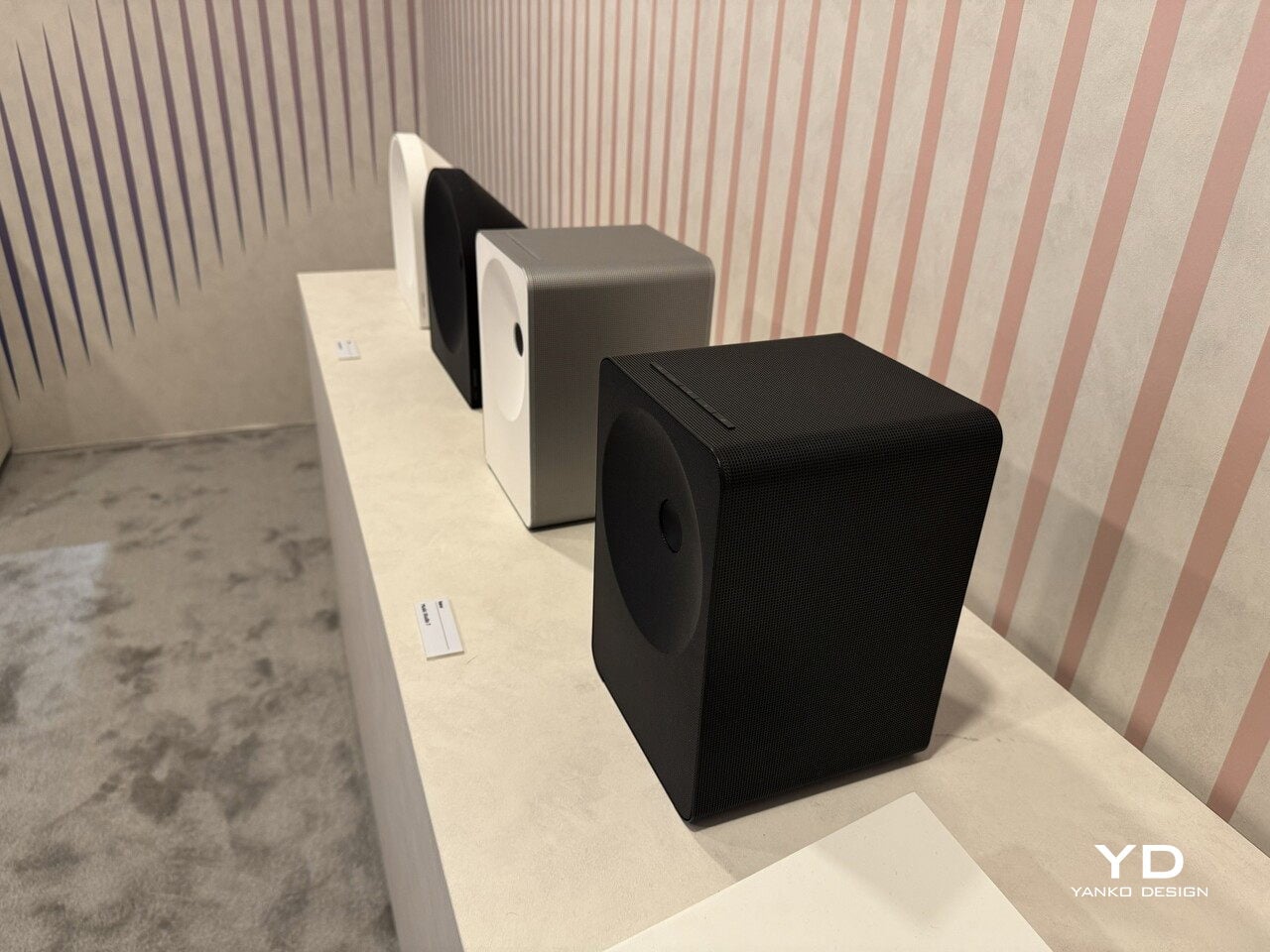
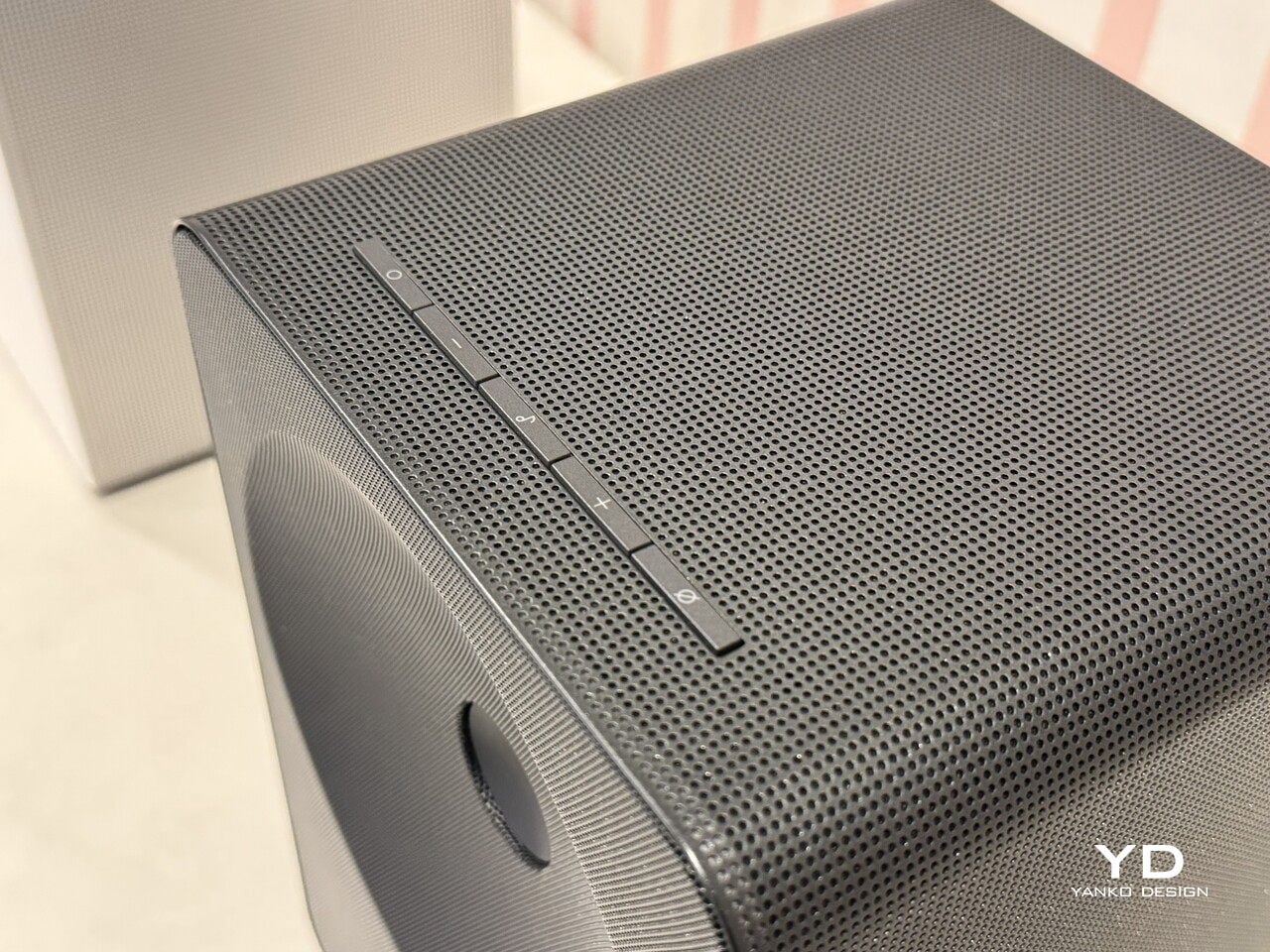
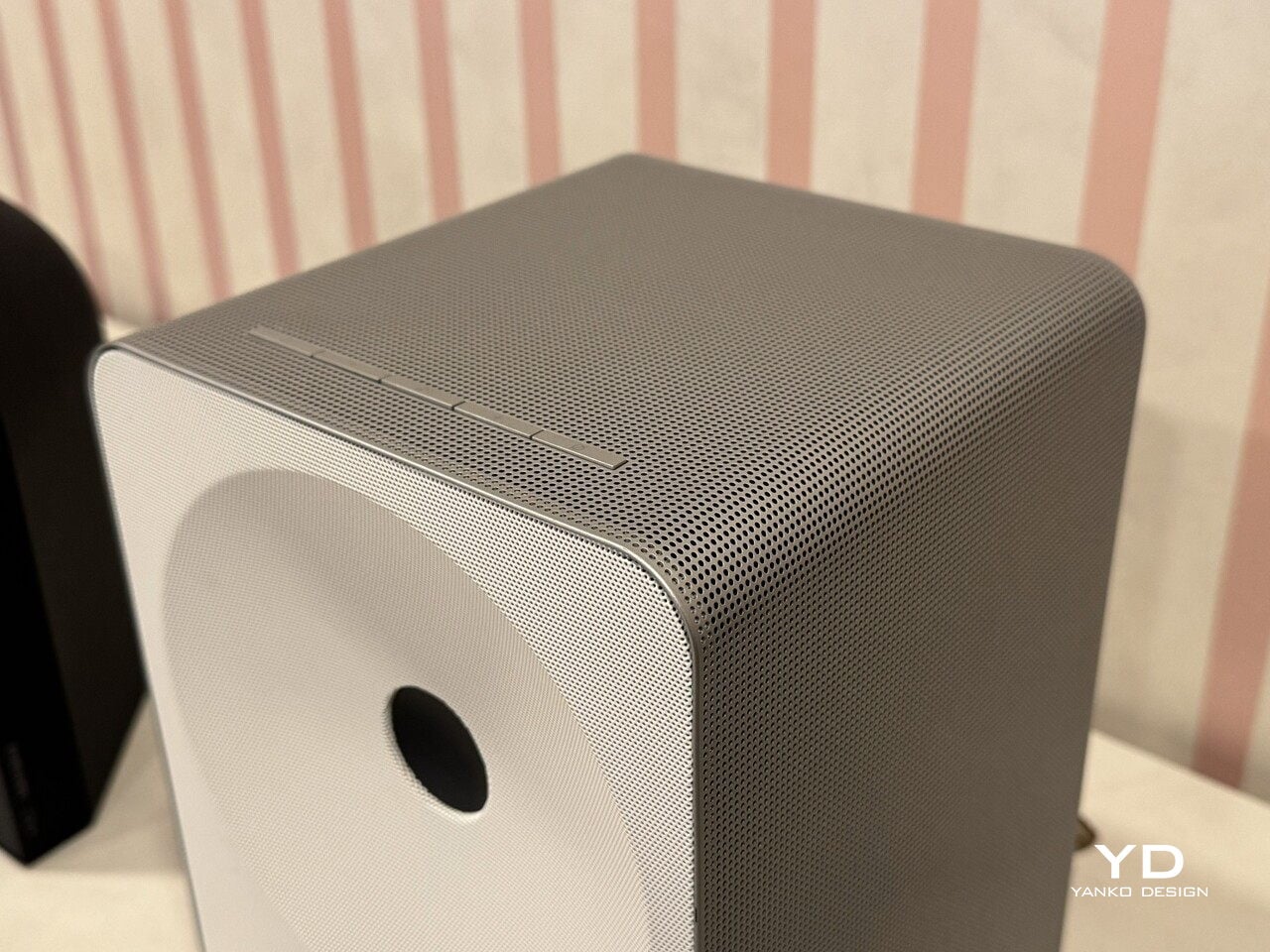
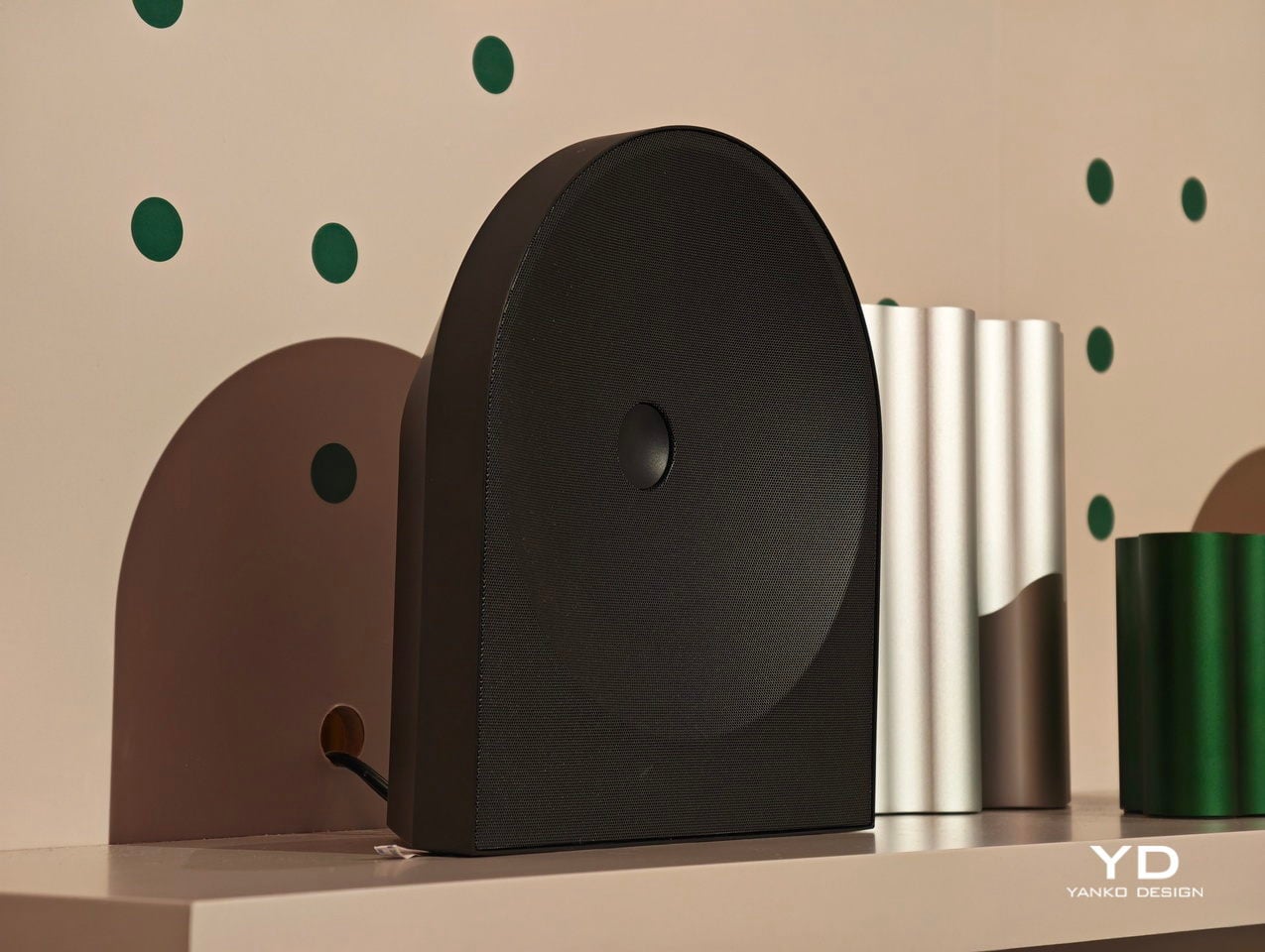
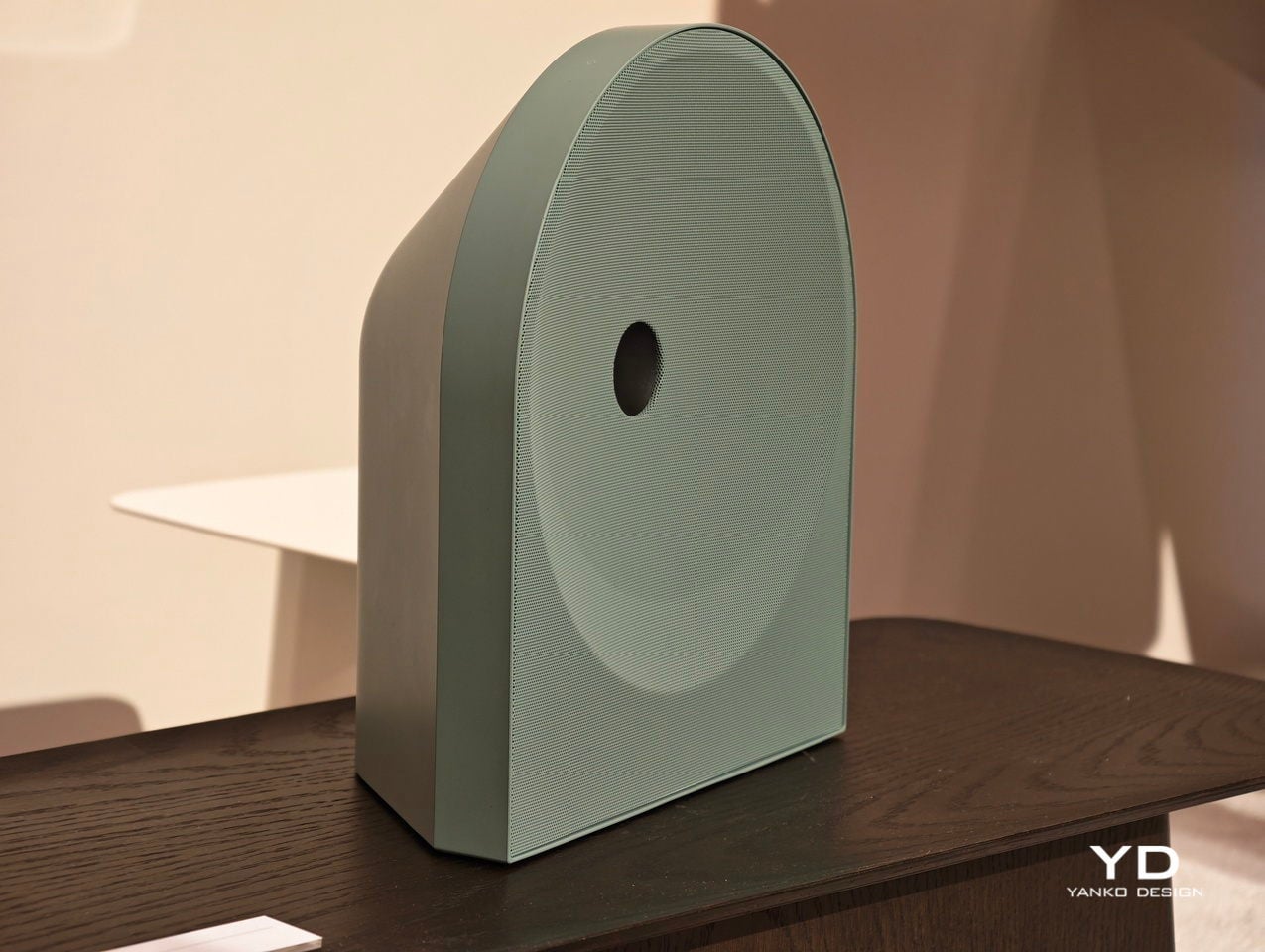
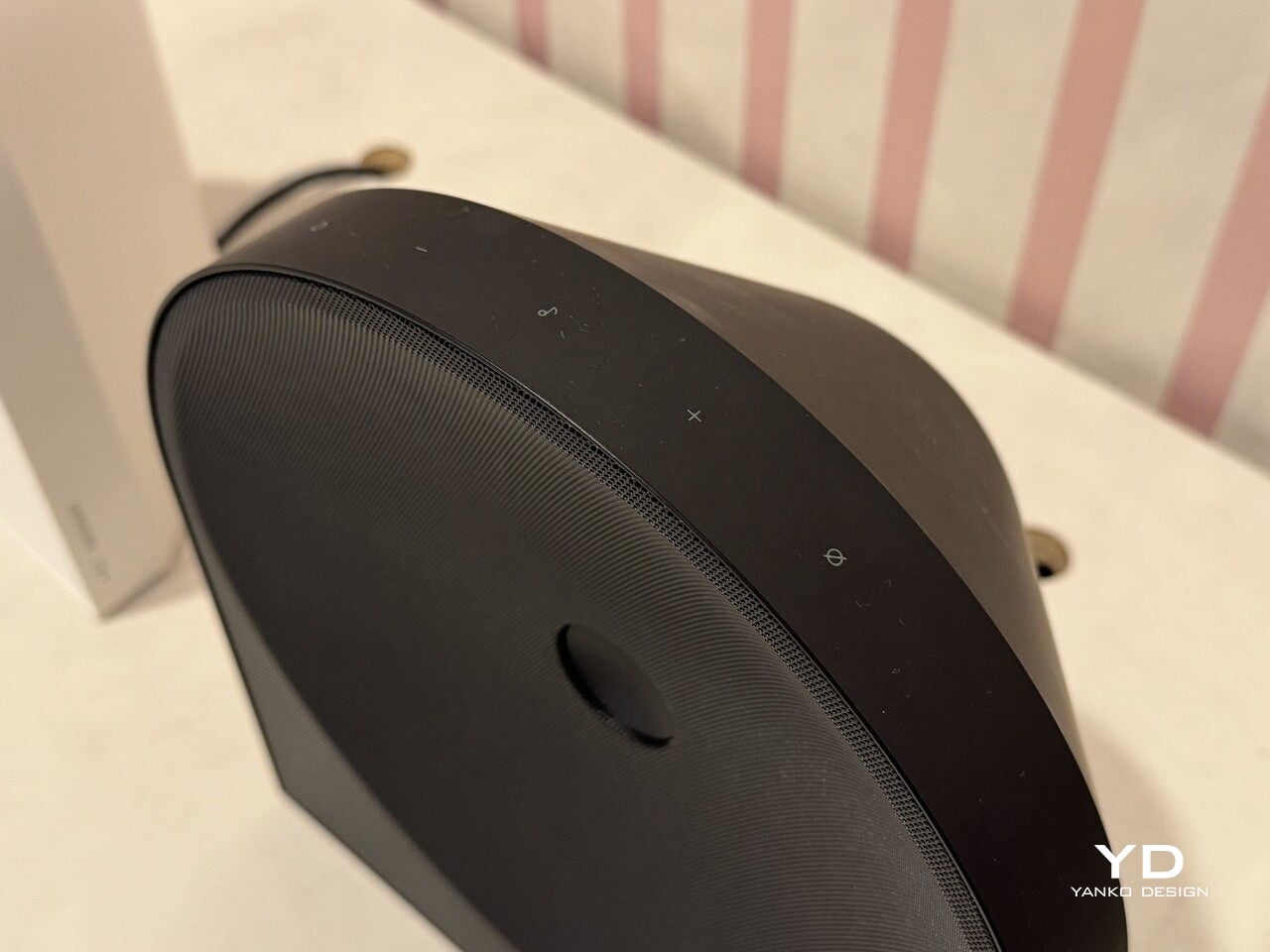
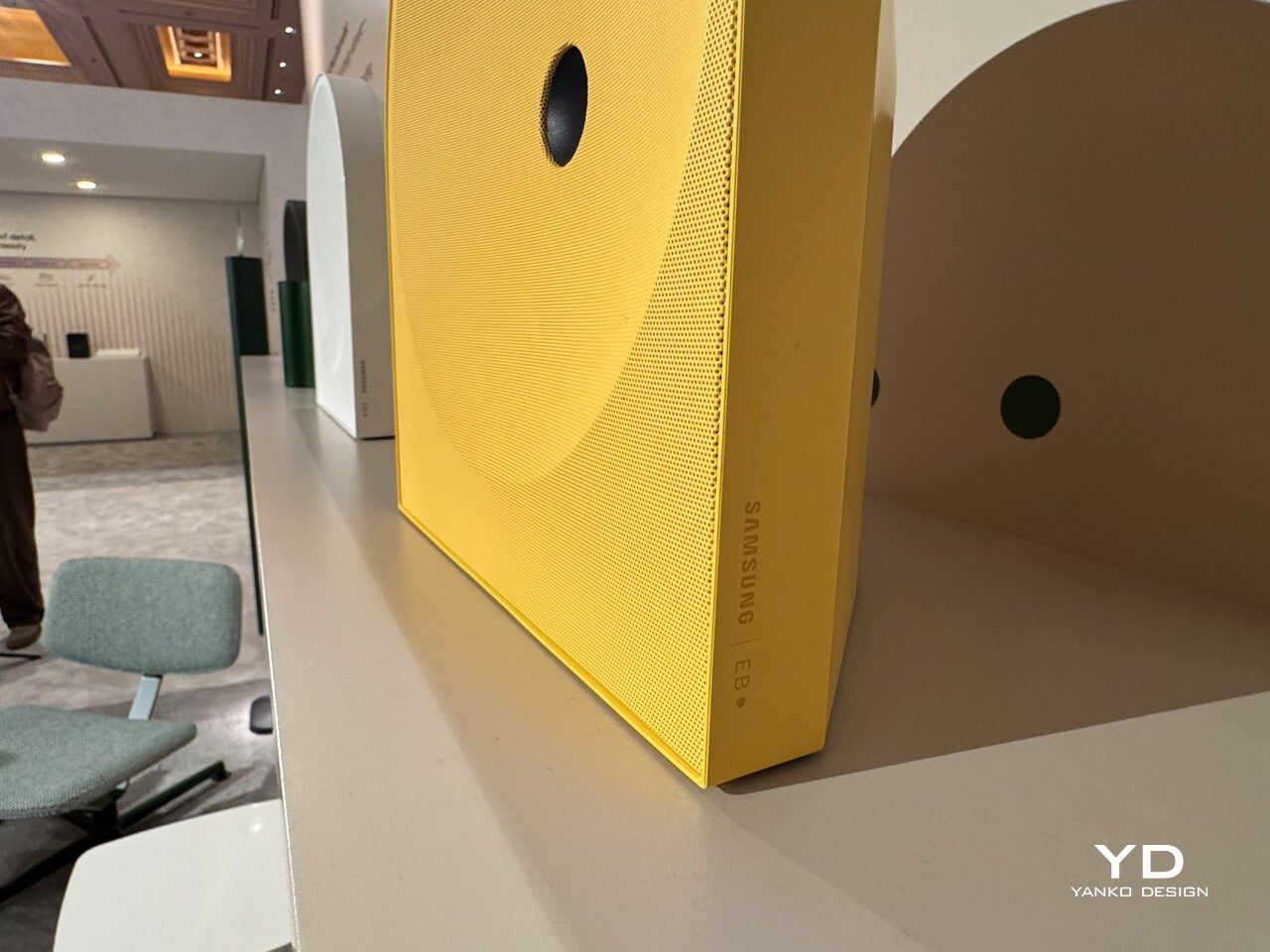
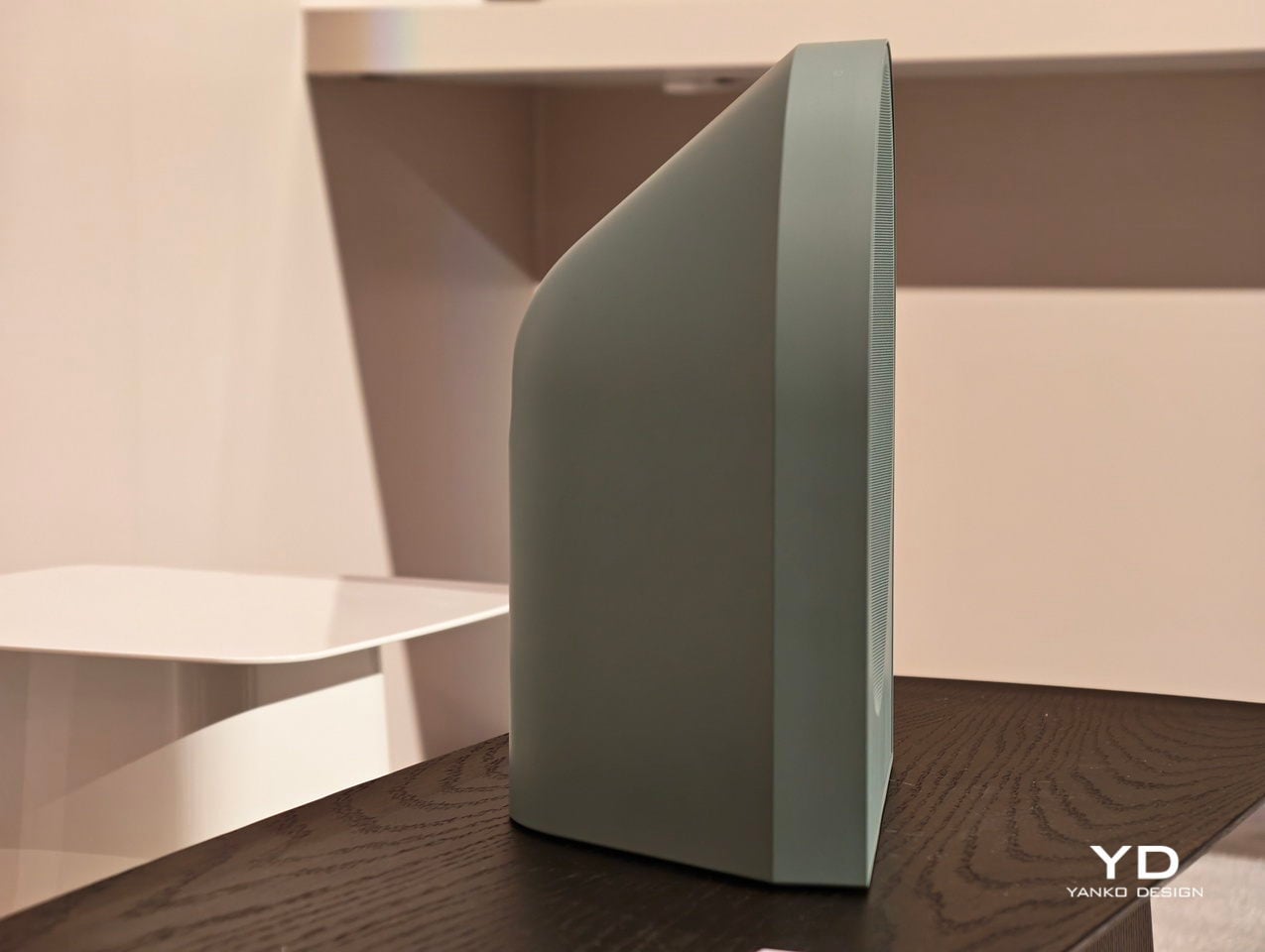
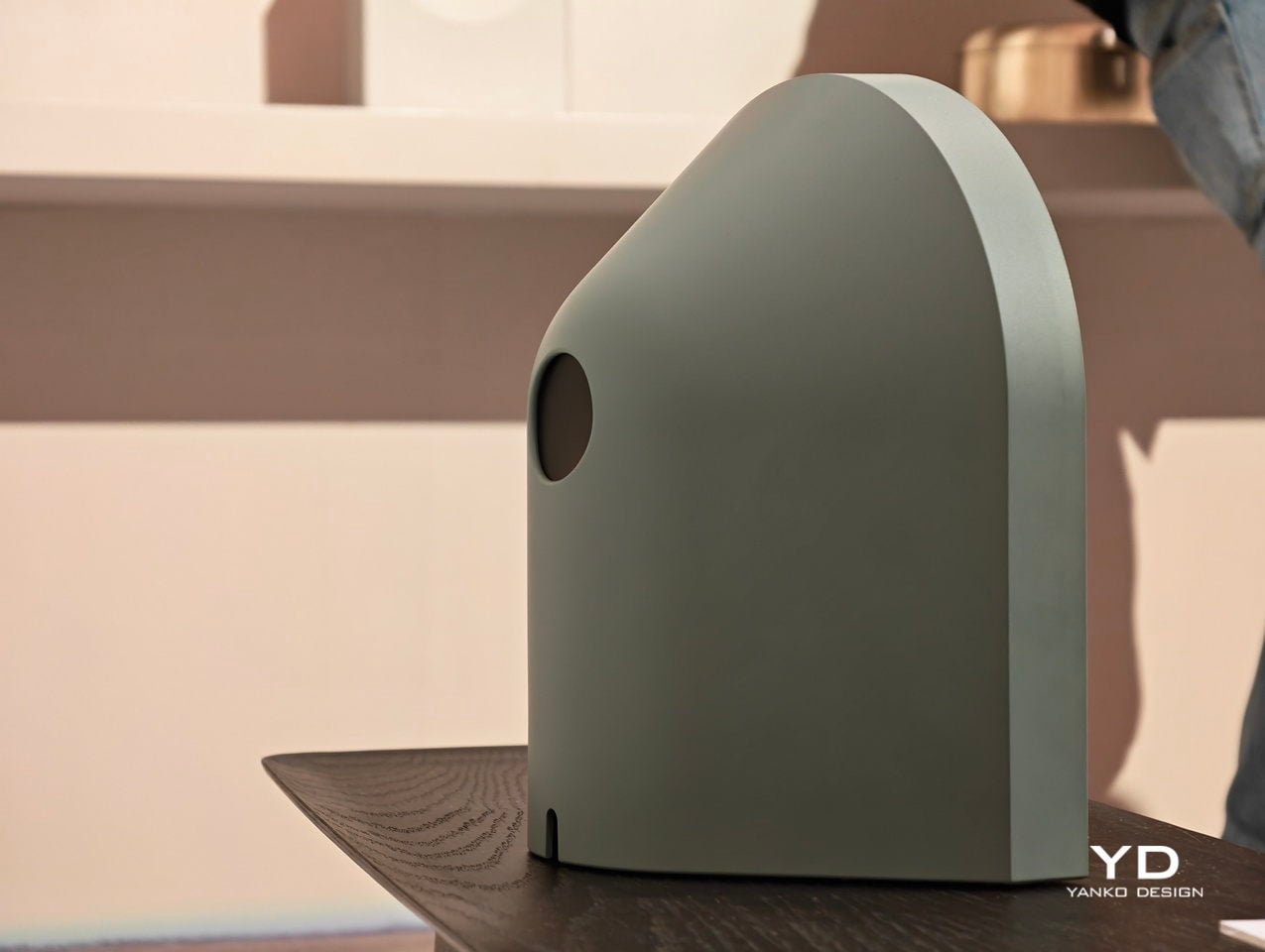
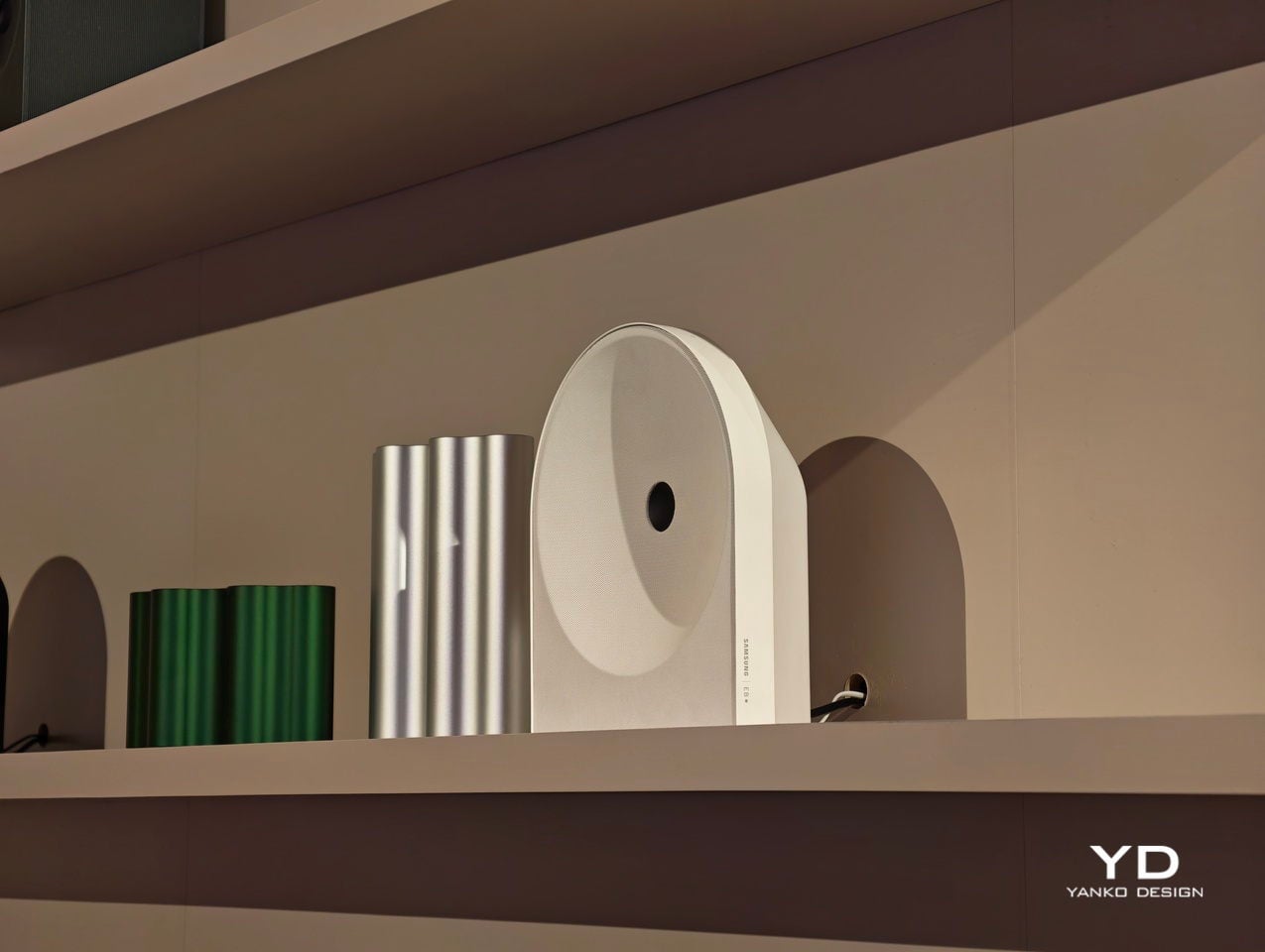
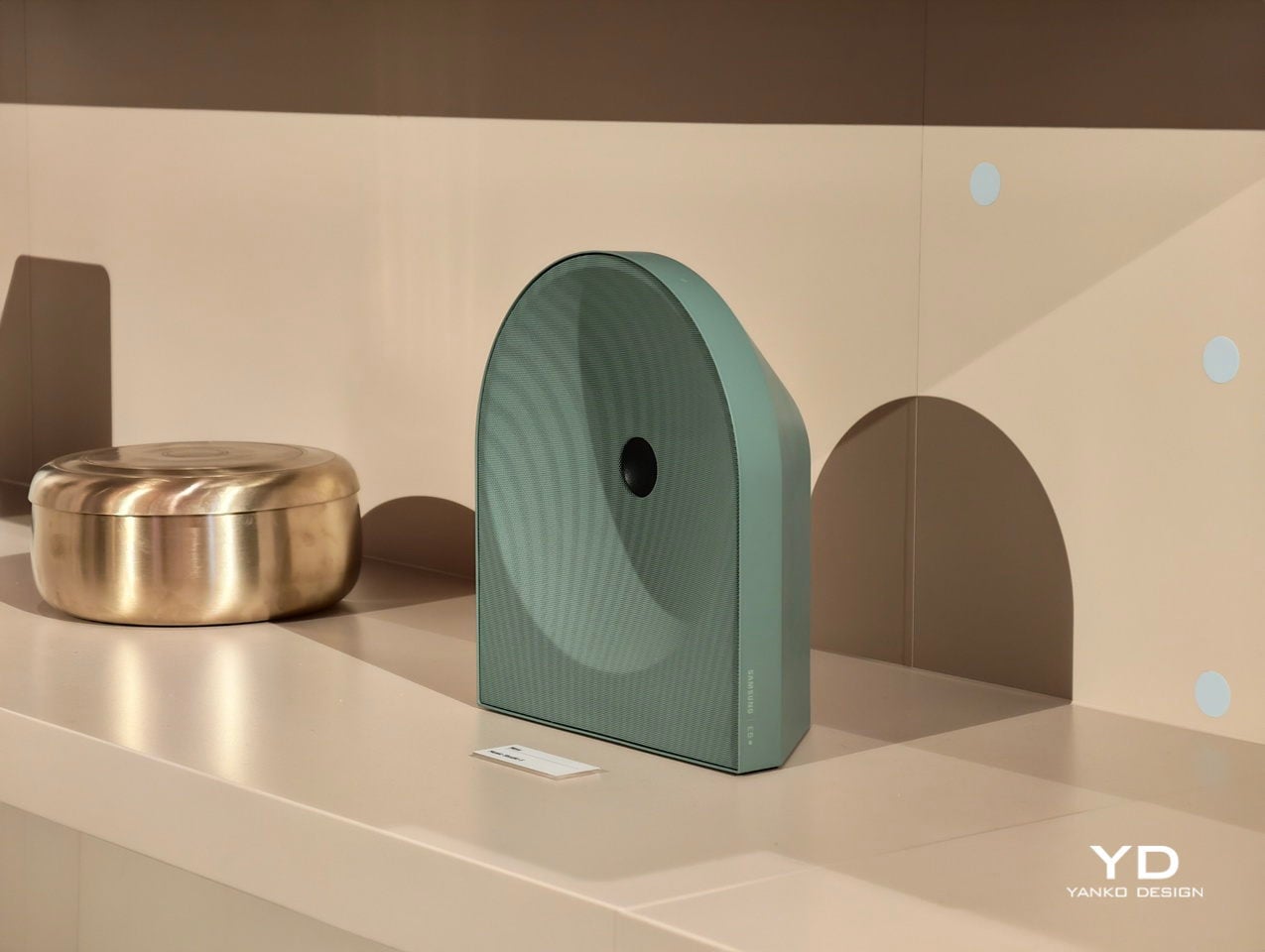
CES 2026 is full of screens and soundbars, but what stands out are speakers that look like they belong in a living room, even when they are silent. Samsung’s Music Studio 7 and Music Studio 5 are Wi-Fi speakers shaped around Erwan Bouroullec’s dot motif, designed to sit comfortably on shelves and consoles while quietly handling the serious audio work, from hi-resolution streaming to multi-device spatial sound.

Music Studio 7 (LS70H) is the tall, immersive one, and Music Studio 5 (LS50H) is the compact, gallery-friendly sibling. Both share the same circular eye on the front, a dot that hints at the origin of sound, but they play different roles at home. One anchors a room with 3.1.1-channel spatial audio, the other slips into smaller spaces without giving up clarity or presence.

Designer: Erwan Bouroullec

An evening where Music Studio 7 is handling everything, from a playlist to a late-night movie, makes the 3.1.1-channel architecture clear. Left, front, right, and top-firing drivers build a tall soundstage that wraps around the room, while Samsung’s pattern control and immersive waveguide keep effects and vocals precisely placed. AI Dynamic Bass Control keeps the low end deep but tidy, so the room feels full without the furniture rattling or neighbors complaining.

Quiet listening sessions bring hi-res playback into focus. The speaker processes up to 24-bit/96 kHz, so subtle details in acoustic tracks or film scores stay intact instead of getting smoothed over. Spotify lossless streaming and Spotify Tap over Wi-Fi let you move from phone to speaker with a tap, or start a recommendation directly on the device, which makes spontaneous listening feel less like managing gadgets and more like just pressing play.

Music Studio 5 lives in a different kind of space, on a shelf or sideboard where size matters. It uses a 4-inch woofer and dual tweeters with a built-in waveguide to keep sound balanced and crisp, even at lower volumes. AI Dynamic Bass Control deepens low frequencies without turning everything into a thump, so it works as well for background jazz while you cook as it does for focused listening at a desk.

A weekend movie where the speakers and a Samsung TV share the work shows how Q-Symphony handles multi-device sound. The TV and Music Studio units play together instead of one replacing the other, letting dialogue come from the screen while spatial effects spread to the speakers. Wi-Fi casting, streaming services, voice control, and Bluetooth via Samsung’s Seamless Codec sit in the background, making it easy to move sound between rooms or devices without thinking too hard about the path.

The dot-driven forms and soft colors make the speakers feel like part of the furniture, not gadgets that need to be hidden when guests arrive. Seeing them at CES 2026 hints at a direction where home audio is judged as much on how it shapes a room as on how it measures in a lab, and Music Studio 7 and 5 are built to live comfortably in both worlds, treating sound as something that belongs in a space rather than something you tolerate until you can afford to hide it.

The post Samsung Taps Bouroullec to Design Speakers That Blend Into Rooms first appeared on Yanko Design.

LG Collaborated with Museum Curators to Bring the Gallery TV to CES 2026

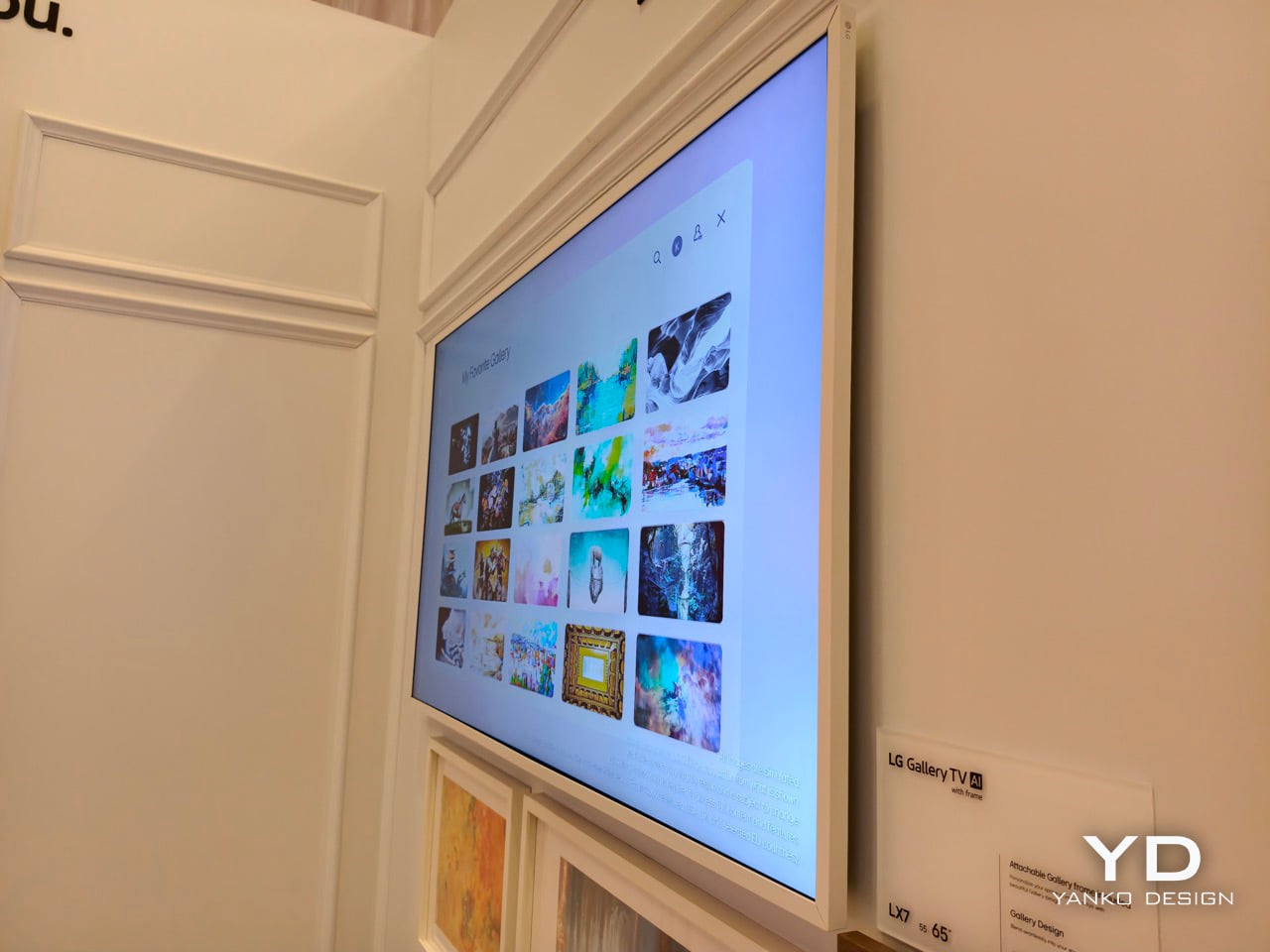
Museum curators don’t typically collaborate with television manufacturers, but LG Electronics recruited them specifically to develop the Gallery Mode for its new Gallery TV launching at CES 2026. This specialized display mode optimizes color accuracy, brightness levels, and glare reduction to reproduce the visual texture of original artworks with exhibition-quality fidelity. The screen automatically adjusts to changing ambient light throughout the day, maintaining clarity whether morning sun floods the room or evening darkness sets in.

LG’s approach combines the Alpha 7 AI Processor with MiniLED display technology to deliver 4K resolution suitable for both traditional television content and fine art reproduction. The audio system features AI Sound Pro with Virtual 9.1.2ch capability for immersive surround sound simulation. Customizable magnetic frames attach to the slim, flush-mount design, with one frame type included and additional options sold separately. The Gallery+ service provides access to over 4,500 pieces of content spanning fine art, cinematic scenes, game visuals, and animations, though the full library requires a monthly subscription while a free light version offers limited access.

Designer: LG

Here’s the thing that Samsung probably saw coming from a mile away. LG finally decided the art TV market is worth serious attention, which means the category has officially graduated from novelty to legitimate product segment. The Frame has been sitting pretty much unchallenged for years while TCL and Hisense tossed their hats in the ring, but LG entering changes the competitive dynamics entirely. They’ve got distribution channels, brand recognition, and display technology chops that make this a credible threat rather than an unassuming Frame competitor.

The MiniLED implementation with the Alpha 7 processor tells you LG is positioning this above budget competitors. They’re using actual processing power to handle the museum-curated Gallery Mode instead of just slapping a matte filter on a standard panel and calling it art-ready. The anti-glare treatment combined with automatic ambient light adjustment means the TV actively works to maintain image quality as your living room lighting shifts from breakfast through sunset. That’s the kind of engineering detail that separates premium products from cheap imitations trying to ride a trend.

What I find genuinely interesting is the content library breadth beyond traditional fine art. Including cinematic scenes, game visuals, and animations alongside classical paintings suggests LG understands their actual customer base better than the “sophisticated gallery atmosphere” marketing copy implies. People buying these TVs want options that match their personality, whether that’s Monet or concept art from their favorite video game. The generative AI image creation and personal photo display features push this further into customization territory, which makes sense given how much interior design flexibility drives purchases in this category.

The subscription model will be the real conversation starter though. LG offers a free light version but gates the full 4,500-piece library behind a monthly webOS Pay subscription. No pricing details yet, but this fundamentally changes the value equation. You’re buying the hardware and then paying ongoing fees for content access, which works great for LG’s recurring revenue goals but might frustrate consumers expecting a one-time purchase. Samsung doesn’t charge monthly fees for art content on the Frame, so LG is betting their library quality and refresh rate justify the subscription model. We’ll see if consumers agree when the real pricing drops at CES next week.

The post LG Collaborated with Museum Curators to Bring the Gallery TV to CES 2026 first appeared on Yanko Design.

Gamesir Swift Drive controller has force feedback steering wheel for ultimate racing fun

GameSir doesn’t shy away from experimenting with new designs and functionality for its controllers to enhance the experience for mobile gamers. Tarantula Pro with swappable face button labels is a good example. For gamers like me who fancy the odd gaming session on my G8 Plus, playing the AAA racing titles like Grid Legends is stress-busting. I prefer a compact setup for my mobile gaming needs, and investing in a full-blown gaming simulator or desk-mounted setup is not feasible.

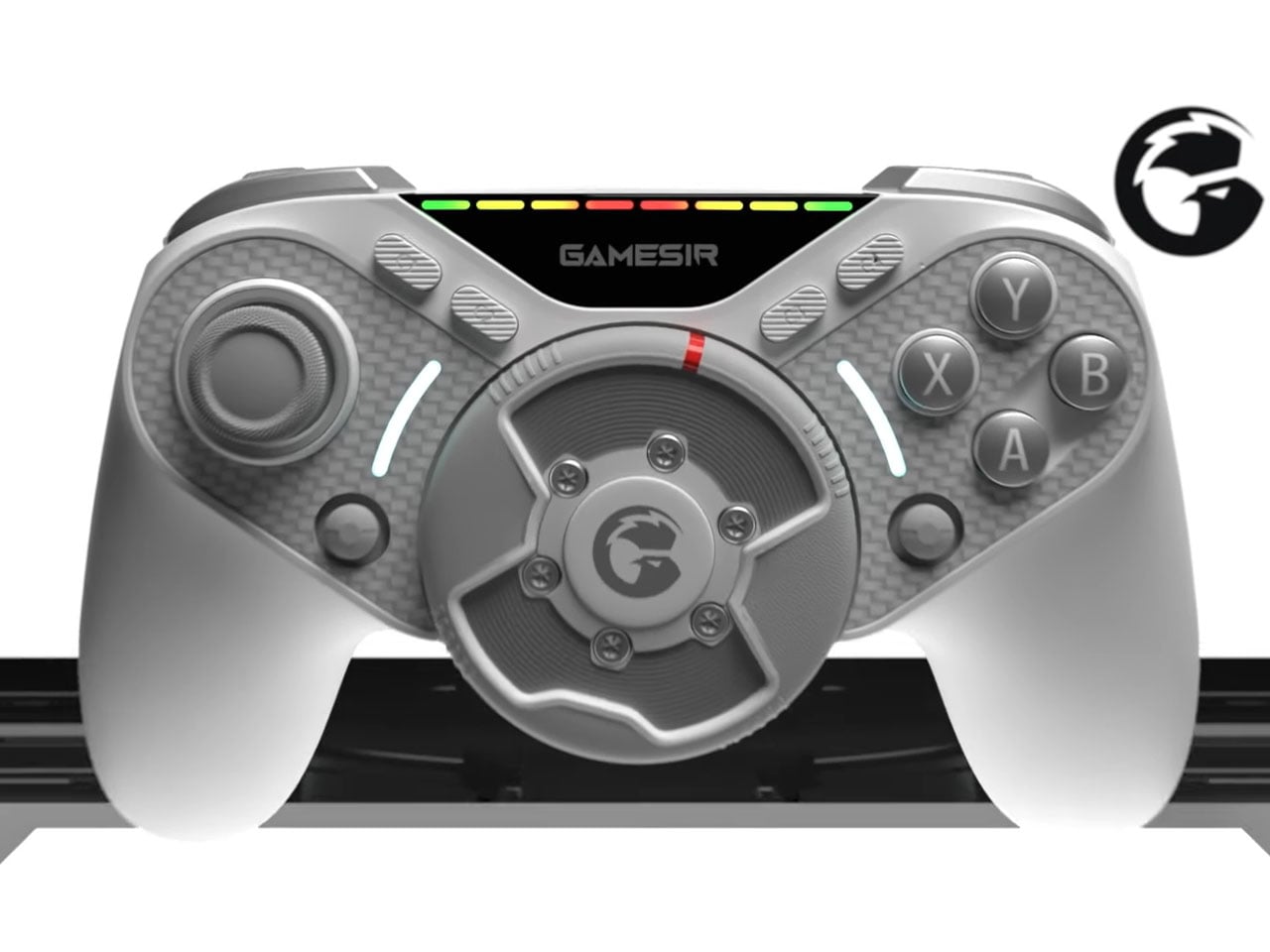
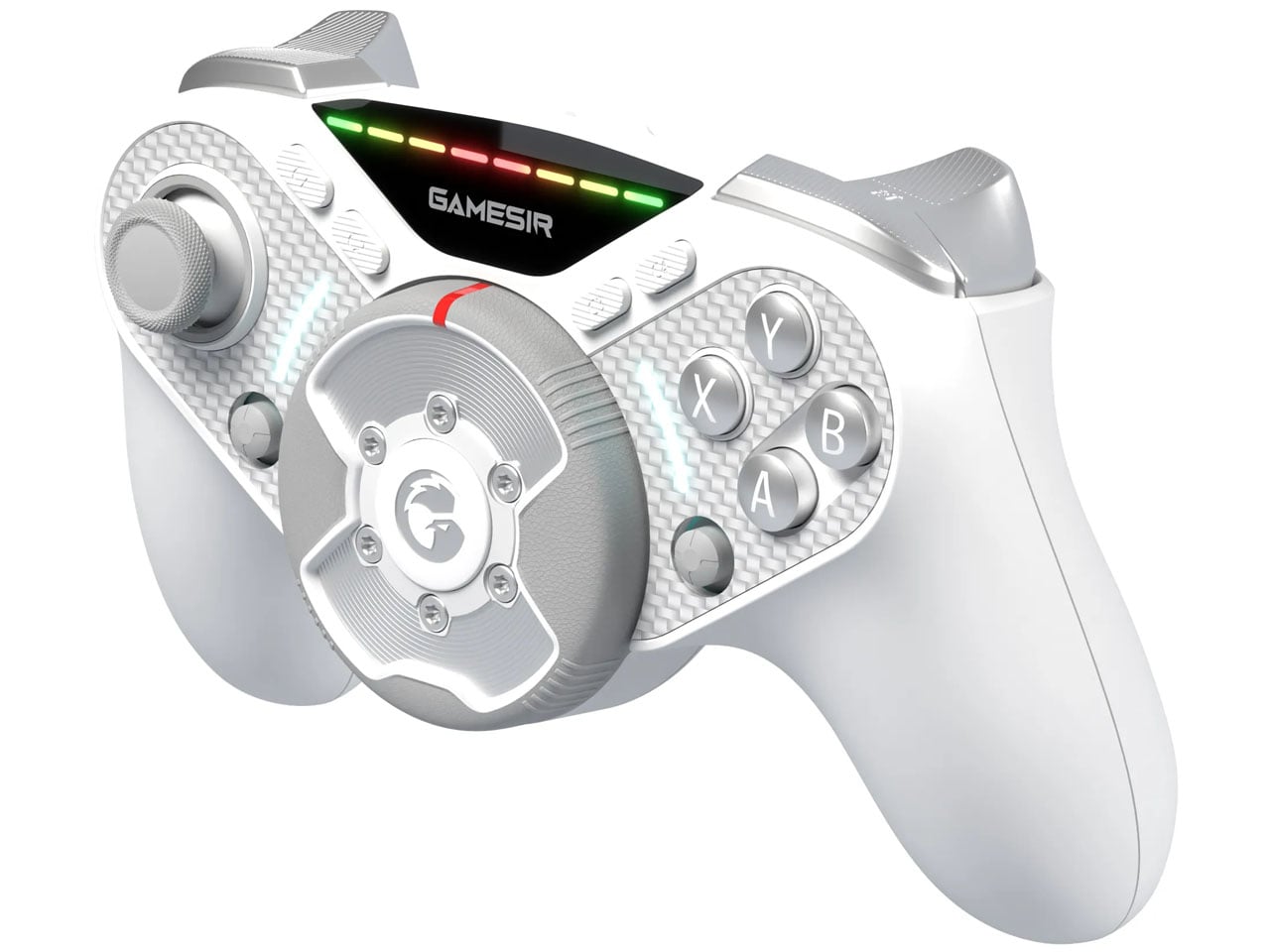
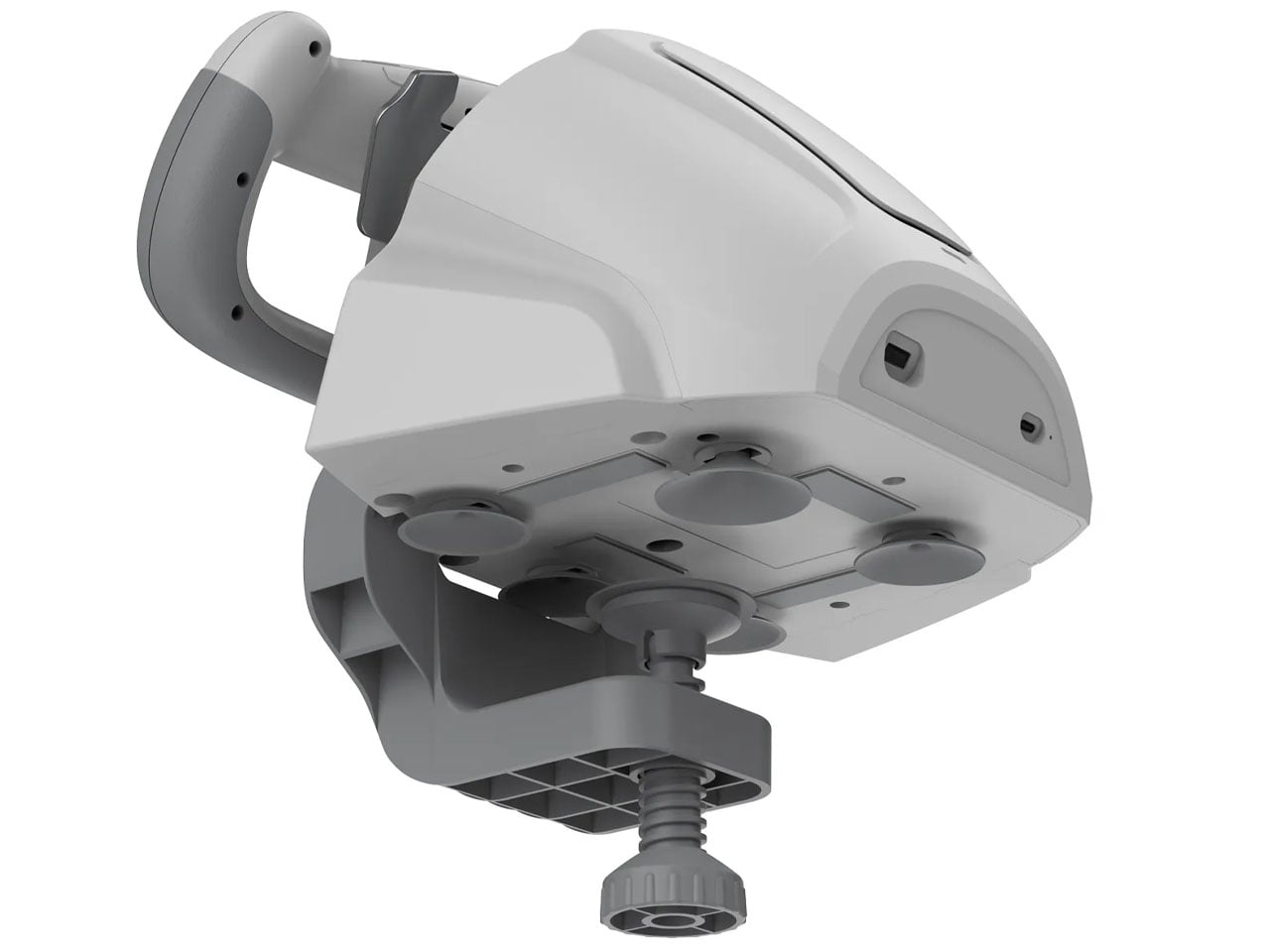
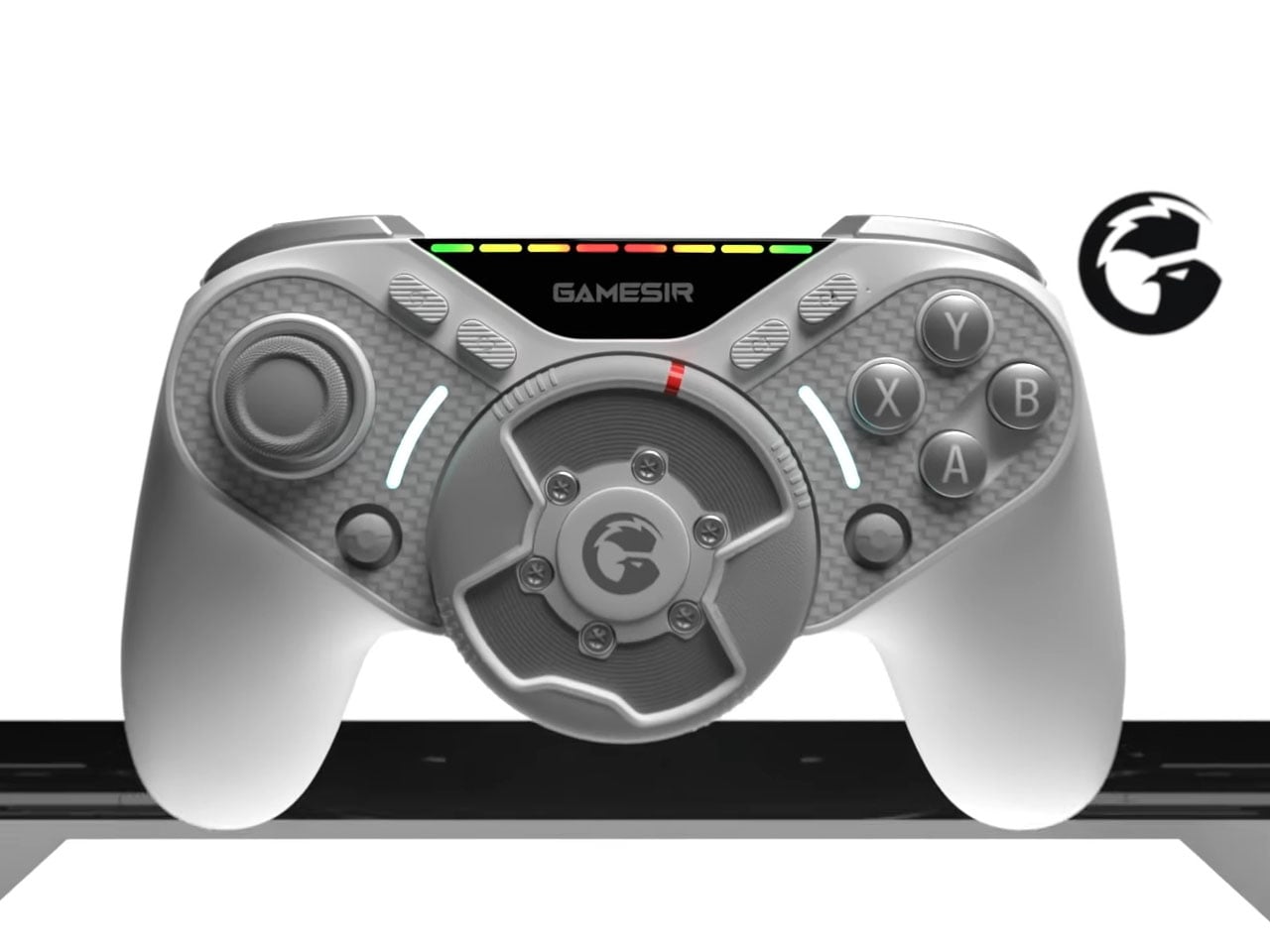
The next logical upgrade is a mobile controller that gives me more than just the joysticks and buttons. Set to reveal at CES 2026, the GameSir Swift Drive controller is exactly what racing fanatics like me wished for. The hybrid controller features a miniature direct-drive steering wheel positioned in the center, delivering force feedback and 1080-degree rotation for immersive racing game action.

Designer: Gamesir

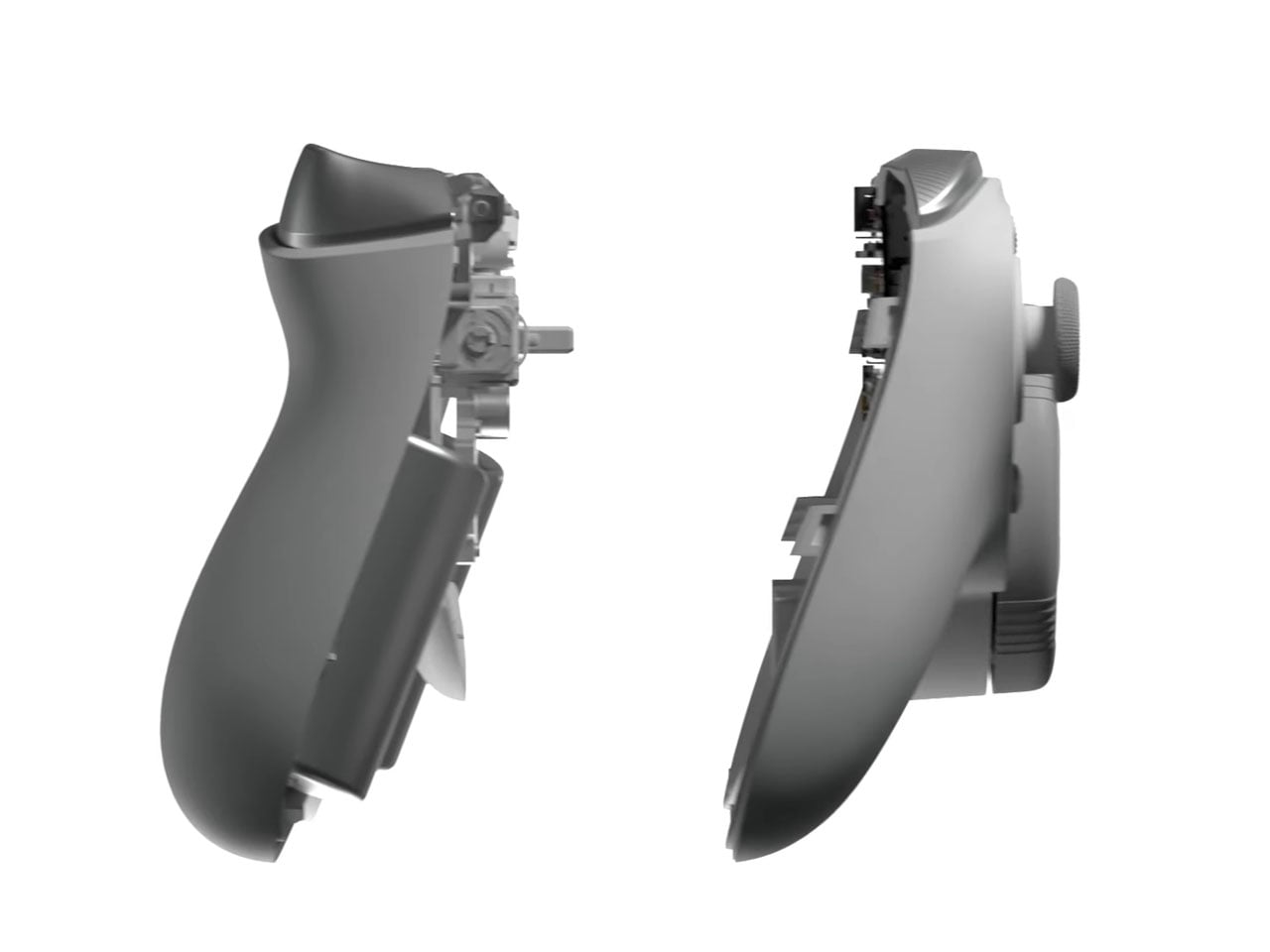
For racing sim fans, the quandary has always been to either choose a portable setup, or go for more detailed but bulky setups. This gamepad hits the sweet spot for casual gamers like me who always wanted something that’s compact. GameSir has to be applauded for fitting the world’s smallest direct-drive motor on the gamepad for physical resistance and road texture when turning the wheel. A thumbstick that moves laterally simply cannot achieve this level of realism. The controller’s unique wheel can be adjusted for rotation ranging from 30 degrees to 1080 degrees, and has a high-precision Hall Effect encoder that has 65,000 levels of steering control resolution. Meaning, you can feel the fast-paced turning of a Formula-1 car, or experience the heavier input of driving a truck simulator.

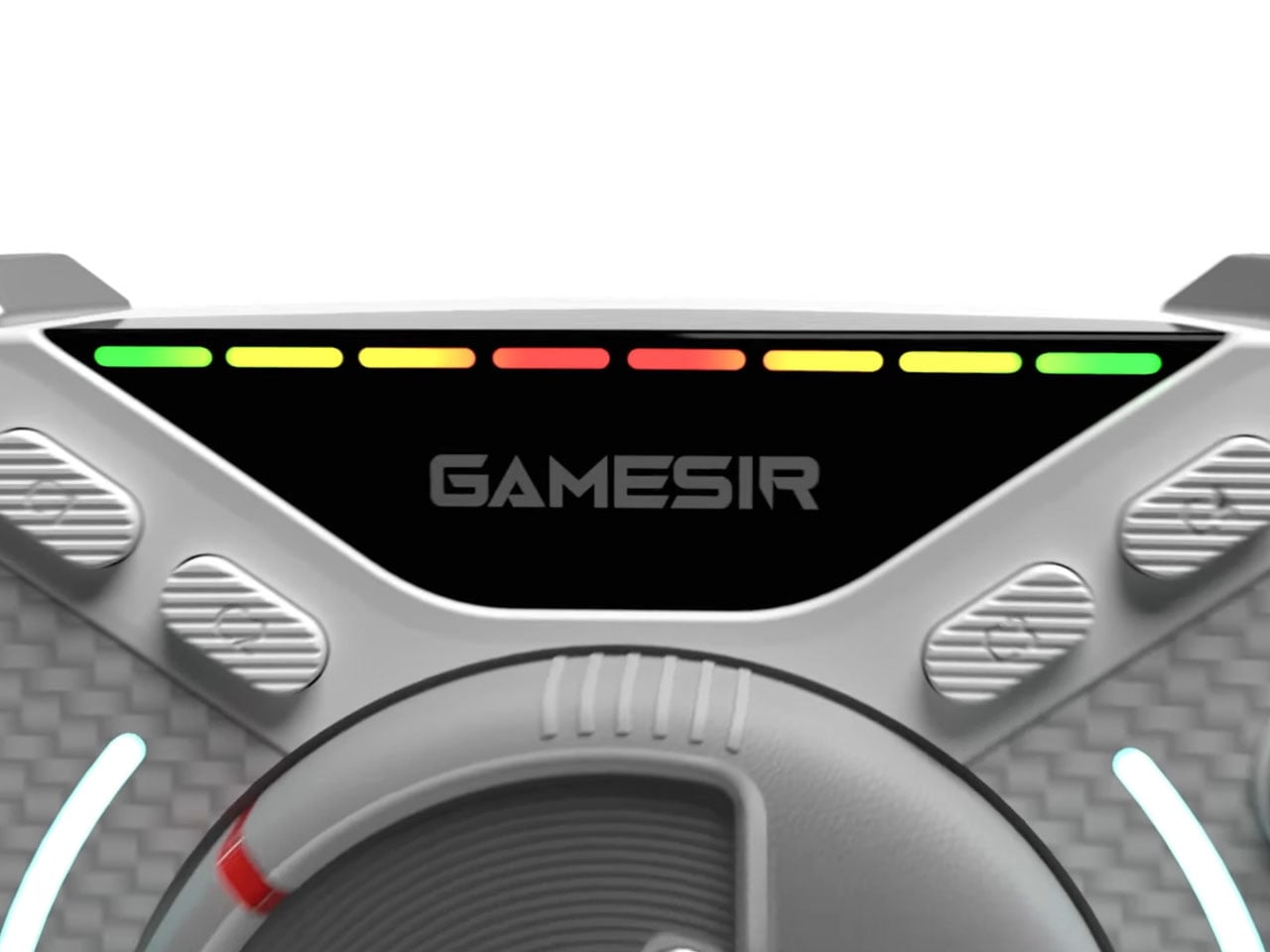
If that’s not enough, GameSir has included haptic motors in the triggers for gamers to feel the nuances of ABS braking or the vibration when tires lose grip on a tight chicane. You can toggle between XInput and DInput modes so that you can either play on the controller as a standard gamepad or a dedicated steering wheel. The RGB lights on top simulate the current in-game RPMs, which should help advanced gamers trigger gear shifts perfectly. The controller will connect via a 2.5GHz low-latency wireless option and have an estimated battery life of 20 to 30 hours, depending on the force feedback options in use. Without these advanced inputs, the controller lasts for 50 hours.

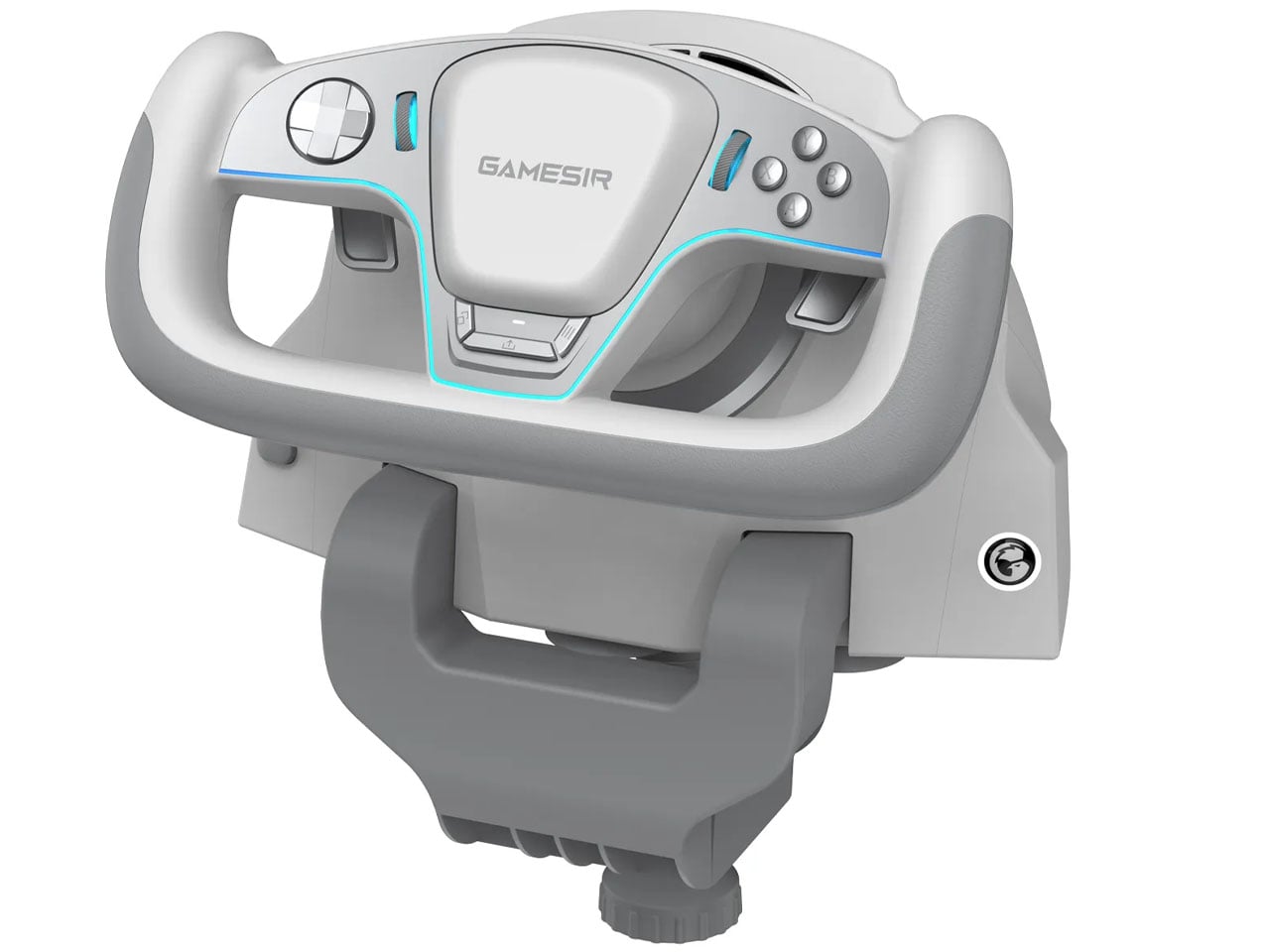
Swift Drive controller is going to be priced at around $150, and if it delivers what is being promised, that amount is worth every penny. Carrying an extensive gaming setup in your backpack is not something that every gaming accessory maker can brag about. Along with the Swift Drive gamepad, GameSir will also reveal the Turbo Drive yoke-style steering wheel and pedals. The rig will have a built-in turbine fan to simulate the airflow for the sensation of speed in-game.

The post Gamesir Swift Drive controller has force feedback steering wheel for ultimate racing fun first appeared on Yanko Design.

Punkt. MC03 Is a Smartphone You Buy With Money, Not Your Data

Most phones make a familiar bargain: free services and slick apps in exchange for constant tracking, profiling, and data being treated as currency. The line about how if you do not pay for the product, you are the product, has gone from cliché to lived reality. Punkt. has been quietly pushing back against that logic for years, starting with minimalist feature phones and now moving into full touchscreen territory with the same philosophy intact.

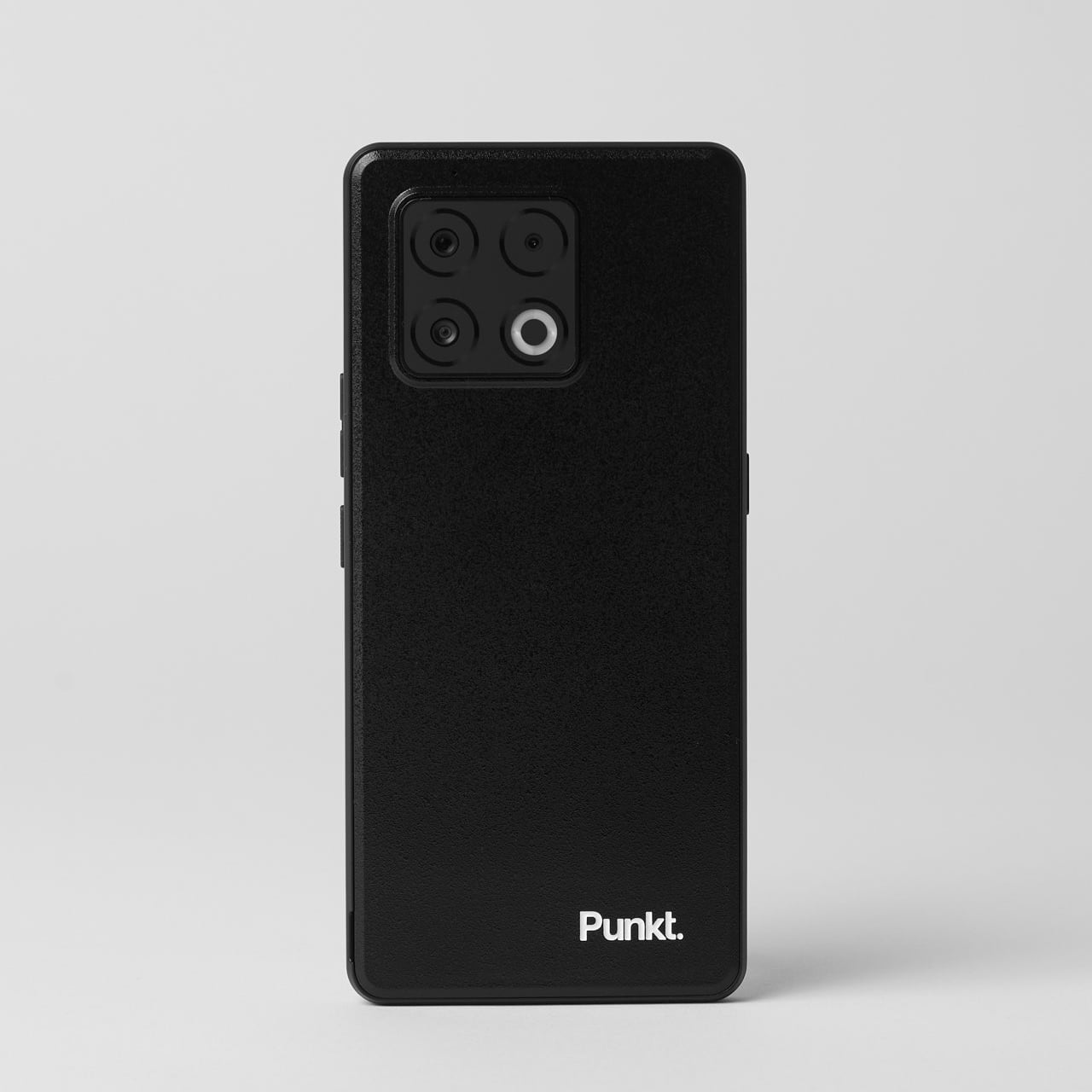
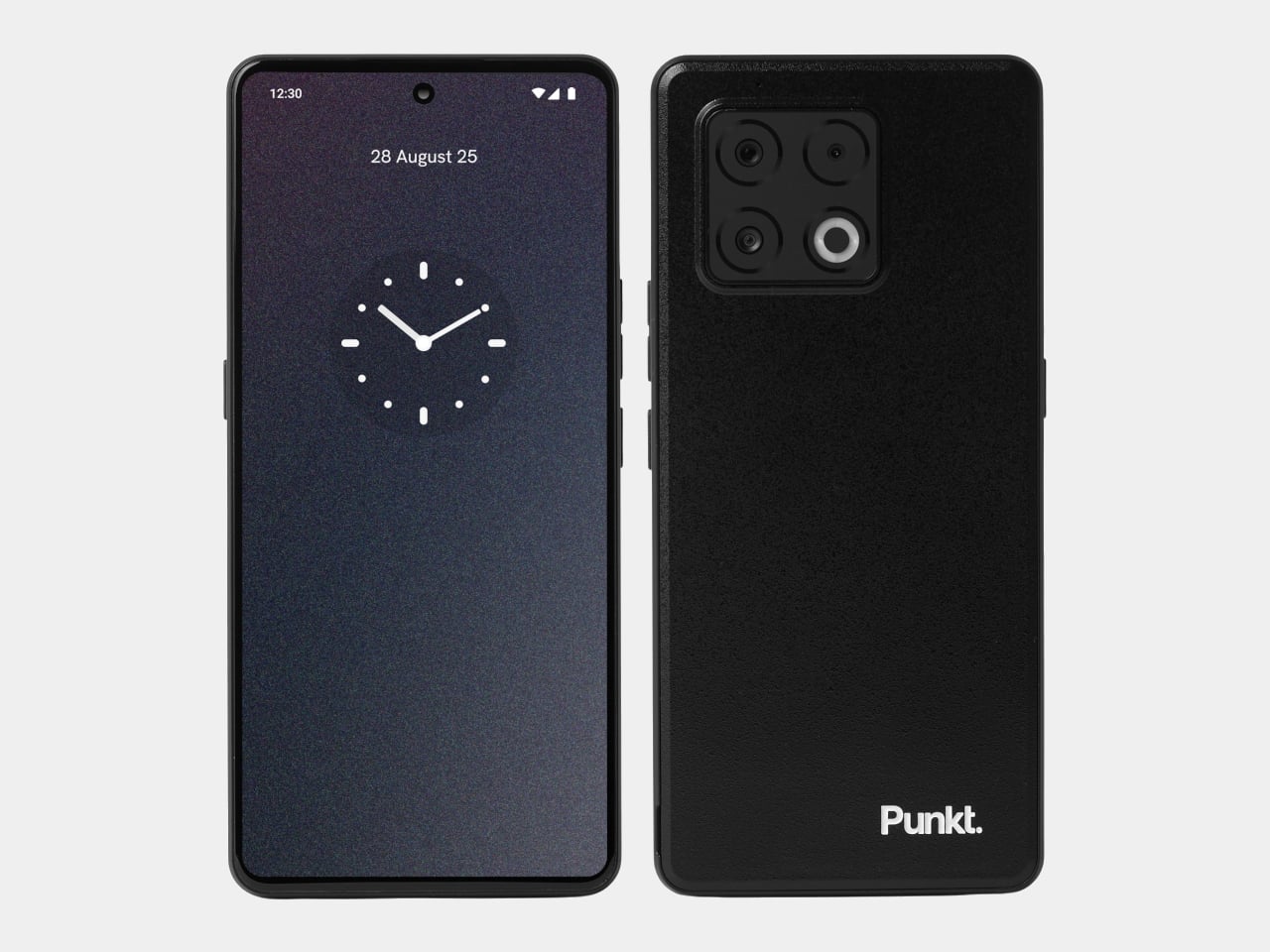
The Punkt. MC03 is a premium secure smartphone designed in Switzerland and built in Germany, running AphyOS instead of mainstream Android skins. It is subscription-based by design; you pay for the OS and services, so you are not paying with your data. The pitch is simple: a modern, fully capable phone where privacy is the default, not a buried settings menu you hope you configured correctly.

Designer: Punkt.

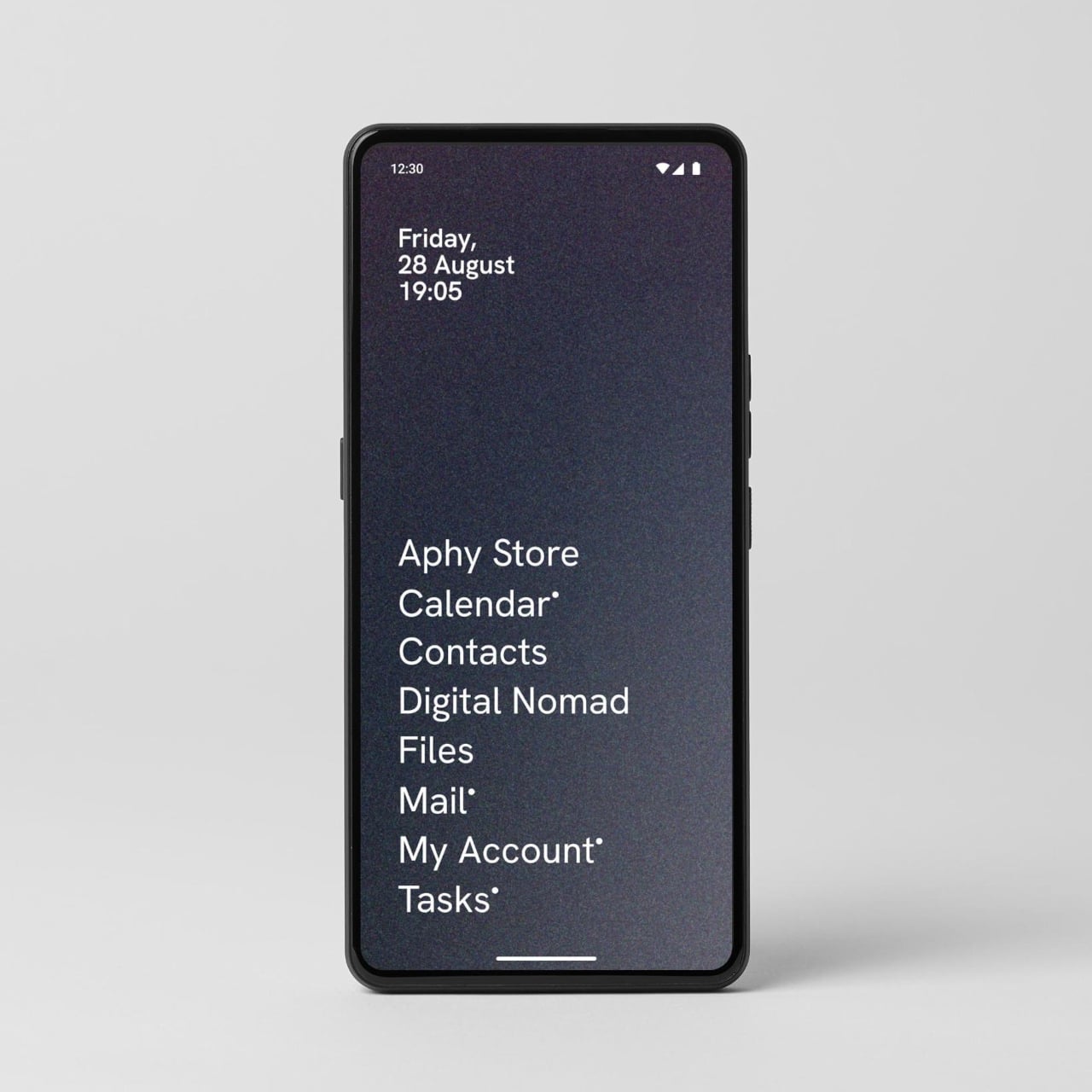
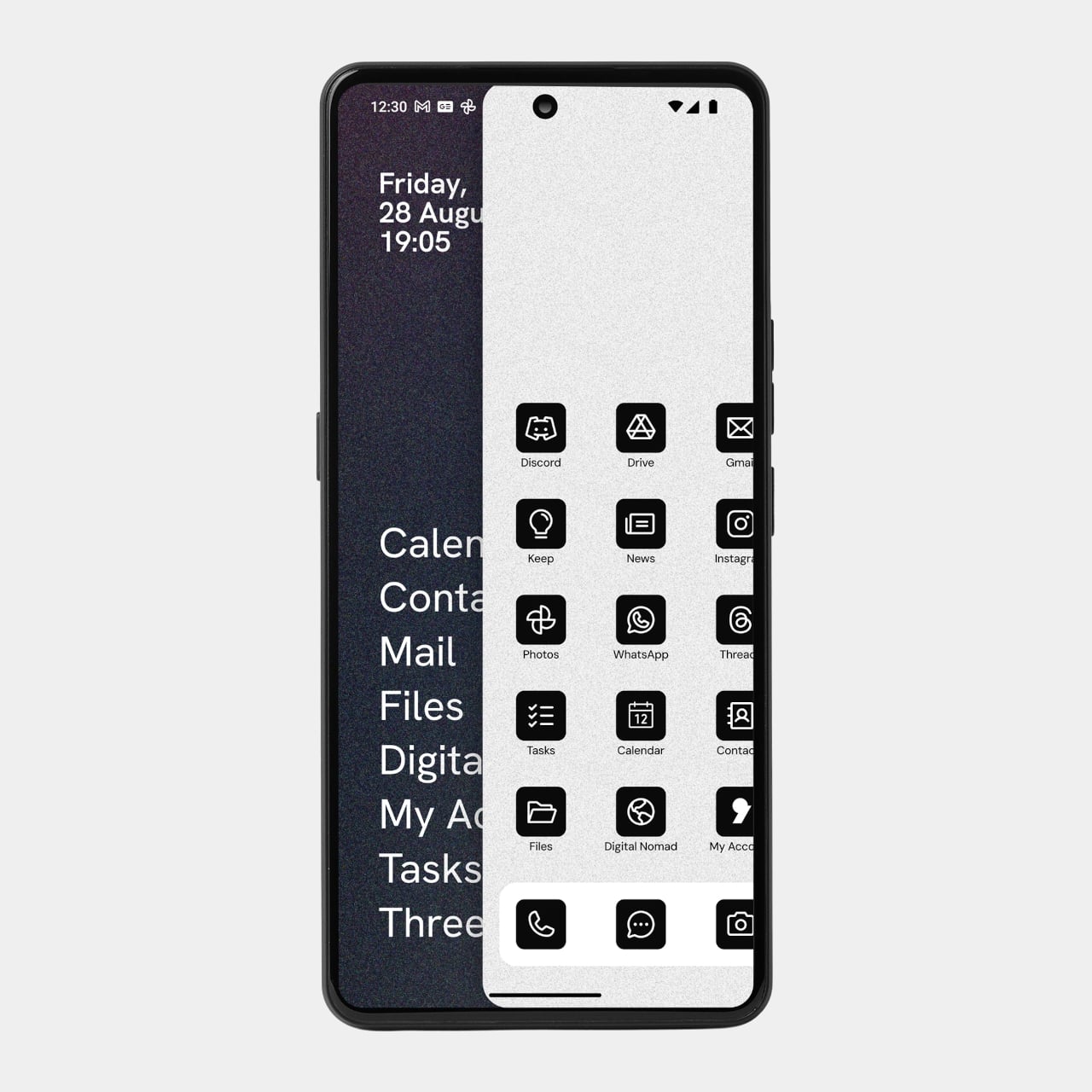
AphyOS splits the phone into two spaces. Vault is the calm, minimalist home screen with Punkt. curated, privacy-friendly apps and Proton services, a hardened enclave for mail, calendar, messaging, and files. Wild Web is a swipe away, where you can install any app you want, but each one lives in its own privacy bubble, with clear controls over what data flows where and who gets to see it.

The interface is deliberately color-free and stripped back. Icons are simple, backgrounds are monochrome, and the whole thing is designed to reduce visual noise and cognitive load. The idea is to make the phone feel less like a slot machine and more like a tool, nudging you toward intentional use instead of endless scrolling, without taking away the apps you actually rely on for work or getting around.

Privacy tools include Digital Nomad, the built-in VPN that protects connectivity on the move, and Ledger, which lets you dial app-specific permissions from full access to full restriction, even showing the carbon impact of background activity. The MC03 can be de-Googled, reducing reliance on Google Mobile Services, and Proton Mail, Drive, VPN, and Pass live in Vault, reflecting a Swiss Tech ethos where you pay to retain your data.

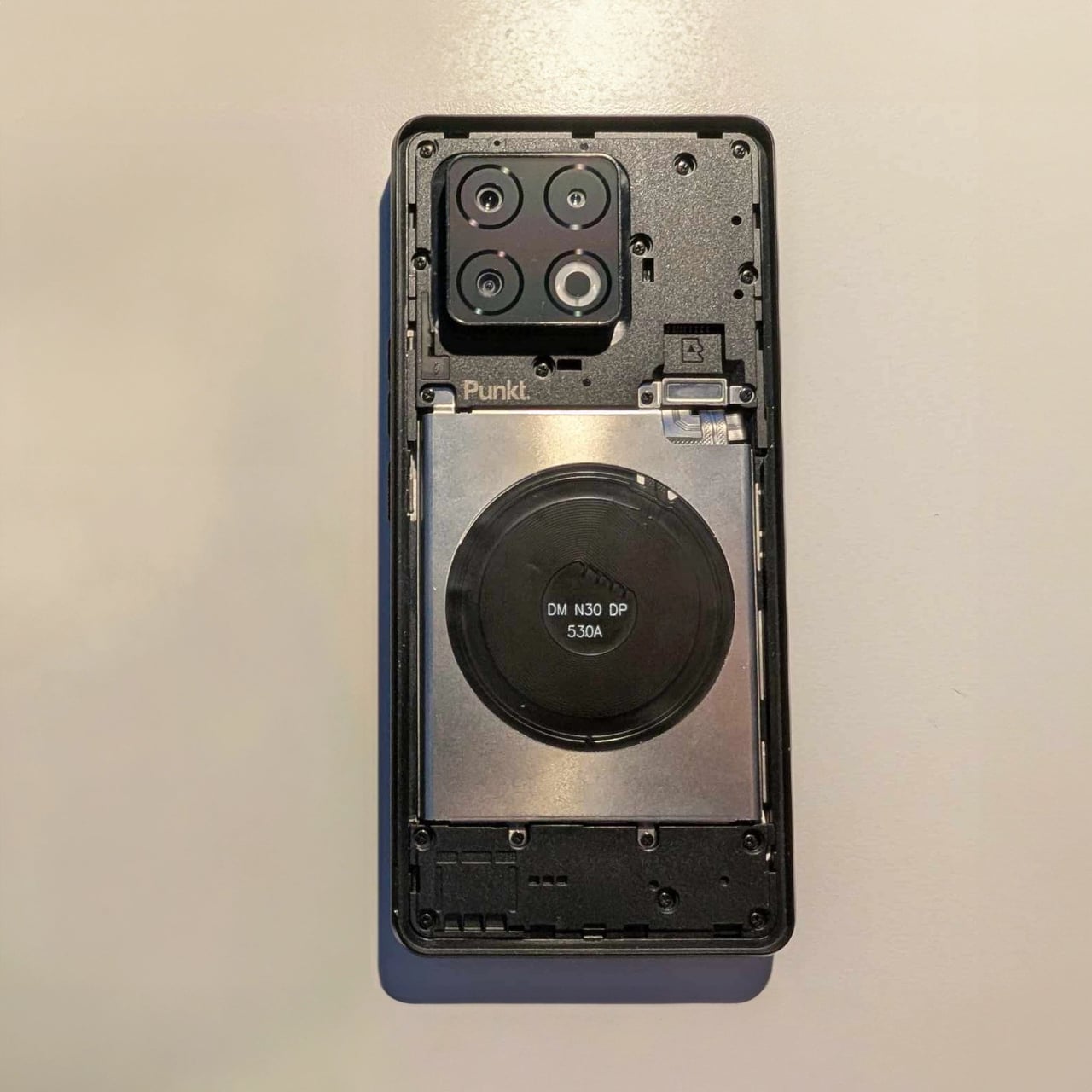
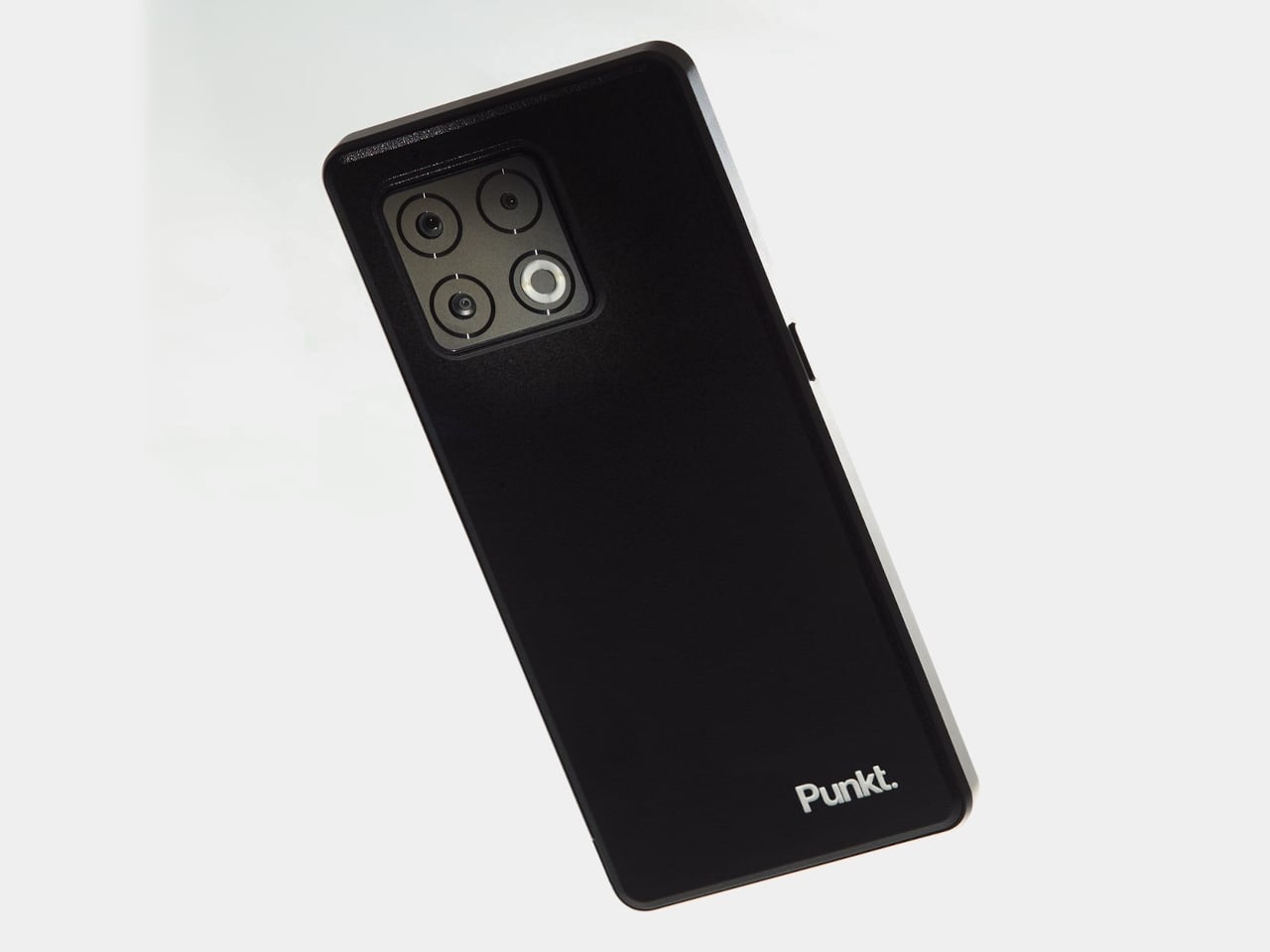
The hardware is quietly competent, a 6.67-inch FHD+ OLED at 120 Hz, a 64 MP main camera with ultra-wide and macro companions, dual stereo speakers, and a removable 5,200 mAh battery with 30 W wired and 15 W wireless charging. It is IP68 rated and manufactured at Gigaset’s German facility, leaning into durability, repairability, and a European supply chain as part of the trust equation, not just marketing.

The MC03 is talking to people who are tired of feeling like their handset is a tracking device with a screen attached, but who do not want to retreat to a feature phone. It suggests a different path, a smartphone that still does all the smartphone things, but asks you to pay for the privilege of keeping your data yours, and makes that trade-off feel intentional instead of hidden. For anyone looking for an alternative to the usual iOS or Android bargain, Punkt. keeps building that alternative, one monochrome screen and one Swiss principle at a time.

The post Punkt. MC03 Is a Smartphone You Buy With Money, Not Your Data first appeared on Yanko Design.

Samsung Freestyle+ Turns a Friendly Cylinder into an AI-Assisted Portable Screen

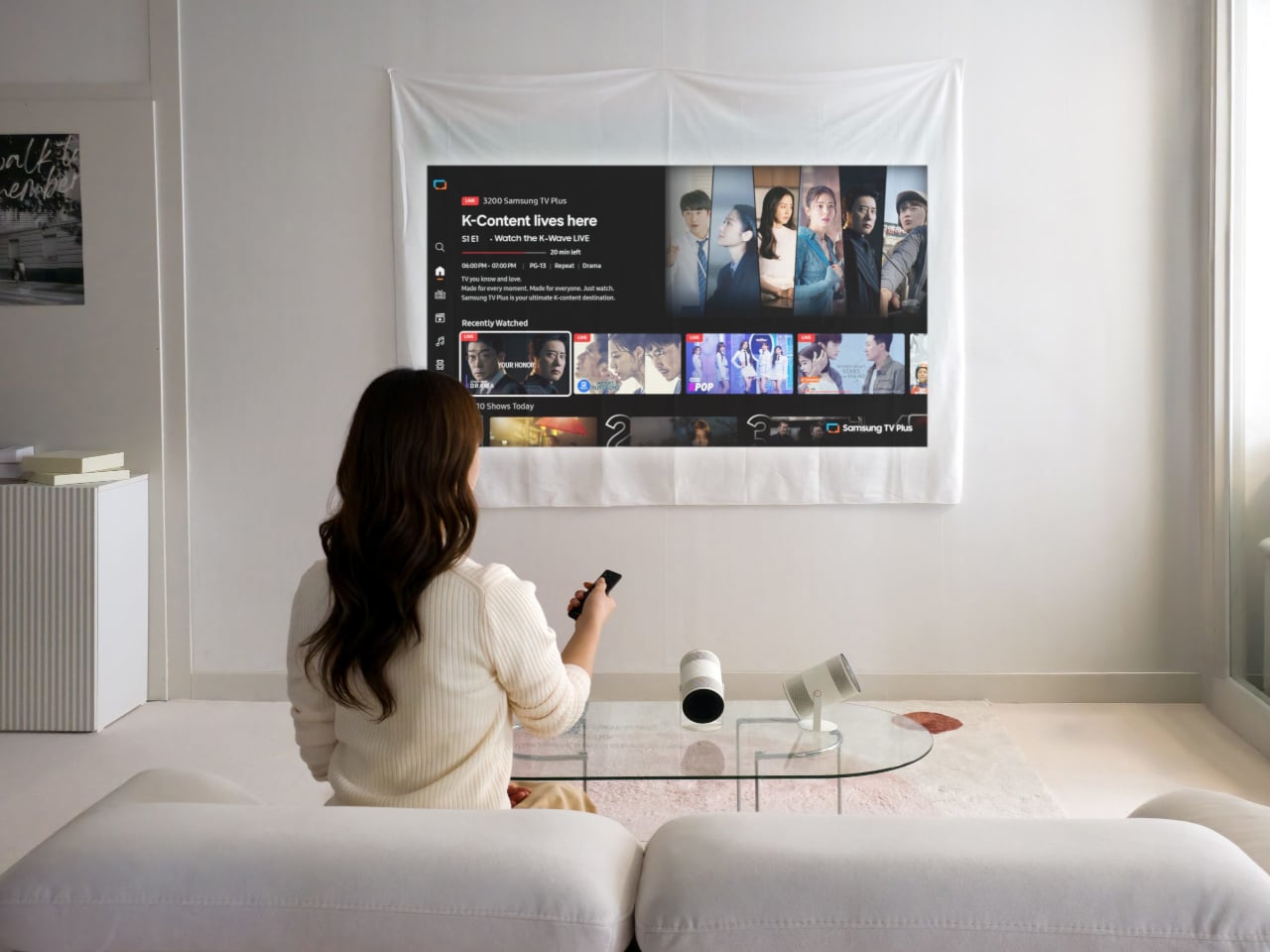
The first Freestyle tried to make projection feel as casual as dropping a speaker on a table, but still needed some fiddling with focus, keystone, and room darkness. Portable projectors are great in theory, but often fall apart on setup friction, tweaking corners, hunting for the right brightness mode, and dealing with off-color walls. Samsung’s Freestyle+ keeps the same friendly cylinder while letting AI quietly handle the annoying parts, betting that most people would rather point and watch than spend 10 minutes adjusting settings.

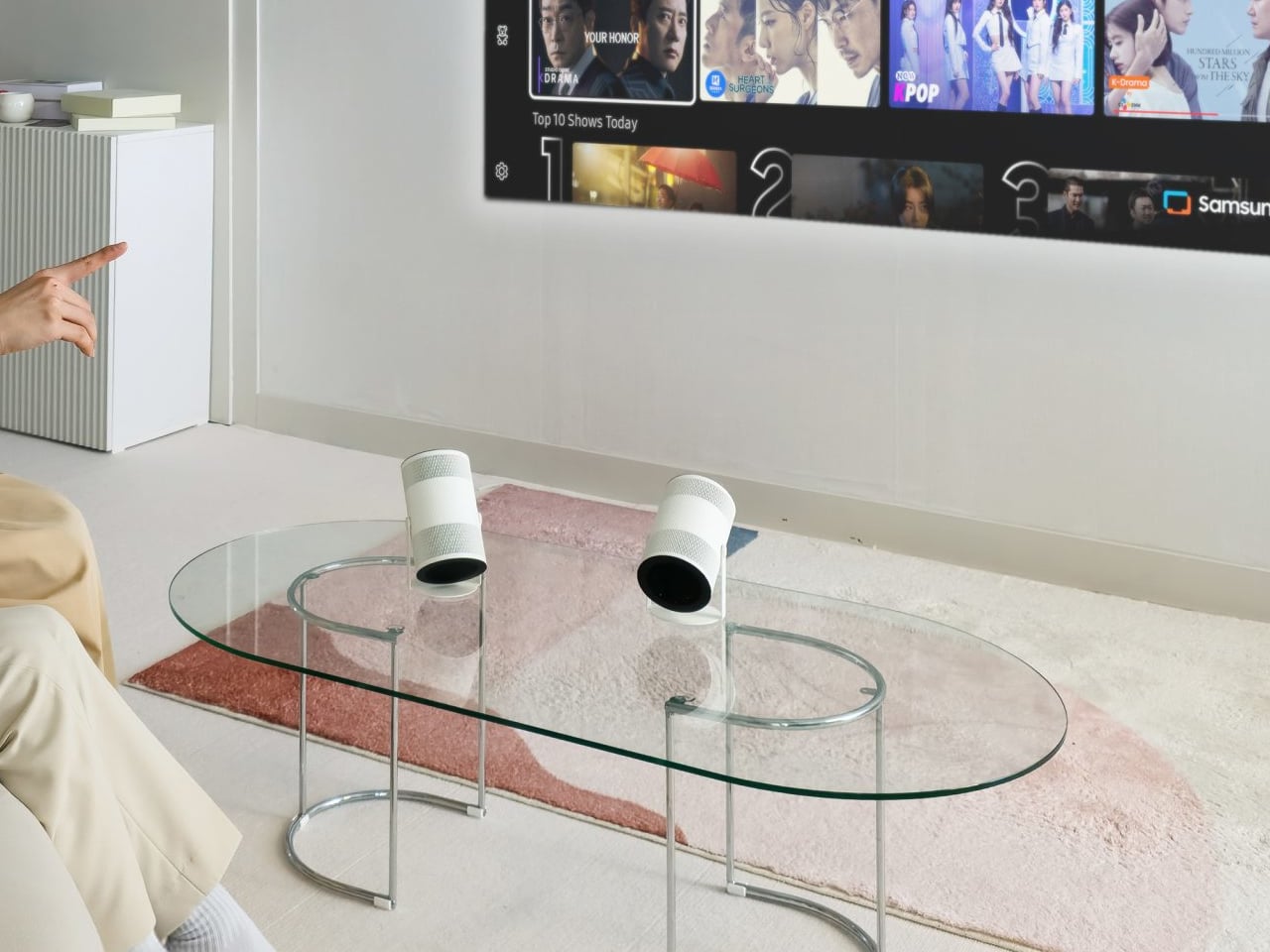
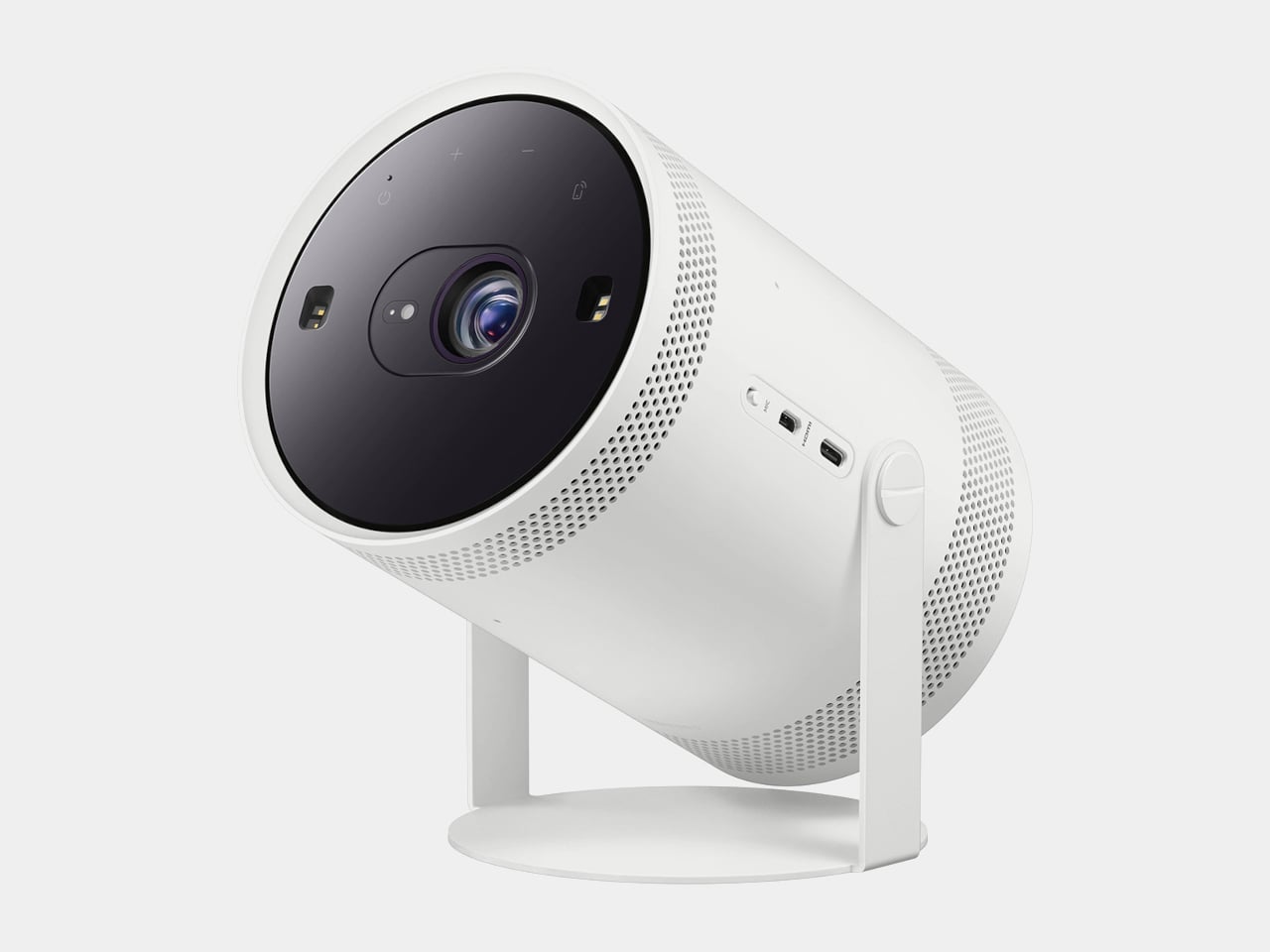
The Samsung Freestyle+ is an AI-powered portable projector that builds on the original’s cylindrical, 180-degree tilting design. The headline change is not a wild new form factor; it is a smarter brain. Freestyle+ is pitched as something you can point at a wall, ceiling, or floor, then trust to optimize the picture for whatever surface you happen to be aiming at, turning “point and play” from a slogan into something closer to reality.

Designer: Samsung

AI OptiScreen is the bundle of features that makes that possible. 3D Auto Keystone straightens the image even on angled or uneven surfaces like curtains or room corners. Real-time Focus keeps things sharp as you nudge or rotate the projector. Screen Fit sizes the picture to a compatible screen if you use one. Finally, Wall Calibration analyzes wall color or patterns to keep content legible instead of tinted or washed out.

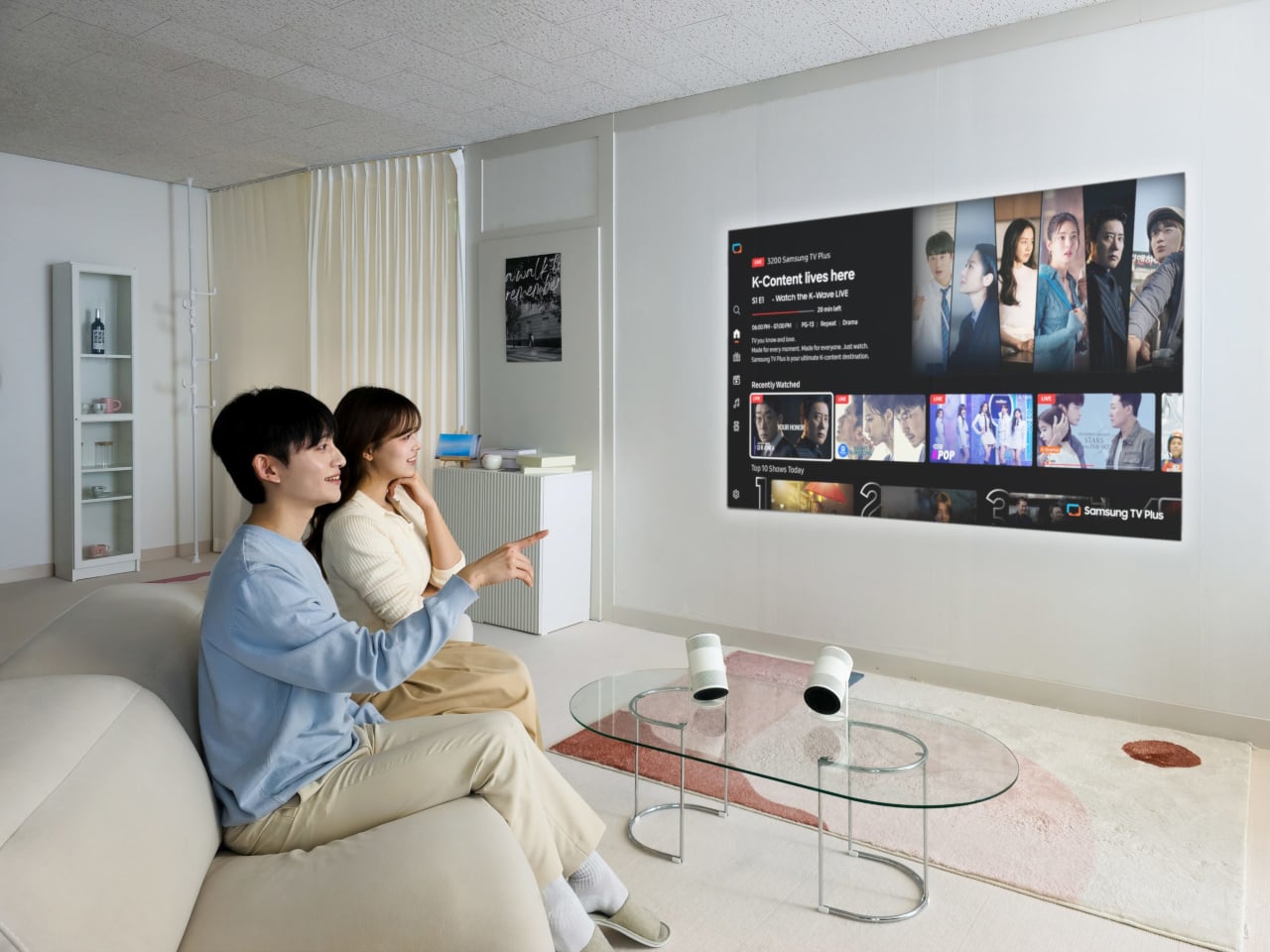
Freestyle+ pushes out 430 ISO lumens, nearly twice the previous generation, which matters in real living rooms that are not pitch black. The 180-degree rotating stand still lets you throw an image onto a wall, ceiling, or floor without extra mounts. The idea is that you stop worrying about whether a space is right for projection and just drop the cylinder where it makes sense in the moment, whether that is a coffee table, a kitchen counter, or a nightstand.

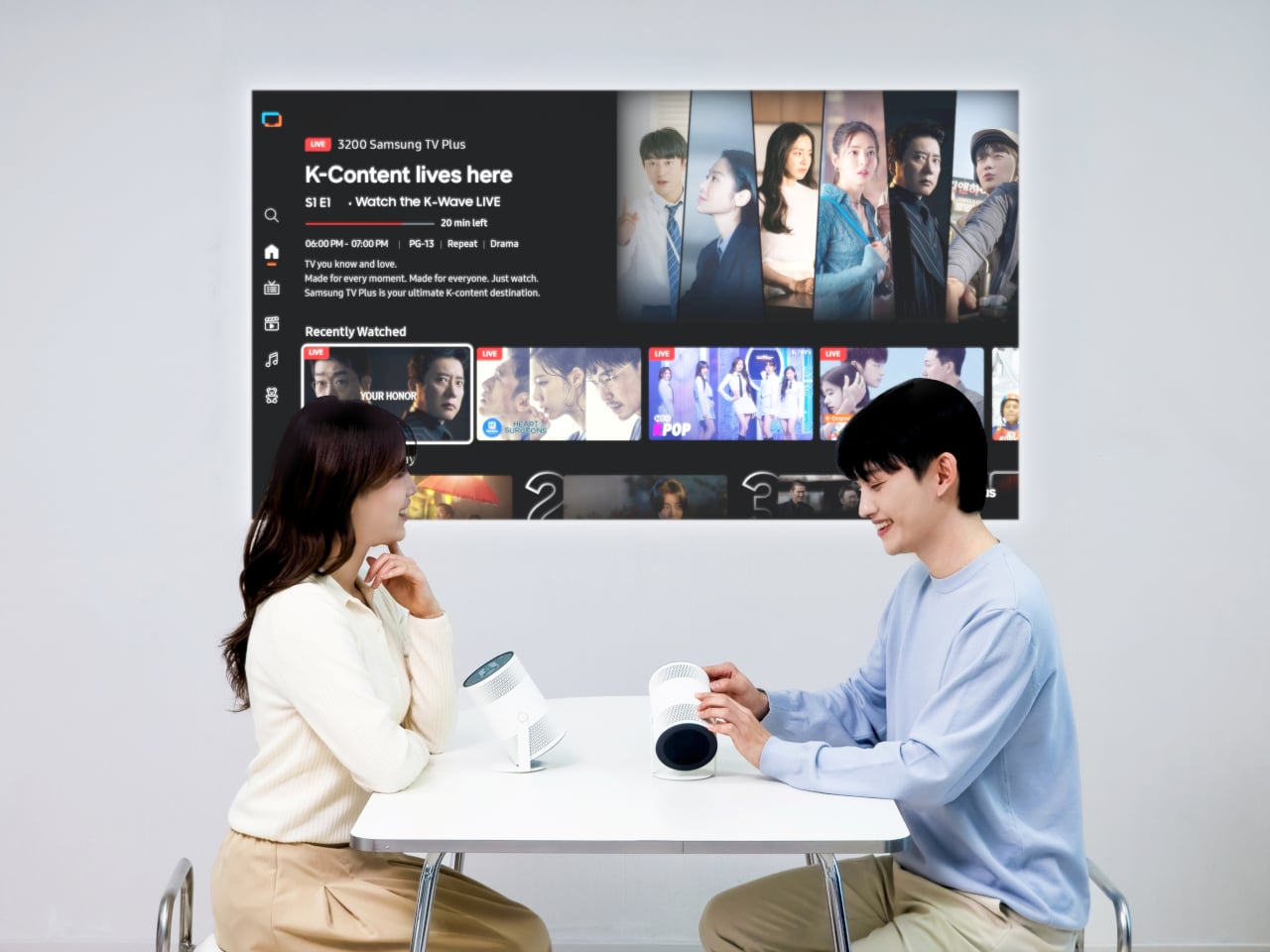
Freestyle+ behaves like a mini Samsung TV, with Samsung TV Plus, major streaming apps, and Samsung Gaming Hub built in. You can stream shows, watch live channels, or fire up cloud games directly from the projector without plugging in a stick or console. For small apartments or casual setups, that means one object can handle movie night and a bit of gaming without a permanent media cabinet cluttering the wall.

Audio comes from a built-in 360-degree speaker tuned for room-filling sound in a compact body. For people already in the Samsung ecosystem, Q-Symphony support lets Freestyle+ sync with compatible Samsung soundbars, layering its own speaker with the bar instead of muting one or the other. That gives you a more cohesive soundstage when you want to treat the projector like a main screen rather than a sidekick.

Freestyle+ makes the most sense as a roaming screen that follows you from bedroom to living room to kitchen, rather than a projector that lives in a dedicated theater. By combining a familiar, speaker-like form with AI setup, brighter output, built-in streaming, and decent sound, it nudges projection closer to the casual, everyday screen Samsung keeps hinting at, instead of something you only use on special occasions when the room is dark enough and the mood feels right for a movie night.

The post Samsung Freestyle+ Turns a Friendly Cylinder into an AI-Assisted Portable Screen first appeared on Yanko Design.

How to Spot Fake AI Products at CES 2026 Before You Buy

Merriam-Webster just named “slop” its word of the year, defining it as “digital content of low quality that is produced usually in quantity by means of artificial intelligence.” The choice is blunt, almost mocking, and it captures something that has been building for months: a collective exhaustion with AI hype that promises intelligence but delivers mediocrity. Over the past three months, that exhaustion has started bleeding into Wall Street. Investors, analysts, and even CEOs of AI companies themselves have been openly questioning whether we are living through an AI bubble. OpenAI’s Sam Altman warned in August that investors are “overexcited about AI,” and Google’s Sundar Pichai admitted to “elements of irrationality” in the sector. The tech industry is pouring trillions into AI infrastructure while revenues lag far behind, raising fears of a dot-com-style correction that could rattle the entire economy.

CES 2026 is going to be ground zero for this tension. Every booth will have an “AI-powered” sticker on something, and a lot of those products will be genuine innovations built on real on-device intelligence and agentic workflows. But a lot of them will also be slop: rebranded features, cloud-dependent gimmicks, and shallow marketing plays designed to ride the hype wave before it crashes. If you are walking the show floor or reading coverage from home, knowing how to separate real AI from fake AI is not just a consumer protection issue anymore. It is a survival skill for navigating a market that feeds on confusion and a general lack of awareness around actual Artificial Intelligence.

1. If it goes offline and stops working, it was never really AI

The simplest test for fake AI is also the most reliable: ask what happens when the internet connection drops. Real AI that lives on your device will keep functioning because the processing is happening locally, using dedicated chips and models stored in the gadget itself. Fake AI is just a thin client that calls a cloud API, and the moment your Wi-Fi cuts out, the “intelligence” disappears with it.

Picture a laptop at CES 2026 that claims to have an AI writing assistant. If that assistant can still summarize documents, rewrite paragraphs, and handle live transcription when you are on a plane with no internet, you are looking at real on-device AI. If it gives you an error message the second you disconnect, it is cloud-dependent marketing wrapped in an “AI PC” label. The same logic applies to TVs, smart home devices, robot vacuums, and wearables. Genuine AI products are designed to think locally, with cloud connectivity as an optional boost rather than a lifeline.

The distinction matters because on-device AI is expensive to build. It requires new silicon, tighter integration between hardware and software, and real engineering effort. Companies that invested in that infrastructure will want you to know it works offline because that is their competitive edge. Companies that skipped that step will either avoid the question or bury it in fine print. At CES 2026, press the demo staff on this: disconnect the device from the network and see if the AI features still run. If they do not, you just saved yourself from buying rebranded cloud software in a shiny box.
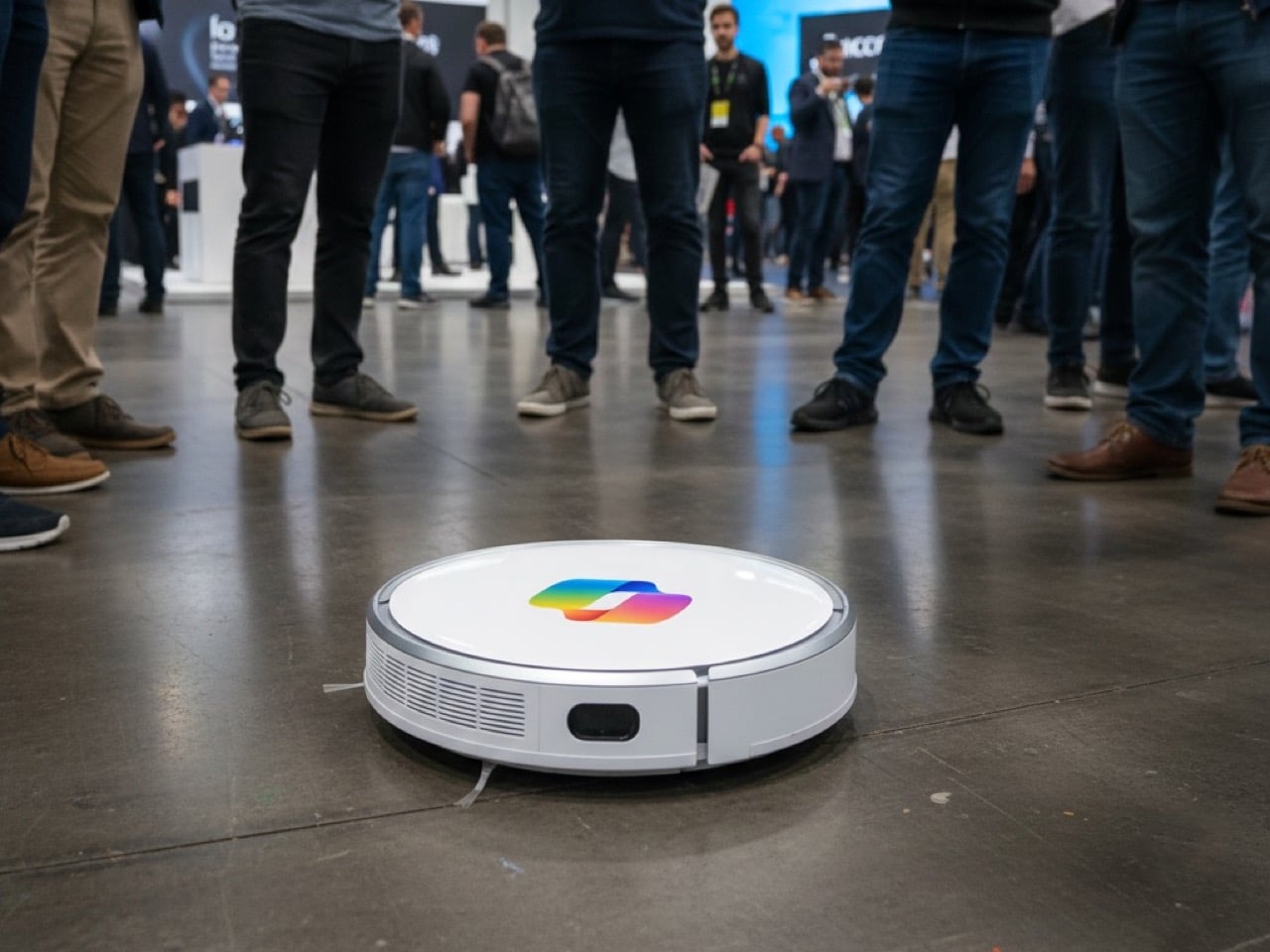
If your Robot Vacuum has Microsoft Copilot, RUN!

2. If it’s just a chatbot, it isn’t AI… it’s GPT Customer Care

The laziest fake AI move at CES 2026 will be products that open a chat window, let you type questions, and call that an AI feature. A chatbot is not product intelligence. It is a generic language model wrapper that any company can license from OpenAI, Anthropic, or Google in about a week, then slap their logo on top and call it innovation. If the only AI interaction your gadget offers is typing into a text box and getting conversational responses, you are not looking at an AI product. You are looking at customer service automation dressed up as a feature.

Real AI is embedded in how the product works. It is the robot vacuum that maps your home, decides which rooms need more attention, and schedules itself around your routine without you opening an app. It is the laptop that watches what you do, learns your workflow, and starts suggesting shortcuts or automating repetitive tasks before you ask. It is the TV that notices you always pause shows when your smart doorbell rings and starts doing it automatically. None of that requires a chat interface because the intelligence is baked into the behavior of the device itself, not bolted on as a separate conversation layer.

If a company demo at CES 2026 starts with “just ask it anything,” probe deeper. Can it take actions across the system, or does it just answer questions? Does it learn from how you use the product, or is it the same canned responses for everyone? Is the chat interface the only way to interact with the AI, or does the product also make smart decisions in the background without prompting? A chatbot can be useful, but it is table stakes now, not a differentiator. If that is the whole AI story, the company did not build AI into their product. They rented a language model and hoped you would not notice.

3. If the AI only does one narrow thing, it is probably just a renamed preset

Another red flag is when a product’s AI feature is weirdly specific and cannot generalize beyond a single task. A TV that has “AI motion smoothing” but no other intelligent behavior is not running a real AI model; it is running the same interpolation algorithm TVs have had for years, now rebranded with an AI label. A camera that has “AI portrait mode” but cannot recognize anything else is likely just using a basic depth sensor and calling it artificial intelligence. Real AI, especially the kind built into modern chips and operating systems, is designed to generalize across tasks: it can recognize objects, understand context, predict user intent, and coordinate with other devices.

Ask yourself: does this product’s AI learn, adapt, or handle multiple scenarios, or does it just trigger a preset when you press a button? If it is the latter, you are looking at a marketing gimmick. Fake AI products love to hide behind phrases like “AI-enhanced” or “AI-optimized,” which sound impressive but are deliberately vague. Real AI products will tell you exactly what the system is doing: “on-device object recognition,” “local natural language processing,” “agentic task coordination.” Specificity is a sign of substance. Vagueness is a sign of slop.

The other giveaway is whether the AI improves over time. Genuine AI systems get smarter as they process more data and learn from user behavior, often through firmware updates that improve the underlying models. Fake AI products ship with a fixed set of presets and never change. At CES 2026, ask demo reps if the product’s AI will improve after launch, how updates work, and whether the intelligence adapts to individual users. If they cannot give you a clear answer, you are looking at a one-time software trick masquerading as artificial intelligence.
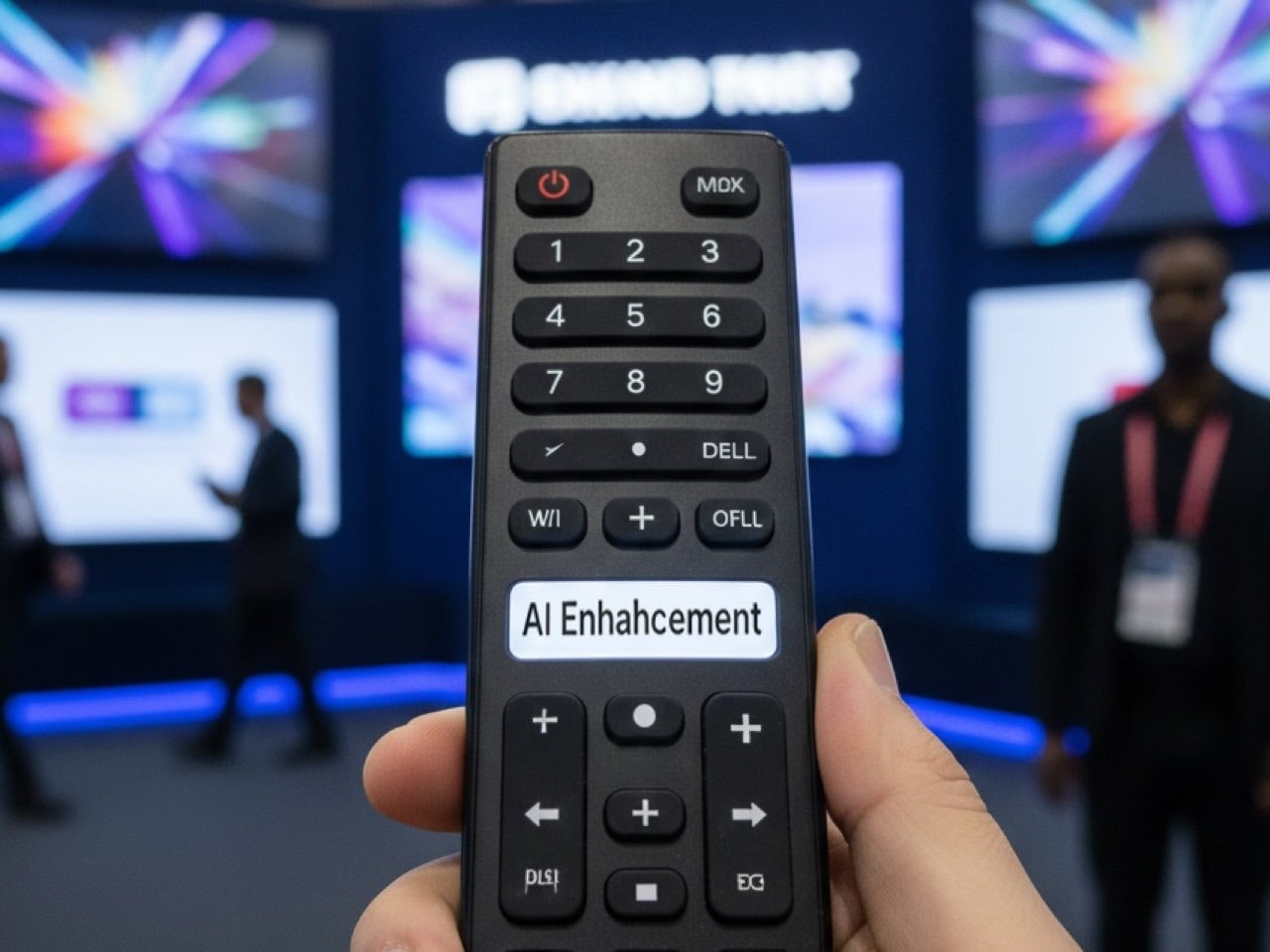
Don’t fall for ‘AI Enhancement’ presets or buttons that don’t do anything related to AI.

4. If the company cannot explain what the AI actually does, walk away

Fake AI thrives on ambiguity. Companies that bolt a chatbot onto a product and call it AI-powered know they do not have a real differentiator, so they lean into buzzwords and avoid specifics. Real AI companies, by contrast, will happily explain what their models do, where the processing happens, and what problems the AI solves that the previous generation could not. If a booth rep at CES 2026 gives you vague non-answers like “it uses machine learning to optimize performance” without defining what gets optimized or how, that is a warning sign.

Push for concrete examples. If a smart home hub claims to have AI coordination, ask: what decisions does it make on its own, and what still requires manual setup? If a wearable says it has AI health coaching, ask: is the analysis happening on the device or in the cloud, and can it work offline while hiking in the wilderness? If a laptop advertises an AI assistant, ask: what can it do without an internet connection, and does it integrate with other apps (agentic) or just sit in a sidebar? Companies with real AI will have detailed, confident answers because they built the system from the ground up. Companies with fake AI will deflect, generalize, or change the subject.

The other test is whether the AI claim matches the price and the hardware. If a $200 gadget promises the same on-device AI capabilities as a $1,500 laptop with a dedicated neural processing unit, somebody is lying. Real AI requires real silicon, and that silicon costs money. Budget products can absolutely have useful AI features, but they will typically offload more work to the cloud or use simpler models. If the pricing does not line up with the technical claims, it is worth being skeptical. At CES 2026, ask what chip is powering the AI, whether it has a dedicated NPU, and how much of the intelligence is local versus cloud-based. If they cannot or will not tell you, that is your cue to move on.

5. Check if the AI plays well with others, or if it lives in a silo

One of the clearest differences between real agentic AI and fake “AI inside” products is interoperability. Genuine AI systems are designed to coordinate with other devices, share context, and act on your behalf across an ecosystem. Fake AI products exist in isolation: they have a chatbot you can talk to, but it does not connect to anything else, and it cannot take actions beyond its own narrow interface. Samsung’s CES 2026 exhibit is explicitly built around AI and interoperability, with appliances, TVs, and smart home products all coordinated by a shared AI layer. That is what real agentic AI looks like: the fridge, washer, vacuum, and thermostat all understand context and can make decisions together without you micromanaging each one. Fake AI, by contrast, gives you five isolated apps with five separate chatbots, none of which talk to each other. If a product at CES 2026 claims to have AI but cannot integrate with the rest of your smart home, car, or workflow, it is not delivering the core promise of agentic systems.

Ask demo reps: does this work with other brands, or only within your ecosystem? Can it trigger actions in other apps or devices, or does it just respond to questions? Does it understand my preferences across multiple products, or does each device start from scratch? Companies that built real AI ecosystems will brag about cross-device coordination because it is hard to pull off and it is the whole point. Companies selling fake AI will either avoid the topic or try to upsell you on buying everything from them, which is a sign they do not have real interoperability.
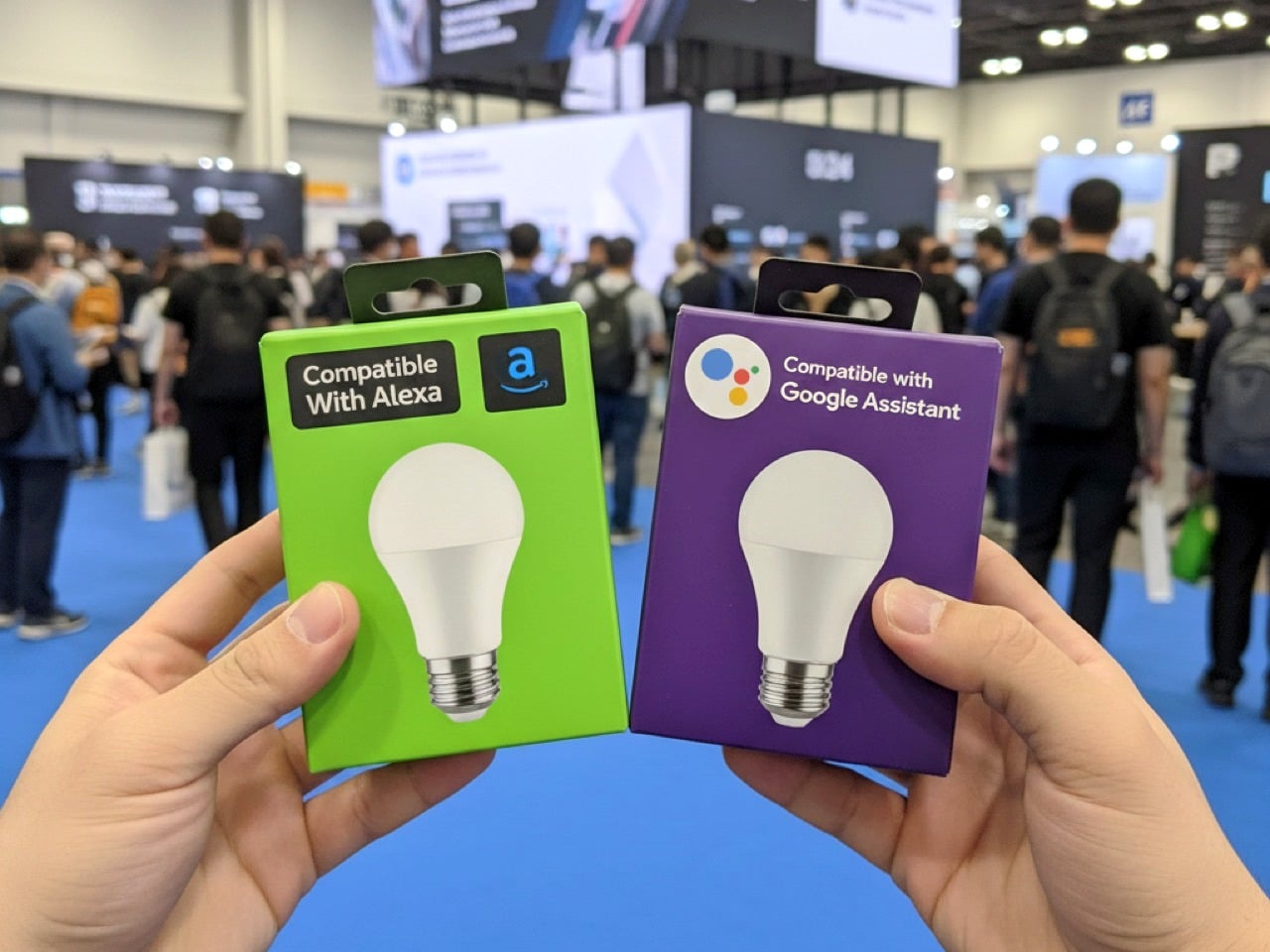
6. When in doubt, look for the slop

The rise of AI-generated “slop” gives you a shortcut for spotting lazy AI products: if the marketing materials, product images, or demo videos look AI-generated and low-effort, the product itself is probably shallow too. Merriam-Webster defines slop as low-quality digital content produced in quantity by AI, and it has flooded everything from social media to advertising to product launches. Brands that cut corners on their own marketing by using obviously AI-generated visuals are signaling that they also cut corners on the actual product development.

Watch for telltale signs: weird proportions in product photos, uncanny facial expressions in lifestyle shots, text that sounds generic and buzzword-heavy with no real specifics, and claims that are too good to be true with no technical backing. Real AI products are built by companies that care about craft, and that care shows up in how they present the product. Fake AI products are built by companies chasing a trend, and the slop in their marketing is the giveaway. At CES 2026, trust your instincts: if the booth, the video, or the pitch feels hollow and mass-produced, the gadget probably is too.

The post How to Spot Fake AI Products at CES 2026 Before You Buy first appeared on Yanko Design.
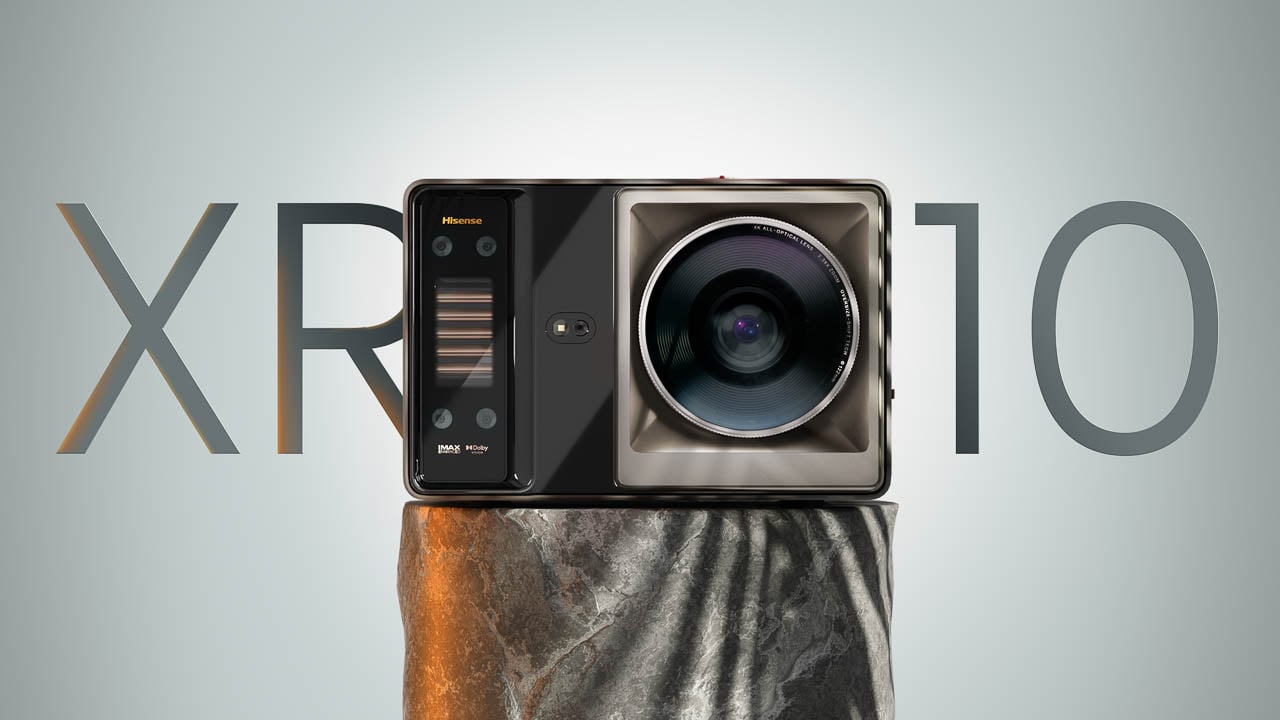
Hisense XR10 Laser Projector and the Case for Flexible Scale at CES 2026

Large-format displays have always posed a spatial question that brightness alone cannot answer: how much permanence does a room owe to its screen? The Hisense 100U8QG, reviewed earlier this year, represented one answer. At 100 diagonal inches of Mini-LED panel, it demanded architectural consideration. Wall reinforcement, viewing distance calculations, furniture subordination. The display became a fixture in the truest sense, its physical presence reshaping the room around it.

Designer: Hisense

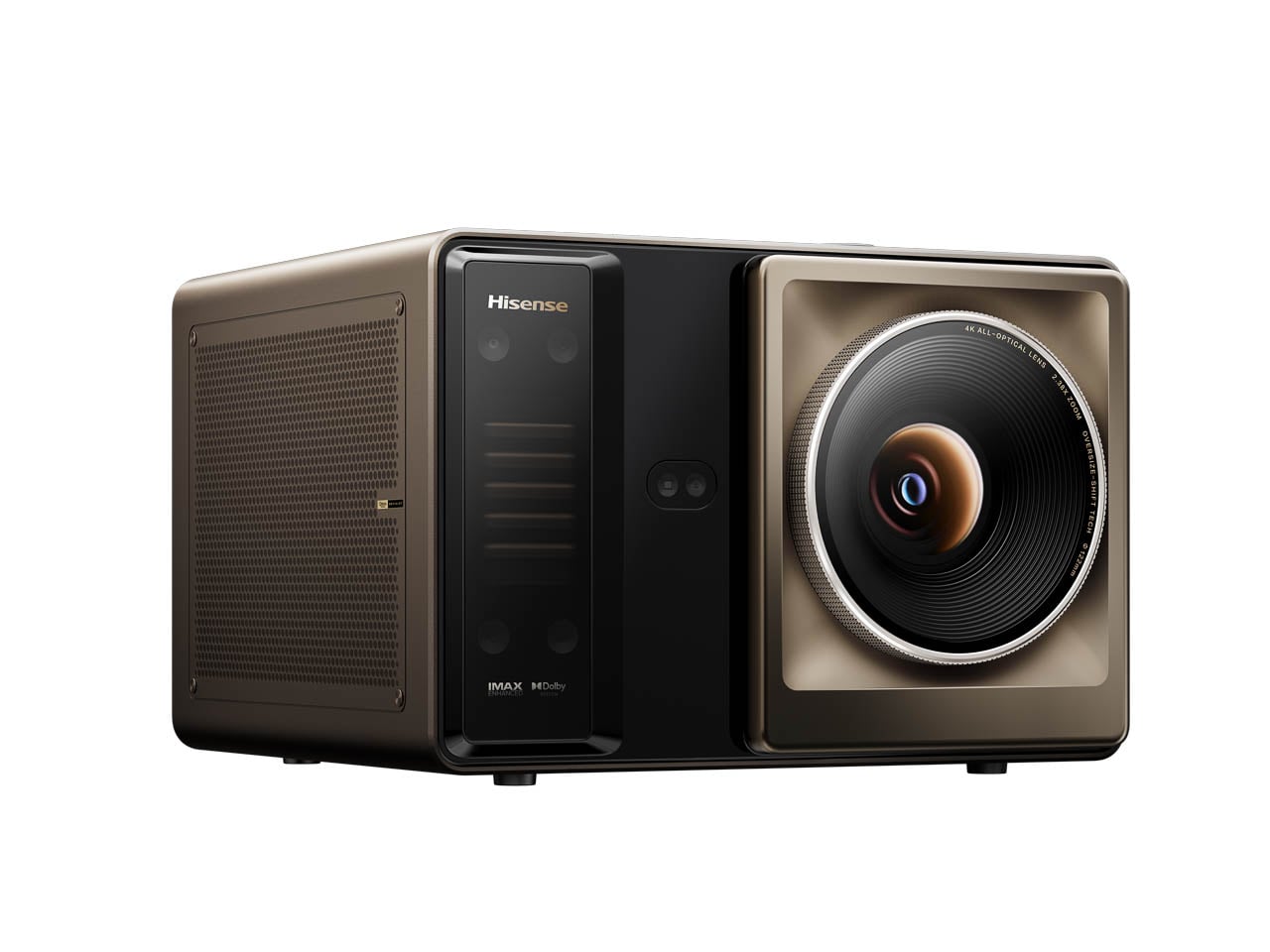
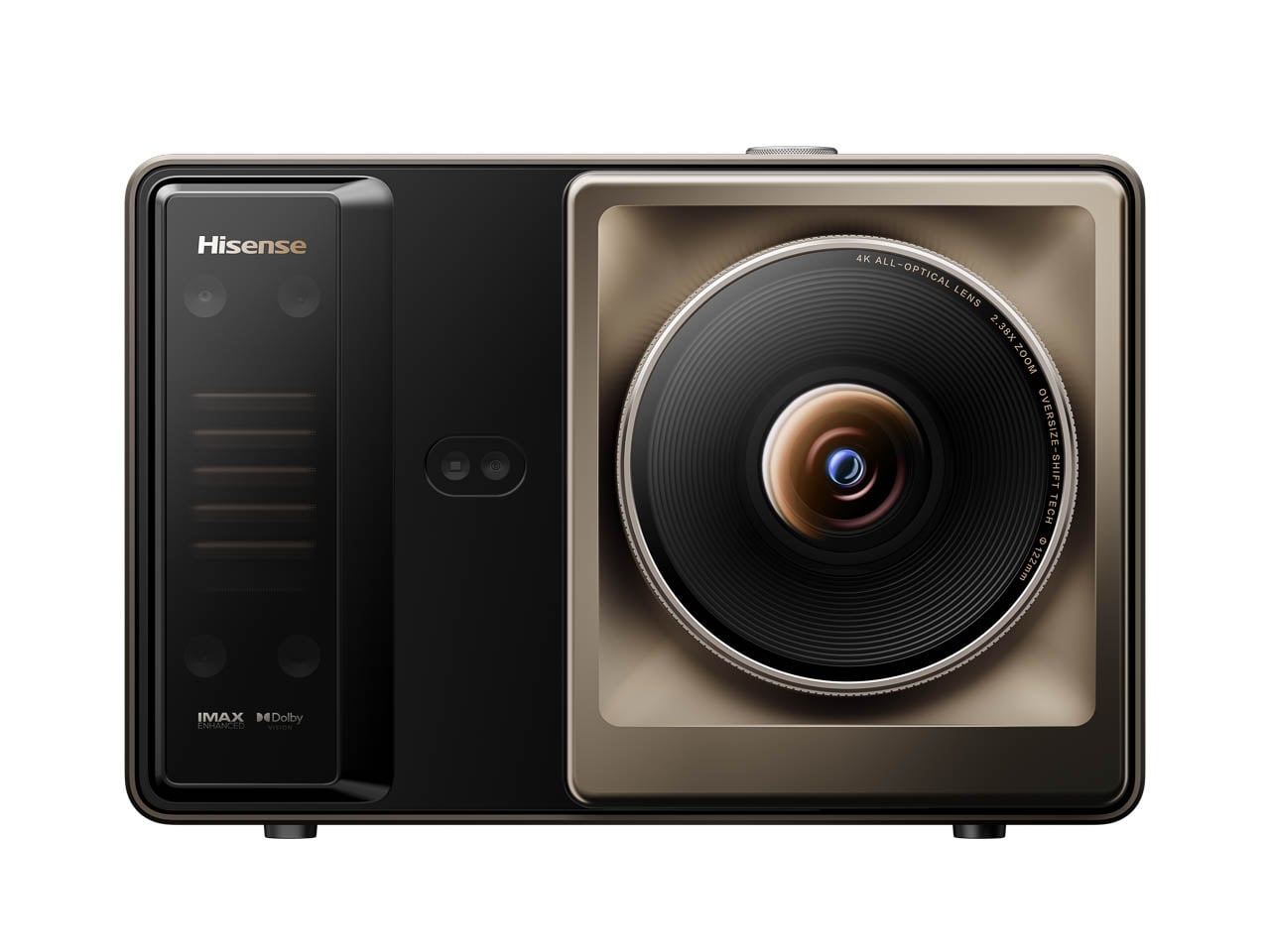
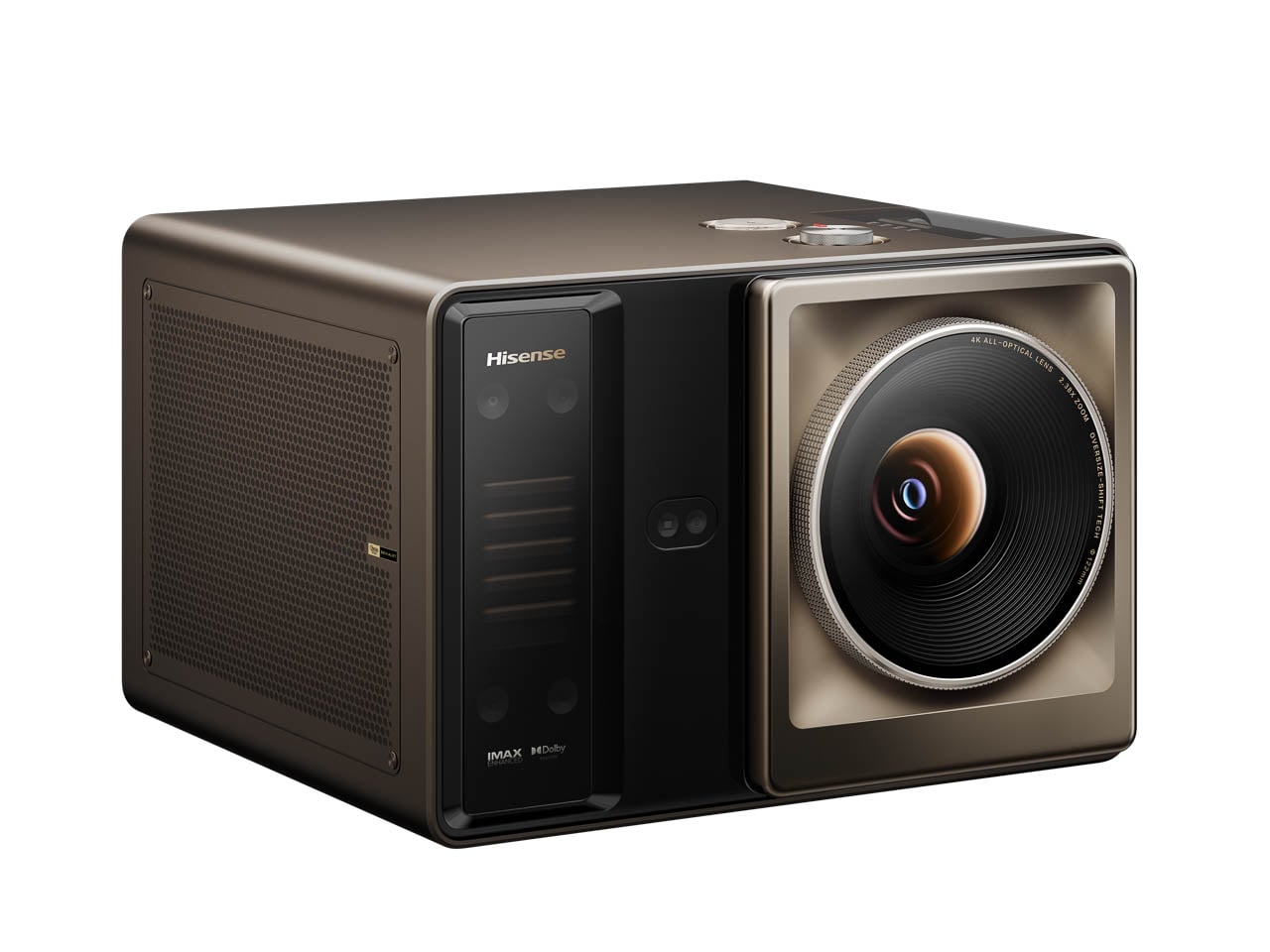
The XR10 Laser TV, unveiled ahead of CES 2026, proposes a different relationship between image and architecture. Where the 100U8QG commits, the XR10 suggests. Where fixed panels dictate, projection negotiates.

Scale Without Permanence

The fundamental distinction lies not in image quality but in spatial philosophy. A 100-inch television is a decision. Once mounted, its presence organizes the room. Seating angles become fixed. Wall treatments become irrelevant behind the panel. The display asserts dominance over its environment, requiring the space to accommodate its permanence.

Projection operates under different constraints. The XR10 can scale from 65 to 300 inches depending on throw distance and surface availability. This variability represents more than convenience. It represents a fundamentally reversible intervention. The wall remains a wall. The room retains its capacity to be something other than a viewing space. When the projector powers down, the architecture reasserts itself in ways that a mounted 100-inch panel never permits.

This reversibility carries design implications that extend beyond flexibility for its own sake. Spaces increasingly serve multiple functions. A wall that hosts a 200-inch projection in the evening might face windows in the morning, hang artwork during gatherings, or simply recede into architectural neutrality when entertainment is not the room’s purpose. Fixed ultra-large displays foreclose these possibilities. Projection preserves them.

Brightness as Spatial Liberation

The XR10’s triple-laser light engine achieves output levels that shift the traditional projector calculus. Where previous generations required environmental control, darkened rooms, managed window treatments, controlled artificial lighting, the XR10 can hold its image against ambient conditions that would have dissolved earlier projectors into washed abstraction.

This capability reframes brightness not as a specification but as a design constraint relaxed. The 100U8QG demanded nothing from its environment beyond structural support. It generated its own light, controlled its own contrast, existed independently of the room’s luminous conditions. Projection historically asked more: cooperation from windows, deference from overhead fixtures, submission from the broader lighting design.

The XR10 narrows this gap without eliminating it entirely. Ambient light remains a factor. Surface reflectivity still matters. But the threshold of environmental accommodation drops substantially. A room need not transform itself into a theater to achieve cinematic scale. The projection can coexist with the space rather than demanding its temporary transformation.

Material Presence and Absence

The physical footprint of these technologies tells its own story. The 100U8QG, despite remarkably thin bezels and careful industrial design, remains an object of substantial material presence. Its glass surface catches light. Its chassis occupies wall space whether active or dormant. The panel exists as an architectural element even when displaying nothing.

The XR10 operates on different terms. As an ultra-short-throw system, it sits near the projection surface rather than across the room, typically on furniture or a low console beneath the image. The projector itself occupies space, but that space bears no fixed relationship to the image’s scale. A 300-inch projection does not require a 300-inch object. The image and its source decouple in ways that fixed displays cannot replicate.

This decoupling creates interesting possibilities for spatial hierarchy. The 100U8QG is always the most visually dominant element in any room it inhabits. The XR10 can be subordinate, tucked below sightlines, present but not assertive. The image appears and disappears. The hardware remains modest.

The Engineering of Environmental Tolerance

Achieving brightness sufficient for ambient operation requires addressing thermal and optical challenges that compound at high output levels. The XR10 employs a sealed microchannel liquid cooling system, an approach that maintains laser stability without exposing internal optics to environmental contamination. Traditional air-cooled projectors draw dust through their optical paths over time, degrading image quality incrementally. Sealed liquid cooling preserves performance across years of operation rather than months.

The optical system centers on a 16-element all-glass lens array with dynamic aperture control. Glass elements maintain dimensional stability under thermal stress better than polymer alternatives, reducing the subtle warping that can soften images at extreme scales. The IRIS system adjusts light transmission in real time to preserve contrast across varying scene brightness, a capability that becomes more critical as ambient light levels rise.

Speckle suppression addresses the last major optical distinction between projection and panel display. The grainy texture that coherent laser light can produce against reflective surfaces has historically marked projection as visually different from emissive displays. The XR10’s suppression system reduces this artifact to the threshold of perception, bringing projected images closer to the smooth, grain-free character of LED and OLED panels.

Commitment and Its Alternatives

The choice between fixed ultra-large display and high-brightness projection ultimately reflects a stance on commitment. The 100U8QG rewards commitment. Once installed, calibrated, and integrated, it delivers consistent, environmentally independent performance. The room becomes better at being a viewing room. The display improves through permanence.

The XR10 rewards flexibility. It achieves similar or greater scale while preserving the room’s capacity for other identities. The wall can be a screen, then not a screen. The space can host cinema, then release it. The architectural intervention remains reversible in ways that panel installation does not.

Neither approach is superior in absolute terms. The design question centers on what a space is asked to become and for how long. Dedicated viewing environments favor the commitment model. Multi-use spaces, rooms with competing functions, and architectures that resist permanent visual dominance may find the projection model more sympathetic to their broader purposes.

Positioning in the Display Landscape

Hisense will demonstrate the XR10 at CES 2026, booth 17704 in Central Hall. The company has spent a decade developing laser projection technology, introducing its first laser TV in 2014 and pioneering triple-laser color architecture in 2019. The XR10 represents the current limit of that trajectory: maximum brightness, maximum scale, minimum environmental demand.

Pricing and availability remain unannounced. The competitive landscape has expanded considerably since Hisense established the ultra-short-throw category, with Samsung, LG, and numerous manufacturers offering alternatives. How the XR10 positions against both competing projectors and the fixed ultra-large panels it philosophically challenges will determine its market reception.

The more interesting question may be conceptual rather than commercial. As display technology continues pushing scale boundaries, the tension between permanence and adaptability becomes more acute. The XR10 and the 100U8QG occupy different points on that spectrum, offering different answers to the same fundamental question: what does a room owe to its screen, and what does a screen owe to its room?

The post Hisense XR10 Laser Projector and the Case for Flexible Scale at CES 2026 first appeared on Yanko Design.

How AI Will Be Different at CES 2026: On‑Device Processing and Actual Agentic Productivity

Last year, every other product at CES had a chatbot slapped onto it. Your TV could talk. Your fridge could answer trivia. Your laptop had a sidebar that would summarize your emails if you asked nicely. It was novel for about five minutes, then it became background noise. The whole “AI revolution” at CES 2024 and 2025 felt like a tech industry inside joke: everyone knew it was mostly marketing, but nobody wanted to be the one company without an AI sticker on the booth.

CES 2026 is shaping up differently. Coverage ahead of the show is already calling this the year AI stops being a feature you demo and starts being infrastructure you depend on. The shift is twofold: AI is moving from the cloud onto the device itself, and it is evolving from passive assistants that answer questions into agentic systems that take action on your behalf. Intel has confirmed it will introduce Panther Lake CPUs, AMD CEO Lisa Su is headlining the opening keynote with expectations around a Ryzen 7 9850X3D reveal, and Nvidia is rumored to be prepping an RTX 50 “Super” refresh. The silicon wars are heating up precisely because the companies making chips know that on-device AI is the only way this whole category becomes more than hype. If your gadget still depends entirely on a server farm to do anything interesting, it is already obsolete. Here’s what to expect at CES 2026… but more importantly, what to expect from AI in the near future.

Your laptop is finally becoming the thing running the models

Intel, AMD, and Nvidia are all using CES 2026 as a launching pad for next-generation silicon built around AI workloads. Intel has publicly committed to unveiling its Panther Lake CPUs at the show, chips designed with dedicated neural processing units baked in. AMD’s Lisa Su is doing the opening keynote, with strong buzz around a Ryzen 7 9850X3D that would appeal to gamers and creators who want local AI performance without sacrificing frame rates or render times. Nvidia’s press conference is rumored to focus on RTX 50 “Super” cards that push both graphics and AI inference into new territory. The pitch is straightforward: your next laptop or desktop is not a dumb terminal for ChatGPT; it is the machine actually running the models.

What does that look like in practice? Laptops at CES 2026 will be demoing live transcription and translation that happens entirely on the device, no cloud round trip required. You will see systems that can summarize browser tabs, rewrite documents, and handle background removal on video calls without sending a single frame to a server. Coverage is already predicting a big push toward on-device processing specifically to keep your data private and reduce reliance on cloud infrastructure. For gamers, the story is about AI upscaling and frame generation becoming table stakes, with new GPUs sold not just on raw FPS but on how quickly they can run local AI tools for modding, NPC dialogue generation, or streaming overlays. This is the year “AI PC” might finally mean something beyond a sticker.

Agentic AI is the difference between a chatbot and a butler

Pre-show coverage is leaning heavily on the phrase “agentic AI,” and it is worth understanding what that actually means. Traditional AI assistants answer questions: you ask for the weather, you get the weather. Agentic AI takes goals and executes multi-step workflows to achieve them. Observers expect to see devices at CES 2026 that do not just plan a trip but actually book the flights and reserve the tables, acting on your behalf with minimal supervision. The technical foundation for this is a combination of on-device models that understand context and cloud-based orchestration layers that can touch APIs, but the user experience is what matters: you stop micromanaging and start delegating.

Samsung is bringing its largest CES exhibit to date, merging home appliances, TVs, and smart home products into one massive space with AI and interoperability as the core message. Imagine a fridge, washer, TV, robot vacuum, and phone all coordinated by the same AI layer. The system notices you cooked something smoky, runs the air purifier a bit harder, and pushes a recipe suggestion based on leftovers. Your washer pings the TV when a cycle finishes, and the TV pauses your show at a natural break. None of this requires you to open an app or issue voice commands; the devices are just quietly making decisions based on context. That is the agentic promise, and CES 2026 is where companies will either prove they can deliver it or expose themselves as still stuck in the chatbot era.

Robot vacuums are the first agentic AI success story you can actually buy

CES 2026 is being framed by dedicated floorcare coverage as one of the most important years yet for robot vacuums and AI-powered home cleaning, with multiple brands receiving Innovation Awards and planning major product launches. This category quietly became the testing ground for agentic AI years before most people started using the phrase. Your robot vacuum already maps your home, plans routes, decides when to spot-clean high-traffic areas, schedules deep cleans when you are away, and increasingly maintains itself by emptying dust and washing its own mop pads. It does all of this with minimal cloud dependency; the brains are on the bot.

LG has already won a CES 2026 Innovation Award for a robot vacuum with a built-in station that hides inside an existing cabinet cavity, turning floorcare into an invisible, fully hands-free system. Ecovacs is previewing the Deebot X11 OmniCyclone as a CES 2026 Innovation Awards Honoree and promising its most ambitious lineup to date, pushing into whole-home robotics that go beyond vacuuming. Robotin is demoing the R2, a modular robot that combines autonomous vacuuming with automated carpet washing, moving from daily crumb patrol to actual deep cleaning. These bots are starting to integrate with broader smart home ecosystems, coordinating with your smart lock, thermostat, and calendar to figure out when you are home, when kids are asleep, and when the dog is outside. The robot vacuum category is proof that agentic AI can work in the real world, and CES 2026 is where other product categories are going to try to catch up.

TVs are getting Micro RGB panels and AI brains that learn your taste

LG has teased its first Micro RGB TV ahead of CES 2026, positioning it as the kind of screen that could make OLED owners feel jealous thanks to advantages in brightness, color control, and longevity. Transparent OLED panels are also making appearances in industrial contexts, like concept displays inside construction machinery cabins, hinting at similar tech eventually showing up in living rooms as disappearing TVs or glass partitions that become screens on demand. The hardware story is always important at CES, but the AI layer is where things get interesting for everyday use.

TV makers are layering AI on top of their panels in ways that go beyond simple upscaling. Expect personalized picture and sound profiles that learn your room conditions, content preferences, and viewing habits over time. The pitch is that your TV will automatically switch to low-latency gaming mode when it recognizes you launched a console, dim your smart lights when a movie starts, and adjust color temperature based on ambient light without you touching a remote. Some of this is genuine machine learning happening on-device, and some of it is still marketing spin on basic presets. The challenge for readers at CES 2026 will be figuring out which is which, but the direction is clear: TVs are positioning themselves as smart hubs that coordinate your living room, not just dumb displays waiting for HDMI input.

Gaming gear is wiring itself for AI rendering and 500 Hz dreams

HDMI Licensing Administrator is using CES 2026 to spotlight advanced HDMI gaming technologies with live demos focused on very high refresh rates and next-gen console and PC connectivity. Early prototypes of the Ultra96 HDMI cable, part of the new HDMI 2.2 specification, will be on display with the promise of higher bandwidth to support extreme refresh rates and resolutions. Picture a rig on the show floor: a 500 Hz gaming monitor, next-gen GPU, HDMI 2.2 cable, running an esports title at absurd frame rates with variable refresh rate and minimal latency. It is the kind of setup that makes Reddit threads explode.

GPUs are increasingly sold not just on raw FPS but on AI capabilities. AI upscaling like DLSS is already table stakes, but local AI is also powering streaming tools for background removal, audio cleanup, live captions, and even dynamic NPC dialogue in future games that require on-device inference rather than server-side processing. Nvidia’s rumored RTX 50 “Super” refresh is expected to double down on this positioning, selling the cards as both graphics and AI accelerators. For gamers and streamers, CES 2026 is where the industry will make the case that your rig needs to be built for AI workloads, not just prettier pixels. The infrastructure layer, cables and monitors included, is catching up to match that ambition.

What CES 2026 really tells us about where AI is going

The shift from cloud-dependent assistants to on-device agents is not just a technical upgrade; it is a fundamental change in how gadgets are designed and sold. When Intel, AMD, and Nvidia are all racing to build chips with dedicated AI accelerators, and when Samsung is reorganizing its entire CES exhibit around AI interoperability, the message is clear: companies are betting that local intelligence and cross-device coordination are the only paths forward. The chatbot era served its purpose as a proof of concept, but CES 2026 is where the industry starts delivering products that can think, act, and coordinate without constant cloud supervision.

What makes this year different from the past two is that the infrastructure is finally in place. The silicon can handle real-time inference. The software frameworks for agentic behavior are maturing. Robot vacuums are proving the model works at scale. TVs and smart home ecosystems are learning how to talk to each other without requiring users to become IT managers. The pieces are connecting, and CES 2026 is the first major event where you can see the whole system starting to work as one layer instead of a collection of isolated features.

The real question is what happens after the demos

Trade shows are designed to impress, and CES 2026 will have no shortage of polished demos where everything works perfectly. The real test comes in the six months after the show, when these products ship and people start using them in messy, real-world conditions. Does your AI PC actually keep your data private when it runs models locally, or does it still phone home for half its features? Does your smart home coordinate smoothly when you add devices from different brands, or does it fall apart the moment something breaks the script? Do robot vacuums handle the chaos of actual homes, or do they only shine in controlled environments?

The companies that win in 2026 and beyond will be the ones that designed their AI systems to handle failure, ambiguity, and the unpredictable messiness of how people actually live. CES 2026 is where you will see the roadmap. The year after is where you will see who actually built the roads. If you are walking the show floor or following the coverage, the most important question is not “what can this do in a demo,” but “what happens when it breaks, goes offline, or encounters something it was not trained for.” That is where the gap between real agentic AI and rebranded presets will become impossible to hide.

The post How AI Will Be Different at CES 2026: On‑Device Processing and Actual Agentic Productivity first appeared on Yanko Design.
Hisense Reimagines Domestic Space Through Modularity and Ergonomic Intelligence at CES 2026


Modularity. The word appears constantly in appliance marketing, usually meaning nothing more than optional accessories. Hisense’s CES 2026 lineup treats it as structural philosophy.

The home appliance category has long resisted meaningful design evolution. Refrigerators grow larger. Washers add cycles. Connectivity features accumulate. None of this fundamentally changes how these objects occupy space or interact with human behavior.
Designer: Hisense

Hisense’s collection spans kitchen, laundry, and climate control. What unifies the products is methodology: each addresses a specific behavioral friction point rather than adding features to existing forms. A dehumidifier repositions its tank to eliminate bending. A laundry system provides parallel processing for incompatible fabric types. A refrigeration line achieves visual coherence across separately purchased units.

Miguel Becerra, Hisense’s Director of Smart Home, framed the approach explicitly. These are reconceptions, not refinements. Machine intelligence operates autonomously rather than demanding constant user input. Ergonomic reconsideration shapes maintenance rituals. Adaptable configurations replace fixed proportions.

Connect Life: Distributed Intelligence Across Domestic Systems

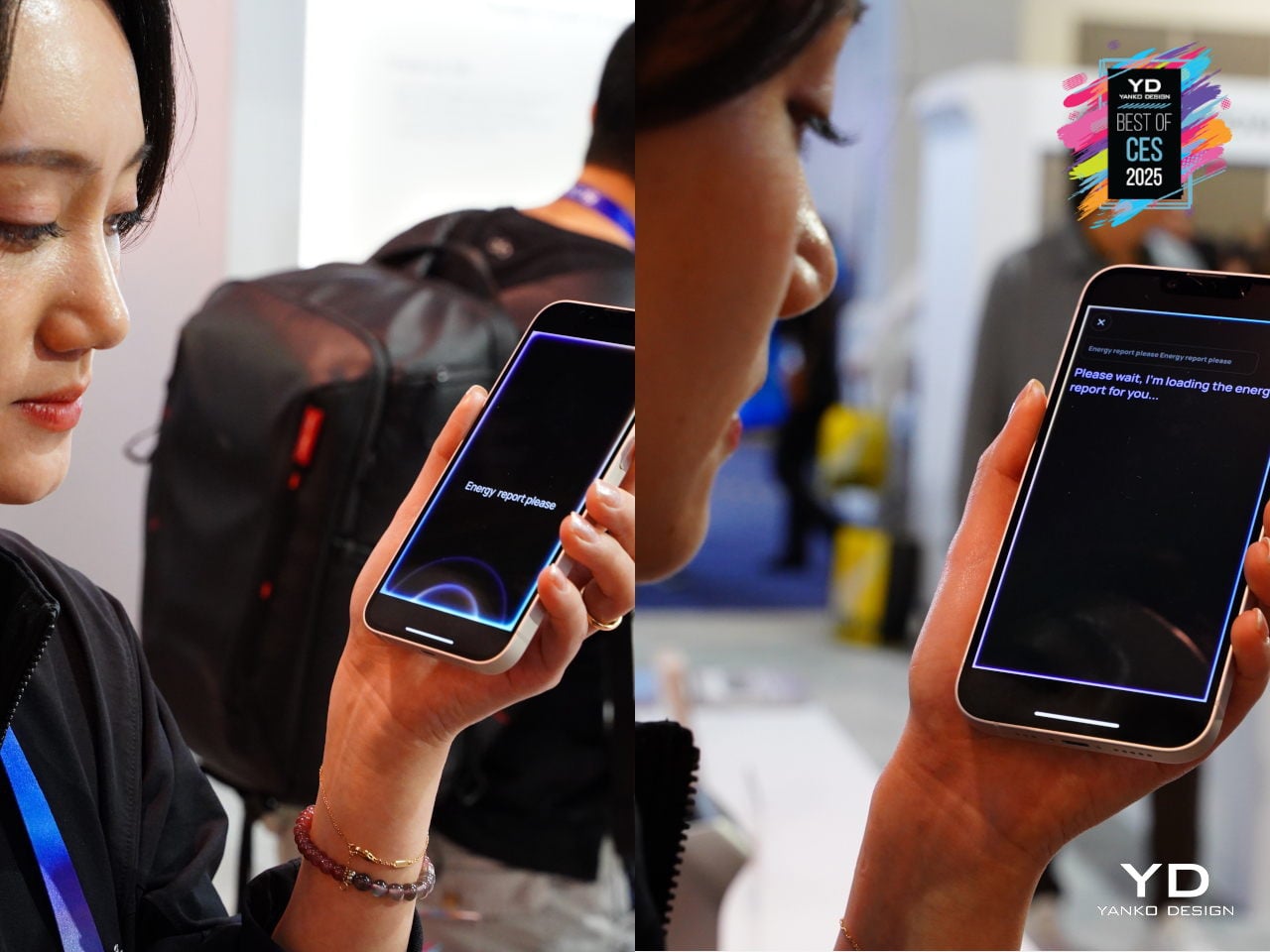
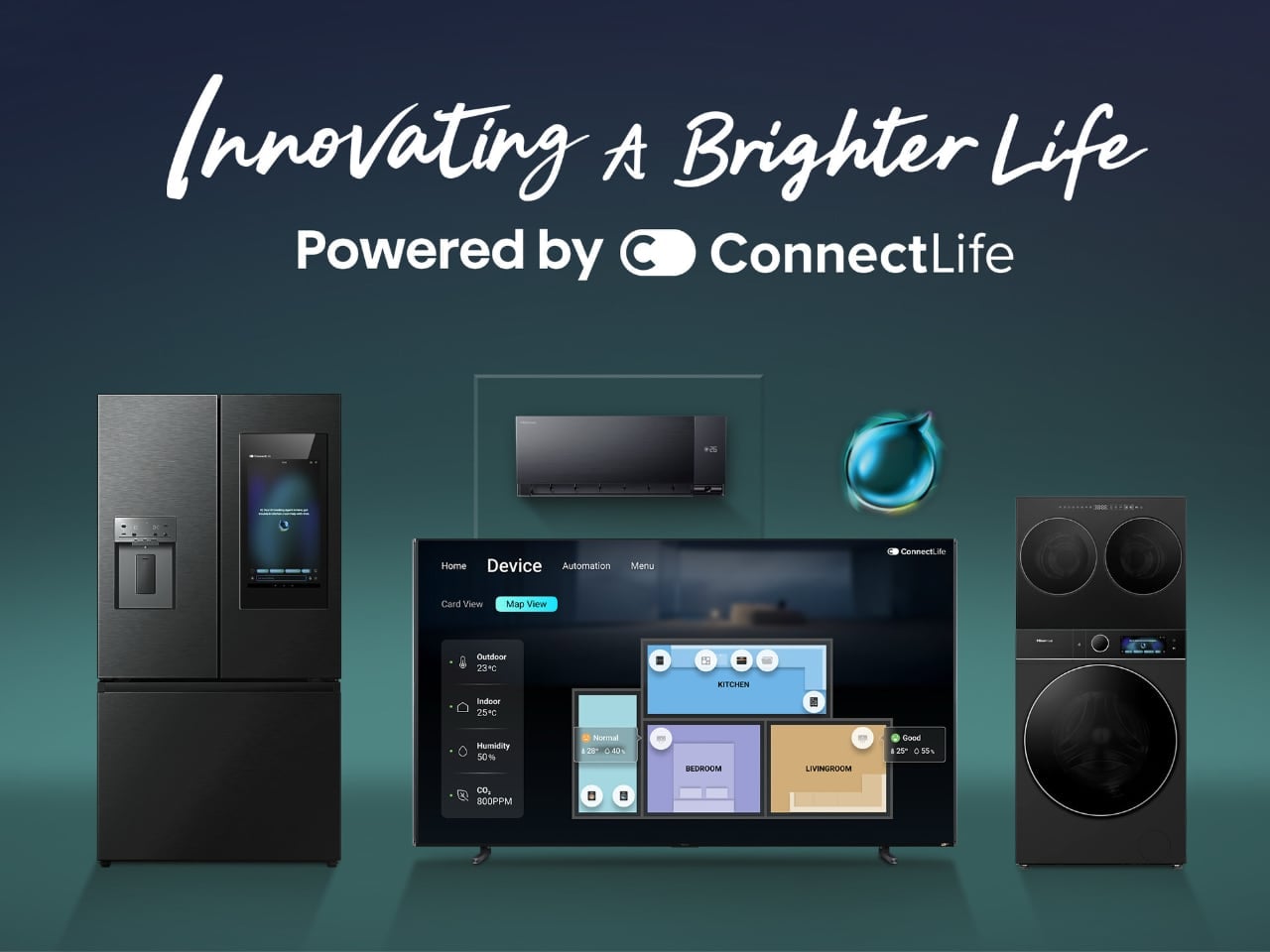
Five AI agents. Air. Cooking. Laundry. Energy. Support. Each monitors a domain and acts without waiting for commands. The system design reflects a philosophical shift: reactive control gives way to anticipatory automation.

The air agent illustrates the approach. Paired with third-party motion and air quality sensors, it adjusts climate based on occupancy and particulate levels rather than thermostat schedules. Empty room detected: cooling reduces. Elevated particles registered: ventilation increases. No user input required. The system anticipates discomfort before it registers.

Cooking and laundry agents follow similar logic. The cooking agent coordinates oven and cooktop timing, ensuring stovetop preparation and oven completion align appropriately. The laundry agent accepts phone-scanned fabric and stain images, selects cycles autonomously, and provides completion estimates. Meal recommendations integrate with appliance coordination.

Matter compatibility prevents ecosystem lock-in. Thousands of certified devices integrate. Users maintaining existing relationships with Apple Home, Google Home, or Alexa retain those interfaces while Connect Life adds capability layers. No ecosystem abandonment required. The support agent monitors device health proactively, flagging failures before they disrupt operation.

This is automation that reduces cognitive load rather than relocating it from physical buttons to digital interfaces. The distinction matters: complexity handled invisibly differs fundamentally from complexity shifted to a new control surface.

Kitchen Suite: Screens as Interface, Coordination as Function

Screens everywhere. The Connect Life Cap refrigerators carry two: a 21-inch primary display and a 3.5-inch secondary dedicated to temperature controls.

The bifurcation acknowledges interaction hierarchy. Not every interaction requires the full interface. Temperature adjustment happens quickly on the smaller screen. Recipe browsing, wine pairing suggestions, and smart home management occupy the larger surface.

Configuration options span counter-depth, French door, and cross-door layouts. Counter-depth models integrate flush with cabinetry. French door provides traditional accessibility. Cross-door offers alternative organization. Display consistency across configurations means interface logic transfers regardless of which form factor fits a particular kitchen.

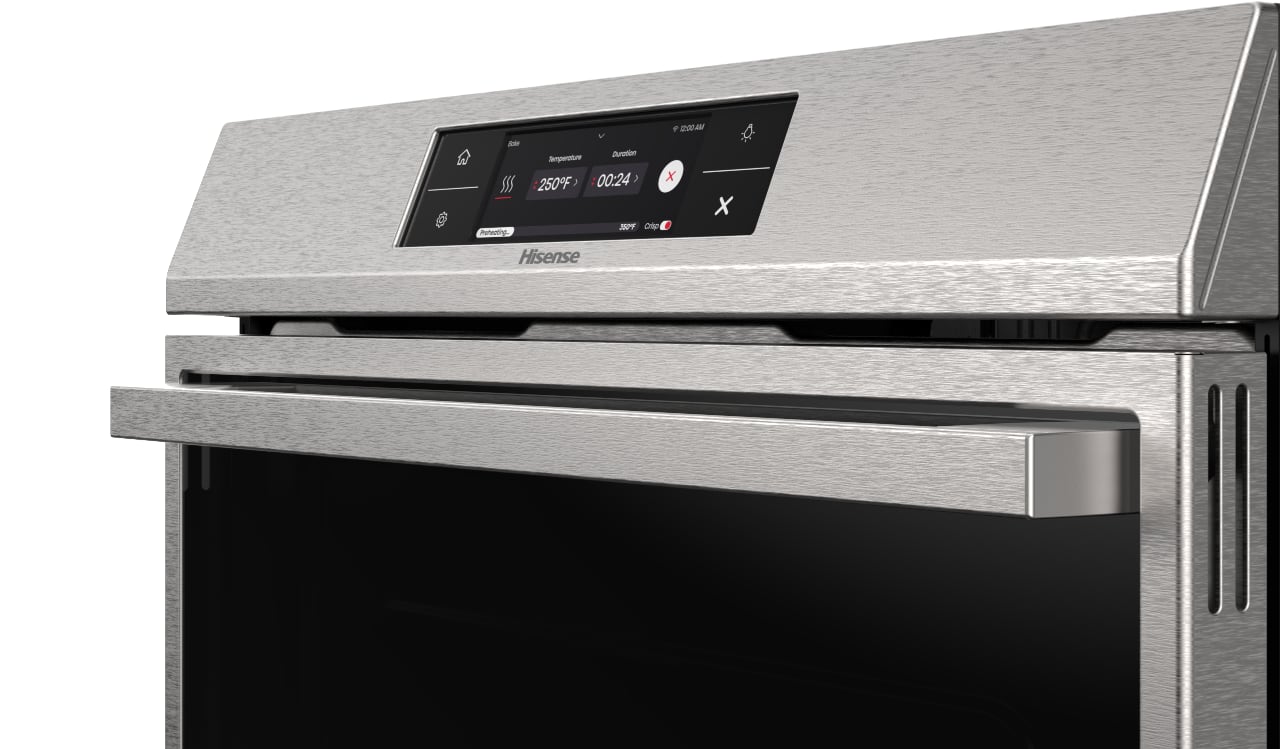
The smart induction range adds a seven-inch cooktop display with bridge functionality that combines heating zones for oversized cookware. Rapid preheat technology reduces the waiting period between intention and cooking. The AI cooking agent coordinates timing across appliances, ensuring stovetop preparation and oven completion align appropriately.

Most distinctive: the S7 Smart Dishwasher’s cooking pattern detection. Connected to compatible ovens, it recognizes what was prepared and queues appropriate cycles before loading occurs. Greasy steak dinner triggers heavy-duty settings automatically.

This appliance-to-appliance communication eliminates the guesswork that typically accompanies cycle selection. The dishwasher transforms from passive receptacle into active kitchen workflow participant.

PureFit Refrigeration: Modularity as Aesthetic Principle

The new wine cabinet shares exact dimensional precision with existing PureFit refrigerator and freezer columns. Minimal side gaps. Coordinated panel finishes. The slim profile accommodates kitchens where standard depths would protrude awkwardly from cabinet lines. Multiple units read as built-in cabinetry rather than assembled appliance collection.

The significance is relational, not individual. Units matter less than the system they form, and this modularity serves both functional and aesthetic purposes. Households configure refrigerator-to-freezer ratios according to actual usage patterns rather than accepting manufacturer-determined proportions. Wine collectors gain dedicated storage without sacrificing visual coherence. Growing families expand freezer capacity later. A developing wine interest introduces the cabinet. The architecture accommodates temporal change without wholesale replacement.

Temperature zones maintain appropriate environments for different varietals. The AI cooking agent provides pairing recommendations, integrating storage and meal planning into a continuous experience.

The cabinet represents applied modularity: identical design language, precise dimensional matching, and functional independence within a coordinated system. Each column operates independently while contributing to a unified visual and functional whole.

Top Lift Dehumidifier: Ergonomic Innovation in Overlooked Categories

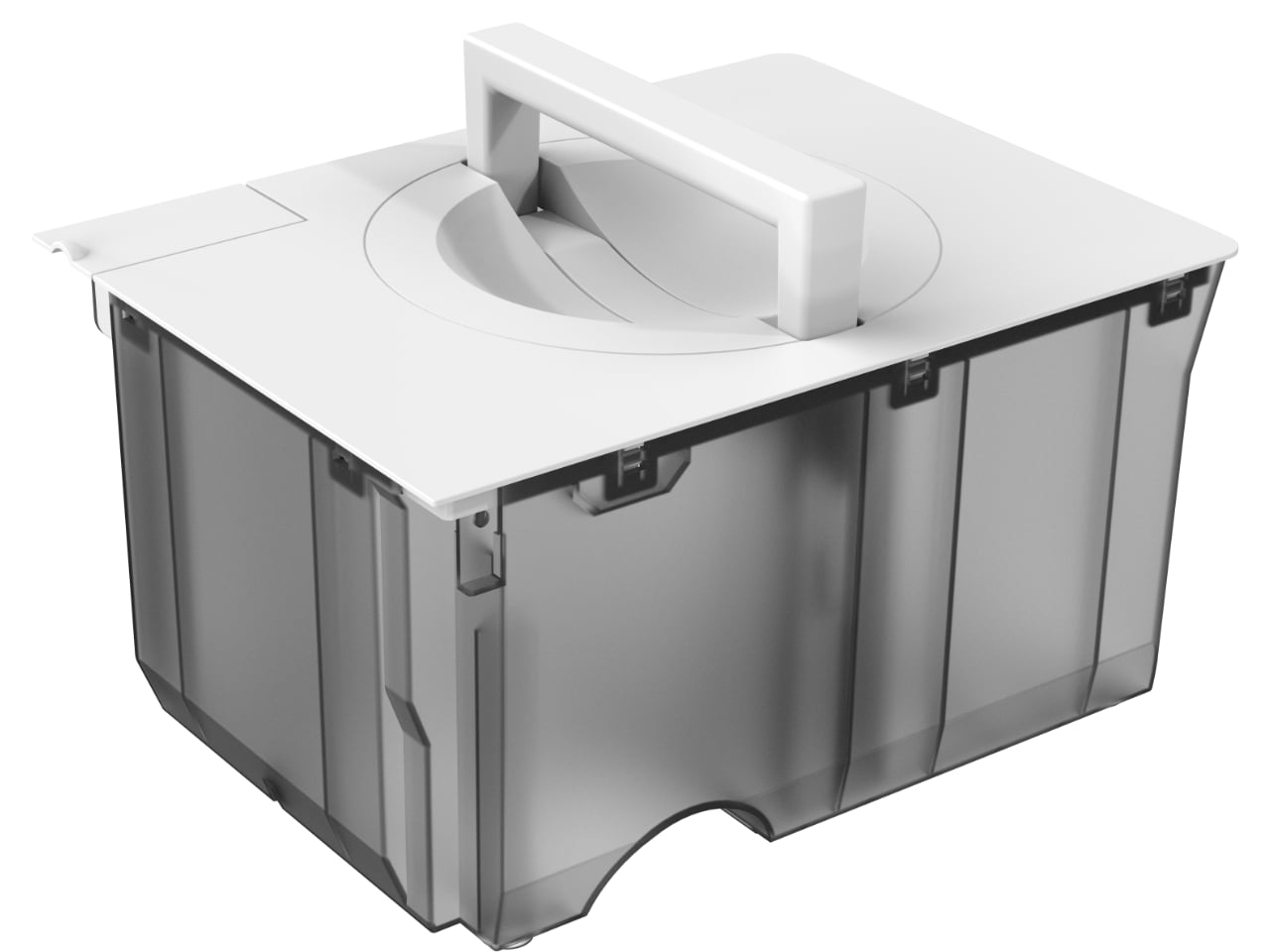
Climate control appliances occupy a peculiar position in domestic design: essential for habitability yet engineered as if human bodies never interact with them. The dehumidifier category exemplifies this neglect. Manufacturers have refined compressor efficiency and moisture extraction rates for decades. What they never examined: the maintenance gesture. Crouching. Extracting a heavy tank from the unit’s base. Navigating stairs while managing slosh. The physical transaction that defines ownership remained unaddressed.

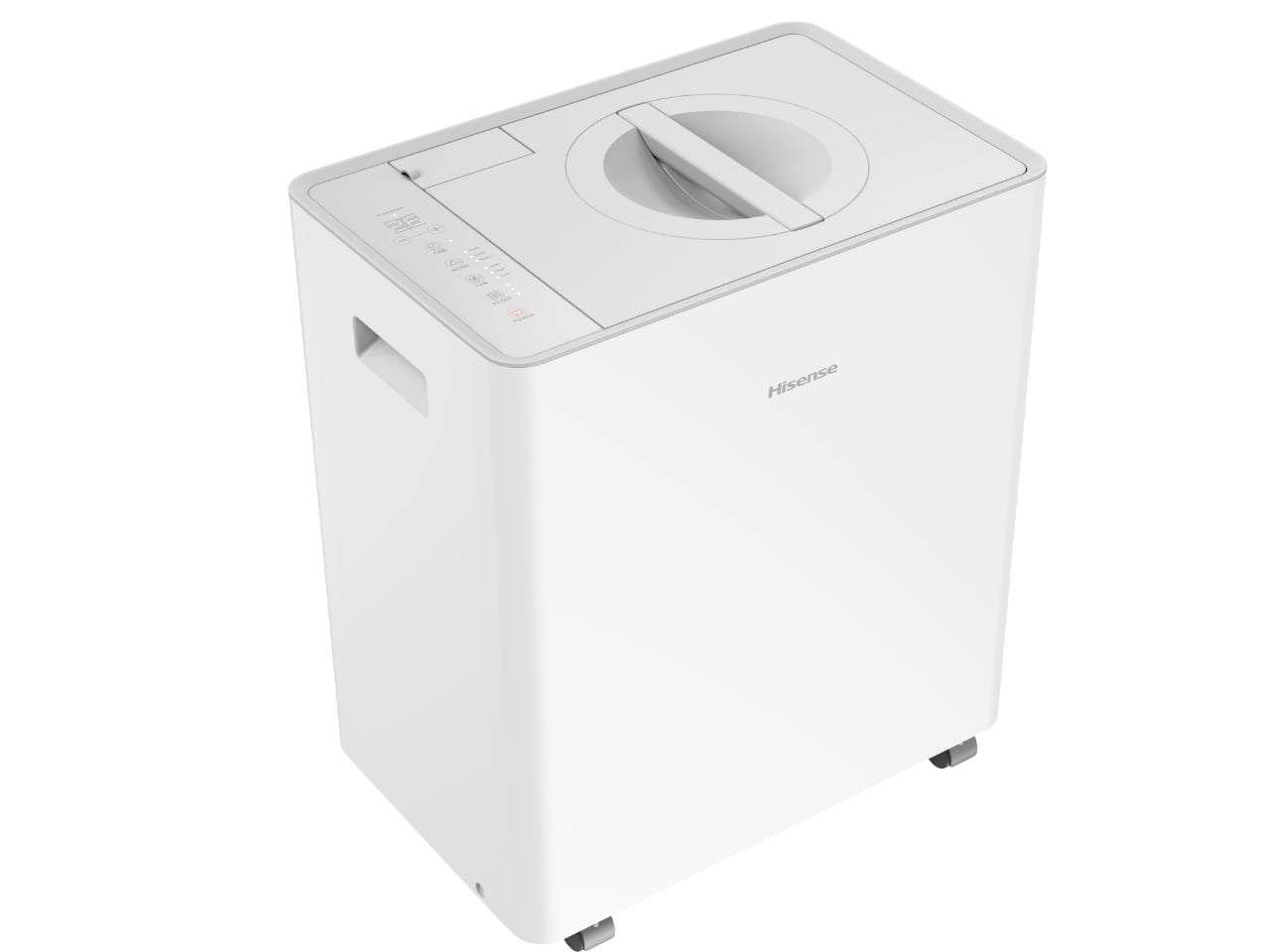
Hisense inverts the gravitational logic. The Top Lift positions its collection cartridge at the top rather than at the base where extraction demands bending and lifting against body mechanics. The gesture becomes a vertical lift from standing height. An enclosed design eliminates spillage during transport.

This represents ergonomic intervention at the interaction layer rather than the specification layer. Capacity increases 38% over traditional models. The user-centered logic: fewer emptying events mean fewer opportunities for physical strain. Acoustic engineering permits placement in finished living spaces rather than mechanical exile. Connectivity spans major ecosystems without demanding platform commitment.

Incremental specification improvement this is not. The intervention reflects a methodological shift toward designing around maintenance behavior rather than around extraction performance alone.

Fabric Care: Three Approaches to Laundry Space

Three laundry products address three different spatial logics. The U7 Smart Washer and Dryer targets American capacity expectations directly. Previous Hisense models were too small for U.S. household loads. The U7 corrects drum sizing, adds Connect Life integration, steam sanitization, and a Hi-Bubble detergent system that reduces waste.

The Stylish takes the opposite approach. Italian design influence. Matte finishes that read as furniture. Critical specification: 21 inches deep versus the typical 30-plus. Bedrooms and visible living areas become viable installation locations. The all-in-one drum handles washing, drying, sanitization, and odor removal.

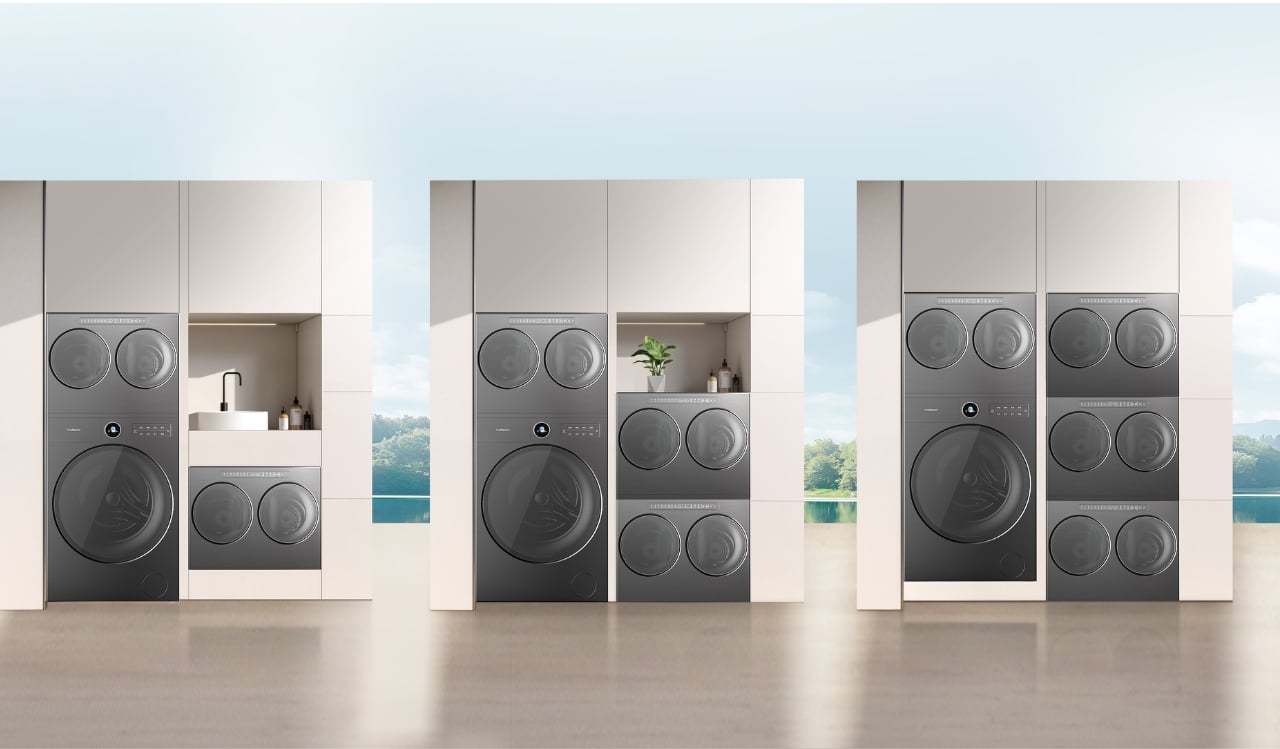
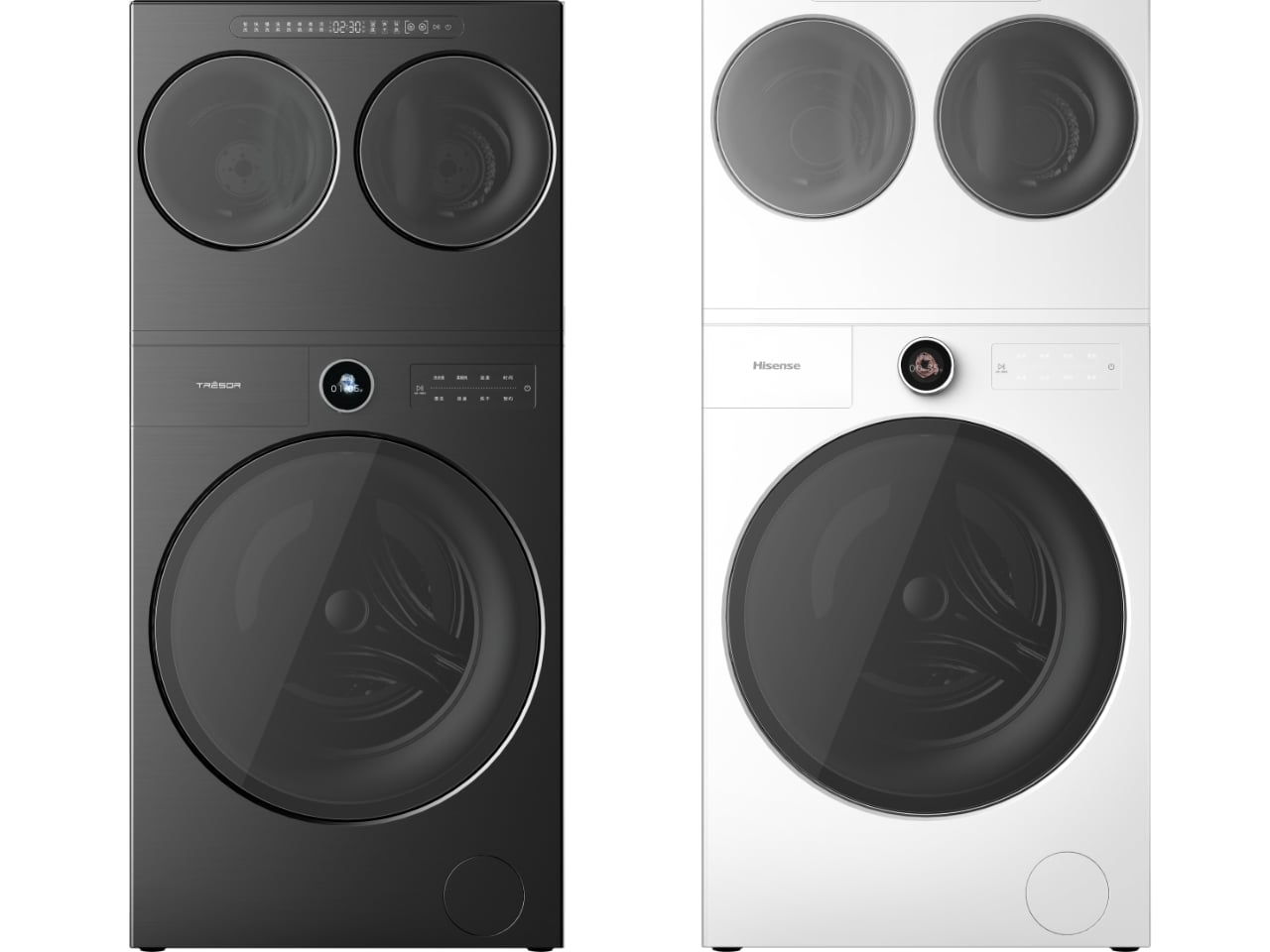
Excel Master represents the most significant departure, a modular system allowing infinite scalability. A main unit functions as conventional full-size washer and dryer using heat pump technology. Mini modules attach to expand capacity. Each mini module contains two separate wash and dry drums.

The insight: fabric care is a sorting problem, not a capacity problem. Households generate textile streams differing in soil type, fiber sensitivity, thermal tolerance. Traditional machines force temporal sequencing or compromised mixing. Excel Master provides parallel channels. Delicate synthetics, heavy cotton, specialized items run simultaneously in dedicated drums.

Mini modules employ ambient air condensation rather than heat. Room-temperature air removes moisture gradually, preserving fiber integrity at the cost of cycle duration. The trade-off suits the module’s purpose: items routed there prioritize care quality over speed.

Acoustics: below 46 decibels with multiple drums running. Quieter than conversation. Additional modules integrate as needs evolve. The system adapts rather than requiring replacement.

Implications: Design as Behavioral Response

The products share an underlying methodology: observe how people actually interact with domestic equipment, identify the friction points and compromises those interactions require, redesign fundamental configurations to eliminate rather than accommodate those problems.

The Top Lift Dehumidifier does not add features to compensate for awkward maintenance. It repositions the tank to make maintenance physically reasonable. Excel Master does not suggest workarounds for mixed laundry loads. It provides the infrastructure to handle them properly.

Modularity here means spatial flexibility and temporal adaptability. Households configure according to current needs, reconfigure as those needs change. Ergonomic reconsideration treats maintenance behavior as a design variable rather than a fixed constraint. Distributed intelligence reduces the cognitive burden of appliance management by handling routine decisions autonomously.

CES booth: Central Hall, January 6 through 9, 2026. Pricing and specific U.S. availability remain undetermined. Hisense conducts retailer and distributor meetings after CES, with decisions filtering through during Q1. A New Product Introduction event later in the quarter should provide concrete details.

Execution and pricing will determine market success. The conceptual framework, though, represents genuine departure: systematic reconsideration of domestic equipment design rather than incremental improvement to existing forms.

The post Hisense Reimagines Domestic Space Through Modularity and Ergonomic Intelligence at CES 2026 first appeared on Yanko Design.