This LEGO Reflexology Mat Turns a Parent’s Worst Nightmare into Physical Therapy

The only thing worse than ‘Floor is Lava’ is probably ‘Floor is LEGO Brick’. LEGO bricks are famously torturous to step on. The studs, the sharp corners, the unforgiving plastic, all of these combine into creating something that feels like modern day torture. Step on a lego brick with enough body-weight and that thing practically digs into your tissue, causing probably one of the most painful experiences according to the internet. However, what if there was a ‘right’ way of stepping on LEGO bricks?

No, I’m not talking about some mind-over-body nonsense where you overcome your ability to feel pain. LEGO builder eat.sleep.build.repeat. designed a foot reflexology mat using just LEGO bricks, tapping into ancient eastern healing techniques to create a stimulating mat that helps you boost blood flow to your legs and to even other parts of the body. Made from just 820 bricks, this piece, titled ‘How to Step on a LEGO Brick?’ is a rather fun and informative hat-tip to old culture, using modern-day plastic bricks. One might say it puts the LEG in LEGO!

Designer: eat.sleep.build.repeat.

“Foot reflexology is an ancient practice, extremely common in China, where people step on mats with pressure nodes that practitioners believe produce beneficial effects elsewhere in the body,” says eat.sleep.build.repeat. “Decades later, their popularity remains strong as people continue to embrace simple, natural methods for daily wellness.”

The 820-brick MOC comes with the foot mat itself, color coded to perfection with different zones that supposedly stimulate different parts of the body. Each kit also comes with a coded legend that lets you see which color is assigned to which body part. Not that we’re medical professionals (please don’t take this as medical advice), but standing on the mat while having pressure applied (thanks to the LEGO studs) on different parts of the foot is known to be able to cure diseases and boost recovery. Who knew standing on LEGO bricks could be this therapeutic?!

The MOC (My Own Creation) is currently gathering steam on the LEGO Ideas website, an online forum dedicated to enthusiasts who build and vote for their favorite LEGO creations. If this particular build sounds enticing to you (apart from the prospect of stepping on LEGO bricks of course), head down to the LEGO Ideas website and cast your vote for this build!

The post This LEGO Reflexology Mat Turns a Parent’s Worst Nightmare into Physical Therapy first appeared on Yanko Design.
Teenage Engineering’s latest Microphone is the most unserious yet brilliant piece of music tech we’ve seen

Teenage Engineering has never been content to stay within conventional product categories, consistently pushing boundaries between instruments, toys, and art objects. Their approach to music hardware combines Swedish design sensibilities with genuine technical innovation, creating devices that feel both familiar and revolutionary. The company’s latest announcement signals another bold expansion into uncharted territory, moving beyond synthesizers and samplers into the world of vocal performance.

Today’s unveiling of the “Riddim N’ Ting” bundle showcases this adventurous spirit, pairing the recently released EP-40 Riddim sampler with the brand-new EP-2350 Ting microphone. The Ting represents Teenage Engineering’s first foray into microphone design, but it is far from a traditional vocal mic. Instead, it is a compact effects processor, sample trigger, and vocal manipulator rolled into one handheld device, complete with motion sensors and live-adjustable parameters that let performers tilt and move the mic to control everything from echo intensity to robotic voice modulation in real time.

Designer: Teenage Engineering

So the Ting itself is this ridiculously lightweight object, weighing a scant 90 grams, that feels less like a piece of serious audio equipment and more like a prop from a retro sci-fi film. That’s the point. It houses four primary effects: a standard echo, an echo blended with a spring reverb, a high-pitched “pixie” effect, and a classic “robot” voice. A physical lever and an internal motion sensor allow you to manipulate the effect parameters by physically moving the mic, turning a vocal performance into a kinetic activity. Four buttons on the side are dedicated to triggering samples, which come preloaded with sound system staples like air horns and lasers but are fully replaceable. It’s a dedicated hype-mic, a performance tool designed for immediate, tactile fun rather than pristine vocal capture.

Its lo-fi audio character is a feature, not a bug, leaning into the saturated, gritty vocal sounds that define dub and dancehall sound system culture. While you could draw parallels to devices like Roland’s VT-4 for vocal processing or Korg’s Kaoss Pad for real-time effects, the Ting’s genius is its form factor. It integrates these functions directly into the microphone itself, removing a layer of abstraction and making the performance more immediate. It connects to any system via a 3.5mm line out, but it’s clearly designed to be the perfect companion for its partner device. This is where the workflow becomes a self-contained creative loop.

That partner, the EP-40 Riddim, is the anchor for all the Ting’s chaotic energy. While it follows the established format of the EP-series, its focus is sharp. It’s a sampler and groovebox loaded with over 400 instruments and sounds curated by legendary reggae producers like King Jammy and Mad Professor. The specs are solid: 12 stereo or 16 mono voices, a 128MB system memory, and a subtractive synth engine for crafting classic bass and lead tones. It includes seven main effects and twelve punch-in effects, all tailored for dub-style mixing. Connectivity is standard for Teenage Engineering, with stereo and sync I/O, MIDI, and USB-C. It’s a capable sampler on its own, but its true purpose is realized when paired with the Ting.

Together, they form a portable, battery-powered sound system in a box. The workflow is obvious and effective: you build a beat on the Riddim, then plug the Ting directly into its input to lay down vocals, trigger hype samples, and perform live dub-outs with the effects. For their launch, Teenage Engineering is bundling them together and offering the Ting for free, a clever move that ensures this new, weirder device gets into users’ hands immediately. It’s a compelling package that champions spontaneity and play. It proves that the most engaging technology isn’t always about higher fidelity or more features, but about creating a more direct and enjoyable path from an idea to its execution.

The post Teenage Engineering’s latest Microphone is the most unserious yet brilliant piece of music tech we’ve seen first appeared on Yanko Design.
B&O Just Launched a $5,000+ Soundbar That Costs More Than Your First Car

Bang & Olufsen’s Beosound Premiere lands like a spaceship in a room full of toasters. That’s not an exaggeration; it’s just what happens when a company known for treating speakers like sculpture decides to rethink the soundbar. This thing doesn’t just sit under your TV. It commands the room, a slab of pearl-blasted aluminum that looks like it was milled from a single ingot of the future. And yes, it costs £3,900, which is about as much as most people pay for rent, but let’s be real, if you’re the kind of person who buys a soundbar as a statement, you’re not exactly shopping for Black Friday deals.

The Premiere’s design is what happens when industrial designers are given free rein and a budget that doesn’t flinch. The up-firing tweeter sits center stage like a jewel, surrounded by 1,925 precision-machined perforations, a nod to Bang & Olufsen’s 1925 founding year, because of course it is. The aluminum chassis isn’t just for show; it houses ten custom drivers, including four racetrack woofers and a tweeter that looks like it belongs in a museum. The side-firing and up-firing drivers are part of the visual language, a reminder that this isn’t a black plastic slab pretending to be invisible. Then there’s the lighting: 90 LEDs that pulse and shift with your adjustments, because why should your soundbar be any less extra than the rest of your smart home?

Designer: Bang & Olufsen

You’d think all this design flair would come at the cost of actual performance, but the specs tell a different story. Ten amplifiers push 70 watts to the woofers and 50 watts to the rest, delivering a frequency range of 32 Hz to 23 kHz. The Dolby Atmos 7.1.4 decoding is paired with Bang & Olufsen’s proprietary True Image algorithm, which supposedly creates a soundstage wider than the unit itself. The company calls it Wide Stage Technology, and while I haven’t heard it yet, the idea of a soundbar that can convincingly fake a surround setup without extra speakers is intriguing. The max output of 102 dB at 1 meter means this thing can get loud, but the real test will be how it handles the subtleties: dialogue clarity, spatial separation, that kind of thing.

The connectivity suite is what you’d expect from a flagship product in 2025, but with a few Bang & Olufsen twists. HDMI eARC with 8K passthrough is table stakes at this point, but the inclusion of an Ethernet switch with three 1Gbit ports is a nice touch for anyone tired of juggling network cables. Bluetooth 5.4 and AirPlay 2 are here, obviously, but the real party trick is Beolink Surround, which lets you wire up additional B&O speakers for a true multi-channel setup. The fact that you can still use analog audio via USB-C (with an adapter) feels like a nod to the audiophiles who refuse to let go of their turntables. And yes, there’s a voice assistant option, but it requires an external Google device, because Bang & Olufsen would rather you use their app than bark commands at a microphone.

Now, the elephant in the room. £3,900 is a lot for a soundbar, but let’s put it in context. The Premiere isn’t competing with Sony or Sonos; it’s competing with high-end AV receivers and speaker setups that cost twice as much. The Haute Edition, limited to 25 pieces and priced at £11,000, is another story entirely. That’s not a soundbar; that’s a flex. Each one is hand-milled with a pattern that takes 17 hours to carve, because why not? It comes with a numbered certificate and a wooden box for the remote, because at that price, you’re not just buying audio equipment; you’re buying a piece of design history. Or at least, that’s the pitch.

The real question is whether the Premiere can justify its existence beyond being a conversation piece. Bang & Olufsen has a reputation for building products that sound as good as they look, but the soundbar market is crowded with solid performers at a fraction of the cost. The Premiere’s trick will be convincing people that its spatial audio and design justify the premium. For now, it’s hard to deny that this is one of the most interesting pieces of audio gear to come out in years. Whether it’s worth the price of a used car is another matter entirely. But if you’re the kind of person who sees a soundbar as an extension of your aesthetic, the Premiere might just be the centerpiece you’ve been waiting for.

The post B&O Just Launched a $5,000+ Soundbar That Costs More Than Your First Car first appeared on Yanko Design.
Mudita’s $553 Minimalist Watch Has No Logo, No Apps, and 300% More Peace Of Mind

Your phone tracks your steps. Your smartwatch tracks your heart rate. Your earbuds track your location. At some point, we stopped using technology and started being used by it. Mudita Radiant is a field watch for people who’ve had enough. Built in Switzerland with the same minimalist philosophy that made Mudita’s “dumbphones” award-winners, it’s a mechanical timepiece that promises exceptional legibility, everyday durability, and absolutely zero notifications. Available now on Kickstarter in five nature-inspired colors and three sizes, it’s already raised over $58,000, proof that the anti-smartwatch revolution is just getting started.

If you don’t know Mudita, here’s the quick version: they’re the Polish company founded by Michał Kiciński (yes, the CD Projekt Red guy who helped create The Witcher) that’s been championing digital minimalism through products that harmonize with your life instead of competing for your attention. Their Mudita Kompakt phone features an E Ink® display and an Offline+ switch that cuts all wireless signals at the hardware level. Their previous watch, the Mudita Element, launched on Kickstarter and hit “Fully funded” in 23 minutes. They’ve won awards from the Calm Tech Institute for respecting attention and peace of mind. Now they’re applying that same philosophy to a proper field watch.

Designer: Mudita

Click Here to Buy Now: $553 $806 ($253 off). Hurry, only 1/80 left! Raised over $58,000.

What makes the Radiant watch actually interesting is how it fits into Mudita’s broader ecosystem. Their phones use E Ink® displays, hardware-level privacy switches, and custom operating systems designed to minimize distraction. Their alarm clocks use breathing features and calming interfaces. Everything they make pushes back against the attention economy. The Radiant continues that philosophy on your wrist. It’s mechanical, so there’s no battery to charge, no software to update, no notifications to silence. You set it, you wear it. The automatic movement keeps running because you’re moving, which is a level of symbiosis that smartwatches can only simulate with step counters and haptic feedback.

The Radiant runs on a Sellita SW 200 Elaboré movement, the enhanced grade that’s regulated in three positions instead of the standard two. It beats at 28,800 vph, giving you that smooth seconds sweep, with accuracy rated at ±7 to ±20 seconds per day and a 38 to 41 hour power reserve. The movement is protected by an Incabloc shock protection system, which is exactly what you want if this watch is actually going to see daily wear. Everything is manufactured and hand-assembled by Chrono AG, a company that’s been making Swiss Made private-label watches since 1981. Their headquarters sits in a historic building from 1915 that once housed one of Switzerland’s first watchmaking schools, which feels appropriately poetic for a watch that’s trying to return to fundamentals.

The Radiant comes in 32mm, 37mm, and 40mm case diameters, all with a profile between 10 and 10.5mm. Finding a 32mm automatic field watch is nearly impossible in 2025, when most brands seem convinced everyone wants a 42mm wrist anchor. Mudita clearly designed this to actually fit different wrists, which sounds obvious until you realize how few brands bother. The case is brushed 316L surgical-grade stainless steel with different finishing techniques: circular brushing on the case top and crown, linear brushing on the sides. The brushed finish serves a practical purpose beyond aesthetics, it masks the inevitable minor scratches and fingerprints that come with daily wear. There’s also a crown guard, which protects against accidental bumps without making the watch look like it’s trying too hard to be tactical.

Given that dumbphones still have screens but watches don’t, a lot went into channeling Mudita’s minimalist philosophy into the watch’s dial. There’s no logo. None. The only branding is a small lotus carved into the crown, which you’ll feel when you wind the watch but won’t see unless you’re looking for it. The dial uses a custom Mudita typeface with a full 12-hour layout, every number present and accounted for, which makes reading the time genuinely effortless. The hands and hour markers are coated with Swiss Super-LumiNova BGW9, one of the brightest luminescent materials available. Mudita tested this thing in various lighting conditions, from bright sunlight to total darkness, and paired the lume with a sapphire crystal that has triple anti-reflective coating. The sapphire rates 9 on the Mohs hardness scale, second only to diamond, so unless you’re deliberately trying to scratch it, the crystal should stay clear for years.

The dial’s colors tell you everything about Mudita’s design ethos. Natural White like fresh snow, Sand Beige like silent coastlines, Moss Green drawn from forest trails, Baltic Blue mirroring the ocean, and Charcoal Black echoing raw charcoal texture. These aren’t vibrant, look-at-me colors. They’re muted, grounded tones that pair with the six available strap colors, which include all five dial colors plus Pebble Gray. The straps use a quick-release mechanism, so swapping straps takes seconds without tools. This matters more than it sounds because it means the watch adapts to different contexts without requiring you to own multiple watches.

Water resistance sits at 10 ATM, which translates to 100 meters. That’s enough for rain, hand washing, swimming, even a shower if you’re not fiddling with the crown underwater. It’s not a dive watch, but it’s legitimately waterproof for everyday life, which is exactly what a field watch should be. The caseback features a unique engraved number for each watch, making every Radiant technically a limited edition piece. Mudita is transparent about this being a collectible item, but they’re not using artificial scarcity as a marketing gimmick. The numbering is there because they’re making these in controlled batches, not churning out thousands.

Searches for “dumbphones” have risen over 300% in the past year. Feature phone sales in the UK reached 450,000 units in 2024. This isn’t a niche movement anymore – people are genuinely exhausted by devices that demand constant attention, and Mudita is building products for that exhaustion. The Radiant isn’t trying to replace your smartphone or compete with your Apple Watch. It’s trying to be the thing you wear when being punctual is important, nothing else. Not your fitness, not your step count, not your Slack or Teams notifications, and not someone calling you on your phone and having a buzzing sensation on your wrist. In other words, it’s trying to be what watches used to be before technology somehow convinced us it could be everything else.

The Ultra Early Bird tier sits at €479 ($556 USD), saving €220 off the planned retail price of €699 ($810 USD). There’s also a Bundle option at €879 for two watches, which saves a decent chunk off retail if you’re buying pairs. All tiers include a 14-day trial period where you can return the watch for a full refund if it’s undamaged, and all prices include taxes and duties, no surprise tariffs suddenly catching you off guard. Mudita is committing to delivering every single watch by May 31, 2026, although they’re aiming for a moonshot of delivering it just before Christmas this year. They’ve however offered backers a full money refund just in case shipping doesn’t work out pre-Christmas. Either that, or hold on to your pledge and you’ll definitely get the watch before May 31st, 2026.

Click Here to Buy Now: $553 $806 ($253 off). Hurry, only 1/80 left! Raised over $58,000.

The post Mudita’s $553 Minimalist Watch Has No Logo, No Apps, and 300% More Peace Of Mind first appeared on Yanko Design.

This Compact Portable Grill Hits 1,000°F in 10 Minutes and Looks Better Than Most Furniture

The Thaan Grill is one of those rare products that makes you question why nobody thought of this sooner. Charcoal grilling has always been a ritual of compromise. You either get the flavor and deal with the bulk of a full-sized grill, or you settle for the convenience of a portable unit that can’t hold a steady temperature to save its life. Thaan, the brand that’s been supplying fruitwood charcoal to Michelin-starred kitchens for years, just dropped a tabletop grill that refuses to ask you to choose between performance and practicality. It’s just debuted on Kickstarter, and if the specs hold up, this might be the first grill that actually deserves a permanent spot on your patio table instead of getting banished to the garage after two uses.

The thing that immediately stands out is how Thaan has packed professional-grade engineering into something that looks like it belongs in a Muji catalog. The grill’s triple-wall insulated body isn’t just for aesthetics, it means you can plop this thing onto a wooden table, a glass patio set, or even your apartment balcony without worrying about heat damage. The bottom-up airflow system, a feature borrowed from their commercial Thaan Grill XL, is the kind of detail that separates a decent grill from one that can actually hit restaurant-quality sears consistently. And because it’s designed around their own Thai-style fruitwood charcoal, which burns cleaner and longer than standard briquettes, you’re looking at 4 to 6 hours of cook time on a single load. For anyone who’s ever babysat a finicky portable grill, that’s a game changer. The removable ash tray and quick cooldown time mean cleanup isn’t a chore, which is half the battle with charcoal cooking.

Designers: David Lujan and Hudson Rio

Click Here to Buy Now: $429 $569 ($140 off). Hurry, only 56/100 left! Raised over $151,000.

The grill grates are 304 stainless steel, which means they won’t rust or warp under high heat, and the body is 430 stainless steel, chosen for its ability to handle thermal stress without degrading. The powder coating isn’t just for that sleek, matte finish, it’s high-temp rated so it won’t bubble or peel after a few uses. Even the handles are Bakelite, a material that’s sanitary, heat-resistant, and more durable than wood or plastic. The vermiculite insulation is the same stuff used in high-end fireplaces, so it’s lightweight but incredibly effective at containing heat. At 25 pounds, it’s heavy enough to feel substantial but light enough to toss in the trunk for a tailgate or a beach day. The dimensions, 18.75 by 10.75 by 8.5 inches, make it compact without sacrificing grilling space, offering 110 square inches of cooking real estate. That’s enough to handle a few steaks, a batch of skewers, or a mix of veggies without feeling cramped.

The real test for any grill is whether it can deliver on the promise of flavor… By positioning the charcoal tray closer to the grate and using a ventilated design, they’re maximizing heat transfer and smoke exposure, which is how you get that elusive crust and smoky depth that gas grills just can’t replicate. The bottom-up airflow isn’t just marketing fluff, it’s a feature that professional pitmasters rely on for consistent temperature control. Pair that with their fruitwood charcoal, which burns hotter and cleaner than standard lump charcoal, and you’ve got a setup that can actually pull off the perfect crust on a reverse sear or continuous waves of skewers for a crowd without turning into a temperature rollercoaster. It’s the kind of performance you’d expect from a grill twice its size, and that’s what makes the Thaan Grill interesting. This isn’t some gimmicky gadget designed to collect dust, it’s a tool that’s been thoughtfully engineered to bridge the gap between backyard BBQ and professional live-fire cooking.

What’s refreshing is how Thaan has considered the entire experience, not just the cooking. The grill’s minimalist design brings a sense of modern elegance to any outdoor setting, which is a big deal if you’re someone who values aesthetics as much as function. The insulated body heats up fast and cools down just as quickly, so you’re not waiting around for the thing to be safe to touch after cooking. The ash collection system is simple, just remove the tray, dump it, and you’re done. No fuss, no mess. It’s clear that this grill was designed by people who actually cook, not just engineers chasing specs. The fact that it’s built to last, with materials that can handle years of use, means it’s not just another disposable grill that’ll end up in a landfill after a season or two.

The Thaan Grill starts at $429, which includes the grill itself but also a 5lb box of Thai-style Charcoal. Sure, it’s on the pricey side when you compare it to the cheap mass-produced stuff you find on Amazon, but you’re paying for high-quality materials, great engineering, and a ridiculously compact design that quite literally embodies the EDC principle but applies it to the idea of having great food anywhere and everywhere. If you’re the type who treats grilling as more than just a way to cook food, if you care about the ritual, the flavor, and the experience of cooking over fire, this is the kind of tool that could easily become a centerpiece of your setup…at home, on the beach, or in the great outdoors.

Click Here to Buy Now: $429 $569 ($140 off). Hurry, only 56/100 left! Raised over $151,000.

The post This Compact Portable Grill Hits 1,000°F in 10 Minutes and Looks Better Than Most Furniture first appeared on Yanko Design.

These Custom LEGO Pacific Rim Jaegers Are Low-Key Better Than Most LEGO Builds

“Today we cancel the apocalypse.” With just five words, Idris Elba’s Stacker Pentecost became the rallying cry of a generation – the gruff, determined voice that turned Guillermo del Toro’s Pacific Rim from a spectacular mecha-vs-kaiju brawl into something more: a tribute to human resilience, teamwork, and the unyielding belief that we’re stronger together. His speech before the final assault on the Breach remains one of the most quoted moments in modern sci-fi cinema, right up there with the Jaegers themselves – those towering mechanical defenders that became instant icons the moment they lit up the screen in 2013.

Now, nearly a decade later, one passionate LEGO builder is bringing the Jaeger program home. Din0Bricks’ stunning fan-made tribute to the film’s most iconic mechs – Gipsy Danger, Crimson Typhoon, and Cherno Alpha – has earned a coveted Staff Pick on LEGO Ideas, and with 661 supporters already rallied to the cause, these titans of engineering might just march onto store shelves. Featuring 2,218 pieces of screen-accurate detail, from retractable swords to rotating saw blades and support helicopters, this isn’t just a fan project – it’s a love letter to del Toro’s iconic film as well as the power of LEGO creativity. The question is: are you ready to suit up (or brick up) and help make it a reality?

Designer: Din0bricks

At first we’ve got Gipsy Danger, a personal favorite because honestly, if you’re going to lead with anything, it’s the Mark-3 American Jaeger that punched a Category 4 kaiju with a cargo ship. At 807 pieces and standing 8.8 inches tall, this blue beast captures everything that made the hero mech memorable. The broad shoulders, that distinctive head design with the yellow visor, the nuclear reactor core prominently displayed on the chest – Din0Bricks nailed the proportions.

It comes with its iconic retractable sword (which becomes a chain whip of sorts when expanded), but you could ditch the sword for the aforementioned cargo ship, which does come included in this MOC (My Own Creation!). The articulation appears robust too, with visible ball joints at the shoulders, elbows, hips, and knees. This thing can actually pose, which matters more than most people realize when you’re displaying an 800-piece mecha on your shelf.

Next meet the Crimson Typhoon. The Chinese Jaeger’s triple-arm configuration was always going to be the toughest to pull off in LEGO form, and at 630 pieces, this is actually the smallest of the three builds. That makes sense when you consider the original design philosophy: Crimson was built for speed and agility, not brute force. The red and black color blocking works beautifully here, and those rotating saw blade hands are exactly the kind of detail that separates a good fan build from something worth producing. The regular pincer hands are included too, and you can merely swap out weapons, which I personally love.

What impresses me most is how Din0Bricks managed to engineer three functional arms while maintaining structural integrity. Anyone who’s built complex LEGO mechanics knows that adding a third articulated limb to a bipedal figure is asking for stability problems. The fact that this thing can stand at 7.6 inches tall without looking like it’s about to collapse tells me the internal skeleton is solid.

Then there’s Cherno Alpha, the true underdog in the series. The Russian Jaeger always had that brutalist, Cold War aesthetic that screamed “Soviet engineering will outlast your fancy technology,” and this 781-piece build captures that perfectly. Standing 10.5 inches tall, it’s the biggest of the three, which tracks given Cherno’s status as the oldest and most heavily armored Mark-1 still in active service. The olive green and grey color palette gives it that military hardware vibe, and the boxy, industrial frame looks like something that was built to take a beating and keep swinging.

While the Cherno Alpha doesn’t come with external weapons (this thing was a spring-loaded punching machine), it does have optional helicopters that attach to its shoulders, as a call-back to how these jaegers were deployed on the battlefield. Sure, a jaeger could merely walk to the scene of the crime, but it’s faster (and honestly safer for the city) to have these massive bots deployed via air. Each jaeger would be carried by at least two copters, and unleashed into the waters (or on land) to exact revenge on the kaijus.

The beauty of this project existing on LEGO Ideas is that it actually has a shot at becoming real. For those unfamiliar with the platform, LEGO Ideas is basically crowdfunding meets product development. Fans submit their original designs, other fans vote by supporting the project, and if a submission hits 10,000 supporters, LEGO’s review board considers it for official production. Din0Bricks currently sits at 661 supporters with 405 days remaining to hit that 10K threshold. Given that the film’s been criminally underserved in the collectibles market compared to other genre properties, this feels like the moment to actually make something happen. If you’ve ever wanted to own a piece of the Jaeger program, head over to the LEGO Ideas website and throw your support behind this thing. Sometimes the apocalypse doesn’t cancel itself; sometimes you need 10,000 people and a lot of Danish plastic to get the job done.

The post These Custom LEGO Pacific Rim Jaegers Are Low-Key Better Than Most LEGO Builds first appeared on Yanko Design.

AirPods Max 2 Concept Brings The Vision Pro’s Comfy Band Into The Mix

The AirPods Max dropped in 2020, that’s 5 years ago, making it one of the oldest products to not see a single design iteration in a significant time. Yes, sure, Apple upgraded its Lightning-powered models to USB-C recently, and gave the AirPods Max some fresh new colors, but other than that, there’s been absolutely no change to the product in half a decade. It’s time we saw a few upgrades.

Not that there’s anything broken with the AirPods Max, but it could use a few key upgrades. Users complain often that it’s heavy, can often get uncomfortable, and early adopters noticed some weird condensate on the inside after sustained listening. While Apple hasn’t officially fixed any of these problems, Parker Ortolani decided to give the AirPods Max a refresh – with a few key visual changes that all lead to a better product (except for one detail which I personally dislike).

Designer: Parker Ortolani

Ortolani’s design retains the iconic shape of the AirPods Max earcups, but transforms a major part of its otherwise memorable silhouette. Most importantly, the band on top gets a revision, ditching the metal and  tensile fabric for something more familiar. The new band gets made from the same material used on the Vision Pro, giving it flexibility within a much more lightweight and comfortable design. Sure, there has to be something inside providing structure, but the chances of it being stainless steel is low. That instantly cuts the AirPods Max 2’s headband weight while providing a wider surface for it to rest on the cranium, so you can wear the cups for longer without that strain.

A knob on the side lets you easily adjust the band’s design, lowering or raising the earcups so that they sit higher or lower (depending on how big your head is). The crown stays exactly where it is, but Ortolani adds buttons to the mix too, just to make intuitive control easier. The padded cups get upgraded to a cushion-like material, and for that weird condensation issue, vents at the bottom promote breathability, so you can worry about sweat accumulating inside the cups from listening for too long.

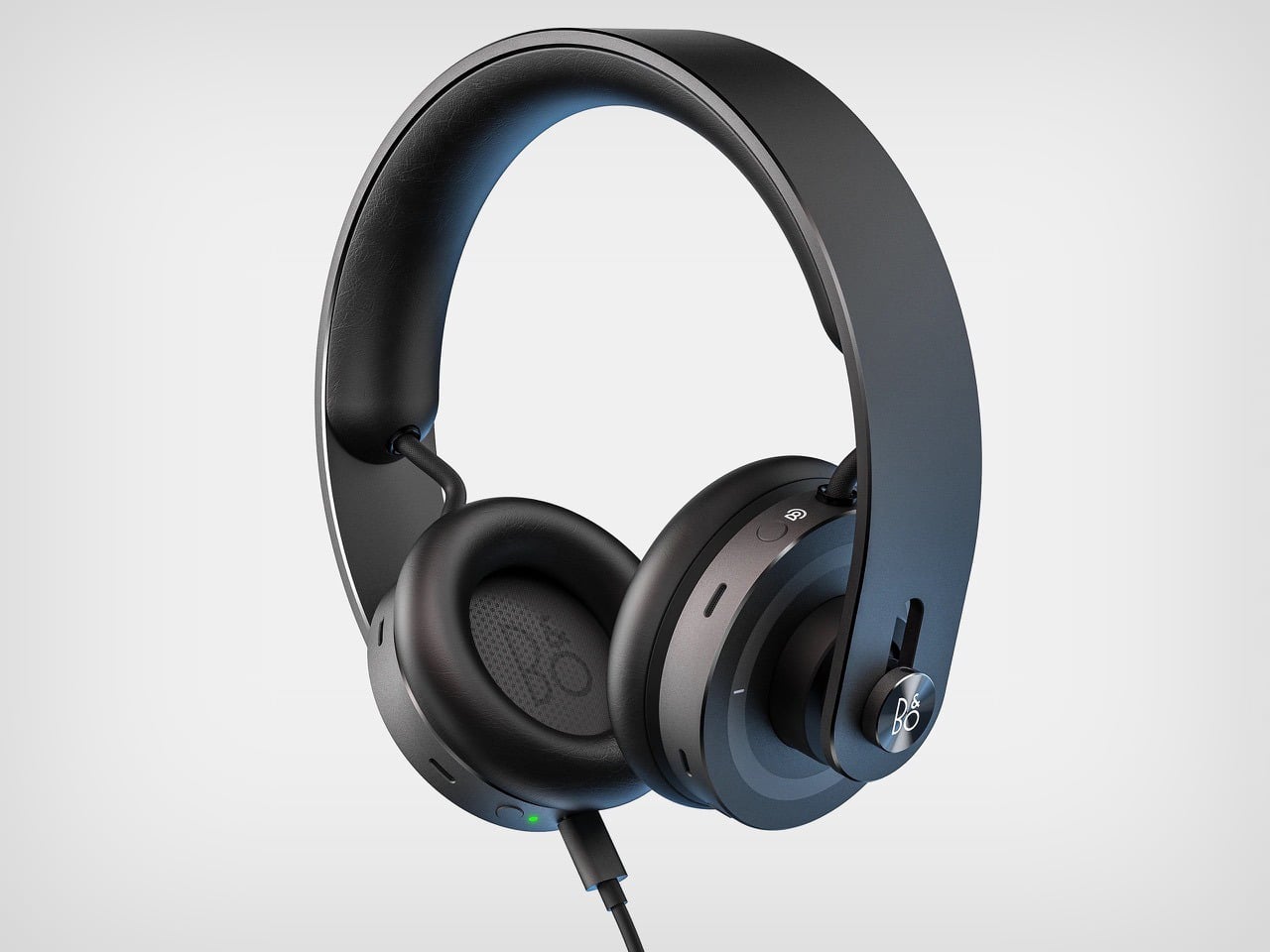
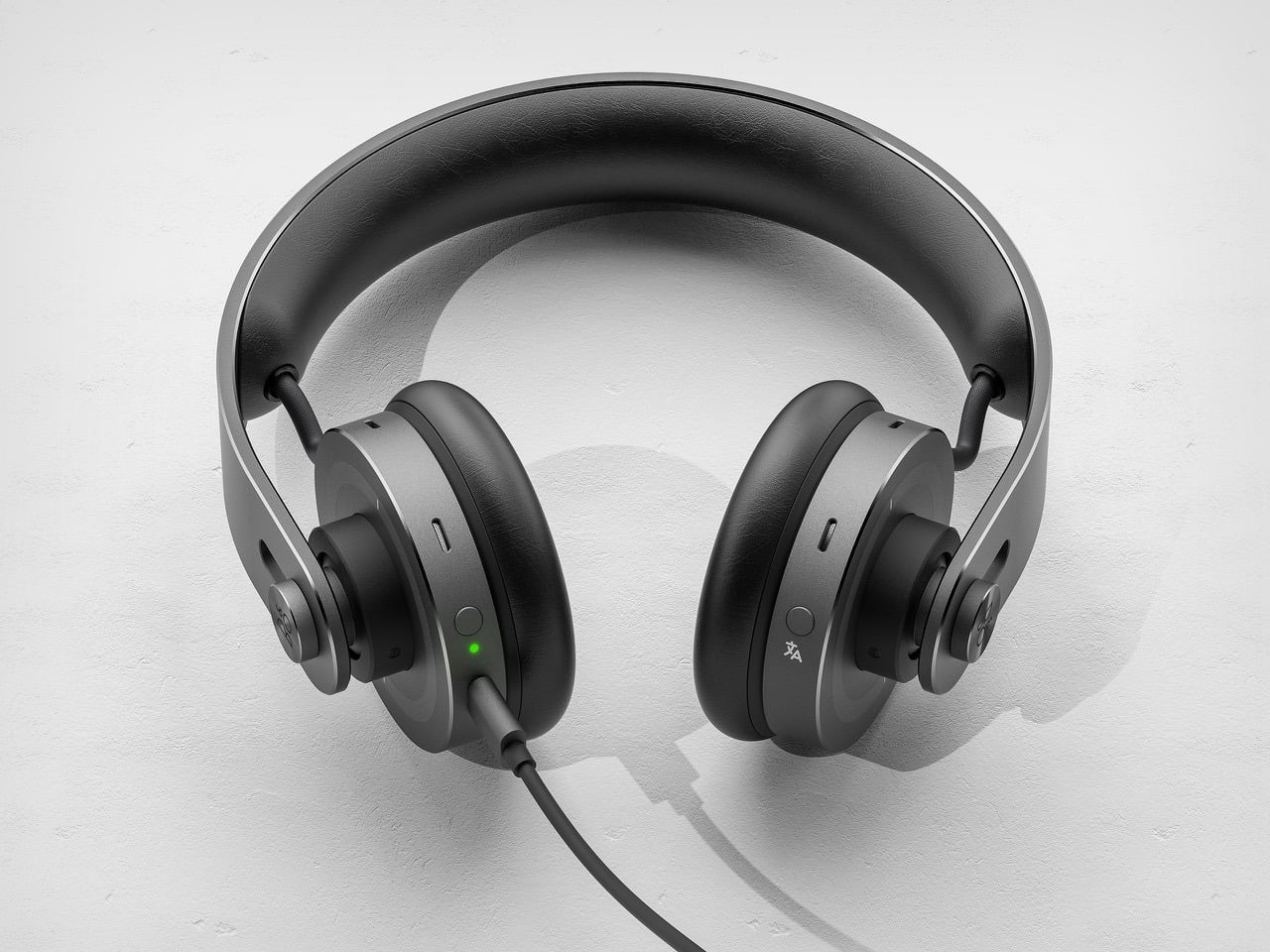
My only significant gripe is that Ortolani ditched the Lightning/USB-C port for a proprietary snap-on connector like the one found on the Vision Pro. To be fair, Ortolani did design this concept before the USB-C AirPods Max dropped, so it’s certainly an upgrade over the lightning port, but otherwise seems like bit of a drag. I’d personally change that, but barring this tiny little oversight, the AirPods Max 2 concept truly feels like an iterative improvement on its predecessor. The plastic bands flex so you can actually curl the headphones for easy carrying (and no more using that weird handbag).

Ortolani debuted his concept in a variety of subtle colors (barring that electric Project RED version), but I wouldn’t mind seeing a few vibrant options too. Hopefully Apple has plans to upgrade its flagship audio wearable next year, along with the AirTag, which has remained entirely unchanged in 4 full years!

The post AirPods Max 2 Concept Brings The Vision Pro’s Comfy Band Into The Mix first appeared on Yanko Design.

Insta360’s Design Chief Says Your ‘Perfect’ Product is Already Too Late

Welcome to a new creative space at Yanko Design, where we explore the minds behind the products that shape our world. We are thrilled to introduce our new podcast, Design Mindset, your weekly dive into the philosophies and frameworks that drive modern innovation. Every Friday, host Radhika Seth sits down with leaders, creators, and thinkers who are redefining their industries. In our ninth episode, we explore a fascinating concept: the invisible grid. These are the seamless systems and technologies that, when designed perfectly, fade into the background, allowing pure creativity to flourish without constraint.

Our guest for this exploration is Edward Mao, a product design lead and the head of the integrated design department at Insta360. Edward brings a global perspective to his work, having studied and lived across the US, Sweden, and Schengen. He leads teams that build the very systems millions of creators depend on daily. Insta360 is known for its groundbreaking 360-degree cameras and action cameras, particularly its “invisible selfie stick” technology, which serves as a perfect metaphor for our conversation. The best systems, like the best tools, should empower the user to the point where they are no longer thinking about the tool itself, but only about what they want to create.

Click Here to learn more about Insta360’s latest X5 Camera

The Innovator’s Mindset: Redefining the Rules of the Game

What truly separates an innovator from a follower? According to Edward, it transcends simple risk-taking and digs deep into one’s fundamental mindset. An innovator is driven by a desire to establish entirely new rules, to create categories that never existed before, and to set the benchmarks that will define the market for years to come. Their focus is on impact and purpose, a relentless pursuit of a unique vision that pushes the entire industry forward. Edward explains that this path is inherently harder, but the reward is a profound sense of satisfaction that cannot be replicated. As he puts it, “innovating makes you unique… the payoff, you can get the sense of purpose, the sense of satisfaction, right? It’s way bigger than the comfort of staying safe.” It’s a conscious choice to author the next chapter rather than simply editing a page in someone else’s book.

Conversely, the follower’s path is often a strategic one, focused on efficiency and execution. They excel at optimizing proven formulas and competing on established metrics like price and features, a strategy that allows them to catch up quickly and capture market share. However, this approach has a natural limit. Edward notes that many successful creators and companies eventually hit a “growth ceiling,” a point where the old formulas no longer yield the same results. This is the critical juncture where the question shifts from “How can we do this better?” to “What’s next?” This moment of stagnation often becomes the catalyst for a radical shift in thinking, forcing even the most dedicated follower to consider the daunting but necessary leap into the unknown territory of innovation, where the potential for true differentiation lies.

The Disappearing Act: When Great Technology Becomes Invisible

The ultimate goal of great design is to render itself invisible. This is the central philosophy Edward champions, where technology becomes so intuitive and seamless that it dissolves into the background, leaving only the user and their creative vision. The tool ceases to be an object of focus and instead becomes a natural extension of the user’s intent. Insta360’s “invisible selfie stick” is the perfect embodiment of this principle. When a creator uses it, they are not thinking about the pole in their hand or the mechanics of the software erasing it. They are thinking about capturing an impossible, drone-like shot, fully immersed in the act of creation. This is the magic moment Edward strives for, when “the tech basically disappears and the creativity takes over… that’s when you know you have built something truly invisible.” The technology becomes a silent partner, empowering the user without ever demanding their attention.

Achieving this level of invisibility is not a matter of adding more features, but of ruthless simplification and a return to first principles. Instead of asking how to build a better version of an existing product, the innovator asks what the user’s ultimate goal is and what the absolute, unchangeable constraints are. This approach fundamentally reframes the problem, steering the design process away from incremental improvements and toward breakthrough solutions that address the core need. By focusing on the “why” behind the user’s actions, designers can build tools that anticipate needs and remove friction points before they are even noticed. This frees the creator’s mind from the burden of technical problem-solving, allowing them to dedicate all their cognitive energy to what truly matters: storytelling, expression, and bringing their unique vision to life.

Paying the ‘Tuition’: The Unseen Investment of a Pioneer

Embarking on a path of true innovation is an expensive education, and as Edward suggests, the early struggles are the “tuition” paid for a future advantage that cannot be bought. Pioneering is a slow, arduous process, much like pushing a heavy flywheel. The initial effort is immense, with little visible momentum to show for it. These early phases are filled with setbacks, costly mistakes, and the constant feeling of pushing against inertia. However, this upfront investment in learning, testing, and overcoming unforeseen obstacles builds a deep well of experience-based knowledge. This hard-won wisdom becomes a strategic moat, a defensible asset that late-coming competitors cannot easily replicate. They may be able to copy the final product, but they cannot copy the years of struggle and learning that made it possible.

This pioneering journey is fueled by more than just resilience; it is powered by profound empathy. Edward emphasizes that the most insightful innovators are often their own most demanding users. They relentlessly stress-test their own creations in the messy, unpredictable real world, uncovering failure points and latent needs that would never surface in a controlled lab or a market research report. This hands-on process builds an intuitive understanding of the user experience. Furthermore, this journey requires a pragmatic acceptance of imperfection. The goal is not to launch a flawless product from day one. Instead, the strategy is to release a solid, valuable minimum viable product and then iterate relentlessly with the market. As Edward advises, “perfection comes later iteration by iteration i think it’s less scary that way.” In this model, the community of users becomes a collaborative partner in the design process, their feedback shaping the product’s evolution.

Beyond the Product: Why Sustainable Innovation Lives in Ecosystems

In today’s hyper-competitive market, a single breakthrough product is no longer enough to guarantee long-term success. A brilliant feature can be copied, a clever design can be replicated. True, durable advantage, as Edward argues, comes from building a comprehensive ecosystem around the product. This system of interconnected value is far more difficult for competitors to duplicate. For a company like Insta360, this means the camera itself is just the beginning. The real strength lies in the surrounding ecosystem: the intuitive editing software that simplifies complex workflows, the active user communities that provide support and inspiration, the extensive library of tutorials that flatten the learning curve, and the wide array of accessories that expand the product’s capabilities. This holistic approach creates a sticky, high-friction-to-exit experience that compounds the product’s value over time, turning customers into loyal advocates.

This powerful principle of ecosystem thinking is not just for large corporations; it is equally critical for individual creators striving to build a sustainable career. A viral video or a popular design is fleeting, easily lost in the endless stream of digital content. A career built on an ecosystem, however, is enduring. Edward advises creators to think beyond the next piece of content and instead focus on building systems around their work. This could manifest as developing mentorship programs to nurture emerging talent, creating collaborative workflows with other artists to cross-pollinate audiences, or productizing their expertise through workshops and digital assets. By building a network of value around their core creative output, they transform their work from a series of replaceable artifacts into a resilient, interconnected enterprise that can withstand the unpredictable shifts of trends and algorithms.

From Follower to Leader: A Practical Guide to Making the Leap

The transition from a follower to an innovator can feel like a terrifying leap into the abyss, especially when a proven formula is already paying the bills. The fear of abandoning what works is a powerful deterrent. However, Edward’s advice demystifies this process, transforming the reckless gamble into a series of calculated, manageable steps. The core principle is to de-risk innovation by starting small. Instead of betting the entire farm on an unproven idea, he advocates for experimenting on the periphery with “low-stakes side projects.” This approach allows a creator or a company to explore new technologies, test radical ideas, and build new skills without jeopardizing their main source of income or alienating their core audience. As he simply states, “start small always start small.” It’s a strategy of quiet evolution, building the future in the background while continuing to deliver consistency in the foreground.

To guide this process, Edward offers a practical three-part test to determine if an innovative idea is worth pursuing. First, can the concept be explained in a single, simple sentence? This is a test of clarity and focus, ensuring the idea isn’t convoluted. Second, does it create a unique experience that nothing else currently offers? This validates its potential for true market differentiation. And third, does it address common user complaints? This is the most crucial test, as it confirms that the innovation is solving a real, pre-existing problem, signaling a clear and unmet demand. By using this framework, innovation shifts from being a blind bet to a strategic, evidence-based pursuit. It encourages prototyping, running small user tests, and co-creating with the community, allowing the audience to help guide the direction of progress and ensuring that when you do finally push the boundaries, you bring them along with you.


To hear more about Edward’s work and his systematic approach to creativity, you can follow him at “designer mr mao” on red note and tiktok, or go check out how Insta360 is revolutionizing how we capture our world. Be sure to tune in to Design Mindset next Friday for another look into the minds shaping our creative world.

The post Insta360’s Design Chief Says Your ‘Perfect’ Product is Already Too Late first appeared on Yanko Design.
This Dual-Barrel EDC Flashlight Has A Beam Distance Of A Whopping 1.2 Miles or 2 Kilometers

The EDC community loves two things: innovation and overkill (in the best possible way). The Lumitwin DL700 delivers both. Imagine a flashlight so powerful it throws light 2 kilometers into the distance. That’s 1.24 miles of beam reach, which is frankly absurd for something you can clip to your bag with a carabiner. This isn’t your grandfather’s Maglite. With dual independently-controlled barrels, laser-excited phosphor modules instead of LEDs, and swappable color filters for different outdoor scenarios, the DL700 reads like a wishlist from r/flashlight brought to life. At 1,032 grams, it’s substantial but purposeful – machined from aerospace aluminum and built to survive everything from torrential rain (IP68 rated) to rough handling.

Every outdoor enthusiast has been there: you’re on a night hike, and your phone’s flashlight dies. Or you’re searching for a trail marker, squinting into the darkness as your standard LED flashlight’s beam dissolves into useless scatter. The Lumitwin DL700 was born from exactly these frustrations – designed by explorers who wanted more than just bright; they wanted far, focused, and adaptable. The DL700 delivers 2,000 meters of throw distance with interchangeable red, green, and flood filters for hunting, search-and-rescue, or tactical situations. Machined from a single aluminum block and rated for 1-meter drops and IP68 waterproofing, it’s the kind of tool you grab when even your purpose-built EDC flashlight won’t cut it.

Designer: Lumitwin

Click Here to Buy Now: $329 $950 (65% off) Hurry! Only 7 days to go.

LEDs have dominated flashlight design for decades, but the Lumitwin DL700 is betting on a different light source entirely. Each barrel houses a Blue Lake NT2 laser-excited phosphor module. This is the same technology that powers high-end automotive laser headlights, where a laser excites a phosphor layer to generate intensely focused light. You’re not shooting laser beams at things (important safety distinction), but you are getting illumination characteristics that conventional LEDs simply cannot match. Traditional LED flashlights scatter their beams, losing intensity rapidly over distance. The DL700’s LEP technology creates a collimated beam that maintains coherence over extreme distances. When both barrels fire simultaneously, you get 1,100 lumens with a combined candela rating of 958,000 cd and that 2,000-meter throw distance. Switch to single-barrel alternating mode and you’re looking at 500 lumens on high with 479,000 cd, which still reaches 1,300 meters.

The dual-barrel setup isn’t just aesthetic mimicry of binoculars, though the form factor does borrow that ergonomic hollow-center grip. Each barrel operates completely independently with its own switch and brightness control. You can run both at full power for maximum illumination, use them separately to extend battery life, or set different configurations on each barrel for specific tasks. Thread-on filters for each barrel include red, green, and light-diffusing flood options. Red light preserves night vision for hunting or astronomy. Green cuts through fog and provides better contrast in dense vegetation. The flood filter transforms the focused laser beam into wider area illumination for close-up camp work or search and rescue scenarios where you need to illuminate a broader field. This modular approach gives you essentially six different flashlights in one package, and you can mix configurations. One barrel with red filter for navigation, one with standard white laser for distance spotting.

Each barrel gets its own 6,000mAh 21700 lithium-ion cell, totaling 12,000mAh across the entire unit. This explains why the alternating single-barrel mode delivers such impressive runtime. On high output with alternating barrels, you get eight hours. Drop to low output and you’re looking at 16 hours of continuous operation. Both barrels simultaneously at maximum output drain things faster at four hours on high, but that’s still respectable given the performance output. USB-C charging on both batteries means you’re not hunting for proprietary cables or dealing with annoying charging cradles.

Each unit is machined from a solid block of 6061 aerospace aluminum (the same alloy used in aircraft components and high-end bike frames) which explains both the premium feel and the 1,032-gram weight. IP68 waterproofing means submersion to 1.5 meters for 30 minutes, which translates to “drop it in a river and you’re fine.” The specs list 10-meter drop resistance, which is more than you can claim for most smartphones. The body includes integrated cooling fins and an intelligent temperature control system to maintain stable brightness without thermal throttling, which is crucial for sustained high-output use.

Dimensions come in at 7.2 inches long, 3.15 inches wide, and 1.57 inches tall. This puts it firmly in the “substantial EDC” category rather than pocket-friendly territory. You’re carrying this on a belt loop, in a bag, or via the included braided wrist strap and carabiner setup. The included hard-shell case keeps everything organized and protected during transport. For context on use cases, this level of performance targets search and rescue operations, serious hunting and expedition work, tactical applications, and outdoor enthusiasts who need reliable long-distance illumination. You’re not using this to find your keys in the dark. You’re using this to spot trail markers from a mountain ridge or illuminate a distant shoreline during night navigation.

Double the barrels but halve the price is what I imagine the folks at Lumitwin said when they launched their Kickstarter. The MSRP on the DL700 starts at an eye-watering $950, but a whopping 65% discount brings its price down to $329 for a limited time while the project accrues backers on Kickstarter. For that price you get an entire hard-shell case with the flashlight itself, two 6000mAh batteries, two floodlight filters, a red light filter, a green light filter, two replacement silicone buttons, a braided cord and carabiner for easy carrying, and finally 4 waterproof rings. The DL700 begins shipping globally starting December this year, so grab yours now and you should get it in time for Christmas, or maybe your holiday camping trip as the new year rolls in.

Click Here to Buy Now: $329 $950 (65% off) Hurry! Only 7 days to go.

The post This Dual-Barrel EDC Flashlight Has A Beam Distance Of A Whopping 1.2 Miles or 2 Kilometers first appeared on Yanko Design.
Forget the e-tron GT; This Is the Electric Audi We Really Want To See

What happens when one of Germany’s most storied automakers goes off script and jumps headlong into the future? The answer is the Audi 20quattro Vision GT: a concept racer that looks as if it’s escaped from a sci-fi film and landed straight into the world of Gran Turismo. More than just a design study, it’s a bold experiment that explores how Audi’s DNA translates into a world where the only limits are those of imagination.

Now, before you start searching for this in the latest Gran Turismo update, it’s crucial to know that this isn’t an official release from Ingolstadt. This stunning piece of digital sculpture is the work of independent designer Gabriel Naretto, a personal project that serves as a powerful “what if” scenario. He’s taken the core tenets of Audi’s design philosophy and motorsport heritage, plugged them into an amplifier, and cranked the volume to eleven. The result is something that feels authentically Audi, yet completely untethered from the constraints of reality, a digital ghost of a race car we all wish was real.

Designer: Gabriel Naretto

The car’s form language is an exercise in geometric aggression, a clear evolution of the sharp, technical lines championed by Audi’s current design chief, Marc Lichte. Naretto has stripped away any hint of superfluous curvature, leaving behind a surface composed of taut, flat planes and brutally sharp creases that look like they were carved from a single block of metal. Its low, impossibly wide stance and cab-forward canopy are direct descendants of modern Le Mans prototypes, particularly Audi’s own R18 e-tron. This machine is designed to look like it’s slicing through the air even when standing still, a pure expression of aerodynamic intent.

Naretto clearly spent as much time thinking about airflow as he did about aesthetics. The entire body is a functional aerodynamic device, from the massive front splitter that channels air under the car to the multi-layered rear wing and colossal rear diffuser. The deep venturi tunnels running along the sides are designed to generate immense downforce, effectively sucking the car onto the pavement at speed. Even the enclosed wheel designs, with their turbine-like fins, suggest a meticulous focus on managing turbulent air and cooling the brakes. Every vent, every winglet, every cutout serves a purpose, giving the design a layer of engineering credibility that makes the fantasy feel plausible.

That “quattro” badge on the rear isn’t just for show, either. The entire concept is a hat tip to Audi’s most mythic era: the Group B rally monsters of the 1980s. You can see the DNA of the original Sport Quattro S1 E2 in the squared-off, box-flare wheel arches and the car’s overall defiant posture. Naretto has masterfully translated that iconic, almost brutish functionality into a futuristic context. It evokes a feeling of raw, untamed power, a reminder that before Audi became known for sophisticated luxury sedans, it built all-wheel-drive terrors that dominated the world’s most dangerous rally stages.

This is where the “Vision Gran Turismo” moniker becomes so fitting, even unofficially. Digital platforms are the perfect canvas for such an uncompromising vision, free from the pesky realities of production costs, safety regulations, and pedestrian impact standards. One can only speculate on the powertrain, but a concept this forward-thinking screams all-electric. Imagine a quad-motor setup, one for each wheel, delivering instantaneous torque vectoring and a combined output somewhere north of 1,200 horsepower. In the virtual world, such figures are not just possible; they are expected, and Naretto’s design provides the perfect shell for that kind of imaginary performance.

Of course, a machine that looks this fast needs some theoretical firepower to back it up. While Naretto hasn’t published a spec sheet, one can imagine a fully electric powertrain in line with Audi’s e-tron direction. A quad-motor setup, one for each wheel, would be the only logical choice for a vehicle bearing the quattro name in the 2040s. We could be talking about a combined output of over 1,400 horsepower and an instantaneous torque vectoring system so advanced it would make current systems feel archaic. Not that such specs exist, but why stop dreaming, right?

The post Forget the e-tron GT; This Is the Electric Audi We Really Want To See first appeared on Yanko Design.