CIVIVI Elementum II EDC Knife Opens With One Hand for Holiday Wrapping Madness

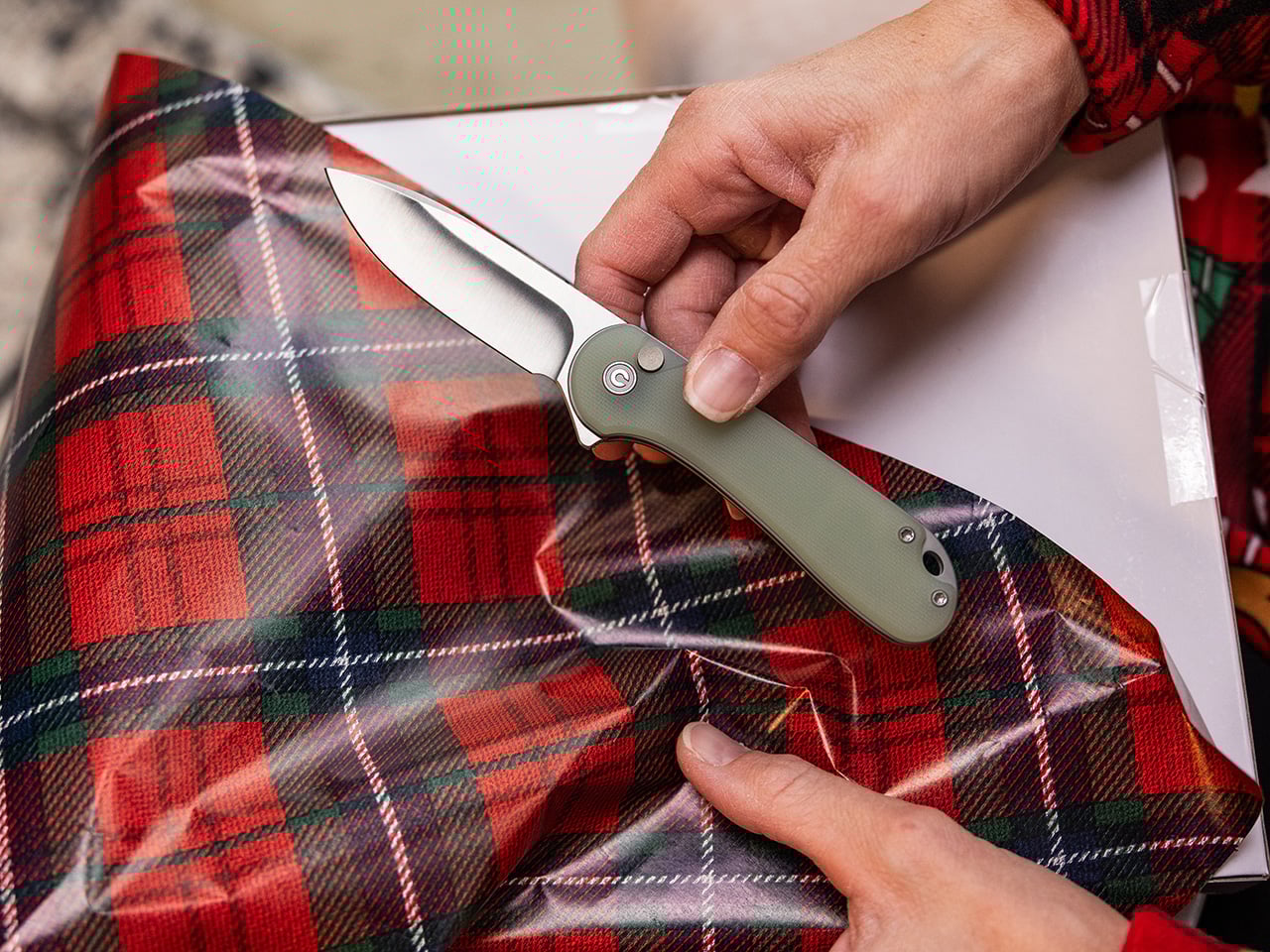
Holidays mean wrapping presents, slicing tape, and trimming ribbons, and your fingers pay the price. The CIVIVI Button Lock Elementum II makes these tasks effortless with a sharp, pocket‑friendly blade that opens with one hand. It is the kind of tool that disappears in your pocket until the moment you actually need something sharper than a house key.

This flipper knife is built for those small frictions. It is a compact everyday carry folder with a blade just under three inches, a button lock mechanism that feels intuitive, and G10 handles that stay friendly rather than aggressive. The design stays approachable, with rounded lines and a drop point blade that does not announce itself across a room or make anyone uncomfortable at the office or a family gathering.

Designer: CIVIVI

Click Here to Buy Now: $57.38 $76.50 (25% off). Hurry, get a free Christmas Stocking with order over $29! Deal ends in 48-hours.

What gives the knife its practical edge is Nitro V blade steel. It is a nitrogen-enriched stainless that balances toughness, corrosion resistance, and edge retention without becoming fussy to maintain. You can slice an apple, cut wet cardboard, or trim paracord without worrying about rust. It makes for a great gift that will be used daily, not forgotten in a drawer.

Here’s a quick look at what you’ll be getting with the CIVIVI Button Lock Elementum II:

  • Overall Length: 7.06 inches
  • Knife Weight: 3.12 oz
  • Blade length: 2.96 inches
  • Blade steel: Nitro-V
  • Blade shape: Drop Point
  • Blade Grind: Hollow
  • Blade Hardness: 58-60 HRC
  • Pocket Clip: Tip-Up, Right Carry

The proportions feel right for daily carry. The blade measures 2.96 inches, the overall length sits around seven inches open, and the handle thickness is slim enough to ride comfortably in a pocket without printing through fabric. G10 scales on variants like the OD green model offer textured grip, while stainless liners add structure. A deep carry pocket clip keeps it low profile, so it disappears until needed at a desk or outdoors.
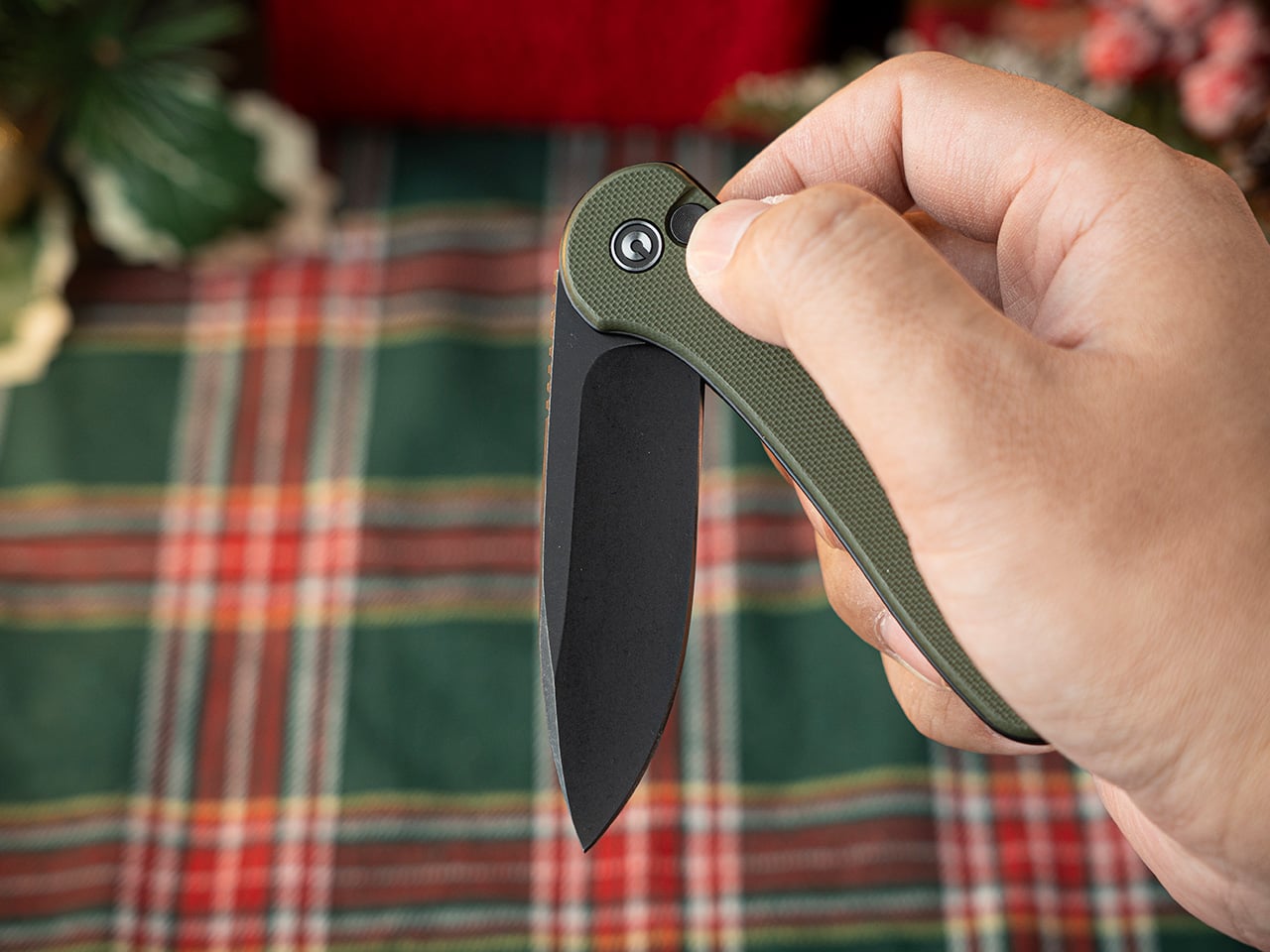
The button lock is the centerpiece. Paired with a pivot running on caged ceramic ball bearings, the action feels smooth and fidget-friendly. A press of the button releases the blade, letting it swing closed with a light shake of the wrist, making one-handed use genuinely easy. The spring under the button resists accidental opening, staying secure in the pocket while still satisfying to deploy when wrapping presents or cutting rope.

Everyday moments and holiday tasks blur together naturally with a knife like this. Slicing packing tape on deliveries, trimming threads on a sweater, cutting twine for wreaths, or sharpening a pencil all benefit from a sharp, accessible blade and hollow grind that handles both fine slicing and light utility. The drop point shape stays versatile, and the black stonewashed finish on some variants hides scratches, so it does not look worn after a few weeks.
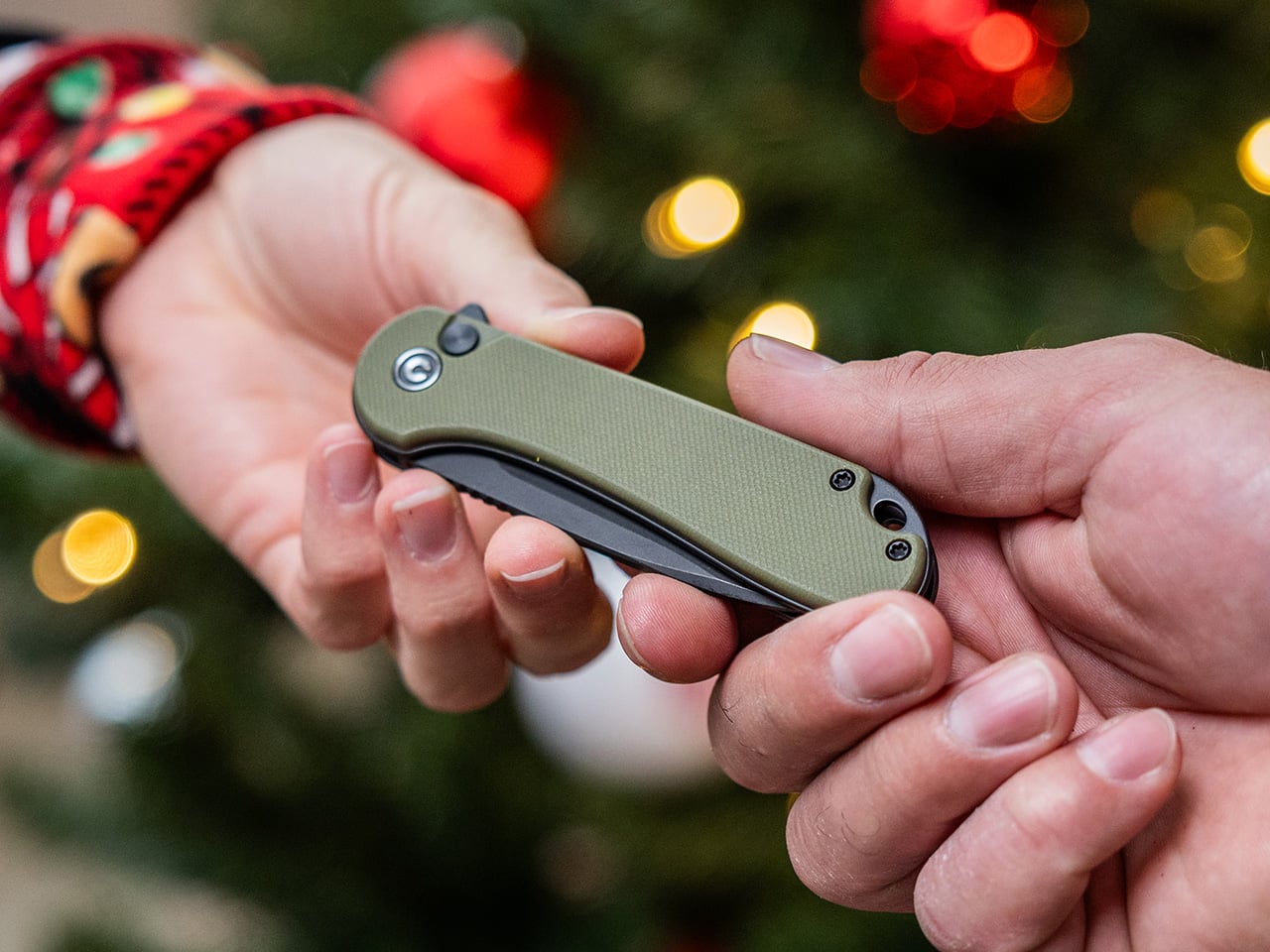
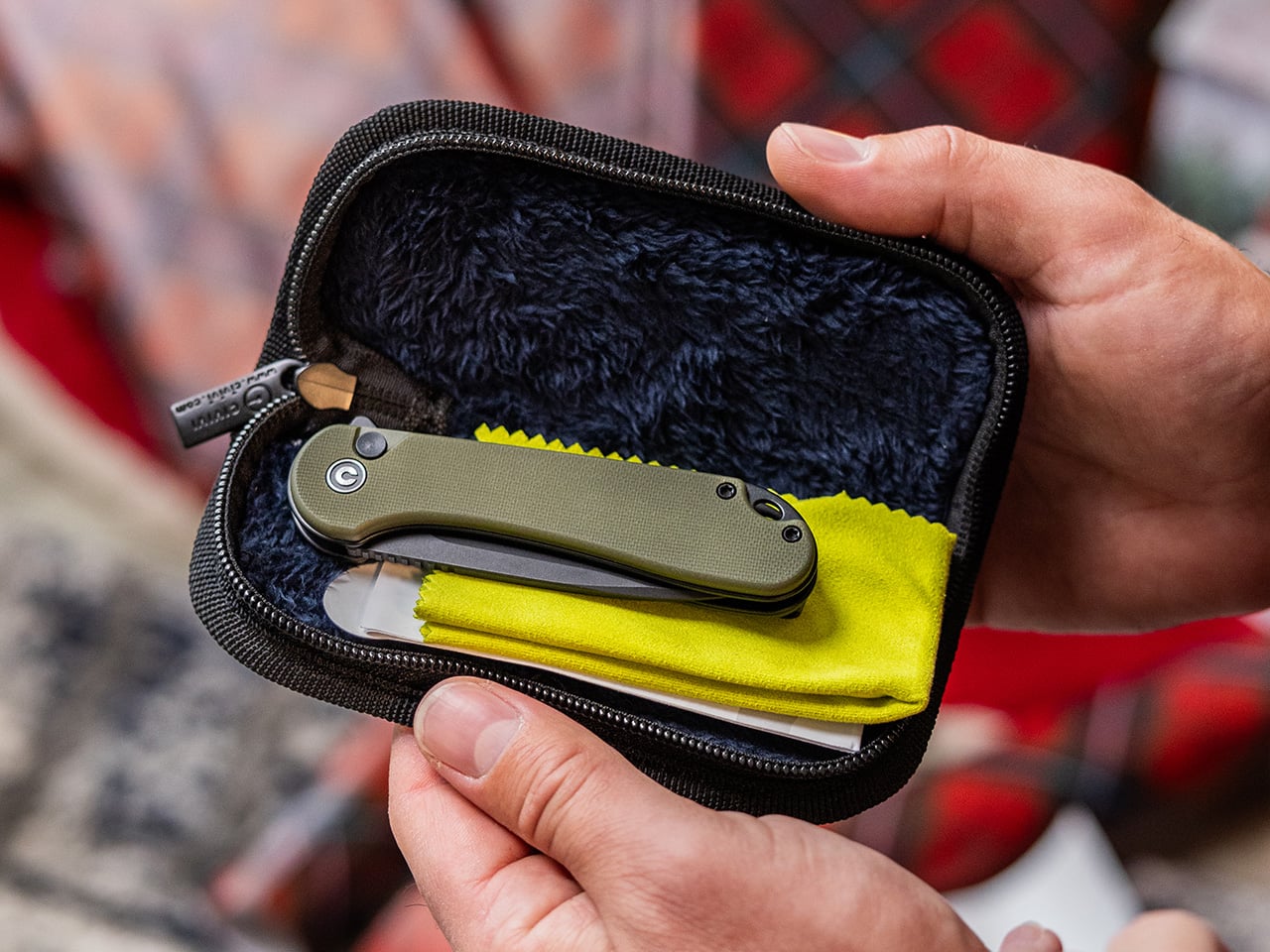
What makes the CIVIVI Button Lock Elementum II work as a gift is how approachable it feels. The design stays simple and functional, with controls that make sense even to someone whose only knife has been a keychain multitool. CIVIVI offers a range of handle materials and colors, from G10 to carbon fiber and Damascus variants, so matching it to a personality is straightforward. This season feels like the right moment for something that earns its pocket space daily rather than sitting unused by February.
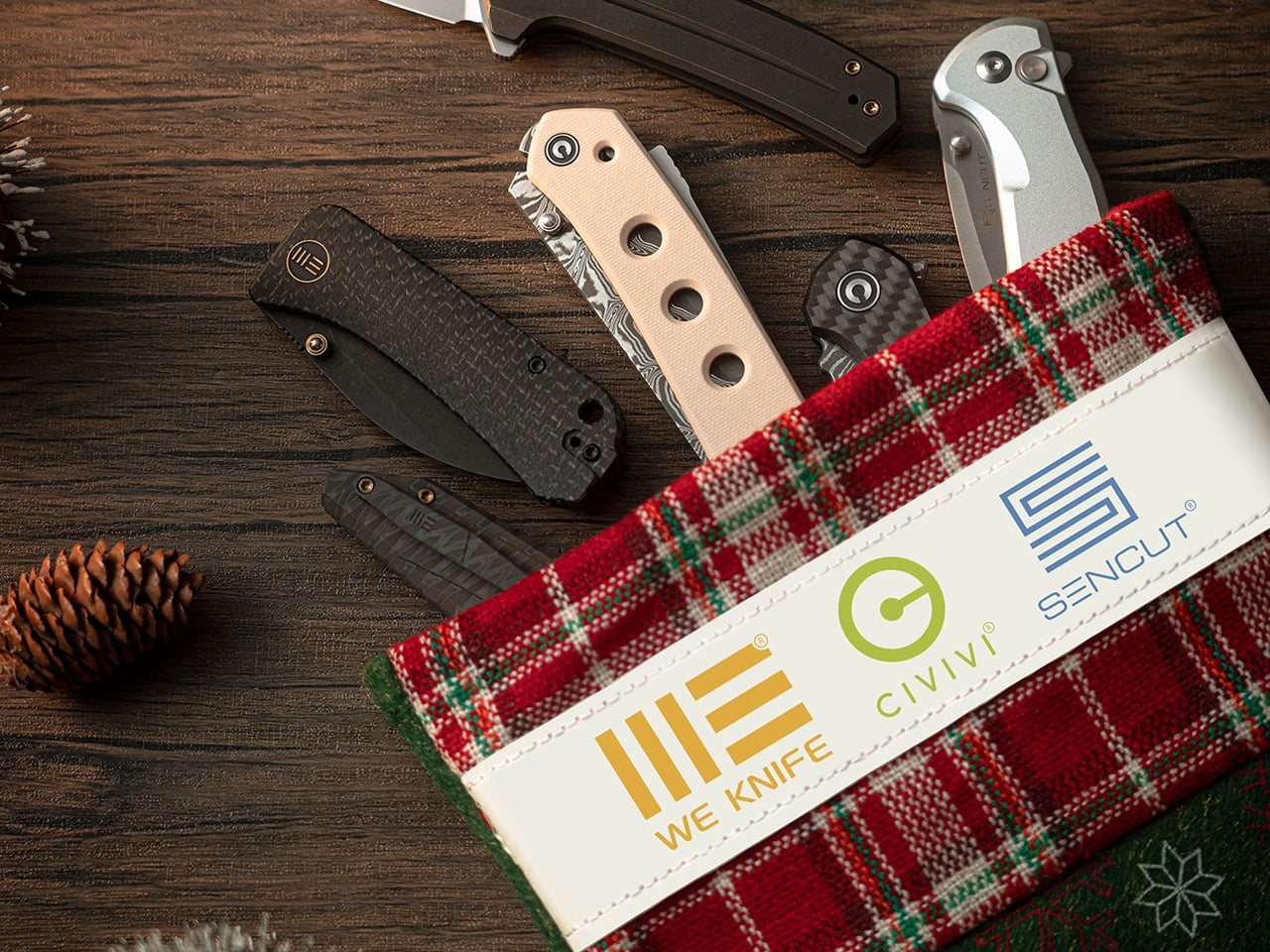

Well-designed tools change how you move through small moments, especially during busy times when everything from gift wrapping to cooking feels slightly more frantic. The CIVIVI Button Lock Elementum II feels like the result of quiet decisions about steel, mechanics, and ergonomics, all aimed at making a knife people actually enjoy carrying. That mix of practicality and satisfaction is what turns it from another folding blade into something that becomes part of the routine, in your pocket or someone else’s.

Click Here to Buy Now: $57.38 $76.50 (25% off). Hurry, get a free Christmas Stocking with order over $29! Deal ends in 48-hours.

The post CIVIVI Elementum II EDC Knife Opens With One Hand for Holiday Wrapping Madness first appeared on Yanko Design.
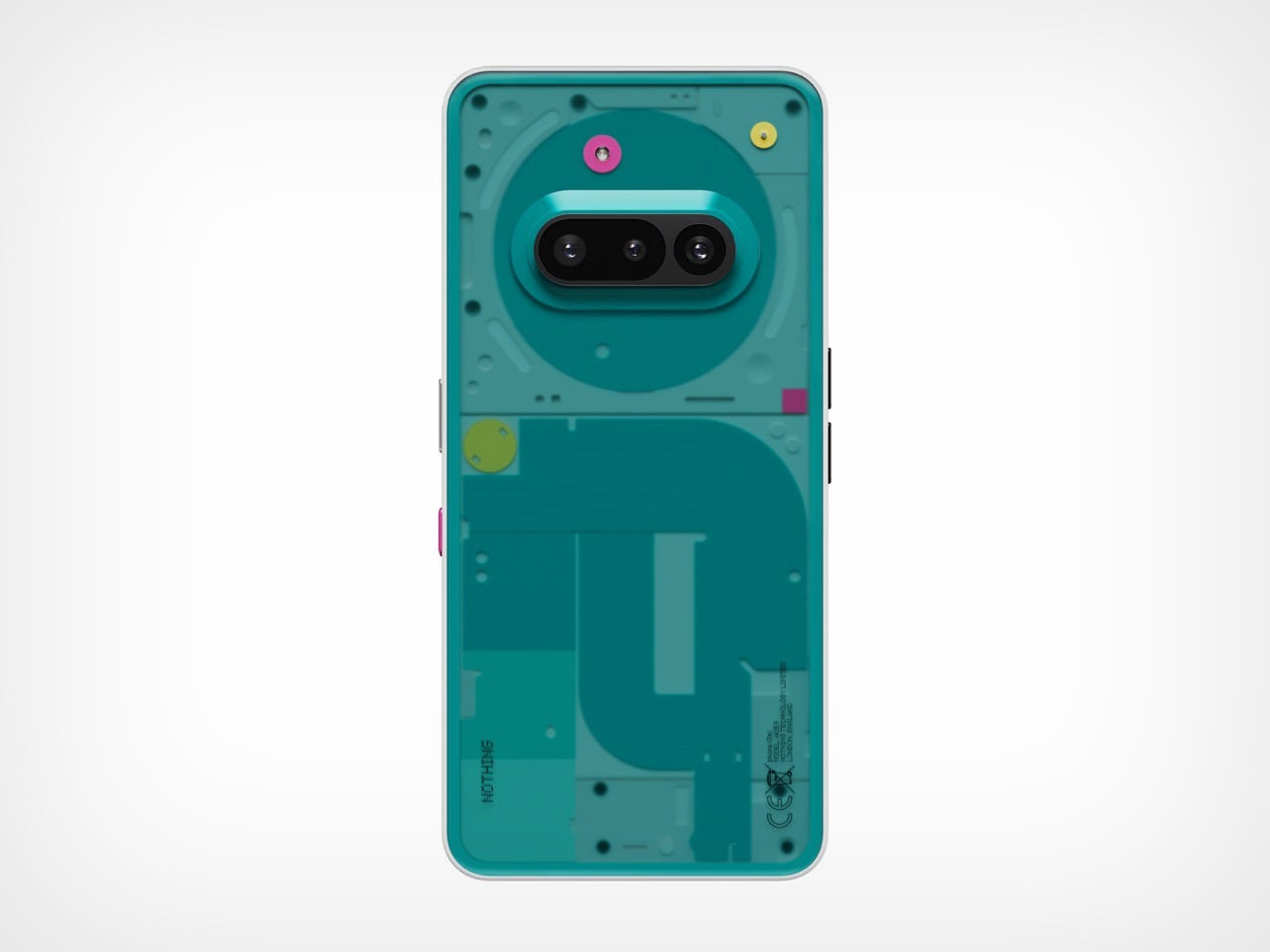
This teal Nothing Phone 3a Community Edition looks like a Game Boy for grown‑ups

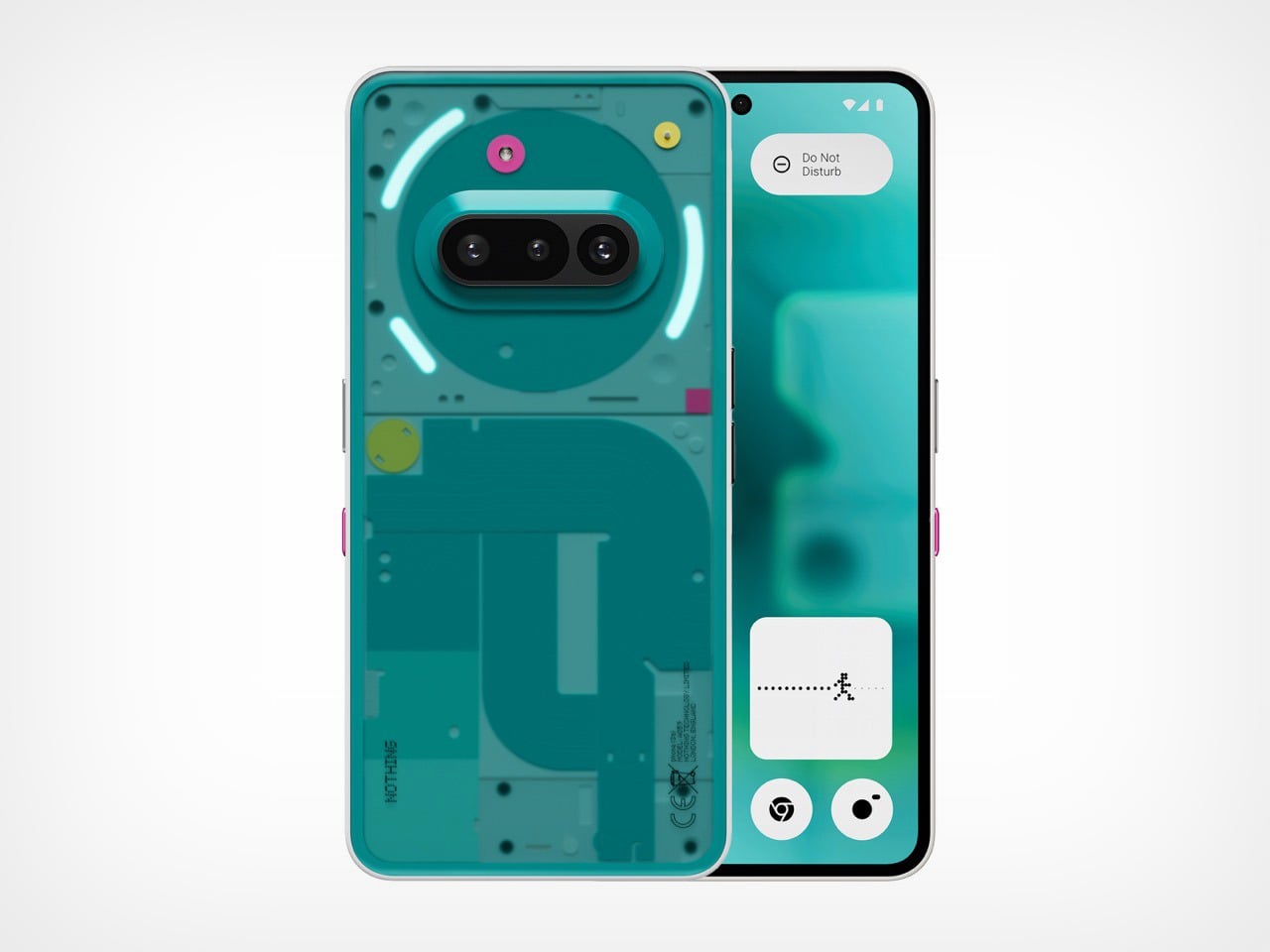
Nothing just pulled the curtain back on the Phone 3a Community Edition, a limited 1,000-unit drop built around a vibrant teal design inspired by late-90s gaming hardware. This special release is the result of a nine-month collaboration between Nothing’s internal teams and four winners from its community design project. The phone itself is a visual statement, swapping the brand’s typical monochrome palette for a look that feels more playful and expressive. It’s a collector’s piece for those who appreciate when a company lets its community take the wheel, resulting in a product that feels both nostalgic and distinctly modern.

Underneath the colorful new shell, the device carries internals identical to the standard Phone 3a. It is powered by a Snapdragon 7s Gen 3 chipset and features a 6.77-inch 120Hz AMOLED display with 2,160Hz PWM dimming for smooth visuals. The camera system includes a 50MP main sensor with OIS, a 50MP 2x telephoto lens, and an 8MP ultrawide. A 5,000mAh battery with 50W wired charging handles power. The single 12GB/256GB configuration is priced at £379, matching the top-tier regular model and reinforcing that this is a design-focused release, not a spec upgrade.

Designer: Emre Kayganacl

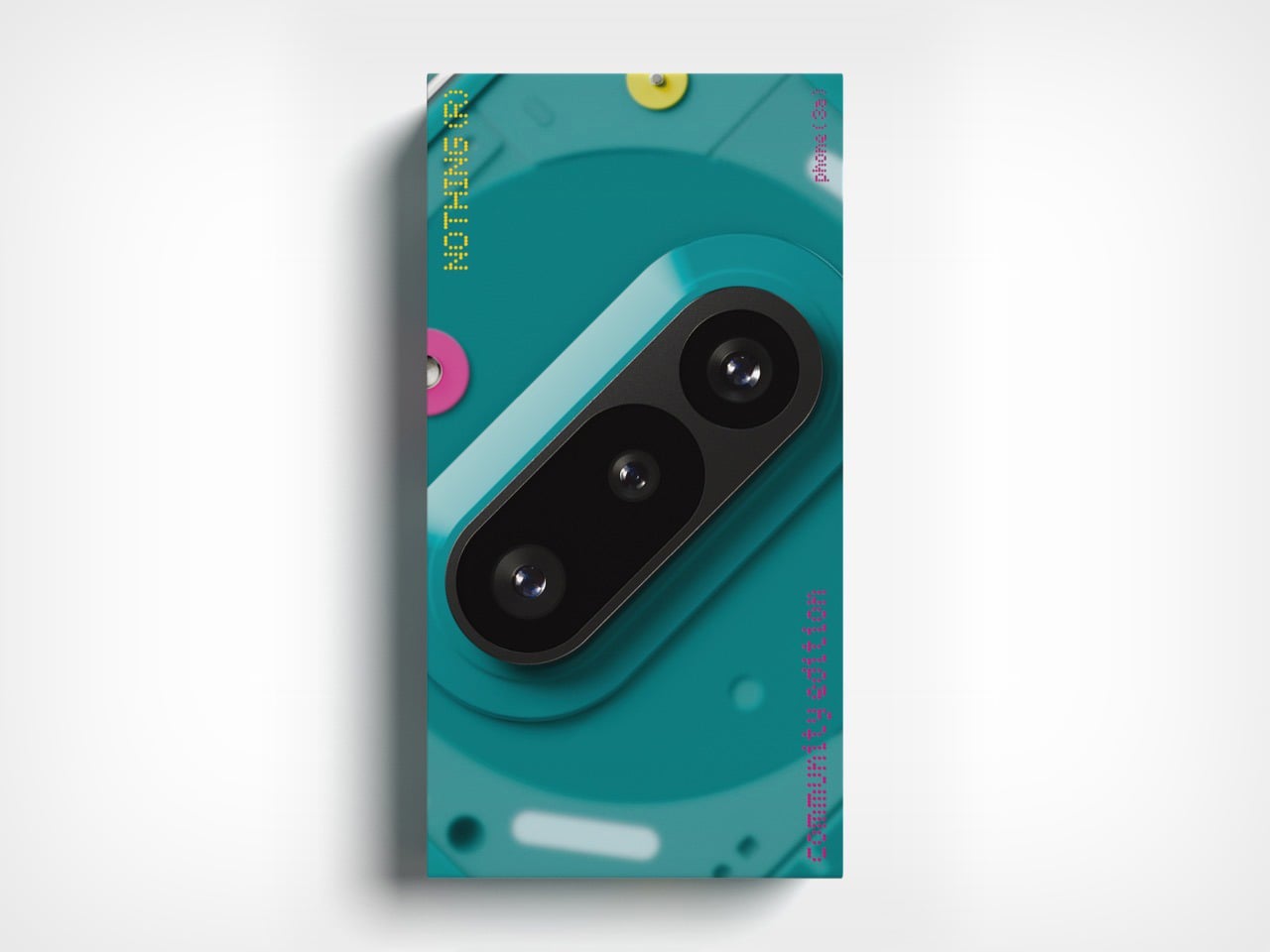
The aesthetic is where the Community Edition truly sets itself apart. The translucent teal back, designed by winner Emre Kayganacl, reveals internal components arranged as clean geometric layers. This gives the rear a deliberate, compositional quality rather than a raw, tech-exposed look. The horizontal camera module sits perfectly centered, with Nothing’s signature glyph light arcs wrapping around it to signal notifications. Small, scattered circles of yellow and magenta add playful contrast, giving the phone a character reminiscent of a limited-edition handheld console without feeling like a simple throwback.

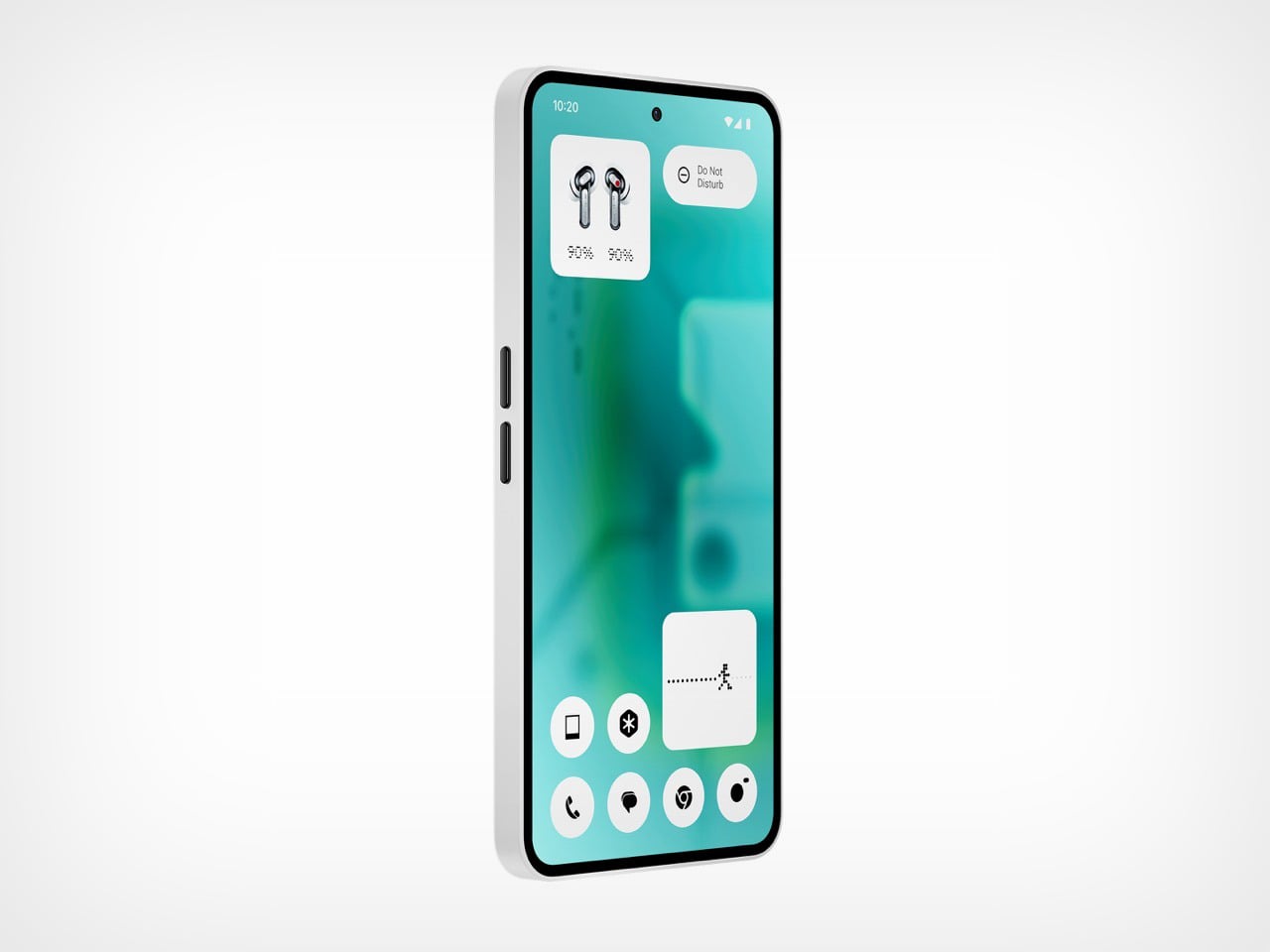
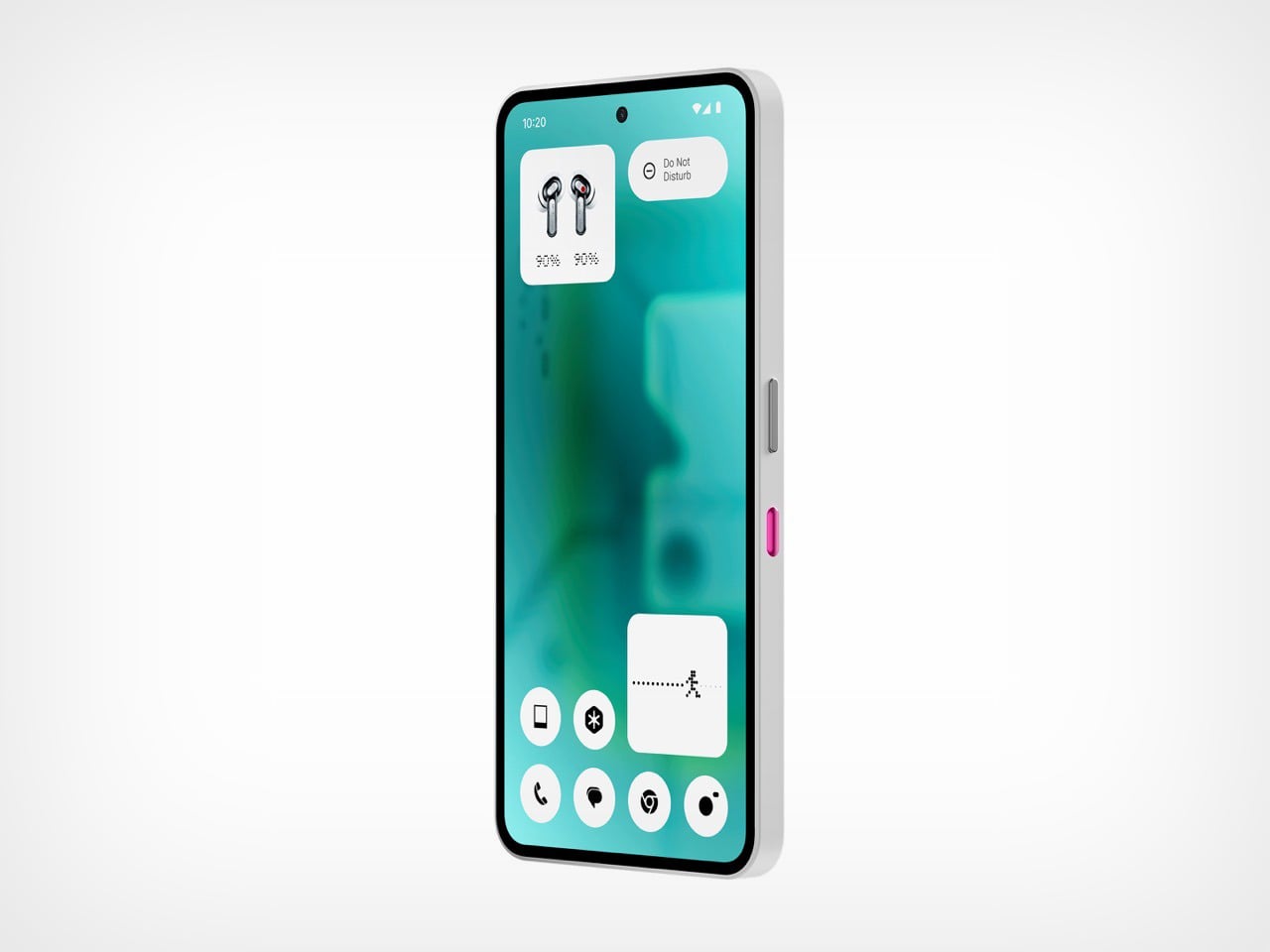
This cohesive design language extends to the front of the phone. The software experience includes an exclusive teal-gradient wallpaper and a custom lock-screen clock designed by community winner Jad Zock. The rounded, monochrome icons of Nothing OS float above the colorful background, tying the user interface directly to the physical hardware. This thoughtful integration ensures the device feels like a single, unified object. It’s a complete visual package that considers how the phone looks both when the screen is on and off, creating a more holistic product experience.


The project began with over 700 submissions from Nothing’s community, with winners selected for hardware design, accessories, software visuals, and marketing. This co-creation process is central to the phone’s story, representing a deeper collaboration than the company’s first community project. For those hoping to get one, registration is open until December 11, with a limited sales window opening on December 12 through Nothing’s website. It’s a rare opportunity to own a device that is as much a design experiment as it is a daily driver.

The post This teal Nothing Phone 3a Community Edition looks like a Game Boy for grown‑ups first appeared on Yanko Design.
Two Homes, One Shell: Inside Japan’s Most Ingenious Tiny House

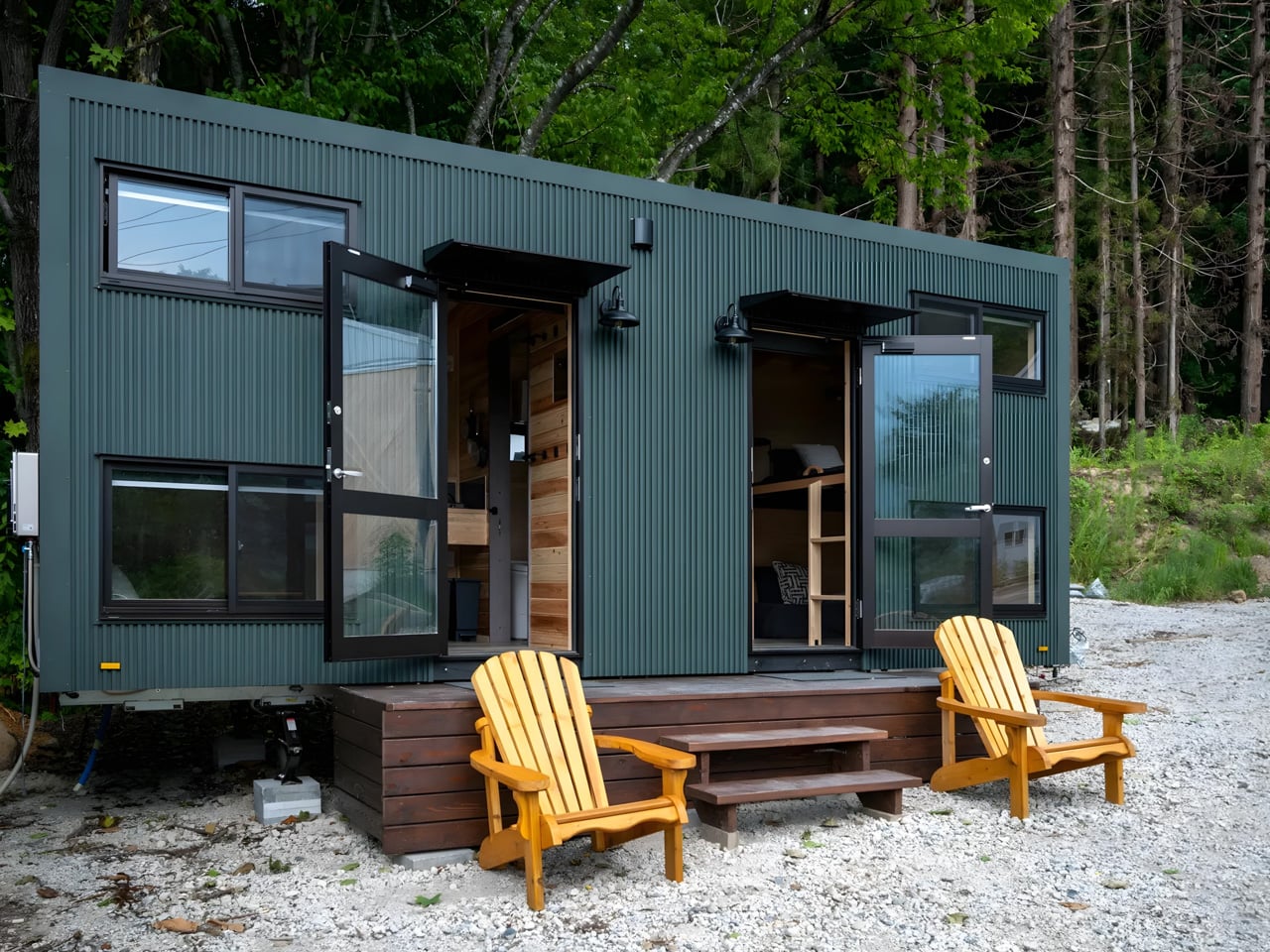
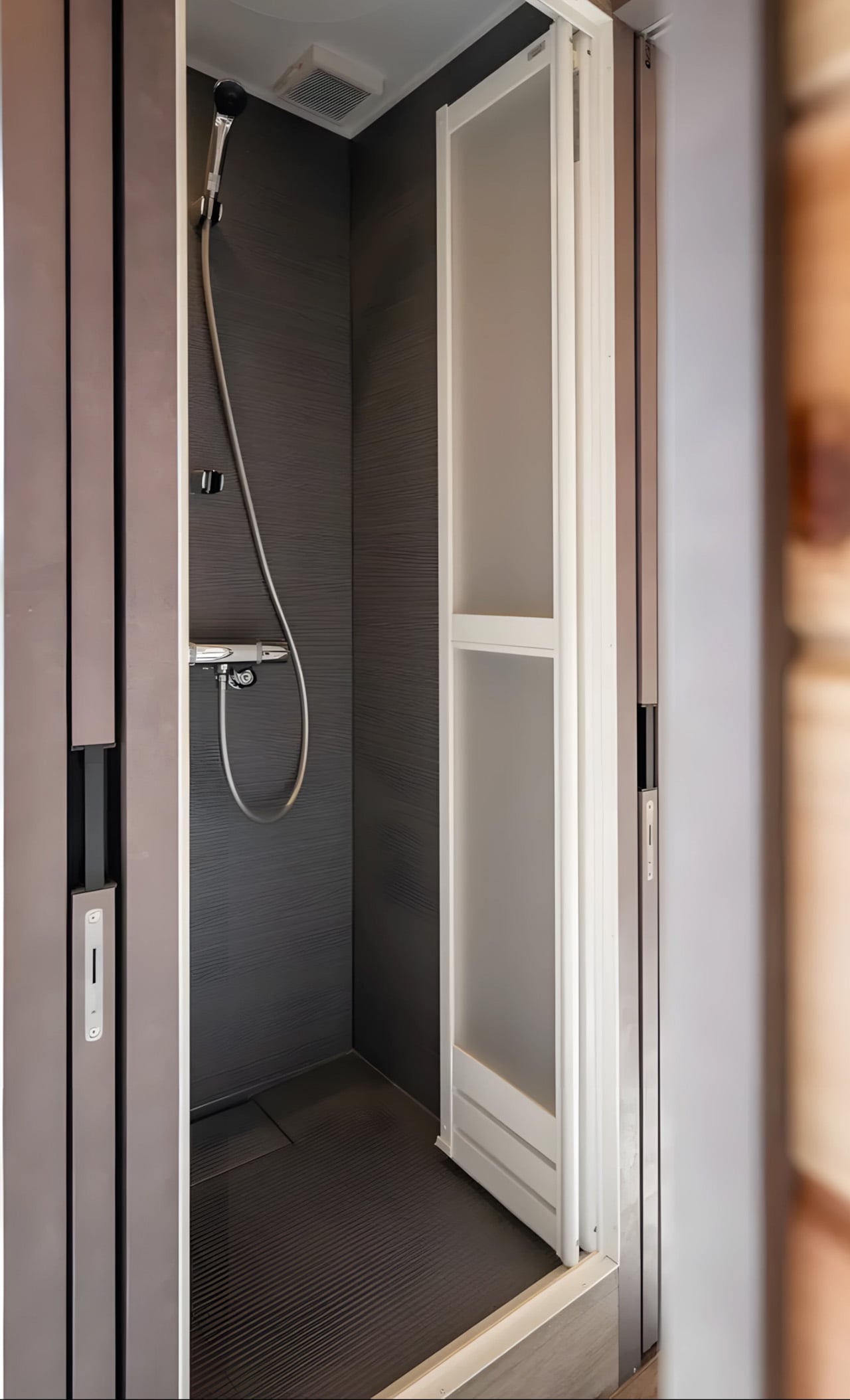
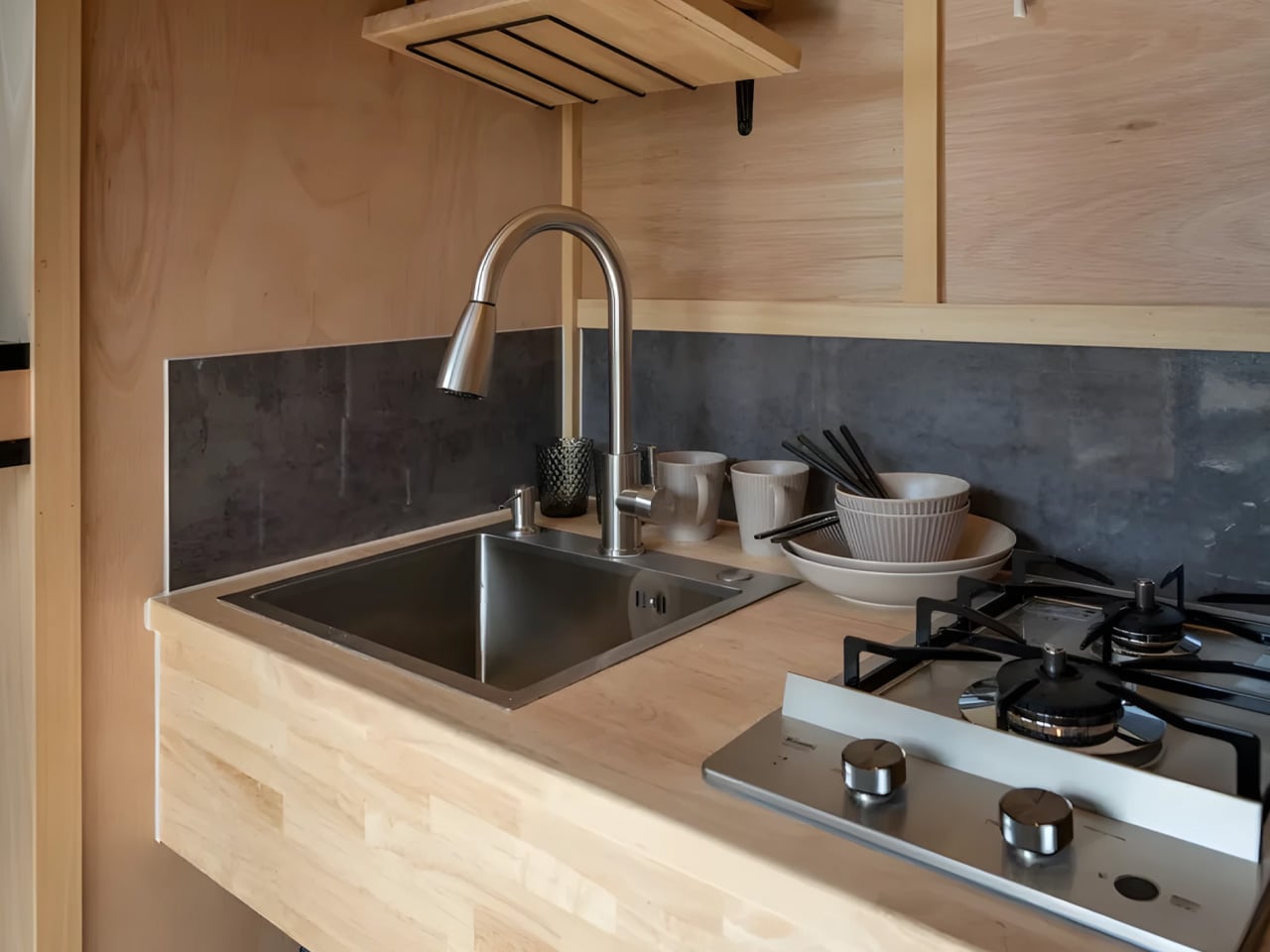
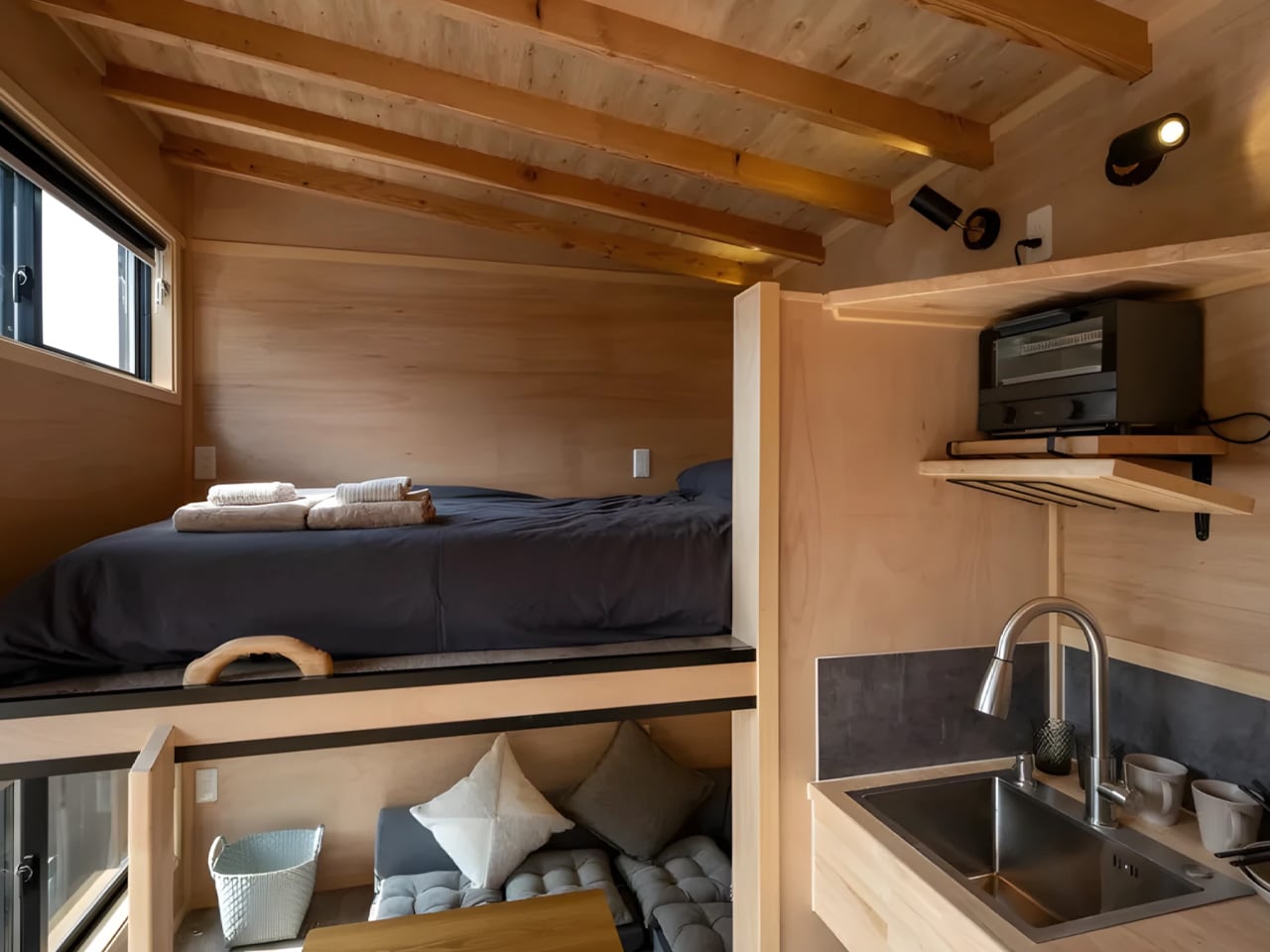
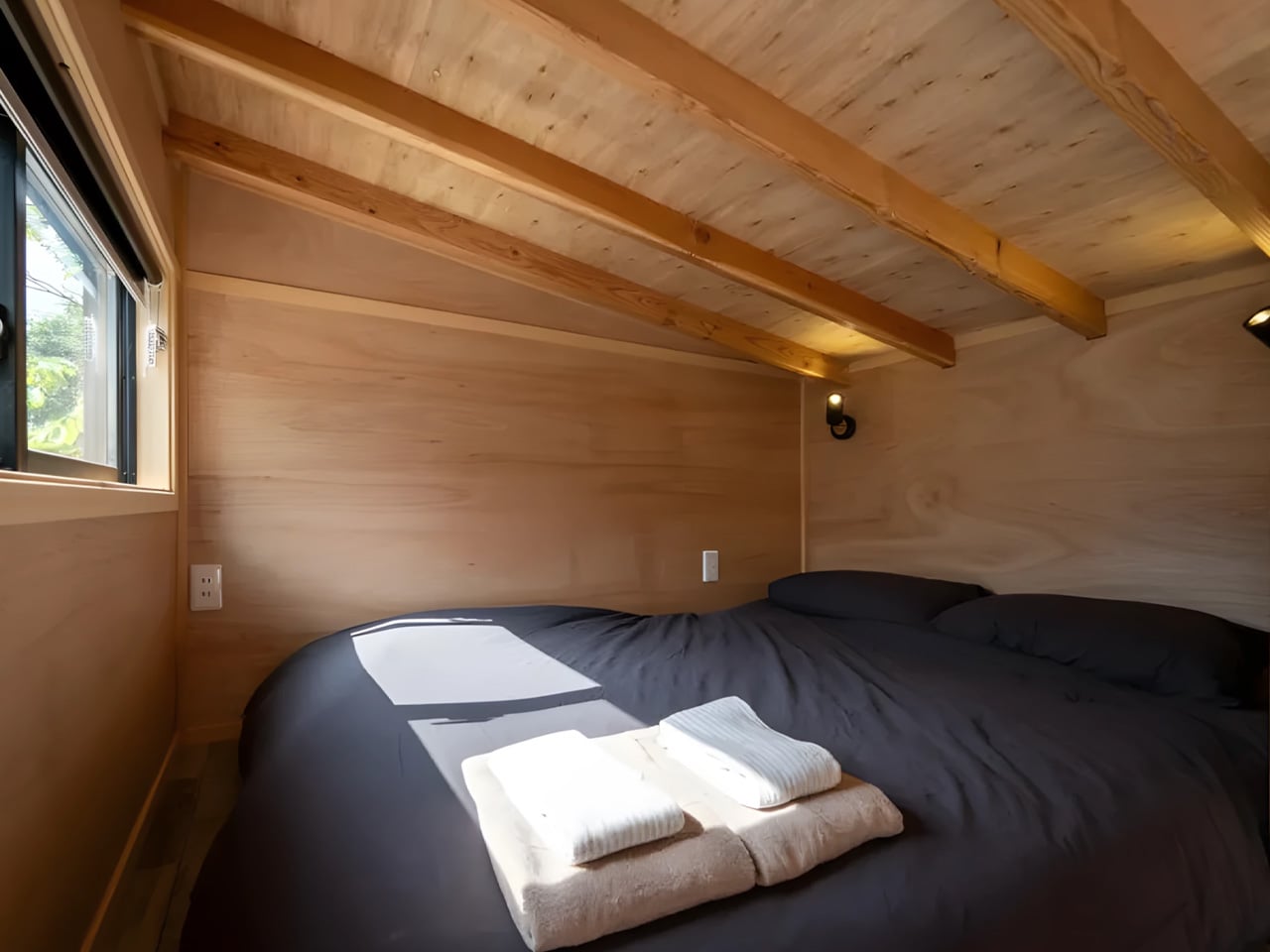
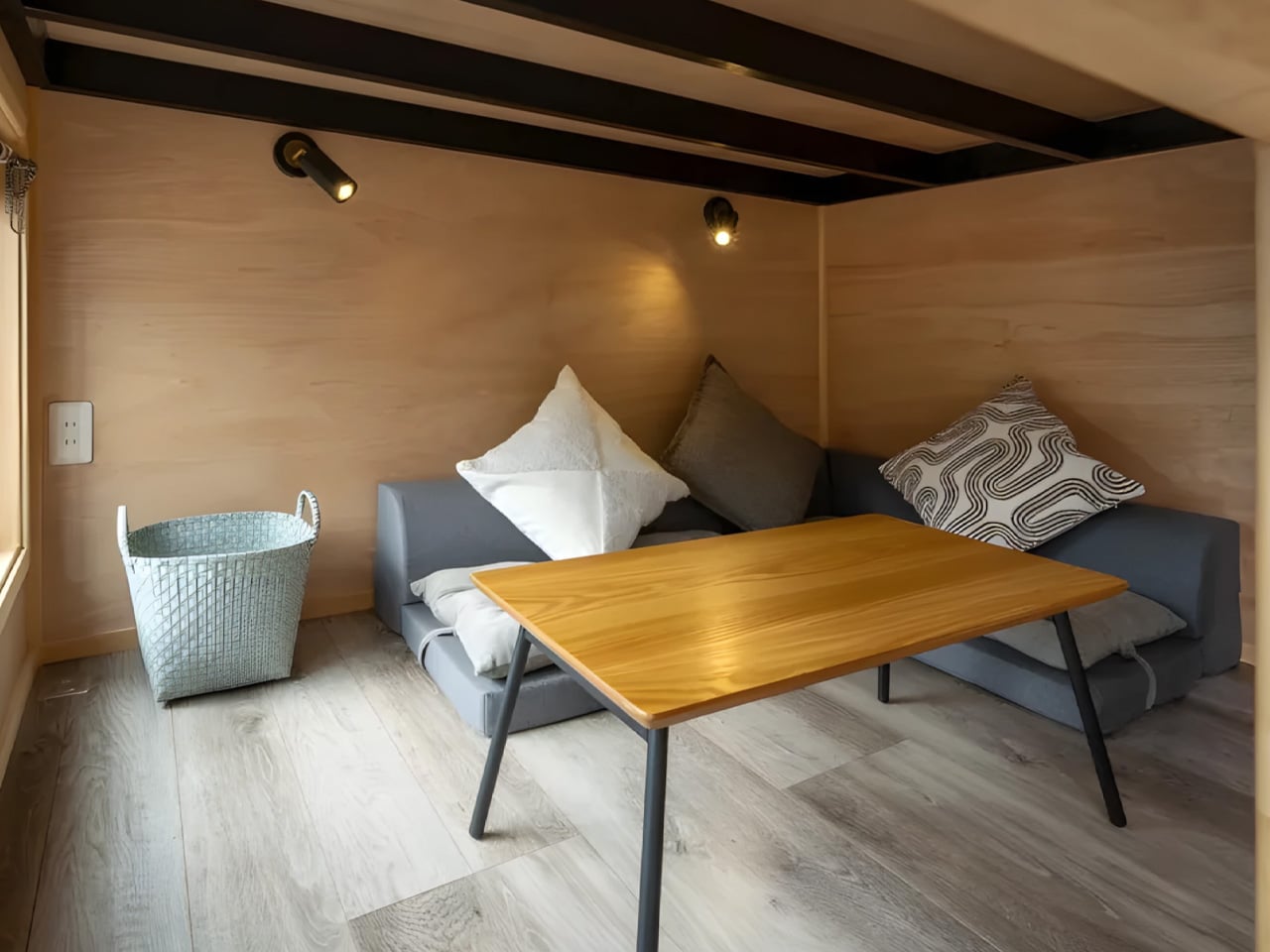
Nestled in the mountains of Nozawaonsen, Nagano, a young company called Ikigai Collective is rewriting the rules of compact living. Their latest creation, the Yamabiko, challenges everything we thought we knew about tiny houses. At just 6.6 meters long, this remarkable dwelling doesn’t squeeze one living space into its metal frame. It fits two. The concept sounds impossible until you see it. Two front doors hint at the Yamabiko’s clever secret: a perfectly mirrored layout that splits the home down the middle. Enter through the left door, and you’ll find a complete living space with a lofted bedroom, compact kitchen, and cozy lounge area. The right side offers an identical setup, reversed like a reflection. Between them sits a shared bathroom, the only space where the two halves meet.

This isn’t just architectural cleverness for its own sake. Ikigai Collective designed the Yamabiko specifically for staff accommodation in Japan’s seasonal resort towns. Ski instructors, hospitality workers, and summer camp employees often require housing that strikes a balance between privacy and efficiency. The Yamabiko delivers both. Two people can live independently under one roof, each with their own kitchen and sleeping loft, while sharing a single bathroom and utility connection. The exterior speaks to Japanese minimalism through its utilitarian Galvalume steel cladding. This durable material handles everything from heavy mountain snow to coastal humidity, aging gracefully while maintaining its modern edge. The design doesn’t shout for attention. It simply exists, blending into mountain landscapes and urban lots with equal ease.

Designer: Ikigai Collective

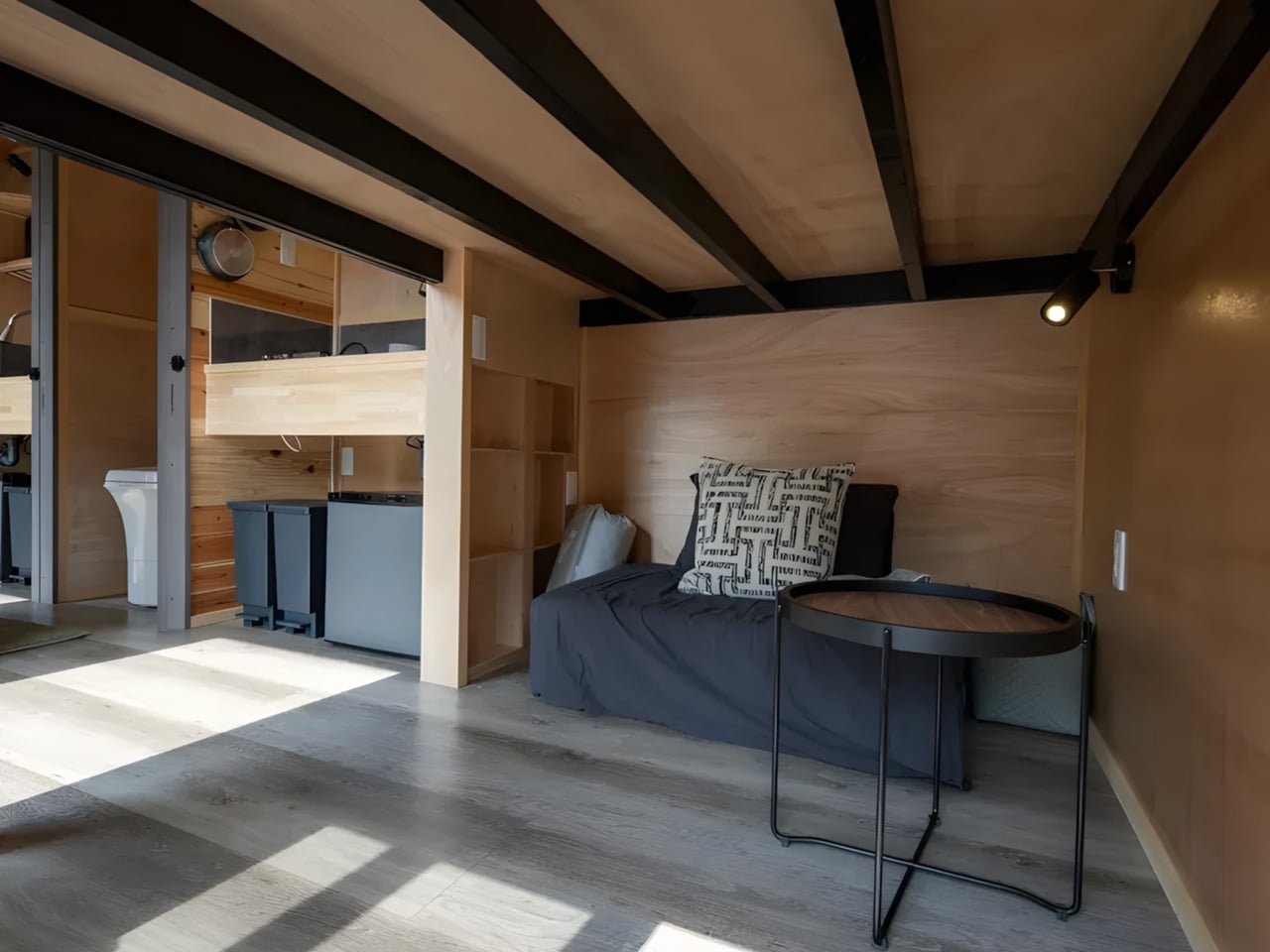
Inside, the spaces feel surprisingly complete despite their compact footprint. Each kitchen comes equipped with a two-burner propane stove and sink. The living rooms feature built-in seating and small tables. Loft bedrooms provide privacy without wasting precious floor space below. Every centimeter serves a purpose, reflecting the Japanese principle of functional beauty. The shared bathroom sits strategically between both living areas, creating the connection point where the two mirrored halves meet while maintaining the independence of each space.

Ikigai Collective keeps customization at the forefront. Buyers can select their color scheme, choose between flooring options, design their shower layout, and pick between standard or composting toilets. The starting price of ¥9,900,000 positions the Yamabiko as a serious housing solution rather than a lifestyle experiment. The timing feels right. Japan is slowly embracing tiny living as urban space grows scarcer and younger generations seek alternatives to traditional housing. Ikigai Collective was founded just two years ago by people who came to Japan and fell in love with its culture. They’re not just importing Western tiny house trends. They’re creating something distinctly Japanese, built for Japanese needs and sensibilities.

For those curious to experience the Yamabiko firsthand, Ikigai Collective operates a showroom village in Iiyama where visitors can book overnight stays. The facility includes wellness amenities like a sauna, letting guests test the tiny house lifestyle before committing. The Yamabiko proves that innovation in tiny living isn’t about shrinking everything down. Sometimes it’s about reimagining how space can serve multiple lives at once.

The post Two Homes, One Shell: Inside Japan’s Most Ingenious Tiny House first appeared on Yanko Design.
Repair iconic 2000s-era gadgets in upcoming indie game ReStory

We love a little nostalgia mixed in with our cozy gaming, and ReStory looks like a perfect blend of those two. In this upcoming indie game, you play the owner of a Tokyo electronics repair shop in the mid 2000s. The trailer that dropped today shows you tinkering with some very familiar gadgets from the era, such as renamed riffs on a Tamagotchi, a Nokia brick phone, a PSP and a Walkman. You clean and repair these devices for customers, and it looks like your conversations with them might have as much impact on their lives as your official work does. 

The whole thing looks exceedingly charming and chill. It's nice to see a game like ReStory as a counterpart to something with a similar premise but wildly different tone like Kaizen, which was a highlight during the Steam Automation Fest over the summer. ReStory is being developed by Mandragora, and it is currently playtesting ahead of a planned 2026 release.

This article originally appeared on Engadget at https://www.engadget.com/gaming/repair-iconic-2000s-era-gadgets-in-upcoming-indie-game-restory-233445848.html?src=rss

F.P. Journe Turns 86 Carats of Rubies Into One Watch

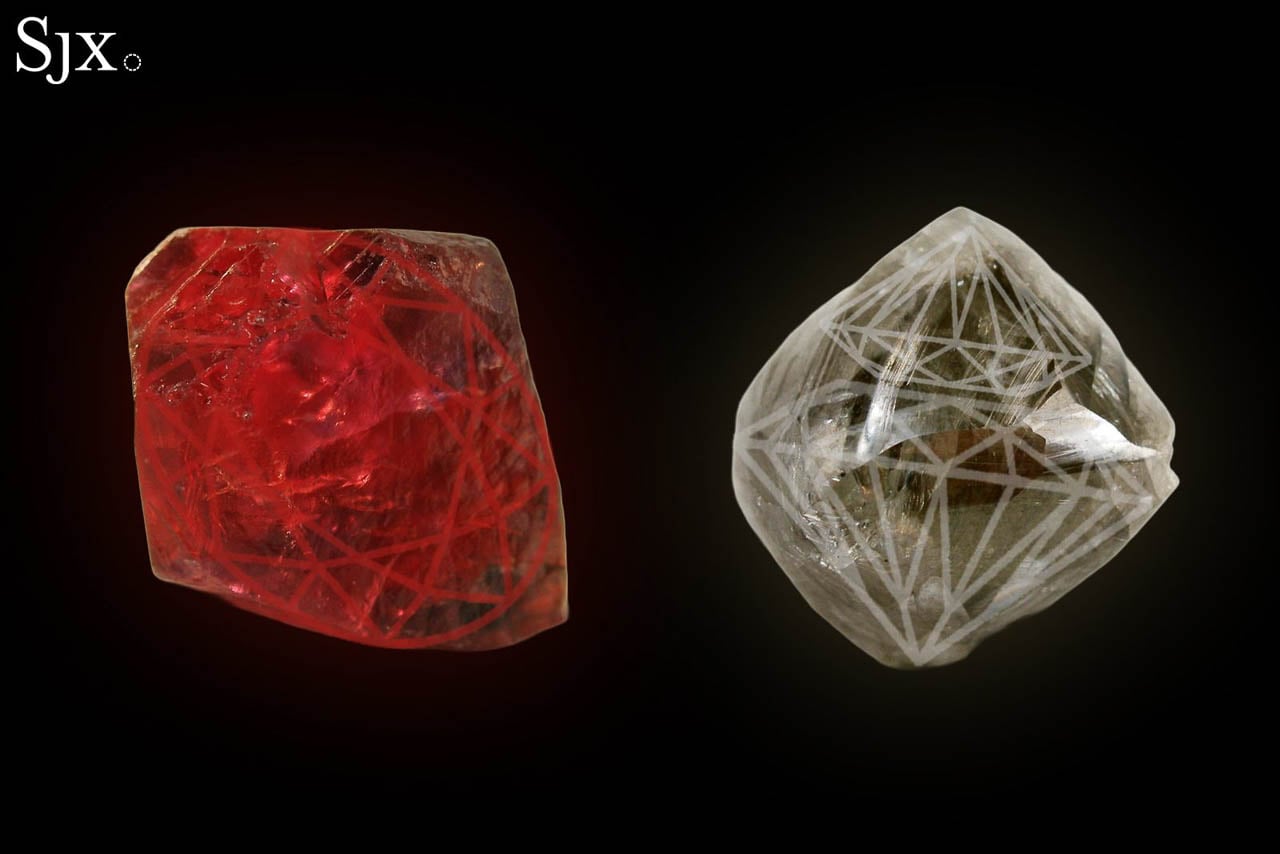
Most gem-set watches treat stones as decoration. F.P. Journe’s Tourbillon Souverain Vertical Joaillerie Rubis treats them as the entire point. This unique piece took eight years to build because finding 93 rubies that match perfectly in color, then cutting 61 carats of material away to achieve that uniformity, requires a timeline most manufacturers would never approve. The result is 25 carats of baguette rubies wrapped around a platinum case that was engineered specifically to hold them.

Designer: F.P. Journe

Jeweled complicated watches have drawn serious collectors since Geneva’s golden era of the late twentieth century. Brands including Patek Philippe and Piaget established the category, and demand has only intensified over the past decade as colored stones moved from novelty to centerpiece. But what F.P. Journe delivered here operates on a different scale entirely. This is closer to a wearable ruby sculpture than a watch that happens to feature gems.

Image source: watchesbysjx.com

The arithmetic tells you everything. Eighty-six carats of rough ruby entered the workshop. Twenty-five carats survived. The remaining 61 carats were ground away in pursuit of identical size, clarity, and saturation across every stone. That ratio of loss would kill most projects before they started. F.P. Journe spent nearly a decade sourcing and recutting until the math worked.

The Case as Canvas

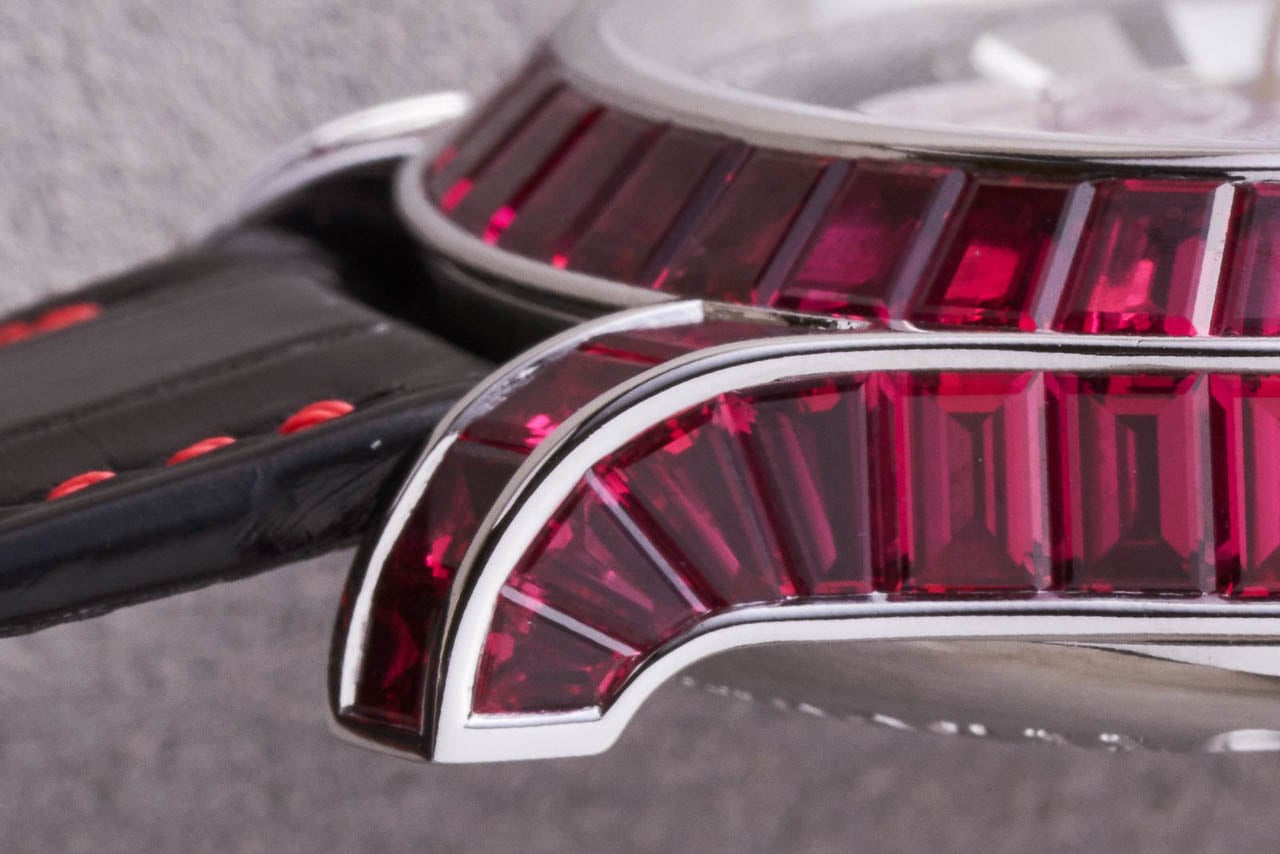
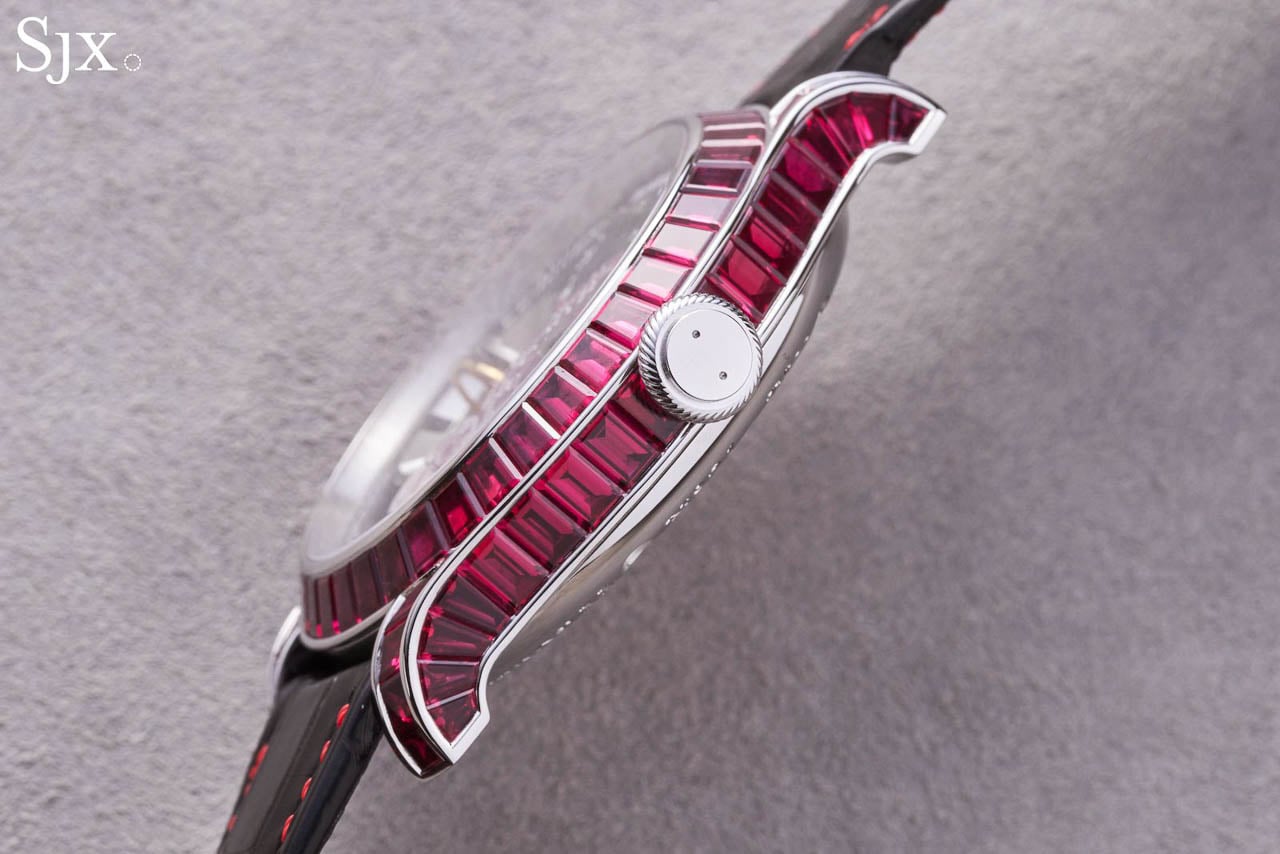
Every exterior metal surface carries rubies. Forty baguette-cut stones sit channel-set in the bezel, forming an unbroken red circuit around the dial. The lug hoods hold another 16 baguettes arranged in a fanned configuration that draws the eye outward and exaggerates the watch’s footprint on the wrist. The case band wraps the mid-section with 37 stones, the largest in the entire build.

Image source: watchesbysjx.com

F.P. Journe describes those 37 case-band rubies as the largest baguette-cut stones ever set in a watch. The claim matters because ruby’s natural crystal structure favors oval or cushion cuts. Producing elongated baguettes from material that resists that shape required sourcing oval-cut rubies of appropriate dimensions, then recutting them to fit the Tourbillon Vertical geometry. The case itself grew 2mm wider than the standard model specifically to receive stones of this size without leaving visible gaps between settings.

Image source: watchesbysjx.com

What you notice immediately is the seamlessness. No color variation breaks the surface. No pink tone drifts into orange. The 93 stones read as a single continuous shell rather than a patchwork of individual gems. Achieving that uniformity across bezel, lugs, and band demanded precise color matching at a level most jewelers would consider impractical.

That precision explains the eight-year development cycle. One stone that skews slightly warm or slightly cool would fracture the visual coherence of the entire case. Patience was not optional here.

Why Average Stone Weight Matters

Numbers put this in perspective. Each ruby on this watch averages 0.269 carats. Typical melee diamonds used in gem-set watches weigh under 0.02 carats and cost almost nothing because they trade as bulk commodities.

Image source: watchesbysjx.com

Patek Philippe’s fully set Grandmaster Chime carries 30.16 carats of baguette diamonds distributed across 392 stones, averaging 0.077 carats each. F.P. Journe’s diamond version of this same case averages 0.242 carats per stone. The ruby variant exceeds even that figure because ruby carries roughly 1.14 times the density of diamond: identical physical dimensions yield higher carat weight.

Image source: watchesbysjx.com

A Dial Built From Stone

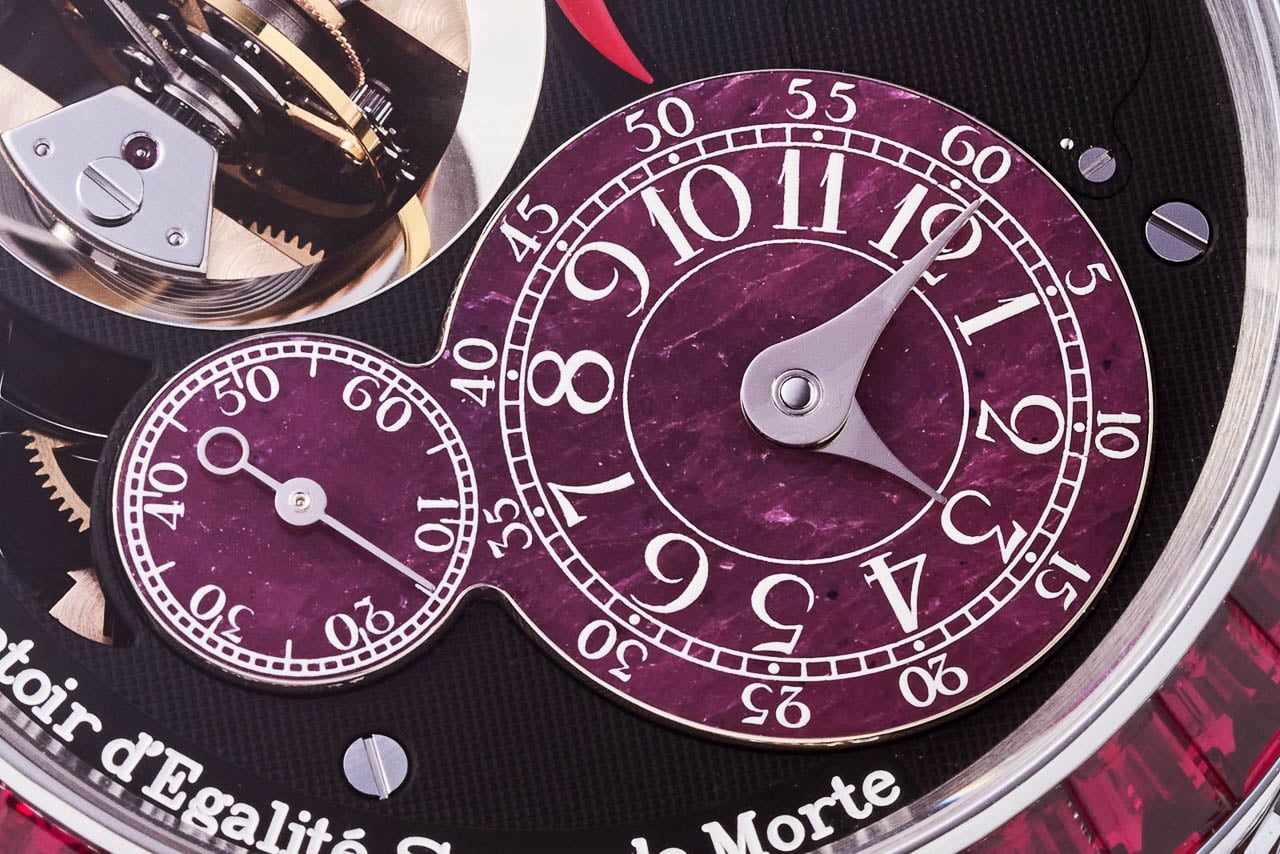
The dial shifts the ruby theme into different territory. Instead of faceted gems, F.P. Journe selected cœur de rubis, a mineral combining red corundum growths with green zoisite matrix. The surface reads as ruby embedded in raw rock, textured and organic rather than polished to clarity.

Visually, the contrast works. The mottled dial recedes behind the geometric precision of the baguette case setting rather than competing with it. Thematically, the choice keeps everything on the watch connected to ruby in some form.

Image source: watchesbysjx.com

Machining corundum presents real difficulty. The material sits at 9 on the Mohs scale, just below diamond, and its brittleness makes drilling apertures for hands and the tourbillon window a high-risk operation. Scrap rates on dials like this run steep, adding another dimension of rarity to an already singular object.

F.P. Journe used ruby heart dials on the final 20-piece run of the Tourbillon Nouveau, so this represents continuation rather than experiment.

The Movement Behind the Gems

Caliber 1519 sits beneath the ruby exterior. This hand-wound movement carries one of F.P. Journe’s signature complications: a constant-force device built around a titanium blade-spring remontoir that François-Paul Journe designed in 1983 at the request of collector Eugene Gschwind.

Image source: watchesbysjx.com

The constant-force mechanism produces what the brand calls natural jumping seconds. The seconds hand advances in discrete one-second increments without requiring a separate dead-beat module. You see the hand step crisply rather than sweep, which provides immediate visual confirmation that the remontoir is functioning and makes accuracy checks against a reference signal straightforward.

Image source: watchesbysjx.com

The tourbillon departs from convention by rotating 90 degrees from the standard orientation, linked through a crown gear. This vertical positioning keeps the balance wheel perpendicular to most watch movements, theoretically reducing rate variation between dial-up, dial-down, and crown positions. Whether that translates to measurable real-world accuracy gains depends on wearing habits, but the engineering ambition registers clearly. Total power reserve runs 80 hours, with a guaranteed 42-hour chronometric window during which the constant-force system operates at full effectiveness.

Image source: watchesbysjx.com

Positioning the Piece

The crocodile strap intentionally recedes, letting the case dominate. The platinum folding clasp does not: it carries 18 additional baguette-cut rubies, extending the red-on-platinum language to every visible metal surface including the underside of the wrist.

Water resistance registers at 30 meters, a specification that signals jewelry-object status rather than any expectation of practical use. This watch exists for controlled environments, not daily wear.

F.P. Journe has not published pricing, listing availability only through boutiques with figures disclosed upon application. Given the material costs, the eight-year timeline, and the unique-piece designation, the number will occupy territory where inquiring about it implies you probably cannot reach it. More relevant than the price is what this watch demonstrates: how far an independent maker will push when schedules, budgets, and conventional production logic become secondary to a singular creative vision.

F.P. Journe Tourbillon Souverain Vertical Joaillerie Rubis

  • Case: 44mm × 13.76mm, platinum
  • Crystal: Sapphire
  • Water Resistance: 30m
  • Movement: Cal. 1519, manual wind
  • Functions: Hours, minutes, natural jumping seconds, power reserve, constant force device, tourbillon
  • Frequency: 21,600 vph (3 Hz)
  • Power Reserve: 80 hours total, 42 hours chronometric
  • Strap: Crocodile with ruby-set folding clasp (18 baguette-cut rubies)
  • Availability: Unique piece, F.P. Journe boutiques only
  • Price: Upon application

The post F.P. Journe Turns 86 Carats of Rubies Into One Watch first appeared on Yanko Design.
Japanese Startup Brings Wasabi Farming to Shipping Containers

In a shipping container parked next to Macnica’s headquarters in Yokohama, an innovative revolution in Japanese agriculture is taking root. Inside the 40-foot steel box, 1,800 premium wasabi plants thrive under LED lights, nourished by circulating purified water and monitored by AI-powered sensors. This isn’t a futuristic concept. It’s a solution to a very real crisis threatening one of Japan’s most iconic flavors. Tokyo-based AgriTech startup NEXTAGE has partnered with global technology firm Macnica to develop the Wasabi Cultivation Module. This container-based plant factory allows wasabi to be grown anywhere in the world.

The innovation comes as Japan grapples with a growing wasabi shortage driven by multiple converging pressures. Climate change, declining agricultural workers, and the strict environmental demands of traditional cultivation have created a perfect storm for this notoriously temperamental crop. Wasabi has always required clean water, precise temperature control, and meticulous soil management. Traditionally grown in cool mountain streams, the plant is particularly vulnerable to typhoons and floods. Climate change has intensified these challenges, threatening the survival of historic wasabi farms that have operated for generations. Global demand continues to surge alongside the worldwide popularity of Japanese cuisine, but supply has struggled to keep pace.

Designer: Nextage & Macnica

The cultivation module addresses these vulnerabilities through total environmental control. Each container houses five-tiered shelves equipped with sophisticated systems, including air conditioning, dehumidifiers, LED lighting, water temperature controllers, and carbon dioxide management devices. Cameras and sensors throughout the container continuously monitor conditions, tracking everything from temperature fluctuations to door usage that might affect air circulation. This data feeds into an AI-powered remote monitoring system, allowing NEXTAGE experts to provide real-time cultivation guidance to operators who may have no prior farming experience. The technology packages decades of specialized knowledge into an accessible, turnkey solution.

Perhaps most impressive is the dramatic acceleration in harvest times. The module cultivates Matsuma Wasabi, a premium variety from Wakayama Prefecture that is highly prized in high-end restaurants for its balanced aroma, spiciness, sweetness, and distinctive flavor profile. In natural conditions, this exceptional variety requires 20 to 24 months to reach maturity. Inside the precisely controlled environment of the cultivation module, the time drops to approximately 10 months. This dramatic reduction doesn’t compromise quality but rather optimizes growth conditions that would be impossible to maintain consistently in traditional outdoor cultivation, where weather and seasonal variations create unavoidable challenges.

Macnica became the pioneering customer in December 2023, installing a module at its Shin-Yokohama headquarters as both a demonstration facility and agricultural innovation laboratory. The semiconductor and IT company brought substantial technical expertise to the partnership, contributing specialized knowledge in growth visualization systems, communication technology, and customized LED development specifically designed for plant cultivation. In January 2024, following months of refinement and testing, the two companies officially launched commercial sales of the modules to businesses and agricultural entrepreneurs. NEXTAGE founder Takuya Nakamura, who started the company after witnessing the devastation of traditional wasabi fields, secured Series A funding in October 2024 to accelerate development of the automated cultivation technology.

The vision extends far beyond Japan’s borders. NEXTAGE’s ambitious slogan, “bringing ALL JAPAN MADE plant cultivation technology to the world,” signals plans to export this innovation globally. For high-end sushi restaurants that have long depended on limited supplies of fresh wasabi, the implications are transformative. The day may soon come when chefs grate wasabi grown in a container just blocks away, preserving the pungent, complex flavors that define authentic Japanese cuisine while building resilience into a supply chain threatened by our changing climate.

The post Japanese Startup Brings Wasabi Farming to Shipping Containers first appeared on Yanko Design.
Uber is installing kiosks for booking rides without the mobile app

Uber is rolling out kiosks for travelers to book rideshares without using the mobile app. The company is pitching the service as a convenience for international travelers who may not have a data plan, but it could also be a lifesaver if your phone runs out of juice and you don't have a way to recharge it. A passenger can use the kiosk to enter their destination and desired ride type, then will receive a printed receipt with the details about their booked ride. The first kiosk will debut in Terminal C at LaGuardia Airport in New York City, but Uber said it would have additional locations in airports, hotels and ports over the coming months. 

In airport situations, these kiosks make Uber even more of a direct competitor to traditional taxis. With the removal of the app, the kiosk can essentially stand in as the dispatcher and a passenger can decide how to travel based on their preferences (or on wait times) for a rideshare versus a yellow cab.

Uber also used LaGuardia as the starting point for its shuttle bus service in New York, with $18 rides between the airport and Manhattan transit hubs in October 2024; it later rolled out the shuttles to John F. Kennedy Airport in March 2025. Today, Uber said it is bringing the shuttle bus option to Newark Liberty International Airport, so all major NYC airports now have access to the service.

This article originally appeared on Engadget at https://www.engadget.com/transportation/uber-is-installing-kiosks-for-booking-rides-without-the-mobile-app-220904106.html?src=rss

Instagram is generating SEO-bait headlines for its users’ posts

It looks like Meta has decided to turn Instagram users into unwitting SEO spam pawns. On Tuesday, 404 Media reported that the platform is generating sensational, likely AI-generated headlines and descriptions for user posts without their knowledge or explicit consent. An Engadget editor has also noticed this on their posts. The headlines are found in the pages’ code and are only visible in search results.

The scheme appears to be an effort to boost the Google search ranking of Instagram content. An Instagram post by Engadget’s Sam Chapman, about a board game he created, received an unwanted generated description. “Floramino is a cozy puzzle game where you arrange gardens as a traveling florist,” the generated text reads. “The demo looks fun, with charming visuals and strategic elements.”

In this case, there’s a significant factual error. The board game is called Bloomhunter. Floramino, which the generated text referenced, is a puzzle game on Steam.

In an example cited by 404 Media, author Jeff VanderMeer's untitled video about a bunny eating a banana received a generic, SEO-style title. "Meet the Bunny Who Loves Eating Bananas, A Nutritious Snack For Your Pet," it reads. That indeed reads like the work of an LLM. A Massachusetts library's post promoting a reading of a VanderMeer book got the same treatment. "Join Jeff VanderMeer on a Thrilling Beachside Adventure with Mesta …", the headline reads.

Multiple cosplayers also found their posts gaining strange titles. "I would not write mediocre text like that, and it sounds as if it was auto-generated at scale with an LLM," cosplayer Brian Dang told 404 Media. "This becomes problematic when the headline or description advertises someone in a way that is not how they would personally describe themselves."

The headlines appear in the posts’ code, as confirmed by Google's Rich Result Test tool. (They're found in the <title> tags for the post. The descriptions appear in the "text": section) The spammy headlines differ from the page's alt text, which Instagram generates for people with low vision.

You might want to search for your recent content to see if you’re affected. 

Engadget reached out to Meta. In a statement, the company said it "recently began using AI to generate titles for posts that appear in search engine results. This helps people better understand the content that was shared." Users can disable indexing; however, it appears to remove all indexing, reducing the likelihood that users will discover the Instagram account.

The statement continued: "As with all AI-generated content, these titles may not always be 100% accurate." 

Update, December 9, 2026 at 5:07 PM ET: The story was updated to include more detail about a post from Engadget’s Sam Chapman receiving a generated description.

Update, December 10, 2026 at 4:30 AM ET: Added a statement from Meta about how it's recently started using AI for index titles in search results.

This article originally appeared on Engadget at https://www.engadget.com/social-media/instagram-is-generating-seo-bait-headlines-for-its-users-posts-213702800.html?src=rss

Slack’s CEO is joining OpenAI to find the money to pay for all those data centers

OpenAI has announced that Denise Dresser, the current CEO of Slack, will be the company's new Chief Revenue Officer. Dresser will oversee the company's revenue strategy "across enterprise and customer success," according to OpenAI's announcement, and will presumably play a key role in leading the company towards profitability now that it's reorganized as a public benefit corporation.

"We're on a path to put AI tools into the hands of millions of workers, across every industry," Fidji Simo, OpenAI's CEO of Products said in the announcement. "Denise has led that kind of shift before, and her experience will help us make AI useful, reliable, and accessible for businesses everywhere."

Simo joined OpenAI in May of this year, after serving as CEO of Instacart, and before that, the head of Facebook at Meta. Hiring Simo and Dresser could be a good indication of how OpenAI plans to approach ChatGPT going forward. Which is to say, the company is taking a very Silicon Valley approach to growing its chatbot business and focusing on scale and monetizing as many AI interactions as possible. It's not a mistake that Simo helped establish Meta's ads business and OpenAI is reportedly planning to introduce ads into chats with its AI models.

Even with the possibility of ad revenue, Dresser will still have to overcome what OpenAI continues to spend to offer its various AI products. OpenAI pays for multiple partnerships for data center access and has commitments to both buy and build server components for those data centers. Add in the cost of just processing a ChatGPT query itself, and growing the company’s revenue seems like a tall order.

This article originally appeared on Engadget at https://www.engadget.com/ai/slacks-ceo-is-joining-openai-to-find-the-money-to-pay-for-all-those-data-centers-220411962.html?src=rss