Google Gemini AR Glasses and other cool wearables at the Global Connect Show at CES 2026

Las Vegas in January means two things: CES crowds and overpriced hotel rooms. Global Connect sidesteps both problems on January 5th by hosting wearable tech companies at Mike Tyson’s private villa (no, seriously), giving journalists space to test devices designed to sit on your face, in your ears, or against your skin for hours at a time. Wearables demand different scrutiny than robots or appliances because discomfort kills adoption faster than missing features. AR glasses that overlay useful information but give you a headache after 20 minutes won’t survive. Translator earbuds that work perfectly in quiet rooms but fail in restaurants are useless for actual travel. A stress-regulating wearable that’s supposed to calm you down but feels like a medical device defeats its own purpose.

The lineup spans sensory augmentation, communication, health monitoring, and pet tracking. TCL RayNeo and INMO bring AR glasses with AI embedding. Timekettle has translator earbuds handling real-time cross-language conversations. Vocci’s AI Ring puts an AI notetaker on your fingertips (well, not literally but you know what I mean). Cearvol’s smart hearing solutions adapt to different acoustic environments. ZenoWell’s vagus nerve stimulator uses electrical pulses to regulate stress response. GlocalMe built a wearable tracker and phone for pets. DaÏve created a heads-up display for divers who need data underwater without surfacing. iMpact PR and USA Today are co-hosting with brands that have manufacturing scale and market strategies, not concept sketches. Four hours provides enough runway to discover whether AR glasses cause eye strain, if translator earbuds struggle with accents, or if a vagus nerve stimulator actually makes you calmer or just vibrates annoyingly on your chest.

TCL RayNeo X3 Pro: AR Glasses with Gemini AI
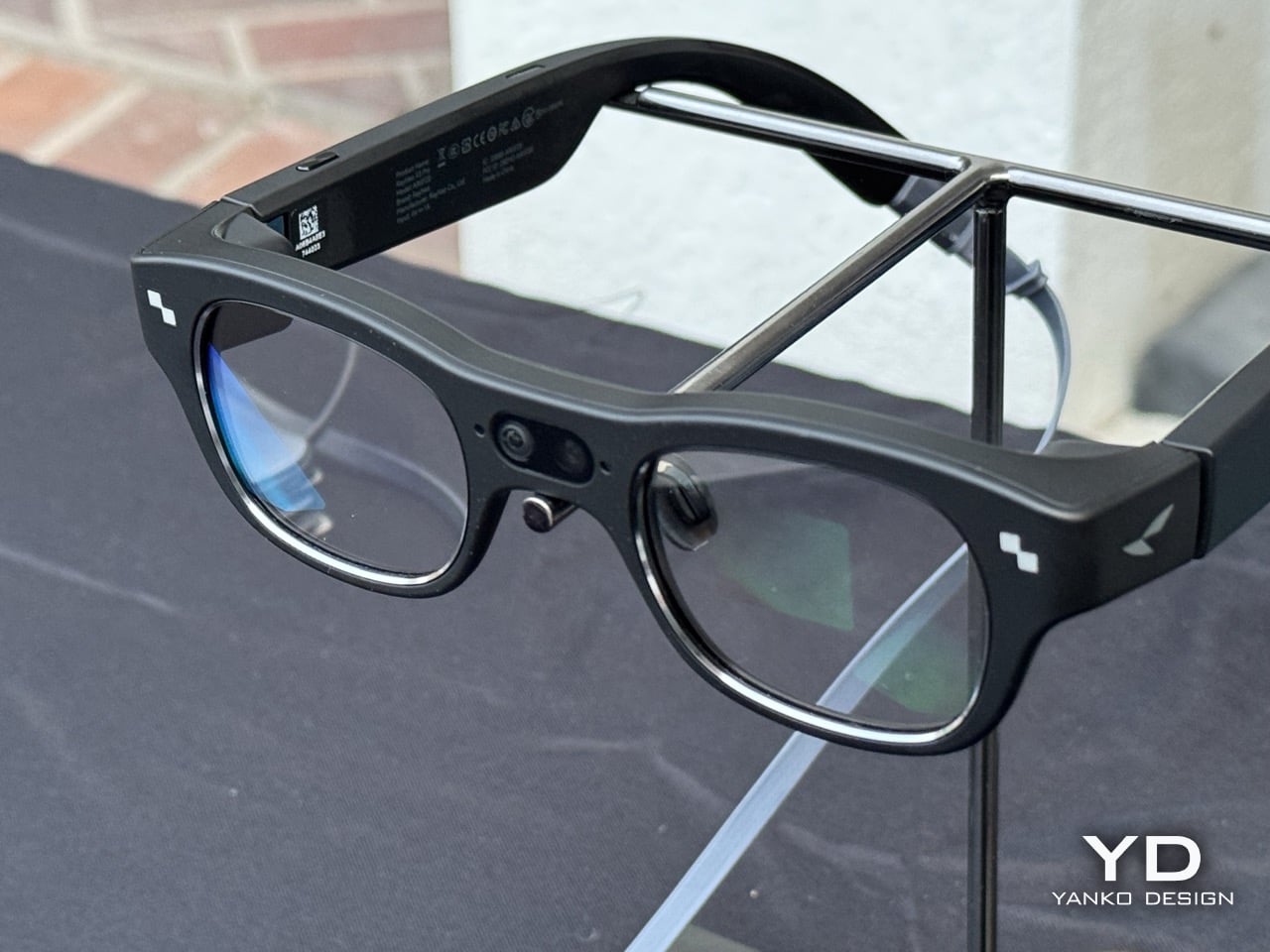
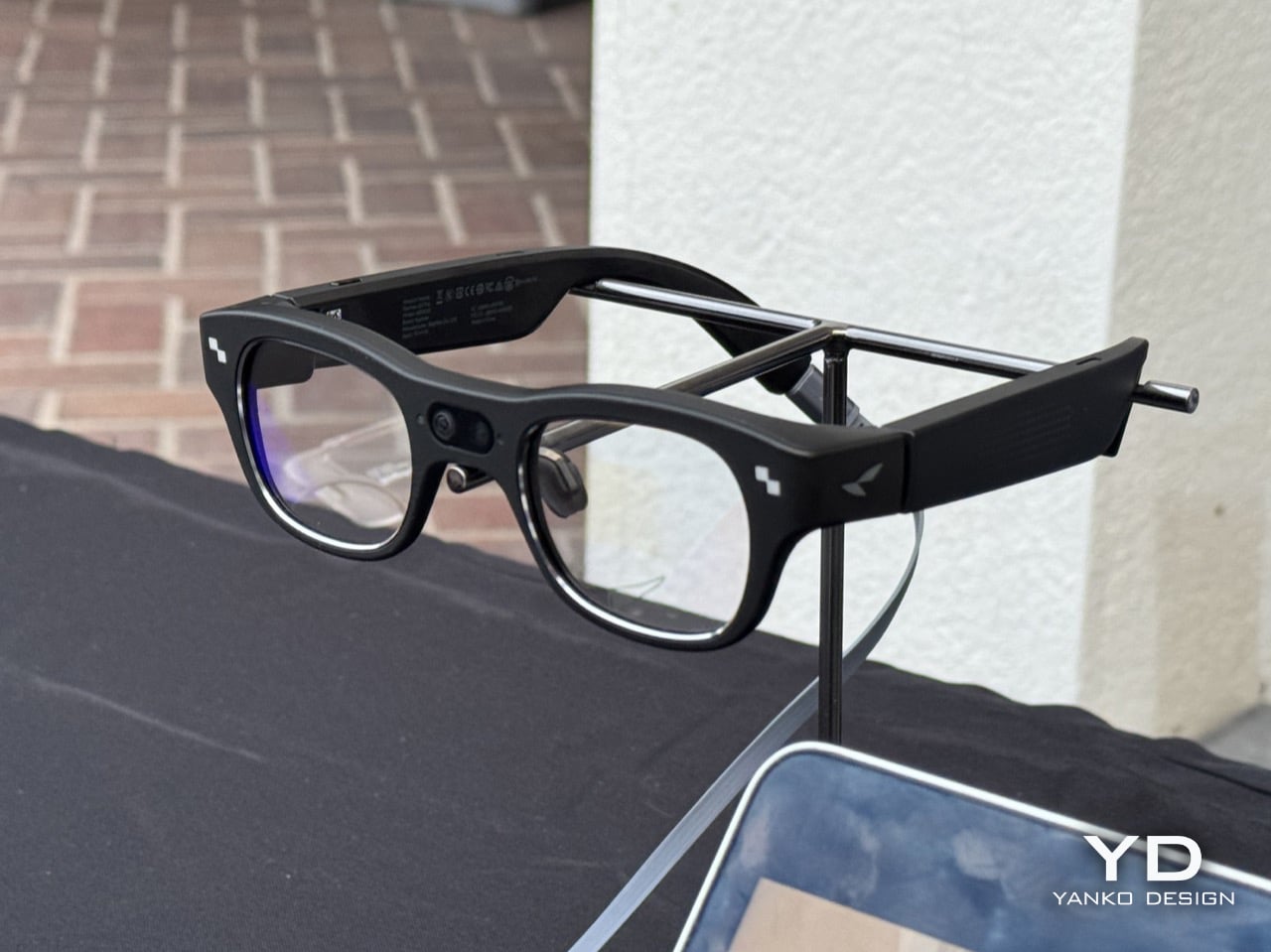
AR glasses have promised to replace smartphones for years, but most prototypes are too heavy, too dim, or too awkward to wear beyond a demo. TCL’s RayNeo X3 Pro addresses those problems by shrinking the optical engine to what the company claims is the world’s smallest MicroLED system, cutting weight by 36% to just 76 grams while maintaining 2,500 nits of brightness that stays visible in any lighting condition. The display projects a 43-inch floating aerial screen into your field of view without blocking your sight, running Google Gemini 2.5 AI for context-aware assistance that understands both voice commands and visual recognition. You can ask it to identify objects, translate conversations across 14 languages in real time using Microsoft’s translation engine, or record meetings and let the AI summarize the content afterward. The glasses run on a Qualcomm Snapdragon AR1 Gen 1 platform with a 245mah battery providing four hours of use and a 38-minute fast charge. Control happens through an intuitive five-dimensional temple interface or voice activation, keeping your hands free while the system processes requests.

TIME named the X3 Pro one of the Best Inventions of 2025, and it’s been available since December 17 at $1,299. RayNeo was initially incubated within TCL before spinning out to focus exclusively on AR technology, and the X3 Pro reflects years of iteration aimed at making augmented reality wearable for actual daily use instead of just trade show demonstrations. The developer-friendly app ecosystem connects the digital world with physical spaces, letting third-party apps build experiences that overlay information, navigation, or entertainment onto your environment. Whether AR glasses become mainstream or remain niche depends largely on whether people will tolerate wearing technology on their faces all day, and the X3 Pro’s 76-gram weight combined with ergonomic design addresses the comfort problem that killed previous attempts. Four hours of battery life won’t get you through a full workday, but it covers meetings, commutes, or travel scenarios where real-time translation and hands-free information access provide genuine utility beyond novelty.

Vocci AI Note-Taking Ring: Recording on Your Finger
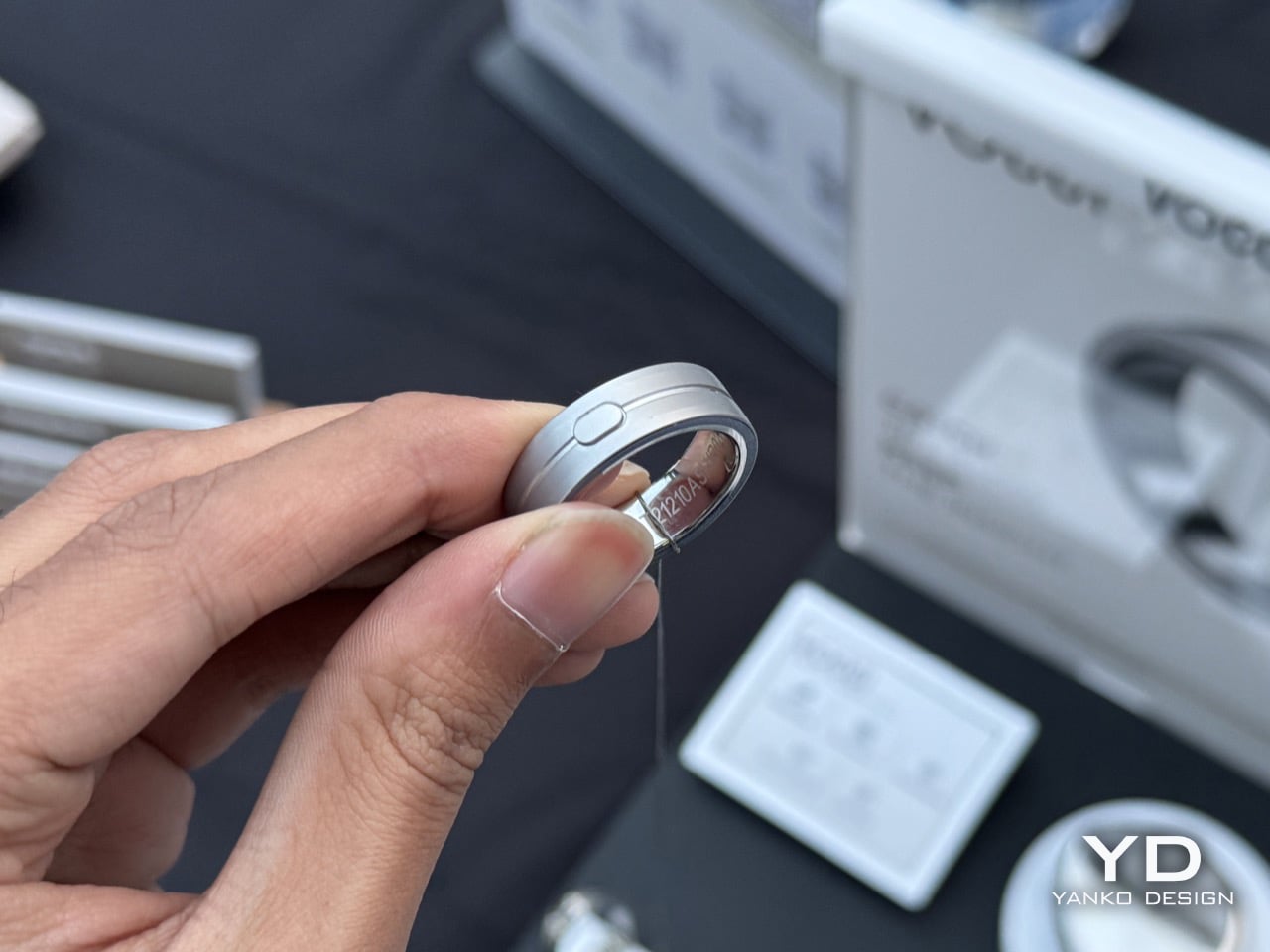
Smart rings usually track heart rate or count steps, but Vocci decided your finger should handle something different: recording and transcribing conversations without pulling out your phone. The AI note-taking ring weighs 3.5 grams, measures 2.8mm thick and 6.8mm wide, and captures audio from a 5-meter effective pickup range with enough battery life for eight hours of continuous recording. You tap once to highlight key moments during a conversation, and the ring records, summarizes, and organizes those insights automatically. Double-tap starts full recording mode, with AI cleaning the audio, understanding context, and structuring your ideas without requiring manual note-taking. The system supports 112-plus languages with multilingual speaker recognition, handling transcription accuracy across different accents and languages while encrypting everything locally before syncing to private cloud storage.

The ring comes with a portable charging case and fast charges in 30 minutes, addressing one of the persistent complaints about wearables that die halfway through the day. IPX4 water resistance means it survives hand washing or light rain without failing. The AI-powered summaries and highlights turn raw audio into organized notes accessible through the companion app, which displays weekly summaries, key insights, and searchable transcripts. This positions Vocci somewhere between productivity tool and memory aid, letting you participate in conversations without simultaneously trying to write everything down or remember to review voice memos later. Whether wearing a recording device on your finger feels natural or creepy probably depends on your comfort level with ambient recording technology, but for people who spend their days in meetings, interviews, or brainstorming sessions, the ability to tap a ring instead of fumbling with a phone or notebook offers genuine workflow improvement. The question is whether you’ll remember it’s there after a week or if it becomes another forgotten wearable gathering dust in a drawer.

Timekettle W4: Bone-Conduction Translation in Your Ears
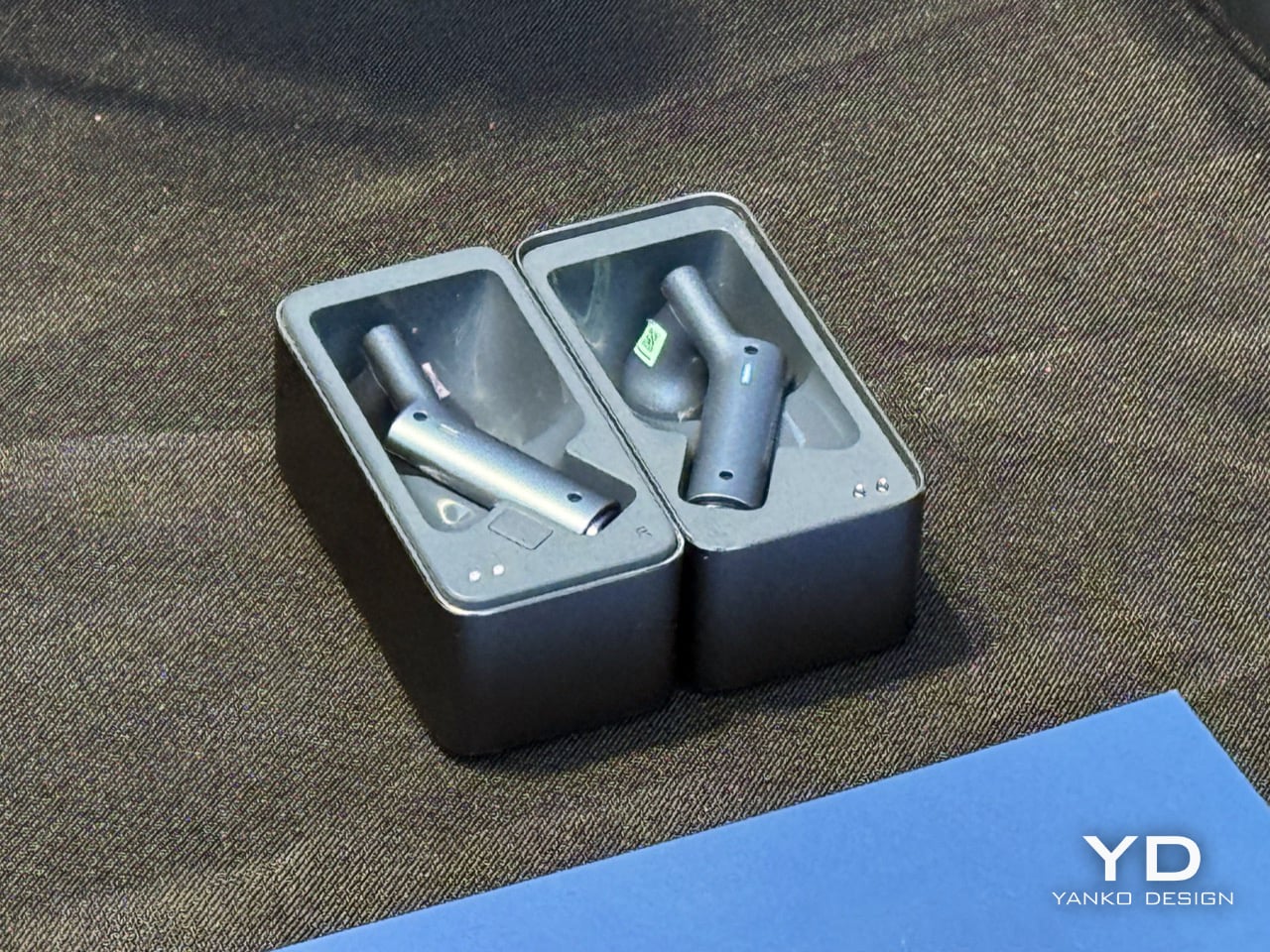
Timekettle has been iterating on AI translator earbuds for years, so the W4 arrives with some history behind it rather than pretending to be a first draft. These are bone‑conduction interpreter earbuds built for sustained, in‑depth conversations rather than quick tourist phrases. A bone‑voiceprint sensor sits in the stem and picks up vibrations from your jaw while directional mics handle the rest, which lets the W4 keep recognizing your speech with claimed 98 percent accuracy even in environments up to 100 dB, like subways, airports, or trade show floors. The hardware runs Babel OS 2.0, Timekettle’s in‑house translation platform, and handles 43 languages and 96 accents with around 0.2‑second latency, so replies feel conversational instead of like waiting on a phone app to catch up. A 30‑degree tilted stem is shaped to hug the face, and the charging case comes in matte Midnight Blue or Sandy Gold, pitched as something you can keep on a conference table without it looking like a gadget museum piece.

The software side is where the W4 differentiates itself from generic translation buds. Large language models do context analysis and self‑correction, so when you say “complement” and it hears “compliment,” the system uses surrounding context to fix the mistake before it reaches the other person. Modes are tuned to specific scenarios: one‑on‑one mode for direct conversations, listen‑and‑play for conferences where you’re mostly listening but occasionally speaking, and a record‑and‑summarize flow that logs meetings, preserves audio, and generates AI summaries of key points afterward. Battery life lands at about four hours of continuous translation or eight hours of music on a charge, stretching to roughly ten hours of translation with the case. They also double as regular Bluetooth earbuds, so you are not carrying a single‑purpose device; you can stream music between meetings and still have an on‑demand interpreter when someone switches languages mid‑sentence.

INMO Air3 and GO3: Two Takes on AR Glasses
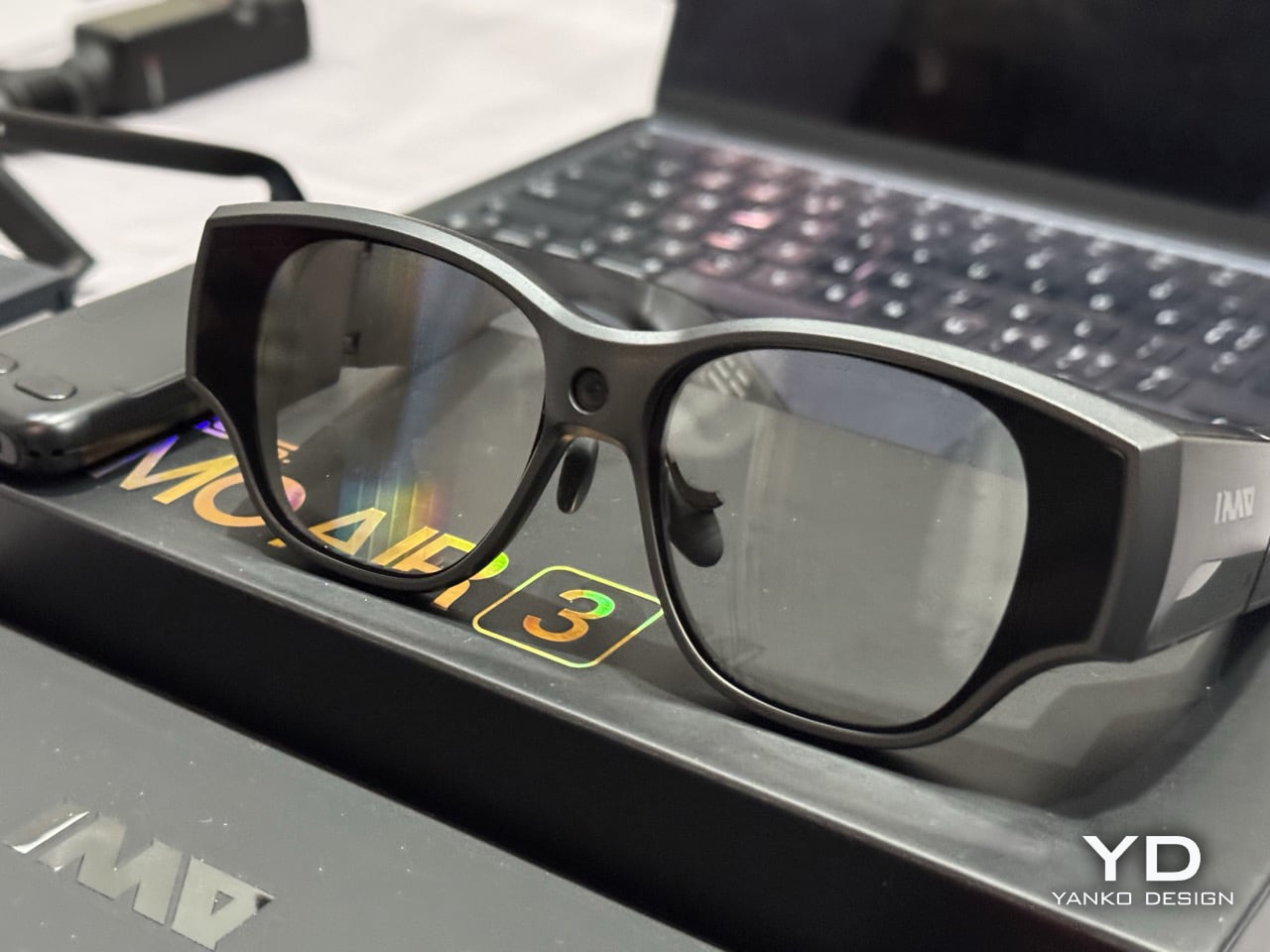
RayNeo built its X3 Pro around Gemini AI and a massive 43-inch virtual display, but INMO is showing up with two models that split the difference between immersive entertainment and discreet everyday utility. The Air3 is the world’s first all-in-one AR glasses equipped with a full-color 1080P waveguide display, using a Sony Micro-OLED panel that hits 600 nits peak brightness and stays visible even in bright outdoor environments. It runs on a Snapdragon XR processor with 8GB RAM, 128GB storage, and comes preloaded with Google Mobile Services, giving you access to the full Android app ecosystem. The 36-degree field of view projects a 150-inch virtual screen for streaming Netflix, browsing YouTube Shorts, or playing AAA games through cloud gaming platforms. Control happens through INMO’s Spatial Ring system, offering button-plus-touchpad controls or iPad-like gesture navigation, with a 16-megapixel ultra-wide camera (120-degree field of view) built in for capturing photos or video. The Air3 is pitched as portable entertainment for camping, fishing, vacations, or anywhere you want a private theater without carrying a monitor.

The GO3 takes the opposite approach by prioritizing subtlety over specs. It uses a dual-eye green monochrome Micro-LED display with 1,500 nits brightness and a 30-degree field of view, looking more like regular glasses than visible tech. At approximately 53 grams, it’s even lighter than the RayNeo X3 Pro, with ultra-slim 8mm temples that integrate the mainboard and battery while maintaining a discreet appearance. The GO3 comes with four interchangeable frame styles designed for professional, academic, casual, and social environments, all with a five-axis CNC-machined matte finish that resists fingerprints. The swappable battery system includes two 270mAh batteries and a charging case, with magnetic battery replacement taking about five seconds so you can stay powered all day. AI capabilities include translation supporting 77 source languages and 200-plus target languages, an AI teleprompter with automatic scrolling based on speaking pace, meeting summaries with speaker identification and transcription, and HERE Maps navigation displayed hands-free. A built-in camera privacy cover physically shields the lens in public or social settings, addressing the creepiness factor that killed Google Glass years ago. INMO’s positioning these as everyday wear that happens to have AI functionality, rather than AR entertainment devices that occasionally get used for productivity.

ZenoWell: Vagus Nerve Stimulation for Stress and Sleep
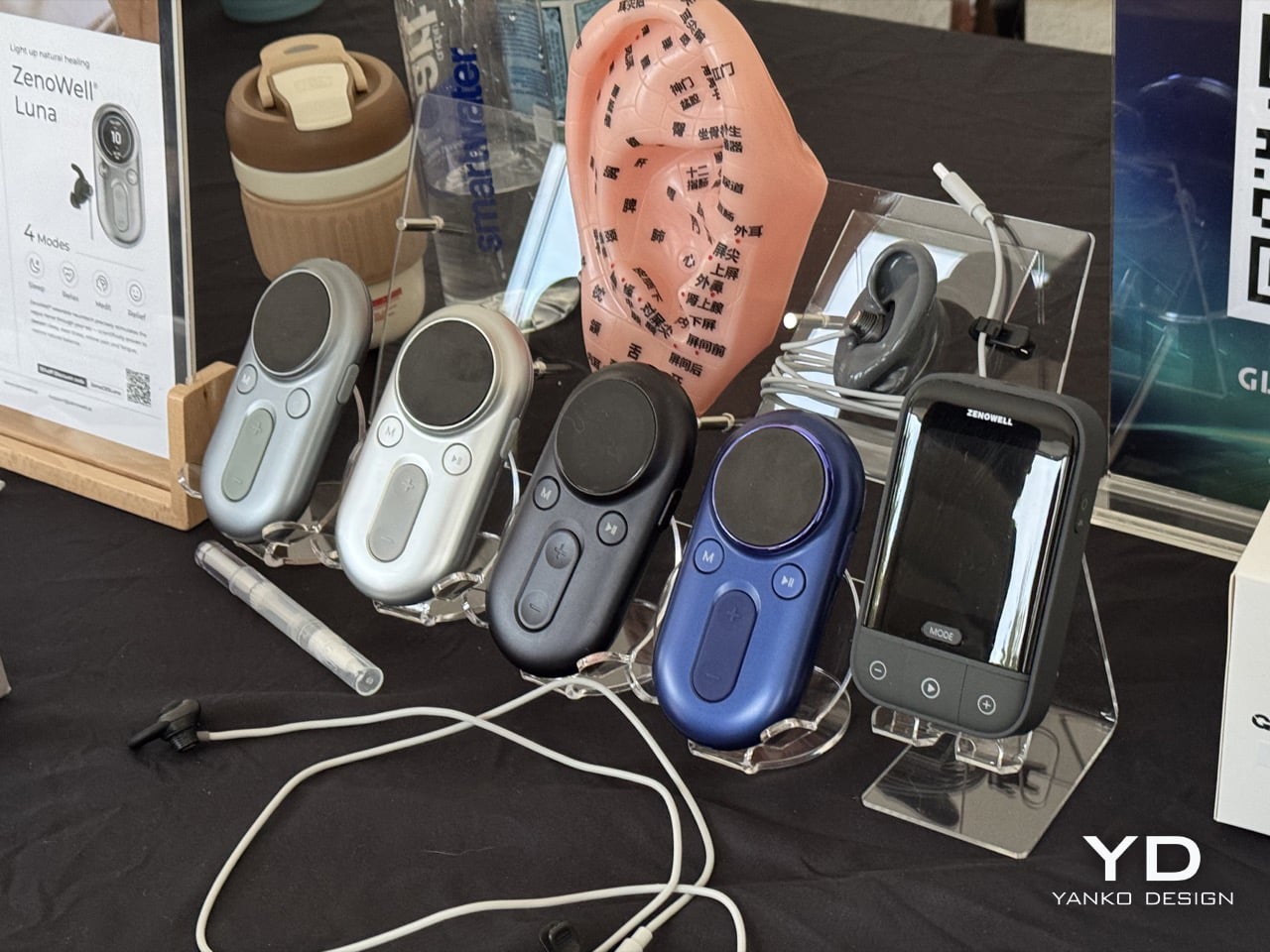
Most wearables track what your body is doing; ZenoWell claims to actively change it by stimulating the vagus nerve through your ear. The company uses transcutaneous auricular vagus nerve stimulation (taVNS) technology, targeting the only branch of the vagus nerve located on the body’s surface with electrical pulses designed to enhance parasympathetic activity, restore balance to the autonomic nervous system, and modulate brain activity and neurotransmitters. Founded in Heidelberg, Germany with engineering in Shenzhen, China, ZenoWell positions itself as wearable neurotech that activates the body’s natural healing power rather than relying on medication or quick fixes. The science backs some of this; a 2024 JAMA Network Open study showed eight weeks of taVNS use resulted in significant clinical improvement for chronic insomnia, outperforming control groups in reducing anxiety, depression, and fatigue, with effects lasting up to 20 weeks and demonstrating good safety and high patient compliance.

ZenoWell has two main devices: Luna and Vita, both offering 100% vagus nerve coverage through ergonomically designed earpieces. Luna includes an enhanced Relief Mode targeting headaches for both acute episodes and long-term prevention, along with modes for relaxation, sleep improvement, fatigue reduction, inflammation management, and body pain relief. Vita focuses on faster sleep onset with 20-minute sessions, deep relaxation, and body-mind balance restoration, claiming better sleep, less fatigue, and reduced body pain within seven days. Both devices offer multiple modes: Sleep Mode for insomnia and sleep disturbance, Relax Mode for stress and anxiety, Medit Mode for body pain and inflammation, and Relief Mode for headaches including migraines and cluster headaches. The system requires consistent use; most benefits appear after two to four weeks, with full effects observable after 24 weeks depending on the condition being addressed. Whether strapping a nerve stimulator to your ear feels like self-care or medical intervention probably depends on your tolerance for wellness technology that requires daily commitment, but for people exhausted by sleep medications or chronic stress who want alternatives beyond meditation apps, ZenoWell offers a science-backed approach with published clinical results instead of just marketing promises.

GlocalMe PetPhone: Connectivity for Everyone, Including Your Dog

GlocalMe built its entire brand around a patented Cloud SIM technology that virtualizes SIM cards, letting devices automatically connect to the best available network across 200-plus countries without needing a physical card. This obsession with seamless connectivity has produced a surprisingly diverse product lineup, from the Numen Air 5G mobile hotspot and GuardFlex Pro backup router to the UniCord, a charging cable with a built-in emergency hotspot and GPS. The company, a brand under uCloudlink, even offers the RoamPlug, a travel adapter that doubles as a 4G LTE hotspot for up to 10 devices. While these gadgets solve connectivity problems for remote workers and international travelers, GlocalMe’s most ambitious product applies that same technology to a user who can’t complain about dropped calls: your pet.

The PetPhone bills itself as the first smartphone for pets, and it makes a surprisingly strong case for the title. While most pet trackers are just GPS tags that tell you where your dog is, the PetPhone adds two-way audio, letting you call your pet and talk to them in real time to ease their loneliness when you’re away. You can also play soothing music, send recorded voice messages, or set alarms for feeding times and potty breaks. The tracking itself is more robust than standard GPS, using a six-fold positioning system (GPS, AGPS, LBS, Wi-Fi, Bluetooth, and Active Radar) that provides precise location data even in dense forests or indoor areas where other trackers fail. It runs on GlocalMe’s SIM-free Cloud SIM network, connecting to over 390 carriers worldwide to eliminate dead zones. The AI health features monitor activity over six weeks to establish a baseline for your pet’s normal routine, sending alerts if they move significantly less than usual. With an IP67 waterproof rating and a five-day battery life, it’s designed for actual pet life, not just a walk around the block.

Cearvol: Hearing Aids That Don’t Look Like Hearing Aids
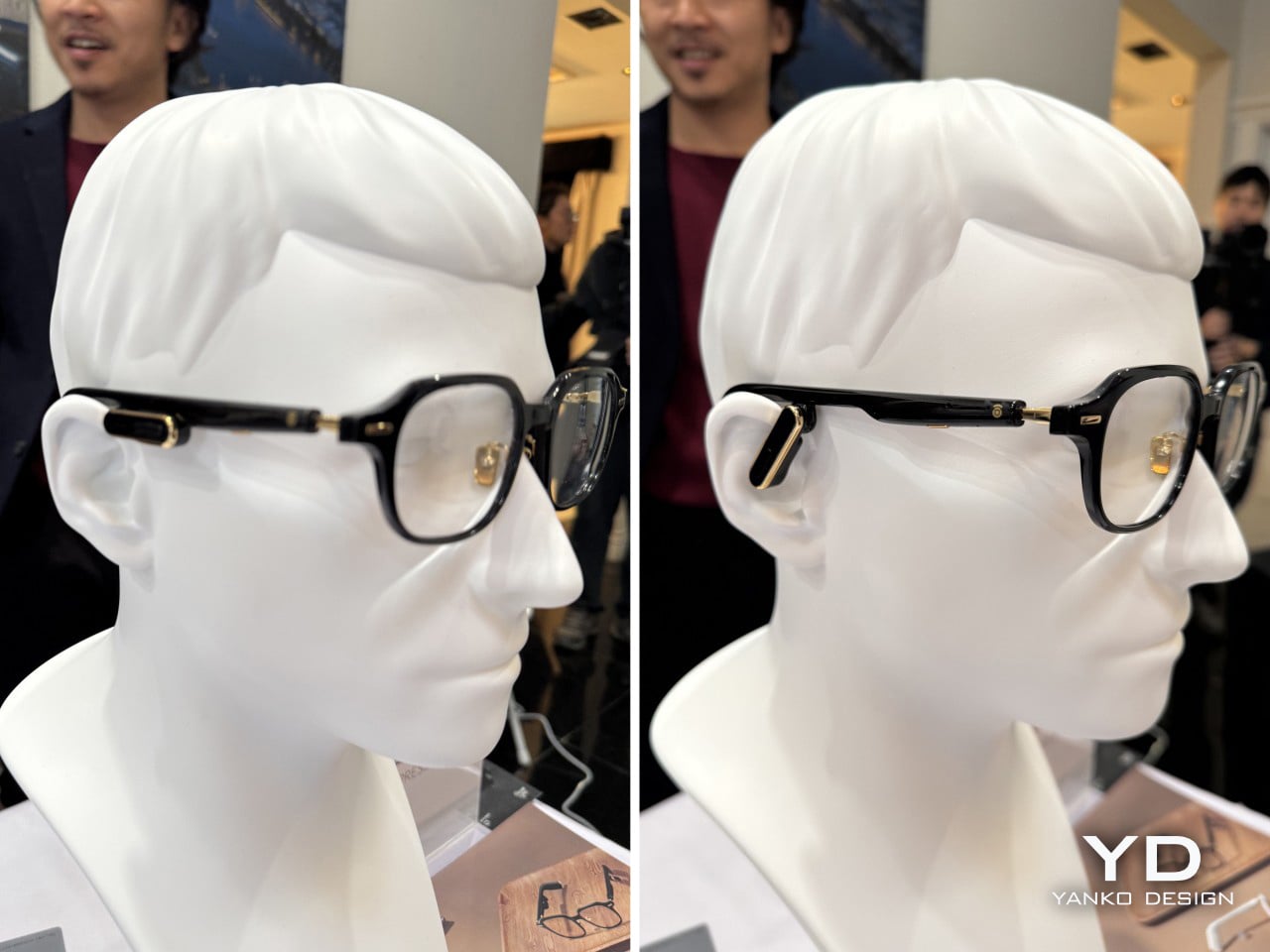
Hearing aids have a persistent image problem, often looking more like medical devices than modern technology. Cearvol, a company with a 20-year history in acoustics developing products for brands like JBL and Sennheiser, is tackling that stigma head-on by designing hearing solutions that look and feel like consumer electronics. Their entire product line, from the Diamond X1 and Liberte earbuds to the discreet Nano in-the-canal device and the more traditional Aurora, is powered by NeuroFlow AI 2.0. This DNN-based system learns complex acoustic patterns from real-world data to compensate for hearing loss, balancing sound across frequencies for clear listening without the over-amplification that makes traditional hearing aids sound harsh. The goal isn’t just to restore hearing but to create companions that people actually want to use, integrating Bluetooth streaming and stylish designs that blend in rather than stand out.

Two products at Global Connect showcase this philosophy perfectly. The Lyra integrates a 24-channel hearing aid directly into a pair of stylish glasses, combining optical vision with seamless hearing assistance in a single device. With a 14-hour replaceable battery, Bluetooth 5.3 for audio streaming, and an AI noise reduction system powered by three omnidirectional microphones, it’s a clever solution for people who already wear glasses and want an all-in-one device. The Wave takes a different approach, packing a 24-channel hearing aid into a pair of earbuds that come with a unique remote microphone. This small, touchscreen-equipped remote can be placed up to 10 meters away to precisely pick up voices in a large meeting room or noisy restaurant, streaming the audio directly to the earbuds. It even has an AUX-IN for connecting to TVs or airplane entertainment systems. Both Lyra and Wave represent a thoughtful re-imagining of what a hearing aid can be, one integrating the technology into an everyday object and the other extending its functionality far beyond what a simple earbud could accomplish.

Momcozy W1 Wellness: Warm-Massage Meets Wearable Pumping
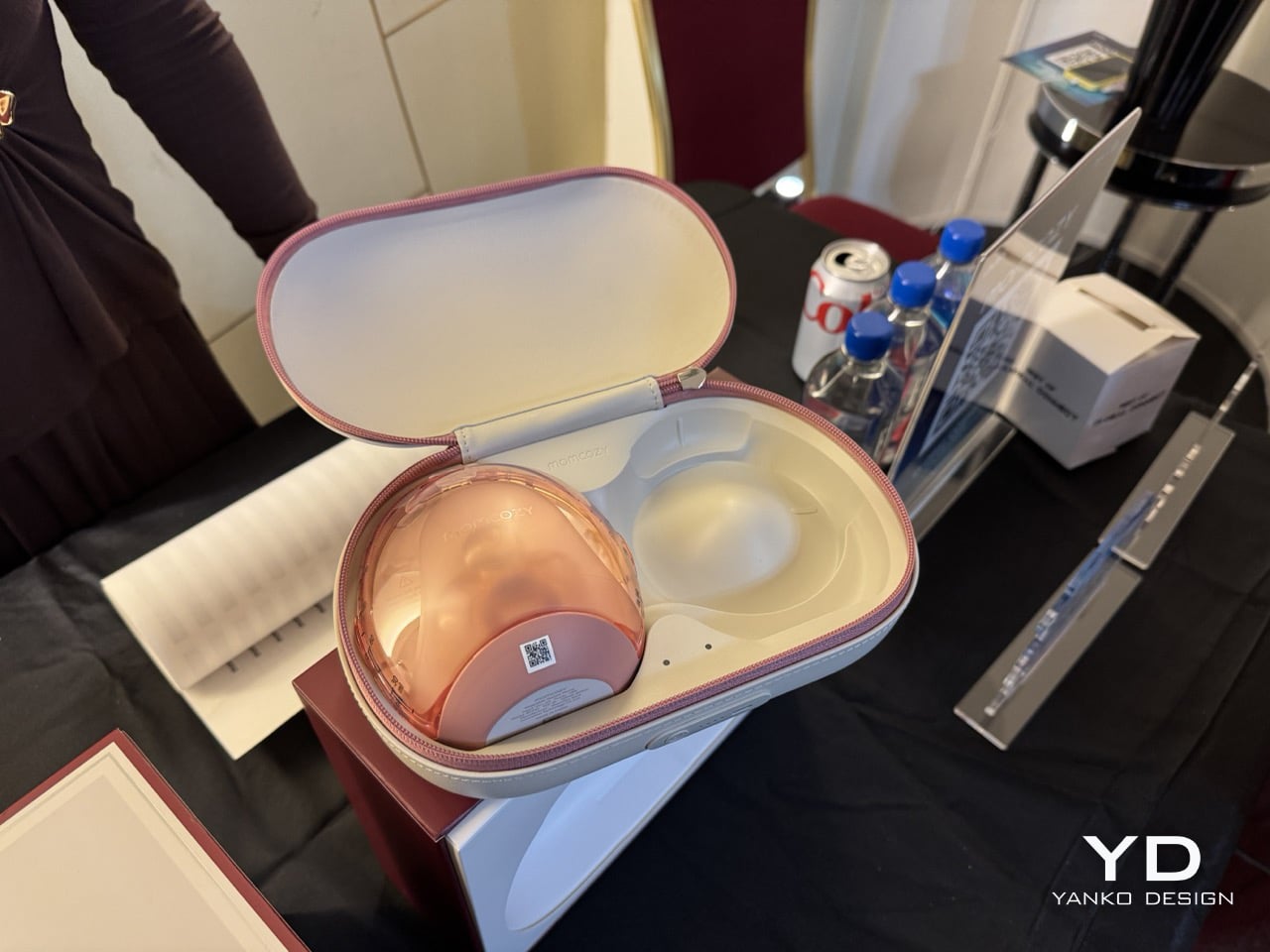
Shown Above – Momcozy Air 1

Wearables usually mean smartwatches, AR glasses, or fitness rings, but Momcozy is demonstrating that “wearable” can also mean medical devices designed to free up your hands while solving real health problems. The W1 Wellness is what the company calls the world’s first warm-massage wearable breast pump, combining technology typically found in wellness devices with the practical needs of nursing mothers. The system integrates adjustable heat (between 99°F and 106°F) with rhythmic vibration massage, both designed to improve milk flow and efficiency. The warming zone envelopes the breast for even heat distribution, addressing one of the limitations of traditional warming options like hot pads that only hit certain areas. Research shows massage improves milk output and helps with complete emptying, and Momcozy is packaging both features into a hands-free system controlled through app-based automated programming.

This positions Momcozy with two different solutions for the same problem. The Air 1 prioritizes discretion and portability for working moms who need to pump during meetings or while traveling, maintaining 62 core patents and awards including a 2025 TIME Special Mention. The W1 prioritizes comfort and efficiency through warmth and massage, targeting mothers who struggle with clogged ducts, slow flow, or discomfort during pumping sessions. Both feature transparent tops for precise alignment, wireless charging for 15-plus pumping sessions, and suction up to 280mmHg, but they’re solving slightly different pain points within the same user base. Whether heat and massage become standard features or remain premium options depends on whether the efficiency gains justify the cost difference, but for mothers dealing with engorgement or flow issues, the W1 offers features that traditional pumps and even other wearables don’t currently provide. Momcozy’s strategy reveals how wearables are fragmenting into specialized variants, each addressing specific user needs rather than trying to be one universal solution.

Daïve HUD: An Underwater Augmented Reality Dive Computer
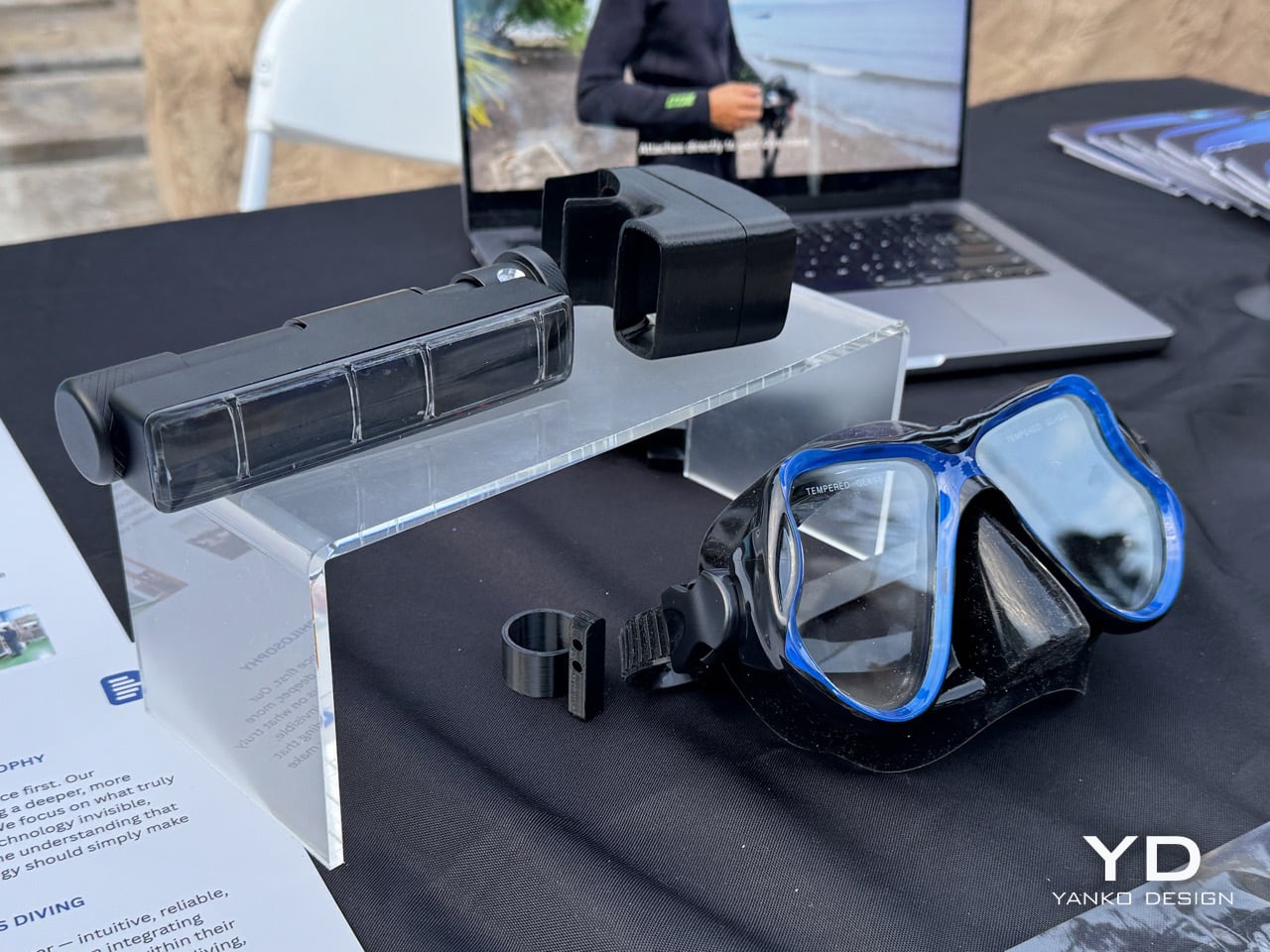
The most persistent interruption in scuba diving isn’t a curious fish; it’s the constant, focus-breaking glance down at a wrist-mounted computer to check depth, time, or remaining air. Daïve’s HUD clips directly onto your existing dive mask to solve that problem, projecting a full-color display into your sightline so critical data feels like a natural part of your underwater view. The system has three modes tailored for recreational, technical, and freediving, with layouts designed for how decisions are actually made in each discipline. It’s controlled with a glove-friendly rotary selector that provides tactile mechanical feedback, a crucial detail for anyone who’s tried to operate a small button with thick neoprene gloves. The display flips up instantly when you don’t need it, and a dual-battery, non-sealed power design supports over 20 hours of use for long days of repeated dives.

What makes the Daïve HUD more than just a convenient display is its connectivity. It pairs with a wireless smart gauge for real-time air monitoring and uses a multi-mode communication system combining optical, near-field RF, and acoustic links for real-time team awareness and coordination with other divers. This isn’t just about convenience; it’s a fundamental shift in situational awareness. For instructors monitoring students, photographers managing cameras, or technical divers navigating caves, reducing the cognitive load of constantly checking a wrist computer is a massive safety and performance upgrade. The entire system is modular, with swappable components and an open software path designed to evolve over time, positioning the Daïve HUD less as a single gadget and more as a long-term platform for underwater augmented reality.

The post Google Gemini AR Glasses and other cool wearables at the Global Connect Show at CES 2026 first appeared on Yanko Design.
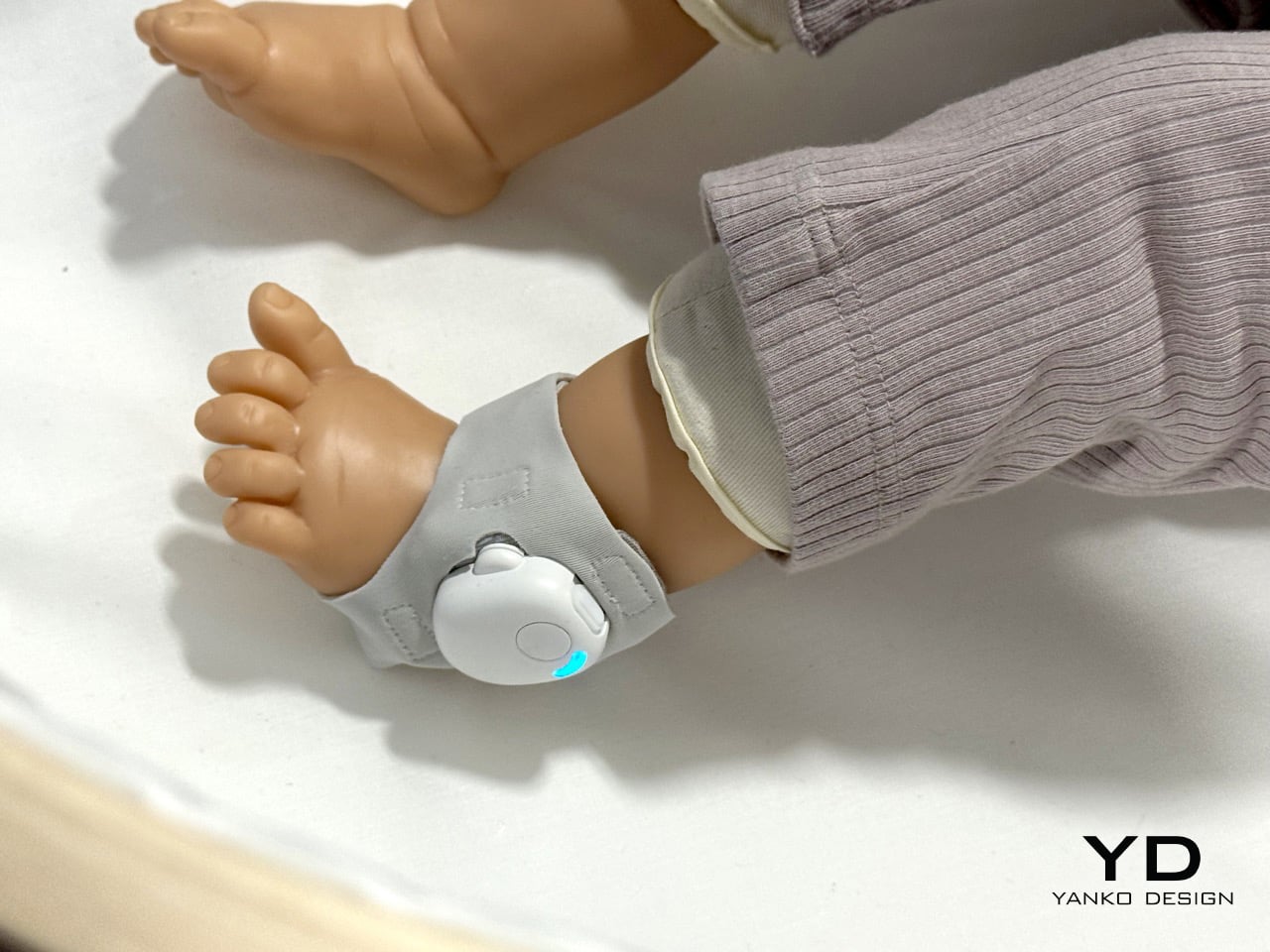
CES 2026: Baby Sleep Monitor Tells Parents Exactly When To Put Kids To Bed (Without Them Crying)

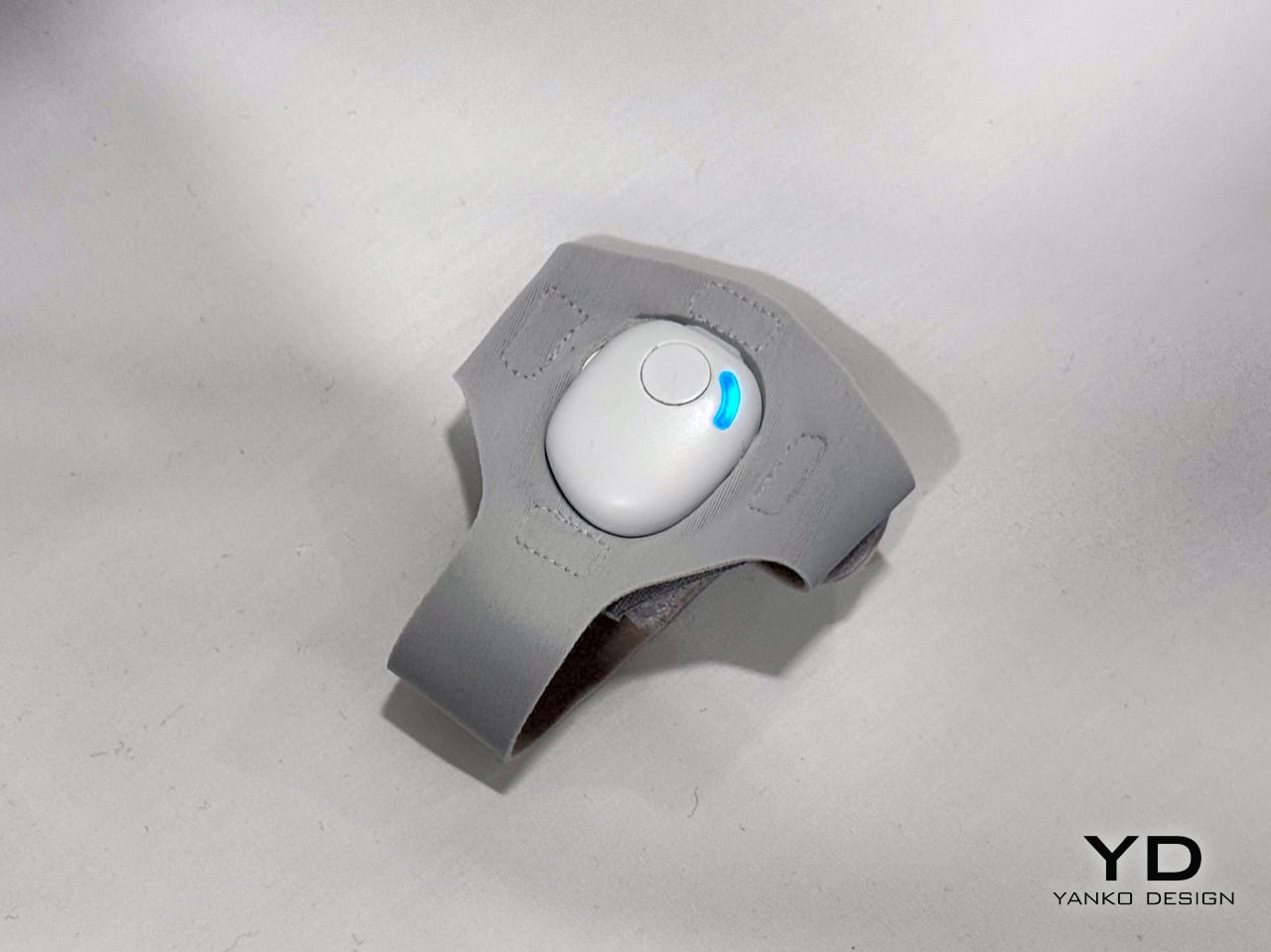
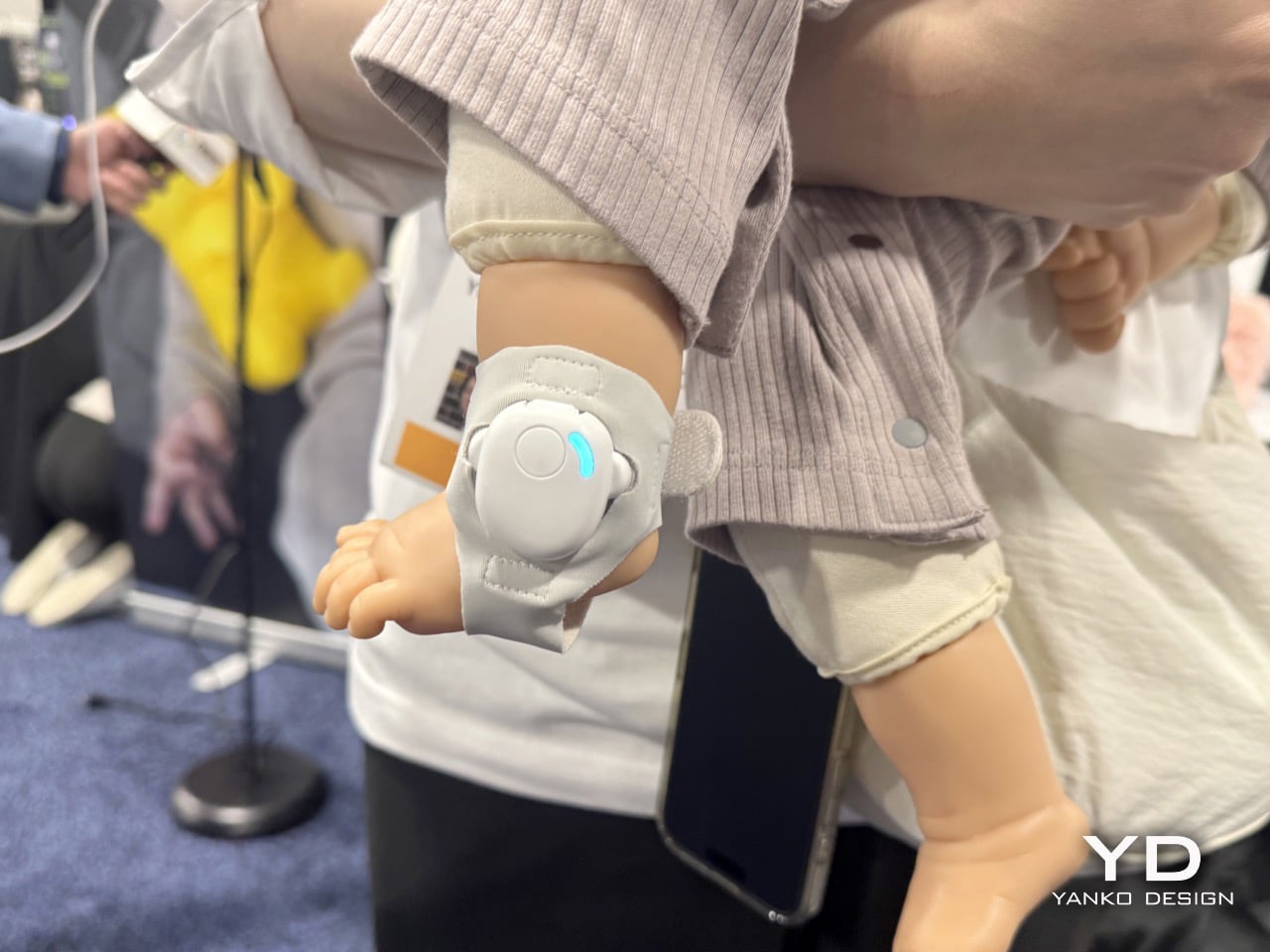
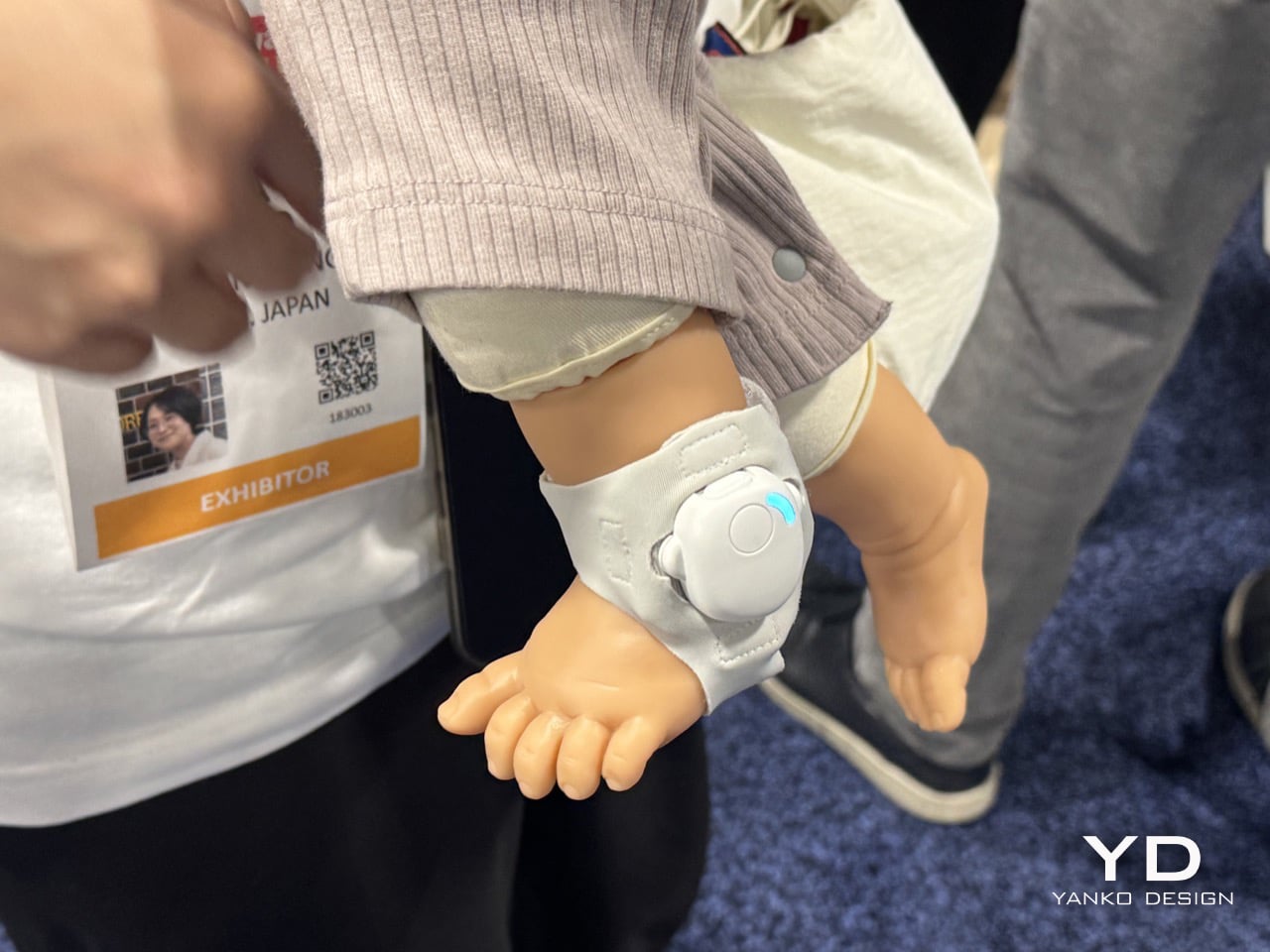
Every parent knows the moment. Your baby finally drifts off in your arms after twenty minutes of gentle rocking, their breathing settles into that peaceful rhythm, and you begin the delicate transfer to the crib. The instant their back touches the mattress, their eyes snap open. Yukai Engineering’s Necoron, making its debut at CES 2026, aims to eliminate this guessing game entirely. The device monitors your infant’s heart rate through a small ankle sensor and uses LED color indicators to tell you exactly when your baby has reached a sleep state deep enough for a successful transfer.

The Tokyo-based robotics company brings the same thoughtful design approach that earned them recognition for products like Qoobo and Nékojita FuFu. Necoron was developed based on research from RIKEN, one of Japan’s leading research institutions, giving it scientific backing that sets it apart from typical baby gadgets. At the Yukai Engineering booth in CES’s Smart Home area, the prototype represents an intriguing intersection of biometric monitoring, sleep science, and practical parenting tools. Takara Tomy is collaborating on the project, with the companies targeting a 2026 market launch.

Designer: Yukai Engineering Inc.

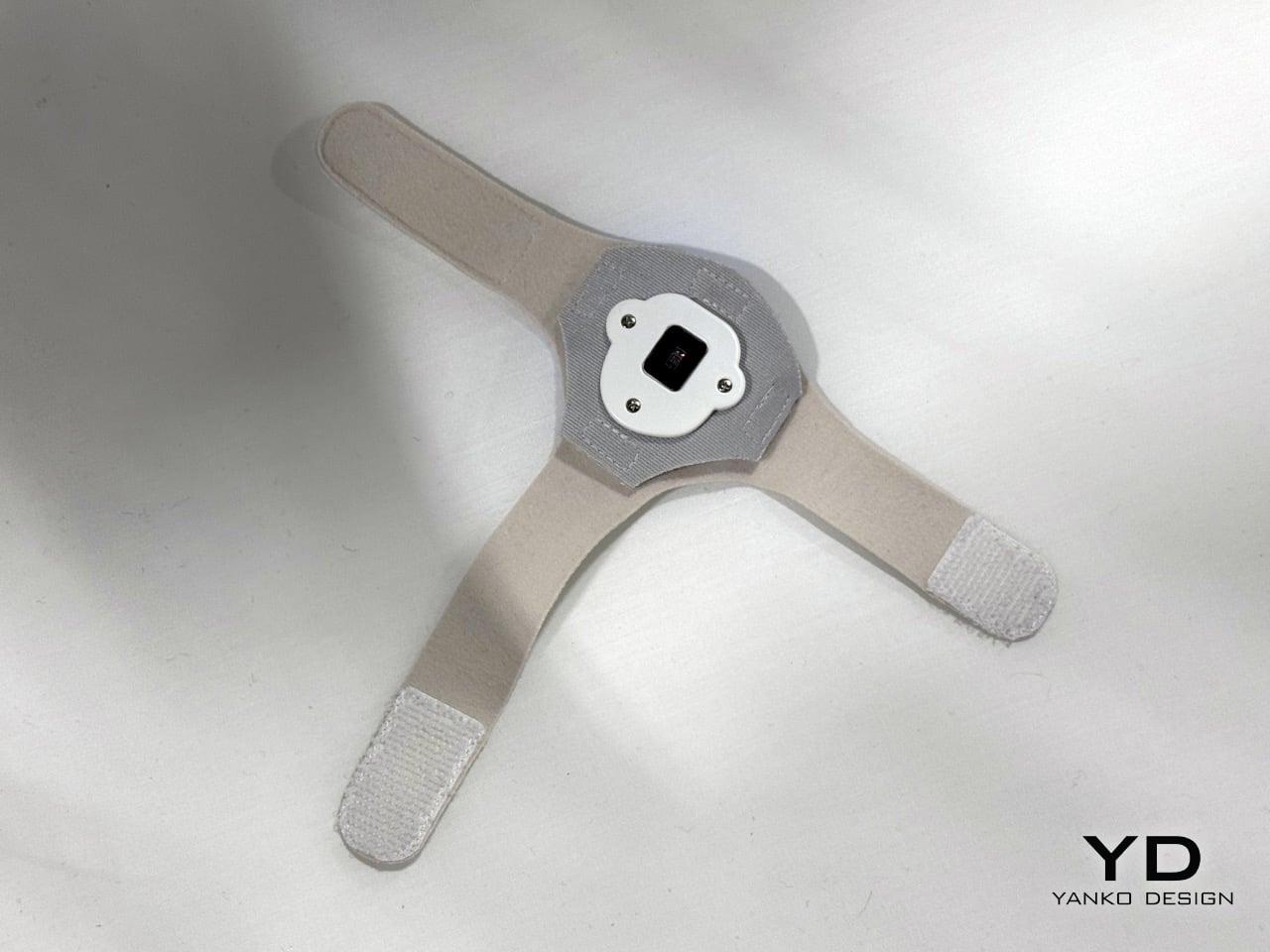
The ankle band wraps around the baby’s leg with a soft fabric strap and houses a rounded white sensor module that, yes, looks exactly like a ‘house arrest wearable’, so to speak. But instead of tracking curfew violations, you’re monitoring optimal nap conditions, which feels like a fair trade when you’re on hour three of failed transfer attempts. The sensor feeds heart rate data to a separate main unit that displays color-coded LED signals: walk while holding, sit and hold, or the magic moment when you can finally lay them down. You press a button to start monitoring and then just glance at the color while your hands stay where they belong, supporting 12 pounds of sleeping chaos. The minute the Necoron’s light turns blue, your baby’s in the right state of mind to be put to bed without triggering the ‘back switch’.

What makes this work is the RIKEN research foundation, which identified specific heart rate patterns that indicate when babies have moved past vulnerable light sleep into something stable enough to survive the sensory avalanche of being put down. Temperature changes, vestibular shifts, tactile feedback differences, all of it conspires to wake your kid the second their back hits the mattress. Yukai’s algorithms predict when that transfer window actually opens instead of making you guess based on how long their eyes have been closed. The company hasn’t released the exact parameters yet, but the core logic tracks: deeper sleep stages show different cardiovascular signatures than drowsiness.

Yukai Engineering keeps building robots that solve real problems without feeling clinical about it. Their Nékojita FuFu made TIME Magazine’s Best Innovations of 2025 for blowing on hot drinks with randomized breath patterns. BOCCO emo won CES 2023 Innovation Awards as a family communication platform. They understand that helpful tech can also feel delightful, which matters when you’re trying to convince exhausted parents to strap another device onto their infant. Necoron launches sometime in 2026, pricing TBD, and whether it becomes essential nursery gear depends entirely on whether those algorithms actually work at 3 AM when nothing else has.

The post CES 2026: Baby Sleep Monitor Tells Parents Exactly When To Put Kids To Bed (Without Them Crying) first appeared on Yanko Design.
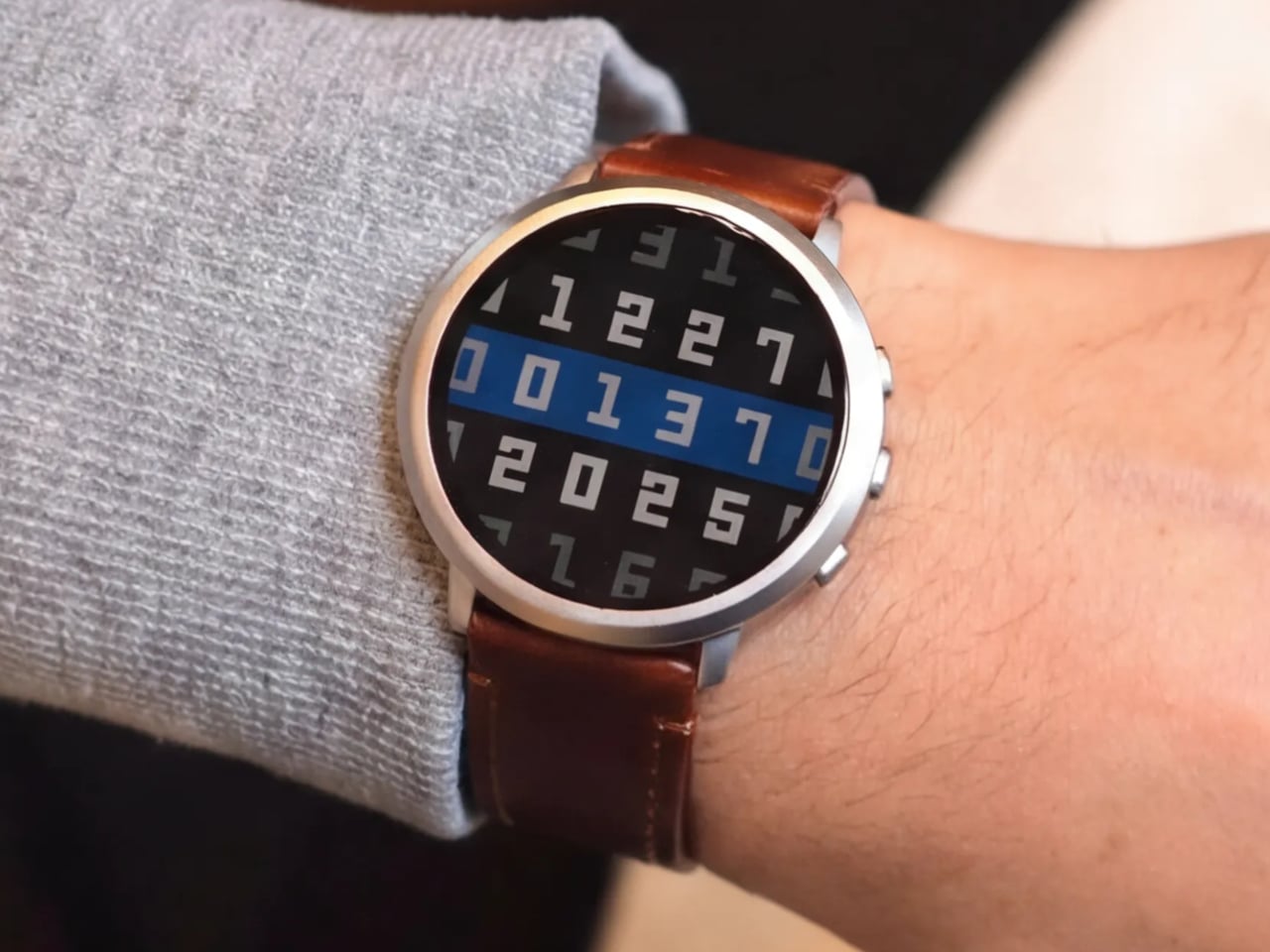
Pebble Round 2 Fixes the Bezel and Battery After an 11-Year Wait

The 2015 Pebble Time Round stole a lot of hearts by looking like a real analog watch and still being a Pebble, but it shipped with a tiny screen, a huge bezel, and battery life that lagged behind its siblings. It remained the thinnest smartwatch ever made, yet always felt like a beautiful compromise waiting for a second chance, the kind of product people kept wearing despite its flaws because it looked better than anything else on their wrist.

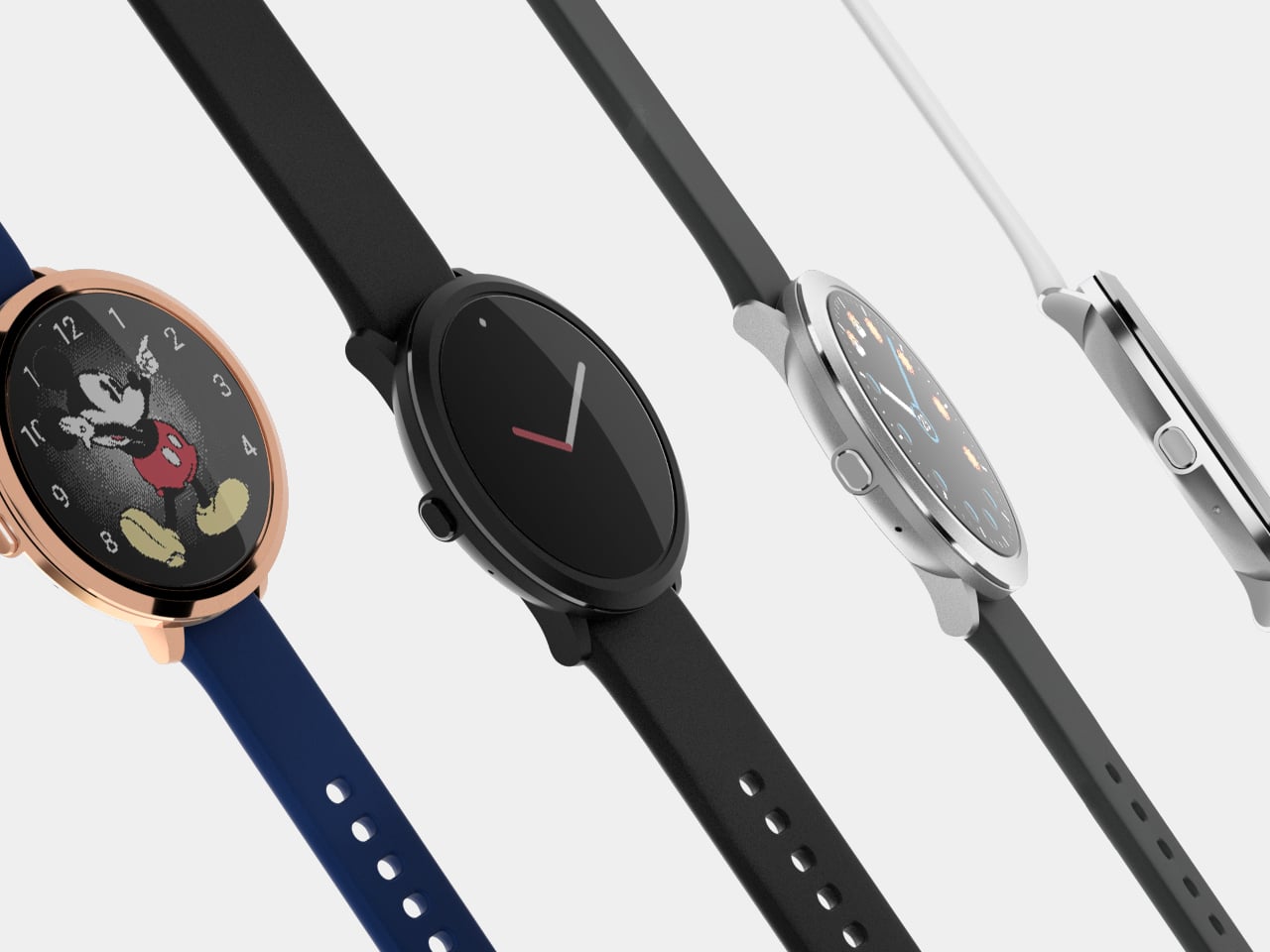
Pebble Round 2 is that second chance, part of the broader Pebble relaunch. It keeps the same ultra-slim stainless-steel profile, just 8.1 mm thick, but fixes the two big complaints: the bezel is gone, and the battery now lasts around two weeks. It is framed as the most stylish Pebble ever, but this time without the asterisk or the mental math about whether style was worth the compromises.

Designer: Pebble

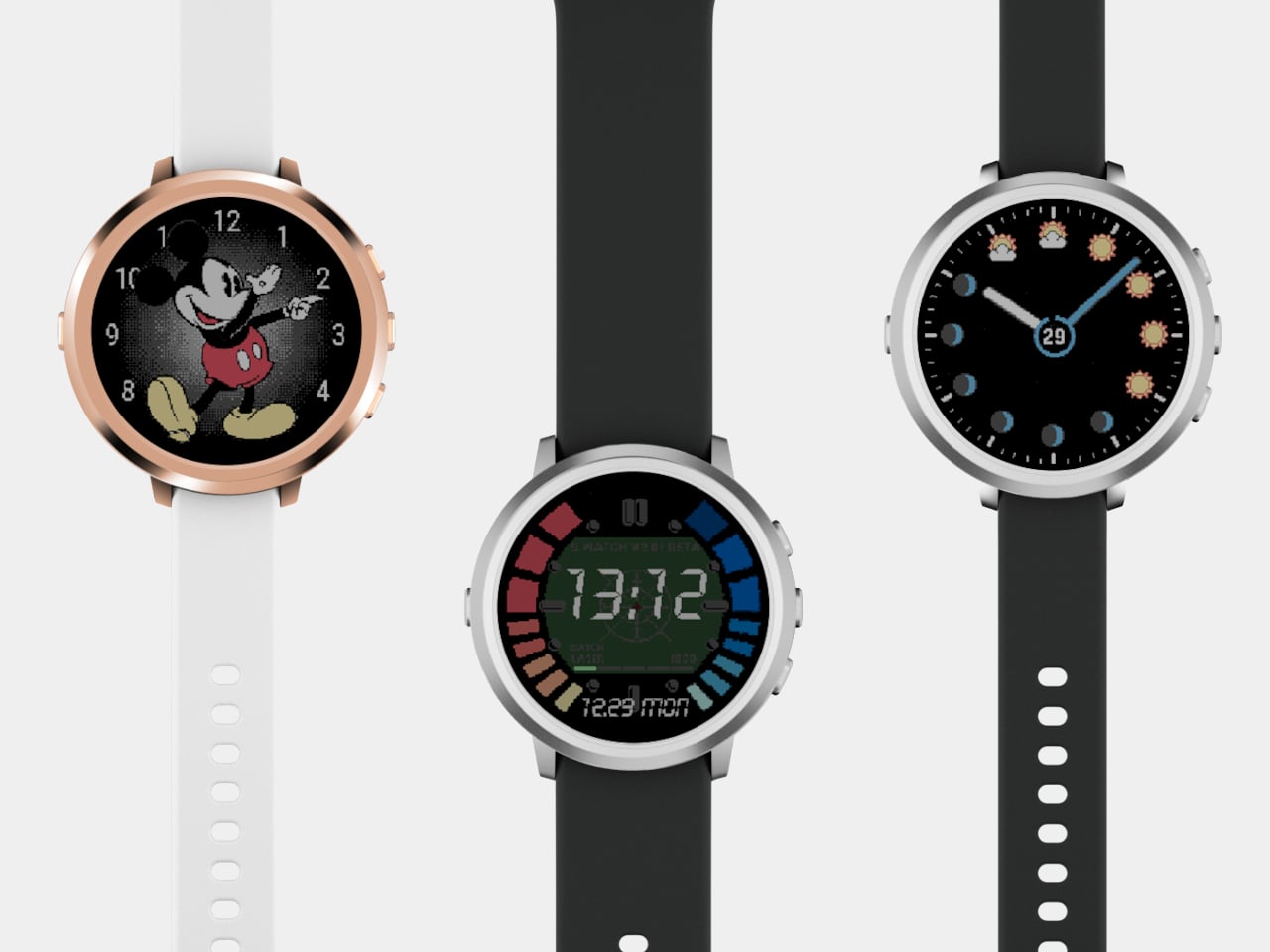
The new 1.3-inch color e-paper display covers the entire face, 260 × 260 pixels at 283 DPI, twice the resolution of the original. The always-on, reflective screen still behaves like a classic Pebble, readable in sunlight and gentle indoors, but finally looks proportionally right. Wrap that in a stainless-steel frame, and you get something that reads as a watch first, gadget second, which has always been the goal.

The two-week estimated battery life, made possible by newer Bluetooth chips and Pebble’s frugal OS, brings the Round in line with the rest of the lineup. Interaction stays very Pebble, four physical buttons you can use without looking, plus a touchscreen you do not have to rely on. There is a backlight for night glances, but the default state is that calm, always-on face that does not glow at you during meetings.

The software side stays fun, quirky, and open source. PebbleOS powers everything, with an open-source mobile app that works with iOS and Android. The Pebble app store has over 15,000 apps and watchfaces, and the SDK is there if you want to build your own. Health tracking covers steps and sleep, enough for everyday awareness without pretending to be a hardcore fitness or sports watch.

Dual microphones handle speech input, from interacting with AI agents to replying to messages on Android, with iOS support coming in some regions. Water resistance is targeted at 30 m, enough for daily life. Style-wise, you get matte black with a 20 mm band, brushed silver in 14 mm or 20 mm, and polished rose gold in 14 mm, all with quick-release bands and room for standard straps.

Pebble Round 2 speaks to people who miss glancing at a watch that is always on, who like the idea of weeks-long battery life and tactile buttons, and who want something that looks good with a shirt cuff as well as a hoodie. It is not chasing the latest sensor arms race; it is doubling down on the idea that a smartwatch can still feel like a watch, just one that happens to run PebbleOS in 2026, with a full-face display and enough battery to forget about charging for 14 days.

The post Pebble Round 2 Fixes the Bezel and Battery After an 11-Year Wait first appeared on Yanko Design.

This $418 French Strap Solves the Watch vs Smartwatch Problem

Look, we all know someone who wears a beautiful vintage Rolex or Omega but keeps glancing at their phone every five minutes to check their step count. Or maybe you’re that person. There’s this weird tension happening right now between watch lovers who appreciate the craft and heritage of mechanical timepieces and those of us who genuinely need the convenience of a smartwatch to get through the day. Enter Smartlet, a Paris-based startup that’s decided this whole either-or situation is kind of ridiculous.

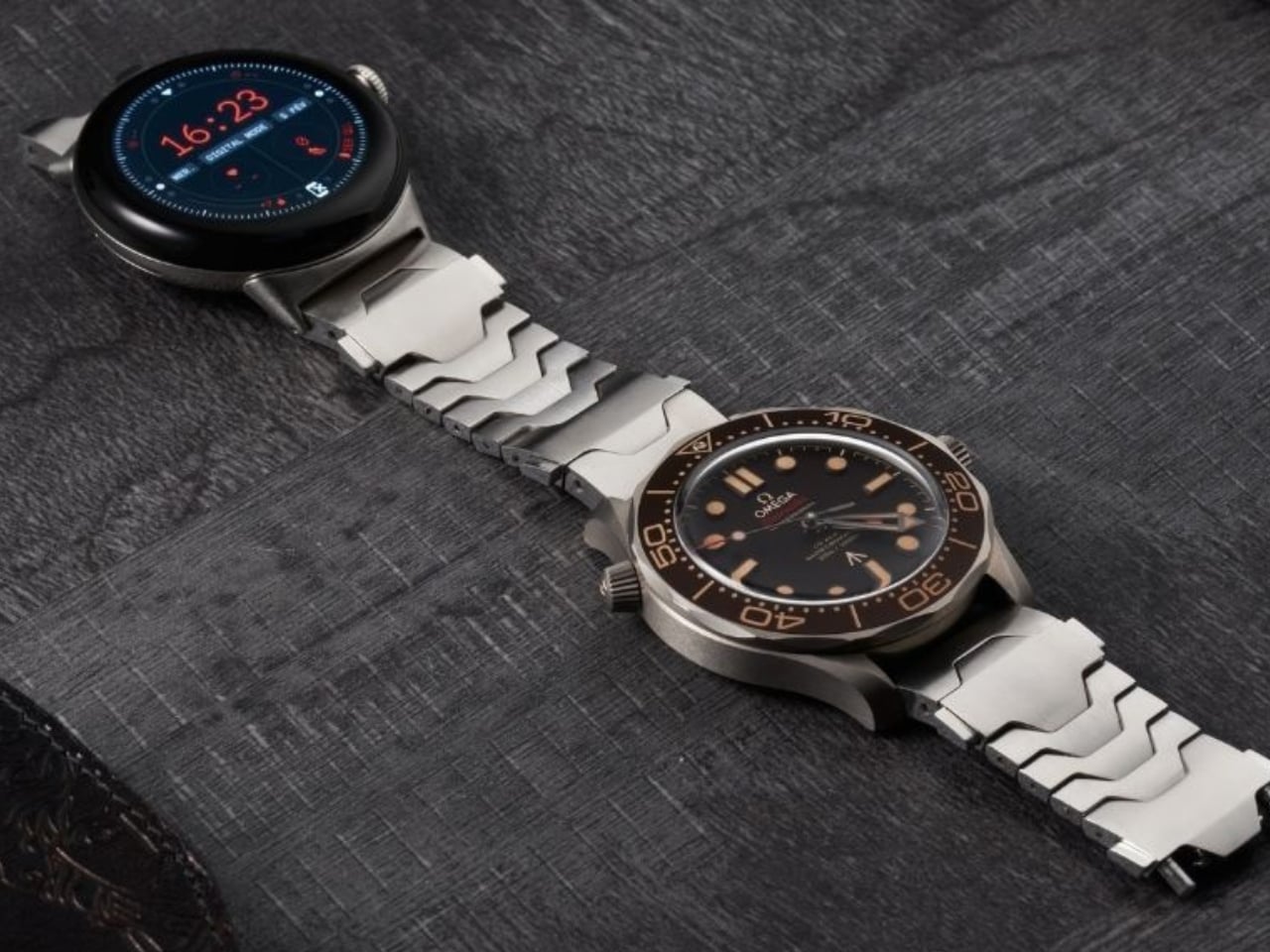
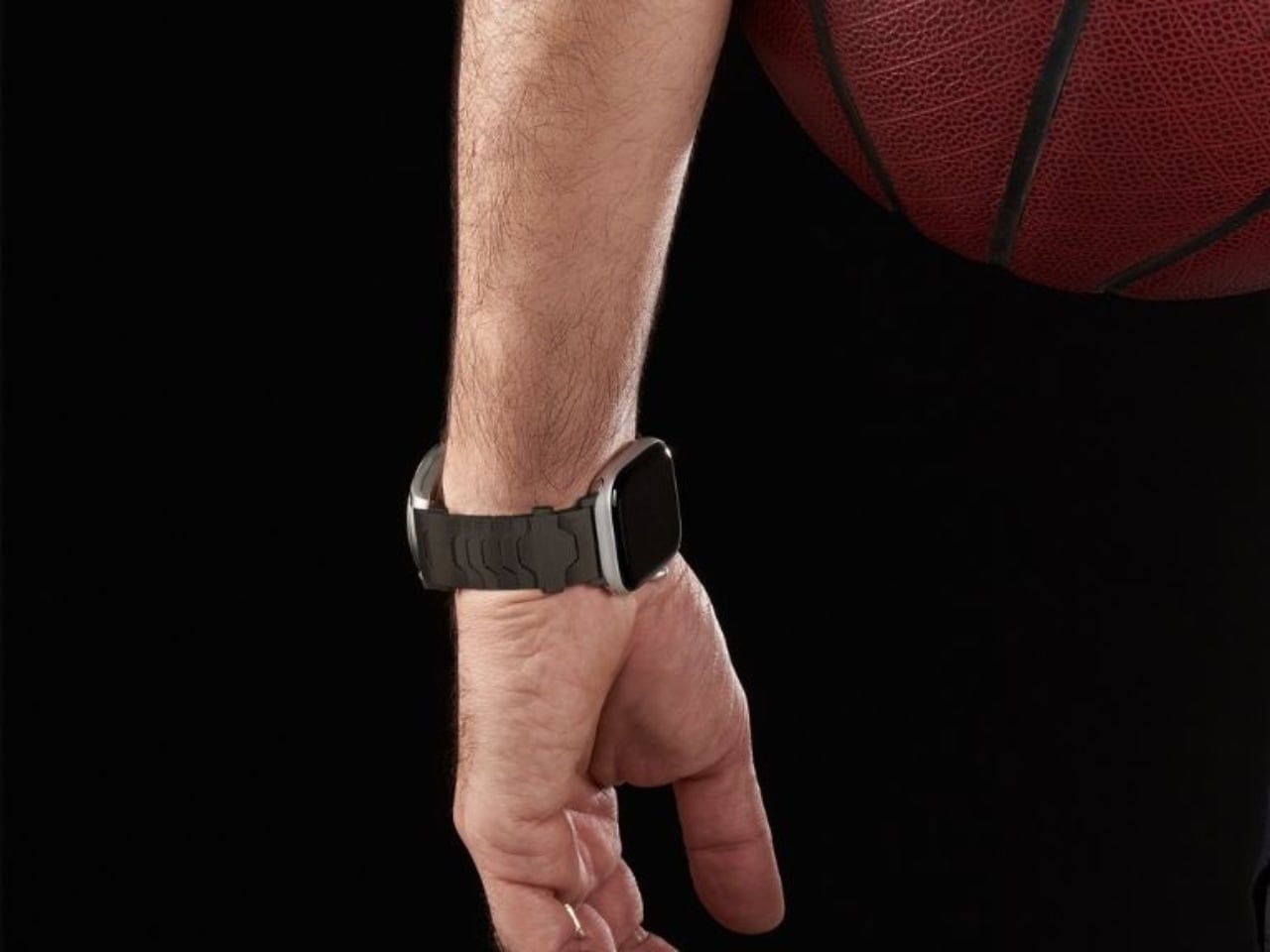
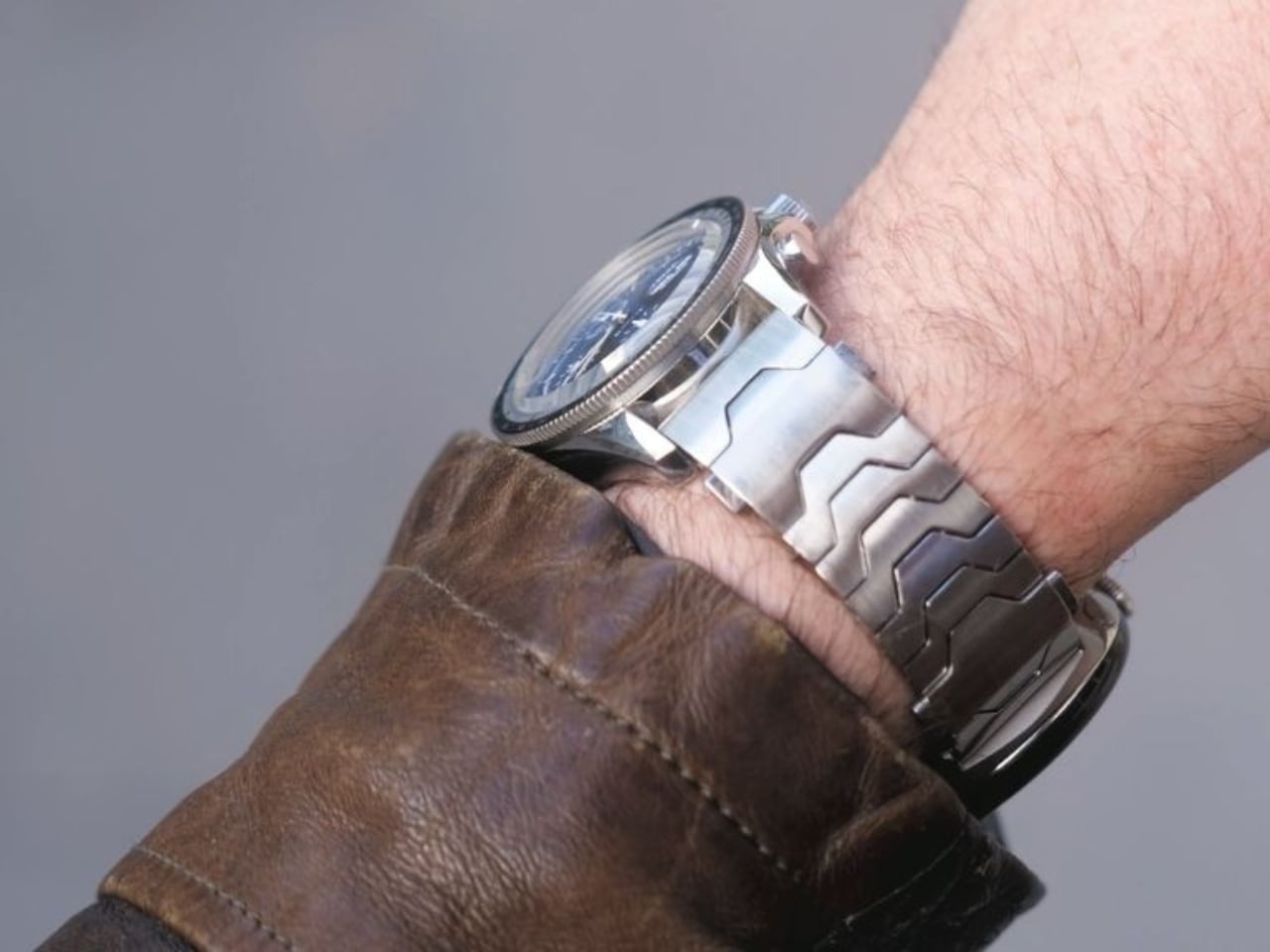
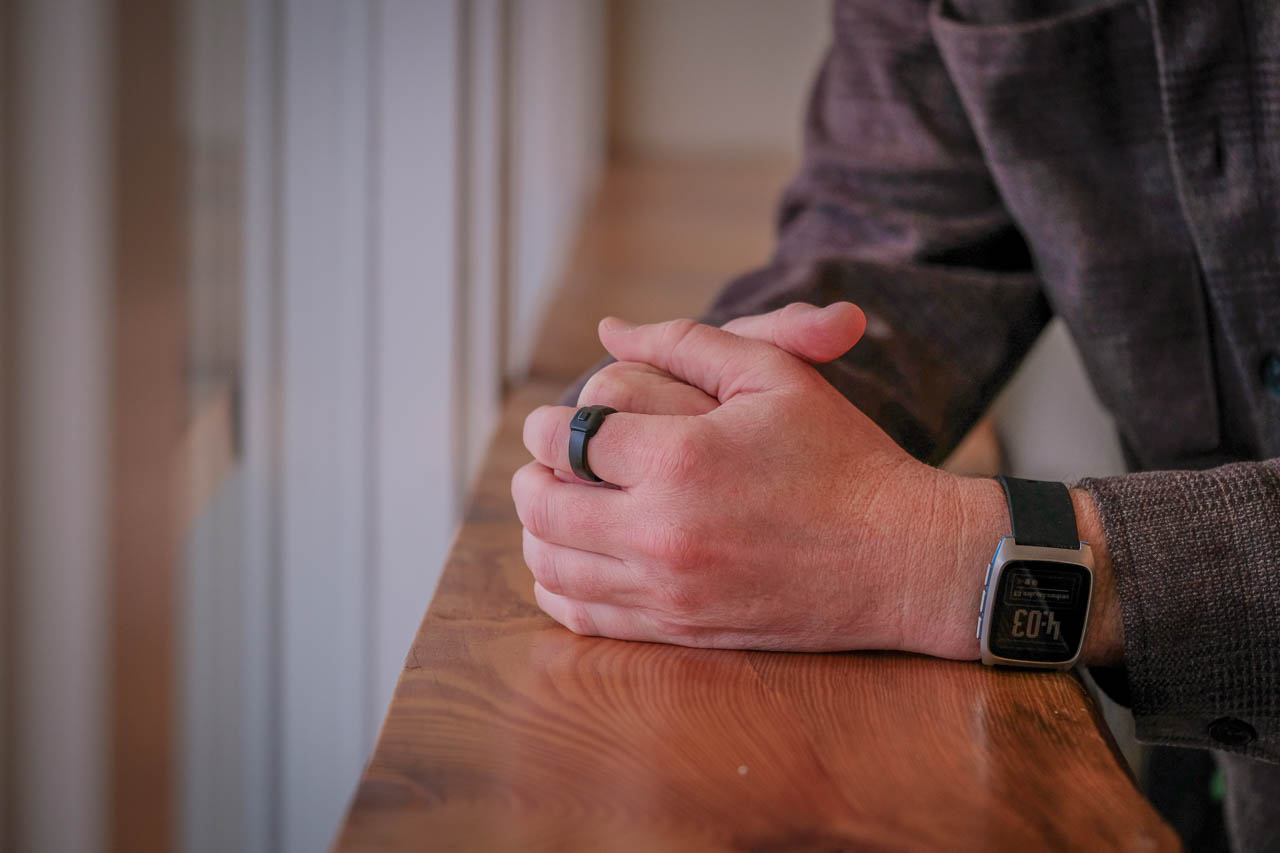
The Smartlet dual-watch strap does exactly what it sounds like. It lets you wear both a traditional watch and a smartwatch on the same wrist, simultaneously. One sits on top of your wrist like normal, the other hides underneath. Flip your wrist one way to check the time on your classic timepiece, flip it the other way to see your notifications, heart rate, or whether you’ve hit your daily movement goal.

Designer: David Ohayon for Smartlet

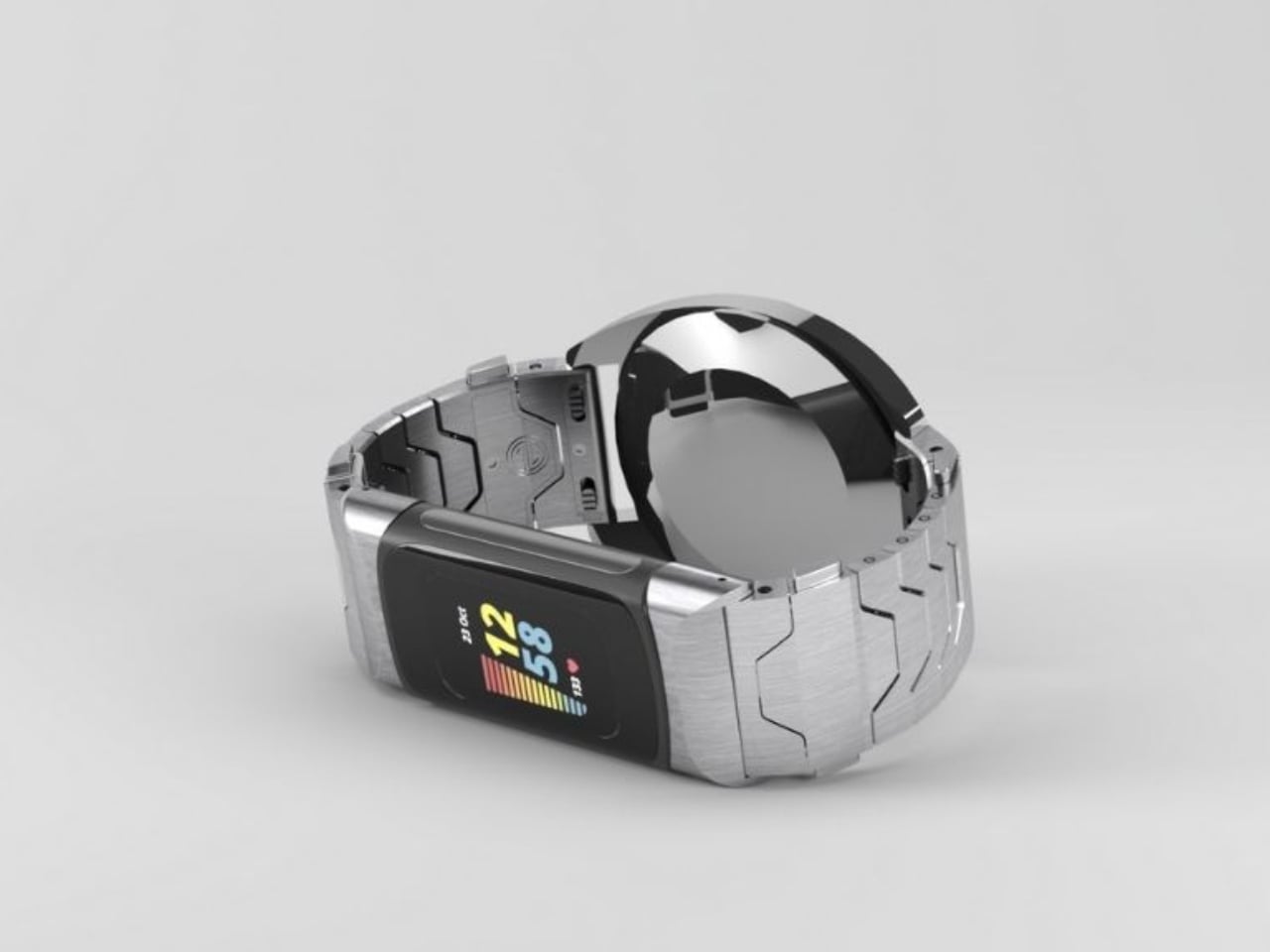
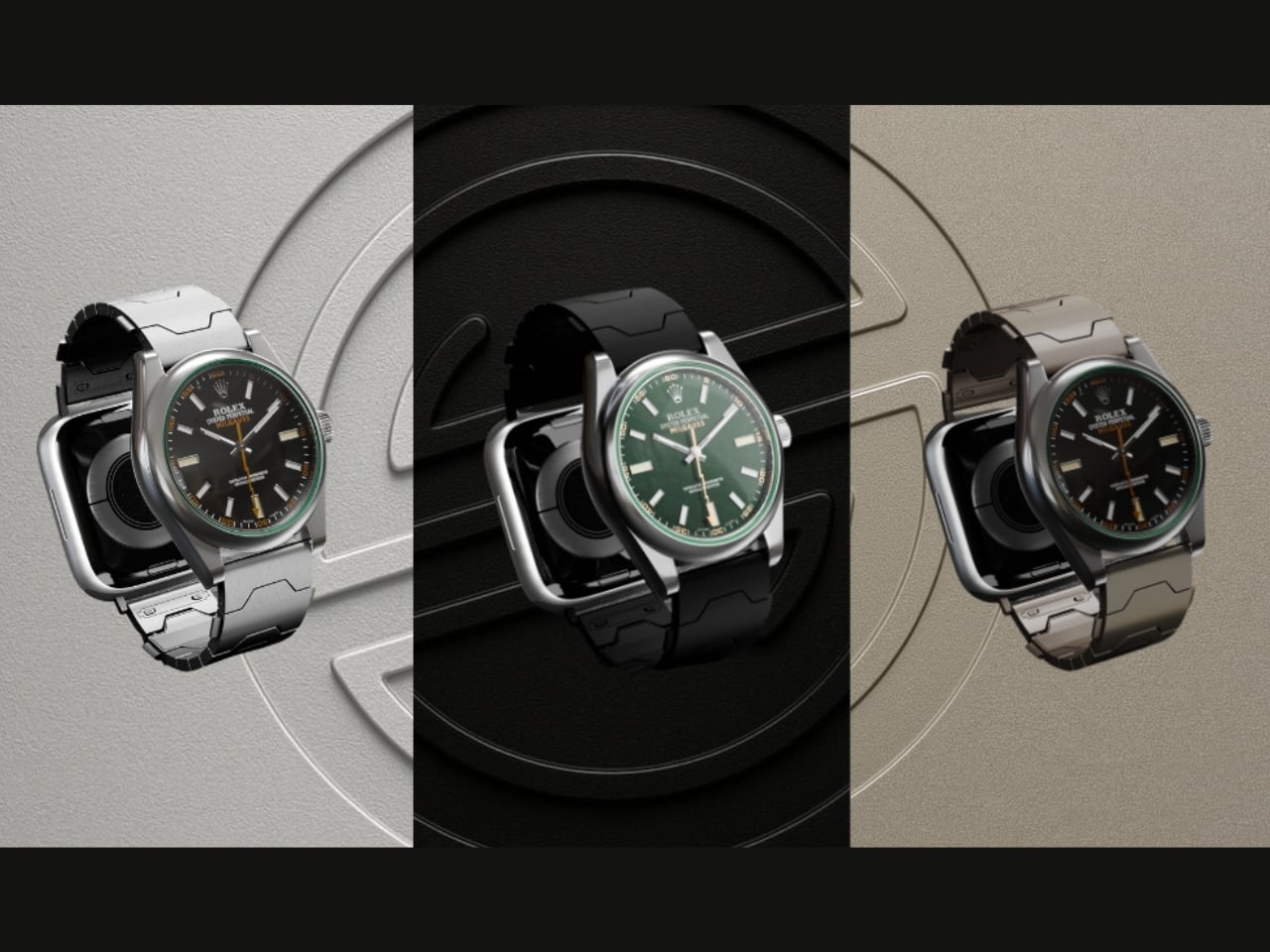
Created by engineer David Ohayon, who himself couldn’t decide between his beloved mechanical watches and the practical features of modern smartwatches, the Smartlet system uses a patented modular design that lets you clip and unclip watches in seconds without any tools. The strap itself is made from stainless steel and comes in different finishes (Classic, Shadow, and Titanium), so it’s not trying to look like some weird tech gadget. It actually resembles a regular metal watch bracelet, which means it won’t clash with the aesthetic of luxury timepieces.

Now, before you start imagining some clunky contraption, the total weight of the setup sits between 60 and 100 grams with both watches attached, which is comparable to most steel bracelets already on the market. The thickness is between 9 and 12mm, compared to 4 to 8mm for classic watches, so yes, it’s noticeably thicker but not absurdly so.

The system is compatible with watches that have 20mm or 22mm lug widths, which includes iconic brands like Omega, Tudor, Tag Heuer, Rolex, Breitling, and Zenith. On the smartwatch side, it works with Apple Watch, 41mm Google Pixel Watch, various Samsung Galaxy Watch models, and even fitness trackers like Whoop 4 and Fitbit Charge. So whether you’re Team Apple or Team Android, there’s room for you here.

But here’s the thing about Smartlet that gets interesting. It’s not just about convenience, it’s about something deeper that watch enthusiasts understand. There’s emotional value in wearing a watch your grandfather gave you, or a piece you saved up for years to buy. These watches tell stories and carry memories. Yet in 2025, we’re also living in a world where contactless payments, fitness tracking, and instant notifications have become genuinely useful features we don’t want to give up.

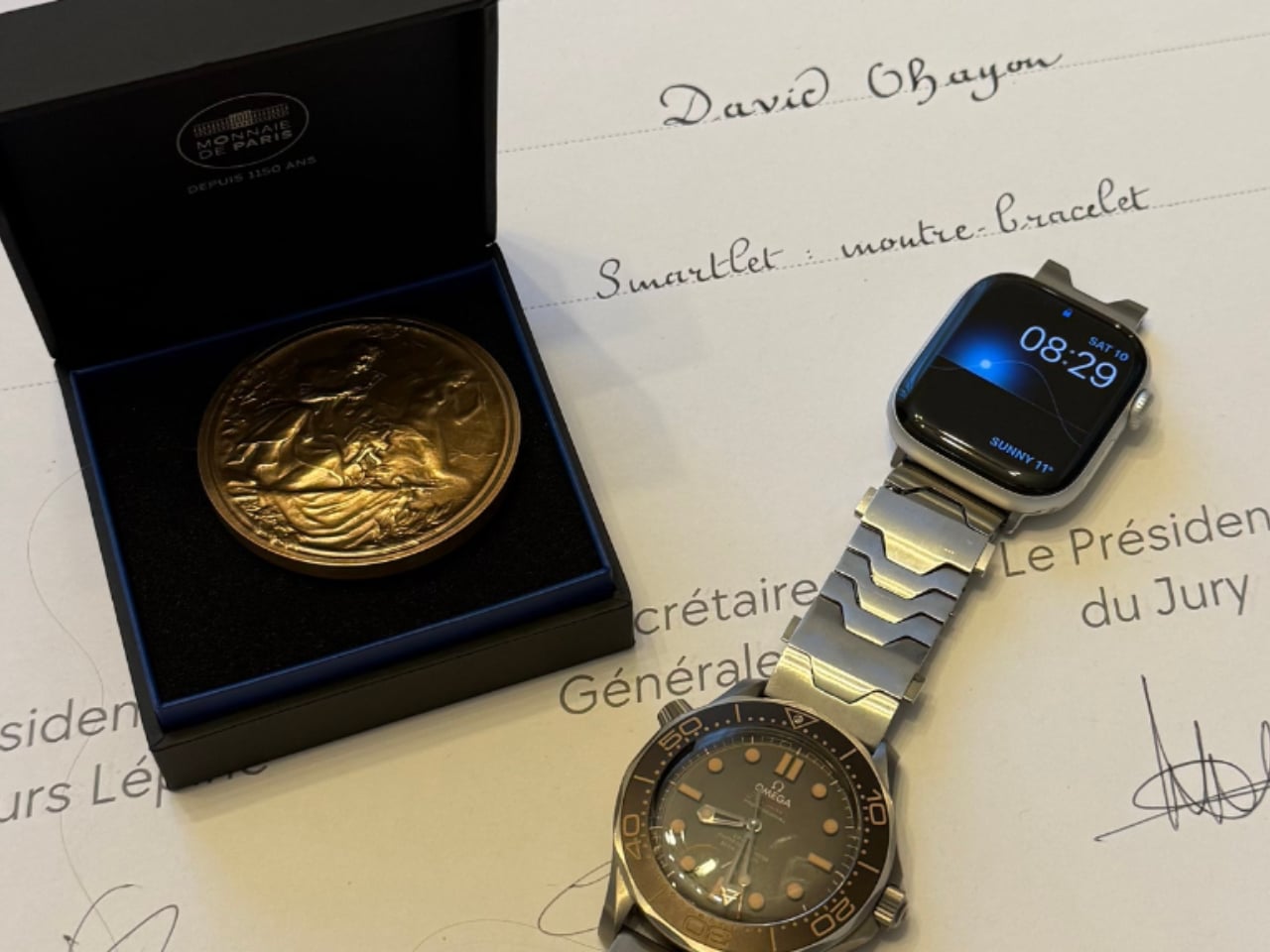
The Smartlet has already won a bronze medal at the prestigious Concours Lépine 2025, a French innovation competition that’s been recognizing inventions since 1901. It’s also been featured across major watch publications and tech outlets, with some calling it a potential game-changer for the industry.

Of course, there are practical considerations. Wearing a smartwatch on the underside of your wrist means it’s in regular contact with desks, armrests, and tables, which could lead to scratches or damage. And aesthetically, this is clearly designed for people who want the best of both worlds without compromise, which admittedly might not be everyone. The marketing does lean heavily into “modern gentleman” territory, but honestly, the concept itself is pretty gender-neutral. Anyone who loves watches and also wants smart features could find this useful, whether you’re tracking workouts, managing notifications during meetings, or just want your health data without sacrificing style.

What makes Smartlet genuinely clever is that it doesn’t ask you to choose. It recognizes that technology and tradition aren’t enemies, they’re just different tools for different needs. You can protect your luxury watch from daily wear by keeping it underneath while your smartwatch handles the heavy lifting on top. Or you can showcase your mechanical masterpiece while discreetly monitoring your fitness data from below.

Is it for everyone? Probably not. But for the growing number of people caught between worlds, wanting both the soul of traditional watchmaking and the brains of modern tech, Smartlet offers something genuinely new. It’s a design solution that says you don’t have to pick a side anymore. Your wrist, your rules.

The post This $418 French Strap Solves the Watch vs Smartwatch Problem first appeared on Yanko Design.
Based on sensors in game controllers, this upper-limb wearable robot will help you with your daily chores

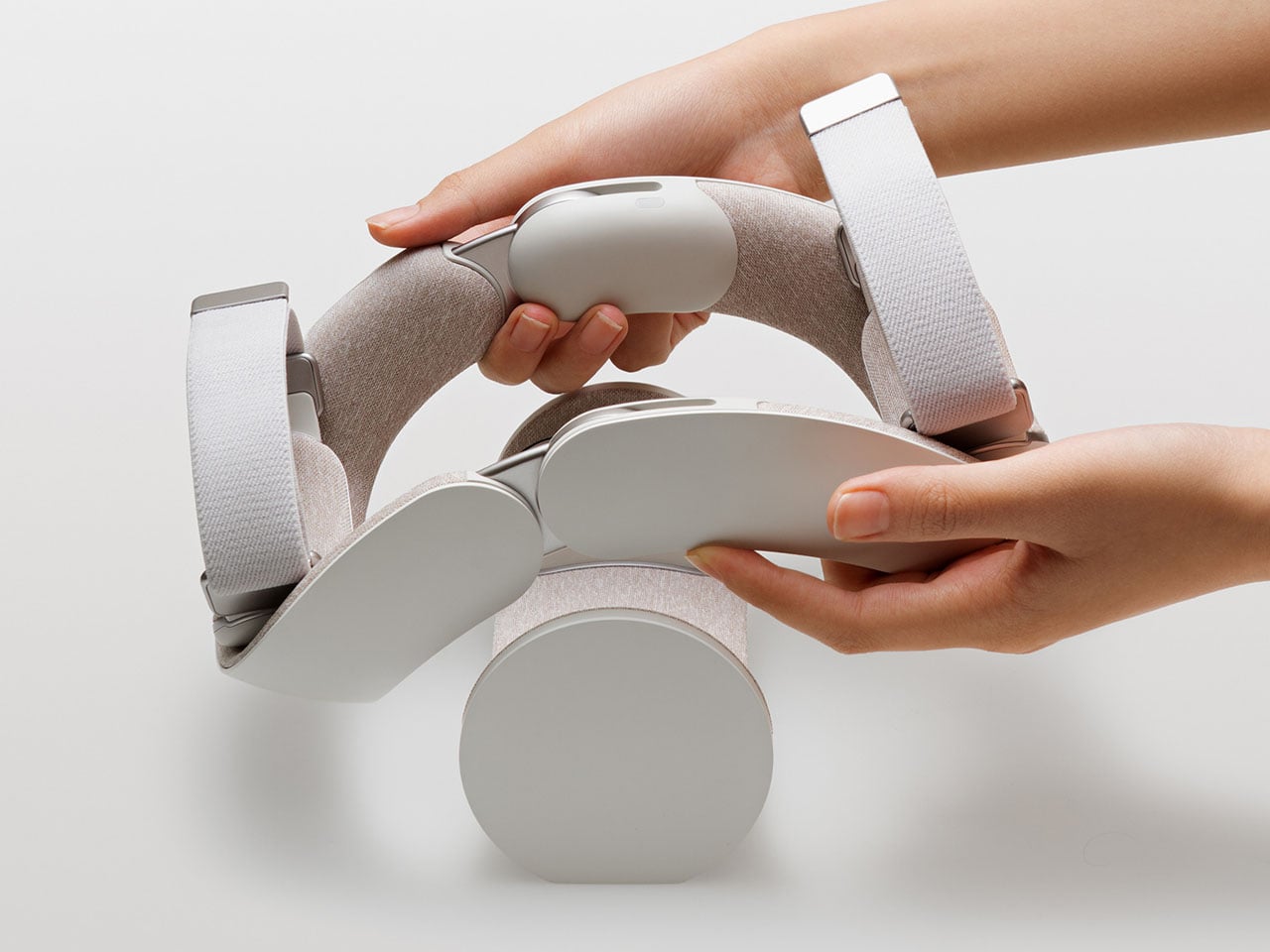
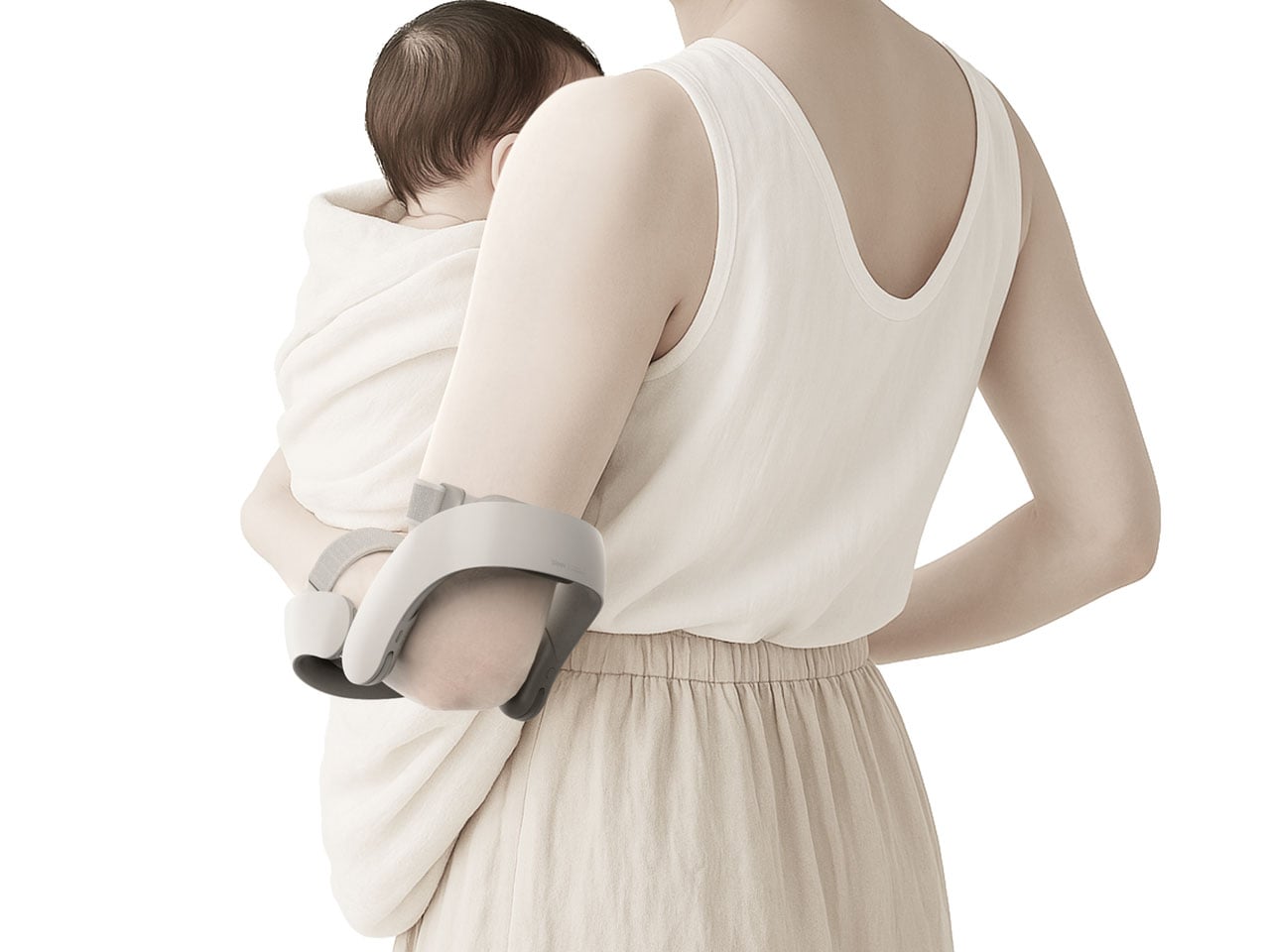
One thing exoskeletons have done right is help with motor rehabilitation. Of course, their size and weight have decreased over time, but most of those available are suitable for rehabilitation, load-bearing assistance, and similar purposes. However, they are not designed for daily wear. Not concentrating on the lower limb, which is a saturated market, a duo of budding South Korean designers has targeted the upper limb; creating a wearable robot that can be worn for daily usage.

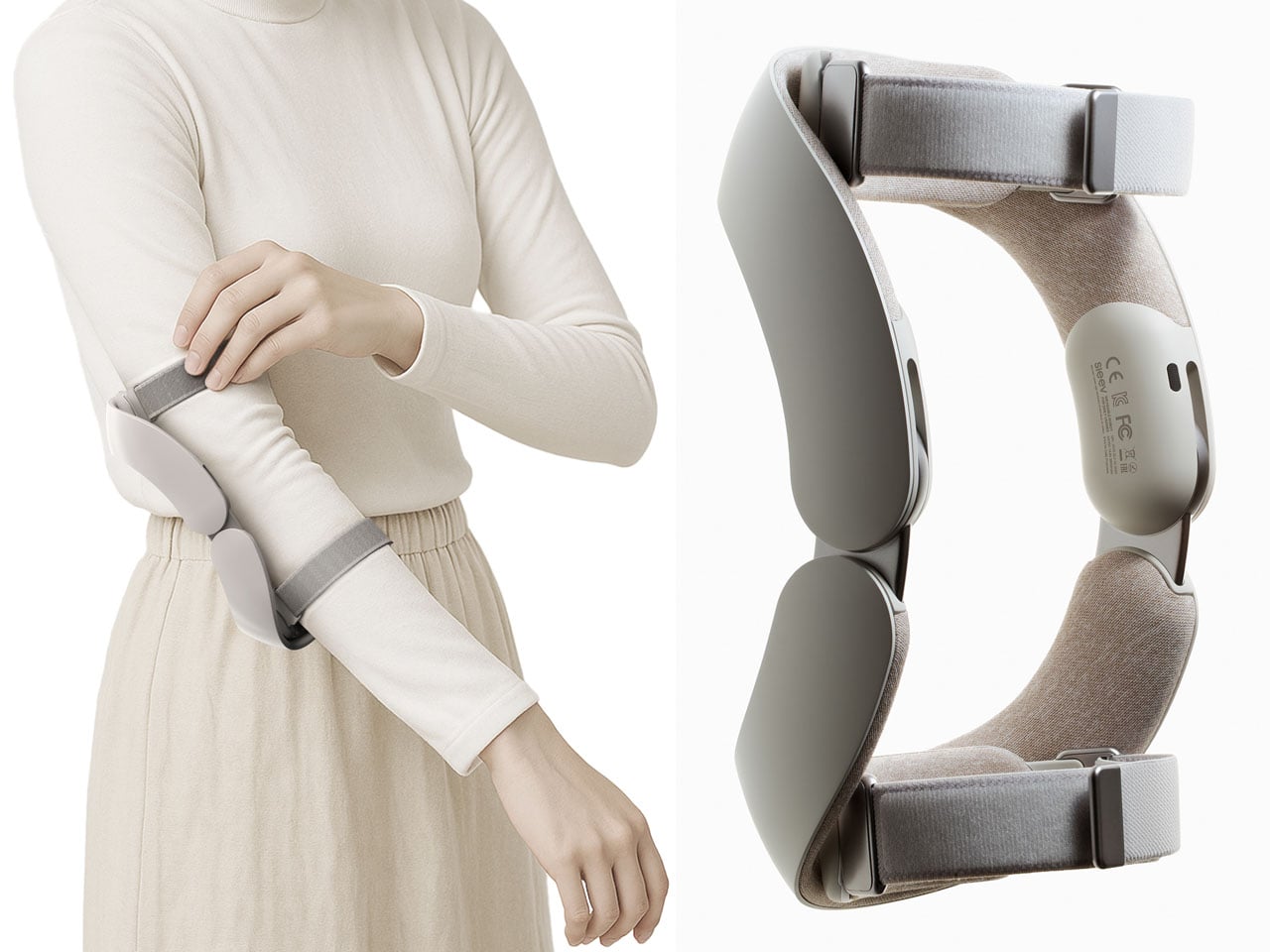
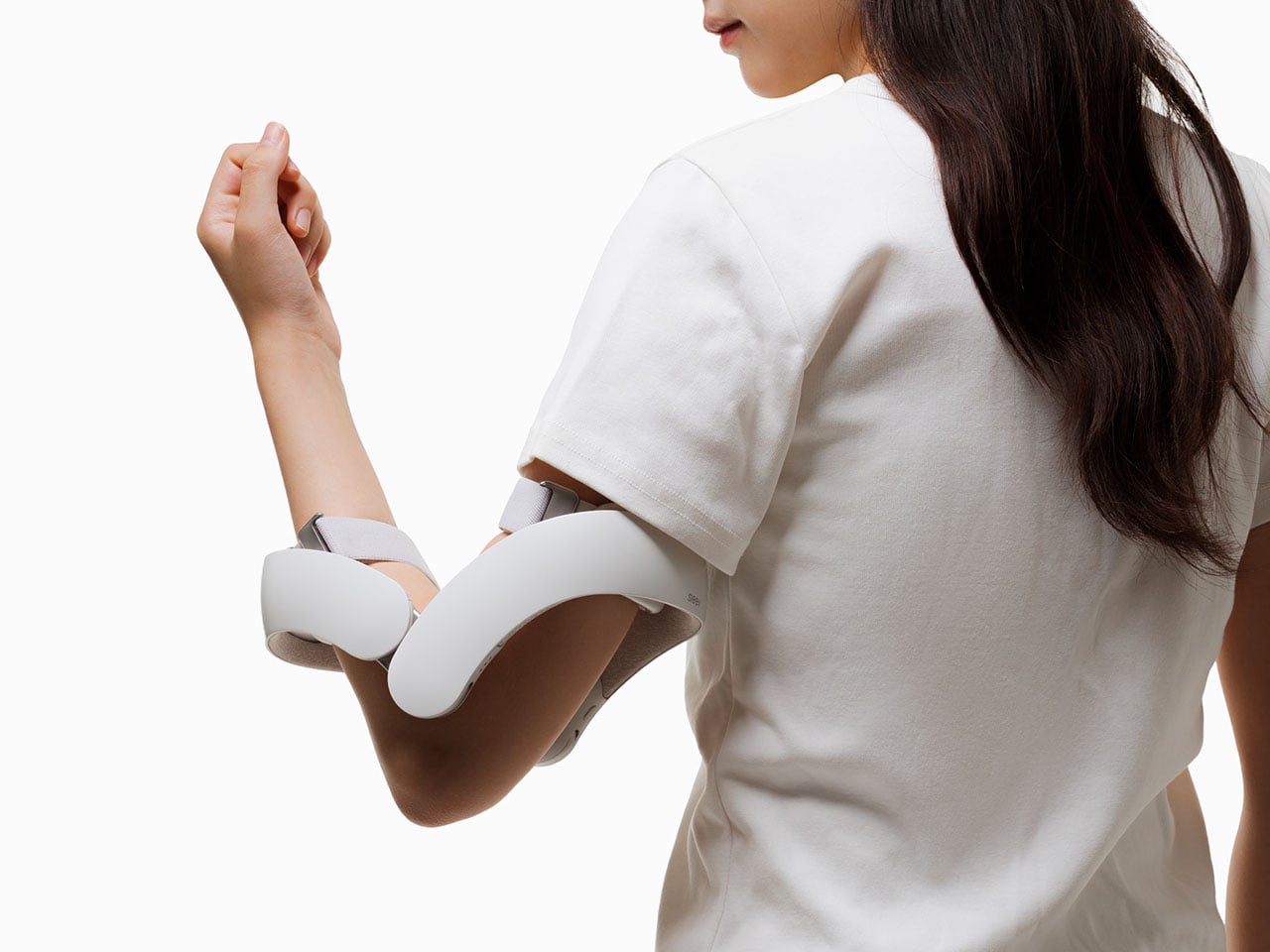
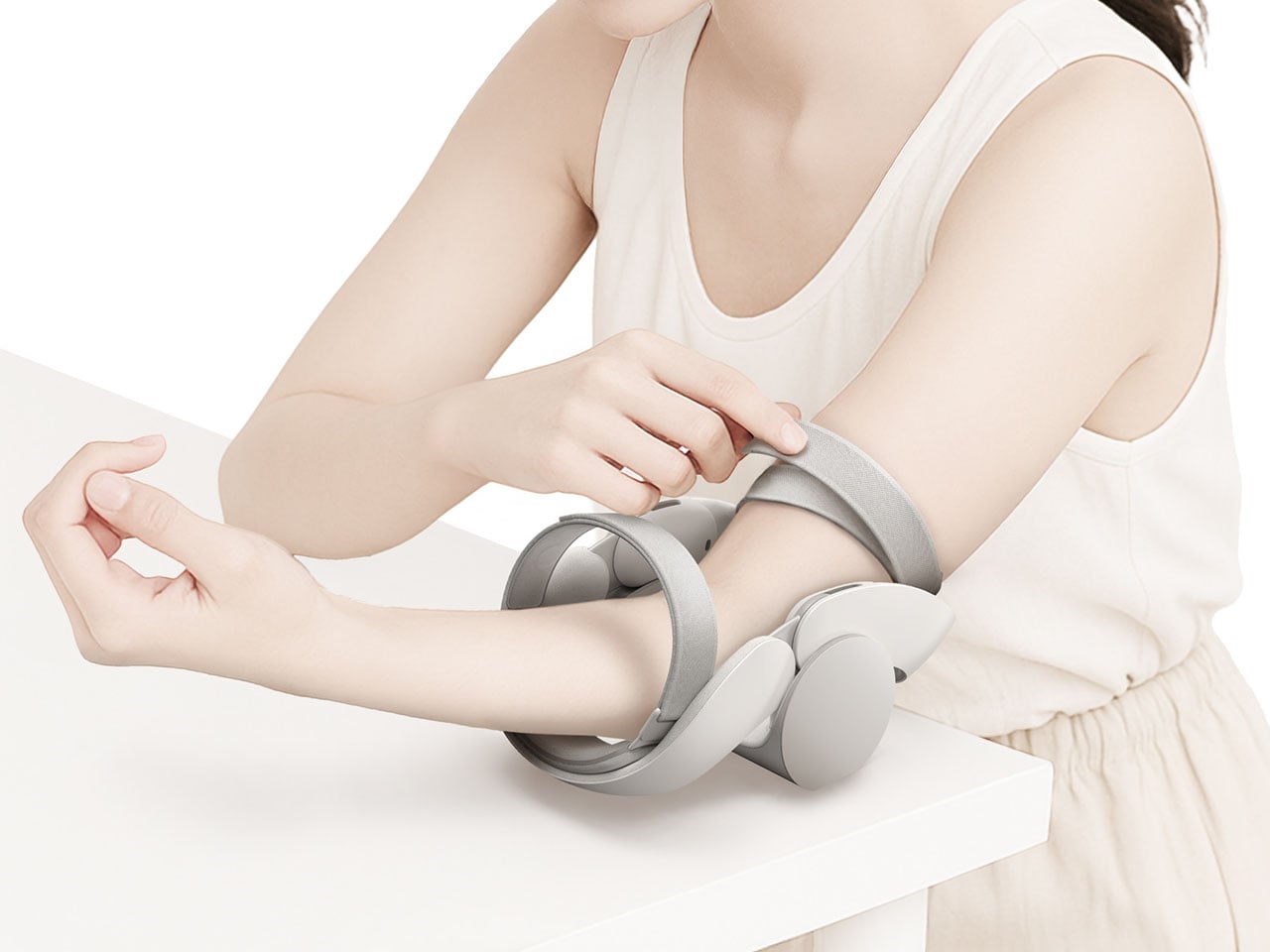
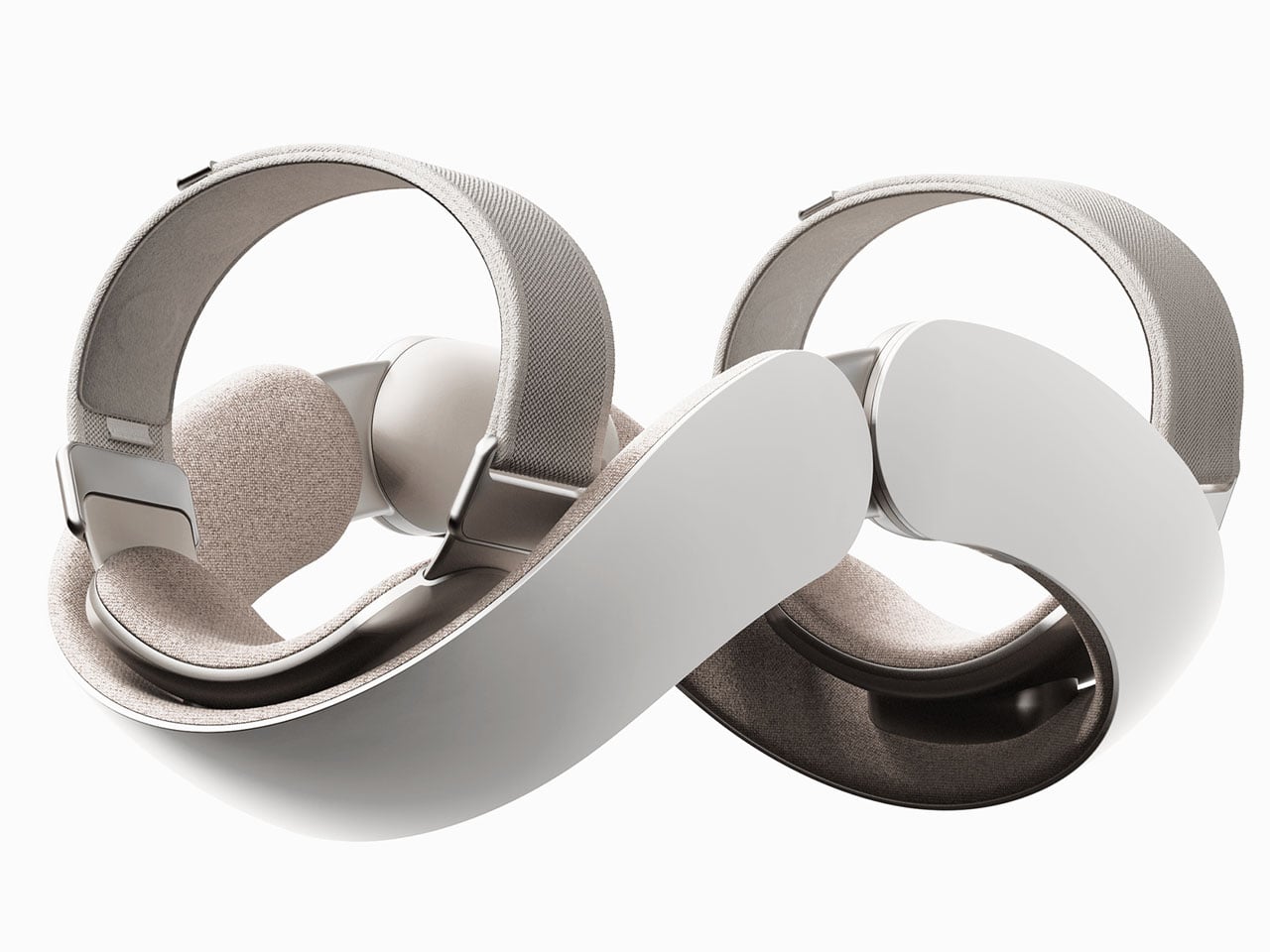
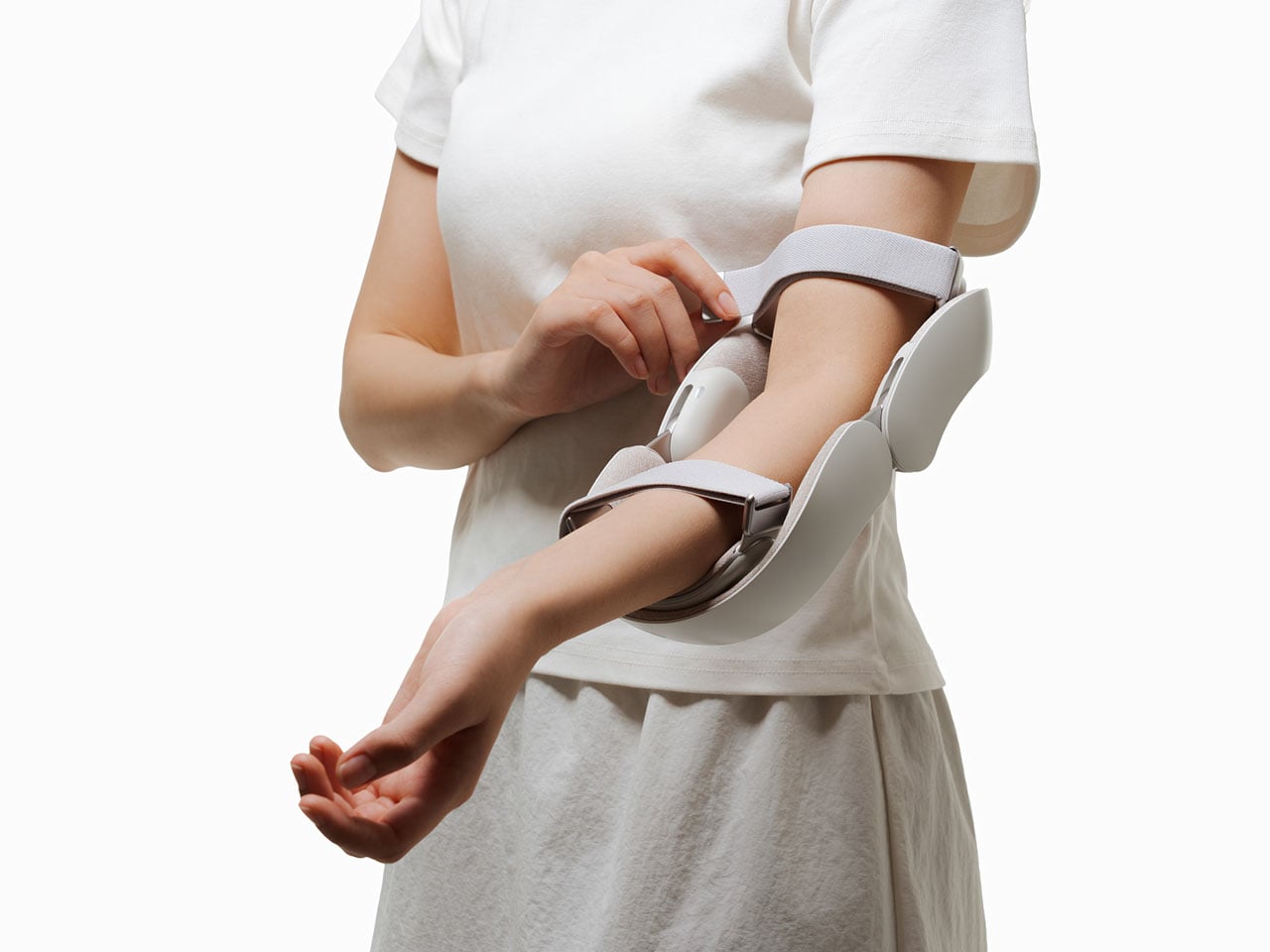
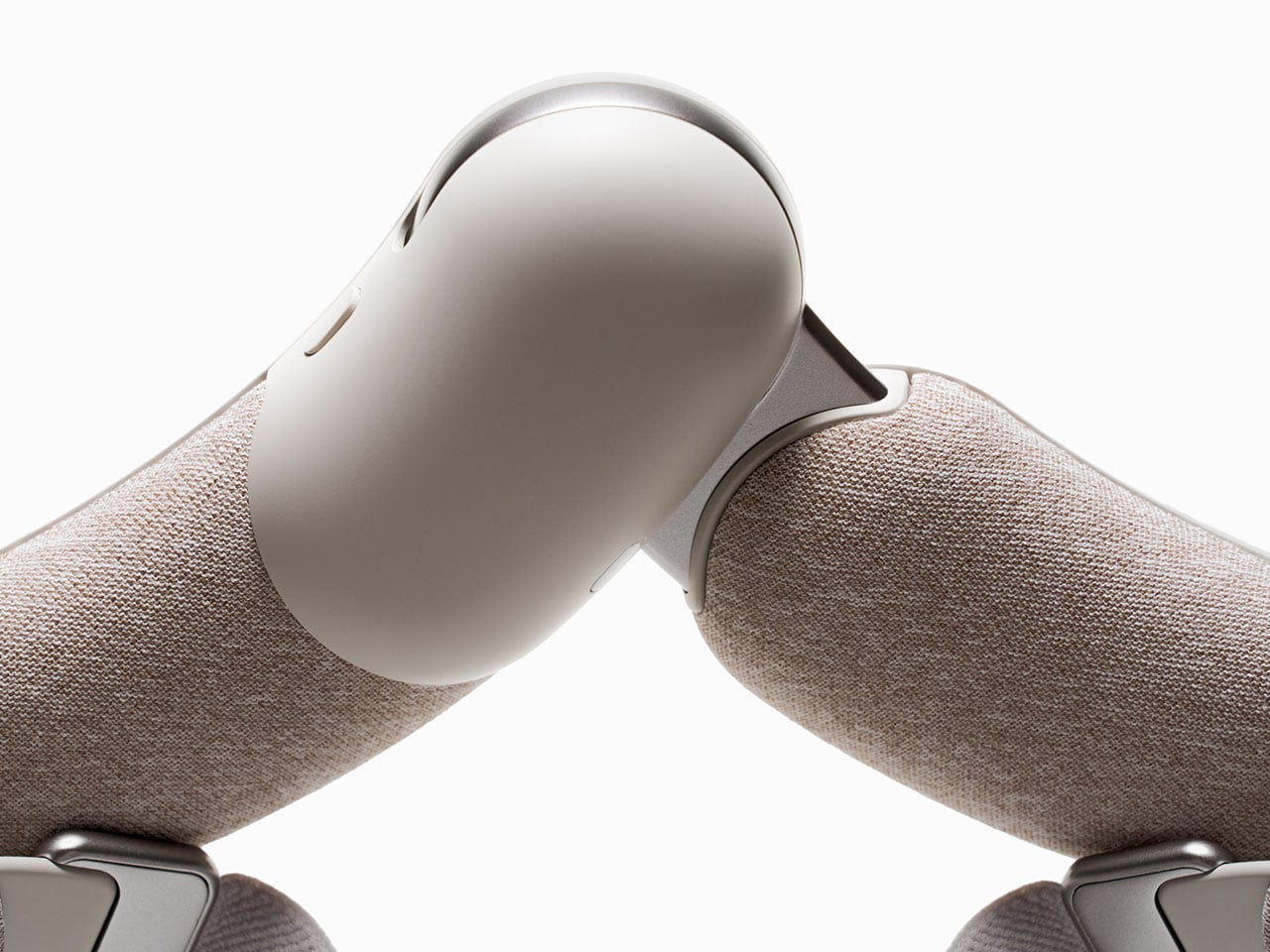
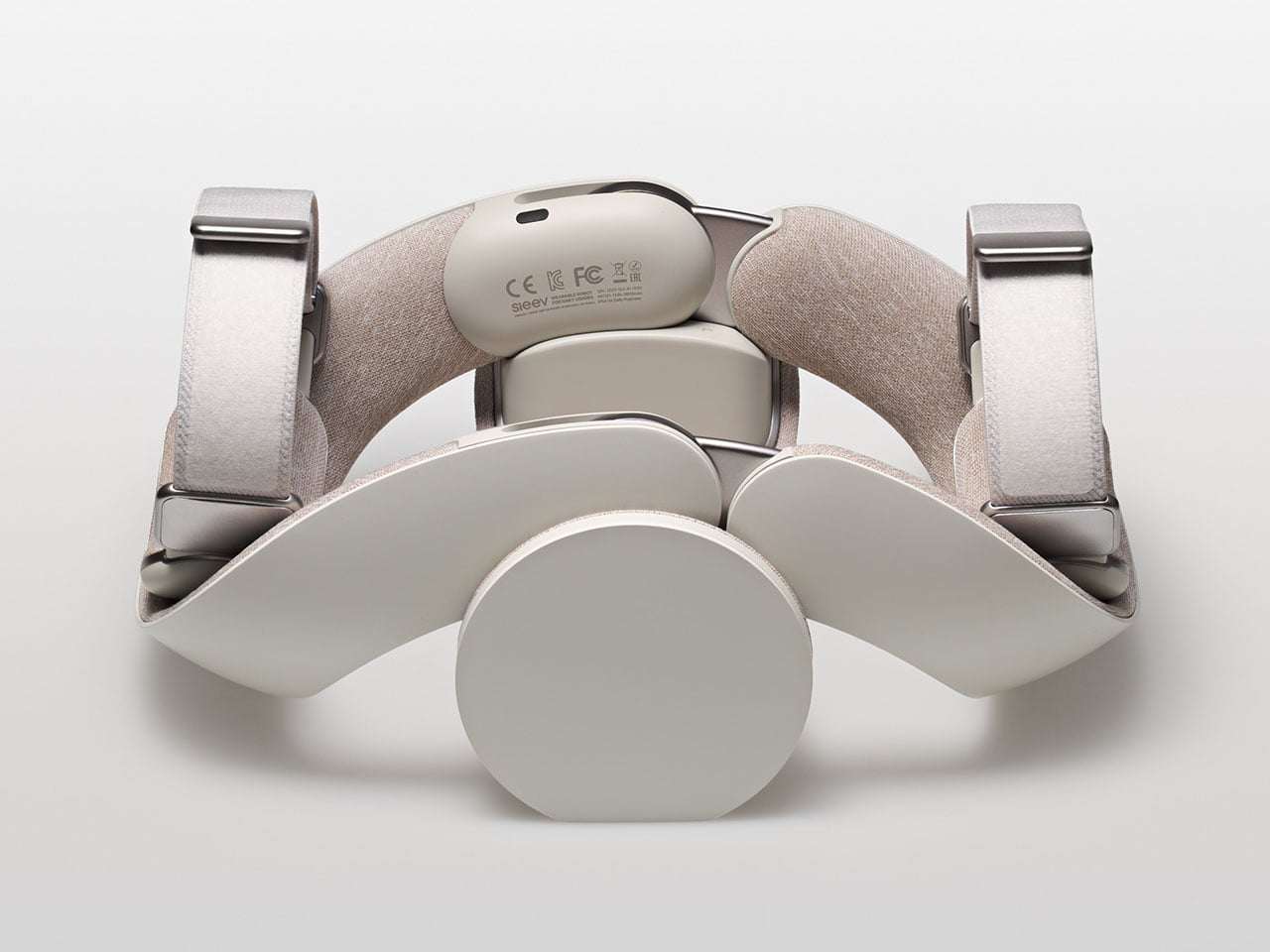
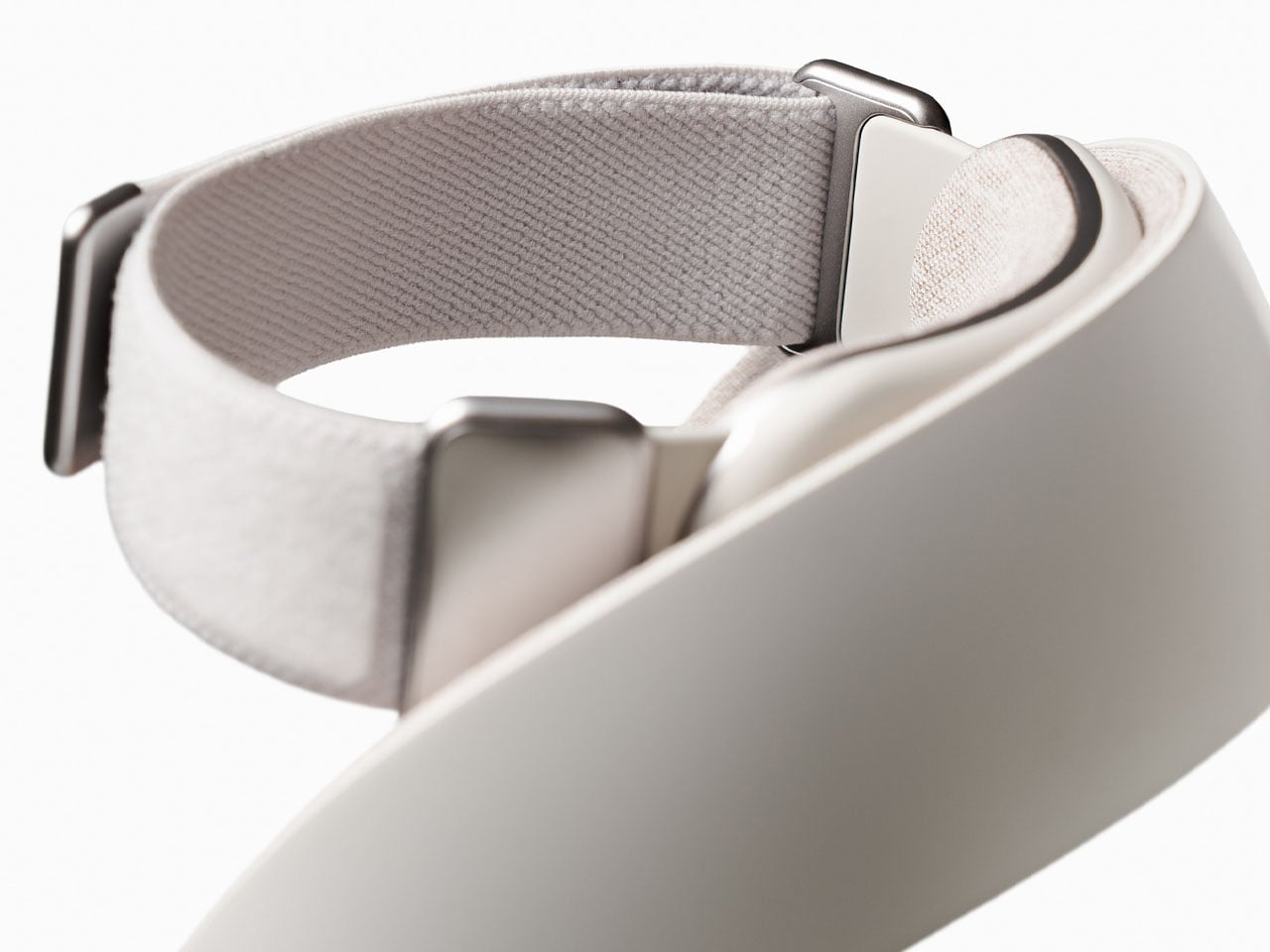
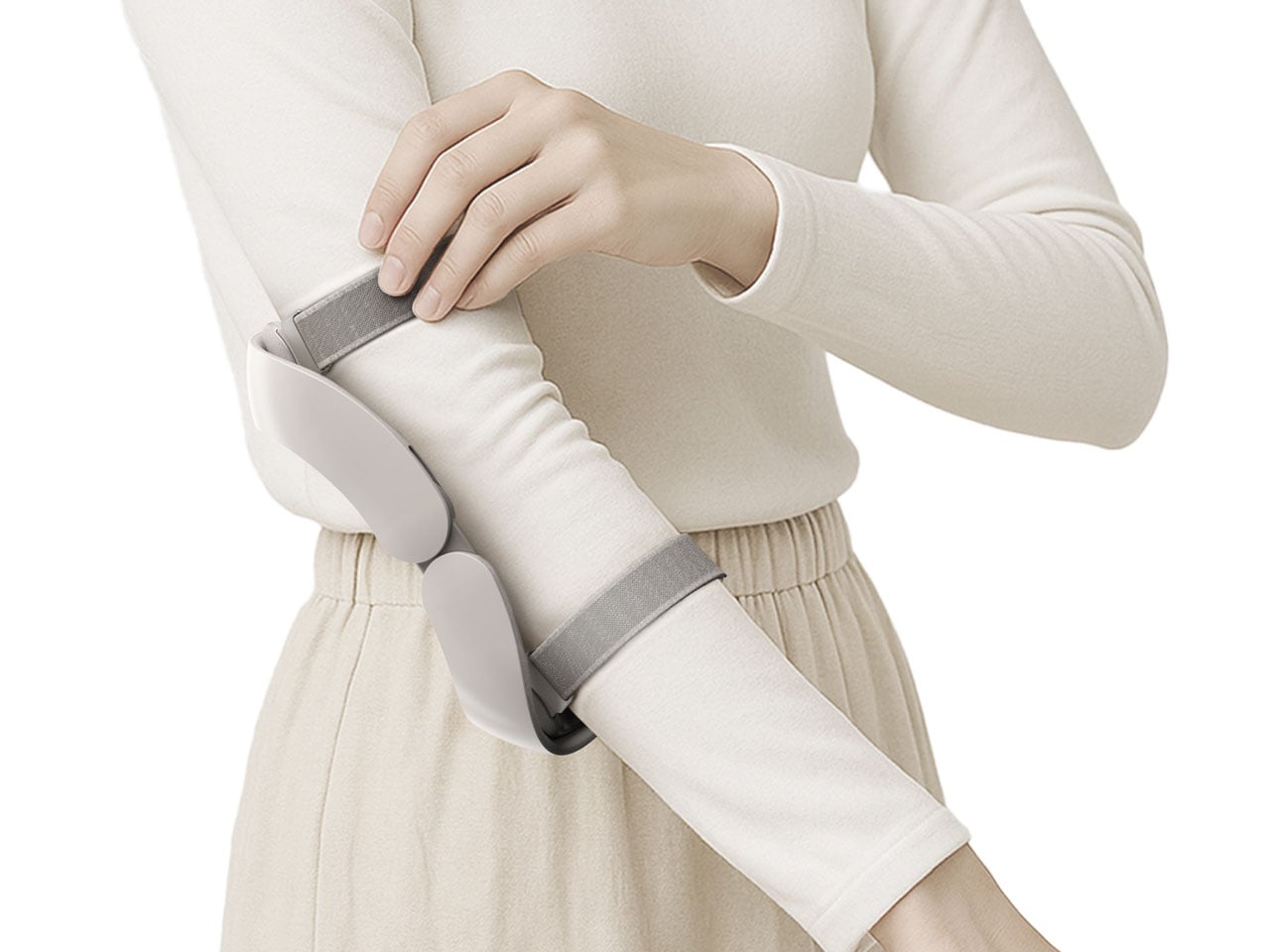
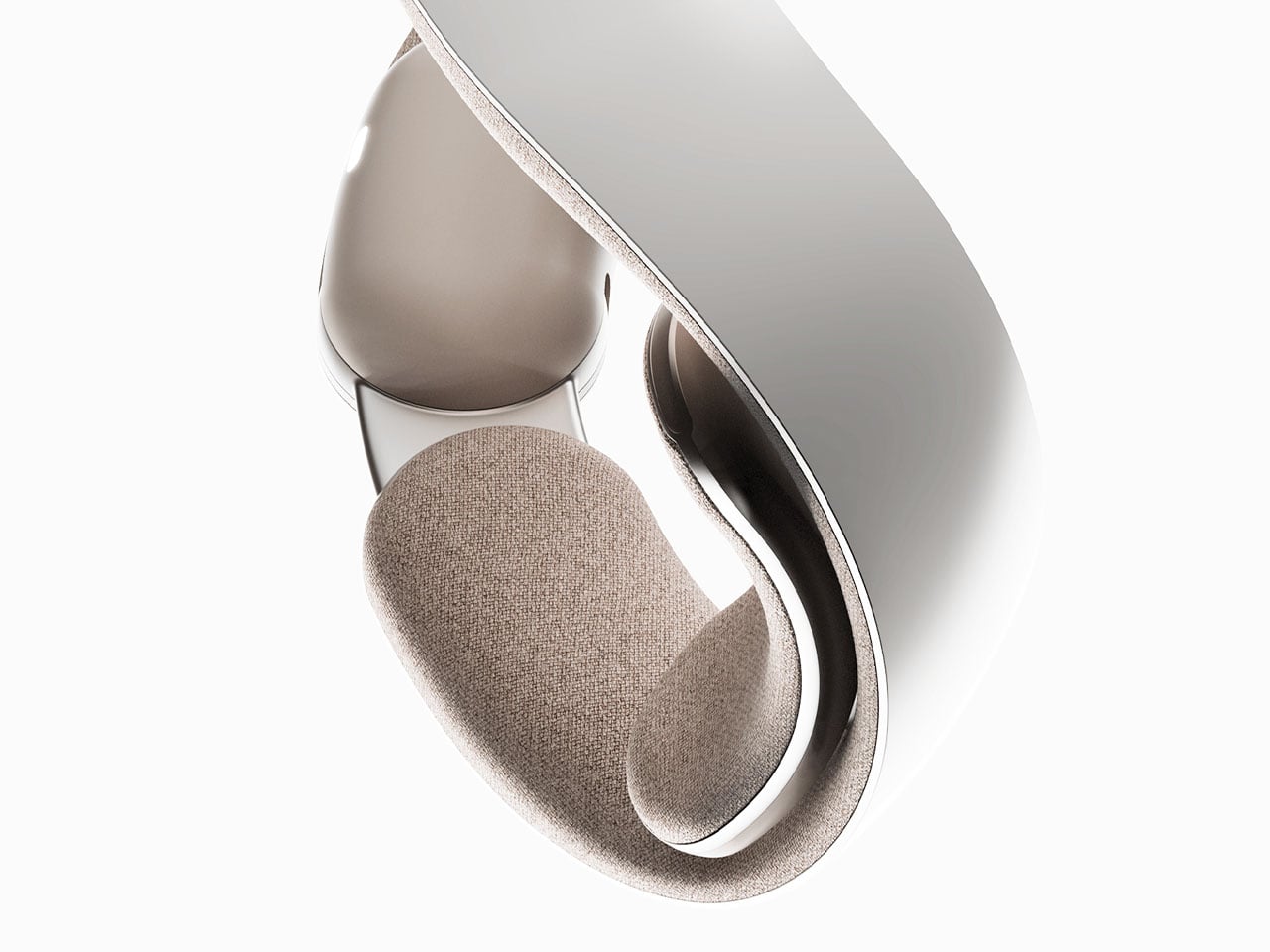
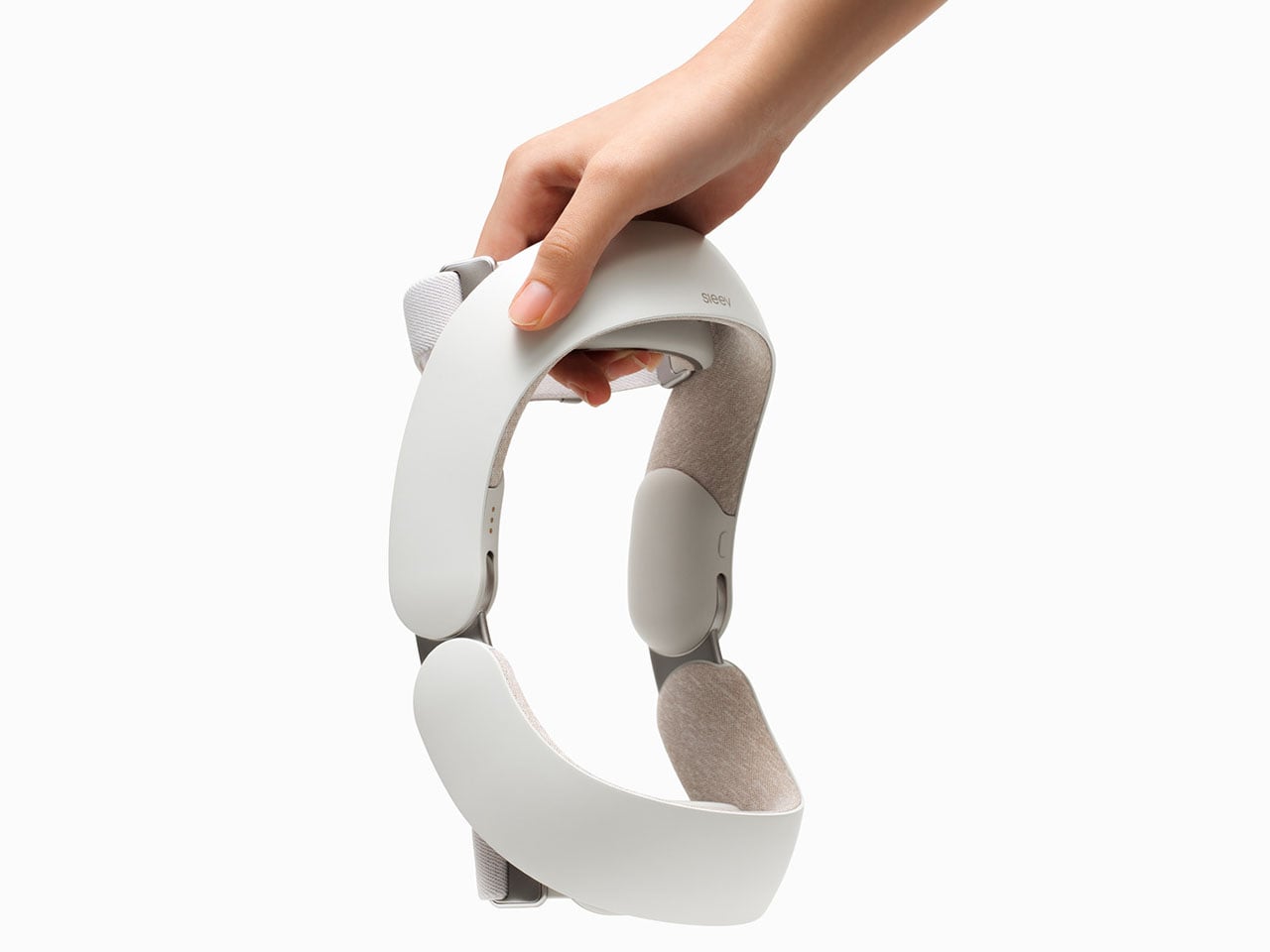
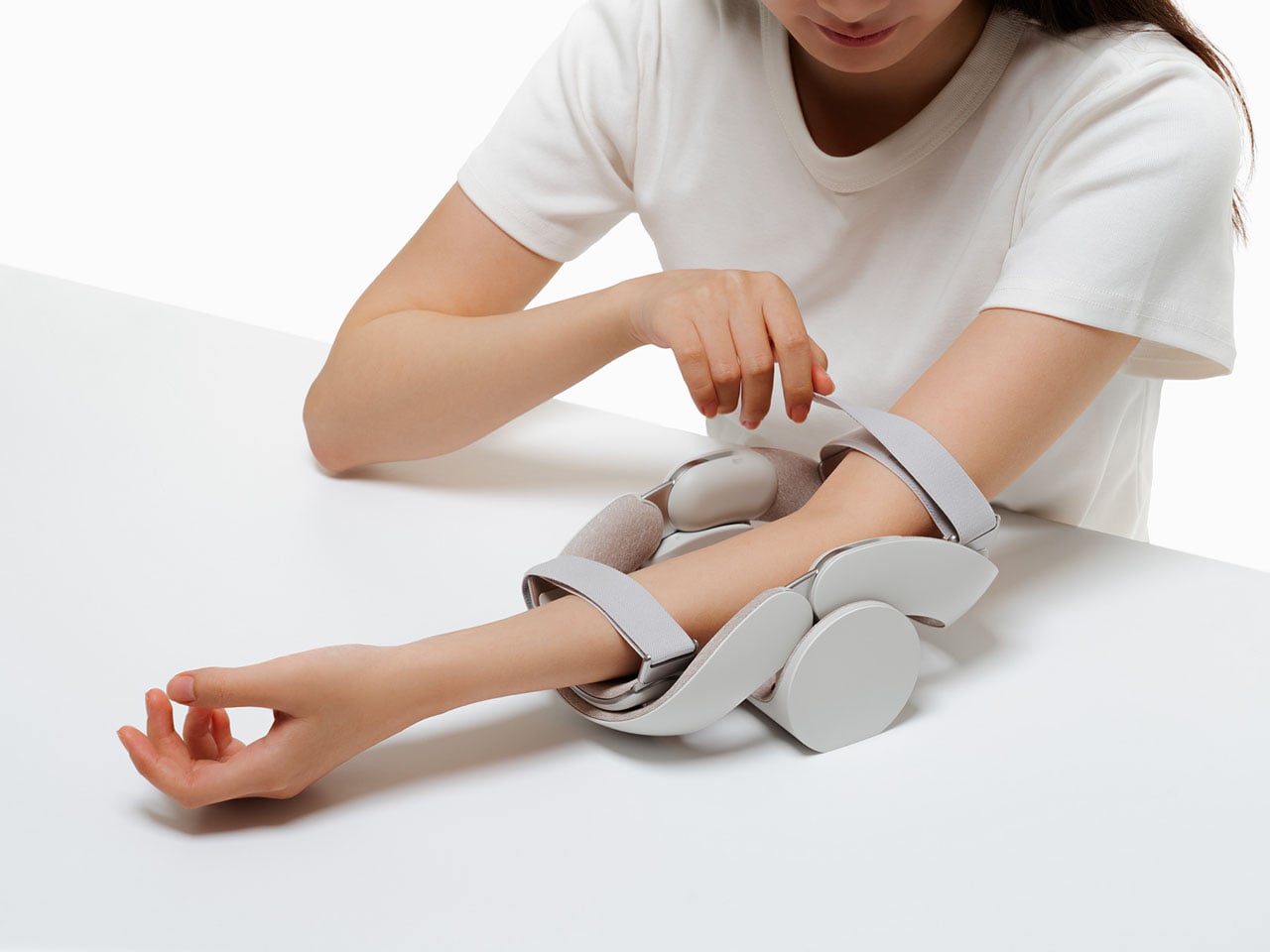
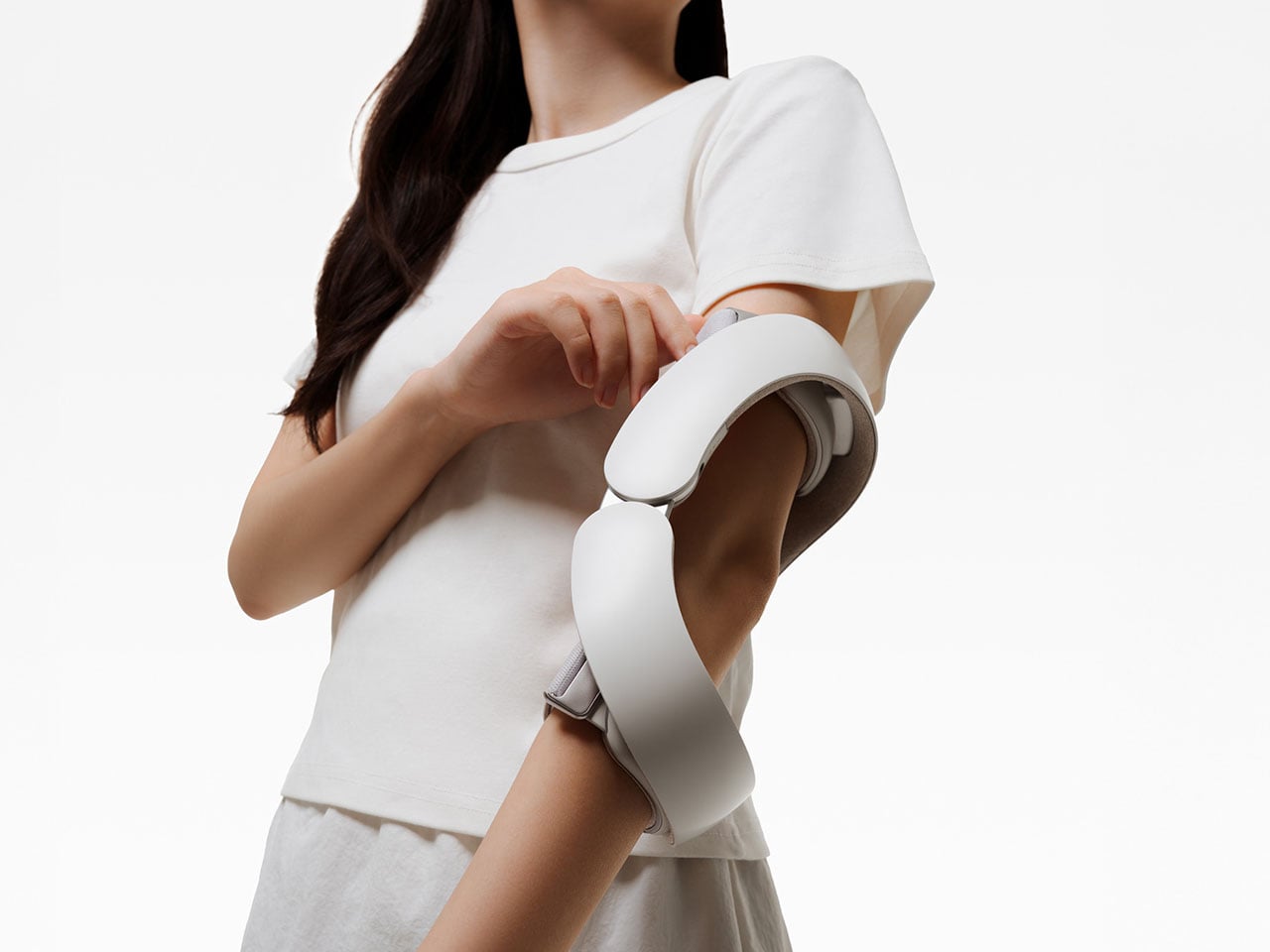
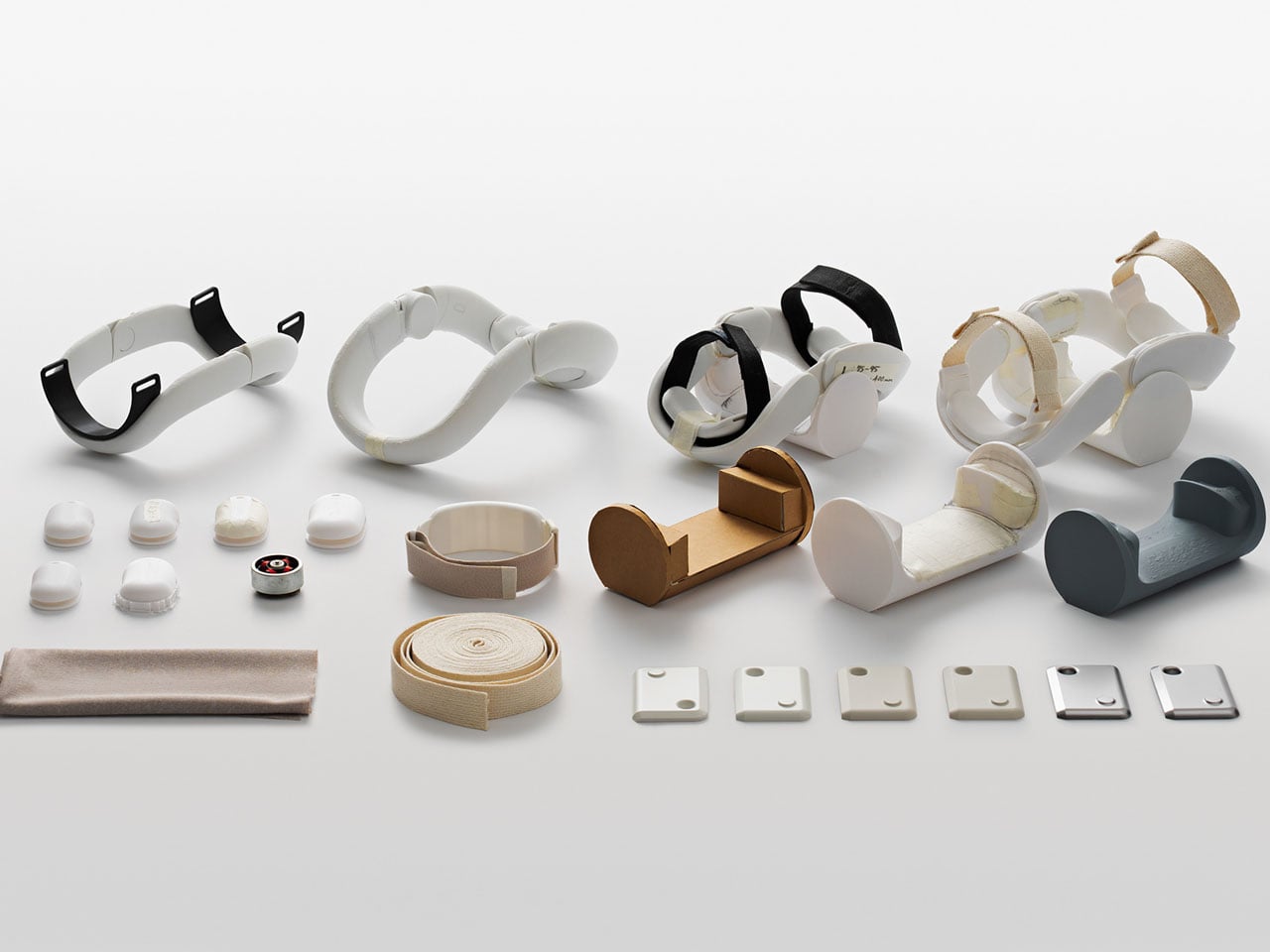
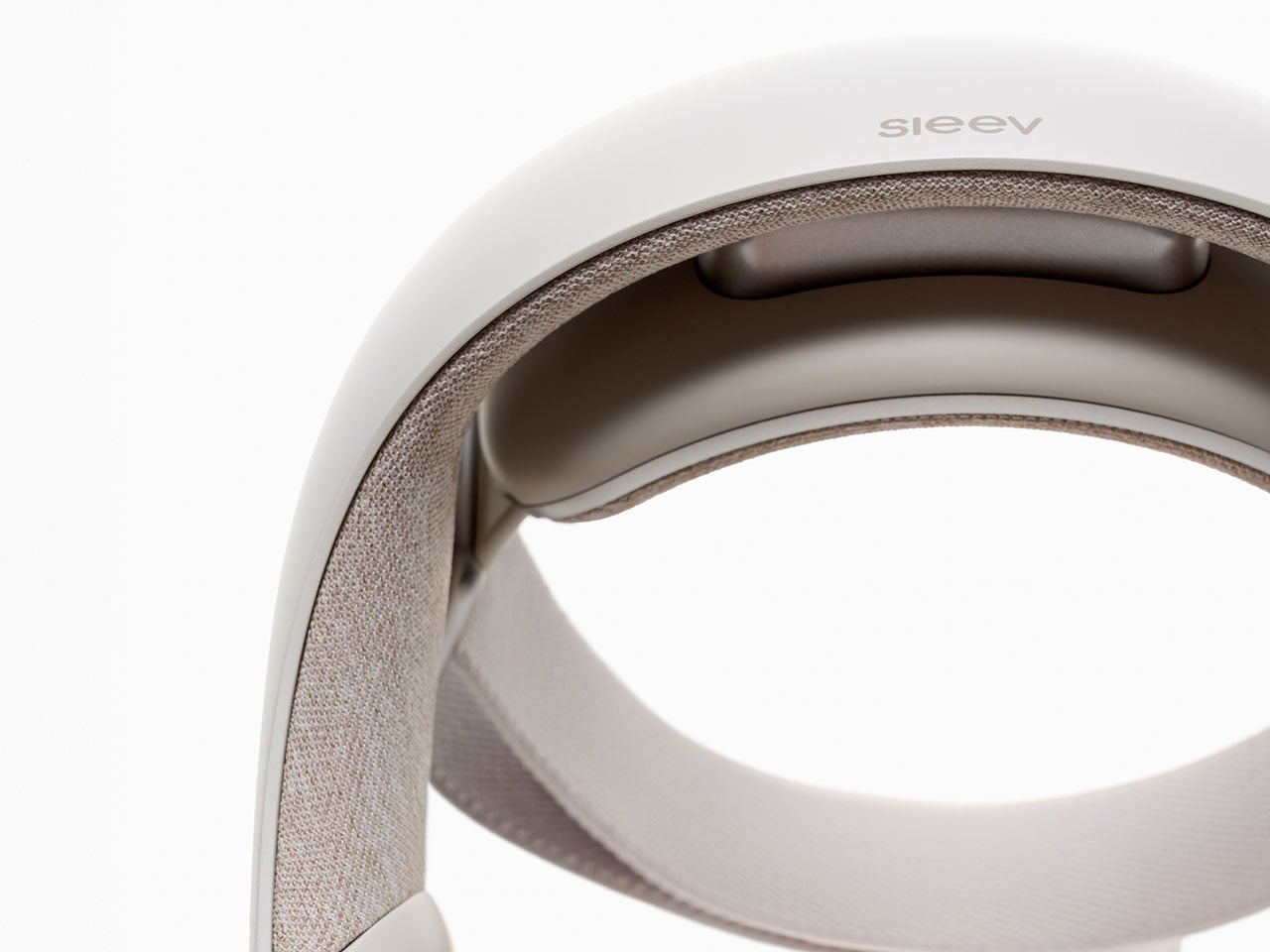
It’s called the Sleev. For now, it’s not far beyond the drawing books, but from how and what it’s projected to be built for, its God damn great solution for the purpose. Sleev is designed as a daily upper-limb exosuit (wearable robot). It supports independent arm movement and is effortless to wear and remove: just one hand, no more!

Designers: Youngha Rho and Sungchan Ko

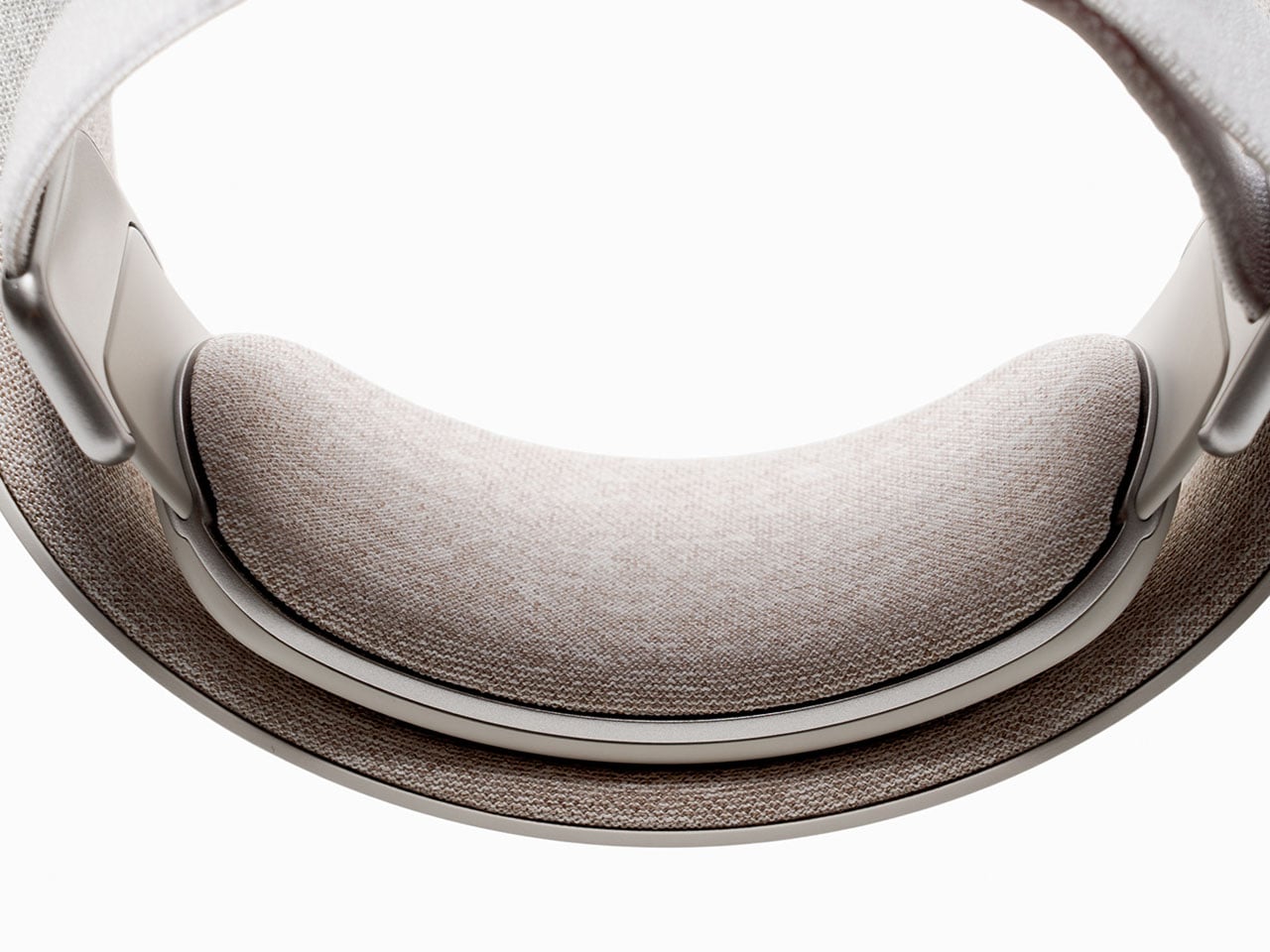
It’s not that we are seeing a robotic assistant for the arm for the first time. The market is flooded with iterations of bulky and inconvenient wearable robots that are designed with a great level of technological input and robotic sensors, but somehow make the wearer feel like a cyborg. With its sleek and lightweight limb, the Sleev is conceptualized to change that for a robotic assistant that you would like to wear. It can be strapped on like any other elbow brace to provide assistance in its movement. In addition to being a crucial option for people recovering from stroke or sports injury, the Sleev (for its design and attractive appearance) will augment daily tasks like lifting and carrying; you will like wearing it when carrying a baby for a long time or doing groceries and have a lot of packets to carry back home.

As a wearable robot conceptualized to integrate exoskeletons into our daily life, the Sleev is also strong and intelligent enough to support with rehabilitation activities. To ensure this, the design is integrated with FMG (force myography), a method that detects movement intentions through muscle pressure. The muscle pressure is different in people based on their gender, height, weight, and age. So, for the data accuracy and for the correct functioning of the wearable robot, this information about the users will be necessary. And a larger database will ensure better results, the designers believe.

Collaborating FMG with IMU sensors, the designers suggest, they can allow the algorithm to know where the user intends to move and help them with it accordingly. Both these sensors are affordable and commonly used in game controllers, so they should not be overly expensive when Sleev can find itself into mass production. Interestingly, it relates its movements based on muscle strength and intention. The Sleev doesn’t need to be worn directly on the skin; users can wear it over a thin innerwear as well and go on with it during their daily activities.

The post Based on sensors in game controllers, this upper-limb wearable robot will help you with your daily chores first appeared on Yanko Design.

Huawei’s Dubai Trio: A Foldable That Disappears, Earbuds That Double Down, and a Router Disguised as a Mountain

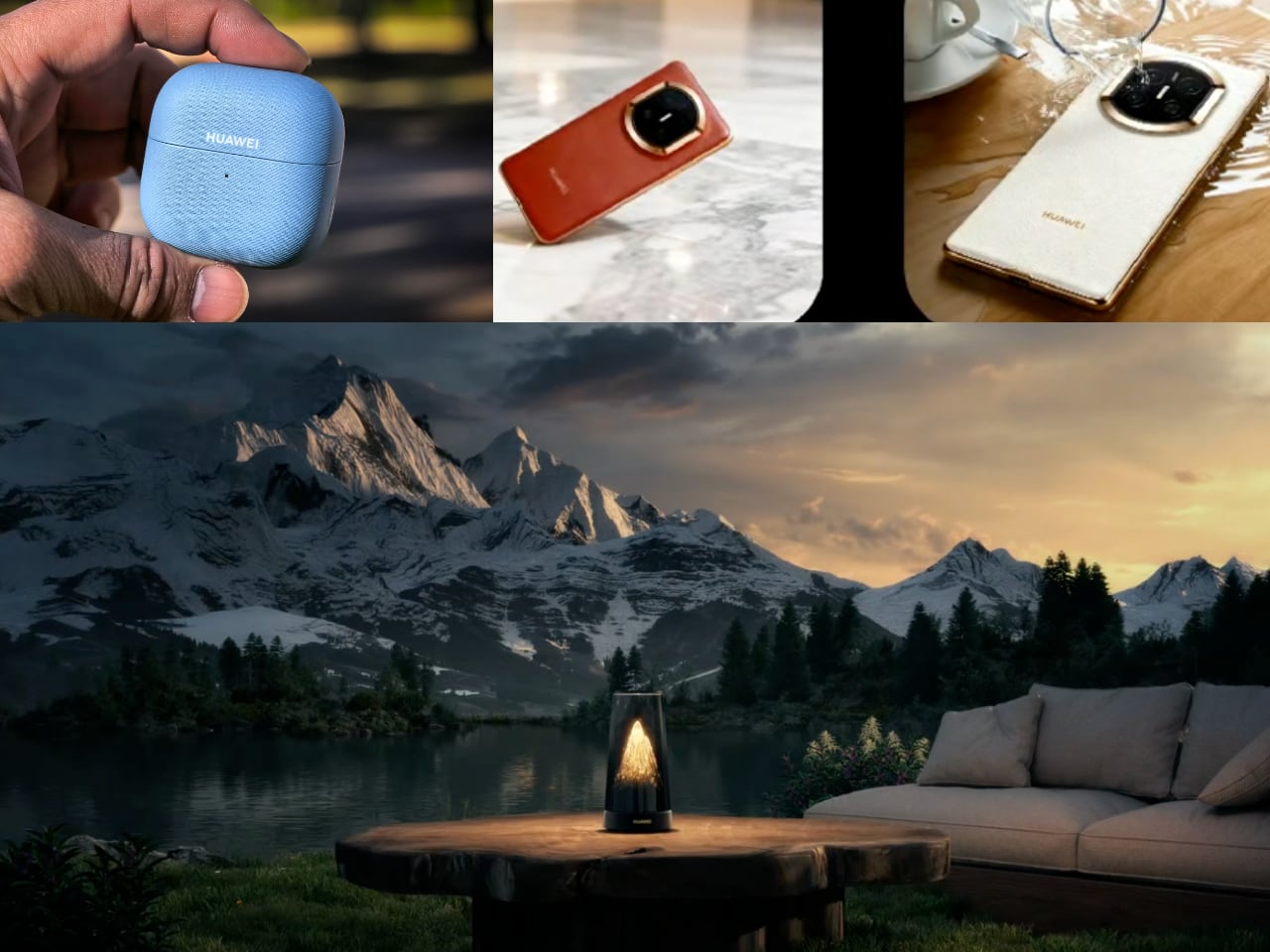
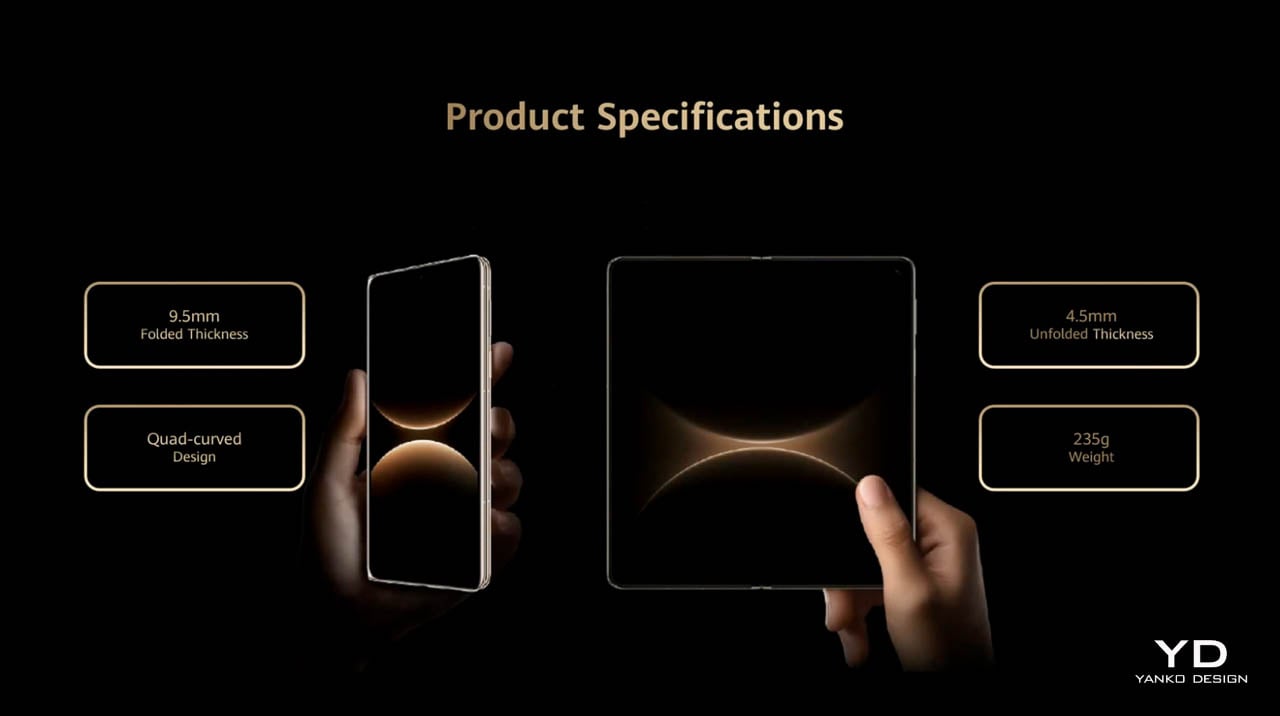
Five years into the foldable smartphone experiment, thinness remains the singular obsession. Huawei just crossed a threshold that reframes the conversation. The Mate X7, unveiled today at the company’s Dubai global launch alongside the FreeClip 2 earbuds and a Wi-Fi 7 mesh router, measures 4.5mm when unfolded. That figure matters less as specification than as experience: the fold becomes incidental to use rather than the defining characteristic of handling.

The Mate X7: Engineering the Fold Away

Huawei traces its foldable lineage to 2019, positioning itself as the category’s original commercializer. Six generations later, the design philosophy has crystallized into something specific and unambiguous: make the fold invisible to daily interaction. Quad-curved edges. A 4.5mm unfolded profile. Under 10mm closed. These dimensions place the Mate X7 closer to conventional smartphone territory than any previous book-style foldable has achieved. The engineering ambition centers not on what the fold enables, but on eliminating what the fold disrupts.

Where previous generations housed cameras in circular modules, the Time-Space Portal introduces flat edges to the protrusion. Huawei weaves between 900 and 1,700 threads into the finish, creating a textile-like visual texture that catches light across micro-patterns. This thread-woven treatment ships exclusively in China. Global variants arrive in standard colorways. The material strategy treats the camera bump as design opportunity rather than engineering compromise, an approach that signals continued investment in tactile differentiation where competitors minimize and apologize.

Both displays run at 2.4K resolution. Adaptive refresh spans 1Hz to 120Hz. The outer screen peaks at 3,000 nits while the inner reaches 2,500 nits, and high-frequency PWM dimming addresses the eye strain concerns that have plagued OLED panels since their adoption. These specifications alone would be unremarkable in any conventional flagship. Achieving them across two flexible panels within a 4.5mm envelope represents the actual engineering story, the quiet difficulty hidden beneath familiar numbers.

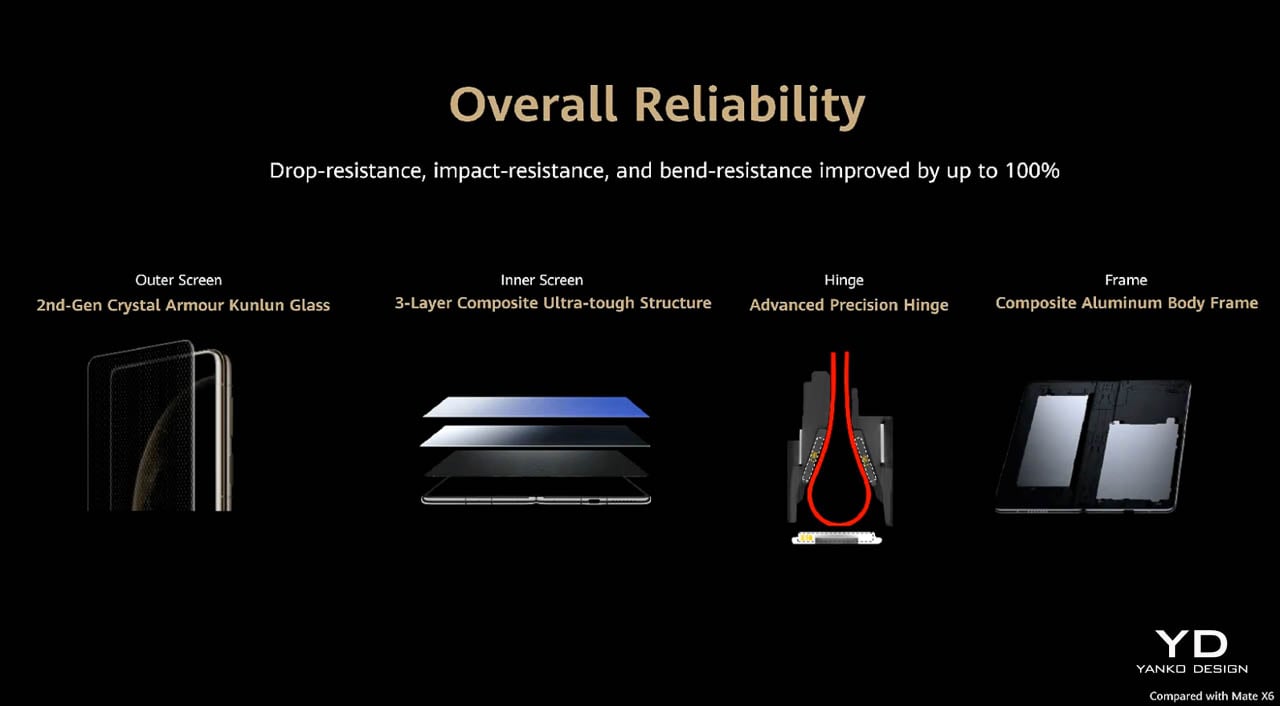
Durability targets the foldable’s historical weakness with measurable aggression. Drop resistance improved 100% over the previous generation according to Huawei’s internal testing. Impact resistance matched that improvement. The outer glass uses second-generation crystal armor technology. The inner screen employs a three-layer composite structure including a non-Newtonian fluid layer, material that increases rigidity under sudden impact pressure while remaining flexible during normal operation. Hinge redesign contributes over 100% improvement in bend resistance. IP59 certification covers high-temperature and water-jet resistance when open, with IP8 rating when the device closes.

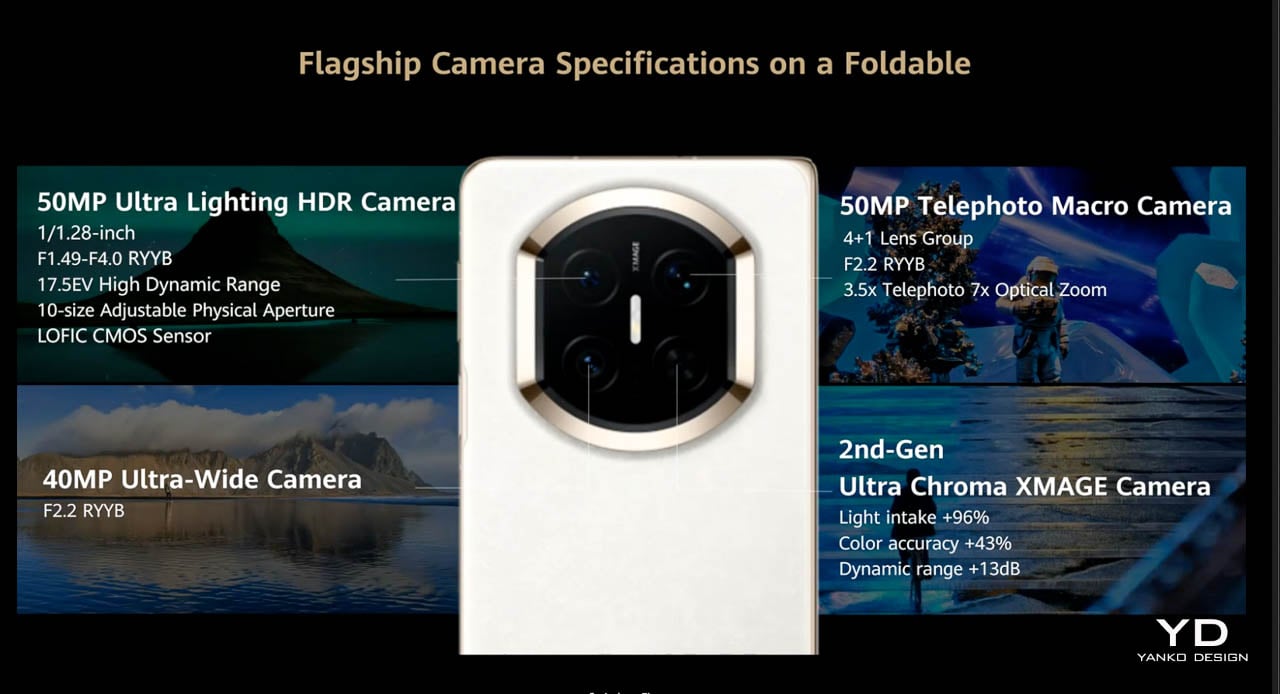
Camera architecture compresses flagship-grade optics into 26% less volume than equivalent modules. A 50MP main sensor pairs with variable mechanical aperture reaching f/1.49. The 50MP telephoto deploys a vertical periscope structure, a first for the foldable category, achieving 3.5x optical zoom within constrained depth. Light intake improved 127% through these spatial optimizations. Second-generation ultrachroma sensors handle color science while LOPIC technology extends dynamic range for stills and video alike.

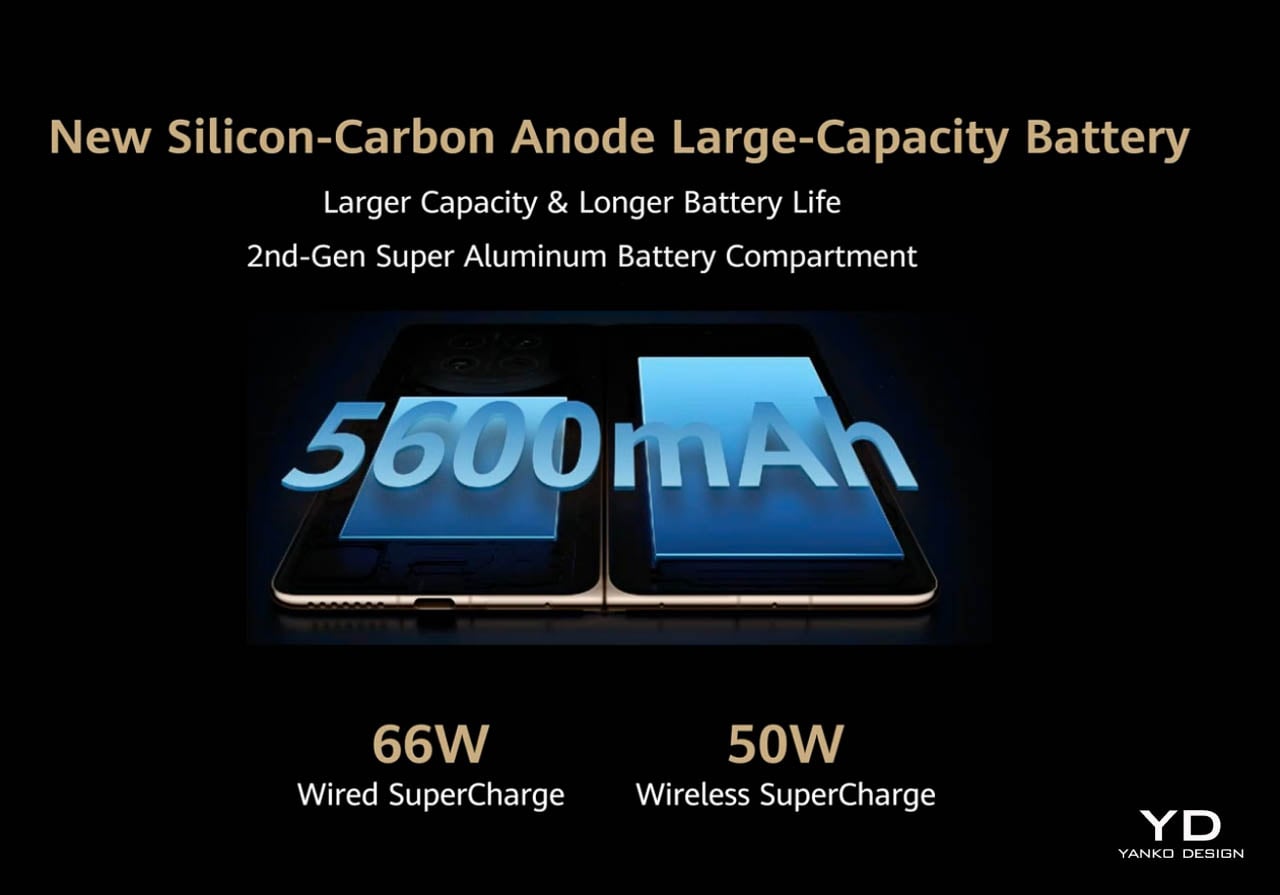
Battery capacity reaches 5,300mAh for global markets. The Chinese variant ships at 5,600mAh, the difference attributed to European import regulations that cap certain cell chemistries. Wired charging supports 66W. Wireless reaches 50W. Thermal management relies on an 18% larger vapor chamber paired with graphene-based loop dissipation. Additional antennas distributed around the device edges address connectivity challenges arising when folding reorients internal components relative to cell towers and Wi-Fi access points.

Wi-Fi 7 Mesh: Infrastructure as Object

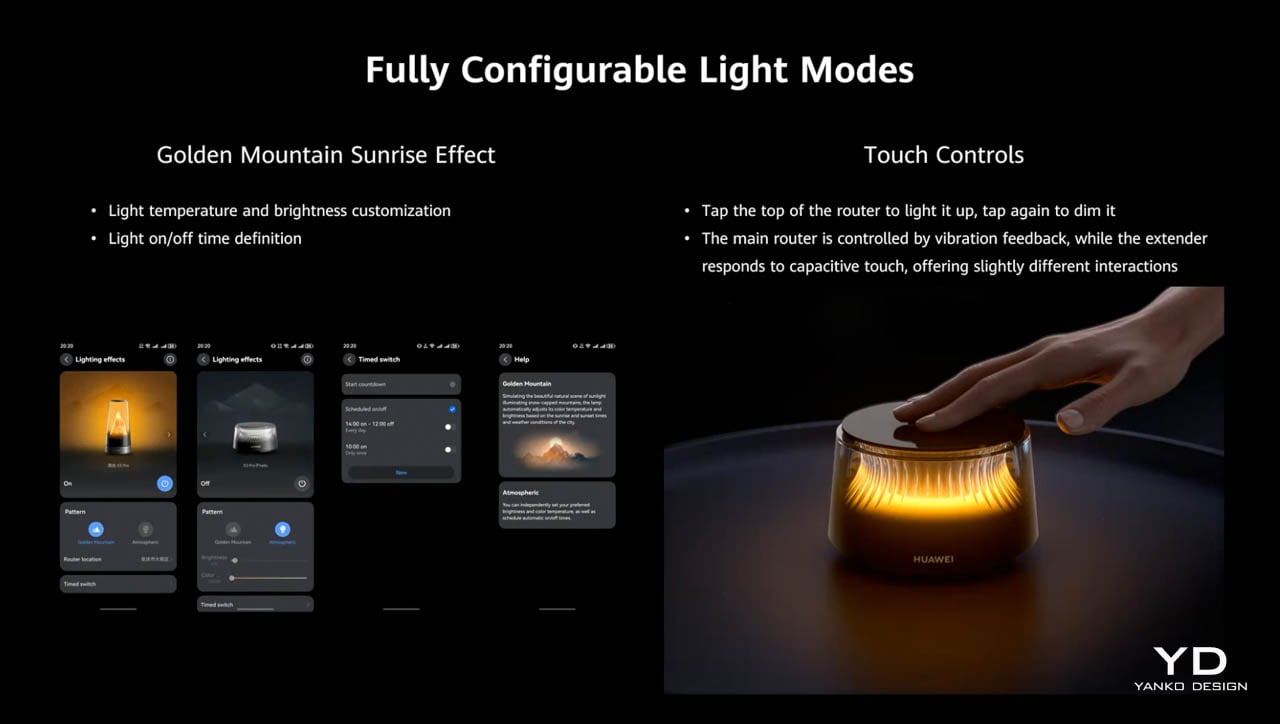
Router design typically optimizes for invisibility. Mesh systems tuck behind furniture or blend into wall-mounted anonymity. Huawei inverts this assumption entirely. The main unit mimics a mountain range enclosed within a transparent dome. Extender units feature indirect lighting resembling whisky glasses set on a shelf. Touch controls on each surface adjust lighting modes and network settings. The design explicitly treats network infrastructure as decorative object rather than functional necessity demanding concealment.

Technical specifications support the visual ambition without contradiction. Wi-Fi 7 operates with six antennas, three at 2.4GHz frequency. 4K SQAM and Multilink Operation enable simultaneous connections across frequency bands for devices supporting the standard. The main router includes active cooling via internal fan for sustained high-throughput scenarios. Up to two extenders pair with each base unit.

This approach acknowledges domestic reality: mesh routers occupy visible positions in living spaces. Huawei treats that visibility as opportunity for intentional form rather than problem requiring solution.

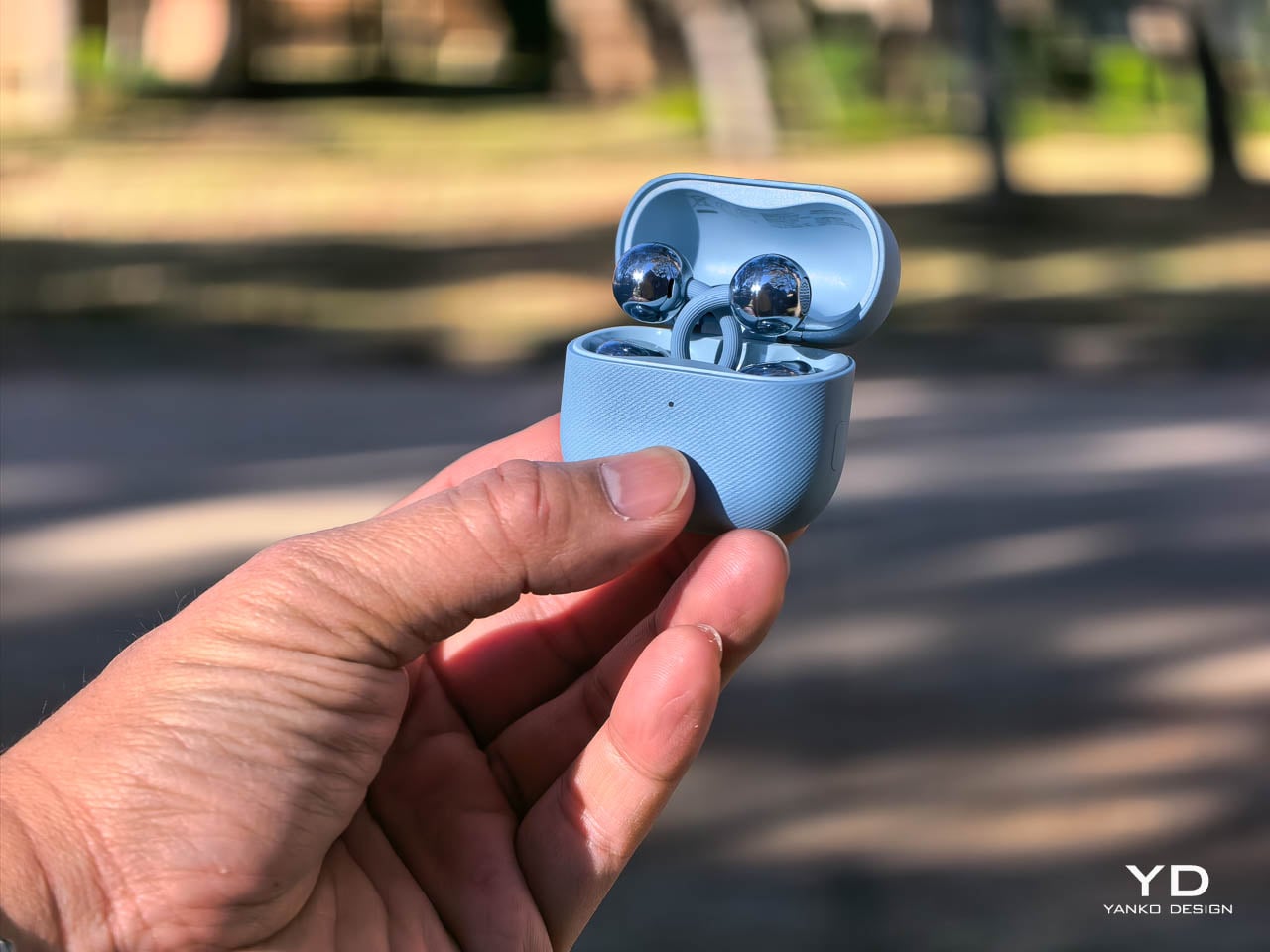
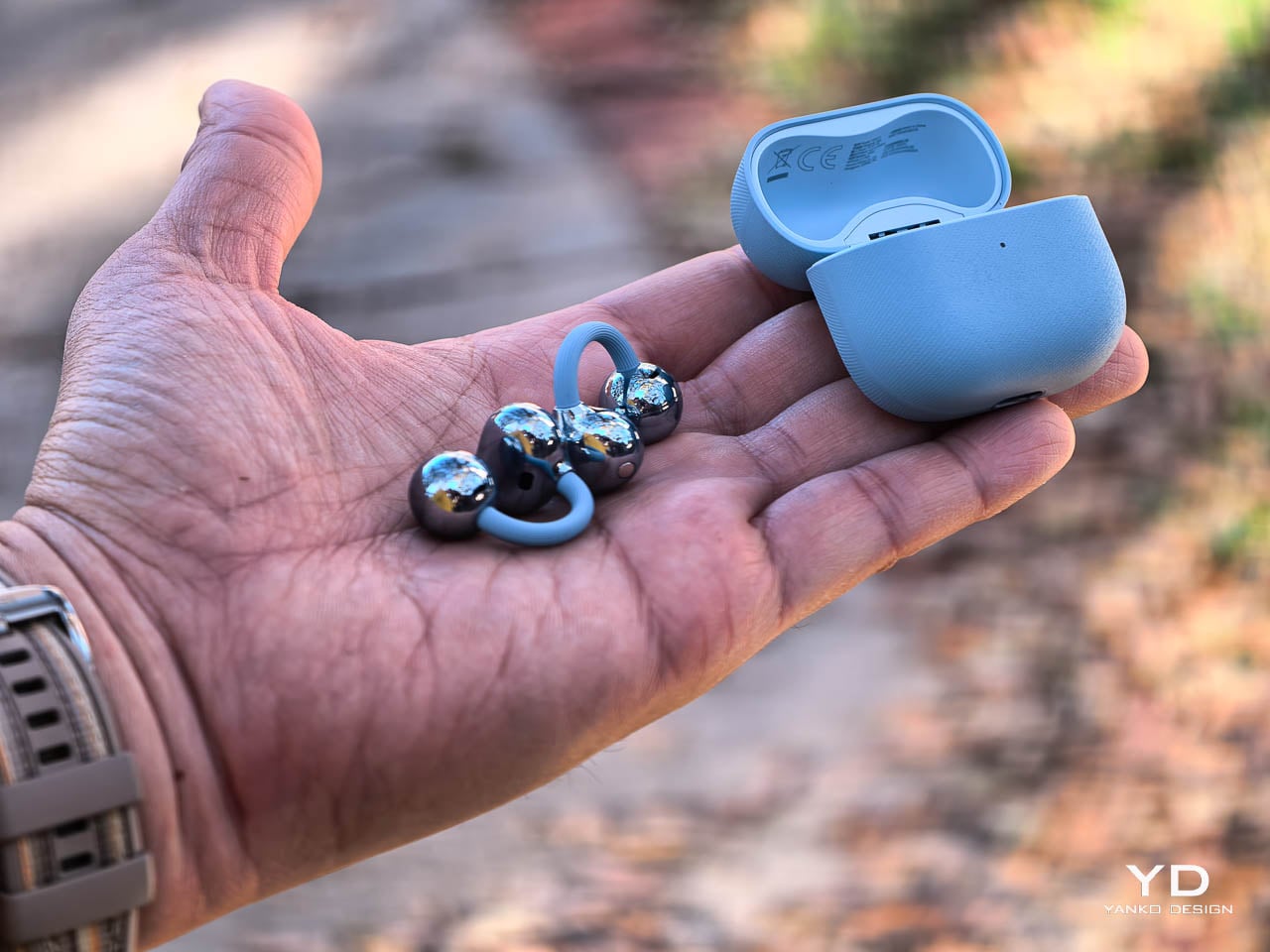
FreeClip 2: Iteration on a Proven Form

Three million first-generation FreeClip units shipped, establishing category viability that justifies continued investment. Open-ear designs occupy a specific niche: awareness of surroundings traded against audio immersion. The sequel addresses the original’s primary limitations through incremental refinement. Weight dropped 9% to 4.1 grams per earbud. Case dimensions shrank 11% while narrowing 17%. The redesigned Seabridge improves comfort across extended wear sessions where the previous generation began to fatigue.

Dual 11mm diaphragms share a single magnetic circuit, an engineering choice that doubles bass output compared to the previous generation while reducing acoustic ball size by 11%. The architecture trades spatial efficiency for low-frequency presence that open-ear designs historically lacked. Battery life extends to 9 hours per earbud and 38 hours total with case, improvements of one and two hours respectively. IP57 certifies the earbuds while the case carries IP54.

For deeper examination of the FreeClip 2’s material execution and acoustic performance, my full review covers the dual-diaphragm engineering and comfort improvements in detail.

Automatic left/right detection, swipe volume controls, and head gesture support complete the interaction model. Huawei Audio Connect supports iOS and Samsung devices, with no Google Play availability announced. Color options span Denim Blue, Feather Sand White, Modern Black, and Rose Gold.

Market Position

Global launch proceeds December 11, 2025 from Dubai. Pricing remains unannounced. Product configuration suggests premium positioning matching or exceeding the previous generation’s placement.

For the foldable category broadly, the Mate X7’s dimensional achievements demonstrate that thinness progression continues regardless of engineering complexity. The mesh router and FreeClip 2 complete an ecosystem play: smartphone, audio, and home networking under unified design language. Huawei signals capability breadth alongside flagship ambition, using Dubai as statement of global market re-entry after years of constraint.

The post Huawei’s Dubai Trio: A Foldable That Disappears, Earbuds That Double Down, and a Router Disguised as a Mountain first appeared on Yanko Design.
TWS Earbuds With Built-In Cameras Puts ChatGPT’s AI Capabilities In Your Ears

Everyone is racing to build the next great AI gadget. Some companies are betting on smartglasses, others on pins and pocket companions. All of them promise an assistant that can see, hear, and understand the world around you. Very few ask a simpler question. What if the smartest AI hardware is just a better pair of earbuds?

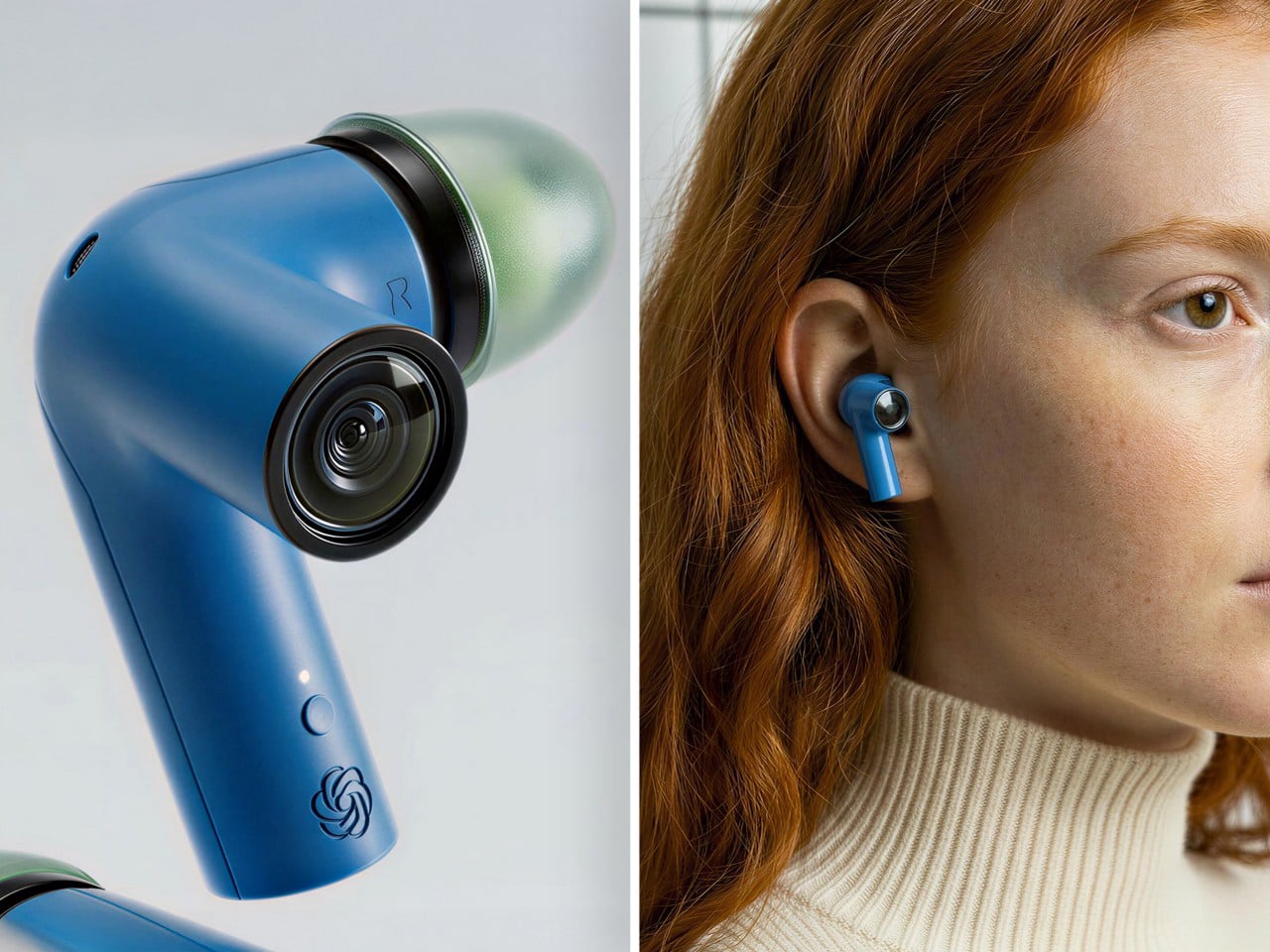
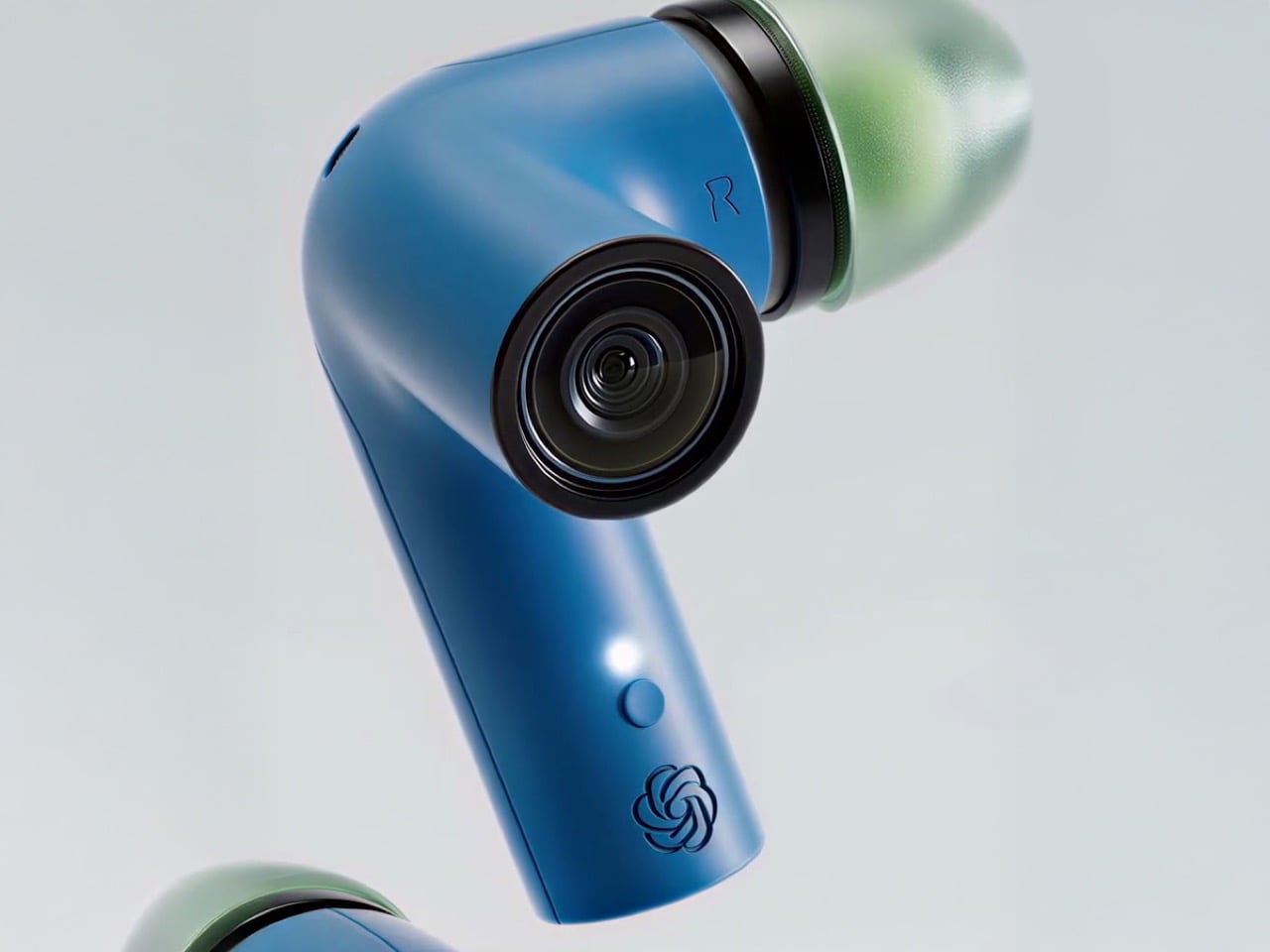
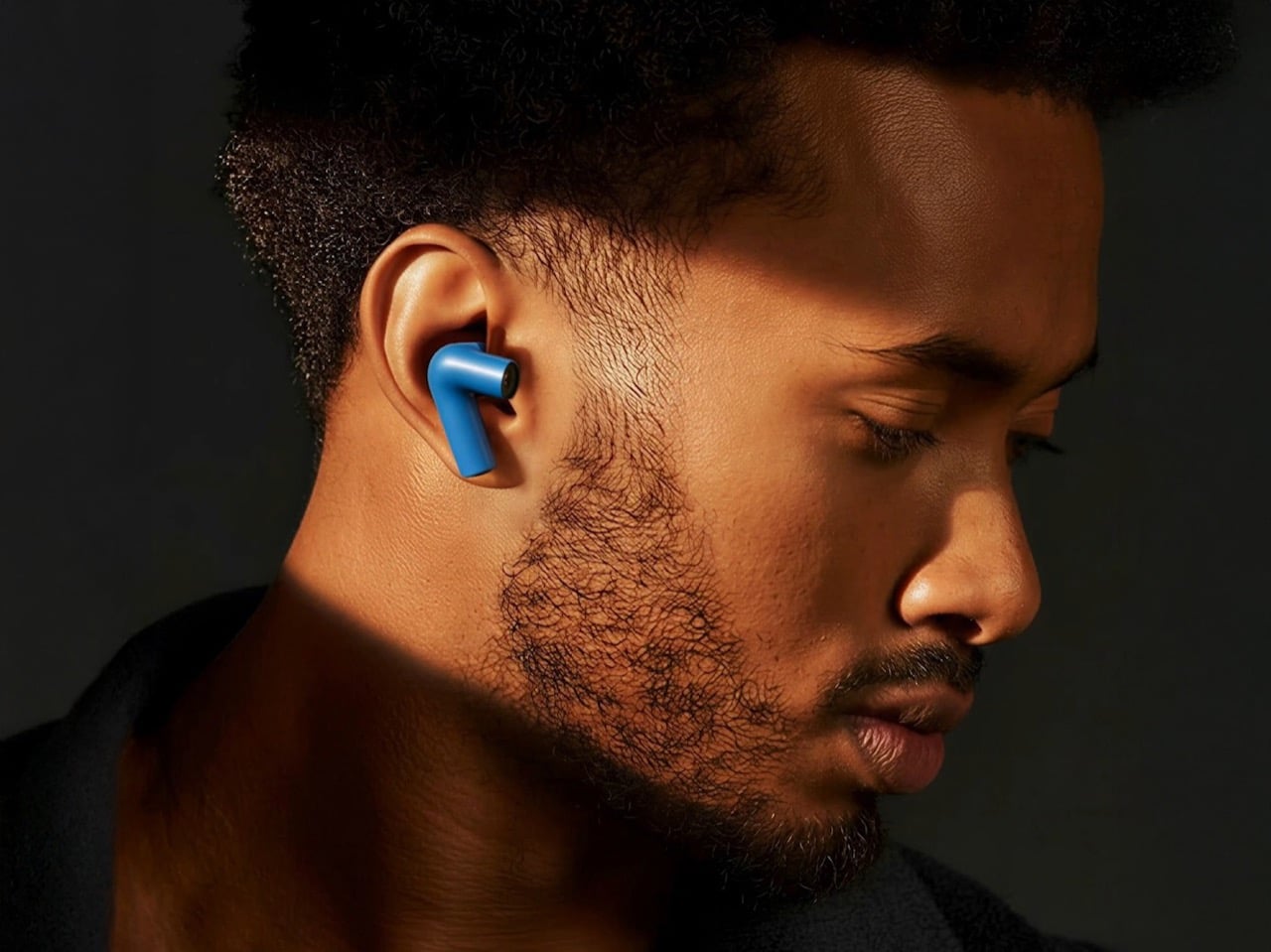
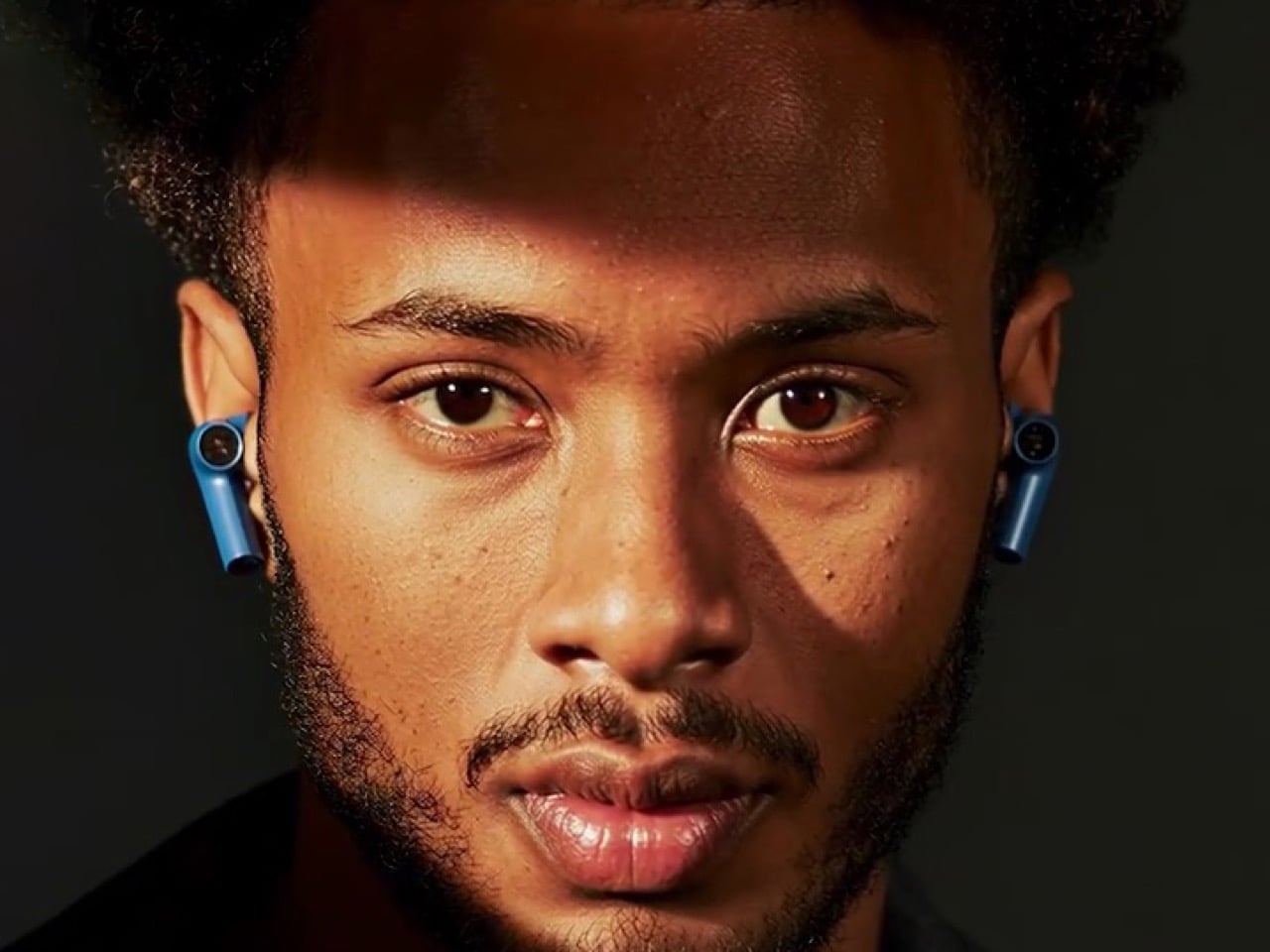
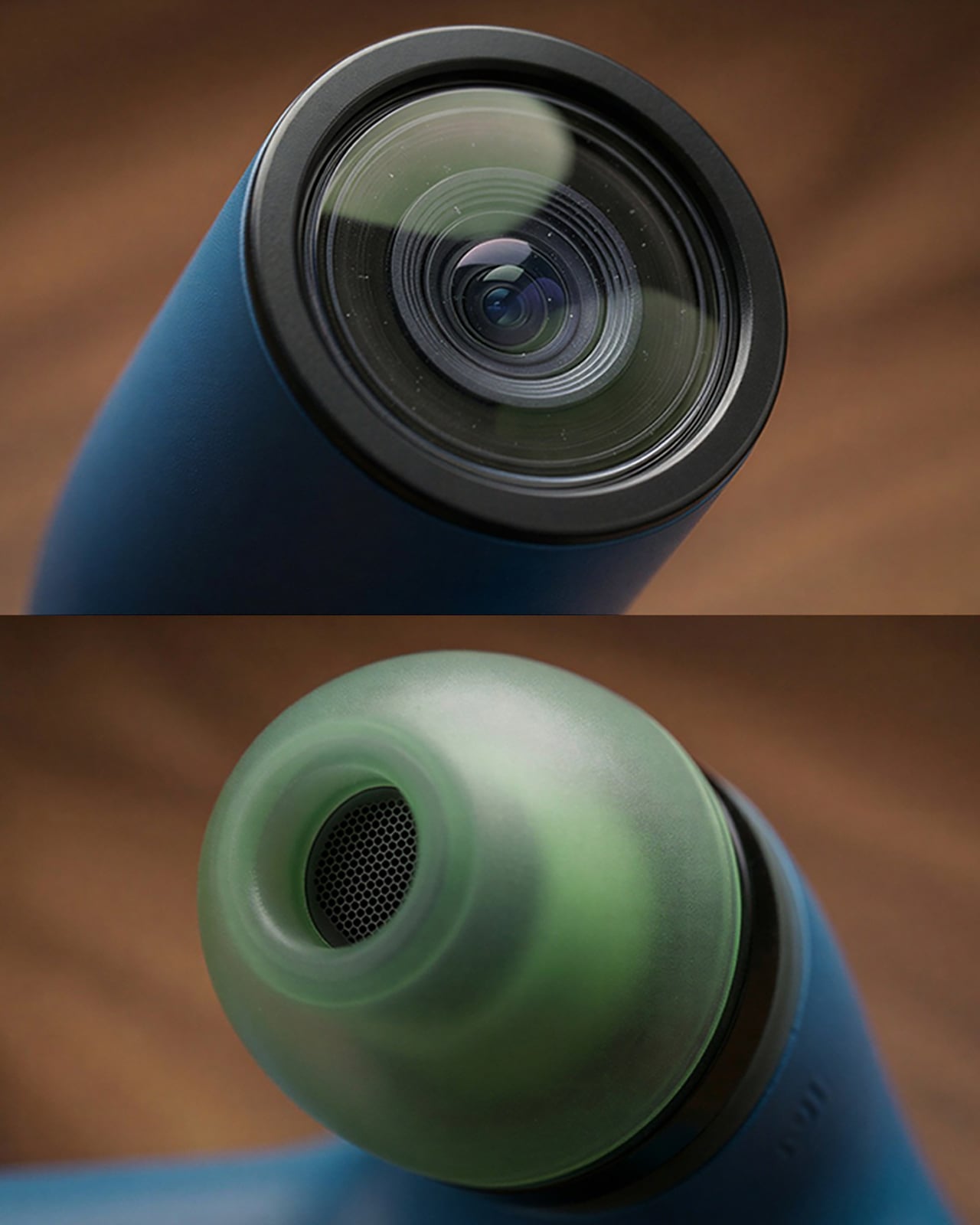
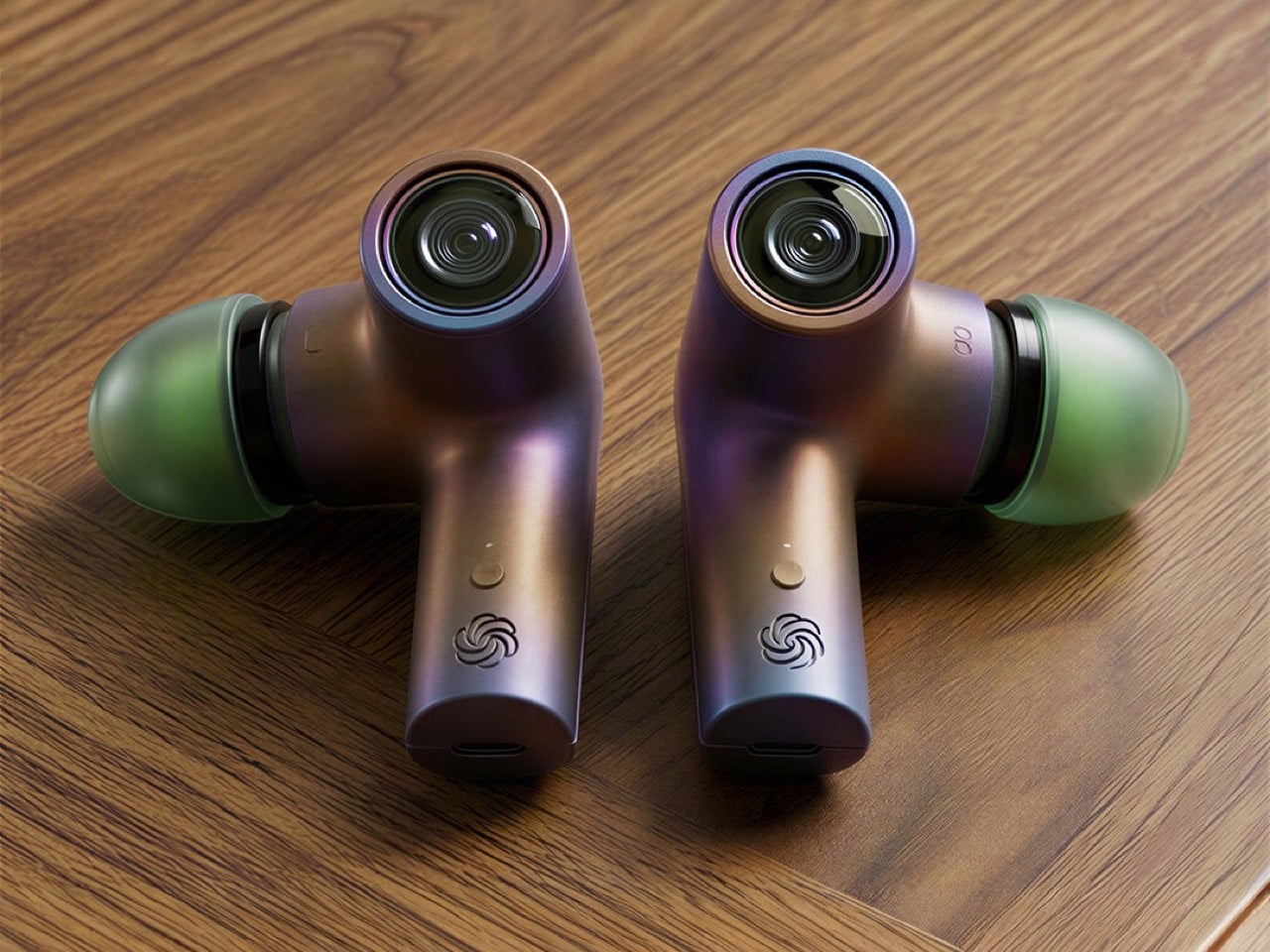
This concept imagines TWS earbuds with a twist. Each bud carries an extra stem with a built in camera, positioned close to your natural line of sight. Paired with ChatGPT, those lenses become a constant visual feed for an assistant that lives in your ears. It can read menus, interpret signs, describe scenes, and guide you through a city without a screen. The form factor stays familiar, the capabilities feel new. If OpenAI wants a hardware foothold, this is the kind of product that could make AI feel less like a demo and more like a daily habit. Here’s why a camera in your ear might beat a camera on your face.

Designer: Emil Lukas

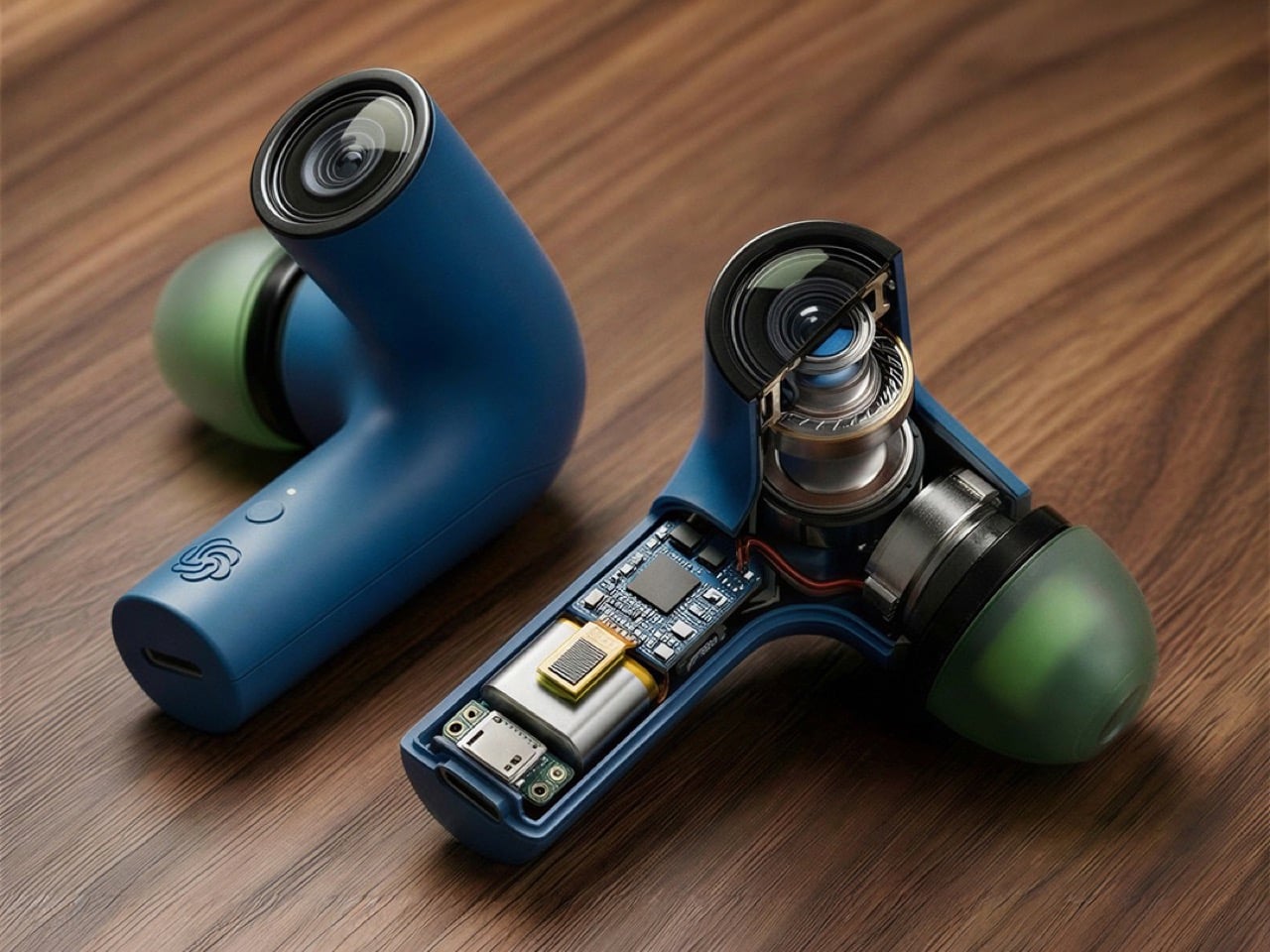
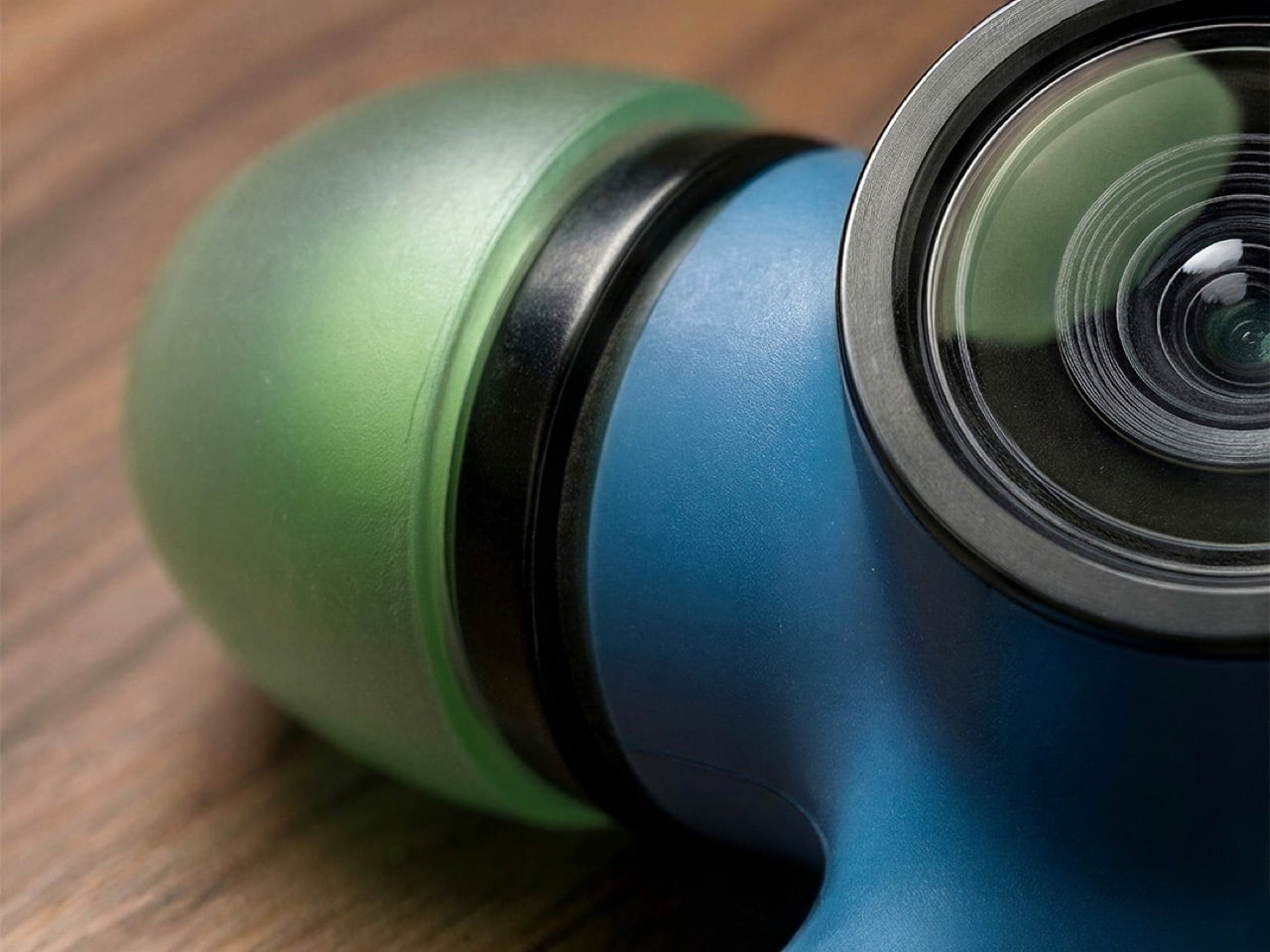
The industrial design has a sort of sci fi inhaler vibe that I weirdly like. The lens sits at the end of the stem like a tiny action cam, surrounded by a ring that doubles as a visual accent. It looks deliberate rather than tacked on, which matters when you are literally hanging optics off your head. The colored shells and translucent tips keep it playful enough that it still reads as audio gear first, camera second.

The cutaway render looks genuinely fascinating. You can see a proper lens stack, a sensor, and a compact board that would likely host an ISP and Bluetooth SoC. That is a lot of silicon inside something that still has to fit a driver, battery, microphones, and antennas. Realistically, any heavy lifting for vision and language goes straight to the phone and then to the cloud. On device compute at that scale would murder both battery and comfort.

All that visual data has to be processed somewhere, and it is not happening inside the earbud. On-device processing for GPT-4 level vision would turn your ear canal into a hotplate. This means the buds are basically streaming video to your phone for the heavy lifting. That introduces latency. A 200 millisecond delay is one thing; a two second lag is another. People tolerate waiting for a chatbot response at their desk. They will absolutely not tolerate that delay when they ask their “AI eyes” a simple question like “which gate am I at?”

Then there is the battery life, which is the elephant in the room. Standard TWS buds manage around five to seven hours of audio playback. Adding a camera, an image signal processor, and a constant radio transmission for video will absolutely demolish that runtime. Camera-equipped wearables like the Ray-Ban Meta glasses get about four hours of mixed use, and those have significantly more volume to pack in batteries. These concept buds look bulky, but they are still tiny compared to a pair of frames.

The practical result is that these would not be all-day companions in their current form. You are likely looking at two or three hours of real-world use before they are completely dead, and that is being generous. This works for specific, short-term tasks, like navigating a museum or getting through an airport. It completely breaks the established user behavior of having earbuds that last through a full workday of calls and music. The utility would have to be incredibly high to justify that kind of battery trade-off.

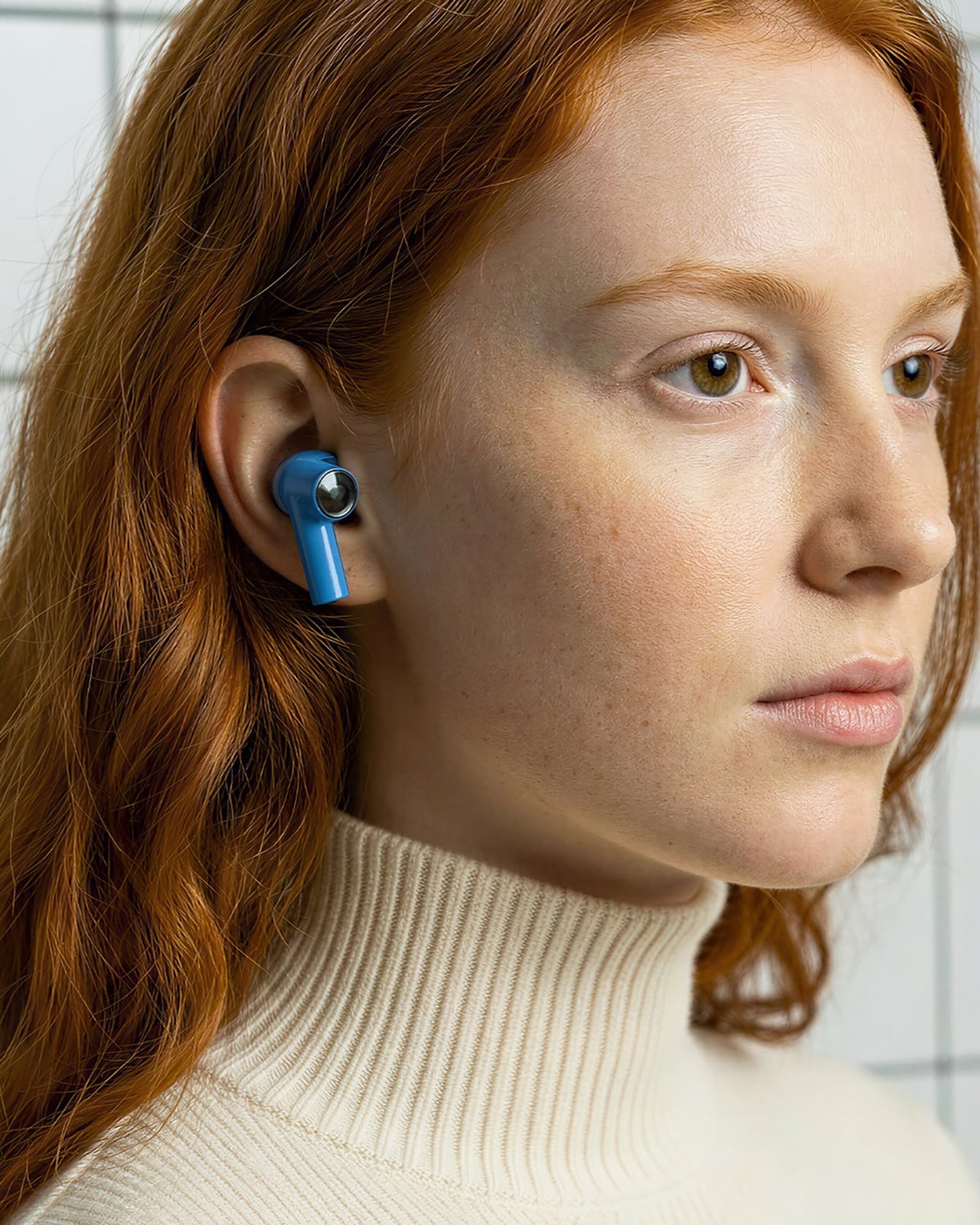
From a social perspective, the design is surprisingly clever. Smartglasses failed partly because the forward-facing camera made everyone around you feel like they were being recorded. An earbud camera might just sneak under the radar. People are already accustomed to stems sticking out of ears, so this form factor could easily be mistaken for a quirky design choice rather than a surveillance device. It is less overtly aggressive than a lens pointed from the bridge of your nose, which could lower social friction considerably.

The cynical part of me wonders about the field of view. Ear level is better than chest level, but your ears do not track your gaze. If you are looking down at your phone while walking, those cameras are still pointed forward at the horizon. You would need either a very wide angle lens, which introduces distortion and eats processing power for correction, or you would need to train yourself to move your whole head like you are wearing a VR headset. Neither is ideal, but both are solvable with enough iteration. What you get in return is an AI that can actually participate in your environment instead of waiting for you to pull out your phone and aim it at something. That shift from reactive to ambient is the entire value proposition, and it only works if the cameras are always positioned and always ready.

The post TWS Earbuds With Built-In Cameras Puts ChatGPT’s AI Capabilities In Your Ears first appeared on Yanko Design.

The Pebble Index 01 Strips the Smart Ring Down to a Single Gesture of Capture

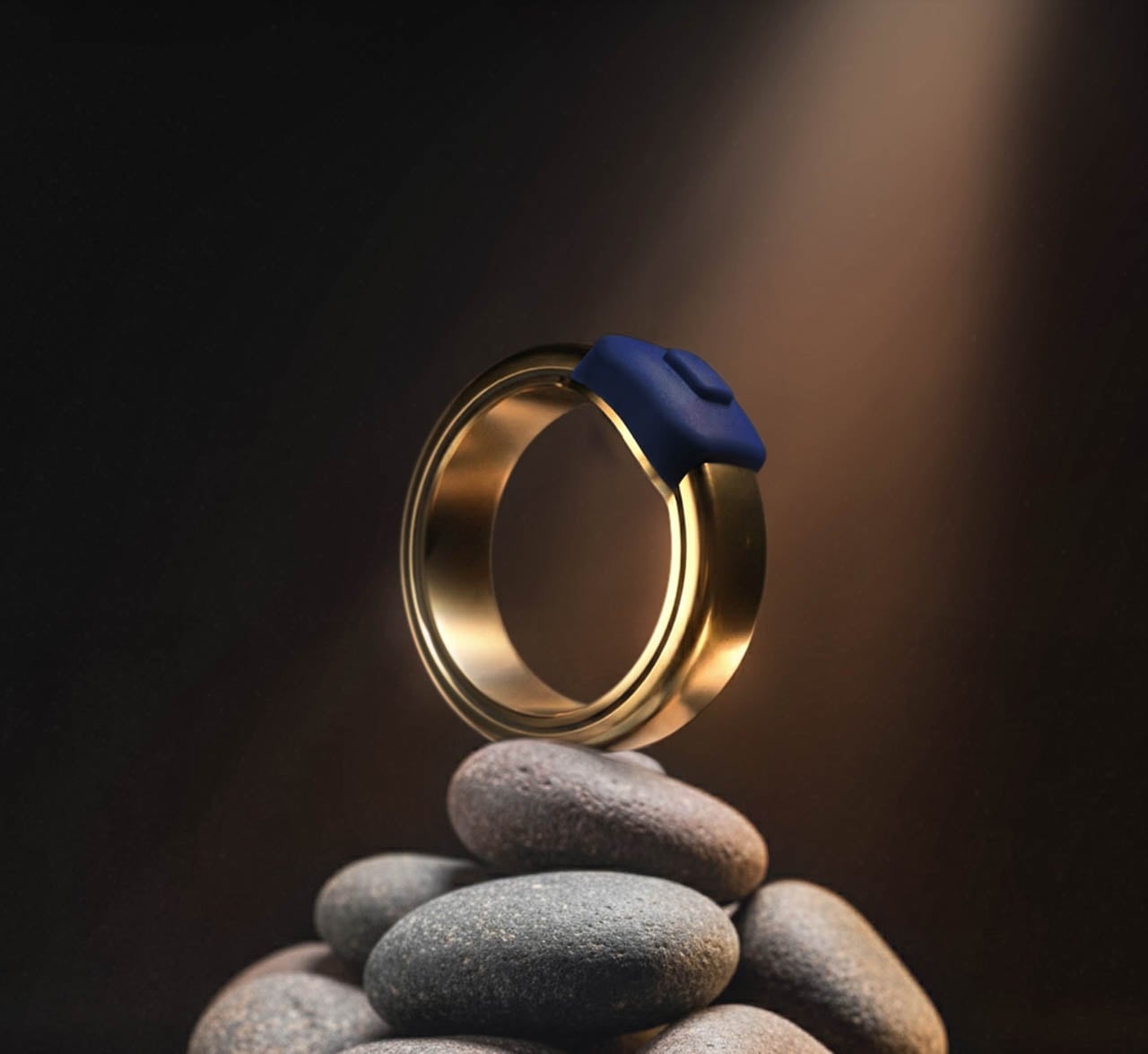
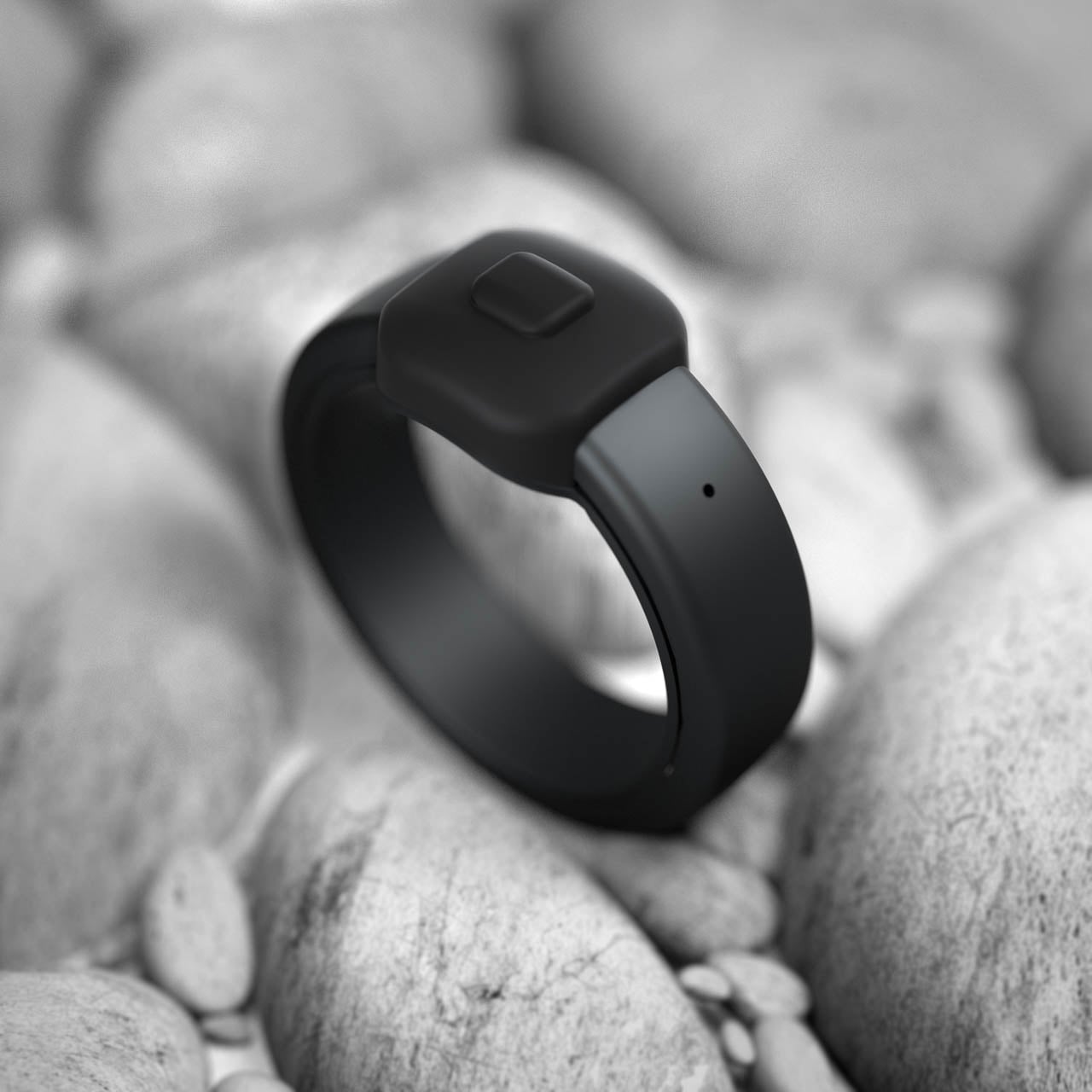
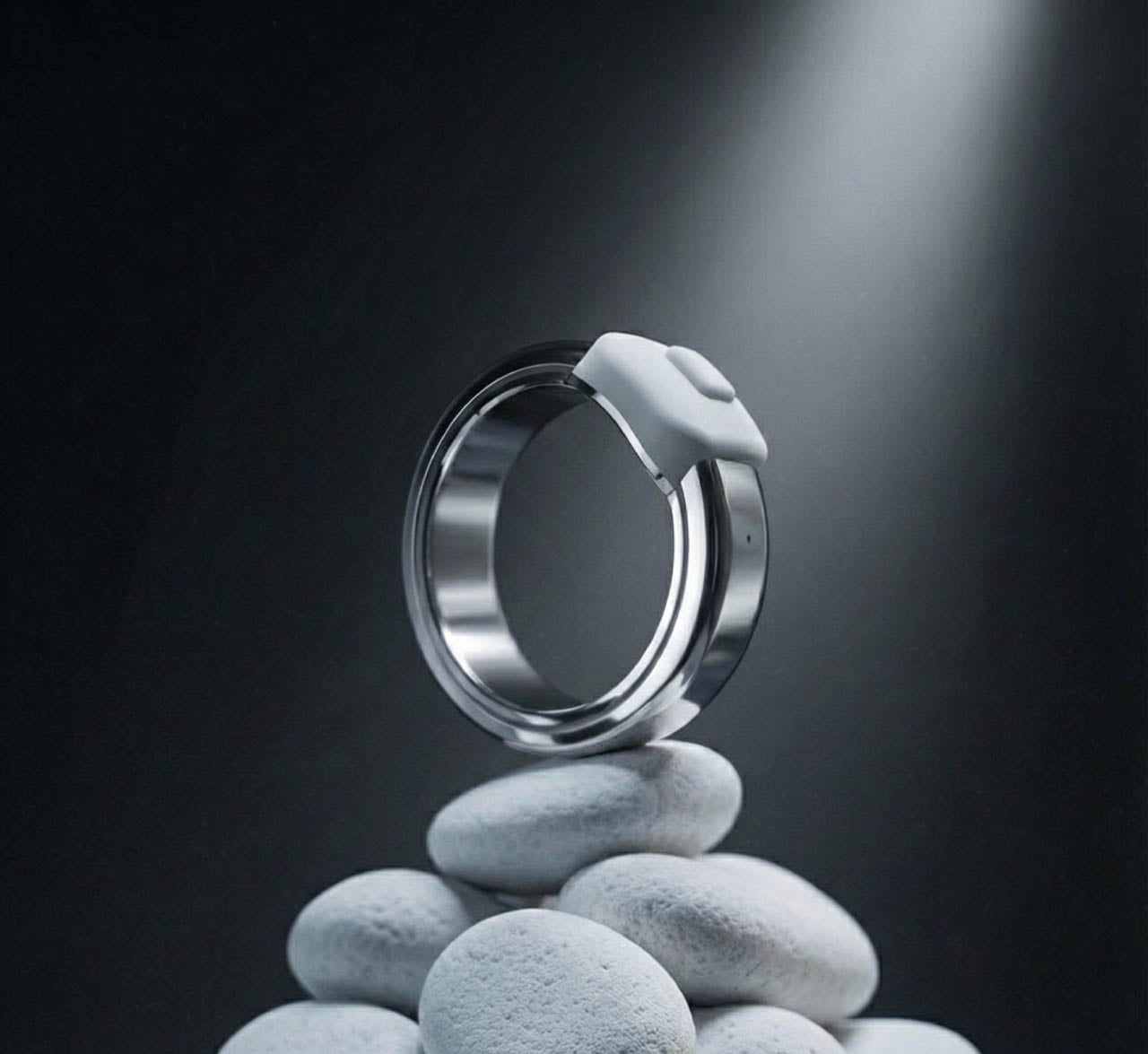
A ring that does nothing but listen. In a category defined by biometric excess, the Pebble Index 01 arrives with radical minimalism: one button, one microphone, no display, no haptic motor, no health sensors whatsoever. Eric Migicovsky, the designer who created the original Pebble smartwatch before selling it to Fitbit, has returned with a device that treats subtraction as its primary design gesture. The result is a stainless steel band that costs $75 and exists for exactly one purpose: catching thoughts before they vanish.

The Form Language of Refusal

Where contemporary smart rings pile sensors beneath the surface, the Index 01 presents a deliberately quiet silhouette. The body arrives in stainless steel with three finish options: a matte black that absorbs light, a polished silver that catches it, and a polished gold that warms skin tones. Sizing spans from 6 to 13, covering the full range of adult finger dimensions. Submersion tolerance extends to one meter of depth, accommodating daily encounters with water but drawing the line at sustained swimming. A single tactile control rises slightly from the band surface, positioned where the thumb naturally falls during a closed fist. The metal arrives cool against skin, then gradually matches body temperature until the ring becomes thermally invisible.

This external button represents the entire interaction vocabulary. Press and hold to record. Single press for a customizable action. Double press for another. The tactile click either happens or it does not. Migicovsky designed this mechanical simplicity to eliminate the software failure states that plague capacitive touch surfaces. A button pressed is a button registered. The interaction model carries the directness of a light switch, with none of the ambiguity that haunts gesture-based interfaces where a swipe might be a scroll or a tap might be a hold.

Material Decisions and Lifecycle Architecture

The battery architecture reveals the sharpest design trade-off. The power source borrows from audiological medicine: silver oxide chemistry, the same electrochemical foundation that enables hearing aids to operate for extended periods without user intervention. Under typical usage patterns, this chemistry sustains the Index for roughly twenty-four months. The cells accept no recharge. When electrochemical capacity exhausts, the object transitions from functional tool to recyclable material, and the replacement cycle begins at the standard retail threshold.

Migicovsky frames this as liberation from charging infrastructure. No dock to pack for travel. No percentage to monitor across the day. No dead device at the moment of need. The battery simply works until it does not. Pebble accepts spent units for recycling, though the environmental calculus of disposable electronics remains uncomfortable regardless of end-of-life handling. The choice prioritizes reliability over sustainability, a trade-off that will resonate with users who have missed critical moments because a rechargeable device died at the wrong time.

Onboard storage accumulates voice data during periods of wireless disconnection. The device operates autonomously at the moment of capture, holding content until the paired phone returns to communication range. This independence from continuous connectivity means the critical instant of thought preservation never depends on signal strength. Total storage capacity approaches fourteen hours of compressed audio before the power source reaches depletion.

The component inventory reads like an exercise in restraint: a single mechanical switch, a voice-optimized transducer capable of cutting through ambient noise, and nothing else. The absence of a vibration motor removes one failure point. The absence of a screen removes another. The absence of haptic feedback removes a third. Migicovsky constructed this architecture around a singular reliability thesis: fewer components mean fewer opportunities for malfunction.

Privacy Embedded in Architecture

The conversion pipeline executes entirely within the paired phone’s processor. Voice becomes text through a speech recognition system distributed under open licensing. A secondary language model, also running locally, sorts each capture into categorical bins: reminder, timer, or unstructured thought. The data path terminates at the device boundary. No packet crosses to external infrastructure. No server receives the content. The application code itself lives in public repositories, enabling inspection of every function that touches the user’s recorded cognition.

This transparency represents a structural commitment rather than a policy promise. The architecture makes privacy violation technically difficult rather than merely prohibited. Over 100 languages receive support for transcription, and the app retains both raw audio and text transcription as a practical backup for moments when ambient noise garbles the speech-to-text conversion.

The Cognitive Friction of Remembering

Three months of prototype wear revealed Migicovsky’s personal rhythm: between ten and twenty capture events per day, most compressed into windows of three to six seconds. Micro-utterances preserved before cognitive decay erases them. The friction point he identifies sits between idea formation and idea preservation: the gap between thinking something and writing it down often exceeds the retention window of working memory. The ring attempts to close that gap by reducing the capture gesture to a thumb press.

No phone to extract from a pocket. No app to open. No interface to navigate. The ring lives on the finger, perpetually ready, requiring only mechanical activation. Recording duration extends to five minutes for longer thoughts, though Migicovsky’s own usage suggests most captures are momentary. This design philosophy treats the human mind as the bottleneck rather than the technology. The device does not attempt to augment cognition. It simply catches output before it disappears into the noise of the next distraction.

The absence of a display removes the temptation to glance. No notifications pull attention away from the present moment. The ring offers no visual feedback during recording, only the physical sensation of the button depression and the knowledge that somewhere inside, a microphone is capturing sound. This sensory reduction forces trust in the device rather than verification of it.

Market Position Through Aggressive Restraint

The market already contains an alternative philosophy. Sandbar’s Stream Ring arrives at a quarter-thousand-dollar entry point, layers a subscription model at ten dollars per month for full functionality, and frames itself as a conversational AI presence worn on the hand. Delivery timelines stretch into the following summer. The Index inverts every variable: seventy-five dollars during the preorder window, ninety-nine after the March 2026 ship date, zero recurring fees, complete feature access from activation.

The value proposition rests entirely on whether memory capture alone justifies a ring on the hand. For users who want biometric tracking, the Index offers nothing. For users who want AI interaction, the device provides only a side door accessed through a specific gesture, and Migicovsky admits this feature will not work consistently. The honesty is refreshing in a category saturated with overpromise.

The organization behind the Index operates with five employees and no external capital. Migicovsky constructed this structure deliberately after the original Pebble trajectory concluded with a Fitbit acquisition that generated minimal founder returns. The Index embodies an opposing growth philosophy: constrained scale, margin sustainability from the first unit sold, price points accessible without the pressure of venture expectations demanding hyperbolic expansion curves.

Designing for Disappearance

The Index 01 succeeds or fails based on its ability to vanish from conscious attention. A health-tracking ring demands engagement: it provides data that requires interpretation. The Index asks only to be worn and pressed. The interaction surface shrinks to a single gesture repeated throughout the day.

Whether this reduction represents design clarity or feature poverty depends entirely on the user’s relationship with their own thoughts. Some people remember what matters. Others watch ideas dissolve before they can act on them. For the second group, the Index offers external memory that requires no charging ritual, no subscription fee, and no data uploaded to distant servers. The stainless steel band catches light. The button waits under the thumb. Somewhere inside, a microphone stands ready. The design statement is the emptiness itself: a ring that does almost nothing, executing that nothing with perfect reliability.

The post The Pebble Index 01 Strips the Smart Ring Down to a Single Gesture of Capture first appeared on Yanko Design.

Badgeware Turns Conference Badges into Wearable Tiny Computers

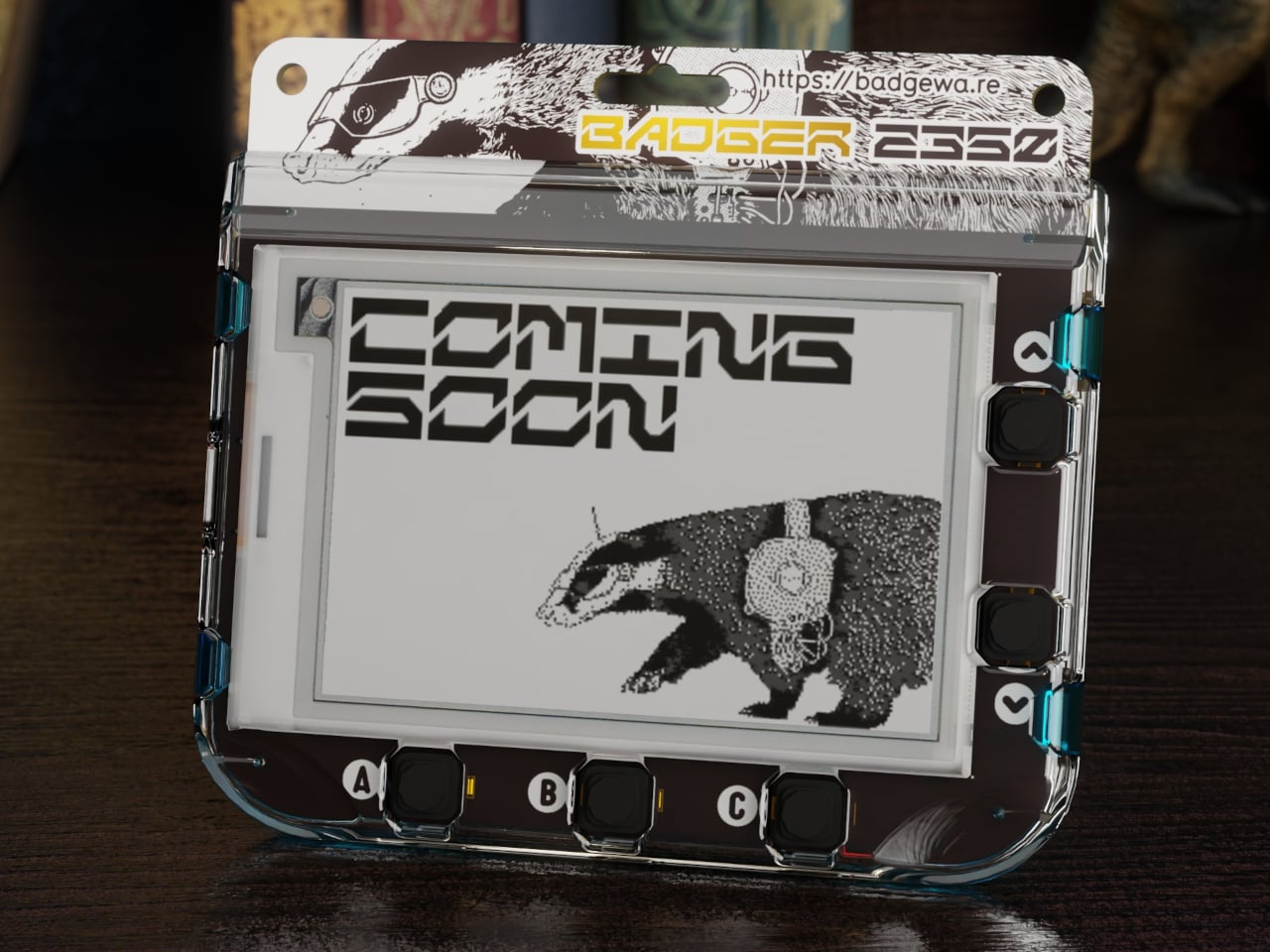
Conference badges are usually flimsy cardboard, a lanyard, maybe a QR code, and they end up in a drawer once the event wraps up. In the maker world, people already strap LEDs and e‑paper to their jackets for fun, but those tend to be one‑off hacks held together with tape and hope. Pimoroni’s Badgeware line asks a simpler question, what if the badge itself was a tiny, finished computer you actually wanted to keep wearing.

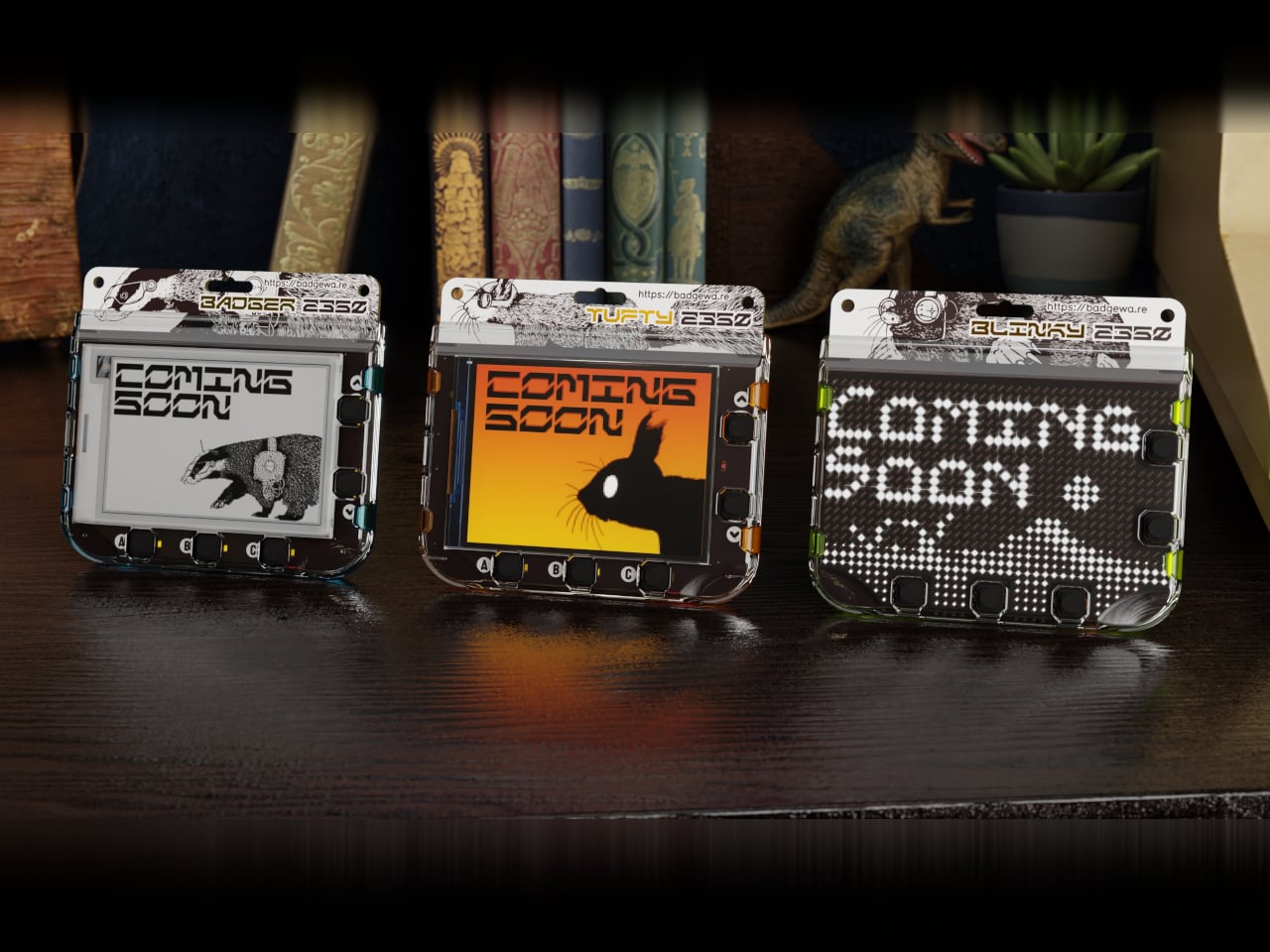
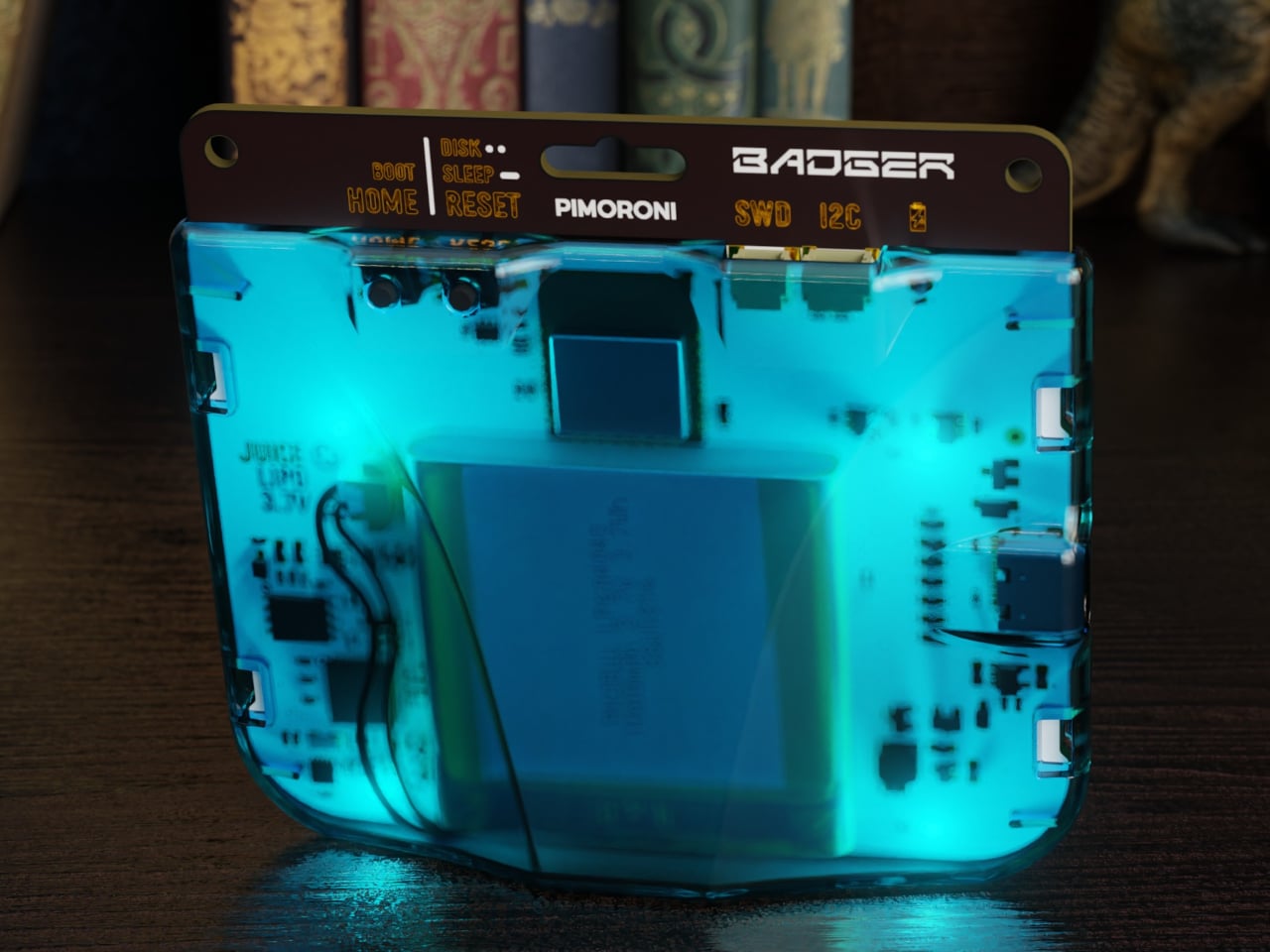
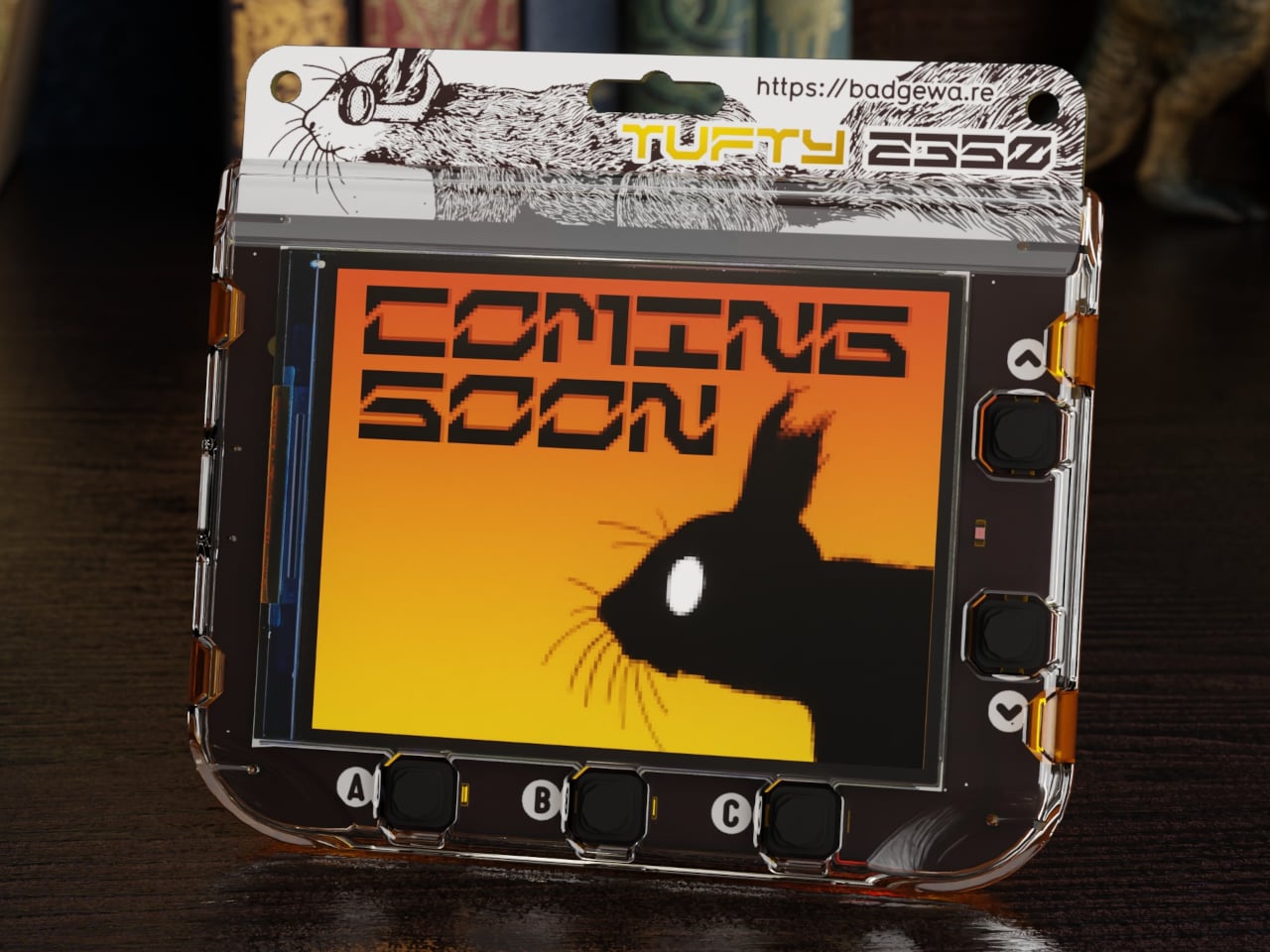
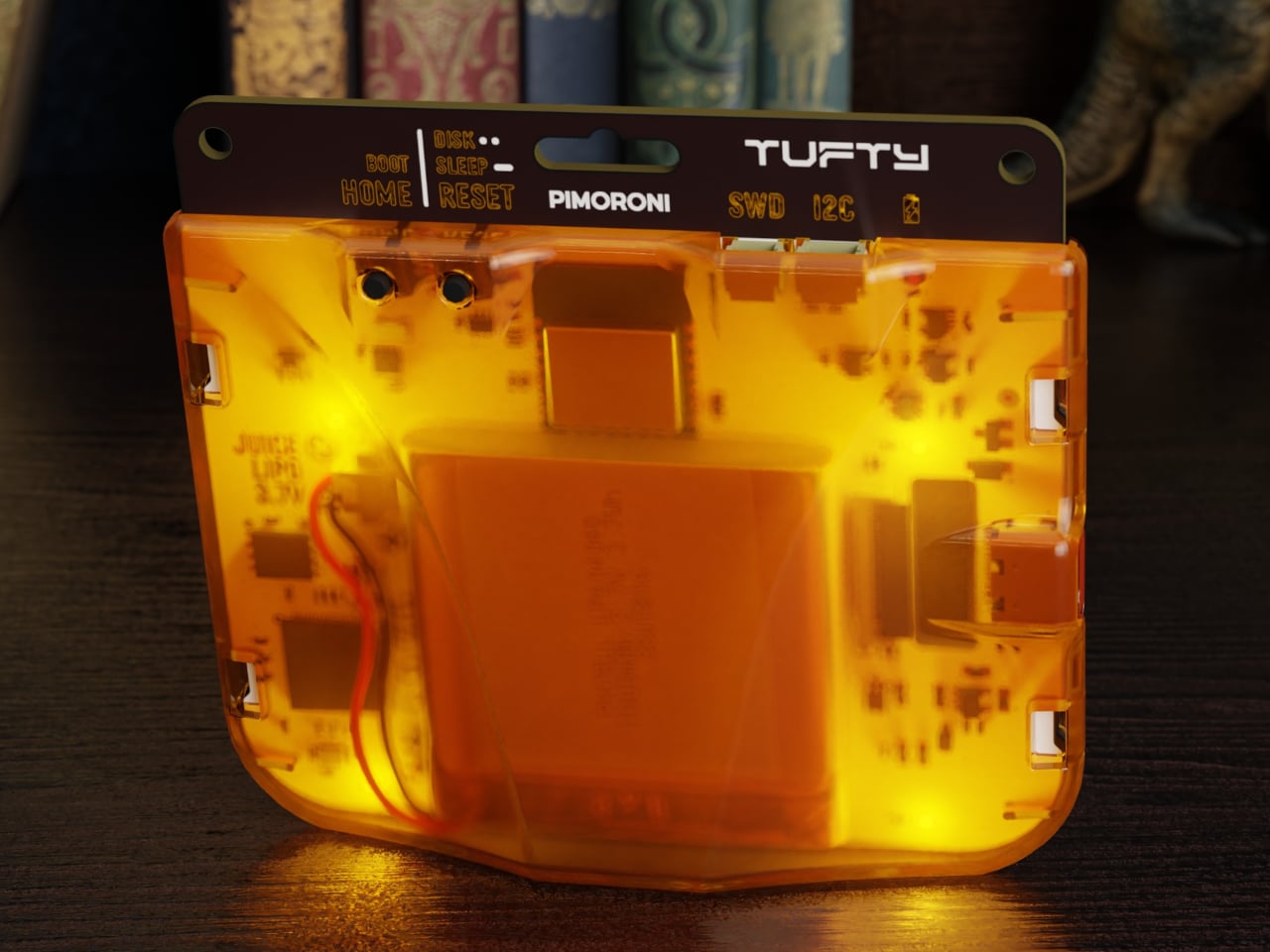
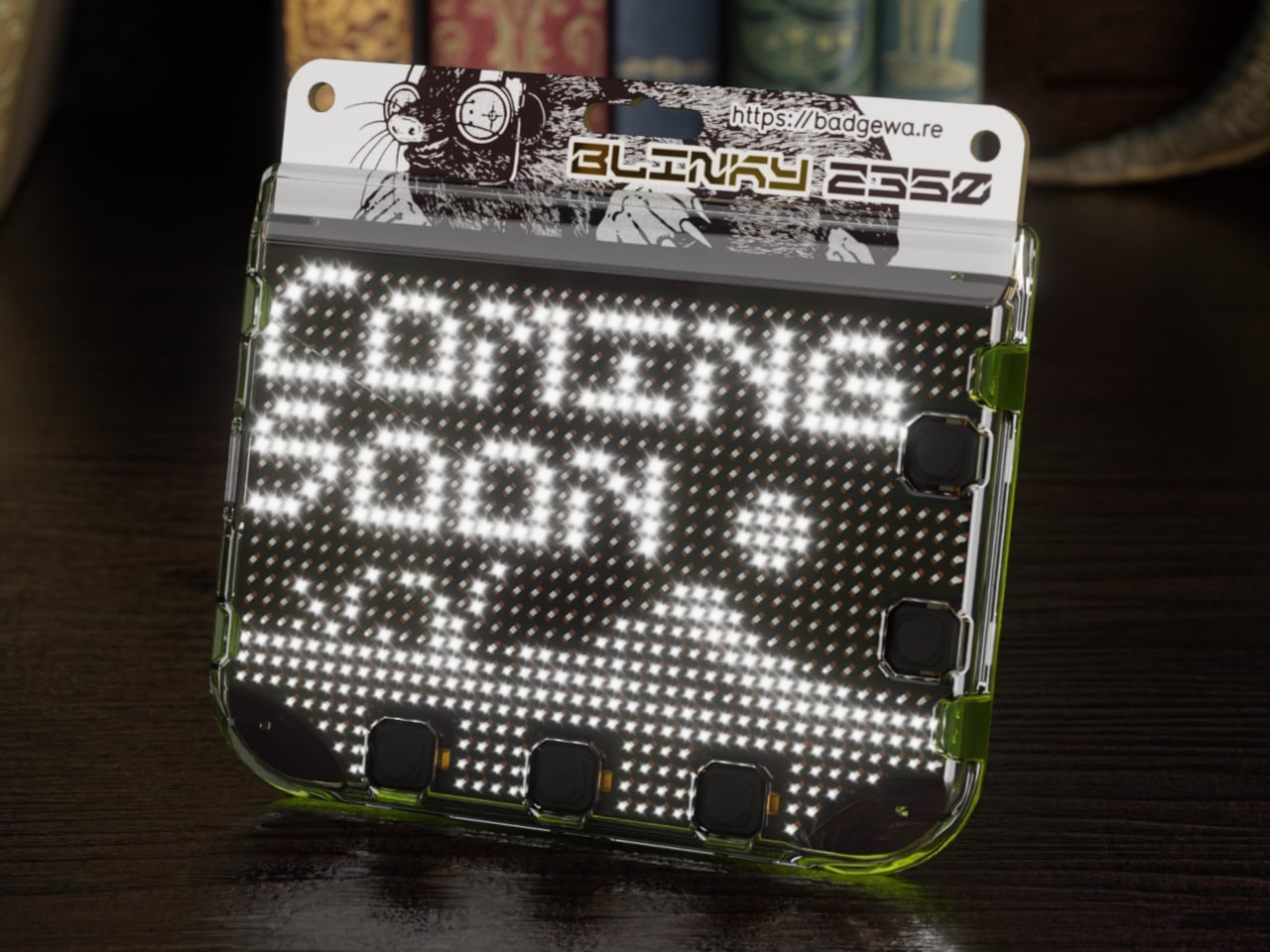
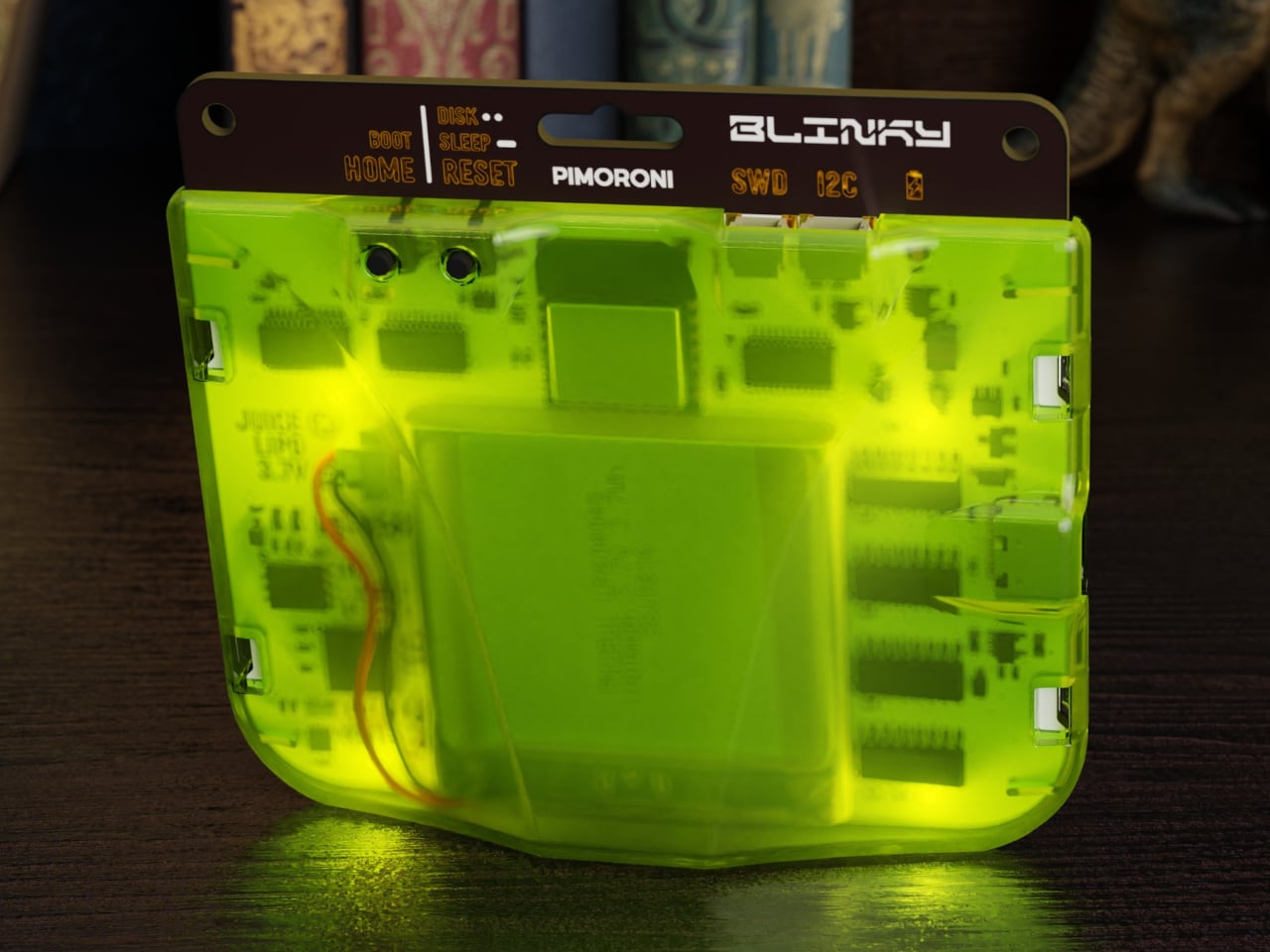
Badgeware is a family of wearable, programmable displays powered by Raspberry Pi’s new RP2350 chip. The trio gets names and personalities, Badger with a 2.7 inch e‑paper screen, Tufty with a 2.8 inch full colour IPS display, and Blinky with a 3.6 inch grid of 872 white LEDs. Translucent polycarbonate shells in teal, orange, and lime glow softly when the rear lighting kicks in, making them look like finished toys instead of bare dev boards.

Designer: Pimoroni

The shared hardware is serious for something pocket sized. An RP2350 running at 200 megahertz with 16 megabytes of flash and 8 megabytes of PSRAM, Wi‑Fi and Bluetooth 5.2, USB C, and a built in 1,000 milliamp hour LiPo with onboard charging. The Qw/ST expansion port on the back lets you plug in sensors and add ons without soldering, while user and system buttons plus four zone rear lighting give each badge its own under glow.

Badger is the quiet one, four shade e‑paper that sips power and holds static content like names, pronouns, and tiny dashboards for days. Tufty is the show off, full colour IPS and smooth animation for mini games, widgets, and scrolling text. Blinky is the extrovert, a dense LED matrix that spells messages and patterns bright enough to read across a room. Together they cover calm, expressive, and loud without changing the basic wearable form factor.

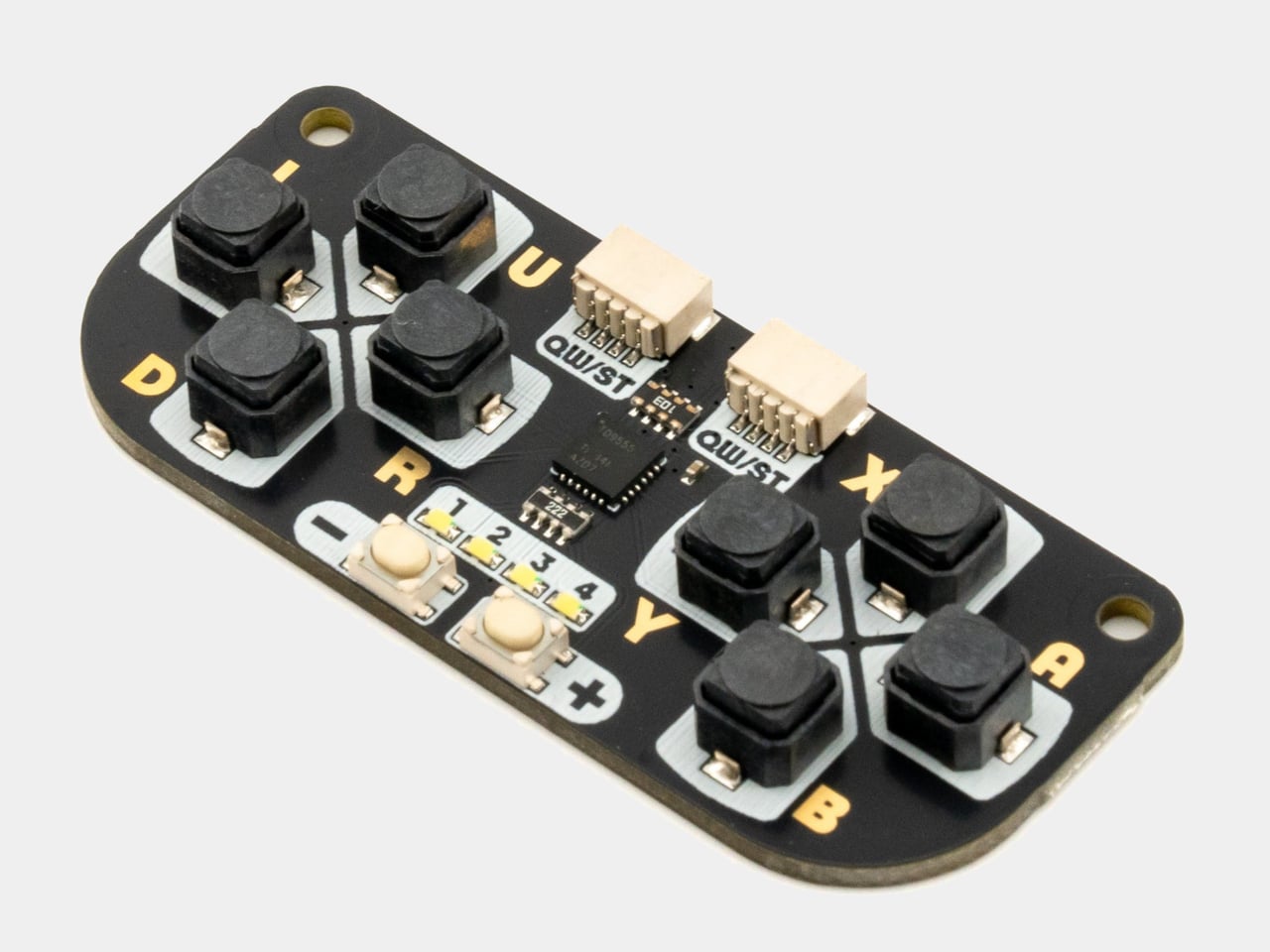
All three come pre loaded with a launcher and a bunch of open source apps, from silly games like Plucky Cluck to utilities like clocks and ISS trackers. Everything runs in MicroPython with Pimoroni’s libraries, and the optional STEM kit adds a multi sensor stick and a gamepad so badges can react to temperature, light, motion, and multiplayer button mashing, turning them into wearable sensors or tiny game consoles.

Double tapping reset drops the badge into disk mode so it shows up as a USB drive, letting you edit Python files directly without juggling tools or serial consoles. The cases have lanyard holes and can free stand on a desk, so they work as both wearable name tags and tiny desk dashboards. The clear shells and rear lighting make the electronics part of the aesthetic instead of something to hide.

Badgeware turns the throwaway conference badge into a reusable platform. Instead of printing your name once and tossing it, you get a little object that evolves from ID tag to art piece to sensor display as your code and curiosity grow. For people who like their gadgets small, expressive, and open ended, Badger, Tufty, and Blinky feel like digital jewellery that actually earns its lanyard space, whether you wear it to a meetup or keep it glowing on your desk.

The post Badgeware Turns Conference Badges into Wearable Tiny Computers first appeared on Yanko Design.

PUM Imagines a Soft Exoskeleton Posture Wearable for Young Farmers

Most posture gadgets target office workers hunched over laptops, buzzing when your shoulders curl forward, or your neck drifts too far from neutral. Meanwhile, people doing physically demanding jobs, like young farmers, quietly rack up back pain and joint strain from long hours of bending, squatting, and lifting in fields. That strain is often treated as just part of the job until it becomes a serious problem threatening long-term health and livelihood.

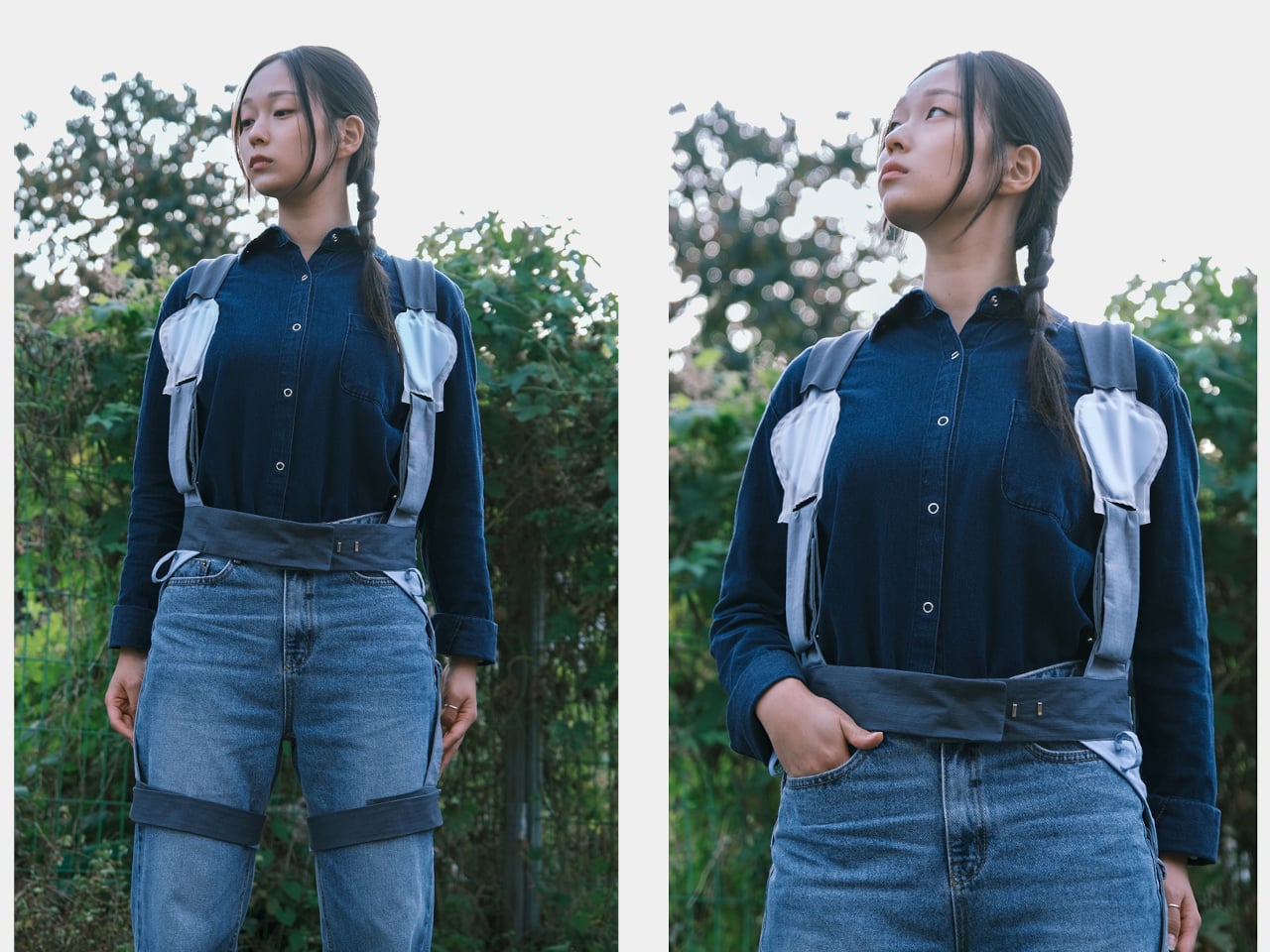
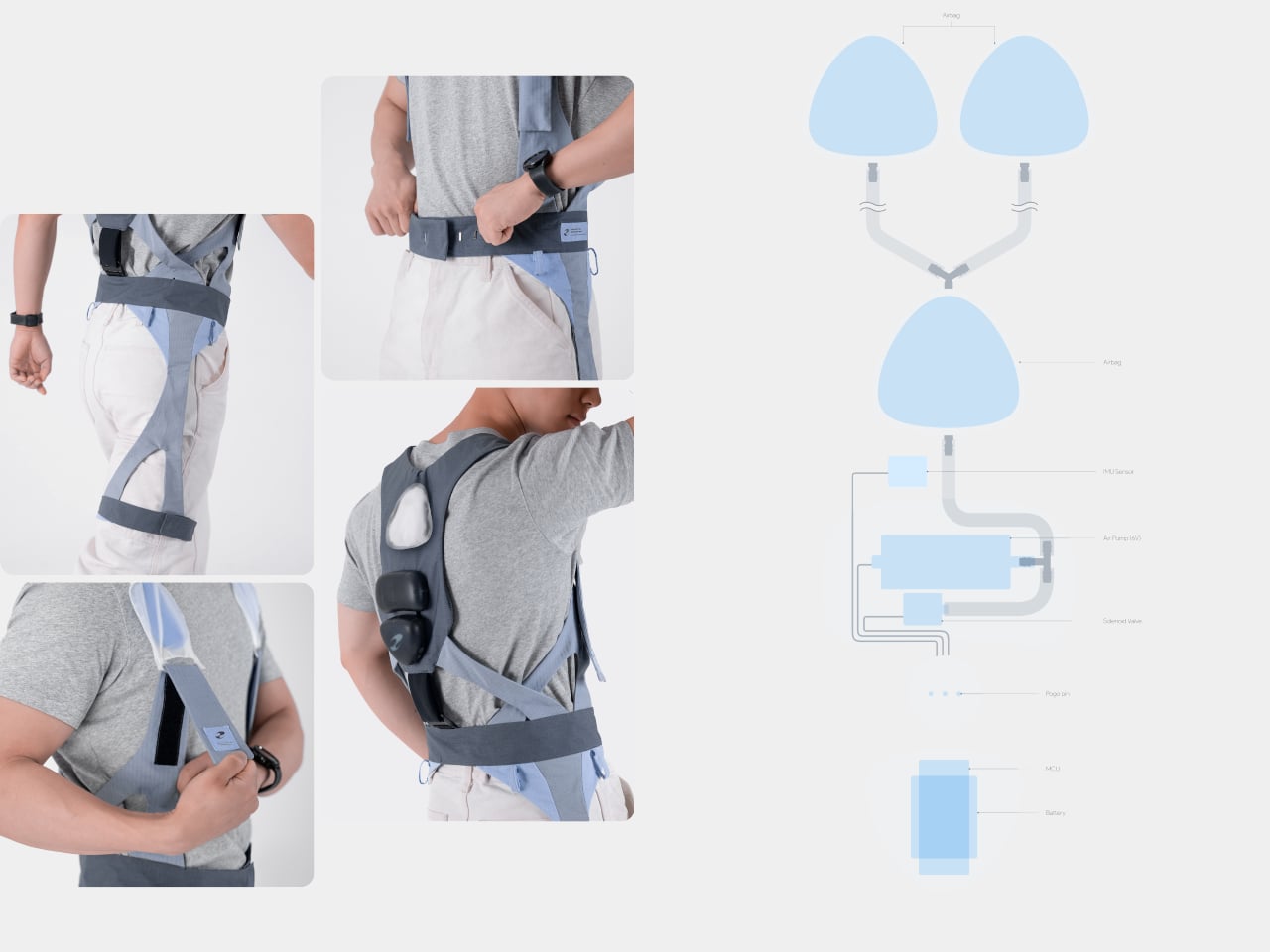
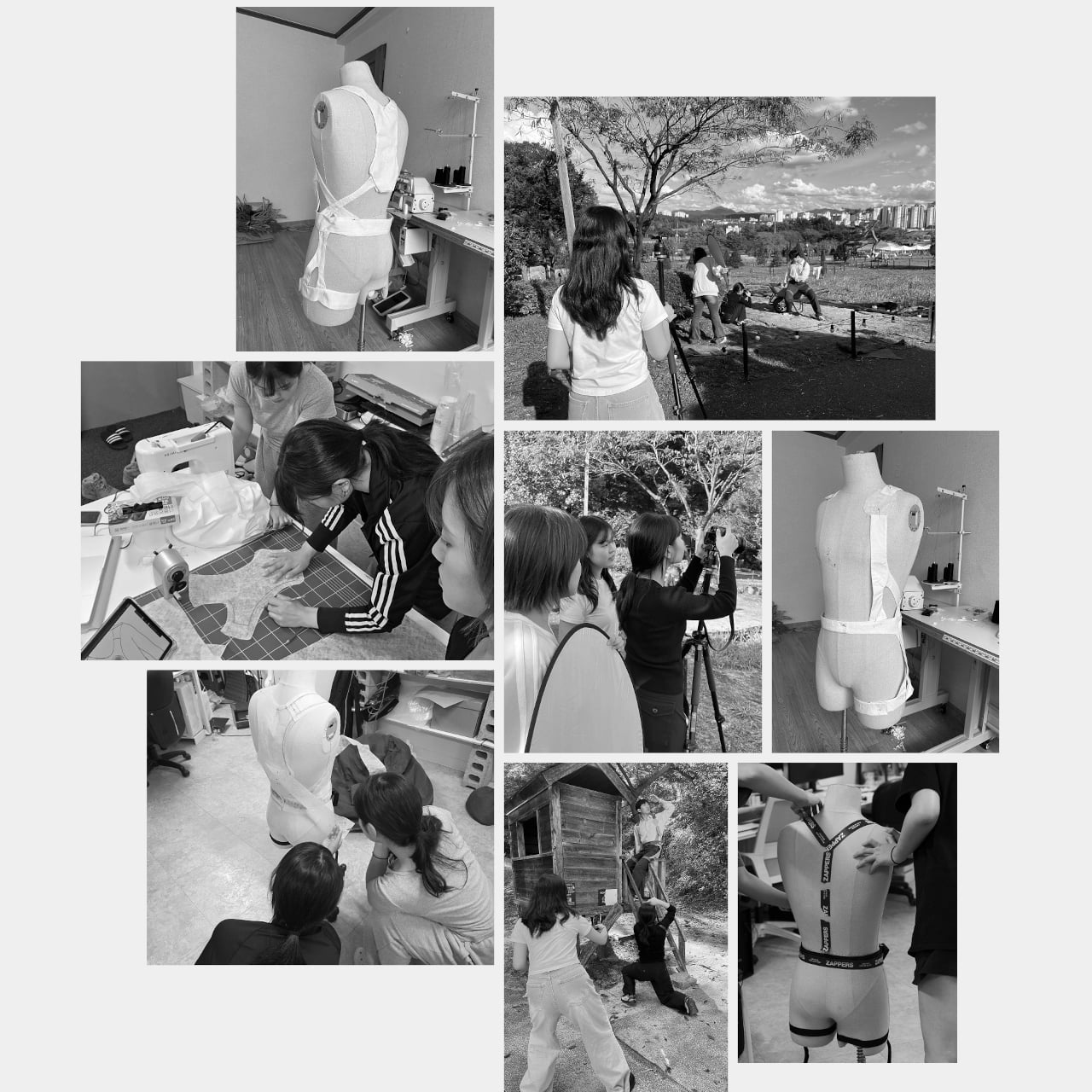
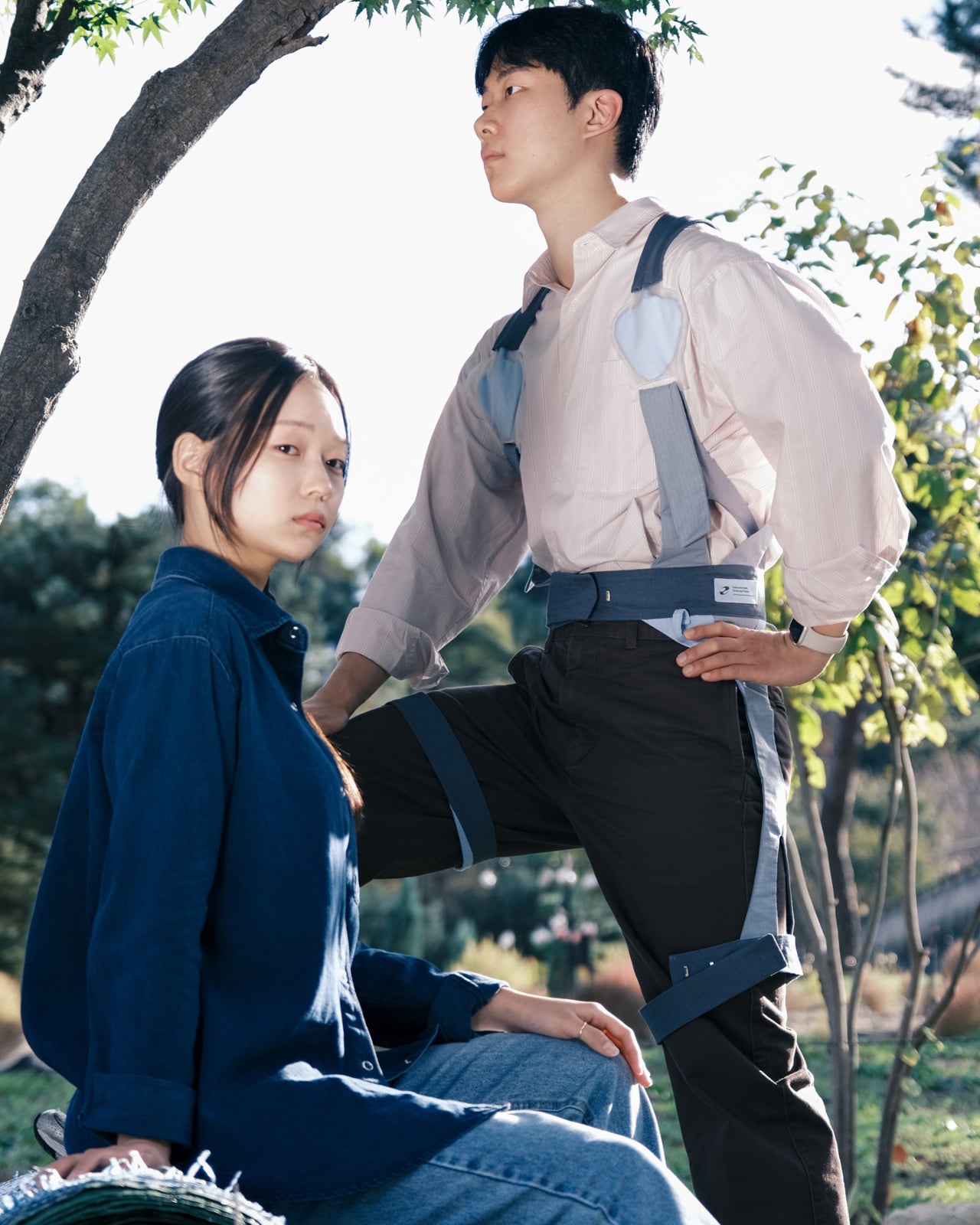
PUM is a graduation project imagining a posture correcting wearable built specifically for young farmers. It is a soft exoskeleton harness with inflatable shoulder airbags, a back module full of sensors and a pump, and an app that tracks posture and guides stretching. It is designed as gear you put on with work clothes, not a medical device you remember after damage is done or when your back hurts badly enough to stop working.

Designers: Seulgi Kim, Gaon Park, Seongmin Kim

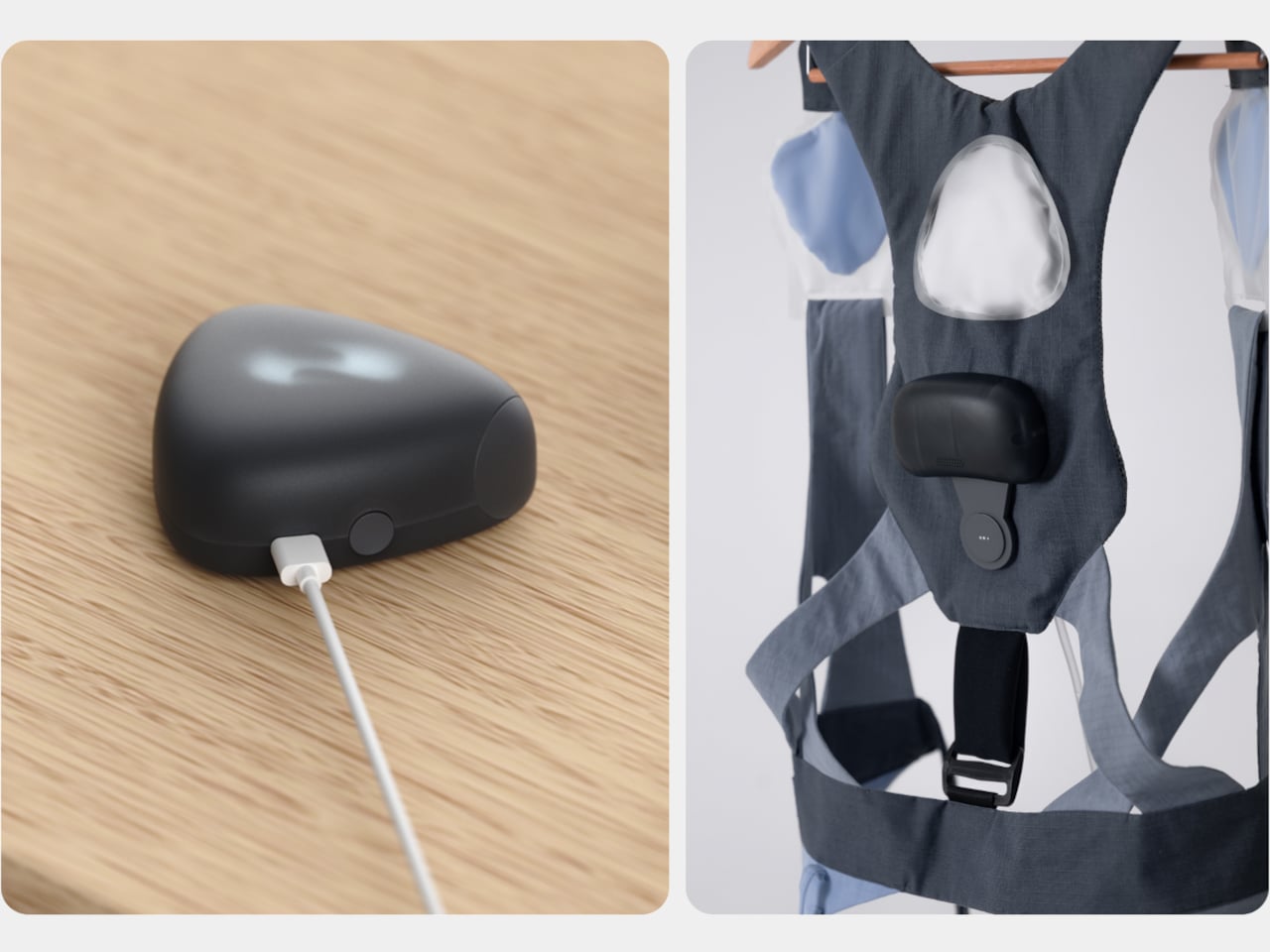
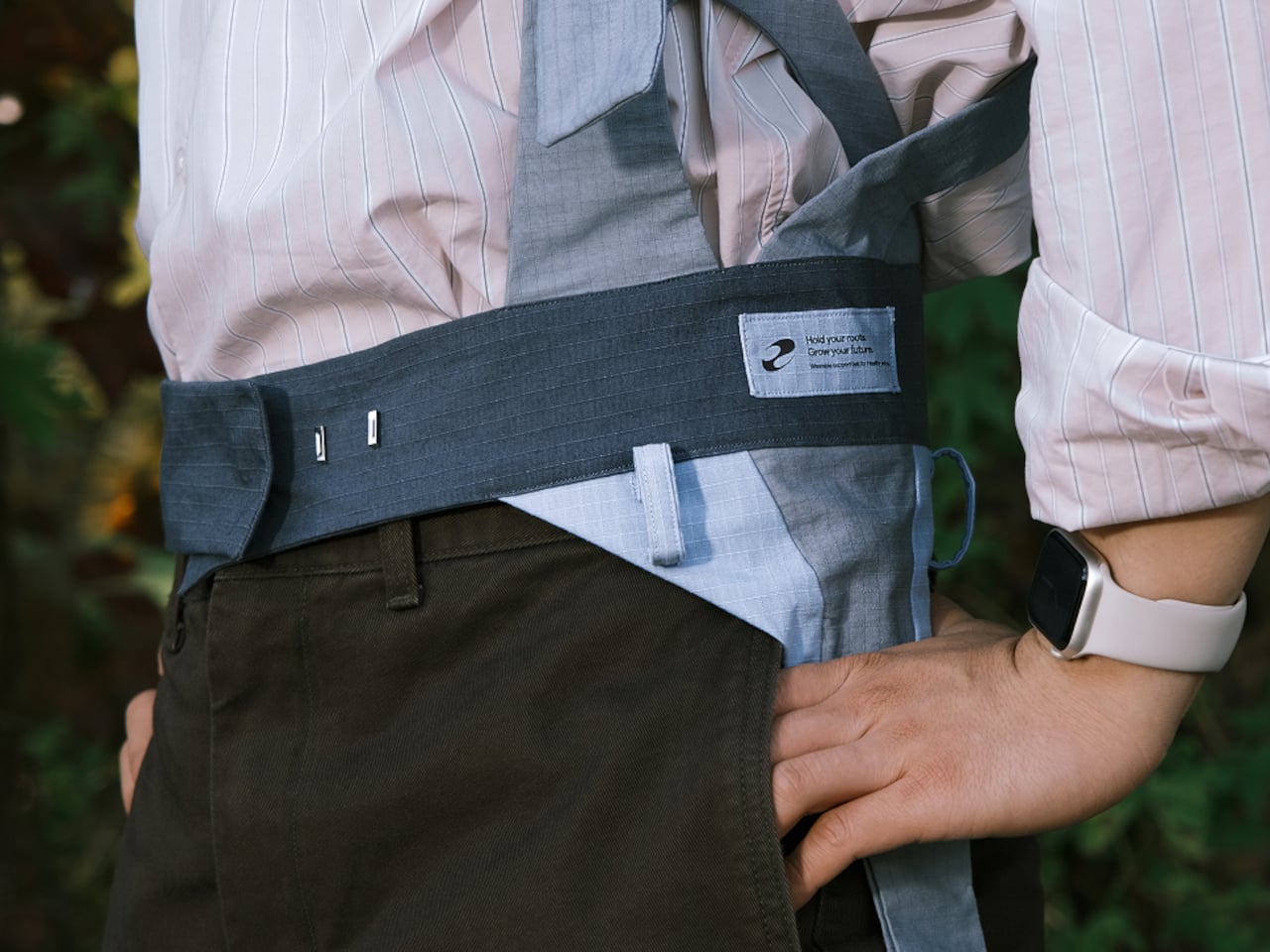
The harness wraps shoulders, torso, and thighs using wide, soft straps in muted blues and grays, with a waist belt anchoring a pebble-shaped module on the back. It aims to feel like a lightweight work vest rather than a rigid exoskeleton, avoiding bulky frames or hard edges. Leg straps and belt also double as attachment points for tools, folding ergonomic support into everyday workflow instead of adding another thing to carry.

The back module uses motion sensors to watch for deep or prolonged bending, sending data to a smartwatch and phone. When a farmer stays in a harmful posture too long, the system nudges them with an alert and, more interestingly, by slightly inflating the shoulder airbags. That gentle pressure on the upper back acts as a physical reminder to straighten up without constant buzzing or nagging notifications interrupting delicate planting or harvesting work.

The air system relies on small triangular airbags in shoulder straps connected to a pump and valves in the back module, controlled by a microcontroller and pressure sensor. When posture crosses a threshold, the pump adds air, and when the user corrects, it releases pressure. It is soft robotics used as a tap on the shoulder, a tactile cue instead of another screen telling you what to do or another alarm competing for attention.
The app layer lets farmers see how long they spent bent over, adjust how sensitive PUM is, and, at the end of the day, follow a stretching program tailored to that data. If the system saw lots of forward flexion, it suggests back extension and hamstring stretches. PUM does not clock out when fieldwork ends; it helps with recovery, so tomorrow starts from a better baseline instead of compounding yesterday’s strain into chronic issues.
PUM shifts the usual posture tech story away from offices and into fields, treating young farmers’ bodies as worth designing for. As a concept, it raises questions about durability in dusty, wet environments and whether farmers would wear a full harness every day. But it points toward a future where soft exoskeletons, air-driven feedback, and thoughtful service design quietly protect the people whose work keeps everyone else fed, instead of assuming physical labor is something bodies just endure until they break.

The post PUM Imagines a Soft Exoskeleton Posture Wearable for Young Farmers first appeared on Yanko Design.