There are way too many online services and subscriptions to keep track of these days, but the flip side is there’s a tool for just about everything. Time is just about up to get a physical gift shipped in time for the holidays, so below we’ve pulled together some of our favorite digital gifts and subscriptions, including time-tested video, music and gaming services as well as tools to clear your mental space and learn new skills. There are also a few subscriptions that provide ongoing, IRL deliveries, if you think your giftee will appreciate the nostalgic charm of a physical object.
Best digital gifts and subscription gifts
Gaming subscriptions
Game consoles are certainly among the most popular gift ideas this time of year. If you know someone who’s been so good that they’re getting a new Nintendo Switch, PlayStation 5 or Xbox Series X/S, one of these subscriptions will make their shiny toy immediately playable out of the box.
There’s no doubt that Microsoft has changed the value proposition for its Game Pass subscription service service. It recently raised the price for its most comprehensive Ultimate tier by 50 percent, to $30 a month. That’s a bitter pill to swallow — but devoted players who have an Xbox as their main (or only) console will still get a ton of value out of Game Pass.
The aforementioned Ultimate tier provides access to more than 500 games that’ll work on Xbox, PC and other supported devices. It’s also the only way to get “day one” release games like Hollow Knight: SilksongNinja Gaiden 4, The Outer World 2, Call of Duty Black Ops 7; in recent years other high-profile day one releases have included Doom: The Dark Ages, Starfield, Clair Obscur: Expedition 33, Forza Motorsport and numerous others. Game Pass Ultimate subscribers also have access to the highest quality and fastest game streaming Xbox offers. For a slightly less hardcore Xbox fan, though, the $15-per-month Premium tier is also worth considering.
Nintendo’s Switch Online subscription has gotten some nice upgrades in 2025, the year of the Switch 2. As it has for years, Nintendo offers two different Switch Online plans. The basic $20-per-year plan unlocks online play and enables Switch 2 owners to use the system's GameChat capabilities. It also includes more than 100 Game Boy, NES and Super NES games, cloud backups of your saved games as well as the occasional special offers. It also includes access to the rather silly but enjoyable Nintendo Music app, so you can listen to your favorite Zelda or Mario tracks at any time.
The $50 “expansion pack” adds a collection of N64, Game Boy Advance and Sega Genesis games as well as some DLC for games like Mario Kart 8, Animal Crossing: New Horizons and Splatoon 2. But most interesting are the new additions for Switch 2 owners: there’s a small but growing library of GameCube games, including classics like The Legend of Zelda: The Wind Waker and F-Zero GX. Switch 2 owners who have the expansion pack subscription can also upgrade to the Switch 2 versions of The Legend of Zelda: Breath of the Wild and Tears of the Kingdom for free.
A PlayStation Plus subscription is a must-have for any PS5 owners. That’s partially because you need one to play multiplayer games online, but there are plenty of other significant benefits. PS Plus comes in three tiers, but the middle “Extra” plan ($15/month or $135/year) is probably best for most gamers. In addition to cloud storage for saves, online multiplayer support and a couple of free games for your library every month, you get access to the PlayStation Plus catalog, which includes more than 400 PS4 and PS5 games.
There are a number of heavy hitters here, including The Last of Us Part I and II, Ghost of Tsushima, God of War Ragnarok, Death Stranding, Marvel’s Spider-Man Remastered and Returnal alongside lower-profile hits and indie games such as Citizen Sleeper, Sayonara Wild Hearts, Dave the Diver and Humanity. If you know someone who loves older games though, the “Premium” tier ($18/month or $160/year) adds a bunch of titles from the PS1 through the PS4 as well as perks like game trials and PS5 game streaming from the cloud.
This article originally appeared on Engadget at https://www.engadget.com/the-best-subscription-gifts-to-send-to-your-loved-ones-this-christmas-disney-bundle-masterclass-field-notes-and-more-141830326.html?src=rss
When Amazon’s latest Echo speakers arrived in October, a feature the company spent time hyping during its fall devices event was missing. Alexa Home Theater arrived in late November, allowing owners of a recent Fire TV device and either of the new Echo speakers the ability to use up to five units and an Echo Sub as a surround sound setup. The main selling point is that the underlying tech allows you to put the speakers wherever you want and Alexa Home Theater will handle the rest. A robust array of speakers is a considerable investment, though, and there are limitations to Amazon’s latest play for your living room.
What is Alexa Home Theater?
At the most basic level, Alexa Home Theater is an automatic room calibration tool that’s akin to Trueplay from Sonos, SpaceFit Sound from Samsung or Sound Field Optimization from Sony. The feature, no matter which company builds it, is designed to automatically tune the acoustics of a soundbar or other speakers to the acoustics of the room. These tools allow companies to account for things like high ceilings and weird angles, adjusting audio performance so things sound their best no matter how your home is designed.
Like similar technologies from other companies, Alexa Home Theater and the latest Echo speakers also support spatial awareness. This allows you to position the speakers however they best fit in your living room and the underlying tech will balance the sound based on their proximity to each other. Gone are the days when you have to put rear speakers in a specific spot in order for them to work.
For the latest Echo speakers, Amazon overhauled Alexa Home Theater to accommodate more devices in a single setup. Now you can use up to five Echo Dot Max or second-generation Echo Studio units and a subwoofer at the same time. Of course, this means you can put the compact speakers around the perimeter of your home theater space, providing more immersive surround sound than a single speaker or two can muster. Alexa Home Theater recognizes each Echo speaker and adjusts the system accordingly.
What hardware do I need to use it?
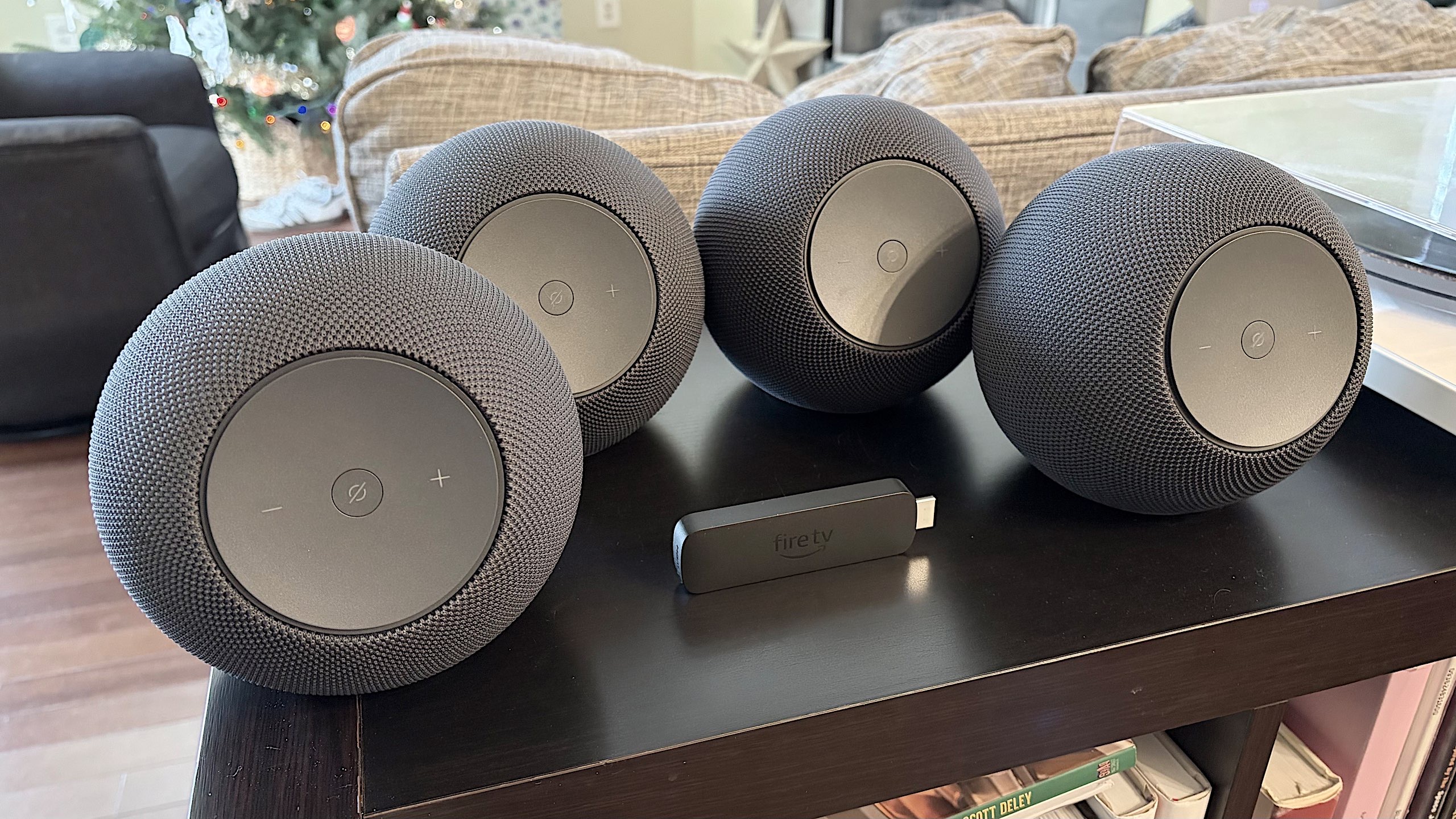
My test setup was four Echo Studio speakers and a Fire TV Stick 4K Max.
Billy Steele for Engadget
If you want to use more than two Echo speakers and a subwoofer in your Alexa Home Theater setup, you’ll need the latest Amazon devices to make that happen. That list includes the Echo Dot Max and second-gen Echo Studio, along with the Echo Sub if you crave more bass. You’ll also need a Fire TV streaming gadget for the multi-speaker option, but it has to be one of the following:
Fire TV Cube (3rd gen)
Fire TV Stick 4K Max (2nd gen)
Fire TV Stick 4K (2nd gen)
Fire TV Stick 4K Plus
You might be wondering why Alexa Home Theater isn’t supported on other (older) Amazon streaming and audio models. Well, it is… but you’ll only be allowed to pair just two Echo speakers of the same model with an optional subwoofer for a total of three devices. That list of supported models is quite long, but it accounts for the two most recent generations of both the Echo and Echo Dot in addition to the Echo Pop, Echo Plus (2nd gen) and the original Echo Studio. This two-speaker method is also supported on more Fire TV devices, including some standalone TVs with Amazon’s streaming platform built in.
In that scenario, it means you could pair two Echo speakers with a subwoofer, for example, and have them play the same audio content with Alexa Home Theater.
Currently, Amazon says these are Fire TV devices that don’t support Alexa Home Theater:
Fire TV Stick 4K Select
Amazon Fire TV 2-Series
Fire TV 4-Series (2025 Release, newest model)
Fire TV Omni QLED Series (2025 Release, newest model)
Fire TV Omni Mini-LED Series (2024 Release, newest model)
How to set up Alexa Home Theater
Like nearly all home theater speakers and soundbars these days, setting up Alexa Home Theater is easy once you have the required hardware in place. Unlike a lot of the competition, this initial configuration isn’t done in a mobile app — it’s handled by the Settings menu on a compatible Fire TV device. Before you initiate the setup process, you’ll want to make sure your Echo speakers and Fire TV device are up to date. You can ask Alexa to check for updates to the speakers, while you’ll need to check the Device & Software section of the Fire TV Settings menu for those gadgets. Once everything is current, here are the steps to follow to get started with Alexa Home Theater:
Go to Settings on your Fire TV.
Select Display & Sounds.
Select Alexa Home Theater.
Select Create Alexa Home Theater.
Select the compatible Echo speakers. You can also add an Echo Sub during this step.
Follow the on-screen instructions to configure the system. After you select either the second-gen Echo Studio or the Echo Dot Max, hit Next and the system will calibrate automatically. If you select other Echo speakers, hit Next and then confirm the placement of the speakers before calibration.
When the setup is complete, the Alexa Home Theater system is ready to use. To do so, select either Home or Watch Preview.
Using Alexa Home Theater with four Echo Studio speakers
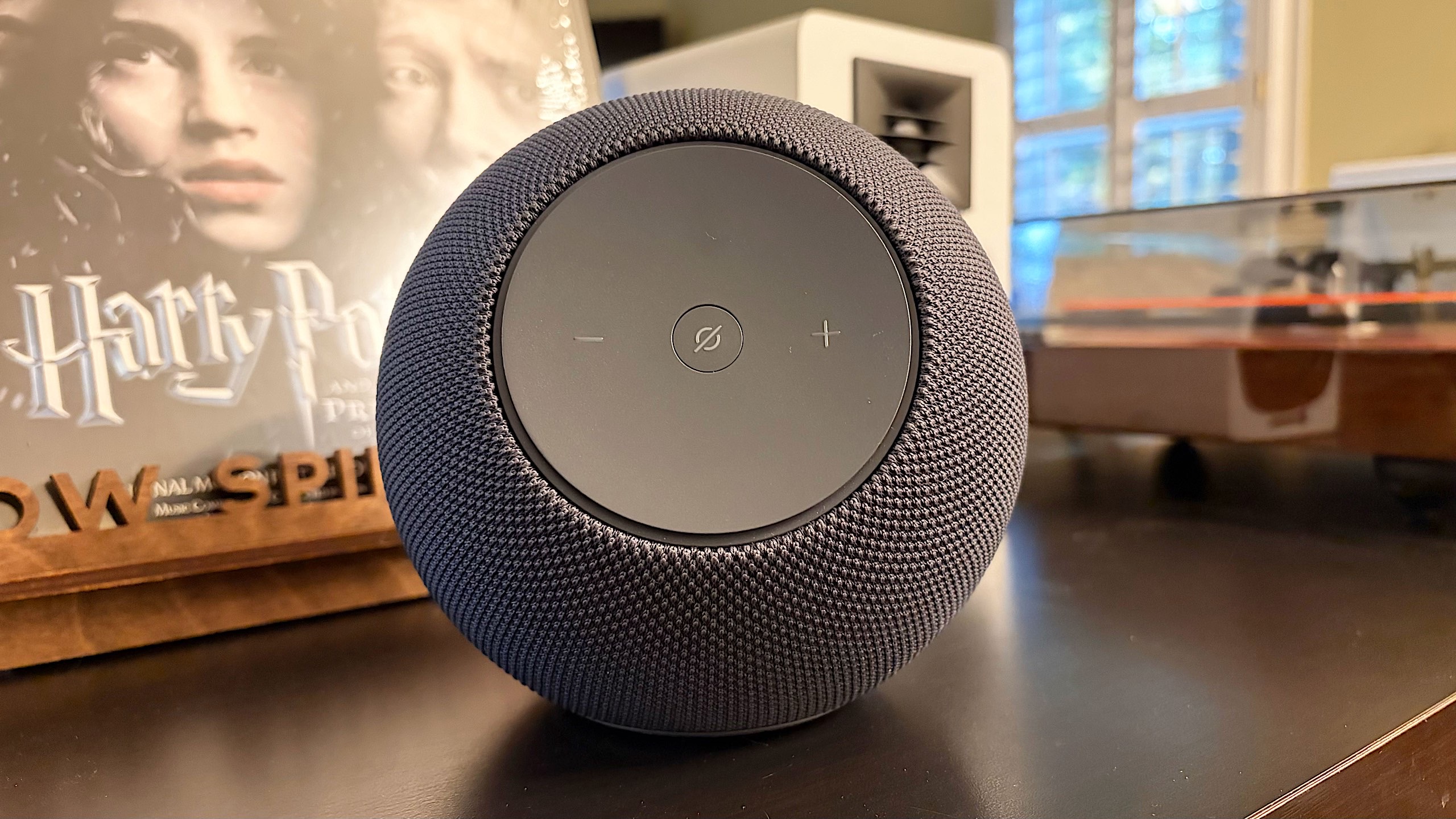
The two Echo Studio speakers that flanked my TV primarily handled dialogue.
Billy Steele for Engadget
Like most home theater gear, the Fire TV will play short audio clips through each Echo speaker and your TV speakers to determine their location and to calibrate the group to the room. From start to finish, the setup process takes about five minutes — so long as your Fire TV and all speakers are running up-to-date firmware. It’s a quick and straightforward process, which meant I was watching Fallout soon after putting all of the speakers in place.
While streaming that video game-inspired original series, the Echo Studios provided an immersive audio experience with directional sound and crisp, clear dialogue. The front two speakers handle speech, but there’s some nuance in what direction it’s coming from on screen. Rear speakers are tasked with the bulk of the environmental noise, whether that’s nearby water, passing cars, rain or gunfire — just to name a few. I was also pleasantly surprised by how much bassy rumble these speakers produced during movies and shows. I didn’t think a single unit was particularly adept at low-end tone during my review, but I think it would be just fine to use a collection of Echo Studios without having to add the Echo Sub.
The overall audio performance here is certainly a boost over any TV’s built-in speakers, but the sense of immersion isn’t as complete as what a soundbar and a pair of rear satellite speakers can provide. Specifically, I felt like the foursome of Echo Studio speakers in my test setup stumbled with the height channels. Despite the angled design of the devices and their multi-driver configurations, the effect of overhead and aerial sounds was quite subdued.
And the worst part about this is that there’s no way to try to fix it with settings. That’s because there are minimal settings to adjust once Alexa Home Theater is set up. There are two features — dialogue boost and volume leveler — but those are both Fire TV settings rather than items meant for any connected speakers. In the Alexa Home Theater menu, there’s a lip sync tool to address any audio lag, which is a standard item for any soundbar. I would’ve loved to see some kind of channel adjustment at the very least, so that I could dial in the mix a bit rather than relying on Amazon’s preferences.
If you turn to Alexa for help, the assistant can only change bass, treble and midrange, and it can only do so when prompted by voice commands. When I asked for it to turn up the dialogue, it seemed to just increase the volume. If I asked it to adjust the height channels, Alexa responded affirmatively, but it didn’t sound like any tweaks were applied. Amazon later confirmed that those basic EQ changes are Alexa and actually do here.
Another gripe I have with Alexa Home Theater is the inability to connect my phone or another device to the entire group for music. You can still sync with individual Echo Studio speakers for music via Bluetooth, but if you want to use the whole shebang, you’ll have to play your tunes from the Fire TV or ask Alexa to help.
The Fire TV platform has plenty of audio streaming apps, but Apple Music isn’t there and that’s where my monthly subscription resides. You have to add the Apple Music skill to the Alexa app on your phone first, then you can stream content from the service by asking Amazon’s assistant. For other services with Fire TV apps, you’re using your TV to play music, and most of the time I want the TV off and to just pick up my phone to blast some Spiritbox. I also like to control the queue from my phone, but alas that’s not an option here.
Wrap-up
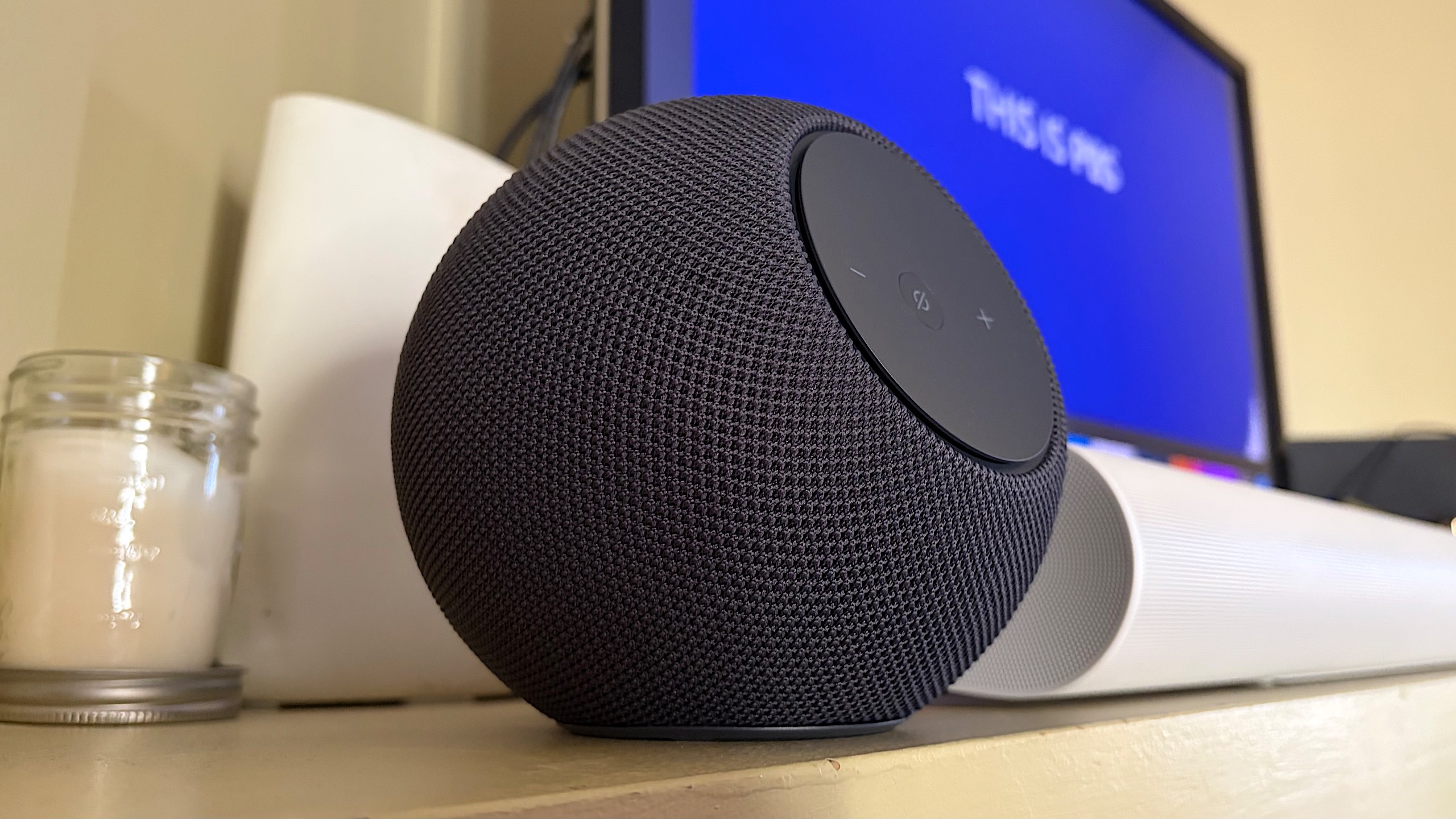
Amazon's new Echo Studio is a complete redesign from the 2019 model.
Billy Steele for Engadget
The main issue with using four Echo Studios and a Fire TV is the cost. For the speakers alone, you’re looking at nearly $900 for the setup I tested. When the new Echo speakers were announced in September, Amazon said it would offer Alexa Home Theater bundles with multiple speakers, but I couldn’t find those on the company’s website.
For comparison, Sonos currently offers multiple configurations of the Beam soundbar and either Era 100 speakers or a sub for less than $800. For the same price as four Echo Studio speakers, you can get Sony’s Bravia Theater System 6, which comes with a soundbar, rear speakers and a subwoofer. There are other options from other companies as well in the $800 range, and most people will likely be happier with a dedicated soundbar-based setup than four Echo units and a subwoofer. Hello, AirPlay and Google Cast.
From an aesthetic perspective, I can see why someone might opt for multiple Echo speakers instead of a mid-sized (or larger) soundbar. Two Echo Studios on either side of my TV with the two rear units tucked away on a shelf certainly creates a clean look. And in terms of sound, using two Echo Studio speakers, let alone four like I tested, will provide a noticeable boost over a TV’s built-in speakers. However, the lack of customization and the inability to control music from my phone for an Alexa Home Theater group makes it hard to recommend Amazon’s latest for shoppers looking for more immersive audio in the living room. Hopefully the company will continue to refine this feature so that it’s more capable in the future.
This article originally appeared on Engadget at https://www.engadget.com/audio/speakers/alexa-home-theater-everything-you-need-to-know-about-amazons-newest-echo-feature-130000328.html?src=rss
Amazon is in discussions with OpenAI to invest $10 billion in the company while supplying more of its AI chips and cloud computing services, according to The Financial Times. The deal would push OpenAI's valuation over $500 billion but is likely to raise more questions about the company's circular investment agreements involving chips and data centers.
The two companies are also in talks about the possibility of OpenAI helping Amazon with its online marketplace, similar to deals it has made with Etsy, Shopify and Instacart. However, any agreement still wouldn't allow Amazon to market OpenAI's most advanced models on its developer cloud platform, as Microsoft holds the exclusive rights to those until the 2030s.
OpenAI recently restructured its agreement with Microsoft to allow it to use data center capacity from other suppliers. Around the same time, it made a string of deals with NVIDIA, Oracle, AMD and others to build out data center capacity and acquire or rent AI chips.
The new deal would require OpenAI to use Amazon's Trainium AI chips and rent more data center capacity from Amazon Web Services (AWS). That's on top of the $38 billion that OpenAI has already committed to renting servers from AWS over the next seven years.
These deals have sounded alarms among investors considering their circular nature. In many of those, including this latest Amazon deal, OpenAI is taking investment money and then sending that cash back to the same company for infrastructure or chips. And the amounts are staggering, with just two companies, Softbank and Oracle, spending a combined $400 billion on new data centers for OpenAI's compute needs. And so far, OpenAI has lost more money than it makes.
This article originally appeared on Engadget at https://www.engadget.com/ai/amazon-in-talks-to-invest-10-billion-in-openai-and-supply-its-trainium-chips-103653151.html?src=rss
Chromebooks have quietly become some of the most useful laptops for everyday tasks. They boot fast, stay secure with automatic updates and often cost far less than traditional Windows or Mac machines. Modern Chromebooks also look and feel better than ever, with brighter screens, stronger processors and designs that range from simple clamshells to flexible 2-in-1s.
Whether you need a laptop for school, streaming or a portable option for travel, there is likely a Chromebook that fits your routine. After testing the top models, we picked the best Chromebooks you can buy today to help you find something that balances performance, price and reliability.
What is Chrome OS, and why would I use it over Windows?
This is probably the number one question about Chromebooks. There are plenty of inexpensive Windows laptops on the market, so why bother with Chrome's operating system? Glad you asked. For me, the simple and clean nature of Chrome OS is a big selling point. Chrome OS is based on Google’s Chrome browser, which means most of the programs you can run are web based. There’s no bloatware or unwanted apps to uninstall like you often get on Windows laptops, it boots up in seconds, and you can completely reset to factory settings almost as quickly.
Of course, simplicity will also be a major drawback for some users. Not being able to install native software can be a dealbreaker if you’re a video editor or software developer. But there are also plenty of people who do the majority of their work in a web browser, using tools like Google Docs and spreadsheets for productivity without needing a full Windows setup.
Google and its software partners are getting better every year at supporting more advanced features. For example, Google added video editing tools to the Google Photos app on Chromebooks – it won’t replace Adobe Premiere, but it should be handy for a lot of people. Similarly, Google and Adobe announced Photoshop on the web in 2023, something that brings much of the power of Adobe’s desktop apps to Chromebooks.
Chromebooks can also run Android apps, which greatly expands the amount of software available. The quality varies widely, but it means you can do more with a Chromebook beyond just web-based apps. For example, you can install the Netflix app and save videos for offline watching. Other Android apps like Microsoft Office and Adobe Lightroom are surprisingly capable as well. Between Android apps and a general improvement in web apps, Chromebooks are more than just portals to a browser.
What do Chromebooks do well?
Put simply, web browsing and really anything web based. Online shopping, streaming music and video and using various social media sites are among the most common daily tasks people do on Chromebooks. As you might expect, they also work well with Google services like Photos, Docs, Gmail, Drive, Keep and so on. Yes, any computer that can run Chrome can do that too, but the lightweight nature of Google Chrome OS makes it a responsive and stable platform.
As I mentioned before, Chrome OS can run Android apps, so if you’re an Android user you’ll find some nice ties between the platforms. You can get most of the same apps that are on your phone on a Chromebook and keep info in sync between them. You can also use some Android phones as a security key for your Chromebook or instantly tether your 2-in-1 laptop to use mobile data.
Google continues to tout security as a major differentiator for Chromebooks, and it’s definitely a factor worth considering. Auto-updates are the first lines of defense: Chrome OS updates download quickly in the background and a fast reboot is all it takes to install the latest version. Google says that each webpage and app on a Chromebook runs in its own sandbox as well, so any security threats are contained to that individual app. Finally, Chrome OS has a self-check called Verified Boot that runs every time a device starts up. Beyond all this, the simple fact that you generally can’t install traditional apps on a Chromebook means there are fewer ways for bad actors to access the system.
If you’re interested in Google’s Gemini AI tools, a Chromebook is a good option as well. Every Chromebook in our top picks comes with a full year of Google’s AI Pro plan — this combines the usual Google One perks like 2TB of storage and 10 percent back in purchases from the Google Store with a bunch of AI tools. You’ll get access to Gemini in Chrome, Gmail, Google Docs and other apps, Gemini 2.5 Pro in the Gemini app and more. Given that this plan is $20/month, it’s a pretty solid perk. Chromebook Plus models also include tools like the AI-powered “help me write,” the Google Photos Magic Editor and generative AI backgrounds you can create by filling in a few prompts.
As for when to avoid Chromebooks, the answer is simple: If you rely heavily on a specific native application for Windows or a Mac, chances are you won’t find the exact same option on a ChromeOS device. That’s most true in fields like photo and video editing, but it can also be the case in law or finance. Plenty of businesses run on Google’s G suite software, but more still have specific requirements that a Chromebook might not match. If you’re an iPhone user, you’ll also miss out on the way the iPhone easily integrates with an iPad or Mac. For me, the big downside is not being able to access iMessage on a Chromebook.
Finally, gaming Chromebooks are not ubiquitous, although they’re becoming a slightly more reasonable option with the rise of cloud gaming. In late 2022, Google and some hardware partners announced a push to make Chromebooks with cloud gaming in mind. From a hardware perspective, that means laptops with bigger screens that have higher refresh rates as well as optimizing those laptops to work with services like NVIDIA GeForce Now, Xbox Game Pass and Amazon Luna. You’ll obviously need an internet connection to use these services, but the good news is that playing modern games on a Chromebook isn’t impossible. You can also install Android games from the Google Play Store, but that’s not what most people are thinking of when they want to game on a laptop.
What are the most important specs for a Chromebook?
Chrome OS is lightweight and runs well on fairly modest hardware, so the most important thing to look for might not be processor power or storage space. But Google made it easier to get consistent specs and performance late last year when it introduced the Chromebook Plus initiative. Any device with a Chromebook Plus designation meets some minimum requirements, which happen to be very similar to what I’d recommend most people get if they’re looking for the best laptop they can use every day.
Chromebook Plus models have at least a 12th-gen Intel Core i3 processor, or an AMD Ryzen 3 7000 series processor, both of which should be more than enough for most people. These laptops also have a minimum of 8GB of RAM and 128GB of SSD storage, which should do the trick unless you’re really pushing your Chromebook. All Chromebook Plus models have to have a 1080p webcam, which is nice in these days of constant video calling, and they also all have to have at least a 1080p FHD IPS screen.
Of course, you can get higher specs or better screens if you desire, but I’ve found that basically everything included in the Chromebook Plus target specs makes for a very good experience.
Google has an Auto Update policy for Chromebooks as well, and while that’s not exactly a spec, it’s worth checking before you buy. Last year, Google announced that Chromebooks would get software updates and support for an impressive 10 years after their release date. This support page lists the Auto Update expiration date for virtually every Chromebook ever, but a good rule of thumb is to buy the newest machine you can to maximize your support.
How much should I spend on a Chromebook?
Chromebooks started out notoriously cheap, with list prices often coming in under $300. But as they’ve gone more mainstream, they’ve transitioned from being essentially modern netbooks to some of the best laptops you’ll want to use all day. As such, prices have increased: At this point, you should expect to spend at least $400 if you want a solid daily driver. There are still many Chromebooks out there available at a low price that may be suitable as secondary devices, but a good Chromebook that can be an all-day, every-day laptop will cost more. But, notably, even the best Chromebooks usually cost less than the best Windows laptops, or even the best “regular” laptops out there.
There are a handful of premium Chromebooks that approach or even exceed $1,000 that claim to offer better performance and more processing power, but I don’t recommend spending that much. Generally, that’ll get you a better design with more premium materials, as well as more powerful internals and extra storage space, like a higher-capacity SSD. Of course, you also sometimes pay for the brand name. But, the specs I outlined earlier are usually enough, and there are multiple good premium Chromebooks in the $700 to $800 range at this point.
This was our pick for best overall Chromebook for years, and it’s still one of the better options you can find for a basic laptop that doesn’t break the bank. It’s a few years older than our current top pick, so its processor isn’t fresh and it only has 128GB of storage. It also won’t get updates from Google as long as newer models. But it still combines a nice screen and keyboard with solid performance. This laptop typically costs $500, which feels high given its a few years old and Acer’s Chromebook Plus 514 is only $350, but if you can find it on sale and can’t find the Acer it’s worth a look.
ASUS CX15
This Chromebook is extremely affordable – you can currently pick it up for only $159 at Walmart. That price and its large 15.6-inch screen is mainly what it has going for it, as the Intel Celeron N4500 chip and 4GB of RAM powering it does not provide good performance if you’re doing anything more than browsing with a few tabs open. If you’re shopping for someone with extremely basic needs and have a small budget, the CX15 might fit the bill. But just be aware that you get what you pay for.
Samsung Galaxy Chromebook Plus
Samsung’s Galaxy Chromebook Plus, released in late 2024, is one of the more unique Chromebooks out there. It’s extremely thin and light, at 0.46 inches and 2.6 pounds, but it manages to include a 15.6-inch display in that frame. That screen is a 1080p panel that’s sharp and bright, but its 16:9 aspect ratio made things feel a bit cramped when scrolling vertically. Performance is very good, and the keyboard is solid, though I’m not a fan of the number pad as it shifts everything to the left. At $700 it’s not cheap, but that feels fair considering its size and capabilities. If you’re looking for a big screen laptop that is also super light, this Chromebook merits consideration, even if it’s not the best option for everyone.
This article originally appeared on Engadget at https://www.engadget.com/computing/laptops/best-chromebooks-160054646.html?src=rss
Tesla’s sales in California should be suspended for 30 days because its marketing around Autopilot and Full Self-Driving misled consumers, a California administrative law judge has ruled. Back in 2022, the California DMV accused the automaker of using deceptive language to advertise those products and making it seem like its vehicles are capable of level 5 autonomous driving. Tesla has since added the word “Supervised” to the name of its Full Self-Driving assistance technology.
As Bloomberg notes, the DMV asked the administrative law judge if a suspension is warranted based on the evidence it presented. Even though the judge has agreed that it is, the agency will give Tesla 90 days to explain its side and remove any untrue or misleading language in the marketing materials for the products. Tesla’s sales and manufacturing in California will only be suspended if it doesn’t comply within that timeframe.
“We’re really asking Tesla to do their job, as they’ve done in other markets, to properly brand these vehicles,” said California DMV director, Steve Gordon, in a statement.
A suspension in California could be devastating for the automaker. While new Tesla registrations in the state plummeted earlier this year, Reuters says California accounts for nearly a third of the company’s sales in the country. In addition, Tesla only manufactures its Model S and X vehicles in its Fremont plant, where it also produces Model 3 and Model Y units.
This article originally appeared on Engadget at https://www.engadget.com/transportation/evs/tesla-used-deceptive-language-to-market-autopilot-california-judge-rules-035826786.html?src=rss
Despite changing its name and using decidedly bird-free branding, X is trying to hold on to its original Twitter trademarks, TechCrunch reports. The xAI-owned social media platform has updated its terms of service to include references to Twitter after previously only mentioning X, and seemingly attempted to counter a startup's petition to cancel the company's Twitter trademarks with a petition of its own.
The startup X appears to be responding to is Operation Bluebird, a company cofounded by former Twitter general counsel Stephen Coates that went public last week with plans to capture what remains of Twitter for its own use. The first step in that process was filing a petition with the US Patents and Trademark Office to cancel X's control of Twitter’s trademarks.
"The TWITTER and TWEET brands have been eradicated from X Corp.’s products, services and marketing, effectively abandoning the storied brand, with no intention to resume use of the mark," Operation Bluebird explained in the petition. “Petitioner seeks to use and register the TWITTER and TWEET brands for new products and services, including a social media platform that will be located at the website twitter.new."
In fairness to Operation Bluebird, Elon Musk was very open about his plan to abandon the Twitter name and bird logo after he acquired the company in 2022. "And soon we shall bid adieu to the twitter brand and, gradually, all the birds," Musk posted in July 2022, not long before Twitter was rebranded to X. Even after the platform rebranded, though, at least one remnant of the original Twitter brand has stuck around: Twitter.com still redirects to X.com.
And soon we shall bid adieu to the twitter brand and, gradually, all the birds
The updated terms of serviceTechCrunch spotted now say that as of January 16, 2025, "nothing in the Terms gives you a right to use the X name or Twitter name or any of the X or Twitter trademarks, logos, domain names, other distinctive brand features, and other proprietary rights, and you may not do so without our express written consent." The company's counterpetition also reiterates that the Twitter trademarks are X's "exclusive property."
In a statement to Engadget, Coates said that Operation Bluebird’s cancellation petition was “based on well-established trademark law” and that he believes the upstart will prevail. “X legally abandoned the TWITTER mark, publicly declared the Twitter brand ‘dead,’ and spent substantial resources establishing a new brand identity. Our cancellation petition is based on well-established trademark law and we believe we will be successful. They said goodbye. We say hello.”
At the time of writing, Operation Bluebird has convinced over 145,200 people to claim a handle on the company's new social platform. Maybe X sees that early interest as a threat, but it's just as possible Operation Bluebird's public comments were enough to tip the company off so it could try to hold on to trademarks it clearly believes still hold some value.
Update, December 16, 2025, 4:13PM PT: This story was updated to add a statement from Stephen Coates.
This article originally appeared on Engadget at https://www.engadget.com/social-media/x-was-spooked-enough-by-new-twitter-to-change-its-terms-of-service-231138305.html?src=rss
‘Tis the season for gift-giving, family feasts and companies turning their harvested user data into lighthearted recaps. Valve's take on the year-end rewind, Steam Replay, is now available. It follows similar offerings from Spotify, Apple Music, PlayStation and, increasingly, just about every service you use. Hell, even Uber and The New York Times somehow justified getting in on the action this year.
This is the fourth edition of Valve’s wrap-up, which looks back on the titles you spent the most time with in 2025. You’ll find your top games, the number of titles you played, achievements unlocked and longest streaks. You can see how your habits break down by genre, Steam Deck use and whether they're new releases, recent or classic games. Monthly breakdowns and the percentage of time played (by title) are also included.
The review compares your stats to the average Steam user. For example, I played 28 games this year; the Steam median is only four. My longest play streak was 15 days; the median is six. I’m only an intermittent gamer, so people who barely play at all are clearly weighing down the averages.
You can check out your Steam Replay 2025 by heading to the website and logging in.
This article originally appeared on Engadget at https://www.engadget.com/gaming/pc/steam-replay-2025-is-here-to-recap-your-pc-gaming-habits-205430951.html?src=rss
As part of its last Xbox-focused software update of the year, Microsoft is improving the Bluetooth performance of the Xbox Wireless Headset to make it work even better with Windows 11. Microsoft released the latest Wireless Headset as an accessory for Xbox Series X/S and PC, but as of this update, Xbox Wireless Headset owners on Windows will now have a leg up on their console counterparts thanks to support for Bluetooth Low Energy (LE) Audio.
Microsoft says that supporting Bluetooth LE Audio will let the headset offer lower latency audio, better battery life, richer stereo sound and the ability to share audio across multiple compatible Bluetooth accessories at the same time. Not revolutionary updates, but still nice to have if you bought a $110 Xbox Wireless Headset back in 2024. Provided you're running the latest version of Windows 11 and your device supports Bluetooth LE, Microsoft says you can take advantage of the improvements by updating your headset in the Xbox Accessories app.
If you're a regular user of the Xbox mobile app, Microsoft is also making some changes there. After adding the ability to purchase Xbox games directly from the app in April — a feature made possible after Google and Apple were forced to change the rules of their app stores — Microsoft is now adding a dedicated Store tab to the app. You'll also be able to add games to your wishlist and search for add-ons and DLC directly in the app.
Microsoft ending the year with Windows and mobile app updates reflects the ways the company's gaming strategy has changed in 2025. After spending decades positioning itself as a console maker, Microsoft is seemingly making Xbox software its main focus going forward.
This article originally appeared on Engadget at https://www.engadget.com/gaming/xbox/the-last-xbox-update-of-2025-includes-a-handy-wireless-headset-upgrade-204500386.html?src=rss
The New York Times is getting in on the year-end roundup bandwagon. The publication's new Year in Games wraps up stats about which of its daily puzzles and brain-teasers readers played over the course of 2025. People can get their own personalized reports, or just look over the community stats for the Wordle, Connections, Spelling Bee and Strands games. The Year in Games reviews are available on the iOS and Android apps for The New York Times, as well as on a dedicated mobile web page.
Annual analysis of all your activities has become a common feature for lots of services. Reports like Spotify Wrapped or the other many entertainment-related ones are usually a fun time, with splashy graphics and high shareability. Uber feels like an odder match.
This article originally appeared on Engadget at https://www.engadget.com/gaming/nyt-games-has-a-year-in-review-thing-now-too-203000878.html?src=rss
Behold: Ken Paxton will now demonstrate that broken clocks are indeed right twice a day. The Texas Attorney General is notorious for, well, a very long list of reasons. But in this case, he at least appears to be doing consumers a solid: He sued five television companies for using ad-targeting spyware on their TVs.
Texas sued Sony, Samsung, LG, Hisense and TCL for allegedly recording what viewers watch without their consent. The predatory technology, Automated Content Recognition (ACR), identifies the content being played on a device by matching short content fingerprints to a database.
ACR is essentially a Shazam for video. Except in this case, its sole purpose is to target your viewing habits to help line advertisers' pockets. "This software can capture screenshots of a user's television display every 500 milliseconds, monitor viewing activity in real time and transmit that information back to the company without the user's knowledge or consent," Paxton's press release says.
An LG Ad Solutions website boasts how ACR helps advertisers "target by content viewership, including show, network, app, service or genre." Since it works with anything running on the device, it can identify purchases and subscriptions, track gamers' habits and pinpoint users by region, city or zip code.
There should be a setting on your TV to turn it off. But, as Texas' lawsuit against LG notes, TV software often "deceptively guides consumers to activate ACR and buries any explanation of what that means in dense legal jargon that few will read or understand."
Paxton's press release emphasized Hisense and TCL's home base of China. "These Chinese ties pose serious concerns about consumer data harvesting and are exacerbated by China's National Security Law, which gives its government the capability to get its hands on US consumer data," the statement reads.
This article originally appeared on Engadget at https://www.engadget.com/cybersecurity/texas-sues-five-tv-manufacturers-over-predatory-ad-targeting-spyware-201500248.html?src=rss