iPad Pro M4 hands-on first impressions: Lightweight, Thin, and Sexy

If I could review a tablet with one word, I’d pick the iPad Pro, and the word I’d use is perfect. You’d probably demand an explanation, right? Apple has achieved design perfection with the iPad Pro, both inside and out, as well as with the redesigned Magic Keyboard. Now, before you start asking, “What about iPadOS? It’s nowhere near perfect,” let me clarify: I’m specifically talking about the hardware here. We’ll have to wait until WWDC 2024 in June to see what Apple has in store for the operating system.

Over thirty-odd years ago, I enjoyed reading philosophy in my spare time, and one of my favorite philosophers is Plato. Okay, you caught me—rarely does anyone read Plato just for fun. But it’s true that Plato’s “perfect object theory” inspired me in my quest as a tech and automotive journalist to find the perfect [fill in the blank]. My search didn’t initially start with the iPad; I was hoping for a “MacBook touch.” I even bought the domain name MacBooktouch.com back in 2007 as proof that I foresaw Apple making a touch-screen MacBook.

macbooktouch.com domain name

Fast-forward to 2015, when we got the iPad Pro with a 12.9-inch display and the first Apple Pencil and Smart Keyboard. That hardware wasn’t close to a MacBook Touch. Nine years later, or 17 years since I registered macbooktouch.com, we finally have the closest thing to a MacBook touch.

The MacBook touch—er, 2024 iPad Pro—is powered by the M4 chip. In case you don’t know, it’s the only device with this new processor. The only things keeping this device from being a MacBook touch are 1) the iPad branding and 2) it’s not running macOS. Is it capable of running macOS? Absolutely. So, why isn’t it? I’ll leave that for you to ponder.

Before I move on, I won’t be revisiting whether you should upgrade to this year’s iPad Pro. If you’re asking if you should, read my analysis here. Okay, let’s dig in, and if anything I say in this article sounds familiar, you’re right—you’ve probably heard it from tech YouTubers or read it in reviews over the past week. Just think of what I’m sharing as confirmation.

The iPad Pro is lightweight, thin, and sexy as hell. It exudes minimalist charm, practically begging, “Pick me up and use me right now!” The Magic Keyboard is what makes this iPad Pro a true MacBook replacement. It’s the key to unlocking the full potential of the iPad Pro, providing a MacBook Pro-like experience with a responsive trackpad, comfortable keys with the right amount of travel, and premium build quality.

Comically, early reviewers seemed genuinely surprised that Apple managed to thin out the iPad Pro even more. One famous YouTuber even asked, “Who was asking for it?” Well, my friends, that “who” was yours truly. Apple delivered on almost everything I asked for, except for titanium—and yes, that was wishful thinking. I’m happily settling for aluminum for both the iPad and Magic Keyboard. I’m also thrilled that both devices have shed some weight, making the iPad, especially the 13-inch model, much more manageable to hold and use over longer periods. The 11-inch model is now just 5.3mm thick and weighs 444 grams, while the 13-inch model is 5.1mm thick and weighs 580 grams.

Briefly touching on the Magic Keyboard, I’ll save the full details for the review, but Apple addressed my issue where the lower portion of the iPad Pro would constantly get in the way of my typing. Thanks to a whole new redesigned hinge system, it’s possible to have a full-size keyboard with an entire row of function keys. For those developers out there yearning for an ESC key, you have it now. The way Apple designed the placement of the iPad, which is now pushed further back yet still articulates at the same or greater angles than the outgoing model, reminds me of how car designers suddenly got so much more room to play with when designing electric vehicles sans the motor. The wheels are pushed further to the edges, creating more internal room for leg space and whatever else they can dream up. I’m sure the new hinges were no small task, but wow—a full keyboard with a function row and a larger trackpad, a proper MacBook Pro-style trackpad with a haptic engine built in.

At the end of the day, I really don’t care what the iPad’s called; what matters most to me is what I’m able to do with it in real life. Whether consuming content or playing games (which I rarely do, but hey, I might start) without a bulky keyboard, or getting down to business and writing, like I am doing right now with this article and many others to come, I know this is the ultimate, ultra-portable device that ticks all my needs now and possibly over the next decade.

I’ve left out a lot in this initial impressions article, such as display quality, performance, battery life, the Apple Pencil Pro, and other features. I also haven’t compared it to my existing 12.9-inch iPad Pro with the M1 chip. But rest assured, I’ll cover all these aspects in my full review. I just need more time to test everything thoroughly.

The post iPad Pro M4 hands-on first impressions: Lightweight, Thin, and Sexy first appeared on Yanko Design.
This compact, detachable hot plate is designed for on the go convenience and ease of storage

Working overtime and getting home late almost every day to find your dinner cold and unsavory? I’m sure a family member or your spouse has to wait through the night and then serve you hot food. It’s still fine on hot summer days, but the long winter nights can really get tough for everyone; you cannot have a cold meal at all! Hot plates have been a solution to this culinary conundrum through the years. But traditional warming boards only add bulk to your kitchen and do not do much to your meal.

What if you could have piping hot dishes on your table without taking up extra space? Whether you’re working late or hosting friends, the idea of a hot, delicious meal awaiting you at the table is a sublime feeling for many, including the designer of this electrically powered, folding and detachable heating plate that would be your biggest help when you’re hosting family or friends at home, partying at the pool, or out camping with your pooch.

Designer: Wenhua Xu

Conceptualized with the simple idea of ensuring a warm, delectable meal every time; this hot plate in pastel colors, functions on rapid heat transfer technology to ensure your food is at an ideal temperature, and it is constantly heated to maintain it as long as you want. The construction material of this heating board is anyone’s guess at the moment but from the images, it is easy to confirm that it is safe and easy to clean.

Besides, the overall concept – with an adjustable control panel – excels in heat retention. It helps preserve your food’s warmth and flavor with its three different temperature settings, keeping the heat maintained for almost eight hours. Interestingly, the warming board is ideal for heating dishes, milk, and drying food – all ensuring a delightful dining experience.

Add to that the convenience of detaching the three individual heating plates that comprise the entire unit. It can be used together or separately – thanks to the tri-folding design – to work with metal, ceramic, glass, or enamel utensils, serving bowls and other kitchenware. You can pack it in the bag for travel convenience, simultaneously warm up to six dishes, and keep the food warm and fresh every time. This portable and detachable marvel can be effortlessly stored to maximize space in your kitchen.

The post This compact, detachable hot plate is designed for on the go convenience and ease of storage first appeared on Yanko Design.
What if AirPods had ChatGPT, could translate languages, and came with a touchscreen case?

Meet the Wooask TransBuds A8 – a pair of TWS earbuds that are so unique you’ll want to ditch your AirPods for them. Built with ChatGPT integration in the earbuds themselves, these wearables put the power of AI in your ear, actively translating 147 languages and accents in real-time, without an app. What’s better, if you do need to navigate through the TransBuds A8’s functionalities, you don’t even need to look at your smartphone, the earbuds case comes with a nifty 2-inch screen for both online or offline translation, as well as the ability to simply chat with ChatGPT the way Iron Man chats with JARVIS. Oh, and you can listen to music too.

Designer: Wooask Technology

Click Here to Buy Now: $179 $299 (40% off). Hurry, only 63/200 left!

The A8 translation earbuds facilitate real-time bidirectional translation, allowing two people to wear one earbud each for instant simultaneous interpretation.

The TransBuds A8 has a familiar design, albeit with a few VERY clever upgrades. Sure, you’ve got the white case with a flip-top lid that reveals two white earbuds… but on both hardware and software fronts, the TransBuds A8 are much more advanced than any regular TWS earbuds you’ll find on the market. For starters, the entire wearable has ChatGPT integration, giving you a voice assistant that is far more advanced than Google, Siri, or Alexa. You can simply tap the earphones to talk to ChatGPT, or access the AI through the unique interface built into the case. The case with a touchscreen is a welcome feature too – it eliminates the need for an app, and gives you a perfect standalone device that works without draining your phone’s battery or piggy-backing off your phone’s cellular network.

By leveraging ChatGPT’s vast knowledge base and natural language processing capabilities, users can enjoy more than just translation assistance.

The presence of AI isn’t just a bandwagon feature, it helps aid the TransBuds A8’s core value proposition – the ability to actively translate 77 languages and 70 accents in real-time, giving you the ability to pretty much travel anywhere in the world without a language barrier. The interaction is swift and seamless, either share an earbud with someone and have bi-directional conversations in two separate languages, and the earbuds will actively translate both of them simultaneously, or use the earbuds and case together to have a conversation with a local. The earbud-sharing method is perfect for in-person meetings and other long conversations. Each person wears one earbud like a Bluetooth earpiece of sorts, and the TransBuds A8 listens to what the opposite person is saying, and translates it for you right in your ear. A transcript of your entire conversation gets captured as a text thread on the TransBuds A8’s screen, and can be saved for later, allowing you to quickly and easily transcribe an entire meeting using the power of AI.

Alternatively, the case itself comes with a microphone and powerful speakers, allowing you to use just the case as a translator device. Hold it up and speak into it, and the TransBuds A8 lets you have a conversation with a local or a stranger without needing to share an earpiece. A powerful mic and speaker system allow you to easily converse with people even around ambient noise, while the display on the case does a good job of allowing people to read the translated text if they can’t hear the translated audio.

The case, frankly, is more of a smartphone that houses earbuds than just your average charging case. It runs on a Qualcomm Quad-Core Processor and earbuds use a Qualcomm 3040 chipset that allows it to translate 147 languages and accents with a latency of 0.5 seconds and an impressive 98% accuracy. The 2-inch screen has an app drawer that lets you access the TransBuds A8’s different features, even letting you tap into the offline translation feature that works with 16 popular languages. Buttons on the side of the case let you increase or decrease the case’s volume, or even go back to the home screen while navigating the interface.

The earbuds are remarkable too, with an ergonomic design, and a dual-mic setup that powers the ENC (Environment Noise Cancelation) feature to help you speak and hear clearly even if you’re in a noisy environment. The earbuds have a translation time of 5 hours, and a regular battery life of 35 hours along with the case that doubles as a charging dock for the buds. 16 gigabytes of in-built memory means you can even load your favorite MP3 files right onto the case, turning it into a makeshift iPod Touch that plays music directly without a streaming app or pairing with your phone. You can, however, pair the earbuds with your phone to listen to music, watch movies, or take calls too.

Quite the all-round device, the TransBuds A8 are for any and everyone. They work independently without your phone, translating over a hundred languages, transcribing conversations, and giving you the power of ChatGPT right in your ears. They also work as your standard TWS buds when you’re looking for something traditional, pairing with your phone via Bluetooth for answering calls, watching TikTok, or listening to music and podcasts. The buds are ideal for avid travelers, students, digital nomads, expats, and people working in multicultural companies and teams. The TransBuds A8 starts at a discounted $179 (an absolute steal considering the features it packs), which also includes one year of free ChatGPT integration. Subsequently, you’ll either be required to pay $9.9 per month or $40 annually for the AI features – online and offline translation remains free forever.

Click Here to Buy Now: $179 $299 (40% off). Hurry, only 63/200 left!

The post What if AirPods had ChatGPT, could translate languages, and came with a touchscreen case? first appeared on Yanko Design.
3D Printed Chess Set pays respect to the Ukraine invasion with a poignant war-themed design

Unless you are Elon Musk and believe chess is “too simple to be useful in real life,” you know, chess is a strategic and competitive game. It requires meticulous planning and clear objectivity. If you don’t have an objective in mind, your moves will be directionless and you will end up wasting time thinking and moving without purpose. Through the gameplay, it instills cognitive thinking, benefits mental well-being, and can now be a source of thoughtful restoration in the war-torn Ukraine.

Cuibiono, a design-first not-for-profit, has been at the forefront of providing aid to the regions where geopolitical conflicts like war have damaged humanity. With the new chess set, it has conceived using recycled biomaterials (PLA) and 3D printing, the NGO is giving everyone a chance to jump onto their journey of creativity, sustainability, and giving back, helping make a difference and restore homes in Kharkiv, Ukraine.

Designer: Cuibiono

The stackable chess set is inspired by the war-torn and displaced Kharkiv, which has been on the receiving end of the Russian invasion. Called the Kindachess – S, this set 3D-printed from naturally degradable bioplastics – features a board segmented to depict the nation under war. It is designed as fractures on the earth’s crust. But when it’s stacked to be stored, the dividing lines on the board form the Ukrainian flag to depict unity and the satisfaction of returning home.

The idea of a chess set whose profit from sales proceeds would go into restoring homes in Kharkiv is the brainchild of designer Liam Hwang of Cuibiono. The compact, stackable chess set is 3D printed sustainably in Hackney, London. It measures 200mm x 200mm when laid out for playing and fits into a case measuring 290mm x 164mm after use.

This is not Cuibiono’s first such sustainably driven product with the idea of giving back. The NGO states, “we are committed to sustainability.” All the products designed in their facilities are crafted with eco-friendly materials (like recycled PLA in the case of the chess set). The chess set, selling in two color contrasts: wheat and sky, ivory and walnut, is now available at £200 (approximately $250). Buy now, and support the cause becoming a part of the community that cares.

The post 3D Printed Chess Set pays respect to the Ukraine invasion with a poignant war-themed design first appeared on Yanko Design.
Record-breaking Drone hit 510km/h speeds, dethroning Red Bull for the World’s Fastest Drone

Earlier this year, Dutch Drone Gods, in partnership with Red Bull, unveiled the World’s Fastest Drone that went head-to-head with Max Verstappen behind the wheel of an F1 car. With a top speed of 350km/h, that drone held the title for barely a few months before YouTuber Luke Maximo Bell decided to challenge it.

Taking on the entire design and R&D team of Red Bull Racing, Bell managed to 3D-print a drone that was nearly 50% faster, hitting high speeds of 500km/h (310mph) and setting a new record, verified by the team at Guinness Book of World Records. The video above captures Bell’s entire journey, from prototype to building to tuning, and finally FPV footage of the world’s fastest drone. To think that one YouTuber with a BambuLabs printer managed to outpace a drone built out of carbon fiber by the elites at Red Bull Racing known for manufacturing the world’s leading F1 cars…

Designer: Luke Maximo Bell

Bell’s design process was a reiteration of one of his older drones named Peregreen, which could hit speeds of up to 400km/h. If you look at the shape of the drone you’ll quickly realise how even Red Bull and DDG opted for a similar format. The drone isn’t your average quadcopter or even FPV racer. Instead, it has a missile-style design with propellers at the bottom that give it an eVTOL style ability to vertically take off, tilt forward to race ahead, and then land vertically too.

The backbone of Peregreen 2’s success lies in its meticulous design and the use of high-quality materials. The frame, constructed from carbon fiber, was chosen for its exceptional strength and wide availability. Custom frames were precision-cut using a CNC machine at Flying Robot in Cape Town. Despite initial setbacks with incorrect mounting hole dimensions, which required manual adjustments, the final product was a high-precision, robust frame capable of withstanding the rigors of high-speed flight. Building on data from the original Peregreen, Bell and his father (who helped build the original Peregreen) selected larger motors, propellers, and batteries. However, this brought a new set of challenges. The initial batteries overheated, reaching temperatures above 130°C, leading to failures. Additionally, the motor wires were not thick enough, causing them to overheat and even catch fire during bench tests. After extensive testing and adjustments, the team switched to thicker wires and sourced new batteries that maintained a stable temperature below 80°C. These changes were crucial in ensuring the drone could operate at high speeds without the risk of overheating or component failure.

A cheap reliable way to test aerodynamics, simply hold it outside a car’s window!

Aerodynamics played a pivotal role in the drone’s performance. Initial designs faced stability issues at high speeds, necessitating extensive experimentation with tail lengths and fin sizes. The goal was to achieve a stable flight profile with a low drag coefficient. By creating and testing various models (often by simply 3D printing them and holding them out of a car window at high speeds), the team eventually found a configuration that provided the necessary stability. This iterative process of refinement led to a design that not only looked sleek but also performed exceptionally well in high-speed conditions. The final aerodynamic model was a testament to the team’s dedication to optimizing every aspect of the drone’s performance.

Once a drone’s built, its performance needs to be tuned by programming all its components to work in sync so that there isn’t a malfunction in the sky. Despite several initial failures during test flights, the team sought the expertise of Chris Raser, a renowned FPV drone specialist. His insights and detailed tuning guides were instrumental in resolving stability issues and fine-tuning the drone’s flight characteristics. This collaborative approach underscored the importance of seeking specialized knowledge and continuously learning from each phase of the project. The resulting improvements were significant, allowing the drone to perform high-speed maneuvers with precision and reliability.

The testing phase was rigorous and demanding, marked by numerous iterations and rebuilds. The drone was 3D printed using the Bambu Lab X1 Carbon printer, which proved to be an excellent tool for creating precise and durable components. Through a series of high-speed runs, the Peregreen 2 eventually achieved speeds of 500 km/h, a milestone that underscored the success of the design and engineering efforts. This achievement was officially recognized by Guinness, solidifying the team’s place in the record books.

Beyond setting a world record, the Peregreen 2 project also focused on capturing stunning cinematic footage. By incorporating a new open canopy for the camera (shown below), the team was able to obtain clear, distortion-free shots. The Insta360 Go 3 camera, known for its small size and lightweight, was integral in capturing high-speed footage. The drone’s performance in endurance tests was equally impressive, managing a flight of 7.5 km at an average speed of 180 km/h. These accomplishments highlight the drone’s versatility and potential for various applications.

The post Record-breaking Drone hit 510km/h speeds, dethroning Red Bull for the World’s Fastest Drone first appeared on Yanko Design.
Barad-dur LEGO set brings Sauron’s sinister tower from Lord of the Rings to your work desk

All Lord of the Rings fans should get excited about the new LEGO set themed on Barad-dûr, Sauron’s iconic stronghold. The 5,471-piece set features the sinister tower topped with the Eye of Sauron, the disembodied eye that overlooks his evil domain. Those who’ve watched the movie will instantly remember it as the “giant black tower with the flaming eye on top of it.”

This set will come at a price tag of $500 with availability to commence from June 1 for LEGO Insiders and from June 4 onwards for other buyers. The Barad-dûr tower will have four main sections – a prison, armory, throne room and a kitchen. Those who’ll get their hands on the set on or before 7 also get the complementary 269-piece Fell beast set with posable wings for the intimidating flying creature and the Nazul minifigure.

Designer: LEGO Ideas

The 32.5-inch tall and 11 inches wide Barad-dûr set has references to the movie in the form of Easter Eggs filled inside the interiors. Minifigures including Sauron, Mouth of Sauron, Sam, Gothmog and Orc also grace the build. Sections of the set include a pair of mechanically operated front doors and a dark throne that hides the secret room of the Palantir. There’s a forger for sharpening the weapons of destruction, a lava pit with a suspended skeleton cage and feasting for orcs. The top of the tower opens to reveal the throne room with a hidden map and ladder to access the top floor. In the middle of the structure is the feast table and orc armory. At the bottom of the tower, there’s a working door.

Frodo is not forgotten with the stolen Mithril coat and the hidden map, while Shelob has a tiny spider to complete the details. Interestingly the LEGO set can be stacked with more modular pieces to increase the height of the already towering structure that is even more impressive (and taller) than the Rivendell set which is the last official Lord of Rings set by LEGO. The tower is topped by a replica of the Eye of Sauron having a light-up brick to cast a subtle glow in your den.

The post Barad-dur LEGO set brings Sauron’s sinister tower from Lord of the Rings to your work desk first appeared on Yanko Design.
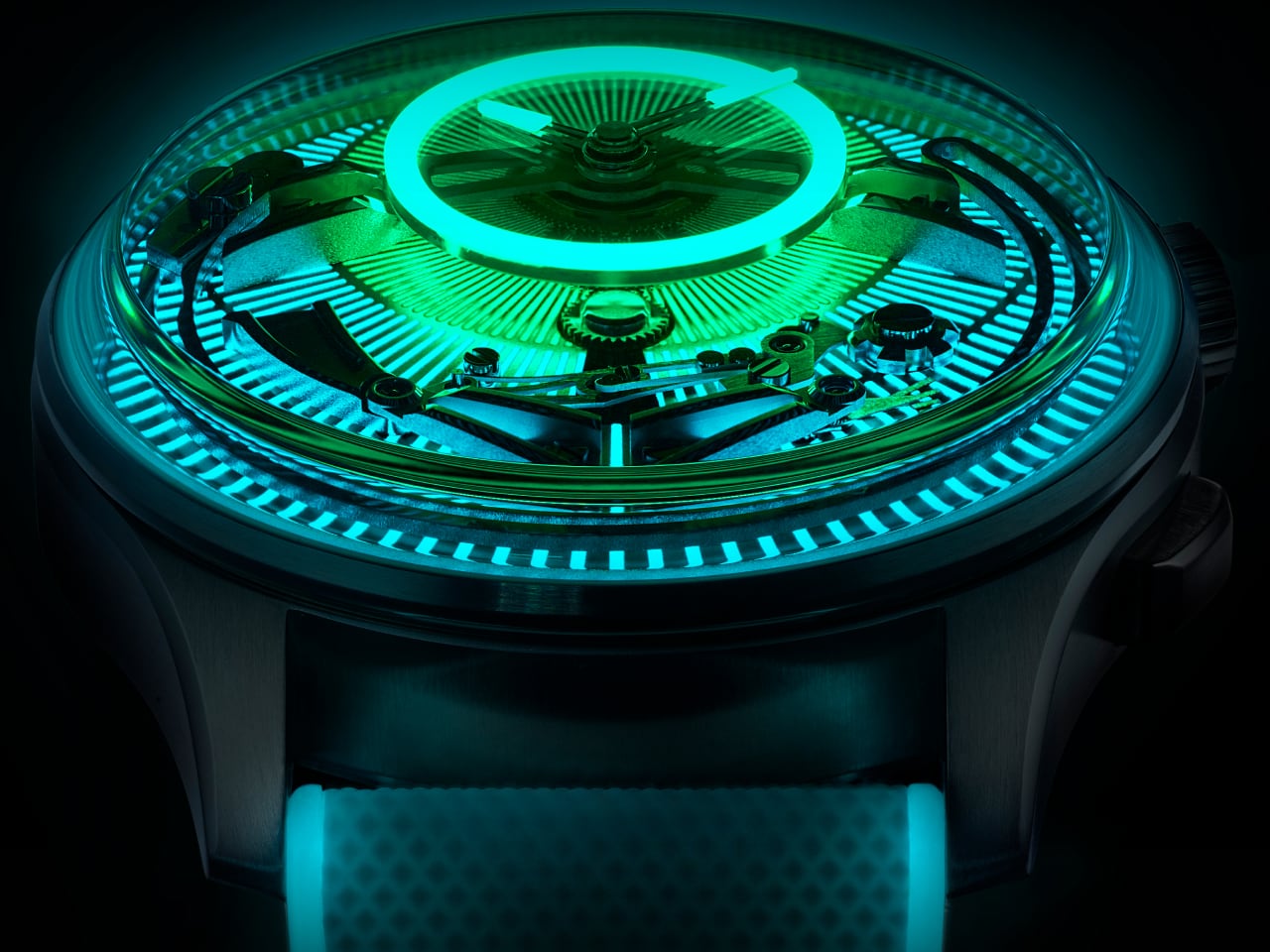
What Makes a Watch Design Timeless Over 70 Years

Rolex: first Datejust 1945

Wristwatches have gone through many changes over the past 70 years, but some designs have stayed popular through it all. What’s the secret to a watch that never goes out of style? It’s a blend of simplicity, versatility, quality craftsmanship, innovation, and a nod to history. Let’s dive into how brands like Rolex, Omega, Audemars Piguet, Casio, and Swatch have kept their designs timeless.

1950s: The Golden Age of Elegance

The 1950s were all about elegance. After the war, people craved refined accessories. Watches from this era were clean and simple. The Rolex Datejust, introduced in 1945, became notable in the 1950s with its straightforward dial and comfortable Jubilee bracelet. Its 36mm case size was just right—not too big, not too small.

Rolex: Datejust

Introduced in 1948, the Omega Seamaster quickly rose to prominence and became a favorite among watch enthusiasts and casual wearers alike. Its design, balancing robustness and elegance, ensured its suitability for various occasions. Whether for a casual outing or a formal event, the Seamaster proved to be a versatile accessory. Its case was crafted from durable stainless steel, enhancing the watch’s practicality for everyday wear. Additionally, the watch was equipped with waterproof features, emphasizing Omega’s commitment to functionality without compromising design. Its sleek and refined look made it both practical and stylish.

Another impressive timepiece from this era is the Patek Philippe Calatrava. This watch stands out because of its minimalist design, characterized by a clean and uncluttered dial with simple hour markers. Its slim case enhances its refined and subtle aesthetic. The craftsmanship that goes into this piece is top-notch, with every detail meticulously executed. The Calatrava, with its understated elegance, has set a high bar for future designs in the watchmaking industry.

1960s: The Rise of Versatility

The 1960s marked an era of change and acceleration in lifestyle, necessitating timepieces that could keep up with the pace. The Rolex Submariner emerged as a symbol of both adventure and style. Its easy-to-read dial, rotating bezel, and superior water resistance make it an attractive timepiece for adventurers. It was designed to perform optimally underwater and also held its own in formal settings, making it a versatile accessory.

This era also saw the rise of the Omega Speedmaster, famously known as the “Moonwatch,” after it was worn during the Apollo moon landings. The Omega Speedmaster was chosen for its functionality and precision. Its tachymeter bezel allowed for the accurate measurement of speed, a feature integral for both astronauts and car enthusiasts. Its chronograph functions made it a perfect blend of style and functionality.

OMEGA Speedmaster Moonwatch, 1965

The Rolex Daytona, first introduced in 1963, became synonymous with auto racing. Named after the famous Daytona International Speedway, the watch was designed to meet the needs of professional race car drivers. The Daytona’s chronograph function, coupled with a tachymeter bezel, allowed drivers to measure average speeds up to 400 kilometers or miles per hour. The watch featured a distinctive dial layout with three sub-dials and was initially available in both stainless steel and gold. Its robust design and high-performance movement made it a favorite among motorsport enthusiasts and collectors alike.

Paul Newman Daytona Ref. 6239
Photo: Courtesy Sotheby’s

Introduced in 1963, the Heuer Carrera appealed to race car drivers and professionals alike. The watch stood out for its chronograph function and bold, easy-to-read dial. These attributes allowed users to keep accurate time while adding a fashionable touch to their ensemble. The success of the Heuer Carrera underscored the idea that form and function can coexist in a well-designed timepiece.

1970s: Breaking the Mold

The 1970s was a transformative decade that shattered pre-existing norms. The quartz revolution introduced cutting-edge technology into watchmaking, leading to more audacious designs. The Seiko Astron, the world’s first quartz watch, offered remarkable accuracy and affordability, setting a new industry standard for precision.

Seiko Quartz-Astron 35SQ

During the same period, the Audemars Piguet Royal Oak emerged in 1972, shaking up conventional luxury watch design with its distinct octagonal bezel and integrated bracelet. Designed by Gérald Genta, the Royal Oak’s stainless steel case and bold design were revolutionary at a time when luxury watches were typically crafted from precious metals. The Royal Oak’s bold design and unconventional material choice set a new standard in watchmaking.

Audemars Piguet 1972 Royal Oak 5402ST

Rolex introduced the Explorer II in 1971. With its 24-hour bezel and robust construction, it was also specifically crafted for adventurers. The Explorer II catered to the growing trend of sports and adventure watches, blending functionality with rugged good looks.

1980s: Digital and Classic Converge

The 1980s saw a blend of digital sophistication and traditional aesthetics in watch design. Casio introduced the G-Shock line, bringing tough, functional watches that appealed to active people. The G-Shock’s shock resistance and multifunctional digital displays set a new standard in watch design. These watches were designed to withstand extreme conditions, making them a favorite among athletes and outdoor enthusiasts.

At the same time, classic designs like the Patek Philippe Calatrava remained popular for their simple, elegant looks. The Calatrava’s timeless design continued to attract those who appreciated traditional watchmaking.

TAG Heuer made a splash with the Formula 1, introduced in 1986. This watch combined sporty looks with quartz technology, appealing to a younger audience and cementing TAG Heuer’s reputation in motorsports.

1990s: Return to Heritage

The 1990s marked a return to heritage within horology. Watchmakers began reissuing classic models with contemporary updates, blending the old with the new. One such model was the Omega Speedmaster Professional, linked to the Apollo moon landings. Its practical and functional design ensured its continued relevance.

Jaeger LeCoultre Reverso 18k 1990s

The 1990s also saw the resurgence of the Jaeger-LeCoultre Reverso, a model originally designed in the 1930s. Known for its unique reversible case, the Reverso became a symbol of timeless elegance and innovative design. The reissued models combined vintage charm with modern precision.

Another model that gained iconic status during this period was the Rolex GMT-Master II. Introduced in 1983, it came into its own in the ’90s. Its dual-time-zone function was a boon for frequent travelers. Moreover, its robust design meant it could withstand the rigors of international travel, making it a trusted travel companion.

The Rolex Daytona, first introduced in 1963, also saw renewed popularity in the 1990s. Its association with auto racing and robust chronograph function made it a standout model. Its design, featuring a tachymeter bezel and high-performance movement, appealed to both collectors and motorsport enthusiasts.

2000s: Embracing Boldness

In the early 21st century, the trend in watches shifted towards larger models. Brands like Panerai and Hublot embraced large cases for individuals who wanted their timepieces to stand out. Panerai’s designs, rooted in military diving, featured oversized dials and bold numerals, making them highly legible and stylish.

In 2005, Hublot launched its Big Bang series, marked by its large cases and innovative use of materials like rubber and ceramic. The Big Bang series offered a refreshing change from traditional watch designs, appealing to watch enthusiasts seeking something different.

The Audemars Piguet Royal Oak Offshore first launched in 1993 but gained prominence in the 2000s. It expanded the original Royal Oak design with larger cases and more rugged features. This bold approach to watch design appealed to a new generation of watch lovers seeking a statement piece.

2010s: Balance and Innovation

The 2010s marked a shift towards balanced designs. Watch sizes typically ranged from 38mm to 42mm, catering to a broader audience. The Swatch Sistem51 won over watch enthusiasts with its unique approach to automatic watch production, featuring a construction of just 51 parts and a fully automated manufacturing process.

In 2012, the Tudor Black Bay reappeared, drawing on elements from Tudor’s iconic dive watches of the 1950s and 1960s. The Black Bay blended vintage design cues with modern materials and technology, resulting in a timepiece recognized as a classic.

In 2018, the Omega Seamaster Diver 300M was reintroduced with updates like ceramic materials and a modernized movement while preserving the iconic design elements.

2020s: Comfort, Versatility, and Sustainability

Today, the focus is on comfort, versatility, and sustainability. Watchmakers are incorporating recycled materials and adopting eco-friendly processes without compromising design. The Swatch x Omega MoonSwatch collaboration blends the iconic look of the Omega Speedmaster with Swatch’s innovative materials.

The Oris Aquis Date Upcycle features a dial made from recycled ocean plastic, emphasizing sustainability and giving each watch a unique look.

The Rolex Oyster Perpetual, refreshed in 2020 with vibrant dial colors, combines classic design with modern aesthetics. Its simplicity and robustness, enhanced with new color options, make it versatile and stylish.

ROLEX: TURQUOISE BLUE DIAL – Named ‘Celebration’

Conclusion

What makes a watch timeless? It’s a blend of simplicity, versatility, quality craftsmanship, innovation, and a touch of history. Watches like the Rolex Datejust, Omega Speedmaster, and Swatch Sistem51 show how these elements combine to withstand time. Versatility is vital, as a timeless watch should look good in both a boardroom and on a beach. The Rolex Submariner exemplifies this with its dual role as both a tool watch and a dress watch.

Quality craftsmanship is fundamental, with the use of premium materials and meticulous attention to detail elevating a watch. The Patek Philippe Calatrava and Audemars Piguet Royal Oak demonstrate that quality renders a watch truly timeless. Innovation also keeps the watch industry lively, from the quartz revolution to the integration of new materials and digital features. Staying ahead in technology without compromising the core design is crucial.

A connection to heritage endows a watch with historical significance, with vintage reissues and designs influenced by a brand’s archives reminding us of the traditions that have shaped watchmaking. These elements have characterized the most iconic watches for the past 70 years. While trends may change, these principles ensure a watch’s appeal to generations. Whether it’s a vintage reissue, a modern classic, or a bold new design, a timeless watch stands the test of time and trends.

OMEGA: Seamaster models of 1948

Thank you for joining me on this journey through the history of timeless watch designs. I truly appreciate your continued support and enthusiasm for Wristwatch Wednesday. If you’re new to this column, welcome!

The post What Makes a Watch Design Timeless Over 70 Years first appeared on Yanko Design.

Motorola Razr+ 2024 foldable phone: News, Rumors, Price, and Release Date

Google I/O 2024 has come and gone, and despite rumors and expectations, a new foldable phone was nowhere in sight. Of course, the Google Pixel Fold is hardly the only game in town, nor is it the only one that’s expected to debut really soon. Perhaps beating both Google and Samsung to the punch, Motorola’s next-gen foldable could be hitting shelves as early as June, though it will still be competing with the likes of the Samsung Galaxy Z Flip rather than the OnePlus Open and other larger foldables. Unofficial information about the device is quite thin, but the ones we’ve already heard are quite substantial and paint an interesting picture, one that could make the Motorola Razr+ 2024 or Motorola Razr 50 Ultra the clamshell foldable to beat this year.

Designer: Motorola

Motorola Razr+ 2024: Design

According to sources, this year’s Motorola foldable would look exactly like last year’s Motorola foldable, save for some changes in screen size. That means the Motorola Razr+ 2024’s external screen will still cover the entire surface of the upper half of the phone’s back, leaving only room for the camera lenses themselves. It might sound like a letdown and a sign of lack of innovation over at Motorola, but sticking to a design that works is also a sign of maturity, especially since the design is only a year old.

Image courtesy of: MSPoweruser

Motorola’s design for its Cover Screen is admittedly divisive. On the one hand, it’s the only foldable of its kind that utilizes the whole area, while others make do with tiny rectangles, even tinier circles, or a square with an uneven cutout to make way for cameras. On the other hand, this also makes for a weird arrangement that actually cuts out part of the display anyway, making the image or text in that area inaccessible.

Motorola is also the only brand that allows normal apps to run on that external screen, which is both an advantage and a disadvantage. Regardless, it seems to be sticking to its guns for one more year, offering an experience that, while faithful to the design spirit of the original RAZR, isn’t afraid to go beyond to offer something new and useful.

Motorola Razr+ 2024: Specs and Software

While the Moto Razr+ 2024, or Moto Razr 50 Ultra, won’t look any different on the outside, it will be a very different beast on the inside. Of course, there’s the new Qualcomm Snapdragon 8s Gen 3 leading the changes, and there will supposedly be a larger external screen at 3.9 inches up from last year’s 3.6-inch Cover Screen. There will also be 12GB of RAM paired with 256GB of storage, while the battery has been expanded from 3,800mAh to 4,000mAh.

Given the expected launch windows, the 2024 Razr will be running Android 14 out of the box, and while it might sound like Motorola would upgrade it once Android 15 comes out, there’s not really any certainty. After all, the Motorola Razr+ 2023, which launched with Android 13, still received Android 14 half a year later. Despite being once owned by Google (now under Lenovo’s stewardship), Motorola’s track record for Android updates sadly isn’t that impressive.
Motorola Razr+ 2024: Cameras

Part of the big upgrades coming to the Motorola Razr+ 2024 according to those rumors is an upgrade to the camera system. It will now have not one but two 50MP cameras, one of which has a wide lens while the other is capable of 2x telephoto zoom. Given how Motorola advertises its foldable phone as a sort of mini camcorder, more capable cameras are definitely in order. The 32MP selfie camera, on the other, might remain the same as last year.

Motorola Razr+ 2024: Price and Release Date

There has been no word on the exact date when the Motorola Razr+ 2024 will be launched, which might go by the name of Motorola Razr 50 Ultra in other markets, but all signs point to yet another June release. In fact, the device was spotted making its way through a certification process, suggesting that its debut is close at hand. The leak also confirms what we’ve heard about the design, that it would be a dead knocker for last year’s model.

Image courtesy of: 91mobiles

That leak also “revealed” the color options for the Razr+ 2024, which include Blue, Orange, and Green instead of last year’s Black, Magenta, and Peach. But the more interesting detail about the phone is its starting price of $999 for the base model with 12GB of RAM and 256GB of storage. That’s the same price for half the capacity last year, so it will definitely make the Motorola Razr+ 2024 the cheapest flagship foldable in the market.

Motorola Razr+ 2024: Final Thoughts

Although they are younger than the larger foldables like the Galaxy Z Fold, clamshell-style foldables have become better accepted and sought after. They’re usually more affordable and look more stylish, bringing to mind the flip phones of old. They’re pocketability makes a bit more sense to most people who don’t need a phone that turns into a tablet, and their accessible price tag makes them feel more like regular flagships rather than overpriced novelties.

Of the many foldable flip phones in the market right now, the Motorola Razr+ 2024 seems to offer a more reasonable balance of features and price, especially one from a reputable brand. It looks like this year will show a significant upgrade, at least internally, while still keeping the design that has won fans. That said, Motorola’s Android updates don’t inspire confidence, and we’ve yet to see it make any improvements in that regard.

The post Motorola Razr+ 2024 foldable phone: News, Rumors, Price, and Release Date first appeared on Yanko Design.

10 Best Office Furniture Designed To Create The Ultimate Working Space

Never underestimate how crucial great office furniture can be to a workspace! We spend the majority of our day sitting on our office chairs or typing away on our desks whether we’re working in our home office or a corporate one. Hence, these pieces of furniture need to be not only comfortable but ergonomic, and aesthetic as well. And we’ve curated a collection of furniture designs that meet all these criteria. From the ultimate task chair for you to a minimal cubicle-like furniture system – these innovative furniture designs are not only great for maintaining a healthy posture, but are also super comfy to work on, and will perfectly match the interiors of your modern office. Enjoy!

1. Coffin Chair

Shaped like a coffin, this interesting-looking office chair captures the emotions you feel regarding your dead-end corporate job. It is a unique and innovative chair for those who are quite stressed with their jobs but cannot leave. This allows them to process their emotions in a healthy manner.

Why is it noteworthy?

The chair completely captures the feelings you may experience as you go through another tedious workday. It encapsulates the sense of mundaneness and exhaustion you feel as you sit through another dreary meeting that could have quite easily been an email!

What we like

  • Inspired by a painting, giving it an artistic context
  • Captures the emotions of a dead-end job perfectly

What we dislike

  • Lacks cozy cushioning, so not a good option for sitting for long periods of time

2. Plenum Cabin

Created by Jaime Hayon for the Danish brand Fritz Hansen, the Plenum Cabin provides comfy spaces to work in corporate offices. The cabins have been designed to function as meeting spots for informal meetings, and they serve as integral focal points in office spaces.

Why is it noteworthy?

“With Plenum Cabin, my aim was to craft a space within a space – a haven for intimate conversations and informal gatherings,” said Hayon. “It’s not just a cabin – it’s an invitation to connect, to share, and to experience the best of human interaction in the workplace.” And the cabin really does function as a comfy and private oasis to work in.

What we like

  • Features a table, an internal cable management system, and an integrated screen

What we dislike

  • Space-consuming design, not intended for offices with space constraints

3. Flow Wall Desk

Called the Flow Wall Desk, this intriguing furniture design is intended to be an excellent piece of office furniture for spaces that don’t have too much space. It features a sustainable and simple design philosophy, and it is quite decorative as well, besides having great functionality.

Why is it noteworthy?

You can store and fold up the Flow Wall Desk, allowing it to look like a piece of art on your wall, when you’re not working on it. It looks like a ‘spiraling caterpillar’ when you unfold it!

What we like

  • Has a flatpack form
  • It can be easily stored away

What we dislike

  • Folding and unfolding the desk whenever you need to use it means we can’t have a constant setup

4. Accessible Office Furniture Concept

This office furniture concept merges mechanisms that will be needed by people from all walks of life. This innovative chair shifts forward to facilitate moving from the chair to a wheelchair, a feature that is used in cars made for accessibility.

Why is it noteworthy?

This unique concept involves a motorized track running across the ceiling, like trains on a rail. This ensures that the person doesn’t have to move around, the furniture will help move them around. A desk was also created, and it pivots and slides in and out as needed, like the chairs.

What we like

  • Features a smart glass that goes opaque if the person needs privacy

What we dislike

  • It is currently a concept, so we don’t know how well it will translate into a tangible product

5. Typo Chair

Dubbed the Typo Chair, this unique chair is minimal yet quite powerful. It is designed by AMDL Circle for the furniture brand Mara, and what makes it stand out is its playful bent form, which functions as a one-of-a kind and quite an uncommon element in furniture design.

Why is it noteworthy?

The Typo Chair is an ergonomic furniture design equipped with a light timber base. It features a gentle curve, which allows the chair to stand apart from other conventional chair designs. The cure is the star feature of the entire furniture piece.

What we like

  • The wooden and colored metal elements contrast to form a dynamic silhouette
  • The gentle curve adds some depth and character to an otherwise simple chair

What we dislike

  • There seems to be no option for customization, which can be inconvenient for some users

6. Qyos

Designed by the Spanish furniture brand Acitu, the Qyos is their first acoustic meeting pod. Qyos was designed to function as “islands of privacy”, allowing employees to work in peace without being disrupted by the rest of the office environment. The pods function as meeting spaces to boost productivity and focus better.

Why is it noteworthy?

The cabins are modular and sound-insulated cabins that were designed by Actiu’s research and development team. They’re excellent for making calls or completing tasks that require all your focus and attention.

What we like

  • Offers an escape from noisy office spaces
  • Can be easily put together and assembled

What we dislike

  • There are similar designs on the market, it has nothing too exciting to set it apart

7. Anthros Task Chair

Dubbed the Anthros Task Chair, this one-of-a-kind task chair is designed with a wholly fresh approach. The chair was made using scientific evidence and research, creating a furniture design that improves your posture, minimizes pain points, helps you focus better, and boosts productivity.

Why is it noteworthy?

The Anthros team observed wheelchair users and worked with them, to understand the importance of right seating. They used this invaluable experience to form a novel way to modern task chair.

What we like

  • The chair features 4D armrests, so you can adjust the height, pivot angle, and depth

What we dislike

  • Learning how to operate the chair can be a bit complicated

8. Catifa Carta

Say hello to the Catifa Carta – a lovely sustainable chair with a minimal ethos. The chair is built from dozens of sheets of paper, or specifically PaperShell – an innovation material created by transforming paper into a wood-like material. The end result is a functional and sleek office chair!

Why is it noteworthy?

The wood-like material has a lot of benefits to it. It is rigid, stable, and also quite charming to look at. The material is created by using wood-by products such as sawdust, chips, and waste wood such as the fallen branches from forests. This novel paper-like material is a sustainable alternative to plastic, wood, or fiber composites.

What we like

  • PaperShell has certain natural imperfections which imparts eah chair with a unique characteristic

What we dislike

  • Not sure how effective the ergonomics of the chair are for sitting for longer durations of time

9. Eto Desk

Designed by Australian designer Tom Fereday for the furniture brand King, the Eto Desk includes minimal angles and smart integrated accessories. The desk is an excellent option for your home office or even a corporate home, although its minimal and subtle looks make it a great contender for your home office.

Why is it noteworthy?

The desk is quite sleek and minimal and includes an aluminum frame and a timber veneer top that is available in three finishes – Smoked Oak, American Walnut, and Congo.

What we like

  • The desk is slim and equipped with accessible storage for your stationery

What we dislike

  • Aesthetics are a bit simple and unassuming, which may not be preferred by some. They could have worked on the aesthetics a little more

10. Lives Post + Beam workspace

Created by the Japanese furniture brand Okamura, the Lives Post + Beam workspace is created to be a flexible + versatile workspace for modern-day offices. The offices are designed to be comfortable and interactive spaces where co-workers can work and engage with one another, creating new ideas and fostering growth.

Why is it noteworthy?

The workspace is designed with a frame and sliding wall panels, and these panels are customizable, allowing users to customize square frames with fixed or moveable panels that can be attached to the top rail.

What we like

  • Allows companies to create personalized workspaces catering to the needs of their employees

What we dislike

  • It’s not available yet, so we don’t know how the final design will turn out to be

The post 10 Best Office Furniture Designed To Create The Ultimate Working Space first appeared on Yanko Design.

Want Perfect Sourdough Bread every single time? This Kitchen Tool gives you foolproof results

The beauty of baking your own bread lies in its simplicity, and the fact that the yeast and bacteria does most of the job for you. You don’t need fancy equipment or ingredients, just a big container to proof your bread, and an oven to bake a perfectly rustic loaf of sourdough that you can then top up with avocado or ricotta and honey. However, what most bakers don’t tell you is that your loaf of bread is actually a living being. The yeast, whether natural or the instant kind you buy at the market, is a living creature that transforms your ball of dough into a fluffy, airy, mildly tart slice of bread that tastes so good with anything you put on top. This yeast needs just 3 things to perform this transformation – flour, water (hydration), and the right temperature. Most home bakers ignore that last metric, and if you’ve made a loaf of bread that just lacked that oomph or the right texture, chances are you followed your recipe correctly, but missed out on ensuring the yeast could grow under the right temperature. The DoughBed, however, takes care of that part of the breadmaking journey for you. Designed to be a perfectly optimal proofing tray for your dough, the Doughbed is a wide glass tray with a cork lid and a heating bed that creates exactly the right temperature for your loaf. Keep your dough to proof in the DoughBed and you’ll be consistently rewarded with the perfect proofing every time, whether it’s for sourdough loaves, pizzas, baguettes, focaccias, brioche buns, or any other kind of leavened bread you desire to bake!

Designers: Sourhouse (Erik Fabian & Jennifer Yoko Olson)

Click Here to Buy Now: $175 $225 ($50 off). Hurry, deal ends in 72-hours! Raised over $220,000.

Designed by home-baker Erik Fabian and industrial designer Jennifer Yoko Olson, the DoughBed is basically an incubation chamber for bread microbes that creates the perfect thermal conditions for yeast (and sourdough bacteria) to feed and grow. “The problem is not your dough, it’s your kitchen. Kitchen temperatures are often too cold for bread dough, and more importantly, always changing,” say the duo behind the DoughBed. The yeast in your dough thrives at temperatures of 75-82°F (24-28°C), but that might just be a tad too warm for humans, who set their thermostats or air conditioners to slightly lower temperatures. This mild temperature difference (of a mere 4-5°F) can be the difference between a perfect loaf, and a loaf that just doesn’t have the right open crumb. The solution? A mini habitat for your doughball, allowing it to do its job flawlessly well, every single time.

Mat + Bowl + Lid = The Perfect Proofing Solution

DoughBed combines a warming mat, a glass dough bowl, and a cork lid to create an efficient warming solution. The dough bowl has a wide bottom so your dough is gently and evenly warmed to 75-82°F (24-28°C) by the mat below.

Each DoughBed is made of 3 parts – an oval-shaped glass bowl, a cork lid, and a warming base that gives your bread microbes the ideal temperature to do its job. The wide oval tray is big enough to hold 3 loaves worth of dough at one time, and is perfectly shaped and sized for mixing your dough in, resting and proofing, and pouring your dough out for shaping before baking. As a bonus, it’s even designed to be oven safe, although baking a loaf that big would be overkill!

The warming mat is made with cork to prevent heat loss into your cold counter.

Once your dough’s ready for proofing, simply cover the glass tray with the DoughBed’s cork lid and place the tray and lid on the DoughBed’s electric base, which heats up to just the right temperature for your bread microbes to thrive. The bowl’s wide base helps the bread dough heat evenly and quickly, and the DoughBed’s single temperature target works with remarkable consistency all throughout the year, giving you perfect loaves even in autumn or winter months.

Oval = the Best Shape for Dough Handling

The DoughBed is perfect for home bakers looking to upgrade their bread game. The oblong oval shape of the glass bowl is ideal for mixing, kneading, and folding with both your hands, and the cork lid and base don’t just give the DoughBed its rustic aesthetic, they’re key to helping your dough maintain its temperature efficiently, and the cork base prevents heat-loss into your kitchen counter.

The DoughBed’s base operates with just 10W of power (that’s 75% less than an oven light), relying on a USB cable that can be wound up and tucked into the underside of the base when not in use. The cork lid comes with a removable, food-safe polypropylene liner, and both the glass bowl and polypropylene liner are dishwasher safe. We’d recommend not washing the cork to ensure it lasts longer. The DoughBed starts at a discounted $175 for backers – that’s a lot cheaper than the Le Creuset you’d mix and proof your sourdough loaf in.

Click Here to Buy Now: $175 $225 ($50 off). Hurry, deal ends in 72-hours! Raised over $220,000.

The post Want Perfect Sourdough Bread every single time? This Kitchen Tool gives you foolproof results first appeared on Yanko Design.