A Modular Form Where Geometry Quietly Becomes Furniture

Fractal 9 began not as a formal design project but as a response to a simple, everyday need. The goal was to make use of an empty corner in the living room by creating something that felt meaningful in the space, not just a functional object. The intention was to design a piece that could quietly anchor the room while offering both aesthetic presence and practical value. Over time, what started as a personal experiment grew into a deeper exploration that ultimately led to the creation of Fractal 9, a modular sculptural furniture piece rooted in geometry, materiality, and conceptual depth.

At the core of Fractal 9 lies a strong relationship with mathematical principles, particularly the square, the golden ratio, and the number nine. These elements are not decorative references but foundational to the structure of the design. A significant turning point came when the first model was analyzed through the lens of the Digital Root, a mathematical concept that reduces numbers to a single digit. This analysis revealed meaningful numerical patterns within the form. What began as an intuitive structure gradually revealed an underlying mathematical coherence, suggesting that the design was guided by a deeper internal logic rather than chance.

Designer: Miguel Espejo

The design takes inspiration from fractal patterns found in nature, where forms repeat across scales while maintaining harmony and balance. This thinking informs the modular nature of the piece. Fractal 9 can function as a single integrated unit or be separated into two independent units, allowing it to adapt to different spaces and uses. Whether serving as a bookshelf, a display surface, or a sculptural centerpiece, the piece encourages interaction, experimentation, and creative reconfiguration.

The assembly system plays a key role in the user experience. The entire structure can be assembled using an Allen wrench, allowing the piece to be put together or taken apart without adhesives. This mechanical approach preserves the material integrity while offering flexibility and durability. Designing the connection system was one of the most challenging aspects of the project. The structure needed to be strong and stable while also appearing visually subtle so that the form remained uninterrupted.

The choice of materials is central to the identity of the piece. FSC certified wood forms the structural base, reflecting a commitment to sustainable sourcing. Transparent acrylic components, produced using precise laser cutting, introduce lightness and clarity while allowing the structural connections to remain visible. Stainless steel fasteners provide strength and long term durability. A natural beeswax finish is applied by hand, enhancing the grain of the wood and adding a tactile warmth that complements the precision of the fabrication methods.

The development of Fractal 9 was supported by applied research. The aim was to validate the geometric and mathematical integrity of the design using the Digital Root method. Through careful measurement of angles, proportions, and modular relationships, recurring numerical patterns were identified. Stability tests conducted across different configurations confirmed the structural reliability of the system. These findings demonstrated that the design has potential beyond furniture, with possible applications in architecture, spatial systems, and educational contexts related to geometry and applied mathematics.

One of the most demanding aspects of the project was conceptual. Establishing a meaningful connection between the square, the golden ratio, and the number nine required extensive exploration and refinement. This process revealed a framework that extends beyond the object itself and opened the door to ongoing research into modular systems and mathematical structures in design.

Fractal 9 is ultimately an exploration of structure, meaning, and human interaction. By combining mathematical principles, sustainable materials, and modular adaptability, it reflects a belief in balance and interconnectedness. It is a reminder that design, much like nature, exists as part of a larger system where every element has purpose and contributes to the whole.

The post A Modular Form Where Geometry Quietly Becomes Furniture first appeared on Yanko Design.

This minimal AI camera blends into the wild while quietly tracking wildlife

There’s a quiet shift happening in how we observe wildlife. It’s no longer about being physically present with bulky gear and long lenses, but about placing intelligence into the environment itself. This lets technology do the watching while humans step back. And that’s exactly where this minimal AI camera concept positions itself.

Created as a compact, unobtrusive wildlife tracking device, the design strips away everything that feels traditionally “camera-like.” Instead of buttons, screens, or visible complexity, what you get is a clean, almost monolithic form that feels closer to a sensor than a gadget. The idea here is simple: if you’re trying to observe nature, the device itself shouldn’t interfere with it.

Designer: Nicolas Fred and Thomas Fred

The camera leans heavily into minimalism, not just as an aesthetic choice, but as a functional one. Its small footprint makes it easier to deploy in remote locations, while the lack of visual noise helps it blend into natural surroundings. This is particularly important in wildlife monitoring, where even the slightest disruption can alter animal behavior. By reducing its presence, the device becomes less of an observer and more of a silent participant.

What makes it interesting, however, is the integration of AI as a core feature rather than an add-on. Unlike traditional camera traps that simply record footage for later review, AI-enabled systems are increasingly designed to process data in real time—identifying species, filtering out irrelevant motion, and reducing the need for manual sorting. Similar approaches in modern wildlife tech already show how embedded intelligence can dramatically cut down human effort while improving accuracy.

This concept seems to follow that same philosophy, imagining a camera that doesn’t just capture images, but understands them. That shift from passive recording to active interpretation is where the real value lies. It turns a simple device into a tool for conservation, research, and even anti-poaching efforts. The form factor also suggests modularity and adaptability. Whether mounted on trees, placed near water sources, or integrated into different terrains, the design feels versatile enough to function across environments. Its minimal geometry likely aids in durability too, reducing points of failure while making it easier to weather harsh outdoor conditions.

At the same time, there’s an understated elegance to how the device is presented. It doesn’t try to look rugged in the traditional sense. No exaggerated textures or aggressive styling. Instead, it embraces a softer, more refined visual language that aligns with its purpose: observe without intrusion.

This minimal AI camera for the wild feels less like a tool you use and more like something you place and trust. It quietly works in the background, capturing stories you might never have been able to witness yourself!

The post This minimal AI camera blends into the wild while quietly tracking wildlife first appeared on Yanko Design.

Apple reportedly testing out four different styles for its smart glasses that will rival Meta Ray-Bans

Apple may be late to the smart glasses market, but it could be covering all its bases with up to four potential styles for its upcoming product. According to Bloomberg's Mark Gurman, Apple could launch some or all of the four styles it's currently testing for its smart glasses.

Gurman reported Apple is testing out a large rectangular frame that's comparable to Ray-Ban Wayfarers, a slimmer rectangular design like the glasses that Apple CEO Tim Cook wears, a larger oval or circular frame and a smaller oval or circle option. Apple is also working on a range of colors, including black, ocean blue and light brown, according to Bloomberg.

Internally code-named N50 for now, Apple's upcoming smart glasses will compete directly with the second-gen Ray-Ban Meta model. While similar, Apple might be differentiating its design with "vertically oriented oval lenses with surrounding lights," according to the report. Like Meta's smart glasses, Apple's upcoming product will capture photos and videos, but is meant to better sync with an iPhone, allowing users to take advantage of Apple's ecosystem for editing, sharing, phone calls, notifications, music and even its voice assistant, according to Gurman. The release of Apple's smart glasses could even coincide with the upcoming improved Siri that should arrive with iOS 27.

Gurman reported that Apple could reveal its smart glasses as soon as the end of 2026 or early 2027, followed by an official release sometime in 2027. As for the competition, Meta released its latest model that's better suited for prescription lenses and offers a more customizable fit.

This article originally appeared on Engadget at https://www.engadget.com/wearables/apple-reportedly-testing-out-four-different-styles-for-its-smart-glasses-that-will-rival-meta-ray-bans-200550013.html?src=rss

Bugatti Type Sigma Concept Ditches the Chiron’s Maximalist Design for Pure Sculptural Form

Bugatti built the Type 57SC Atlantic in the 1930s using a technique called riveted construction, where aluminum panels were joined with raised seams that became the car’s defining visual feature. That central spine running from nose to tail was both structural necessity and sculptural flourish, a detail so elegant it’s been referenced in automotive design for nearly a century.

Edouard Suzeau’s Type Sigma concept channels that same philosophy but inverts the execution. Where the Atlantic celebrated its construction method, the Type Sigma hides every seam, every panel gap, every hint of how it might actually be built. The body looks like a single piece of fabric pulled taut over a frame, finished in matte gray that emphasizes form over finish. The surface is so clean, so deliberately unadorned, that it forces you to focus on proportion and gesture rather than details and embellishments.

Designer: Edouard Suzeau

The design carries Bugatti’s genetic code but translates it through a contemporary filter. The horseshoe grille sits vertically integrated into the nose, maintaining brand identity without dominating the composition. The C-shaped rear pillar flows from cabin to tail as a surface rather than a graphic, tracing lineage back to the Atlantic while pushing the language forward. The long hood and fastback roofline recall the grand tourers Ettore Bugatti built for covering continents, cars that prioritized elegance and comfort alongside speed. Suzeau’s concept explores what Bugatti’s design language looks like when stripped of the Chiron’s dual-tone drama and the Tourbillon’s hyper-complex surfacing. The Type Sigma proves that sometimes the most challenging design exercise is knowing what to leave out, and the result is a car that feels both historically grounded and refreshingly modern.

The matte metallic finish is pretty new to Bugatti, which has relied on glossy finishes like blue and black in the past. Where gloss black or bare carbon fiber would create hard reflections that break up the surface into geometric shards, this matte gray lets light pool and stretch like mercury on glass. Reflections become soft gradients that emphasize the underlying form, making the car read as a single sculptural mass rather than an assembly of panels. The choice to avoid dual-tone treatment is equally deliberate. Recent Bugattis have relied on contrasting materials to create visual drama, splitting the body into upper and lower sections or using exposed carbon to telegraph performance intent. The Type Sigma abandons that strategy entirely, trusting that the purity of the form will carry enough visual weight on its own.

The proportions position this firmly in grand tourer territory rather than mid-engine hypercar land. The hood stretches forward in the classic front-engine GT tradition, creating that long, muscular stance that defined Bugatti’s pre-war icons. The cabin sits far back on the wheelbase, with a greenhouse that tapers gently rearward into the fastback deck. The roofline has an almost shooting-brake quality to it, extending further back than a traditional coupe but stopping short of full estate proportions. This creates a unique silhouette that feels both familiar and fresh within Bugatti’s portfolio.

The wheels appear to be modern interpretations of classic Bugatti spoke patterns, possibly referencing the Type 35’s iconic wheels but rendered with contemporary multi-spoke turbine detailing. The fender arches are muscular but smooth, defined by surface curvature rather than hard character lines. Side vents behind the front wheels are so subtly integrated they’re almost invisible in this matte finish, revealed only by shadow and surface transition rather than chrome trim or aggressive surfacing. The horizontal DRL bars sit flush with the front fascia, clean and minimal, avoiding the overwrought lighting signatures that plague most modern concept cars.

A full-width lighting signature spans the tail, likely incorporating Bugatti script or the EB logo as part of the illuminated graphic. Below, the diffuser is aggressive but integrated, its fins and channels carved into the lower body rather than appearing as tacked-on aerodynamic furniture. The way the C-shaped pillar terminates at the rear deck is particularly elegant, flowing seamlessly into the tail rather than stopping abruptly or requiring a visual full stop. Horizontal slats in the rear glass echo the Chiron’s central spine but abstracted into functional venting, maintaining visual continuity with the current lineup while pushing the aesthetic somewhere quieter.

Production viability was clearly never the point here. Suzeau’s renders show a car with shut lines that would be impossible to engineer, glass areas that would never pass certification, and aerodynamic surfaces that exist purely to please the eye rather than cheat the wind. The Type Sigma lives in the same realm as the Atlantic did when it debuted in 1936, a piece of rolling sculpture built to prove that a car could be art. Only four Atlantics were ever made, and they remain among the most valuable automobiles ever auctioned. The Type Sigma will never be built at all, but it accomplishes something harder than production feasibility. It makes you reconsider what a modern Bugatti could look like if the brand decided to prioritize elegance over aggression, sculpture over decoration, whisper over shout.

The post Bugatti Type Sigma Concept Ditches the Chiron’s Maximalist Design for Pure Sculptural Form first appeared on Yanko Design.

The US government wants Reddit to snitch on one of its users through a grand jury

Immigration and Customs Enforcement has a certain Redditor in its crosshairs and it's now strong-arming the social media platform to reveal who they are with a grand jury subpoena, according to a report from The Intercept. The nonprofit news outlet was able to obtain the subpoena that ordered Reddit to provide info on one of its users who's been accused of criticizing ICE by April 14.

According to the report, ICE has been trying to identify this Redditor for a month without success. More specifically, Reddit is being asked to give up the user's name, address, phone number and other personal data. The Intercept reported that the subpoena was issued by federal prosecutors in Washington, D.C. after a failed attempt from ICE to do the same through a federal court in Northern California, which has jurisdiction in San Francisco where Reddit is headquartered.

Reddit attorneys said their client's posts and anonymity are protected under the First Amendment and described ICE's use of a grand jury as "a disturbing escalation," according to the report. Reddit didn't state if it would challenge the government's order or not, according to The Intercept, but it did provide a statement saying, "privacy is central to how Reddit operates and we take our commitment to protecting that seriously." Reddit also said in the statement that it does "not voluntarily share information with any government, especially not on users exercising their rights to criticize the government or plan a protest.”

While this grand jury subpoena could set an alarming precedent, it's not the first time a government agency has requested social media platforms reveal accounts that have spoke negatively about ICE. According to a New York Times report, the Department of Homeland Security has filed hundreds of subpoenas to Google, Discord, Meta and even Reddit again, for identifying details about its users.

This article originally appeared on Engadget at https://www.engadget.com/social-media/the-us-government-wants-reddit-to-snitch-on-one-of-its-users-through-a-grand-jury-190532844.html?src=rss

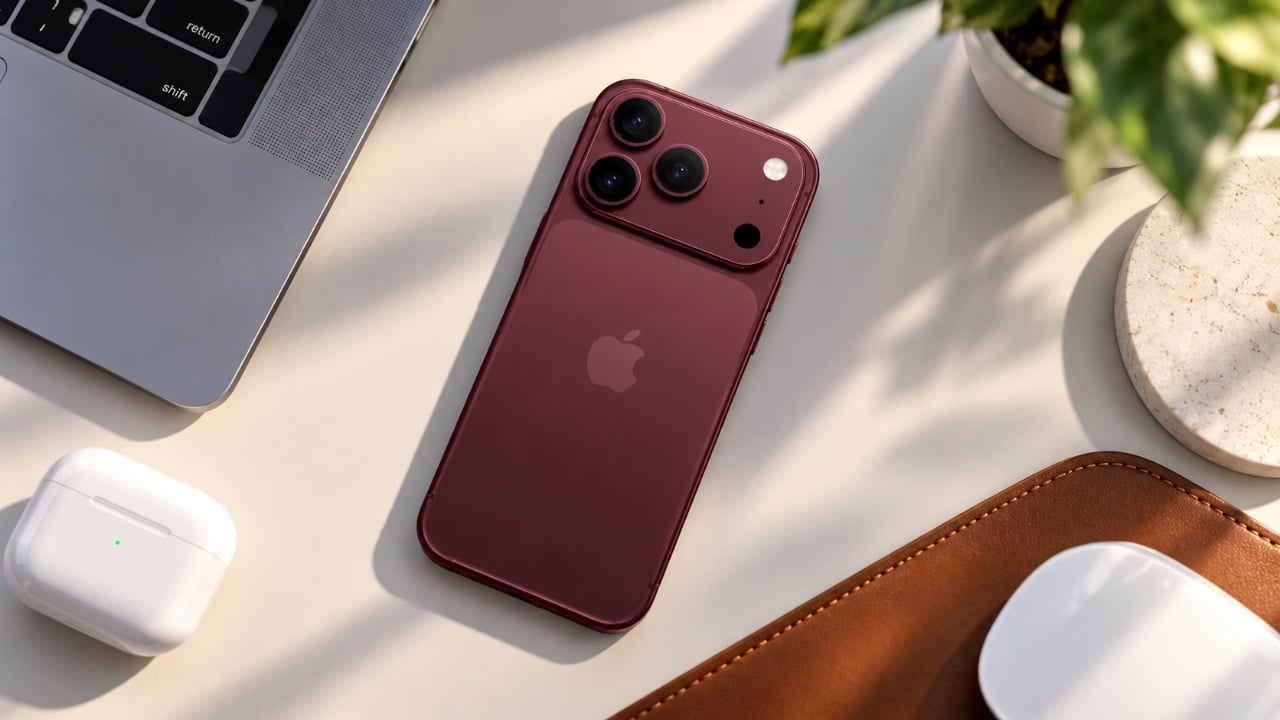
You Can Now Own the Actual Motherboard from the First iPhone, Sealed Inside The 17 Pro

Caviar’s Apple 50th anniversary collection has been moving faster than the company’s own PR team can keep up with. We covered the Steve Jobs turtleneck edition earlier this month, nine units of a titanium iPhone 17 Pro carrying an authenticated Issey Miyake fabric fragment inside the Apple logo, and by the time most readers had processed whether it was brilliant or absurd, Caviar had already sold out. I’ll admit I did not see that coming. The lesson appears to be that the intersection of Apple mythology and physical relics is a more powerful commercial force than any reasonable person would predict.

So Caviar has returned with an even more loaded artifact for the second release in this anniversary series. The iPhone 2007 embeds a verified fragment of the original iPhone 2G motherboard into the rear panel of an iPhone 17 Pro, sealed beneath an Apple-logo-shaped capsule, ringed by engravings tracing the circuitry of the phone that launched in January 2007. Production is limited to 11 units. Pricing starts at $10,770 for the 256GB Pro and climbs to $12,700 for the 2TB Pro Max, with each phone shipping alongside a 999 fine gold commemorative coin and a signature Caviar key.

Designer: Caviar

The chassis is titanium with a black PVD coating, and the color story it tells is deliberate. Black and silver, offset logo placement, minimalist engraving: Caviar is visually quoting the 2007 original without cosplaying as a replica, which is the smarter move. The motherboard fragment anchors the rear panel at dead center, with circuit-trace engravings fanning outward from it like a schematic that never quite finished rendering. Jobs’ signature runs along the frame. The whole composition functions as a timeline compressed into a single object, 2007 hardware embedded inside 2025 hardware, separated by a few millimeters of machined titanium.

A PCB fragment from a specific hardware generation is an unusually specific kind of artifact. Original iPhone 2G boards have identifiable components, documented manufacturing runs, a physical particularity that places them firmly in a category alongside signed guitars and moon rocks rather than alongside phone cases. Caviar ships each unit with an authentication certificate, and unlike fabric or paper memorabilia, a motherboard fragment from a consumer electronics device has enough physical specificity to make that certificate mean something. At eleven grand, that distinction matters to the kind of buyer who actually reads the certificate rather than frames it.

The original iPhone is one of a very small number of consumer products whose design was so resolved on arrival that the industry spent the following decade catching up to it. Eleven units of the iPhone 2007 will exist in the world, each carrying a physical fragment of that hardware inside Apple’s current best. For the collector who thinks about objects that way, the website link is at the bottom of this page.

The post You Can Now Own the Actual Motherboard from the First iPhone, Sealed Inside The 17 Pro first appeared on Yanko Design.

OpenAI says Elon Musk is orchestrating a last-minute ‘legal ambush’ before trial

The feud between Elon Musk and OpenAI is getting even more contentious as the two sides get ready for trial later this month. The latest development in the legal back-and-forth saw OpenAI accuse Elon Musk and his latest proposals as a "legal ambush," as first reported by Bloomberg. OpenAI filed its response on Friday, which detailed that Musk was "sandbagging the defendants and injecting chaos into the proceedings, while trying to recast his public narrative about his lawsuit."

The lawsuit dates back to 2024 when Elon Musk sued both OpenAI and Microsoft, accusing the AI giant of ditching its original mission of being a non-profit and instead converting into a for-profit business after receiving financial backing and forming a partnership with Microsoft. Prior to OpenAI's latest filing, Musk amended his original complaint to instead award any damages received to OpenAI's nonprofit arm instead. Musk's amendment, which was filed earlier this month, also sought to oust Altman from his role as OpenAI's CEO and board member. In OpenAI's Friday filing, the AI company claimed that Musk's last-minute changes were "legally improper and factually unsupported."

There's a lot at stake with this lawsuit since Musk is reportedly seeking anywhere between $79 billion and $134 billion in "wrongful gains." With both OpenAI and Microsoft denying any wrongdoing, according to Bloomberg, the trial is still set to kick off on April 27.

This article originally appeared on Engadget at https://www.engadget.com/ai/openai-says-elon-musk-is-orchestrating-a-last-minute-legal-ambush-before-trial-163248345.html?src=rss

A Monkey-Shaped Cat House That Turns Comfort Into Playful Living Sculpture

In a market saturated with predictable pet furniture, minimal cubes, beige scratching posts, and standard enclosed beds, this monkey-shaped cat house arrives as a refreshing disruption. It is not just a product, it is a presence. Something between furniture sculpture and quiet theater, it redefines what it means to design for animals while speaking directly to human emotion and curiosity.

At first glance, it feels almost surreal. A giant monkey head sits unapologetically in a living space, its exaggerated features soft and inviting rather than imposing. It does not try to blend in. It does not apologize for existing. Instead, it leans fully into character. And that is where the design begins to reveal its intelligence.

Designer: 175****6003 (via Puxiang)

The entry point is its most striking gesture. A wide open mouth that transforms into a sheltered interior where a kitten can curl up and disappear. This is not just visual drama; it is deeply aligned with instinct. Cats are drawn to enclosed cave-like environments that offer warmth, security, and a sense of control over their surroundings. What could have been a novelty form becomes a highly intuitive behavioral response. The object understands the user even if the user is a cat.

Materiality plays a critical role in softening the boldness of the form. The plush exterior carries the familiarity of a large teddy bear, inviting touch even before interaction. It diffuses the visual intensity of the oversized head and replaces it with warmth. Inside the cushioning creates a cocoon-like environment, one that absorbs light sound and movement. It becomes a quiet pocket within an otherwise active home. A retreat disguised as play.

What makes this piece particularly compelling is how it negotiates attention. Most pet furniture is designed to disappear to sit quietly in corners and serve without being seen. This object does the opposite. It becomes a focal point. It sparks conversation. It asks to be noticed. And yet it does not compromise on comfort or usability. Instead, it suggests that functional objects in a home do not have to be invisible to be successful. They can be expressive and still be deeply considerate.

There is also an emotional layer embedded within its form. The oversized features, the softness, and the almost anthropomorphic presence create a strange sense of companionship. It is not just a house for a pet but an object that feels alive within a space. It participates in the environment rather than simply occupying it.

This is where the design moves beyond utility and into storytelling. It reflects a shift in how we think about products in our homes. They are no longer passive tools but active contributors to atmospheric identity and memory. The monkey cat house becomes a marker of personality. It signals a willingness to embrace playfulness, humor, and a certain irreverence in domestic space.

The post A Monkey-Shaped Cat House That Turns Comfort Into Playful Living Sculpture first appeared on Yanko Design.

Apple TV 2026: The First Streaming Box Built for Apple Intelligence?

Apple TV 2026: The First Streaming Box Built for Apple Intelligence? Apple TV 2026

The Apple TV 2026 is shaping up to be a noteworthy evolution in Apple’s streaming device lineup. Recent leaks suggest a range of updates that could enhance its performance, connectivity, and smart home integration. While these changes may not represent a complete overhaul, they could significantly improve the device’s appeal for gaming enthusiasts, streaming aficionados, […]

The post Apple TV 2026: The First Streaming Box Built for Apple Intelligence? appeared first on Geeky Gadgets.

Posted in Uncategorized

Complete Seedance 2 Tutorial for Beginners to AI Video Creation

Complete Seedance 2 Tutorial for Beginners to AI Video Creation Higgs Field interface showing Seedance 2.0 video generator with prompt box, settings panel, and credit balance.

Seedance 2.0 is an AI-driven platform designed to simplify video creation while offering extensive customization options. Hosted on the Higgsfield platform, it operates entirely within desktop browsers, eliminating the need for downloads or installations. As highlighted by Teacher’s Tech, one standout feature is its multimodal input system, which allows users to combine text, images, audio […]

The post Complete Seedance 2 Tutorial for Beginners to AI Video Creation appeared first on Geeky Gadgets.

Posted in Uncategorized