3D-Printed Faces for Robot Vacuums Get Messy Every Time They Bump

Robot vacuums quietly patrol floors as anonymous discs, efficient but a little eerie, especially for kids and pets who aren’t quite sure what to make of a machine that roams around on its own. They slide under sofas, bump into chair legs, and dock again without anyone feeling particularly attached to them. It doesn’t take much to turn that same machine into something closer to a small pet that happens to vacuum.

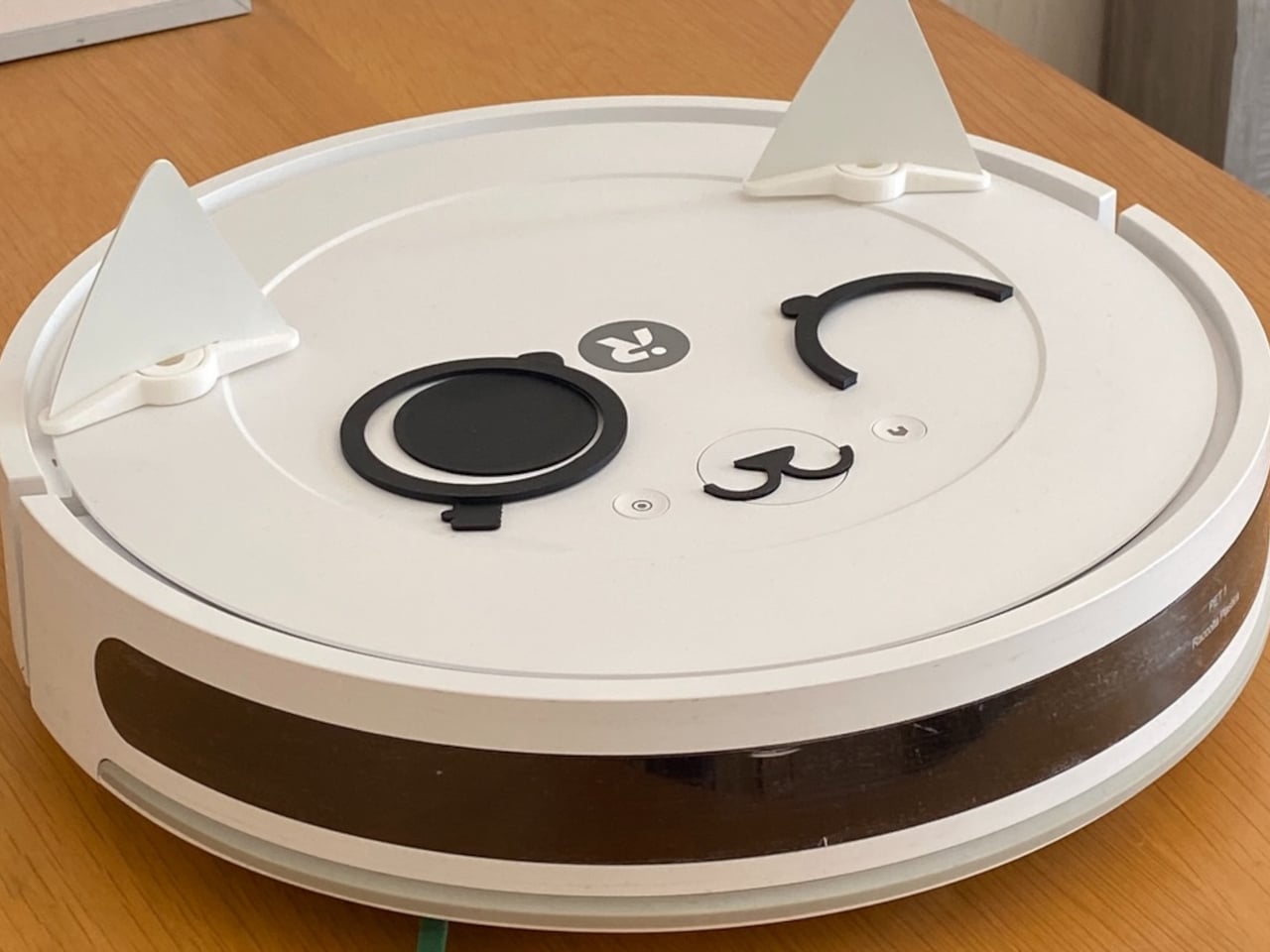
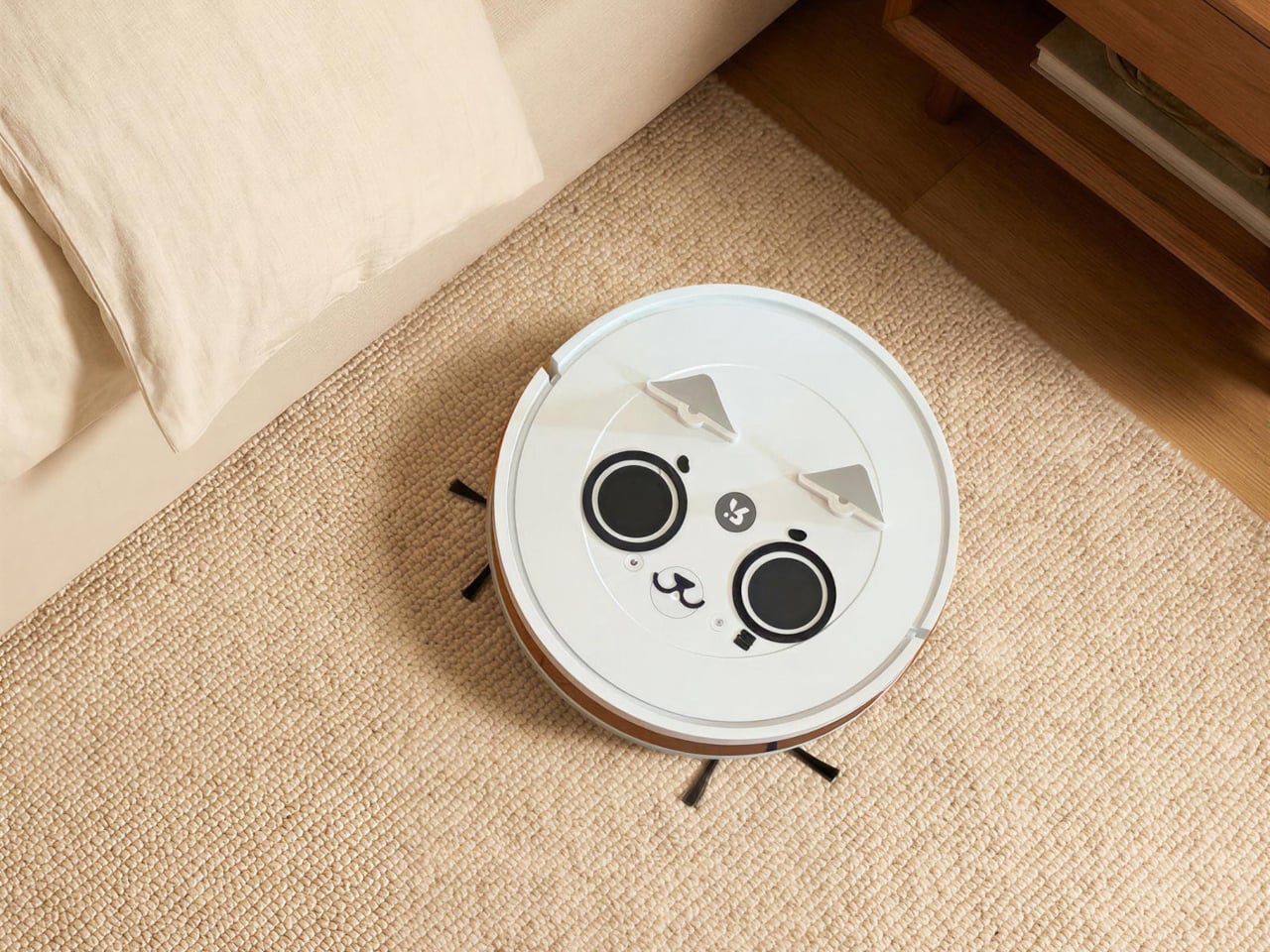
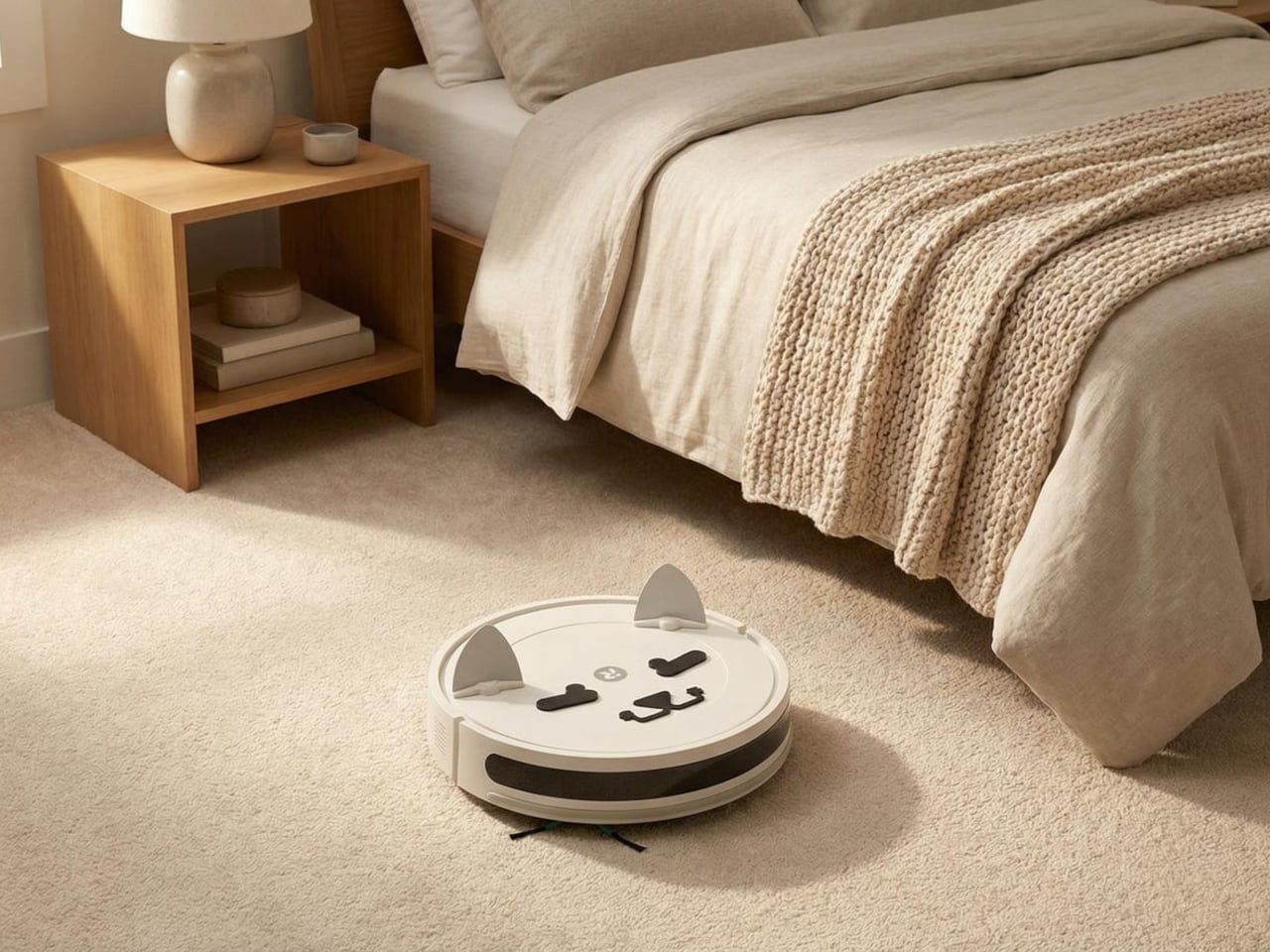
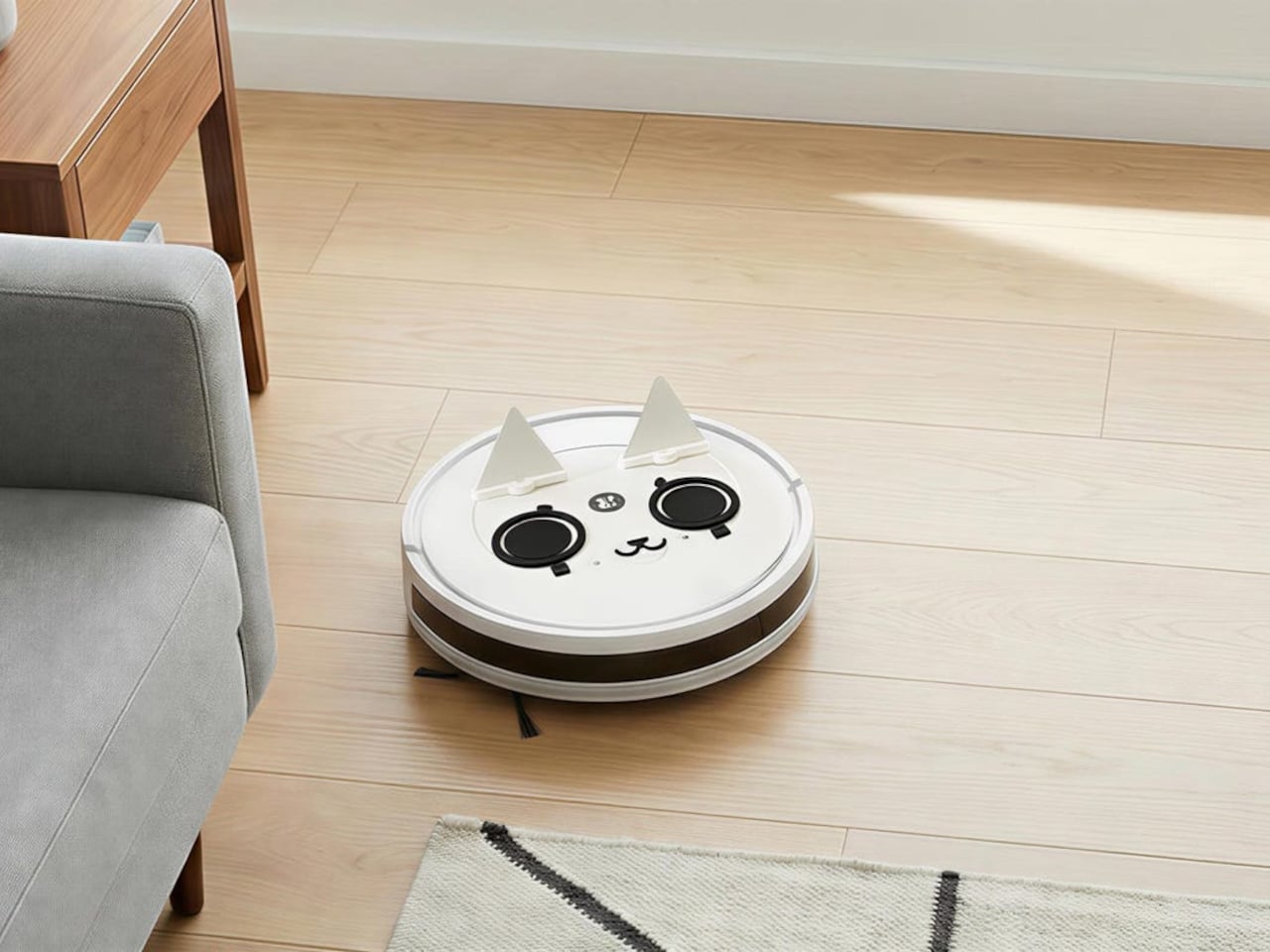
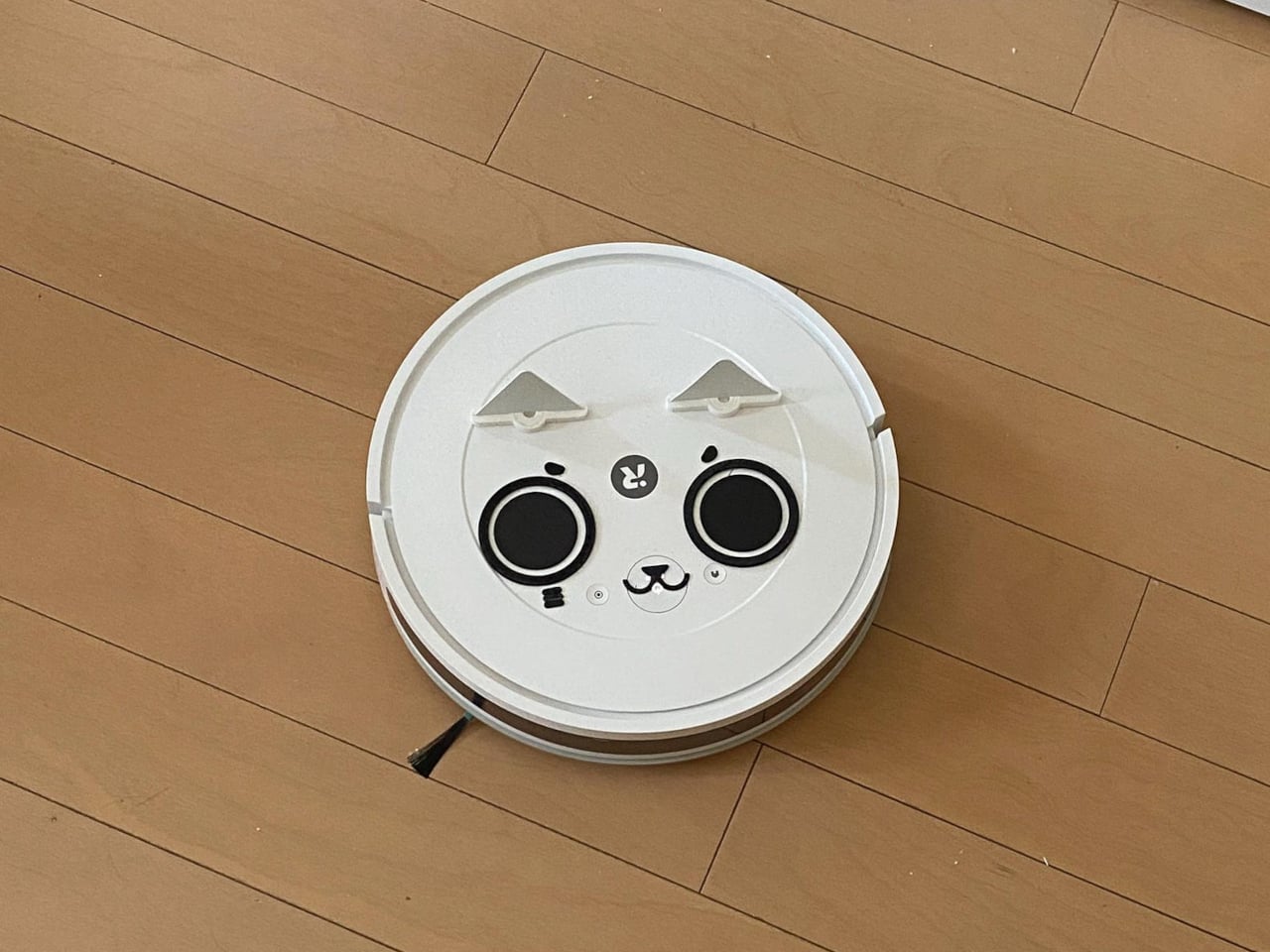
This 3D-printed cat/dog robot vacuum decoration, sold under the Petokka name, is a small kit that gives the robot a face, ears, and movable eyes. Rather than stickers, it’s a set of PLA parts that sit on top of the vacuum and react to how it moves, so the cleaning bot comes back from a run looking like it’s had its own adventure.

Designer: Zakka Gyou

A vacuum starts a cycle with wide eyes and perky ears, then bumps into table legs and skirting boards. Each impact nudges the eye assemblies, twisting pupils into crossed or sleepy positions, while crawling under furniture folds the hinged ears back. When the robot docks, its face is slightly scrambled, and you can read its route in the way its expression has shifted, one eye drowsy, one ear still folded down.

The kit works without wiring or electronics. The eyes sit on low-friction pivots, the ears are hinged triangles, and everything is 3D-printed in PLA and resin. There’s no battery, just gravity and inertia doing the work. The seller includes a choking-hazard warning, noting that parts aren’t meant for toddlers or pets that chew, with an option to request only ears or sticker faces if small pieces are a concern.

Petokka is designed for basic IR or bump-type cleaners with flat tops, like many Roomba-style bots. If a vacuum uses a LiDAR turret or top camera, those areas need to stay uncovered, or mapping can suffer, though some tests showed no interference. The kit is an overlay, not a hack, meant to respect the robot’s sensors while giving it a personality that changes with every session.

Each set is printed in a small Japanese atelier, with visible layer lines and tiny imperfections from 3D printing. The maker calls this an early test edition, with certification in progress and materials documented with safety data sheets. It’s a limited-run experiment rather than a mass-market accessory, which makes it feel more like a crafted character than a licensed skin you buy from a retailer.

A handful of plastic parts can change the emotional temperature of a room. The vacuum still cleans the same way, but now it looks back at you with lopsided eyes and folded ears after working its way around furniture. It’s hard not to say “nice job” when it docks looking like it just survived an obstacle course, which is a reminder that sometimes making home tech friendlier isn’t about new sensors or AI, it’s a face that gets a little messed up while it works.

The post 3D-Printed Faces for Robot Vacuums Get Messy Every Time They Bump first appeared on Yanko Design.

Samsung’s Book-Shaped Air Purifier Concept Gives You A Personal Tabletop Filtered Air Supply

It doesn’t give me any pleasure whatsoever to admit I come from India, a country where an AQI of 150 is considered ‘a normal day’. People living in the capital city of Delhi are accustomed to AQI hitting highs of 400 on bad days, where a single breath of air is equivalent to smoking a cigarette. It’s a terrible condition to live through, and almost everyone owns an air purifier that gets strategically placed in either the bedroom or the living room, in the hopes that this one tiny device will be able to do something… just something to clean the air around it.

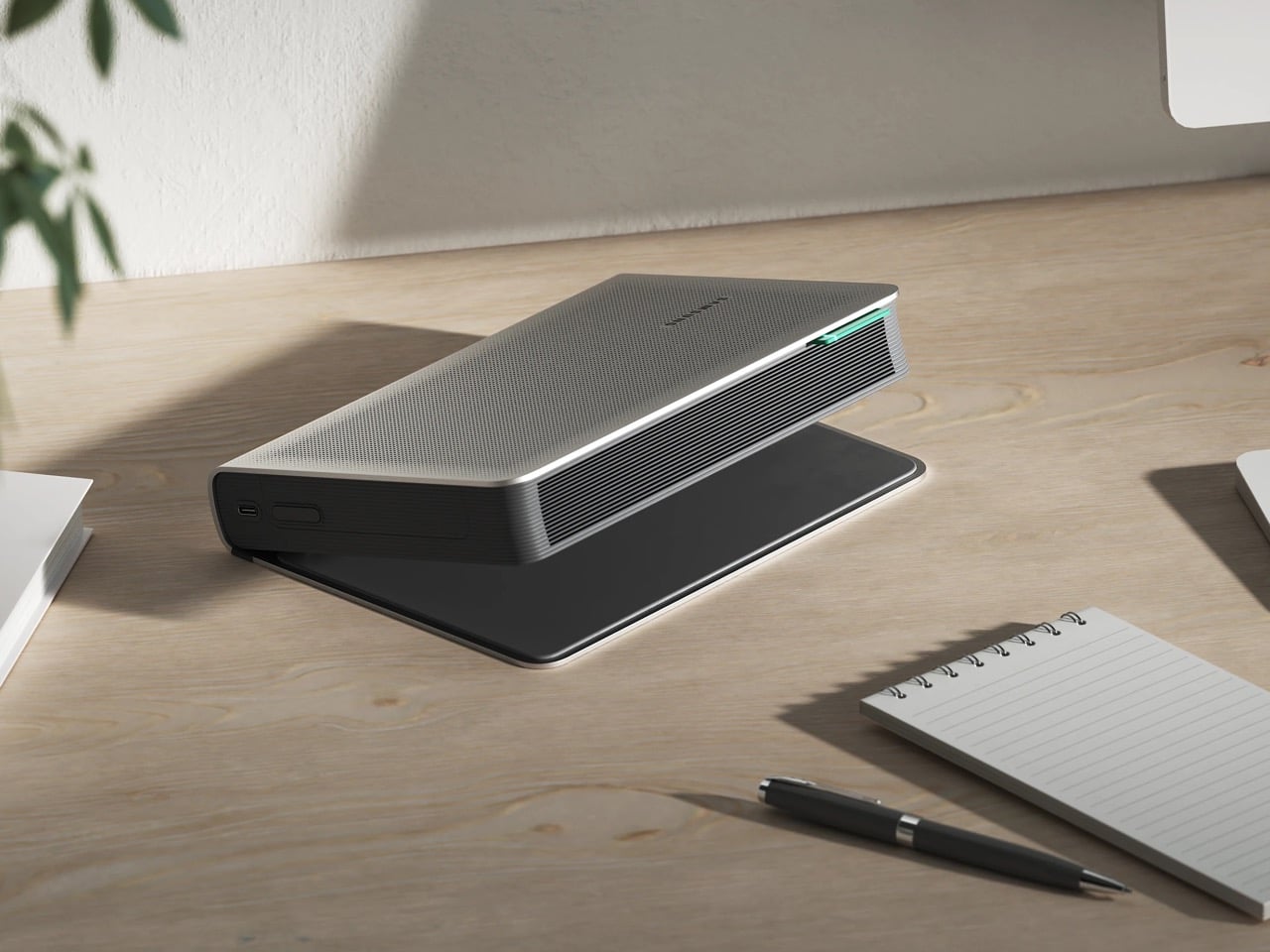
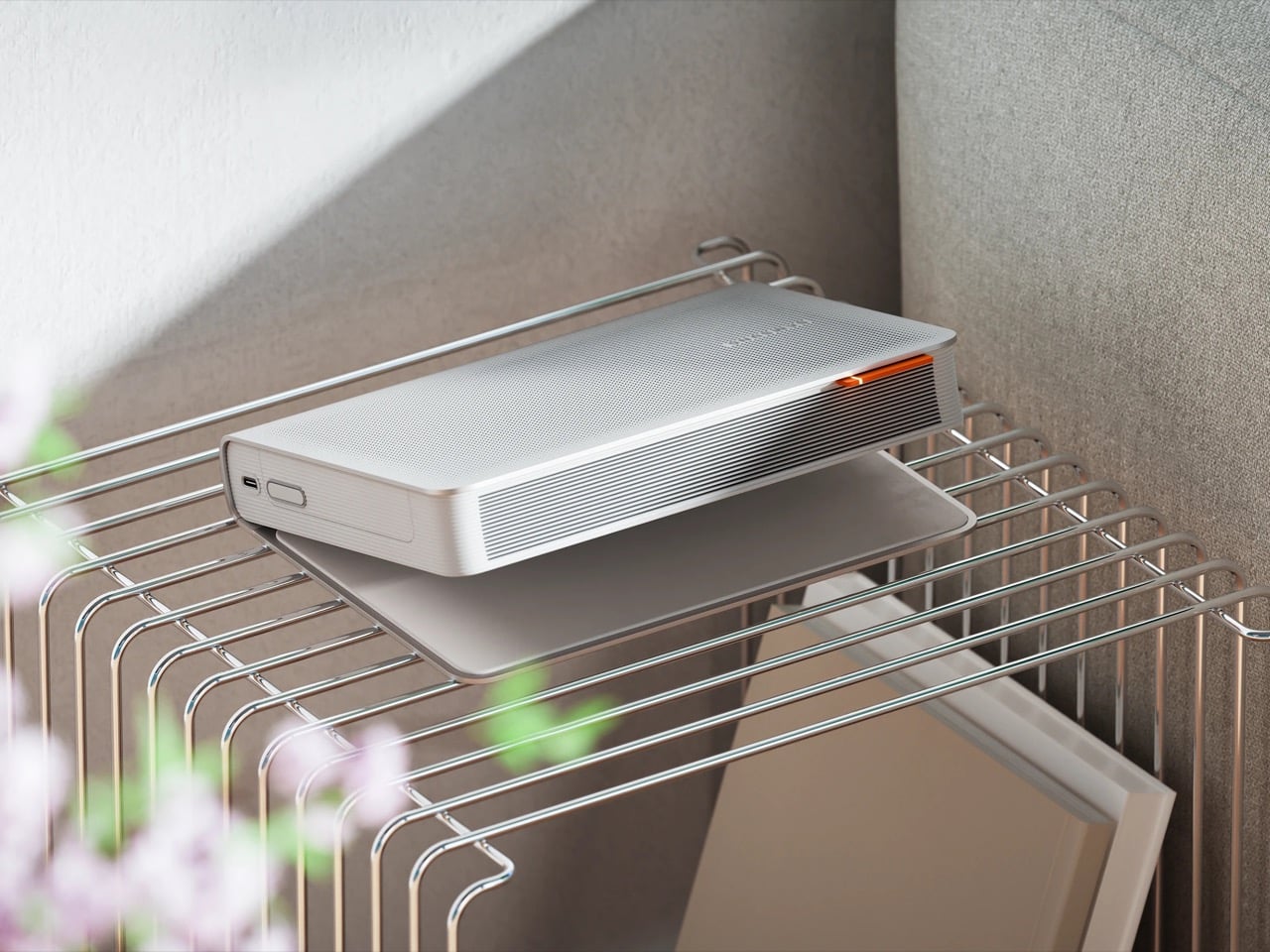
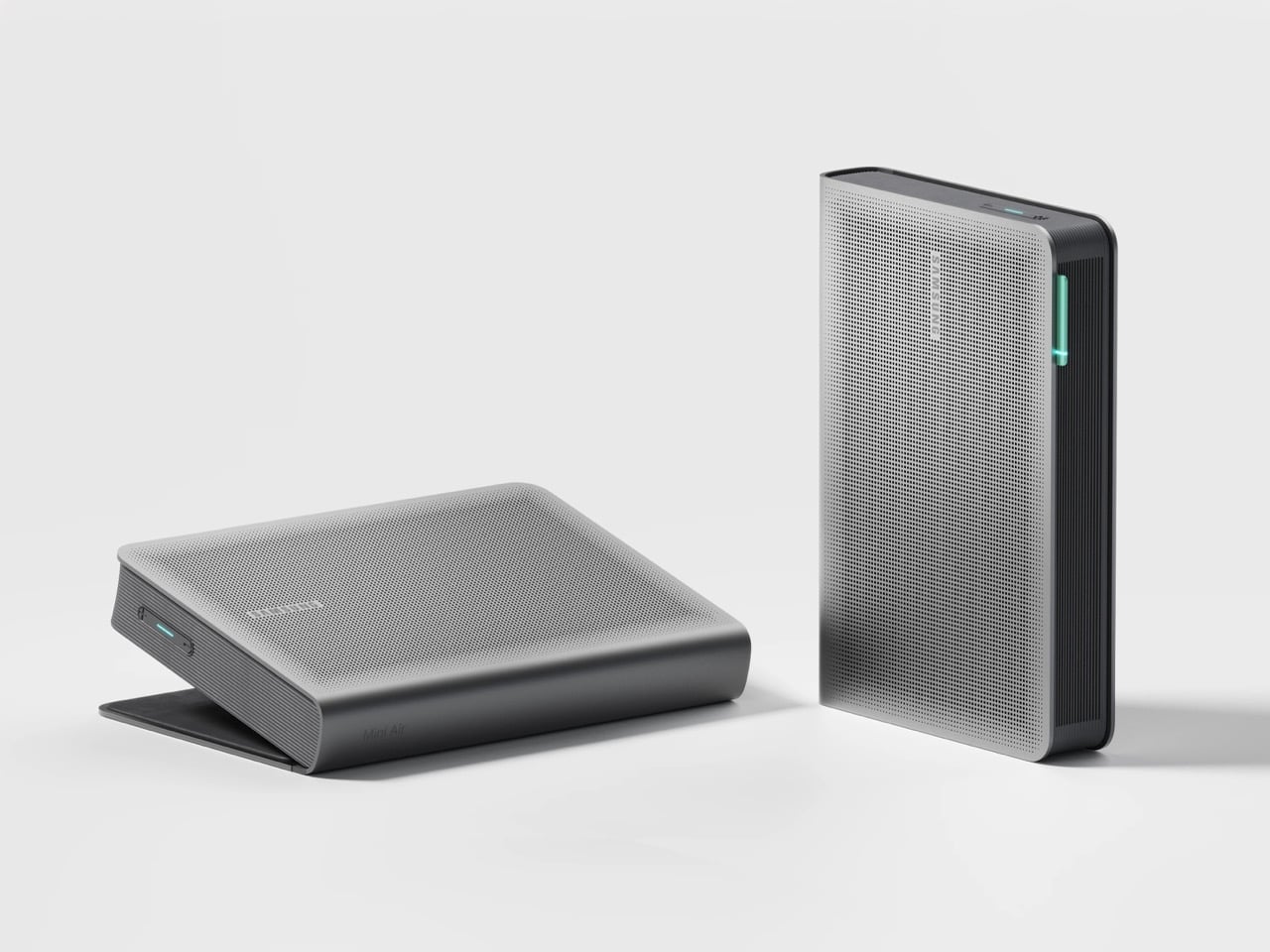
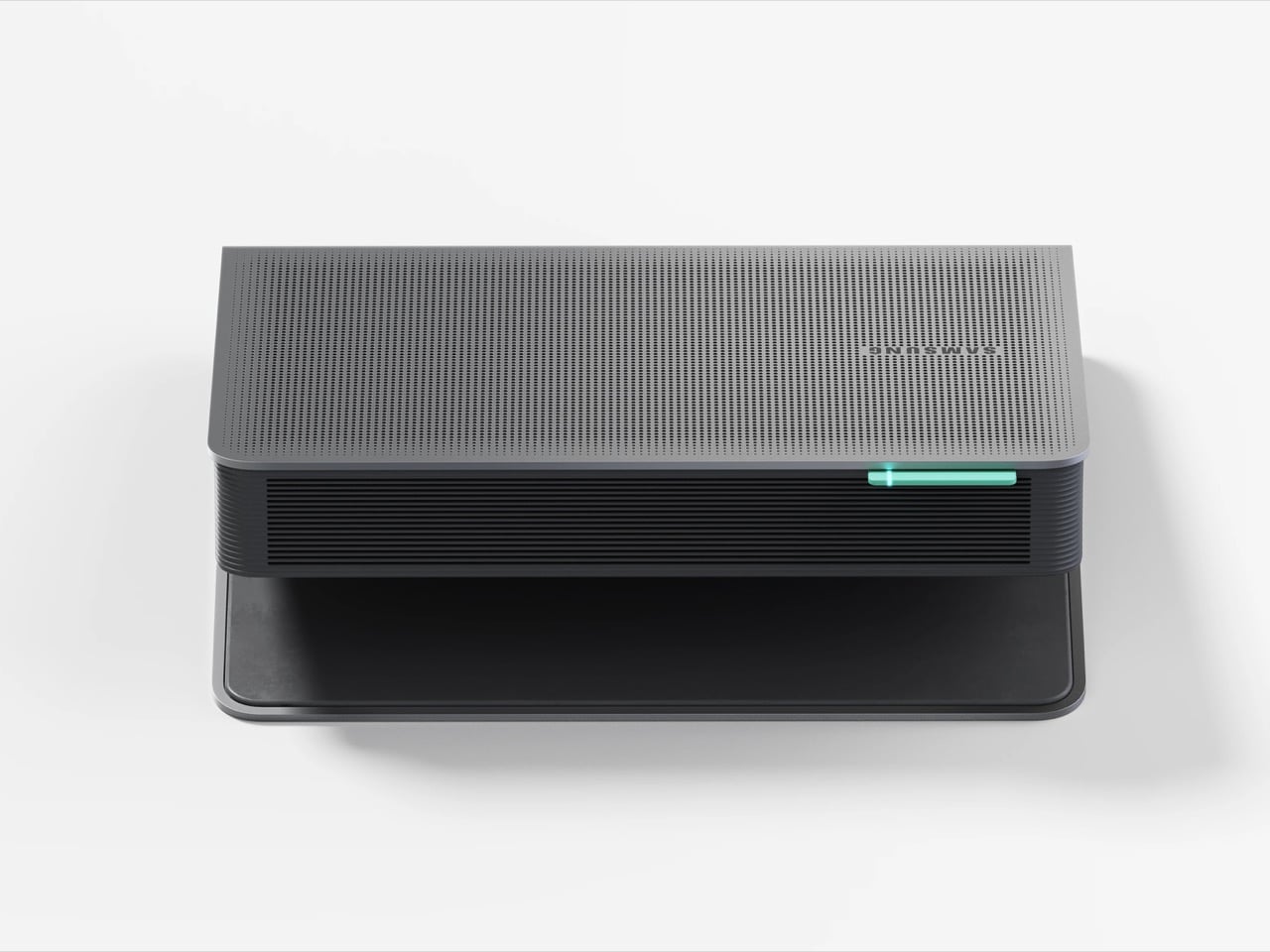
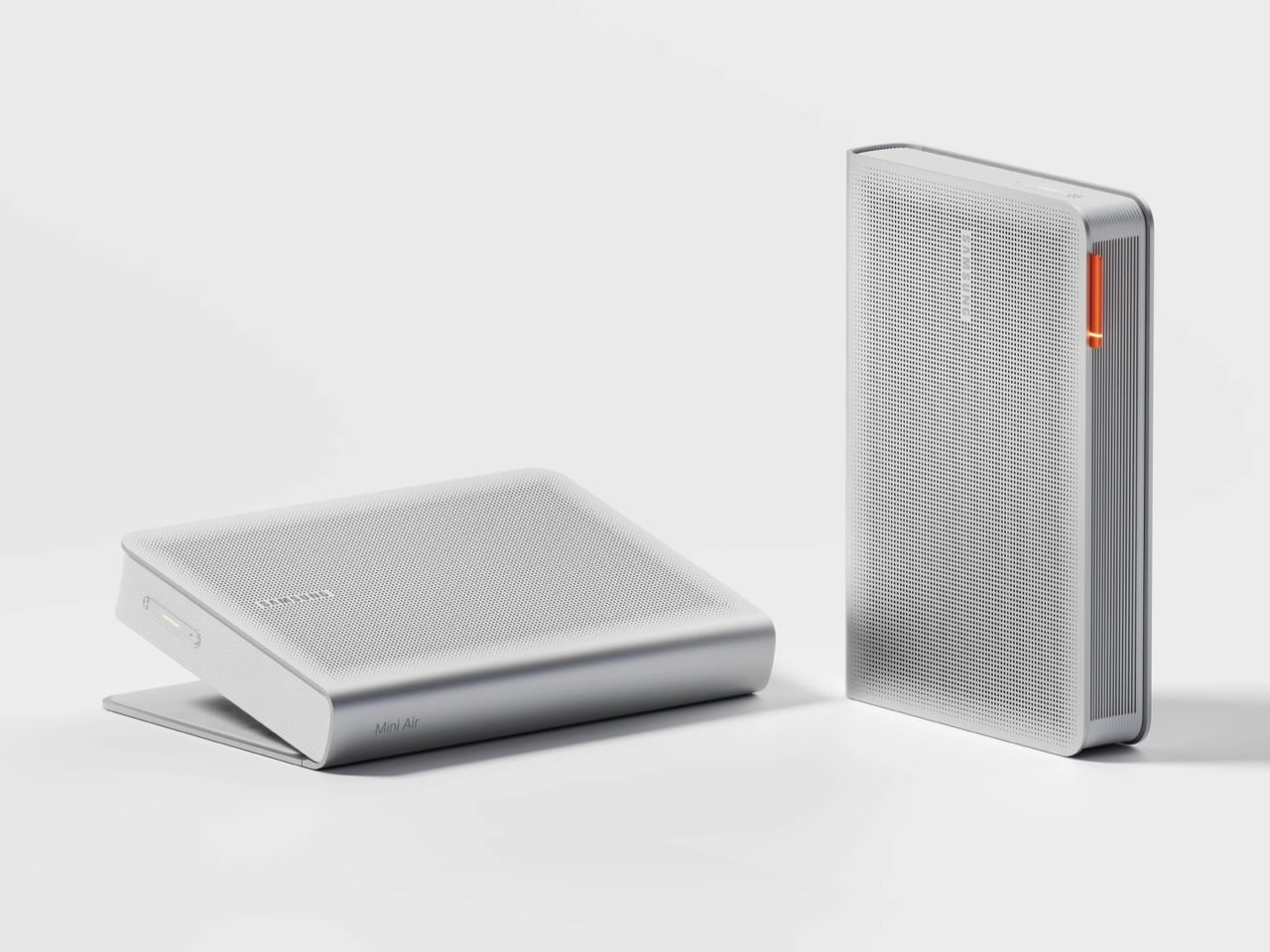
While that approach is commendable, the portable air purifier segment is still something to be explored. Imagine a tiny air purifier, small as a book, designed to be carried around from room to room with you, so that you’re always breathing clean(ish) air wherever you sit. This concept from Samsung takes on the literal shape of a hardcover book, and can be carried around with you from one room to another. The all-metal design feels premium to the touch, and opens up in ways that allow you to prop the purifier either vertically or horizontally for optimal airflow targeting.

Designer: intenxiv inc.

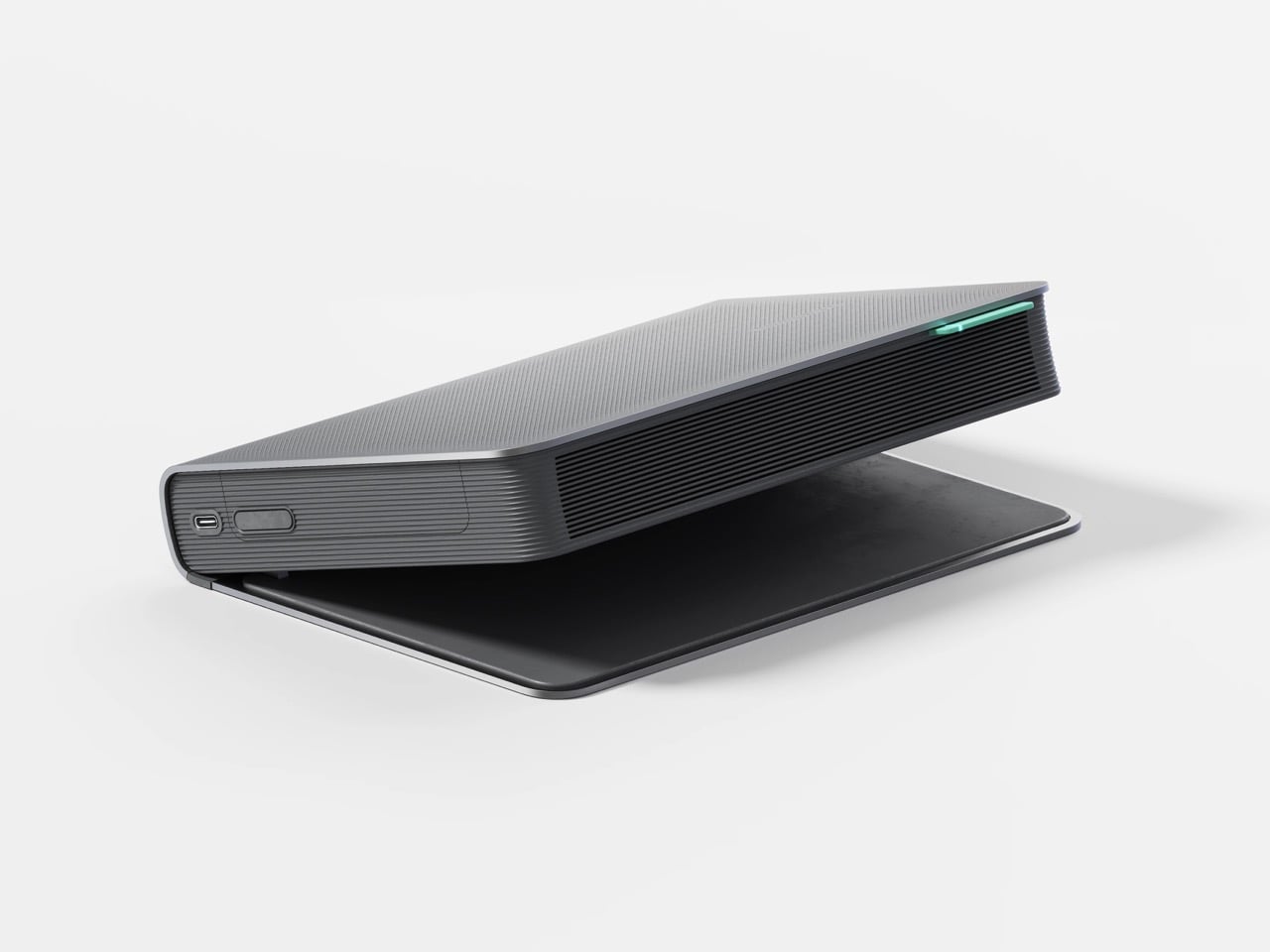
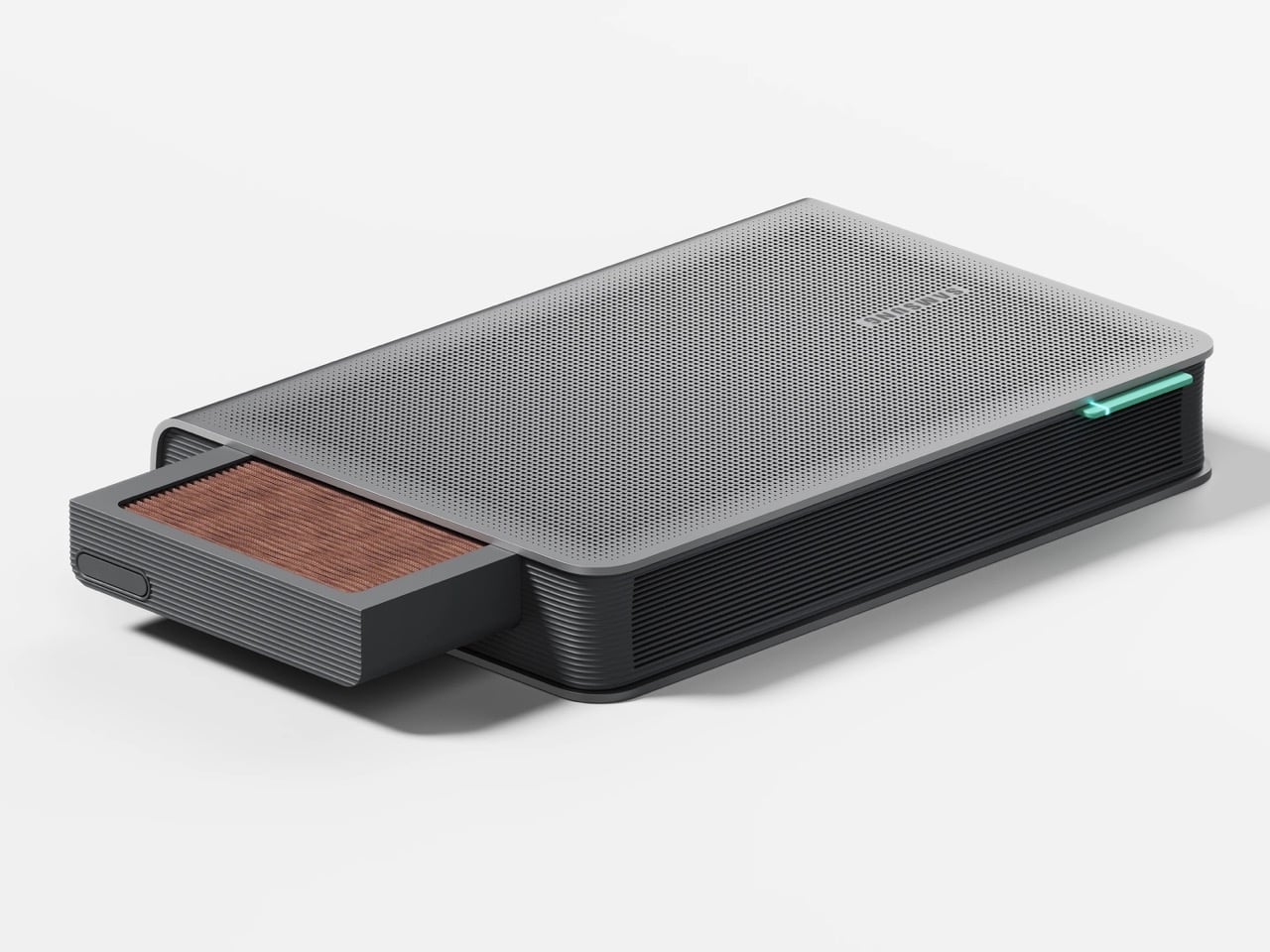
The book-shaped design gives the purifier a level of portability that your otherwise-clunky room air purifier just can’t attain. Place it on a tabletop, either horizontally or vertically, with the ability to angle it thanks to an adjustable kickstand. Air gets pulled from the top and pushed through the front, passing through a HEPA filter that traps a variety of particulate matter to give you dust-free air. This is the standard template of almost every purifier out there, but what Samsung’s concept does is make things hyper-portable.

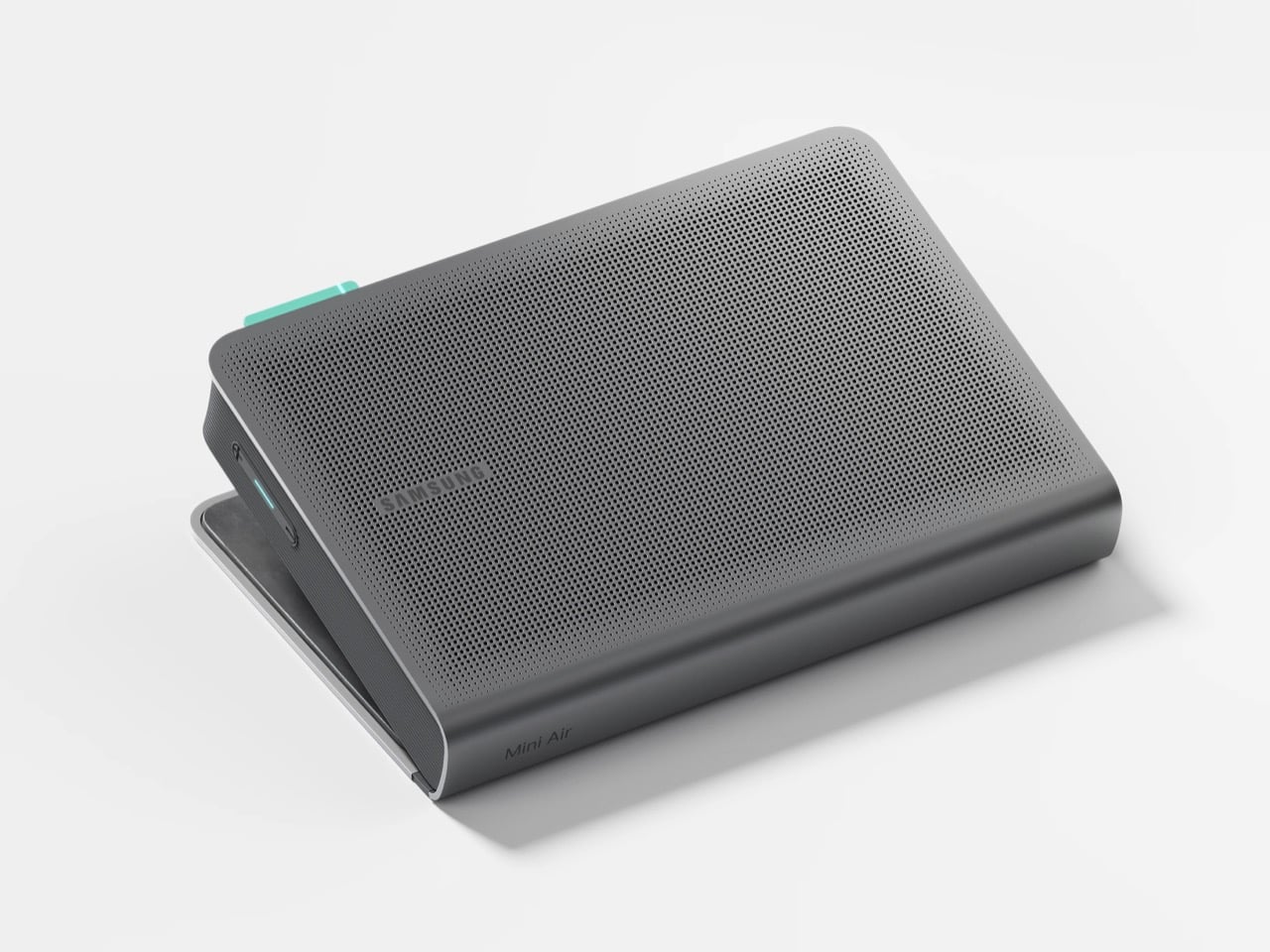
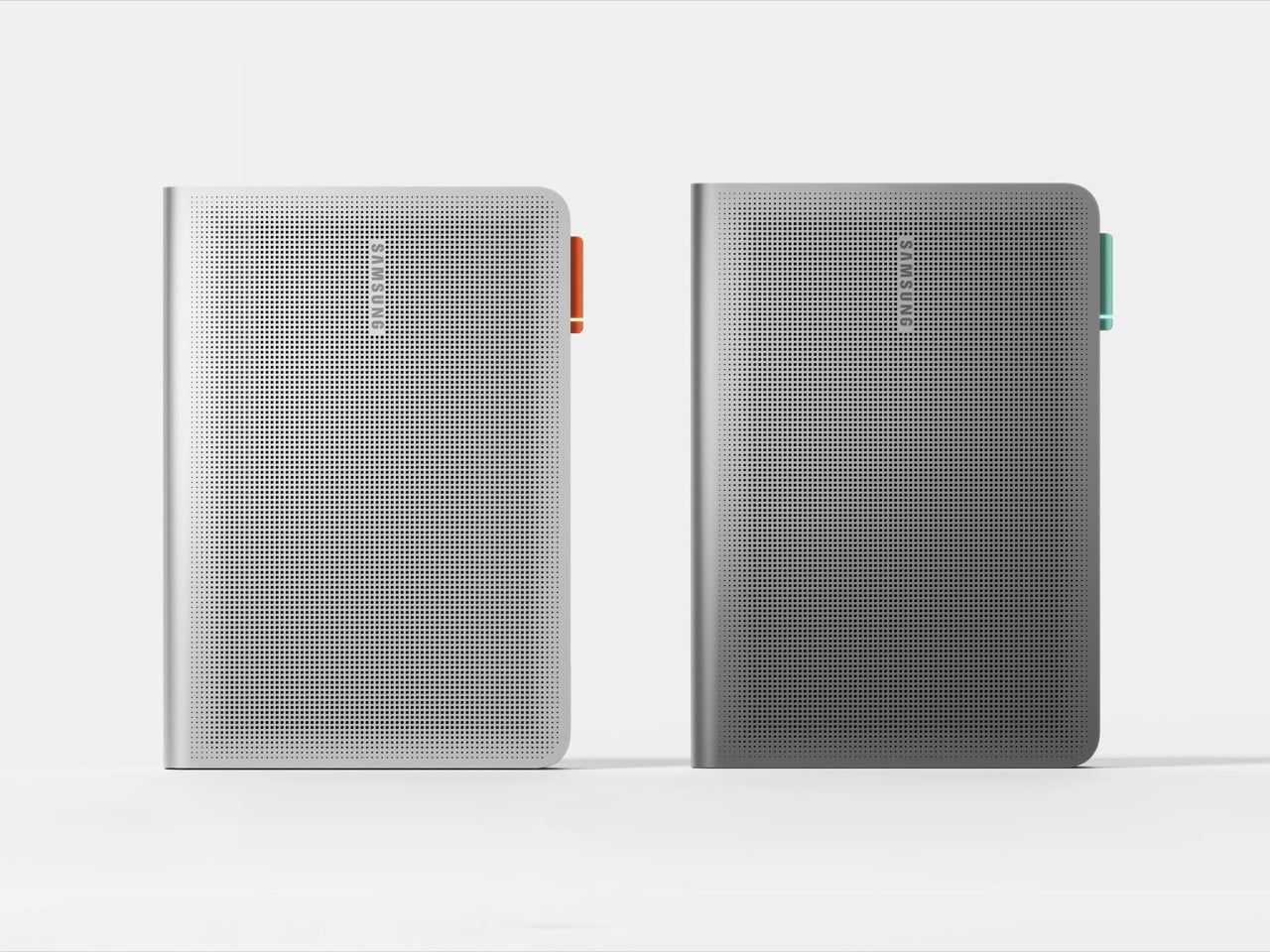
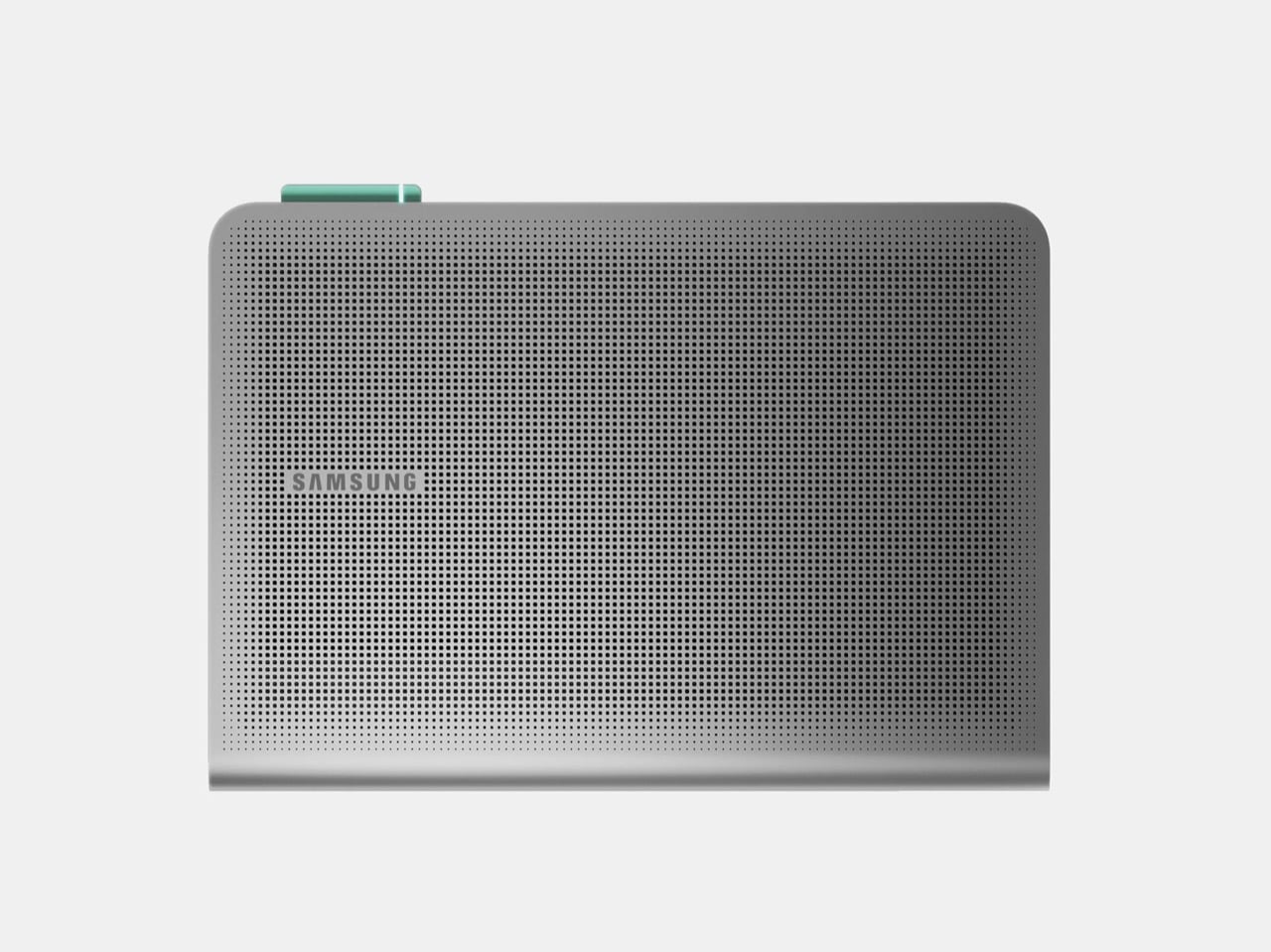
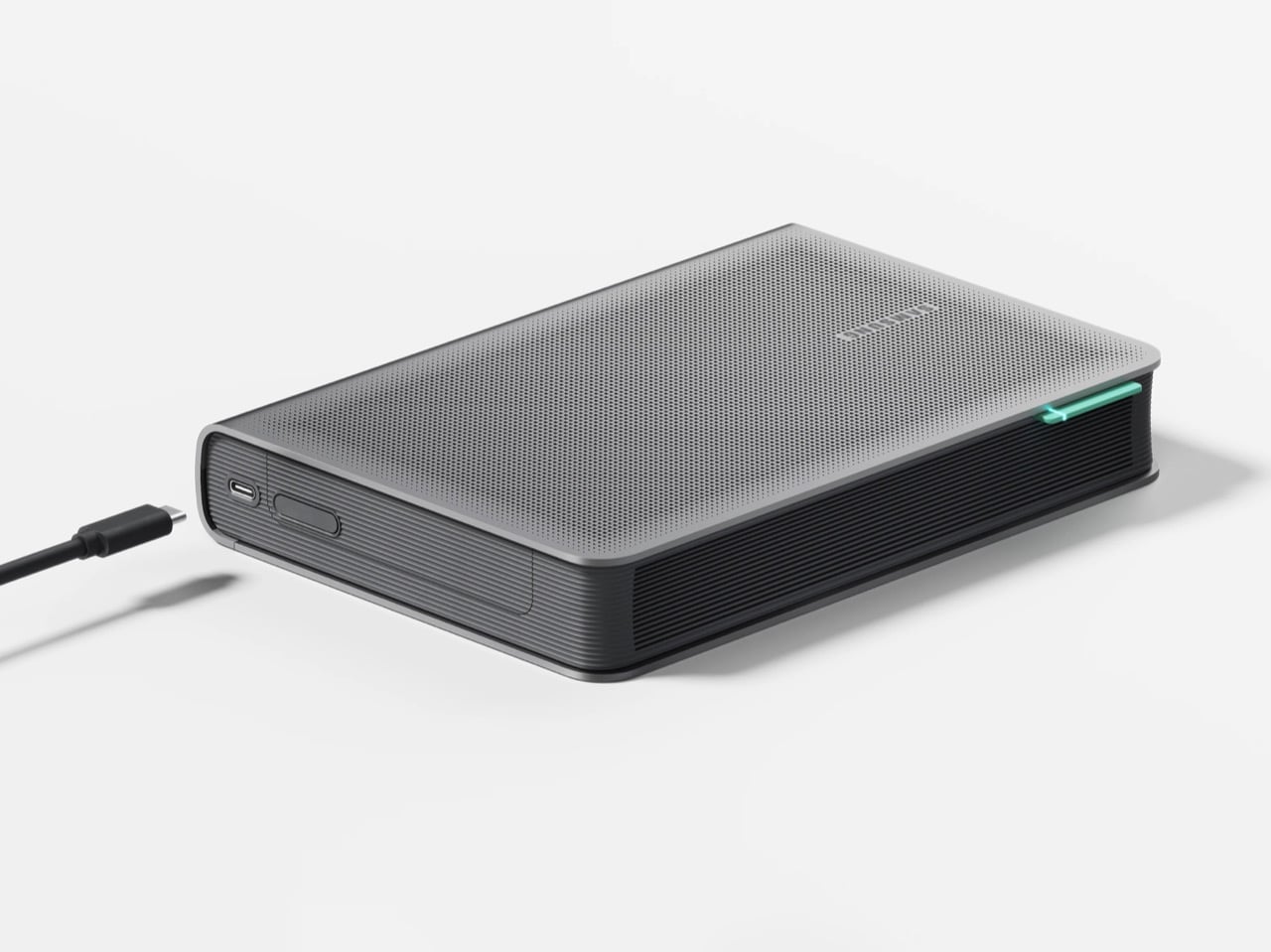
The all-metal design feels premium, with the overall minimalist appearance bordering on something you’d see from Bang & Olufsen’s speakers. This one, however, bears Samsung’s name on the top, along with Mini Air (the product name) on the ‘spine’. Controls on the side let you increase or decrease the fan speed, while a USB-C port lets you charge the purifier.

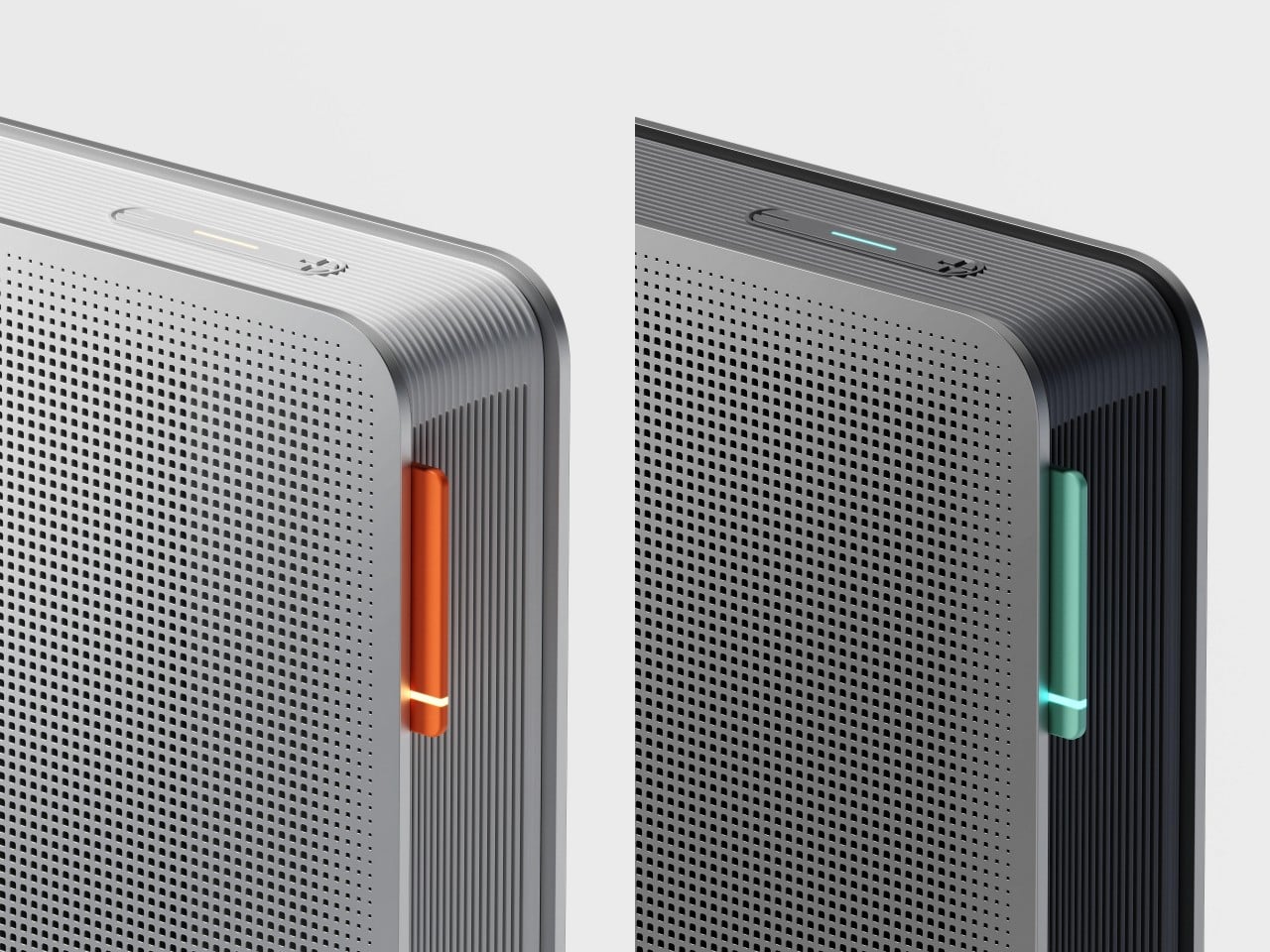
A slot on the side lets you pop the HEPA filter out for replacement or cleaning. The details aren’t clear given that this is just a concept created by intenxiv inc. under some form of an internship or apprenticeship at Samsung Electronics in 2019. A ‘bookmark’ on the front lip acts as a notification light to let you know battery status, and whether the purifier’s switched on or not. One can only assume the fans are so quiet that you’d need such a light to let you know the purifier is running.

The purifier comes in two colorways. A lighter metallic variant and a slightly darker ‘space grey’ version. Both are identical in shape and size, barring the slight color change as well as the ‘bookmark’ on the side that’s either orange or teal, depending on the variant you pick.

The design is just a concept for now, but the template absolutely shouldn’t be. Portable air purifiers are a pretty unexplored category (at least by larger companies). Dyson did release a set of air purifying headphones ages ago, but the product never managed to hit mass appeal. A smaller air purifier like this one would fit well in most smaller apartments, whether they’re dorms/hostels, office cubicles, or tiny homes in the city.

The post Samsung’s Book-Shaped Air Purifier Concept Gives You A Personal Tabletop Filtered Air Supply first appeared on Yanko Design.

Why This Air Conditioner Filter Took Design Cues from Your Toolbox

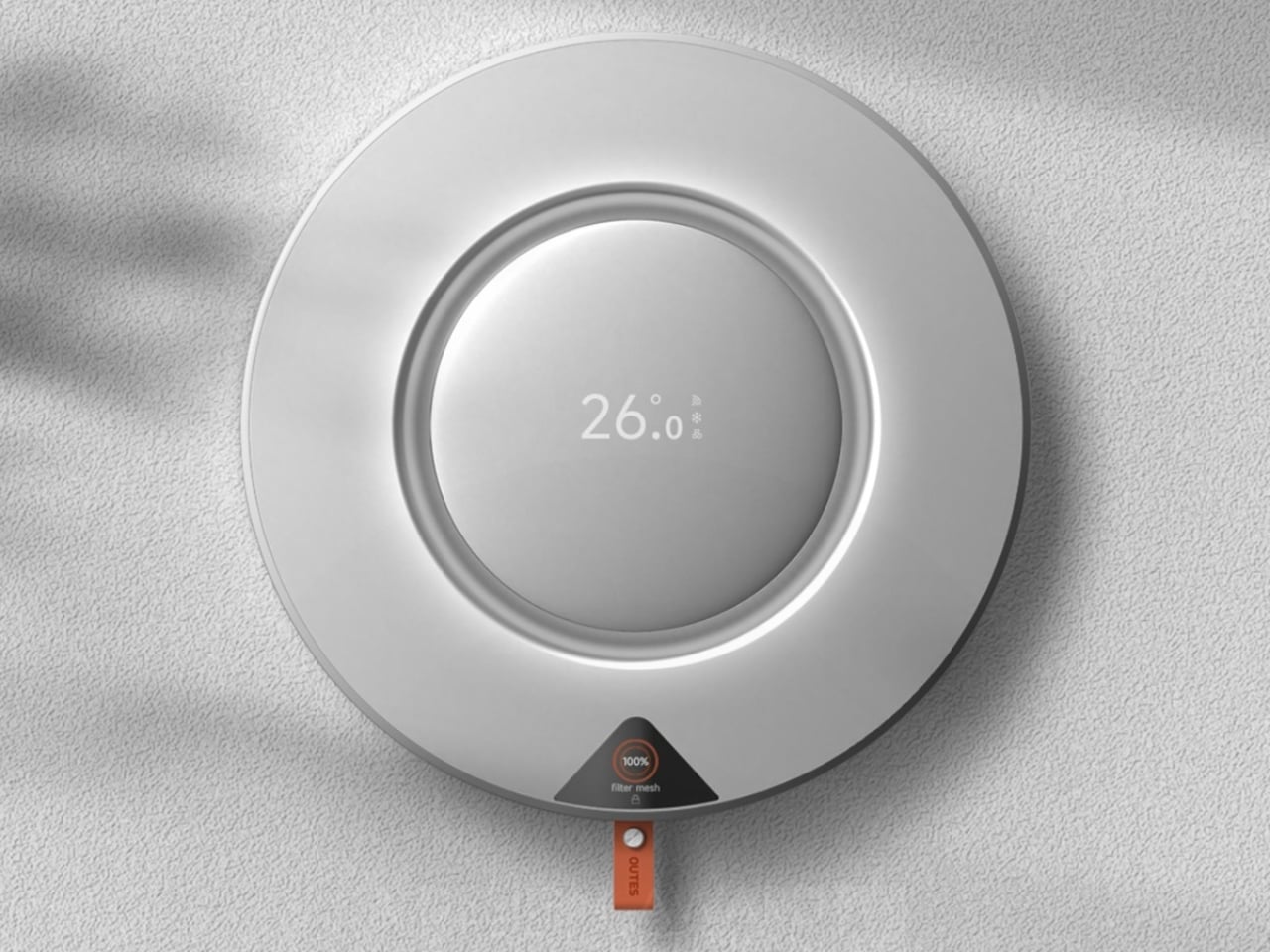
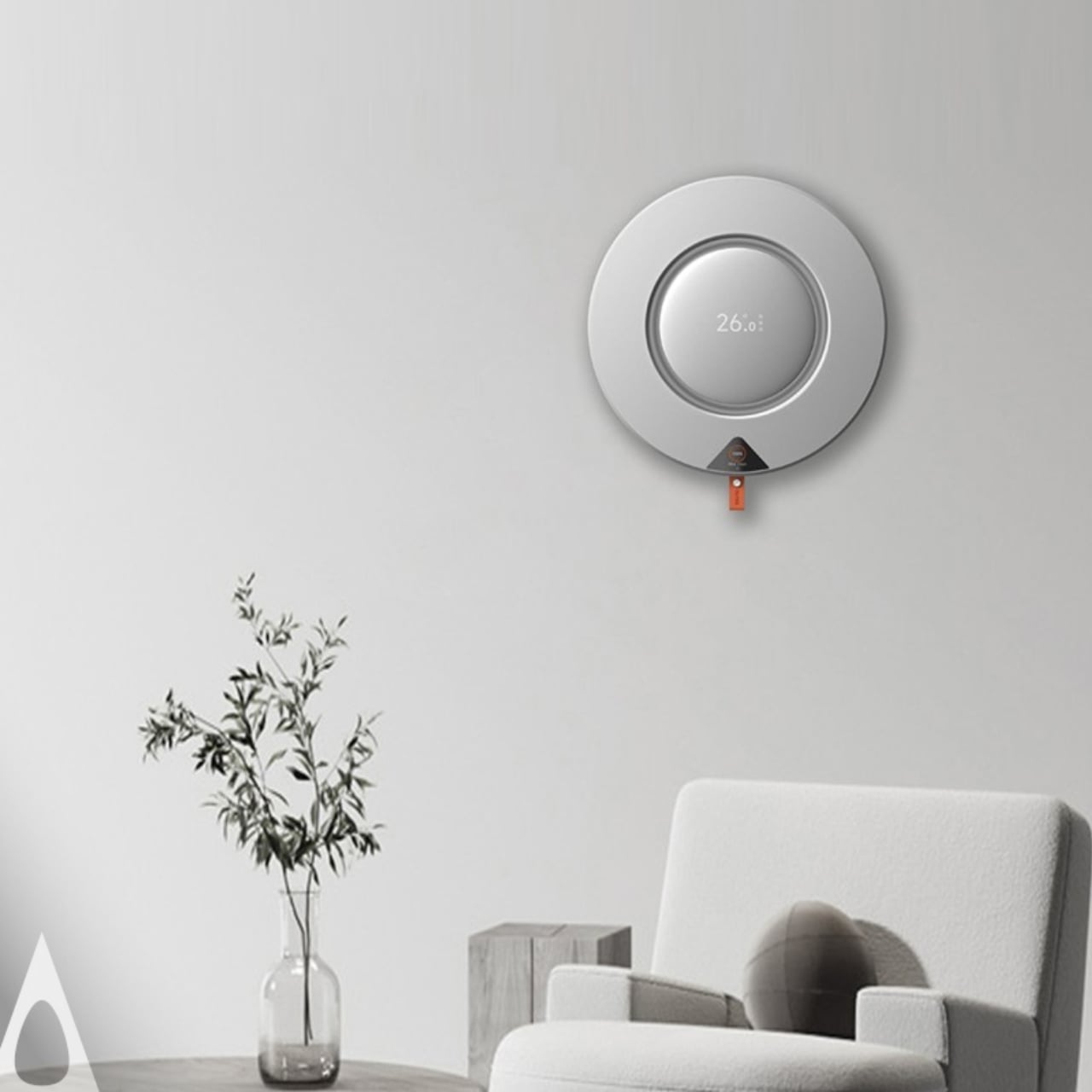
Let me tell you about something that caught my eye recently. When was the last time you actually looked forward to cleaning your air conditioner filter? Yeah, I thought so. But the folks at ZHEJIANG ZHONGGUANG ELECTRICAL CO.,LTD have done something pretty clever that might change how we think about one of home maintenance’s most tedious tasks. Their Snapcool air conditioner just won a Golden A’ Design Award, and here’s why it deserves your attention.

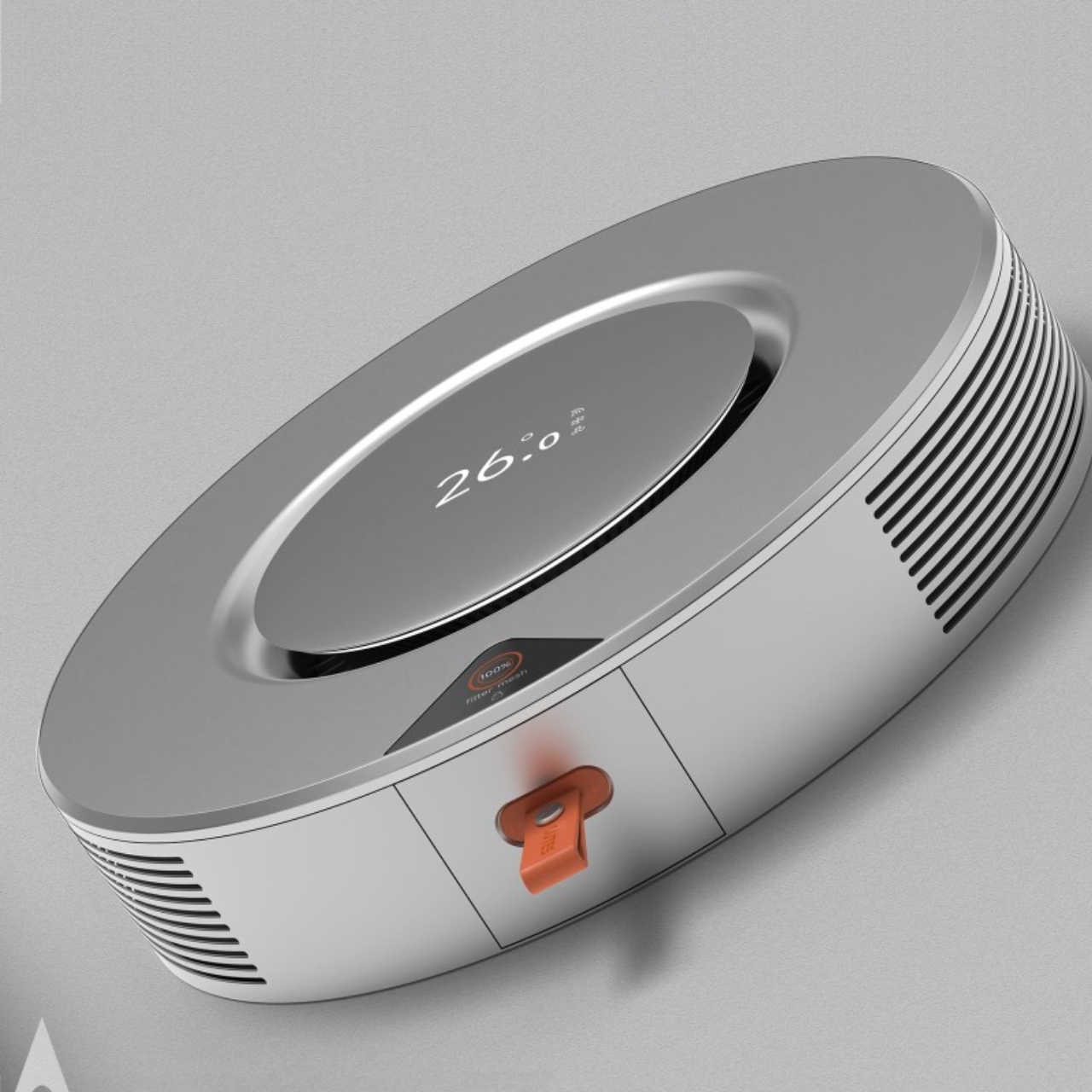
Picture a tape measure. You know that satisfying feeling when you pull out the metal strip and it snaps back into place with a smooth click? Now imagine that same mechanism applied to your AC’s filter system. That’s exactly what the design team behind Snapcool did, and the result is both practical and surprisingly delightful.

Designer: ZHEJIANG ZHONGGUANG ELECTRICAL CO.,LTD

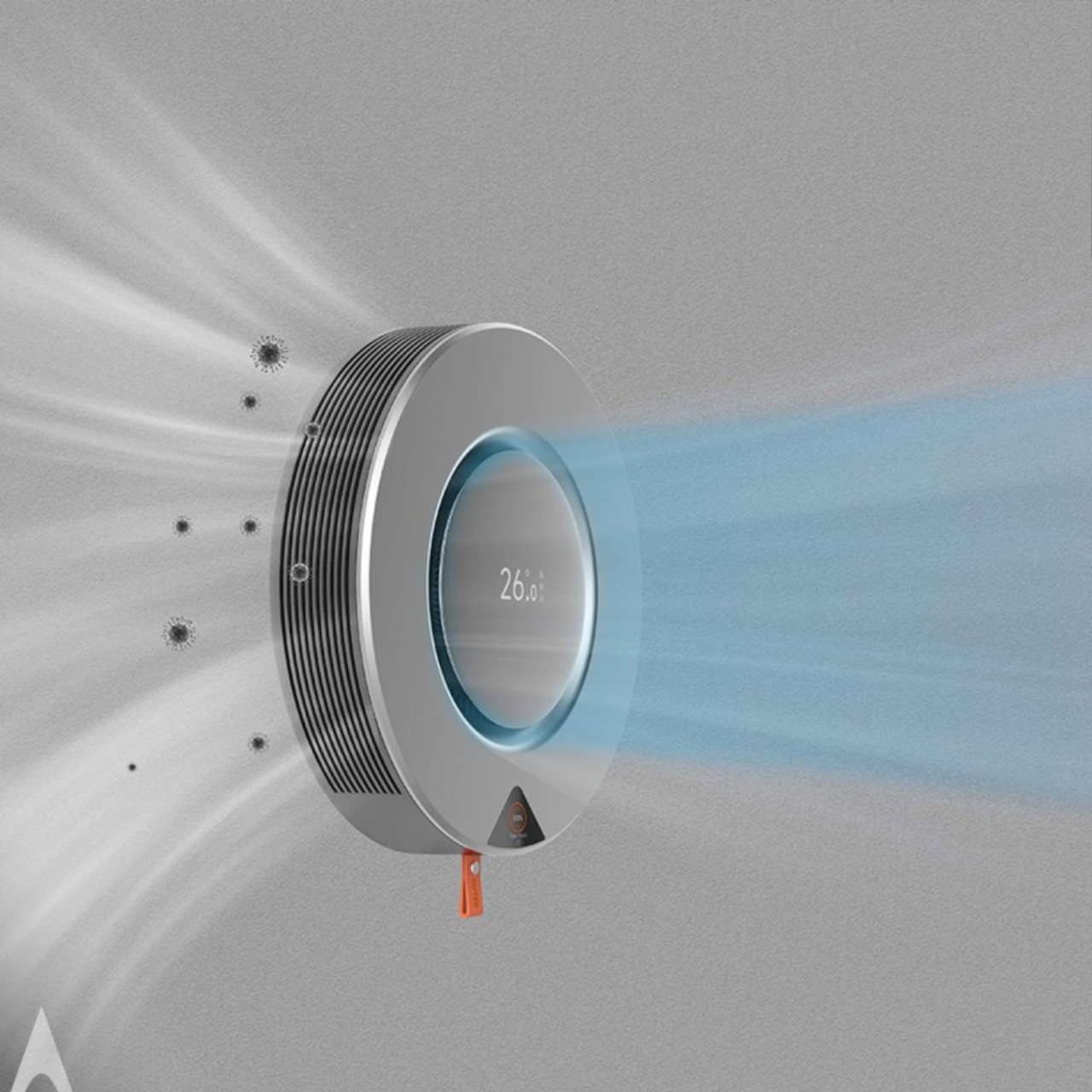
The whole concept flips conventional air conditioner design on its head. Most AC units hide their filters behind awkward panels that require tools, patience, and sometimes a bit of cursing to remove. Snapcool mounts its filter system on the side, where it slides in and out with the ease of extending a measuring tape. This isn’t just about making maintenance easier (though it definitely does that). It’s about turning a chore into something almost fun.

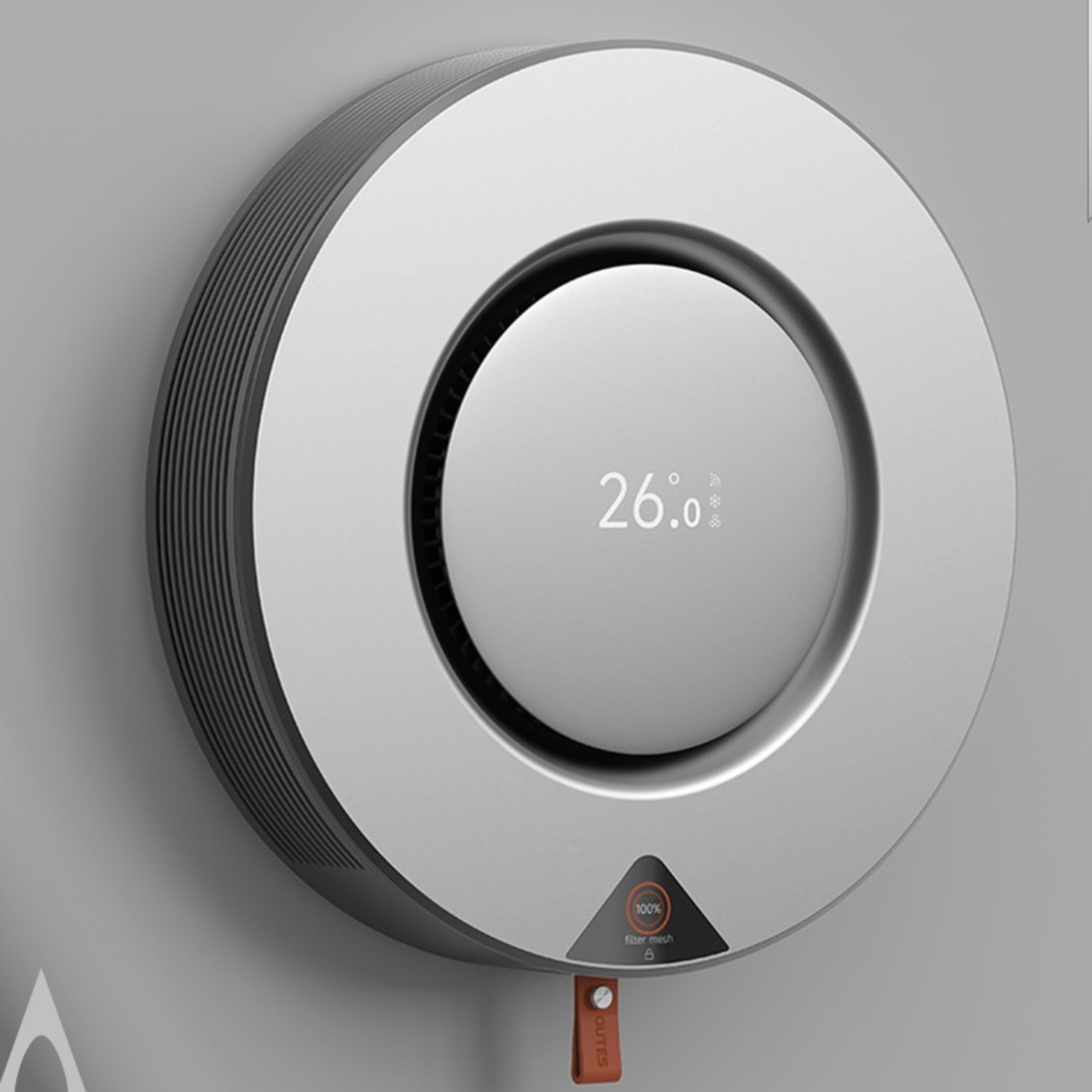
What really makes this design sing is the eye-catching orange filter compartment. It’s not just there to look cool, though it certainly does that. The bold color serves as a constant visual reminder to check your filter status, which means you’re more likely to keep up with maintenance and enjoy better air quality. It’s the kind of thoughtful detail that shows someone actually considered how people interact with these machines in real life, not just in a sterile testing environment.

The aesthetics matter here too. Traditional air conditioners tend to be those white boxes we tolerate but don’t exactly love. Snapcool breaks that mold with its sleek, modern shape that actually looks like it belongs in a contemporary home. There’s something inherently futuristic about its design language. It feels less like an appliance and more like a piece of tech you’d actually want to show off. This project came to life through collaboration between six team members: Jinghong Zhang, Yuxin He, Menglin Xie, Yuhui Xu, Haiping Hou, and Xiaojun Yuan. Their collective vision demonstrates what happens when designers stop treating home appliances as purely functional objects and start seeing them as opportunities for innovation and delight.

The recognition from the A’ Design Award isn’t just a trophy for the mantle. It’s validation of a broader shift happening in product design right now. We’re moving away from the idea that utilitarian objects should be invisible or purely functional. Instead, designers are asking why everyday items can’t be both beautiful and practical, why they can’t spark a little joy even as they perform mundane tasks.

ZHEJIANG ZHONGGUANG ELECTRICAL CO.,LTD, operating under their OUTES brand, has been building a reputation for integrated climate control solutions across hotels, universities, factories, and residential buildings. This isn’t their first rodeo with design excellence either. They’ve racked up six A’ Design Awards, proving that Snapcool isn’t a fluke but part of a consistent commitment to pushing boundaries in HVAC design.

What strikes me most about Snapcool is how it challenges our assumptions. We’ve collectively decided that air conditioners should be forgettable white boxes tucked into corners. But why? There’s no rule that says climate control can’t have personality. There’s no law stating that filter maintenance must be annoying. The tape measure inspiration is genius because it’s so obvious in hindsight. We’ve had this perfectly functional, satisfying mechanism sitting in our tool drawers for decades, and it took creative thinking to realize it could solve a problem in a completely different context.

Snapcool represents a future where even the most utilitarian objects can bring a smile to our faces. Where maintenance becomes less of a burden and more of an experience. Where our living spaces are populated by thoughtfully designed products that respect both our intelligence and our desire for beauty. Sometimes the best innovations aren’t about inventing something entirely new. They’re about looking at old problems through fresh eyes and borrowing brilliance from unexpected places.

The post Why This Air Conditioner Filter Took Design Cues from Your Toolbox first appeared on Yanko Design.

This Anti-Gravity Humidifier Makes Water Flow Upwards So It Isn’t ‘Another Boring Appliance’

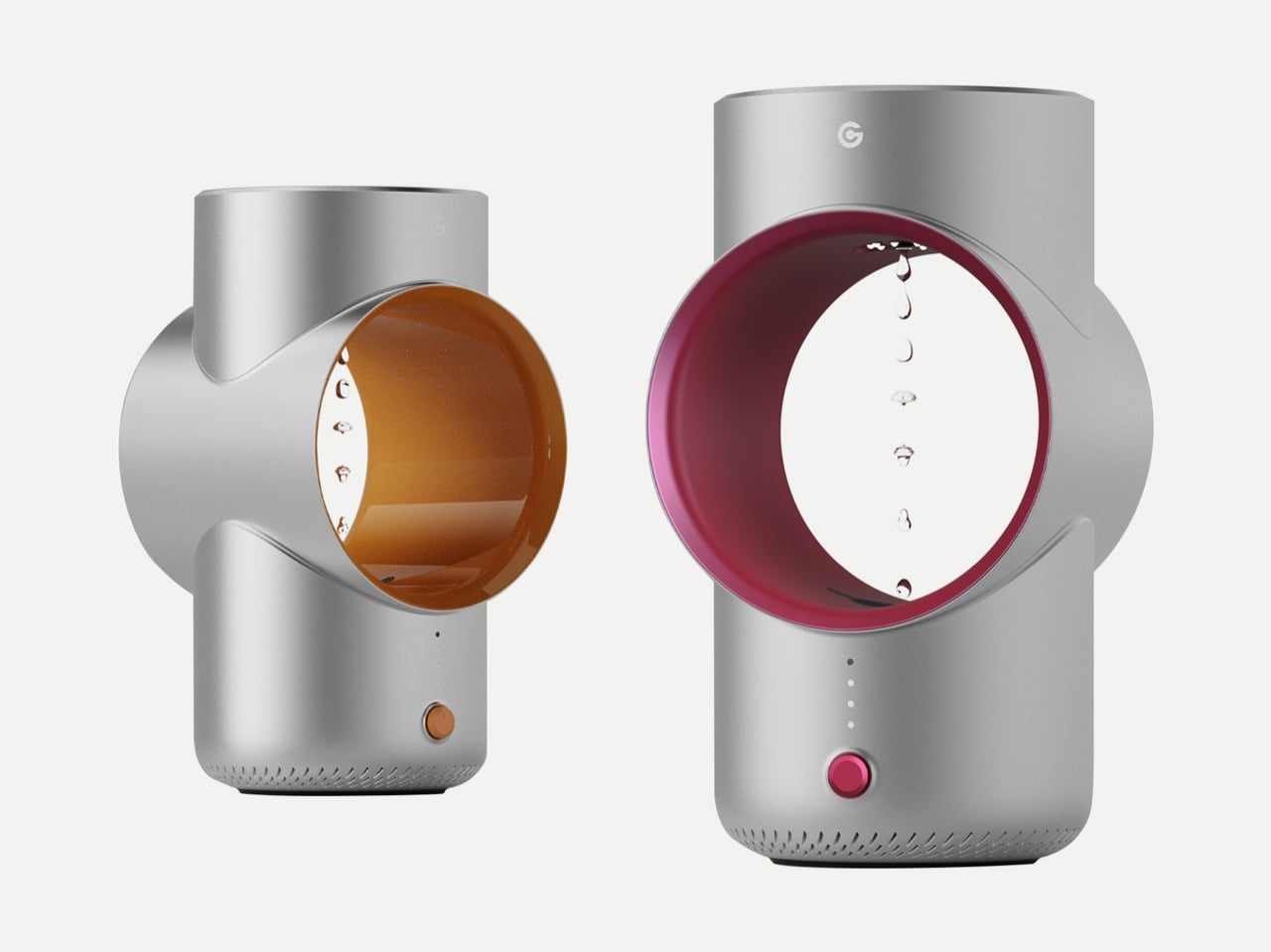
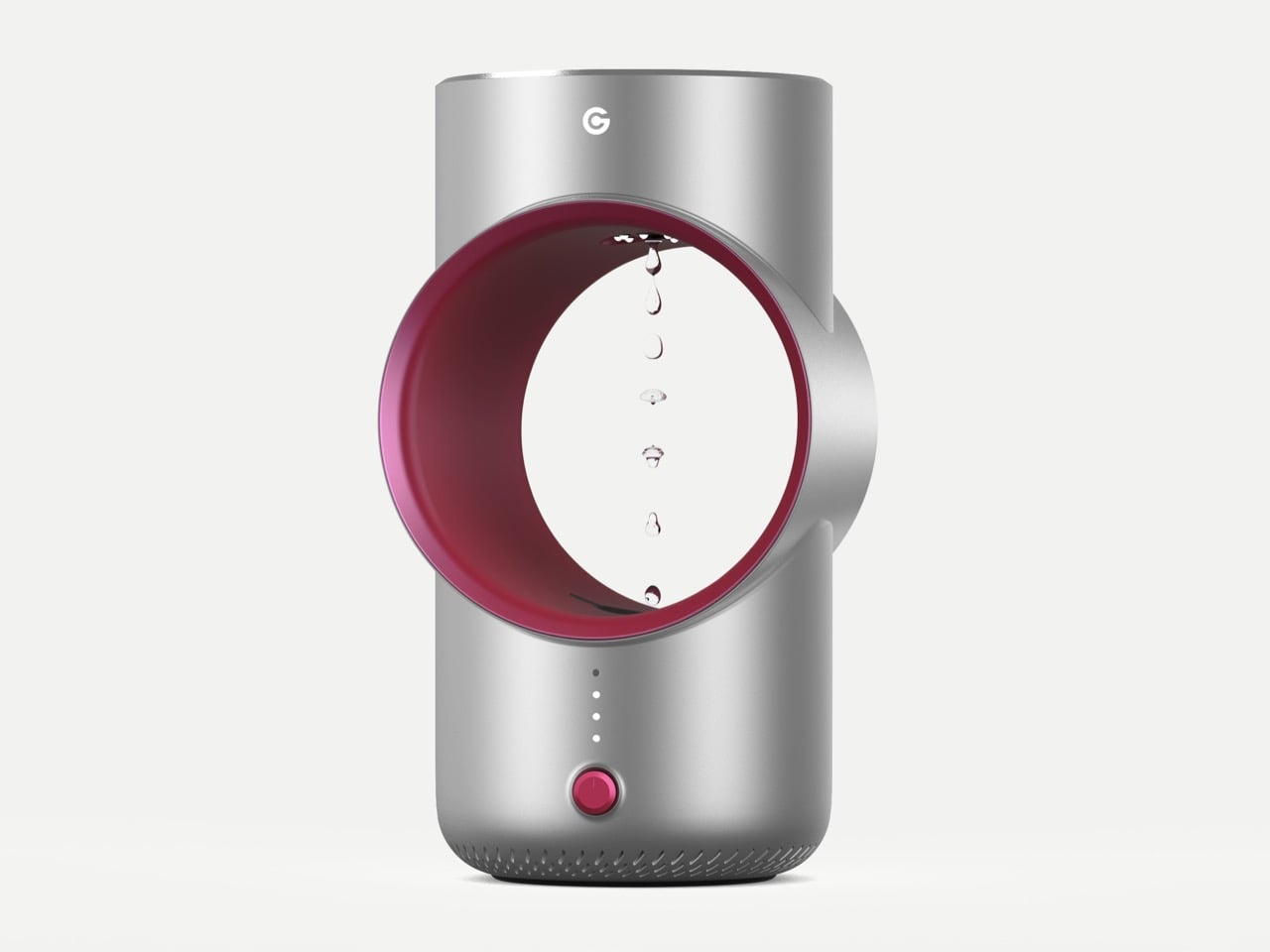
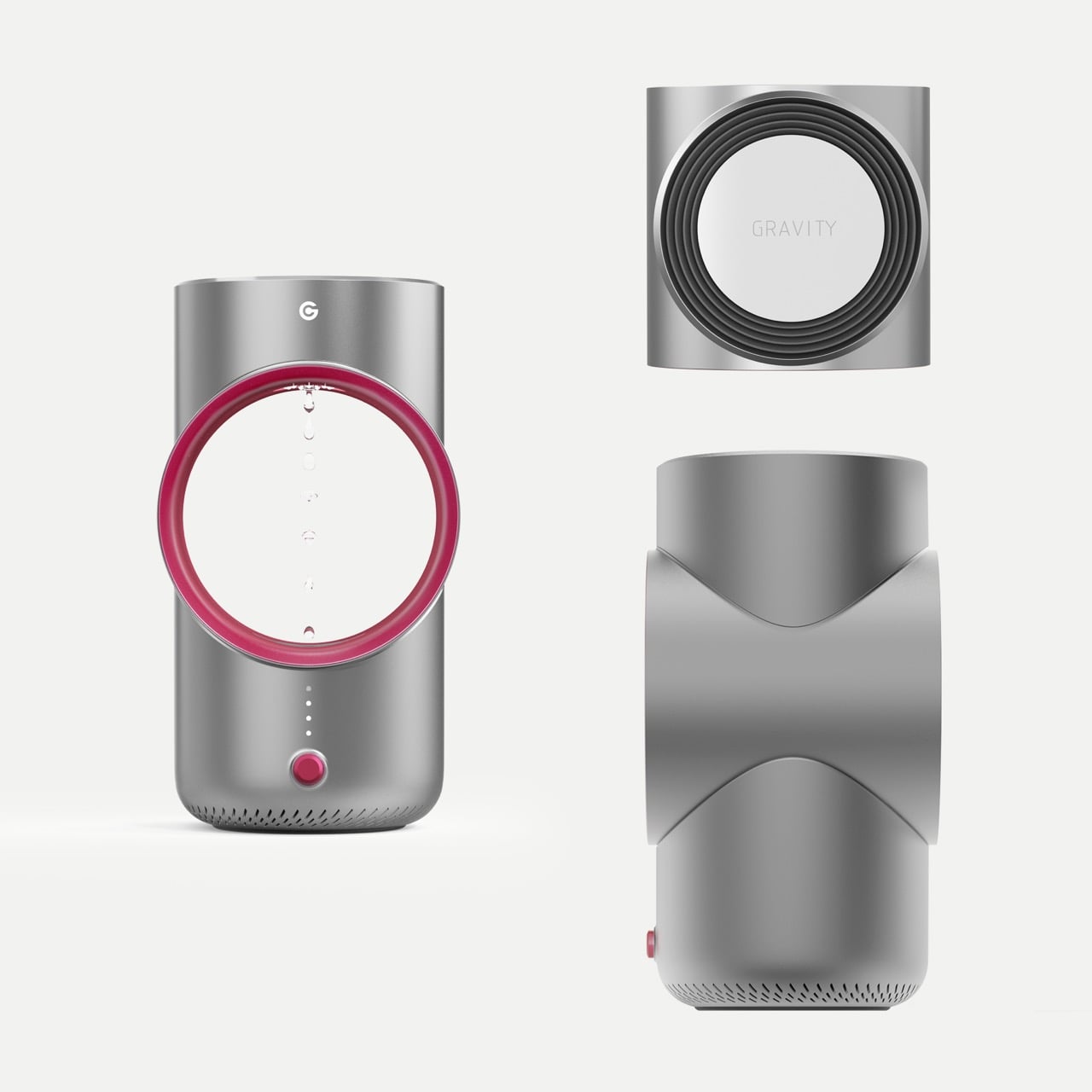
Remember that jaw-dropping scene in “Now You See Me 2” where rain seemingly reverses direction? The Serena Anti-Gravity Humidifier turns that cinematic spectacle into everyday home decor. The device actually uses visual persistence technology to create a convincing illusion of water droplets climbing upward, defying gravity with every pulse of its synchronized LED system.

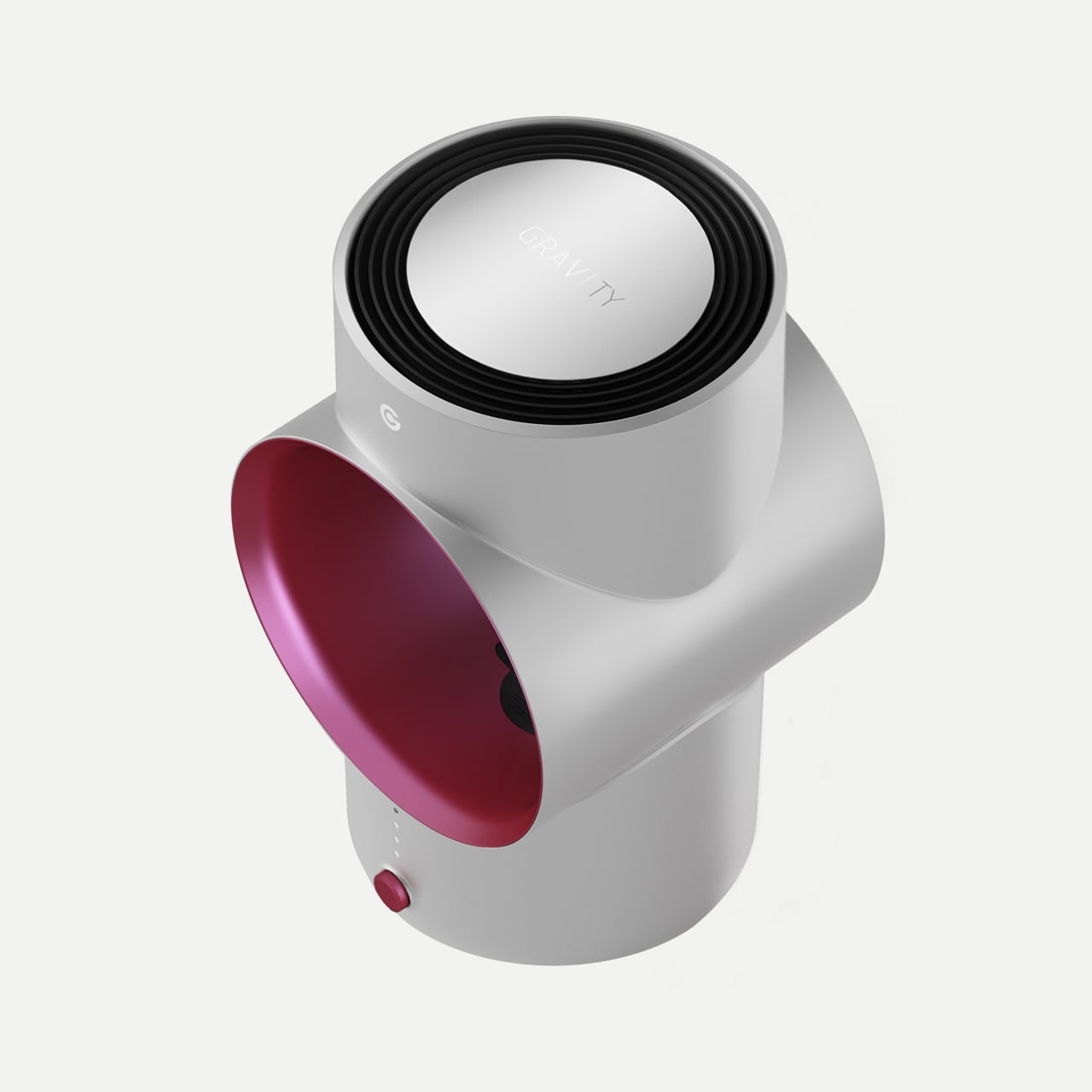
Designer Kexin Su and the team at LuXun Academy of Fine Arts spent months perfecting the synchronization between water flow and light timing. The challenge was maintaining the illusion while delivering practical humidification for modern living spaces. Their solution borrows liberally from Dyson’s design vocabulary: a circular aperture, minimal controls, premium metallic finishes. But where Dyson multiplies air, Serena bends perception. The transparent colored ring frames the ascending droplets like a gallery piece, while the compact base houses the miniature pump and strobe system that make the whole spectacle possible.

Designer: Kexin Su

The tech here hinges on visual persistence, which is basically your brain holding onto an image for about 1/16th of a second after seeing it. LED strobes flash in sync with falling water droplets, catching each one in nearly the same position as the last. Your brain stitches these snapshots together and interprets the result as water flowing upward or hanging motionless in air. Think about how movie projectors work at 24 frames per second, except here the timing tolerance is even tighter. If the strobe drifts even slightly out of phase with the droplet release, the whole illusion falls apart and you’re just watching normal gravity do its thing. The miniature pump has to maintain ridiculously consistent droplet size and timing while the LED controller stays locked within millisecond precision.

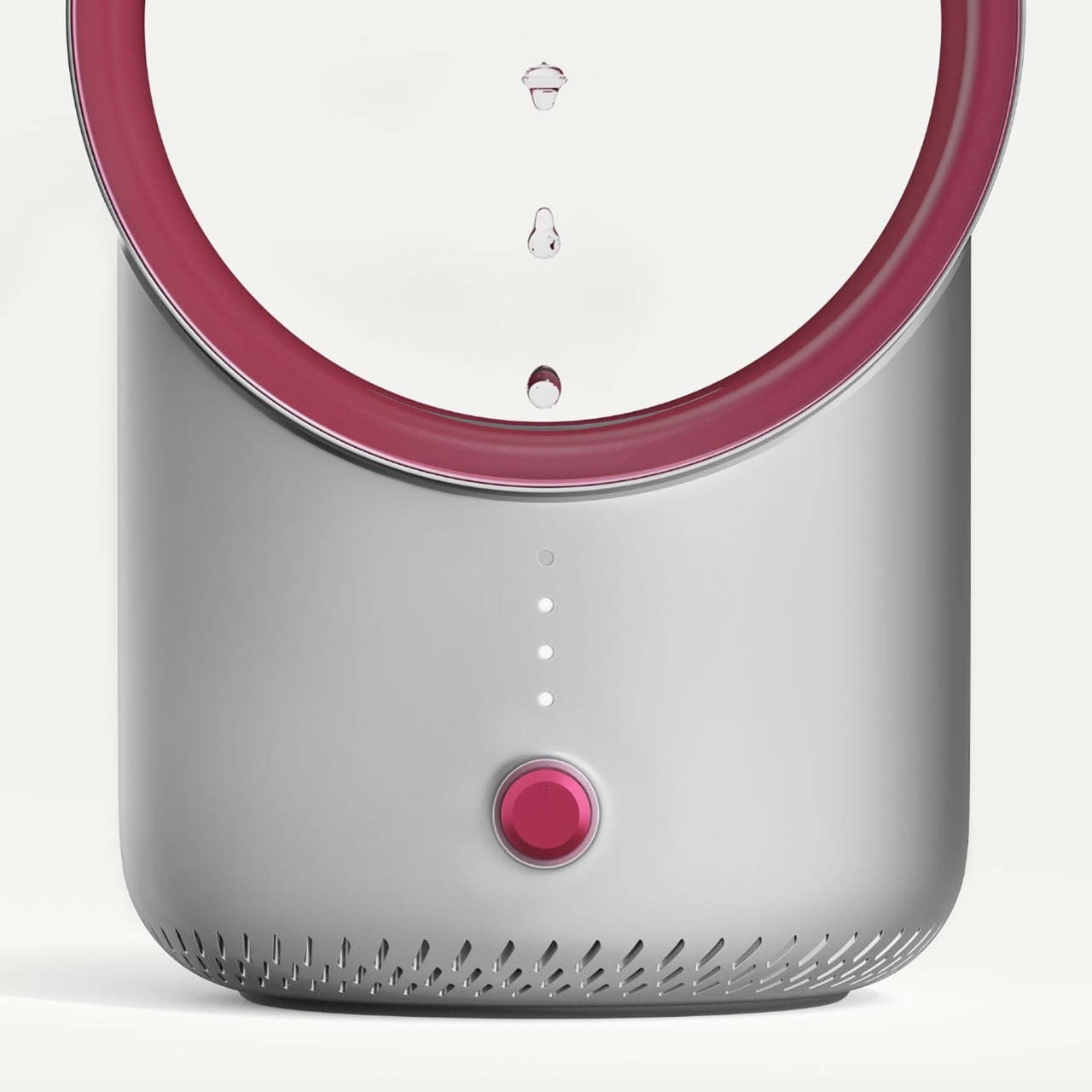
At 478mm tall and 260mm across, this thing commands attention. You’re not tucking it behind a bookshelf. The whole point is putting it somewhere visible where the illusion can do its work. You get burgundy or amber options for the transparent ring, and honestly, the color choice matters more than you’d think because it completely changes the mood when backlit. The control scheme strips down to a single button and four indicator dots, probably for different intensity modes or timing presets. Touch controls let you tweak both strobe speed and brightness, which means you can dial in how fast the water appears to climb or how subtle you want the effect. Slower intervals make for dreamier upward motion, while cranking the brightness turns it into more of a statement piece.

What might feel like an optical gimmick actually does something pretty remarkable – it makes the humidifier way more interesting. Most of us shove these things into corners or bedrooms where they can do their job without being seen. Serena flips that equation entirely. It wants to be your living room centerpiece, which takes real conviction in the concept. I’ve seen similar strobe effects at science museums and in art installations, but domesticating that technology into something you’d actually plug in at home represents a different kind of design challenge. The Dyson influence is unmistakable, from the bladeless aperture aesthetic to the premium metallic finish, but they’re applying that visual language to something genuinely novel rather than just iterating on existing fan technology… and the A’ Design Award given to this humidifier is just proof that it’s a clever idea with brilliant visual execution.

The post This Anti-Gravity Humidifier Makes Water Flow Upwards So It Isn’t ‘Another Boring Appliance’ first appeared on Yanko Design.

This 3-in-1 Cleaning Robot Fits in a Backpack

There’s something quietly revolutionary happening in the world of workplace maintenance, and it comes in a surprisingly sleek package. Meet Pulito, a cleaning system designed by Yilmaz Salman that’s challenging everything we thought we knew about keeping shared spaces spotless.

Most cleaning robots feel like expensive toys that promise the moon and deliver, well, a slightly cleaner floor. Pulito takes a completely different approach. Instead of being just another gadget you buy and forget about, it’s designed as a subscription-based service that actually makes sense for how modern workplaces function. Think of it less as a product and more as a cleaning partner that shows up ready to work.

Designer: Yilmaz Salman

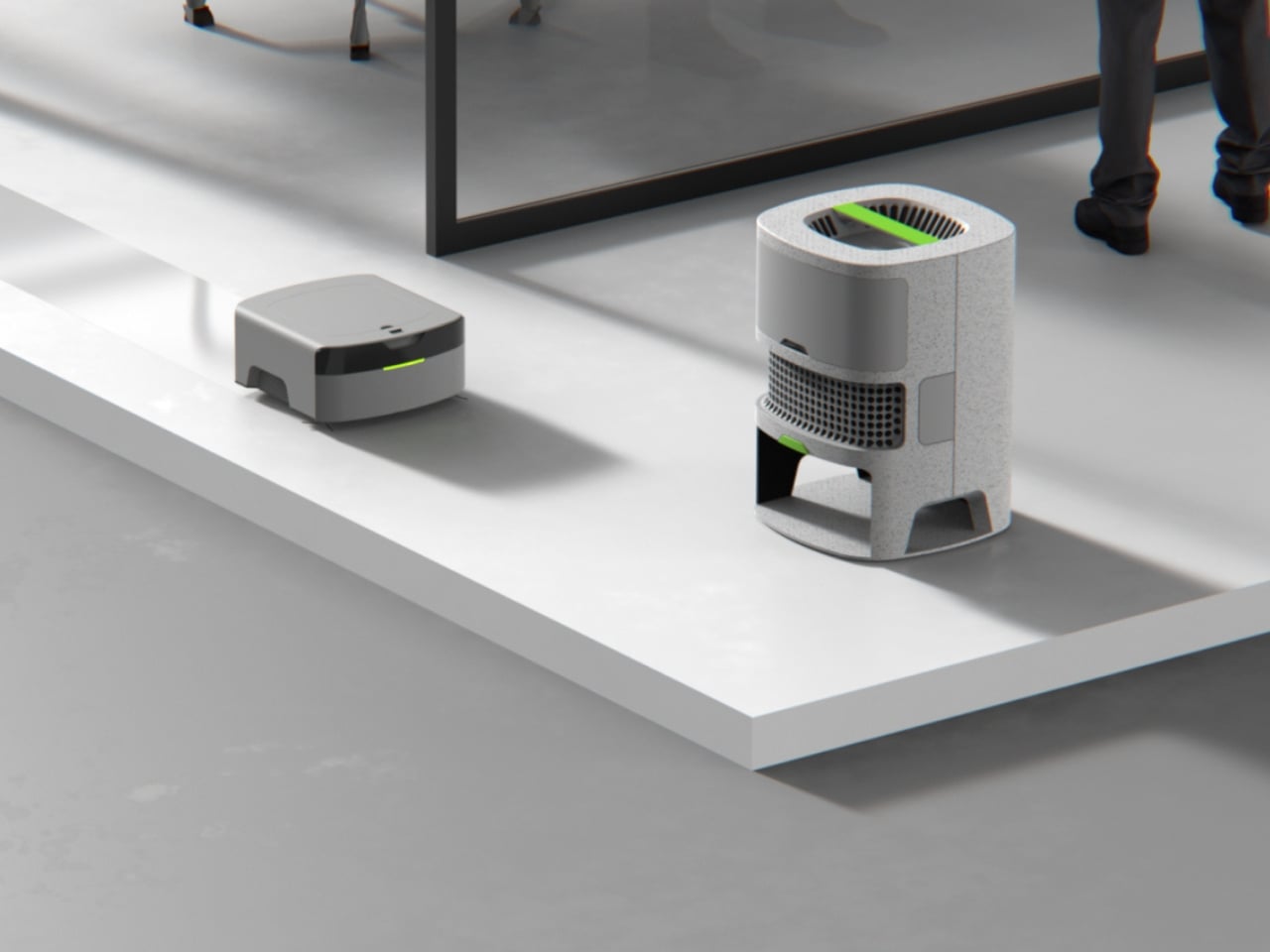
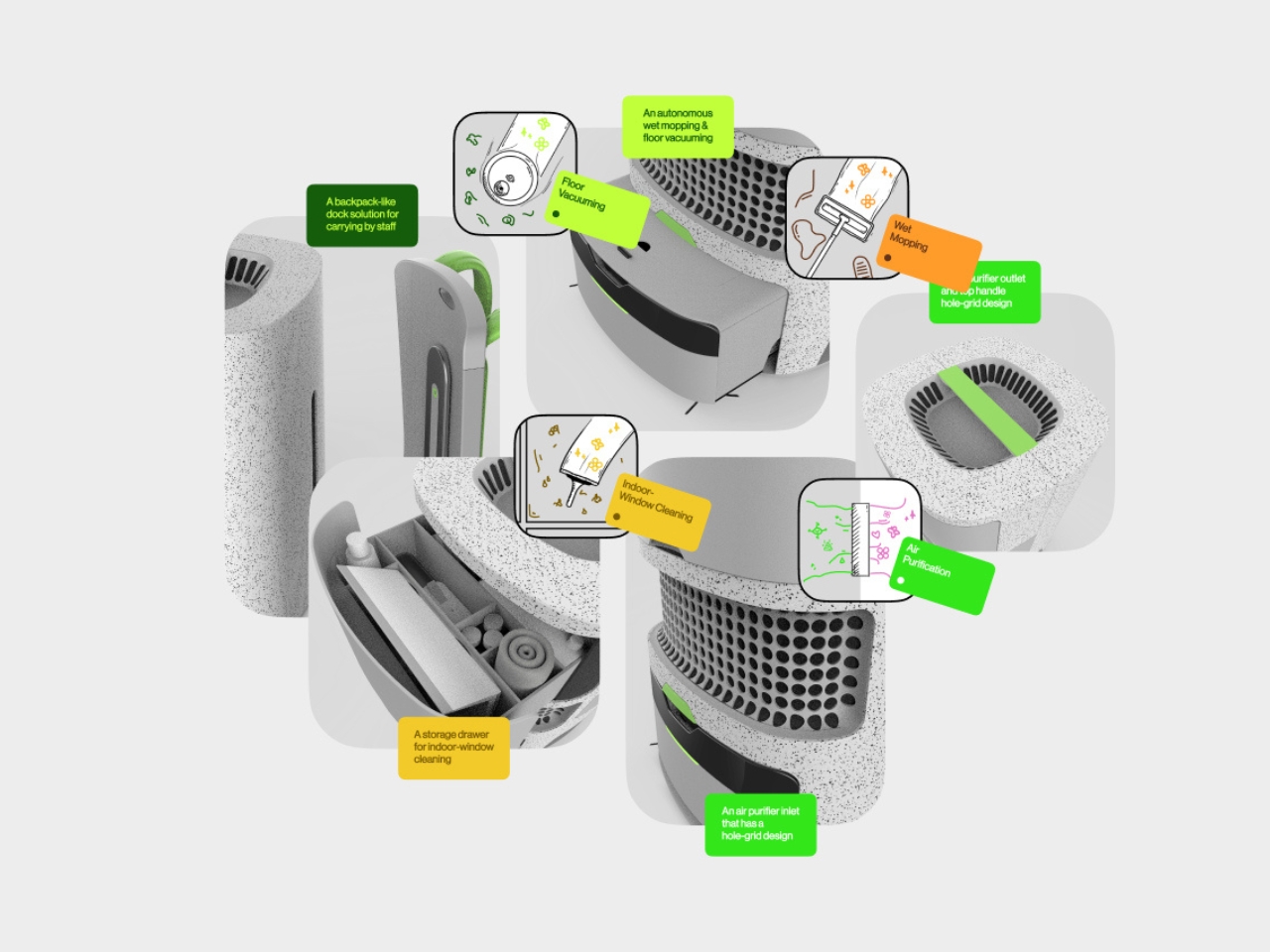
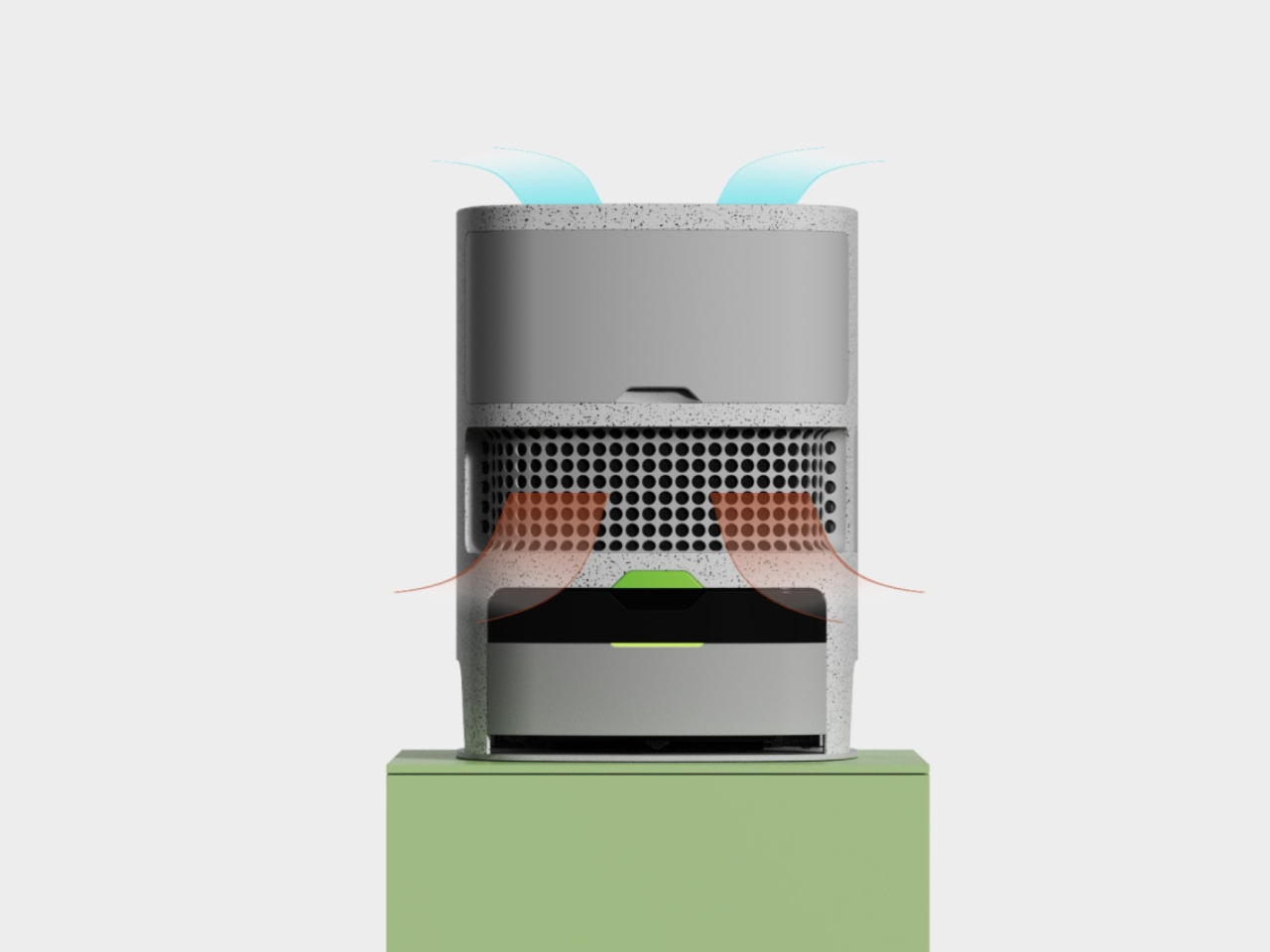
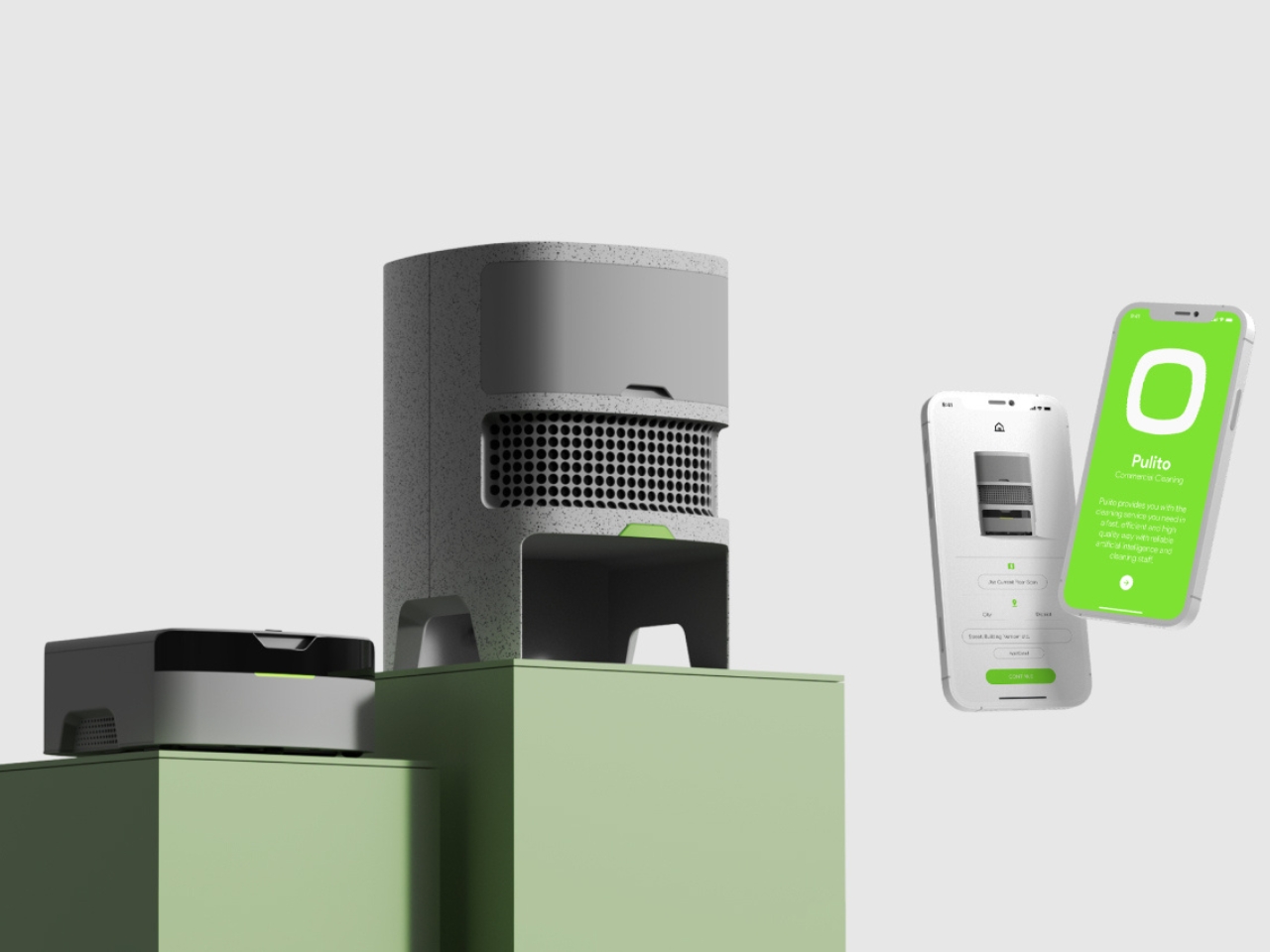
What makes Pulito different is its three-pronged strategy for tackling workplace hygiene. The main unit houses a continuous air filtration system that quietly works away at improving indoor air quality while everything else happens around it. This isn’t just about appearances. We spend so much time indoors now, and air quality has become one of those invisible factors that affects how we feel and work without us even realizing it.

Then there’s the autonomous floor cleaning component, a detachable unit that handles the vacuuming and wiping without anyone needing to babysit it. It’s the kind of set-it-and-forget-it functionality that actually lives up to the promise. The robot navigates work areas independently, freeing up cleaning staff to focus on tasks that genuinely need a human touch.

And that’s where the third element comes in. Pulito includes an integrated storage drawer filled with specialized window cleaning tools designed for staff to use. Rather than trying to automate absolutely everything (because let’s be real, robot window washers still have a ways to go), it embraces a hybrid model where technology and human expertise work together. It’s a refreshingly honest approach to design that acknowledges the limitations of automation while maximizing its strengths.

The business model behind Pulito is just as thoughtful as the design itself. The rental service approach taps into the growing circular economy movement, where ownership matters less than access and sustainability. Recent projections suggest the service robot sector could hit $175 billion by 2030, and rental models are proving to increase operational convenience by 83% and sustainability by 76%. Those aren’t just impressive numbers. They represent a fundamental shift in how businesses think about equipment and resources.

For facility managers and business owners, the subscription model solves one of the biggest headaches with commercial cleaning equipment: the massive upfront cost and the inevitable maintenance nightmares. With Pulito, you’re essentially renting a service that includes the hardware, updates, and support. When something breaks or needs upgrading, it’s not your problem to solve. That’s a game changer for smaller businesses or startups that need professional-grade cleaning solutions without the capital investment.

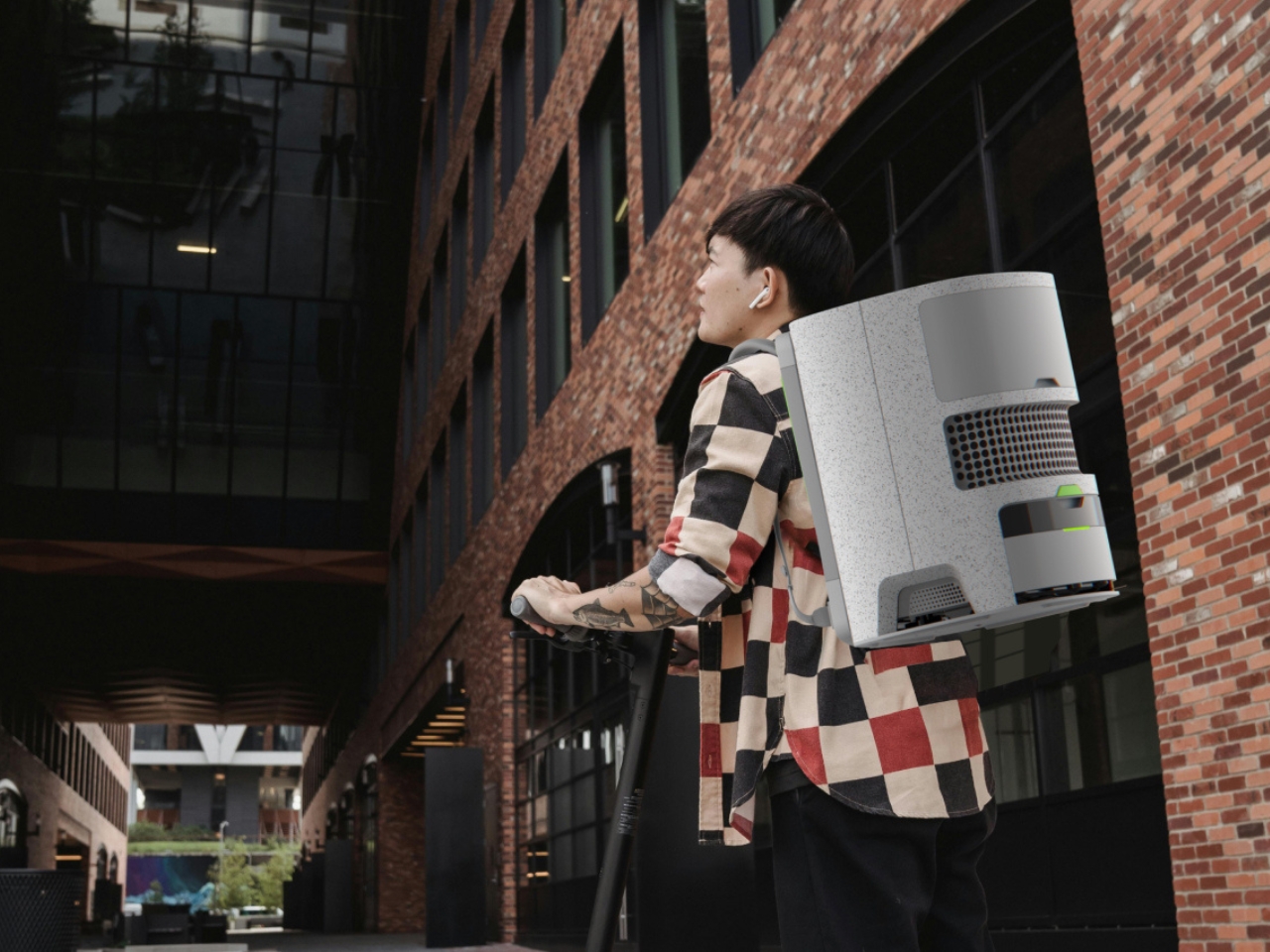
The portability factor deserves attention too. Pulito’s main body features an ergonomic strap system that lets cleaning personnel carry it like a high-tech backpack between different zones. Look at those product shots of someone wearing it while navigating between buildings. It’s almost futuristic, transforming cleaning staff into something that feels more like tech-equipped professionals than traditional janitorial workers. There’s dignity in that design choice.

Aesthetically, Pulito doesn’t look like your typical cleaning equipment. The textured grey finish with those lime green accents feels contemporary without trying too hard. The perforated details on the air filtration unit give it an industrial-chic vibe that wouldn’t look out of place in a design-forward coworking space or a tech startup’s headquarters. It’s the kind of object you wouldn’t feel embarrassed to have sitting in your office lobby.

What Salman has created with Pulito is bigger than just another cleaning robot. It’s a complete rethinking of workplace hygiene infrastructure for the modern era. By combining autonomous technology, human collaboration, accessible pricing through subscriptions, and genuinely thoughtful industrial design, Pulito represents where facility management might actually be headed. Not a future where robots do everything, but one where smart design makes both human workers and automated systems more effective together.

The post This 3-in-1 Cleaning Robot Fits in a Backpack first appeared on Yanko Design.

The Must‑Have Portable Power Station Setup Every Household Should Own For Storms And Blackouts

This is not a normal cold snap. The polar vortex that usually stays locked over the Arctic has split and sagged south, dragging temperatures in parts of the Midwest and East Coast to levels that feel closer to the Far North than to cities where millions live. Across affected regions, the results have been immediate and severe. Hypothermia deaths in Louisiana. Rolling blackouts. Ice storms that shatter tree limbs and bury power infrastructure under frozen weight. Nearly 250,000 people in Tennessee alone woke up this week without electricity, and utilities are warning that repairs could take days.

If you are watching the forecast from a warm, lit room, it is worth asking what happens if your block goes dark. Your thermostat stops, your phone begins to drain, your internet dies, and you lose access to weather updates and family check‑ins just when you need them most. For people in small apartments or older homes without backup systems, this is not a thought experiment, it is the reality playing out at this moment. A compact, indoor‑safe power station is one of the few tools that can soften that blow, quietly keeping phones, medical devices, and a few essential lights running while the grid catches up.

Click Here to Buy Now

Why the Mid‑Size Power Station Makes Sense for Most Households

Portable power stations fall along a spectrum, and most of them do not fit the use case of a typical household facing a winter outage. The small units, typically in the 200 to 300 watt‑hour range, are barely larger than heavy‑duty power banks. They can charge phones and tablets, maybe run a laptop for a few hours, but they lack the capacity and output to keep anything more demanding alive. A router pulls too much. A CPAP machine drains them in a single night. A small electric blanket finishes them off in two or three hours. They are fine for a day hike or an overnight car trip, but in a multi‑day blackout during freezing weather, they run dry too quickly to matter.

On the other end, the large systems in the 2,000 to 4,000 watt‑hour class are designed for off‑grid living, RV installations, or whole‑home backup with automatic transfer switches. They can run refrigerators, sump pumps, and multiple high‑draw appliances at once, but they weigh 50 to 100 pounds, cost as much as a used car, and take up serious floor space. For someone in a studio apartment or a rented house, they are impractical both financially and logistically.

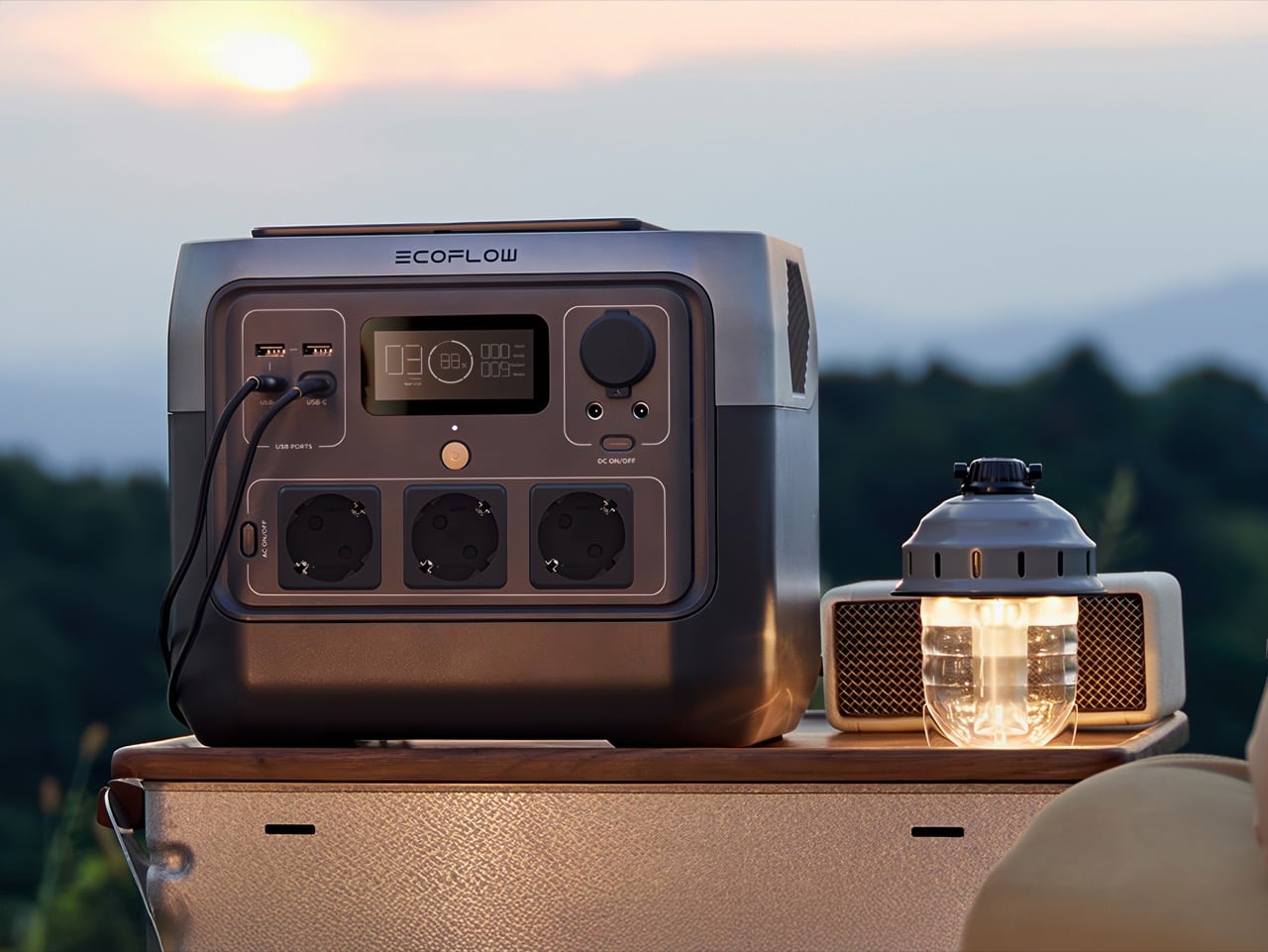
The mid‑size tier, roughly 700 to 1,000 watt‑hours with 800 watts of continuous output, occupies the useful middle ground. These units are light enough to move with one hand, affordable enough to justify as a one‑time purchase rather than a major investment, and powerful enough to keep the essentials running for several days if used carefully. They are not designed to replace the grid. They are designed to bridge the gap between when the grid fails and when it comes back online, which is exactly the scenario playing out across the East Coast right now.

What the River 2 Pro Brings Over Its Predecessor

We reviewed the standard EcoFlow River 2 a couple of years back and liked it for what it was: a genuinely portable, well‑designed 256 watt‑hour unit that charged fast and looked good doing it. The dual‑tone design was sharp, the handle redesign made it easier to store, and the price was right for weekend adventurers. But 256 watt‑hours is just not enough capacity to be useful in a real emergency. You could maybe get through one cold night if you were very, very careful.

The Pro triples that to 768 watt‑hours and bumps the continuous AC output from 300 watts to 800 watts, all while adding only about 11 pounds to the overall weight. That capacity jump is not incremental, it is transformational. Now you are talking about running a CPAP for multiple nights, keeping a router alive for over a week of intermittent use, and still having juice left for phone charging and LED lights. The original River 2 was a nice‑to‑have for camping trips. The Pro is something you can actually rely on when the infrastructure around you stops working.

EcoFlow also stuck with LiFePO₄ chemistry, which is the right call here. These cells handle temperature swings better than standard lithium‑ion, they are safer, and they are rated for over 3,000 cycles before they start losing capacity. If you are buying this as a piece of emergency gear that might sit unused for months or years at a time, that longevity matters. This is not a gadget you replace every couple of years. It is something you buy once and forget about until the lights go out.

70 Minutes from Empty to Fully Charged

EcoFlow has been pushing fast charging as a selling point across their lineup for a while now, and in the River 2 Pro it is not just a spec sheet flex, it is genuinely useful. The unit goes from dead to full in about 70 minutes off a standard wall outlet. In normal times, that is convenient. During a rolling blackout, it is the difference between a functional backup and a paperweight.

Think about how most grid failures actually play out in populated areas. Power does not just drop and stay off for three days straight. It flickers. It comes back for an hour, goes out again, comes back for two hours overnight. If your power station takes five or six hours to charge, you are constantly playing catch‑up and never actually filling the tank. With the River 2 Pro, every time the grid comes back on, you have a realistic shot at getting back to 100 percent before it drops again. That changes the whole strategy of how you manage an outage.

The unit also takes up to 220 watts of solar input, so a pair of decent folding panels can top it off in four or five hours under good sun. Winter solar is sketchy, clouds and short days mean you are not going to get reliable full charges, but even partial sun can stretch your runtime by enough to matter. It is not a primary charging method in January, but it is a useful fallback if the outage drags on longer than expected.

What It Costs and How That Compares

Online pricing on the River 2 Pro right now is hovering around the $315 mark, depending on where you shop. The MSRP is technically $549, but there’s almost always a discount running somewhere.

Compare that to a Jackery Explorer 1000 V2, which offers about 1,070 watt‑hours and usually runs $500 to $600. Or the Bluetti AC180, which is in the same ballpark for capacity and price. The River 2 Pro is giving you about 70 percent of the capacity at roughly half the cost, which for most apartment and small‑home use cases is the right tradeoff. You are not powering a refrigerator for a week either way, so the extra 300 watt‑hours does not fundamentally change what you can do. What changes is whether you can justify the expense as a one‑time purchase or if it feels like a luxury you will never pull the trigger on.

The really small units, the 200 to 300 watt‑hour boxes, run $150 to $250. So you are paying maybe $100 to $150 more to triple your capacity and double your output. That is an obvious upgrade if you are serious about emergency preparedness. The giant 2,000+ watt‑hour systems start north of $1,200 and climb fast from there, which is a completely different budget conversation.
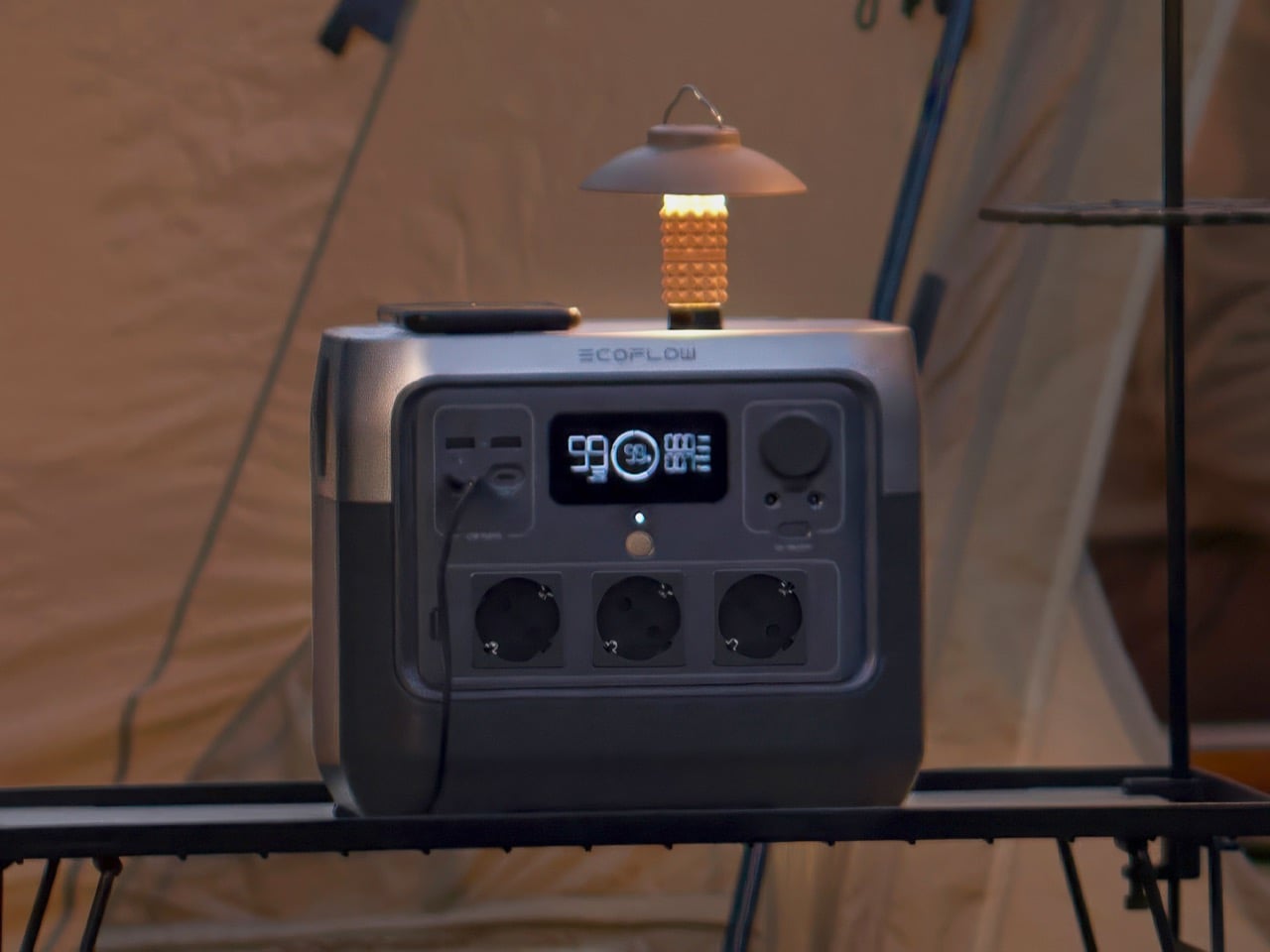
What It Can Actually Power During an Outage

The numbers on a spec sheet do not always translate clearly to real‑world use, so it helps to think in concrete scenarios. A fully charged River 2 Pro, used carefully, can sustain:

Communication and information: A smartphone pulls maybe 10 to 15 watt‑hours per full charge. You could recharge your phone 50 times off a full River 2 Pro. A typical Wi‑Fi router and modem together draw 15 to 25 watts while they are on. Run them three hours a day to pull weather updates, check news, coordinate with family, and you are using about 60 watt‑hours daily. That gives you a week and change of intermittent connectivity from a single charge.

Medical devices: A CPAP machine is slightly trickier because the power draw varies wildly depending on your model and settings. If you are running a basic unit without the heated humidifier, you might pull 30 to 40 watts. With the humidifier cranked, that can jump to 60 watts or more. Let us say you are at 40 watts for eight hours a night. That is 320 watt‑hours per night, so you get two full nights of sleep therapy before you need to recharge. Not great if the power is out for a week, but enough runway to get through the worst of a storm without ending up in an ER.

Targeted warmth: Low‑wattage electric blankets and heated throws usually run 50 to 100 watts. A 75‑watt throw for three hours in the evening is 225 watt‑hours. Combine that with CPAP and phone charging and you are looking at maybe 600 watt‑hours total per day, which gives you a full day of decent comfort before you need to think about recharging.

Lighting: LED lighting is almost free by comparison. A 10‑watt bulb for five hours a night is 50 watt‑hours. You could light up a small apartment every night for a week and barely dent the battery.

The key here is prioritization. You shouldn’t be running everything at once. Keep the critical stuff alive, lights, communication, medical devices, and use targeted warmth instead of trying to heat the whole space. That is what makes a mid‑size unit like this viable, and truly accessible to the vast population who can divert sub-$500 on a moment’s notice. The power station might be tiny, but it forces you to be smart about power – which is exactly what you need to do in a real outage anyway.

Need More Power? Just Buy A Second One And Connect Them

One feature that does not get talked about enough is that you can actually chain two River 2 Pro units together for expanded capacity. EcoFlow builds this into their ecosystem, so if you find yourself consistently running up against the limits of a single 768 watt‑hour unit, you are not stuck buying a completely different, more expensive system. You just add a second River 2 Pro and suddenly you are working with over 1,500 watt‑hours of usable capacity. That is enough to stretch a multi‑day outage without obsessively rationing every watt, or to run slightly higher‑draw appliances that a single unit would struggle with.

The math here is quite interesting because it gives you a more flexible upgrade path than most power station ecosystems offer. Instead of dropping $1,200 to $1,500 on a single large unit right out of the gate, you can start with one River 2 Pro, see how it performs in real‑world use, and then add a second one later if you need the extra capacity. You end up spending around $630 total for a combined system that gives you more modularity than a single giant battery box. If one unit dies or needs servicing, you still have backup power. If you only need light capacity for a short trip, you take one and leave the other at home. That kind of flexibility is genuinely underrated.

It also means the River 2 Pro scales better for different household sizes and needs. A single person in a studio apartment might never need more than one unit. A family of four in a larger house might find that two units let them cover essentials in multiple rooms without running extension cords everywhere or constantly shuffling devices between outlets. The ability to grow the system incrementally, rather than making one big all‑or‑nothing purchase decision, makes it a lot easier to justify the initial investment and adapt as your needs change.

How to Use It Effectively in Cold Weather

Store and operate it indoors. LiFePO₄ cells can discharge in cold temperatures, but they should not be re-charged when the internal temperature is below freezing.

Most modern power stations, including the River 2 Pro, have battery management systems that will flat‑out refuse to charge if the cells are too cold. So keep the unit inside, away from exterior walls and drafty windows, and you will be fine.

Turn things off when you are not using them. That sounds obvious, but in the chaos of a blackout it is easy to leave the router on all day or forget a phone plugged in after it hits 100 percent. The River 2 Pro has a small parasitic draw just from being powered on, so if you are not actively using an outlet, shut it down and save every ounce of power you can.

And for the love of all that is holy, do not try to heat your apartment with this thing. Yes, the 800‑watt continuous output can technically run a small space heater. Yes, the X‑Boost mode can push that to 1600 watts for short bursts. But a 1,500‑watt space heater will drain the entire battery in about 30 minutes. That is not a strategy, that is just lighting your stored energy on fire. Layer up, use blankets, deploy a low‑watt heated throw for targeted warmth if you need it, but resistive heating is a losing game with battery power.
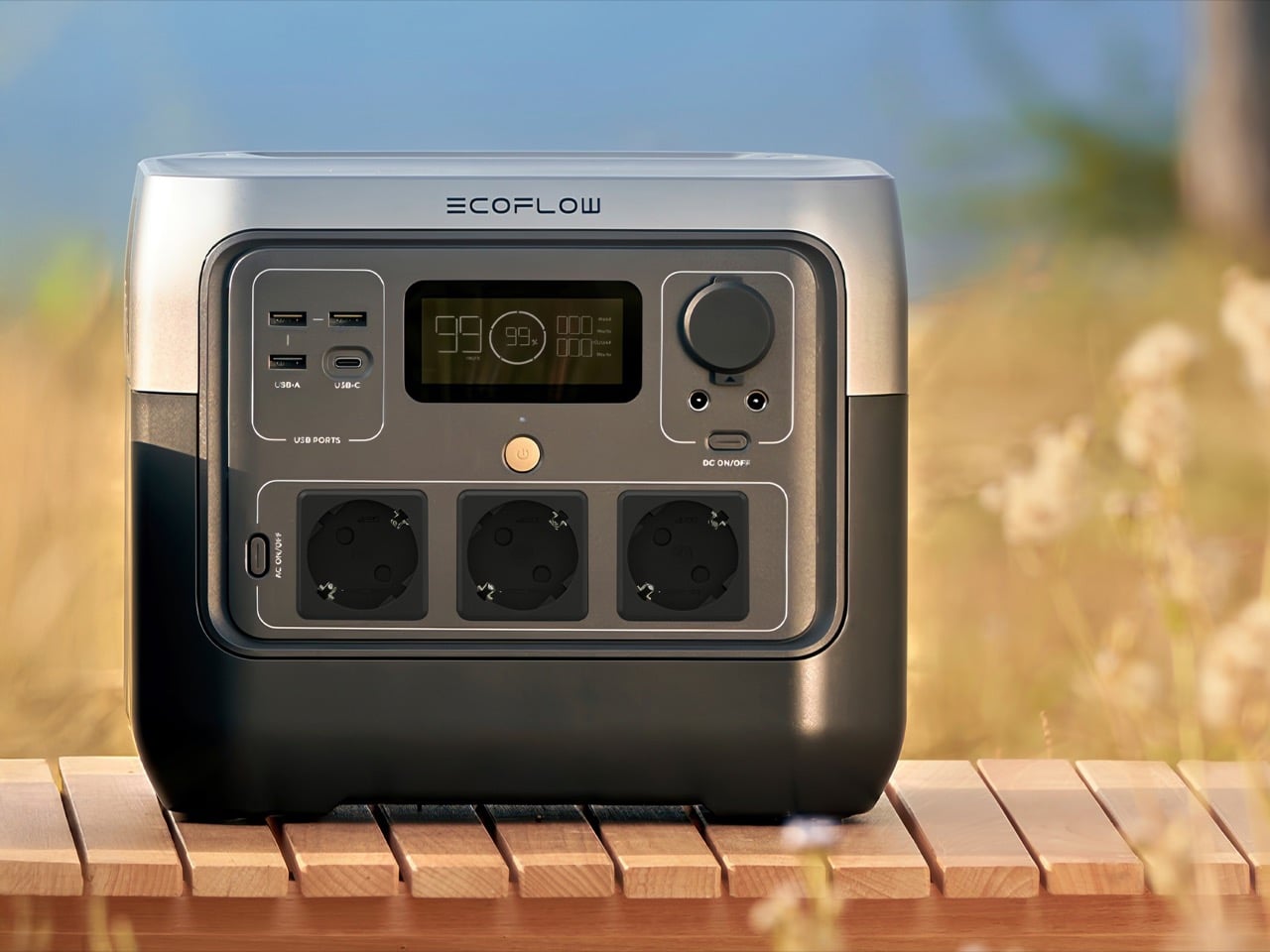
What It Cannot Do

The River 2 Pro is not a whole‑home backup system. It will not keep your refrigerator running for days, it will not power your furnace, and it definitely will not run a sump pump if your basement starts flooding. If those are your needs, you are shopping in the wrong category. You want a 2,000+ watt‑hour system, probably with a transfer switch and professional installation, and you are going to spend a lot more money.

The usable capacity is also not quite the advertised 768 watt‑hours. Independent testing puts the real‑world output closer to 620 watt‑hours, which is about 81 percent of the rated capacity. That is normal for the industry, battery management systems always hold back some reserve to protect longevity, but it is worth knowing so you do not plan your runtime calculations around the full number.

And while the unit is rated for 3,000+ cycles, that assumes you are not constantly hammering it from zero to 100 percent under extreme conditions. If you want to maximize lifespan, try to keep the charge between 20 and 80 percent when you can, and store it at around 50 percent if it is going to sit unused for months. Treat it like a piece of infrastructure, not a toy, and it will last you a decade.

Preparing Before the Next Storm

Hundreds of thousands of people are sitting in the dark tonight while the cold keeps piling on. More are watching the forecast and realizing their block could be next. The grid is not built for this. It was not designed to handle ice storms in places that rarely freeze, or sustained cold snaps in cities where winter is usually mild. And when it fails, the gap between “uncomfortable” and “dangerous” closes fast.

A power station like the River 2 Pro does not fix the underlying problem. It does not make the grid more resilient, and it does not replace the need for serious infrastructure investment. What it does is give you a buffer. A way to keep the essentials running while you wait for the repair crews to get the lines back up. A way to avoid the kinds of decisions that turn a bad night into a genuine emergency.

For $315, that is not a bad insurance policy to have sitting in your closet, charged and ready, before the next storm rolls in.

Click Here to Buy Now

The post The Must‑Have Portable Power Station Setup Every Household Should Own For Storms And Blackouts first appeared on Yanko Design.
5 Best Transparent Tech Of January 2026 That Just Beat Nothing at Its Own Game

Transparent technology has moved far beyond its novelty phase to become a legitimate design movement reshaping how we interact with our devices. What started as a nostalgia trip courtesy of Nothing’s transparent phones has evolved into a full-blown aesthetic revolution where seeing the guts of your gadgets is no longer just acceptable but desirable. The best transparent designs do more than simply expose circuitry; they create visual narratives about how technology works while delivering genuine functional benefits that justify their existence beyond mere eye candy.

January 2026 has given us a particularly strong lineup of transparent tech that ranges from retro-futuristic audio devices to gaming powerhouses wrapped in see-through shells. These designs prove that transparency works across every category of consumer electronics when executed with intention and intelligence. The following five products represent the pinnacle of this movement, each bringing something unique to the table while celebrating the beauty of visible mechanics and electronic components in ways that feel fresh rather than gimmicky.

1. Transparent Sony Walkman Concept

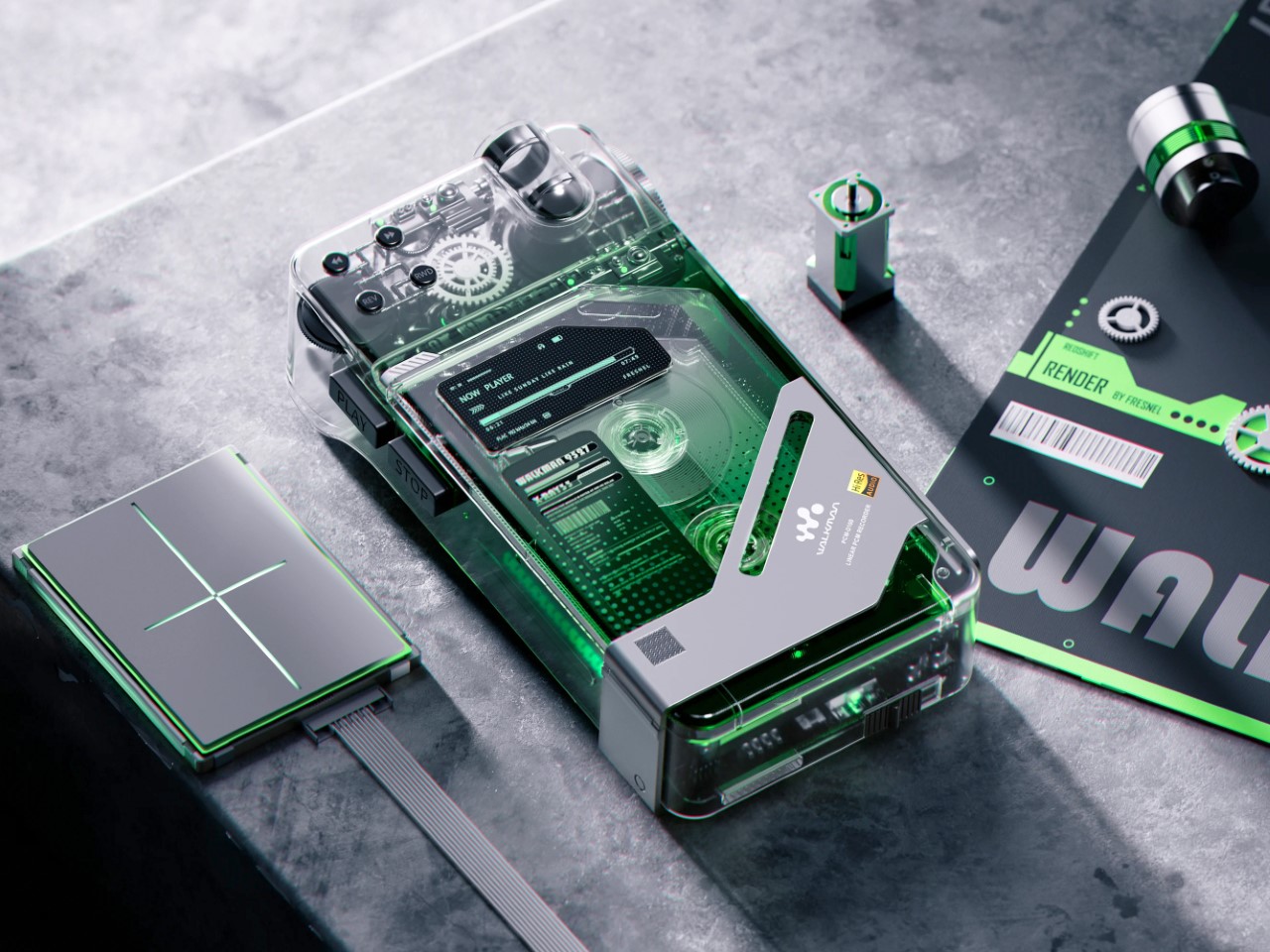
This transparent cassette recorder concept represents everything compelling about retro-futurism executed with modern design sensibilities. The device combines the tactile satisfaction of analog media with visual transparency that transforms mechanical components into the main attraction. Those exposed gears and rollers work their magic through crystal-clear housing that makes the entire mechanism visible during operation, creating a mesmerizing display of analog technology in motion. The top-mounted mechanical elements evoke luxury watch movements where visible complexity becomes the primary selling point rather than something to hide behind opaque shells.

The design succeeds because it creates genuine tension between old and new technologies rather than simply copying vintage aesthetics. A digital display nestles among analog components, suggesting computational intelligence working alongside mechanical systems. Those pixel-perfect UI elements visible through transparent housing indicate this isn’t merely a playback device but something with smart capabilities. The tiny control buttons along the top edge deliberately reference 80s Sony recorders while embracing modern miniaturization techniques. This Walkman concept could easily exist in Blade Runner’s world or on a contemporary design enthusiast’s shelf with equal credibility.

What We Like

  • The visible gear systems create a hypnotic viewing experience during tape playback.
  • The combination of analog mechanics and digital intelligence feels genuinely innovative.
  • The transparent housing transforms mechanical movement into visual entertainment.
  • The design language successfully bridges multiple decades of technology evolution.

What We Dislike

  • Physical media dependence limits practicality for streaming-era consumers.
  • The concept status means you cannot actually purchase this beautiful object.

2. Pomera DM250 Crystal Neon Yellow

The limited-edition Pomera DM250 in Crystal Neon Yellow ditches conventional white or black finishes for a vivid, almost glowing green shell that channels cyberpunk aesthetics straight out of futuristic cinema. The transparent design feels deliberately pulled from a William Gibson novel, mixing nostalgia for vintage computing with an ultra-modern sensibility that makes the device feel both retro and cutting-edge simultaneously. This isn’t just a writing tool but a statement piece that announces your commitment to focused creativity before you type a single word.

The core philosophy here centers on unwavering dedication to one task: getting words onto the screen without distractions. The DM250 sports a compact yet full-size 80-key keyboard paired with a crisp monochrome LCD that strips away every possible distraction. The software is deliberately minimal, offering everything a writer needs for text creation while providing nothing that might derail focus or waste precious writing time. That transparent shell showcasing the device’s internal components serves as a visual reminder of its pure functionality, where every element exists to support the writing process rather than tempt you toward multitasking.

What We Like

  • The monochrome display eliminates distractions that kill writing productivity.
  • The full-size keyboard delivers proper typing ergonomics in a compact form.
  • The Crystal Neon Yellow finish makes a bold visual statement.
  • The single-purpose design philosophy respects writers’ focus needs.

What We Dislike

  • The monochrome display feels dated compared to modern screen technology.
  • Limited functionality beyond text editing restricts versatility for mixed workflows.

3. RedMagic Astra Gaming Tablet

Nothing spent years teasing transparent design language, while RedMagic simply dropped the Astra with a full transparent strip down its back panel, complete with faux circuit board details that scream technological prowess. The visual trickery taps into tech enthusiast psychology that made transparent Game Boys and iMacs cultural phenomena decades ago. Those faux components create an impression of hardware sophistication perfectly aligned with gaming tablet expectations. RedMagic effectively claimed transparent tablet territory before Nothing could plant their flag, proving that execution speed sometimes matters more than brand heritage in emerging design categories.

The transparent strip serves as eye candy on what might be the most compelling compact gaming tablet available. RedMagic packed the Astra with the Snapdragon 8 Elite processor and hardware that puts most full-sized tablets to shame. The 9.06-inch form factor feels genuinely manageable for handheld gaming while maintaining enough screen real estate for immersive experiences. Aggressive pricing makes the iPad Mini look overpriced and underpowered by comparison. The Astra knows exactly what it wants to be: a gaming powerhouse that happens to work as a tablet, rather than a tablet that sorta plays games. This focused approach pays dividends across every aspect, from display technology to thermal management systems.

What We Like

  • The Snapdragon 8 Elite processor delivers flagship performance in a compact package.
  • The transparent design differentiates it from generic black rectangles flooding the market.
  • The 9.06-inch size balances portability with usable screen space for gaming.
  • Aggressive pricing undercuts competitors while delivering superior hardware specifications.

What We Dislike

  • Faux circuit board details might feel inauthentic to purists wanting real component exposure.
  • Gaming focus means it might not excel at productivity tasks that some users expect from tablets.

4. Nothing-Inspired Transparent Robot Vacuum

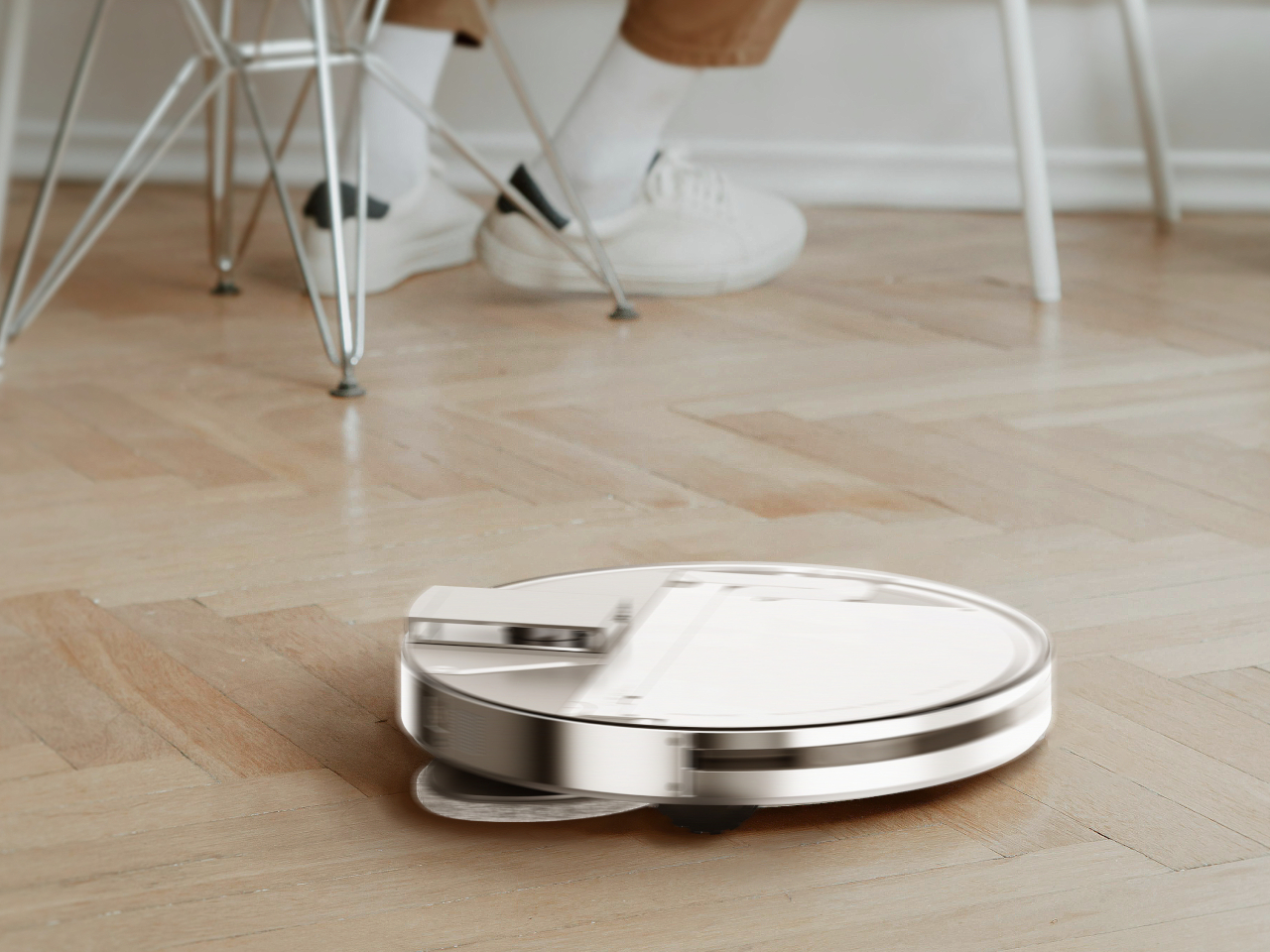
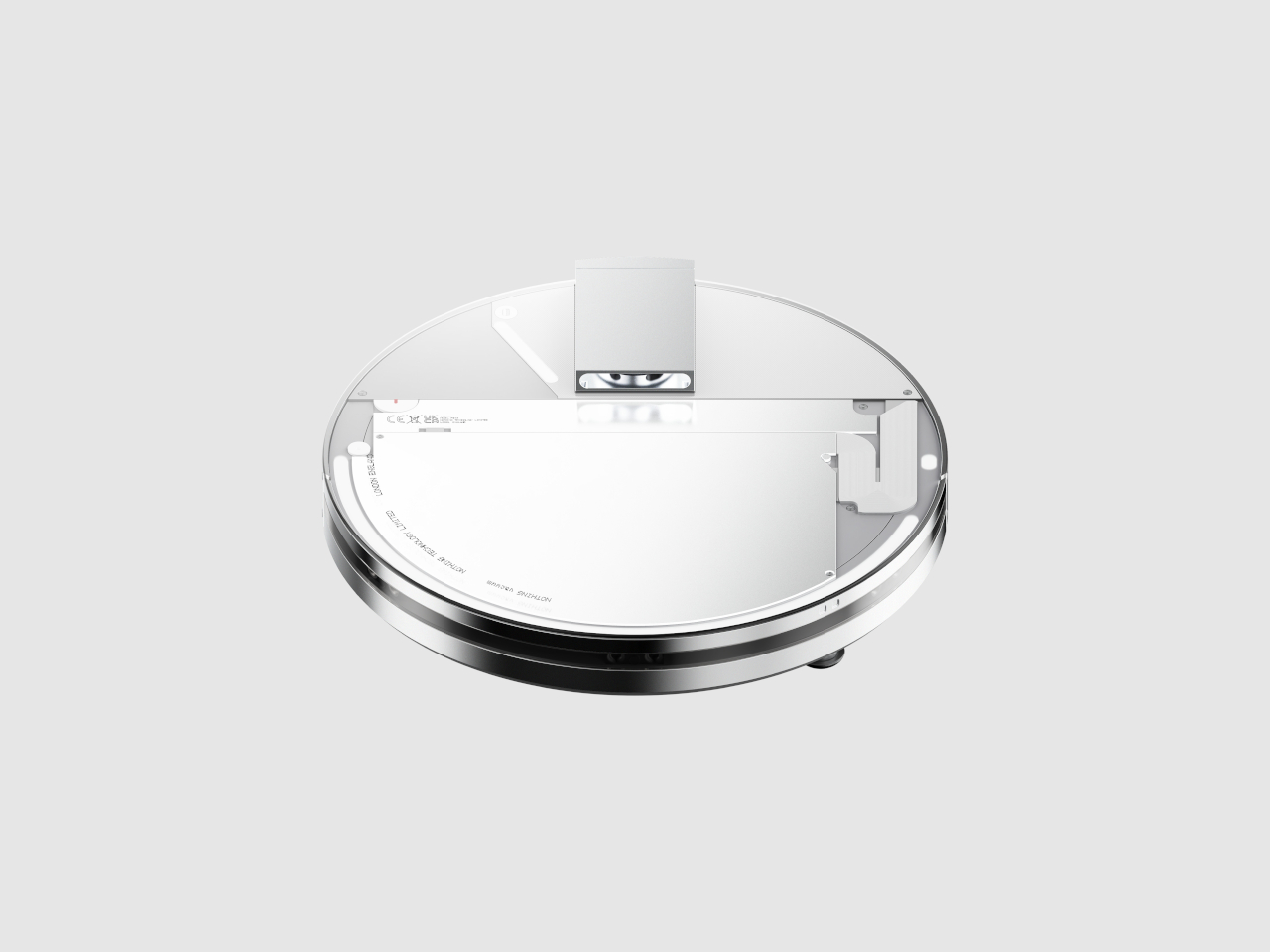
Designer Taeyeon Kim took the transparent tech aesthetic and applied it to one of the most mundane household appliances imaginable, creating an independent concept that reimagines how cleaning technology could integrate into daily life. The transparent philosophy celebrates inner workings rather than hiding them behind opaque plastic shells that make appliances invisible and forgettable. This vacuum features a completely clear shell exposing all internal components from the motor and sensors to the circuitry, making it function, transforming utilitarian hardware into something worth displaying prominently.

Most robot vacuums are designed for invisibility, tucked away in corners where they won’t interfere with carefully curated interior design schemes. Kim’s concept takes the opposite approach entirely, embracing transparency and modularity to create a cleaning system that actually wants to be seen and interacted with regularly. The exposed components serve educational purposes, helping users understand how their cleaning technology actually works while making maintenance and troubleshooting more intuitive. The modular design philosophy means components can be swapped or upgraded without replacing the entire unit, extending product lifespan while reducing electronic waste that plagues the appliance industry.

What We Like

  • The transparent shell transforms a mundane appliance into an interesting design object.
  • Exposed components make maintenance and troubleshooting more intuitive for users.
  • The modular philosophy extends product lifespan through component upgrades.
  • The design challenges the appliance industry norms around hiding technology from view.

What We Dislike

  • Visible dirt accumulation in transparent components might require more frequent cleaning.
  • The concept status means this innovative design isn’t available for purchase yet.

5. Sony WF-C710N Glass Blue Earbuds

The Glass Blue variant of Sony’s WF-C710N earbuds challenges the industry’s tendency toward either clinical white or anonymous black with a design choice that celebrates rather than conceals technological sophistication. The transparent housing goes beyond mere novelty to create a visual narrative about the engineering packed into these tiny devices. Sony offers four color options, but the Glass Blue stands out by making the internal components part of the aesthetic rather than something requiring concealment. The naturally elegant, compact form factor prioritizes both aesthetics and functionality in ways that prove transparent design works even at this miniature scale.

Sound quality remains Sony’s primary focus despite attention-grabbing aesthetics that could easily overshadow performance. The unique 5mm drivers deliver powerful bass and crystal-clear vocals across all music genres, while Digital Sound Enhancement Engine processing restores high-frequency elements often lost in compressed digital audio files. This technical prowess ensures the WF-C710N earbuds sound as impressive as they look, delivering an audio experience satisfying even discerning listeners who prioritize performance over style. The noise-canceling capabilities work seamlessly with the compact design, proving that transparent housings don’t require compromises in acoustic performance or active noise management systems.

What We Like

  • The Glass Blue finish makes a bold statement against boring black or white alternatives.
  • The 5mm drivers deliver impressive audio quality from compact components.
  • Digital Sound Enhancement Engine processing restores lost audio details effectively.
  • Active noise canceling proves transparent design doesn’t compromise acoustic performance.

What We Dislike

  • The transparent design might show dirt and debris accumulation more visibly than opaque alternatives.
  • The 5mm drivers might not satisfy audiophiles seeking maximum bass response depth.

The Transparent Future

Transparent technology has matured from gimmick to genuine design movement with staying power. The five products showcased here demonstrate how exposure of internal components can serve both aesthetic and functional purposes when executed thoughtfully. Designers are moving beyond simply slapping clear cases on existing products to creating devices where transparency informs every aspect of the user experience, from interaction patterns to maintenance accessibility. The visual honesty of exposed mechanics and circuitry creates connections between users and their technology that opaque housings cannot replicate.

What makes January 2026’s transparent offerings particularly compelling is their diversity across product categories and price points. From retro-futuristic Walkman concepts to pragmatic writing tools and gaming tablets, transparent design proves its versatility. These products suggest we’re entering an era where seeing how our devices work isn’t just acceptable but expected by consumers who want deeper relationships with their technology. The transparent revolution is just beginning, and these five designs point toward a future where every electronic device might celebrate rather than hide its technological sophistication.

The post 5 Best Transparent Tech Of January 2026 That Just Beat Nothing at Its Own Game first appeared on Yanko Design.

Anker SOLIX E10 Brings Hybrid Whole-Home Backup to the Modern House

Modern homes depend on electricity for everything, from fridges and routers to medical devices and central A/C. Storms, rolling blackouts, and grid hiccups trigger a familiar scramble for flashlights and ice bags. Food spoils, devices die, and working from home becomes impossible. Most backup options either feel like camping gear with a couple of outlets or like a renovation project with permits and opaque pricing.

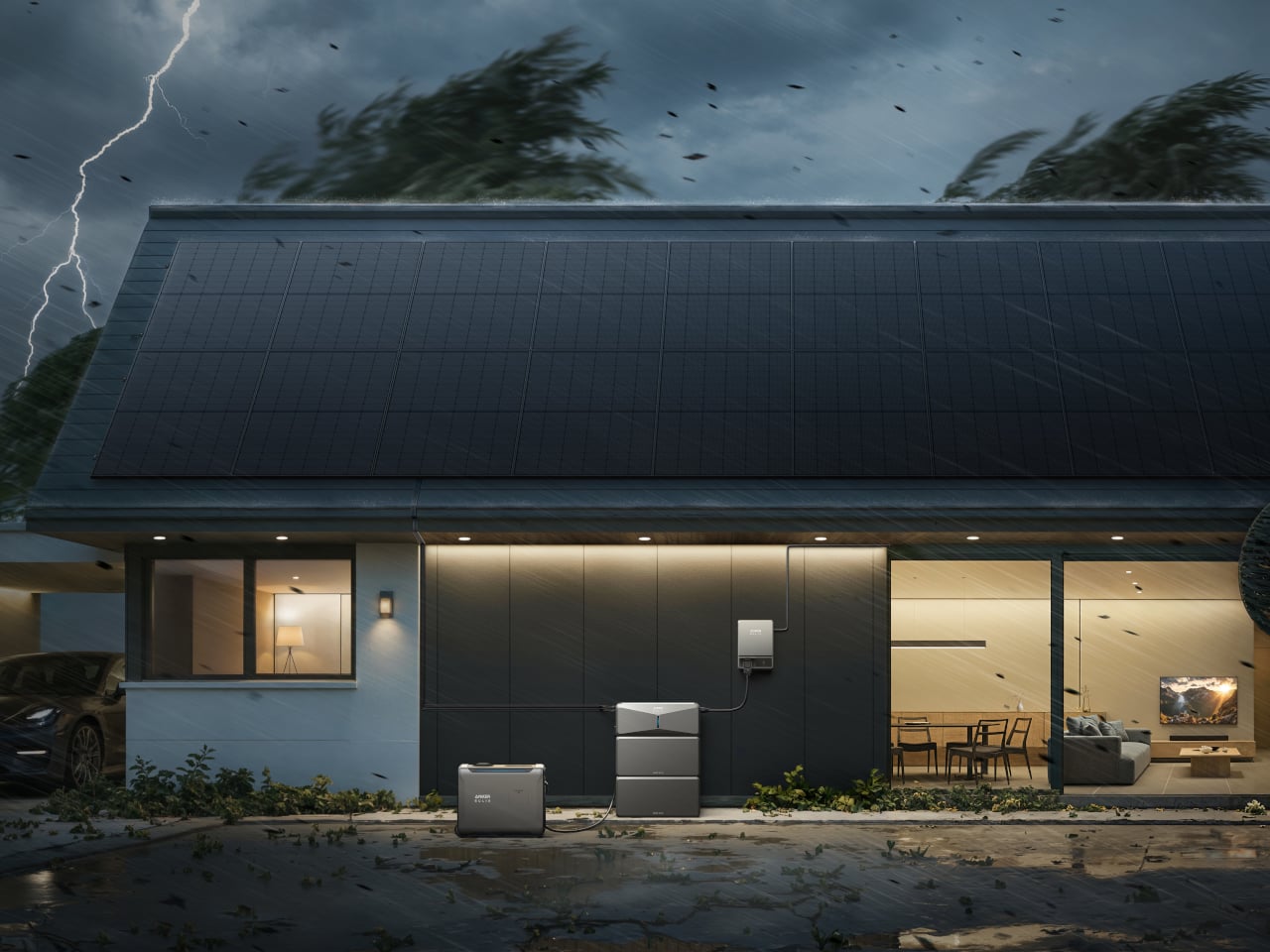
Anker SOLIX E10 is a smart hybrid whole-home backup system that blends batteries, green solar power, and a smart generator into one coordinated setup. It is designed to keep an entire house running, not just a few circuits, and is rated for whole-home backup with a 200-amp connection when paired with its Power Dock, matching a typical US main panel.

Designer: Anker

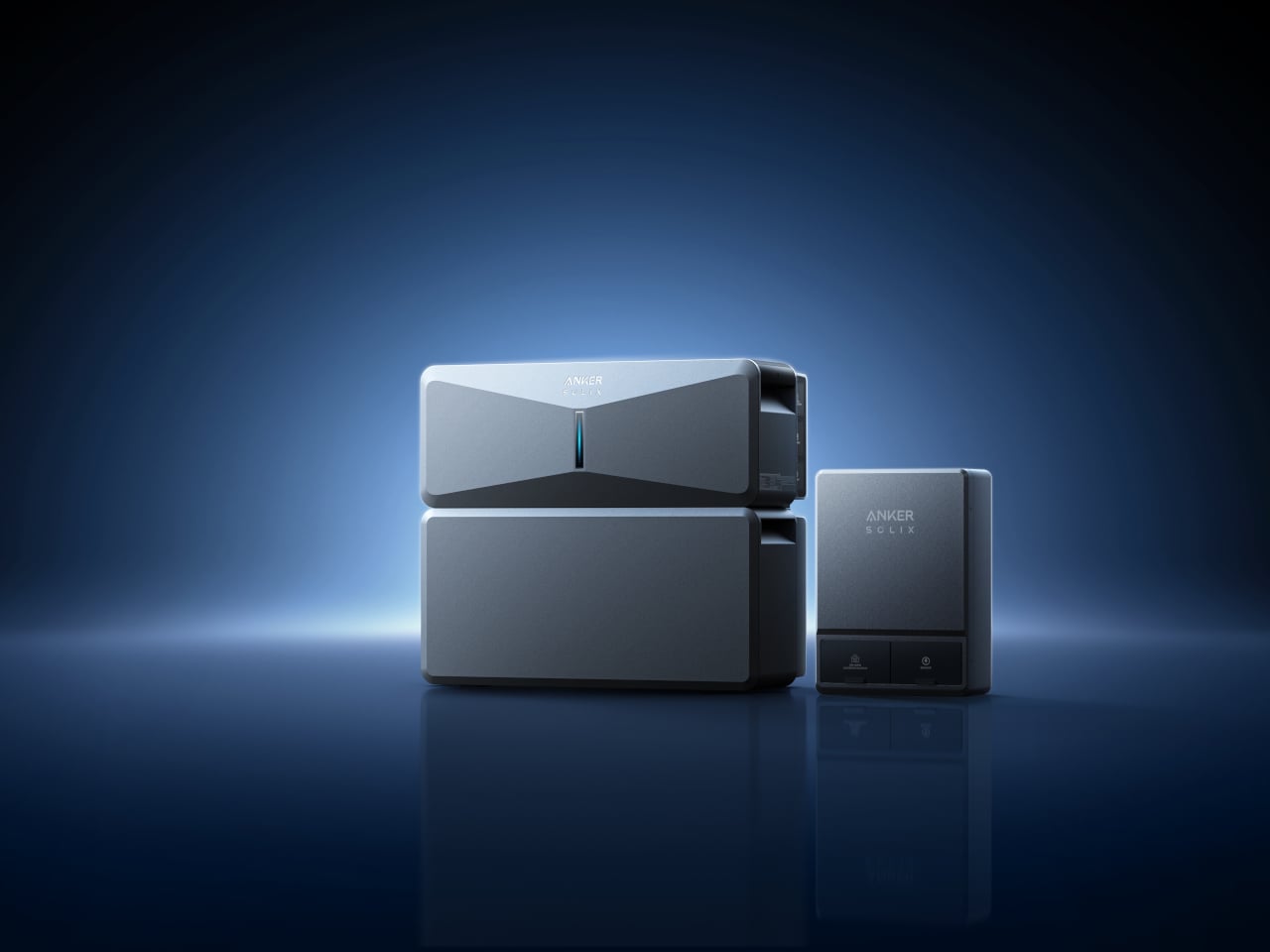
On a normal day, the SOLIX E10 quietly charges from solar and the grid, storing energy in modular 6 kWh battery packs that can scale to around 90 kWh with multiple stacks. When the power drops, the system steps in, deciding when to draw from batteries, when to add fuel through a DC link to its tri-fuel smart generator, and when to resume solar charging once the storm clears.

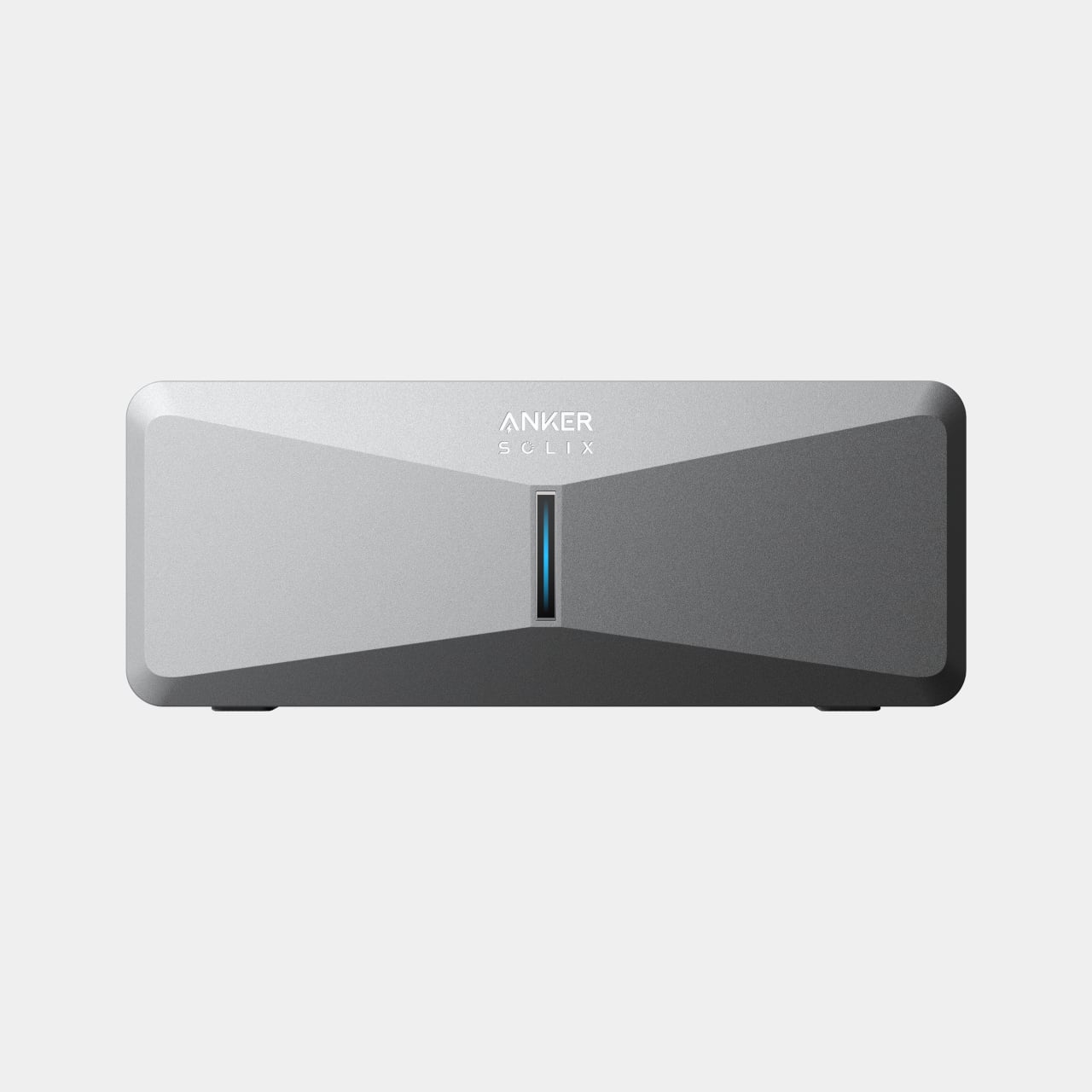
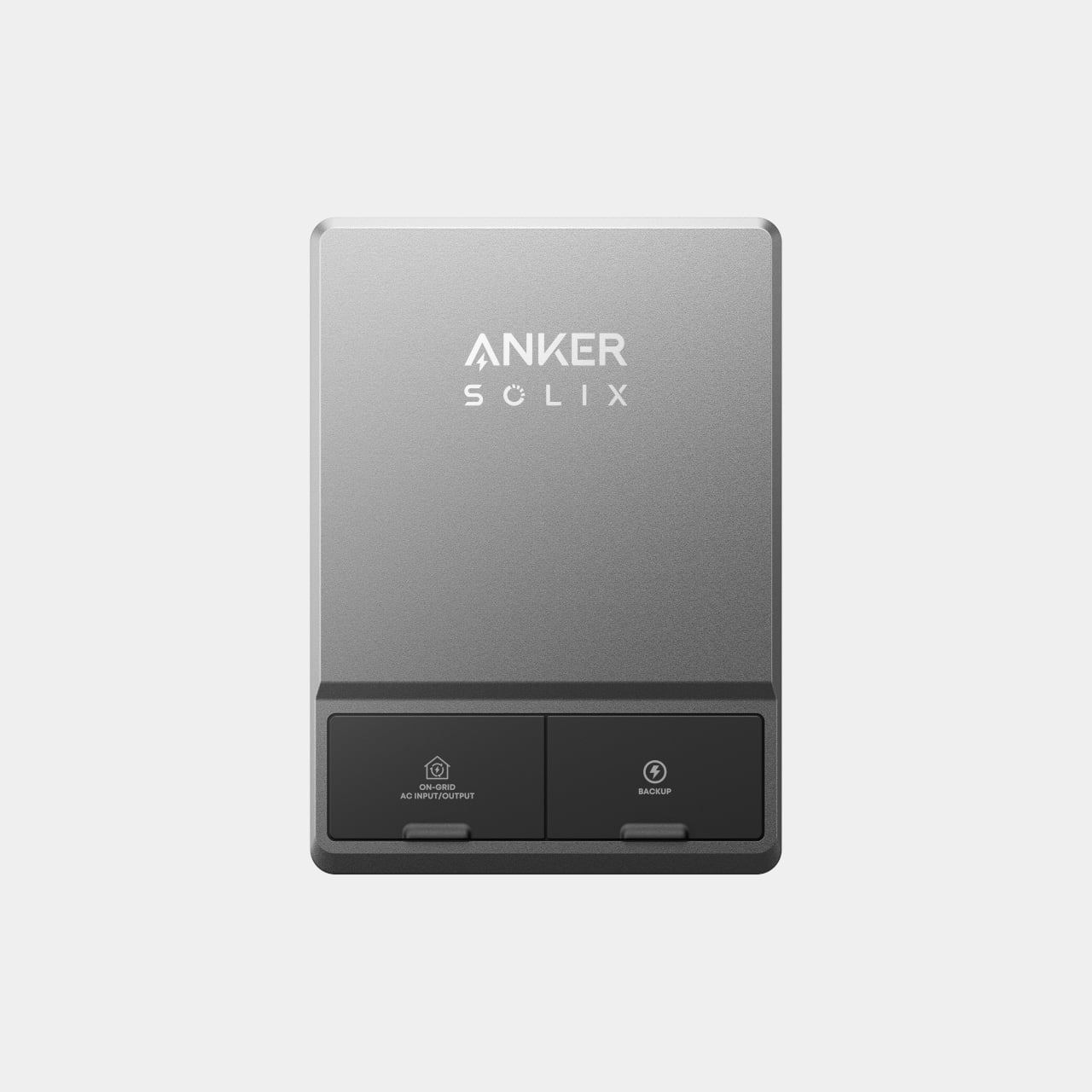
SOLIX E10 Power Module Inverter

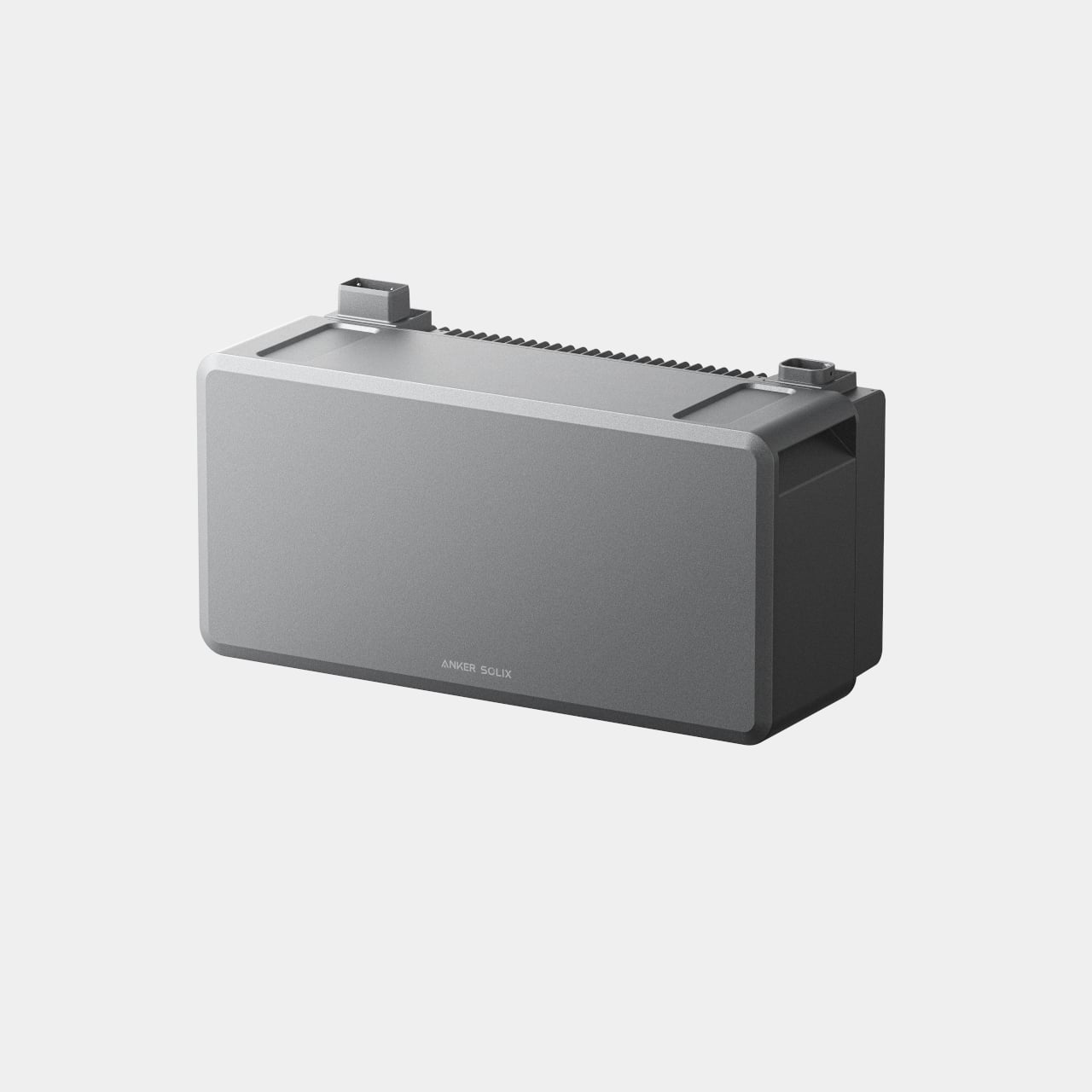
Anker SOLIX B6000 Battery Module

With the Power Dock or Smart Inlet Box, the SOLIX E10 can back up every circuit in a typical house, so you are not choosing between the fridge and the router. It is engineered to start and run a full-size 5-ton central A/C by handling the high inrush current that usually trips smaller systems, which matters when a summer outage hits during a heatwave.

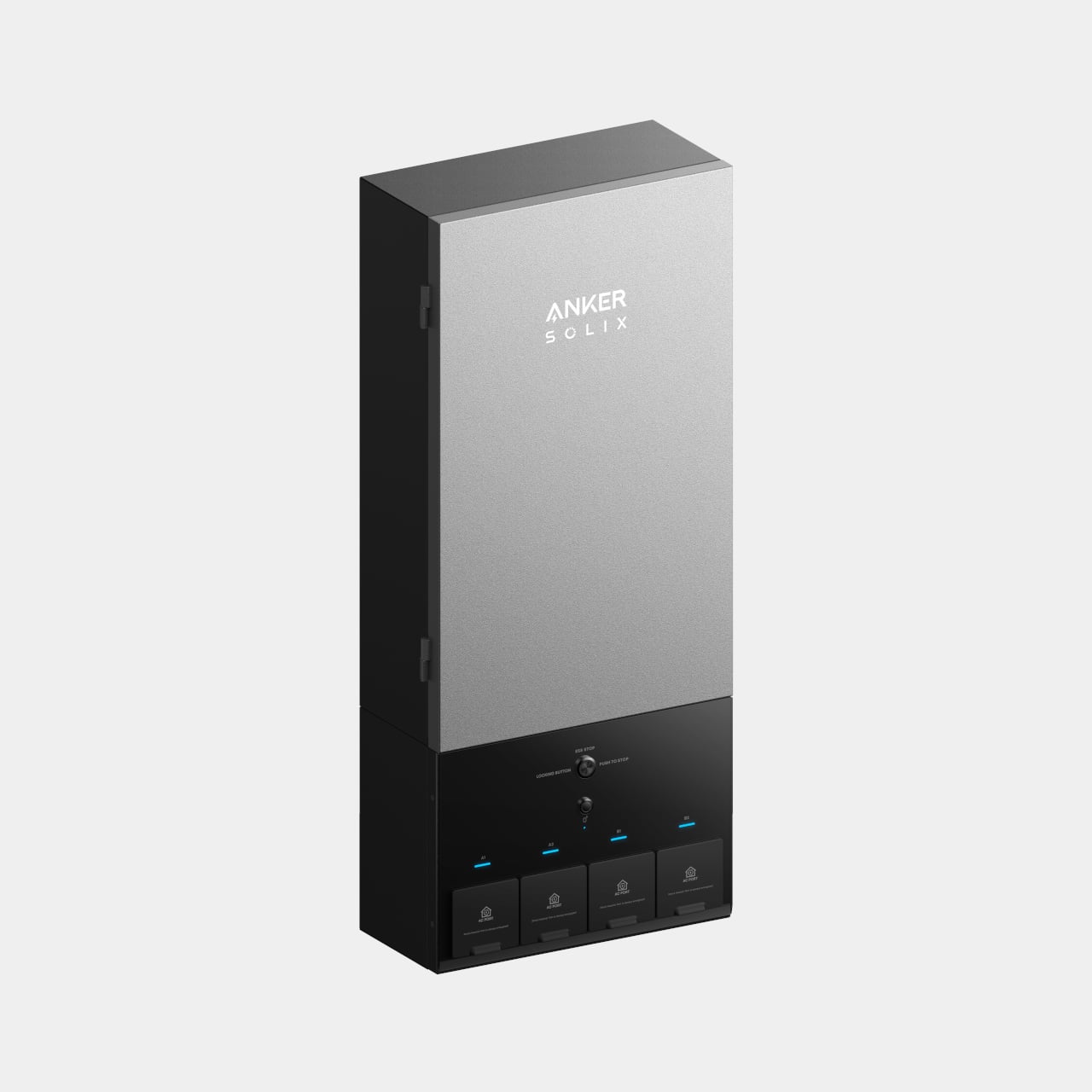
Anker SOLIX Power Dock

Anker SOLIX Smart Inlet

When the grid fails, the lights stay on without flickering, the Wi-Fi does not reboot, and the A/C keeps humming. The system switches over in under 20 milliseconds, fast enough that most electronics never even notice. The feeling is less about the exact speed and more about the house simply not going dark anymore, even when the neighborhood does and trees are still down.

The SOLIX E10 can watch the weather and charge itself ahead of a predicted storm through its Storm Guard feature, so you are not caught with half-full batteries when the first tree hits a line. The modular packs give enough headroom for multi-day outages, while the forecasting takes backup power from a reactive scramble to a quiet ritual where the system prepares itself before you think to check.

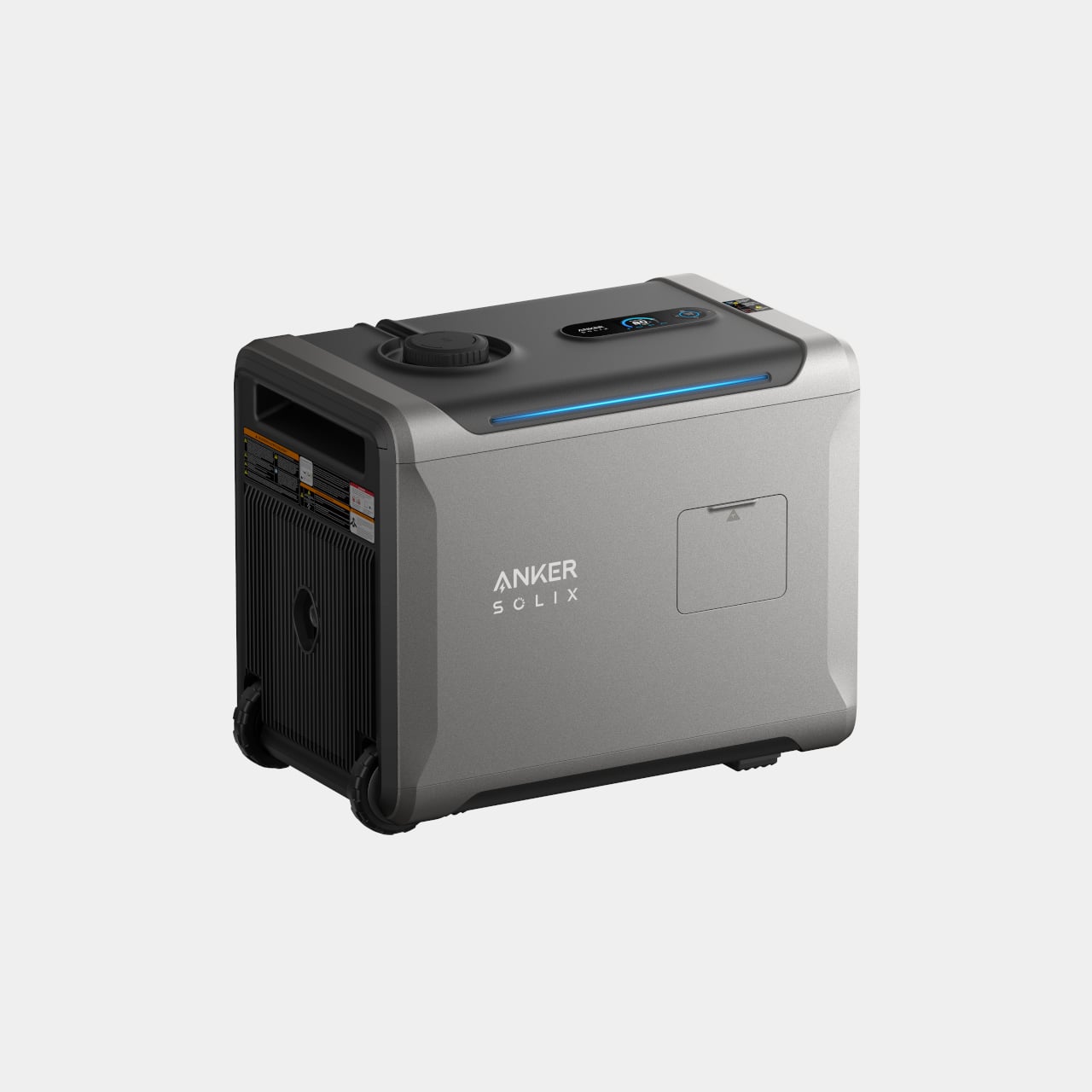
Anker SOLIX Smart Generator 5500

The optional smart generator stretches backup power through long outages without running nonstop. Instead of charging through AC conversion, it feeds the batteries directly over DC, which Anker claims is up to five times more fuel-efficient than a traditional setup. It runs when needed, rests at night, and feels more like part of a system than a last-resort accessory.

The SOLIX E10 is not only for rare blackouts. On normal days, it can store cheap off-peak energy or excess solar and run the house when rates spike, trimming bills. Each unit accepts up to about 9 kW of solar input, so a rooftop array keeps the batteries topped up, and the system prioritizes important circuits to keep essentials alive longer during outages.

The hardware is a family of clean, stackable modules, with batteries that can be wall-mounted or floor-standing as the setup grows. The core units use an all-metal NEMA 4 enclosure and are certified to UL 9540 and UL 9540A, signaling they are built to live outdoors, handle bad weather, and meet the toughest residential safety standards.

Power anxiety is real, the feeling that one bad storm could wipe out food, work, and comfort for days. An outage where the house stays lit, the air stays cool, and the fridge keeps humming while the street outside goes dark is the payoff Anker SOLIX E10 is built around, making blackouts feel like minor blips instead of household emergencies.

The post Anker SOLIX E10 Brings Hybrid Whole-Home Backup to the Modern House first appeared on Yanko Design.

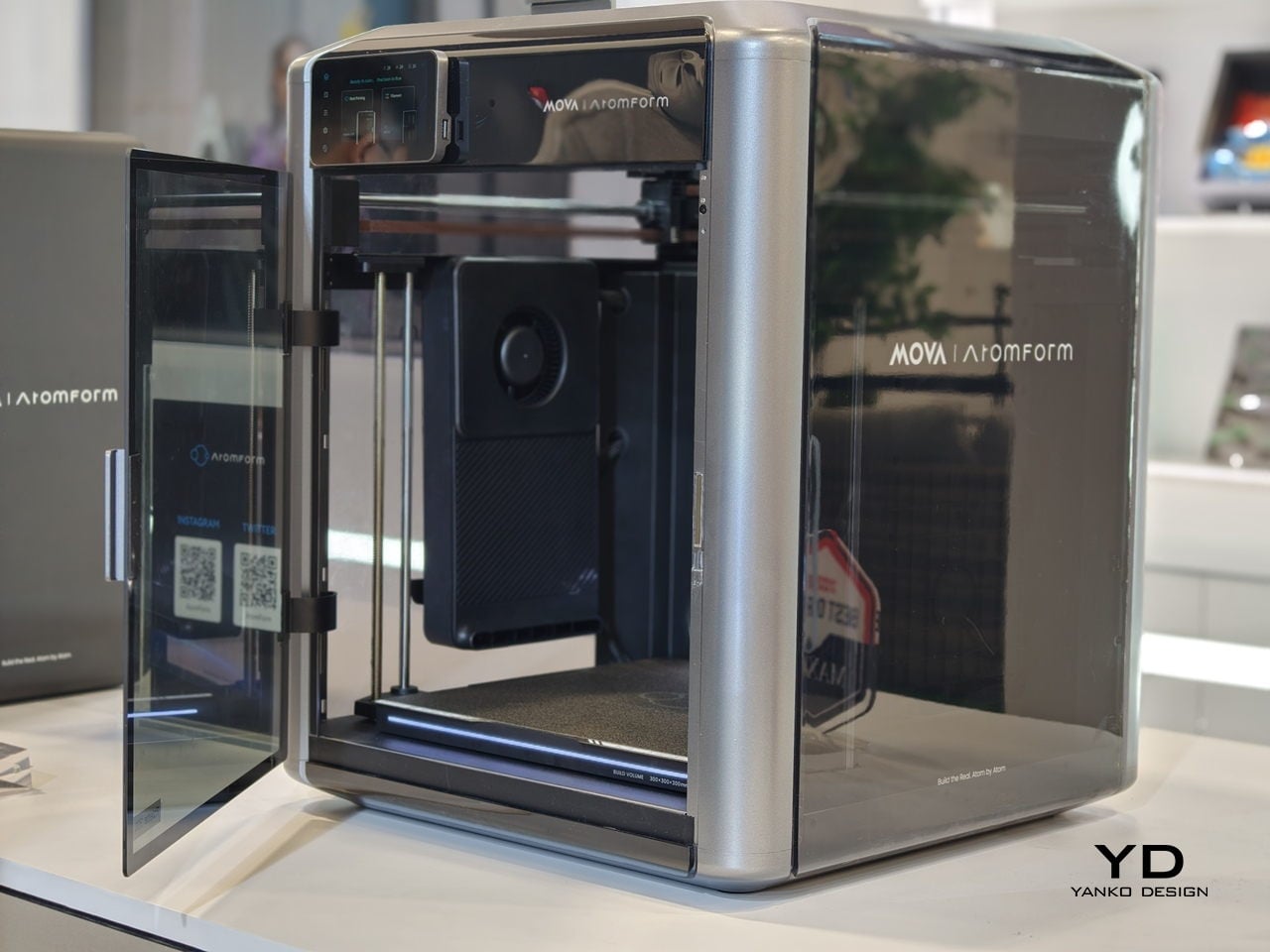
AtomForm Palette 300 3D Prints in 36 Colors With 12 Dedicated Nozzles

Desktop 3D printing has always promised “anything you can imagine,” but in practice, that usually means single-color PLA, lots of tinkering, and a trash bin full of purge towers. The gap between colorful renders and what actually comes out of most desktop printers has been wide enough to make many designers quietly give up on FFF for anything beyond simple prototypes. AtomForm’s Palette 300 shows up at CES 2026, trying to close that gap.

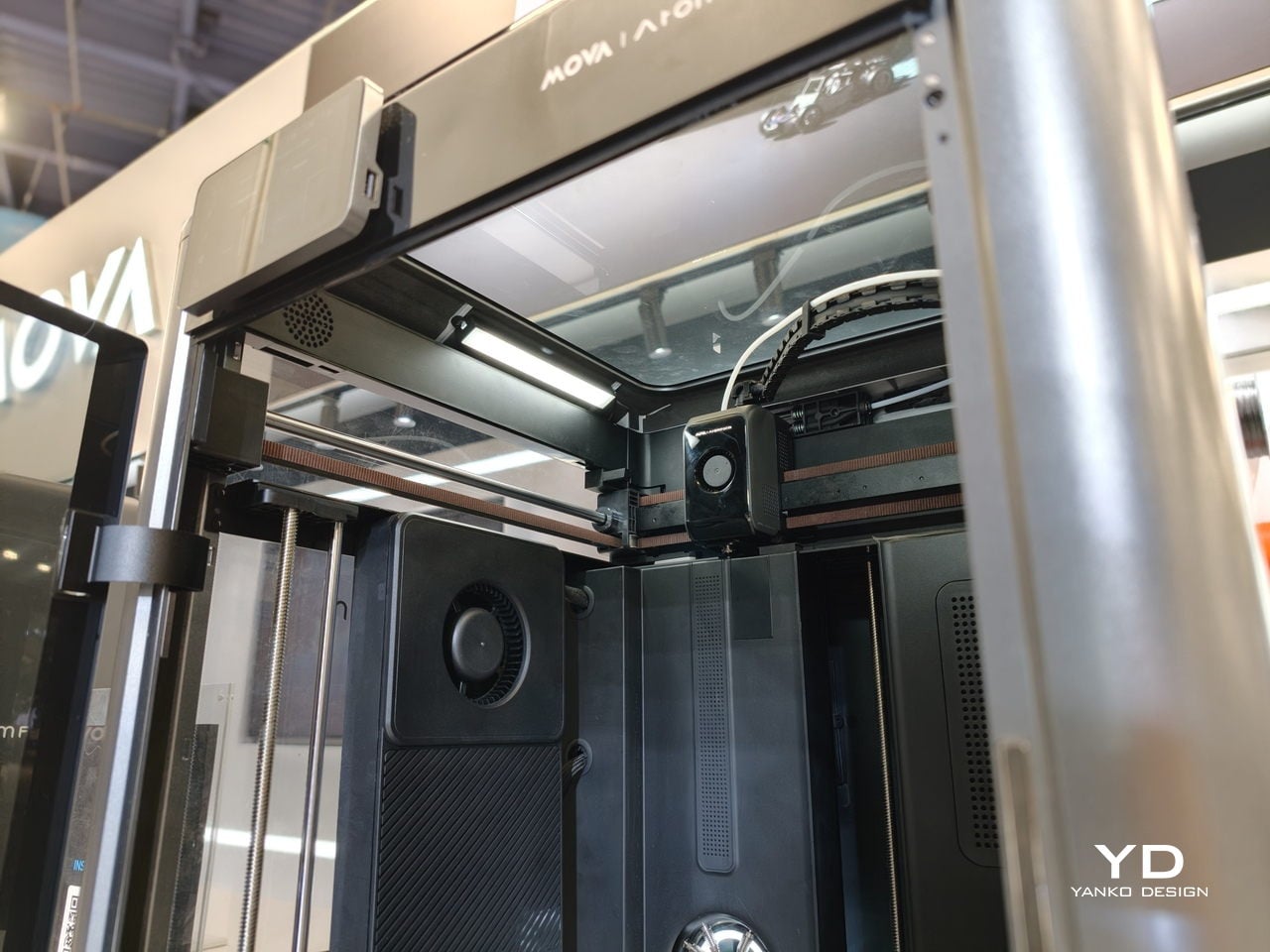
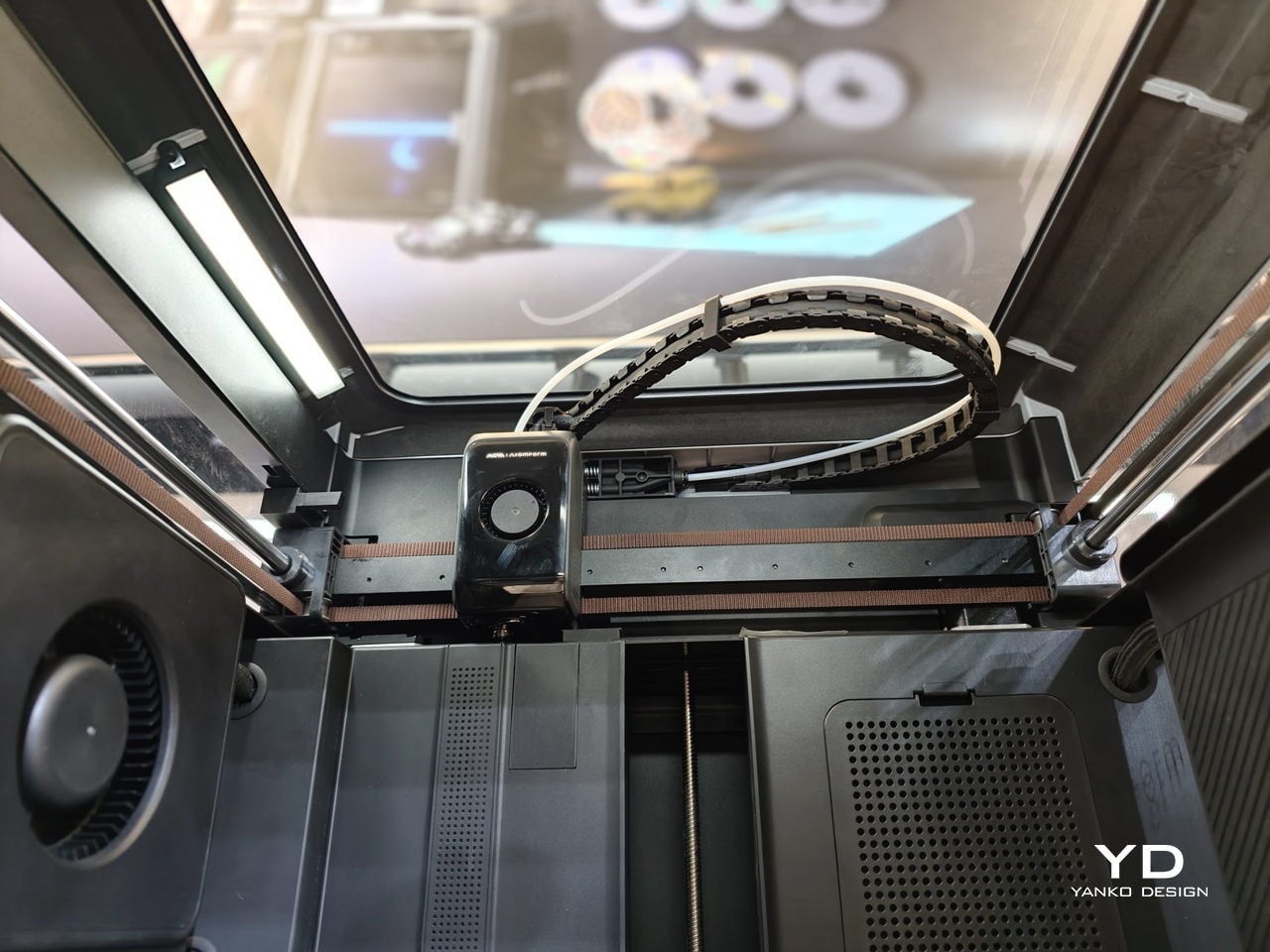
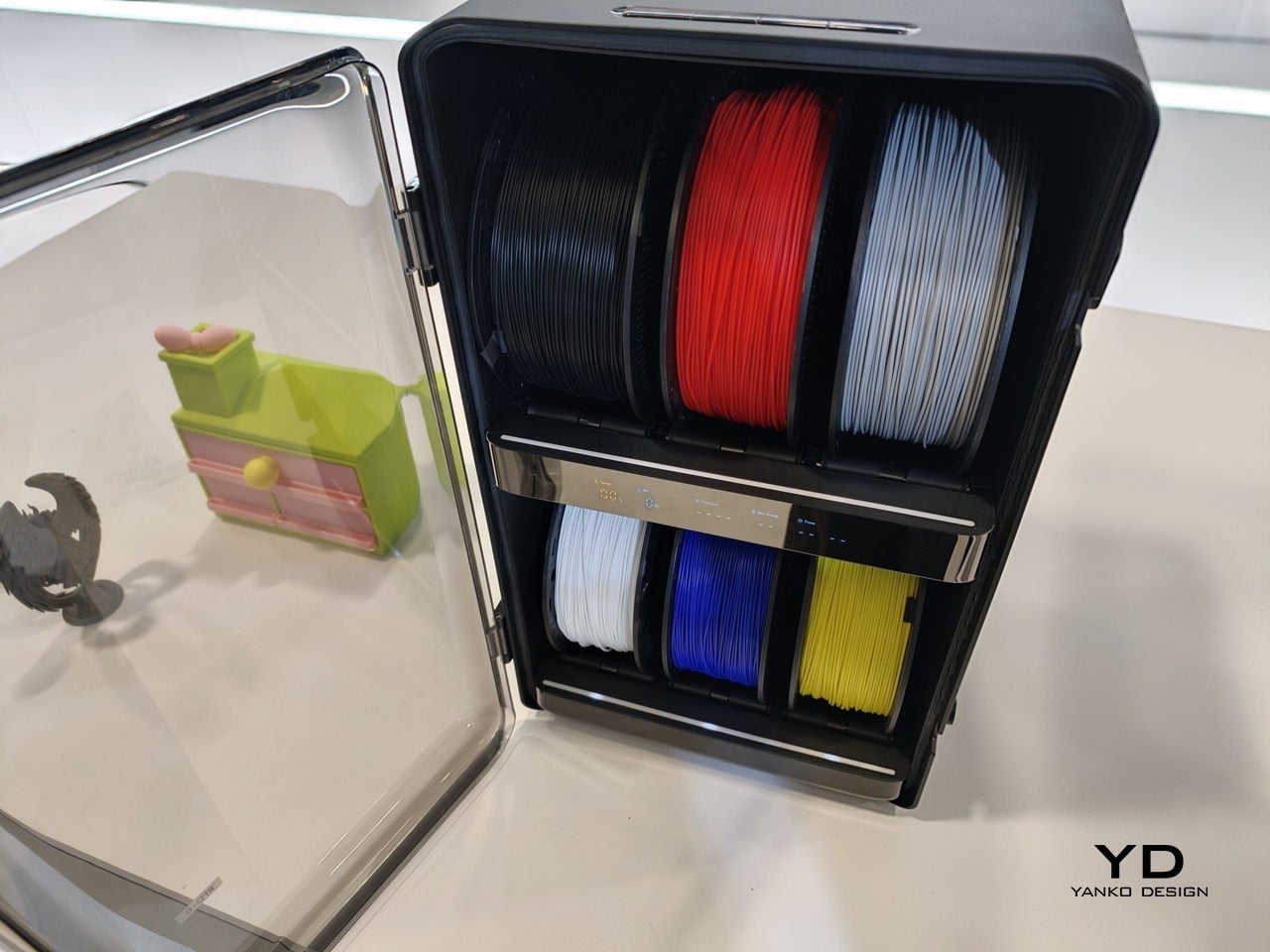
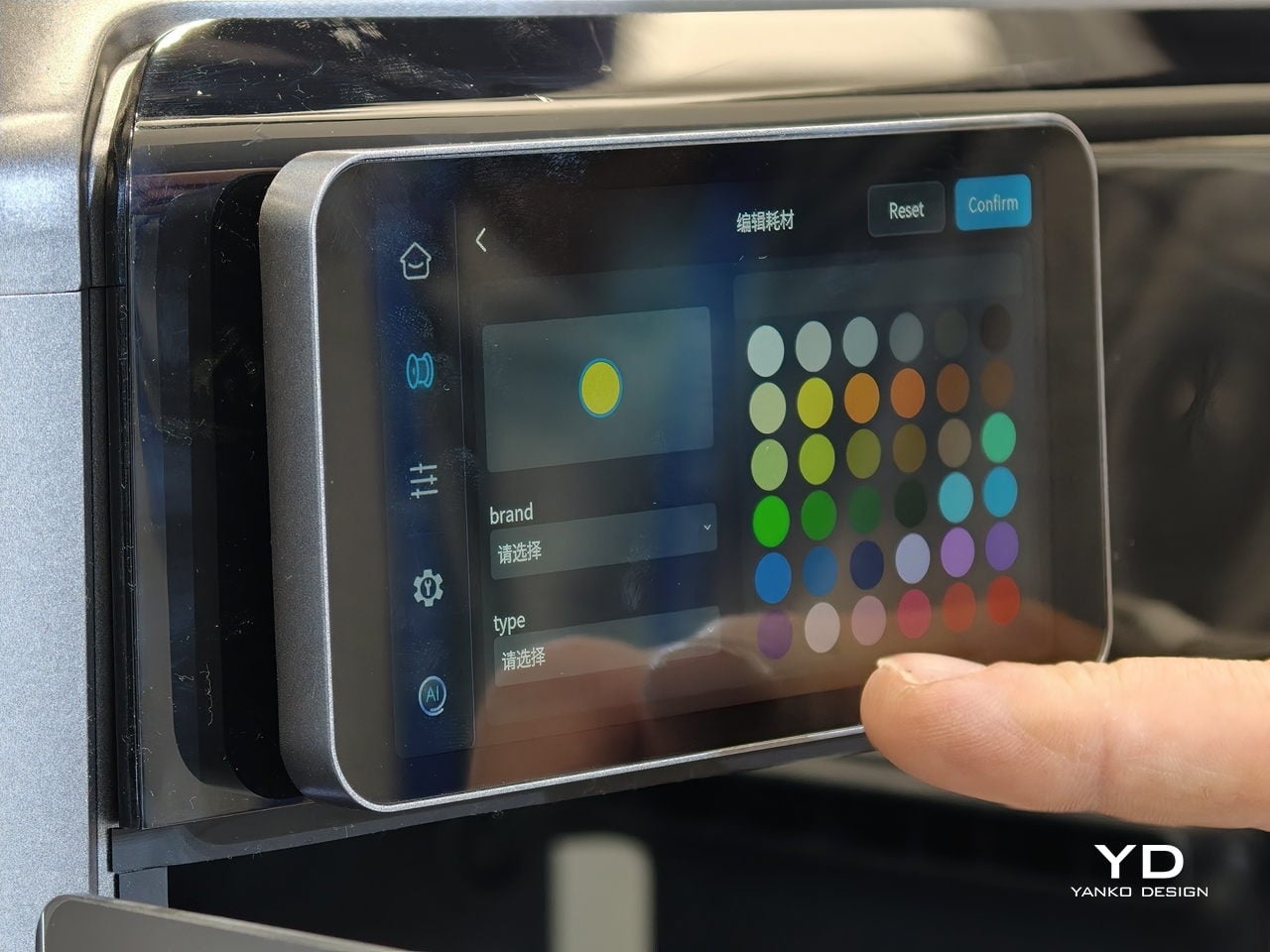
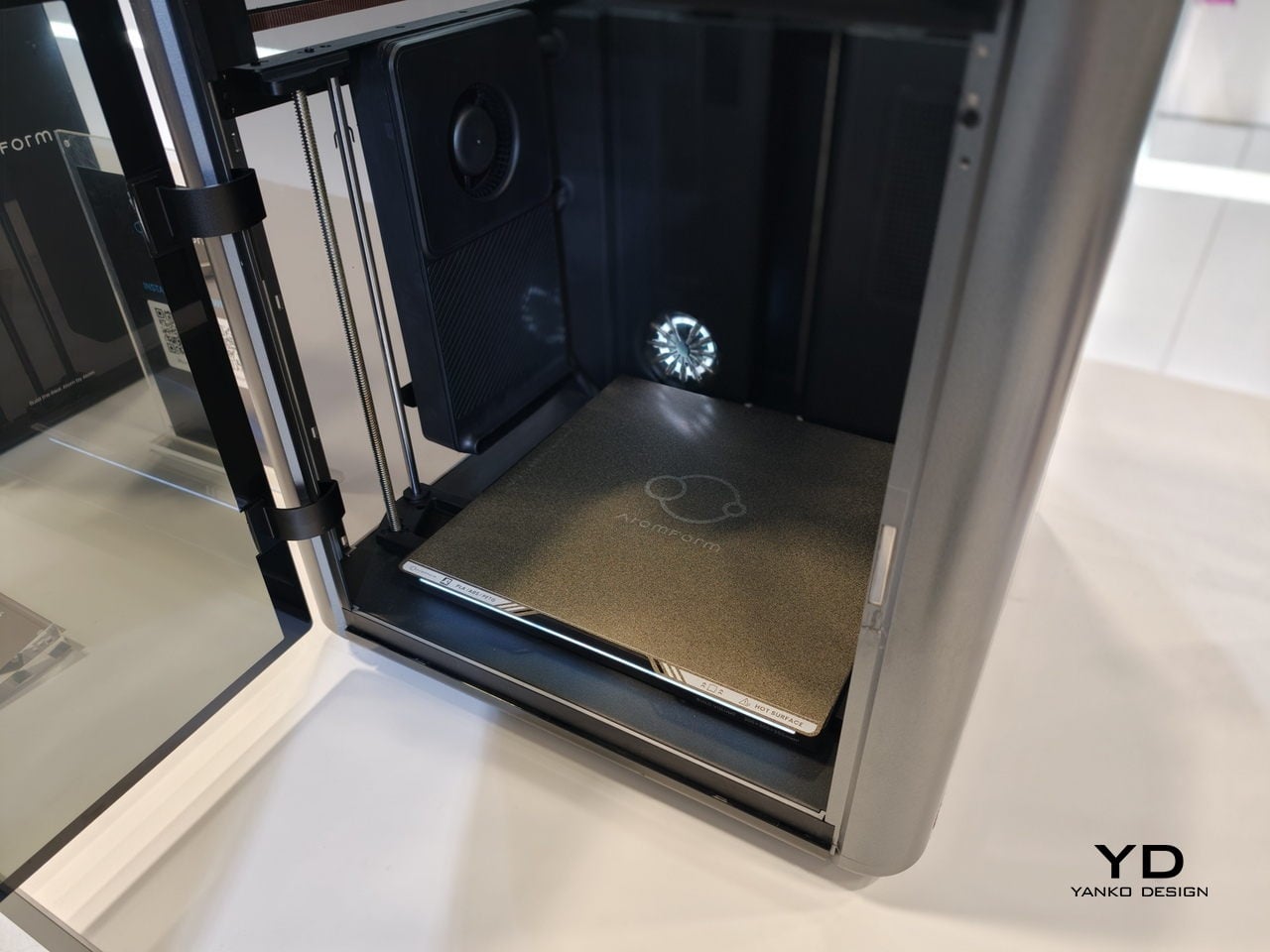
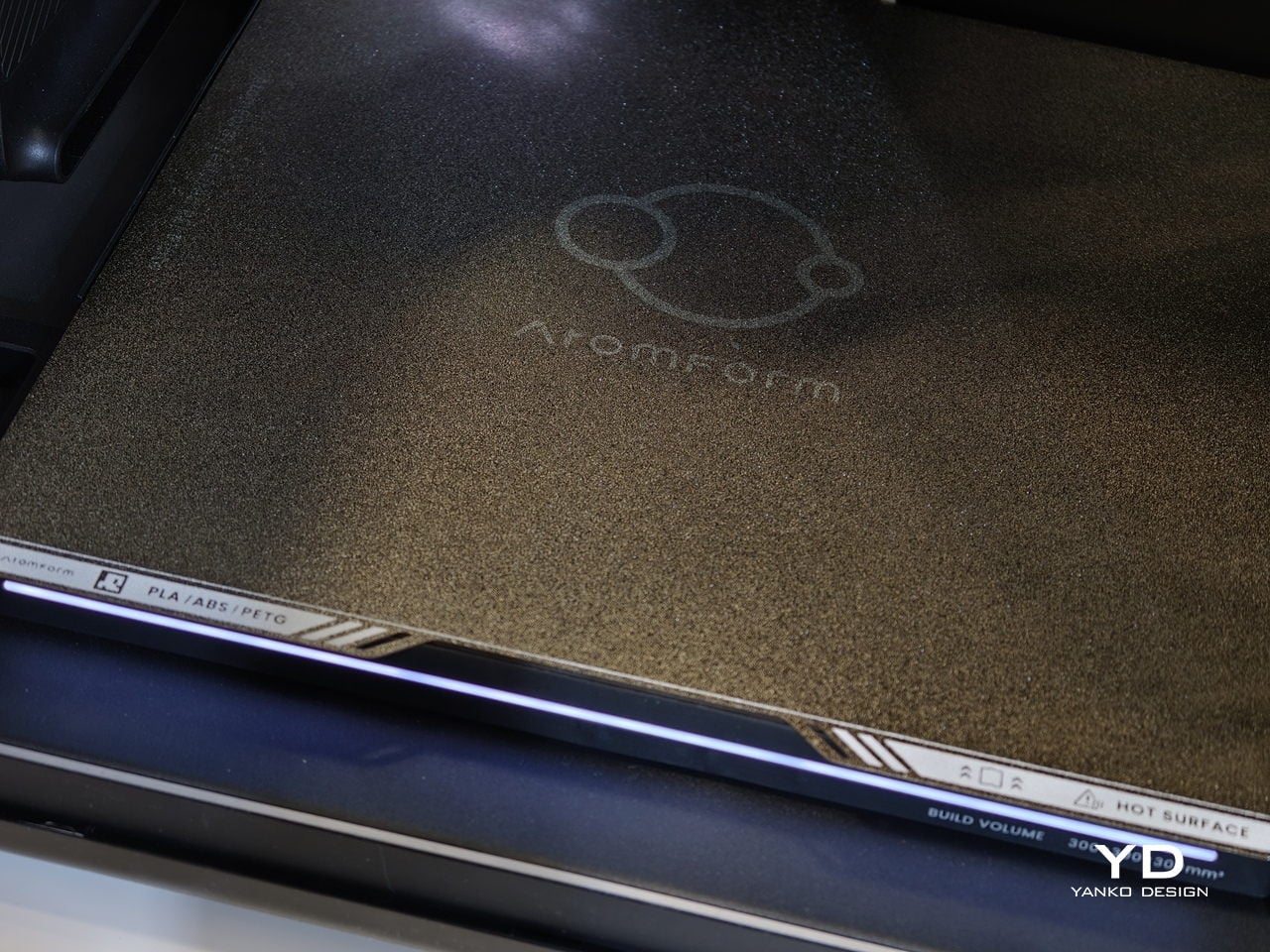
AtomForm Palette 300 is a 12-nozzle, enclosed 3D printer built to combine up to 36 colors and 12 materials in a single print. It uses a rotating OmniElement automatic nozzle-swapping system, where each nozzle stays dedicated to one filament. AtomForm claims that the approach cuts filament waste by up to 90% by avoiding constant purging, while still hitting 800 mm/s print speeds and 25,000 mm/s² acceleration in a 300 × 300 × 300 mm enclosed cube.

Designer: AtomForm

Most multi-material printers either swap entire toolheads or force a single nozzle to purge every time you change color, which costs time and plastic. The Palette 300’s turret of 12 filament-dedicated nozzles can jump from one to another without constant reloading, so complex color and material changes do not feel like a penalty. That means a product prototype can have brand-accurate colors and soft-touch grips in one pass.

The 350°C hotend and 300mm cube volume give headroom for engineering filaments and larger pieces, not just small decorative figures. A prototype sneaker with flexible soles and rigid eyelets, or an architectural mock-up that mixes translucent windows with textured facades, can happen in one job instead of several glued-together prints. That kind of integration changes how much iteration fits into a day and how confident you can be that parts will actually fit together.

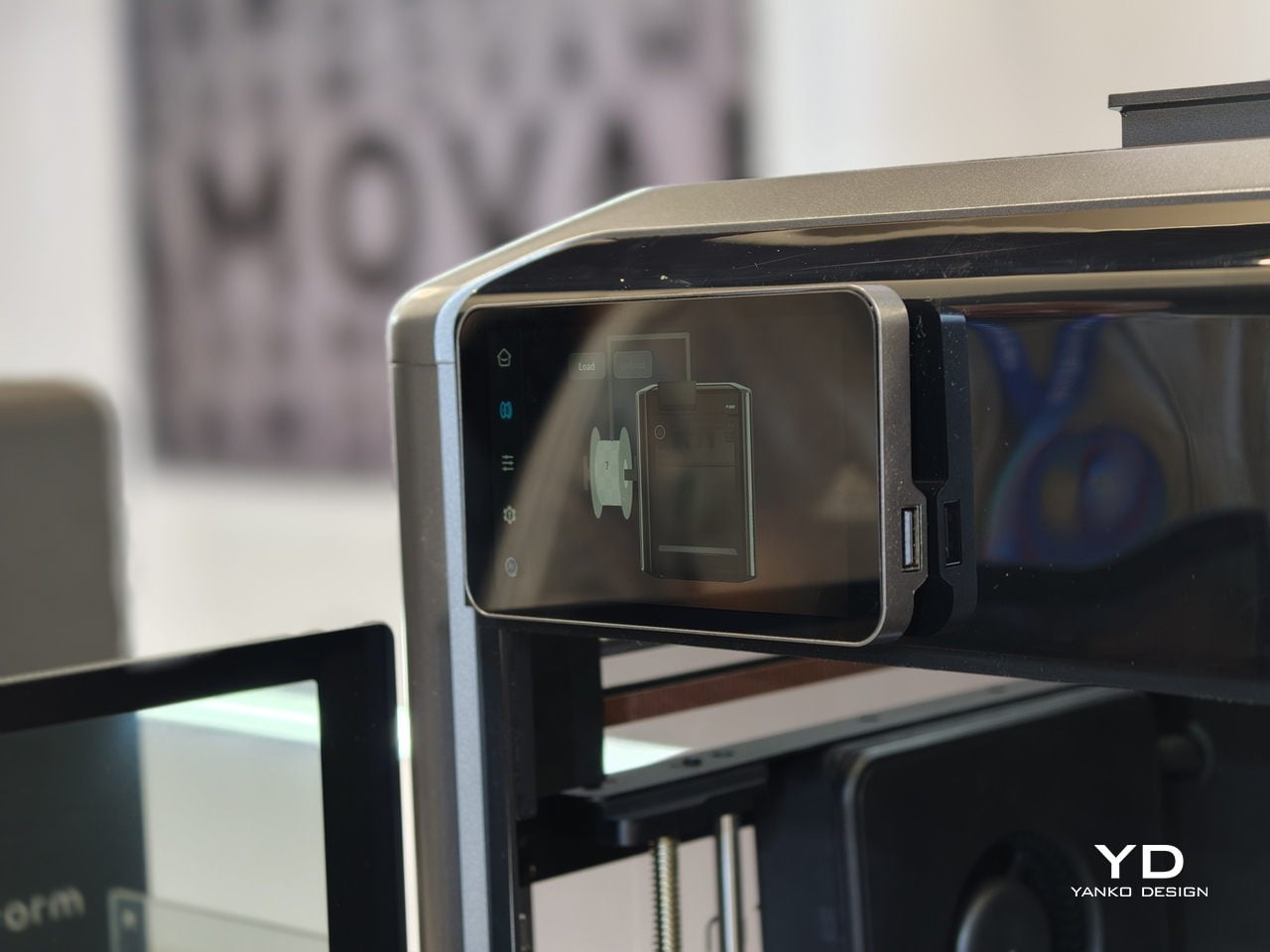
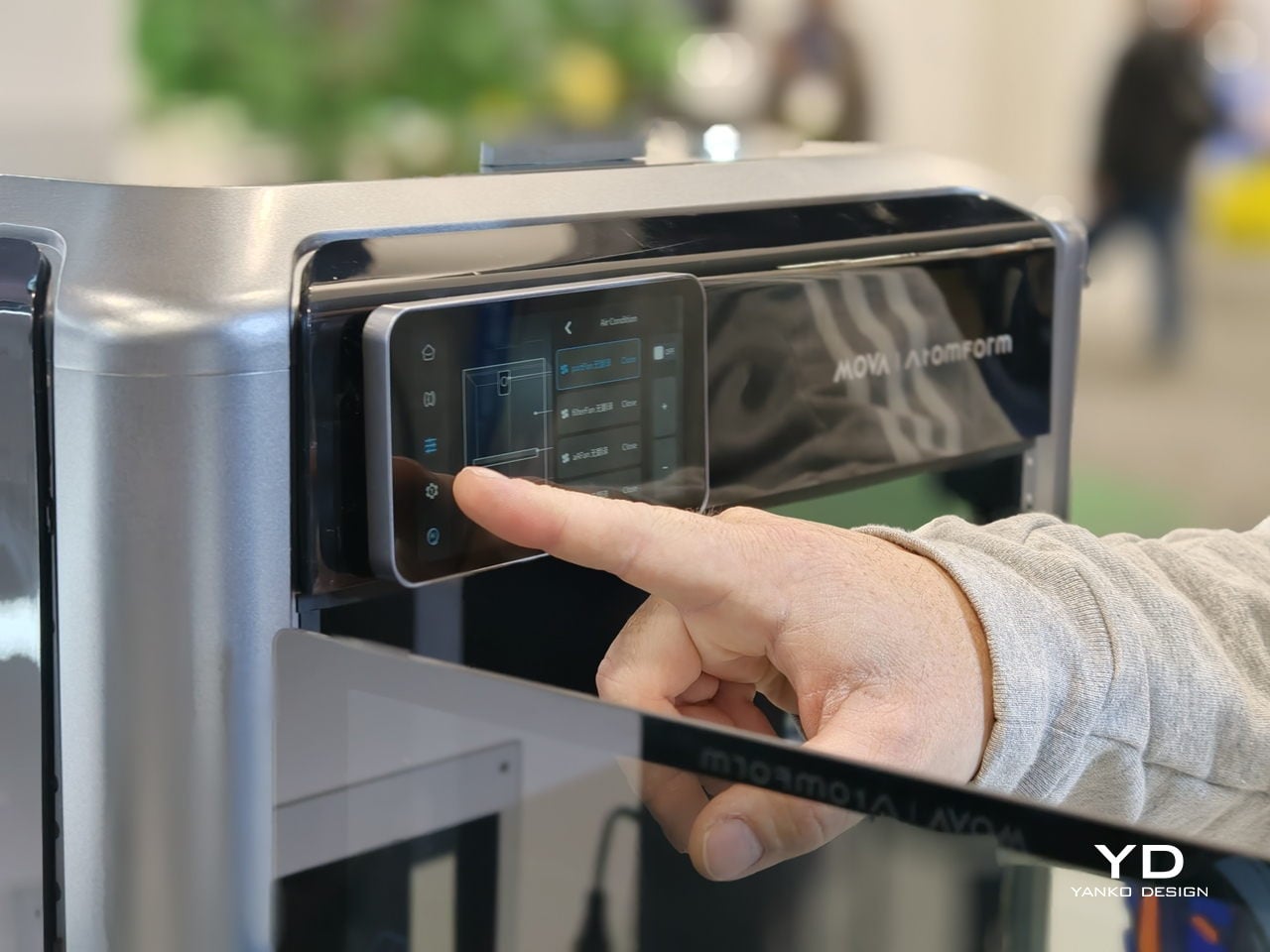
Reliability is where the AI and sensing layer come in. The Palette 300 uses more than 50 sensors and four AI-powered cameras to watch the print in real time. Those systems automatically calibrate nozzle alignment across all 12 extruders and look for defects before a long job is ruined. For complex, multi-hour prints, that is the difference between trusting the machine to finish and spending the afternoon hovering nearby.

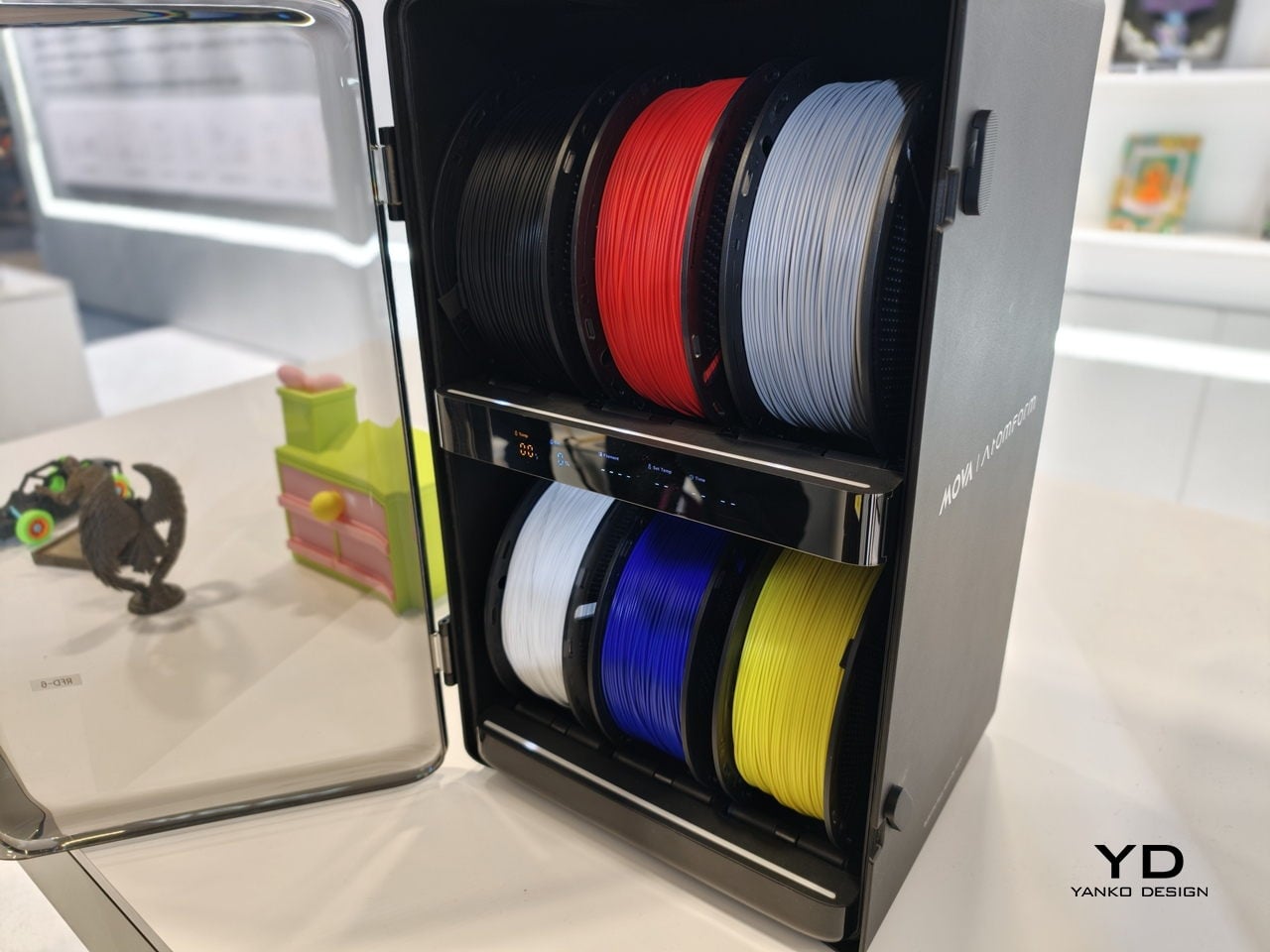
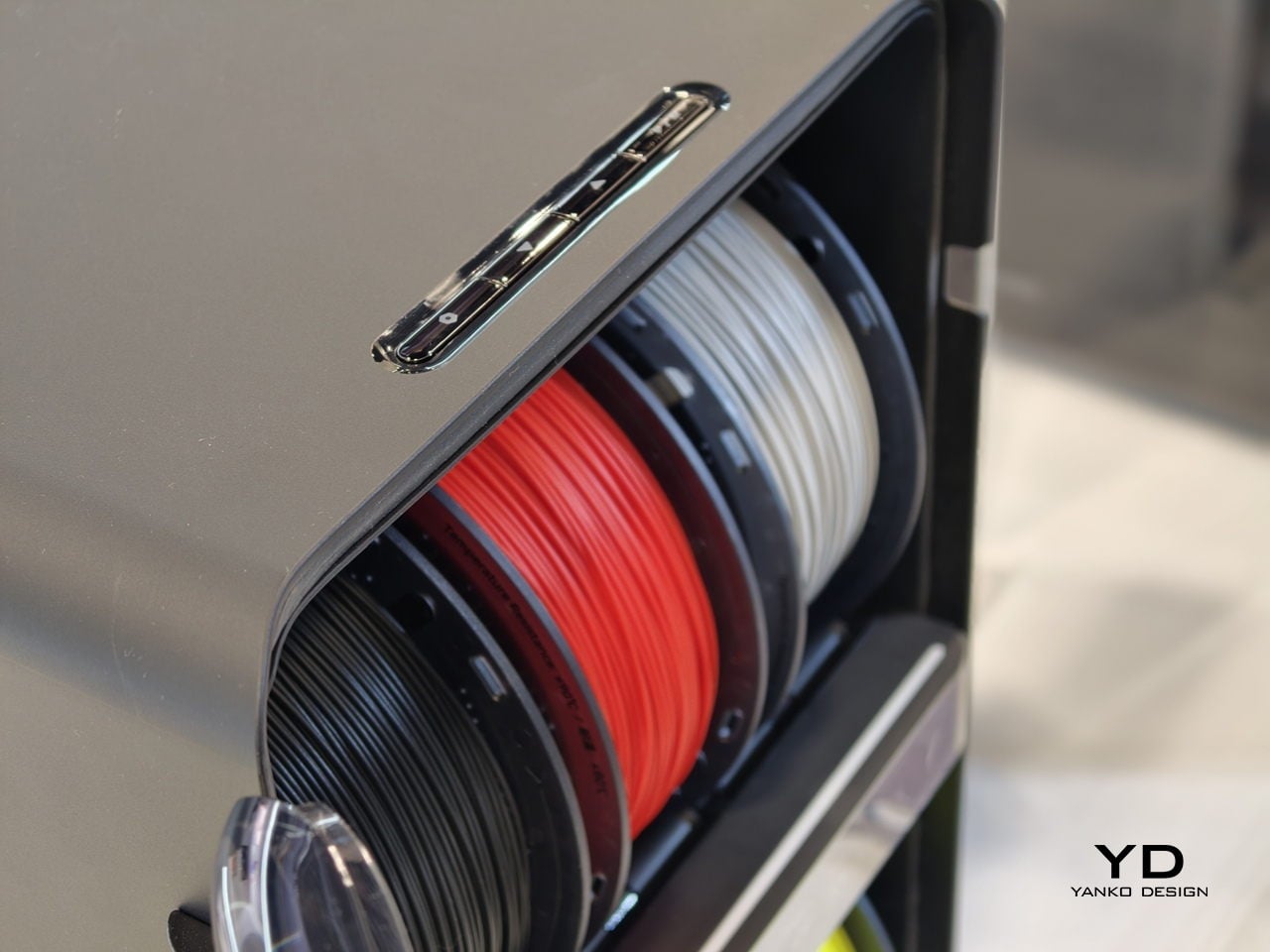
The studio-friendly details matter just as much. The fully enclosed design, ≤48 dB noise rating, and built-in air filtration make it plausible to run the Palette 300 in a shared office or classroom instead of a back room. It can connect to up to six RFD-6 filament boxes that keep 36 spools dry and ready, so a full color and material library can stay loaded instead of living in cardboard boxes.

AtomForm Palette 300 is an attempt to move multi-color FFF from novelty into something designers can rely on. It is a first-generation machine from a new brand, so long-term reliability and software polish still have to be proven. But the combination of 12-nozzle hardware, AI-assisted oversight, and a thought-through filament ecosystem makes it one of the more interesting 3D printers to come out of CES 2026, especially for people tired of choosing between detail, color, material diversity, or speed.

The post AtomForm Palette 300 3D Prints in 36 Colors With 12 Dedicated Nozzles first appeared on Yanko Design.

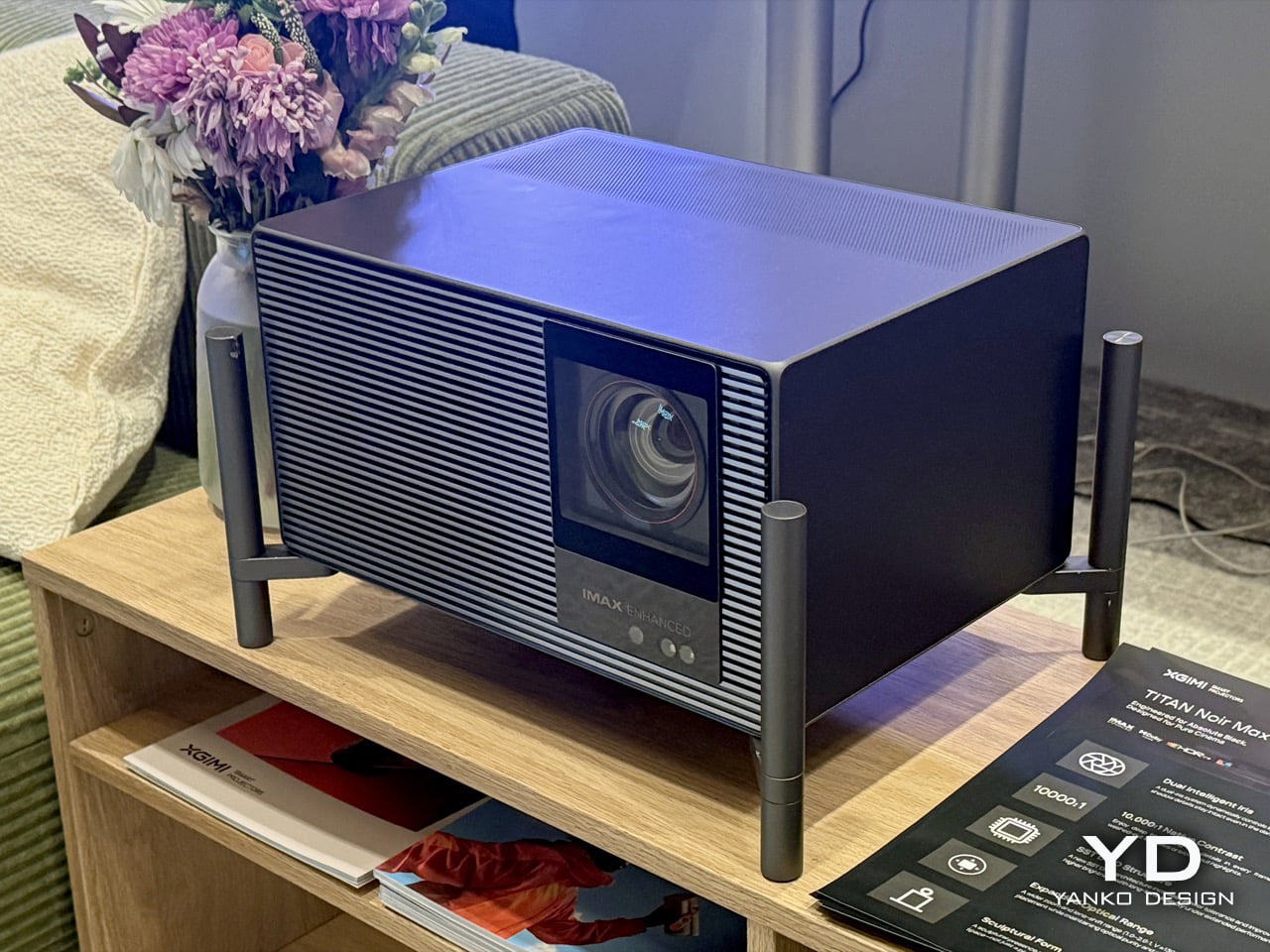
Forget Brightness Wars, XGIMI’s Titan Noir Max at CES 2026 is starting the ‘Projector Contrast War’

Let’s be honest, “Titan Noir Max” sounds less like a piece of home theater equipment and more like the star of a gritty graphic novel adaptation. You can almost picture him now: a hulking silhouette perched on a gargoyle, rain dripping from his ridiculously oversized collar, muttering about how the city is a cesspool that needs cleansing. The “Max” suffix implies he’s the even darker, even moodier version of the original Titan Noir, who was probably already too grim for the Saturday morning cartoon lineup. He’s the hero you call when the regular Titan just isn’t feeling angsty enough to solve the case.


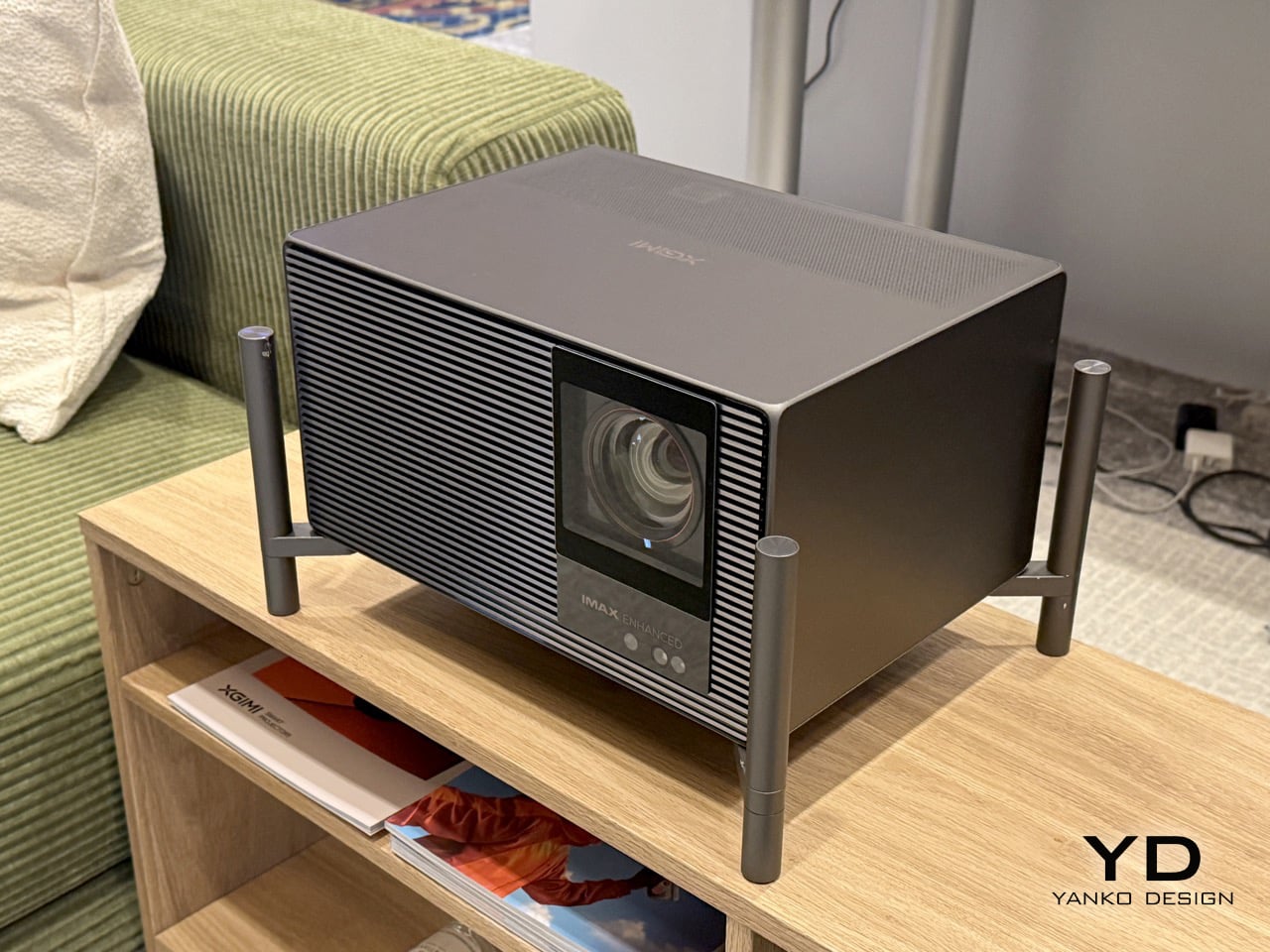
As it turns out, that wonderfully over-the-top name is surprisingly appropriate, because Xgimi’s latest creation is a hero in the fight against one of home cinema’s greatest villains: the washed-out, milky gray that so many projectors try to pass off as “black.” Unveiled at CES 2026, the Titan Noir Max is a 4K laser projector built with a singular mission to deliver truly deep, dark black levels. It accomplishes this with a dual iris system, a piece of hardware usually found in much more expensive equipment, allowing it to hit an impressive 10,000:1 native contrast ratio. So while it might not fight crime on rain-slicked streets, it is engineered to bring that perfect, cinematic darkness right into your living room.

Designer: Xgimi

That dual iris is perhaps the most crucial key to why this small projector performs so much better than its larger sibling, the Titan from last year. For years, the projector market has been locked in a pointless arms race for brightness, with manufacturers bragging about lumens while completely ignoring the other side of the equation. Xgimi is making a statement by building a machine around contrast. A 10,000:1 native ratio, with a dynamic contrast that reaches 100,000:1, means this projector can modulate its light output with incredible precision. This allows it to render deep shadows in a dark scene without crushing all the detail, and then immediately pivot to a bright scene without blowing out the highlights. It’s the kind of performance that separates a good image from a truly cinematic one.

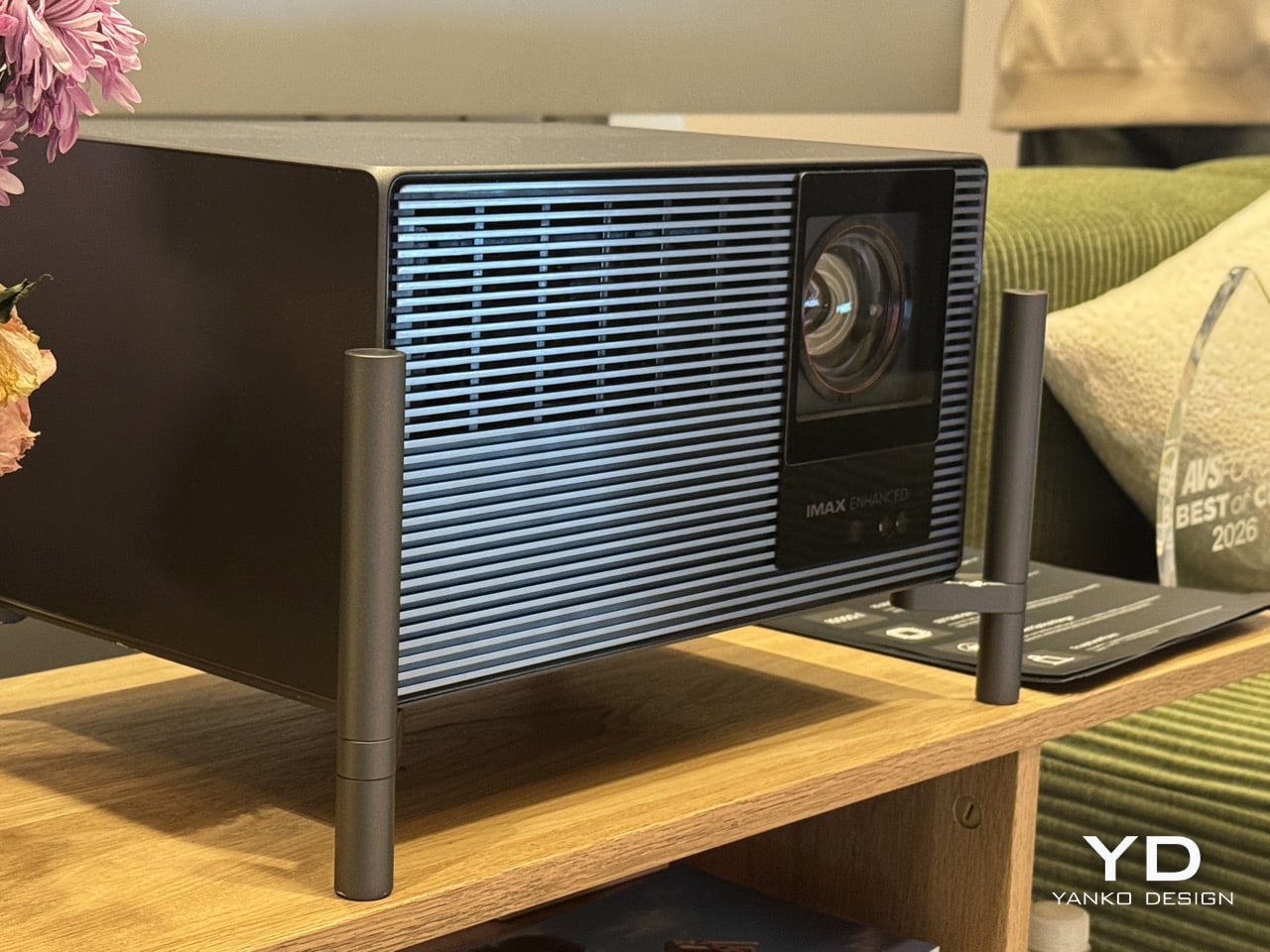
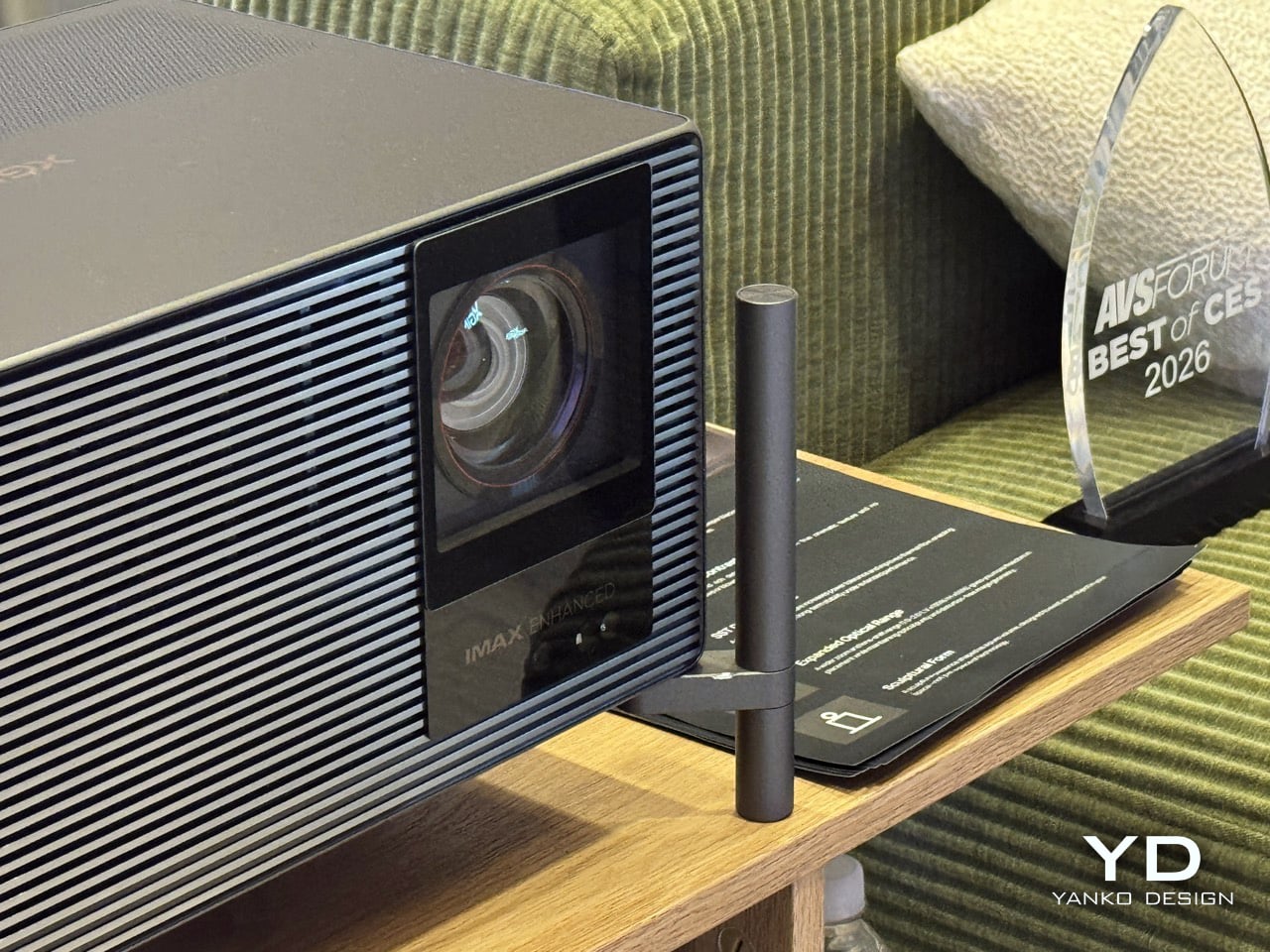
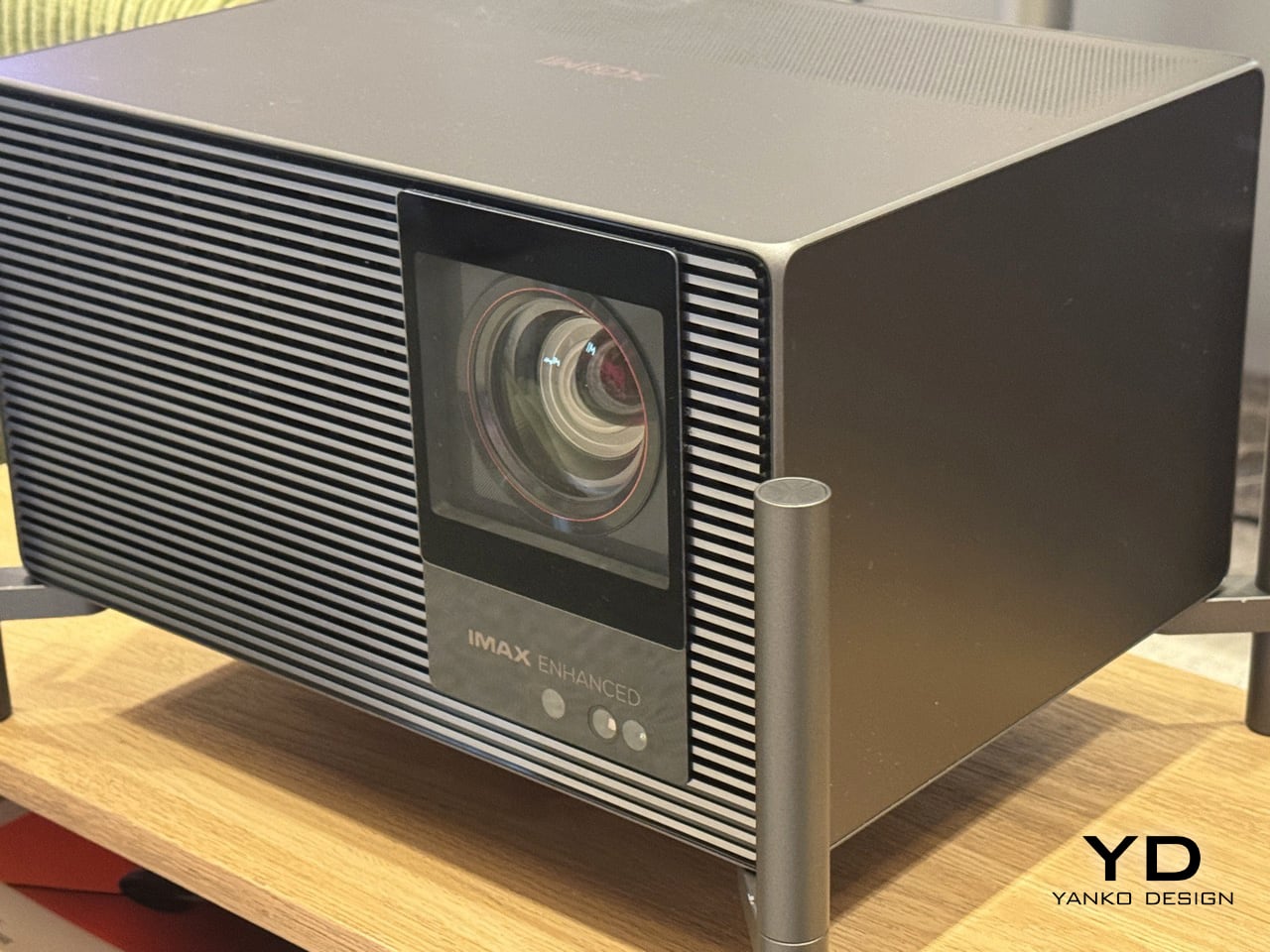
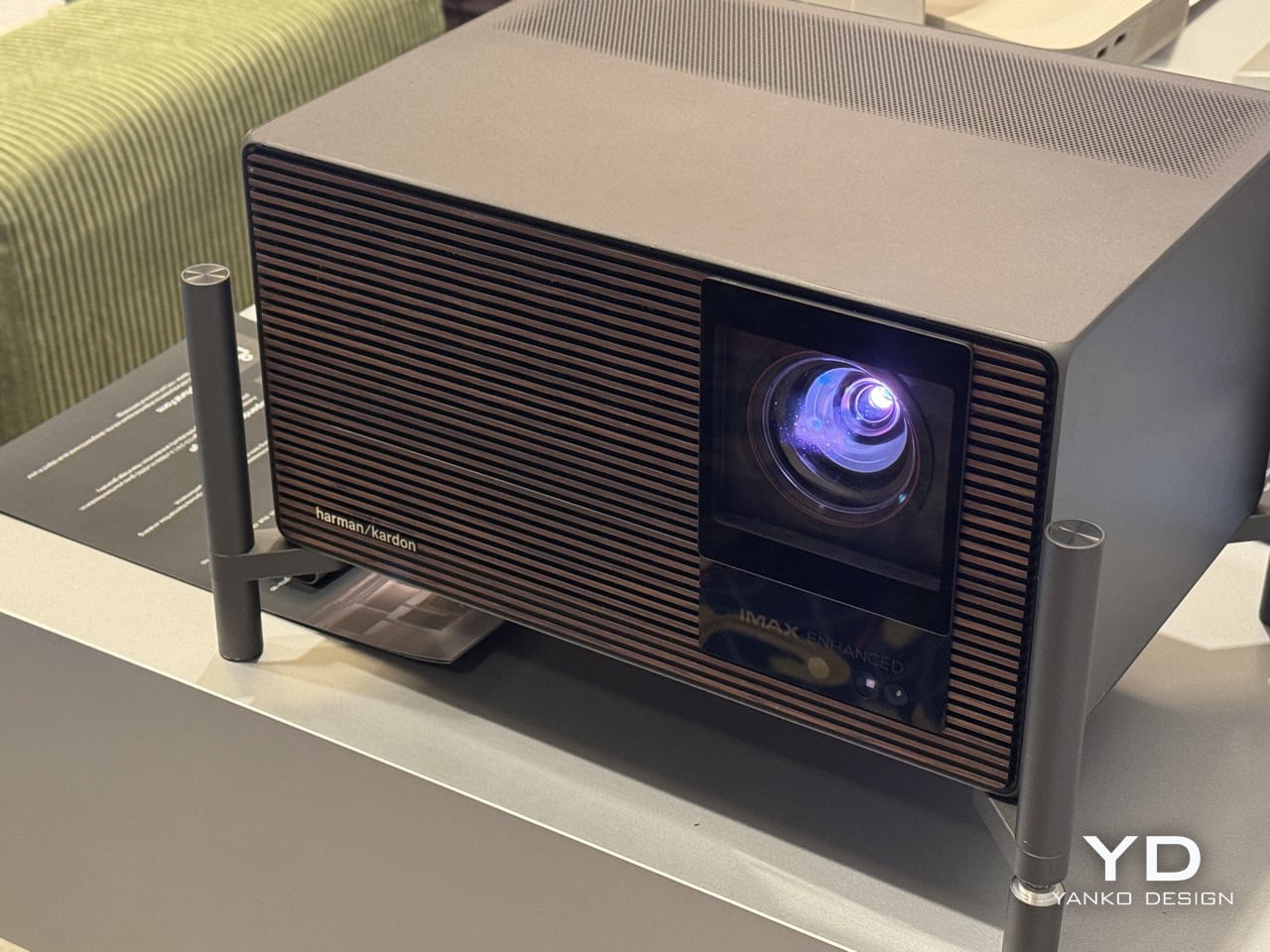
The physical design also signals that this isn’t just another lifestyle gadget meant to blend in. The Titan Noir Max has a taller, squared-off profile with a refined industrial grille that looks purposeful. It stands on four metal legs, giving it a strange, almost creature-like stance that some have compared to a robot dog. This is a confident piece of hardware that doesn’t apologize for being a machine. It’s a welcome departure from the endless parade of rounded white boxes, suggesting that its performance is just as serious as its appearance. The metal finish and multiple colorways give it a premium feel that matches its professional ambitions.

Of course, none of that contrast matters if the optics can’t keep up. Xgimi is using a new Single Springtip Torsional, or SST, DMD chip inside, which is engineered to handle a higher density of light without losing sharpness or creating artifacts. This is crucial when you’re working with a laser light source and a dynamic iris that are constantly adjusting the image. While the company hasn’t confirmed if it’s using the same large 0.78-inch DMD from the original Titan, the new optical system is clearly designed for precision. It’s a complex dance between the light source, the iris, and the chip, and it seems Xgimi has choreographed it to maintain 4K clarity from corner to corner.

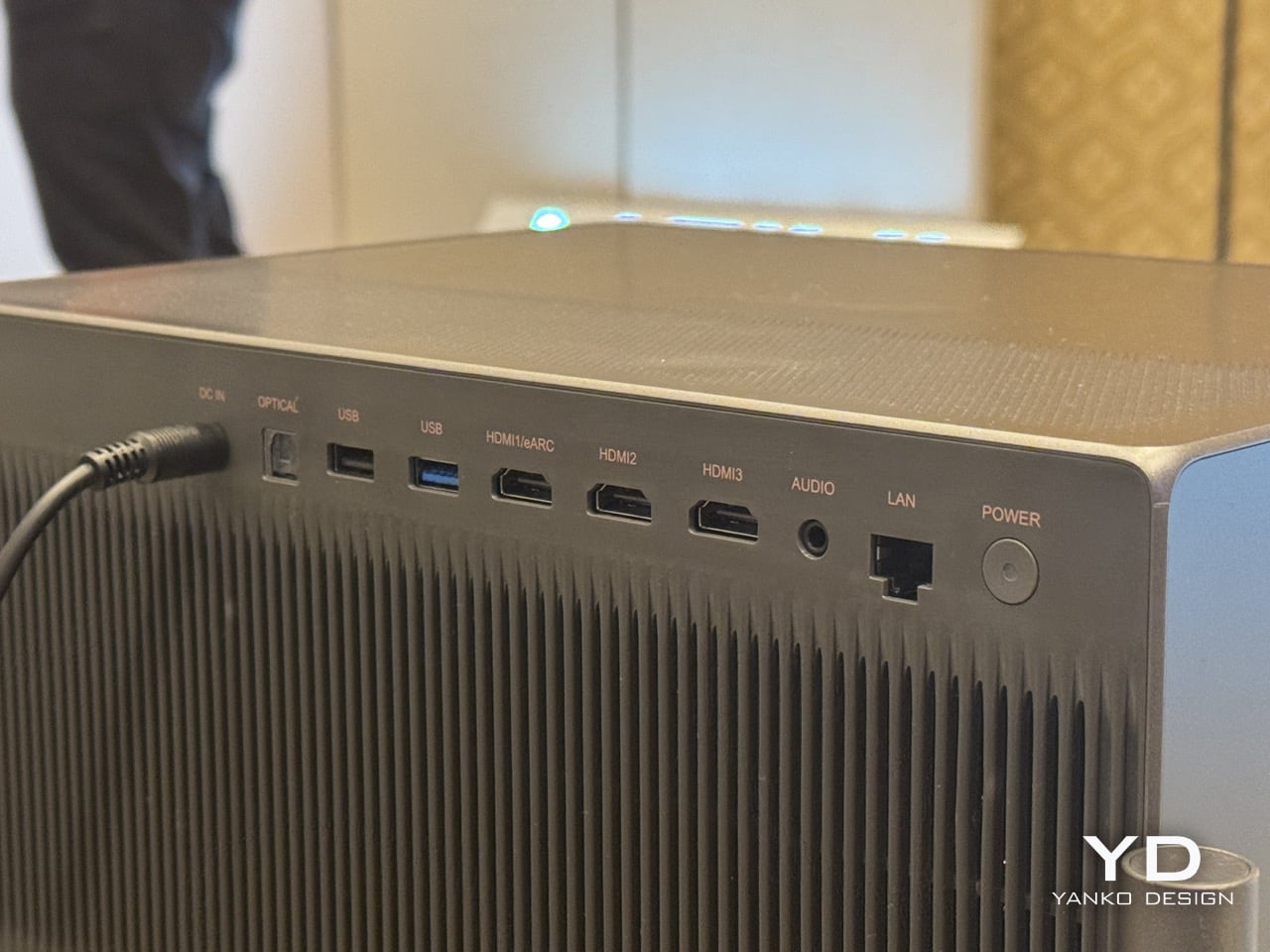
Projector placement is the bane of many home theater setups, but the Titan Noir Max offers a massive range of adjustment. You get a vertical lens shift of plus or minus 130 percent and a horizontal shift of plus or minus 50 percent. Those are numbers you typically see on dedicated installation projectors, and it means you can place the unit well off-center without resorting to digital keystone correction that degrades the image. Paired with a 1.0 to 2.0:1 throw ratio, this projector gives you an enormous amount of freedom to get the perfect picture in almost any room.

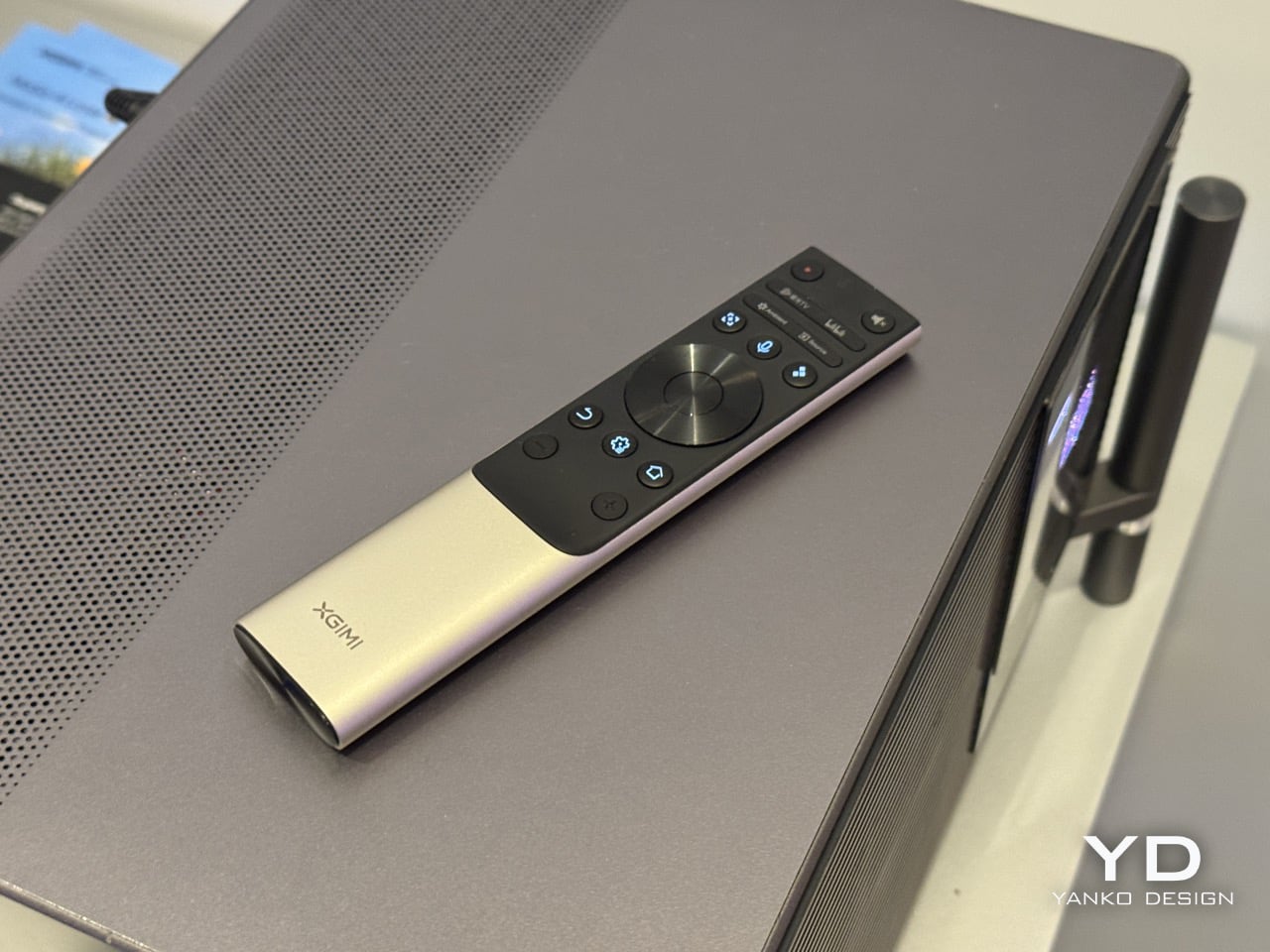
Internally, it’s running on an MT9681 SoC with 4GB of RAM and 64GB of storage, which is more than enough to handle its smart features and interface smoothly. The support for up to 240Hz output is also a nice touch, opening the door for high-refresh-rate gaming if the input lag is low enough. Add in the built-in Harman Kardon speakers and IMAX Enhanced certification, and you have a complete package that doesn’t demand a separate audio system for a great experience. It’s a well-rounded machine that understands its audience wants both performance and convenience. The big question remains the price, which Xgimi is keeping quiet about until pre-orders open later this quarter, but this feels like a genuine contender for the best high-end projector of the year.

The post Forget Brightness Wars, XGIMI’s Titan Noir Max at CES 2026 is starting the ‘Projector Contrast War’ first appeared on Yanko Design.