Turntables have crept back into living rooms as much for how they look as for how they sound. The usual palette is black boxes, silver arms, maybe a walnut plinth if you’re lucky. A record player sits in the open on a sideboard or media console, so it has to pull double duty as a hi-fi component and visual anchor, something you notice even when it isn’t spinning.
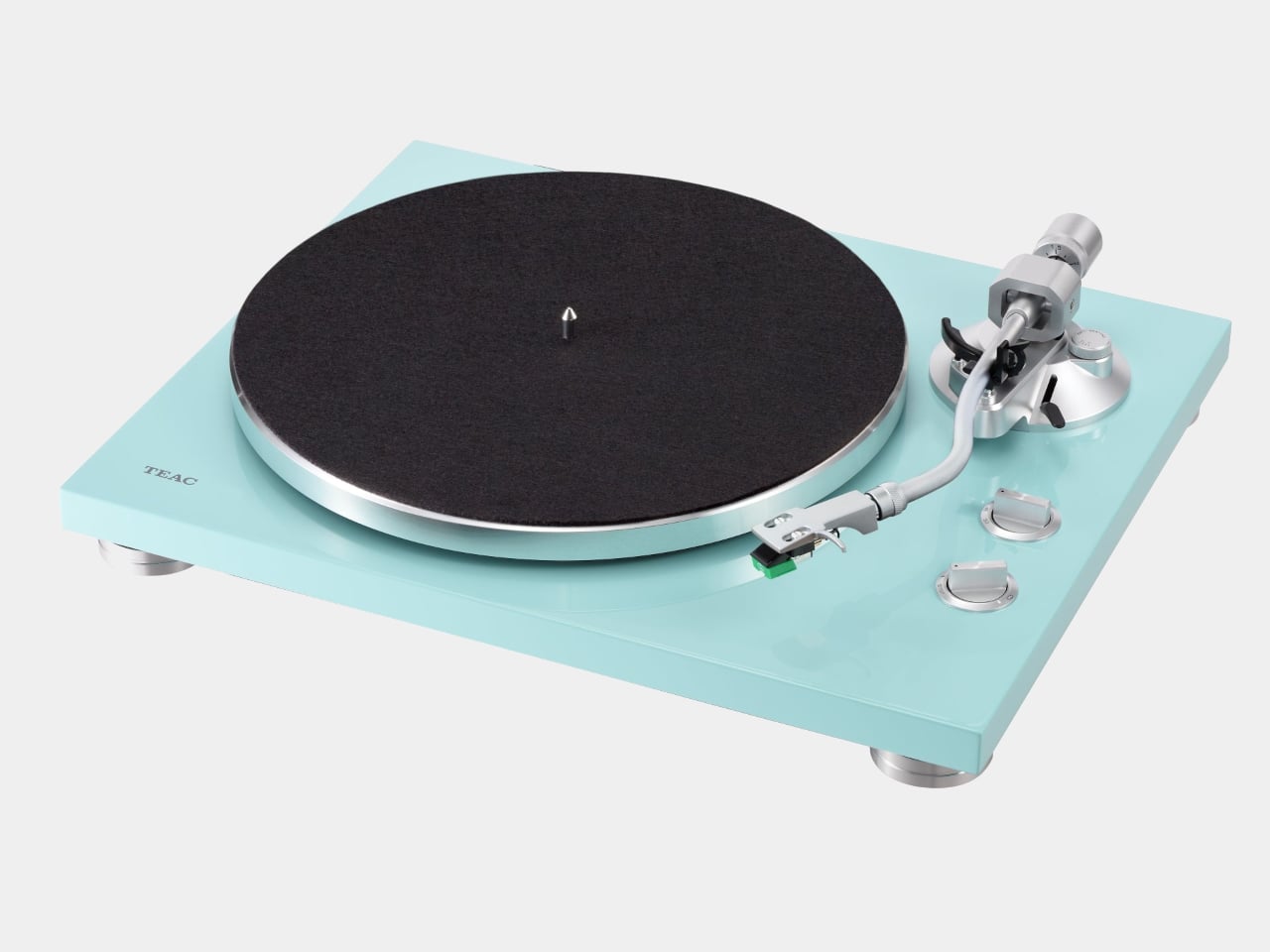
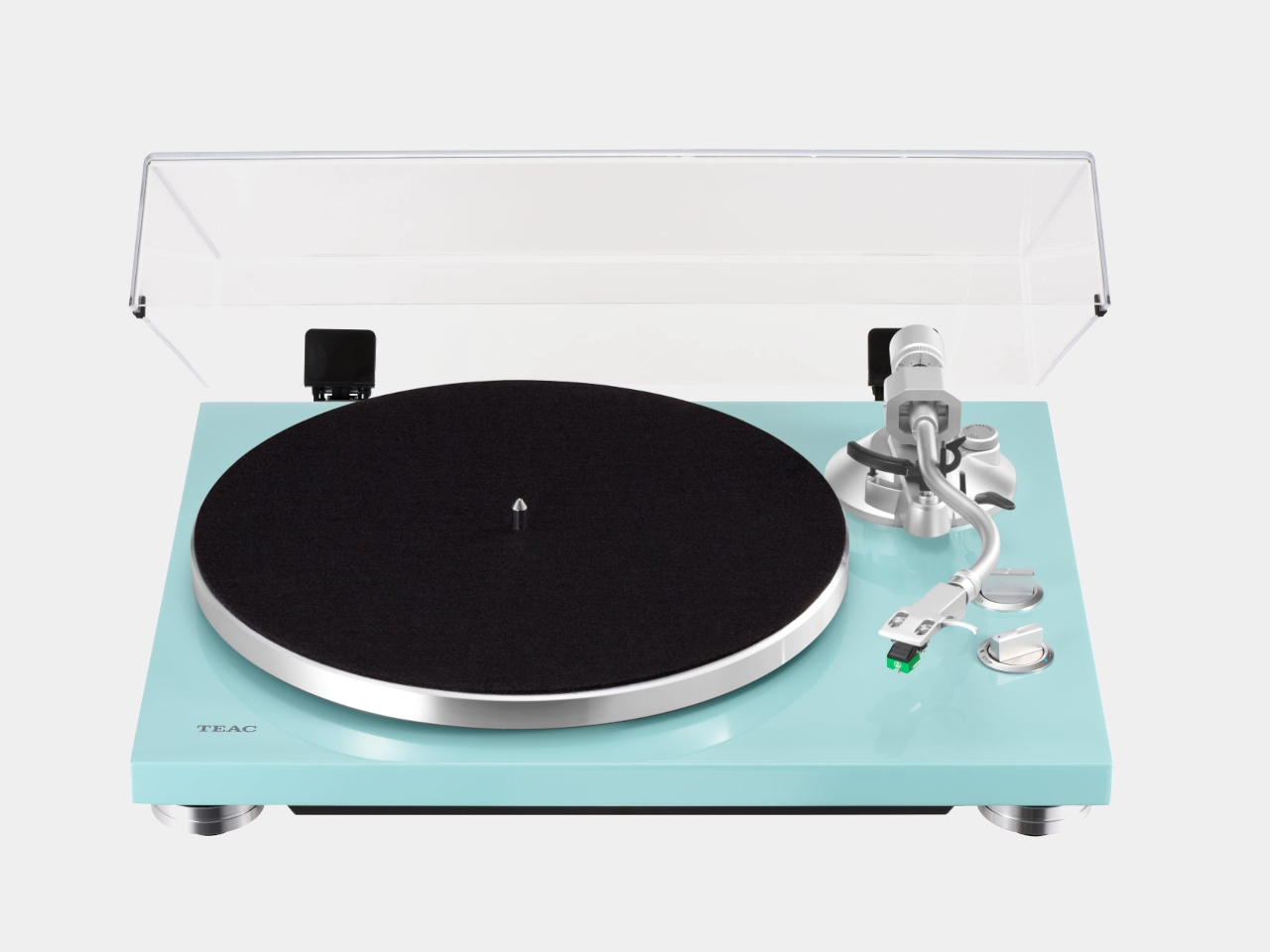
TEAC’s Special Edition Turquoise Blue TN-400BTX is a manual belt-drive Bluetooth turntable that takes the existing TN-400BT-X platform and wraps it in a glossy turquoise lacquer. It’s a limited-run finish on a high-density MDF plinth, meant to be a one-time color drop rather than a permanent SKU, which immediately nudges it into “object you choose on purpose” territory instead of just another black box.
This deck in a bright apartment would catch light under a clear dust cover while a record spins. The turquoise plinth pushes it away from anonymous gear into something closer to a mid-century accent piece, the kind of thing you notice even when it isn’t playing. It’s still a serious turntable, just one that isn’t afraid to look a little joyful when most vinyl gear pretends color is beneath it.
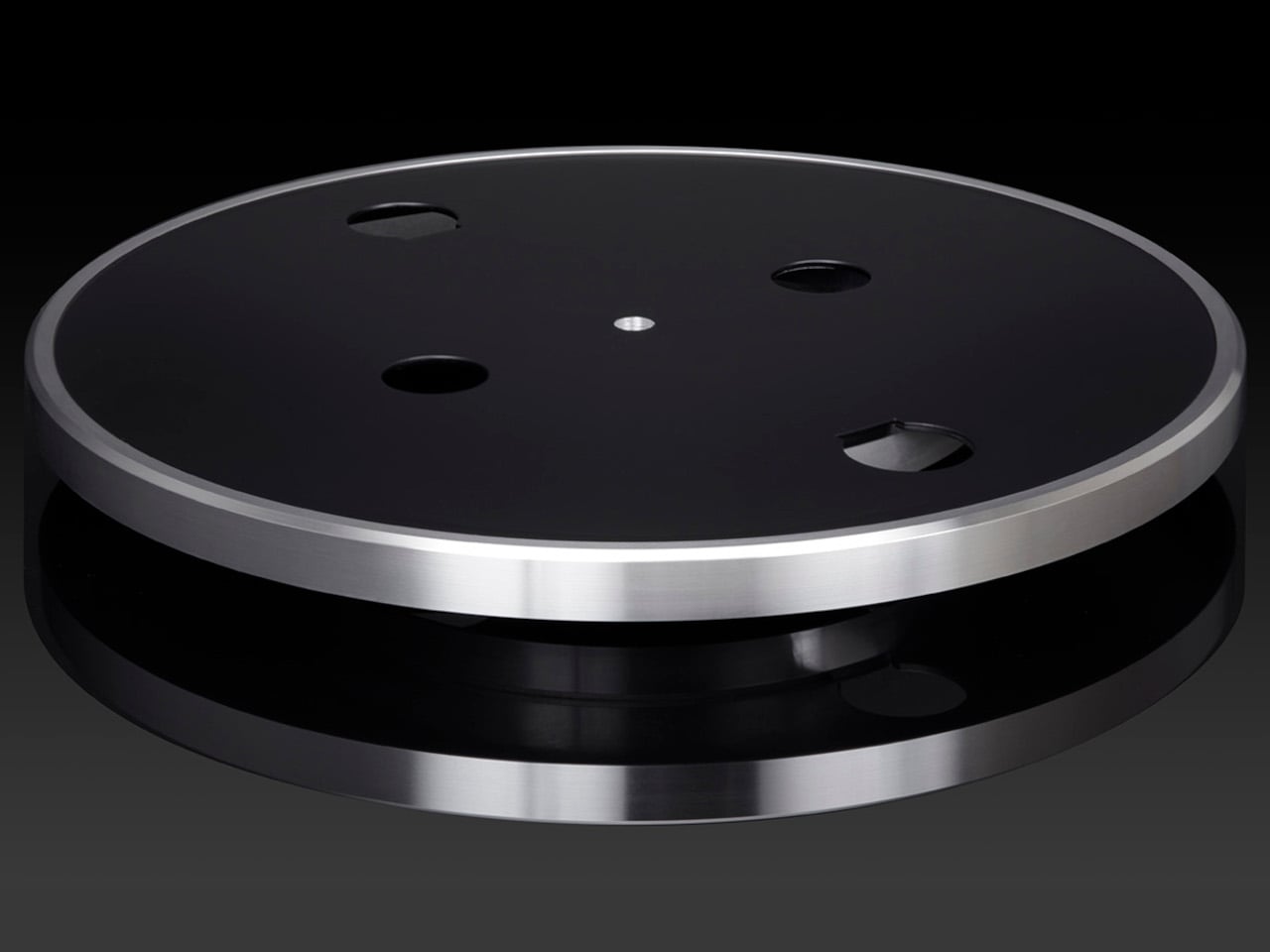
Under the paint sits the same proven hardware. The TN-400BTX uses a three-speed belt-drive with a die-cast aluminum platter and a low-resistance spindle riding in a brass bearing for stable rotation. An S-shaped static-balanced aluminum tonearm with adjustable counterweight and anti-skate carries a pre-installed Audio-Technica AT95E MM cartridge, so you can drop the needle straight out of the box and upgrade later if you want.
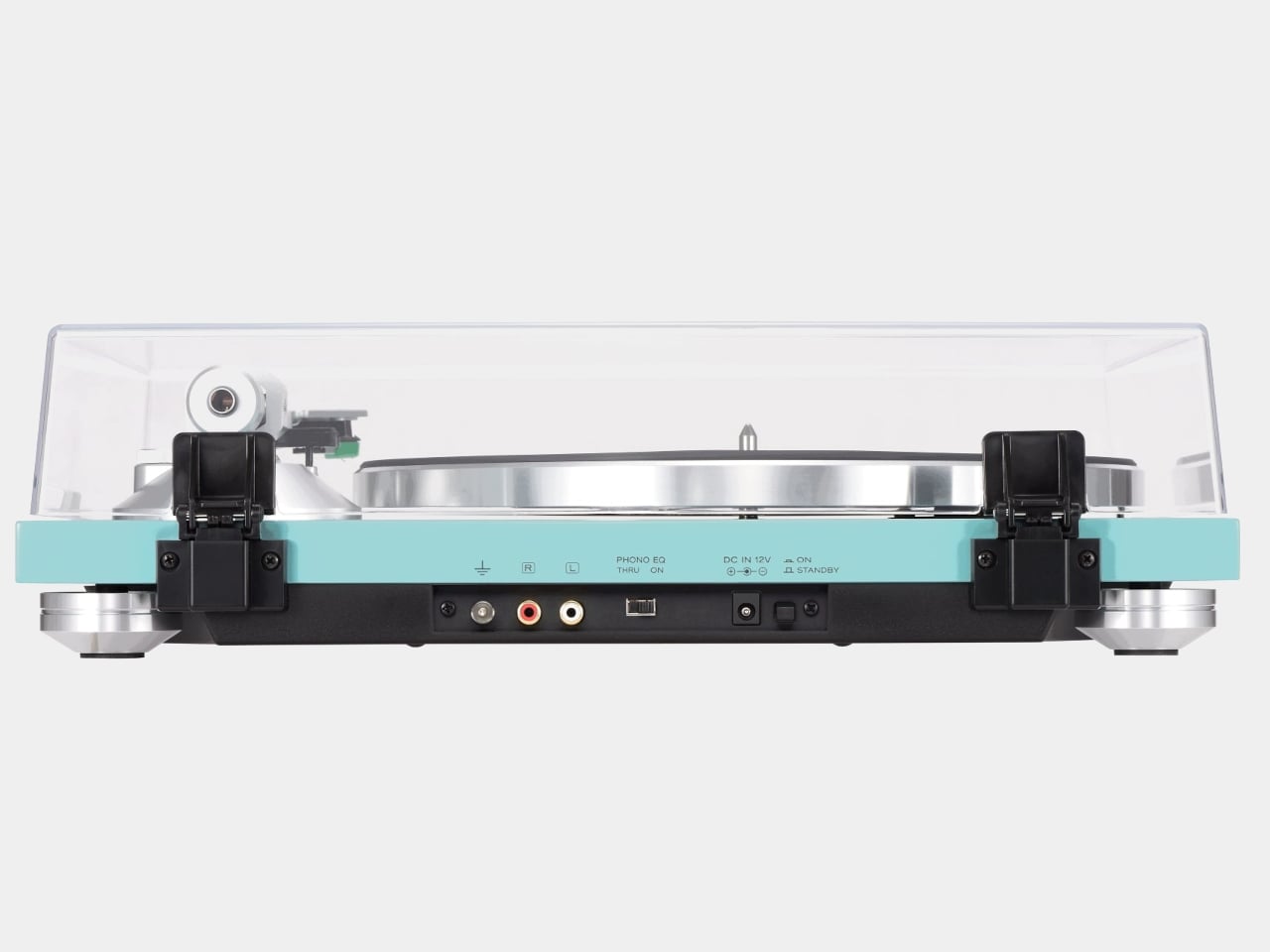
The built-in phono EQ amplifier uses an NJM8080 op-amp to boost the tiny signal from the stylus without a lot of distortion. That means you can plug the deck straight into a line-level input on an amp or powered speakers, or switch to phono out and use an external stage if you’re picky. Gold-plated RCA jacks and a ground terminal round out the wired side without getting fussy.
The wireless trick is simple but useful. A Bluetooth 5.2 transmitter with SBC, aptX, and aptX Adaptive lets you send your records to Bluetooth headphones or speakers with better quality and lower latency than basic SBC. Pairing is handled with a single button and LED, so you can go from spinning a record through a traditional system to a late-night headphone session without moving the turntable.
This special edition doesn’t touch the mechanics or electronics; it just dresses them in a color that feels more like a mood than a spec. The turquoise lacquer, aluminum hardware, and clear cover turn a competent analog-plus-Bluetooth deck into something you might build a room around. A limited-run splash of color on solid hardware is worth considering when most turntables hide in black, and you actually want to look at the thing while it works.
It’s weird to think that Walkmans were literally in my lifetime but if I were to give one to a kid born after 2000, they’d wonder what the hell they’re staring at. Sure, an iPod still feels intuitive because it’s still a relatively digital interface, and MP3 files are still a thing. But a cassette? Having to rewind and fast forward? They’re all relics of an age youngsters wouldn’t even recognize anymore!
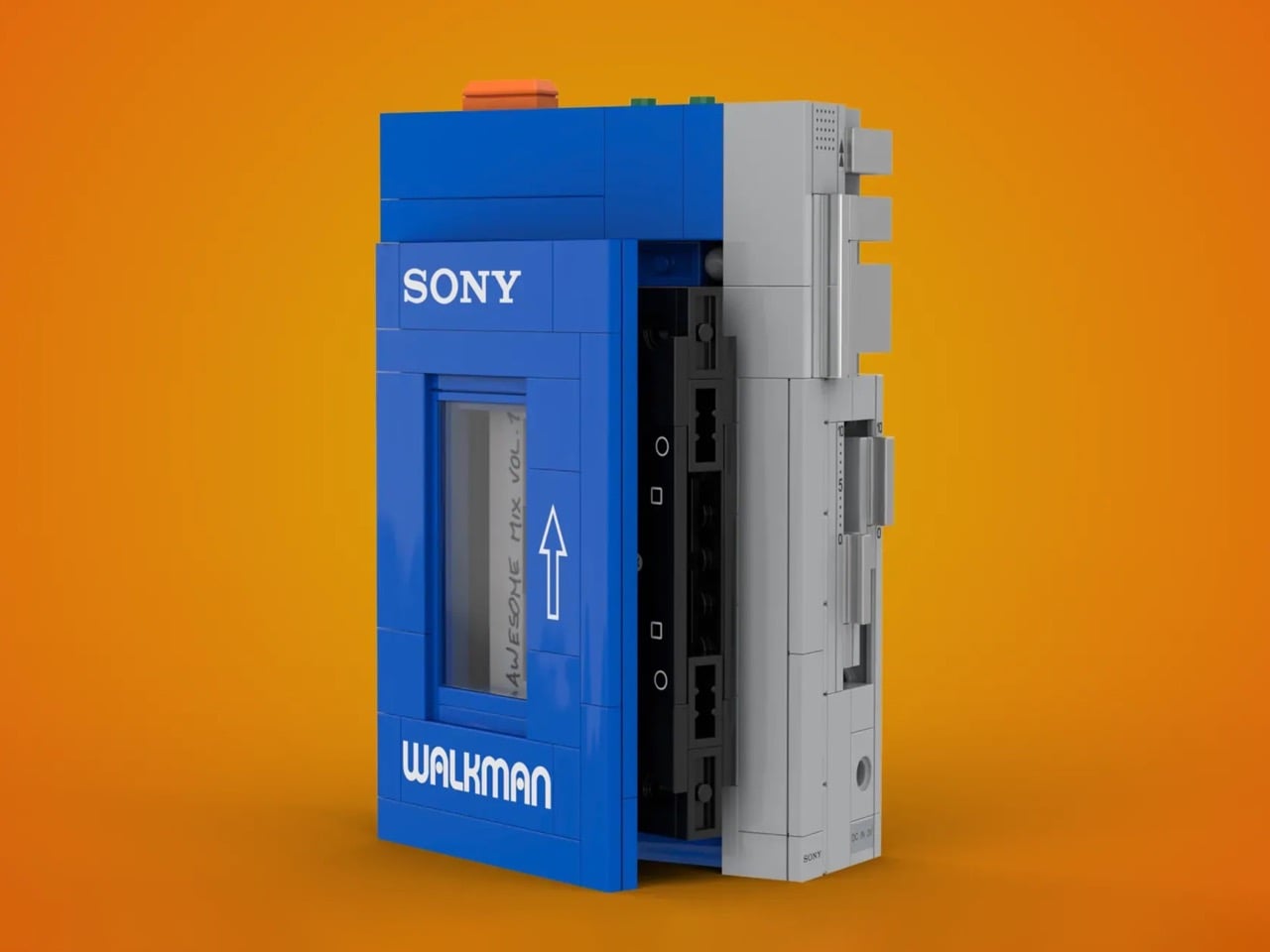
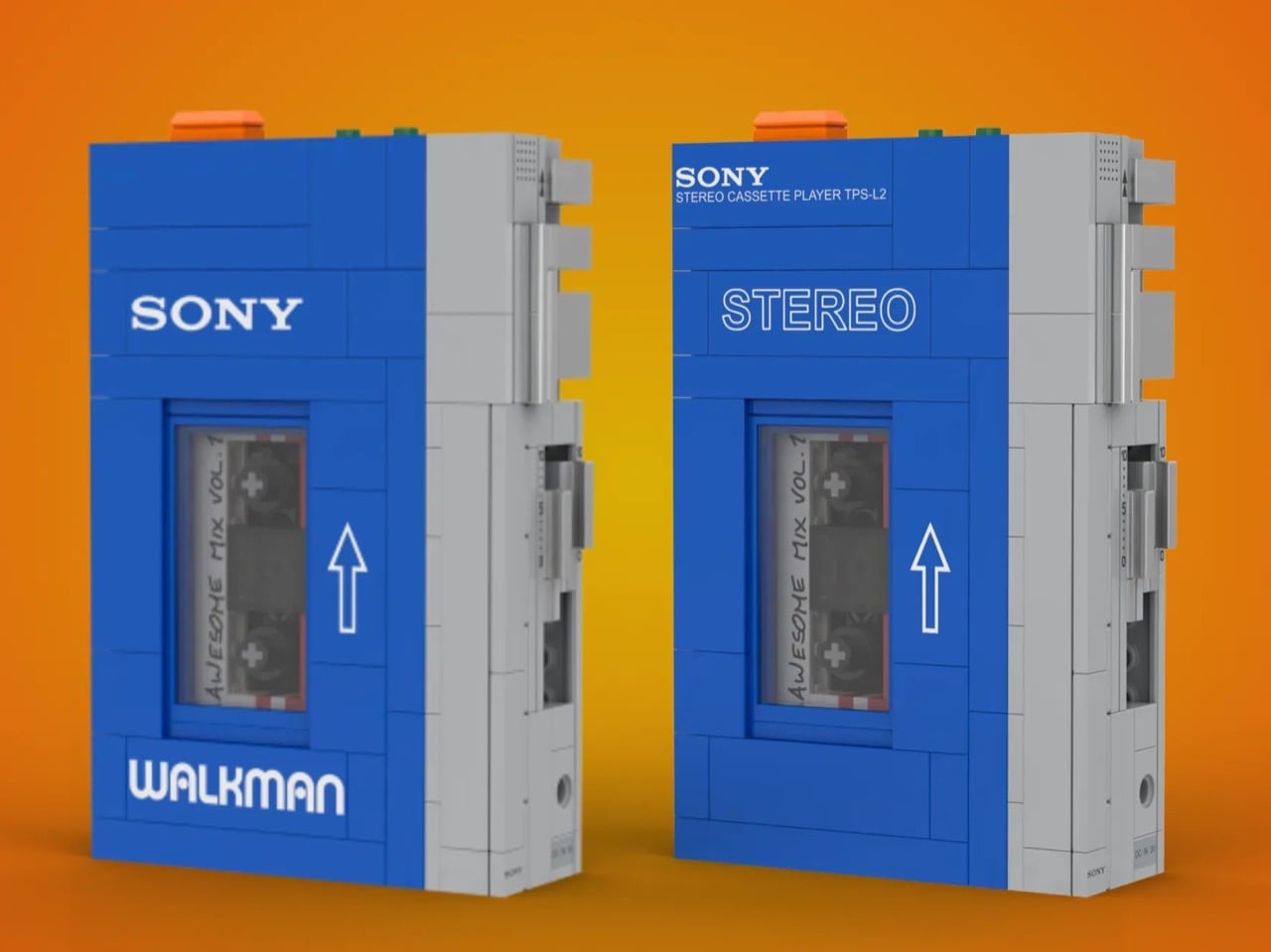
If anything, there’s hope that a kid who’s seen Guardians of the Galaxy would recognize this particular model of cassette player. Featured in the movie as the device that Star Lord operated to play his legendary mixtapes, the Sony Walkman TPS-L2 achieved something remarkable: it made cassette technology cool again for people who’d never touched magnetic tape. Enter Headlight Bricks, a creator who channeled that same Marvel-inspired obsession into a breathtaking LEGO Ideas project. Their 520-piece homage recreates every iconic element from the transparent cassette window to the individually adjustable volume controls, all wrapped in that unmistakable Sony blue. Three buildable cassette tapes let you craft your own mini mixtapes, while the poseable orange headphones complete the authentic 1979 experience.
Designer: Headlight Bricks
Each cassette measures maybe an inch and a half across but manages to pack in customizable label areas where you can swap colored tiles to create different “album art.” One of them references Awesome Mix Vol. 1 from Guardians, probably the one piece of pop culture that did more for cassettes than anything else in the past decade. The cassettes made from LEGO don’t look entirely like you’d expect. They’re missing the gears on the middle that are characteristic of a cassette tape. The reason is simple – making that out of LEGO is a headache, and it does little to add to the original build, which is the player itself. The cassette does its role of fitting into the player, and Headlight Bricks did detail spindles on the inside to complete the illusion. If you want impressive detailing, however, look at that headphone strap, which uses a LEGO Technic part to enable flexibility and movement.
That specific shade of blue paired with light gray side panels captures exactly what Sony’s industrial designers were going for in 1979. They weren’t chasing premium materials or trying to make the TPS-L2 look like jewelry you wore on your belt. It had this utilitarian confidence that said “I do one thing, I do it perfectly, and I don’t apologize for looking like a piece of equipment.” The LEGO version gets that completely right by keeping the form clean and the details purposeful. Besides, everything is perfectly to 1:1 scale, which means this MOC (My Own Creation) accurately captures every single aspect of the Walkman TPS-L2… including even functional buttons.
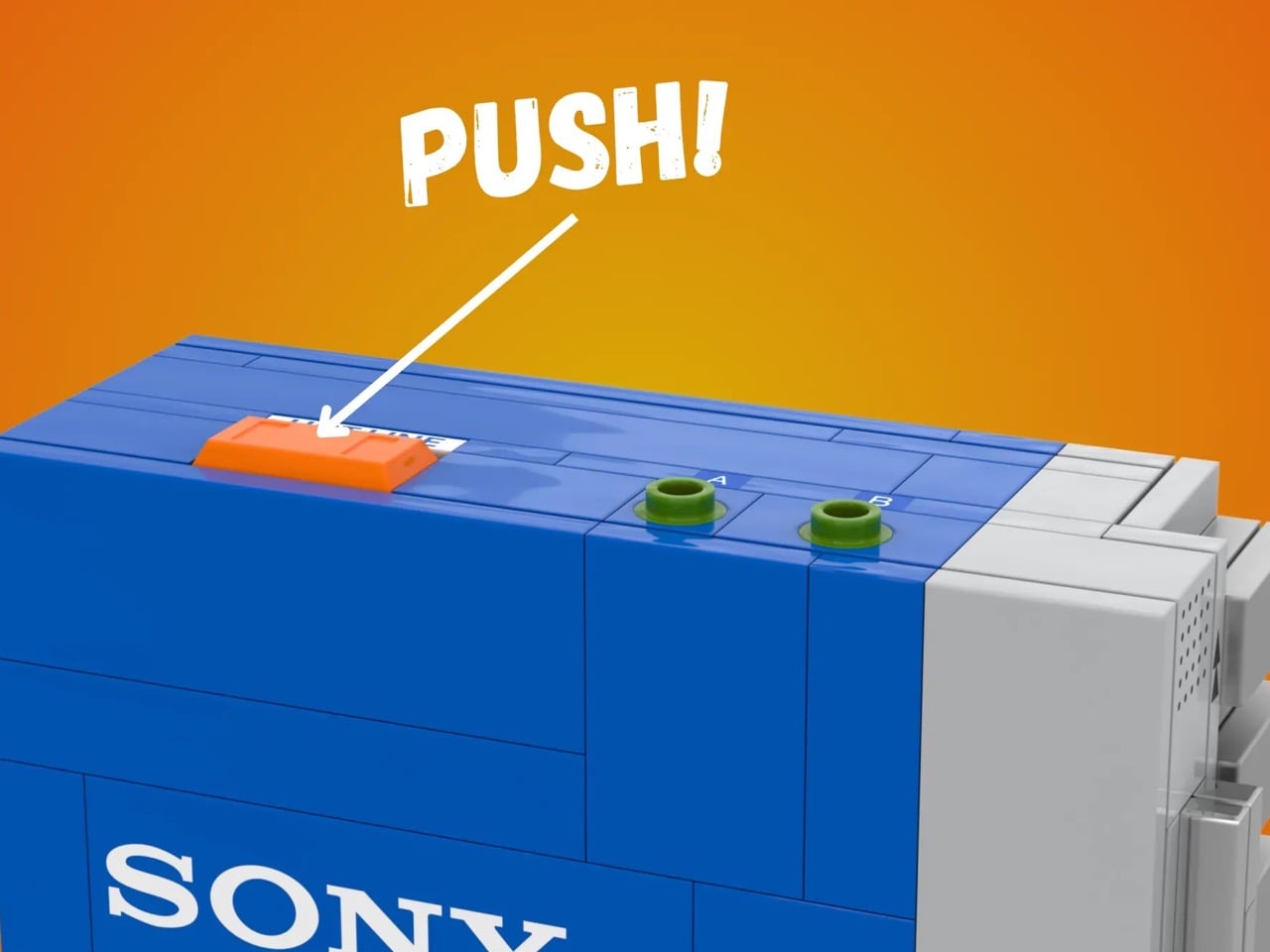
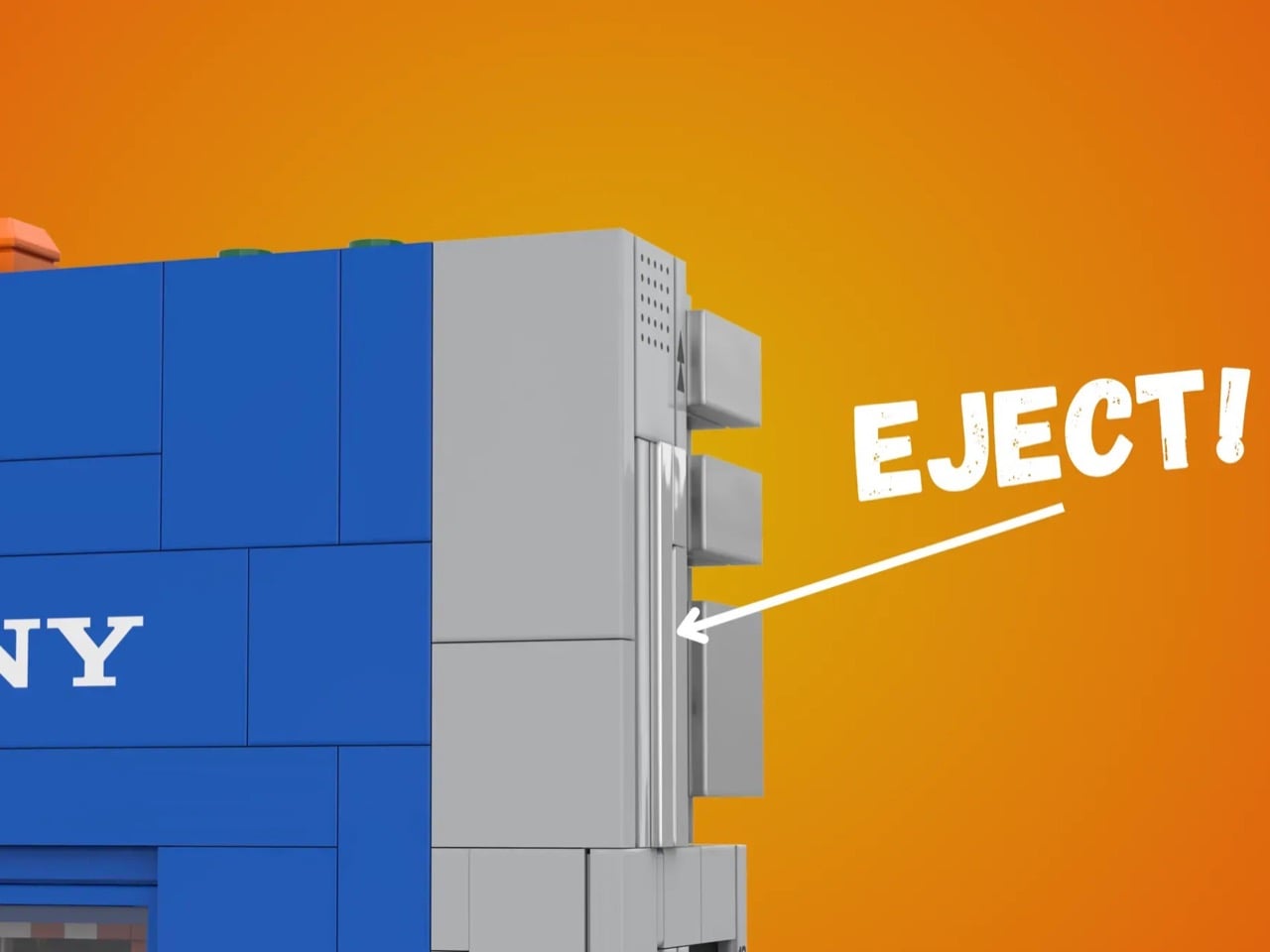
Volume buttons move independently, which means Headlight Bricks had to engineer two separate mechanical systems in a space probably no bigger than a couple of studs wide. The cassette compartment opens with a pressable eject button, and the spindles inside actually rotate when you turn them. Most builders would’ve faked it with printed tiles or stickers, called it close enough, and collected their upvotes. Instead, this thing functions like you could actually thread magnetic tape through it if you were small enough and patient enough.
Right now the project has 4,735 supporters on LEGO Ideas with 445 days left to hit 10,000 votes. Ideas works on a threshold system where fan designs need 10K supporters to get reviewed by LEGO’s actual product team. Getting reviewed doesn’t guarantee production, but it gets your build in front of the people making those calls. They evaluate marketability, licensing complexity, manufacturing feasibility, whether it fits the brand… which this one surely does, with its iconic, retro-throwback fun design. Whether Sony agrees to comply is an entirely separate issue.
You want to see this become a real product you can order? Go to the LEGO Ideas Website and hit the Support Idea button!. You need a free LEGO account to vote, takes maybe thirty seconds to set up if you don’t have one already. Hit the support button, leave a comment if you feel like it, and you’re done. At 4,738 supporters (me included), this build is inching towards the 10,000 vote mark needed to put this build into the ‘Review’ phase. LEGO managed to produce a working typewriter you can buy. A Walkman with rotating cassette mechanisms and pressable buttons feels like the obvious next move in that category.
The contrast between Sunday night at a concert and Monday morning at your desk is brutal. One moment you’re lost in the music, feeling every guitar riff vibrate through your chest. The next, you’re answering emails and pretending last night’s euphoria wasn’t real. The transition back to routine work feels especially cruel when the weekend gave you a taste of something electric.
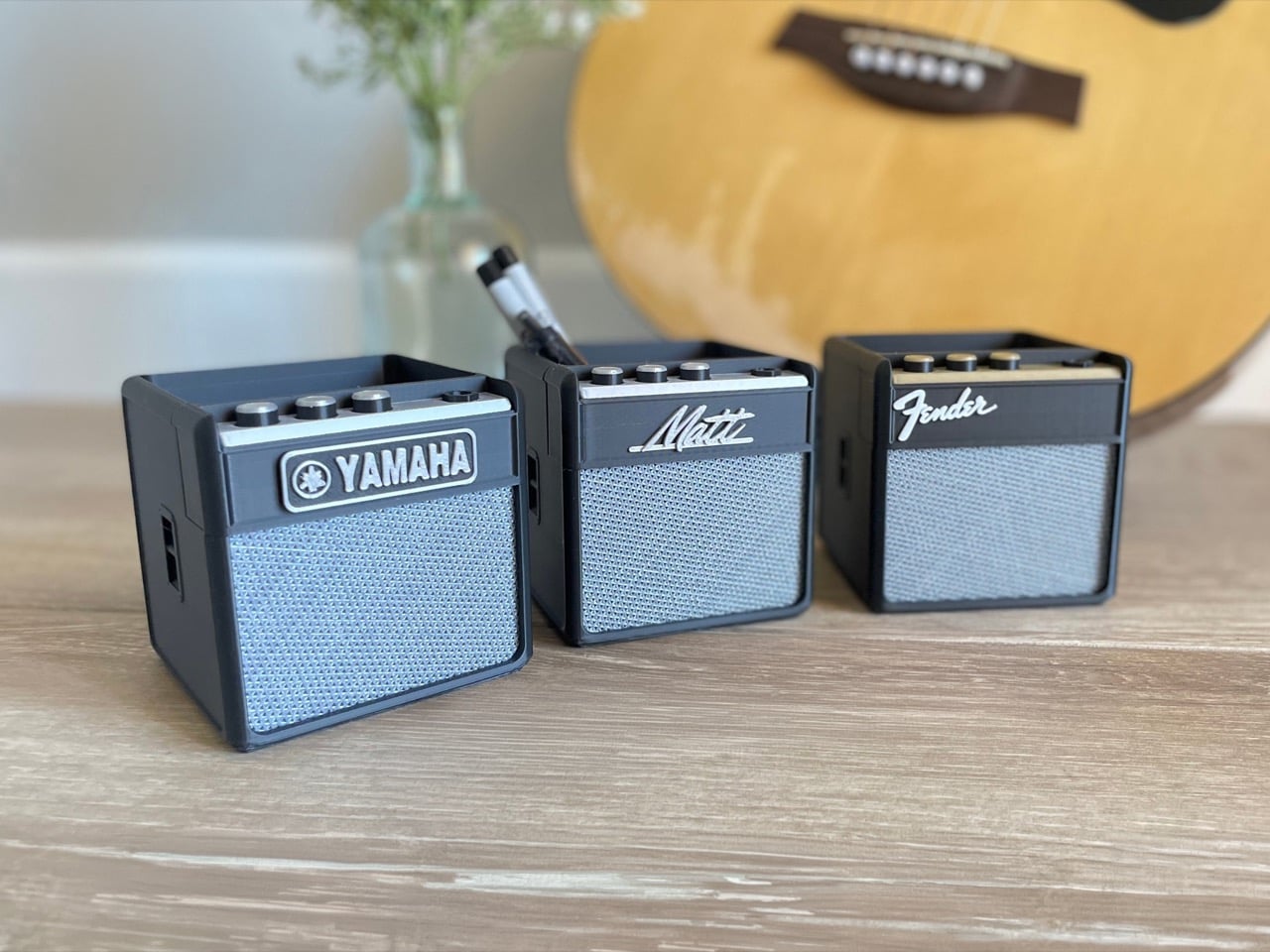
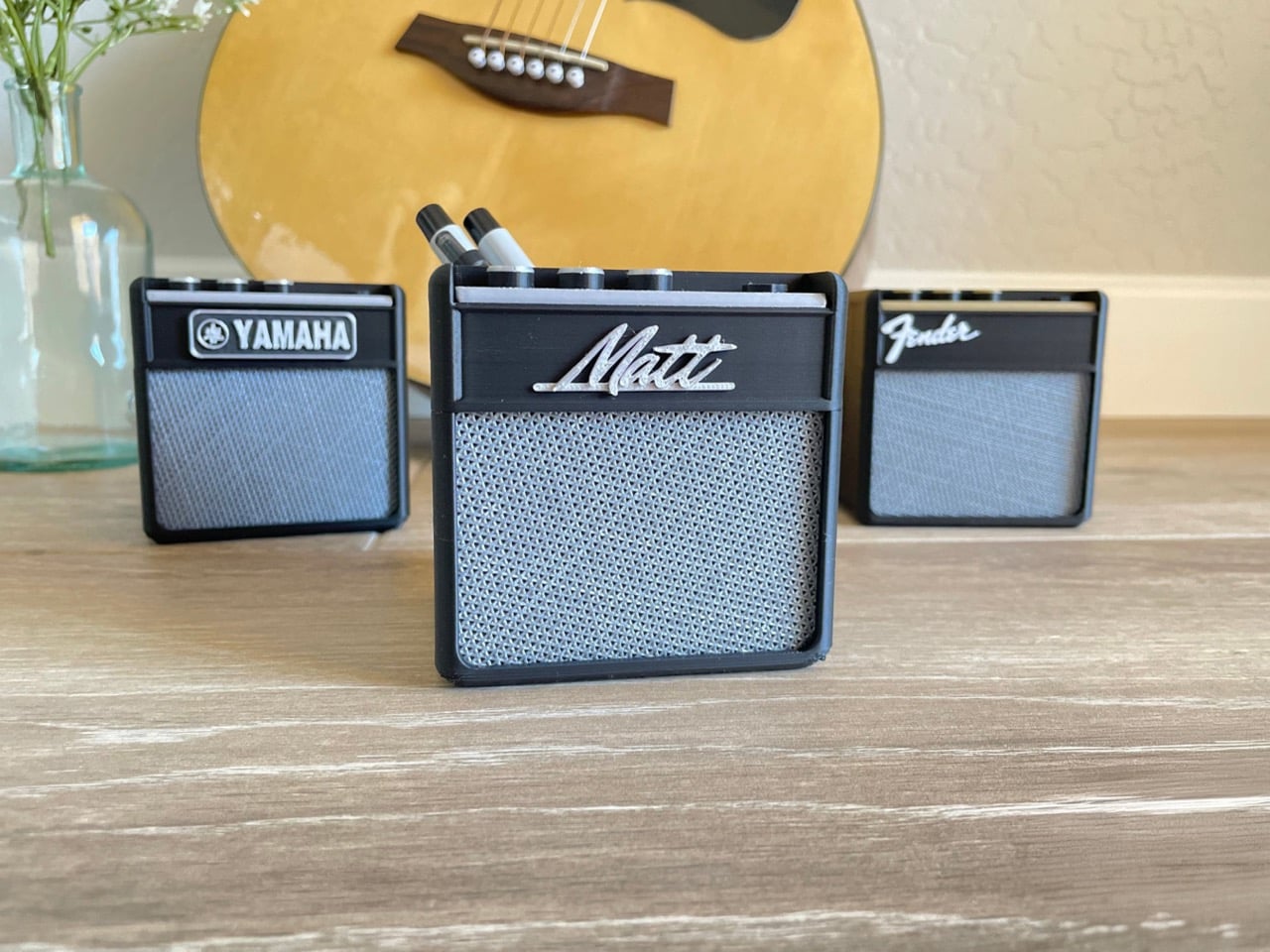
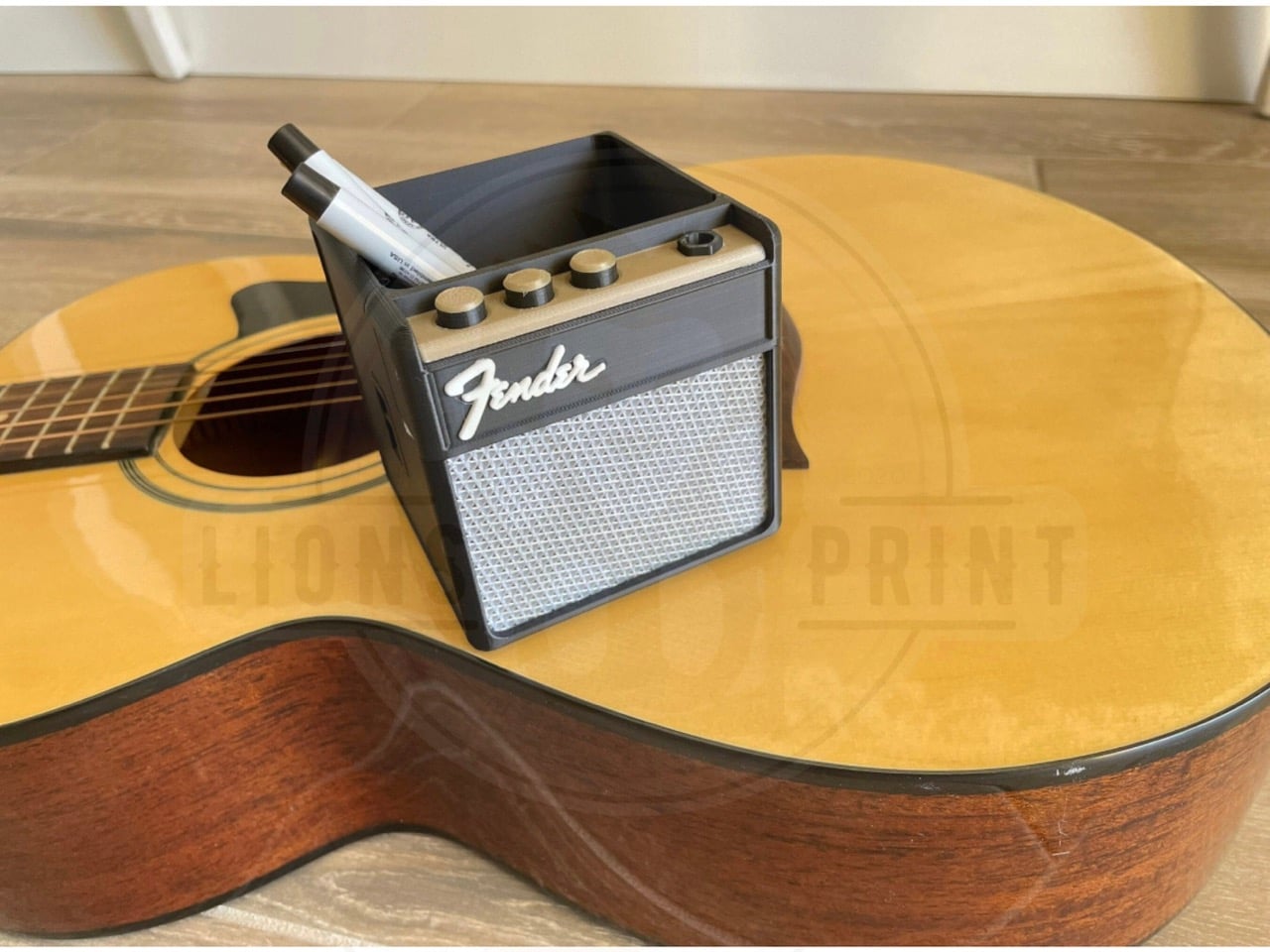
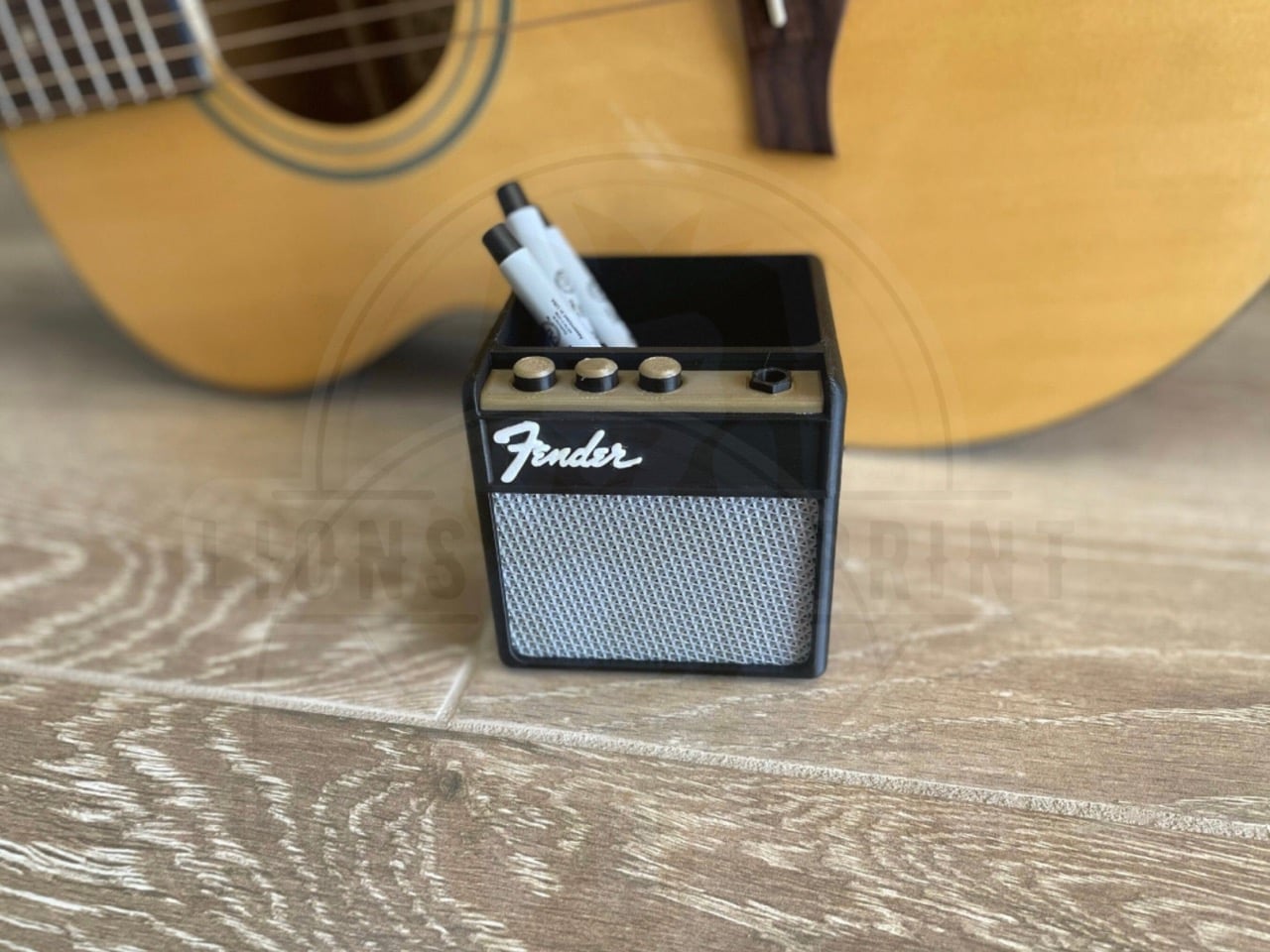
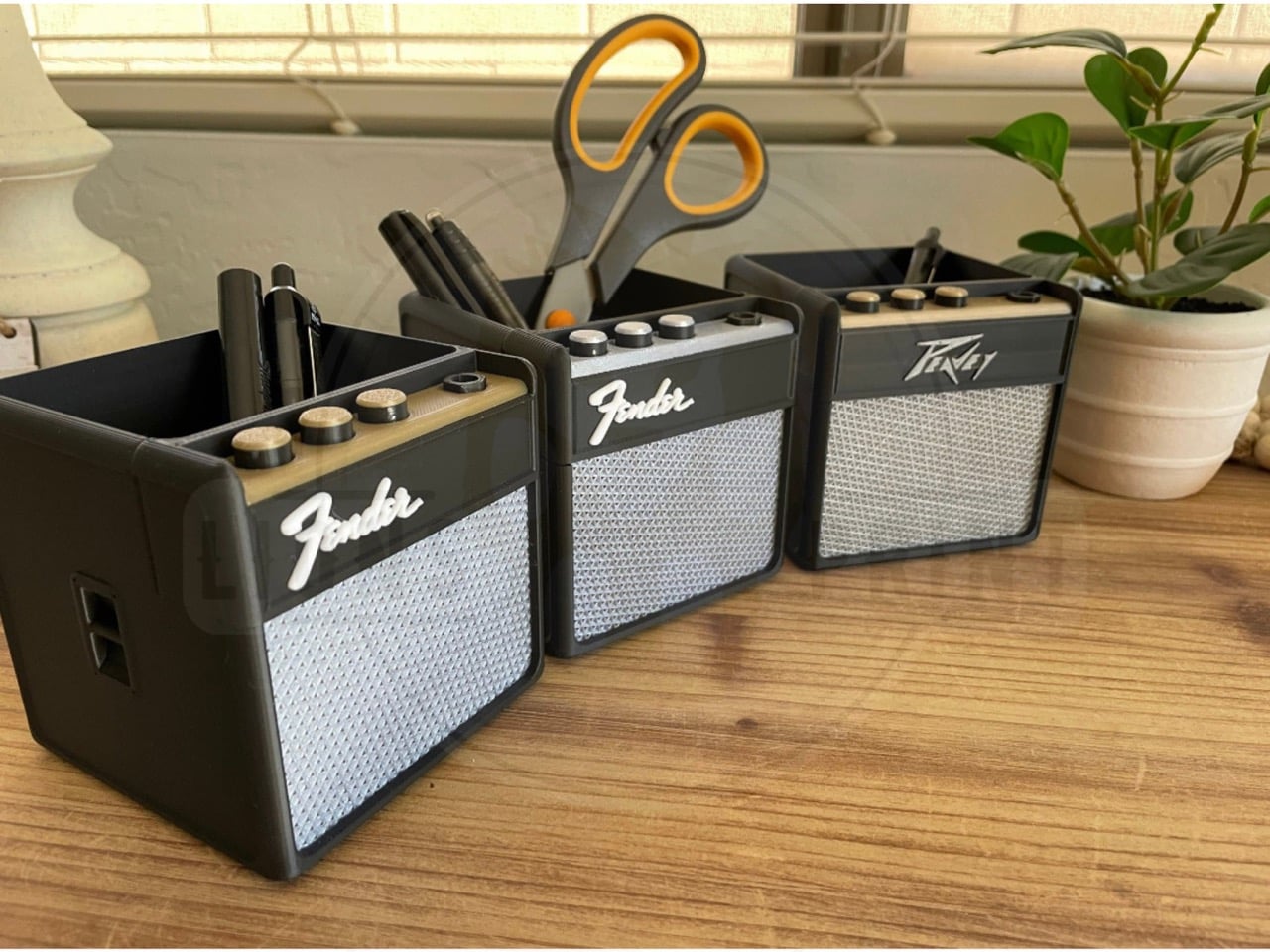
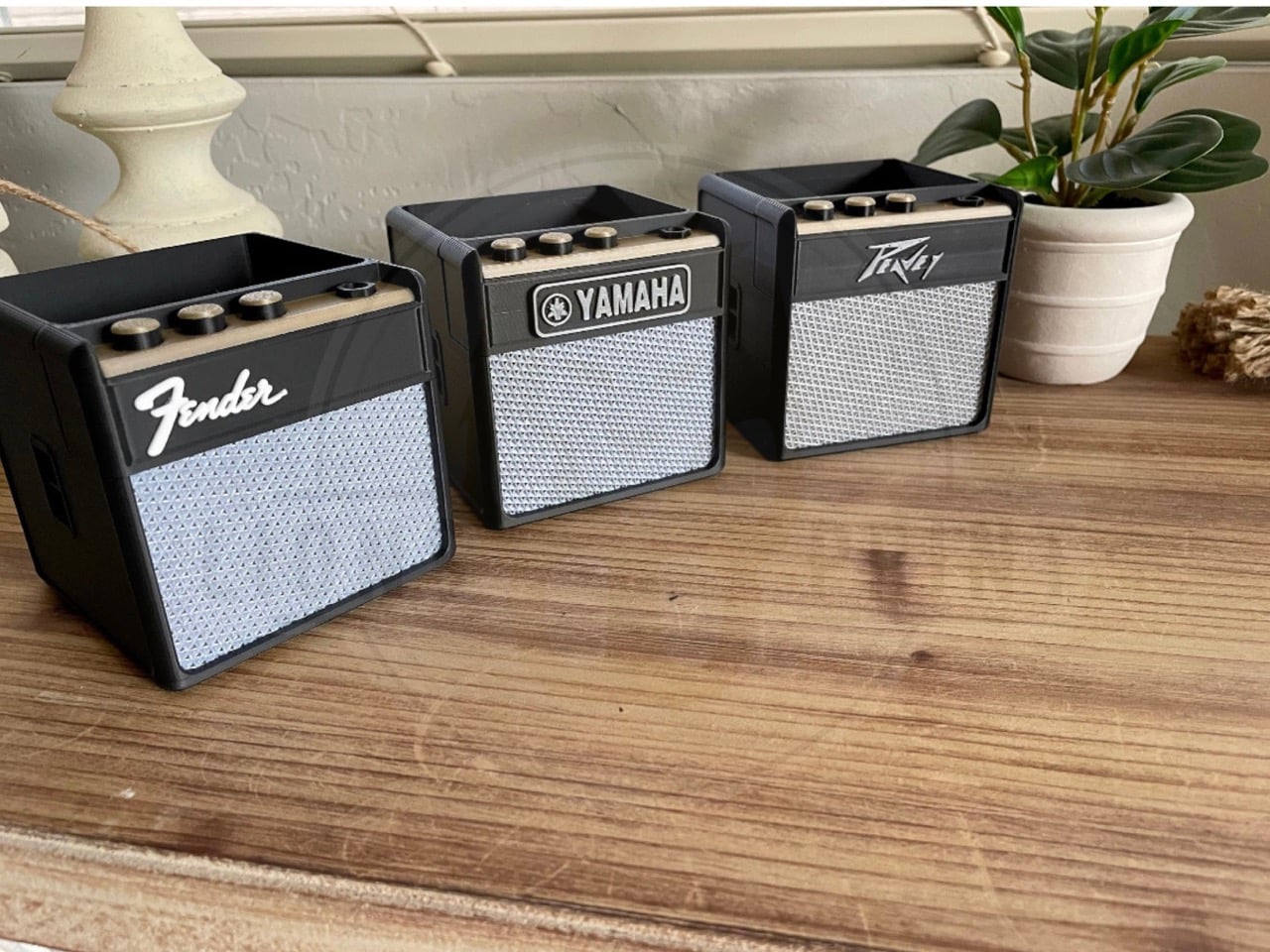
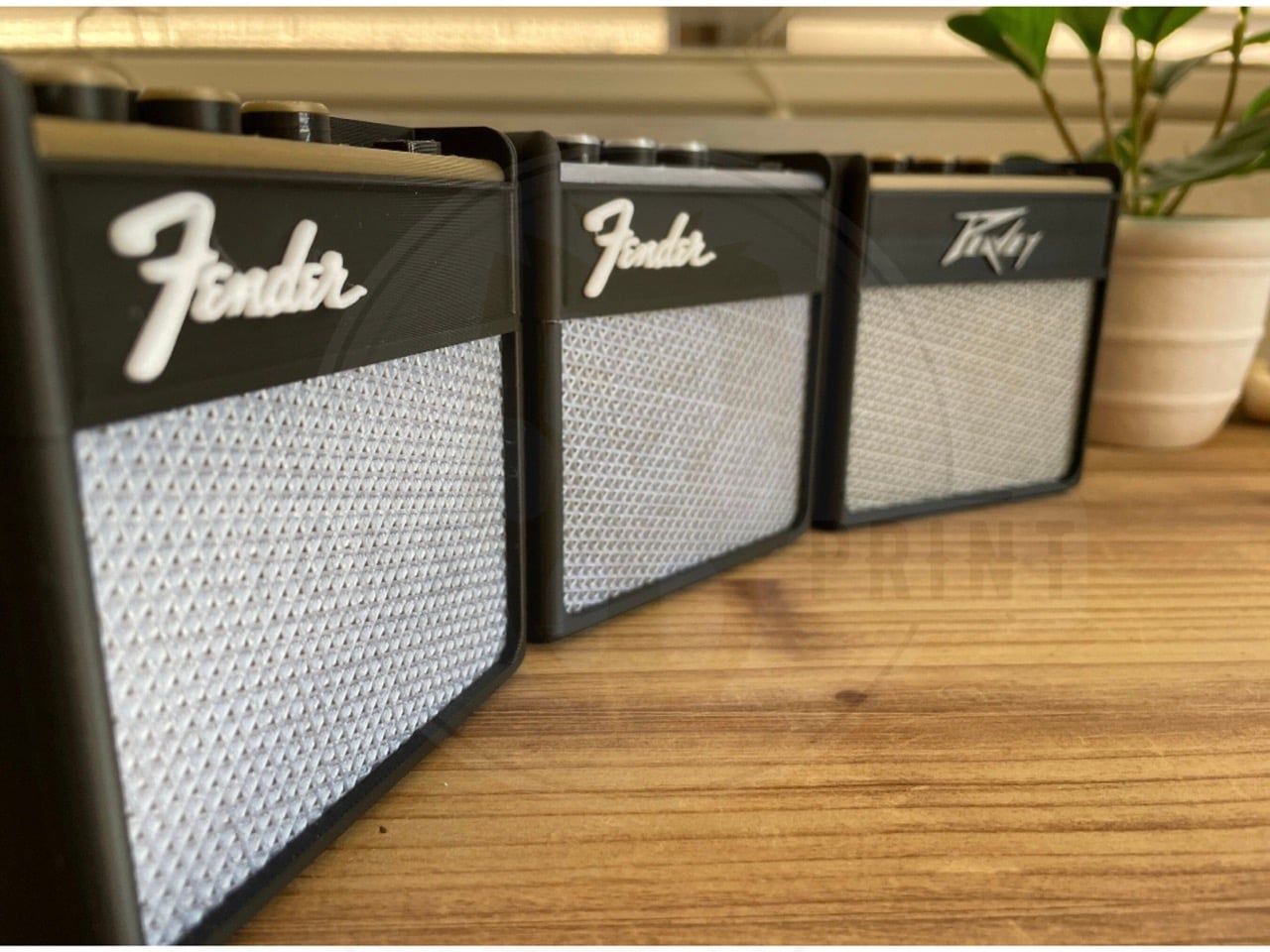
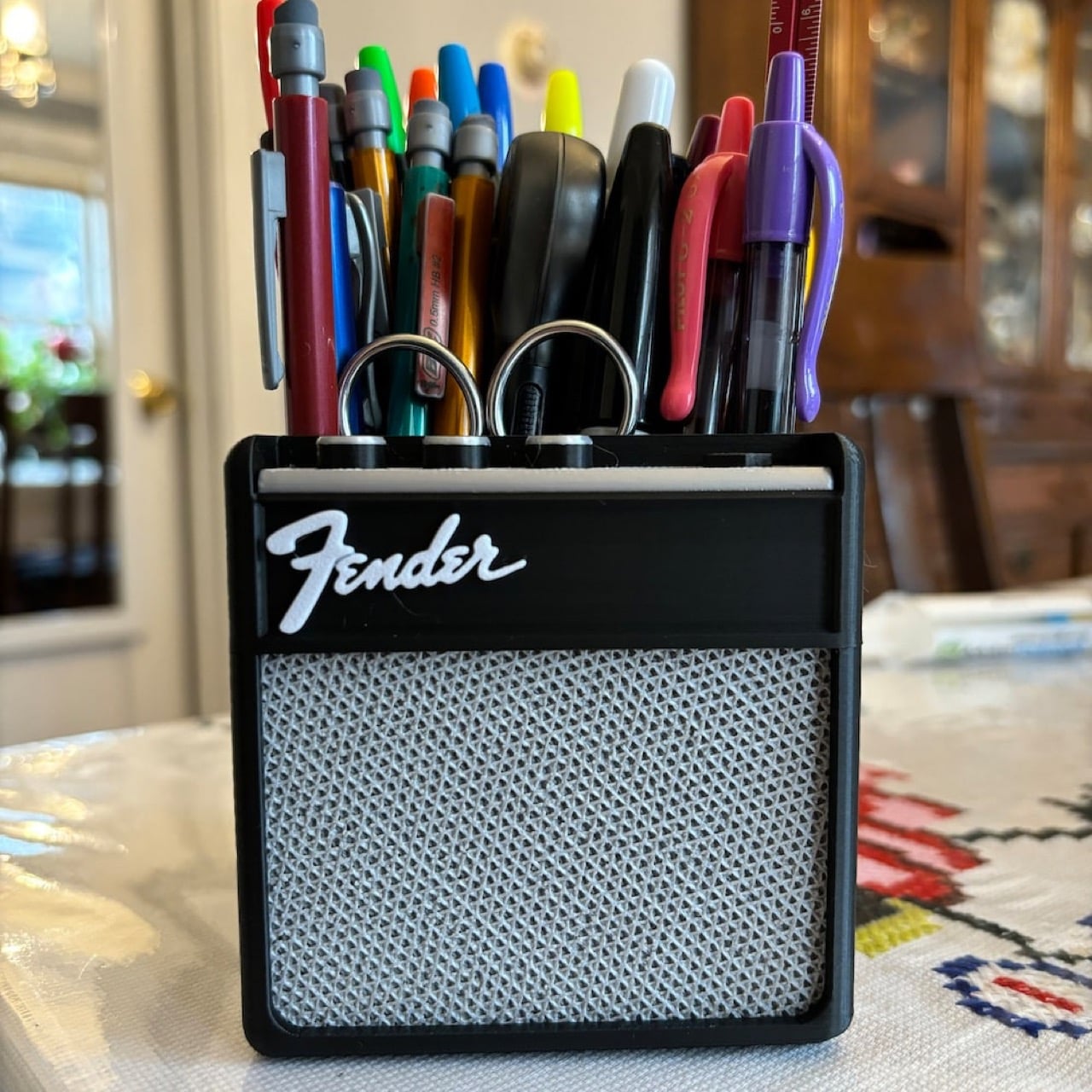
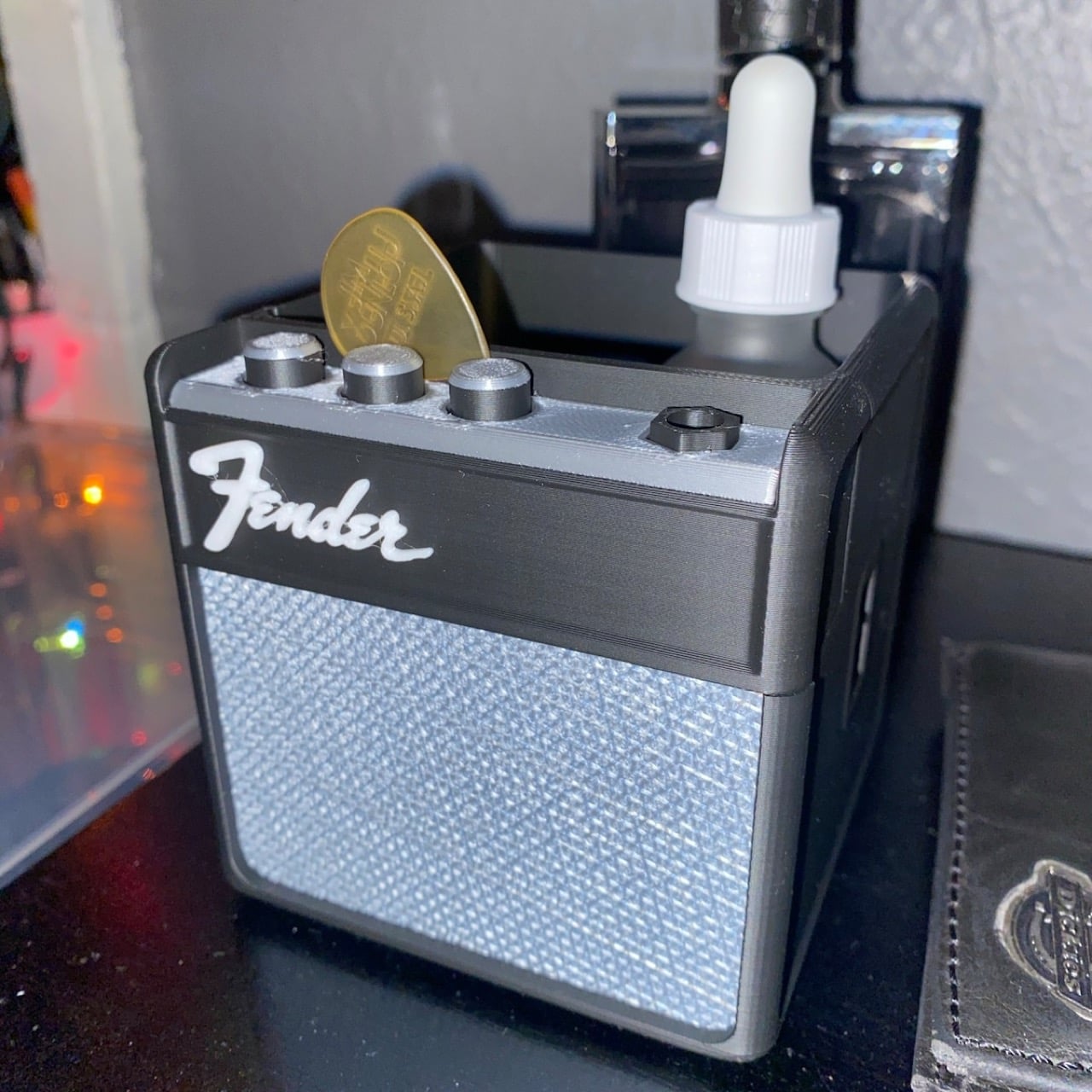
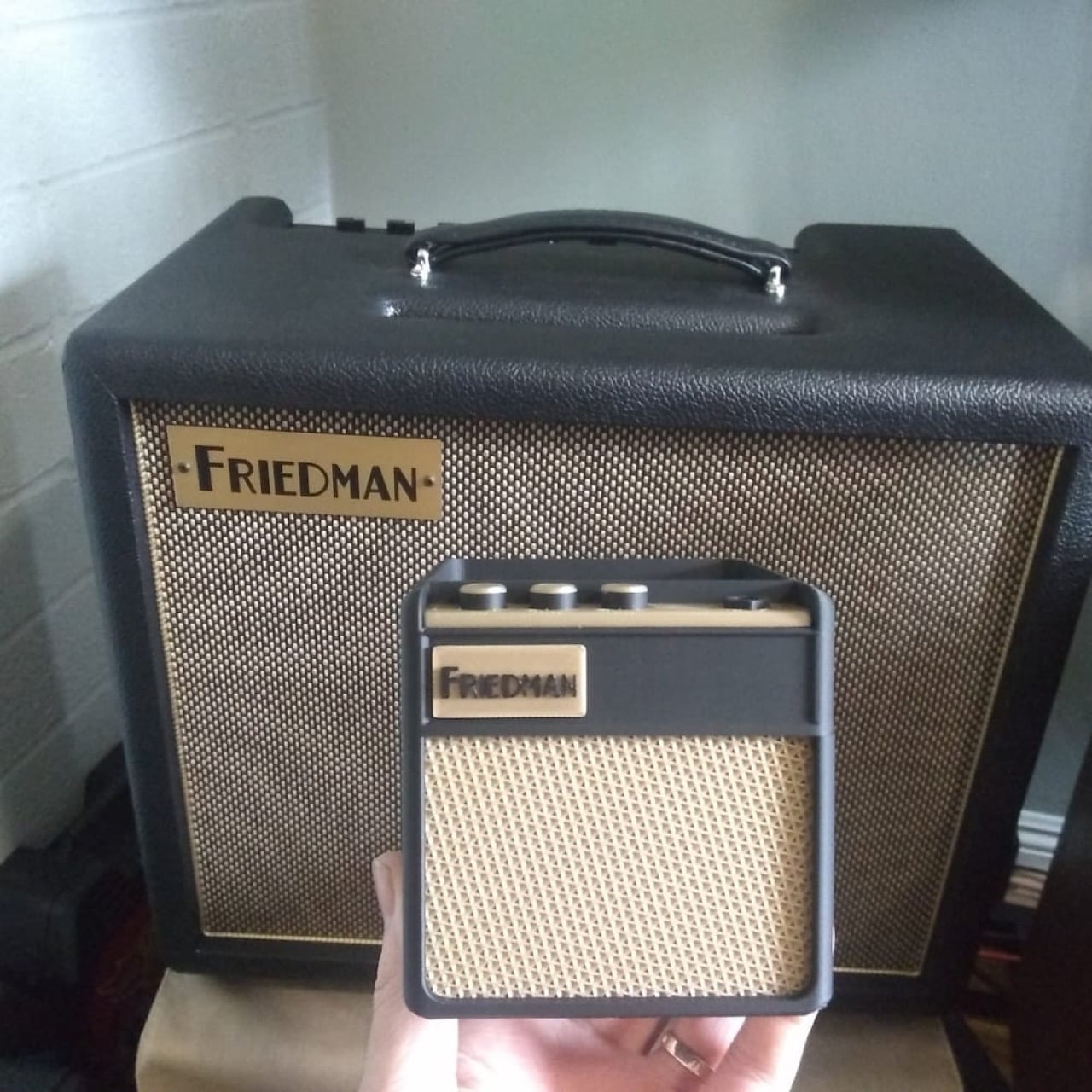
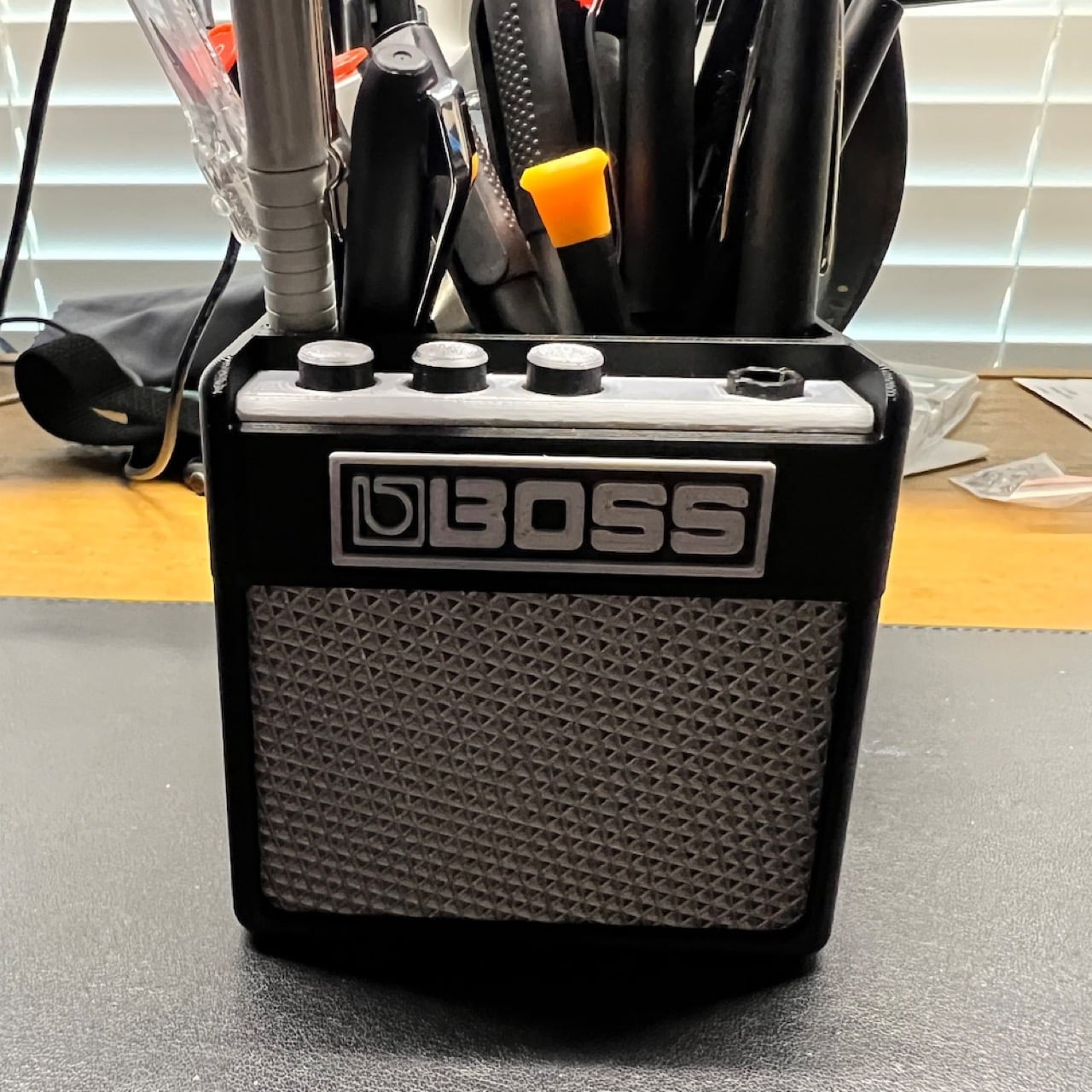
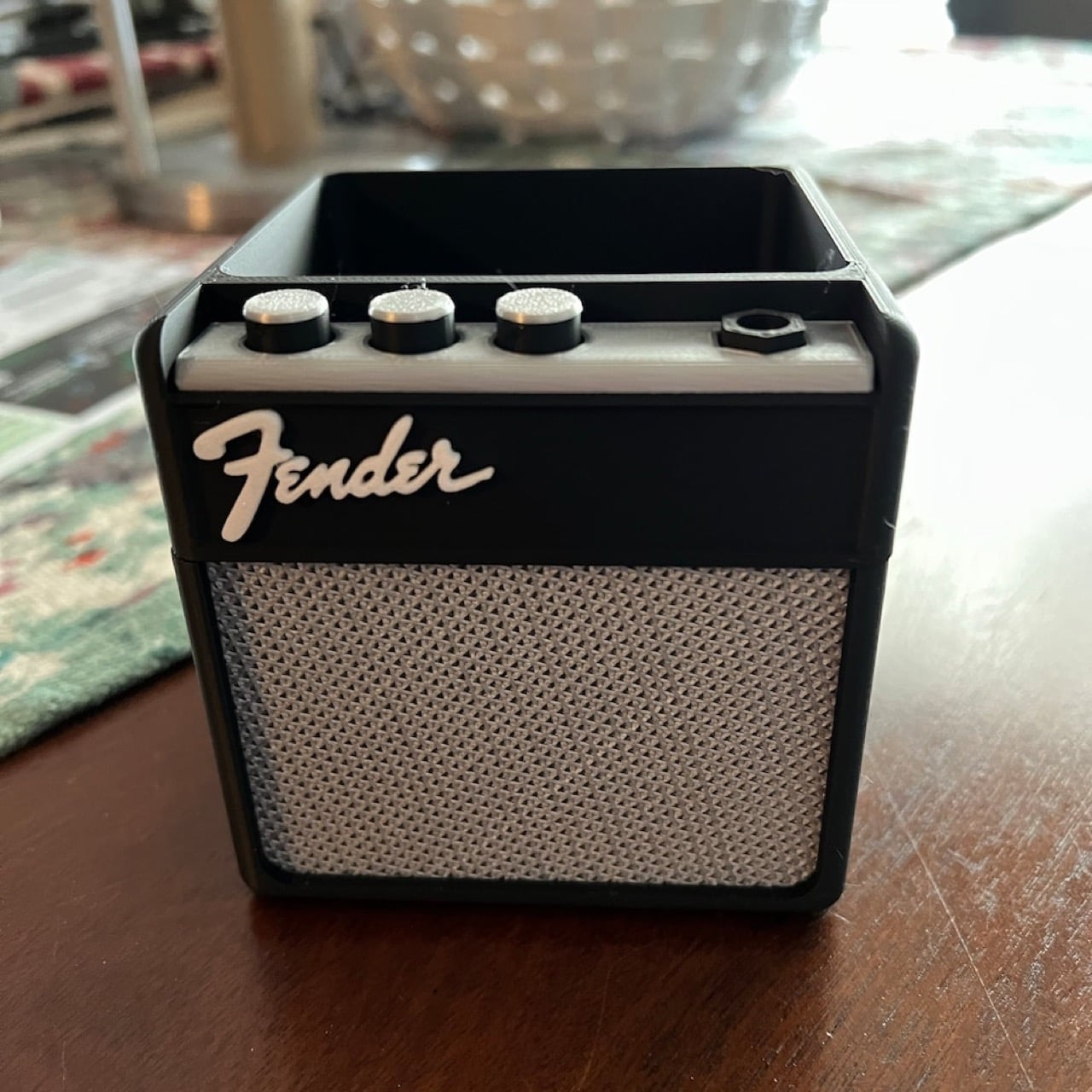
That’s where a little whimsy helps. These 3D-printed guitar amp pen holders from LionsPrint bring a fragment of that musical energy to your workspace. They’re compact at 3.5 inches per side, but the details are spot-on: authentic speaker grilles, control panels, and designs inspired by the amplifiers that power actual rock shows. You can personalize them with custom text in silver or gold. They won’t replace the thrill of live music, but they’re a small reminder that the mundane is just temporary.
Designer: LionsPrint
The thing about good desk accessories is they need to justify their existence beyond pure function. A pen holder is essentially a container with holes. You could use a coffee mug. But LionsPrint clearly understood that musicians and music fans have a specific relationship with amplifiers that goes beyond their utility. These aren’t random music references slapped onto office supplies. They’re recognizable silhouettes: Marshall stacks with their iconic script logo, Fender’s clean lines, Yamaha’s distinctive branding. The 3D printing allows for texture work that would be impossible with traditional manufacturing. Those speaker grilles have depth and pattern variation that catches light differently depending on angle.
At 3.5 x 3.5 x 3.5 inches, the dimensions work perfectly for standard desk real estate. Small enough that they don’t dominate your workspace, large enough that they actually hold a functional amount of pens, scissors, and whatever other tools accumulate throughout a workday. The cube format keeps them stable. No tipping over when you’re fishing for a specific marker at 2 AM during a deadline crunch.
The customization option elevates these beyond typical musician merch. You can add text in metallic silver or gold finishes, which means your studio name, your band’s logo, or even an inside joke with your bandmates can live on your desk. Most “gifts for guitarists” feel like afterthoughts, designed by people who think all musicians are the same. This actually lets you claim ownership of the aesthetic instead of just passively receiving someone else’s idea of what music fans want.
LionsPrint sells these through Etsy starting at $19.98 USD before shipping. The price sits in that sweet spot where it’s low enough to impulse buy after a particularly soul-crushing Monday, but high enough that the 3D printing quality actually delivers on the details. You pick your amp style, add your custom text if you want it, and suddenly your desk has at least one object that doesn’t make you question your life choices. Small victories count when you’re counting down to the weekend.
Spotify is rolling out a feature called About the Song which lets fans learn a bit more about their favorite tunes. This "brings stories and context" into the listening experience, sort of like that old VH1 show Pop Up Video.
How does it work? The Now Playing View houses short, swipeable story cards that "explore the meaning" behind the music. This information is sourced from third parties and the company promises "interesting details and behind-the-scenes moments." All you have to do is scroll down until you see the card and then swipe.
This is rolling out right now to Premium users on both iOS and Android, but it's not everywhere just yet. The beta tool is currently available in the US, UK, Canada, Ireland, New Zealand and Australia.
This article originally appeared on Engadget at https://www.engadget.com/audio/spotify-now-lets-you-swipe-on-songs-to-learn-more-about-them-164558366.html?src=rss
Grammy winner Bad Bunny, seen here accepting his award for Best Música Urbana Album for “Un Verano Sin Ti” in 2023, is nominated again this year. (Timothy Norris/FilmMagic)
Timothy Norris via Getty Images
The 2026 Grammy Awards honor music's biggest achievements of the year, and some of the biggest stars on the planet are nominated this year. Kendrick Lamar leads the way with nine nominations, including for Record and Song of the Year for "luther," his collaboration with SZA. Other top nominees this year include Lady Gaga, Jack Antonoff, and Cirkut with seven nominations apiece, and Bad Bunny, Sabrina Carpenter, and Leon Thomas, who have six. The 2026 Grammy Awards will be hosted by comedian Trevor Noah, who also happens to be a nominee this year in the Best Audio Book, Narration & Storytelling category.
The 2026 Grammys will take place at Crypto.com Arena in Los Angeles, and the broadcast will air this Sunday, Feb. 1, at 8PM ET/5PM PT on CBS, streaming live on Paramount+ (for Premium subscribers only). The 2026 Grammy Awards Premiere Ceremony — where the majority of the Grammys are actually awarded — will take place earlier that same day, from 3:30PM ET/12:30PM PT, and streams live free on YouTube.
Here’s how to watch the 2026 Grammy Awards live this Sunday.
When are the 2026 Grammy Awards?
The 68th Grammy Awards will be held this Sunday, Feb. 1, 2026.
Grammys start time
The Grammy Awards live TV broadcast begins at 8PM ET/5PM PT. It's scheduled to run until 11:30PM ET.
Prior to the main broadcast, the 2026 Grammy Awards Premiere Ceremony (this is where you can watch the awards for categories like Musical Theater, Americana, Reggae, Metal, Gospel and more) will take place from 3:30PM ET/12:30PM PT. The Grammys Premiere Ceremony will stream live for free at live.GRAMMY.com and on YouTube.
Grammy Awards TV channel
The 68th Grammy Awards will air on CBS and stream live on Paramount+ for Premium subscribers. The awards show will also be available the following day on demand for Paramount+ Essential subscribers.
How to watch the Grammys without cable
How to watch the 2026 Grammys free
Who is performing at the 2026 Grammy Awards?
Among this year's Grammy's performers are Justin Bieber, Sabrina Carpenter, Album of the Year nominees Clipse and Pharrell Williams, and every Best New Artist nominee, including Addison Rae, Alex Warren, KATSEYE, Leon Thomas, Lola Young, Olivia Dean, SOMBR, and The Marías.
This year's In Memorium honoring artists we've lost this year will include a musical tribute from Reba McEntire, Brandy Clark and Lukas Nelson, a performance from Ms. Lauryn Hill in honor of D'Angelo and Roberta Flack, and an Ozzy Osbourne tribute from artists like Post Malone, Andrew Watt, Chad Smith, Duff McKagan, and Slash.
Who is hosting the Grammys this year?
Trevor Noah will return to host the Grammys for the sixth and final year.
Who is presenting at the 2026 Grammys?
While the full list of Grammys presenters has yet to be released, we do know that Harry Styles and Doechii will be presenting.
Grammy Awards new categories
This year’s Grammys will see the return of the award for Best Album Cover (after 53 years!). This year, the category of Best Country Album will now be split into two awards: Best Contemporary Country Album and Best Traditional Country Album.
Grammys eligibility window
The 2026 Grammy Awards will recognize music released from August 31, 2024 to August 30, 2025.
2026 Grammy nominations
Here are the nominees for the 68th Grammy Awards.
Album of the Year
Bad Bunny — Debí Tirar Más Fotos
Justin Bieber — Swag
Sabrina Carpenter — Man’s Best Friend
Clipse, Pusha T & Malice — Let God Sort Em Out
Lady Gaga — Mayhem
Kendrick Lamar — GNX
Leon Thomas — Mutt
Tyler, the Creator — Chromakopia
Record of the Year
Bad Bunny — “DtMF”
Sabrina Carpenter — “Manchild”
Doechii — “Anxiety”
Billie Eilish — “Wildflower”
Lady Gaga — “Abracadabra”
Kendrick Lamar feat. SZA — “Luther”
Chappell Roan — “The Subway”
Song of the Year
Lady Gaga — “Abracadabra”
Doechii — “Anxiety”
ROSÉ & Bruno Mars — “APT.”
Bad Bunny — “DtMF”
HUNTR/X (EJAE, Audrey Nuna, REI AMI) — “Golden”
Kendrick Lamar feat. SZA — “Luther”
Sabrina Carpenter — “Manchild”
Billie Eilish — “Wildflower”
Best New Artist
Olivia Dean
KATSEYE
The Marías
Addison Rae
sombr
Leon Thomas
Alex Warren
Lola Young
Best Pop Solo Performance
Justin Bieber — “Daisies”
Sabrina Carpenter — “Manchild”
Lady Gaga — “Disease”
Chappell Roan — “The Subway”
Lola Young — “Messy”
Best Pop Vocal Album
Justin Bieber — Swag
Sabrina Carpenter — Man’s Best Friend
Miley Cyrus — Something Beautiful
Lady Gaga — Mayhem
Teddy Swims — I’ve Tried Everything But Therapy (Part 2)
Best Alternative Music Album
Bon Iver — Sable, Fable
The Cure — Songs of a Lost World
Tyler, the Creator — Don’t Tap the Glass
Wet Leg — Moisturizer
Hayley Williams — Ego Death at a Bachelorette Party
This article originally appeared on Engadget at https://www.engadget.com/entertainment/streaming/how-to-watch-the-2026-grammy-awards-tv-channel-start-time-where-to-stream-nominations-list-and-more-150015179.html?src=rss
A group of music publishers led by Concord Music Group and Universal Music Group are suing Anthropic, according to a report by Reuters. The suit accuses the AI company of illegally downloading more than 20,000 copyrighted songs, including sheet music, lyrics and compositions.
These songs were then allegedly fed into the chatbot Claude for training purposes. There are some iconic tunes named by Universal in the suit, including tracks by The Rolling Stones, Neil Diamond and Elton John, among many others. Concord is an independent publisher that handles artists like Common, Killer Mike and Korn.
The publishers issued a statement saying that the damages could amount to more than $3 billion. This would make it one of the largest non-class action copyright cases in US history.
"While Anthropic misleadingly claims to be an AI 'safety and research' company, its record of illegal torrenting of copyrighted works makes clear that its multibillion-dollar business empire has in fact been built on piracy," the lawsuit says.
For the unfamiliar, the Bartz v. Anthropic case ended with an award of $1.5 billion to impacted writers after it was found that the company had illegally downloaded their published works for similar training purposes. The terms of that agreement dictated that the 500,000 authors involved in the case would get $3,000 per work. The $1.5 billion looks like a big number, but not so much when broken down like that. Also, Anthropic is worth around $350 billion.
In the Bartz case, Judge William Alsup ruled that it was legal for Anthropic to train its models on copyrighted content but not legal to acquire that content via piracy. We'll have to wait and see how this new suit shakes out. The legal precedent here seems to suggest that if Anthropic would have just spent a buck on each copyrighted song, then they'd be in the clear. That's an odd distinction when it comes to building an entire company around snatching up copyrighted content, but whatever.
This article originally appeared on Engadget at https://www.engadget.com/ai/music-publishers-sue-anthropic-for-3-billion-over-flagrant-piracy-185459358.html?src=rss
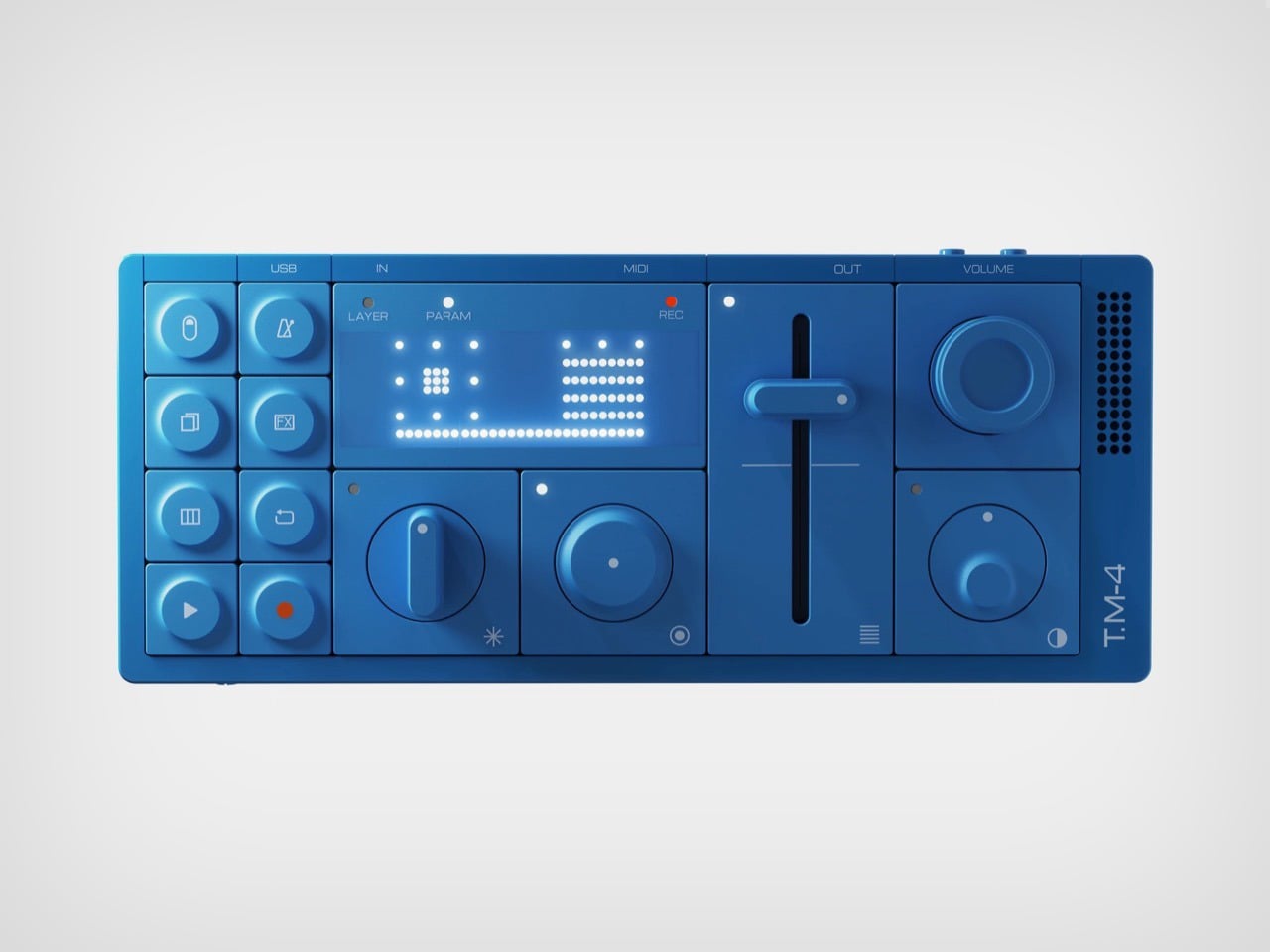
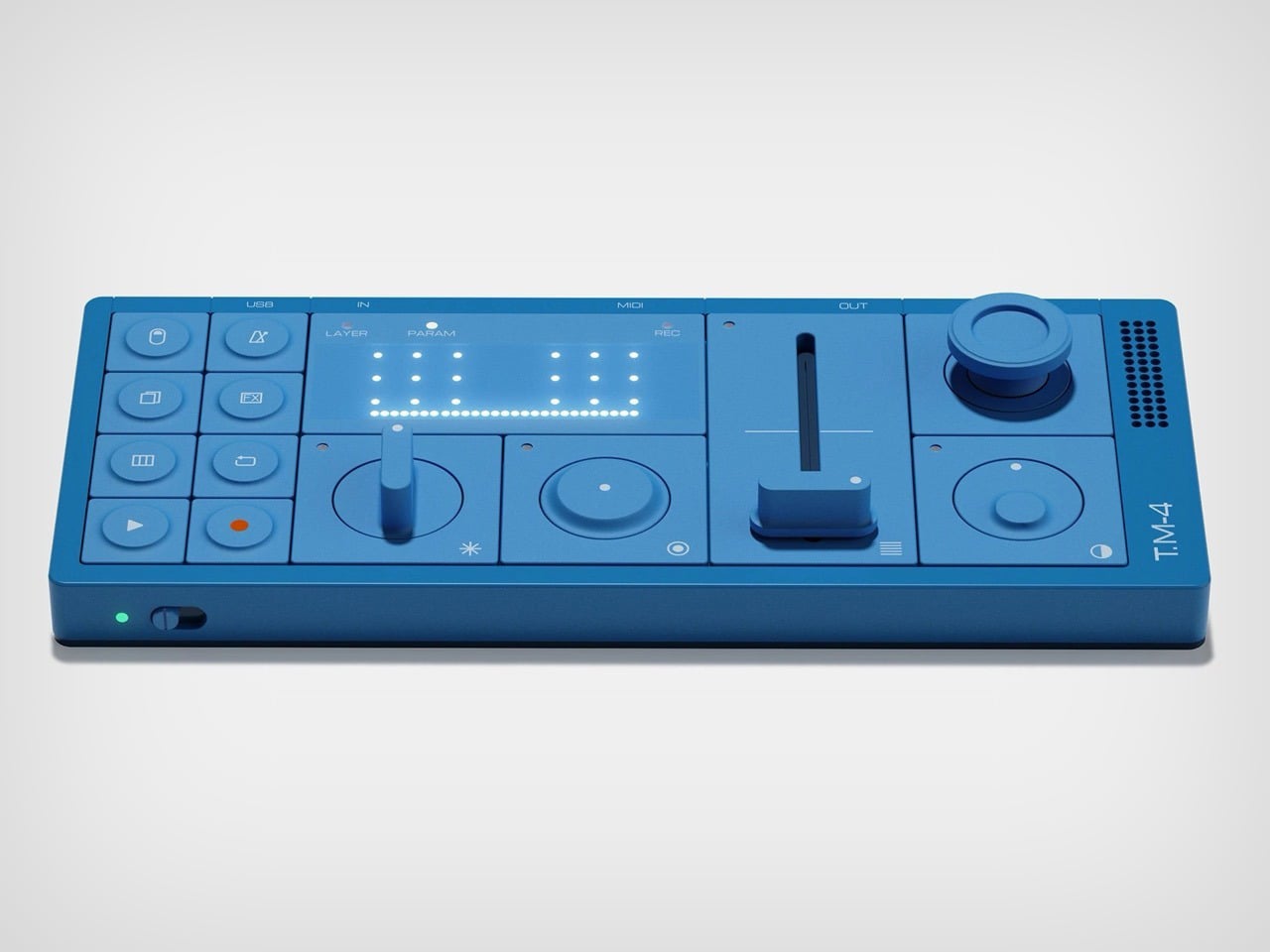
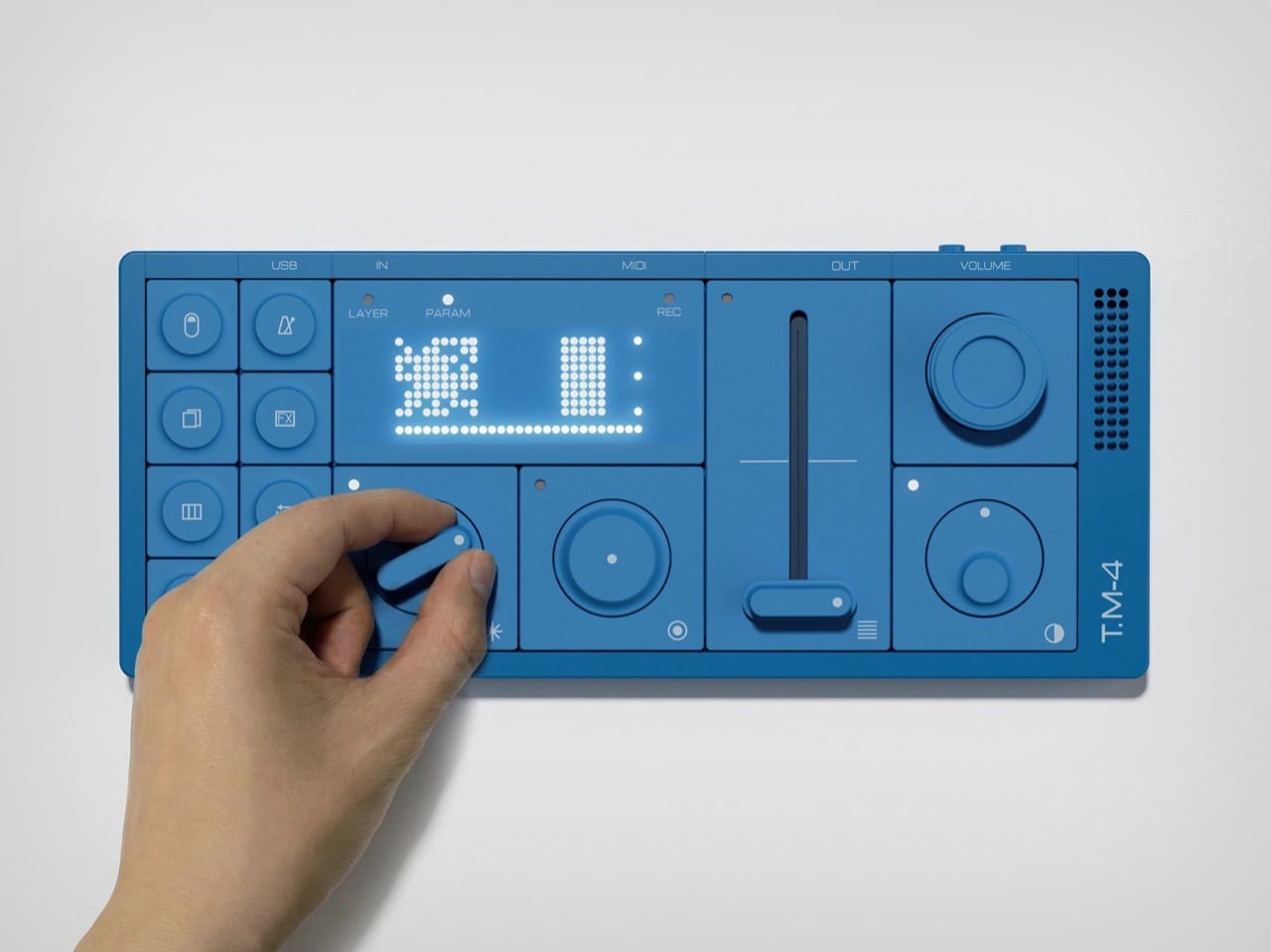
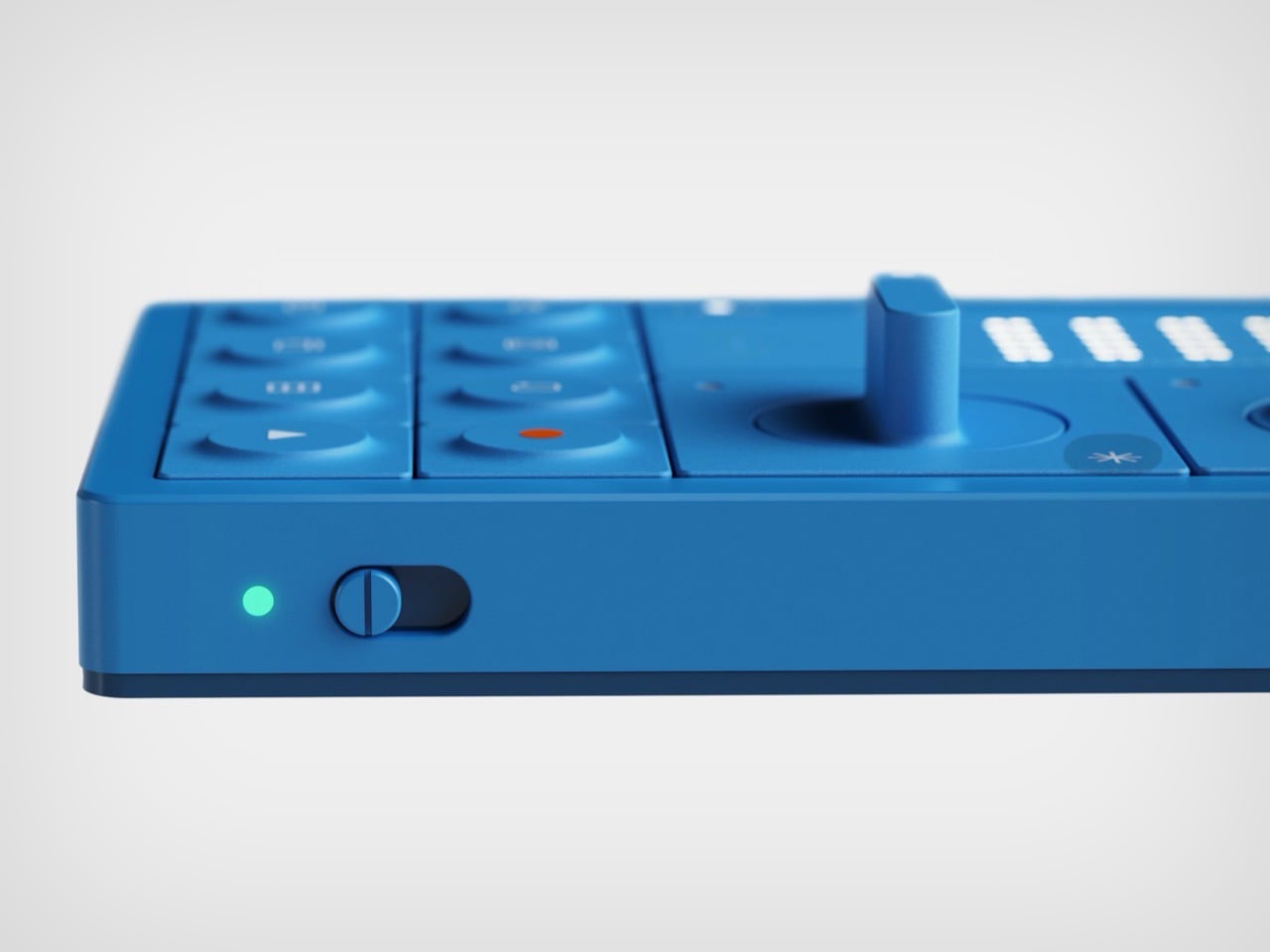
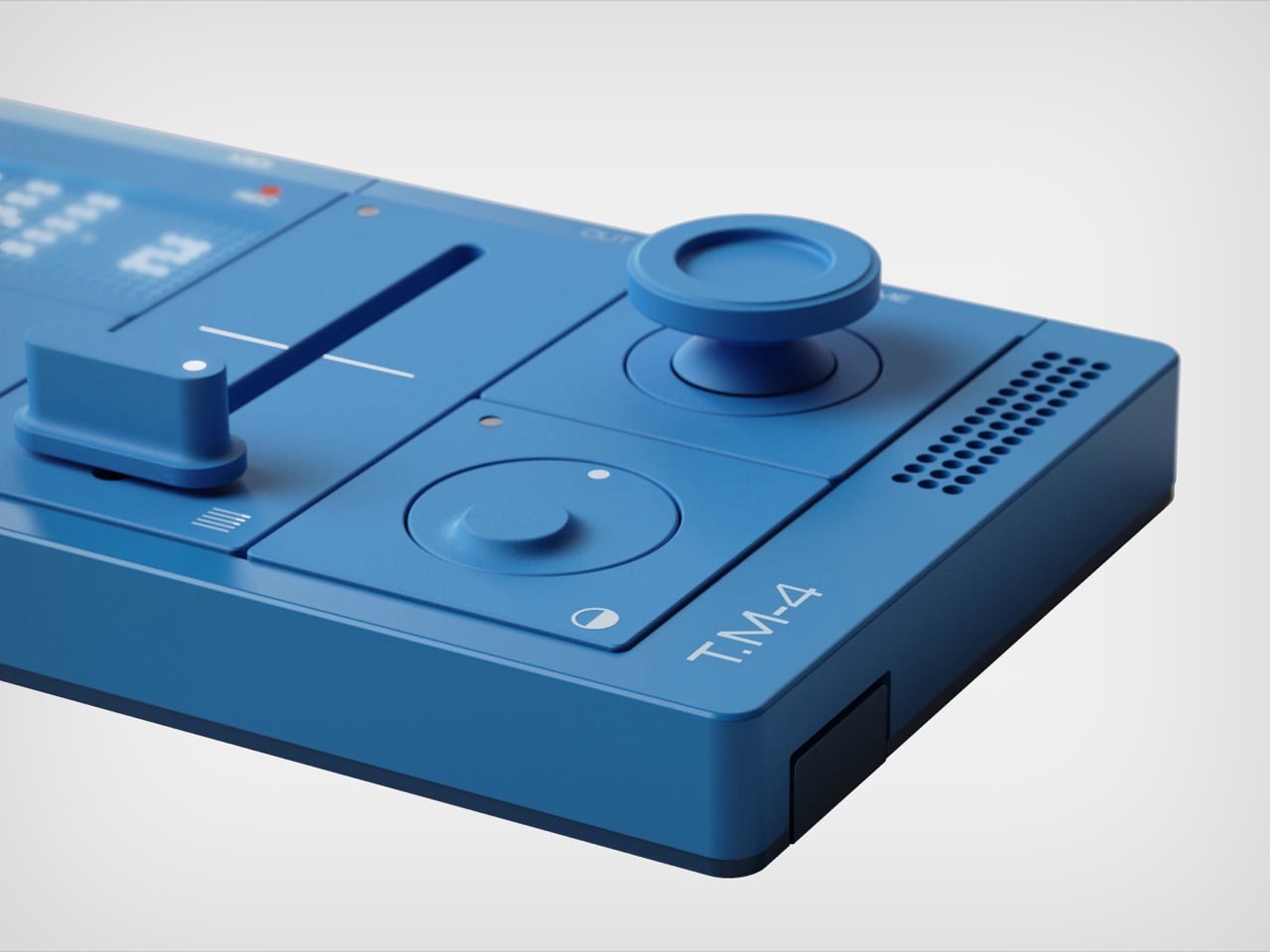
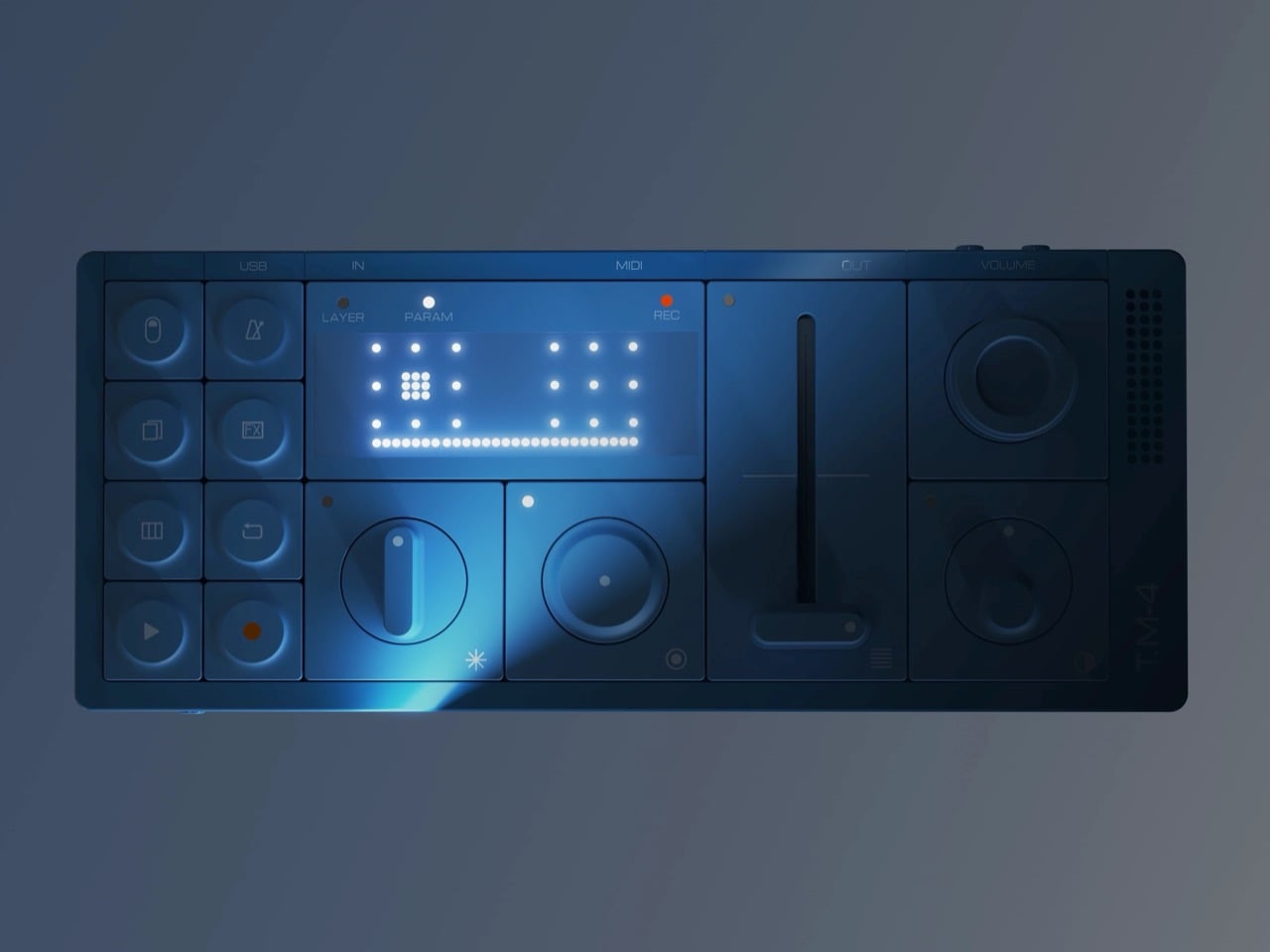
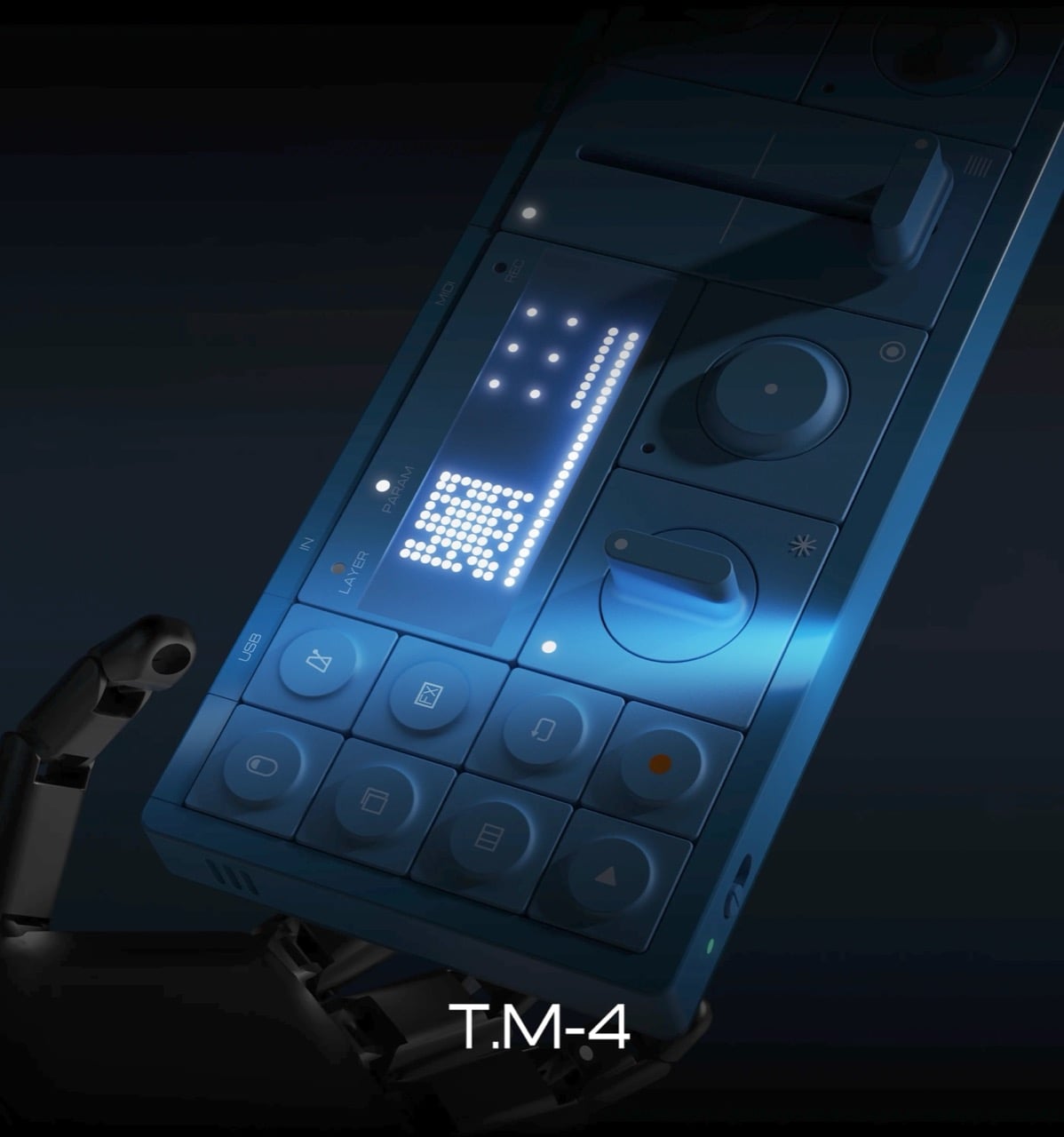
The T.M-4 looks like it escaped from Teenage Engineering’s design studio with a specific mission: teach beginners how to make music using AI without making them feel stupid, or without creating slop. Junho Park’s graduation concept borrows all the right cues from TE’s playbook, that modular control layout, the single bold color, the mix of knobs and buttons that practically beg to be touched, but redirects them toward a gap in the market. Where Teenage Engineering designs for people who already understand synthesis and sampling, the T.M-4 targets people who have ideas but no vocabulary to express them. The device handles the technical translation automatically, separating audio into layers and letting you manipulate them through physical controls. It feels like someone took the OP-1’s attitude and wired it straight into an AI stem separator.
The homage succeeds because Park absorbed what makes Teenage Engineering products special beyond their appearance. TE hardware feels different because it removes friction between intention and result, making complex technology feel approachable through thoughtful interface design and immediate tactile feedback. The T.M-4 brings that same thinking to AI music generation. You’re manipulating machine learning model parameters when you adjust texture, energy, complexity, and brightness, but the physical controls make it feel like direct manipulation of sound rather than abstract technical adjustment. An SD card system lets you swap AI personalities like you would game CDs from a gaming console – something very hardware, very tactile, very TE. Instead of drowning in model settings, you collect cards that give the AI different characters, making experimentation feel natural rather than intimidating.
Designer: Junho Park
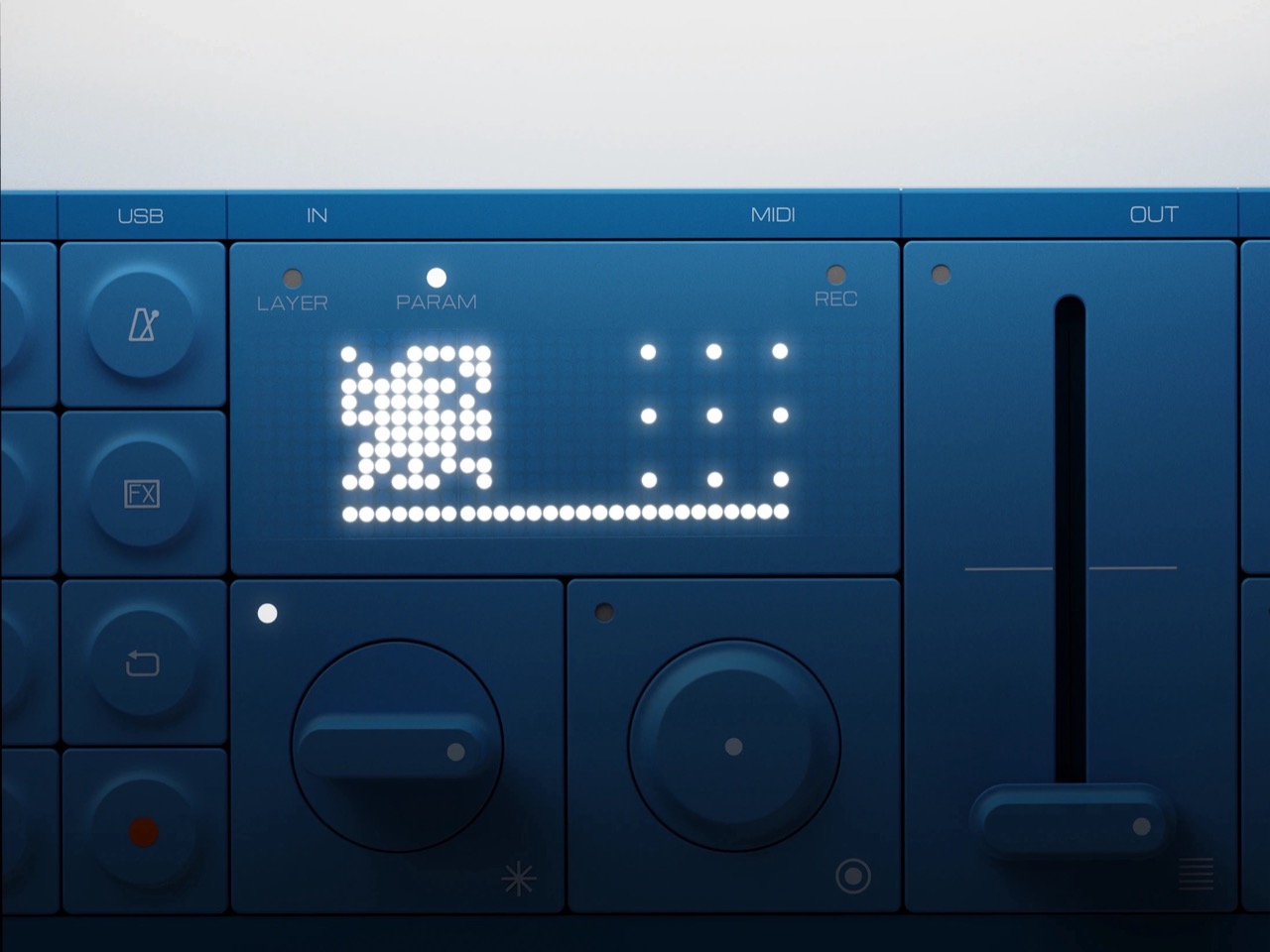
What makes this cool is how it attacks the exact point where most beginners give up. Think about the first time you tried to remix a track and realized you had no clean drums, no isolated vocals, nothing you could really move around without wrecking the whole thing. Here, you feed audio in through USB-C, a mic, AUX, or MIDI, and the system just splits it into drum, bass, melody, and FX layers for you. No plugins, no routing, no YouTube rabbit hole about spectral editing. Suddenly you are not wrestling with the file, you are deciding what you want the bass to do while the rest of the track keeps breathing.
The joystick and grid display combo help simplify what would otherwise be a fairly daunting piece of gear. Instead of staring at a dense DAW timeline, you get a grid of dots that represent sections and layers, and you move through them like you are playing with a handheld console. That mental reframe matters. It turns editing into navigation, which is far less intimidating than “production.” Tie that to four core parameters, texture, energy, complexity, brightness, and you get a system that quietly teaches beginners how sound behaves without ever calling it a lesson. You hear the track get busier as you push complexity, you feel the mood shift when you drag energy down, and your brain starts building a map.
Picture it sitting next to a laptop and a cheap MIDI keyboard, acting as a hardware front end for whatever AI engine lives on the computer. You sample from your phone, your synth, a YouTube rip, whatever, then sculpt the layers on the T.M-4 before dumping them into a DAW. It becomes a sort of AI sketchpad, a place where ideas get roughed out physically before you fine tune them digitally. That hybrid workflow is where a lot of music tech is quietly drifting anyway, and this concept leans straight into it.
Of course, as a student project, it dodges the questions about latency, model size, and whether this thing would melt without an external GPU. But as a piece of design thinking, it lands. It treats AI as an invisible assistant, not the star of the show, and gives the spotlight back to the interface and the person poking at it. If someone like Teenage Engineering, or honestly any brave mid-tier hardware company, picked up this idea and pushed it into production, you would suddenly have a very different kind of beginner tool on the market. Less “click here to generate a track,” more “here, touch this, hear what happens, keep going.”
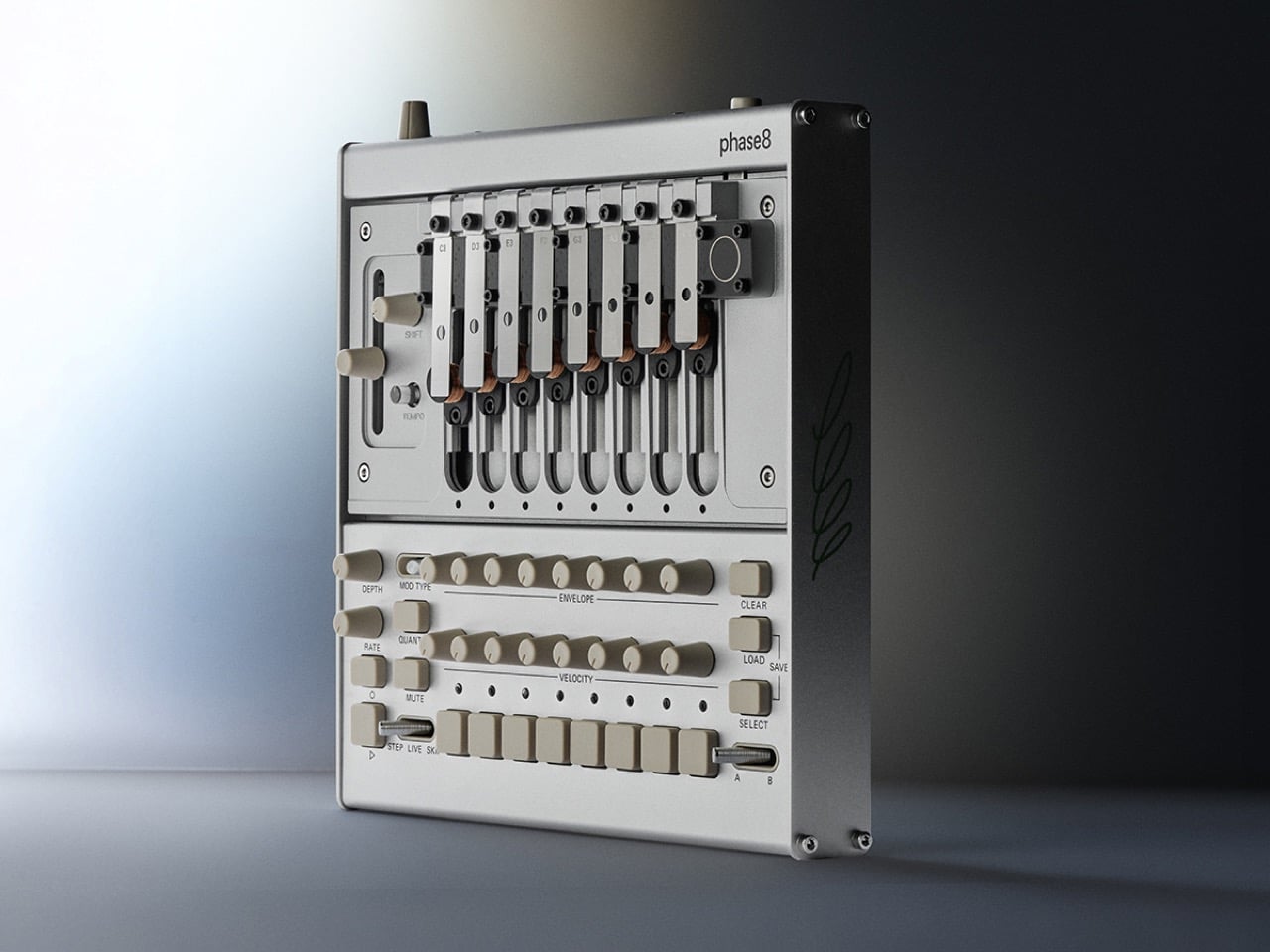
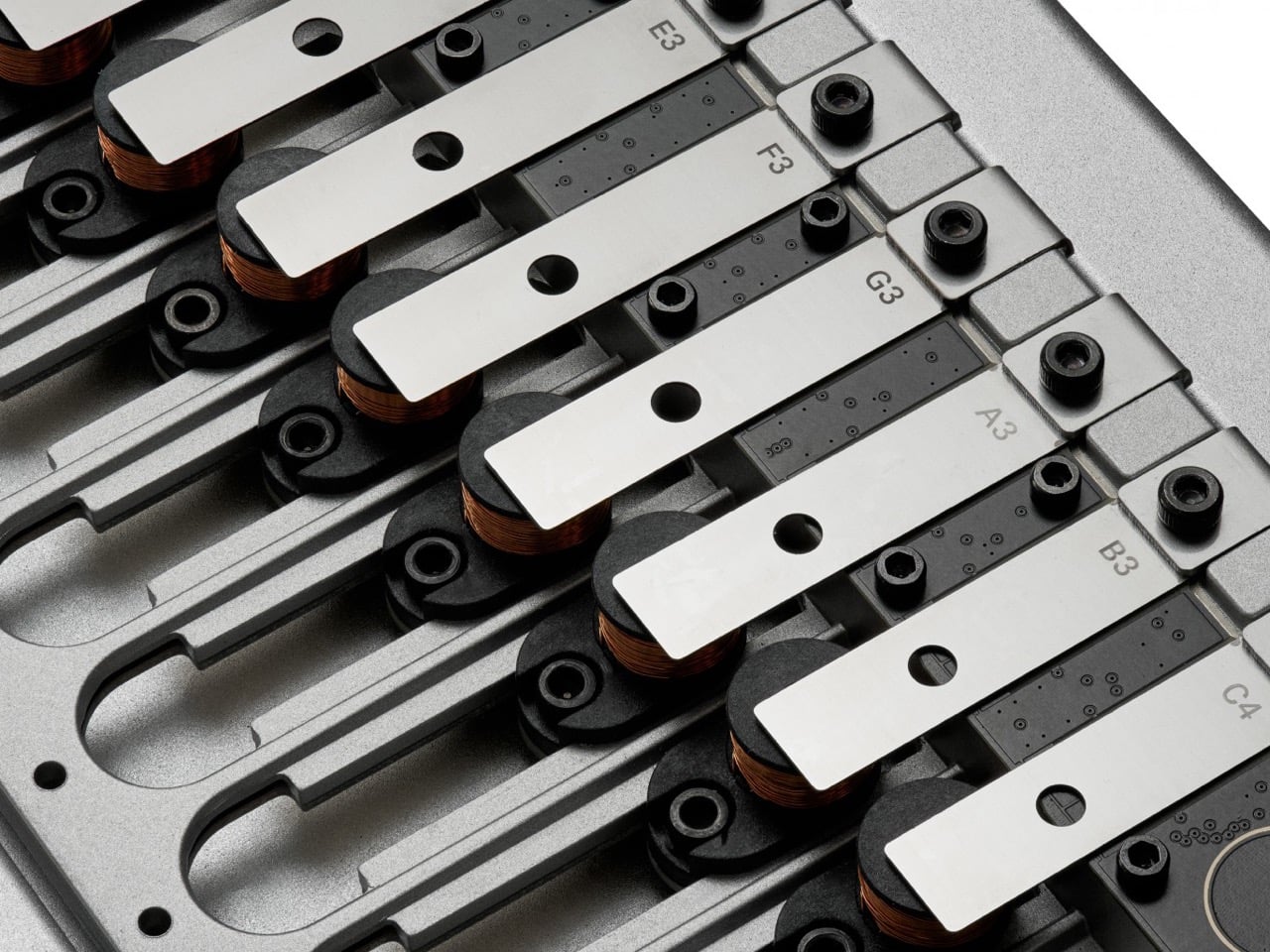
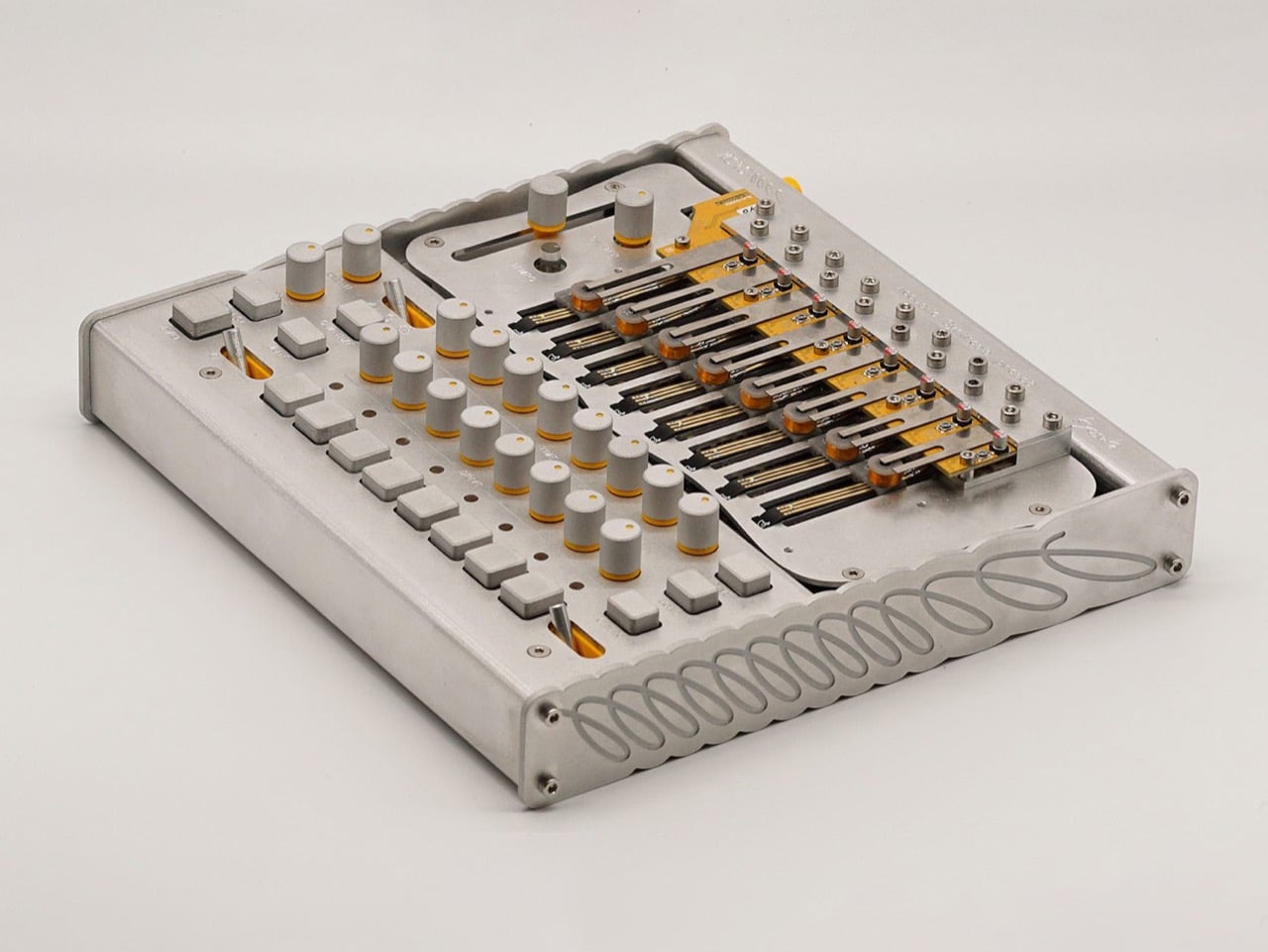
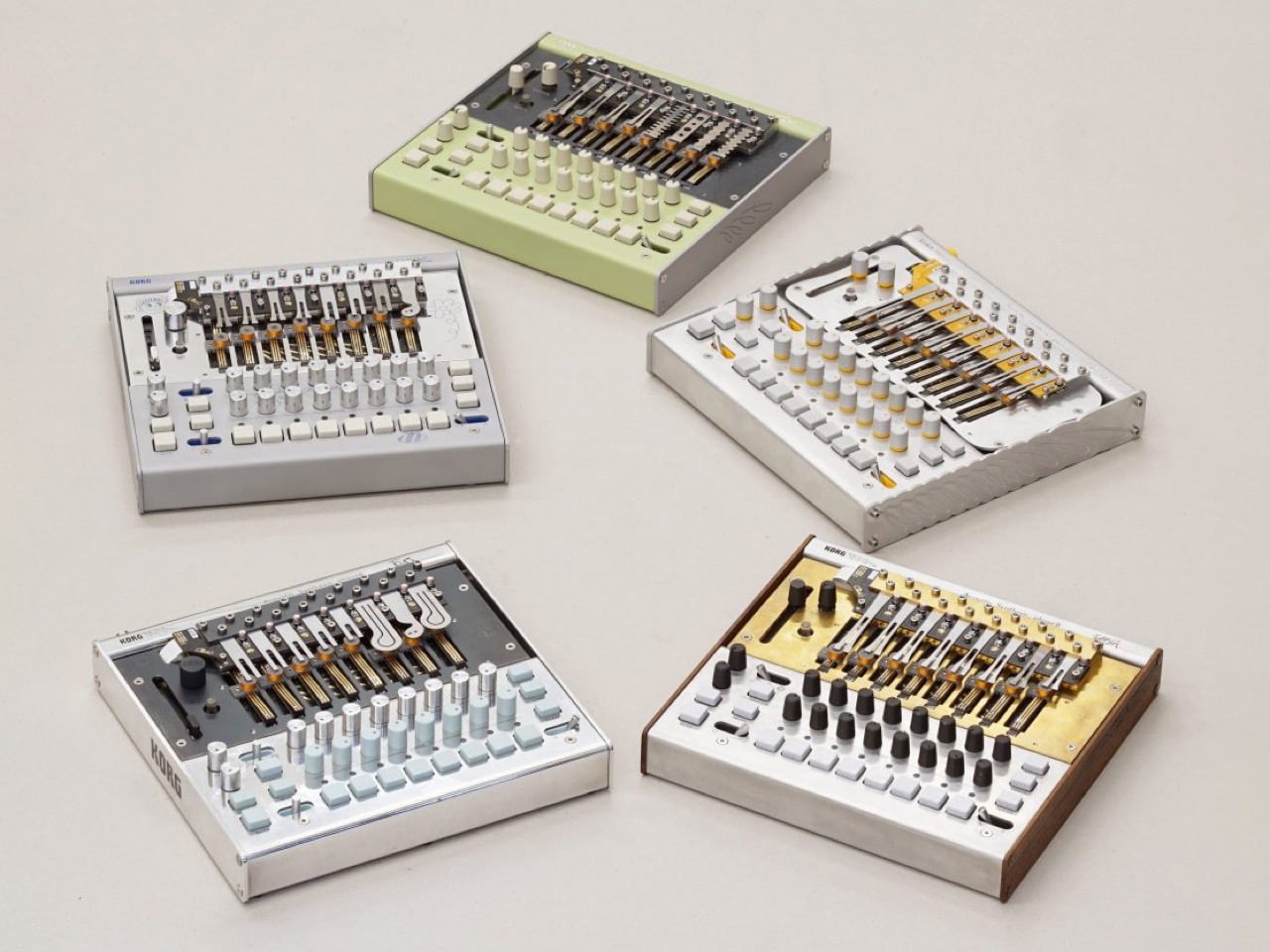
On first glance, Korg’s Phase8 looks like something Love Hultén might have dreamt up after a late night with a kalimba and a soldering iron. It has that same altar like presence, where every screw and surface feels intentional, and the exposed steel bars read more like a kinetic sculpture than a row of notes. You do not just see an instrument, you see a machine that wants to be played, prodded, and prepared with whatever objects are lying around your studio.
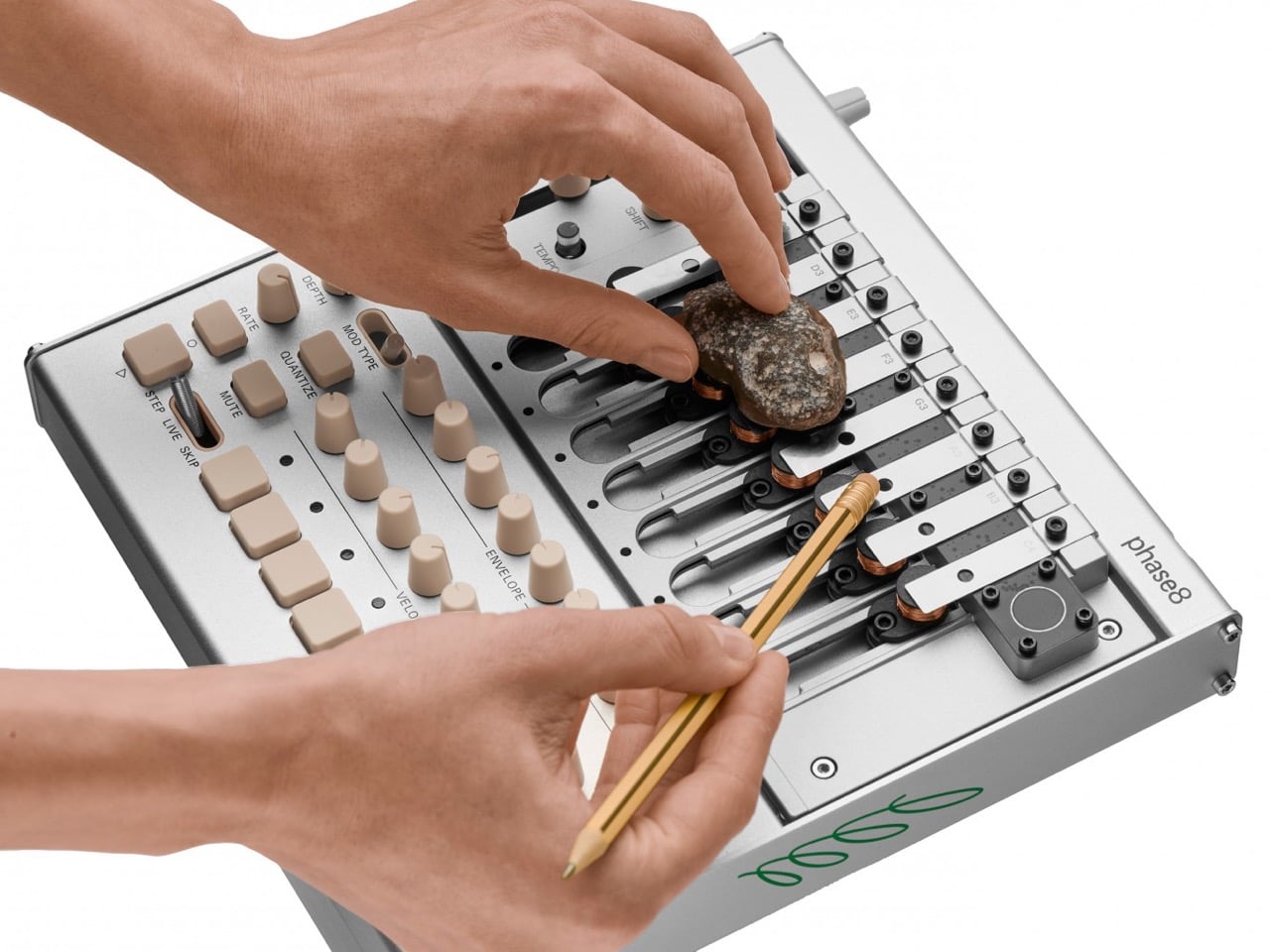
The result is a tabletop artifact that feels half lab instrument, half folk relic. Phase8 invites the same sort of ritualistic interaction Hultén builds into his one off consoles and synth shrines. You can sequence it like a modern groovebox, but it really comes alive when your hands, a pencil, or even a river stone start interfering with those vibrating tines.
Designer: Korg
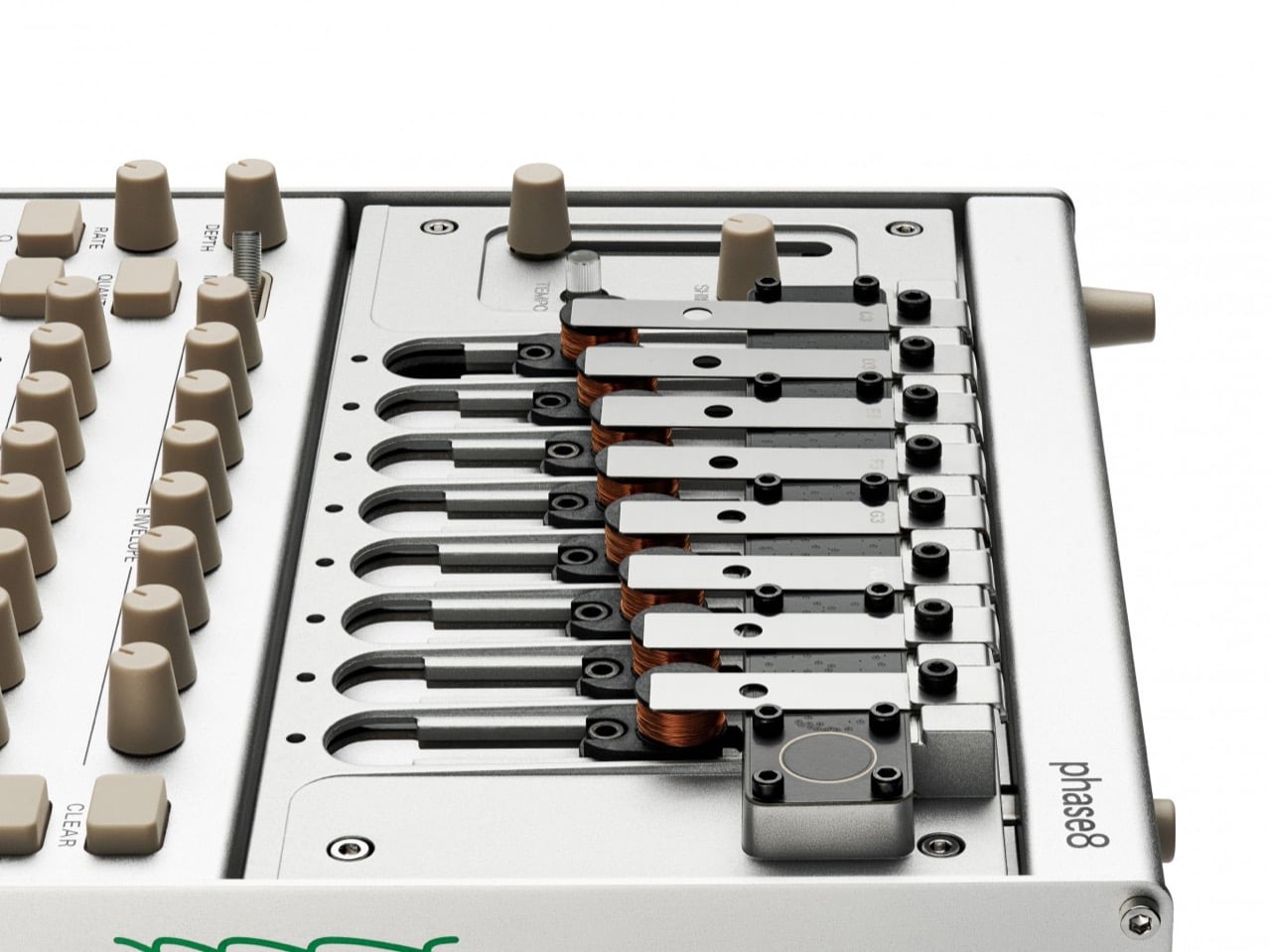
This whole thing runs on what Korg is calling “Acoustic Synthesis,” which is a fancy way of saying it hits stuff. Under each of those eight steel resonators sits an electromagnetic hammer that physically strikes the bar when triggered. A capacitive pickup then captures the resulting acoustic vibration and sends it back into the synth engine for shaping. It is a completely different path from the usual oscillator-filter-amp chain. The entire unit weighs a solid 1.71kg and measures just 231mm wide, giving it the dense, purposeful feel of a piece of lab equipment, not a lightweight music toy.
That physical interaction model is the entire point. Korg explicitly tells you to pluck, mute, and strum the resonators. They even encourage placing found objects on them to create new textures. An “AIR” slider on the side lets you boost or dampen the raw acoustic response, effectively mixing between the pure electronic signal and the sound of the physical object vibrating in the room. This haptic approach is a clever rebellion against the menu-diving and screen-staring that defines so much modern gear. It demands your physical attention.
Of course, this is a Tatsuya Takahashi project, so the experimental nature is backed by serious engineering. It has a polymetric sequencer, full MIDI and USB-C implementation, and even CV input for talking to modular rigs. At $1,150, it is not an impulse buy, but it also signals that Korg sees this as a proper studio centerpiece. They built an instrument that feels alive because, in a very real sense, its sound generation depends on physical, vibrating matter.
AI music tools usually start on a laptop where you type a prompt and wait for a track. That workflow feels distant from how bands write songs, trading groove and chemistry for text boxes and genre presets. MUSE asks what AI music looks like if it starts from playing instead of typing, treating the machine as a bandmate that listens and responds rather than a generator you feed instructions.
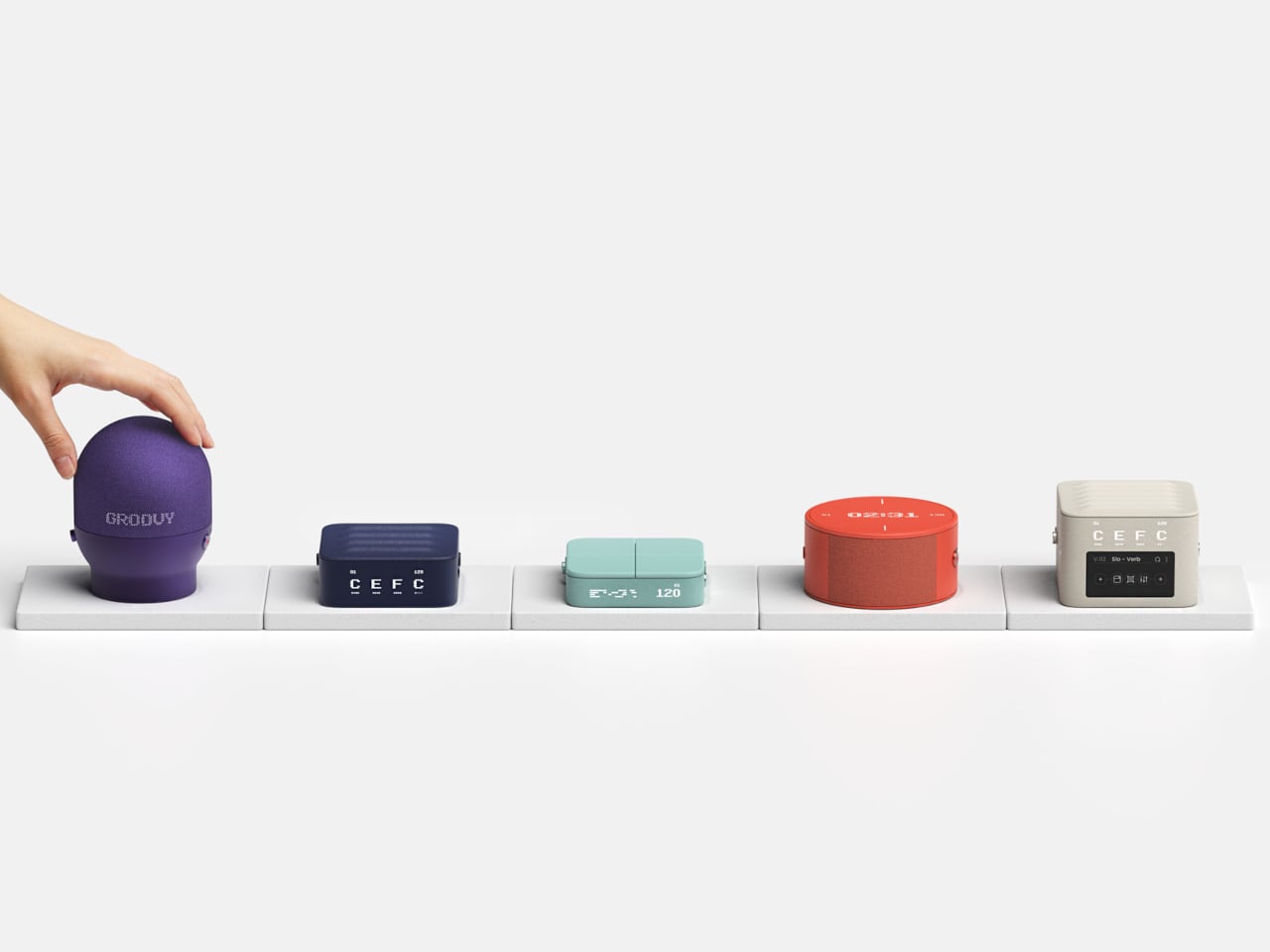
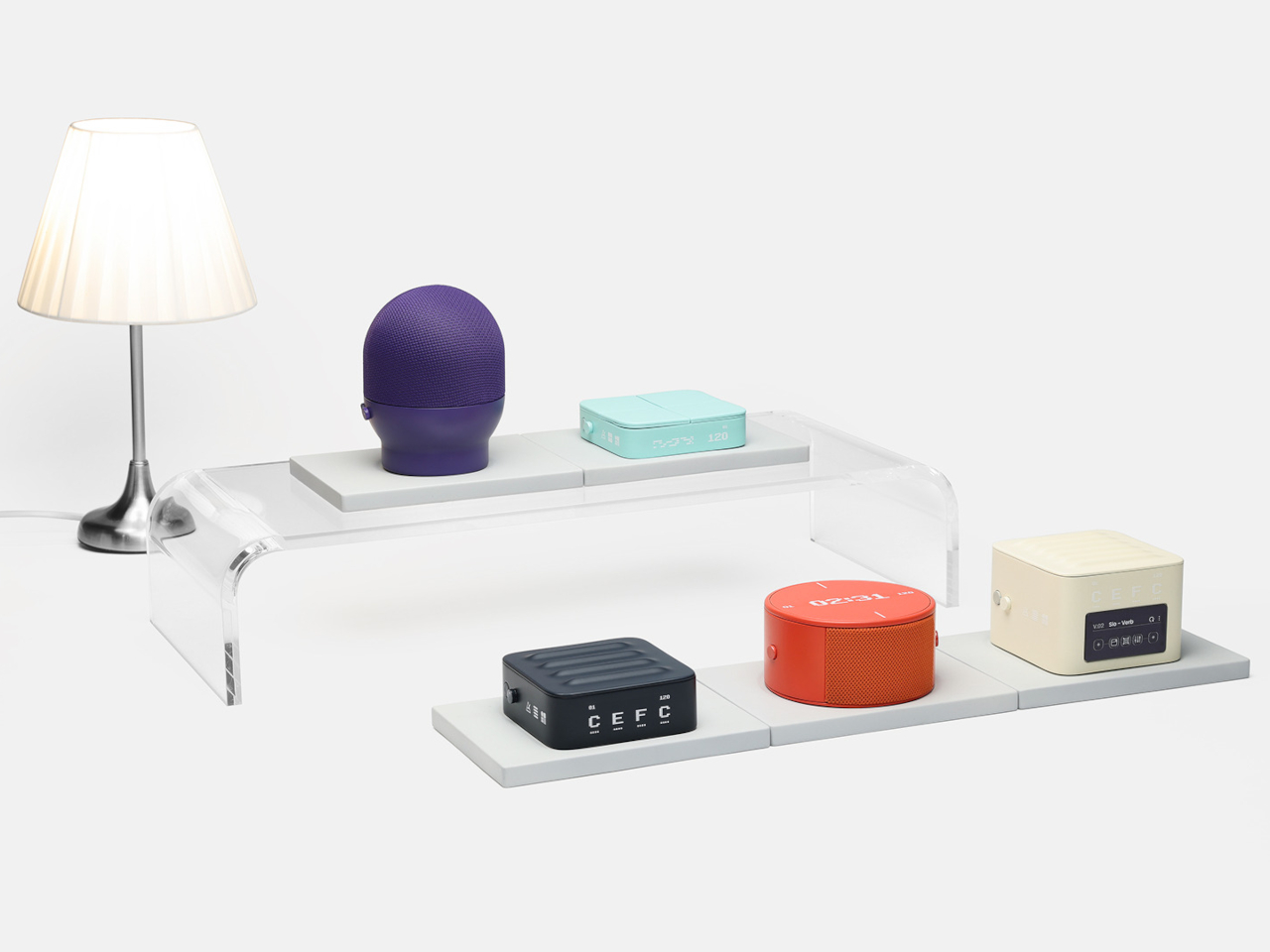
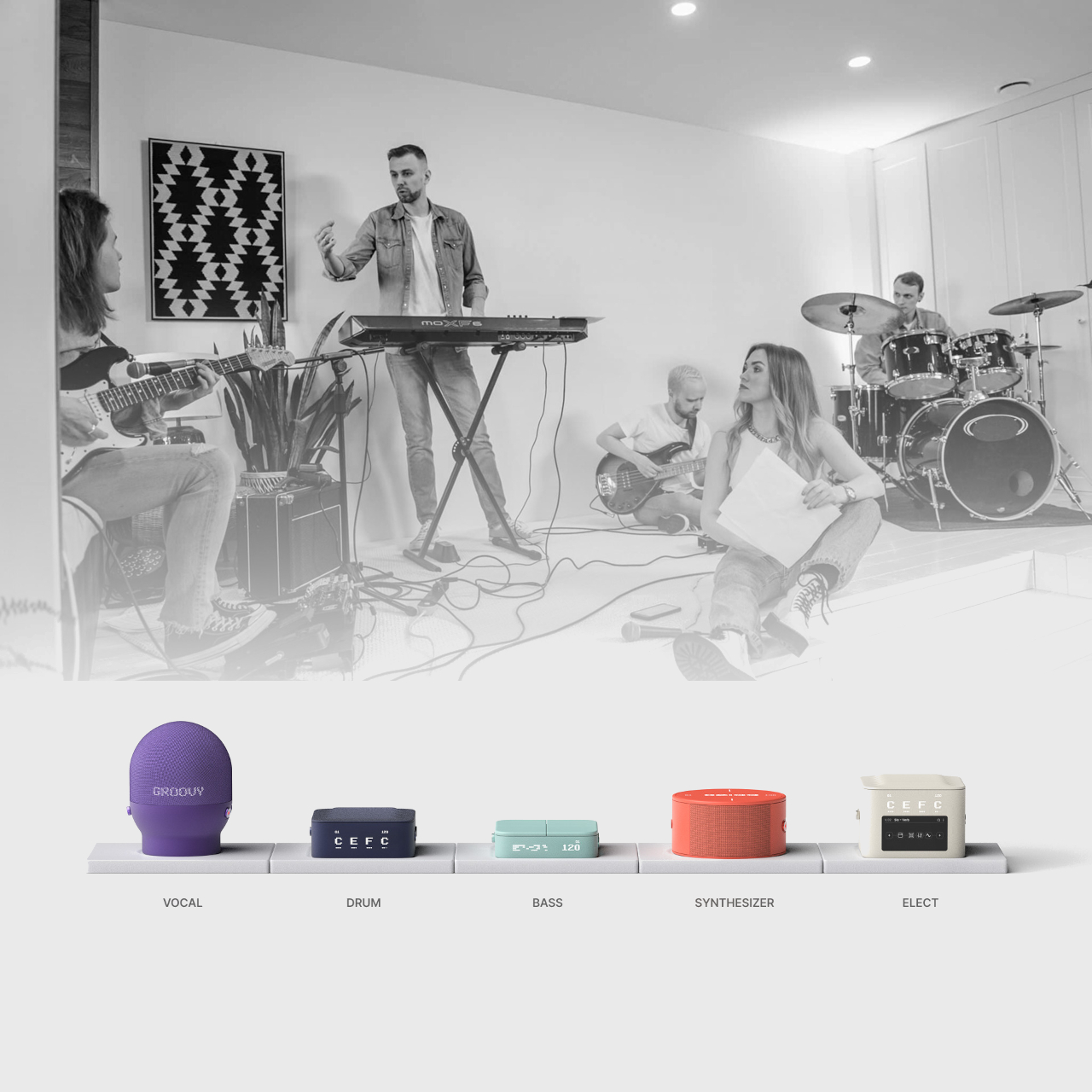
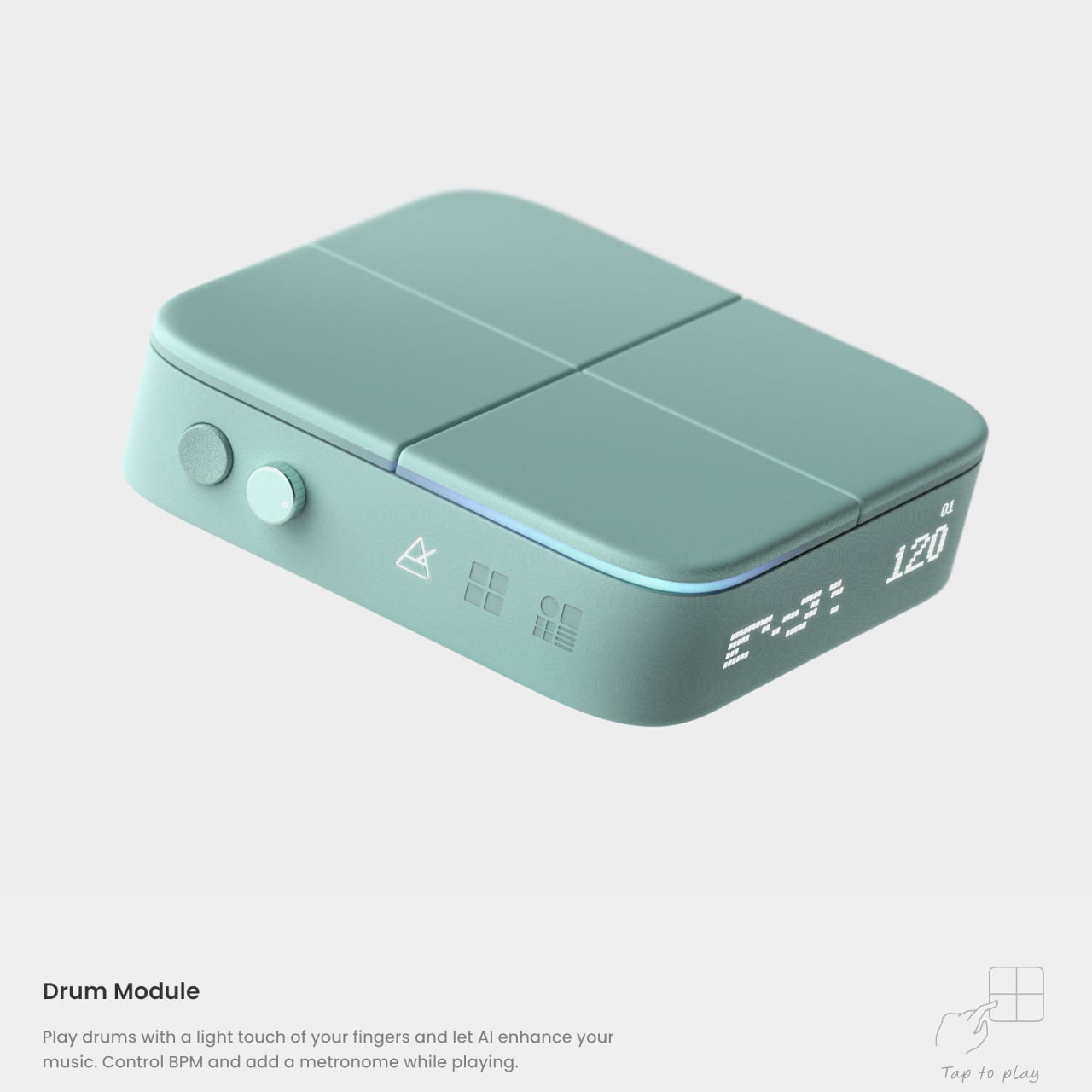
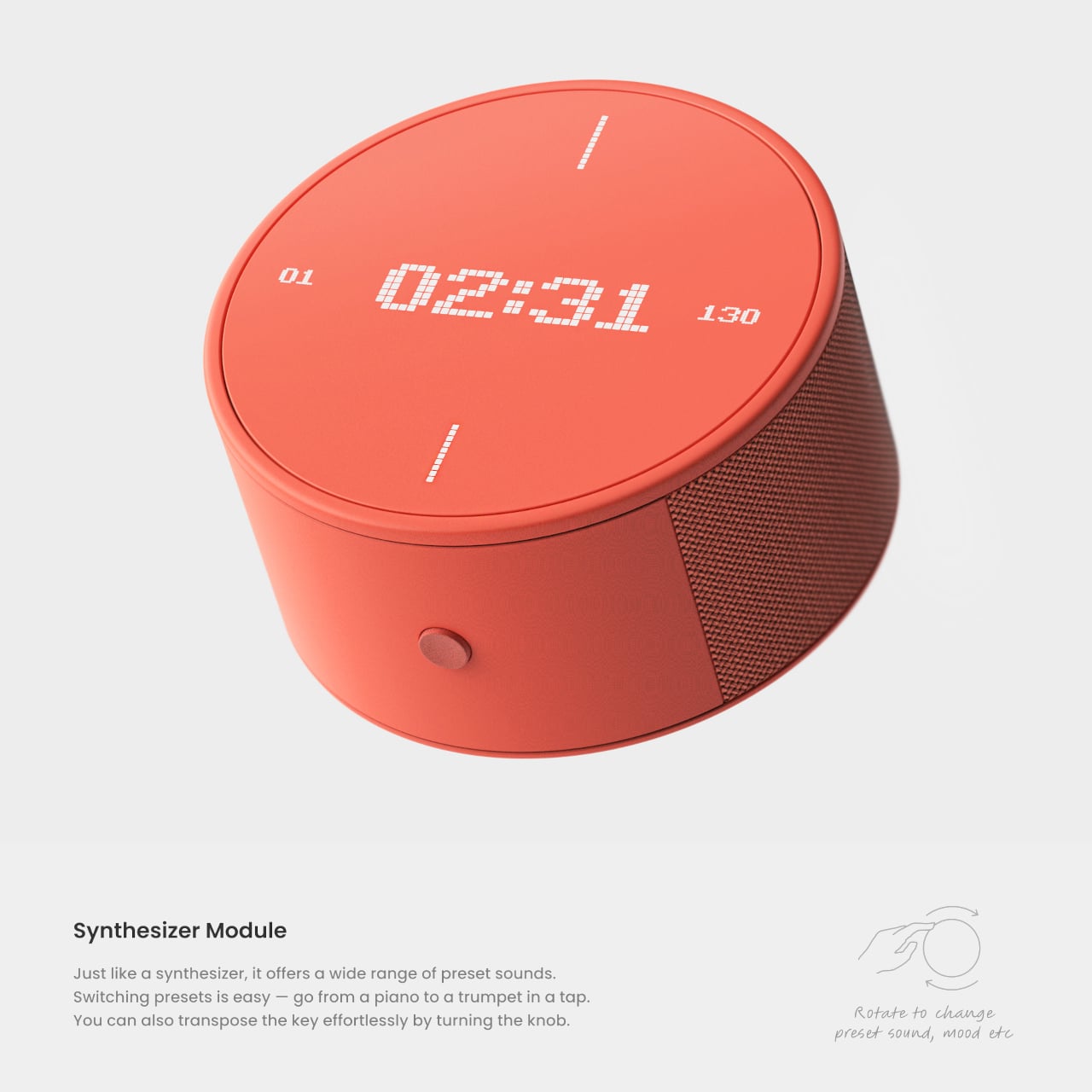
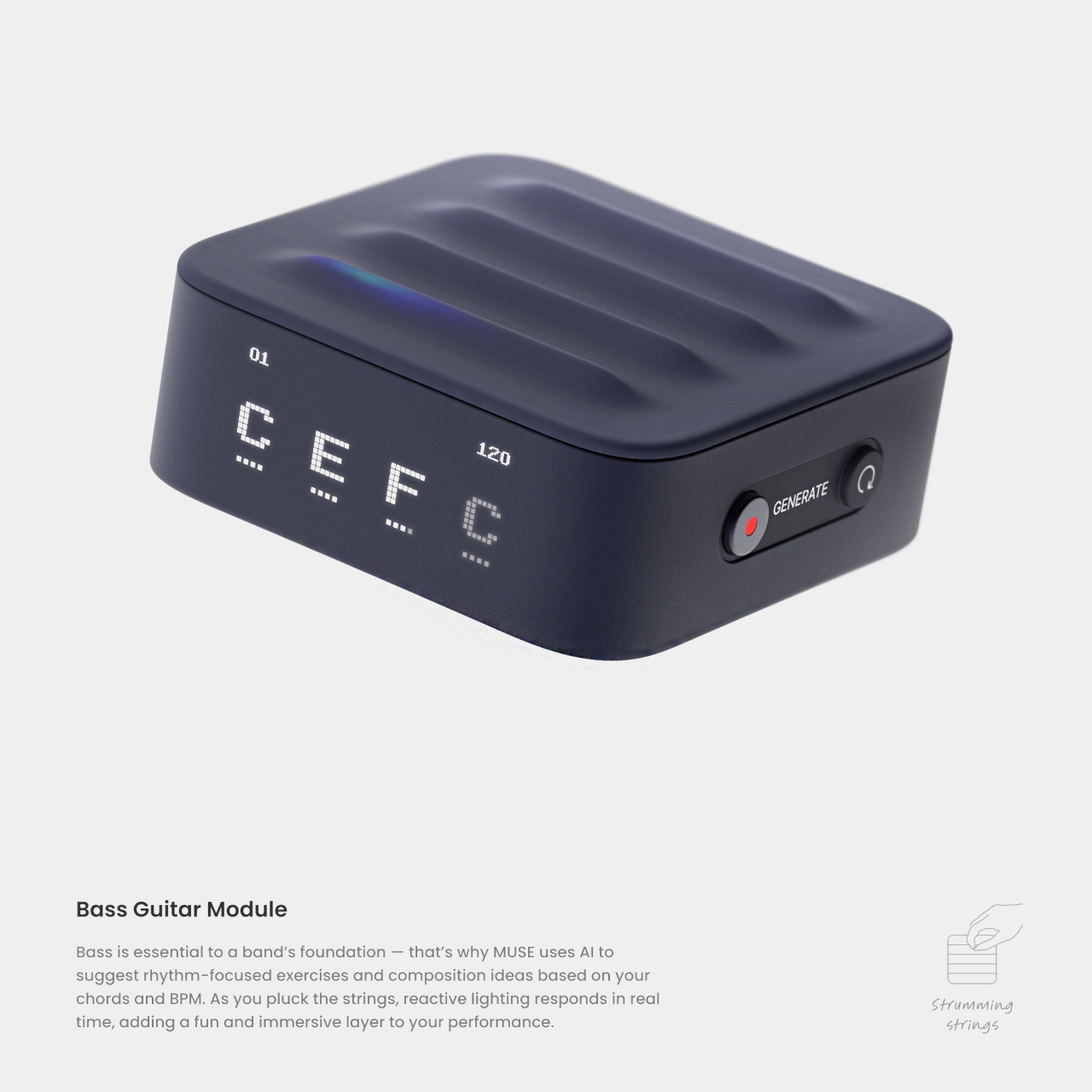
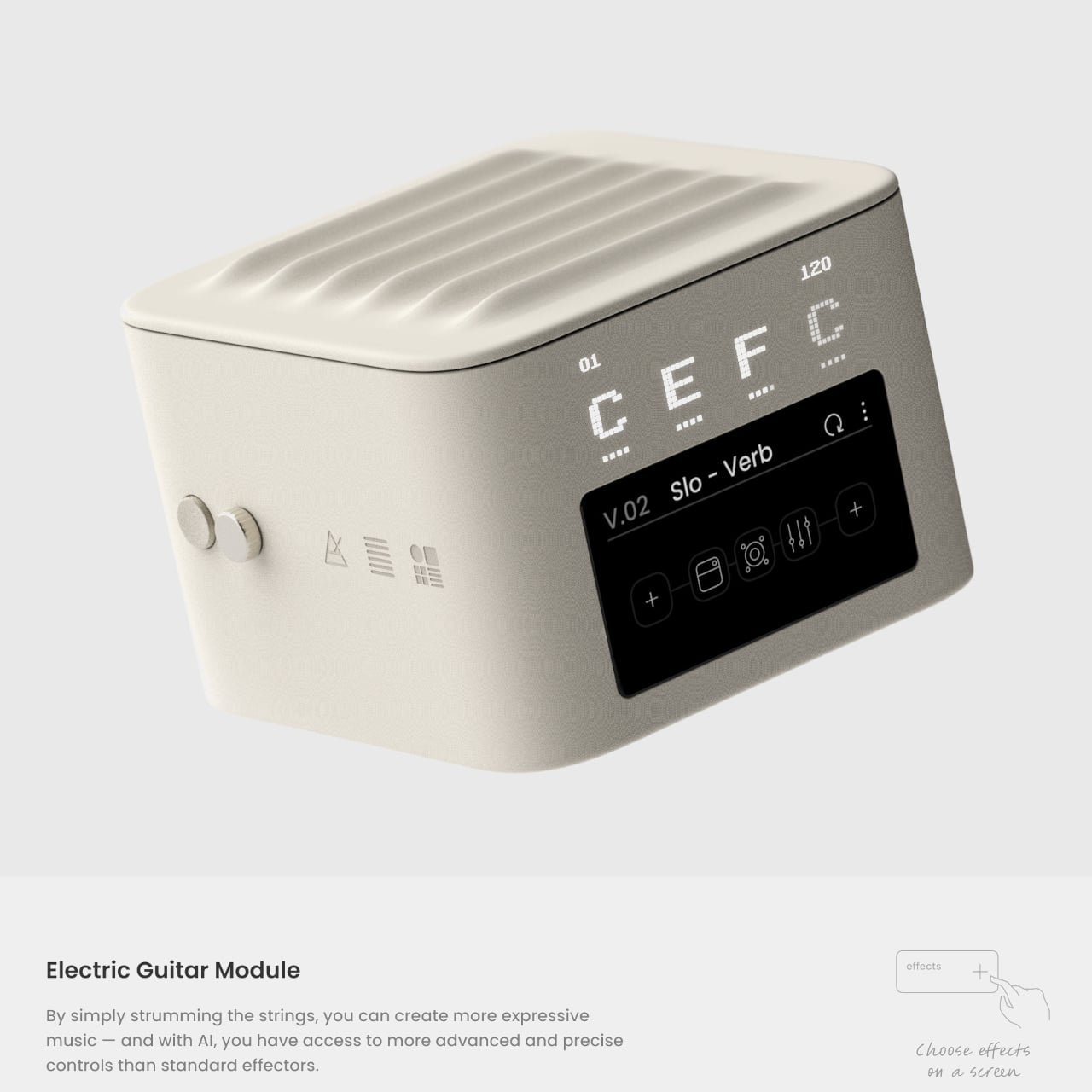
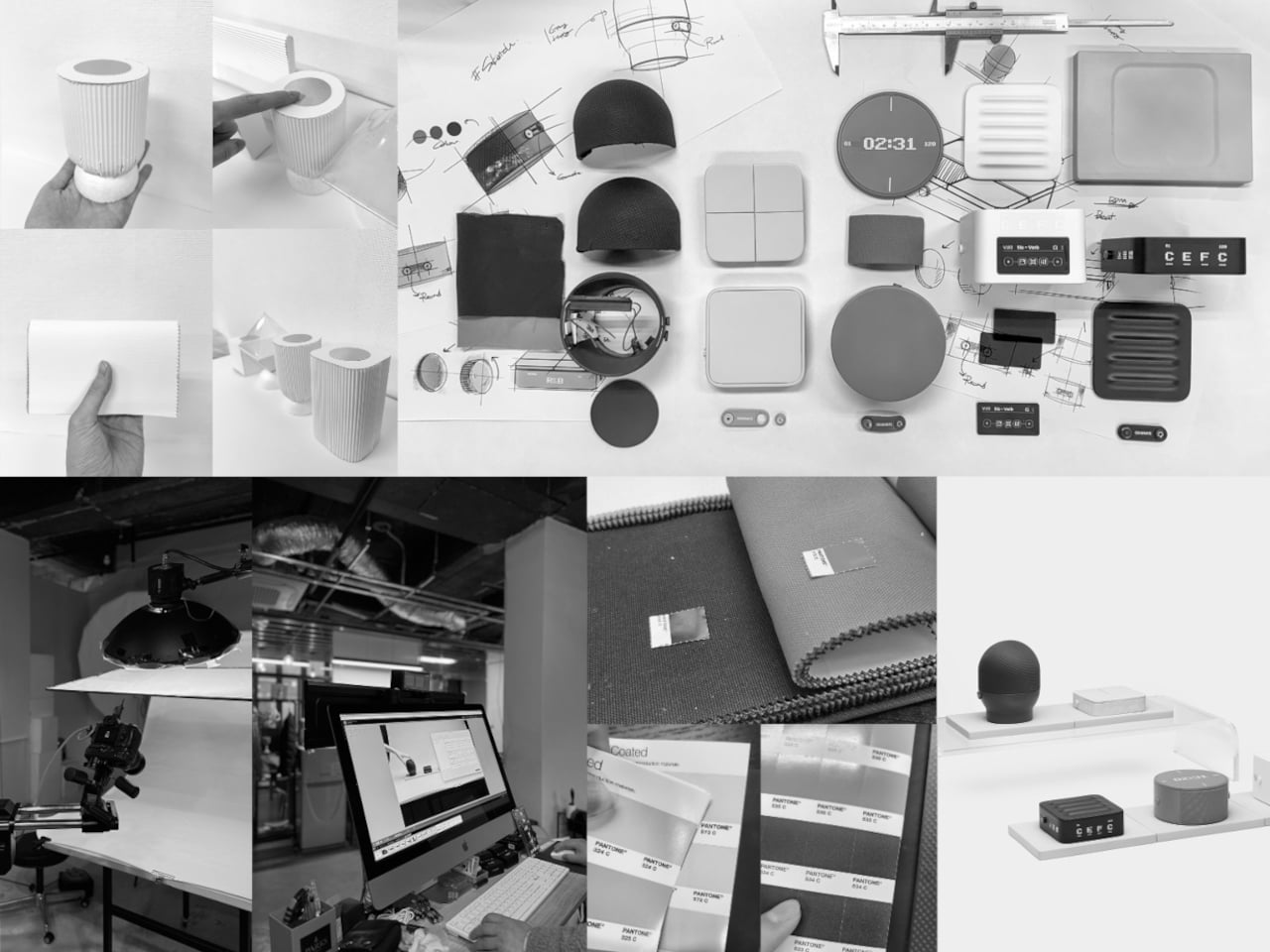
MUSE is a next-generation AI music module system designed for band musicians. It is not one box but a family of modules, vocal, drum, bass, synthesizer, and electric guitar, each tuned to a specific role. You feed each one ideas the way you would feed a bandmate, and the AI responds in real time, filling out parts and suggesting directions that match what you just played.
A band rehearsal where each member has their own module means the drummer taps patterns into the drum unit, the bassist works with the bass module to explore grooves, and the singer hums into the vocal module to spin melodies out of half-formed ideas. Instead of staring at a screen, everyone is still moving and reacting, but there is an extra layer of AI quietly proposing fills, variations, and harmonies.
MUSE is built around the idea that timing, touch, and phrasing carry information that text prompts miss. Tapping rhythms, humming lines, or strumming chords lets the system pick up on groove and style, not just genre labels. Those nuances feed the AI’s creative process, so what comes back feels more like an extension of your playing than a generic backing track cobbled together from preset patterns.
The modules can be scattered around a home rather than living in a studio. One unit near the bed for late-night vocal ideas, another by the desk for quick guitar riffs between emails, a drum module on the coffee table for couch jams. Because they look like small colorful objects rather than studio gear, they can stay out, ready to catch ideas without turning the house into a control room.
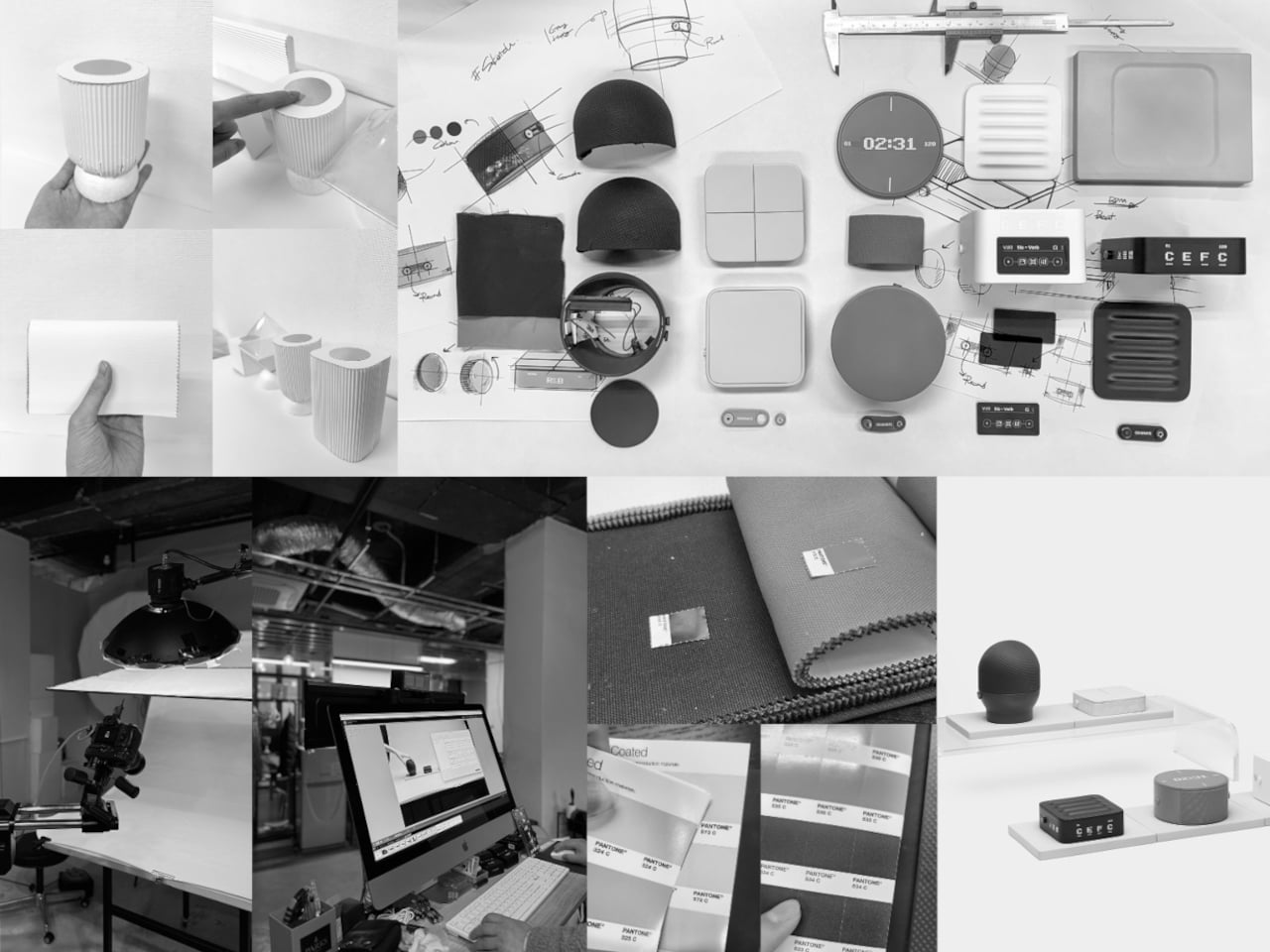
Each module’s color and texture match its role: a plush vocal unit, punchy drum block, bright synth puck, making them easy to grab and easy to live with. They read more like playful home objects than intimidating equipment, which lowers the barrier to experimenting. Picking one up becomes a small ritual, a way to nudge yourself into making sound instead of scrolling or staring at blank sessions.
MUSE began with the question of how creators can embrace AI without losing their identity. The answer it proposes is to keep the musician’s body and timing at the center, letting AI listen and respond rather than dictate. It treats AI as a bandmate that learns your groove over time, not a replacement, and that shift might be what keeps humans in the loop as the tools get smarter.
One thing that the world has been learning the past few years is that people deal with grief differently. That’s why we can never judge how people react to death of loved ones, beloved pets, other living creatures, and even life changes. Artists and creative people in particular sometimes have profound ways of honoring whatever it is that they have lost.
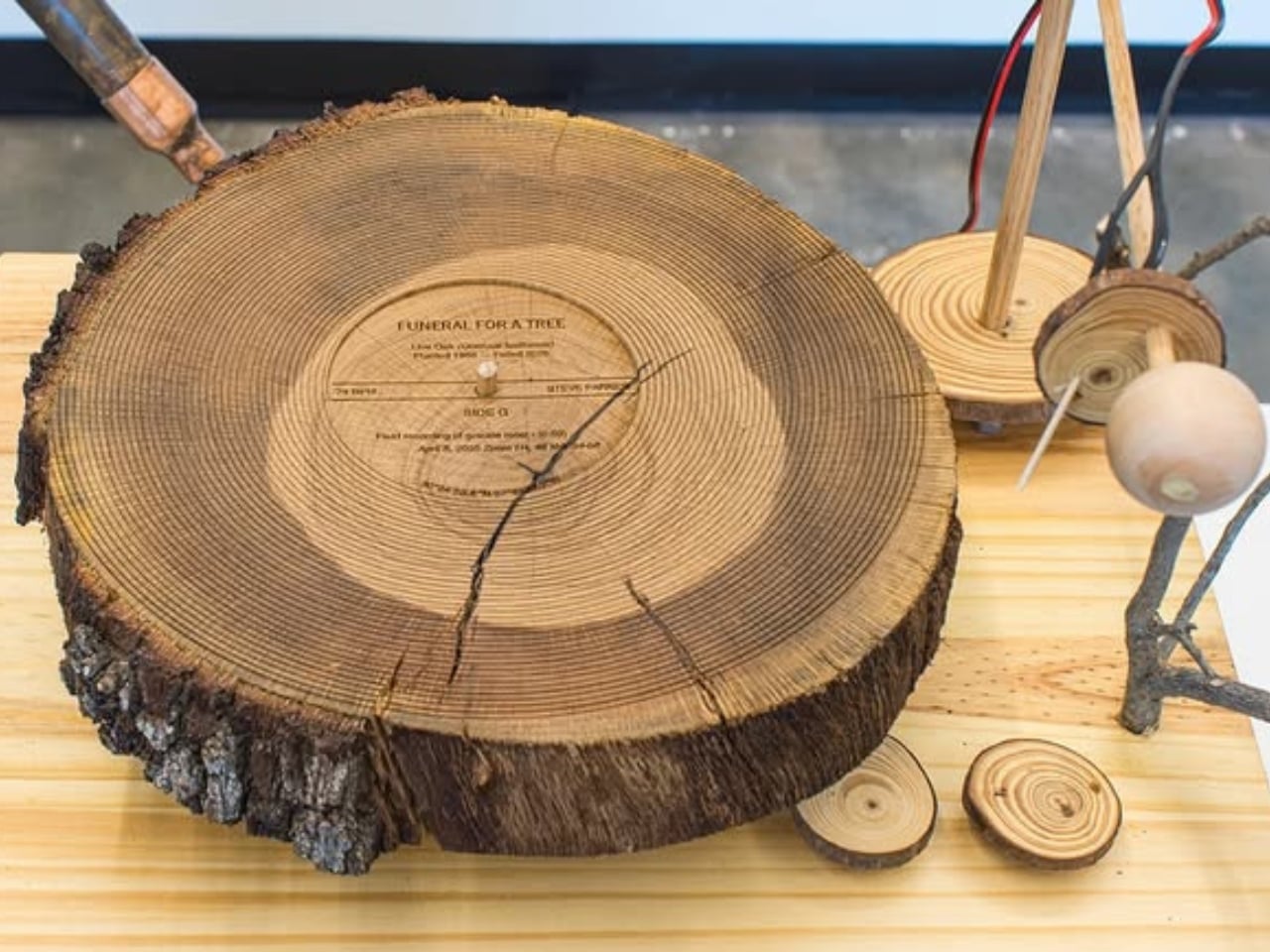
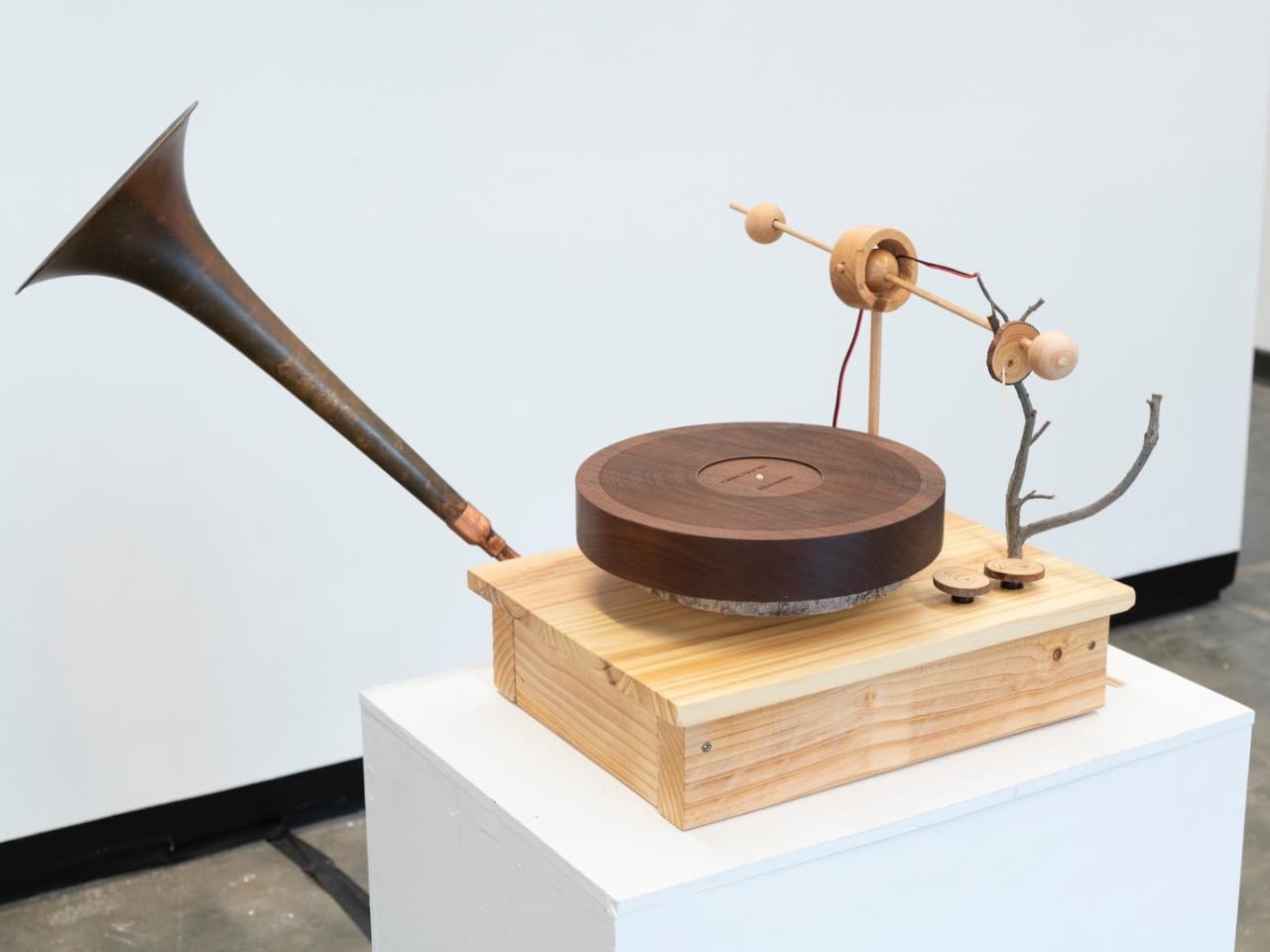
When a 65-year-old oak tree in Steve Parker’s front yard died from a fungal disease called oak wilt, he wanted to create a tribute to this tree that served as a refuge for migratory birds in their area. What he created was a sound sculpture, a record player that could play actual discs with bird songs, a fitting honor to the life and legacy of the tree.
Parker cut the trunk of the diseased tree into “wood cookies” or cross-sectional slices. He then carved grooves directly into the discs to create playable records. He then built a victrola or record player that is specifically designed to play the wooden records. This player is placed on a pedestal and the round tree slices are displayed on the walls behind it.
What plays on the wooden records is equally special. He etched the songs of migratory birds that once nested in the oak tree. You hear a scratchy, wooden sound which actually reminds you of that branch that would hit the side of an old farm house, which can be nostalgic or creepy depending on your experience of it.
Creating these wooden records wasn’t easy. Live oak is notoriously difficult to work with because it cracks as it dries, and many woodworkers avoid it entirely. But Parker saw those imperfections as part of the piece’s authenticity. Those cracks and warps in the sound aren’t flaws, they’re features that honor the tree’s natural character even in death.
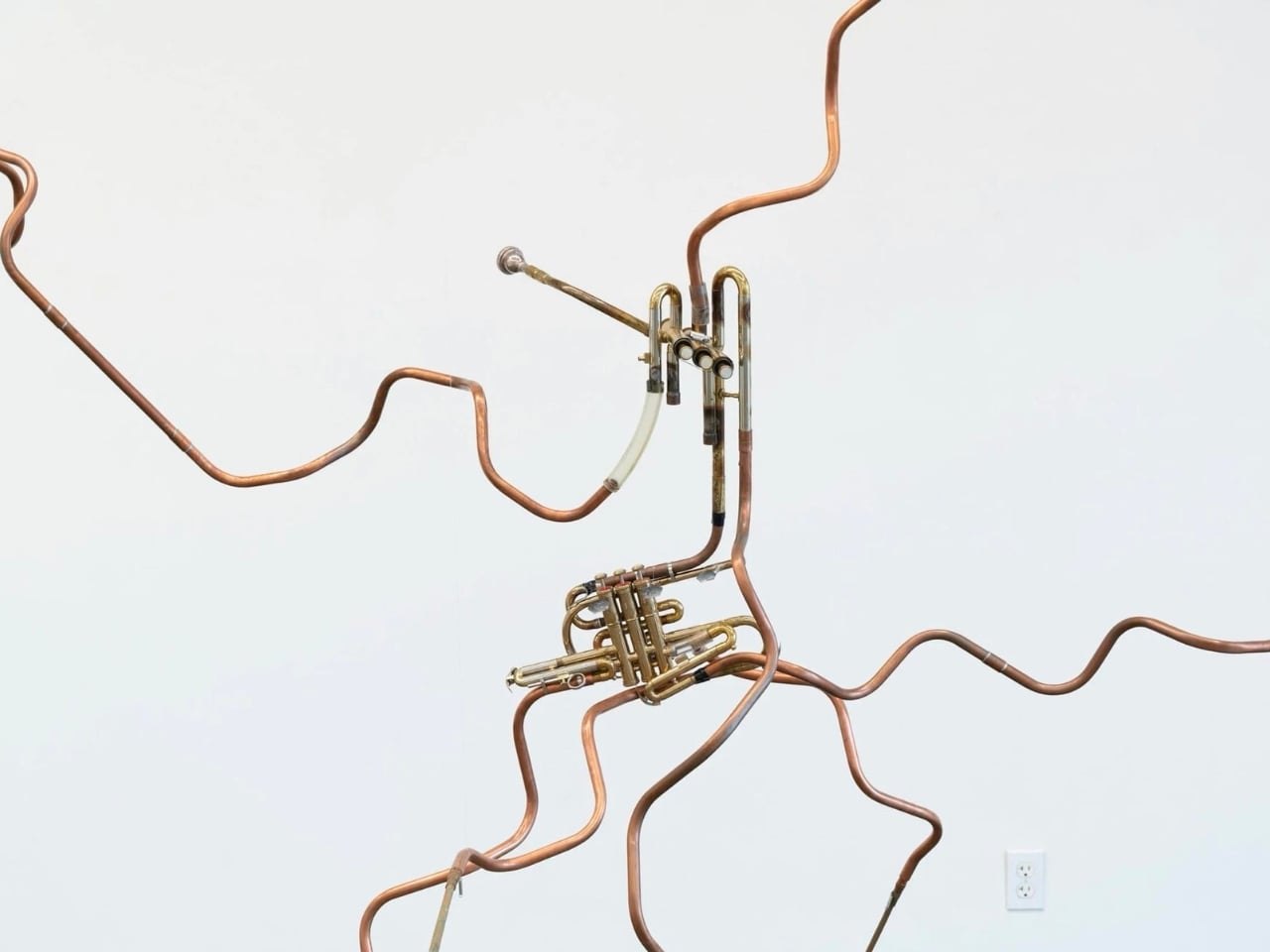
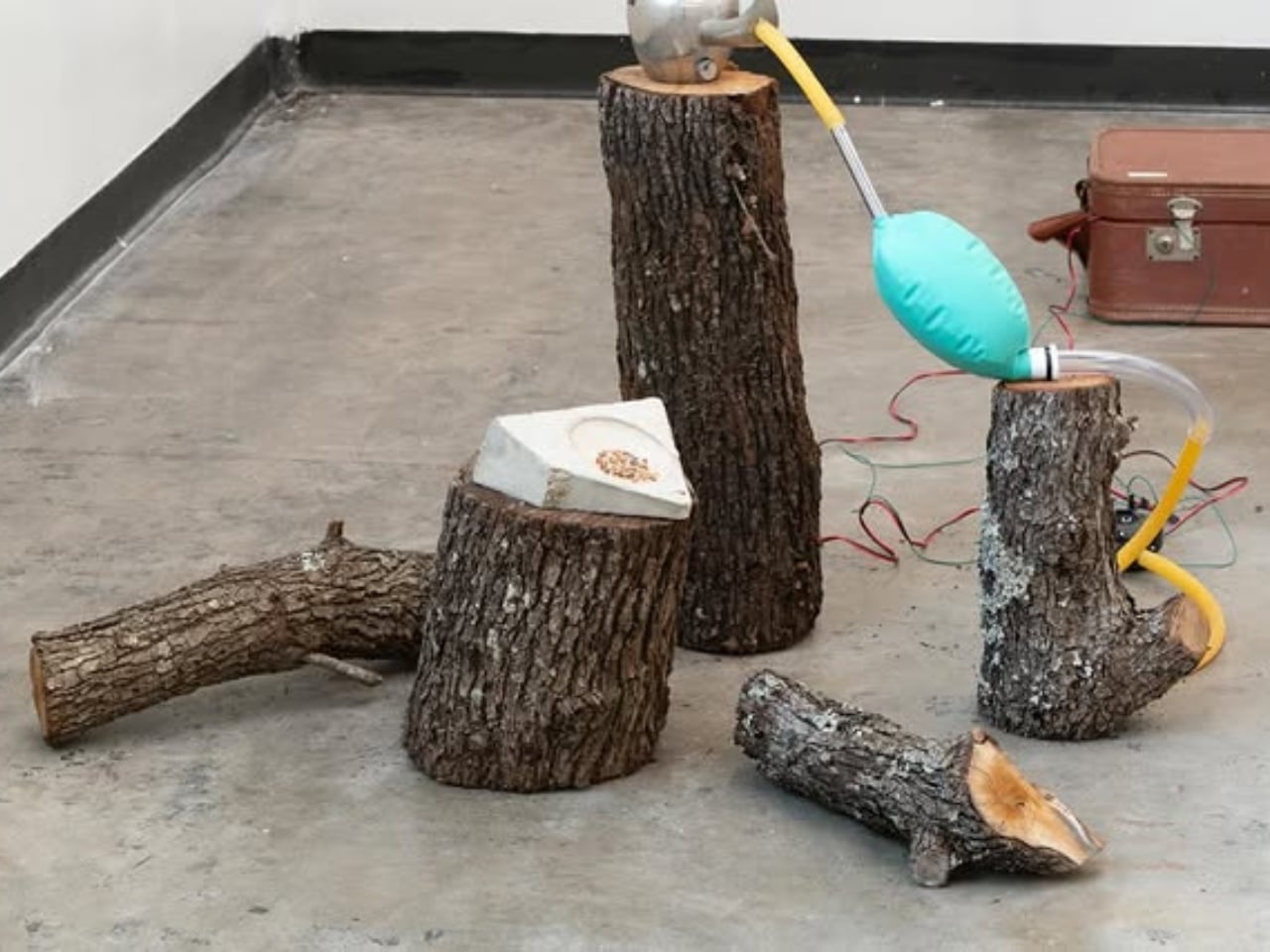
But the wooden records are only part of “Funeral for a Tree.” Parker also created a companion sculpture called “Sheng Shrine”: a plant-like, valve-driven instrument built from salvaged brass valves from euphoniums and trumpets, copper tubing, and breathing bags. What makes this piece particularly moving is what animates it: CPAP machines and ventilators, the same medical equipment used to help people breathe when they’re ill.
These breathing machines give life to discarded Chinese shengs (mouth organs). The sheng is traditionally associated with the phoenix, and the word itself means life, voice, and sound in Mandarin. Parker collaborated with sheng virtuoso Jipo Yang, who interpreted the bird calls and performed short compositions around them. The sounds you hear include the clicks of tiny relays, the grunts of air pumps that almost sound like snores, and the wheezing as air pushes through the reeds. It’s mechanical yet deeply emotional.
There’s another layer to this work that makes it even more poignant. Parker realized that his grief for the tree echoed the loss of his father to cancer. Both were slow, inevitable declines where care could not prevent loss. When his father was really sick, Parker’s family monitored his breathing to assess his comfort and sense where his body was going. Those CPAP machines and ventilators in “Sheng Shrine” carry those memories. They’re devices associated with life support, transformed into instruments that give breath to dead instruments playing songs for a dead tree.
What makes “Funeral for a Tree” so powerful is that it’s not Steve Parker performing a requiem for the tree. It’s the tree performing its own memorial service. The wood itself becomes the instrument, the bird songs it once sheltered become the music, and the breath that once rustled through its leaves is replaced by mechanical breathing that keeps the dirge alive.
In transforming something most people would haul away as waste into a functioning musical instrument, Parker reminds us that grief doesn’t have to be silent or passive. Sometimes the most profound way to honor a loss is to let it speak for itself, to give it voice and breath and let it tell its own story. In doing so, he’s created something that transcends the personal: a meditation on memory, loss, and the ways we try to hold onto what’s gone.