The Studio Display XDR is a professional-grade monitor carefully designed to meet the needs of creative professionals. With its advanced display technology, exceptional brightness, and versatile connectivity, it is tailored to enhance workflows for video editors, color graders, and content creators. The video below from Zollotech provides more insights into its unboxing experience, key features, […]
There are many E Ink tablets out there, but most of them are basically digital notebooks. They are great for reading and handwriting notes, but not so great for doing all of that regular tablet stuff like checking emails and doomscrolling. Boox, however, has released a number of E Ink tablets that can access the Google Play Store, opening up users to the wide world of traditional smartphone apps.
The company's latest product is a refresh of the Go 10.3 tablet, called the Go 10.3 Lumi. This introduces plenty of new features and, as the name suggests, one is a front light. The tablet has been designed for both natural sunlight and low-light environments. The previous model was great, but it turns into a useless paperweight without access to ambient light.
Boox
Despite the front-facing light, the Go 10.3 Lumi is still lighter than its predecessor, at 12.8 ounces. It's also on the thinner side, with a 4.8mm profile.
The basic specs are similar to the Go tablet, with an octa-core processor, 4GB of RAM and 64GB of internal storage. It runs on Android 15, which is a massive improvement for both security and access to apps. The previous iteration ran on Android 12, and Google stopped officially supporting that OS last year. That means no more critical security updates.
In addition to beefed up security, Boox promises the upgrade to Android 15 offers users improved memory management, better multitasking and smoother UI interactions. E Ink devices can be sluggish so I'm all for anything that speeds things up.
It integrates with external keyboards and boasts integrated speakers, which will certainly come in handy when navigating apps downloaded from the Play Store. Despite the screen technology, this is an Android tablet. It should be able to run just about any app available.
However, the E Ink technology will likely run into hiccups with video-based apps and games. It's just not made for that. This could be a great little gadget for emails and text-based social media, but not for something like TikTok. It should be able to handle non-animated games just fine, like crossword puzzles and stuff like that.
Boox says the tablet gets "substantial battery life" and has been "optimized for extended usage cycles." The company hasn't announced detailed battery specs, but did say people "can work all day without looming battery anxiety." E Ink devices tend to last a good while, so I'm not worried about that.
The Boox Go 10.3 Lumi is available to order right now and costs $450. If you want to save a few bucks and have no interest in a front light, there's a stripped down version that also runs Android 15 but costs $420.
This article originally appeared on Engadget at https://www.engadget.com/mobile/tablets/booxs-new-go-e-ink-tablet-includes-a-10-inch-display-and-runs-android-15-020009621.html?src=rss
Winter pockets are forgiving. Thick jackets and layered coats offer deep storage, and the cold discourages the kind of outdoor tinkering that puts your gear to the test. Spring strips all of that away. Lighter clothing means fewer pockets, tighter fits, and a sudden reckoning with whatever you have been carrying for the past four months. The transition is a forced audit, and most people discover their loadout has gotten lazy, bloated, or both.
These seven products approach everyday carry from the direction that matters most once the temperature rises: density of function in the smallest possible footprint. No redundant tools. No objects that exist only to look tactical on a desk. Every item here earns its pocket space by solving a specific problem with engineering that is tight enough to disappear into a spring carry without adding bulk—time to swap out the winter loadout for something sharper.
1. ScytheBlade
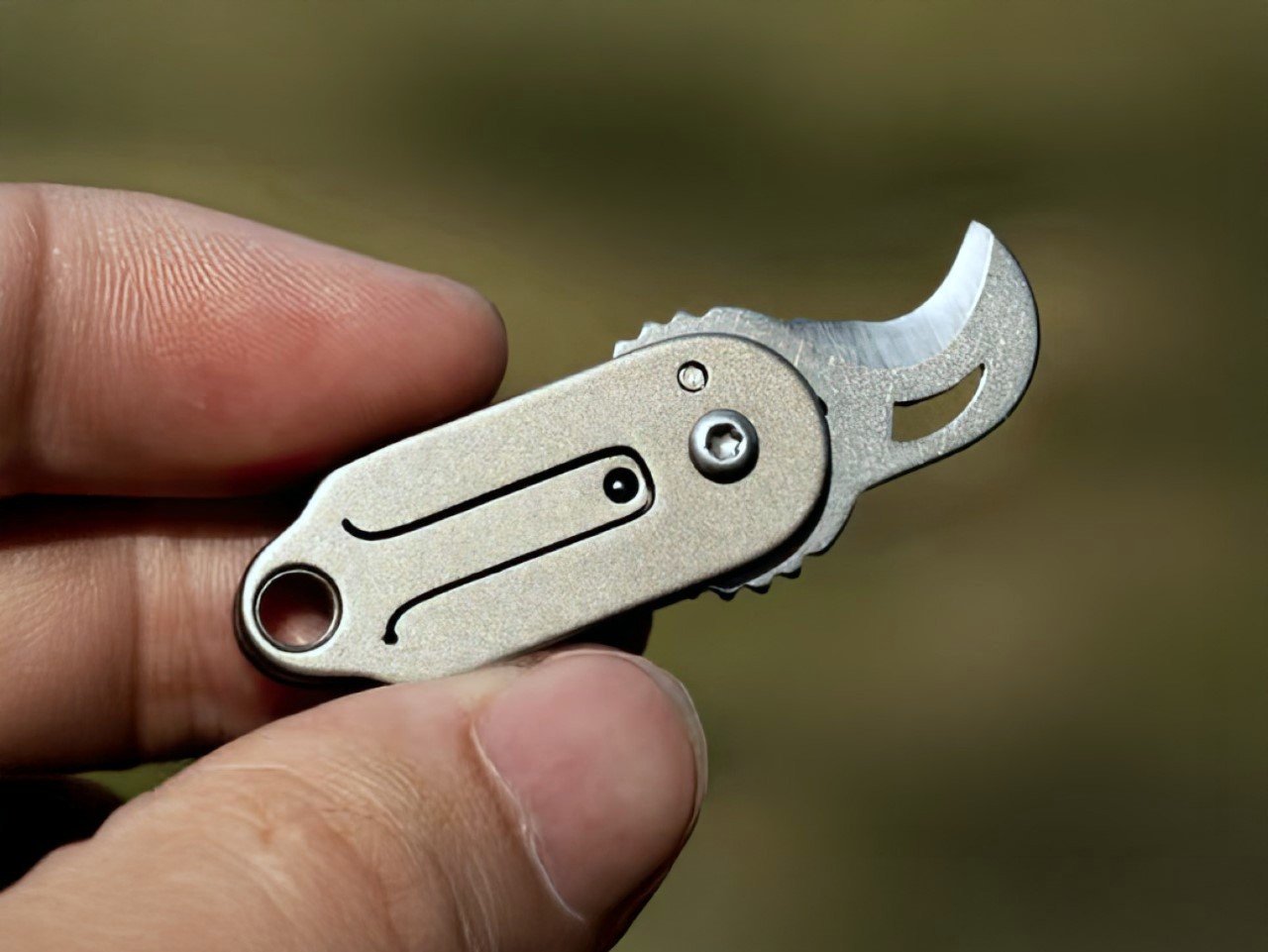
The curved blade of a scythe does not seem like an obvious candidate for pocket carry, but the ScytheBlade makes it work through radical miniaturization. This titanium folding knife borrows the Grim Reaper’s iconic profile and compresses it into something closer to a tiger claw, creating a blade shape that looks aggressive because it is. At just 46mm when deployed, the ScytheBlade challenges the assumption that effective cutting tools need generous proportions. The curve concentrates force along its edge in ways that straight blades cannot replicate, and that geometry turns a small blade into something disproportionately capable.
Titanium construction keeps the weight to 8 grams, making it barely noticeable when clipped to a pocket. The material also offers corrosion resistance without requiring the constant oiling and maintenance that carbon steel demands, a real advantage for spring carriers when rain and humidity are part of the daily equation. The engineering here is in the confidence to go small. Most EDC knife makers chase longer blades and heavier locks to project seriousness. The ScytheBlade proves the opposite: that an unconventional blade geometry, executed at a micro scale with the right material, outperforms bulk.
What we like
At 8 grams in titanium, it disappears into a pocket and removes the excuse to leave a knife at home.
The curved blade concentrates cutting force in a way that straight-edge micro knives cannot match, making it more capable than its 46mm length suggests.
What we dislike
The 46mm blade length limits what the knife can realistically handle; anything thicker than a zip tie or packing tape will push its limits.
The scythe profile is polarizing, and its aggressive look may draw attention in settings where a discreet blade would be preferable.
2. Arcos Driver
Ratchet screwdrivers work well in open spaces. The problem is that screws rarely live in open space. They sit in recessed housings, tucked behind cables, angled into corners where a straight driver either cannot reach or forces an awkward wrist contortion that strips heads. The Arcos Driver addresses this with a folding titanium body that adjusts to 0, 30, 60, or 90 degrees, allowing the tool to adapt its geometry to match the access angle rather than requiring the user to twist around it.
Inside is a three-mode ratchet system: forward for driving with consistent torque, reverse for clean removal, and a fixed-lock mode for stable, precise control when the screw matters more than speed. Integrated bit storage keeps everything in one unit, which is the kind of detail that separates a tool you actually carry from one that lives in a drawer. The titanium build brings strength without the weight penalty that steel ratchets impose, and the folding mechanism locks securely enough at each angle to feel confident under load. Spring means more outdoor projects, more furniture assembly on balconies, and more repairs that winter made easy to postpone. The Arcos Driver fits all of that into a carry-friendly package.
Four distinct folding angles mean access to screws in tight, awkward spaces without the wrist strain that straight drivers cause.
Integrated bit storage keeps the tool self-contained, so there is no fumbling through a separate bit case mid-task.
What we dislike
Kickstarter-funded tools carry inherent delivery uncertainty, and backers should factor in the risk of timeline delays.
The folding mechanism adds complexity that could develop play over time, particularly at the 30-degree position where lateral force is highest.
3. Pockitrod
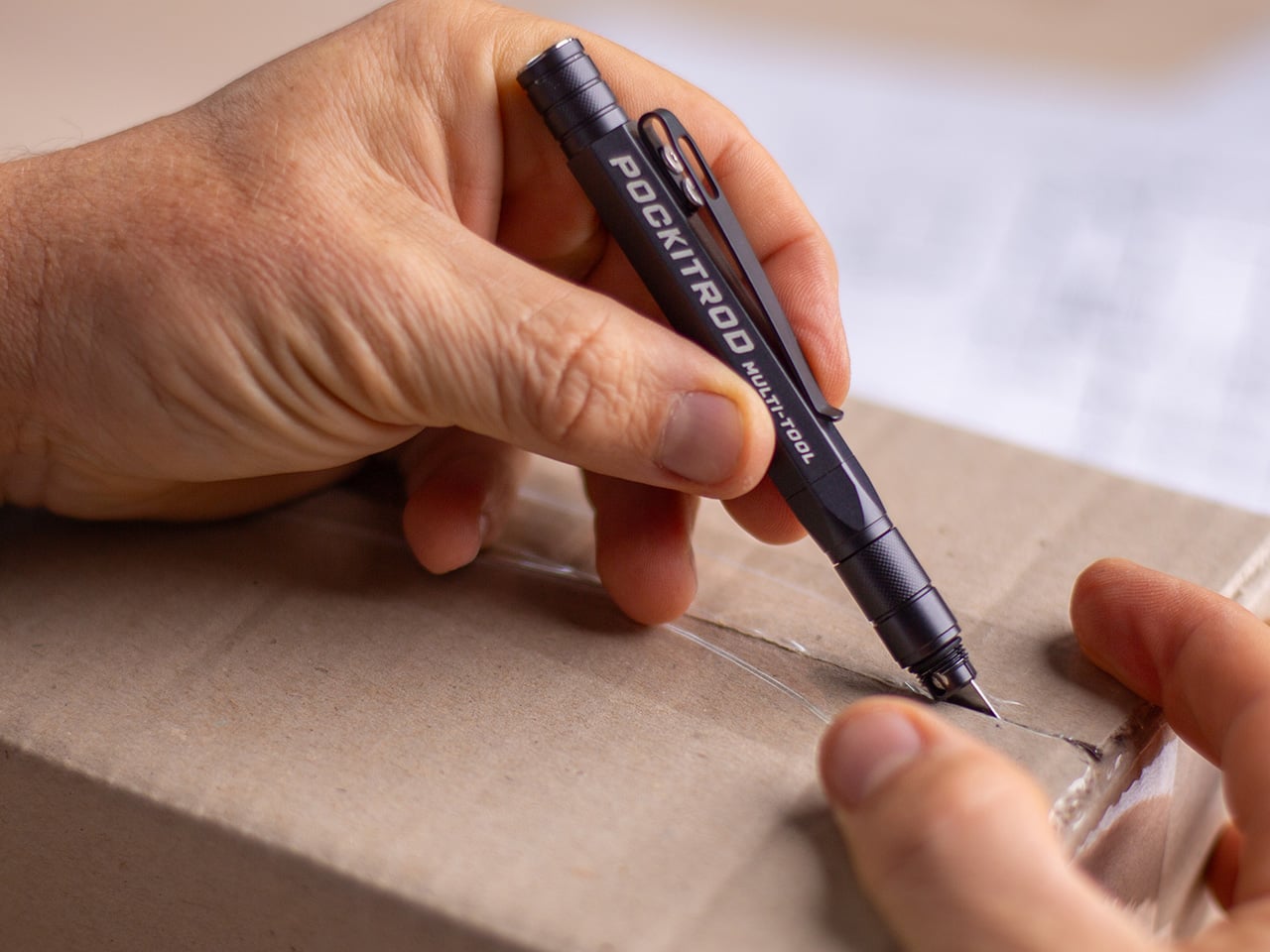
The tactical pen market is full of cylinders that add one feature (usually a glass breaker) to a writing instrument and call it innovation. The Pockitrod is a different animal. Its 6061-T4 aluminum body is machined with a hex cross-section that doubles as a driver grip, and the tool system inside is genuinely modular: a central driver assembly housed within the handle, a box opener with interchangeable 20CV steel tips, an inkless writing implement, and a magnetic-base LED flashlight that threads on as an extension module.
Etched measurement markings along the body function as a built-in ruler, with the zero-reference aligned to the edge for practical, real-world measuring rather than decorative engraving. The pen form factor is the smartest part of the design. A pen lives in a shirt pocket or a bag without raising questions. Nobody looks twice at it. But when work starts, the hex body locks into a bit the same way a proper driver handle would, and the modular extensions transform a pocket pen into a lighting, cutting, and fastening system. It respects the classic pen silhouette while fundamentally expanding what that silhouette can do.
What we like
The hex-profile aluminum body works as a genuine driver grip, not a marketing claim; it locks onto bits with the same positive engagement as a dedicated tool.
Modular extensions (LED, box opener, driver) thread onto a single pen body, consolidating multiple pocket tools into one.
What we dislike
Modularity means more pieces to keep track of, and losing a single extension reduces the tool’s value proposition.
The 6061-T4 aluminum is lighter than steel but also softer, meaning the hex edges will eventually round with heavy driver use.
4. AirTag Carabiner
Losing keys is a winter problem that follows people into spring because nobody upgraded their keychain. This carabiner, made from Duralumin composite alloy (the same material used in aircraft and marine construction), is designed to house an Apple AirTag while clipping onto bags, bikes, umbrellas, or whatever tends to wander. The material choice matters because most AirTag holders are silicone or plastic, which means they degrade, stretch, and eventually drop the tag entirely.
Each unit is individually handcrafted from high-quality metal, and the carabiner is also available in untreated brass and stainless steel. The Duralumin version brings water and altitude resistance suited to actual outdoor conditions, not just controlled indoor environments. Spring carry means more time outside, more chances to leave something on a park bench or a cafe table, and a tracking solution that clips seamlessly onto whatever bag or gear you are carrying makes the transition from indoors to outdoors less risky. The lightweight form hides the fact that the alloy underneath is built to handle far harsher conditions than a keychain typically encounters.
Duralumin composite alloy provides aircraft-grade durability in a form factor that adds almost no perceptible weight to a bag or keyring.
Handcrafted metal construction outlasts silicone and plastic AirTag holders, which tend to stretch and lose grip over months of use.
What we dislike
Apple AirTag is not included, so the total cost of entry includes both the carabiner and the tag itself.
The tracking functionality is Apple ecosystem only, leaving Android users without a compatible option.
5. Fingertip-sized Rechargeable Flashlight
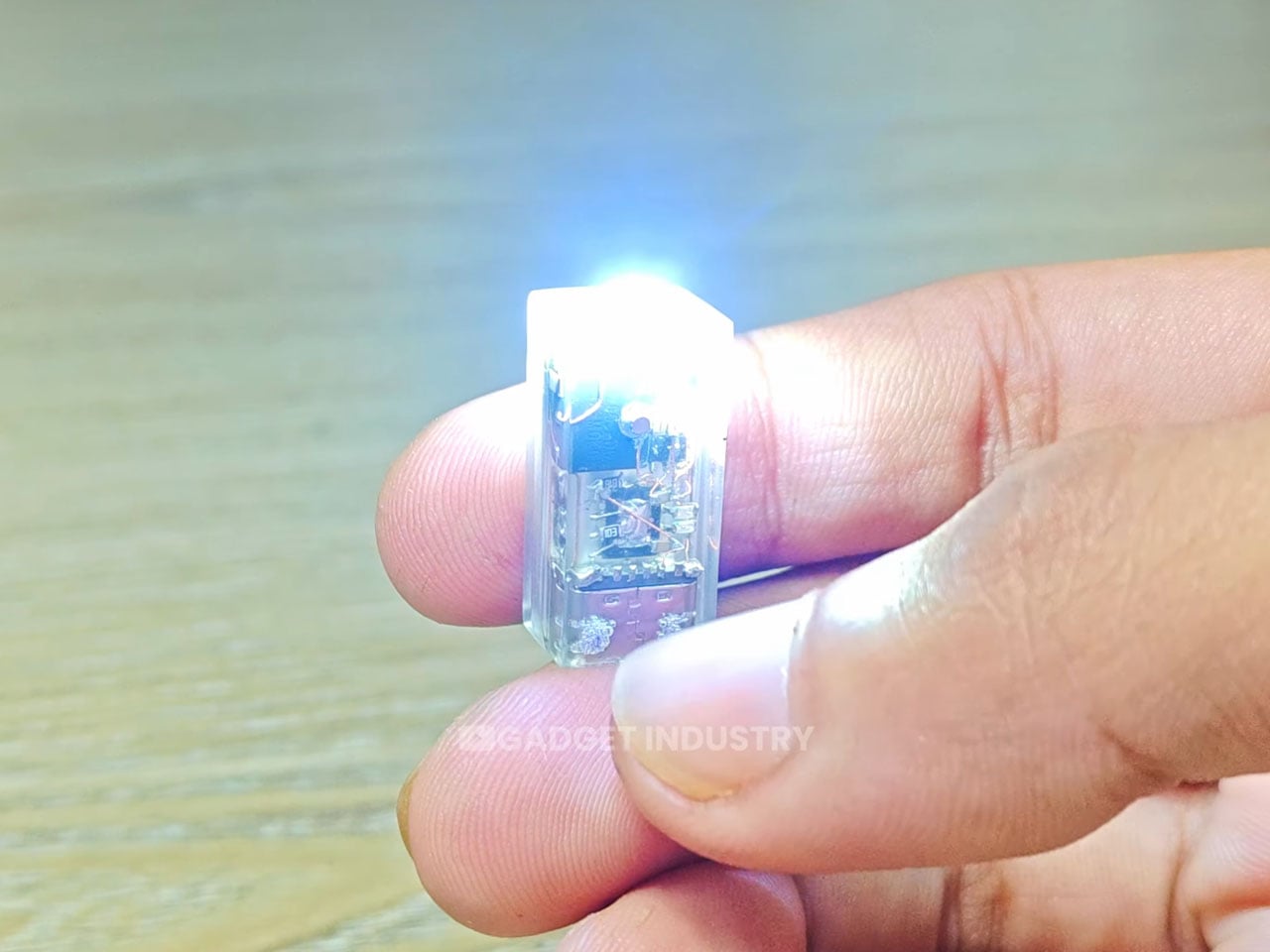
World’s smallest is a claim that usually comes with an asterisk. This flashlight, built as a DIY experiment by YouTube channel Gadget Industry, skips the asterisk. It sits on the tip of a finger. Inside that resin shell: a lithium-polymer battery, a charging circuit, a touch-based control system, and a white LED. That is a fully rechargeable, functional light source condensed into a form factor that most people would mistake for a button.
The scale alone is the point. In a crowded EDC landscape where flashlights compete on lumens, beam distance, and tactical modes, this micro torch takes the opposite approach. It prioritizes presence over power: a light source so small that it will always be with you, because forgetting it is almost impossible. Spring evenings still get dark, and the gap between leaving work and arriving home often involves poorly lit stairwells, parking garages, or bike paths. A light that lives permanently on a keychain or in a coin pocket fills that gap without adding any detectable weight. It is a reminder that miniaturization itself can be the innovation.
What we like
The form factor is so small that it can live permanently on a keychain without adding bulk, which means it is always available.
Fully rechargeable with touch controls, so there are no disposable batteries and no physical switches to break.
What we dislike
As a DIY build from a YouTube channel, it is not commercially available, which limits accessibility to viewers willing to replicate the project.
The tiny lithium-polymer battery means the runtime is limited, and the light output is functional rather than powerful.
6. Titaner Swing Ratchet System
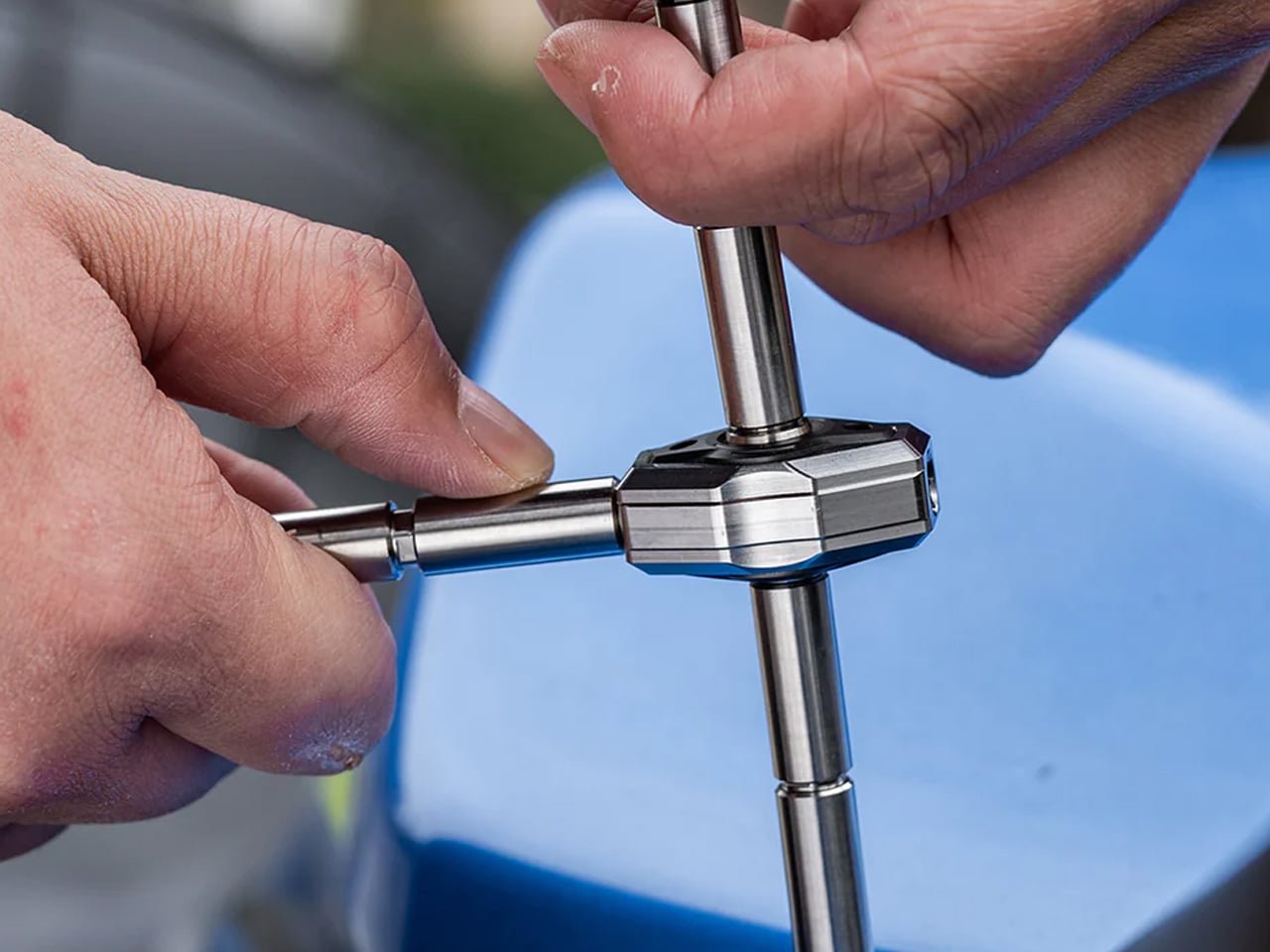
Most ratchets need at least 15 to 30 degrees of swing to engage the next tooth. In tight spaces, that range is the difference between completing a turn and stalling. The Titaner swing ratchet compresses that arc to 4 degrees, which means it can operate in gaps where conventional ratchets physically cannot cycle. Both sides of the ratchet core are functional, with CNC-engraved directional markers (one side locks, the other releases) for intuitive control without trial-and-error guessing.
At 29.8 grams, the system weighs 40% less than traditional ratchets while delivering full torque. The modular design allows different driver heads and bit configurations, so the same core handles multiple fastener types without carrying separate tools. Spring projects (tightening deck furniture, adjusting bike components, assembling outdoor gear) tend to involve screws in confined or partially accessible locations. A ratchet that fits those conditions at under 30 grams is the kind of tool that justifies its pocket space every week rather than sitting idle waiting for a big job. The precision here is not about power. It is about access.
What we like
A 4-degree swing arc allows the ratchet to function in spaces so tight that standard ratchets cannot even begin to cycle.
At 29.8 grams, it is 40% lighter than traditional ratchets, making it realistic for daily pocket carry rather than toolbox-only storage.
What we dislike
Ultra-compact ratchet heads can feel less confident under heavy torque loads compared to full-sized counterparts.
7. Cubik
Knife designers typically rely on springs, flippers, or complex bearing systems to get a blade open. The Cubik discards all of that in favor of gravity. Press the trigger, hold it upside down, and the blade drops into position. Release the trigger, and it locks. This mechanism eliminates the springs that rust, bearings that fail, and maintenance cycles that plague traditional folders. The knife works with physics rather than fighting it, and the satisfying weight of the blade swinging into place feels like the mechanism earned its simplicity.
That simplicity does not mean weakness. The Cubik locks firmly enough to pierce hardwood, which puts it in functional territory that most gravity-deploy designs cannot reach. The tungsten carbide glass breaker integrated into the rear end transforms what could be a gentleman’s folder into a legitimate emergency tool. When most EDC knives chase complexity through additional deployment systems, assisted-open mechanisms, and axis locks, the Cubik goes the other direction. One moving part. One material is doing the heavy lifting. The result is a knife with fewer failure points and a deployment method that never gets old to use.
What we like
Spring-free gravity deployment means zero mechanical parts that can rust, jam, or wear out over years of daily use.
The integrated tungsten carbide glass breaker elevates the knife from an everyday cutter to a genuine emergency tool.
What we dislike
Gravity deployment requires the knife to be held upside down, which is slower than a spring-assisted or flipper-based opening in time-sensitive situations.
The legal status of gravity knives varies by jurisdiction, and some regions classify them differently from standard folding knives.
Lighter pockets, sharper choices
The shift from winter to spring is not about adding gear. It is about compressing a function into less space. Thinner jackets, shorter pockets, and more time outdoors demand a loadout that earns its presence through utility rather than just occupying real estate. These seven tools share a design philosophy rooted in that compression: titanium, where weight matters; modularity, where versatility matters; and miniaturization, where pocket space is the constraint.
Spring carry is a constraint worth designing for. The tools that survive the seasonal edit are the ones that do their job without reminding anyone they exist, until the moment they are needed. That is the entire point of everyday carry, and these seven understand it.
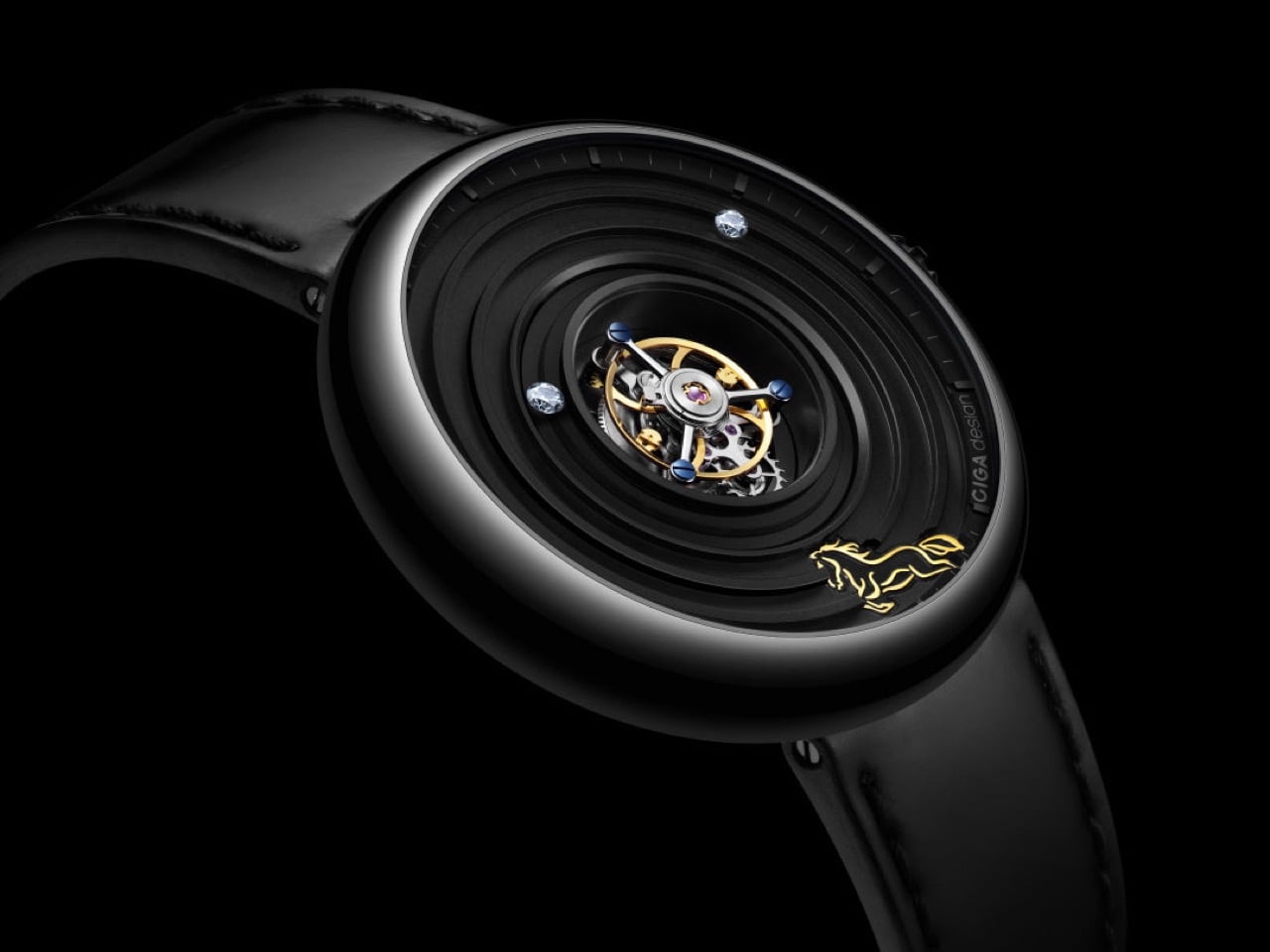
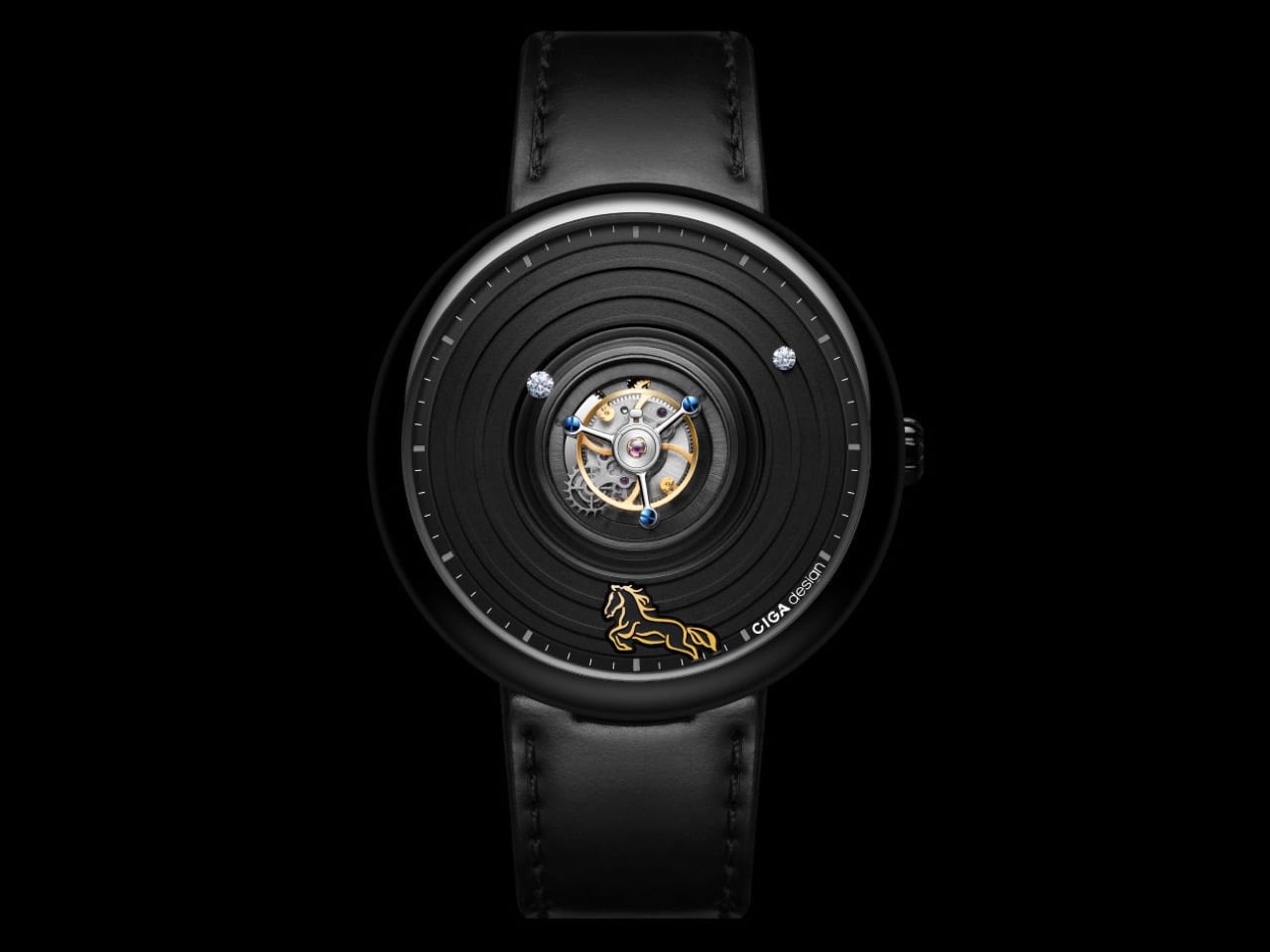
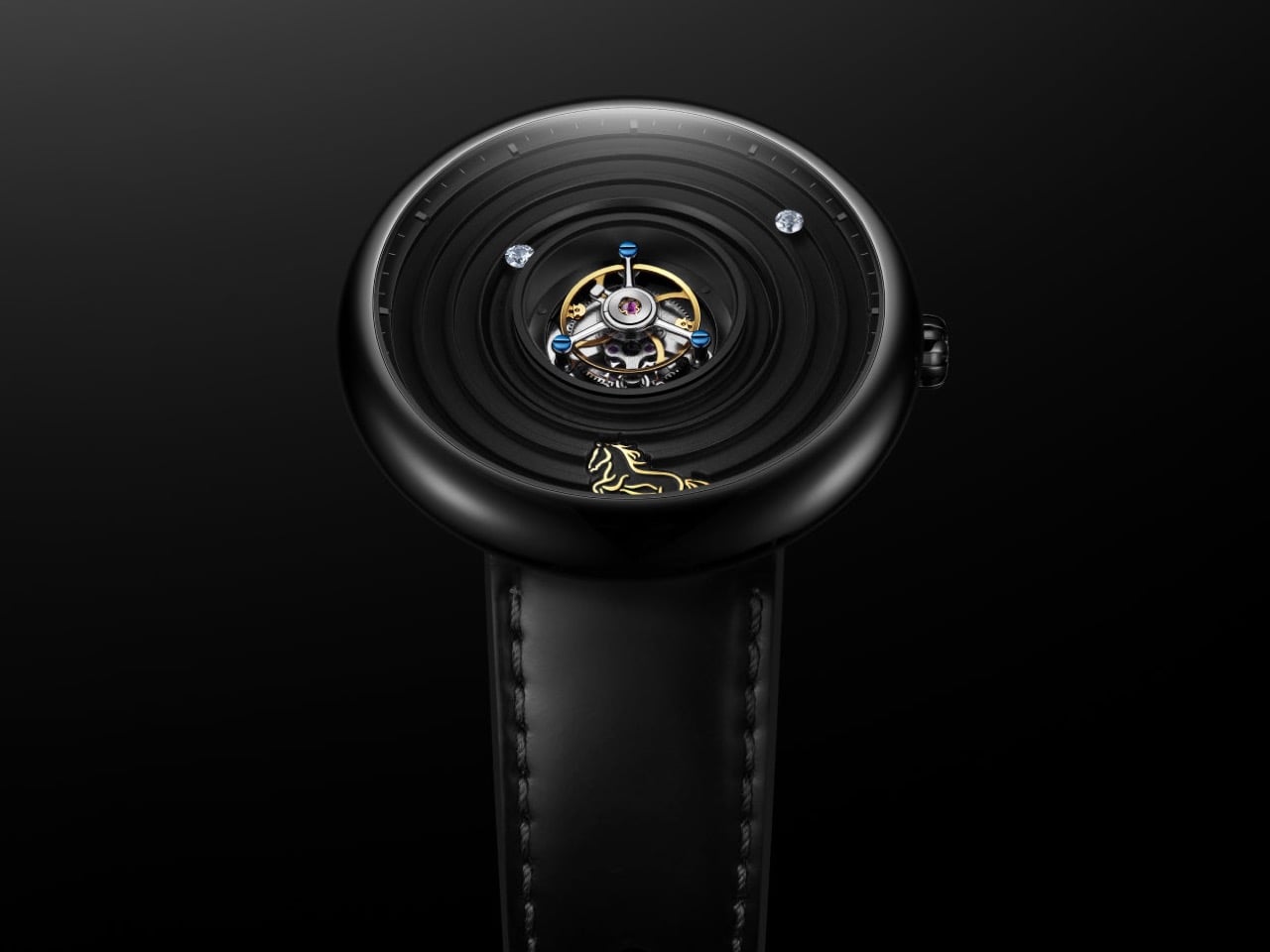
In Mandarin, the phrase 马上 (mǎ shàng) translates literally as “on horseback,” but its common meaning is “immediately” or “without delay.” It’s a concept of swiftness and forward momentum. For its Year of the Horse timepiece, CIGA Design has built an entire watch around this clever piece of wordplay. The design embodies that feeling of instant progress and unstoppable movement, creating a narrative woven directly into the mechanical and aesthetic choices. It is a watch about the philosophy of action.
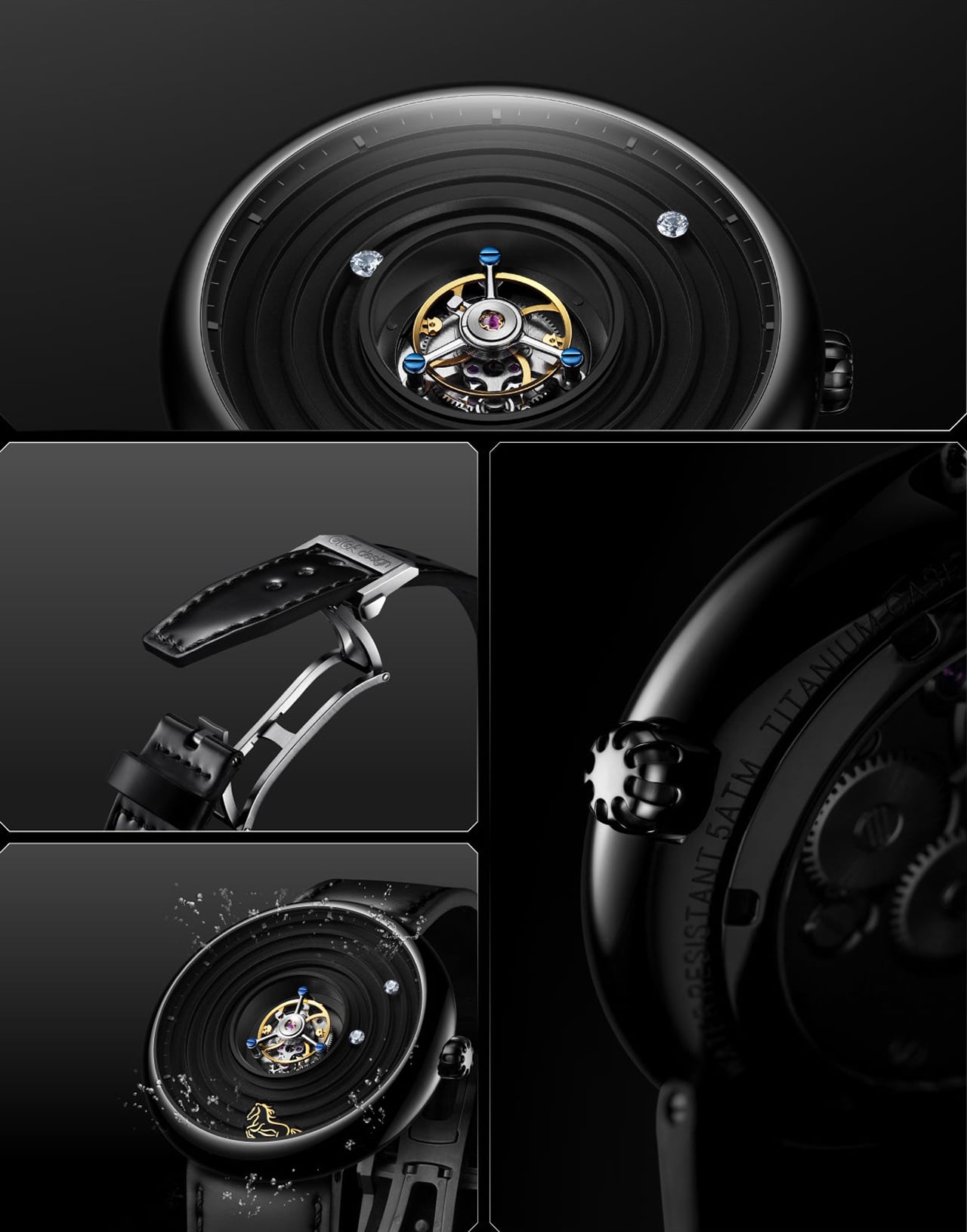
The central tourbillon is the engine of this idea, its constant rotation a visual metaphor for momentum that the wearer sees with every glance at the wrist. The dial’s concentric grooved rings radiate outward from this spinning core, amplifying the sense of energy in every direction. A 24K gilded horse at six o’clock connects the concept directly to its zodiac inspiration, rendered small and precise, more like a seal than a decoration. CIGA Design, the first Chinese watchmaker to win the Grand Prix d’Horlogerie de Genève, has a track record of treating mechanics as design language, and this is the clearest expression of that philosophy yet. The cultural reference and the engineering are telling the same story, which is rarer in theme watches than it should be.
Designer: CIGA Design
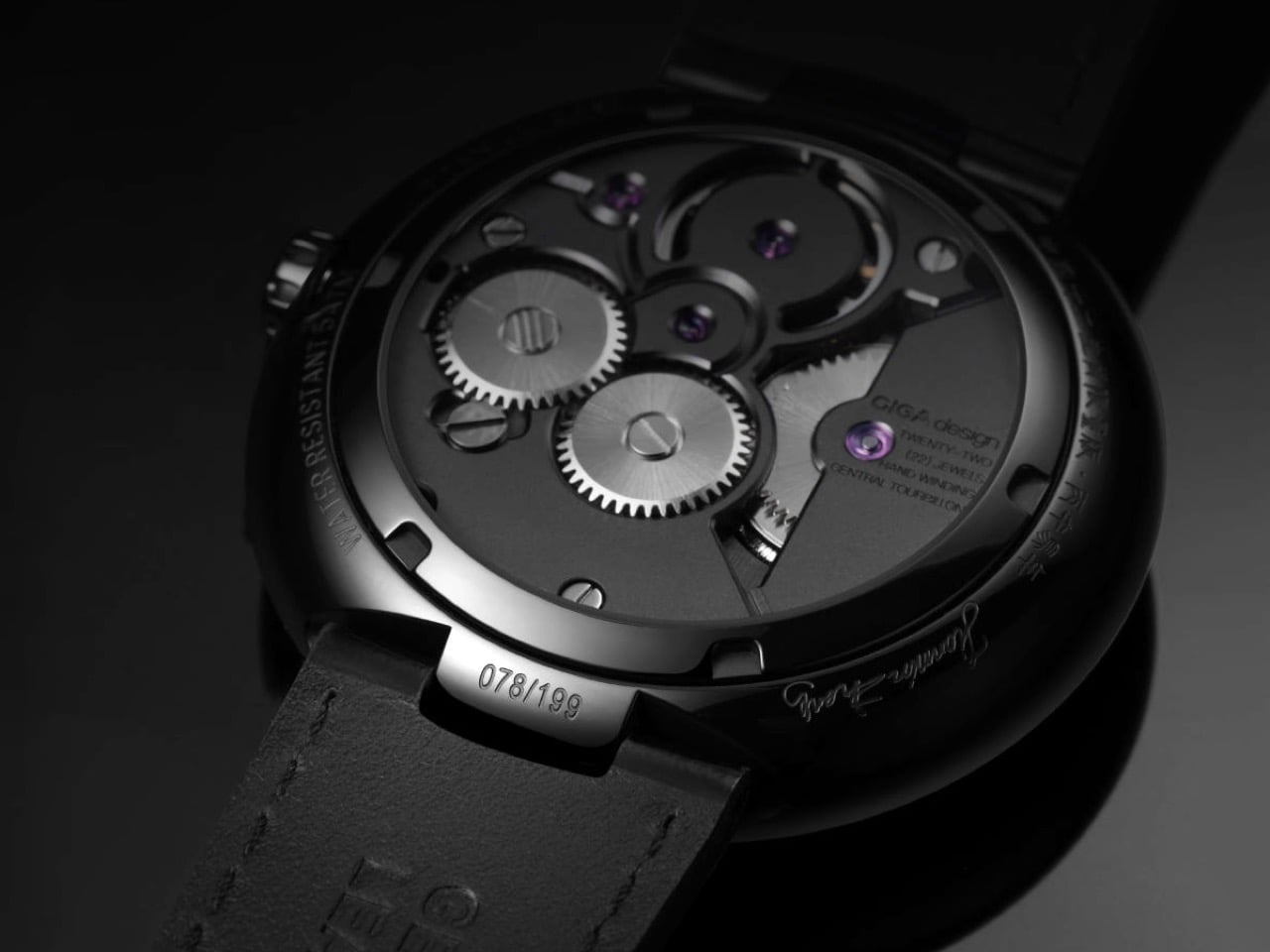
Putting a tourbillon front and center is a serious power move. Most watchmakers tuck it away at the six o’clock position, but CIGA’s in-house CD-12-SI caliber was clearly designed for the spotlight. The entire visual architecture of the watch is built to serve this mechanism. It runs at a modern 28,800 vibrations per hour, which gives the balance wheel a smooth, fluid sweep. A 38-hour power reserve is perfectly serviceable for a manual-wind piece, meaning you get to have that tactile interaction with it daily. It’s the kind of engineering that invites you to look closer, to appreciate the complexity instead of just accepting that it works.
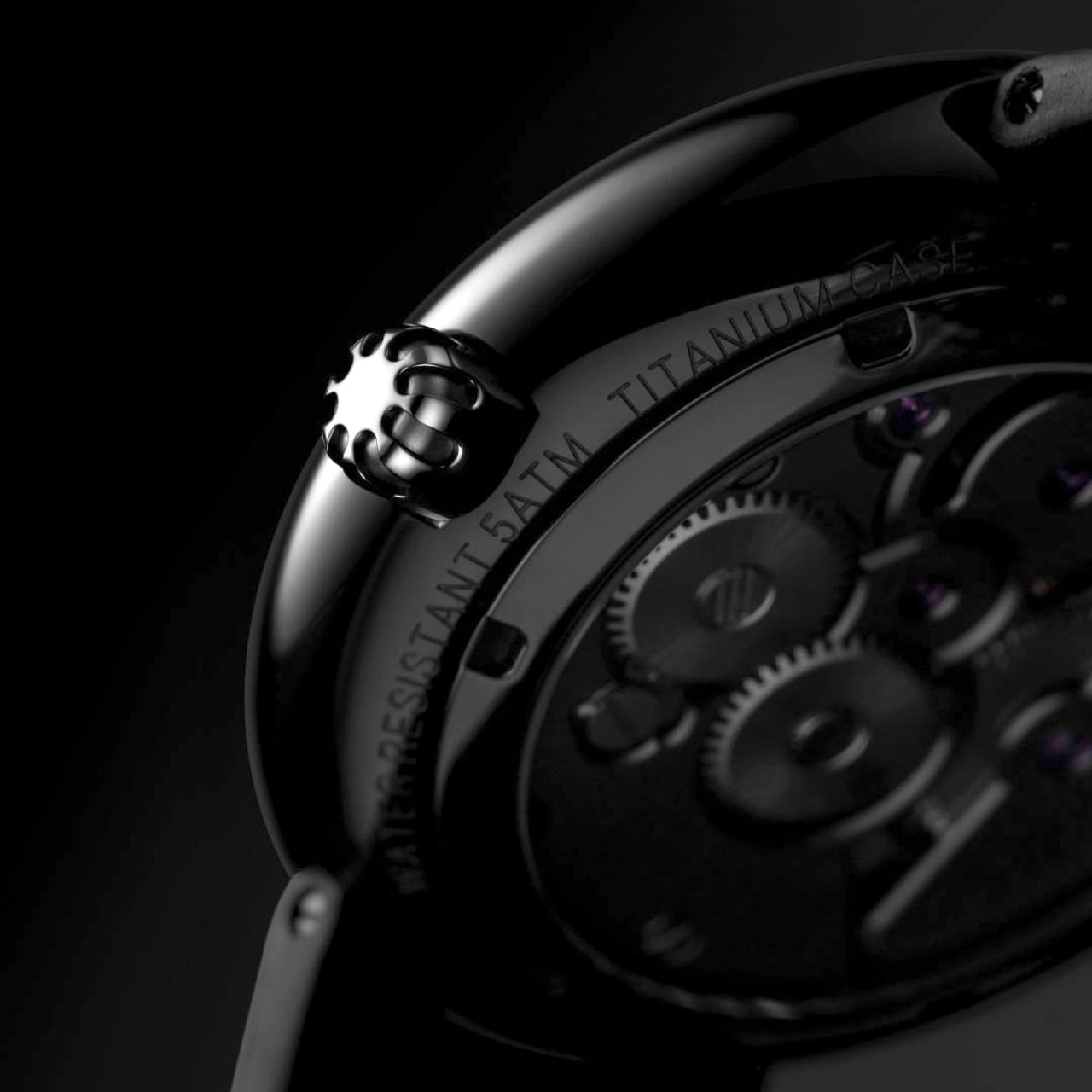
The case material, Grade 5 titanium, is a choice that speaks volumes. At 45.5mm, this watch could have been a heavy, unwieldy piece of metal in steel, but titanium makes it surprisingly light and comfortable on the wrist. The black DLC coating gives it a tough, scratch-resistant finish that feels both modern and understated. Those concentric grooves on the dial are the most impressive part of the case work. They give the flat black dial a sense of depth and texture that plays with light in interesting ways. It’s a very architectural approach that prevents the watch from feeling boring, which is a real risk with monochrome designs.
You solve the problem of telling time without cluttering the main event with a pair of floating diamonds for hands. It’s a brilliant, minimalist solution. Legibility might take a slight hit in certain lighting, but it’s a worthy trade-off for maintaining an unobstructed view of the tourbillon. The strap is shell cordovan, a fantastic, non-porous leather known for its durability and rich patina over time. Pairing it with a hidden butterfly clasp was the right call, preserving a clean, unbroken line around the wrist. These details show a design team that was thinking about the complete ownership experience, not just the initial wow factor.
The $2,699 price fundamentally challenges the idea that an in-house tourbillon must cost as much as a mid-size sedan. This watch appeals directly to the enthusiast buying the complication itself, not the logo on the dial. The 199-piece production run feels like a calculated appeal to a very specific customer who values the engineering over the emblem. With this move, CIGA methodically builds its credibility on accessible complexity and a design language that is unmistakably its own. They are carving out a space by delivering serious horology without the traditional five-figure barrier to entry.
At just 16 ft (4.9 m) long, the Genesis 16′ from Dragon Tiny Homes is one of the more compact tiny houses on the market. Despite its modest footprint, the layout accommodates a living area, a well-equipped kitchen, a full bathroom, and a lofted bedroom, making it a more complete package than its dimensions suggest.
The Genesis 16′ is part of Dragon Tiny Homes’ Genesis line, built on a double-axle trailer and finished in engineered wood siding. Its ground floor measures 136 sq ft (12.6 sq m), considerably smaller than most European tiny homes and a fraction of the size of larger North American models that can reach up to 52 ft (15.8 m). It’s not designed for family use, but its compact, towable build makes it a practical option for those seeking a mobile living solution.
Inside, the home is finished in shiplap with vinyl flooring. The living area sits just past the entrance and includes a sofa and a wall-mounted TV. The space is tight, as one would expect, and represents perhaps the most noticeable trade-off of living at this scale. There isn’t room for the kind of comfortable, sprawling seating most people are accustomed to at home.
The kitchen, however, is a highlight. Dragon Tiny Homes describes it as a significant upgrade over previous Genesis models, and the spec list backs that up: an oven, a double induction cooktop, a sink, a full-size fridge/freezer, and ample cabinetry. It won’t accommodate large-scale cooking, but it’s genuinely better equipped than kitchens found in many larger tiny homes.
The bathroom occupies the opposite end of the ground floor. It’s predictably small but efficiently arranged, with a walk-in shower, a vanity sink, and a flushing toilet. Access to the loft bedroom above is via a storage-integrated staircase, a practical design decision that makes good use of space that would otherwise go to waste. The loft itself has the low ceiling typical of tiny house bedrooms and fits a double bed alongside a storage unit that also serves as a privacy divider.
The Genesis 16′ is currently available for purchase at $38,995, a notably affordable price point in the current tiny home market. Dragon Tiny Homes offers delivery across the United States, and prospective buyers are advised to contact the company directly for delivery rates and availability. For those open to a smaller footprint, the Genesis 16′ demonstrates that a thoughtfully designed layout can go a long way in a very limited space.
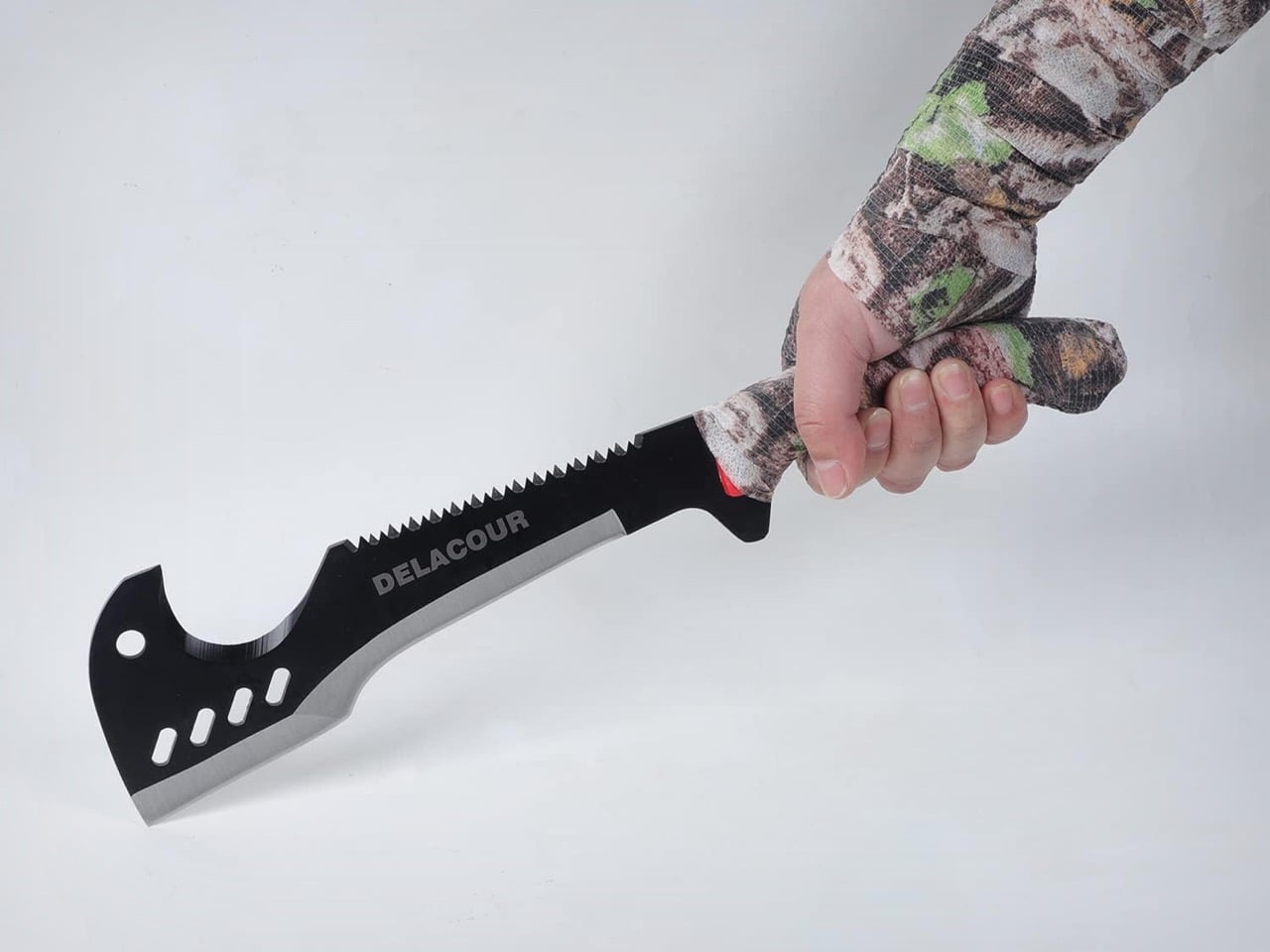
The Woodman’s Pal is an 84-year-old Pennsylvania tool that the US Army adopted almost immediately after its 1941 introduction, issuing it to Signal Corps troops in the Pacific and eventually to pilots as a survival blade through Vietnam and Desert Storm. It costs $169.95, uses 1075 high-carbon spring steel, and is still hand-assembled in Lancaster County with buffalo leather sheaths stitched by Amish craftsmen. The once-patented design now exists in public domain, prompting other creators like Jinhua Shengpu Tools Co., Ltd to make their own, modified versions of it with better materials and at a lower cost. Meet the Delacour Multi-Use Axe Machete, a Woodman’s Pal tribute that is more than 70% more affordable, bringing the winning design to a larger audience.
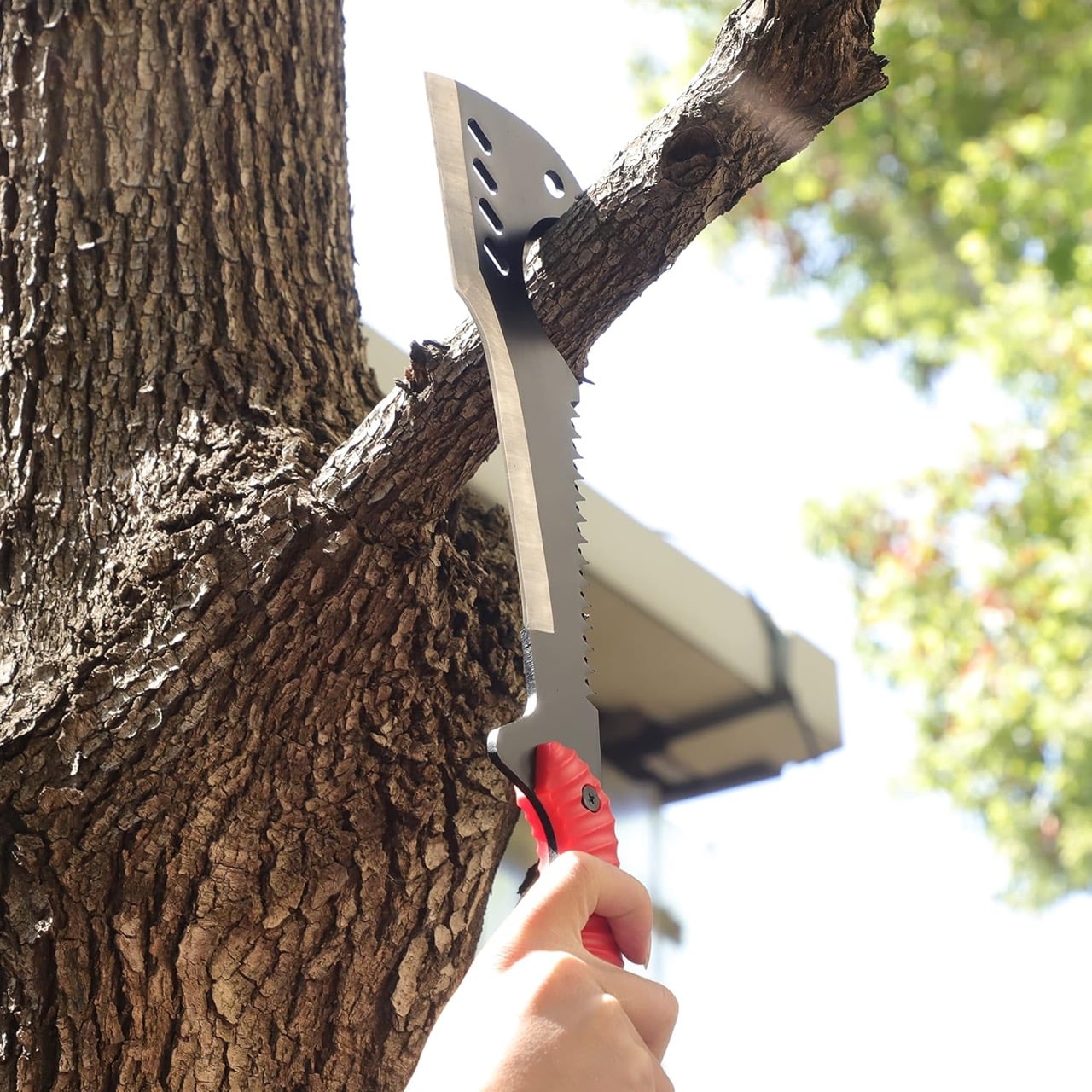
The logic behind both tools is simple: forward-weight the blade, add a reverse hook at the tip for catching and pulling vines, put saw teeth on the spine for crosscutting, and the result replaces a machete, axe, pruning hook, and bow saw simultaneously. The Delacour reproduces this geometry faithfully. The hook works. The saw back works. The forward mass creates chopping momentum that a straight blade cannot replicate.
The two tools diverge most clearly in material. The Delacour uses 3Cr13 stainless steel at 4mm, a mid-grade alloy that prioritizes corrosion resistance and manufacturability. The Woodman’s Pal uses 1075 high-carbon spring steel, which holds an edge under sustained load. At $56, the Delacour’s steel is a reasonable trade-off for light clearing, campsite work, and occasional trail use. It becomes a constraint only when pushed into the heavy chopping the blade geometry invites.
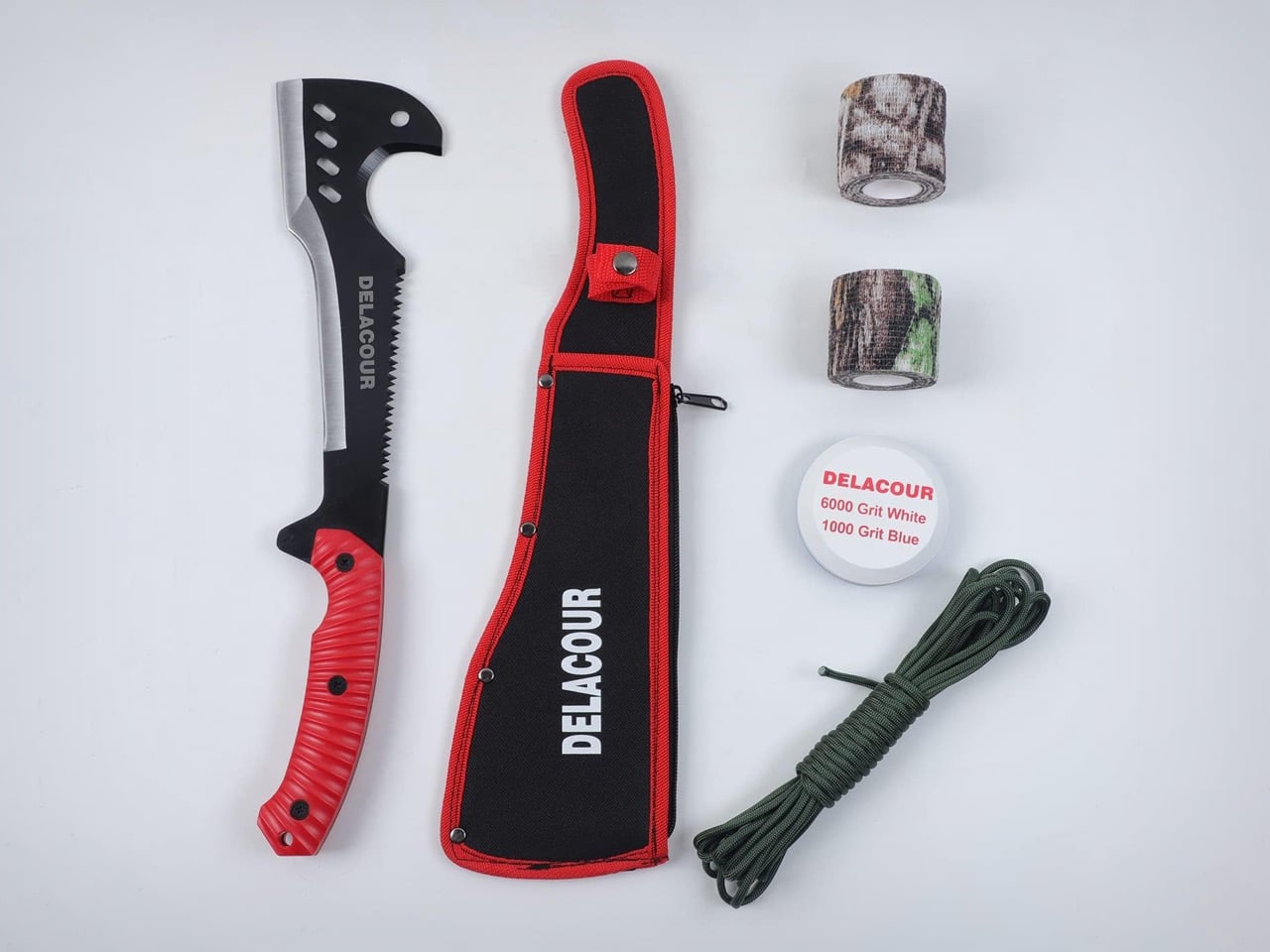
The visual language is a departure from the Woodman’s Pal’s austere utility. The injection-molded red nylon grip is aggressively textured and colored, reading more as consumer outdoor product than working tool. Lightening holes punched through the blade add visual complexity without a clear weight or balance rationale. The package throws in camo wrap tape, a paracord coil, and a dual-sided whetstone, rounding the Delacour out as an entry-level survival kit rather than a single well-considered implement.
At $56, the Delacour asks a reasonable question: how much of what makes the Woodman’s Pal worth $170 is the steel, and how much is the leather, the Lancaster County provenance, and 84 years of military heritage? The geometry, at least, costs the same in both.
Sometimes, it's the little details in a software update that make the biggest improvements. Google is rolling out a new feature for Chrome that will add a bookmark bar to the browser on Android foldables and tablets. Spotted by 9to5Google, this move will make the browsing experience on larger mobile devices more akin to that of laptops and desktops running Chrome. For those people who do like to do more robust computing on their mobile gadgets, this will be a hugely welcome addition. It's rolling out in version 146 of the browser's Android version, which just dropped today.
The mobile version of the bookmarks bar will appear below the Omnibox, displaying Favicons and site names. A chevron will appear to scroll deeper into the list of bookmarks, and a long press on a bookmark will display the entire URL.
If you're excited to take advantage of this new tool, you'll have to manually enable it. By default, devices will be set to "Hidden on narrow screens." Go to Settings, then Appearance and finally select "Show bookmarks bar."
This article originally appeared on Engadget at https://www.engadget.com/mobile/android-tablets-and-foldables-are-getting-a-chrome-bookmark-bar-222533702.html?src=rss
At GTC 2026, NVIDIA and Bolt announced what they hope will be a symbiotic partnership. Bolt gets NVIDIA technology that would be costly and impractical to build on its own. Meanwhile, NVIDIA not only gains a major customer but also access to the European rideshare company’s driving data.
Bolt says its fleet data will build a "learning engine" for autonomous vehicles (AVs) using NVIDIA tech. The rideshare company will use NVIDIA Cosmos to curate and search driving data. It will tap into NVIDIA Omniverse to reconstruct digital twins of real-world driving logs, then use Cosmos again to generate and augment data at scale.
NVIDIA's Alpamayo model, designed specifically for AVs, will help the AI learn how to drive safely and appropriately in European cities. Finally, Bolt will integrate NVIDIA's Drive Hyperion platform into its AVs.
"Autonomous vehicles require a full-stack approach that unifies AI models, high-performance compute, and a robust sensor architecture," NVIDIA EMEA Automotive VP Philippe Van Den Berge said. "By combining Bolt's real-world operational data with the NVIDIA Drive Hyperion platform, AI infrastructure, and open models & libraries across Omniverse, Cosmos, and Alpamayo, we're enabling a scalable foundation for safe, high-performance autonomous mobility services designed for the complexity and diversity of European roads."
Bolt has been busy gearing up for an autonomous future. In late 2025, it announced partnerships with Pony.ai and Stellantis.
The companies haven't announced a timeline for when we can expect to see NVIDIA-powered Bolt robotaxis in European cities. However, they promise that Bolt's fleet data will comply with GDPR standards. They also say they’ll provide open-source access to European universities and small- and medium-sized businesses.
This article originally appeared on Engadget at https://www.engadget.com/transportation/evs/nvidia-and-bolt-team-up-for-european-robotaxis-220100551.html?src=rss
Everyone keeps saying print is dying. I have heard it so many times that it barely registers anymore, even though there’s a lot of proof in terms of book sales, paper conferences, and a lot of other events that prove otherwise. And then Red Bull goes ahead and drops a magazine cover you can actually play Tetris on, and suddenly the conversation feels a lot more interesting.
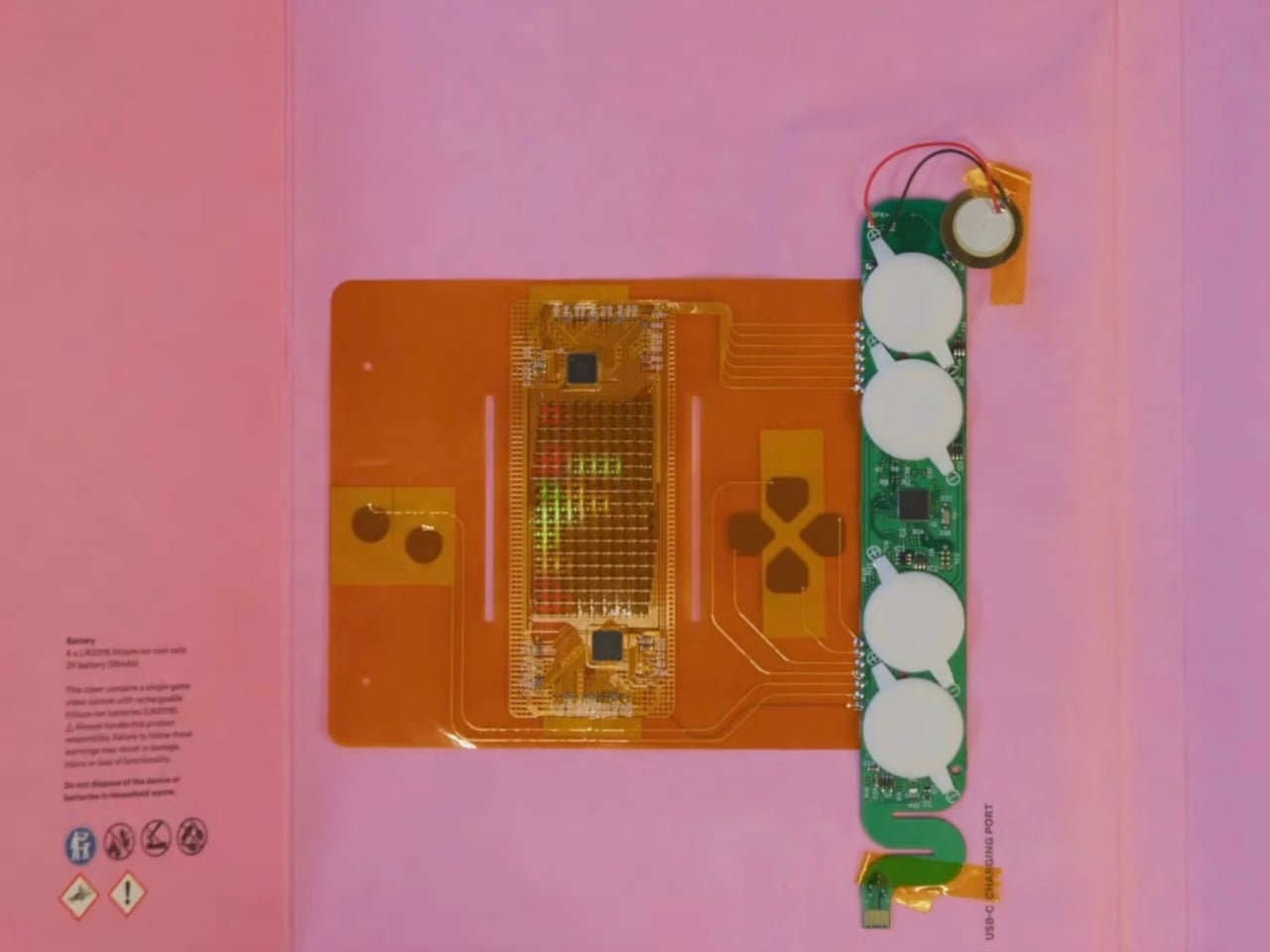
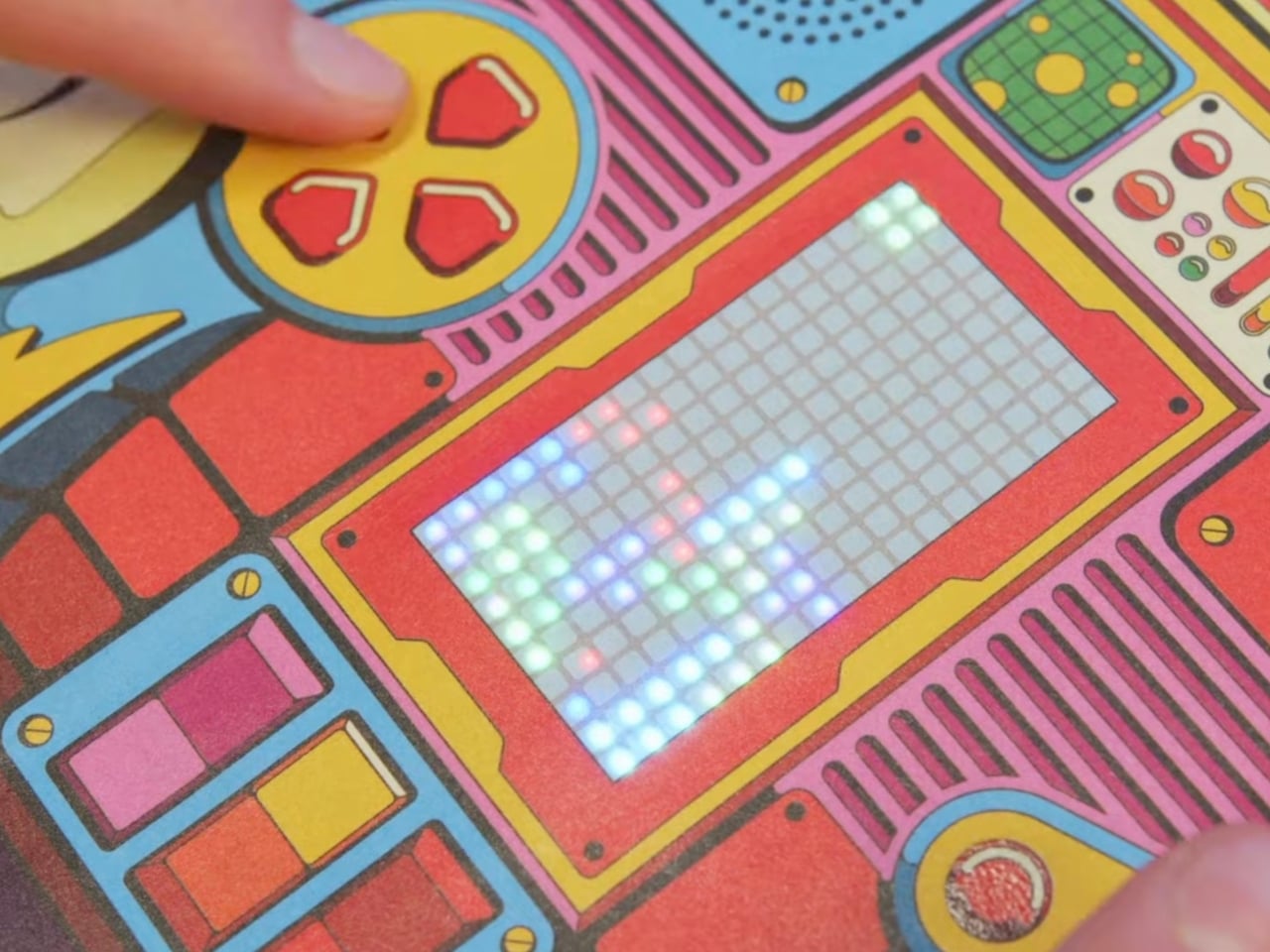
The GamePop GP-1 Playable Magazine System is exactly what it sounds like. It is the cover of Red Bull’s GamePop magazine, a publication dedicated to gaming culture, except this one comes with 180 RGB LEDs, seven capacitive touch buttons, a 32-bit ARM chip, and a flexible circuit board thinner than the width of a human hair. It is, by Red Bull’s own description, a “first-of-its-kind magazine-cover game system,” and I am not going to argue with them on that one.
Designer: Kevin Bates for Red Bull
The design was developed by Kevin Bates, the engineer behind the Arduboy, a credit card-sized gaming console that already had a cult following among hardware enthusiasts and open-source gamers. Bates sandwiched a custom flexible circuit board between layers of paper to create a cover that measures about five millimeters at its thickest point. That thickness? That is where four rechargeable coin-cell batteries live. The whole thing bends. It feels like a magazine. And yet it runs Tetris.
What I find genuinely impressive here is not the novelty, though the novelty is undeniable. It is the level of restraint in the engineering. The LED matrix is just 180 lights, two millimeters each, arranged to render the falling Tetris blocks cleanly enough that the game is actually playable. The circuit board itself is only a tenth of a millimeter thick. A deconstructed USB-C port, tucked into a small paper pocket along the bottom edge, handles charging and gives you about two hours of playtime per charge. Every single decision in this build was made with one goal: to make technology disappear into the paper.
That is where the real design story is. It would have been easy to make this clunky, to let the hardware show through in obvious ways that remind you of what you are holding. Instead, Bates and Red Bull chose the harder path, the one that asks the technology to serve the object rather than dominate it. The result looks and feels like a magazine first and a gaming device second, which is exactly the right priority.
Now, to be fair, the GP-1 is not going to replace your Game Boy. Reviews note that you cannot save pieces for later, the Tetris theme only plays at the start of a new game rather than through the whole session, and the experience is firmly on the novelty end of the gaming spectrum. But I do not think that is the point. The point is that Kevin Bates looked at a flat piece of paper and asked what it could actually do, and the answer he arrived at is both surprising and kind of beautiful.
The GamePop GP-1 was produced as a limited edition dust cover for the latest issue of the magazine, officially licensed by the Tetris Company, and only 150 numbered editions exist. That number feels both frustratingly small and also exactly right. This is not a mass-market product. It is a proof of concept, a collector’s artifact, a statement about where print design can go when the people behind it stop treating the format as a limitation and start treating it as a canvas.
Red Bull has always understood that the best marketing does not feel like marketing. It feels like culture. Sponsoring extreme sports, launching a Tetris tournament that played out across 4,000 drones inside the Dubai Frame, and now publishing a magazine that is also a game console. The throughline is the same: make the thing so interesting that people want to talk about it, collect it, and hold onto it. Print is not dying. It is just waiting for designers who are brave enough to ask better questions.
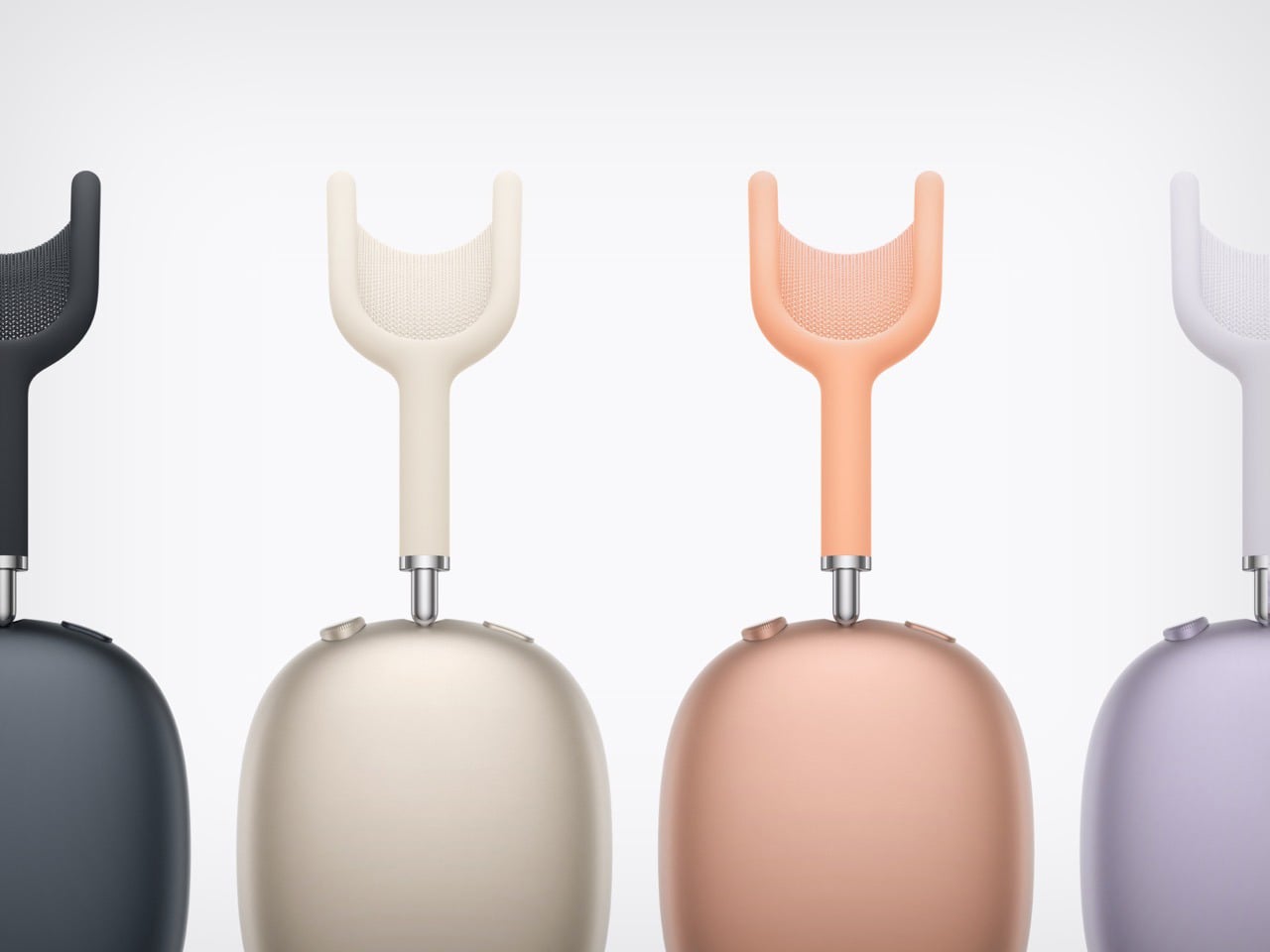
Apple just gave the AirPods Max a brain transplant, and after five years on H1 silicon that was already a generation behind when the AirPods Pro 2 launched in 2022, it was due. The H2 is the real story here, because everything else on this headphone is identical to what shipped in December 2020. Same aluminum frame, same stainless steel headband, same mesh knit ear cushions, same 385-gram weight, same $549 price. ANC is rated at 1.5x more effective than the previous gen, and the full H2 feature set, Adaptive Audio, Conversation Awareness, Voice Isolation, and Live Translation, all land here for the first time. What changed is everything running underneath a design that was already doing its job.
Adaptive Audio is what AirPods Max owners have been watching from the sidelines since AirPods Pro 2 launched in 2022. The mode dynamically blends active noise cancellation and transparency based on your environment, dialing back the ANC when someone speaks nearby and re-engaging it when you’re back on a loud street. It sounds incremental until you’ve used it for a full commute, at which point going without it feels like a step backward. H2 also brings lossless audio at 24-bit, 48 kHz, though only over a wired USB-C connection, so wireless listening stays capped at AAC. That’s a real ceiling to live with at this price, but the original AirPods Max never offered lossless in any configuration, so it’s at least movement.
Designer: Apple
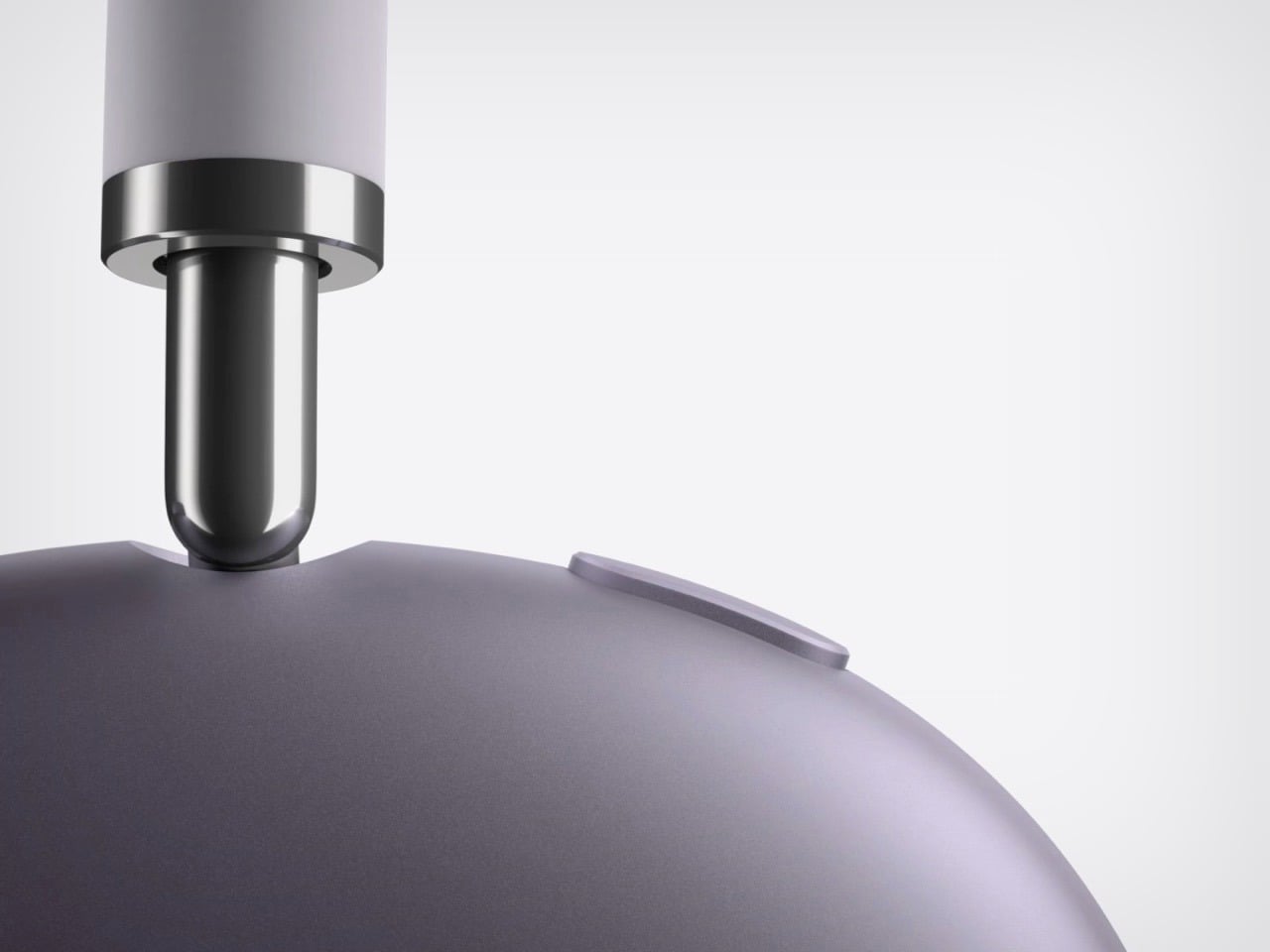
Five years, and Apple didn’t touch the design, which makes sense once you understand what the design is doing. The aluminum ear cups and stainless steel headband aren’t decorative choices, they’re structural, and they’re why this thing still looks and feels like a premium object after years of use, while equivalent plastic-and-fabric builds from Sony and Bose at lower prices tend to show wear sooner. The AirPods Max weighs 385 grams, heavier than anything in the over-ear category at this tier, and it still doesn’t fold flat for travel. Sony’s WH-1000XM6 and Bose’s QuietComfort Ultra are both lighter, foldable, and notably cheaper. Apple’s bet was that material quality carries the argument, and for desk or commute use, it mostly does. The Digital Crown for volume and track control is still here, and it remains one of the better physical inputs on any over-ear headphone.
The Smart Case is still a pouch, not a case in any conventional sense. It’s a silicone sleeve that covers the ear cups and nothing else, leaving the headband fully exposed to whatever else is in your bag. It doesn’t fold the headphones flat, it adds no meaningful drop protection, and it looks like a small clutch that wandered in from a different product category. For $549, the carry solution should be better than this, and the fact that it’s unchanged after five years suggests Apple either rationalized it or decided the complaint volume wasn’t loud enough to act on. It’s the one part of the AirPods Max story that feels genuinely unfinished, and at this price, that friction sticks out more than it should.
Battery life holds at 20 hours, which is fine but trails the Bose QuietComfort Ultra’s 24-hour rating and Sony’s 30-hour claim on the XM6. What AirPods Max 2 actually has now is alignment with the rest of Apple’s audio lineup, a chip-level catch-up that makes this headphone feel current for the first time since launch. The ANC improvement is real, the H2 feature parity with AirPods Pro 3 is real, and lossless audio over USB-C gives the product a use case it never had before. If you own the original and spent three years watching Adaptive Audio and Conversation Awareness roll out to cheaper AirPods, the upgrade argument is now solid. First-time buyers are getting the version of this headphone the original was always pointing toward.