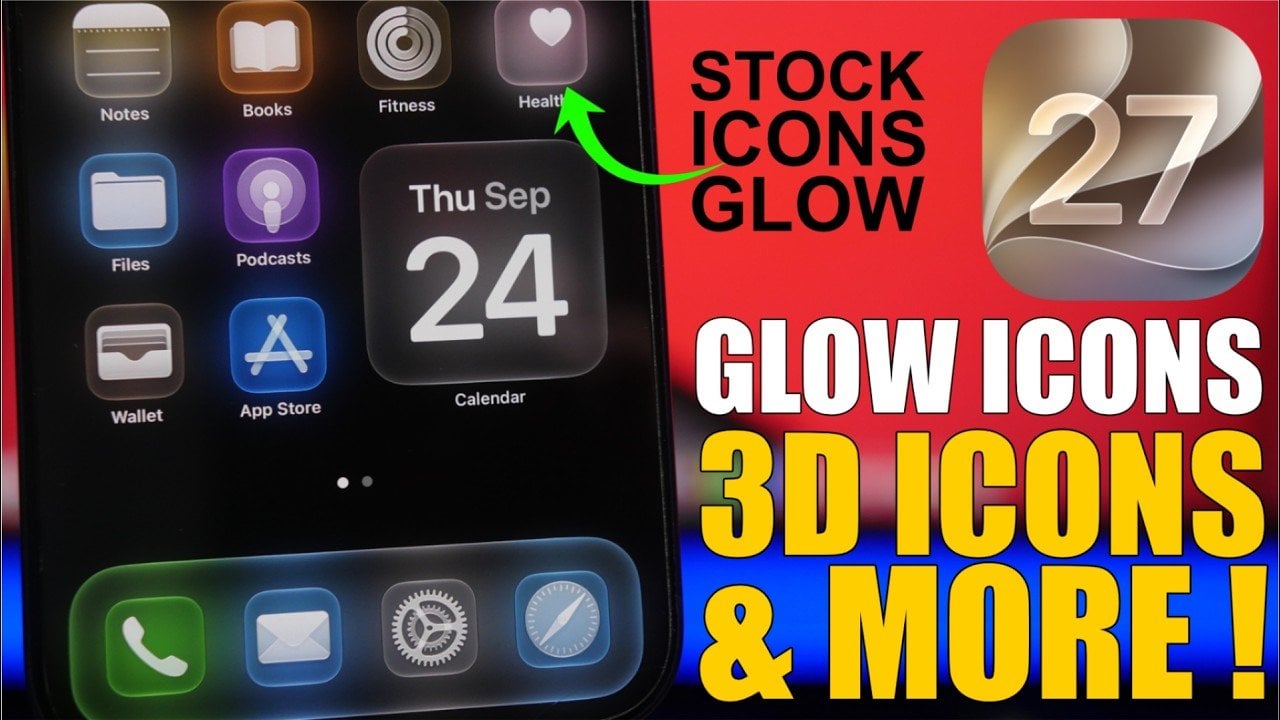
iOS 26.3 Deep Dive: Every Hidden Feature Revealed

iOS 26.3 Deep Dive: Every Hidden Feature Revealed

Apple has introduced iOS 26.3 beta 1, a release designed to enhance functionality, improve performance, and address user concerns. This update not only resolves existing issues but also introduces new features that aim to streamline your experience across devices. By focusing on interoperability, customization, and security, Apple continues to refine its ecosystem while preparing for […]

The post iOS 26.3 Deep Dive: Every Hidden Feature Revealed appeared first on Geeky Gadgets.

Posted in Uncategorized

MeTool’s pendant-sized EDC is one of the smallest and most versatile multitools you can get

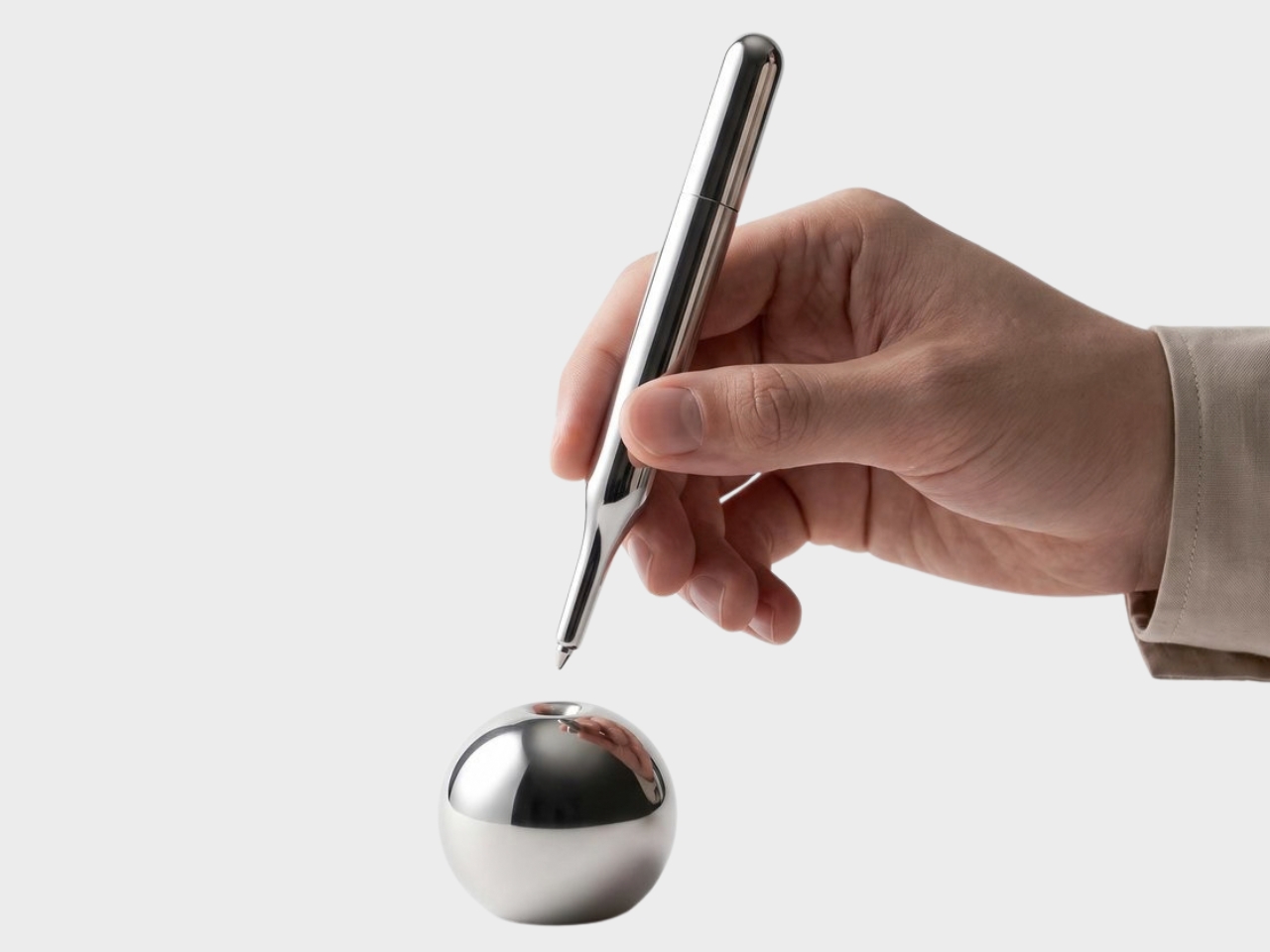
An everyday carry tool, colloquially EDC, is only useful and actually worth its weight in gold when the device is built to be convenient to carry and use. The Dark Fire 2.0 is easily the most apt to the idea. It is a pendent, a key chain, or a clip slightly more than the size of a coin, but versatile enough to put many more detailed, hefty and space-consuming EDCs to shame, which are yet to do half the tasks the Dark Fire’s second version is designed to fulfil.

MeTool, the team of creators behind the multitool, have designed the new pendant EDC based on the predecessor, which was a similar tool but with lesser versatility and a go-getter attitude. The idea of this concealed but useful device stands out primarily for two reasons: the tool remains unnoticed until the exact moment you need it, and when you do, it can transition from a simple pendant into four different tools including a pen, screw driver, prier, and a glow light.

Designer: MeTool

Click Here to Buy Now: $39 $55 (29% off). Hurry! Raised over $27,000 already.

Whether you want to mark out a window in the floor plan, tighten a screw you notice falling off your laptop, or want to flip open a can at the camp; the Dark Fire 2.0 has you covered. At the time of writing, it is not a full-fledged product, but it is seeking crowdfunding support to go out there and make a difference in the lives of those who need a dependable but compact tool for their liking.

To that accord, MeTool has packed functionality into the pendant-sized EDC. It is made from a solid one-piece of precision-machined titanium and features an interesting rotary quick-release structure with tritium slots. The Dark Fire 2.0 body when twisted, opens up to reveal its true worth which is more than a pendant. Inside its 4 mm bit storage cavity hides a screw driver, a pry bar and a pen tip. And when the quick-release top is twisted, you can install the pen tip or replace it with the screw driver and get the work done instantaneously.

Besides, the EDC is a titanium glow multitool. It measures 2.16 × 0.54-inches, weighs only 0.55 oz, and features a built-in light in the portable pendant design. The light, instead of residing within a glass tube – as in the Dark Fire 1.0 – is packed in a titanium hollow window which shields its against shattering, yet provides a clear sight for soft glow. The tube also features a floating shock-absorbing mount comprising dual rubber end-balls and an internal O-ring for protection against bumps and drops.

What really makes the Dark Fire 2.0 stand out in addition to the compact form factor and versatility, is its pen. It uses solid graphite rather than ink and is designed to never dry out or smudge. What you write with it stays there even through rain and regular wear. You can use the scribble of paper, wood, or leather, and the eco-friendly pen will do the writing without ink or cartridge. If the EDC has you intrigued, you can preorder it now on Kickstarter at a handsome super early bird discount.

Click Here to Buy Now: $39 $55 (29% off). Hurry! Raised over $27,000 already.

The post MeTool’s pendant-sized EDC is one of the smallest and most versatile multitools you can get first appeared on Yanko Design.
This LEGO Campbell’s Soup Can Opens to Reveal Andy Warhol’s Entire Factory Studio

In 1962, Andy Warhol turned a humble soup can into an art world phenomenon. Now, a LEGO Ideas submission is turning that same can into something equally revolutionary: a buildable gateway to understanding the artist himself. This isn’t just about stacking bricks into a cylindrical shape, though the technical achievement of creating such smooth curves at 24 studs diameter deserves recognition. This project represents months of research into Warhol’s working methods, his relationship with popular culture, and the visual language of The Factory that became synonymous with 1960s avant-garde creativity.

Open the can and the transformation is immediate. The metallic interior contrasts sharply with the familiar red and white exterior, creating an Alice-in-Wonderland moment where everyday packaging becomes an art studio. Printed artworks cover the walls and floor, reflecting Warhol’s habit of painting directly on the ground surrounded by his creations. The Andy Warhol minifigure with signature silver wig presides over a space filled with props from his actual studio: the disco ball, the motorcycle, the couch where celebrities and artists mingled. It’s both a display piece for design enthusiasts and an educational tool that makes pop art accessible, proving LEGO sets can be as culturally significant as they are fun to build.

Designer: HonorableImmenseWorriz

The build sits at 1,117 pieces and stretches to 32.6 centimeters tall, which sounds manageable until you realize the entire cylinder uses curved slope elements to achieve those smooth walls. Most builders avoid large-scale curves because getting a 24-stud diameter to look this polished requires serious geometric planning. The three-section hinge system adds another challenge since you need structural integrity while maintaining mechanical function. What separates this from typical pop culture tributes is the commitment to printed elements over stickers, with Campbell’s branding, artwork tiles, and even the gold medal seal all printed directly onto bricks. The Marilyn Monroe quad portrait, Flowers series, purple Cow prints, they’re all there on the metallic silver walls that reference The Factory’s legendary aluminum foil aesthetic.

HonorableImmenseWorriz , the builder, positions it as “a LEGO set for the kitchen,” which completes the conceptual loop Warhol started by elevating everyday consumer goods to fine art status. You build this, place it near your actual soup cans, and your kitchen becomes gallery space. The 32 stickers showing different Campbell’s soup flavors let you customize and swap variations, mirroring Warhol’s seriality philosophy from his original 1962 series that featured 32 different canvases. The father-son collaboration behind it shows in the prop selection too, each item chosen for historical accuracy rather than visual filler. That red couch, the orange motorcycle, the camera on tripod, they’re narrative anchors to The Factory’s actual chaos, not random accessories.

The project’s currently a fan submission on the LEGO Ideas website – an online forum where enthusiasts share their own creations and vote for favorites. MOCs (My Own Creations) that hit the 10,000 vote mark then get sent to LEGO’s team for approval before being turned into a retail box set that anyone can buy. If you fancy yourself a LEGO ode to Warhol (and Campbell), head down to the LEGO Ideas forum and cast your vote for this build! It’s free!

The post This LEGO Campbell’s Soup Can Opens to Reveal Andy Warhol’s Entire Factory Studio first appeared on Yanko Design.

This $28 Power Bank Accidentally Recreated the iPhone 3G Design

Cuktech just dropped their 10 Air magnetic power bank in China, and honestly, the most interesting thing about it has nothing to do with the specs. Sure, it’s got a 10,000mAh battery with 55W wired fast charging and 15W wireless, and yeah, the CNY 199 price tag (roughly $28) is aggressively reasonable. But look at the damn thing. That silver body with the black magnetic strip running across the bottom? Slap this on the back of your iPhone and you’ve accidentally recreated the iPhone 3G’s iconic two-tone design.

I can’t tell if this is deliberate nostalgia bait or a happy accident, but either way, it’s working. The iPhone 3G had that silver aluminum back with the black plastic bottom for the antennas, and this power bank’s layout mirrors it almost perfectly. It’s like wearing your phone’s ancestral portrait as a backpack. The magnetic strip sits right where that glossy black section used to be, and suddenly your sleek 2025 smartphone is cosplaying as a 2008 legend.

Designer: Cuktech

Beyond the accidental throwback aesthetic, Cuktech packed in a built-in display that shows actual charging data instead of making you interpret cryptic LED blinks like you’re reading Morse code. The brand claims it can take an iPhone 17 from zero to full about 1.8 times, the Galaxy S25 Ultra gets 1.3 cycles, and the Xiaomi 17 Pro manages 1.1. These numbers track for a 10,000mAh capacity when you account for conversion losses, so at least they’re not inflating claims. Most flagships hit 50 percent in around 30 minutes with this thing, which is solid performance for something this affordable. The 55W wired output does the heavy lifting here since the 15W wireless is more about convenience than speed.

The bundled USB-C cable has a self-storing design, which sounds gimmicky until you’ve untangled your charging cable from your keys for the thousandth time. Cuktech also mentions their “OPC worry-free charging” technology for battery health, though I’m skeptical of proprietary acronyms until I see independent testing. What matters is that the fundamentals are sound: decent capacity, legitimate fast charging, and a price that doesn’t require a mortgage. The fact that it accidentally turns your modern phone into a design artifact from the Steve Jobs era is just a bonus. No word on global availability yet, but Cuktech usually brings their products international eventually, and this one deserves the trip.

The post This $28 Power Bank Accidentally Recreated the iPhone 3G Design first appeared on Yanko Design.

DIY Spotify-to-Cassette Player Adds Analog Warmth to Digital Streaming Audio

Most audio enthusiasts fall into one of two camps: the ones chasing perfect fidelity with lossless files and the ones who swear their vinyl sounds warmer. Julius decided to build a bridge between these worlds, and it looks like something Q would hand to James Bond if the mission involved a particularly groovy villain.

His cassette streaming device takes Bluetooth audio and runs it through an actual tape loop before playback, physically imprinting that analog character onto digital streams. The engineering journey was brutal. Turns out cassette decks from decades past have some deeply weird ideas about electrical grounding, and getting modern Bluetooth hardware to play nice with positive-rail-referenced vintage electronics required DC isolating voltage regulators and more than a few creative workarounds. The payoff is a device that looks incredible and introduces real tape saturation without any digital fakery.

Designer: Julius Makes

The concept is straightforward. Bluetooth audio arrives digitally, converts to analog, mixes from stereo to mono, records onto cassette tape, travels around the loop, hits a playback head, then reaches the speaker. That physical trip through magnetic tape creates the warmth people obsess over. The compression happens because ferric oxide particles on polyester film genuinely can’t capture digital audio’s full range. These are real physical limitations making the sound different, and somehow our ears prefer it that way. Julius made the tape loop visible on purpose, sitting outside the cassette with orange guide brackets so you watch it move while listening.

Getting everything to work required solving problems that shouldn’t exist anymore. Cassette decks connect their chassis to the positive power rail instead of ground. Julius only learned this after bolting his grounded metal case directly to the deck with screws, nearly shorting everything. The audio input shielding also runs to positive, which makes zero sense if you’re used to modern electronics. His Bluetooth module expected normal ground references, creating a fundamental incompatibility. An isolation transformer from AliExpress failed completely. He tried powering the Bluetooth at 12.5 volts while referencing it to 7.5 volts, but that rail wouldn’t sink current. Three months of debugging until DC isolating voltage regulators finally solved it.

The VU meter uses a fluorescent tube that works backward from what you’d expect. Silence keeps it fully lit, loud beats make it dim. Julius inverts the signal on purpose so the tube glows when the device sits idle, which looks better and extends the tube’s life. The circuit gains the audio signal 500 times, clips it hard to isolate peaks, then runs through a diode detector with a capacitor for smoothing. The power amp inverts everything again and boosts another five times to drive the tube. The lag you see in the meter’s response comes from that smoothing capacitor, which is a feature since nobody wants a seizure-inducing flicker.

He built five separate circuit modules. One auto-starts the Bluetooth by faking a long button press with an RC pulse generator. Another converts stereo to mono for the recorder. The playback preamp amplifies the tape signal and applies EQ compensation, splitting output between the speaker and the meter circuits. Everything lives on custom PCBs he designed in KiCad after a month of learning the software. The stainless steel case handles shielding and heat dissipation from the power amp. A laser-cut acrylic panel makes the front transparent. The big orange knob pushes record volume into distortion territory. The small knob controls speaker output. Input and output jacks mean you can use this as a tape delay or saturation processor for other gear, which honestly might be more useful than Bluetooth streaming through cassette tape. But useful was never really the point.

The post DIY Spotify-to-Cassette Player Adds Analog Warmth to Digital Streaming Audio first appeared on Yanko Design.

Instagram chief: AI is so ubiquitous ‘it will be more practical to fingerprint real media than fake media’

It's no secret that AI-generated content took over our social media feeds in 2025. Now, Instagram's top exec Adam Mosseri has made it clear that he expects AI content to overtake non-AI imagery and the significant implications that shift has for its creators and photographers.

Mosseri shared the thoughts in a lengthy post about the broader trends he expects to shape Instagram in 2026. And he offered a notably candid assessment on how AI is upending the platform. "Everything that made creators matter—the ability to be real, to connect, to have a voice that couldn’t be faked—is now suddenly accessible to anyone with the right tools," he wrote. "The feeds are starting to fill up with synthetic everything."

But Mosseri doesn't seem particularly concerned by this shift. He says that there is "a lot of amazing AI content" and that the platform may need to rethink its approach to labeling such imagery by "fingerprinting real media, not just chasing fake."

From Mosseri (emphasis his):

Social media platforms are going to come under increasing pressure to identify and label AI-generated content as such. All the major platforms will do good work identifying AI content, but they will get worse at it over time as AI gets better at imitating reality. There is already a growing number of people who believe, as I do, that it will be more practical to fingerprint real media than fake media. Camera manufacturers could cryptographically sign images at capture, creating a chain of custody.

On some level, it's easy to understand how this seems like a more practical approach for Meta. As we've previously reported, technologies that are meant to identify AI content, like watermarks, have proved unreliable at best. They are easy to remove and even easier to ignore altogether. Meta's own labels are far from clear and the company, which has spent tens of billions of dollars on AI this year alone, has admitted it can't reliably detect AI-generated or manipulated content on its platform.

That Mosseri is so readily admitting defeat on this issue, though, is telling. AI slop has won. And when it comes to helping Instagram's 3 billion users understand what is real, that should largely be someone else's problem, not Meta's. Camera makers — presumably phone makers and actual camera manufacturers — should come up with their own system that sure sounds a lot like watermarking to "to verify authenticity at capture." Mosseri offers few details about how this would work or be implemented at the scale required to make it feasible.

Mosseri also doesn't really address the fact that this is likely to alienate the many photographers and other Instagram creators who have already grown frustrated with the app. The exec regularly fields complaints from the group who want to know why Instagram's algorithm doesn't consistently surface their posts to their on followers.

But Mosseri suggests those complaints stem from an outdated vision of what Instagram even is. The feed of "polished" square images, he says, "is dead." Camera companies, in his estimation, are "are betting on the wrong aesthetic" by trying to "make everyone look like a professional photographer from the past." Instead, he says that more "raw" and "unflattering" images will be how creators can prove they are real, and not AI. In a world where Instagram has more AI content than not, creators should prioritize images and videos that intentionally make them look bad. 


This article originally appeared on Engadget at https://www.engadget.com/social-media/instagram-chief-ai-is-so-ubiquitous-it-will-be-more-practical-to-fingerprint-real-media-than-fake-media-202620080.html?src=rss

This fingertip-sized flashlight pushes rechargeable EDC to its absolute limit

World’s smallest and world’s biggest are two phrases that never fail to grab attention, especially when they’re attached to something as utilitarian as a flashlight. This fingertip-sized rechargeable torch does exactly that, not by chasing gimmicks, but by pushing miniaturization to an almost obsessive extreme. Built as a DIY experiment by YouTube channel Gadget Industry, the flashlight shrinks a fully functional, rechargeable light source into a form factor so small it’s easy to forget it’s even there, until the moment you need it.

At first glance, the scale alone feels unreal. The flashlight can sit comfortably on the tip of a finger, yet it houses a lithium-polymer battery, a charging circuit, a touch-based control system, and a white LED, all sealed into a compact resin shell. It’s a reminder that innovation doesn’t always come from adding more features, but from stripping everything down to what’s essential. In a world crowded with bulky EDC gear promising extreme brightness and endless modes, this micro torch takes the opposite route, prioritizing presence and accessibility over raw power.

Designer: Gadget Industry

The build begins with a tiny 60mAh lithium-polymer battery, chosen specifically for its balance between capacity and size. To make charging possible without inflating the footprint, the maker disassembles a TP4056 USB-C charging board and integrates only the necessary components directly into the layout. A touch sensor replaces a traditional mechanical switch, working through an N-channel MOSFET to control the LED. The result is a simple, intuitive interaction: place your finger over the sensor and the light turns on, remove it and it shuts off. There’s no click, no resistance, and no moving parts to fail over time.

Encasing everything in resin serves both functional and aesthetic purposes. The hardened shell protects the delicate internals from scratches and minor impacts while allowing the flashlight to be shaped and sanded into an organic, pebble-like form. The USB-C port is carefully preserved during the casting process, making recharging as straightforward as plugging it into any modern cable. While the casing offers limited resistance to splashes, it’s clearly not designed for submersion or harsh outdoor abuse, this is a light meant for convenience, not combat.

Performance is modest but respectable given the scale. The LED provides enough illumination for close-range tasks like navigating dark hallways, peeking into tight corners, or serving as an emergency backup when nothing else is available. On a full charge, the flashlight runs for roughly half an hour, depending on the LED used, which feels surprisingly practical for something this small. Compared to commercially available keychain flashlights, there are obvious compromises in brightness and durability, but none of them detracts from the core achievement.

What makes this project compelling isn’t whether it officially qualifies as the world’s smallest rechargeable flashlight, it’s the mindset behind the craft. This build showcases the patience, precision, and restraint required to design at such a tiny scale, proving that even the most familiar objects can be reimagined when size becomes the primary constraint.

The post This fingertip-sized flashlight pushes rechargeable EDC to its absolute limit first appeared on Yanko Design.

How to watch the Samsung ‘First Look’ CES 2026 presentation

NurPhoto via Getty Images

Are you ready for CES 2026? While the show floor doesn't open until Tuesday, things are effectively kicking off this evening with the first big press event of the show. Samsung is taking the stage to set the agenda for the new year and share an overview of its latest and greatest advances. 

Instead of its longtime midday Monday press conference, the Korean giant will take the lead of the show with a Sunday night presentation. Over the past few weeks, Samsung has been dropping press releases left and right, so we know at least some of what to expect in Vegas this year. Of course, we're holding out hope that we get to hear an update on the Ballie robot — a star of previous CES presentations that ostensibly missed its previously promised 2025 release date.

The event will stream live from the Wynn Hotel in Las Vegas tonight — Sunday, January 4 at 10PM ET (7PM PT). There are several ways to tune in: you can watch via Samsung Electronic' official YouTube channel (which we've embedded below), Samsung Newsroom or via Samsung TV Plus. 

Engadget is on-site at the event, and we'll be running a Samsung CES 2026 liveblog as well. Tune in for real-time updates and commentary. 

Keynote speaker TM Roh, the CEO of Samsung's Device eXperience (DX) Division, will discuss the company's plans for the new year and beyond, which will (of course) include "new AI-driven customer experiences," the company said in a press release. In addition, we'll hear from the President and Head of the Visual Display Business, SW Yong and Executive Vice President and Head of Digital Appliances Business, Cheolgi Kim. Those two will "share their respective business directions for the upcoming year."

But if you're looking for more specifics, Samsung has been following its "Advent calendar" approach to early CES announcements, with new press releases dropping nearly every day in late December and early January. So far, we know that — like competitors LG and Hisense — the company will be offering details on a line of micro RGB TVs (replete with confirmed screen sizes of 55 to 115 inches). Also confirmed: a full line of appliances infused with what Samsung calls Bespoke AI. Samsung will also display its two newest speakers, Music Studio 5 and 7, at CES this year. Additionally, it'll debut its latest Freestyle+ portable projector.

Just before the holidays, Samsung also unveiled a slew of new gaming monitors, but most impressive is the Odyssey gaming monitor. It boasts a 32-inch 6K screen and has glasses-free 3D. It's likely we could see this at CES, along with other models like the 27-inch Odyssey G6 and the Odyssey G8 models.

It's possible that Samsung will share even more early CES announcements in the hours preceding its presentation. If that happens, we'll add them here!

Update, January 4 2026, 11:15AM ET: This story has been updated to include the embedded YouTube viewer for the Samsung event.

Update, January 4 2026, 7:25PM ET: This story has been updated to include a link to the Engadget liveblog of this event.

This article originally appeared on Engadget at https://www.engadget.com/mobile/how-to-watch-the-samsung-first-look-ces-2026-presentation-190027420.html?src=rss

January’s PS Plus Monthly Games include Need for Speed Unbound and Disney Epic Mickey: Rebrushed

Sony has revealed the first batch of PlayStation Plus Monthly Games for 2026. There are three titles to play this month, all of which drop on January 6. As always, you’ll retain access to these games as long as your subscription remains active.

First up, there's Need For Speed Unbound. This is a racing game that came out at the tail-end of 2022 and was the first entry in the franchise for several years before that. It has a unique visual style, thanks to cel-shaded graphics, with all kinds of vehicles to choose from. There are street racing challenges, weekly qualifiers and a minigame that has you outrunning the cops. The rapper A$AP Rocky also plays a prominent role in the narrative. It'll only available for PS5.

Disney Epic Mickey: Rebrushed is a recently-released remake of a 2010 Wii game, but there's no Wiimote waggle here. This is just a great platformer with plenty of fan service for long-time Disney fans. Warren Spector, the lead designer of Deus Ex, was heavily involved in the making of this one. It'll be playable on both PS4 and PS5.

Core Keeper is a remarkable indie that has been floating around in early access for several years. The mining sim is now finished and offers an emphasis on crafting, base-building and, of course, exploration. While the game is playable solo, it's primarily intended as a multiplayer experience for up to eight people.

As the year ends, so does access to December's PS Plus Monthly titles. Subscribers have until January 5 to download Lego Horizon Adventures, Killing Floor 3, The Outlast Trials, Synduality Echo of Ada and Neon White.

This article originally appeared on Engadget at https://www.engadget.com/gaming/playstation/januarys-ps-plus-monthly-games-include-need-for-speed-unbound-and-disney-epic-mickey-rebrushed-182335673.html?src=rss