Grade 5 Titanium, M390 Steel, Ceramic Bearings, $120 Price Tag: The EDC Knife to Beat in 2026

Most folding knives compromise somewhere. The blade steel holds an edge but rusts easily. The handle looks gorgeous but feels slippery when wet. The action is butter-smooth out of the box but develops wobble after six months of carry. MIH spent months asking a simpler question: what if you refused to compromise at all? What if you stripped away every feature that didn’t directly serve the three things a knife actually needs to do well, and then executed those three things with materials that cost more but last longer?

The GraphiX is the answer to that question. M390 steel, the supersteel standard, cuts 959mm of cardboard before dulling compared to 420HC’s 200mm. Ceramic bearings that will never rust paired with phosphor bronze washers that will never wear out. A titanium frame machined from Grade 5 aerospace alloy with a deep-carry clip milled directly into the structure. Carbon fiber scales with a tactile weave that ensures control even with gloves on. At $120 for the D2 version, this is a folder designed to be carried daily, used hard, and maintained rarely. It disappears in your pocket and appears in your hand exactly when you need it.

Designer: MIH

Click Here to Buy Now: $120 $183 (35% off) Hurry! Only 19 days left!
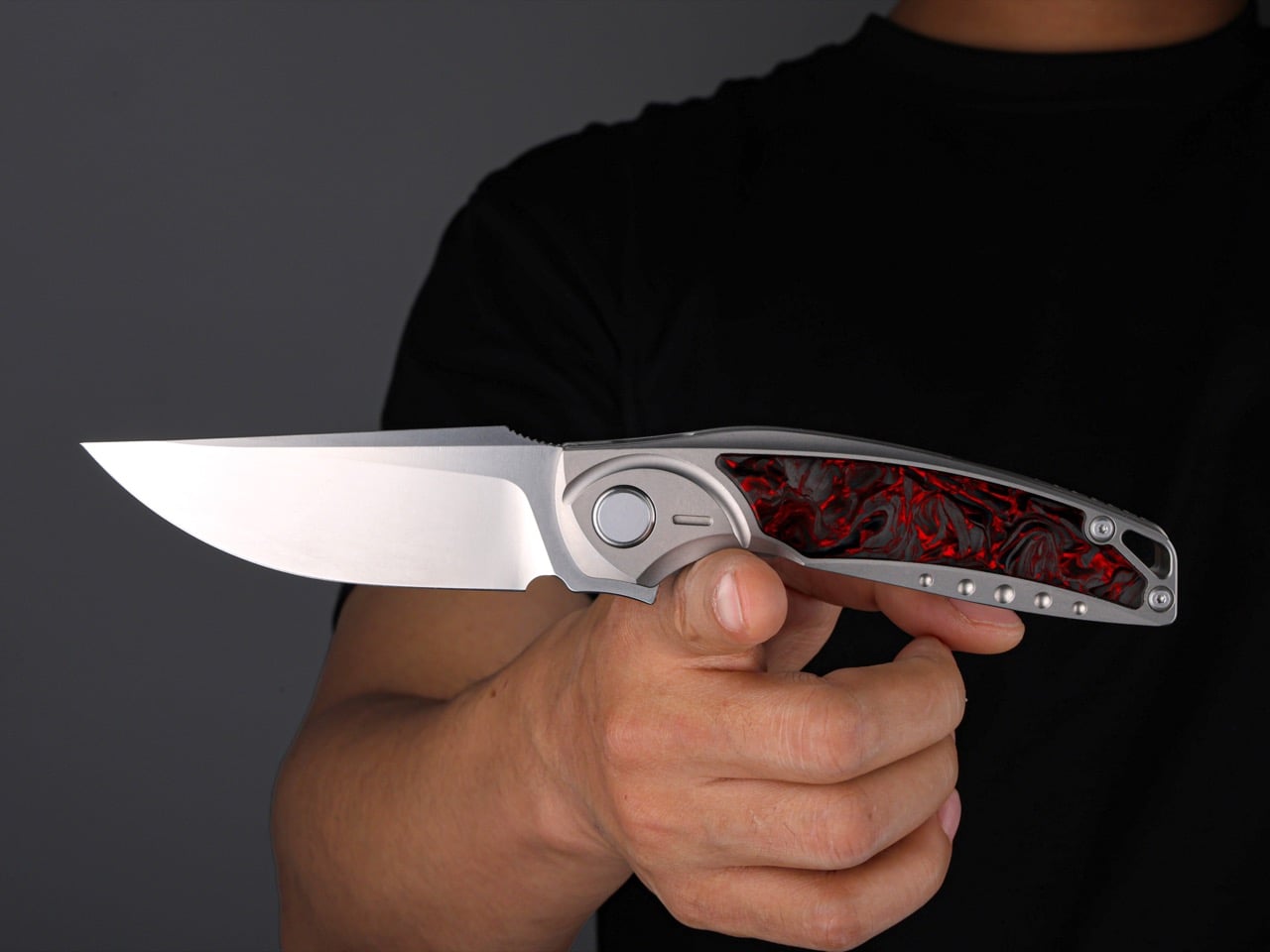
M390 is composed of 1.9% carbon for hardness, 20% chromium for corrosion protection, and 4% vanadium for edge life. That formula puts it at the top of the stainless steel hierarchy, well above the AUS-8 and 8Cr13MoV alloys found in budget production knives. The CATRA cardboard test proves it: M390 slices through nearly five times as much material as 420HC before edge degradation becomes noticeable. Heat-treated to 62 HRC and ground to a 15-degree edge angle per side, the blade hits the balance point where sharpness meets durability. You sharpen other knives. You just use this one. For those who prioritize toughness over ultimate edge retention, the D2 variant delivers serious cutting performance at 58-60 HRC, a tool steel with a long history of reliability in hard-use folders.

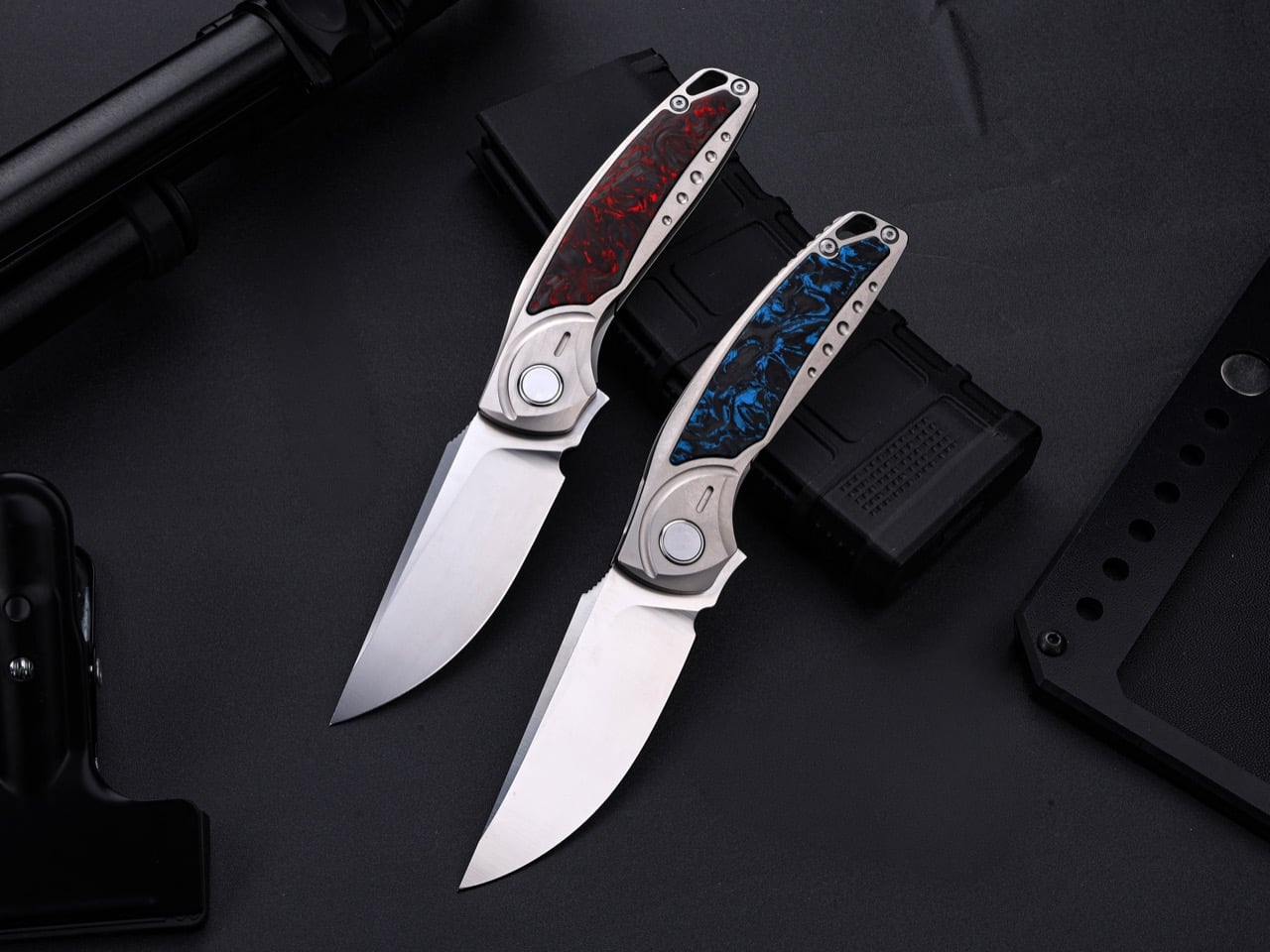
Grade 5 titanium, also known as Ti-6Al-4V, carries a strength-to-weight ratio that makes it the default choice in aerospace and medical implants. MIH machines the entire frame from this alloy, creating a structure light enough to disappear in your pocket at 5.6 ounces but strong enough to resist the kinds of lateral stresses that would bend a stainless steel liner. The frame curves to follow the natural contour of your palm, and the carbon fiber scales layered on top provide texture without aggression. Each scale displays a unique weave pattern since carbon fiber, by nature, never replicates exactly. Red, blue, or black colorways let you choose between bold presence, understated elegance, or low-visibility stealth. At the base of the blade, subtle jimping creates a tactile index point for your finger during detail work, the kind of small addition that only matters when you’re making precise cuts and suddenly realize how much control it gives you.
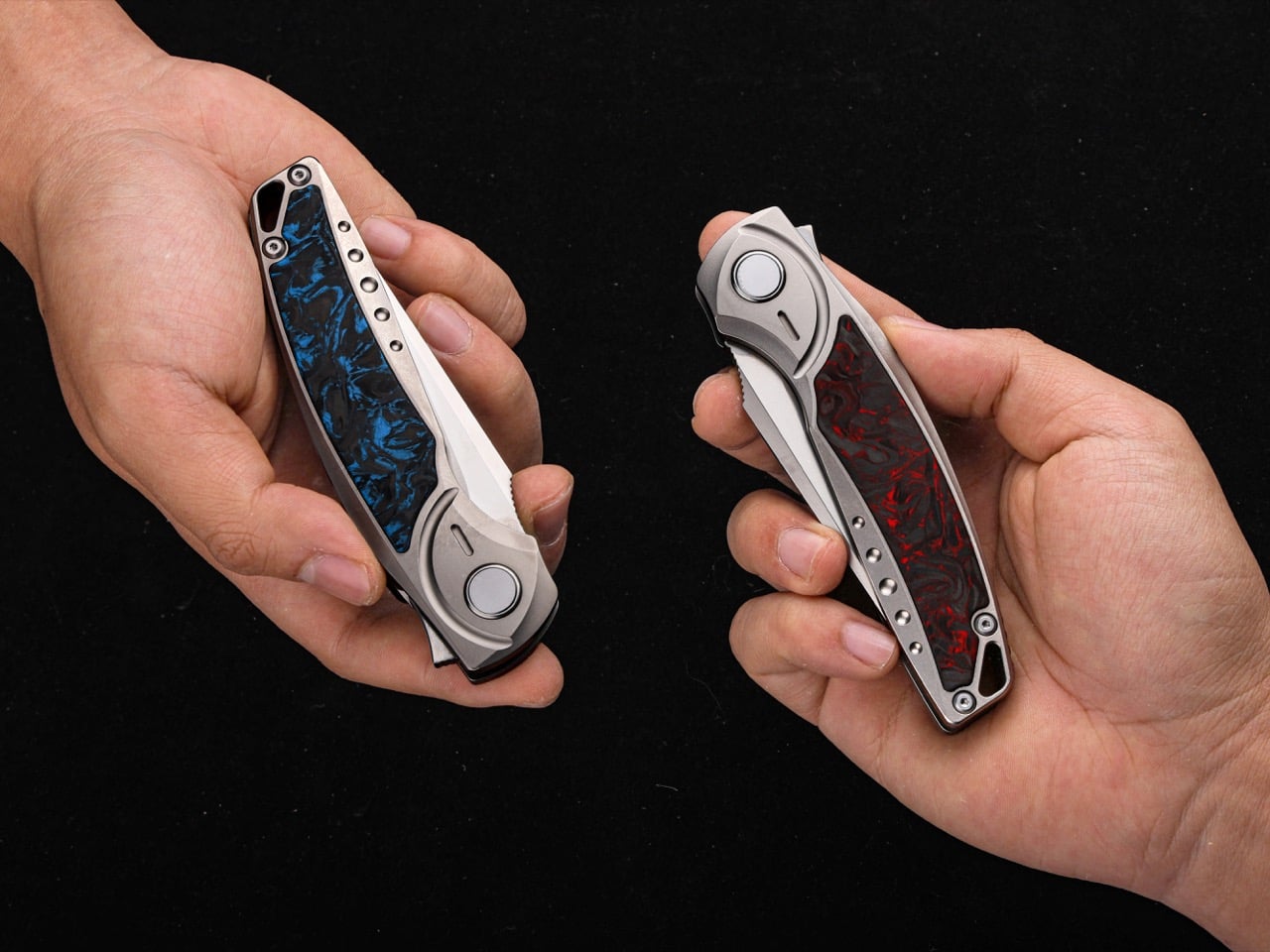
Ceramic bearings handle the pivot rotation while phosphor bronze washers distribute the load. Steel bearings corrode. Ceramic bearings don’t. Plastic washers compress and wear. Phosphor bronze doesn’t. The result is a deployment action that feels smooth the day it arrives and stays smooth years later. A strong detent keeps the blade locked closed during carry with no risk of accidental opening, but when you engage the flipper tab, the blade snaps out with a satisfying, controlled authority. The lock face and pivot are precision-machined to eliminate tolerances, which translates to zero blade play when the knife is open. No wobble. No lateral movement. Just solid lockup you can trust under hard use.
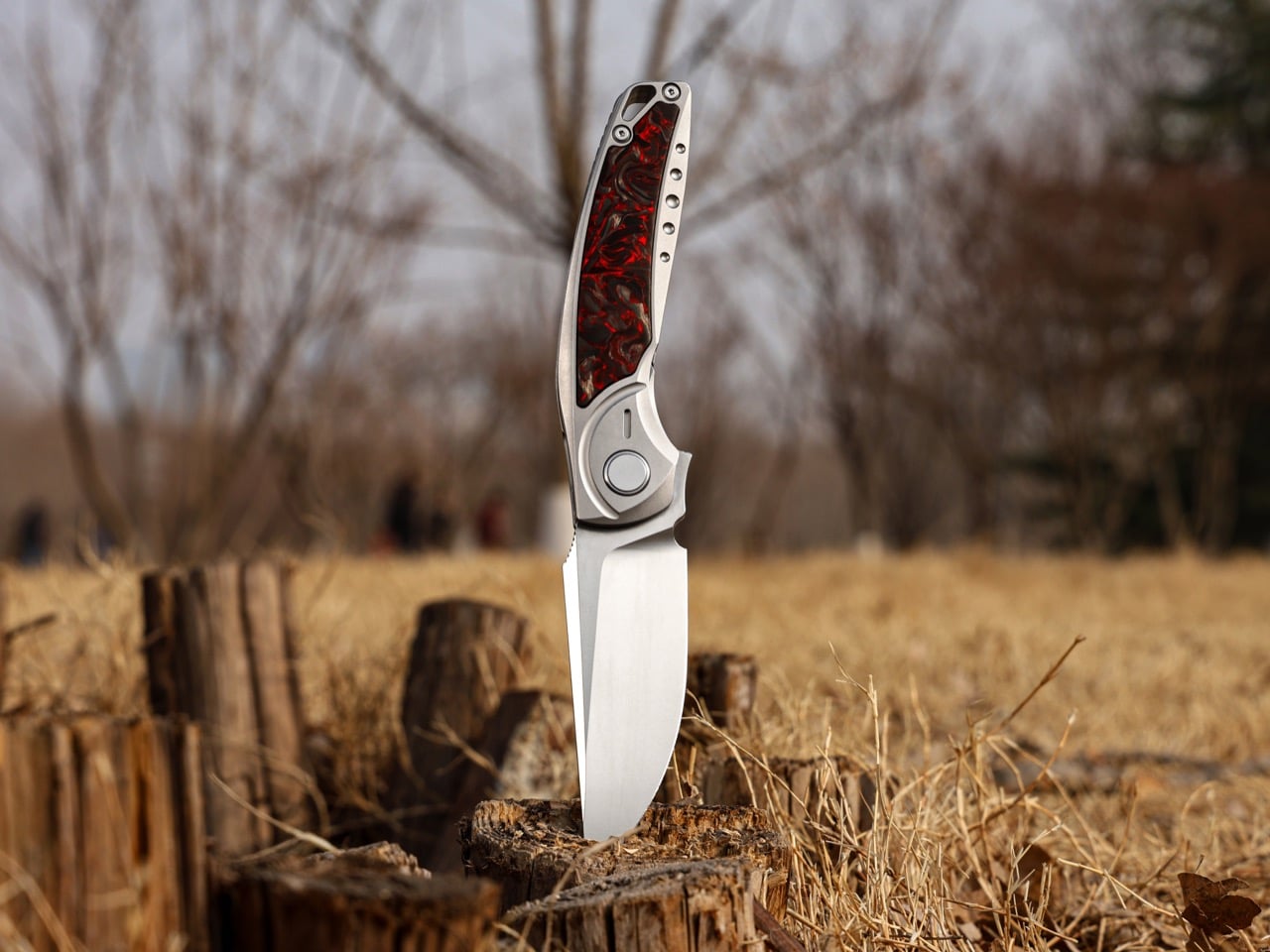
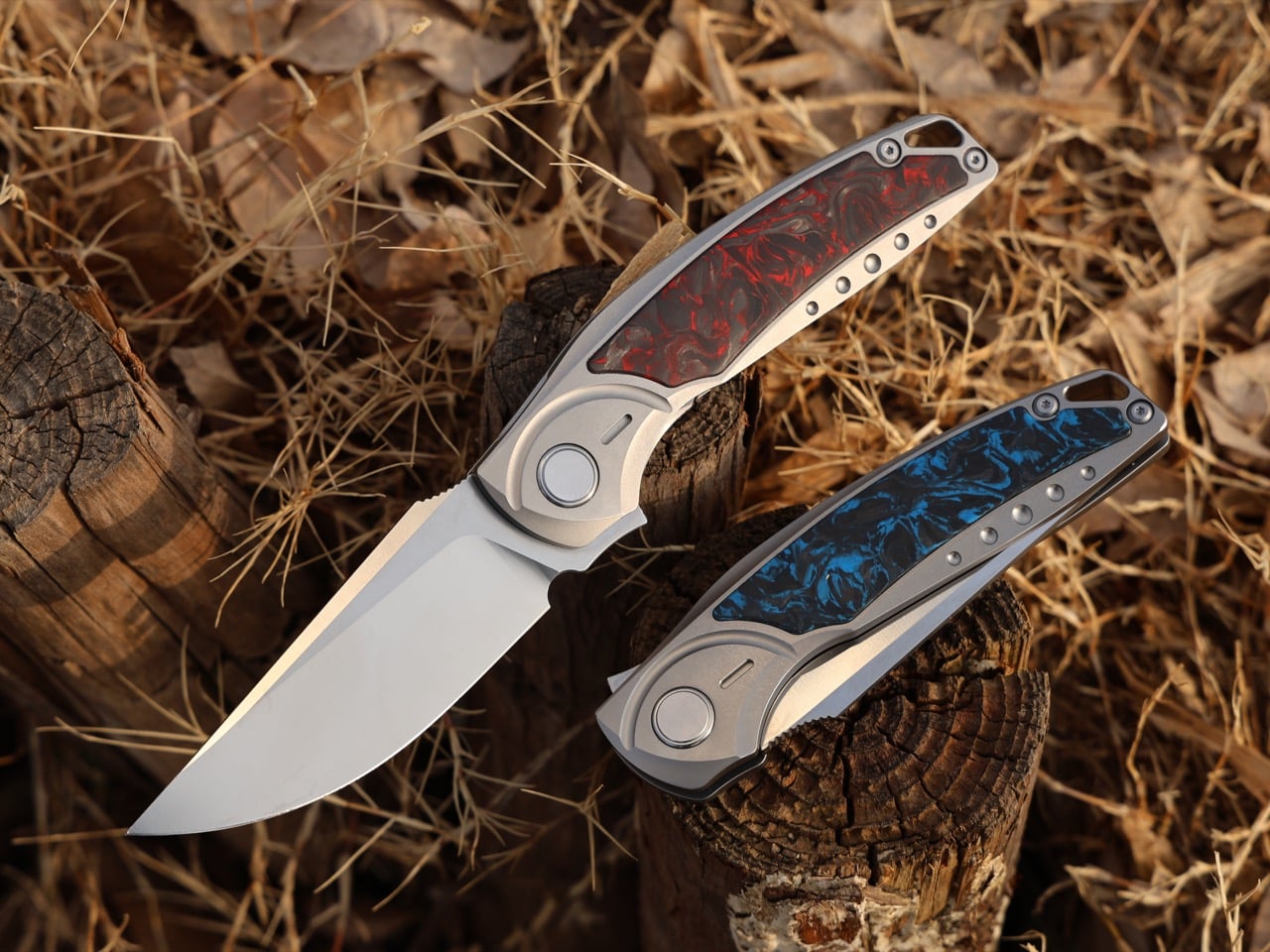
The blade runs a drop point profile, which means the spine curves gently downward to meet the tip, creating a strong point with plenty of belly for slicing. Drop point is the workhorse geometry for EDC because it excels at the tasks you actually do daily: opening packages, cutting cordage, preparing food, stripping wire, shaving wood. The tip is strong enough for piercing but not so aggressive that it tears through pocket fabric or catches on material when you’re making controlled cuts. At 62 HRC with a 15-degree edge angle, the M390 blade slices through cardboard, rope, plastic banding, and food prep tasks without requiring frequent touch-ups, while the D2 variant trades some of that extreme edge retention for better toughness under hard lateral loads. This is a knife built for the person who’s tired of pocket clips that loosen after a month, blades that need constant sharpening, and folders that feel like they were designed by a committee instead of someone who actually carries a knife daily.
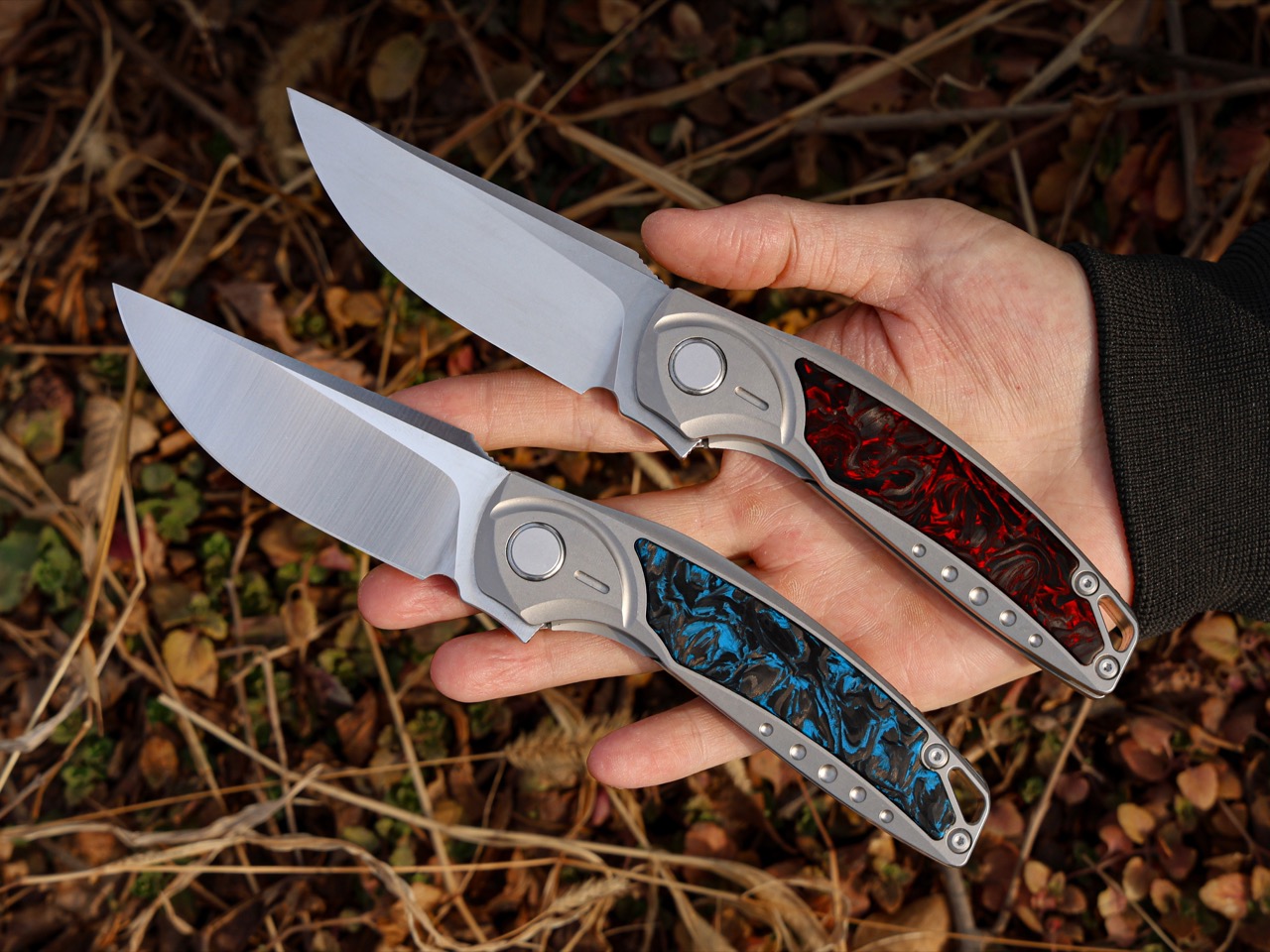
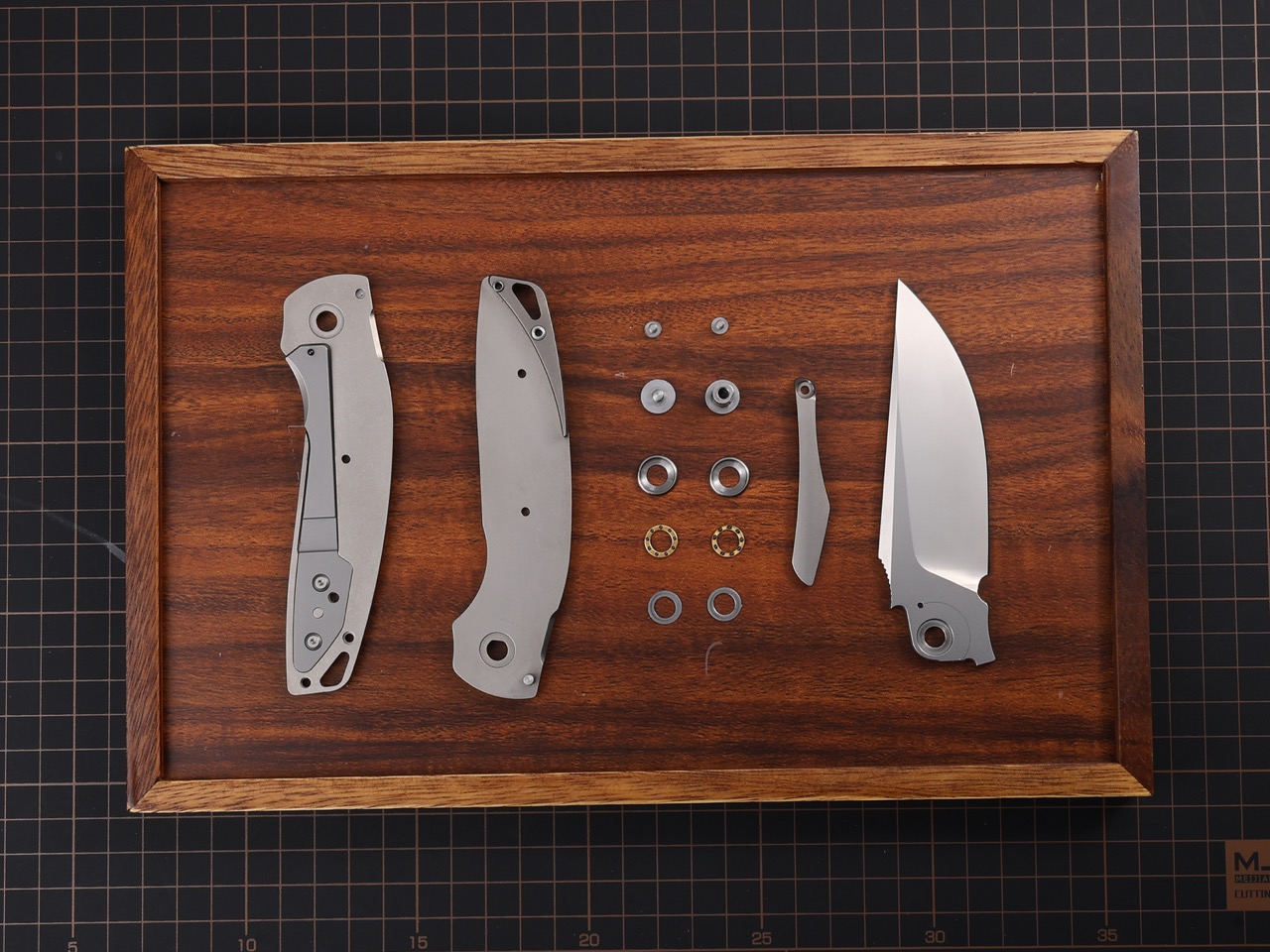
MIH milled the clip channel directly into the titanium frame so the clip sits flush with the handle contour, machined from spring-grade titanium so it grips firmly without deforming and releases smoothly without snagging fabric. Precision-machined tritium slots measuring 1.5x6mm sit on both sides of the handle, ready to accept self-illuminating vials if you want a subtle glow-in-the-dark locator, or you can leave them empty and enjoy the clean lines. A lanyard hole at the tail end gives you the option to attach a bead or cord for wrist retention or easier pocket extraction. Closed, the GraphiX measures 4.71 inches. Open, 8.27 inches. The balance ratio hits 0.618, essentially the golden ratio applied to weight distribution, which means the knife pivots naturally in your hand without feeling blade-heavy or handle-heavy.
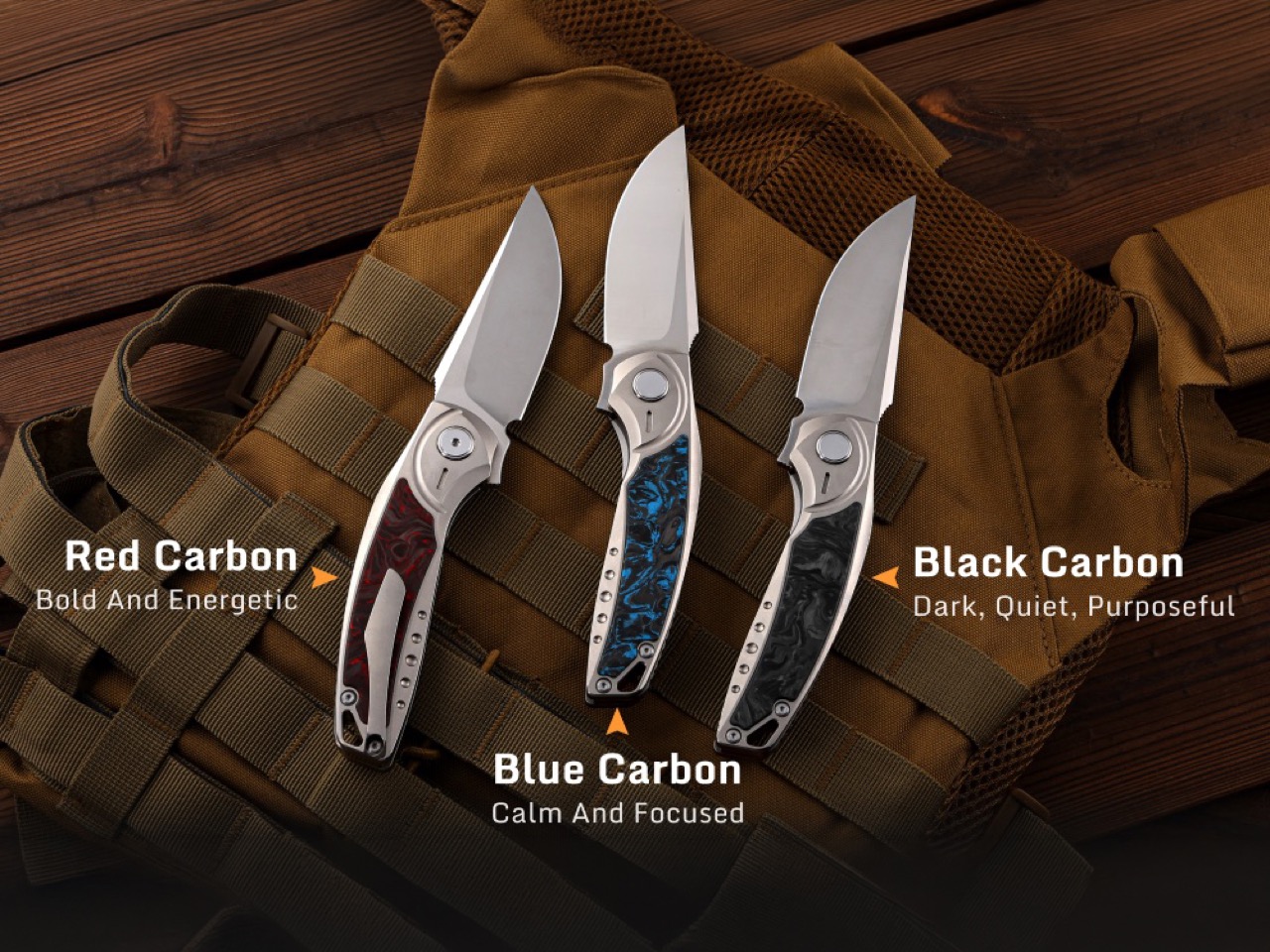
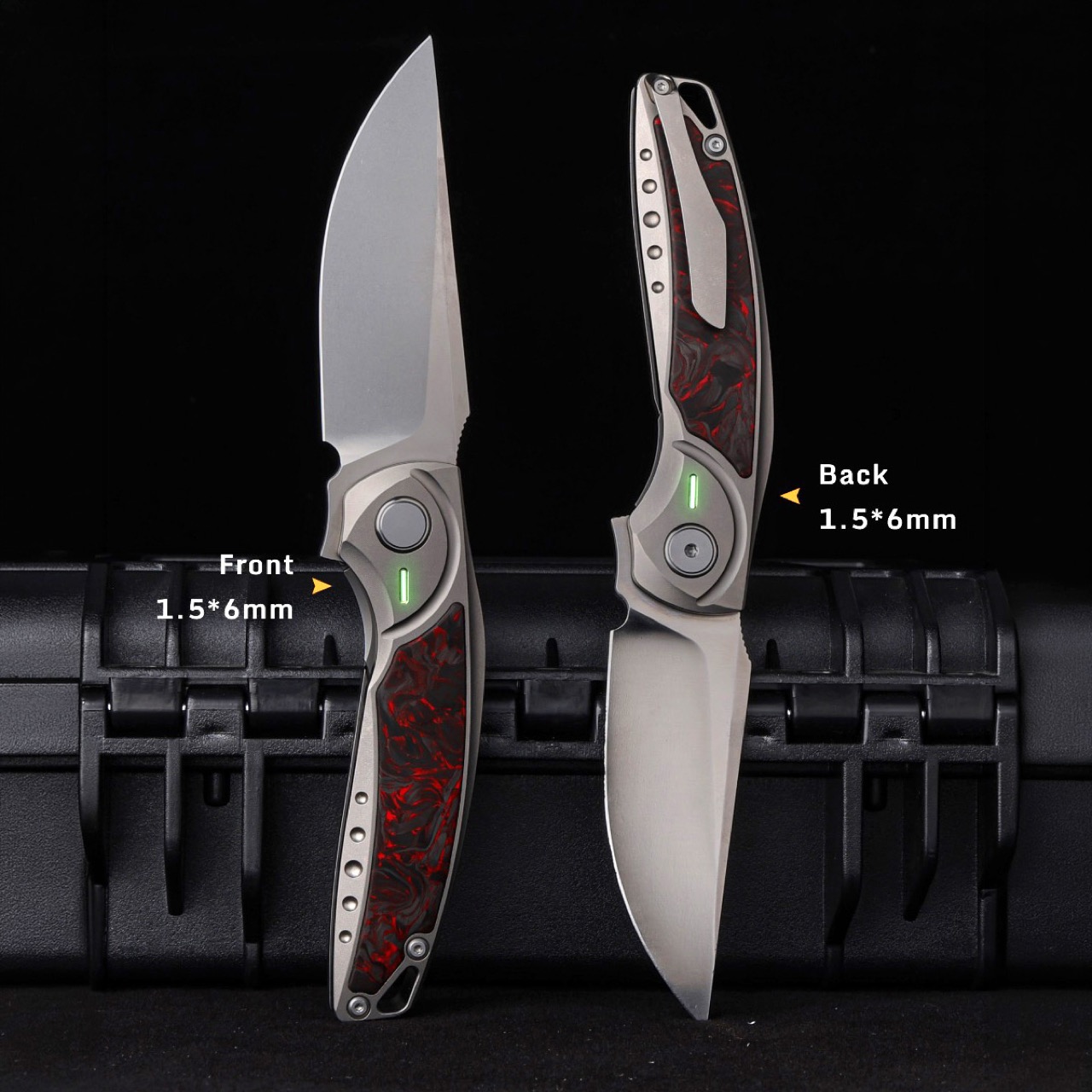
The D2 variant starts at $120, making it the accessible entry point into a titanium-framed folder with ceramic bearings and a carbon fiber inlay. The M390 version commands a premium for the superior edge retention. Add-ons include custom engraving, alternate carbon fiber colors (blue or black if you don’t want the default red), luminous vials, tritium vials, a titanium lanyard bead, and a foldable knife sharpener. The GraphiX ships worldwide with no additional shipping fees, and delivery is expected in August-September 2026 for backers who secure their spot during the campaign window.

Click Here to Buy Now: $120 $183 (35% off) Hurry! Only 19 days left!

The post Grade 5 Titanium, M390 Steel, Ceramic Bearings, $120 Price Tag: The EDC Knife to Beat in 2026 first appeared on Yanko Design.
Grade 5 Titanium, M390 Steel, Ceramic Bearings, $120 Price Tag: The EDC Knife to Beat in 2026

Most folding knives compromise somewhere. The blade steel holds an edge but rusts easily. The handle looks gorgeous but feels slippery when wet. The action is butter-smooth out of the box but develops wobble after six months of carry. MIH spent months asking a simpler question: what if you refused to compromise at all? What if you stripped away every feature that didn’t directly serve the three things a knife actually needs to do well, and then executed those three things with materials that cost more but last longer?

The GraphiX is the answer to that question. M390 steel, the supersteel standard, cuts 959mm of cardboard before dulling compared to 420HC’s 200mm. Ceramic bearings that will never rust paired with phosphor bronze washers that will never wear out. A titanium frame machined from Grade 5 aerospace alloy with a deep-carry clip milled directly into the structure. Carbon fiber scales with a tactile weave that ensures control even with gloves on. At $120 for the D2 version, this is a folder designed to be carried daily, used hard, and maintained rarely. It disappears in your pocket and appears in your hand exactly when you need it.

Designer: MIH

Click Here to Buy Now: $120 $183 (35% off) Hurry! Only 19 days left!

M390 is composed of 1.9% carbon for hardness, 20% chromium for corrosion protection, and 4% vanadium for edge life. That formula puts it at the top of the stainless steel hierarchy, well above the AUS-8 and 8Cr13MoV alloys found in budget production knives. The CATRA cardboard test proves it: M390 slices through nearly five times as much material as 420HC before edge degradation becomes noticeable. Heat-treated to 62 HRC and ground to a 15-degree edge angle per side, the blade hits the balance point where sharpness meets durability. You sharpen other knives. You just use this one. For those who prioritize toughness over ultimate edge retention, the D2 variant delivers serious cutting performance at 58-60 HRC, a tool steel with a long history of reliability in hard-use folders.

Grade 5 titanium, also known as Ti-6Al-4V, carries a strength-to-weight ratio that makes it the default choice in aerospace and medical implants. MIH machines the entire frame from this alloy, creating a structure light enough to disappear in your pocket at 5.6 ounces but strong enough to resist the kinds of lateral stresses that would bend a stainless steel liner. The frame curves to follow the natural contour of your palm, and the carbon fiber scales layered on top provide texture without aggression. Each scale displays a unique weave pattern since carbon fiber, by nature, never replicates exactly. Red, blue, or black colorways let you choose between bold presence, understated elegance, or low-visibility stealth. At the base of the blade, subtle jimping creates a tactile index point for your finger during detail work, the kind of small addition that only matters when you’re making precise cuts and suddenly realize how much control it gives you.

Ceramic bearings handle the pivot rotation while phosphor bronze washers distribute the load. Steel bearings corrode. Ceramic bearings don’t. Plastic washers compress and wear. Phosphor bronze doesn’t. The result is a deployment action that feels smooth the day it arrives and stays smooth years later. A strong detent keeps the blade locked closed during carry with no risk of accidental opening, but when you engage the flipper tab, the blade snaps out with a satisfying, controlled authority. The lock face and pivot are precision-machined to eliminate tolerances, which translates to zero blade play when the knife is open. No wobble. No lateral movement. Just solid lockup you can trust under hard use.

The blade runs a drop point profile, which means the spine curves gently downward to meet the tip, creating a strong point with plenty of belly for slicing. Drop point is the workhorse geometry for EDC because it excels at the tasks you actually do daily: opening packages, cutting cordage, preparing food, stripping wire, shaving wood. The tip is strong enough for piercing but not so aggressive that it tears through pocket fabric or catches on material when you’re making controlled cuts. At 62 HRC with a 15-degree edge angle, the M390 blade slices through cardboard, rope, plastic banding, and food prep tasks without requiring frequent touch-ups, while the D2 variant trades some of that extreme edge retention for better toughness under hard lateral loads. This is a knife built for the person who’s tired of pocket clips that loosen after a month, blades that need constant sharpening, and folders that feel like they were designed by a committee instead of someone who actually carries a knife daily.

MIH milled the clip channel directly into the titanium frame so the clip sits flush with the handle contour, machined from spring-grade titanium so it grips firmly without deforming and releases smoothly without snagging fabric. Precision-machined tritium slots measuring 1.5x6mm sit on both sides of the handle, ready to accept self-illuminating vials if you want a subtle glow-in-the-dark locator, or you can leave them empty and enjoy the clean lines. A lanyard hole at the tail end gives you the option to attach a bead or cord for wrist retention or easier pocket extraction. Closed, the GraphiX measures 4.71 inches. Open, 8.27 inches. The balance ratio hits 0.618, essentially the golden ratio applied to weight distribution, which means the knife pivots naturally in your hand without feeling blade-heavy or handle-heavy.

The D2 variant starts at $120, making it the accessible entry point into a titanium-framed folder with ceramic bearings and a carbon fiber inlay. The M390 version commands a premium for the superior edge retention. Add-ons include custom engraving, alternate carbon fiber colors (blue or black if you don’t want the default red), luminous vials, tritium vials, a titanium lanyard bead, and a foldable knife sharpener. The GraphiX ships worldwide with no additional shipping fees, and delivery is expected in August-September 2026 for backers who secure their spot during the campaign window.

Click Here to Buy Now: $120 $183 (35% off) Hurry! Only 19 days left!

The post Grade 5 Titanium, M390 Steel, Ceramic Bearings, $120 Price Tag: The EDC Knife to Beat in 2026 first appeared on Yanko Design.
Grade 5 Titanium, M390 Steel, Ceramic Bearings, $120 Price Tag: The EDC Knife to Beat in 2026

Most folding knives compromise somewhere. The blade steel holds an edge but rusts easily. The handle looks gorgeous but feels slippery when wet. The action is butter-smooth out of the box but develops wobble after six months of carry. MIH spent months asking a simpler question: what if you refused to compromise at all? What if you stripped away every feature that didn’t directly serve the three things a knife actually needs to do well, and then executed those three things with materials that cost more but last longer?

The GraphiX is the answer to that question. M390 steel, the supersteel standard, cuts 959mm of cardboard before dulling compared to 420HC’s 200mm. Ceramic bearings that will never rust paired with phosphor bronze washers that will never wear out. A titanium frame machined from Grade 5 aerospace alloy with a deep-carry clip milled directly into the structure. Carbon fiber scales with a tactile weave that ensures control even with gloves on. At $120 for the D2 version, this is a folder designed to be carried daily, used hard, and maintained rarely. It disappears in your pocket and appears in your hand exactly when you need it.

Designer: MIH

Click Here to Buy Now: $120 $183 (35% off) Hurry! Only 19 days left!

M390 is composed of 1.9% carbon for hardness, 20% chromium for corrosion protection, and 4% vanadium for edge life. That formula puts it at the top of the stainless steel hierarchy, well above the AUS-8 and 8Cr13MoV alloys found in budget production knives. The CATRA cardboard test proves it: M390 slices through nearly five times as much material as 420HC before edge degradation becomes noticeable. Heat-treated to 62 HRC and ground to a 15-degree edge angle per side, the blade hits the balance point where sharpness meets durability. You sharpen other knives. You just use this one. For those who prioritize toughness over ultimate edge retention, the D2 variant delivers serious cutting performance at 58-60 HRC, a tool steel with a long history of reliability in hard-use folders.

Grade 5 titanium, also known as Ti-6Al-4V, carries a strength-to-weight ratio that makes it the default choice in aerospace and medical implants. MIH machines the entire frame from this alloy, creating a structure light enough to disappear in your pocket at 5.6 ounces but strong enough to resist the kinds of lateral stresses that would bend a stainless steel liner. The frame curves to follow the natural contour of your palm, and the carbon fiber scales layered on top provide texture without aggression. Each scale displays a unique weave pattern since carbon fiber, by nature, never replicates exactly. Red, blue, or black colorways let you choose between bold presence, understated elegance, or low-visibility stealth. At the base of the blade, subtle jimping creates a tactile index point for your finger during detail work, the kind of small addition that only matters when you’re making precise cuts and suddenly realize how much control it gives you.

Ceramic bearings handle the pivot rotation while phosphor bronze washers distribute the load. Steel bearings corrode. Ceramic bearings don’t. Plastic washers compress and wear. Phosphor bronze doesn’t. The result is a deployment action that feels smooth the day it arrives and stays smooth years later. A strong detent keeps the blade locked closed during carry with no risk of accidental opening, but when you engage the flipper tab, the blade snaps out with a satisfying, controlled authority. The lock face and pivot are precision-machined to eliminate tolerances, which translates to zero blade play when the knife is open. No wobble. No lateral movement. Just solid lockup you can trust under hard use.

The blade runs a drop point profile, which means the spine curves gently downward to meet the tip, creating a strong point with plenty of belly for slicing. Drop point is the workhorse geometry for EDC because it excels at the tasks you actually do daily: opening packages, cutting cordage, preparing food, stripping wire, shaving wood. The tip is strong enough for piercing but not so aggressive that it tears through pocket fabric or catches on material when you’re making controlled cuts. At 62 HRC with a 15-degree edge angle, the M390 blade slices through cardboard, rope, plastic banding, and food prep tasks without requiring frequent touch-ups, while the D2 variant trades some of that extreme edge retention for better toughness under hard lateral loads. This is a knife built for the person who’s tired of pocket clips that loosen after a month, blades that need constant sharpening, and folders that feel like they were designed by a committee instead of someone who actually carries a knife daily.

MIH milled the clip channel directly into the titanium frame so the clip sits flush with the handle contour, machined from spring-grade titanium so it grips firmly without deforming and releases smoothly without snagging fabric. Precision-machined tritium slots measuring 1.5x6mm sit on both sides of the handle, ready to accept self-illuminating vials if you want a subtle glow-in-the-dark locator, or you can leave them empty and enjoy the clean lines. A lanyard hole at the tail end gives you the option to attach a bead or cord for wrist retention or easier pocket extraction. Closed, the GraphiX measures 4.71 inches. Open, 8.27 inches. The balance ratio hits 0.618, essentially the golden ratio applied to weight distribution, which means the knife pivots naturally in your hand without feeling blade-heavy or handle-heavy.

The D2 variant starts at $120, making it the accessible entry point into a titanium-framed folder with ceramic bearings and a carbon fiber inlay. The M390 version commands a premium for the superior edge retention. Add-ons include custom engraving, alternate carbon fiber colors (blue or black if you don’t want the default red), luminous vials, tritium vials, a titanium lanyard bead, and a foldable knife sharpener. The GraphiX ships worldwide with no additional shipping fees, and delivery is expected in August-September 2026 for backers who secure their spot during the campaign window.

Click Here to Buy Now: $120 $183 (35% off) Hurry! Only 19 days left!

The post Grade 5 Titanium, M390 Steel, Ceramic Bearings, $120 Price Tag: The EDC Knife to Beat in 2026 first appeared on Yanko Design.
Grade 5 Titanium, M390 Steel, Ceramic Bearings, $120 Price Tag: The EDC Knife to Beat in 2026

Most folding knives compromise somewhere. The blade steel holds an edge but rusts easily. The handle looks gorgeous but feels slippery when wet. The action is butter-smooth out of the box but develops wobble after six months of carry. MIH spent months asking a simpler question: what if you refused to compromise at all? What if you stripped away every feature that didn’t directly serve the three things a knife actually needs to do well, and then executed those three things with materials that cost more but last longer?

The GraphiX is the answer to that question. M390 steel, the supersteel standard, cuts 959mm of cardboard before dulling compared to 420HC’s 200mm. Ceramic bearings that will never rust paired with phosphor bronze washers that will never wear out. A titanium frame machined from Grade 5 aerospace alloy with a deep-carry clip milled directly into the structure. Carbon fiber scales with a tactile weave that ensures control even with gloves on. At $120 for the D2 version, this is a folder designed to be carried daily, used hard, and maintained rarely. It disappears in your pocket and appears in your hand exactly when you need it.

Designer: MIH

Click Here to Buy Now: $120 $183 (35% off) Hurry! Only 19 days left!

M390 is composed of 1.9% carbon for hardness, 20% chromium for corrosion protection, and 4% vanadium for edge life. That formula puts it at the top of the stainless steel hierarchy, well above the AUS-8 and 8Cr13MoV alloys found in budget production knives. The CATRA cardboard test proves it: M390 slices through nearly five times as much material as 420HC before edge degradation becomes noticeable. Heat-treated to 62 HRC and ground to a 15-degree edge angle per side, the blade hits the balance point where sharpness meets durability. You sharpen other knives. You just use this one. For those who prioritize toughness over ultimate edge retention, the D2 variant delivers serious cutting performance at 58-60 HRC, a tool steel with a long history of reliability in hard-use folders.

Grade 5 titanium, also known as Ti-6Al-4V, carries a strength-to-weight ratio that makes it the default choice in aerospace and medical implants. MIH machines the entire frame from this alloy, creating a structure light enough to disappear in your pocket at 5.6 ounces but strong enough to resist the kinds of lateral stresses that would bend a stainless steel liner. The frame curves to follow the natural contour of your palm, and the carbon fiber scales layered on top provide texture without aggression. Each scale displays a unique weave pattern since carbon fiber, by nature, never replicates exactly. Red, blue, or black colorways let you choose between bold presence, understated elegance, or low-visibility stealth. At the base of the blade, subtle jimping creates a tactile index point for your finger during detail work, the kind of small addition that only matters when you’re making precise cuts and suddenly realize how much control it gives you.

Ceramic bearings handle the pivot rotation while phosphor bronze washers distribute the load. Steel bearings corrode. Ceramic bearings don’t. Plastic washers compress and wear. Phosphor bronze doesn’t. The result is a deployment action that feels smooth the day it arrives and stays smooth years later. A strong detent keeps the blade locked closed during carry with no risk of accidental opening, but when you engage the flipper tab, the blade snaps out with a satisfying, controlled authority. The lock face and pivot are precision-machined to eliminate tolerances, which translates to zero blade play when the knife is open. No wobble. No lateral movement. Just solid lockup you can trust under hard use.

The blade runs a drop point profile, which means the spine curves gently downward to meet the tip, creating a strong point with plenty of belly for slicing. Drop point is the workhorse geometry for EDC because it excels at the tasks you actually do daily: opening packages, cutting cordage, preparing food, stripping wire, shaving wood. The tip is strong enough for piercing but not so aggressive that it tears through pocket fabric or catches on material when you’re making controlled cuts. At 62 HRC with a 15-degree edge angle, the M390 blade slices through cardboard, rope, plastic banding, and food prep tasks without requiring frequent touch-ups, while the D2 variant trades some of that extreme edge retention for better toughness under hard lateral loads. This is a knife built for the person who’s tired of pocket clips that loosen after a month, blades that need constant sharpening, and folders that feel like they were designed by a committee instead of someone who actually carries a knife daily.

MIH milled the clip channel directly into the titanium frame so the clip sits flush with the handle contour, machined from spring-grade titanium so it grips firmly without deforming and releases smoothly without snagging fabric. Precision-machined tritium slots measuring 1.5x6mm sit on both sides of the handle, ready to accept self-illuminating vials if you want a subtle glow-in-the-dark locator, or you can leave them empty and enjoy the clean lines. A lanyard hole at the tail end gives you the option to attach a bead or cord for wrist retention or easier pocket extraction. Closed, the GraphiX measures 4.71 inches. Open, 8.27 inches. The balance ratio hits 0.618, essentially the golden ratio applied to weight distribution, which means the knife pivots naturally in your hand without feeling blade-heavy or handle-heavy.

The D2 variant starts at $120, making it the accessible entry point into a titanium-framed folder with ceramic bearings and a carbon fiber inlay. The M390 version commands a premium for the superior edge retention. Add-ons include custom engraving, alternate carbon fiber colors (blue or black if you don’t want the default red), luminous vials, tritium vials, a titanium lanyard bead, and a foldable knife sharpener. The GraphiX ships worldwide with no additional shipping fees, and delivery is expected in August-September 2026 for backers who secure their spot during the campaign window.

Click Here to Buy Now: $120 $183 (35% off) Hurry! Only 19 days left!

The post Grade 5 Titanium, M390 Steel, Ceramic Bearings, $120 Price Tag: The EDC Knife to Beat in 2026 first appeared on Yanko Design.
A Ferrari-Inspired Speaker That Turns Motion Into Light and Sound

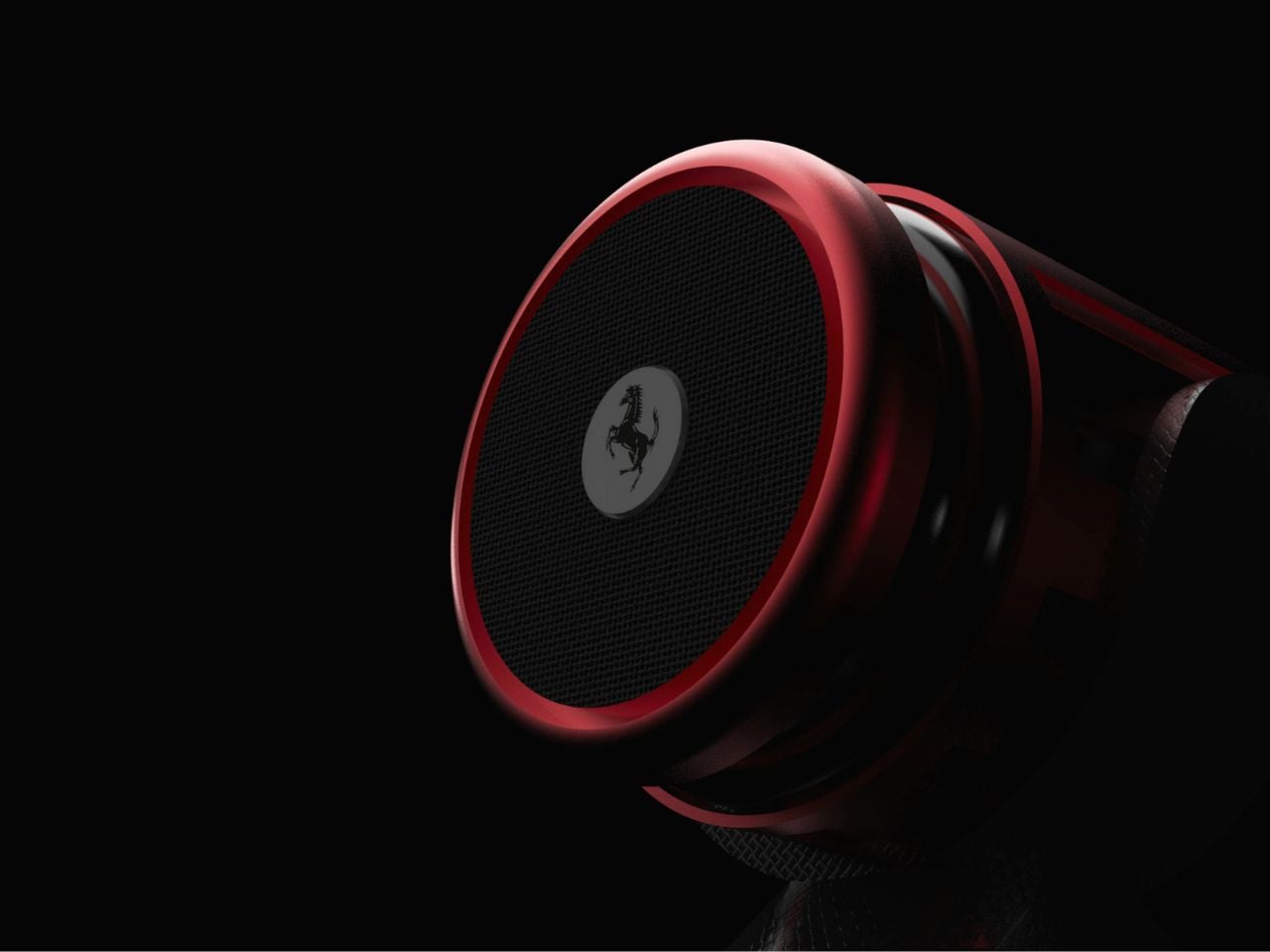
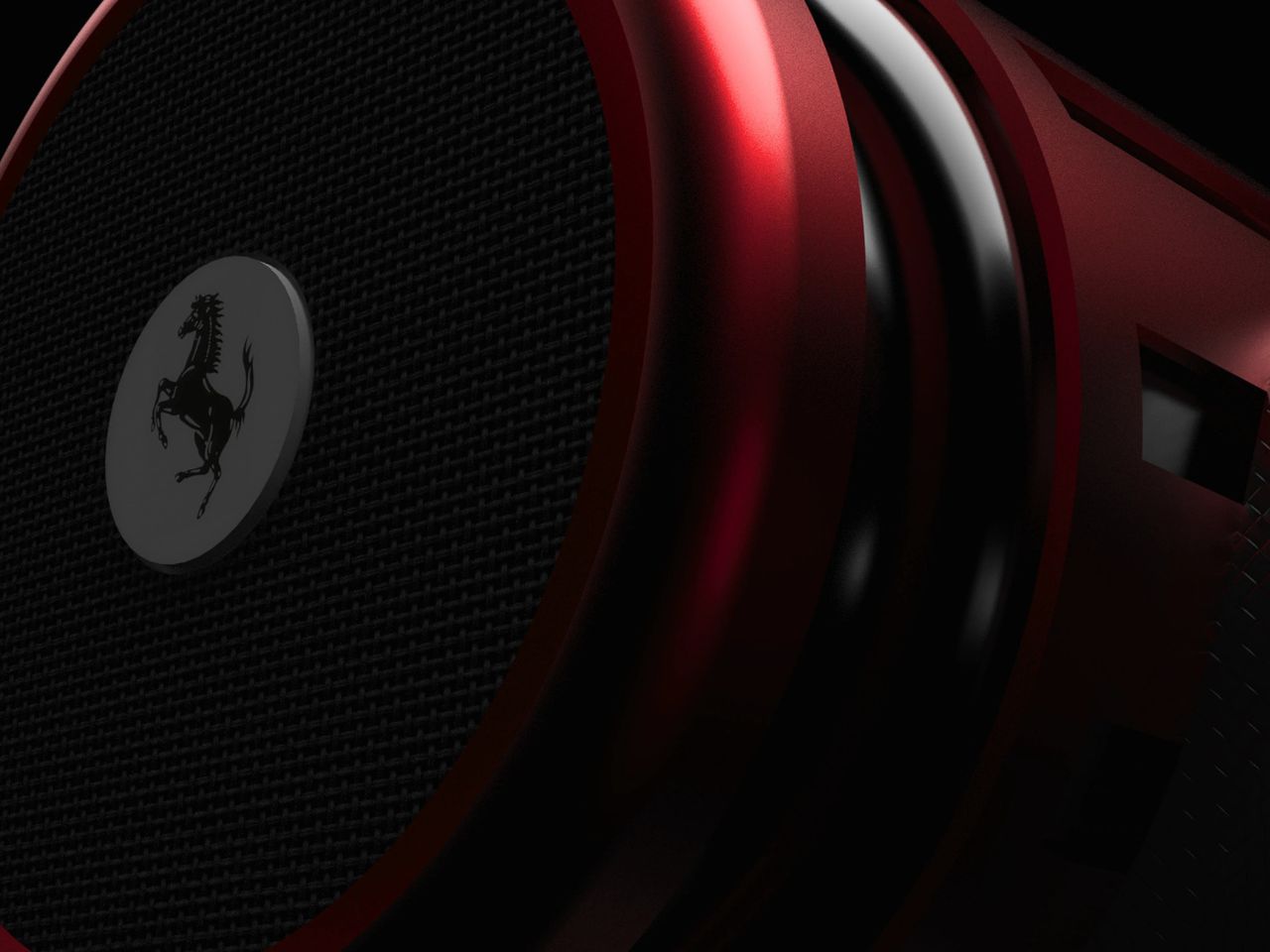
Some objects simply exist in a space, while others carry a presence even before they are used. ROSSO belongs firmly in the latter. It does not read as a conventional speaker. It feels composed, deliberate, almost cinematic in the way it occupies a room. Inspired by the rear light signature of the Ferrari F8 Tributo, the design does not just borrow from automotive styling. It translates the emotional language of performance into a completely different context. What emerges is less of a consumer electronic and more of a captured moment of motion.

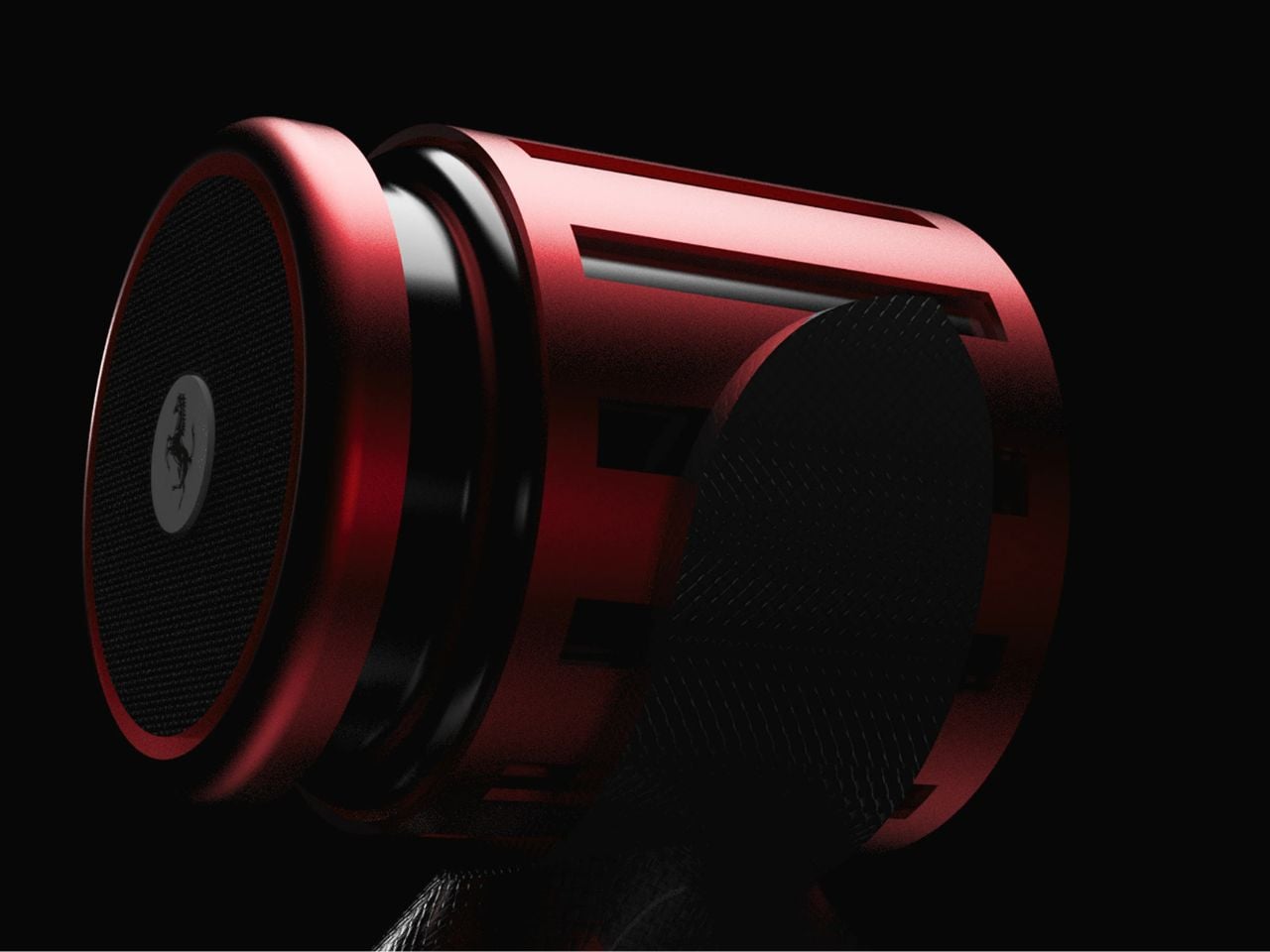
The most striking element is the dual circular illumination, which immediately draws attention not as decoration, but as identity. The rings echo Ferrari’s iconic taillights, yet here they take on a new role. They feel rhythmic, almost like a pulse, suggesting energy even in stillness. There is a quiet confidence in this decision. Instead of blending into interiors, ROSSO chooses to stand out, using light to create a focal point that feels engineered and intentional.

Designer: Royal Tyagi

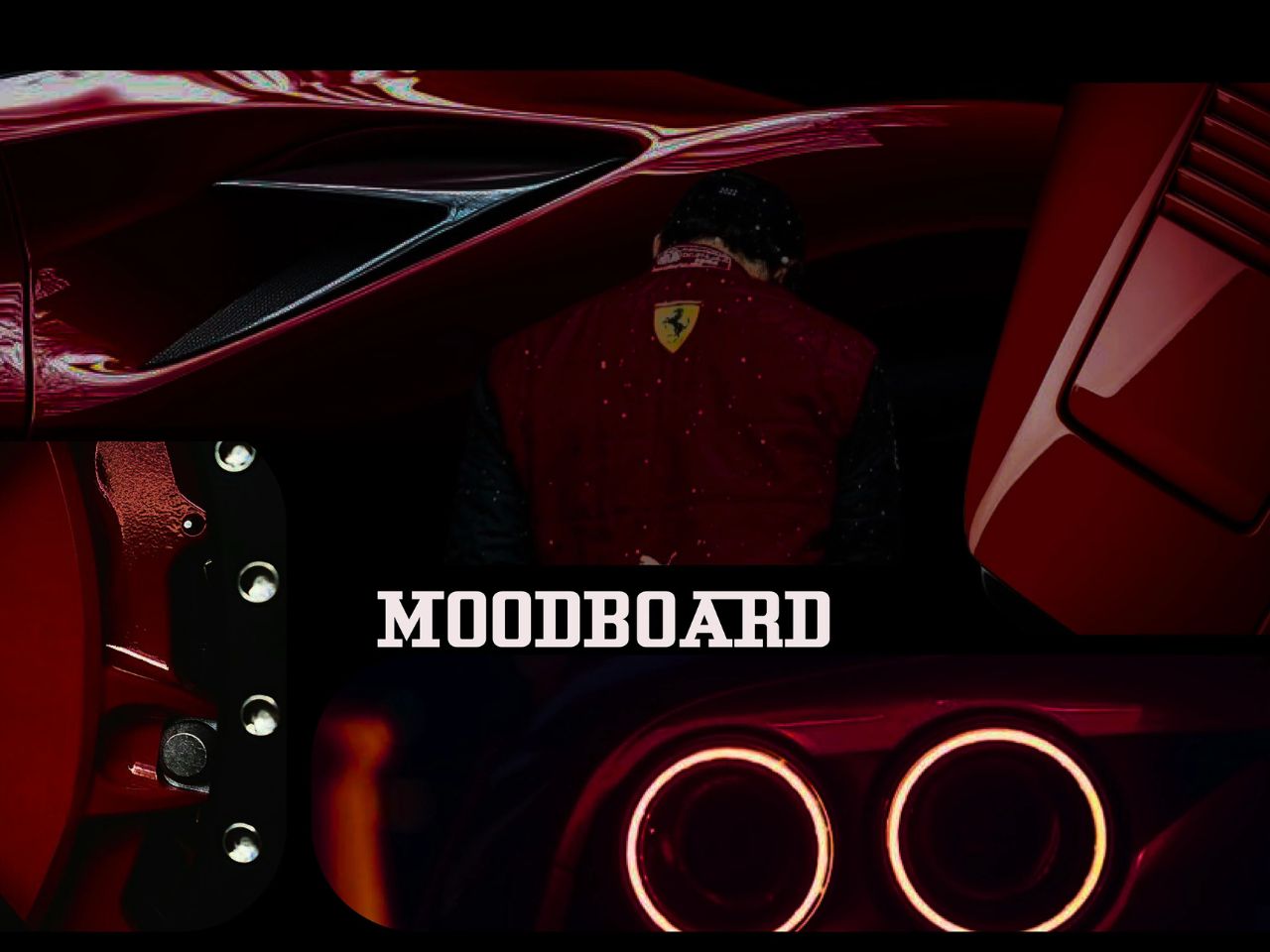
The form itself resists stillness. Surfaces stretch and taper, edges feel pulled forward, and the overall silhouette carries a strong sense of direction. This is not accidental. It stems from an ideation process rooted in the geometry of the Ferrari F8, where circular light elements evolve into a broader architectural language. Over time, the design moves away from literal references and instead captures something more abstract. The feeling of speed, tension, and control. The result is a speaker that appears to be in a constant state of readiness, as if it could accelerate at any moment.

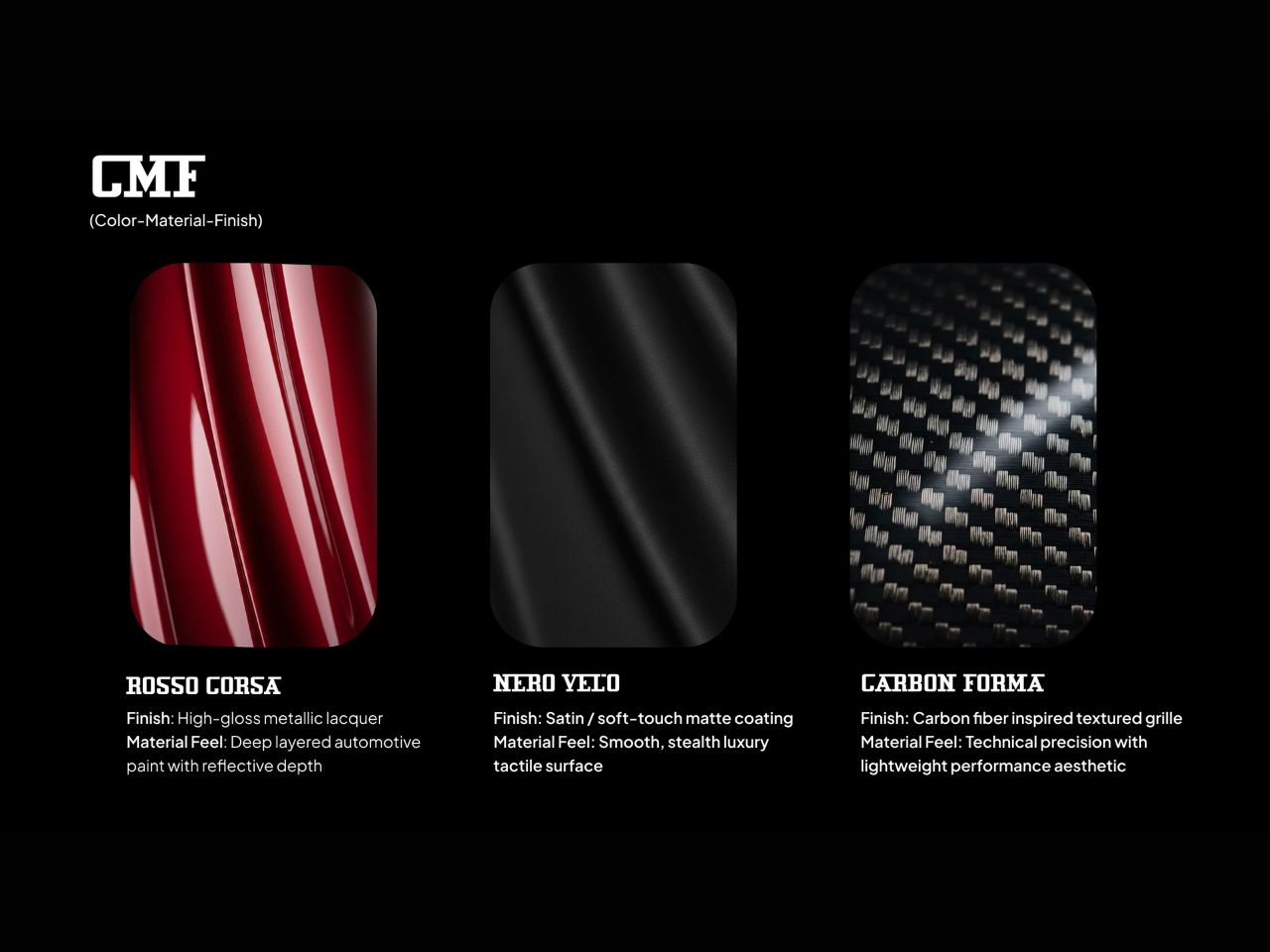
Materiality deepens this experience. The ROSSO CORSA finish, with its high gloss metallic lacquer, creates a depth that feels almost liquid, allowing light to glide across the surface and amplify its sculptural quality. It is bold, expressive, and unmistakably tied to Ferrari’s heritage. In contrast, NERO VELO offers a quieter interpretation. Its satin, soft touch matte coating absorbs light, shifting the focus from visual drama to tactile interaction and restraint. CARBON FORMA introduces a more technical layer through its carbon fiber-inspired textured grille, grounding the design in a language of precision and performance.

What makes ROSSO compelling is how these elements come together to shape not just how the object looks, but how it feels. The illuminated rings begin to act as a visual extension of sound, suggesting vibration and energy. The speaker becomes more than a device. It becomes a multi-sensory experience. There is an underlying idea that sound can have a visible presence, that it can be anticipated before it is heard.

In a market where many products aim to disappear into their surroundings, ROSSO takes a different stance. It embraces visibility, emotion, and expression. It does not attempt to be neutral. Instead, it invites attention and rewards it. By translating the essence of automotive performance into a domestic object, it challenges what a speaker can be. Not just a tool for listening, but a sculptural artifact that carries speed, power, and intent into everyday life.

The post A Ferrari-Inspired Speaker That Turns Motion Into Light and Sound first appeared on Yanko Design.
This Lounge Chair Was Designed to Never Be Replaced — Indoors or Out

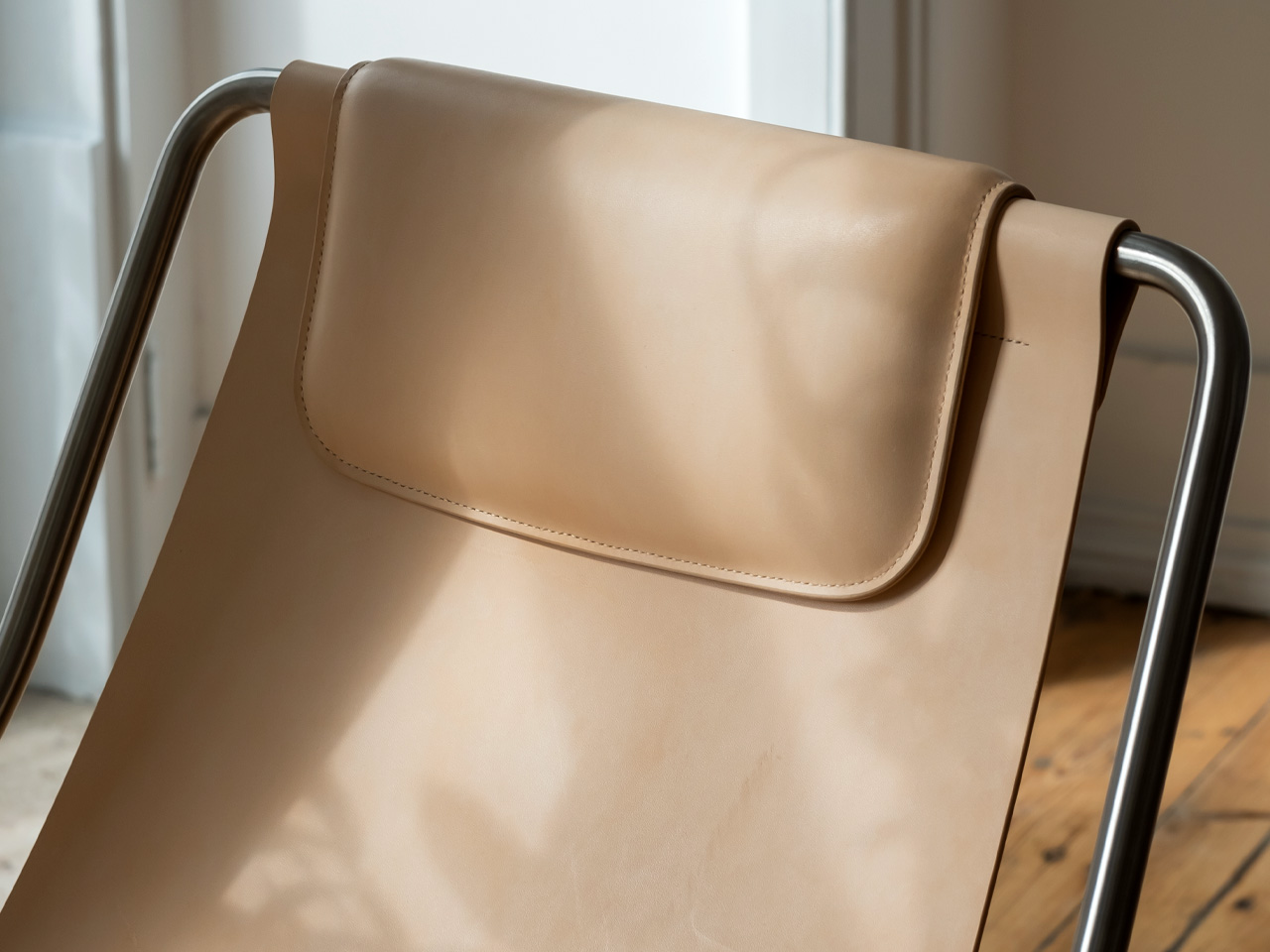
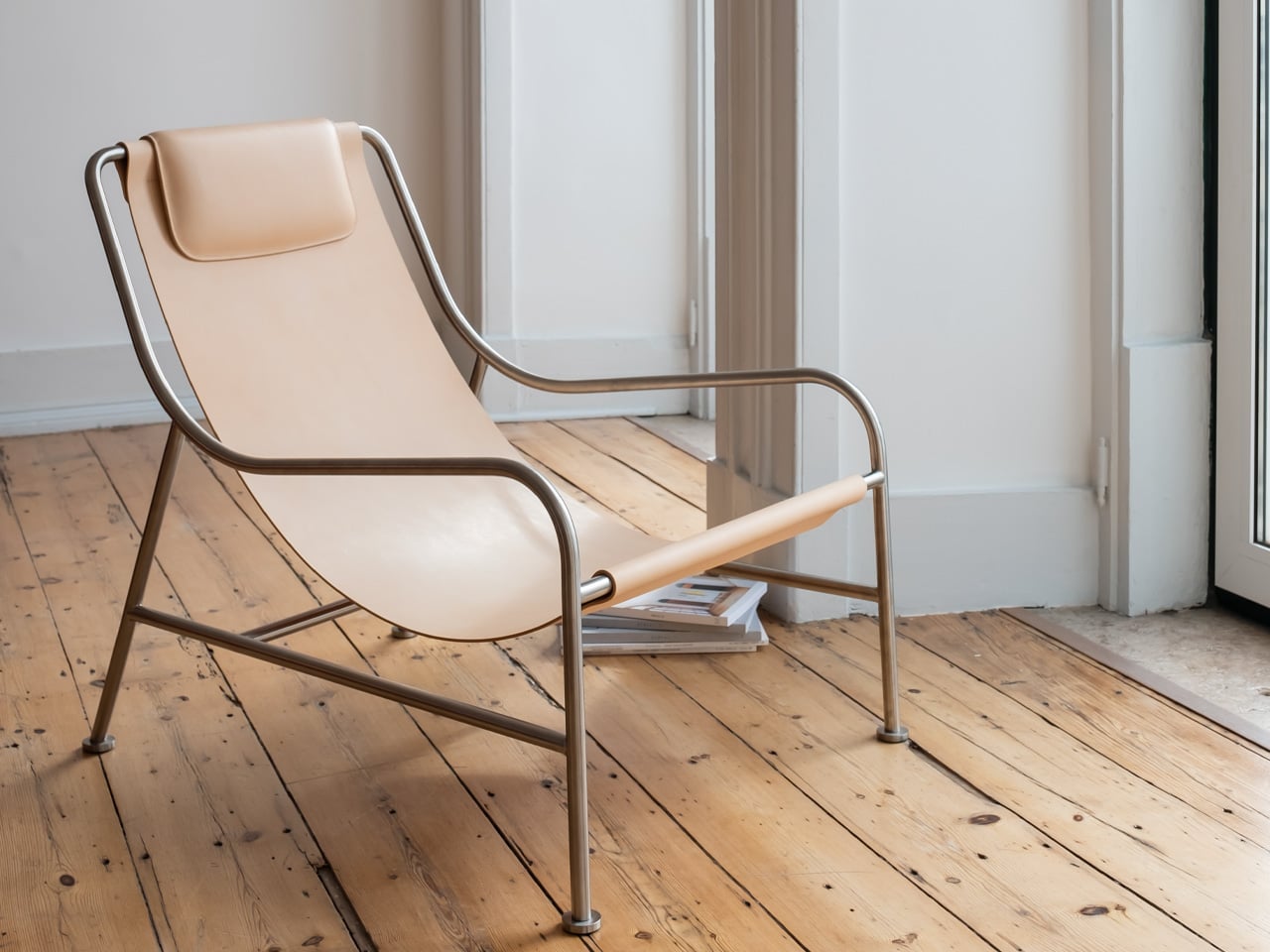
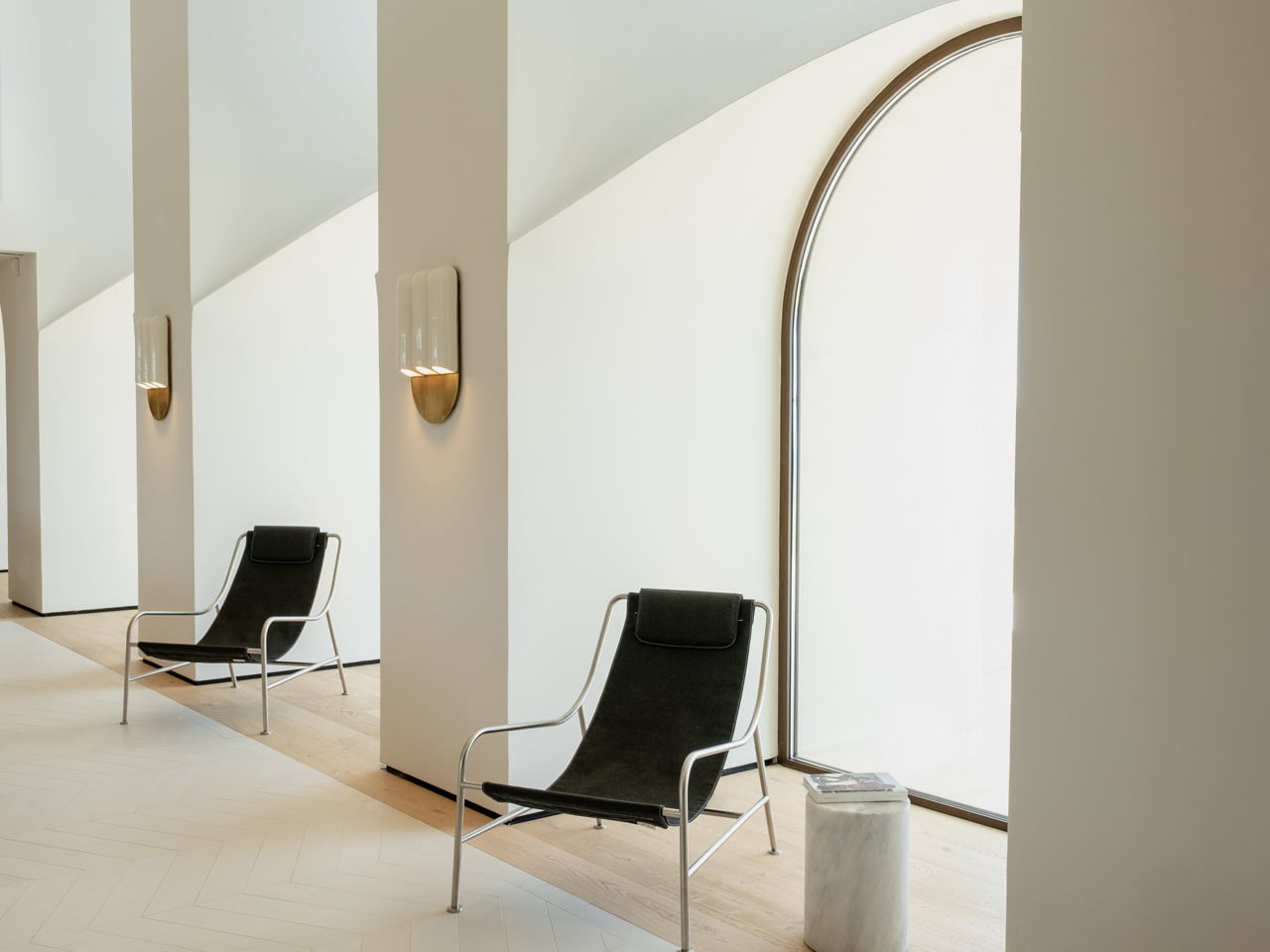
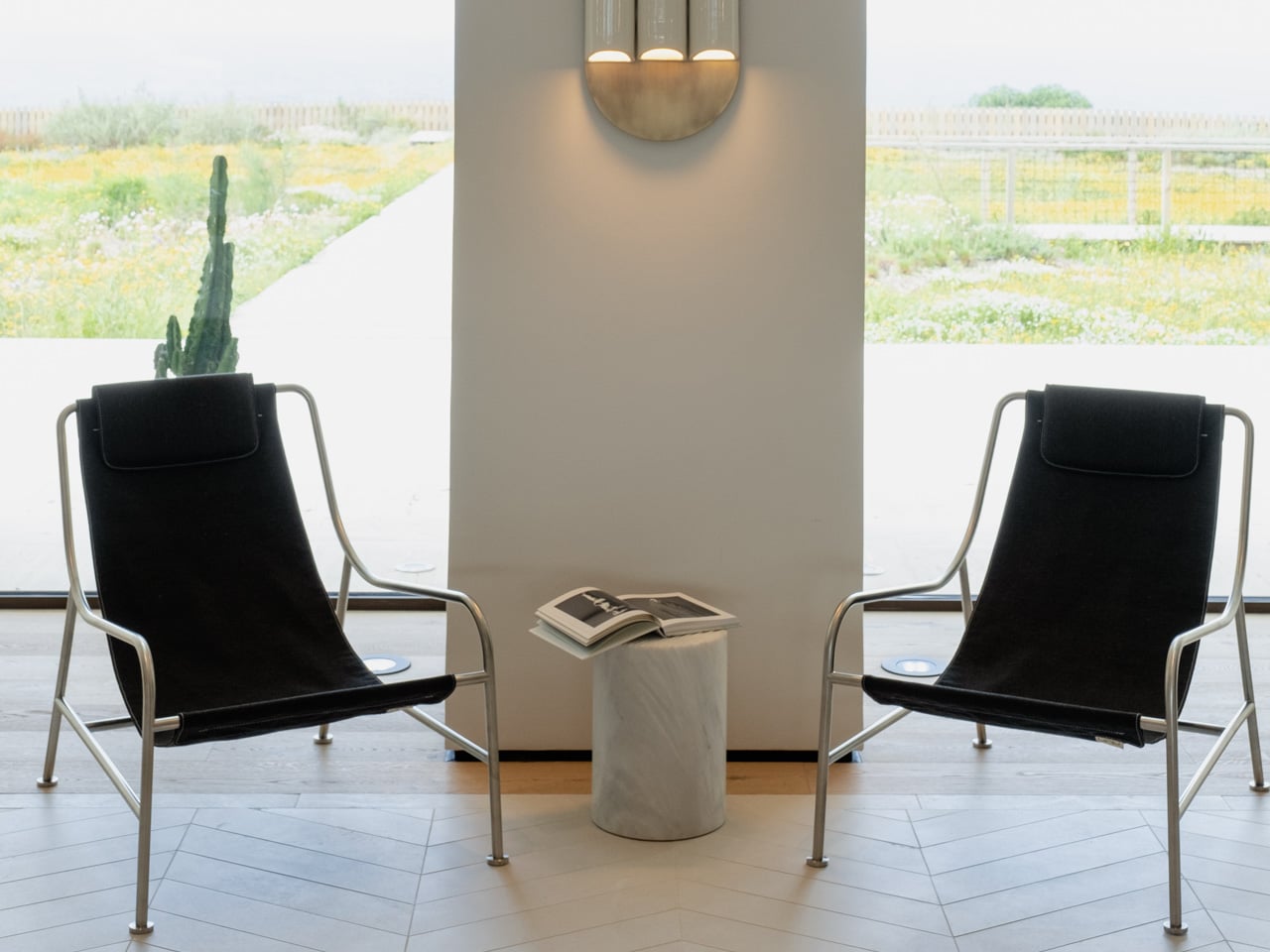
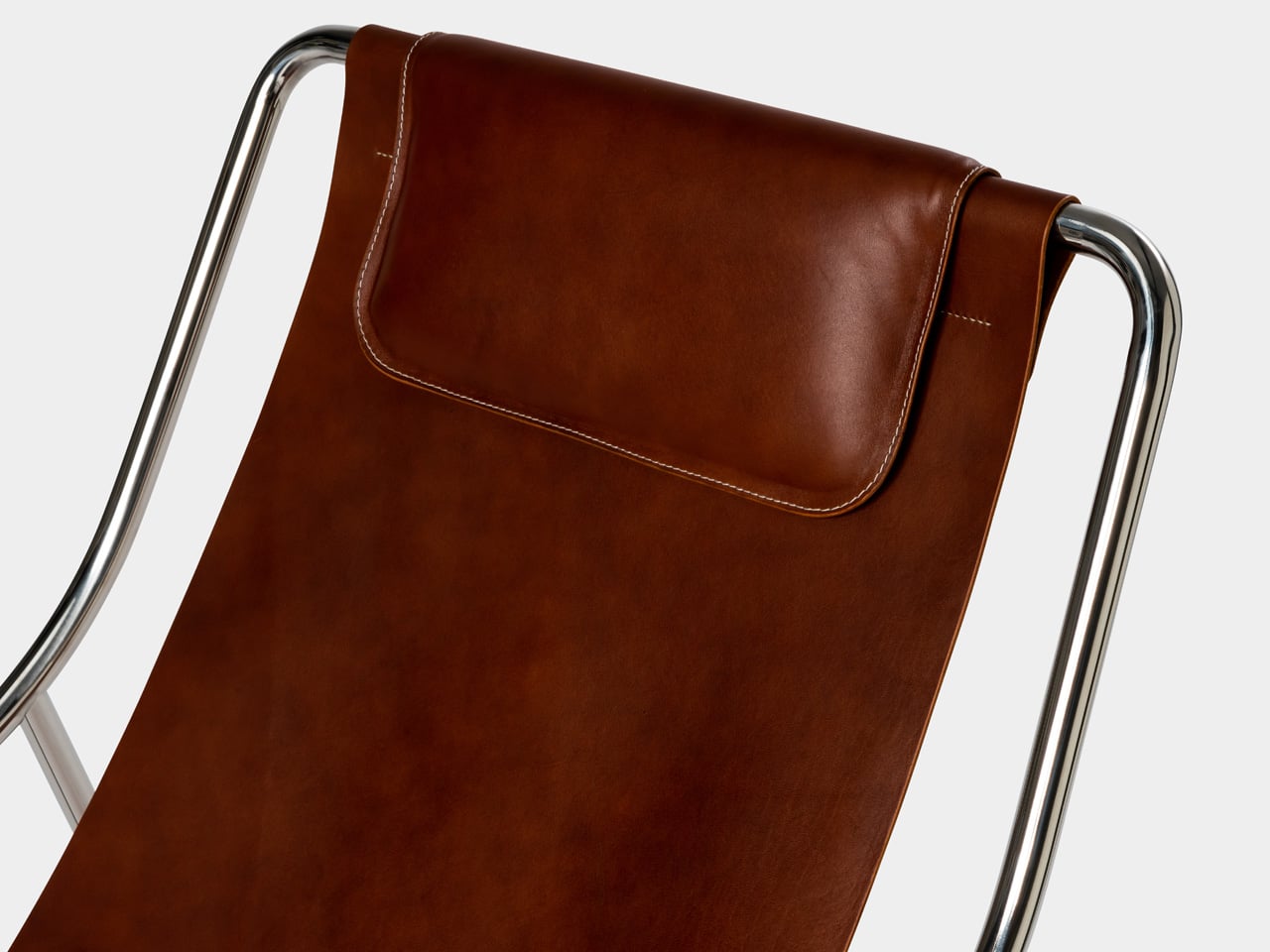
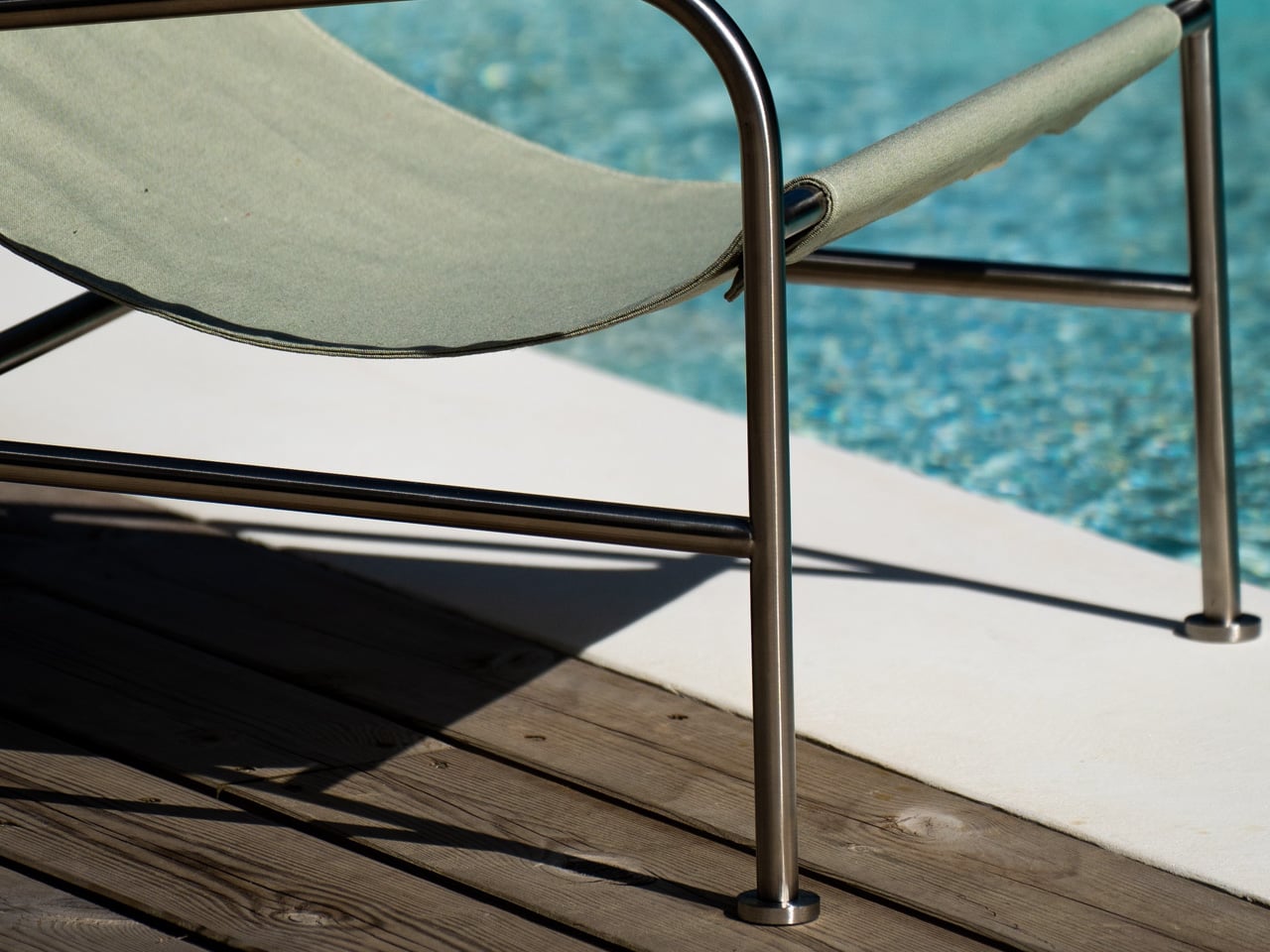
The best furniture doesn’t freeze time. It moves with you. That’s the quiet logic behind the LISBOA Lounge Chair, designed by Keiji Takeuchi for MOR Design. The chair is defined by a kind of lightness, both visual and physical. An open stainless-steel frame, a suspended sling seat, a silhouette that sits low and easy in a room without demanding attention. What’s even more interesting is the system that takes that lightness further: two interchangeable seats, one in textile, one in leather, that can be swapped depending on where you are, how you’re living, and what the space asks for.

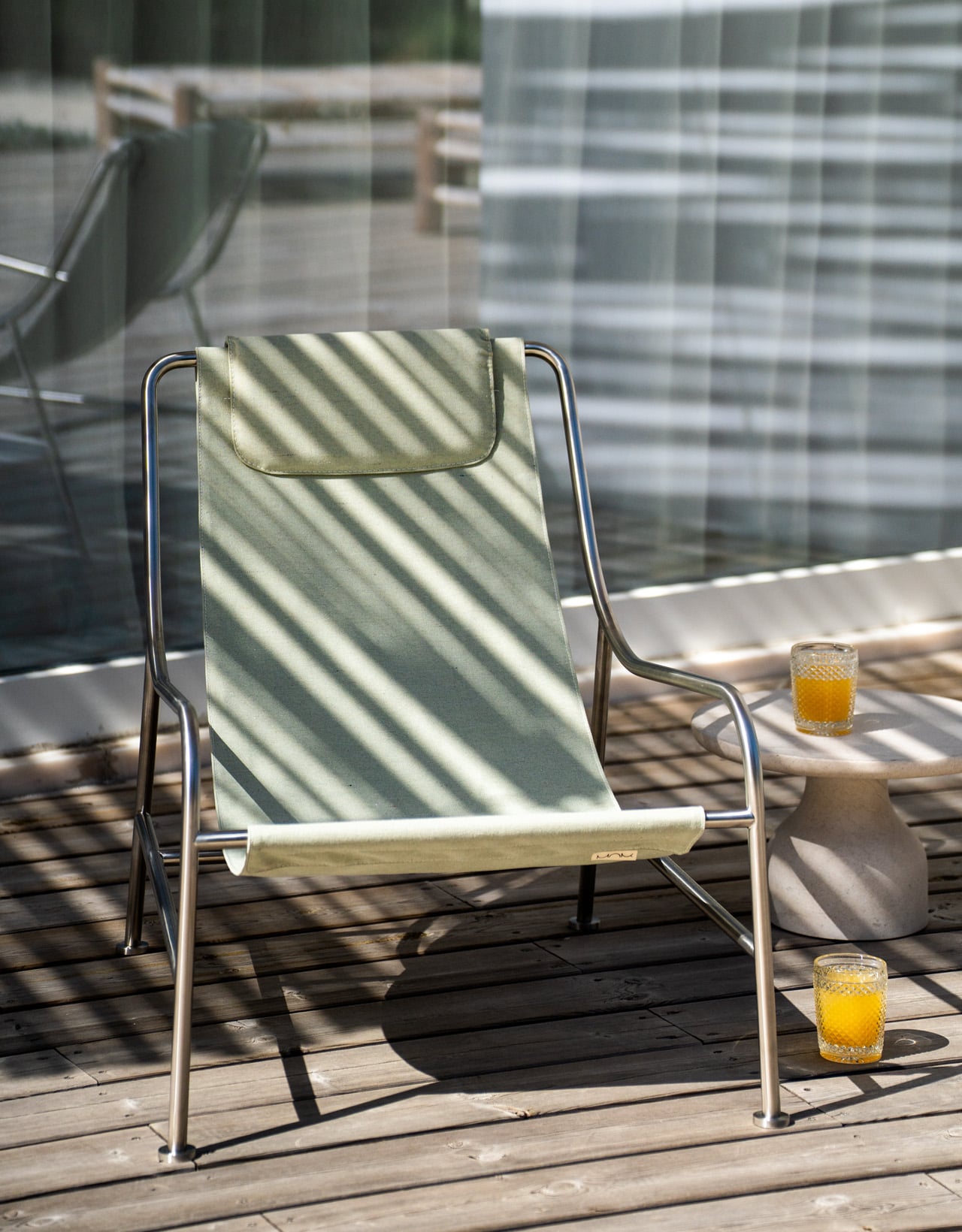
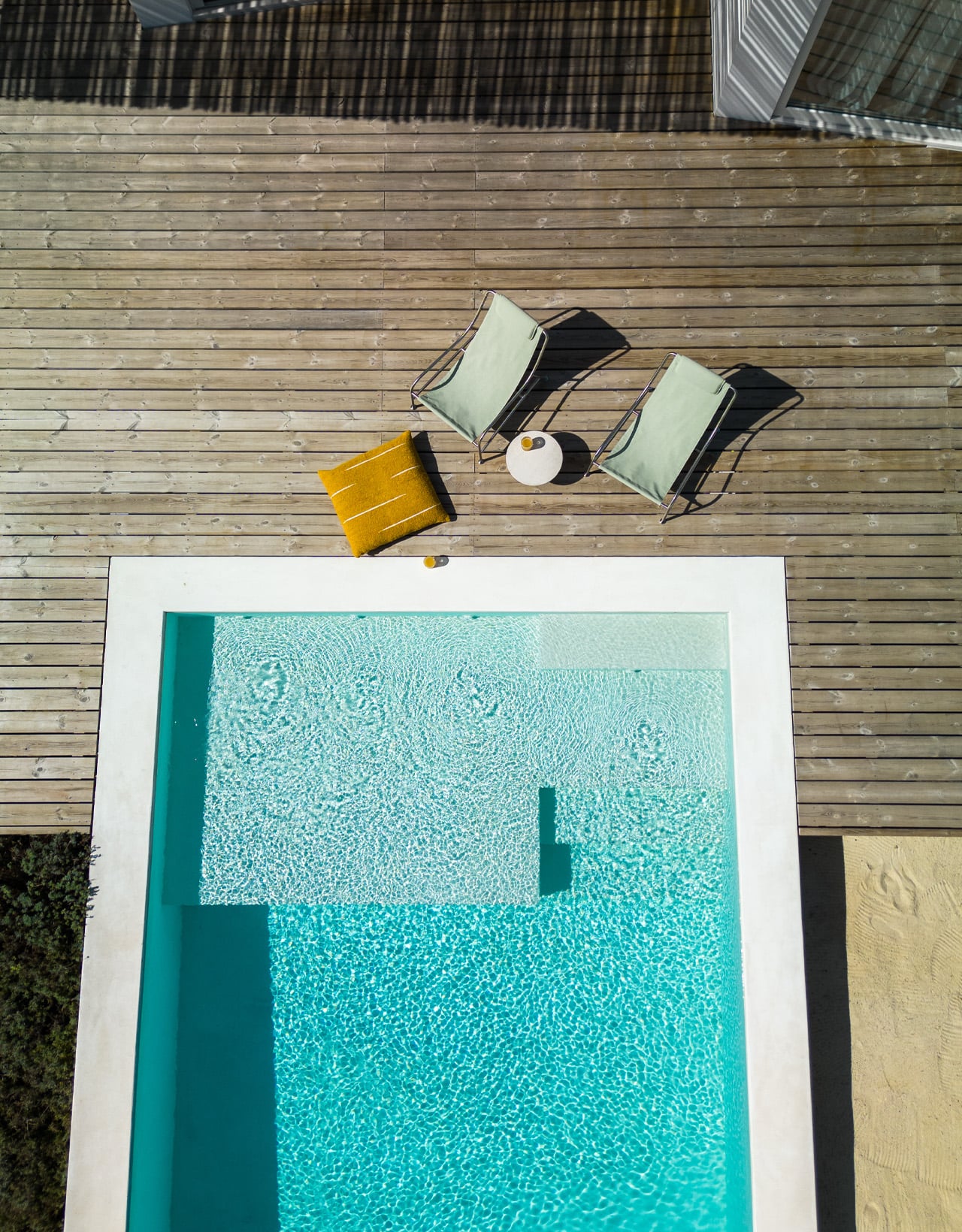
It sounds simple. That’s because it is. The seat detaches cleanly from the frame, which is available in brushed or polished stainless steel. Swap the leather for textile, and the chair moves from a living room to a terrace without missing a beat. The frame stays the same, as does the identity. What changes is the layer of the chair closest to you.

Designer: Keiji Takeuchi for MOR Design

This matters more than it might first appear. Most furniture is bought for a fixed version of your life. LISBOA accommodates the version that’s still becoming. Keiji Takeuchi conceived the chair during the 2020 lockdown, thinking about how people might bring the ease of outdoor living into their everyday interiors. He understood that the boundary between inside and outside had already started to blur. The interchangeable seat system is a direct extension of that thinking. It doesn’t ask you to replace the chair when your context changes. It asks you to change the seat.

For a brand like MOR Design, founded in Portugal with a commitment to material integrity and longevity, this is the logical next step. Beautiful objects should last. But lasting doesn’t mean staying the same. The leather seat reads warm and deliberate in a residential interior. The textile option, weather-resistant and easy to clean, handles a poolside or garden setting just as naturally. Both sit within the same architectural frame, which is what allows the chair to belong in hospitality and contract spaces as readily as it does at home.

LISBOA was shown at Maison&Objet 2026, where the conversation around adaptable, considered consumption is hard to avoid. The chair arrives at the right moment. Not as a statement about sustainability or modularity, but as something quieter: a piece of furniture that knows your life will change, and is already ready for it. It is, as MOR Design puts it, your chair, and your moment.

The post This Lounge Chair Was Designed to Never Be Replaced — Indoors or Out first appeared on Yanko Design.
This $349 NASA Mars Perseverance Rover Kit Lets You Build an AI-Powered Mars Robot at Home

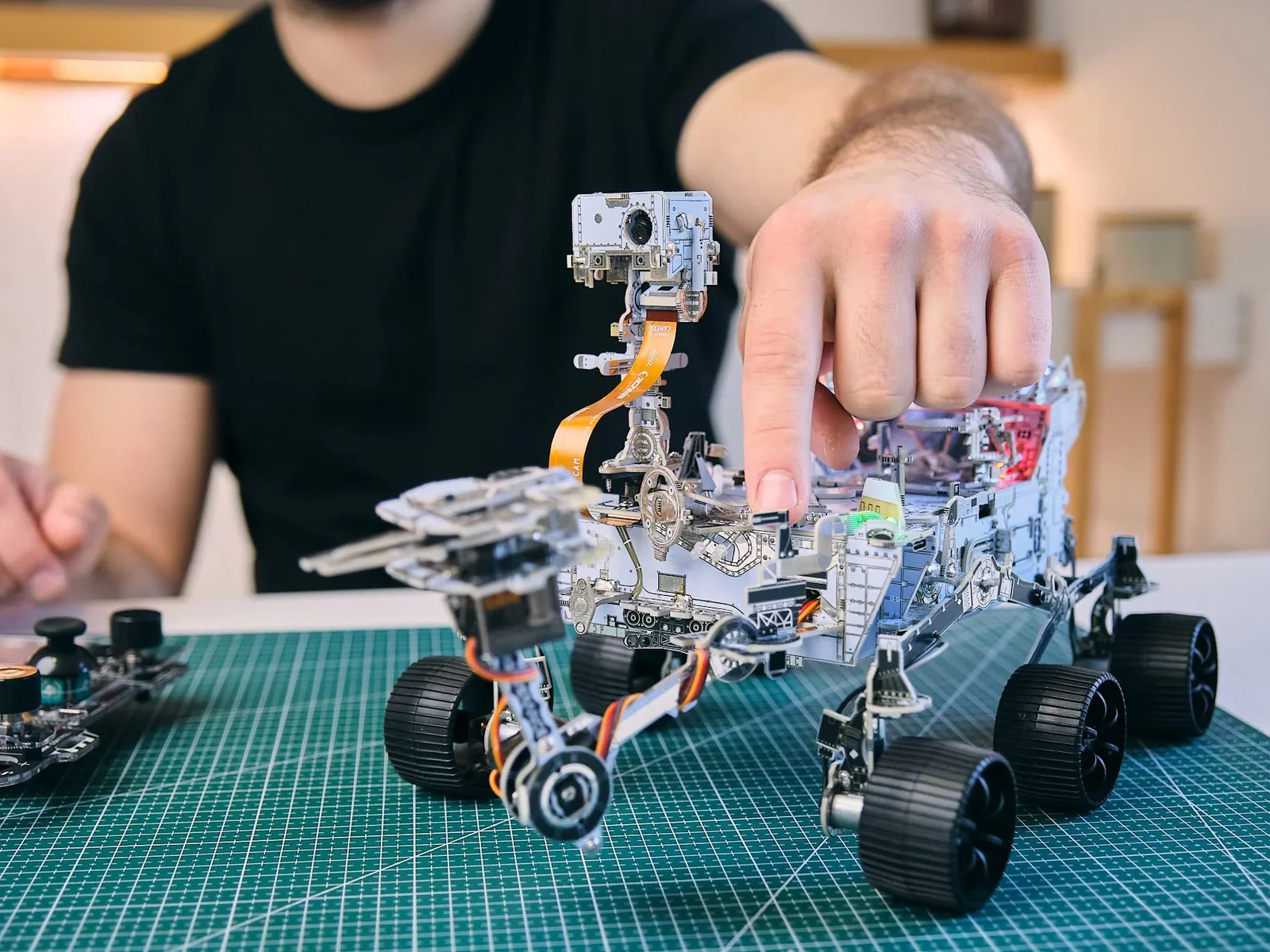
NASA spent $2.7 billion building Perseverance and getting it to Mars. CircuitMess will sell you a buildable, functional, AI-capable replica for $309, and you get to solder every joint yourself. The kit launched in early 2025 and has sold 4,000 units across five restocks, each batch clearing out in approximately two hours. The math on that kind of sell-through rate points to something working at a level most STEM products never reach. The engineering decisions behind the kit explain why people keep showing up for the restocks instead of waiting for broader availability.

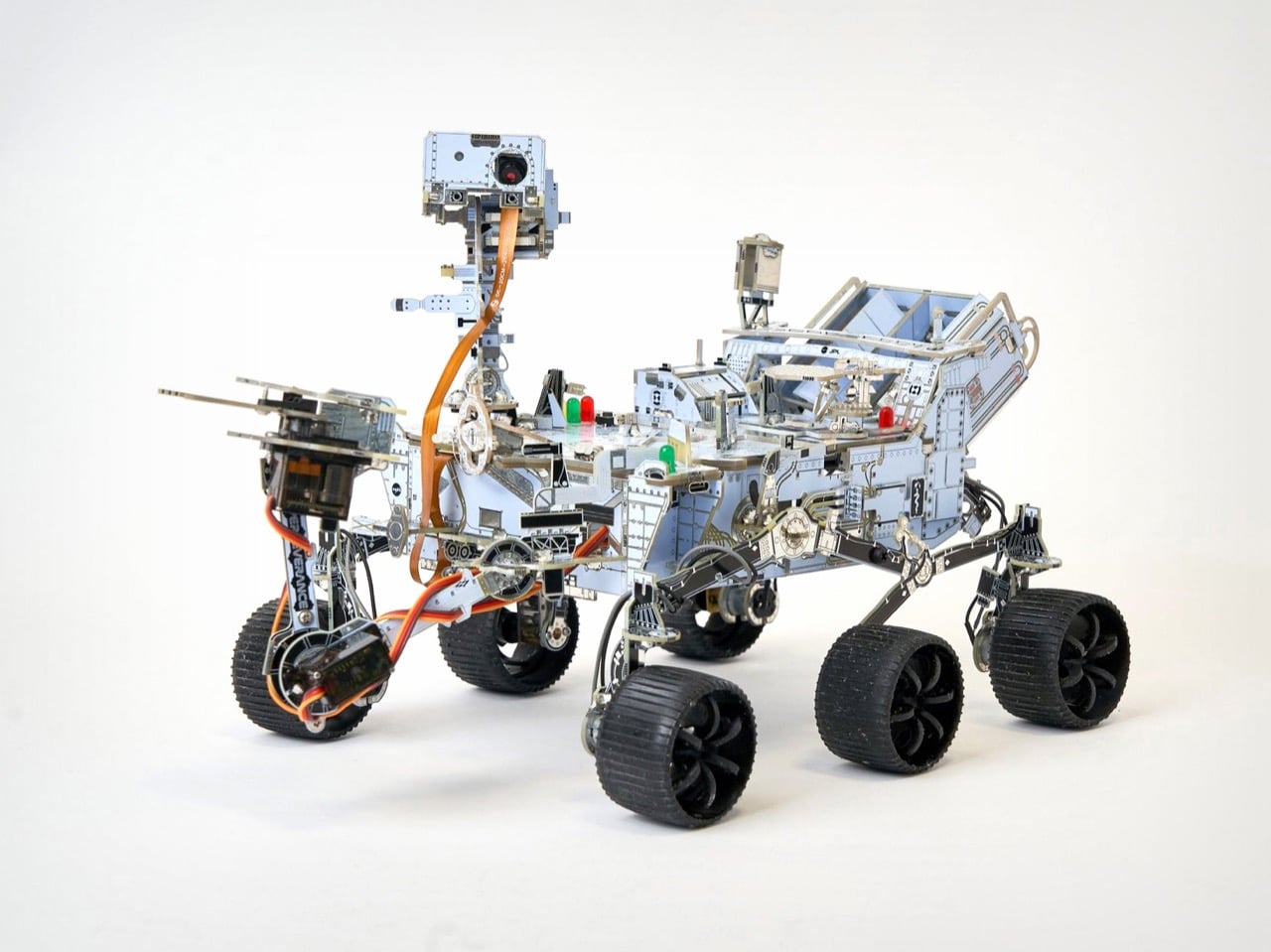
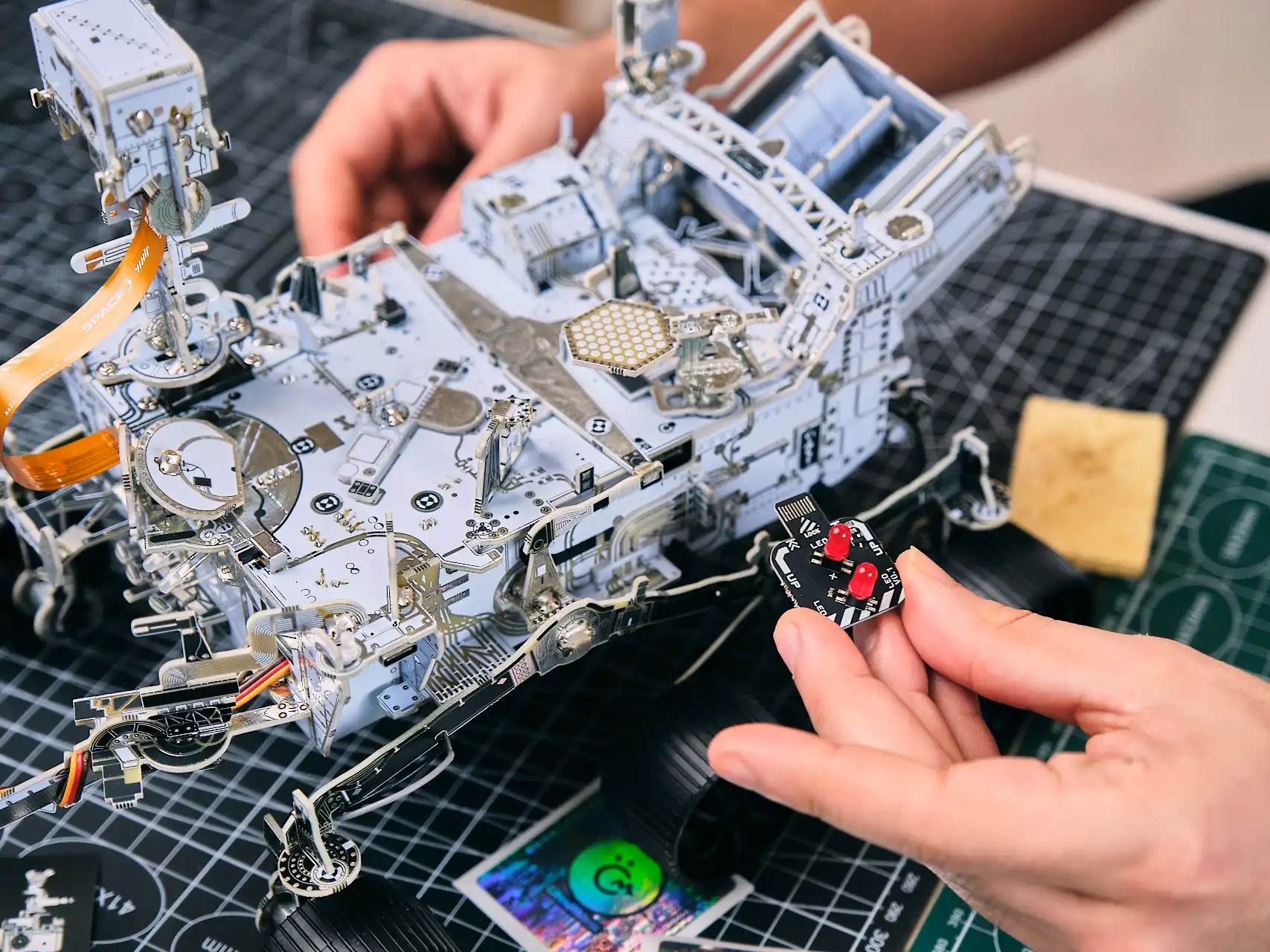
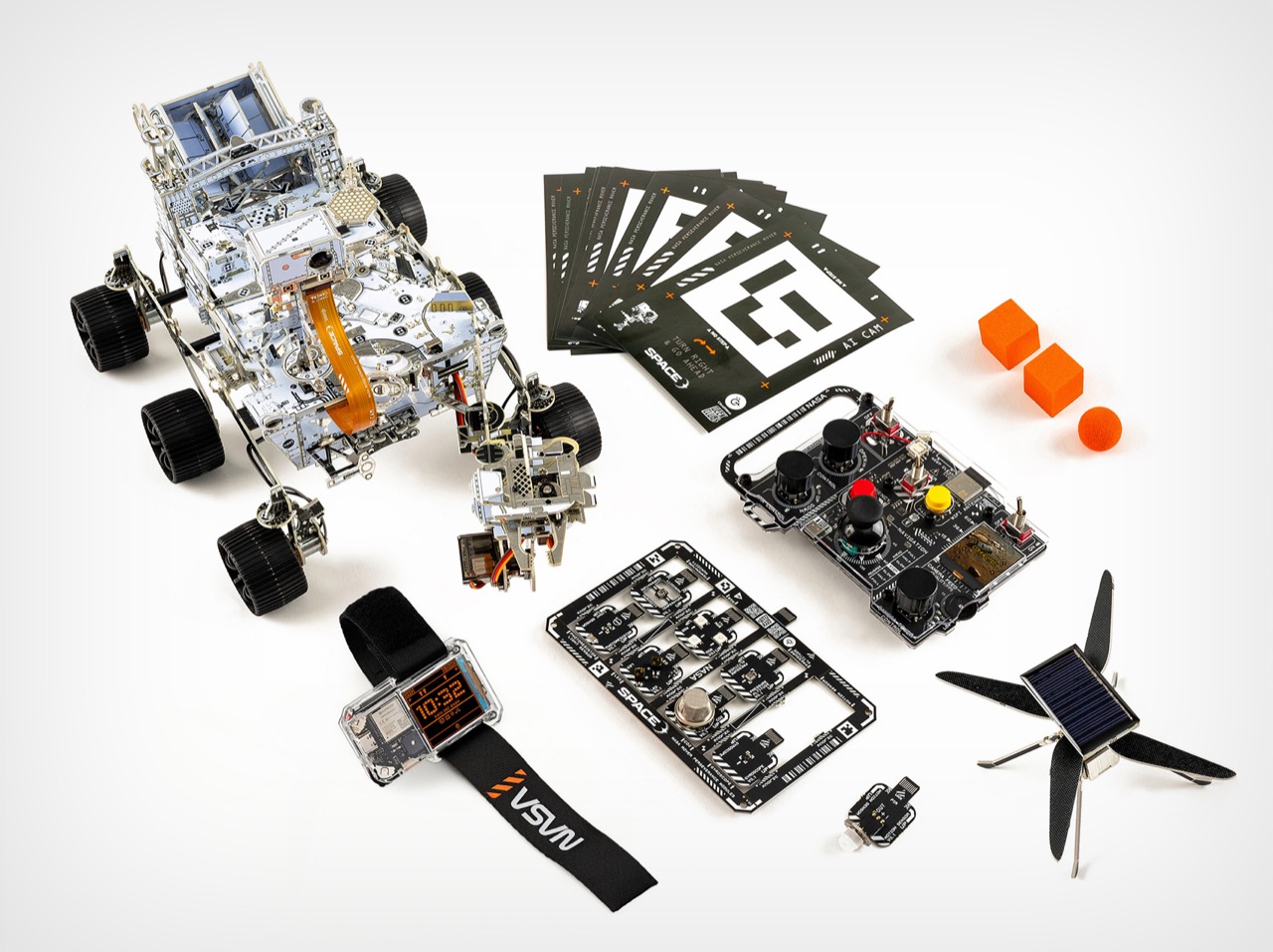
CircuitMess and GeeekClub secured NASA approval for the branding and matched the mechanical design to the real rover’s geometry, down to the rocker-bogie suspension that allows independent wheel movement across uneven terrain. The hardware includes six DC motors for propulsion, two servo motors for the arm and camera, a dual-core ESP32 microcontroller, and an AI-capable camera module with object recognition. Assembly involves soldering 300-plus components over roughly 20 hours, with all tools provided in the kit. Control options include a custom RF controller you build yourself, WiFi remote access, and autonomous navigation modes powered by the onboard AI. The firmware lives on GitHub as an open-source repository, and the rover accepts Python, C++, and Arduino IDE programming for anyone who wants to modify its behavior or add new capabilities through the modular expansion ports.

Designer: CircuitMess

The process is guided but not restrictive, and after completing the base rover, users can reprogram it in Python or C++, experiment with CircuitBlocks, integrate additional modules, or alter its behavior entirely. That distinction matters because most STEM kits treat the build as a finish line. You follow the instructions, snap the final piece into place, drive it around for an afternoon, and then it becomes shelf decoration. The kit functions as a flexible platform rather than a one-time build. The modular architecture accepts additional sensor modules, letting builders upgrade and enhance their rover’s capabilities over time. The included fiducial marker cards give the AI camera immediate objects to recognize and track, so the computer vision feature has a real use case right out of the box. The orange foam cubes and balls visible in the kit photography serve as sample collection targets for the robotic arm, turning the rover into a functional system with tasks to perform, not a static display model.

While most STEM products bury their appeal in technical jargon and uninspired concepts, CircuitMess tapped into current trends to entice a broader audience, with strategic direction that aligned with Mars rover making real discoveries millions of miles away. Perseverance landed in Jezero Crater in February 2021, and for a sustained period afterward, space exploration felt culturally immediate in a way it hadn’t since the early shuttle era. People were watching a robot drive around Mars in near real-time, following sample collection updates, tracking the Ingenuity helicopter flights. CircuitMess launched this kit while that public interest was still live, and the timing was surgical. The kit didn’t sell because people wanted another electronics project. It sold because people wanted to understand how the thing they were watching on the news actually worked, and CircuitMess offered a credible path to that understanding.

The NASA Mars Perseverance Rover kit is available at circuitmess.com for $349. Since launching in early 2025, the kit has sold 4,000 units across five restocks, with each batch selling out in approximately 2 hours. If you’re the kind of person who followed the Perseverance mission beyond the landing headlines, who knows what a rocker-bogie suspension does or why a dual-core processor matters for onboard AI, this is one of the few educational kits that respects that level of interest.

The post This $349 NASA Mars Perseverance Rover Kit Lets You Build an AI-Powered Mars Robot at Home first appeared on Yanko Design.
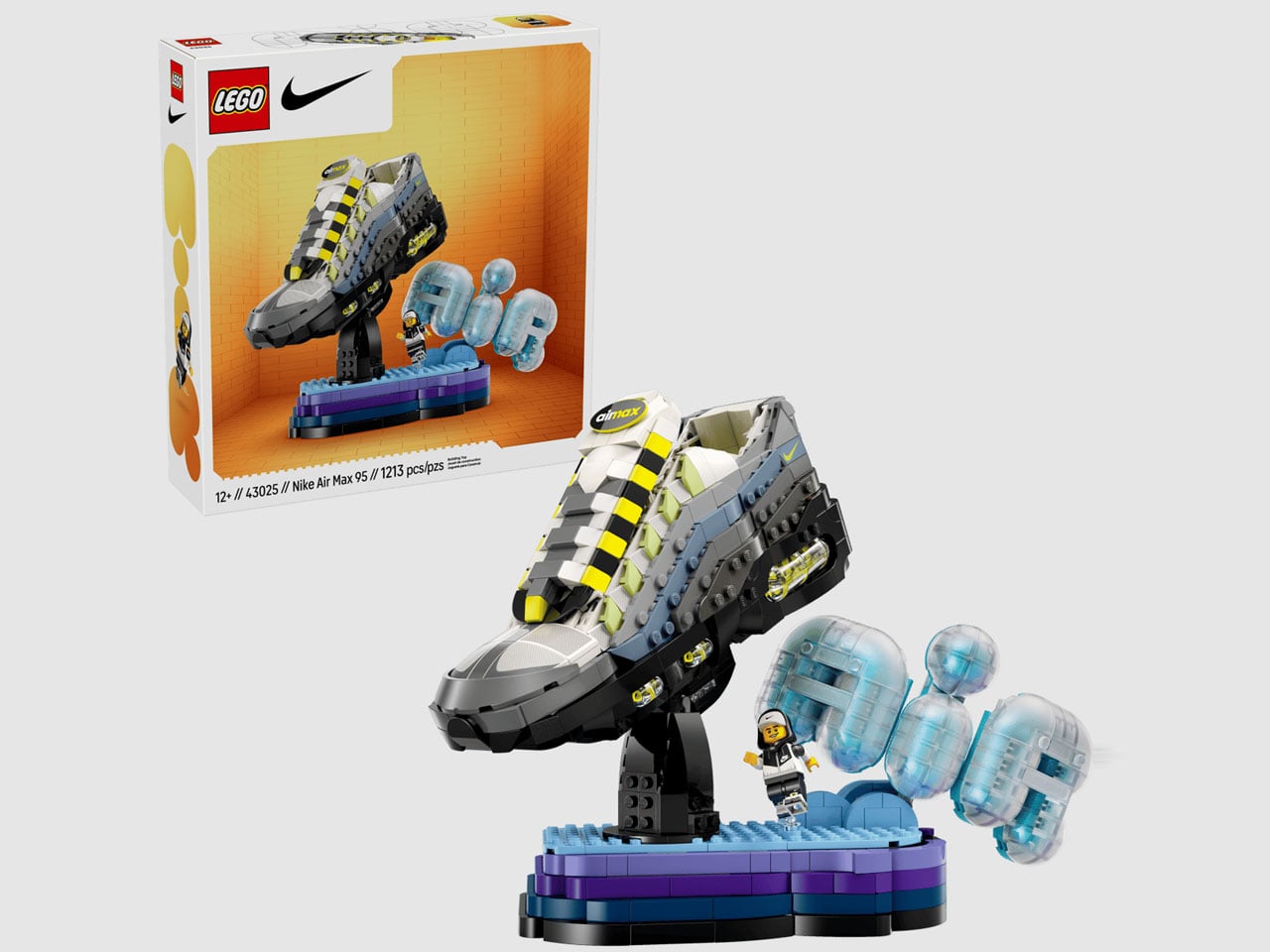
Nike’s iconic Air Max 95 is now a 1,213-piece LEGO set complete with hidden storage

There’s some magic about the LEGO-Nike that makes it so special. Just in time for the holiday season and to celebrate the 30th anniversary of the Air Max 95, Nike struck a partnership with LEGO for the dope LEGO-themed Air Max 95 “Neon” sneaker. Sometime mid-year in 2025, the duo turned eyeballs with the ⁠Nike Dunk x LEGO Set and then later dropped another couple of LEGO x Nike sets for collectors.

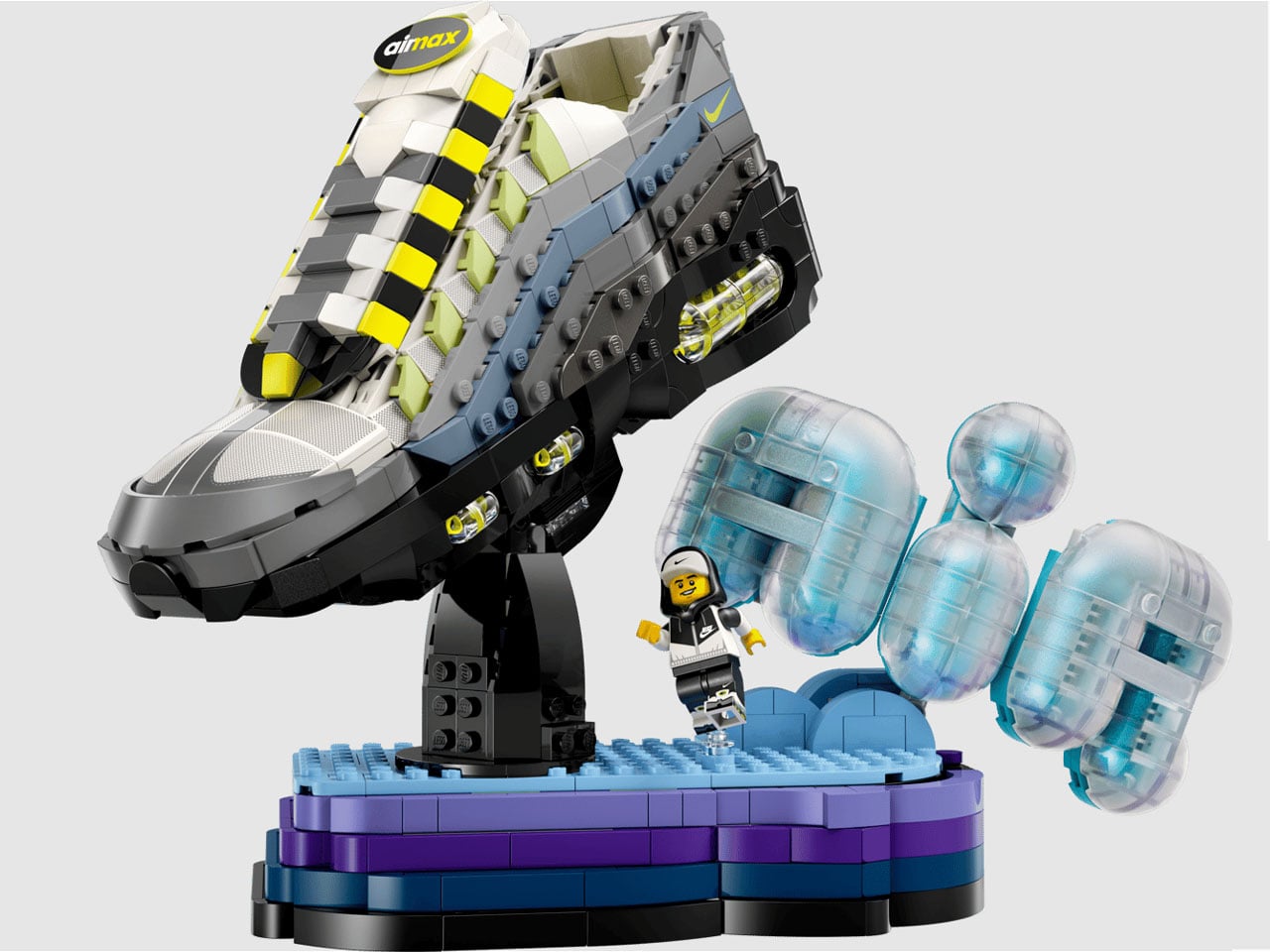
Now, the two giants have struck another partnership to create a detailed Nike Air Max 95 x LEGO set. The original Air Max 95, designed by Sergio Lozano in 1995, famously drew inspiration from the human anatomy. The layered upper mirrors muscle fibers, the lace loops resemble ribs, and the midsole represents the spine. The silhouette remains highly sought after among sneaker collectors, and recreating a LEGO version of the shoe makes complete sense.

Designer: LEGO x Nike

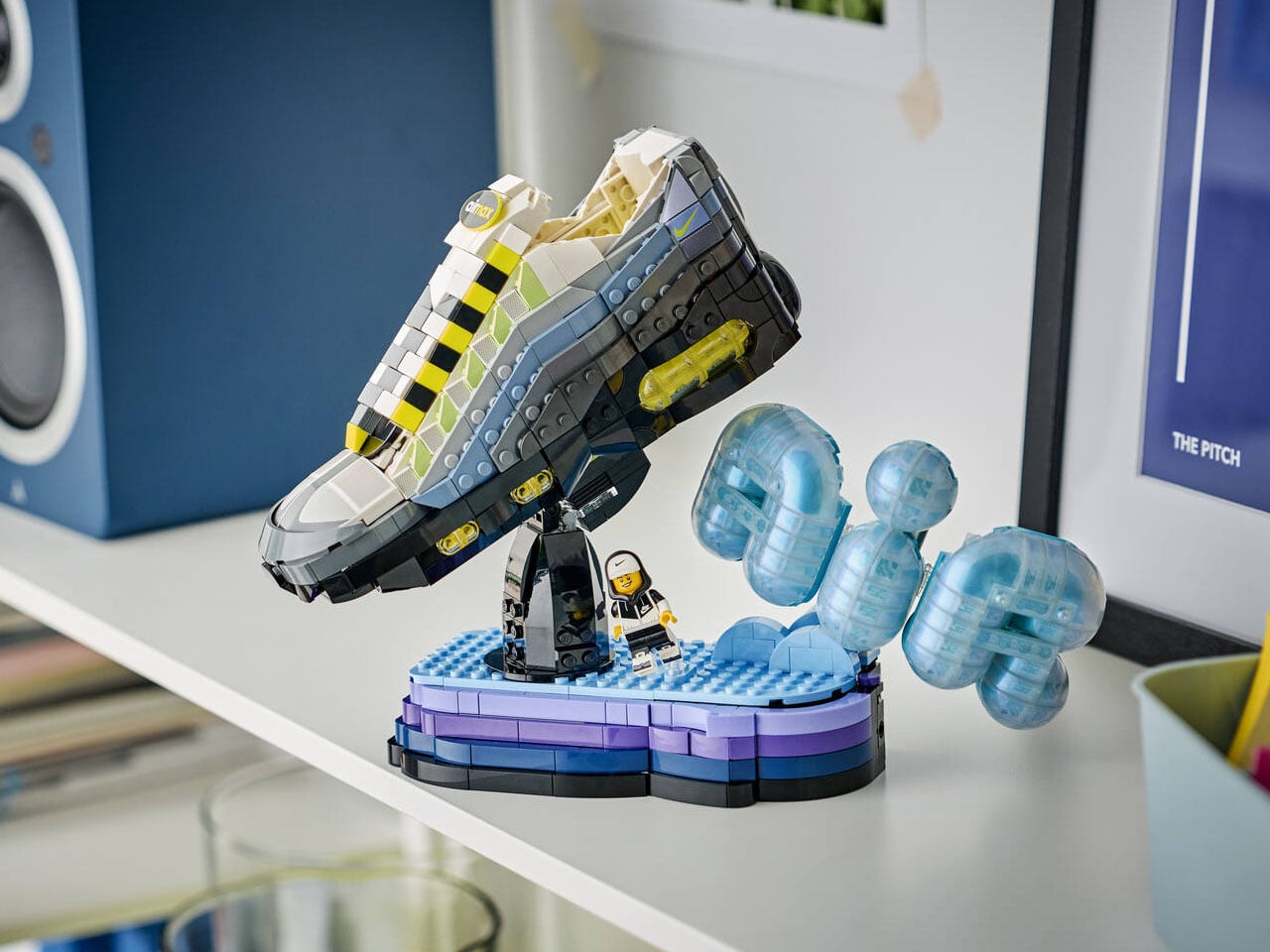
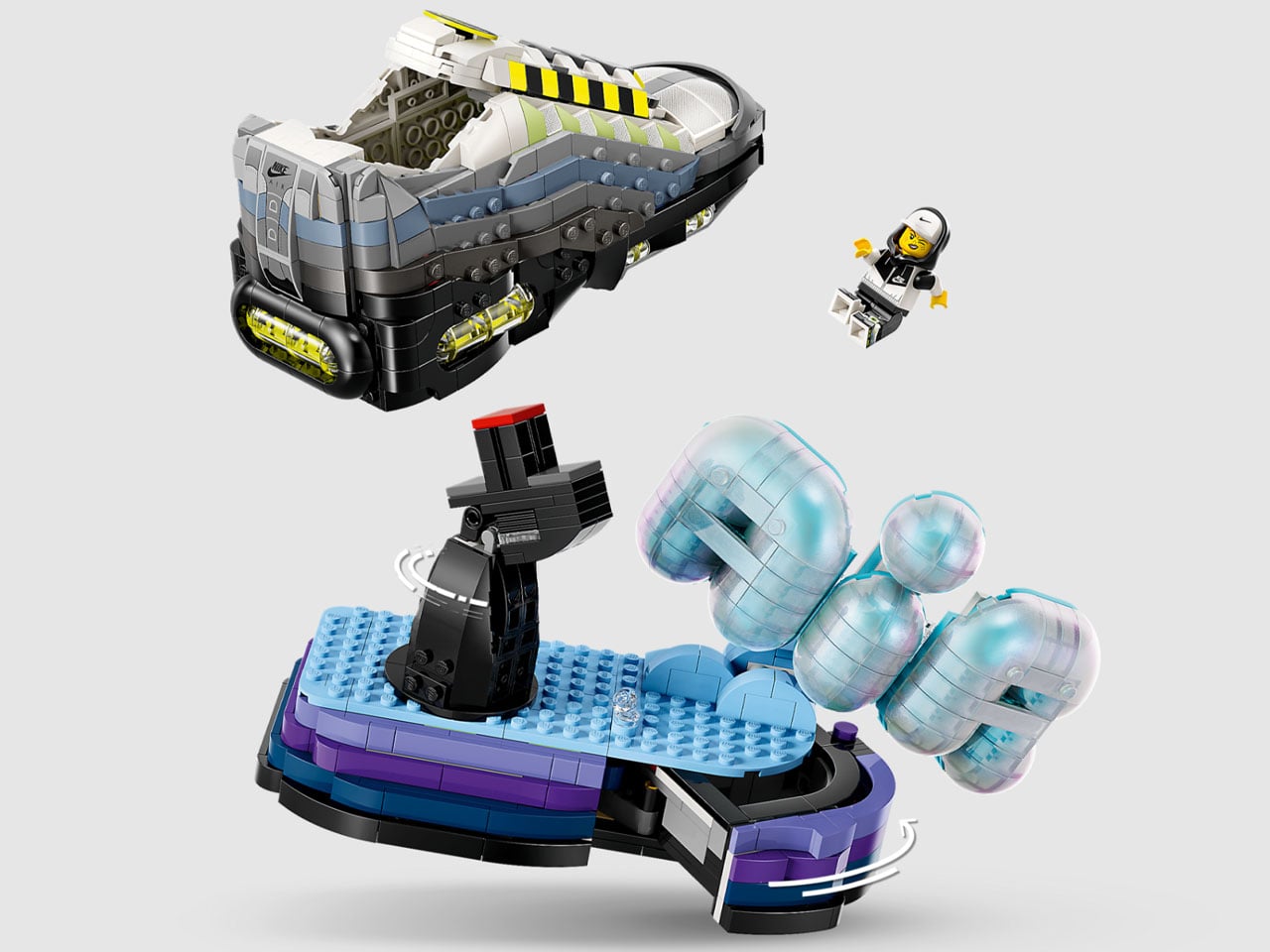
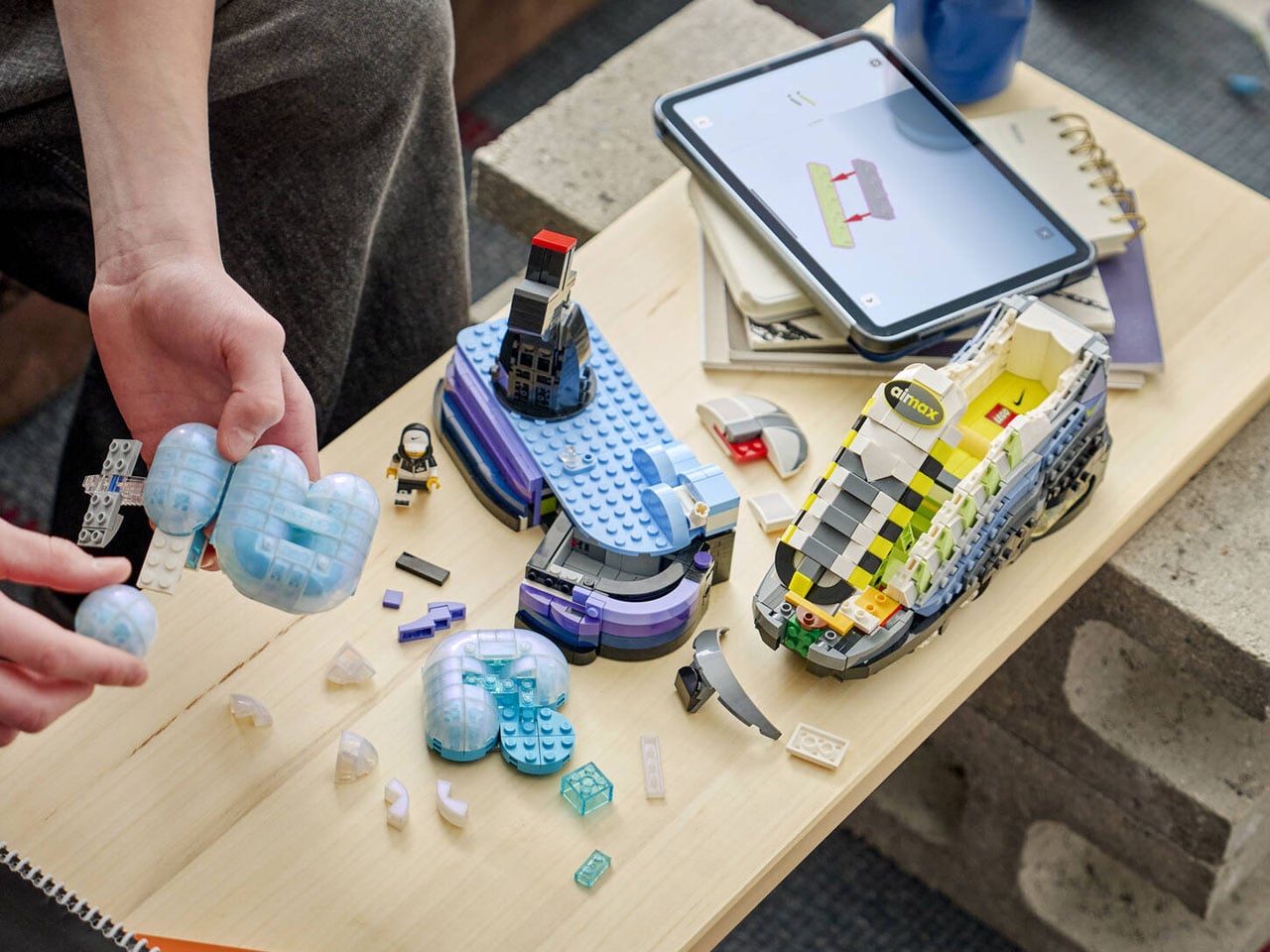
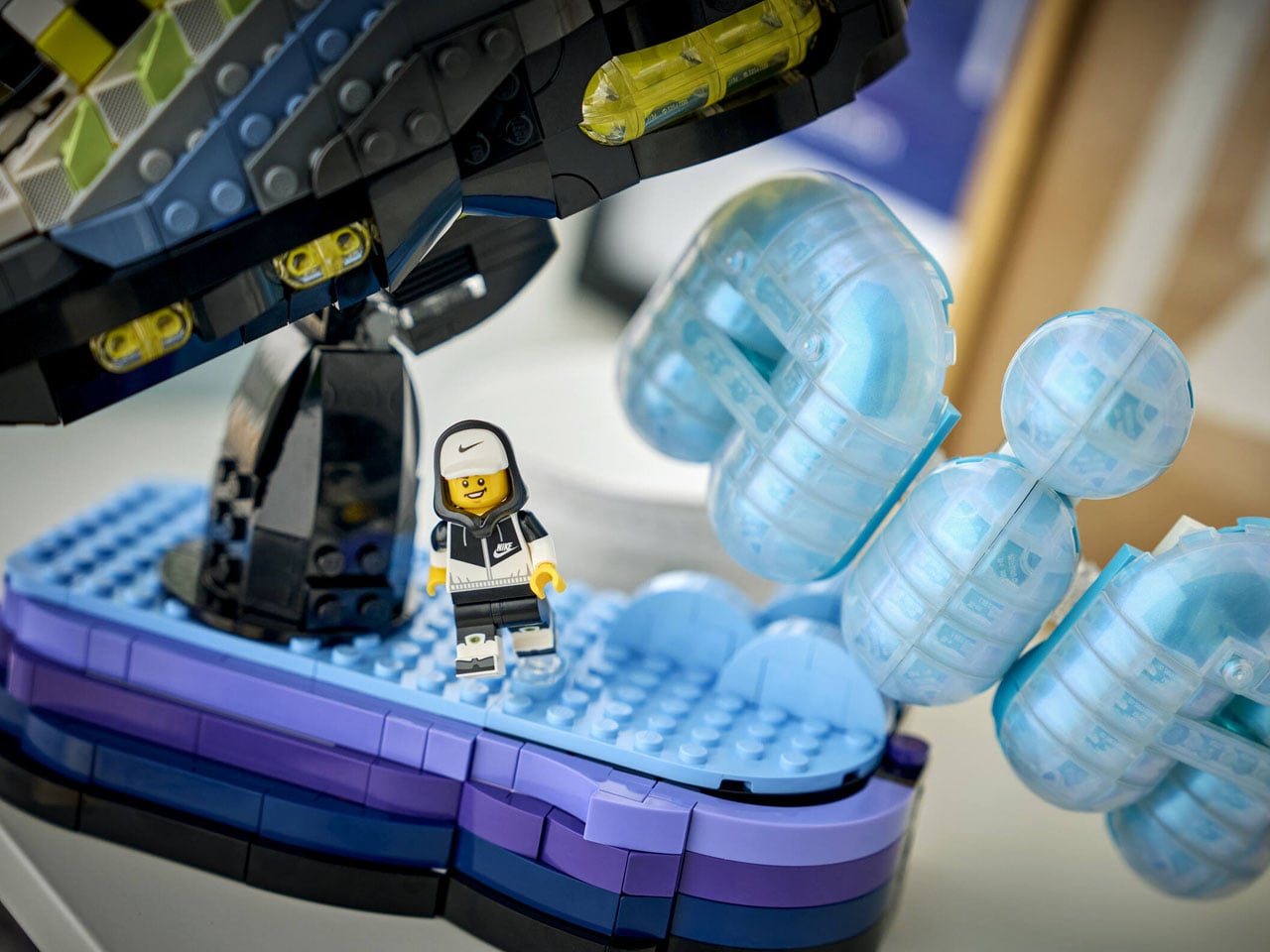
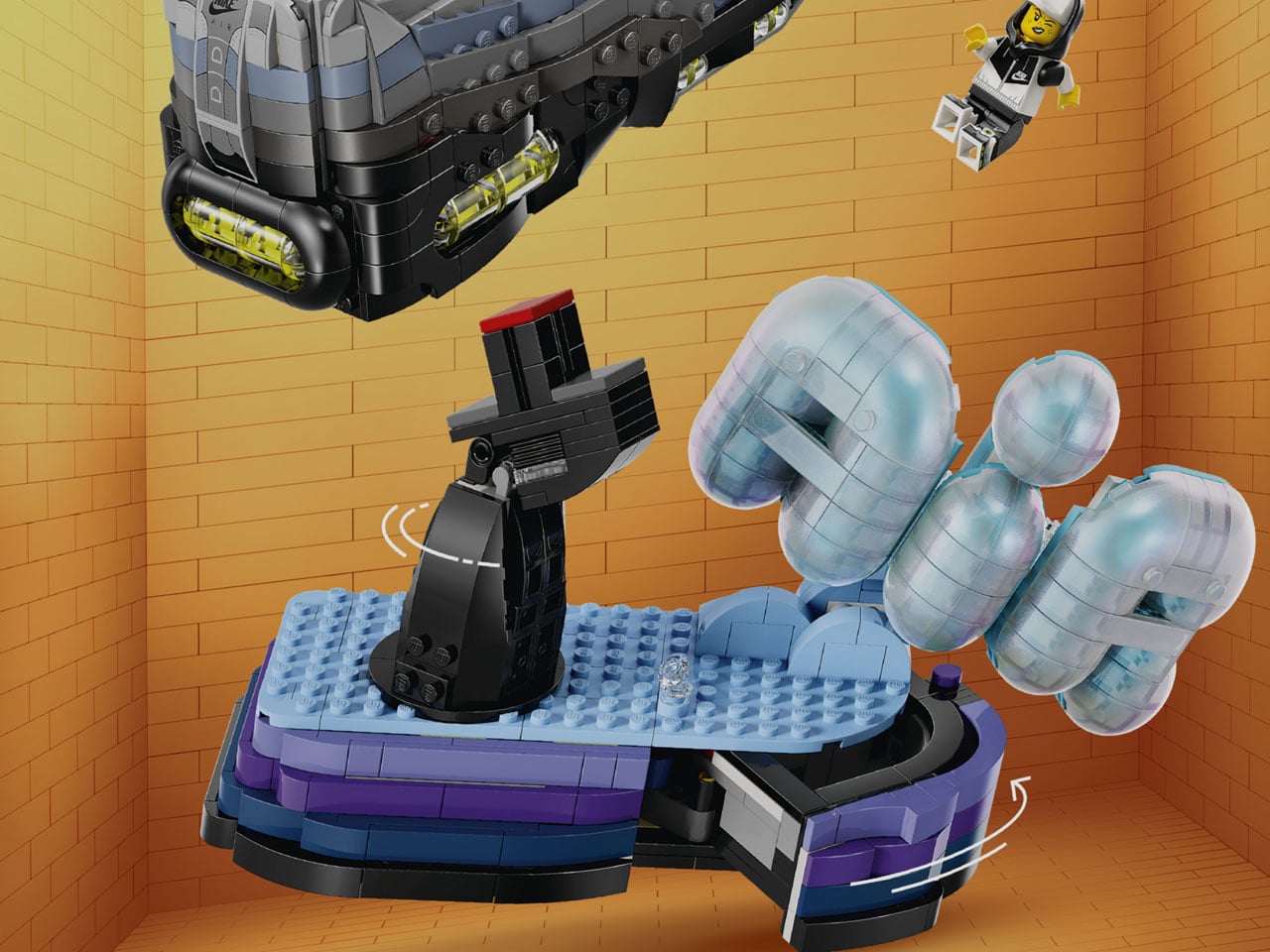
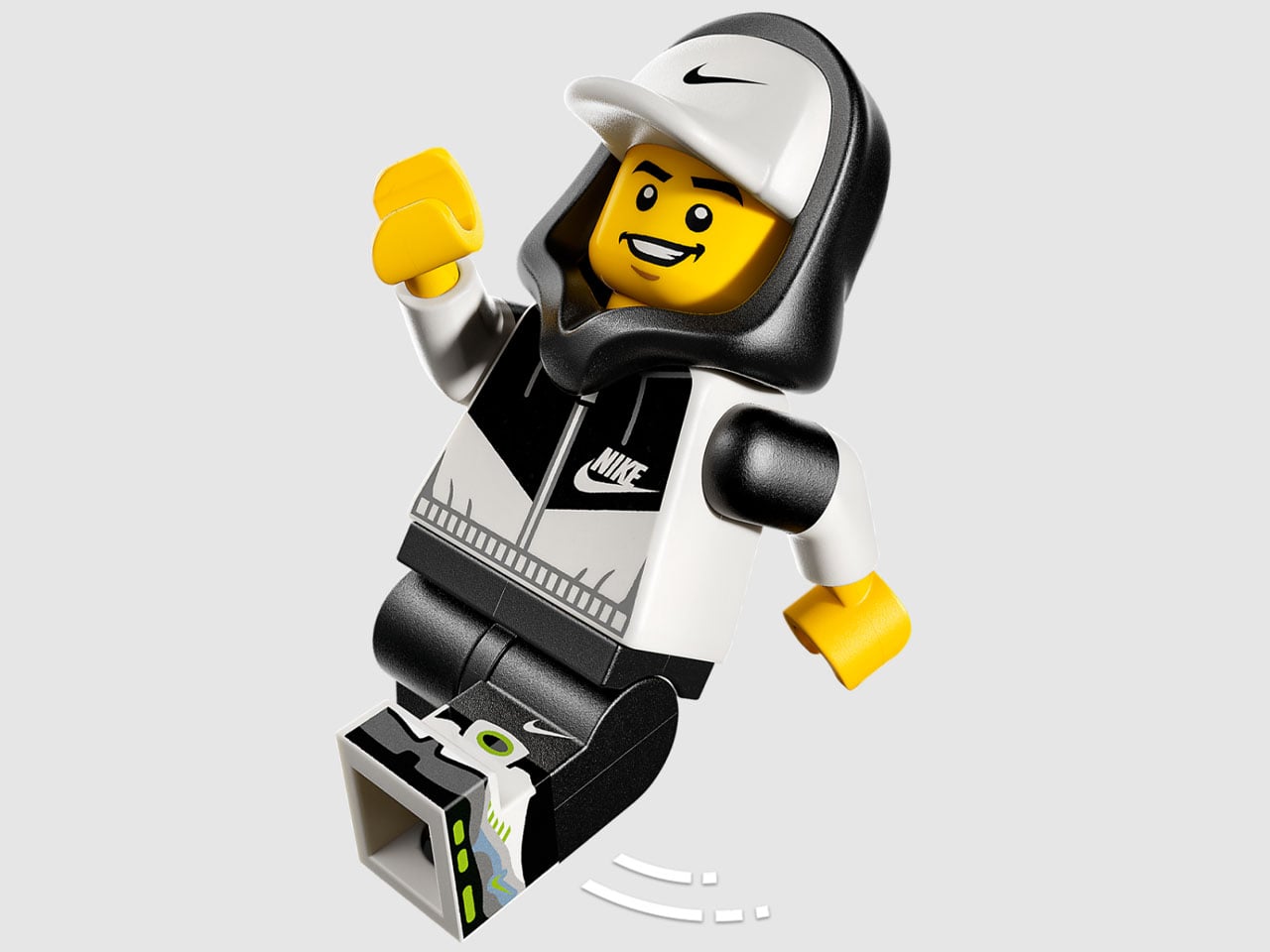
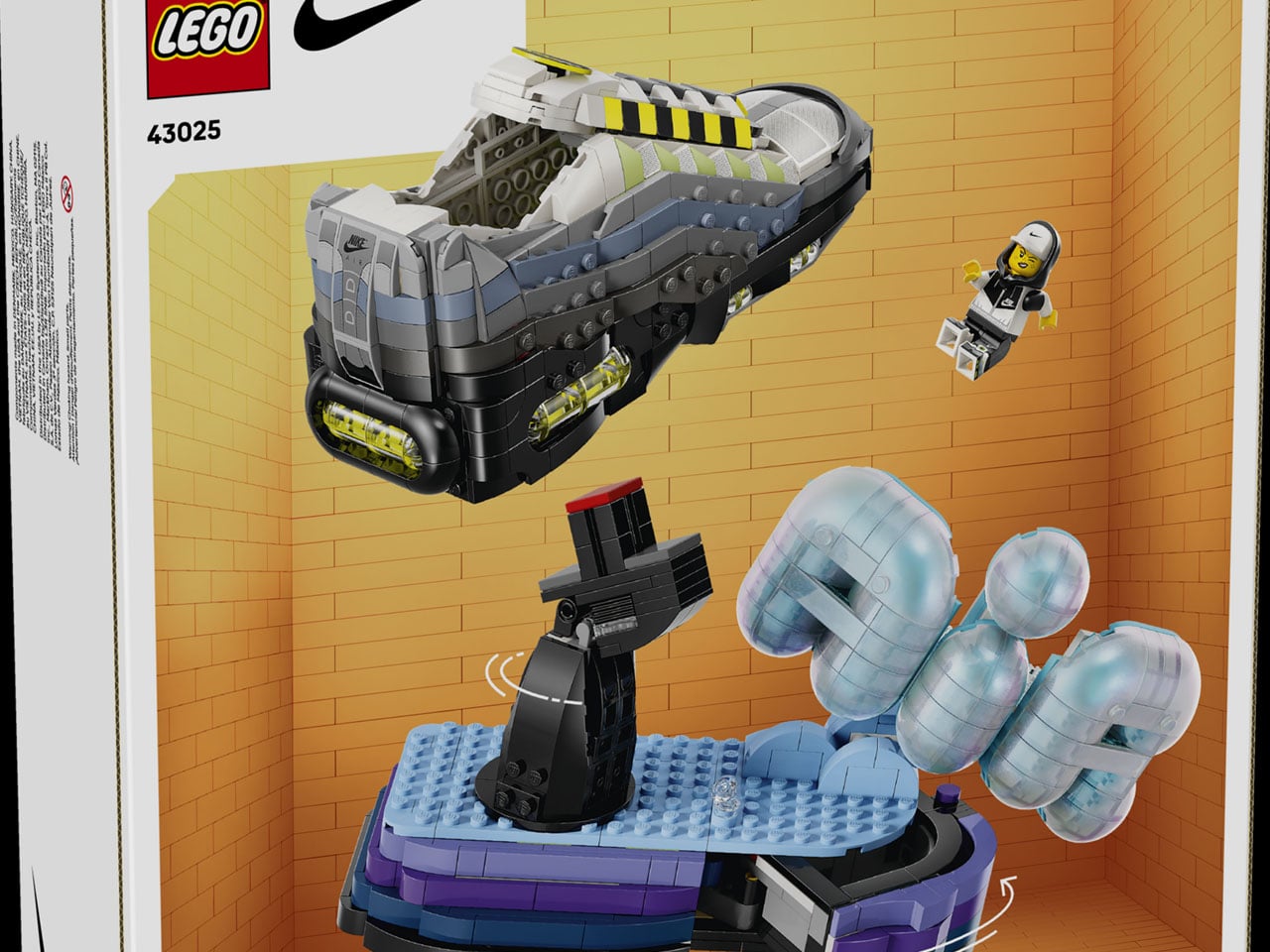
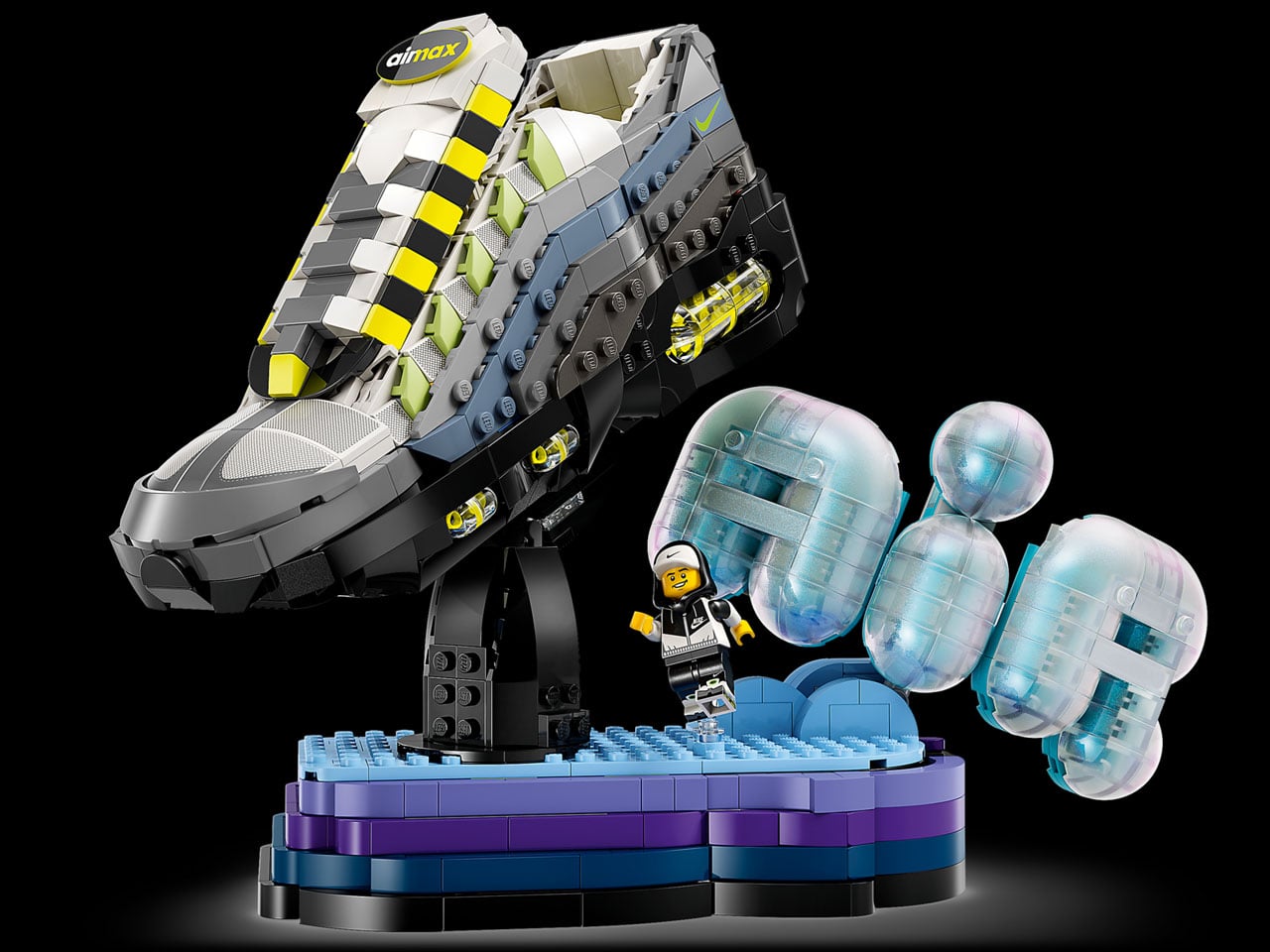
Comprising 1,213 pieces, the LEGO set complements the LEGO-themed Air Max 95 sneaker we talked about earlier. The signature grey gradient, Air bubbles, and the contrasting neon yellow and green inserts on the sides come to life as the LEGO set is pieced together. The brick-built model faithfully recreates the sculpted midsole and the signature wavy upper that made the original sneaker instantly recognizable. LEGO also includes a Nike-branded minifigure to reinforce the playful crossover between sneaker culture and brick-building. Once you put it together, the sneaker measures roughly 9 x 12 x 7 inches and can be displayed on the rotating stand or simply put on the prime desk spot to celebrate the brand’s success with high-top and low-top Dunk sneakers. The build also features a brick-built ‘AIR’ logo bubble, and the rotating display stand mimics the kind of pedestal sneaker collectors use to showcase prized pairs.

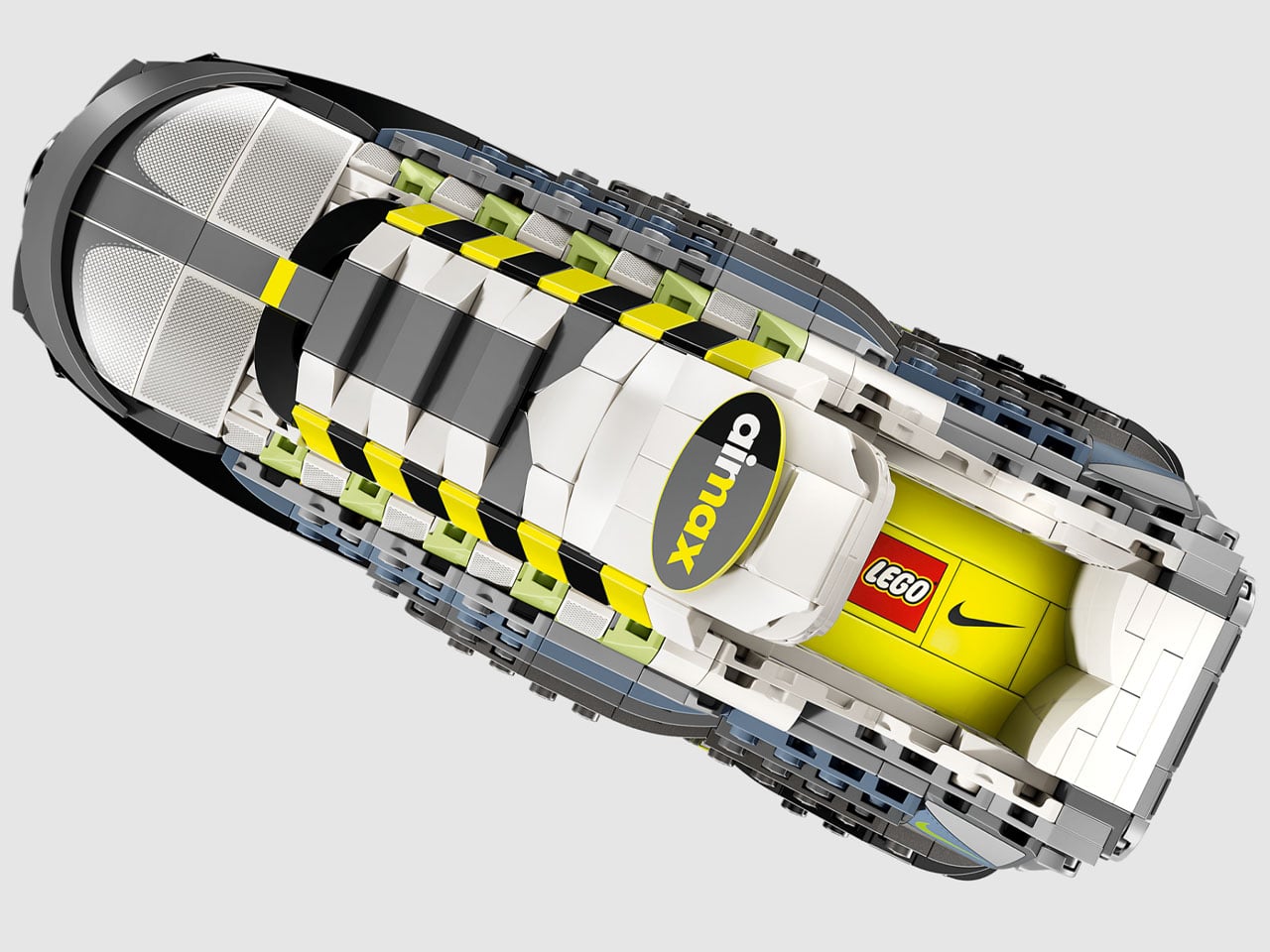
The co-branding on the set is apparent on the insole, and the airmax logo on the lip. LEGO has gone one step further with the minifigure being customizable, and the extra set of laces. The wide purple base mentioned earlier has hidden compartments to store the set of laces or an extra minifigure. Turn the shoe and the compartment is visible, which is a unique addition to this already intricate LEGO set. The Nike Air Max 95 LEGO set is available right away for $100 from their official website.

This collaborative effort ultimately celebrates the Air Max 95 not just as footwear but as a cultural artifact that continues to inspire new forms of creative expression. By translating the sneaker’s layered design language into LEGO bricks, the set offers collectors and sneaker enthusiasts a fresh way to engage with one of Nike’s most influential silhouettes.

The post Nike’s iconic Air Max 95 is now a 1,213-piece LEGO set complete with hidden storage first appeared on Yanko Design.
Xiaomi Pad 8 Review: The $310 Tablet That Feels More Expensive

PROS:


  • Bright and smooth 11.2-inch display

  • Solid accessory ecosystem

  • Long battery life

CONS:


  • No microSD card slot

  • No official IP rating

RATINGS:

AESTHETICS
ERGONOMICS
PERFORMANCE
SUSTAINABILITY / REPAIRABILITY
VALUE FOR MONEY

EDITOR'S QUOTE:

Xiaomi Pad 8 gives you a premium tablet experience without the premium price tag. If entertainment and everyday use are your priorities, this is one of the smartest buys in the mid-range.

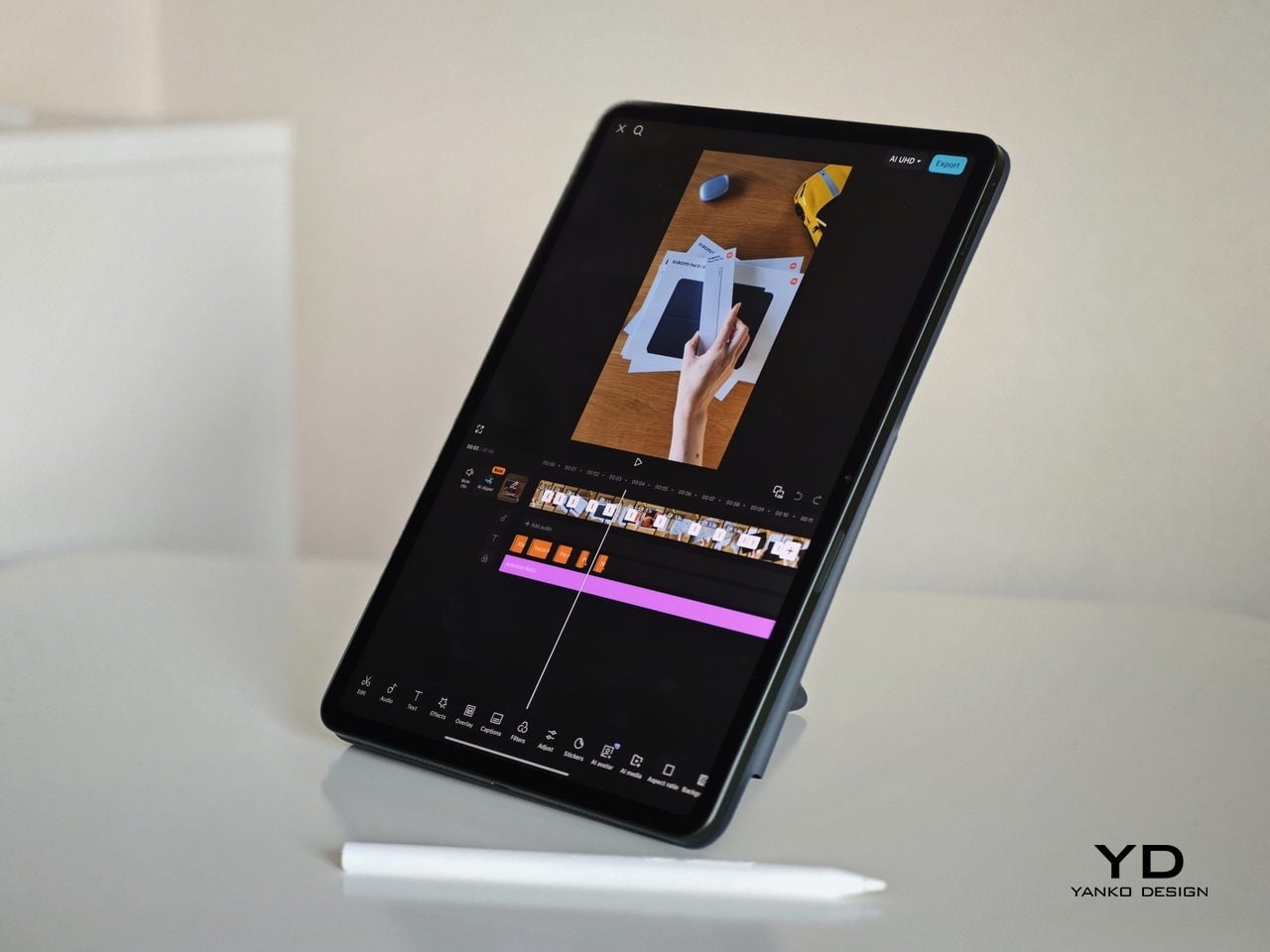
Xiaomi Pad 8 is built for casual buyers who want a fast, good-looking tablet without paying flagship prices. It keeps the familiar Pad design, but pairs it with a sharp 11.2-inch 3.2K class 144 Hz display, strong quad speakers, and a noticeably more powerful Snapdragon 8s Gen 4 chipset. The result is a device that feels premium for streaming, browsing, and gaming, even if it is not trying to reinvent what a Xiaomi tablet looks like.

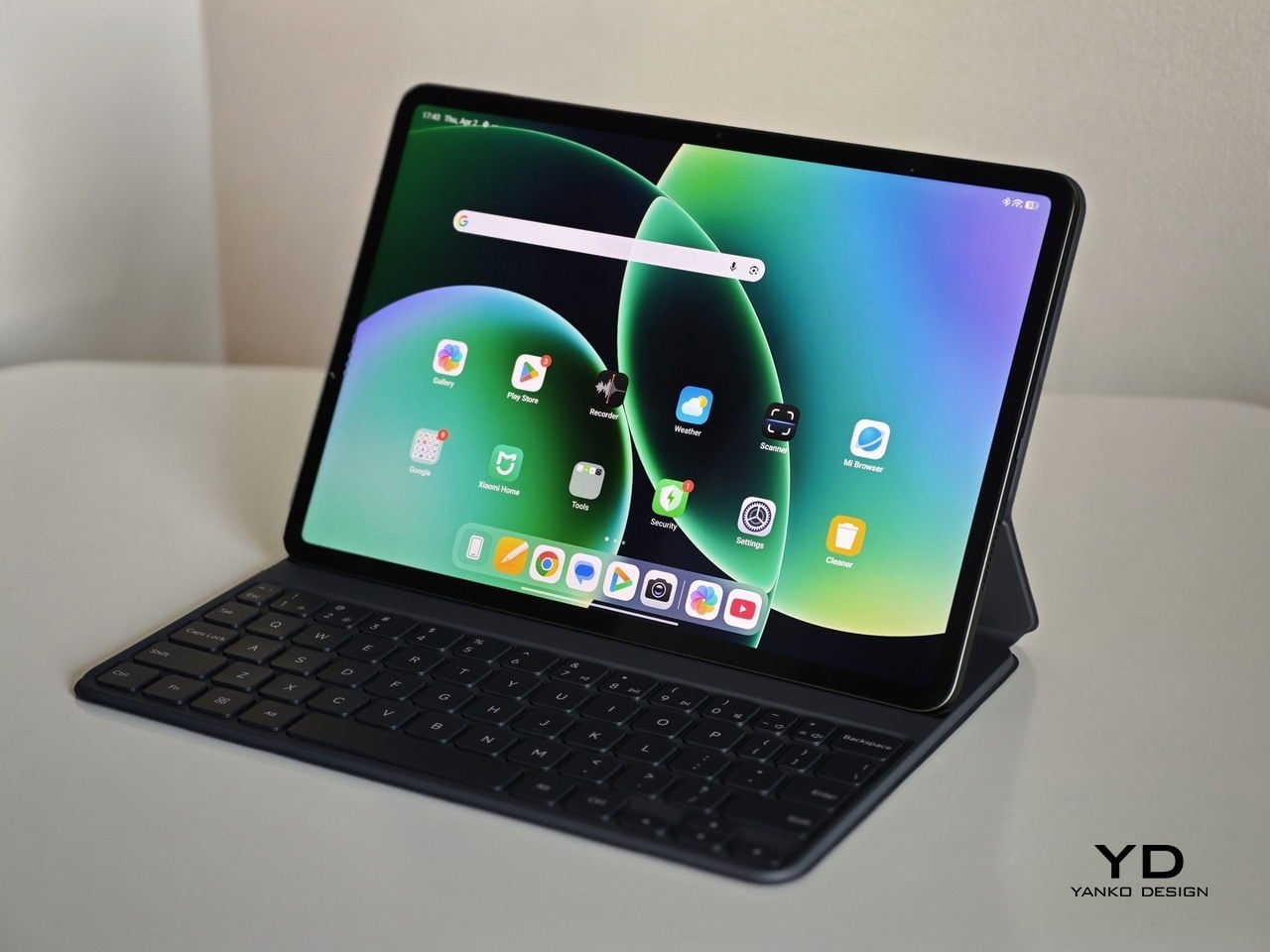
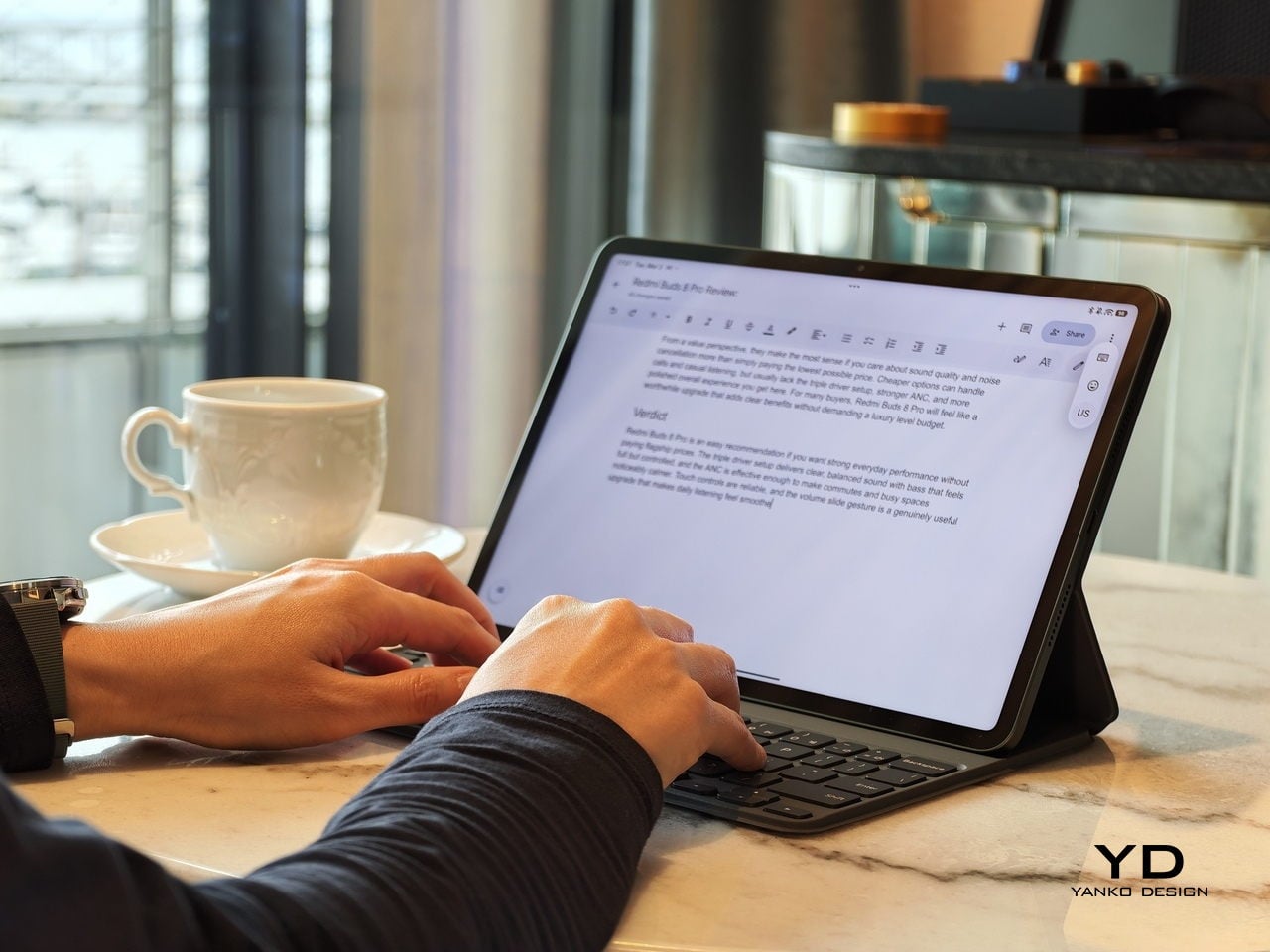
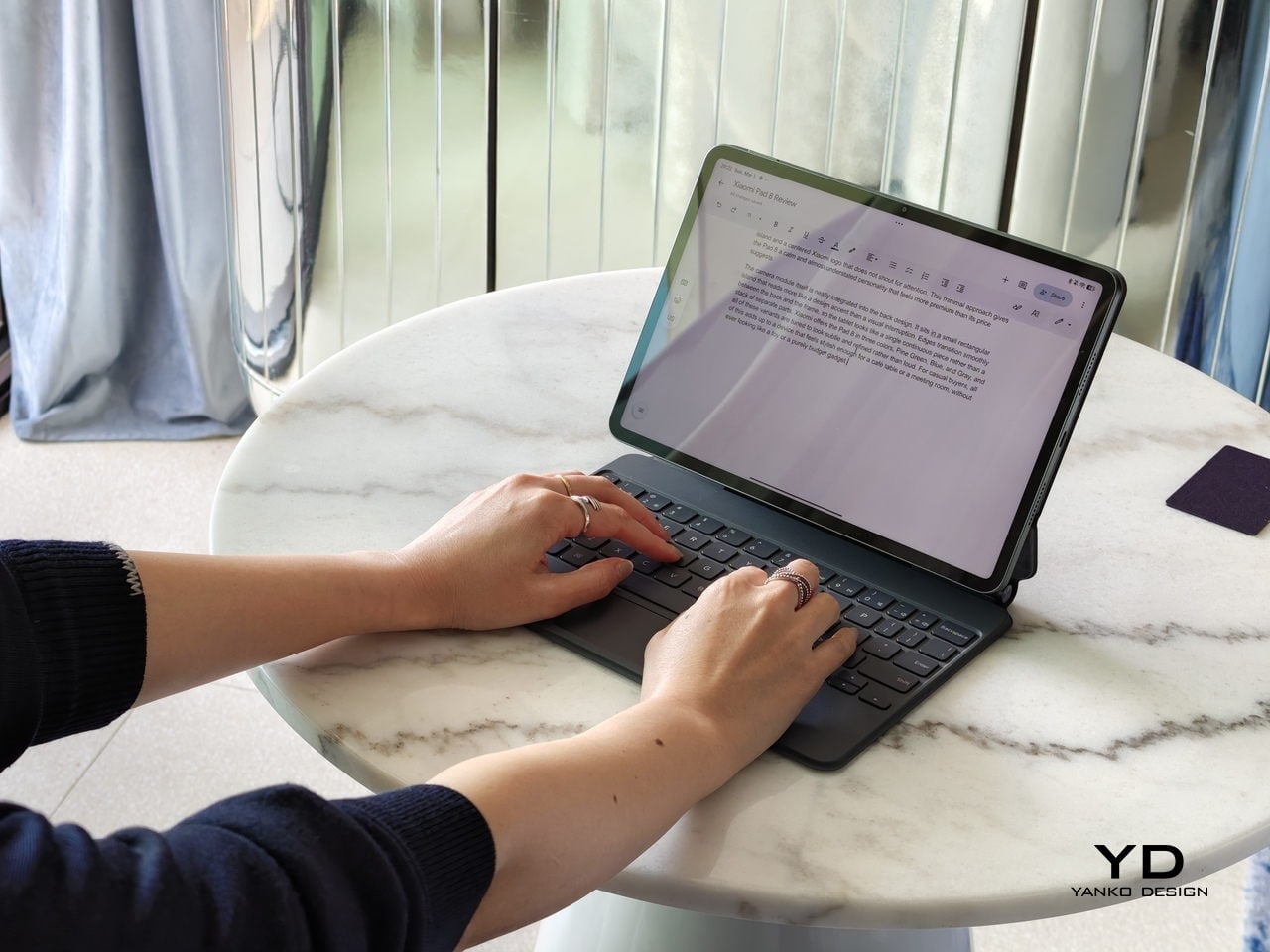
What matters is how complete the package feels in daily use. HyperOS 3 keeps the interface smooth and adds useful multitasking tools like split screen and desktop mode for light productivity. Xiaomi also supports the tablet with practical accessories, including two keyboard options, a cover that doubles as a stand, and the Focus Pen Pro for notes and sketches. If you want one tablet that can handle entertainment and occasional work, Pad 8 is designed to fit that role.

Designer: Xiaomi

Aesthetics

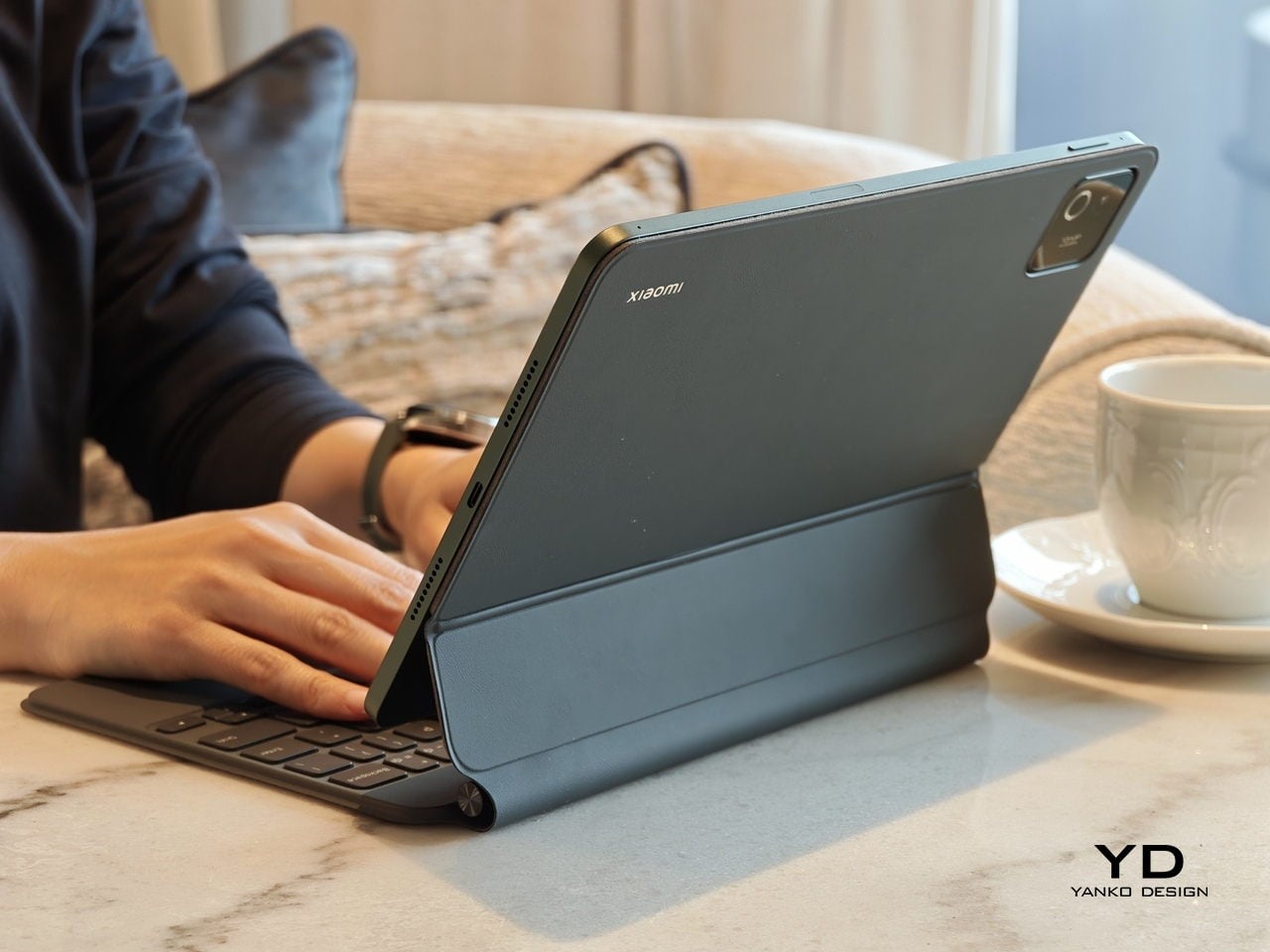
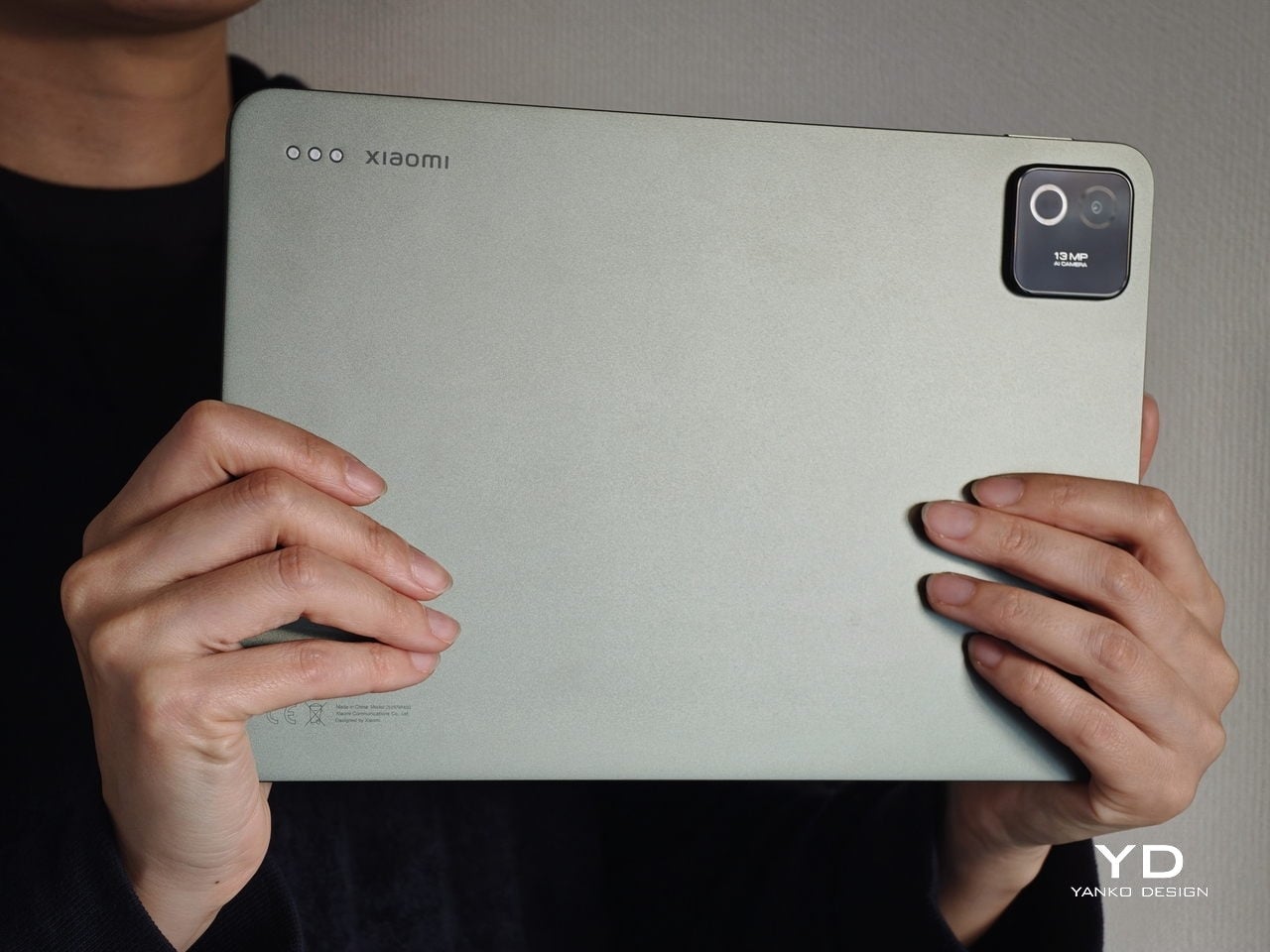
From the outside, the Xiaomi Pad 8 looks almost identical to its predecessor, the Xiaomi Pad 7. The design follows a flat edge language with soft rounded corners that soften the overall silhouette and keep it friendly in the hand. The rear panel is simple and uncluttered, with a single camera island and a centered Xiaomi logo that does not shout for attention. This minimal approach gives the Pad 8 a calm and almost understated personality that feels more premium than its price suggests.

The camera module itself is neatly integrated into the back design. It sits in a small rectangular island that reads more like a design accent than a visual interruption. Edges transition smoothly between the back and the frame, so the tablet looks like a single continuous piece rather than a stack of separate parts. Xiaomi offers the Pad 8 in three colors, Pine Green, Blue, and Gray, and all of these variants are tuned to look subtle and refined rather than loud. All of these add up to a device that feels stylish enough for a café table or a meeting room, without ever looking like a toy or a purely budget gadget.

Ergonomics

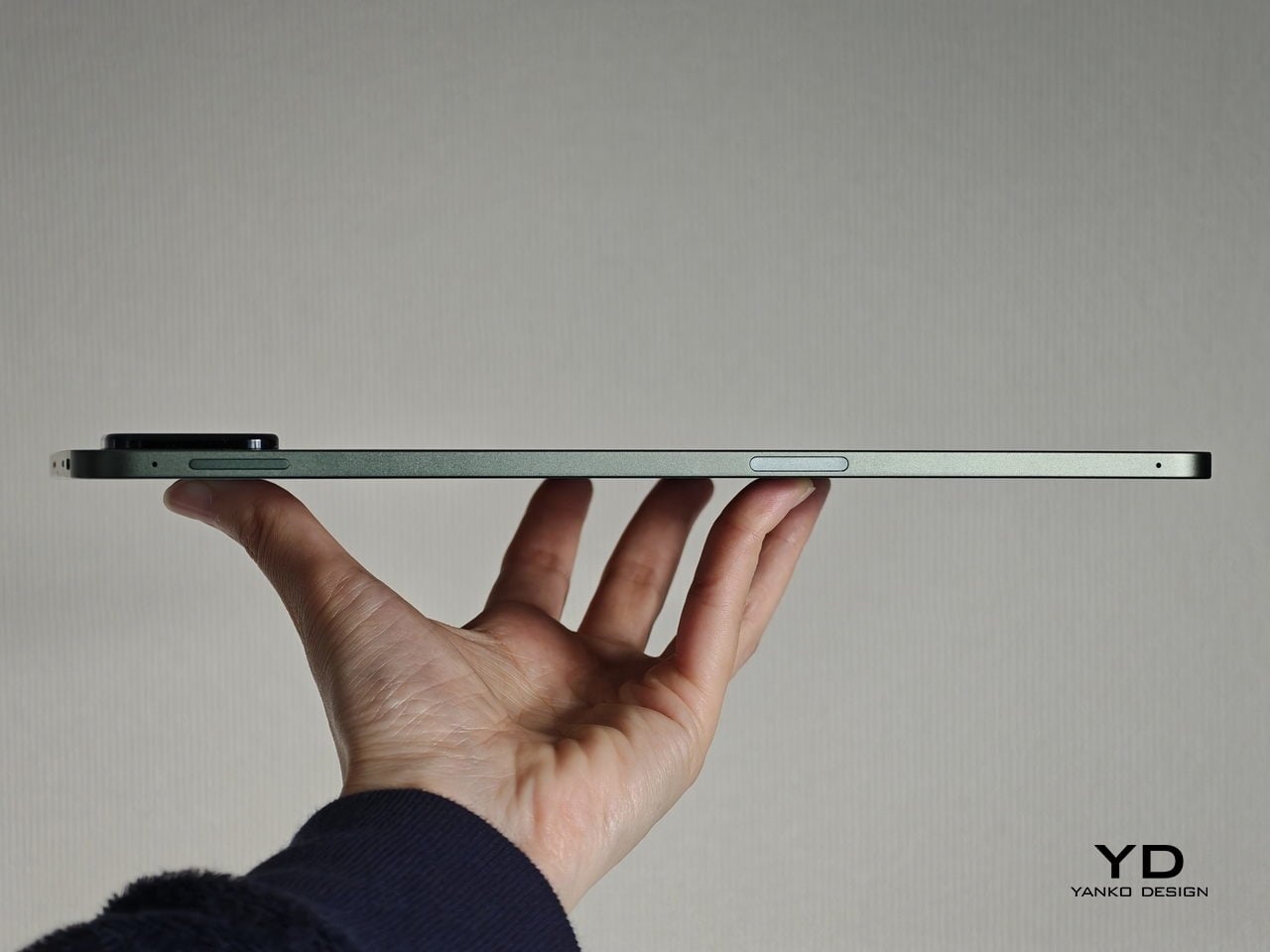
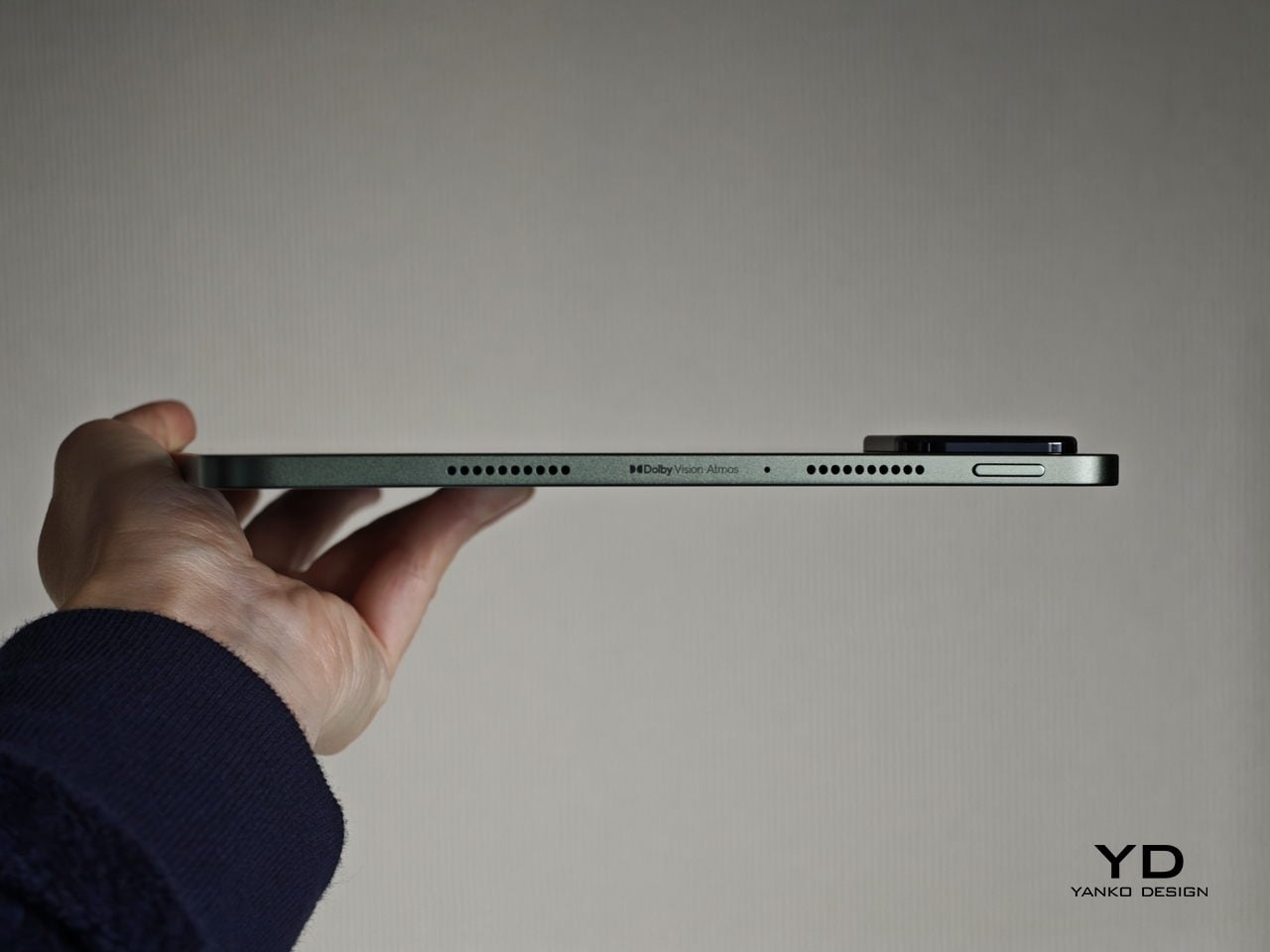
While the design focuses on clean lines and visual calm, the build of the Xiaomi Pad 8 focuses on comfort and practicality. Pad 8 measures 241.2 x 173.4 x 5.8 mm and weighs either 485g or 494g, depending on the variant, which makes it slightly slimmer and lighter than Xiaomi Pad 7. The difference on paper may look small, yet in the hand it translates into a tablet that feels more refined and easier to hold for long stretches. For casual users who spend evenings streaming or reading, this gentle reduction in bulk becomes a quiet but meaningful upgrade.

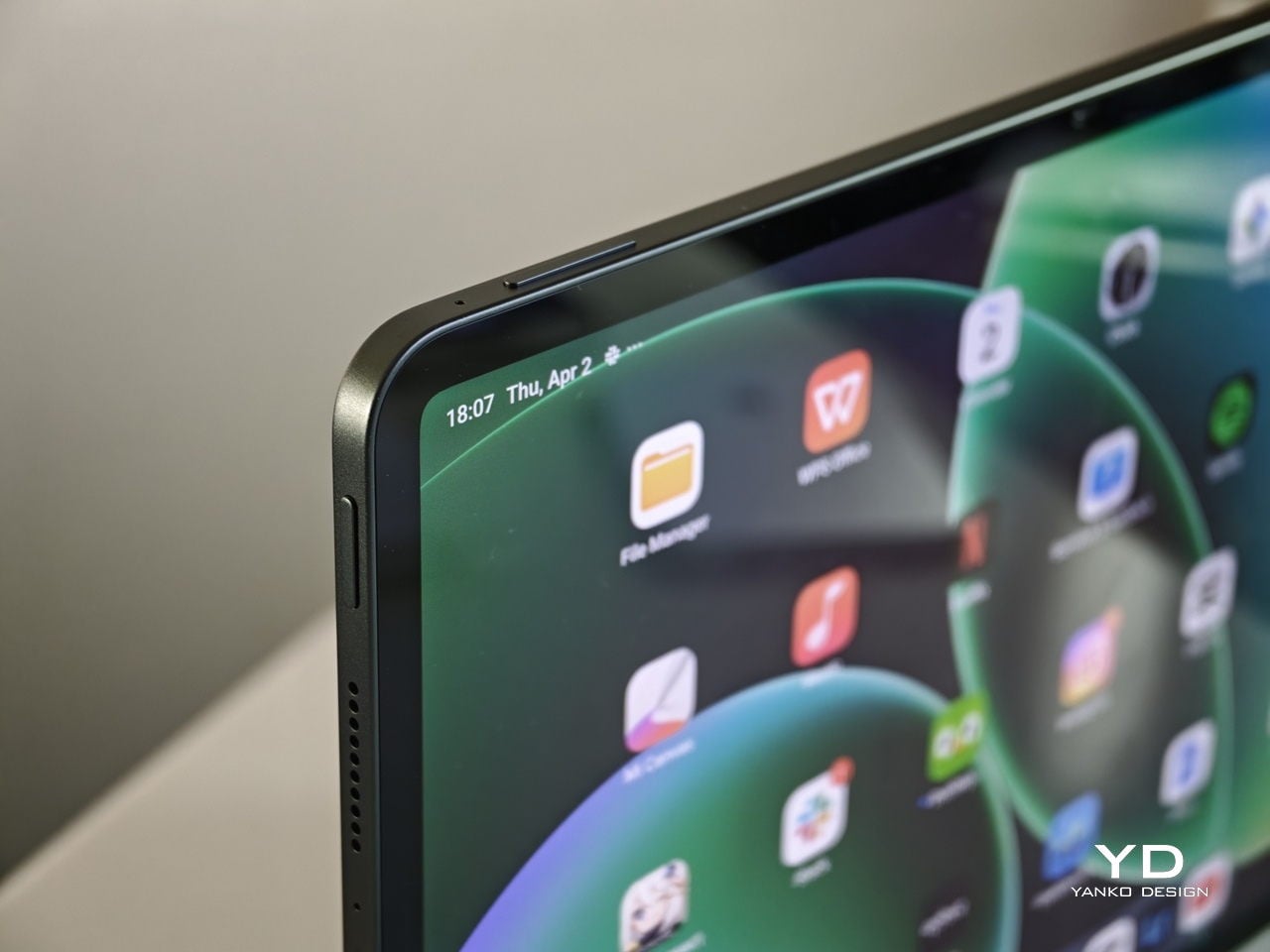
The metal frame feels sturdy in the hand and gives the tablet a reassuring sense of solidity. Button placement feels thoughtful as well, with the power and volume keys sitting where your fingers naturally land when you hold the tablet. You do not have to stretch awkwardly to adjust volume during a show, which keeps the experience relaxed and natural. The stereo speakers are positioned so that your hands are less likely to block them when you grip the device in landscape, which helps maintain clear sound without forcing you to change how you hold the tablet.

Performance

The display remains largely unchanged from Pad 7. You get an 11.2-inch IPS panel with a sharp 3.2K class resolution and a very fast 144 Hz refresh rate. Brightness peaks around 800 nits, which is strong for an LCD in this range and helps keep the screen readable near windows or outdoors on bright days. It supports DCI P3, HDR10, HDR10+, HDR Vivid, and Dolby Vision, so movies and shows benefit from richer colors and better contrast when the content is mastered for it.

Like most tablets with a glossy front glass, the Pad 8 screen is fairly reflective, so you will notice glare near bright windows or under strong indoor lighting. It is not worse than what you will see on most competing tablets. Xiaomi will also offer a Pad 8 Matte Glass version globally, and that option should be the better pick if reflections annoy you.

Audio quality keeps pace with the visuals. The Pad 8 uses a four-speaker setup that creates a satisfying level of volume and a well-balanced soundstage. Voices stay clear in dialogue-heavy scenes, while music and effects have enough presence to make games and films feel more immersive. This means you can comfortably watch or play without always reaching for headphones.

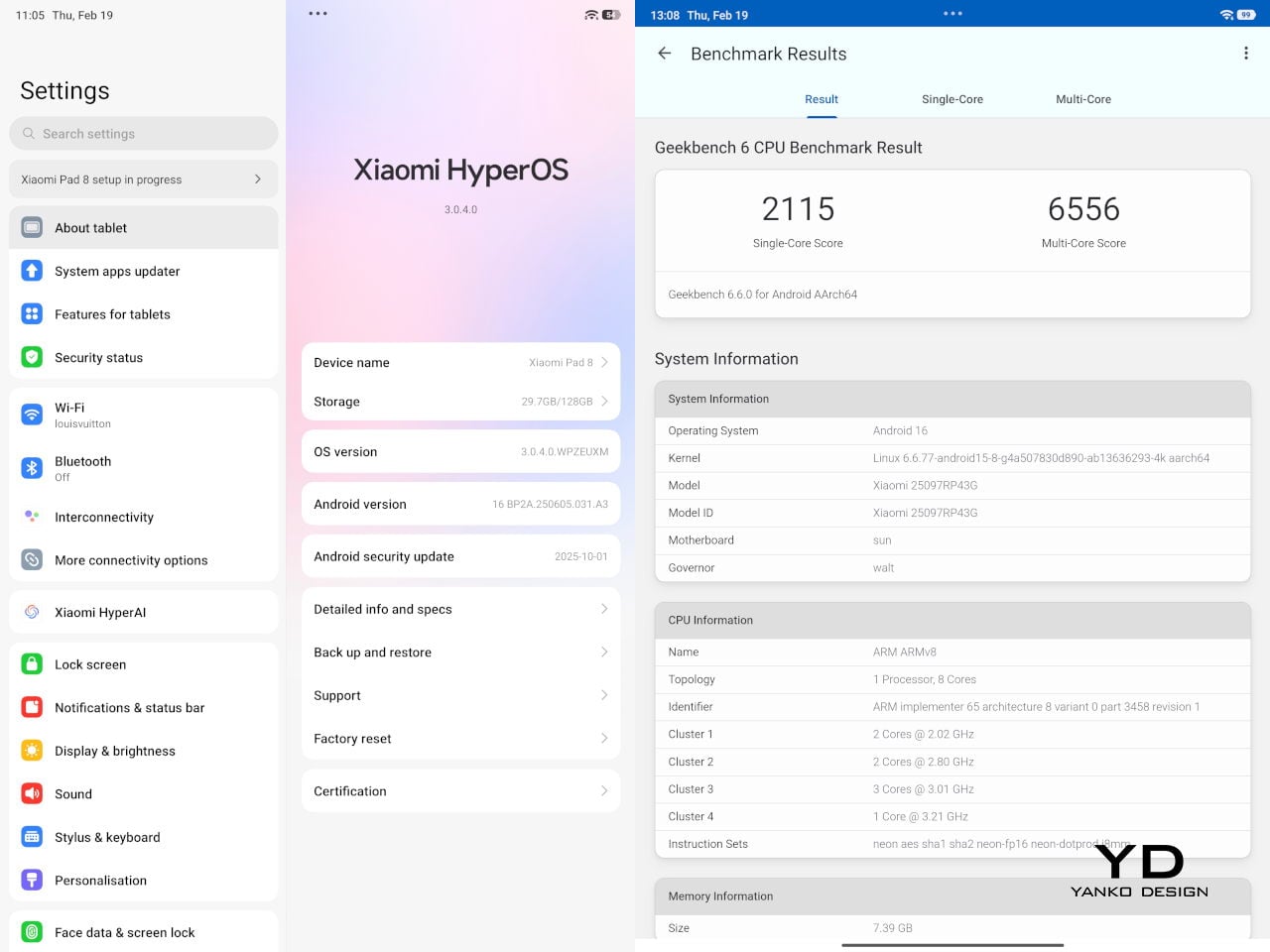
The biggest upgrade comes from the chipset. Xiaomi Pad 8 runs on the Snapdragon 8s Gen 4 processor, and the GPU delivers plenty of power for modern titles and smooth animations across the interface. Even when you play graphically demanding games for long sessions, the device does not stutter, and it keeps its temperature under control, so performance remains stable, and the tablet stays comfortable to hold.

That performance is backed by a straightforward set of memory and storage options. You can choose between 8 GB and 128 GB, 8 GB and 256 GB, or 12 GB and 256 GB. The 8 GB model uses LPDDR5X memory, while the 12 GB model steps up to LPDDR5T, and storage is either 128 GB UFS 3.1 or 256 GB UFS 4.1, depending on the version you choose. There is no microSD card slot, so it is worth picking the capacity you will be happy with long term. The USB-C port also supports display output, so you can connect Pad 8 to an external monitor when you need a bigger screen for work or entertainment.

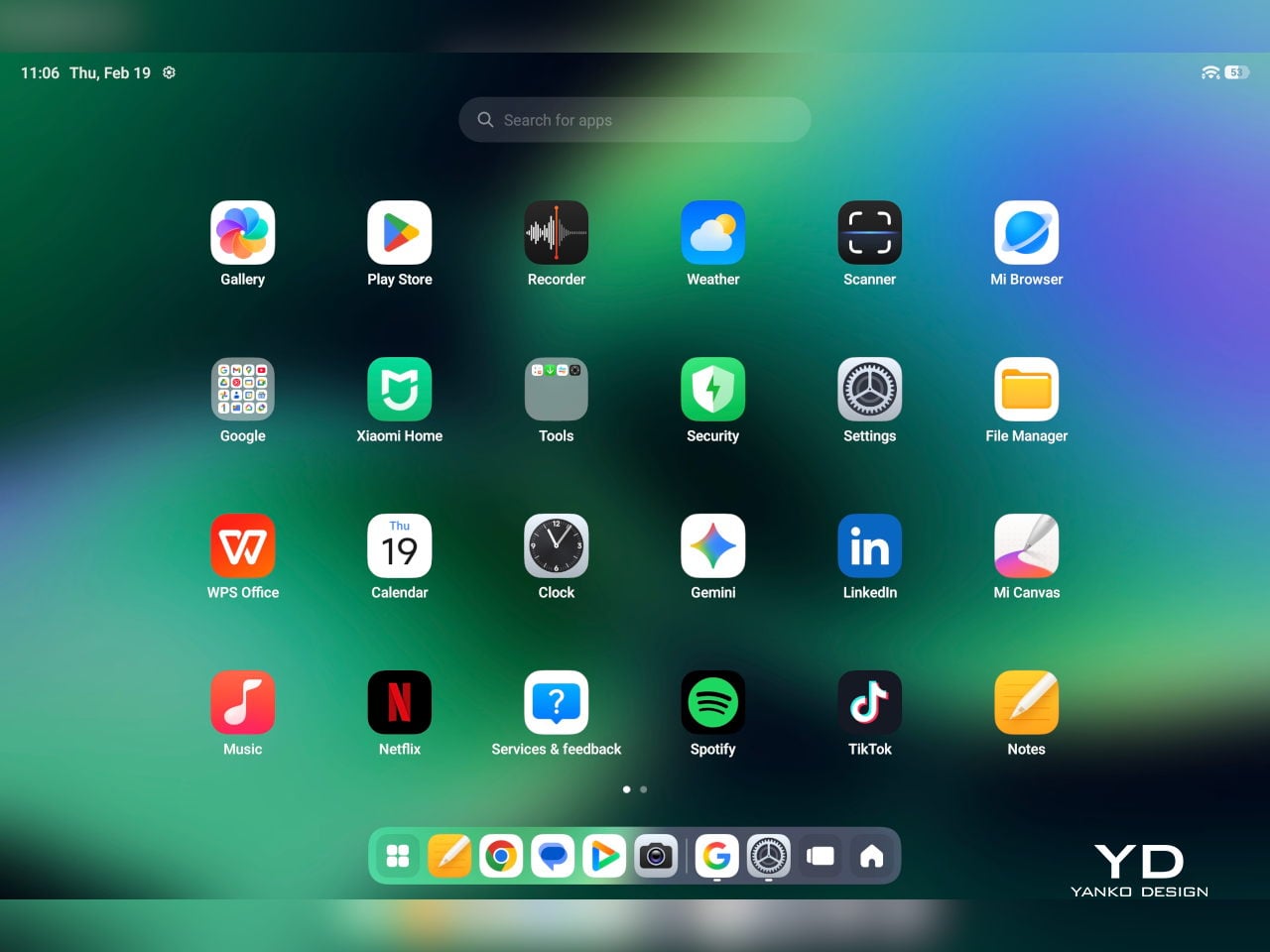
Xiaomi Pad 8 runs HyperOS 3 based on Android 16, and it feels quick and modern. The interface is clean, and it makes the large screen feel purposeful rather than like a stretched phone layout. It stays out of your way and keeps everyday tasks feeling smooth.

It supports split-screen multitasking, including a vertical split view that makes better use of the display. Xiaomi also keeps its desktop mode here, letting you open up to four floating, flexible windows at once for light productivity. This is handy when you want to browse, chat, and reference a document without constantly switching apps.

If you already own a Xiaomi phone, the ecosystem integration works very well. You can transfer calls and files between your phone and tablet seamlessly, and you can even mirror your phone screen directly on the Pad 8. For users who live in the Xiaomi ecosystem, this kind of connected experience makes the tablet feel like a natural extension of your phone rather than a separate device.

Cameras are not a headline feature on most tablets, and Xiaomi Pad 8 follows that familiar pattern. You get a 13 MP rear camera and an 8 MP front camera, which is enough for scanning documents, grabbing reference photos, and handling video calls without fuss. Image quality is best in good light, but for casual use, it is perfectly serviceable and convenient.

Battery size sees a modest upgrade, now with a 9200 mAh cell instead of the 8850 mAh unit in Pad 7, and it matches the capacity of the more expensive Pad 8 Pro. In real use, that means a full day of mixed activity is easy to achieve, even if you spend several hours streaming video and browsing. Light users who mostly read, check email, and watch a bit of content in the evening can often stretch the tablet across multiple days between charges.

Charging speed is unchanged from Pad 7 at 45W, so you still get reasonably quick top-ups when you plug in. Pad 8 now also supports 25W reverse charging, which lets you use the tablet as a power source for other devices when needed. This is especially handy for phones, earbuds, or accessories that are running low, and it adds a practical bonus to that large battery that casual users will appreciate on trips or long days out.

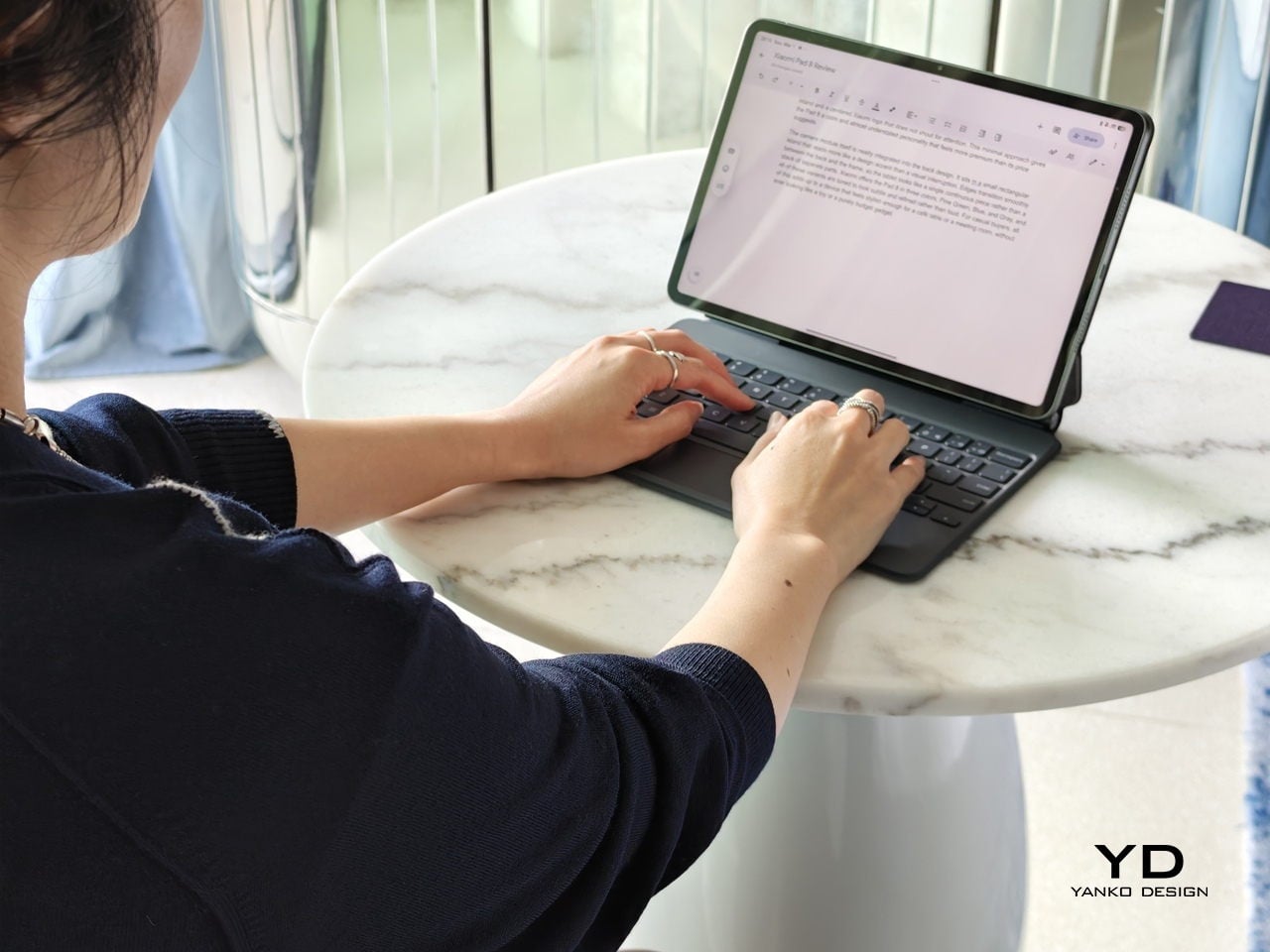
Xiaomi offers a solid accessory lineup for Pad 8, including the Xiaomi Pad 8 and Pad 8 Pro Focus Keyboard, the standard Keyboard, the Cover, and the Xiaomi Focus Pen Pro. Both keyboards are comfortable to type on, and the cover doubles as a stand for easy viewing. If you are coming from Pad 7, most of these accessories will feel familiar, since the Focus Keyboard, Keyboard, and Cover are largely unchanged from the previous generation.

The most interesting addition is the Xiaomi Focus Pen Pro. It goes button-free for a cleaner, simpler feel, and it adds pressure sensitivity with haptic feedback for more natural writing and sketching. Even if you are not an artist, pressure sensitivity makes note-taking feel smoother and more expressive than a basic stylus. You can squeeze to open a choice of three apps. In the drawing app, you can slide your finger through the Pen to change the brush size. It will take some time to get used to, and the sensitivity and responsiveness can be improved.

Sustainability

Xiaomi makes a solid commitment to longevity with Pad 8. The tablet is promised 4 years of OS updates and 6 years of security patches, which helps it stay secure and usable for much longer than many budget and mid-range Android tablets. For casual buyers, that means you can treat it as a long-term device rather than something you will quickly need to replace.

On the hardware side, the build feels solid and reassuring in the hand, but there is no official IP rating for dust or water resistance, so you still need to be careful around spills and rough environments. A decent case and perhaps a screen protector are sensible additions if you plan to carry it everywhere. In short, the software support looks built to last, the chassis feels robust, and the overall physical durability will still depend on how well you protect it.

Value

Xiaomi Pad 8 offers strong everyday value for casual buyers, with a sharp 11.2-inch 3.2K class 144 Hz display, quad speakers, Snapdragon 8s Gen 4 performance, and a large 9200 mAh battery. In China, pricing starts at CNY 2,199 for the 8 GB and 128 GB models, commonly quoted as about $310, with higher tiers at CNY 2,499, about $350, and CNY 2,799, about $390. US and EU pricing will differ, but the message is clear. Xiaomi is aiming for premium specs without a premium price.

The compromises are straightforward. There is no microSD card slot on the Pad 8, so you need to choose your storage tier carefully from the start. There is also no fingerprint sensor on Pad 8, so you need the Pad 8 Pro if you want that convenience. The standard screen is also reflective unless you opt for the Matte Glass version. If those points do not bother you, Pad 8 lands in a very appealing sweet spot for streaming, browsing, and gaming.

Verdict

Xiaomi Pad 8 is an easy tablet to like because it focuses on the basics and executes them well. The display is sharp and fluid, the speakers are loud and balanced, and performance stays stable even during longer gaming sessions. It also feels solid in the hand, and the slimmer, lighter body makes it comfortable for long reading or streaming sessions.

The downsides are straightforward, with no fingerprint sensor, no microSD card slot, and a glossy screen that can show reflections unless you choose the Matte Glass version. On the plus side, Xiaomi’s accessory lineup gives you room to grow, whether you want a keyboard setup for light work or a pressure-sensitive pen for note-taking. The overall package lands as a strong value, especially if your tablet time revolves around entertainment with occasional productivity.

The post Xiaomi Pad 8 Review: The $310 Tablet That Feels More Expensive first appeared on Yanko Design.
5 Cool Desk Clocks That Actually Deserve a Spot on Your Desk in 2026

Your desk says a lot about the way you think. The objects you deliberately choose for it, rather than the ones that simply accumulate, reflect your values, your taste, and the kind of environment you want to work in. A great desk clock earns its place twice over: as a functional tool and as something genuinely worth looking at every day. The market is full of forgettable options, but the most interesting clocks right now are rethinking what a clock even needs to be, questioning material, interaction, and presence in equal measure.
Whether you work from a home studio, a shared office, or somewhere between the two, the right clock changes the feeling of an entire space. These five designs prove that telling time is still a conversation worth having, and that choosing a clock carefully is an act worth taking seriously.

1. Rolling World Clock

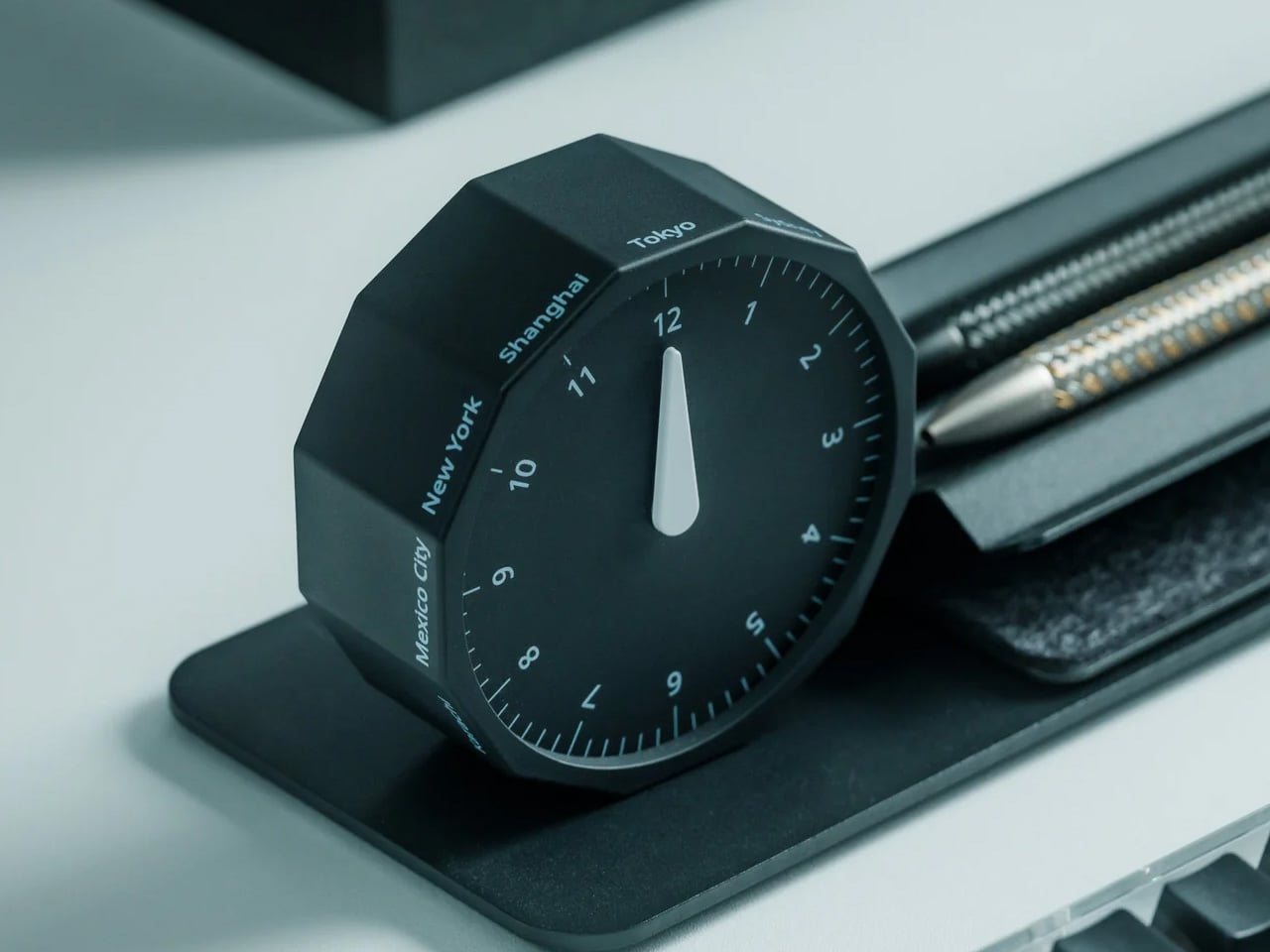
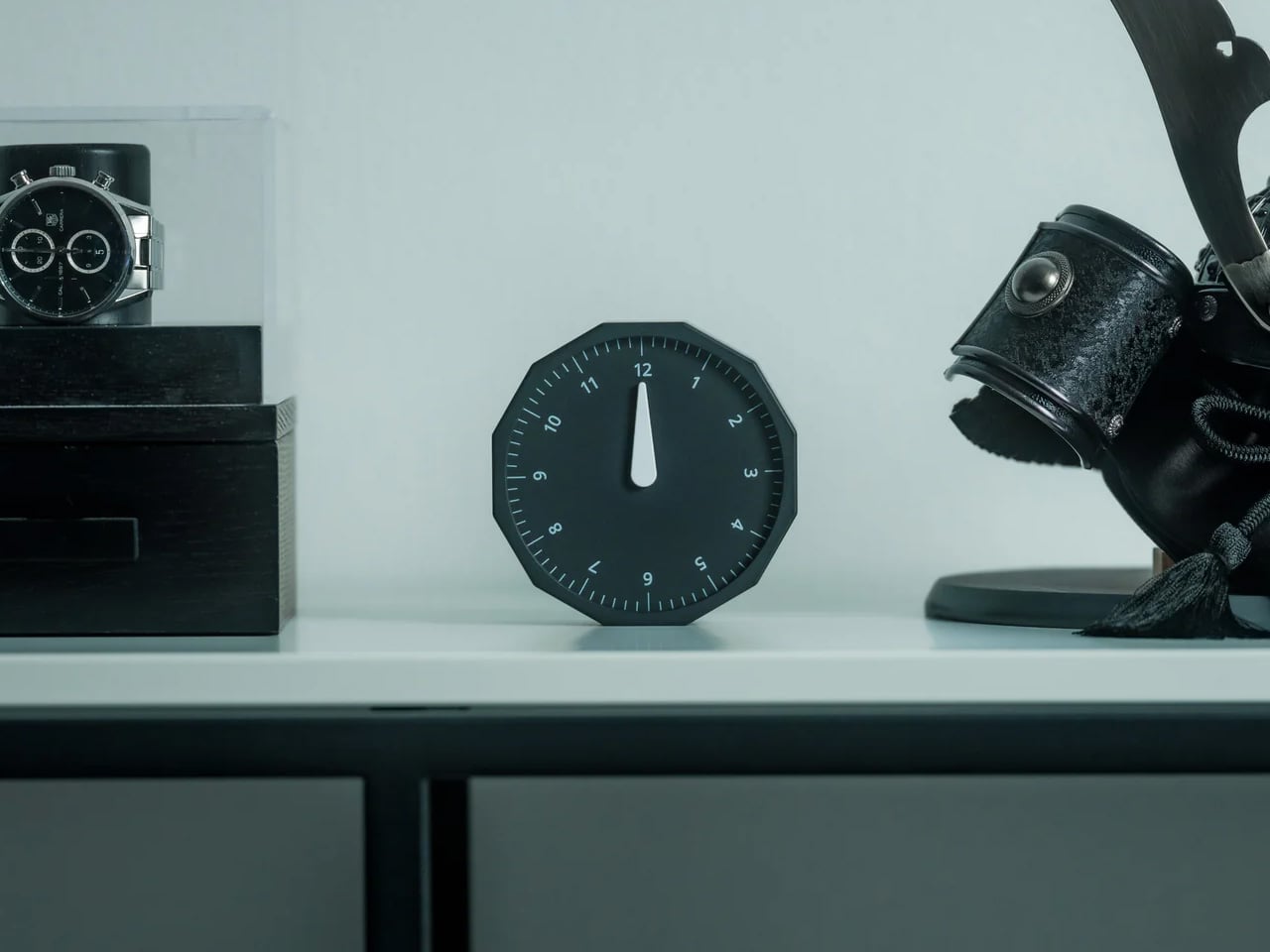
For anyone who regularly works across time zones, converting time in your head is a small but persistent irritation. The Rolling World Clock removes that friction with an approach so intuitive it almost feels obvious: a 12-sided form with a major city on each face, from London and Paris to Tokyo, Sydney, and New York, read by a single hand. Roll the clock until your desired city faces upward and the hand tells you exactly where things stand. No screen, no calculation, no second device needed.

What keeps this clock compelling beyond its core function is the physicality of using it. Rolling a 12-sided object to check the time in Cape Town or Karachi is a tactile experience that no phone interface can replicate; it turns a routine check into something deliberate and satisfying. The minimalist form, available in both black and white, sits cleanly on any desk without visual competition, and the single hand keeps everything honest and uncluttered. It is a rare thing: a genuine conversation piece with a practical reason to exist.

Click Here to Buy Now: $49.00

What We Like

  • The rolling interaction gives checking global time a tactile quality that feels intentional rather than reflexive, adding a small moment of satisfaction to an everyday action.
  • The minimal form in black or white works across almost any desk aesthetic, functioning equally well as a decorative object and a practical timekeeping tool.

What We Dislike

  • Only 12 cities are represented, which means time zones outside those locations will still require some mental conversion on your part.
  • As an analog clock, precision is limited to the nearest quarter-hour, which may not suit those who need exact time readings at a glance.

2. Minimalist Desk Clock

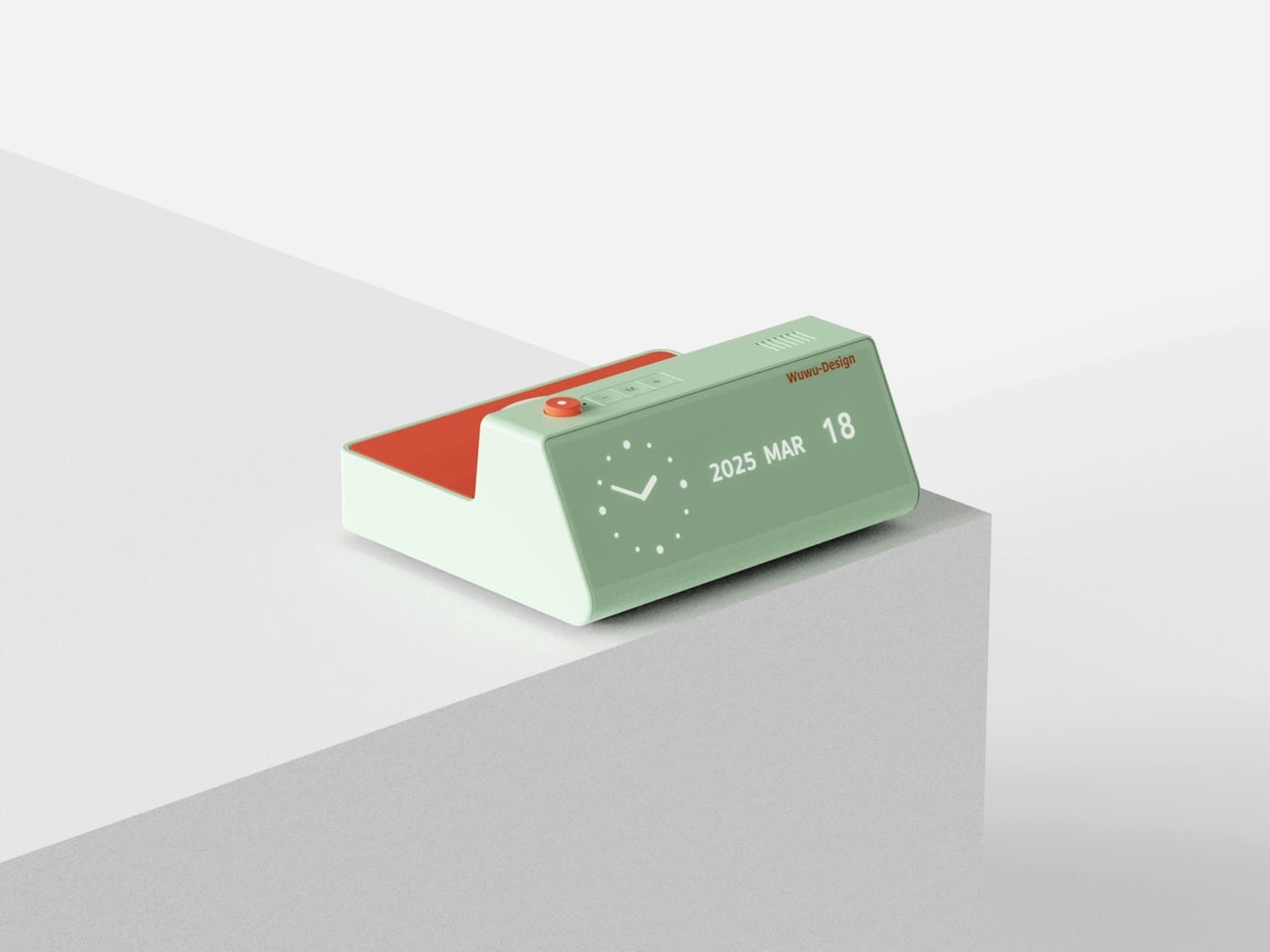
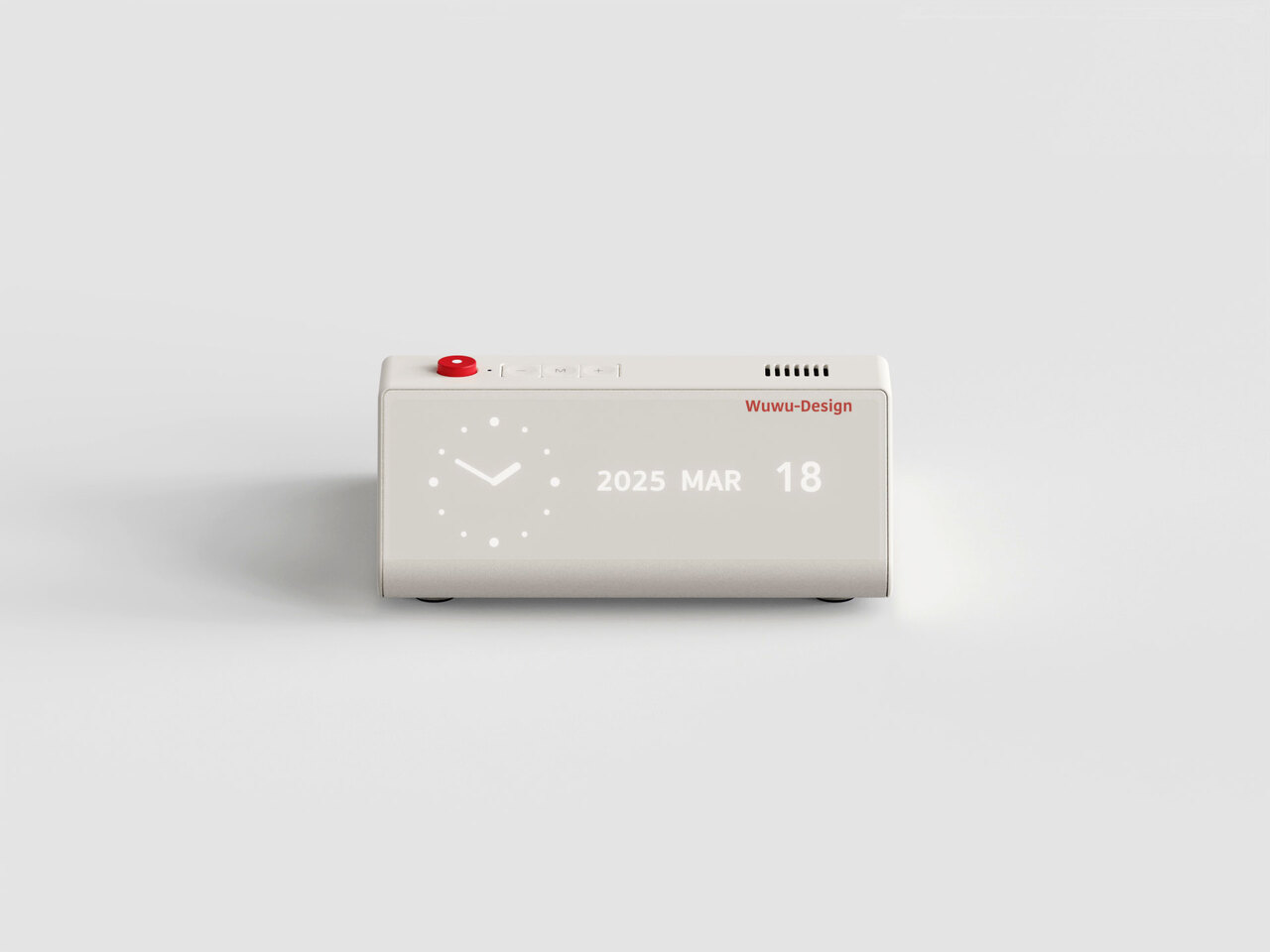
Products that combine two functions usually compromise on both. This desk clock concept draws inspiration from Dieter Rams’ legendary Braun DN40, channeling the same visual restraint while placing a wireless charging pad on the top surface in a way that actually makes sense for daily use. The digital time display sits off to one side of the matte face, balanced by a date readout on the opposite end. Both are embedded flush into the surface, creating a presence that is visible when needed but never demanding your attention when you do not.

The placement of the wireless charger on top is obvious in the best possible way: your phone charges exactly where you can still see it, and the clock keeps doing its job without either function disrupting the other. The asymmetrical display layout reflects genuine compositional thinking, creating deliberate visual balance rather than defaulting to center alignment. For a desk already holding a notebook, a coffee cup, and a tangle of cables, this clock earns its spot by doing double duty without making a scene about it.

What We Like

  • The wireless charging surface sits intuitively on top, keeping your phone visible and accessible while it charges, without requiring a separate pad taking up additional desk space.
  • The asymmetrical display arrangement shows real compositional intention, making the object feel considered and specific rather than generically functional.

What We Dislike

  • This is currently a concept design and is not available to purchase, which limits it to an aspirational reference rather than a practical recommendation right now.
  • The matte embedded displays may lose legibility in dim environments without a backlight or ambient brightness adjustment, which the concept does not appear to address.

3. CAST

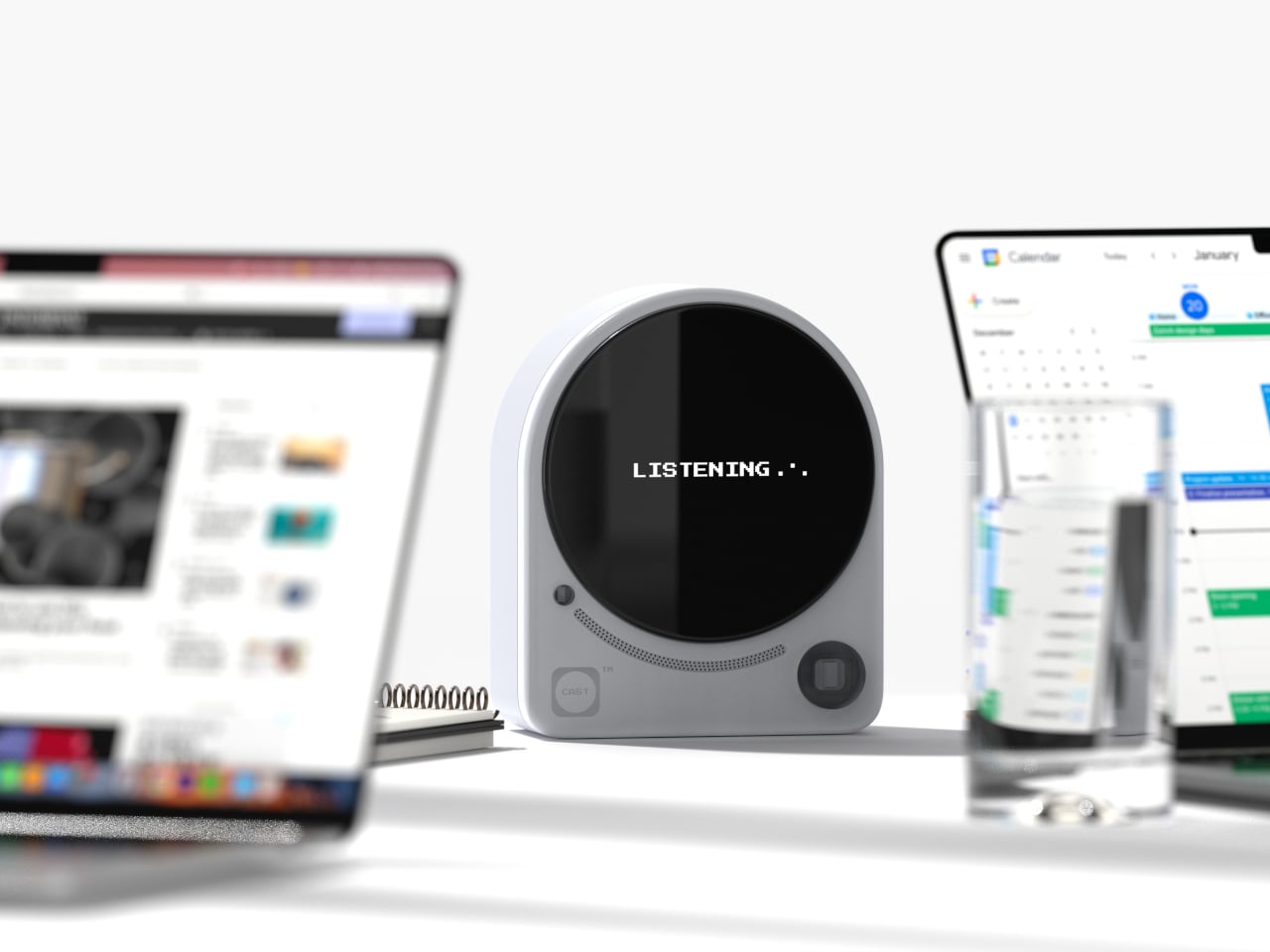
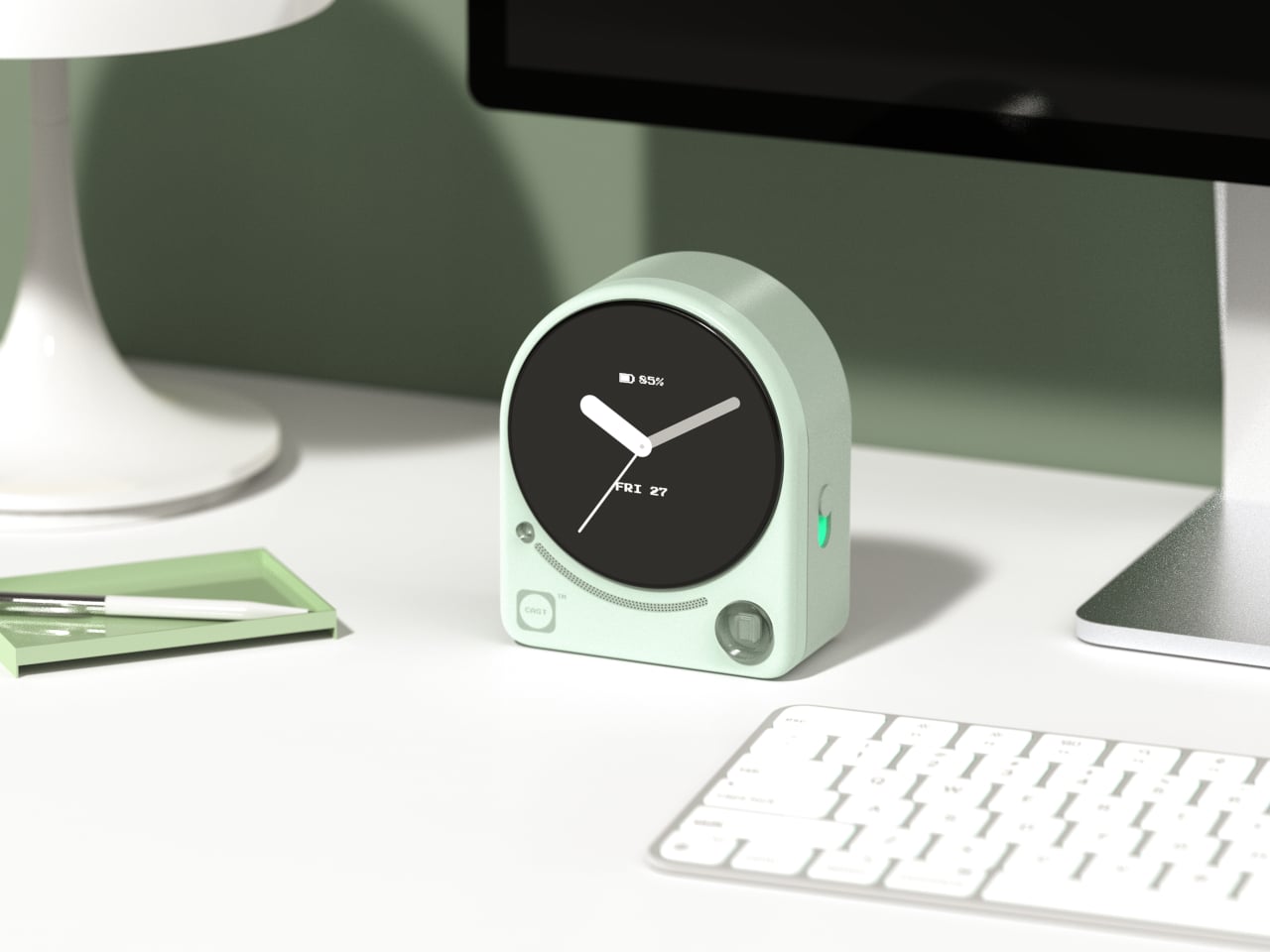
Meetings lose things. Good ideas get spoken into the room and never make it to a document, and most tools designed to fix that problem are more intrusive than the problem itself. CAST, a concept by designer Minseo Lee, takes a different approach entirely. Drawing its form from the Braun BC22, the device arrives as an arch-shaped tabletop companion with a circular display, tactile buttons, and a neutral finish that reads as a clock before it reads as anything else. It sits on the conference table and quietly gets to work.

During a meeting, CAST listens, identifies key points, and generates a concise summary when the session ends. A QR code appears on the display, and participants scan it to access their notes instantly, with no app download or login required. Outside of meetings, it functions as a standard clock, maintaining its understated presence without demanding attention. The dotted graphic details and calm proportions mean it suits an open-plan office as naturally as a private home studio. The best AI tools do not announce themselves; they simply make the room function a little more smoothly, and CAST embodies that idea completely.

What We Like

  • The QR code summary system is a genuinely clever solution, distributing meeting notes to every participant instantly without requiring anyone to install a specific app or create an account.
  • The Braun-inspired design ensures CAST reads as a clock first, which meaningfully reduces the psychological discomfort of having a recording device present during a conversation.

What We Dislike

  • As a concept, CAST is not yet available for purchase, meaning its real-world performance in noisy or complex meeting environments remains completely untested.
  • The quality of the AI-generated summaries will depend on microphone sensitivity and processing power, which are factors the industrial design itself ultimately cannot control.

4. Wooden Desk Clock

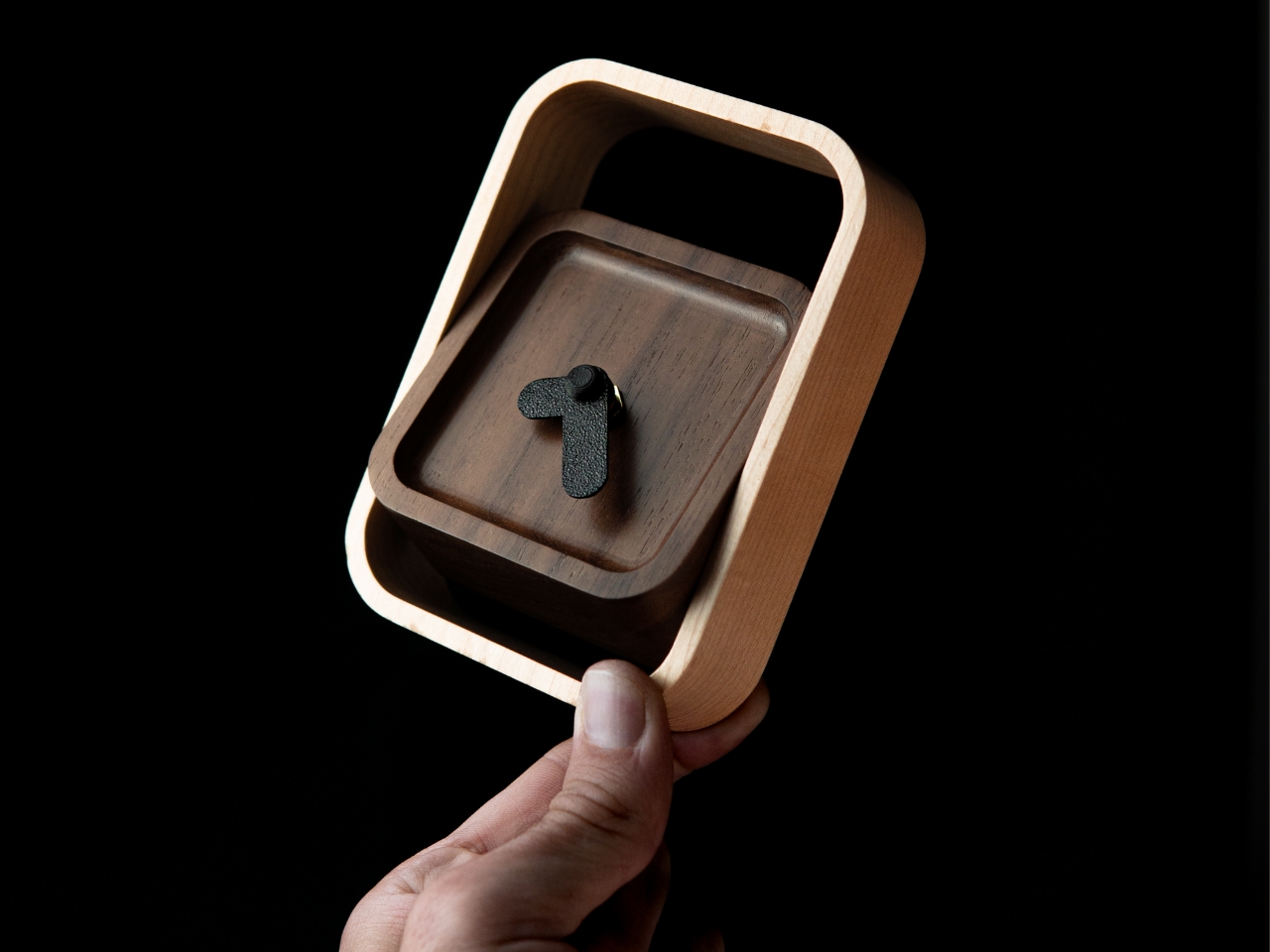
There is something quietly refreshing about a clock that does not try to do anything beyond telling the time beautifully. This wooden desk clock, developed in collaboration with Shapr3D, is exactly that kind of object. CNC-machined from walnut, cherry, or maple, each version uses the natural contrast of warm wood tones and smooth curved surfaces to create something that belongs on a desk the way a well-chosen book or a ceramic cup does. The analog face reads the hour in the most satisfying way possible, without apology.

The clock comprises two parts: a clock head that displays the time and a supportive frame that serves as both a base and a functional handle for adjusting the vertical viewing angle. It is a small detail, but one that shows genuine thought about how the object actually gets used on a real desk by a real person. In an era dominated by aluminum, glass, and screens, a clock machined from actual wood makes a quiet but firm statement about material honesty and the pleasure of things that simply do what they are supposed to do.

What We Like

  • Three wood type options, walnut, cherry, and maple, give the clock a material warmth and versatility that suits a genuinely wide range of desk setups and personal aesthetics.
  • The adjustable vertical viewing angle through the supportive frame reflects thoughtful, user-centered design that considers how the object will actually be used day to day.

What We Dislike

  • Natural wood requires more care than synthetic materials and may be susceptible to scratches or moisture damage over time without proper surface treatment or regular maintenance.
  • The purely analog format offers no smart features, which will not appeal to anyone who expects additional functionality beyond time-telling from a desk object in this category.

5. Moon Rocket Clock

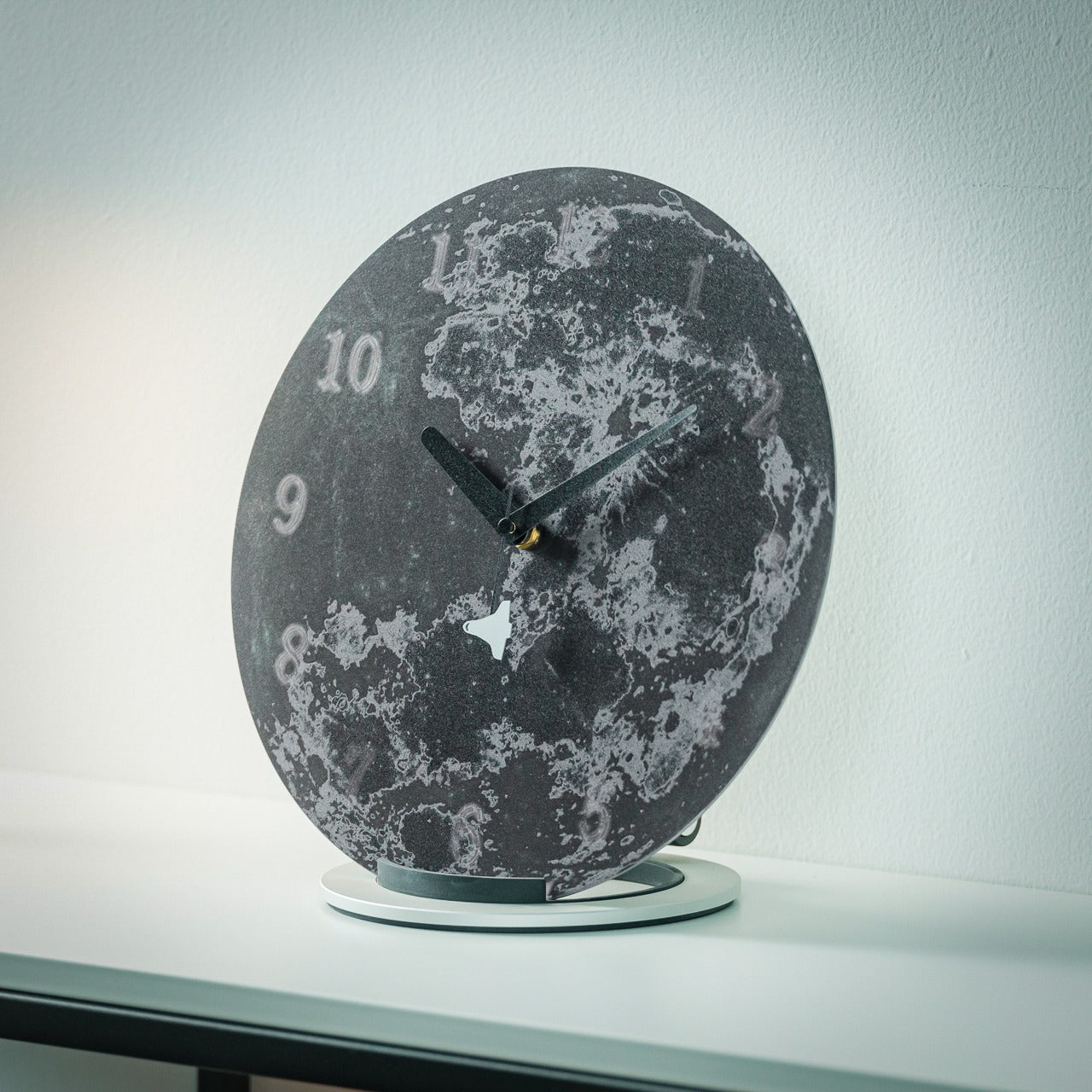
A note upfront: this is not a typical desk clock. It is larger than everything else on this list, more visually assertive, and designed to occupy space rather than disappear into it. Made from specially polished stainless steel, the Moon Rocket Clock is a circular timepiece where printed numbers appear to float and gradually fade around the edges of the face, echoing the visual rhythm of the moon’s phases. The second hand carries a small rocket ship on its tip, which sounds ornamental until you watch it move and recognize the emotional charge the detail actually carries.

This clock works best where it has room to be itself, on a wide desk, a generous shelf, or a statement surface in a home studio. The polished stainless steel construction is durable and catches light in ways that cheaper materials simply do not, giving it a presence that reads as genuinely considered rather than simply bold. More than any other clock on this list, this one carries emotional meaning: a daily reminder to take your ambitions seriously, framed through the imagery of space travel and lunar exploration. It is bigger than usual, demands more visual real estate than a standard timepiece, and earns every bit of space it claims.

Click Here to Buy Now: $325.00

What We Like

  • The specially polished stainless steel construction gives the clock a premium material quality that holds up to daily visual scrutiny and looks better the more closely you examine it.
  • The rocket ship, second-hand, transforms an ordinary glance at the time into a small, recurring moment of inspiration that does not wear out with repetition.

What We Dislike

  • The larger footprint demands more desk space than a standard clock and may feel visually overwhelming on smaller or more tightly curated setups.
  • The bold, distinctive aesthetic is strong enough to require a specific kind of environment to land well, meaning it will not suit every desk or room it is placed in.

The Best Desk Objects Ask Nothing Back

A desk clock was never supposed to disappear. It got displaced gradually by phones and computers, and the slow collapse of single-purpose objects into multipurpose screens. But these five designs are a reminder of what that displacement costs. A clock sitting on your desk is a fundamentally different presence than a clock on your phone. It exists only to mark time, without asking you to respond to anything, check a message, or make a decision. That kind of quiet object has a value that is easy to underestimate and harder to replace.

Good design does not need to solve every problem at once. Sometimes it is about doing one thing well and doing it in a way that earns a permanent place in a room. Whether it is a rolling 12-sided clock that translates time zones through touch or a stainless steel moon keeping a rocket on its seconds hand, each of these clocks has earned its spot. The best desk objects are the ones that make you glad they are there each morning, and every single one of these is exactly that kind of thing.

The post 5 Cool Desk Clocks That Actually Deserve a Spot on Your Desk in 2026 first appeared on Yanko Design.