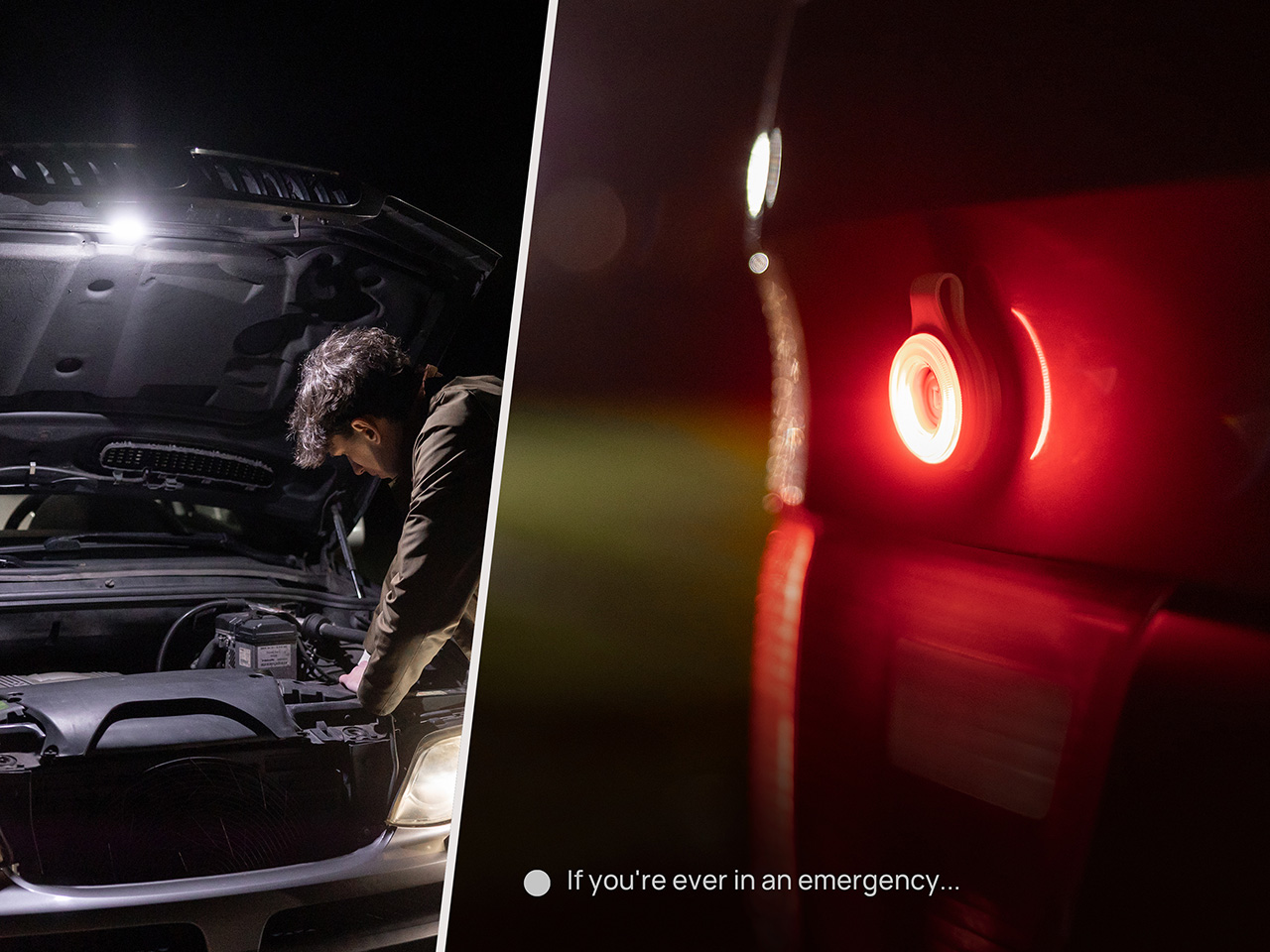
A Red Dot Design Award and a $210,000 Kickstarter campaign are two very different kinds of validation. One comes from a jury of design professionals evaluating form, function, and coherence. The other comes from tens of thousands of people who looked at a product and handed over money before it shipped. SparkO, the compact wearable EDC flashlight from California’s ScoutLite, earned both. That combination suggests something specific about the object: it reads clearly to designers and solves something real for everyday people. At $45.99 and 40 grams, the barrier to entry is low enough that hesitation becomes difficult to justify.
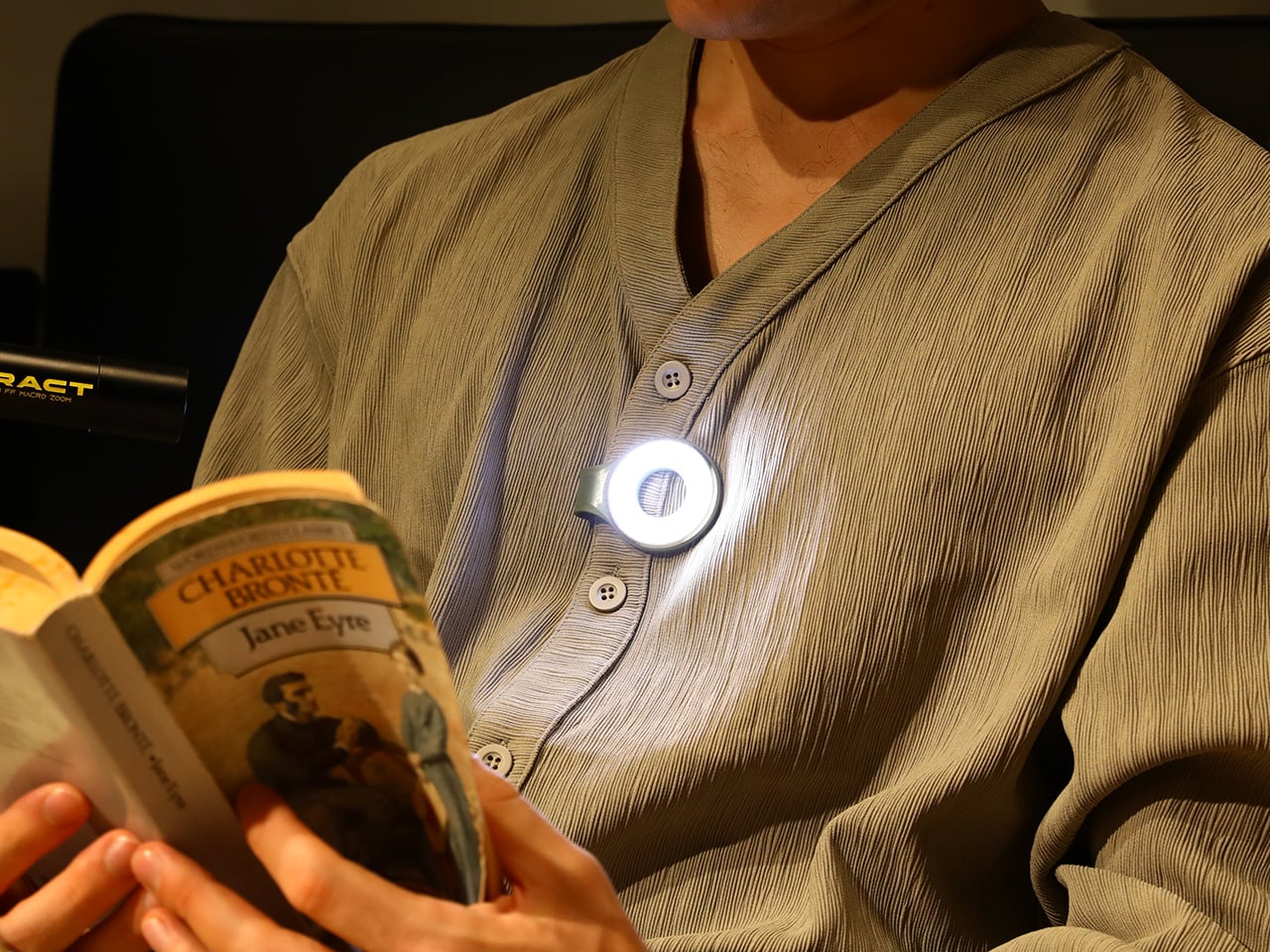
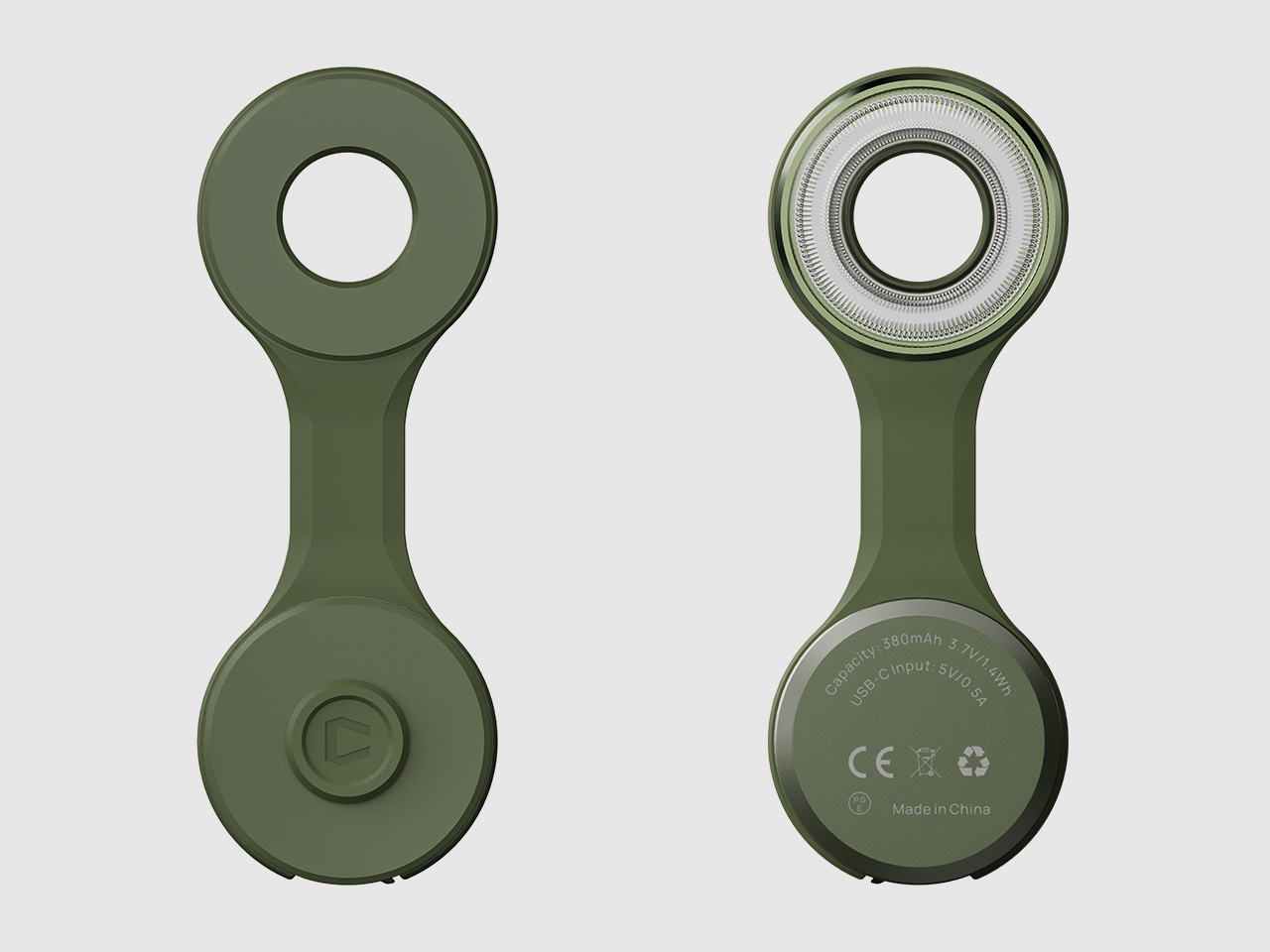
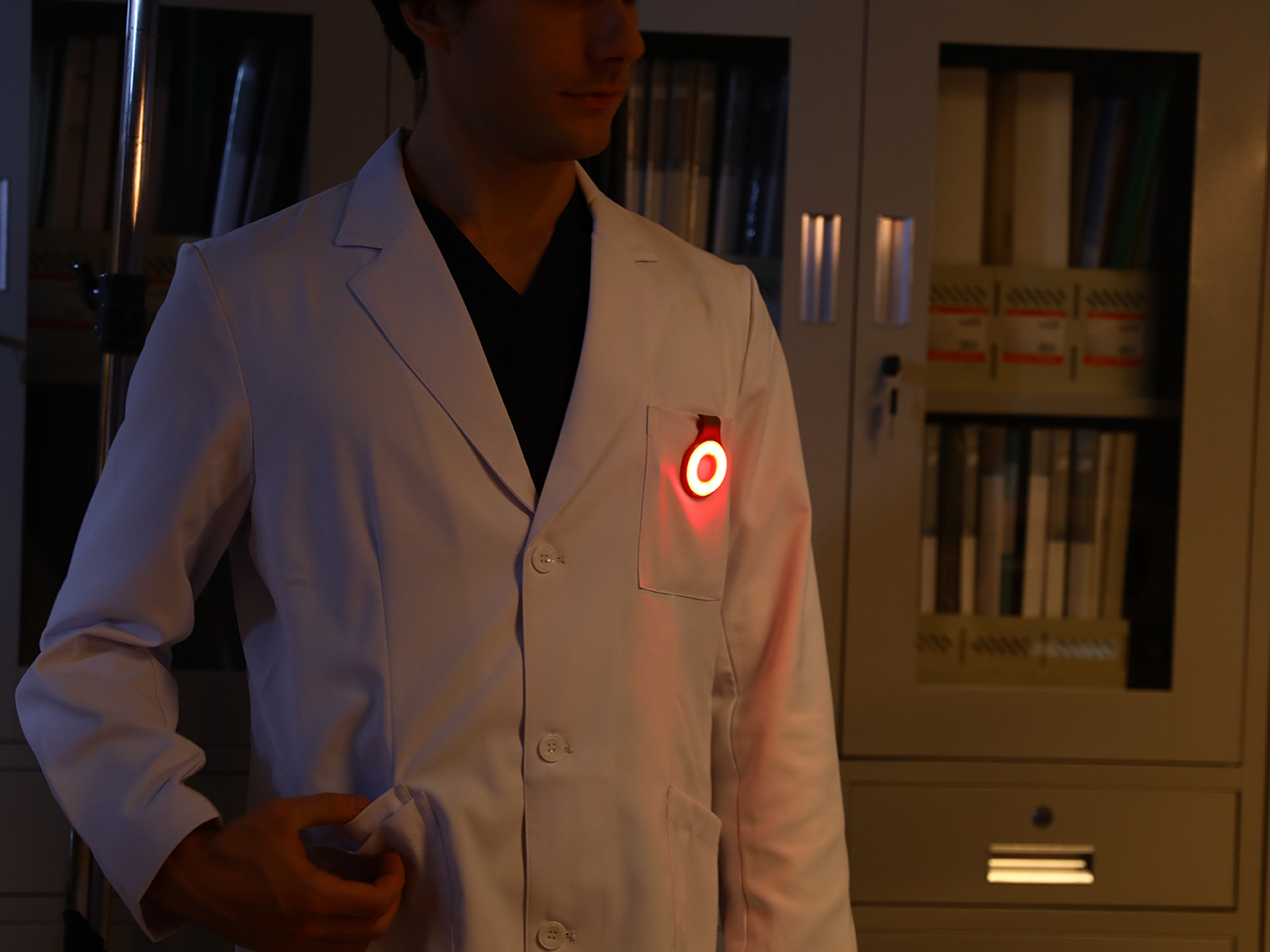
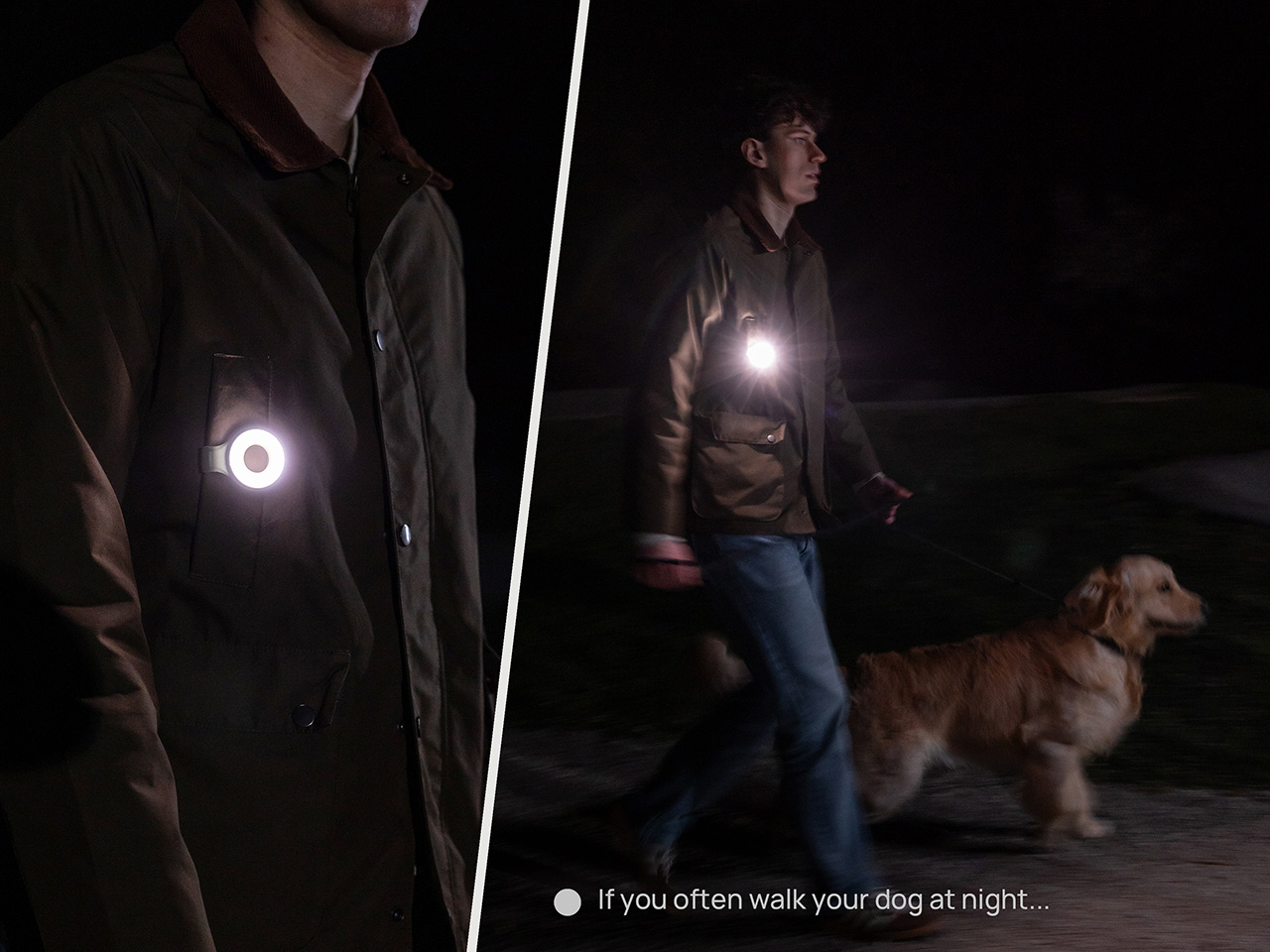
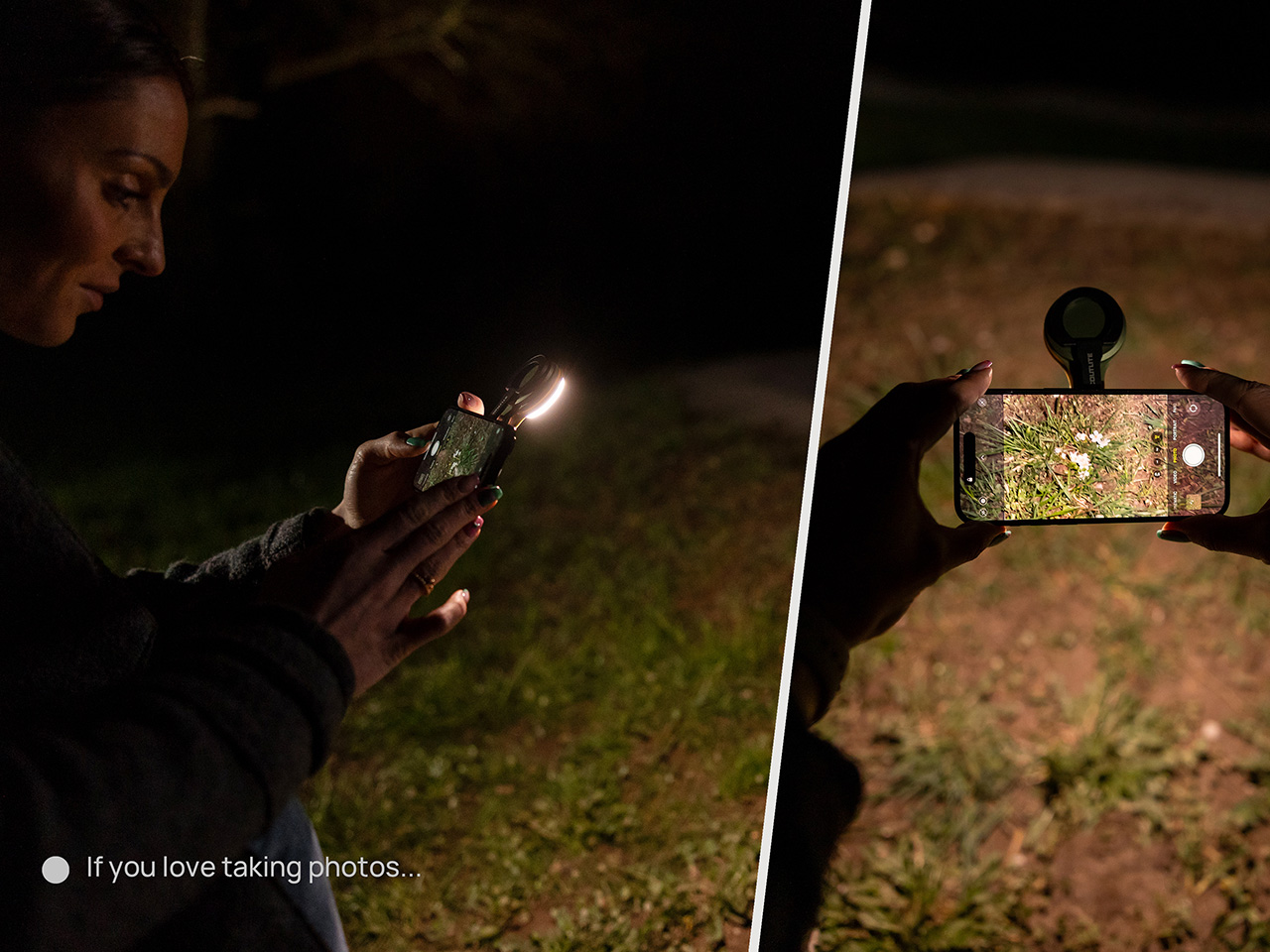
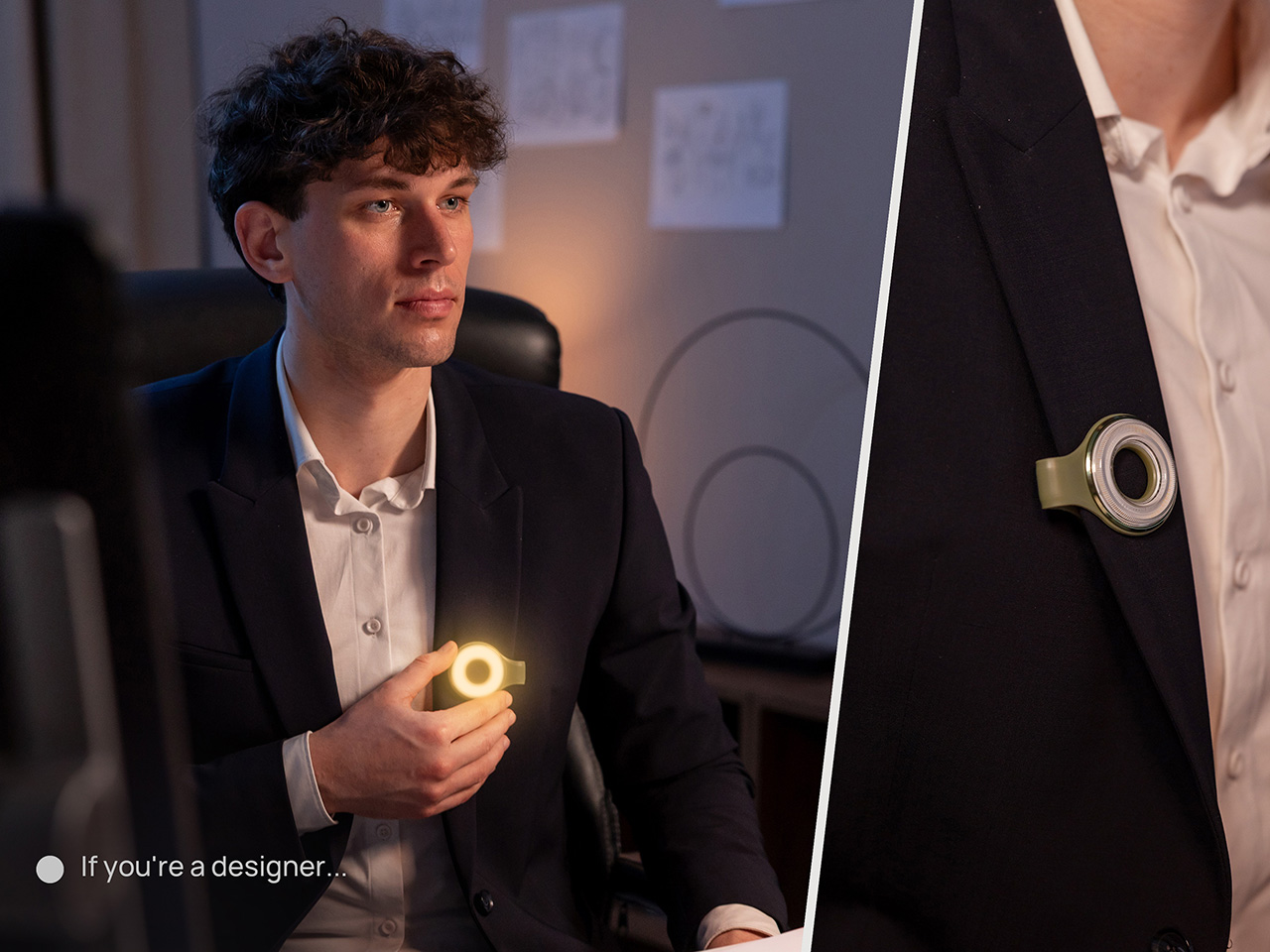
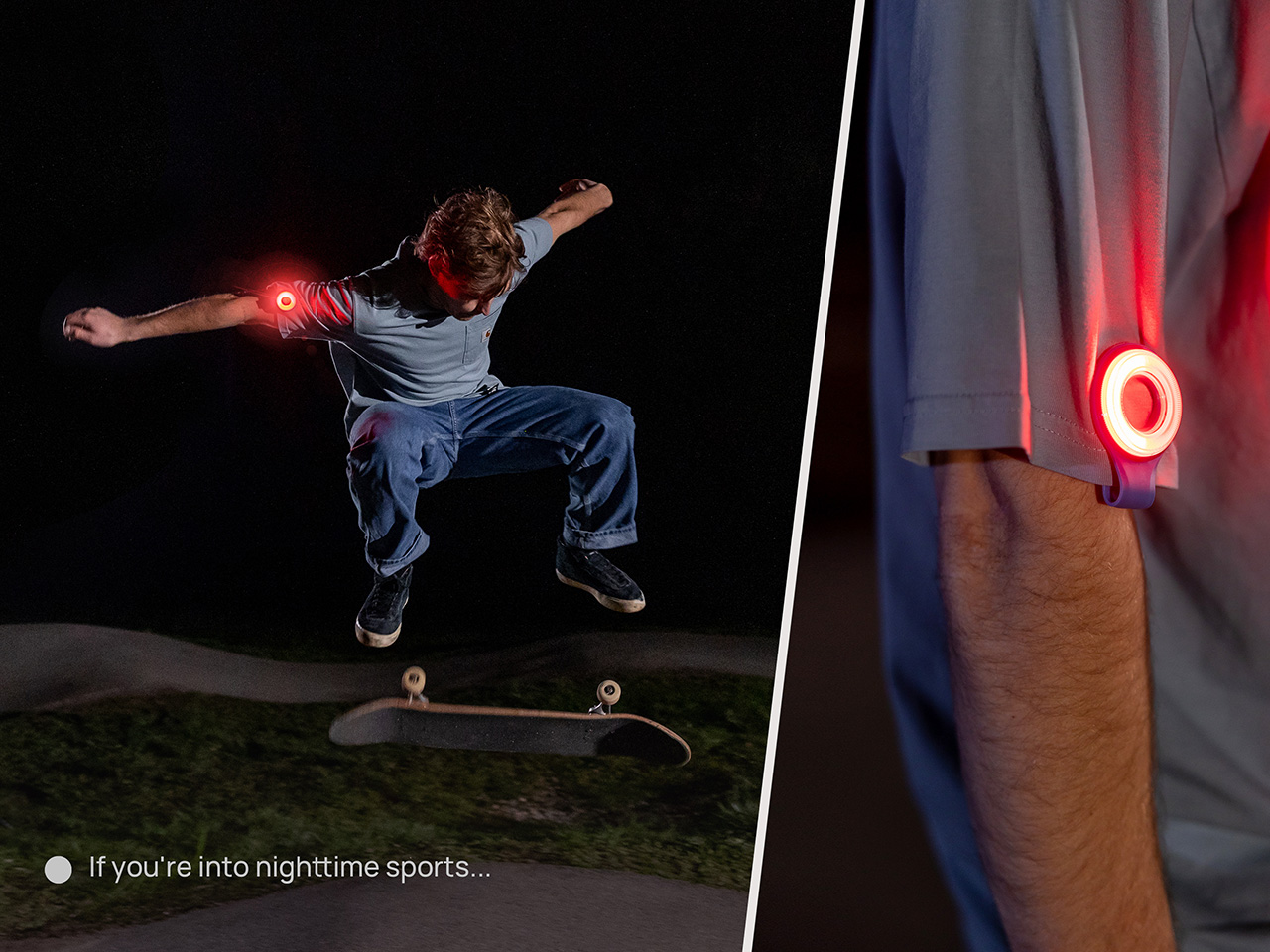
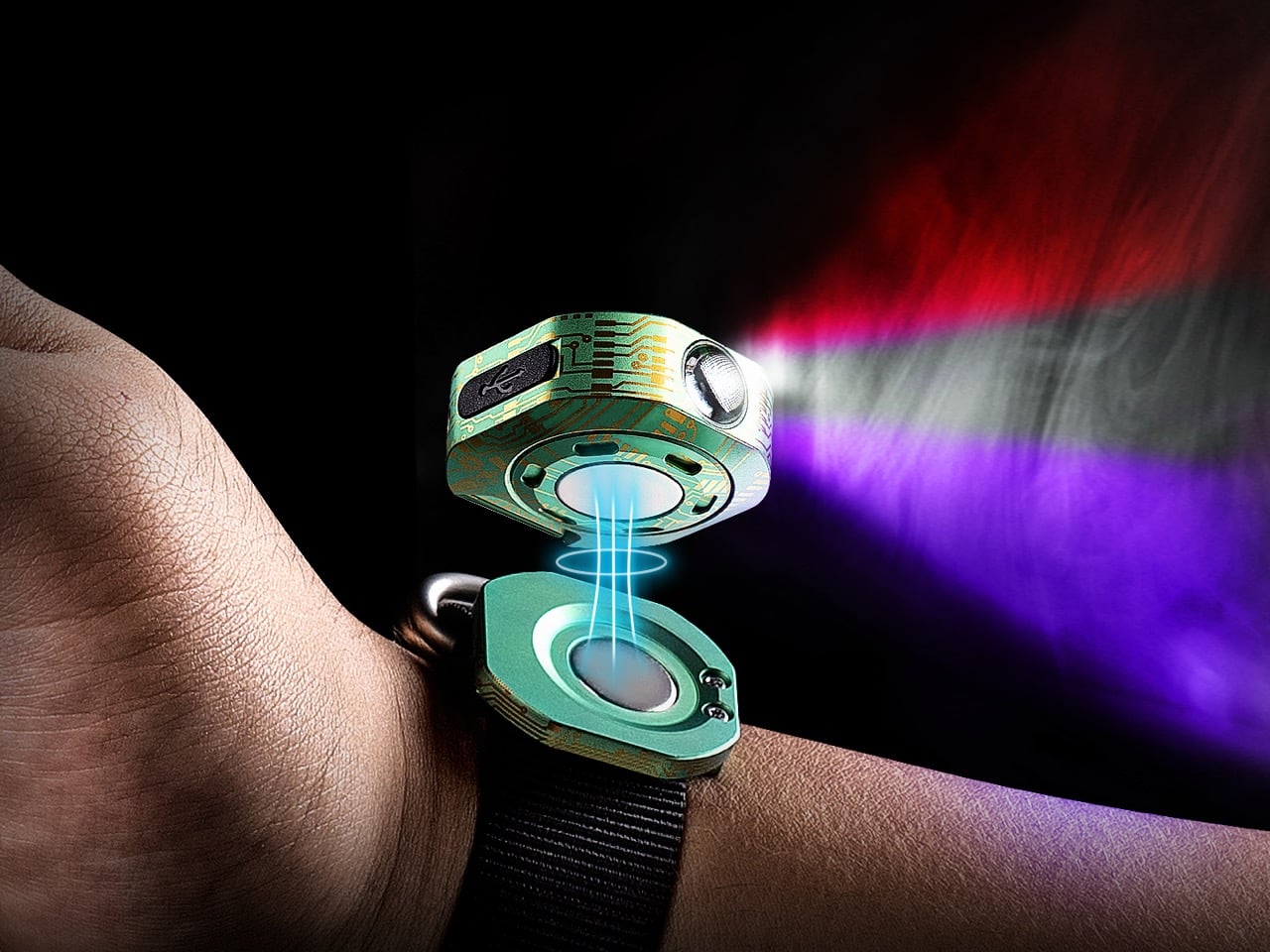
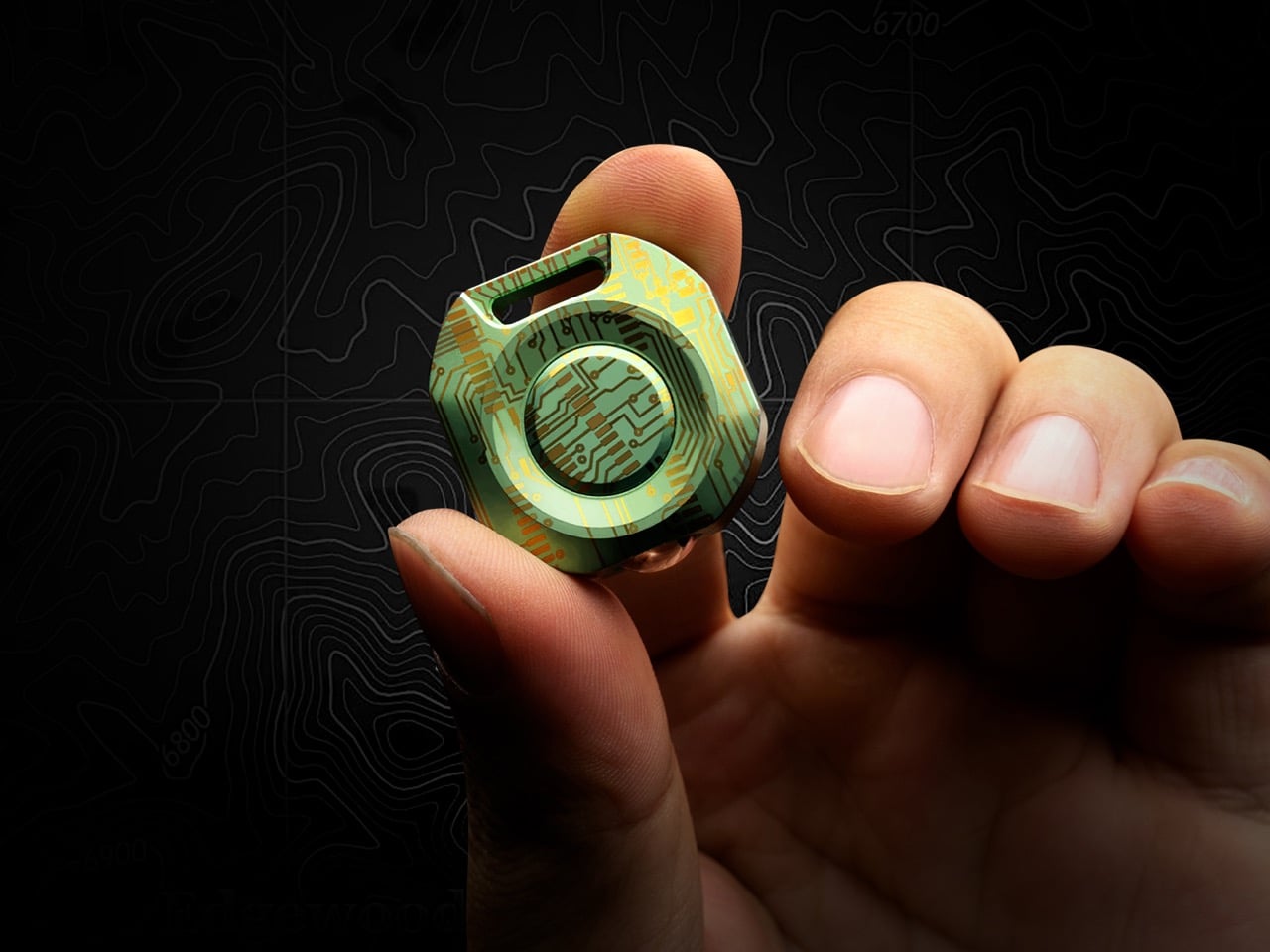
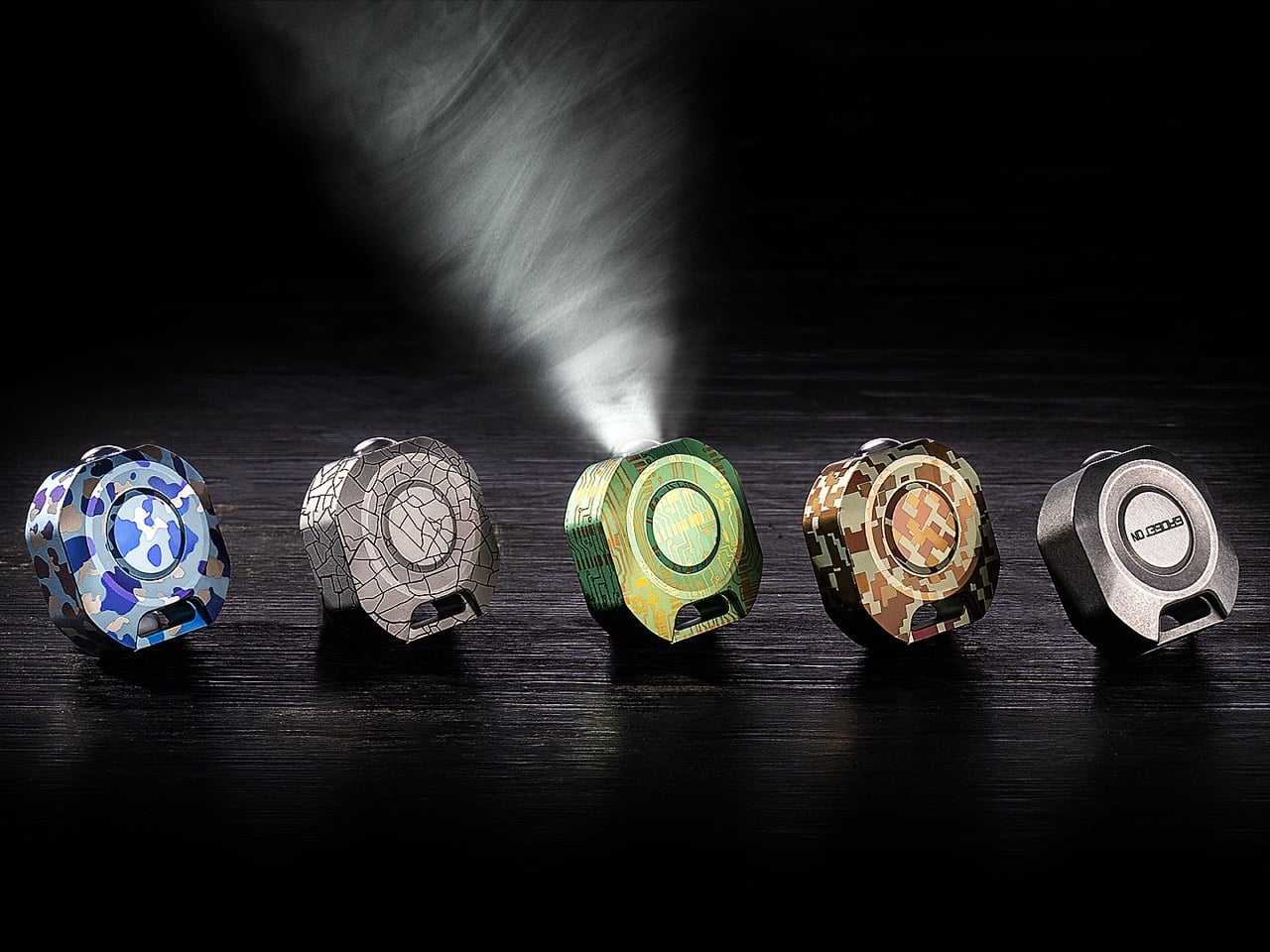
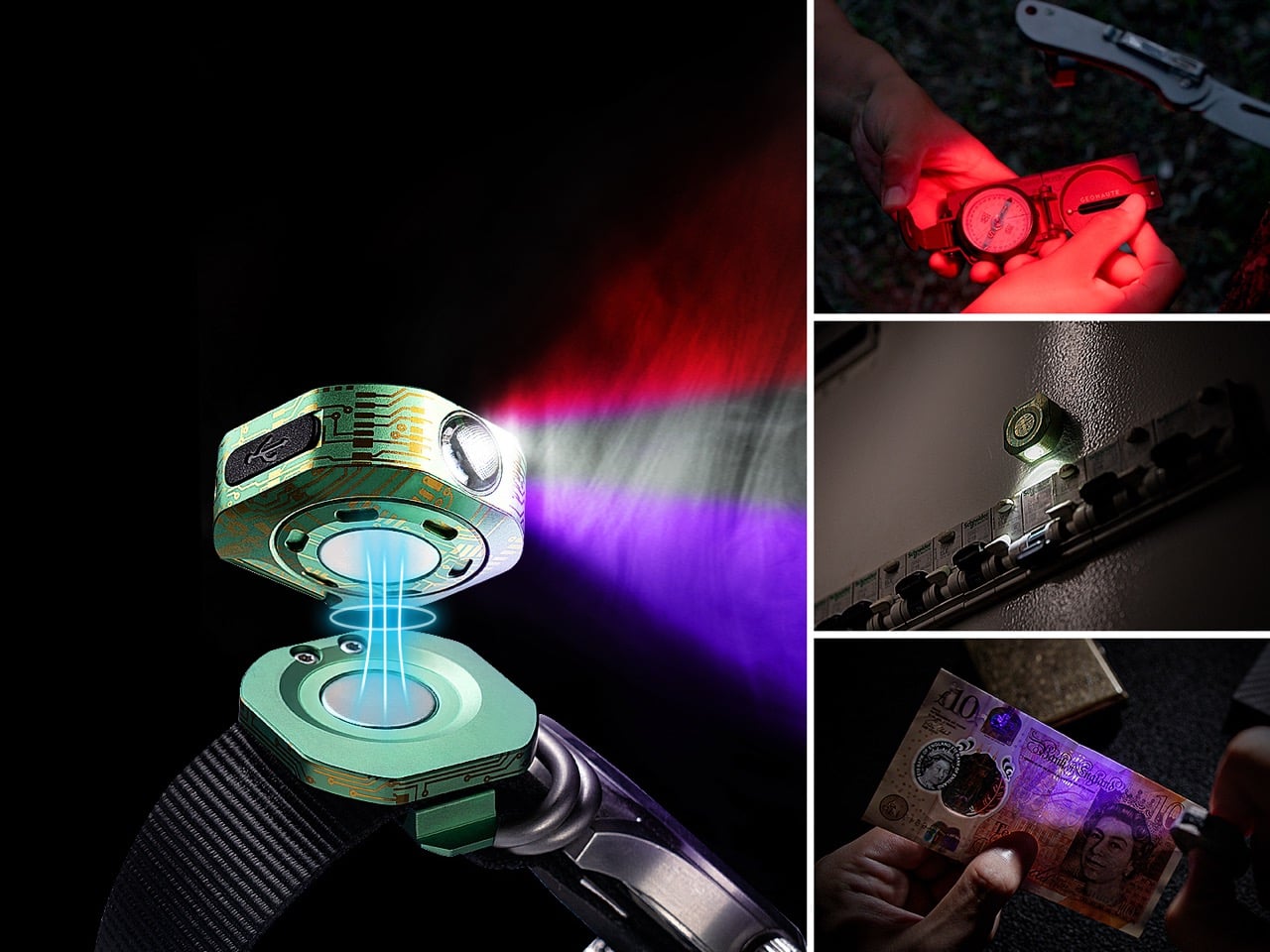
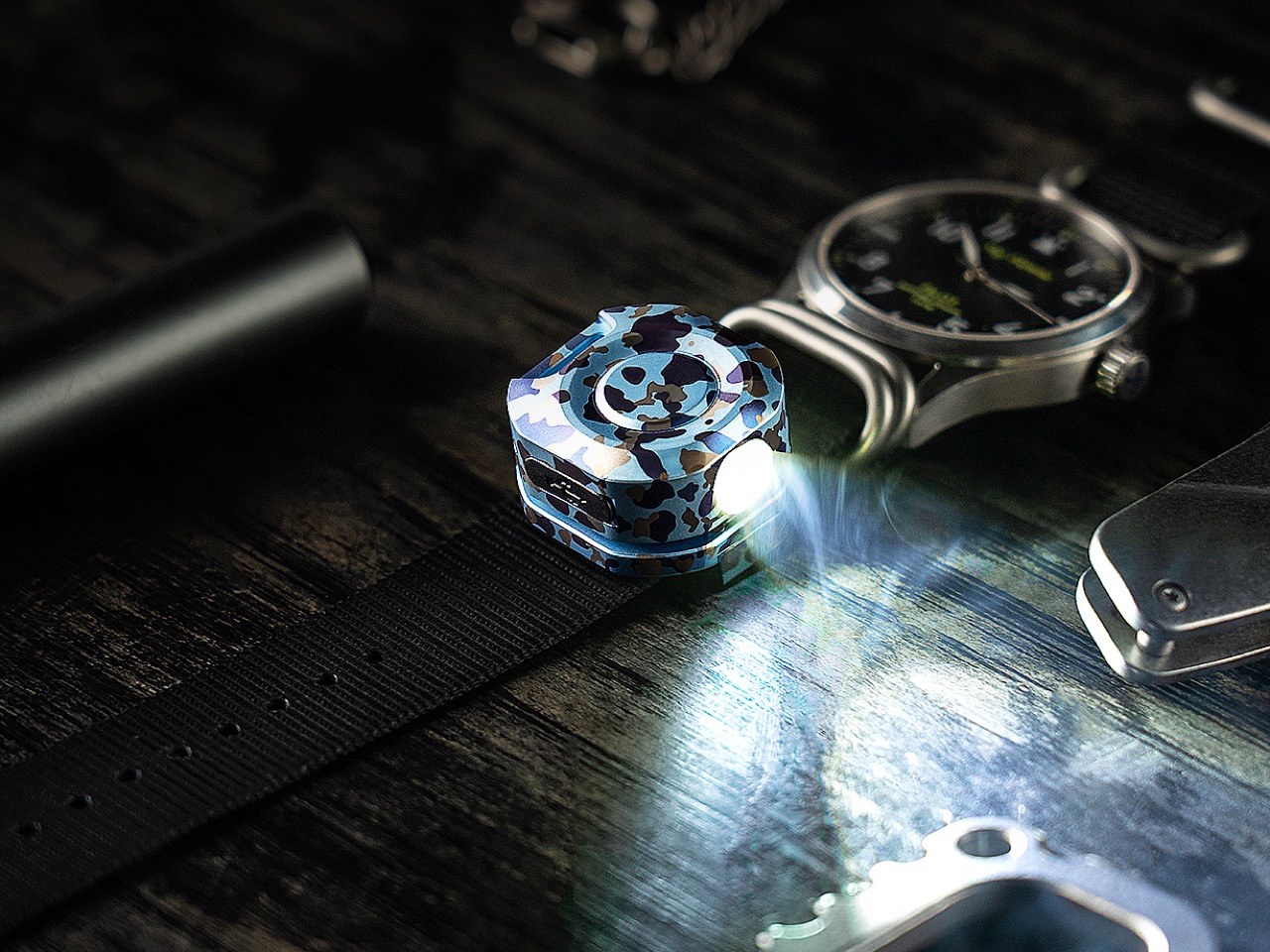
Two photos of SparkO are enough to grasp the concept: a disc-shaped body, a silicone loop that clips and doubles as a kickstand arm, and a circular LED array wrapped in a fine prismatic lens ring. The anodized metal bezel is color-matched to whichever of the four options you pick, Forest Moss, Basalt Black, Glacier Blue, or Canyon Clay. It clips to a bag strap or jacket, snaps magnetically to a MagSafe iPhone, props upright on the optional ring stand, or rides on clothing as a hands-free wearable. That range of deployment is the whole argument for SparkO, and ScoutLite backs it with 300 lumens, three color temperatures, four brightness levels, a red light mode, CRI 95+ rendering, a 14.5-hour runtime, and USB-C charging. At a campsite, a workbench, or a dim restaurant table, the light adapts to the situation rather than demanding you adapt to it.
The disc form is a real departure from the cylindrical tube that has defined flashlight design for over a century. A cylinder forces you to hold it; a disc invites you to wear it, clip it, or set it down facing wherever light needs to go. The silicone loop is soft enough to flex over thick fabric and structured enough to hold position once seated, its geometry doubling as the kickstand arm when the magnetic ring base enters the picture. The circular LED face is surrounded by a concentric prismatic lens ring that distributes light broadly and evenly, borrowing visual language from photography ring lights rather than from tactical torches. That framing signals the breadth of SparkO’s intended audience: the tradesperson and the camper, but equally the commuter, the hobbyist, and the photographer working in low light.
Clipped to a chest pocket or jacket collar, SparkO illuminates whatever your hands are working on without requiring you to hold anything, which is the core use case that conventional EDC lights have historically fumbled. Snapped to the back of an iPhone Pro via the magnetic base, it becomes a fill light for close-up photography, turning a phone into something resembling a professional lighting rig for the cost of a decent lunch. The ring stand converts the same unit into a bedside reading lamp or a compact task light with a footprint smaller than a drink coaster. Each scenario calls for a different mounting method, and the transitions between them take seconds rather than a setup ritual. Four modes sounds like a marketing stretch right up until you’ve run through all of them in a single day, and then it starts to feel like the accurate count.
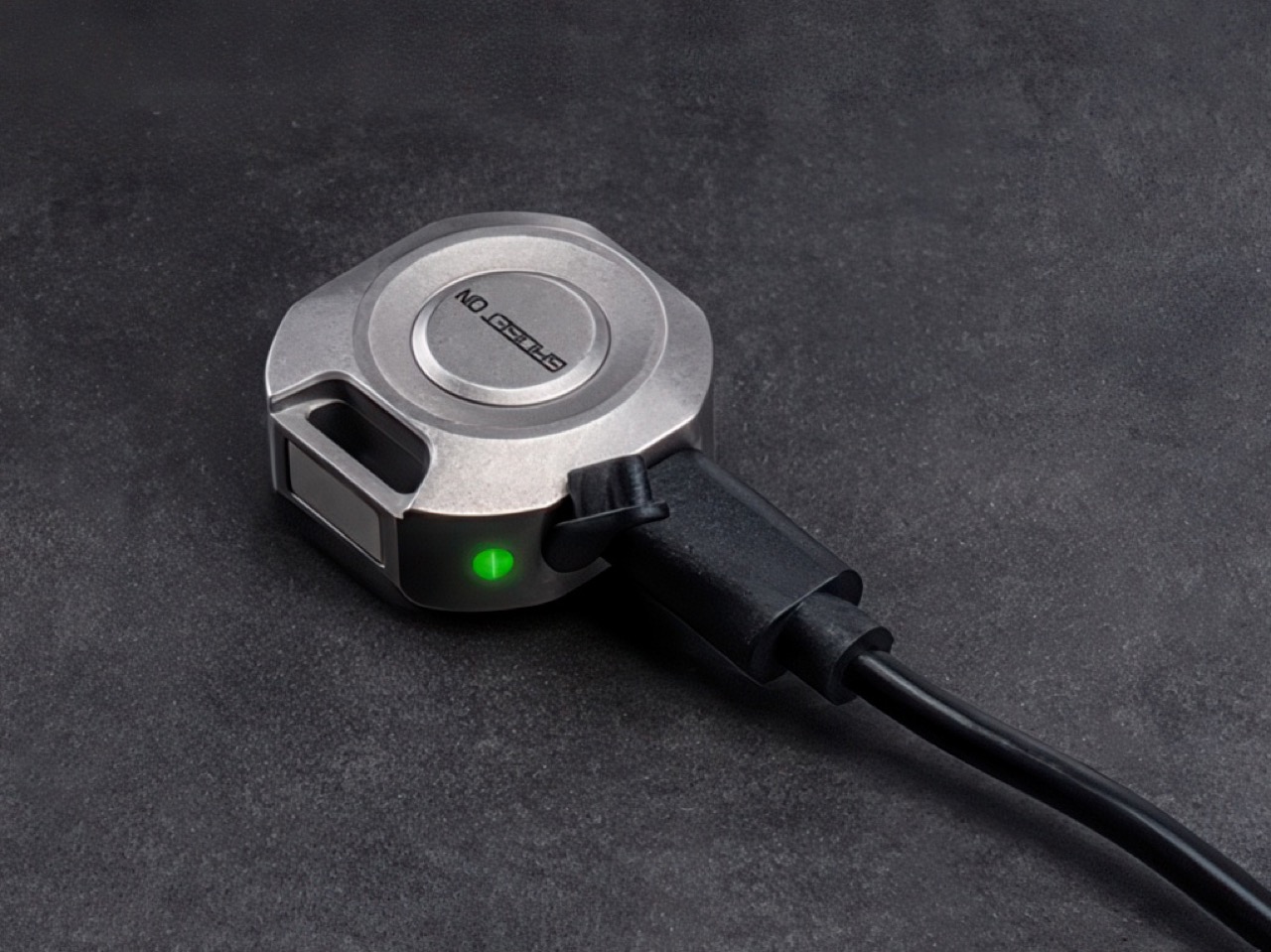
Three hundred lumens is the right range for a light this size: capable outdoors, tolerable at close range, and not so aggressive that it becomes a problem in tight spaces. The three color temperature options matter more than the lumen figure in daily use, covering the gap between a warm amber reading mode and a cooler beam suited to detailed work. CRI 95+ color rendering is what sets SparkO apart from most of the EDC lighting field, reproducing colors accurately enough that the light reads close to natural daylight, which makes a genuine difference for craftspeople and photographers. The red mode preserves night-adapted vision on a trail or at a campsite, a small but real addition for outdoor use. Runtime at 14.5 hours and USB-C charging put SparkO on a weekly recharge cycle with a cable it shares with everything else in a modern carry kit.
ScoutLite has built a product that lands on the right side of the three virtues the EDC community consistently responds to: compact, accessibly priced, and solving a problem the existing field handles poorly. The Red Dot Award carries credibility for an audience that pays attention to such things, while the $210,000 Kickstarter result is a harder signal to argue with, because crowdfunding backers are betting on a design that communicates its own value clearly enough that waiting feels unnecessary. At $45.99, the decision practically makes itself, especially given that the clip, the magnet, the stand, and the wearable mode collectively cover more scenarios than most EDC kits manage with multiple dedicated tools. Whether ScoutLite follows this up with accessories or a higher-output variant, SparkO sets a credible benchmark for what a wearable EDC light should cost, weigh, and do. The category has needed something this considered for a while.
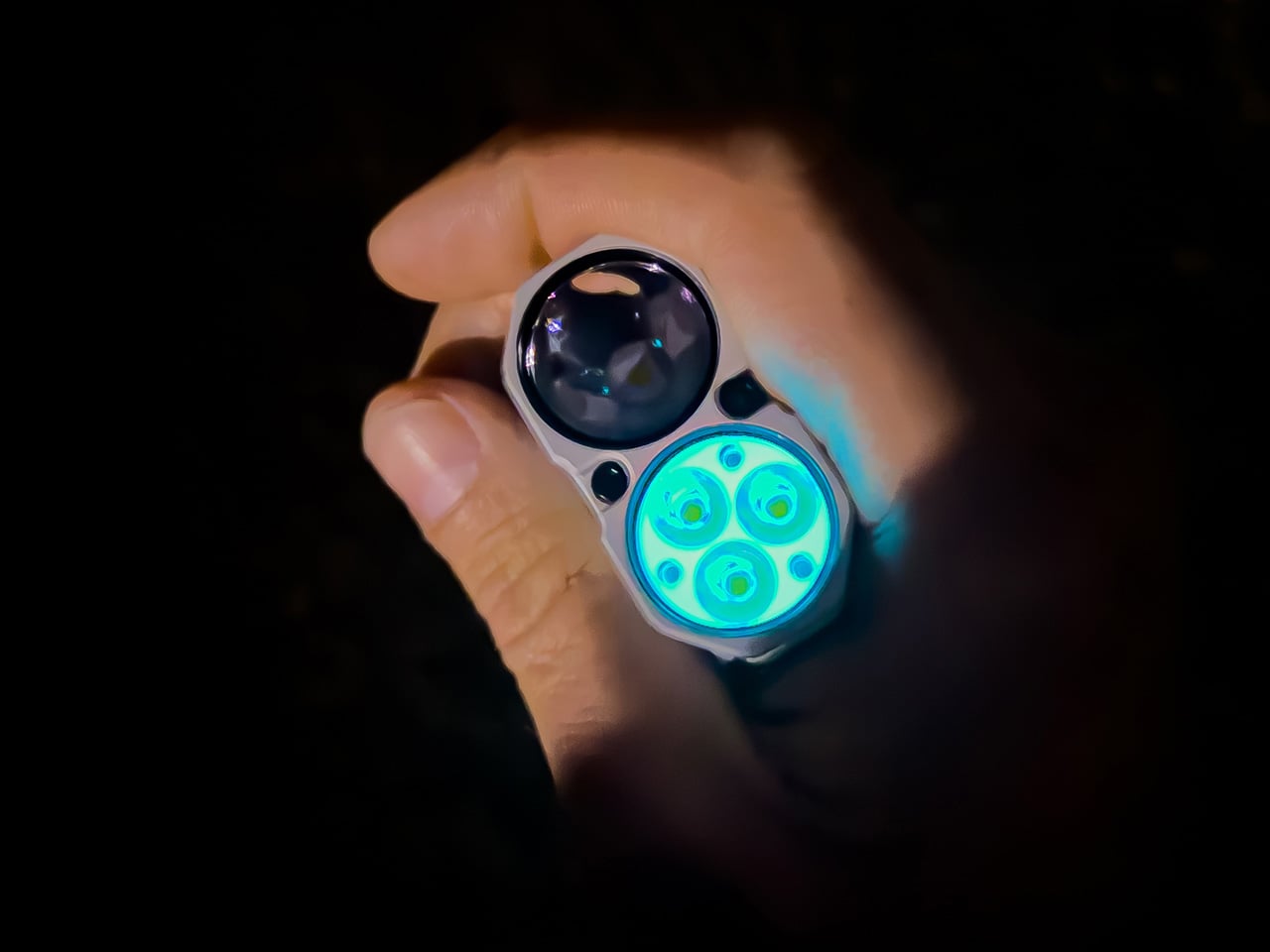
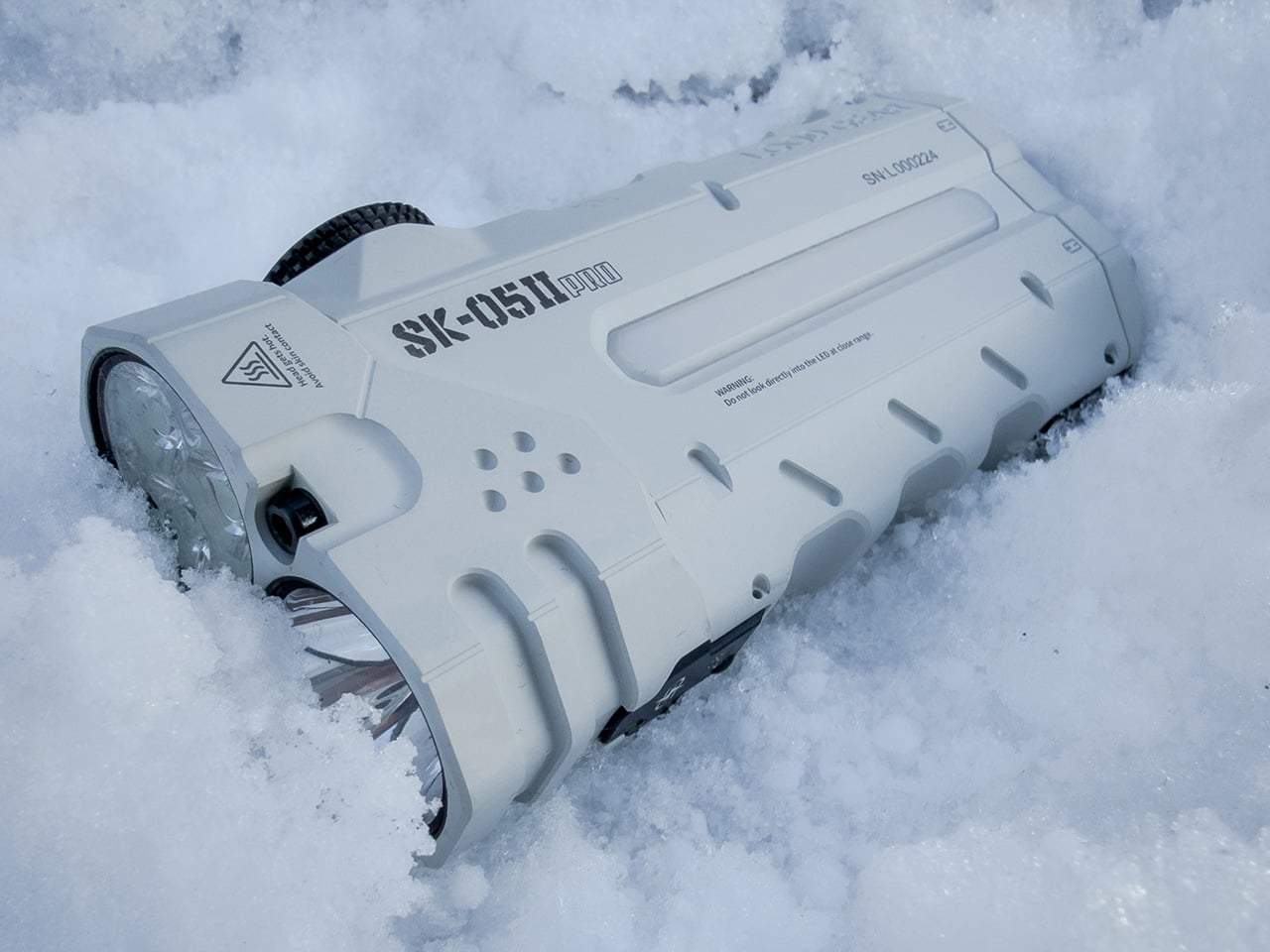
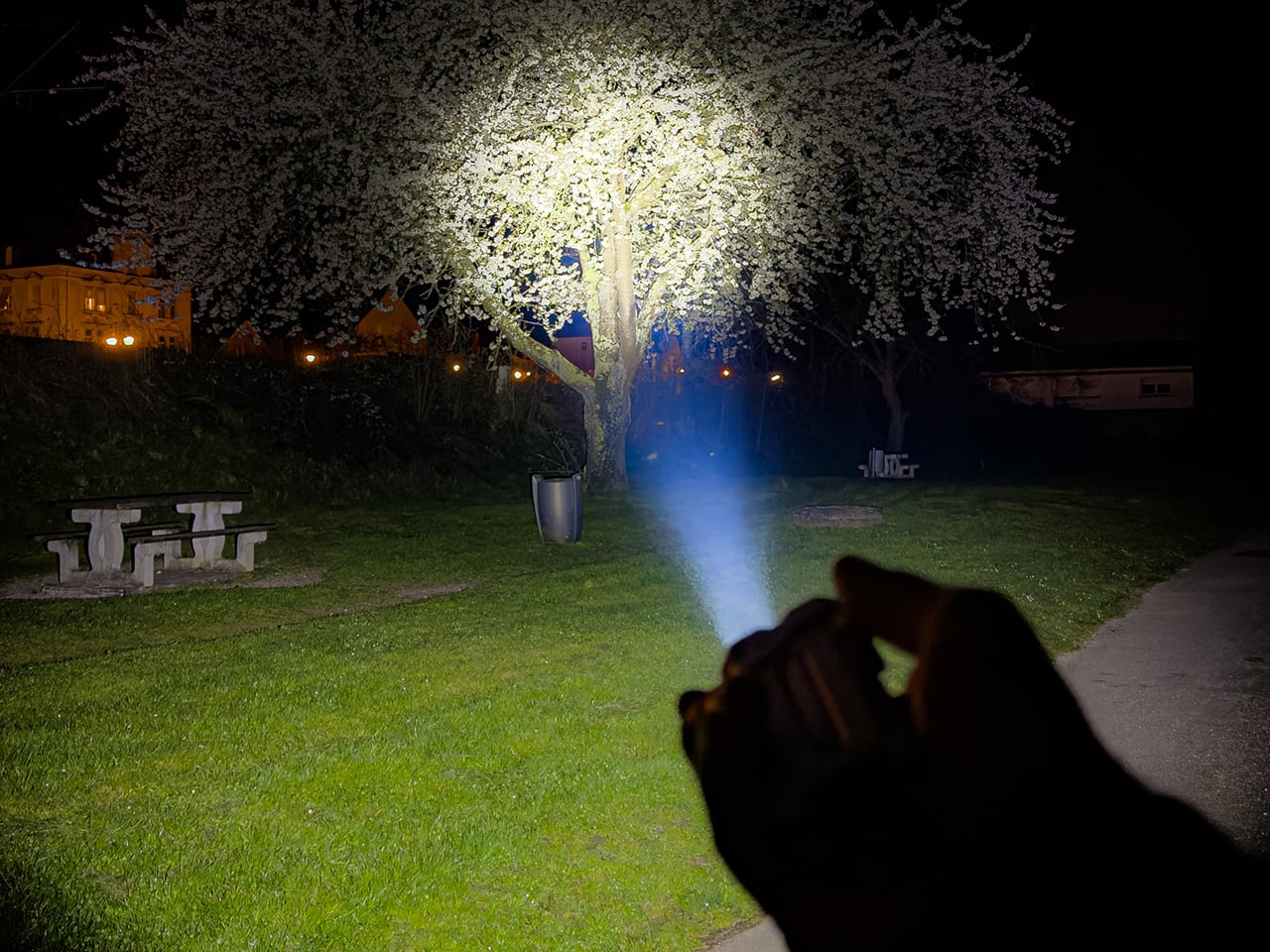
Flashlight manufacturers love to brag about lumen counts, but raw output means very little when the beam profile can’t match the task at hand. A spotlight punches distance but leaves your peripheral vision in the dark. A floodlight washes everything in even brightness but can’t reach past thirty meters. LOOPGEAR’s SK05 Pro 2 solves this by housing both emitter types in a single body, controlled independently through a Rose Gold rotary dial that snaps between modes with mechanical precision. This is the second generation of their dual-light platform, and the performance gap between versions is staggering. Spotlight output jumped 92 percent, from 1300 lumens to 2500, while the floodlight climbed 24 percent to 3800 lumens.
The SK05 Pro 2 measures 106mm long, 47.8mm wide, and 22.5mm thick, a form factor that sits somewhere between a smartphone and a multi-tool. Two 18650 cells run in parallel, giving you 8000mAh of capacity that charges devices at up to 12 volts, a rare feature in the EDC flashlight category. LOOPGEAR offers two emitter choices for the floodlight: Nichia 519A for high color rendering or RE-SF18-W for higher raw output. Both versions use the same SFT42R LED for the spotlight channel. The entire package shares the same machined metal body, IP68 waterproofing, magnetic base, and integrated sidelight with true white and RGB modes. The body ships in black or white MAO (matte anodized) finishes, and the overall design language leans heavily into tactical geometry with angular cutouts and textured gripping surfaces.
The rotary dial controls everything, and its mechanical feedback feels deliberate in a way touchscreens and membrane buttons never will. Twist clockwise and you cycle through the spotlight’s four brightness levels: 40 lumens for map reading, 320 for general navigation, 950 for serious illumination, and a 2500-lumen turbo that steps down after 40 seconds to prevent overheating. Twist counterclockwise and you access the floodlight’s range, from a 50-lumen low that won’t destroy your night vision to the 3800-lumen turbo that lights up a campsite like midday. Hold the dial for two seconds and both emitters fire simultaneously, combining for 5000 lumens of output that reaches 410 meters in the spotlight channel. The dial itself is CNC-machined with knurling that grips even when wet, and the detents are firm enough that accidental mode changes in a pocket or bag are nearly impossible.
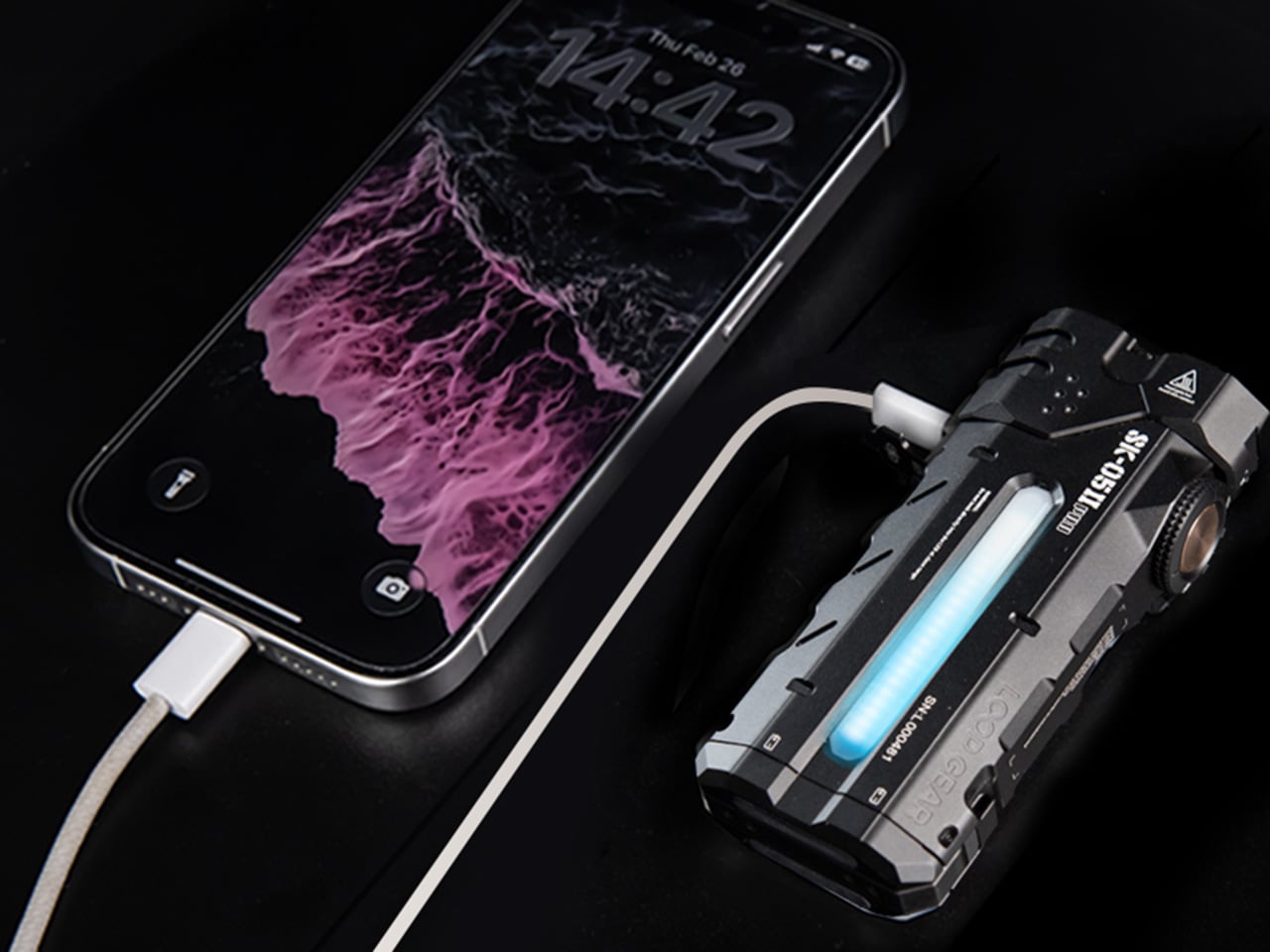
Two 18650 batteries slide into the body from the bottom, both oriented the same direction thanks to the parallel wiring configuration. This setup has practical advantages beyond the 8000mAh total capacity. If one cell dies mid-trip, the light continues running on the remaining battery, albeit at reduced runtime. The cells LOOPGEAR includes are standard 4000mAh units, meaning replacements are easy to source. The USB-C port sits on the side, protected by a magnetic metal flap that seals tight enough to maintain the IP68 rating. Charging happens at up to 22 watts, which fills both batteries in roughly three hours. What separates this from most rechargeable flashlights is the powerbank output capability, specifically the ability to deliver 5V, 9V, or 12V depending on what your device negotiates. Most EDC lights with powerbank features max out at 5V, which limits you to slow-charging phones and basic USB accessories. The SK05 Pro 2 can fast-charge a laptop, power a USB-C monitor, or run higher-voltage gear in the field.
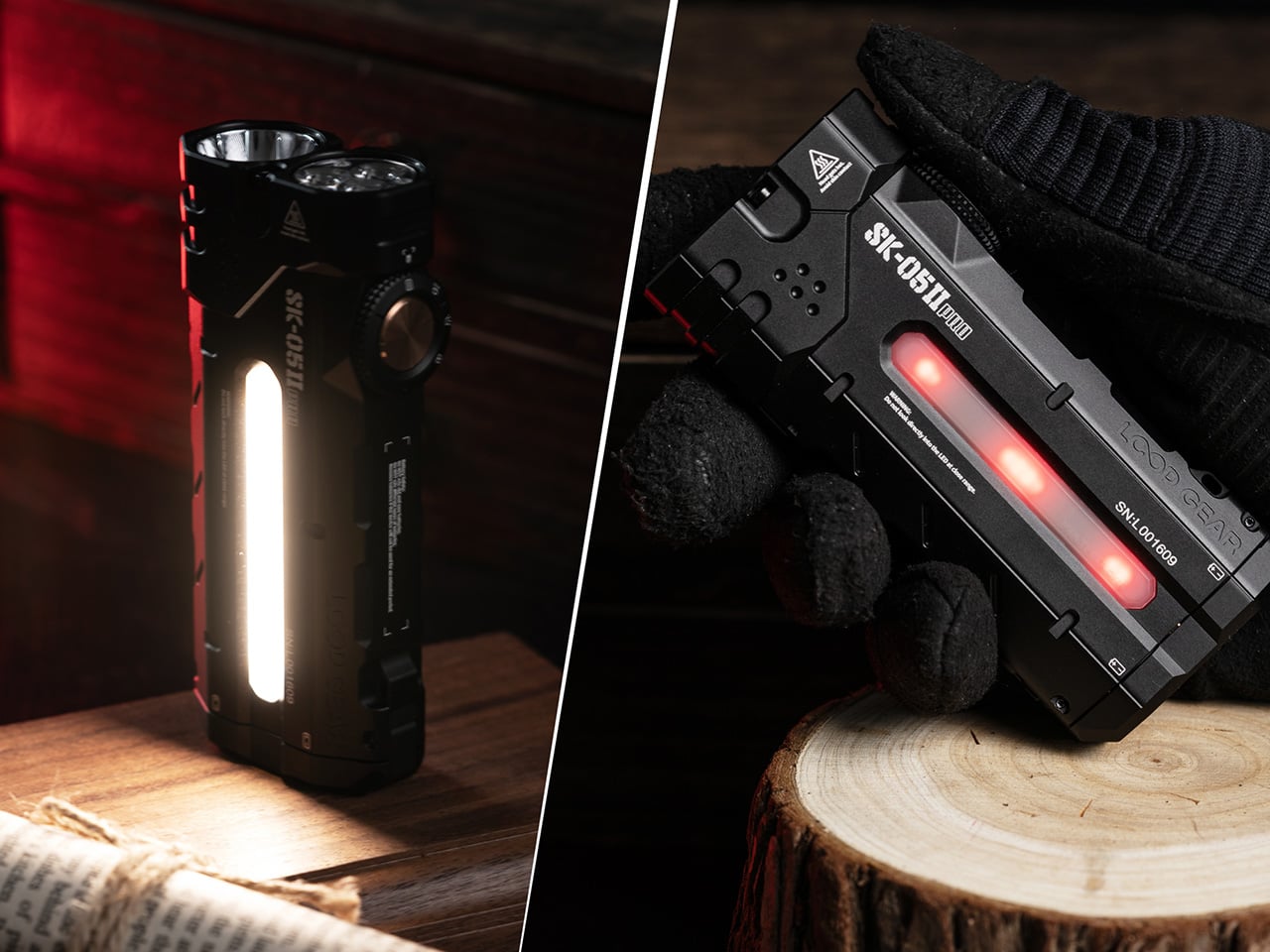
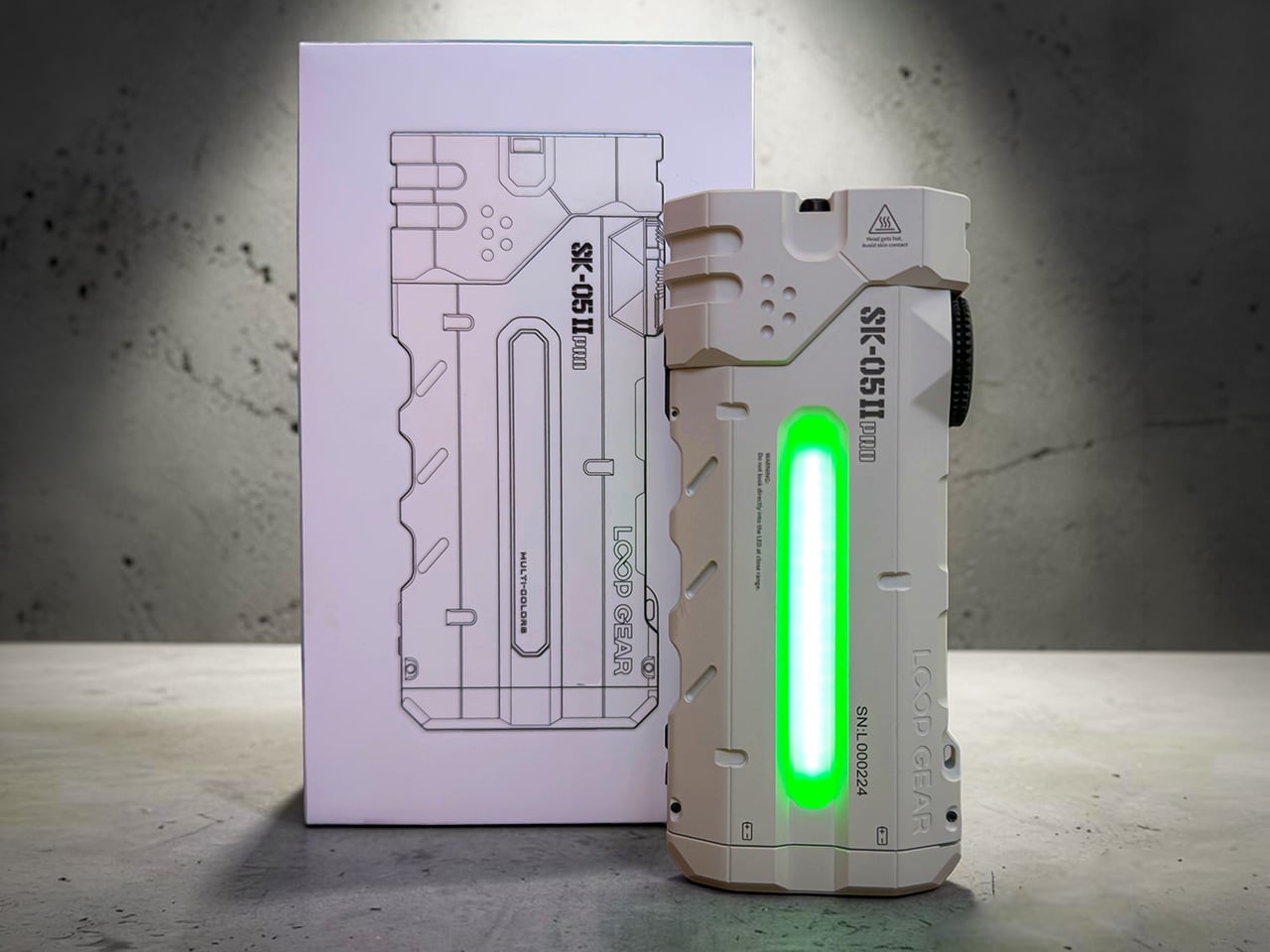
The sidelight runs along the length of the body, a COB (chip-on-board) LED strip that outputs white light in four brightness levels or switches to RGB mode for signaling and ambient lighting. LOOPGEAR upgraded this to a high-CRI emitter in the Pro 2, and the difference is immediately visible when you’re working on anything that requires color accuracy. The white mode ranges from a sub-lumen moonlight setting that lasts over 100 hours to a 120-lumen high that floods your immediate workspace without the harshness of the main emitters. The RGB mode cycles through red, green, and blue, useful for preserving night vision, map reading, or just making the light visible in a packed bag. The sidelight activates through a separate button near the dial, so you can run it independently or combine it with either the spotlight or floodlight for layered illumination.
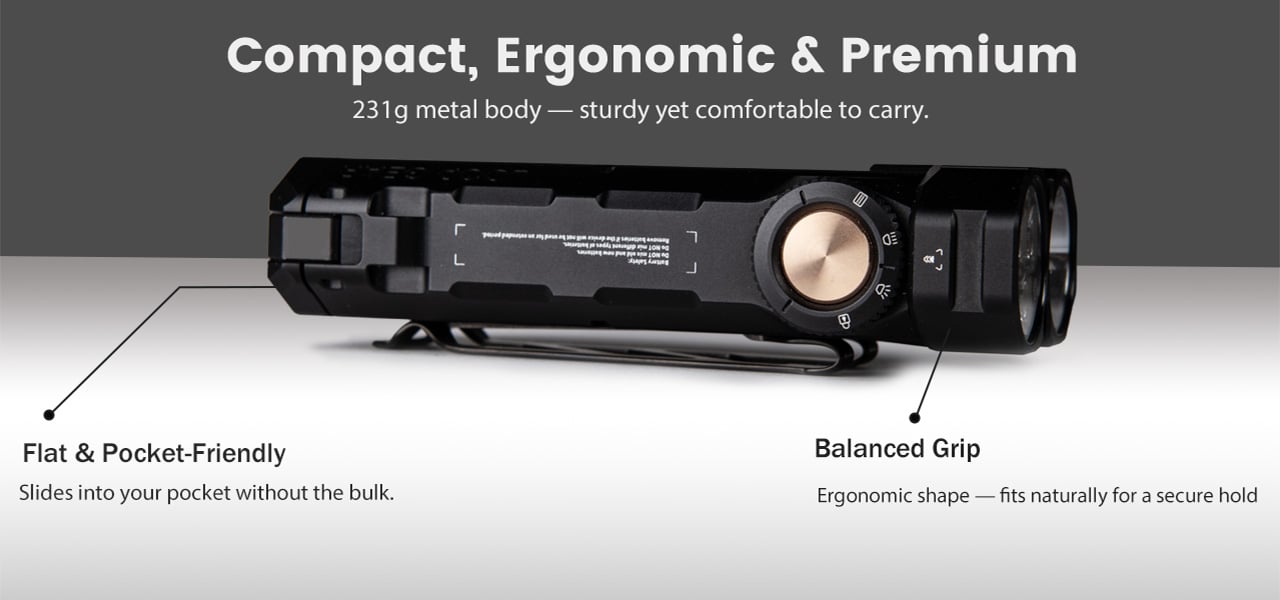
LOOPGEAR machined the body from metal (likely aluminum based on the weight-to-size ratio) and applied a matte anodized finish that resists scratches and provides grip without being aggressively textured. The corners are chamfered, the sides feature cutouts that reduce weight and add visual interest, and the overall aesthetic skews tactical without crossing into mall-ninja territory. A magnetic base sits at the tailcap, strong enough to hold the light vertically on a car hood or toolbox while you work hands-free. The pocket clip along with a separate nameplate mount via screws (included, along with the installation tool), and you can position it in multiple orientations depending on how you carry. At 231 grams with batteries loaded, this sits heavier than a typical EDC pen light but lighter than most full-size tactical flashlights, and the flat profile distributes that weight in a way that disappears in a cargo pocket or bag.
The competitive landscape for dual-emitter flashlights is sparse, mostly because the engineering complexity tends to drive prices into the $200-plus range where brands like Acebeam and Nitecore operate. LOOPGEAR positioned the original SK-05 Pro around $150, and early indications suggest the Pro 2 will land in similar territory despite the significant performance upgrades. That puts it well below premium dual-channel lights while offering comparable (in some cases superior) output and feature density. The closest analog is probably the Acebeam E70, which offers similar throw and flood capabilities but weighs more, costs more, and lacks the powerbank voltage flexibility. The Sofirn IF22A delivers comparable spotlight performance at a lower price, but it’s a single-emitter design with no floodlight option and no powerbank functionality.
The SK-05 II Pro currently retails at $113.98, down from the original $159.99 list price, a $46 discount that positions it aggressively below the dual-channel competition. Comparable lights from Acebeam and Nitecore typically land in the $180 to $200 range, and most lack the multi-voltage powerbank capability that makes the LOOPGEAR viable as a backup charging solution for higher-draw devices. LOOPGEAR ships the light with both 18650 cells, a USB-C charging cable, pocket clip hardware, and installation tools, so you’re field-ready out of the box. The company’s track record with the original SK-05 Pro and the LOOPDOT platform suggests consistent firmware updates and responsive customer support, which matters when you’re trusting a single device to handle both illumination and emergency power in remote environments. Whether this becomes your primary EDC light depends on whether you value dual-emitter flexibility over the slimmer profile of a traditional cylindrical flashlight, but at this price point with this feature set, few competitors deliver comparable performance per dollar.
EDC gear is converging. The knife becomes a multitool, the multitool becomes a bit driver, the bit driver becomes a pry bar, and somewhere in the middle someone bolts on a bottle opener. The flashlight, meanwhile, has resisted this trend longer than most categories. A light is a light. You charge it, you carry it, you press a button, photons happen. The addition of a USB port to charge your phone feels like a gimmick until you’re three days into a camping trip and your power bank dies at 11 PM. Then the flashlight that can push 15 watts back out through USB-C stops feeling like feature bloat and starts feeling like the obvious move the entire industry should have made years ago.
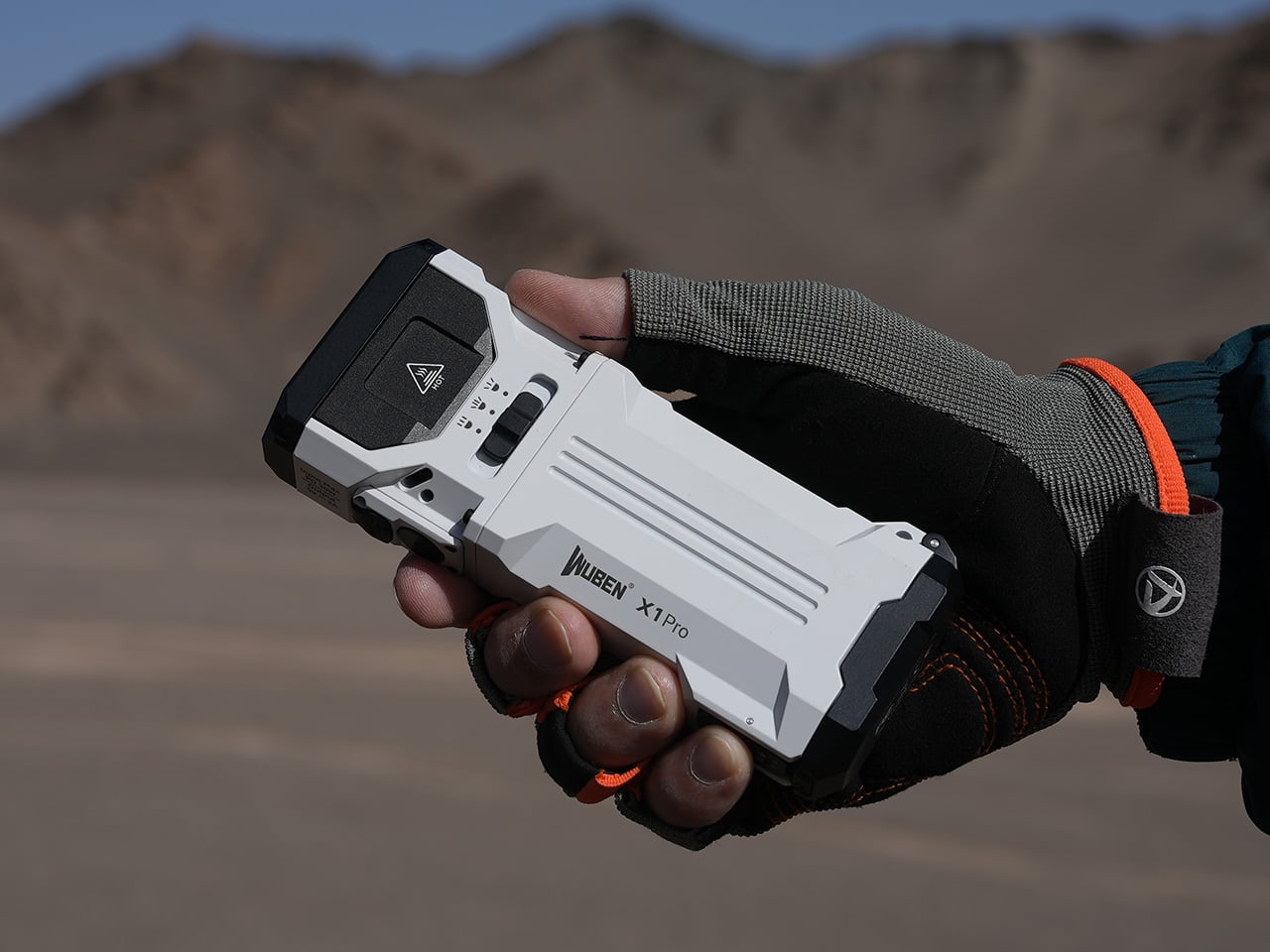
The Wuben X1Pro carries two 21700 Li-ion cells (4,800mAh each, user-replaceable, tool-free access) that deliver light output and device charging through a 30W input, 15W output PD system. Peak output hits 12,300 lumens across five Cree XHP50.3 emitters: one HI (high intensity, no dome) for spot throw, four HD (high density, domed) for flood coverage. A physical three-position slider lets you activate spot, flood, or both channels simultaneously without cycling through modes. Active cooling via a waterproof removable fan sustains 3,000 lumens for 1.8 hours, a threshold most non-cooled EDC lights hit for maybe 90 seconds before thermal management kicks in. Wuben machines the body from aluminum alloy, anodizes the black sections, die-casts the white sections, and sets the whole thing in a flat-tube form factor (59.6mm wide, 29.5mm thick, 138mm long) that rides in a pocket the way a good fixed blade rides on a belt.
Active Cooling: The Performance Difference That Actually Matters
Most high lumens EDC flashlights marketing themselves as “high output” can hold their advertised lumen count for roughly the time it takes to walk from your car to your front door. Thermal stepdown kicks in fast because the LED and driver generate more heat than a pocket-sized aluminum body can dissipate passively. The light throttles itself to prevent component damage, and what started as 10,000 lumens drops to 2,000 or less within two minutes. This limitation has defined the entire category for years. Manufacturers chase peak numbers for the spec sheet, enthusiasts make peace with the reality that sustained brightness requires a larger light, and everyone accepts the compromise. Active cooling fans exist in the flashlight world, but they’re almost exclusively found in large, heavy units designed for search-and-rescue or industrial use, not everyday carry.
The X1Pro’s waterproof removable fan sustains 3,000 lumens for 1.8 hours, a threshold even the brightest EDC flashlight alternatives can hold for 90 seconds at best before firmware forces a stepdown. The fan uses a modular design, meaning users can replace it without voiding warranty or sending the light back to Wuben. Independent testing from 1lumen.com confirmed sustained output hovering around 2,500 lumens in real-world use, far exceeding what passive cooling can achieve in this size class. Lights like the Astrolux MF09 or Lumintop Mach 4695 offer similar active cooling, but they weigh considerably more and sacrifice pocket carry entirely. As a 21700 flashlight with active cooling baked in, the X1Pro delivers fan-stabilized output in a 383-gram package that still fits in a jacket pocket, cargo pocket, or belt holster. That makes it the only actively cooled EDC light at this price point that you’d actually carry daily.
Dual-Beam System: Three Lights in One Body
Single-beam flashlights force you to choose your compromise upfront. A thrower gives you distance but floods your peripheral vision with darkness. A flooder lights up your immediate area but can’t reach beyond 50 meters. Most users end up carrying two lights or cycling through brightness modes that still don’t address the fundamental beam shape limitation. The problem becomes obvious the moment you’re navigating a trail at night and need both close-range footing visibility and long-distance obstacle awareness simultaneously. Switching between lights or modes breaks your stride, kills your night vision adaptation, and adds friction to a task that should be seamless. A rechargeable power bank flashlight with a genuine dual-beam system solves this at the root.
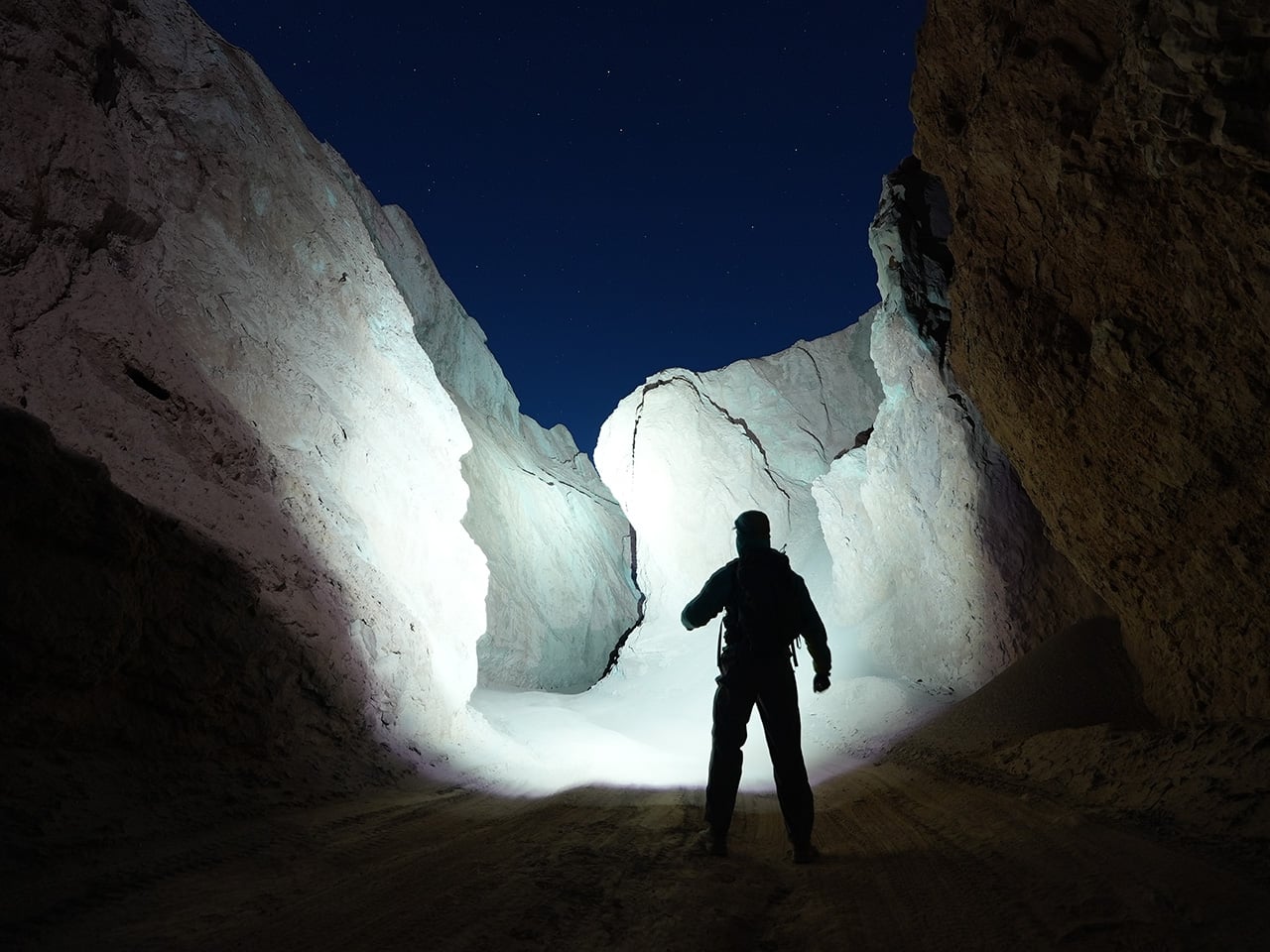
The X1Pro runs 1 x Cree XHP50.3 HI emitter (no dome, high intensity, 3,500 lumens) for spot throw and 4 x Cree XHP50.3 HD emitters (domed, high output, 9,500 lumens combined) for flood coverage. A physical three-position slider on the front face toggles between spot only, flood only, or both channels firing simultaneously for 12,300 lumens peak output. The slider is mechanical, which means it’s faster and more intuitive than digital mode cycling, and it gives you tactile feedback even with gloves on. Each LED has its own reflector, and Wuben uses an orange-peel texture specifically to eliminate hot spots and smooth out the beam pattern. The spot channel delivers 410 meters of throw, while the flood channel covers a wide area for close-to-mid-range work. The ability to run both simultaneously or isolate one channel based on the task makes this genuinely versatile in a way most single-beam EDC lights simply cannot match.
Power Bank Functionality: Emergency Backup When You Need It Most
Carrying a separate power bank makes sense until you’re three days into a camping trip, your phone dies at 11 PM, and you realize your 20,000mAh brick ran out of juice six hours ago because you’ve been charging your headlamp, GPS unit, and backup radio all day. Redundancy in the backcountry matters. A flashlight that can push power back out through USB-C stops being a novelty feature and starts being a legitimate safety layer when you’re operating in environments where a dead phone means no emergency contact, no navigation, and no weather updates. The same logic applies to urban emergencies, power outages, or any scenario where device uptime determines whether you stay informed or go dark.
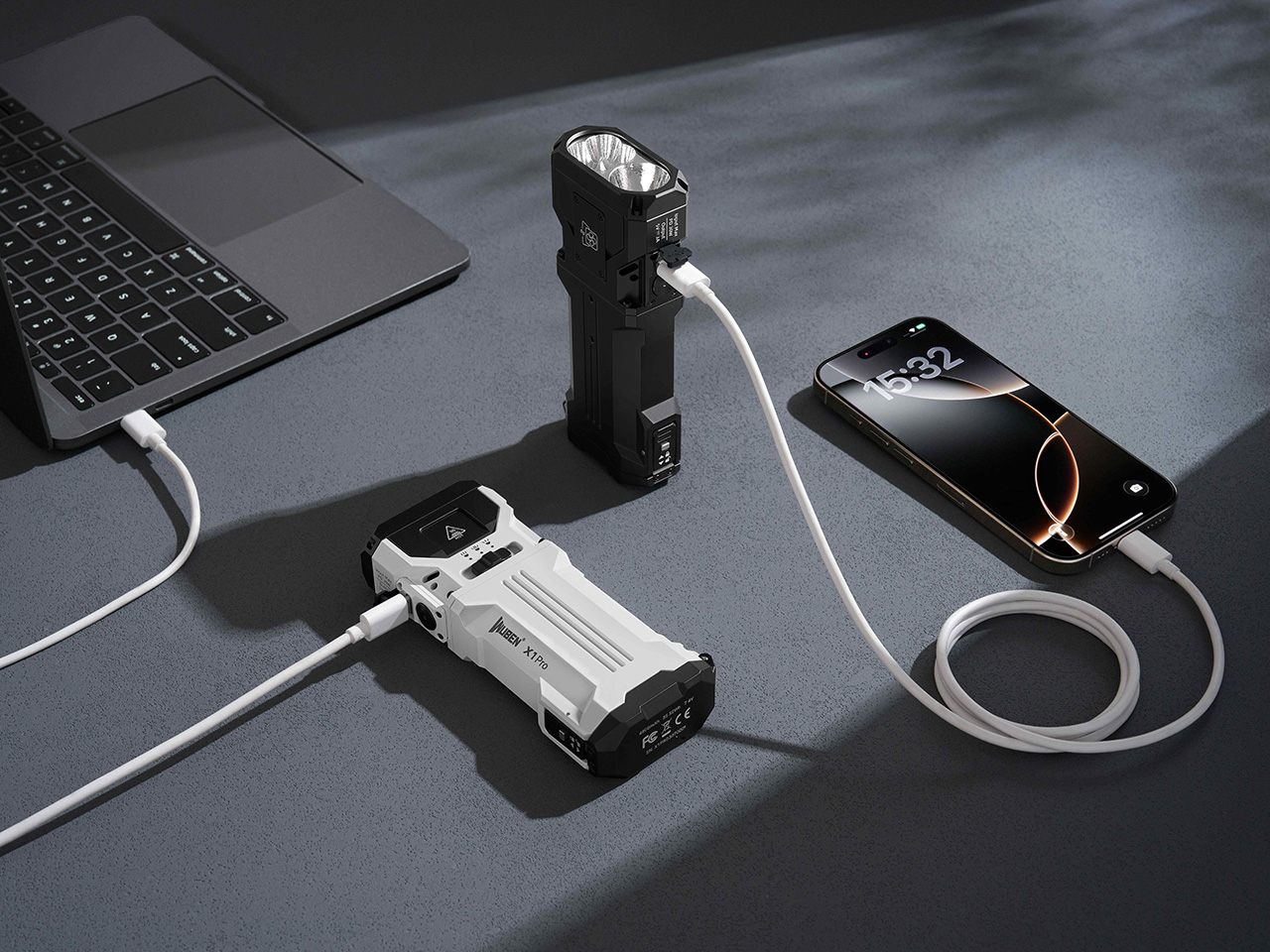
The X1Pro’s dual 21700 batteries deliver 35.52Wh of total capacity and feed a bidirectional USB-C PD system rated for 30W charging input and 15W power bank output. That 15W output is enough to fast-charge most smartphones, tablets, or USB-powered devices at rates comparable to a wall charger. Independent testing from ZeroAir confirmed that with a proper PD power source, the X1Pro charges at 20V and completes a full recharge in roughly 2.5 hours. On a standard 5V source, charging takes just over five hours, which is still reasonable for overnight recovery. The ability to swap out the 21700 cells means you can carry spares and extend both light runtime and power bank capacity indefinitely. Most EDC lights with USB output are limited by non-replaceable internal batteries, meaning once they’re drained, you’re done until you find an outlet. The X1Pro gives you control over your power supply, which fundamentally changes how the tool functions in extended-use scenarios.
Replaceable 21700 Batteries: Longevity by Design
Sealed-battery flashlights have a built-in expiration date. Lithium-ion cells degrade with charge cycles, and after 300 to 500 cycles (roughly two to three years of regular use), capacity drops noticeably. Once the internal battery loses enough capacity to compromise performance, you’re left with a choice: send the light back for a factory battery replacement (if the manufacturer even offers that service), attempt a DIY repair that likely voids warranty, or retire the entire light and buy a new one. This disposability model benefits manufacturers who want recurring revenue, but it punishes users who invest in quality tools and expect them to last.
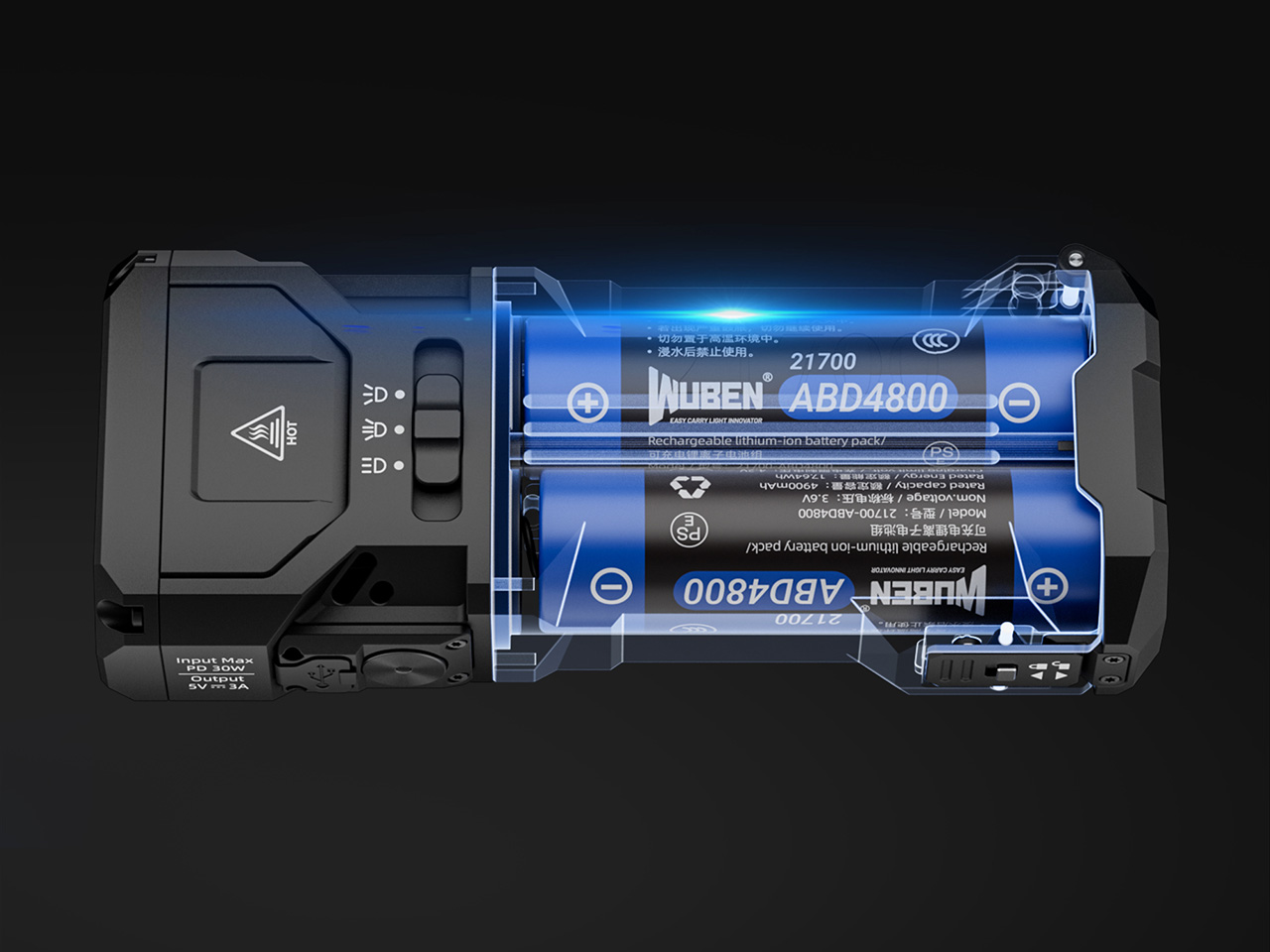
The X1Pro uses dual 21700 cells (4,800mAh each) accessed through a push-latch battery compartment that opens without tools. When the cells degrade after years of use, you buy new batteries for $15 to $25 per pair and swap them in 30 seconds. The 21700 format offers 4,000 to 5,200mAh typical capacity compared to the older 18650’s 2,200 to 3,500mAh, and the larger cell surface area improves heat dissipation under high-drain conditions. The format has become the standard in electric vehicles and high-performance flashlights specifically because it balances energy density, thermal performance, and discharge capability better than any previous consumer cell size. Wuben’s decision to make the batteries user-replaceable transforms the X1Pro from a disposable gadget into a long-term tool. You’re not buying a flashlight with a two-year lifespan. You’re buying a chassis, an LED array, a cooling system, and a driver circuit that you can keep functional for a decade or longer by spending $25 every few years on fresh cells. That’s a fundamentally different value proposition.
Flat-Tube Ergonomics: Why Shape Matters in EDC
Cylindrical flashlights roll off tables, spin in your hand under recoil or vibration, and waste pocket space because a circle inscribed in a rectangle leaves every corner unused. The cylinder is an inherited form factor from the days when flashlights used C or D cell batteries, and while LED technology has evolved radically, the basic shape has remained largely unchanged out of manufacturing inertia. A flat-tube design addresses these issues directly by widening the body, flattening the profile, and giving your palm four distinct edges to grip. The shape prevents rolling, increases surface area contact with your hand, and sits flat against your body when clipped to a belt or stored in a pocket.
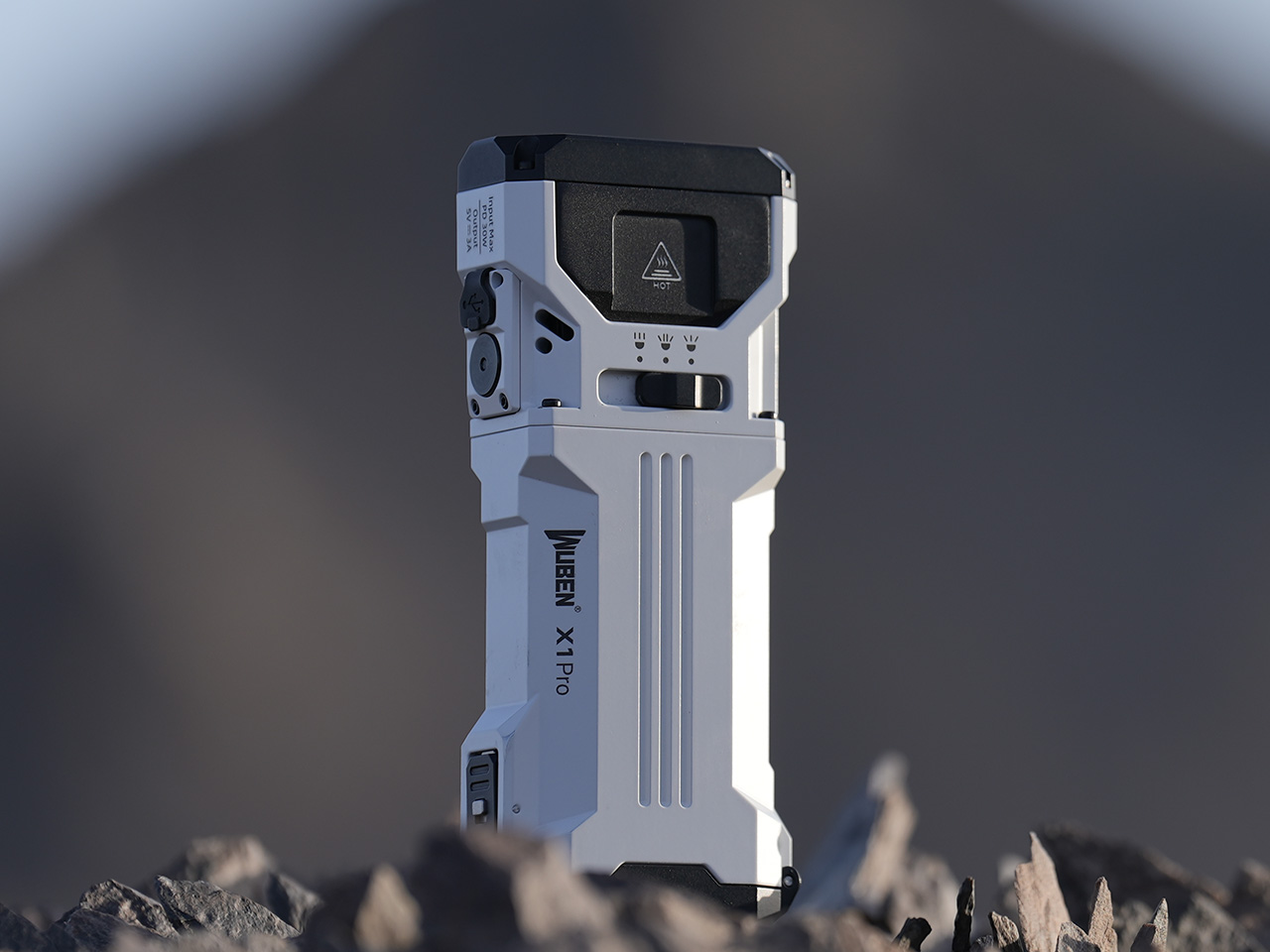
Wuben machines the X1Pro body to 59.6mm wide, 29.5mm thick, and 138mm long, creating a rectangular profile that fits naturally in the palm and occupies pocket space efficiently. The four corners feature chamfered edges specifically redesigned in the Pro model to improve grip comfort and reduce weight. The original X1’s buttons were positioned on the front face, but Wuben moved them to the left side of the X1Pro so your thumb rests on them naturally during normal carry. This detail matters during extended use or when manipulating the light with gloves. The CNC-machined and anodized black sections provide texture, while the die-cast white sections add visual contrast that helps with gear identification in a pack. The flat profile also stabilizes the light when set down on a surface, allowing hands-free use without the need for a tripod in many situations. Combined with the included 1/4″ threaded port and optional zinc alloy bike mount, the form factor adapts to a wider range of mounting and carry configurations than a traditional cylindrical light can support.
Value Proposition: What $139.99 Actually Gets You
High-output EDC flashlights from established brands like Olight, Nitecore, and Fenix typically land between $100 and $200 depending on features. A comparable Olight Warrior model with 3,000 to 5,000 lumen output runs $120 to $150 but uses a sealed battery, single-beam design, and passive cooling that forces brightness stepdown within minutes. Nitecore’s high-output EDC offerings in the same class deliver excellent build quality and UI design but similarly lack active cooling or dual-beam switching. Fenix lights are known for durability and reliable performance, but again, you’re working within the constraints of passive thermal management and fixed beam patterns. None of these competitors offer power bank output in their EDC-class lights, and none offer user-replaceable batteries in their high-output models.
The X1Pro at $139.99 includes active cooling via a modular waterproof fan, dual-beam switching with independent spot and flood control, user-replaceable 21700 batteries, 30W PD charging with 15W power bank output, IP65 water resistance, 1-meter drop rating, and a zinc alloy bike mount in the box. Wuben launched the X1Pro on Kickstarter with early bird pricing at $99 to $119 before settling at the $139.99 retail price, which positions it aggressively against passive-cooled competitors that offer fewer features at similar or higher prices. The active cooling alone represents technology typically reserved for lights in the $200-plus range, and the dual-beam system eliminates the need to carry a second light for different beam profiles. The replaceable battery design extends the usable lifespan of the tool by years, effectively reducing long-term cost of ownership. If you’re evaluating high-output EDC lights and comparing feature sets at similar price points, the X1Pro delivers more functional capability per dollar than anything else currently available in the category.
EDC gear is converging. The knife becomes a multitool, the multitool becomes a bit driver, the bit driver becomes a pry bar, and somewhere in the middle someone bolts on a bottle opener. The flashlight, meanwhile, has resisted this trend longer than most categories. A light is a light. You charge it, you carry it, you press a button, photons happen. The addition of a USB port to charge your phone feels like a gimmick until you’re three days into a camping trip and your power bank dies at 11 PM. Then the flashlight that can push 15 watts back out through USB-C stops feeling like feature bloat and starts feeling like the obvious move the entire industry should have made years ago.
The Wuben X1Pro carries two 21700 Li-ion cells (4,800mAh each, user-replaceable, tool-free access) that deliver light output and device charging through a 30W input, 15W output PD system. Peak output hits 12,300 lumens across five Cree XHP50.3 emitters: one HI (high intensity, no dome) for spot throw, four HD (high density, domed) for flood coverage. A physical three-position slider lets you activate spot, flood, or both channels simultaneously without cycling through modes. Active cooling via a waterproof removable fan sustains 3,000 lumens for 1.8 hours, a threshold most non-cooled EDC lights hit for maybe 90 seconds before thermal management kicks in. Wuben machines the body from aluminum alloy, anodizes the black sections, die-casts the white sections, and sets the whole thing in a flat-tube form factor (59.6mm wide, 29.5mm thick, 138mm long) that rides in a pocket the way a good fixed blade rides on a belt.
Active Cooling: The Performance Difference That Actually Matters
Most high lumens EDC flashlights marketing themselves as “high output” can hold their advertised lumen count for roughly the time it takes to walk from your car to your front door. Thermal stepdown kicks in fast because the LED and driver generate more heat than a pocket-sized aluminum body can dissipate passively. The light throttles itself to prevent component damage, and what started as 10,000 lumens drops to 2,000 or less within two minutes. This limitation has defined the entire category for years. Manufacturers chase peak numbers for the spec sheet, enthusiasts make peace with the reality that sustained brightness requires a larger light, and everyone accepts the compromise. Active cooling fans exist in the flashlight world, but they’re almost exclusively found in large, heavy units designed for search-and-rescue or industrial use, not everyday carry.
The X1Pro’s waterproof removable fan sustains 3,000 lumens for 1.8 hours, a threshold even the brightest EDC flashlight alternatives can hold for 90 seconds at best before firmware forces a stepdown. The fan uses a modular design, meaning users can replace it without voiding warranty or sending the light back to Wuben. Independent testing from 1lumen.com confirmed sustained output hovering around 2,500 lumens in real-world use, far exceeding what passive cooling can achieve in this size class. Lights like the Astrolux MF09 or Lumintop Mach 4695 offer similar active cooling, but they weigh considerably more and sacrifice pocket carry entirely. As a 21700 flashlight with active cooling baked in, the X1Pro delivers fan-stabilized output in a 383-gram package that still fits in a jacket pocket, cargo pocket, or belt holster. That makes it the only actively cooled EDC light at this price point that you’d actually carry daily.
Dual-Beam System: Three Lights in One Body
Single-beam flashlights force you to choose your compromise upfront. A thrower gives you distance but floods your peripheral vision with darkness. A flooder lights up your immediate area but can’t reach beyond 50 meters. Most users end up carrying two lights or cycling through brightness modes that still don’t address the fundamental beam shape limitation. The problem becomes obvious the moment you’re navigating a trail at night and need both close-range footing visibility and long-distance obstacle awareness simultaneously. Switching between lights or modes breaks your stride, kills your night vision adaptation, and adds friction to a task that should be seamless. A rechargeable power bank flashlight with a genuine dual-beam system solves this at the root.
The X1Pro runs 1 x Cree XHP50.3 HI emitter (no dome, high intensity, 3,500 lumens) for spot throw and 4 x Cree XHP50.3 HD emitters (domed, high output, 9,500 lumens combined) for flood coverage. A physical three-position slider on the front face toggles between spot only, flood only, or both channels firing simultaneously for 12,300 lumens peak output. The slider is mechanical, which means it’s faster and more intuitive than digital mode cycling, and it gives you tactile feedback even with gloves on. Each LED has its own reflector, and Wuben uses an orange-peel texture specifically to eliminate hot spots and smooth out the beam pattern. The spot channel delivers 410 meters of throw, while the flood channel covers a wide area for close-to-mid-range work. The ability to run both simultaneously or isolate one channel based on the task makes this genuinely versatile in a way most single-beam EDC lights simply cannot match.
Power Bank Functionality: Emergency Backup When You Need It Most
Carrying a separate power bank makes sense until you’re three days into a camping trip, your phone dies at 11 PM, and you realize your 20,000mAh brick ran out of juice six hours ago because you’ve been charging your headlamp, GPS unit, and backup radio all day. Redundancy in the backcountry matters. A flashlight that can push power back out through USB-C stops being a novelty feature and starts being a legitimate safety layer when you’re operating in environments where a dead phone means no emergency contact, no navigation, and no weather updates. The same logic applies to urban emergencies, power outages, or any scenario where device uptime determines whether you stay informed or go dark.
The X1Pro’s dual 21700 batteries deliver 35.52Wh of total capacity and feed a bidirectional USB-C PD system rated for 30W charging input and 15W power bank output. That 15W output is enough to fast-charge most smartphones, tablets, or USB-powered devices at rates comparable to a wall charger. Independent testing from ZeroAir confirmed that with a proper PD power source, the X1Pro charges at 20V and completes a full recharge in roughly 2.5 hours. On a standard 5V source, charging takes just over five hours, which is still reasonable for overnight recovery. The ability to swap out the 21700 cells means you can carry spares and extend both light runtime and power bank capacity indefinitely. Most EDC lights with USB output are limited by non-replaceable internal batteries, meaning once they’re drained, you’re done until you find an outlet. The X1Pro gives you control over your power supply, which fundamentally changes how the tool functions in extended-use scenarios.
Replaceable 21700 Batteries: Longevity by Design
Sealed-battery flashlights have a built-in expiration date. Lithium-ion cells degrade with charge cycles, and after 300 to 500 cycles (roughly two to three years of regular use), capacity drops noticeably. Once the internal battery loses enough capacity to compromise performance, you’re left with a choice: send the light back for a factory battery replacement (if the manufacturer even offers that service), attempt a DIY repair that likely voids warranty, or retire the entire light and buy a new one. This disposability model benefits manufacturers who want recurring revenue, but it punishes users who invest in quality tools and expect them to last.
The X1Pro uses dual 21700 cells (4,800mAh each) accessed through a push-latch battery compartment that opens without tools. When the cells degrade after years of use, you buy new batteries for $15 to $25 per pair and swap them in 30 seconds. The 21700 format offers 4,000 to 5,200mAh typical capacity compared to the older 18650’s 2,200 to 3,500mAh, and the larger cell surface area improves heat dissipation under high-drain conditions. The format has become the standard in electric vehicles and high-performance flashlights specifically because it balances energy density, thermal performance, and discharge capability better than any previous consumer cell size. Wuben’s decision to make the batteries user-replaceable transforms the X1Pro from a disposable gadget into a long-term tool. You’re not buying a flashlight with a two-year lifespan. You’re buying a chassis, an LED array, a cooling system, and a driver circuit that you can keep functional for a decade or longer by spending $25 every few years on fresh cells. That’s a fundamentally different value proposition.
Flat-Tube Ergonomics: Why Shape Matters in EDC
Cylindrical flashlights roll off tables, spin in your hand under recoil or vibration, and waste pocket space because a circle inscribed in a rectangle leaves every corner unused. The cylinder is an inherited form factor from the days when flashlights used C or D cell batteries, and while LED technology has evolved radically, the basic shape has remained largely unchanged out of manufacturing inertia. A flat-tube design addresses these issues directly by widening the body, flattening the profile, and giving your palm four distinct edges to grip. The shape prevents rolling, increases surface area contact with your hand, and sits flat against your body when clipped to a belt or stored in a pocket.
Wuben machines the X1Pro body to 59.6mm wide, 29.5mm thick, and 138mm long, creating a rectangular profile that fits naturally in the palm and occupies pocket space efficiently. The four corners feature chamfered edges specifically redesigned in the Pro model to improve grip comfort and reduce weight. The original X1’s buttons were positioned on the front face, but Wuben moved them to the left side of the X1Pro so your thumb rests on them naturally during normal carry. This detail matters during extended use or when manipulating the light with gloves. The CNC-machined and anodized black sections provide texture, while the die-cast white sections add visual contrast that helps with gear identification in a pack. The flat profile also stabilizes the light when set down on a surface, allowing hands-free use without the need for a tripod in many situations. Combined with the included 1/4″ threaded port and optional zinc alloy bike mount, the form factor adapts to a wider range of mounting and carry configurations than a traditional cylindrical light can support.
Value Proposition: What $139.99 Actually Gets You
High-output EDC flashlights from established brands like Olight, Nitecore, and Fenix typically land between $100 and $200 depending on features. A comparable Olight Warrior model with 3,000 to 5,000 lumen output runs $120 to $150 but uses a sealed battery, single-beam design, and passive cooling that forces brightness stepdown within minutes. Nitecore’s high-output EDC offerings in the same class deliver excellent build quality and UI design but similarly lack active cooling or dual-beam switching. Fenix lights are known for durability and reliable performance, but again, you’re working within the constraints of passive thermal management and fixed beam patterns. None of these competitors offer power bank output in their EDC-class lights, and none offer user-replaceable batteries in their high-output models.
The X1Pro at $139.99 includes active cooling via a modular waterproof fan, dual-beam switching with independent spot and flood control, user-replaceable 21700 batteries, 30W PD charging with 15W power bank output, IP65 water resistance, 1-meter drop rating, and a zinc alloy bike mount in the box. Wuben launched the X1Pro on Kickstarter with early bird pricing at $99 to $119 before settling at the $139.99 retail price, which positions it aggressively against passive-cooled competitors that offer fewer features at similar or higher prices. The active cooling alone represents technology typically reserved for lights in the $200-plus range, and the dual-beam system eliminates the need to carry a second light for different beam profiles. The replaceable battery design extends the usable lifespan of the tool by years, effectively reducing long-term cost of ownership. If you’re evaluating high-output EDC lights and comparing feature sets at similar price points, the X1Pro delivers more functional capability per dollar than anything else currently available in the category.
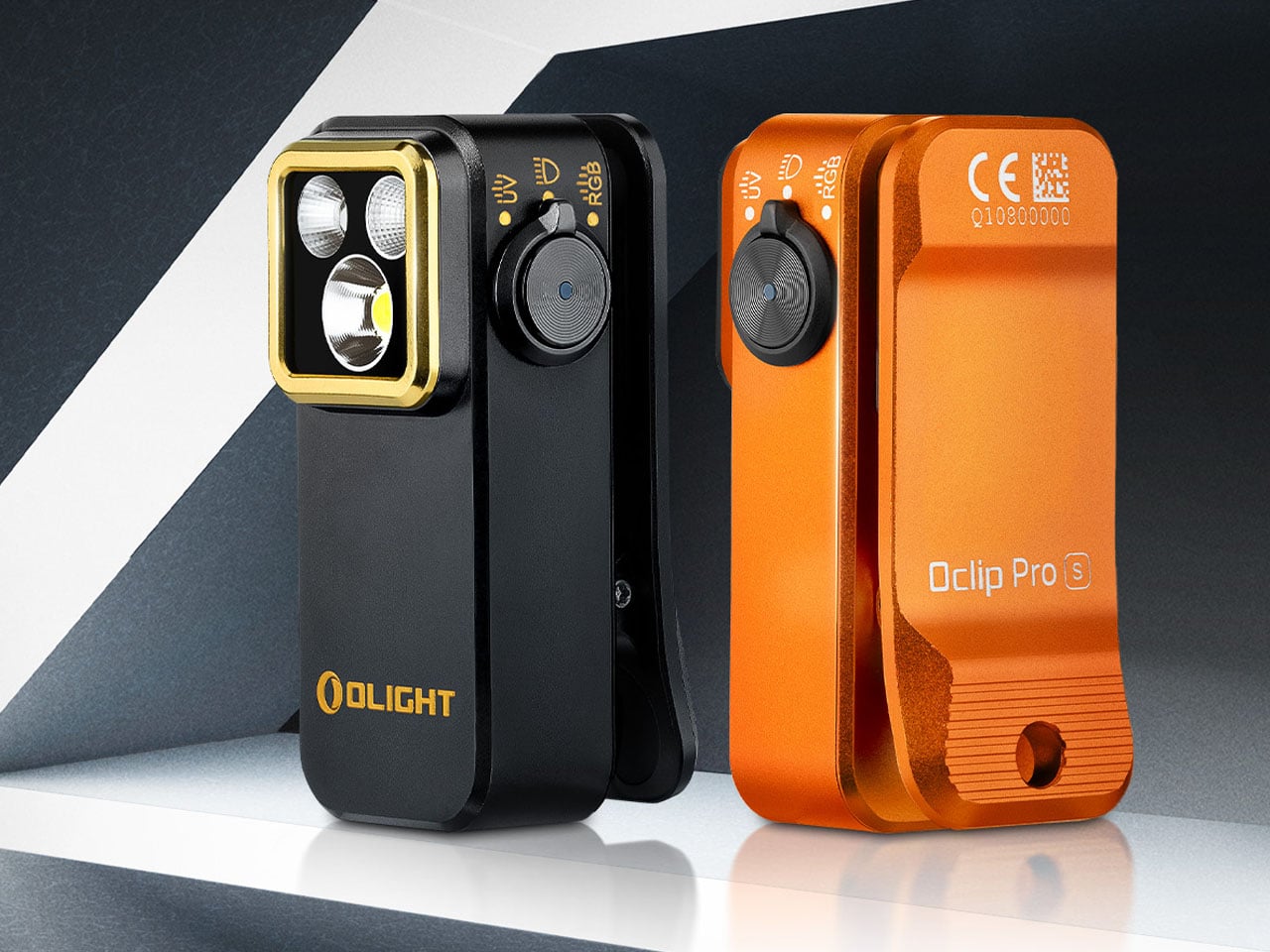
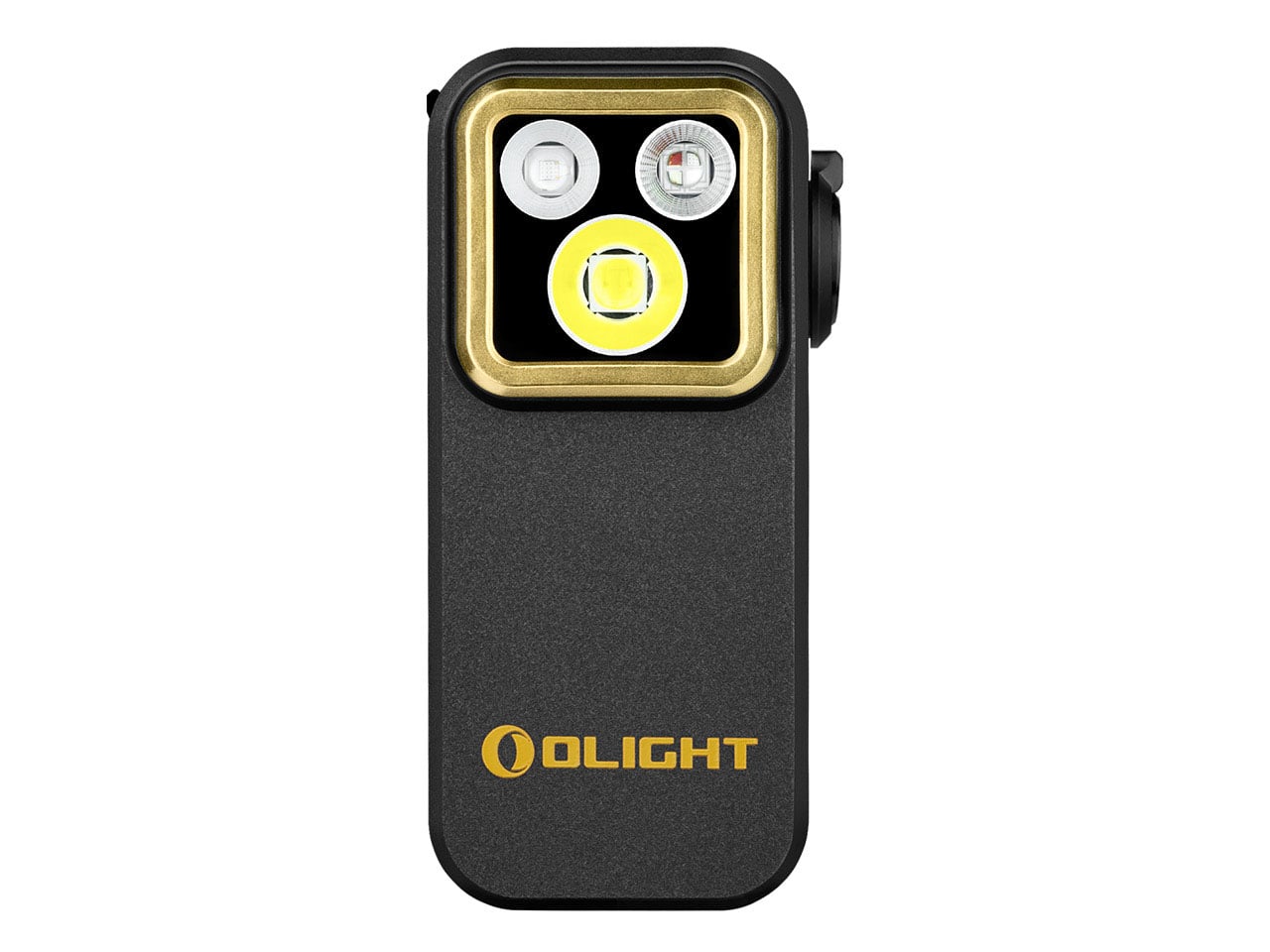
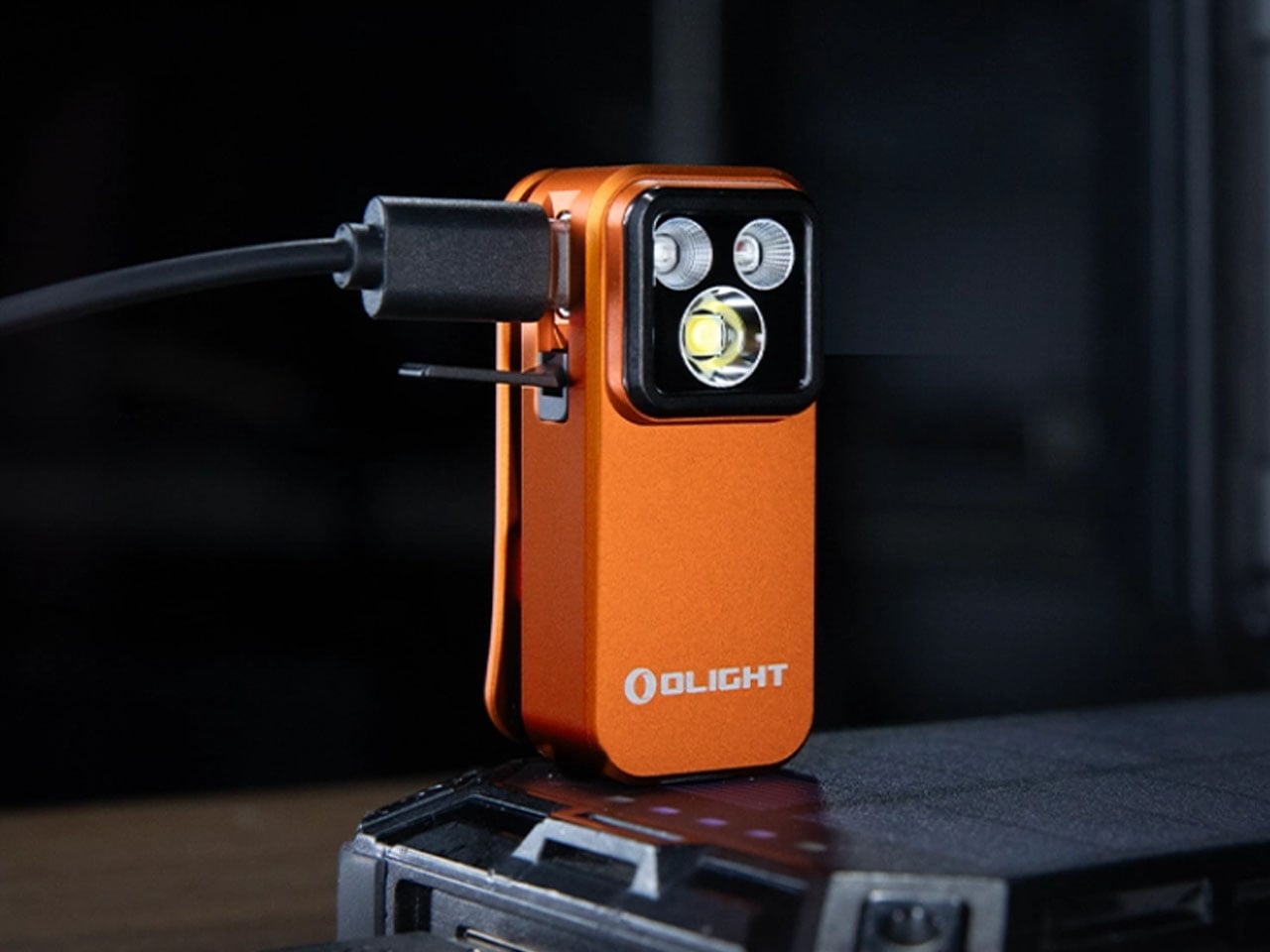
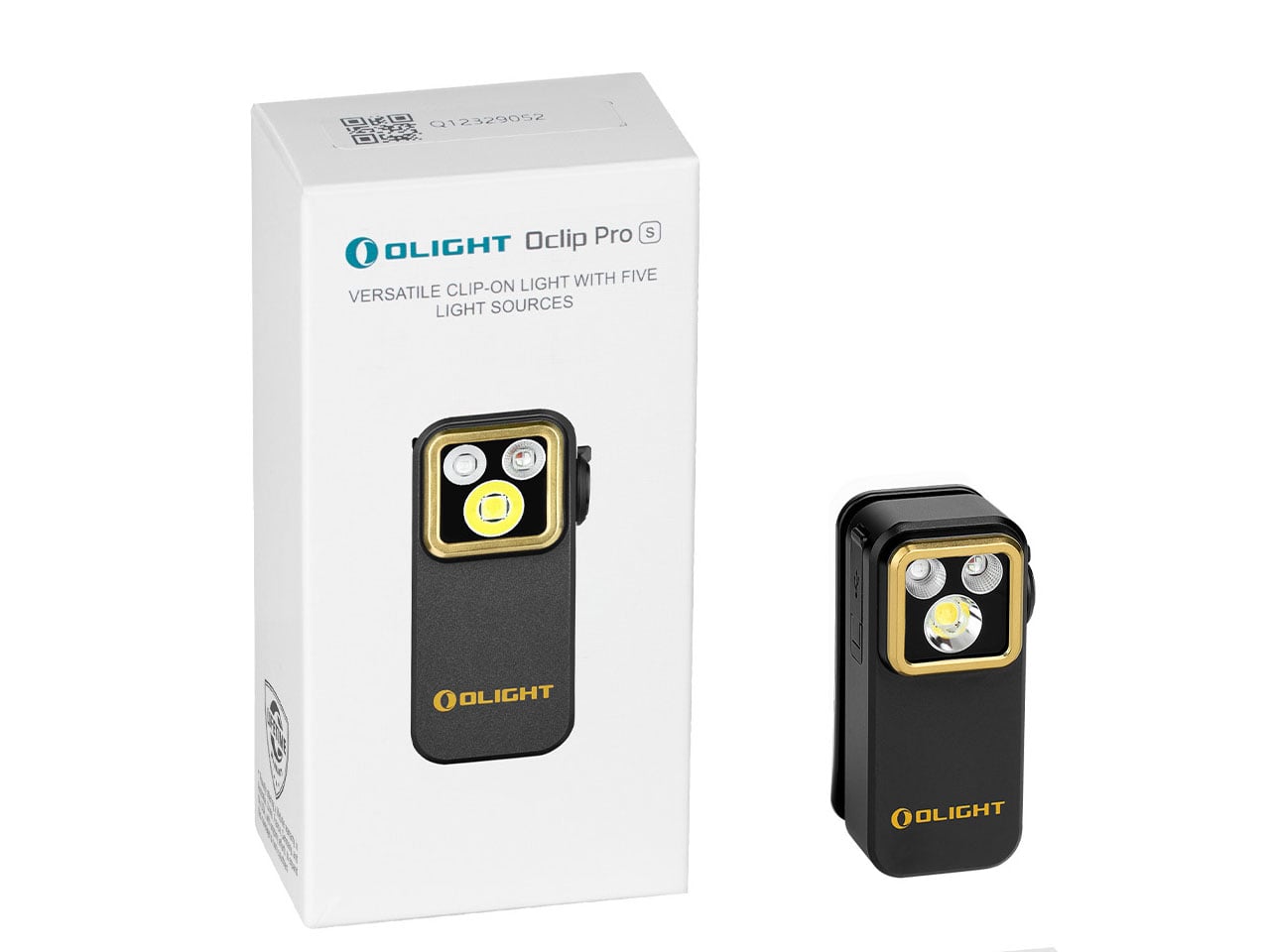
There’s a quiet shift happening in the world of everyday carry, wherein single-purpose tools are steadily giving way to compact, multi-functional companions that adapt as quickly as the situations they’re pulled into. The modern EDC kit isn’t about excess anymore; it’s about efficiency and versatility. In that context, the Olight Oclip Pro S doesn’t just arrive as another flashlight, it is a small but capable lighting system designed to keep up with unpredictable, fast-moving routines.
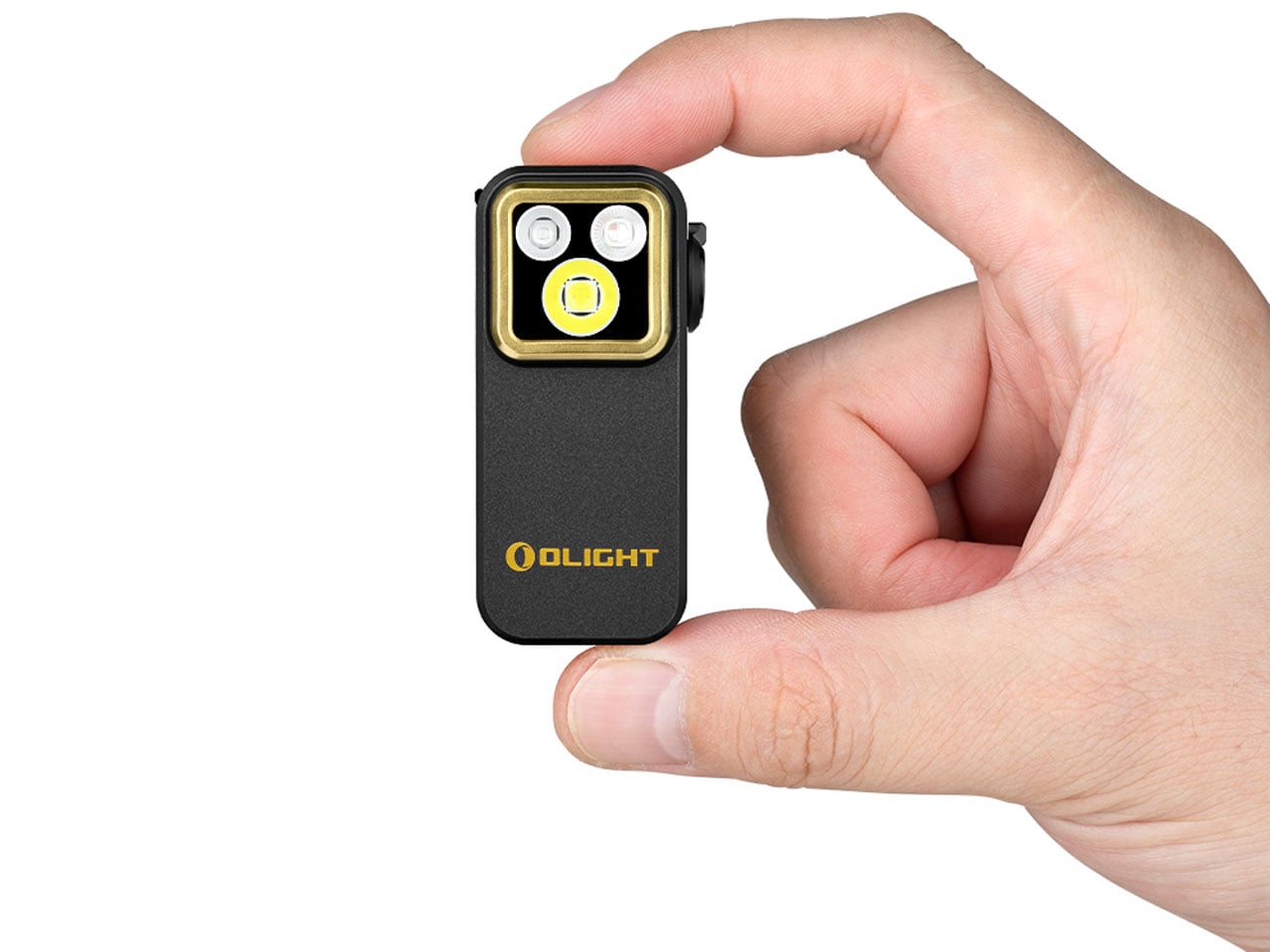
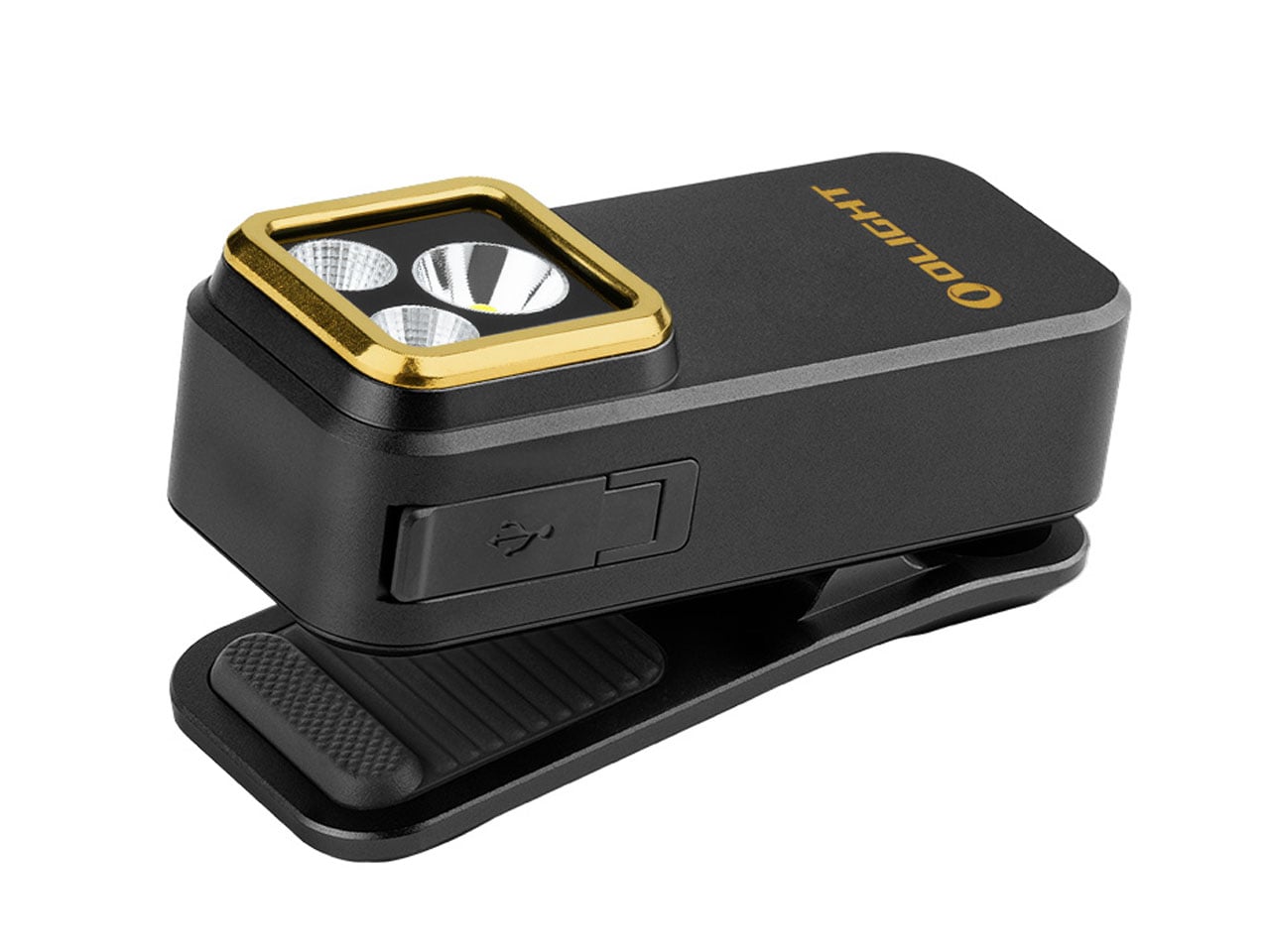
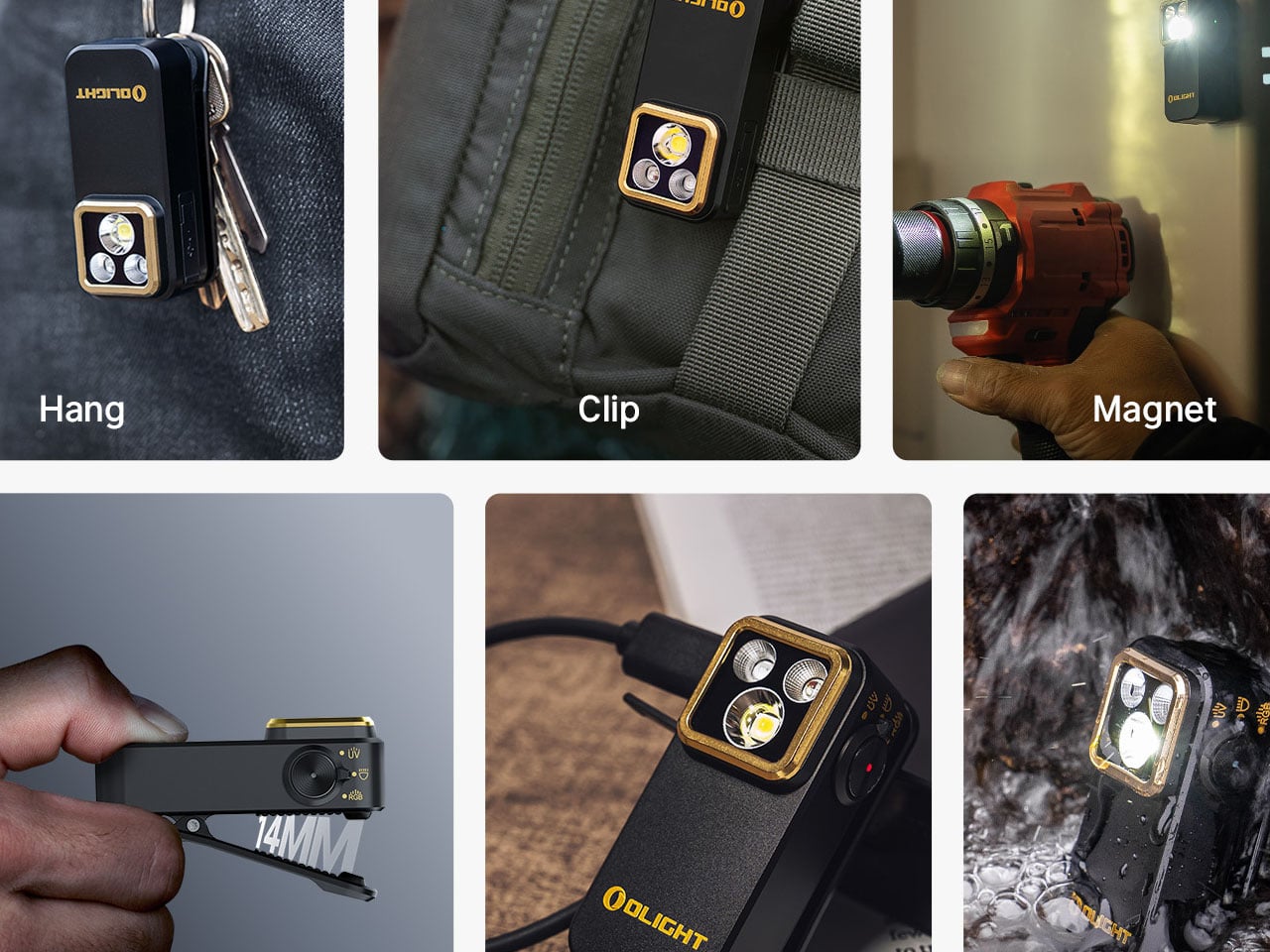
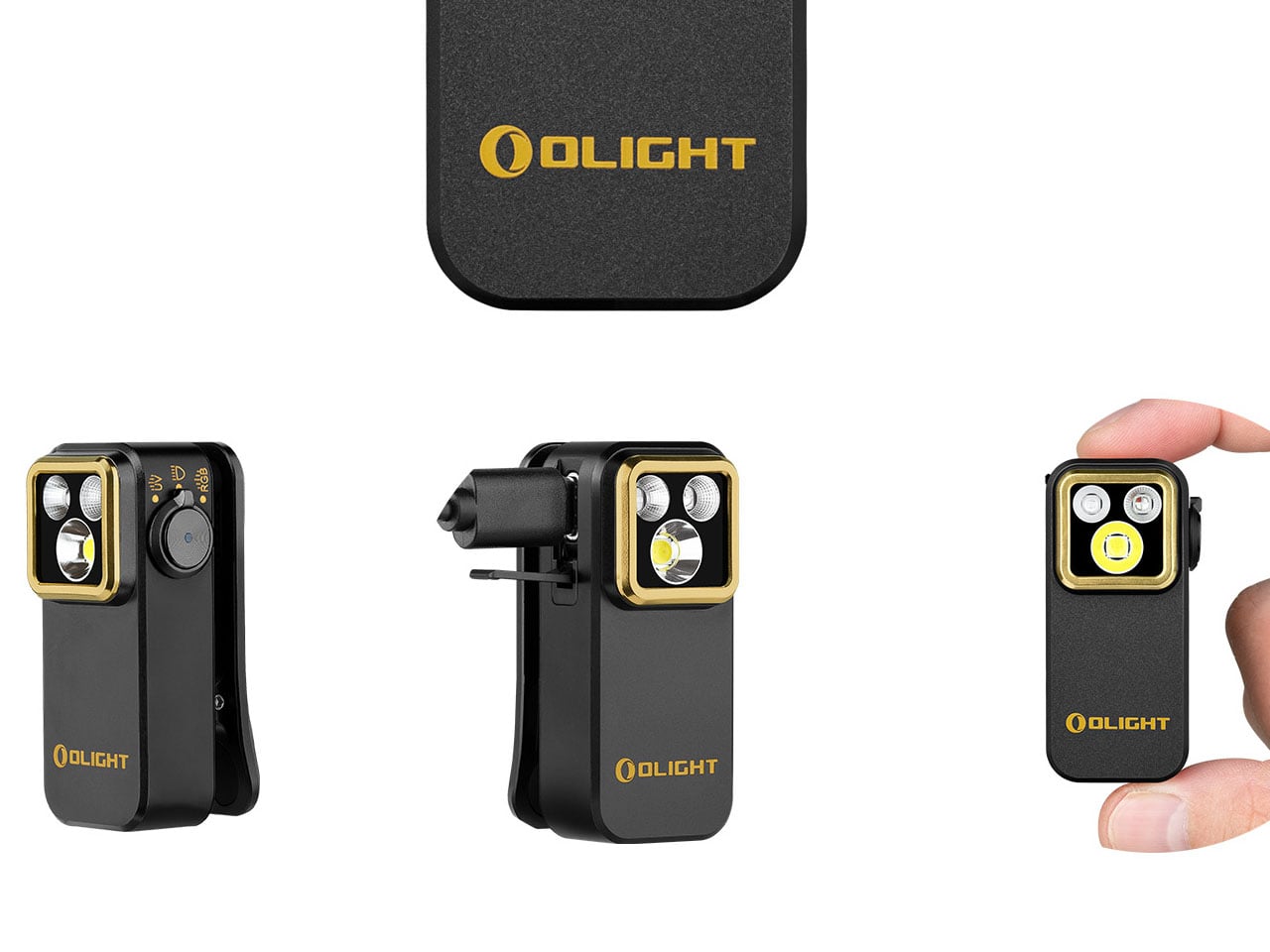
At first glance, the palm-sized Oclip Pro S feels almost understated. Its compact body, measuring just 57 × 28 × 27 mm and weighing around 53 grams, is designed to disappear into your pocket or clip unobtrusively onto your gear. Yet that minimal footprint is precisely what makes it so effective. The integrated clip, combined with the ability to hang or magnetically attach the device, allows it to transition effortlessly between a handheld light and a hands-free tool, whether you’re navigating low-light environments or tackling everyday tasks.
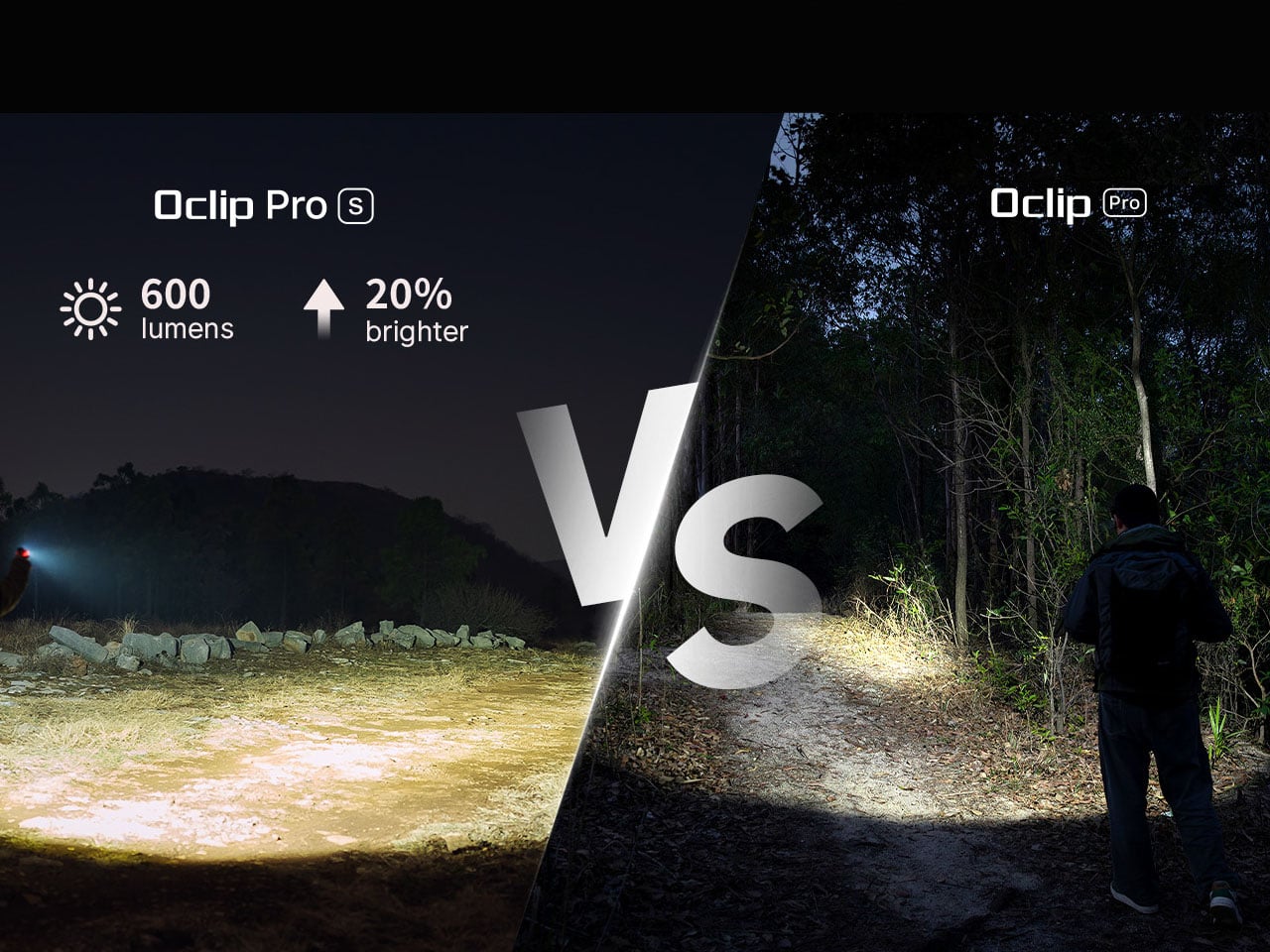
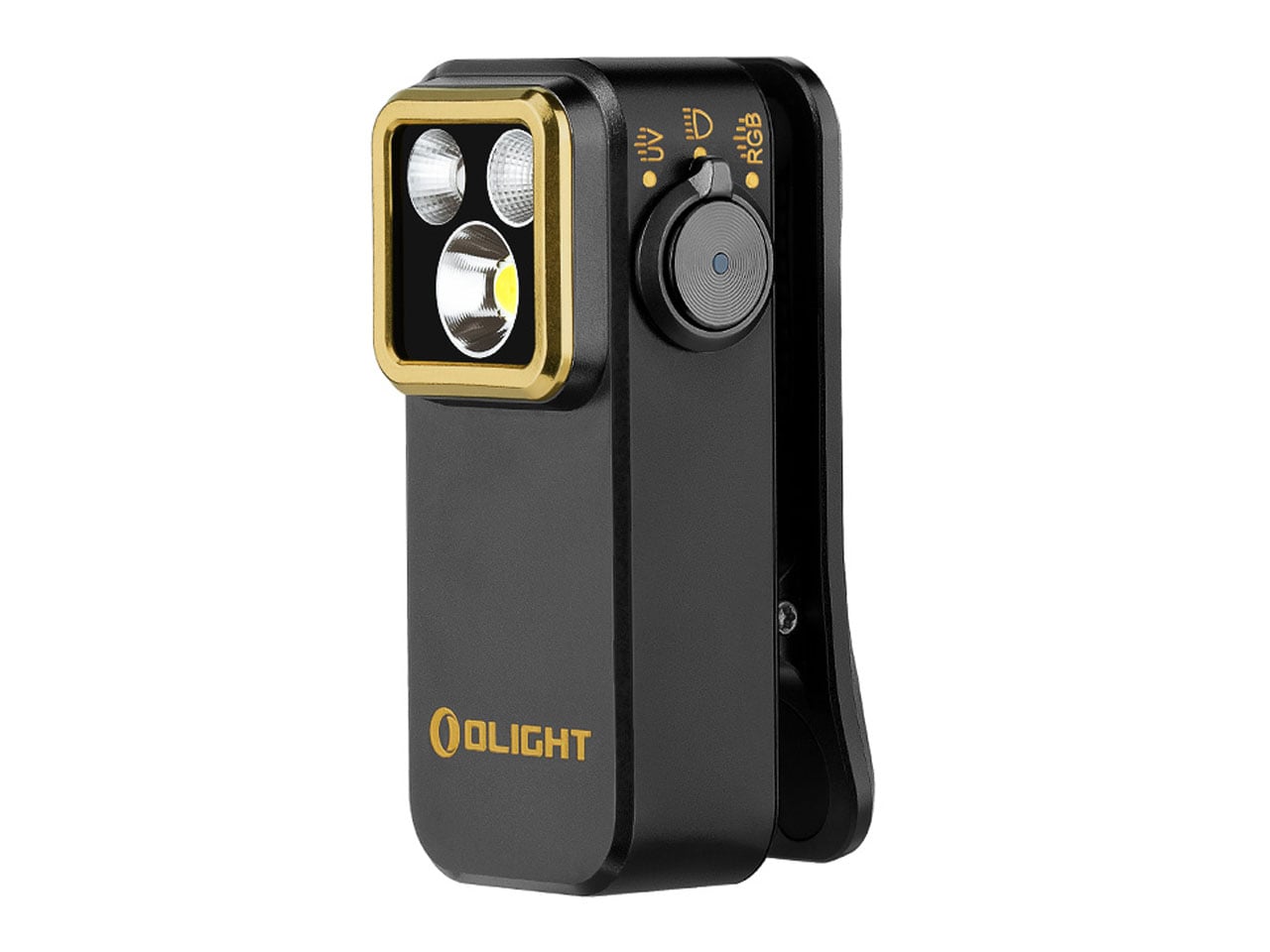
Where the Oclip Pro S begins to stand apart is in how much it manages to pack into that small frame. Instead of relying on a single beam, it integrates a 5-in-1 lighting system that combines white light, RGB illumination, and a UV light source. The primary white LED delivers up to 600 lumens, providing ample brightness for general use, with a beam distance reaching up to 80 meters. This is paired with both floodlight and spotlight modes, giving users the flexibility to switch between wide, ambient lighting and more focused illumination depending on the situation.
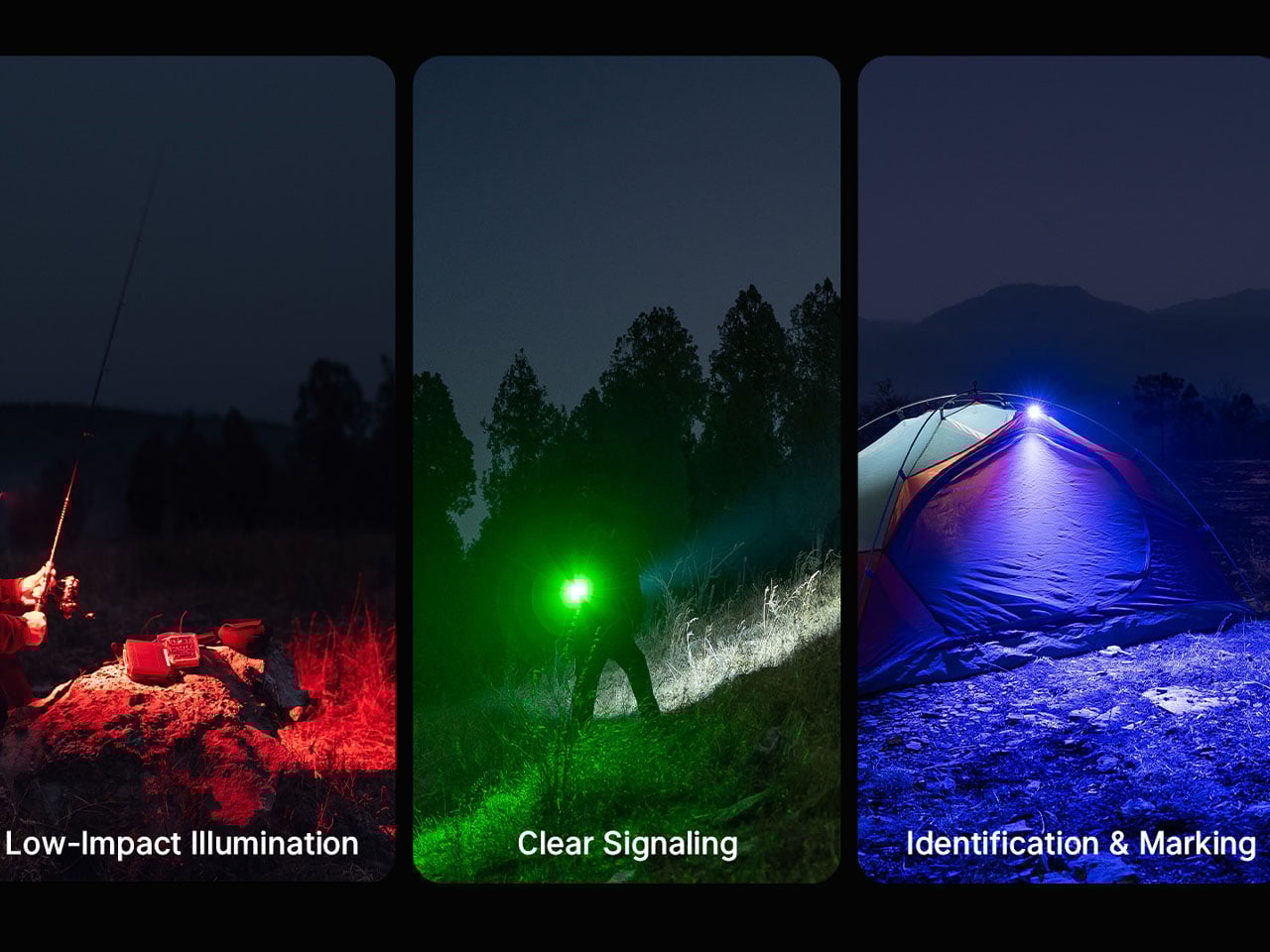
The addition of RGB lighting expands its role beyond simple visibility. With red, green, and blue modes, the device becomes a practical signaling tool as much as a flashlight. Whether used for nighttime visibility, marking a location, or adding a layer of safety in low-light conditions, these color options introduce a level of adaptability that feels increasingly essential in modern EDC gear. The lighting system also supports flashing patterns, further extending its functionality in dynamic or emergency scenarios.
Perhaps the most unexpected inclusion is the 365 nm UV light, which quietly transforms the Oclip Pro S into a utility tool for specialized tasks. From detecting counterfeit currency to identifying fluorescent materials or checking cleanliness in certain environments, this feature adds a layer of capability that goes beyond what most users would expect from a device of this size.
Powering all of this is a built-in battery that supports USB-C charging, aligning the device with current charging standards and making it easy to top up alongside other everyday electronics. Depending on usage, the flashlight can run for up to 144 hours in its lowest brightness mode, while higher output levels are intelligently managed to balance performance and heat.
The interface is equally streamlined, centered around a side dial that allows users to quickly toggle between white, RGB, and UV modes. This intuitive control scheme avoids unnecessary complexity, ensuring that the right light is always just a quick adjustment away. Priced at around $40 and available in a variety of finishes, the Oclip Pro S is positioned as both a functional tool and a subtle personal accessory.
The humble flashlight is older than you probably think. The first handheld electric torch was patented in 1899, and for the better part of 127 years, the core concept barely changed: battery, bulb, switch, done. LED technology gave it a serious brightness upgrade. Rechargeable cells made it more practical. But the fundamental experience of using a flashlight, including that moment of blind faith when you click it on and hope the battery cooperated, stayed remarkably unchanged. Until now, apparently.
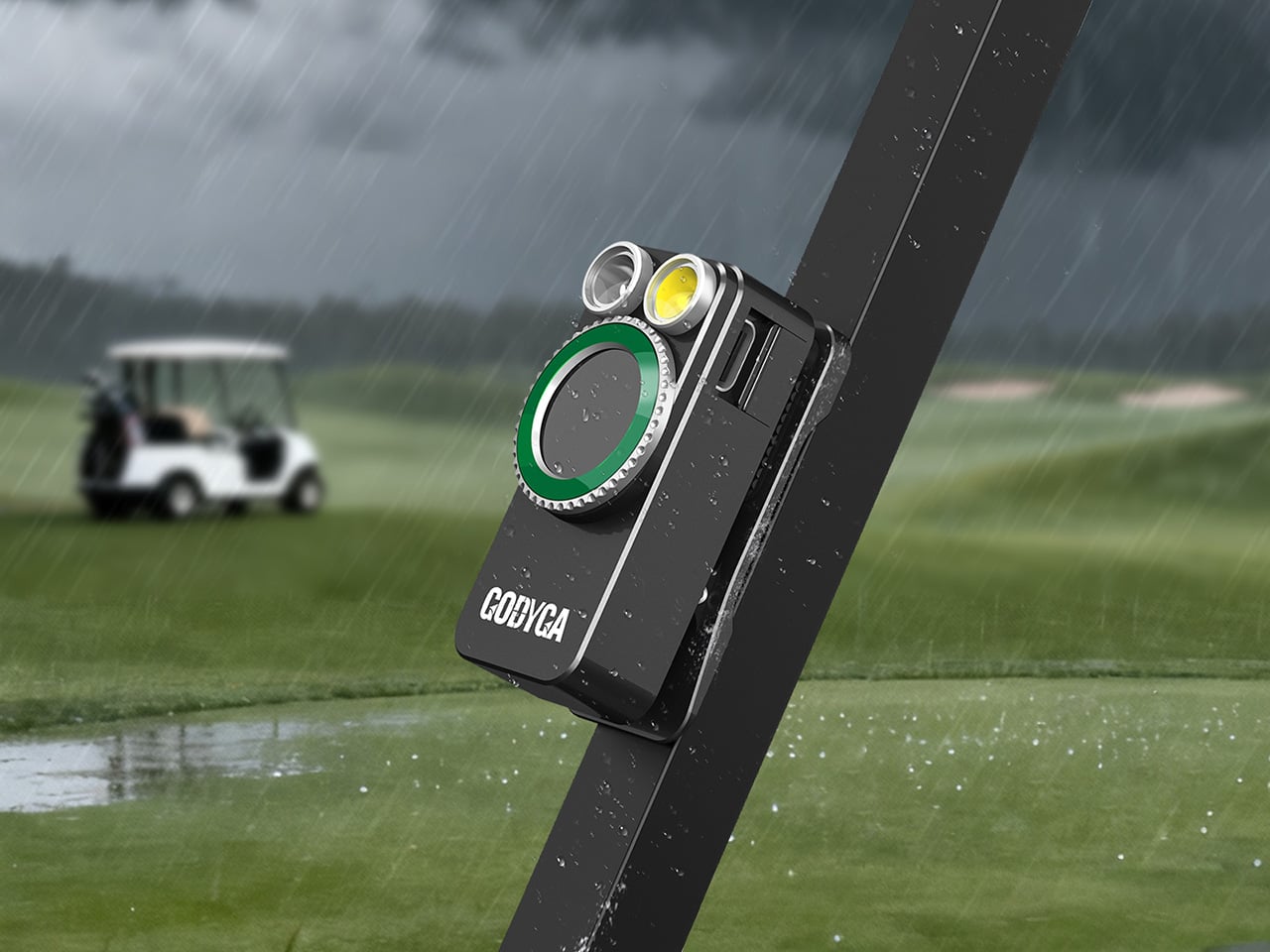
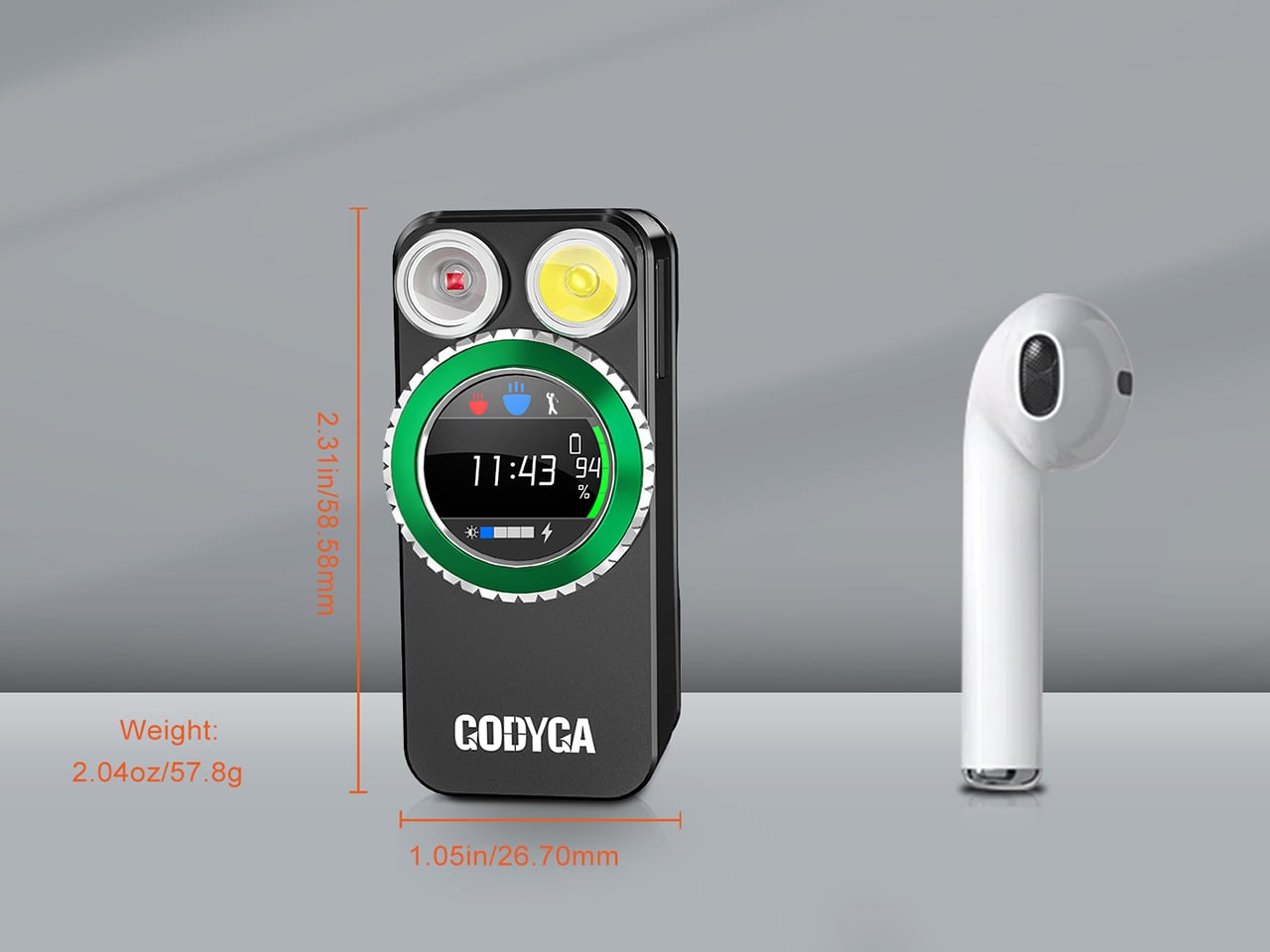
GODYGA (pronounced Go-dee-ga) has taken the flashlight’s first real swing at becoming a smart device with the TorchEye X1, a clip-on EDC light that combines a full-color smart display, precise battery management, and a laser distance measurement tool in a package that fits on a jacket lapel. It looks like something a concept designer dreamed up after spending too long staring at luxury dive watches. It also genuinely works.
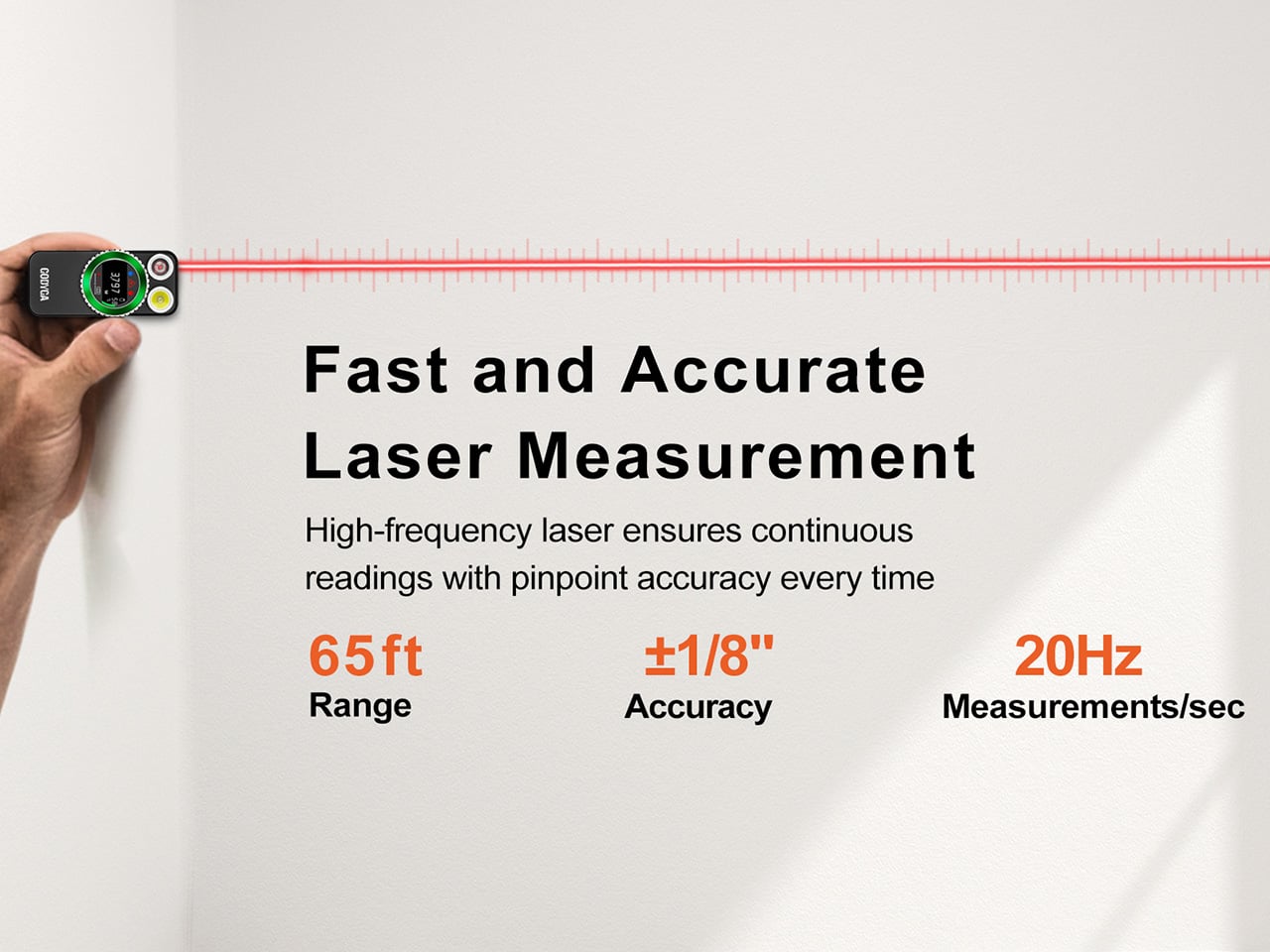
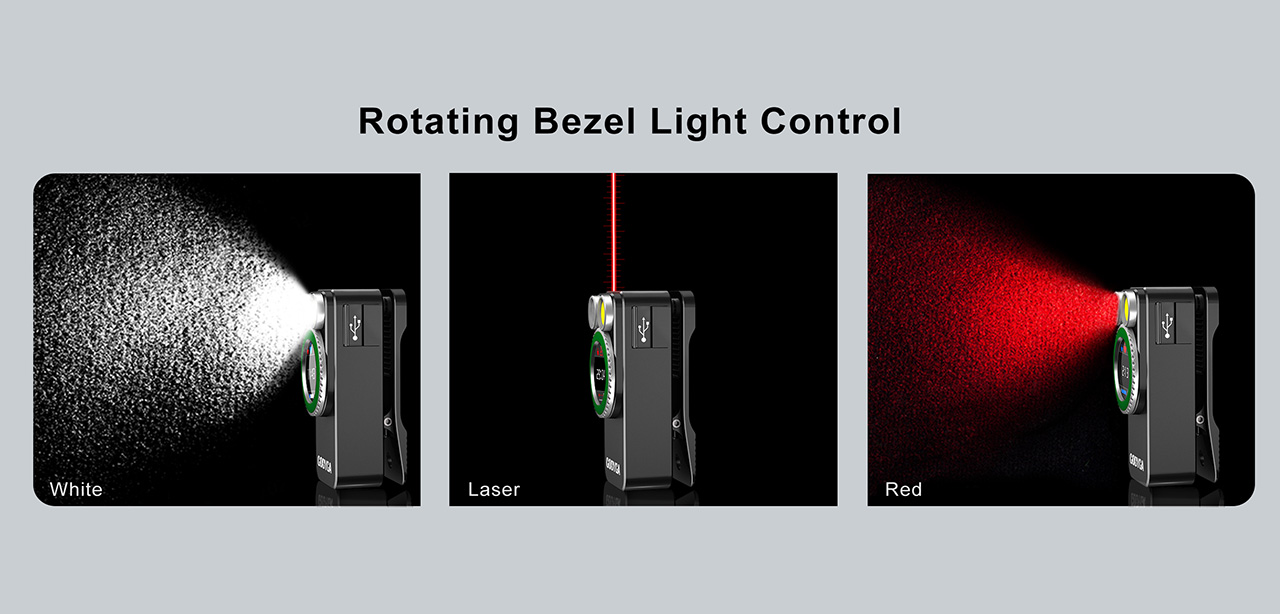
The laser distance measurement is where the TorchEye X1 separates itself from your average EDC flashlight. It fires a red beam that measures distances up to 20 meters with ±1/8 inch accuracy at 20 readings per second. That’s 20 measurements in a single second. For context, a standard tape measure requires two hands, an extra person ideally, and at least one moment of mild frustration. The TorchEye? You point, you press, and the number appears on the display before you’ve had time to question your life choices. Whether you’re figuring out if that new sectional sofa will actually fit in your living room, hanging a gallery wall without eyeballing it for the fifth time, or sizing up a workspace, this is the kind of tool that quietly earns its place in your pocket. It works best indoors on lighter surfaces, a white wall reads brilliantly, while darker or highly textured surfaces outdoors will give it a harder time, so keep expectations calibrated accordingly. There’s also a front and rear reference point mode, useful depending on whether you want to measure from the tip of the device or the back.
TorchEye X1 laser version
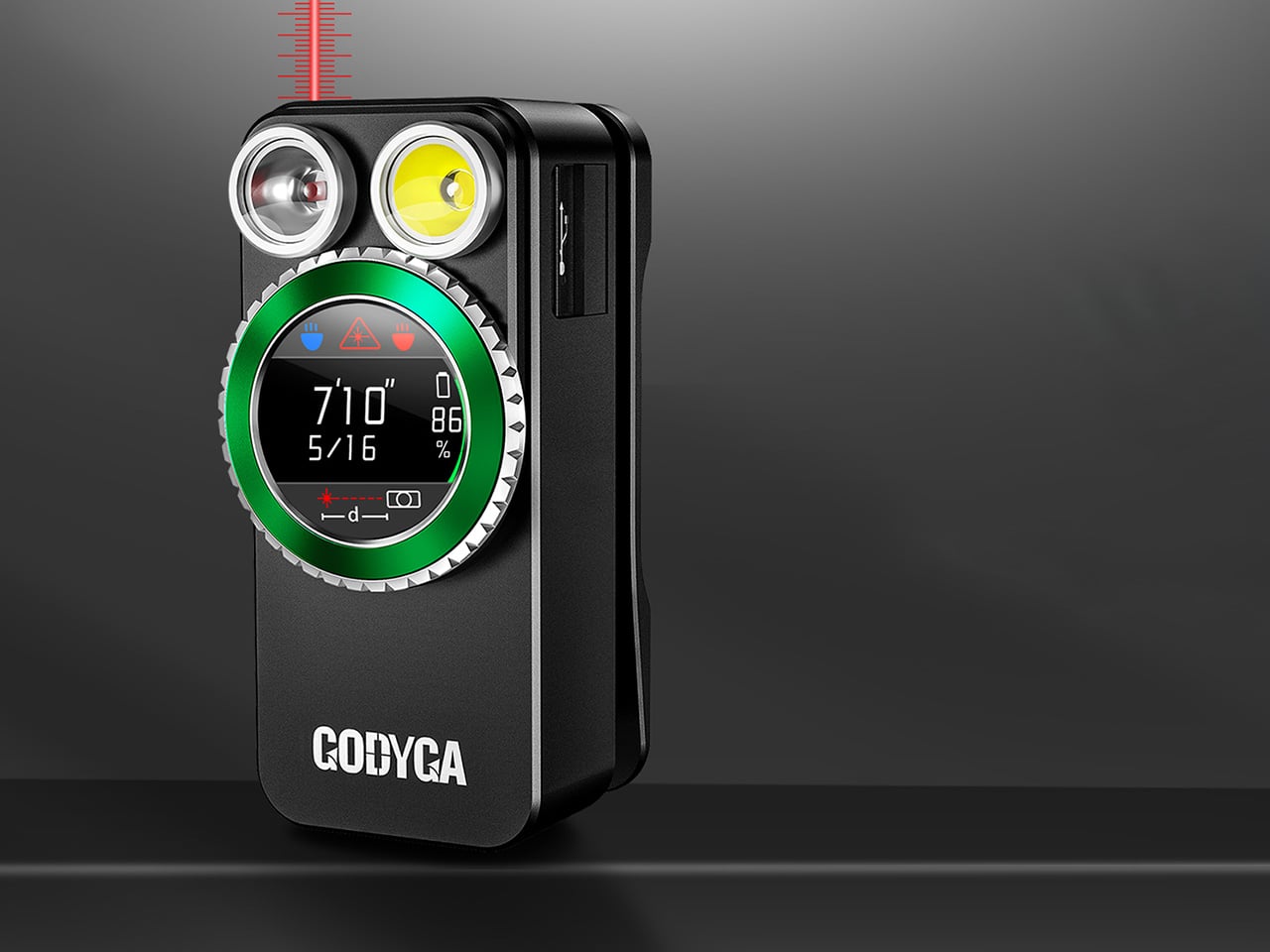
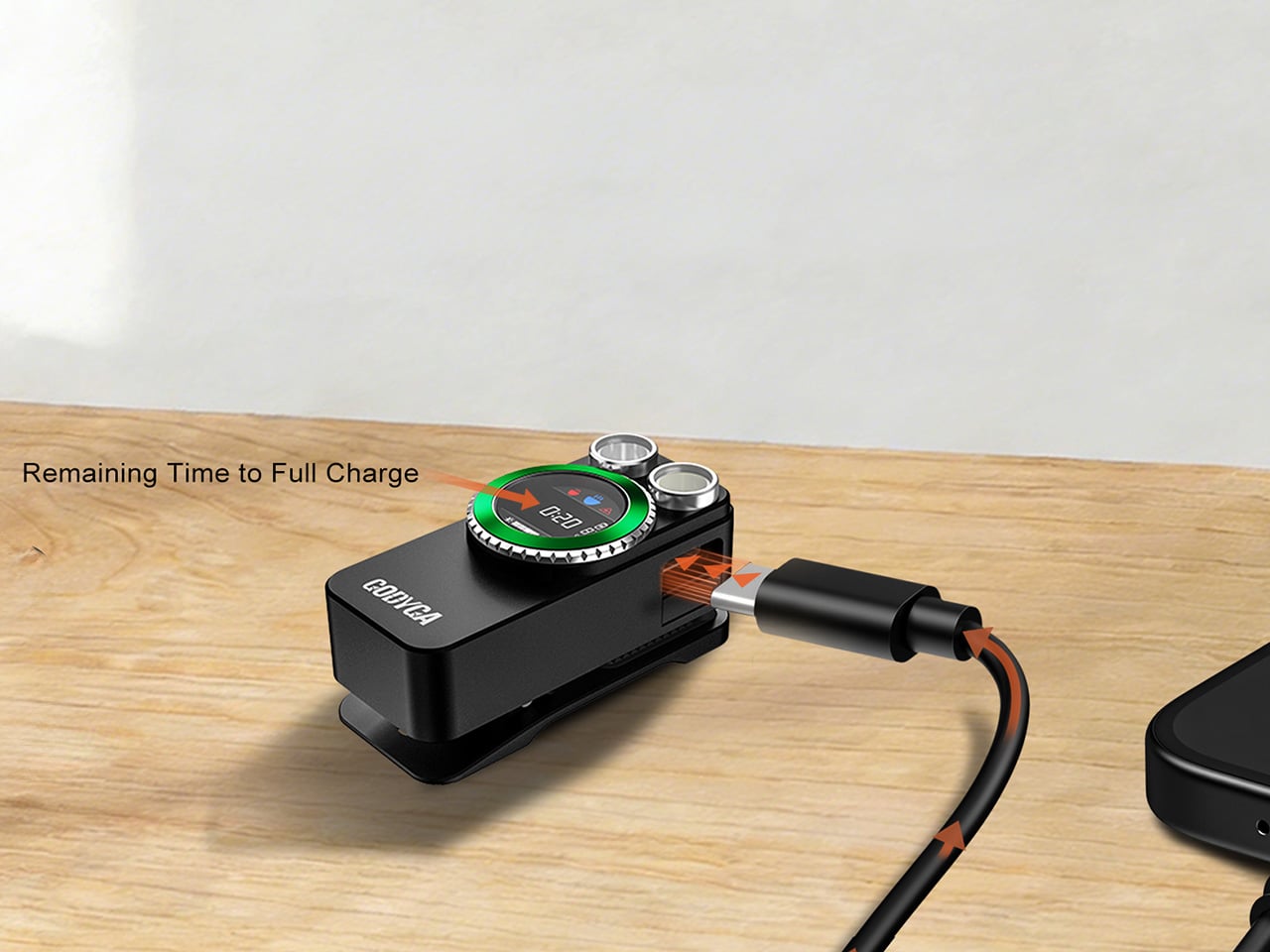
Flashlights have never told you anything. You click one on, it works or it doesn’t, and the only feedback is the slow dimming that tells you the battery gave up three days ago. The TorchEye’s full circular smart screen changes that entirely, displaying exact battery percentage, real-time runtime estimates per brightness mode, and a charging countdown when it’s plugged in. The screen wraps around the front face of the body and it’s genuinely striking to look at, drawing obvious visual inspiration from the dial of a luxury watch. That rotating green bezel isn’t decorative either. It clicks through brightness modes with satisfying haptic feedback, the kind of tactile interaction that makes cheap flashlight buttons feel embarrassing by comparison.
Charging is via USB-C, and you can run it straight from your phone using the included USB-C to USB-C cable. The more interesting detail is what happens when you plug it in. Most high-lumen flashlights require anywhere from 10 to 20 minutes of charging before they’ll unlock turbo mode. The TorchEye hits its full 500 lumens the instant power is connected, zero delay, which is actually meaningful in an emergency rather than just a spec sheet flex. The battery system also lets you run the light while it charges, so a dead battery doesn’t strand you in the dark while you wait.
TorchEye X0 Non-laser version
The design philosophy borrows heavily from luxury watchmaking. The rotating green bezel gives satisfying haptic click feedback as you cycle through light modes, making the whole interaction feel considered and premium rather than plasticky. The front-facing button placement is intentional too. Because the TorchEye is designed primarily to be clipped onto a jacket, backpack strap, or cap brim for hands-free use, putting the controls on the front face means they’re always reachable with a single thumb, no awkward side-button fishing required. It’s one of those small ergonomic decisions that only becomes obvious once you’ve used a light that got it wrong.
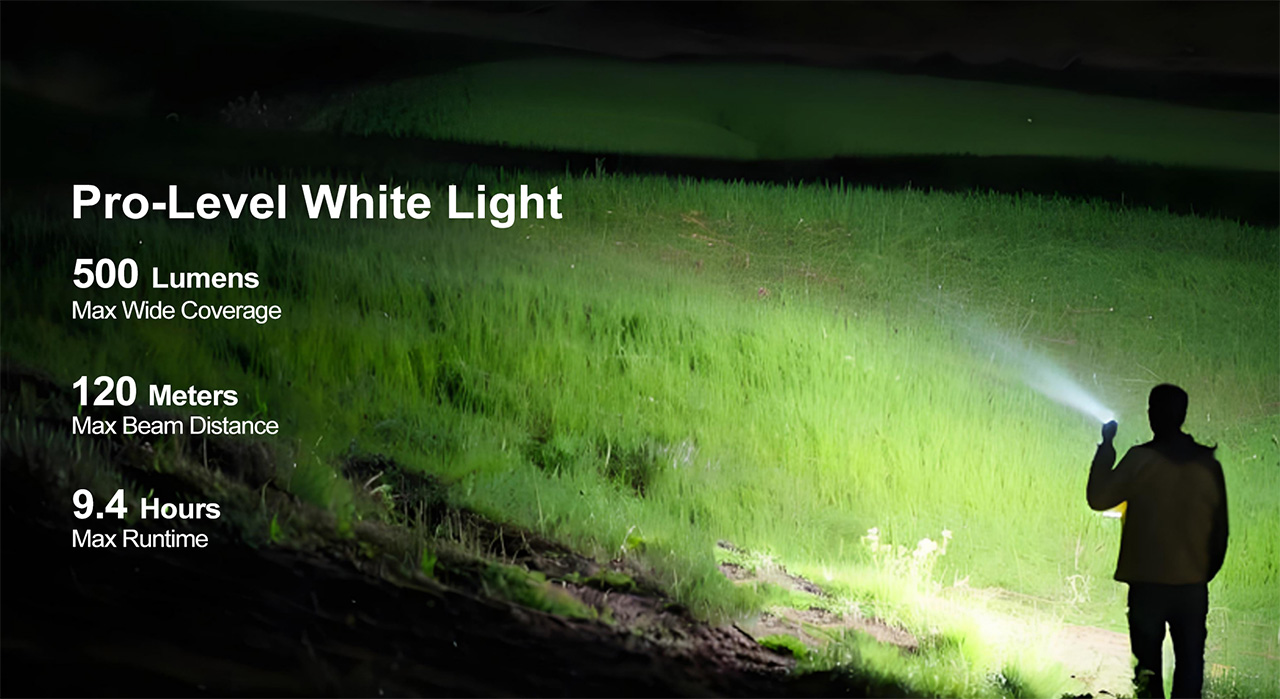
Seven brightness modes on the white LED, running from Moonlight all the way up to 500 lumens with a 120-meter throw, cover essentially every situation you’d reach for a pocket light. The red LED adds a low-impact visibility option for night walks, map reading, or any context where torching someone’s retinas with 500 lumens would be socially unacceptable. The built-in 18-hole golf stroke counter lives quietly inside the interface, accessible with a short press to count strokes and a long press to advance holes, with bezel rotation letting you review the front or back nine. If golf means nothing to you, it switches off and disappears entirely.
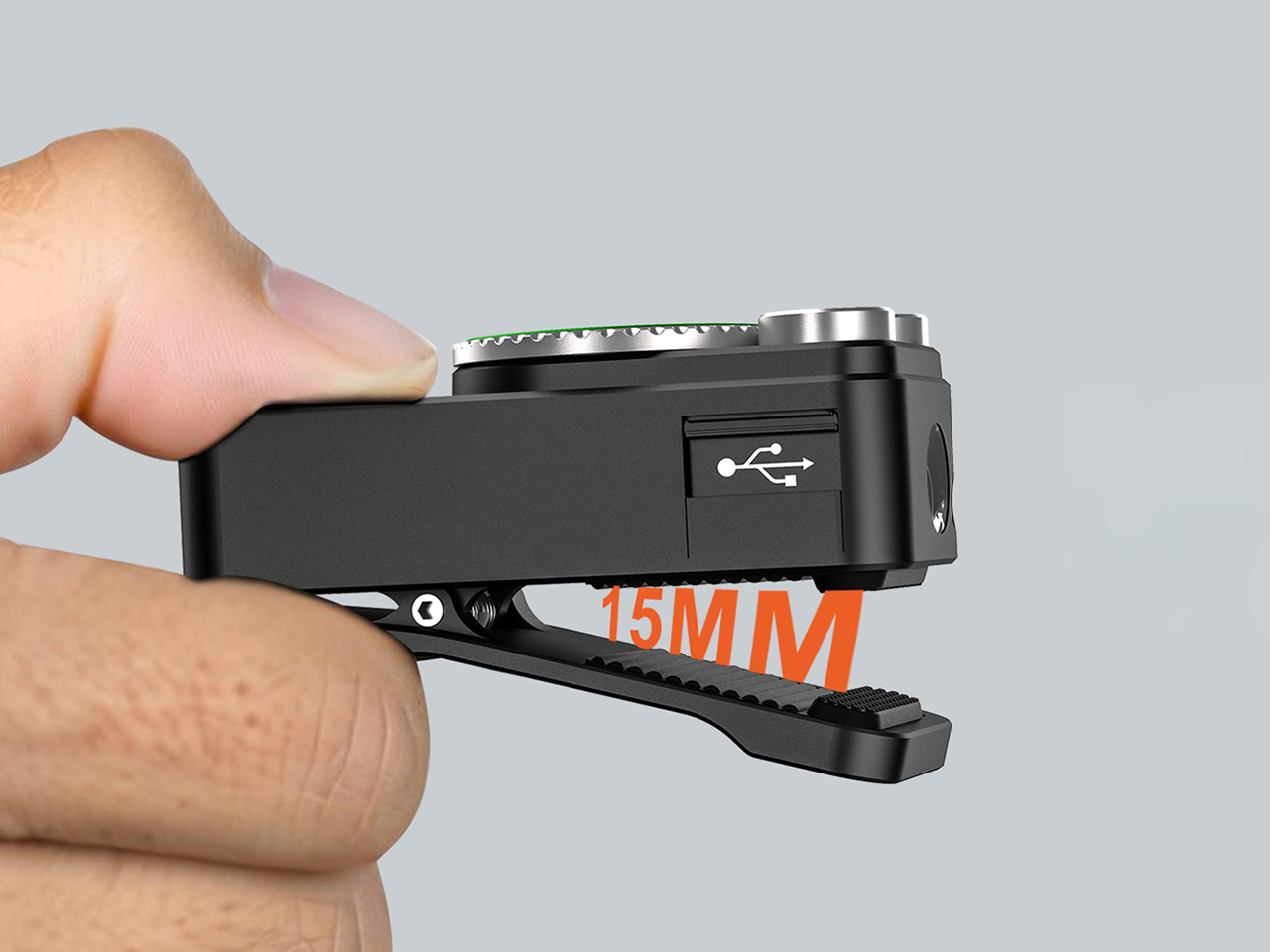
For carrying options, GODYGA gives you three: the clip for clothing and bags, a magnetic base for sticking it to any metal surface, and a lanyard loop for wrist or bag attachment. And tucked inside the interface, almost as a delightful easter egg, is a built-in 18-hole golf stroke counter. Short press counts strokes, long press advances holes, bezel rotation lets you review front and back nine. Golfers will love it. Everyone else can turn it off and forget it exists.
The TorchEye X1, the version with laser distance measurement, is priced at $39.99 on Amazon. If the distance tool isn’t something you’ll reach for regularly, the TorchEye X0 carries all the same smart screen and lighting features for $30.59. Both are worth every dollar for what they pack in. GODYGA has built something that makes the humble pocket flashlight feel genuinely exciting again, which brings us full circle to that 1899 patent, and the very long time it took for someone to finally do this.
Most people don’t carry a flashlight, which is something they only realize when they’re already crammed under a sink, squinting at a fuse box, or trying to read a label in a poorly lit corner of a garage. Cylindrical lights are bulky, they roll off surfaces, and they feel overbuilt for the kind of everyday moments where you just need a quick, reliable beam. So they get left at home, and your phone flashlight ends up doing all the work.
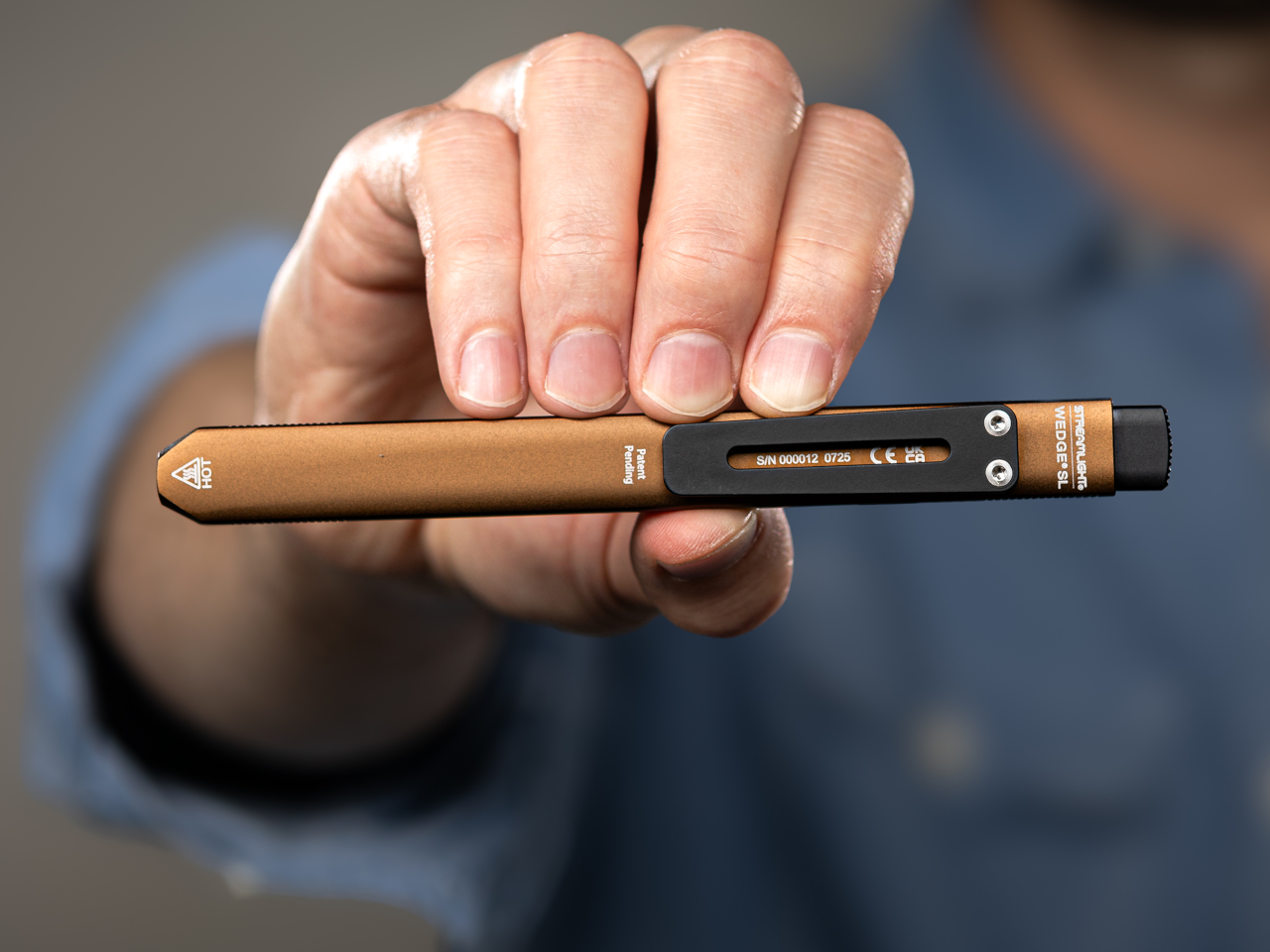
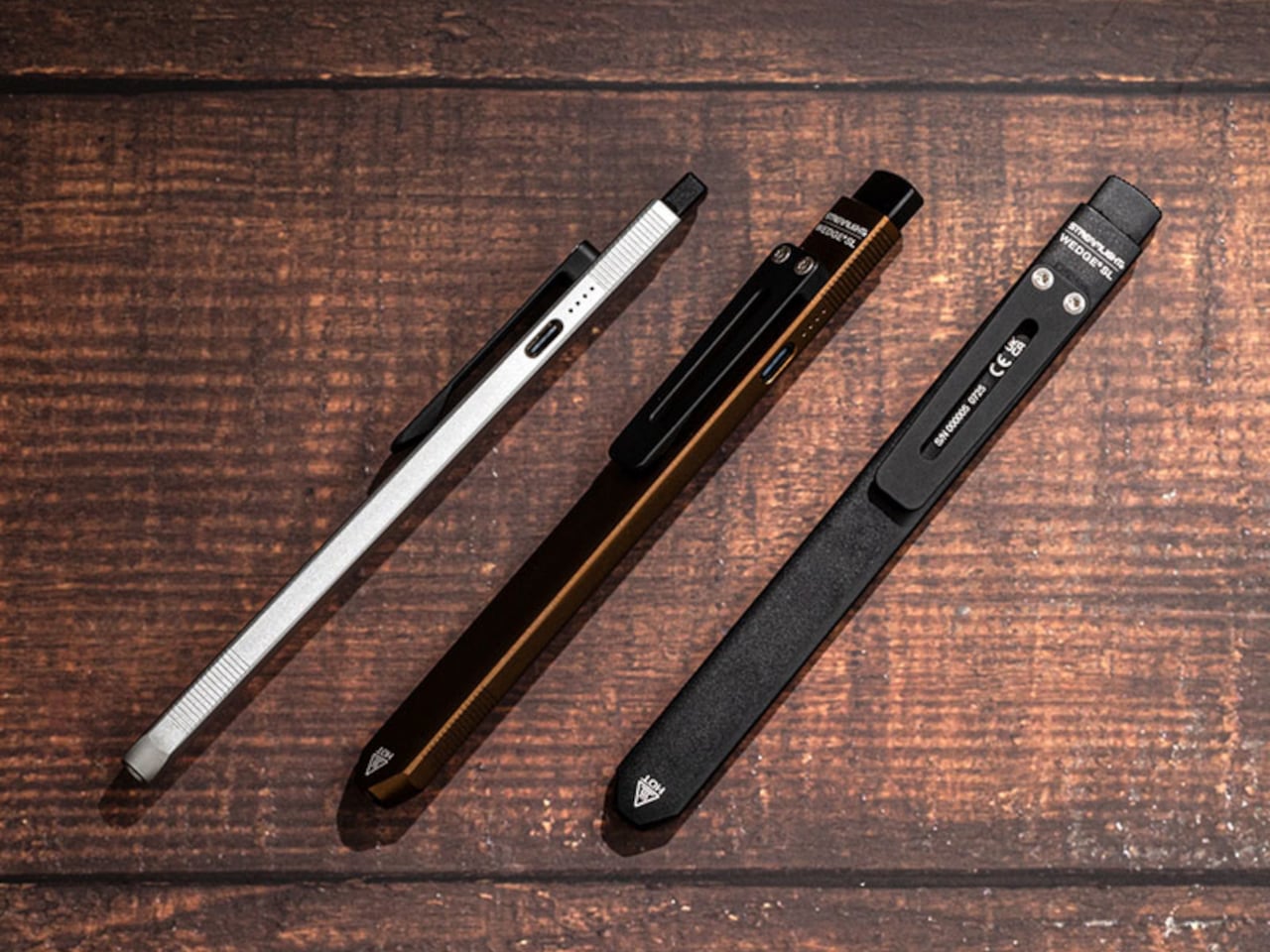
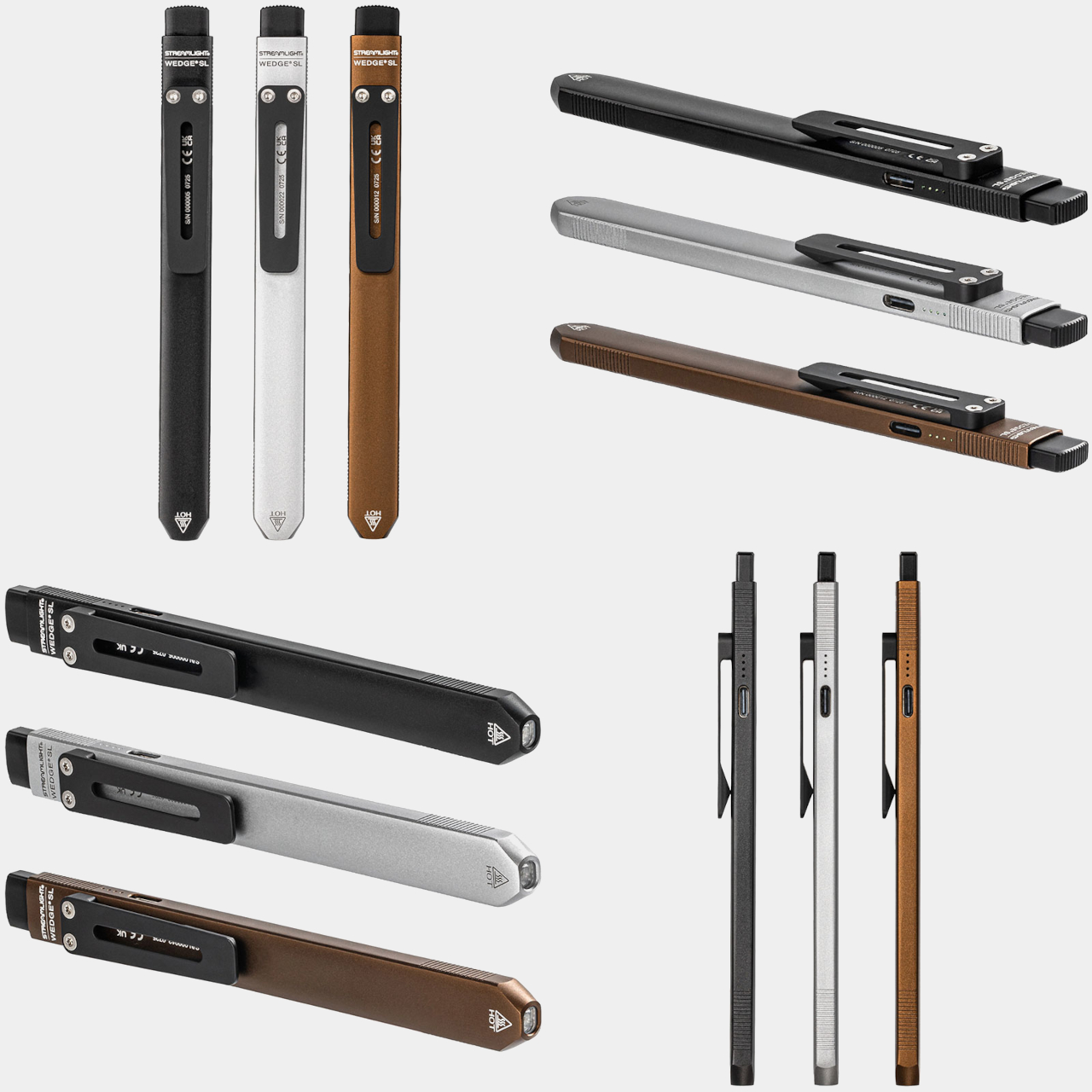
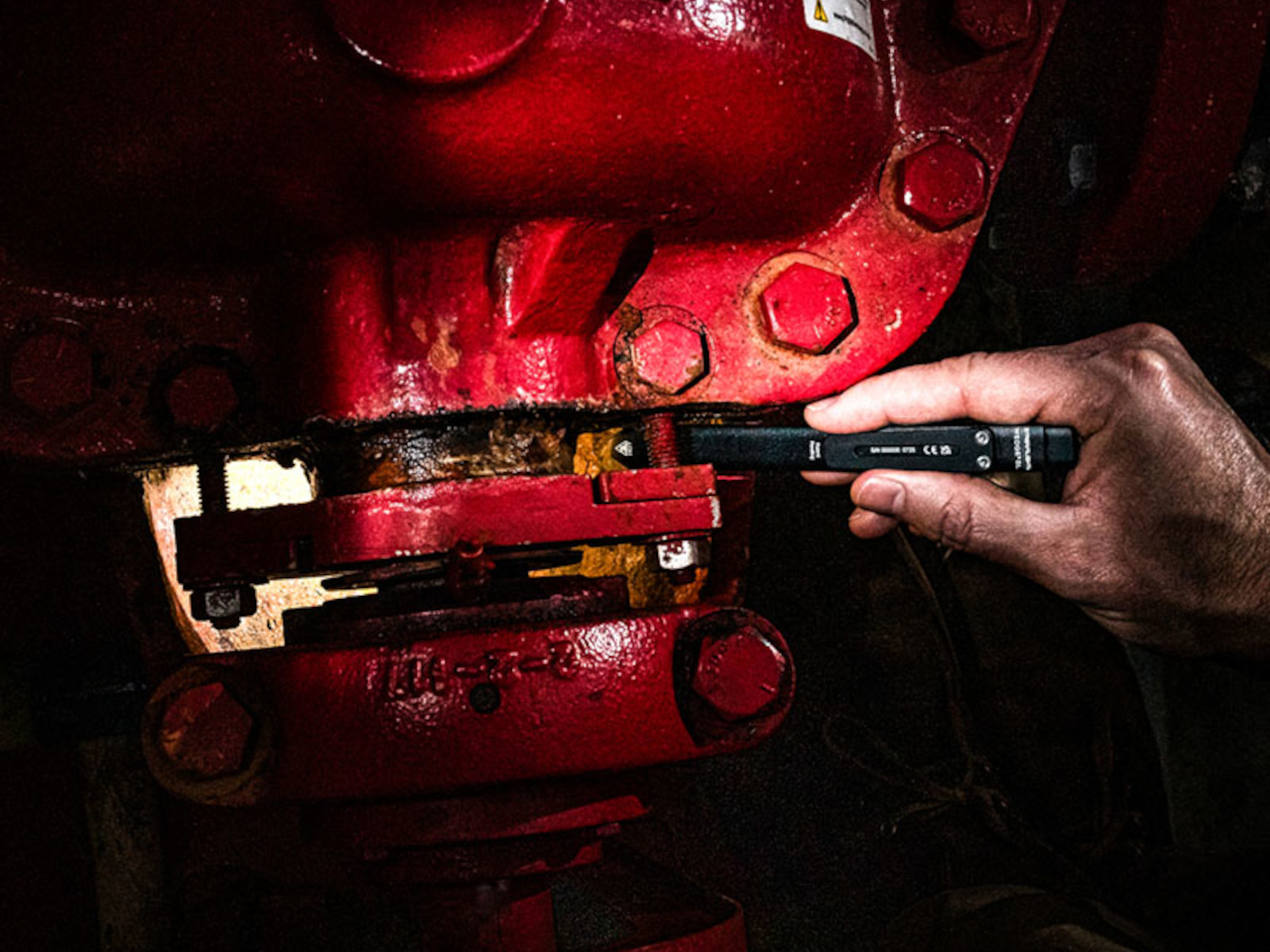
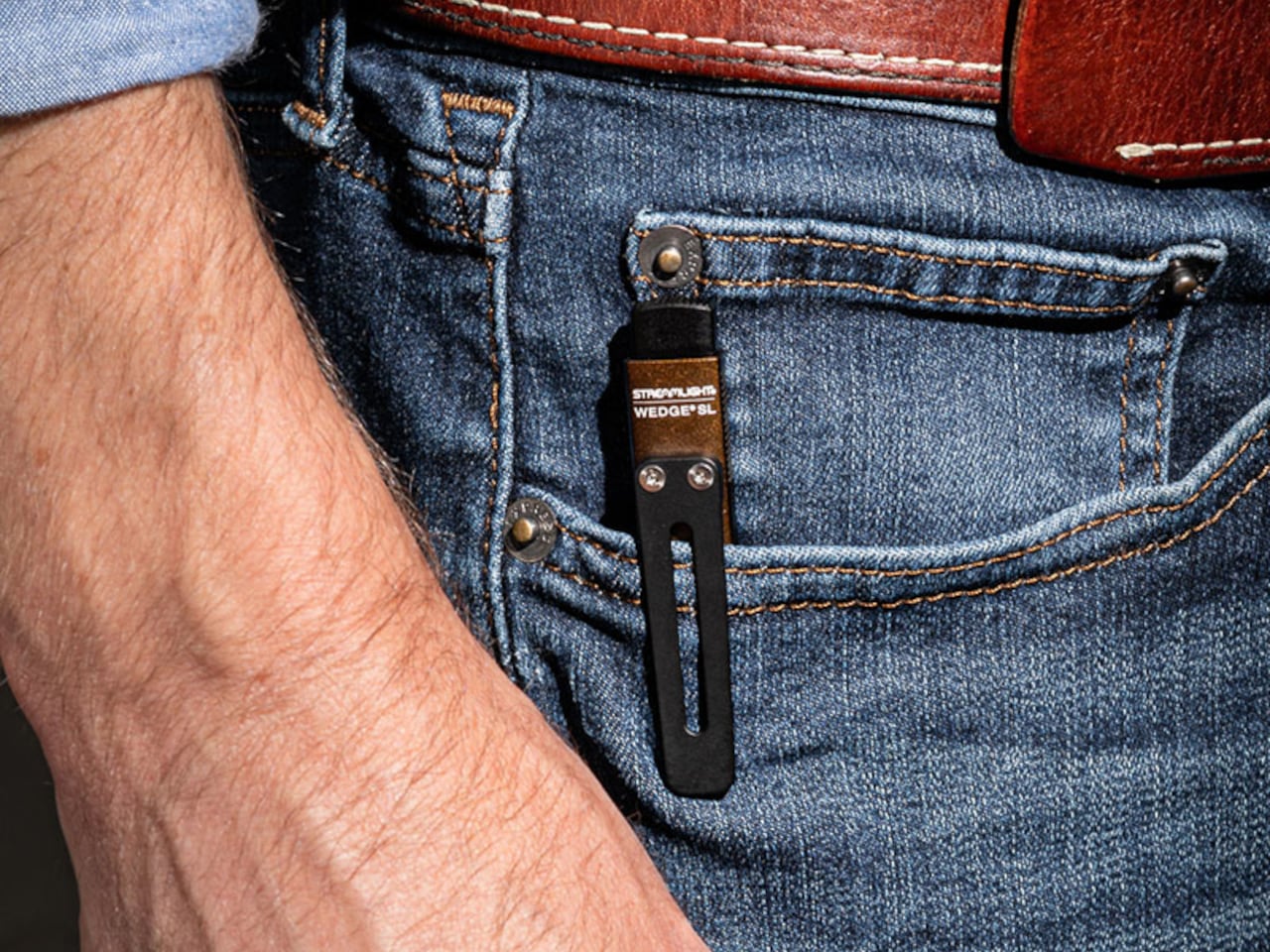
The Wedge SL is a USB-C rechargeable inspection light with a sleek, modern design built to actually stay in a pocket. The ultra-thin unibody construction puts the dimensions closer to a pen than a flashlight, 5.65 inches long, 0.28 inches thick, and about 1.14 oz light, which means it doesn’t fight for space with keys and a wallet. A stainless steel injection-molded pocket clip also lets it ride on a shirt pocket or tool pouch without bouncing around.
One-handed operation was clearly part of the brief. The tail switch handles momentary or constant-on use, so one hand can hold a panel, a wire bundle, or an awkward hatch while the other hand aims the light exactly where it needs to go. TEN-TAP programmable switch lets users choose whether constant-on defaults to High or Low intensity, which means the light can match your habits rather than forcing you to cycle through modes every time you switch on.
For an inspection light, the available modes are spot on, pardon the pun. Constant-on High runs at 100 lumens for 1.75 hours, Low drops to 50 lumens for 3.5 hours, and THRO (Temporarily Heightened Regulated Output) mode pushes 500 lumens with an 80m beam when you need maximum brightness fast. THRO is activated by a 3-second press, which keeps it from firing accidentally during sustained work while still making it quick to trigger when a tight space needs a real burst of light.
The battery side holds up well. USB-C charging and a four-level LED battery status indicator with charge alerts mean you always know roughly how much is left, without deciphering blink codes. A full charge takes about four hours. The field serviceable, user-replaceable lithium polymer battery is also worth calling out, since many rechargeable lights eventually become e-waste once the cell degrades inside a sealed body.
Durability gets the same careful treatment, as the extruded aluminum alloy case comes with a Type II MIL-Spec anodized finish. The lens is also unbreakable acrylic, and the light is IPX4-rated with 1m impact resistance testing. A bite boot is also included, which lets you grip it with your teeth during two-handed work without scratching the finish or the inside of your mouth.
The Streamlight Wedge SL earns pocket space by being thin, predictable, and quick to operate instead of trying to be a tactical statement piece. A flashlight that’s actually on you is always going to matter more than one that performs better on a spec sheet but gets left on the workbench because it’s too big to bother carrying every day.
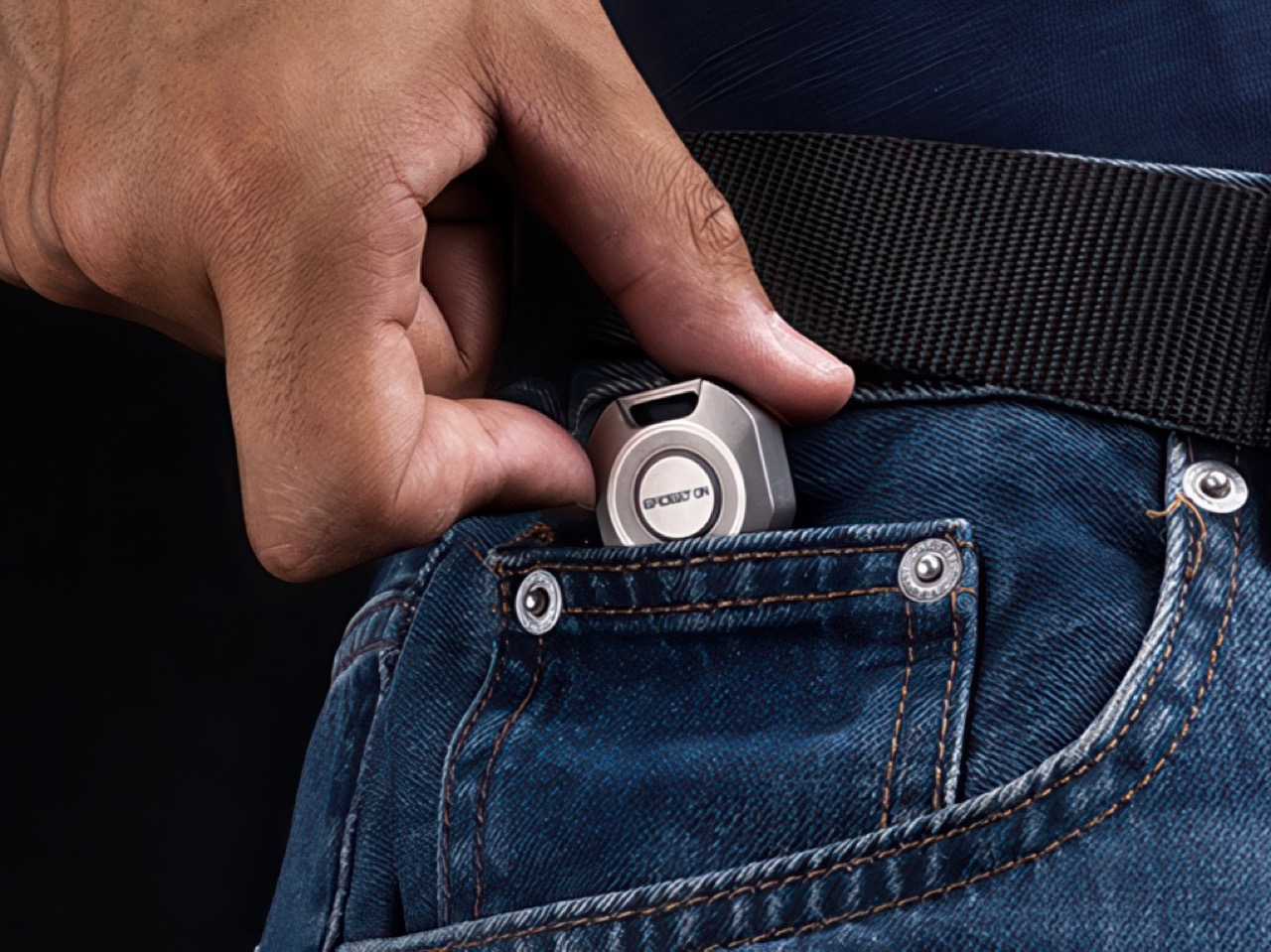
Your phone’s flashlight works fine until you’re elbow-deep in a car engine bay or fumbling with tent poles in the dark. Then you realize the limitation: you need both hands free, you need the light exactly where you’re working, and you need it to stay there without propping your $1,200 device against something greasy or precarious. The NanoB10 from Gadget On lives in that gap between “good enough” and “actually useful.”
This 3cm titanium flashlight attaches magnetically to your watch strap and rotates 360 degrees once mounted. Nine lighting modes cover everything from finding your keys to emergency signaling, while the dual-magnet system means it sticks to any metal surface at the angle you actually need. The whole package weighs about 24 grams and charges via USB-C. Sometimes the best tool isn’t the most powerful one in your house, it’s the one that’s already on your wrist when you need it.
24 grams puts this roughly in the same territory as a couple of quarters or precisely 2 AirTags, which means it disappears until you remember it’s there. Anything heavier starts pulling on your watch strap in ways that make you constantly aware something’s hanging off your wrist, which defeats the whole point of EDC gear that’s supposed to integrate into your daily carry without becoming a burden. The dimensions work out to 30mm x 27mm x 13mm, slightly larger than a nickel but thinner than you’d expect given what’s packed inside. Gadget On clearly spent time solving the density problem, cramming a 60mAh rechargeable battery, nine distinct LED modes, and two separate magnet systems into a volume that fits comfortably on a NATO strap without looking like you strapped a bottle cap to your wrist.
Two separate magnets handle different mounting scenarios, and the separation between them solves a problem most magnetic lights never address. One magnet lives in the body itself, letting you slap the flashlight directly onto any ferrous metal surface like a car hood, tool chest, or steel beam. The second magnet sits in the detachable clip, and this is where the 360-degree rotation becomes useful rather than just a spec sheet number. You dock the flashlight onto the clip magnetically, then spin it to whatever angle you need while the clip itself stays fixed to your watch strap, shirt pocket, or backpack strap. You’re no longer stuck with whatever angle the metal surface happens to be at, which is the usual limitation of magnetic work lights that just stick flat against whatever you attach them to.
Most keychain lights give you one brightness level and maybe a strobe if you’re lucky. The NanoB10 delivers four white LED modes at 1 lumen for night-light use, 35 lumens for low tasks, 100 lumens for medium work, and 200 lumens when you need actual throw. Add a white strobe for emergencies, two red LED modes at 2W and 3W for preserving night vision, a red SOS mode, and a 3W UV light at 365nm that’s actually useful for spotting fluid leaks or checking security features. Runtime on the 1-lumen night-light mode hits 15 hours, which becomes relevant when you’re trying to navigate a dark campsite without waking everyone up or need sustained low-level light for reading maps without killing the battery. The 200-lumen high mode obviously drains faster, but you’re using that in short bursts anyway.
Grade 5 titanium costs more than aluminum or plastic alternatives, but you can drop this thing, step on it, or leave it rattling around in a toolbox without worrying about cracked housings or stripped threads. IPX6 water resistance covers rain and splashes but stops short of submersion, which feels like the right tradeoff for something this compact. You’re not taking this diving, but you can use it in a downpour without killing it. The stonewashed titanium finish looks substantially better than the polished options in my opinion, though that’s entirely subjective. What’s objective is that titanium doesn’t corrode, doesn’t scratch as easily as aluminum, and develops a patina over time that actually improves the appearance rather than making it look beat up.
GADGET ON debuted the NanoB9 just last year, and managed to gather consumer feedback and knock out their next variant in just months. The base got redesigned for better magnetic hold and stability, machining tolerances tightened up across the body, and they added three more finish options based on user feedback from the previous version. That’s smart evolution because the core concept already worked, it just needed polish. The one-button control includes mode memory, so the light turns on to whatever setting you used last instead of forcing you to cycle through all nine modes every single time you need the flashlight. That small detail prevents the kind of annoying behavior that makes people abandon multi-mode lights entirely.
USB-C charging completes a full cycle in approximately 30 minutes, which aligns with the small 60mAh battery capacity. You’re trading extended runtime for size, but the math works when you consider that 15 hours on low gets you through most realistic use cases before you’re near a USB port again. The charging port sits under a small rubber cover to maintain the IPX6 rating, which adds one more thing to keep track of but beats the alternative of a corroded port that stops working after six months of exposure. The cover is tethered to the body, so at least you won’t lose it immediately.
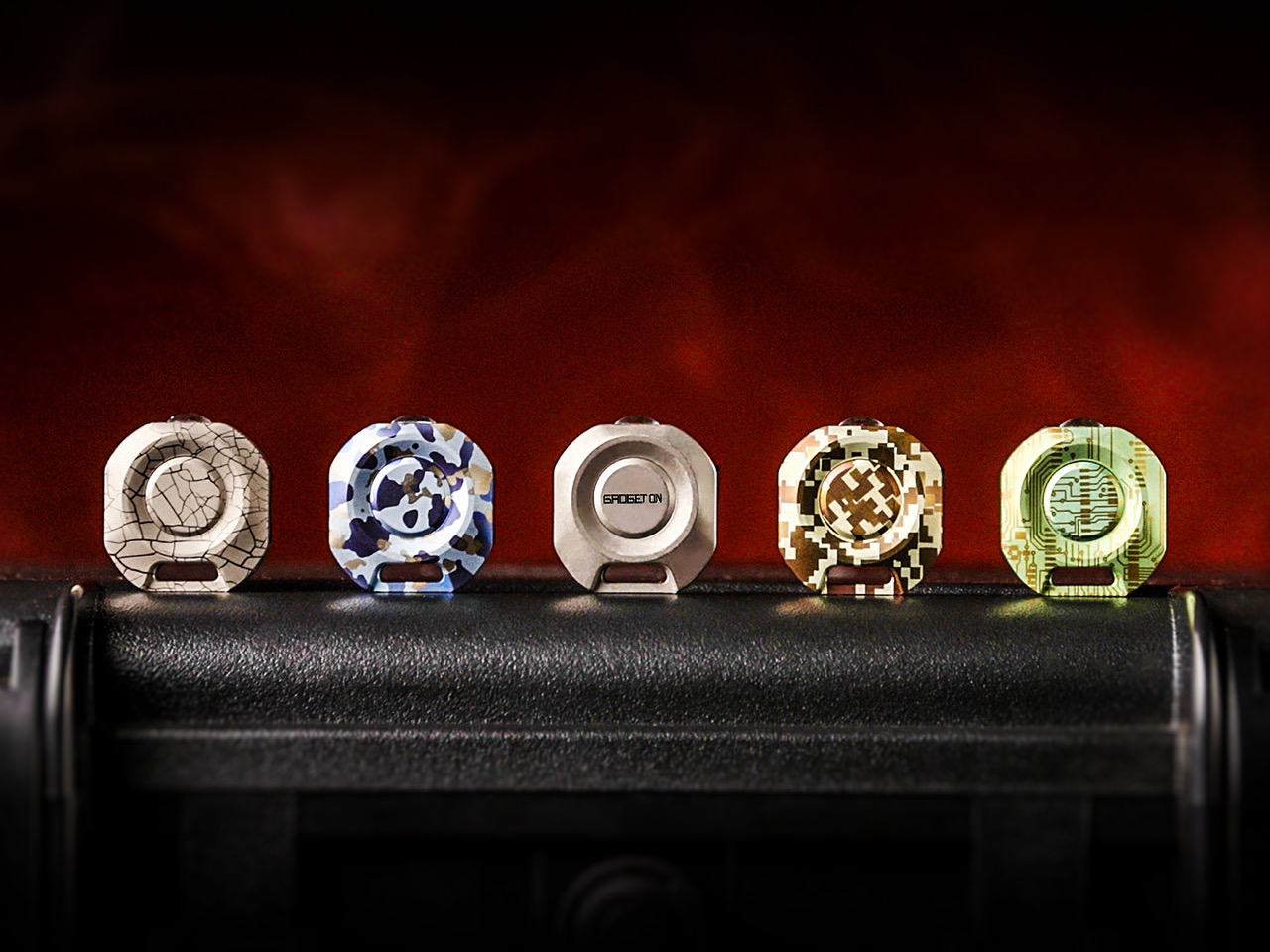
The NanoB10 comes in five finish options: Wave (blue anodized with wave pattern), Matrix (green anodized), Stone (stonewashed bare titanium), Desert (gold anodized), and Slate (natural titanium). Pricing starts at £54 for the Stone or Slate single-color versions and £66 for the anodized color options, which translates to roughly $70-85 USD depending on current exchange rates. Shipping is estimated to begin in June 2026, with the flashlight and magnetic clip sold as separate items so you can add extra mounting options if needed.
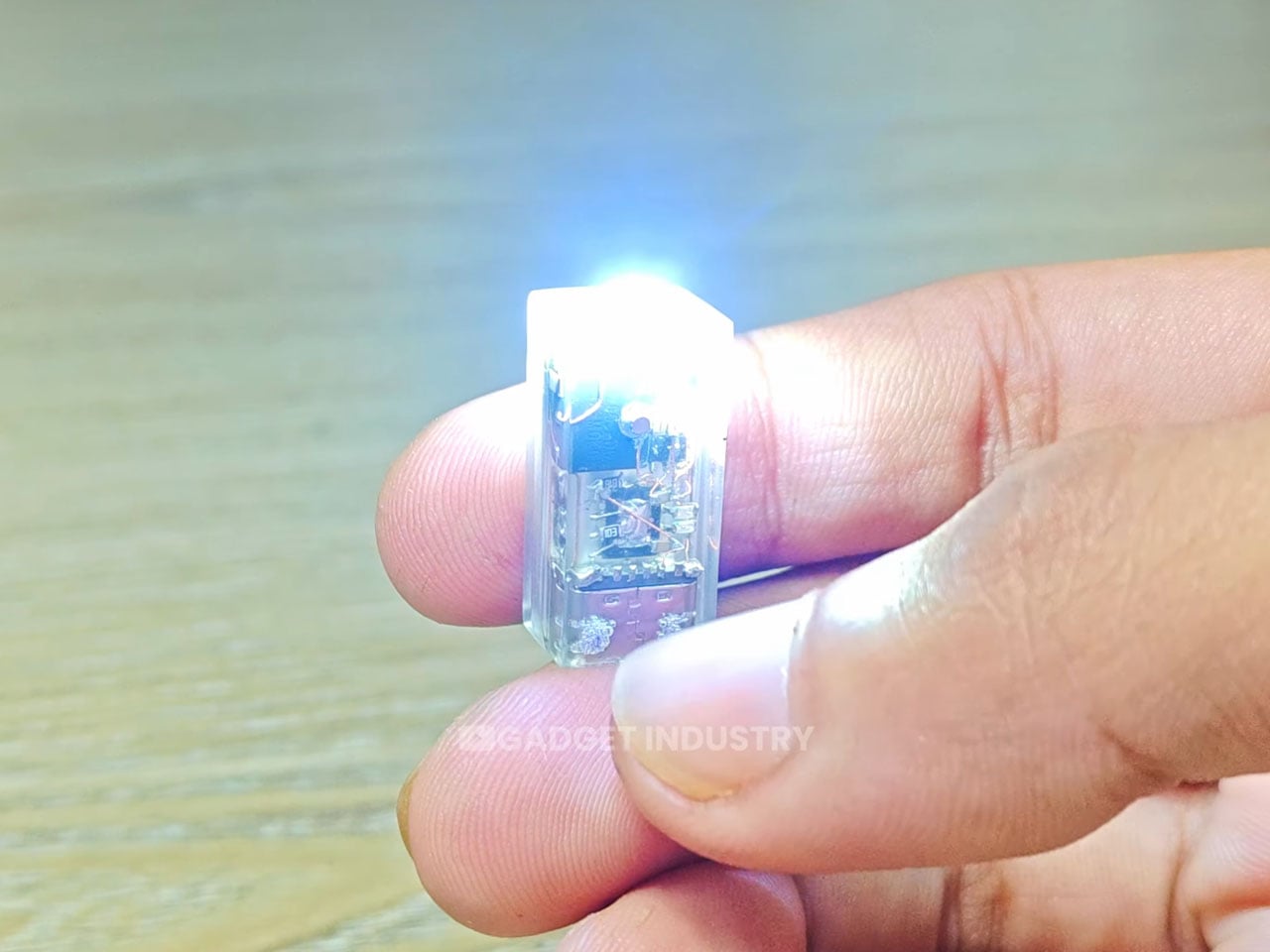
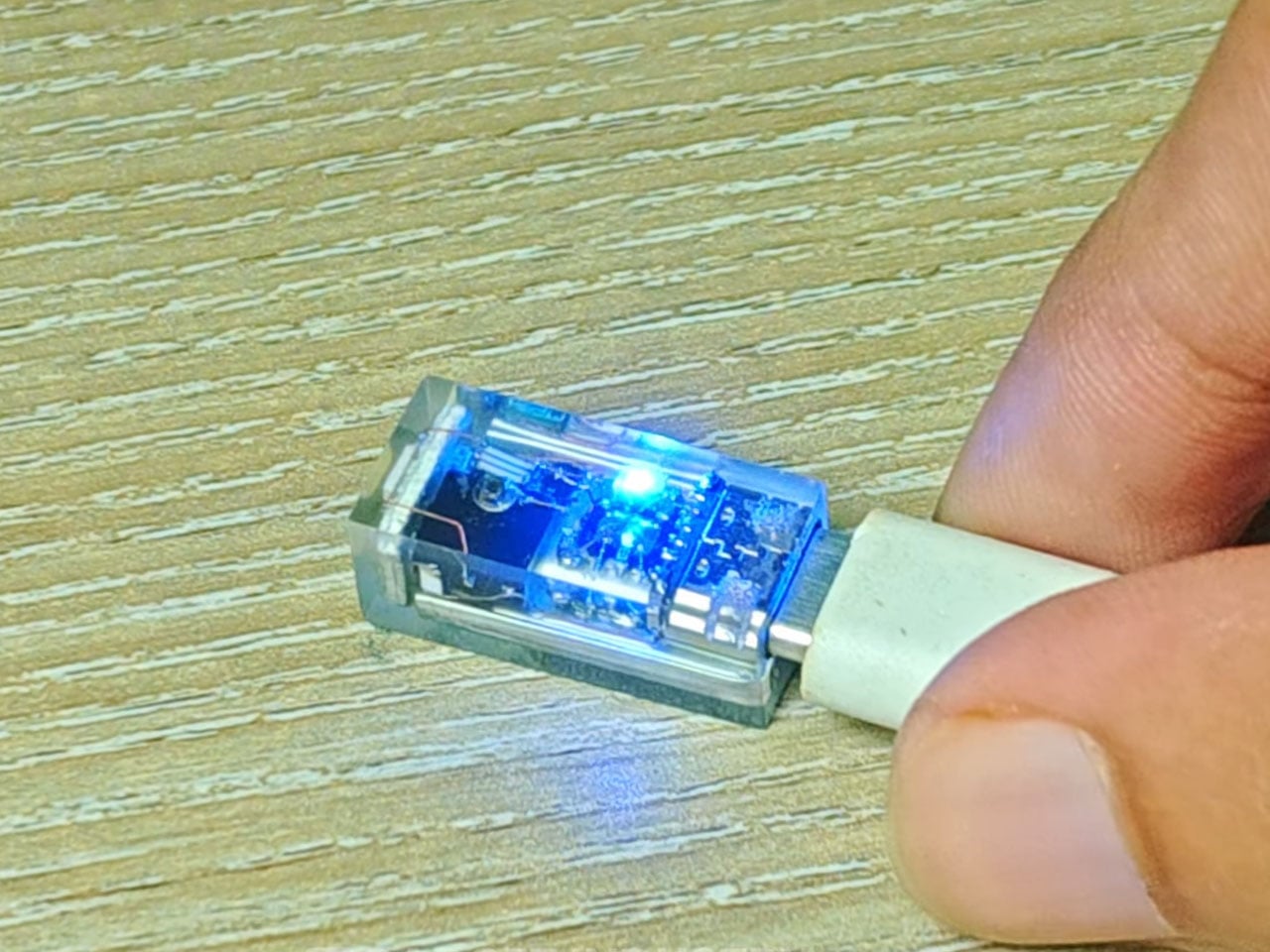
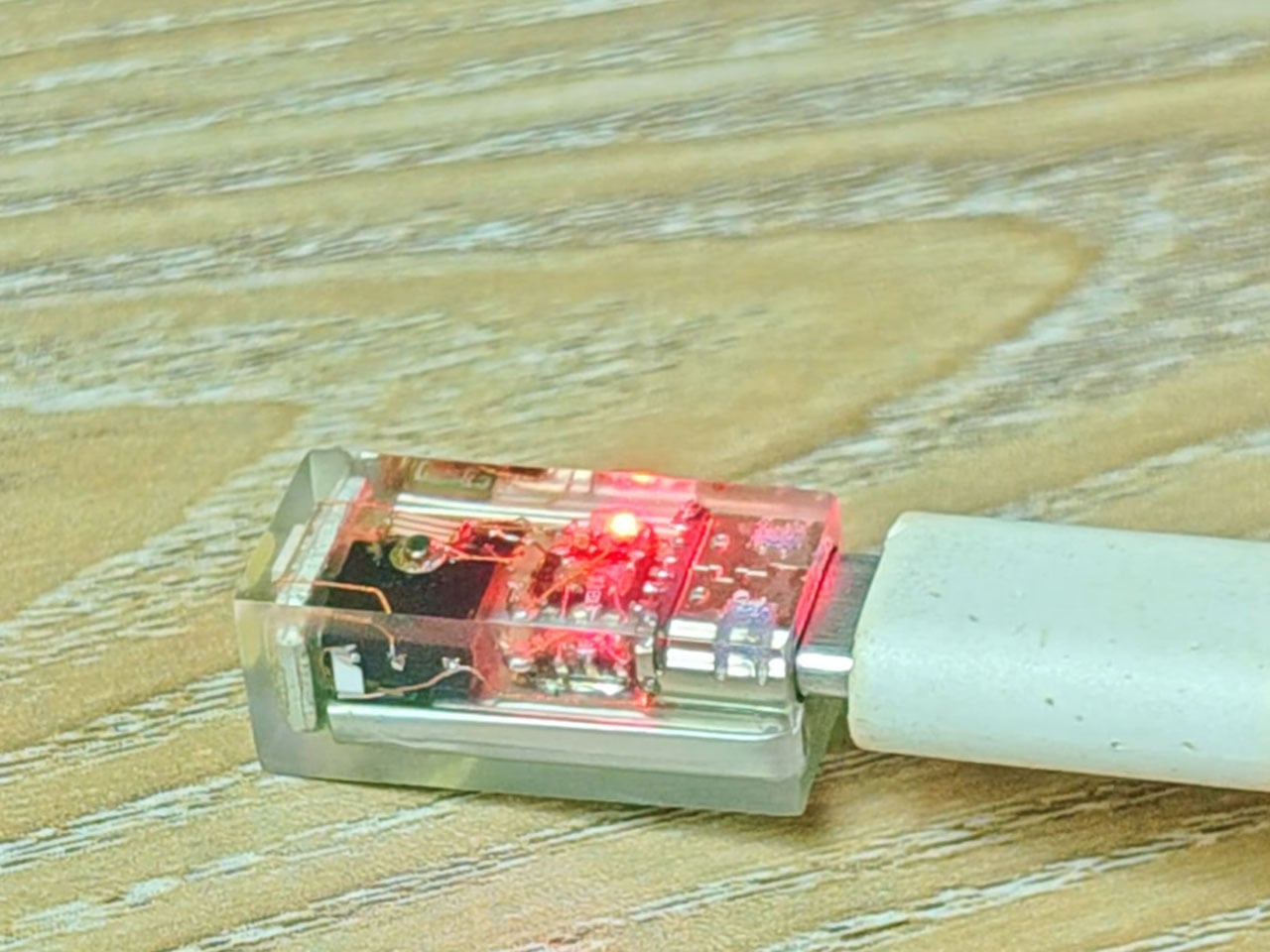
World’s smallest and world’s biggest are two phrases that never fail to grab attention, especially when they’re attached to something as utilitarian as a flashlight. This fingertip-sized rechargeable torch does exactly that, not by chasing gimmicks, but by pushing miniaturization to an almost obsessive extreme. Built as a DIY experiment by YouTube channel Gadget Industry, the flashlight shrinks a fully functional, rechargeable light source into a form factor so small it’s easy to forget it’s even there, until the moment you need it.
At first glance, the scale alone feels unreal. The flashlight can sit comfortably on the tip of a finger, yet it houses a lithium-polymer battery, a charging circuit, a touch-based control system, and a white LED, all sealed into a compact resin shell. It’s a reminder that innovation doesn’t always come from adding more features, but from stripping everything down to what’s essential. In a world crowded with bulky EDC gear promising extreme brightness and endless modes, this micro torch takes the opposite route, prioritizing presence and accessibility over raw power.
Designer: Gadget Industry
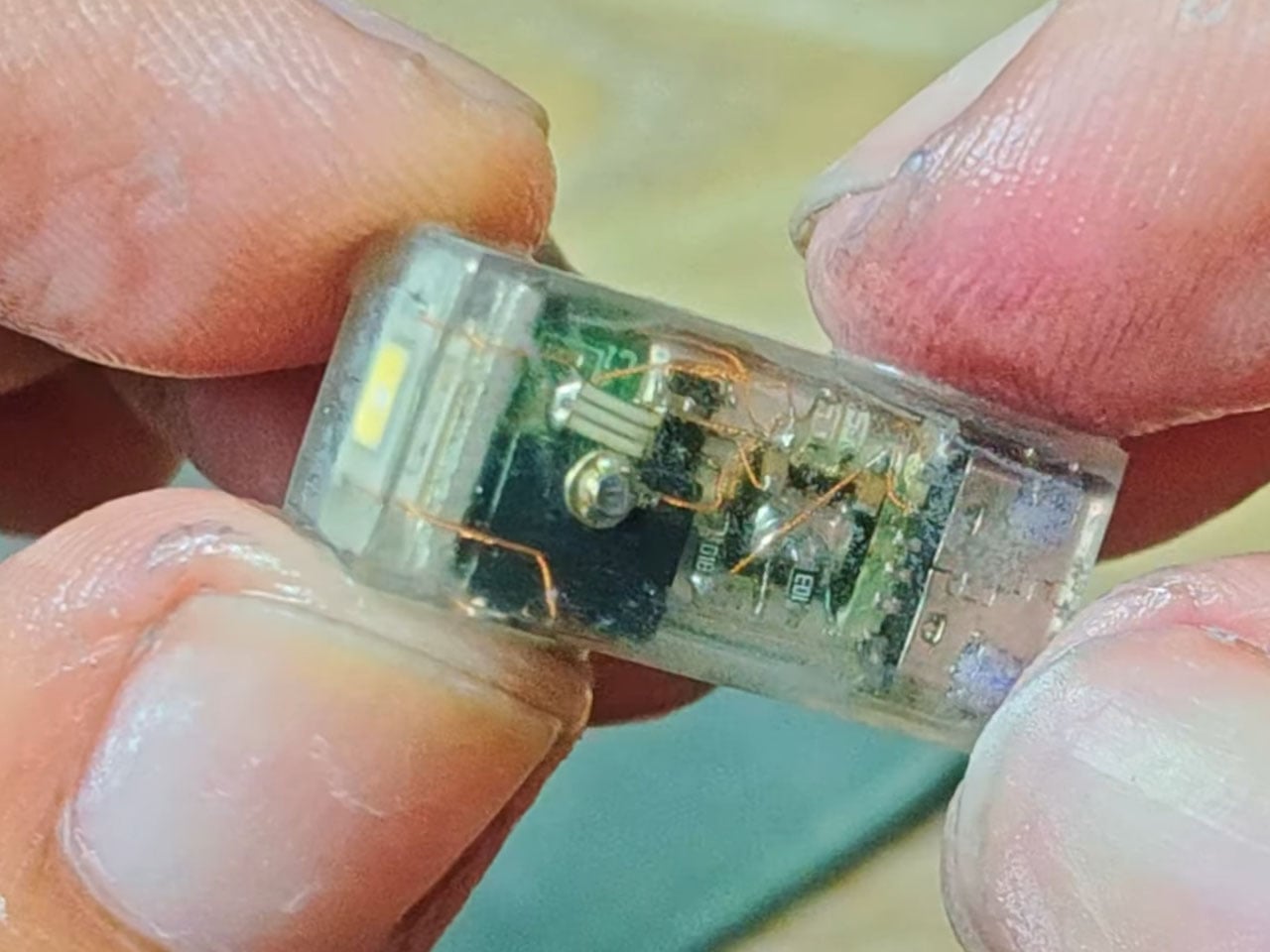
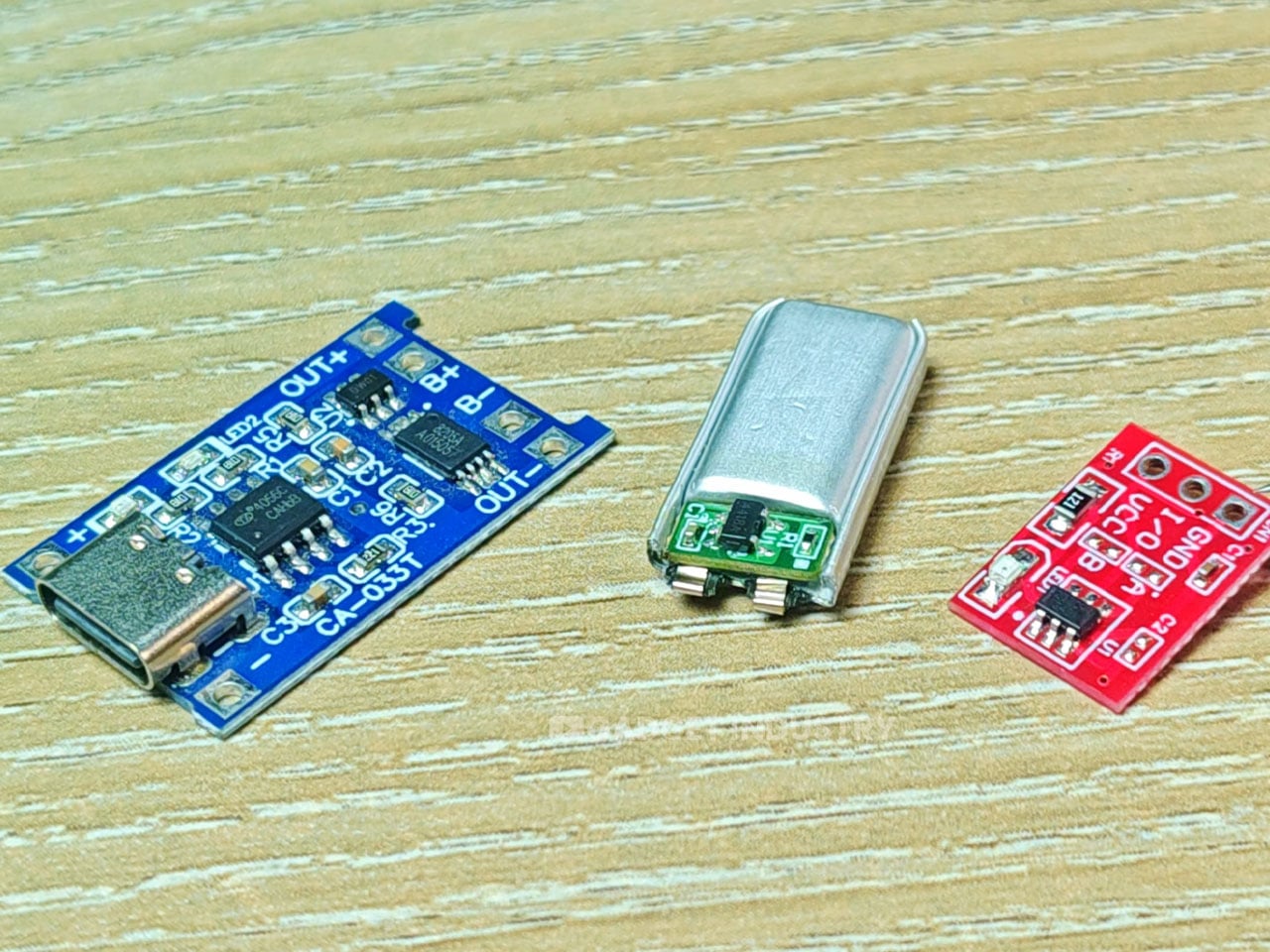
The build begins with a tiny 60mAh lithium-polymer battery, chosen specifically for its balance between capacity and size. To make charging possible without inflating the footprint, the maker disassembles a TP4056 USB-C charging board and integrates only the necessary components directly into the layout. A touch sensor replaces a traditional mechanical switch, working through an N-channel MOSFET to control the LED. The result is a simple, intuitive interaction: place your finger over the sensor and the light turns on, remove it and it shuts off. There’s no click, no resistance, and no moving parts to fail over time.
Encasing everything in resin serves both functional and aesthetic purposes. The hardened shell protects the delicate internals from scratches and minor impacts while allowing the flashlight to be shaped and sanded into an organic, pebble-like form. The USB-C port is carefully preserved during the casting process, making recharging as straightforward as plugging it into any modern cable. While the casing offers limited resistance to splashes, it’s clearly not designed for submersion or harsh outdoor abuse, this is a light meant for convenience, not combat.
Performance is modest but respectable given the scale. The LED provides enough illumination for close-range tasks like navigating dark hallways, peeking into tight corners, or serving as an emergency backup when nothing else is available. On a full charge, the flashlight runs for roughly half an hour, depending on the LED used, which feels surprisingly practical for something this small. Compared to commercially available keychain flashlights, there are obvious compromises in brightness and durability, but none of them detracts from the core achievement.
What makes this project compelling isn’t whether it officially qualifies as the world’s smallest rechargeable flashlight, it’s the mindset behind the craft. This build showcases the patience, precision, and restraint required to design at such a tiny scale, proving that even the most familiar objects can be reimagined when size becomes the primary constraint.
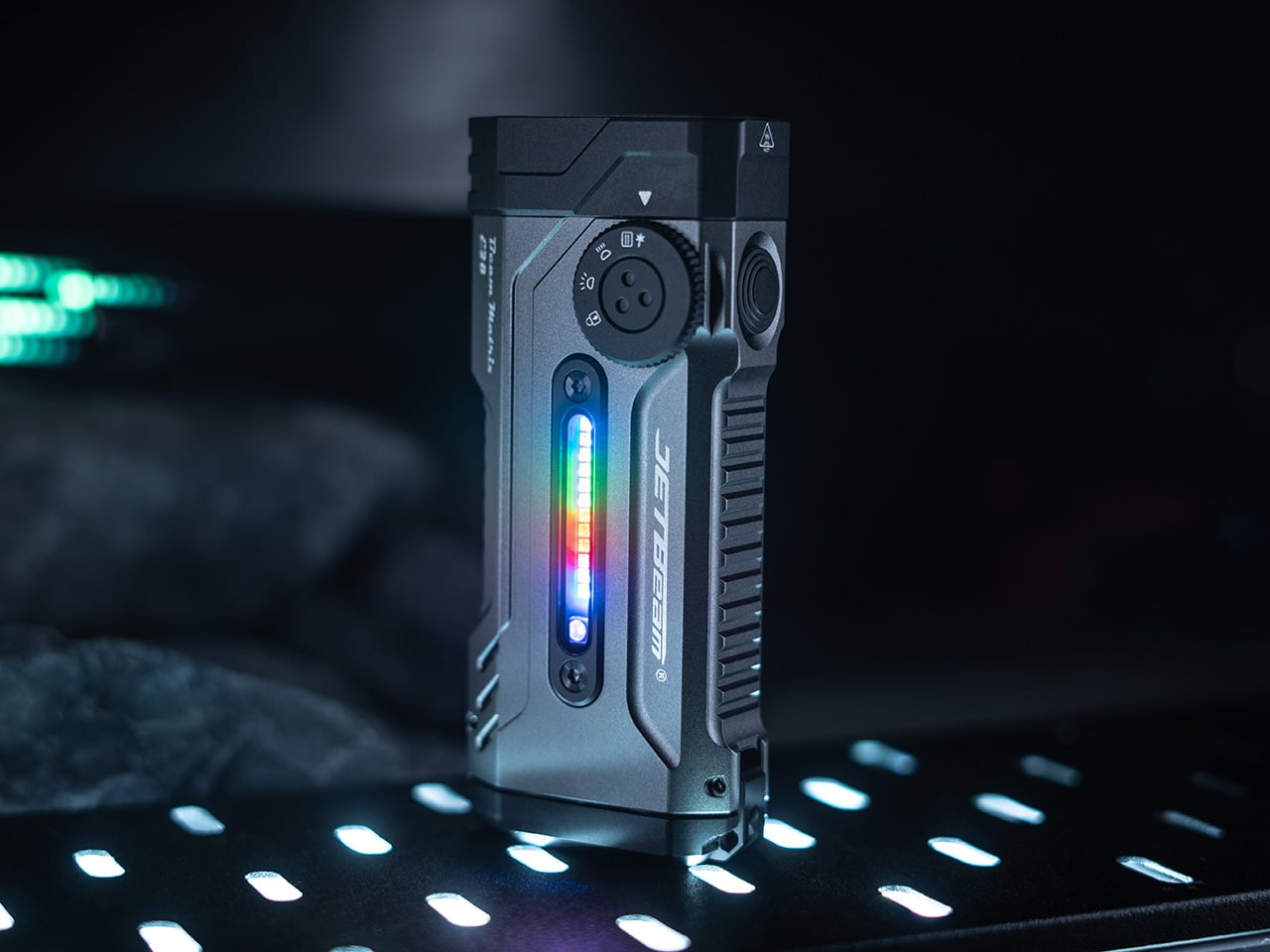
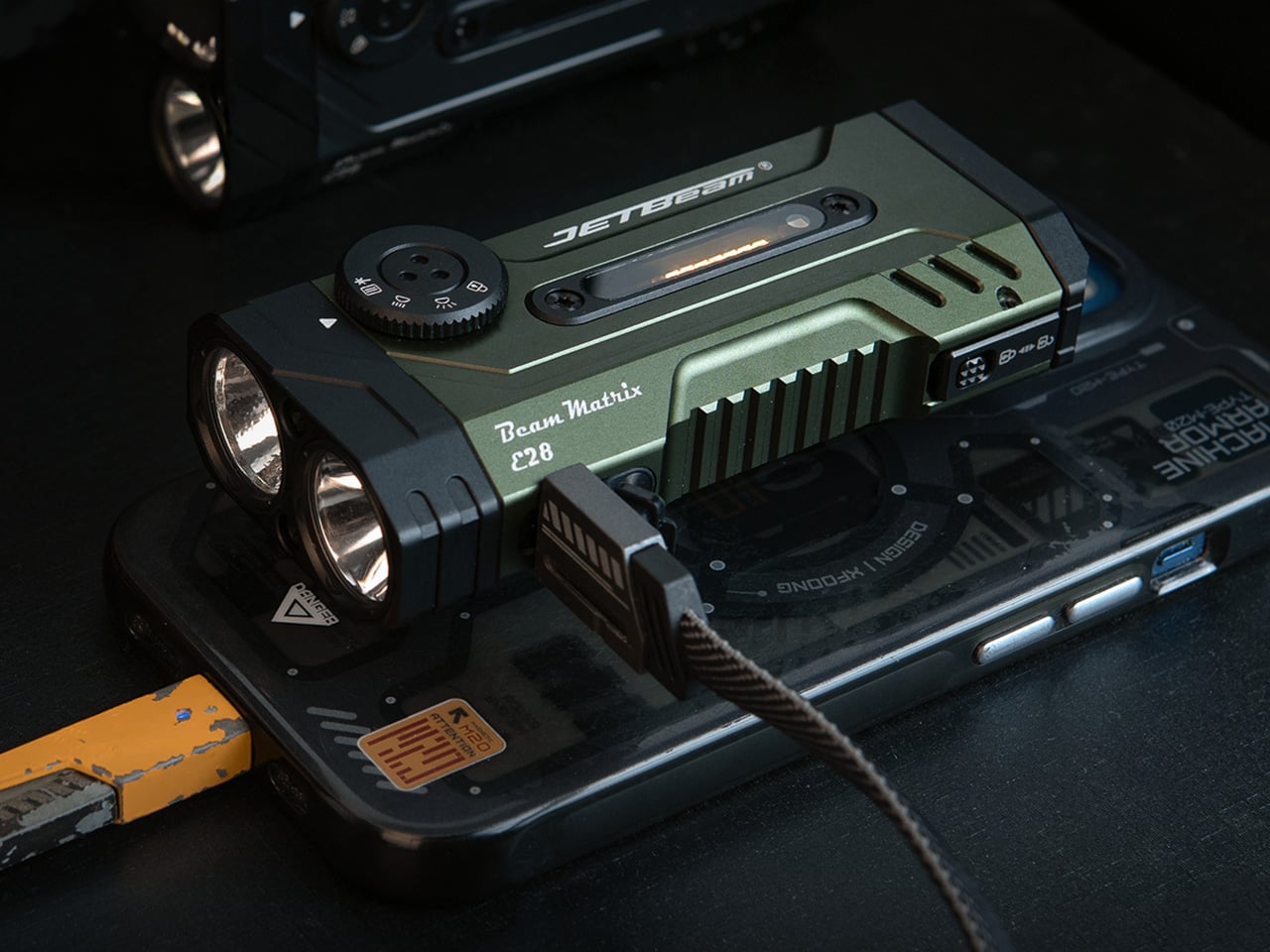
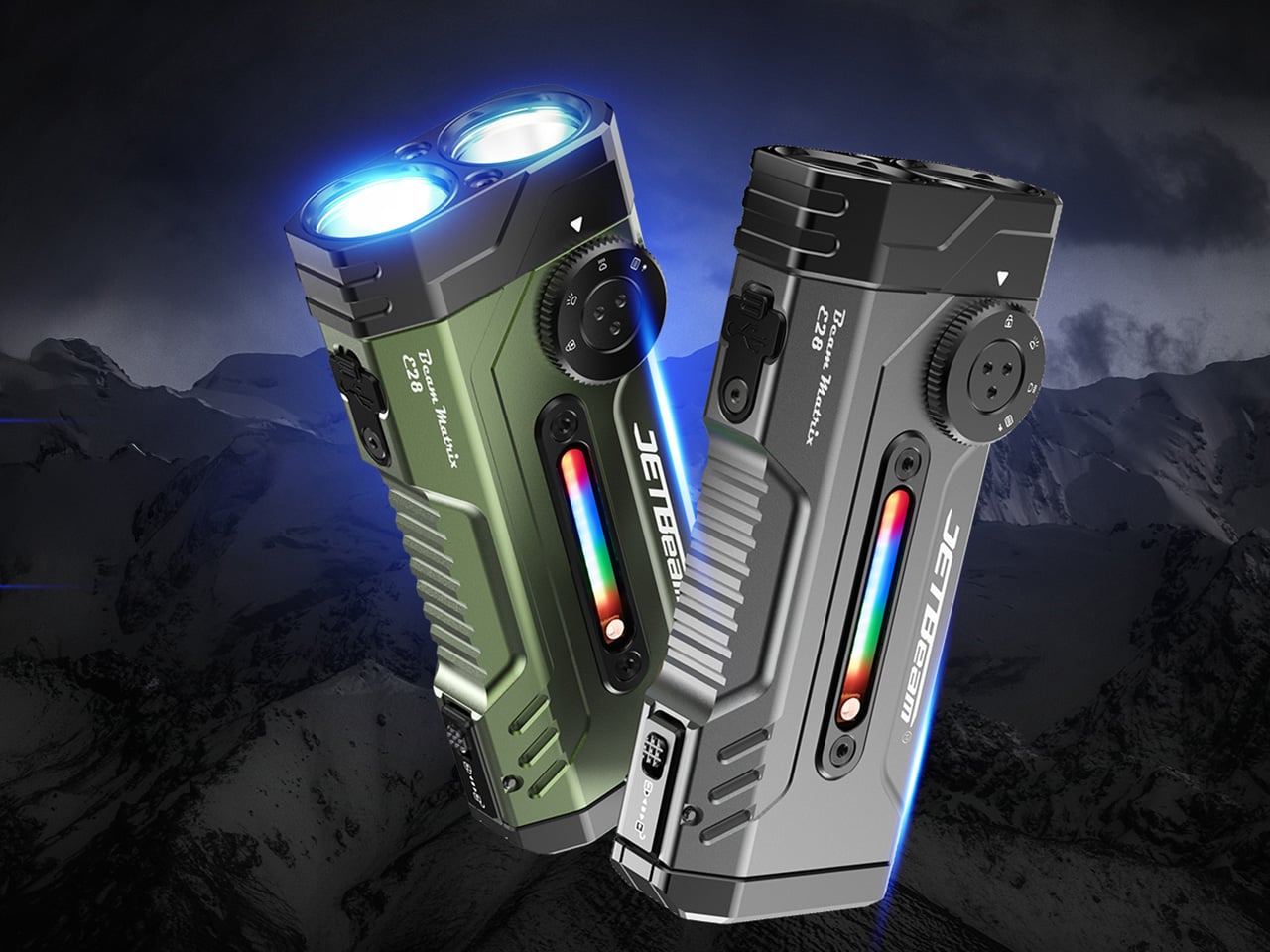
Most flashlights ask you to choose. Throw or flood. Pocket size or runtime. A simple beam or specialty features. Jetbeam’s E28 walks into the room and suggests you stop choosing altogether. This flat, brick-shaped EDC light packs dual independently controlled white beams (one flood, one throw), a 365 nm UV emitter, a 520 nm green laser, an RGB side strip with nine modes, and a 7,000 mAh power bank into a single 251-gram body. It is the sort of design that makes you wonder whether the engineers were trying to solve real problems or just win a feature-count contest.
Here’s the thing: the spec sheet sounds like overkill until you actually think about the situations where you need more than a basic beam. Checking a hotel room for cleanliness with UV. Using the laser as a presentation pointer by day and a pet toy by night. Mounting the light magnetically under a car hood while the flood beam lights your work and the throw beam spotlights a distant part number. The E28 is betting that enough people want a true multi-tool in flashlight form, and the early reviews suggest Jetbeam might be onto something.
Two 18650 cells sit inside a flat aluminum body measuring 107.6 × 48 × 26.6 mm, delivering 7,000 mAh of total capacity. That translates to 8.3 hours at 500 lumens in flood mode or 13.2 hours at 300 lumens in throw mode, which are the runtimes that actually matter when you cannot swap batteries mid-hike. Moonlight mode allegedly hits 350 hours, though nobody is realistically running a light that dim for two weeks straight. The dual-cell setup adds weight, pushing the E28 to 251 grams with batteries installed, but that heft comes with the benefit of never worrying about your light dying during an evening walk or a weekend camping trip.
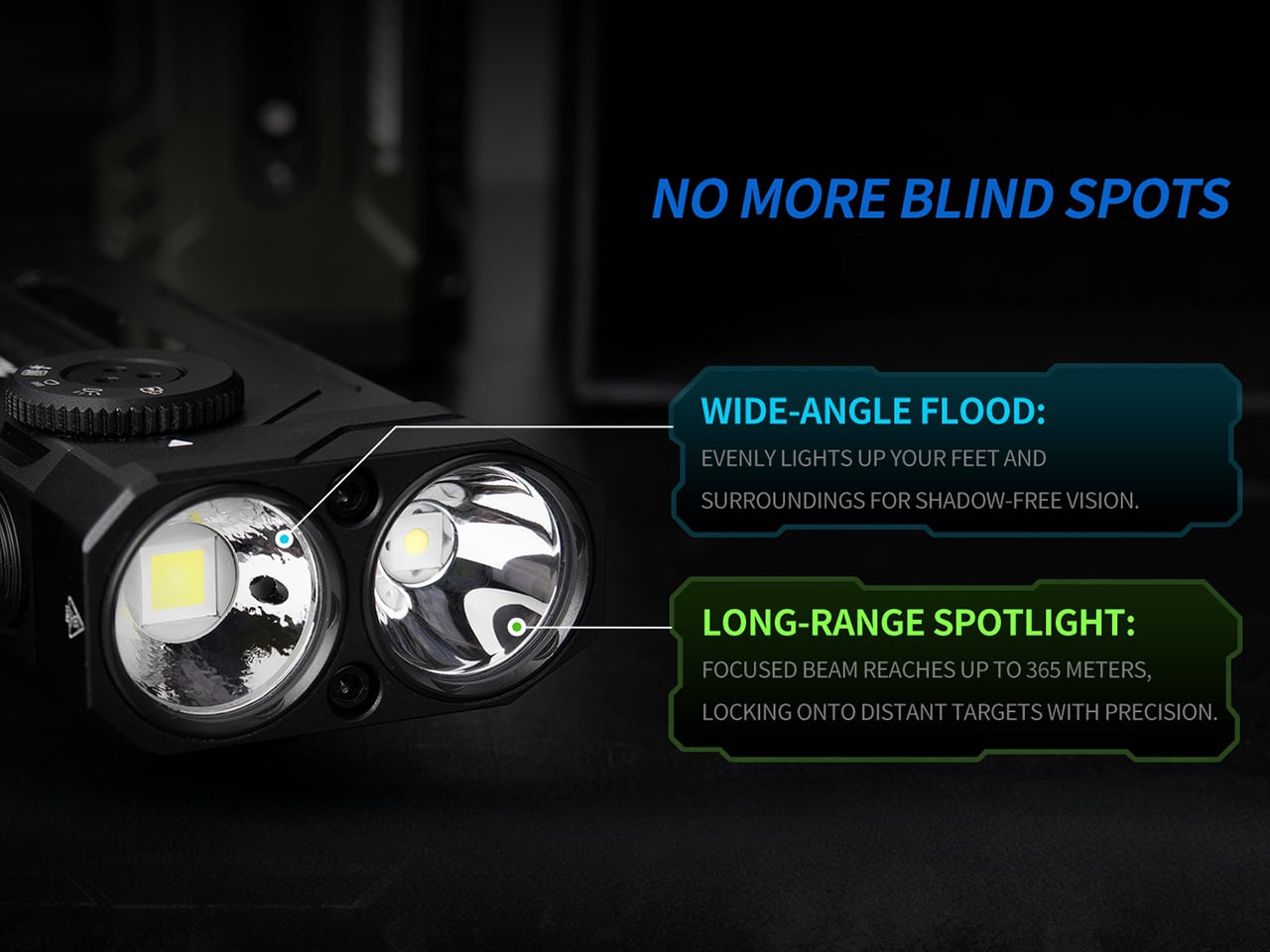
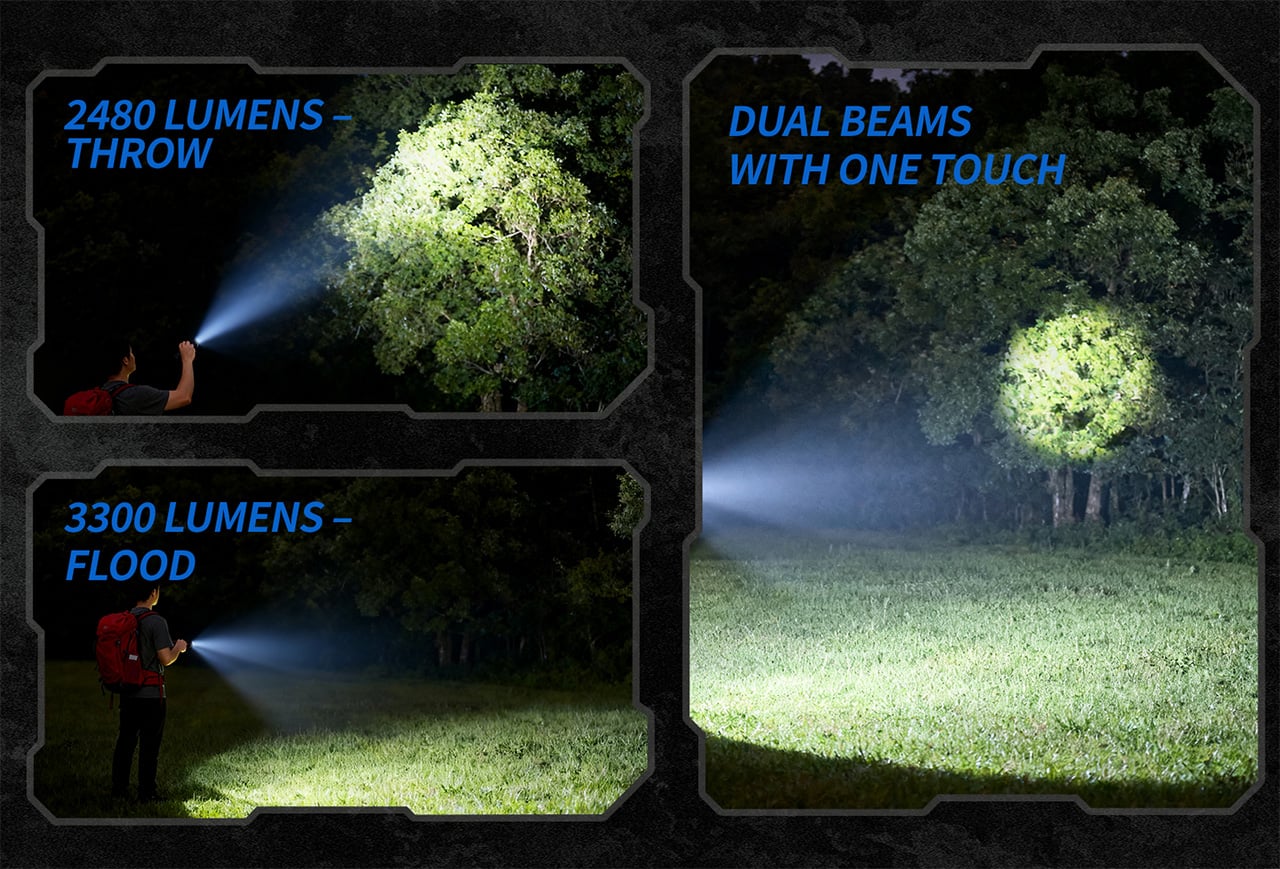
Jetbeam gave each beam its own proper optics instead of cramming compromised emitters into a too-small head. The flood side uses a 7070 LED with a wide, shallow reflector, maxing out at 3,300 lumens (briefly, before stepping down to 1,500 then 1,000 as heat builds). It is a wall of light that illuminates everything within 10 meters with zero shadows, exactly what you want for close work or navigating a dark campsite. The throw channel uses a Luminus SFT-42R with a smooth, focused reflector, hitting 2,480 lumens and reaching 365 meters with a 33,375-candela hotspot. That is search-and-rescue level throw from a light you can slip into a jacket pocket. Running both channels simultaneously gives you a beam profile with bright center punch and complete peripheral coverage, which is how dual-beam lights should work but rarely do because most manufacturers cheap out on one emitter or the other.
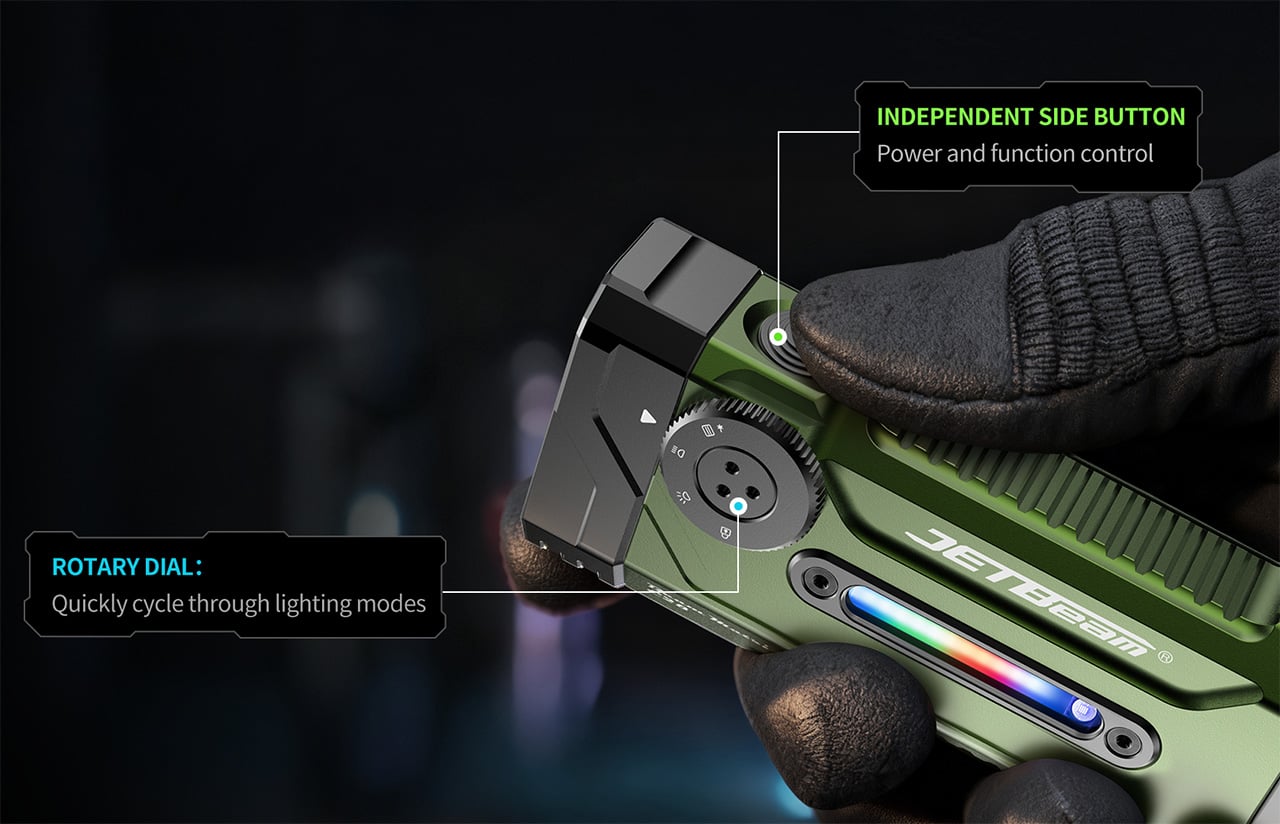
A rotary dial handles mode switching, which immediately sets this apart from the “click seventeen times to find strobe” nonsense that plagues most multi-mode lights. Rotate to flood, throw, dual-beam, UV, laser, or RGB, then tap the side button to turn on or cycle brightness. It takes maybe ten minutes to learn and then becomes completely intuitive. You can operate it one-handed even with gloves because the dial has positive detents and the button is chunky and easy to find by feel. Jetbeam clearly spent time thinking about how people actually use lights in the field instead of just designing a UI that looks good on paper.
The UV emitter sits on one side at 365 nm, which is proper ultraviolet (not the 395 nm purple wash that cheap lights use). This wavelength makes currency security features glow, reveals pet stains on carpets, highlights HVAC leak-detection dye, and generally makes invisible contaminants visible. If you work in automotive, HVAC, or forensics, this is a tool you already carry separately. If you travel frequently and care about hotel cleanliness, same deal. For everyone else, it is a fun party trick that might come in handy twice a year. The 520 nm green laser sits opposite, useful for presentations, pointing out distant landmarks, or entertaining pets. It is low-powered enough to be safe but bright enough to be visible across a parking lot at night. The RGB strip runs along the side with nine different modes: solid colors, breathing patterns, meteor effects, rainbow flow. Red light preserves night vision when you are reading maps. Multicolor modes create ambient lighting at camp or act as fill light for photos. Solid white functions as a secondary task light. Some people will use this constantly; others will turn it on once, say “neat,” and forget it exists.
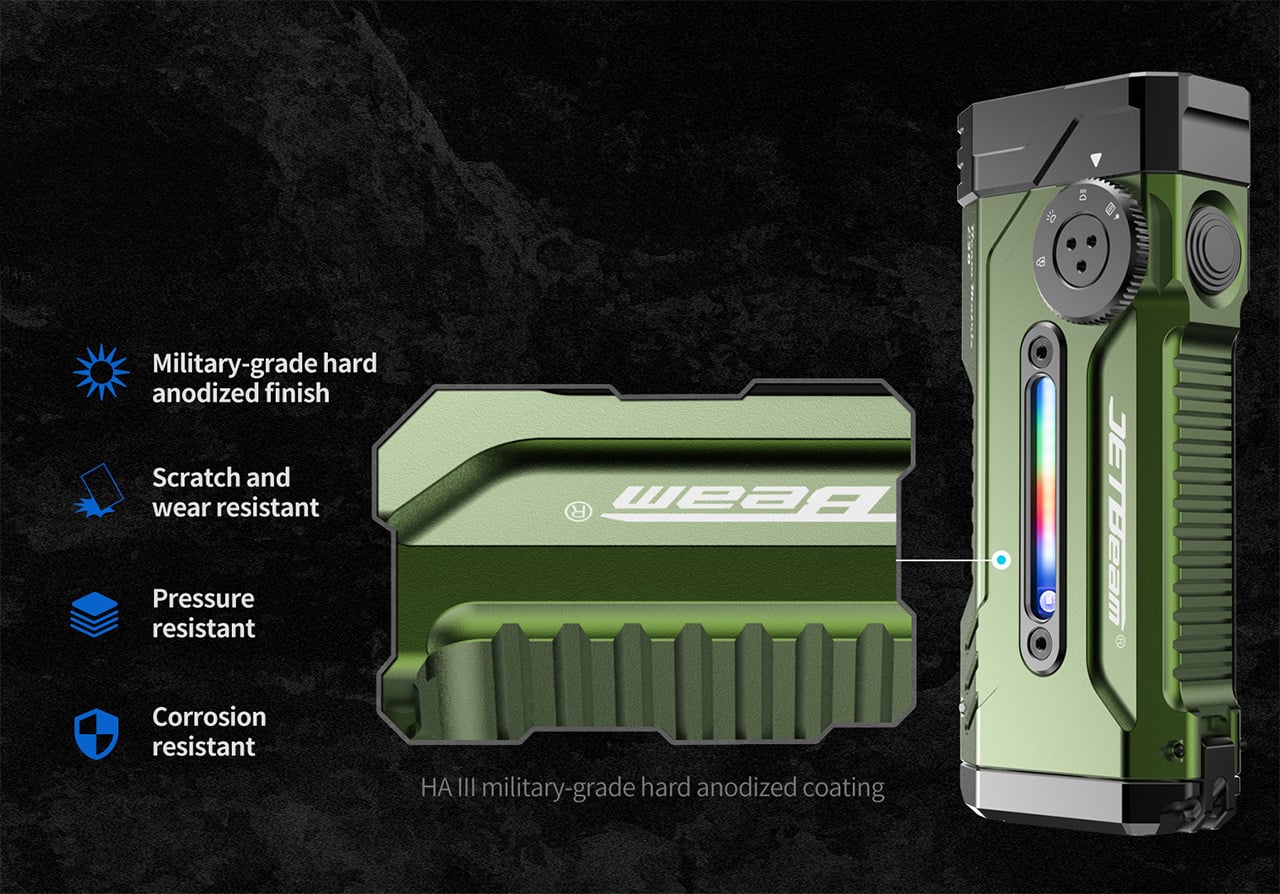
Aerospace-grade aluminum with HA III hard anodizing means the body can take scratches, drops, and general abuse without looking like it fell off a truck. The machining cuts along the flat sides double as heat fins and grip texture, which is functional design instead of just aesthetics. IPX8 waterproofing handles 2 meters of submersion, and the USB-C port hides behind a sealed rubber cover. The magnetic tail holds firm on steel surfaces even when the light is pumping out heat on high mode, making hands-free work actually practical. A removable clip mounts in either direction for cap-brim carry, backpack straps, or belt attachment, and the base plate is compatible with GoPro-style action camera mounts, so you can stick this on bike handlebars, helmets, or quick-release brackets.
The power bank function turns 7,000 mAh of onboard capacity into emergency phone charging via USB-C. You can fully charge most phones at least once, which makes the E28 useful during power outages or long days away from outlets. It is not replacing a dedicated battery bank, but as something that lives in your car or go-bag anyway, having that backup option adds real value. The RGB strip shows battery status for five seconds on power-up, cycling through colors to indicate remaining charge, which is smarter than trying to guess voltage by how bright the beam looks.
Jetbeam ships the E28 with two 3,500 mAh 18650 cells, a USB-C cable, lanyard, mounting clip, hardware, and a hex wrench, so you can use it immediately without buying accessories. Pricing lands at $87.45 with 2 color options to choose from – a tactical green, and a classic grey, which feels reasonable for a light that consolidates a flood beam, throw beam, UV source, laser pointer, and power bank into one 251-gram package. If you already carry multiple single-purpose tools, the E28 is the Swiss Army knife consolidation you did not know you needed. If your lighting needs are simple, a $25 single-beam EDC or even your phone’s flashlight will serve you fine. But for anyone who regularly finds themselves thinking “I wish I had X tool right now,” Jetbeam built exactly that.