Japan Just Solved Spring Home Refresh With 8 Minimalist Accessories That Make Your Space Feel New

Spring cleaning has a way of exposing how tired a room can feel. Swapping out a duvet cover or rearranging furniture only goes so far. What actually shifts a space is the accumulation of small, considered objects, the kind that carry weight in both design and meaning. Japan has been refining that philosophy for centuries, and right now, its makers are producing pieces that feel less like accessories and more like answers.

The eight pieces below come from workshops and studios rooted deeply in Japanese craft traditions, from the granite quarries of Kagawa to the porcelain villages of Nagasaki. Each one brings something entirely distinct to a room: texture, scent, sound, light or a quiet kind of order. None of them demands visual attention. That restraint is precisely what makes them so effective at resetting a space, slowly and convincingly, for spring.

1. Miniature Bonfire Wood Diffuser Set

The first thing you notice about the Miniature Bonfire Wood Diffuser Set is that it shouldn’t work as well as it does. A stainless steel campfire, sized for a shelf, capturing the scent of mountain forests through bundled miniature firewood. Yet everything about it, the tying knot, the proportions, the way the essential oil disperses, feels entirely intentional. It pulls the atmosphere of Mt. Hakusan into whatever room you place it in, with the same gentleness as a forest breeze moving through cedar.

For spring, this diffuser does something conventional reed diffusers rarely manage: it gives the scent a visual story. The trivet feature makes it genuinely dual-purpose, transforming into a pocket stove for an indoor camping ritual that bridges the gap between winter’s coziness and spring’s restlessness. Built from rust-resistant stainless steel, it holds up to repeated use without losing its clean, sculptural presence. As a centerpiece on a coffee table or entryway shelf, it reframes the whole room around calm.

Click Here to Buy Now: $99.00

What We Like

  • Mt. Hakusan essential oil brings a real, named place into the room.
  • The trivet conversion makes it an experience, not just a decorative object.

What We Dislike

  • Scent radius may fall short in larger, open-plan spaces.
  • Mt. Hakusan oil refills are specialty items, difficult to source outside Japan.

2. Aji Stone Book End Large

Aji Stone is known in Japan as the diamond of granite, quarried exclusively from the northeastern region of Takamatsu City in Kagawa Prefecture, where its exceptional density and refined grain make it unlike any other decorative stone. The Aji Stone Book End Large is perfectly split from a single stone. It holds large books without shifting and carries a physical presence that mass-produced bookends simply cannot replicate.

What makes this bookend particularly suited for a spring refresh is its restraint. It doesn’t decorate; it anchors. A shelf of books held between two blocks of Aji stone immediately reads as curated rather than accumulated, which is a subtle but significant shift for any living space. Its low moisture absorption and resistance to weathering mean it can sit near a window or in an entryway without degrading over time. Spring cleaning often calls for removal. This is the rare piece worth adding.

What We Like

  • Each piece carries natural individuality that no factory process can reproduce.
  • Dense enough to hold the heaviest books without shifting.

What We Dislike

  • At $240, it asks for real confidence in its long-term design value.
  • Significant weight makes repositioning effortful once placed.

3. Nousaku Slim Wind Chime

Wind chimes occupy a strange, undervalued category in home design: they’re atmospheric tools more than decorative objects, and the Nousaku Slim Wind Chime understands that completely. This chime features a deliberately narrowed opening that concentrates sound into a sharp, transparent tone with a slightly lower pitch than a standard wind chime. It’s the sonic equivalent of a cool spring breeze arriving through an open window, producing a calm, focused resonance that a wider opening simply cannot achieve.

In spring, when windows stay open and air starts moving freely again, this chime becomes a functional part of a room’s ambiance rather than a decorative afterthought. Its slim, elongated form is considered as its sound, clean lines that integrate into the architecture of a space rather than competing for visual attention. Pair it with the Nousaku Wind Chime Onion model and the two produce a layered, resonant harmony that no single chime can generate on its own.

What We Like

  • The narrowed opening produces a precise, lower-pitched tone that feels intentional.
  • Pairs with the Nousaku Wind Chime Onion for a harmony no single chime achieves.

What We Dislike

  • Focused tonal range may feel too controlled for those who prefer a fuller sound.
  • Largely silent in poorly ventilated spaces or rooms with closed windows.

4. Hasami Porcelain Planter

The Hasami Porcelain Planter is the product of a village, not a factory. Made in Hasami, a porcelain-producing town in Nagasaki Prefecture with a craft tradition stretching back to the Edo period of 1603, each piece passes through the hands of artisans who specialize in specific stages of production before it reaches the market. That distributed labor creates a quality that is difficult to manufacture any other way. The result is a planter that feels entirely resolved in both form and finish.

Designer Takuhiro Shinomoto drew the collection’s proportions from the Jubako, Japan’s traditional stacking lacquerware box, and that heritage shows in every curve. The planter’s clean lines and stackable form mean it works as beautifully in a cluster as it does alone. The natural finish, neither matte black nor clear glaze but the raw, textured surface of the porcelain itself, makes it ideal for spring: honest materials, seasonal planting, and a connection to earth that feels earned rather than styled.

What We Like

  • Village craft passed down since the Edo dynasty lives in every piece.
  • The Jubako-proportioned stackable form unlocks genuine multifunctionality.

What We Dislike

  • Unfinished porcelain surface shows marks more readily than a glazed alternative.
  • Specialty retail distribution makes expanding or replacing pieces difficult.

5. Genji-Kō Inspired Incense Burner

Kōdō, the Japanese art of incense appreciation, is one of the country’s oldest sensory practices, and the Genji-Kō Inspired Incense Burner gives it a visual form genuinely worth owning. The design draws from the Genji-kō diagram, a pattern developed to map the chapters of The Tale of Genji through five vertical lines forming 52 distinct configurations. Each configuration represents a chapter of Japan’s most revered literary work, and the burner translates that literary architecture into an object that functions as beautifully as it references.

For spring in particular, incense shifts a room in a way that no visual rearrangement can replicate: it changes the air itself. This burner earns a place on any shelf through the quality of its conceptual design alone, but its relationship to The Tale of Genji, Japan’s eleventh-century literary masterpiece, gives it a cultural resonance that elevates the daily ritual of lighting incense into something more intentional. Place it on a low shelf near an open window and let the morning light and season do the rest.

What We Like

  • The Genji-kō diagram ties a daily ritual to one of Japan’s greatest literary traditions.
  • Incense changes the air itself, and this piece makes that shift feel entirely deliberate.

What We Dislike

  • The design’s depth lands best with some familiarity with Kōdō and The Tale of Genji.
  • Limited published specifications make it harder to assess physical fit before purchasing.

6. Rustic Ceramic Trivet with Antique Nail Design

The Rustic Ceramic Trivet with Antique Nail Design sits at the intersection of kitchen utility and tabletop art. A stunning ceramic piece whose surface carries a pattern that mimics the texture of aged iron nails, it is a tool for creating grounding earth energy and mindful dining rituals, which sounds like marketing until you place it on a table and recognize how meaningfully it shifts the mood of a meal. It earns its place through presence alone.

The antique nail pattern gives it a tactility that glazed ceramics rarely offer, and the warm earth tones pair naturally with the organic materials, linen, wood, and stone, that define spring table settings. A trivet is typically invisible in the design sense, a purely functional object that disappears the moment the pot is set down. This one refuses that role without tipping into decorative excess. It protects surfaces while adding a quiet, aged presence to the table that earns it a permanent position rather than seasonal rotation.

What We Like

  • The antique nail pattern reads as a considered tabletop object even when not in use.
  • Earns its space through function first, with aesthetics following naturally from the craft.

What We Dislike

  • Textured surfaces can collect residue and require more careful cleaning than smooth ceramics.
  • An earthy aesthetic may not suit very clean, contemporary kitchen settings.

7. Pop-Up Book Vase

The Pop-Up Book Vase is a banger in a soft and unassuming form: it takes one of the most familiar objects in a home and completely recontextualizes it. Open the cover and a 3D vase cutout rises from the pages, holding flowers the way a stage set holds a performance. Three different pop-up designs offer enough variety to keep the presentation fresh across weeks of seasonal blooms. Made entirely from 100% natural pulp with a water-resistant coating, it’s approachably practical and surprisingly robust for its form.

For a spring refresh, this vase works particularly well because it asks almost nothing of its context. Set it on a dining table, a windowsill, or a bookshelf, and the pop-up structure creates its own visual event regardless of the surrounding decor. Flip the book upside down,n and the arrangement transforms entirely, offering a new perspective on the same flowers. It rewards curiosity, which in a home setting is a rarer quality than most design objects manage to carry through to everyday use.

Click Here to Buy Now: $39.00

What We Like

  • Three built-in pop-up designs keep the display fresh without a new purchase.
  • Water-resistant pulp construction handles flowers without compromising form.

What We Dislike

  • Limited water capacity suits single stems better than full bouquets.
  • May not fully replace a conventional vase for everyday, high-volume use.

8. Riki Alarm Clock

Riki Watanabe was one of Japan’s most celebrated modernist designers, and the Riki Alarm Clock is proof of why his legacy endures. Produced by Lemnos, this analog clock earned the Good Design Award through choices that look deceptively simple: oversized, legible numerals designed to read clearly from across a room, a completely silent movement that eliminates any audible tick, and a single button that consolidates the alarm, snooze function, and built-in internal light into one seamless, unhurried control.

Spring is the season when the phone starts creeping back into the bedroom. The Riki Clock offers a direct, aesthetically grounded alternative. Its timeless analog face, silent enough not to disturb light sleep, replaces the notification-laden device on your nightstand with an object that is simply, reliably there. Morning waking becomes a softer experience, one shaped by the warm quality of the clock’s internal light rather than the cold glow of a screen. For the bedroom’s spring reset, this is exactly where to start.

What We Like

  • Silent movement removes the most common complaint about analog clocks entirely.
  • Good Design Award credentials and Riki Watanabe’s legacy make it genuinely worth owning.

What We Dislike

  • A single-button interface may need a brief adjustment period for new users.
  • Low-light time checks require activating the internal light, adding one extra step.

These 8 Japanese Pieces Don’t Refresh Your Space. They Reset It.

Spring doesn’t need a renovation. It needs intention. The eight pieces gathered here don’t make noise about what they are: they simply show up in a room and shift the register of everything around them. A stone bookend earns permanence. A ceramic trivet slows a meal. A wind chime marks the exact moment a new season arrives. Japanese design has long understood that the smallest objects carry the longest meaning.

The through line across all eight is craft, objects made by people who understand their materials and know when restraint is the right answer. That clarity translates directly into a home. You don’t need all eight. Adding even one to your spring refresh will do more than any repainting ever could. That is the quiet confidence of Japanese design: it doesn’t ask for your attention, but it almost always earns it.

The post Japan Just Solved Spring Home Refresh With 8 Minimalist Accessories That Make Your Space Feel New first appeared on Yanko Design.
Forget a Second Screen, This $799 Portable Monitor Adds Three 18.5-Inch Displays to Your Laptop

The average laptop screen sits somewhere between 13 and 15.6 inches, which sounds perfectly reasonable until you start juggling four browser tabs, a Figma file, a Slack thread, and a terminal window at the same time. At that point, a single screen stops feeling like a workspace and starts feeling like a peephole. The 13-inch MacBook is Apple’s most popular laptop, and on the Windows side, the 15.6-inch display dominates sales charts, meaning most of the world is trying to run increasingly complex workflows on a rectangle that was never designed to hold all of it. The obvious fix is a second monitor. That gets you to two screens and a semblance of breathing room, but it is still a compromise.

The MagHub Quad Max has a different idea entirely. Rather than giving your laptop one extra screen, it gives you three, each measuring 18.5 inches, unfolding from a single sleek unit to transform your laptop into a true multi-screen workstation anywhere you go. One cable connects the whole system. Four screens total, counting your laptop display. A setup that looks less like a productivity tool and more like mission control at a small space agency.

Designer: INVZI

Click Here to Buy Now: $799 $1199 ($400 off) Hurry! Only 5 of 255 left.

Most portable monitors top out at 14 to 15 inches because manufacturers are trading screen size for bag-friendliness. INVZI chose 18.5 inches per panel, putting 55.5 combined inches of display into a single foldable unit. Three full 1920×1080 FHD IPS panels means each screen holds a browser window, a terminal, or a dashboard at full reading size without zooming or stacking windows. The pixel density lands at around 119 PPI, solid office-monitor territory rather than Retina territory, but paired with 100% sRGB color gamut, 300 nits brightness, and Low Blue Light filtering, the panels are genuinely comfortable for extended sessions. For document work, code, or data feeds, screen area matters more than sheer pixel count.

At 8.8 lbs (4 kg), the Quad Max weighs quite a bit, but that’s sort of the price you pay for getting quadruple the screen estate. Your best bet is to pair this with a light laptop and not a bulky gaming laptop which can add another 2.5 kilos to the mix. INVZI includes a dedicated travel bag in the box, an implicit acknowledgment that “portable” here means moving between workspaces rather than walking to a coffee shop. Folded, the unit measures 17.7 x 10.7 x 1.7 inches and fits alongside your laptop in that bag. The buyer for this product is the person who already travels with dedicated gear and wants a real desk replacement on the road. For them, the 4kg is a mere footnote.

Three large 18.5-inch displays hanging off a single foldable unit create obvious structural engineering challenges, and the reinforced aluminum hinge system is where INVZI spent its design effort. Each panel holds its position without manual locking mechanisms, and the solid aluminum stand underneath keeps the whole structure stable during typing and interaction. The 360-degree rotation on the top screen lets you flip the upper display out to someone sitting ahead of you. The screen auto-orients when flipped, which means you can present to a client/superior with ease. Or if you’re in a multi-person meeting, fold the side displays over into a triangle for a unique triple-display presentation setup.

Developers get a dedicated code editor, terminal, documentation window, and live preview running simultaneously across three full-size panels, which is a different working experience from tab-switching on one screen. Traders and analysts can spread charts, order books, news feeds, and dashboards across all three displays in real time. Video editors get a proper timeline, preview window, and asset panel layout without compromise. The chassis fits laptops from 12 to 18 inches, with full support for Intel and Apple Silicon Macs plus Windows 10 and 11. The Mac Mini M4 also works with it, which opens up interesting configurations for people who want a powerful stationary setup without a traditional monitor.

Everything runs through a single USB-C cable at 10Gbps or higher, handling both video and power delivery simultaneously. Both USB-C ports on the unit are interchangeable, so there is no designated power port to figure out. Running all three external displays requires a 45W USB-C PD source, either a wall adapter or a compatible power bank, keeping it functional away from wall outlets. Windows handles driver installation automatically in most cases, while macOS needs a one-time manual install using a Racertech display driver from the included USB drive. After that first setup, both platforms run plug-and-play on every subsequent connection.

The MagHub Quad Max carries an MSRP of $1,199, with early pricing currently at $799. The box includes the display unit, a travel bag, a 45W PD power adapter, a 60cm USB-C to USB-C laptop cable, a 120cm USB-A to USB-C cable for older machines, a 120cm USB-C to USB-C power adapter cable, a USB-C/A driver stick, and a user manual. US orders ship from a domestic warehouse with no import fees, and EU and UK customers have VAT covered. At $799, there is no comparable triple-screen portable at this display size, which makes the price hard to benchmark and, frankly, hard to argue with…

Click Here to Buy Now: $799 $1199 ($400 off) Hurry! Only 5 of 255 left.

The post Forget a Second Screen, This $799 Portable Monitor Adds Three 18.5-Inch Displays to Your Laptop first appeared on Yanko Design.
One Cable, Five Ports, 960GB SSD: The CASA Hub S Turns Your iPad or MacBook into a Powerful Desktop

The modern office is wherever you can find a Wi-Fi signal and a flat surface. This freedom to work from anywhere, however, comes with its own set of challenges. Your laptop’s limited ports become a bottleneck when you need to connect a monitor, mouse, and charge your device simultaneously. At the same time, you need immediate access to large project files, and relying on slow coffee shop internet to pull them from the cloud is a recipe for missed deadlines. This constant juggle between connectivity and data access is the primary source of friction for today’s mobile professional.

The CASA Hub S is engineered specifically to eliminate that friction. It acts as a single, reliable bridge between your portable setup and a full-featured workstation. With its integrated SSD, your essential assets are stored locally, ready at speeds that cloud storage can’t match, while its collection of ports handles everything from 4K video output to peripherals and power delivery. It’s a device that understands the demands of a flexible work life, providing both the expanded digital real estate and the high-speed local storage needed to be productive, whether you’re at your home desk or miles away from it.

Designer: ADAM elements

Click Here to Buy Now: $69.30 $99 (30% off, use coupon code “30YANKOHBSN”). Hurry, deal ends in 48-hours!

ADAM elements has been quietly building a reputation for accessories that actually think through the problem instead of just checking feature boxes. The CASA Hub S is probably their clearest example of this philosophy. You get 240GB, 480GB, or 960GB of NVMe SSD storage built directly into what would otherwise be a standard USB-C hub. The read speeds hit 520 MBps and writes clock in at 456 MBps, which puts it squarely in the territory of “actually usable as a working drive” rather than just backup storage. I’ve used plenty of external SSDs that claim similar numbers but choke when you’re actively editing 4K footage or working with massive Photoshop files. The performance here is consistent enough that the 480GB model is specifically recommended for Time Machine backups, which tells you they’re confident it won’t become a bottleneck.

The port selection feels well considered too. You get a USB-A 3.1 Gen 1 port running at 5 Gbps, a USB-C port with 60W Power Delivery passthrough, 4K HDMI output at 30Hz, and a 3.5mm audio jack. That HDMI port supports HDCP 2.2, which matters more than you’d think because it means you can actually stream Netflix in 4K without the annoying “this content is protected” error that cheaper hubs trigger. The audio jack outputs at 48kHz, 16-bit, which is perfectly adequate for most headphones and won’t introduce the weird ground loop hum that some hubs seem to love creating.

Looking at the physical design you realize how ADAM elements clearly designed this with iPad Pro users in mind. That 16cm cable length seems arbitrary until you realize it’s the exact sweet spot that lets the hub lay flat on a desk instead of dangling awkwardly off the side of your tablet. It’s a small detail, but it’s the kind of thing that separates products designed by people who actually use them from products designed by people staring at CAD files. The whole thing weighs 70 grams and comes with a flannel carrying pouch, which again, small detail, but it shows someone thought about how this thing actually travels.

The aluminum chassis is a perfect blend of sleek, lightweight, and heat-dissipating, that makes it an ideal pick for something as portable and productivity-boosting as this hub. ADAM elements went with a Space Gray finish that matches the MacBook aesthetic without being obnoxiously matchy-matchy. The device is plug and play across macOS, iOS 13 and later, iPadOS, Windows 8/10, and Chrome OS. No driver installation, no proprietary software, no account creation. You plug it in and it works, which in 2026 somehow still feels like a minor miracle.

The pricing structure spans three capacities, with the 240GB model landing at $69.30, the 480GB at $132.30, and the 960GB at $209.30 through the end of February using code 30YANKOHUBS. That puts the middle option at roughly the combined cost of a decent standalone SSD and a quality hub bought separately, which makes the value proposition pretty straightforward for anyone who was planning to grab both anyway. The real win here is eliminating one device from your bag and one cable from your setup, which for mobile workers translates to actual daily convenience rather than just saving a few dollars. ADAM elements backs it with a three-year warranty, and the hub is available now directly from their site, which means you skip the Amazon reseller lottery and get support directly from people who actually designed the thing.

Click Here to Buy Now: $69.30 $99 (30% off, use coupon code “30YANKOHBSN”). Hurry, deal ends in 48-hours!

The post One Cable, Five Ports, 960GB SSD: The CASA Hub S Turns Your iPad or MacBook into a Powerful Desktop first appeared on Yanko Design.
7 Best Camping Accessories Reddit Can’t Stop Recommending in 2026

Reddit doesn’t do polite recommendations. When the camping subreddits discover something genuinely worth packing, it appears in threads, trip reports, and upvoted comment chains until it becomes the kind of gear knowledge everyone assumes you already possess. In 2026, that process has surfaced seven accessories that earned their distinction not through sponsored posts but through real field use, honest reviews, and the kind of repeat praise that only comes from gear that actually holds up when it matters.

The common thread running through this year’s most talked-about picks is a sense of intentionality. Each product was designed to do more with less, whether that means collapsing five tools into one handle, brewing barista-quality espresso from a jacket pocket, or setting up a king-size sleeping space in under a minute. These are the products worth understanding before your next trip, and the community has already done the field-testing for you.

1. All-in-One Grill

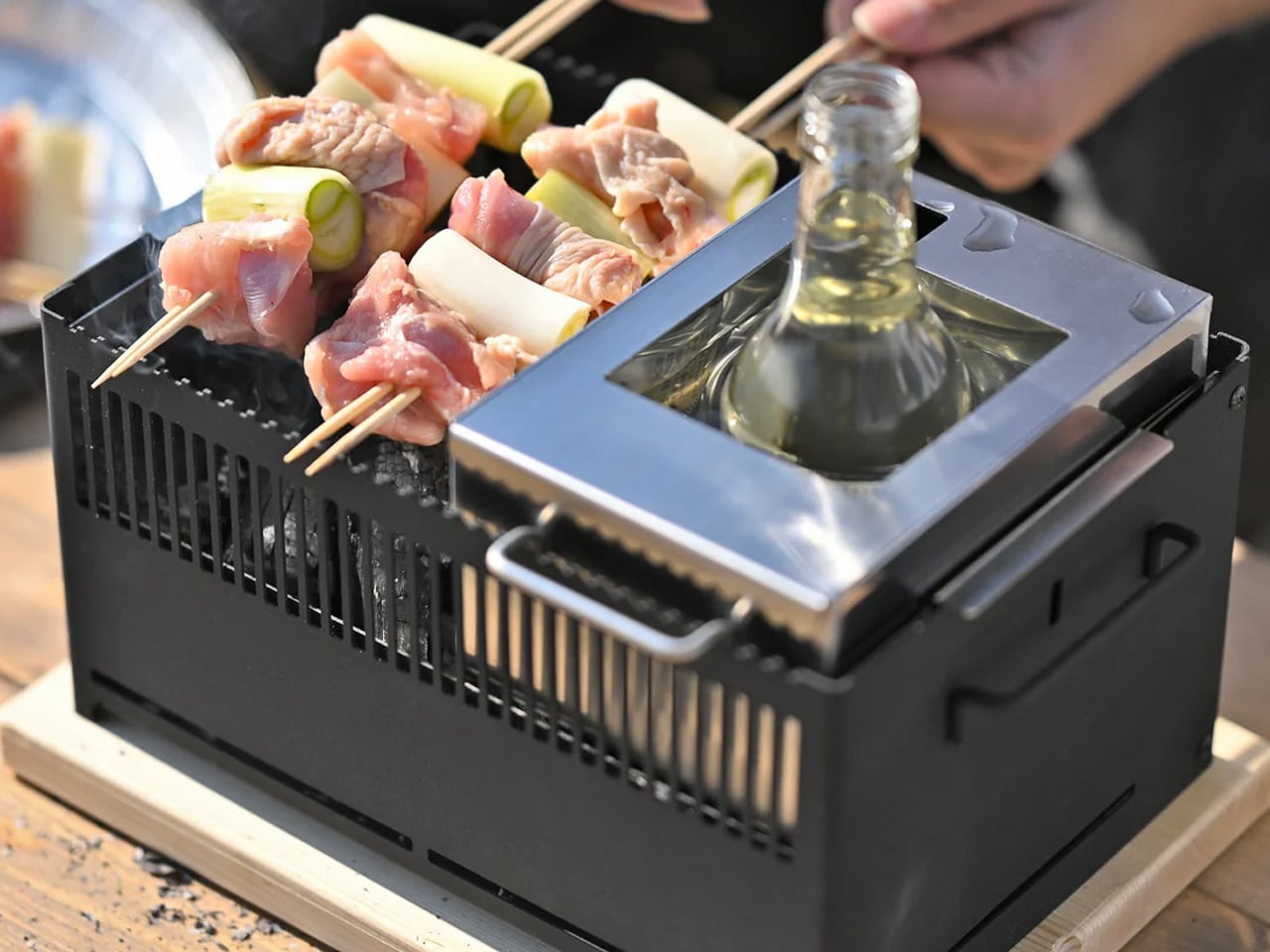
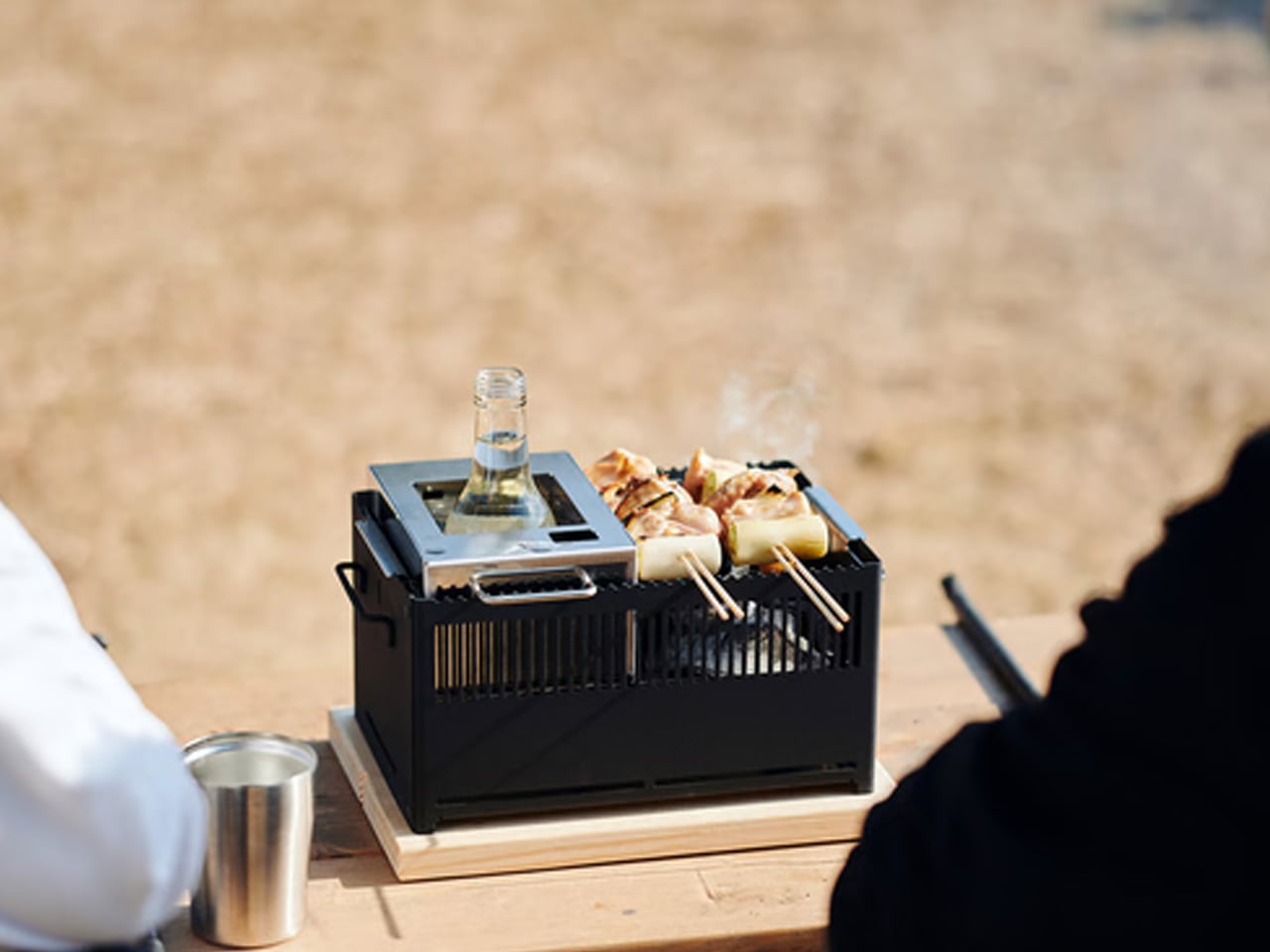
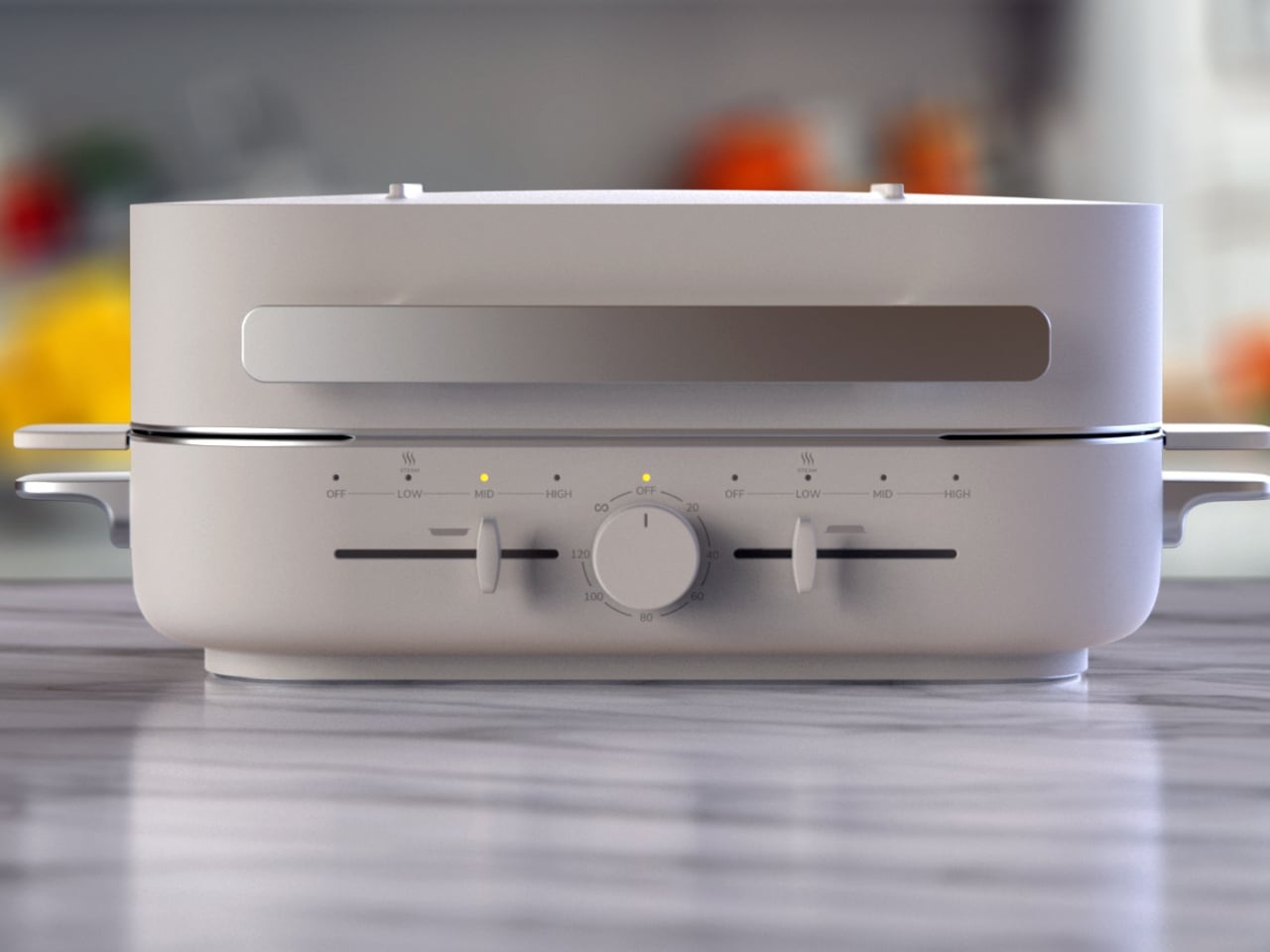
Camp cooking tends to settle into one of two extremes: either you are eating something rehydrated from a bag, or you have packed so much kitchen hardware that a second bag became necessary somewhere between the car and the trailhead. The All-in-One Modular Grill from Yanko Design sits in the productive middle ground. A compact tabletop system with interchangeable modules, it supports six distinct cooking methods — barbecuing, frying, grilling, steaming, smoking, and stewing — from one cleanly designed base. The parts swap in and out without fuss, and the included module for warming bottles upright is the kind of considered detail that makes a cold evening at camp considerably more comfortable. All of that in a footprint that still fits on any camp table without taking it over.

The real value becomes apparent when you start accounting for what this grill replaces in your kit. A separate grill, a pan, a pot, a steamer, a warming setup — the modular system consolidates that list into one object you can disassemble after dinner and rinse down in minutes. The ability to cook genuinely varied meals from the same compact base, without dedicating half your boot space to kitchen gear, changes what feels realistic on a camping trip. It makes more ambitious meals accessible and cleanup manageable, which is ultimately what keeps people cooking properly at the campsite instead of defaulting to trail snacks three nights running.

Click Here to Buy Now: $449

What We Like

  • Six interchangeable cooking modules cover every camp meal scenario without adding meaningful bulk to your kit.
  • The upright bottle-warming module is a practical feature most camp kitchen systems overlook entirely.

What We Dislike

  • As a tabletop unit, it requires a stable flat surface, which is not always available at backcountry sites.
  • Multiple components mean more to track when packing down in low light or deteriorating weather.

2. FLEXTAIL TINY PUMP 2X

There are plenty of gadgets that promise to simplify camp life and manage to complicate it instead. The FLEXTAIL Tiny Pump 2X is a legitimate exception. Weighing just 96 grams and sized to fit comfortably in a closed fist, this 3-in-1 tool inflates, deflates, and functions as a portable lantern, covering three distinct camp needs from a single object that barely registers in your pack. The AIRVORTECH technology powering it pushes air at 180 liters per minute, fast enough to fully inflate a sleeping pad or air mattress in seconds. Five nozzle attachments ensure compatibility with nearly every inflatable you’d bring along, and the built-in magnetic surface allows for hands-free operation while the rest of your camp gets sorted out around it.

What makes the Tiny Pump 2X a Reddit staple rather than a novelty is the moment of recognition it creates on your first night out with it. The integrated lantern removes a separate light from your kit entirely. The one-button operation works without thought after a long drive, when dealing with instructions is the last thing you want. The deflation function cuts pack-down time significantly the following morning.

What We Like

  • The 180L/min airflow inflates sleeping pads and air mattresses in seconds, not minutes.
  • The integrated lantern removes the need for a separate light source at camp setup.

What We Dislike

  • The 30-minute maximum runtime means pre-trip charging is non-negotiable before a longer outing.
  • At 4KPa of air pressure, it is optimized for camping inflatables rather than high-pressure tasks like bike tires.

3. iKamper Skycamp 3.0

The rooftop tent category has grown crowded enough that standing out in it requires more than a solid shell and a folding ladder. The iKamper Skycamp 3.0 manages it through a combination of genuine quality and a setup experience that still catches first-time users off guard. It opens in under 60 seconds, sleeps three to four people comfortably, and rests on a king-size 9-zone insulated mattress that puts many fixed-site sleeping arrangements to shame. The blackout poly-cotton canvas keeps early morning light out reliably, and the aerodynamic FRP hardshell handles highway speeds without lift, noise, or movement. For campers who operate across multiple seasons, the quilted, insulated interior manages temperature whether you are parked through a June heat wave or a December cold snap.

What separates the Skycamp 3.0 from its predecessors and competitors is the degree to which it was developed alongside real adventurers rather than simply refreshed from a spec sheet. The result is a tent where thoughtful details accumulate in the right places: bedding storage built directly into the shell, a design that does not penalize you for imprecise parking, and a packdown that takes no longer than the setup.

What We Like

  • Sub-60-second setup makes spontaneous overnight stops entirely viable without added stress.
  • The 9-zone insulated mattress delivers genuine multi-night sleeping comfort across all four seasons.

What We Dislike

  • At 163 lbs, installation requires additional hands and a roof rack rated for significant dynamic weight load.
  • The price point presents a real barrier for casual campers heading out only a few times a year.

4. COFFEEJACK

Bad camp coffee is not a character-building experience. It is just bad coffee, and COFFEEJACK was designed to make it unnecessary. Built by Hribarcain, a team with a strong track record in the EDC space, this pocket-sized espresso maker generates 9-10 bars of pressure through a manual hydraulic pump, matching the extraction output of professional café equipment. The lower chamber holds your ground coffee, and a built-in tamper levels and packs the grounds automatically. Add hot water to the upper chamber, work the pump, and you are pulling a crema-topped espresso in the field with the same pressure specs as the machine at your local café. It works with any coffee grind, requires no pods, and has no dependence on electricity or proprietary cartridges of any kind.

The engineering comparison is worth spelling out. A French press operates at under 1 bar of pressure. An Aeropress or Moka pot peaks at roughly 3-4 bars. COFFEEJACK reaches 9-10 consistently, manually, without a power source. That gap is what separates a serviceable camp coffee from the real thing. The entire device is made from 100% recycled plastic, making it a more considered alternative to pod-based systems that generate significant single-use waste with every cup. It is a product that rewards how seriously you take your morning coffee, which, after a cold night in a tent, tends to be very serious indeed.

What We Like

  • The 9-10 bar hydraulic pump delivers genuine barista-quality espresso with real crema, entirely without electricity.
  • Made from 100% recycled plastic, it is an environmentally responsible choice that does not compromise on performance.

What We Dislike

  • It requires pre-ground or freshly ground coffee, adding a preparation step for those who prefer a simpler system.
  • The manual pump demands real effort per cup, though most dedicated users consider the ritual part of the appeal.

5. Adventure Mate V3

The standard knock against multitools is that they do many things adequately and nothing particularly well. The Adventure Mate V3 was built to directly challenge that assumption. This 6-in-1 system combines a full-size axe, saw, shovel with entrenching rotation, hammer, and hook into a single kit that weighs under 6 lbs — lighter than carrying each tool separately into the backcountry. The construction pairs hardened tool steel with aerospace-grade aluminum, and a 16-inch fiber composite handle with a reinforced steel collar attaches to the modular tool heads to form each full-size tool. What you end up holding is a kit that does not perform like a multitool compromise. It performs like the individual tools it replaces, which is the distinction that matters most when you are actually using it in the field.

The CAM locking system is the engineering detail that makes the AM-V3 trustworthy under serious conditions. When each tool head is locked in, the collar expands and clamps it with enough force to eliminate rattle and flex, creating what genuinely feels like a single-piece tool when you are chopping wood or digging out a fire pit. The full kit packs into a fully waterproof holster no thicker than a laptop bag, and a lifetime guarantee backs the build throughout. With essentially one moving part, mud, sand, and ice rinse away, and work continues without interruption or mechanical drama.

What We Like

  • The CAM locking mechanism delivers a rattle-free, one-piece feel across all six full-size tool configurations.
  • A fully waterproof holster and lifetime guarantee make it a credible long-term investment for serious outdoor use.

What We Dislike

  • The sub-6 lb total weight is impressive for what it replaces, but may still be too heavy for strict ultralight packing philosophies.
  • Switching between tool heads in wet or cold field conditions takes a moment of adjustment until the process becomes second nature.

6. The Muncher

The Muncher is the kind of object that makes you reconsider how much redundancy most people carry into the backcountry without thinking twice about it. Full Windsor’s titanium multi-utensil weighs just 20 grams and compresses ten functions into the silhouette of a spork: fork, spoon, knife edge, peeler, slicer, can opener, bottle opener, flathead screwdriver, and a flint stick for fire-starting. A 20-gram utensil that opens your tinned food, feeds you dinner, and starts the fire for the following morning is a genuinely clever consolidation of function, and seasoned campers tend to refer to it as a permanent kit item: once it is in your pack, leaving it behind starts to feel careless.

Titanium is the only material choice that makes sense here, and Full Windsor clearly understood why. It produces blades that hold their edge through extended use without demanding constant maintenance. It does not impart any metallic taste to food the way stainless steel can, which makes a measurable difference when you are eating every meal from the same utensil for days on end. It resists rust and staining entirely, making field cleanup a matter of seconds.

What We Like

  • Titanium construction means no rust, no metallic taste, and a blade edge that holds up across extended multi-day trips.
  • Ten functions at 20 grams is a utility-to-weight ratio that very few pieces of camping gear come close to matching.

What We Dislike

  • The flint stick is functional but compact, and a dedicated ferro rod will outperform it in serious fire-starting conditions.
  • Some functions require practice to use comfortably, given the compact form factor, particularly the cutting edge under field conditions.

7. VSSL Camp Supplies

The idea of a flashlight that doubles as a survival kit sounds like the kind of claim that unravels the moment you actually need it. VSSL Camp Supplies is the version that holds up. Built from military-grade aluminum in a waterproof, impact-resistant shell, it houses over 70 pieces of essential outdoor gear across a lineup that covers fire, water, first aid, food, navigation, and emergency signaling — all packed inside a form factor that weighs under a pound and fits in a standard pack pocket without ceremony. At one end, an LED flashlight with up to 40 hours of SOS runtime. At the other, a compass. Everything else lives in the cylinder between them, organized and ready without requiring you to dig through a bag to find it under pressure.

The Camp Supplies kit solves that organizational problem by design. A Canadian beeswax candle, a mini first aid kit, water purification tablets with a 1-liter Whirl-Pack bag, a firestarter kit with weatherproof matches and Tinder Quik, a fishing kit, a 60-lb working strength wire saw, a whistle, a P38 can opener, and a mini sewing kit — none of it improvised or low-quality filler. It is a complete backcountry contingency plan inside an object you would have packed anyway for the light.

What We Like

  • Over 70 pieces of genuine, field-appropriate gear are organized inside a sub-one-pound waterproof shell backed by a lifetime warranty.
  • The compass-and-flashlight end caps make VSSL immediately functional as a standalone tool before you even open it.

What We Dislike

  • The cylindrical format means contents must be accessed sequentially, which can be inconvenient when you need a specific item quickly.
  • As a pre-packed kit, it offers limited flexibility for campers who prefer to curate their own emergency loadout from scratch.

Worth Every Gram You Pack

The best camping gear of 2026 earns its place through repetition, not reputation. Every product on this list has been through the real test: bought, packed, used across multiple trips in varied conditions, and recommended again by people with no particular incentive beyond having found something that genuinely works. That is the hardest kind of endorsement to manufacture and the most reliable one to act on. No marketing campaign replicates it. It takes time, field use, and the kind of honest feedback that Reddit’s camping communities deliver without softening the edges.

Building a kit that functions as well as it travels is ultimately a process of considered editing. The right pump replaces three separate items. The right multitool replaces an entire bag of hardware. The right cup of espresso at dawn replaces a compromise you had been quietly accepting for years. These are not luxury additions to a camping setup. They are the deliberate choices that separate a trip you get through from one you start planning a return to before you have finished packing up camp.

The post 7 Best Camping Accessories Reddit Can’t Stop Recommending in 2026 first appeared on Yanko Design.
5 Best Spring Break Essentials Under $100 That Every Student Actually Needs

Spring break planning tends to collapse into two extremes—either a frantic last-minute scramble or an over-packed disaster where you lug everything you own to a beach town and use about a third of it. Neither version feels great. The smarter move is knowing which objects genuinely earn their spot in your bag: the things that handle multiple jobs, hold up across unfamiliar environments, and make the week feel intentional rather than improvised. That’s what this list is built around.

What’s equally useful is that none of these will put you in the red. Every pick comes in under $100—and several sit comfortably well beneath that ceiling. These aren’t compromise buys either. They’re products with real design thinking behind them, built for actual use on actual trips by people who don’t want to carry more than they need. Whether it’s your first time packing light or your fourth attempt at getting it right, these five earn their place in the bag.

1. Side A Cassette Speaker — The Soundtrack to Every Spring Break Moment

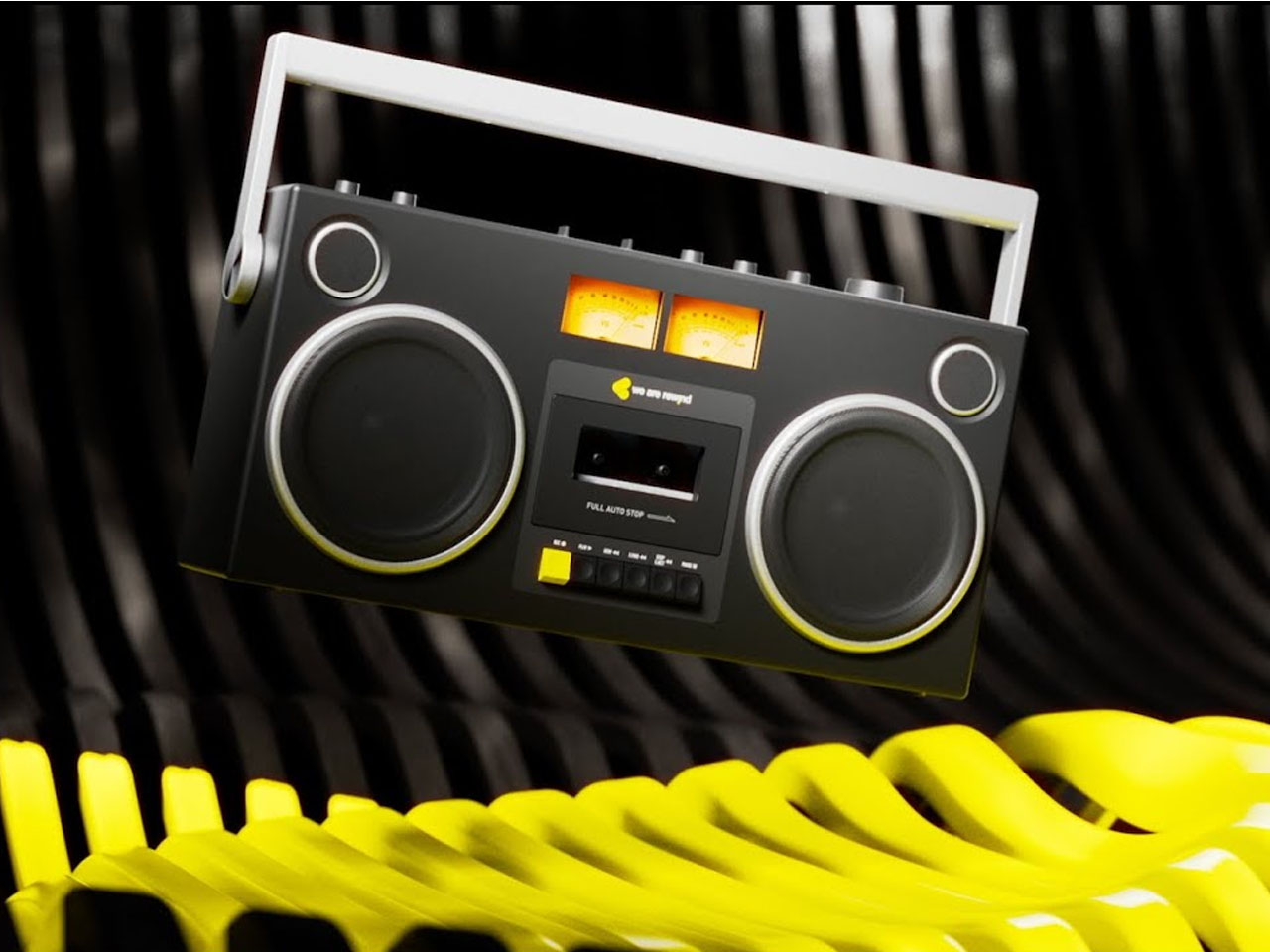
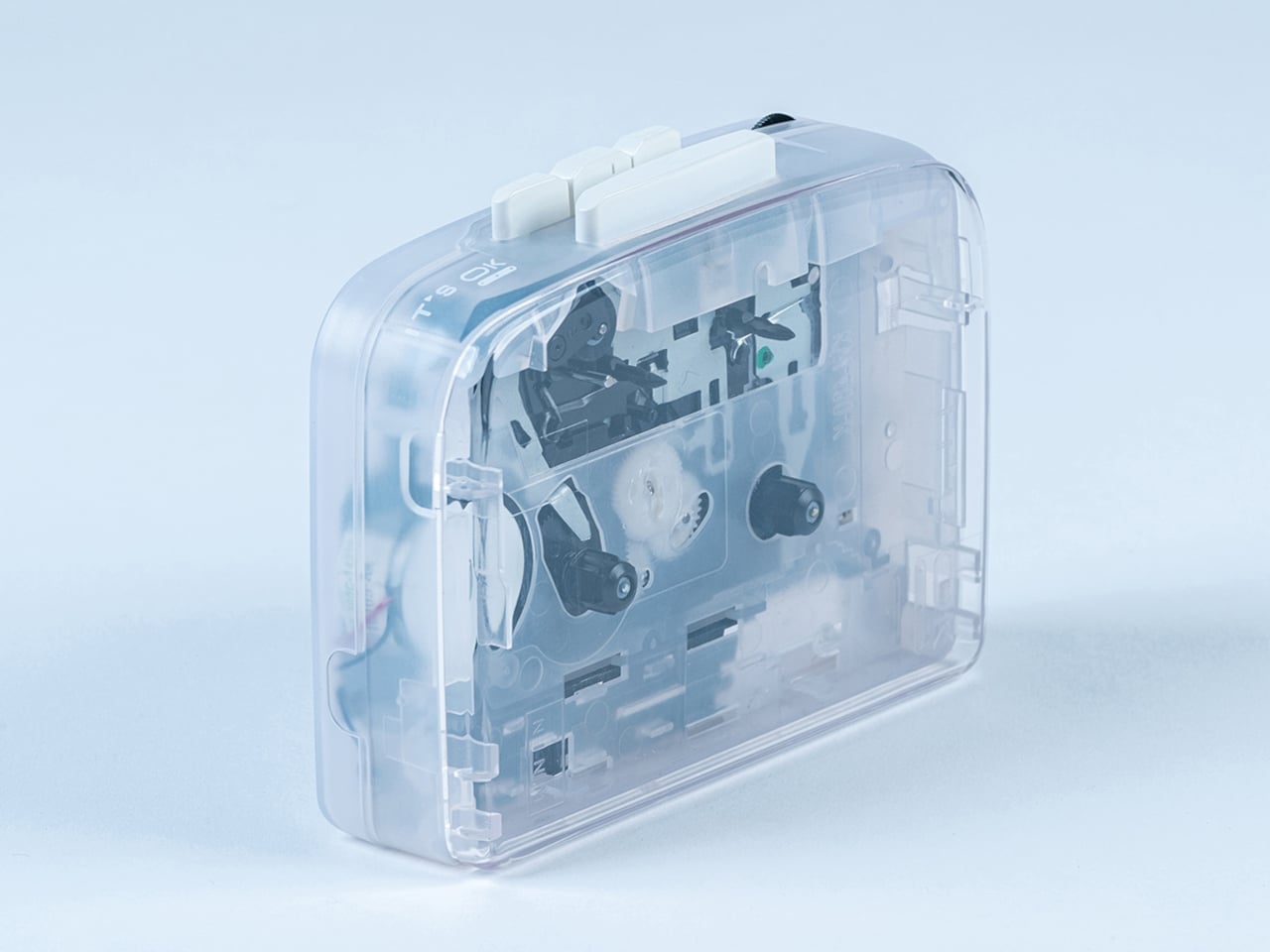
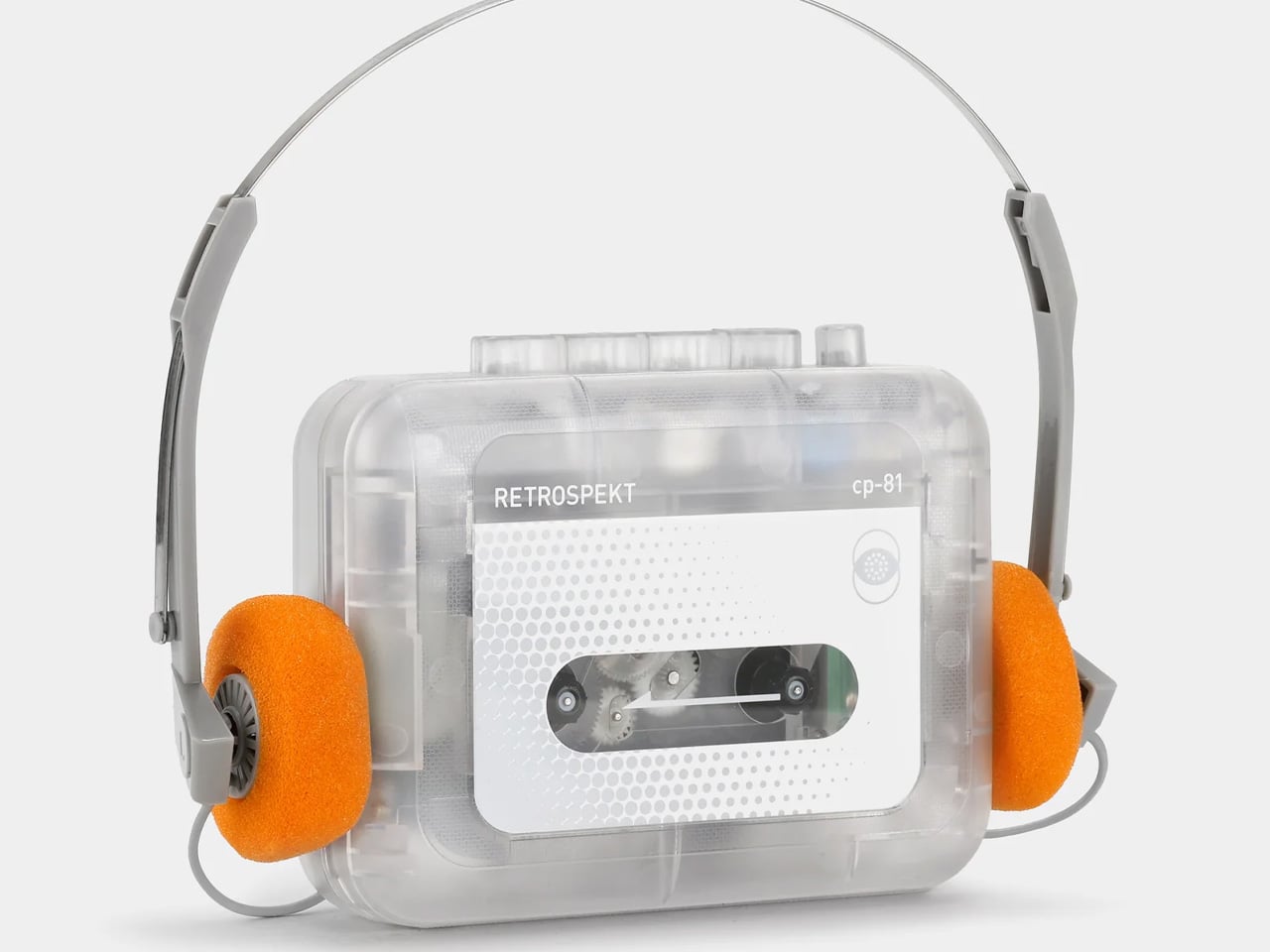
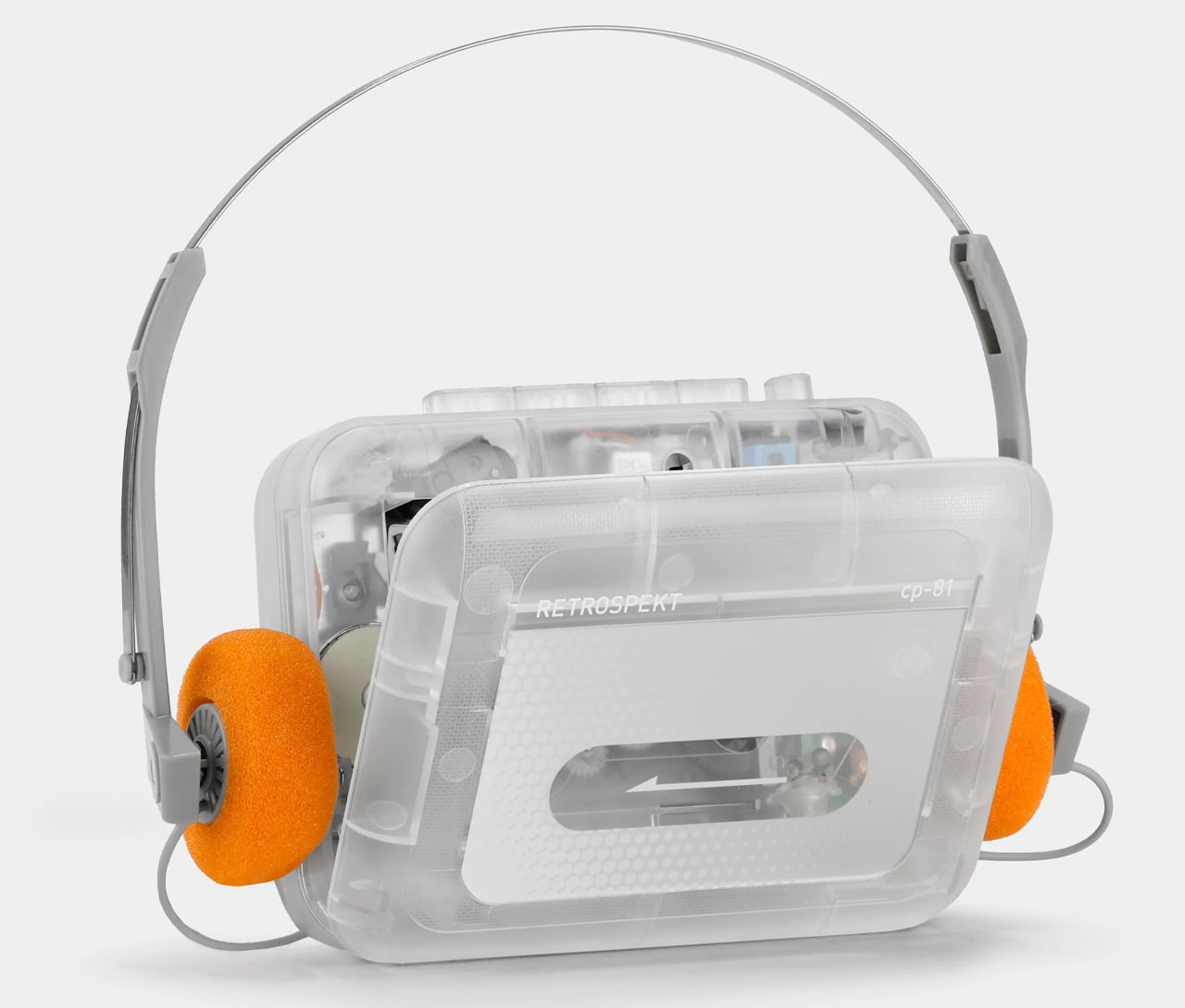
There’s something specific that a great travel speaker needs to be: compact without feeling cheap, audible without being obnoxious, and interesting enough to sit on a shelf without looking like clutter. The Side A Cassette Speaker from Yanko Design checks all three. Designed to look and feel like a real mixtape—transparent shell, authentic Side A label, the whole aesthetic fully committed—it’s a pocket-sized Bluetooth speaker with a personality that’s genuinely hard to ignore. Pull it out at a hostel, and someone will ask about it before you’ve even pressed play.

Underneath the retro exterior, the specs hold their own. Bluetooth 5.3 delivers a clean, drop-resistant connection across a hotel room or a beach setup without the frustration of constant dropouts. The microSD playback lets you load up a playlist and stream fully offline—no signal, no Wi-Fi, no problem. Sound is tuned to lean warm and cozy, channeling the soft roundness of actual tape playback rather than the harsh brightness that plagues most compact speakers. Six hours of battery at full volume covers a full afternoon, and a two-hour recharge means it’s back in action before the next session begins. At sub-$50, it’s also one of the most effortlessly giftable objects in recent memory.

Click Here to Buy Now: $45.00

What We Like

  • The cassette form factor isn’t just a gimmick—it works as a design object and a conversation starter in any space it occupies, making it equally at home on a shelf as it is inside a bag.
  • Bluetooth 5.3, offline microSD playback, and six hours of battery together make this a genuinely capable travel speaker, not just a pretty one.

What We Dislike

  • The microSD slot supports MP3 files only, which means listeners with FLAC or AAC libraries will need to convert tracks or stay connected via Bluetooth for offline use.
  • Six hours of playback is solid for personal sessions, but starts to feel limited during an extended group hang where the speaker runs continuously throughout the day.

2. Hitch — Your Bottle and Your Coffee Cup, Finally Together

Most reusable cups live at home. Not because people don’t care about sustainability, but because carrying both a water bottle and a coffee cup is genuinely inconvenient—and convenience almost always wins. The Hitch was designed to solve exactly that friction. Its patent-pending mechanism nests a full 12oz barista-approved cup directly inside an 18oz insulated water bottle, and a single crossbar twist at the base releases the cup cleanly. The two pieces carry as one. It’s not a miniaturized compromise either; both the bottle and the cup are full-size and built for all-day use.

Every component—bottle, cup, and lid—is double-walled, vacuum-insulated, stainless steel, and certified leak-proof, which means you’re not trading practicality for the novelty of the concept. For a spring break week that bounces between airports, coffee shops, beaches, and restaurants, the Hitch becomes the single carry that handles morning hydration, midday coffee runs, and everything in between. It’s the product that makes zero-waste feel like a practical decision rather than an aspirational one, and that distinction matters when you’re moving fast and packing light.

What We Like

  • Nesting a full-size 12oz cup inside a full-size 18oz bottle is a genuinely smart design solution that addresses a real behavioral barrier to zero-waste carry without requiring a lifestyle overhaul.
  • Full vacuum insulation on both the bottle and the cup means cold water stays cold and hot coffee stays hot, without either sacrificing function for the sake of the shared form.

What We Dislike

  • The retail price sits toward the upper end of this list’s budget range, and some students may find it harder to justify compared to a standard insulated bottle at a lower price point.
  • The cup lid has drawn criticism in user reviews for its durability over time, and replacement parts have been historically difficult to source after the initial purchase.

3. HP Sprocket Portable Instant Photo Printer — Make the Memories Stick

The paradox of phone photography is that the better the camera gets, the fewer photos actually get printed. Spring break produces hundreds of shots that live in a camera roll for a few weeks before fading into algorithmic obscurity. The HP Sprocket is a direct counterargument to that cycle—a pocket-sized wireless photo printer that pairs via Bluetooth 5.2, works with iOS and Android, and prints 2×3 glossy photos in seconds. No ink cartridges, no ribbons, no subscriptions. ZINK Zero Ink technology embeds color directly into the paper, keeping the entire process clean, fast, and genuinely portable.

The free HP Sprocket app adds a layer of creative control that makes it feel like more than a glorified receipt machine. Stickers, borders, filters, and emoji overlays are all part of the package, which makes the printing process feel as social as the photography itself. One charge delivers up to 35 prints, and a personalized LED indicator signals which device is printing during multi-person sessions—so a group of four can print simultaneously without creating confusion or a queue. The sticky back on every photo means it goes straight onto a journal, a wall, a laptop, or a postcard without needing tape. These are the photos that actually get kept.

What We Like

  • ZINK Zero Ink technology eliminates cartridges and toner, making every print session as effortless as a Bluetooth connection and a single button press.
  • Multi-device simultaneous printing makes this a genuinely social accessory—it doesn’t create a line, it creates a shared moment that fits naturally into group travel.

What We Dislike

  • The 2×3-inch format is charming but small, and students hoping to print anything approaching a standard photo size will find the output limited for that specific purpose.
  • 35 prints per charge sounds reasonable in isolation, but an active group setting burns through that ceiling quickly, making planned recharging a practical necessity during longer outings.

4. Mini X30 -The EDC Flashlight That Moonlights as a Power Bank

Most people don’t think about a flashlight until they desperately need one. The Mini X30 reframes that entirely by making it the kind of object you actually want to carry every day—not because emergencies demand it, but because it earns its spot before one ever arrives. Compact enough to clip onto a keychain, slide along a pocket edge, or attach to a backpack strap, it disappears into your carry until it’s needed. Then it delivers 1,200 lumens of turbo brightness with a single one-second press and hold—a level of output that handles everything from a pitch-dark campsite to a power outage in an unfamiliar city.

The built-in emergency charging function is what tips this from useful to genuinely essential for travel. When your phone battery drops at the wrong moment—mid-navigation, mid-emergency, mid-anything—the X30 steps in as a backup power source without requiring you to dig through your bag for a separate power bank you may or may not have remembered to pack. For a spring break trip that moves between outdoor adventures, late nights, and unfamiliar terrain, having light and emergency power consolidated into a single keychain-sized object is exactly the kind of redundancy that feels invisible until it saves the day.

What We Like

  • Consolidating a 1,200-lumen flashlight and an emergency phone charger into a keychain-sized EDC tool is a genuinely practical design decision that eliminates the need to carry and track two separate devices.
  • The turbo bright mode’s press-and-hold activation keeps max output immediately accessible without cycling through modes at the moment it matters most.

What We Dislike

  • As an emergency charger, the X30 is best understood as a backup rather than a primary power solution—students who rely heavily on their devices throughout the day will still want a full-capacity power bank alongside it.
  • The keychain and pocket-clip carry options are convenient for daily EDC, but attaching them to a bag strap in high-movement outdoor settings may require some deliberate adjustment to keep them secure.

5. Loop — The Only Neck Pillow That Actually Understands Your Neck

The standard U-shaped travel pillow is one of those products that’s been wrong for decades, and nobody fixed it. It props your head in a single position, falls off when you shift, and spends most of the journey doing very little. The Loop Pillow starts over entirely. Shaped more like a flexible neck noodle than a traditional pillow, it winds around your neck—loosely or tightly, depending on what you need—and provides lift exactly where your head wants to fall. It’s infinitely adjustable in a way that a fixed U-shape never could be, which means it works whether you sleep sitting upright, leaning left, tilting forward, or resting straight back.

The material behind this one is doing real work. Thermo-sensitive memory foam molds directly to the contours of your neck, which means it isn’t approximating support—it’s actually conforming to you specifically. The outer cover is moisture-wicking and breathable, keeping things dry across long hauls where temperature and comfort tend to degrade together. A clever dual-tone design distinguishes the warm side from the cool side, letting you choose your preferred surface depending on the environment. For a spring break trip that starts with a red-eye flight and ends with a bus ride back, this is the carry that makes the in-between feel significantly less punishing.

What We Like

  • The infinitely adjustable loop design accommodates every sleeping position naturally, which makes it genuinely more versatile than any fixed-form travel pillow on the market.
  • Thermo-sensitive memory foam combined with a moisture-wicking, breathable cover means both the structure and the surface of the pillow are actively working in your favor throughout the journey.

What We Dislike

  • The loop form factor is a meaningful departure from what most travelers are used to, and it may take a flight or two before the adjustment feels second nature.
  • Travelers who prefer a more structured, rigid support system may find the flexible noodle design requires more deliberate positioning than they want to manage mid-sleep.

The Right Gear Makes the Break

Spring break doesn’t require a perfect packing list, but it rewards a smart one. The difference between a trip that flows and one that frustrates almost always comes down to the things you brought—or the things you left behind, wishing you hadn’t. These five picks cover the core categories: sound, hydration, memory-making, power, and carry. Together, they handle most of what a student needs for a week away without demanding too much space, too much budget, or too much thinking. That’s the whole point of good design—it simplifies the decisions so you can get to the experience.

What’s worth noting is how naturally these work alongside each other. The Cuktech keeps your phone alive for the Sprocket prints, the Hitch keeps you from reaching for a paper cup, and the Cassette Speaker scores the whole week. The Allpa Mini holds everything else together without complaint. This isn’t a random product roundup—it’s a considered carry. Spend the money once, pack it once, and show up somewhere fully ready to be there. That’s a spring break actually worth planning for.

The post 5 Best Spring Break Essentials Under $100 That Every Student Actually Needs first appeared on Yanko Design.
iGarden’s Hyper-portable Swim Jet Turns any Backyard Pool Into a Lap Pool for $699

Here’s a question: what if your backyard pool could moonlight as a personal aquatic gym, wave pool, and lazy river – all without any permanent installation? That’s the pitch behind iGarden’s new Swim Jet X Series, a battery-powered contraption that clamps onto your pool edge and fires water at speeds that can actually challenge competitive swimmers.

The whole setup is refreshingly simple. Mount the jet unit to your pool’s edge using the included clamps – no drilling, no plumbing, no construction crew required. The separate power box sits poolside, connected via a safety tether. Then you’re off, swimming against an artificial current that ranges from gentle lazy-river vibes to serious resistance training. It’s like having a treadmill, but for swimming.

Designer: iGarden

Click Here to Buy Now: $699 $2599 ($1900 off if you pay $50 deposit now). Hurry, deal ends in 48-hours!

The beauty lies in the fact that the Swim Jet X isn’t a permanent pool fixture. You place it when you need, take it off when you don’t. The power box comes with suitcase-style wheels and a handle, so you can wheel it around like luggage. iGarden claims you can set up or pack away the entire system in minutes, which addresses one of the main complaints about traditional swim jets – they’re permanent additions that require professional installation and cost upwards of $20,000. This? Starts at $699, comes with wheels, and can be carried to a nearby Airbnb with a pool too, just in case you want to swim while on a staycation.

The AI branding feels a bit more grounded once you look at what iGarden is actually doing under the hood. The Swim Jet X Series uses an AI Inverter control system to dynamically optimize motor RPM, aiming to keep the current ultra-stable and laminar even when you crank resistance to the top end. Underneath that control layer is a next-gen PMSM (Permanent Magnet Synchronous Motor), chosen for higher power density and efficiency than traditional induction motors, with the flagship X35 model reaching a 1000W peak output. Pair that with iGarden’s hydrodynamic “Straight-line Runway Flow” structure, and the promise is less about flashy buzzwords and more about efficiently shaping water into a cleaner, steadier stream, pushing flow speeds up to 3.5 m/s. Training-wise, the system also leans into adaptive programming via a Flow Level Test Sequence (P1 to P4), scaling from “Easy Aerobic” to “Endurance Challenge” using real-time feedback, and syncing with heart rate and fat-burning metrics so the current can track the workout, not just the other way around.

iGarden is launching three models with escalating power levels. The entry-level X20-P10 runs on 300W, delivers flow speeds of 660 gallons per minute at 150 meters per hour (about 1.24 mph or 2 km/h), and provides roughly 0.8 to 1.5 hours of runtime depending on intensity. It’s designed for light training and casual family fun. The mid-tier X30-P30 bumps things up to 500W with 880 GPM flow at 200 meters per hour (approximately 1.55 mph or 2.5 km/h) and extends runtime to 1.5 to 5 hours. This is the Goldilocks option for most recreational swimmers and fitness enthusiasts.

Then there’s the flagship X35-P60, which is where things get serious. This model pushes 1000W of power, generates 1000 GPM flow, and hits speeds of 250 meters per hour (around 2.17 mph or 3.5 km/h). That might not sound dramatic until you realize it’s enough resistance to challenge advanced swimmers and triathletes. The X35-P60 also boasts up to 10 hours of continuous runtime, which means you could theoretically run full-day pool parties or extended training sessions without needing a recharge. That longevity pairs nicely with a new 2-in-1 versatility angle: the same unit can switch between Surface Mode and Underwater Mode, depending on what you’re trying to do. Surface Mode is geared toward casual family fun and splashing, while Underwater Mode is hydrodynamically optimized for more professional-grade stationary swim training.

All three models use high-density lithium-ion battery packs with IP65 waterproof ratings and are rated for over 600 charge cycles, which translates to roughly 3 to 5 years of regular use. Charging times range from 3.5 hours for the X20-P10 to 7 hours for the X35-P60. They’re compatible with pools larger than 2 meters by 4 meters, which covers most residential installations. The universal clamp system works with various pool edge styles, and the jet angle is adjustable so you can direct the flow exactly where you want it.

The safety features are thorough: instant power cut-off if the box tips over, leak-proof construction with no exposed outlets or loose cables, a kid-safe grille design that protects curious hands, and low-voltage operation that eliminates shock risks. There’s also an emergency cutoff button directly on the power box, because nobody wants to fumble with an app during a pool crisis.

Now, is this thing actually AI? Well, not really. The “Smart Flow Technology” they mention is essentially a brushless PRISM motor with an inverter controller that adjusts output based on your app settings. That’s automation, not artificial intelligence. But let’s not get hung up on marketing speak – what matters is whether it works, and the specs suggest it should deliver on the core promise of creating adjustable resistance in your existing pool.

The real question is durability. Battery-powered pool equipment lives a tough life: constant moisture exposure, temperature swings, UV bombardment, and the occasional collision with a pool noodle or overly enthusiastic golden retriever. iGarden offers a 2-year extended warranty for VIP backers, which suggests they’re at least somewhat confident in the build quality. The unit also comes with a storage bag free for early backers, which is a thoughtful touch for off-season storage or transport between pools.

Pricing starts at $699 for the X20-P10, with multiple discounts that can combine depending on how you buy in. VIP backers get an extra $200 off the Super Early Bird price, and iGarden says the total discount can reach up to $1,900 off MSRP depending on the model and tier. The VIP reservation requires a $50 deposit that’s fully refundable before launch and holds your spot for the lowest price window. During the campaign, iGarden lists the X30-P30 at $1,699 versus a $2,999 retail price, while the X35-P60 is $2,399 compared to its $4,299 future price. Shipping is a flat $50 in the US, with customs duties covered for backers in the US, EU, Australia, Canada, and the UK, and deliveries are scheduled to begin in May 2026.

Is this a revolution in backyard fitness? Probably not. But it’s a clever rethink of swim jets that removes the installation barrier and dramatically cuts the price point. For anyone who’s ever wished their pool could do more than just… be a pool, this is worth watching. The Kickstarter campaign launches in March 2026. Until then, you can reserve your spot with a $50 deposit at iGarden’s site.

Click Here to Buy Now: $699 $2599 ($1900 off if you pay $50 deposit now). Hurry, deal ends in 48-hours!

The post iGarden’s Hyper-portable Swim Jet Turns any Backyard Pool Into a Lap Pool for $699 first appeared on Yanko Design.
5 Best Desk Accessories That Turn Your Workspace Into a Minimalist Studio

Your desk says more about you than you think. It isn’t just a surface—it’s a quiet reflection of how you work, how you think, and how seriously you take the space where ideas are born. The minimalist studio aesthetic isn’t about stripping everything bare; it’s about choosing objects that genuinely earn their place. Every piece should serve a purpose and feel entirely deliberate. A considered desk doesn’t just organize—it inspires.

From gravity-defying pens to waterproof notebooks built to outlast everything you throw at them, the design world is quietly rethinking what it means to be at your desk. This list gathers five accessories that don’t just look good—they change how you work. Whether you’re a freelancer building a mobile studio, a creative professional craving calm, or someone who simply believes tools should match the quality of their thinking, these picks deliver.

1. Levitating Pen 2.0: Cosmic Meteorite Edition

The Levitating Pen 2.0 Cosmic Meteorite Edition isn’t the kind of thing you tuck away in a drawer. Balanced at a precise 23.5-degree angle on a spacecraft-inspired pedestal, it hovers in place as it belongs behind glass—and arguably, it does. Crafted from aircraft-grade aluminum, shaped from a single block of material, it’s as tactile as it is visually appealing. A flick sends it spinning for up to 20 seconds, which sounds like a trick until you realize it genuinely helps you think and refocus between tasks.

What sets this edition apart from any other writing instrument is its tip—a genuine fragment of the Muonionalusta meteorite, one of the oldest ever discovered, predating Earth itself. Writing with it carries a strange, grounding quality that’s difficult to explain until you’ve held it. The premium Schmidt ink cartridge inside delivers a smooth, reliable experience, and the magnetic cap snaps shut with quiet, satisfying precision. The entire object settles into a minimalist desk layout with an authority that only truly considered design can project naturally.

Click Here to Buy Now: $399.00

What We Like

  • The meteorite tip connects the act of writing to a material that predates the planet itself.
  • The spin function delivers genuine cognitive value, supporting creative focus between tasks.

What We Dislike

  • At $399, this is collector territory—a significant ask for everyday stationery.
  • The pedestal demands dedicated desk real estate, which works against ultra-minimal setups.

2. Dynamic Folio

If your iPad has become your primary creative tool, the MOFT Dynamic Folio is the stand it’s been waiting for. Built as a single-piece structure that folds into a workstation, lifting the iPad two full inches off the surface, it shifts posture meaningfully without requiring any complicated setup procedure. What separates it from comparable stands is how smoothly it transitions between modes—one flip moves you from active creation to relaxed viewing without the clunky two-handed repositioning that most alternatives demand of you.

For anyone logging serious hours at a creative desk, neck strain is a quiet but compounding tax on productivity that accumulates gradually across sessions. The Dynamic Folio addresses this directly, reducing neck strain by at least 50 percent in both creation and entertainment positions. The angle adjustment is icon-guided: two circles for a flatter, reclined position and two lines for a steeper working angle. When the session ends, it folds flat and disappears into any bag without resistance. For the mobile creative, this is a quietly essential kit.

What We Like

  • The single-piece structure sets up in one motion with no extra components to manage.
  • A 50 percent reduction in neck strain is an ergonomic improvement that compounds meaningfully over time.

What We Dislike

  • The icon-guided angle system has a short but real learning curve for first-time users.
  • Its value is closely tied to iPad-centric workflows and doesn’t adapt well to mixed-device setups.

3. M NOTE

Sticky notes have a quiet design problem nobody talks about: they curl. The moment a note starts peeling at its corner, the information it holds becomes harder to read and easier to lose, which defeats the entire point of having written it down. M NOTE from Bravestorming solves this with a dual-material approach that combines a magnetic backing with a reusable adhesive layer, keeping notes flat and secure against whiteboards, glass panels, and wooden desks alike. No unfolding, no repositioning—just consistently readable information exactly where you left it.

What makes M NOTE genuinely useful in a minimalist workspace is its adaptability across surface types. On metal, the magnetic backing does the adhesion work entirely. On non-metal surfaces, the reusable adhesive steps in—releasing cleanly, leaving no residue, and repositioning without damaging what it’s applied to. Notes can be written on, cleared, and reused, which cuts the paper waste that most desk setups generate almost invisibly. Bravestorming has taken one of the most throwaway items in any modern office and built something designed to stay indefinitely.

What We Like

  • The dual magnetic and adhesive backing works across metal, glass, and wood surfaces without accommodation.
  • Flat, curl-free notes keep information consistently visible throughout the working day.

What We Dislike

  • Reusable adhesive degrades gradually with heavy, repeated repositioning over time.
  • The magnetic backing only activates on metal surfaces, limiting one of its two core functions.

4. Orbitkey Desk Mat

Most desks don’t have a clutter problem—they have a structure problem. The Orbitkey Desk Mat addresses this with quiet intelligence, creating a defined visual zone that makes the act of organizing feel natural rather than forced. Available in Black and Stone across two sizes, it suits both compact setups and expansive studio tables without demanding that you rethink the whole room around it. The toolbar keeps stationery and small accessories within immediate reach, while the overall layout keeps everything purposeful and within the logic of a genuinely considered workspace.

What makes the Desk Mat more than a surface upgrade is the document hideaway built beneath the top layer. Loose papers, reference notes, and half-finished ideas slide underneath and stay flat, accessible, and out of visual range until you actually need them. It’s an elegant solution to a problem every desk accumulates quietly over time—the slow migration of paper that eventually surrounds the work instead of supporting it. With two colors and two sizes to choose from, the Desk Mat earns its place not just as a design object but as the organizing logic your workspace has been missing.

What We Like

  • The document hideaway keeps loose papers accessible without letting them visually take over the desk.
  • Two sizes and two colorways make it adaptable to almost any workspace scale and aesthetic.

What We Dislike

  • The defined toolbar space may feel restrictive for users with a larger collection of daily-use desk tools.
  • Its impact is most pronounced on consistently active desks—minimal users may find less need for the full feature set.

5. Nuka Eternal Stationery

The Nuka Eternal Stationery set begins with a simple question: What if your notebook never had to end? The answer is a waterproof, tear-proof notebook paired with a metal alloy pencil tip that writes with the smooth consistency of a traditional pencil but requires no sharpening and never breaks. Pages clear completely with the Nuka Magic Eraser and accept fresh writing immediately. For a minimalist desk, this is precisely the kind of object that earns permanent residency without asking for maintenance, restocking, or replacement in return.

Beyond the environmental logic, the Eternal Stationery has a tactile appeal that’s hard to convey without handling it. The metal alloy tip writes consistently across the notebook’s waterproof surface, and the notebook itself handles spills, rough commutes, and outdoor sessions without registering them as damage worth acknowledging. It suits a specific type of person: someone who values fewer objects doing more, who finds calm in not constantly replacing what they depend on, and who wants tools that stay as capable on day one hundred as they were on day one.

What We Like

  • The write-erase-repeat system eliminates paper waste and removes the need to restock entirely.
  • Waterproof and tear-proof construction means this notebook works as hard as you do without extra care.

What We Dislike

  • Losing the Nuka Magic Eraser disables the reusable function with no common alternative to substitute.
  • Ink-dependent writers will need time to adjust to the feel of the metal alloy tip in practice.

Every Object Earns Its Place

A minimalist desk isn’t built by accident. It’s built through deliberate choices—objects selected as much for what they do as for how they sit in the space around them. The five accessories on this list share that quality. None of them asks for attention. They earn it through function, through material honesty, and through design that respects the surface it occupies. That’s the distinction between a cluttered desk and a curated one, and it sharpens every time you sit down to work.

Whether you start with the levitating pen’s quiet theatre or the Eternal Stationery’s unassuming permanence, each of these pieces shifts something in how your desk feels to work at. The best studio setups don’t come together when you add more—they come together when every object you keep is one you’d choose again without hesitation. These five make that case without announcing it. They simply belong there, and in a minimalist workspace, belonging without noise is exactly the point.

The post 5 Best Desk Accessories That Turn Your Workspace Into a Minimalist Studio first appeared on Yanko Design.
Your Tactical Role-Playing Game Setup deserves a better Command Deck. Meet the ONE BOX 4.0

Board game nights typically end the same way: scattered tokens, bent cards sliding across the table, dice that have rolled onto the floor for the third time. The chaos becomes part of the experience, tolerated because storage solutions only address what happens after everyone goes home. ONE BOX 4.0 takes a different approach by treating organization as something that belongs inside the game itself, using modular wooden compartments that stay open and active throughout play. The whole thing behaves less like a box and more like a portable command deck that happens to collapse into something the size of a pencil case. You unfold it, and the table suddenly has lanes, stages, and zones instead of a single flat battlefield where everything fights for the same square inches.

CHENGSHE.design built the system from mortise and tenon joinery, the kind of traditional woodworking that holds furniture together without screws or glue. Each unit comes in beech, teak, or black walnut, and the natural grain variations mean no two boxes look identical. The modules include card display stands, contained dice rolling areas, and phone holders that keep digital rulebooks accessible without crowding the play surface. The parts interlock into a single carryable brick, then fan out into a full tabletop system in a couple of moves. It feels like someone took the logic of a good travel tool roll, mixed it with a GM screen, and then asked an architect to make it beautiful without turning it into furniture cosplay.

Designer: ONE BOX 4.0

Click Here to Buy Now: $59 $119 (59% off). Hurry, only a few left!

The design addresses three distinct phases of a session: setup, active play, and teardown. Before play, the modules unfold from a single case into multiple zones in a matter of seconds, with dividers and trays already proportioned for cards, dice, tokens, and reference materials. During play, cards sit upright in angled stands, which keeps information visible and reduces edge wear from constant handling. Dice move through a contained rolling lane that prevents table escapes and limits collisions with card stacks or miniatures. After the session, components return to defined compartments, which then recombine into a unified case for transport and shelf storage.

Underneath the pretty wood, the logic is very modular and very modern. One set of modules can handle a deck-heavy Euro game one night and a crunchy TRPG session the next, simply by rearranging dividers and stands. The dividers are adjustable, so you can create narrow lanes for standard 63.5 by 88 mm cards or open wider slots for tarot or oversized character sheets. A lot of “board game accessories” assume a single flagship game and then become useless when your group rotates titles. ONE BOX 4.0 behaves more like a system-level accessory, closer to a camera cage or modular tool chest that expects you to change the loadout constantly. The fact that this is the fourth generation shows in that ecosystem thinking.

The mortise and tenon construction is not a decorative flex either. That joint style is pretty resilient when you are opening and closing something hundreds of times, applying torsion in slightly different directions every session. Screws back out, cheap hinges loosen, glued butt joints fail at the worst moment. Properly cut mortise and tenon joints share load across surfaces and age with the wood rather than against it. Combined with hardwoods like teak and black walnut, you get a product that can take the mild abuse of transport and table slams without turning into a rattling box of regret.

The other design decision that lands beautifully is backward compatibility. If you bought ONE BOX 3.0, you do not have to retire it to adopt 4.0. The new modules plug into the old ecosystem, which is the kind of long horizon thinking you usually only see in camera mounts, bike standards, or pro audio racks. That matters because people build habits around their table setups. If you already have a certain arrangement for card lanes and dice trays, you can add a new TRPG-focused module or that OB Infinite Pen without rethinking everything. This is how you build a niche platform instead of a series of isolated products that age out every two years.

The OB Infinite Pen and erasable whiteboard module signal a clear orientation toward TRPG and scenario driven gameplay. By dedicating space to writing tools and a reusable surface, the system supports initiative tracking, hit points, quick maps, and ad hoc notes without adding disposable paper clutter. The pen shares the same wood material language as the box, which unifies the visual identity and reinforces the idea that note taking is an integrated part of the experience. For groups that run mixed digital and analog setups, the phone and tablet holder aligns with this approach, parking screens at the edge of the system instead of scattering them across the main play field.

Visually, this is the opposite of RGB acrylic chaos. Natural wood, clean chamfers, visible grain, and a restrained color palette of light beech, warm teak, and dark walnut. On a table, it reads more like a compact piece of joinery than a toy, which is exactly what you want if your “game table” is also your work desk or dining surface. There is a subtle psychological trick here: when the tools of play look like serious objects, people tend to treat the whole session with a bit more focus. You are less likely to fling dice across a carefully built wooden lane than across a bare laminate tabletop.

Folded shut, the core ONE BOX 4.0 package is roughly pencil box sized, which means it goes into a backpack alongside a laptop and a rulebook without much negotiation. Unfolded, it spreads to cover a player station or GM area without requiring a dedicated gaming table. That portability is what separates this from the beautiful but immovable wooden tables that dominate the aspirational side of tabletop culture. You can take this to a cafe, a friend’s apartment, or a convention hall, and your setup logic travels with you instead of being rebuilt from scratch every time.

The ONE BOX 4.0 comes in three primary wood options: beech for a pale, almost Scandinavian tone, teak for a warmer mid tone, and black walnut for a darker, more saturated look. Configurations range from a single core box setup to multi box “command station” style bundles that add dedicated dice rollers, erasable whiteboard modules, storage bags, and the OB Infinite Pen in matching wood. Up to 50 early backers can grab the beech variant for as low as $59, while the next tier for all wood versions sits at $79 (which includes the ‘recording kit’ featuring the OB Infinite Pen and erasable whiteboard modules). Throw in an extra twenty, and the $99 tier also gets you a dice roller. The ONE BOX 4.0 is open for preorder and ships globally starting May 2026.

Click Here to Buy Now: $59 $119 (59% off). Hurry, only a few left!

The post Your Tactical Role-Playing Game Setup deserves a better Command Deck. Meet the ONE BOX 4.0 first appeared on Yanko Design.

7 Best EDC Gifts So Good You’ll Want to Treat Yourself After Valentine’s Day

Valentine’s Day has passed, the chocolates are gone, and the roses have wilted. Now comes the best part: treating yourself to something that actually lasts. EDC gear represents the perfect post-holiday indulgence, offering daily utility wrapped in exceptional design. These aren’t fleeting romantic gestures but permanent companions that earn their place in your pocket every single day.

The beauty of everyday carry items lies in their silent reliability. They don’t demand attention until the moment you need them, then deliver with satisfying precision. From titanium blades that disappear into your keychain to coffee grinders built like mountaineering equipment, these seven designs prove that the best gifts are the ones you use constantly. They blend form and function so seamlessly that reaching for them becomes second nature, elevating ordinary moments into small victories of preparedness.

1. ScytheBlade: Titanium Mini Knife with Maximum Impact

The ScytheBlade takes inspiration from the most iconic blade profile in mythology and shrinks it down to EDC proportions. That distinctive curved design mirrors the Grim Reaper’s scythe, creating a blade shape that resembles a tiger claw when scaled to pocket size. The comparison isn’t just aesthetic; curved blades generate cutting power that straight edges can’t match. Wrapped in a robust titanium body, this tiny folder delivers cutting performance that makes you forget its diminutive dimensions. The design speaks to anyone who appreciates tools that punch above their weight class.

At 46mm when deployed, the ScytheBlade ranks among the smallest folding knives available, yet durability remains uncompromised. The titanium construction provides exceptional strength while keeping weight at just 8 grams, making it virtually unnoticeable on your keychain until duty calls. Titanium brings natural corrosion resistance and that satisfying heft that cheaper metals can’t replicate. Forget constant maintenance; this blade survives daily carry without demanding your attention. The engineering focuses entirely on reliability, creating a tool that disappears into your routine while remaining ready for anything.

What We Like

  • The curved blade profile generates superior cutting leverage compared to straight designs.
  • Titanium construction eliminates corrosion worries while maintaining incredible strength.
  • At 8 grams, you’ll forget you’re carrying it until you actually need a blade.
  • The 46mm length strikes the perfect balance between capability and true pocket-friendly dimensions.

What We Dislike

  • The ultra-compact size may prove challenging for users with larger hands during extended cutting tasks.
  • Limited blade length restricts applications compared to full-sized folders.

2. BlackoutBeam Tactical Flashlight: Industrial Strength Meets Instant Response

This tactical flashlight rejects mediocrity at first glance. BlackoutBeam pairs a devastating 2300-lumen output with industrial design language that looks equally appropriate clipped to tactical gear or resting on a minimalist desk. The 0.2-second response time eliminates the frustrating delay that plagues lesser lights, delivering illumination the instant your thumb finds the switch. Waterproof aluminum construction handles weather, impacts, and the chaotic reality of everyday carry without complaint. Whether you’re building an emergency kit or just want reliable light on demand, BlackoutBeam delivers without looking like you raided a military surplus store.

That 2300-lumen maximum throws light 300 meters, cutting through darkness with clinical efficiency. Need to illuminate a trail, light up a room during a power failure, or check suspicious sounds outside? The beam reaches exactly where you need it. Instant-on performance means no warm-up lag, making it ideal for situations where hesitation isn’t an option. The IP68 rating ensures water and dust stay outside where they belong, even during submersion. Durable aluminum construction shrugs off drops and rough handling while maintaining a profile that doesn’t add bulk to your bag. This represents serious capability without the weight penalty.

Click Here to Buy Now: $89.00

What We Like

  • The 2300-lumen output with 300-meter throw provides professional-grade illumination when needed.
  • Instant 0.2-second response time eliminates delays during emergencies or urgent situations.
  • IP68 waterproof rating handles submersion and harsh weather without failure.
  • Industrial aluminum construction balances serious durability with reasonable weight and size.

What We Dislike

  • Maximum brightness drains batteries quickly during extended use.
  • The tactical aesthetic may feel too aggressive for users seeking more subtle EDC options.

3. Smith Blade: 21 Tools in Titanium Package

The Smith Blade represents the evolution of pocket multi-tools beyond the bulky designs that dominated previous generations. Twenty-one genuinely useful functions are packed into a frame weighing just 95 grams, making it lighter than the aging competitors it replaces. Modern materials drive this transformation: Ti-6Al-4V titanium alloys and M390 blade steel deliver professional performance in a slimmer profile. This tool speaks to makers, parents, and anyone expected to solve problems on the spot. Household repairs, camping trips, impromptu fixes when nobody else has the right tool—the Smith Blade handles them all.

The engineering focuses on real-world utility instead of feature bloat. You get tools that actually matter: drivers, pliers, blades, and openers rather than gadgets nobody uses. The design acknowledges that modern problems require modern solutions, whether you’re playing family IT support, swapping light switches, or handling trail repairs miles from civilization. At 95 grams, it carries easier than traditional multi-tools while delivering comparable capability. The titanium and M390 steel construction ensures it survives years of use without the corrosion or blade degradation that plagues cheaper options. This represents thoughtful engineering for people who actually use their tools daily.

What We Like

  • Twenty-one functional tools cover most situations without forcing compromises or dead weight.
  • Modern titanium and M390 steel construction outlasts traditional materials while weighing significantly less.
  • The 95-gram weight makes it genuinely pocketable for all-day carry.
  • Sleeker profile compared to legacy multi-tools fits modern EDC preferences better.

What We Dislike

  • The learning curve for accessing all 21 tools may frustrate users during the initial weeks.
  • Price point sits higher than basic multi-tools, though materials justify the investment.

4. VSSL Java G25: The Coffee Grinder Built for Adventures

The VSSL Java G25 transforms coffee grinding from tedious necessity into a tactile ritual. This manual grinder brings VSSL’s survival equipment philosophy to your morning routine, applying the same obsessive engineering that makes their gear kits nearly indestructible. Utility never compromises aesthetics here; the G25 looks like high-end outdoor equipment because it essentially is. Constructed from 6061 machined aircraft-grade aluminum and 304 food-grade stainless steel, this grinder handles abuse, whether it’s sitting on granite countertops or actual granite mountainsides. The sleek black cylindrical form factor radiates a modern gear aesthetic while remaining compact and ergonomic.

The grinding experience elevates beyond basic function into something genuinely enjoyable. Many grinders overwhelm users with complicated dials and fifty different settings that require engineering degrees to understand. The G25 makes the learning curve feel like part of the adventure, a welcome challenge rather than a frustrating obstacle. The manual operation provides satisfying tactile feedback, connecting you directly to the process in ways electric grinders never achieve. Built to withstand serious use, the materials ensure it survives camping trips, road adventures, and daily kitchen duty without degradation. This represents gear you want to display, a piece that sparks conversations and makes you actually look forward to grinding beans.

What We Like

  • Aircraft-grade aluminum and stainless steel construction survives both outdoor adventures and kitchen use.
  • The manual operation creates an engaging, tactile ritual that improves the coffee experience.
  • Sleek cylindrical design looks equally at home on countertops or clipped to backpacks.
  • Simplified approach to grind settings makes the learning curve enjoyable rather than frustrating.

What We Dislike

  • Manual grinding requires more time and effort compared to electric alternatives.
  • The premium materials and construction command a higher price than basic grinders.

5. Gerber Shard: Elegant Restraint in Keychain Form

Sometimes the best design eliminates everything except what matters. The Gerber Shard proves this philosophy by integrating seven essential functions into a keychain-friendly package that prioritizes airline safety and everyday utility over feature bloat. Titanium nitride coating provides serious corrosion resistance while maintaining a professional appearance that works anywhere, from corporate offices to construction sites. This tool succeeds through disciplined focus on tasks you actually encounter daily rather than hypothetical situations that never materialize.

The Shard dedicates engineering attention to pry bars, flathead drivers, and bottle openers—the tools that prove useful constantly. Unnecessary features are eliminated, creating a tool that feels substantial despite compact dimensions. The design recognizes that most EDC challenges don’t require twenty functions; they require the right five or six executed flawlessly. Airline-safe construction ensures it travels with you anywhere without triggering security concerns. Gerber backs this fundamental engineering with a limited lifetime warranty, signaling genuine confidence in durability. The result is a keychain tool that disappears until needed, then delivers exactly what the situation demands without fumbling through features you don’t need.

What We Like

  • Focused design prioritizes genuinely useful functions over gimmicky additions nobody uses.
  • Titanium nitride coating resists corrosion while maintaining a professional appearance across environments.
  • Airline-safe construction allows travel without security complications.
  • A limited lifetime warranty demonstrates the manufacturer’s confidence in engineering quality.

What We Dislike

  • A limited function count may leave users wanting more capability in certain situations.
  • The compact size, while keychain-friendly, reduces leverage for demanding pry or driver applications.

6. 8-in-1 EDC Scissors: Toolbox in Your Palm

Who decided multi-functional tools need bulk to deliver utility? These 8-in-1 scissors demolish that assumption by fitting an entire toolbox into something that rests comfortably in your palm. The simple yet handsome design integrates scissors, a knife, a lid opener, a can opener, a cap opener, a bottle opener, a shell splitter, and a degasser into a compact 13cm package. Innovation here comes through thoughtful integration rather than complicated mechanisms. The oxidation film treatment adds rust resistance while creating that distinctive black finish that elevates the aesthetic beyond basic utility gear.

The palm-sized dimensions mean you actually carry it rather than leaving it in a drawer because it’s too large. Traditional multi-tools fail when they’re inconvenient to transport; capability means nothing if the tool stays home. At roughly five inches, these scissors slip into pockets, bags, or glove compartments without creating bulk or weight penalties. The eight integrated functions cover most daily scenarios without forcing you to carry dedicated tools for each task. Opening packages, bottles, cans, or handling food prep becomes possible anywhere. The design acknowledges that modern life requires adaptability, delivering solutions that match our mobile, unpredictable routines rather than expecting us to plan every scenario.

Click Here to Buy Now: $59.00

What We Like

  • Eight integrated functions eliminate the need for multiple dedicated tools in daily carry.
  • Compact 13cm design actually fits in pockets without creating uncomfortable bulk.
  • Oxidation film treatment prevents rust while adding an attractive black finish.
  • Palm-sized proportions ensure you’ll actually carry it instead of leaving it at home.

What We Dislike

  • Individual functions may not match the performance of dedicated single-purpose tools.
  • The scissors mechanism requires regular cleaning to maintain smooth operation.

7. Audacious Concept x URBAN Tool XS: Art Meets Function

The Audacious Concept x URBAN Tool XS with Chaos Seigaiha pattern represents what happens when two companies obsessed with quality and innovation collaborate. This limited-edition pocket screwdriver doesn’t just look stunning; it works brilliantly for daily tasks that demand precision. The Chaos Seigaiha pattern adorning the titanium body draws inspiration from traditional Japanese wave motifs, creating visual interest that goes beyond surface decoration. Those intricate milled patterns add tactile grip, making the tool more comfortable and secure during use. Beauty and function merge seamlessly here.

Titanium construction ensures the XS Screwdriver remains lightweight yet extremely durable, capable of withstanding years of use without weighing down your pocket or keychain. The collaboration between Audacious Concept and URBAN EDC brings together complementary strengths: artistic vision meets technical precision. The result is a tool that feels equally at home displayed as a design object or deployed for actual work. The limited-edition status adds collectibility, though the real value lies in daily utility. Premium materials and thoughtful engineering create something you’ll reach for constantly, whether you’re adjusting glasses, tightening cabinet hardware, or handling the countless small tasks that require a quality screwdriver.

What We Like

  • The Chaos Seigaiha pattern provides both striking aesthetics and functional tactile grip.
  • Titanium construction balances impressive durability with genuinely lightweight pocket carry.
  • Limited-edition collaboration brings together artistic design and technical EDC expertise.
  • The compact size makes it perfect for keychain carry without sacrificing functionality.

What We Dislike

  • Limited-edition status and premium materials create a higher price point than basic screwdrivers.
  • The compact size limits torque application for stubborn or larger fasteners.

Treat Yourself Right

Valentine’s Day celebrates fleeting romance, but EDC gear celebrates something more lasting: daily preparedness wrapped in exceptional design. These seven tools represent investments in yourself, purchases justified by constant use rather than occasional sentiment. Each piece earns its place through reliable performance and thoughtful engineering that respects both your pocket space and your aesthetic standards. They transform everyday challenges into moments where you’re simply ready.

The best part about post-Valentine’s shopping? You know exactly what you want and need. No guessing, no disappointing compromises, just tools that genuinely improve your daily experience. Whether you choose titanium blades, tactical lighting, or coffee grinders built like survival gear, you’re investing in items that deliver satisfaction every single time you reach for them. These designs prove that treating yourself can be the most practical decision you make all year.

The post 7 Best EDC Gifts So Good You’ll Want to Treat Yourself After Valentine’s Day first appeared on Yanko Design.
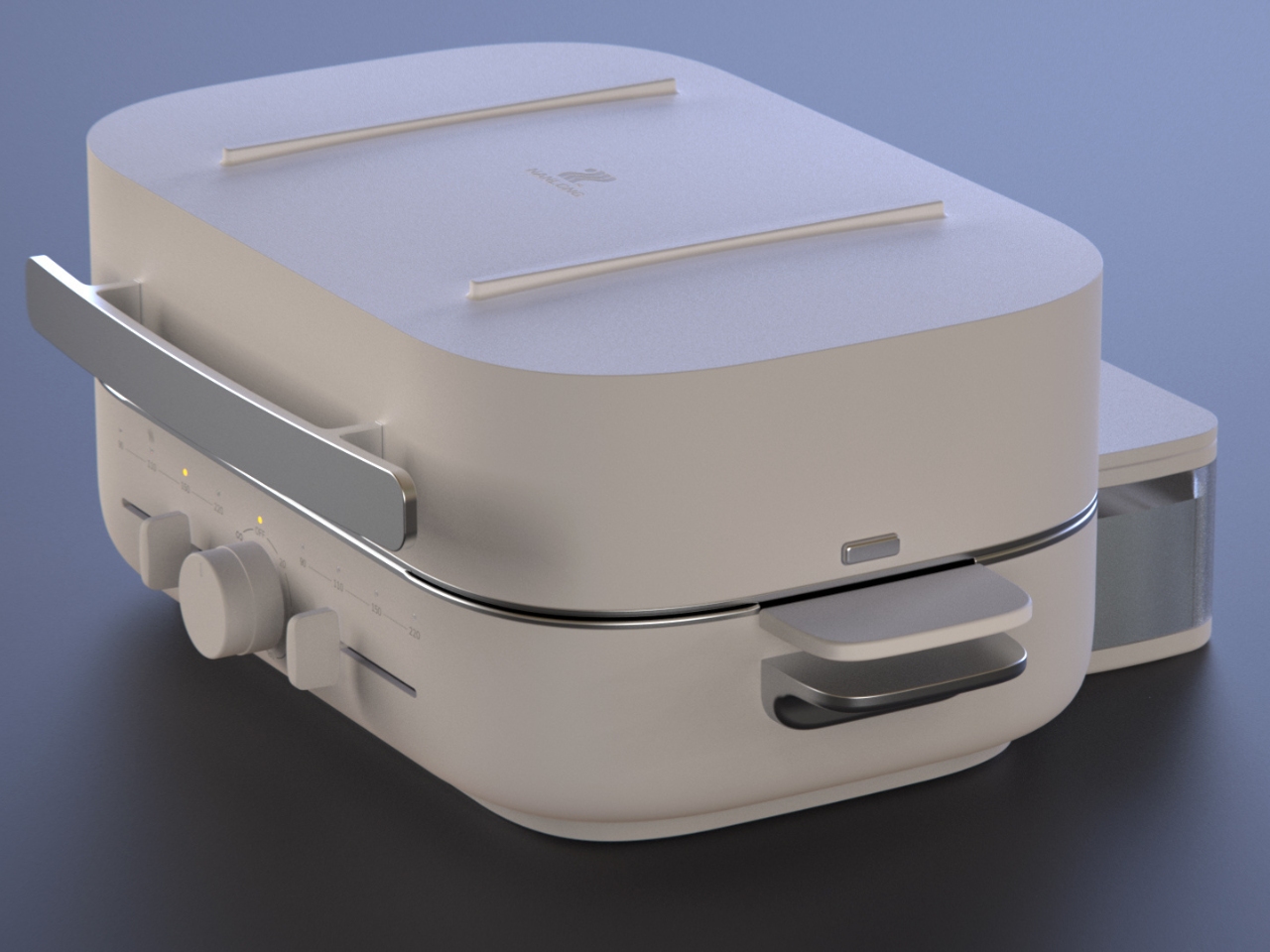
5 Best Travel Essentials to Buy Before Spring 2026 Airport Chaos

Spring 2026 promises record-breaking travel numbers as airports worldwide brace for unprecedented passenger volumes. The post-pandemic wanderlust shows no signs of slowing, and savvy travelers know that the right gear makes the difference between smooth sailing and terminal meltdown. Smart packing isn’t about cramming more into your carry-on; it’s about selecting tools that adapt to chaos, keep you powered up, and maintain your sanity when delays inevitably occur.

The travel essentials market has exploded with innovation, but not all gear deserves a spot in your carefully curated kit. These five products represent the intersection of thoughtful design and genuine utility. They’re built for people who move through airports like seasoned nomads, who understand that durability matters more than aesthetics, and who refuse to compromise on the small comforts that transform grueling journeys into manageable adventures. This spring, pack smarter.

1. Nothing Power Bank

Airport terminals have become battlegrounds for electrical outlets, with travelers camping near charging stations like prospectors staking claims. The Nothing Power Bank eliminates that desperate scramble, keeping your devices alive through security delays, gate changes, and those dreaded tarmac holds that test every passenger’s patience. Nothing’s design philosophy of transparent aesthetics translates beautifully to a power bank, transforming a purely functional device into something worth pulling out of your bag.

The transparent casing reveals the entire internal architecture, with circuit boards and battery cells visible beneath the shell like a museum exhibit of modern electronics. Warm-toned LEDs distributed throughout the interior create ambient lighting that gives the power bank a cyberpunk sensibility without tipping into gimmick territory. This visual identity makes perfect sense for Nothing’s expanding ecosystem, offering loyal users another perfectly matched accessory that shares the same design language as their phones and earbuds while delivering straightforward, reliable power when flights get rescheduled and charging time disappears.

What We Like

  • The transparent design makes the power bank instantly recognizable in crowded bags and distinguishes it from generic alternatives
  • The integrated LED lighting serves dual purposes by indicating charge status while adding atmospheric illumination during evening flights
  • Nothing’s ecosystem compatibility means the power bank meshes seamlessly with existing devices for users already invested in the brand
  • The straightforward functionality strips away unnecessary features that complicate other portable chargers

What We Dislike

  • The transparent aesthetic might not appeal to travelers who prefer minimalist, understated gear
  • LED lighting, while attractive, potentially drains battery capacity faster than non-illuminated alternatives
  • The power bank lacks weatherproofing details that would make it suitable for adventure travel beyond airports
  • Pricing sits higher than budget options, making it a premium choice for brand loyalists rather than value seekers

2. AERIONN Forma Titanium Travel Case

Luxury luggage brands have long relied on aluminum to signal premium quality; however, aluminum’s reputation often exceeds its actual durability under the relentless punishment of baggage handlers and conveyor belt systems. The AERIONN Forma deploys Grade 1 commercially pure titanium as its shell material, the same strategic upgrade Apple makes when distinguishing iPhone Pro models from standard versions. This isn’t about superficial luxury; titanium fundamentally changes how luggage responds to impact, transforming a case from something that degrades into something that ages with character.

The single continuous titanium body flexes under stress and returns to its original shape rather than permanently deforming. AERIONN subjected the shell to thousands of drop tests, bending cycles, ultrasonic inspections, and dimensional verifications to ensure the material performs as promised. Titanium’s tensile strength ranges from 290 to 310 MPa under ASTM B265-15 certification standards, significantly outperforming aluminum alloys used in competing luxury cases. The material shows wear over time with rough handling, but those marks become patina rather than damage. For travelers who spend more time in airport lounges than their own living rooms, Forma represents luggage that keeps pace with their lifestyle.

Click Here to Buy Now: $499 $1799 (72%). Hurry, only 8/970 left! Raised over $978,000.

What We Like

  • Grade 1 titanium construction offers genuine durability that justifies the premium positioning
  • The material flexes and rebounds rather than denting permanently like aluminum competitors
  • Extensive testing protocols ensure reliability under real-world travel conditions that destroy lesser luggage
  • The single continuous body design eliminates weak points where traditional cases typically fail first

What We Dislike

  • Titanium construction places this case in a luxury price bracket that excludes budget-conscious travelers
  • The weight savings over aluminum, while present, remain modest compared to the substantial cost increase
  • Titanium’s natural patina develops with use, which some travelers might perceive as damage rather than character
  • Limited color options restrict personalization compared to brands offering extensive customization

3. MokaMax Portable Coffee Maker

Airport coffee represents one of travel’s most reliable disappointments, with overpriced, underwhelming brews served in establishments that exploit captive audiences. MokaMax eliminates that compromise by functioning as both a pressure brewer and an insulated travel mug in a single rigid stainless-steel cylinder. This portable coffee maker positions itself as Pipamoka’s spiritual successor, promising espresso-style extraction quality anywhere your journey takes you, from terminal gates to mountaintop campsites, without requiring a separate bag of accessories.

The distinctive ridged exterior provides a secure grip while helping MokaMax blend naturally with other rugged travel gear. Those ridges emerged from multiple design iterations that balanced tactile comfort against visual appeal, avoiding sharp edges or overly complicated profiles that would catch on other items. A flexible rope threads through the top, creating attachment points for carabiners or hooks so MokaMax can clip directly to backpack straps or dangle from campsite setups. The integrated pressure-brewing system occupies space inside the cylinder that would typically sit empty in conventional travel mugs, maximizing functionality within a compact footprint that fits standard cup holders.

What We Like

  • The dual functionality combines brewing capability and travel mug features in one compact unit
  • Pressure-brewing system produces espresso-style coffee that exceeds typical portable brewer quality
  • Ridged stainless-steel construction offers durability and a secure grip during use
  • The integrated rope attachment transforms the mug into genuinely portable gear that clips to bags and packs

What We Dislike

  • The brewing system requires learning and practice to achieve optimal extraction consistently
  • Cleaning the internal components demands more attention than standard travel mugs after each use
  • The stainless-steel construction, while durable, adds weight compared to lighter insulated bottles
  • Single-serve capacity means brewing multiple cups requires repetition rather than batch preparation

4. Peak Design Travel Tripod

Conventional tripods sacrifice portability for stability, forcing photographers to haul bulky equipment or compromise on shot quality when traveling light. Peak Design’s Travel Tripod reimagines the fundamental architecture by eliminating the hollow channel running through traditional center columns, creating a design that achieves greater strength and dramatically reduced packed dimensions simultaneously. This engineering approach transforms the tripod from awkward luggage into a legitimate travel essential that slides into carry-on bags without consuming precious space.

Carbon fiber construction keeps weight under three pounds while supporting up to twenty pounds of camera equipment, a ratio that serves both casual smartphone photographers and professionals carrying full-frame setups with telephoto lenses. Precisely machined dials and knobs make adjustments intuitive even in challenging conditions, while the aluminum ball head enables smooth positioning across all axes. The legs extend to five feet at maximum height and open to full ninety-degree angles for ground-level perspectives, offering shooting flexibility that matches stationary studio tripods. For photographers who refuse to sacrifice image quality to travel logistics, this tripod represents the rare product that genuinely improves both.

What We Like

  • The innovative center column design eliminates wasted space for unprecedented compactness when packed
  • Carbon fiber construction achieves remarkable strength-to-weight ratios that suit serious photography equipment
  • Precisely engineered adjustment mechanisms make setup and positioning genuinely intuitive
  • The ninety-degree leg spread enables low-angle compositions impossible with conventional tripods

What We Dislike

  • Premium materials and engineering place this tripod in a high price category that excludes casual users
  • The compact design requires slightly more setup time compared to quick-deploy alternatives
  • Carbon fiber, while strong, can be more fragile than aluminum under certain impact scenarios
  • The minimalist design omits accessories like smartphone mounts that some travelers expect as standard inclusions

5. LARQ Bottle

Reusable water bottles rank among travel’s most essential items, yet they’re also among the most neglected when it comes to proper cleaning and maintenance. The LARQ Bottle addresses this universal problem through integrated UVC LED technology built directly into the cap, creating the world’s first portable mercury-free purification system that keeps both bottle and water pristine without manual scrubbing. While other innovative bottles focus on features like smartphone integration, LARQ prioritizes the fundamental concern that matters most during travel: consistently clean, safe drinking water.

A simple tap activates the UVC LED light, which begins the cleaning cycle immediately and completes the process in just sixty seconds. The stainless-steel interior reflects UV light throughout the bottle’s volume, eliminating 99.9999 percent of bacteria and 99.99 percent of viruses according to independent testing. This technology transforms water quality wherever you fill up, whether from airport fountains, hotel taps, or questionable sources during backcountry adventures. The bottle requires minimal effort to maintain peak performance, automatically running cleaning cycles every two hours to prevent biofilm buildup and odor development that plague conventional bottles after days of continuous use.

What We Like

  • UVC LED technology provides genuine purification that kills bacteria and viruses in sixty seconds
  • The self-cleaning capability eliminates manual scrubbing and maintenance requirements
  • Stainless-steel construction reflects UV light for thorough interior coverage
  • Automatic cleaning cycles every two hours prevent odor and biofilm buildup without user intervention

What We Dislike

  • The integrated technology increases the cost significantly compared to standard insulated bottles
  • Battery requirements for the UVC system add charging obligations to travel routines
  • The electronic cap components require careful handling and cannot be fully submerged
  • Replacement parts for the UVC system create long-term dependency on manufacturer support

Gear Up, Stress Down

Spring 2026 will test even the most experienced travelers as airports strain under capacity and delays ripple across entire continents. The right travel essentials don’t just add convenience; they create resilience against the inevitable chaos. These five products represent thoughtful solutions to genuine problems that emerge when you spend hours navigating terminals, sleeping in departure lounges, and adapting to constantly changing circumstances that define modern travel.

The best gear fades into your routine until you need it, then performs exactly as promised without drama or disappointment. Power that keeps devices alive through marathon delays, luggage that survives baggage handler brutality, coffee that doesn’t require hunting down terrible airport cafes, photography equipment that packs impossibly small, and water that stays clean regardless of source. These aren’t luxury purchases; they’re infrastructure for anyone serious about traveling well. Pack accordingly.

The post 5 Best Travel Essentials to Buy Before Spring 2026 Airport Chaos first appeared on Yanko Design.