W4 Plus Earbuds Add Smarter AI Translation
Timekettle W4 Plus combines live conversation, call, meeting, and multimedia translation with Babel OS 3.0 and improved voice pickup.
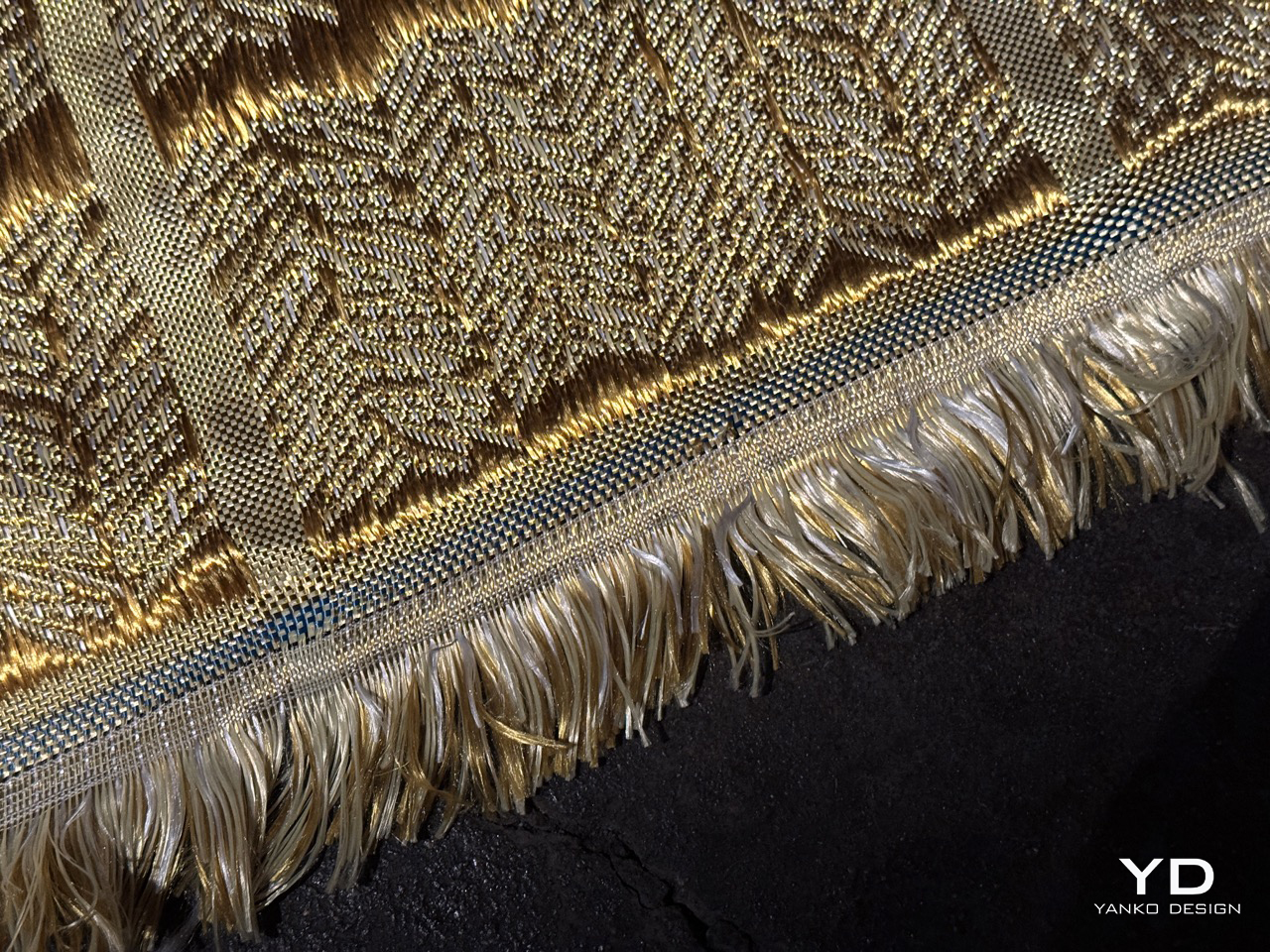
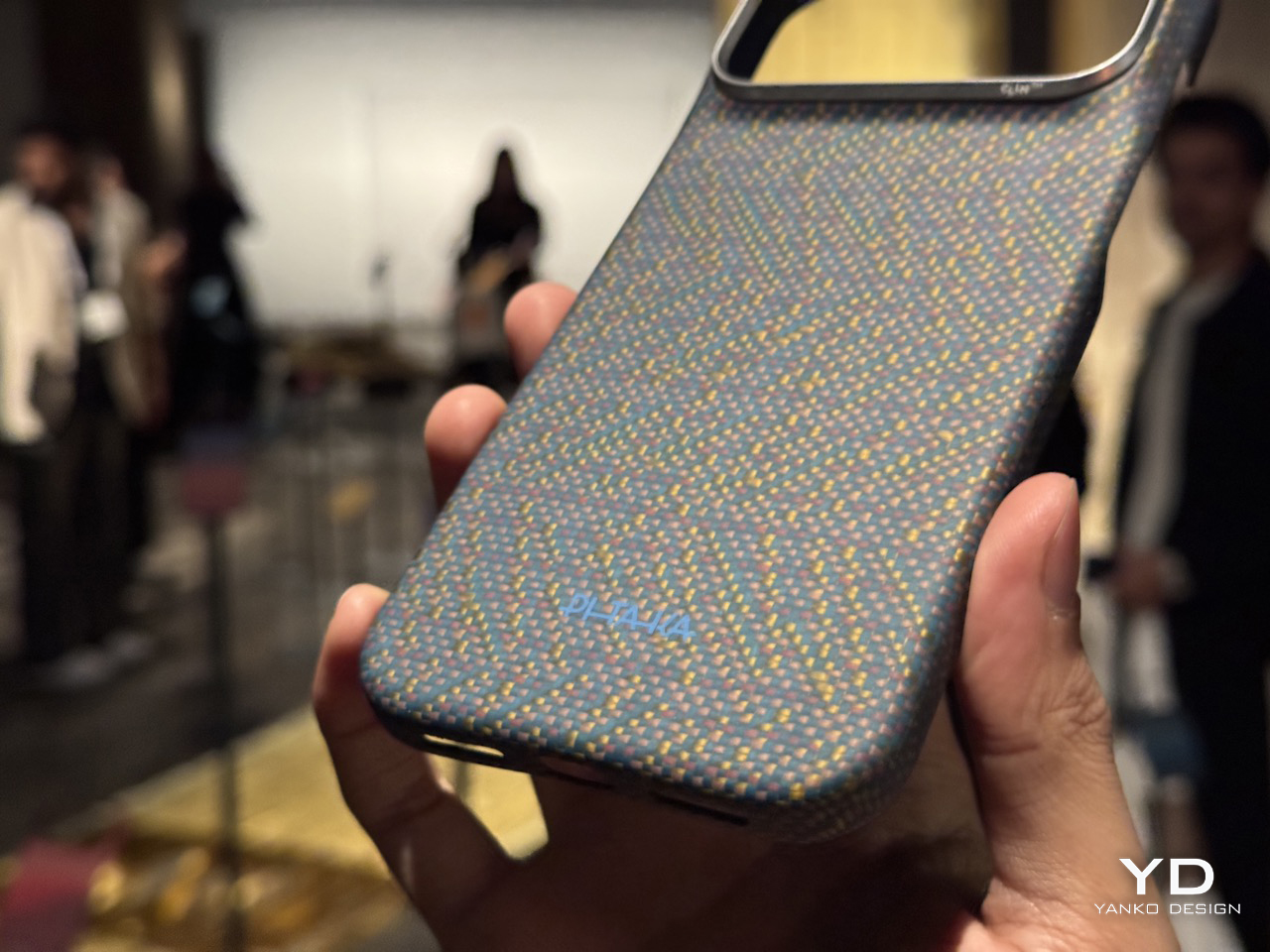
There is a long gold tapestry cascading down a concrete bunker wall in Berlin right now, and it feels nothing like what it is actually made of. Run your hand across it and your brain says silk. Your eyes say wheat field caught mid gust. Neither answer is correct. What you are actually touching is aramid fiber, the same aerospace grade material that shows up in body armor and fighter jets, rated at up to five times the strength of steel by weight. PITAKA spent 10,000 plus hours figuring out how to make something this tough feel this soft, and the payoff is standing right there on the wall.
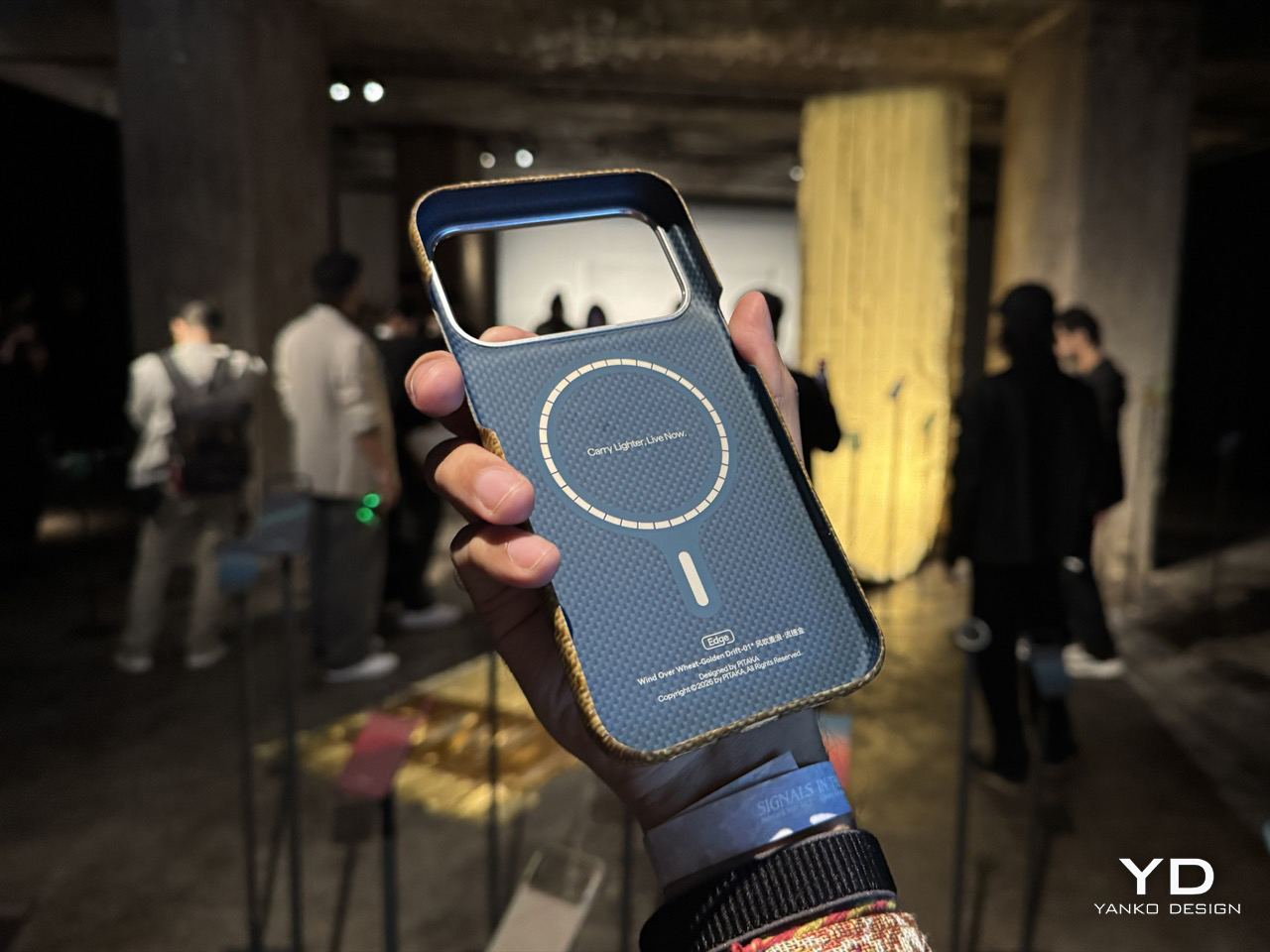
This was the setting for Signals in the Wind, PITAKA’s first ever solo brand event, held during IFA week at The Feuerle Collection. The whole night revolved around one new case collection called Wind Over Wheat, and honestly, once you have felt the tapestry, the name stops sounding like marketing copy and starts making a lot more sense.
Designer: Pitaka


The venue choice alone deserves its own article.. Feuerle is a converted WWII telecommunications bunker with two meter thick walls, the kind of building that was engineered to survive things silk never has to think about. PITAKA filled that stripped back concrete shell with almost nothing except the tapestry, a handful of case displays mounted on slim black stands, and a soundscape by Berlin based composer Temple Rat, built from field recordings of wind moving through wheat. The cases themselves stood at uneven heights along the walk, which sounds like a small styling choice until you realize it is doing exactly what real wheat does in a field, growing unevenly, catching light differently depending on how the wind hit it that day.
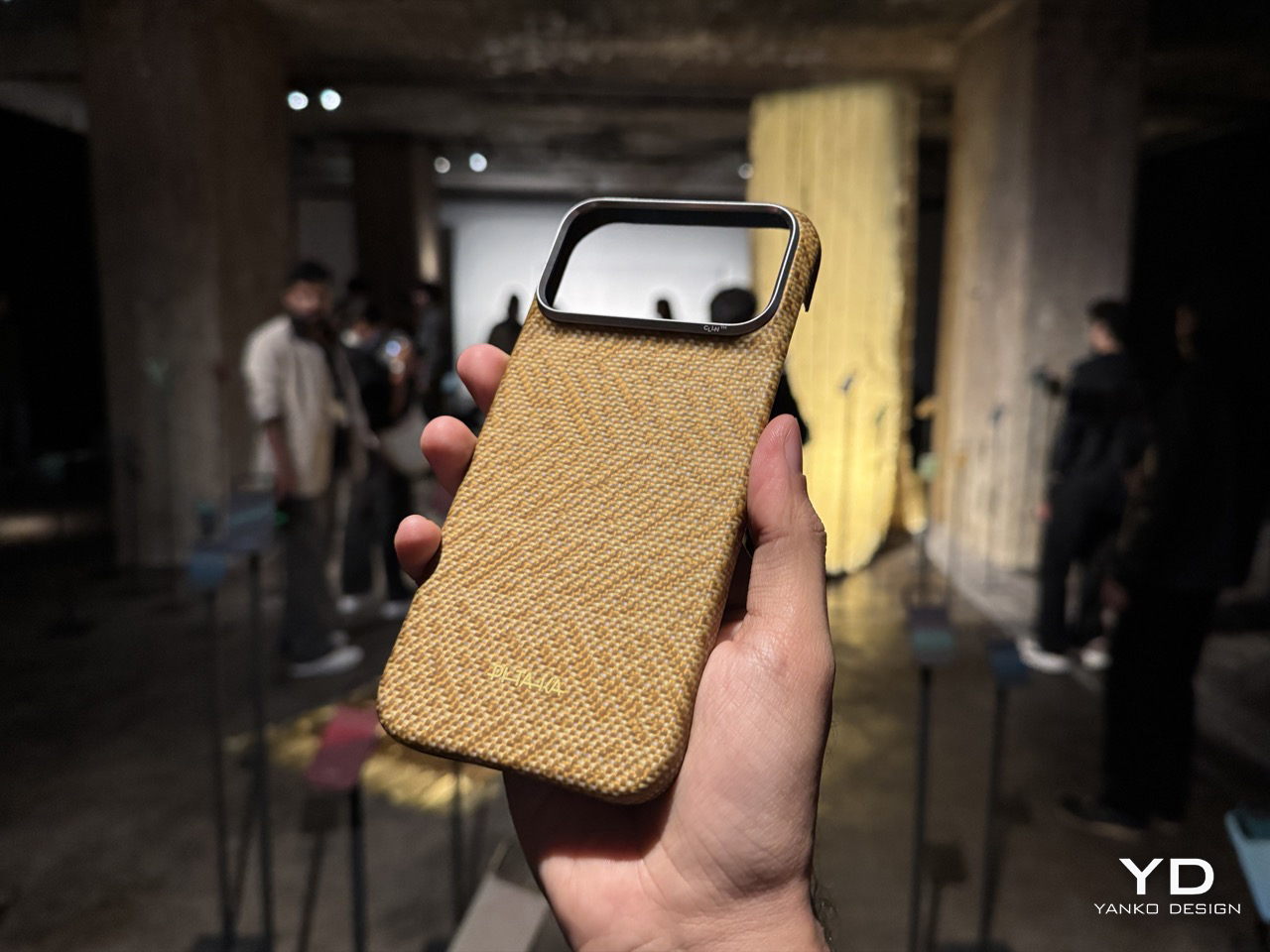
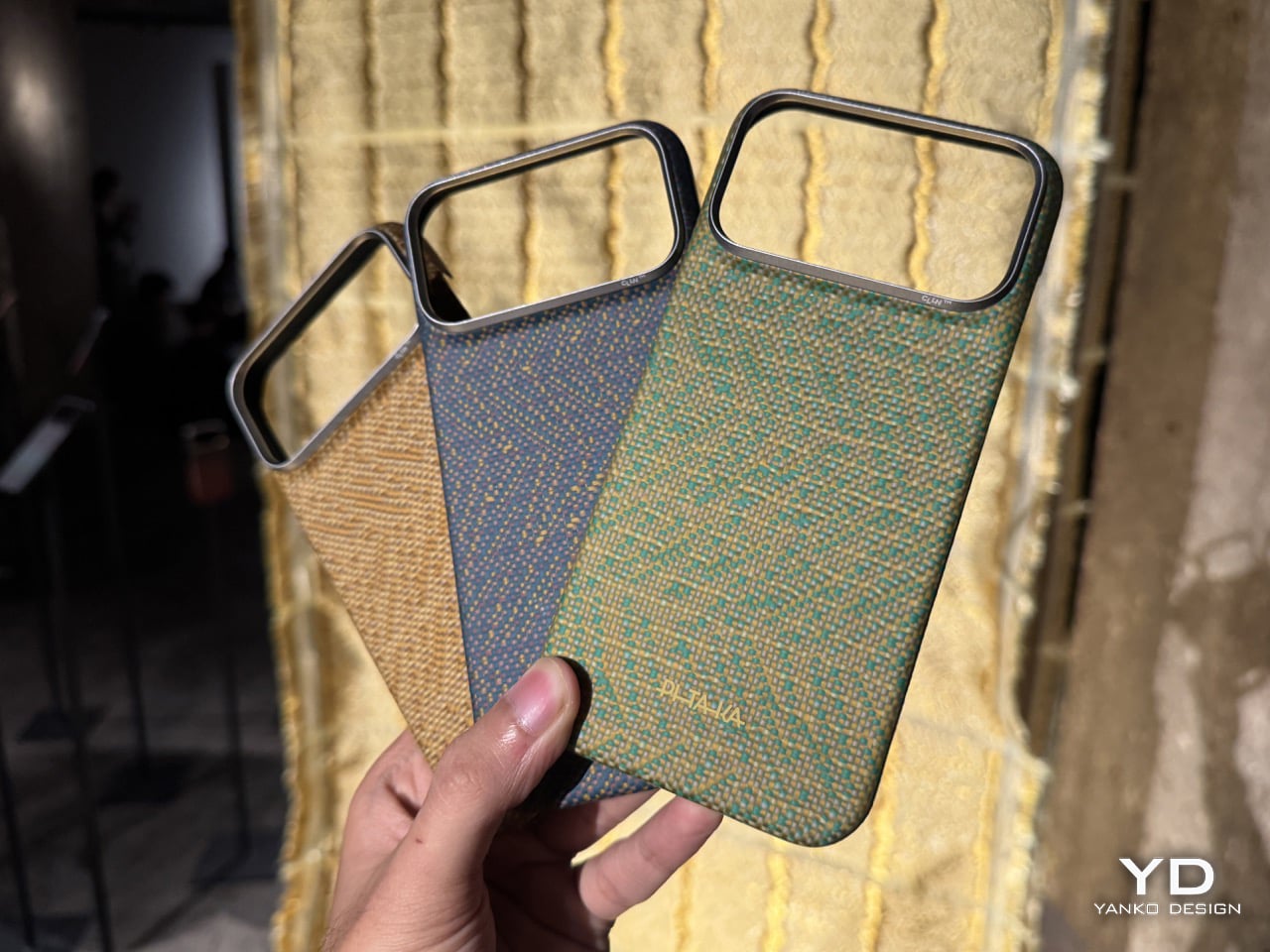
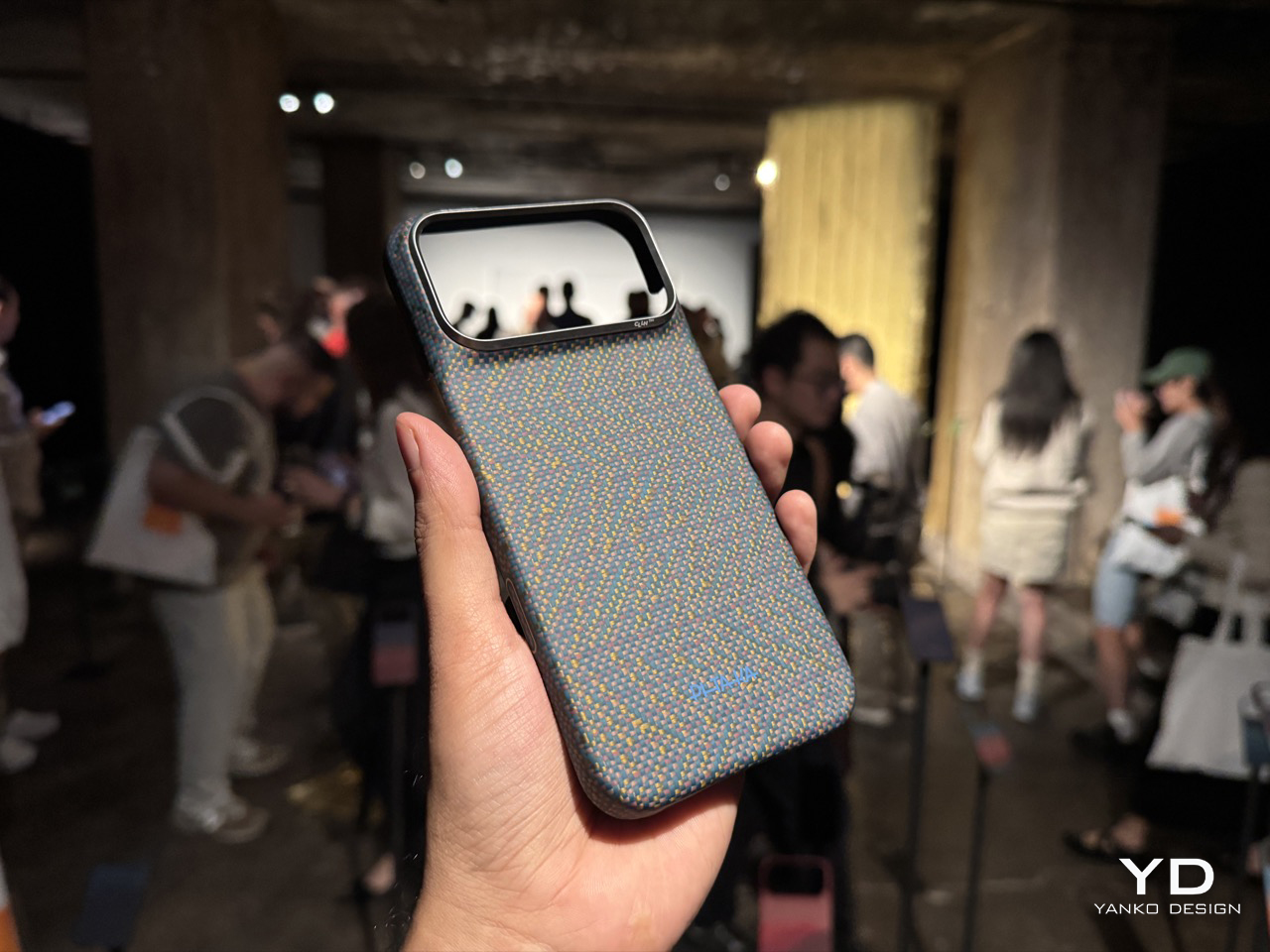
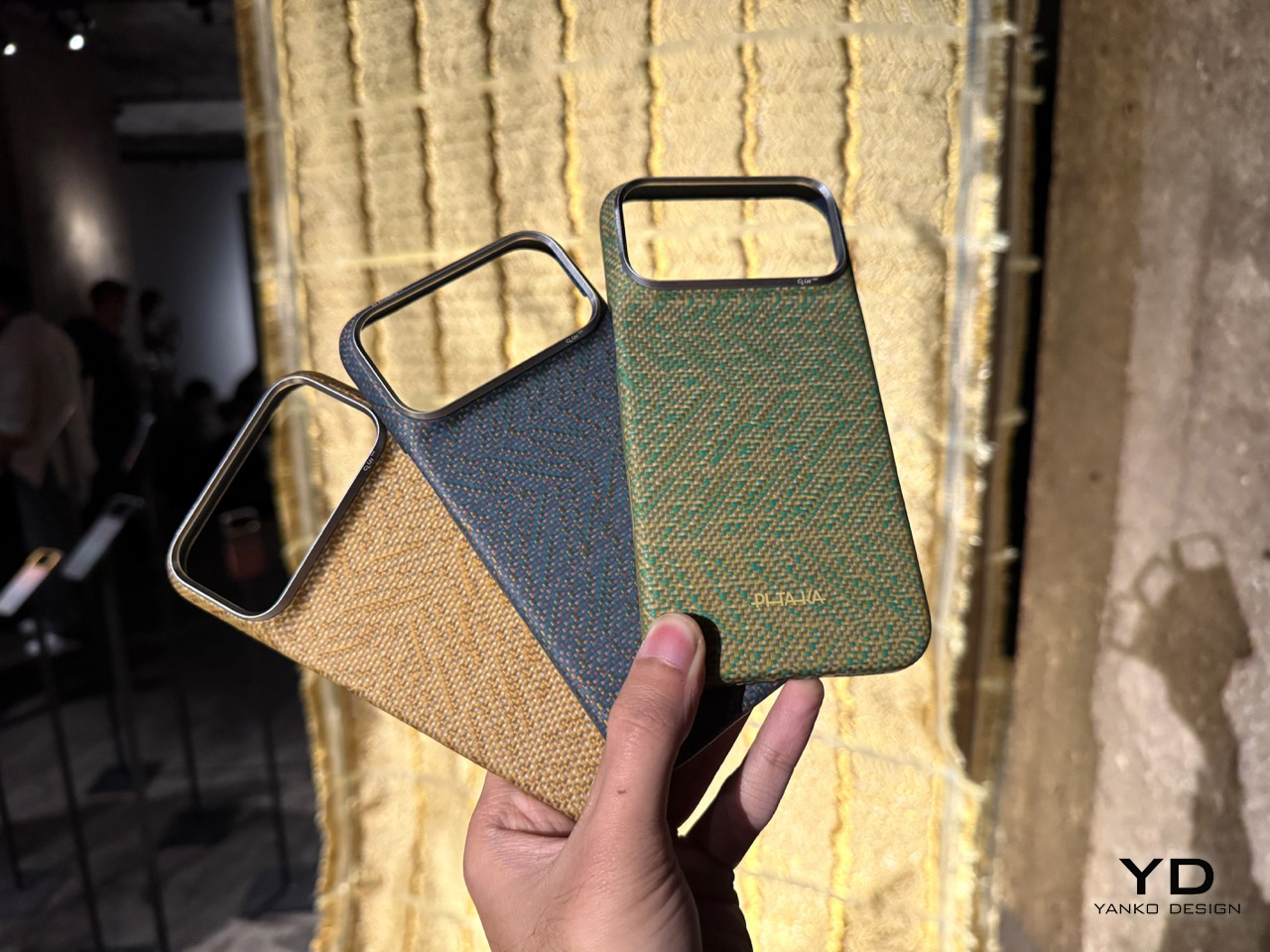
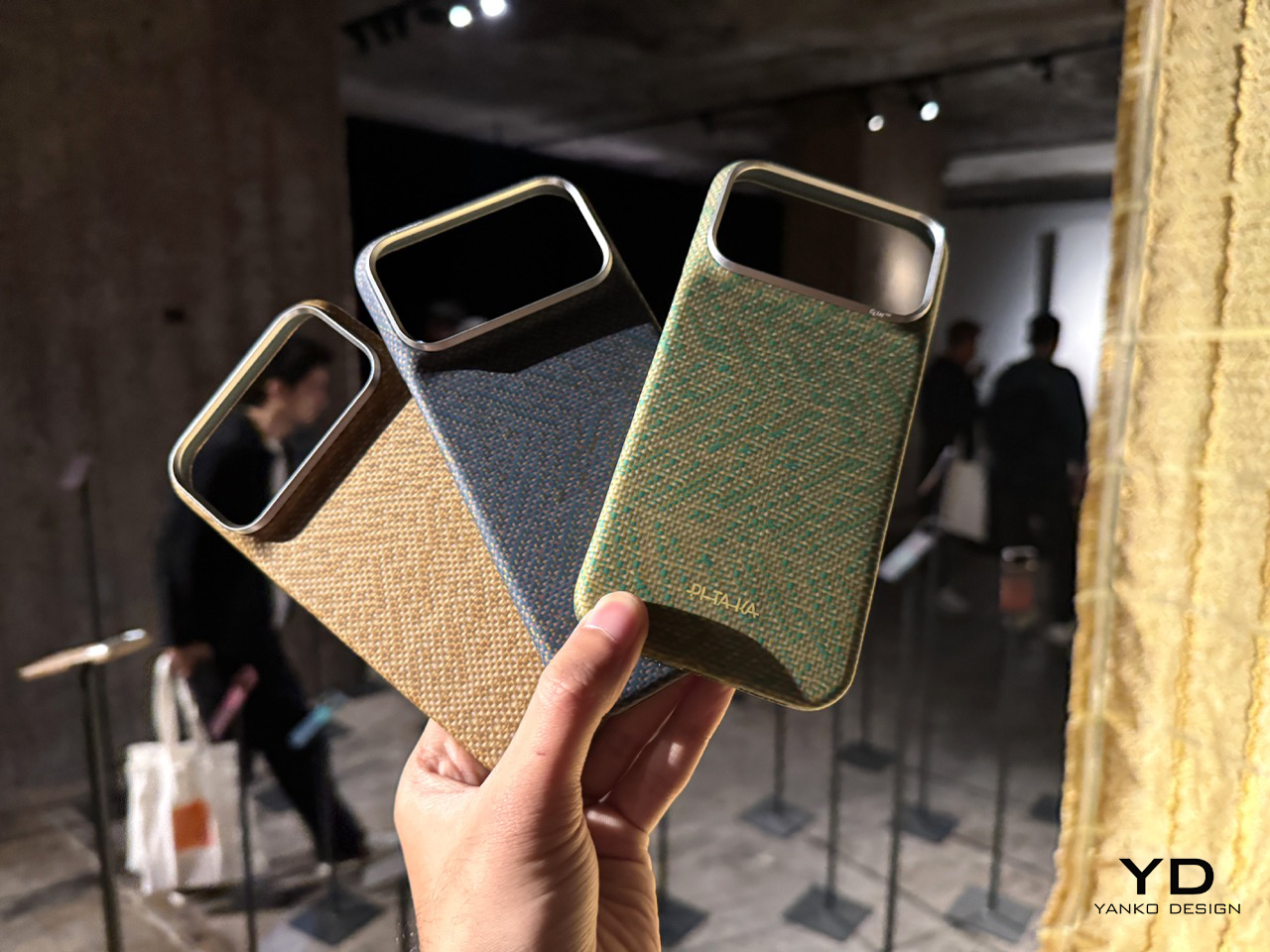
Wind Over Wheat comes in three finishes, each named like a tiny poem. Golden Drift is wheat under full sun. Surging Awn is younger wheat still gathering strength. Berlin Nocturne is the same field fading into night, a nod to the city hosting the whole thing. All three are built using Trace Form, PITAKA’s new technique that intentionally lets certain fibers stray from their programmed path, so the texture ends up looking a little different every single time. Less assembly line, more happy accident.
Then the night ended in the best possible place. Guests moved up from the bunker’s underground galleries to Feuerle’s terrace, which turned out to have its own patch of tall, wheat like grasses growing right there in the open air. It is the kind of detail you cannot plan around unless you got extremely lucky with venue selection, and it closed the loop on the whole theme in a way no projector or soundscape could. Standing on a rooftop with real grass swaying next to a case built to mimic that exact motion is a pretty satisfying way to end an event about materials and perception.
Wind Over Wheat’s limited Trace Form Edition launches September 17, with pre-orders opening September 9th. If you are at IFA Berlin this week, PITAKA’s main booth is in Hall 5.2, Booth 209.

The post PITAKA Turned a Berlin Bunker Into a Wheat Field For Their New Aramid Case Collection at IFA 2026 first appeared on Yanko Design.
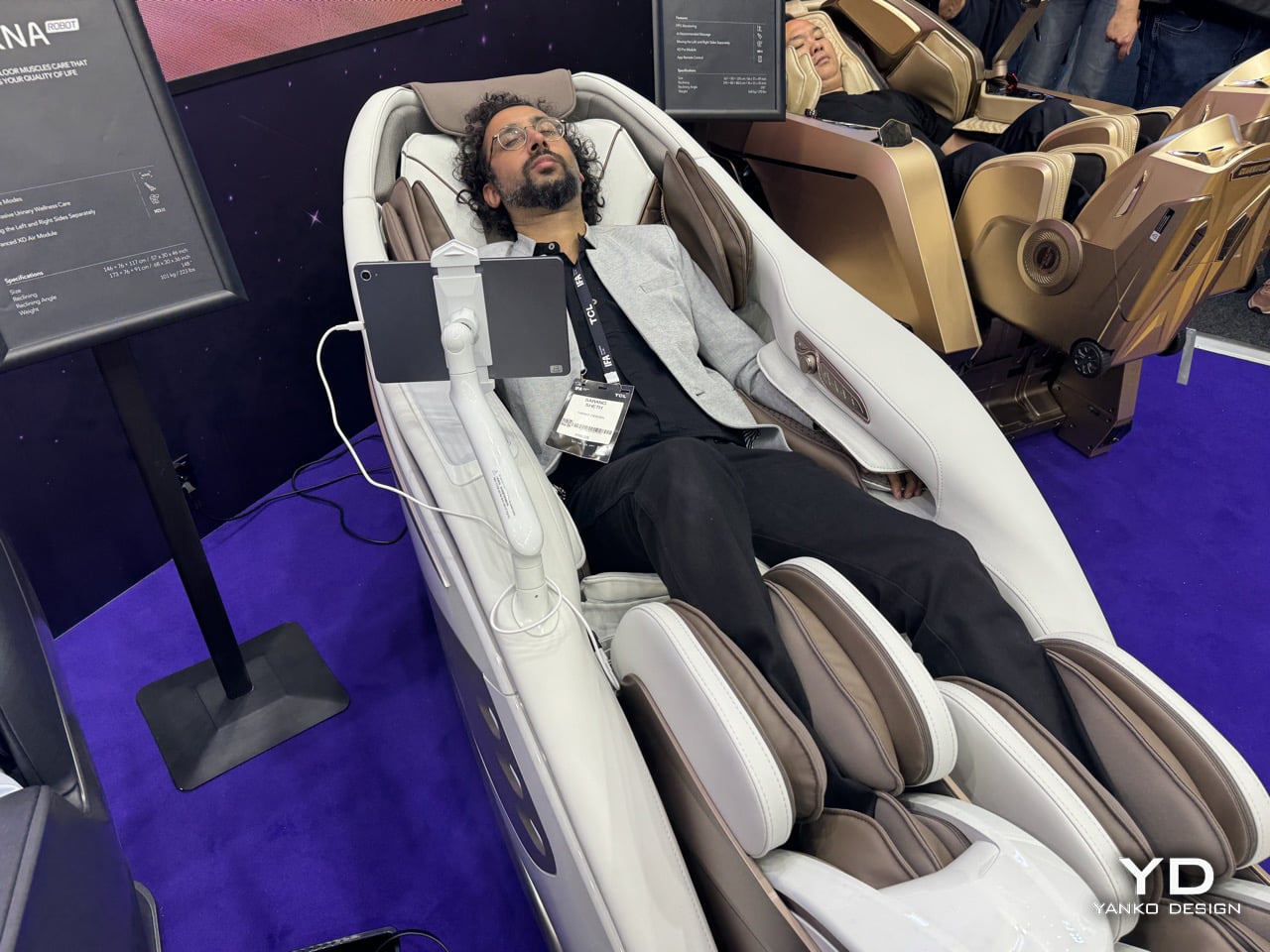
Somewhere out there is a bingo card of jobs AI would come for, and I guarantee nobody had masseuse on it. AI has already eaten its way through a scary chunk of the low-level workforce, copywriting, junior coding, customer support scripts, even the guy behind the wheel in some cities now. But there was always this quiet assumption that a good deep tissue rubdown needed actual human hands, actual human judgment, someone who could feel where the knot was and adjust on the fly. That felt safe. Untouchable, even. Then I walked into Bodyfriend’s booth at IFA 2026, sat down in a chair, and casually talked my way into the best massage of the show. Apparently the human-to-human touch job just got automated too.
The chair was Bodyfriend’s DaVinci AI, running the same generative AI Bodyfriend had just unleashed in Seoul days before IFA, badged DaVinci AI Pro. Instead of picking from a shelf of presets, it listens to plain language and builds a massage from scratch, mixing 134 basic blocks across body zones, pressure, and duration. Bodyfriend puts the theoretical combinations in the trillions, and having felt the difference, I believe the math. A PPG sensor in the hand massager also reads heart rate, heart rate variability, and blood oxygen in real time, so the chair responds to your actual state, not just your words. I did not know any of this walking in. I just knew I was tired, sore, and willing to talk to a chair like it owed me something.
Designer: Bodyfriend
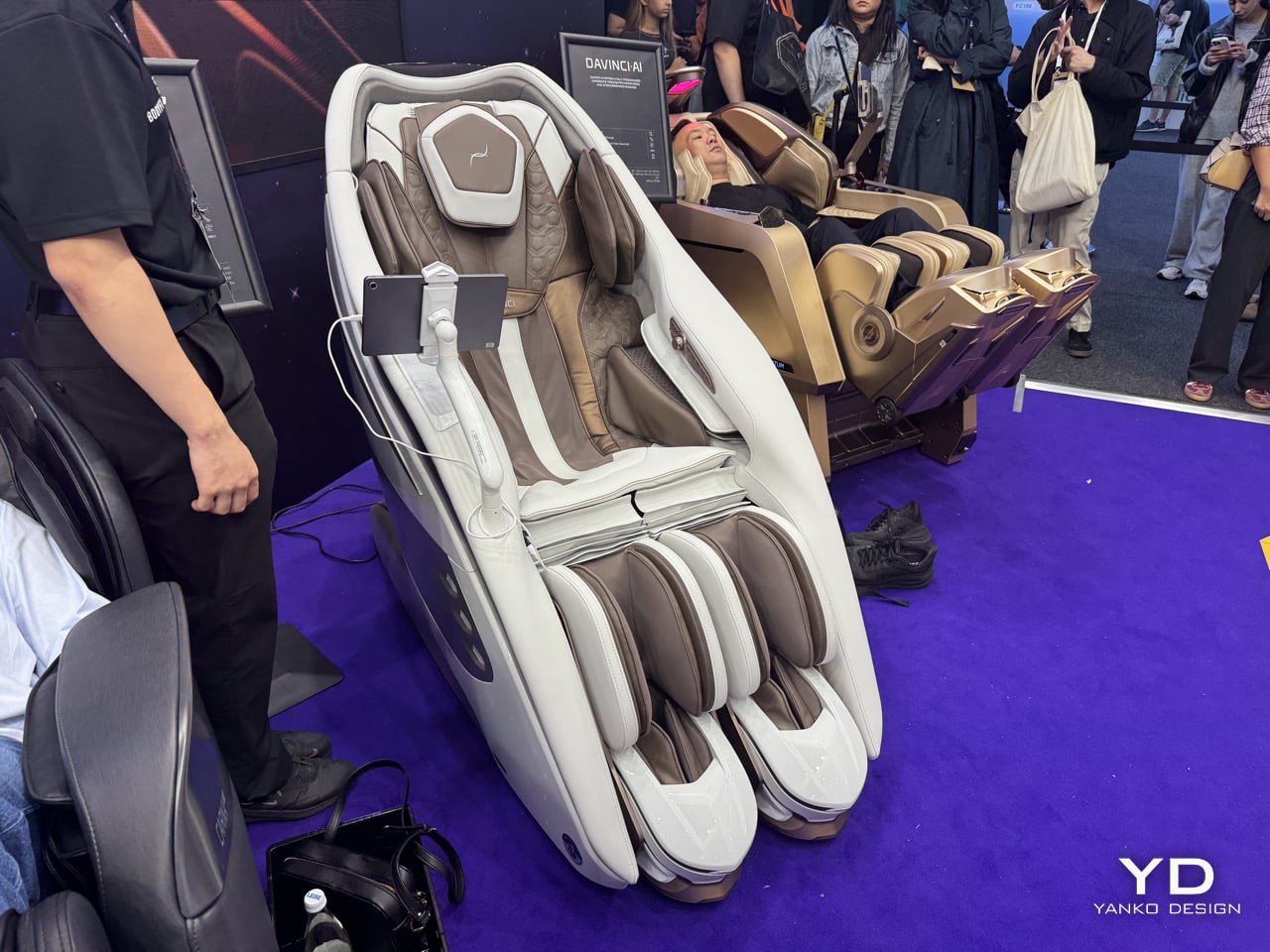
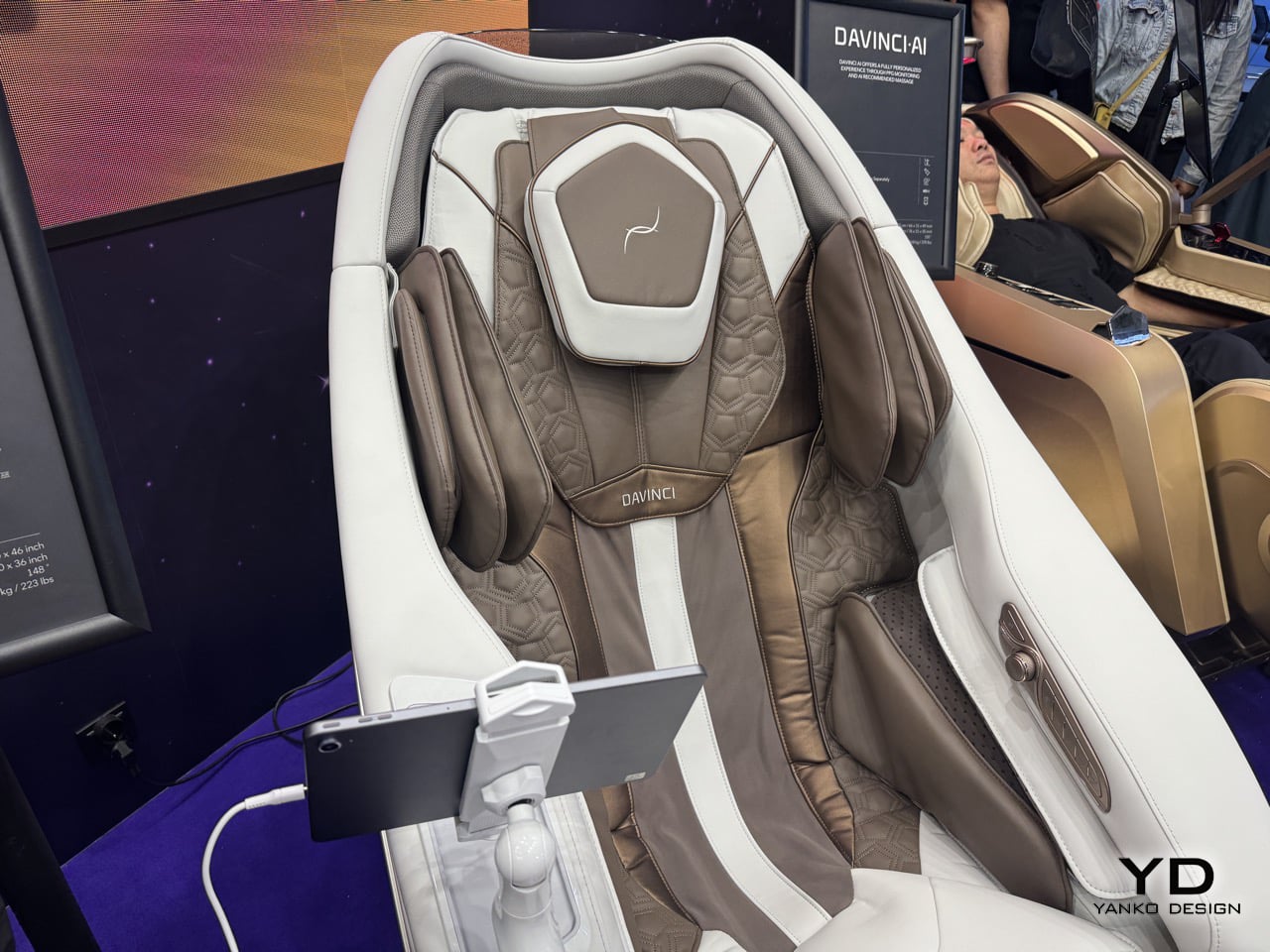
I had clocked around 15,000 steps that day, running on trade show coffee and basically nothing else, and my feet and shoulders had reached the point of open rebellion. I sat down, and instead of hunting for a remote, I just talked to the tablet mounted on the armrest. “Hey Buddy,” I said, “give me a strong foot massage, and also help relieve tension in my neck and shoulders.” Within about a minute it had built something specifically for that, working my feet, shoulders, and spine while leaving my hands completely alone, because I never asked for them. When I got a flicker of FOMO and asked it to include a hand massage too, it recalibrated on the spot rather than restarting from zero. Talking to it felt closer to briefing a person than operating a machine.
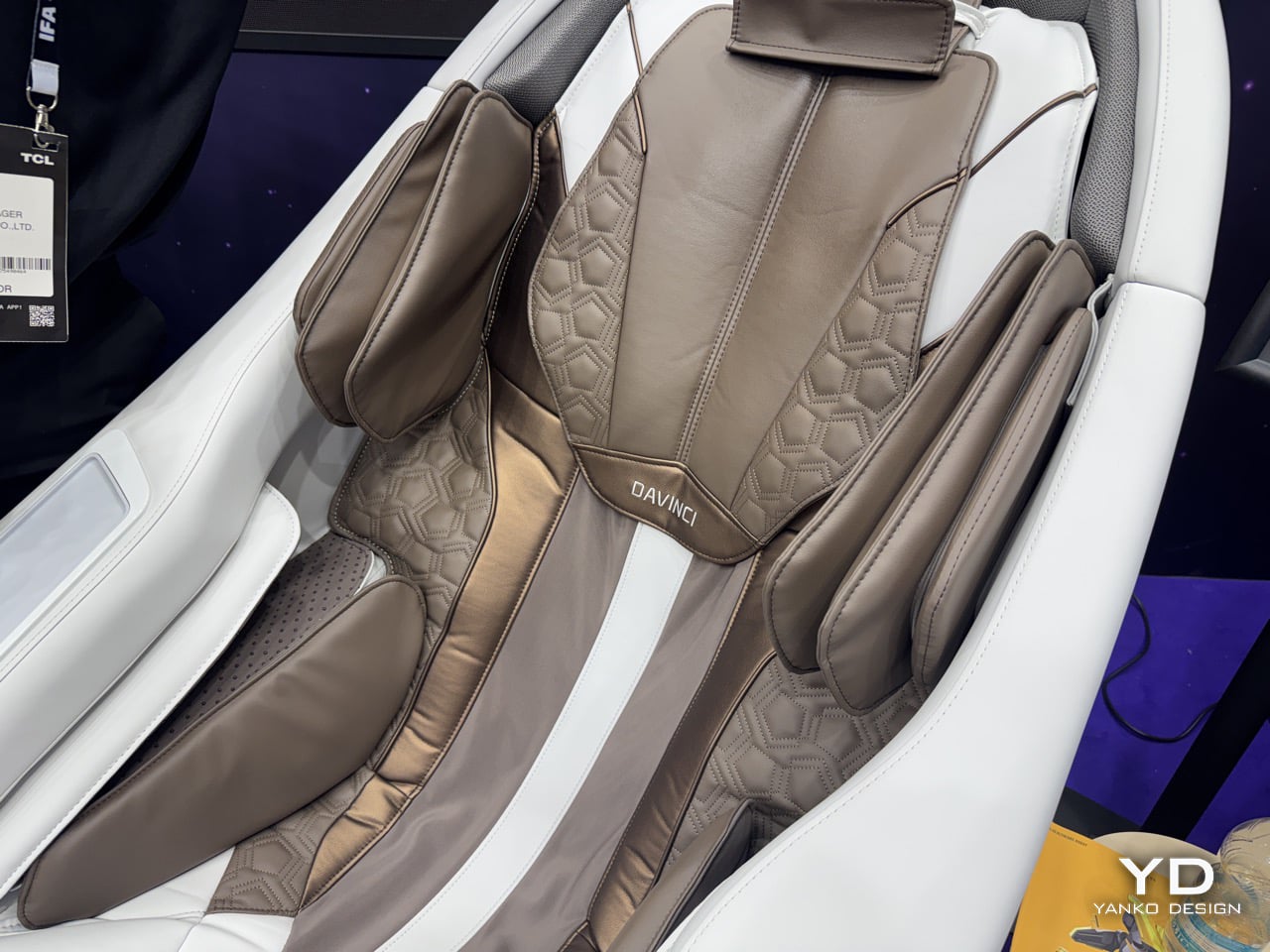
The DaVinci name carries some real design pedigree behind it. Bodyfriend’s earlier DaVinci models were developed with Italdesign, the Turin studio behind decades of concept and production cars for names like Lamborghini and Bugatti, and that automotive language shows up in the chair’s sculpted shell and the confidence of its proportions. This year’s leap is less about the shell and entirely about what is happening inside it. Where the original DaVinci used bioelectrical impedance analysis to profile your body composition, the AI Pro generation swaps that for conversational intelligence, a shift from measuring you passively to actually listening to you. It is the difference between a chair that studies your body and one that takes instructions from it.
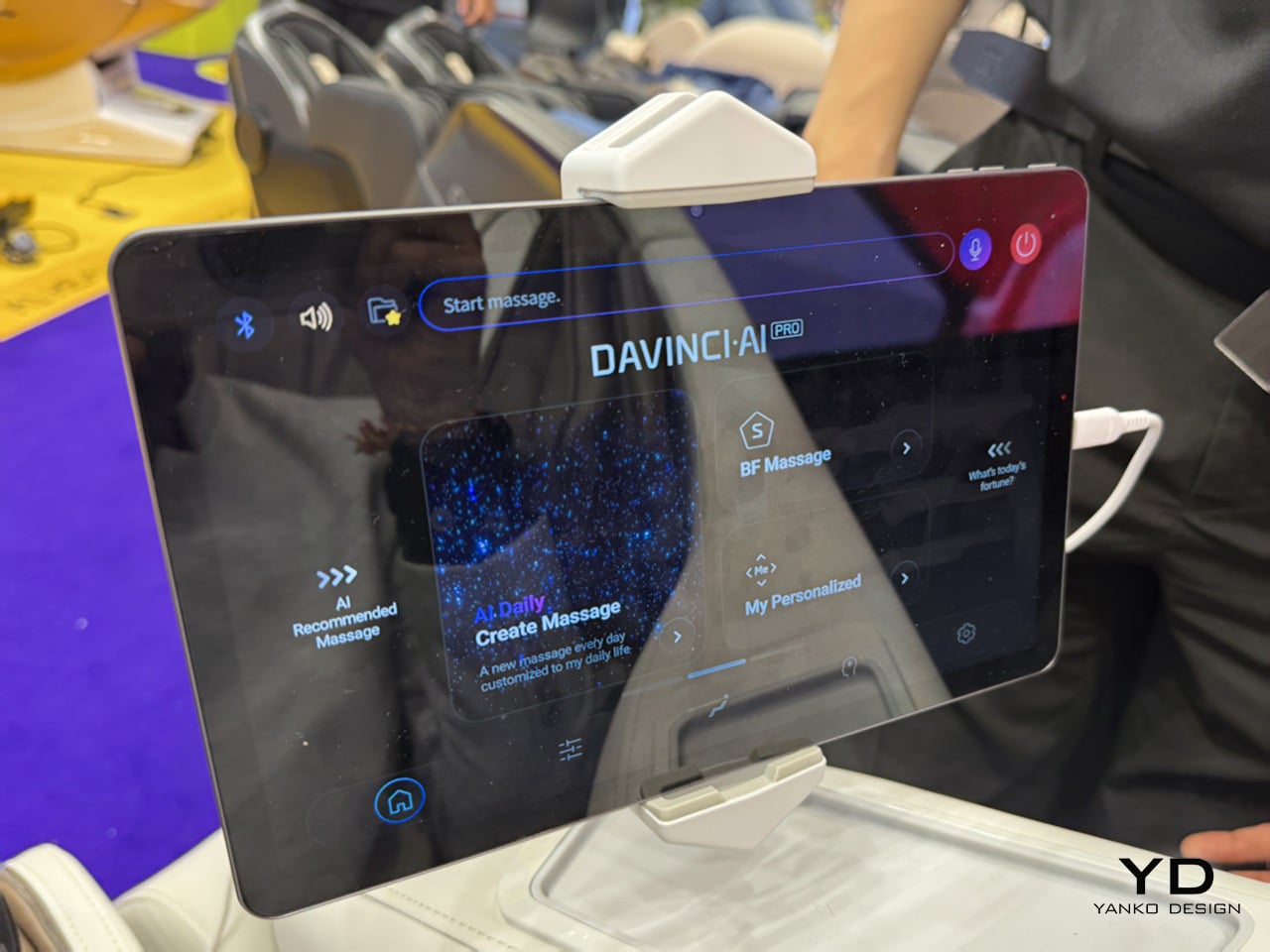
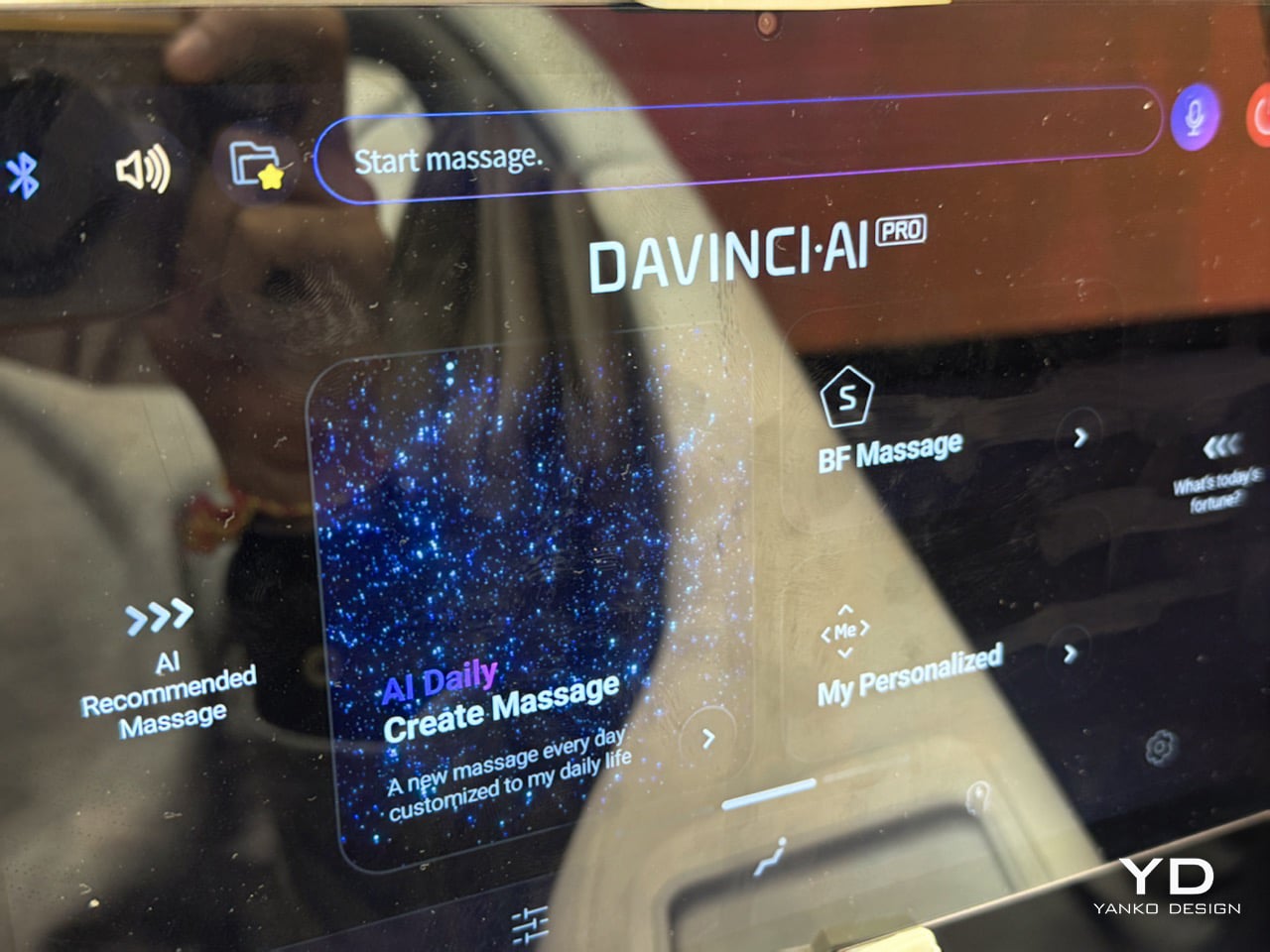
Bodyfriend’s booth this year also carried the 733, a wearable healthcare robot that took home an IFA Innovation Award honor for independently guiding your arms and legs through stretching and standing assistance, proof this is a company betting hard on robotics well beyond the living room recliner. Against that backdrop, DaVinci AI reads less like a gimmick and more like the company’s flagship idea about where home wellness tech goes next. We covered Bodyfriend’s Quantum robotic chair at IFA 2024 and called it a bodygasm in leather and Bang & Olufsen sound. DaVinci AI trades some of that theater for something quieter and arguably bigger: a chair that finally understands what you are asking for, in your own words, on the first try.
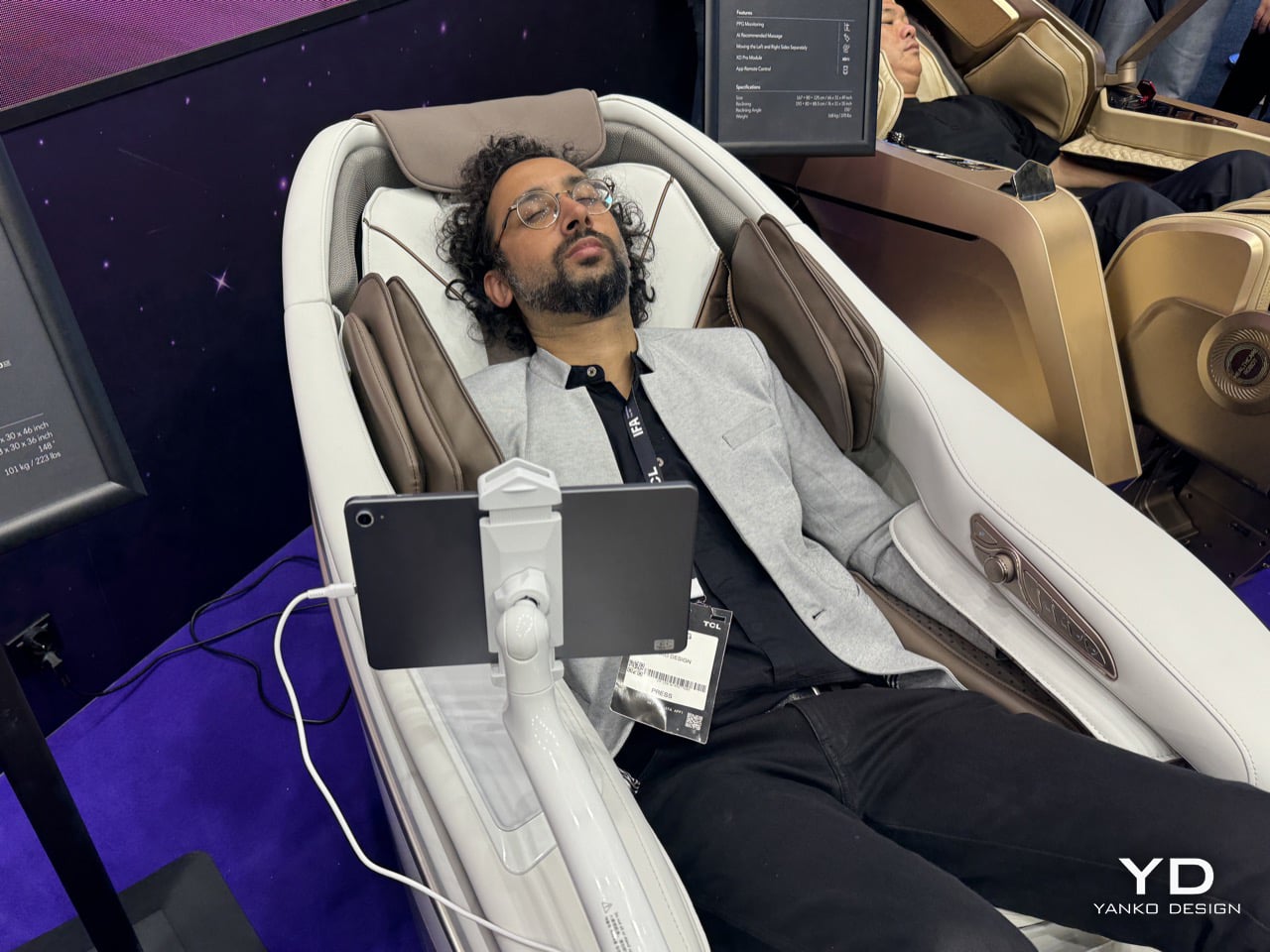
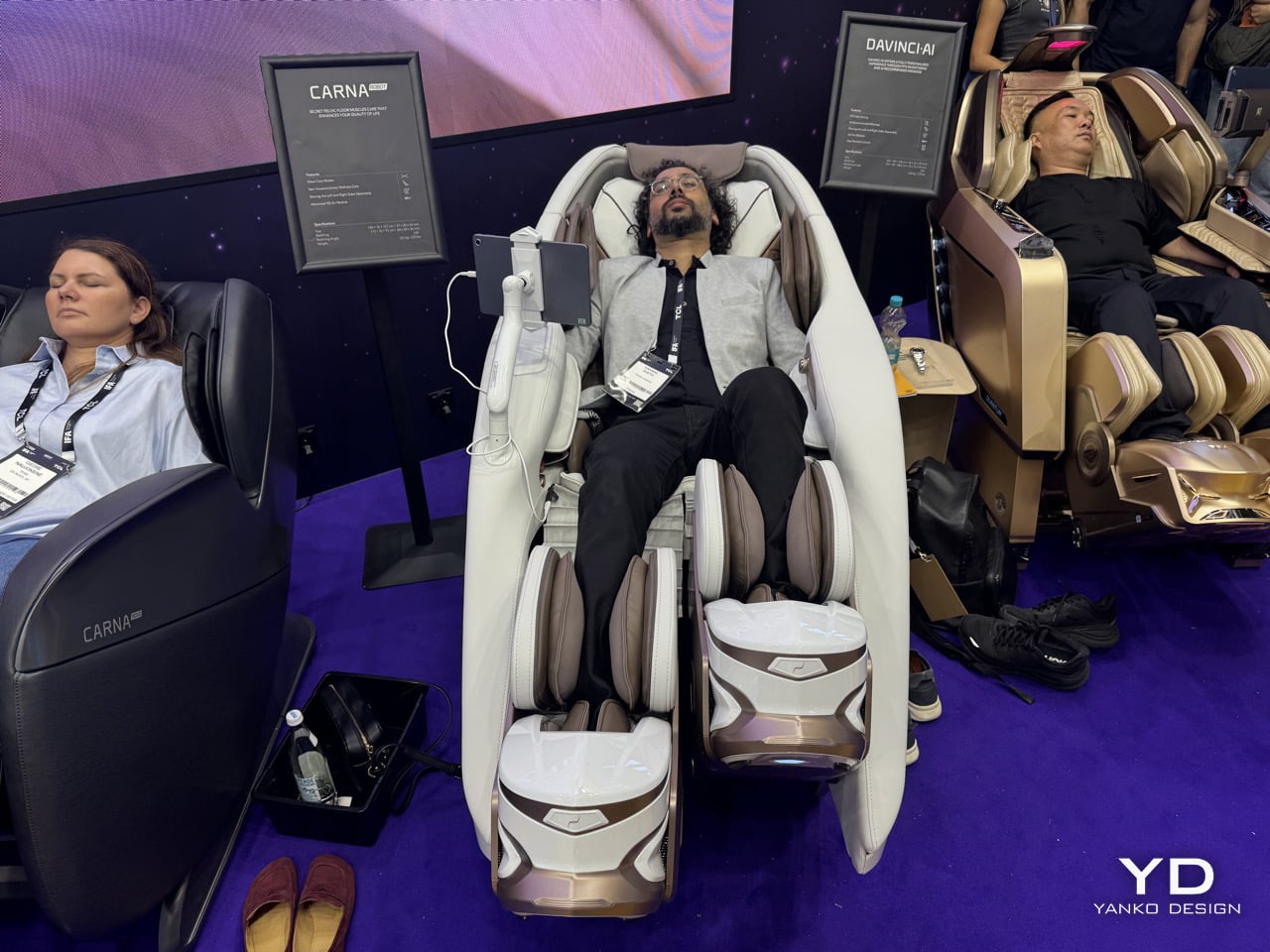
The post An AI Gave Me A Full-Body Massage: Hands-on with DaVinci AI Pro Massage Chair at IFA 2026 first appeared on Yanko Design.
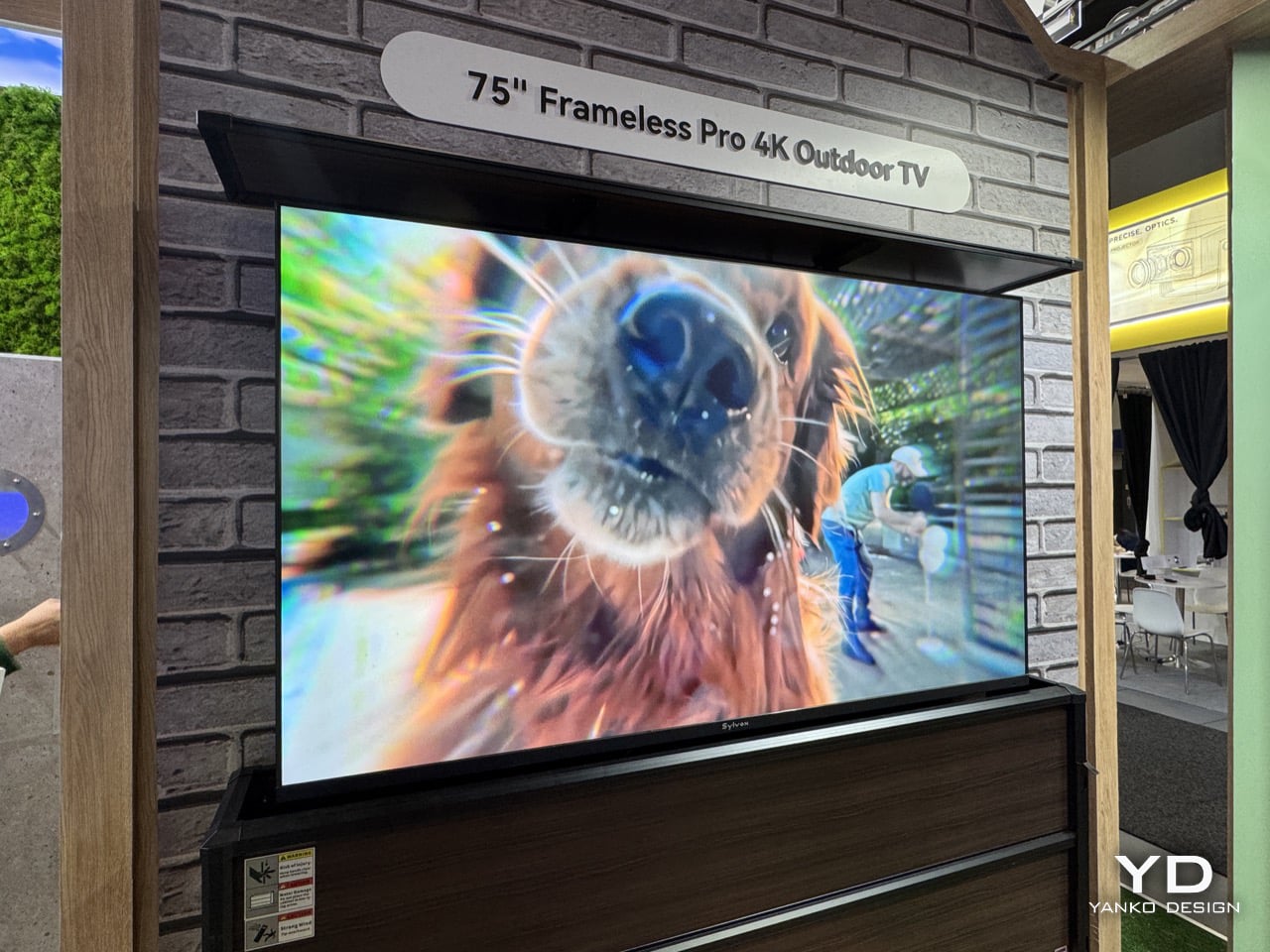
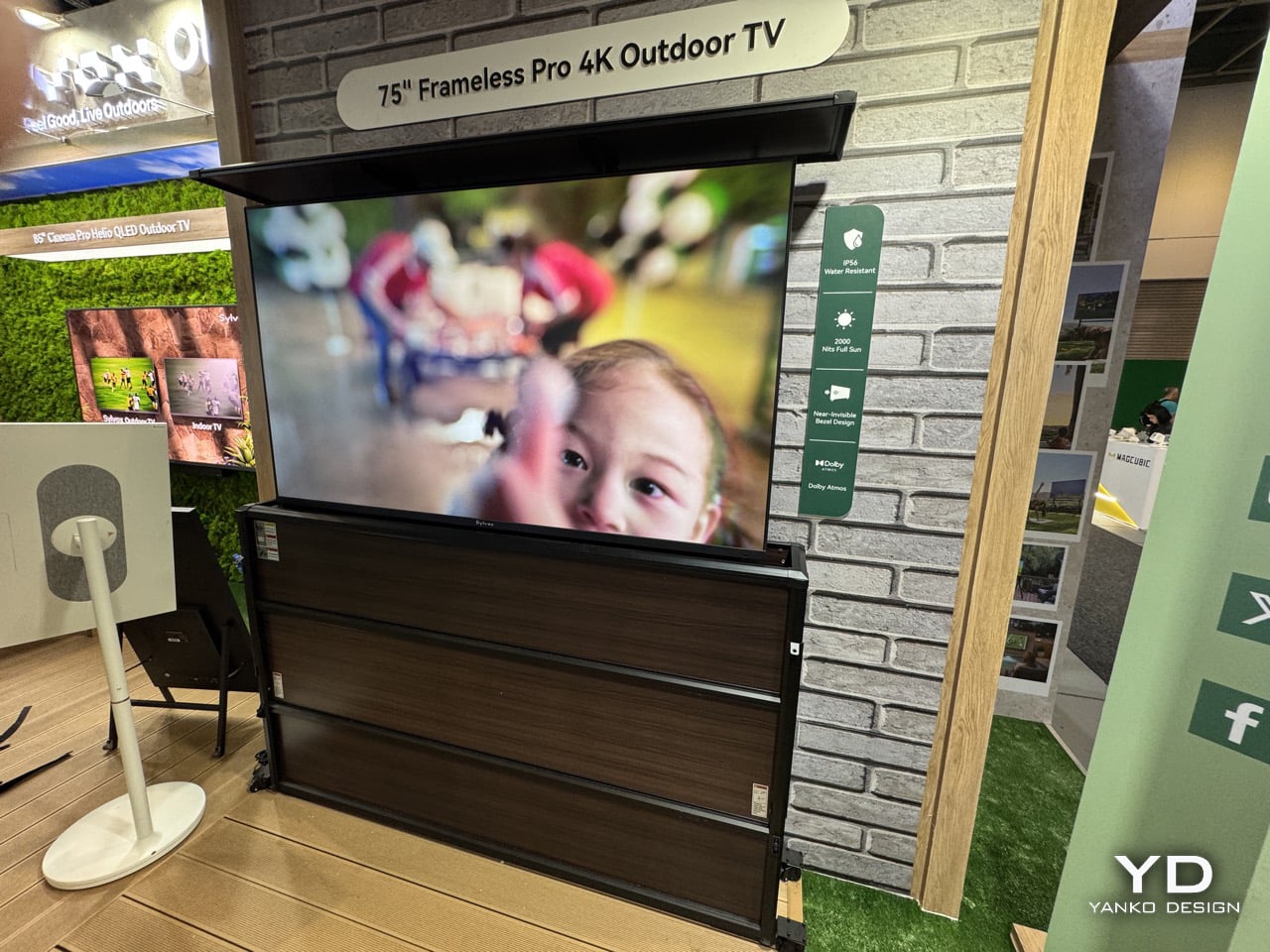
An outdoor TV isn’t really judged by its screen, it’s judged by everything protecting the screen. Sunlight readability, a sealed chassis, and an operating range that survives both August and January are what separate a patio television from a regular one dragged outside against its will. Sylvox showed up at IFA Berlin this week leaning into that definition, then added a twist the category rarely bothers with, the Frameless Pro 2026, a 75 inch 4K set with 2000 nits, an IP56 rating, and a bezel trimmed down by 90 percent. The obvious question is whether shaving the frame down actually changes what an outdoor TV is, or just what it looks like. Either way, it’s the most interesting thing on Sylvox’s stand that isn’t running on a hand crank.
Bezels exist for a reason on any screen meant to survive weather, they’re where the gaskets, sealing, and wiring actually live, so trimming one down is a real engineering problem, not just styling. Sylvox says the Frameless Pro hits a 95 percent screen to body ratio while still holding IP56 and a range from negative 22 to 122 Fahrenheit. It wasn’t the only bezel story at IFA this year, Tecno showed a concept phone with a claimed 0mm bezel a few halls over, only for early testers to find a raised metal lip still doing the bezel’s job along one edge. That’s usually how these claims go, the border doesn’t disappear, it just moves somewhere less obvious.
Brand: Sylvox
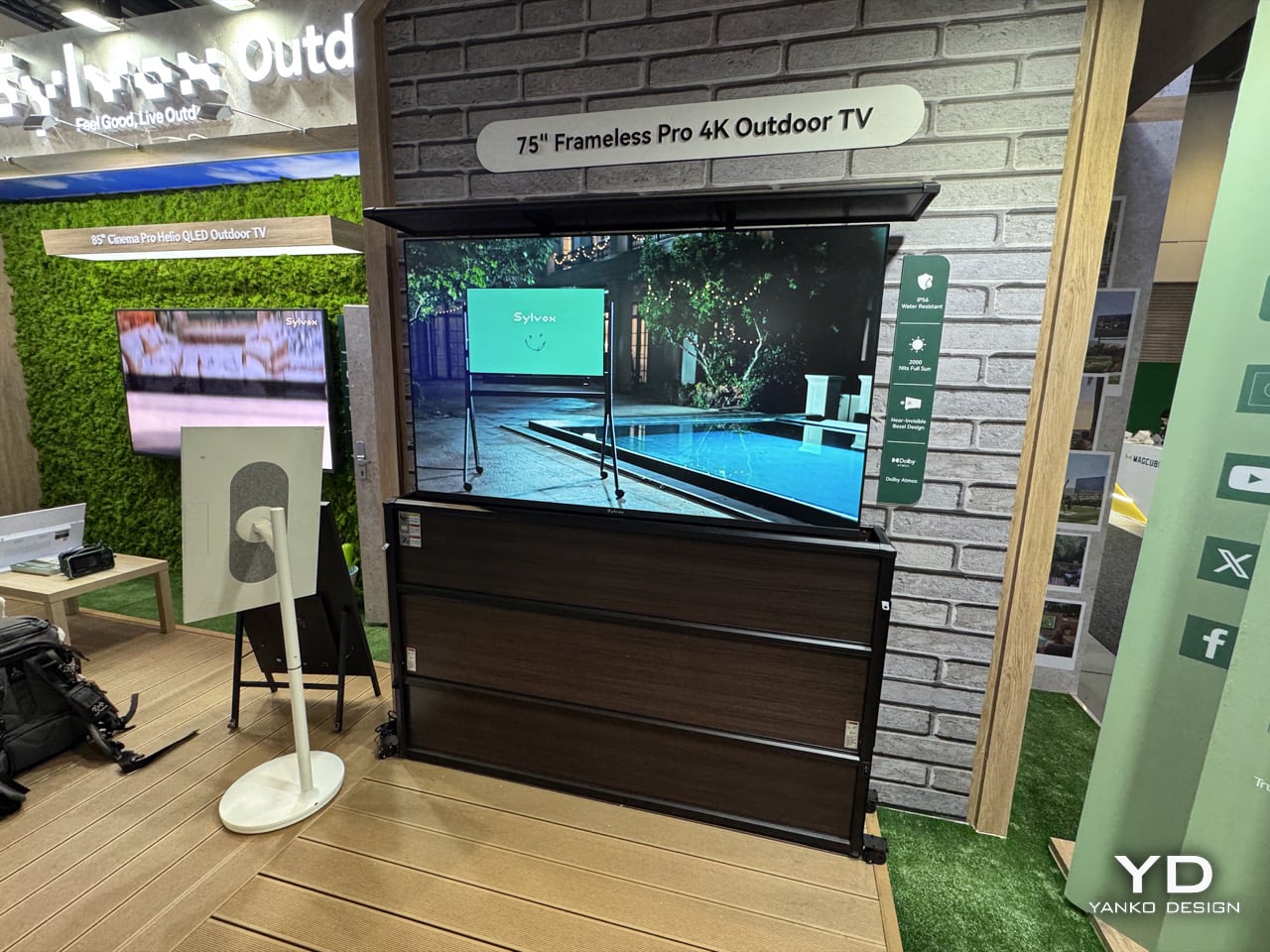
An IP56 rating means dust can’t meaningfully get in and water thrown at the case from any angle won’t get through, which matters since most indoor TVs would die from a humid August afternoon. Brightness works the same way, 2000 nits is a requirement more than a flex, since anything dimmer washes out in direct sun, and Sylvox’s own Cinema Pro, last year’s IFA Innovation Award winner, pushes past that to 3500 and 5000 nits. The bezel claim is separate from all this. The spec sheet lists a 90 percent thinner bezel and 95 percent screen to body ratio, both about the visible border around the glass, not the television’s overall size. The unit is still 3.41 inches deep, since that depth now holds the sealing and wiring a fat frame used to carry.
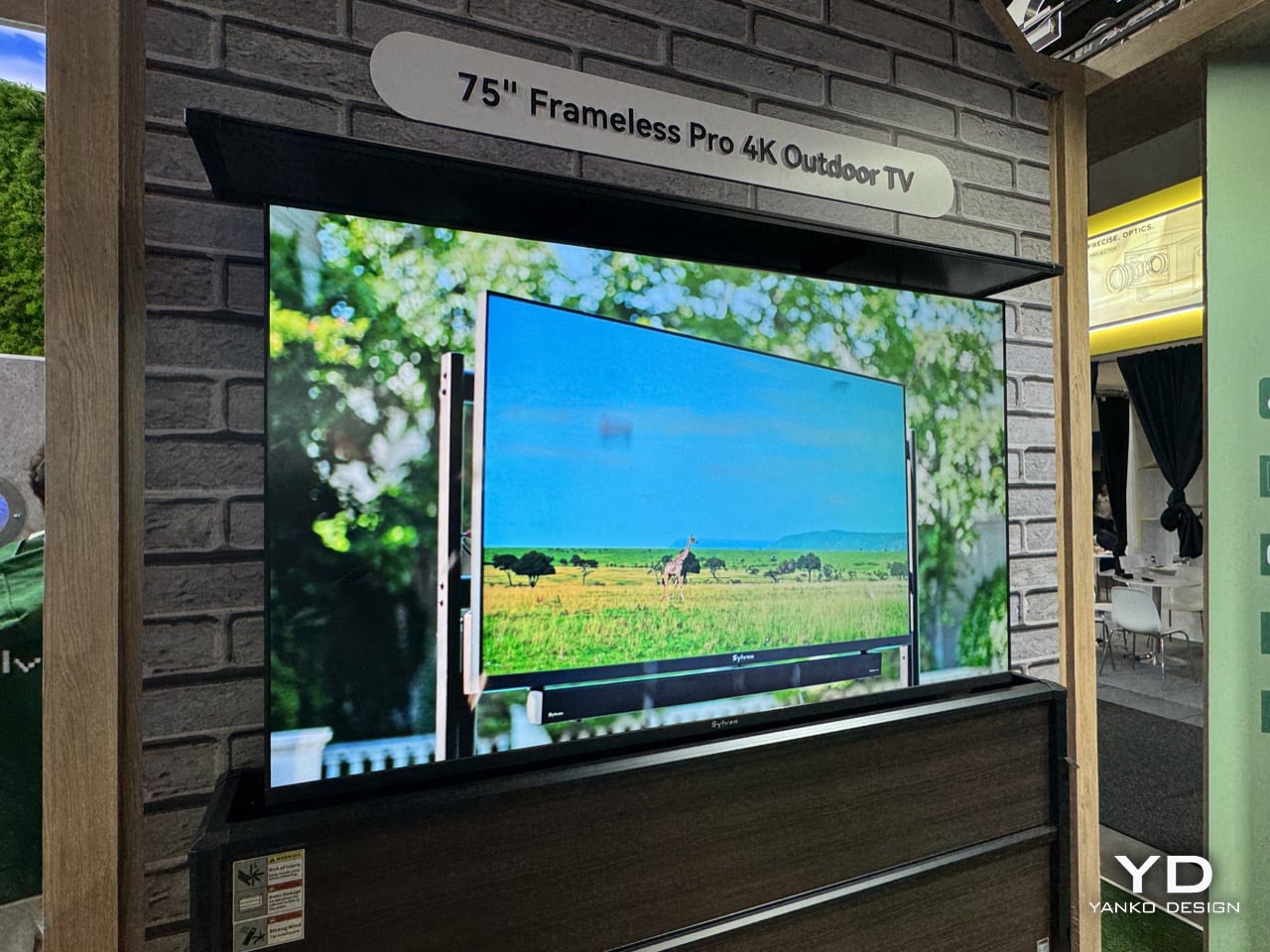
Sylvox wasn’t the only brand playing this game in Berlin. Tecno debuted its Next-Gen Bezelless Concept Phone a few halls over, claiming a true 0mm display border through internal stacking and an inverted rear panel. Hands on reports found a raised metal frame still sitting above the screen, catching thumbs on swipes. Same pattern as the TV, a border hidden rather than eliminated, moved into the structure instead of removed from it. Two products, same trick, same asterisk, which is a better story than either press release admits.
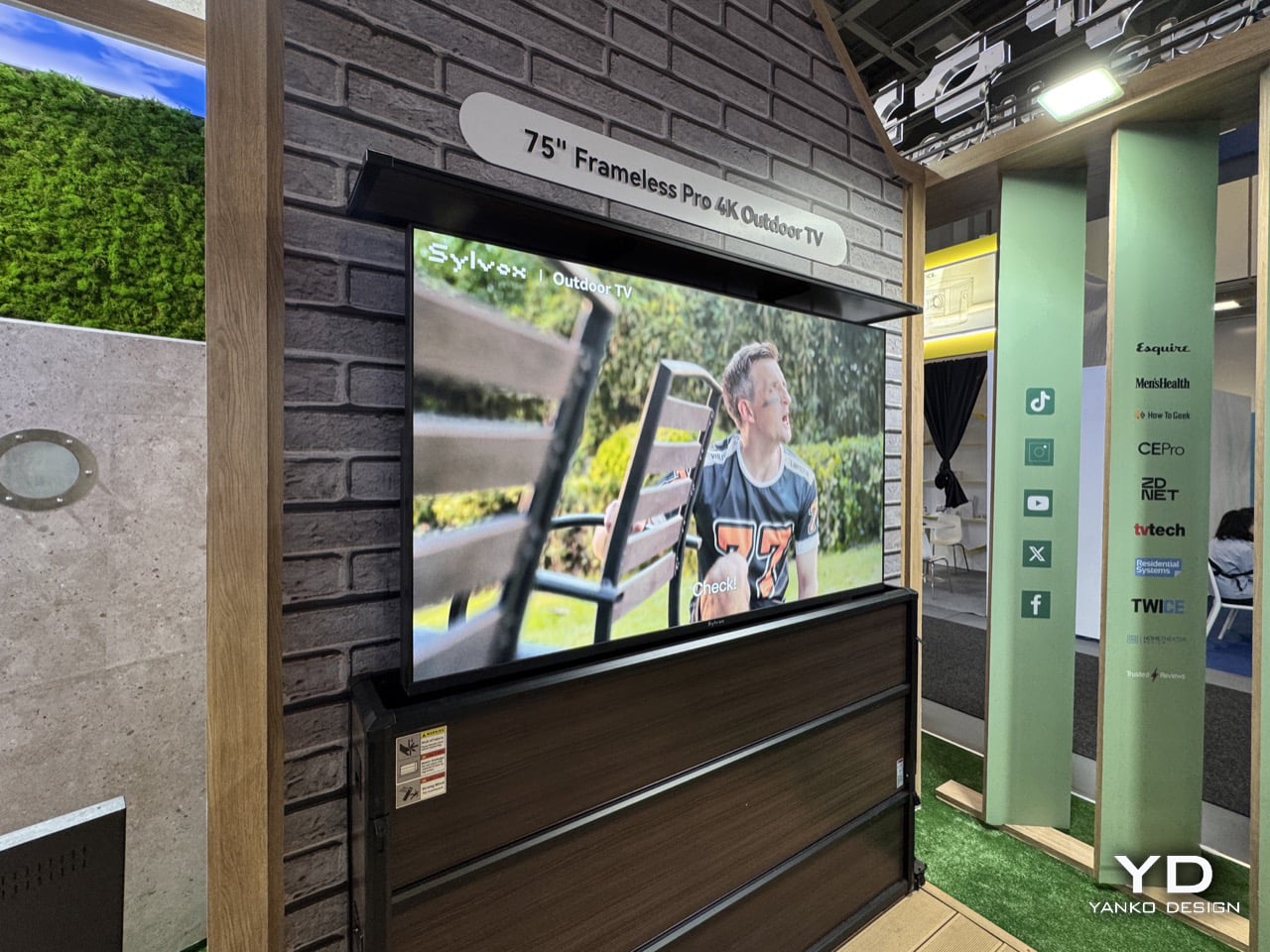
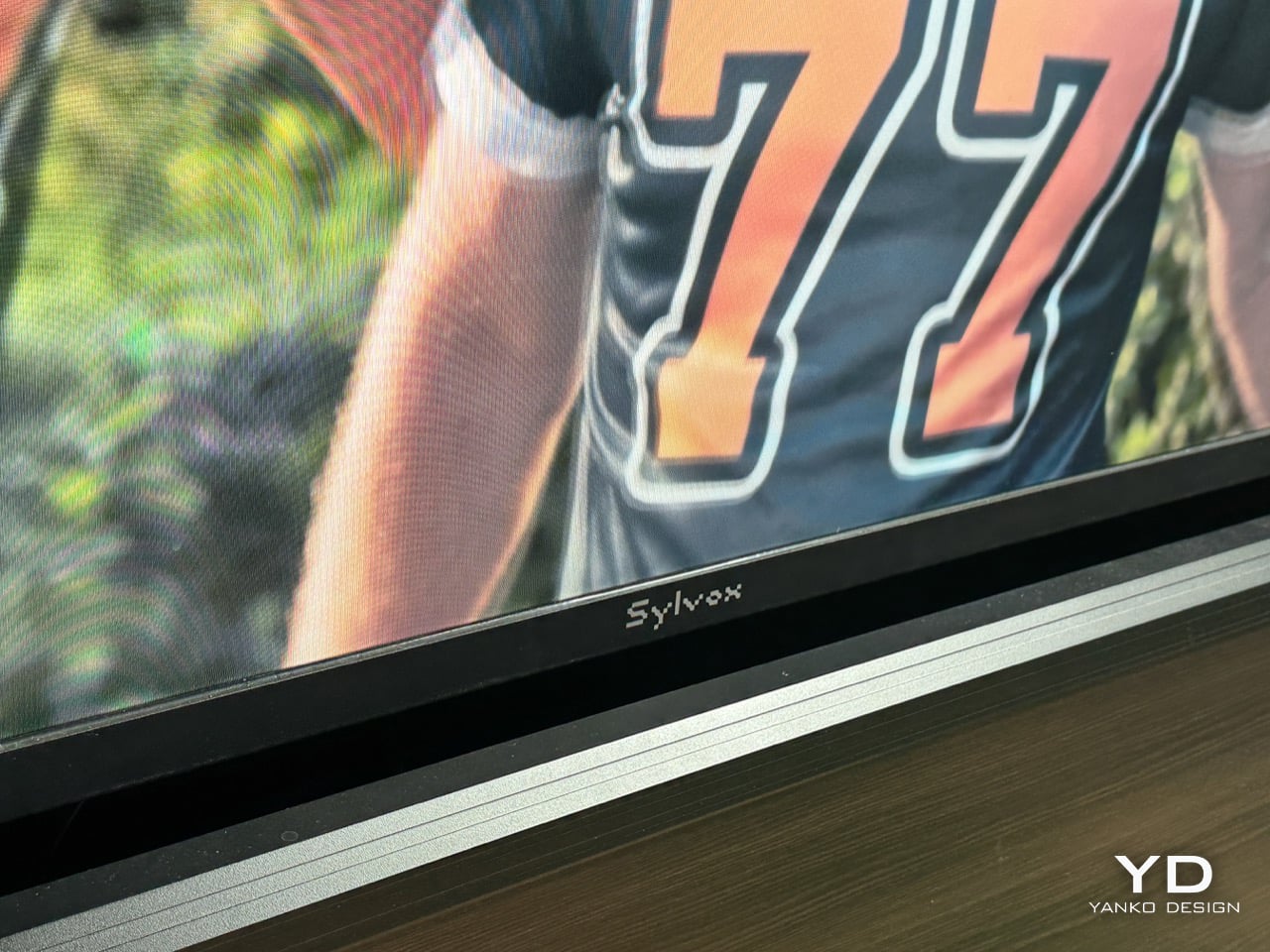
At $5,299, the 75 inch Frameless Pro looks steep next to a similarly sized living room TV, but that number needs context most spec roundups skip. Anyone shopping for a 75 inch outdoor television already owns a backyard big enough to justify one, and at that point $5,299 reads less like a barrier and more like a rounding error on the pool or pergola it’s about to sit next to. Against Samsung’s Terrace and SunBrite’s Veranda, both of which still treat a thick edge as part of the design language, the Frameless Pro is a serious entry, though it deserves a more honest word than frameless, since the frame didn’t disappear, it just stopped being the first thing you notice. Sylvox’s booth also had a hand crank emergency TV in development nearby, likely the stranger story out of Berlin. For now, the Frameless Pro is a good looking outdoor TV wearing a name that oversells its own trick, aimed at people for whom that oversell was never going to matter.
The post Sylvox Made A Bezel-less 75″ Outdoor TV That Plays 4K Movies In Rain, Sun, and Snow: Hands-on at IFA 2026 first appeared on Yanko Design.
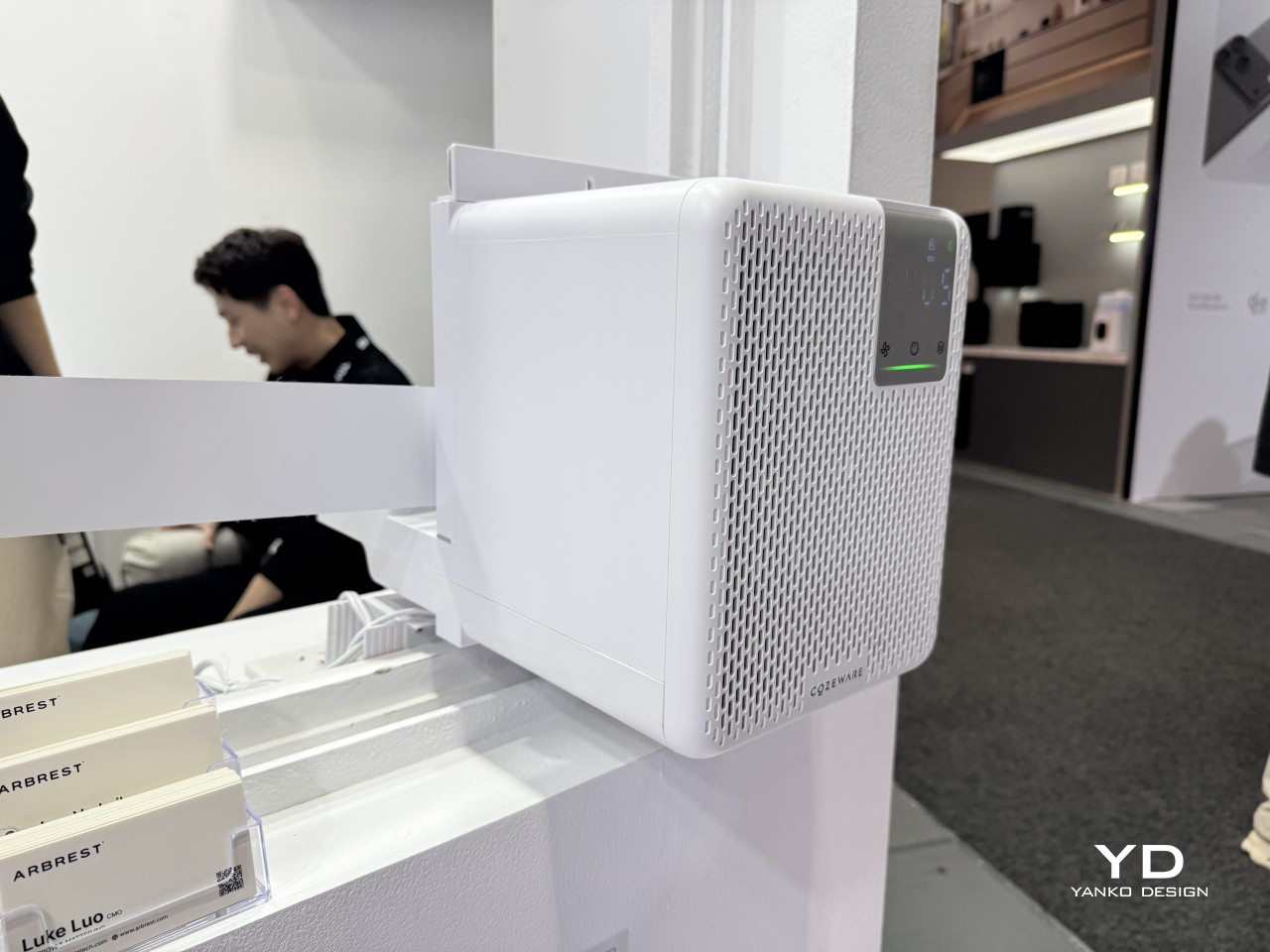
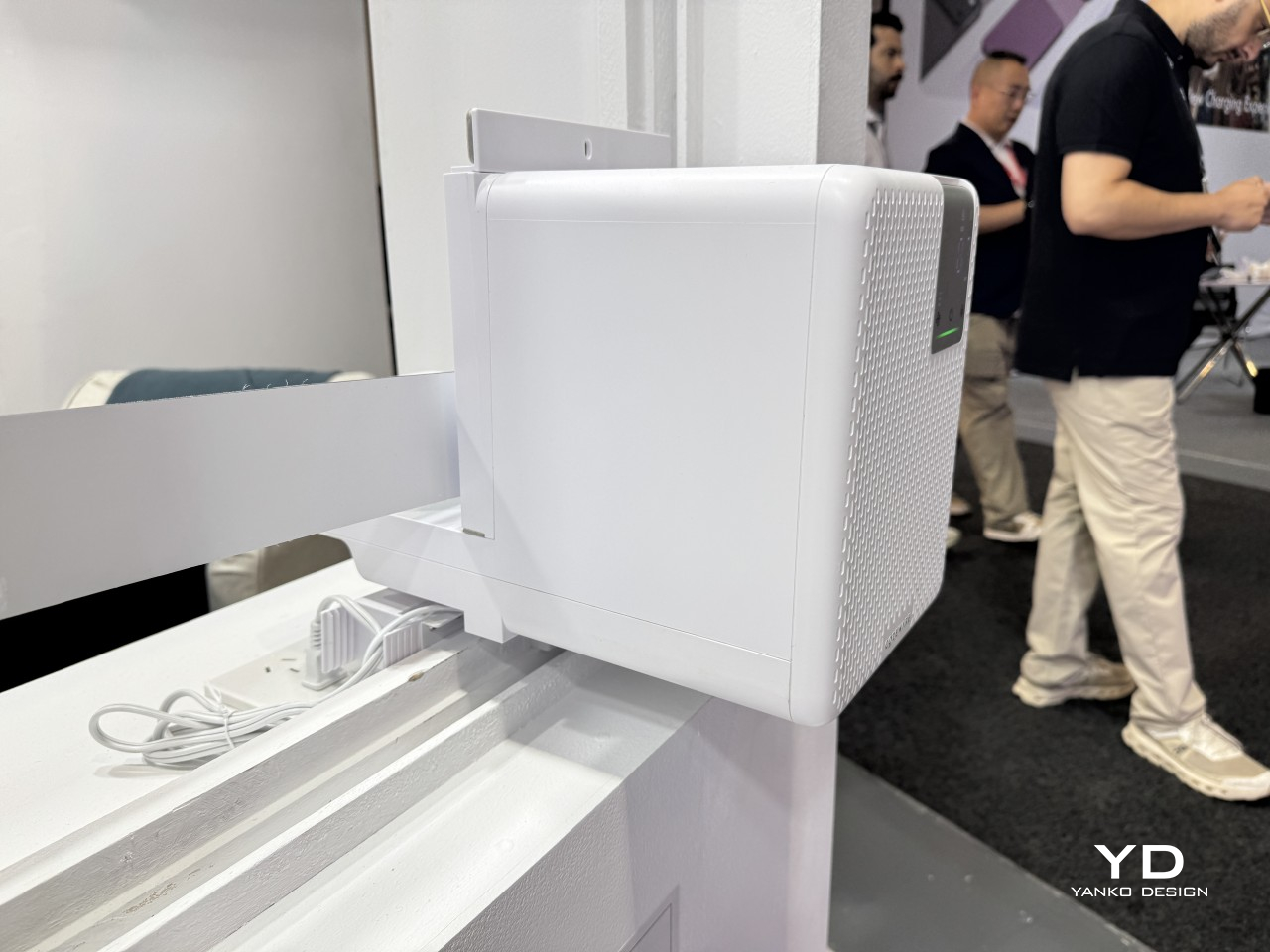
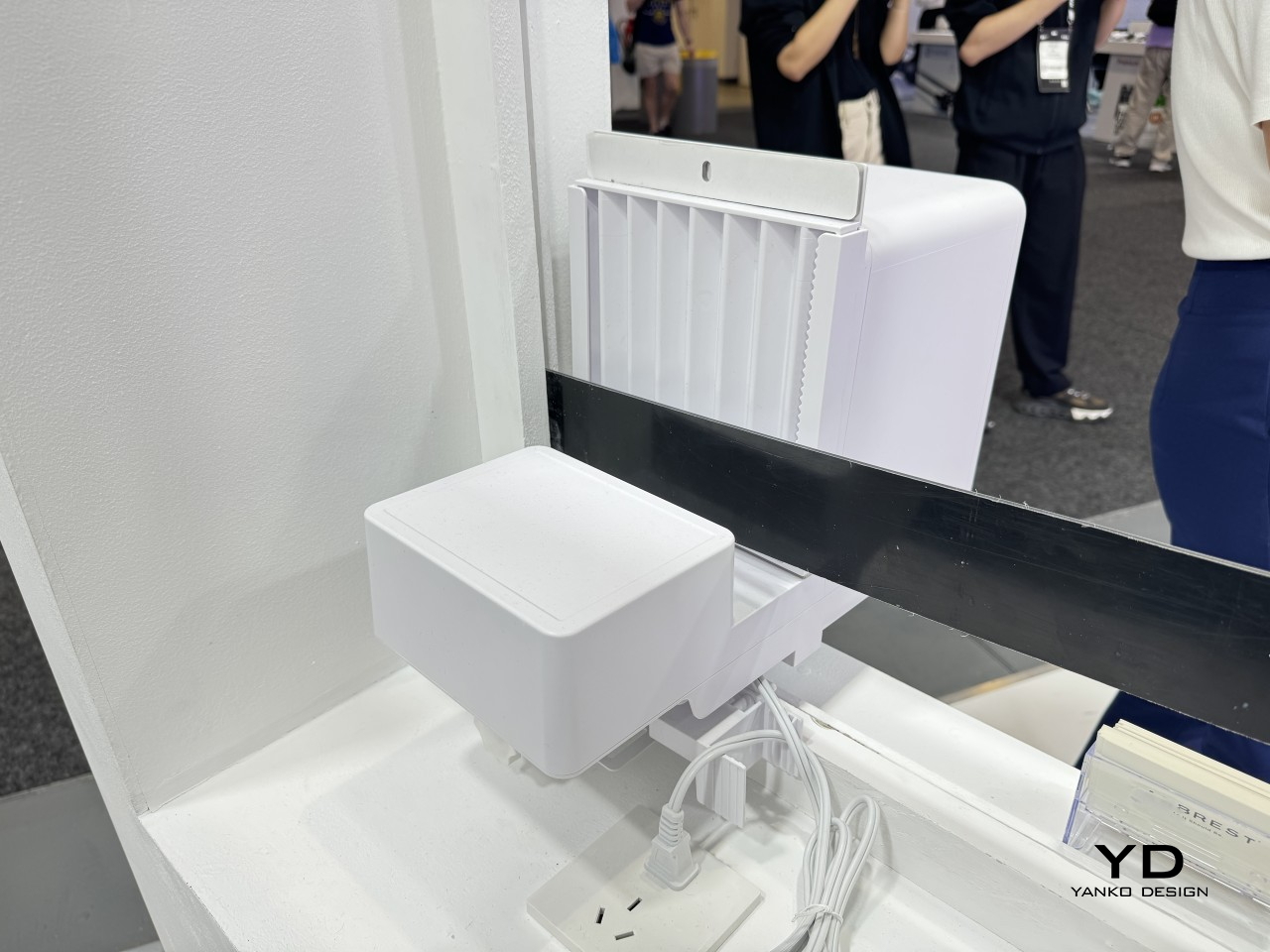
Windows have always demanded a compromise. Crack one open and fresh air arrives along with street noise, pollen, dust, and whatever temperature swing shows up that day. Keep it shut and stale air just recycles in place. COZEWARE FreshFlow, a window-mounted fresh air system, skips that trade-off by pulling filtered outdoor air straight into the room, no wall drilling required. The Pro version adds indoor purification on top.
A regular air purifier only recirculates what’s already inside a room; it never actually swaps stale air for new. Whole-home ventilation can pull that off, but usually means wall openings, ductwork, and a contractor on speed dial, ruling it out for renters, apartments, and anyone who just wants one room to feel different. FreshFlow sits in that gap: filtered exchange without the renovation.
Designer: COZEWARE
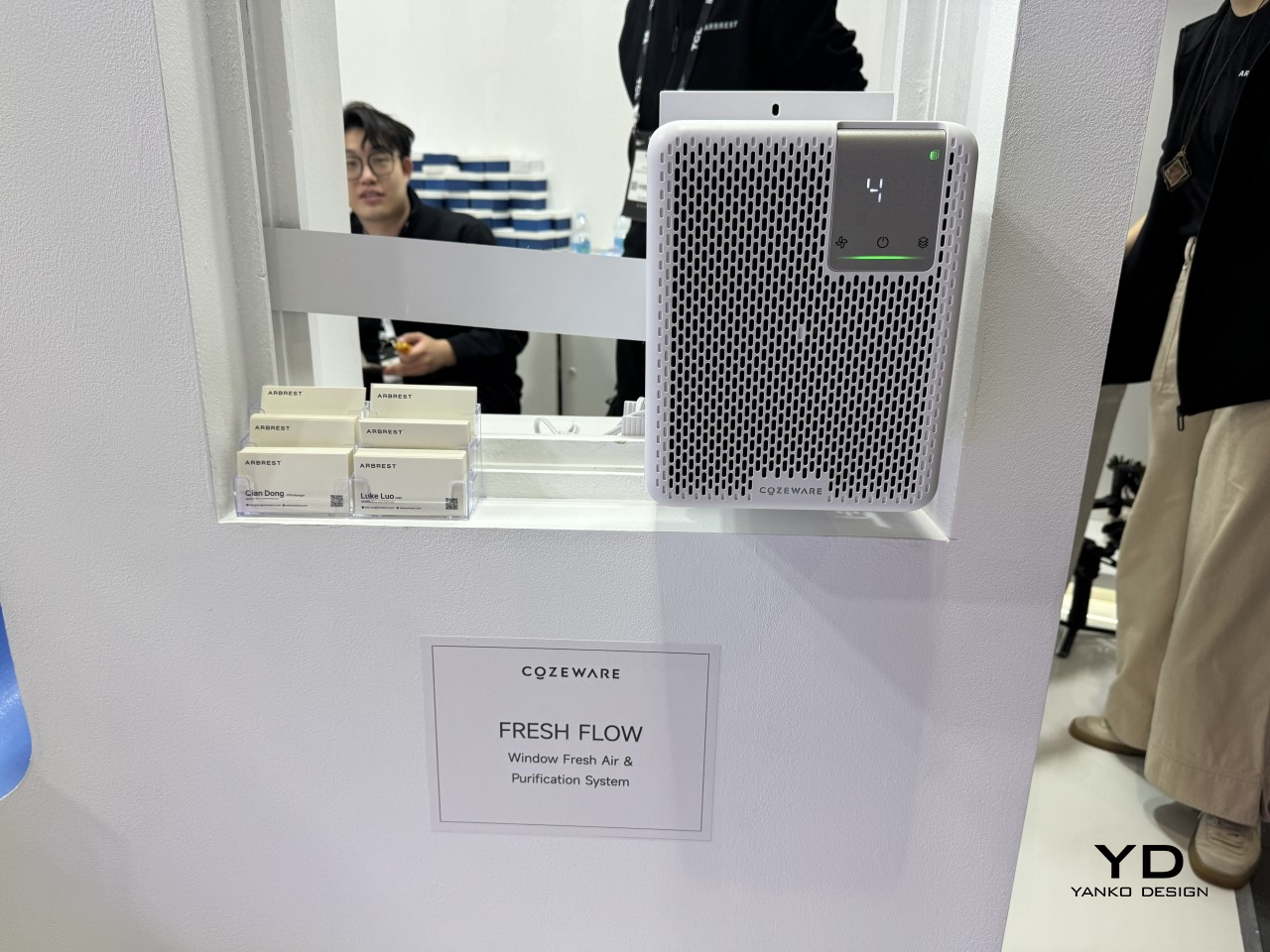
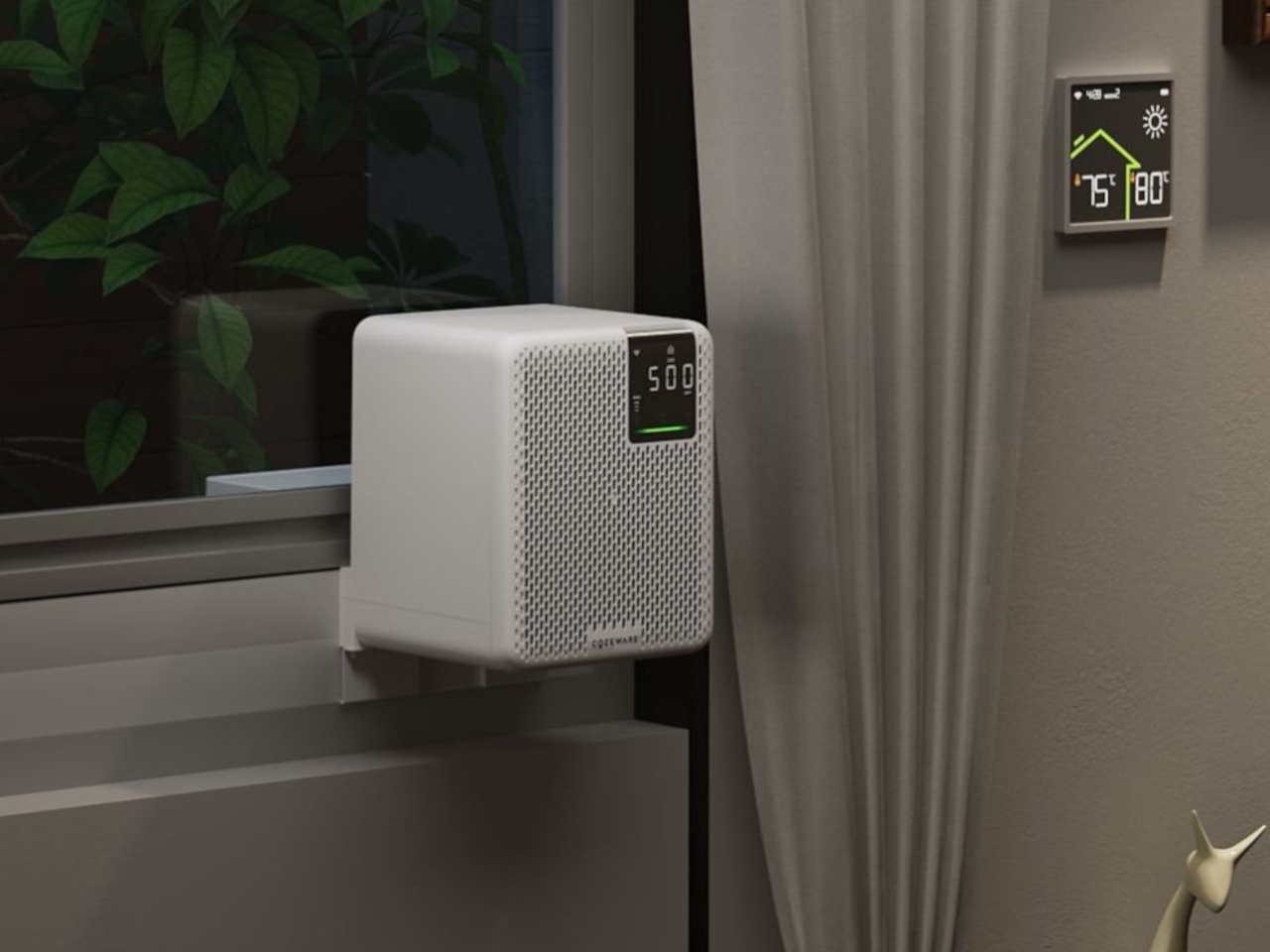
That’s the idea behind FreshFlow: no more picking between letting air in or keeping it out. It becomes a removable, filtered, and adjustable air source for a single room, mounted through COZEWARE’s WindowFit bracket system without drilling into walls or running permanent ducts. Take it down when you move, or skip it entirely if the window isn’t compatible, no commitment either way.
Picture a bedroom in an older building where the window faces a busy street. Opening it for airflow means letting in traffic noise and bugs along with a temperature drop right before bed. FreshFlow handles that trade quietly, running as low as 26 decibels on its lowest fan speed, with a Sleep mode on the Pro version keeping things low-key through the night.
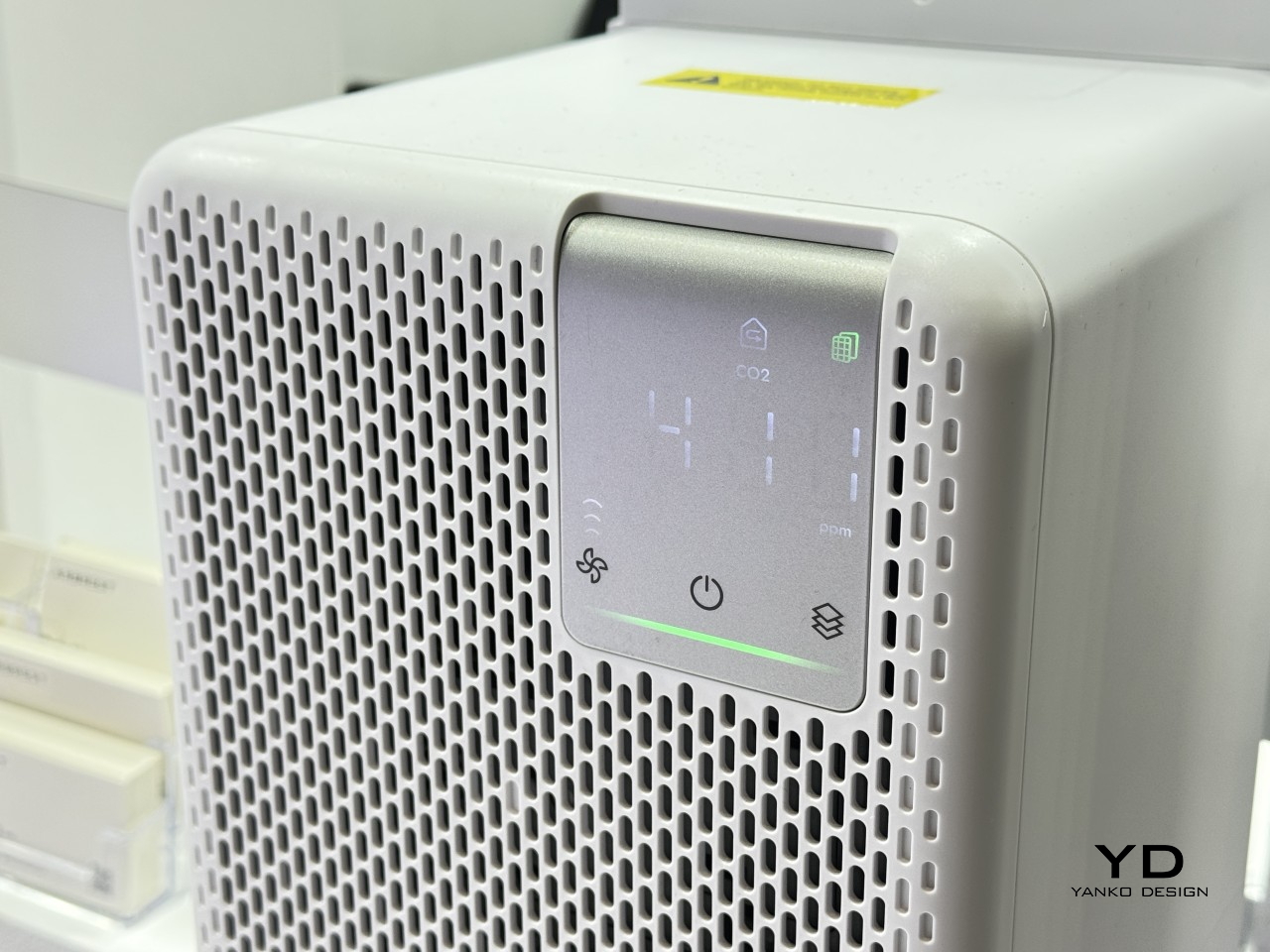
A different kind of stuffiness builds in a home office by midmorning, the kind that sends you reaching for coffee instead of realizing CO2 has crept up in the room. FreshFlow’s built-in sensor reads PM2.5, TVOC, CO2, and temperature in real time, showing the numbers on the display along with a color indicator, so air quality stops being something you only guess at.
Pollen counts spike, or a neighbor grills something that smells like a chimney fire, and pulling in outdoor air suddenly isn’t the move. FreshFlow Pro switches from fresh air intake to indoor recirculation purification without touching the mounting bracket, cleaning the air already inside the room instead. Airflow on the fresh air path reaches up to 47.1 CFM, a real exchange rather than a token breeze.
Filtering that much air means the filter needs attention eventually, and COZEWARE made that part painless. The replaceable AirMatch filter combines HEPA-grade filtration with activated carbon; swapping it out just means popping open the front cover, and the unit shuts off automatically the moment you do. Under typical use, a filter lasts around nine months before it needs replacing, depending on local air conditions.
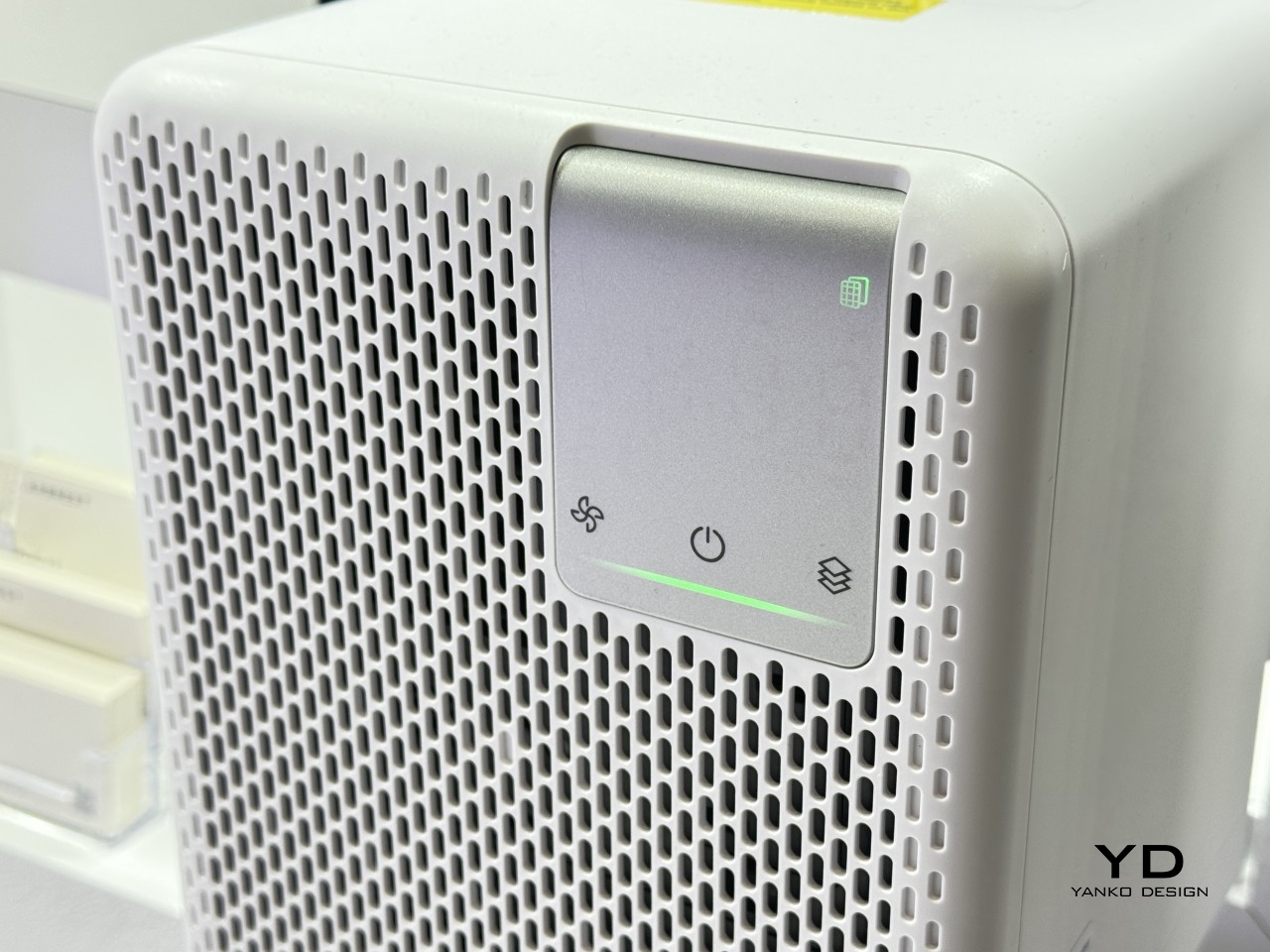
Visually, FreshFlow avoids looking like ventilation hardware bolted onto a window. The body is a compact, rounded rectangle measuring 15.67 by 7.87 by 9.76 inches, with a perforated grille up front and a small display tucked into the corner. COZEWARE built the shell from engineering-grade plastic to keep it light, while metal supports carry the load, letting the visible parts stay soft-edged instead of clinical.
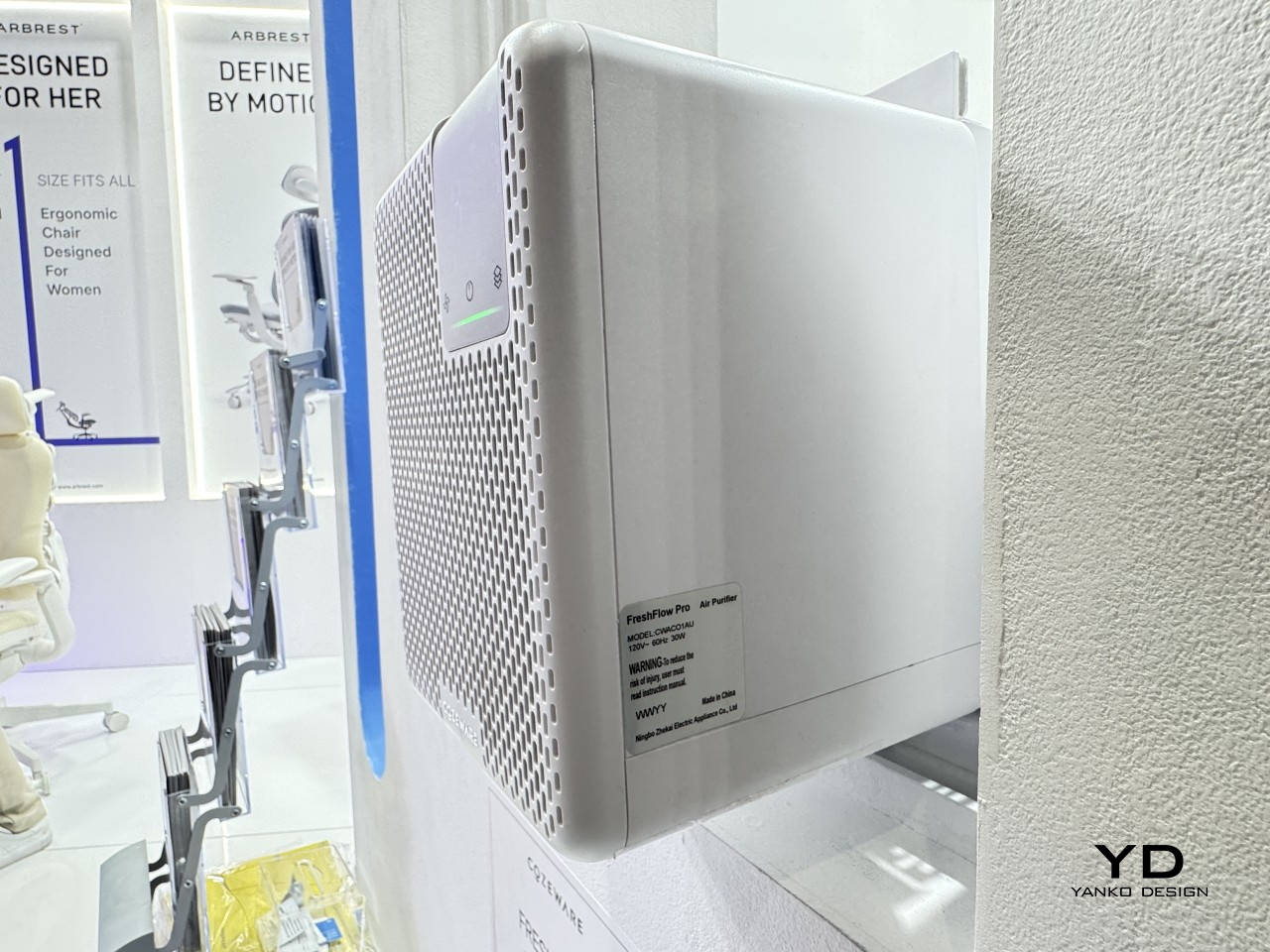
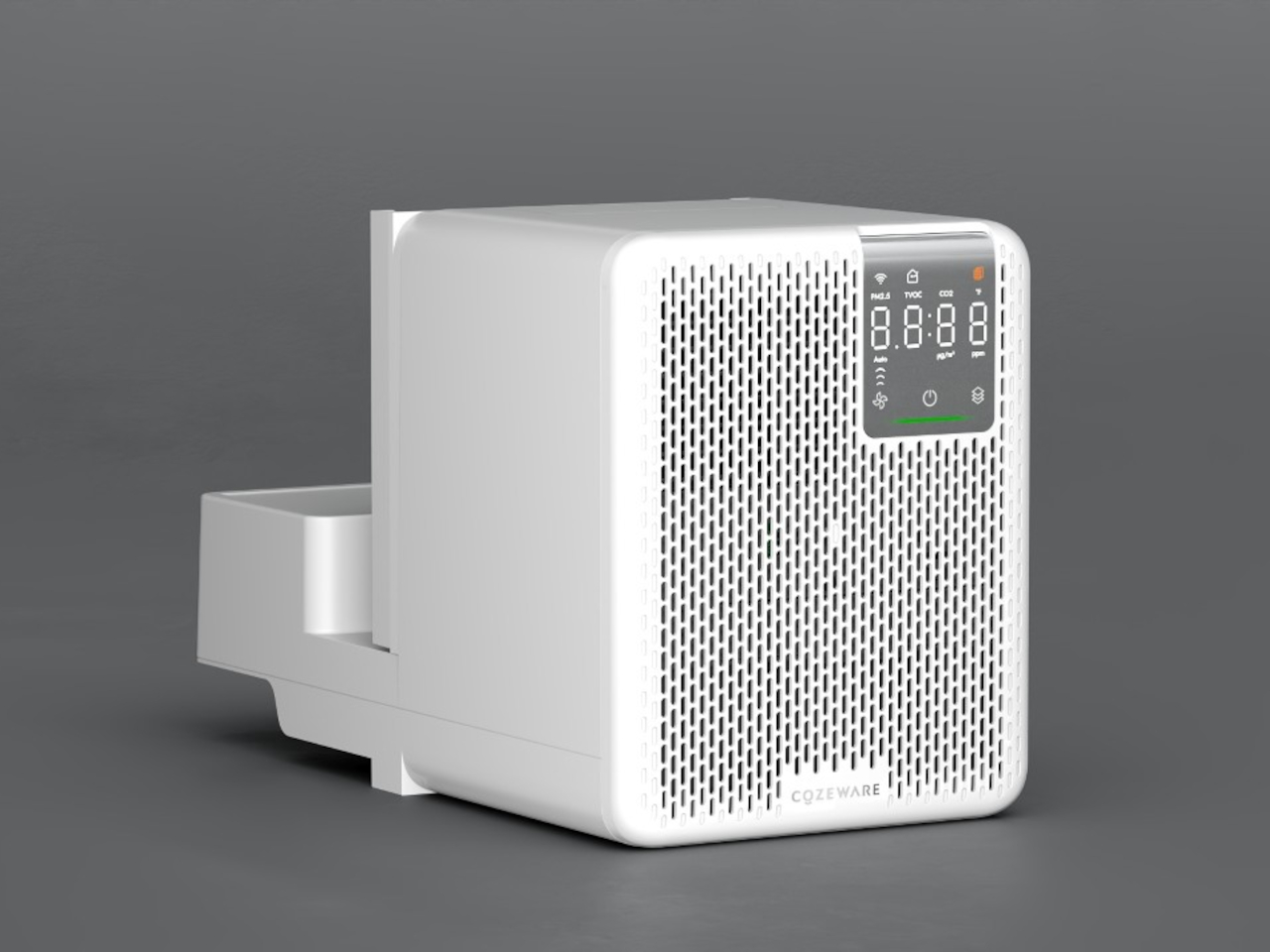
Day-to-day control stays simple. FreshFlow works with Alexa, Google Home, and Apple Home, plus an app and onboard touch controls, and the Pro model adds a dedicated remote for anyone who doesn’t want to reach for their phone every time. Three fan speeds keep things flexible on both models, while Pro layers on Auto and Timer modes alongside Sleep. An auto screen-off setting keeps the display from glowing overnight.
FreshFlow comes in two versions: Core with the filtered fresh air function alone, and Pro with added indoor purification, switching modes, and a remote control. Both share the same footprint and mounting system, so the choice mostly comes down to how much flexibility a room needs. Either way, the same idea holds: a window that used to be one thing or another now does both, quietly.
The post COZEWARE Finally Solved the One Thing Every Open Window Gets Wrong first appeared on Yanko Design.

Hosting has become the thing to do again, but nobody said it got any easier. AEG seems to have noticed that gap. At IFA 2026 in Berlin, its Art of Hosting platform argues that appliances shouldn’t work alone. Kitchen, laundry, and cleaning tech should move as one system, clearing friction so the host stays at the table instead of disappearing into the kitchen.
The numbers back up the itch. AEG’s own research found that more than half of Europeans (51%) believe the way people host has changed in recent years, with 36% saying it has become more casual and 27% more personal and individual. Yet 7 in 10 Europeans value hosts who do things their own way, yet 59% still feel pressure to make it “perfect”. That tension is the brief AEG built its IFA showcase around.
Designer: AEG
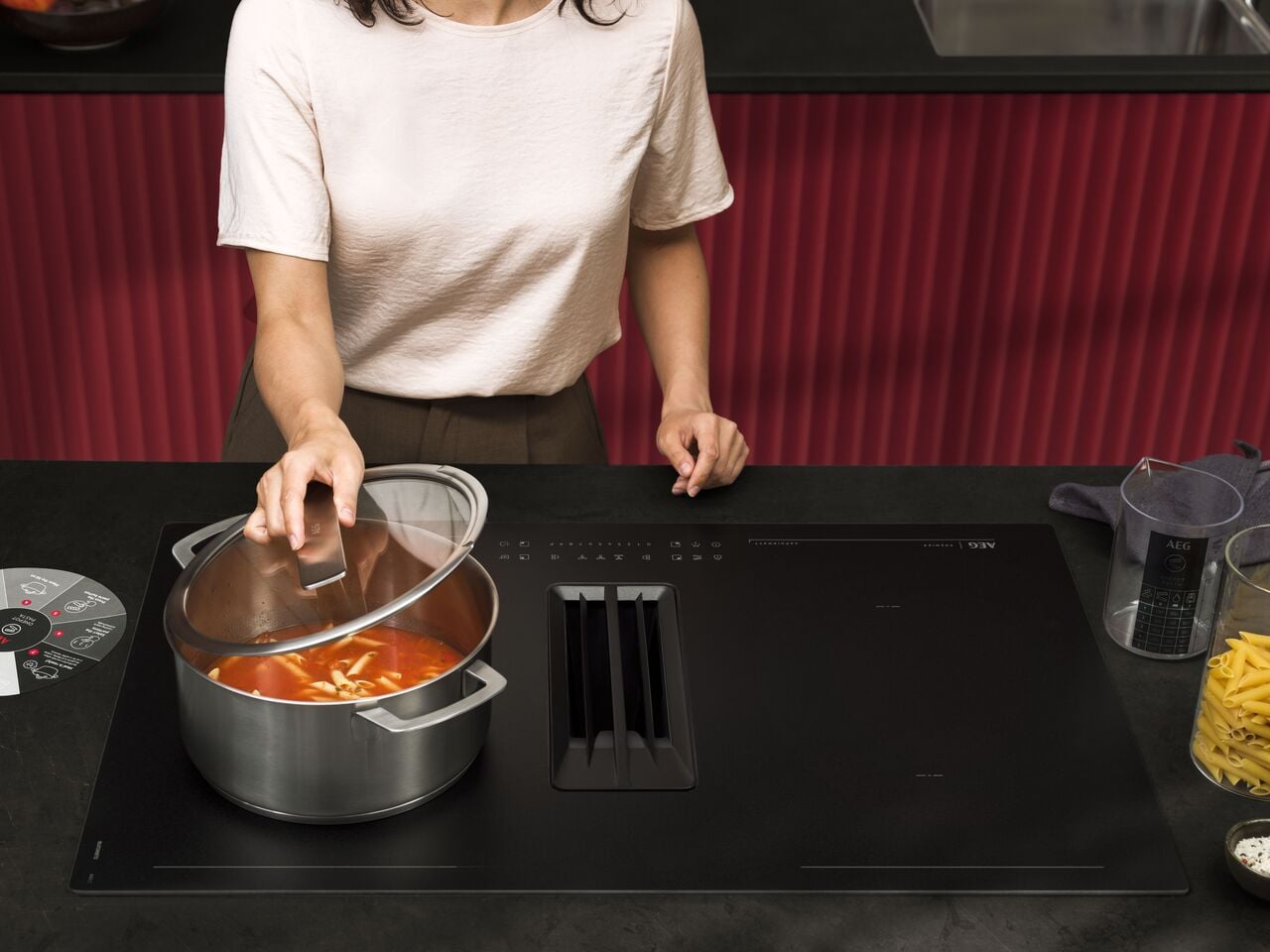
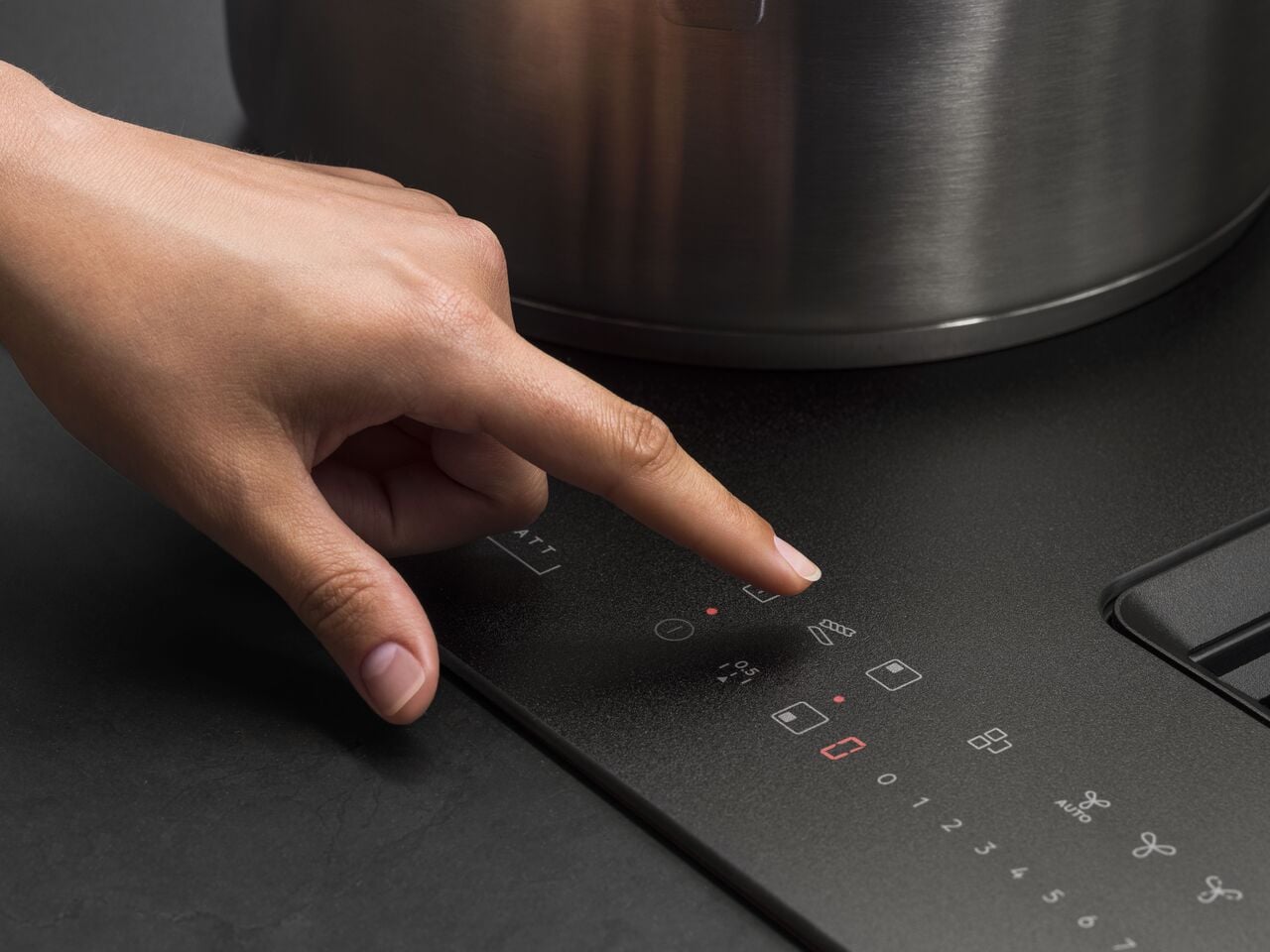
AEG 7000 OnePot Pasta Hob
Rather than parking a wall of appliances on a trade show floor, AEG is running a series of live activations where hosts from disciplines across food, art, fashion and interior design put their own stamp on different occasions. The point isn’t the performance. It’s what sits quietly behind it: ovens, hobs, dishwashers, and washing machines doing the unglamorous work so the food, the table, and the company get all the attention.
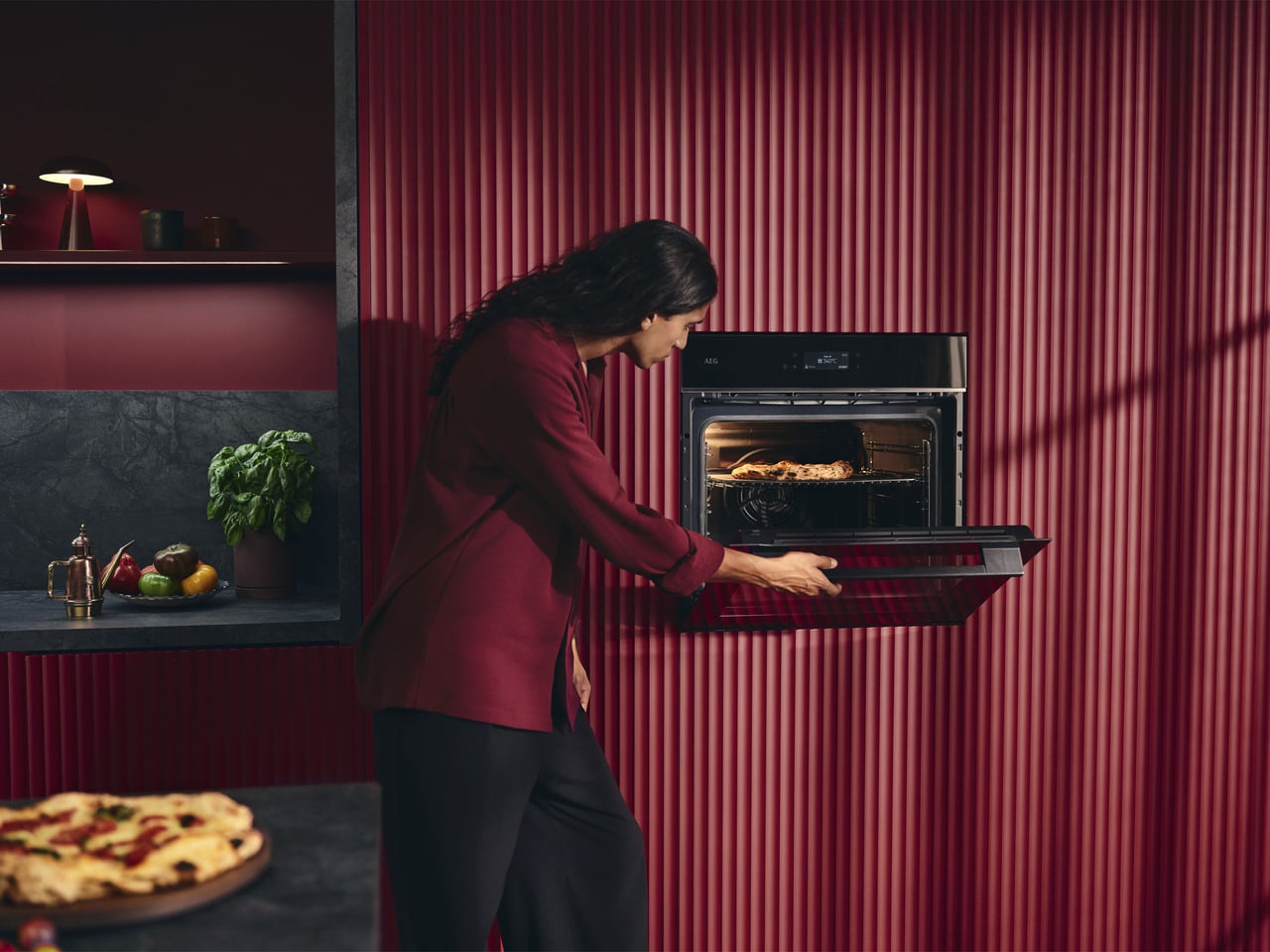
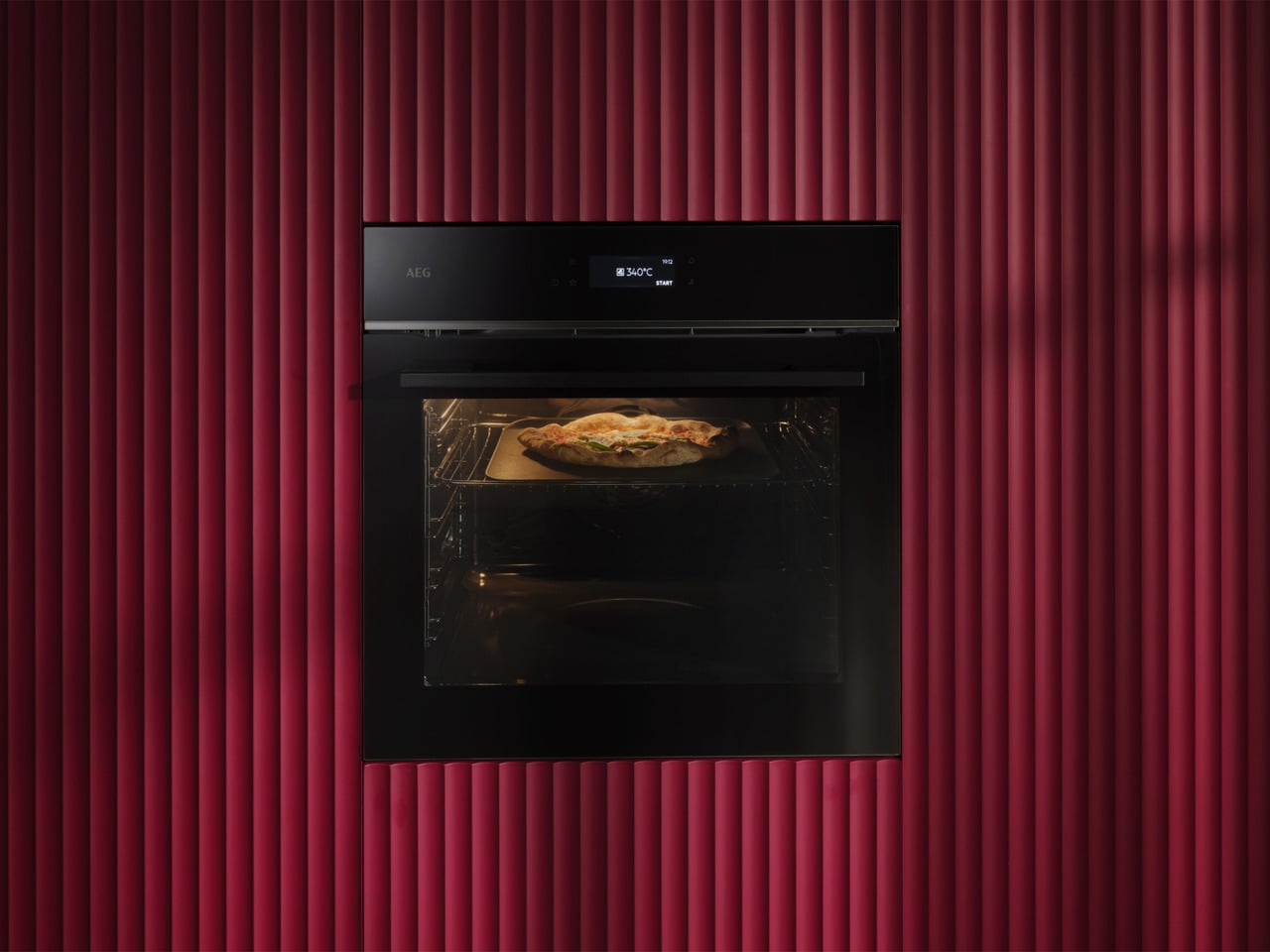
AEG 7000 Oven with PizzaExpert
Take dinner prep. The new AEG 7000 series OnePot Pasta hob answers a problem nobody quite admits to: pasta night stresses people out more than it should. Select the number of portions, add the ingredients to the accompanying pot, close the lid, and in 15 minutes, pasta al dente with a naturally creamy sauce. No constant watching, no guesswork, the hob does the hard work. Its SaphirMatt surface resists scratches too.
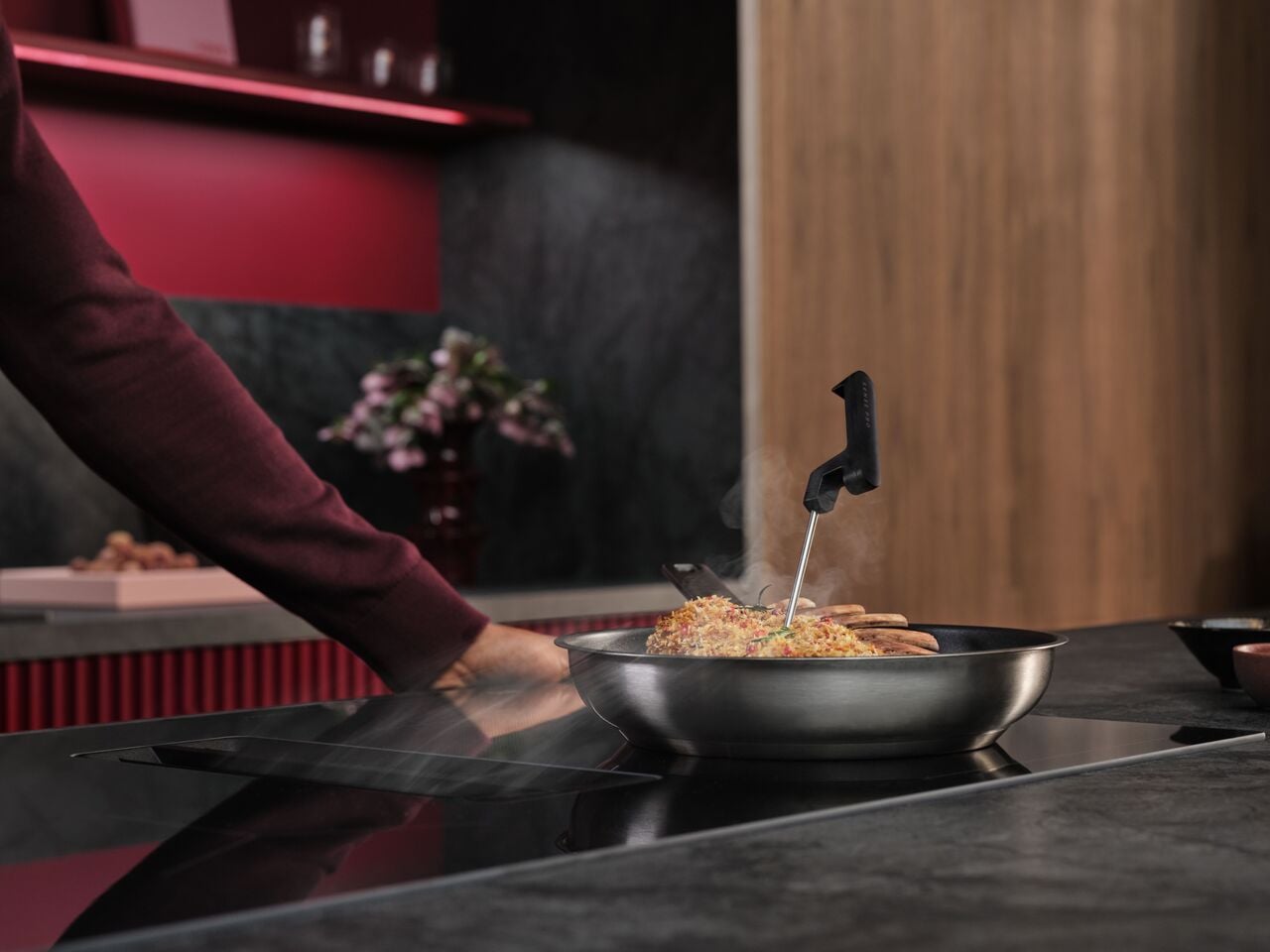
AEG 9000 SensePro
For the more ambitious host, the PizzaExpert oven, the only domestic oven validated by Scuola Italiana Pizzaioli to deliver restaurant-quality pizza in just 2 minutes and 30 seconds, turns out pizza faster than most delivery apps confirm an order. Elsewhere, SenseBoil technology automatically detects when water is approaching boiling point and reduces power to maintain a simmer, while the 9000 SensePro uses a wireless food sensor that measures the exact core temperature of food to within a single degree.
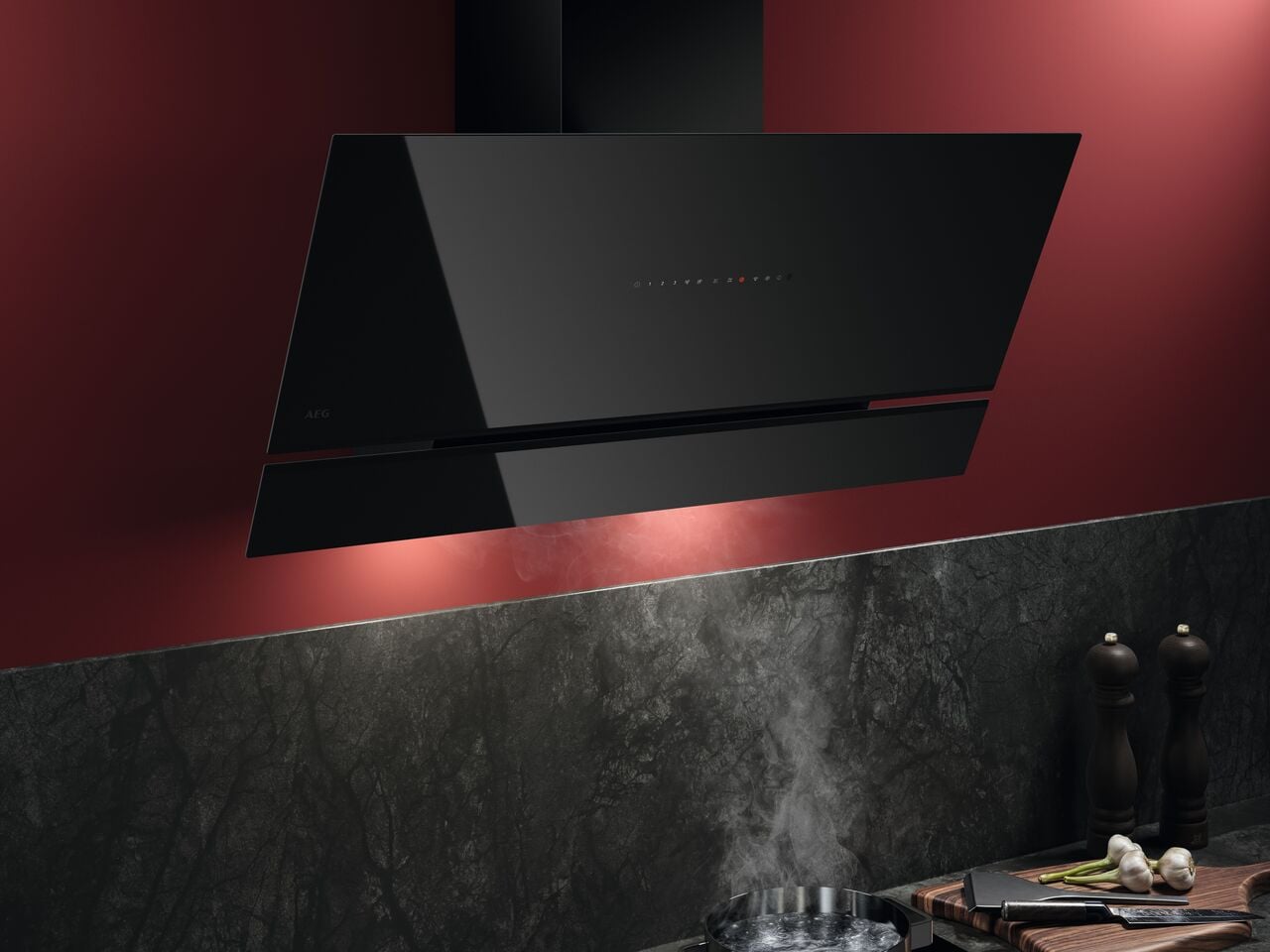
AEG 9000 Series Range Hood
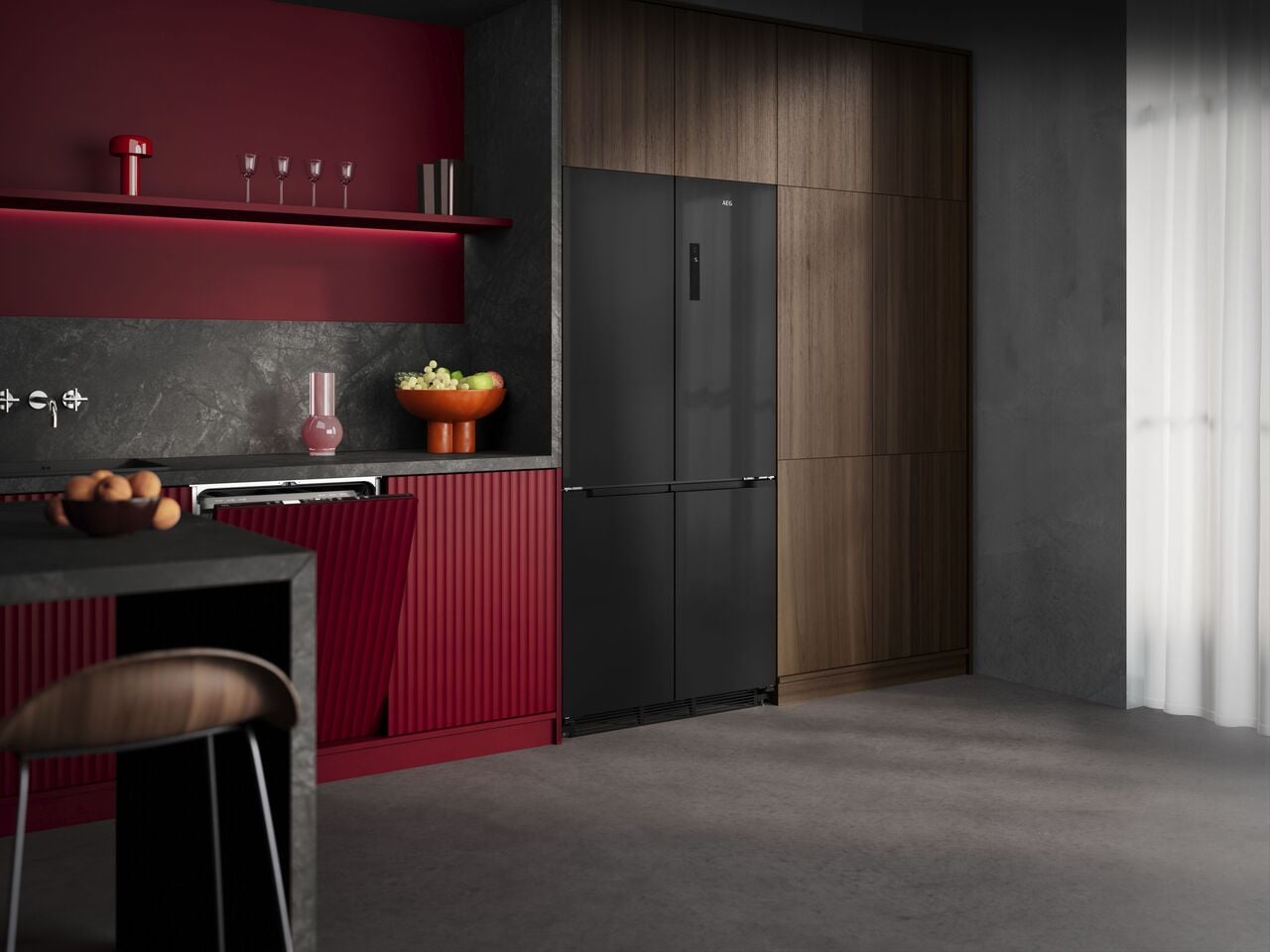
AEG Refrigerator with AI CoolAssist
The kitchen keeps adjusting itself even when nobody’s watching. The 9000 AutoSense Hood uses advanced sensor technology to adapt automatically to the kitchen environment, detecting steam, grease, and odours in real time, while the AI CoolAssist fridge learns usage patterns, saving up to 15% energy. AEG is previewing a new digital sommelier, with roll-out expected in 2027, bringing an advanced level of wine and food pairing into the home straight from its app.
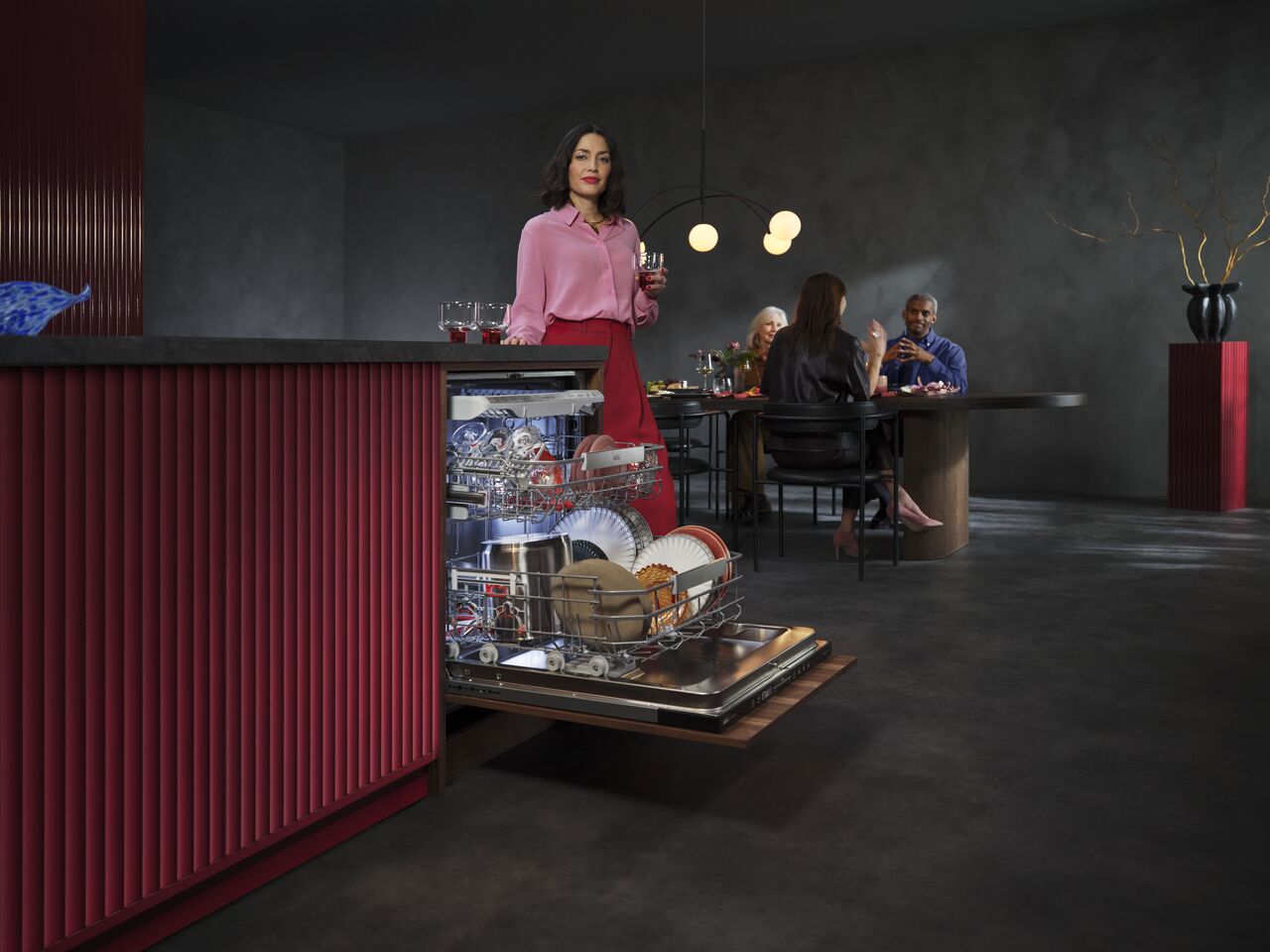
Then there’s the part of hosting nobody romanticizes: cleanup. More than 8 in 10 European dishwasher owners don’t trust their dishwasher to do the job on its own, which is why people still scrub the lasagna dish before it goes in. AEG built the Favorit 8000 and 9000 series around that anxiety. The SatelliteClean Pro delivers 100% removal of stubborn baked-on lasagna residues in a standard 90-minute cycle.

AEG Favorit 9000 Dishwasher
The rest of the range solves smaller but equally familiar headaches. The EasyFlex Pro basket system features fully foldable rows that reconfigure the interior to fit even bulky, hard-to-fit items, while the 4in1 FlexHolder holds stemware and Weiss beer glasses securely without contact or collision. ZoneClean delivers two cleaning intensities in a single cycle: maximum pressure for pots and pans below, reduced pressure for delicates above. The 9000 series also operates at as little as 35dB, disappearing into dinner conversation.
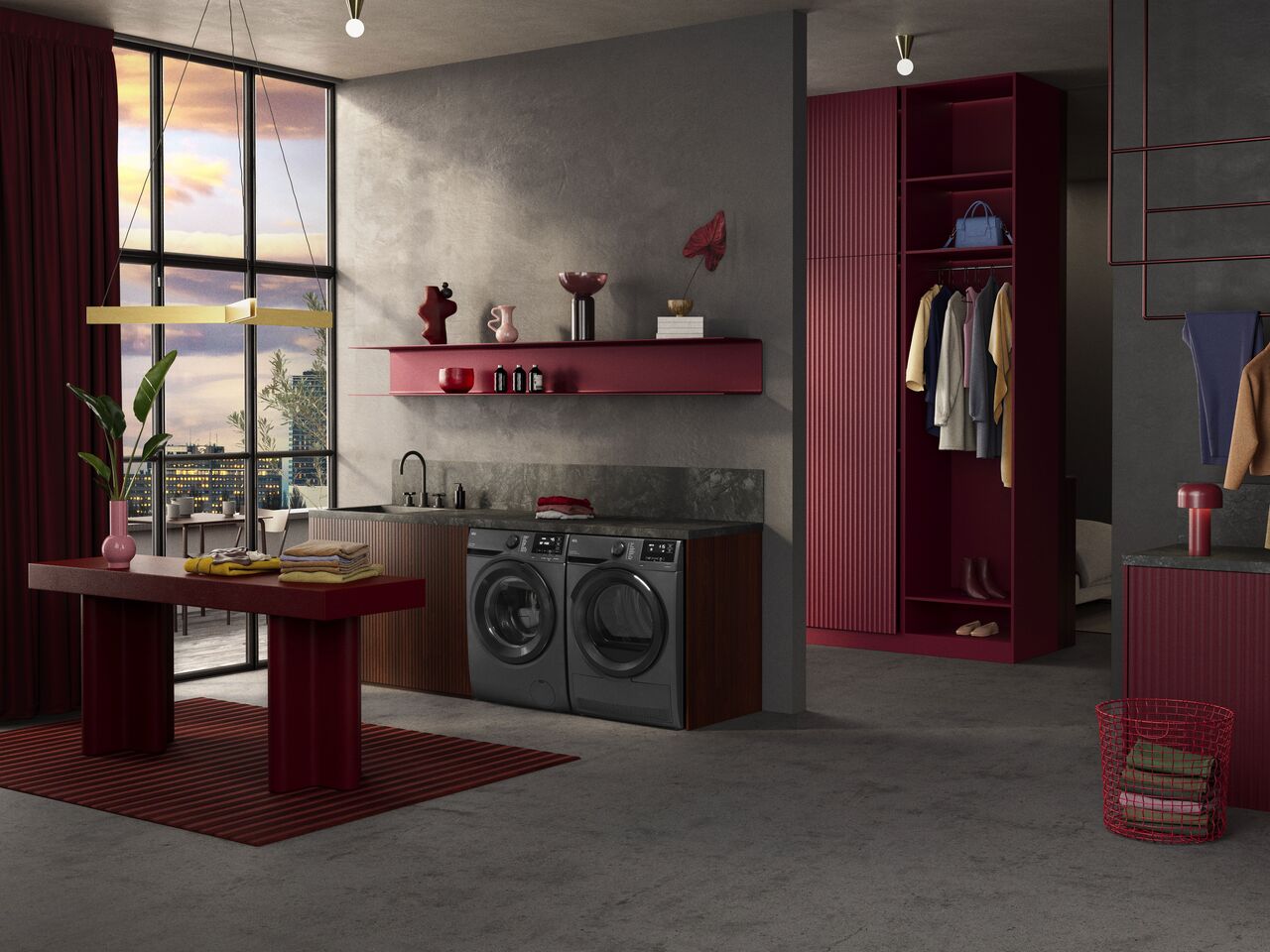
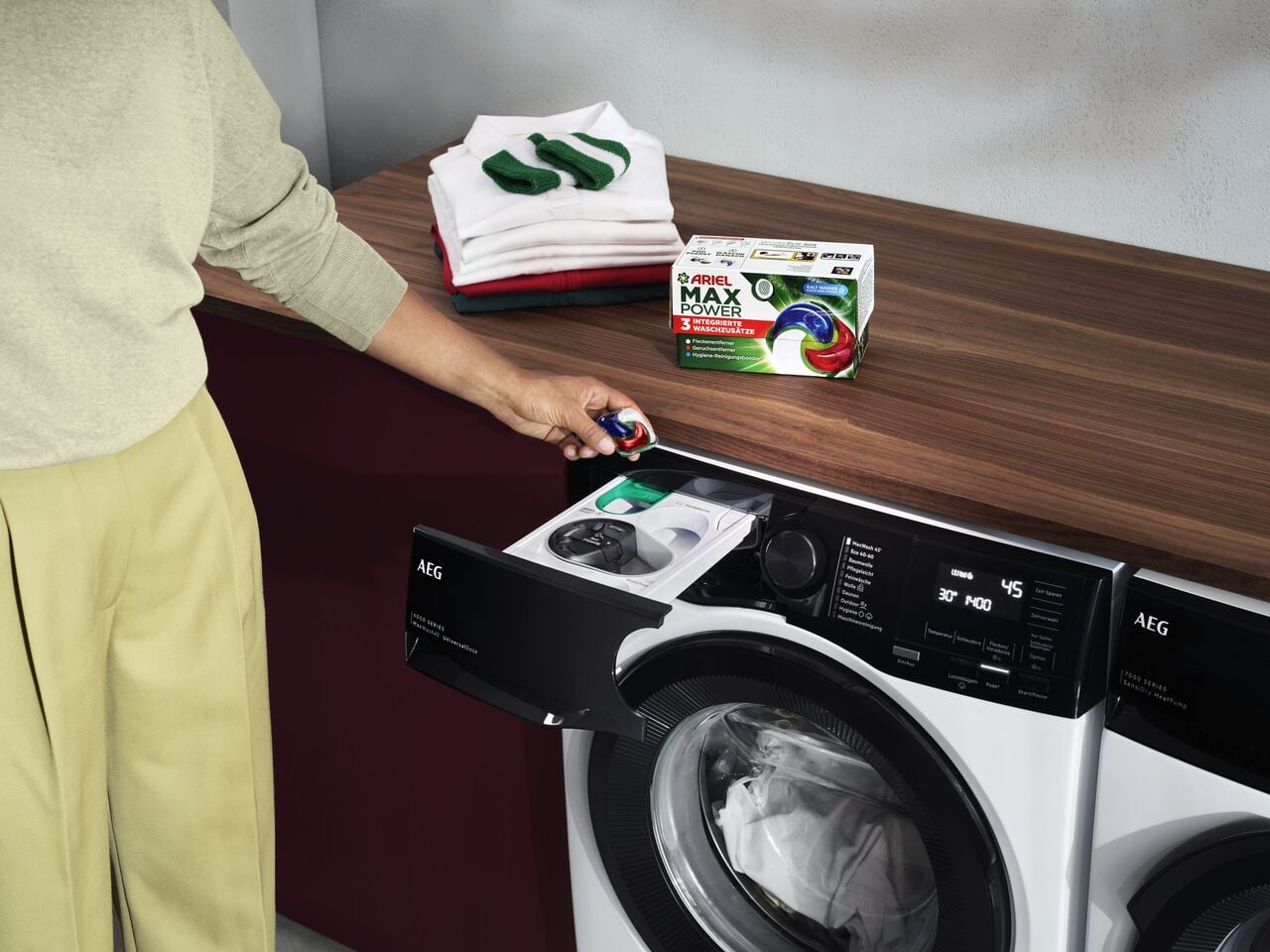
Hosting doesn’t stop once the plates are cleared. Five years of Truth About Laundry research, conducted across 14 European countries, tells a consistent story: Europeans care deeply about their clothes and want to extend the life of their garments, yet confidence in the washing machine remains low. AEG’s Woolmark-certified wool cycles use specially designed drum movements, externally verified to be as gentle on wool fibers as hand washing, so the good tablecloth doesn’t stay folded away.

AEG ErgoMini
Speed matters just as much as gentleness when a party’s involved. MaxWash 45′ washes a full load at 30°C (86°F) in just 45 minutes while AI WashAssist automatically adjusts cycle time, water, and energy for smaller loads, reducing them by up to 30%. New this year, IntelliQuick on the AEG 9000 series washer dryer gives consumers the flexibility to wash, dry, or wash and dry in one seamless cycle, adapting automatically: 1kg in 2 hours, 3kg in 3 hours, or up to 5kg in 4 hours.
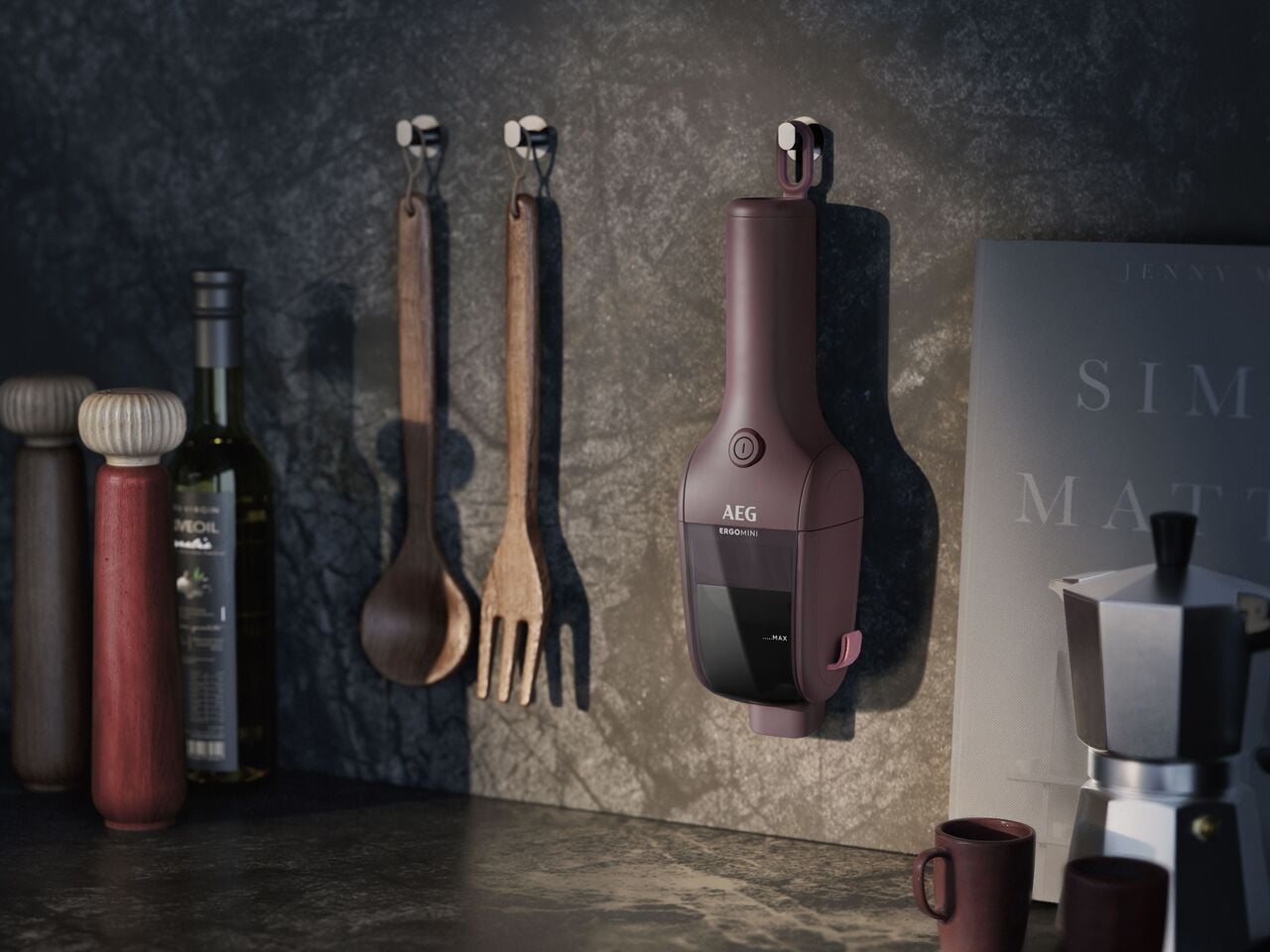
AEG ErgoMini
Once the guests leave, the floor still needs attention, ideally without anyone lifting a finger. The ultra-thin AEG Trilobite 8000 GEN2 measures 7.89 cm (3.1 in), less than the height of a standard can of drink, and vacuums, mops, self-dries, and delivers up to 40% more suction power than before. For quick spills mid-party, the AEG ErgoMini, weighing 0.55kg (1.2 lb), uses cyclonic technology to separate dust and debris before it reaches the filter.
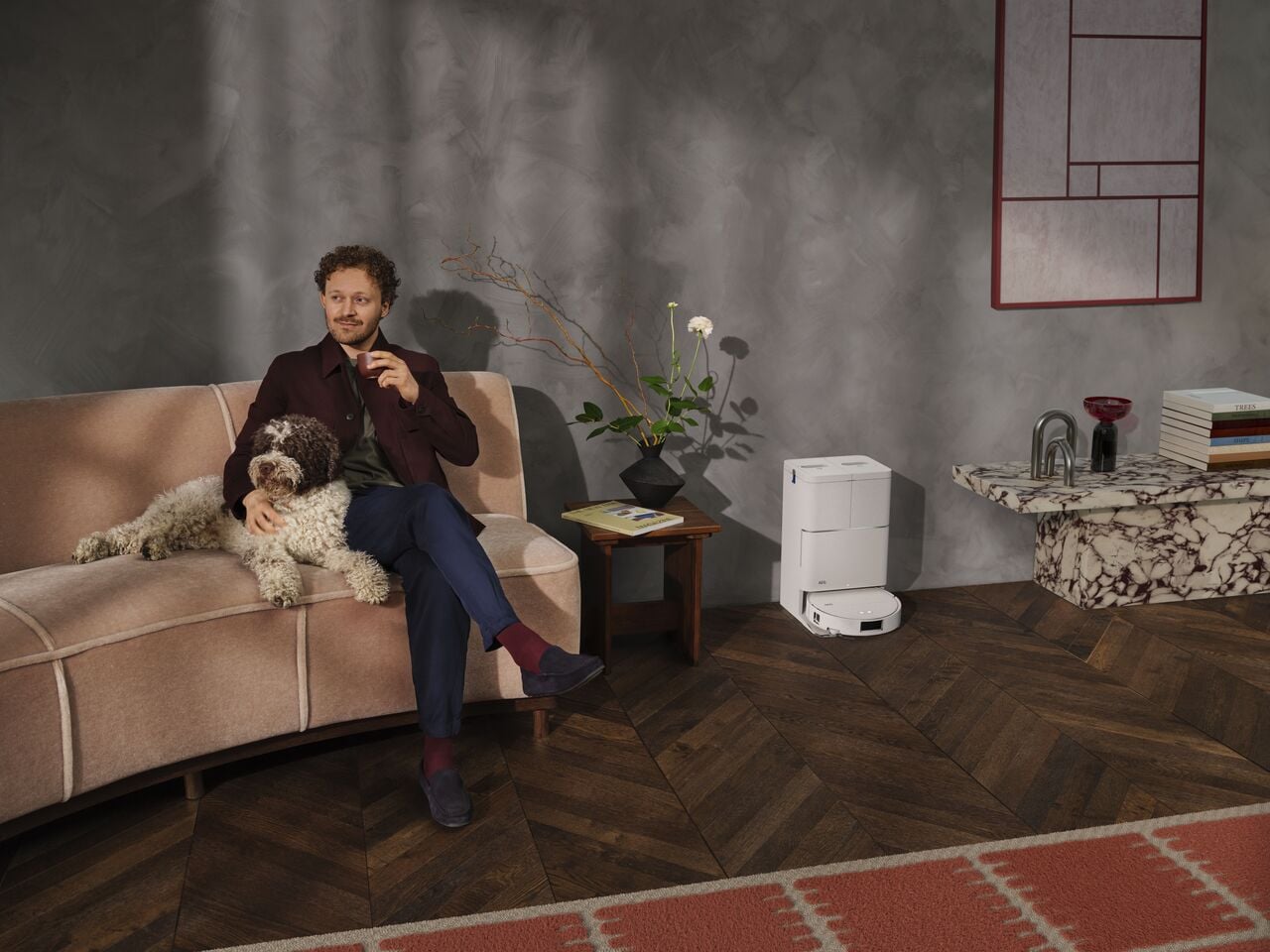
AEG Trilobite 8000 GEN2
None of these individually would justify a headline, but that’s the point AEG is making at IFA 2026. Hosting isn’t one task, it’s a string of small ones: cooking, serving, cleaning, laundering, resetting, that pile up on one person. When the appliances behind each step do their part, the host gets to spend the evening talking to guests instead of managing a checklist nobody else can see.
The post AEG’s IFA 2026 Lineup Is the Backstage Crew Every Home Host Needed first appeared on Yanko Design.
If you live a life full of meetings and conversations, there’s a good chance you’ve forgotten something important that was said to you. Sure, you can take notes or jot things down as you go, but not everyone likes doing that, and not everyone has the time to stop and sort through everything they hear during a busy day.
The SwitchBot AI MindClip wants to do the heavy lifting for you by creating a “second brain.” It’s a lightweight, clip-on wearable AI gadget that can record conversations and meetings while also letting you add voice notes whenever inspiration strikes. From there, it automatically transcribes, summarizes, and organizes everything so the information ends up exactly where you need it, whether that’s your calendar, your to-do list, or a searchable archive you can revisit later.
Designer: SwitchBot
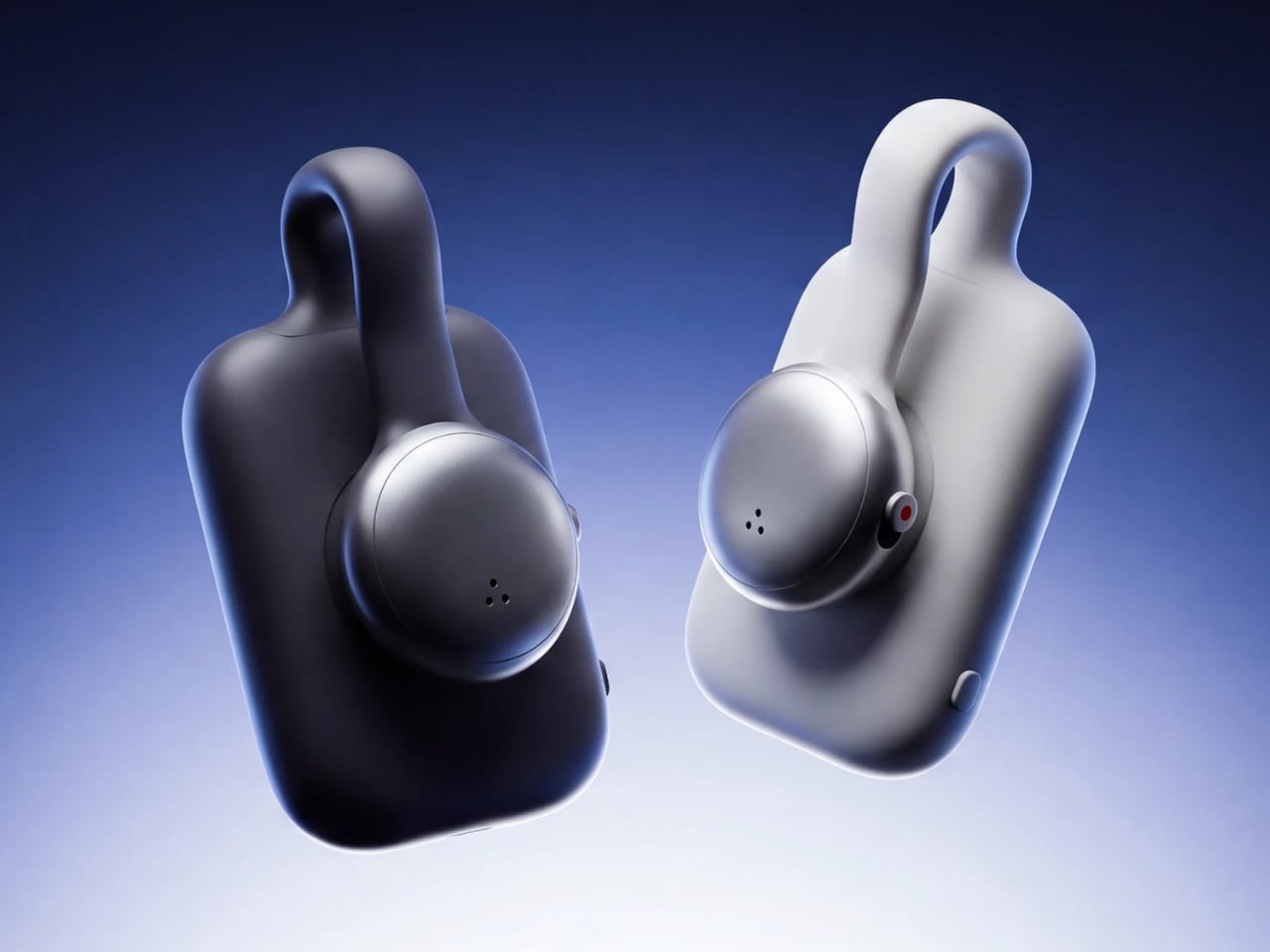
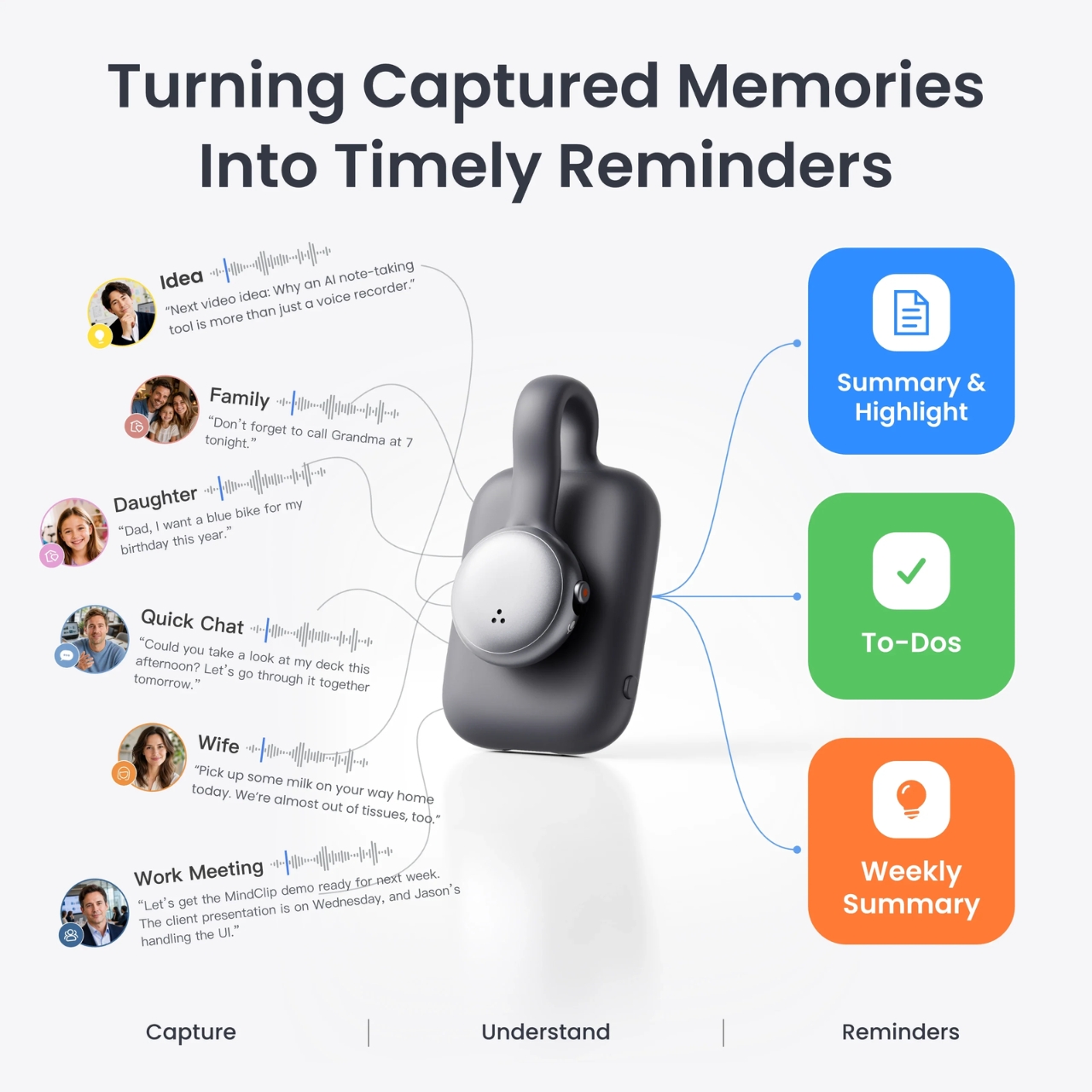
Plenty of recording devices already exist, mostly built to capture meetings and interviews. But the MindClip does more than just dump everything into one long audio file. It sorts your recordings into categories like Timeline, Priority, Daily Memory, Weekly Summary, and To-Do Overview. You can even sync it with your calendar and reminder apps, turning those “overheard” details into real, actionable schedules and tasks instead of letting them slip away.

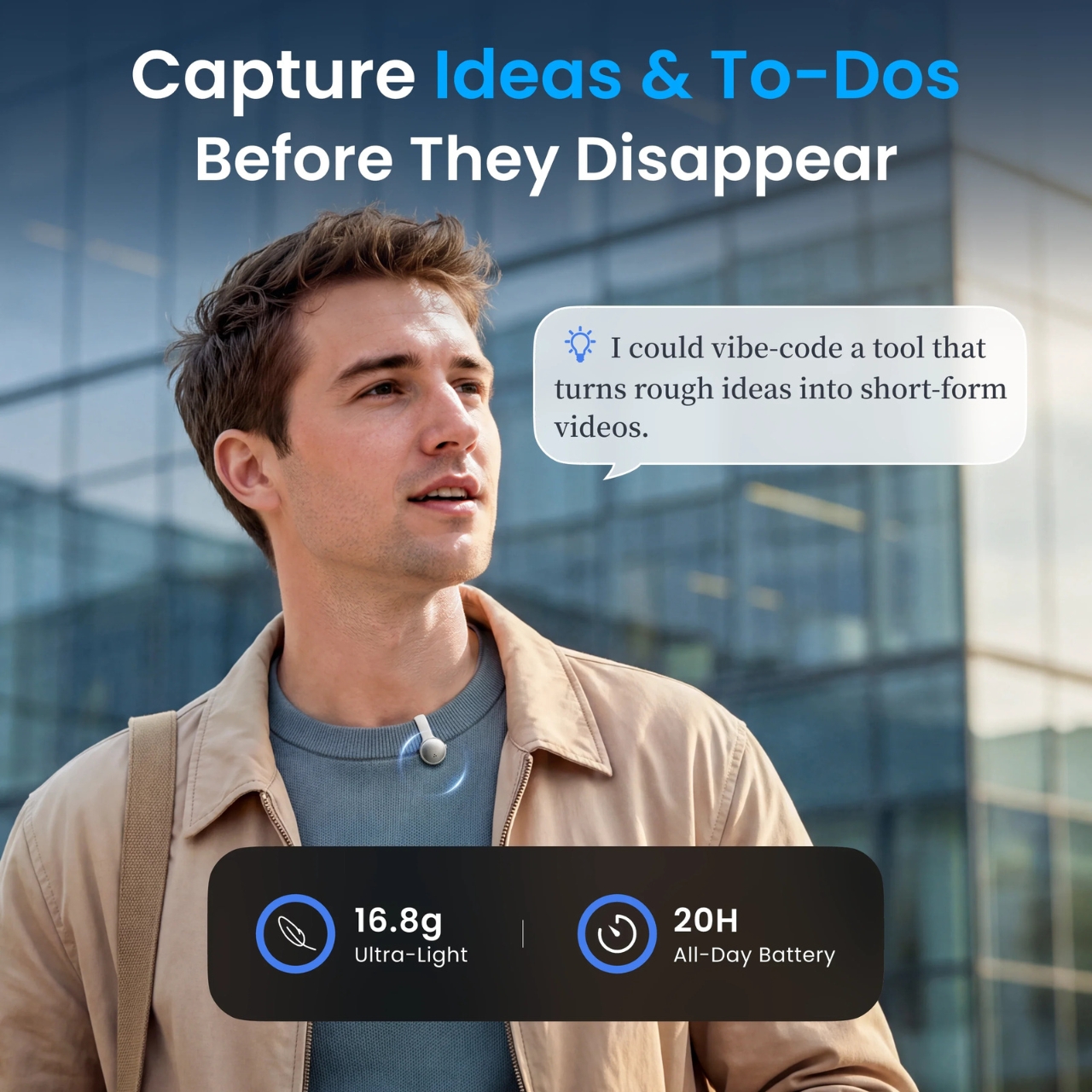
As for the design itself, the AI MindClip is a small, button-like, square-shaped clip that looks more like a tiny badge or pin than an actual recorder. It’s built to blend into whatever you’re wearing rather than stand out, which makes it easy to put on every day and take just about anywhere. The device is made from aluminum alloy and ABS plastic, giving it a premium feel while keeping it both durable and lightweight at just 16.8 grams. It comes with a clip-back mount that easily attaches to collars, jackets, bag straps, and lanyards. It’s also sweat-resistant and splash-resistant, so it’s built to handle real-world scenarios like commuting, phone calls, meetings, and everyday wear without missing a beat.
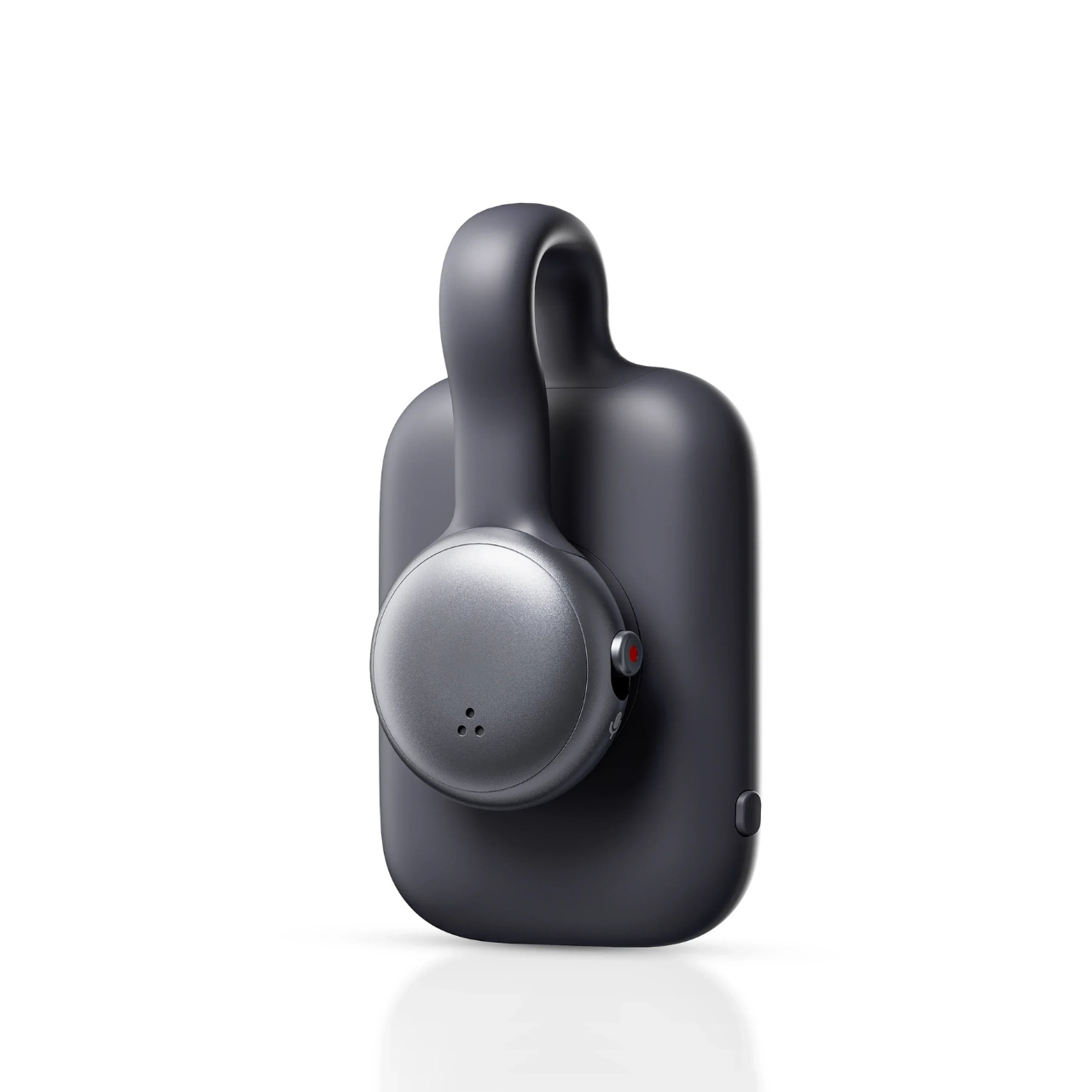
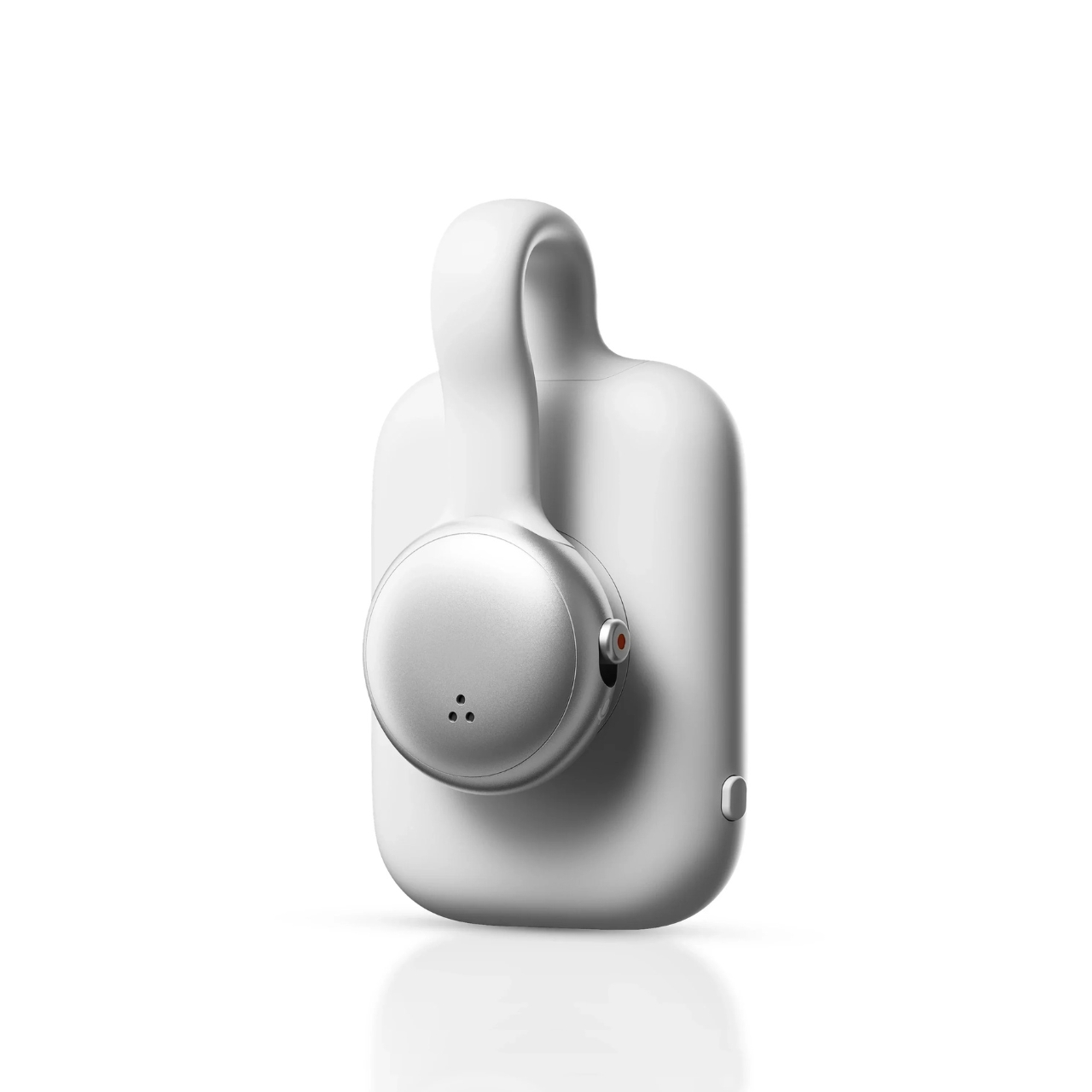
This tiny device is packed with AI-powered features, including automatic speech-to-text transcription, AI summaries built from a variety of templates, automatic to-do generation, and weekly recap summaries. You can even ask it questions about past recorded audio using its “AskAI” conversational search feature, so instead of scrolling through old notes, you can simply ask what was said and get a straight answer.

Of course, a device like this naturally raises questions about privacy and legality. SwitchBot has built in a number of in-app privacy and data management controls, along with end-to-end encryption for both pairing and file transfer. Even so, there will likely be ongoing concerns given the device’s “always recording” nature. SwitchBot will need to make it clear that these features won’t create problems for the wearer or for the people around them, especially since many U.S. states require everyone in a conversation to consent to being recorded.

Personally, I still prefer pen and paper, or typing things out on a keyboard, when it comes to note-taking and remembering things I need to act on later. But no method is foolproof, and there are definitely moments, like a packed workday or a hectic family schedule, when a tool like this could genuinely come in handy.
At the end of the day, the SwitchBot AI MindClip is an interesting bet on where note-taking might be headed. Instead of asking people to change their habits by pulling out a phone or opening an app mid-conversation, it simply rides along, quietly listening and organizing so nothing important gets lost in the shuffle. Whether it becomes a genuine everyday essential or just another gadget that ends up in a drawer will likely come down to how well the AI features hold up in daily use and whether people feel comfortable wearing something that’s always listening.

Still, for busy professionals, parents juggling a dozen things at once, students sitting through long lectures, or anyone who’s ever walked out of a meeting thinking, “wait, what did we just agree to?”, the MindClip is at least trying to solve a problem most of us know all too well. Sometimes the best kind of tech isn’t flashy. It just quietly helps you remember.

The post This $99 Clip-On AI Remembers Everything You’ll Ever Forget first appeared on Yanko Design.

Ask anyone who hikes regularly where their body actually gives out, and it’s rarely the climb up. It’s the way down. Your quads and hips can push you up a mountain just fine, but it’s your knees that absorb the pounding on the descent, on stairs, on the last mile of a long trail when your legs stop cooperating. For years, the exoskeleton industry has quietly ignored this. Every consumer exoskeleton I’ve come across, including Hypershell’s own X series, has focused almost entirely on the hips. That’s helped people hike longer and climb steeper grades, but it never addressed the part of the leg that actually fails first.
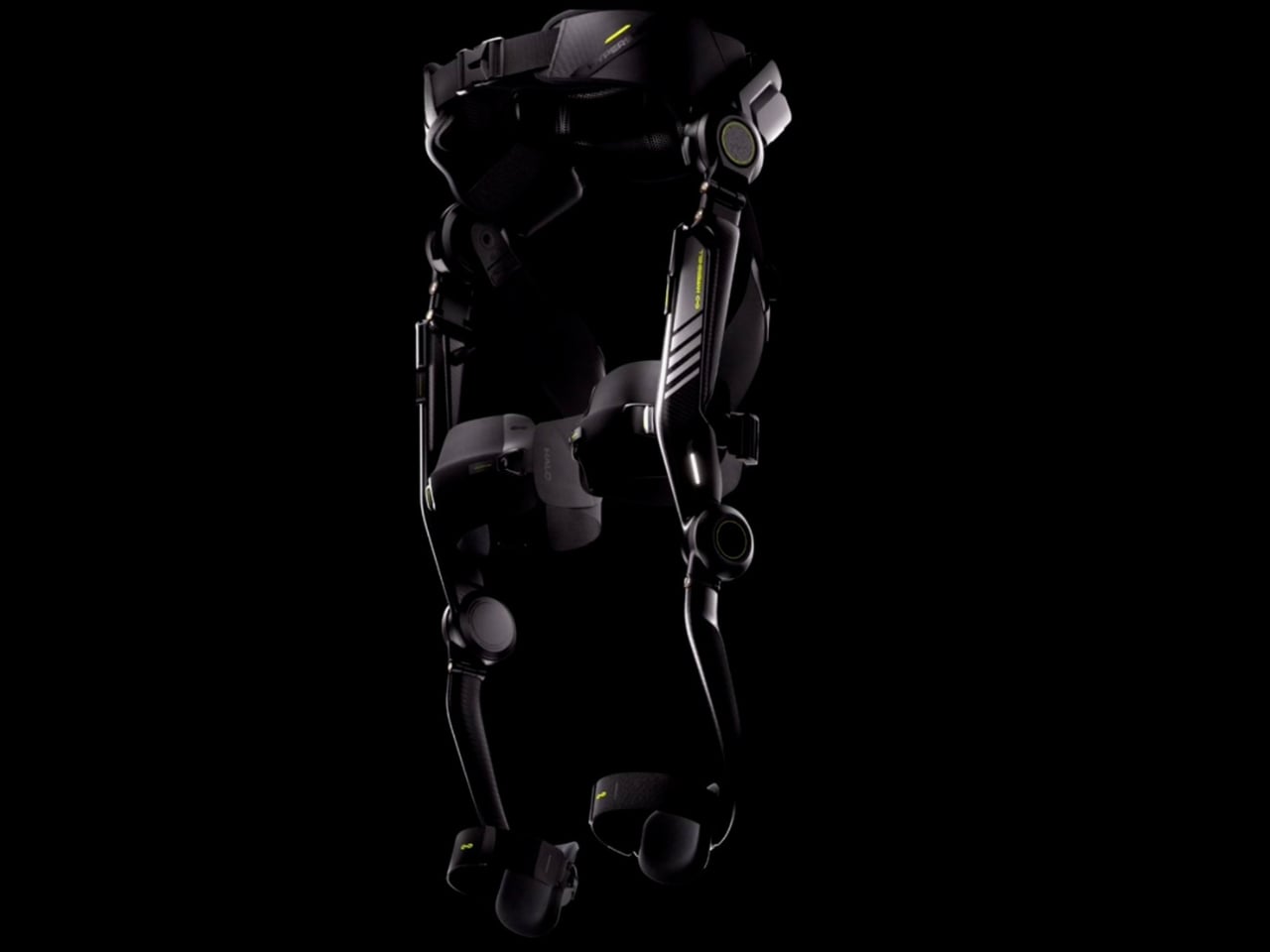
Hypershell Halo is the company’s attempt to fix that gap, and it’s the first exoskeleton I’ve seen that treats the hip and knee as one connected system rather than bolting a knee brace onto an existing hip rig. The Halo runs four motors total, two at the hips and two at the knees, and Hypershell says they’re coordinated through a single unified architecture instead of running as separate, half-communicating systems. That distinction matters more than it sounds. Earlier attempts at dual-joint support, including some of Hypershell’s own internal prototypes, were reportedly scrapped because the control systems couldn’t stay in sync with each other, which is a nice way of saying the hips and knees were fighting instead of working together.
Designer: Hypershell
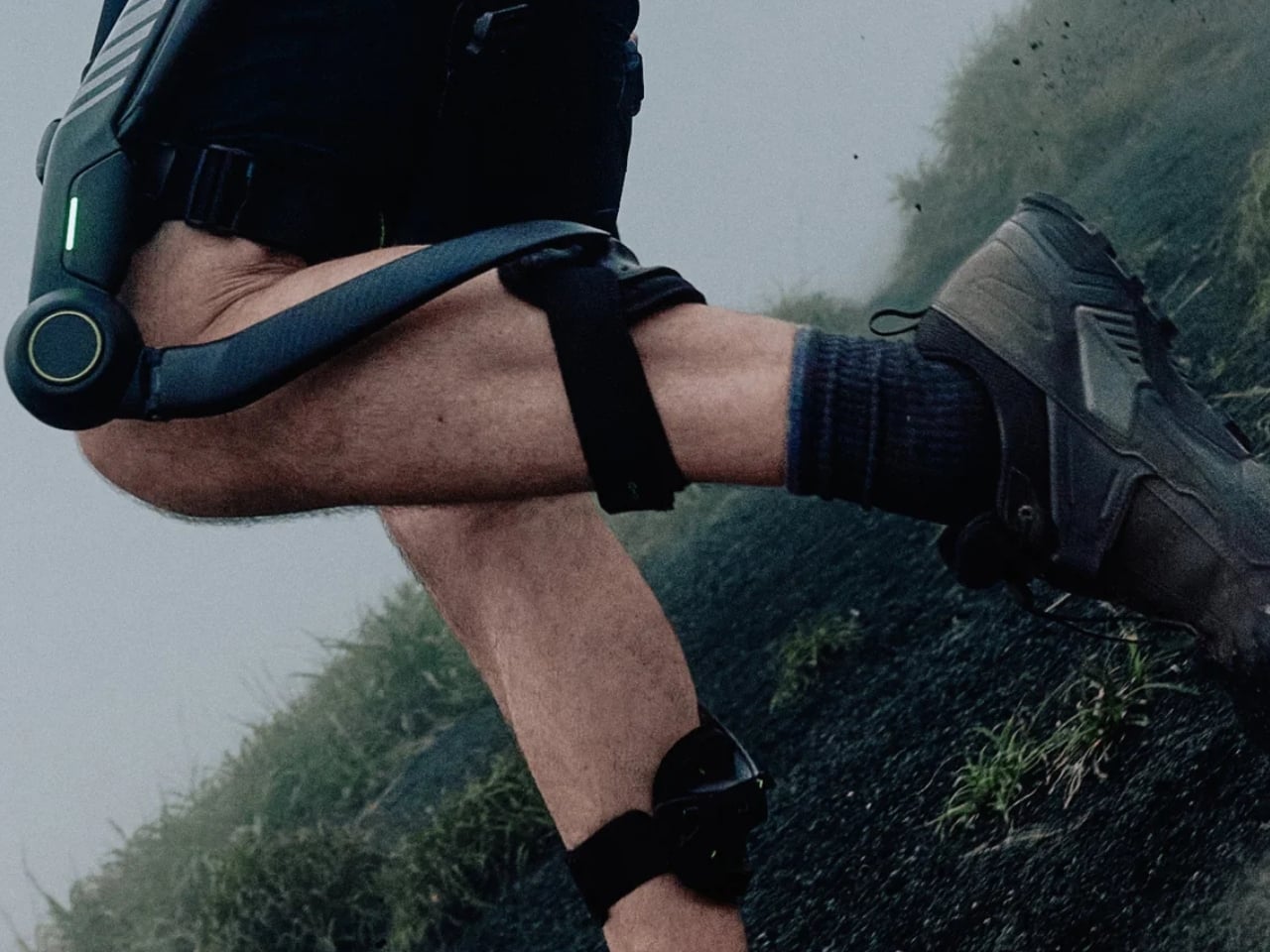

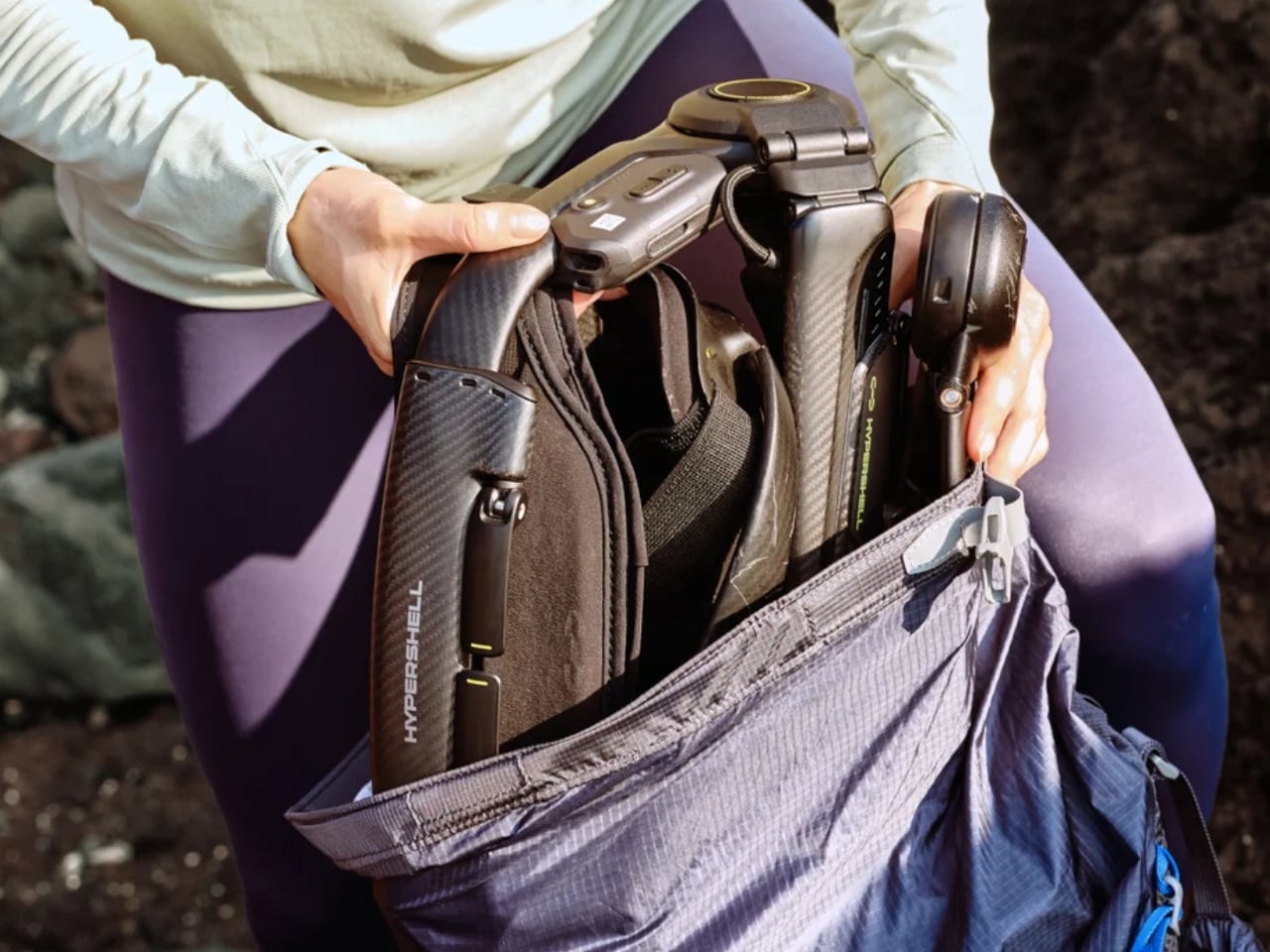
What actually convinces me the Halo is worth paying attention to is the hardware restraint. A carbon-fiber and titanium frame weighing about 2.6 kilograms, four motors producing up to 1,490 watts combined, and a swappable 370-gram battery good for roughly 20 kilometers of assisted walking. It folds down to under 8 liters, which is small enough to strap to the outside of a daypack, and Hypershell claims you can get it on in about 20 seconds, even with a full backpack already on your back. None of these numbers alone are revolutionary. Put together, they suggest a company that understands the actual friction point for anyone considering strapping a robot to their legs: if it’s heavy, slow to put on, or awkward with gear you’re already carrying, it stays in the closet.


The AI layer is where Hypershell is clearly trying to differentiate from the growing pack of exoskeleton makers chasing the same idea. HyperIntuition 2.0 is supposed to read terrain and movement in real time and adjust assistance without you fiddling with a mode dial mid-hike. There’s also Shelly, a chatbot-style assistant you control through a smartwatch, which sounds almost gimmicky until you consider that most people don’t want to stop on a trail to change settings on a phone. Whether Shelly ends up being genuinely useful or just a marketing flourish is something I won’t know until someone puts it through a real weekend hike, but the instinct behind it, reducing friction between the wearer and the machine, is the right one.

At $2,299 for the Origin Edition, the Halo isn’t cheap, and it’s priced well above the $999 to $1,999 range of Hypershell’s hip-only X models. That premium buys you the first product in this category actually built around full-leg coordination rather than partial support, and for anyone who has skipped a hike because their knees couldn’t handle the descent, that might be the entire pitch. I don’t think this device turns casual walkers into trail athletes overnight, and I’d be skeptical of any brand claiming it does. But for the growing number of people managing knee wear, recovering from injury, or just getting older and less willing to accept stairs as an enemy, a machine that finally treats the knee as seriously as the hip feels less like a novelty and more like an overdue correction.


Pre-orders are open now for the US, Canada, Europe, the UK, and China, with shipping expected in November. Whether the Halo lives up to its own architecture claims once it’s on real trails and real staircases is still an open question, but it’s the first exoskeleton pitch in a while that’s made me want to find out.


The post Exoskeletons Always Ignored Your Knees, but Halo Doesn’t first appeared on Yanko Design.
We live in an era of life hacks, a time when everyone wants the best possible results with the least amount of fuss. We want the Michelin-star meal from a 30-minute recipe and the perfect vacation photos without a professional camera. The same is true for our personal grooming. We see the flawless curls or the perfectly smooth shave online, but the reality often involves a tangled mess of hair, a bit of skin irritation, and a whole lot of time we wish we had back. The effort and the reward just don’t always line up.
This is where clever engineering can make all the difference, by building tools that automate the tricky bits for you. Laifen seems to be running with this idea in its latest product drop. The new lineup includes an automatic curling iron for people who always wrap their hair the wrong way and a high-speed hair dryer that aims to nourish while it dries. It’s all about lowering the skill level required to look polished and put-together, which is a philosophy anyone with a busy schedule can get behind.

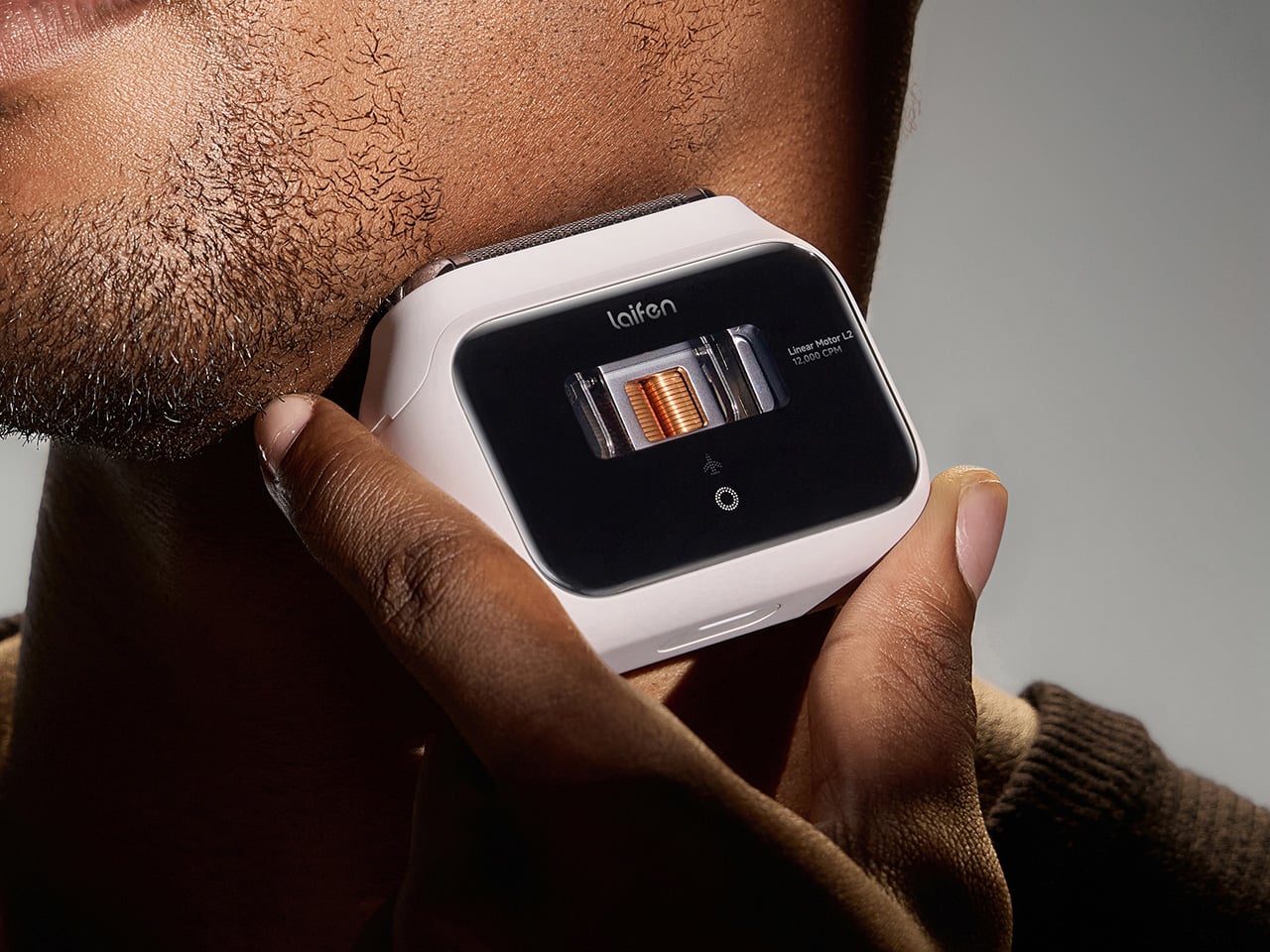
The electric shaver has had a size problem for a long time. Go compact and you sacrifice power, go full-size and you’re suddenly packing something that takes up half your toiletry bag. Most portable shavers have quietly accepted this arrangement and deliver a mediocre shave, complete with pulling, patchy results, and a bit of post-shave redness for good measure. Most guys shrug it off as the price of portability. The Laifen P3 Electric Shaver was designed with a different attitude toward that particular compromise.
Inside the P3, a proprietary dual-motor system works alongside an ultra-thin stainless-steel foil and a cutting design specifically built to reduce irritation. What that means in practice is a shave that gets close to the skin quickly, without the tugging and pulling that makes cheaper portable shavers such a frustrating experience. The low-irritation design is also a genuine win for people with sensitive skin, which is a group that compact electric shavers have historically let down pretty badly. Clean results, comfortable experience, no drama.
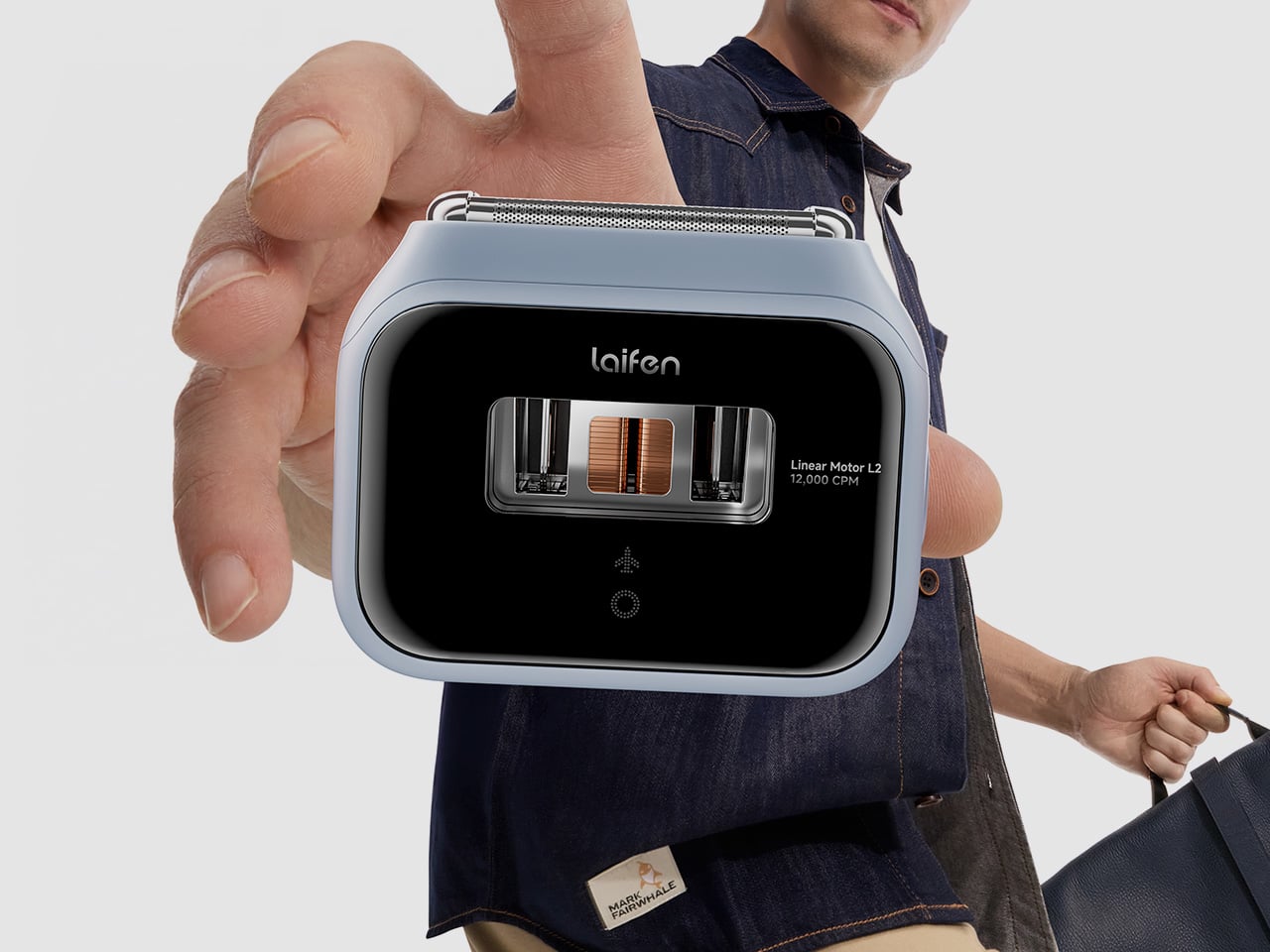
Roughly one-third smaller than a traditional electric shaver, the P3 comes with a dedicated carrying case that slides into any bag without making you rearrange everything else to fit it. It’s the kind of shaver that makes sense for a work trip, a gym bag, or a bathroom shelf that’s already running out of counter space. The form factor is built around how people actually move through their day, and that kind of thinking tends to show in how consistently a gadget actually gets used.
Laifen also makes the more feature-heavy P3 Pro, and the two are designed for different kinds of users rather than sitting in a simple good-better hierarchy. The P3 is its own thing, aimed at someone who wants a capable, stylish everyday shaver that travels light and delivers good results without overcomplicating the morning routine. It’s an easier sell for a larger slice of people, and honestly, that makes it the more interesting product to watch.
Click Here to Buy Now: $189.99.
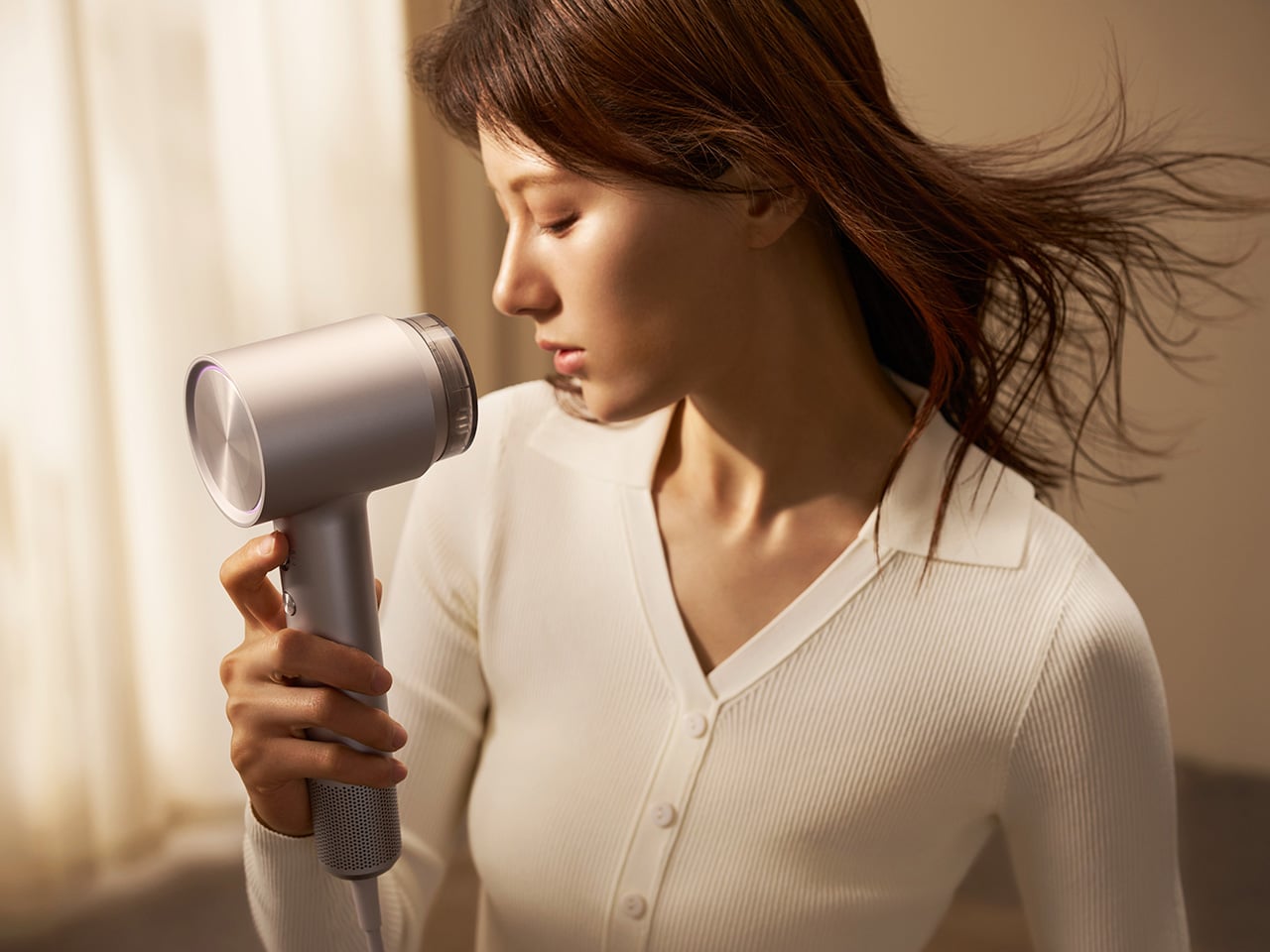
Most hair dryers have one job, and that’s to get your hair dry as fast as possible. Everything else, the serums, the oils, the frizz-fighting products, happens separately, usually after you’ve already spent several minutes with a loud appliance aimed at your head. It’s a fine enough system, just a slightly inconvenient one. You dry your hair, then you treat your hair, then you style your hair, and by the end of it you’ve invested a surprising amount of time into something you do every single day. There has to be a smarter way to run that sequence.
The Swift 4’s headline feature is a proprietary Nourishing Nozzle that diffuses essential oils into a micron-sized mist at a consistent 58°C while you dry. At the same time, 400 million negative ions and 70 million positive ions work to neutralize static and help balance the scalp’s environment. The result, according to Laifen, is smoother, shinier, frizz-reduced hair without extra steps after you put the dryer down. Whether you’re ready to swap your entire post-wash routine for a single nozzle is a personal call, but the concept is genuinely clever and worth paying attention to.
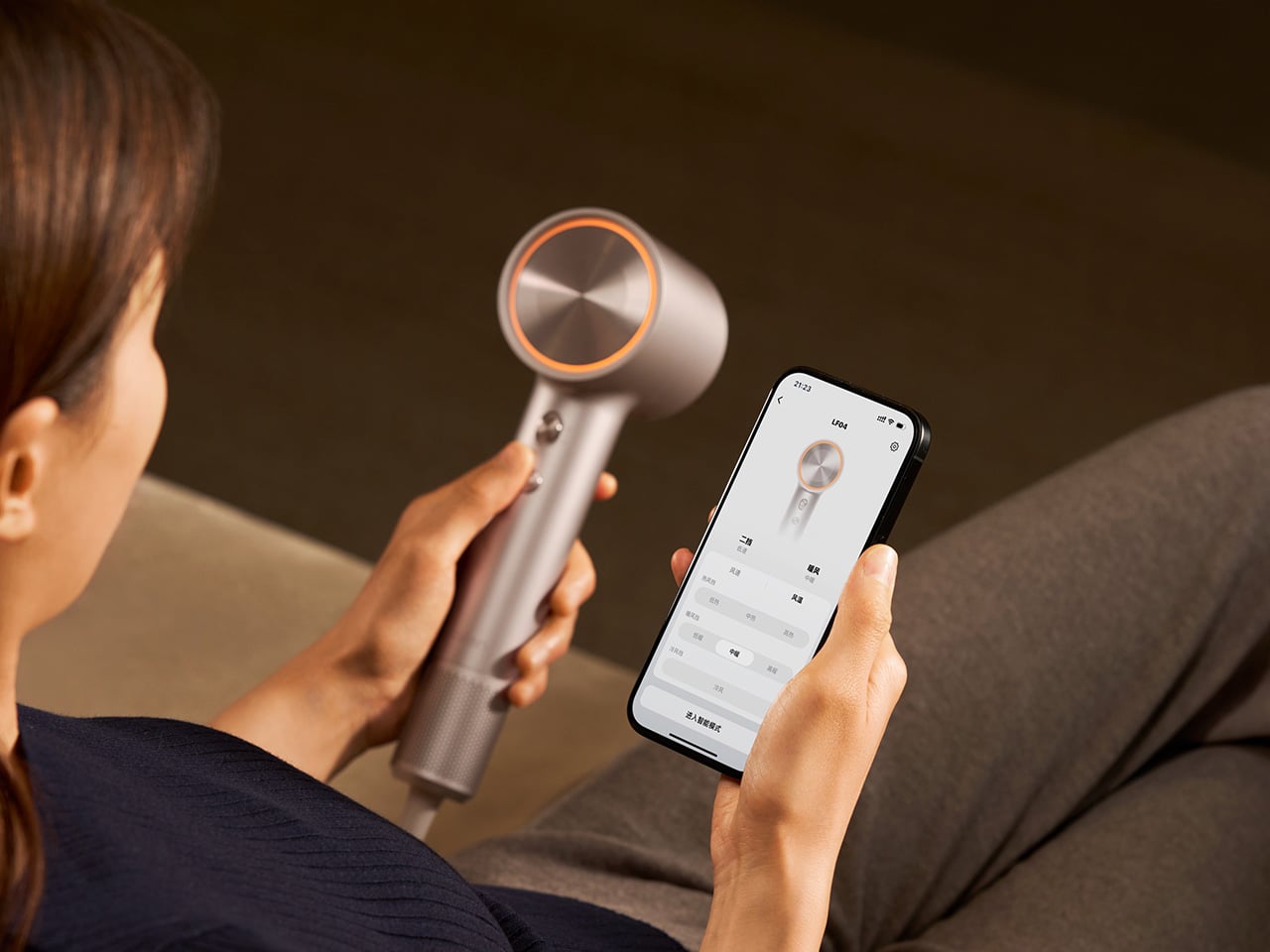
Speed is the other big thing the Swift 4 has going for it. A 115,000 RPM brushless motor pushes airflow at 23 meters per second, which Laifen says is enough to dry medium-length hair in around 1.5 minutes. A smart temperature control system monitors heat 1,000 times per second to prevent damage, and six customized temperature modes let you dial things in for your specific hair type. There’s also an intuitive LED ring for mode feedback and magnetic nozzle attachments that swap in and out cleanly. For anyone who has wondered whether they’re cooking their hair with the wrong heat setting, that level of real-time control is genuinely reassuring.
The Swift 4 Hair Dryer weighs just 407 grams, sits in an ergonomic handle built to reduce arm fatigue, and runs at a relatively quiet 59 decibels thanks to six layers of noise reduction technology. A Bluetooth app connection lets you set a personalized drying routine, and the magnetic filter on the back cleans in about three seconds. It has a premium aluminum alloy finish that looks sharp sitting on a vanity shelf, and at this point that’s actually a relevant design consideration. Nobody wants to leave an ugly appliance out in the open, and the Swift 4 is not an ugly appliance.
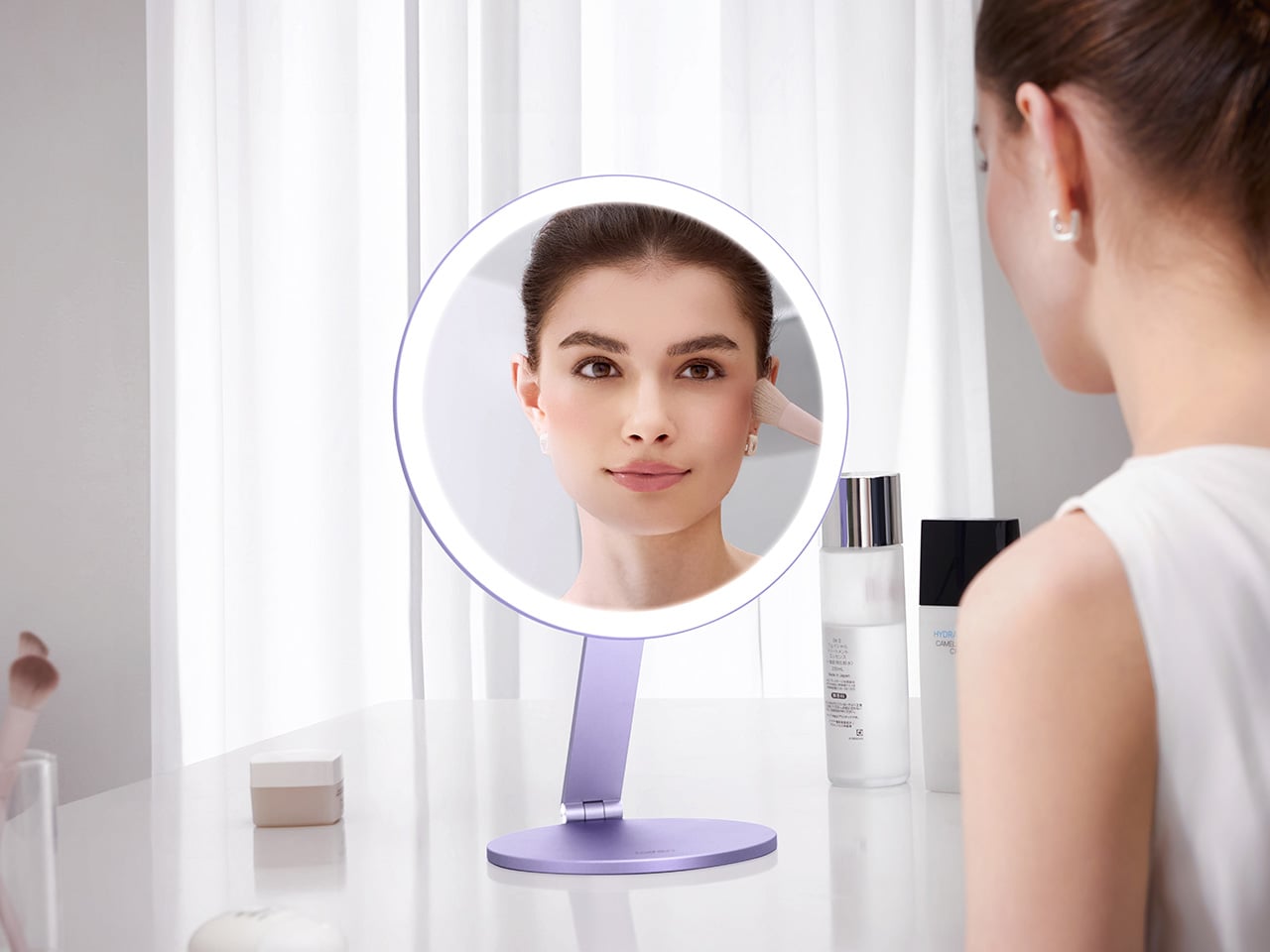
Makeup applied in bad lighting is one of life’s more humbling experiences. You do everything right at home, step outside, and catch a glimpse of yourself in a shop window that tells a completely different story. The culprit is almost always the light source you were working under, which was probably a single overhead bulb doing its worst. Good vanity lighting has always made a real difference to the outcome, but for a long time, getting genuinely useful light meant buying a bulky ring light and finding somewhere to put the thing.
The Glowy Vanity Mirror skips the separate ring light situation entirely by building 360-degree even illumination directly into the mirror itself. The lighting is designed to replicate natural daylight, which gives you accurate color representation while applying makeup or skincare rather than the warm, flattering-but-deceptive glow that makes bathroom lighting so unreliable. There’s a large, high-definition mirror surface paired with that illumination, so every detail is visible without squinting or leaning uncomfortably close to the glass. It’s a pretty straightforward idea executed in a way that actually makes the bathroom routine more useful.
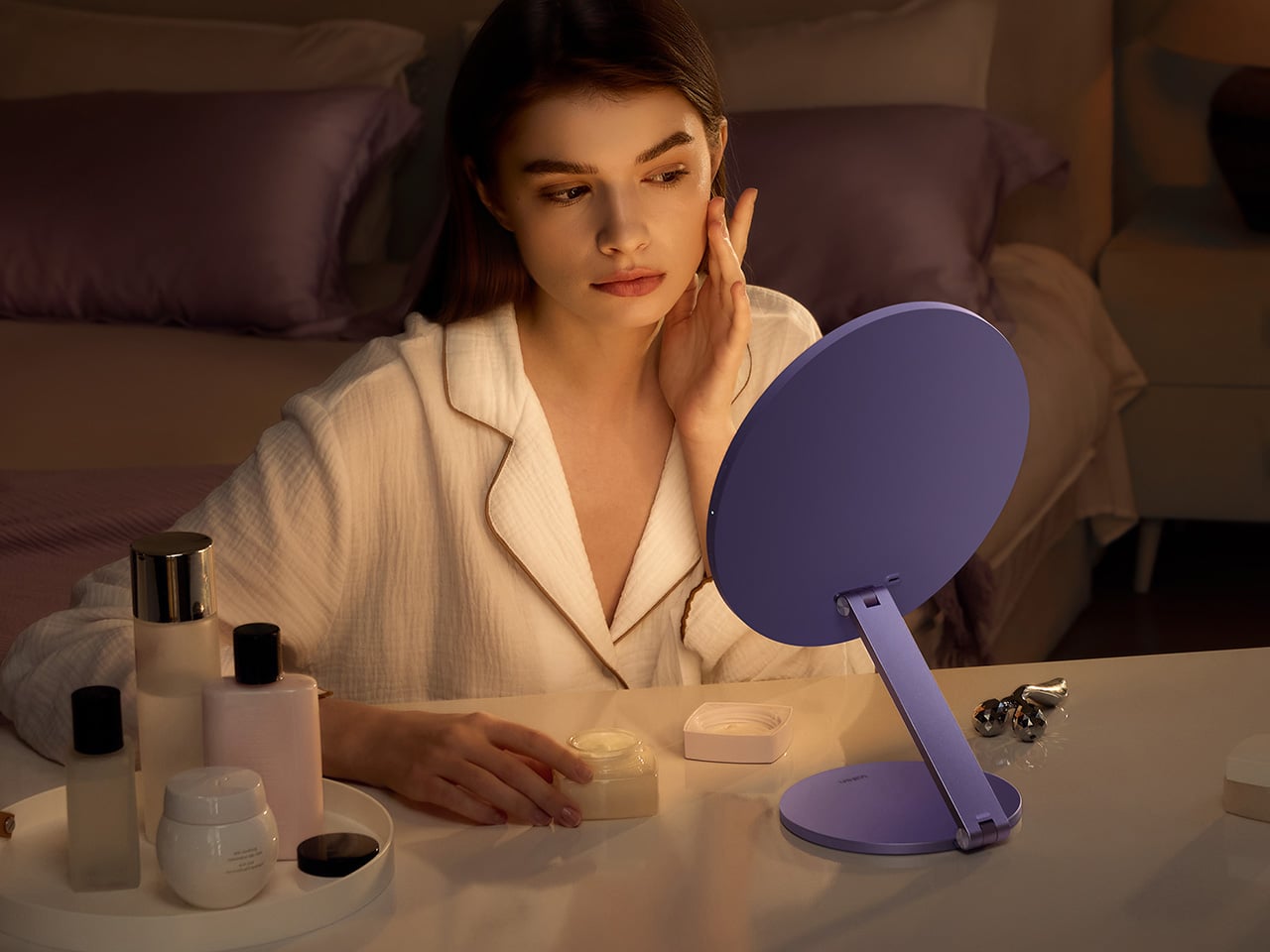
Smart features are woven in without feeling gimmicky. The mirror uses automatic motion sensing to wake up when you approach, remembers your preferred lighting settings, and offers adjustable modes for different needs. A long-lasting rechargeable battery means there’s no cord hunting involved, and the portable design lets it move around without being a production. These are the kinds of conveniences that sound minor on a spec sheet but add up to a noticeably smoother experience once they’re part of your daily routine.
The hardware itself is built around an aluminum alloy stand with a refined finish that looks at home on a vanity rather than on a film set. Eye-safe, low blue light illumination keeps things comfortable during longer sessions, reducing the kind of eye strain that comes from staring into a bright light source for extended periods. It’s a product that sits at an interesting crossroads between functional tool and considered design object, and that combination is increasingly what the best personal care gadgets look like in 2026.
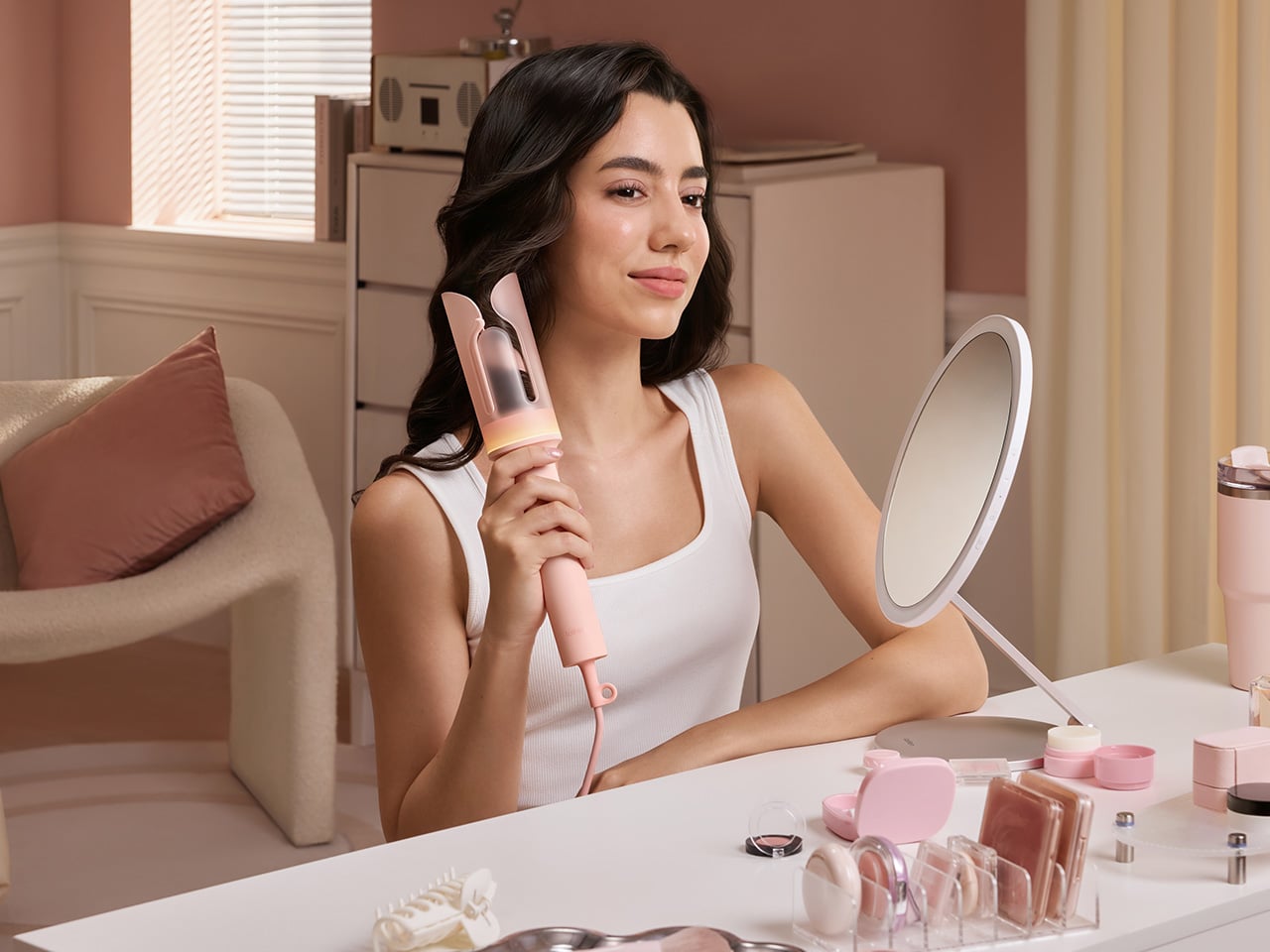
Curling irons work beautifully in the hands of someone who knows exactly what they’re doing, and they produce uneven, inconsistent, occasionally singed results in the hands of everyone else. Getting a good curl requires a specific technique with the wrist, the right timing, and a sense of which direction to wrap the hair that somehow never feels intuitive. It’s one of those skills that looks deceptively simple in a tutorial video and considerably less simple when you’re standing in your bathroom at 7am trying to replicate it.
The AutoCurl Curling Iron’s core trick is that it handles the wrapping for you. A smart system detects where the hair is placed, automatically selects the correct curl direction, and adjusts in real time to prevent tangling or pulling. Users can let the device run fully automatically in Auto Mode, or switch to Manual Mode for more hands-on control when they want it. That’s a genuinely useful split, because it makes the tool accessible for beginners without feeling restrictive for people who already know their way around a barrel.
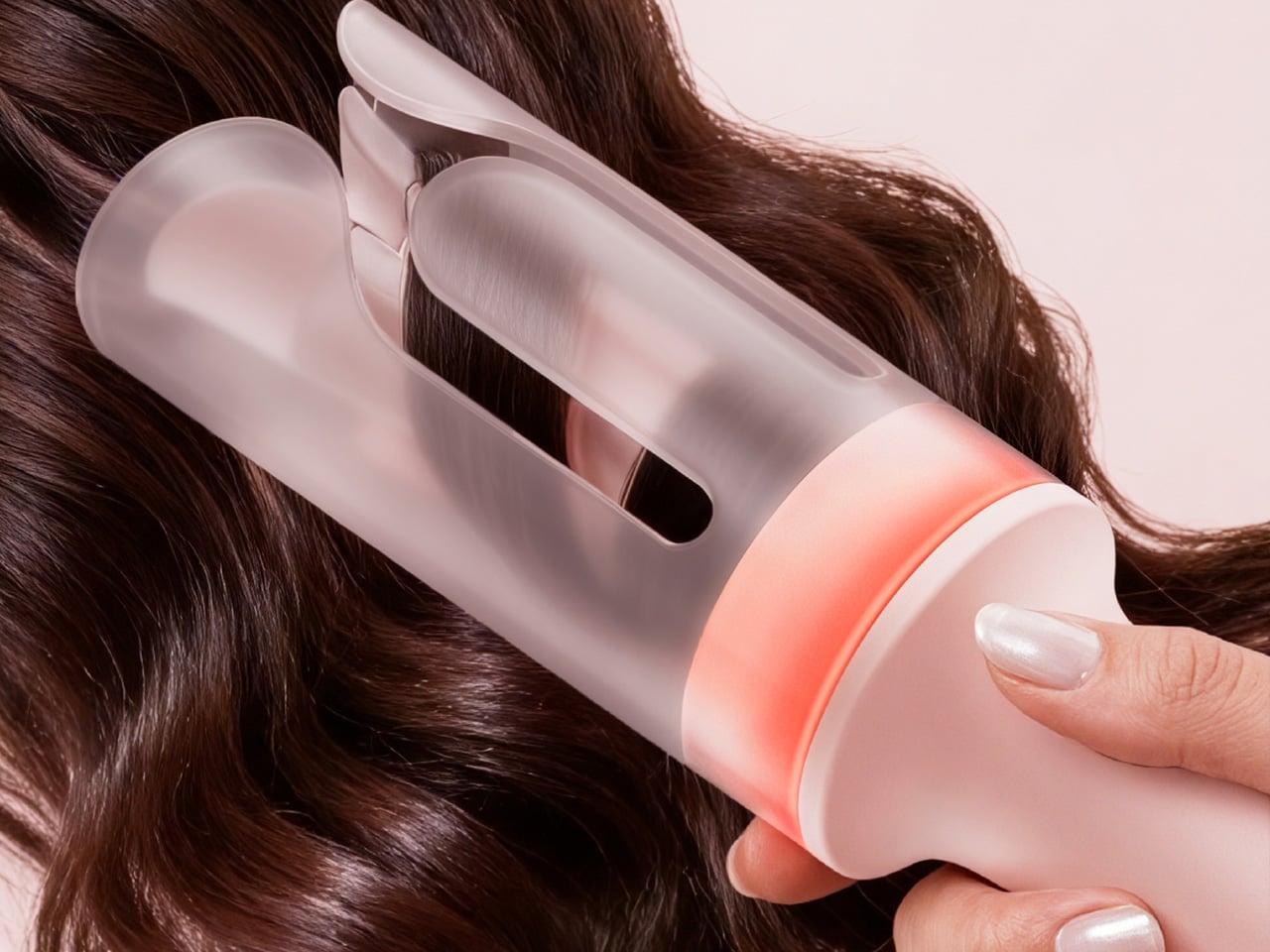
Speed is another area where the AutoCurl earns its keep. Laifen says it delivers bouncy, full-head curls in around 16 seconds per section, with even heat distribution that keeps results consistent from the first curl to the last. Custom temperature settings adapt to different hair types, and 200 million negative ions work through the styling process to reduce frizz and add shine. Intelligent temperature control keeps heat at a safe level throughout, so you’re getting faster results without quietly frying your hair in the process.
The safety features are thoughtful without being excessive. A protective curl chamber shields the hair-contact area, auto shut-off kicks in when the device is left unattended, and the operation is near-silent, which is a bigger quality-of-life detail than it sounds. Dual-voltage support and a lightweight build round things out nicely for anyone who travels frequently. It’s a curling iron that has clearly been designed with people who have given up on curling irons in mind, and that’s a very specific and very valid target audience.
Click Here to Buy Now: $99.99.
The post Laifen Just Made Flawless Grooming Stupidly Easy (No Skill Required) first appeared on Yanko Design.