Meet Ultrahuman Ring Pro: Up to 15 Days Battery, No Subscription, and a Dual-Core Processor

Charging wearables has become muscle memory for many of us, and most people have accepted that their smartwatch requires almost nightly charging. But the best health tracking is done while we sleep. First, good sleep is foundational to our health. But it’s also where heart rate signals are stable and constant, making for insightful analysis. But many people don’t wear their smartwatches to sleep, partly due to comfort, but also because their watch won’t make it through the next day. Ultrahuman’s Ring Pro doesn’t ask you to accept that compromise anymore – and is designed for truly continuous health insights, with battery life so long, the biggest challenge will be remembering where you put your charger.

The Ring Pro delivers up to 15 days of battery life on a single charge, and holds 250 days of on-device data without needing a phone connection, making it fairly independent as a wearable, rather than a phone-bound tech accessory. Add a dual-core processor with on-chip machine learning, a redesigned PPG sensor, and a real-time biointelligence AI called Jade, and you’re looking at the most technically coherent argument the smart ring category has put forward.

Designer: Ultrahuman

Click Here to Buy Now: $299 $530 ($231 off). Hurry, only a few left!
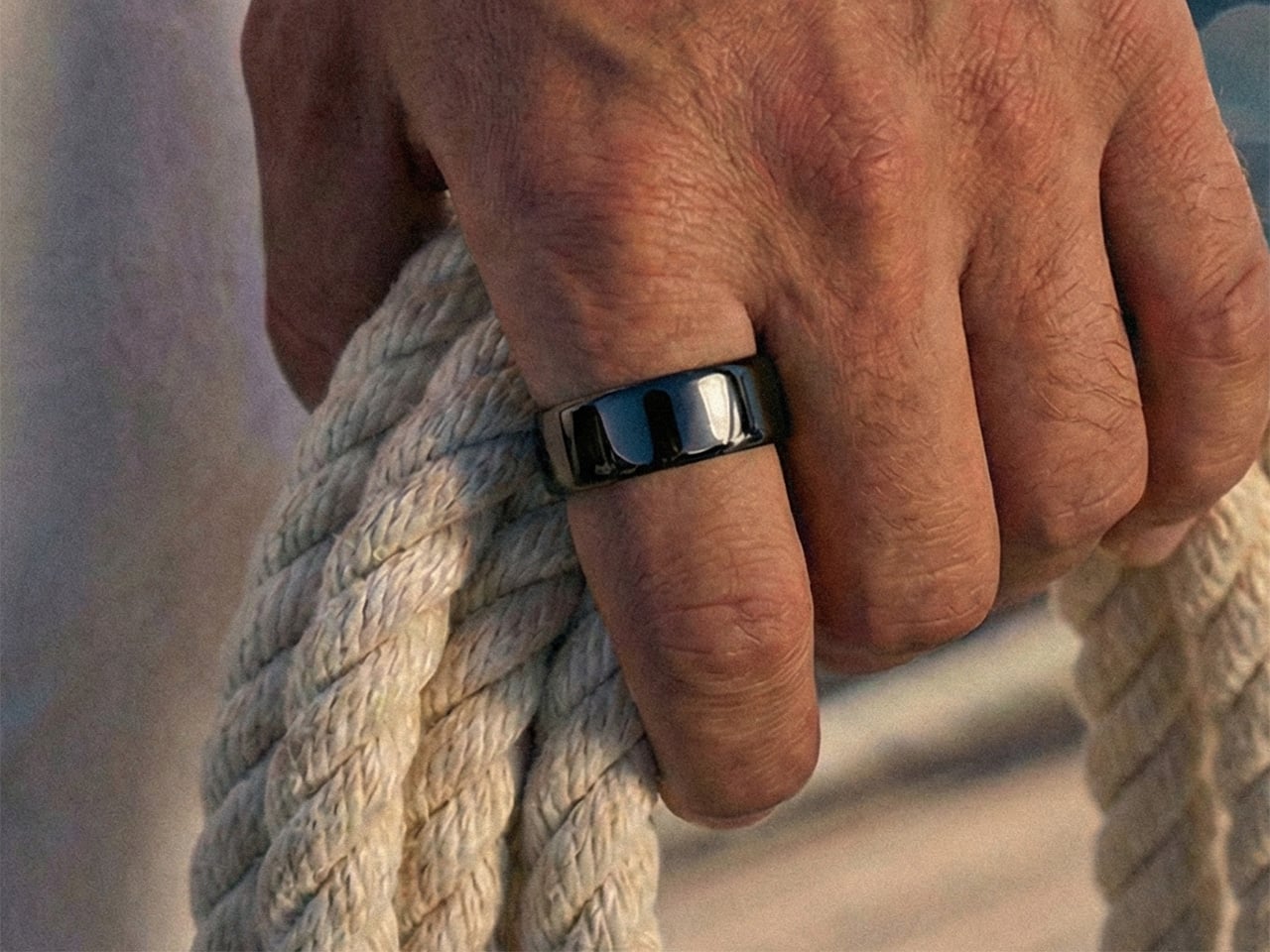
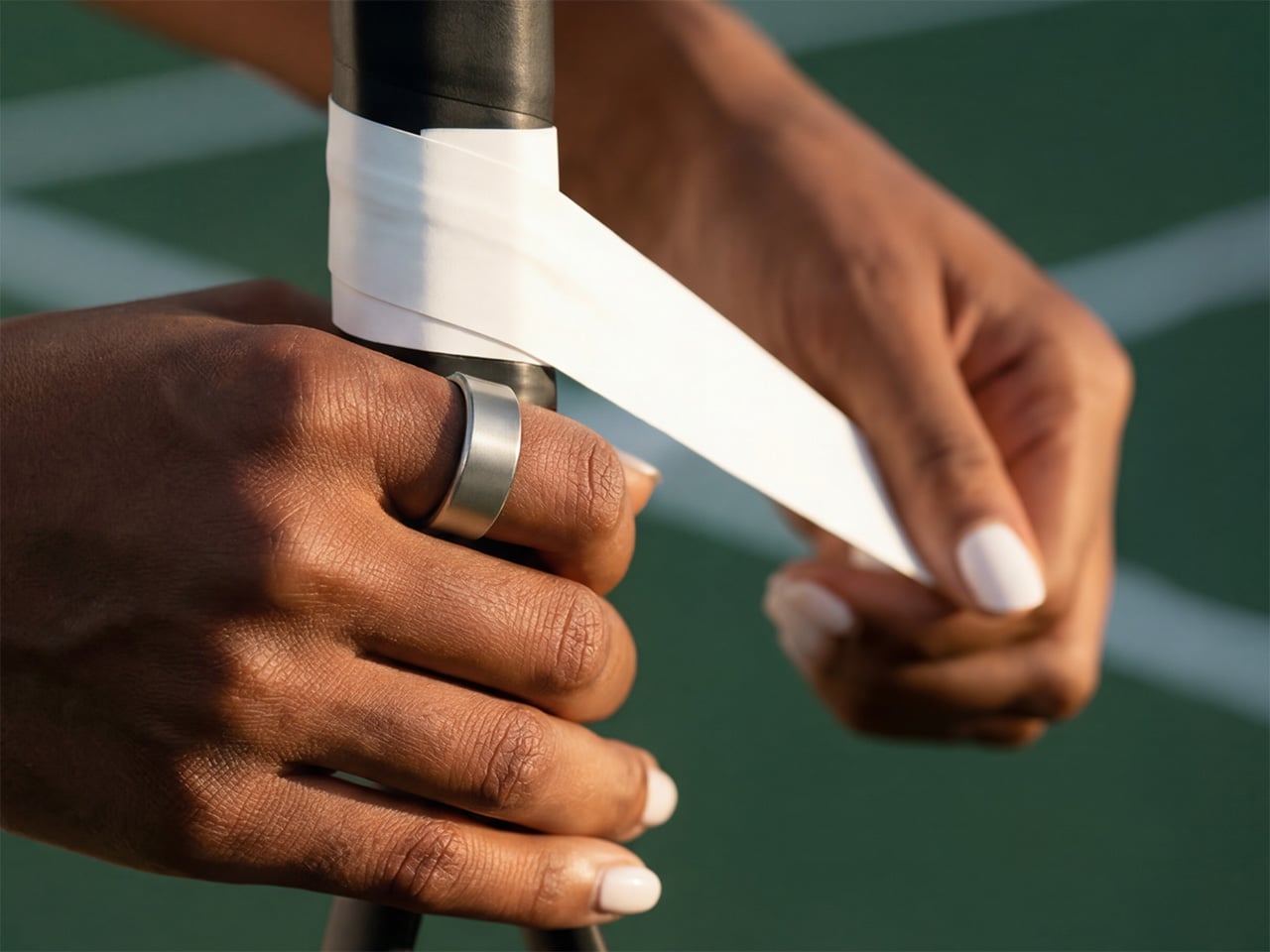
The Ring Pro is built on a unibody titanium architecture, with the same fighter jet-grade material that has defined the Ultrahuman Ring from the beginning. It is crafted to be worn 24/7 through every condition life throws at you. It comes in four finishes: Raw Titanium, Aster Black, Bionic Gold, and Space Silver, all of which lean into a restrained, utilitarian premium rather than flashy lifestyle aesthetics.

Ring PRO is built for it all. Sizes range from 5 to 14, with a free sizing kit dispatched before your Ring PRO ships. ProRelease Technology enables Ring PRO to be cut apart in the event of swelling or injury to the finger, a safety feature that reflects thoughtful long-term wearability engineering. Water resistance holds at 100 meters, from swimming to surfing to showers.
The battery architecture operates in two modes: Turbo Mode delivers approximately 12 days, and Chill Mode offers up to 15 days. Ultrahuman CEO Mohit Kumar called the battery performance “3 to 4 times that of the competition,” framing it as a fundamental breakthrough rather than an incremental spec bump.

The Ring Pro achieves this without trimming features. The sensor array includes a redesigned PPG for heart rate, HRV, and blood oxygen; a non-contact skin temperature sensor; and a 6-axis IMU for motion tracking, all rebuilt specifically for improved signal quality during sleep and recovery.

A dual-core processor with on-chip machine learning replaces the single-core processor from the Ring AIR, with on-chip ML enabling complex health algorithms to run directly on the ring, delivering faster results with greater precision.
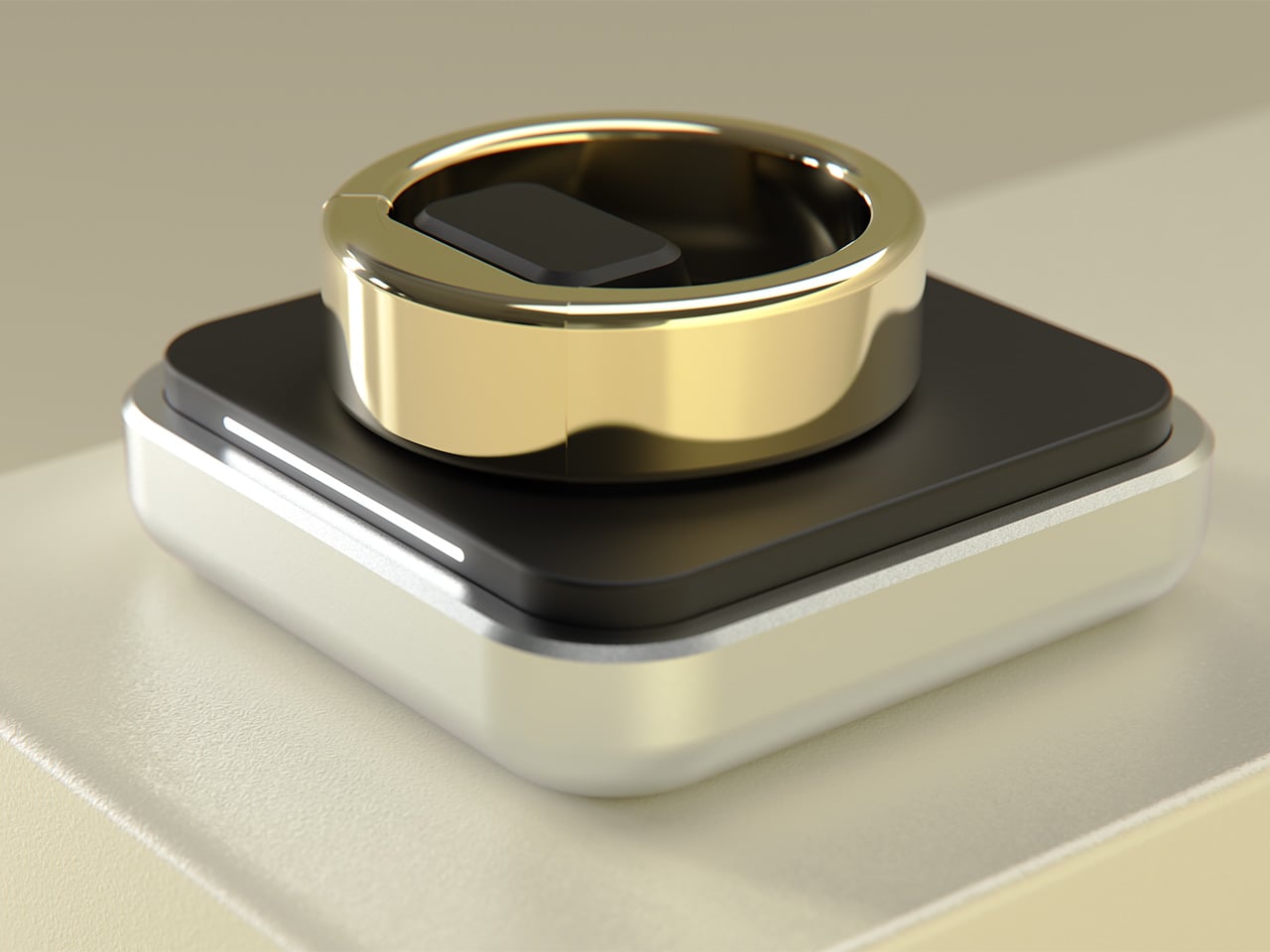
For everyday use, the Mini Charger is all you need. The Mini-Charger is Ring PRO’s compact everyday charging companion. Lightweight and pocket-friendly, it is designed to go wherever you go, your gym bag, your carry-on, your desk, without taking up space or adding weight. Simply plug it in via the Type-C cable included in the box, place your Ring PRO on the dock, and you’re charging. No fuss, no complexity.

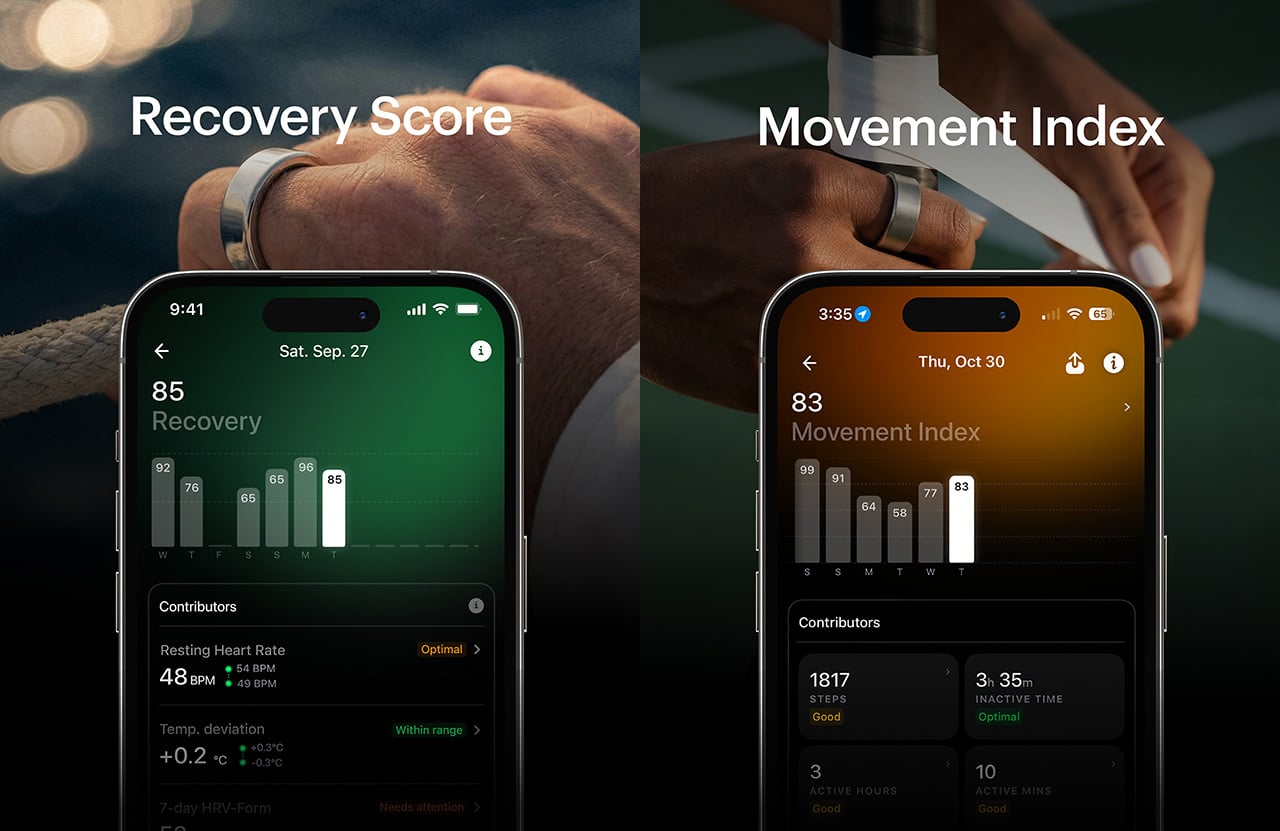
The Ring Pro comes with Jade, Ultrahuman’s biointelligence AI platform, described as the world’s first real-time health AI .Jade pulls live biomarker data from the ring and acts on it (like triggering breathwork sessions based on current HRV readings).

Jade connects ring data across Ultrahuman’s broad health ecosystem, blending lifestyle data with 120+ Blood Vision biomarkers, M1 CGM glucose trends, and even Ultrahuman Home environmental data..

Use Standard mode for quick answers on your data, such as how long you slept or recent trends,, or flip to Research mode for comprehensive analysis that connects the dots across complex health data.

Jade’s capabilities extend through PowerPlugs, a platform for individual apps and plugins built on top of Ultrahuman’s health and wellness data stack, designed for highly personalized health insights. You can tailor health tracking to your unique needs and goals, supercharging your Ring PRO experience with a library of micro-tools.

The Ring Pro is available in multiple configurations, starting at $299 for the Super Early Bird tier and ranging up to $699 for the Couples Pack (which includes two rings and three Powerplugs each). Each package includes the Ring PRO itself, a charging case, and three Powerplugs (worth $150, free for one year): Respiratory Health (detects snoring, coughing, and irregular breathing via smartphone audio), Cycle & Ovulation Pro (advanced fertility tracking with 90%+ ovulation accuracy), and Cardio Adaptability (analyzes overnight heart rate variability using tachograms and Lorenz plots).

A lifetime subscription to all Ultrahuman Ring PRO features and content is included with no hidden fees or recurring charges. Shipping is free worldwide, with estimated delivery beginning in June 2026 for early configurations and July 2026 for later tiers. A sizing kit ships before the ring itself to ensure the right fit, and the Ring Pro is available in Raw Titanium, Aster Black, Bionic Gold, and Space Silver finishes.

Click Here to Buy Now: $299 $530 ($231 off). Hurry, only a few left!

The post Meet Ultrahuman Ring Pro: Up to 15 Days Battery, No Subscription, and a Dual-Core Processor first appeared on Yanko Design.
Meet Ultrahuman Ring Pro: Up to 15 Days Battery, No Subscription, and a Dual-Core Processor

Charging wearables has become muscle memory for many of us, and most people have accepted that their smartwatch requires almost nightly charging. But the best health tracking is done while we sleep. First, good sleep is foundational to our health. But it’s also where heart rate signals are stable and constant, making for insightful analysis. But many people don’t wear their smartwatches to sleep, partly due to comfort, but also because their watch won’t make it through the next day. Ultrahuman’s Ring Pro doesn’t ask you to accept that compromise anymore – and is designed for truly continuous health insights, with battery life so long, the biggest challenge will be remembering where you put your charger.

The Ring Pro delivers up to 15 days of battery life on a single charge, and holds 250 days of on-device data without needing a phone connection, making it fairly independent as a wearable, rather than a phone-bound tech accessory. Add a dual-core processor with on-chip machine learning, a redesigned PPG sensor, and a real-time biointelligence AI called Jade, and you’re looking at the most technically coherent argument the smart ring category has put forward.

Designer: Ultrahuman

Click Here to Buy Now: $299 $530 ($231 off). Hurry, only a few left!

The Ring Pro is built on a unibody titanium architecture, with the same fighter jet-grade material that has defined the Ultrahuman Ring from the beginning. It is crafted to be worn 24/7 through every condition life throws at you. It comes in four finishes: Raw Titanium, Aster Black, Bionic Gold, and Space Silver, all of which lean into a restrained, utilitarian premium rather than flashy lifestyle aesthetics.

Ring PRO is built for it all. Sizes range from 5 to 14, with a free sizing kit dispatched before your Ring PRO ships. ProRelease Technology enables Ring PRO to be cut apart in the event of swelling or injury to the finger, a safety feature that reflects thoughtful long-term wearability engineering. Water resistance holds at 100 meters, from swimming to surfing to showers.

The battery architecture operates in two modes: Turbo Mode delivers approximately 12 days, and Chill Mode offers up to 15 days. Ultrahuman CEO Mohit Kumar called the battery performance “3 to 4 times that of the competition,” framing it as a fundamental breakthrough rather than an incremental spec bump.

The Ring Pro achieves this without trimming features. The sensor array includes a redesigned PPG for heart rate, HRV, and blood oxygen; a non-contact skin temperature sensor; and a 6-axis IMU for motion tracking, all rebuilt specifically for improved signal quality during sleep and recovery.

A dual-core processor with on-chip machine learning replaces the single-core processor from the Ring AIR, with on-chip ML enabling complex health algorithms to run directly on the ring, delivering faster results with greater precision.

For everyday use, the Mini Charger is all you need. The Mini-Charger is Ring PRO’s compact everyday charging companion. Lightweight and pocket-friendly, it is designed to go wherever you go, your gym bag, your carry-on, your desk, without taking up space or adding weight. Simply plug it in via the Type-C cable included in the box, place your Ring PRO on the dock, and you’re charging. No fuss, no complexity.

The Ring Pro comes with Jade, Ultrahuman’s biointelligence AI platform, described as the world’s first real-time health AI .Jade pulls live biomarker data from the ring and acts on it (like triggering breathwork sessions based on current HRV readings).

Jade connects ring data across Ultrahuman’s broad health ecosystem, blending lifestyle data with 120+ Blood Vision biomarkers, M1 CGM glucose trends, and even Ultrahuman Home environmental data..

Use Standard mode for quick answers on your data, such as how long you slept or recent trends,, or flip to Research mode for comprehensive analysis that connects the dots across complex health data.

Jade’s capabilities extend through PowerPlugs, a platform for individual apps and plugins built on top of Ultrahuman’s health and wellness data stack, designed for highly personalized health insights. You can tailor health tracking to your unique needs and goals, supercharging your Ring PRO experience with a library of micro-tools.

The Ring Pro is available in multiple configurations, starting at $299 for the Super Early Bird tier and ranging up to $699 for the Couples Pack (which includes two rings and three Powerplugs each). Each package includes the Ring PRO itself, a charging case, and three Powerplugs (worth $150, free for one year): Respiratory Health (detects snoring, coughing, and irregular breathing via smartphone audio), Cycle & Ovulation Pro (advanced fertility tracking with 90%+ ovulation accuracy), and Cardio Adaptability (analyzes overnight heart rate variability using tachograms and Lorenz plots).

A lifetime subscription to all Ultrahuman Ring PRO features and content is included with no hidden fees or recurring charges. Shipping is free worldwide, with estimated delivery beginning in June 2026 for early configurations and July 2026 for later tiers. A sizing kit ships before the ring itself to ensure the right fit, and the Ring Pro is available in Raw Titanium, Aster Black, Bionic Gold, and Space Silver finishes.

Click Here to Buy Now: $299 $530 ($231 off). Hurry, only a few left!

The post Meet Ultrahuman Ring Pro: Up to 15 Days Battery, No Subscription, and a Dual-Core Processor first appeared on Yanko Design.

This $45 Titanium Pocket Knife Uses Centrifugal Force and Neodymium Magnets Instead of A Button Lock

Most pocket knives are designed for the moment you need to cut something. The TiNova II is designed for that moment, but also for the five minutes after, when you find yourself opening and closing it just because the mechanism feels satisfying. That shift in priorities is intentional, and it required Ideaspark to rethink the entire knife after the first version shipped to over 1,300 Kickstarter backers in 2025.

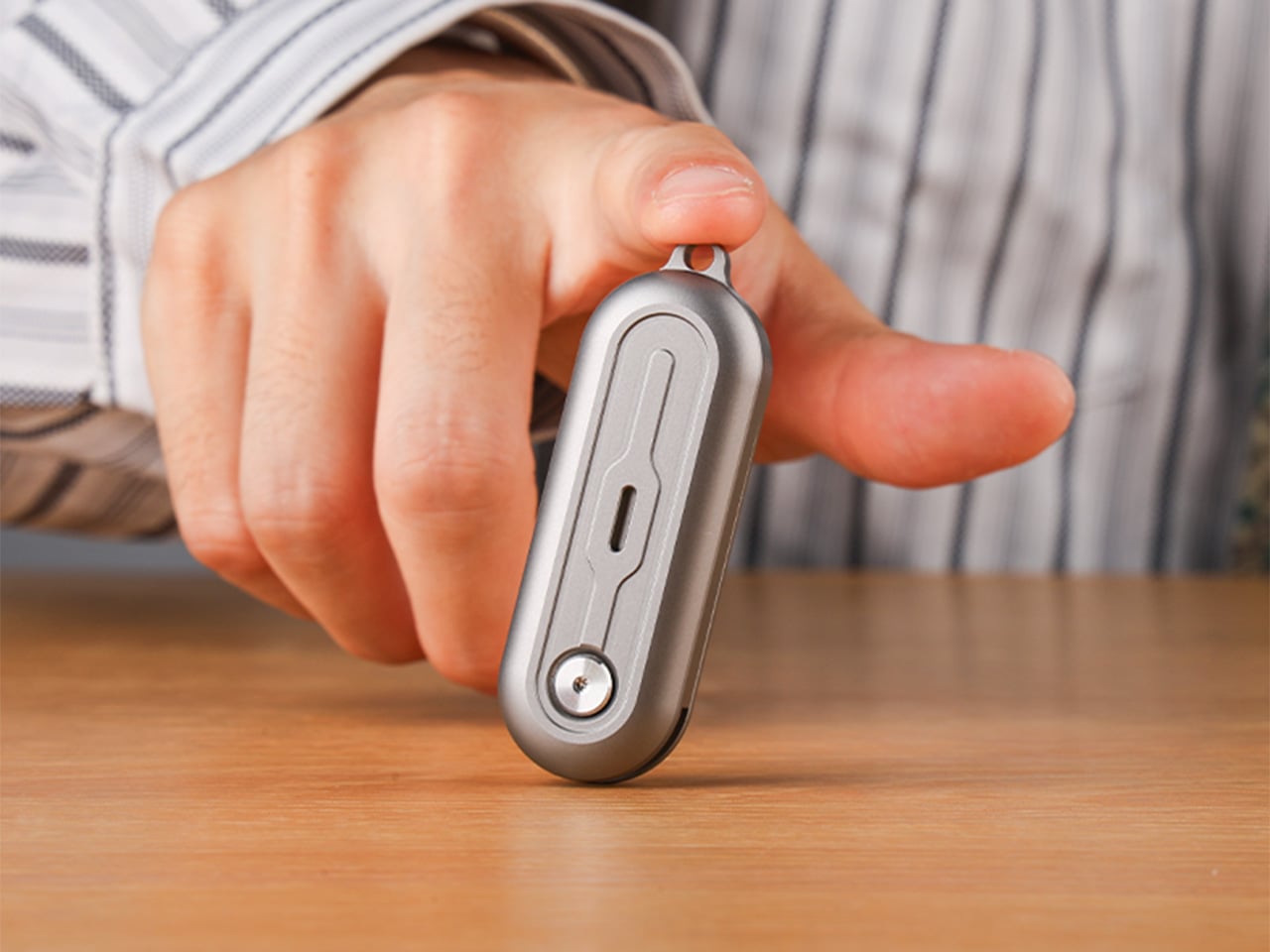
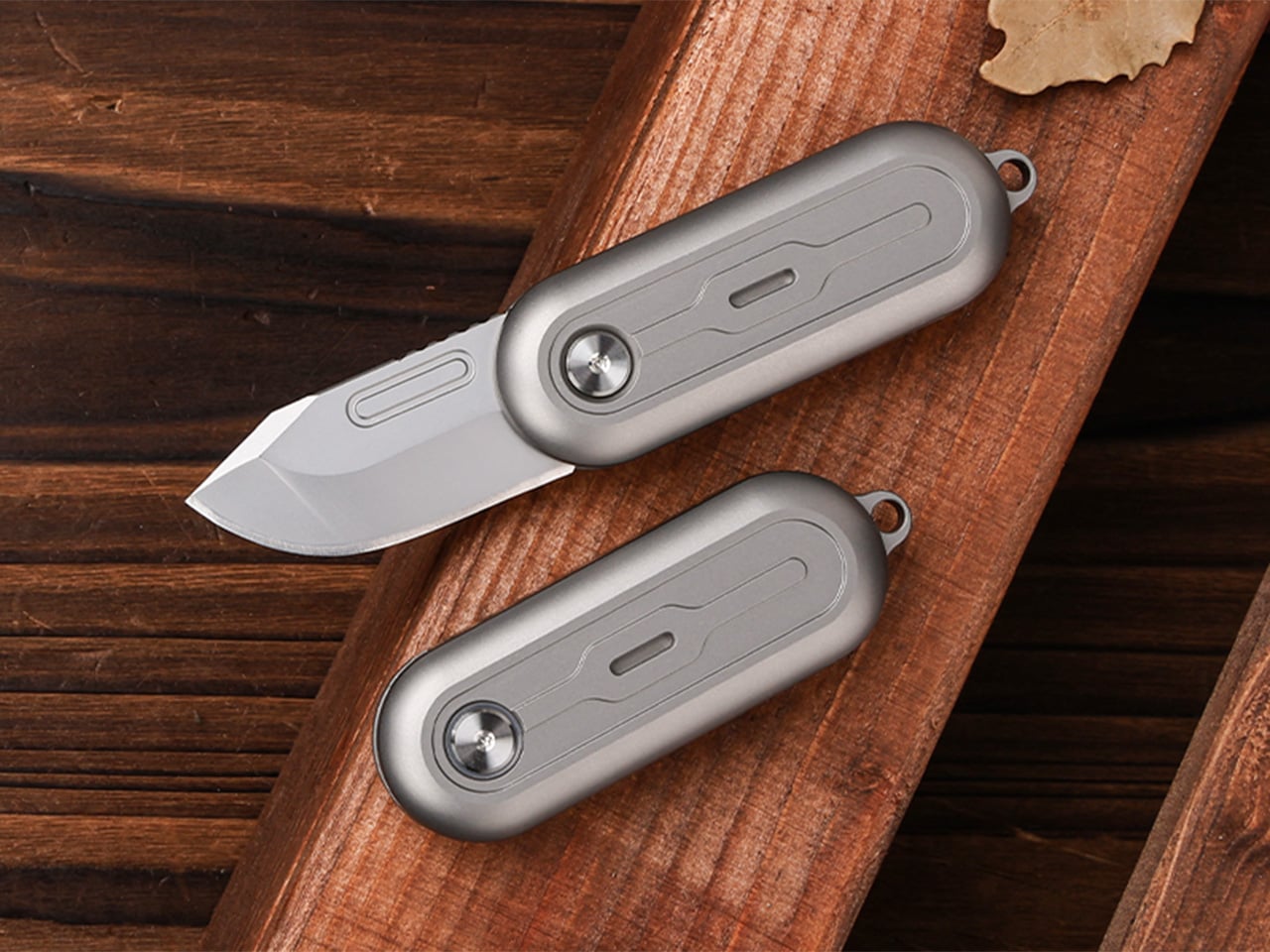
The mechanism itself is straightforward. Two titanium handle scales connect at a single roller bearing pivot point. One scale stays fixed, the other rotates a full 360 degrees around it. Neodymium magnets sit at strategic positions to create resistance, so when the blade swings open or closed, you get a crisp magnetic snap that locks it in place. Flick your wrist and the momentum carries the blade through a smooth rotation with a satisfying ‘click’. Hold it differently and you can coax out a slower, weighted spin. What changed between Gen 1 and Gen 2 is the body shape. The original had flat sides and sharp edges like a traditional folding knife. The TiNova II uses an oval profile that matches the natural curve your hand makes when your fingers relax into a loose fist. That single geometry change makes the knife feel completely different when you’re holding it, which matters when the whole point is creating something you’ll keep picking up. The magnetic resistance is tuned tight enough to keep the blade from accidentally deploying in your pocket, but smooth enough that you can flip it open one-handed without effort.

Designer: Ideaspark

Click Here to Buy Now: $49 $70 (30% off). Hurry, only 64/100 left! Raised over $62,000.

The handle scales are machined from Grade 5 titanium, the aerospace alloy that shows up in everything from jet engine components to high-end bike frames. The material delivers the strength-to-weight ratio you’d expect (the entire knife weighs 59.3 grams, roughly two U.S. quarters), but the more interesting property is how it wears. Titanium doesn’t corrode, rust, or tarnish the way steel does. Instead, it develops a patina over time, recording scratches and scuffs as a visual history of use. Every mark becomes permanent, which means the knife you carry for a year looks distinctly different from the one that arrived in the mail. Ideaspark leans into this with two finish options: a raw sandblasted titanium that shows wear immediately, and a black PVD coating that creates higher contrast when the underlying metal starts to peek through.

The blade is D2 tool steel, heat-treated to HRC 58-60. D2 sits in an interesting zone within the steel hierarchy. It holds an edge longer than most budget steels (think 8Cr13MoV or AUS-8), and is a go-to choice for premium knives. The choice here makes even more sense for a keychain knife where you’re cutting tape, breaking down cardboard, trimming threads, or slicing through packaging, with practically negligible wear and tear over time compared to a knife that experiences the brunt of rugged outdoor use. The blade profile is a drop-point with a full belly, which gives you a long cutting edge relative to the 40.5mm blade length. The curve naturally guides material into the sharpest part of the edge, making it effective for slicing motions even when you’re working with something as small as this.

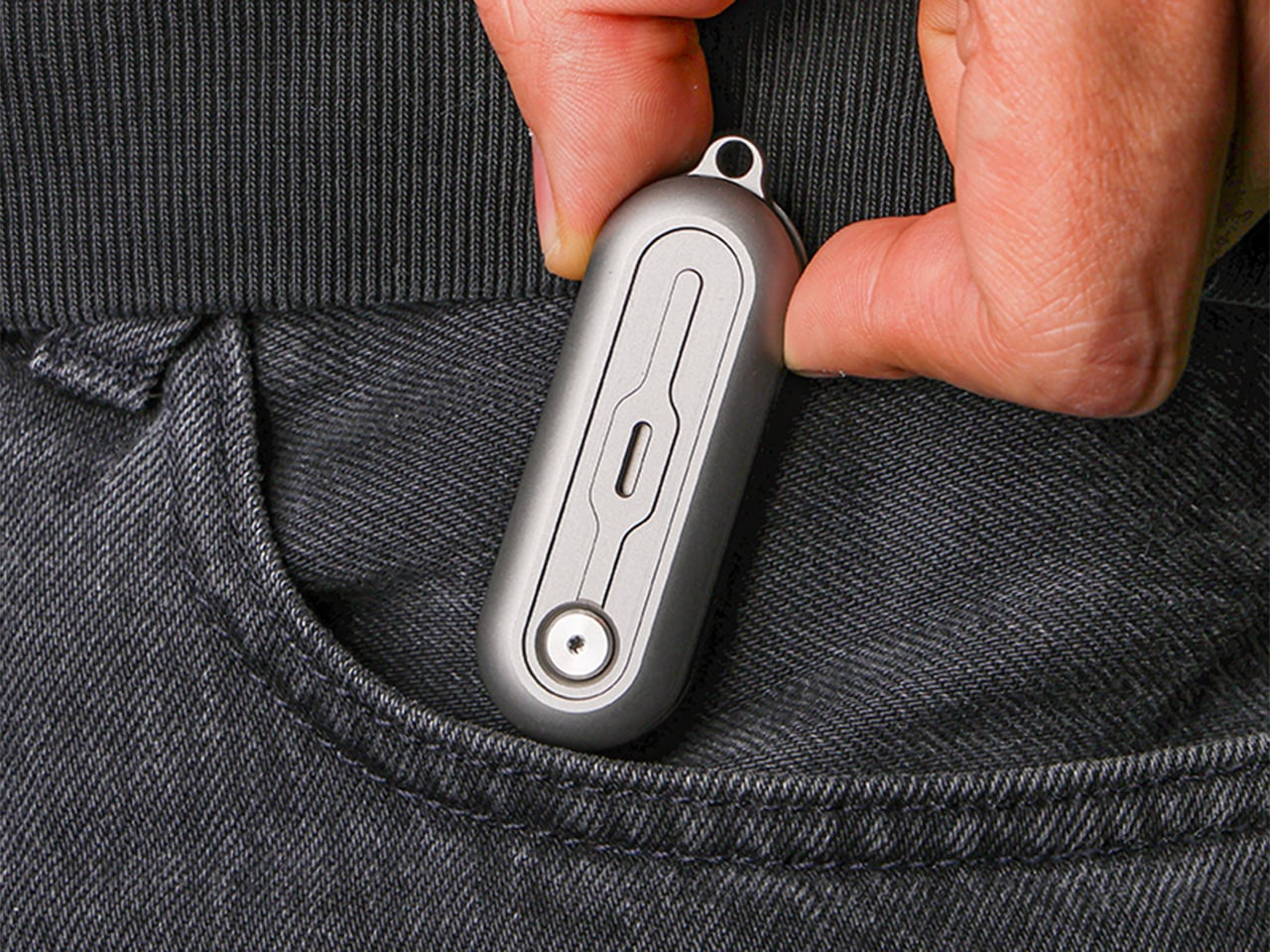
At 64.4mm closed, the TiNova II is shorter than a standard credit card (85.6mm). Opened, the entire knife measures 100mm, just under four inches. The thickness is 12.4mm, slimmer than a stack of three coins. These dimensions put it squarely in the micro-folder category alongside knives like the CRKT Pilar or the Kershaw Chive, but the deployment method sets it apart. Most compact folders use a flipper tab or a thumb stud, mechanisms that require deliberate engagement. The TiNova II uses rotational momentum, which feels closer to spinning a fidget toy than opening a knife. The roller bearing does most of the work. Ideaspark uses what they call a Kugellager bearing (the German term for ball bearing), which is a pretty great way of saying their precision-made bearings boast the kind of well-engineered frictionless movement you’d expect from the Germans. The result is a glide that feels even smoother than air, with no grinding or resistance as the handle rotates.

The magnetic system does several jobs simultaneously. First, it holds the knife closed when it’s in your pocket, preventing accidental deployment. Second, it provides tactile and audible feedback at both the open and closed positions, giving you a satisfying click that confirms the blade is locked. Third, it creates just enough resistance during the spin to make the motion feel controlled rather than loose. The magnets are arranged to pull at the end of each rotation, which is why the knife doesn’t just spin freely like a bearing on a shaft. You feel the mechanism working with you, and that feedback loop is what makes the fidget factor so addictive. The physics here are simple but effective. The magnetic force increases as the scales approach their final position, so the last few degrees of rotation feel like they’re being pulled into place.

An elliptical body shape means there’s no fixed orientation when you’re holding it. You can rotate the knife in your palm, flip it between fingers, or just run your thumb along the curved surface. The absence of sharp edges or defined corners makes it comfortable to manipulate for extended periods, which sounds trivial until you compare it to a traditional rectangular folder that starts digging into your hand after a few minutes. Ideaspark claims this design philosophy came directly from user feedback on the Gen 1 model, where backers loved the mechanism but found the angular body uncomfortable during long fidget sessions. The oval profile solves that problem by removing pressure points entirely.

Two tritium slots run along the length of each handle scale, sized for 1.5mm x 6mm tubes. Tritium is a self-luminous isotope that glows continuously for around 25 years without batteries, charging, or external light. Drop a pair of green, blue, or orange vials into those slots and the knife becomes visible in complete darkness, which is useful for finding it in a bag or on a nightstand. The glow is subtle, not the kind of thing that lights up a room, but enough to catch your eye when you’re fumbling around in the dark. The tritium slots also add a small visual detail that breaks up the otherwise minimal design.

The blade deployment works two ways depending on how you hold it. The long spin involves gripping one handle scale and flicking your wrist, which uses centrifugal force to carry the other scale through a full 360-degree rotation. The motion is slow, weighted, and deliberate. The short flip is faster: a quick wrist snap that sends the blade open with a crisp tick as the magnets engage. Both methods work one-handed, and both feel satisfying in different ways. The long spin has a hypnotic, rolling quality. The short flip is sharp and immediate. You’ll find yourself alternating between them depending on your mood or how much time you’re killing during a meeting.

The knife comes with a keychain hole at one end, sized for a standard split ring. Slip it onto your keys and it disappears into the cluster, weighing less than most car fobs. The compact dimensions mean it works equally well on a wallet chain, a backpack strap, or worn as a necklace pendant if you’re leaning into the EDC-as-jewelry aesthetic. The tritium glow makes it viable as a functional piece of illuminated jewelry, though calling it that probably annoys traditional knife collectors who prefer their folders utilitarian and unadorned.

The TiNova II ships in two finishes: sandblasted (raw titanium) and black coated (PVD). Both finishes come with the same lifetime warranty, which covers manufacturing defects and structural failures. The knife is available now starting at $45 for the launch day special (36% off the $70 MSRP), with free worldwide shipping included. International shipping is scheduled for August 2026.

Click Here to Buy Now: $49 $70 (30% off). Hurry, only 64/100 left! Raised over $62,000.

The post This $45 Titanium Pocket Knife Uses Centrifugal Force and Neodymium Magnets Instead of A Button Lock first appeared on Yanko Design.
A Mouse You Can Squeeze Like a Stress Ball While You Work

The computer mouse hasn’t changed much in decades. Still mostly hard plastic, still shaped like a bar of soap, still asking your hand to grip something that gives absolutely nothing back. The rest of the desk setup has evolved, ergonomic chairs, standing desks, wrist rests, but the one device your hand touches for eight hours straight has remained stubbornly rigid and deeply uninteresting.

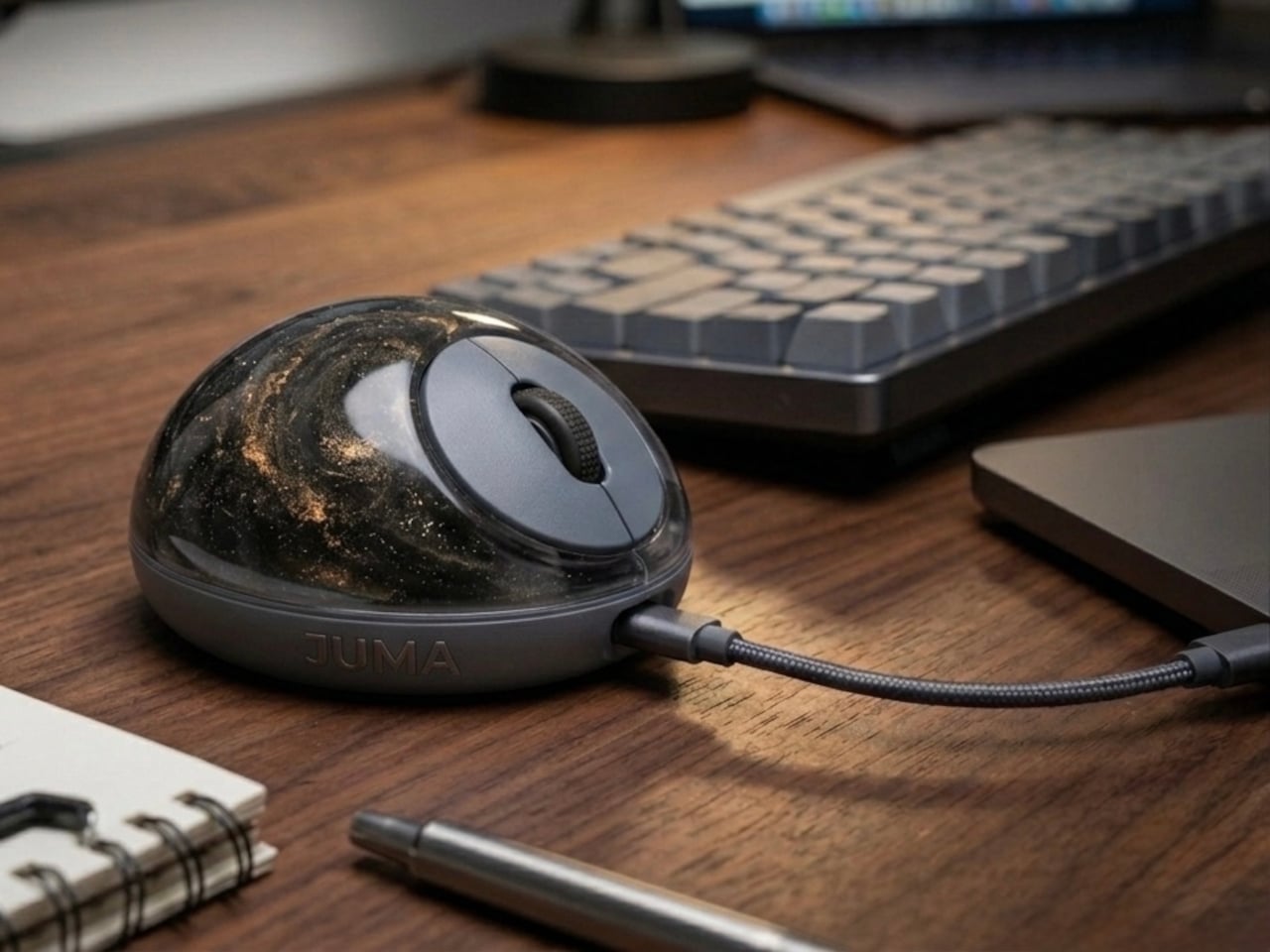
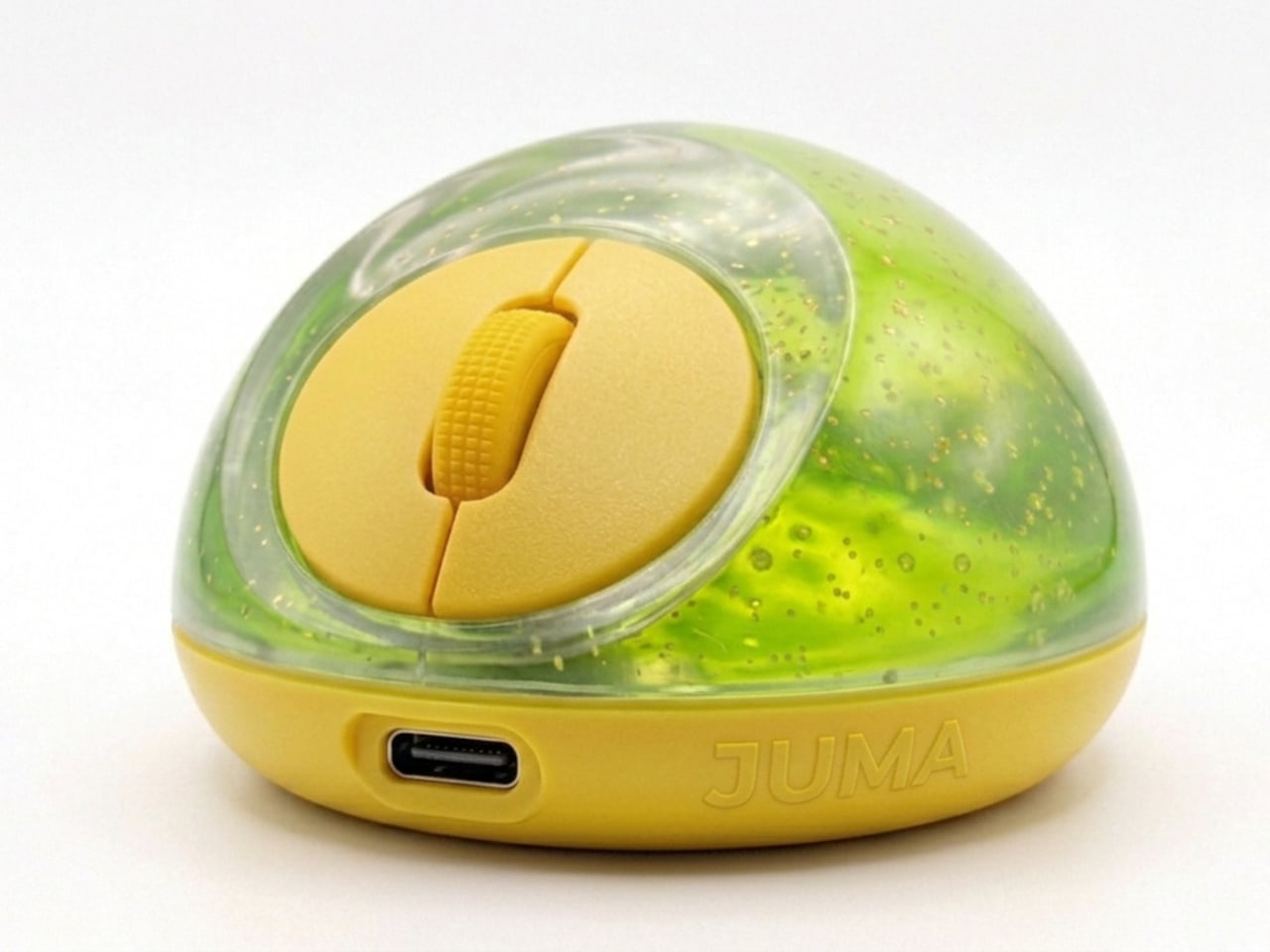
The PILLIGA mouse concept makes a fairly obvious argument for why that should change. Instead of hard plastic, the entire upper chassis is a squishy, flexible membrane packed with a viscous, translucent gel. It’s the same basic impulse that makes people reach for a stress ball mid-meeting, except it’s also the thing you need to get any work done.

Designer: Guillermo Gonzalez

The thinking behind it is straightforward enough. Deadline pressure builds, calls run long, and the urge to fidget becomes almost impossible to ignore. Rather than keeping a stress ball in the desk drawer as a separate ritual, the mouse folds that habit directly into the tool that’s already in your hand. You can squeeze, press, or knead the gel without ever lifting your hand off your workflow.

The dome shape isn’t just for show, either. It follows the natural arch of your palm rather than forcing your hand flat against a hard surface, and the gel underneath absorbs the kind of low-level muscular strain that builds up quietly over hours of clicking and scrolling. It’s the sort of ergonomic consideration that usually requires its own dedicated accessory, not just a different material.

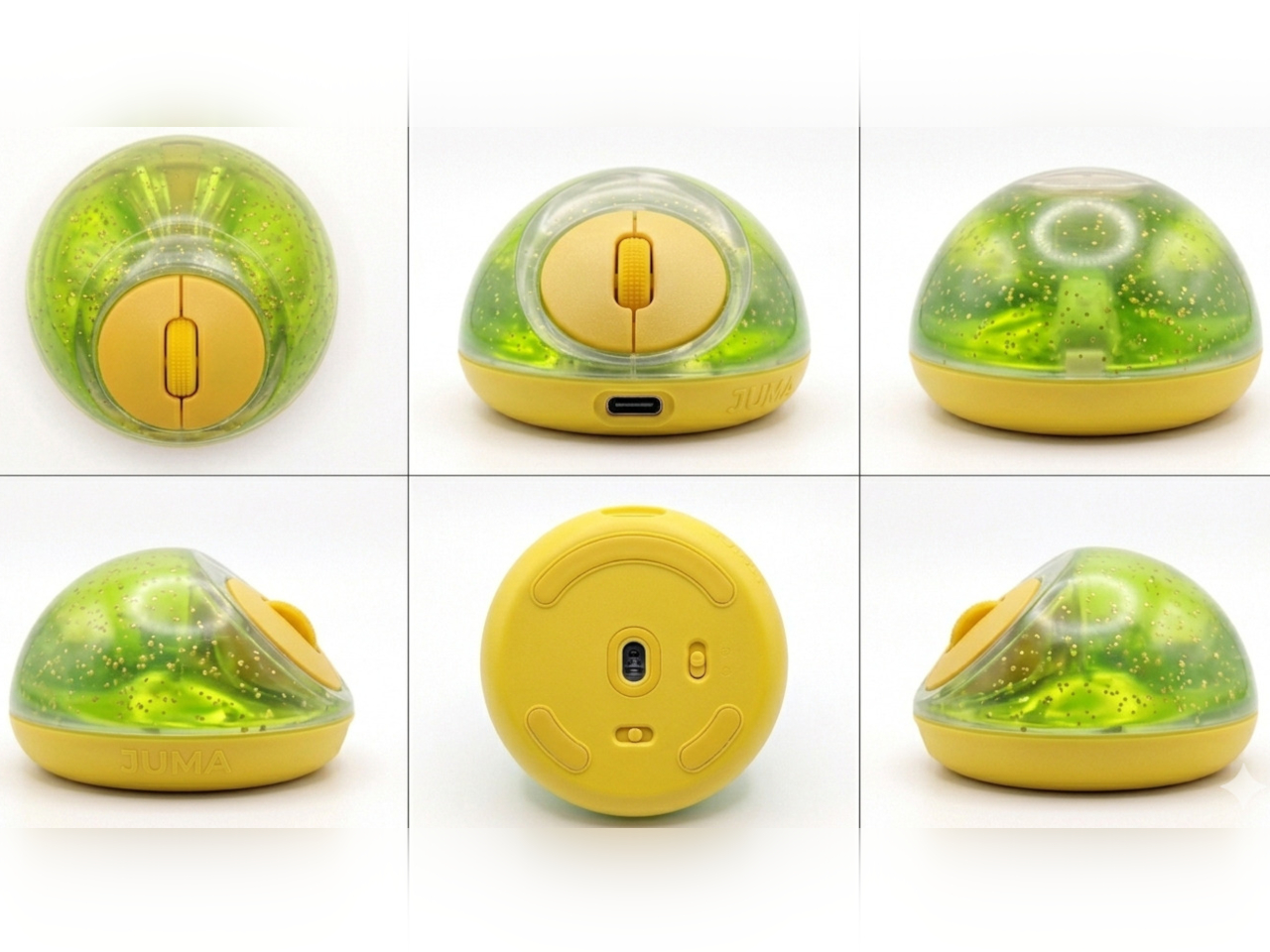
The controls themselves are sensibly laid out. A flat circular interface sits embedded in the front of the mouse, cleanly split for left and right clicks, with a textured, rubberized scroll wheel running between them. A USB-C port at the front handles charging, keeping the wireless design intact without the inconvenience of a separate charging dock. The bottom carries the optical sensor and power switch.

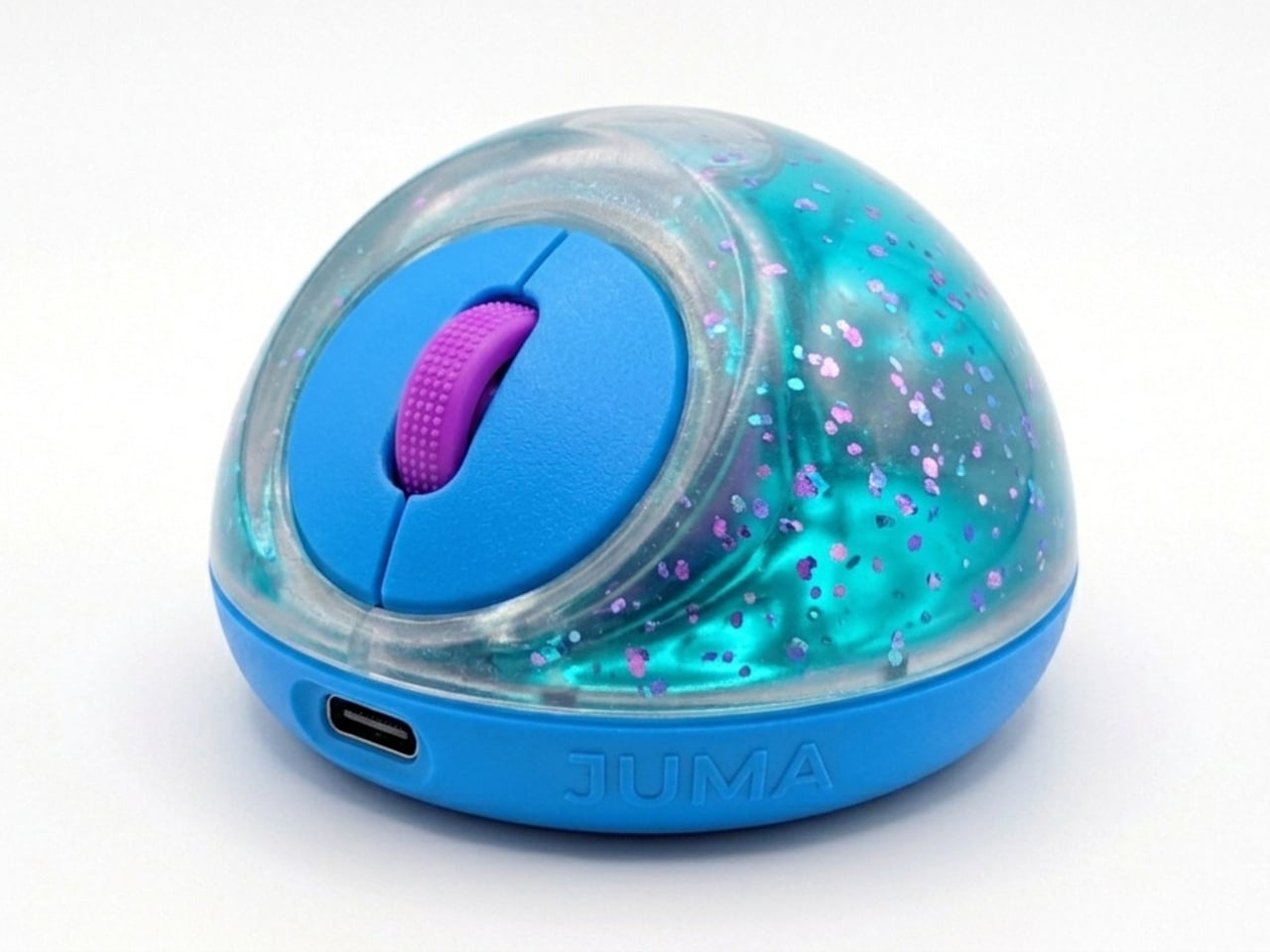
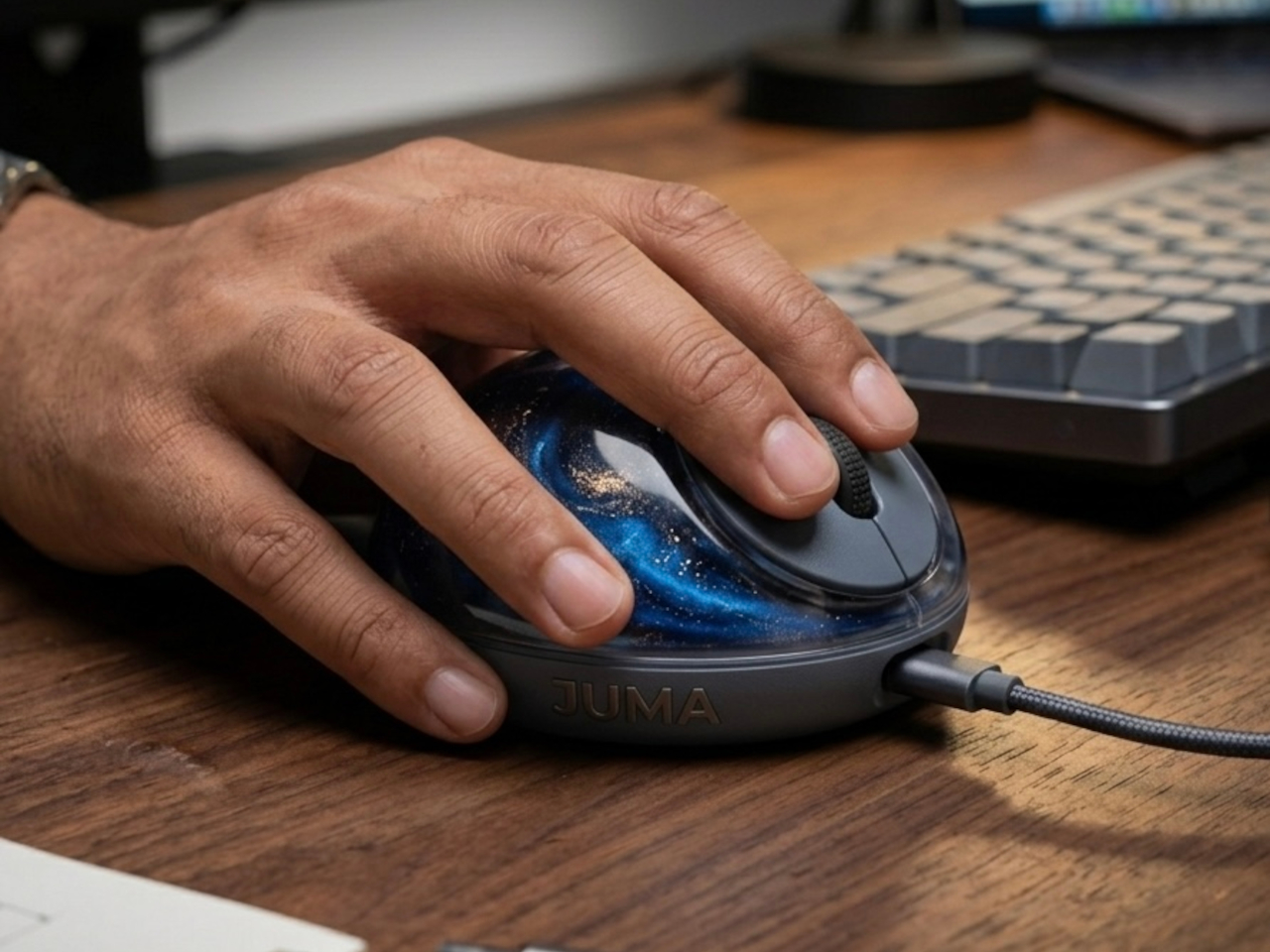
What makes the PILLIGA mouse concept genuinely interesting is how far it extends color as a design element. The gel comes in several variants, from vivid green with gold flecks and a blue version scattered with purple glitter, to darker, more subdued options that look considerably more at home on a professional desk. Each colorway pairs with a matching base and click interface, making the whole thing feel deliberate.

That range matters. The more reserved colorways hint that this isn’t a novelty item for a niche corner of the internet; it works just as comfortably on a professional desk as it does on a creative’s workstation. The gel doesn’t make it look cheap. It makes it look like something designed by someone who gave serious thought to what a mouse should feel like.

Concepts like the PILLIGA are more useful as provocations than promises. Computer mouse design has been coasting on the same assumptions for decades, and the idea that your primary input device could also be physically satisfying to hold hasn’t come up often enough. The gel-filled body raises the question, and that’s honestly more than most peripheral design manages to do.

The post A Mouse You Can Squeeze Like a Stress Ball While You Work first appeared on Yanko Design.

McDonald’s New Drinks Come With a $58 Fashion Accessory

Fast food collaborations have a way of catching me off guard at this point. I’ve accepted that pretty much any brand can team up with pretty much any designer, and the result will land somewhere between genuinely inspired and deeply confusing. But when McDonald’s announced a partnership with New York-based designer Susan Alexandra to launch a collection of hand-beaded drink carriers, I had to stop scrolling.

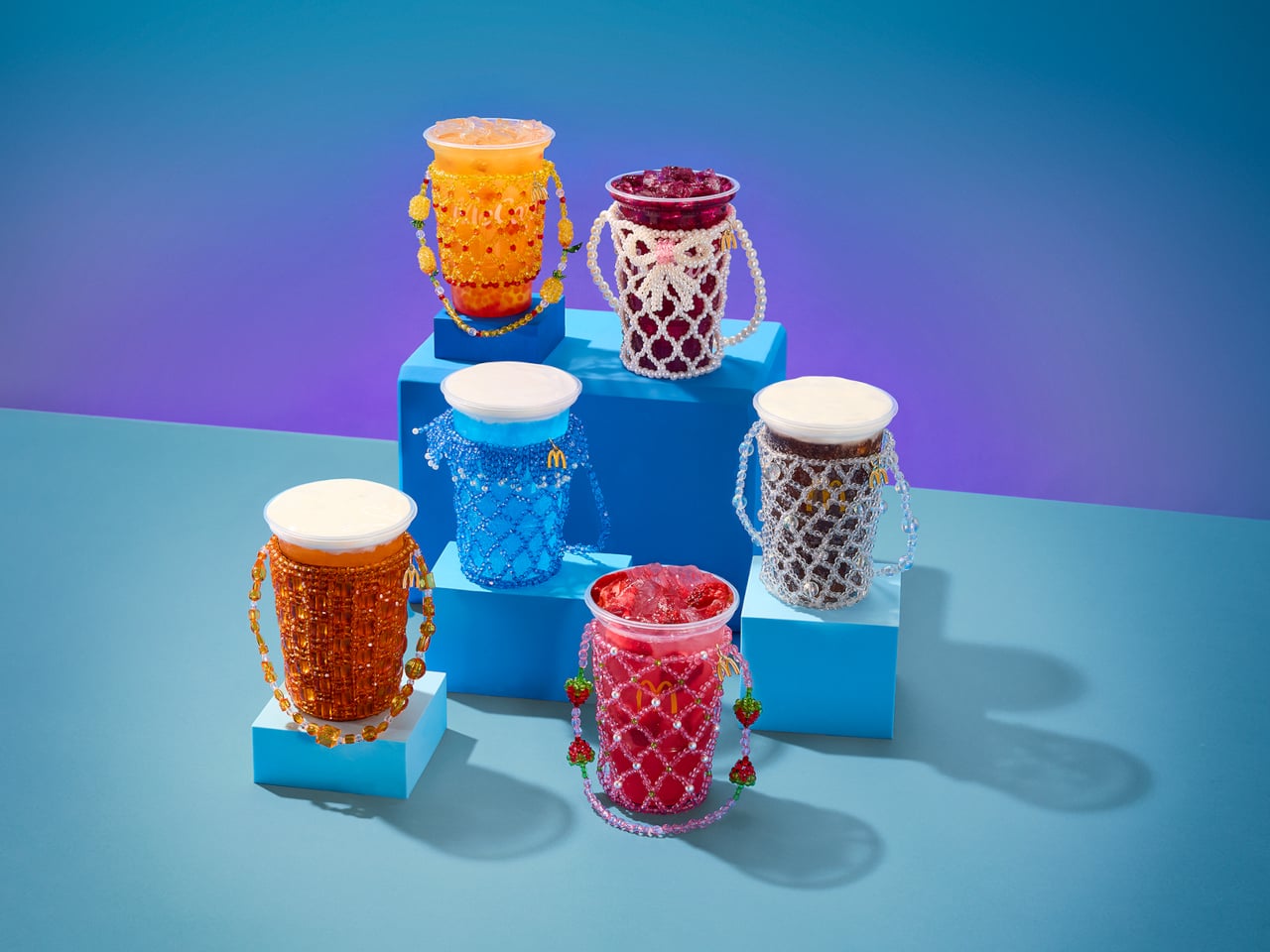
The timing is intentional. McDonald’s is rolling out its first-ever lineup of Refreshers and crafted sodas starting May 6, six new drinks that range from a Mango Pineapple Refresher to a Dirty Dr Pepper, each with a personality loud enough to inspire its own aesthetic. Think freeze-dried fruit, popping boba, cold foam. The drinks are clearly built for a generation that treats a beverage order as a mood, not just a thirst solution. And Susan Alexandra, who has spent years turning beaded bags and accessories into cult objects, is exactly the right collaborator for that energy.

Designer: McDonalds x Susan Alexandra

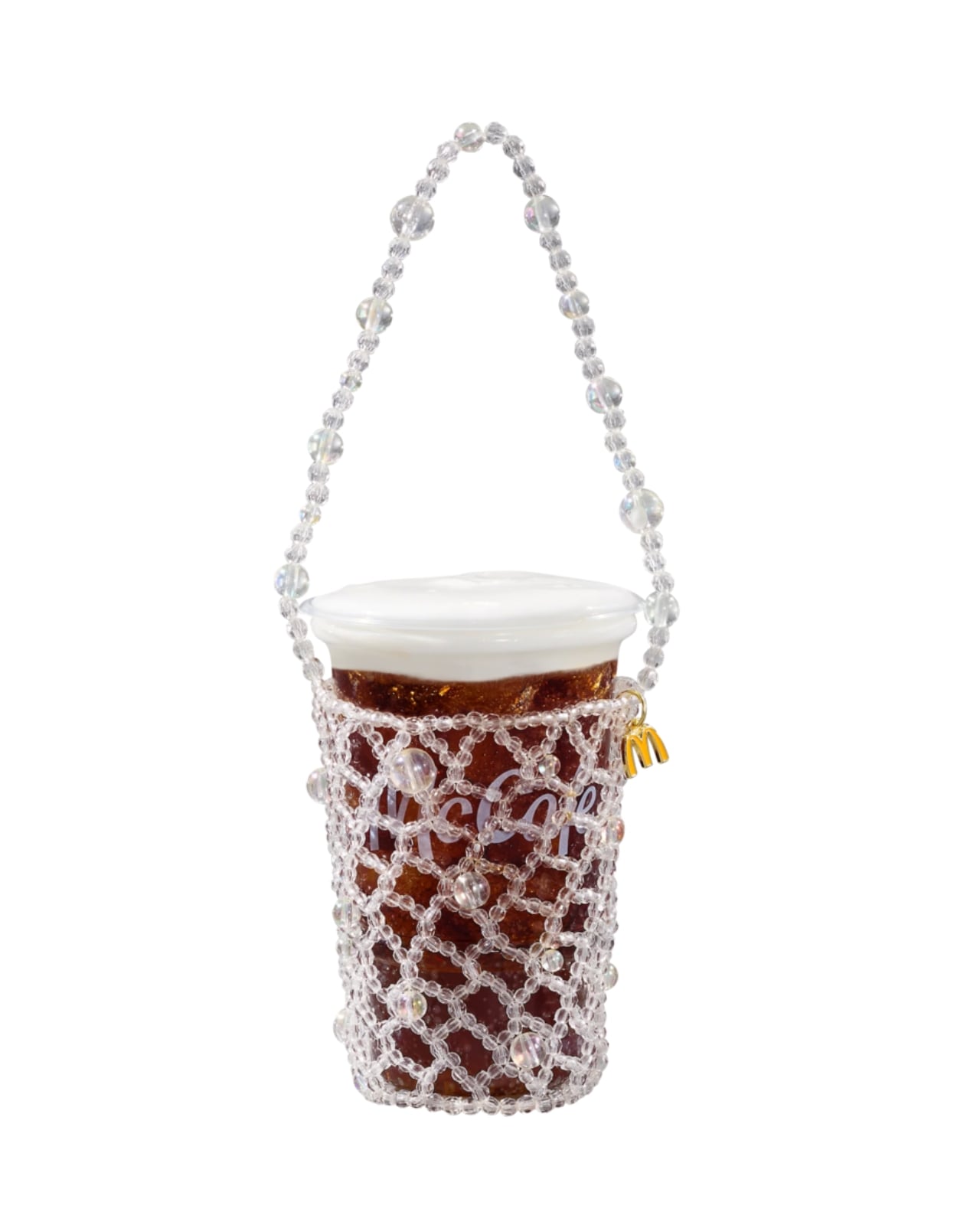
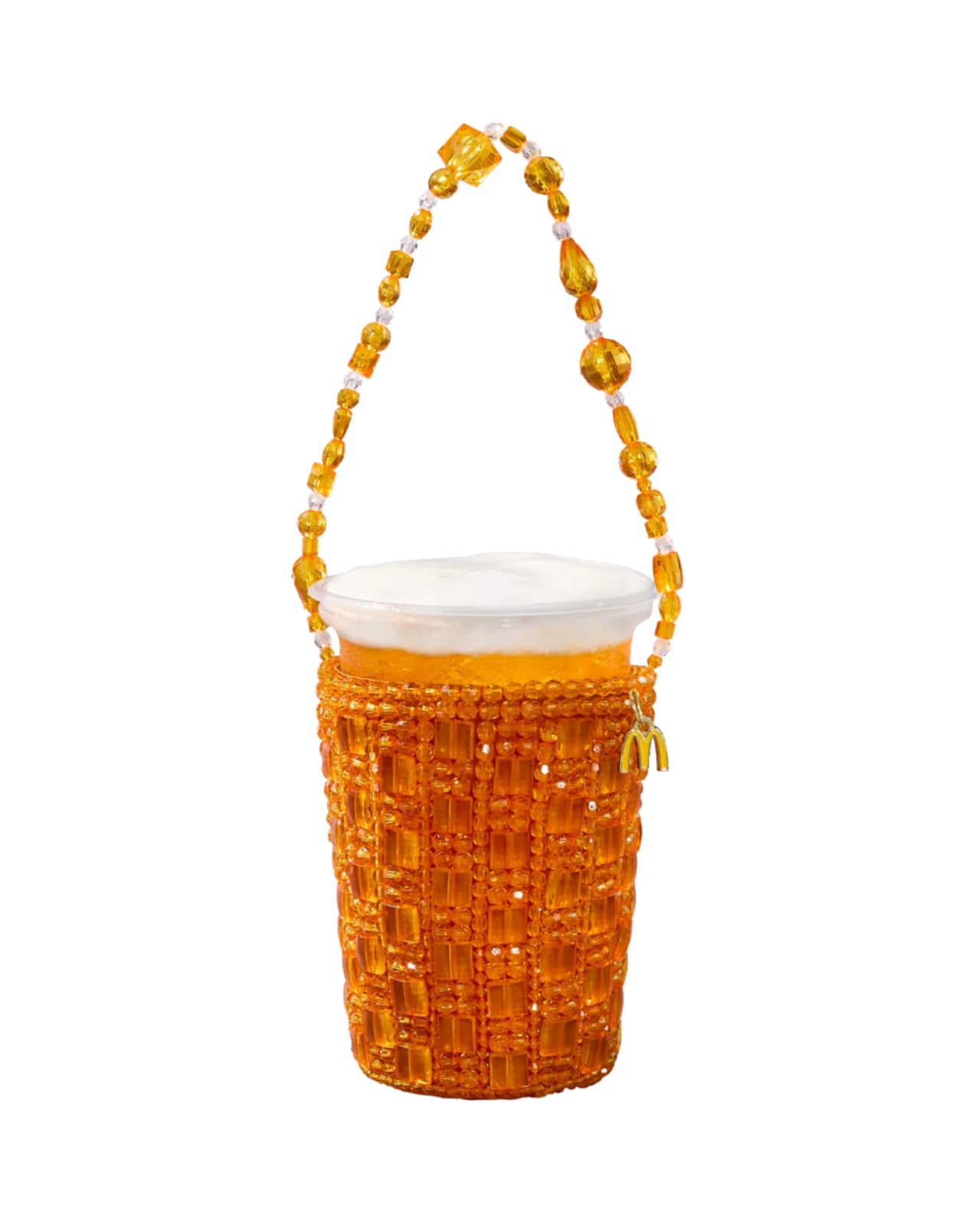
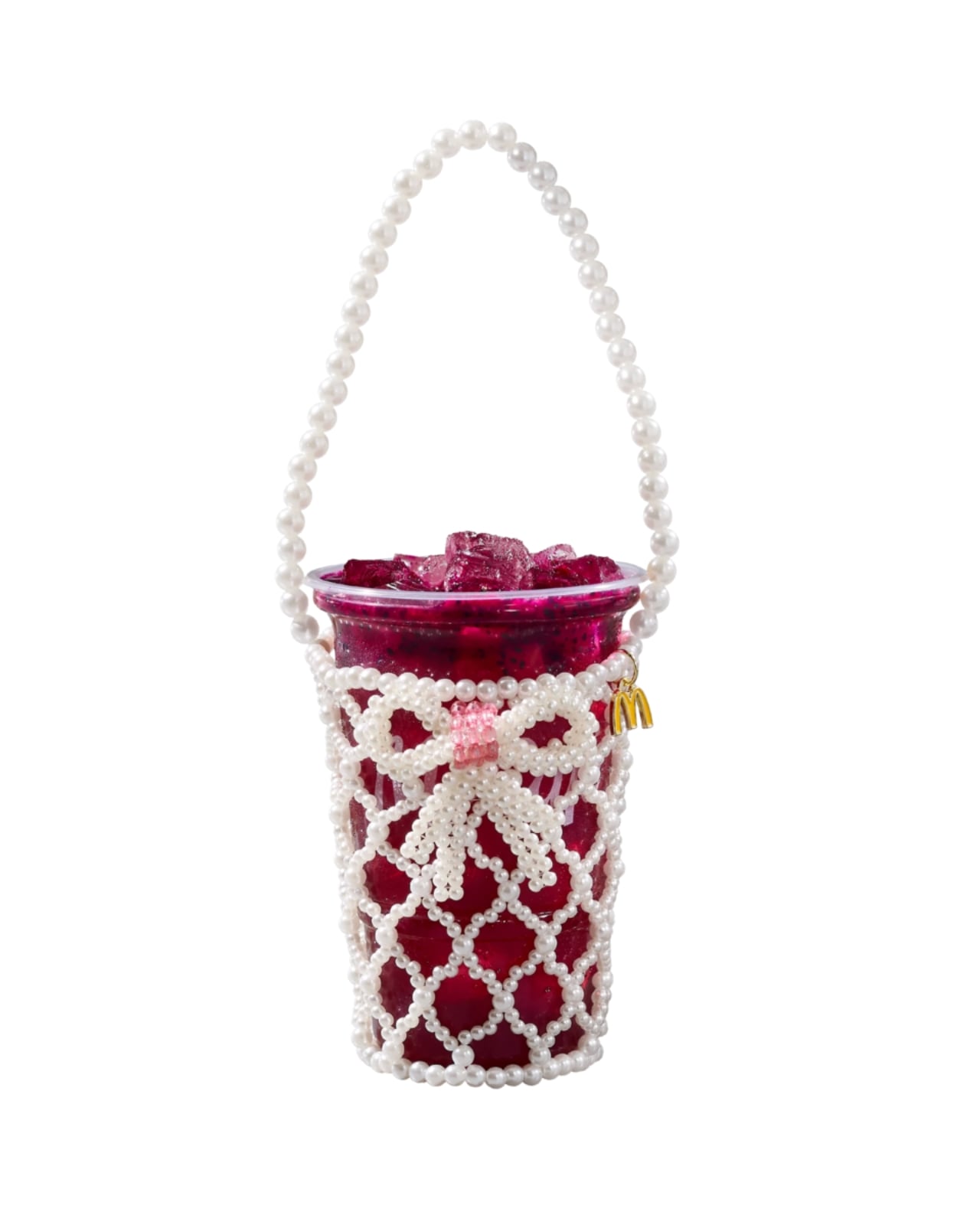
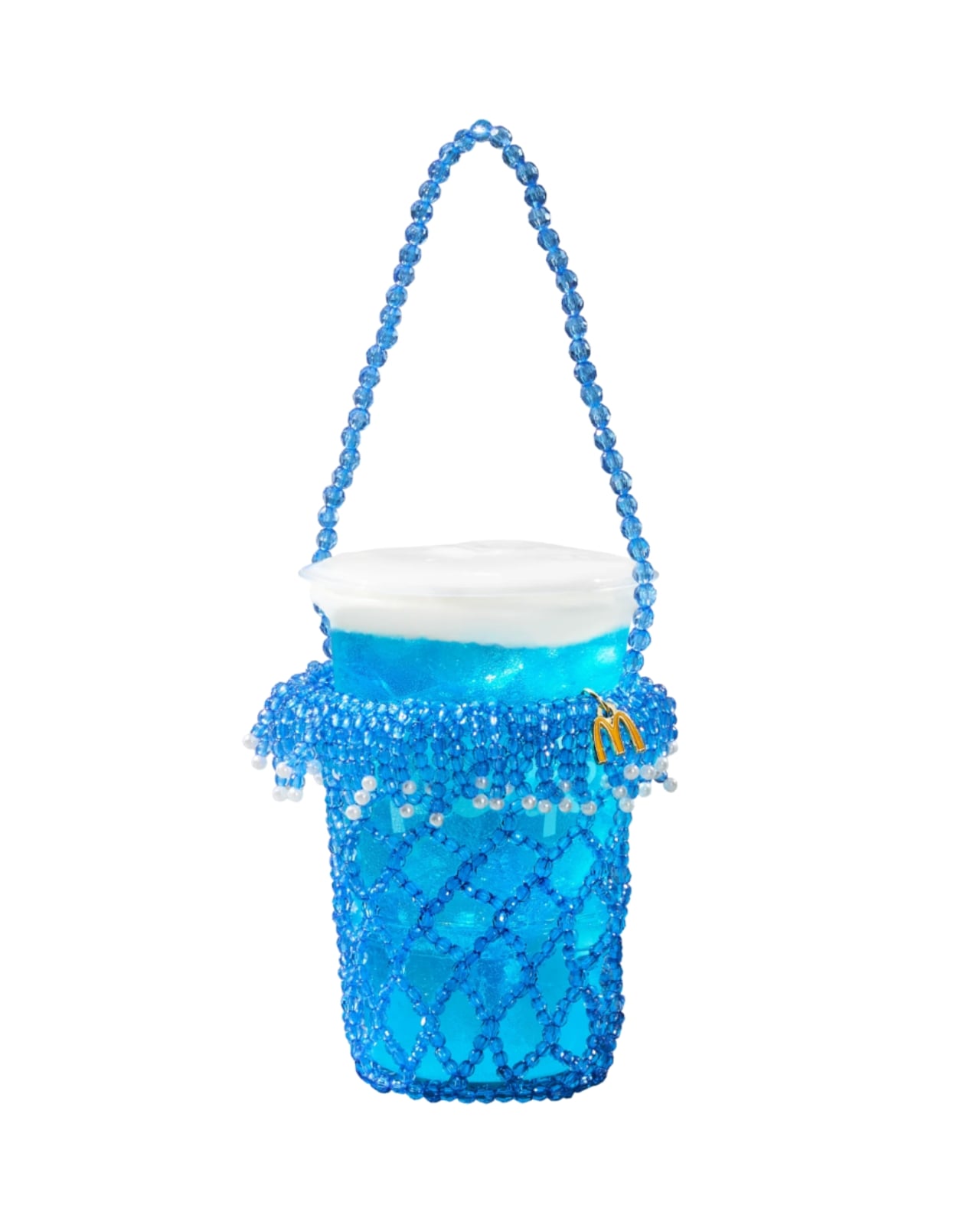
The collection includes six hand-beaded carriers, one for each new drink. Each design pulls color and texture directly from its corresponding flavor. The Strawberry Watermelon Refresher carrier is red and pink, soft and berry-bright. The Blackberry Passion Fruit version leans into dainty white beads. The Mango Pineapple has tropical warmth written all over it. These are not subtle pieces. They are made to be seen, and that is the entire point.

Susan Alexandra’s work has always operated in that specific visual register where maximalism meets handcraft. Her bags are the kind of thing you notice from across a room, the kind of accessories that start conversations. Matching that energy to a McDonald’s cup feels odd on paper, but when you actually look at the carriers, the logic holds. The drinks are colorful, slightly chaotic, and unapologetically fun. The accessories match.

Prices range from $48 to $58 depending on the design, which I know will prompt some eye-rolling. It’s a drink carrier. For McDonald’s. But that framing also misses the point. Susan Alexandra pieces are collectibles, objects that people hold onto not because they are practical but because they carry a specific cultural moment with them. A $48 beaded carrier that references a fast food soda is not a purely functional purchase. It is a souvenir. A more interesting souvenir, I’d argue, than most things that get sold under a collab banner.

The carriers are sold exclusively on SusanAlexandra.com starting May 6, in limited quantities. Each one also comes with a $10 McDonald’s Arch Card, which is a small but genuinely clever touch. The idea is that you buy the carrier, then go get the drink it was made for. As brand strategy goes, it’s actually pretty smart. It ties the accessory back to the experience rather than letting it float into the abstract realm of limited edition merch.

What makes this collaboration land is that it doesn’t feel like a desperation move from either side. McDonald’s is genuinely expanding its beverage program in a significant way, and it needs the launch to feel like a cultural moment rather than just a menu update. Susan Alexandra brings a specific visual language and a loyal customer base that overlaps with exactly the kind of person who cares about aesthetics down to what’s in their cup holder. The match is less random than it first appears, and the choice of collaborator signals how seriously McDonald’s is taking this particular moment.

I’m not saying everyone needs a hand-beaded carrier for their Sprite Berry Blast. But I do think there’s real craft in how this collaboration was conceived. The carriers are not just branded merchandise. They are wearable interpretations of a drink, which is a genuinely strange and interesting design brief that Susan Alexandra executed with her signature commitment to color and detail. Fast food has been flirting with fashion for a while now. This is one of the better executions I’ve seen, and I’ll be curious whether any of the six designs sell out before you even finish reading this.

The post McDonald’s New Drinks Come With a $58 Fashion Accessory first appeared on Yanko Design.
This MagSafe iPhone Grip Is Actually a Self-Defense Spray in Disguise

Personal safety products have a design problem few people talk about. Pepper sprays and personal alarms are either too bulky to carry consistently or so visually aggressive that most people feel uncomfortable with them in plain sight. The result is that these tools end up buried at the bottom of a bag or forgotten on a shelf, making them nearly useless when they’re needed most.

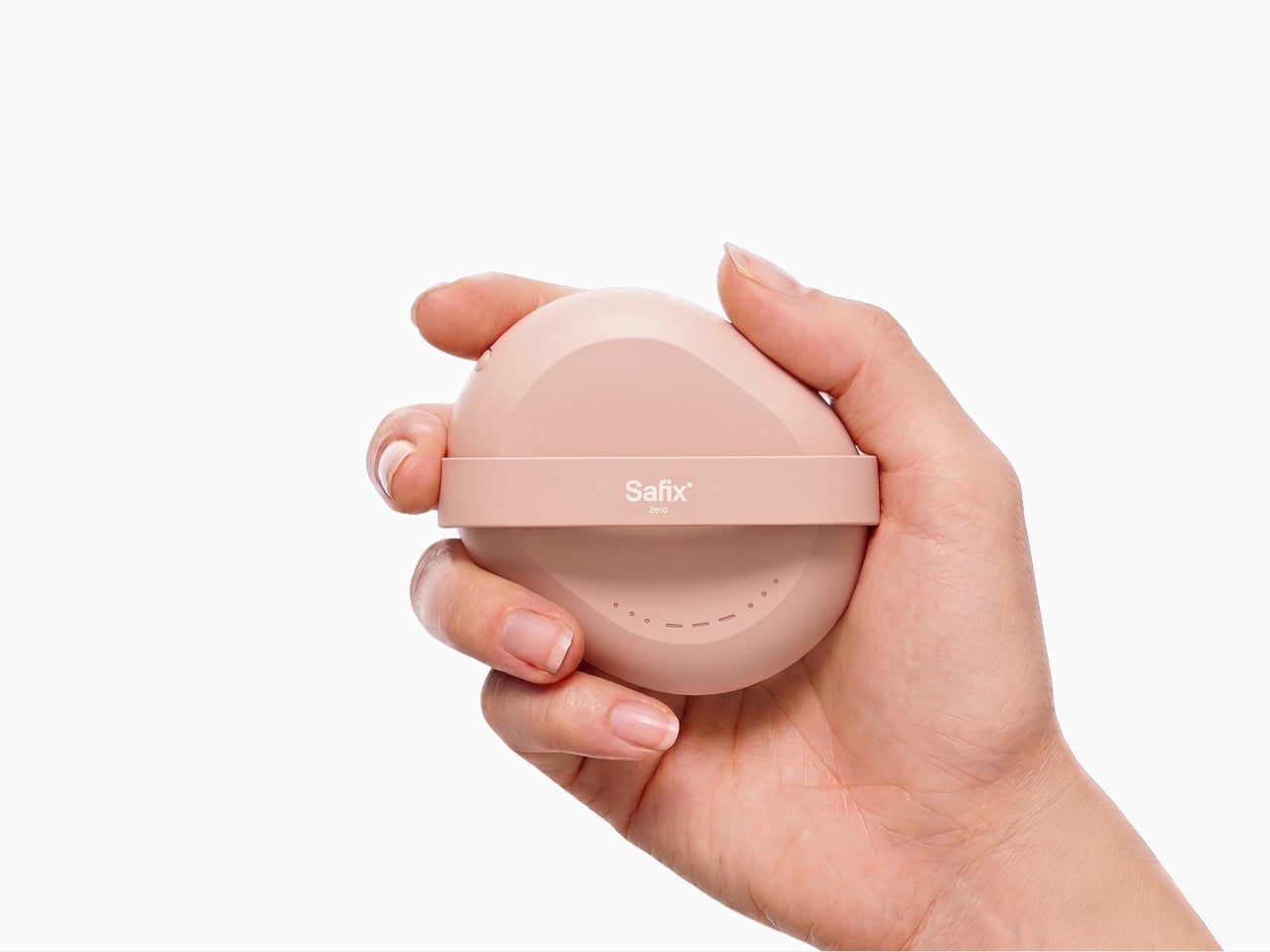
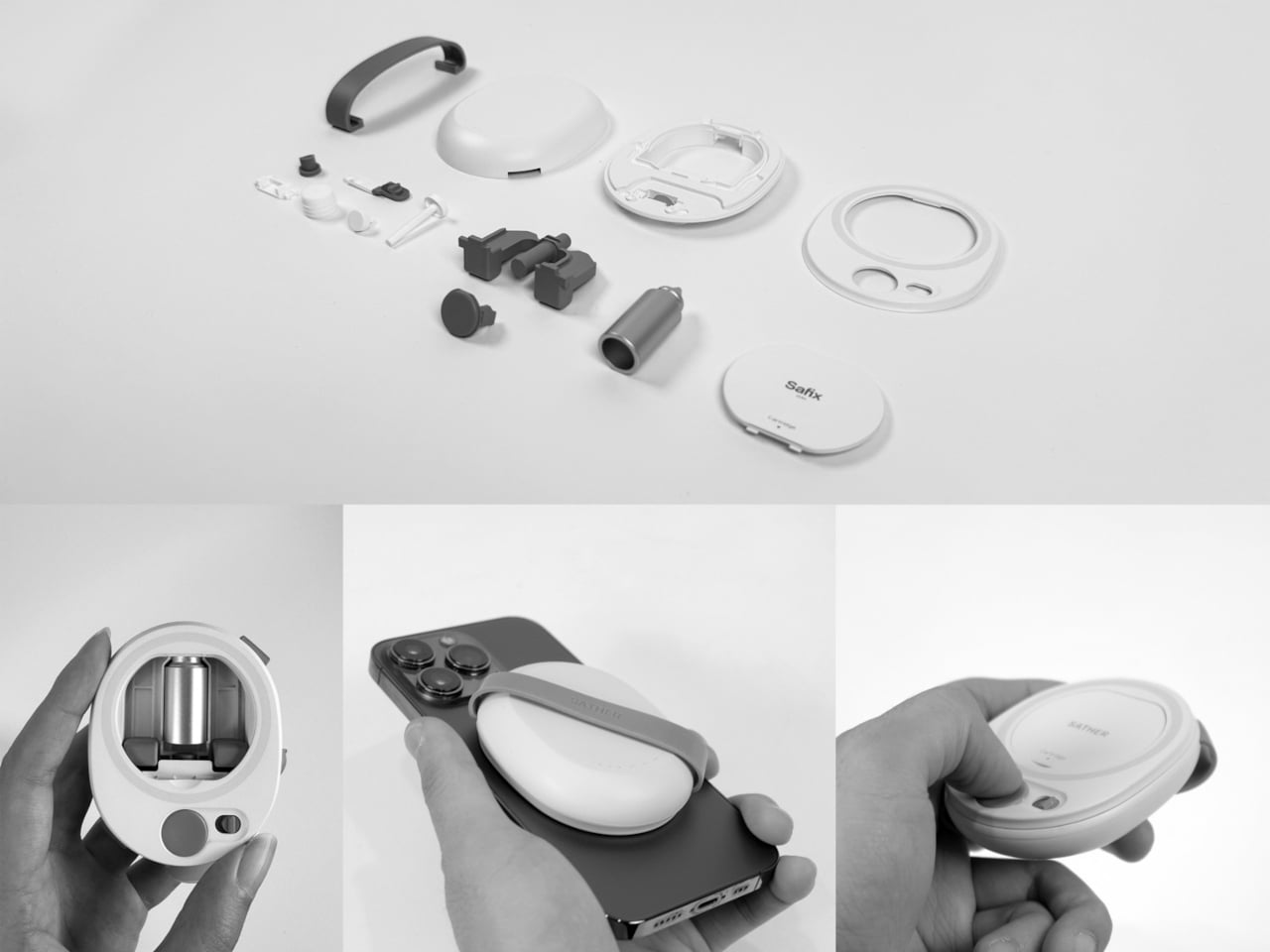
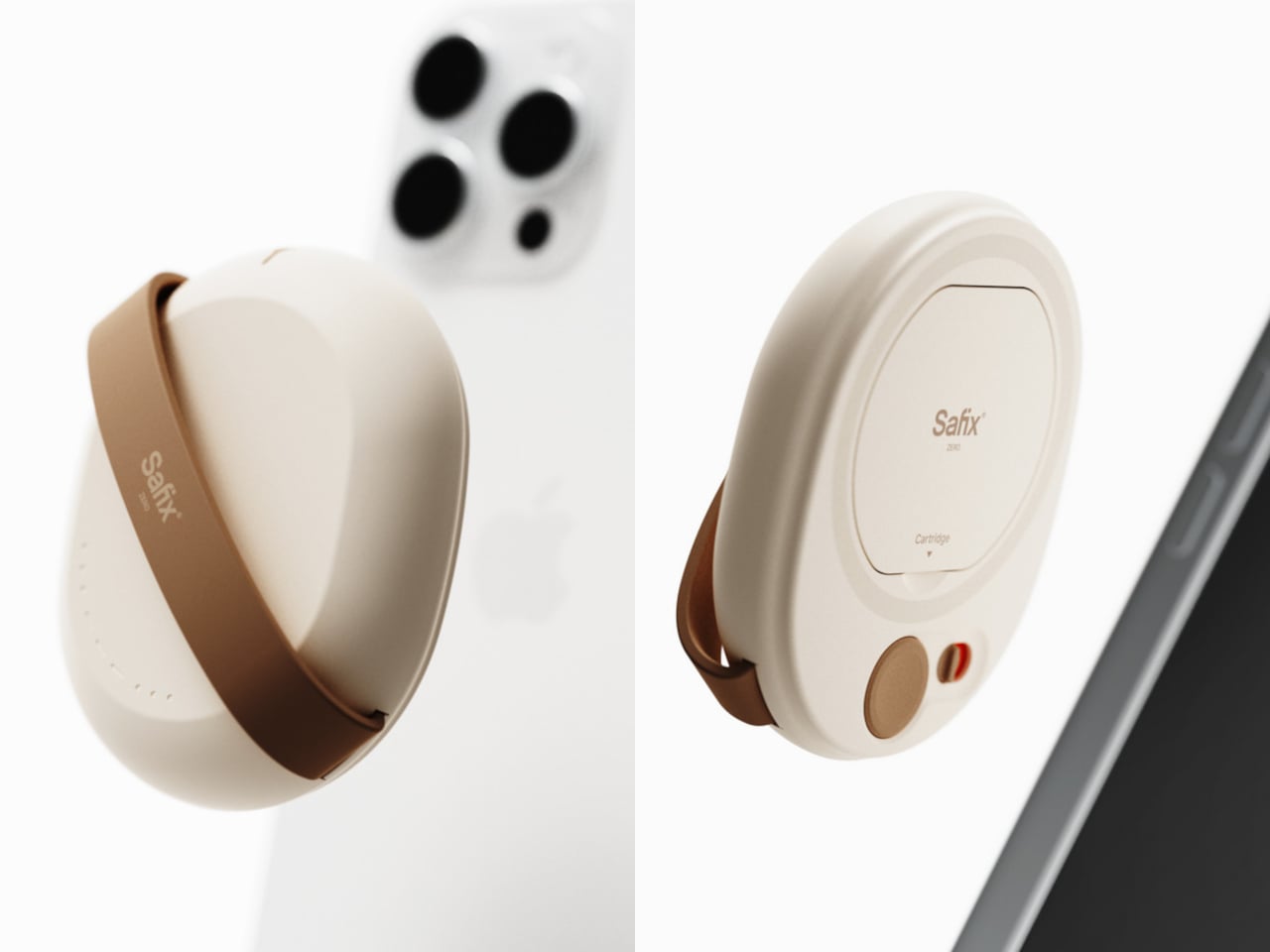
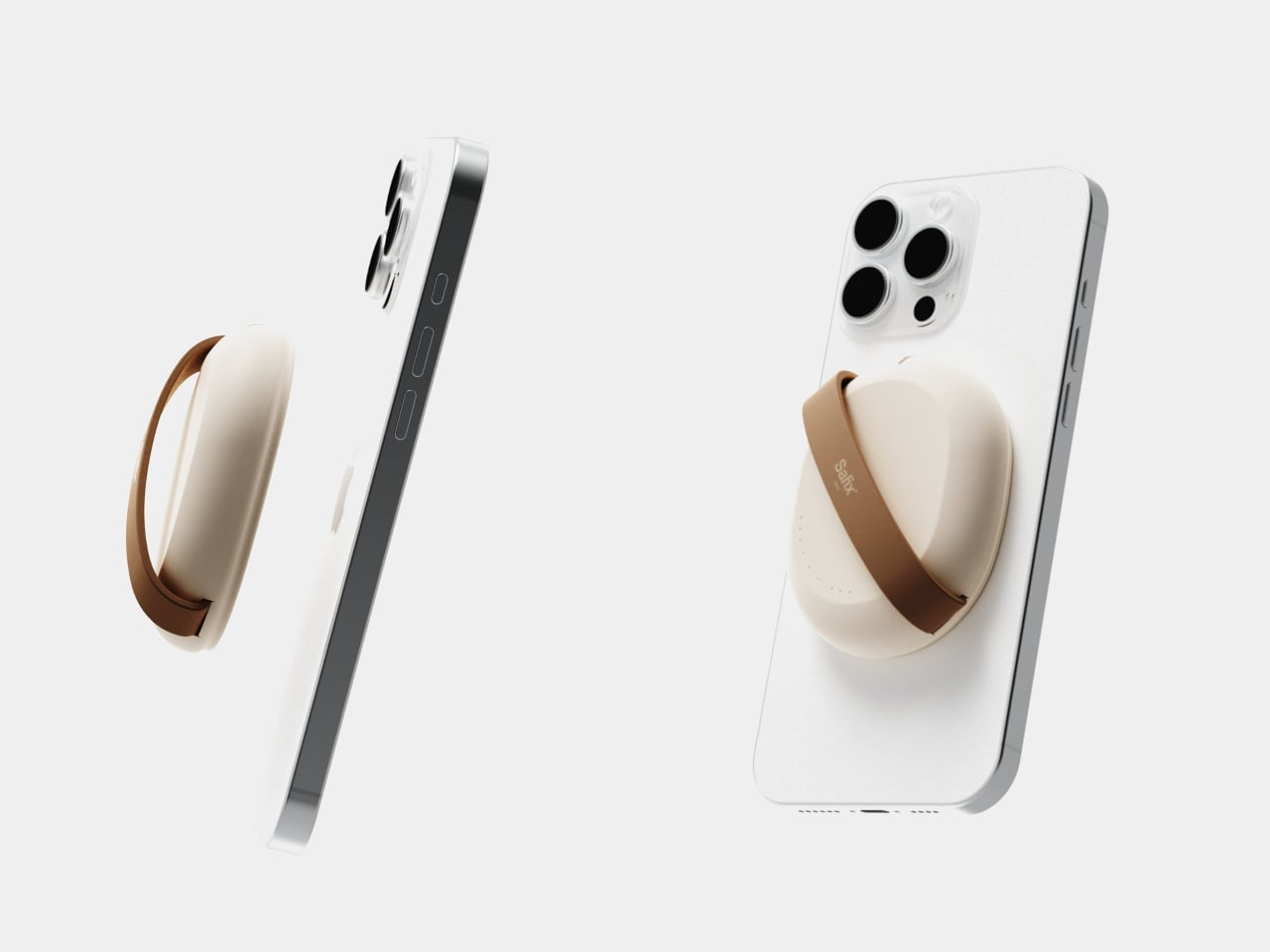
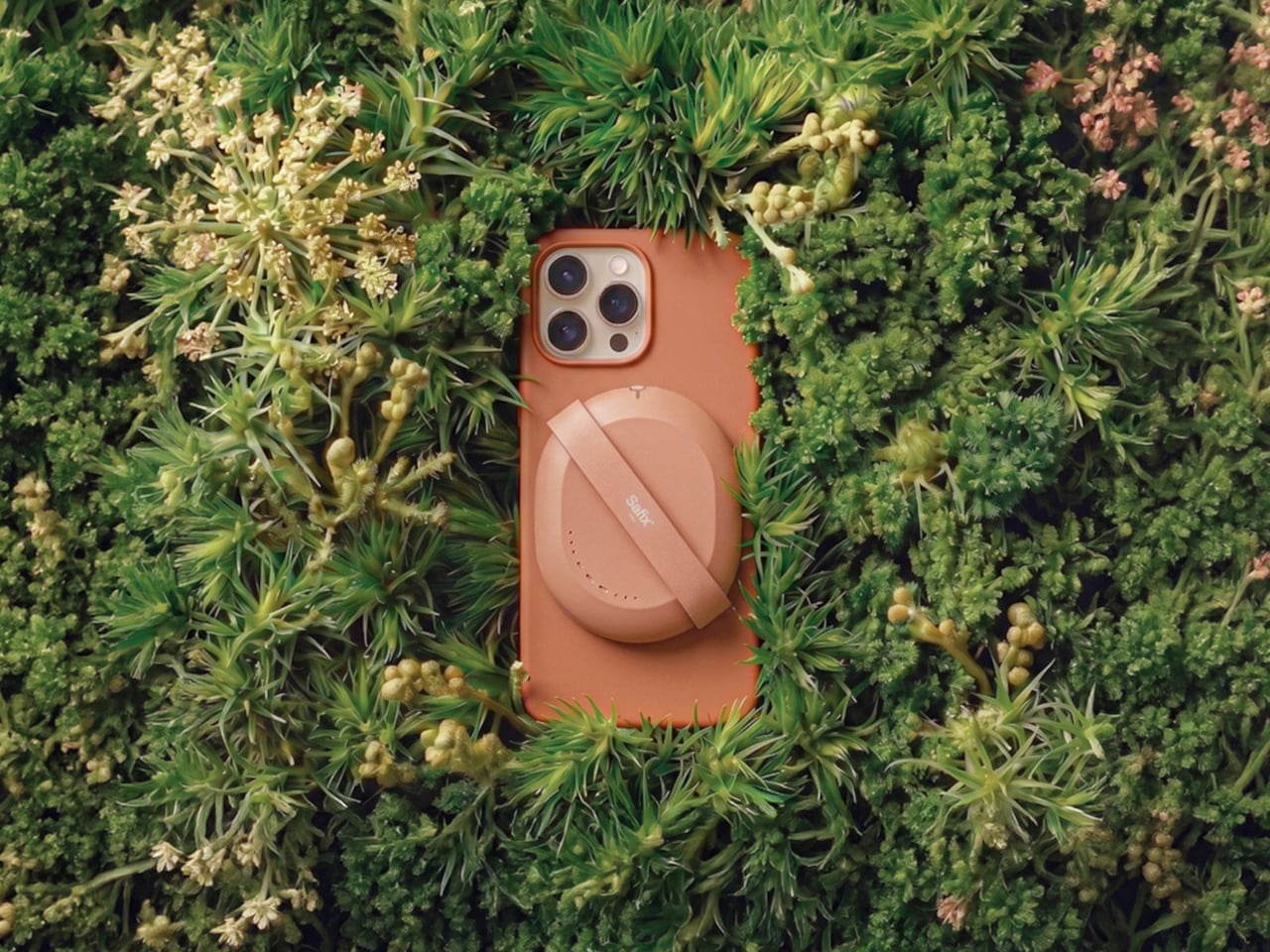
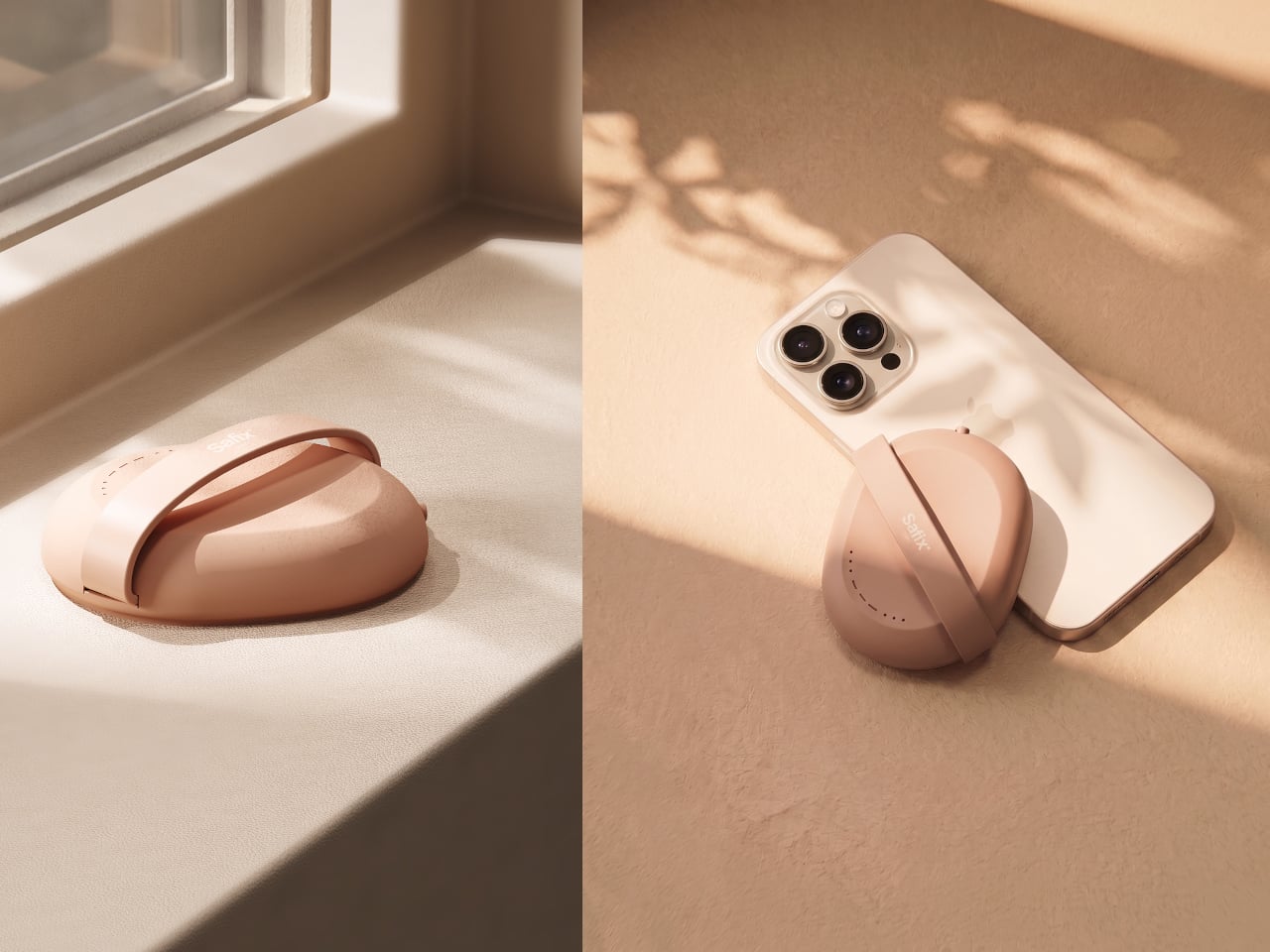
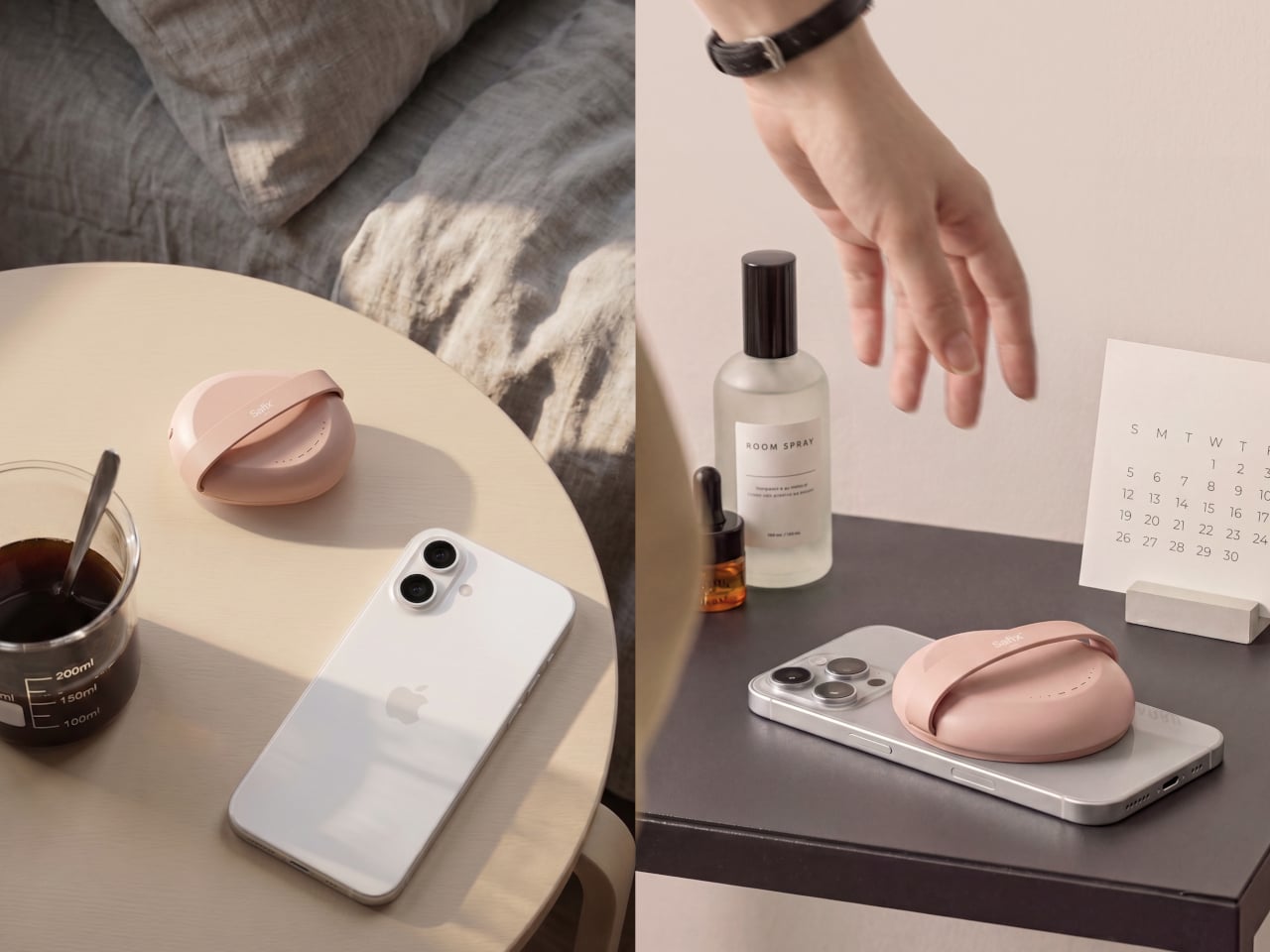
Safix is a concept that tries to close that gap by attaching a self-defense spray directly to the back of your iPhone. Built around Apple’s MagSafe ecosystem, it snaps onto the phone magnetically and functions as a finger grip during normal use. The idea is that the safest place to keep your protection is on the one thing you almost never put down.

Designer: Sunghwan Cho, Sooyeol Lee, Yeongeun Park, Geontak Oh, Daero Lee, Jinho Choi, Jungwoon Im (UNICHEST)

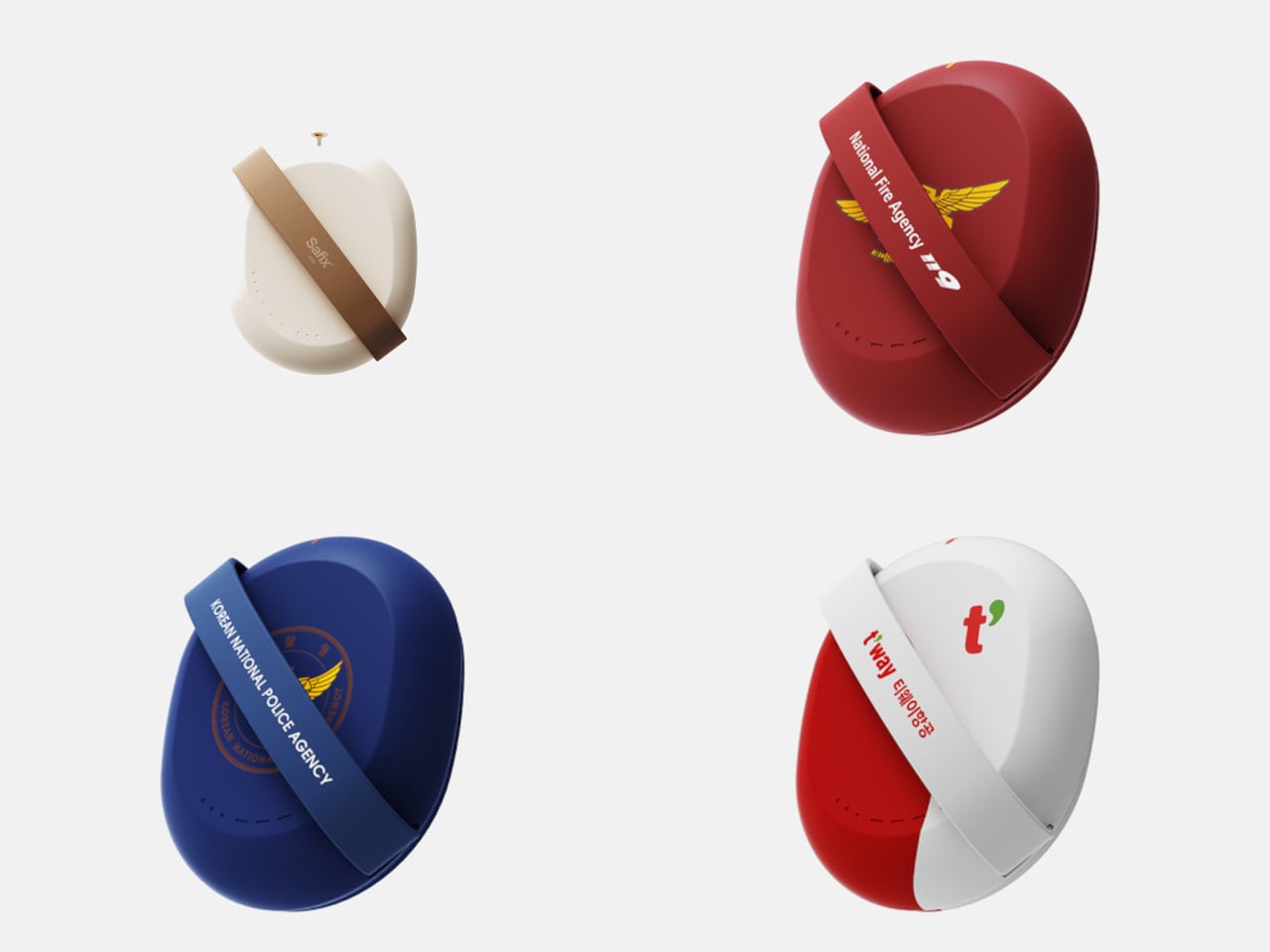
What makes this particularly clever is how little it looks the part. Safix borrows its silhouette from the rounded, organic contours of smooth river pebbles and comes finished in warm, muted tones. Its stone-like texture positions it firmly in lifestyle territory, the kind of object you’d expect sitting next to a room spray or a small succulent on a bedside table, not clipped to a keychain.

The team calls this approach the “Gentle Arc,” a form language that puts emotional comfort on equal footing with physical function. The thinking goes that self-defense tools carry a kind of psychological weight, and that weight itself is what keeps most of them in bags and drawers rather than in people’s hands. Designing something pleasant to hold and look at is meant to change that.

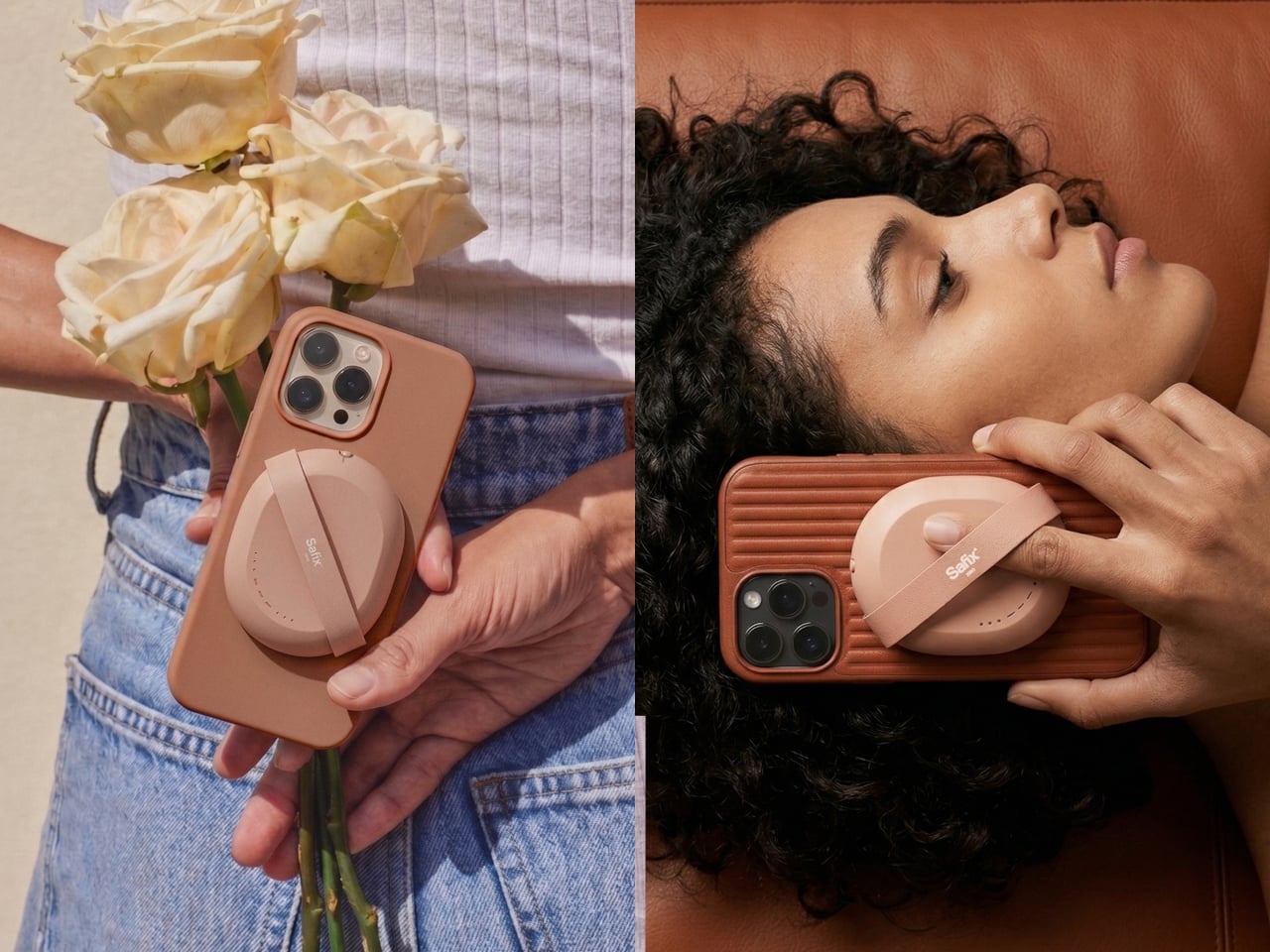
On most days, Safix earns its place on the back of your phone the same way a PopSocket does: by making it more comfortable to hold. The built-in rubber band loops around your fingers, giving you a stable grip for texting, photographing, or navigating. The MagSafe connection keeps it firmly in place yet detaches easily, so it never feels like it’s fighting you.

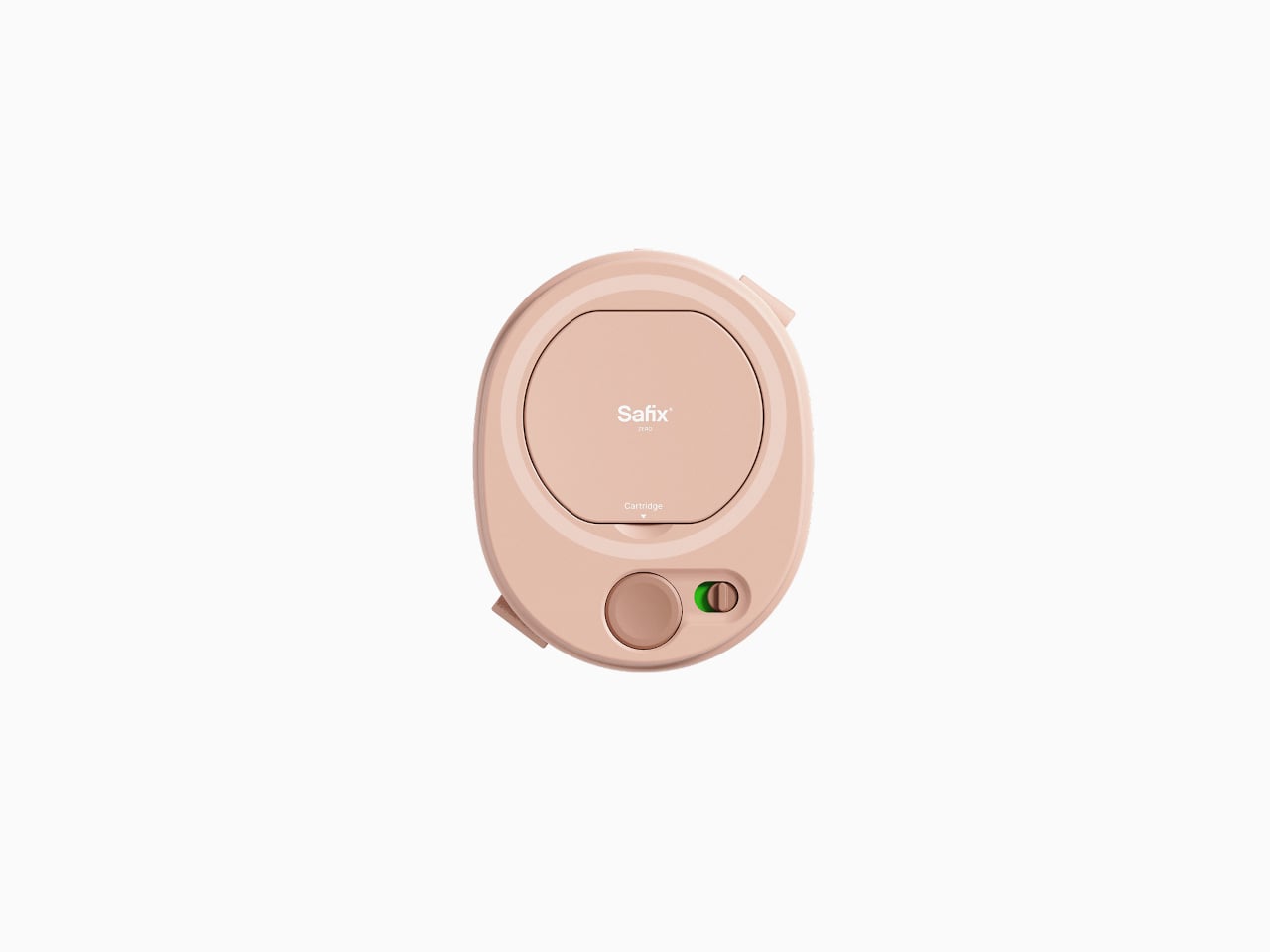
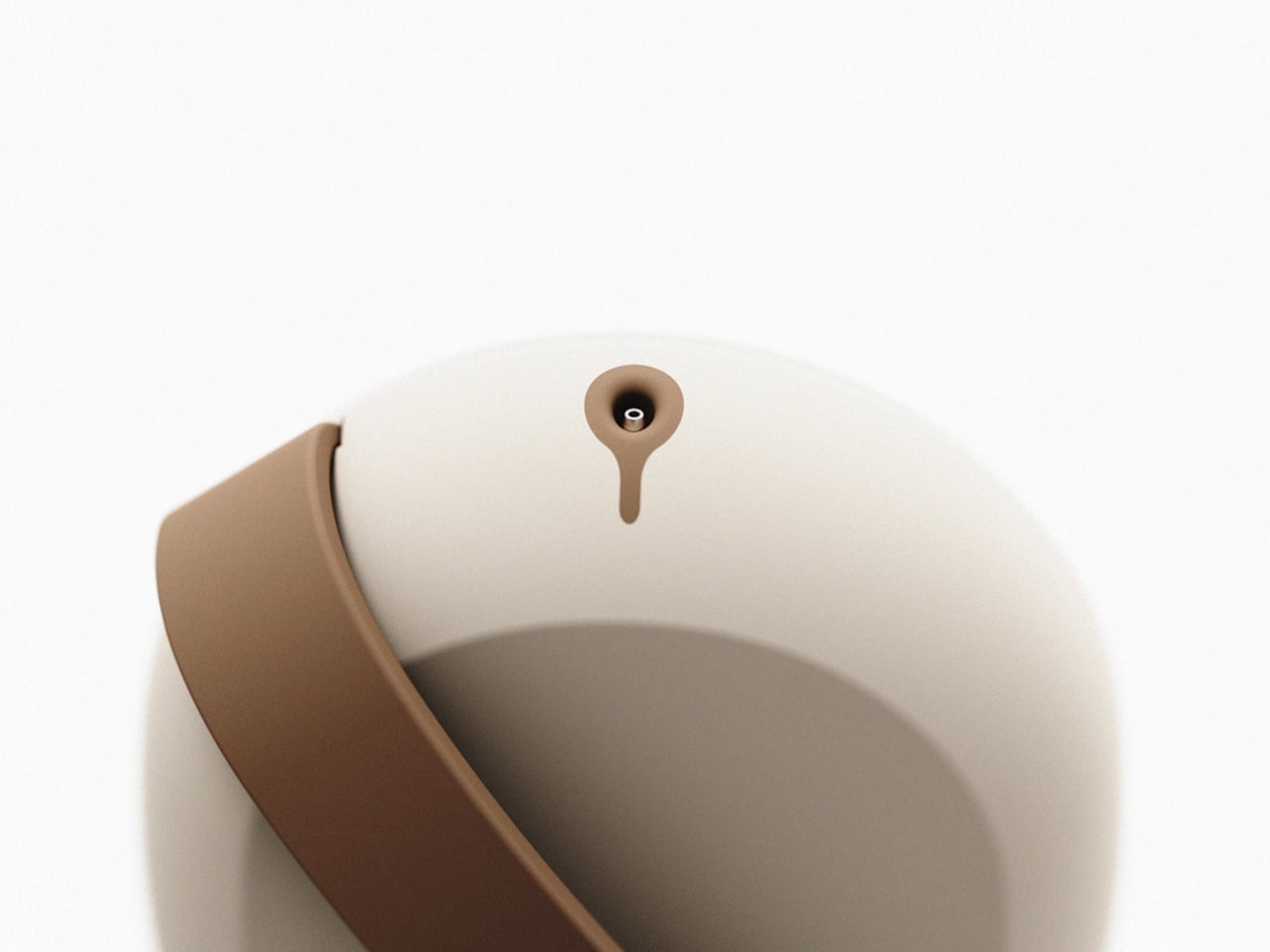
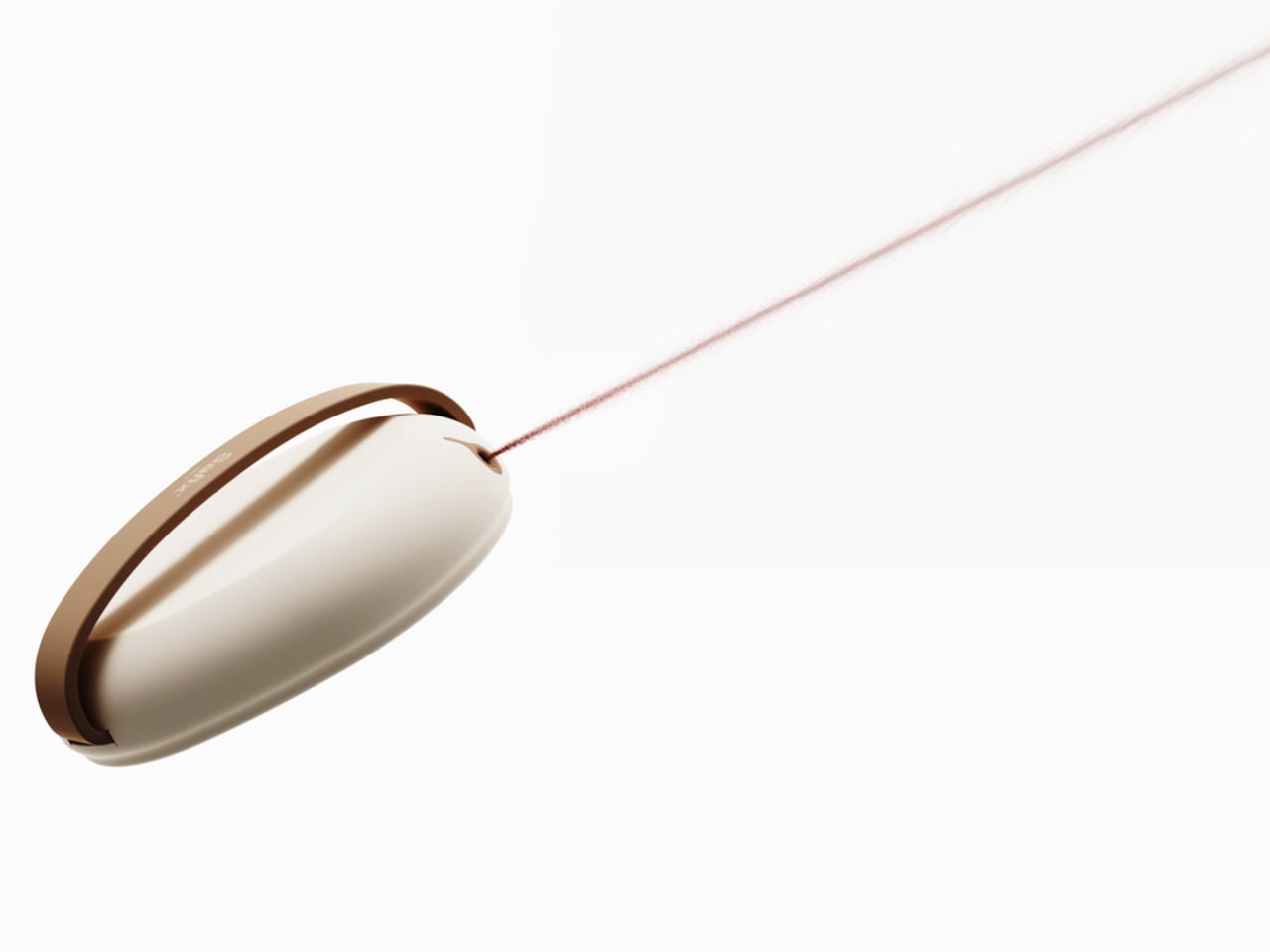
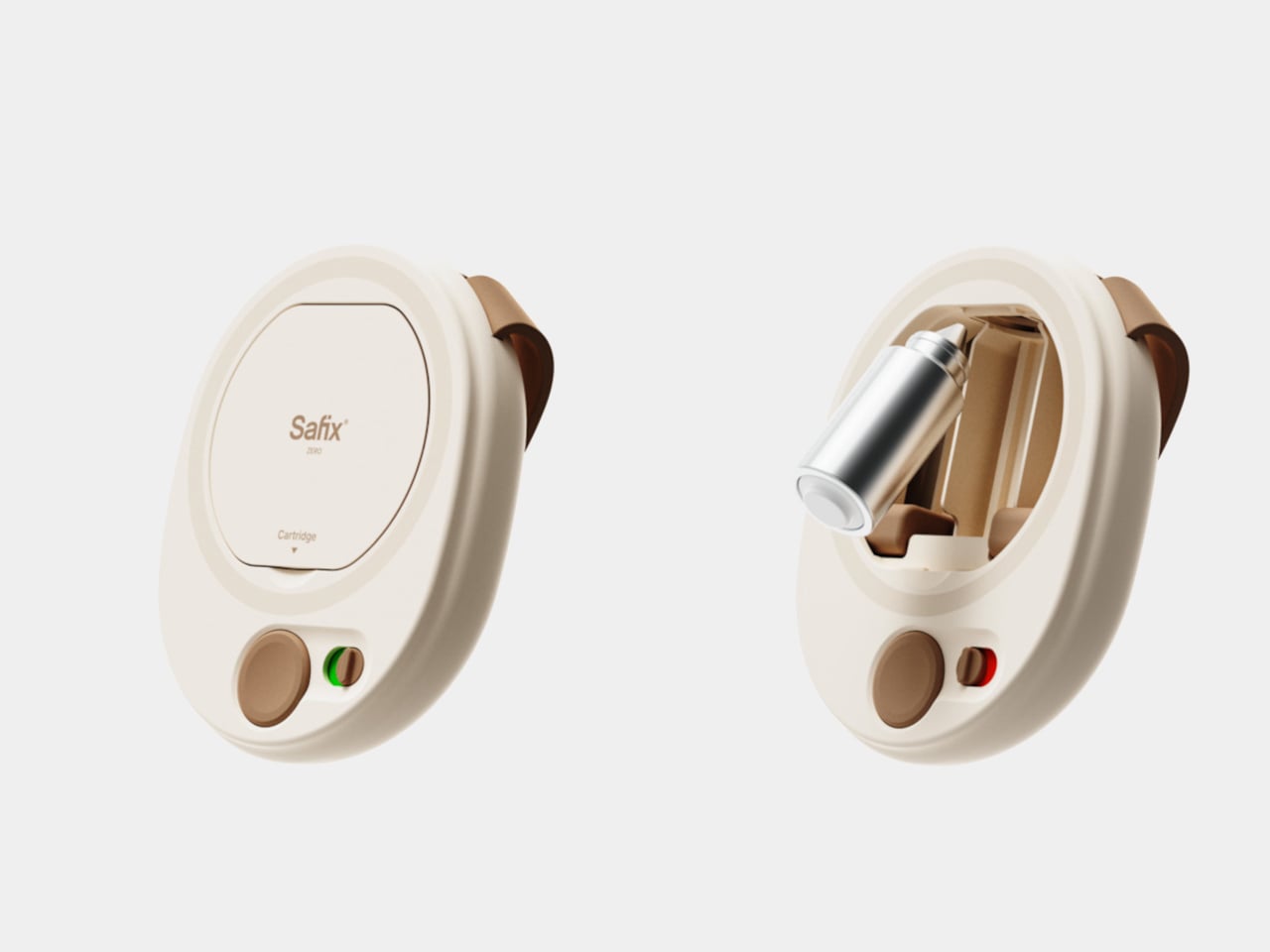
When you actually need it, pulling Safix off the phone takes a fraction of a second. The casing opens to reveal the spray mechanism inside, and a clearly marked button handles the deployment. A safety indicator on the front helps prevent accidental discharge. The whole interaction is built for speed, the kind you’d need in a moment that doesn’t give you time to think.

Consider someone walking home at night with their phone already in hand. They don’t have to dig for anything; the Safix is right there between their fingers, always within reach. That shift from “somewhere in the bag” to “in your hand as you use it” might sound trivial, but it’s the difference between a safety tool that works and one that only works when you remember you have it.

The post This MagSafe iPhone Grip Is Actually a Self-Defense Spray in Disguise first appeared on Yanko Design.
5 Super Clever Accessories That Every Industrial Designer Has on Their Desk — and Why You Should Too

What a designer keeps on their desk is actually quite revealing. Every object has been considered, tested, and kept for a reason. Nothing sits there by accident. Industrial designers think about tools the way they think about products: function first, form as a close second, and longevity as the quiet measure of what’s worth keeping. The result is usually a desk that looks sparse but works hard, where each item earns its place daily.

These five accessories show up on those desks because they solve real problems well, and because they’re made with enough craft that reaching for them feels better than it strictly needs to. You don’t have to be a trained designer to benefit from that kind of thinking. Each one brings a quality of intention that makes the hours spent at a desk more considered, more comfortable, and more genuinely productive than the tools they quietly replace.

1. Everlasting All-Metal Pencil

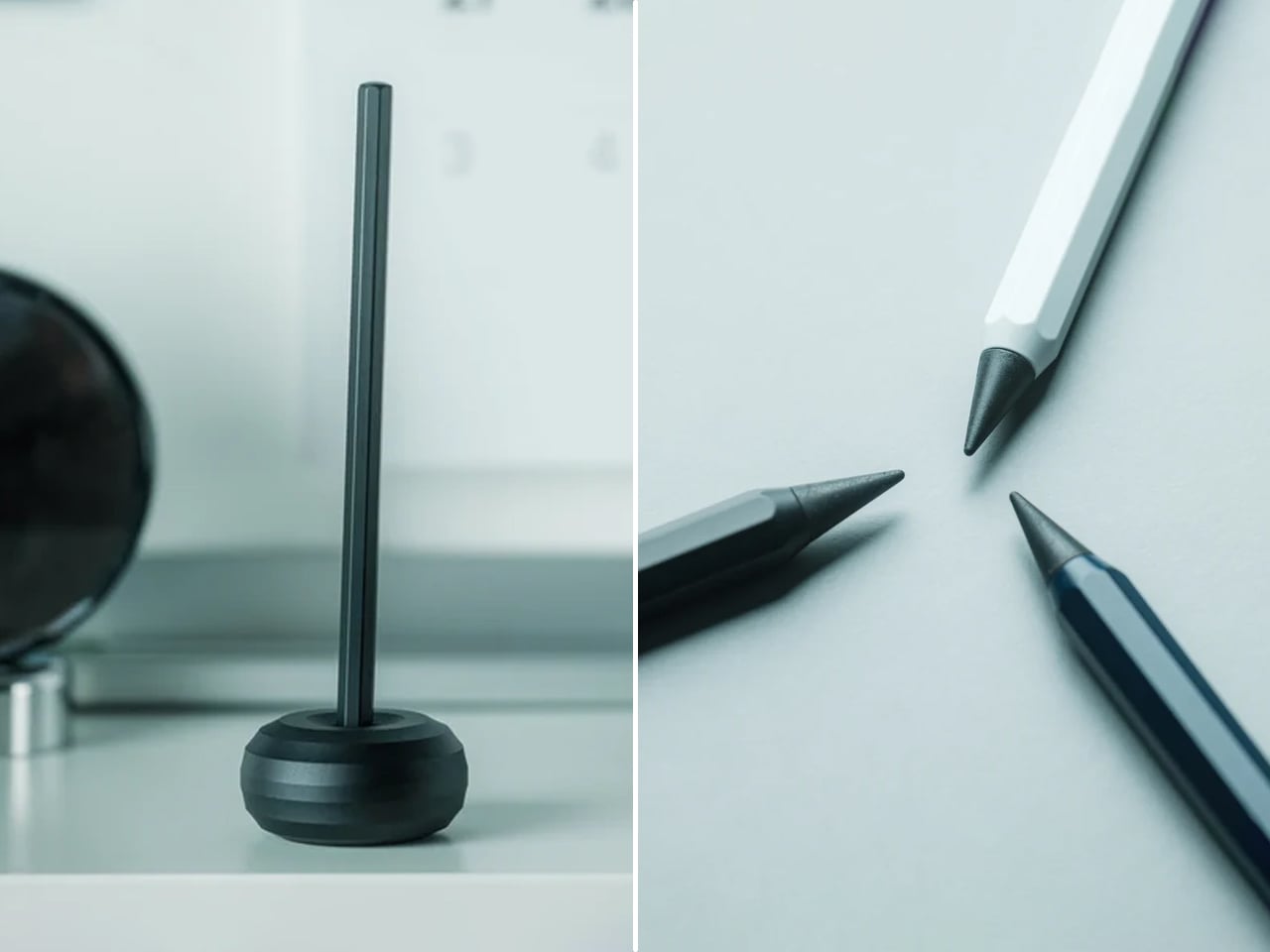
Every designer has been stopped mid-sketch by a blunt pencil. The momentum breaks, the hand reaches for a sharpener, and the thought softens. The Everlasting All-Metal Pencil is engineered to make that sequence impossible. Built with a special alloy core inside an aluminum body, it leaves marks exactly like a traditional pencil: soft enough to erase, expressive enough to sketch with, and responsive enough to carry across a full page. The core never wears down, which means no sharpening, no snapping lead under pressure, and no reason to stop.

Where this pencil earns its place is in mixed-media work. The alloy core doesn’t bleed when you layer watercolor or water-based markers directly over it, so a sketch moves straight into a render without switching tools or waiting. It erases cleanly with a standard eraser, removing the usual objection to non-graphite alternatives. A new pocket-sized variant is now available, making the case for carrying this well beyond the desk even easier to argue. Work with one for a week, and reaching for anything else starts to feel like a step backwards.

Click Here to Buy Now: $19.95

What We Like

  • Never needs sharpening, keeping creative momentum intact from the first mark to the last
  • Works directly under watercolor and water-based markers without bleeding or running

What We Dislike

  • The alloy mark feels subtly different from traditional graphite, which takes some adjustment for those with strong pencil preferences
  • The upfront cost is higher than that of a standard pencil, even if it pays off considerably over time

2. MEMO

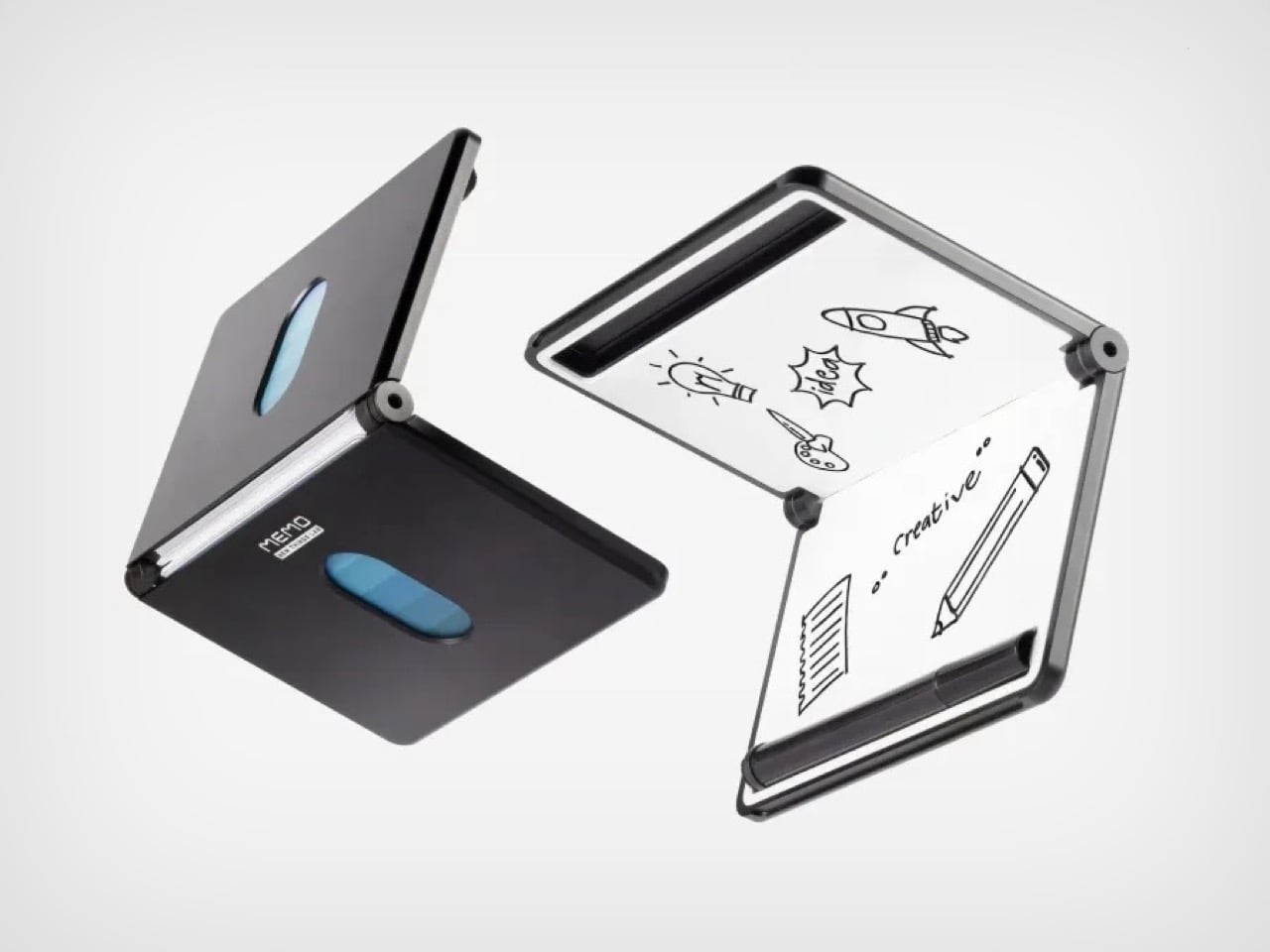
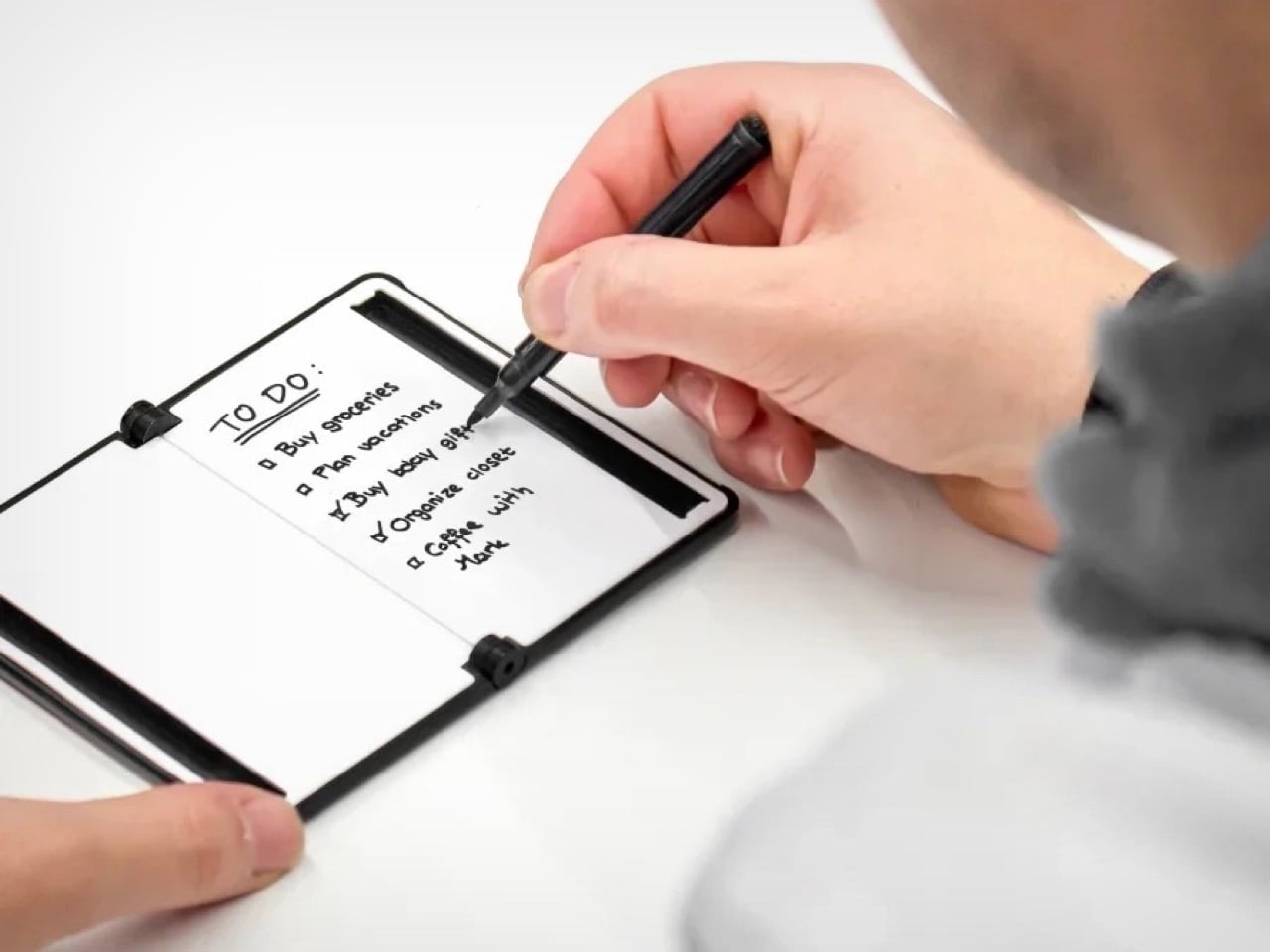
The best ideas don’t always arrive at your desk. They hit mid-conversation, on a train, in a corridor between meetings. The MEMO from New Things Lab is a bifold wallet whose inside panels are a fully functional dry-erase whiteboard — two surfaces that wipe clean and start over, with a built-in removable marker tucked into the fold. For an industrial designer, it replaces the back-of-receipt sketch with something you actually carry on purpose.

What makes it earn a place in this list isn’t the novelty — it’s the honesty. It acknowledges that capture tools need to live where ideas do, not just where work happens. The outside handles up to six cards, keeping it functional as a wallet without compromise. The design is deceptively simple: open it to reveal a whiteboard, close it to have a wallet. No app, no sync, no battery. Just a surface that’s always ready and always on you – you can use it on your desk, or on the go!

What we like

  • Dry-erase surface lets you capture and clear quick sketches without wasting paper
  • Combines two things you’re already carrying into one object with real daily utility

What we dislike

  • Six-card capacity is lean for anyone who carries more than the essentials
  • The whiteboard surface requires the bundled marker — losing it means the whole concept stalls

3. Horizon Helvetica® Ruler and Titanium S Mechanical Pencil

The Helvetica® Max doesn’t look like it should do this much. Credit card-sized and machined from 304 stainless steel using a Swiss-made Bystronic laser cutter, it measures up to 6 inches and 15 centimeters, carries a 180-degree protractor, includes both imperial and metric compasses, offers quick circle guides from 3mm to 10mm, and sports an isometric grid for 3D sketching. The bold Helvetica® Neue typeface keeps every marking legible at speed, and the absence of sharp edges means it clears airport security without a second thought.

The 2025 lineup adds Byzantine Purple, Irish Green, and Classic Blue colorways to both rulers, alongside upgraded silk-screen coating and UV-protected layering across all models, ensuring markings hold up visually over years of heavy use. The standout new release is the Horizon Titanium S mechanical pencil, which costs more and demands pocket space but earns both through material honesty and build quality. Team Horizon also released the Hypatia A5 Notebook to pair with the full lineup, turning a collection of individual tools into one cohesive sketching system worth building around.

What We Like

  • Packs a protractor, compass, circle guides, and isometric grid into a single credit card-sized stainless steel tool
  • UV-protected layering on 2025 models keeps silk-screen markings legible and intact through extended daily use

What We Dislike

  • The Titanium S pencil sits at a premium price point that requires deliberate budget consideration
  • Credit card-sized rulers have a natural ceiling when longer straight-edge measurements are part of the workflow

4. Magboard Clipboard

Notebooks make decisions for you before you’ve started working. They impose page order, dictate margins, and commit you to a format before a single idea is on the page. The Magboard Clipboard works without those constraints. A magnet and lever mechanism holds up to 30 sheets and lets you add, remove, and rearrange them in any order without disturbing what’s already there. Grid paper beside blank paper beside a printed reference sheet, clipped together in whatever configuration actually serves the work at hand.

The hardcover design makes writing while standing feel natural rather than effortful. Whether you’re on a site visit, in a client meeting, or moving away from the desk to think differently, the board provides the resistance your pen needs to move cleanly across the page. The cover is water-resistant and easy to wipe clean, which matters when the environment includes markers, paint, and the occasional spill. It doesn’t pretend your thinking is linear. It holds whatever you put in it and lets you decide the rest entirely on your own terms.

Click Here to Buy Now: $45.00

What We Like

  • The magnet and lever mechanism holds up to 30 sheets, giving complete freedom to add, remove, and rearrange pages at any point
  • Water-resistant hardcover makes it practical across studio, client, and field environments without any special handling

What We Dislike

  • The loose sheet format requires a separate system for organizing and archiving pages over time
  • Those who prefer the structure of a bound notebook may find the open format takes a brief adjustment to settle into

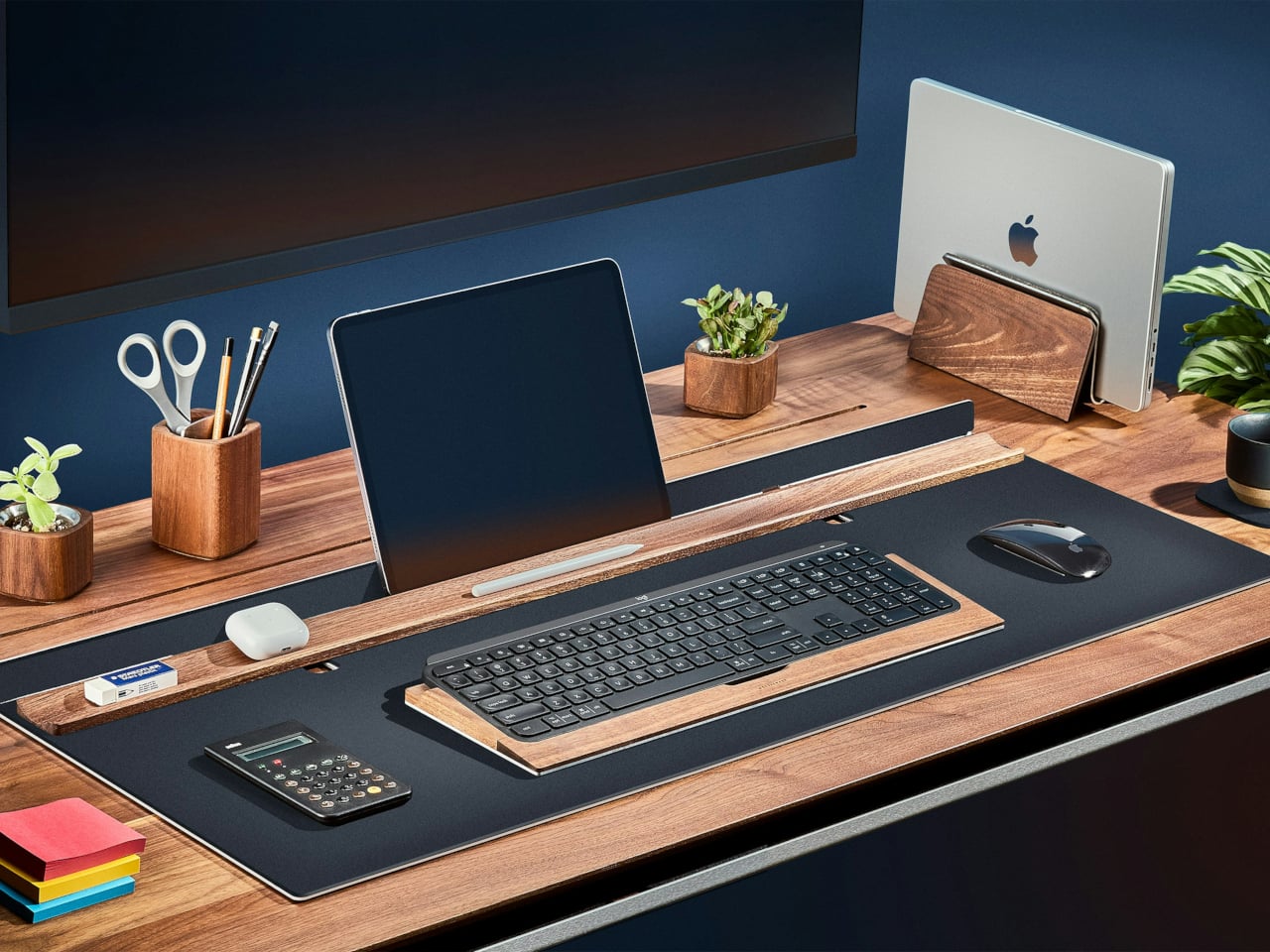
5. Grovemade Matte Studio Pad

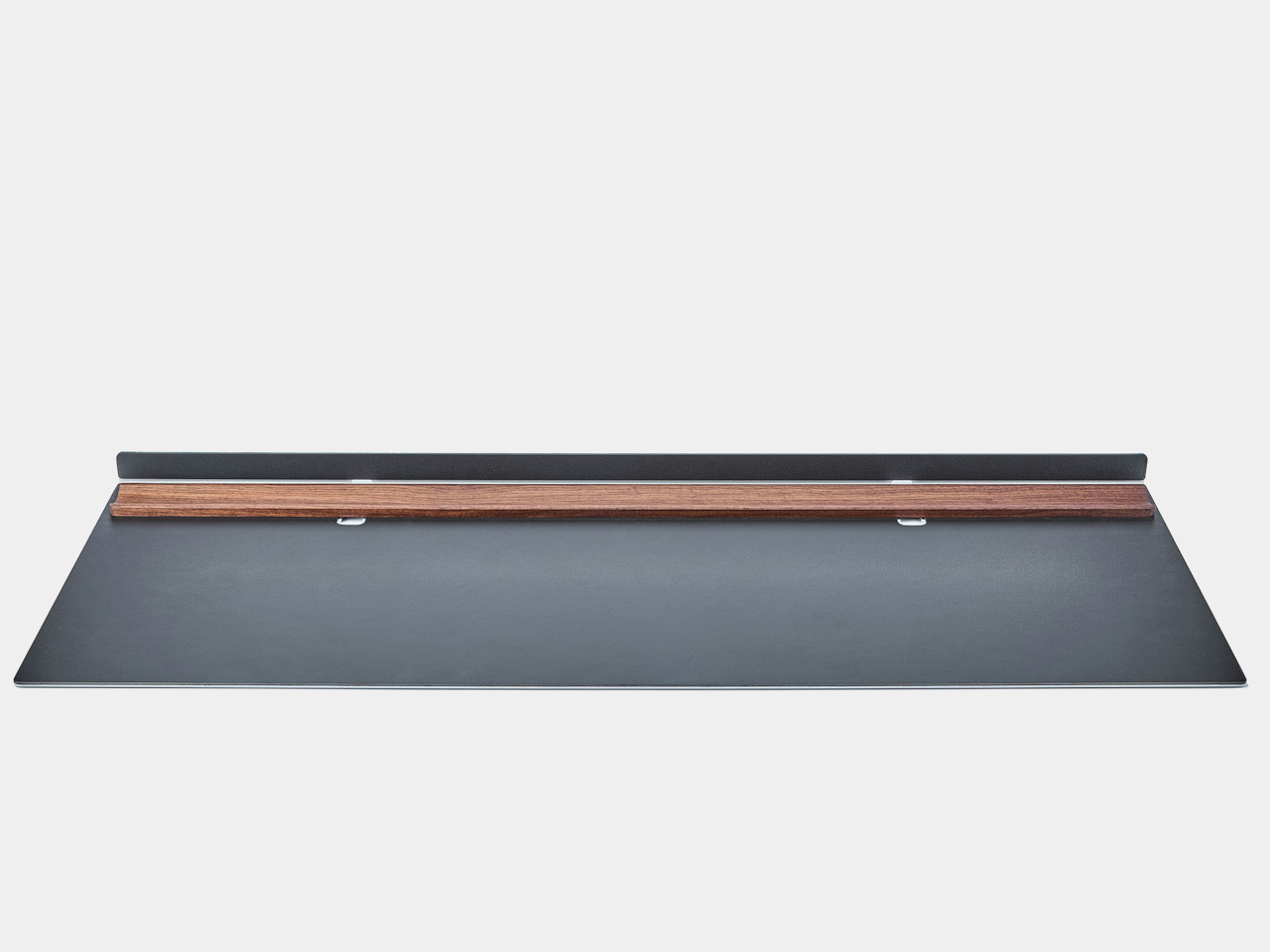
Most desk pads do one thing and ignore everything else. They protect the surface, or they look good, or they’re cheap enough to replace without a second thought. The Grovemade Matte Studio Pad takes a different approach. Its matte surface is smooth and comfortable underhand, fingerprint resistant, and steady enough that paper doesn’t drift while you write or sketch. It’s inviting in the way good materials always are: you notice it immediately, understand why it works, and then stop noticing it because it never gets in the way.

Underneath the surface is where the engineering becomes clear. A brushed aluminum chassis keeps the pad flat and stable without flex. A cork underlayer cushions the desk from scratches and softens the whole assembly from below. A full-length hardwood tray runs along one edge, providing a tactile and visually grounded place to keep pens, a stylus, or a ruler within reach without cluttering the writing surface. Three materials, three problems solved, one object that feels deliberate in every direction. For anyone spending long hours at a desk, the quality of the surface beneath your hands matters more than most people realize until they’ve worked on something this well-made.

What We Like

  • Matte, fingerprint-resistant surface stays visually clean and composed through heavy daily use without any extra maintenance
  • Layered aluminum, cork, and hardwood construction addresses stability, desk protection, and tactile comfort all at once

What We Dislike

  • Premium materials place it well above budget desk pad options, making the initial purchase a deliberate decision
  • The full-length hardwood tray extends the pad’s overall footprint, which may not suit smaller or tighter desk setups

The Desk You Build Reflects How You Think

The best designer desks don’t impress people who visit them. They just make the work easier and the hours more worth spending. None of these tools announces itself or tries to be more than they are. What they share is a quality of being fully thought through, made by people who considered every detail and removed whatever didn’t need to be there. That discipline is what makes them worth having, whether you design for a living or not.

Good tools have a way of quietly changing how you work. You reach for them without thinking, trust them without checking, and after a while, you stop remembering what you used before. These five accessories earn that kind of invisible loyalty not through novelty but through honesty. They do exactly what they’re supposed to do, they do it well, and they keep doing it long after the first impression has worn off.

The post 5 Super Clever Accessories That Every Industrial Designer Has on Their Desk — and Why You Should Too first appeared on Yanko Design.
This Vase Has a Glass Lattice That Lets Stems Find Their Own Angle

Flower arranging gets credit for being meditative and creative, but for most people, it’s actually a bit of a guessing game. Stems slide around, flowers lean in unexpected directions, and what started as a simple bouquet ends up looking haphazard, no matter how much you fiddle. Most vases don’t help much; they hold the water, hold the stems, and leave the rest up to you.

That’s the problem that Rila, a 2026 vase by London- and Düsseldorf-based studio nikola & florian, quietly tries to solve. Rather than leaving every stem to fend for itself, the design adds structure that guides flowers into place without forcing them into any fixed arrangement. The idea isn’t to make flower arranging feel like a chore but to let it happen almost on its own.

Designer: Nikola Gaytandjiev and Florian Neubacher (nikola & florian)

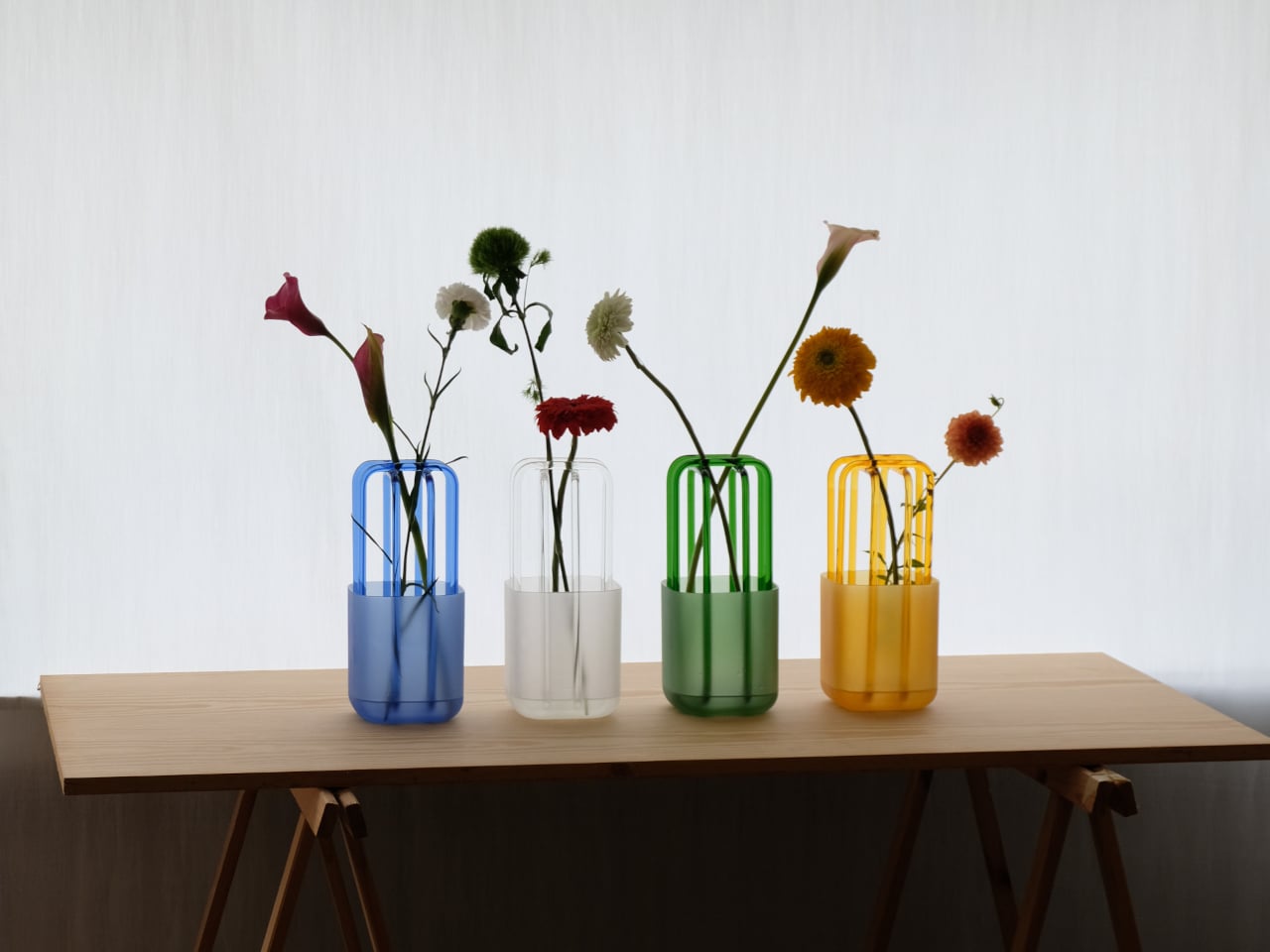
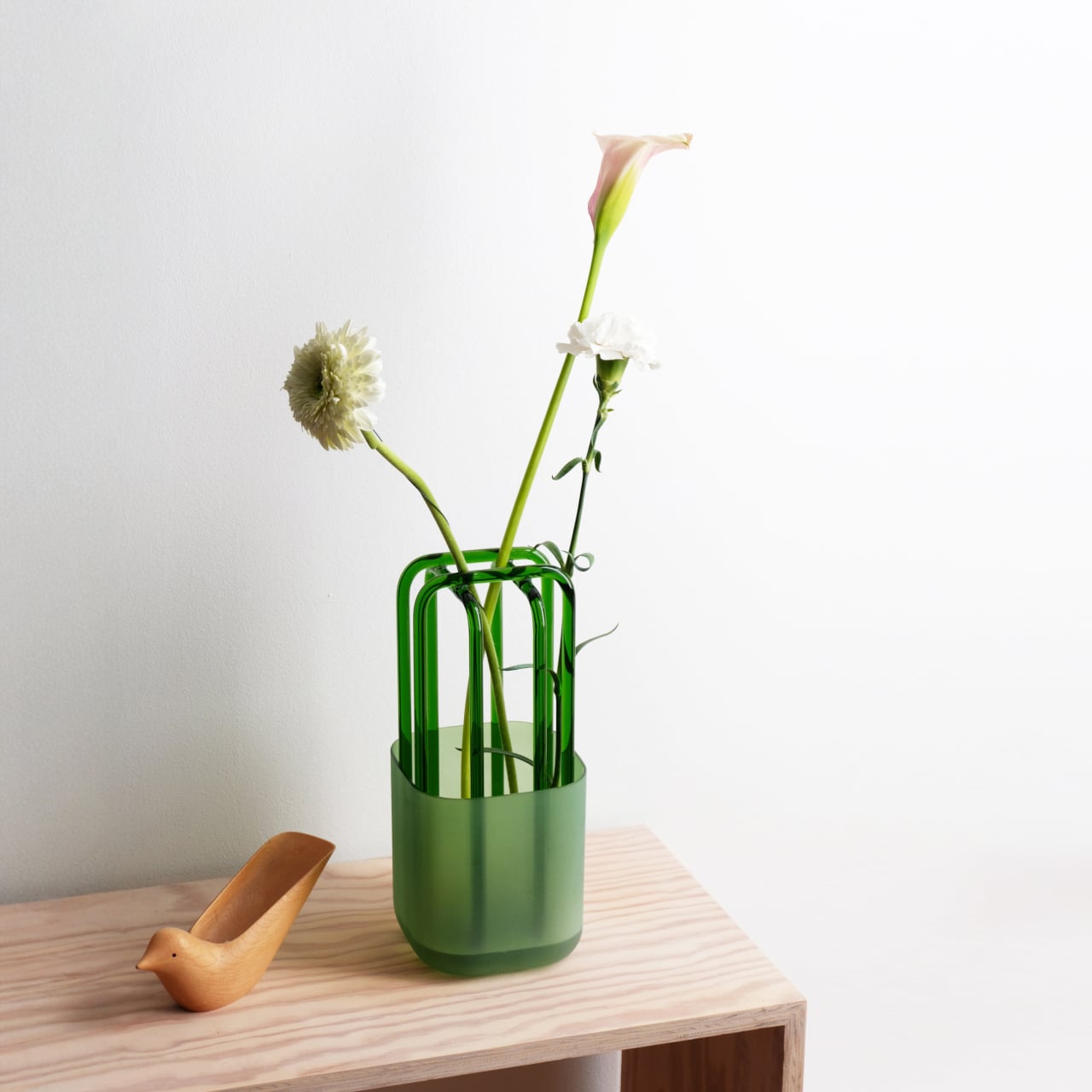
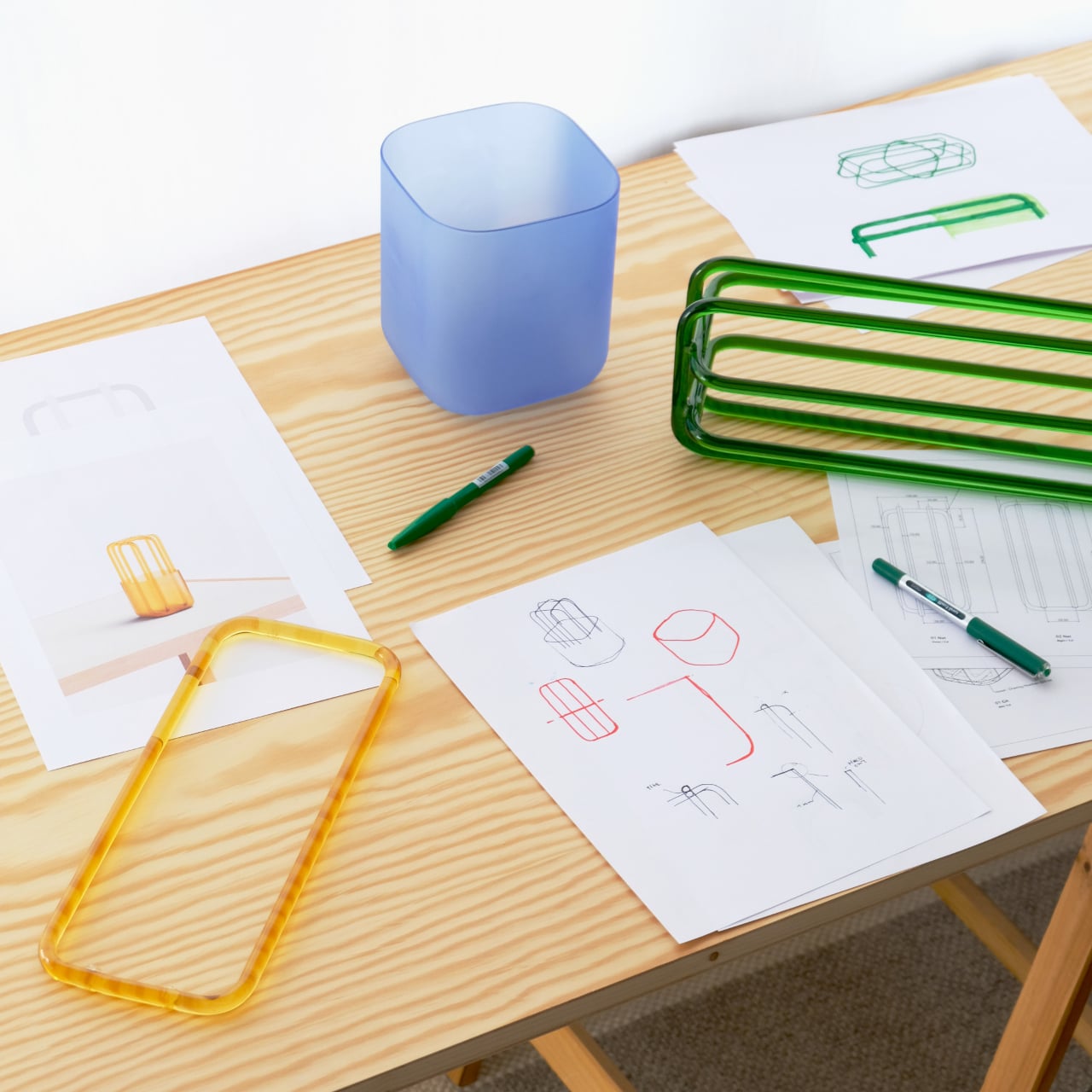
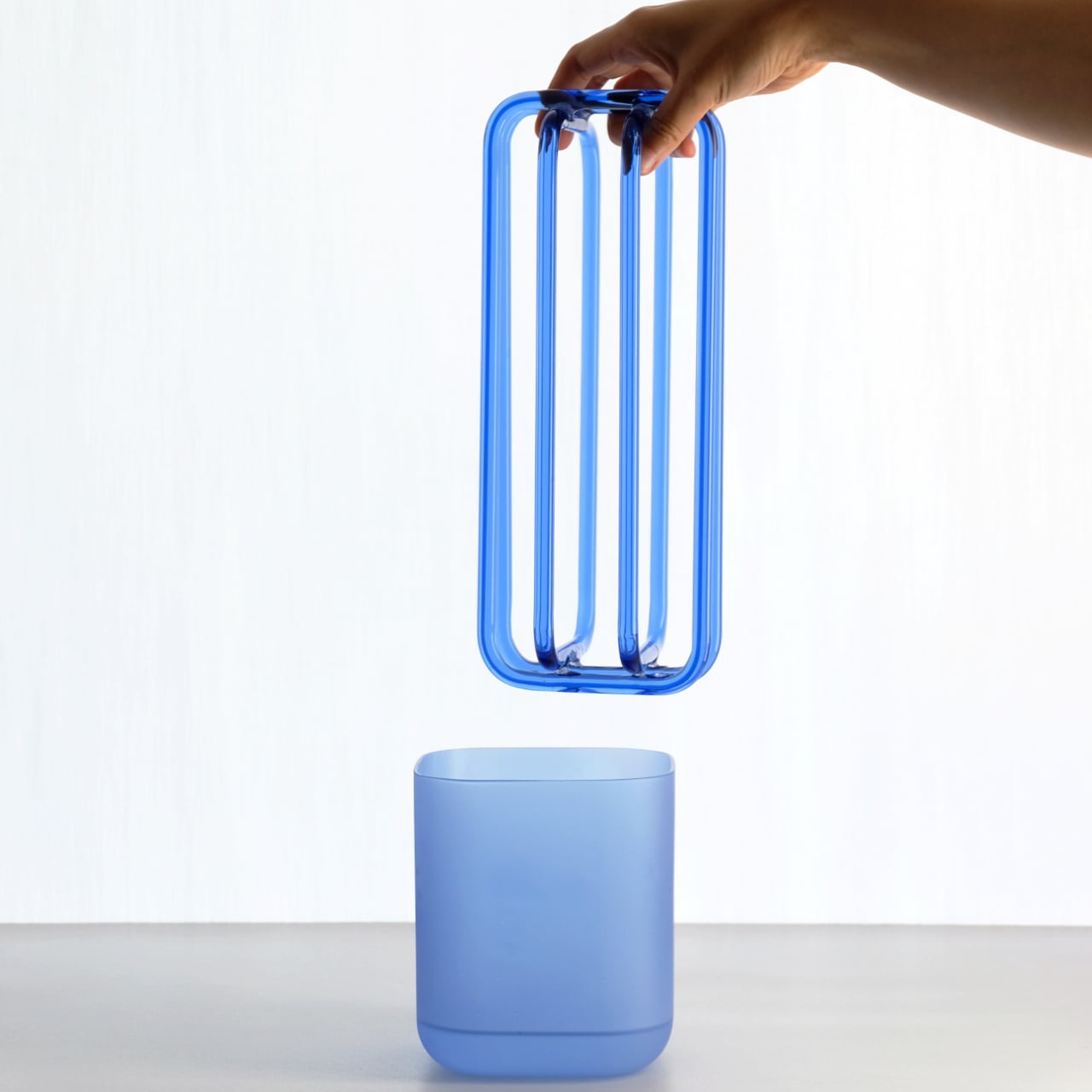
The vase consists of two separate pieces: a frosted glass vessel that holds water, and a clear glass structure that sits right inside. The structure has a net-like form, with arched glass rods that gently space and guide each stem as it passes through, without locking anything into place. The two pieces lift apart, which makes the whole thing simple to clean.

Both parts are made from borosilicate glass, chosen for its strength and optical clarity. What makes the pairing interesting is the contrast between them: the frosted vessel has a soft, muted look and a slightly tactile surface, while the clear structure above lets light pass straight through. That interplay of opacity and transparency gives the object a quiet visual richness that most flower holders don’t have.

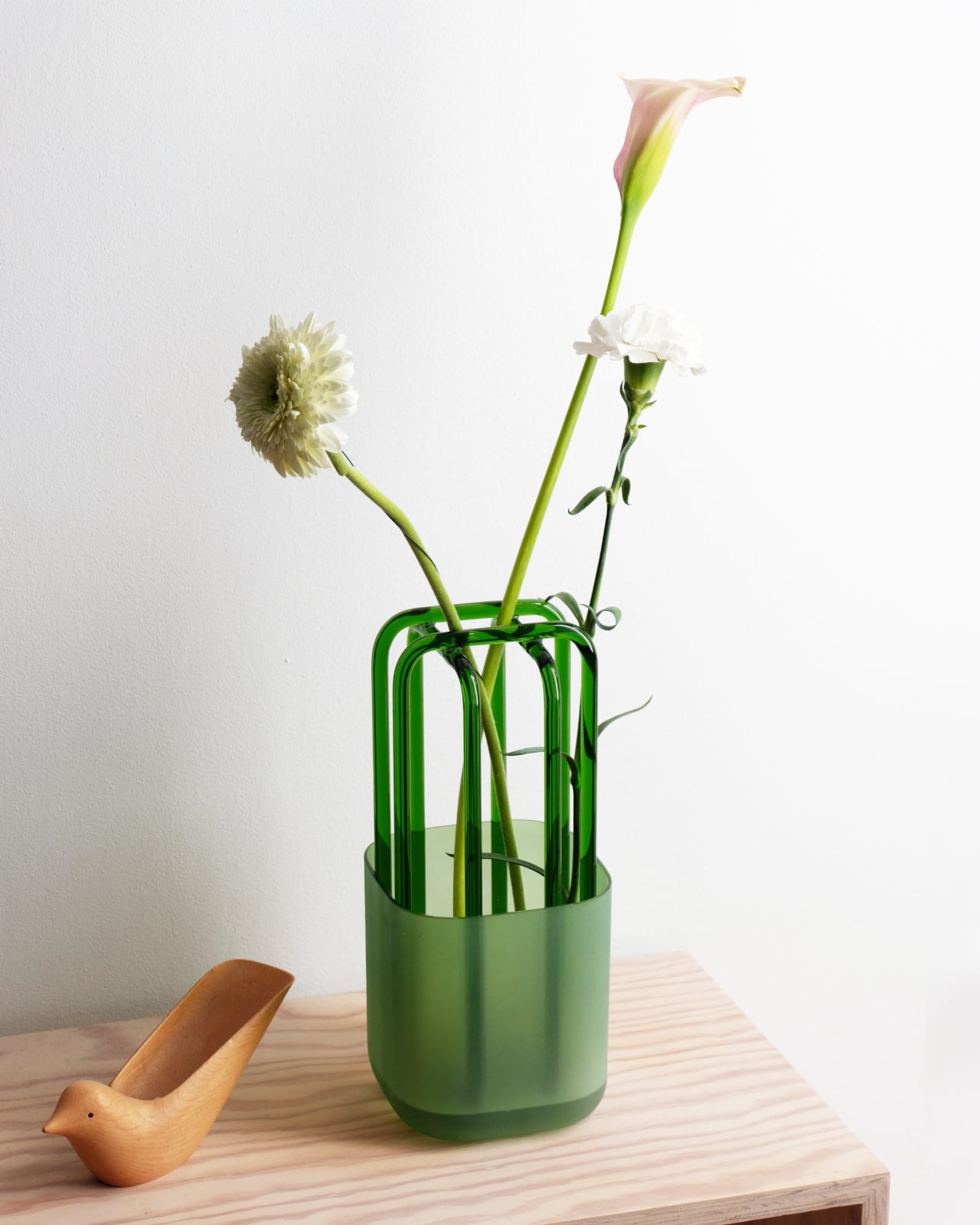
In practice, using Rila feels less like a task and more like something you’ll stop thinking about. Drop a few stems through the lattice, and each one finds the angle it naturally wants. You don’t end up with a perfectly symmetrical arrangement, and that’s kind of the point. The flowers get room to look like themselves, with the structure providing just enough order.

Rila comes in a handful of colorways, with matching tones running through both the frosted vessel and the clear structure. Blue, green, amber, and white are among the available options, each creating a slightly different mood without changing the fundamental character of the piece. The frosted base absorbs and deepens whatever color it carries, while the transparent structure stays open and light, keeping things airy.

What makes Rila particularly easy to live with is that it earns its place in a room even on days when there aren’t any flowers in it. The frosted vessel and clear glass structure together form an object with enough sculptural character to hold attention on its own. You’d place it on a side table the same way you’d display any other piece you genuinely liked.

The post This Vase Has a Glass Lattice That Lets Stems Find Their Own Angle first appeared on Yanko Design.
Designed Like a Lamborghini, This Laptop Stand Replaces 3 Accessories

Laptop stands have come a long way from the simple plastic risers that used to pass for ergonomic solutions. More students and young professionals are rethinking their workspaces, and the demand for accessories that do more with less is steadily growing. Add a lamp, a phone charger, and a stand for the screen, and before long, the desk meant for focus starts looking more like a cable management problem.

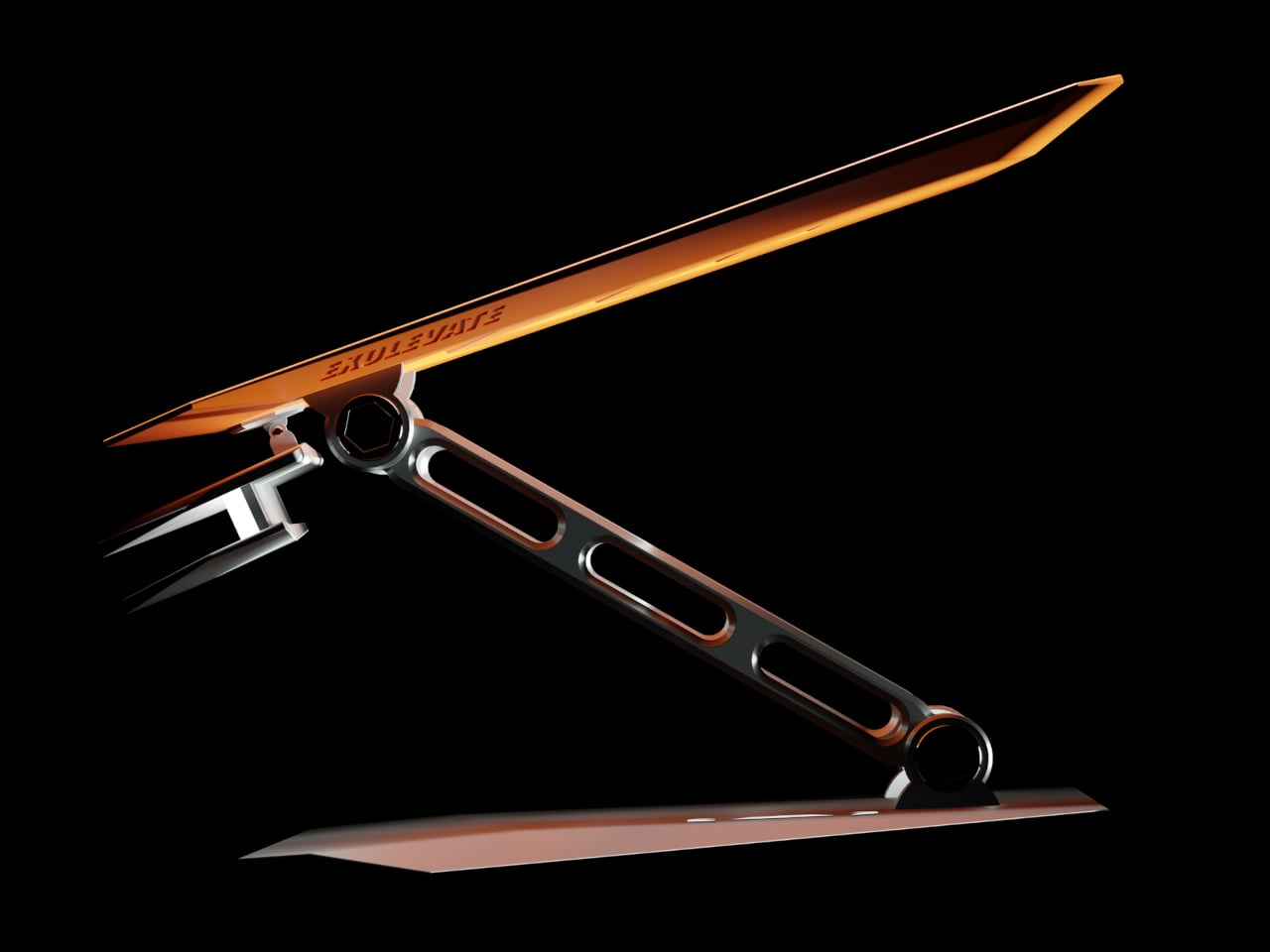
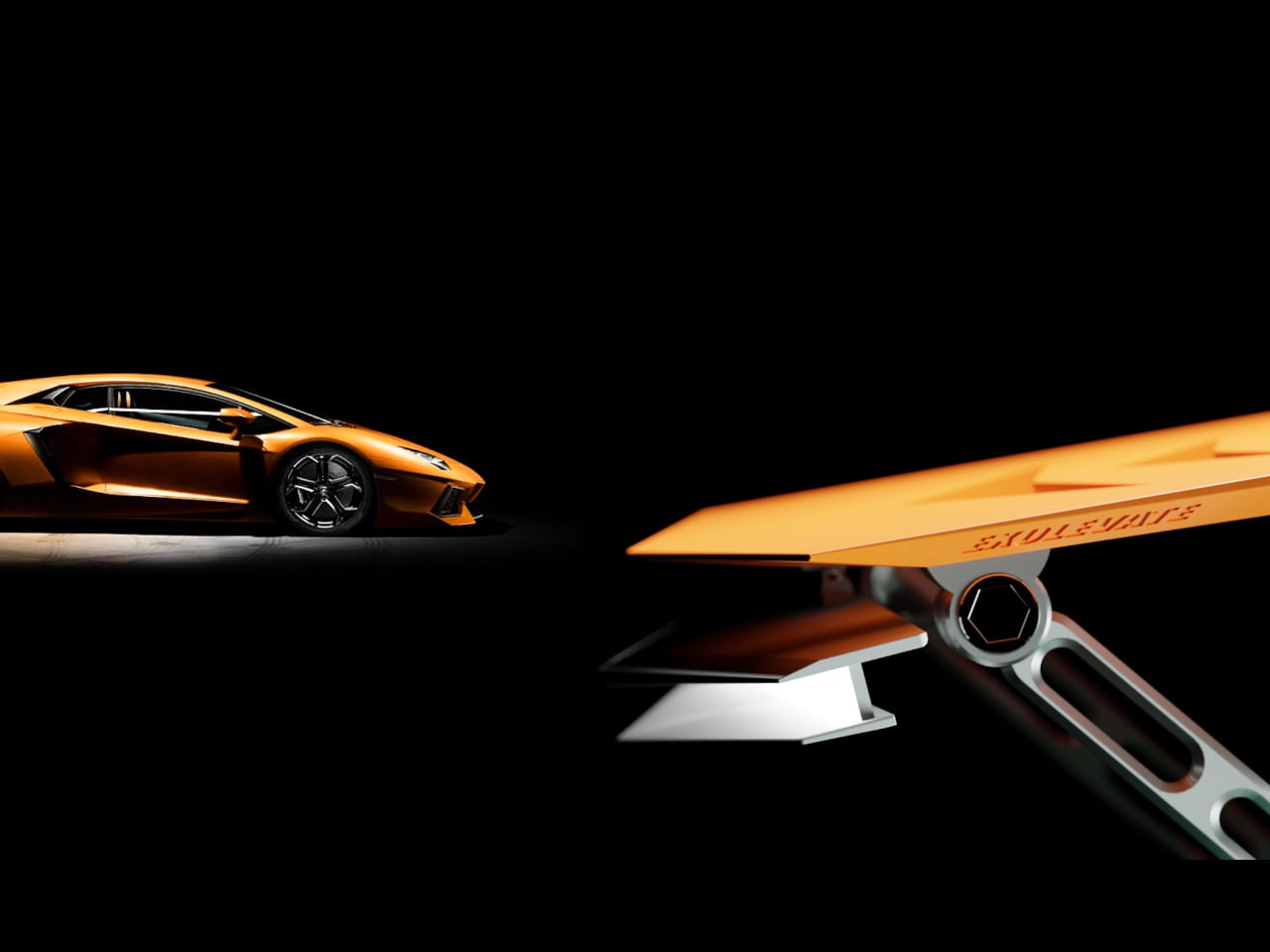
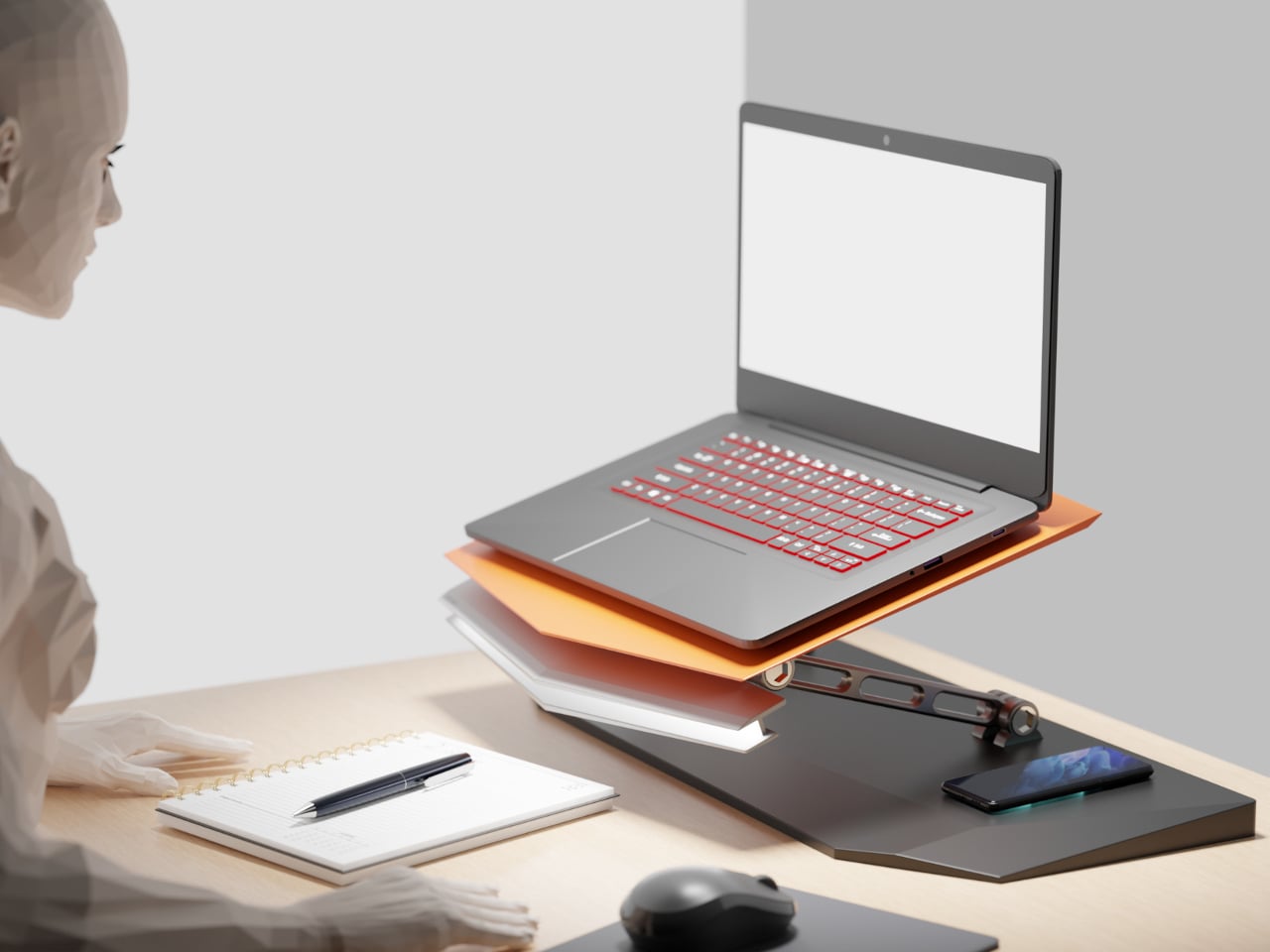
The Exolevate concept tackles that problem from an unexpected angle, wrapping the solution in a finish inspired by Lamborghini. It’s a laptop stand that aims to replace three separate accessories with one and, in doing so, cut the clutter while improving posture. The boldness of its design language makes it clear this wasn’t built for someone who just wants something functional and forgettable.

Designer: Arnav Ashwin

The concept’s starting point is a familiar complaint. Young adults who spend 35 to 40 percent of their time at a workstation gradually accumulate neck pain, back strain, and a screen position that was never quite right. Raising the laptop to eye level with adjustable height and angle addresses the most direct version of that problem, bringing the screen where it actually belongs.

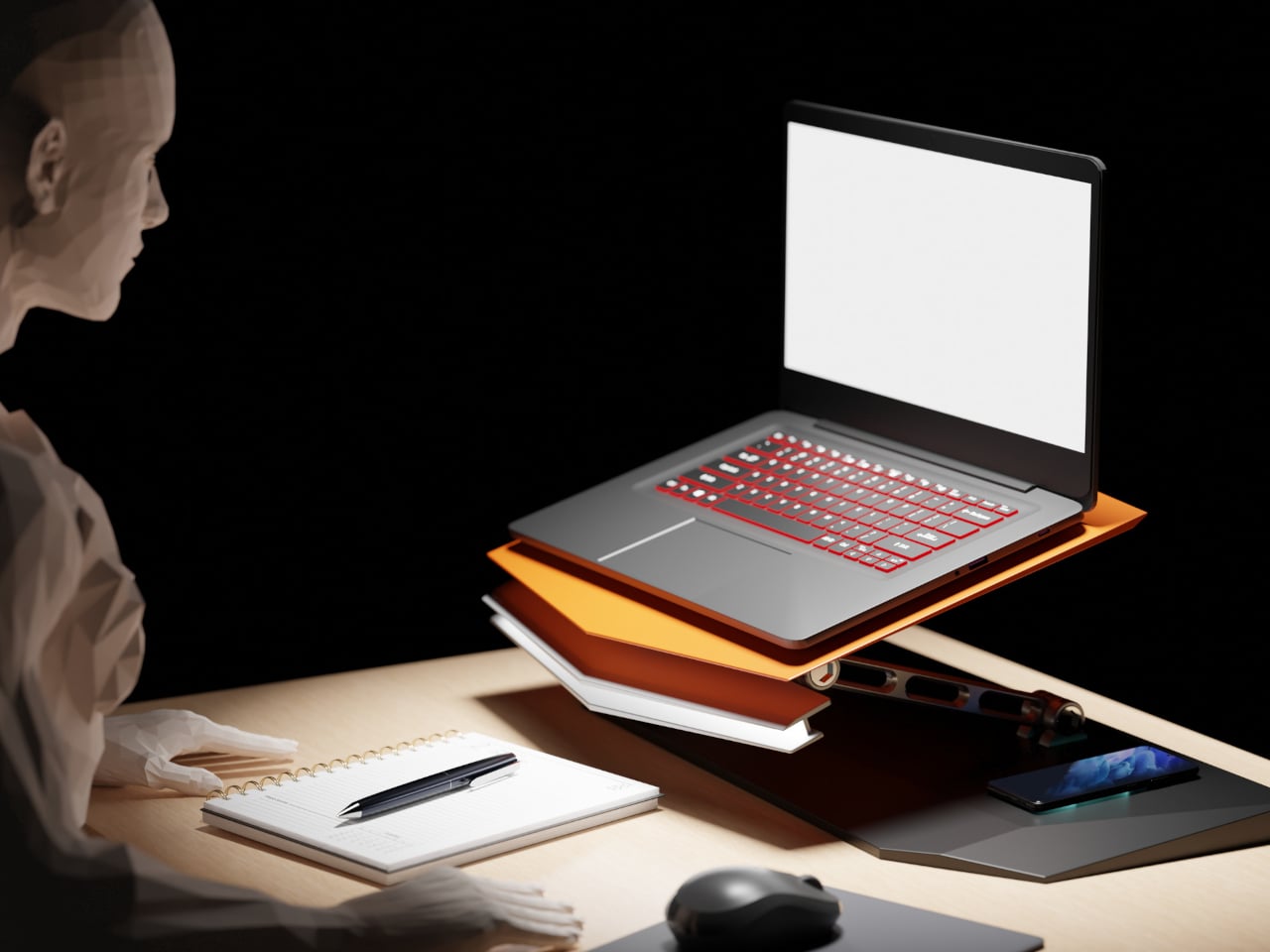
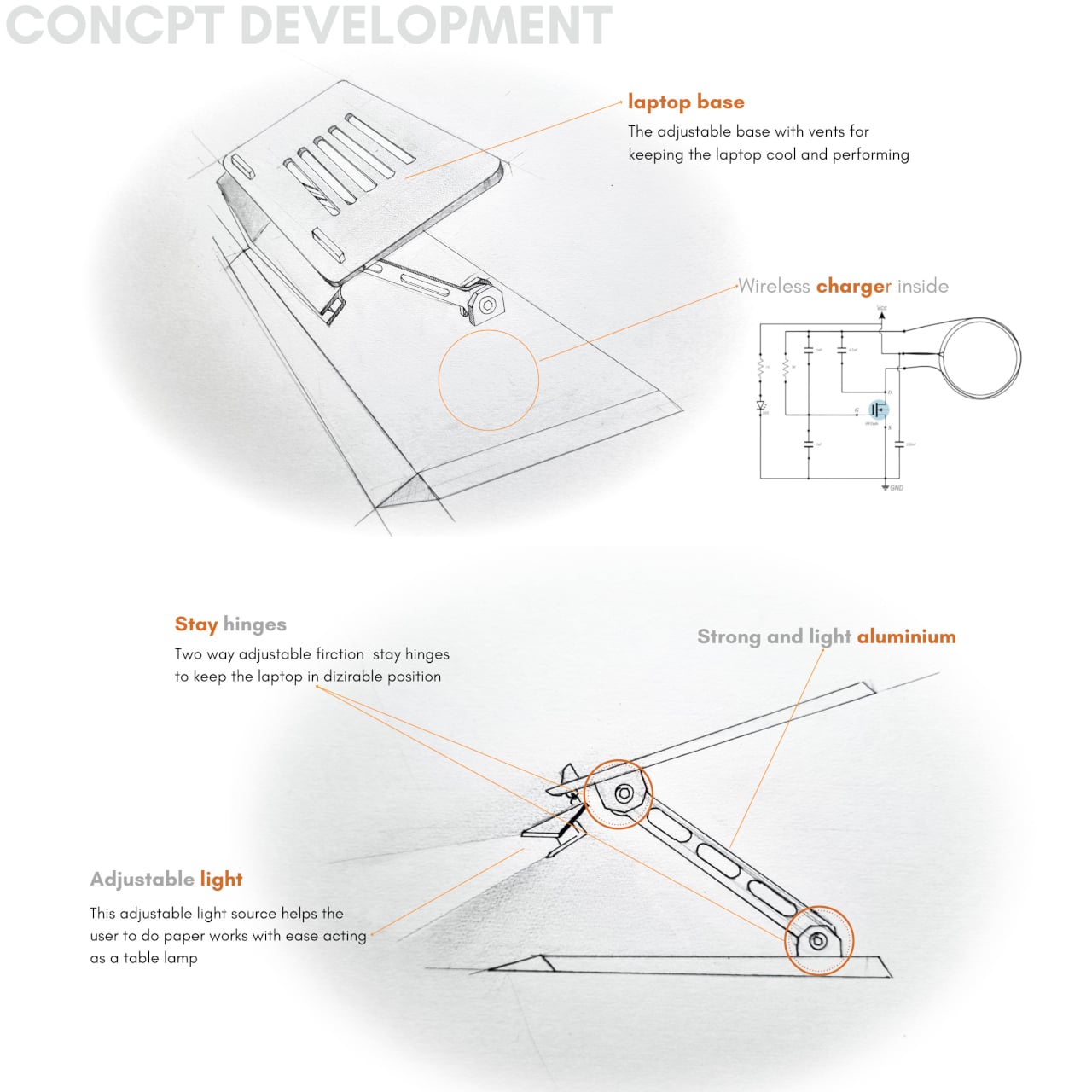
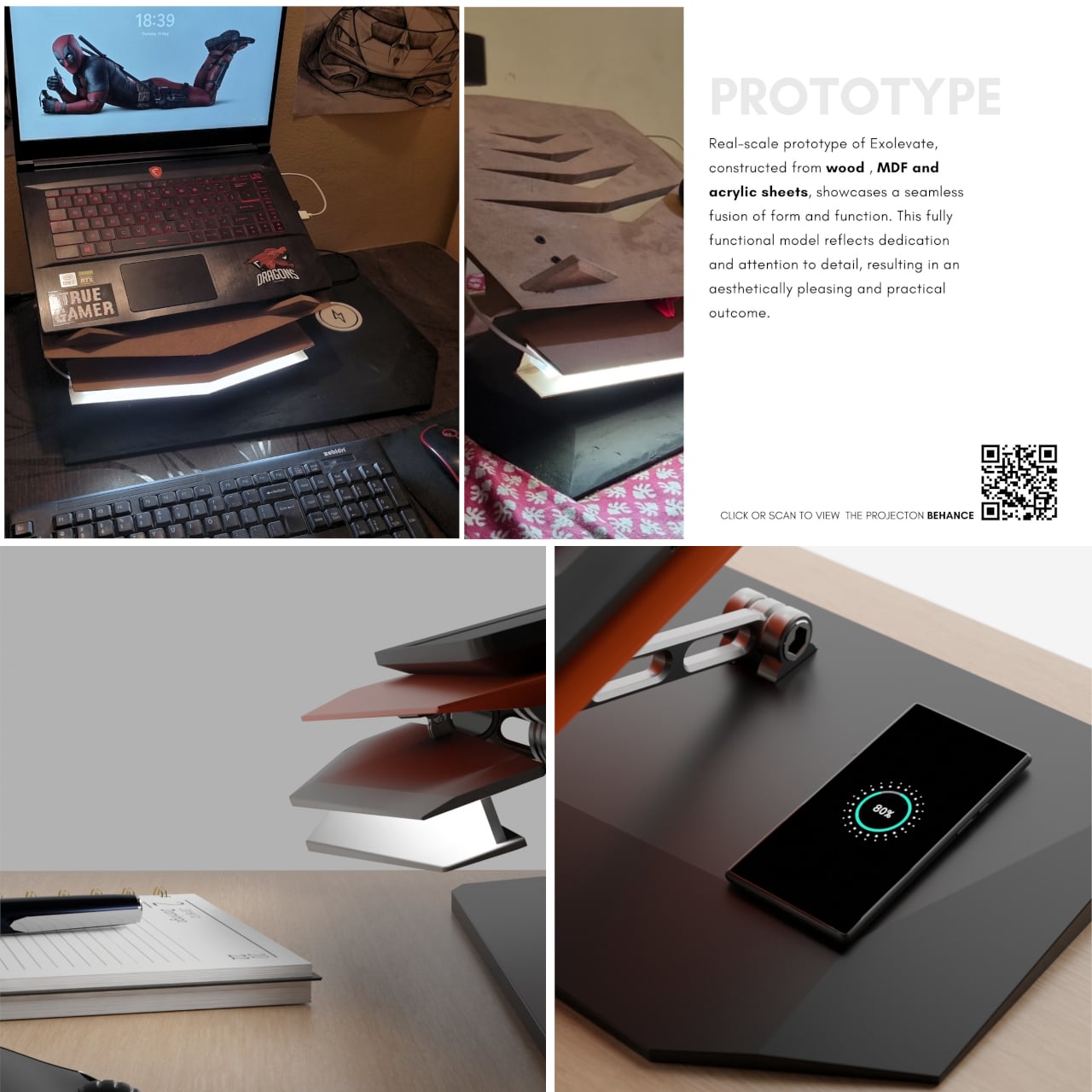
That’s a good start, but Exolevate doesn’t stop there. The stand integrates an adjustable table lamp that swings out to light a writing area beside the laptop, which is useful for anyone splitting attention between a screen and physical notes. The lamp is built into the stand’s structure rather than added alongside it, which means one fewer cord to trace across the desk during a late-night study session.

The base takes the consolidation further. A wireless charging pad is embedded directly into the platform, so a phone can sit there and charge without an extra cable sneaking into the picture. It’s a thoughtful addition for anyone who already has too many things plugged in, and it frees up the desk surface for the notepad, the keyboard, and everything else that actually needs to be there.

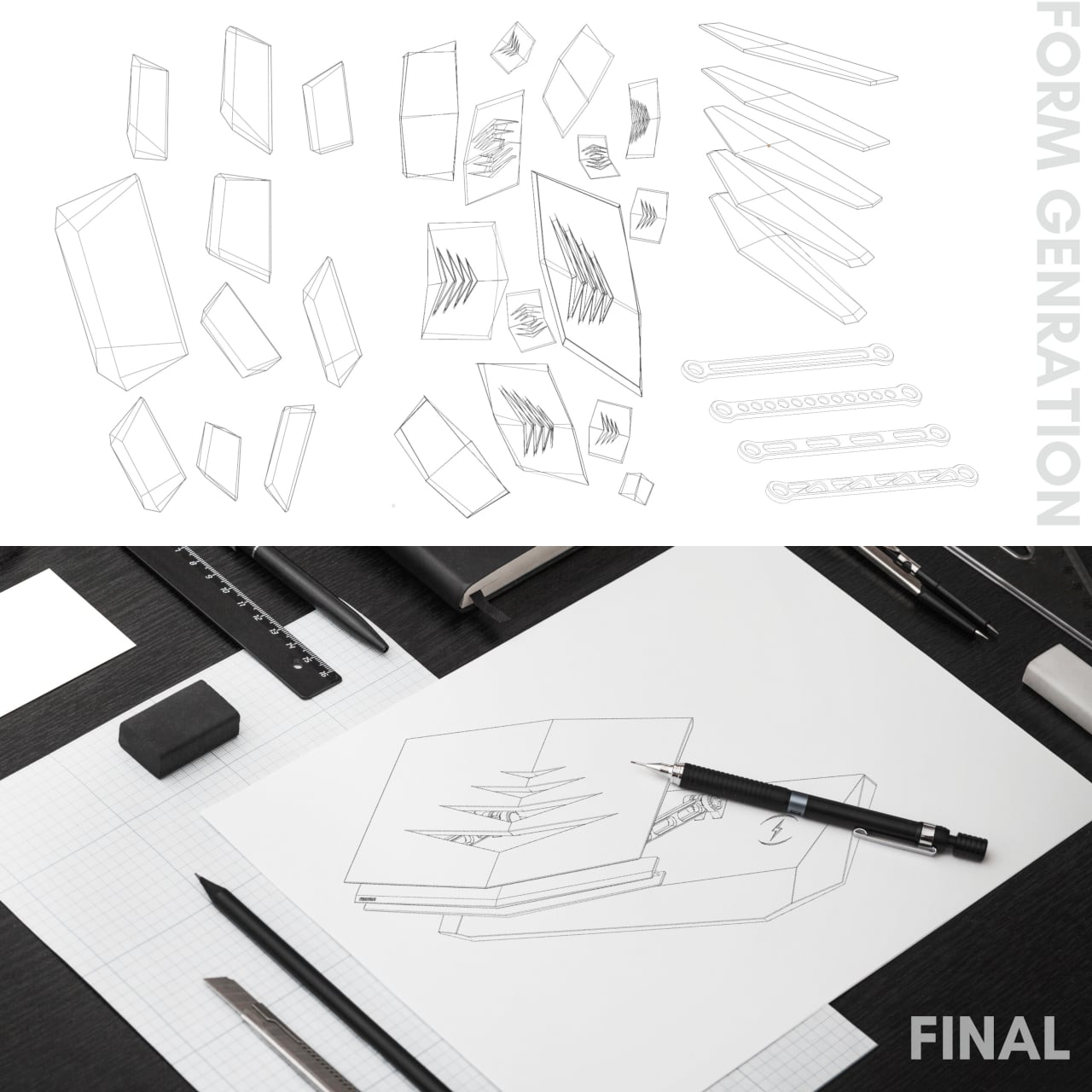
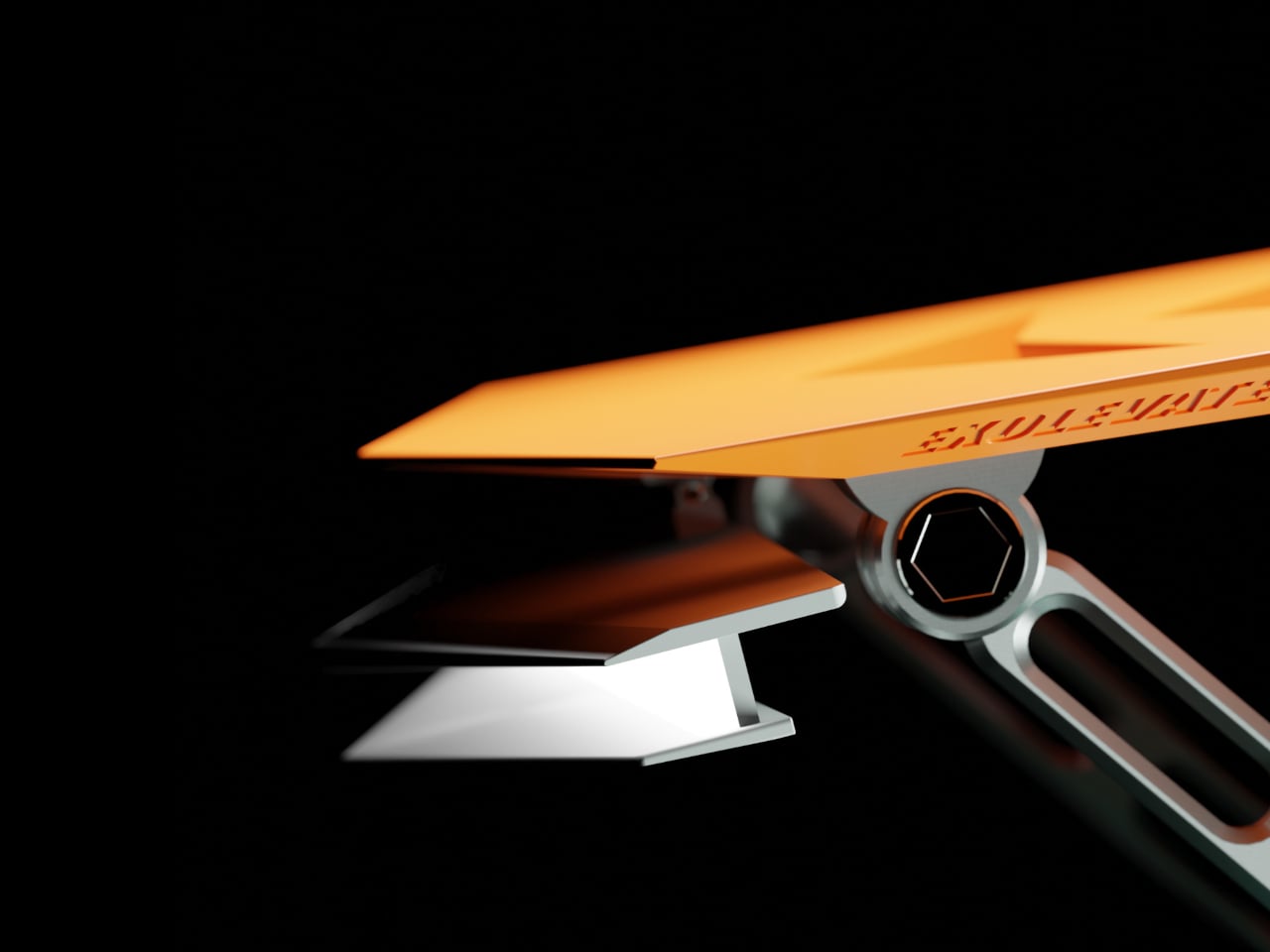
None of that would look quite as interesting without the design language tying it together. Exolevate draws from Lamborghini’s aerodynamic forms, borrowing sharp angles and aggressive lines and translating them into the stand’s aluminum profile. The “electric kumquat” finish, a vivid orange sourced from trend forecaster WGSN, gives the concept the kind of confident, eye-catching presence that most workspace accessories aren’t bold enough to attempt.

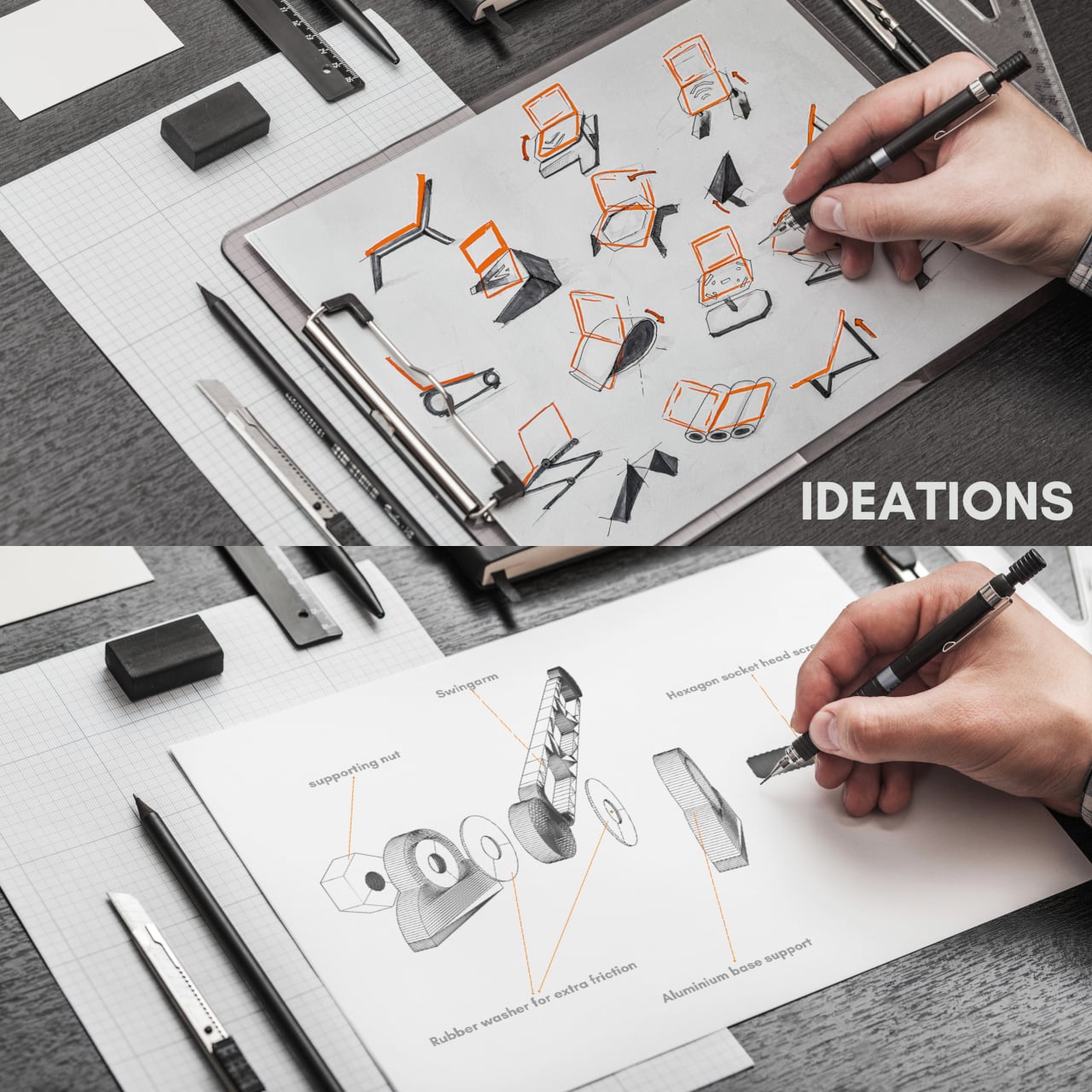
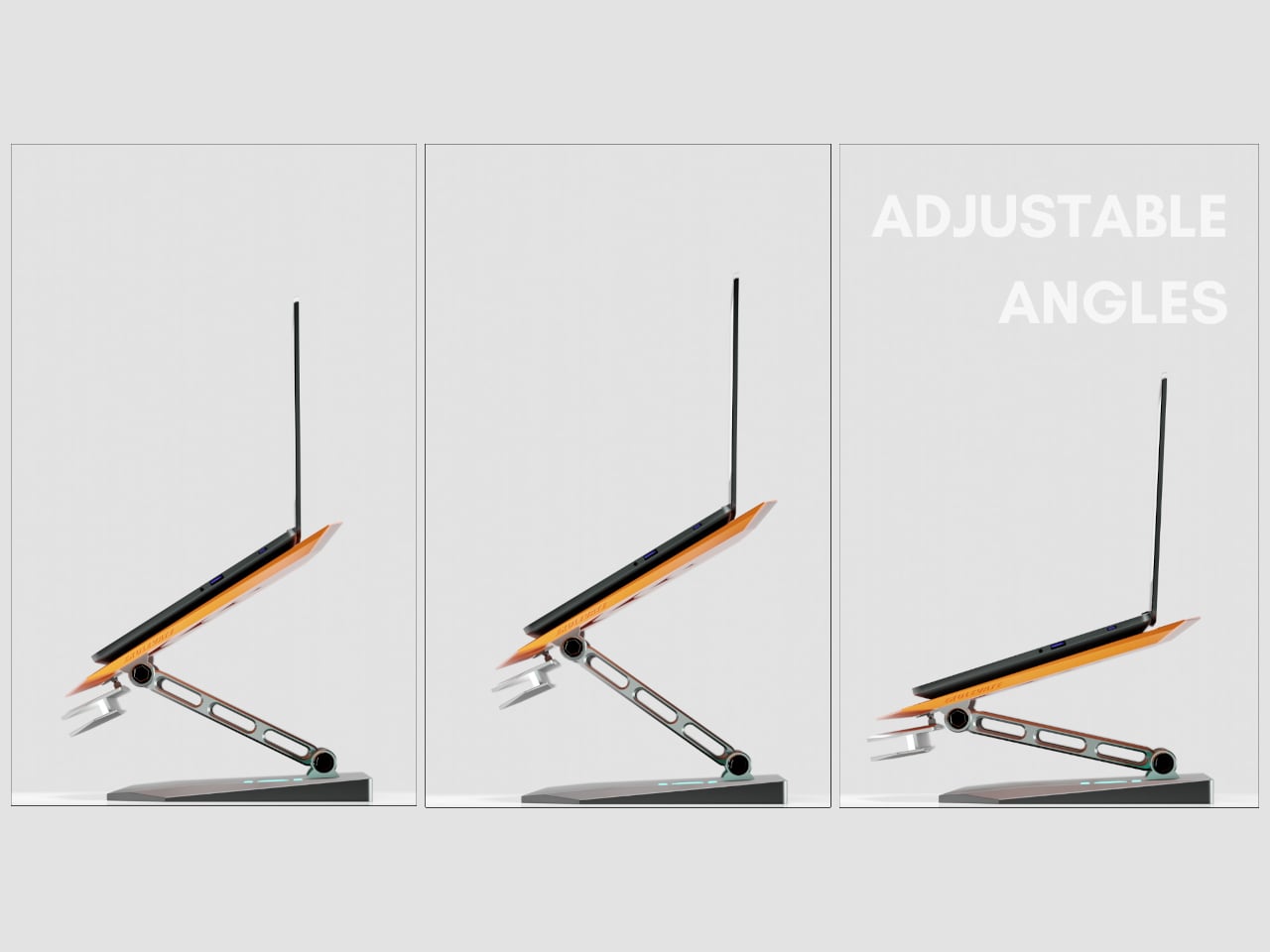
The hinges use a two-way friction mechanism to hold the stand at any chosen angle without slipping, while the aluminum frame keeps the structure light. For a student who already has too much on the desk and not enough on the budget for a complete workspace overhaul, the Exolevate proposes a more consolidated answer. It’s a stand that also illuminates and charges, finished in a color that refuses to be ignored.

The post Designed Like a Lamborghini, This Laptop Stand Replaces 3 Accessories first appeared on Yanko Design.
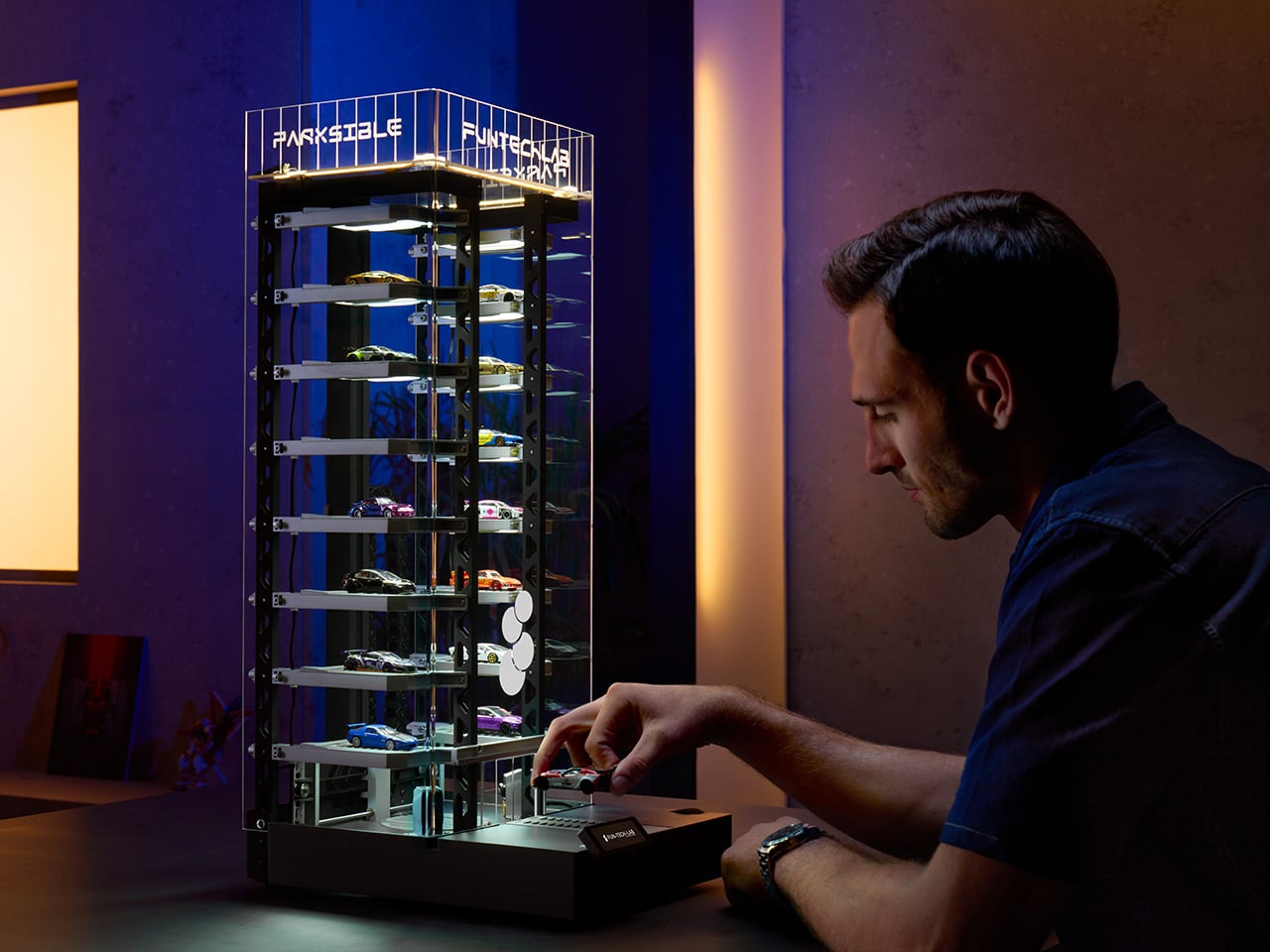
Die-Cast Cars Grew Up: Meet Parksible, The Ultimate 1:64 Smart Motorized Parking Garage by Fun-Tech-Lab

Parksible is a premium, smart motorized display garage created by Fun-Tech-Lab specifically for 1:64 scale die-cast cars. It replaces standard acrylic display cases with an automated vertical lift, app-controlled parking, gallery-grade adjustable lighting, and built-in environmental sensors, making it the ultimate interactive centerpiece for high-end desk setups and car-themed man caves.

Die-cast car collecting has come a long way from the days of plastic-lidded shoeboxes and bedroom shelves. Today’s collectors are far more deliberate about how and where their miniatures live, treating their 1:64 scale cars more like curated objects than childhood toys. Desks and personal workspaces have become the new display floors, and the bar for what a good display solution should look and do has risen considerably.

Designer: Fun-Tech-Lab

Click Here to Buy Now: $399 $528 (24% off). Hurry, only 377/500 left! Raised over $428,000.

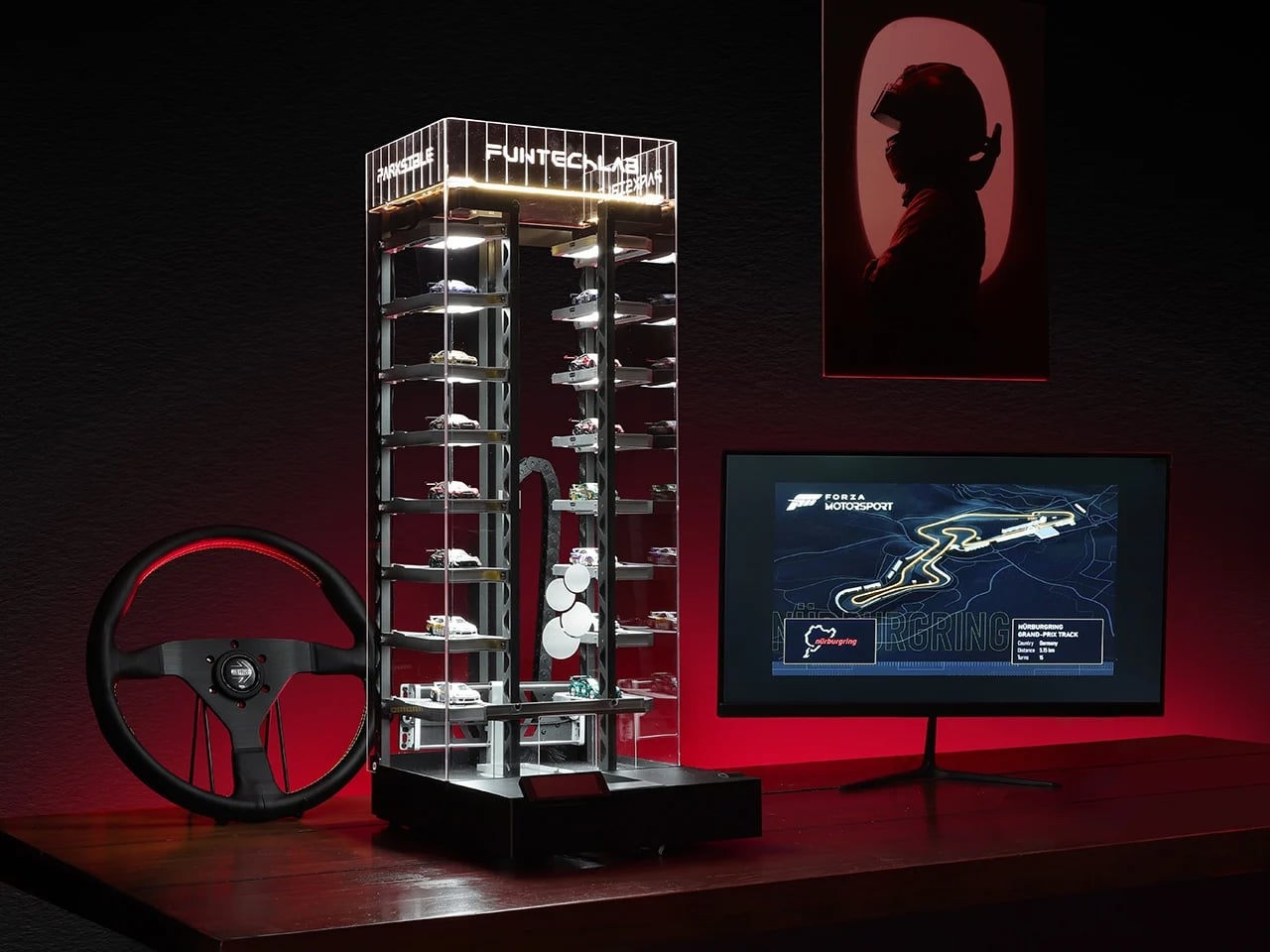
That shift is exactly what Parksible is designed for. Built by Hong Kong-based Fun-Tech-Lab, it’s a motorized vertical garage for 1:64 scale model cars that combines automated parking, adjustable ambient lighting, app control, and environmental monitoring in a single desktop tower. It takes the hobby more seriously than most display solutions do, and the result feels genuinely new for collectors who’ve long outgrown ordinary shelving.

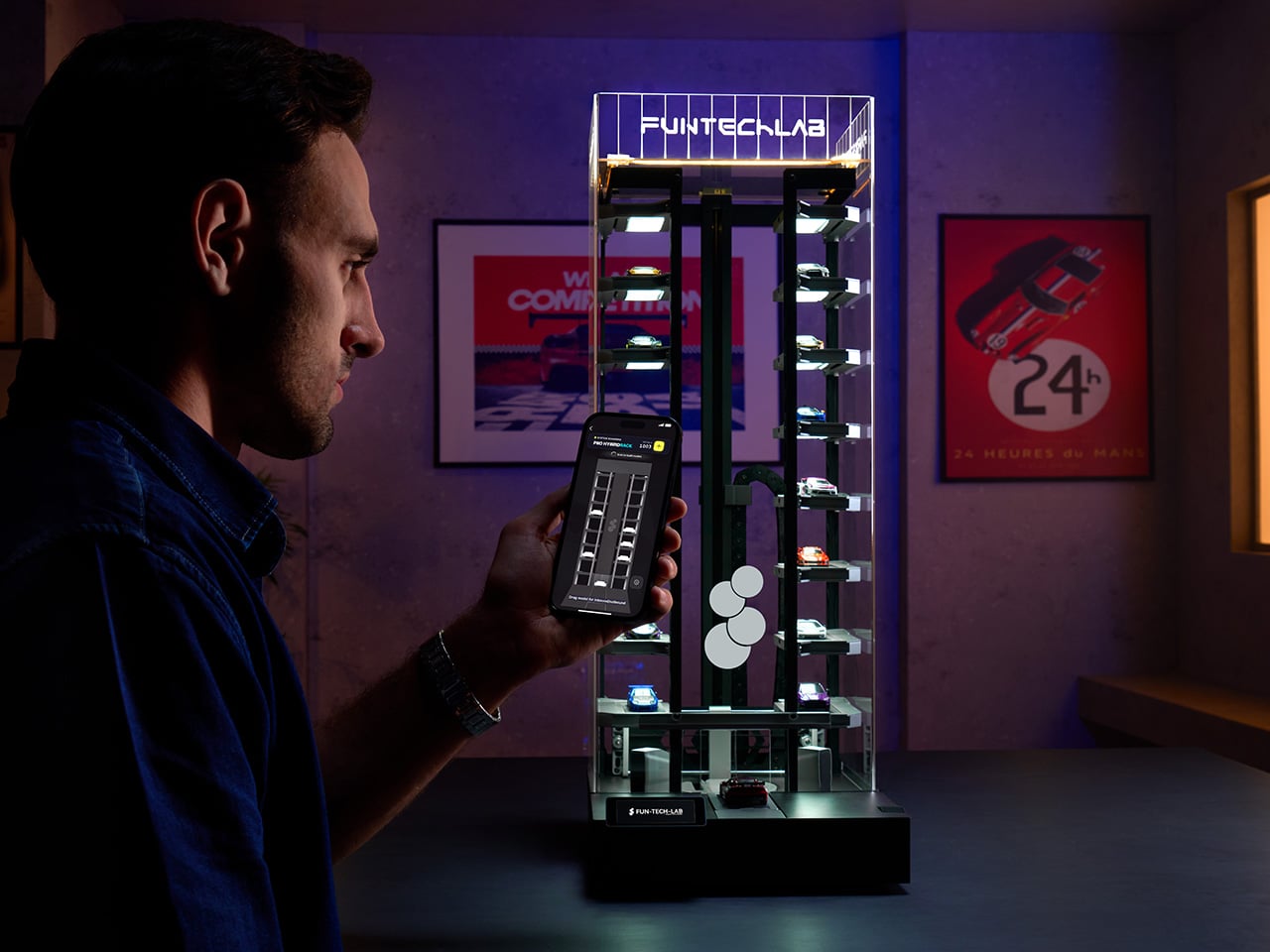
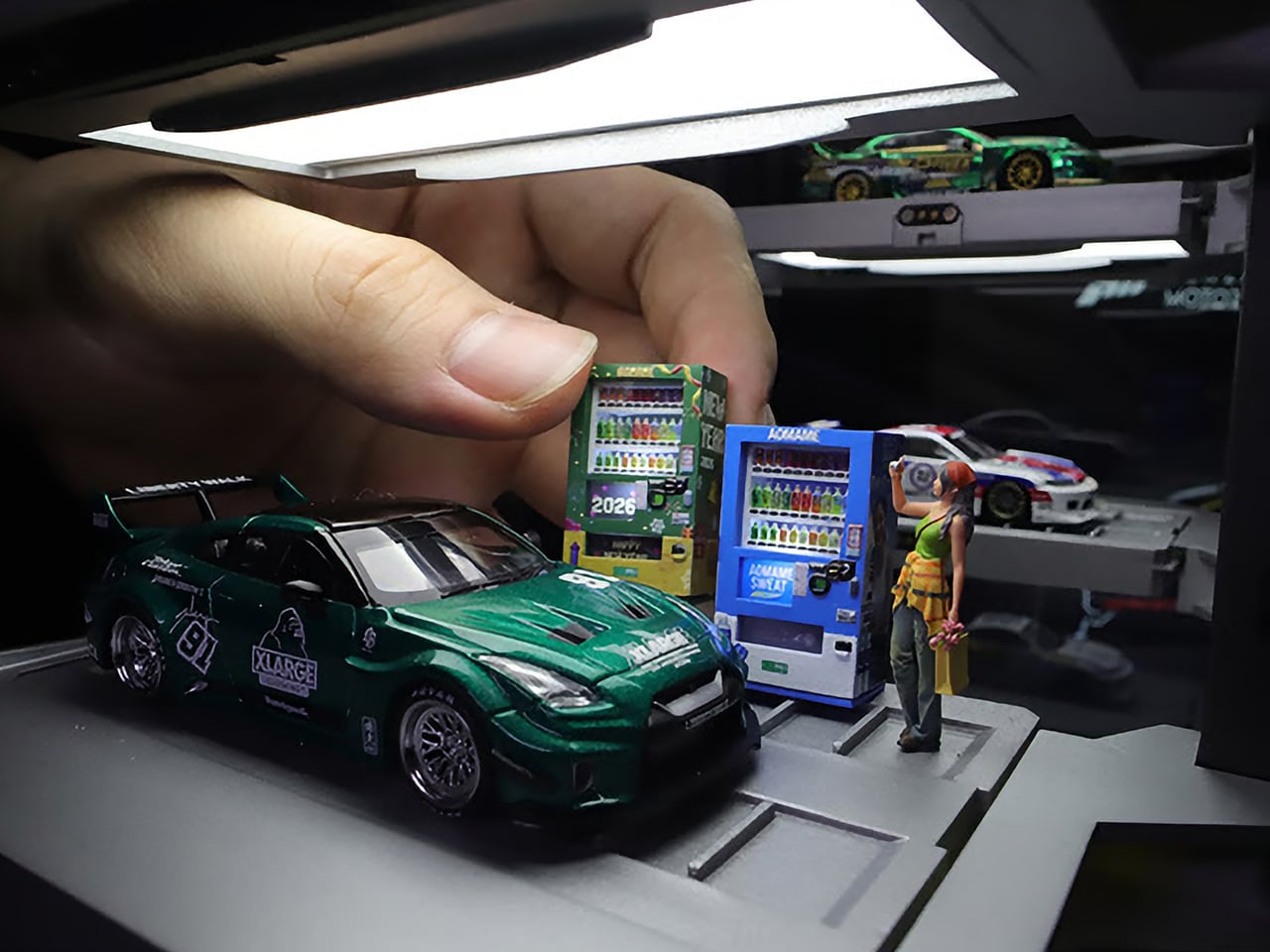
The core idea is surprisingly satisfying in practice. You place a car onto the entry tray, pick a parking slot from the app or the physical knob on the base, and let the motorized lift carry it into position. What used to be the mundane act of putting a model away starts feeling a lot more like parking a proper car in a proper garage.
To bridge the gap between physical collection and digital management, Parksible integrates several standout features:

Industrial Tower & Motorized Lift: Measuring 274mm x 400mm × 723mm, the transparent tower holds 14 cars on individual 90mm x 40mm trays. The permanently visible motorized lift mechanism turns the act of parking into a captivating desktop attraction.

Cinematic Gallery-Grade Lighting: Adjustable brightness lets the garage shift from a soft ambient glow to exhibition-grade illumination, providing cinematic lighting that perfectly highlights the paint details of your 1:64 collection without tacky RGB effects.

App-Controlled Digital Archive: The companion app turns your smartphone into a proper control panel. Assign parking slots remotely, switch display modes, and manage a digital counterpart of your physical inventory that you can browse from anywhere.

Parksible PRO Vision: The PRO model features a built-in recognition camera that identifies each model by shape as it’s being parked. It instantly syncs the car to your digital garage inventory and includes an exclusive 360-degree viewing feature.

Environmental Sensors & Local Control: Built-in temperature and humidity sensors monitor your valuable collection around the clock. Even without a phone nearby, a 2.79-inch on-device display and a physical control knob handle all operations locally, backed by power-loss protection to keep parked models perfectly secure.

At 723mm tall, Parksible is a substantial piece of hardware that’s meant to be seen rather than tucked away. Its 14-slot format works best as a rotating gallery of a collector’s current favorites rather than a comprehensive inventory solution. It’s an approach to model-car ownership that has a lot more in common with how people style a living space than how they fill a storage box.

Click Here to Buy Now: $399 $528 (24% off). Hurry, only 377/500 left! Raised over $428,000.

The post Die-Cast Cars Grew Up: Meet Parksible, The Ultimate 1:64 Smart Motorized Parking Garage by Fun-Tech-Lab first appeared on Yanko Design.