Triangle Side Table offers an interesting way to show off your books

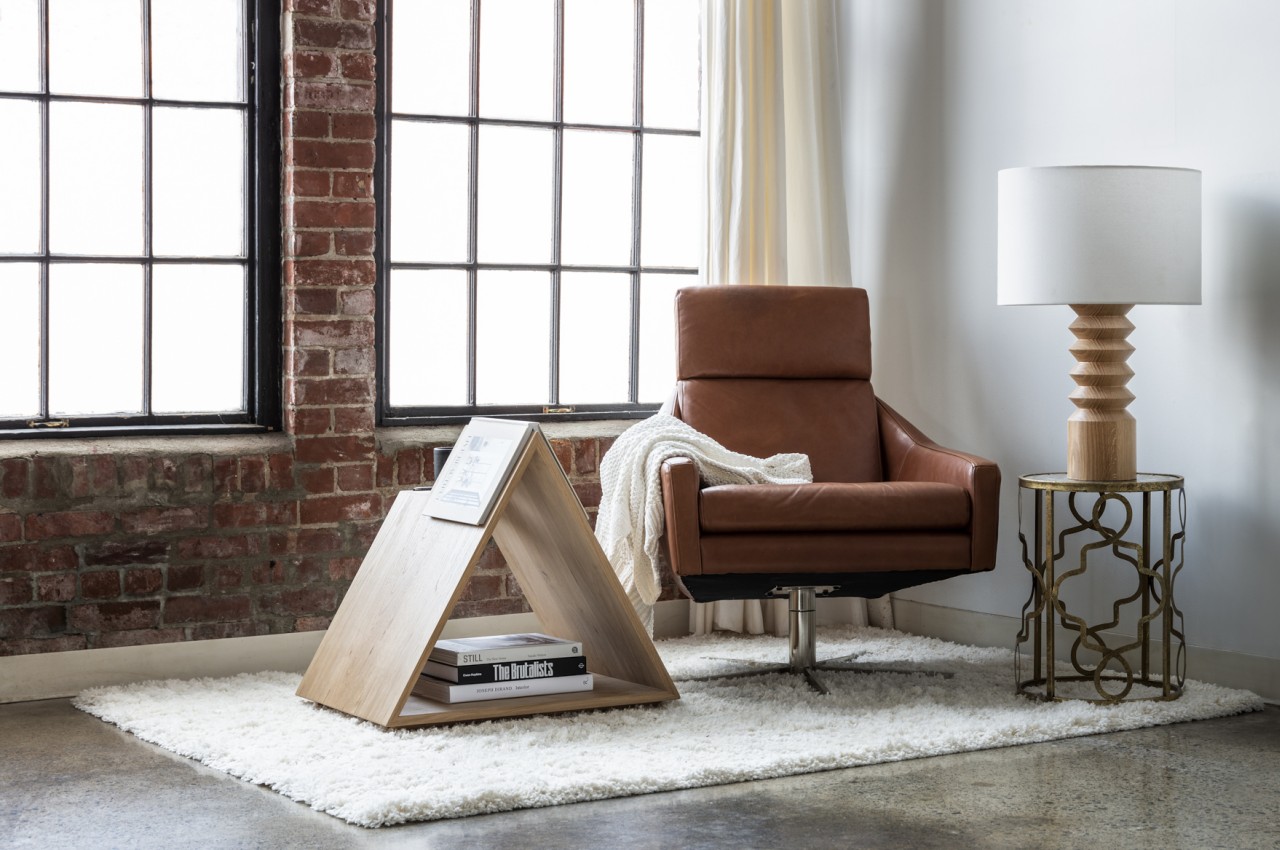
As the name suggests, a side table is a piece of furniture that’s often placed on the periphery, serving a secondary purpose to hold small objects temporarily. They’re a great location for placing drinks while you lounge on the couch and read a book, or for placing that same book when you need to put it down for a bit. Because of this function, it’s sometimes possible to let side tables take on less conventional forms, at least compared to common desks and tables. You might even be able to stretch the definition of a table to something that might not look like a table at all, like this hollow triangular prism that functions as a decorative piece and a resting place for your books.

Designer: Matthew Soule

The standard definition of a table is an elevated flat horizontal surface supported by vertical legs, but the exact interpretation of these elements is sometimes left to imagination and creativity. The only real requirement is that it should have a stable structure to hold items, though what objects it can hold is again open to interpretation. Side tables are often used to hold cups, mugs, pens, phones, notebooks, and books, and they sometimes have separate storage space for other, less-used objects.

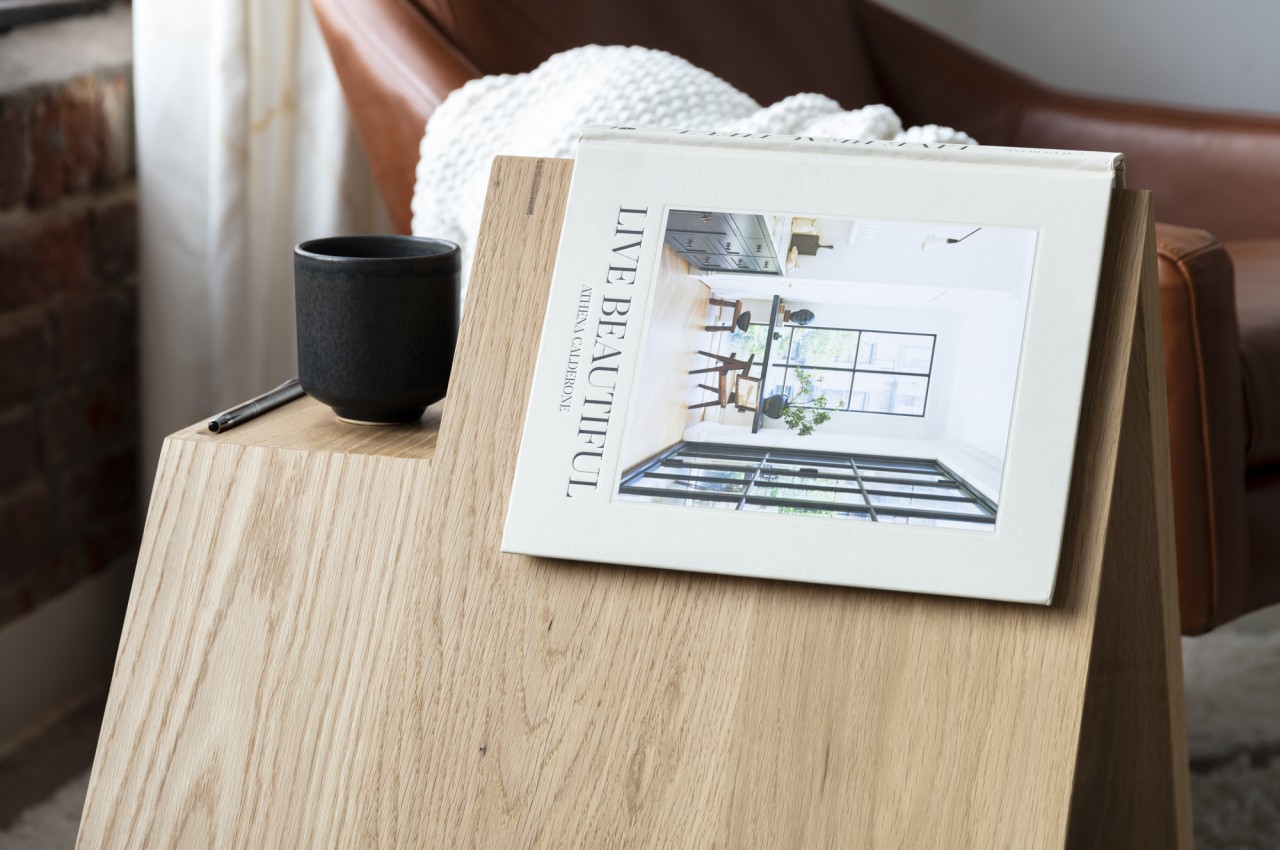
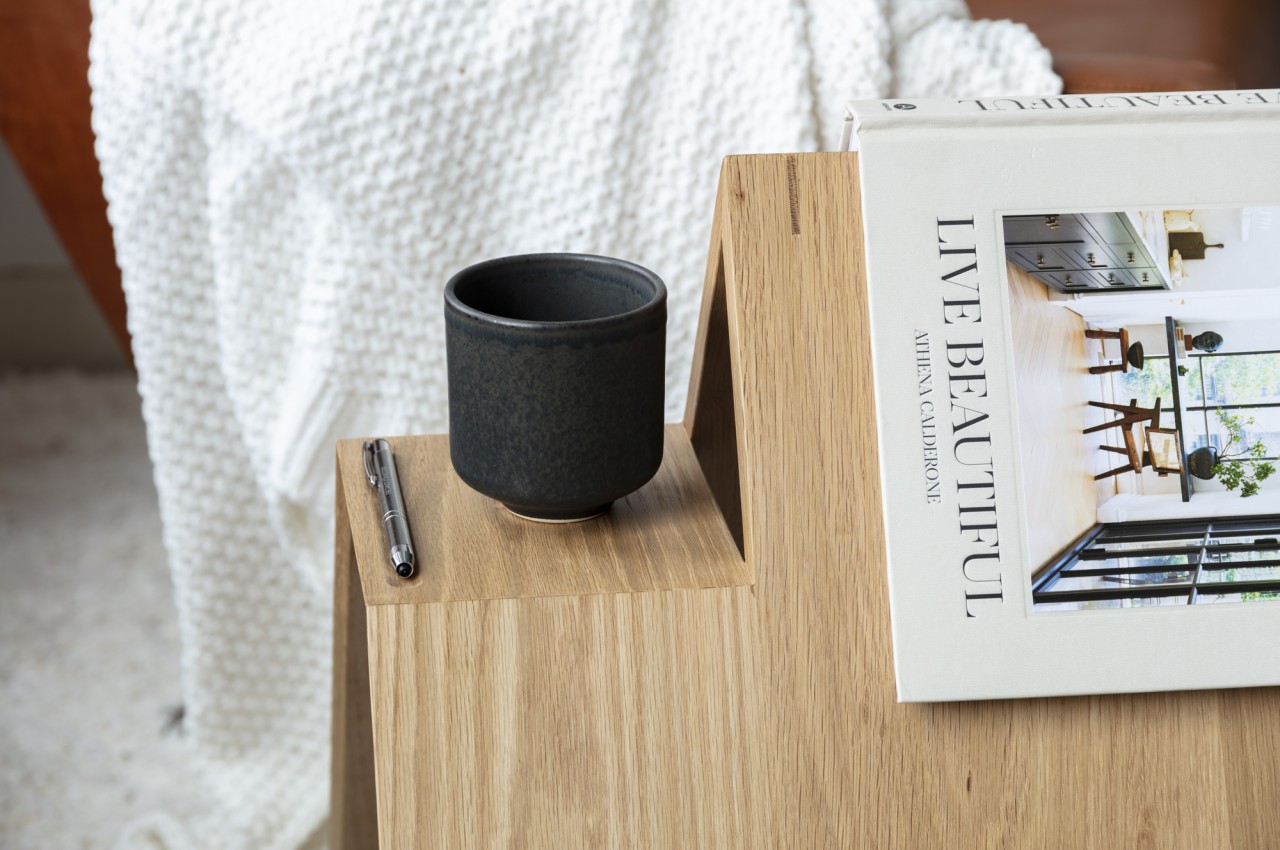
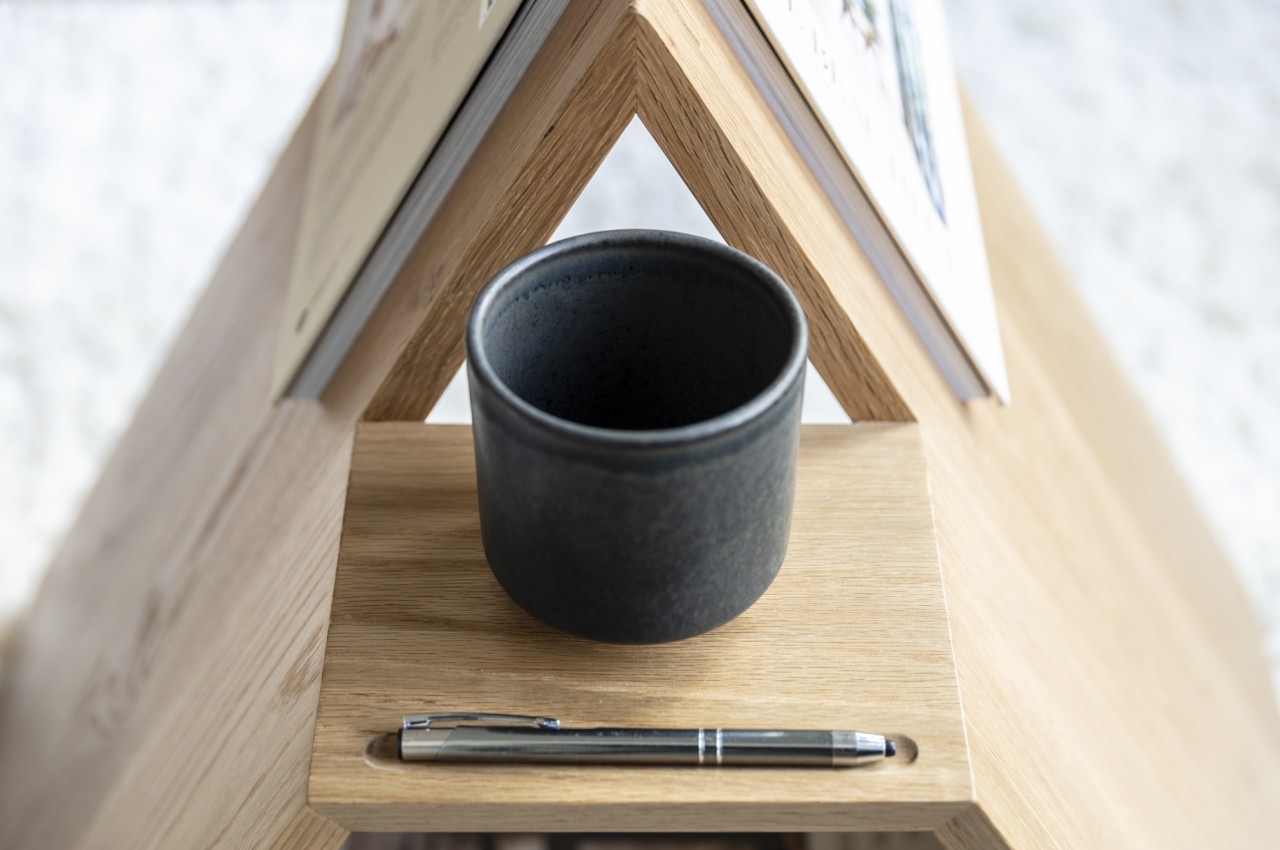
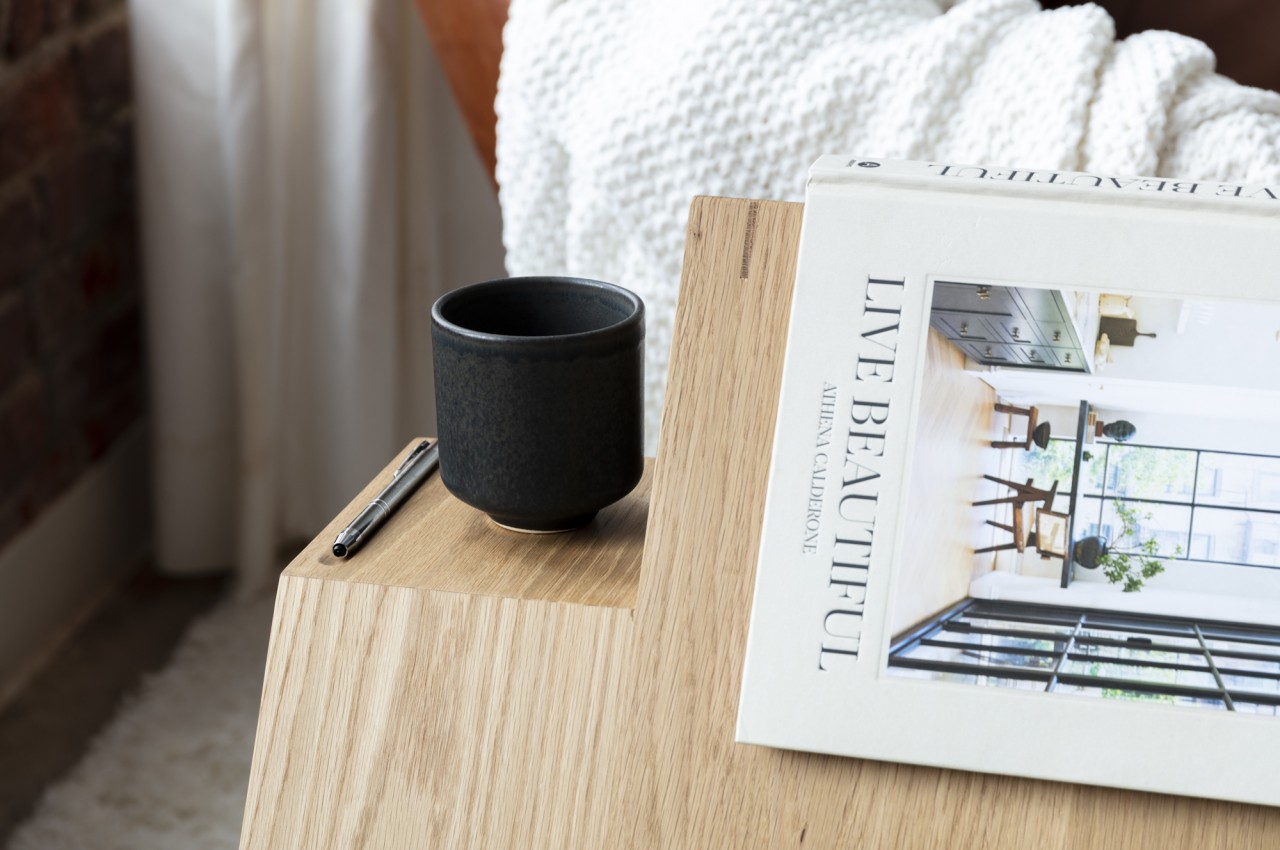
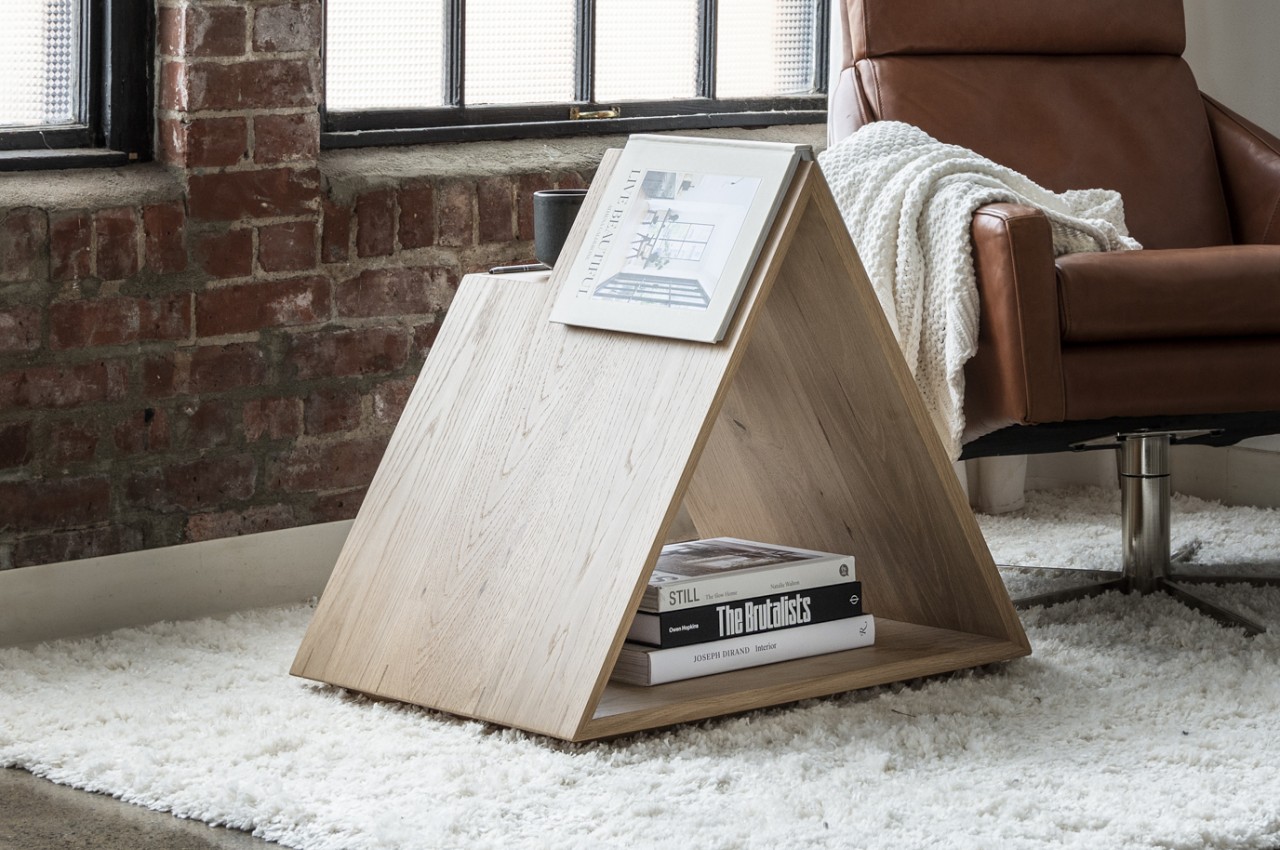
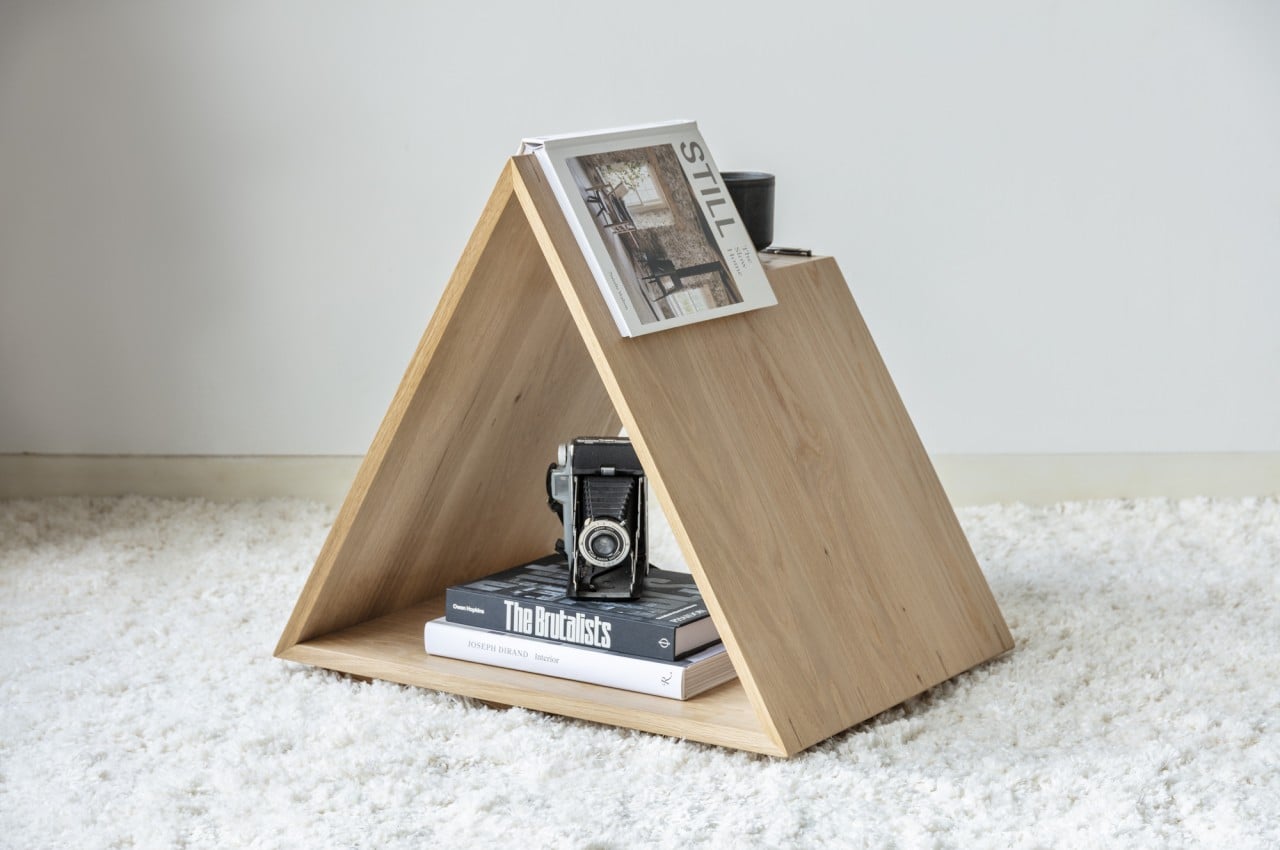
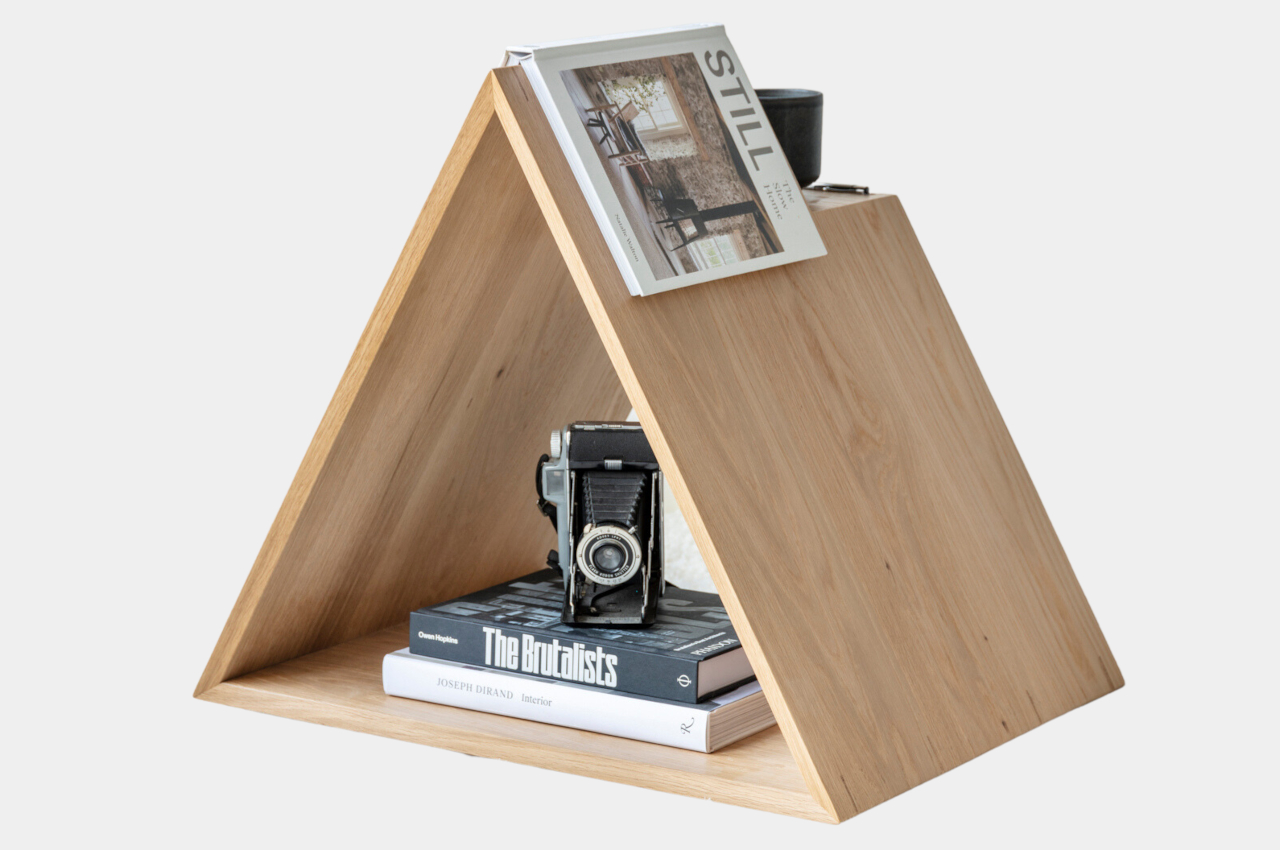
With that in mind, there are plenty of sources for design ideas, like this Triangle Side Table that was supposedly inspired by kids’ toy blocks. It definitely challenges the definition of a table having a flat horizontal surface, though there is definitely an area for that on the back of the apex, like a ledge for your things. That flat area, however, is barely enough to hold a mug, a small notebook, or a smartphone, but only one at a time. There’s also a groove for securing a writing instrument, but you’ll have to make it your favorite or most-used tool since there’s only room for one.

The main focus, instead, is to have a resting place for what you’re currently reading, be it a book or a magazine. You place the partially opened book on top of the triangle, using the tip as a bookmark. It’s a popular design in many minimalist products these days, though it’s uncertain whether it will harm the book’s binding in the long run.

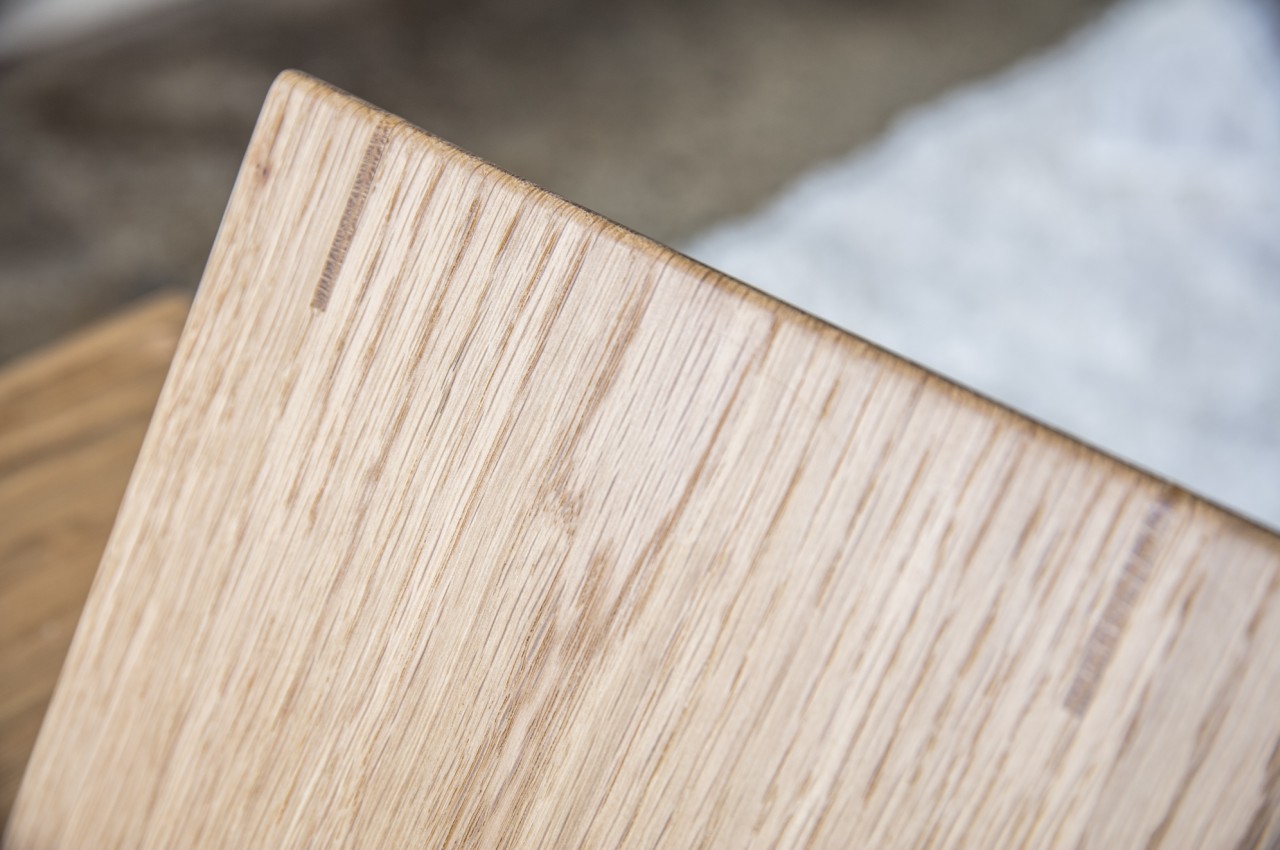
The open interior of the triangle is also another place to showcase reading materials, though it can also house a potted plant or even a pet mattress. The unique shape of the side table, its natural wood material, beveled edges, and the minimalist base that makes the table look like it’s magically floating all contribute to making the odd side table an attention-grabbing piece of furniture. Unfortunately, it’s also quite poor at actually functioning as a regular table, so you’ll definitely want to put it at the sides only.

The post Triangle Side Table offers an interesting way to show off your books first appeared on Yanko Design.

Move over IKEA, Lifecare’s SYSTM furniture can be disassembled, reupholstered, and maintained


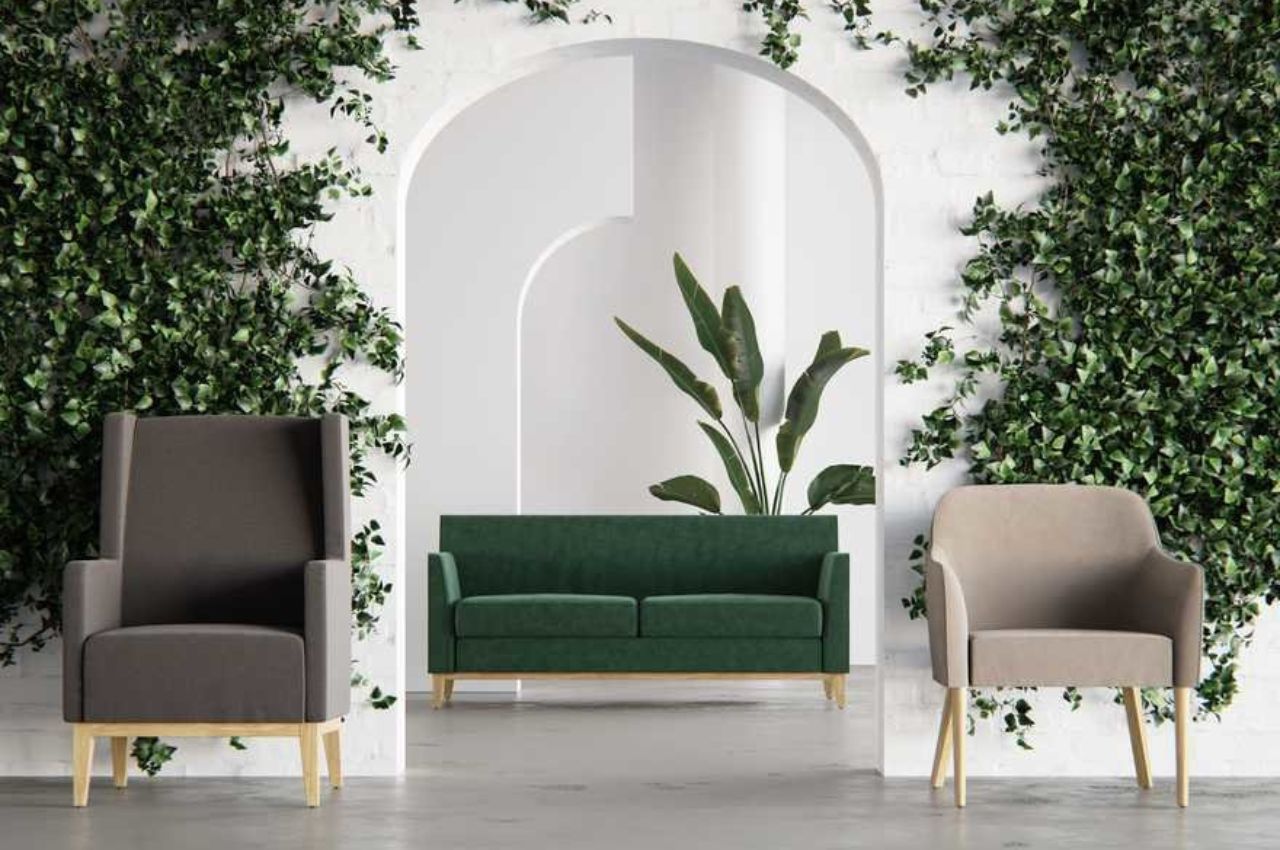
In a world where cleanliness and adaptability are paramount, Lifecare Furniture Company has introduced a game-changing solution to the age-old problem of maintaining impeccably clean furniture, especially in healthcare facilities. The SYSTM line, a series of smart furniture designs, is crafted with the unique ability to be swiftly disassembled for thorough cleaning and reupholstering, setting a new standard for hygiene and versatility in the furniture industry.

Designer: Lifecare Furniture (SYSTM)

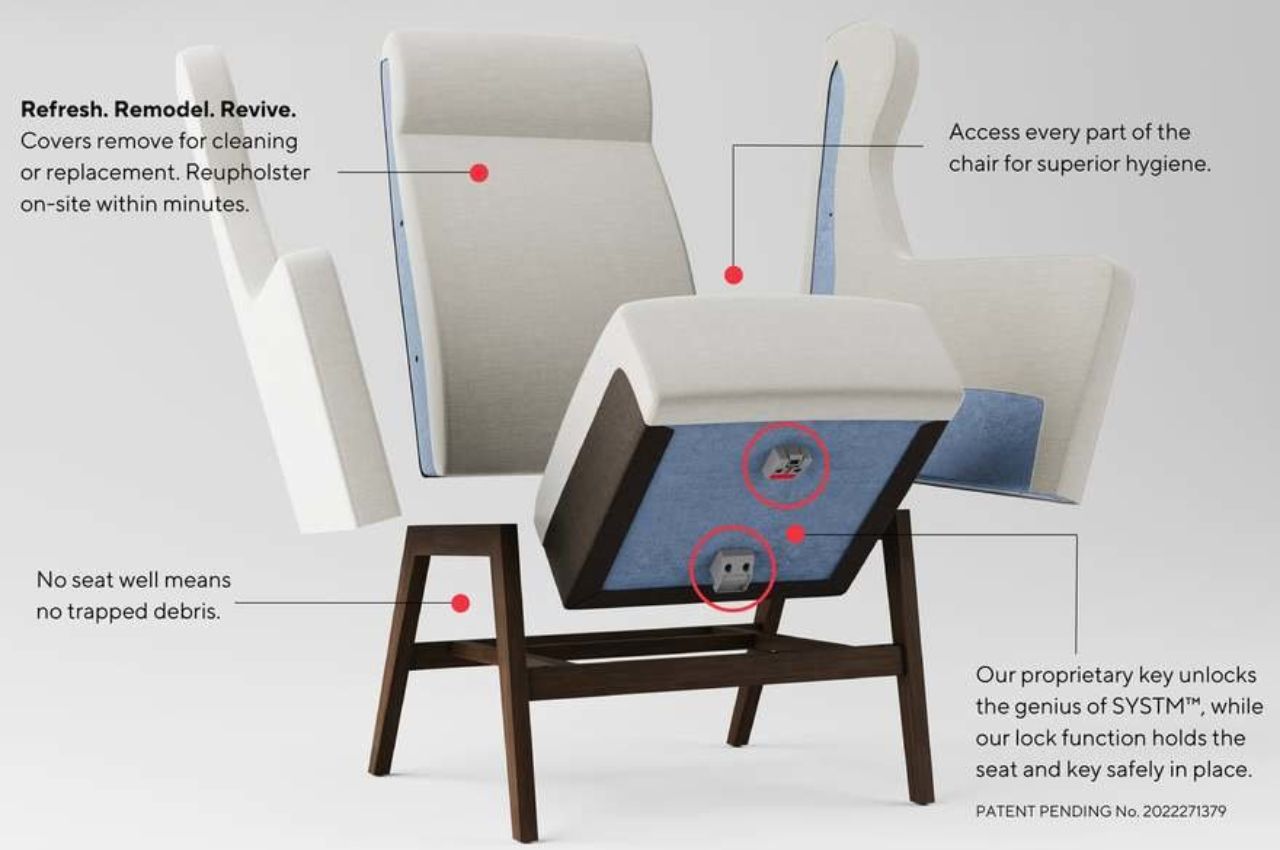
For most of us, a bit of lint or pet hair on our furniture may be tolerable, but for healthcare facilities mandated to uphold stringent cleanliness standards, furniture with intricate crevices poses a significant challenge. The accumulation of dust and microbes in these hidden spaces can compromise the overall hygiene of the environment. Lifecare Furniture Company recognized this issue and developed the SYSTM line with a focus on addressing the specific needs of healthcare settings.

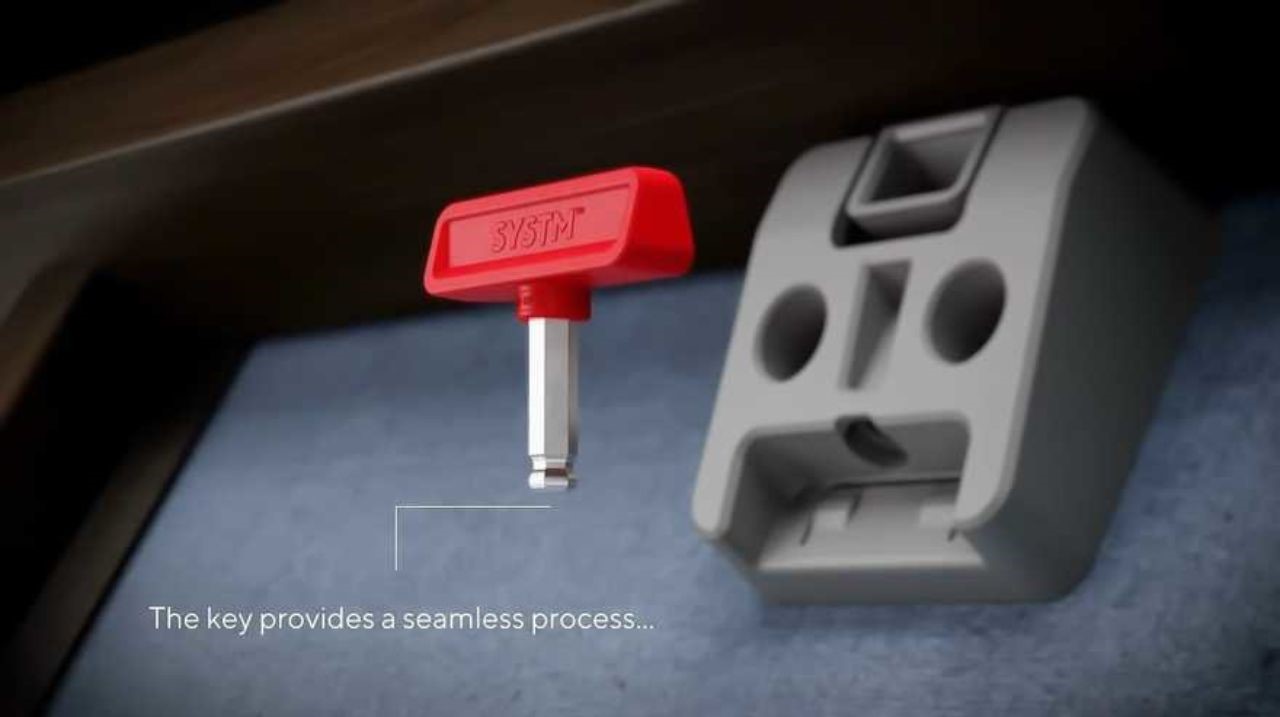
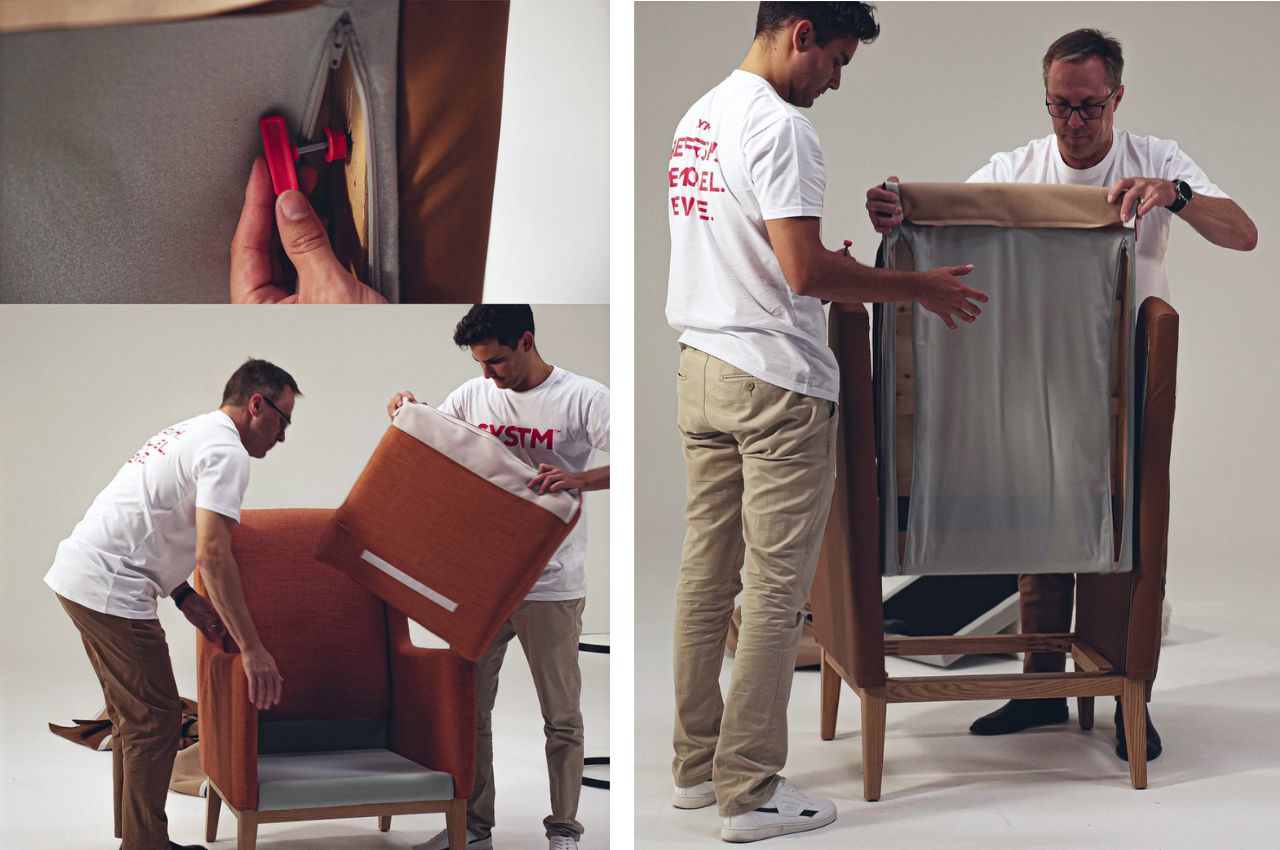
The hallmark feature of this furniture line is its ability to be quickly and easily disassembled for thorough cleaning. The furniture pieces can be taken apart using a specially designed red-handled Allen key, conveniently stored beneath the seat. This innovative approach not only simplifies the cleaning process but also ensures that every nook and cranny can be accessed, leaving no space for dirt or contaminants to hide.

Beyond its cleaning capabilities, the line offers a unique advantage in reupholstering. The pieces can be disassembled so efficiently that changing upholstery becomes a breeze. Whether dealing with unsightly stains or seeking a fresh look for aesthetic reasons, the ease of reupholstering makes the furniture line an ideal choice for healthcare facilities and high-traffic commercial settings.

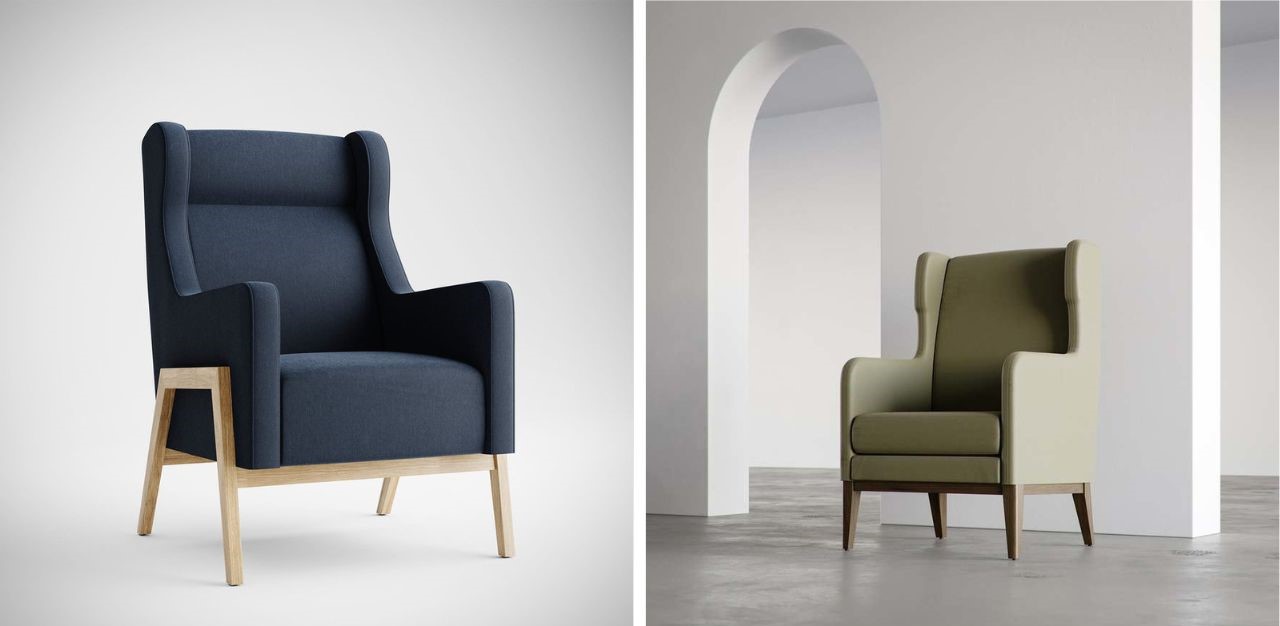
Lifecare Furniture Company understands that functionality should not compromise style. The SYSTM line comes in a variety of designs for both chairs and sofas, allowing for customization based on the specific needs and aesthetics of different spaces. This ensures that the furniture not only serves its practical purpose but also enhances the overall visual appeal of its surroundings.

While this line was initially designed with healthcare in mind, its benefits extend far beyond institutional settings. Imagine if all residential furniture were crafted with the same principles – quick disassembly for cleaning and reupholstering. This approach would revolutionize the way we think about furniture maintenance, making it significantly easier to refresh and update our living spaces without the need for constant replacements.

Interior designers often fall in love with furniture for its design qualities. Lifecare’s SYSTM line acknowledges this by allowing for easy upholstery changes. This means that even if a particular piece is adored for its design, it can be effortlessly updated to suit evolving tastes or trends.

The post Move over IKEA, Lifecare’s SYSTM furniture can be disassembled, reupholstered, and maintained first appeared on Yanko Design.

Kengo Kuma designs minimal conversational furniture pieces of luxury hotel chain Aman

Aman, renowned for its opulent hotels that redefine luxury, has ventured into the realm of home interiors with the launch of Aman Interiors. Recognizing the desire of its patrons to bring the Aman aesthetic into their homes, the brand introduces the Foundations Collection, an exquisite line of furniture designed to capture the essence of the iconic Aman experience. The first collection, created by acclaimed architect Kengo Kuma, is set to debut at the Design Miami Fair, marking a new era for Aman enthusiasts.

Designer: Kengo Kuma and Aman Interiors

Morad Tabrizi, CEO of Aman Interiors, expresses the brand’s commitment to capturing a feeling and delivering a sense of calm through materiality and proportion. The decision to launch the furniture line stems from the demand of Aman enthusiasts who wish to take a piece of the Aman experience home. Aman Interiors aims to offer an intimate transaction, allowing clients to immerse themselves in the Aman lifestyle within their own living spaces.

Vladislav Doronin, Chairman of Aman Group and Aman Interiors, shares his passion for design and architecture, which drew him to the brand as a guest. He envisions Aman Interiors as the next phase of the Aman lifestyle, providing clients with direct access to an interior design team deeply immersed in the world of Aman. The multi-faceted business seeks to seamlessly furnish AmanResidences and Aman Hotels while bringing bespoke furniture designs to the market.

The Foundations Capsule Collection:

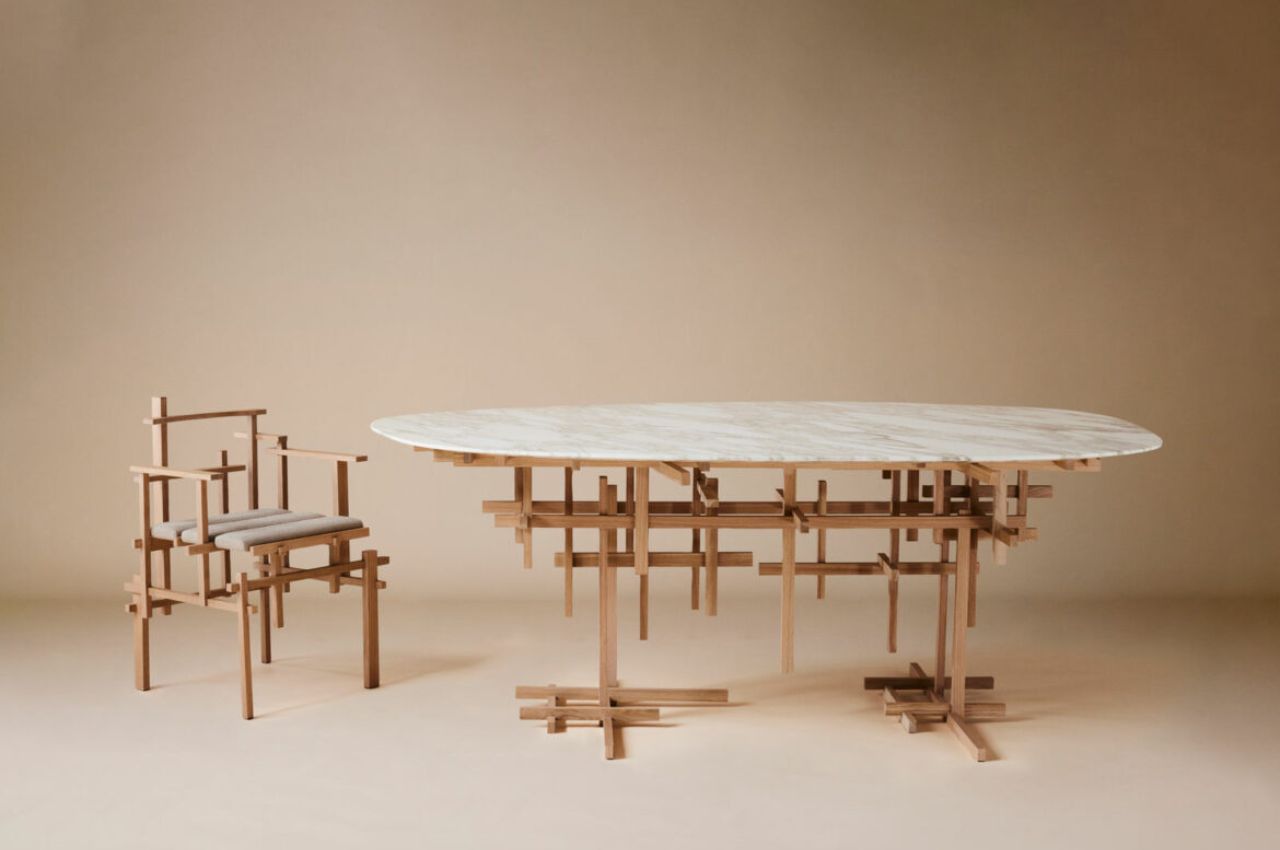
Crafted in the Aman Interiors London studio and meticulously handcrafted by artisans worldwide, the Foundations capsule collection is a testament to elegance and engineering. The collection, though appearing delicate, symbolizes the foundational elements of any structure, akin to scaffolding. Designed by Kengo Kuma, the Foundations Collection reflects the architectural brilliance seen in Aman’s renowned properties. The Migumi Collection, to be unveiled at the Design Miami Fair, encompasses 30 limited-edition editions of tables and dining chairs, providing a glimpse into the world of Aman luxury. The furniture line not only defines elegance but also sparks conversations, making it a perfect centerpiece for commercial spaces, embodying the spirit of Aman in the form, proportion, and purity of materials.

Ekam Lounge Chair:

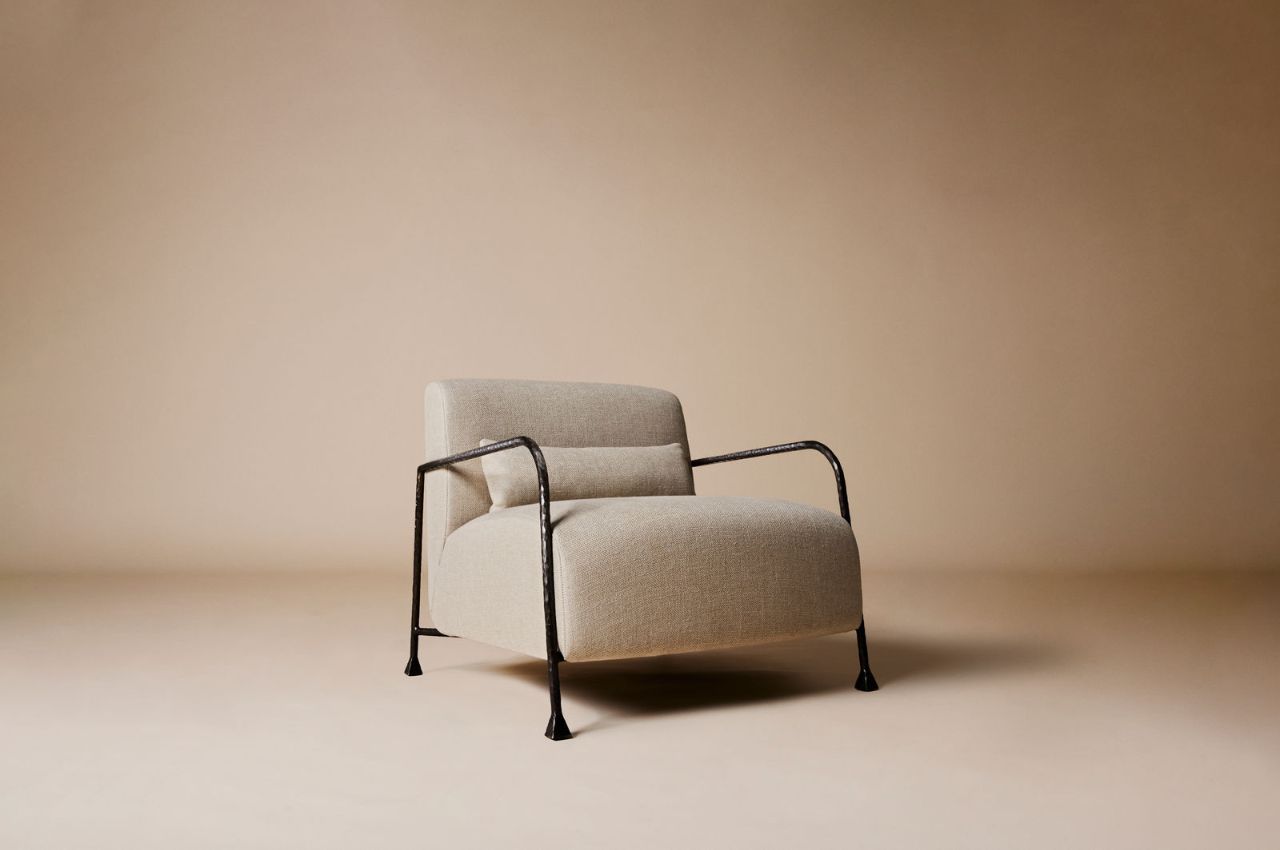
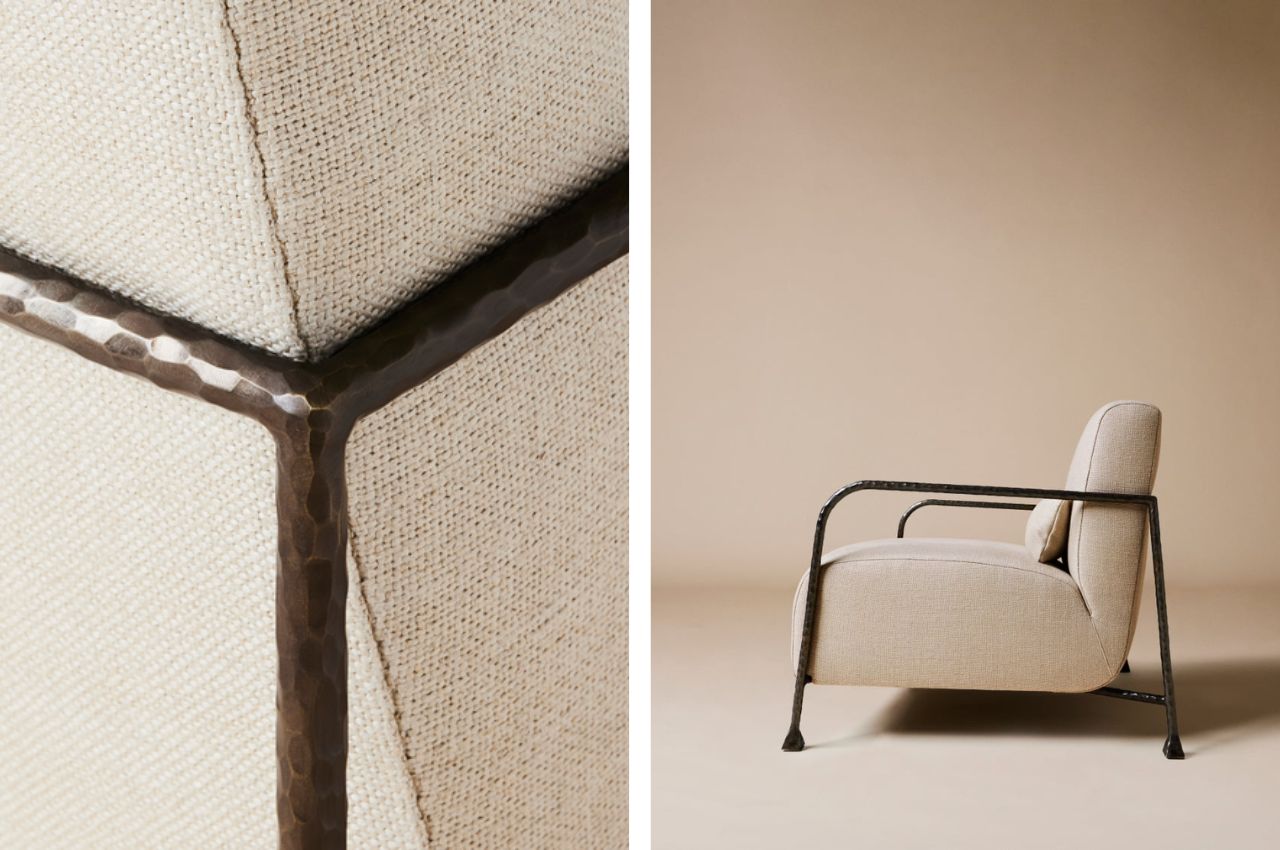
The Ekam Lounge Chair, inspired by the Tequesta tribe’s hand-forged tools, features a hand-sculpted steel frame with an antique finish. The hammered texture pays homage to Miami’s heritage, providing both strength and aesthetic appeal. The juxtaposition of the robust frame with voluminous linen upholstery creates a harmonious balance, embodying the continuous spirit of the Aman experience.

Dvaya Bench:

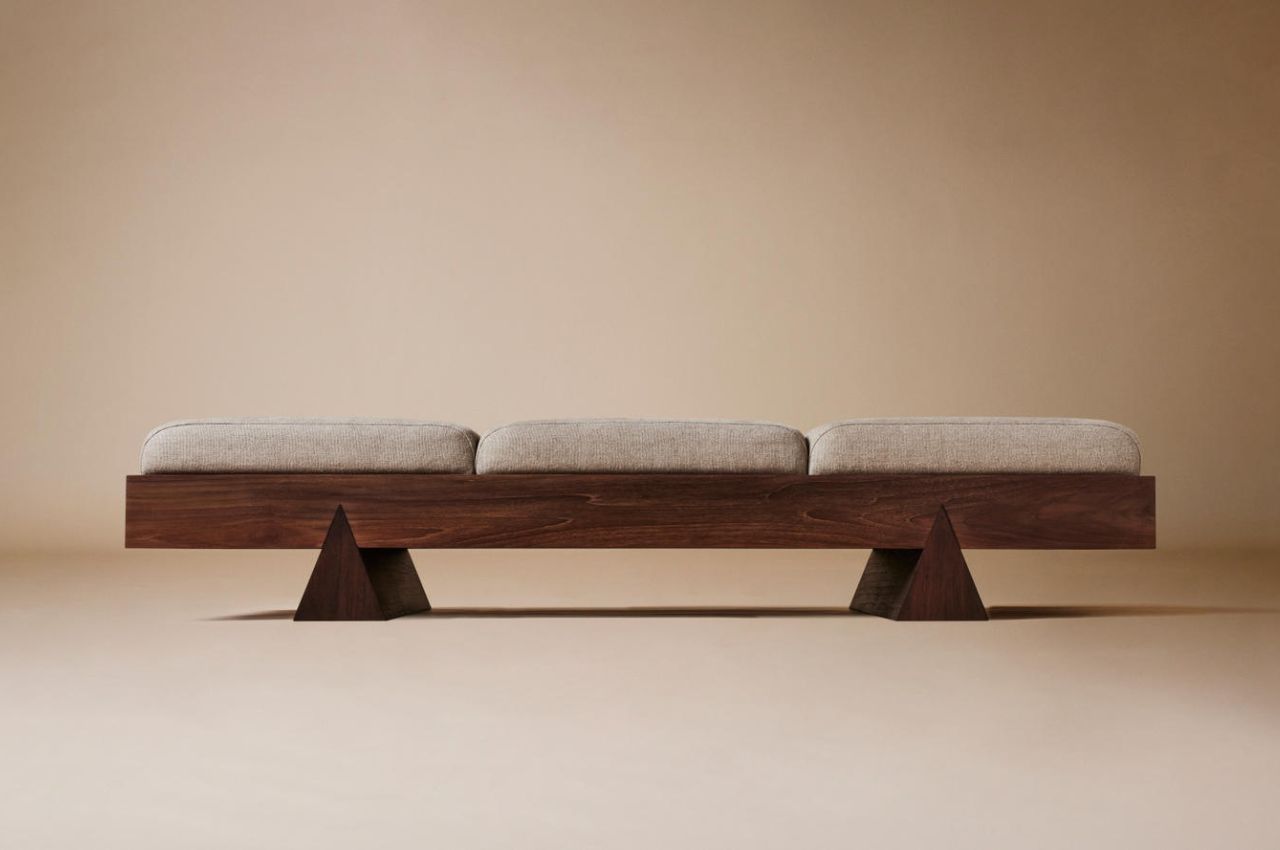
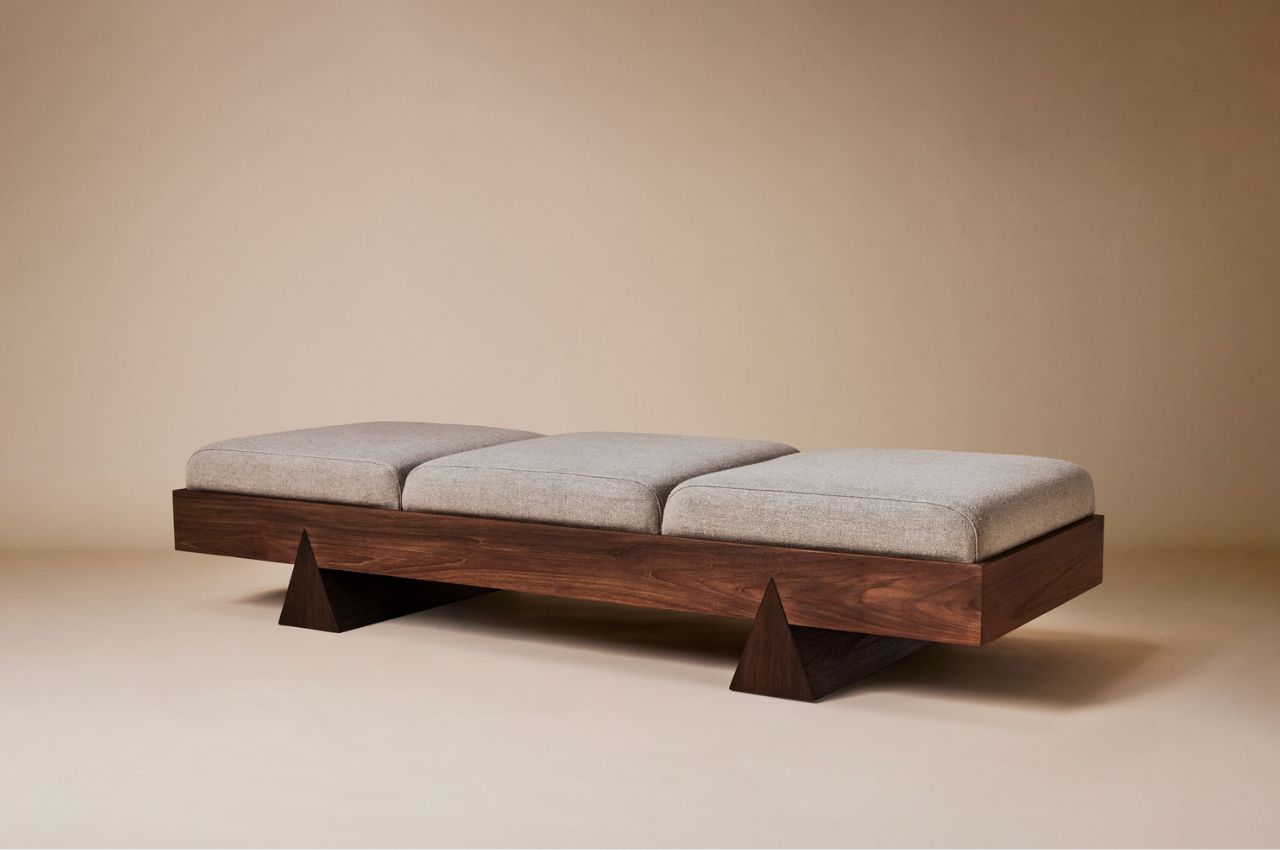
The Dvaya Bench embodies duality through its thoughtful design, harmonizing contrast and equilibrium. The substantial wooden frame is gracefully supported by triadic legs, creating a visually striking piece. The generous seating area, adorned with three identical cushions, seamlessly integrates with the overall framework, offering a comfortable and aesthetically pleasing experience.

Trini Side Table:

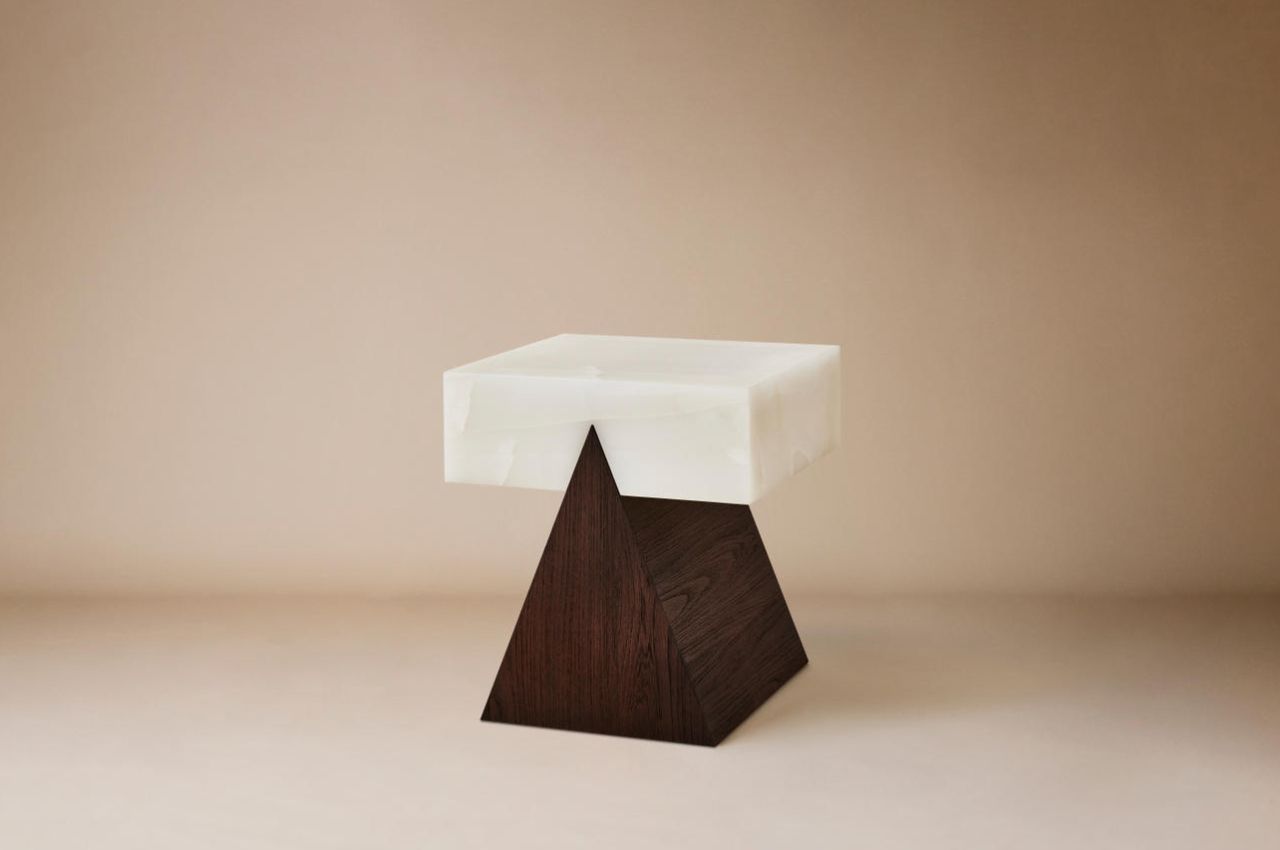
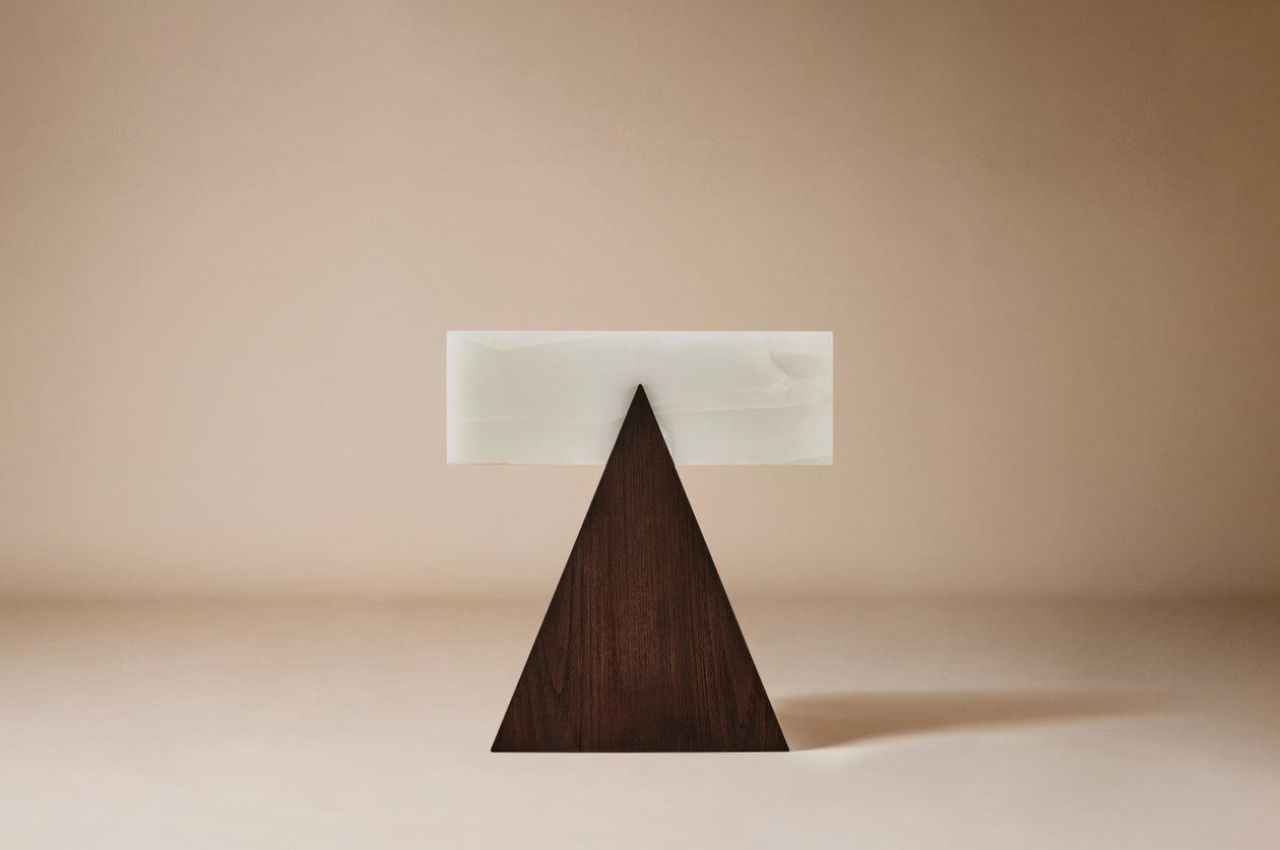
Aman’s Trini Side Table masterfully combines craftsmanship with spiritual resonance. The triangular shape symbolizes strength, stability, and unity. The wooden base and Onyx top create a striking contrast, inviting exploration of the seamless interaction between form and mindfulness. This piece transcends conventional furniture, becoming a functional work of art.

With a commitment to delivering the Aman experience beyond hotel walls, Aman Interiors’ line of furniture redefines luxury living. From the Ekam Lounge Chair’s tribute to Miami’s heritage to the Dvaya Bench’s harmonious duality and the Trini Side Table’s spiritual resonance, each piece exemplifies the brand’s dedication to elegance, craftsmanship, and the creation of shared experiences in the comfort of one’s home. As Aman Interiors takes its first step into the world of luxury furniture, it promises to elevate home interiors to new heights of sophistication and opulence.

The post Kengo Kuma designs minimal conversational furniture pieces of luxury hotel chain Aman first appeared on Yanko Design.

Lenovo’s E-Waste Gets A New Life At The Annual Tech World Event As 3D Printed Furniture

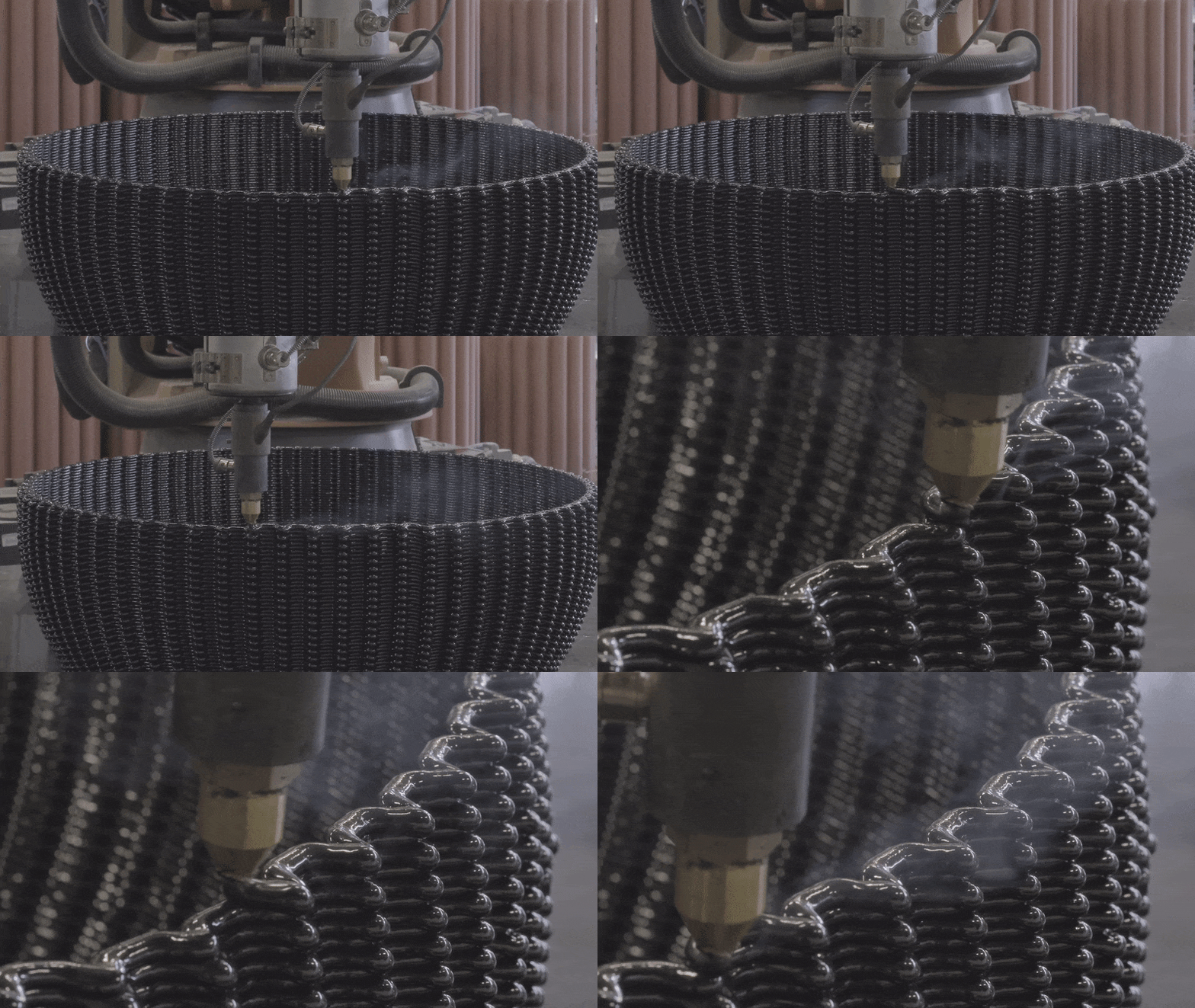
In an era where environmental sustainability is at the forefront of technological innovation, Lenovo, a global technology powerhouse, has taken a bold step towards repurposing electronic waste (e-waste) plastics through a groundbreaking collaboration with Aectual, a leader in industrial 3D printing. The result? 3D-printed furniture, that not only captivates with its design but also carries a powerful message about the possibilities of circularity and responsible consumption.

Designers: Aectual and Lenovo

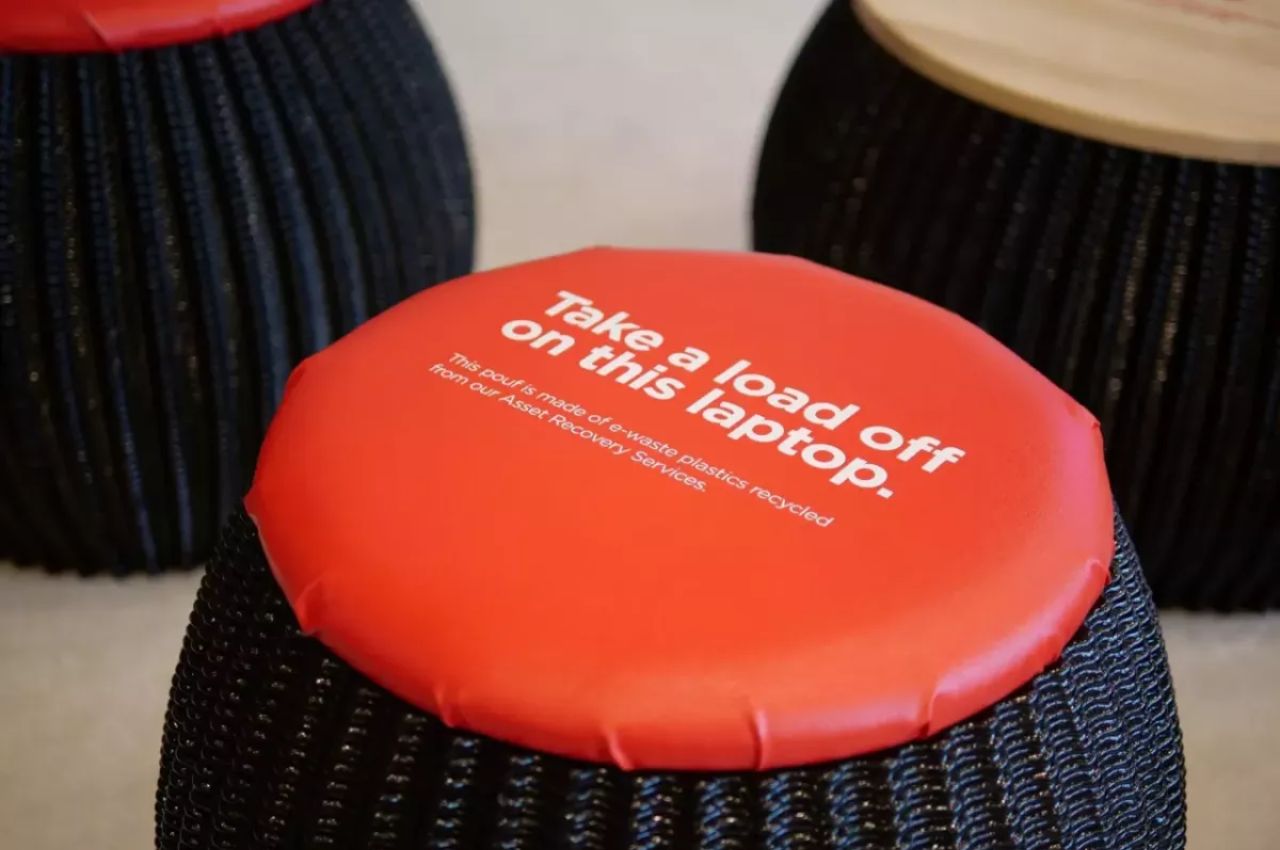
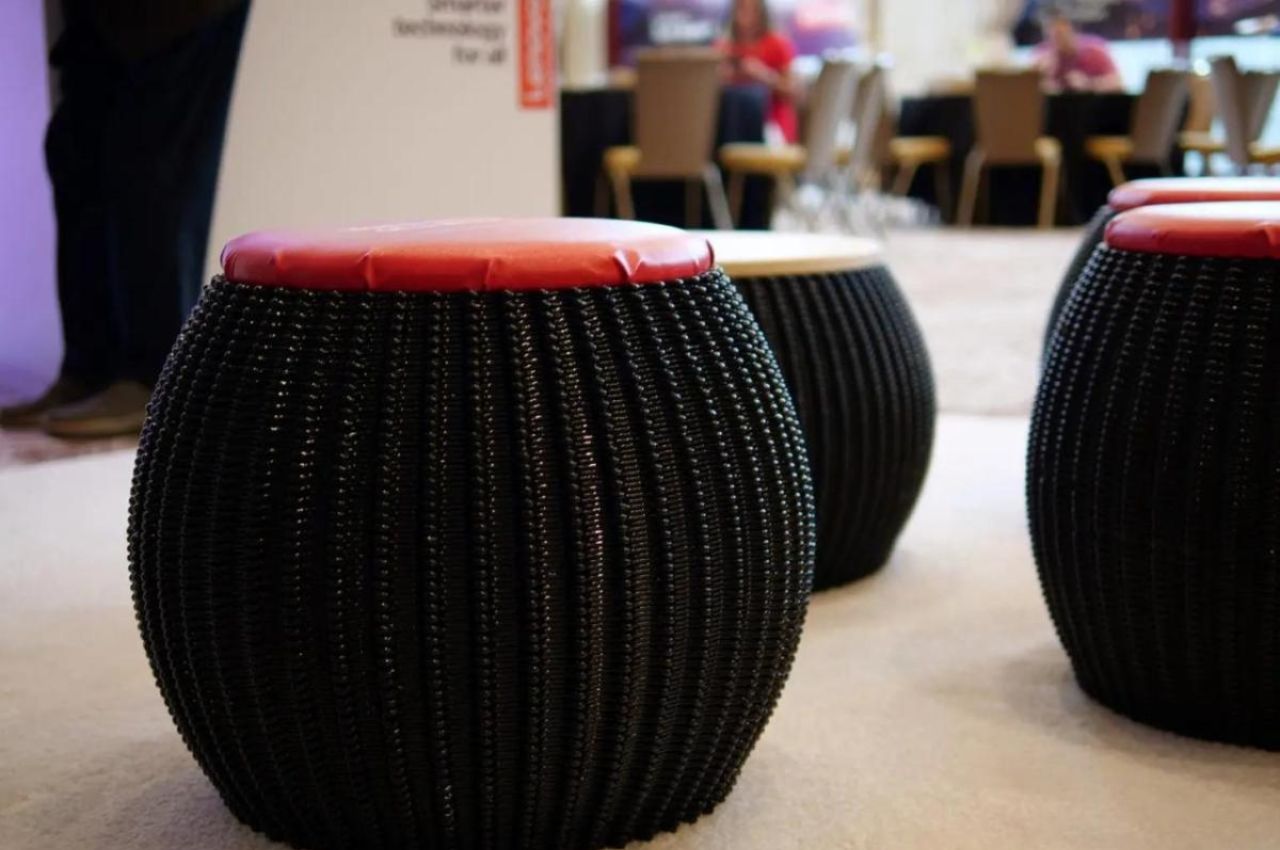
Lenovo’s annual Tech World event, a hub for discussions on the frontiers of AI, became the stage for a unique fusion of technology and sustainability. Attendees found themselves seated on low, padded stools adorned with red tops reminiscent of Lenovo’s iconic TrackPoint. Little did they know that beneath the comfortable exterior lay a story of transformation – the poufs were crafted from recycled e-waste plastics derived from a mix of devices.

The collaboration between Lenovo and Aectual extends beyond the mere recycling of e-waste plastics. Aectual, a Netherlands-based leader in 3D printing for architecture and interior design, joined forces with Lenovo to bring the concepts of asset recovery and circularity to life. This partnership showcases a commitment to innovation that goes beyond conventional boundaries.

Claudia Contreras, Executive Director of Global Sustainability Services at Lenovo, expressed her excitement about discovering new ways to deliver on Lenovo’s commitment to sustainability. The partnership with Aectual exemplifies an inventive and ambitious approach to repurposing e-waste plastics into 3D-printed event furniture.

Lenovo’s collaboration with Aectual is not just about creating aesthetically pleasing furniture; it is a testament to the company’s dedication to meaningful innovation. Hedwig Heinsman, co-founder, and Creative Director at Aectual emphasized the shared commitment to sustainability, with a focus on giving recovered materials a new life and creating surprising, environmentally friendly products.
Aectual’s 3D printing process prioritizes circularity by allowing the recovery of products after use. The material can be shredded and reused in new 3D-printed products up to seven times. This commitment to circular design aligns seamlessly with Lenovo’s broader sustainability goals.

The poufs at Lenovo Tech World are just a small example of the recycling possibilities enabled by solutions like Lenovo’s Asset Recovery Services (ARS). This end-to-end solution minimizes e-waste through secure device lifecycle management. Since 2005, Lenovo has processed nearly 800 million pounds of Lenovo-owned and customer-returned computer equipment, showcasing a comprehensive approach to responsible e-waste management.

Lenovo and Aectual’s collaboration serves as a beacon for sustainable practices within the tech industry. As the world grapples with the environmental impact of electronic waste, this partnership demonstrates that innovation and environmental responsibility can go hand in hand. With Lenovo’s commitment to reaching net-zero greenhouse gas emissions by 2050, this collaboration is a tangible example of the company’s dedication to a greener future.

The 3D-printed furniture showcased at Lenovo Tech World is more than just a comfortable seat; it is a symbol of transformation and innovation. By breathing new life into e-waste plastics, Lenovo and Aectual are paving the way for a future where technology and sustainability coexist harmoniously. As the world continues to seek solutions to the challenges posed by electronic waste, this collaboration sets a precedent for responsible and forward-thinking practices in the tech industry.

The post Lenovo’s E-Waste Gets A New Life At The Annual Tech World Event As 3D Printed Furniture first appeared on Yanko Design.

10 of the Best IKEA-Worthy Desks To Add To Your Work From Home Office

I spend a substantial amount of my day on my desk, typing away to glory. Most of the time I also end up eating my meals on it! And binge-watching on Netflix as well. And I’m sure that’s the case with most of us, since working from home became the new norm, and our home offices became our new hang-out spots. But having a great desk is important! Simply a ‘good’ desk won’t do either. A great desk helps us work comfortably and effectively. It puts us in the right mindset, helping us achieve our daily productivity goals and checkmark all the tasks on our to-do list! Not only should our desks be clean, but they should also sport an ergonomic and functional design! And good looks are a bonus. And finding a desk that does all of the above can be a Herculean task. But worry not! We’ve curated a collection of innovative, highly functional, and aesthetically pleasing desk designs, that will end your hunt for a great desk once and for all! From a desk chair that swivels around to a modular table that pivots from a work desk to a dining table  – there’s a perfect desk in here for everyone.

1. The Time Table
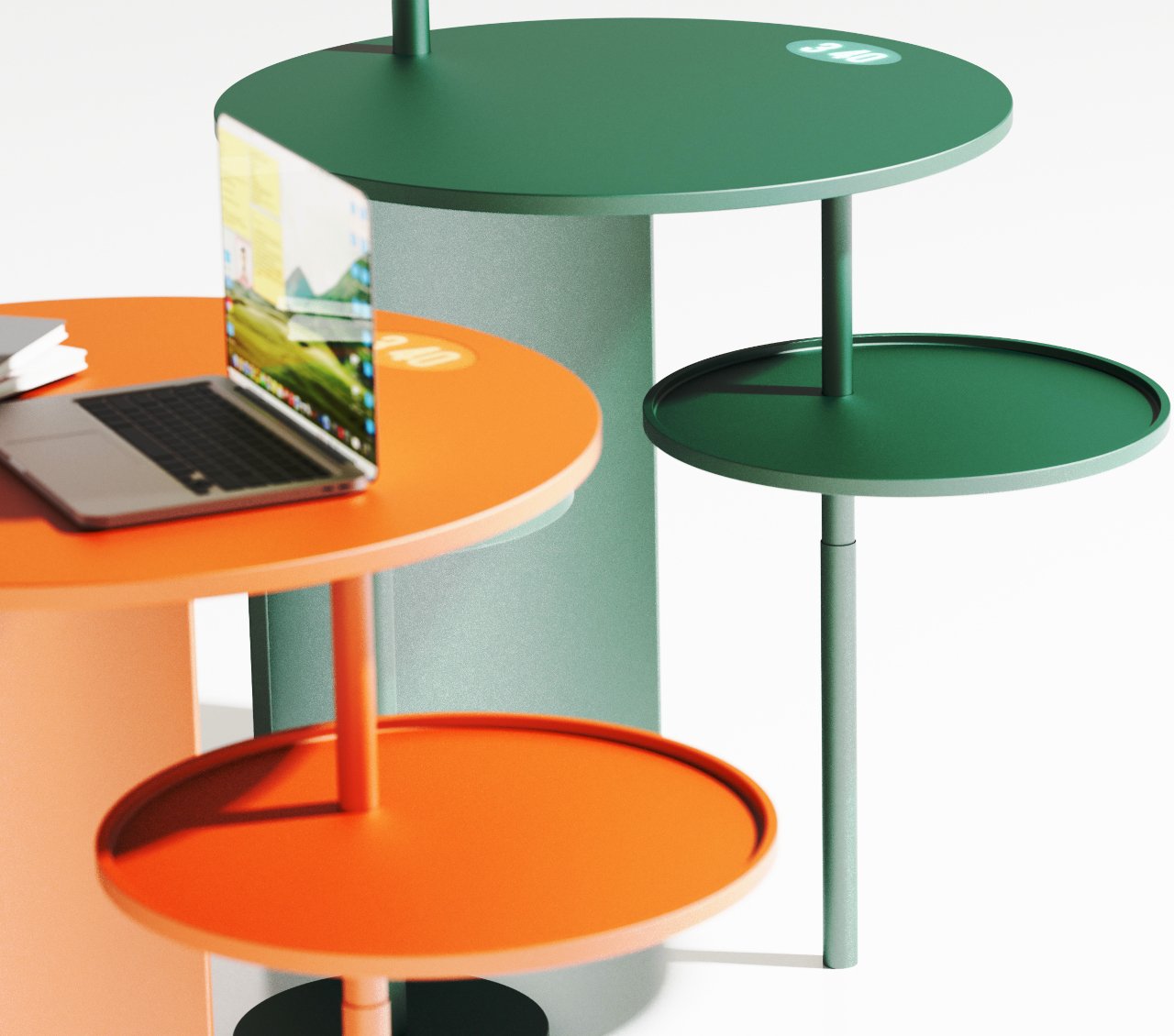
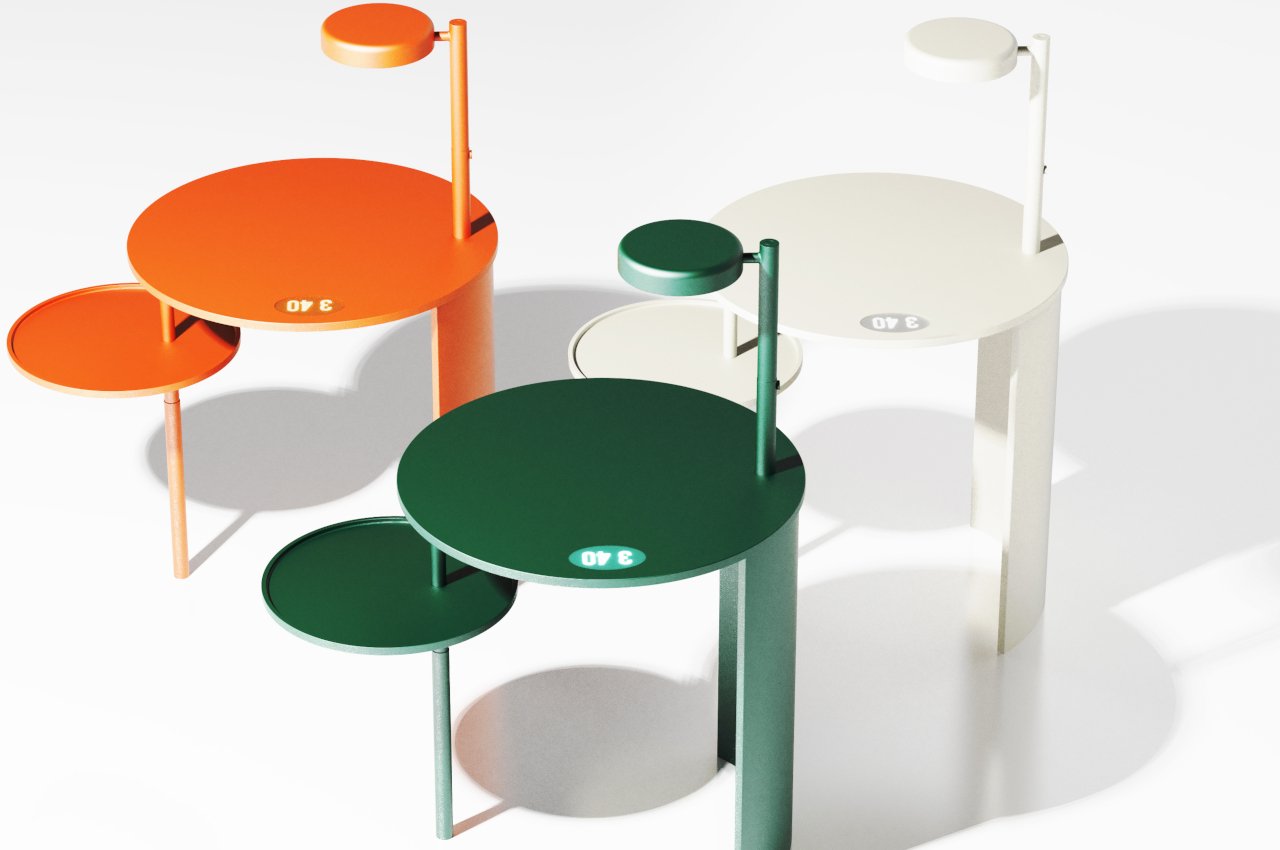
This unique desk makes the passing of time pretty visible and tangible, as it allows people to have and maintain a personal relationship with the time they invest in projects, activities, and other work.

Why is it noteworthy?

It features a sub-table, and this sub-table moves up and down, changing its elevation as time passes before returning to its base state at the lowest point. Think of it as a time, like a reverse hourglass, that slowly demonstrates the movement of time in a very visual manner.

What we like

  • Allows users to measure, log, and be aware of how much time they’re spending there

What we dislike

  • The desk could also become a bit distracting

2. Float Mini Desk
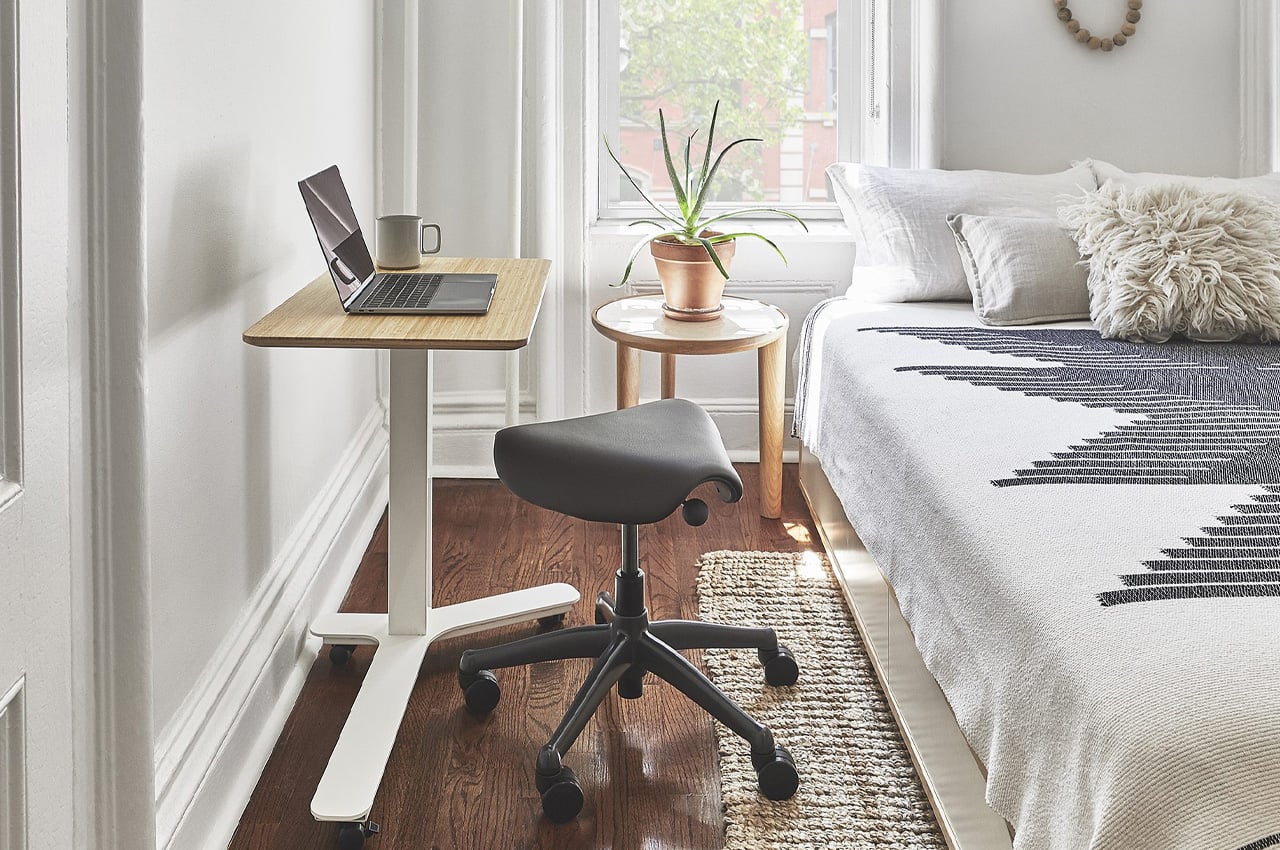
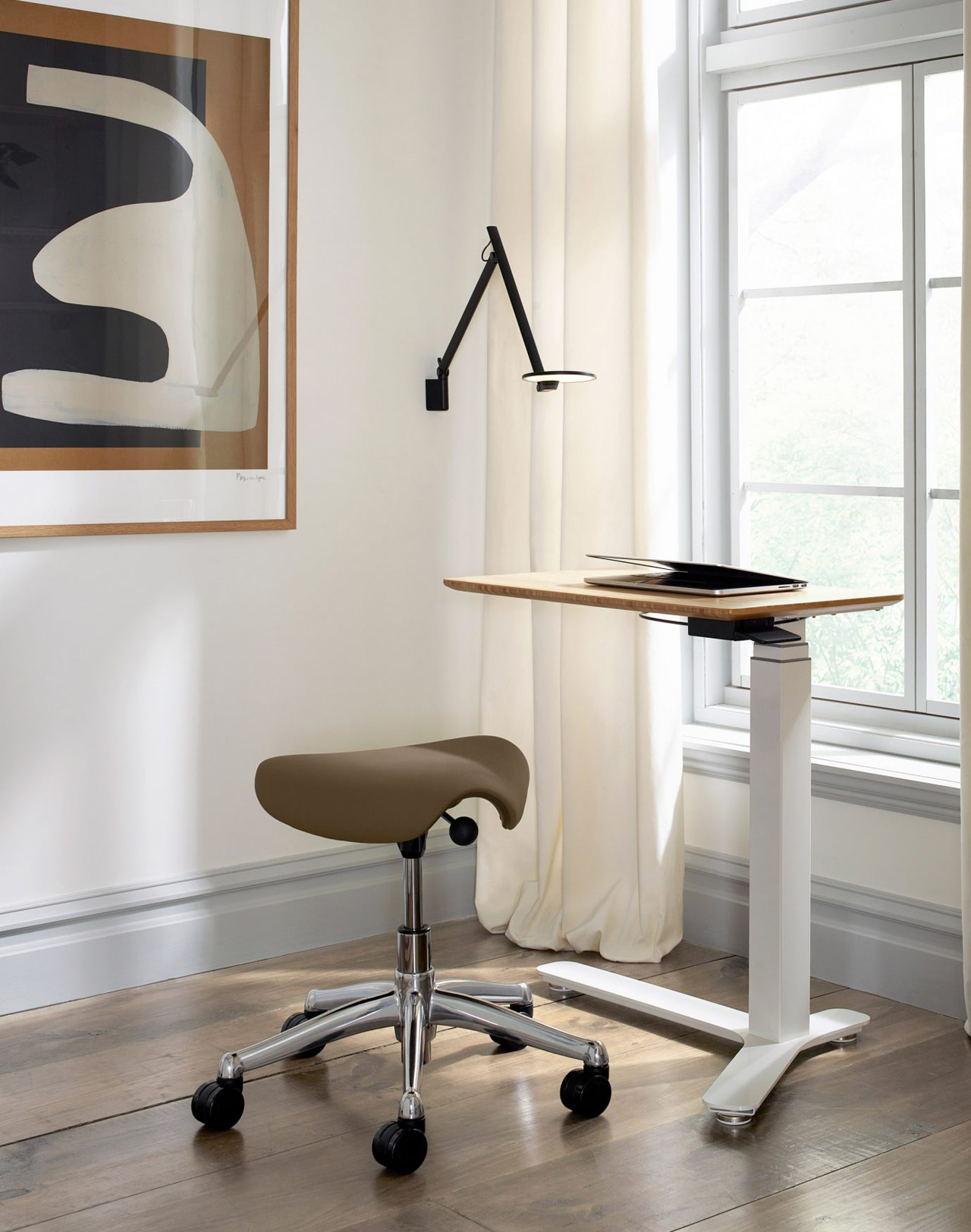
Office furniture brand Humanscale unveiled the Float Mini desk, which as its name implies is a compact sit-stand desk that can effortlessly fit into any room in your home!

Why is it noteworthy?

Designed to be a miniature version of HumanScale’s Float desk, it is equipped with a small cantilevered work surface, and a single-leg frame that doesn’t occupy much space at all.

What we like

  • Equipped with optional casters and easy-to-move
  • Doesn’t require to be plugged into a power source, hence it can be taken outdoors

What we dislike

  • The desk surface could be small for those who need more space to work

3. The Den Desk
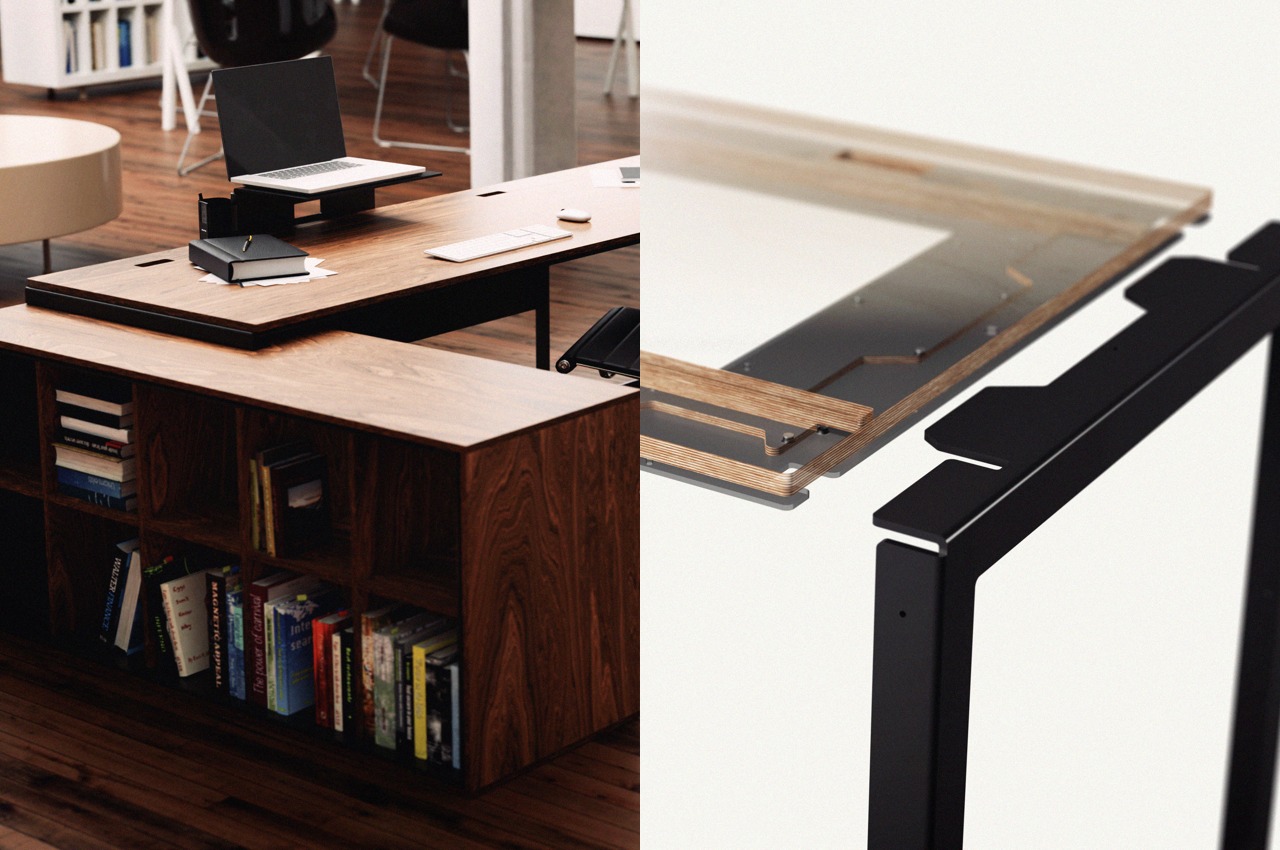
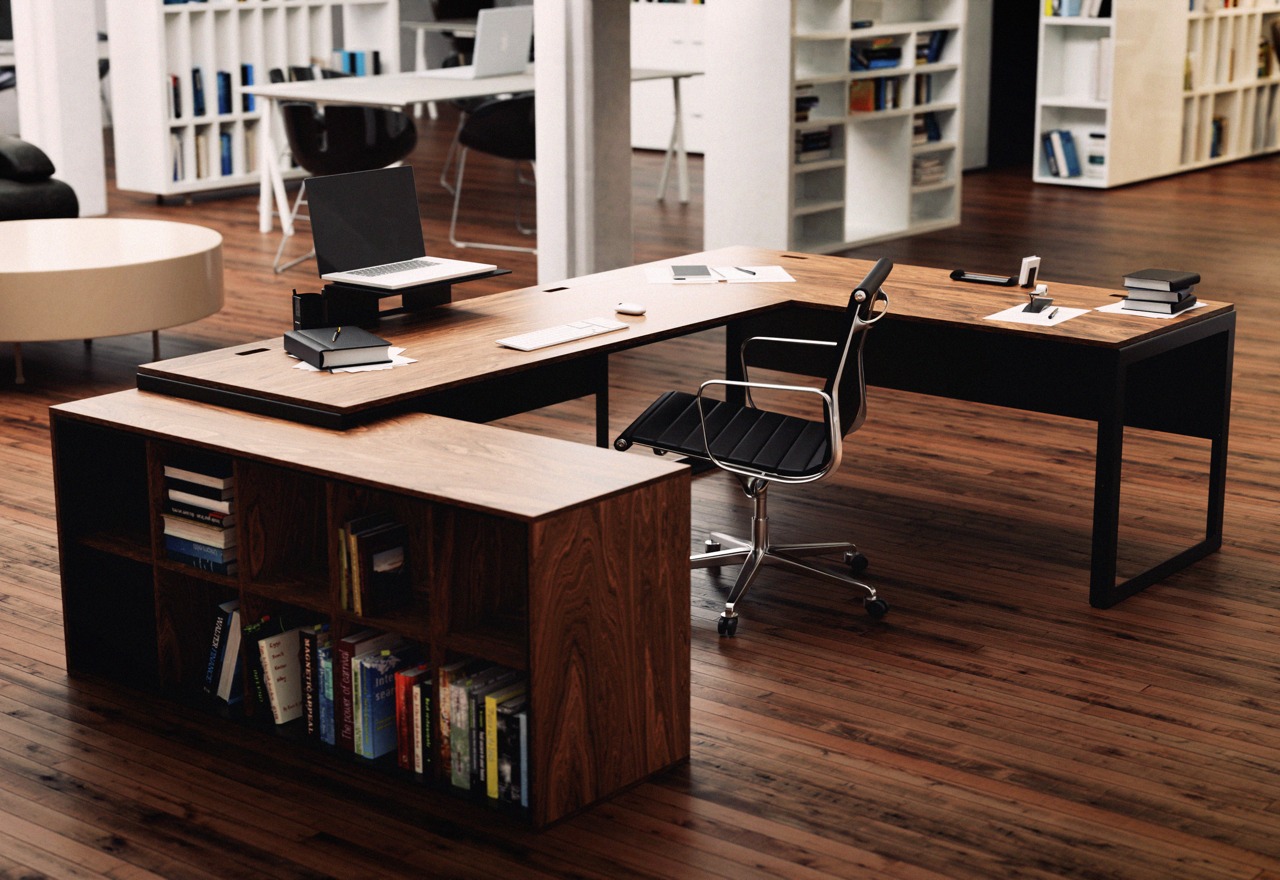
The Den Desk provides you with the building blocks to build your desk just the way you like it! It feels like you’re playing with LEGO.

Why is it noteworthy?

You can start with the most basic setup and then grow your desk by adding other parts or accessories, from monitor mounts to even a cabinet on the side. You can slot in a desktop at an angle, and build a corner desk if you like!

What we like

You can assemble and disassemble the various pieces with relative ease

What we dislike

4. The Hit Desk
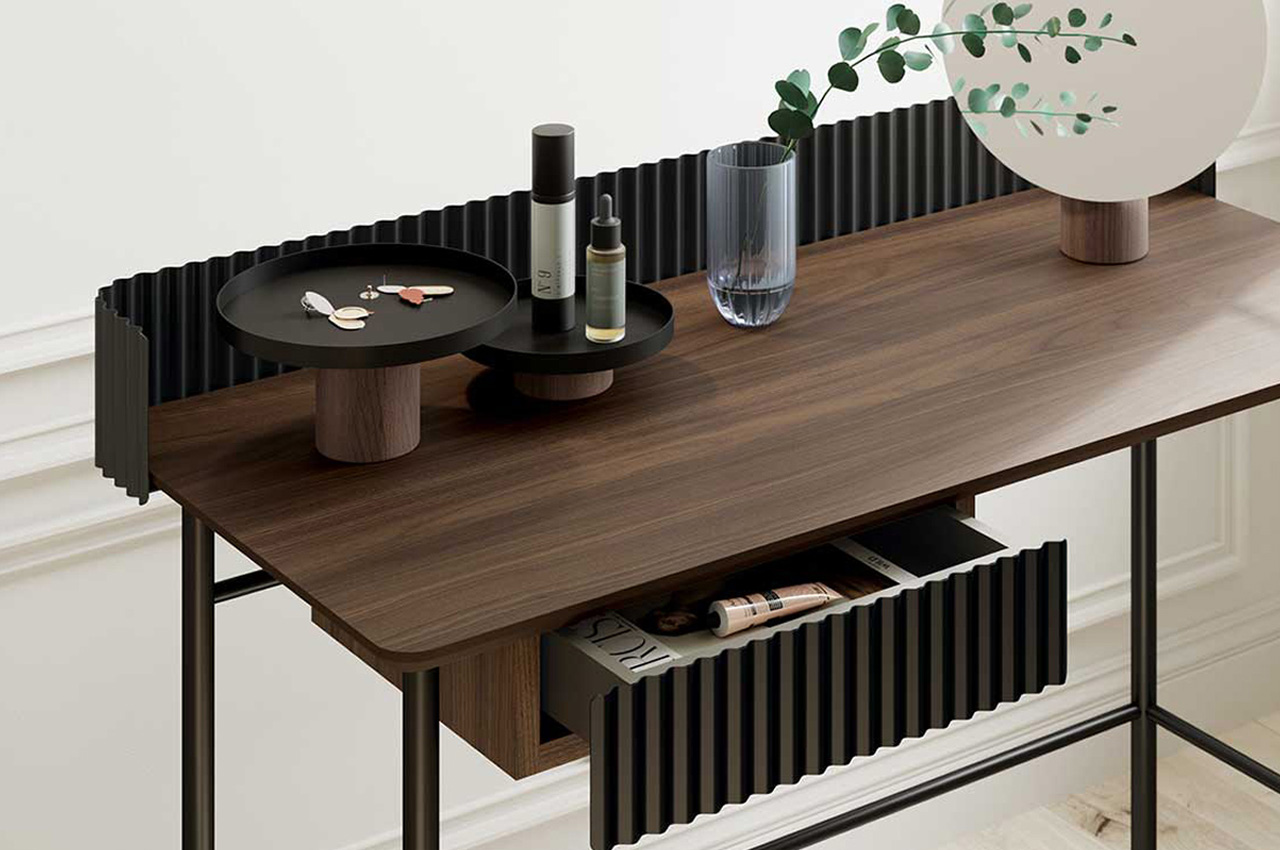
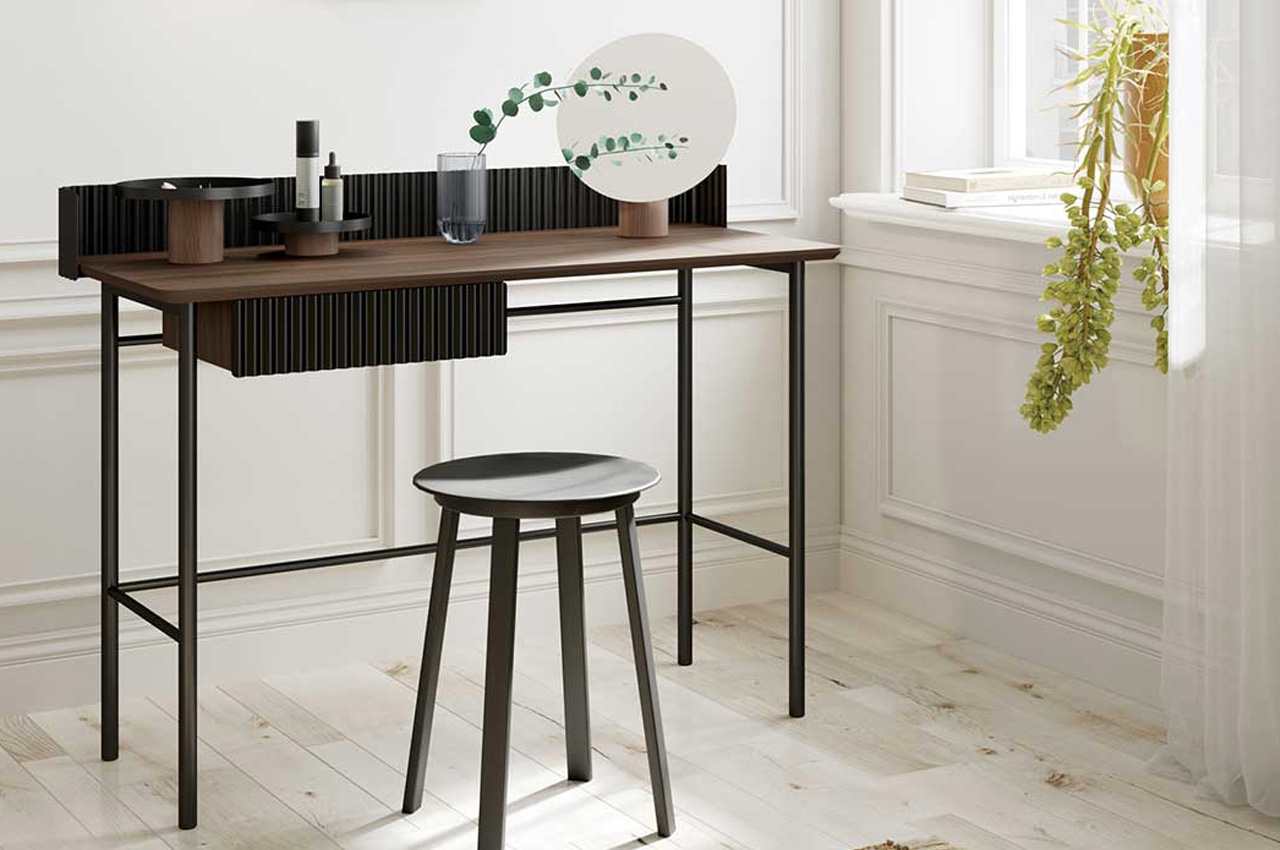
Designed by Nahtrang, the Hit desk is a functional and flexible furniture piece that will add an elegant and contemporary touch to your living space. The desk can be used as a workspace, vanity table, or however else its horizontal surface can assist.

Why is it noteworthy?

The Hit desk is inspired by Mediterranean architecture, and its wavy front creates an intriguing play of light and shadow, making it a beautifully designed contemporary desk that would make an excellent addition to your work-from-home office.

What we like

  • Can be customized according to your personal needs

What we dislike

  • Could have been equipped with more storage space

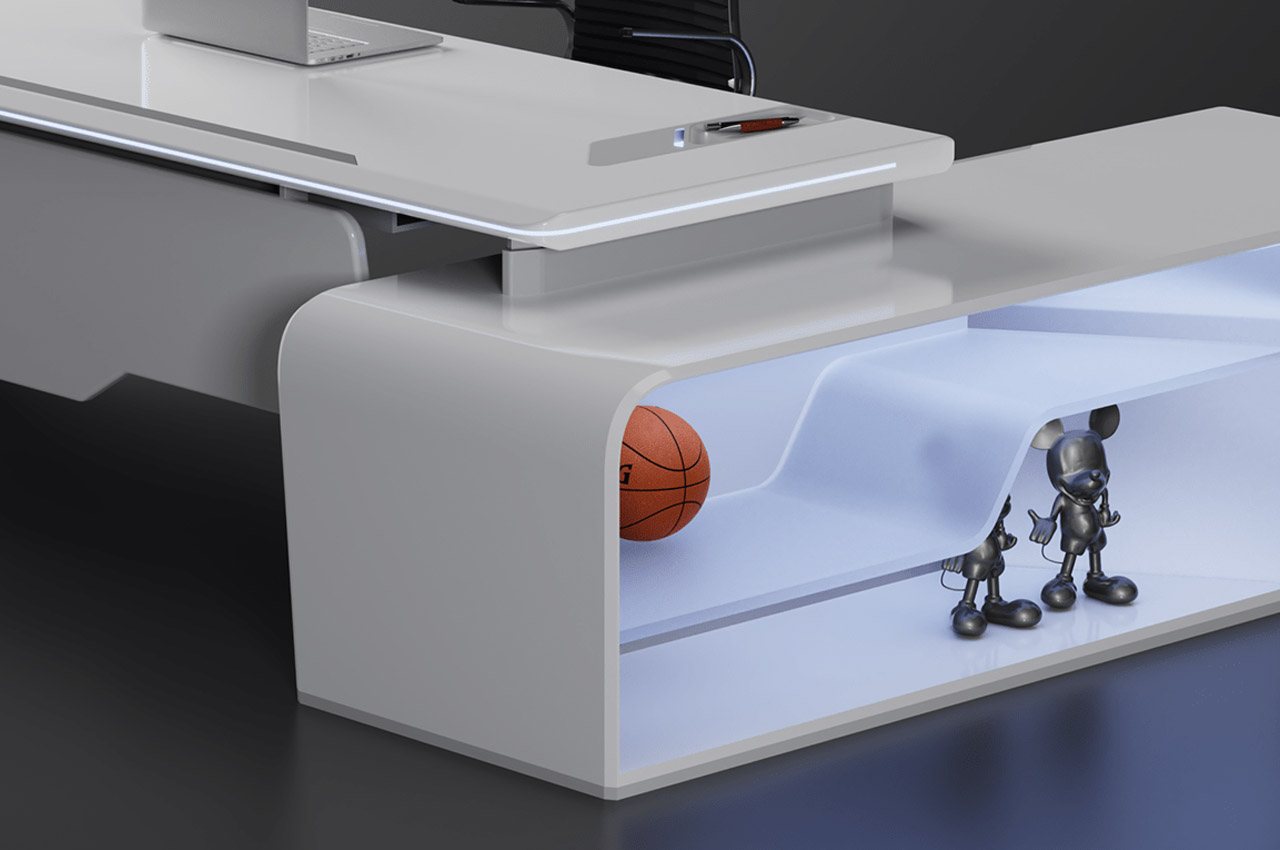
5. The Pallas-Executive Work Station

The Pallas-Executive Work Station is designed to be a replacement for executive workspaces with a utilitarian setup and is designed to be a masterpiece that perfectly merges personal expression and shared values.

Why is it noteworthy?

The exterior of the desk is much like any other ordinary desk, however, the interactive exhibition hall within is the main star attraction. It is a canvas that boasts the essence of the occupant’s personality, aspirations, and interests while maintaining a sense of privacy and exclusivity on the other side.

What we like

  • Features a unique dual-layered design

What we dislike

  • It’s a concept, so we don’t know how well it would translate into an actual product
  • The desk is quite massive and suited for larger offices

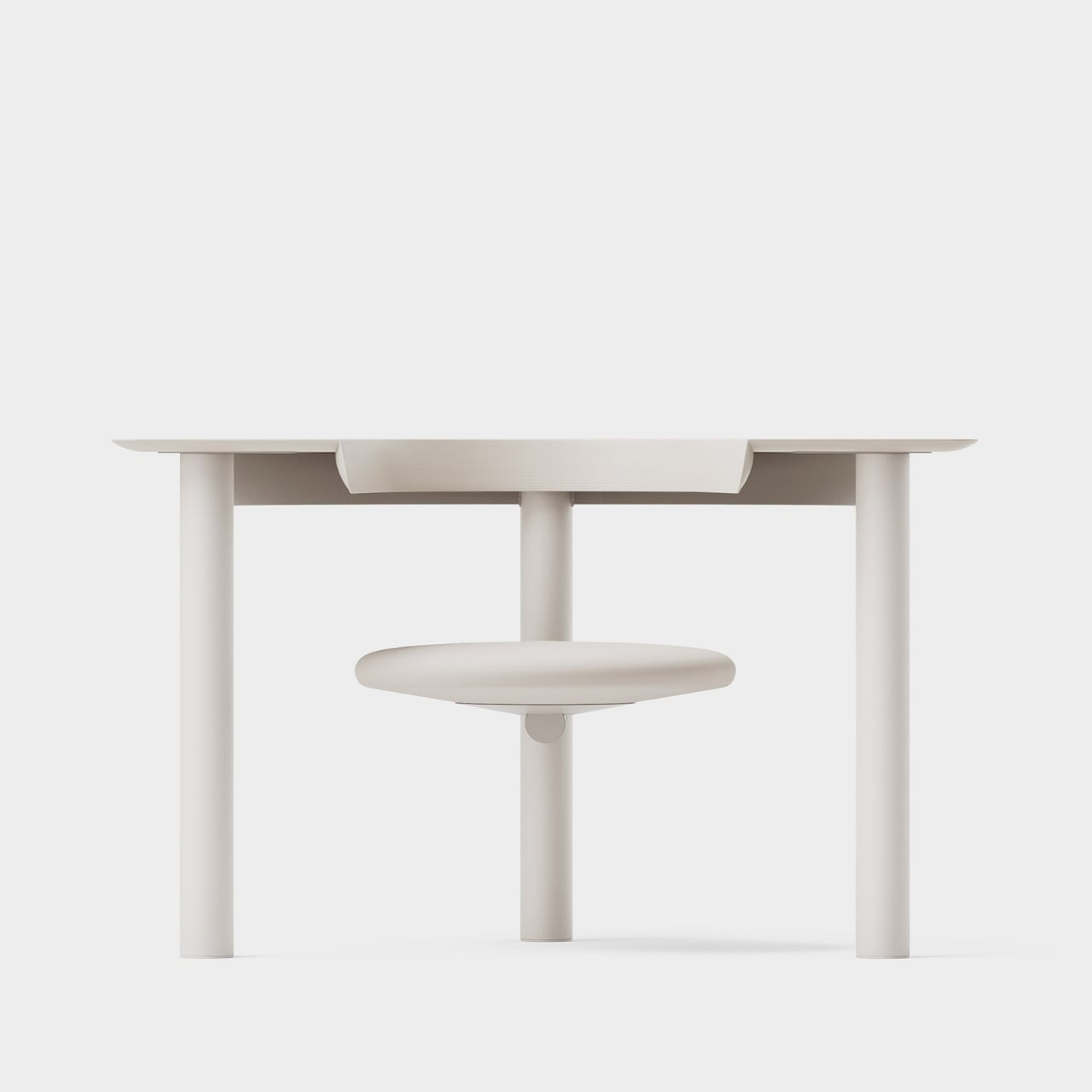
6. Sui Desk Chair
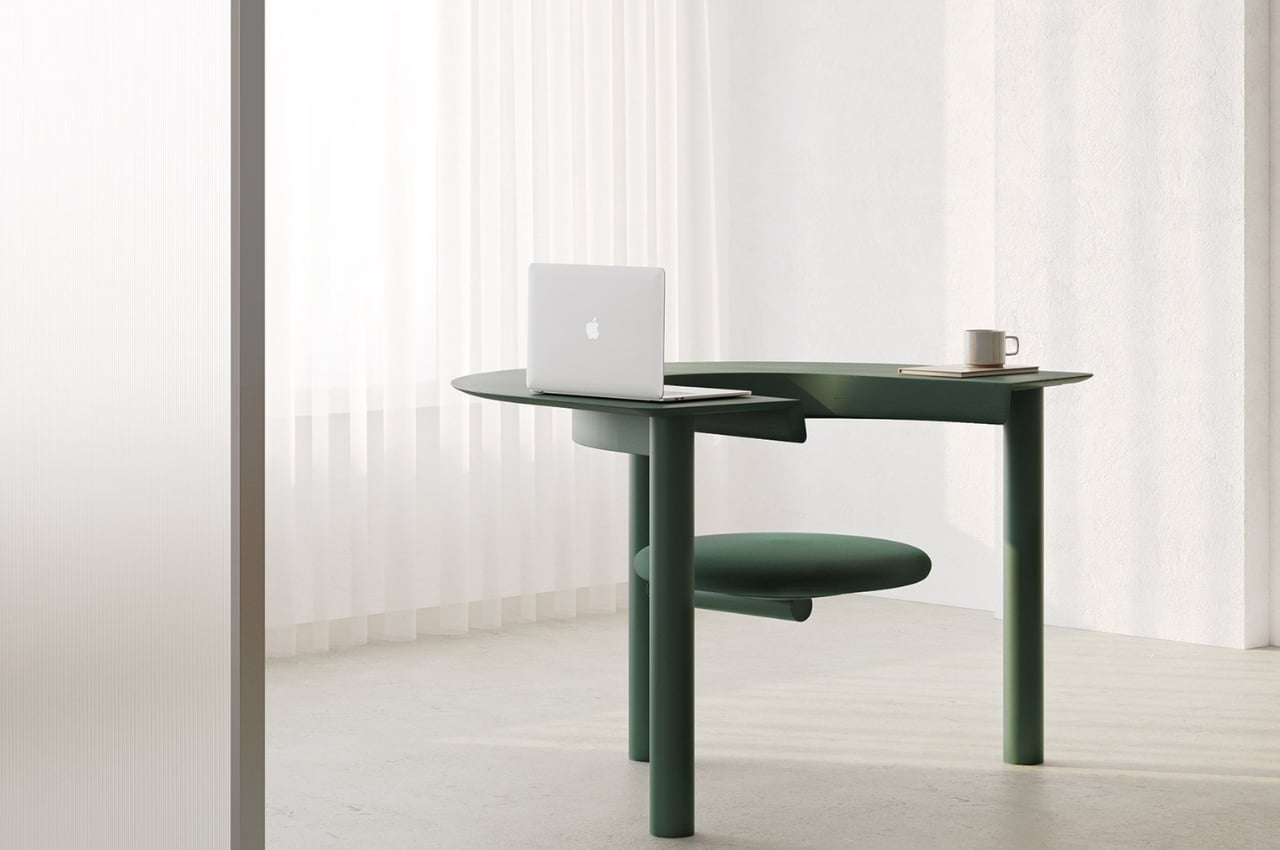
Dubbed the Sui Desk Chair, this intriguing chair can transform from a working desk into a casual chair where you can enjoy your favorite book, or sip on a cup of coffee with a little swivel.

Why is it noteworthy?

It’s built to be a hybrid and multi-purpose structure. Even when it’s a desk, you still get some freedom of movement (at least in the physical sense) as the design brings you wide and generous angles, letting you have both private and semi-public spaces, depending on which way you want to swivel.

What we like

  • Made using wood that is “grown with respect for the land” and the metal parts that are built from 99% recylable steel

What we dislike

  • Could make your sedentary lifestyle more sedentary if you already have one

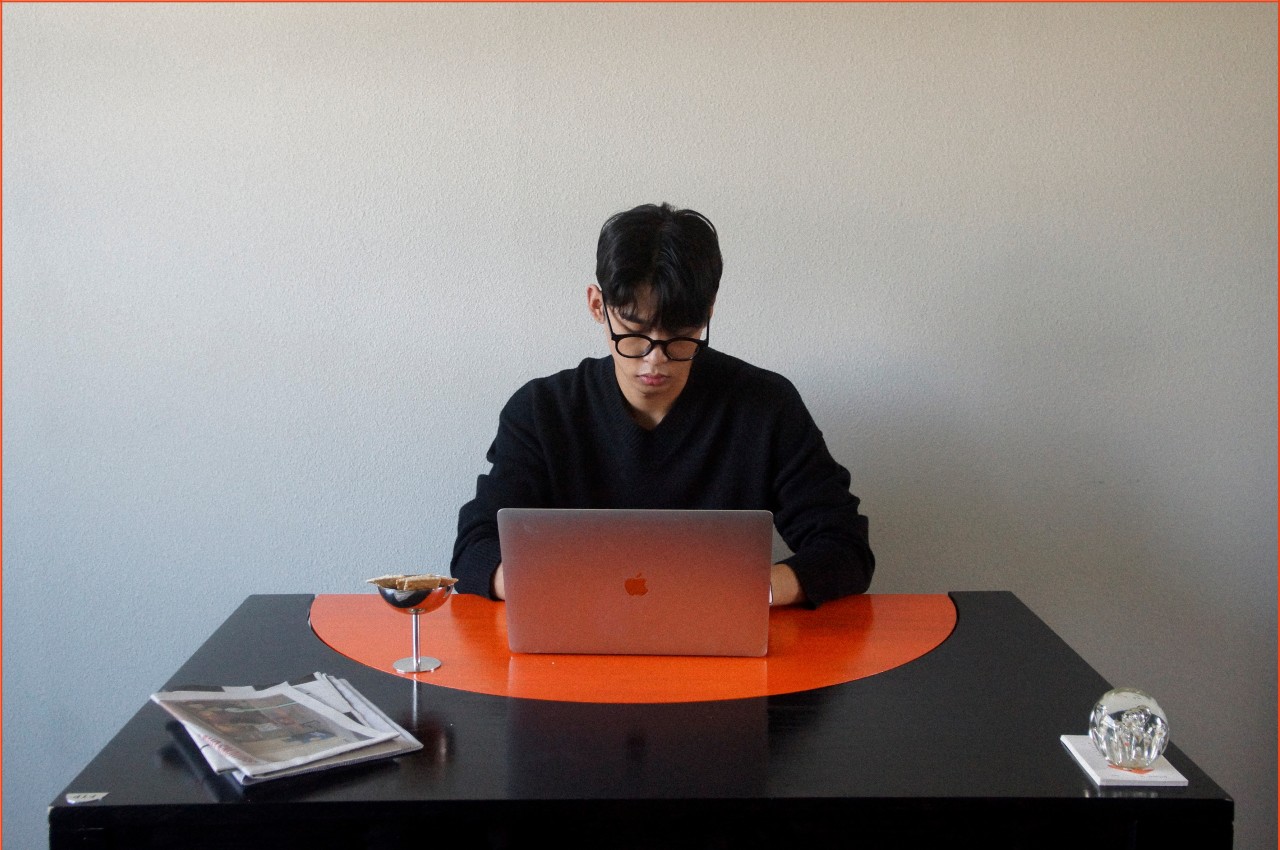
7. FTP Desk
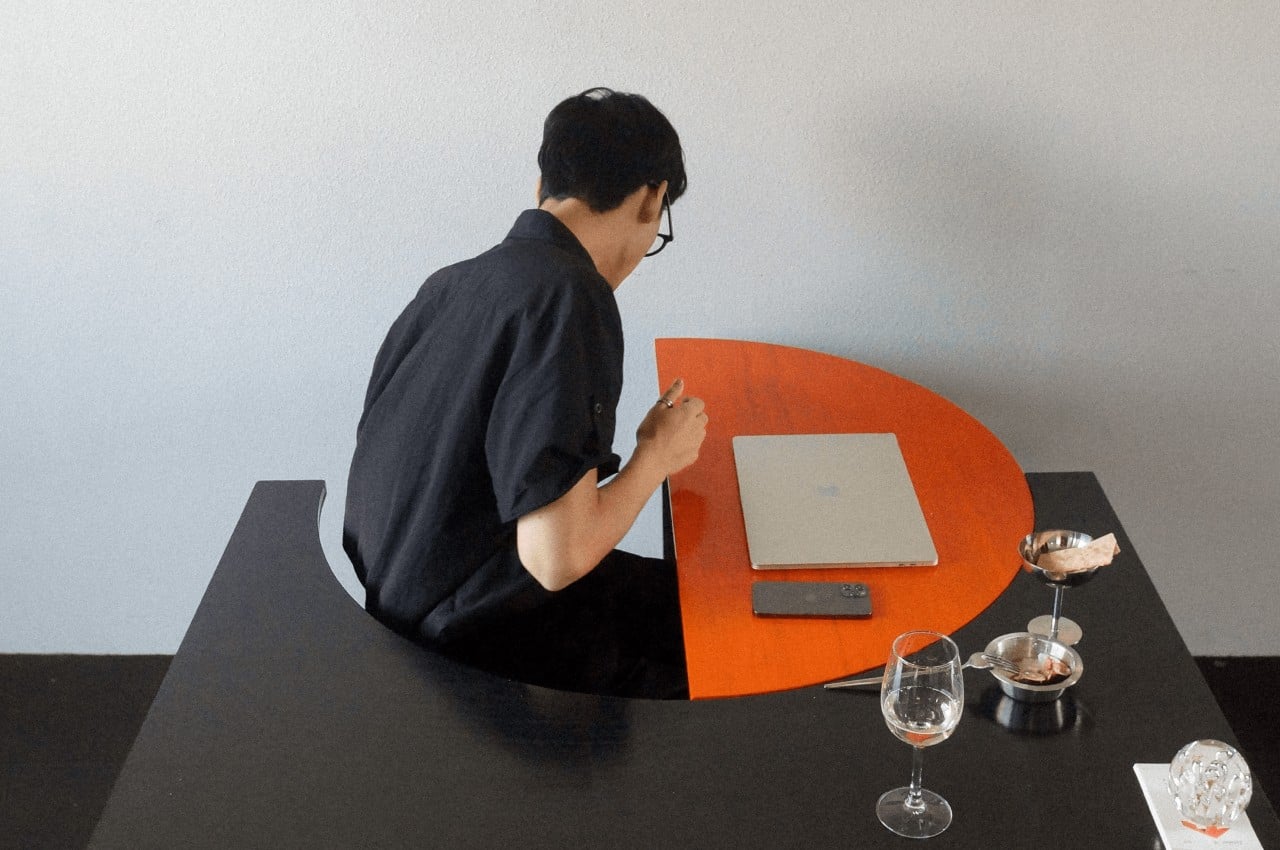
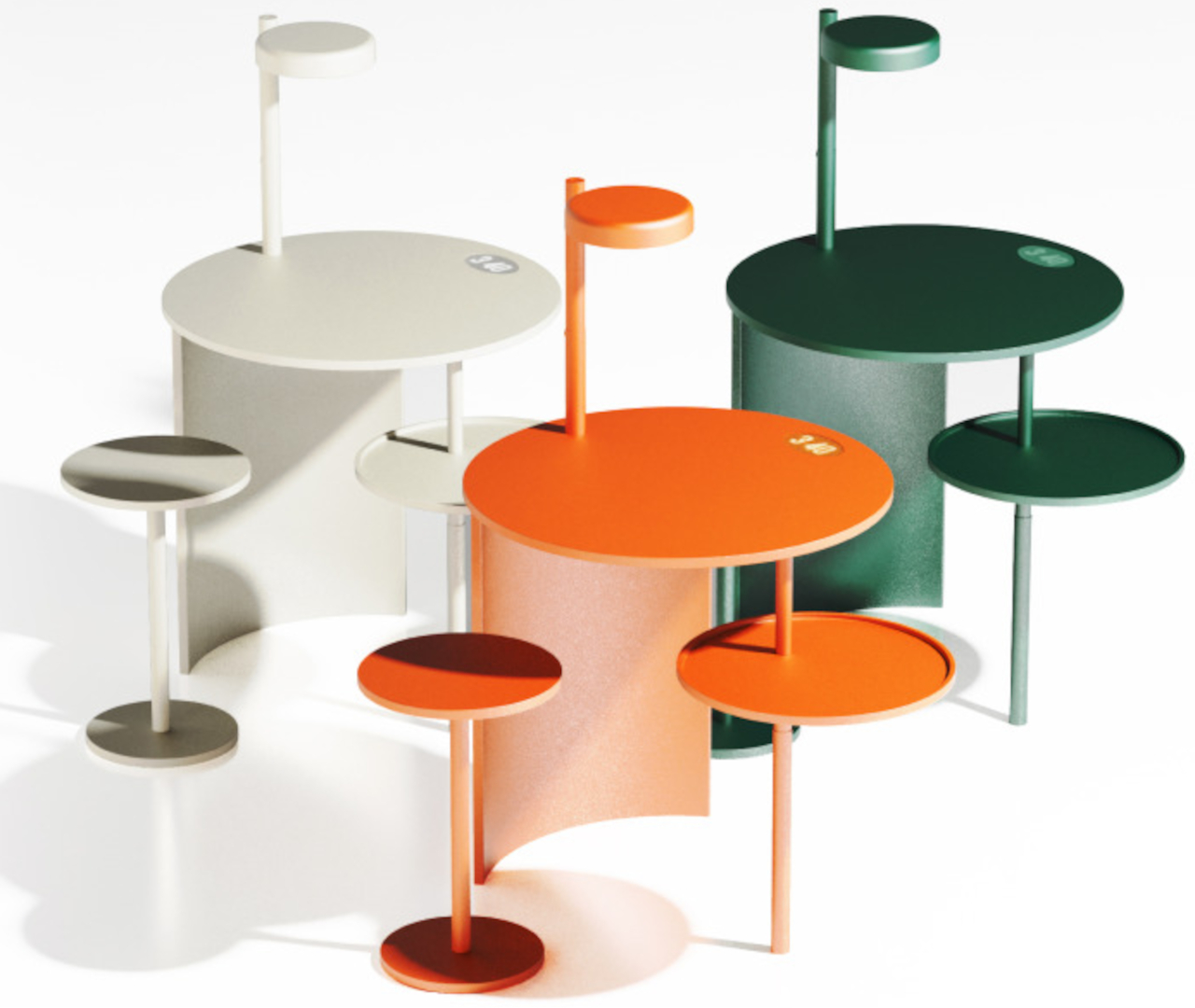
This unique table design concept functions as a multi-purpose setup that can transform into something like a puzzle game, wherein different pieces can be fit into different places, depending on what is the needed functionality for the furniture design.

Why is it noteworthy?

Features an orange circle that can be moved around and away from the rest of the table. Moving this shape around and changing its position becomes both a symbol and a ritual that can help your mind shift to a different kind of activity, whichever one you decide to associate with its position.

What we like

  • Modular and shape-changing design that can be used for multiple functionalities

What we dislike

  • Shifting the various modules can be annoying for those who prefer one steady furniture piece

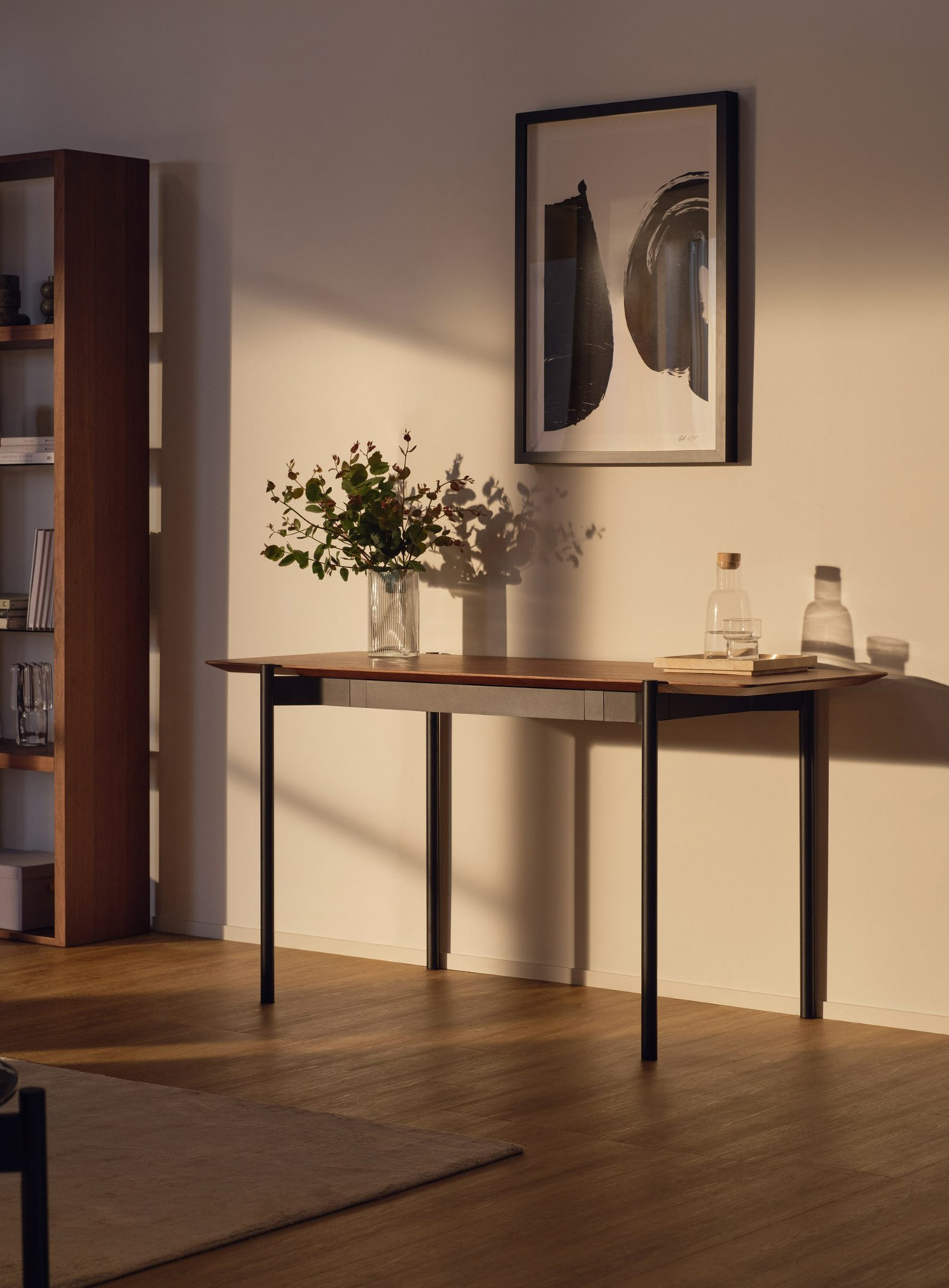
8. Eto Desk
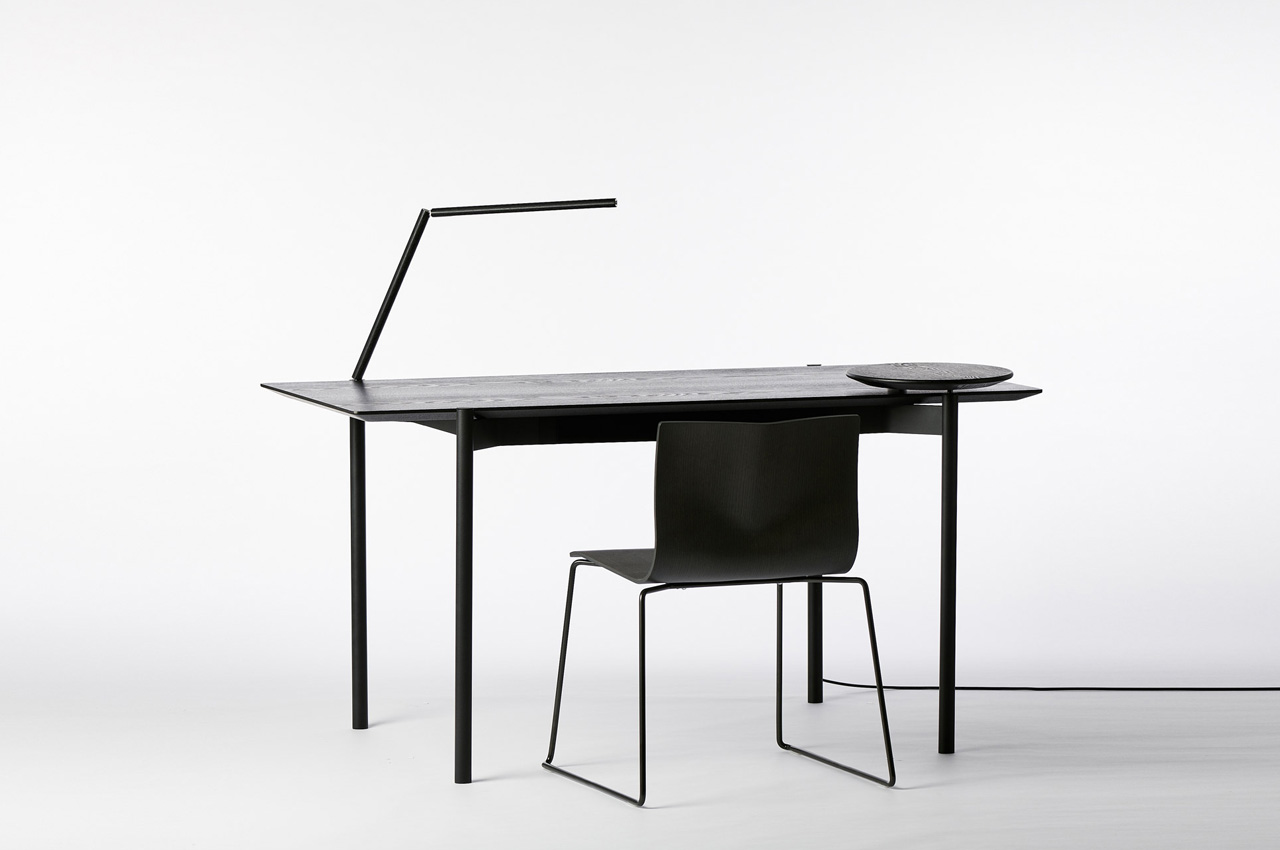
Designed by Australian designer Tom Fereday for the furniture brand King, the Eto desk features minimal angles and integrated smart accessories.

Why is it noteworthy?

The desk is quite sleek and minimal and includes an aluminum frame and a timber veneer top that is available in three finishes – Smoked Oak, American Walnut, and Congo.

What we like

  • Equipped with a slim desk built into the design that provides discreet and easily accessible storage for stationery

What we dislike

  • Aesthetics are a bit simple and unassuming

9. Refold

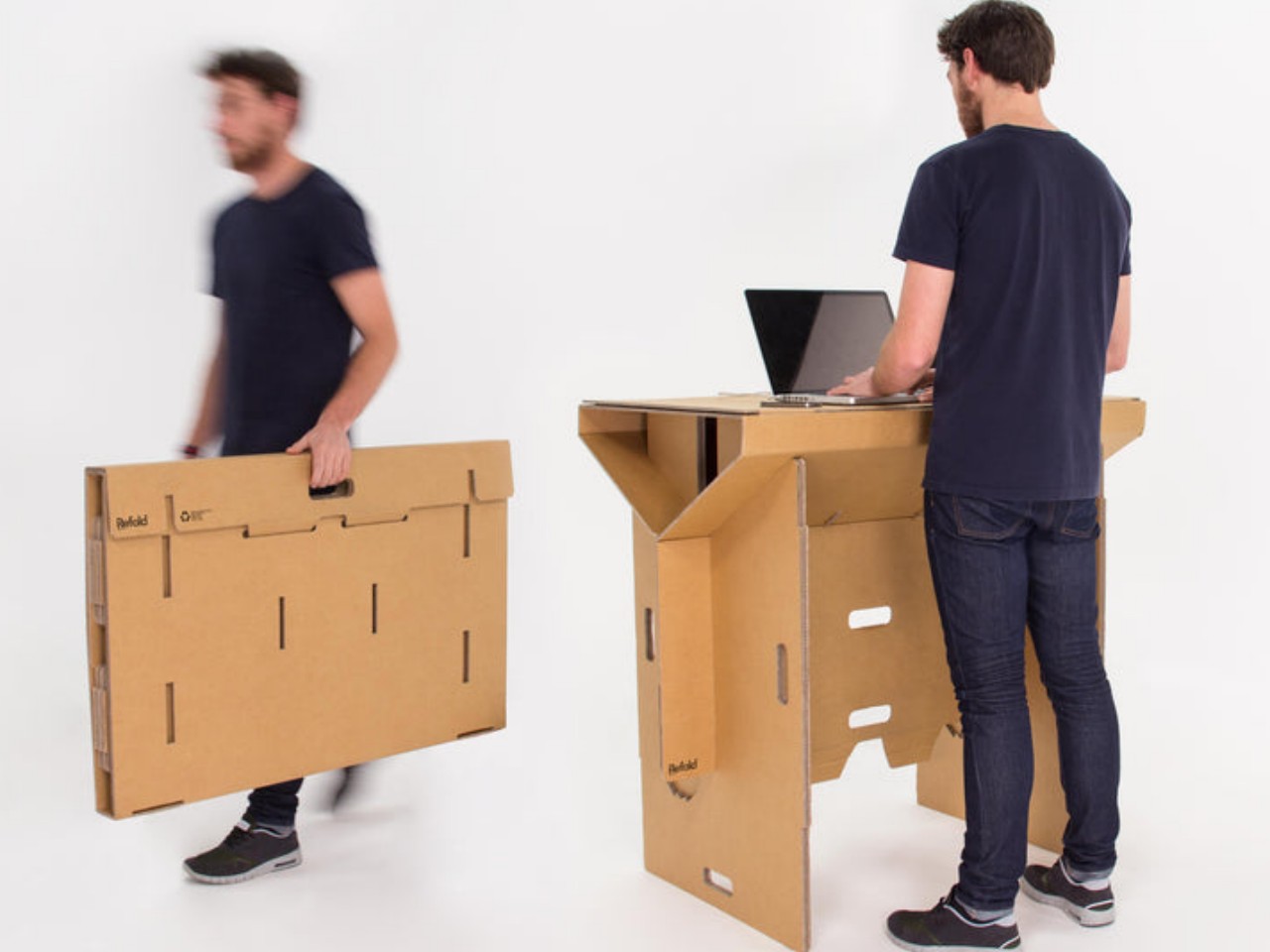
Refold is a foldable desk built using cardboard. Using a few pieces that can fold down into a relatively thin rectangle, you can have a standing or sitting desk to use.

Why is it noteworthy?

Serves as a more sustainable option for those who do find themselves trying to set up a desk outdoors. That said, it can also be used indoors as well, either to provide a unique aesthetic or to have a space-saving desk that you can assemble and disassemble in just minutes.

What we like

  • Sustainable and flexible design

What we dislike

  • Will be difficult to carry a large canvas with you everywhere, and you may get funny looks from people

10. Buddyhub Desk
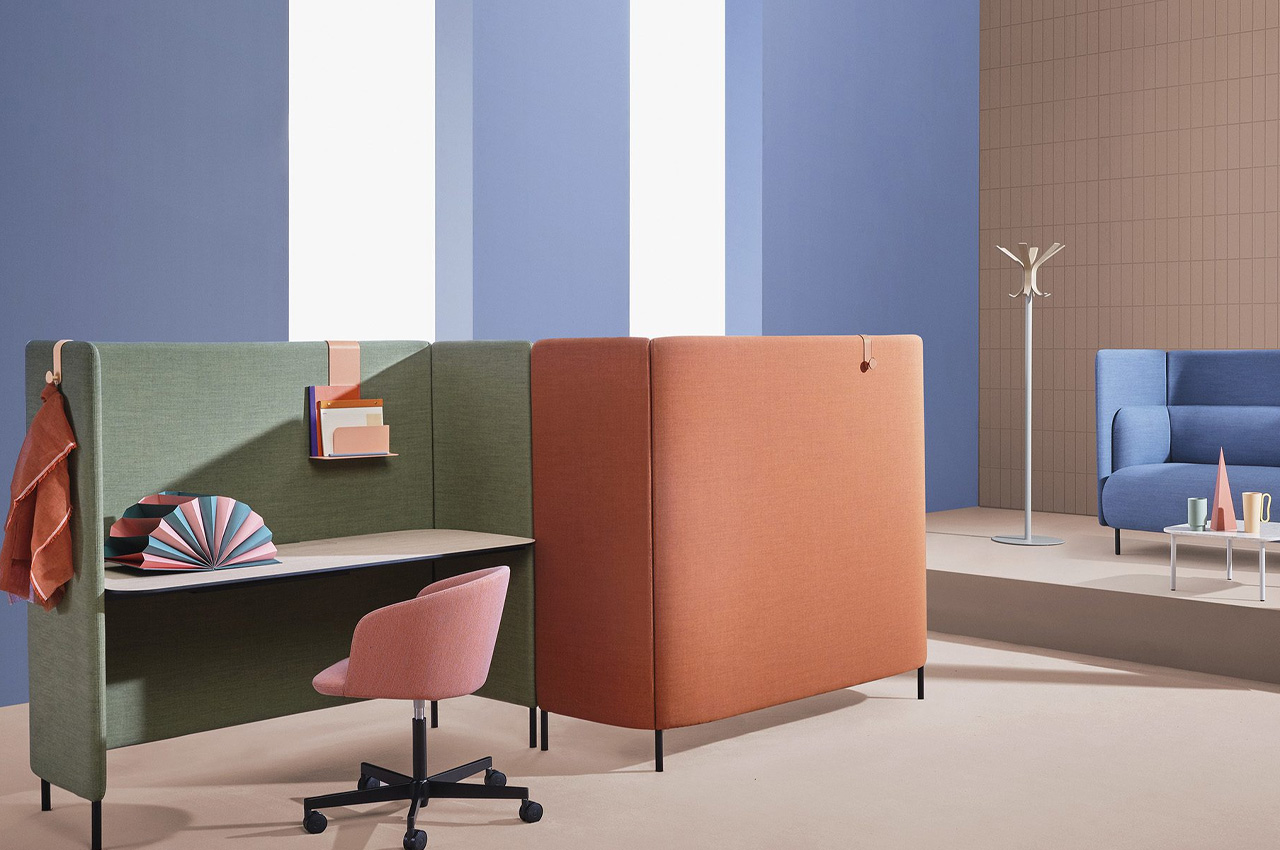
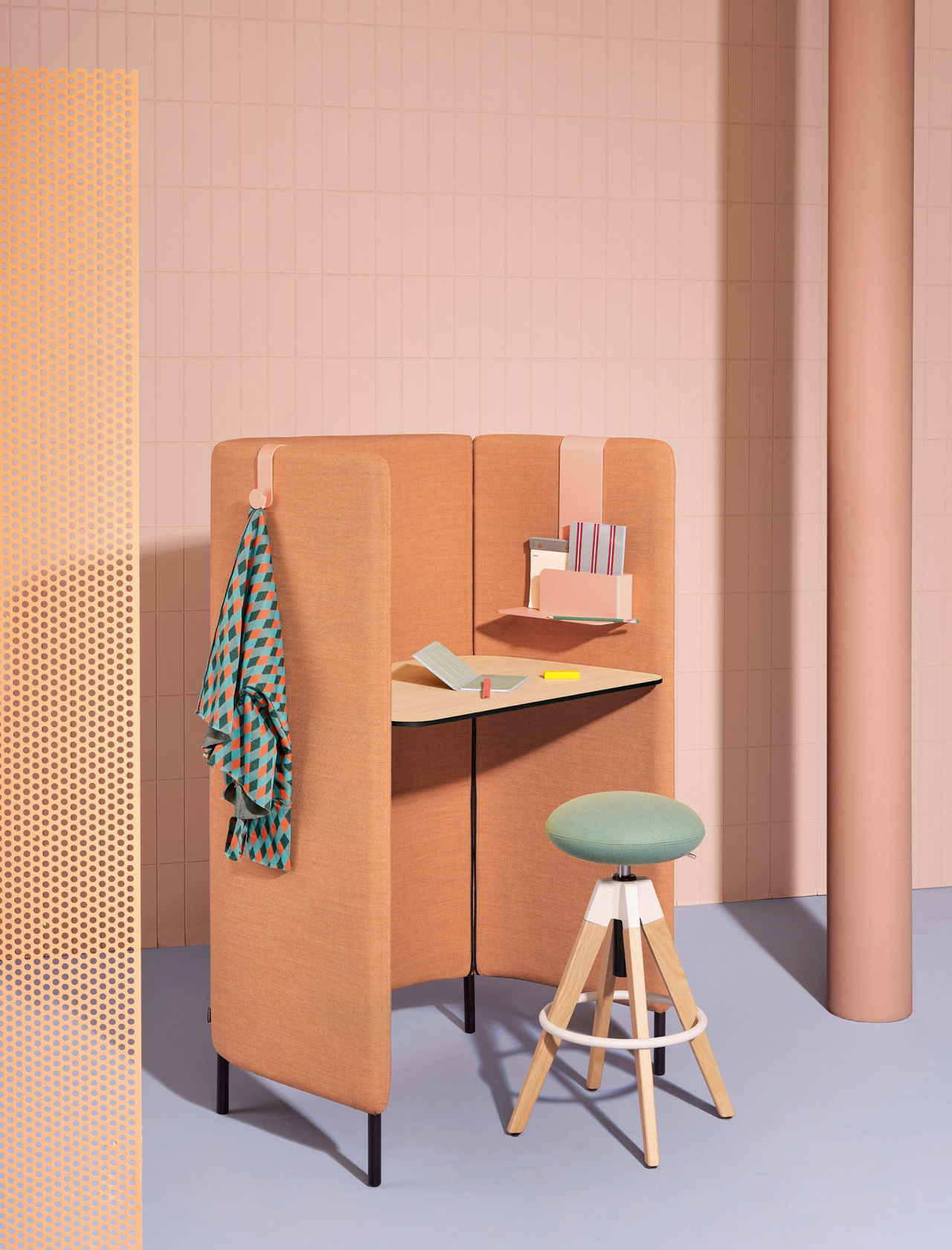
Designed by Busetti Garuti Redaelli for Pedrali, the Buddyhub Desk is a cozy-looking round-edged desk equipped with a sound-absorbing fabric panel that is wrapped around the outer edge of the desk.

Why is it noteworthy?

It functions as a private cocoon for employees to work in without being disturbed by other employees. The sound-absorbing fabric panel is available in a range of soft and pastel colors which team up with the rounded and cushy form of the desk to create a furniture design that is soothing, fun, and playful.

What we like

  • Can be customized with a wide range of optional accessories

What we dislike

  • There are similar designs in the market

The post 10 of the Best IKEA-Worthy Desks To Add To Your Work From Home Office first appeared on Yanko Design.
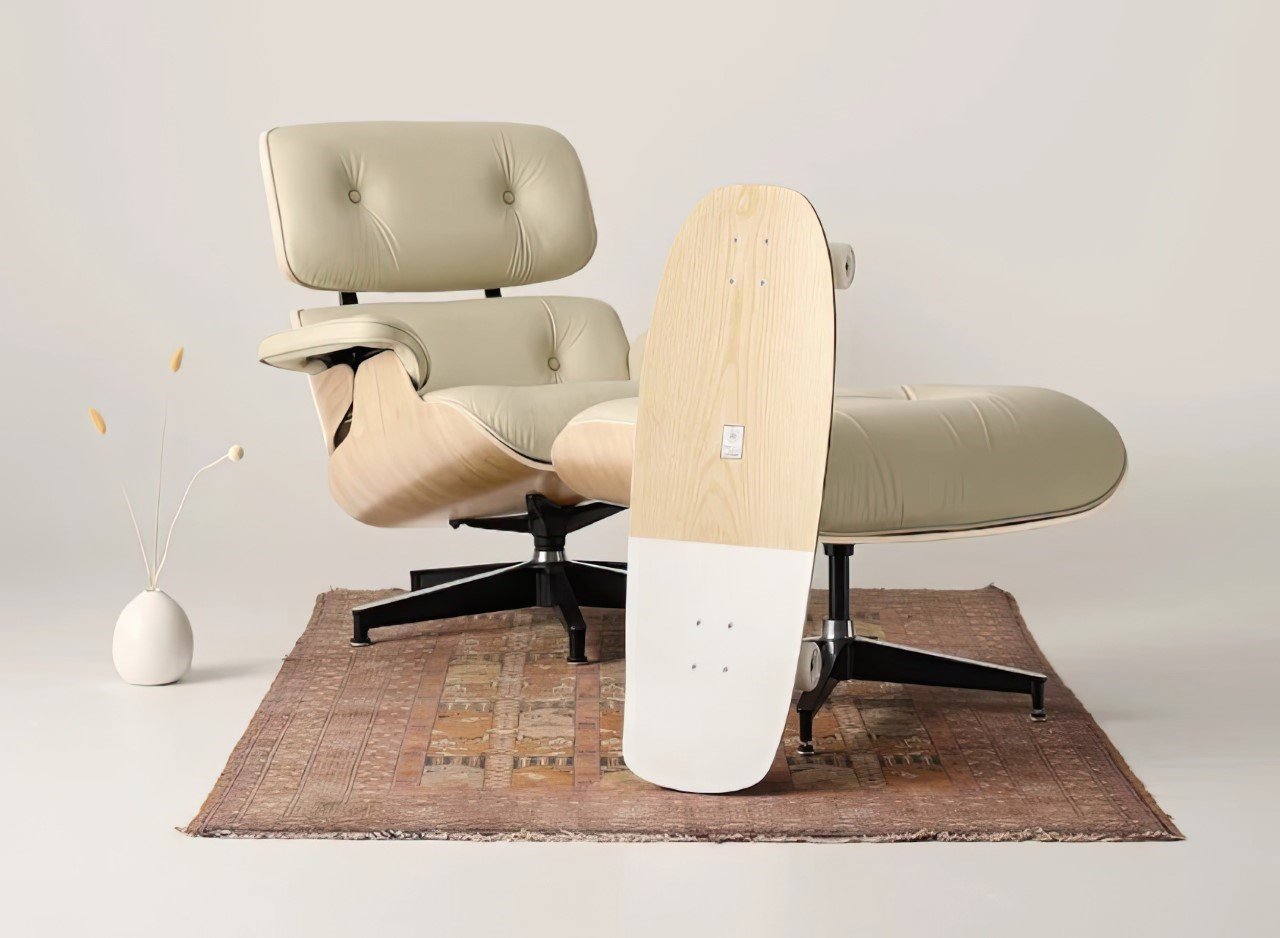
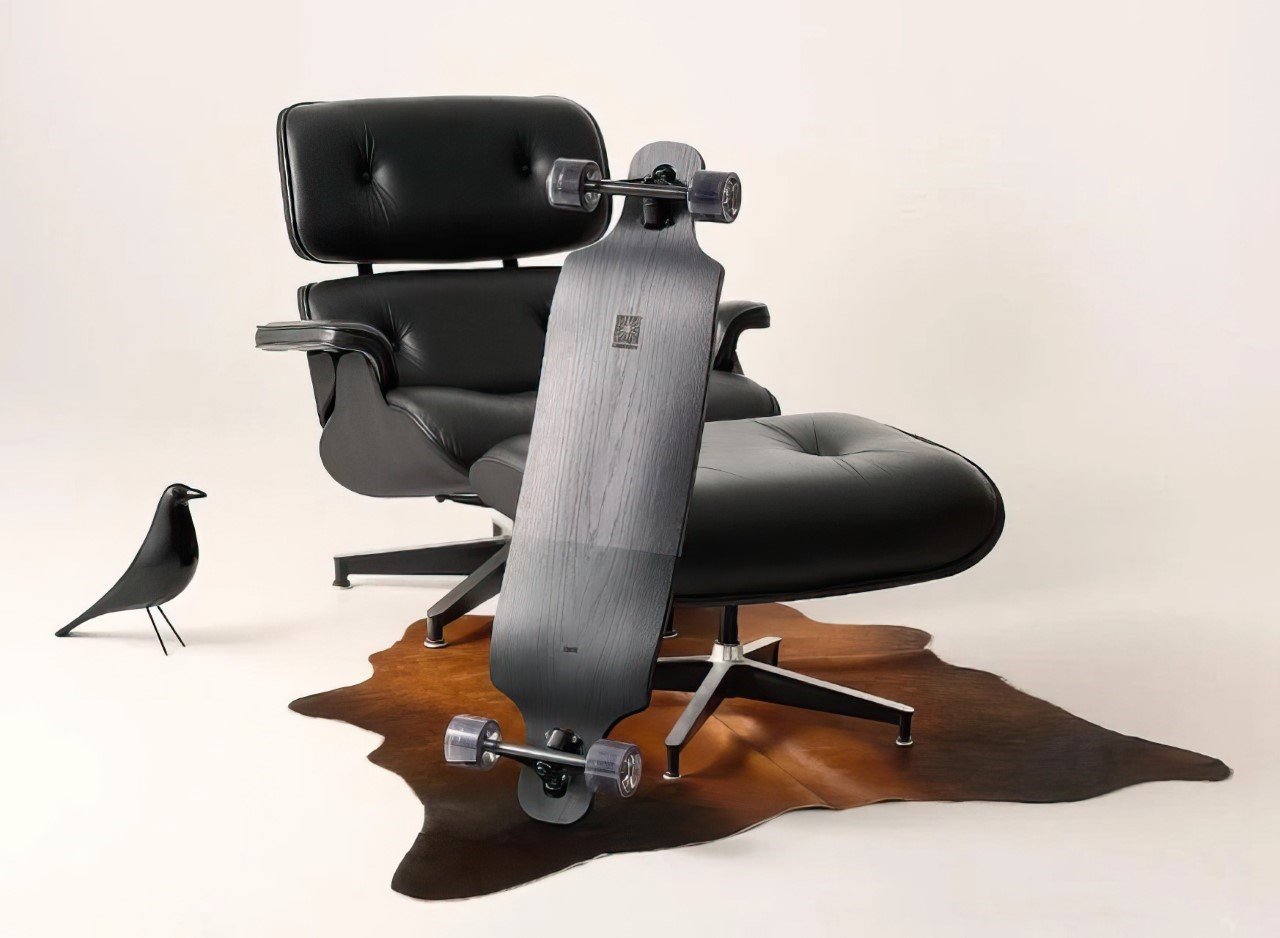
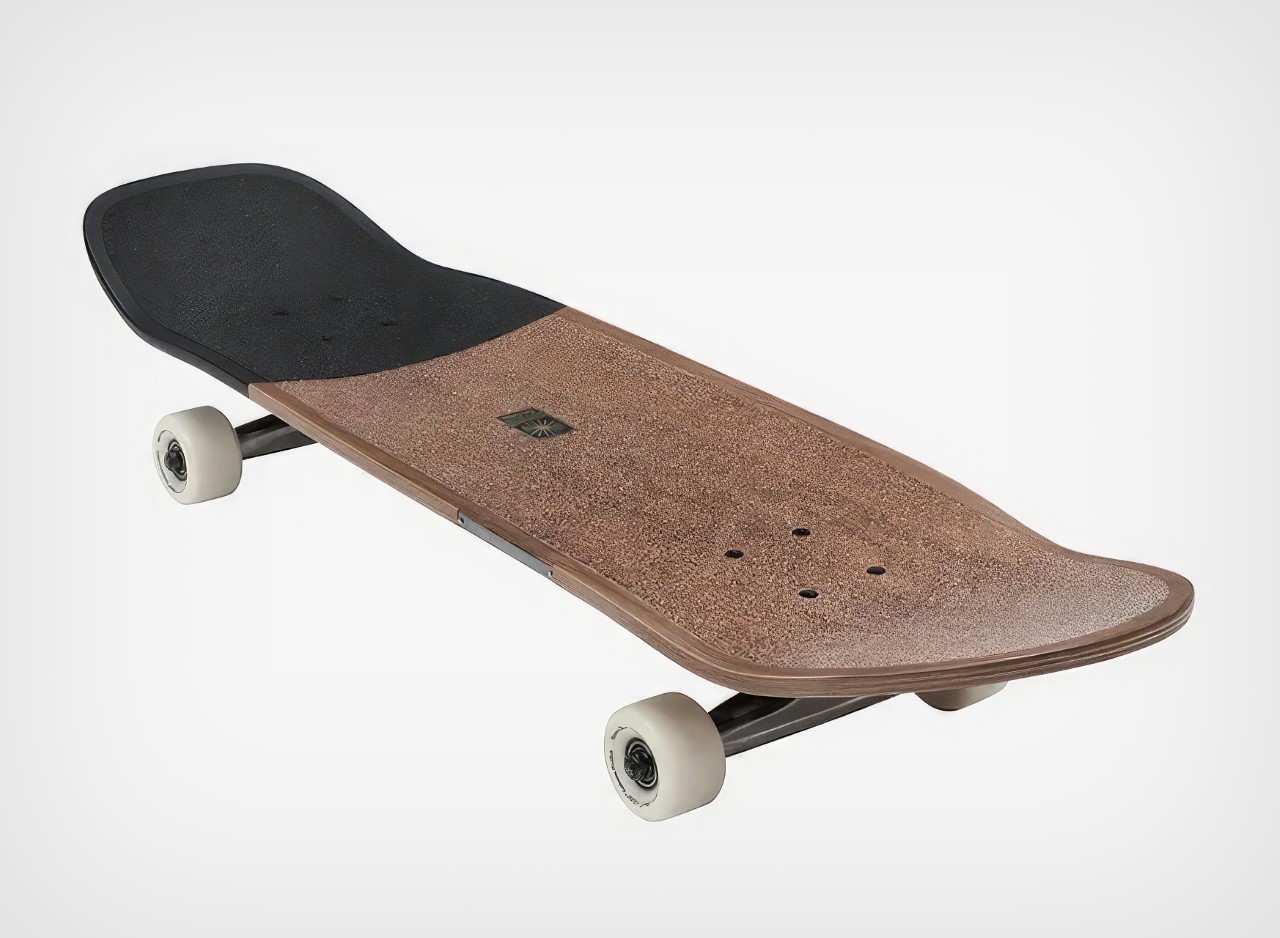
The Eames Lounge Chair gets reinvented as a dual-tone skateboard with a similar iconic aesthetic

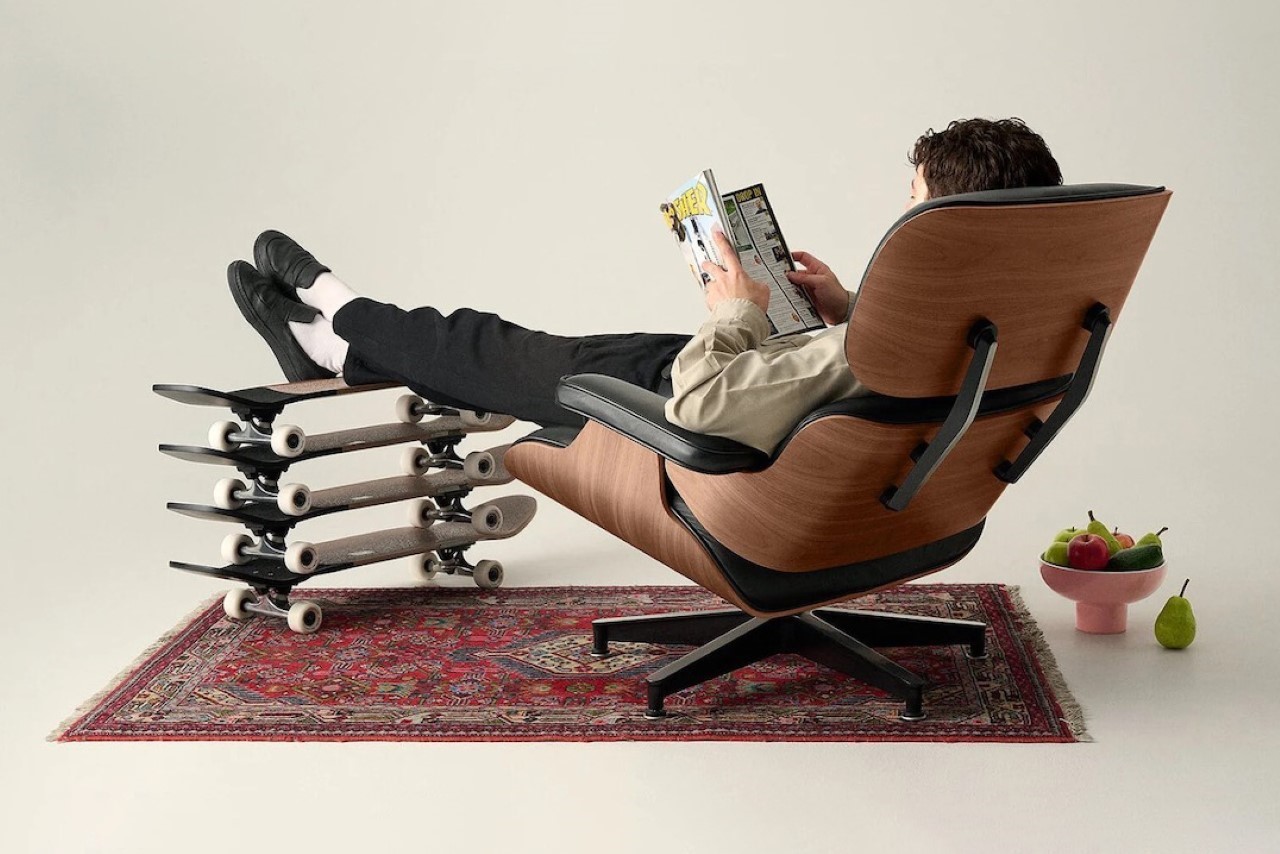
Even outside the design world, the Eames Lounge Chair remains an absolute furniture icon. Designed in 1956 by Ray and Charles Eames, the chair’s aesthetic was defined by its use of bent plywood paneling and plush leather cushioning, resulting in a multi-part seat that looked as interesting as it was comfortable. In an audacious blend of design heritage and contemporary street culture, Globe Skateboards has unveiled a stunning homage to Charles and Ray Eames, revered icons of mid-century modern furniture design. This unique collaboration marries the adventurous spirit of skateboarding with the timeless elegance of Eames’ design principles, resulting in a collection that’s both a nod to the past and a ride into the future.

Designers: Globe Brand & Eames Office

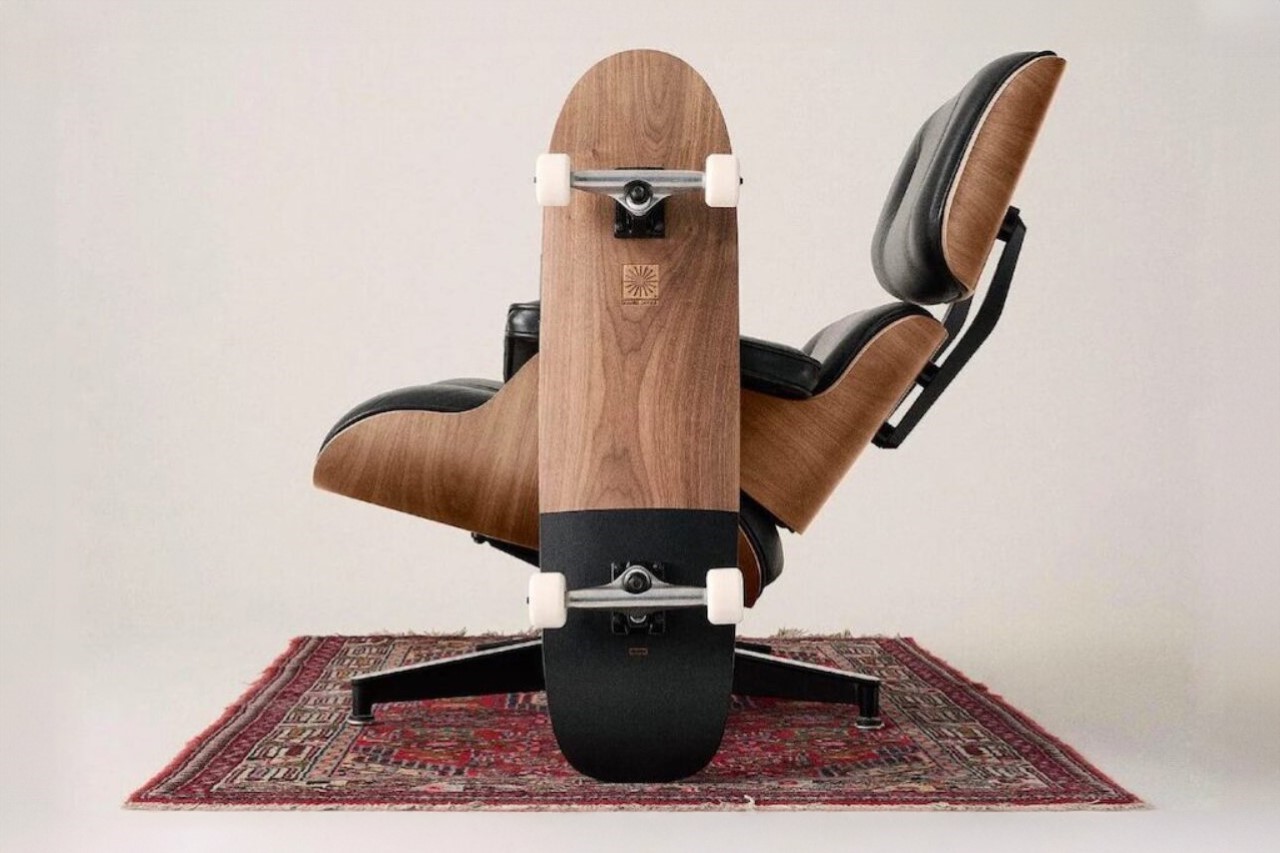
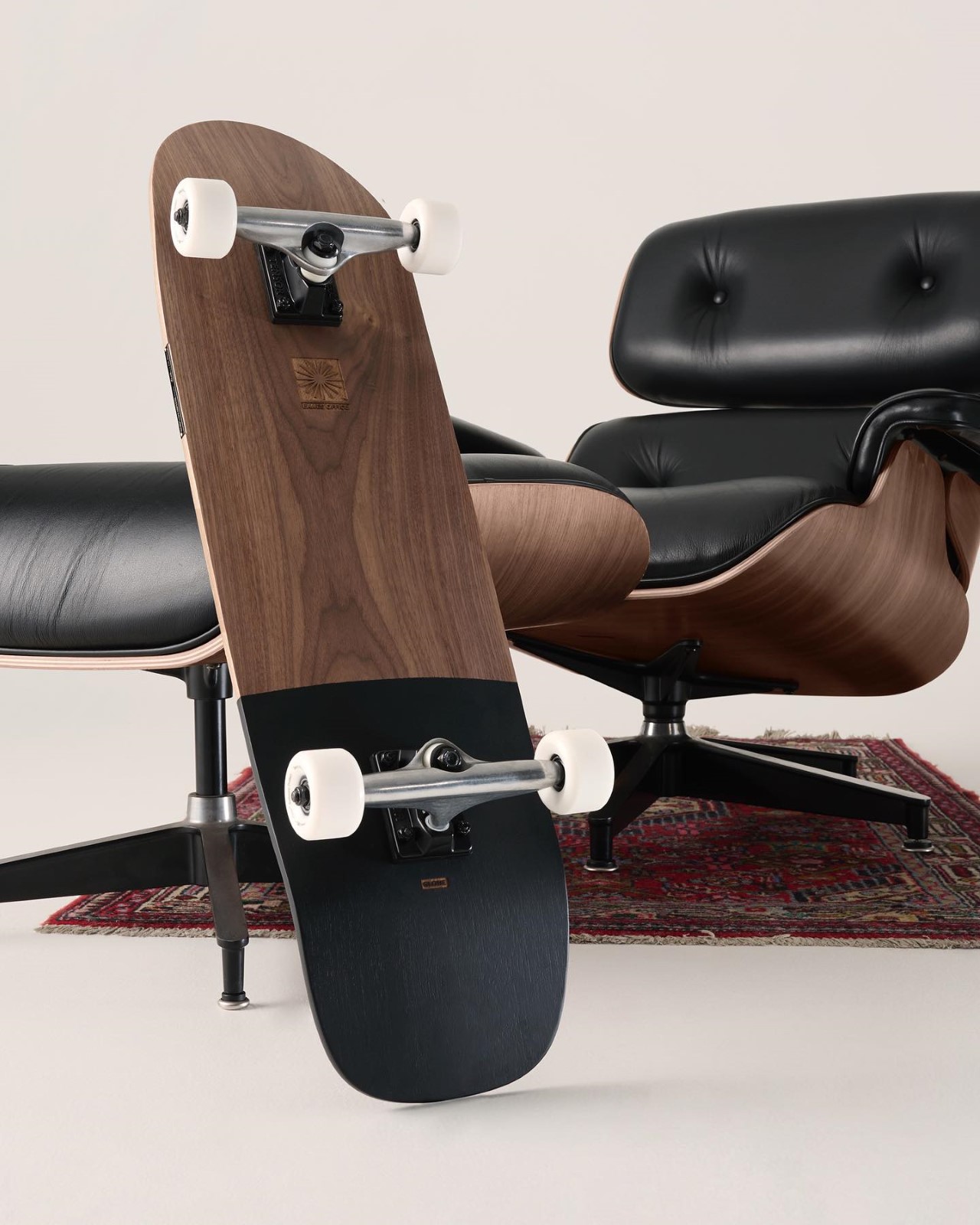
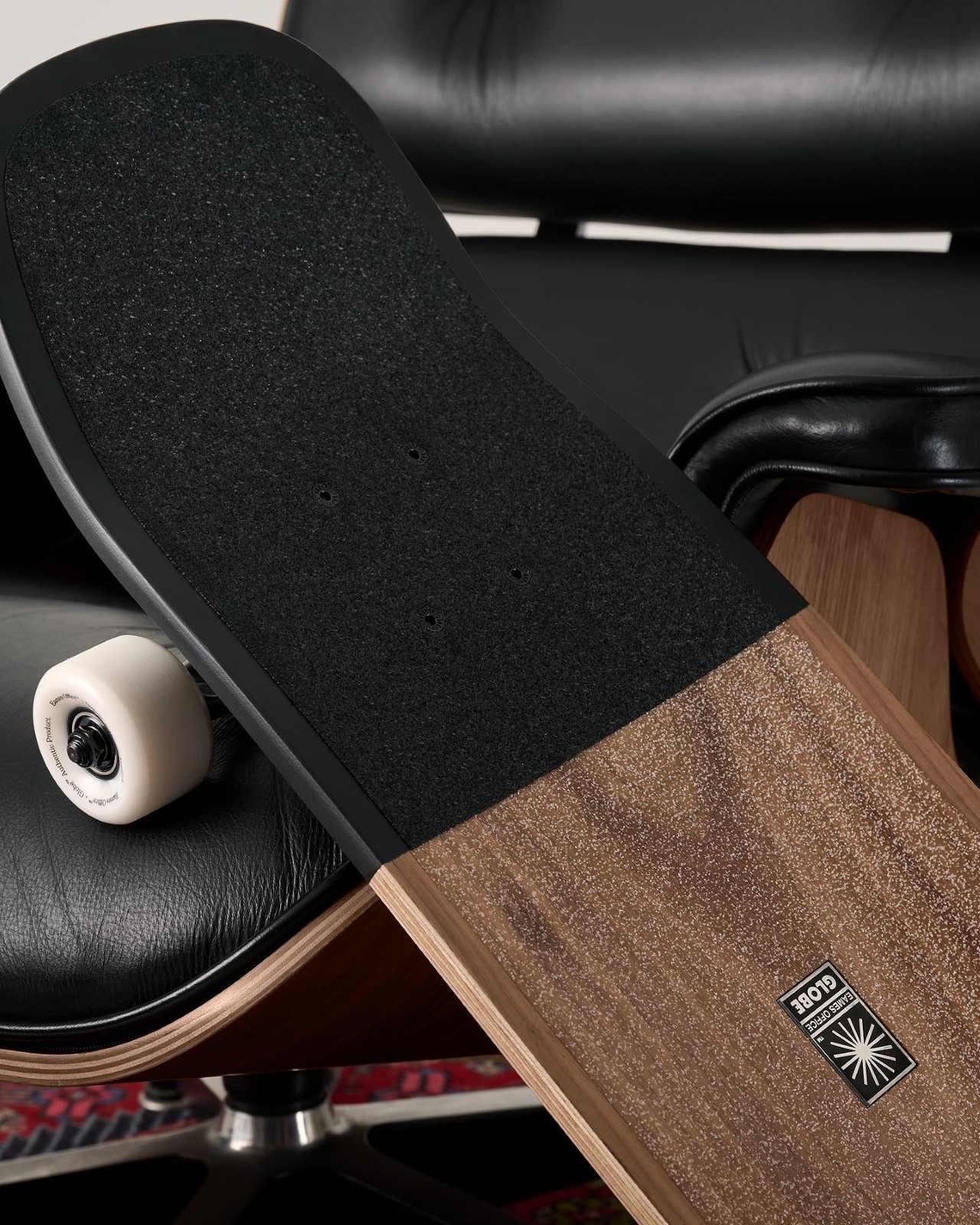
Globe’s skateboards intricately mirror the materials and aesthetics of the iconic lounge chair and ottoman. The series includes a 30-inch cruiser in white ash wood, a 32-inch cruiser hewn from walnut, and a 38-inch longboard carved out of black oak. Each skateboard is a tribute to the Eames’ pioneering spirit, capturing the essence of their design legacy. The attention to detail is meticulous, with elements like the paint dip and laser-etched finish on the wood veneer of the skateboards precisely emulating the Eames Lounge Chairs and Ottoman.

Eames Lounge 30-inch Cruiser in Ash Wood and White

Eames Lounge 38-inch Longboard

The core of this venture is the Eames Lounge Chair and Ottoman, a staple of 20th-century design. Renowned for its innovative use of molded plywood and premium veneers, the Lounge Chair reimagined the classic 19th-century English club chair into a modern marvel. Its distinct form and replaceable components have allowed it to transcend generations, standing as a symbol of enduring design.

Close-up of the 32-inch Walnut Cruiser against the iconic Eames Lounge Chair and Ottoman

The homage doesn’t stop at mere visual replication. Globe’s collaboration with the Eames Office can be seen in the smaller details too, such as custom-embedded metal Eames Office + Globe badges and Eames logo deck bolts, enriching the skateboards. Even the underside of the boards feature a laser-carved Eames Office logo, a subtle yet significant mark of this unique partnership.

The skateboards come packaged in heavyweight canvas board bags that double as carry-all totes, signaling Globe’s commitment to practicality and style. Although the walnut cruiser has already sold out, indicating the collection’s popularity, other models, including the Eames La Chaise Box Set, remain available for enthusiasts and collectors.

The post The Eames Lounge Chair gets reinvented as a dual-tone skateboard with a similar iconic aesthetic first appeared on Yanko Design.

Geometric coffee tables use 3D printing robots and recycled plastic to create organic forms

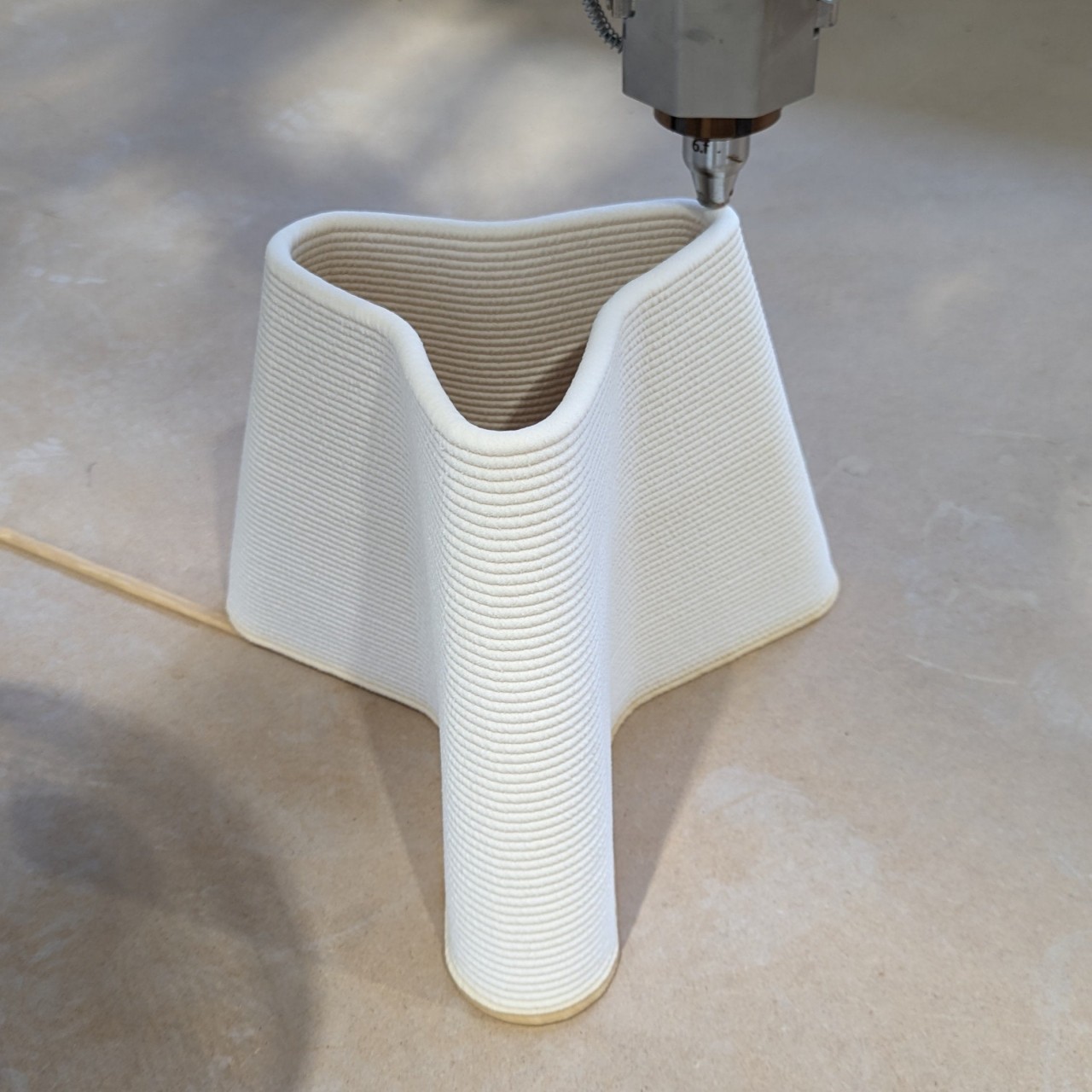
3D printing has come a long way, but unless you’re using industrial printers in large factories, you’re probably limited to creating small designs or just parts of a whole. That, unfortunately, means that creators and makers aren’t able to fully express their ideas and designs, at least not those that involve pieces that can’t fit inside a commercial 3D printer. That said, you don’t have to give up your creative freedom to use an expensive production line if you can put 3D printing robots to smart use, like this sustainable plastic coffee table that is able to form organic geometric forms just by making the robot arm loop round and round.

Designer: Martin Zampach

When people think of 3D printers, they most likely think of those boxy contraptions sitting on tables, with nozzles that quickly run back and forth while oozing out hot plastic material in order to build up a three-dimensional object almost like from thin air. While this is the most common and most convenient kind of 3D printing, it has severe limitations in the size or shape of the object being made, basically anything that can fit the area and height of the printer.

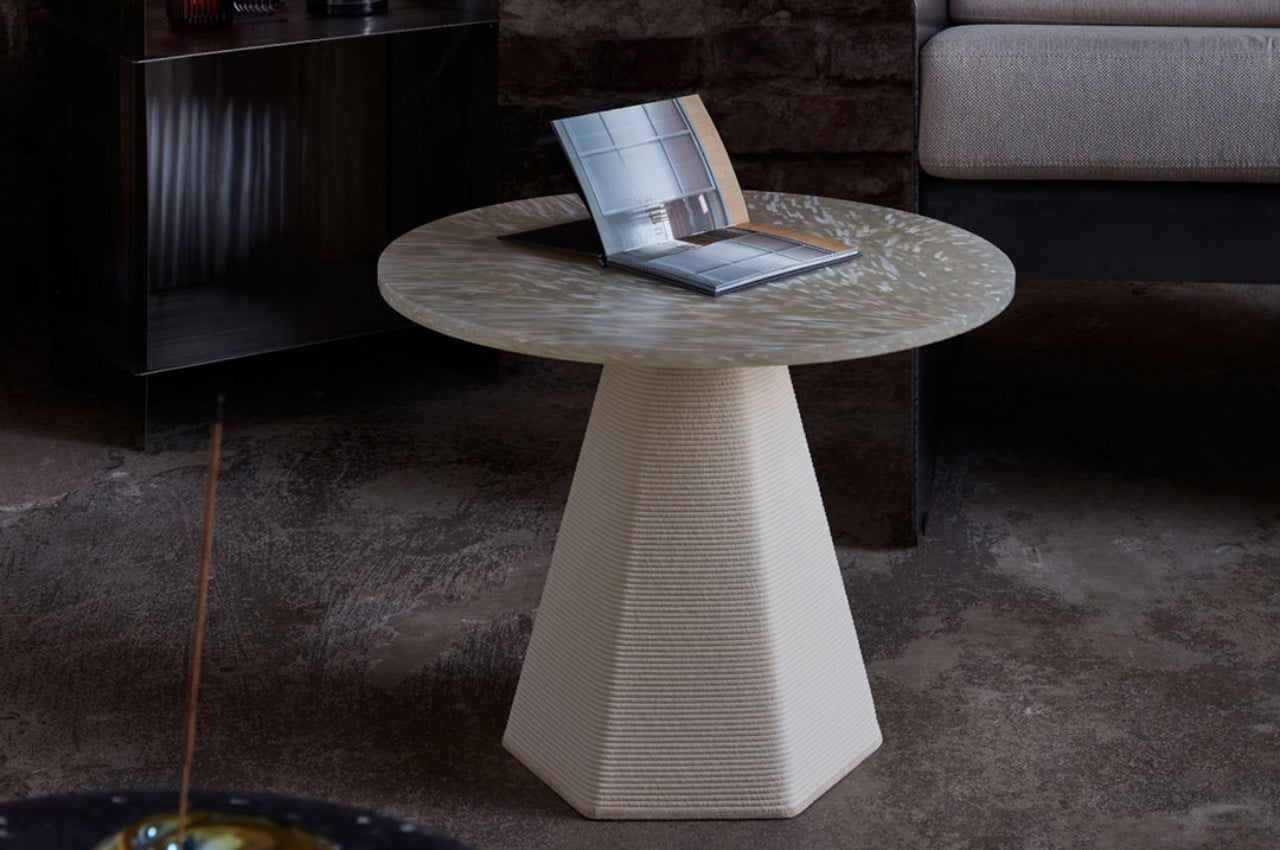
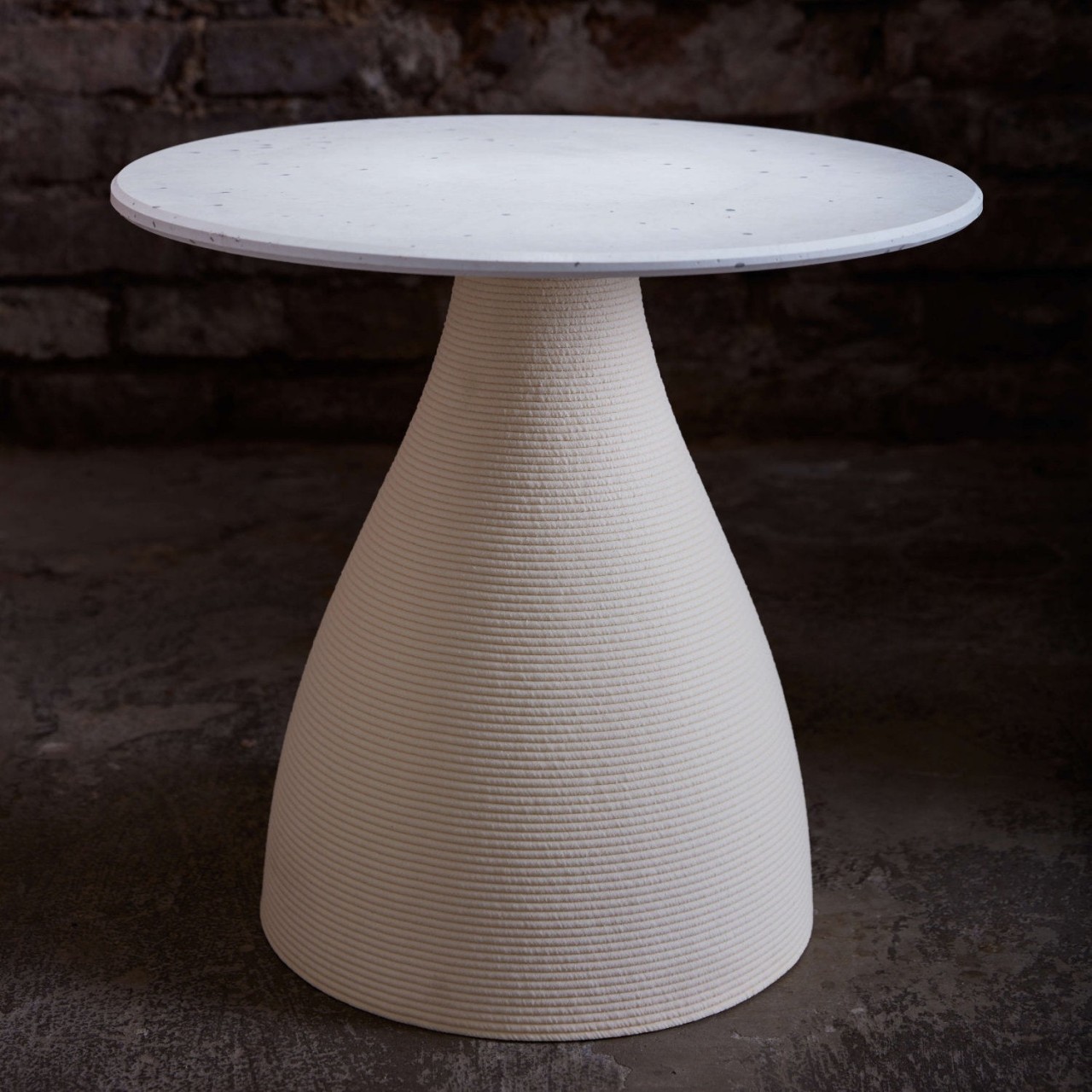
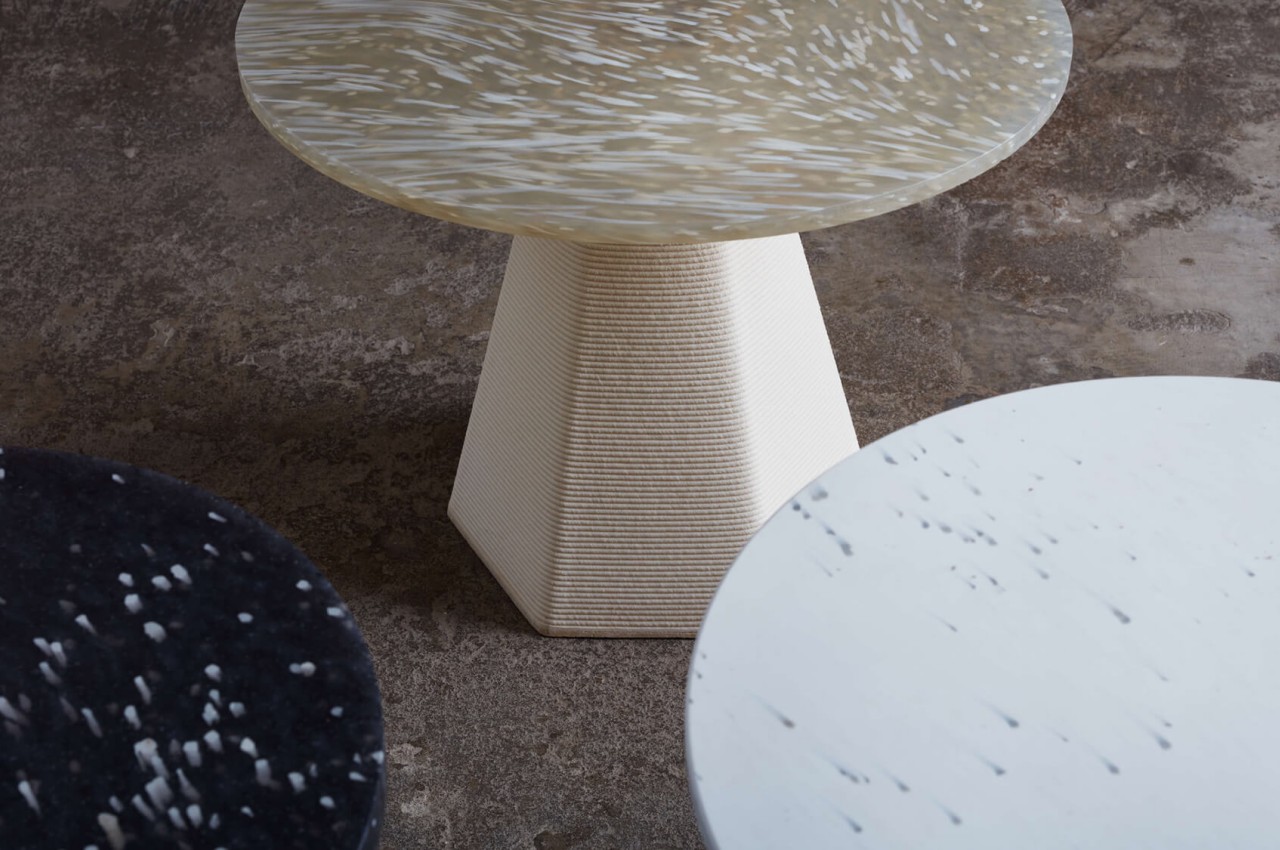
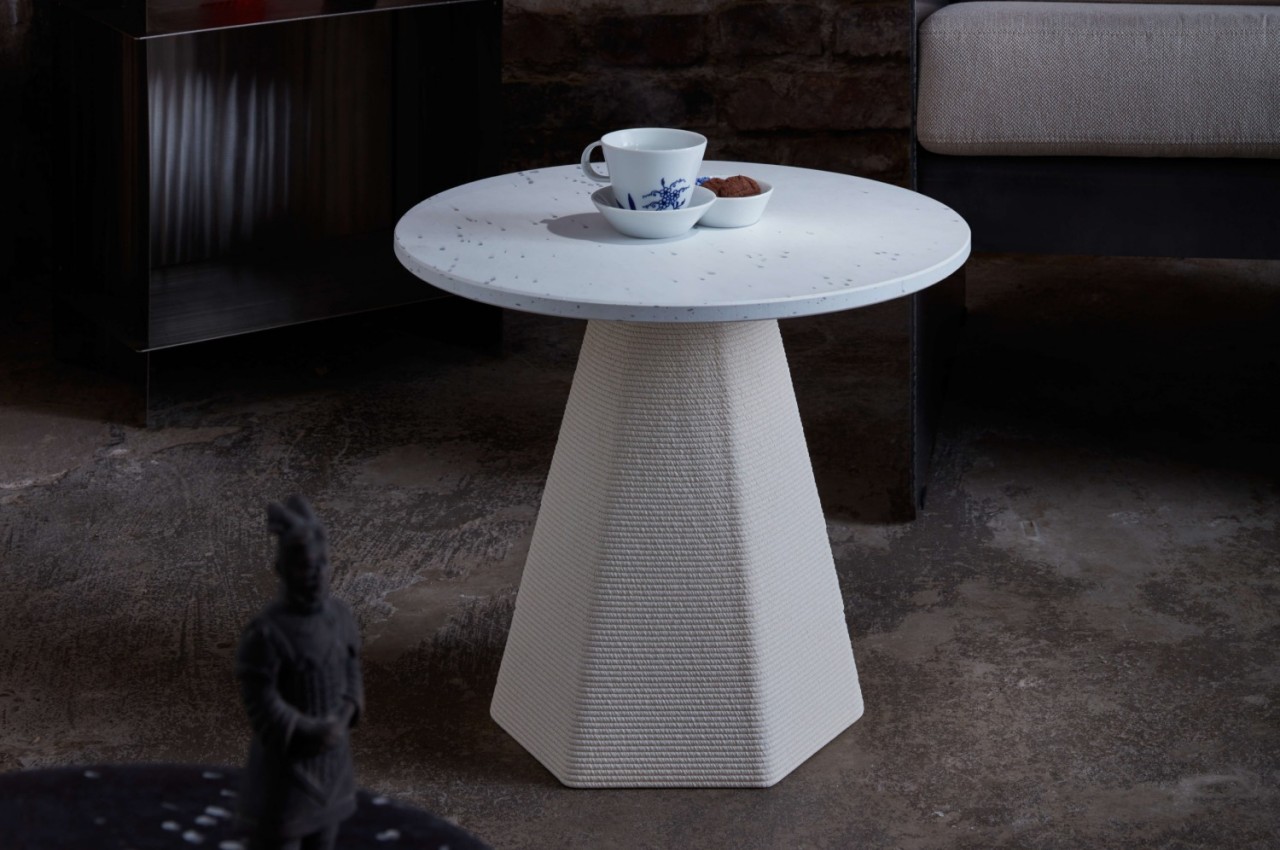
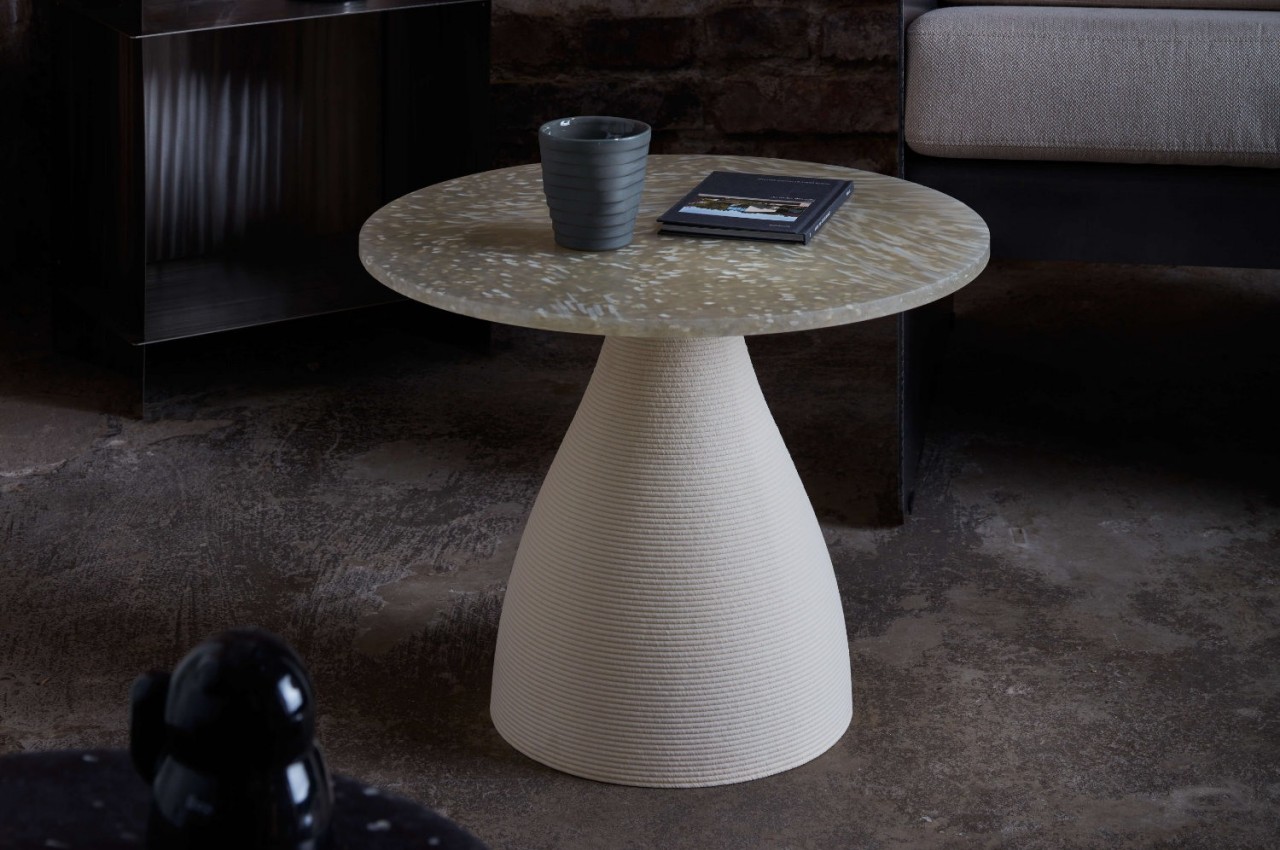
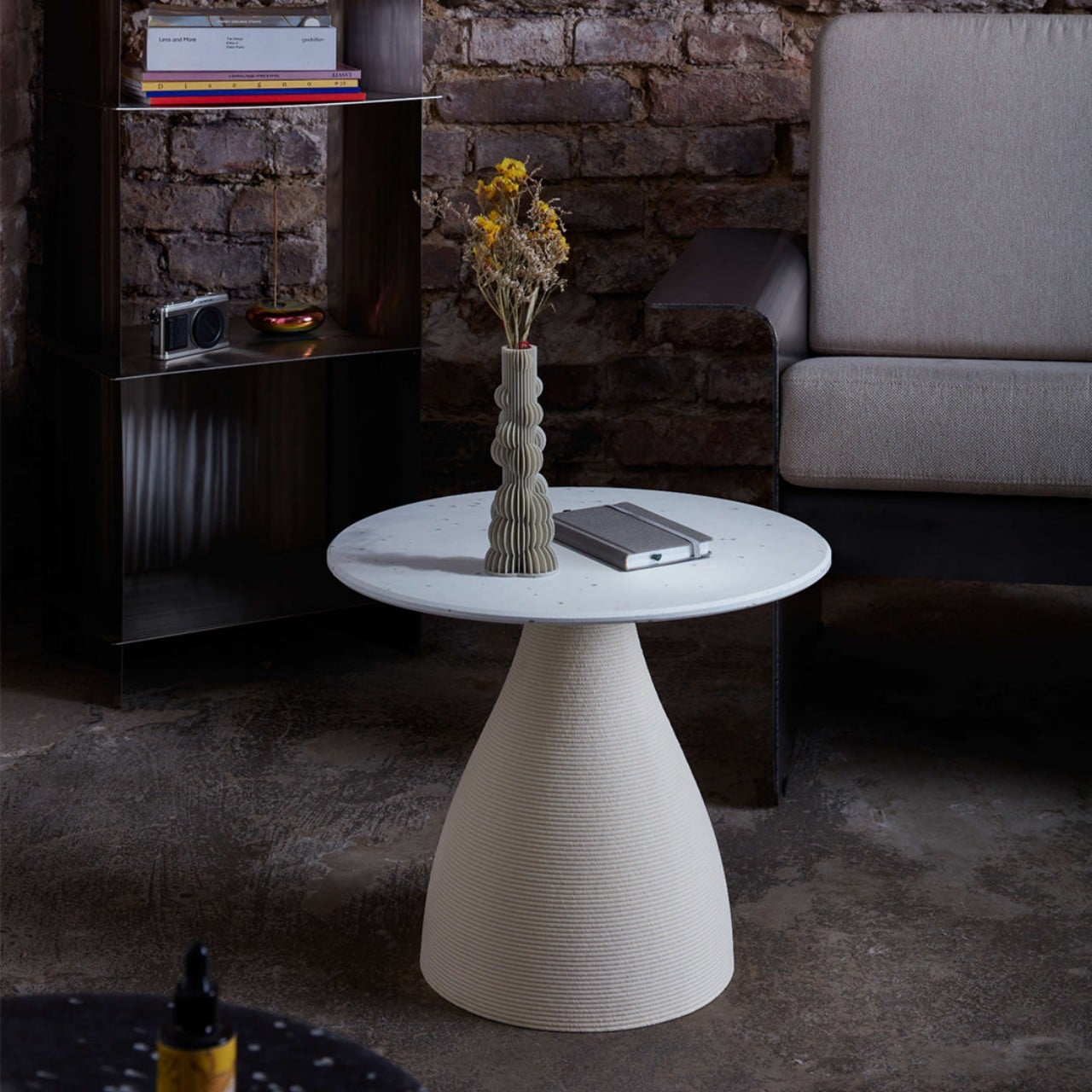
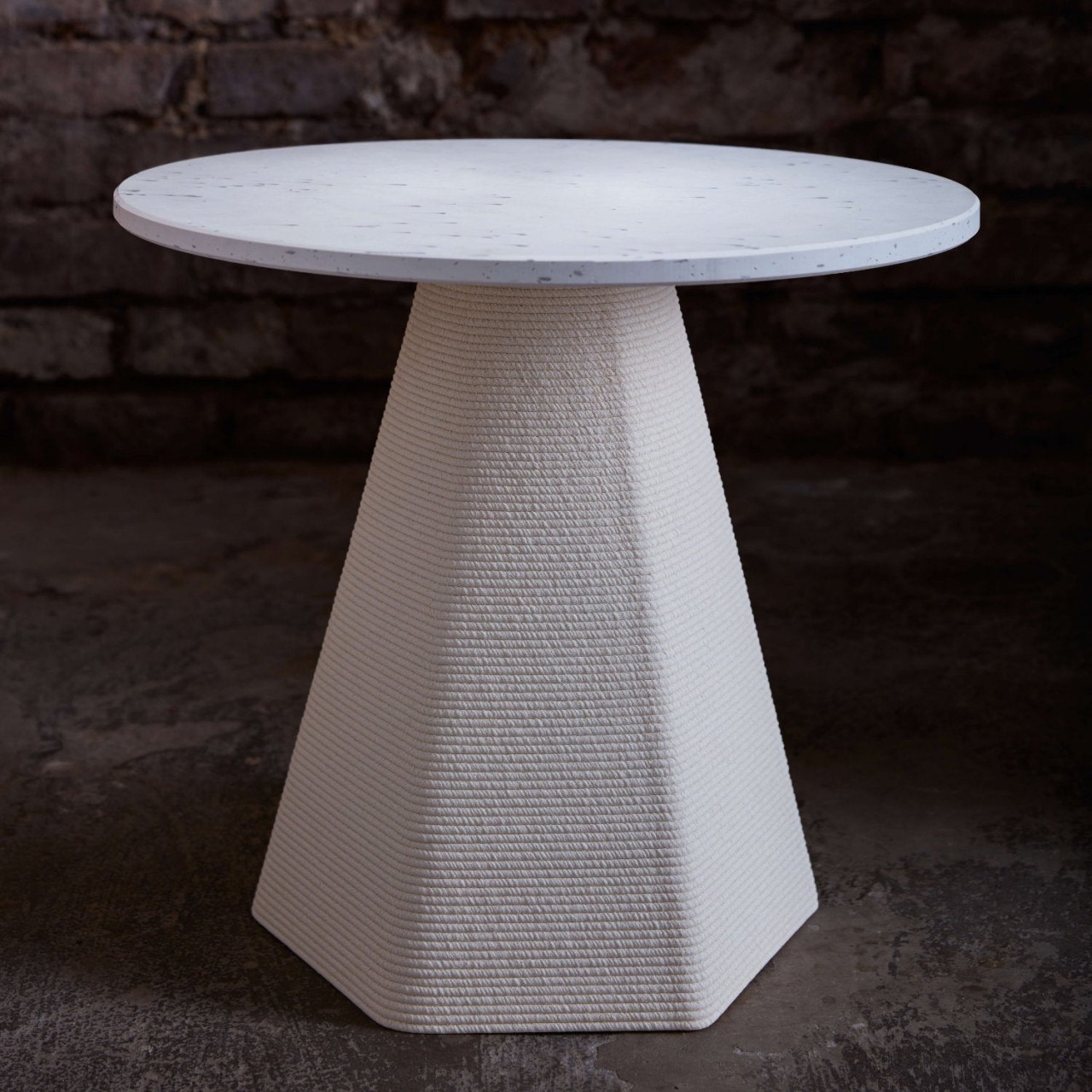
LOOPS is a collection of coffee tables conceived to push the envelope of 3D printing and create objects that are larger than normal without requiring additional hardware. An industrial 3D printing robot pretty much goes round and round to create the base shape, building layer after layer of composite material until the desired form is achieved. This is the process used for creating the base of these tables, allowing the designer to apply different geometric shapes with organic forms that look like they’re literally growing before your very eyes.

The coffee tables are more than just experiments in 3D printing, they are also testaments to beautiful sustainable design. Tabletops are made from 100% recycled plastic that is crushed, melted, and then moulded from used plastic. The 3D printed bases, on the other hand, are made from composite material containing cellulose from responsible forestry. When the tables reach the end of their use, both the base and the top can be recycled or reused to extend their life in a different way.

The LOOPS coffee table collection offers a unique and novel design that pushes the boundaries of 3D printing to produce beautiful shapes and textures that almost resemble traditional ceramic creations. The variety of recycled plastics used gives each tabletop a unique appearance, both in color as well as in texture. The minimalist yet elegant designs make the coffee tables the perfect artistic centerpieces for any space, offering a thought-provoking design that opens your mind to the possibilities of sustainable 3D printing.

The post Geometric coffee tables use 3D printing robots and recycled plastic to create organic forms first appeared on Yanko Design.

Top 5 Must-Have Wooden Furniture Designs That Deserve To Be In Your Home

Wood is one of the most preferred materials of choice for furniture designers for ages galore. Wood is a sturdy, functional, and minimal material that adds a sense of zen and style to any living space. It instantly elevates a space, while adding some warm to it. It’s a minimal material that holds a strong personality without any additional frills and tassels. I truly believe a well-crafted piece of wooden furniture can add a magical touch to even the simplest of living spaces. Minimal, clean, and almost always soothing, beautifully designed wooden furniture helps add the ultimate finishing touch to a room, and we’ve curated a few of our favorites for you!

1. Tokyo

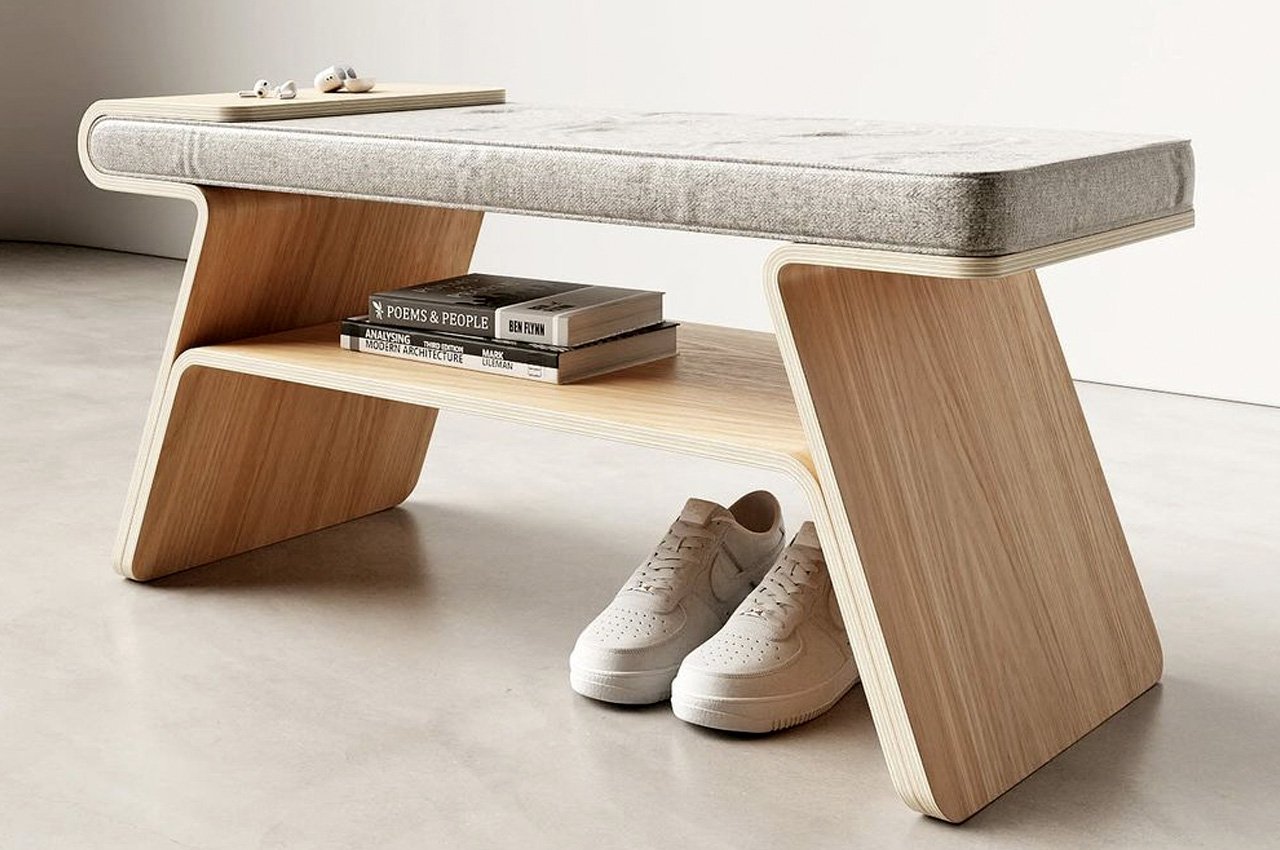
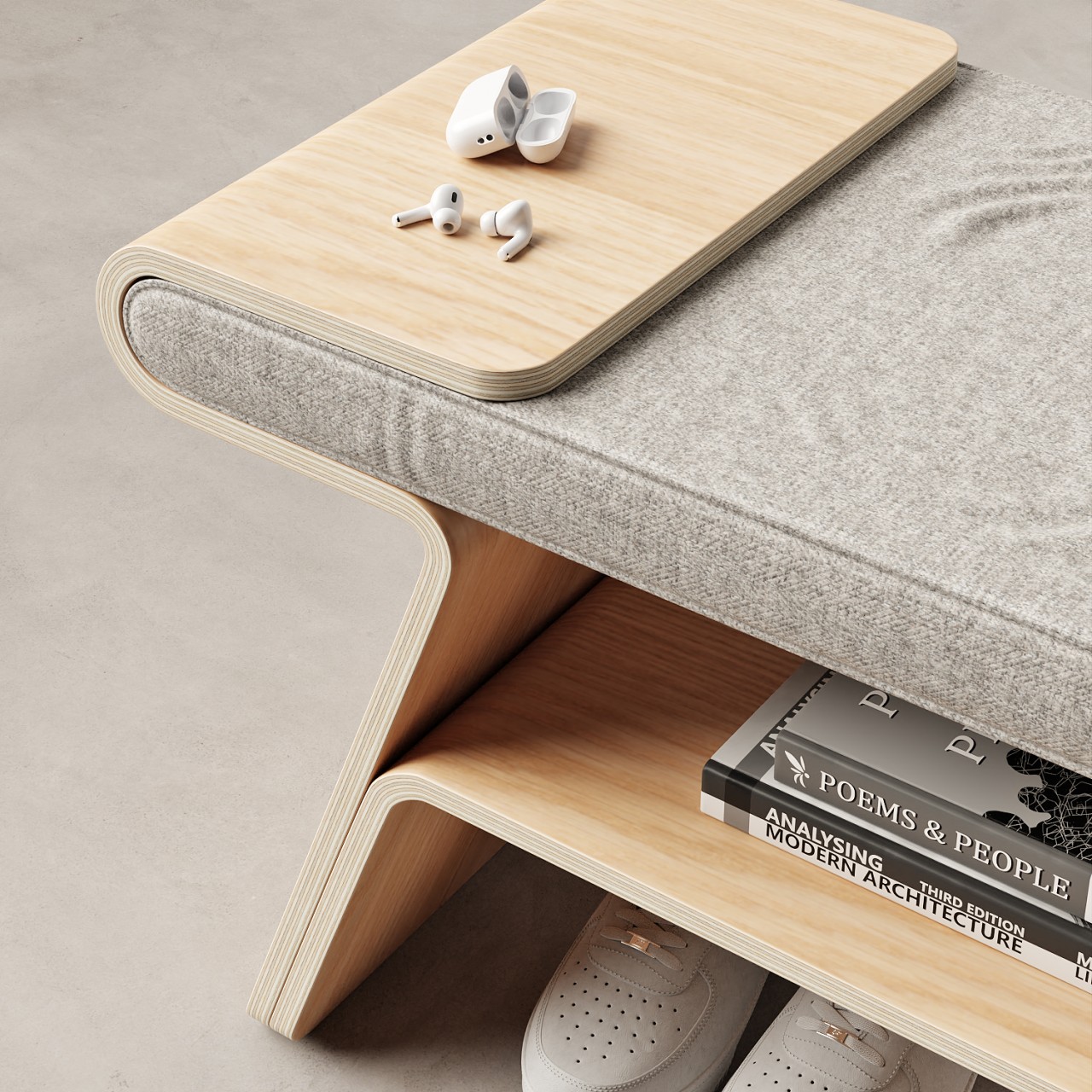
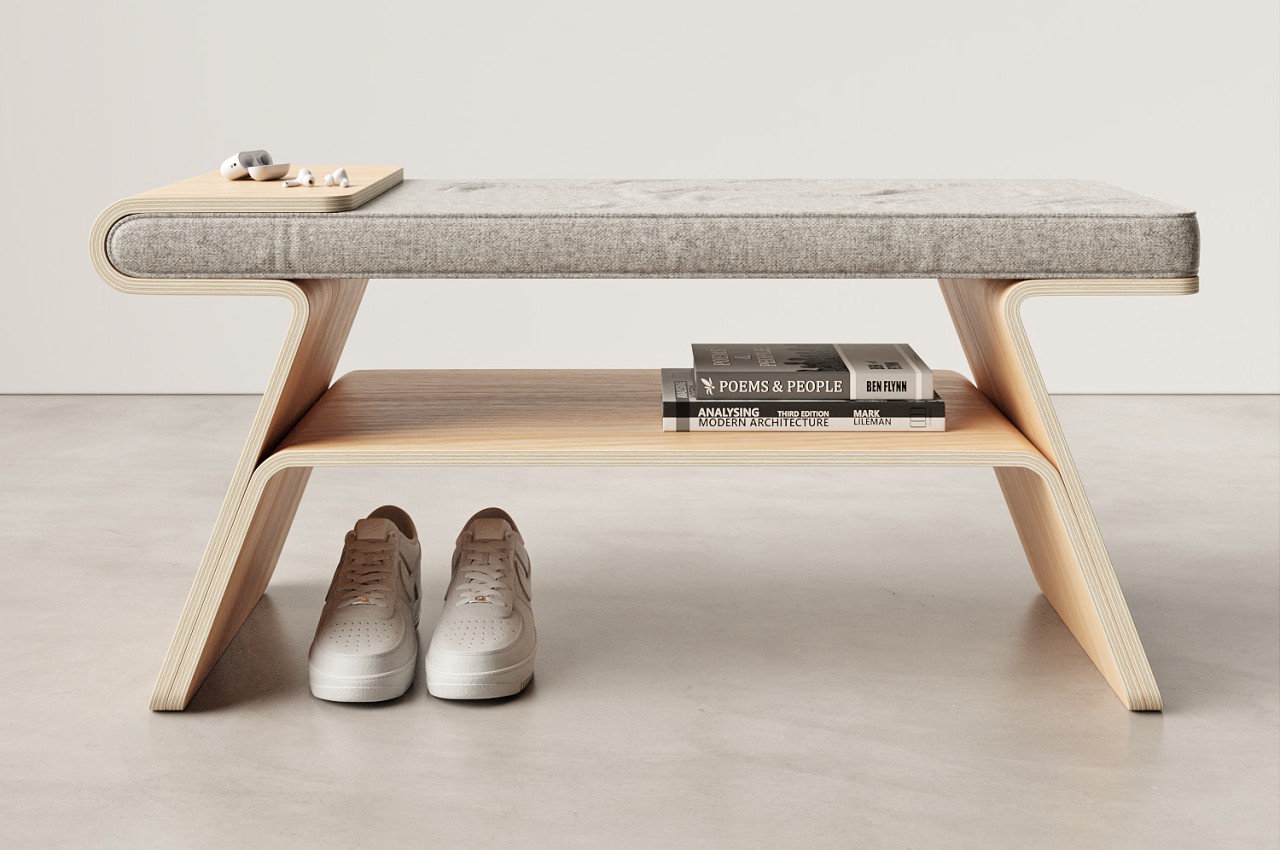
Dubbed Tokyo, this ingenious multifunctional design doubles up as a shoe rack and a bench. It combines two furniture pieces into one individual furniture design.

Why is it noteworthy?

What makes Tokyo unique and special is its side leg, which gently and seamlessly curves, subtly embracing the cushion to create a top tray for daily essentials. This functions as a neat spot to store your souvenirs and other knick knacks.

What we like

  • Features a bottom shelf which also serves as a nifty storage space
  • Multifunctional furniture design

What we dislike

  • It’s a conceptual design, so we’re not sure how functional it will be in reality

2. Snowhouse Sofa

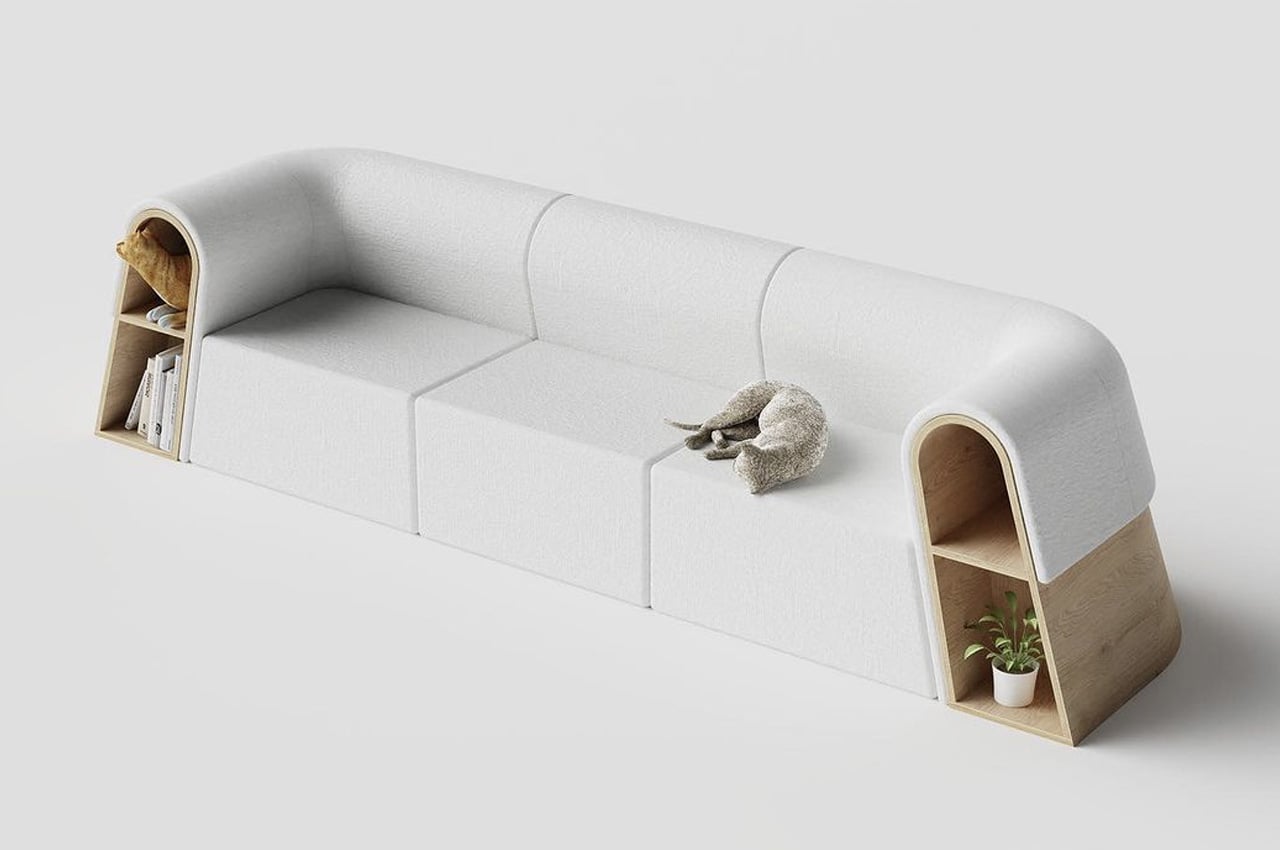
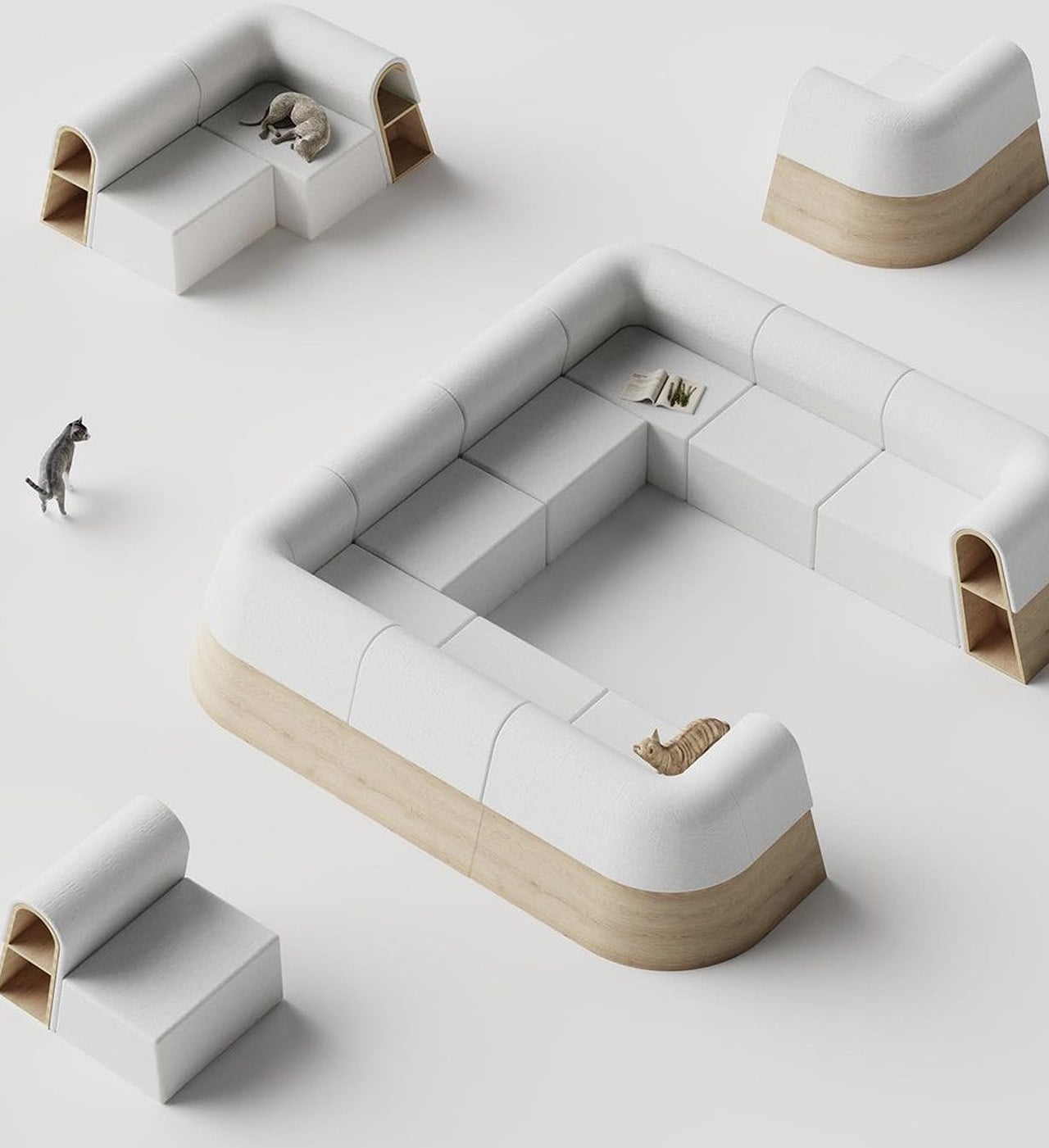
Named the Snowhouse Sofa, this intriguing furniture design is for pets and humans alike, and it is what a wooden sofa would look like if it experienced some snowfall, and was coated with it.

Why is it noteworthy?

The wood is covered with cushy white cushions to give the idyllic impression of fallen snow. The edges are rounded, adding a depth of softness to the furniture piece. The ends of the sofa are hollow, with nifty little spaces to store books, magazines, and other miscellaneous items.

What we like

  • The area on top serves as a passage for your cats
  • Integrated with smart storage space

What we dislike

  • The Snowhouse Sofa is currently a concept, so we don’t know how the actual product will turn out to be

3. The Soul Sculpture Bench

Designed by Madrid-based designer Verónica Mar for Les Ateliers Courbet, the Soul Sculpture Bench is a minimalist bench that has a spiritual sensitivity, and is designed to balance and ground the energy of the space it is placed into.

Why is it noteworthy?

Inspired by the recurring spiral patterns that are often seen and found in the universe, in the various galaxies, in the intricate DNA chains, and in the dynamic water currents.

What we like

  • Creates a cohesive connection between nature and design

What we dislike

  • Bulky and space-consuming design

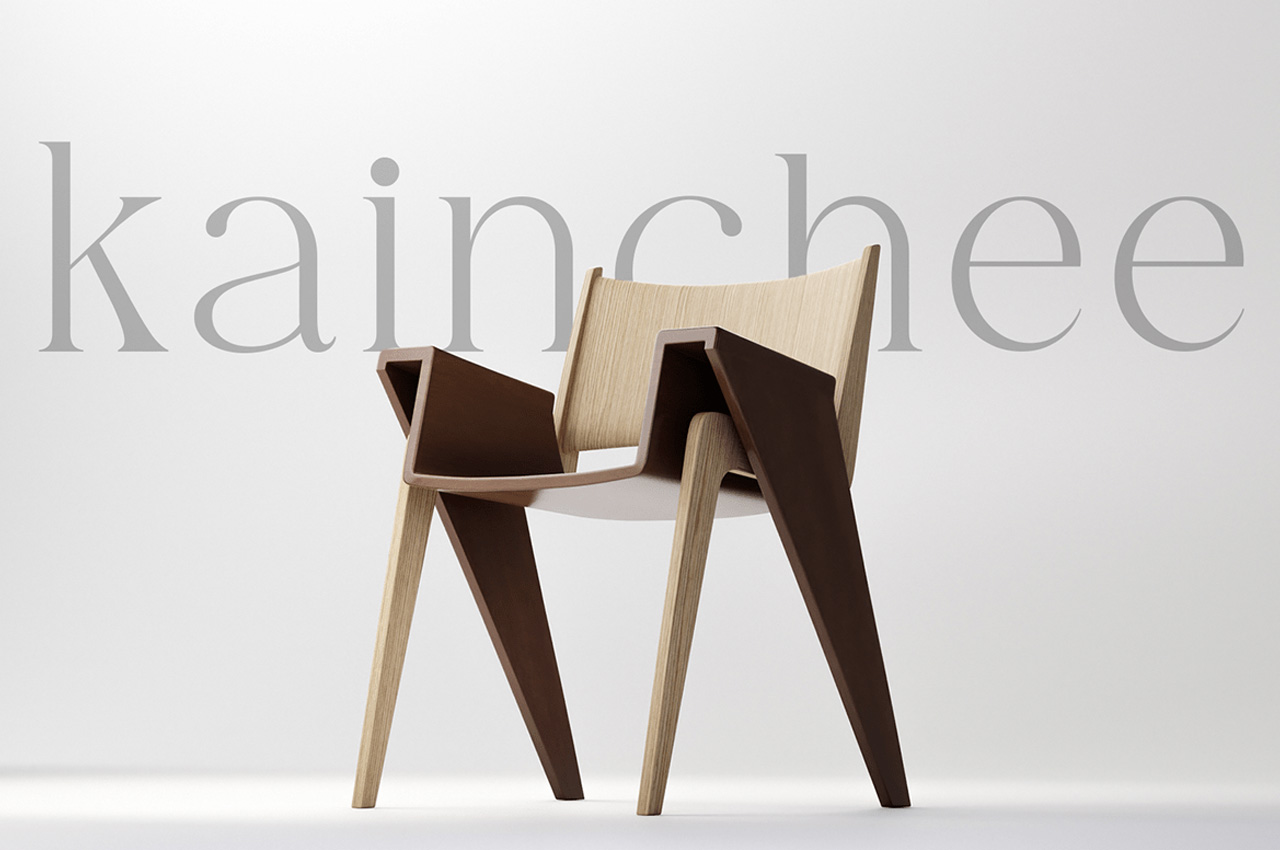
4. Kainchee

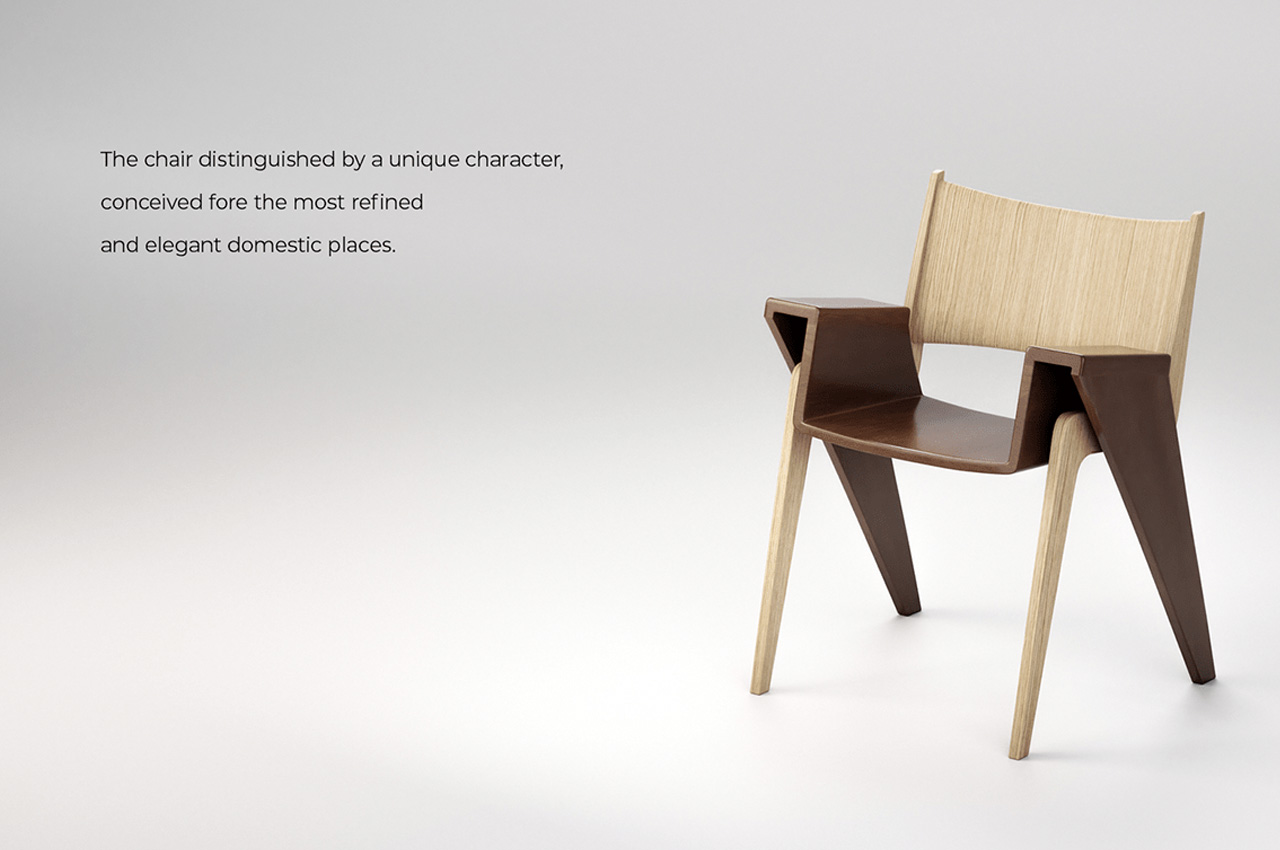
Named Kainchee, this innovative chair design looks like a pair of scissors and does full justice to its name.

Why is it noteworthy?

The chair does look like two pairs of scissors, from the bottom half at least. The star feature of the chair is its intertwining and geometrically intriguing form. A band of walnut wood forms the seat of the chair, while subtly interlocking with the ash wood to form the legs of the chair.

What we like

  • It has a unique form and design philosophy which allows it to stand apart from other furniture pieces

What we dislike

  • There are no options for customization

5. The Rook Stool

Named the Rook Stool, this interesting stool design is inspired by pieces of chess and has a lot of similarities to them as well.

Why is it noteworthy?

The designer drew references from the shapes of decorative wooden chess pieces for the Rook Stool. The stool utilizes simple elements that have been placed at unusual but intriguing angles and intersections to create a sculptural appeal.

What we like

  • Inspired and influenced by chess pieces
  • Available in three types of solid wood

What we dislike

  • It doesn’t seem like a comfortable seating option to sit for hours on end

The post Top 5 Must-Have Wooden Furniture Designs That Deserve To Be In Your Home first appeared on Yanko Design.
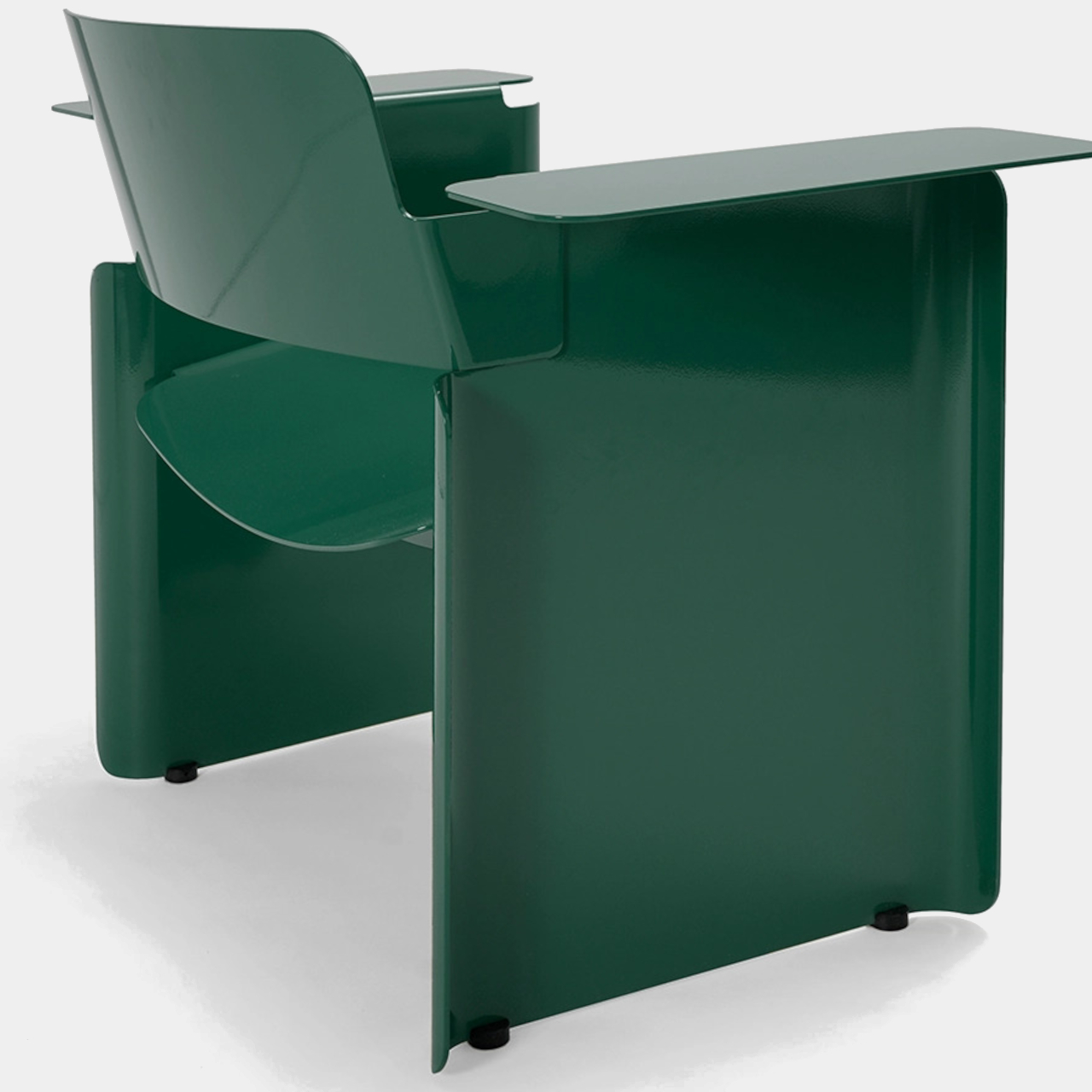
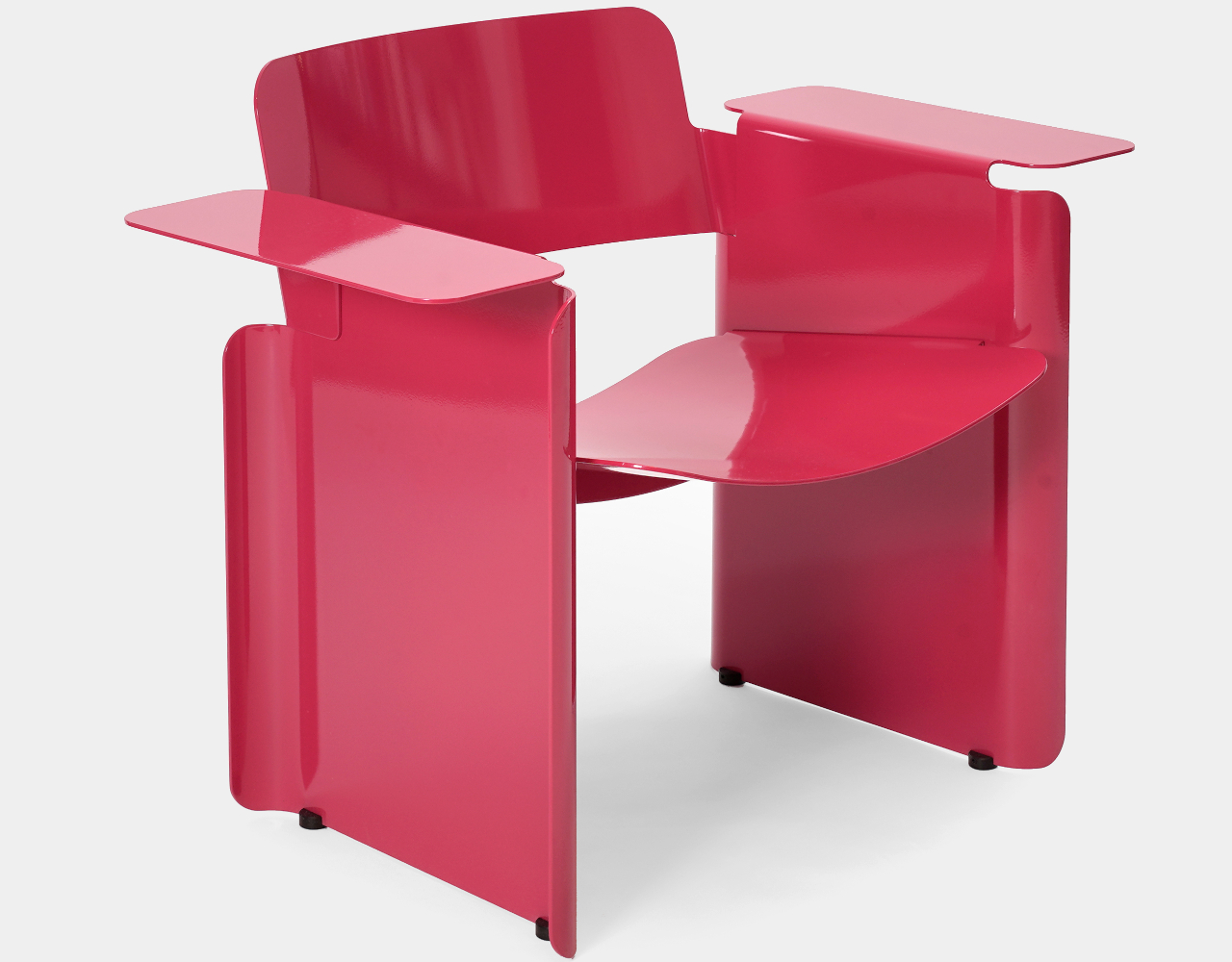
This aluminum lounge chair is built for easy repairs, not so much for comfort

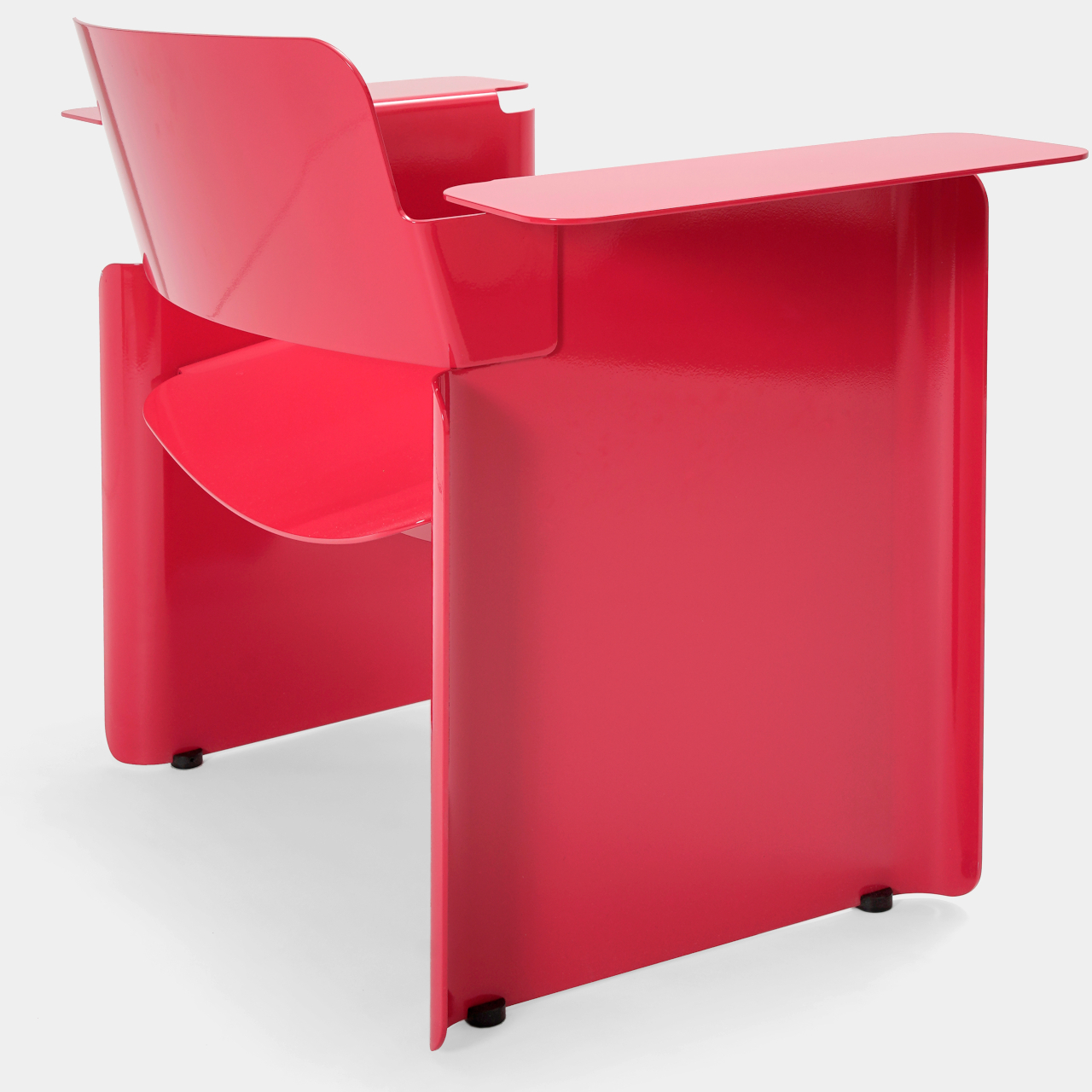
Chairs are designed to be comfortable to sit on unless they’re meant to be art or statement pieces rather than usable furniture. Of course, not all designs hit the mark, and some tend to value other traits like aesthetics or features over comfort. That isn’t always intentional, though, especially for chairs that are meant to be sold commercially. This lounge chair, for example, seems to check off boxes like minimalism, repairability, and sustainability, but its rather imposing industrial aesthetic might make some think twice about parking their bodies on its thin body, even if there’s a comfy cushion on the seat.

Designer: Haus Otto

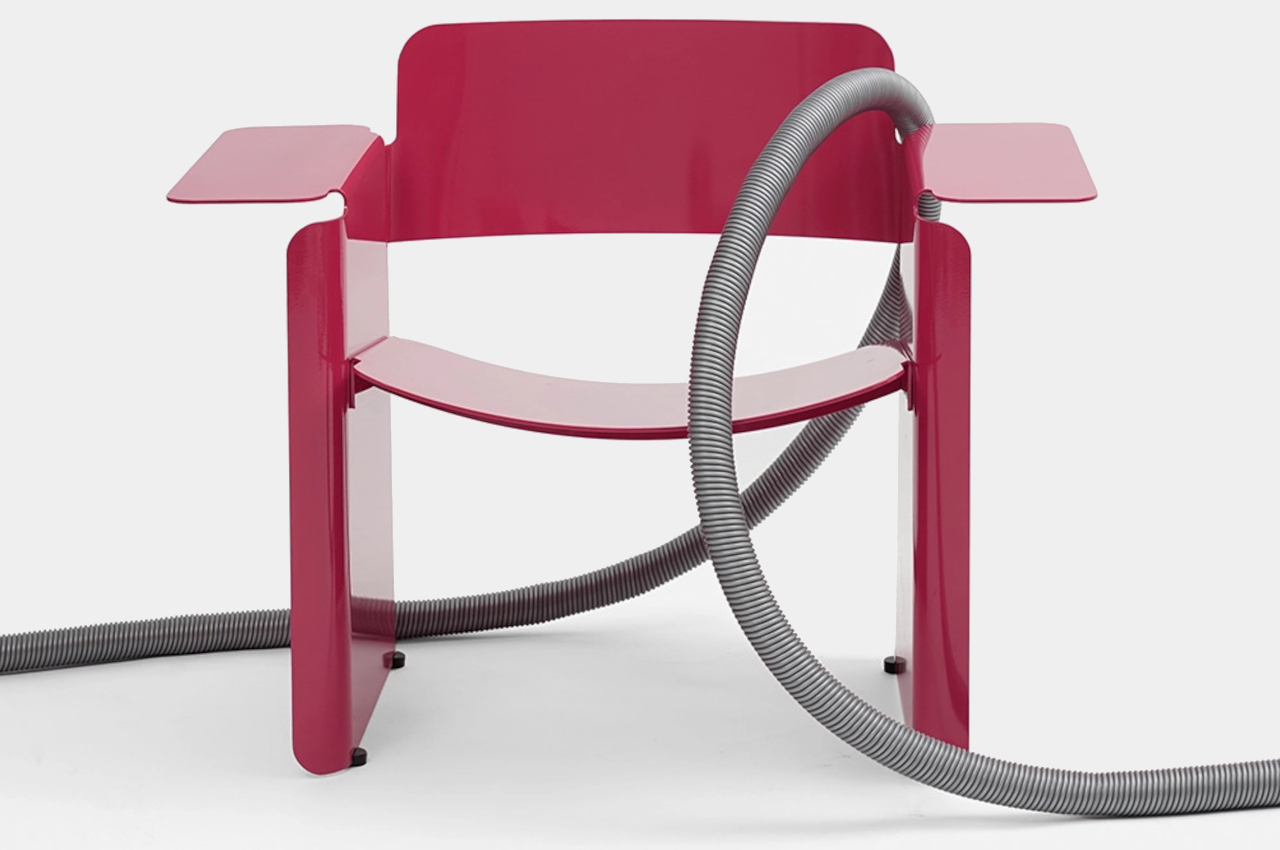
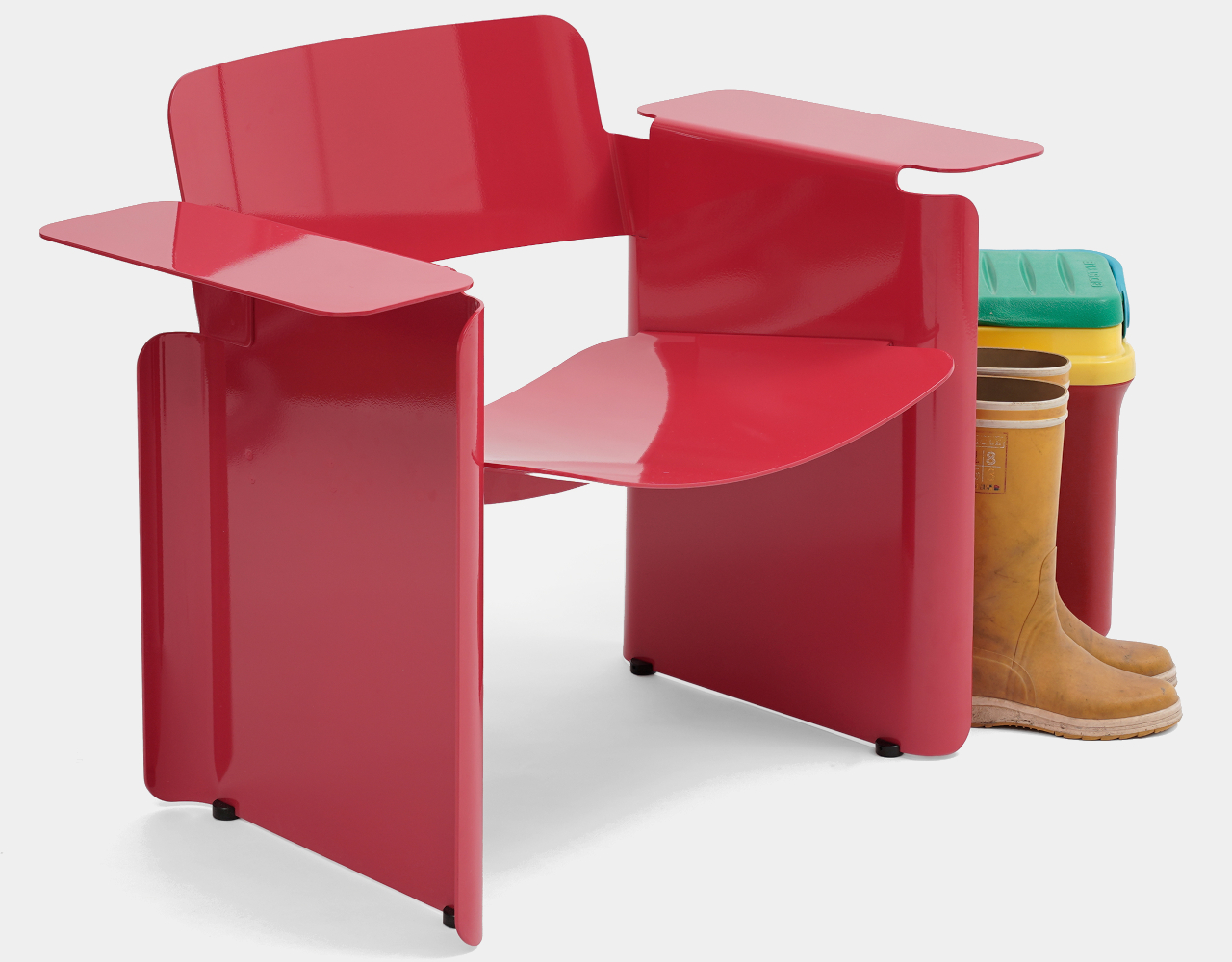
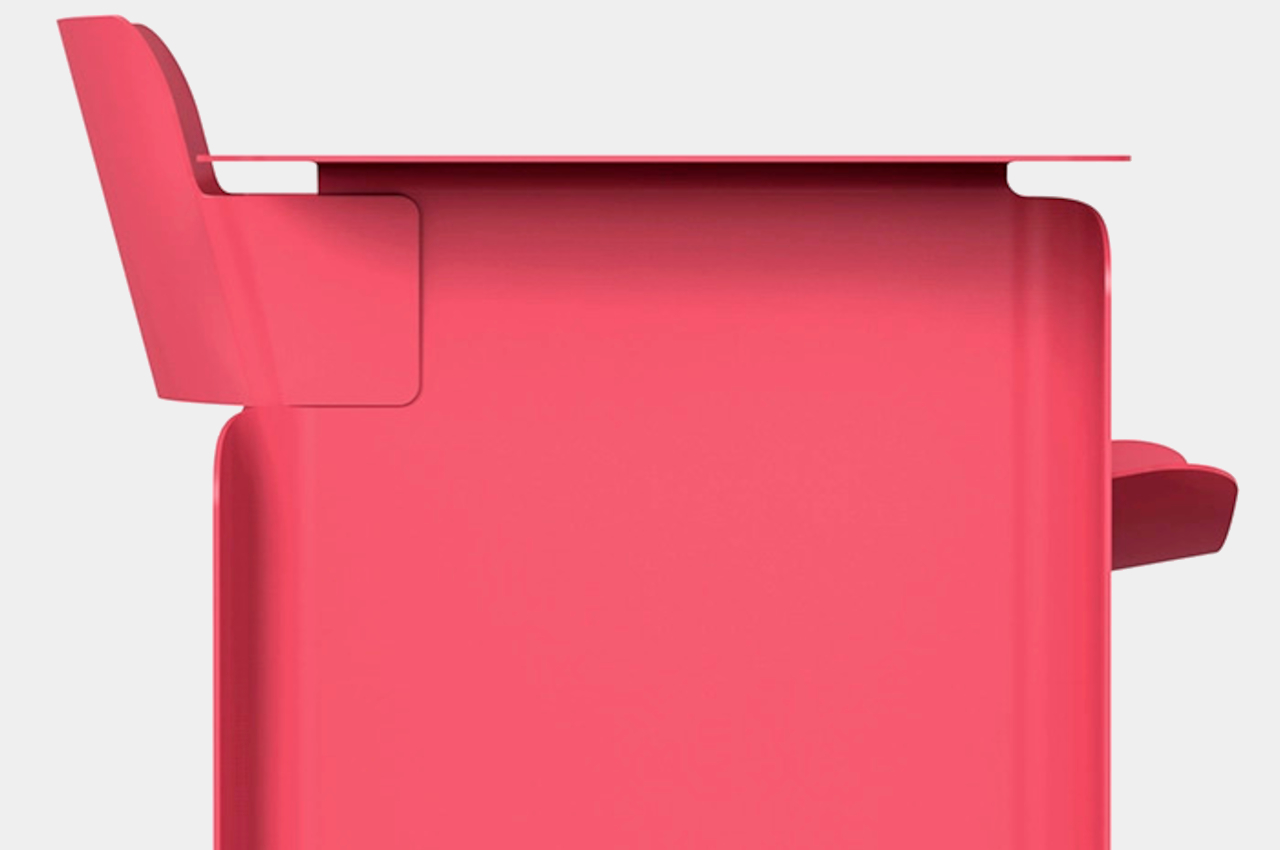
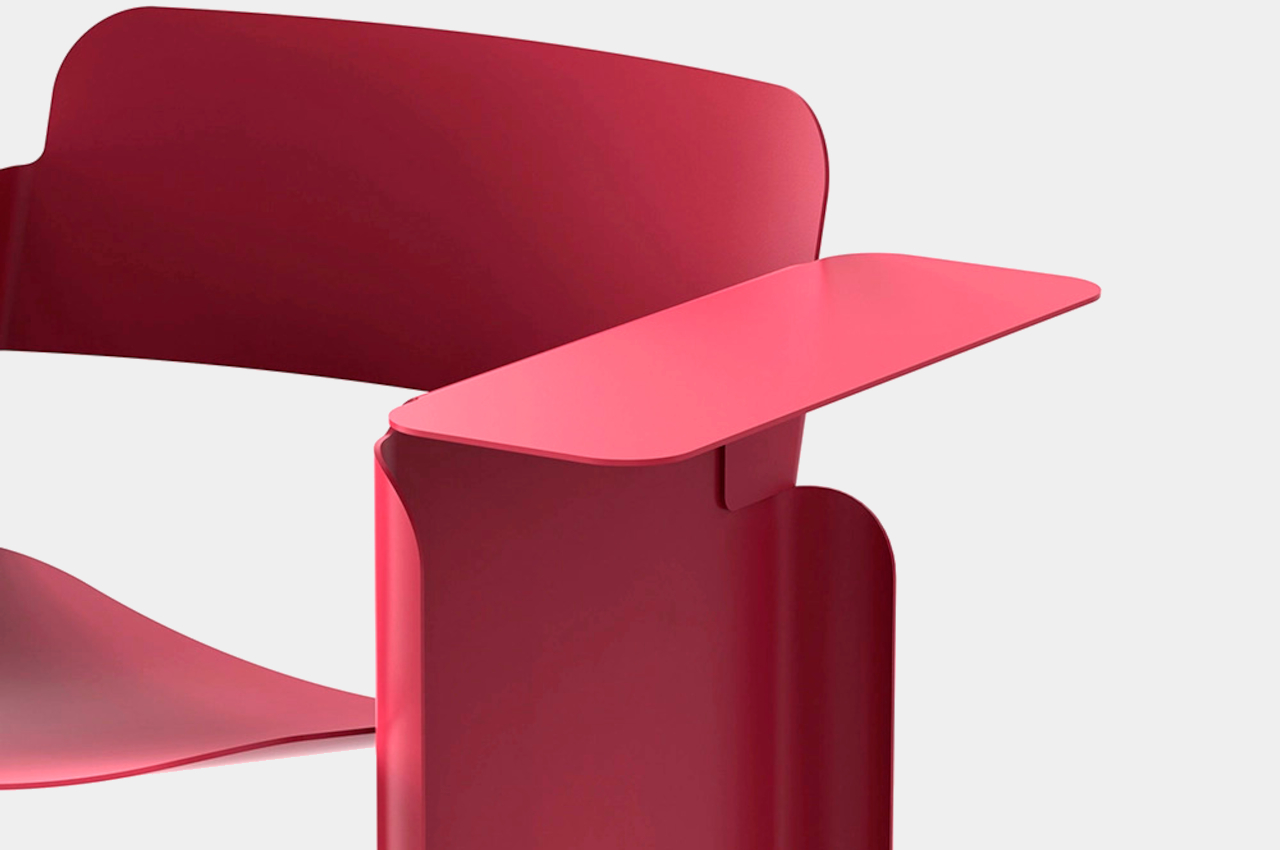
Truth be told, the AL13 lounge chair doesn’t inspire much confidence because of its super thin construction. Each component is made from laser-cut aluminum sheets that seem to be too thin to support heavy objects, like your body for example. Of course, looks can be deceiving, and this chair was designed to be really stable and safe, at least enough to be sold and used both for indoor as well as outdoor use.

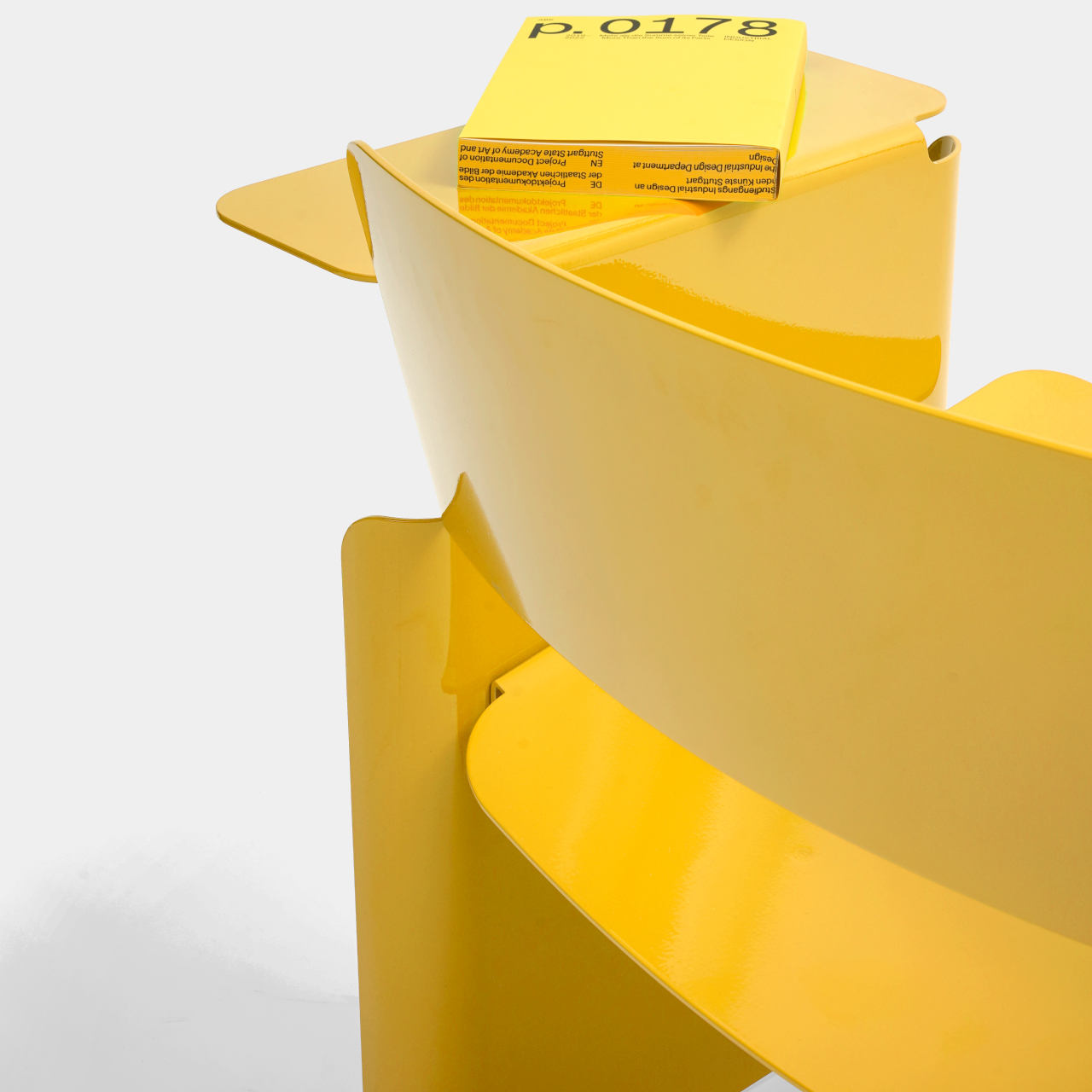
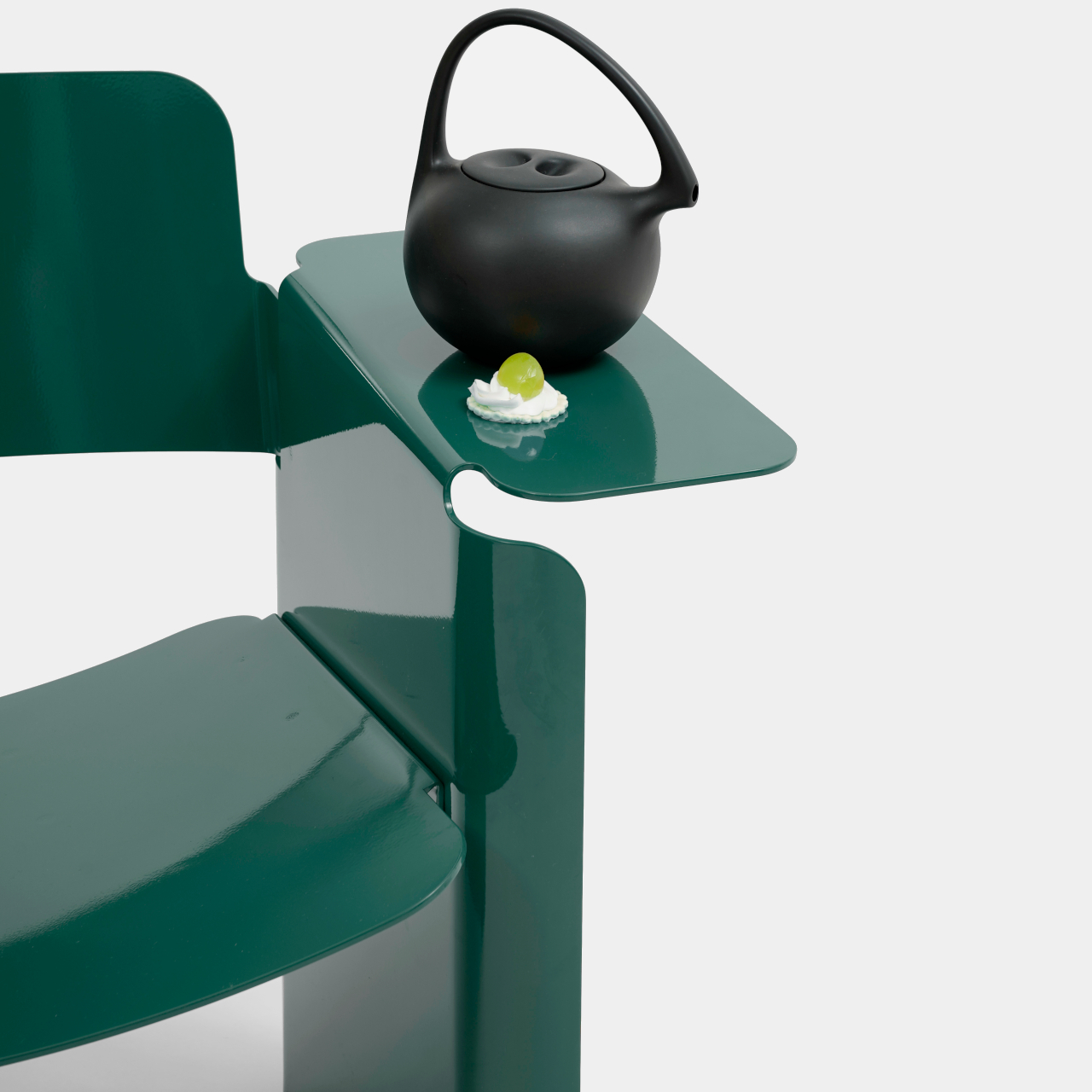
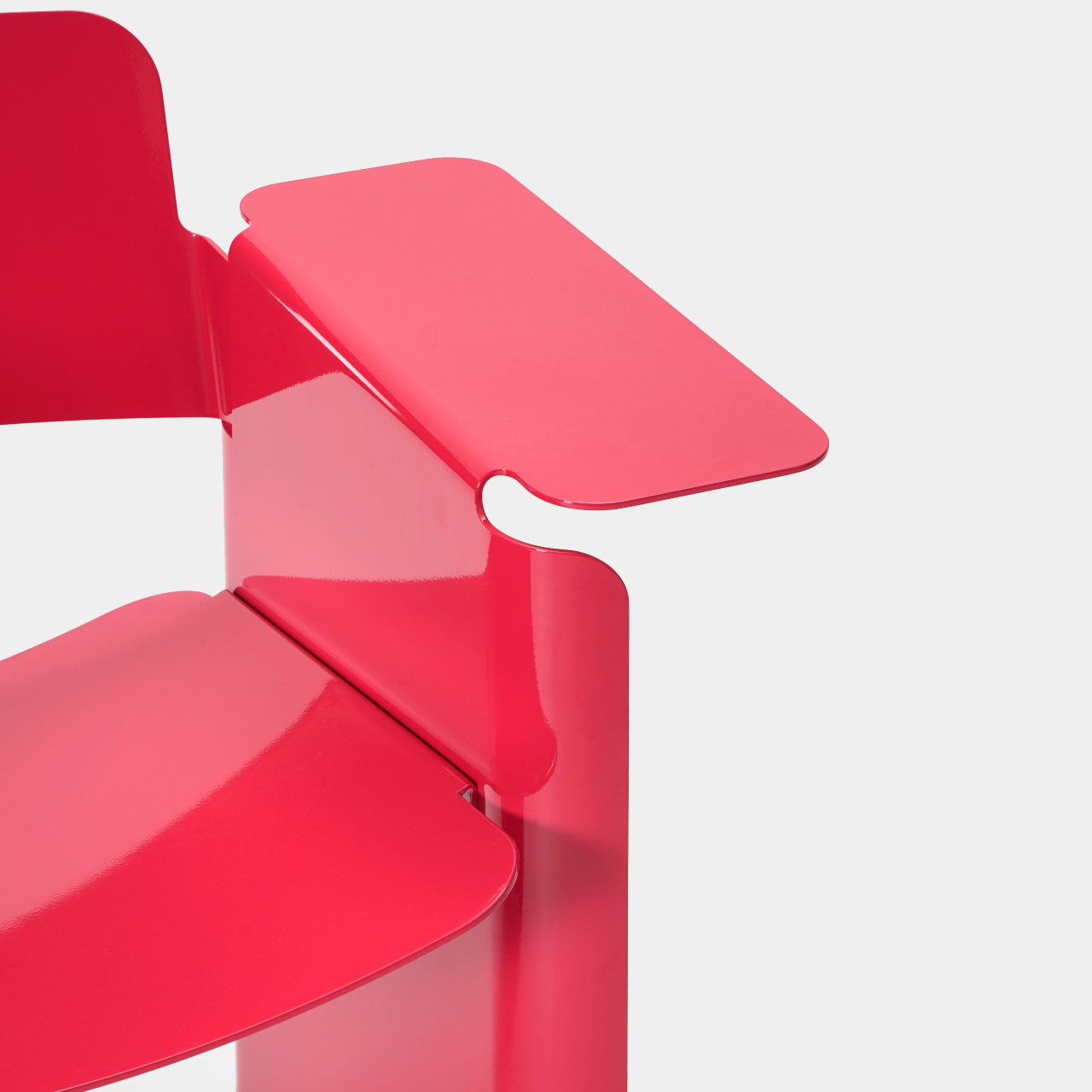
The chair’s extra-wide seat is flanked by extra-wide armrests that might seem too high for actually placing your arms on them. Instead, they function better as small side tables to hold your phone, book, or drink, though you have to be careful with the latter that you don’t accidentally knock it over with your arm. It can also hold your laptop, but it might not be comfortable much less ergonomic to use it in that position.

Perhaps the more interesting aspect of the AL13 lounge chair is its somewhat modular construction so that parts can be easily disassembled. This makes it easy to repair, replace, or recycle parts, which are just bent sheets of aluminum. Its distinctive shape and the added function of the armrests make the chair suitable for any spatial environment, whether indoors or outdoors.

That said, the rather hard and cold appearance of the chair might feel a little intimidating, especially if you’re a fan of softer and cozier chairs. There’s an option for upholstered seat cushions, but that still leaves out the back and armrests, not to mention making it unsuitable for outdoor use. It’s still an interesting brutalist design, though, and could be an inspiration for other variations that add a bit more comfort to the equation.

The post This aluminum lounge chair is built for easy repairs, not so much for comfort first appeared on Yanko Design.
Turn your sleeping area into your office with this rotating furniture

If you’re living in a small space, you’d want to have furniture that can serve multiple purposes. Modular and multi-functional designs have been dominating the scene the past few years especially during the pandemic when the line between work and private life blurred all the more. Sometimes I wake up in the morning and start working from my bed, thinking maybe I should have a desk built in there or have my desk nearer to my bed for a smooth transition.
Designer: Expand Furniture

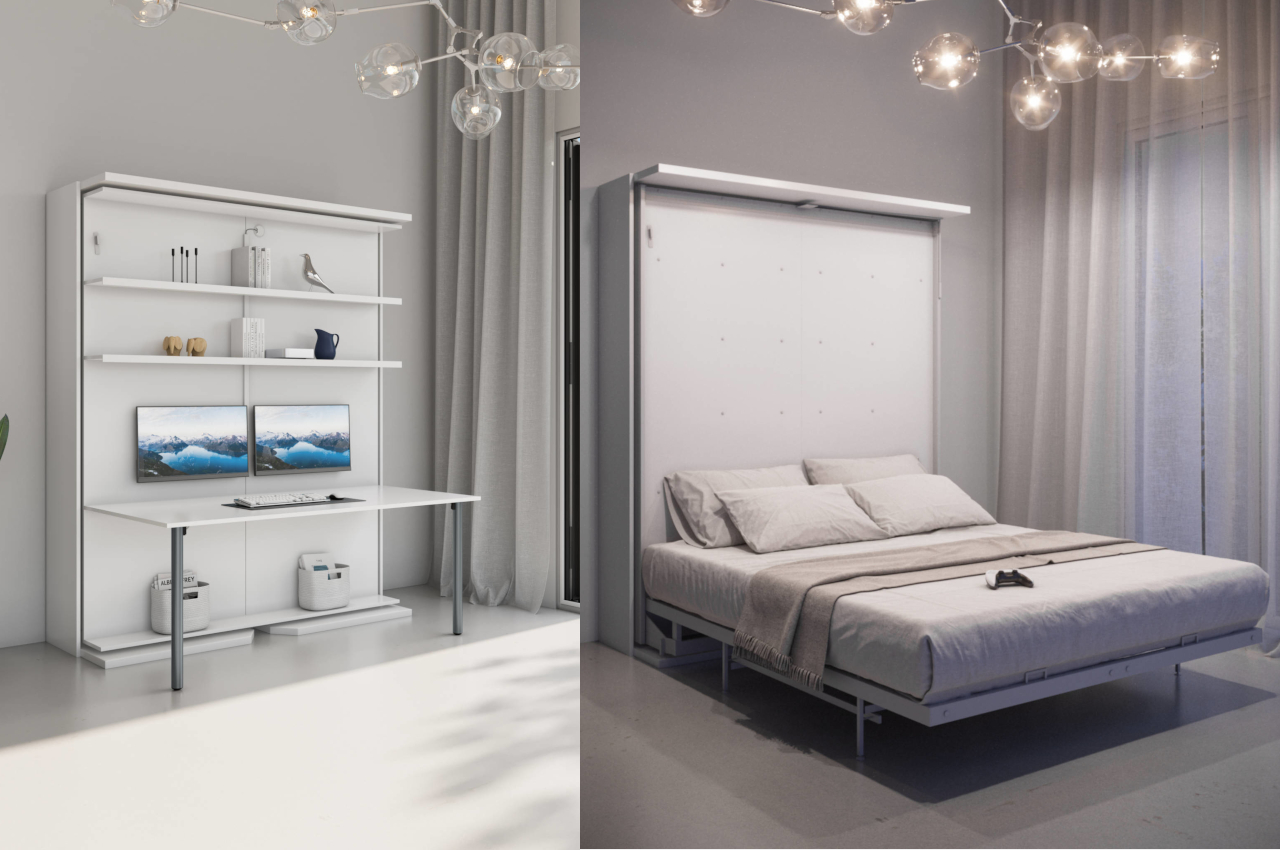
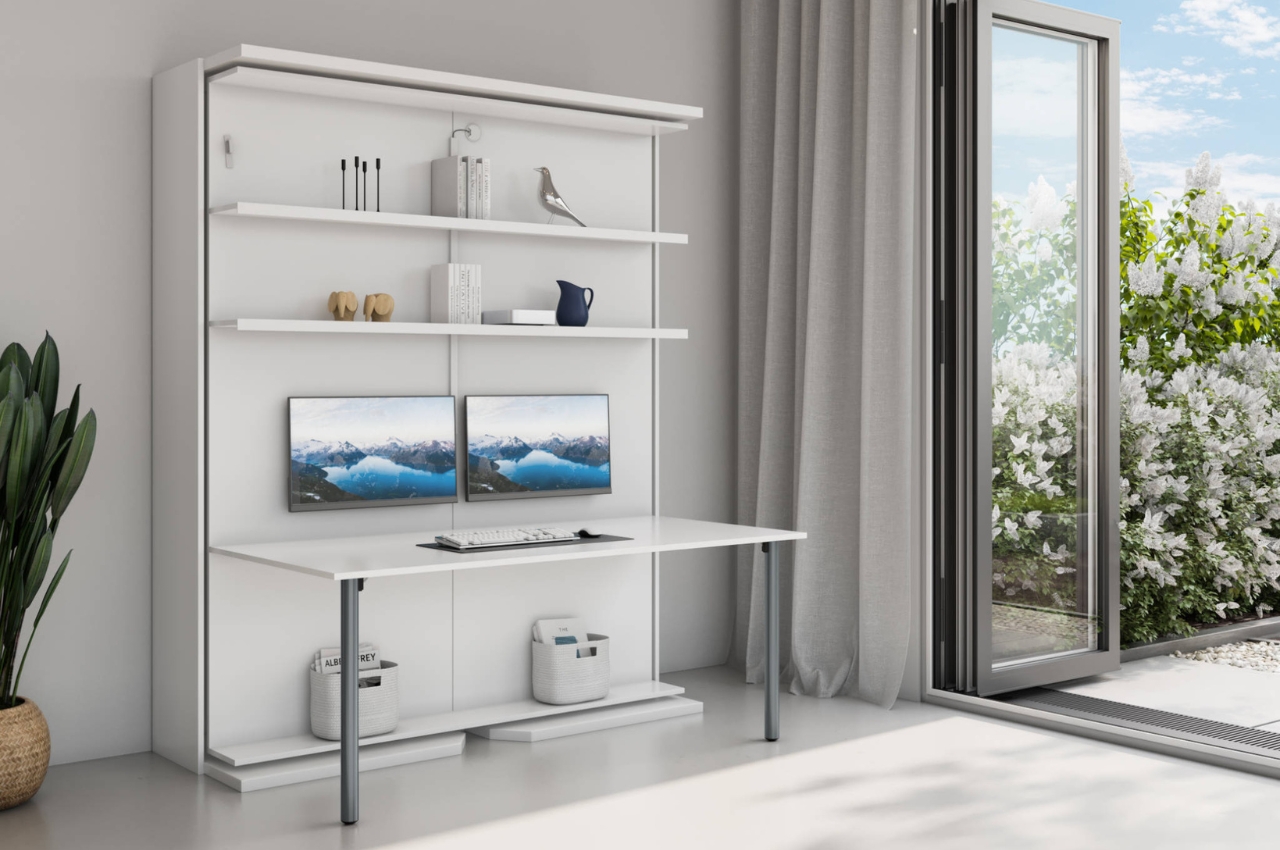
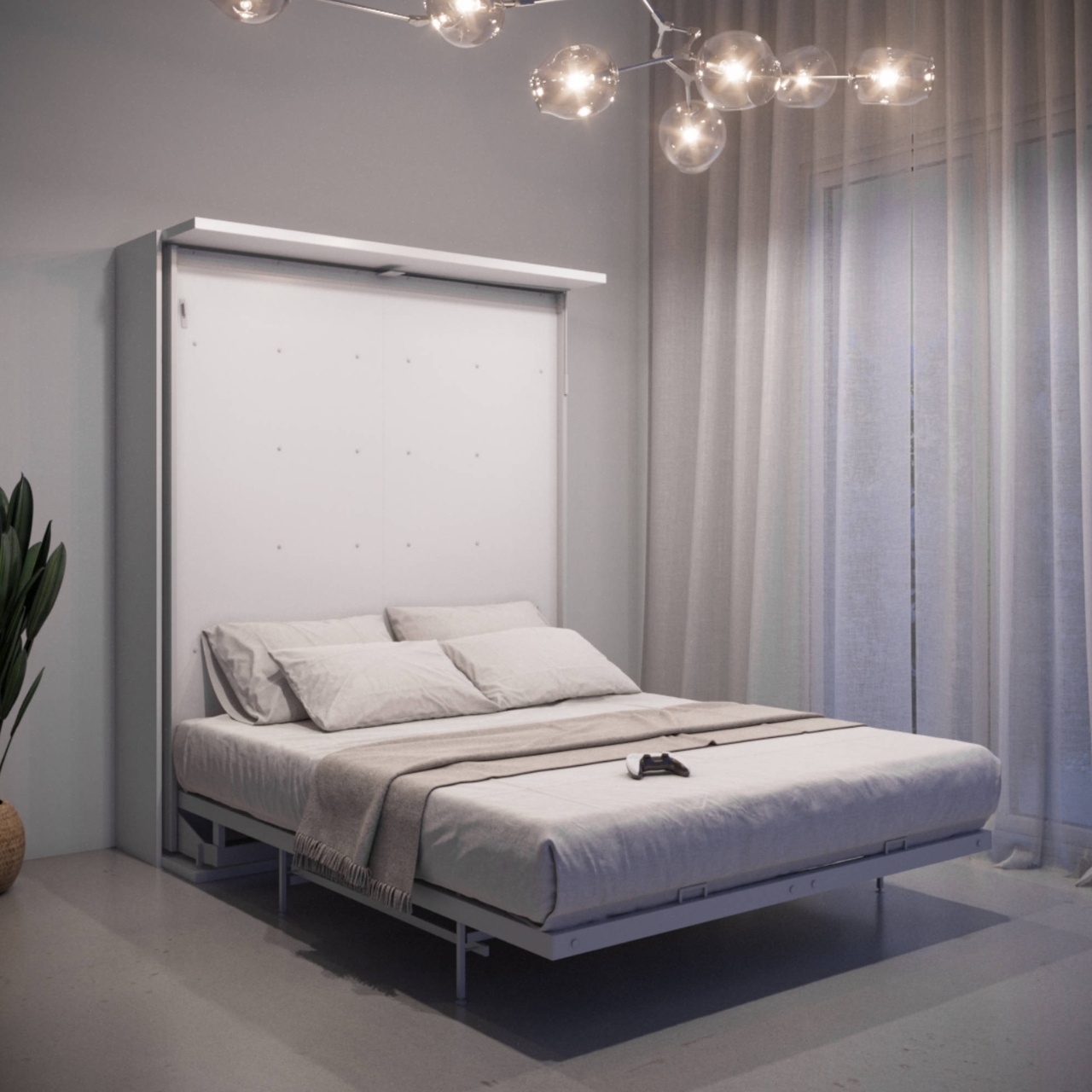
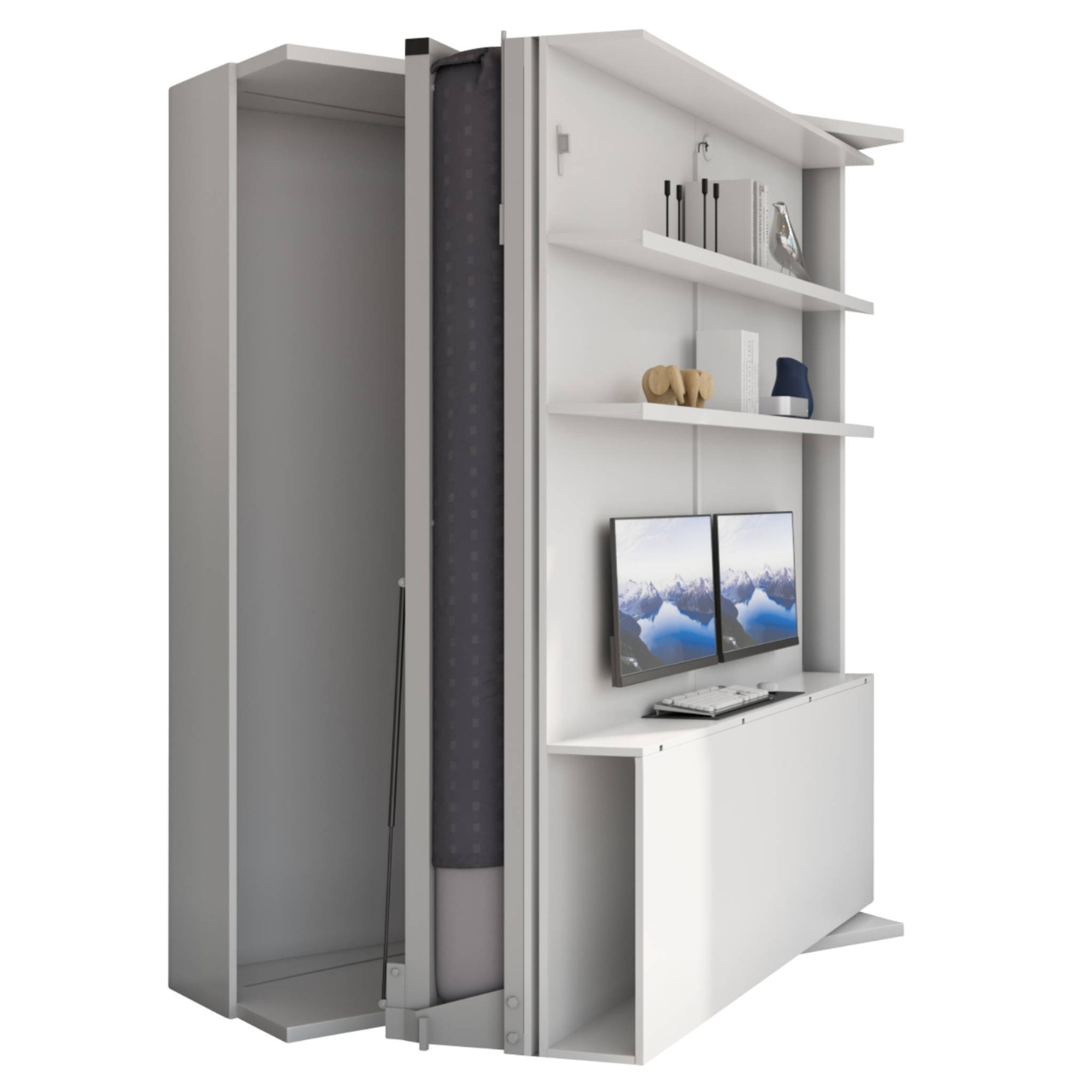
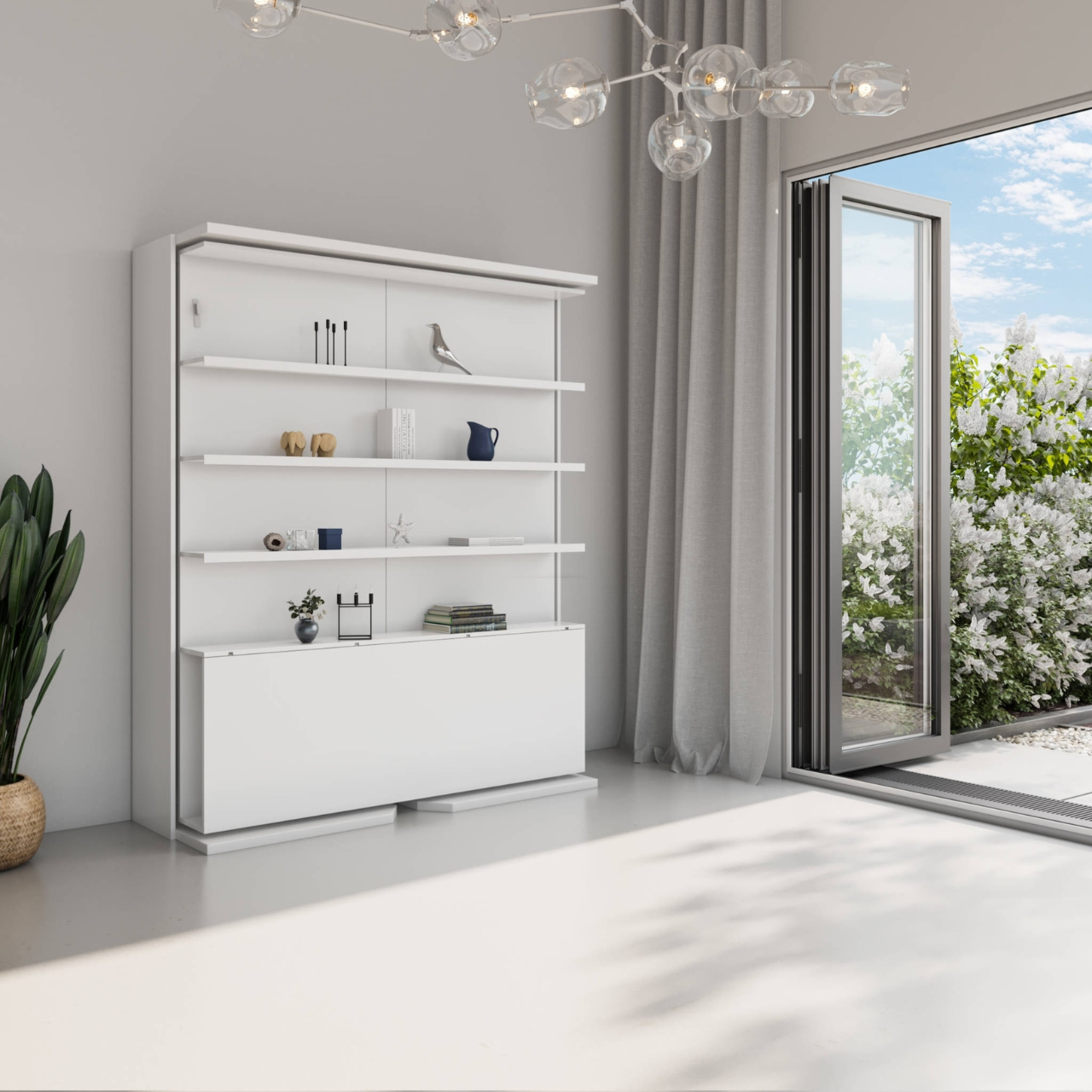
This wish comes true with the Compatto Rotating Office Murphy Bed with Desk which is literally a bed that can be turned into a working area and even a multimedia space. And when you’re ready to pack it all up at the end of the day (or the middle), you just have to fold it away, turn it all around (literally) and rest in your Murphy bed with the Queen Italian memory foam mattress.
Of course the highlight of this piece of furniture is the fact that you can quickly turn it into a workspace with a few rotations and push and pulls. The wide desk can fit in things like dual monitors, a TV screen, all-in-one iMacs, and small computers. There is also space for file storage, decorations, books, and other knick knacks. There is also adequate places and openings for all kinds of power cords and wires to power your devices.

You will have to assemble everything yourself though as this is a DIY install. But this seems to be a pretty interesting piece of furniture to have if you can manage to put everything together. I will probably have some anxious moments thinking that I will be displacing my office stuff when I’m sleeping but at least I will have a really cool bed and work station in one.

The post Turn your sleeping area into your office with this rotating furniture first appeared on Yanko Design.