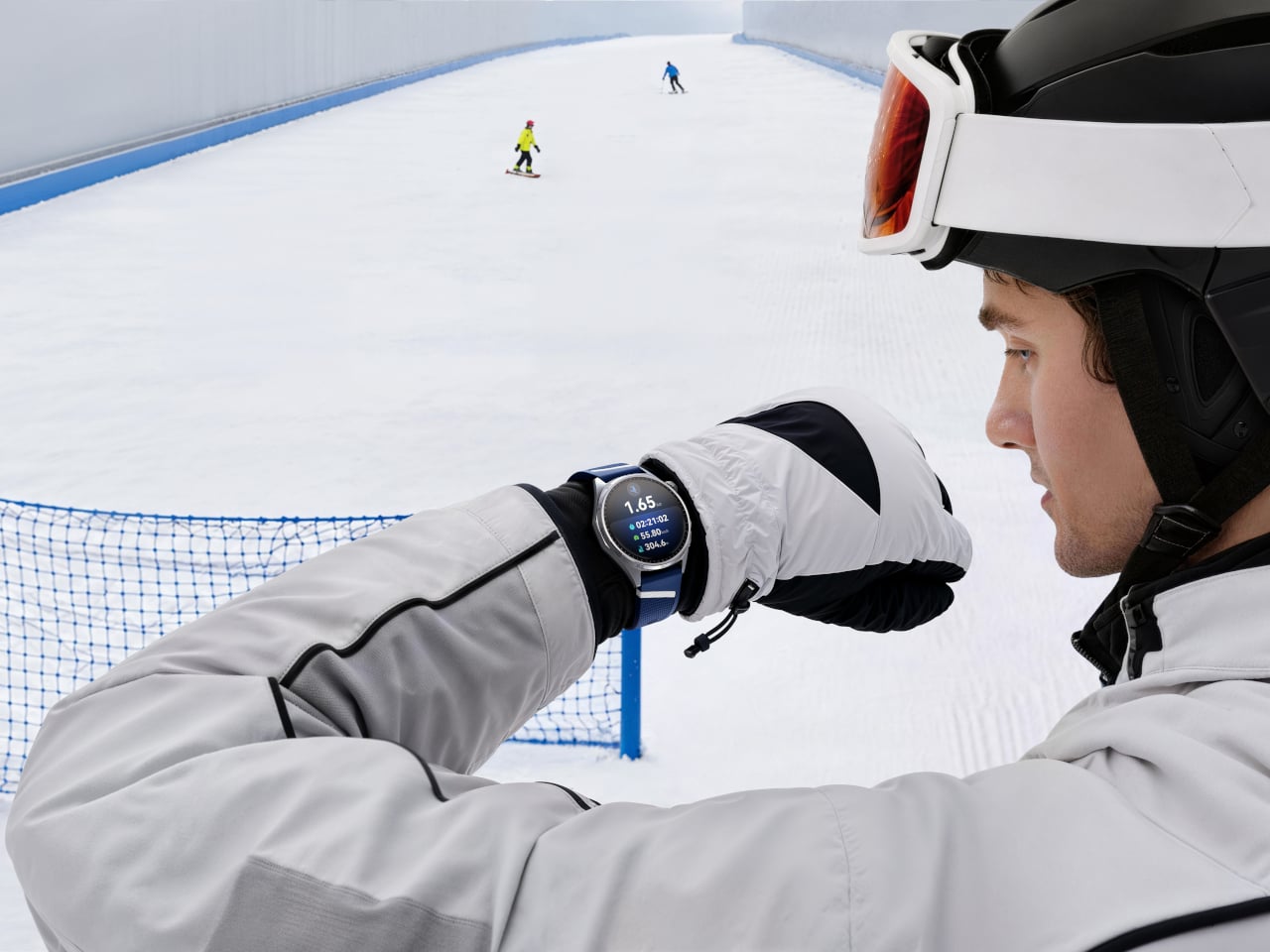
Huawei Just Made a Watch That Tracks Your Skiing Inside, Without Real Snow

Huawei built the WATCH GT 7 Series around a simple idea: that a smartwatch meant for the outdoors shouldn’t have to wait for good weather or a full calendar to be useful. Unveiled at IFA 2026, the series unites bold design, advanced outdoor capabilities, and comprehensive health monitoring to deliver a smarter, more capable wearable experience. It’s a watch built to follow someone from a ski lodge to a coastal bike route without missing a beat.

That versatility starts with fit. The WATCH GT 7 comes in 46mm and 41mm sizes across eight colorways, from a woven pink strap to sun-bright yellow silicone, while the Pro model steps up its materials with a nano-tech ceramic bezel and a titanium alloy middle frame. A fluoroelastomer strap using Huawei’s EasyCross design keeps everything secured whether someone’s typing at a desk or crouched into a bike’s drop bars.

Designer: Huawei

Where the GT 7 earns its outdoor reputation is in a new suite of snow sports features that don’t require snow to actually fall. Indoor snow sports modes remove seasonal and geographical constraints, letting a multi-sensor array detect skiing or snowboarding activity and track training time by reading posture and elevation changes, even when GPS signal disappears entirely inside an indoor slope facility.
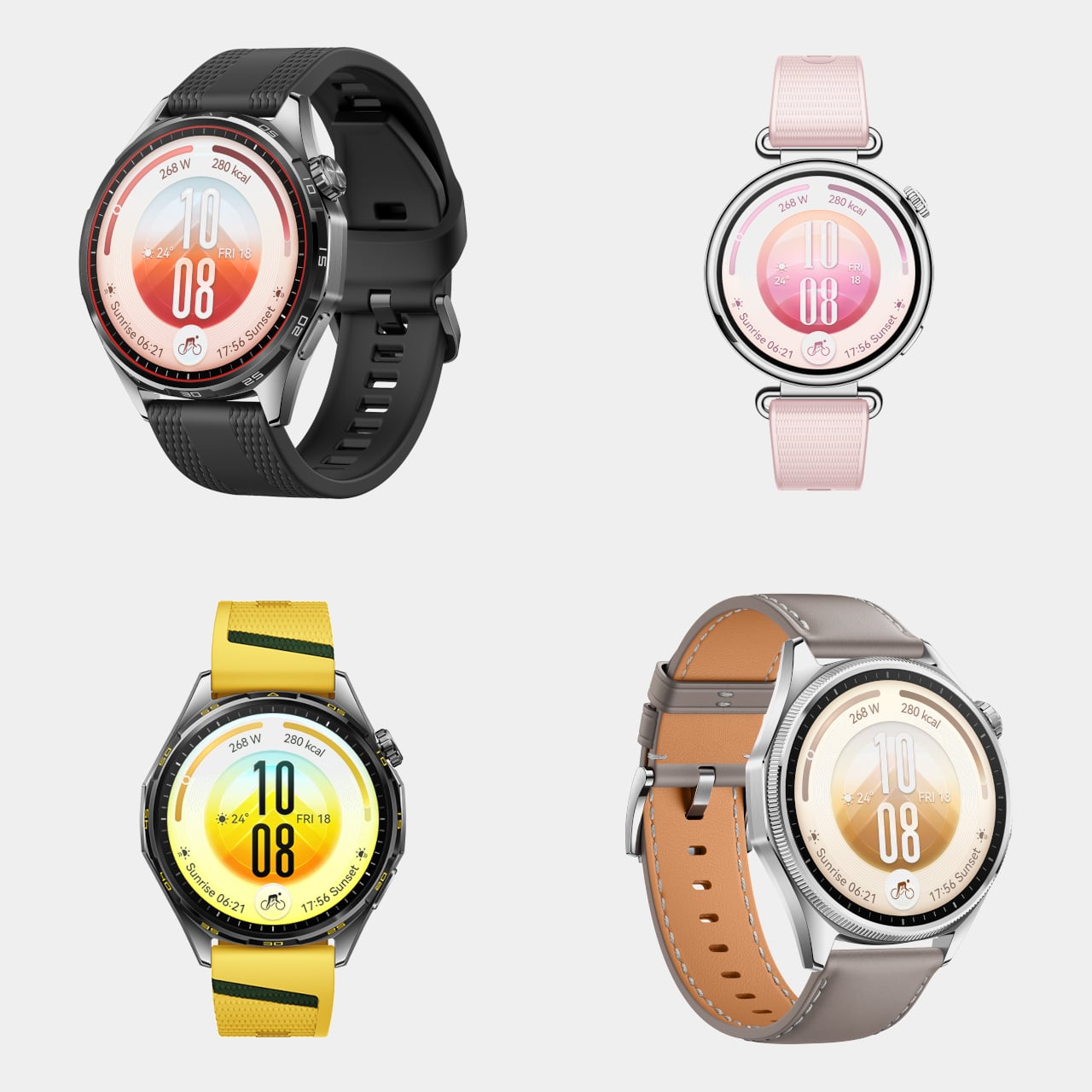
Huawei Watch GT 7

Outdoors, that same intelligence sharpens further. Riders get access to maps for more than 3,000 ski resorts worldwide, downloaded through the Huawei Health app and synced instantly, useful for a beginner trying to avoid an accidental black diamond or an expert hunting for a faster line down a familiar run. A new Turn Detection feature counts short and long turns by calculating turning radius, while G-Force detection measures the centrifugal pull of a sharp carve.
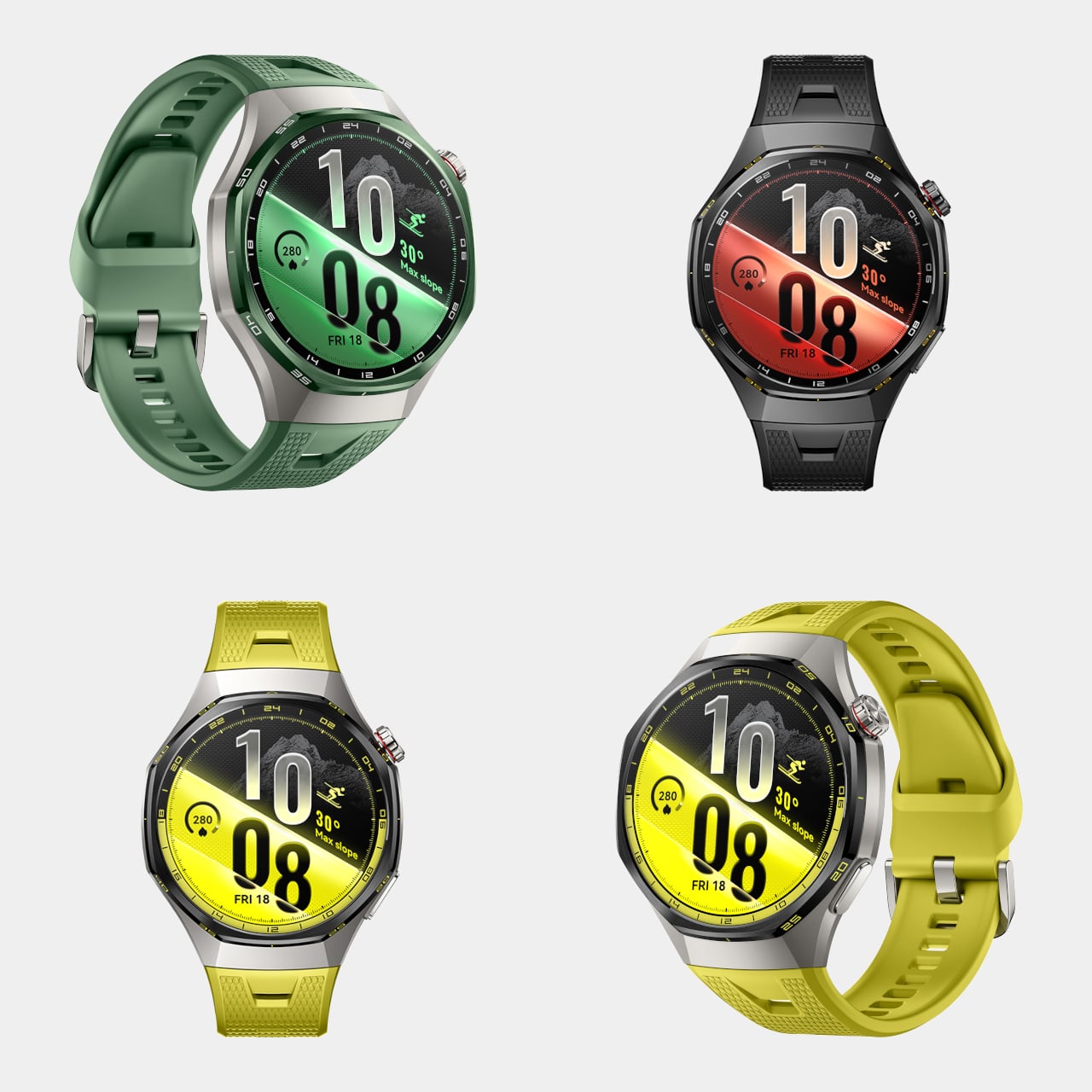
Huawei Watch GT 7 Pro

Team-Up rounds out the slope-focused features, letting a group track each other’s locations and performance metrics in real time, so nobody has to guess where the rest of the party ended up after a run splits everyone apart. It’s a detail built less for solo athletes chasing a personal record and more for families or friend groups navigating a mountain together.

Cycling gets its own dedicated toolkit too. Climb Planning generates a profile of upcoming elevation gains before a ride even starts, while Climb Broadcast reports live gradient and remaining distance mid-ascent. Sharp Turn Alerts step in with haptic and voice warnings if someone barrels into a bend too fast, a small addition that could matter far more than its size suggests on a descent like the coastal road these watches were clearly built to handle.

Health tracking ties all that activity back into daily life through an upgraded Physical Readiness score, blending sleep quality, heart rate variability, emotion, and calories burned into a five-level recovery snapshot each morning. Rather than dumping raw numbers on a screen, Huawei frames the data as a quick read before the day even begins, useful whether someone’s deciding to push hard or hold back.

Battery life backs up all that tracking, with high-silicon stacked batteries pushing the GT 7 Pro and 46mm models to as long as 21 days per charge under light use. Add contactless payments through Curve Pay and compatibility across iOS and Android, and the GT 7 starts looking less like a fitness tracker and more like a travel companion that happens to count steps.

Pricing starts at £279.99 (around $378) for the WATCH GT 7, climbing to £379.99 (around $513) for the Pro model, positioning the series comfortably below premium sports watches from rival brands. Between the ceramic finishes, the resort maps, and the sheer range of conditions it’s built to track, Huawei’s newest GT model reads like a watch designed for people who treat a change in season as an excuse to keep moving.

The post Huawei Just Made a Watch That Tracks Your Skiing Inside, Without Real Snow first appeared on Yanko Design.
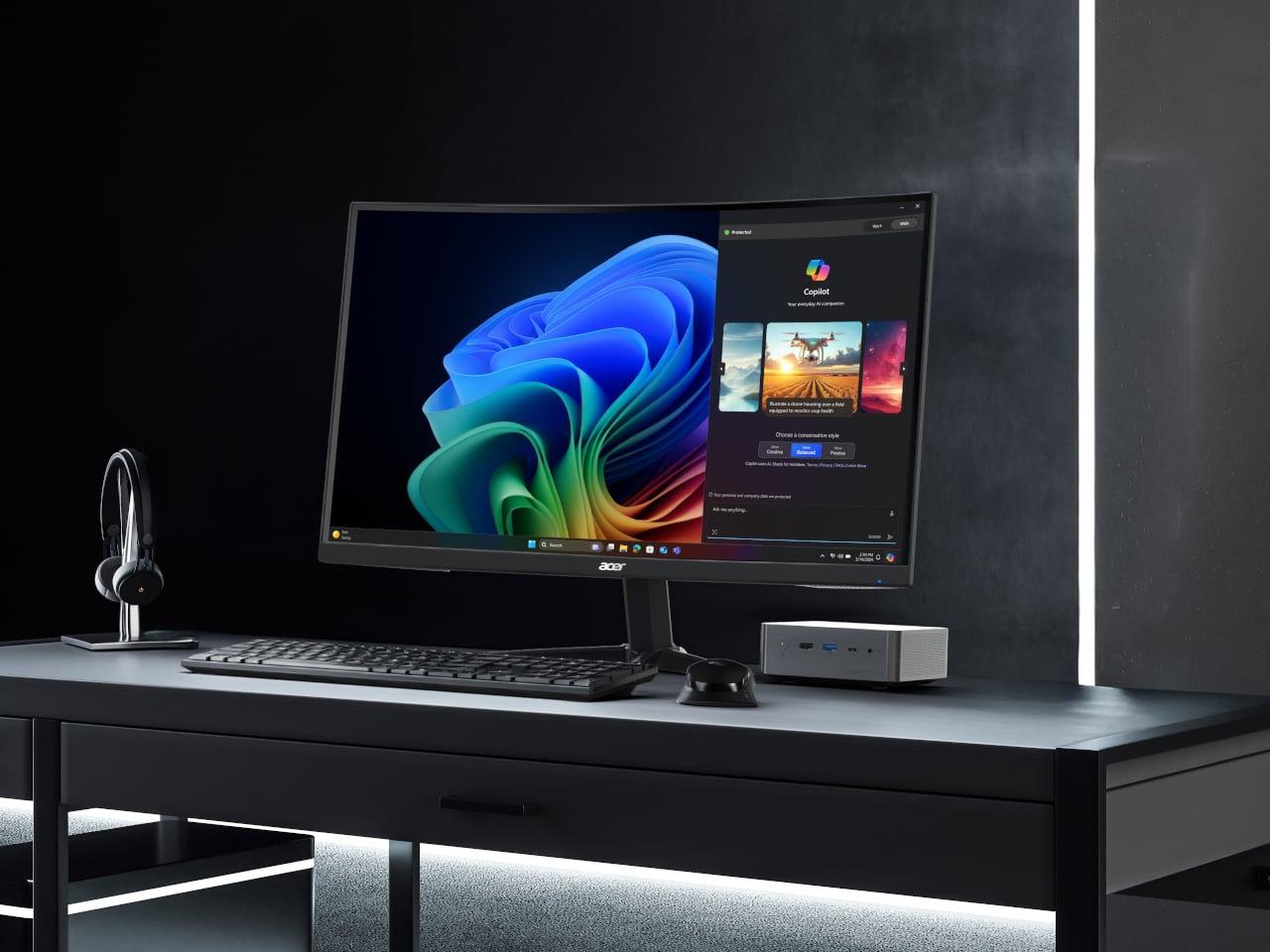
Acer Shrank Server-Level AI Into Two Mini Desktops at IFA 2026

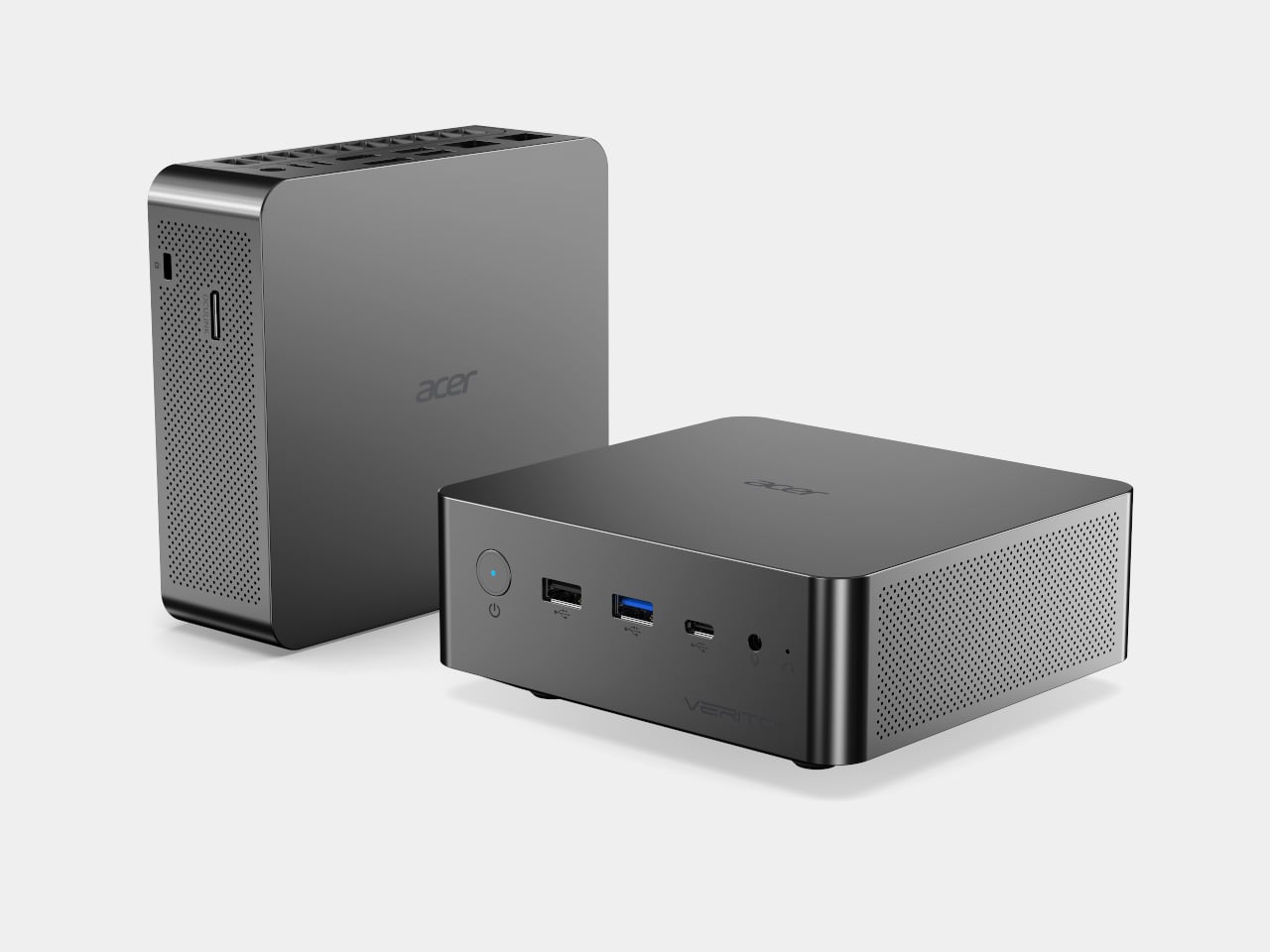
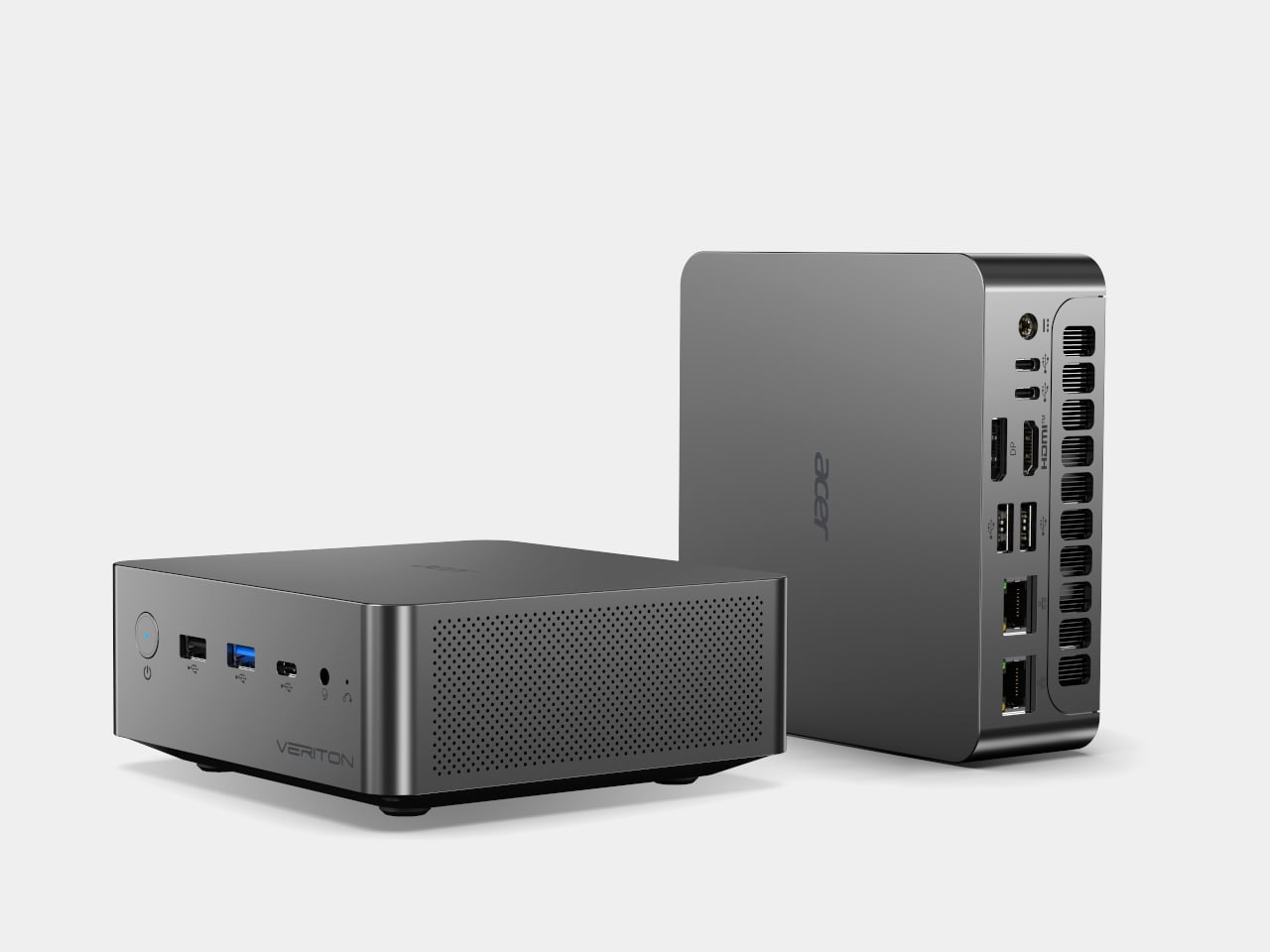
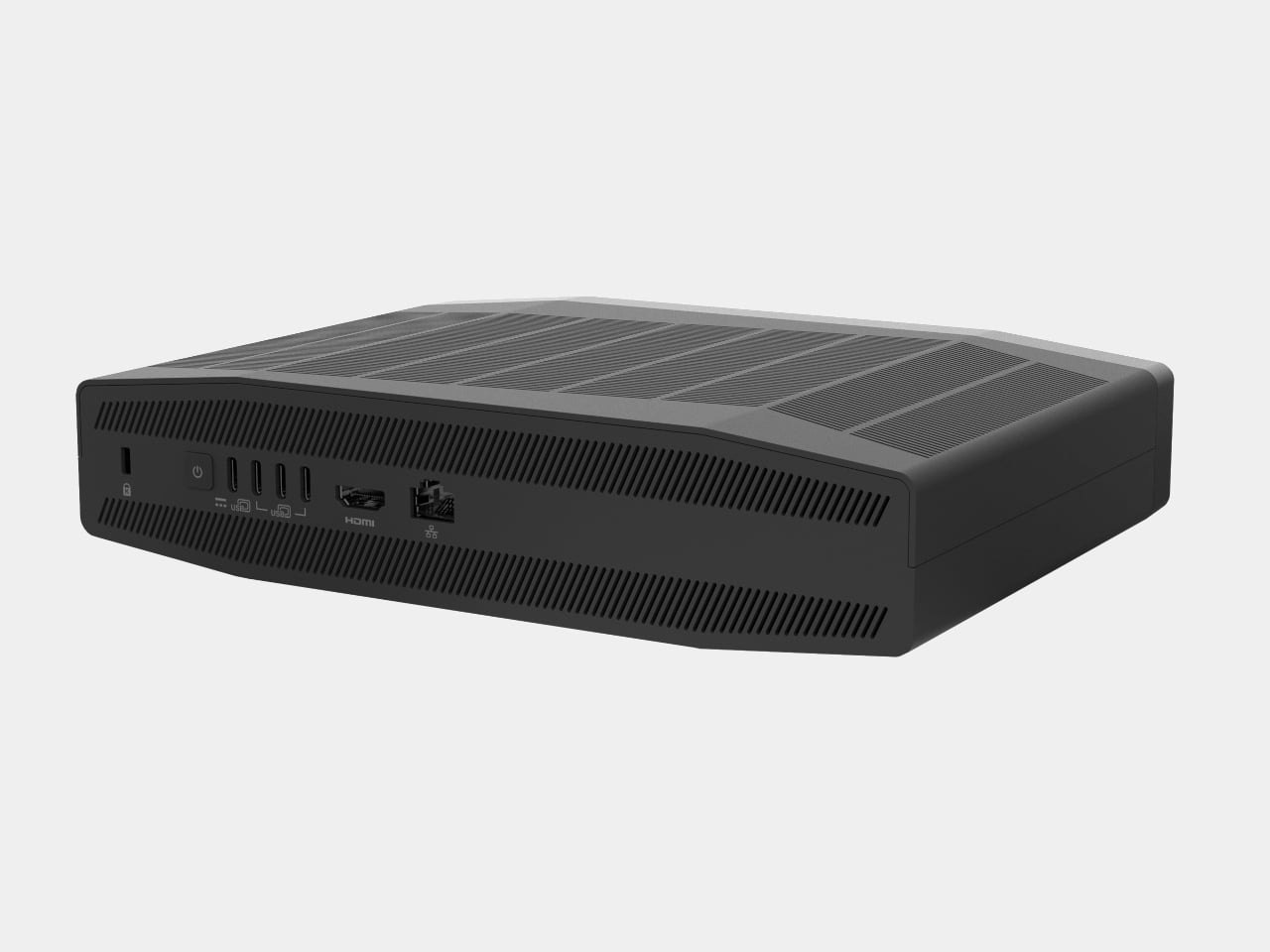
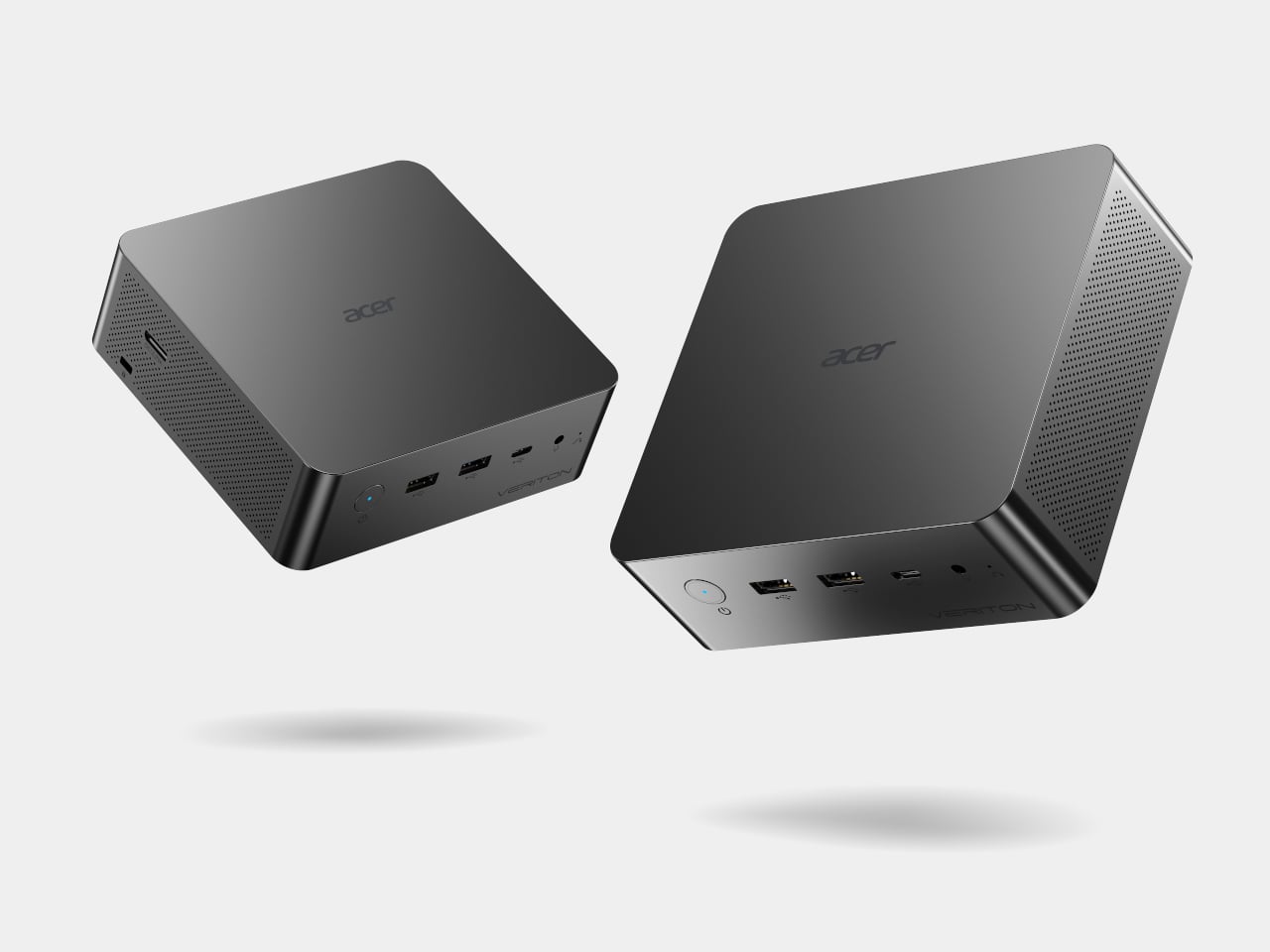
Acer used IFA 2026 to prove that serious AI horsepower doesn’t need a tower case anymore. The company introduced two mini desktops built for running AI agents locally instead of leaning on the cloud: the shipping Veriton RI110 AI Mini Workstation and a striking concept called the Acer SFF RTX Spark design. Both squeeze desktop-class compute into shells small enough to disappear on a shelf.

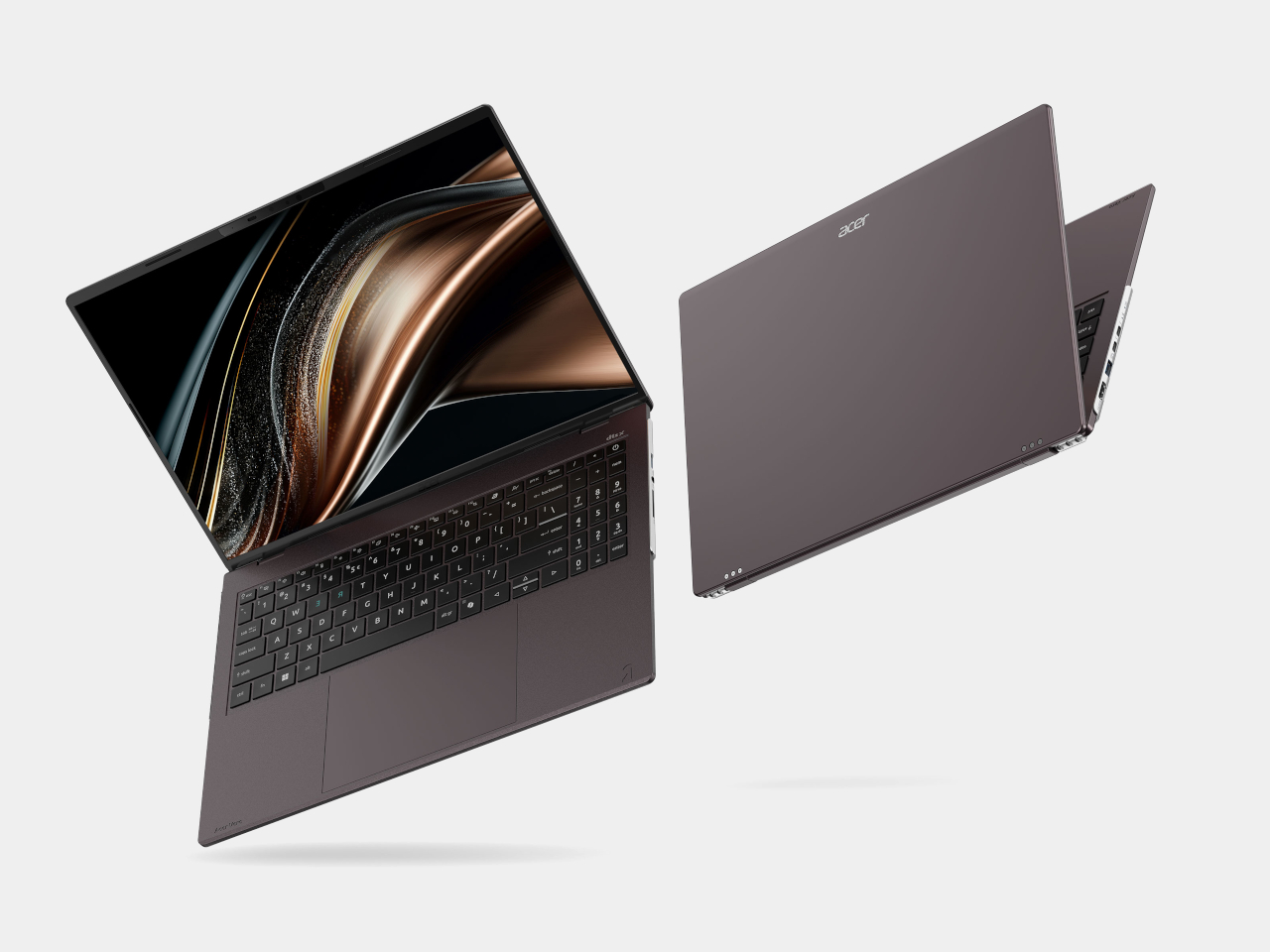
The Veriton RI110 fits an Intel Core Ultra X7 processor 358H and Intel Arc B390 graphics into a chassis measuring just 5.45 by 5.17 by 2.05 inches and weighing about 1.39 lbs. Despite that footprint, it supports AI models with up to 120 billion parameters, backed by up to 96 GB of memory and 4 TB of SSD storage, plenty for demanding local workloads.

Designer: Acer

That power feeds directly into Acer Qubi Claw, a new agentic AI assistant designed to run local workflows inside an isolated sandbox so sensitive data never has to leave the machine. Installation takes one click, and its starting skill set already covers in-depth online research, travel itinerary planning, and transcribing or translating audio into text notes, all schedulable on autonomous routines that work quietly in the background.

Acer also builds in OCuLink connectivity, a dedicated PCIe 4.0 x4 interface delivering up to 64 Gbps of bandwidth for connecting external GPUs or high-speed NVMe storage. That link skips the extra processing overhead of traditional expansion methods, so creators and developers can bolt on desktop-class rendering power only when a project demands it, then disconnect it again without carrying that bulk around every day.

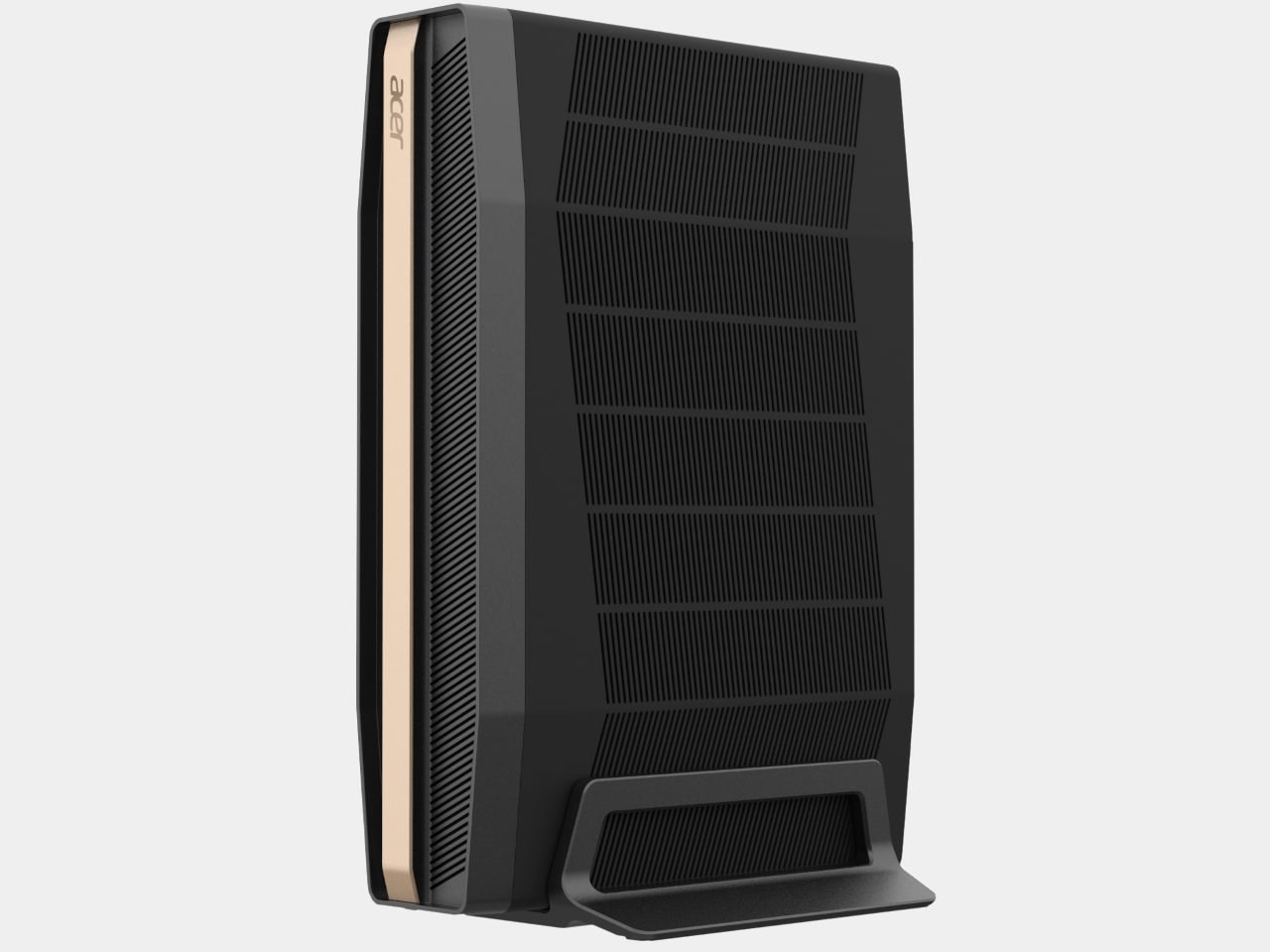
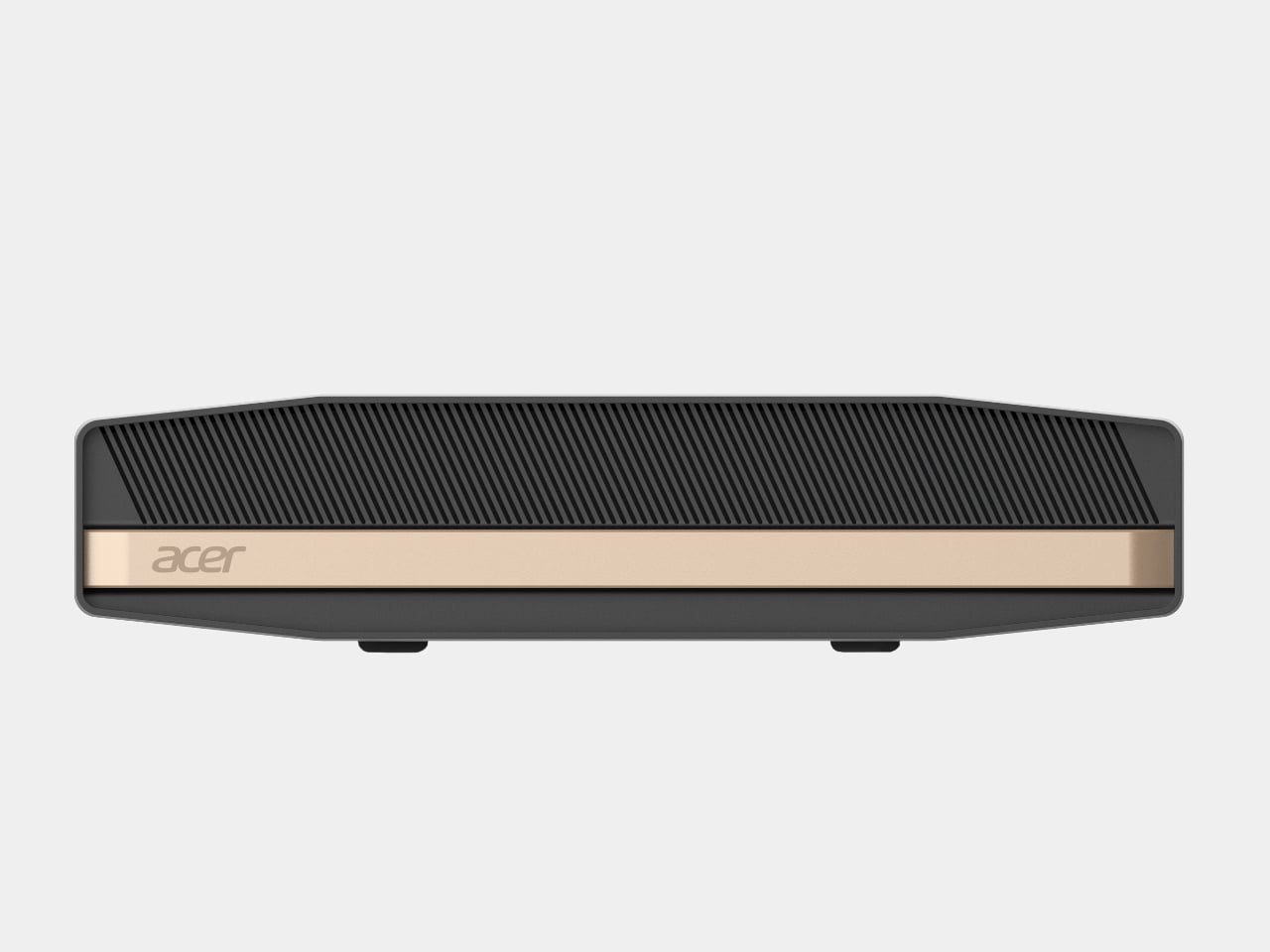
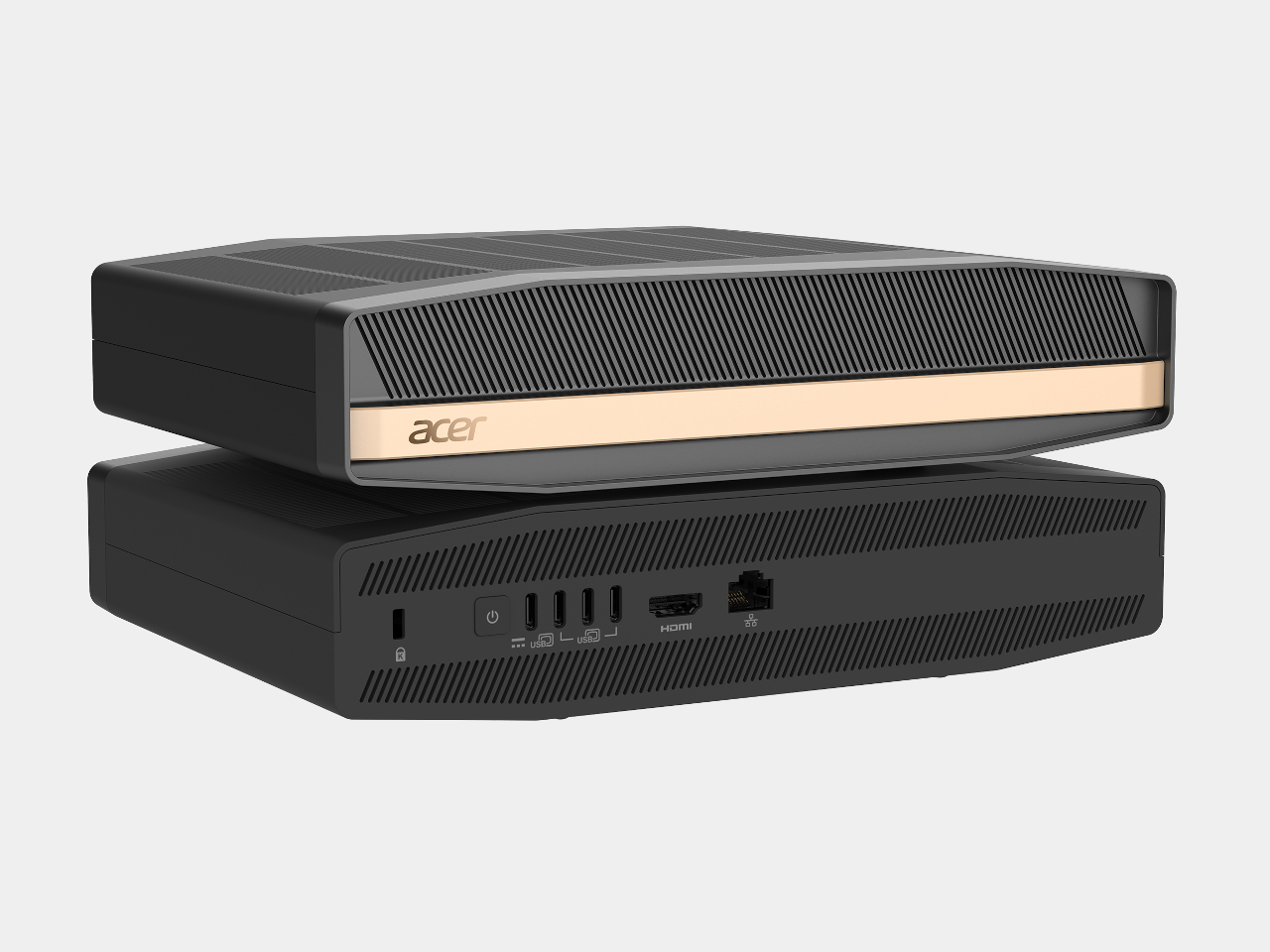
Standing beside it, the Acer SFF RTX Spark design takes a different shape entirely, built around NVIDIA’s RTX Spark superchip rather than Intel silicon. Vented panels wrap a narrow vertical shell accented with a warm metallic stripe, giving the design a presence that reads more like a piece of audio equipment than a workstation, while a fold-out stand lets it stand upright on a desk instead of lying flat.

Underneath that shell, Acer packs up to a 6,144-core Blackwell RTX GPU, up to a 20-core NVIDIA Grace CPU, up to 128 GB of unified memory, and up to 1 petaflop of AI compute, numbers usually reserved for server racks. Paired with NVIDIA’s full-stack AI platform and its complete suite of RTX technologies, the design targets creators, developers, and gamers alike.

Acer hasn’t confirmed pricing or a release window for the SFF RTX Spark design, while the Veriton RI110 arrives in North America during the fourth quarter of 2026 and reaches EMEA in the first quarter of 2027. Together, the two machines make a case that agentic AI doesn’t need a data center to feel powerful, just a well-engineered box small enough to tuck beside a monitor and forget about.

The post Acer Shrank Server-Level AI Into Two Mini Desktops at IFA 2026 first appeared on Yanko Design.
Acer’s IFA 2026 Spans Paper-Like Monitors to a Rubber Duck Projector

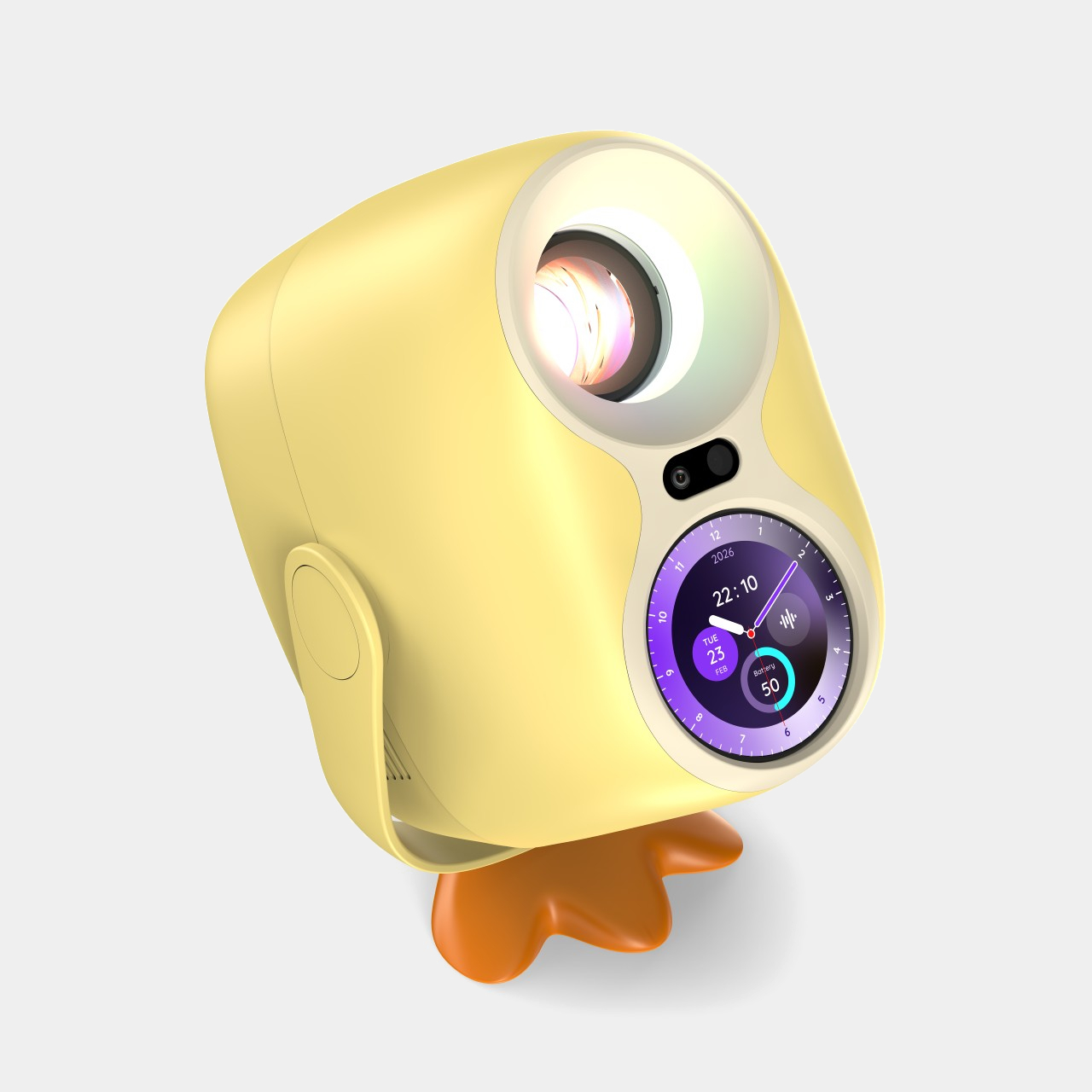
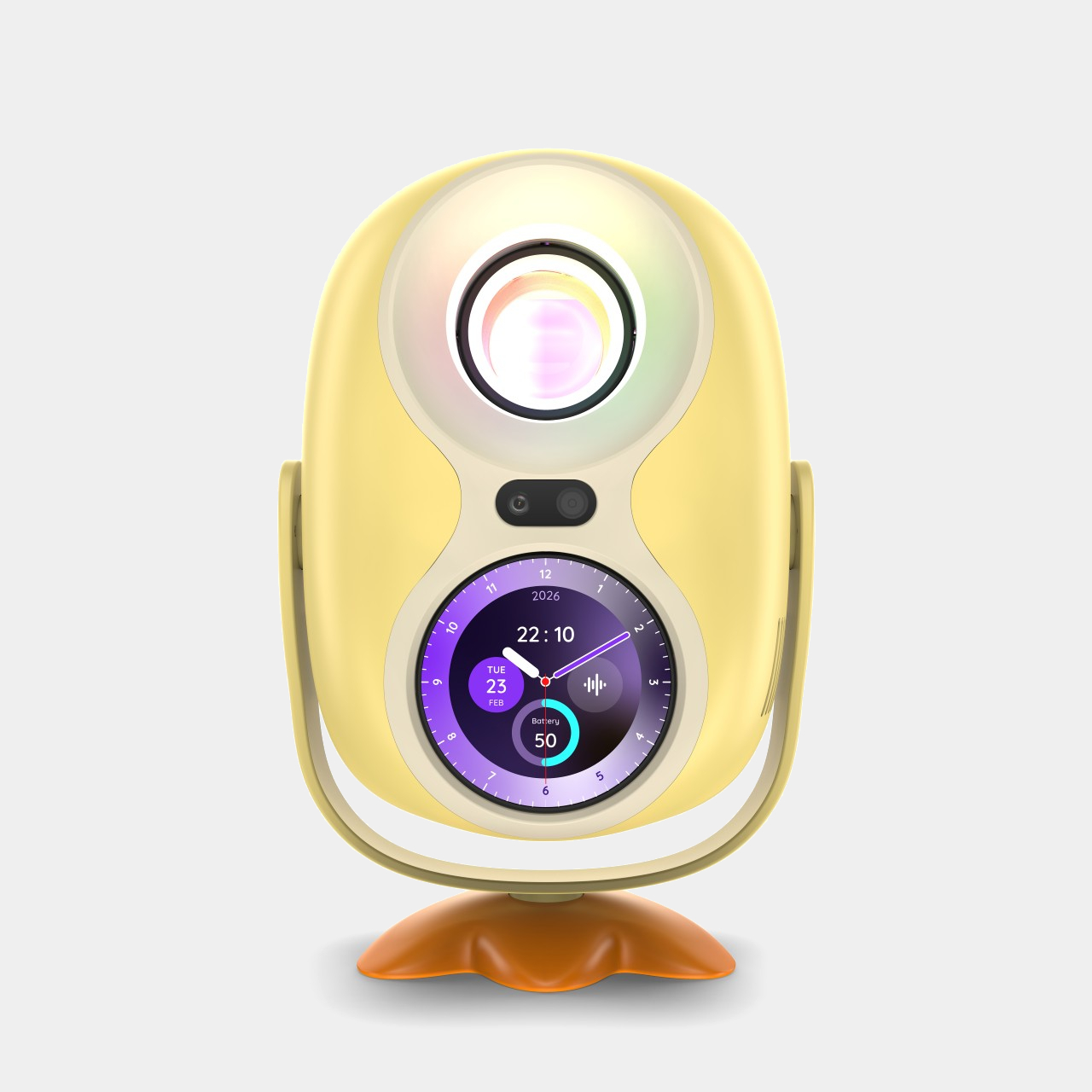
Acer’s IFA 2026 lineup plays out like a full day mapped across screens, starting with quiet focus and ending with a projector shaped like a rubber duck. Instead of pushing one flashy hero device, the company spread its design energy across seven products, each solving a specific friction point, from eye strain to cramped desks to tablets built for daily wear. Together, they map how Acer sees screen time evolving.

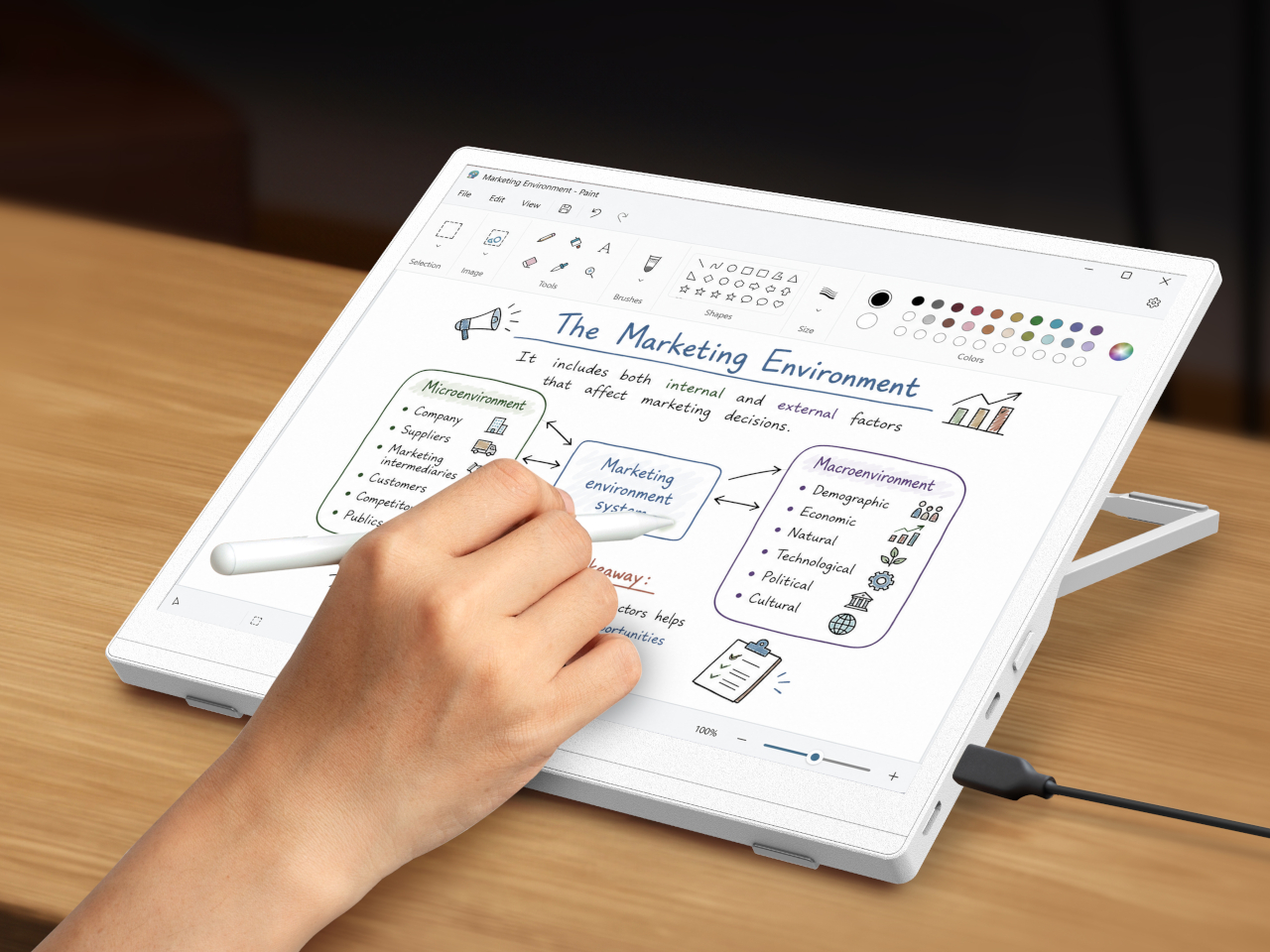
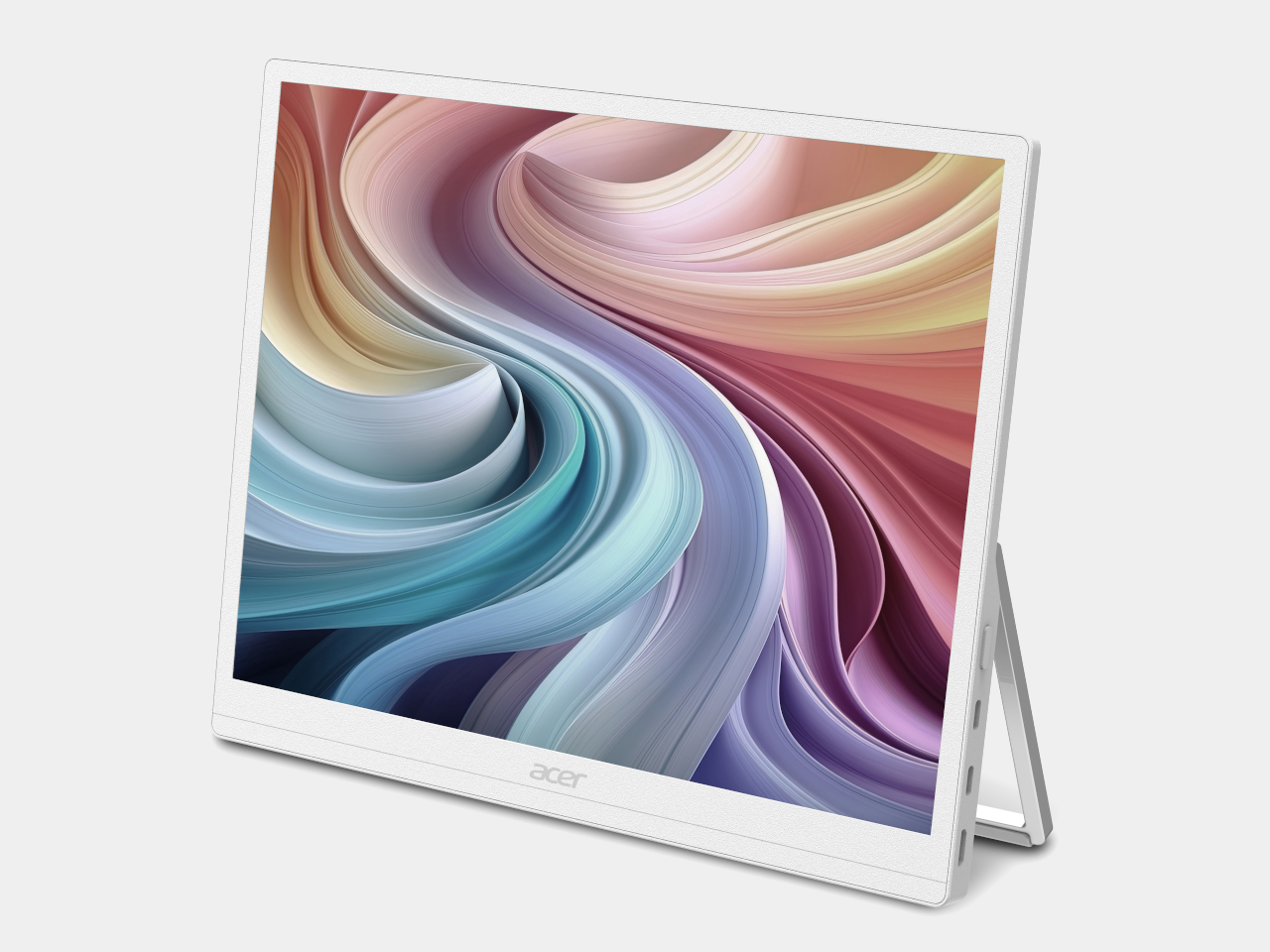
The Acer EP130K opens that story with a monitor built for people who’d rather not stare at a glowing backlight all day. Its ePaper panel mimics the natural feel of paper with glare-free use, aimed at professionals doing deep work, avid readers, and anyone working outdoors. Resolution climbs to 3200×2400 in black-and-white mode, and touch support lets a stylus or finger write directly on the display.

Designer: Acer

What makes the EP130K linger past a single session is its bi-stability, letting the image stay locked in place even after every power source disconnects. A single USB-C cable handles power delivery from a laptop or tablet, so the whole setup travels light. It’s less a display and more a portable reading nook that happens to sync with a work laptop whenever needed.

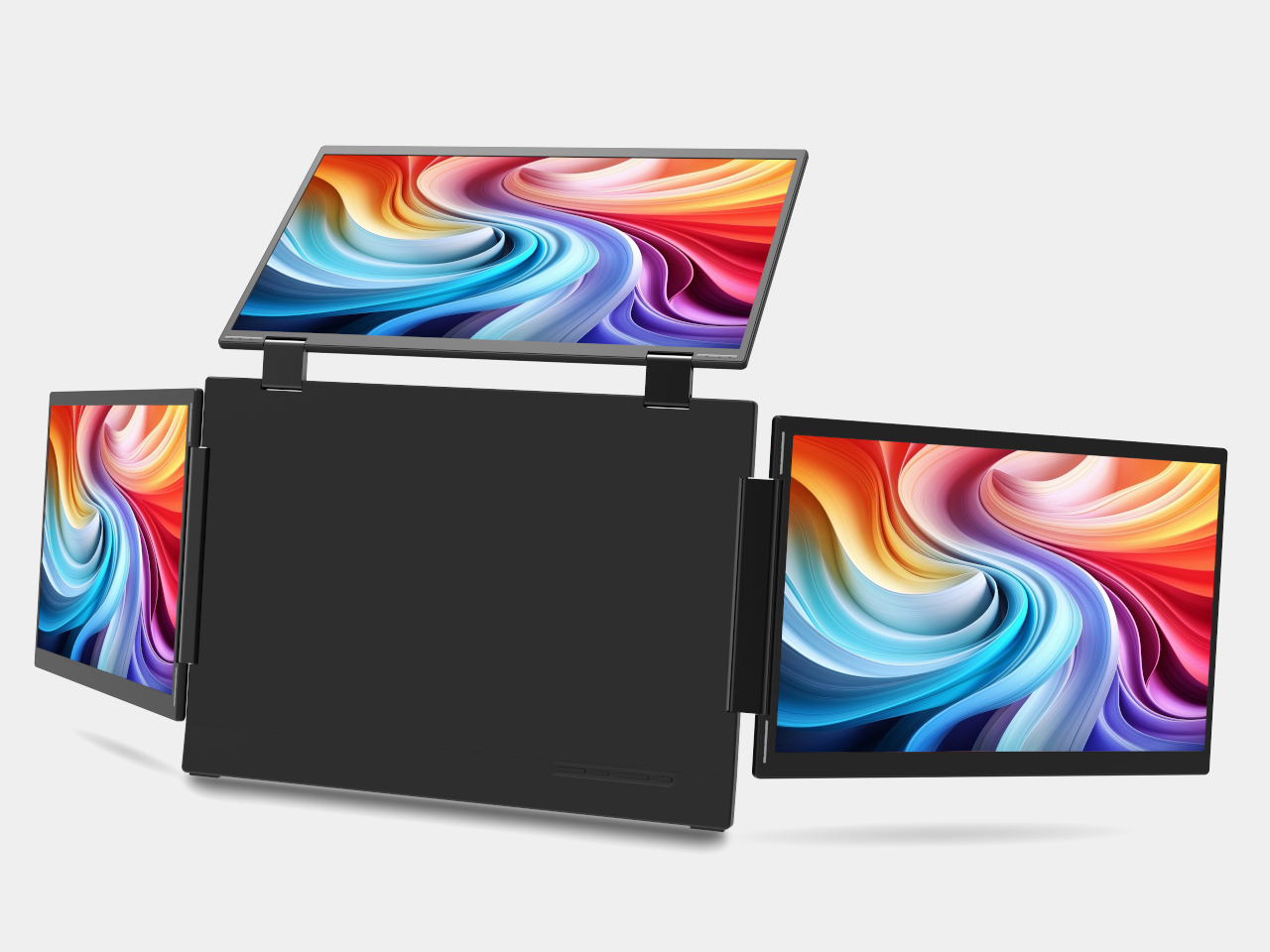
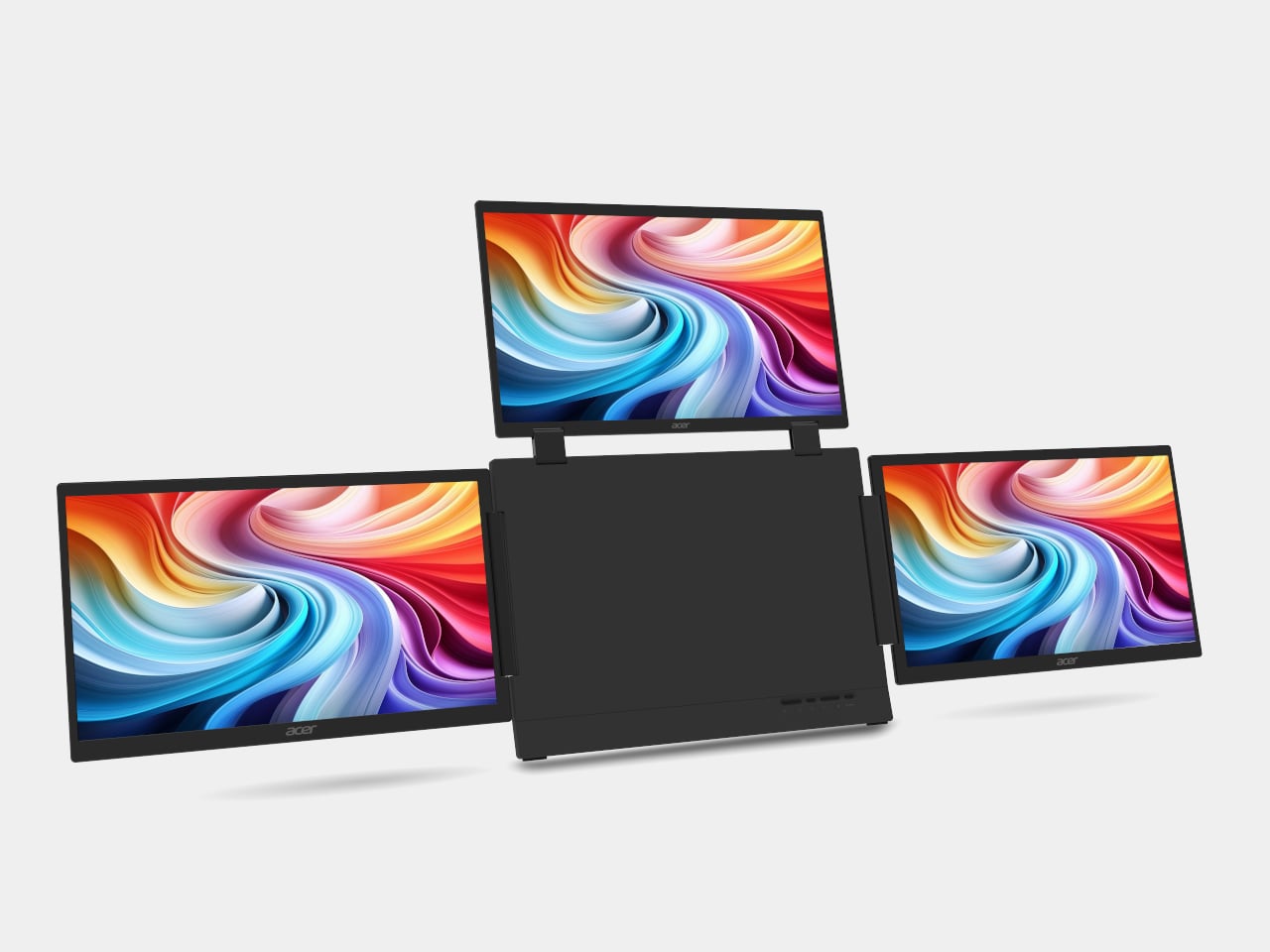
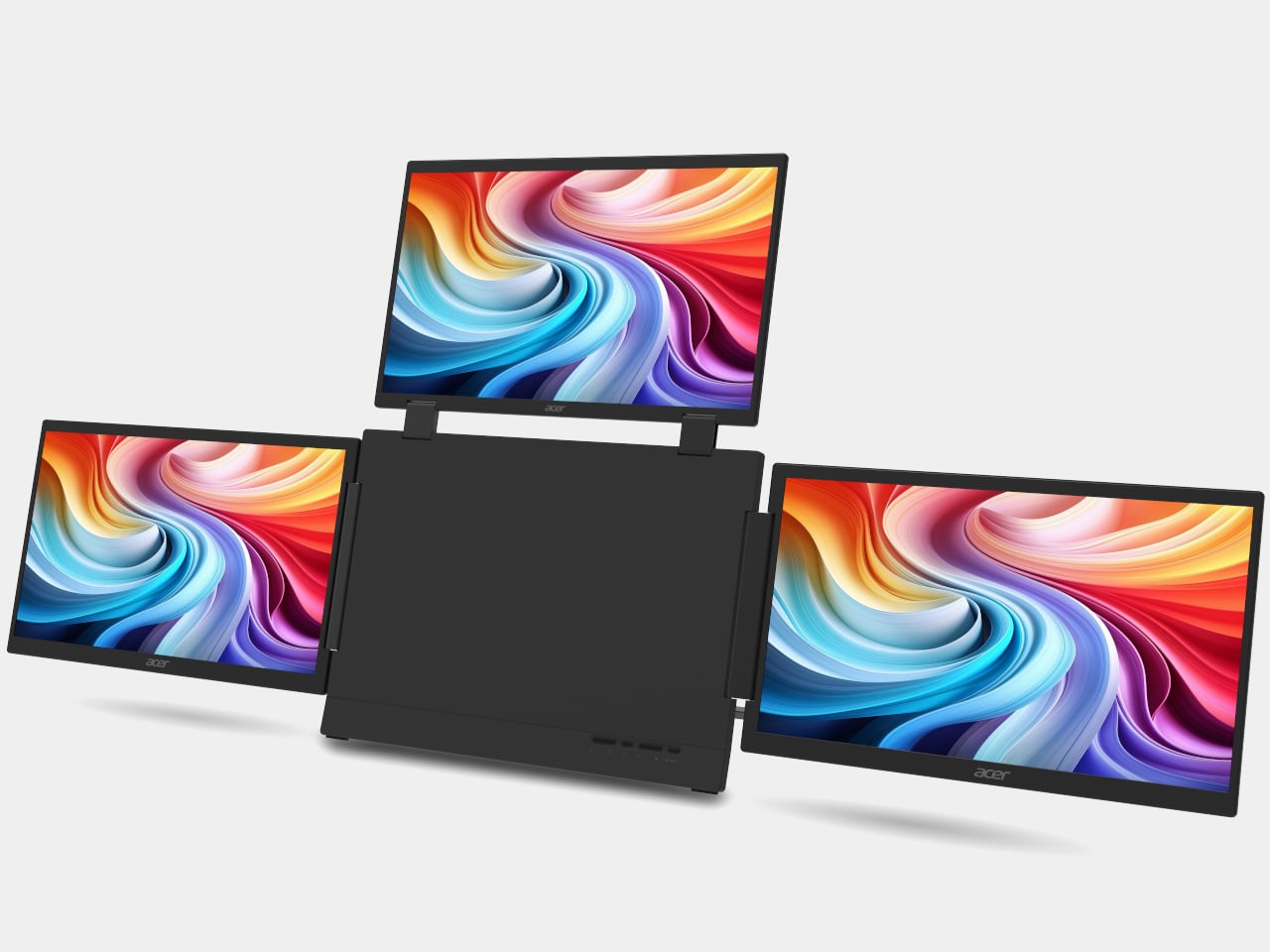
From single-screen focus, Acer scales up to the Acer PD163Q P3, a triple-screen extender built for hybrid professionals juggling more browser tabs than one laptop lid can hold. Three 15.6-inch FHD panels fold out from a central hub, adding up to four total displays once paired with a laptop screen. Each panel runs independently, supporting extend or clone modes so a spreadsheet, a call, and reference notes each claim space.

A single USB-C connection keeps cable clutter to a minimum, while uniform brightness controls across all three panels mean no single screen fights for attention against the others. It’s the kind of setup that turns a coffee shop table or hotel desk into something resembling a proper workstation, without requiring a suitcase full of dongles or a second trip back to the office for a bigger screen.

Acer prices both productivity tools to slot easily into a home office budget. The EP130K starts at $749 when it arrives in North America during the first quarter of 2027, with EMEA and Australia following at comparable rates. The PD163Q P3 comes in considerably lower at $349, making a three-screen upgrade almost as affordable as a single external monitor from a few years back.

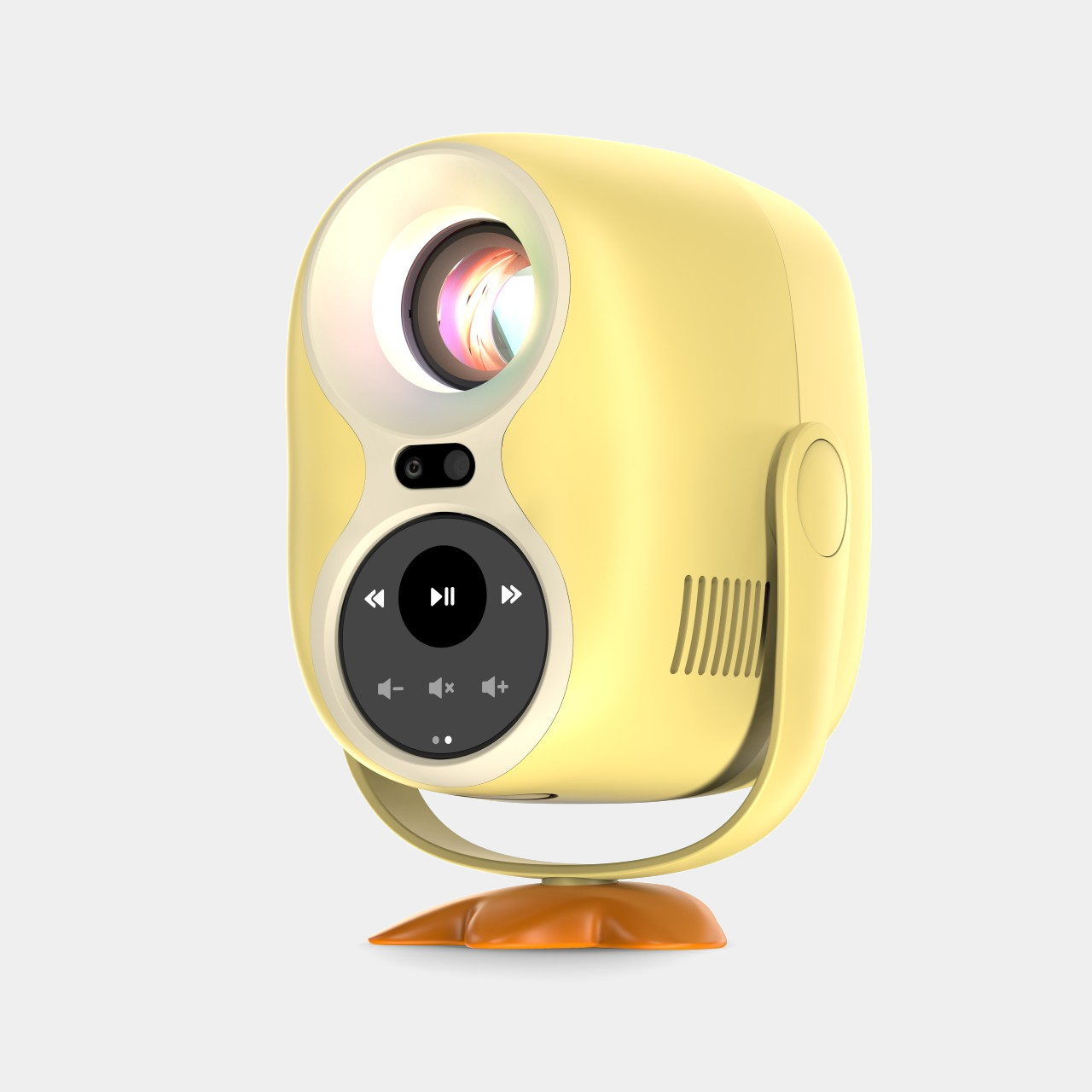
Once work wraps up, the Acer C350e projector picks up where productivity leaves off. Acer built it to double as an AI-powered companion rather than a device that only wakes up during movie night. Its detachable AI Badge doubles as a remote control and stays active between screenings, cycling through personal photos, useful widgets, and Google Gemini-powered interactions even when nothing is being projected onto a wall.

When it is running, the C350e pushes Full HD resolution through an 8,000-lumen LED light source, with 360-degree rotation and 120-degree tilting that make setup painless in tight apartments or backyard movie nights alike. Auto focus and 4-corner correction handle the fussy geometry automatically, while a 30,000-hour lamp life means it’ll outlast several rounds of furniture rearranging before finally needing a replacement bulb.

Pricing follows the same accessible logic. Acer lists the C350e at €199 (around $215) for EMEA buyers, undercutting most portable projectors with comparable lumen counts. That price makes the AI Badge feel like a bonus rather than a justification for the cost, a smart move for a device competing against projectors that only turn on when something needs to be shown on a wall.

Acer Iconia X16-21

Acer Iconia X16-21

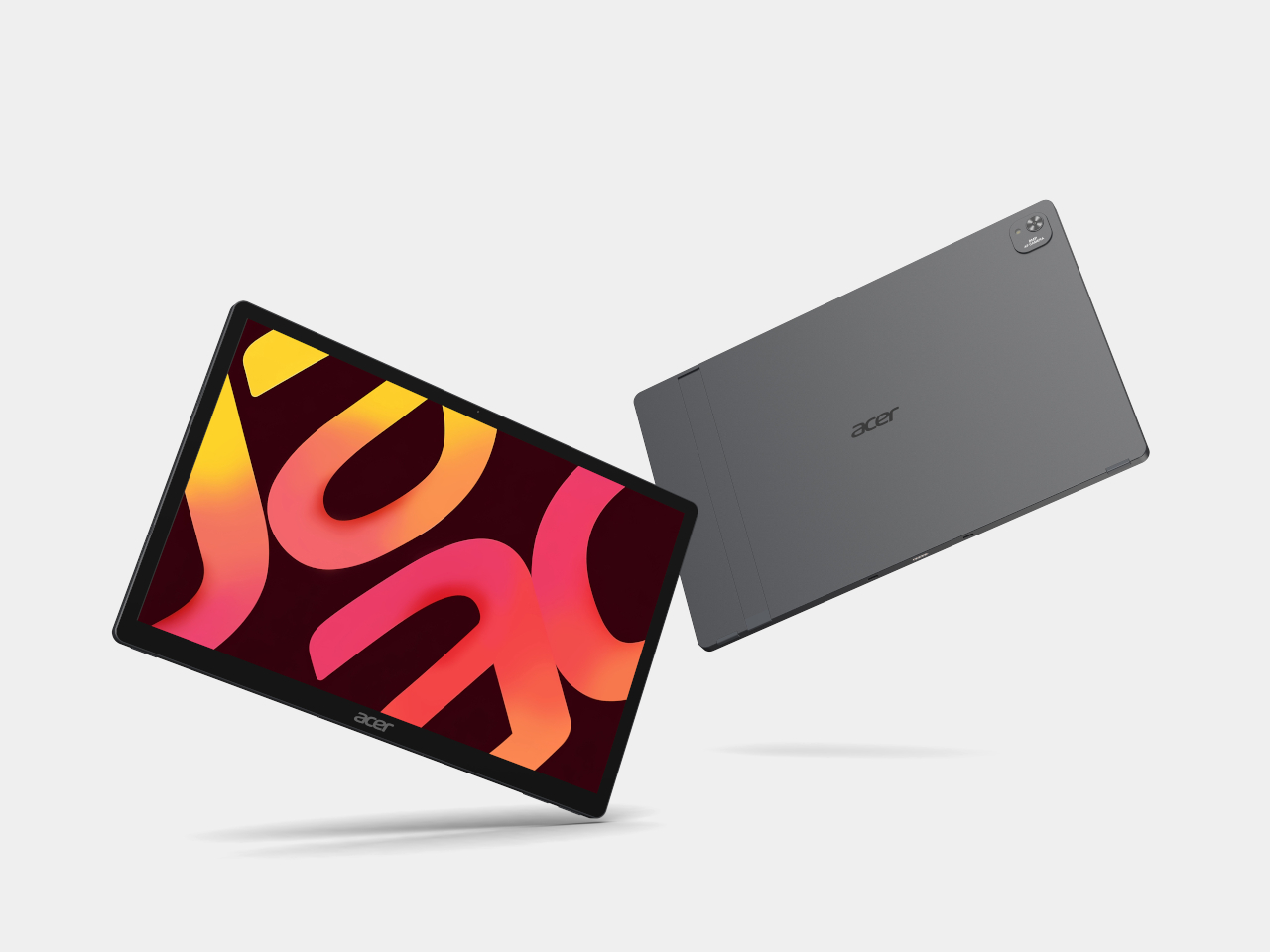
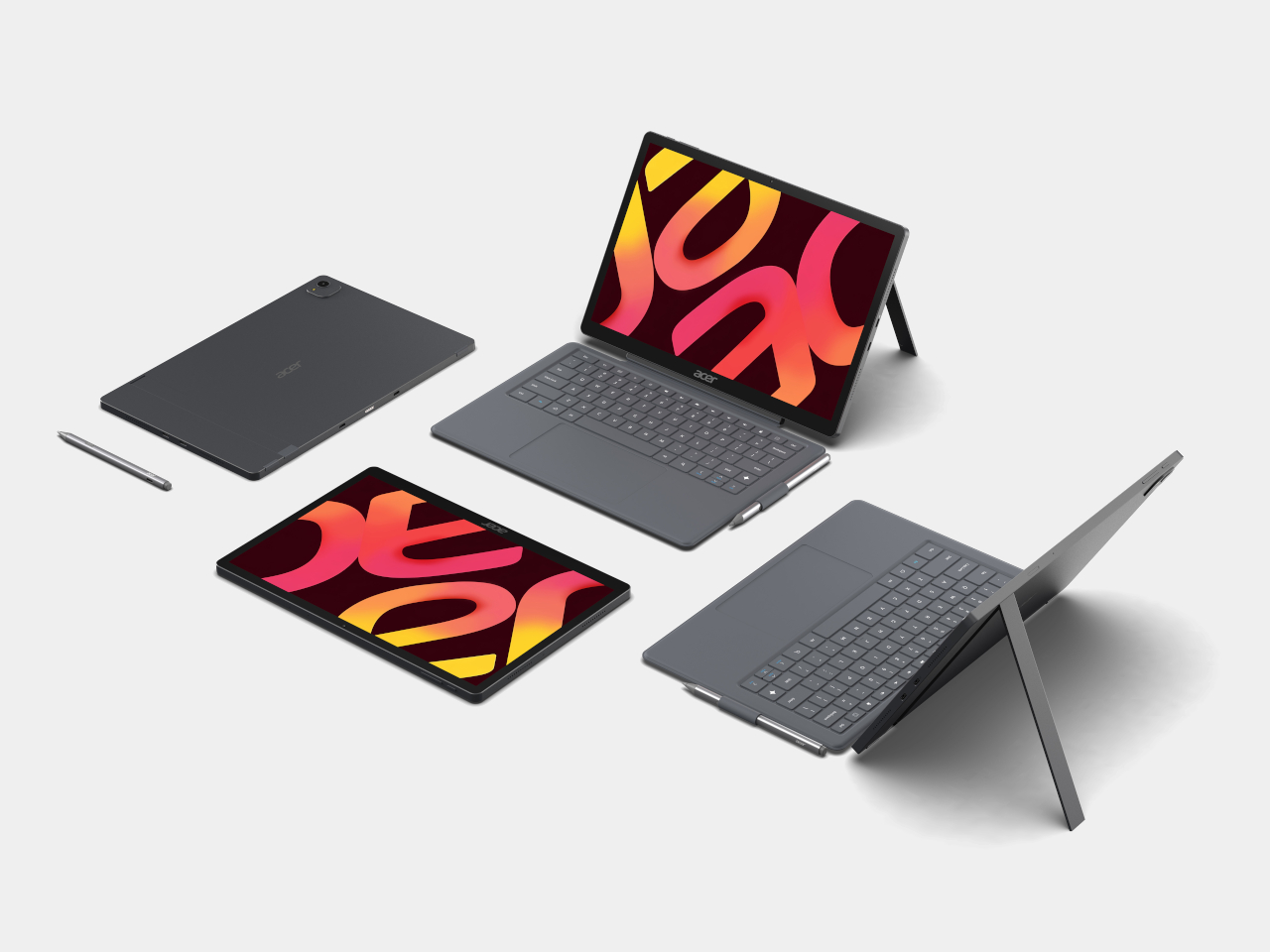
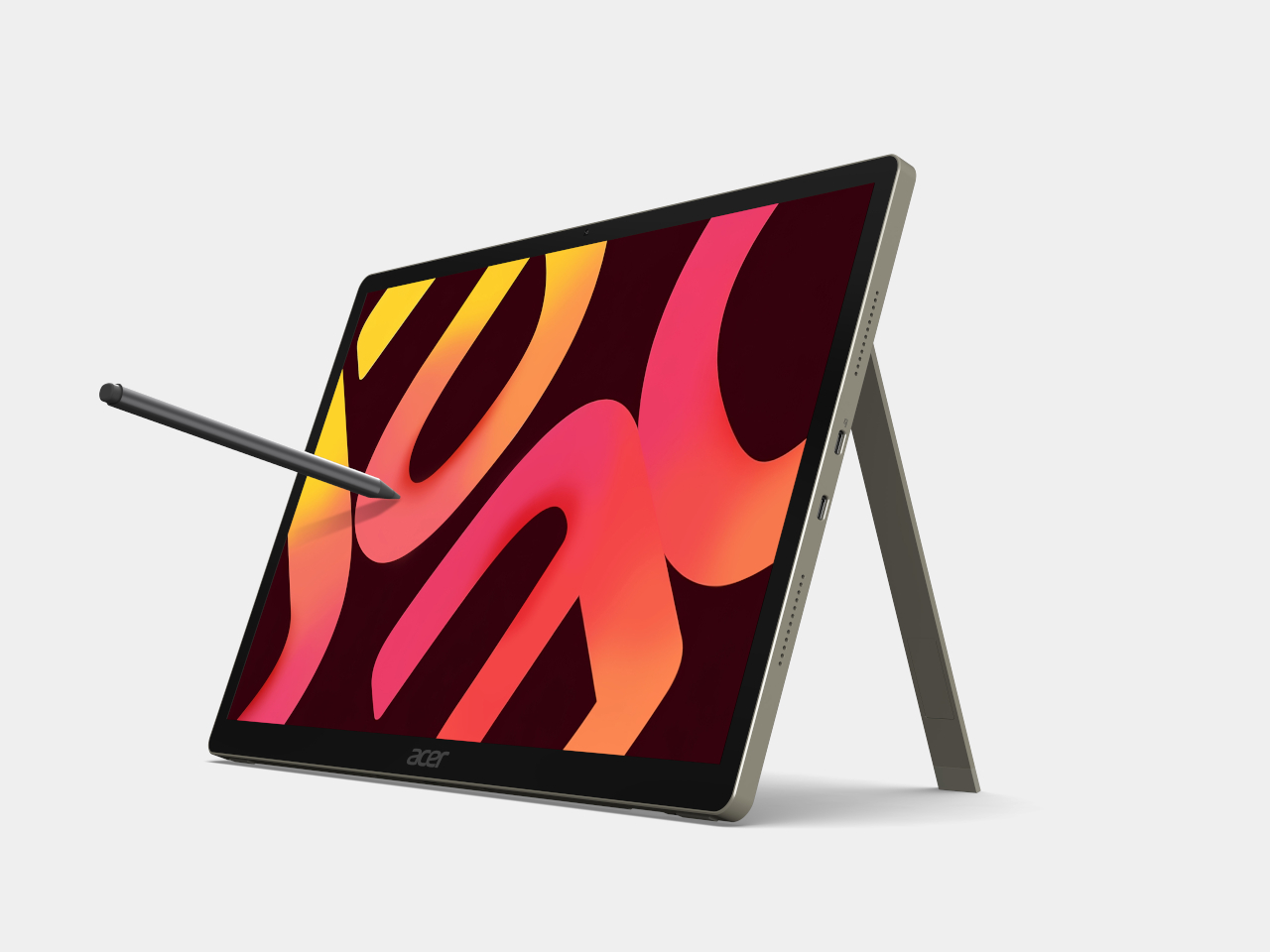
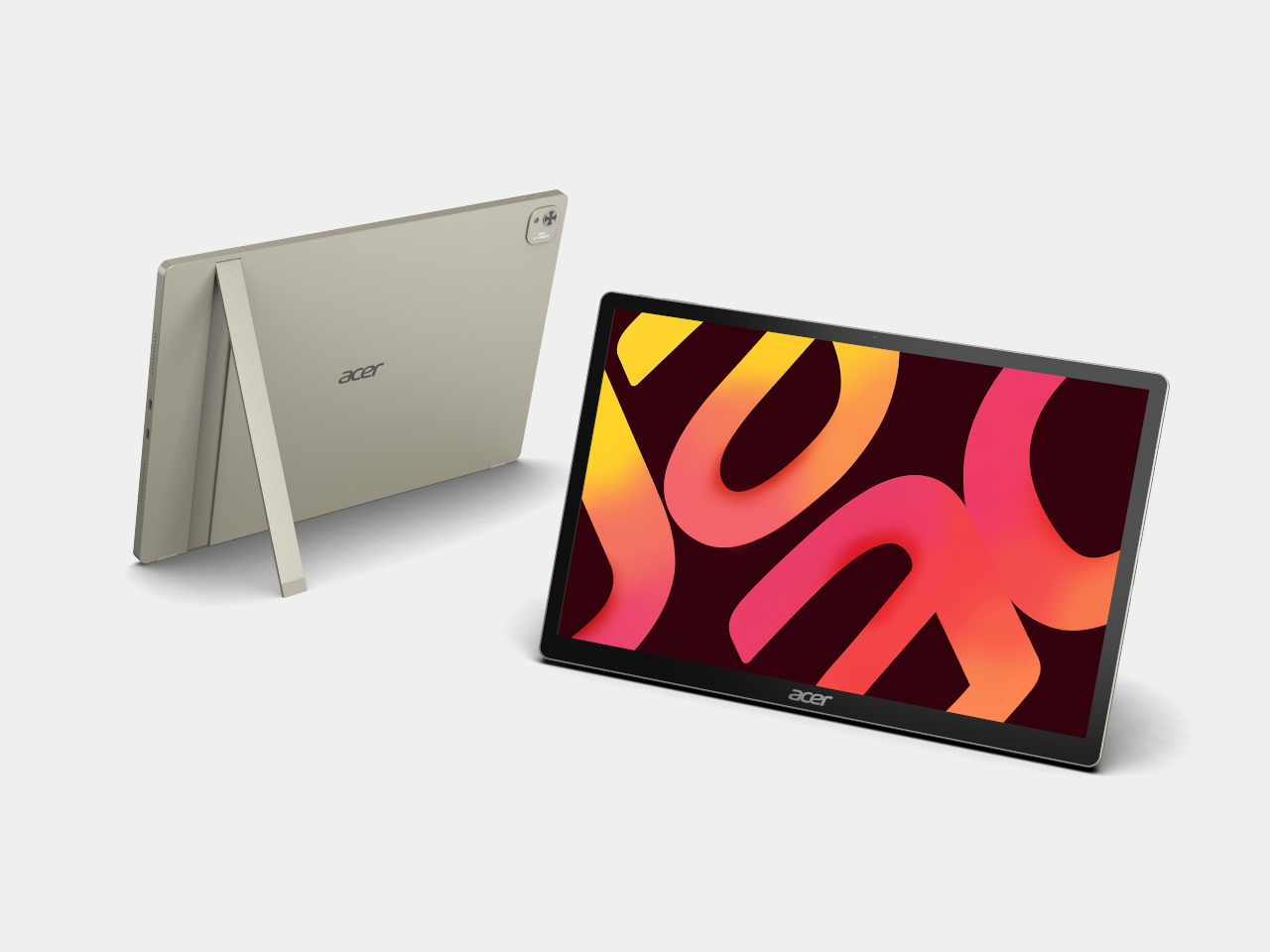
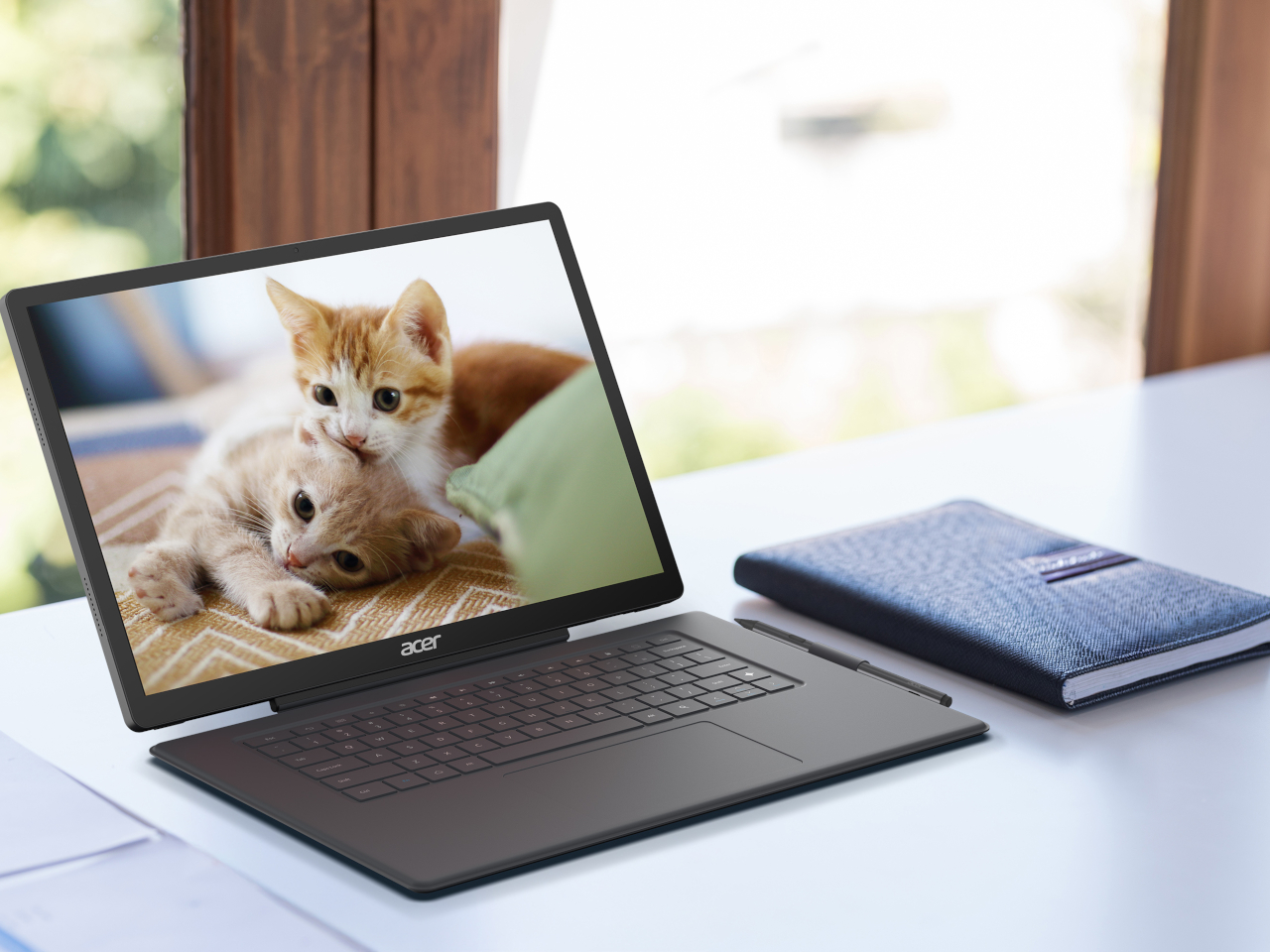
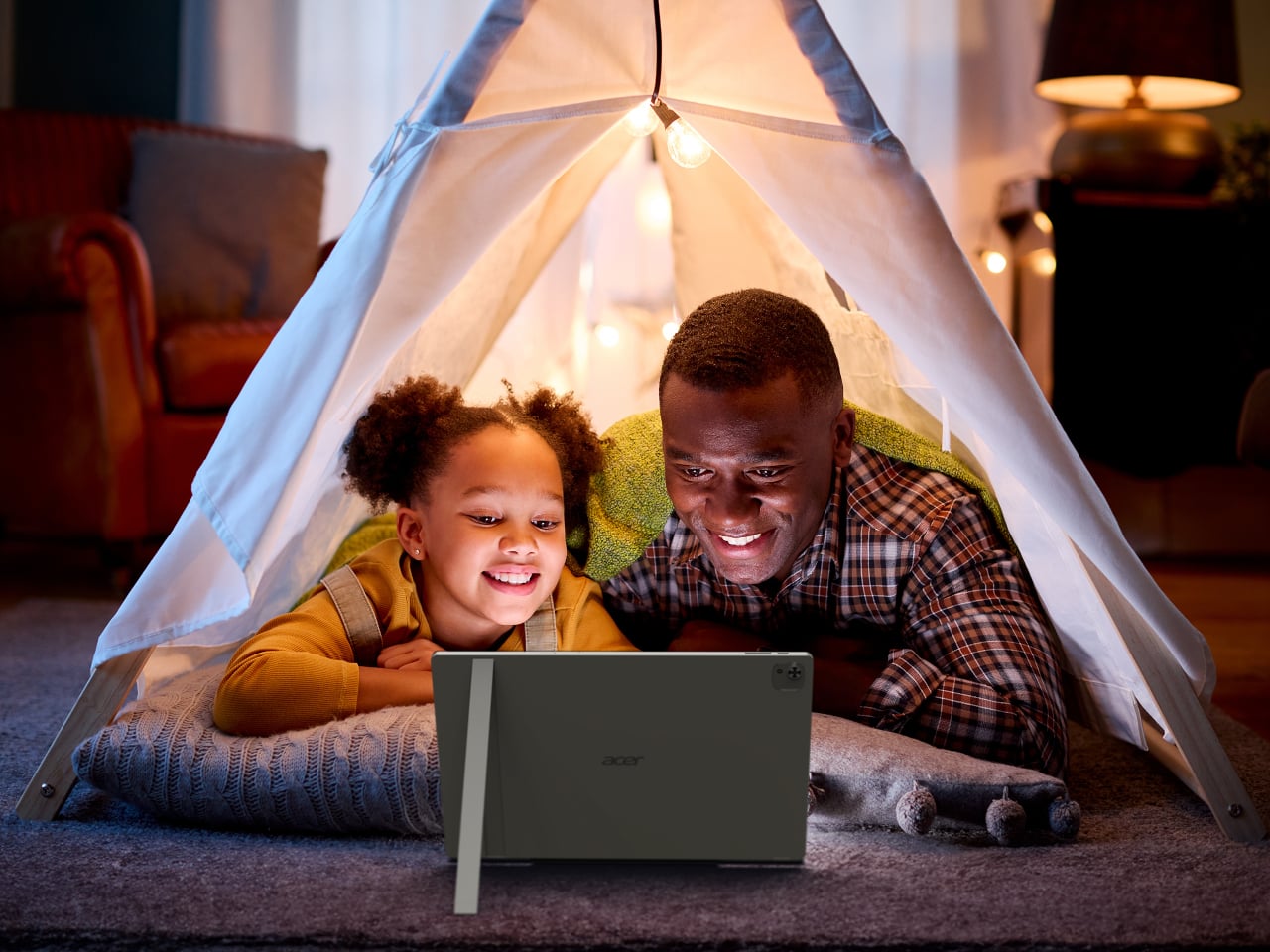
Rounding out the lineup, Acer’s Iconia tablets split into two clear tiers built around the same entertainment and education goals. The premium Iconia X16 and X14 pack OLED screens into a metal chassis, running on MediaTek Helio G80 silicon with dual USB Type-C ports, one dedicated purely to video input for easy screen casting during homework sessions or weekend movie marathons.

Acer Iconia X14-21

Acer Iconia X14-21

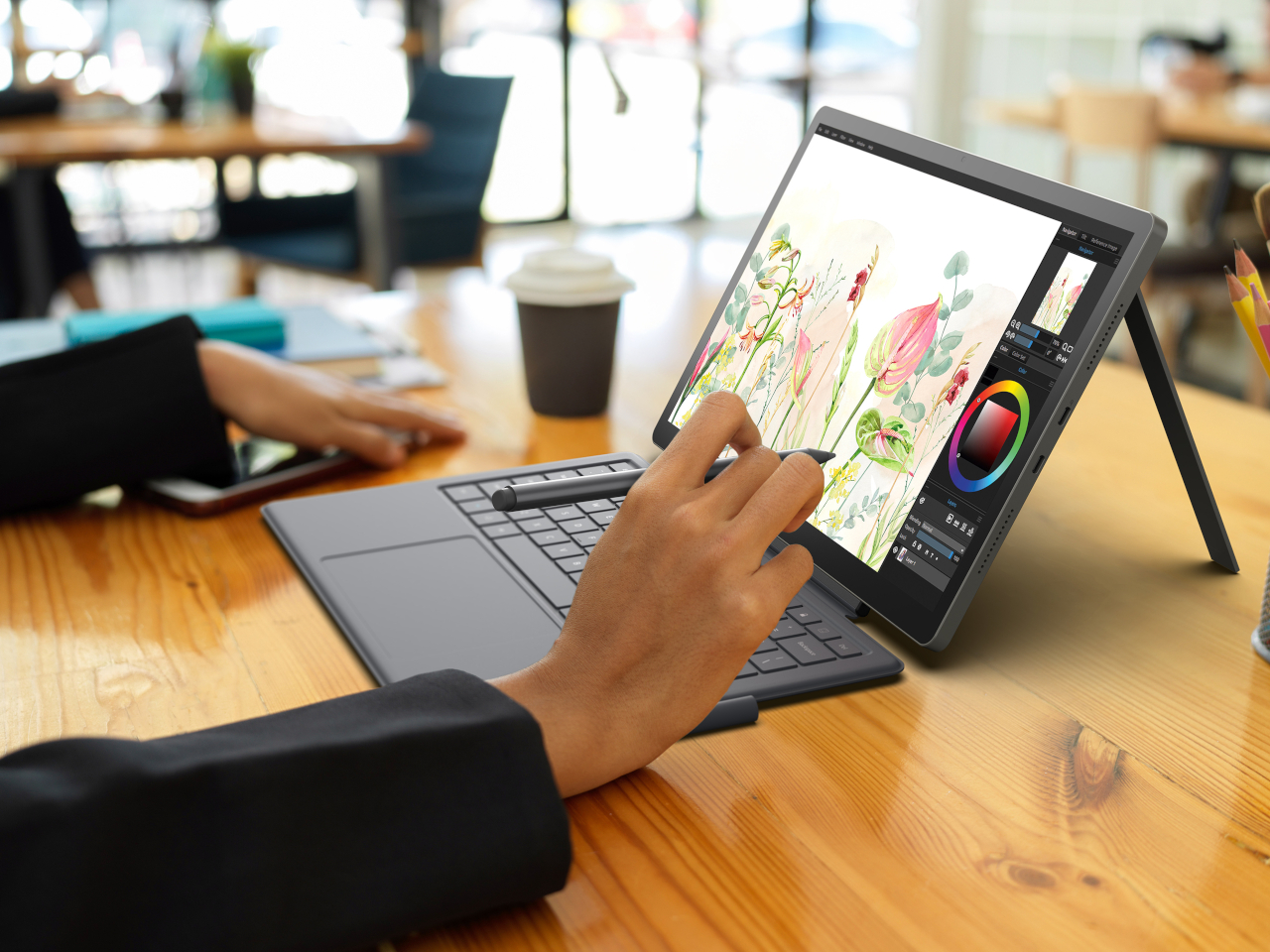
The entry-level Iconia A16 and A14 carry the same processor and port layout into a Vapor Silver chassis with IPS displays instead, trading OLED contrast for a friendlier price point without giving up the tripod kickstand design both series share. That kickstand, paired with optional styluses and attachable keyboards, turns either tablet into a portable classroom, a couch companion for reading, or a yoga mat sidekick during a guided session.

Acer Iconia A16-21

Acer Iconia A16-21

Acer Iconia A14-21

Acer Iconia A14-21

Seen together, these seven devices treat screens less like fixed appliances and more like furniture that rearranges itself around whatever someone needs next. Acer’s decision to launch a paper-like monitor, a folding triple-screen rig, an AI-infused projector, and four tablets on the same stage suggests the company is betting that flexibility, not raw specs, is what actually makes technology feel personal.

The post Acer’s IFA 2026 Spans Paper-Like Monitors to a Rubber Duck Projector first appeared on Yanko Design.
Acer’s DualPlay Mini Is What Happens When a Steam Deck Meets a Laptop

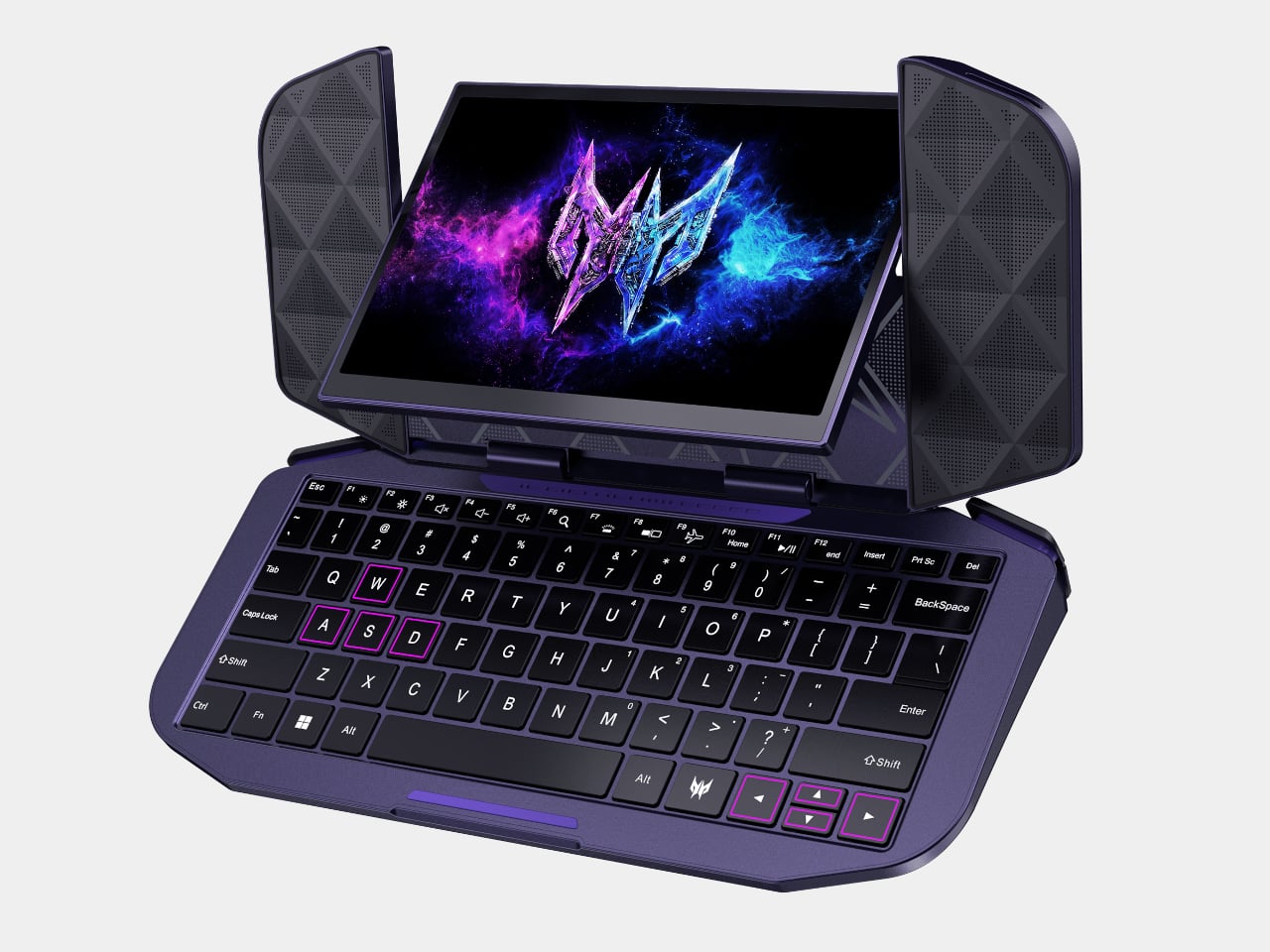
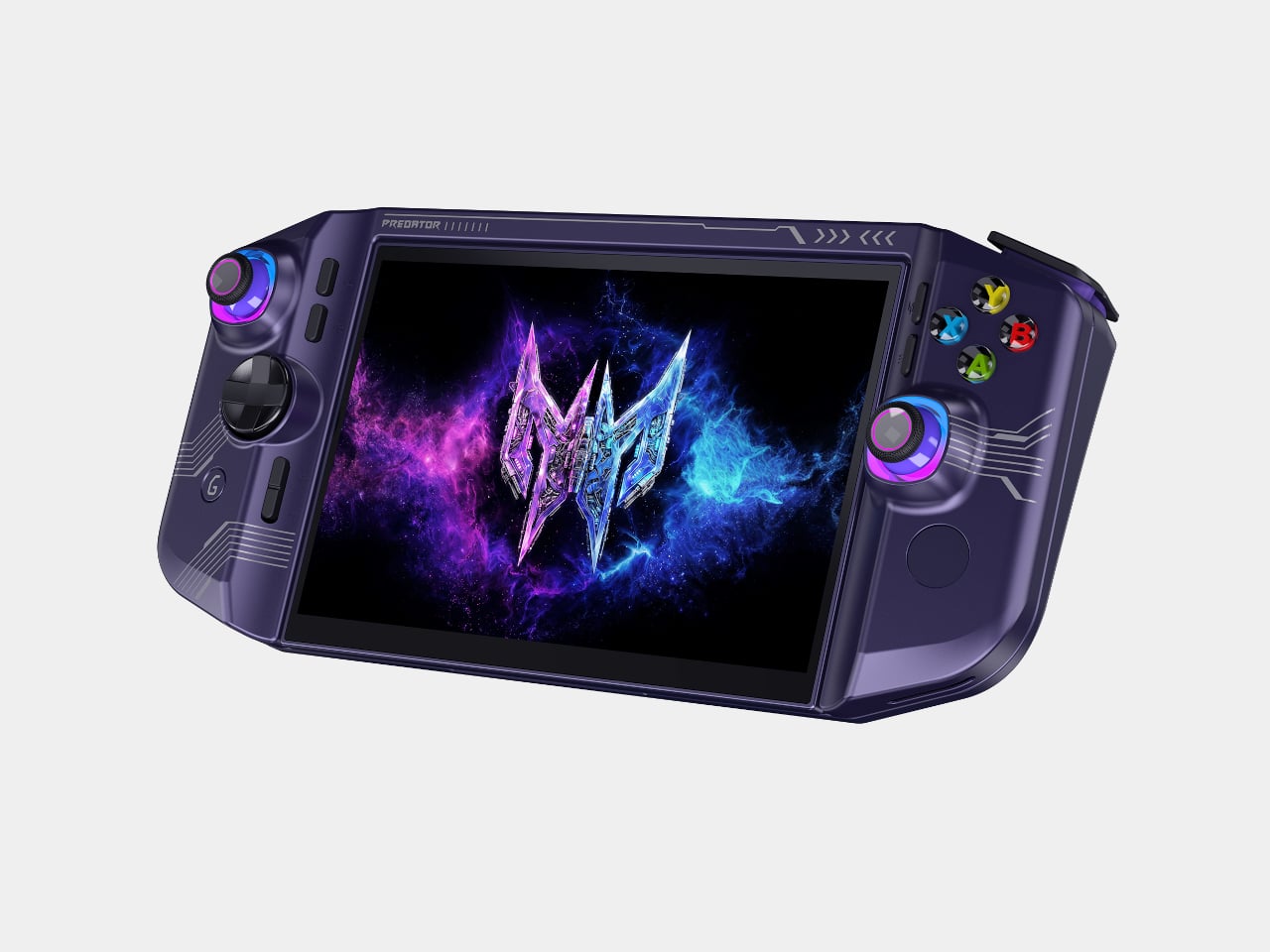
Acer’s Project DualPlay Mini refuses to pick a lane between gaming and work, and that refusal is the whole point. Revealed as a concept at IFA 2026, this 8-inch device from the Predator brand reimagines what a gaming handheld form factor can do, built around dual utility that lets it move fluidly between gaming and productivity without requiring a separate device for each. It reads less like a gadget mashup and more like an argument for mobile computing that reshapes itself around your day.

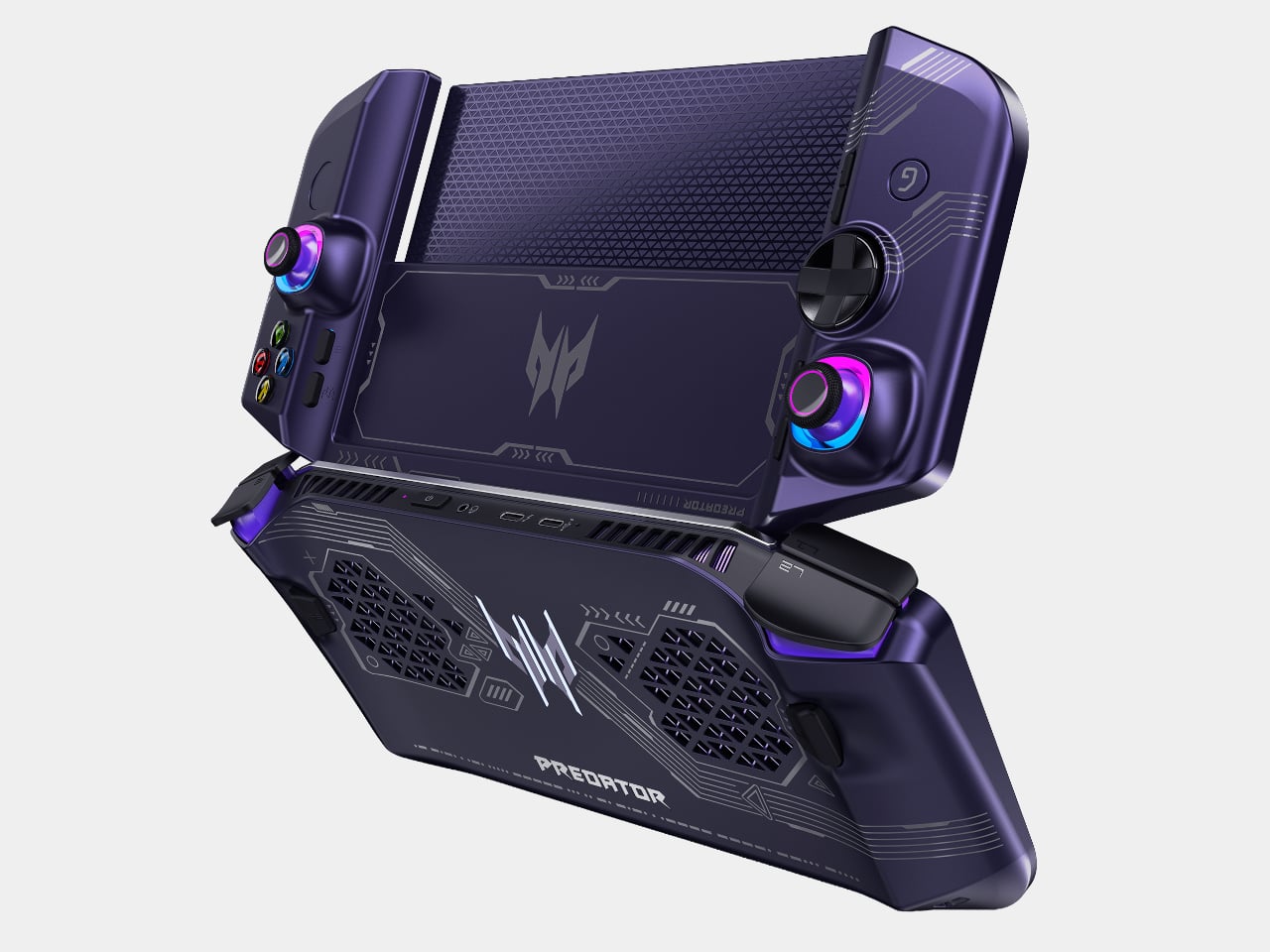
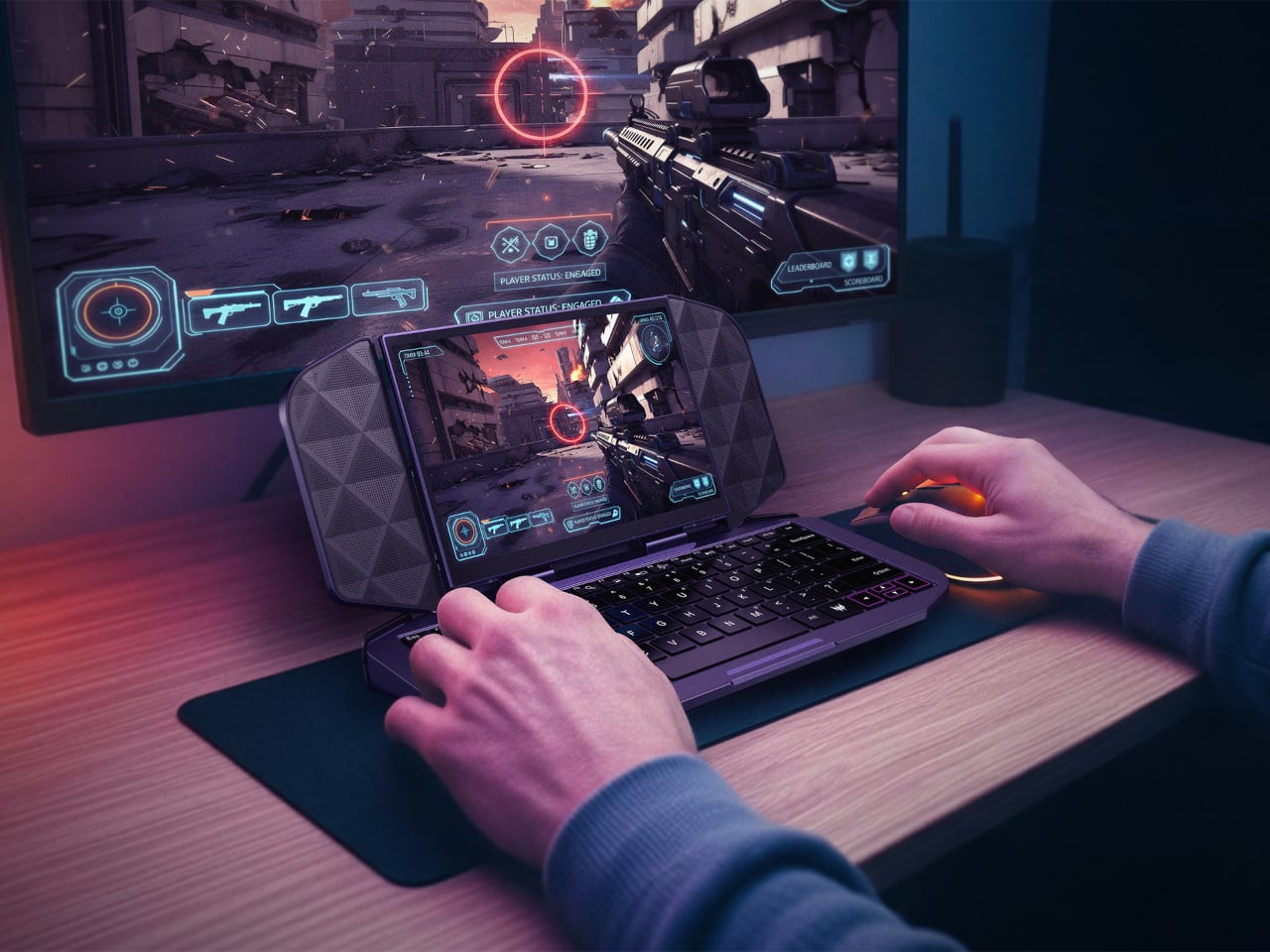
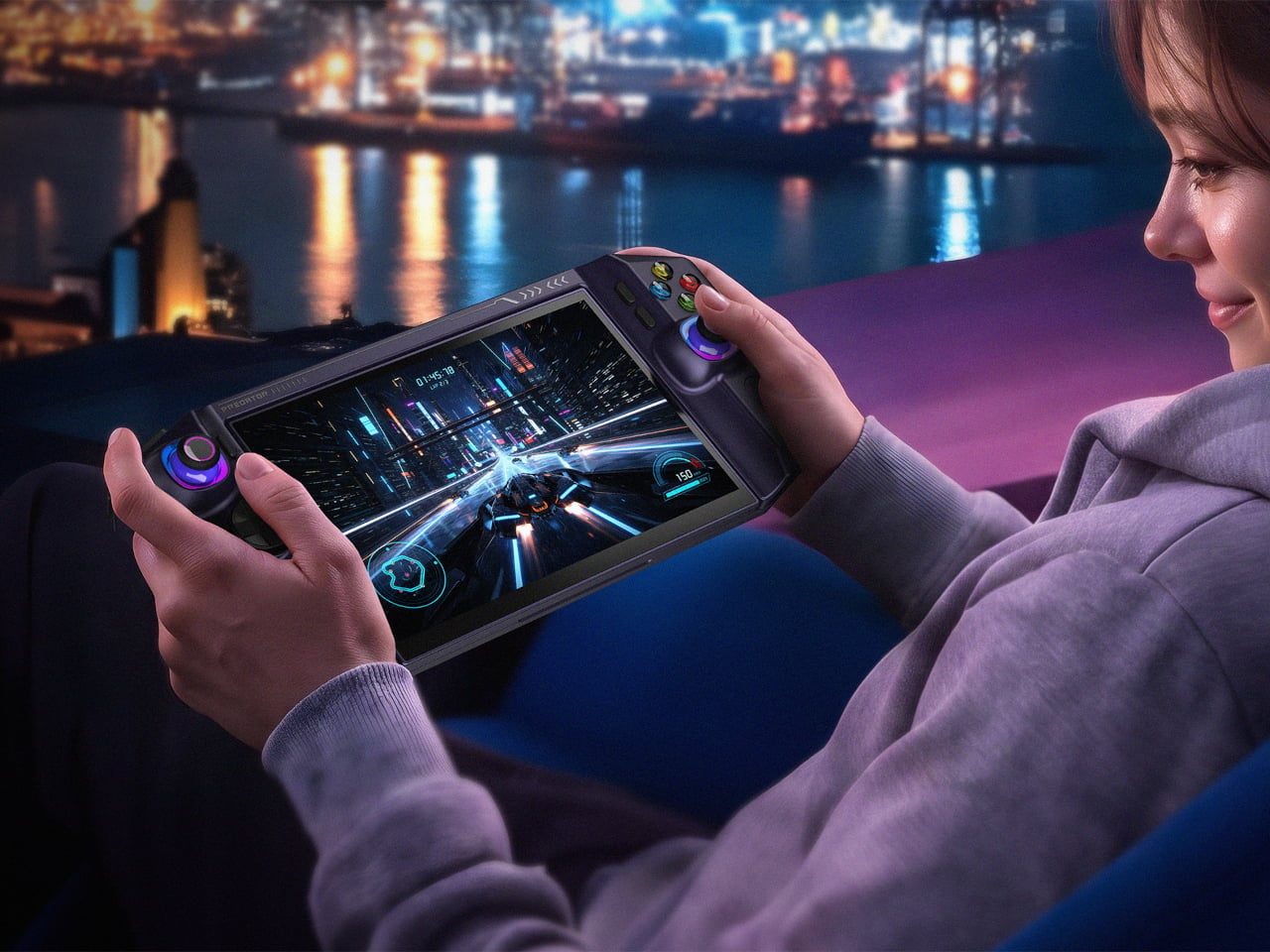
Pick it up as a handheld and Project DualPlay Mini behaves like any console-style device, with dual joysticks, a D-pad, and ABXY buttons framing an 8-inch display for genres that reward quick reflexes and thumb precision. Flip that same shell into laptop mode, though, and a built-in backlit physical keyboard enables the traditional laptop mode for first-person shooter games, while the handheld mode supports console-like experiences for other genres.

Designer: Acer

That transformation runs on a hinge that swivels as it folds, letting the distinctive design convert between handheld and mini-laptop modes at angles a standard clamshell can’t reach. Triangular speaker grilles flank the display on either side, doubling as stands that prop the screen upright once the keyboard tucks flat beneath it. The mechanism turns what could have been an awkward compromise into a shape that looks deliberate in either orientation.

Underneath, the concept integrates the same dual-fan cooling architecture as the Predator Atlas 8, with one Predator AeroBlade metal fan and one plastic fan, except the metal fan offers thinner blades. That detail matters more than it sounds, since squeezing laptop-grade thermals into a form factor built for one hand means the fans can’t afford to be an afterthought.

Acer folds a quiet anniversary tribute into the design too. The back cover hides the words “Acer 50 since 1976” embedded in Morse code, a detail that reflects both the milestone and the Predator brand’s identity. It’s a small flourish, easy to miss during a quick gaming session, but it gives the concept a personality beyond spec sheets and marketing bullet points.

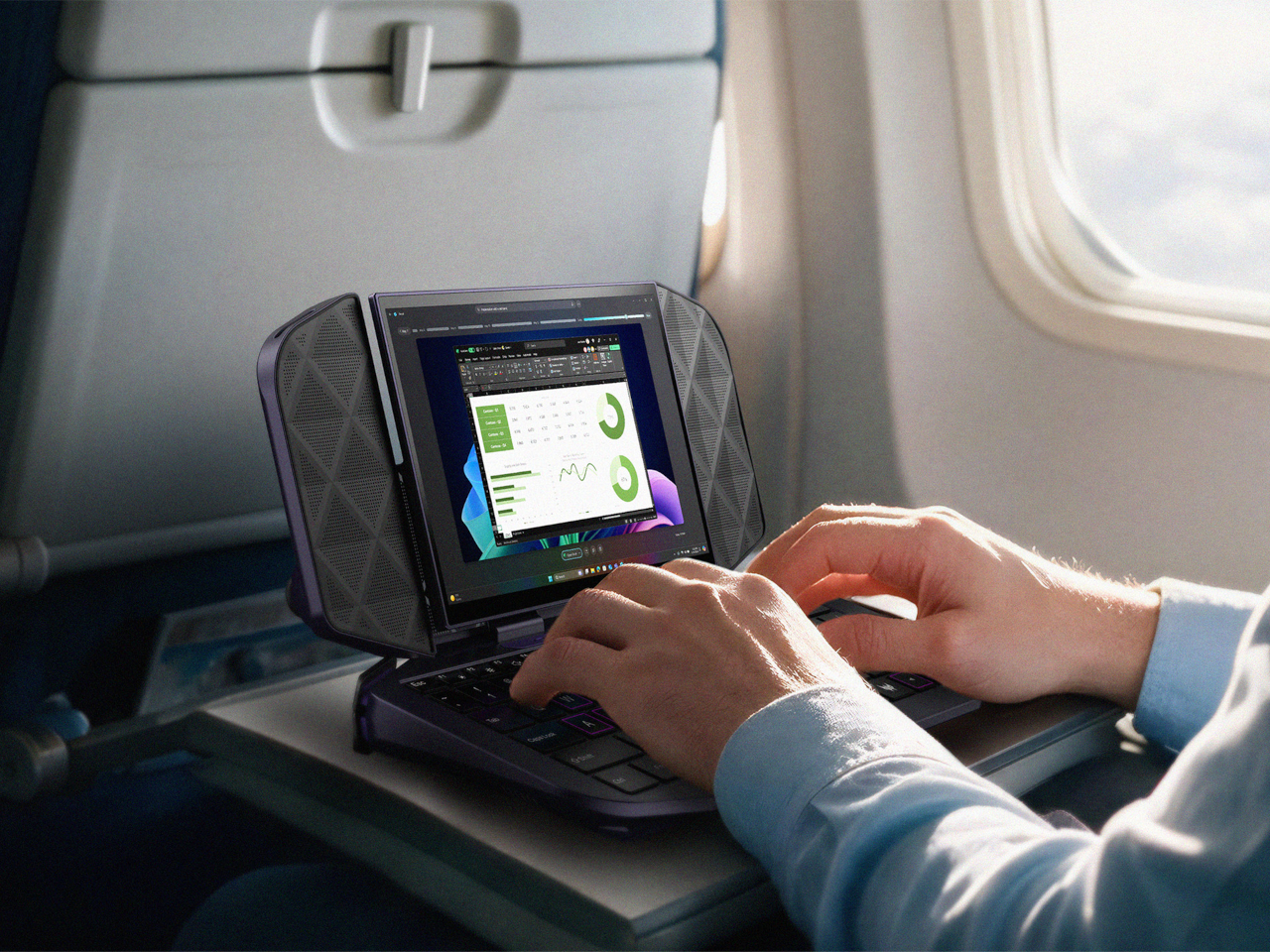
That dual nature earns its keep once the workday intrudes on downtime. Connect an external screen and the device operates as a mobile work device, allowing users to stay productive while on the go without needing a second device. Slide it onto a tray table during a flight, and the keyboard and flanking speaker panels prop the screen up like a tiny travel monitor.

Away from any desk, the handheld mode holds its own too, cradling both palms with contoured grips and a display bright enough to hold up against ambient city light bleeding through a window. Racing games and open-world titles look right at home stretched across that screen, a reminder that DualPlay Mini’s productivity trick never comes at the cost of its gaming chops.

Project DualPlay Mini remains a concept only, with exact specifications, prices, and availability still unconfirmed. Still, it points toward a future where handheld gaming rigs and travel laptops stop being separate purchases. Concepts like this rarely ship unchanged, but this one lays out a shape worth watching as Acer keeps blurring the line between play and work.

The post Acer’s DualPlay Mini Is What Happens When a Steam Deck Meets a Laptop first appeared on Yanko Design.

Acer’s IFA 2026 Handheld Packs Flagship Specs Into 7 Compact Inches

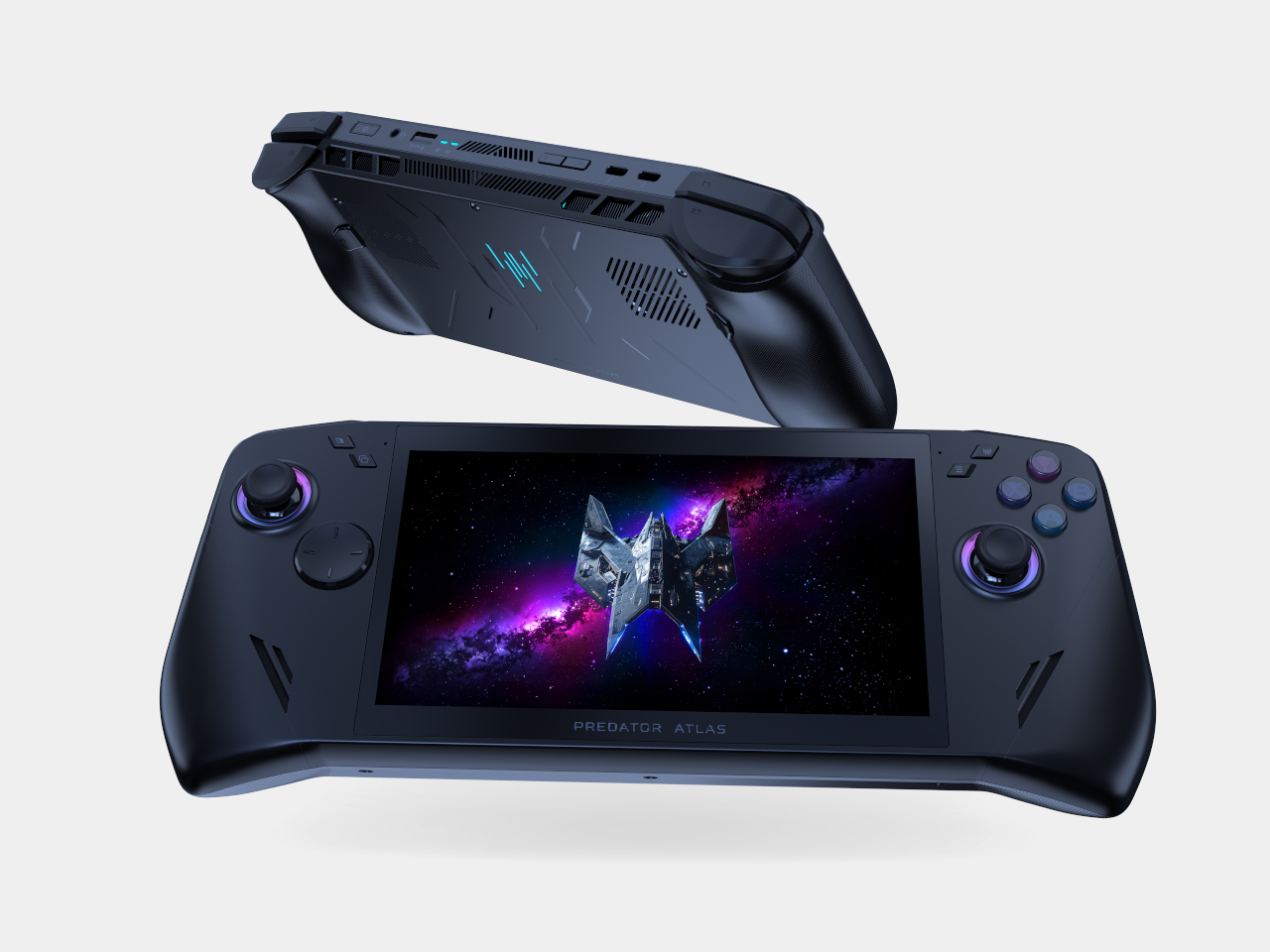
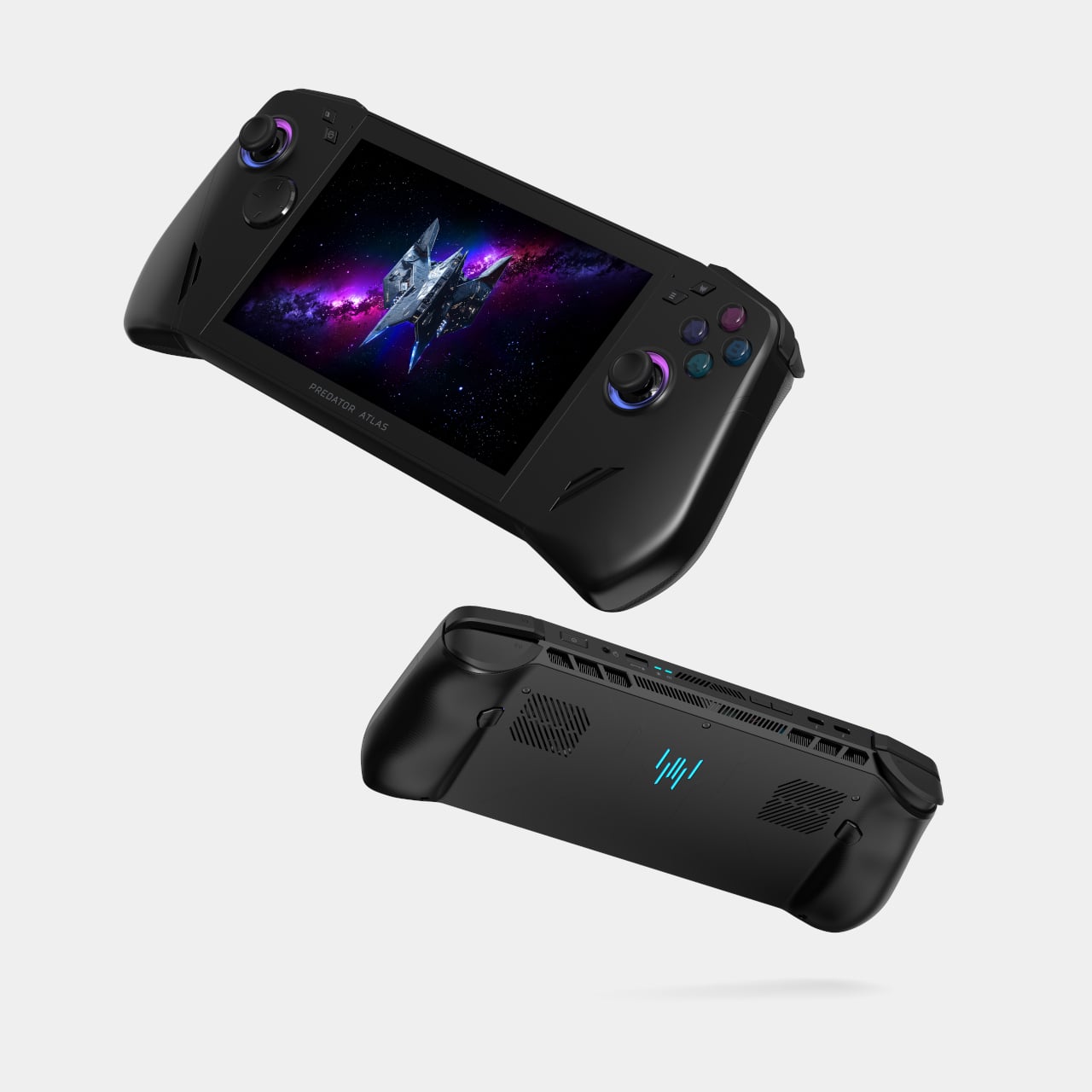
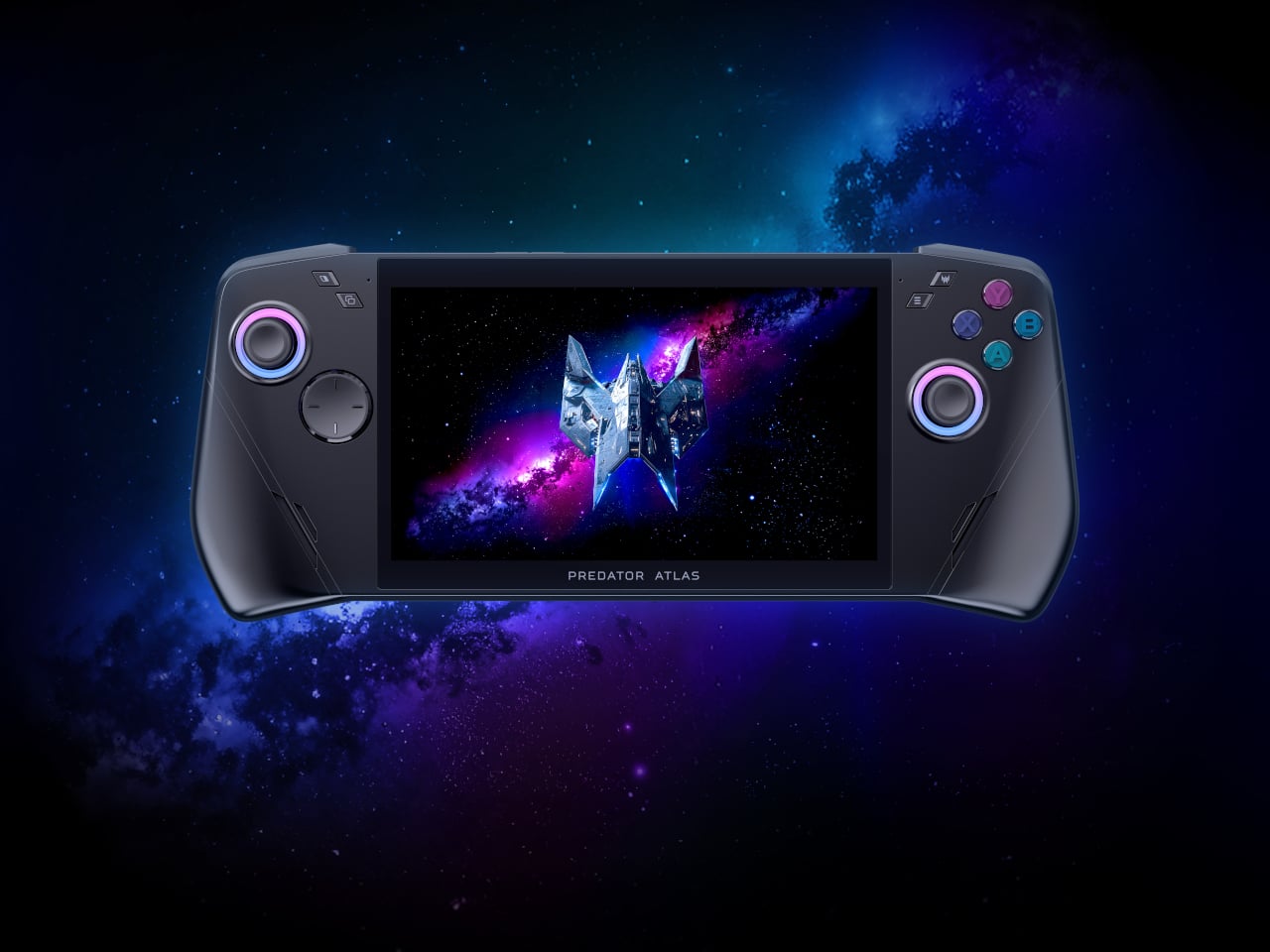
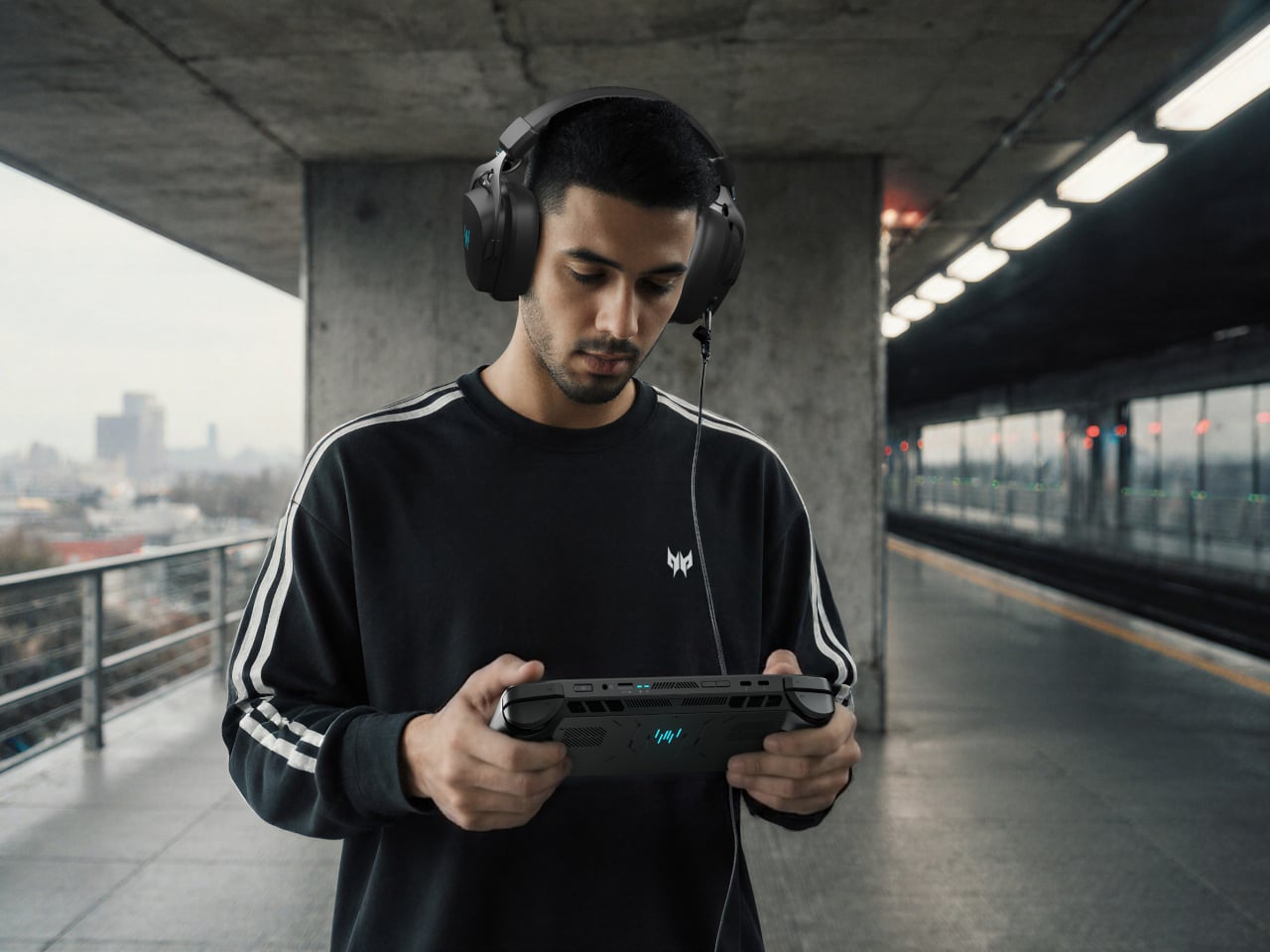
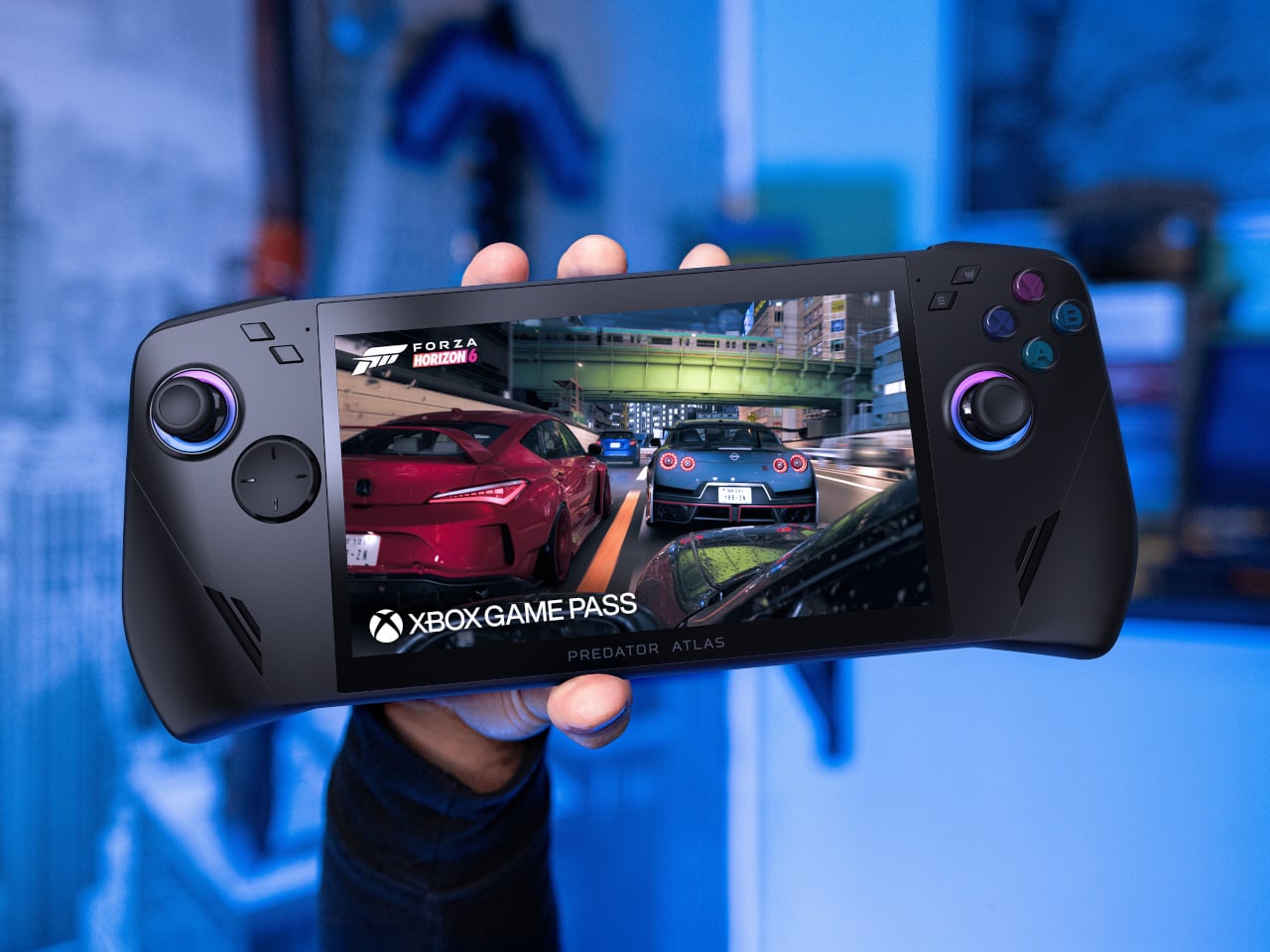
Acer’s Predator Atlas 7 proves that a gaming handheld doesn’t need to look like a slab of plastic armor to feel powerful. Unveiled at IFA 2026, this 7-inch device trims the bulk of its 8-inch sibling into a shape that slides into a bag as easily as it fits into your palms. It’s compact, but every curve and vent hints at the muscle hiding underneath its shell.

Acer built the Atlas 7 to share visual DNA with its 8-inch sibling, keeping the same flagship design language in a smaller shell rather than treating the smaller model as an afterthought. That continuity matters for a lineup meant to scale across different hand sizes and travel habits, giving shoppers a matching pair of handhelds instead of two unrelated products competing for shelf space.

Designer: Acer

Pick it up, and you’ll notice the contoured grips right away, curved just enough to cradle your palms without forcing your fingers into an awkward reach. An enlarged palm rest, recessed keys, and a textured anti-slip finish keep your hands locked in place, even after hours of gripping through a marathon session. It’s the kind of ergonomic thinking that turns comfort into a genuine competitive advantage.

Slide your thumbs onto the joysticks and the option for tunneling magnetoresistance (TMR) sticks becomes obvious in feel alone, delivering precise tracking with zero dead zones and none of the drift that plagues cheaper handhelds. Hall-effect triggers add pressure-sensitive control for racing and shooting genres alike, while a fingerprint reader built into the power button logs you in before you’ve even settled into your seat.

Underneath the shell, a dual-fan cooling system keeps temperatures in check without turning the Atlas 7 into a furnace. The precision metal Predator AeroBlade fan packs 89 blades thinner than a sheet of paper, lifting airflow by up to 10 percent, while a secondary plastic fan and Vortex Flow tuning push hot air out through angled channels for sustained performance.

The 7-inch FHD touchscreen refreshes at 120Hz with up to 500 nits of brightness and Variable Refresh Rate support, so fast-paced titles render smoothly whether you’re chasing frame rates at home or squinting under harsh daylight on a commute. A layer of Corning Gorilla Glass Victus with DXC treatment resists scratches and glare, and Acer even tosses in a tempered-glass screen protector for extra peace of mind.

Two Thunderbolt 4 ports turn the Atlas 7 into a proper docking companion, streaming visuals to bigger screens or pulling data through fast peripherals, while UHS-II microSD support leaves room for expanding storage on the fly. An 80Wh battery backs it all up, and Killer Wi-Fi 7 with Bluetooth 5.4 keeps connections steady while the PredatorSense app puts performance modes, lighting, and monitoring within a single tap.

Audio holds up too, with dual 2-Watt speakers tuned for DTS:X Ultra and two mics running Acer PurifiedVoice to cut background noise during voice chats. Paired with its trimmer shell, these touches turn the Predator Atlas 7 into a handheld built for gaming between destinations, not just at a desk. Acer plans to launch it in North America by Q4 2026, with Europe following in November.

The post Acer’s IFA 2026 Handheld Packs Flagship Specs Into 7 Compact Inches first appeared on Yanko Design.
Acer Finally Made a Premium Laptop You Can Actually Repair Yourself

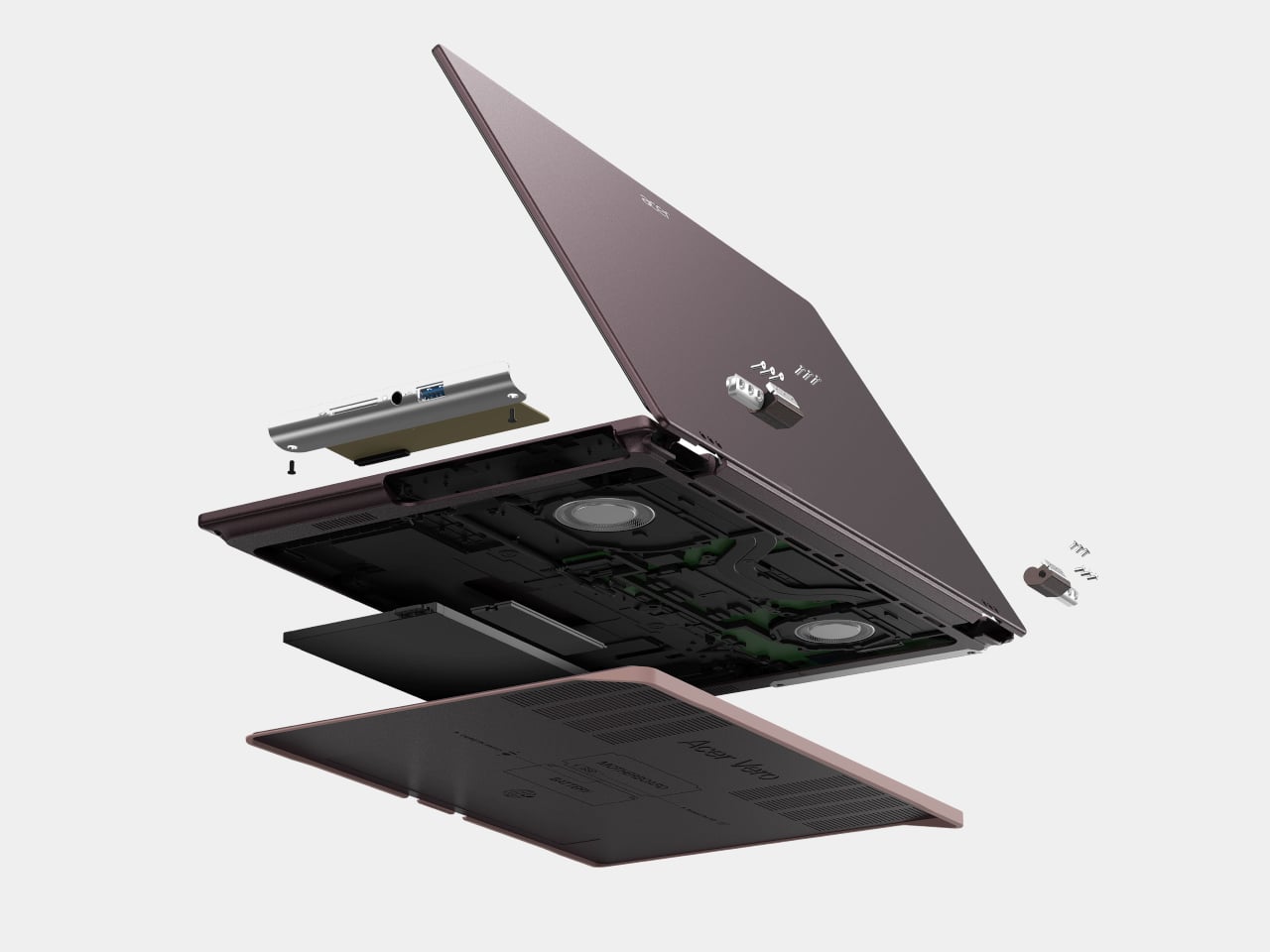
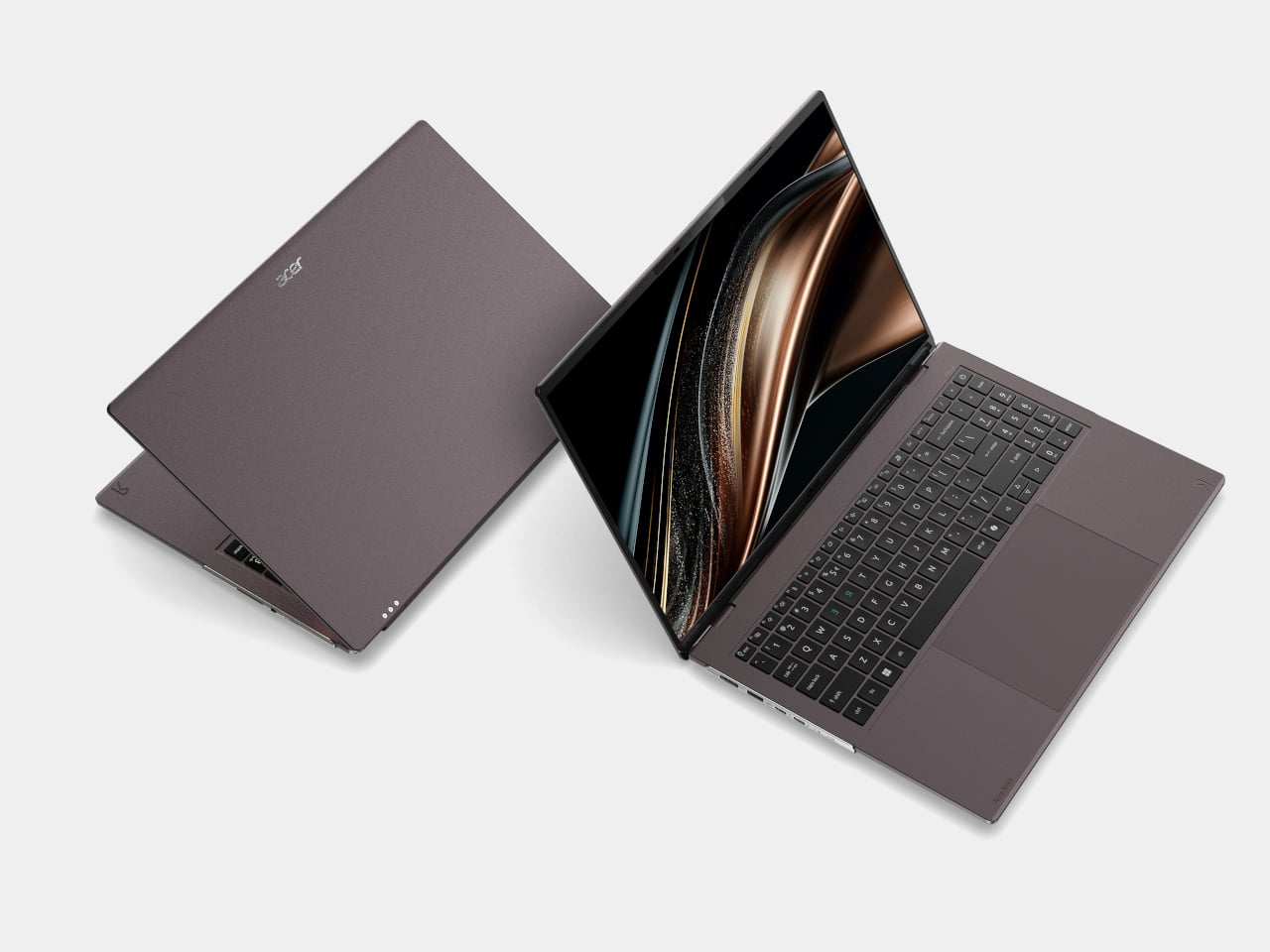
Acer’s Vero 16 treats repairability as a design language rather than an afterthought bolted on for marketing points. Announced at IFA 2026, this fourth-generation Vero laptop wears its screws and access panels with pride, swapping the sealed, glued construction common to premium laptops for a chassis you can actually open without voiding a warranty or hunting down specialty tools. It’s a rare case where sustainability and good industrial design point in the same direction.

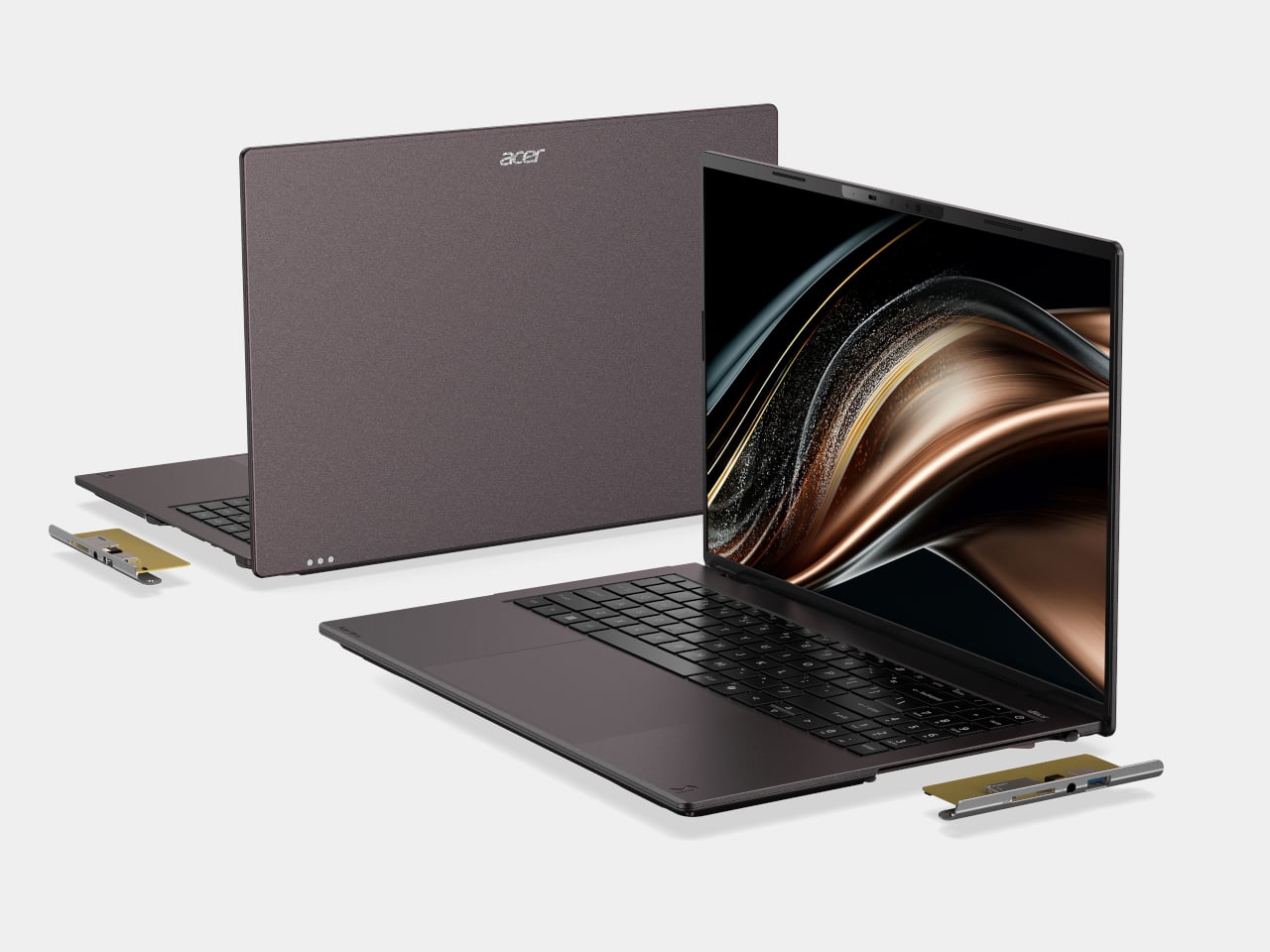
Flip the Vero 16 over and a visual guide etched directly into the bottom cover walks you through the repair process step by step, turning what used to require a service manual into something closer to assembling furniture. A tool-free access latch pops the bottom cover open, exposing a battery and SSD that users can swap themselves. The hinge detaches from the chassis entirely, and the I/O port covers on both sides lift away just as easily.

Designer: Acer

That repair-first thinking extends to future-proofing too. Acer built the Vero 16 to support processor upgrades for at least two generations, a rarity in an industry that generally treats laptops as disposable once the chip inside falls behind. Pair that with materials chosen for their afterlife, and the laptop starts looking less like a purchase and more like a long-term relationship with your hardware.

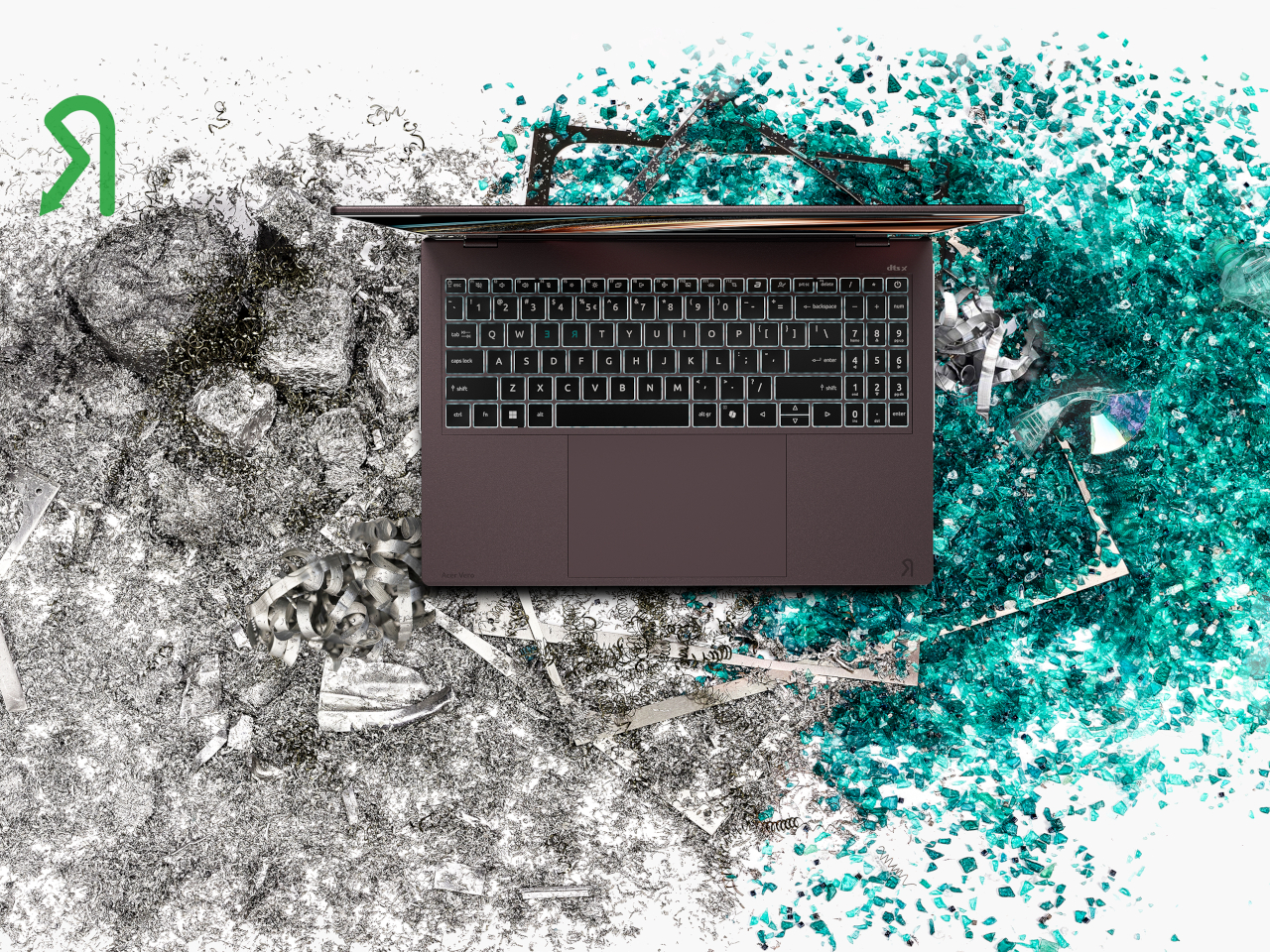
The chassis itself carries that same intentionality. The top and palm-rest covers combine 50% post-industrial recycled aluminum with 50% low-carbon aluminum, while the bottom cover uses 60% post-consumer recycled plastic and the display bezels use 30%. Acer finishes the whole thing in a solvent-free powder coating that cuts VOC emissions while resisting wear better than standard paint, so the Earthy Brown shell should still look presentable years into its service life.

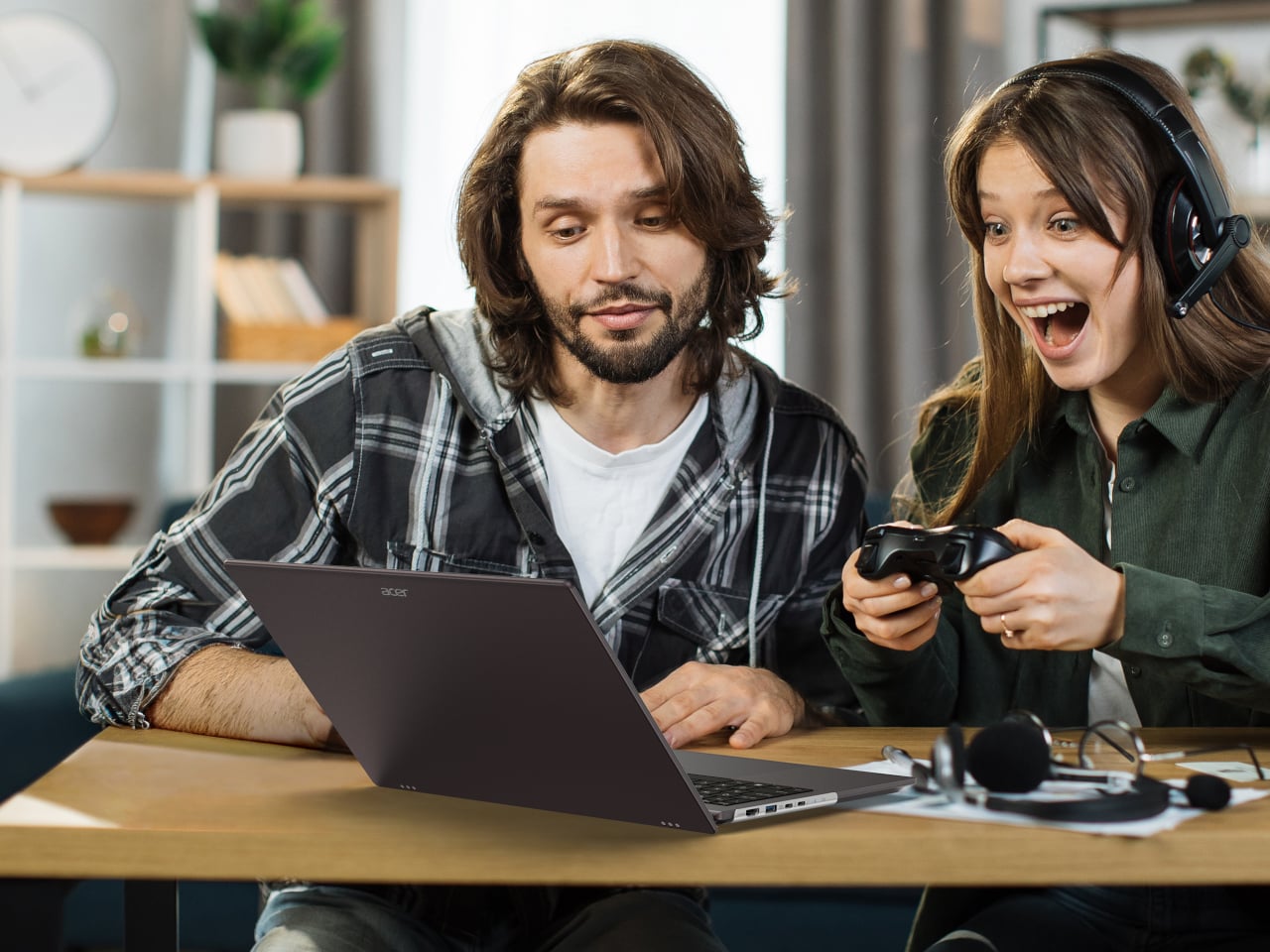
None of that repair-friendly engineering comes at the cost of everyday usability. A 16-inch 3K OLED display handles video calls and spreadsheet work with equal ease, backed by up to an Intel Core Ultra X9 processor pushing 180 platform TOPS for on-device AI tasks. Acer PurifiedView sharpens video call quality automatically, while PurifiedVoice filters out background chatter, useful whether you’re presenting blueprints from a home office or narrating a game night to friends over a headset.

Connectivity rounds out the practical side, with two Thunderbolt 4 ports, an SD card reader, and HDMI 2.1 covering most peripheral needs, plus a USB Type-A port that keeps charging accessories even when the laptop itself is powered down. Acer MyKey adds a programmable shortcut for whatever app or website you open most, a small touch that saves the repetitive clicking most of us do without noticing.

The Vero 16 ships in 100% recyclable packaging made from recycled materials, closing the loop from box to chassis. Acer’s decision to expand its design approach from the standard 3R framework of reduce, reuse, and recycle into a fourth R for repairability suggests the company sees longevity as a feature worth building around, not a checkbox for sustainability reports. The Acer Vero 16 arrives in EMEA in Q1 2027, giving shoppers time to see how well that philosophy holds up against the rest of the market.

The post Acer Finally Made a Premium Laptop You Can Actually Repair Yourself first appeared on Yanko Design.
IFA CEO Leif Lindner: This Year Isn’t About Cool Demos. It’s About Robots That Actually Work

Berlin does this every September, and it never stops being slightly overwhelming. IFA 2026 runs September 4 to 8 across 27 halls at Messe Berlin, with more than 1,900 brands and something like 220,000 people wandering through them. This year the theme is “The Future Is Now”, which sounds like a slogan until you see the schedule. Humanoid robots are walking a catwalk on September 5. Xiaomi is exhibiting for the first time in the show’s 102-year history. There is a robot football tournament. Somewhere in there, several hundred companies will also try to sell you a better toaster.

We wanted to know how a show like that gets built, so we sat down with Leif Lindner, CEO of IFA Management, who has been running the thing since 2023. We last spoke to him in 2024, back when AI was still being called a race rather than a bubble. Plenty has changed. Robots got legs, Chinese manufacturers got fast, and AI quietly stopped being a category and became the water everything swims in. Lindner has thoughts about all of it, including a good one about what 70 kilos of biped requires backstage.

AI Stopped Being a Special Feature

Every IFA has a theme, but this year’s grew out of something Lindner watched happen in real time rather than something the marketing team dreamed up in a room. “For years we talked about AI, robotics and connected living as the future,” he told us. “Somewhere along the way, that changed. AI stopped being a standalone category and became part of almost every category.” Refrigerators, earbuds and treadmills all carry it now, and none of them were sold to you as AI products first.

That shift changes what Lindner looks for on the floor these days. “A few years ago, the conversation was simply, does this product use AI,” he said. “Today, the better question is, what does AI actually enable. Does it simplify a task. Does it save time. Does it help you make a better decision.” The companies worth your attention this year, in his view, are the ones who stopped mentioning AI out loud and just let it work.

China Built the Runway, Europe is Preparing to Walk On It

The single loudest theme at IFA 2026 is humanoid robots, and the roster reads like a map of China’s supply chain. Unitree, Agibot, DEEP Robotics and a dozen others are walking a literal catwalk on September 5 called Robots on the Runway, and Lindner does not dodge why they got there first. “Manufacturing scale, deep investment and an incredibly integrated supply chain mean companies can iterate very quickly,” he said. “When design, engineering, production and testing are all happening within the same ecosystem, ideas naturally move from prototype to product much faster.”

He is quick to add that Europe is not simply behind. “Europe has extraordinary strengths of its own, in engineering, industrial manufacturing, AI and responsible technology development,” he told us, pointing to NEURA Robotics as the proof. The German firm closed a funding round of up to 1.4 billion dollars just before the show and delivers a keynote titled “From Europe, for the World: Building the Ecosystem for Physical AI” barely 90 minutes after the robots finish their runway walk. “The conversation isn’t about catching up category by category,” Lindner said. “It’s about building an ecosystem that allows European innovation to compete on a global stage.”

The One Robot Actually Cleared to Sell in the EU

Buried in that same conversation is a detail that separates the showpieces from the products. AiMOGA’s Mornine, built by a unit of Chinese carmaker Chery, holds full EU CE certification covering machinery safety, radio equipment and cybersecurity, signed off by German testing house TÜV Rheinland. That makes it the first humanoid certified on both hardware and software under EU rules, and it already works shifts in car dealerships across more than 30 countries.

Lindner treats that milestone as the real dividing line on his own show floor. “That’s certainly a meaningful milestone because it reflects the transition from a technology demonstration to a product that’s ready for commercial deployment in Europe,” he said. “Many of the robots visitors will see at IFA are there to demonstrate what’s possible. Others are much closer to real-world deployment. You can see the entire innovation journey in one place.”

What It Takes to Put a Robot on Stage

None of this happens by accident, and Lindner is refreshingly candid about how much invisible work sits behind five minutes of a robot walking in a straight line. “Any live demonstration involving emerging technology requires careful planning, and robotics is no exception,” he said. “Safety comes first, and our exhibitors work closely with our teams to make sure demonstrations are planned and delivered responsibly.”

His closing line on the subject is the best quote in the whole conversation. “When you put a 70-kilo humanoid robot in front of a live audience, you want the excitement to be on the stage, not behind it.” Worth remembering the next time a robot sticks a landing and the crowd gasps. Somebody spent months making sure that gasp was the only surprise in the room.

The post IFA CEO Leif Lindner: This Year Isn’t About Cool Demos. It’s About Robots That Actually Work first appeared on Yanko Design.
Xiaomi Takes the IFA 2026 Spotlight as Samsung Makes A Quiet Exit After 35 Years

Imagine spending 35 years building the most recognizable booth at the world’s biggest consumer electronics show, then deciding one year to just… not. That is exactly what Samsung is doing at IFA 2026. The company is hosting its own event at the Humboldt Carré, a conference venue in central Berlin, eight kilometers from Messe, starting September 2, two days before the official show opens. Samsung frames this as a focused environment for media briefings, retail meetings, and product launches, following the same logic it applied at CES 2026 when it left the Las Vegas Convention Center for the Wynn Hotel. Doing it twice in the same year starts to look less like a pivot and more like a policy.

While Samsung manages its event across town, Xiaomi is inside Messe Berlin, confirmed for Hall 6.2, with a full ecosystem pitch and no obvious competitor stealing the spotlight. Xiaomi announced its IFA commitment at the official IFA Kick-Off on June 30, attaching a €7.4 billion AI R&D budget to the news, covering electric vehicles, robotics, and operating systems through 2028. Its IoT platform connects over 1.16 billion devices as of mid-2026, which gives the “Human x Car x Home” pitch real substance beyond the marketing copy. Samsung will sponsor the IFA Creator Hub, a content studio for influencers at Palais am Funkturm. But a sponsorship is a very different thing from anchoring a show floor, and Xiaomi is anchoring the show floor.

Photo Credits: IFA

At CES 2026, Samsung left the Las Vegas Convention Center for the Wynn Hotel and applied museum-style layout techniques to give visitors more time with each product. The Humboldt Carré plan at IFA runs on exactly the same idea, consolidating launches, tech forums, and partner meetings under one roof with dedicated space for hands-on AI appliance experiences. Samsung also has a footprint inside Messe Berlin as the main sponsor of the IFA Creator Hub, a content studio for influencers at Palais am Funkturm. It will run its own programming there throughout show week. But sponsoring a content studio is a different brand position from anchoring a product booth, and on the Messe floor, that position now belongs to whoever occupies it.

Photo Credits: IFA

Reports place the Galaxy S26 FE launch on September 4, the same day IFA officially opens, which means every journalist in Berlin will be writing about a Samsung phone from inside a building Samsung chose not to be in. LG, TCL, and Hisense all held their hall bookings and published their stand numbers months ago. Xiaomi is in Hall 6.2, a short walk from the main press areas. The reporters who glance up from S26 FE coverage will be standing next to Samsung’s biggest competitors. The brand generating the most ambient attention on the Messe floor will simply be the one that actually showed up.

Xiaomi’s pitch at IFA 2026 carries weight because the company has actually built the ecosystem it is selling. Its IoT platform connects over 1.16 billion devices as of June 2026, phones and laptops excluded, which gives the “Human x Car x Home” framing real shelf-stocking credibility for European retailers. The €7.4 billion AI R&D commitment for 2026 to 2028, spanning electric vehicles, robotics, and operating systems, is sized for institutional buyers rather than spec-sheet readers. Xiaomi landed on the Fortune Global 500 for the seventh consecutive year in July 2026, ranked 232nd. It arrives at IFA knowing exactly what it wants from a European room, and with the numbers to back that up.

Photo Credits: IFA

Samsung’s controlled-environment strategy has a clean logic that gets harder to apply the bigger the show it leaves behind. Moving off the floor eliminates accidental comparisons, crowded aisles, and competitor booths visible from your own press conference, but it also removes the organic brand visibility a trade show generates just by being a trade show. Xiaomi does not have that problem this year. It is physically present in the room where buying decisions happen, where retail partnerships get formed over product demos, and where IFA’s roughly 220,000 annual visitors walk through looking for the next big thing. If the floor plan is the argument, Xiaomi is winning it before the doors even open.

The post Xiaomi Takes the IFA 2026 Spotlight as Samsung Makes A Quiet Exit After 35 Years first appeared on Yanko Design.
Your Wireless Charger Might Be Hurting Your Battery — Aukey’s MagFusion Pro Series Has the Fix

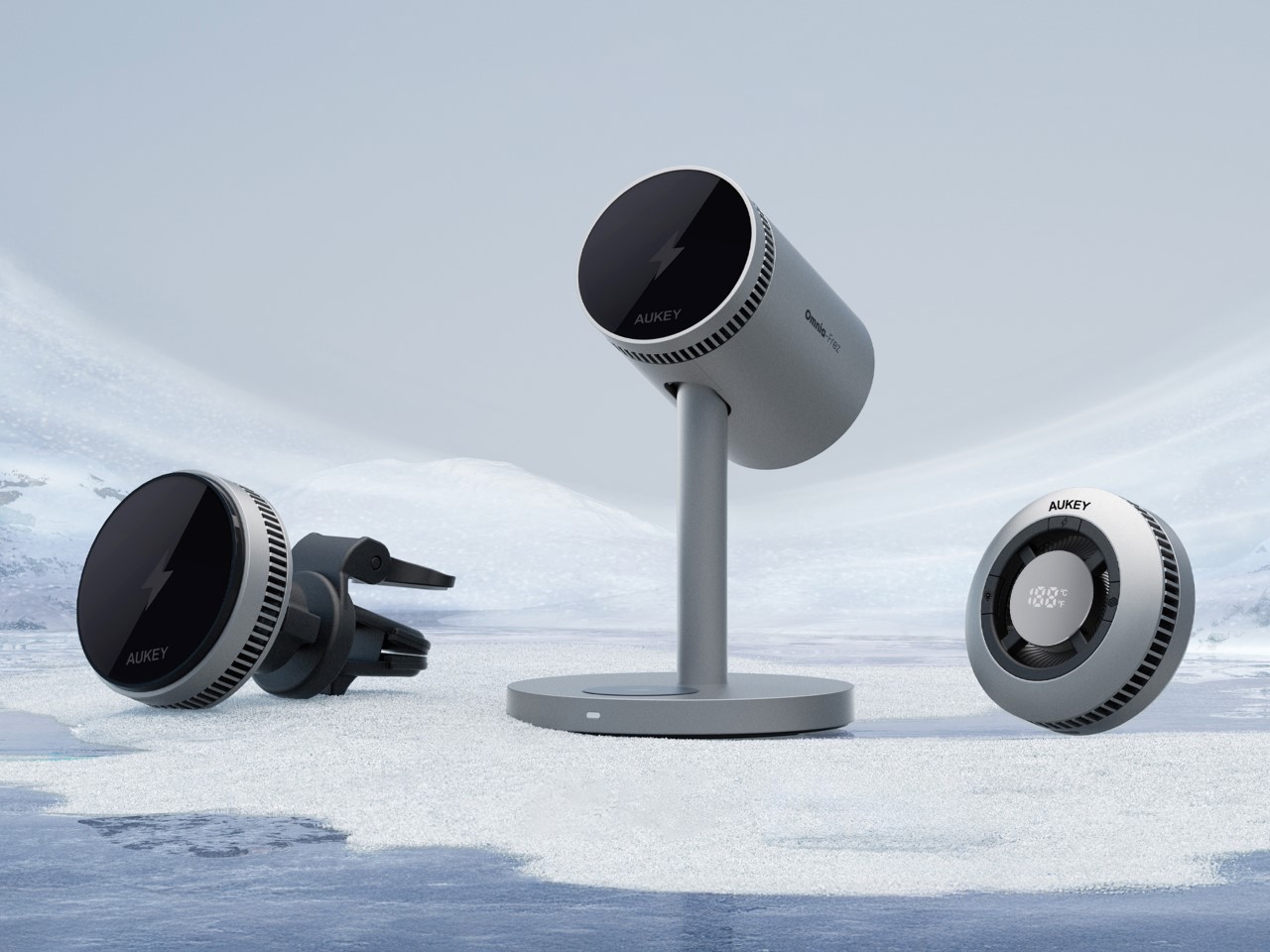
I bought a wireless charging power bank a few months back for my iPhone 15 Pro. I don’t use it anymore just because of how much it heats up my battery. You see, a battery’s biggest enemy is heat. Heat affects the lithium-ion sub-structure, not only causing your battery to lose efficiency over time but also potentially catch fire. Neither of those things are good, obviously – which is why Aukey’s new chargers with its proprietary Omnia-Frez technology keep your devices cool while they wirelessly charge.

Aukey’s MagFusion series, equipped with the innovative Omnia-Frez cooling technology, offers a practical and stylish solution to one of the most frustrating problems of modern tech—overheating during charging. Whether you’re a mobile gamer fighting through long boss battles, an Apple enthusiast with too many cables cluttering your desk, or a commuter relying on your phone for navigation, the MagFusion lineup promises to keep your devices cool, charged, and ready for anything.

“The new Omnia-Frez technology addresses the challenge of overheating while charging head-on,” said David Yunyou Wu, Vice President of AUKEY. “Overheating slows down charging and degrades a battery’s lifespan, but AUKEY’s revolutionary Omnia-Frez cooling technology is changing the game for iPhone users.”

Designer: Aukey

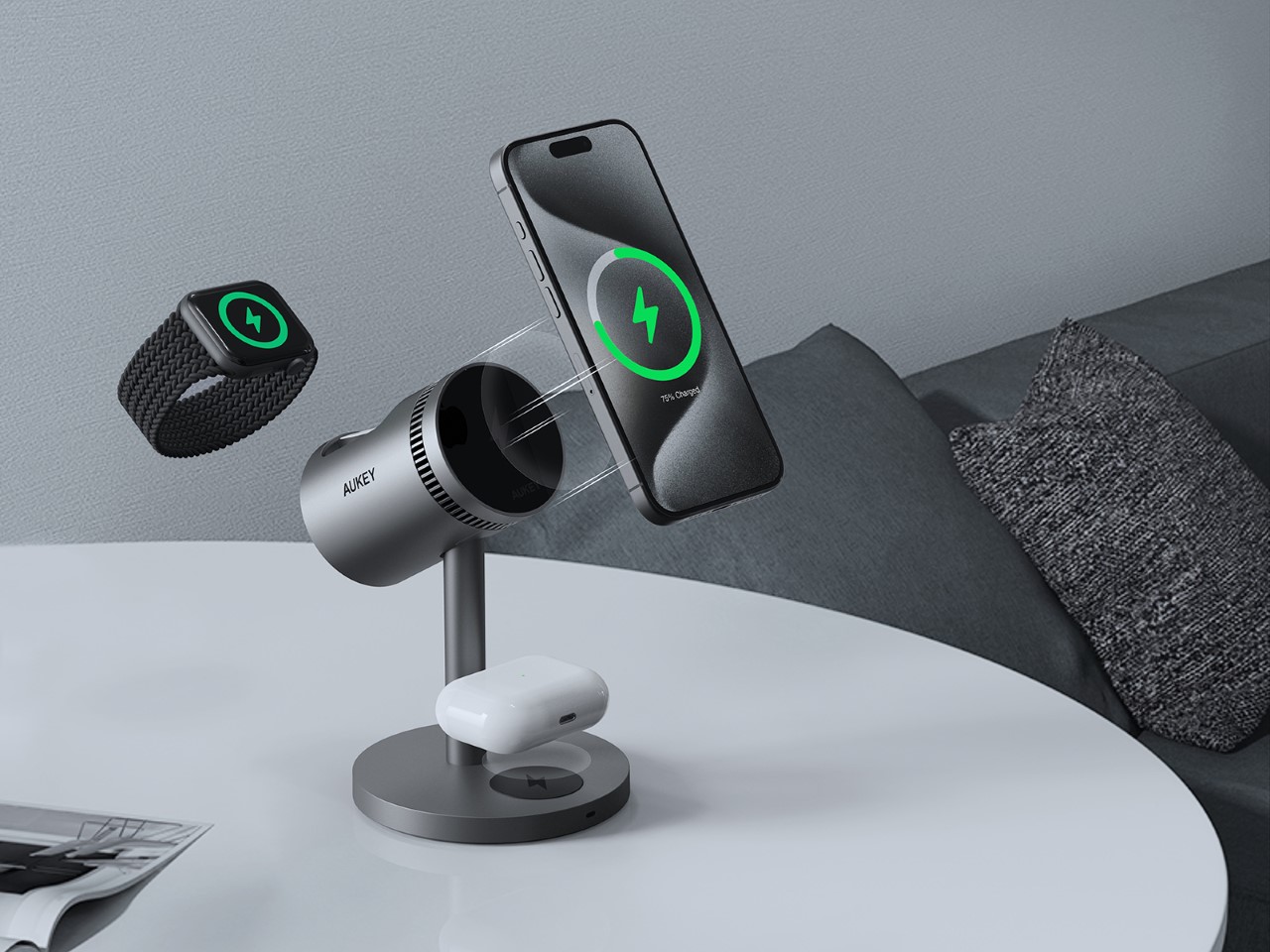
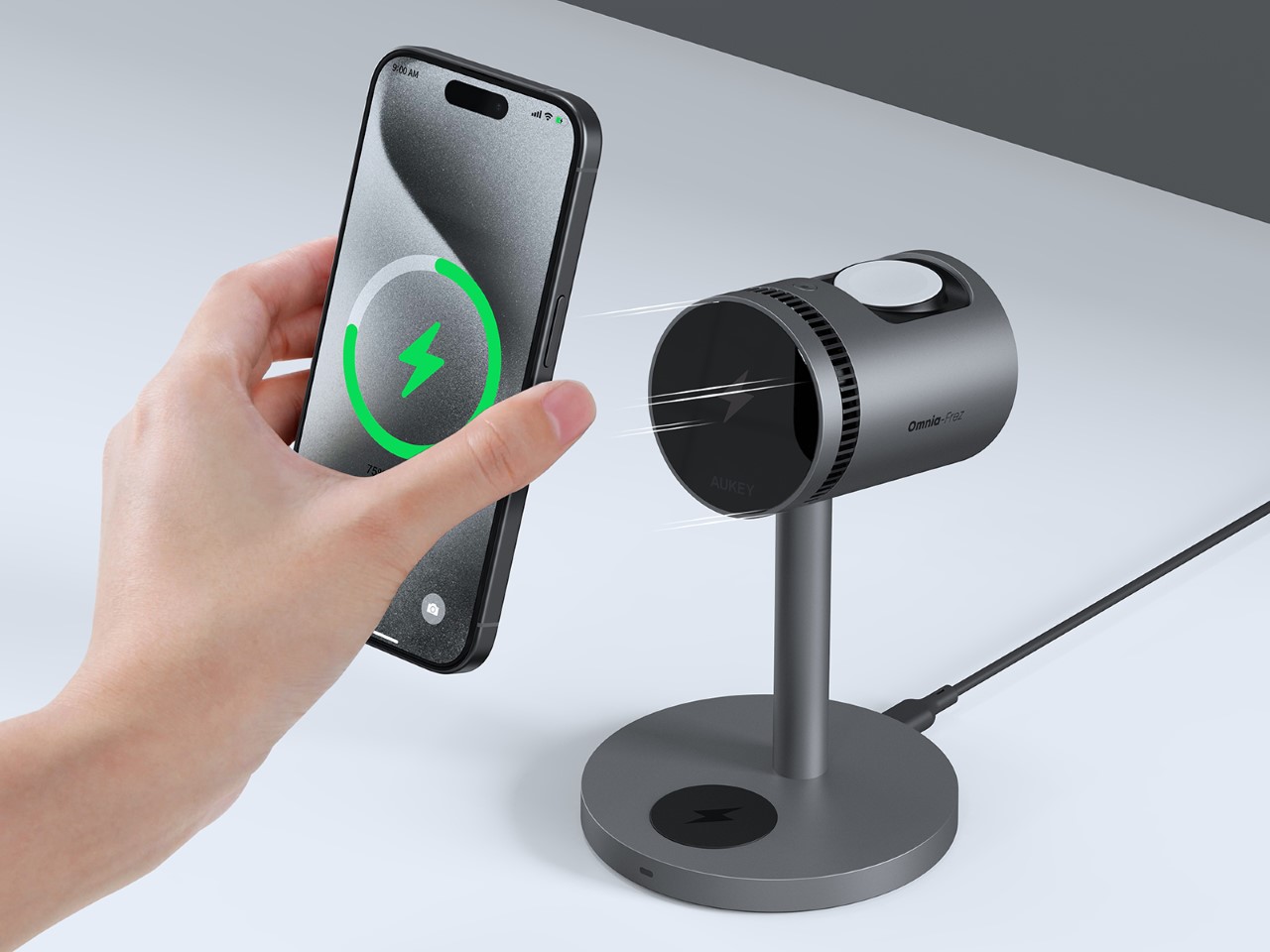
The MagFusion 3-in-1 Pro is the perfect charging station for those who live deep within the Apple ecosystem. It’s designed to handle your iPhone, AirPods, and Apple Watch simultaneously, offering a sleek, minimalist design that’s far more appealing than the spaghetti mess of cables we’re all too familiar with. But it’s not just about looks—this charging hub is all about efficiency. Thanks to the Omnia-Frez cooling system, the 3-in-1 Pro keeps your devices running cool by reducing charging temperatures by up to 20°C (68°F), which leads to faster charging times and a longer lifespan for your battery. In fact, Aukey’s testing shows that an iPhone 15 Pro charges a full 26 minutes faster on the 3-in-1 Pro compared to traditional wireless chargers. Plus, the adjustable stand allows you to prop your phone at the perfect angle for FaceTime calls or a quick glance at notifications.

Not only does it work beautifully, but the 3-in-1 Pro is also easy on the eyes, made with tempered glass and aircraft-grade aluminum. It’s a charging station that will look just as good in a modern office as it would on your nightstand. All the while, a strong magnetic connection ensures your iPhone stays firmly in place—so even if you accidentally nudge it, it’s not going anywhere.

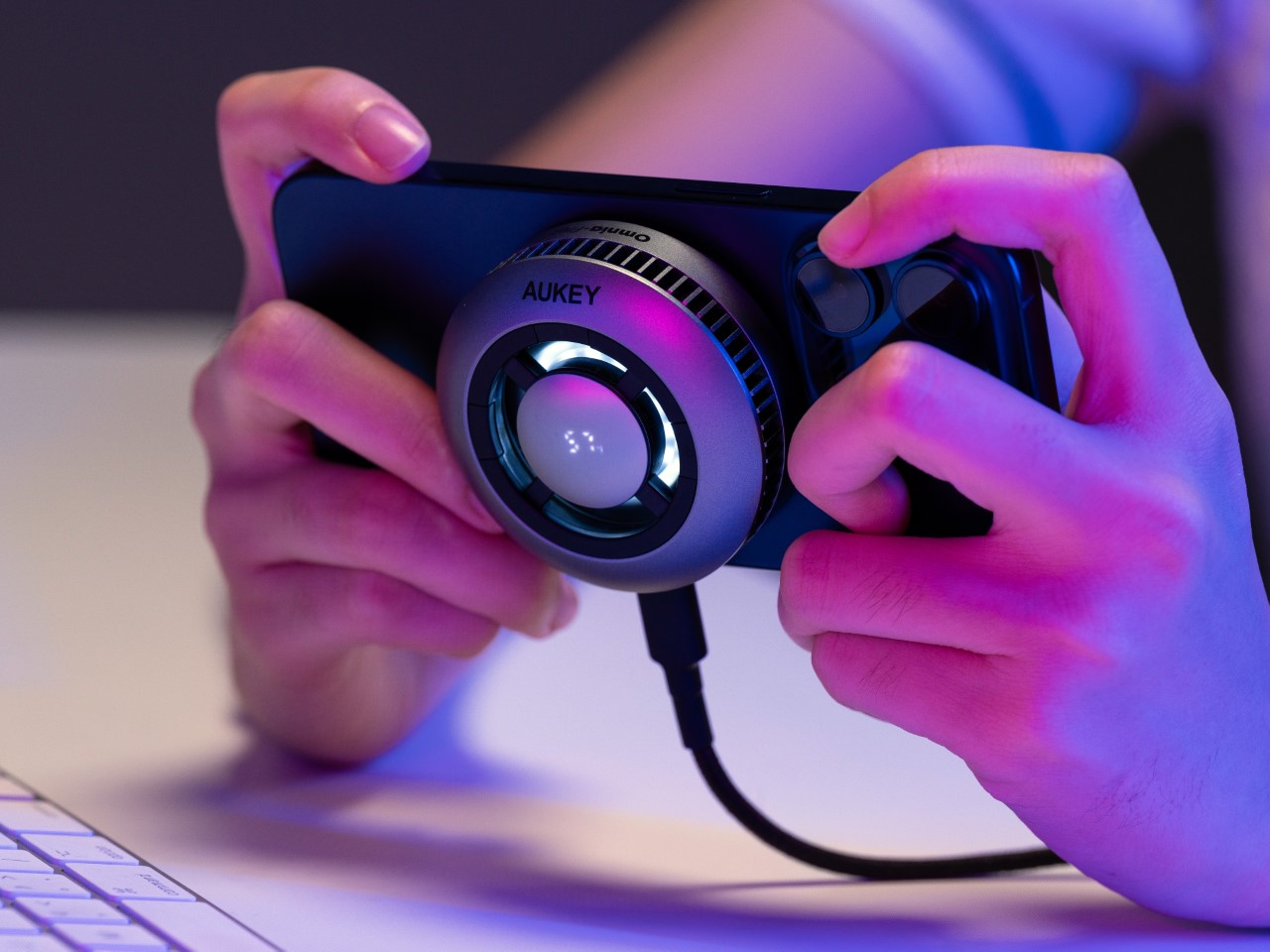
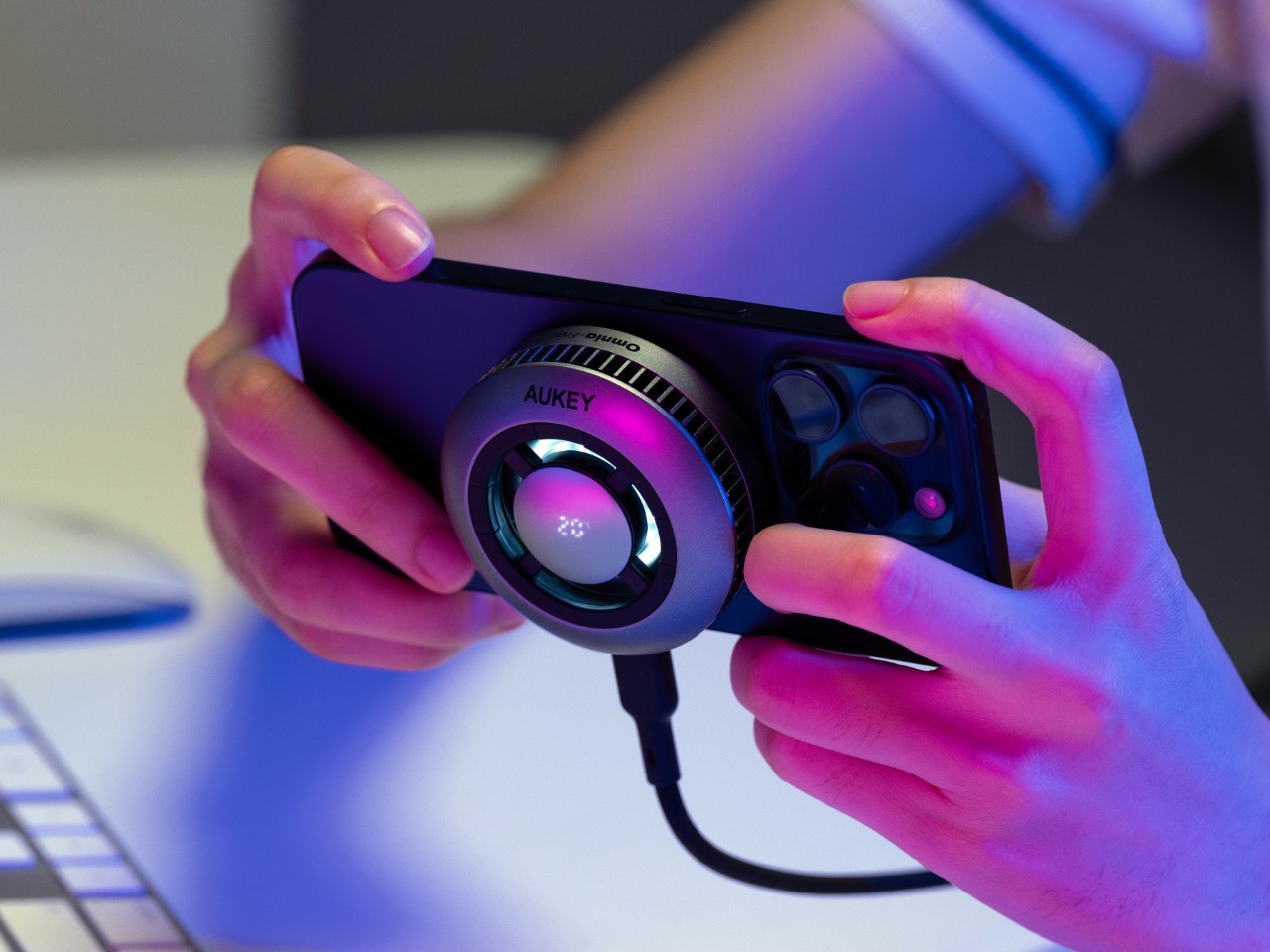
If mobile gaming is your thing, Aukey’s MagFusion GameFrost was tailor-made for you. We’ve all had our phones get alarmingly hot mid-game, only to watch performance tank as the heat throttles the processor. The GameFrost combats this by offering three adjustable cooling modes—Common, Medium, and Freezing—that you can tweak depending on how intense your gaming session gets. This performance enhancer disguised as a charger keeps your phone cool enough to handle whatever game you throw at it without losing speed or lagging when you need it most. And, of course, it charges your phone at the same time, pumping out 15W of wireless power for iPhones compatible with Qi2 and MagSafe.

But Aukey didn’t stop at function; they added a dash of flair with customizable lighting effects. Whether you prefer a pulsing glow during late-night gaming sessions or a solid color that matches your RGB keyboard, GameFrost lets you set the mood. The real-time temperature display is a nice touch, too, giving you live feedback on just how cool your device is staying, ensuring both peace of mind and bragging rights.

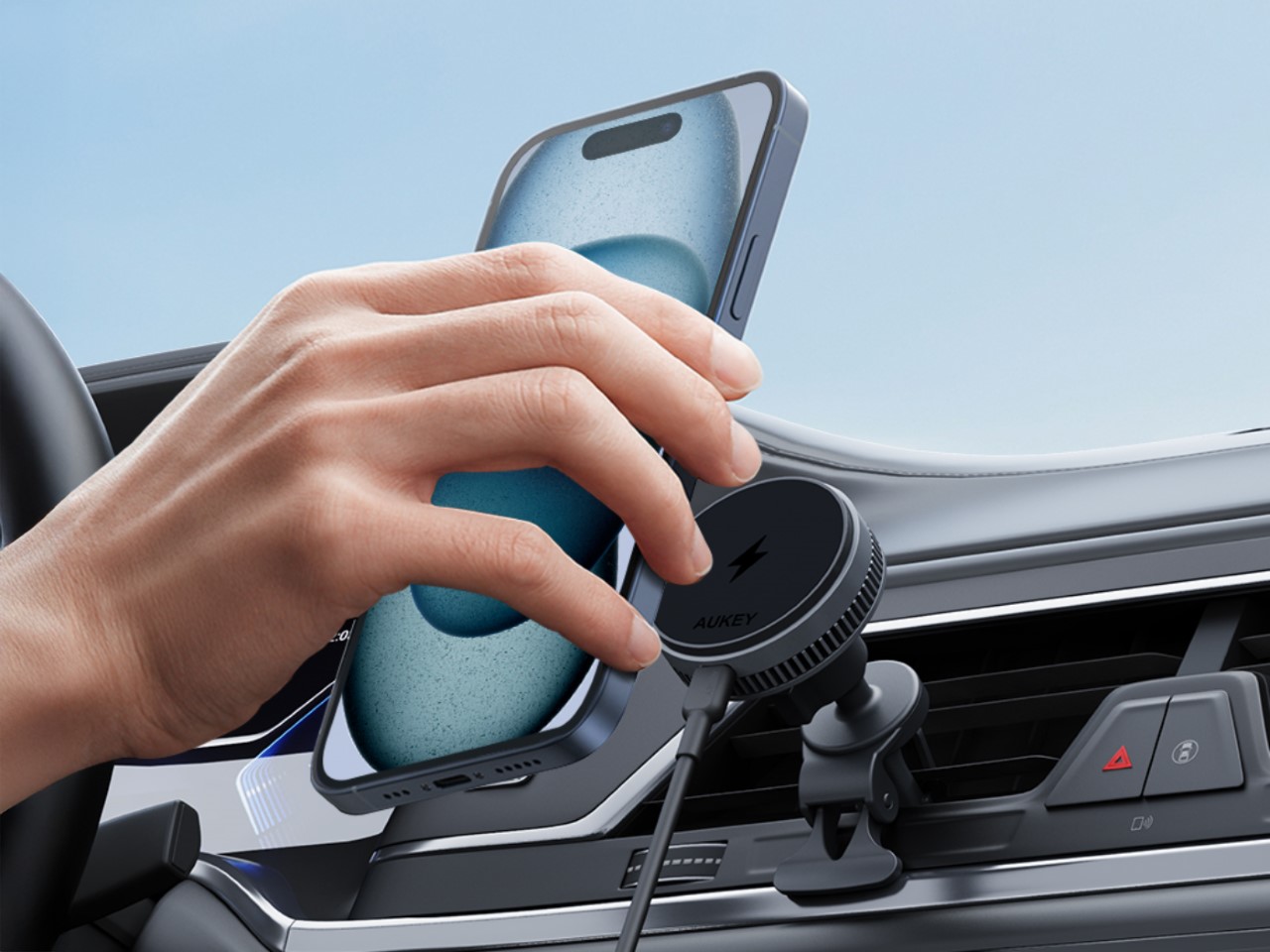
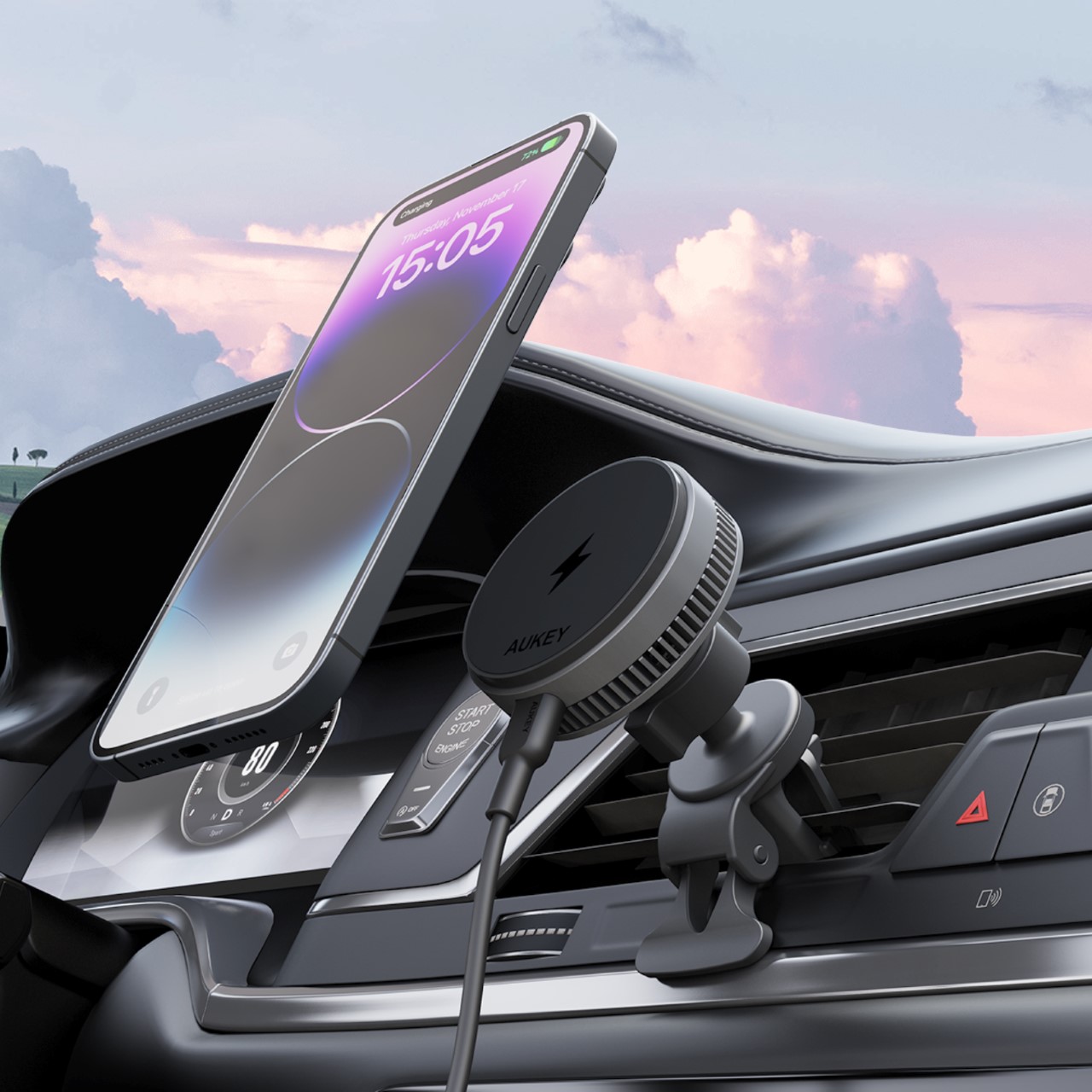
For those always on the move, the MagFusion Dash Pro transforms your car into a high-tech charging station. We’ve all been there—halfway through a road trip or stuck in traffic, watching your phone heat up as it juggles GPS, podcasts, and texts. The Dash Pro prevents that problem with its active Omnia-Frez cooling system, designed to keep your phone cool even on long, grueling drives. It delivers 15W wireless charging and is compatible with iPhones using Qi2 tech, ensuring your phone stays powered up without becoming a hot brick in your hand.

What sets the Dash Pro apart, though, is its secure, no-nonsense design. It’s compact yet sturdy, with a strong magnetic mount that holds your phone firmly in place, even over potholes and bumpy roads. The adjustable ball joint means you can tweak your phone’s angle to suit your line of sight—perfect for navigation. With its sleek profile and silent operation, this is the kind of tech you’ll barely notice while it quietly does its job.

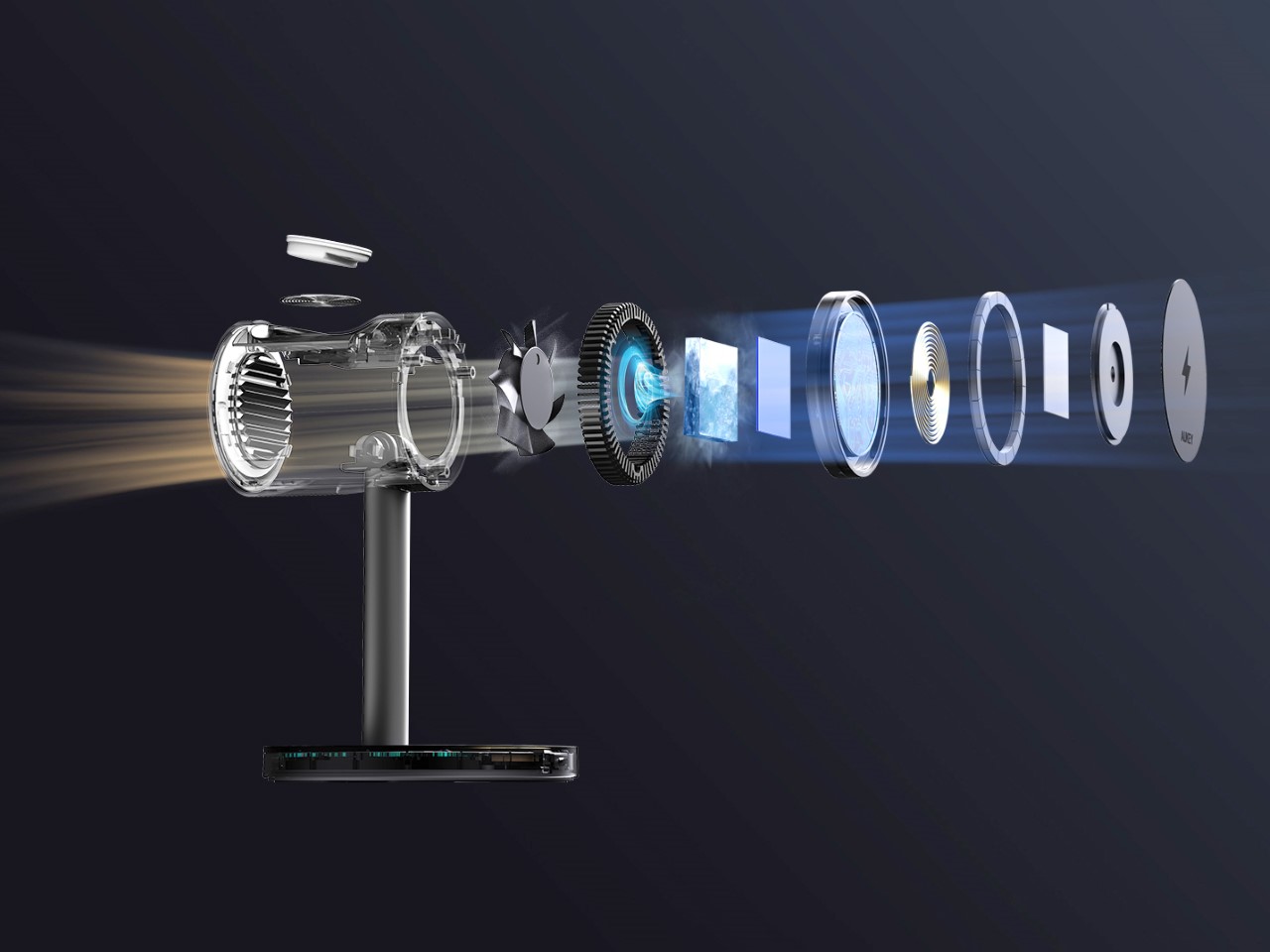
Aukey’s Omnia-Frez technology, featured in every MagFusion product, works its magic through a combination of cooling techniques. A 7-blade fan spins silently, whisking heat away, while alloy cooling fins and a thermoelectric chip work in tandem to dissipate heat quickly. The result is a cooler, more efficient charging experience, with no throttling or battery damage from excessive heat. And, unlike many cooling systems, this one is impressively quiet. Whether you’re deep into a gaming session, working at your desk, or listening to tunes on the road, the MagFusion series operates with barely a whisper, making it as unobtrusive as it is effective. So, whether you’re catching up on emails, dominating the leaderboards, or navigating rush hour traffic, you can count on your phone being ready for action without going mercurial… literally.

The post Your Wireless Charger Might Be Hurting Your Battery — Aukey’s MagFusion Pro Series Has the Fix first appeared on Yanko Design.
This Retro Open-front CD Player also has an Ambient Lamp, FM Radio, and Bluetooth Speaker

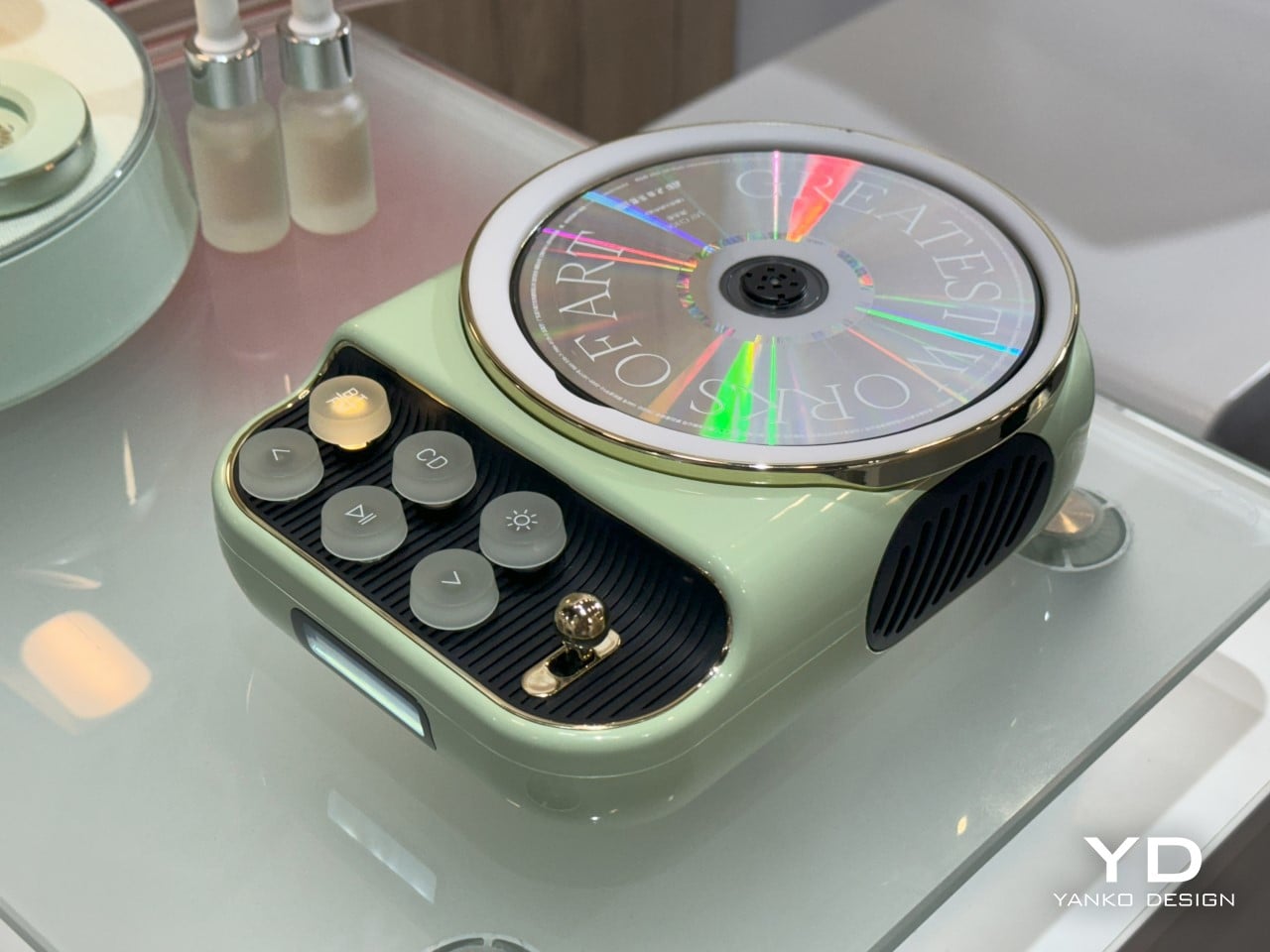
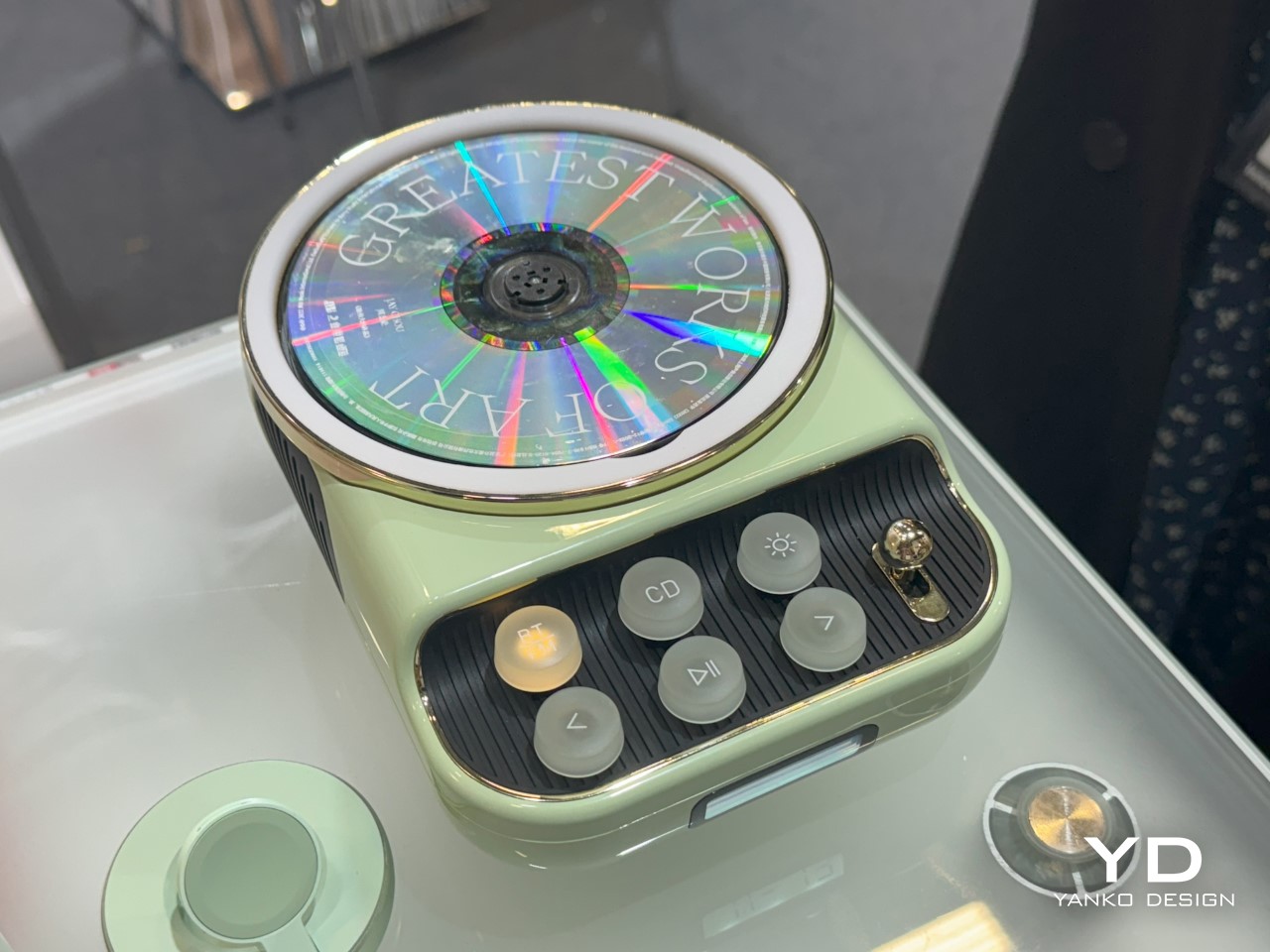
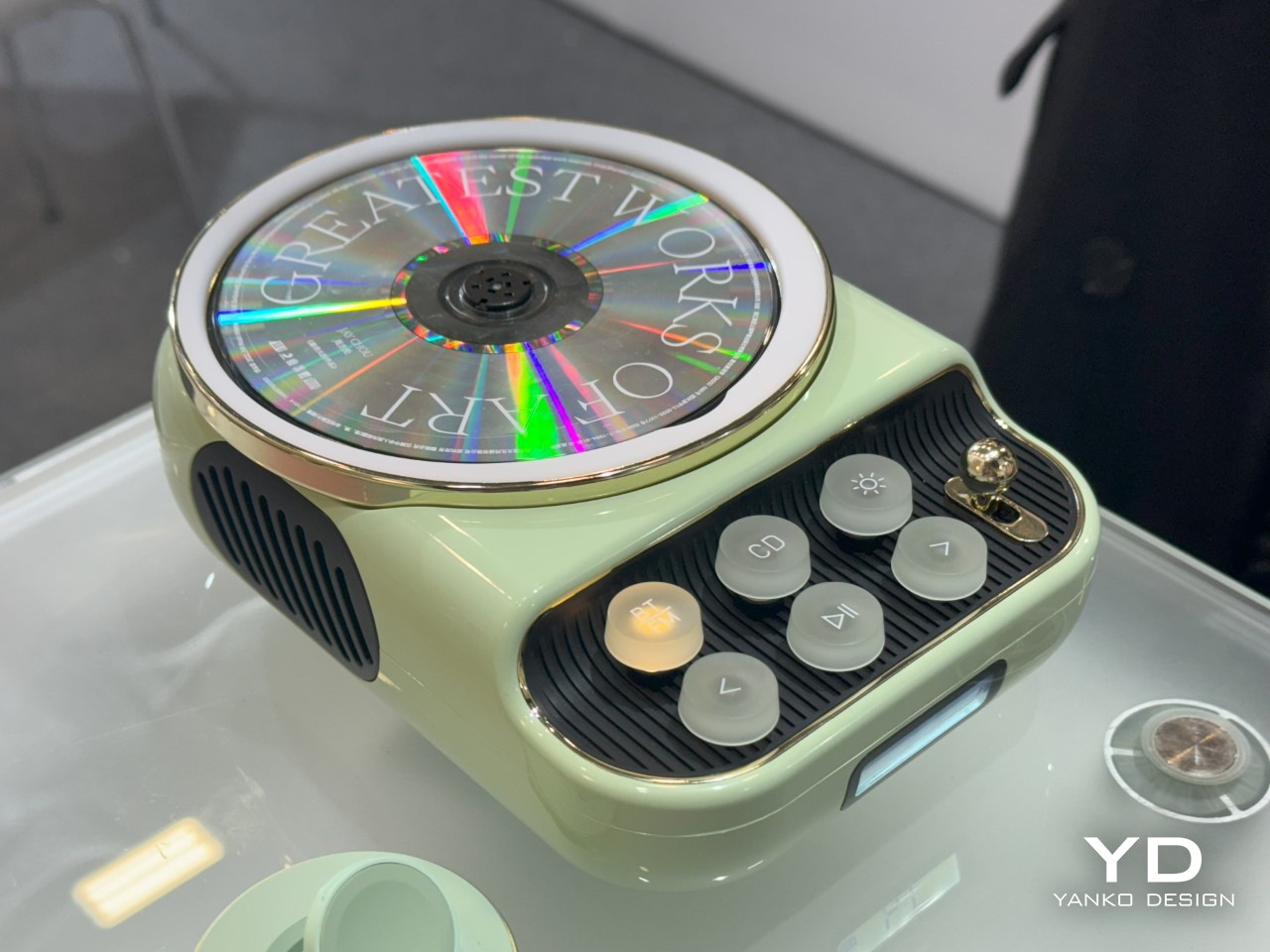
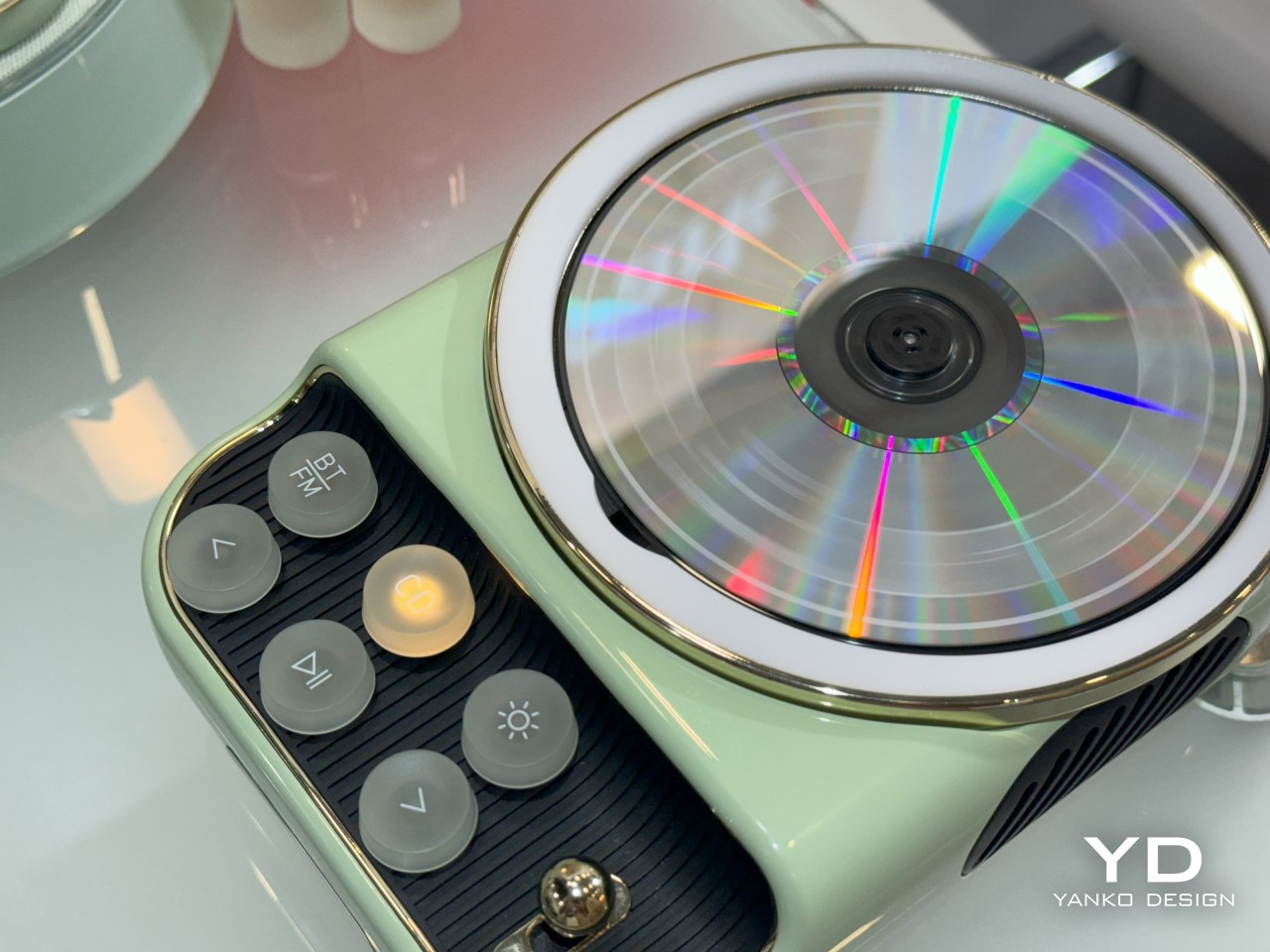
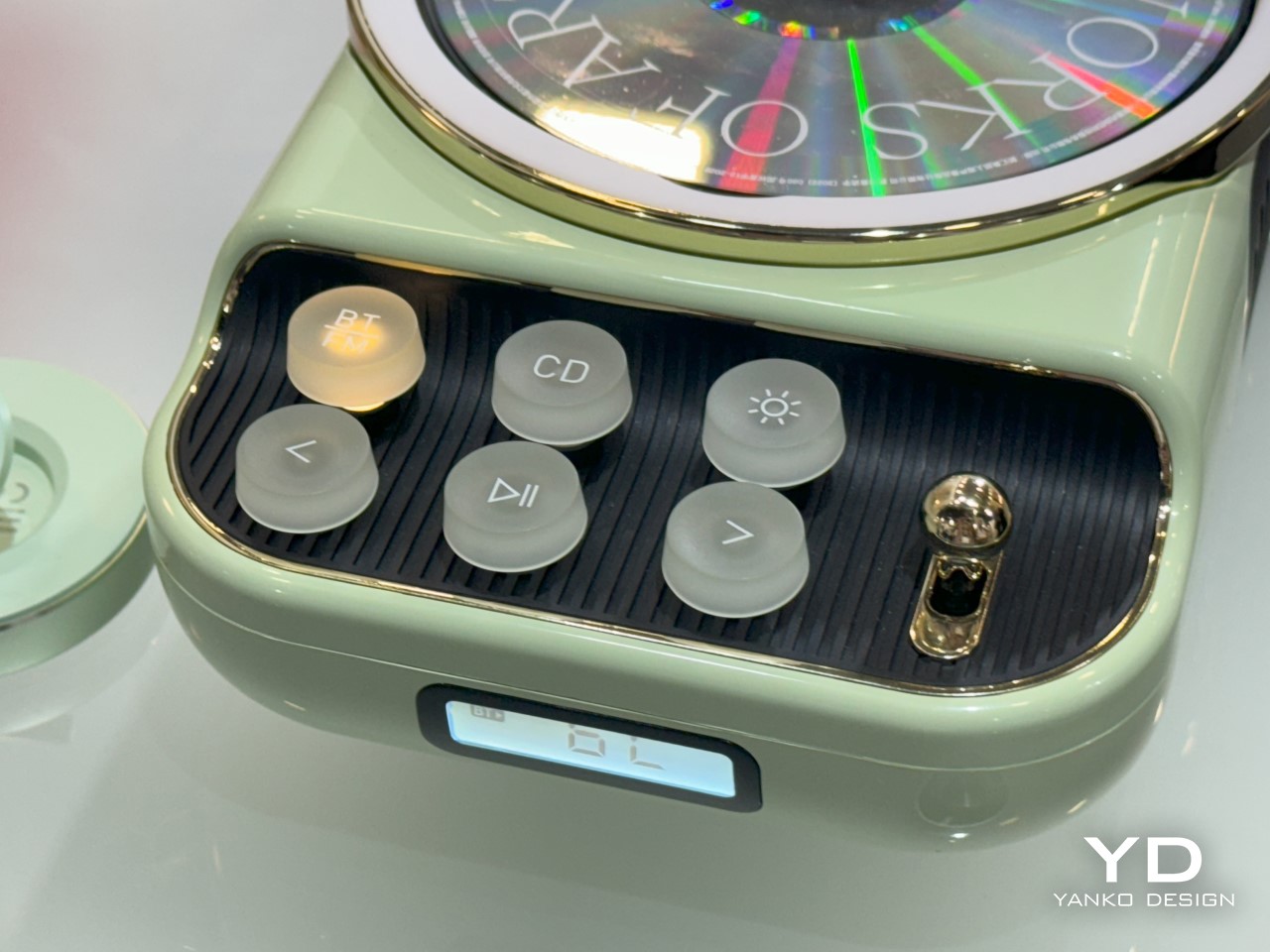
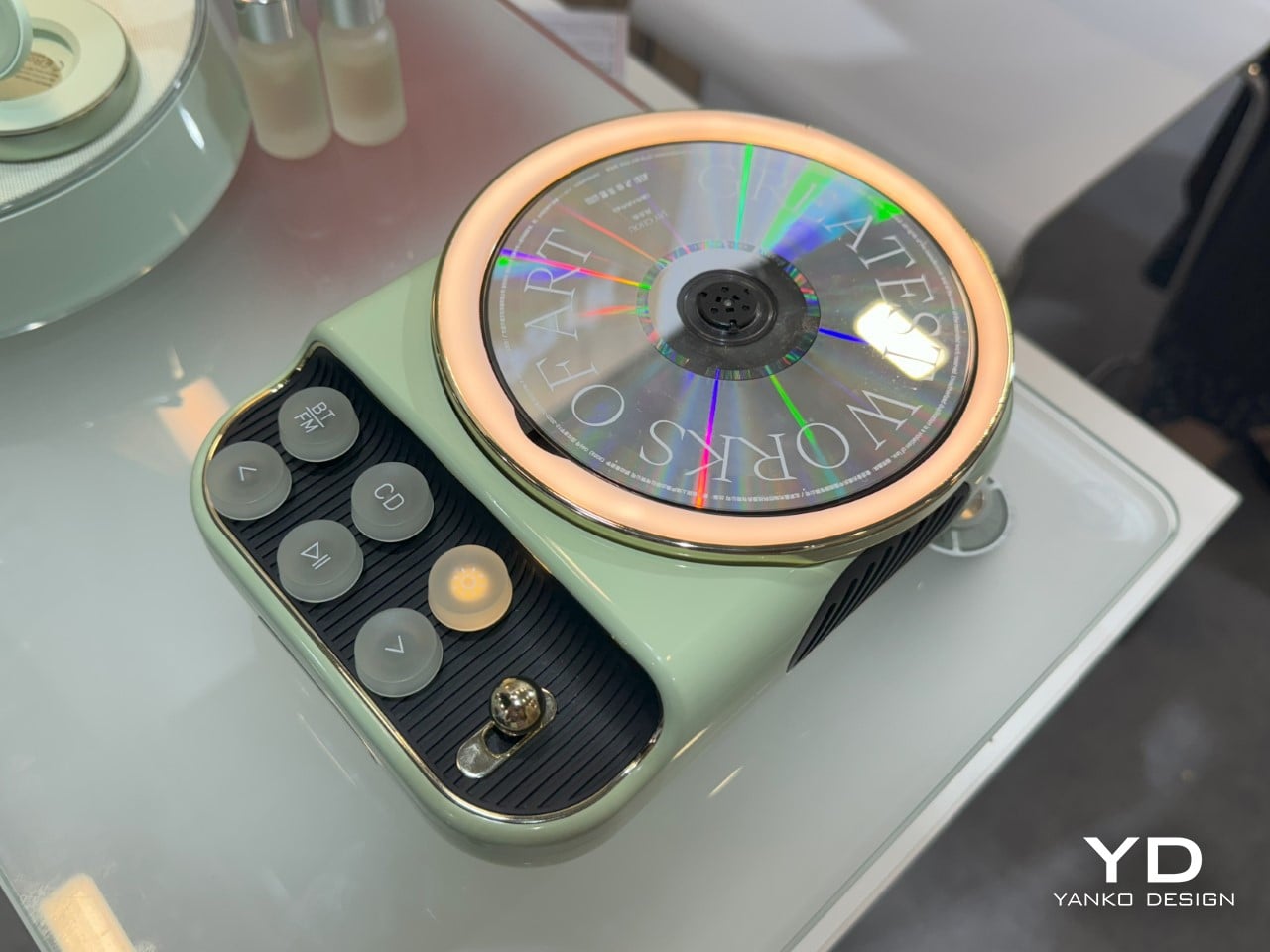
They say history always repeats itself. Vinyls are making a comeback right now, which means in a few years cassettes and CDs will make a resurgence all over again, and when compact discs do enter the mainstream, you’re going to be glad you had this cute CD player from Semetor. Spotted on the floor at IFA 2024, the K8 is a playfully retro CD player that embraces the design aesthetic of European appliances in the 50s. Designed with an open top that allows the CD to sit on its platter like a vinyl on a gramophone, the K8 comes with a few translucent typewriter-inspired buttons that let you control music playback. But wait, it’s 2024, and just being a CD player obviously won’t cut it… which is why the K8 also has an FM radio, a Bluetooth-enabled wireless speaker, and even an ambient lamp built into its adorable design.
Designer: Semetor

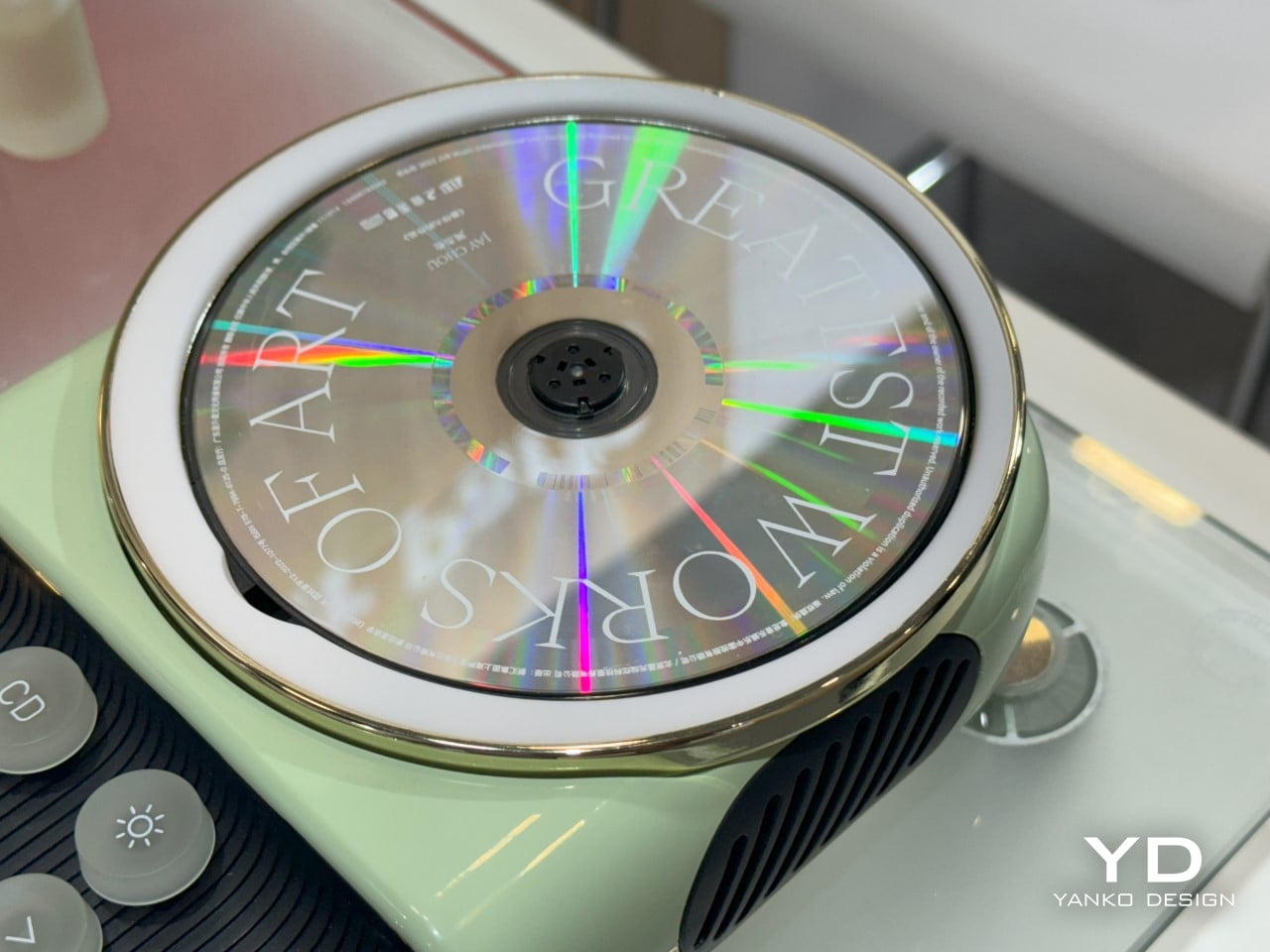
The K8 isn’t a cutting-edge CD player… but it’s cute. It has the adorable demeanor of one of lofree‘s older products, with its retro aesthetic that’s brought about by its rounded form and use of pastel shades. What instantly grabs your eye first is the open-top CD player. While most players usually conceal the CD within a casing, this one does not. You see the CD spin as you play music, and the disc’s radial spectral finish looks absolutely gorgeous.
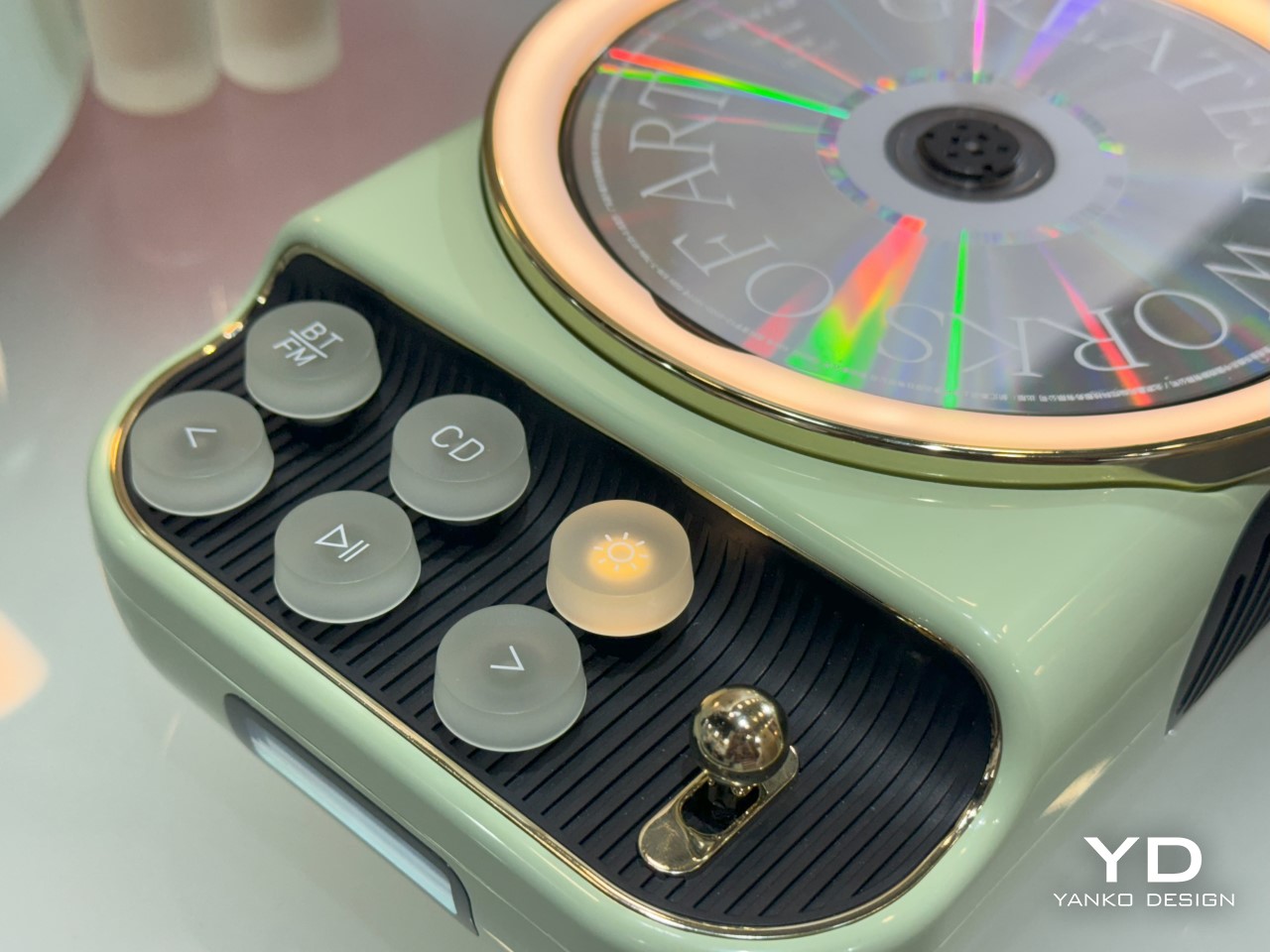
Playback is easy. For running a CD, just hit the CD button on the panel, and use the controls below to play/pause, or skip tracks. A BT/FM button lets you toggle the Bluetooth player or FM radio. Backlights in the button glow to let you know which mode you’re in, and a seven-segment LCD screen on the bottom allows you to see things like track number (for CDs) or radio station (for FM). A gold-plated ‘gear’ on the right side lets you switch on or off the K8.

If all that wasn’t enough, the K8 also packs a warm glow-light for ambient lighting. Hit the button on the top right and a halo around the CD player lights up. It isn’t enough to light a room, but it does bestow a warm wash of golden light in the immediate vicinity, perfect for late-night listening. Pair it with a nice soft jazz CD and you’re absolutely set!

The post This Retro Open-front CD Player also has an Ambient Lamp, FM Radio, and Bluetooth Speaker first appeared on Yanko Design.