This Teenage Engineering handled gaming console derives inspiration from Sony PSP

Teenage Engineering as a niche electronics brand has always offered something new and exciting to the audio-loving community. We certainly love all their creations and are always looking forward to the next creation from the Swedish wiz. It’s been just a few weeks since we saw the refreshing TE concept handheld gaming console designed by an independent creator, and now another one with an eerily similar vibe has landed on Behance.

On first look both these handheld gaming consoles seemed similar but on closer inspection they are indeed different. No surprise, this concept is fan-made, and in no way does Teenage Engineering endorse the concept. That said, the handheld is impressive enough to someday become the inspiration for a real gaming console by TE.

Designer: Vishesh Jaiswal
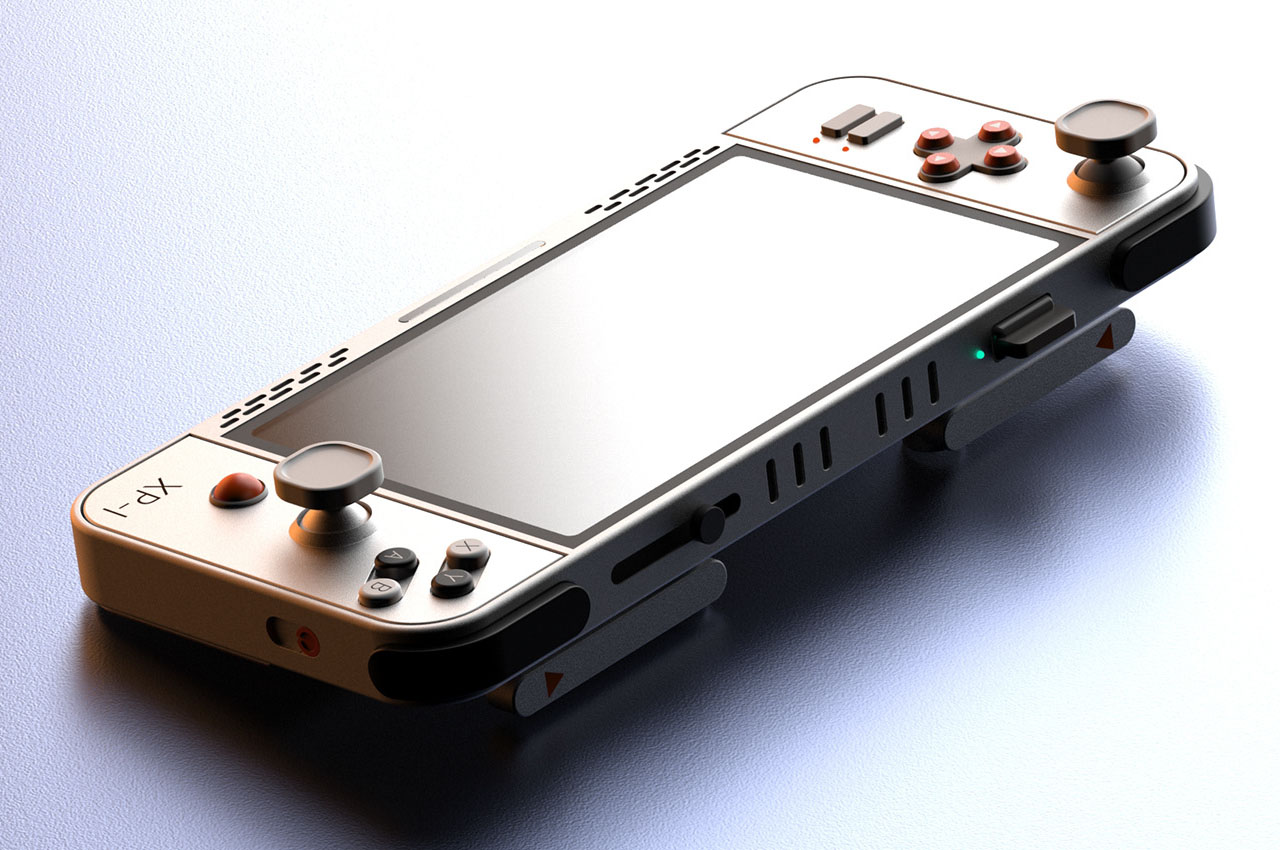
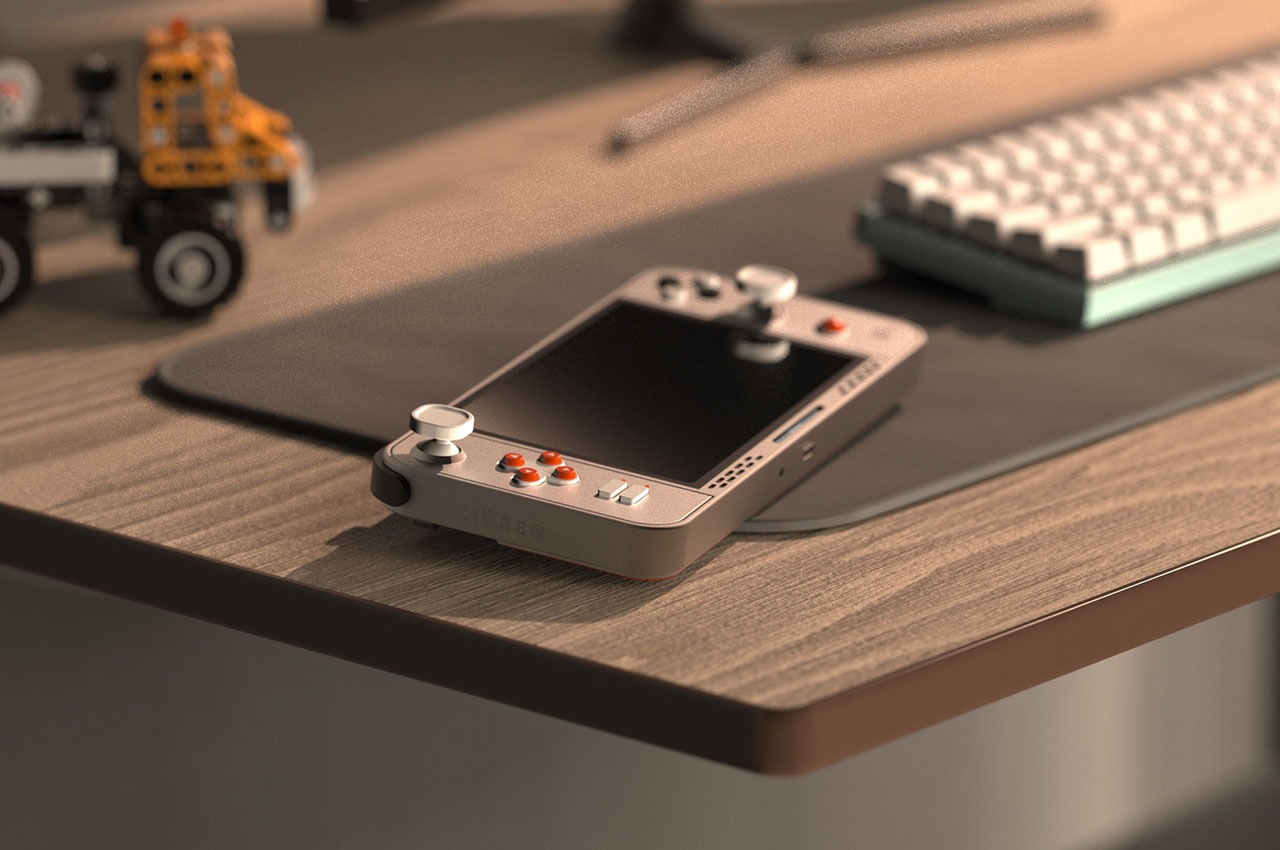
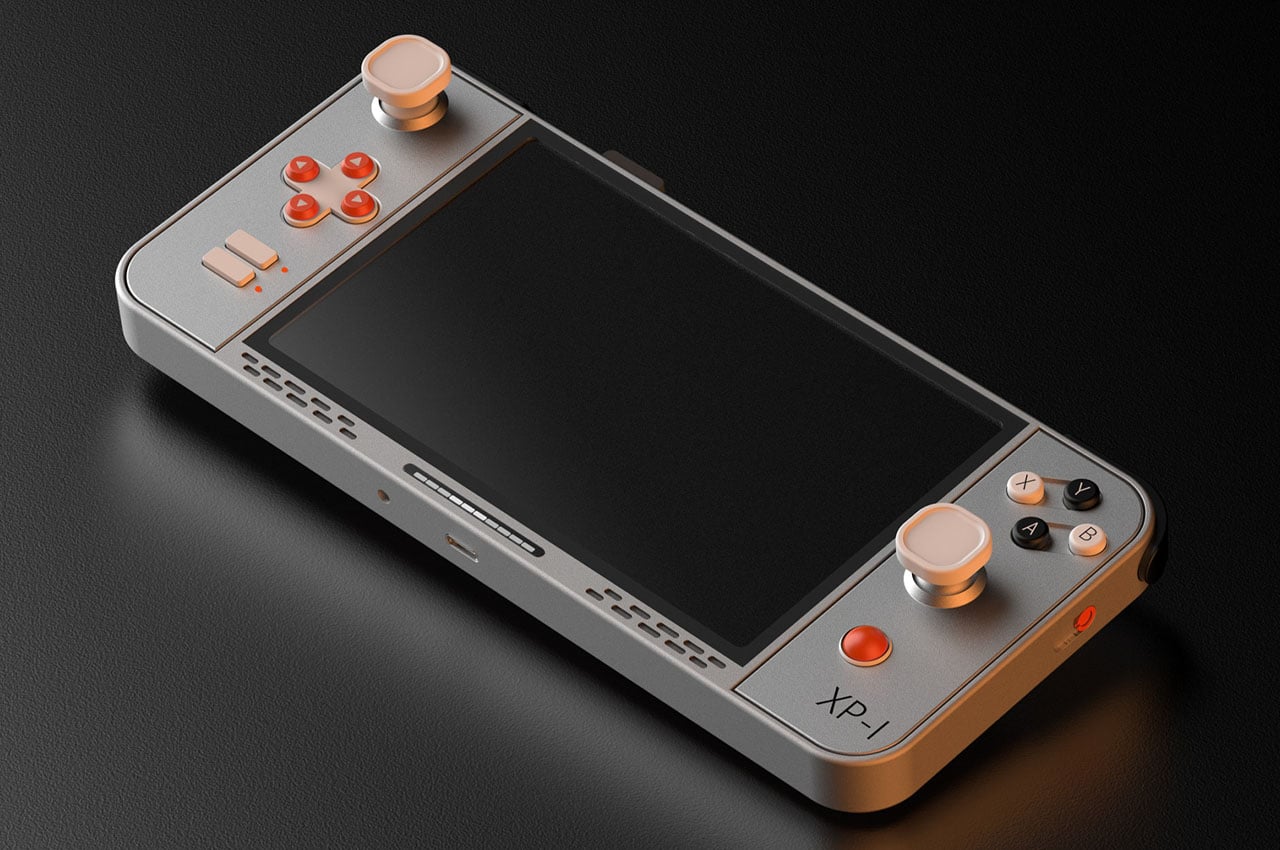
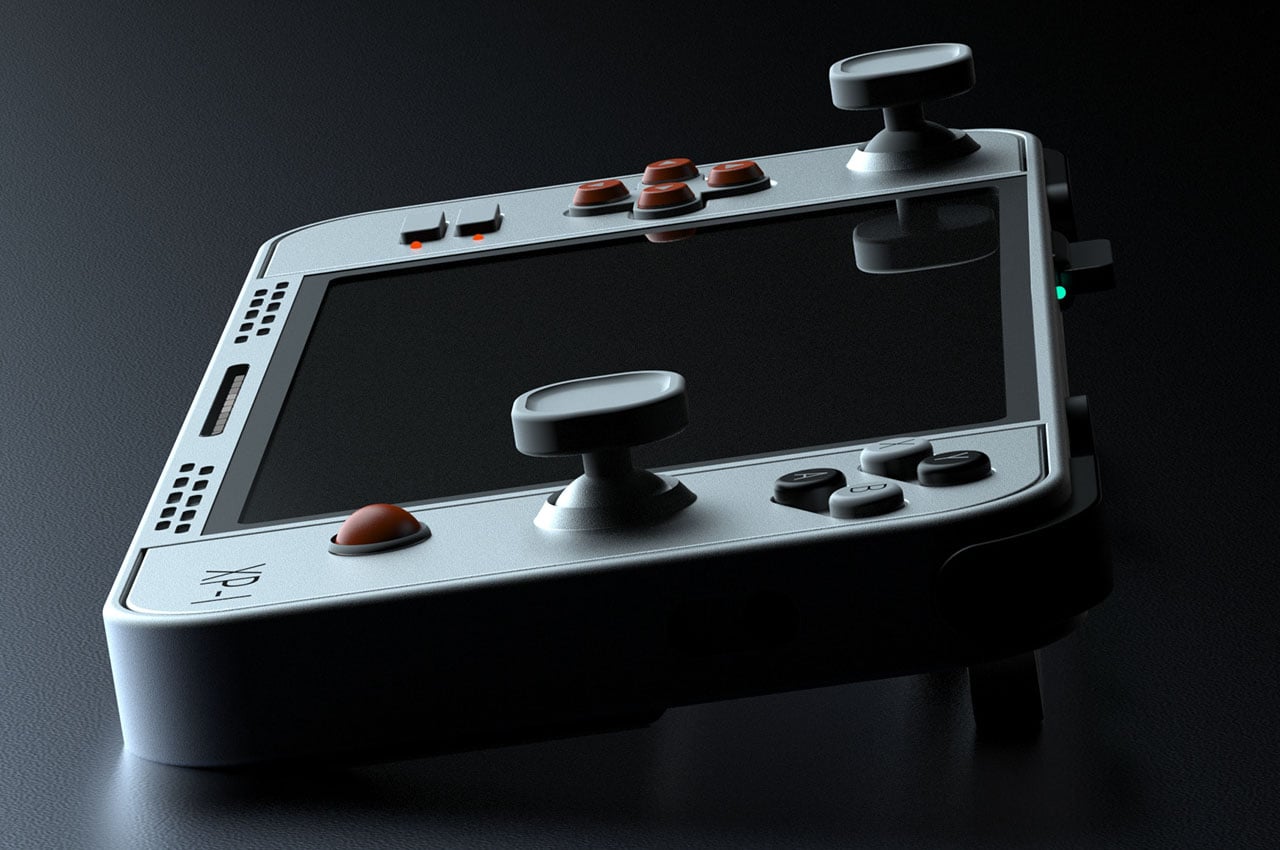
The curves normally identified with the Apple smartphone become an inspiration on the Gaming Console XP-I and the curvature follows down to the bottom surface. The portable gaming machine designed for casual gamers emerges from the teardown of the nostalgic 2006 Sony PSP, and finally evolves to take the form of a handheld that is an amalgam of inspiration from the Nintendo Switch. The prototype dummy model is created by intricately shaping the styrofoam that still looks roughened up and unconvincing.
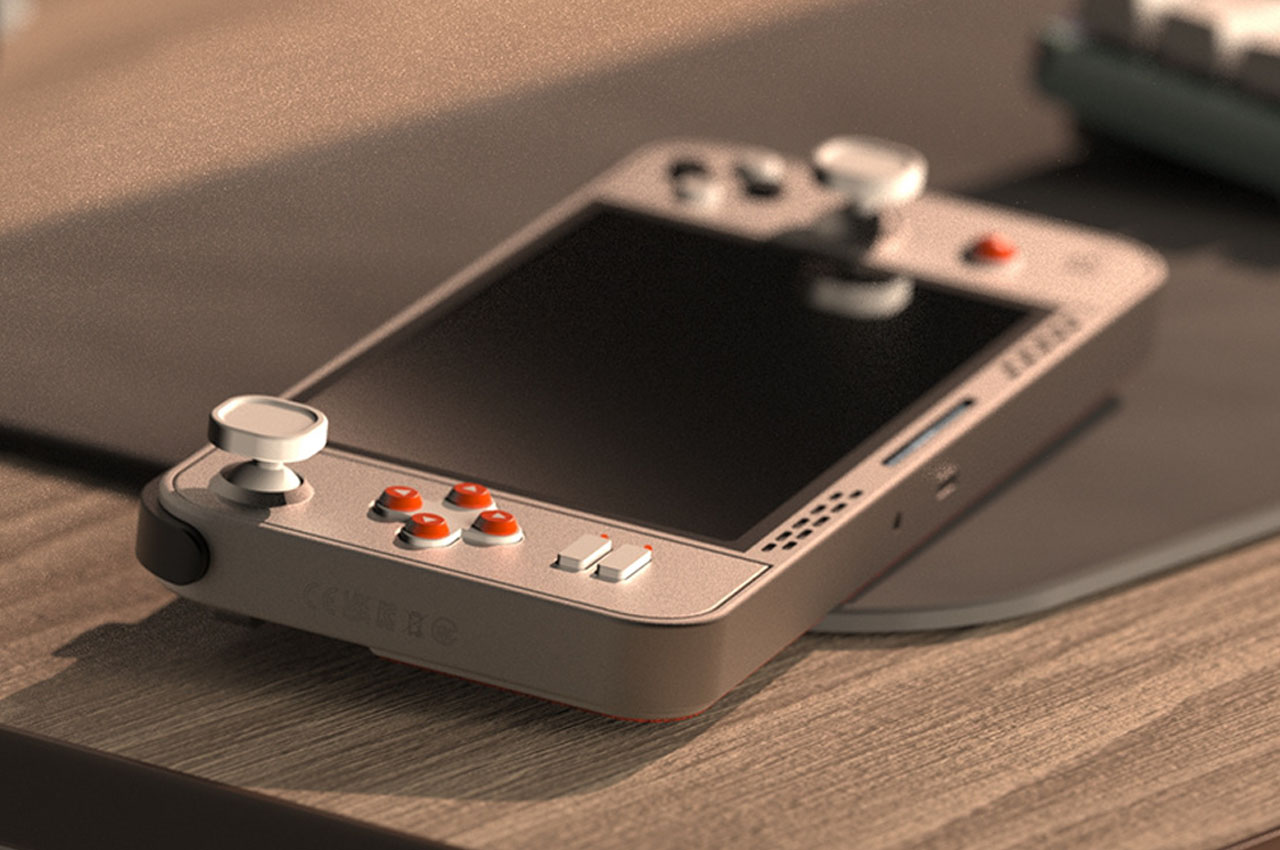
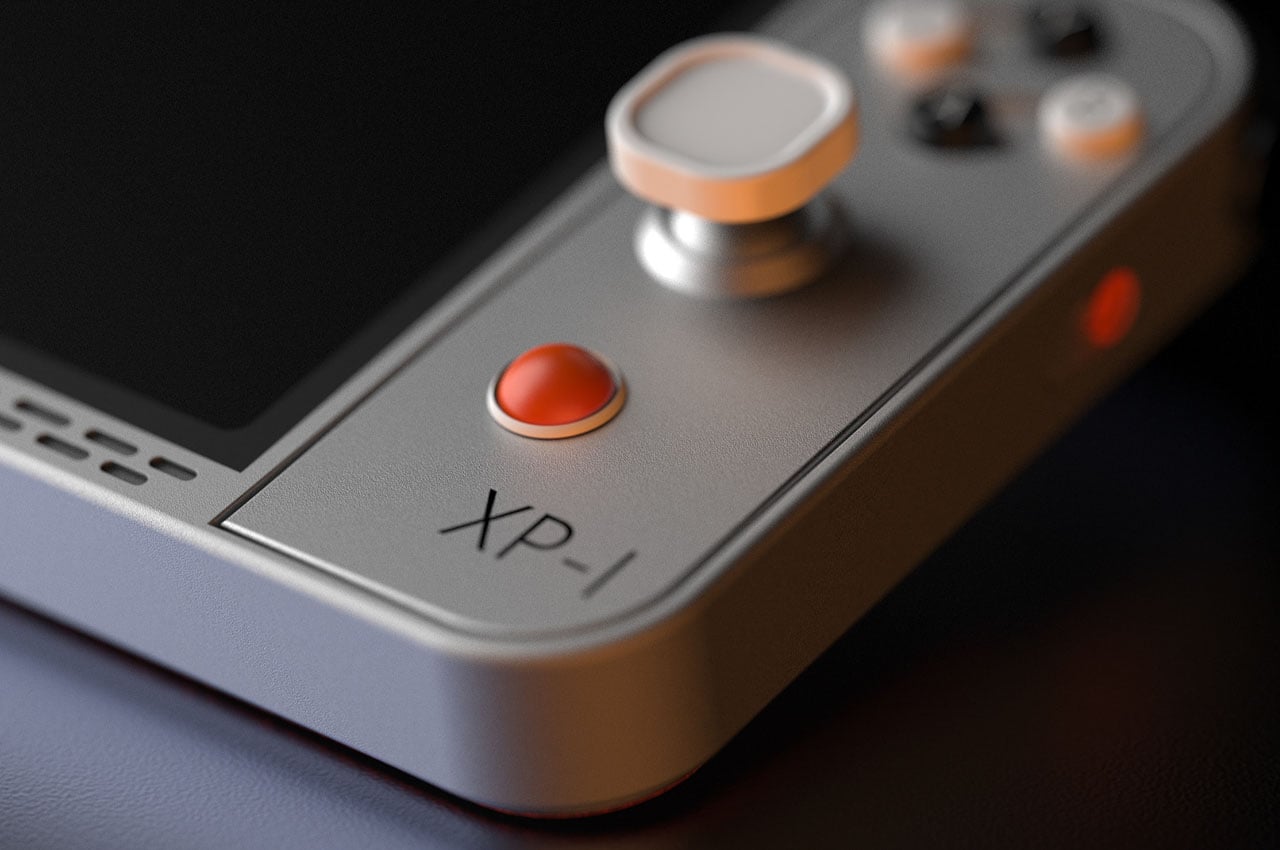
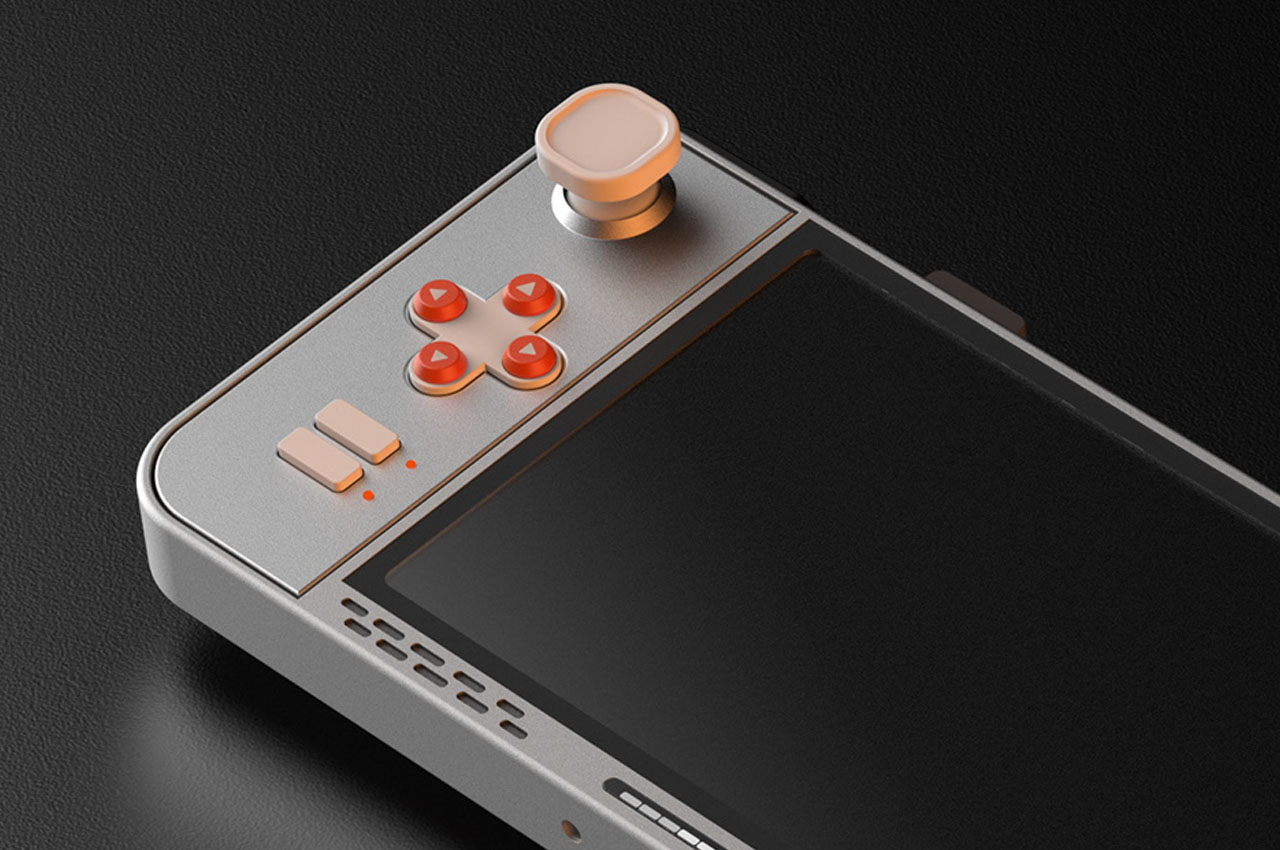
On the other hand, digital renders look more refined and TE-worthy with an extended rear section that acts as a sidekick to place it on the surface. These also act as the trigger buttons for massive tactile input as they move a full 90 degrees. This should be engaging and fun while playing the newly released COD Warzone Mobile or CarX Street. The joystick buttons are more prominent for gamers who like the more retro-styled console with big chunky input buttons.
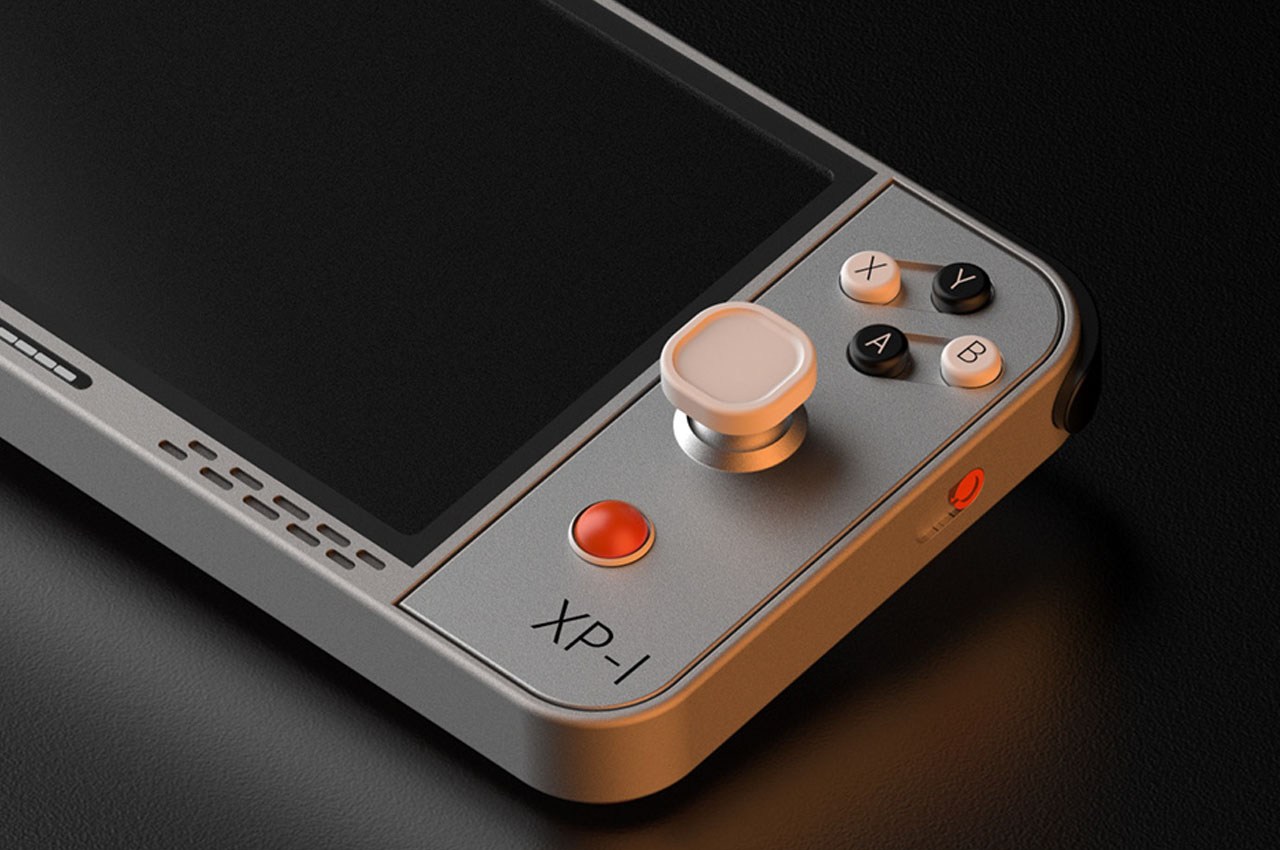
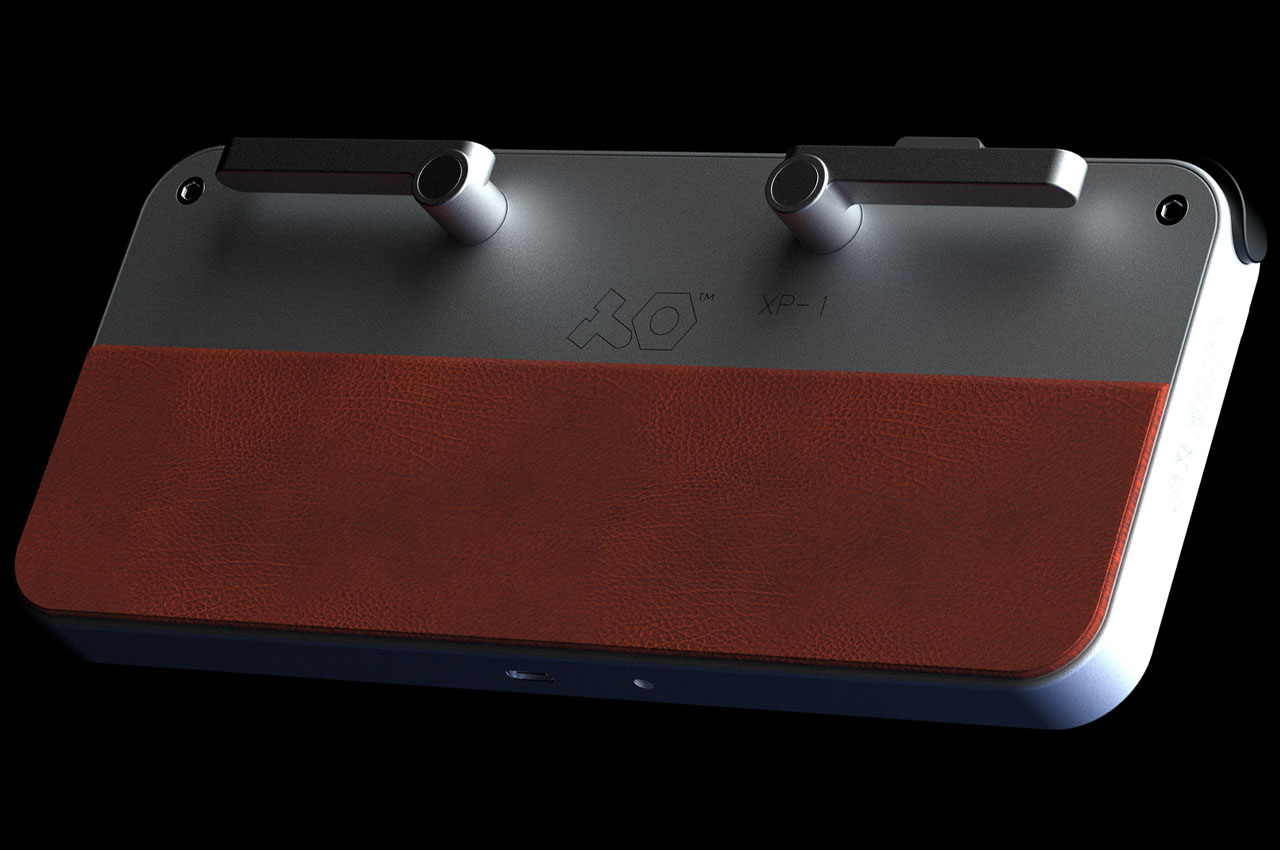
The rear bottom of the handheld has leather padding for comfortable holding during long gaming sessions. The body shell is done in a titanium grey finish contrasted with the signature Teenage Engineering color scheme in orange, black and white. I personally like this one better compared to the earlier concept. Which one do you fancy more to one day join the TE line-up?
The post This Teenage Engineering handled gaming console derives inspiration from Sony PSP first appeared on Yanko Design.
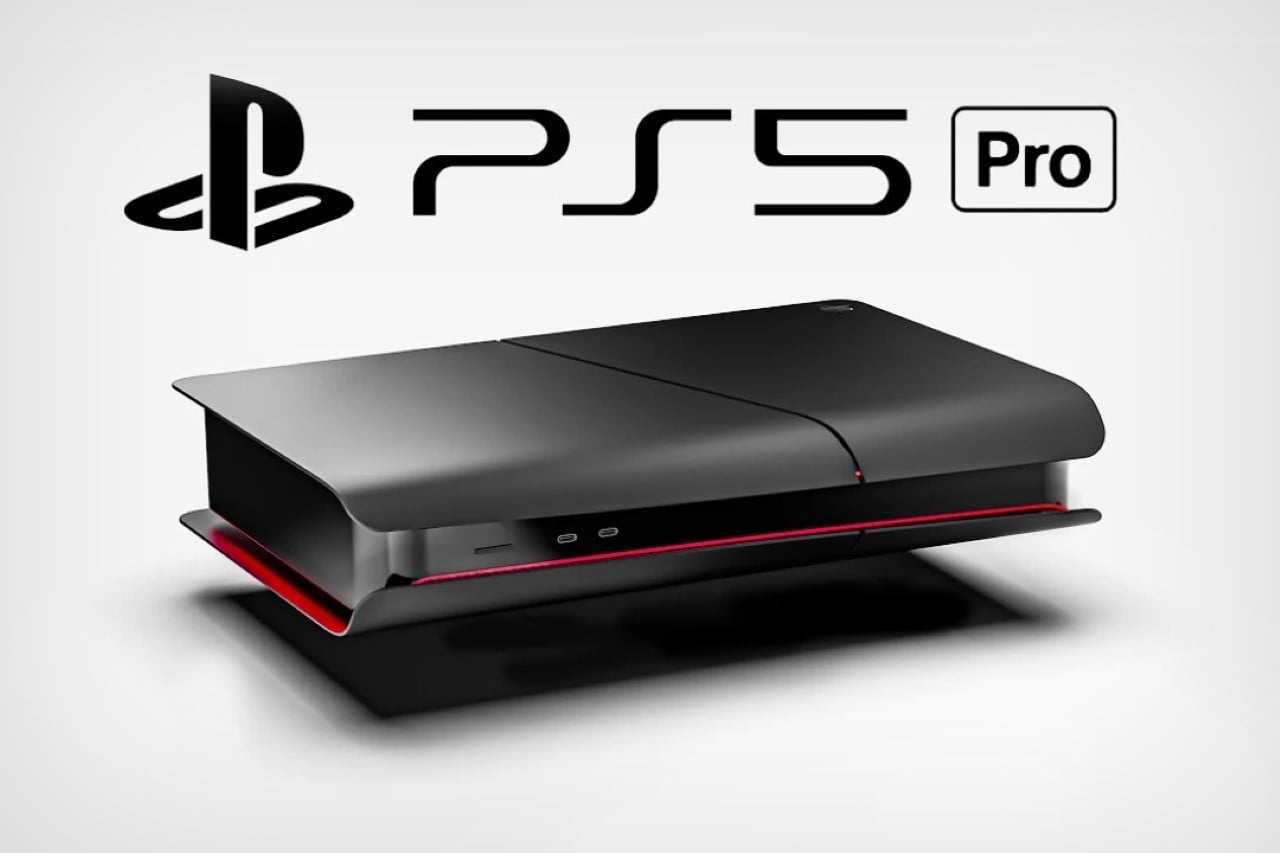
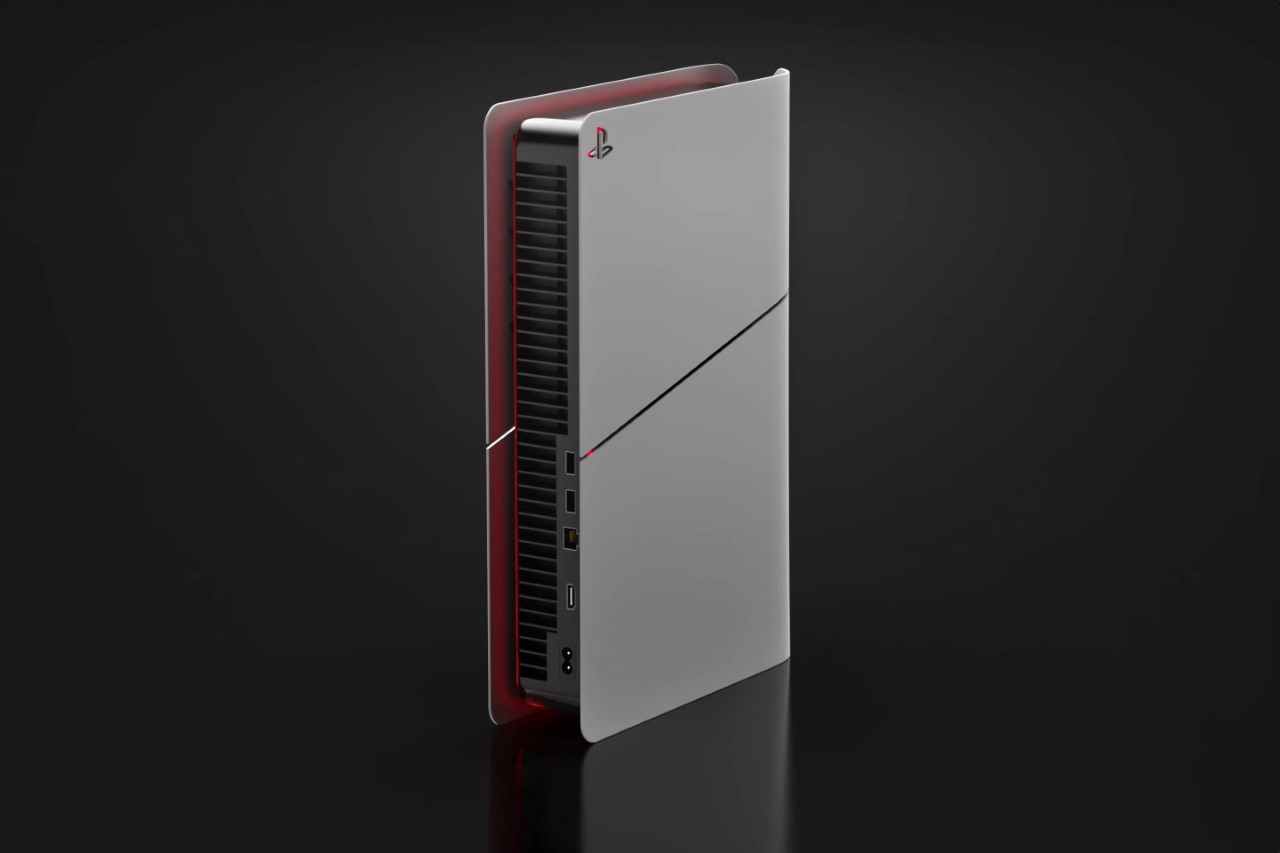
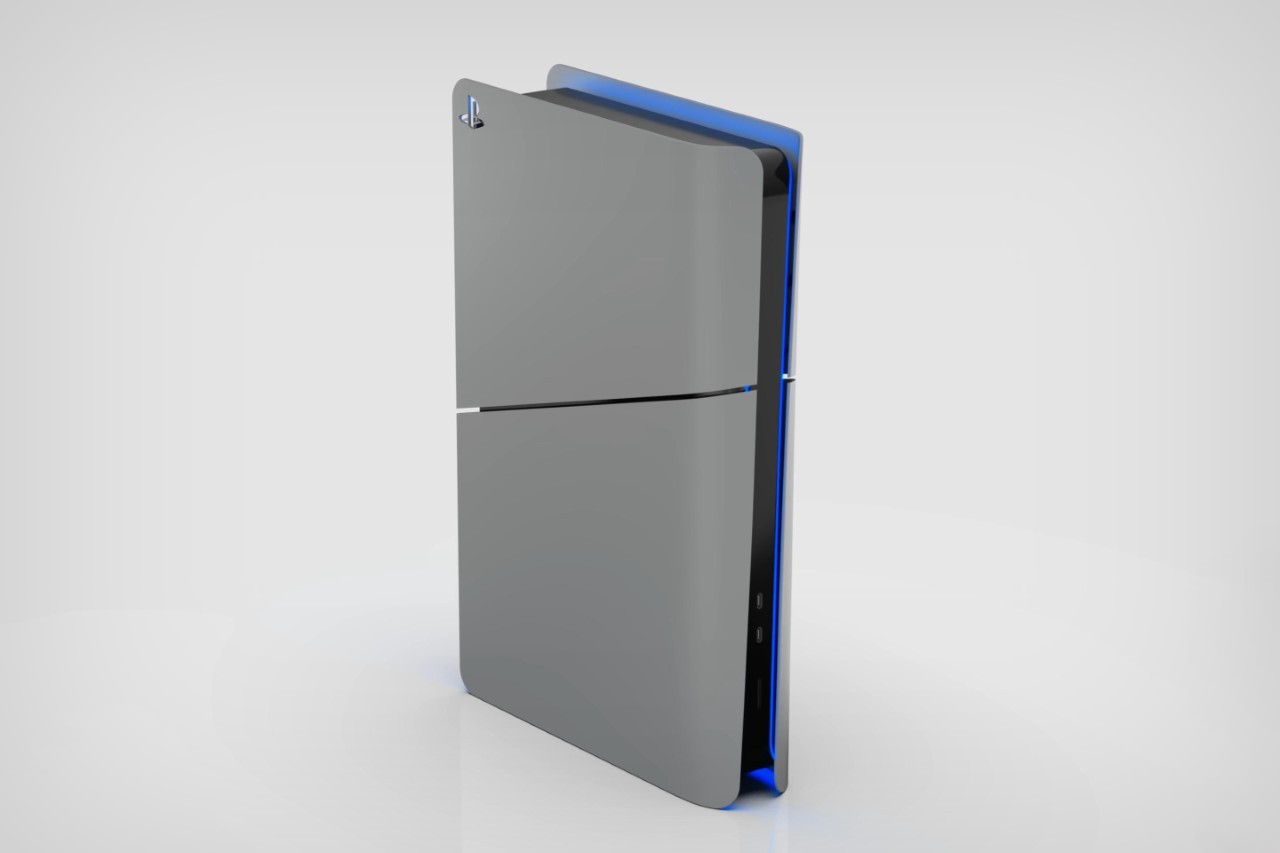
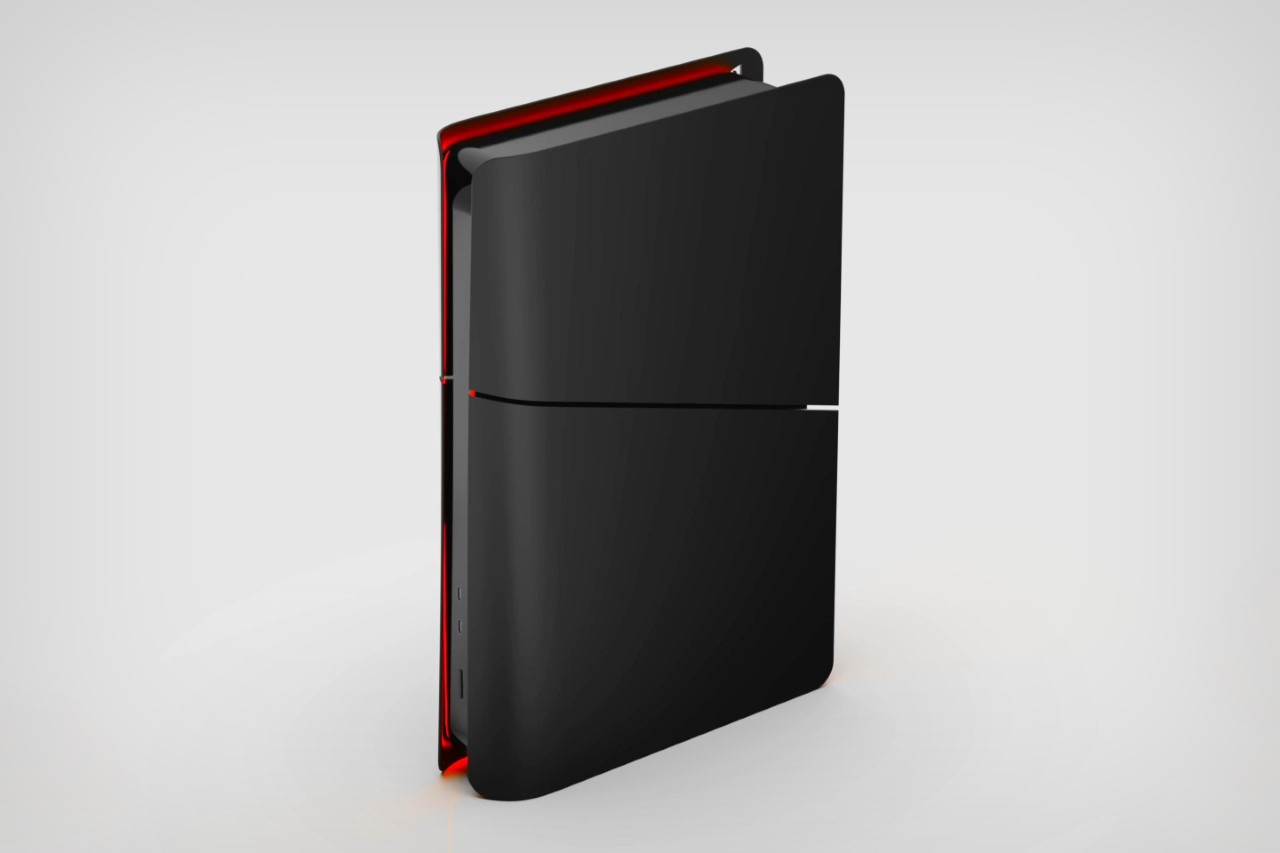
Sony PS5 Pro Leaks Indicate 3X More Powerful Performance with Super-Resolution Rendering

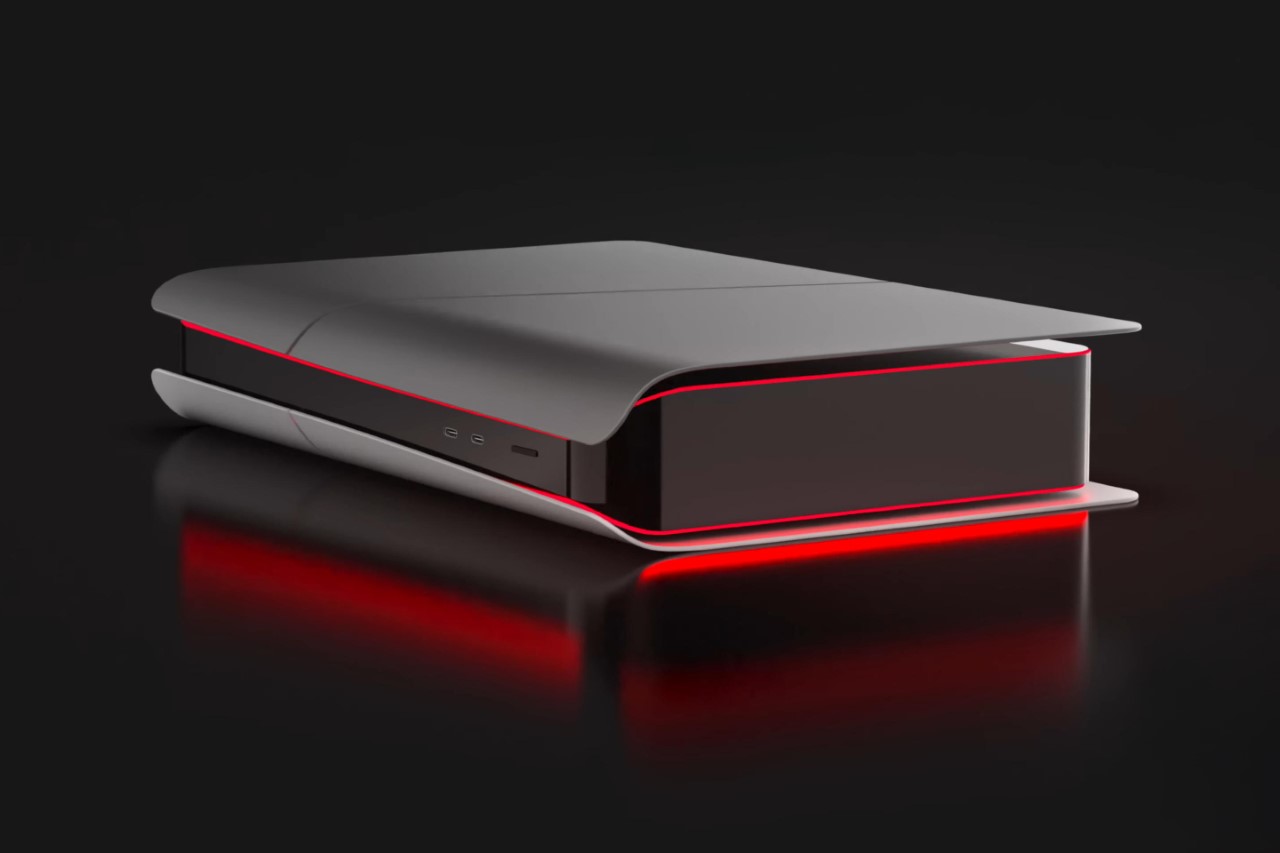
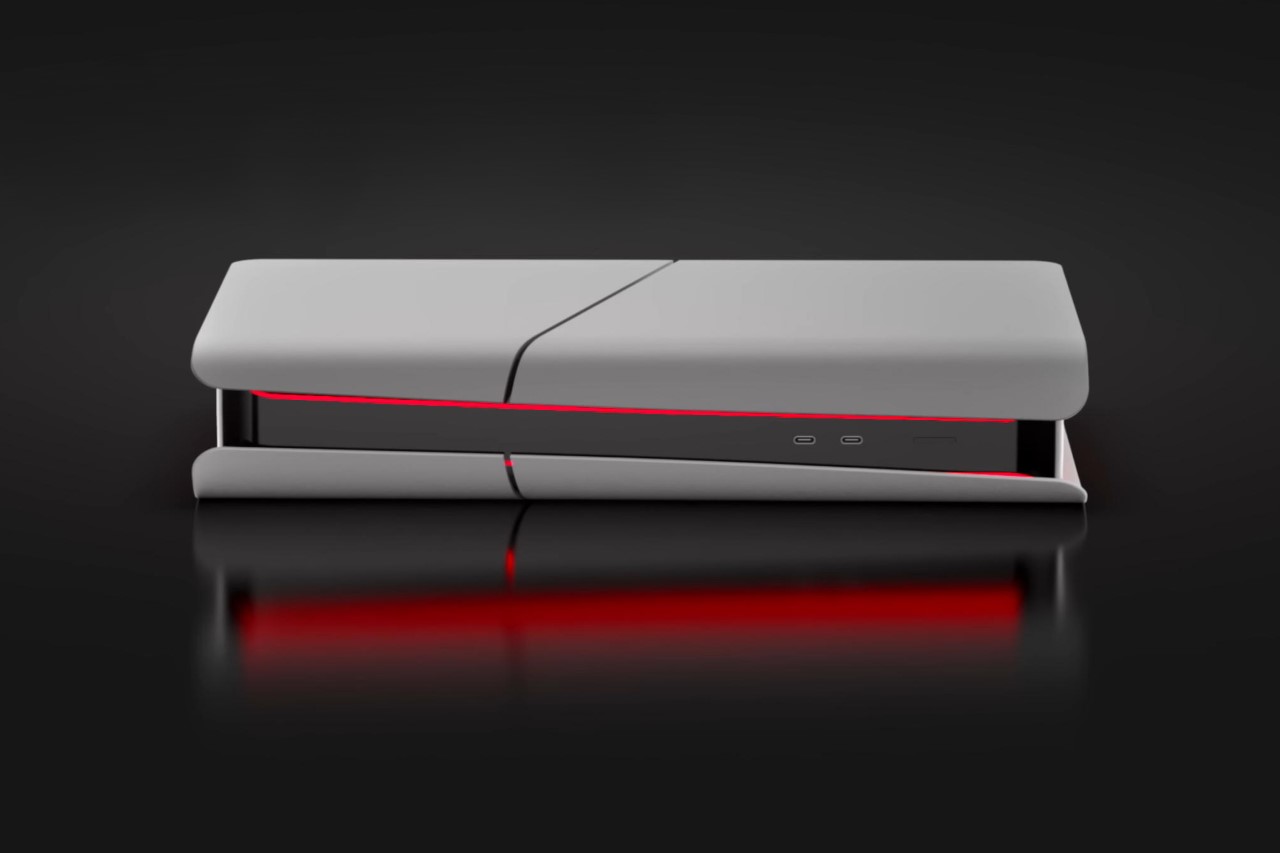
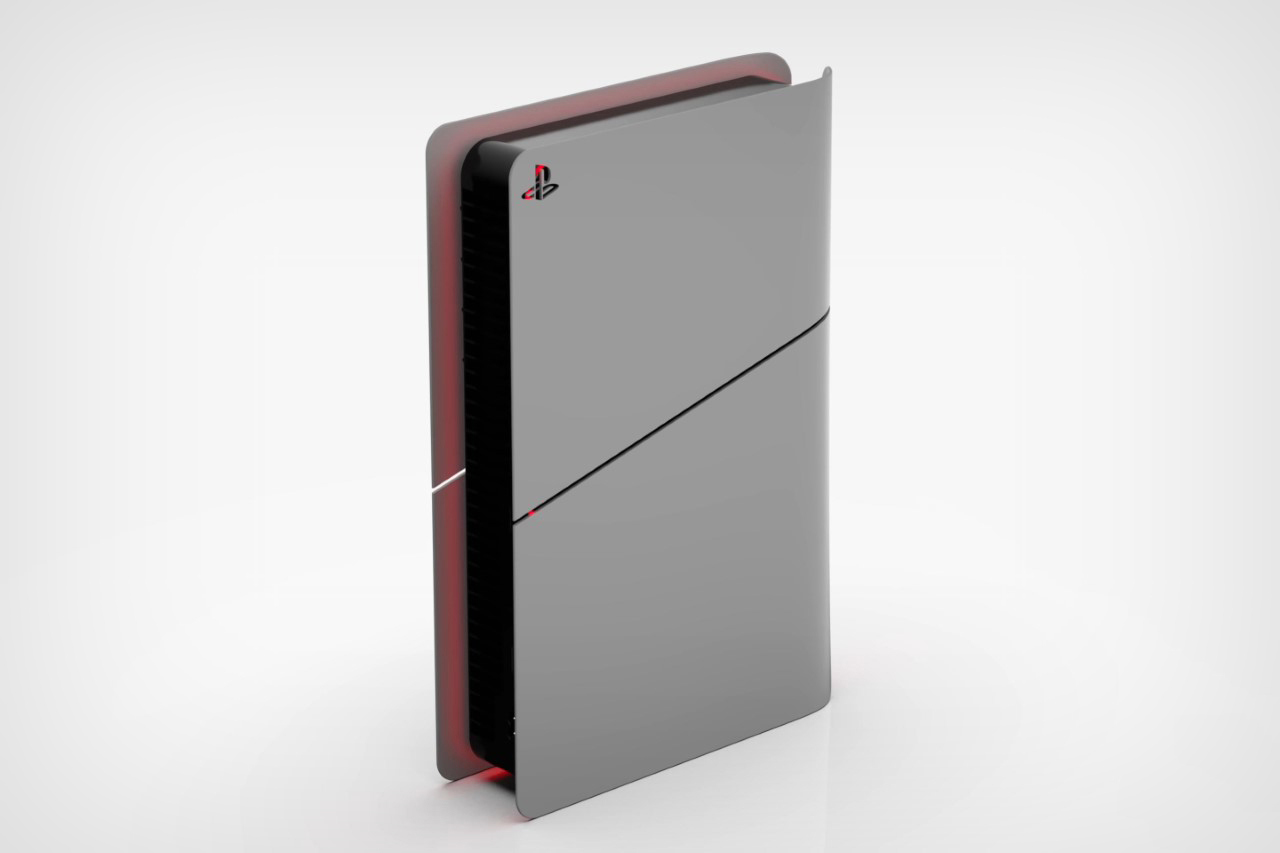
There’s never a dull moment in the gaming world. Microsoft and Activision’s merger caused enough excitement, while a random rumor also indicated that the company was giving up on Xbox amid mass layoffs. GTA 6 may see a new trailer drop in May but its launch has been pushed to 2026 amid development delays. Meanwhile, the world is gearing up for the next Nintendo Switch to drop and now it seems like credible leaks indicate that there’s a Sony PlayStation 5 Pro in the horizon.

Designer: Sony

The sources behind these leaks inspire a degree of confidence. Respected outlets like IGN and industry insider Tom Henderson of Insider Gaming have lent their credibility to the rumors. Additionally, Sony’s own investigative response to the leaks suggests they might hold some weight. It’s not every day we get such a comprehensive glimpse into the potential future of console gaming.

So, what advancements can we expect from the PS5 Pro? The leaks paint a picture of a console designed to push the boundaries of graphical fidelity and performance. While the CPU clock speed is rumored to see a modest 10% increase, the real game-changer lies in the GPU. This powerhouse component boasts a staggering 3.25 times the processing power of its predecessor in the PS5, translating to a potential 45% jump in rendering performance. Imagine buttery smooth gameplay with visuals that leave you speechless – that’s the promise the PS5 Pro seems to hold.

For gamers who crave hyper-realistic visuals, the news gets even better. Ray tracing, the technology that simulates real-world lighting effects for unparalleled immersion, is set for a significant boost. Leaks suggest a two to four times improvement in ray tracing performance, which, when combined with the rumored AI accelerator and custom machine learning architecture, hints at Sony’s ambitious plans to integrate AI more deeply into the gaming experience. Imagine enemies that adapt to your tactics, environments that react to your actions, and a level of detail that blurs the lines between reality and the virtual world.

The PS5 Pro might retain the 16GB of memory found in the PS5, but it’s poised to make significant strides in data transfer speeds with a rumored 28% increase in bandwidth. This translates to potentially shorter loading times, a welcome change for any gamer who’s grown weary of staring at progress bars.

One particularly intriguing feature is PlayStation Spectral Super Resolution (PSSR). This Sony-developed technology aims to rival AMD’s FSR 2 by offering superior game rendering. With support for up to 4K resolution at a blistering 120fps and even 8K at 60fps, PSSR has the potential to set a new benchmark for visual quality in console gaming. Imagine experiencing your favorite games in stunning detail, running at silky smooth frame rates. It’s a future that promises to redefine how we perceive console graphics.

The audio processing unit is rumored to receive a 35% speed boost, promising a richer and more immersive auditory experience. When you factor in the anticipated PlayStation Link for lossless audio and a generous 1TB of internal storage, the PS5 Pro appears dedicated to delivering a complete sensory experience that complements the visual feast for your eyes.

The question of whether to upgrade to the PS5 Pro hinges on your individual needs and preferences. While the rumored specifications paint a picture of a console with a significant performance leap, it’s important to remember that it might take some time for game developers to fully leverage its capabilities. Additionally, the price tag, rumored to be in the $600-$650 range, may create a bit of an uproar. After all, there’s nothing more dangerous than a scorned gamer.

Images via ZONEofTECH

The post Sony PS5 Pro Leaks Indicate 3X More Powerful Performance with Super-Resolution Rendering first appeared on Yanko Design.
Live streaming accessories give creators the tools to elevate their content

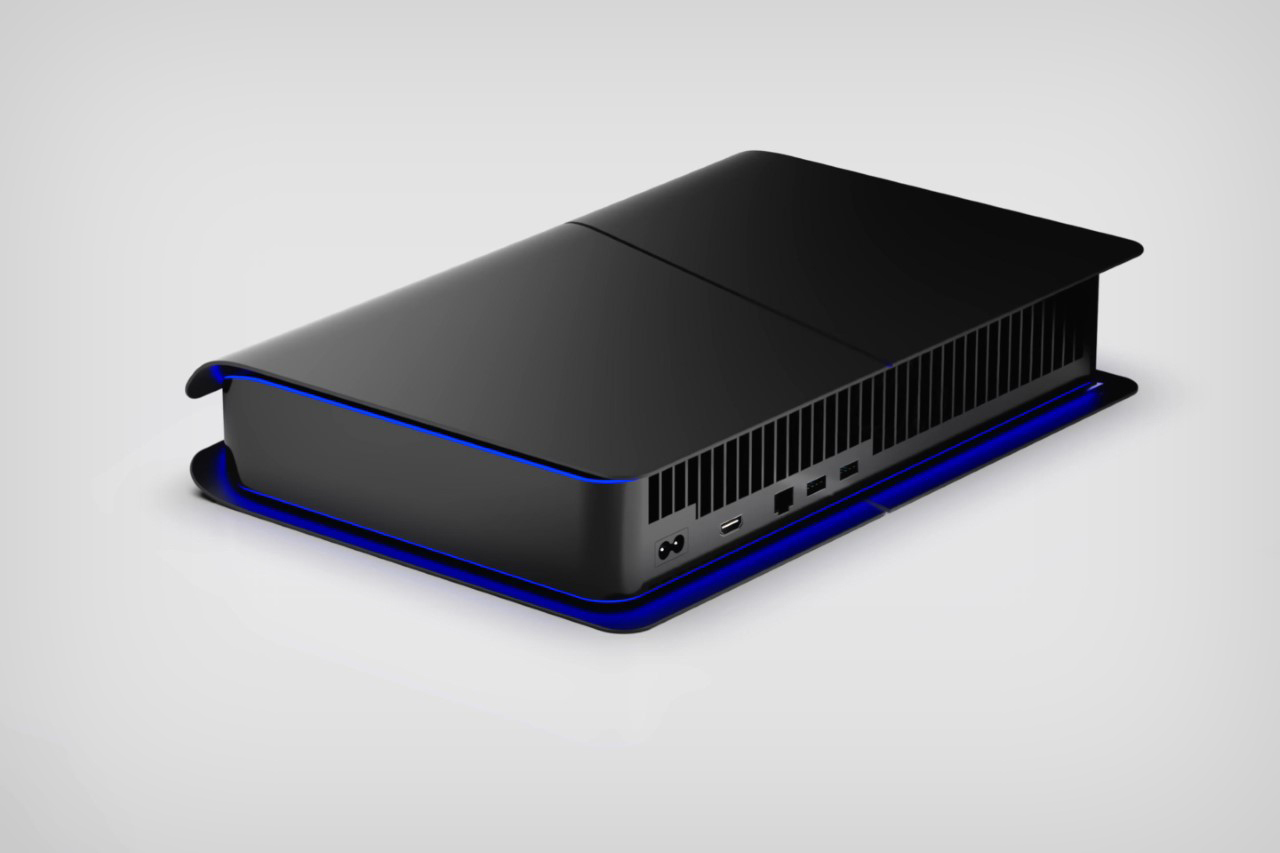
Streaming is big business these days to the point that some kids even declare it to be their dream job. And like any other dream job, the reality is that video streaming isn’t as easy or as magical as it sounds, at least if you’re really aiming to go pro and bring in all the views. You will need to invest in quality equipment that not only makes their work more comfortable but also makes the overall experience more enjoyable. These concept products try to do exactly that, assisting streamers to make them feel more alive, whether onscreen or especially offscreen.

Designers: Mariana Aréchiga, Isaac Saldaña, Ricardo Zerón, Adriana Cruz, Jonathan Gonzalez, Alondra Alvarez, Mariana Pedroza, Juan Muciño

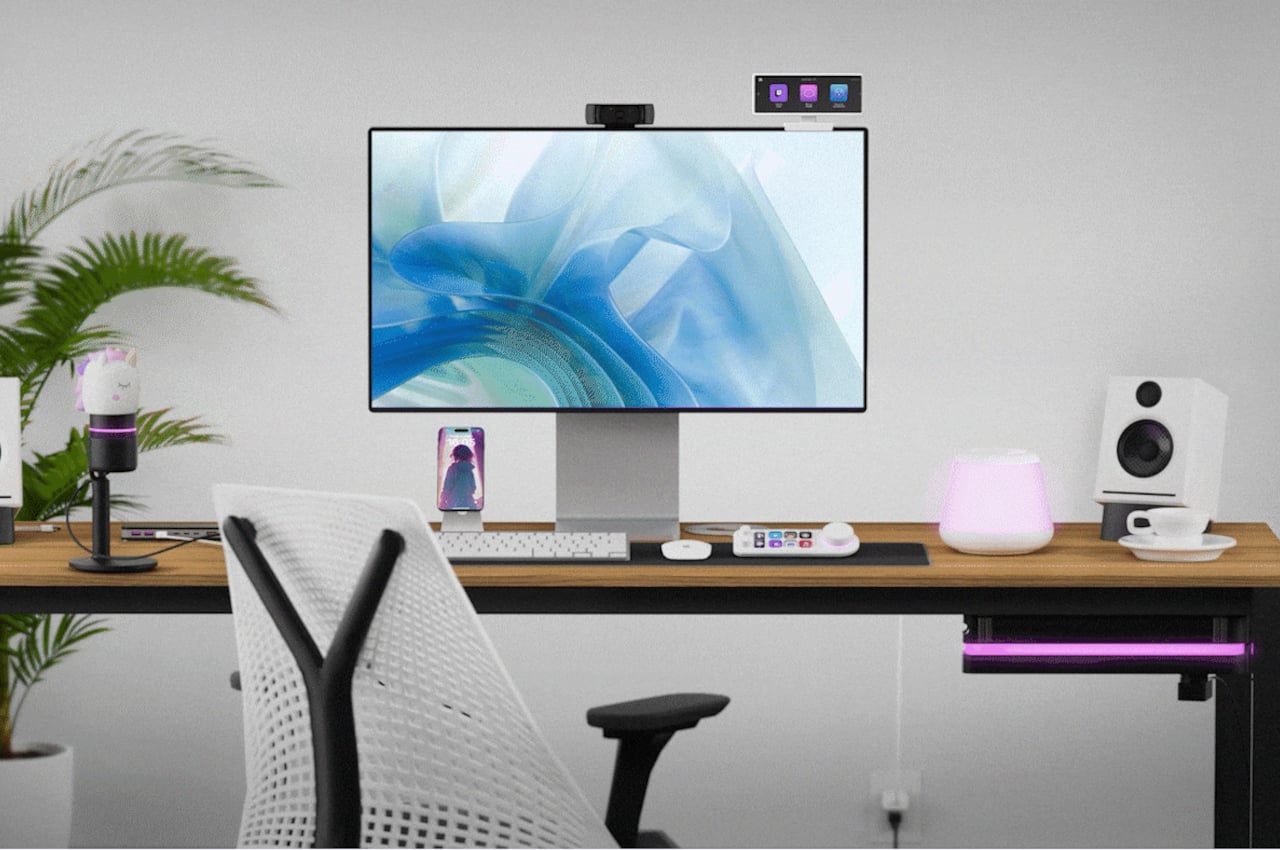
It’s admittedly easy to get started in the live streaming industry. All you need is a decent camera, a reliable Internet connection, and content that will capture the attention of the fickle masses. Going viral and staying relevant, however, requires not only hard work but also tools that will help carry you through both the good times as well as the bad. Alive is a series of product design concepts that try to elevate the streaming experience and beyond, focusing on the things that help streamers stay in control all the time.

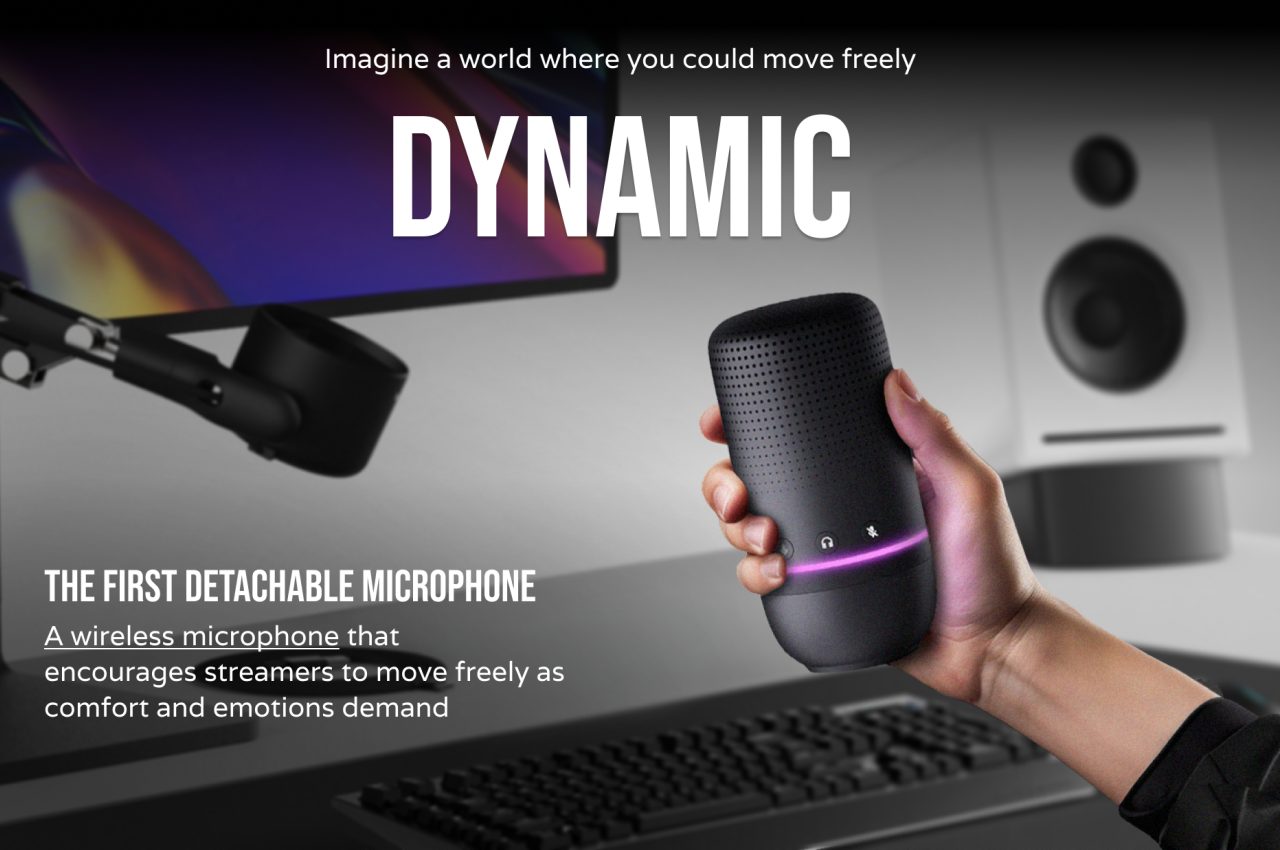
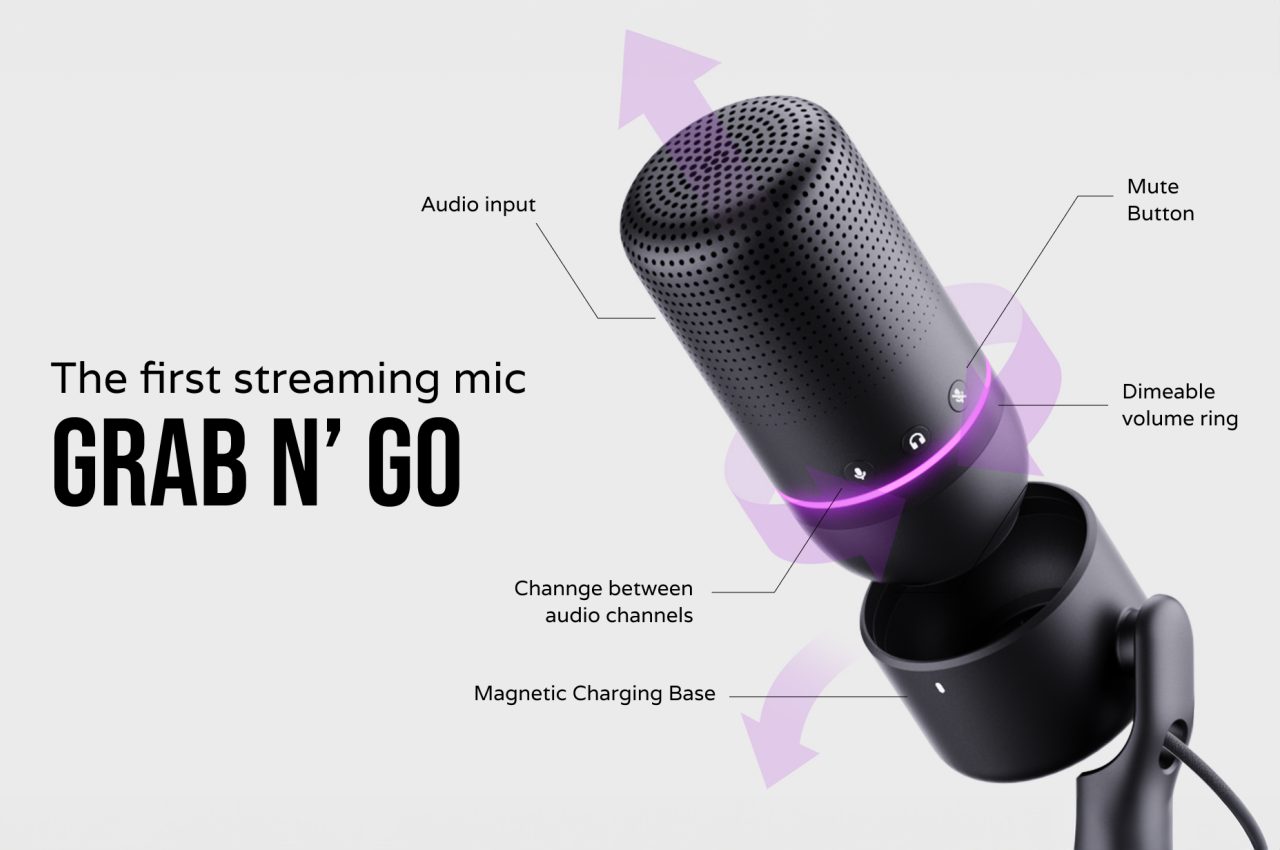
One example is a wireless streaming mic that frees you from your desk with its detachable design. While it looks like an ordinary studio mic when on its wireless charging stand, you can easily pick it up and move around without missing a beat or dropping out. It has a helpful ring indicator that quickly clues you in on the volume level without having to check your app’s or computer’s controls.

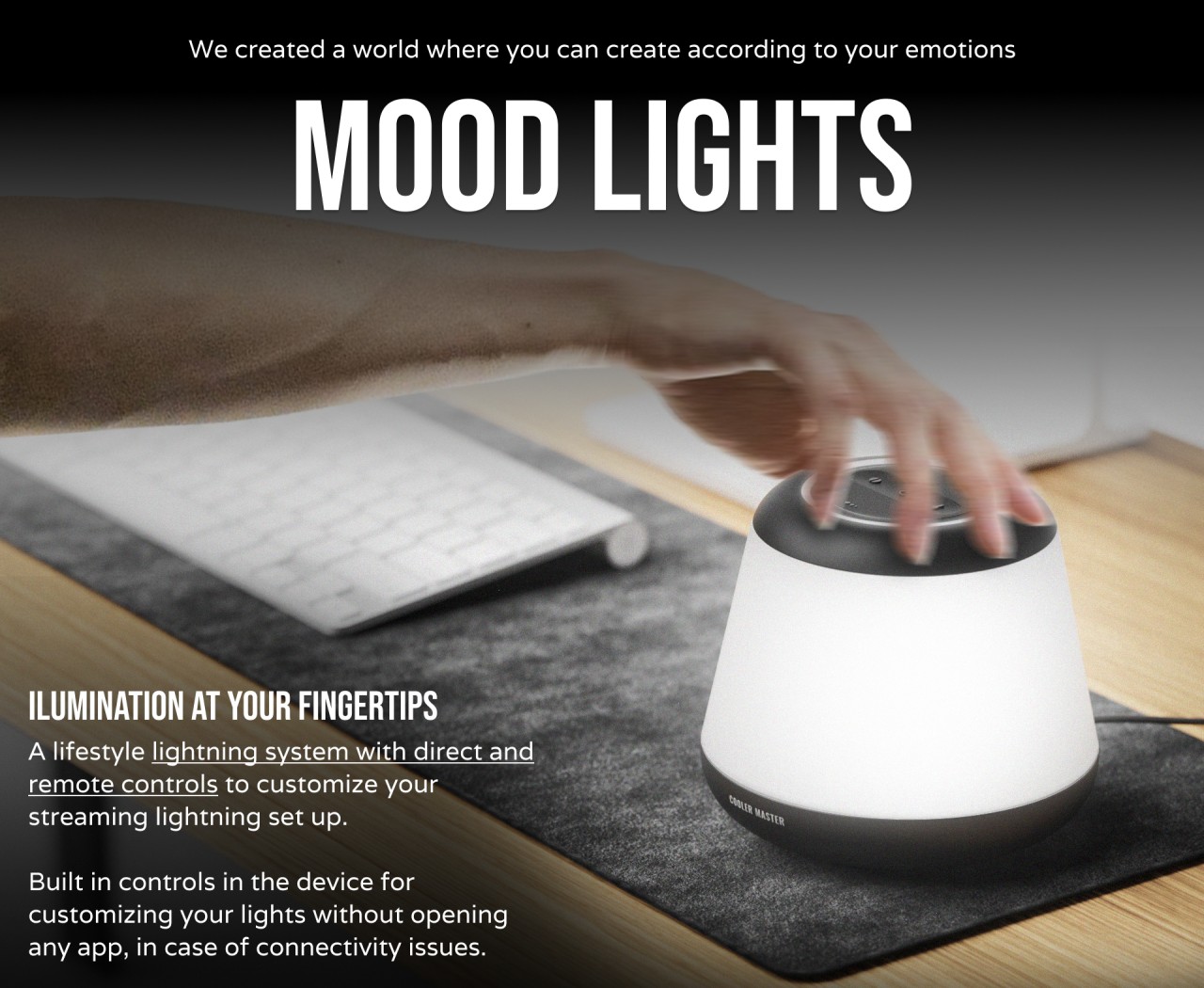
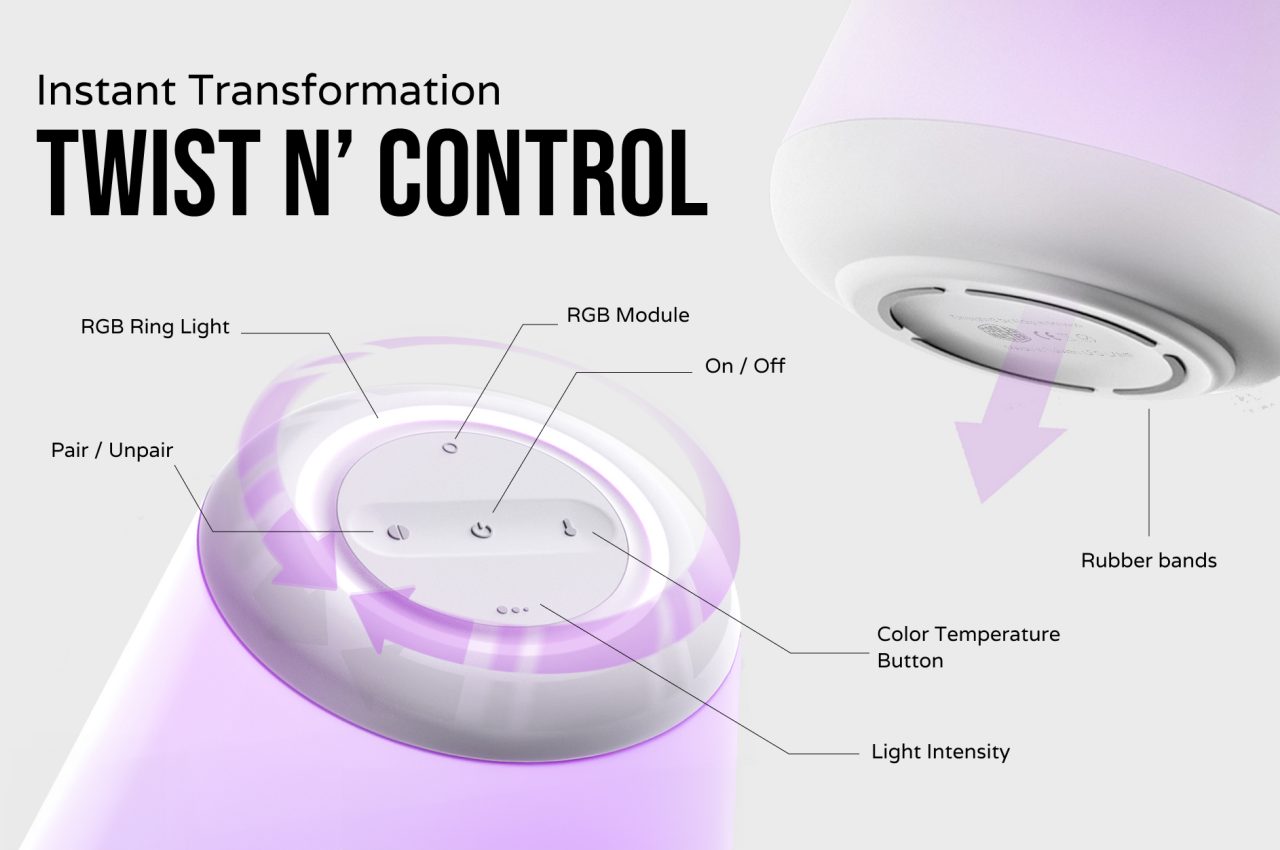
Lighting does more than just illuminate your face during streams, it can also help set the mood or even indicate your own mood. This conical desk lamp concept delivers that kind of emotional lighting but also provides direct physical controls that don’t leave you at the mercy of buggy apps and spotty network connections. Any streamer will testify to the stress and tension that occurs whenever those supposedly smart lights feel rather dumb due to those technical difficulties.

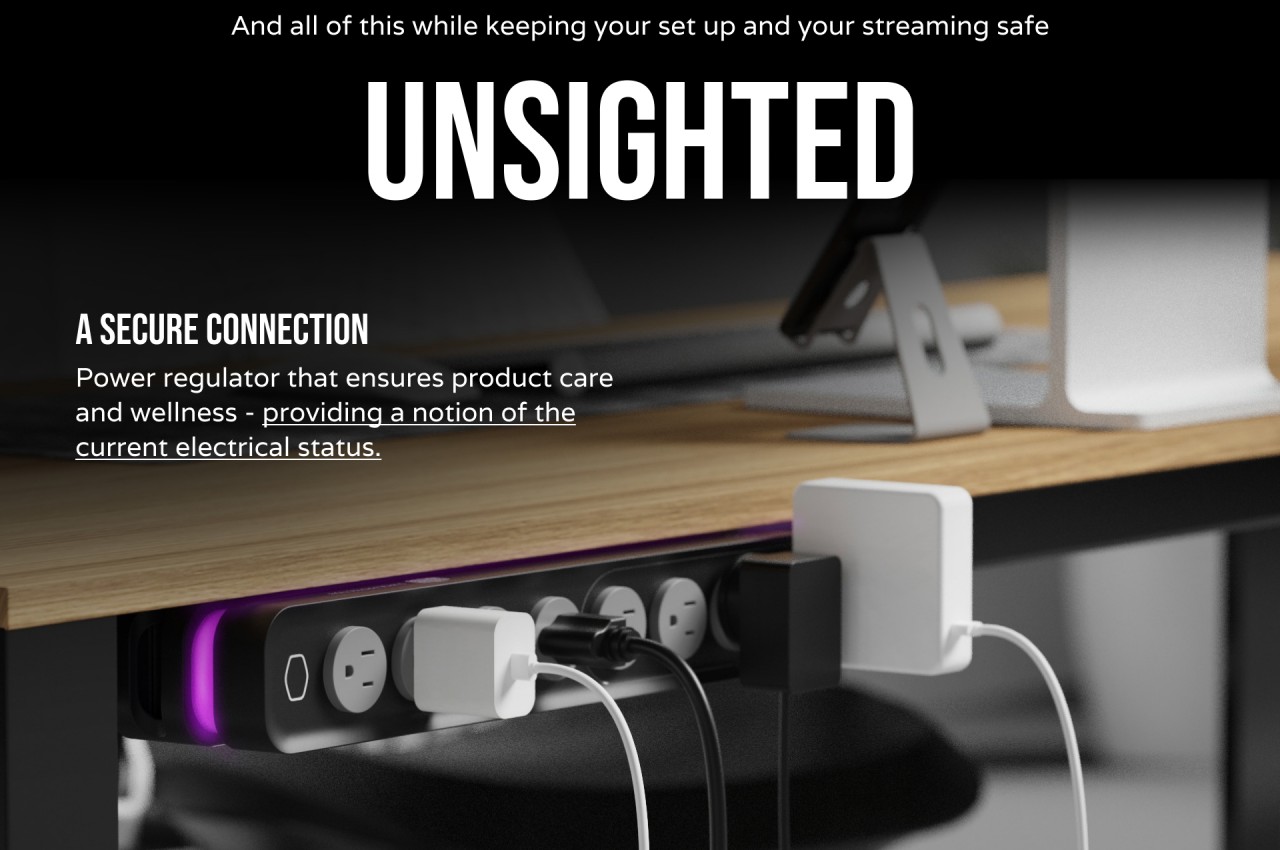
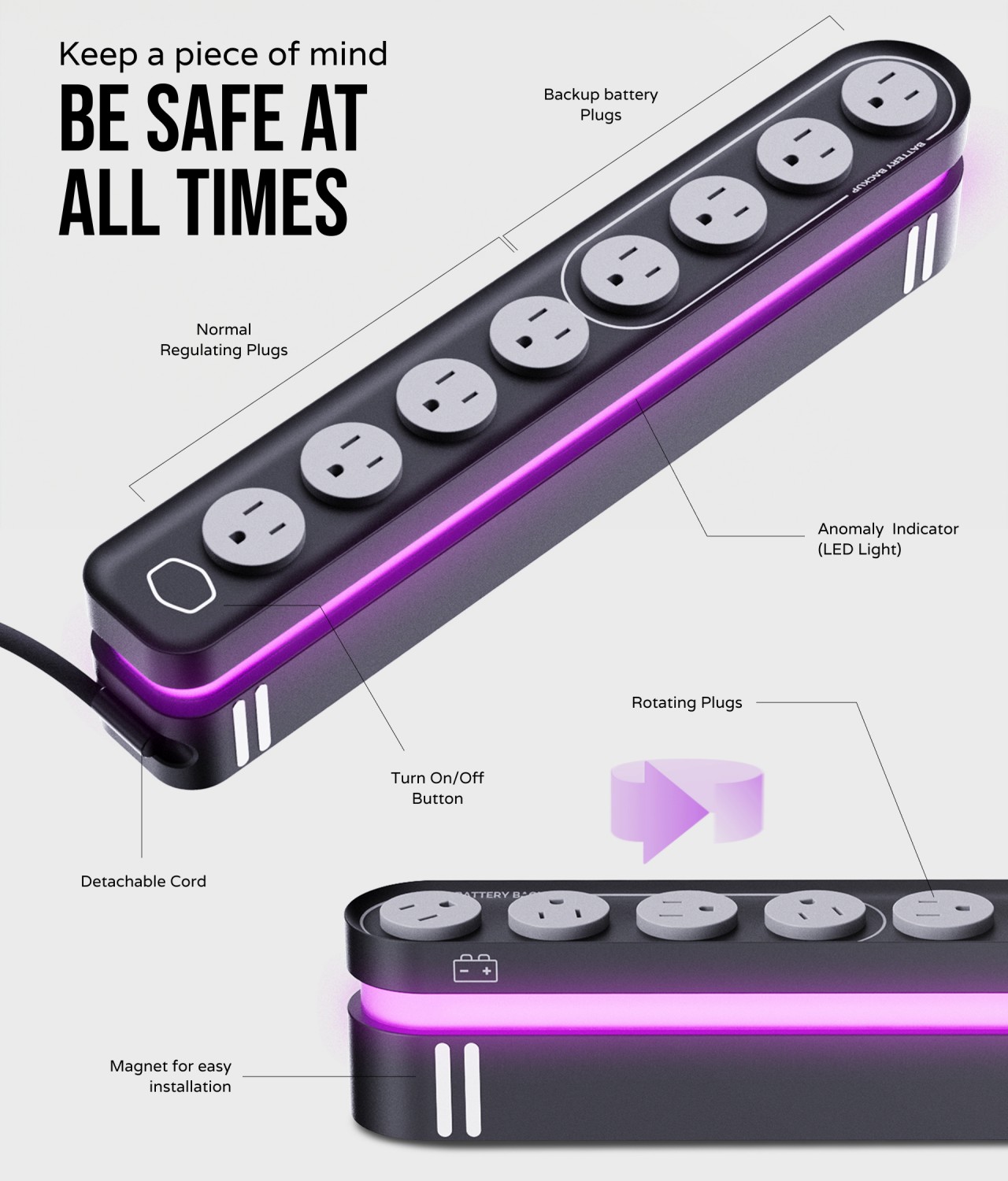
Power strips are designed to expand your wall socket, but most of them seem to still embrace the limitations of those fixed outlets. This streamer-friendly design, however, has sockets you can rotate so that they adjust to your cables and plugs, not the other way around. There’s also a section of the strip that offers battery backup to make sure critical devices stay powered up even during an emergency. These features might sound trivial, but every small thing that gives streamers peace of mind also helps them create better content.

The post Live streaming accessories give creators the tools to elevate their content first appeared on Yanko Design.
This ‘PC in a briefcase’ reimagines the LG convertible laptop as an optical illusion

Portable computing demands convenience! This objective has allowed an entire PC to be stuffed into our pockets already. Yet, there is no comparison to the suitability and convenience of a laptop. LG ensured laptops remain the most versatile device for all creative needs with the birth of LG Gram ultra-lightweight laptops. Now, designers believe there is a scope to transform LG’s innovation into an optical illusion.

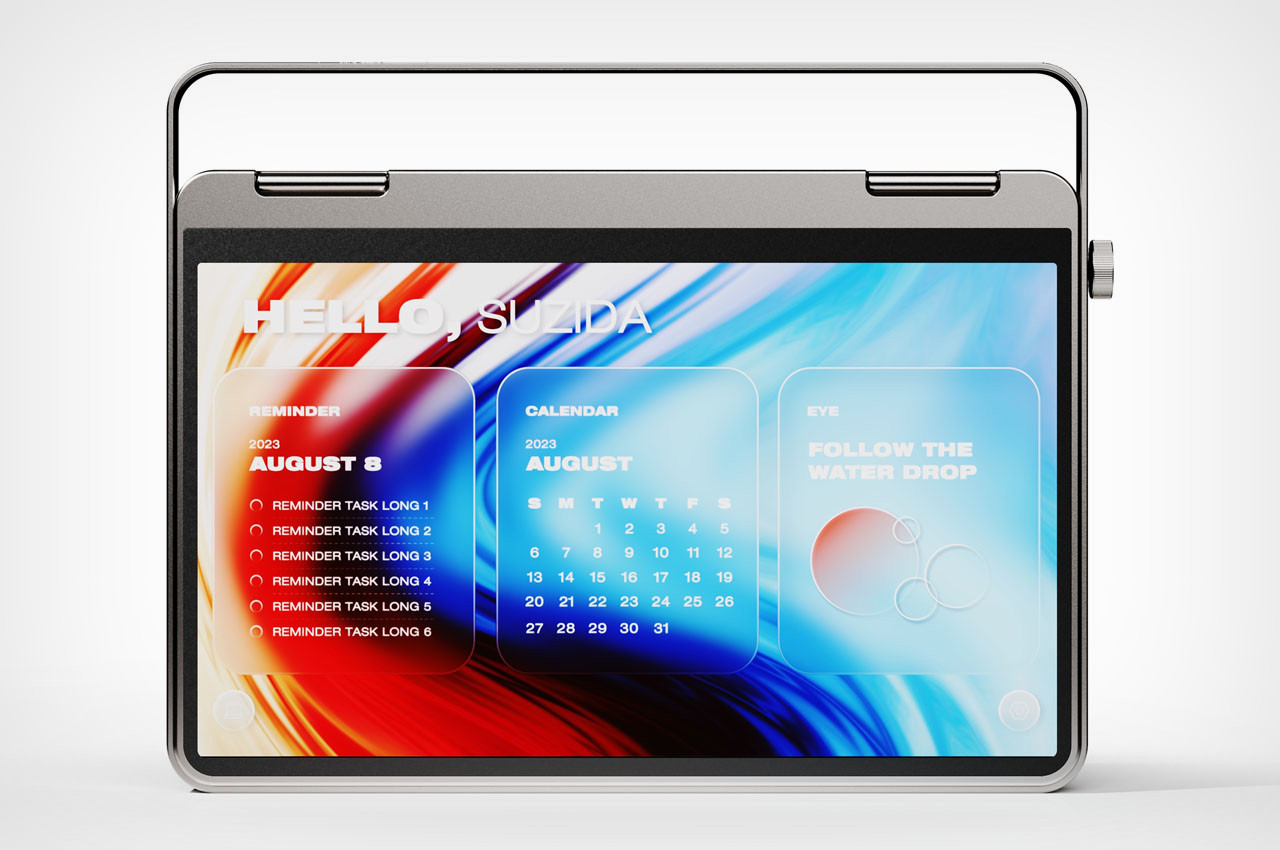
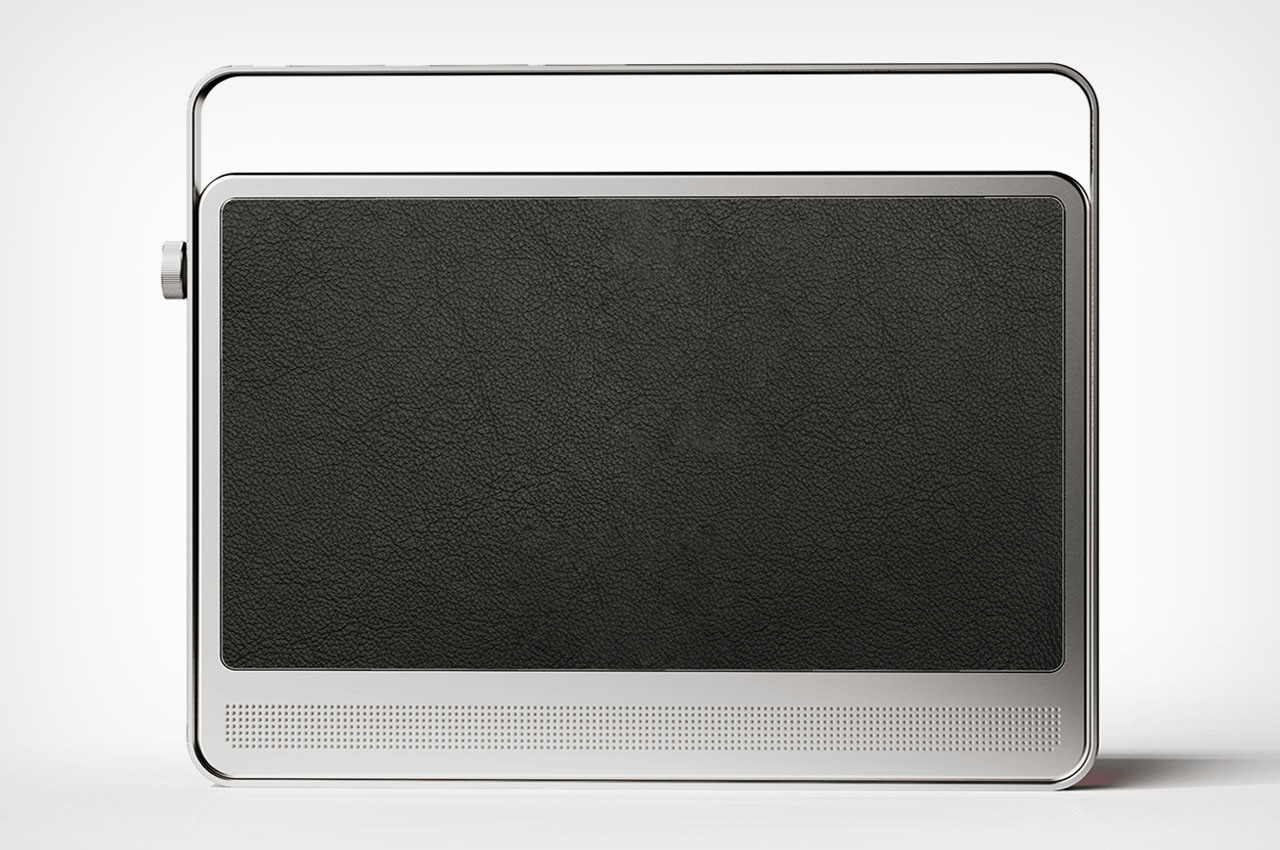
Of course, the major inspiration for the idea of the Illusion screen is the LG Gram laptop. For me, however, it is reminiscent of a transistor from the era gone by courtesy of its carrying handle and a nice metallic sheen. The Illusion screen laptop is a concept design created by KDM+ through LG Electronics’ industry-academic cooperation project.

Designers: JiHoon Park, Sherry Ahn, Dahyeon Kim and Korea Design Membership

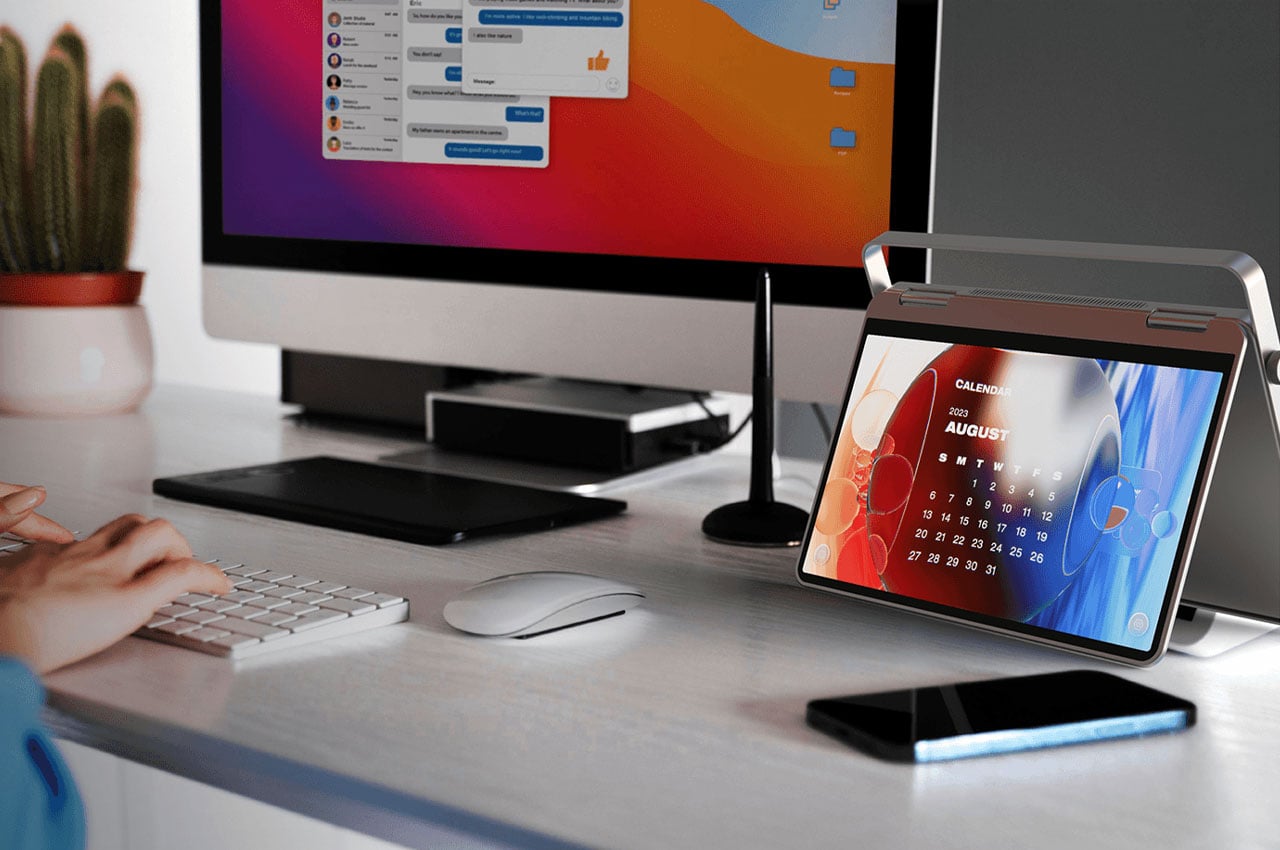
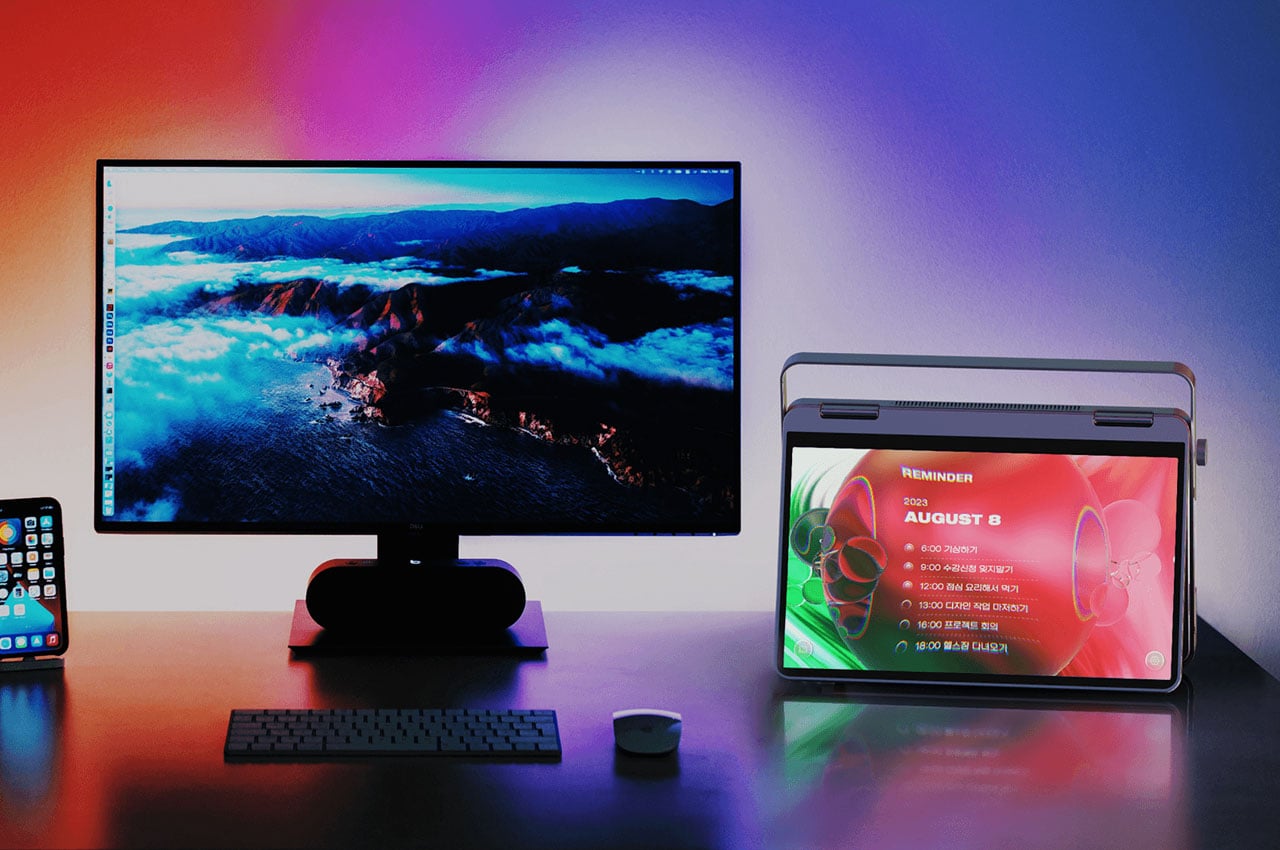
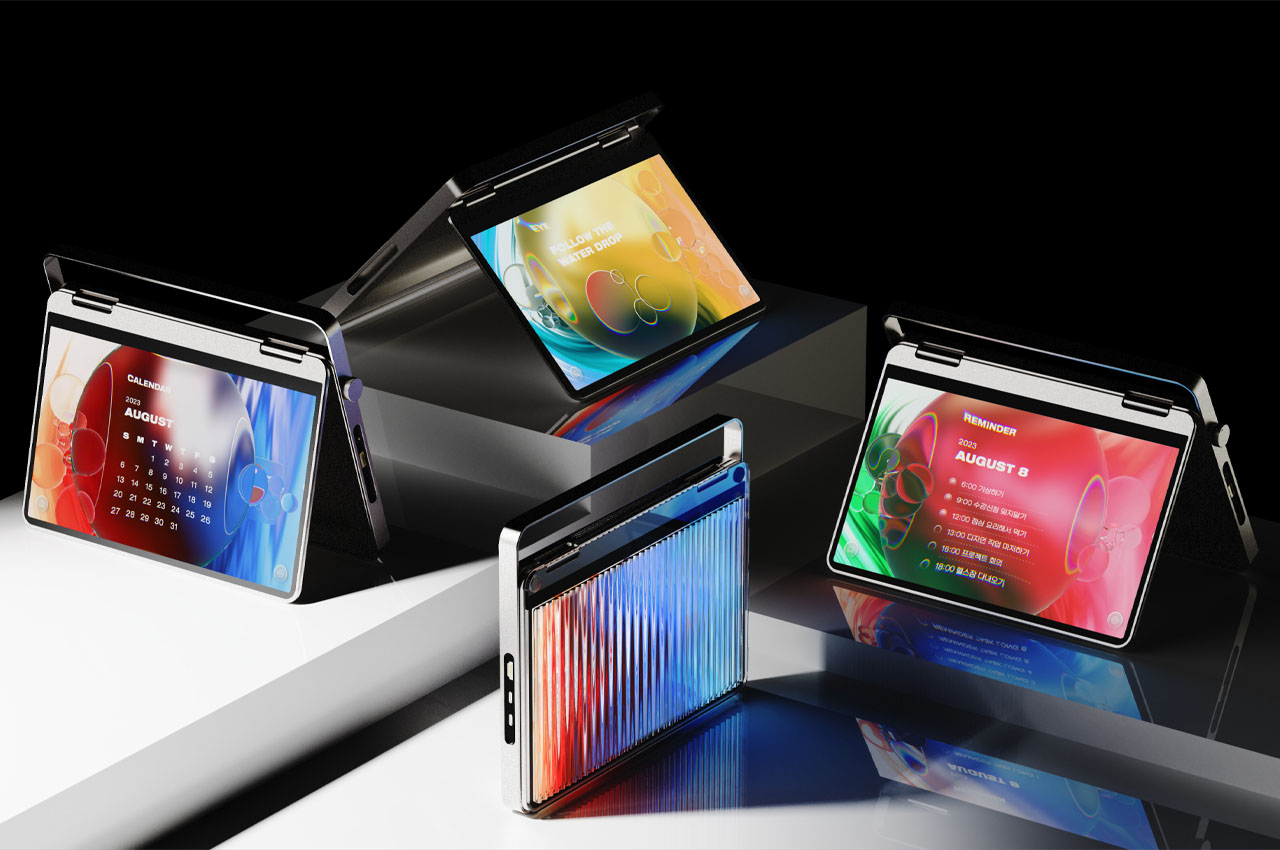
A laptop has reformed the way we work today, essentially merging the previously separated digital experience of desktops. As laptops are the daily drivers of the workforce, the Illusion screen provides a reimagined design that allows the display to disappear into the clamshell design. Taking up a little space on the desk, the Illusion laptop presents configurations and styling options to complement our lifestyle and working requirements.

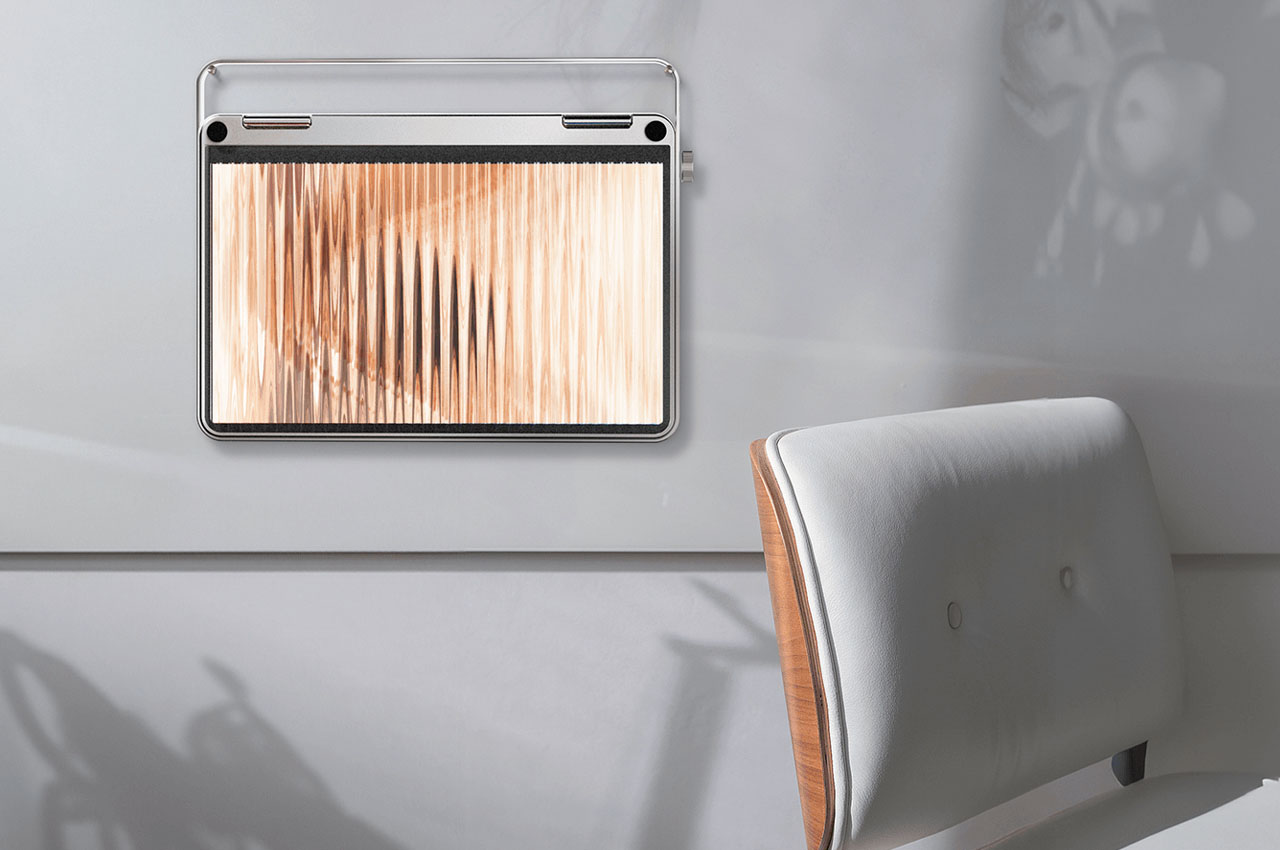
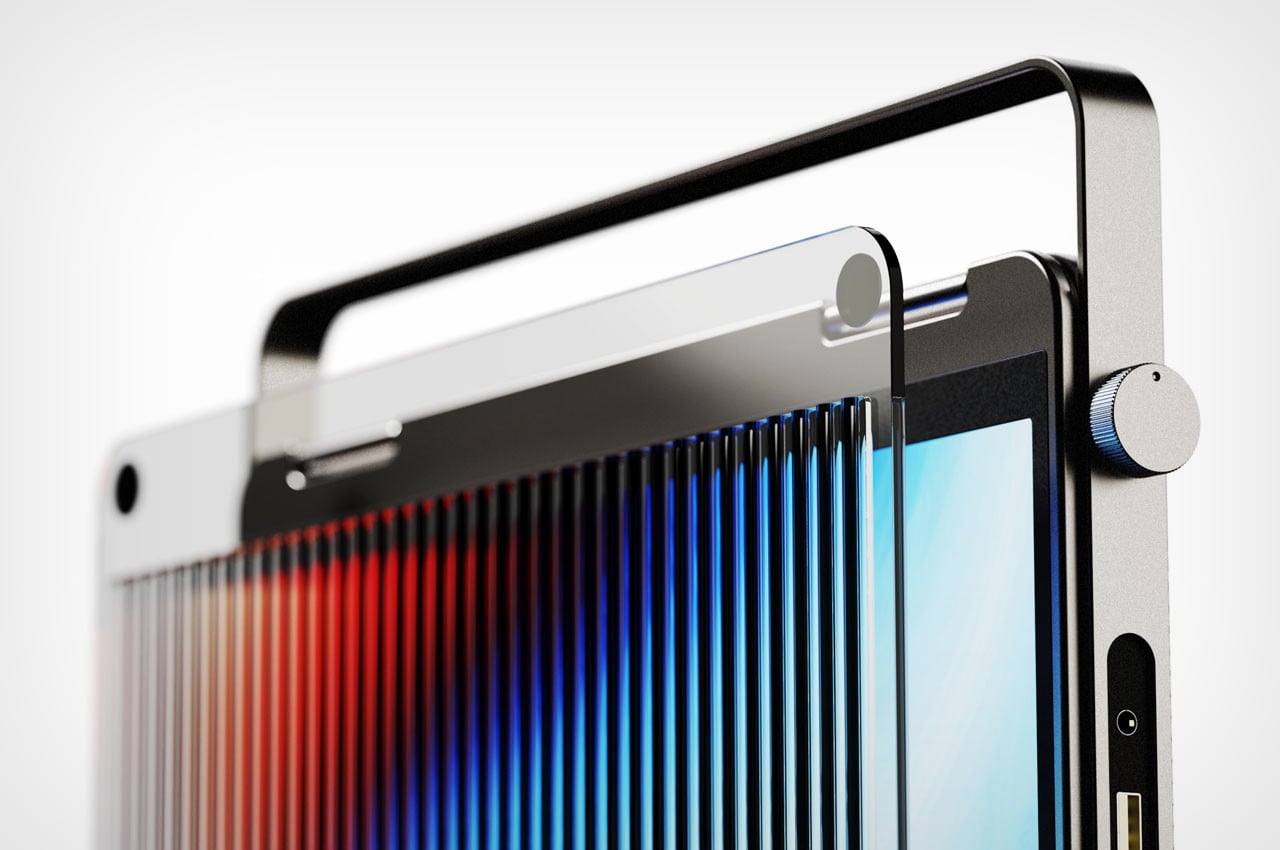
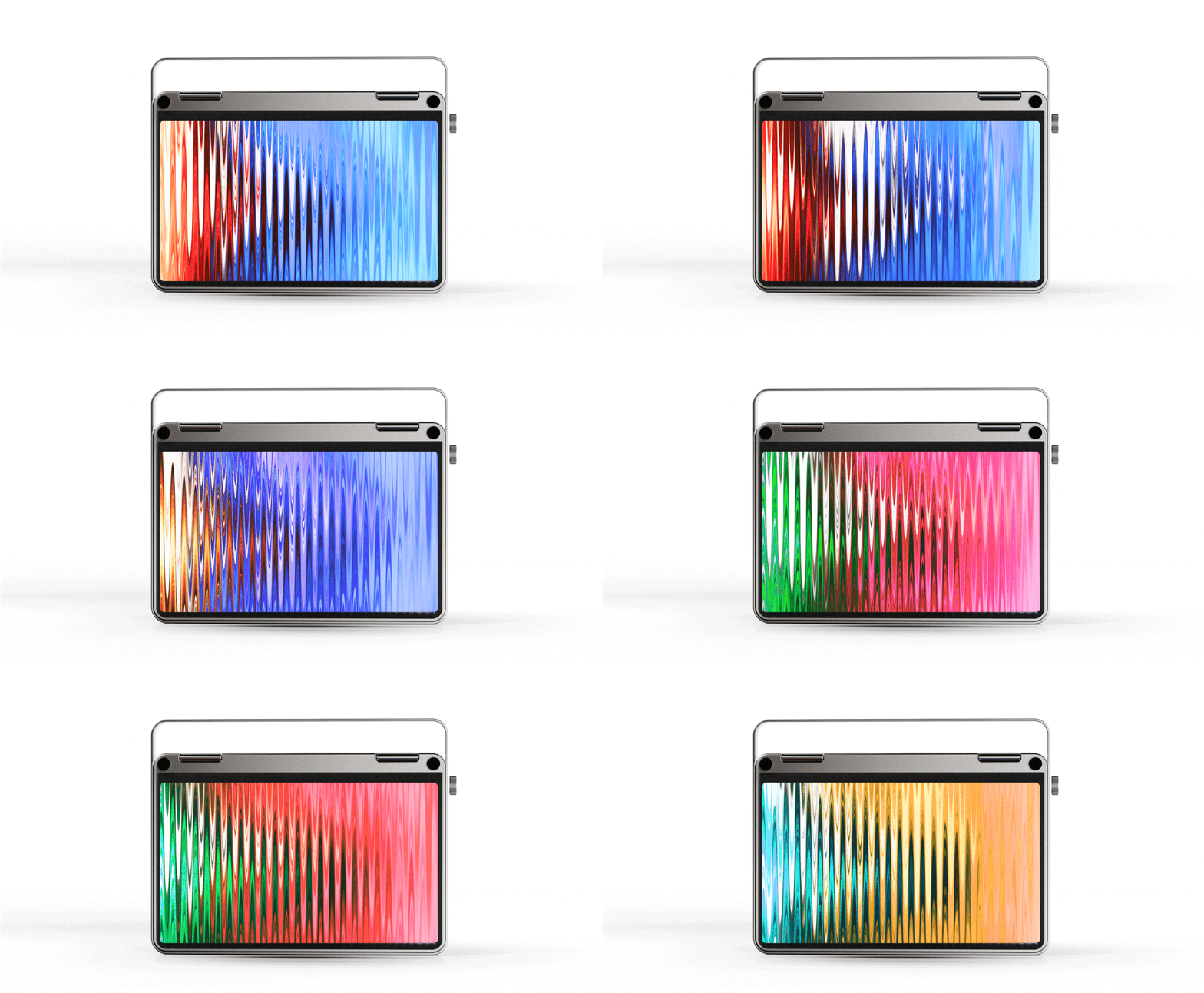
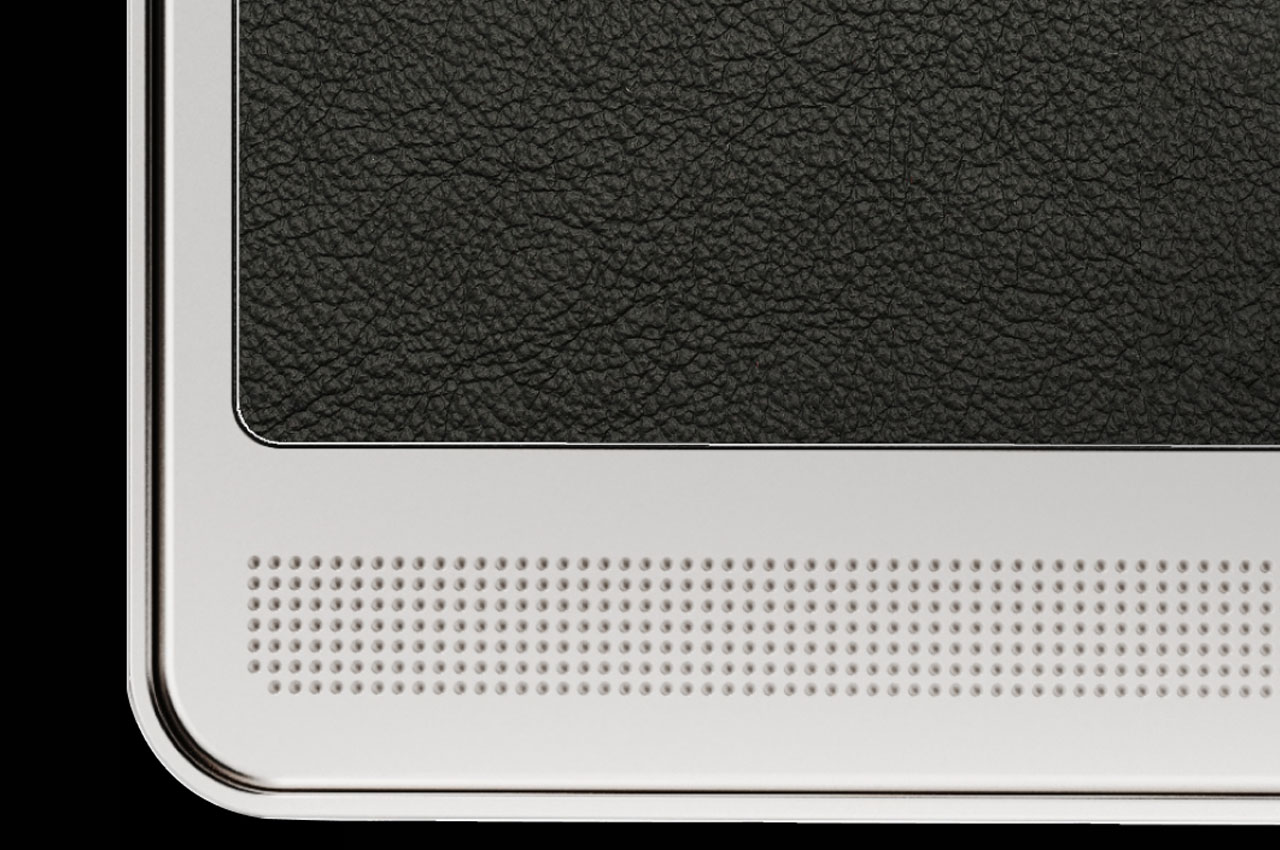
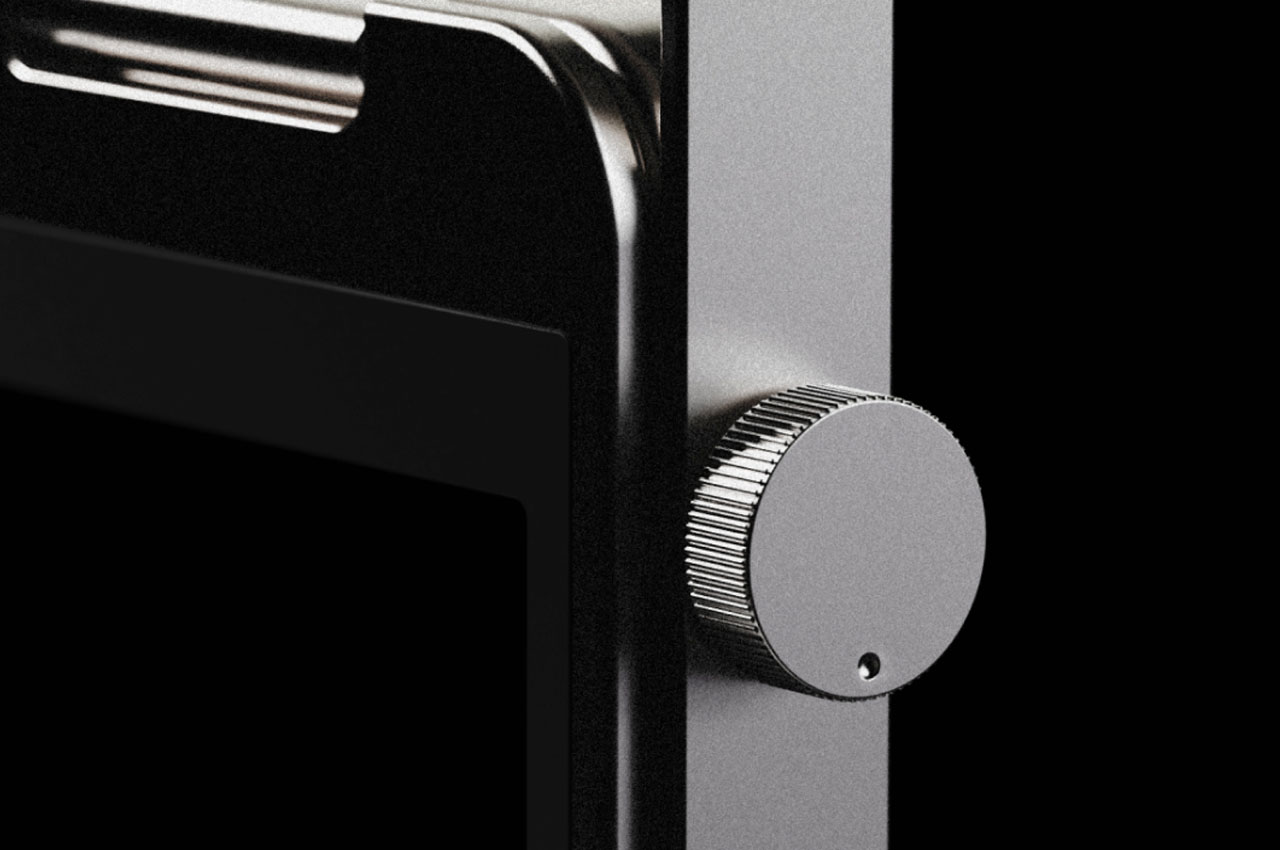
Chances are the transistor reference would resonate with you too. It appears similar with a unibody design – wrapping up an illusionary display on the front and leather cushioning on the back – extending to the carrying handle on top and a nice tuner-style knob on the right. The highlight is the illusion graphics on the screen that continuously play as moving water droplets or color patterns at different screen angles.

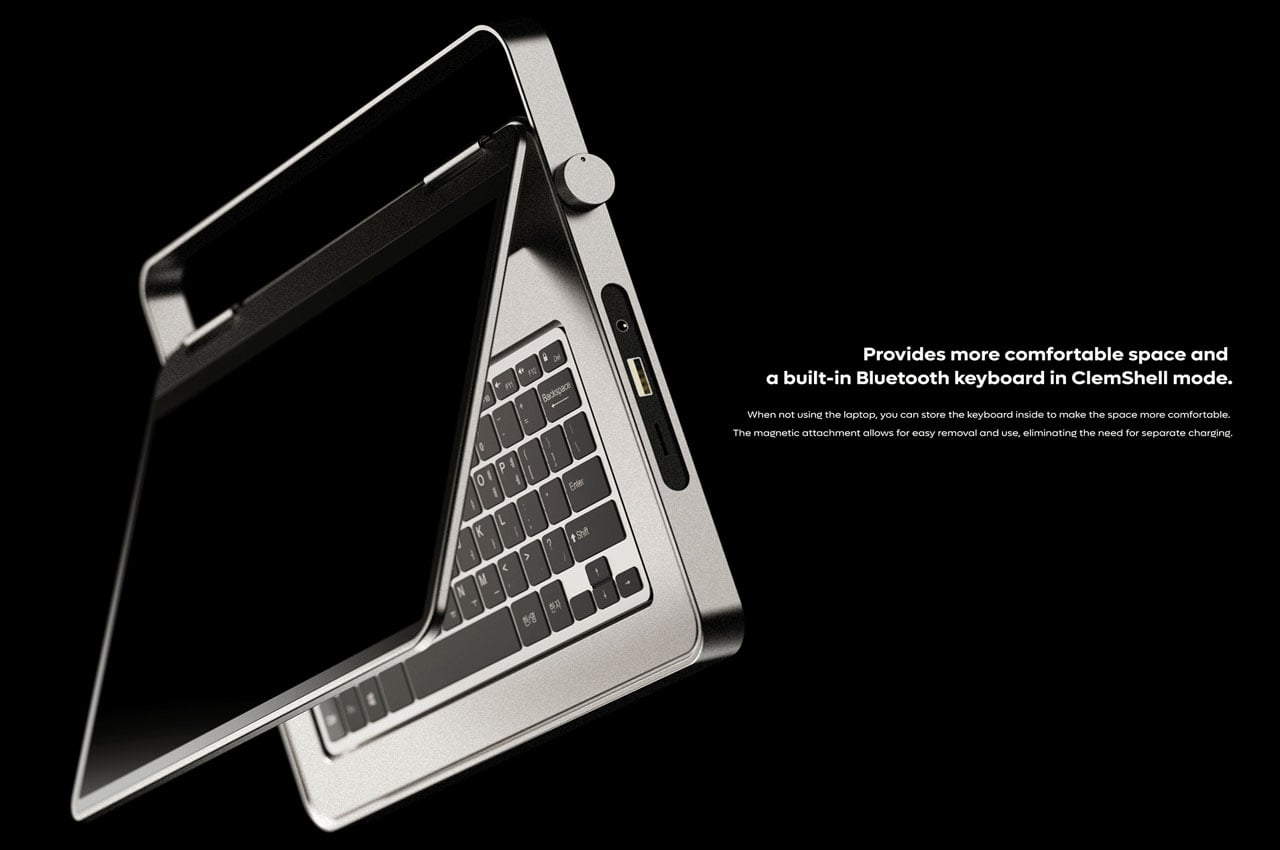
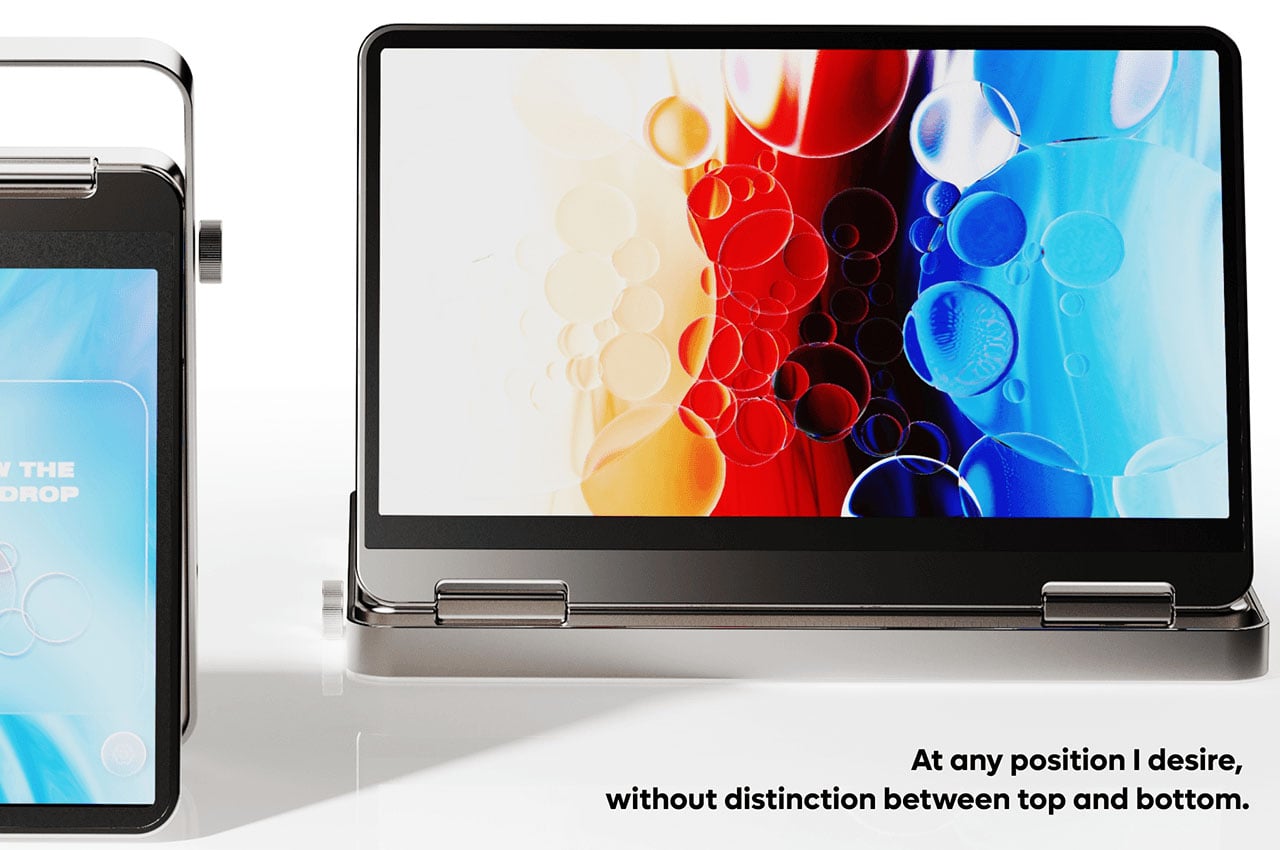
With its interesting modular screen, which can be used at any angle from 0 to 90 degrees and in between, the Illusion laptop is usable in any position the user desires. With that versatility, it opens up a range of use cases on your desk to be used independently (with a magnetic Bluetooth keyboard that resides within in clamshell mode) or with an external screen to enhance your creativity.

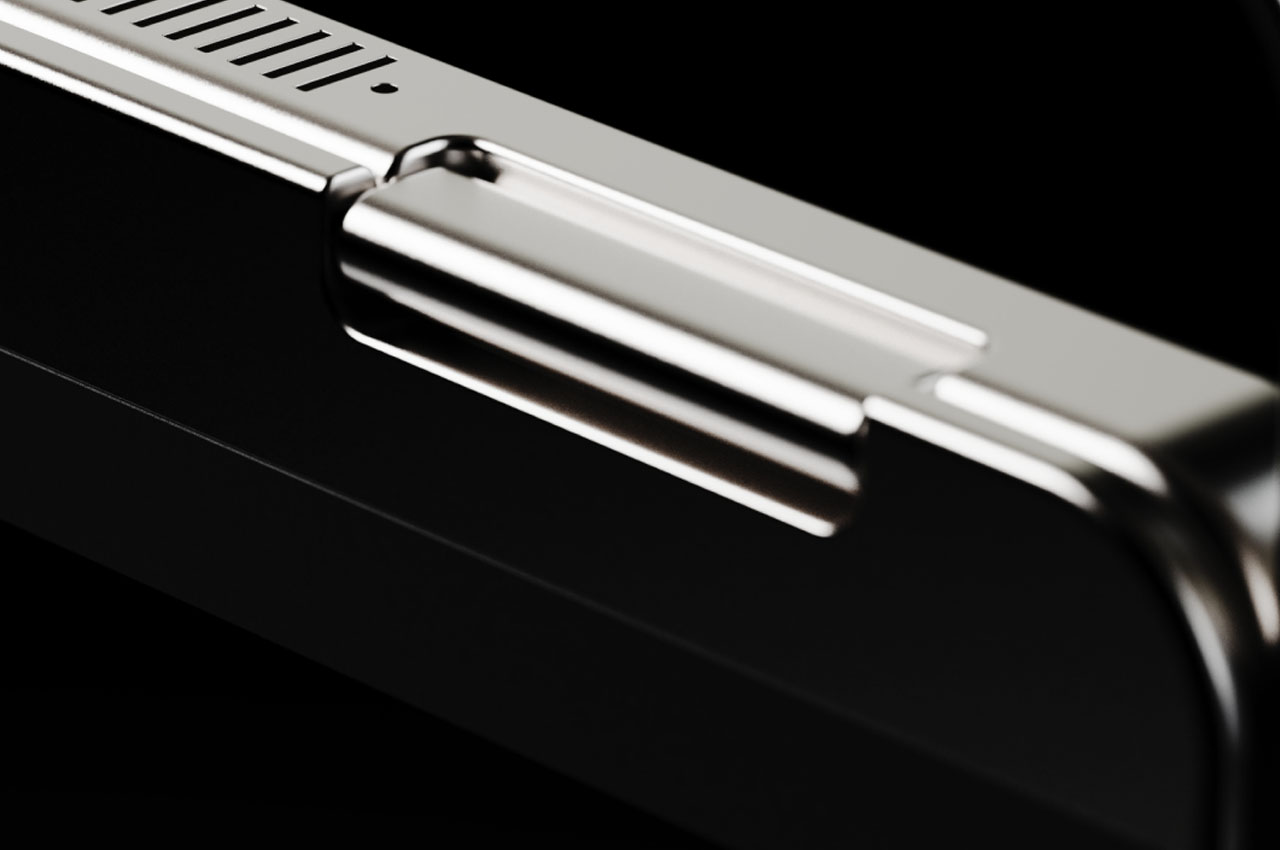
Since the LG Illusion screen emphasizes portability and convenience, it comes in this handbag-like form with its handle so you can carry it around like a briefcase without additional casing or luggage. The knob on the side is basically for adjusting the screen angle so you can consume different content at different display orientations. On the bottom of the leather cushioned back panel is the speaker grill of the Illusion laptop while on the top are vents for air. The laptop with the captivating optical display has various connectivity ports on the sides, but there is no word on the specifications one will get in this LG Illusion screen.


The post This ‘PC in a briefcase’ reimagines the LG convertible laptop as an optical illusion first appeared on Yanko Design.

Retrofuturistic streaming audio player recreates the simplicity of a radio

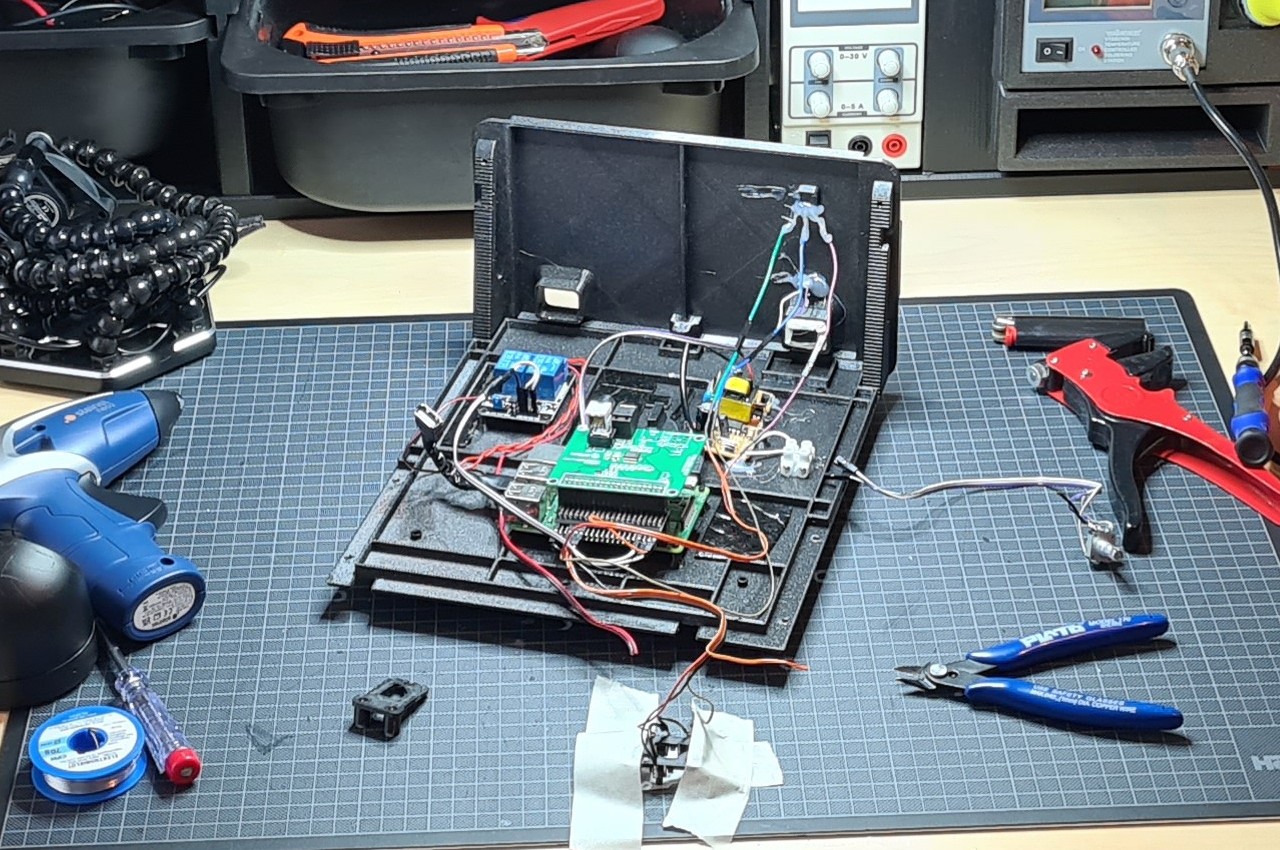
There is no shortage of powerful and sophisticated media players these days that have almost every and all features you can possibly cram inside. Some of these designs are more upfront with the complexity of options and controls, while others hide behind a deceptively minimalist facade that relegates the knobs and sliders to a mobile app instead. While there is always a place for such advanced devices, there is sometimes also a need for simpler and more focused features. An old-school radio, for example, simply plays music it receives from certain frequencies, and that’s the kind of distilled listening experience that this DIY streaming audio player tries to offer in a retrofuturistic design that looks like a cross between that analog radio, a small TV, and, oddly enough, a miniature microwave.

Designer: Nik Reitmann

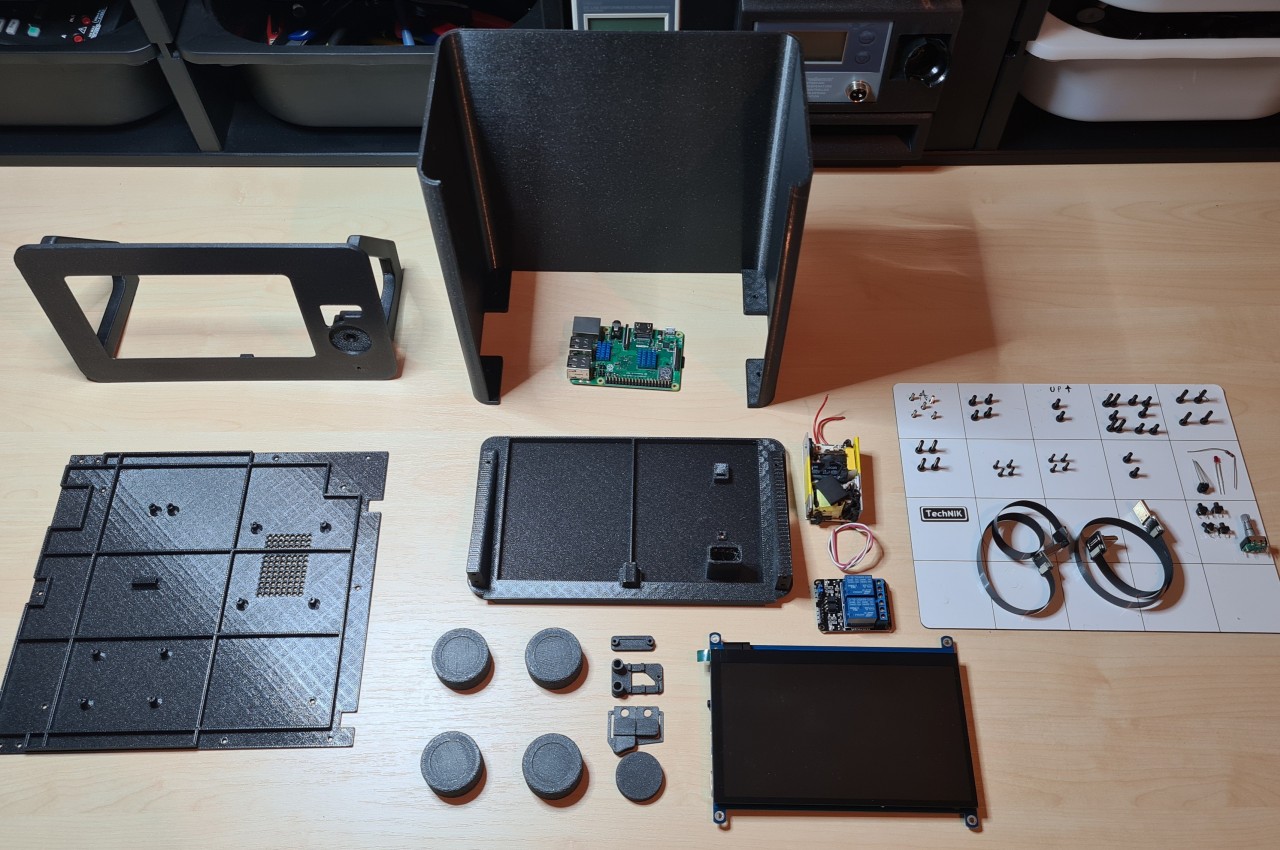
Streaming devices are so common these days that it almost makes no sense to make one yourself. After all, our smartphones themselves are capable of these and more, and you can easily pair them with a wireless speaker at home for louder output. Of course, if you value the journey and the process of making such a functional design more than the final product, then you’ll probably want something that at least stands out in more than just appearance alone.

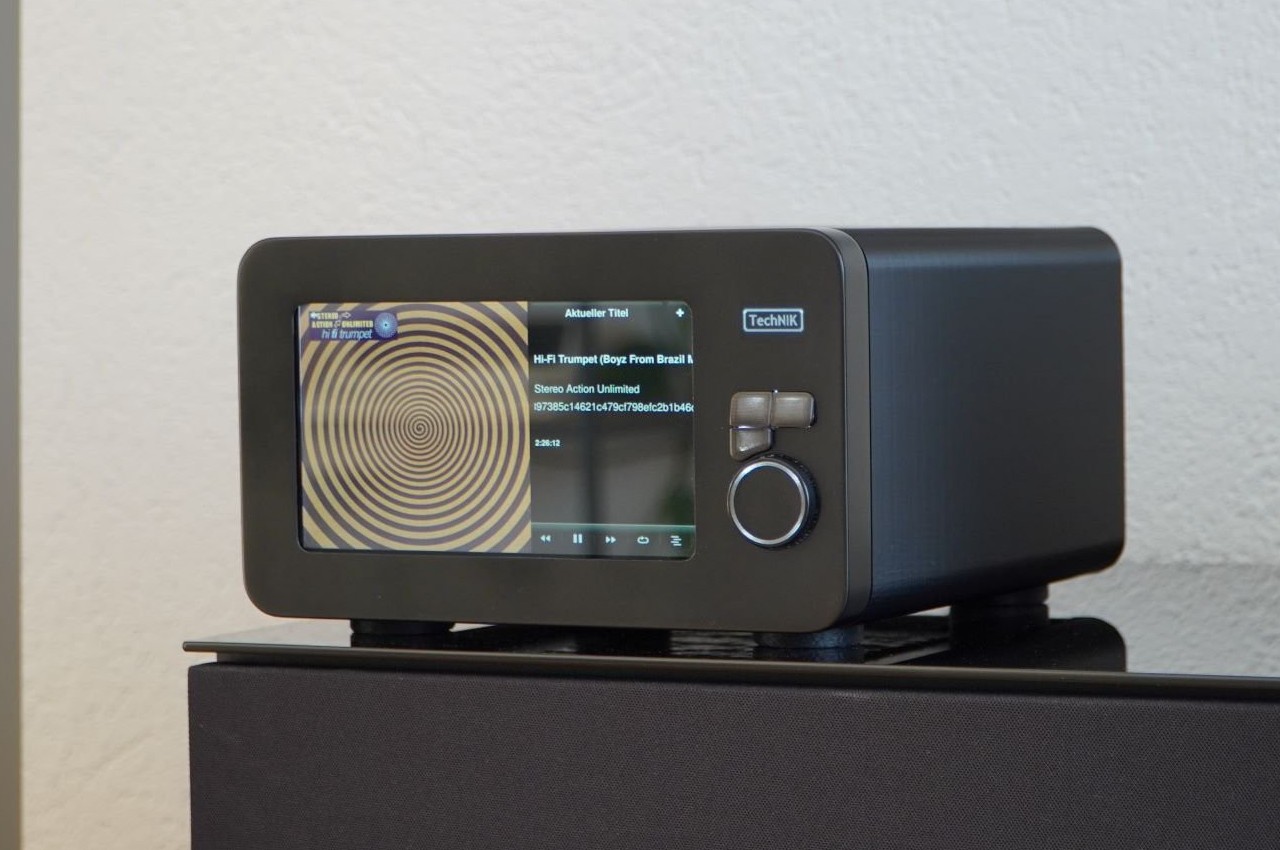
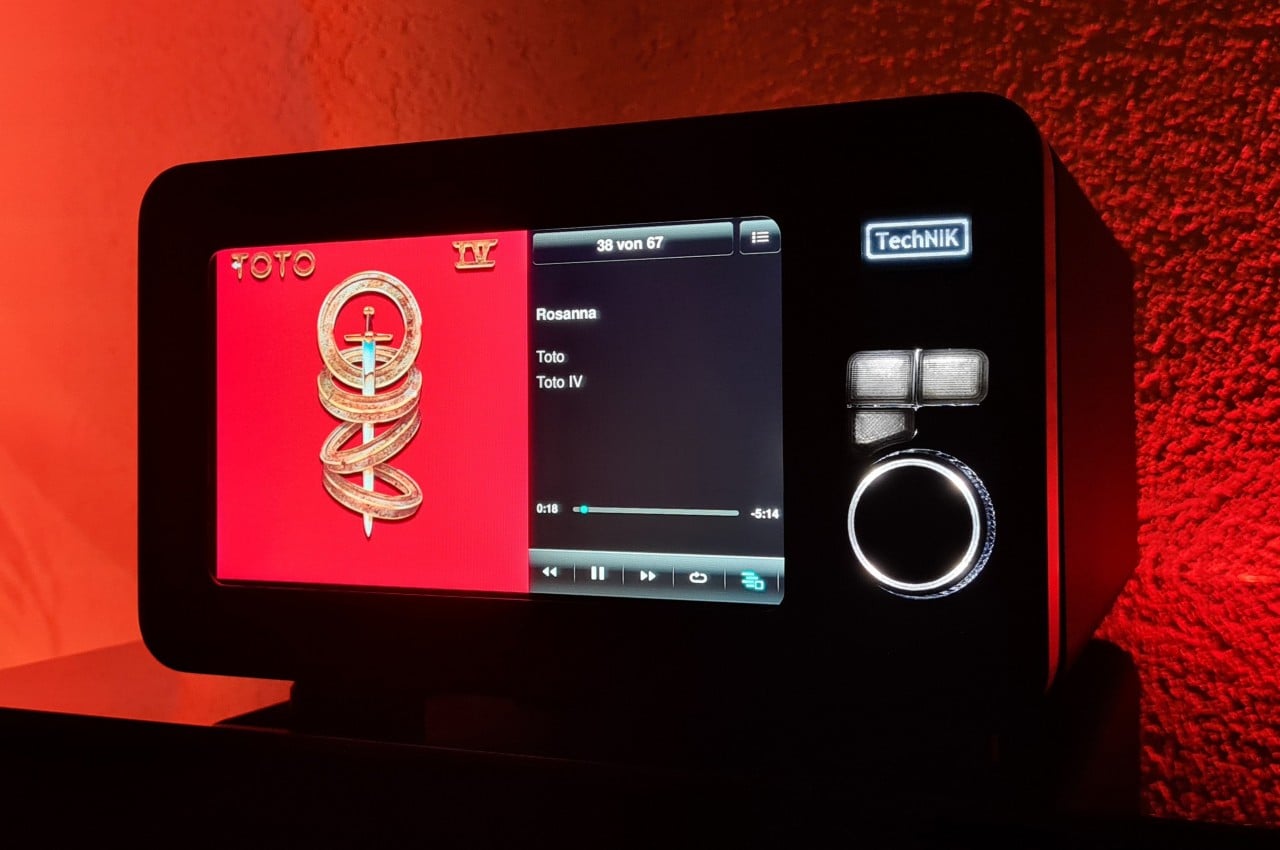
This DIY streaming audio player stands somewhere in between a smart speaker and a smart display, focusing on the streaming audio activity but with a touchscreen display that adds a bit of flavor to the experience. It’s not a touch-only device, however, as its creator preferred to embrace some analog controls, especially a volume dial that seems to be a rare sight on many smart speakers these days. There are also a few LED-lit buttons, though, and the whole setup can be controlled remotely from your phone or even a computer.

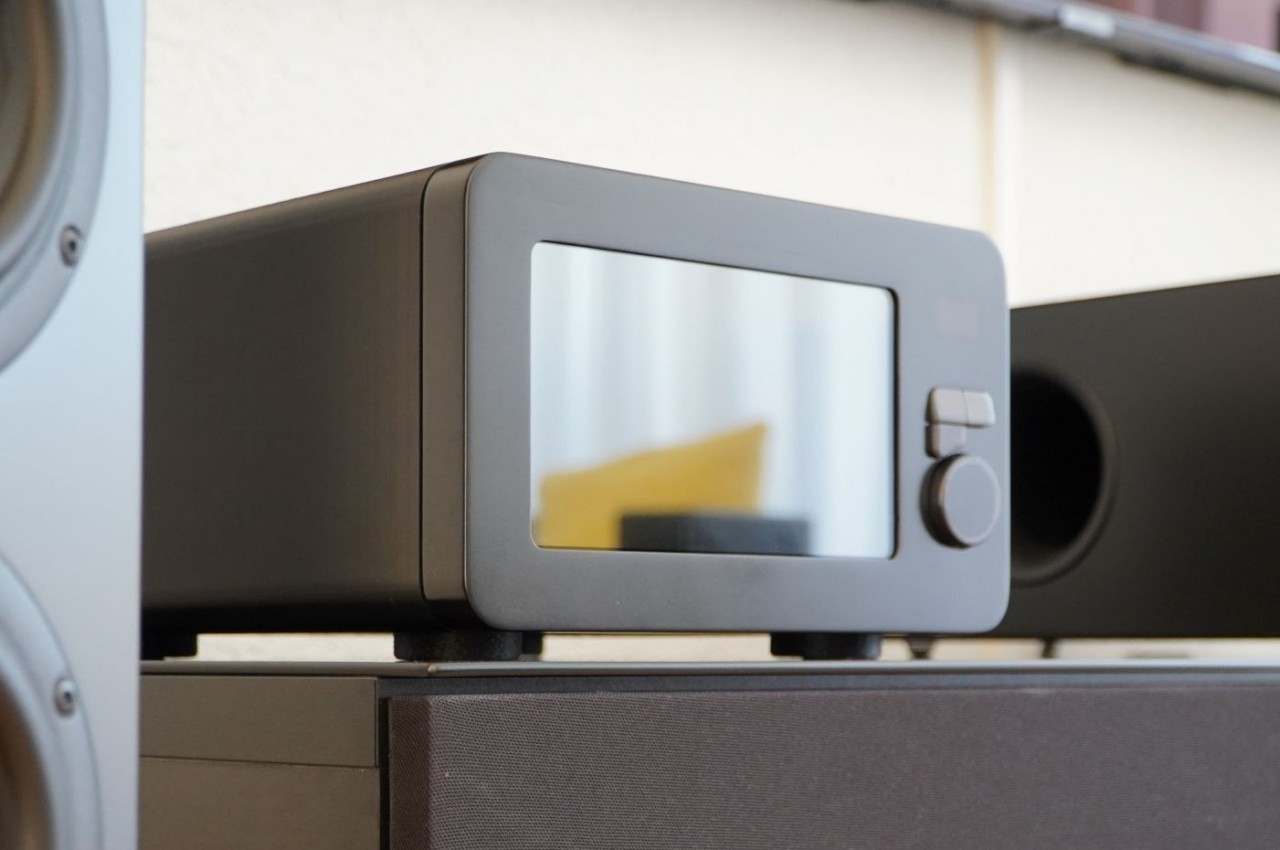
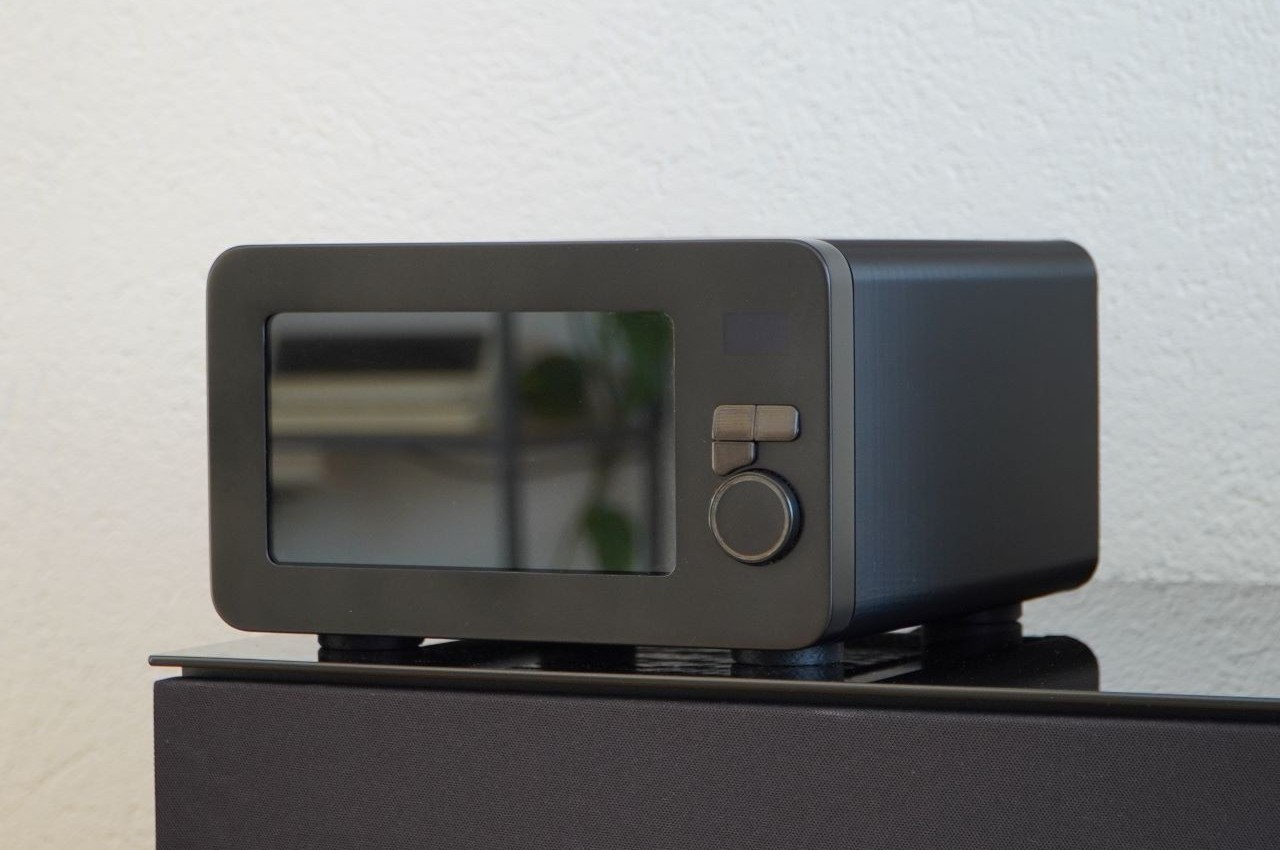
The design chosen for the player is admittedly distinctive, embracing an aesthetic that seems to mix different eras. The arrangement of a large display or rectangular element opposite a set of buttons and a knob is reminiscent of analog radios and even some TVs from decades past. The smooth surfaces and curves, however, give it a more modern look that is amusingly close to the appearance of a microwave with a physical knob instead of just buttons. Either way, it’s an interesting design for a dedicated streaming audio player that distills the listening experience to its very basics rather than getting lost in a multitude of features.

The post Retrofuturistic streaming audio player recreates the simplicity of a radio first appeared on Yanko Design.

Retro Wired Controller for the Xbox is a legitimate Blast from the Past

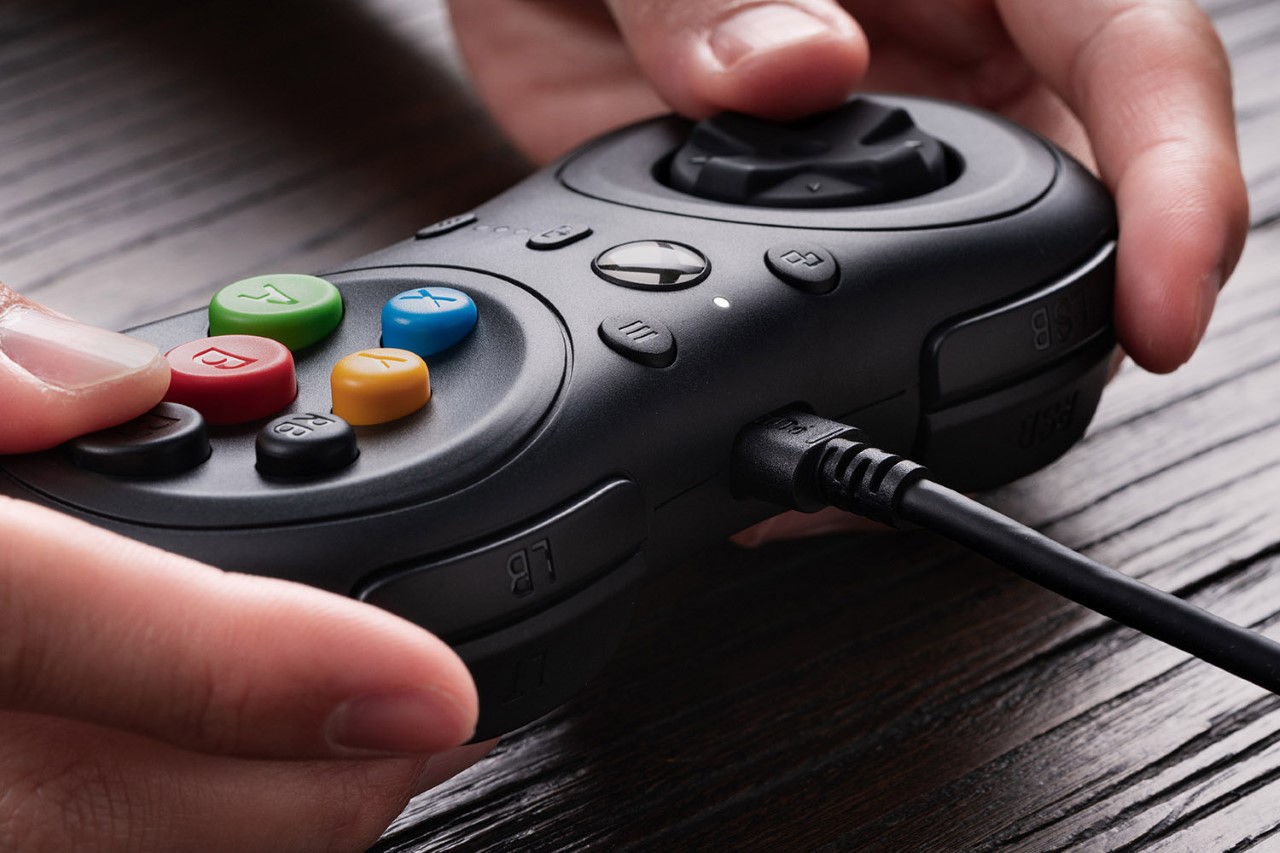
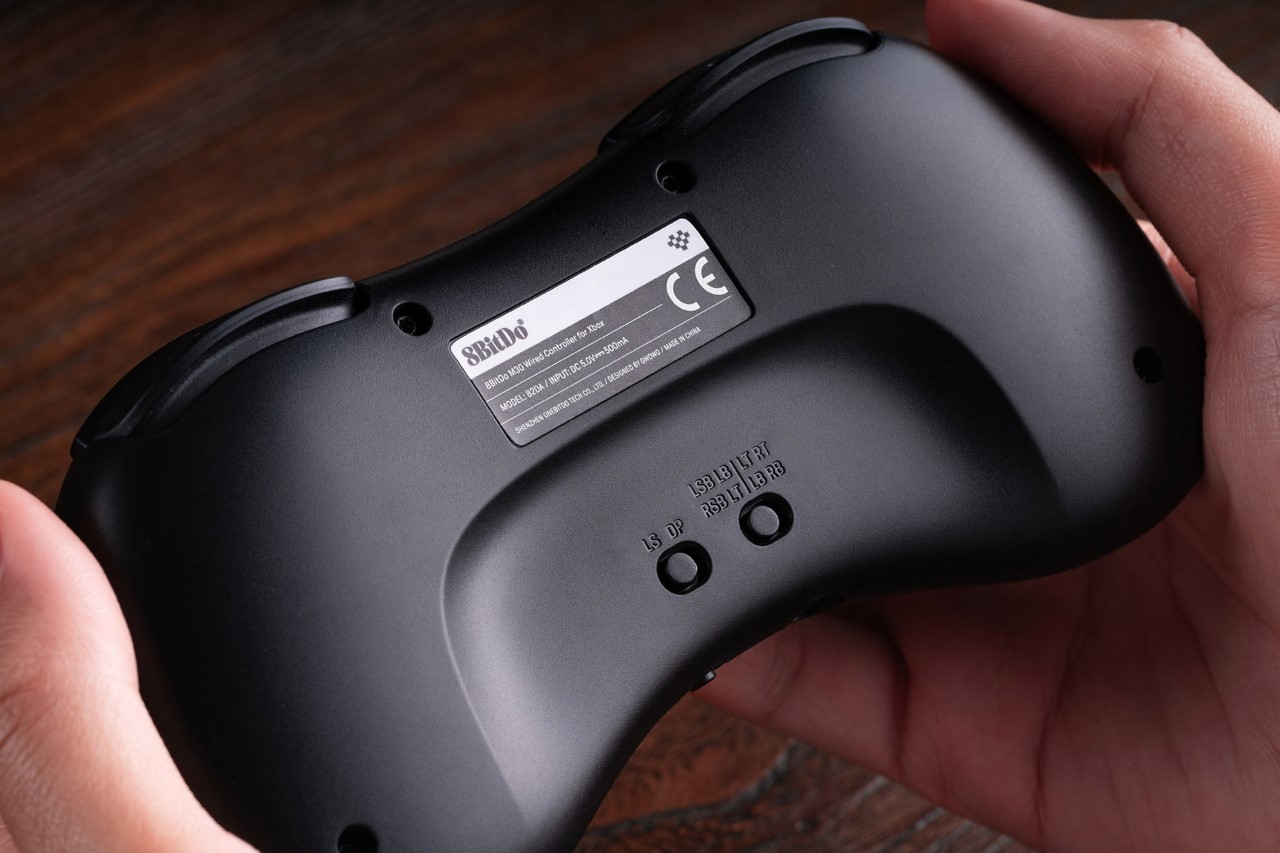
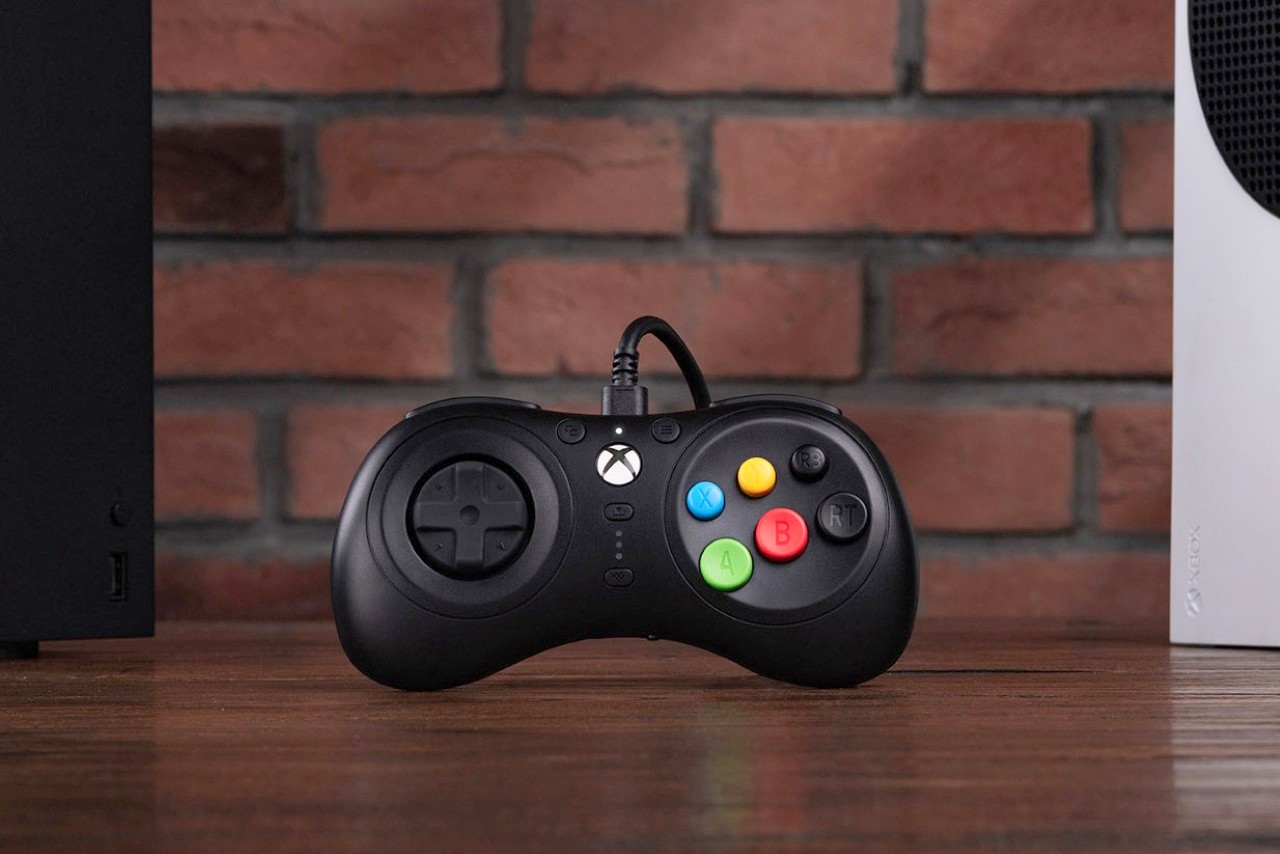
Remember the classic feel of your favorite retro console controllers? The chunky buttons, the responsive D-pad, the sheer simplicity of the design? The 8BitDo M30 Wired Controller for Xbox brings back that sense of nostalgia while offering features fit for modern gaming.

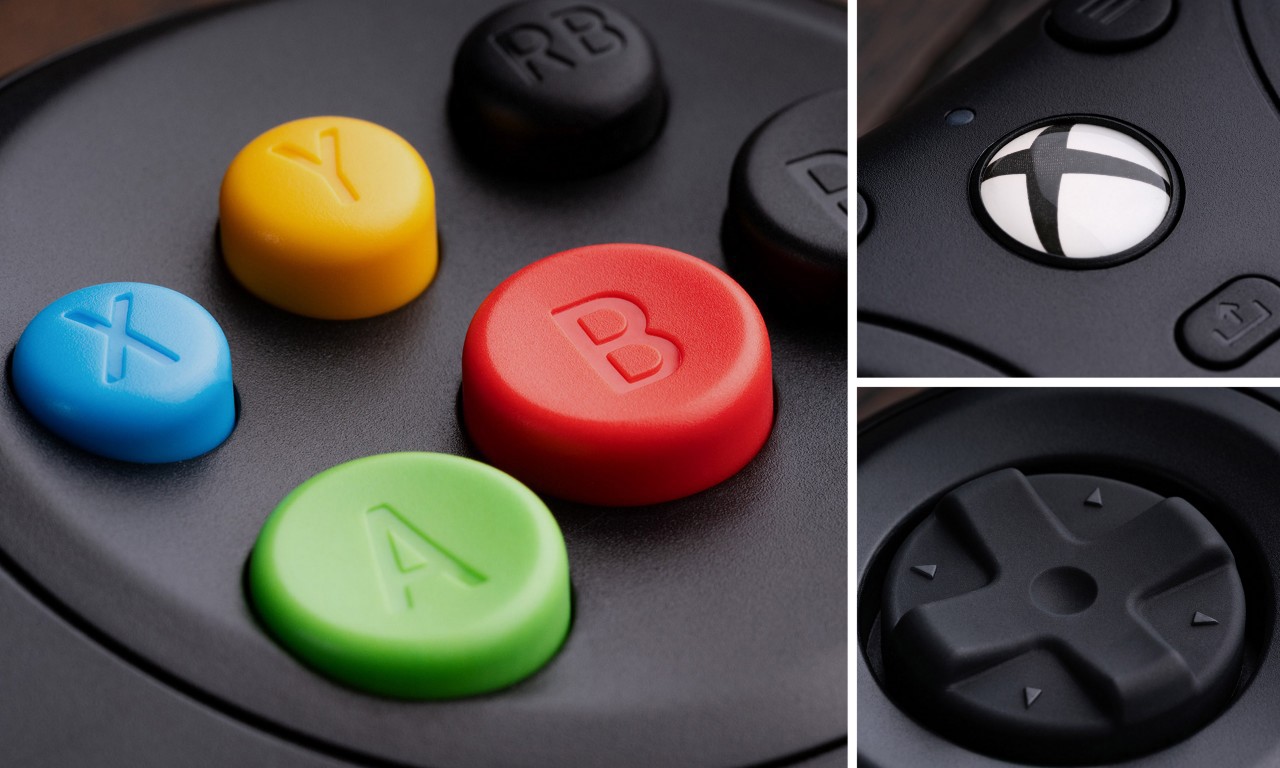
This officially licensed Xbox controller boasts a familiar 6-button layout, a hallmark of classic gaming experiences. But unlike its predecessors, the M30 boasts “updated” functionality for today’s titles. Exactly what these updates are remains to be seen in reviews, but it suggests the controller can handle the complexities of modern games while retaining the feel of a retro favorite.

Designer: 8bitdo

Beyond aesthetics, the M30 offers a wired USB-C connection for virtually lag-free gameplay. This is a major benefit for competitive gamers who rely on split-second reaction times. The controller is also built with precision engineering, featuring a smooth D-pad and calibrated buttons for optimal control.

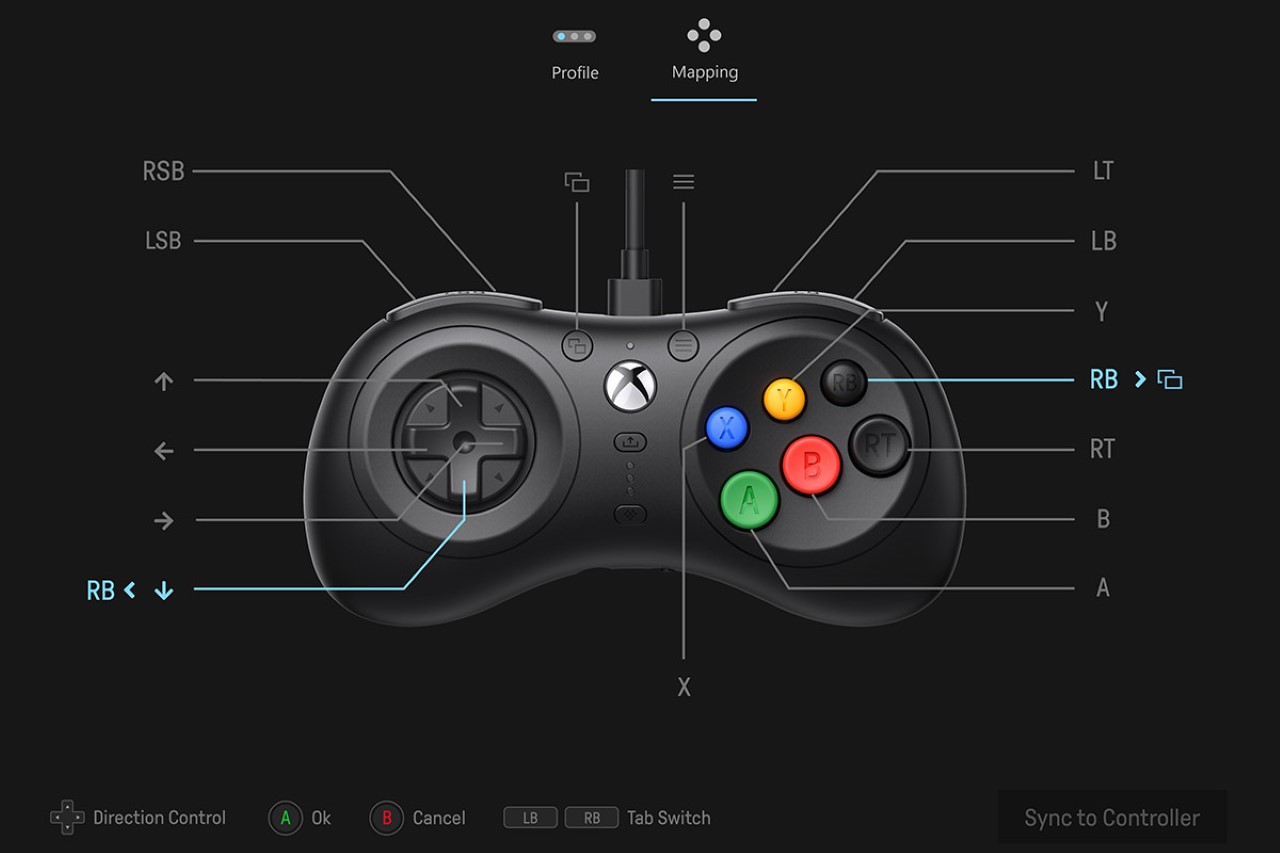
Gamers who crave customization will appreciate the M30’s ability to remap buttons and adjust sensitivity. This allows for a personalized experience tailored to each player’s preferences. The controller also boasts additional bumpers and triggers for a more immersive gaming experience, particularly in genres like racing or shooters.

For fighting game enthusiasts, the M30 includes a dedicated mode button that lets them switch between regular and professional layouts. This is a thoughtful feature that caters to the specific needs of the fighting game community.

Whether you’re a seasoned gamer yearning for a simpler time or a newcomer curious about retro experiences, the 8BitDo M30 Wired Controller for Xbox offers an intriguing option. It blends classic design with modern functionality, creating a potentially compelling controller for a variety of gamers.

The post Retro Wired Controller for the Xbox is a legitimate Blast from the Past first appeared on Yanko Design.
AI-powered calculator concept can solve even handwritten math problems

Like it or not, and some definitely don’t, the things that AI and neural networks can accomplish these days are nothing short of mind-blowing. Never mind the rather dated speech recognition that has now become all too common, AI has now become famous and notorious for being able to analyze just about anything and generate something from those data points, whether they’re images, novels, or even the chicken scratch that is our handwriting. Turning human scribbles into digital text that computers can process has long been one of the Holy Grails of computing, but being able to make sense of those scribbles is a different story. AI has come to a point where it can not only understand but even solve handwritten equations, and that’s a capability that this smart calculator is harnessing to ease the pain of cross-checking math problems, almost like magic.

Designer: Divyansh Tripathi

It’s relatively easy for computers and even phones these days to recognize handwriting and turn it into their digital equivalent, but AI goes the extra mile by understanding those words and, in this case, numbers and symbols. Math solvers, just like AI text generators, are somewhat controversial because of their potential for abuse, but the technology itself is quite impressive and, just like any other tool, could also be put to good use.

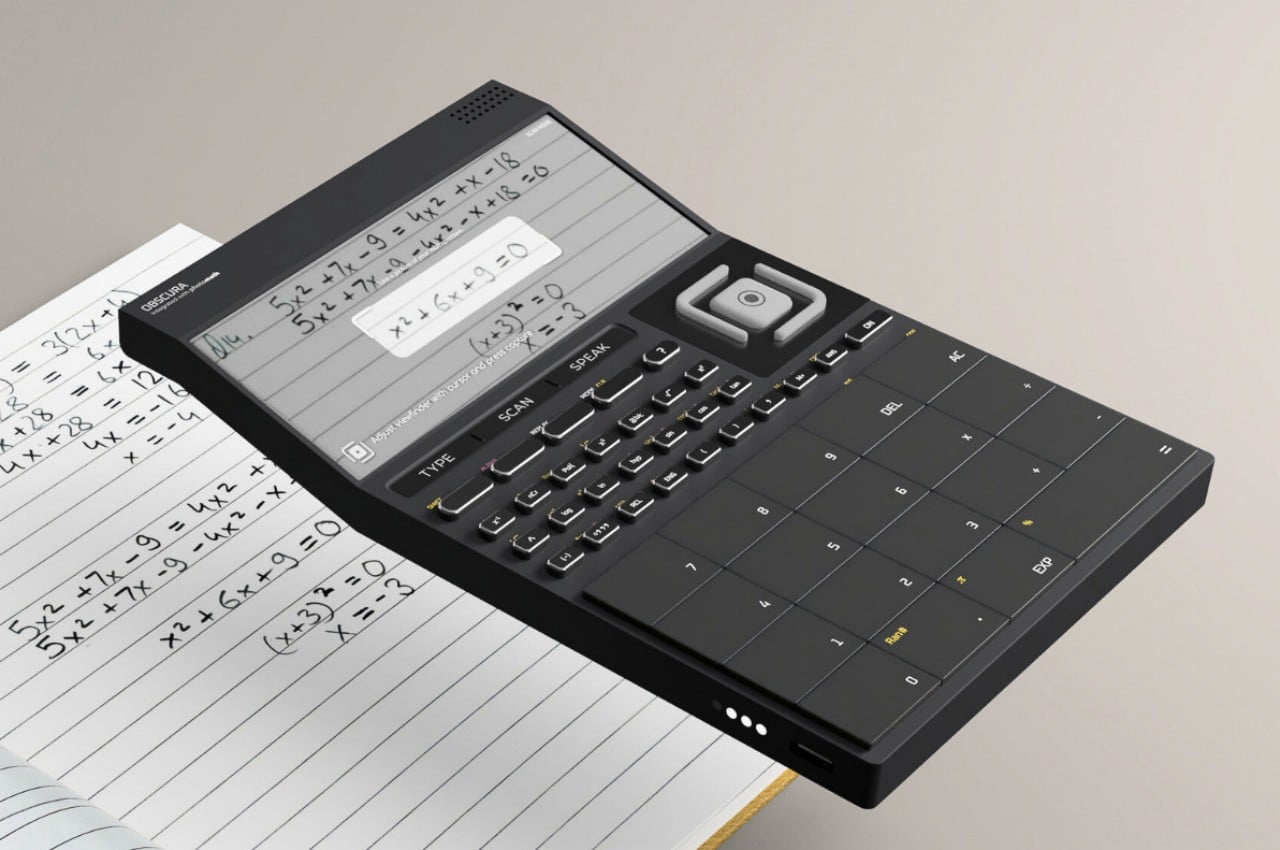
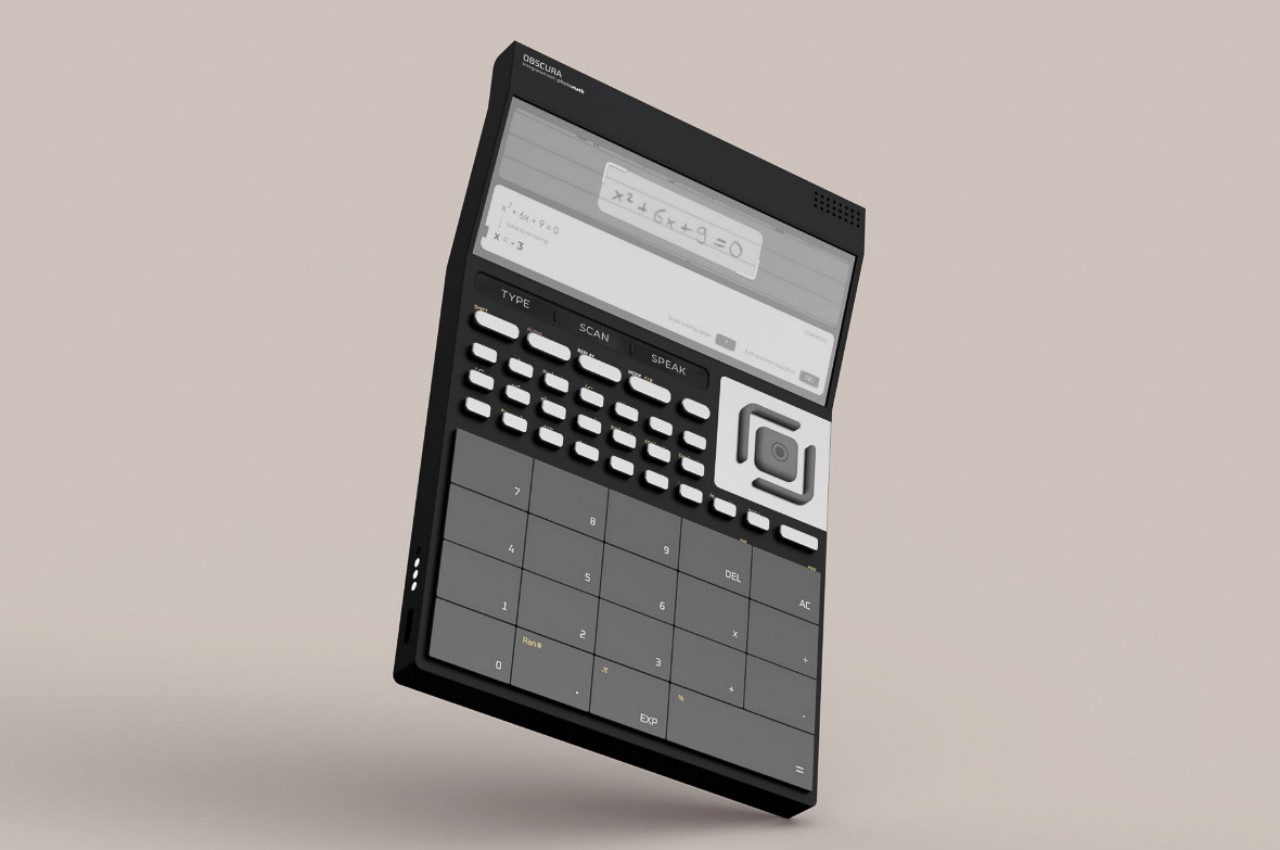
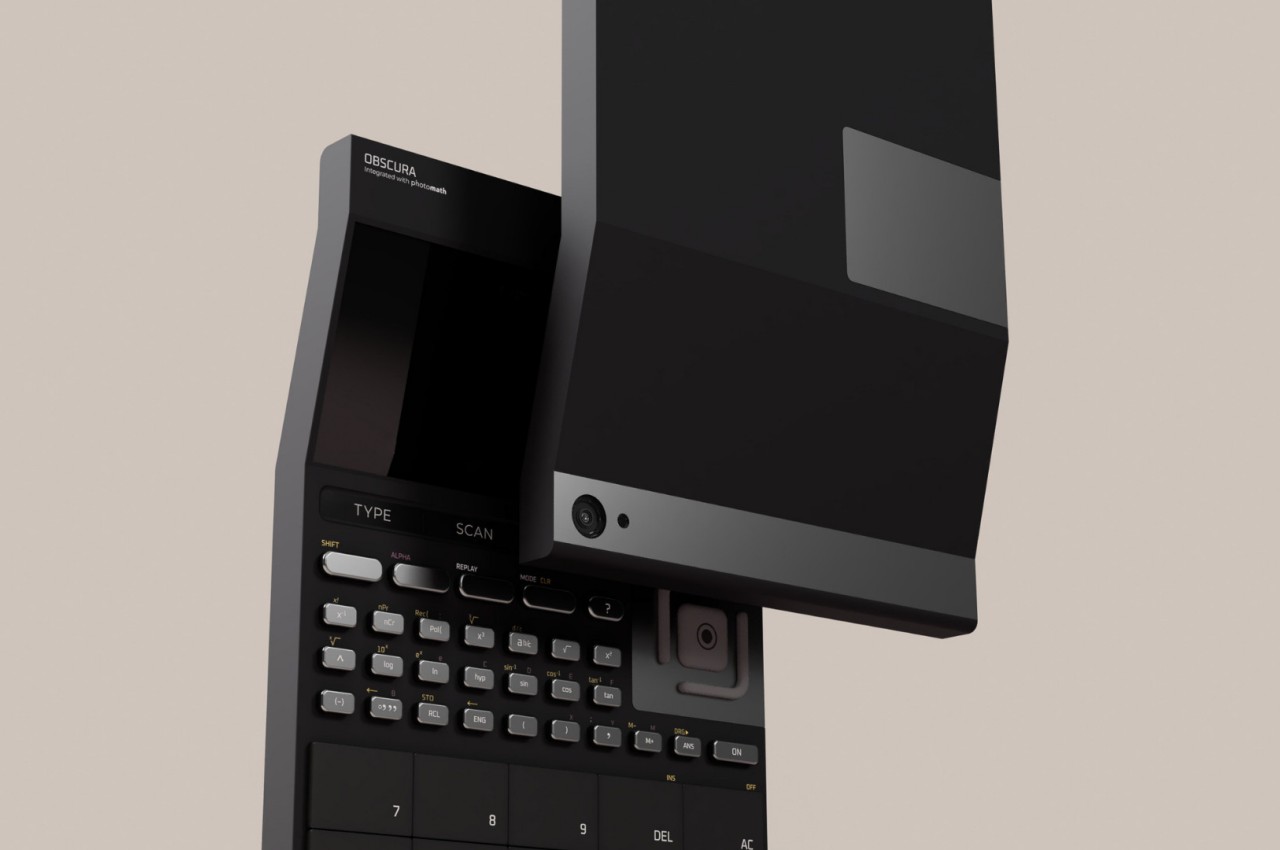
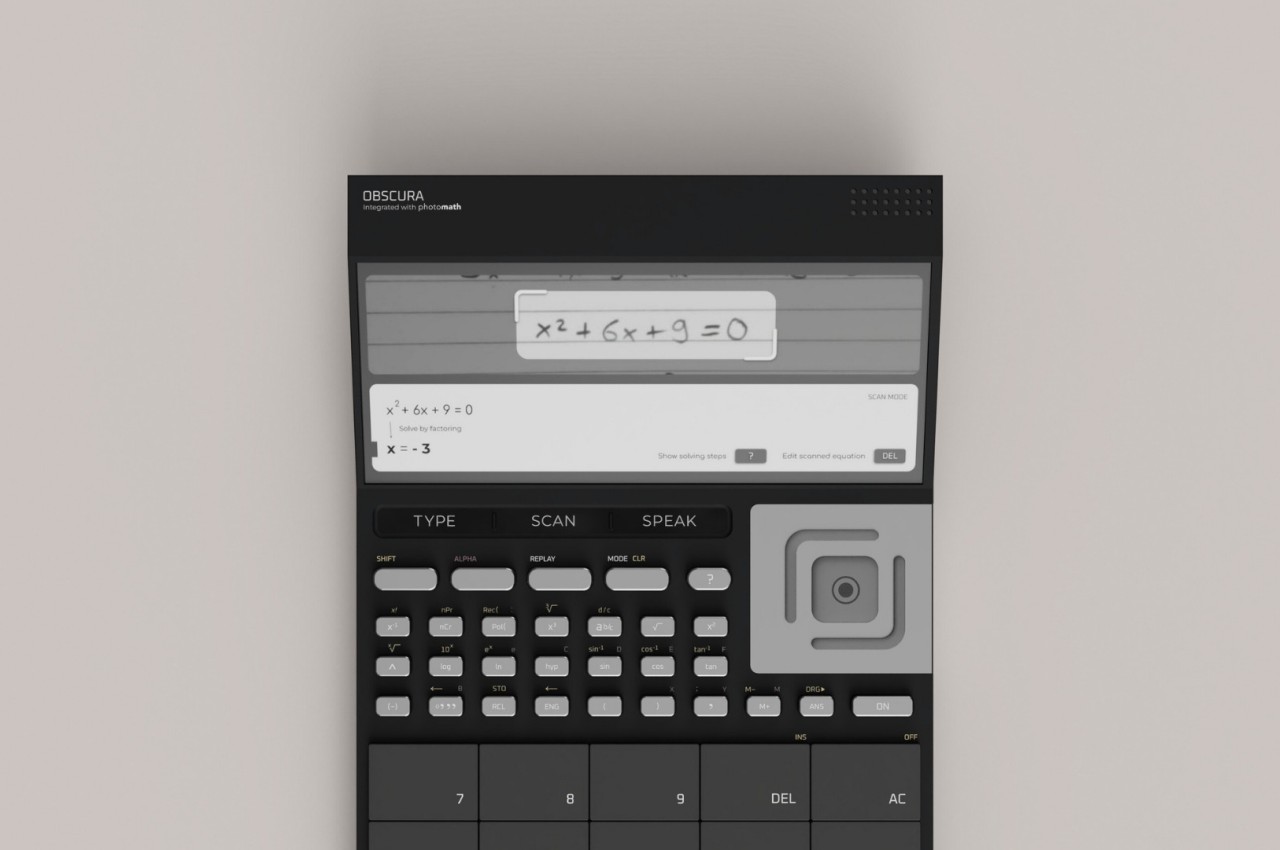
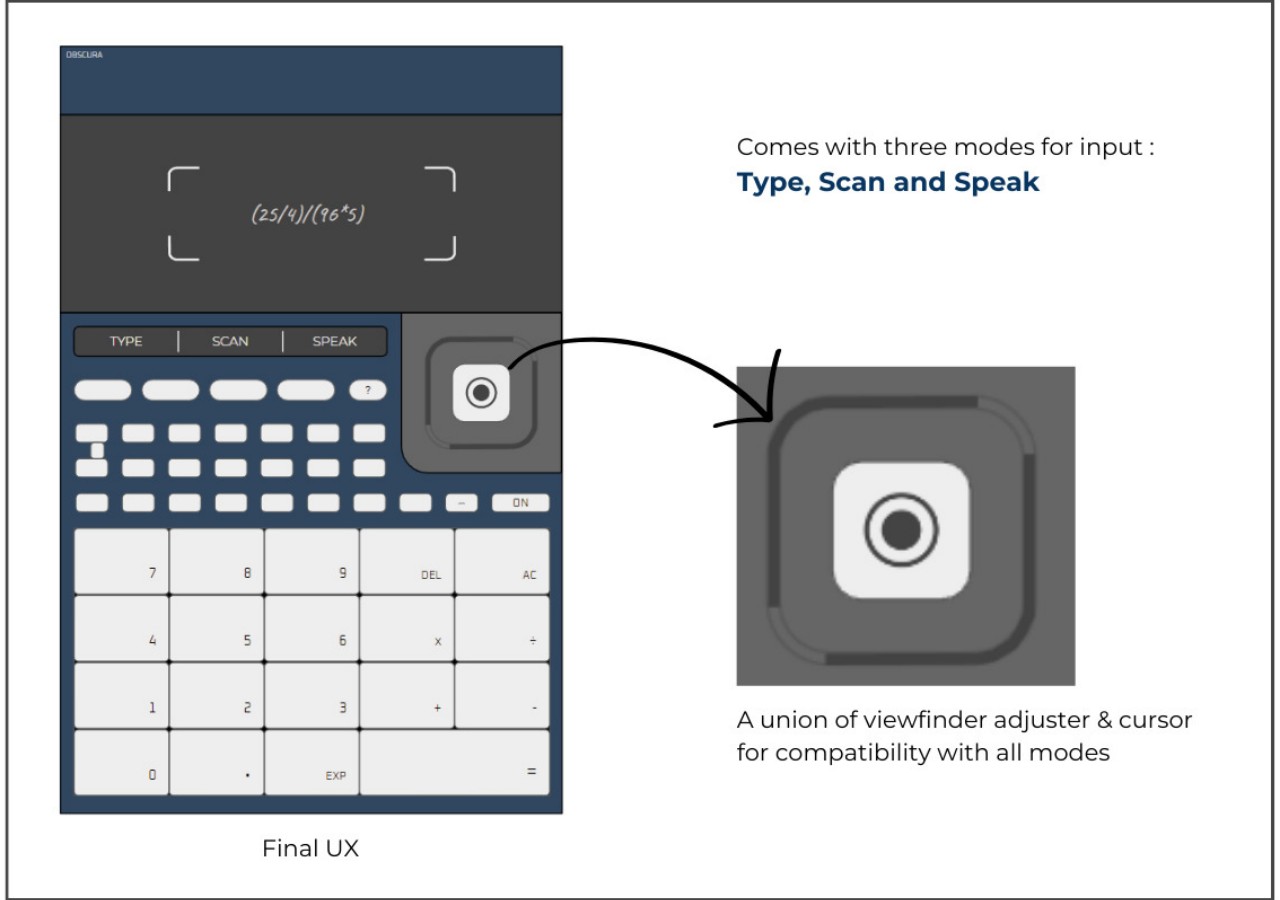
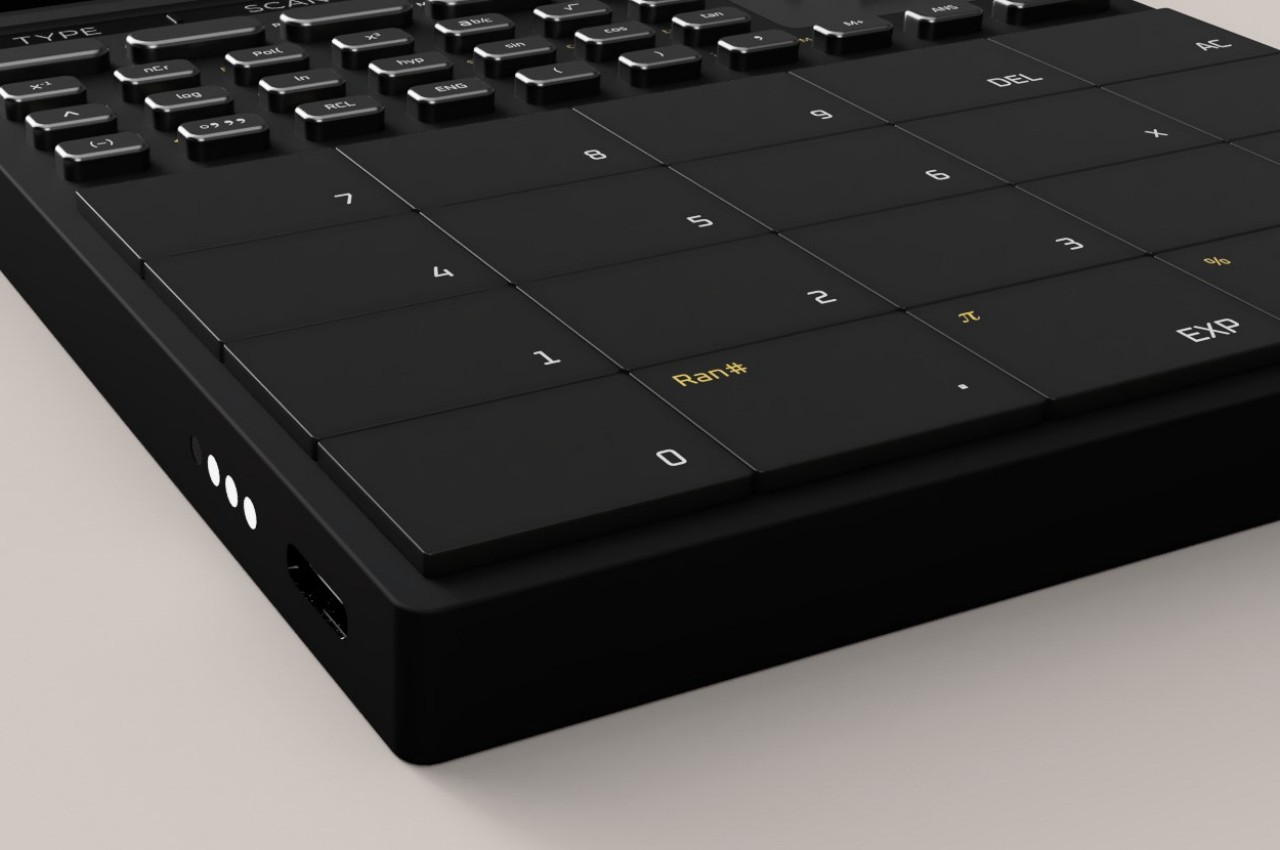
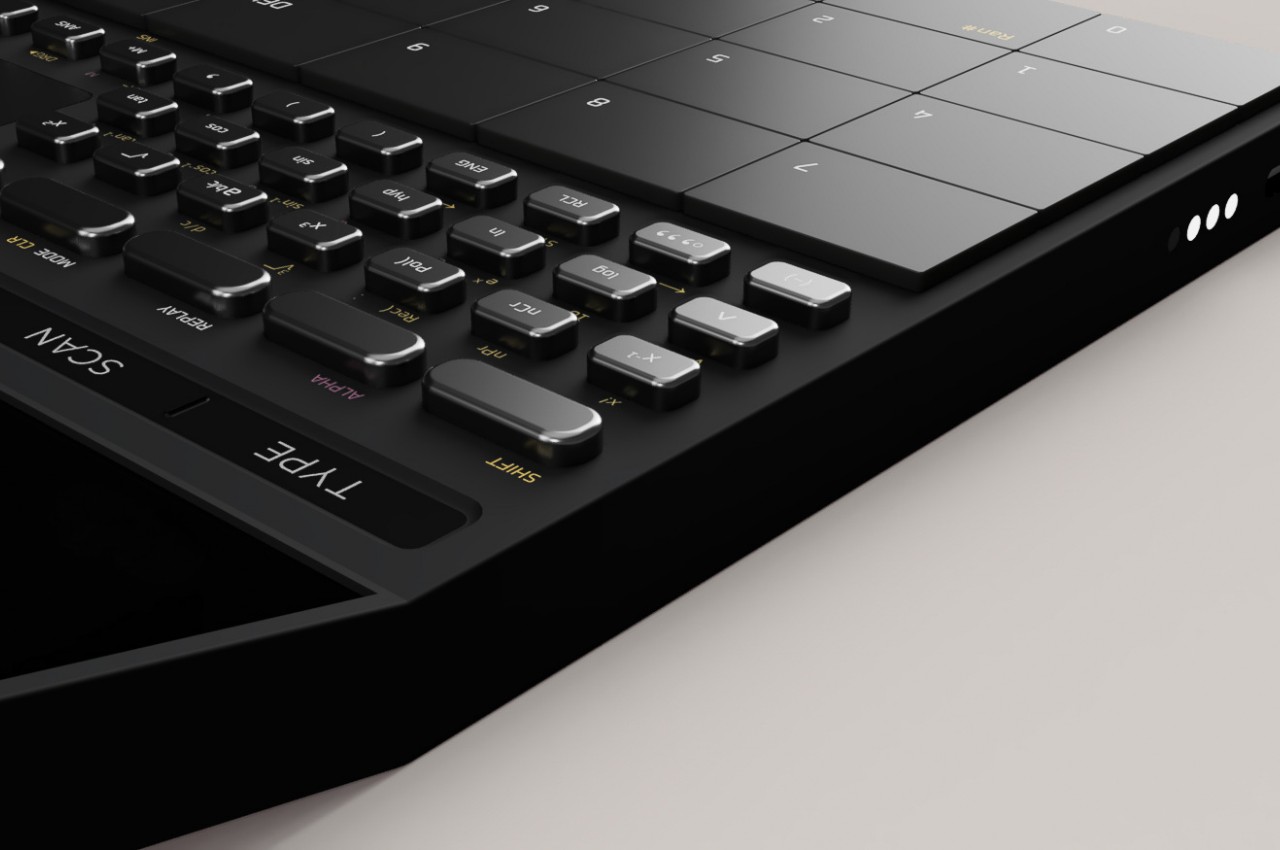
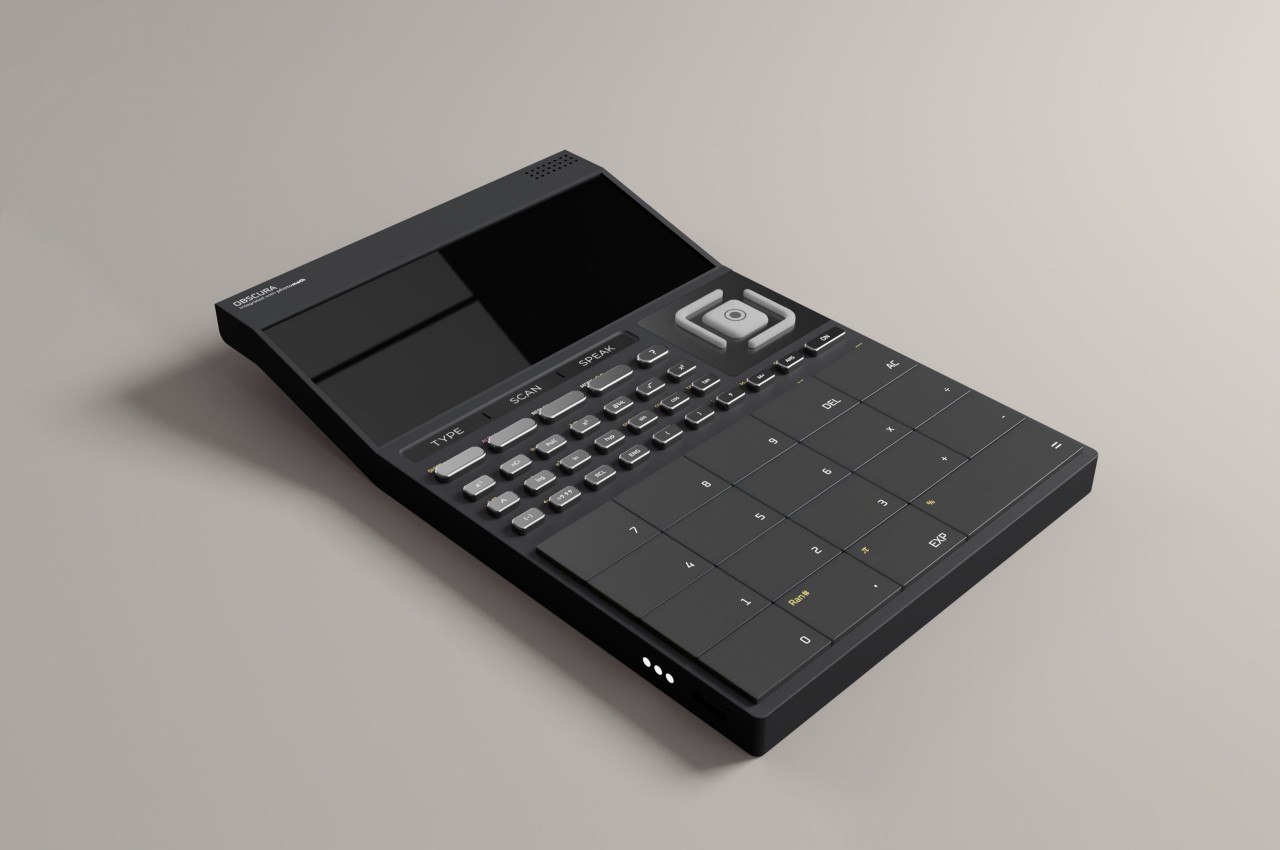
That’s the potential that the OBSCURA smart calculator concept is trying to harness, offering an all-in-one problem-solving device for any and all numerical problems. Unlike your typical advanced calculator, this one comes with a camera so that you can take pictures of a handwritten formula and run it through a solver such as Photomath, Microsoft Maths Solver, Socratic, and others. It doesn’t stop at “seeing” formulas and problems, however. It also has a built-in mic so you can verbally ask it about the problem.

Of course, you can also just type out the numbers like with any regular scientific calculator. In terms of the device’s interface, what sets this calculator apart is a touch control that lets you adjust the viewfinder or move the cursor around on the display. In all other aspects, it’s pretty much like any other powerful calculator, just that it has AI running inside.

Of course, that raises the question of the purpose of such a device, especially when smartphones have access to the same hardware and AI services. A smartphone, however, also has plenty of distractions that can drag you away from the work at hand, especially if that work happens to involve disagreeable numbers. Obscura, at least, offers to do some of the rote work, especially with cross-checking solutions, but it’s still up to the user to be responsible with such great power in their hands.

The post AI-powered calculator concept can solve even handwritten math problems first appeared on Yanko Design.
This stylish hearing aid inspired by open earbuds blends ergonomics and functionality

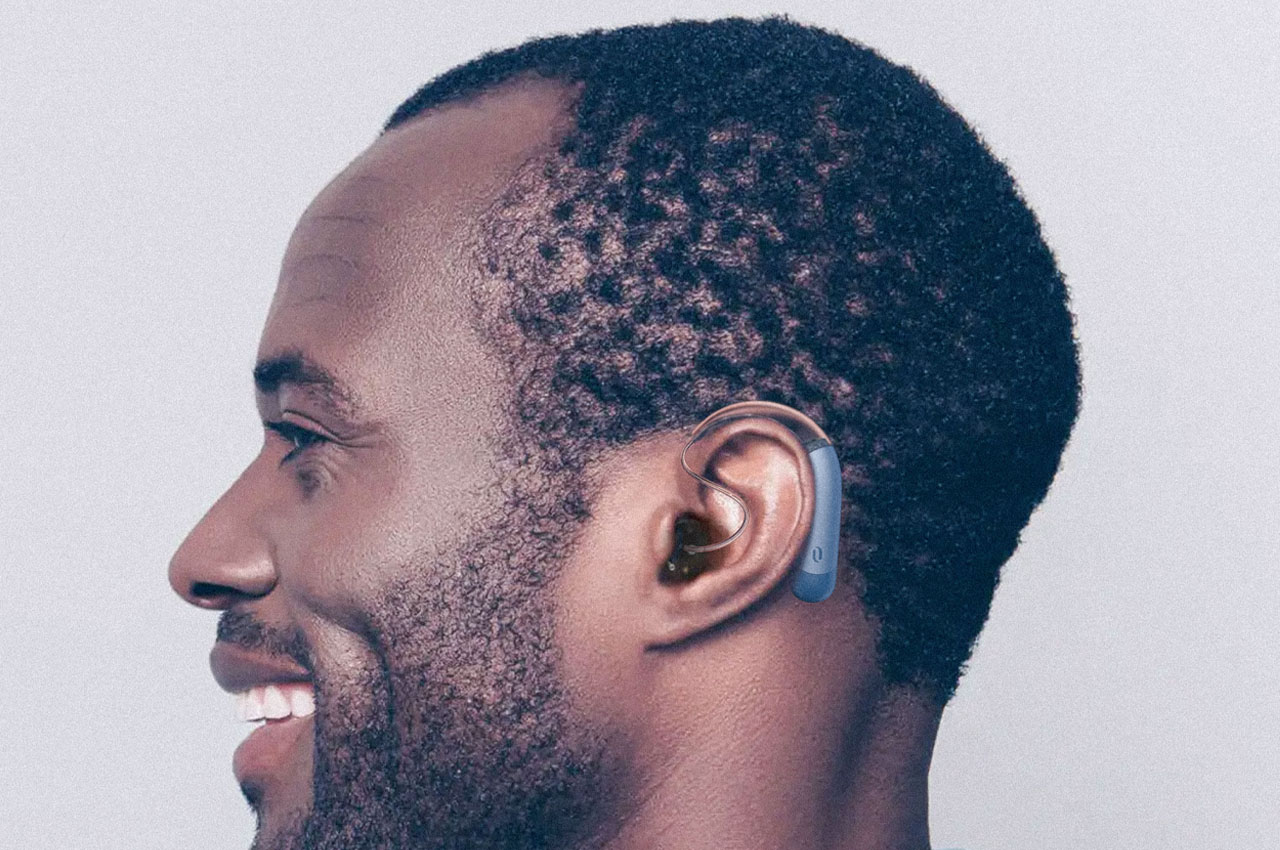
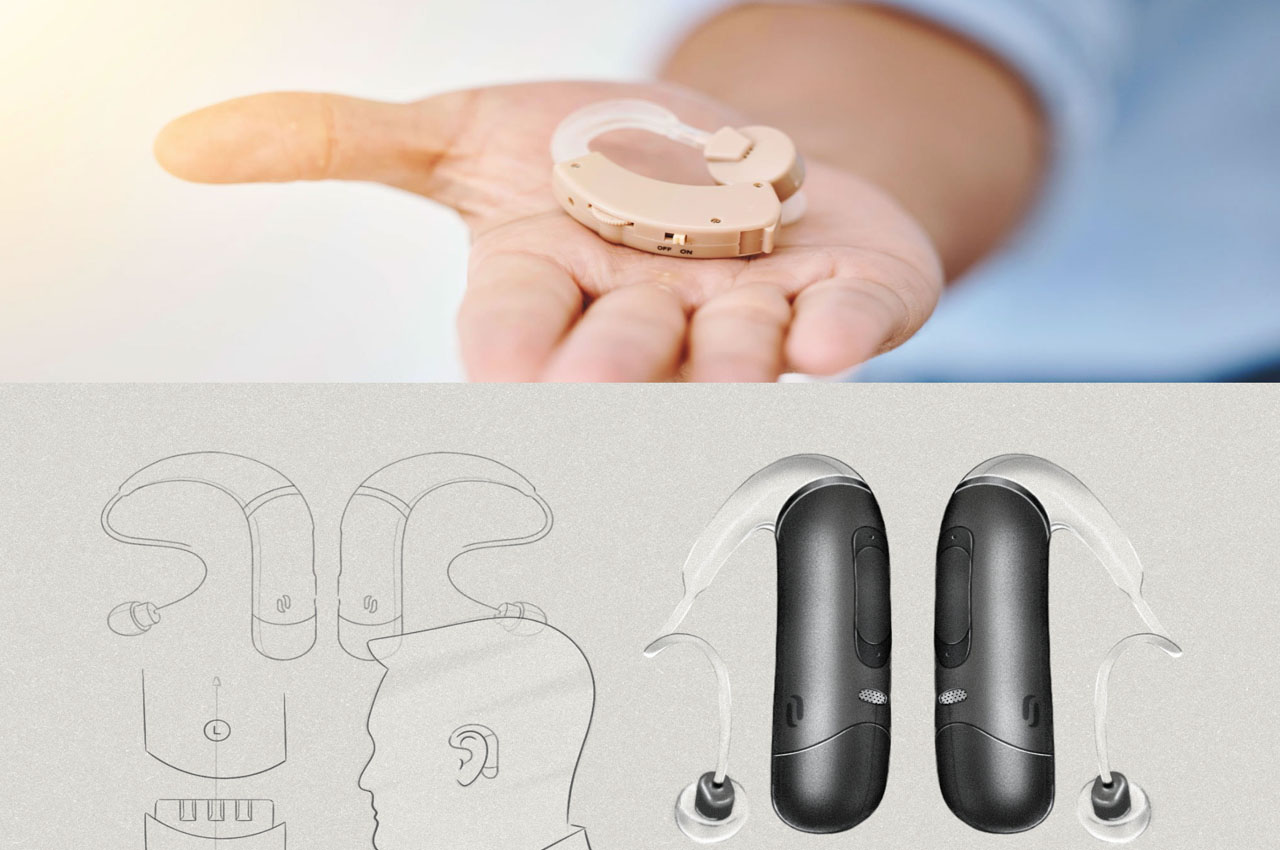
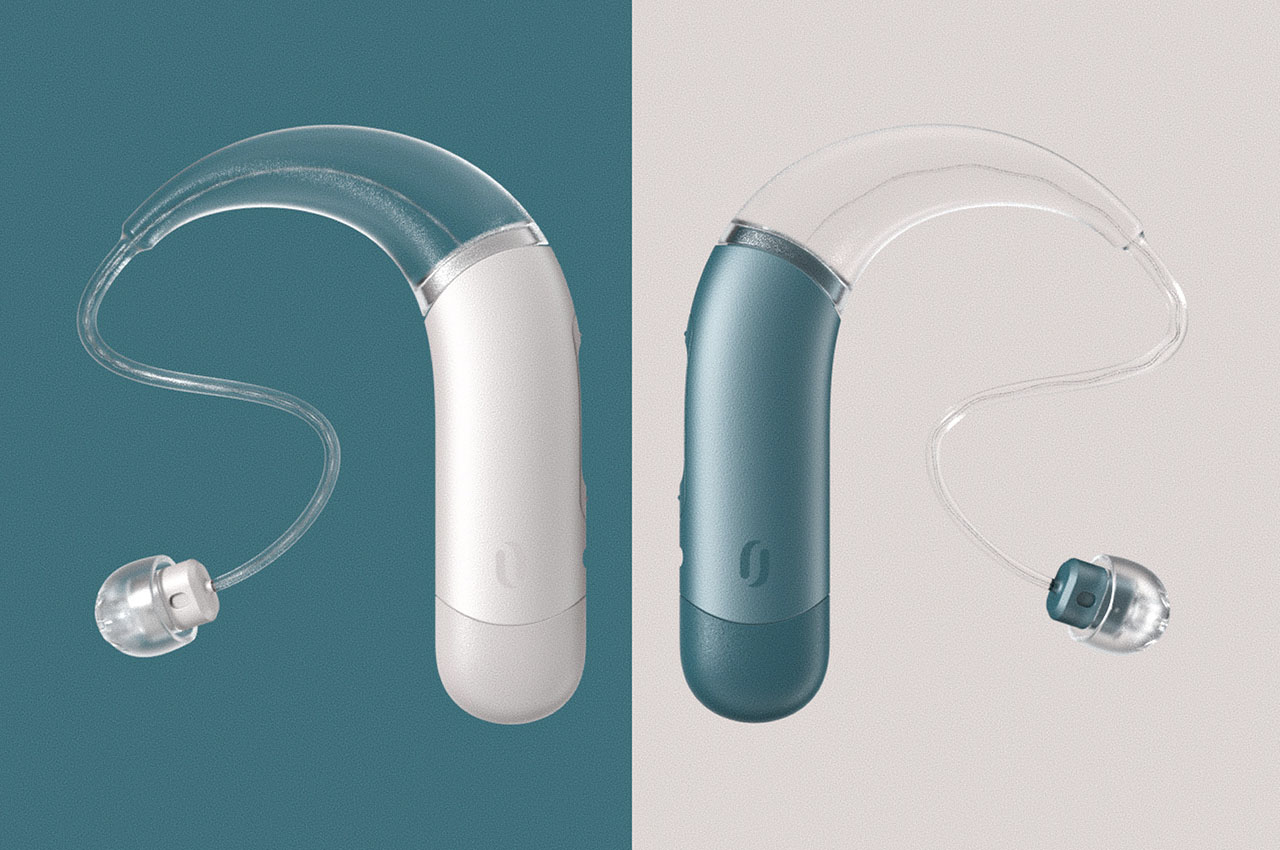
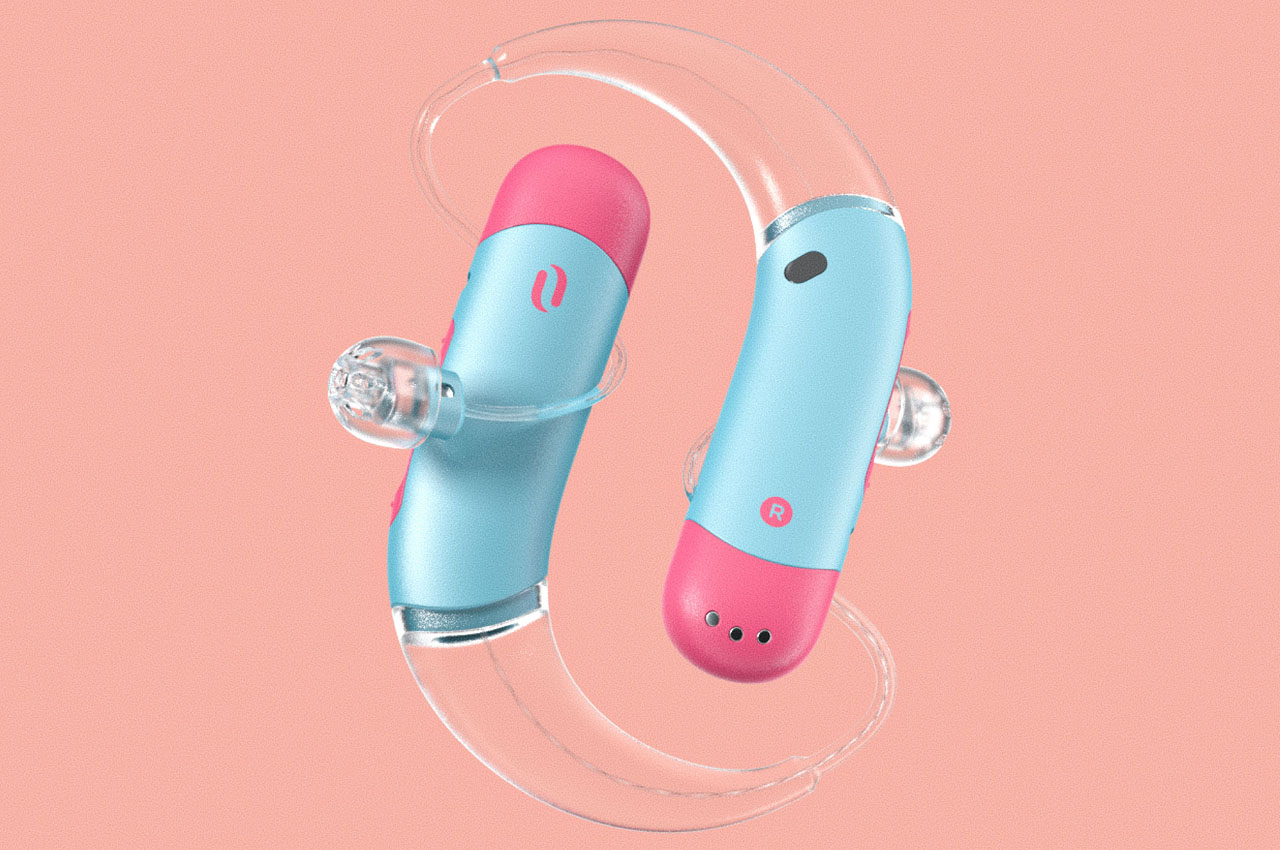
Why do all hearing aids have to make you look old and unstylish? Why can’t they be as cool as those modern open-design earbuds? This very predicament inspired a design house to propose a hearing aid form that shifts assumptions and stereotyping. The design is backed by viable features and useful functionality that’ll make any traditional hearing aid user interested in the idea.

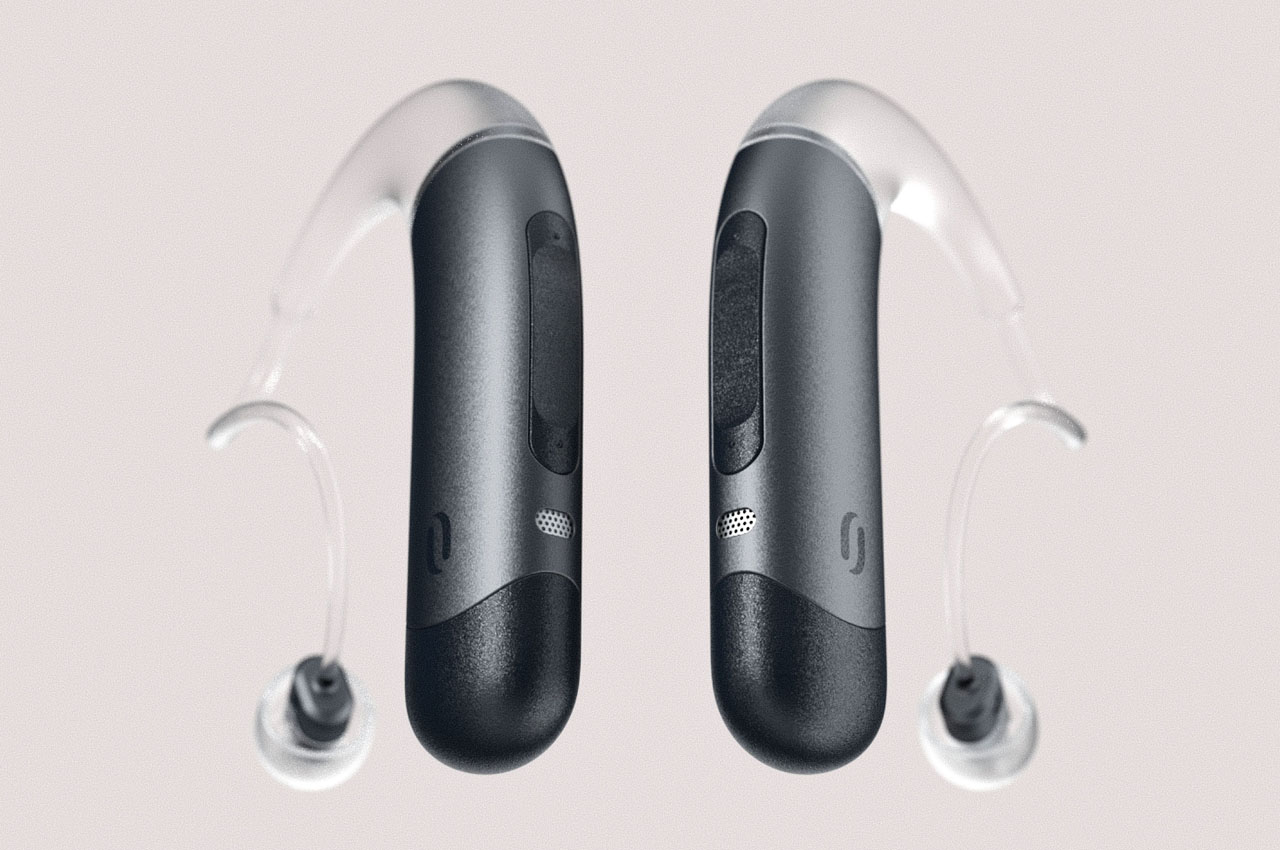
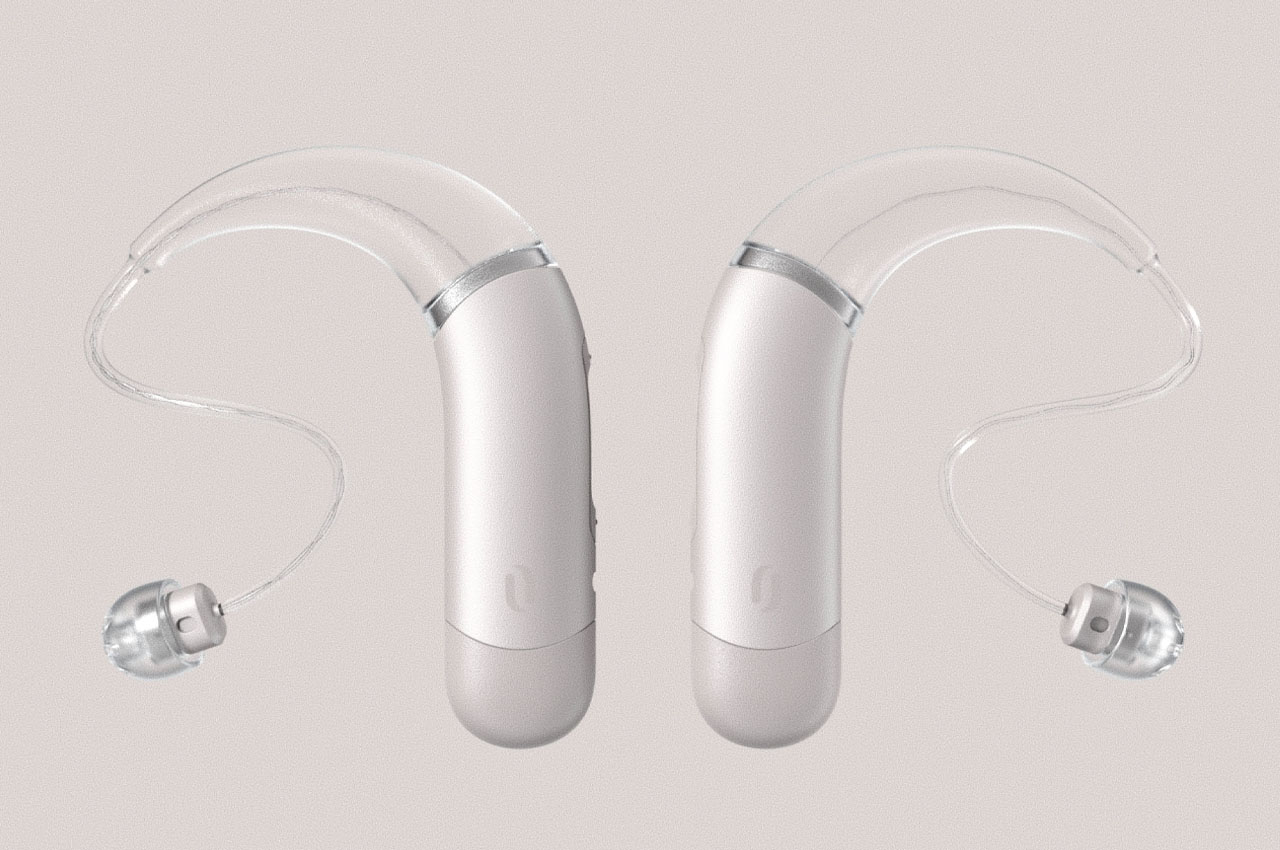
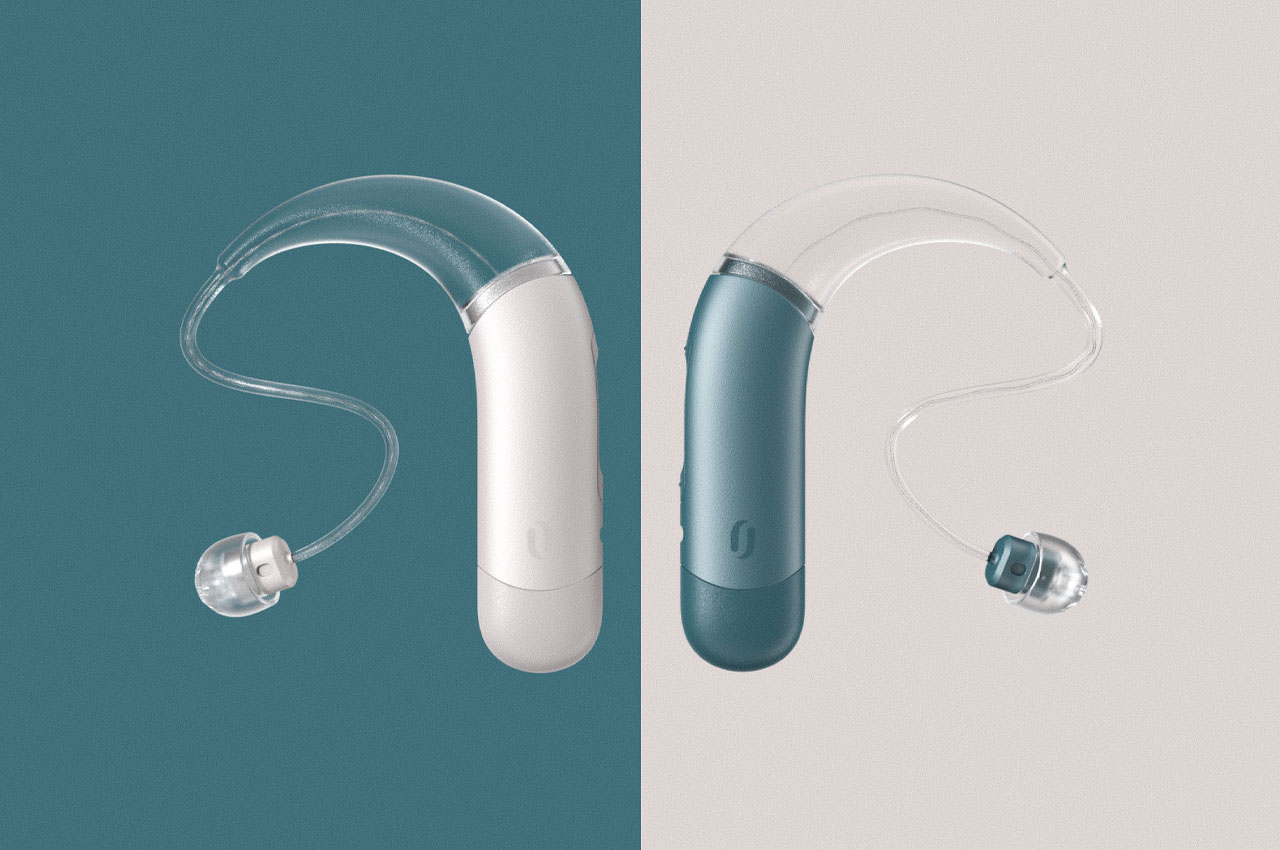
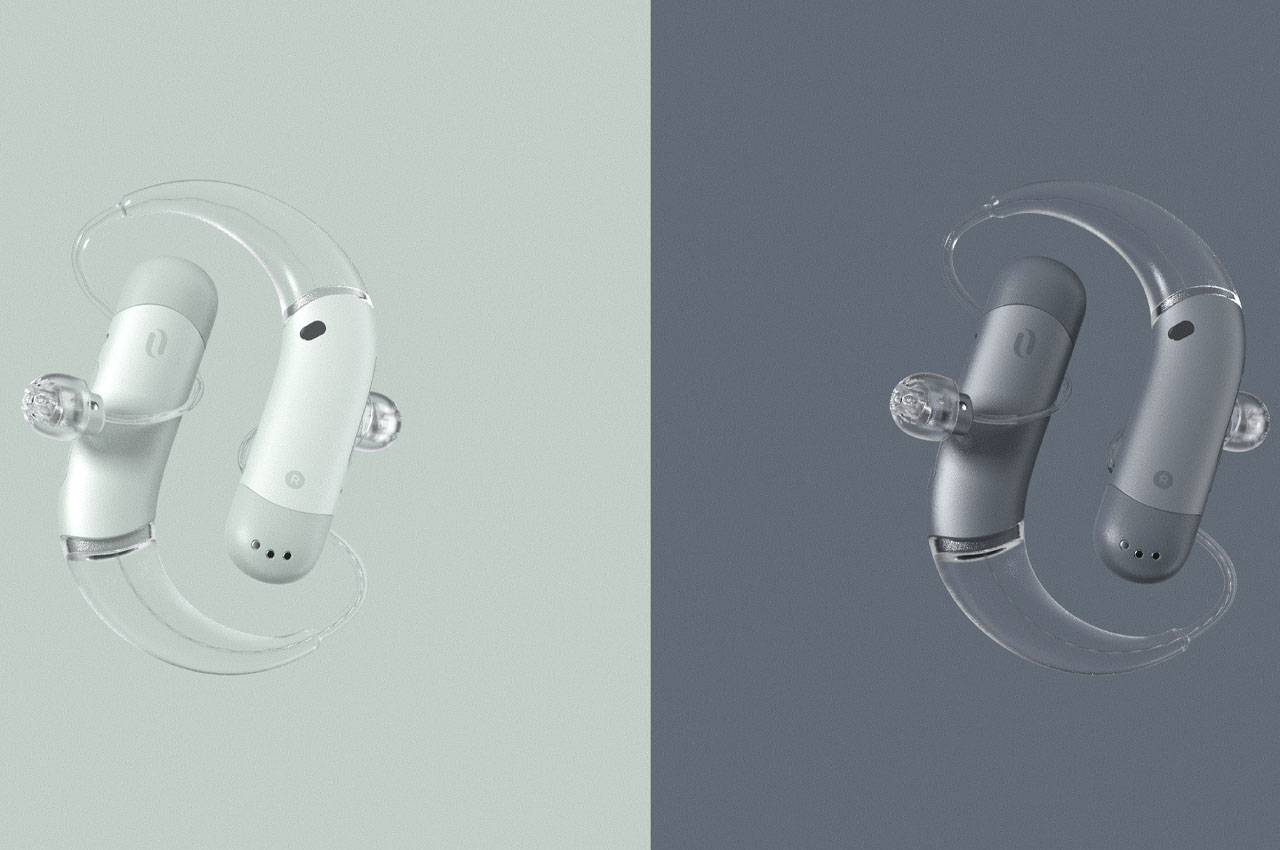
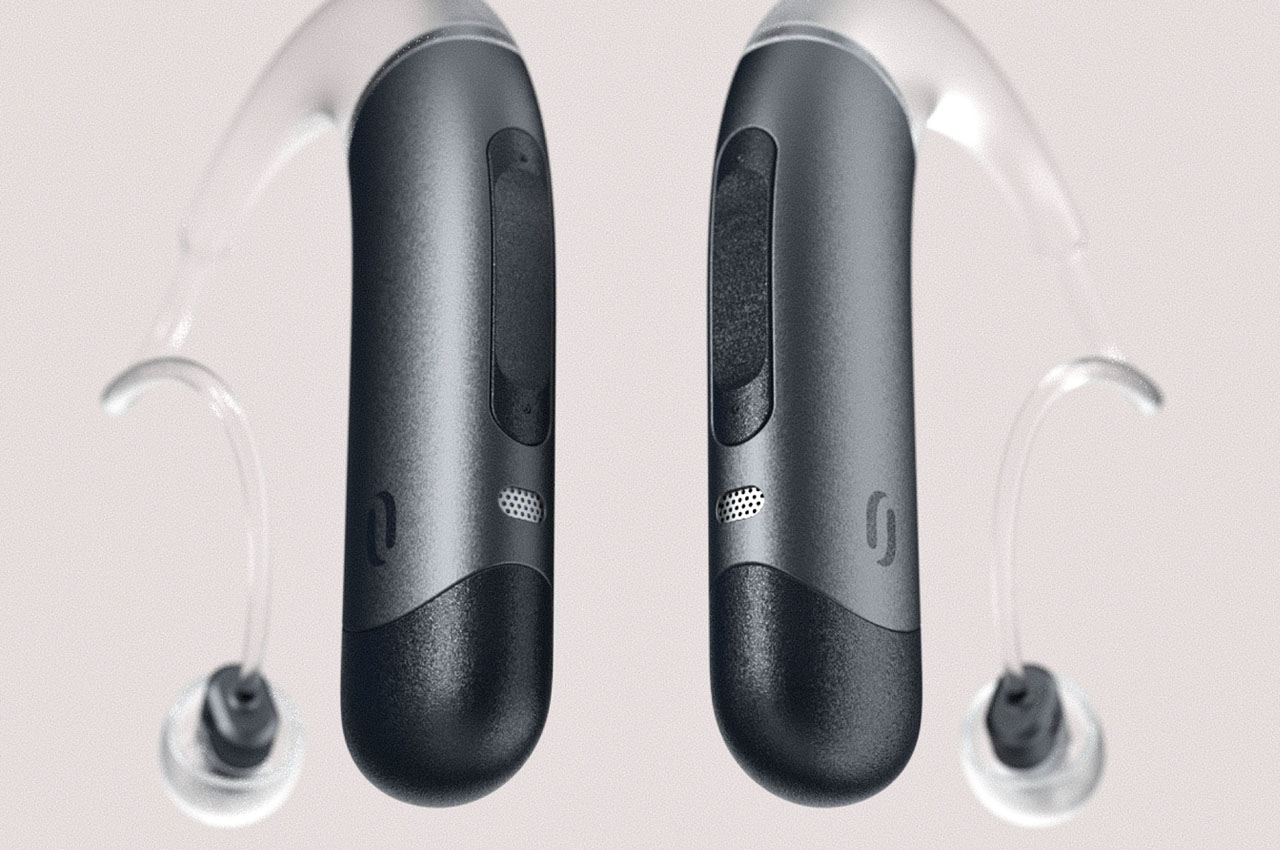
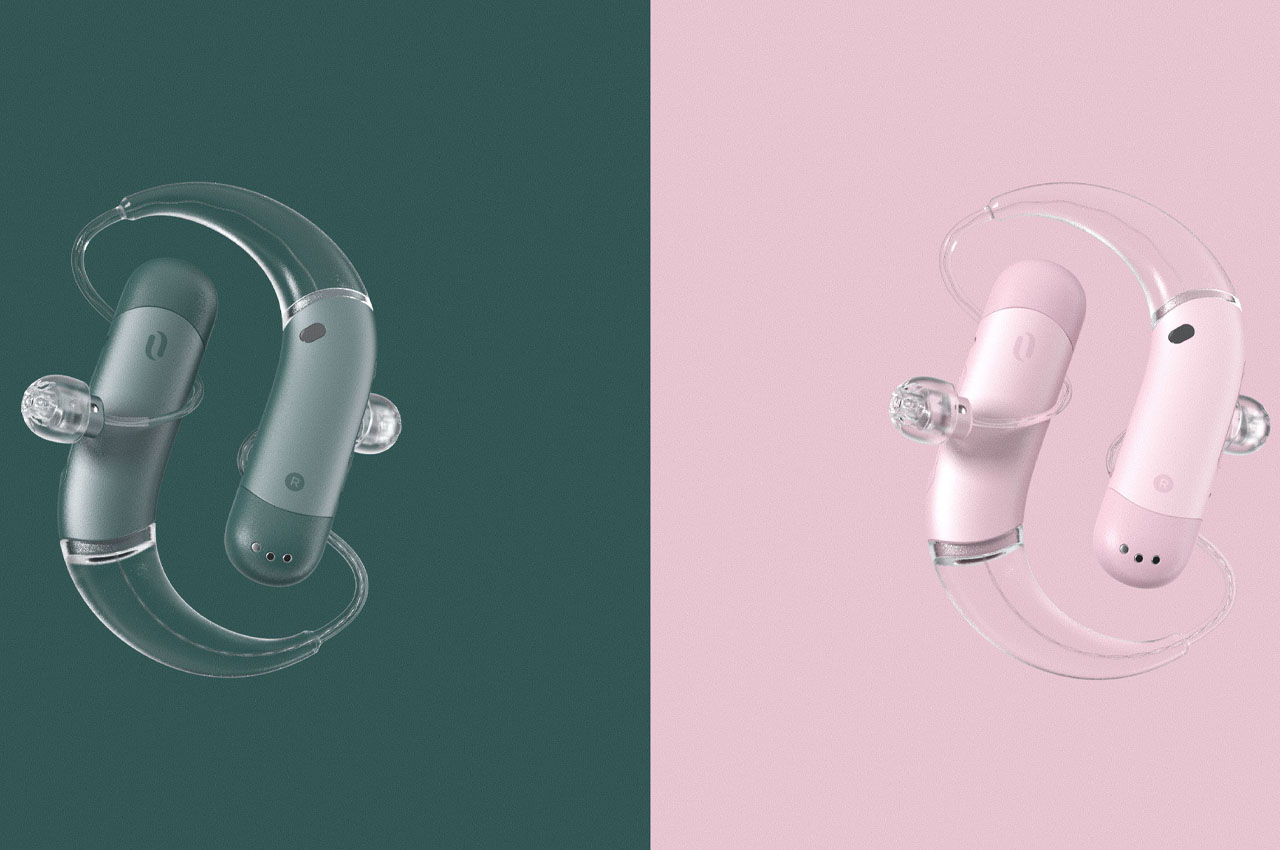
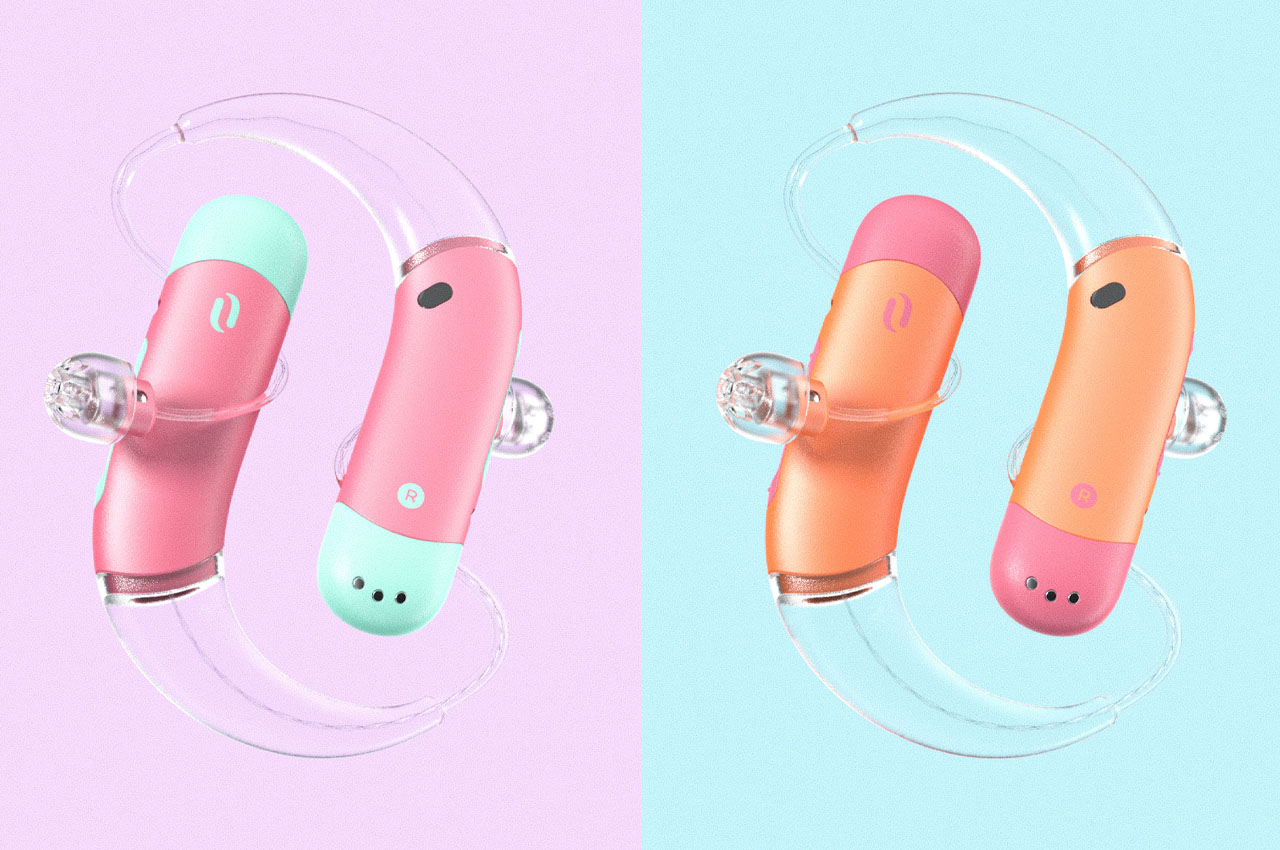
Meet Claro, a battery-powered, Bluetooth-connected pair of hearing aids that redefines style without compromising any aspect of functionality. Adapting the open-ear design that we’ve seen on the Bose Open Earbuds, these ergonomic hearing aids seamlessly sit on the user’s ears, sidelining the common medical gadget aesthetics for good.

Designer: Crux Product Design

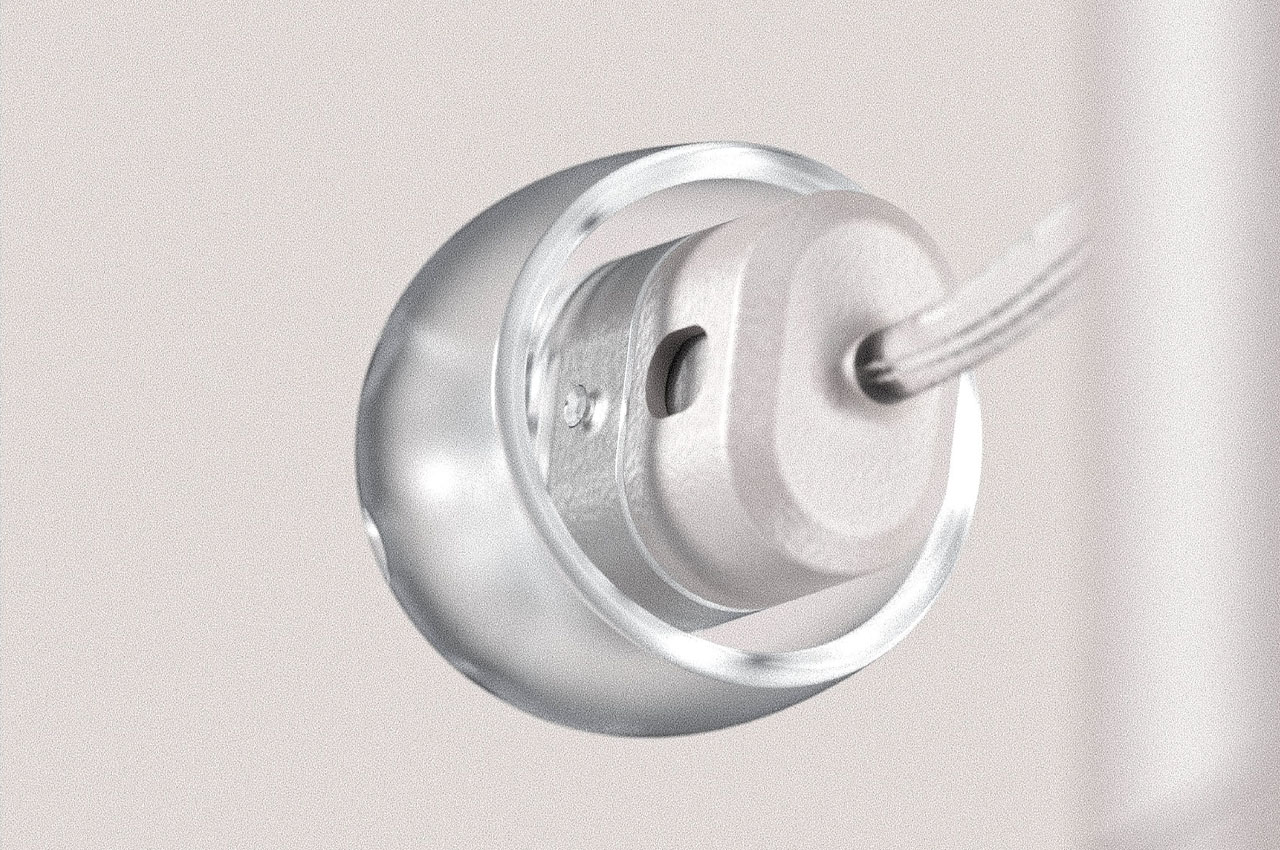
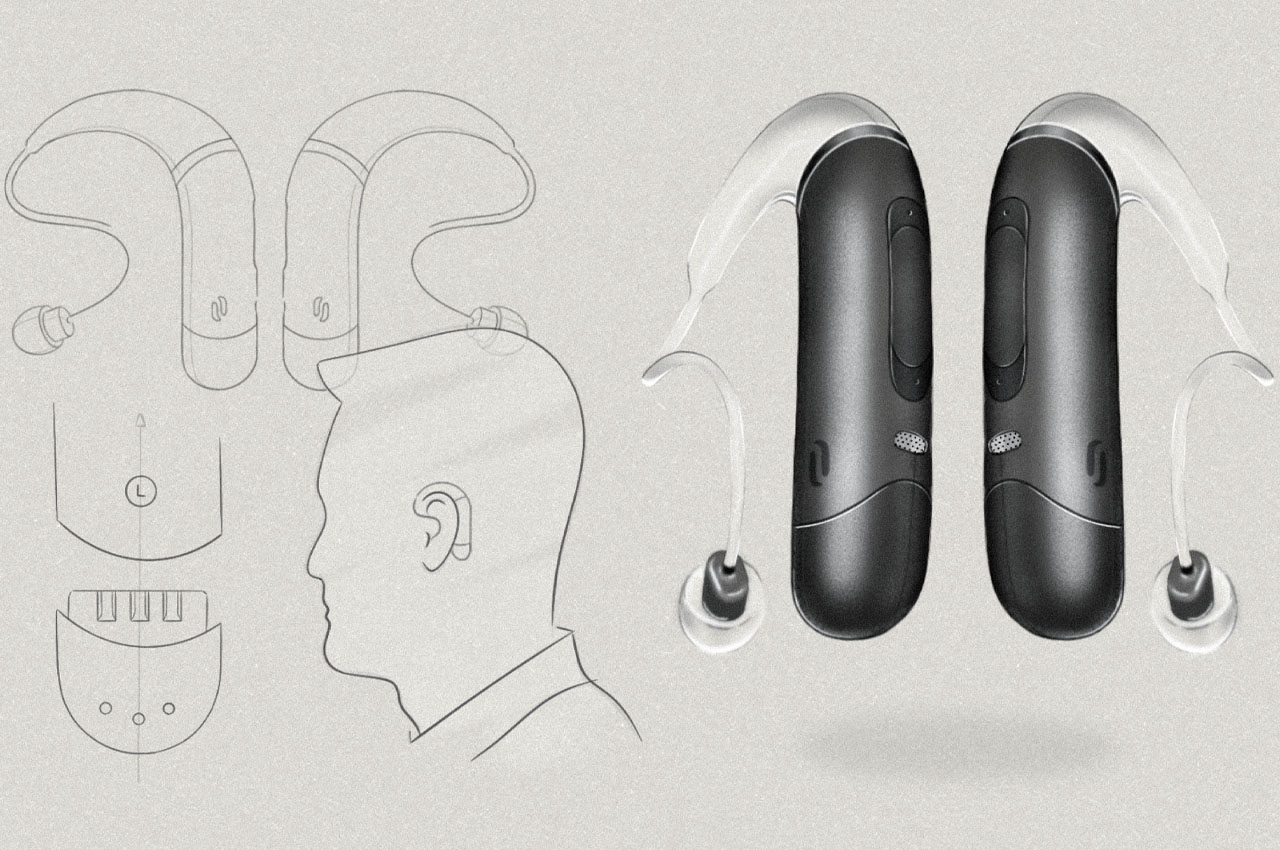
The hearing aid can be connected to with upto 3 devices simultaneously – so you can connect it to your phone for taking calls, music player to listen to podcasts, or a laptop to join meetings in an instant. Those cables in arch form maximize the flexibility of use with different-shaped ears and wearing comforts. A useful feature comes in the form of inner ear biometrics that detects the Internal Carotid Artery for an unobstructed source of data.

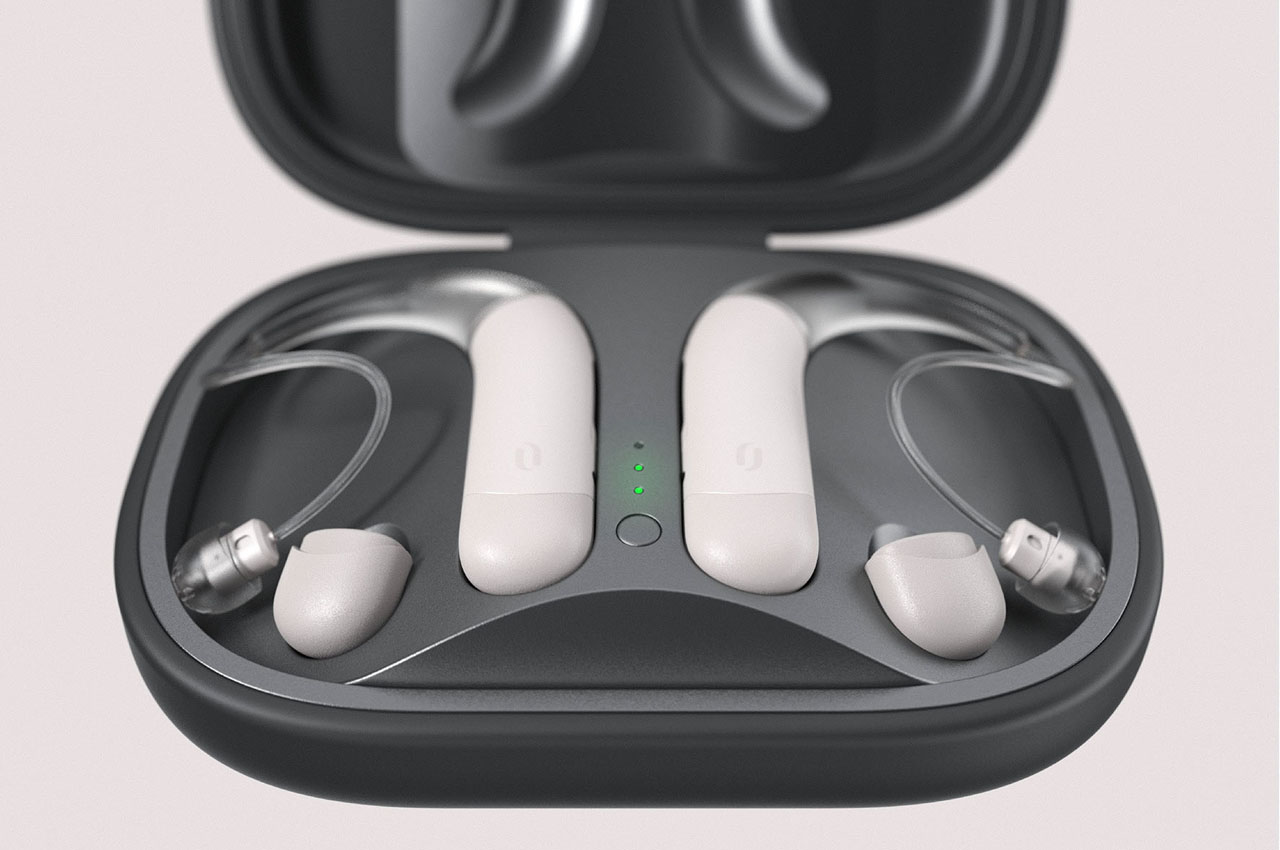
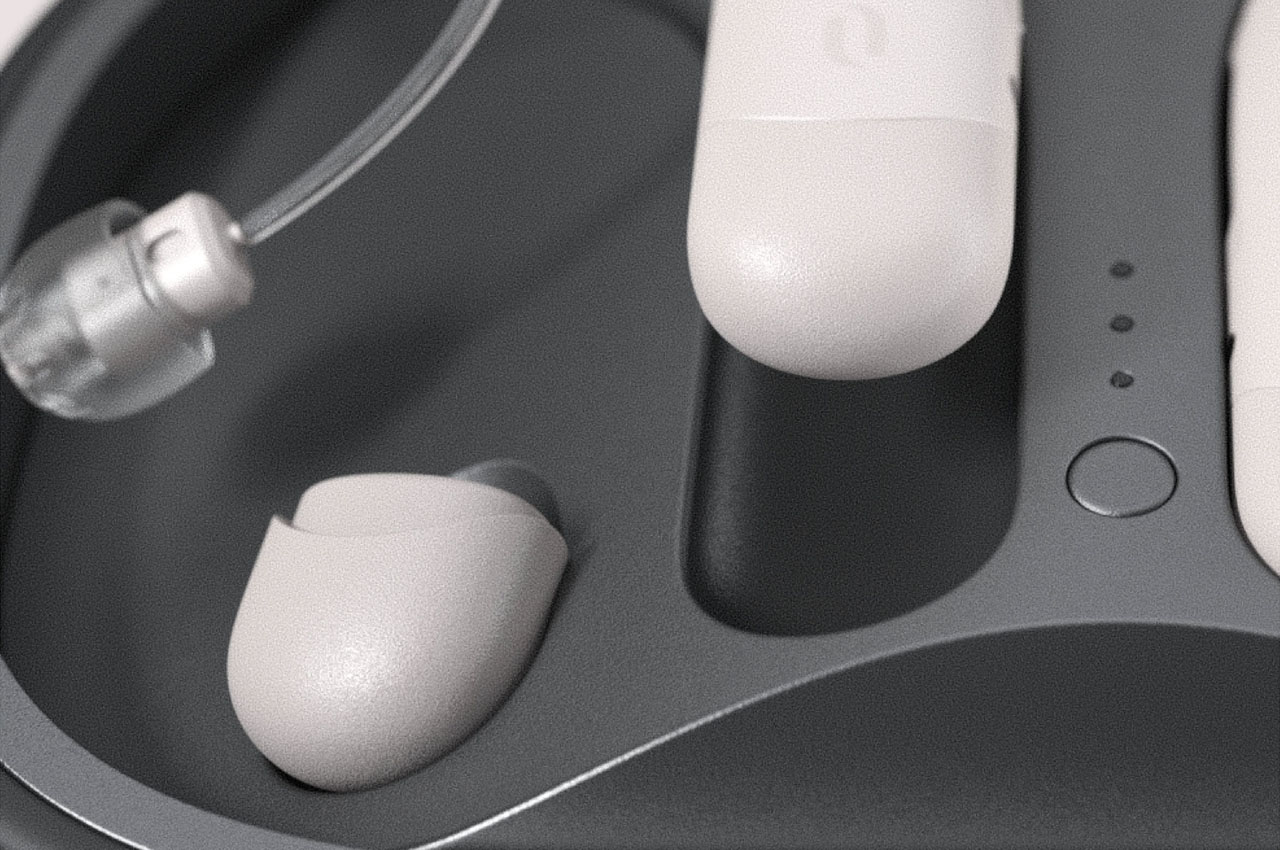
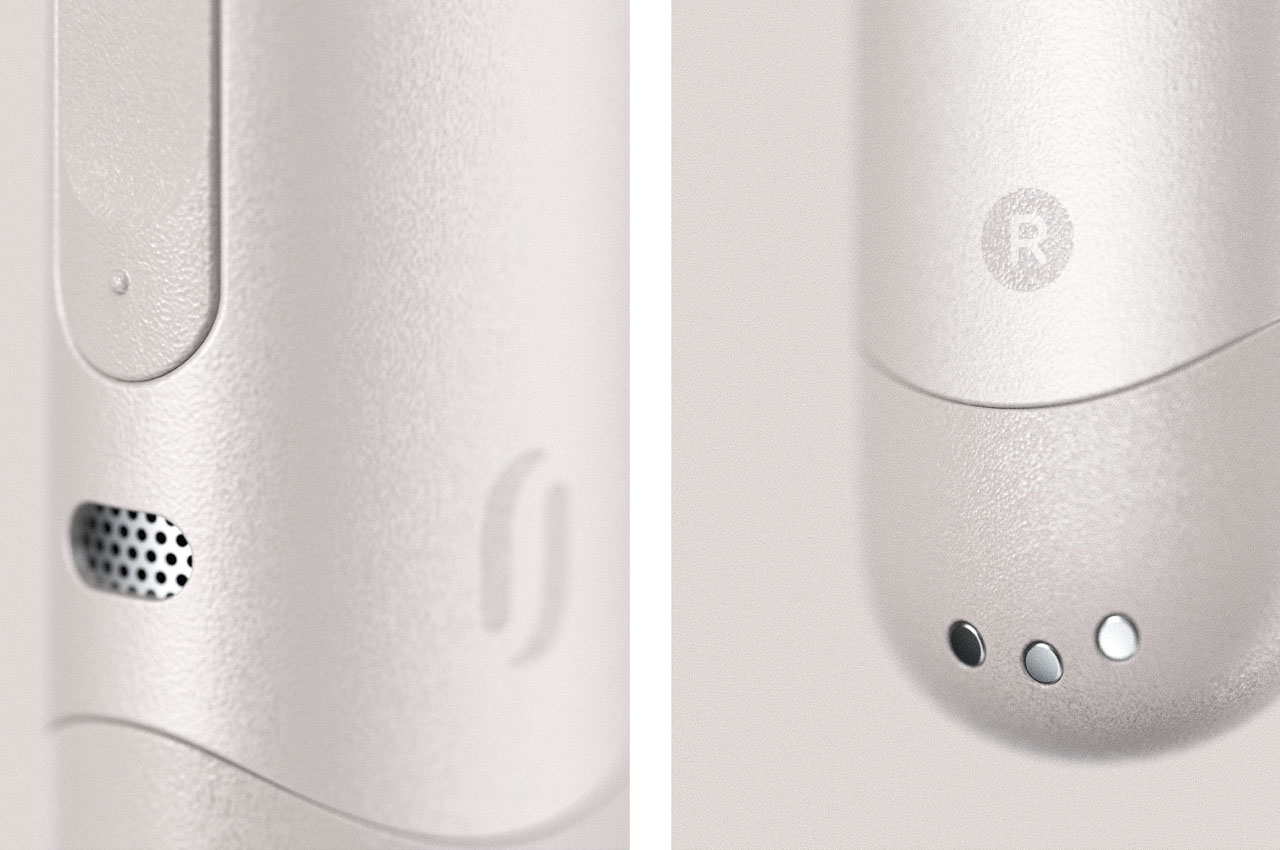
The hearing aid is equipped with sensors to detect health and ear hygiene too. Loaded with advanced sensors for providing functions like pulse oximetry, heart rate and respiratory rate, the gadget eliminates the need for wearing a smartwatch or fitness tracker. To keep all the functions working obstruction-free, Claro can be charged in the provided case. If you are a constant user of hearing aids, you can also swap the internal replaceable batteries with a pair of rechargeable batteries to stay connected for longer without any interruptions.

We hope to see this product become a reality and that possibility cannot counted out as Crux Product Design is committed to bringing new-age solutions to their users.

The post This stylish hearing aid inspired by open earbuds blends ergonomics and functionality first appeared on Yanko Design.
Huggable robot concept delivers warmth, power, and comfort during disasters

Natural disasters can take a heavy toll on life and property, even when we’ve prepared for the worst. Floods, earthquakes, fires, and volcanic eruptions can send people running to evacuation centers where they may be safe but are hardly intact both in the body and especially in the mind. These refuge centers are often only able to provide the bare necessities when it comes to shelter and food, with electric power and heating sometimes taking a lower priority. That’s not even considering the psychological pain that all evacuees experience during these dark times, which often take a backseat because of the state emergency. Of course, all of these are important factors to consider, and this concept for an add but cute robot tries to address them in its own little way to provide both physical and mental comfort to people who have been displaced by these calamities.

Designers: Taejeong Kim, Yeji Jeon

To be fair, such shelters have to focus on what human needs to survive, like food, clothing, and a stable roof over their heads. Electricity often isn’t even viable during natural disasters when power lines are down, but considering how much we rely on electric appliances and devices these days, it has become almost just as critical. Depending on the location and the nature of the disaster, keeping warm is also important, especially if the person is shivering from shock.

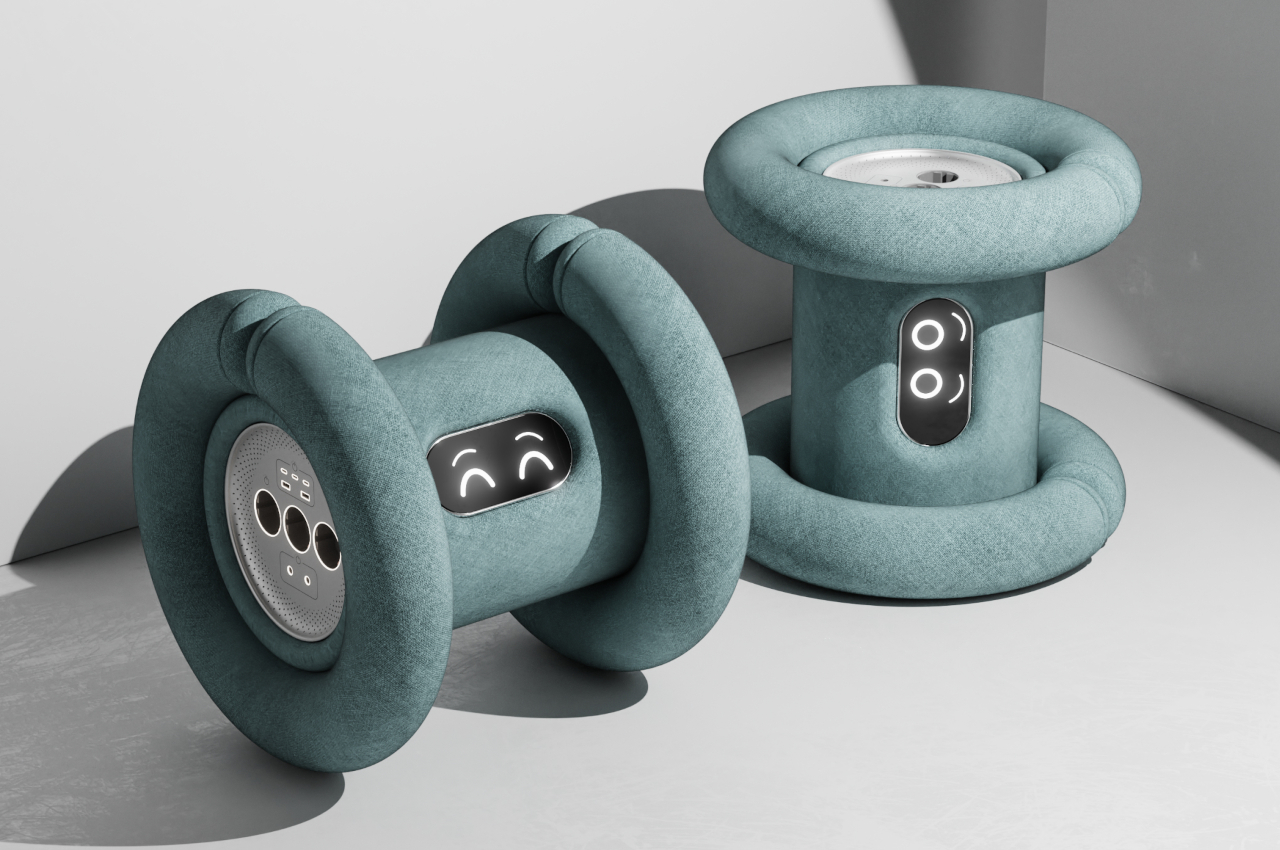
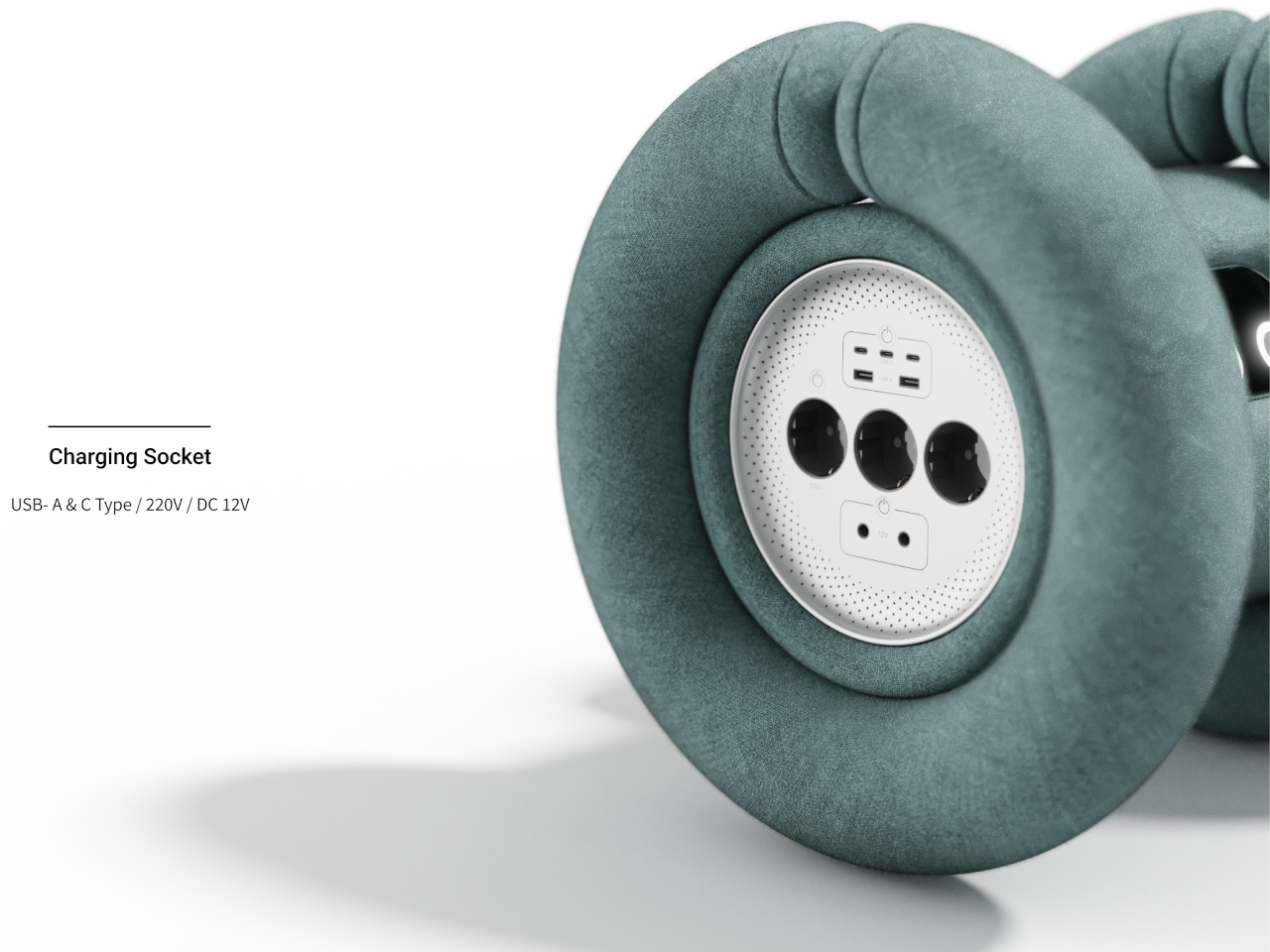
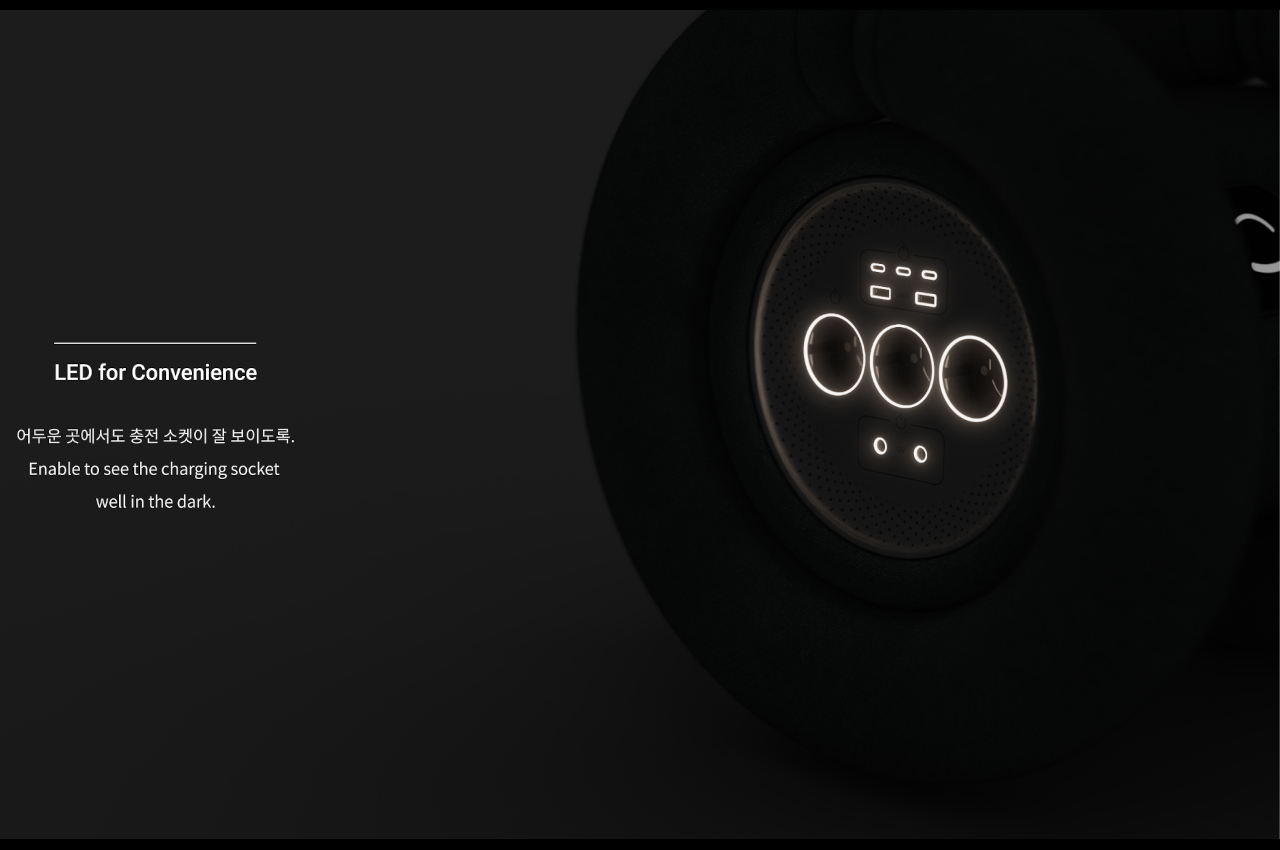
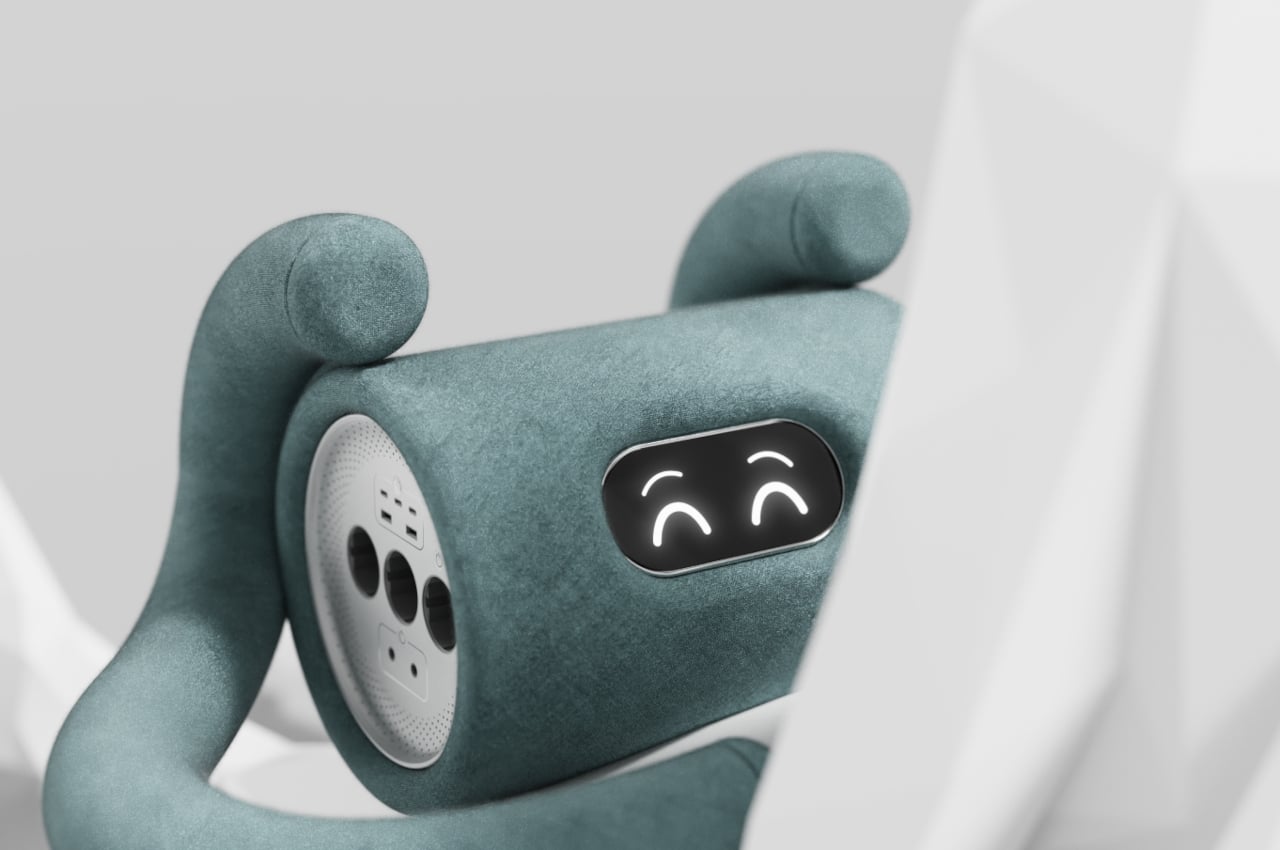
POWER HUG is a product design concept that tries to bring some of that on a personal level, just enough power and warmth to bring a little comfort and ease the worries of the person. It is pretty much a big power bank, one with outlets for both USB cables as well as typical power adapters. It also has a built-in warmer to keep the person toasty, especially at night when temperatures tend to drop drastically.

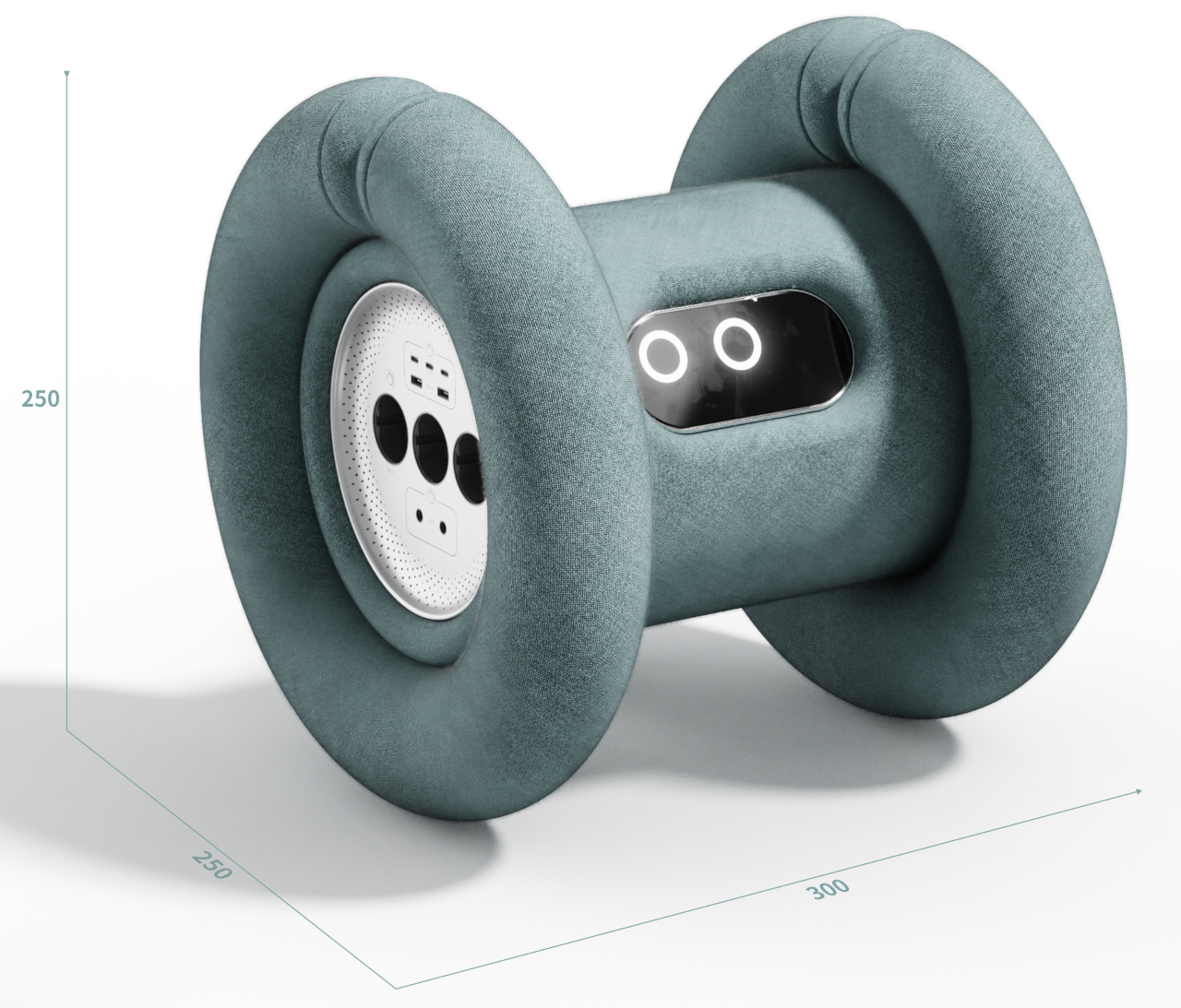
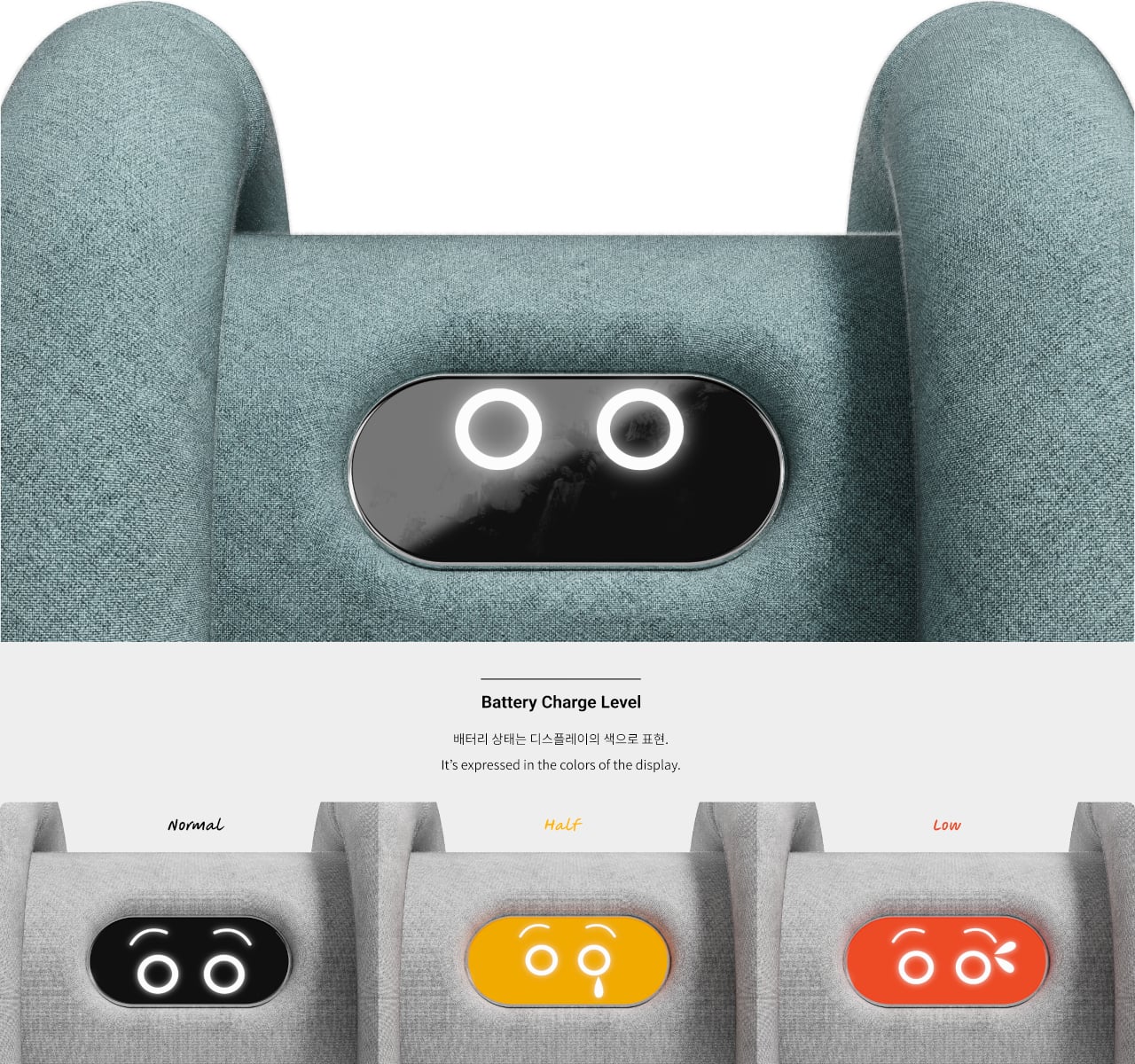
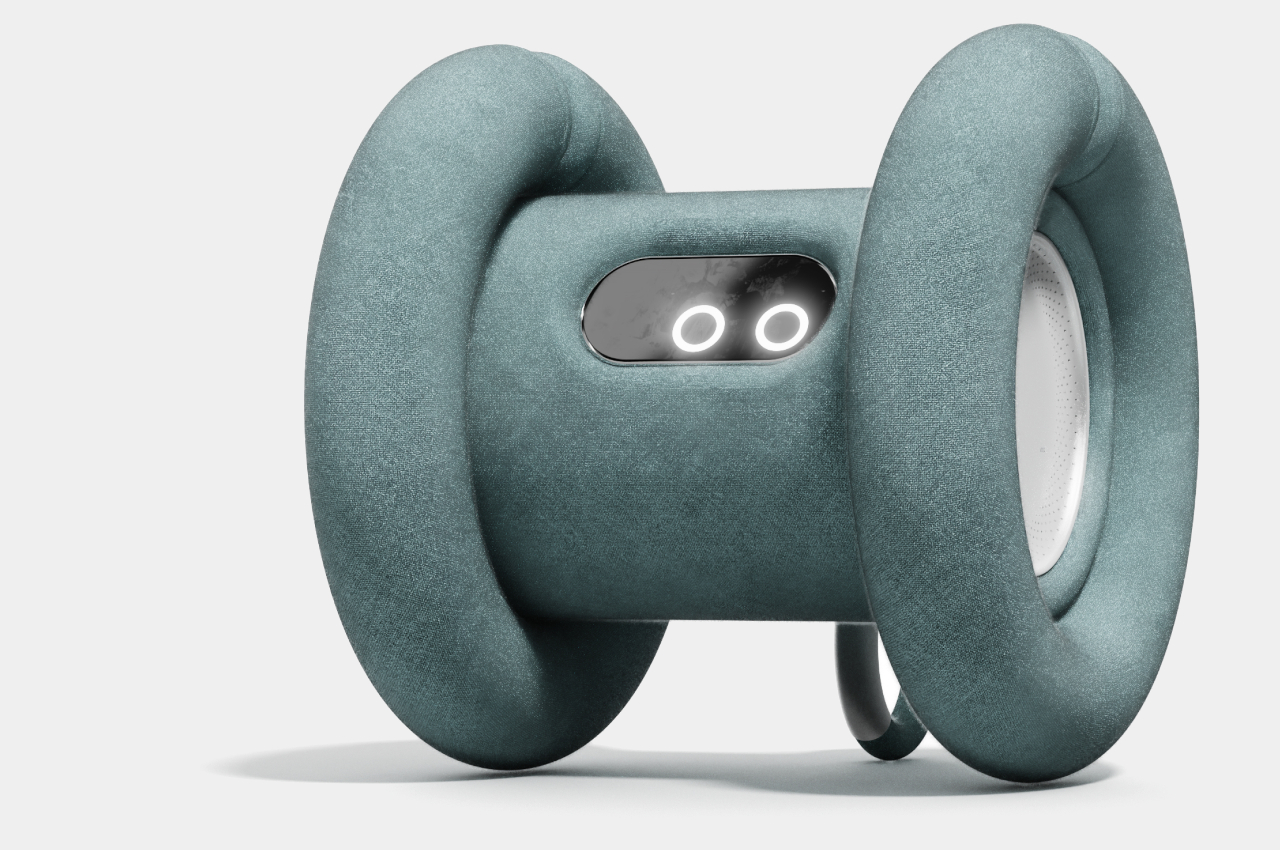
What makes the design notable, however, isn’t just the features but also its form. POWER HUG comes as a cylindrical robot with two soft, bendable tubes that wrap around each end like a wheel. It has a screen in the middle to show the robot’s face and deliver a more humane touch to the design. Unlike what you might expect from robots, however, this one is covered with a thin cushion and soft fabric so that you can wrap yours around it in an embrace. Paired with its heating capability, it can deliver much-needed warmth, comfort, and perhaps even peace to a troubled person.

Considering its use in emergency situations, it’s almost necessary for POWER HUG to be made accessible and sustainable materials. Its batteries can be sourced from unused electric vehicle batteries, while its fabric can be made from recycled materials. It’s definitely an interesting idea, even if the production of such a device might not be practical, as it emphasizes humans’ need for more than just food and shelter to survive a disaster.

The post Huggable robot concept delivers warmth, power, and comfort during disasters first appeared on Yanko Design.
FreePower turns your beautiful stone countertop into a wireless charger

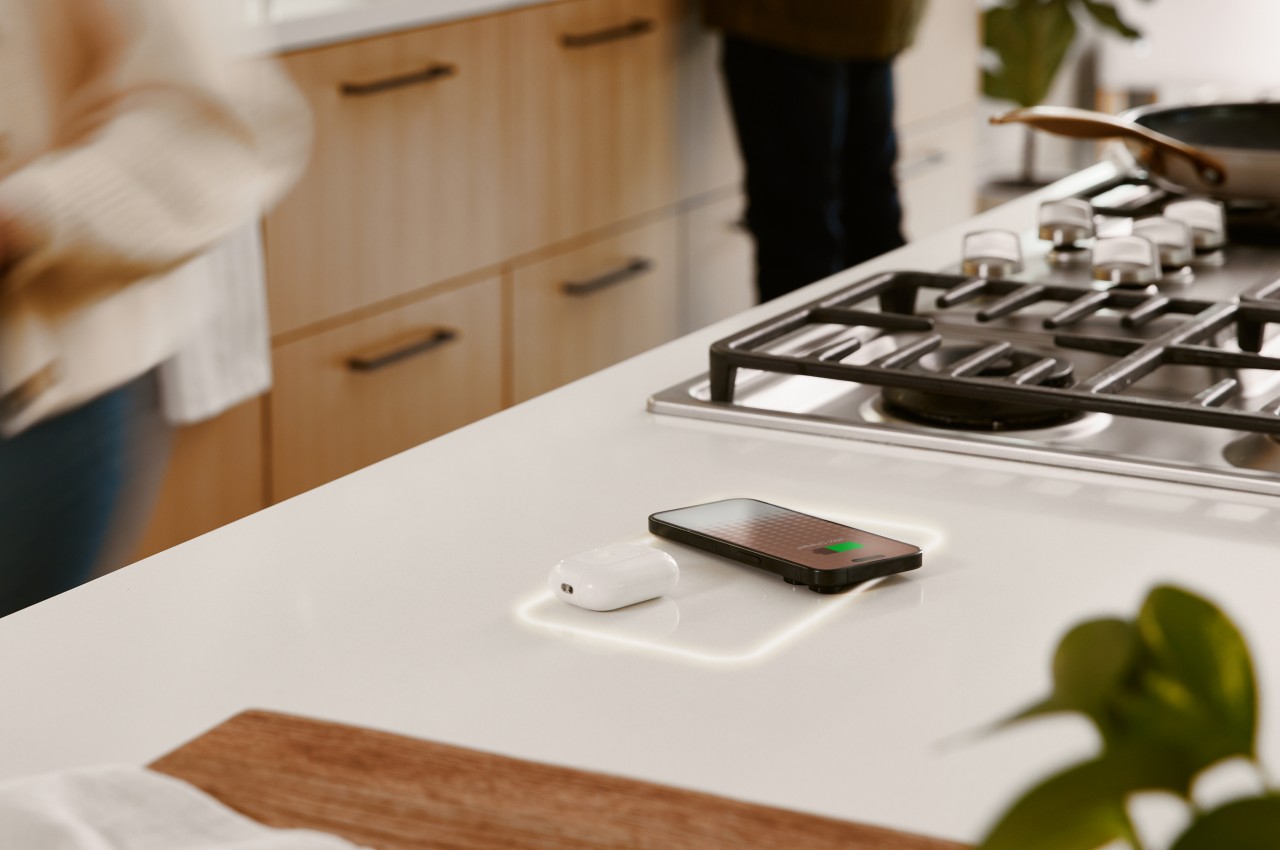
Wireless charging is finally becoming more common but despite the freedom from tangling cables that the technology offers, wireless chargers still have a few inconveniences, especially when it comes to aesthetics. Only a few of these products can be considered pleasing to look at, especially when mixed with the rest of your room decor. And they still have at least one cable snaking out of their bodies, which might be difficult to hide depending on where you place the chargers. In an ideal future, almost any flat surface can become a wireless charger, immediately juicing up your phone or device the moment you put it down, anywhere you put it down. Part of that future seems to already be here, with a creative wireless technology that can hide that wireless charging space inside stone countertops, seamlessly blending with your choice of interior design.
Designer: FreePower

Wireless chargers remove the messy cables from the charging equation, but the current state of technology requires you to still make physical contact between the device and the surface of the charger. Add to that the hard requirements on materials for the surfaces of wireless chargers and you will find yourself with a few of these products scattered around your house, often sticking out like a sore thumb. Some designs are admittedly more elegant and stylish, but they still add to the visual baggage on what would be an otherwise pristine table or countertop.
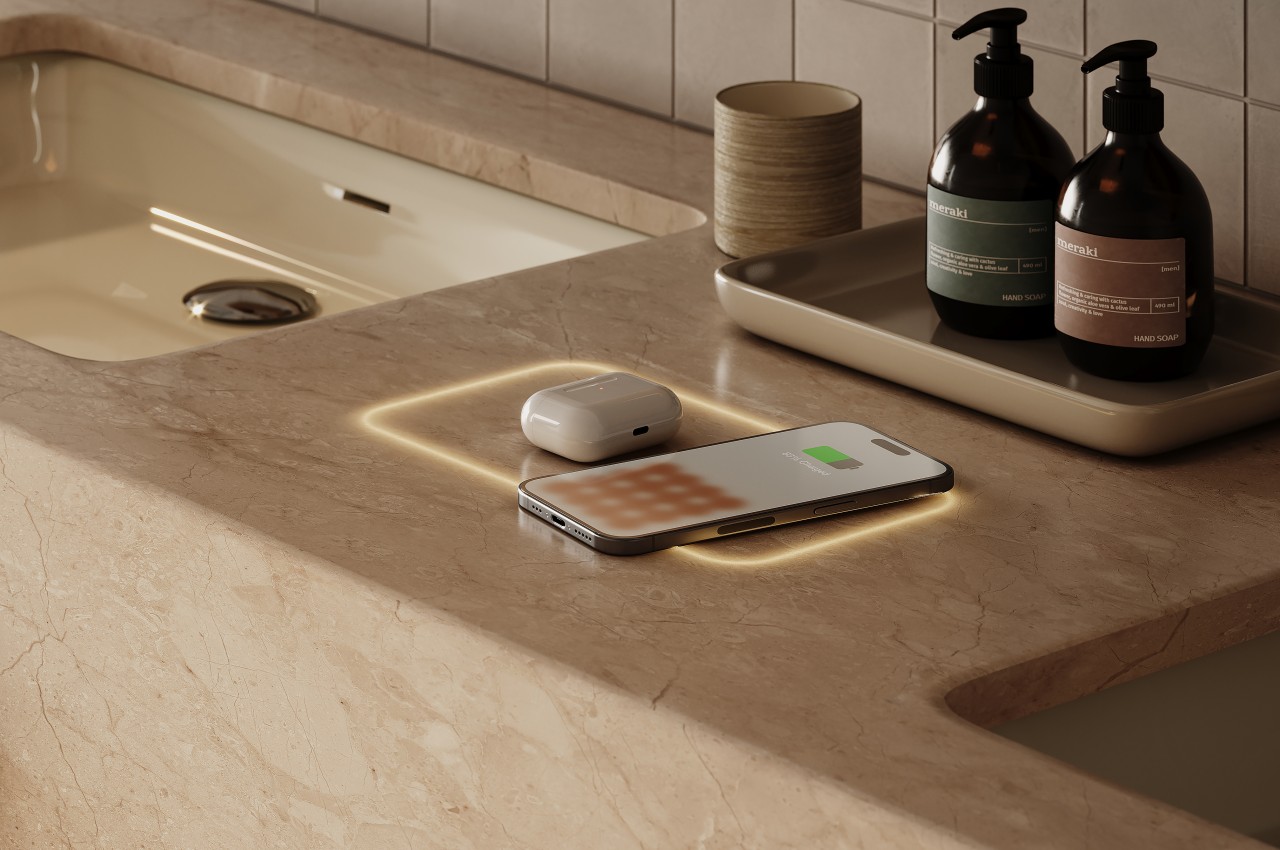
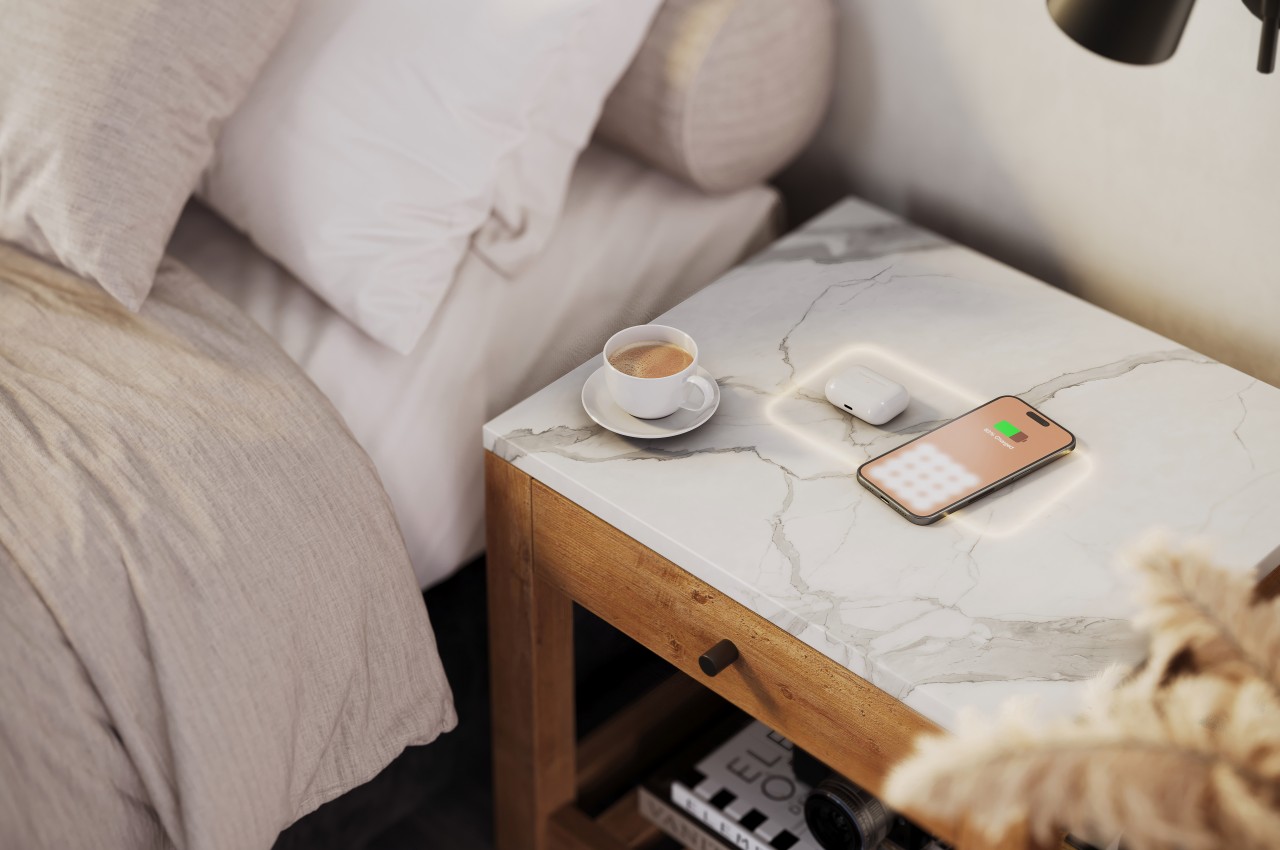
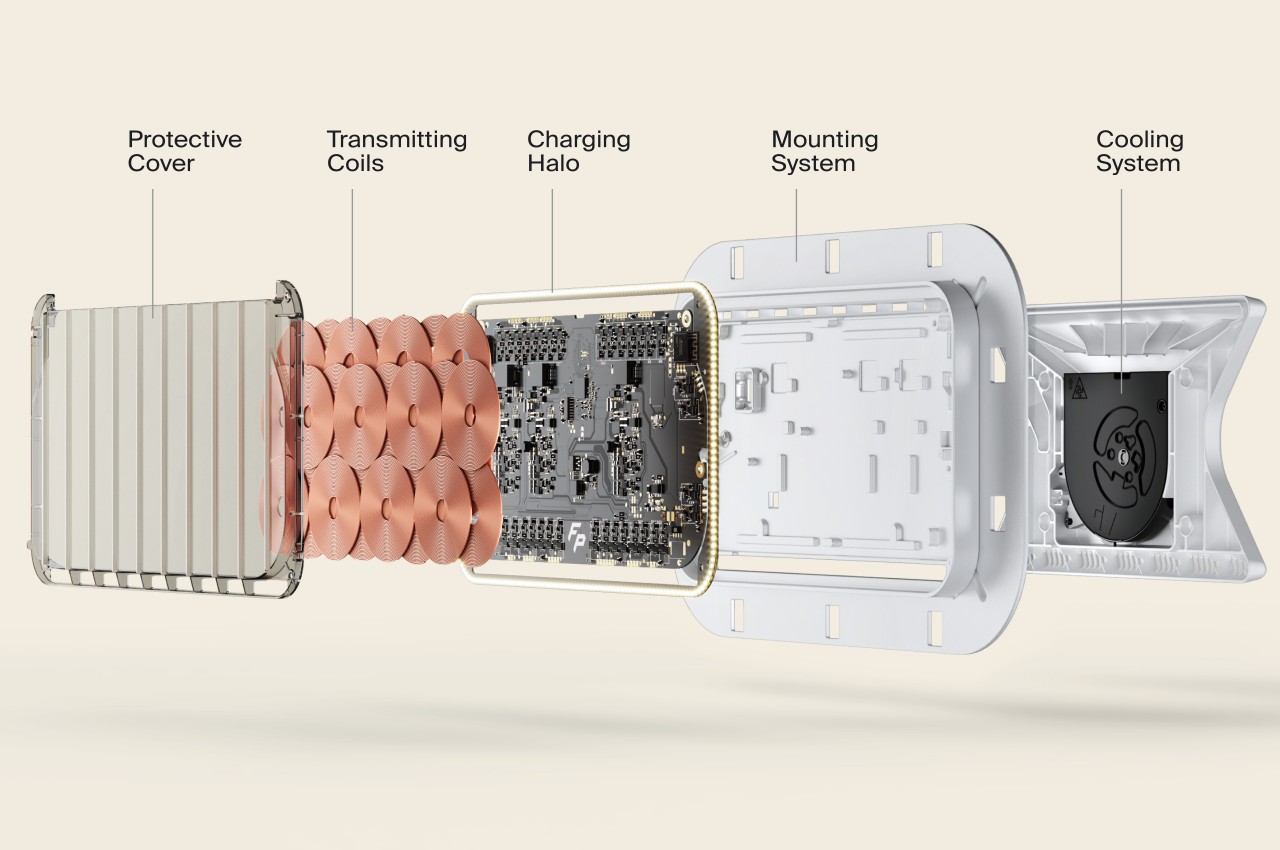
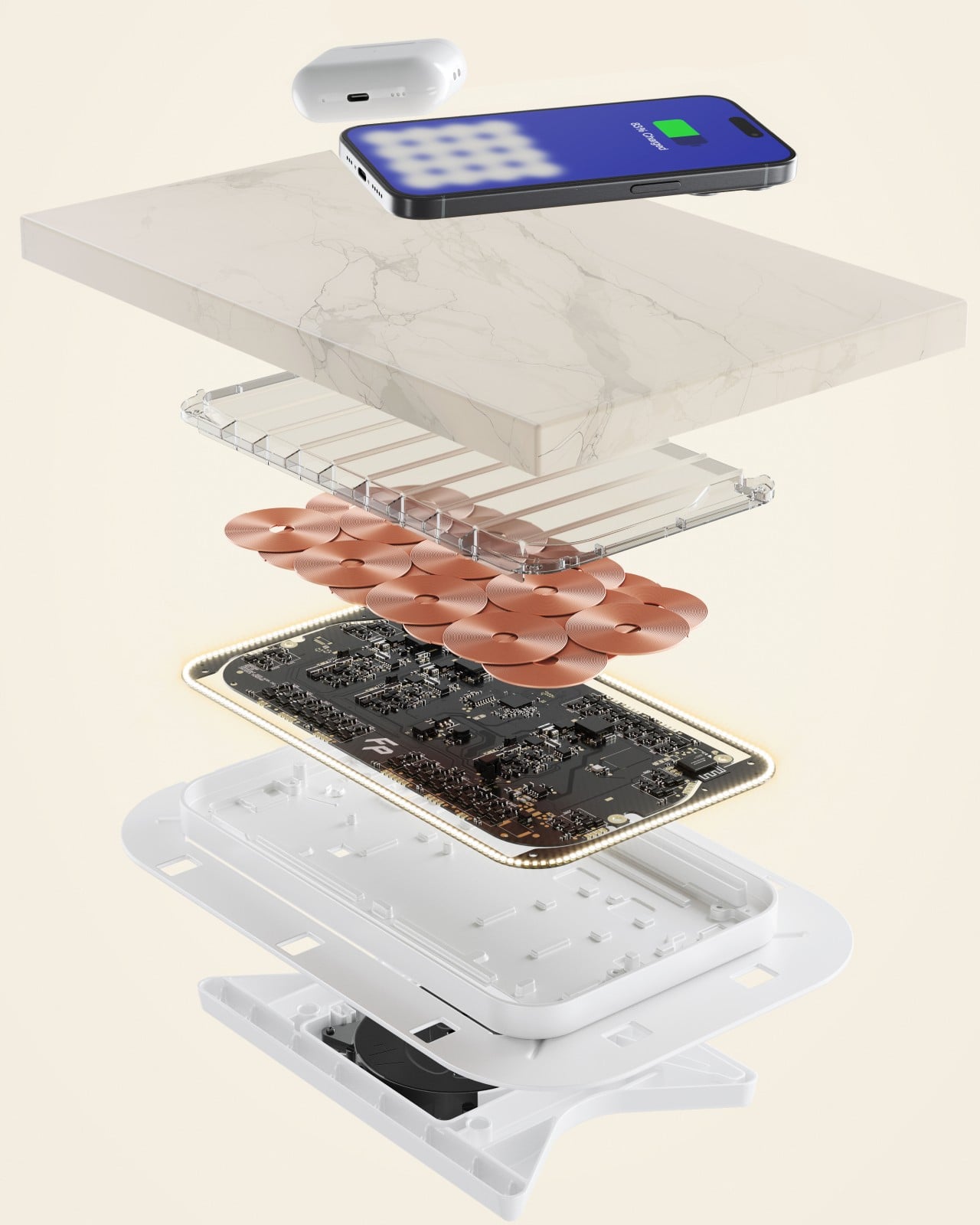
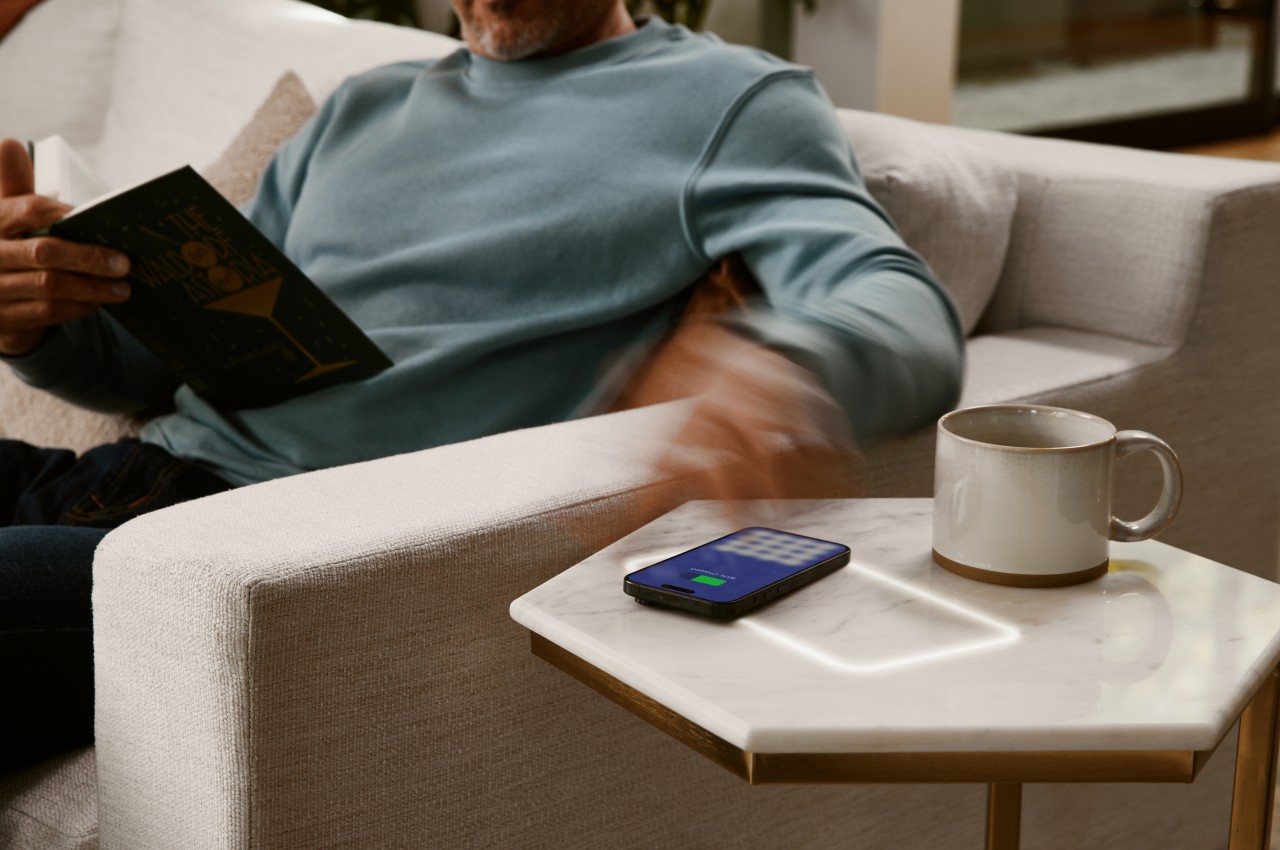
FreePower is a technology that tries to offer the best of both worlds, combining the liberating convenience of wireless charging with a clean and unblemished tabletop surface. In a nutshell, it embeds the wireless charger inside the countertop, and not just any countertop, mind you. It is compatible with different stone materials, including quartz, granite, or even marble, materials you’d never think could be used for wireless chargers. Thanks to this innovative design, you don’t need to actually put a charging mat or stand on your kitchen countertop, side table, or bedside table, because the countertop itself is the wireless charger.

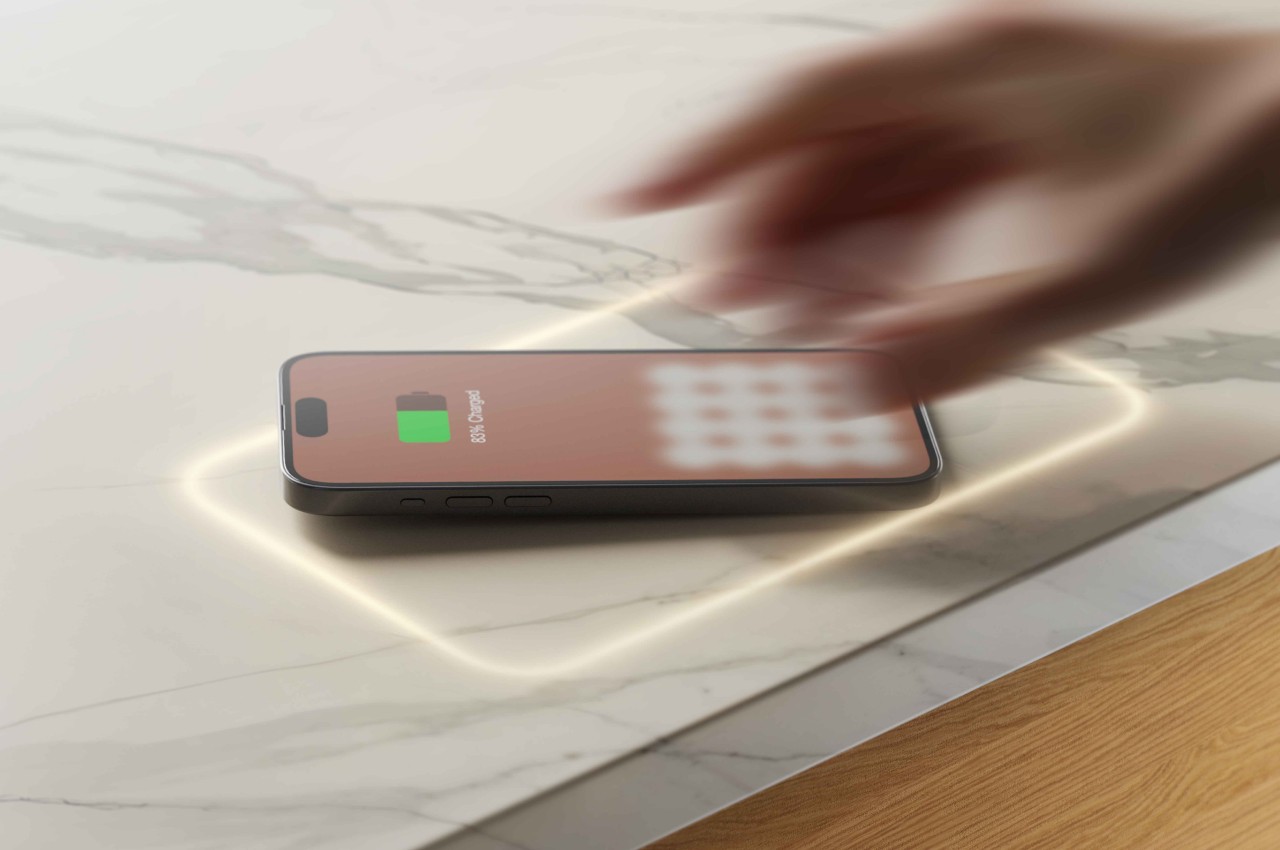
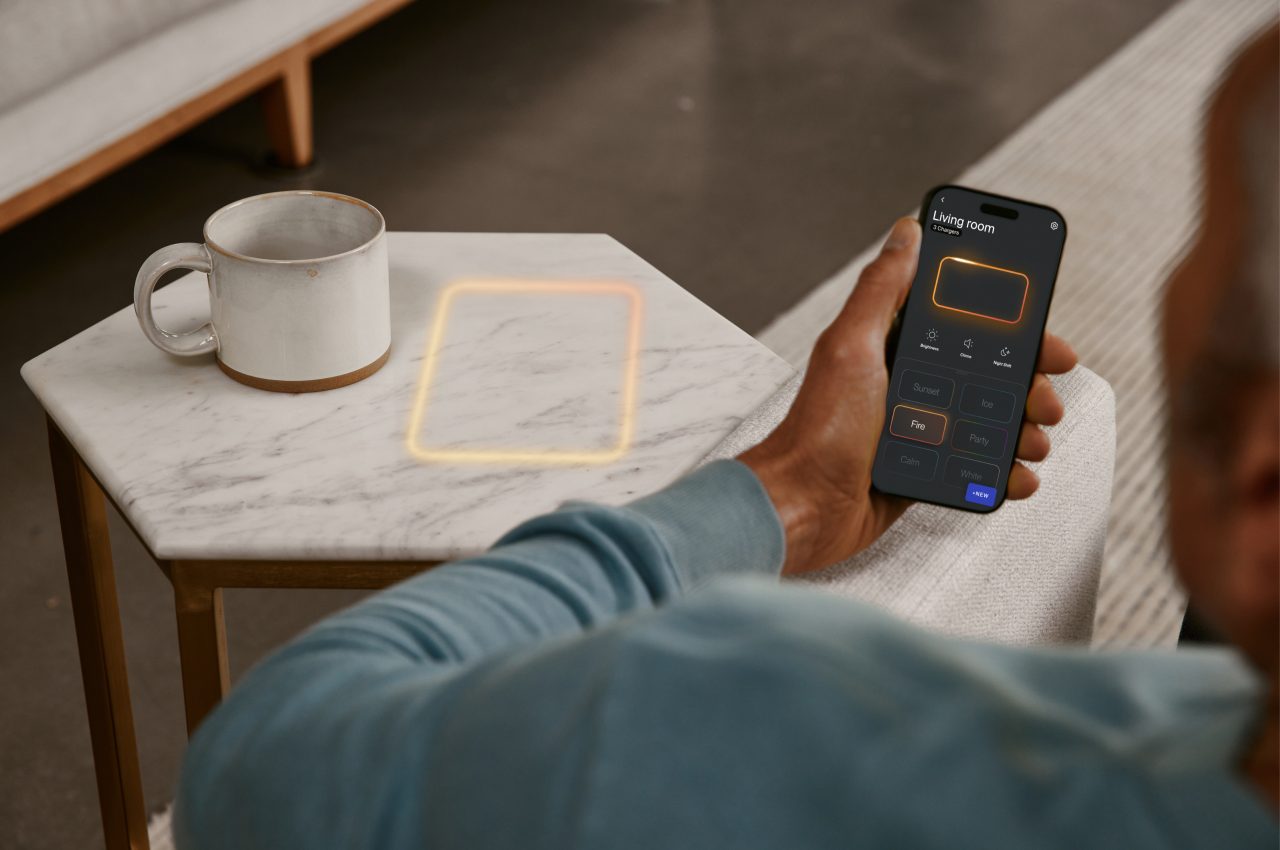
Of course, only a portion of the countertop actually functions as the wireless charging zone, but you don’t have to worry about ugly and conspicuous markings that ruin the aesthetic of your beautiful stone top. A customizable LED halo glows around the area where you can place your devices, and you can even turn this light off when it’s not in use. FreePower does even better than most wireless chargers because you can place your phone or earbuds anywhere within that zone, no need to perfectly align with markers.

FreePower is the latest in a growing number of designs that aim to integrate wireless charging technology into every surface inside your home, completely freeing you from unsightly cables. Of course, such a design is also less flexible in that you have very little choice when you want to change furniture or designs. You’ll have to hope there’s also an invisible wireless charger version available for that or else you’ll have to go back to old-school wireless charging mats.

The post FreePower turns your beautiful stone countertop into a wireless charger first appeared on Yanko Design.