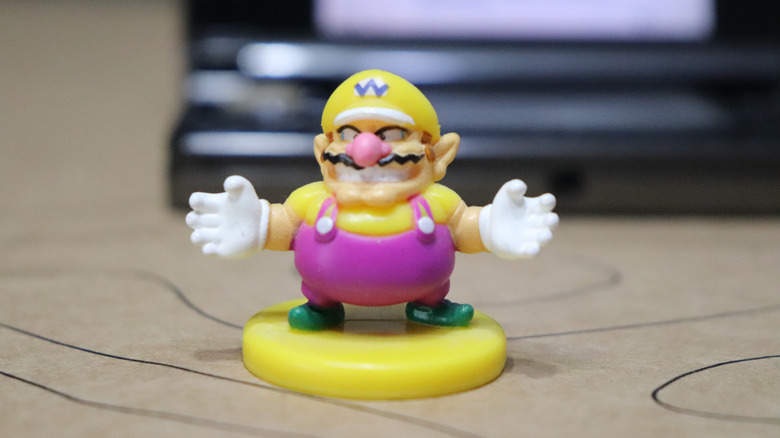
Nintendo’s latest sale is ‘made possible’ by the tariff refunds it’s hoarding
Another way to appreciate customers might be returning their money.

Munich has some of the steepest commercial rents in Germany, and anyone who has tried to lease even a modest studio space knows the arithmetic rarely works in a small firm’s favor. Brokers, multi-year contracts, square footage priced by the centimeter. When the Munich architecture practice Opposite Office needed a new home base, founder Benedikt Hartl looked at those numbers and decided the smartest move wasn’t a smaller office or a coworking membership. It was no office at all, at least not the kind anyone pays rent on.
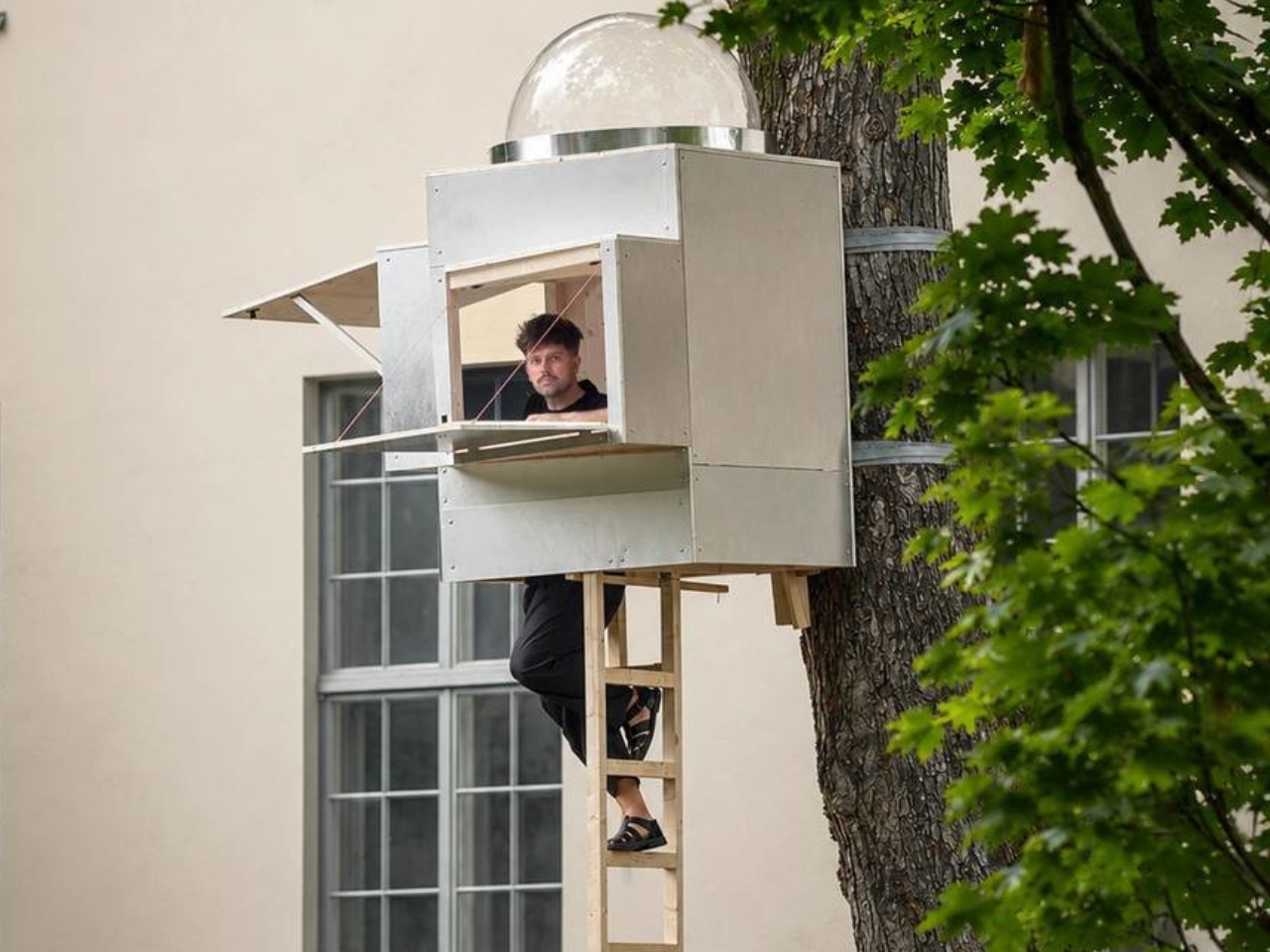
The result is Baumhaus Office, a roughly one-square-meter cube strapped to a tree on the campus of Bauhaus-Universität Weimar, built from spruce timber, plywood, and an aluminum shell that Hartl half-jokingly describes as “UFO-like.” A ladder gets you up to it. Inside, there’s shelving, a small desk, and fold-down panels that expand the workspace just enough to fit two or three people if everyone keeps their elbows in. A domed skylight sits overhead, so instead of staring at a drop ceiling, you get a view of the canopy. Two ratchet straps, cushioned with protective matting so the bark doesn’t suffer, hold the whole thing to the trunk. Hartl secured permission from the university’s president to install it there temporarily, and he’s designed it to come down just as easily and go up somewhere else.
Designer: Benedikt Hartl
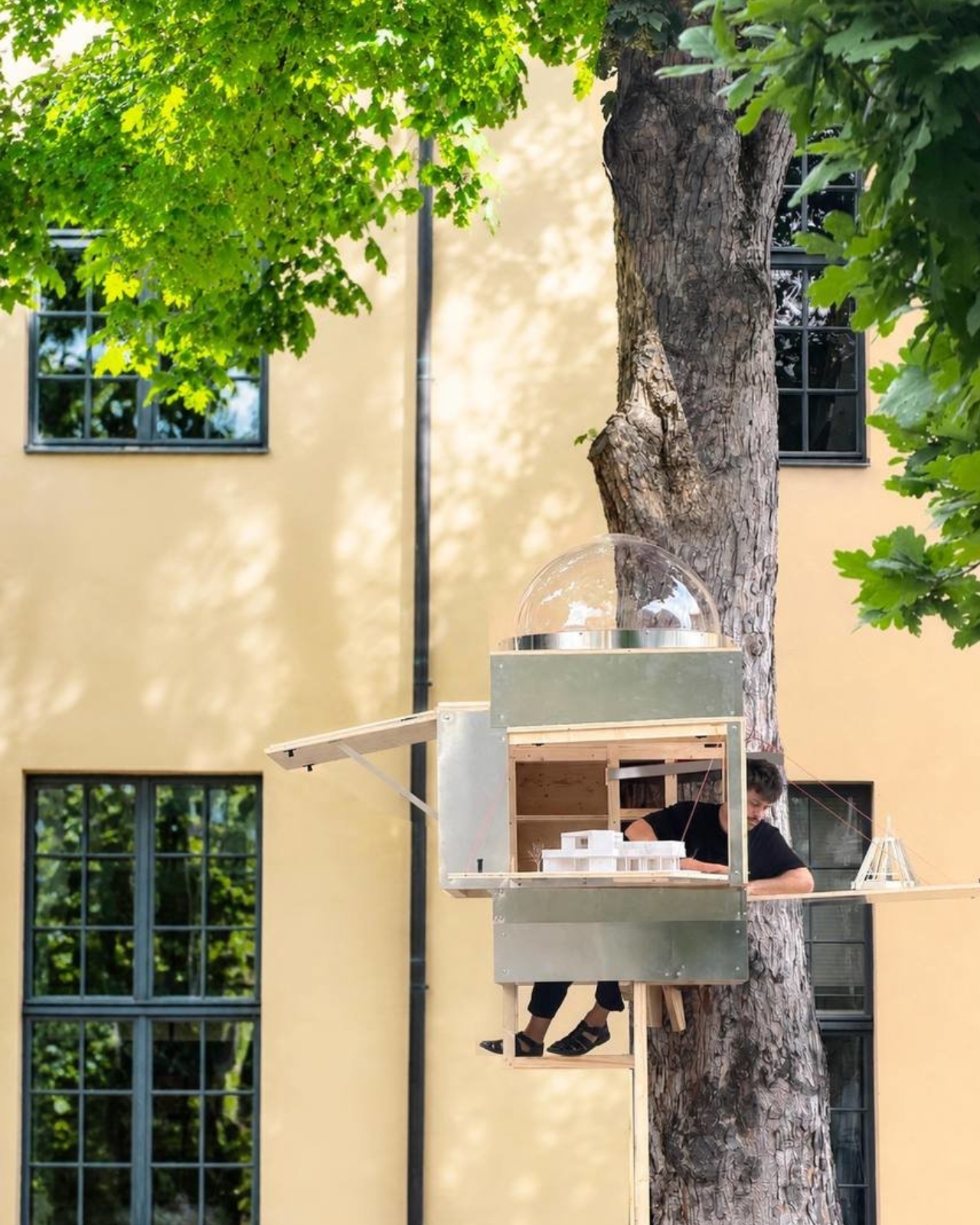
His explanation for the whole exercise is refreshingly blunt. Rather than compete with Munich’s rental market, he moved the office out of it entirely and into the trees. He’s also put out an open call, only half-kidding, for anyone with a spare tree and a good view who doesn’t intend to charge him for it.
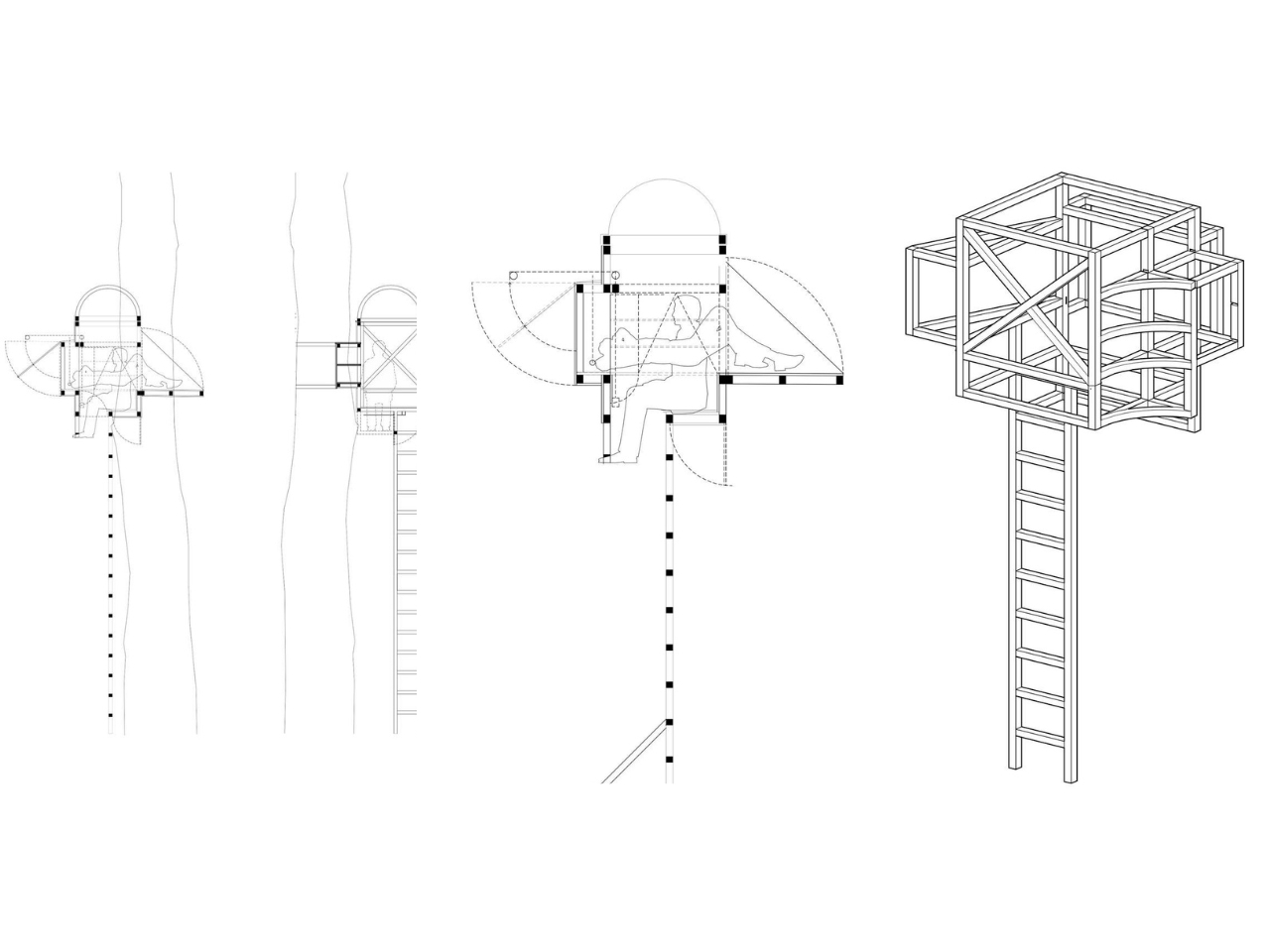
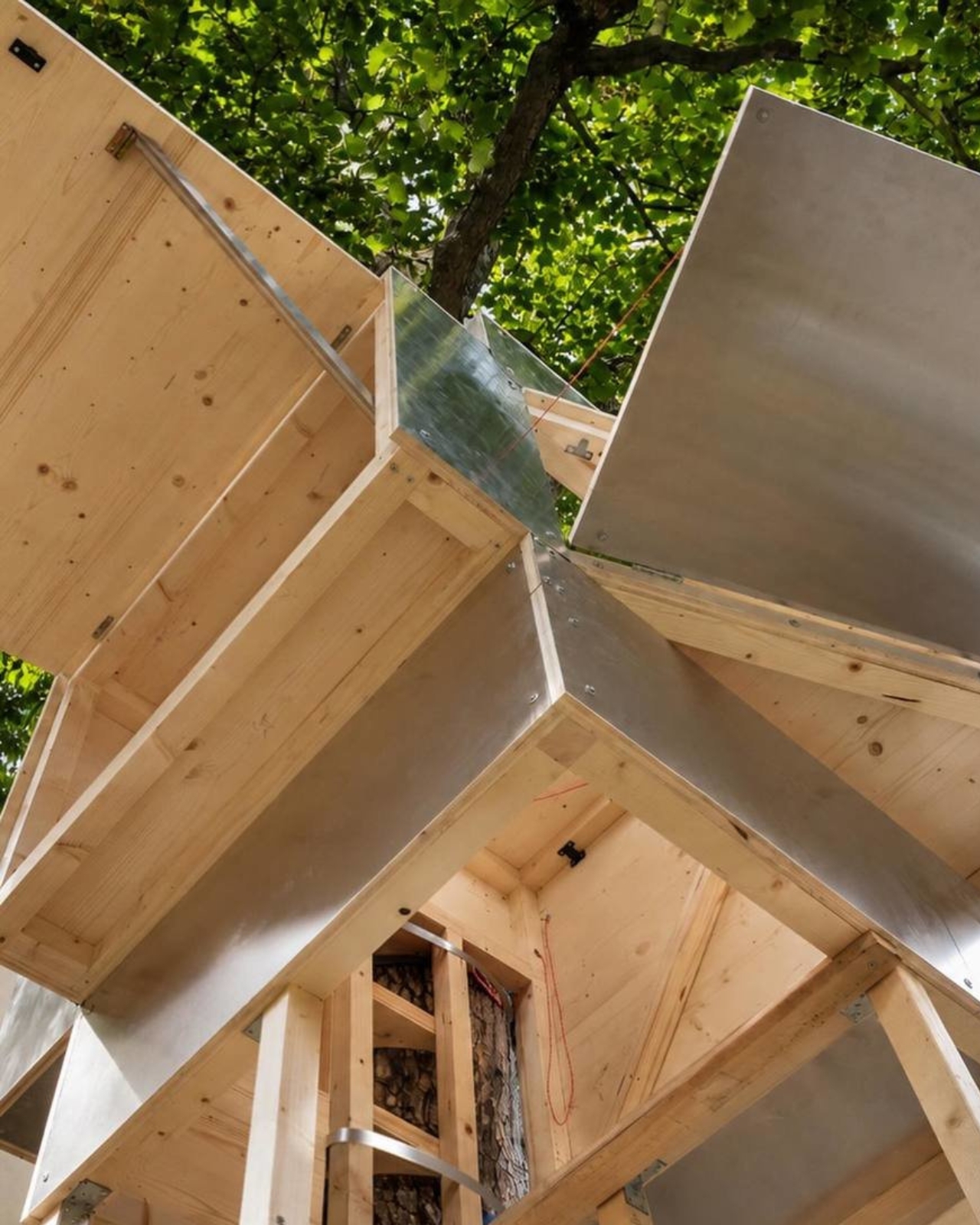
There’s an obvious punchline in a firm shrinking its footprint to one square meter, but the joke has a point buried in it. Opposite Office already works across borders on projects that rarely require a fixed headquarters, so the studio started asking why it needed a permanent lease at all. That question lands differently depending on where you’re reading this, but it lands. Downtown office towers in plenty of American cities have sat half empty for years now, landlords still pricing space as if 2019 never ended, and companies quietly deciding that a conference room and a Zoom link cover most of what used to require a floor plan. Baumhaus Office takes that same skepticism about commercial real estate and pushes it to its logical, slightly absurd conclusion. If the point of an office is a roof, a desk, and a door you can close, a tree does two of those things for free.
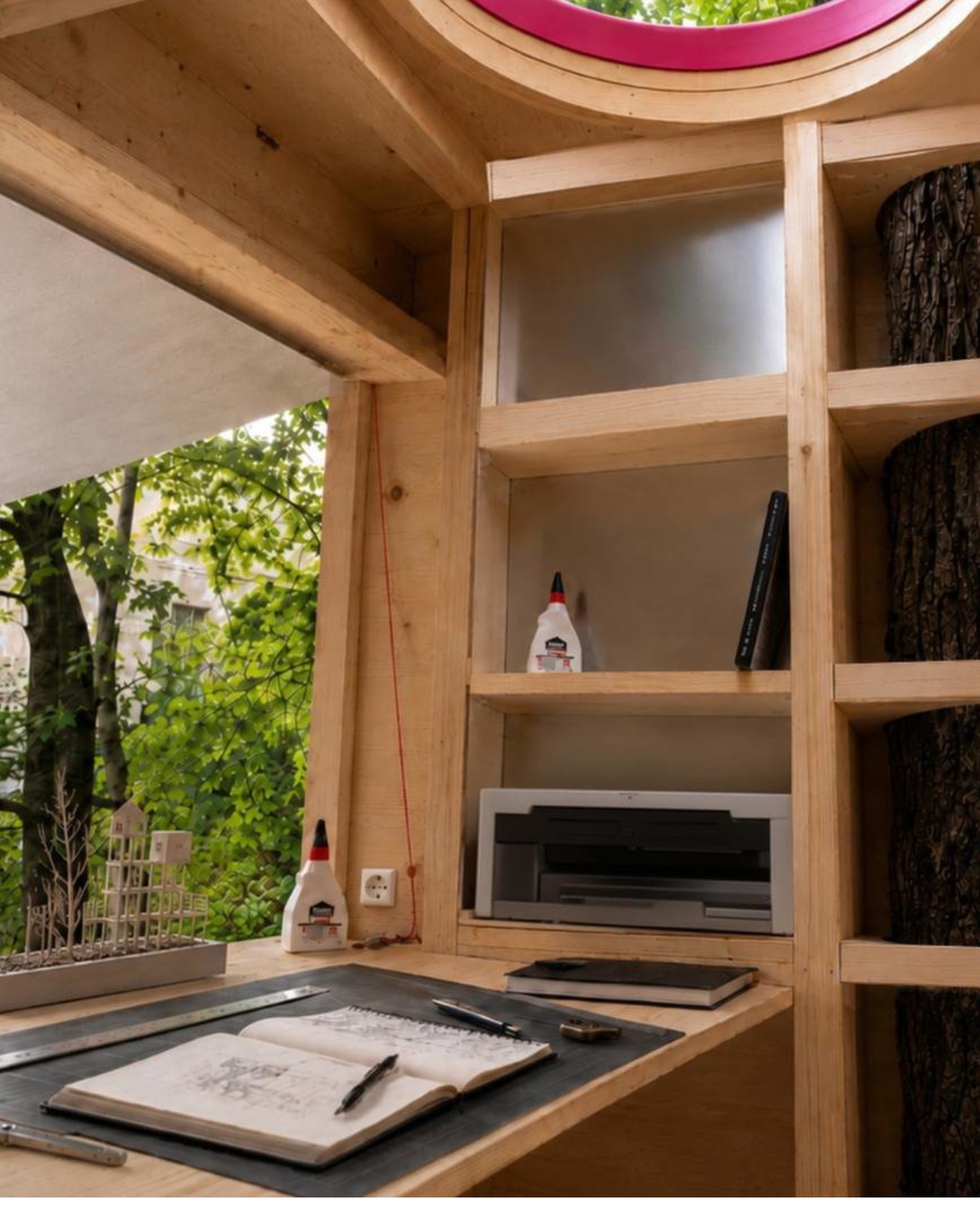
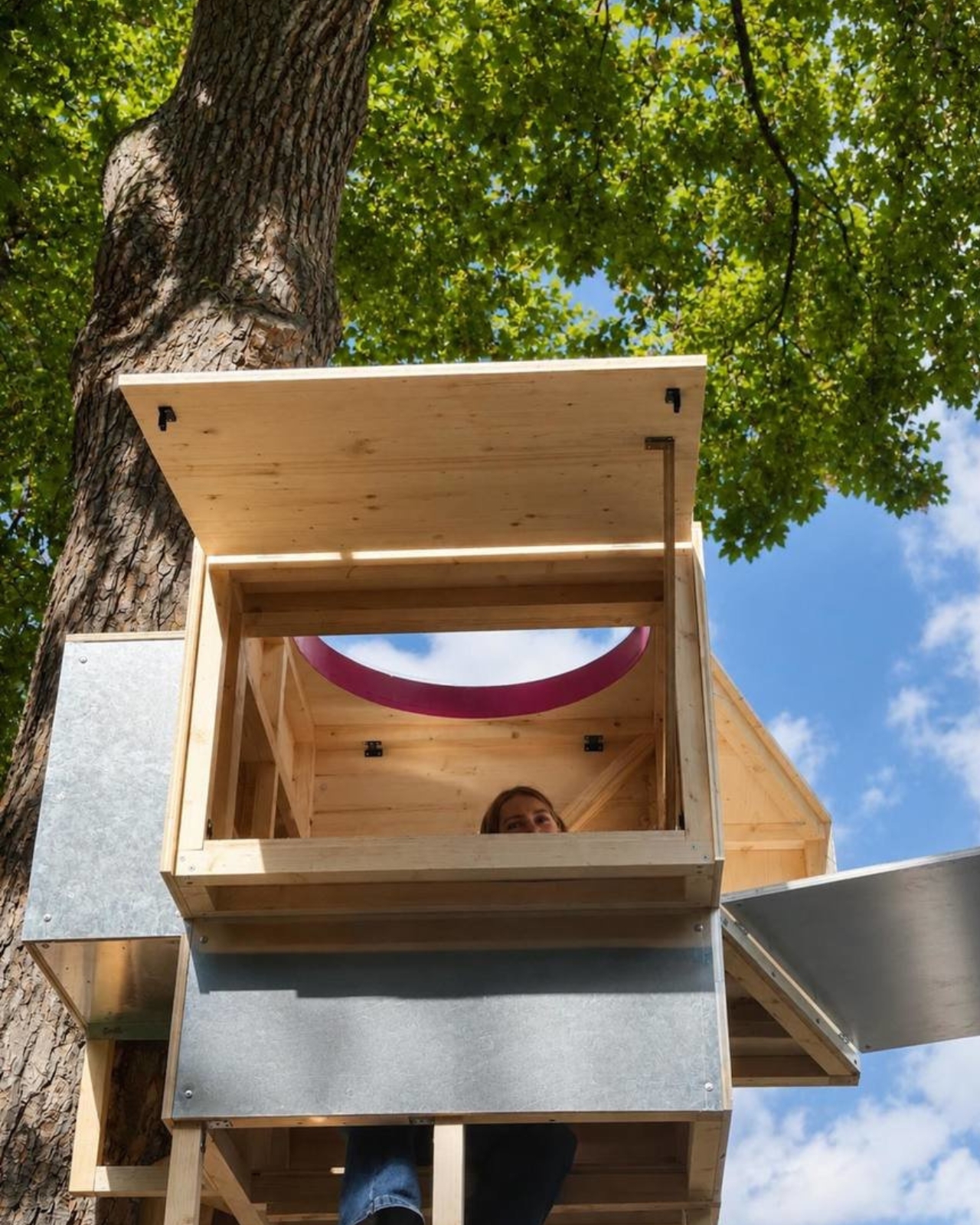
Opposite Office has framed the project as a nod to Cosimo, the boy in Italo Calvino’s “The Baron in the Trees” who abandons ground level entirely and never comes back down. I like that reference more than the usual sustainability talking points that get bolted onto projects like this. It’s not really about wood versus concrete. It’s about changing your vantage point on purpose, even briefly, to see whether the thing you assumed you needed was actually optional the whole time.
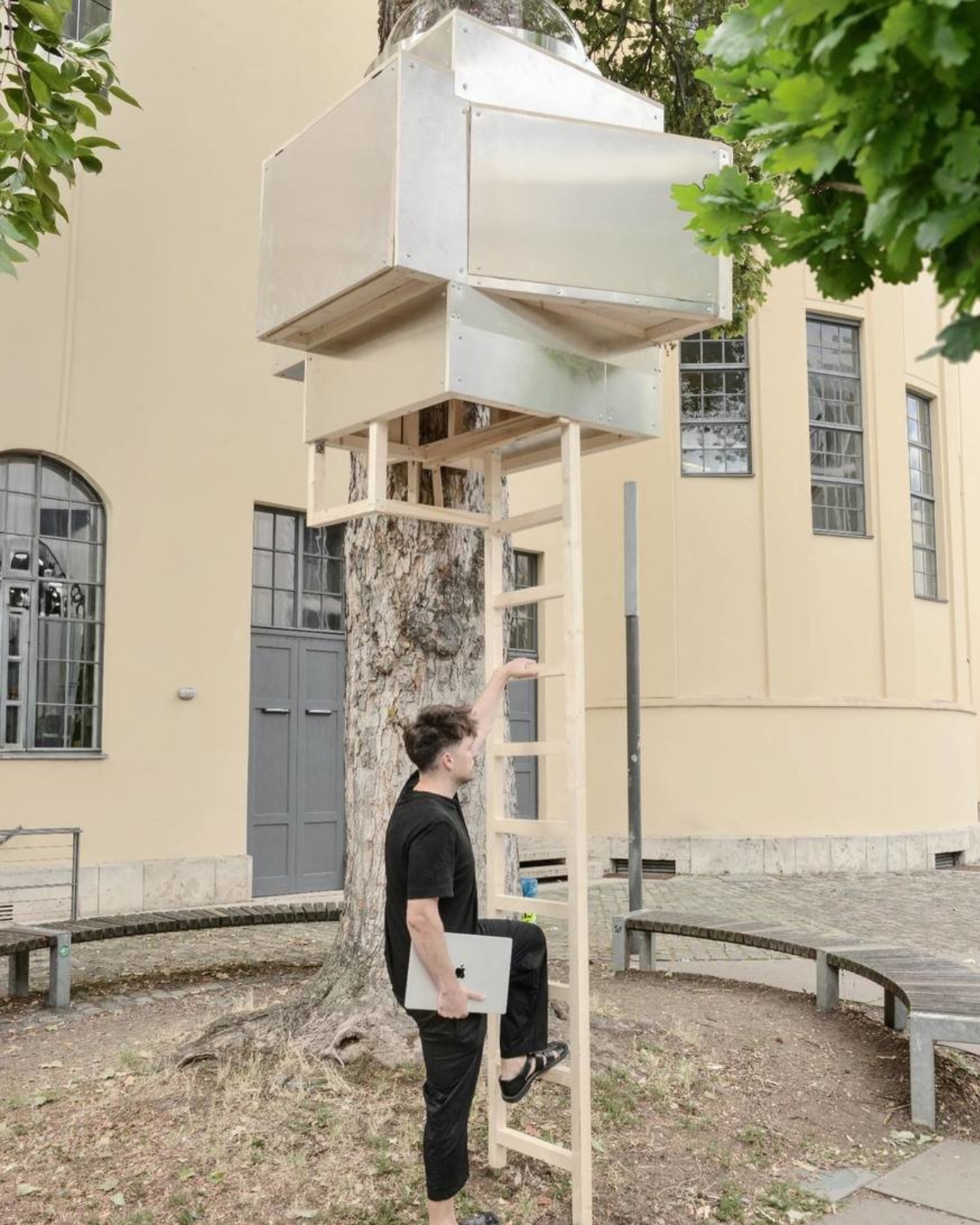
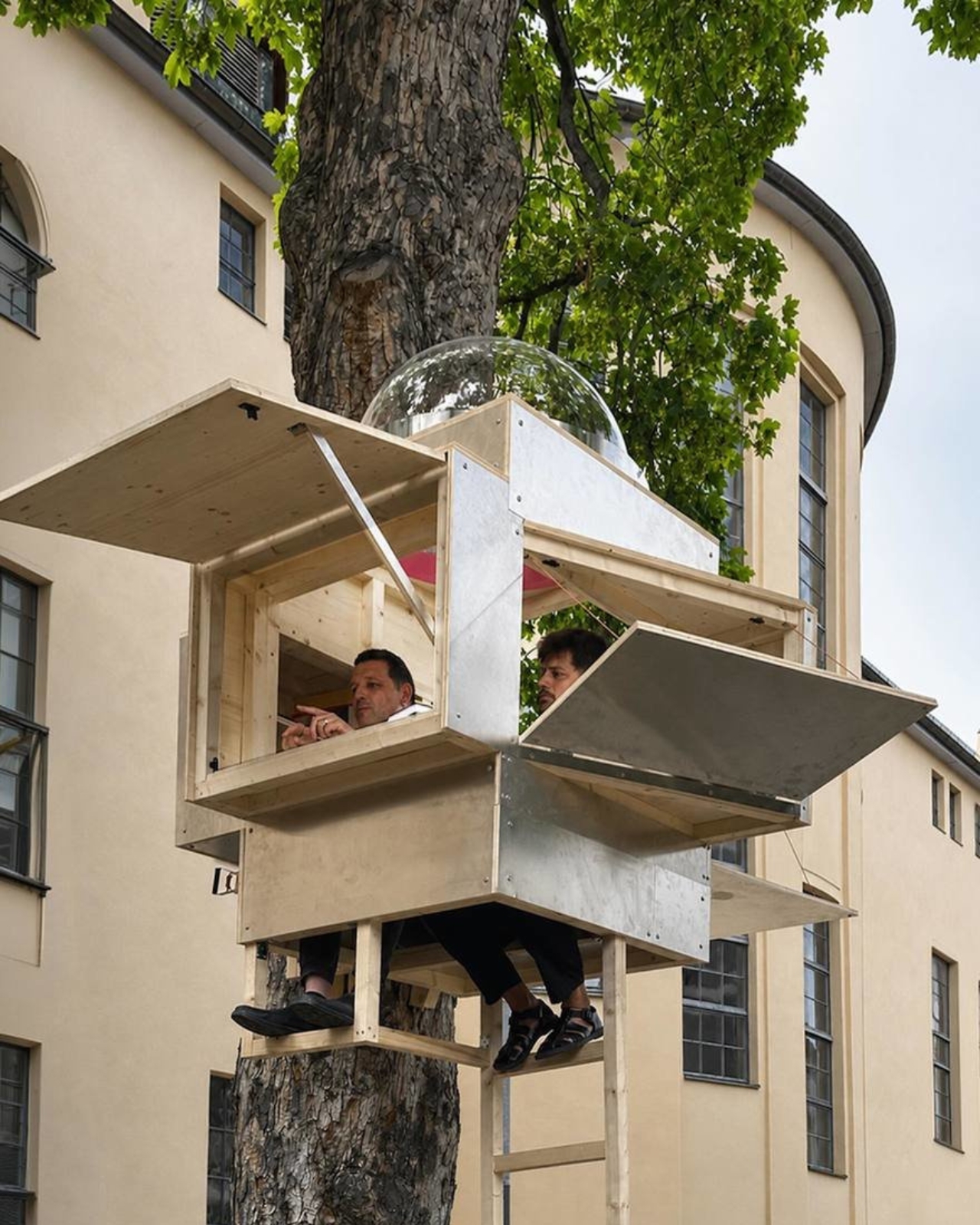
I’ll admit the practical side of me has questions. Winter in Thuringia is not gentle, and a plywood cube with a skylight is not insulation in any serious sense. But treating this as a permanent HQ misses the point Hartl is making. It’s a provocation with a ladder, built to prove that an architecture studio’s real asset is the people doing the thinking, not the address on the lease. Whether or not Baumhaus Office survives its first real storm, it’s already done its job: it made a very expensive problem look, for a moment, genuinely small.
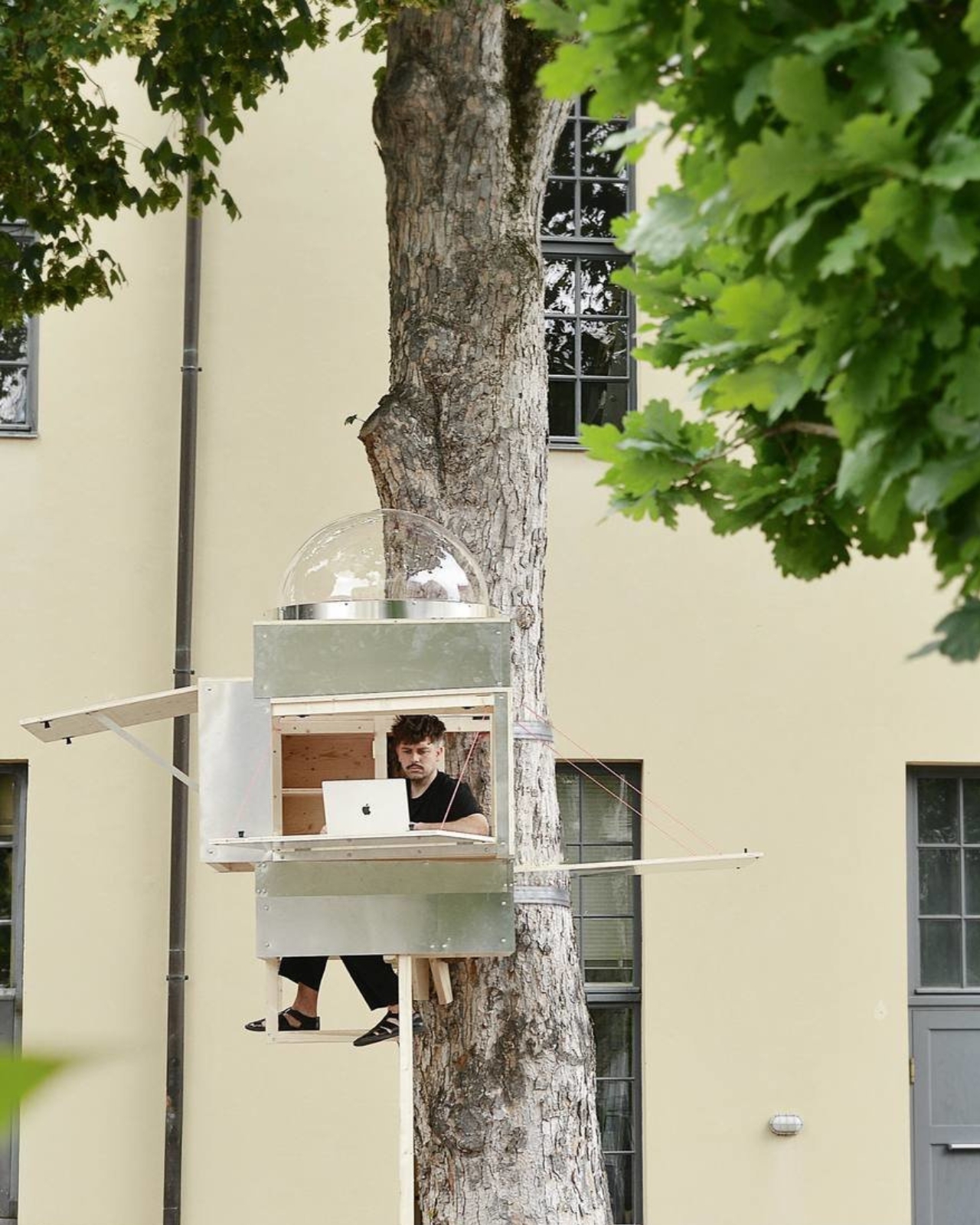
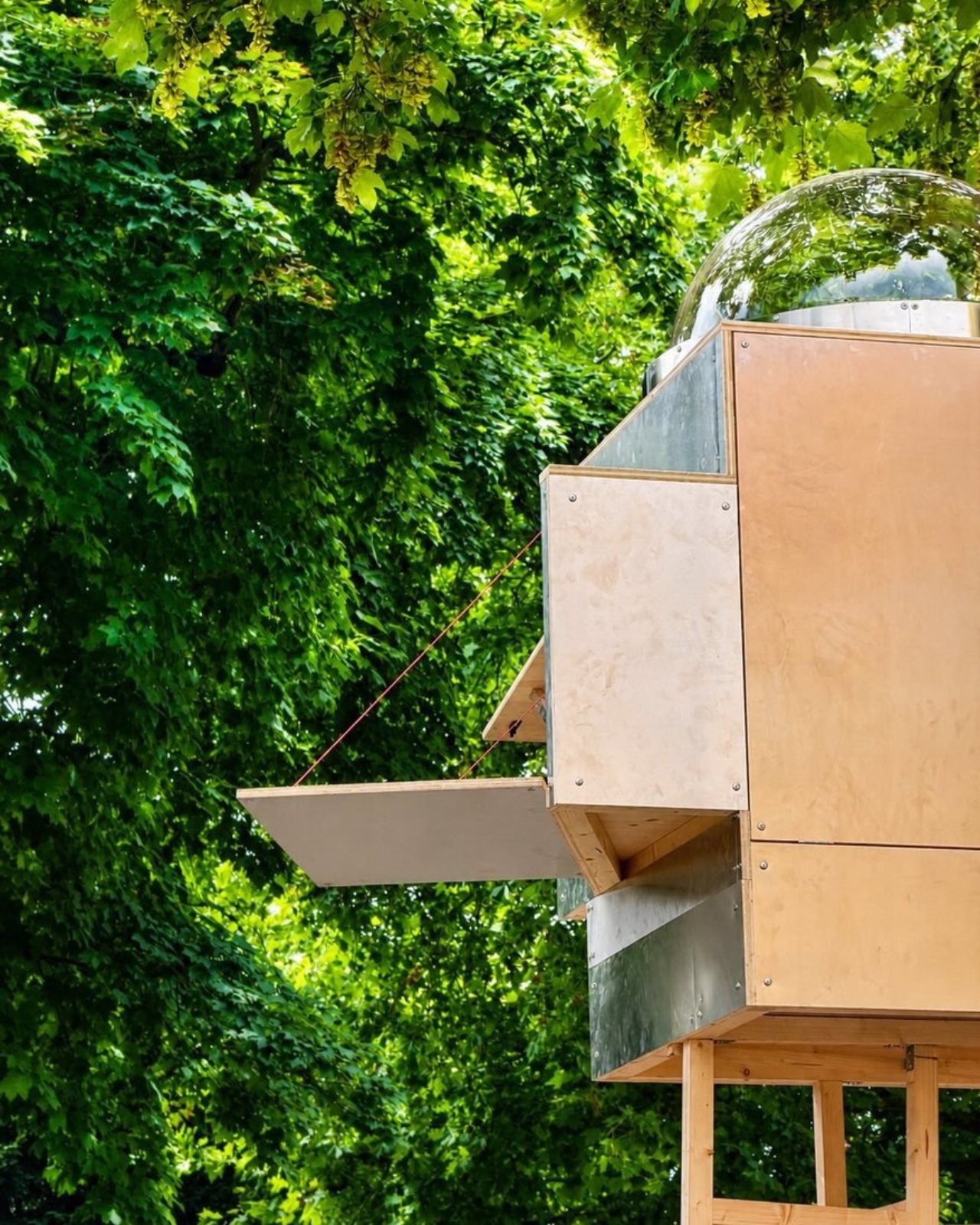
The post One Architect Quietly Ditched Rent for a 1sqm Treehouse Office first appeared on Yanko Design.

Apple has officially introduced its latest smartwatch lineup: the Apple Watch Series 12 and the Apple Watch Ultra 4. These devices represent a blend of advanced technology, health-focused features, and refined design, catering to a wide range of users. Whether you are a fitness enthusiast, an outdoor adventurer, or someone looking for innovative health monitoring, […]
The post Apple Watch Series 12 vs Ultra 4: What You Need to Know appeared first on Geeky Gadgets.
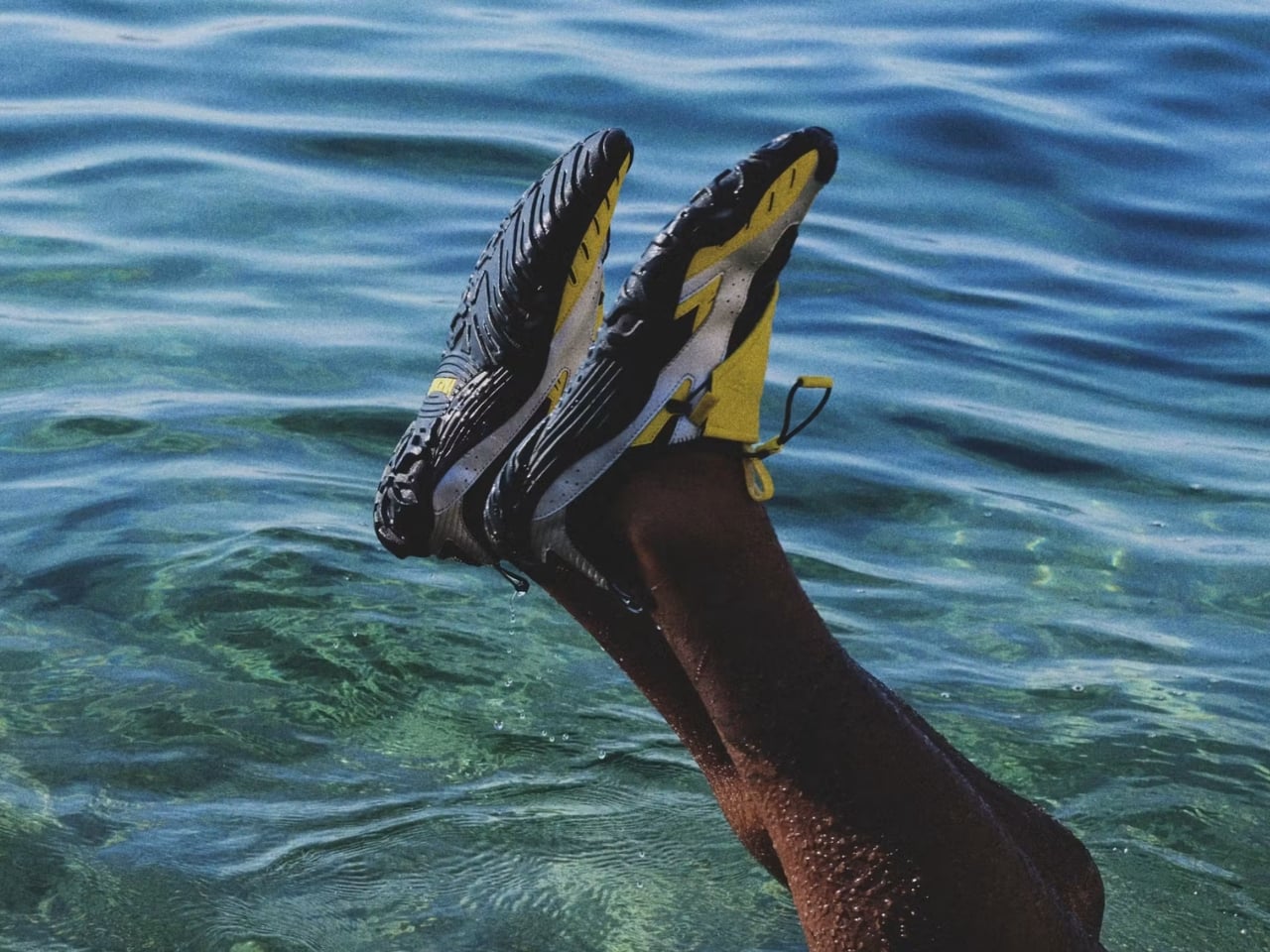
Summer never really wants to let go, and neither does my closet. Every September I face the same annoying puzzle: sandals feel done, sneakers feel too heavy, and nothing in between actually handles a wet dock, a muddy trail, and a sidewalk trip to the coffee shop without looking like safety equipment. That gap between “technical” and “wearable” has been a real problem in footwear for years, and it’s exactly the space Adidas and Pharrell Williams just walked into with the PW Water Moc.
The shoe is the third release under Pharrell’s ongoing Virginia label with Adidas, and unlike the Jellyfish or the Flat Earther before it, this one isn’t chasing runway drama. It’s pulling from something a lot more obscure: the Adidas Adventure Water Moc, a shoe most people forgot existed after the early 2000s. That’s the smart move here. Instead of inventing a new gorpcore silhouette from scratch, Pharrell dug up a shoe that was already built for exactly this problem, water to land, and gave it a reason to exist again.
Designer: Pharell x Adidas
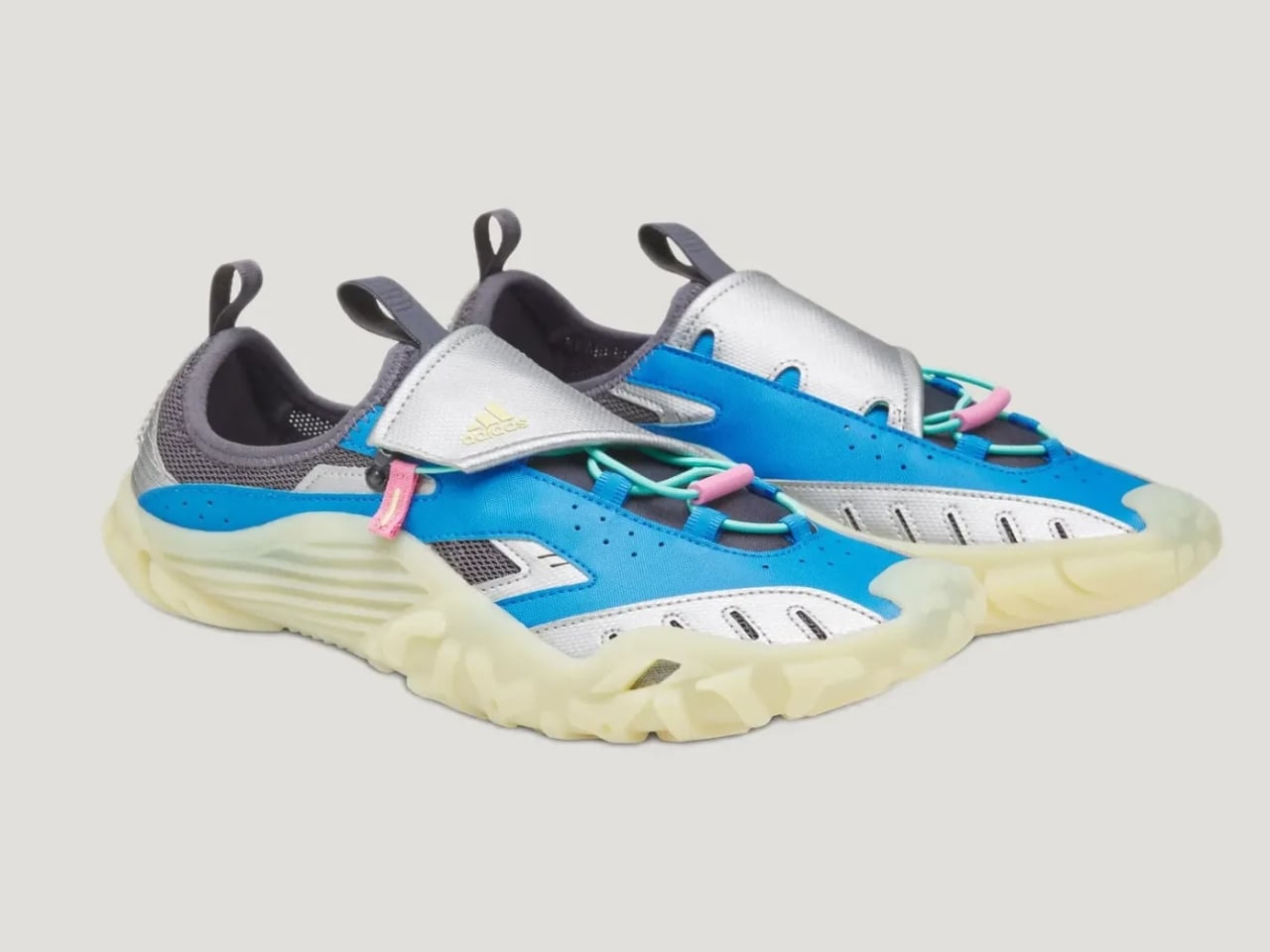
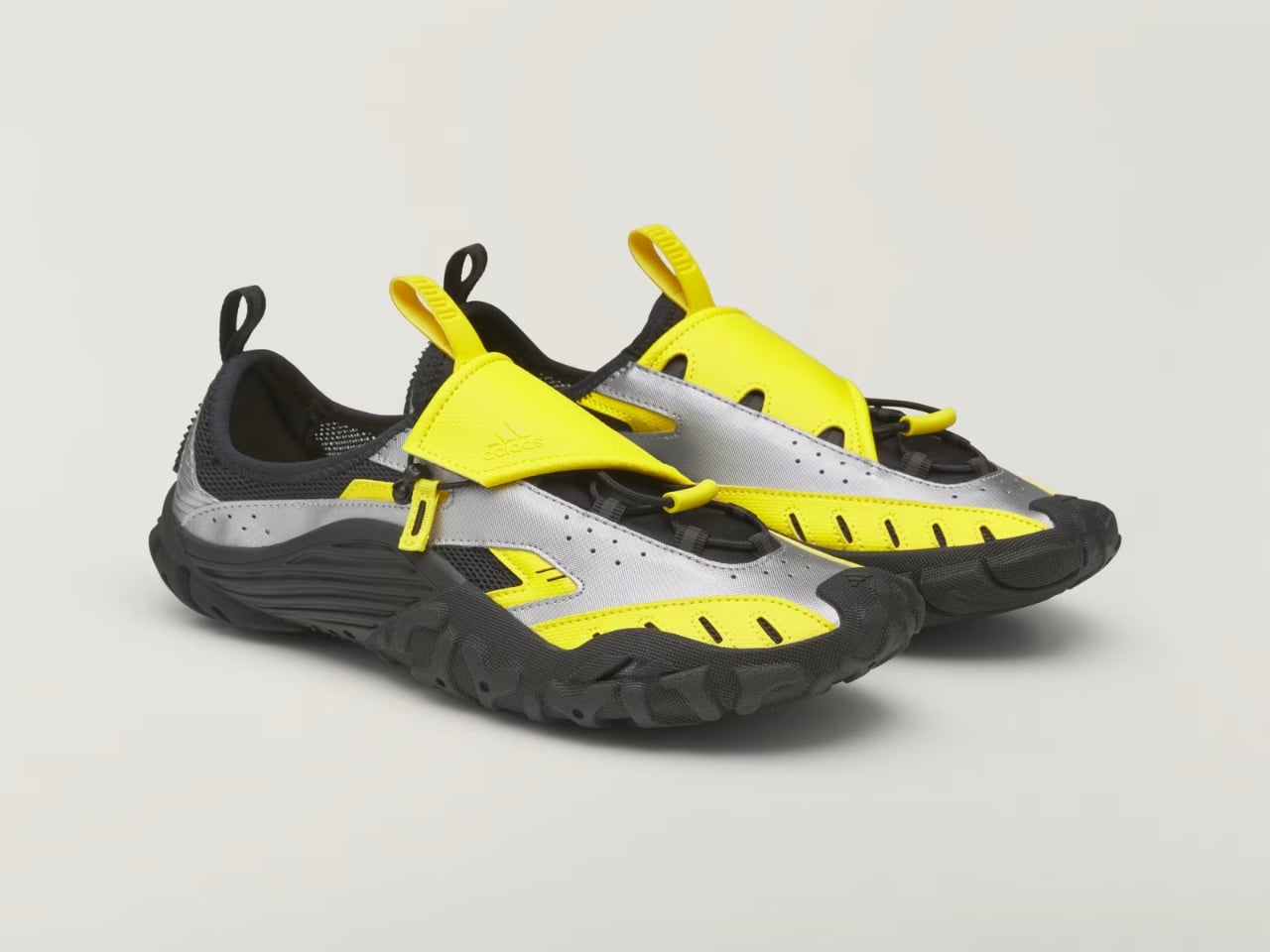
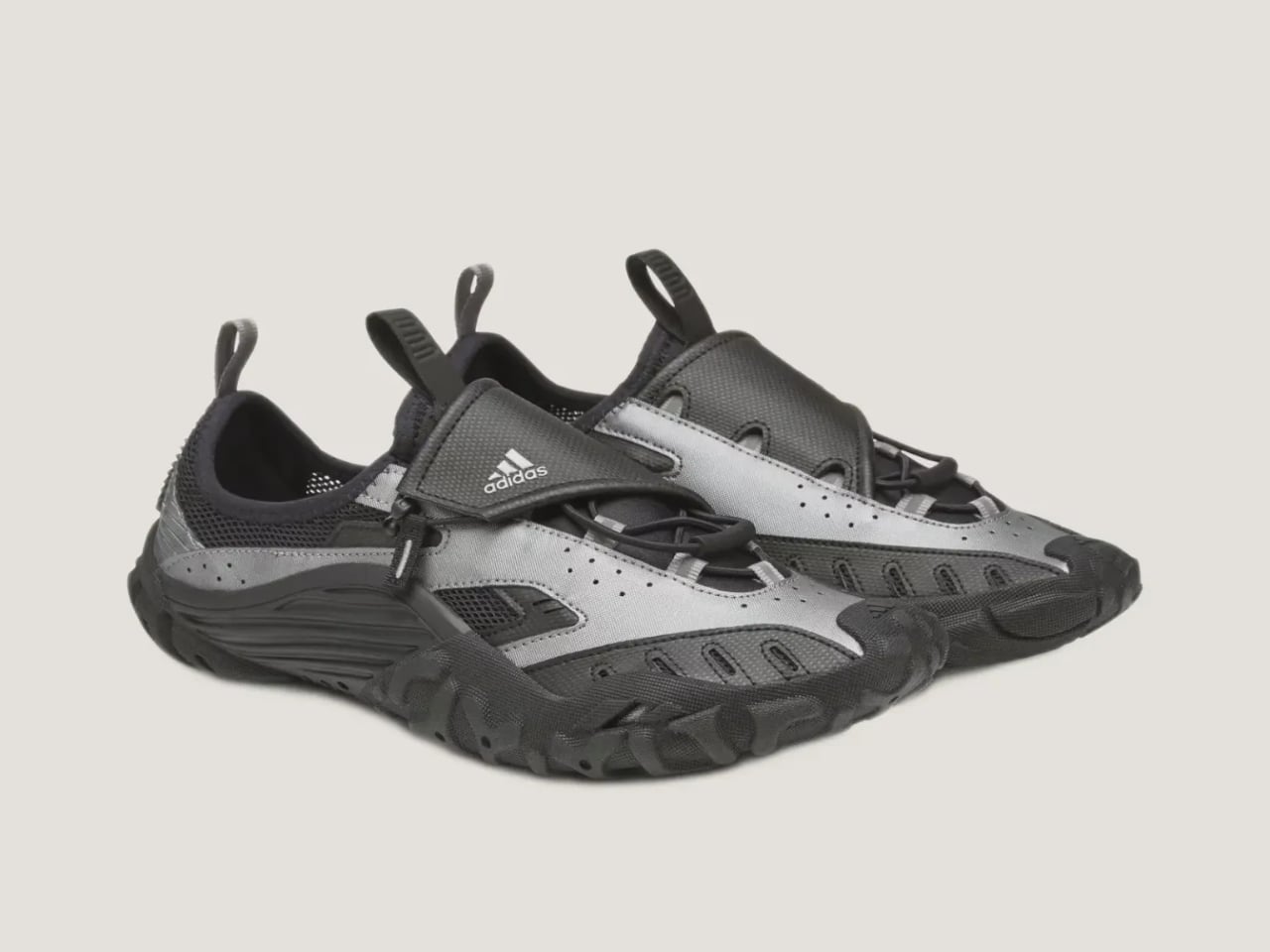
Functionally, it actually holds up. The upper mixes breathable mesh with reflective webbing, and bungee-style laces get tucked under a wide strap so you’re not fumbling with knots every time you take it off at the door. The outsole is lifted from the 2005 Carnuba Adventure Moc, which means deep, aggressive lugs instead of the flat rubber most casual slip-ons get away with. It’s a shoe that seems genuinely fine with a creek crossing, not just a shoe that photographs well near one.
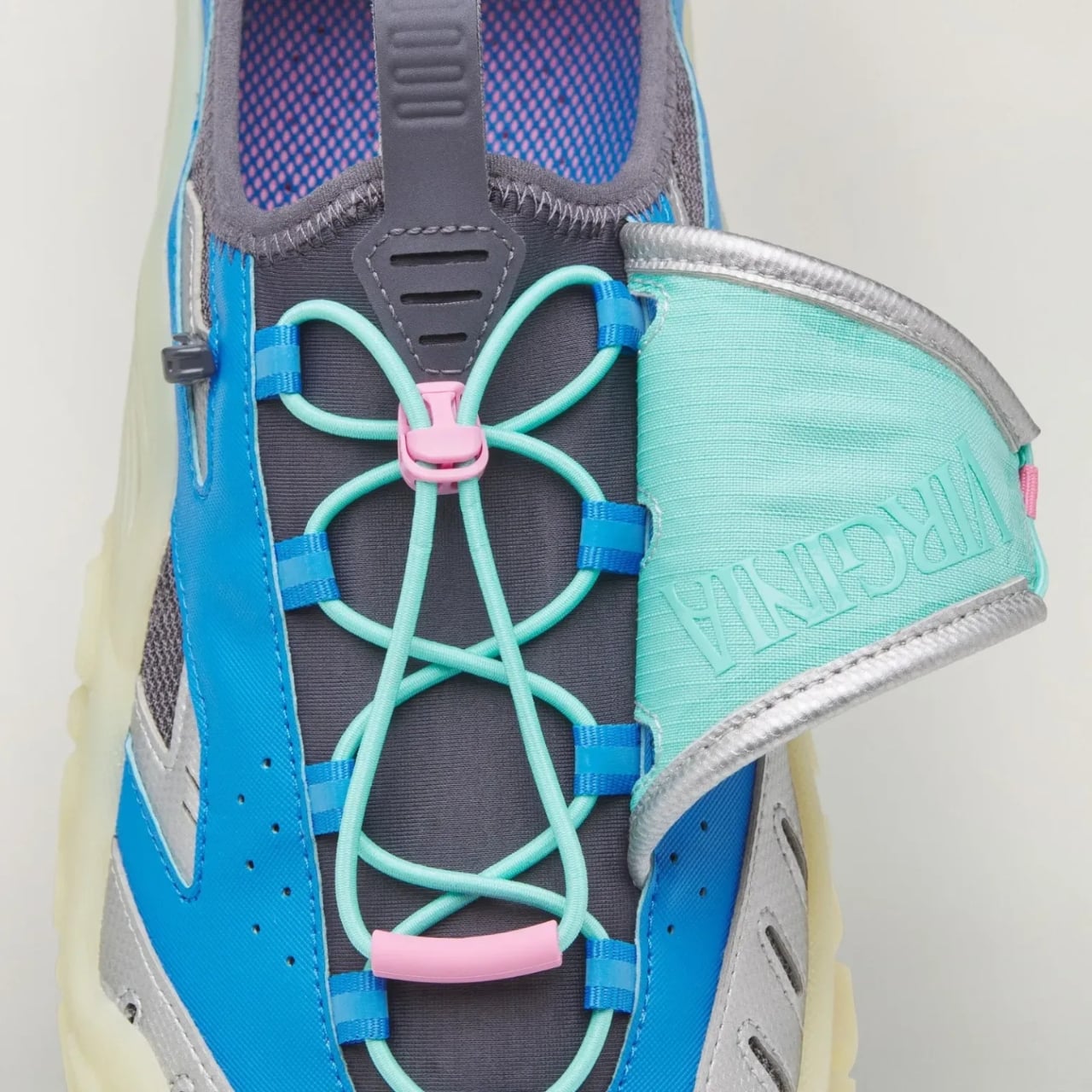
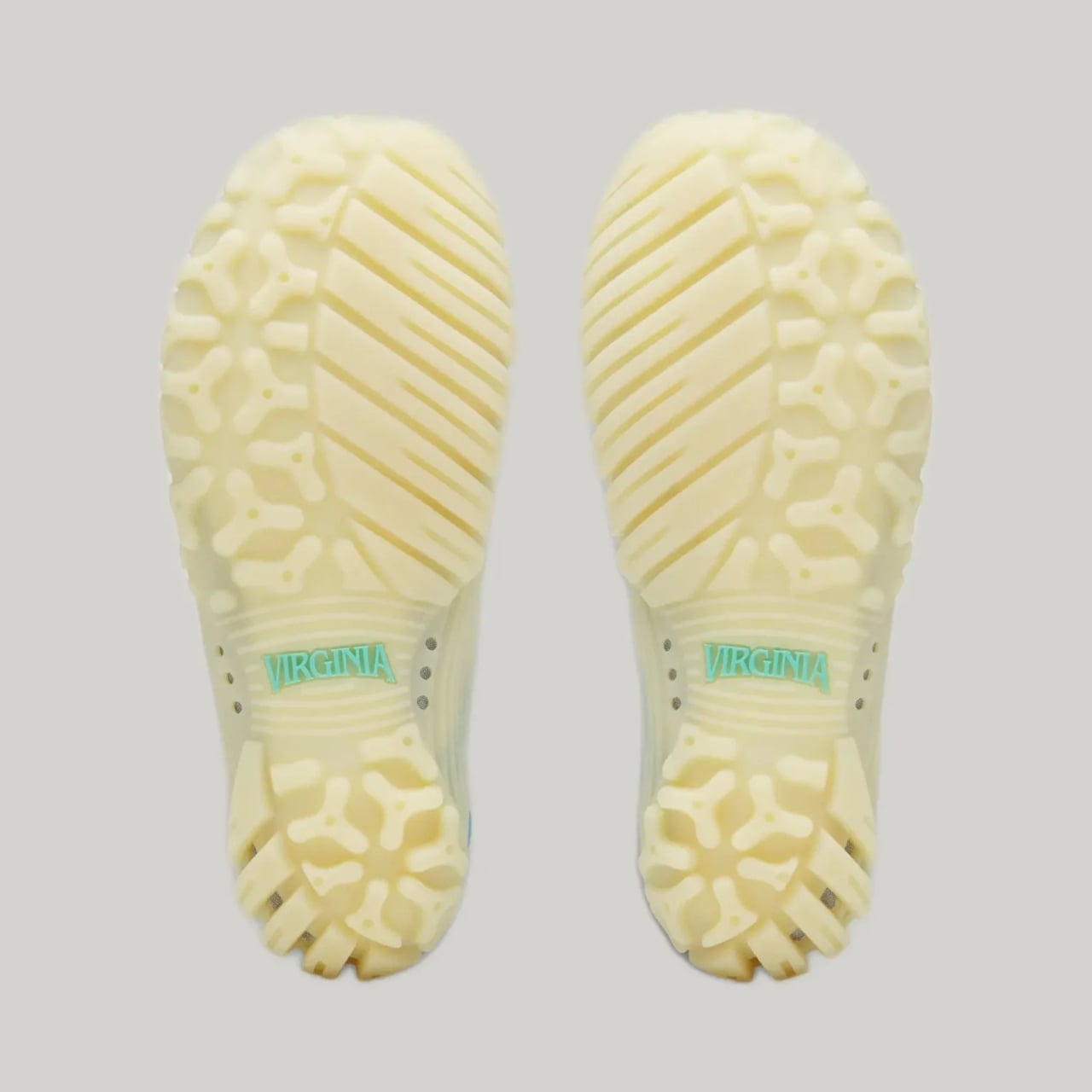
Where it gets interesting, and where I think Pharrell earns his credit, is the colorways. Adidas didn’t sand down the nostalgia to make it more palatable. The Lucid Ray Blue option comes with pink and seafoam accents that are unapologetically early-2000s, the kind of palette that would’ve looked at home on a Bratz commercial or a Limp Bizkit music video. There’s a black and silver pair for people who want the shape without the loud attitude, and a yellow colorway that splits the difference. None of them try to disguise where they came from.
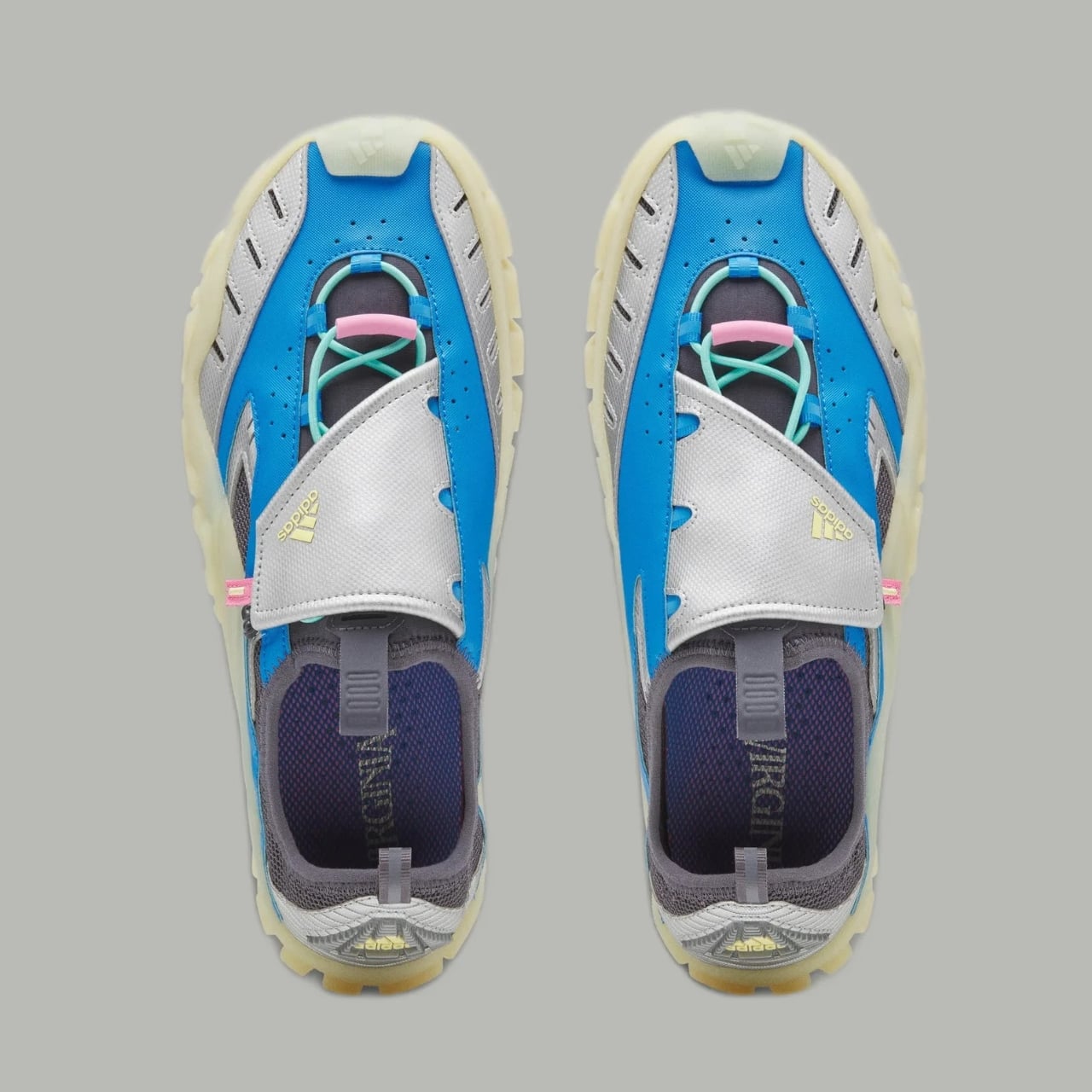
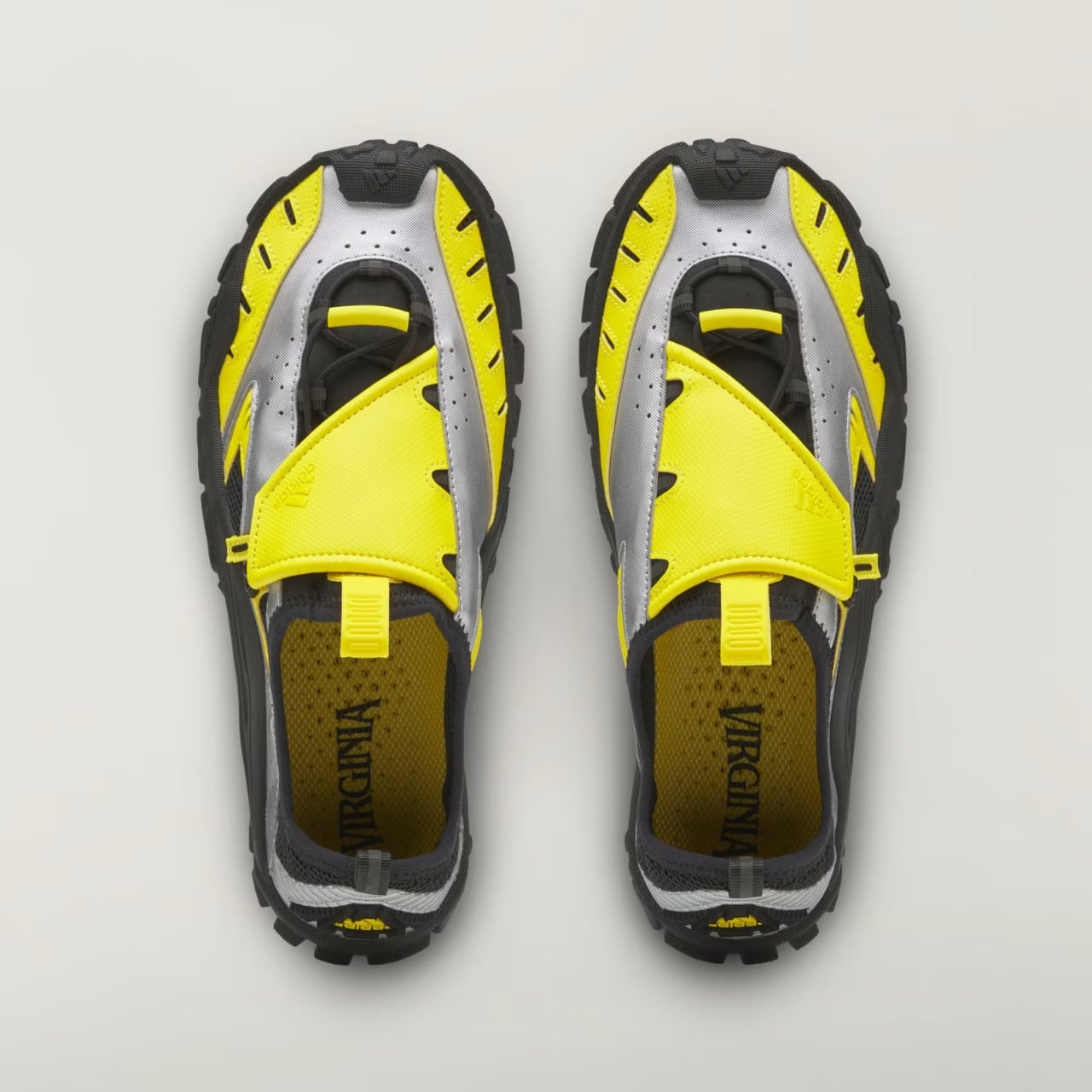
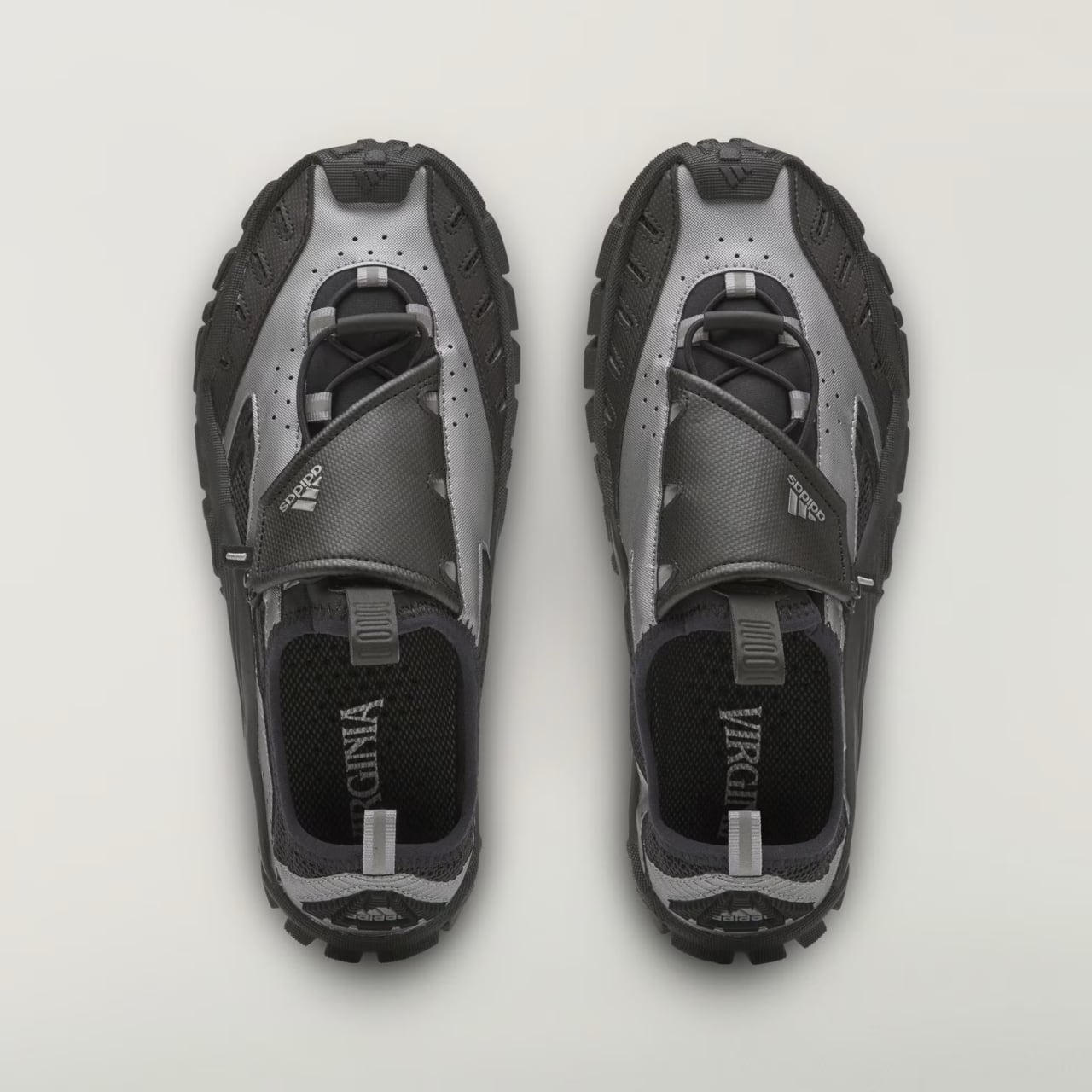
I’ll admit I’m a little biased toward brands that actually go back to their own archive instead of just borrowing someone else’s aesthetic and calling it retro. Adidas has done this a few times now, quietly, and it tends to land better than the loud “vintage-inspired” drops that never point to an actual source. The Water Moc isn’t just Y2K flavored, it’s a real product from that era, rebuilt with better materials and a designer who clearly has affection for it rather than just using it as a trend hook.
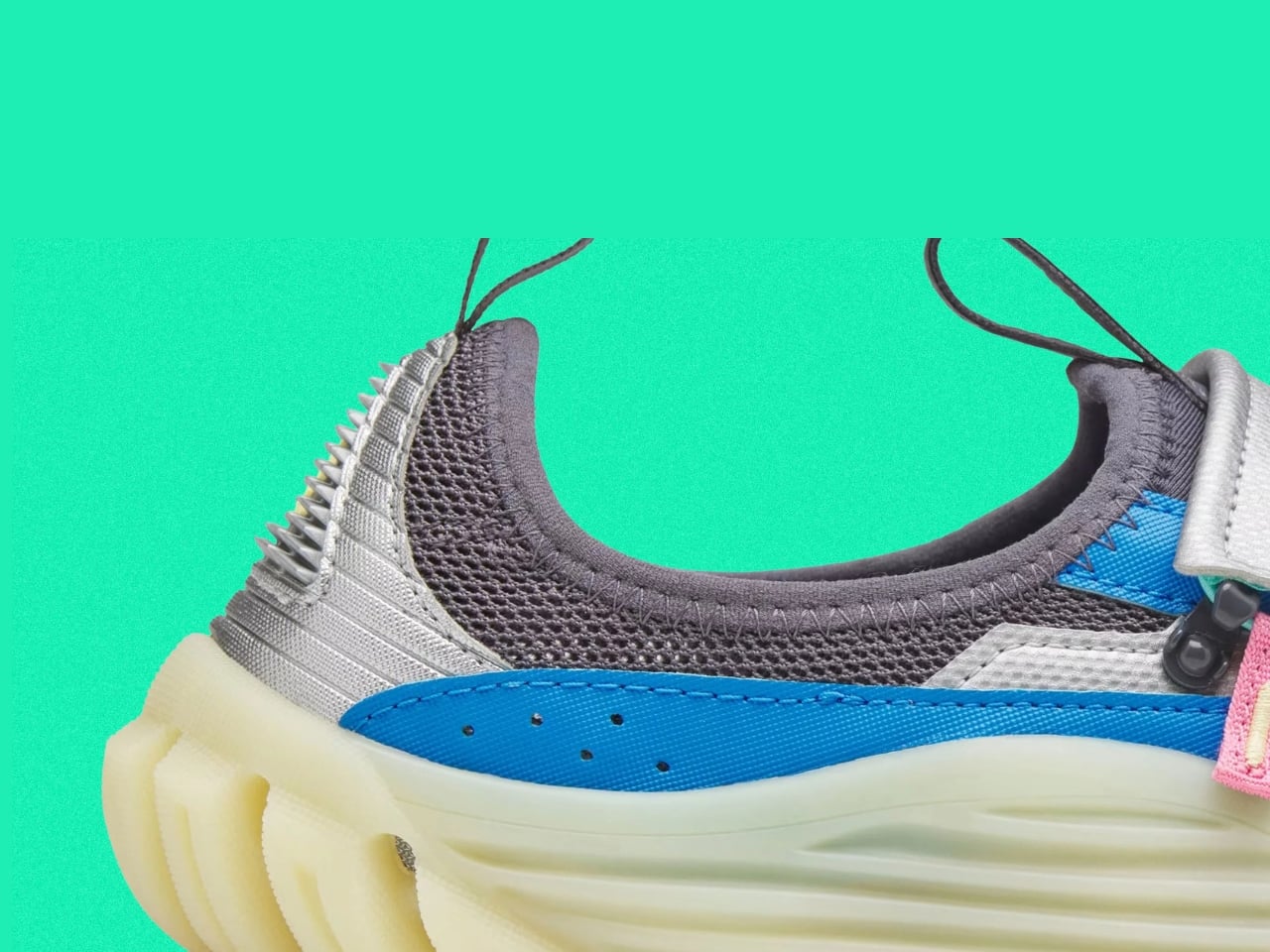
At $140, it sits in a fair spot for a collaboration shoe with this much design history behind it. It’s not cheap, but it’s not asking you to pay Jellyfish-level hype pricing for something that’s essentially a reissue with upgrades. That price point also tells you who this shoe is actually for: people who want a functional water-ready shoe but refuse to wear something that looks like it belongs on a kayaking instructor.
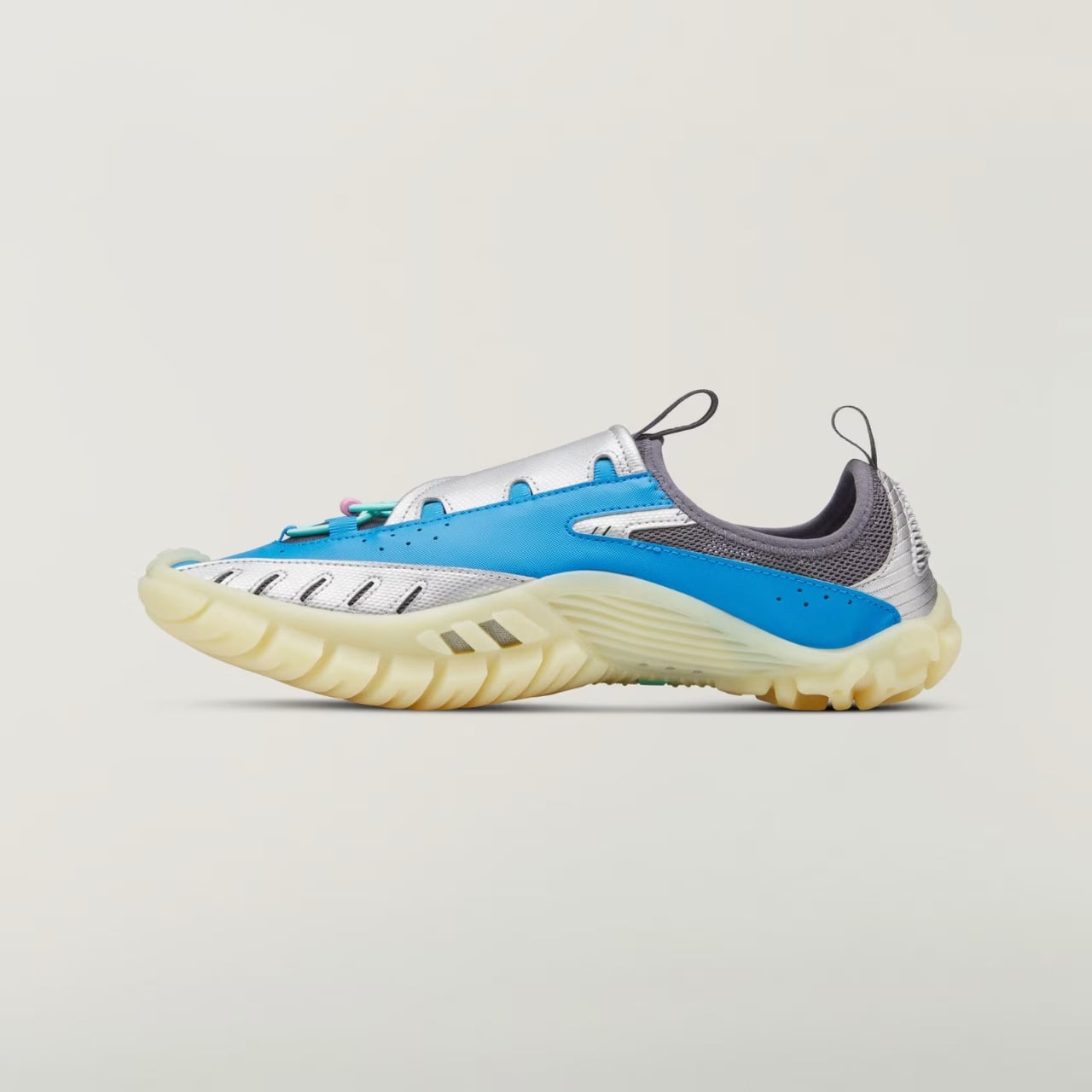
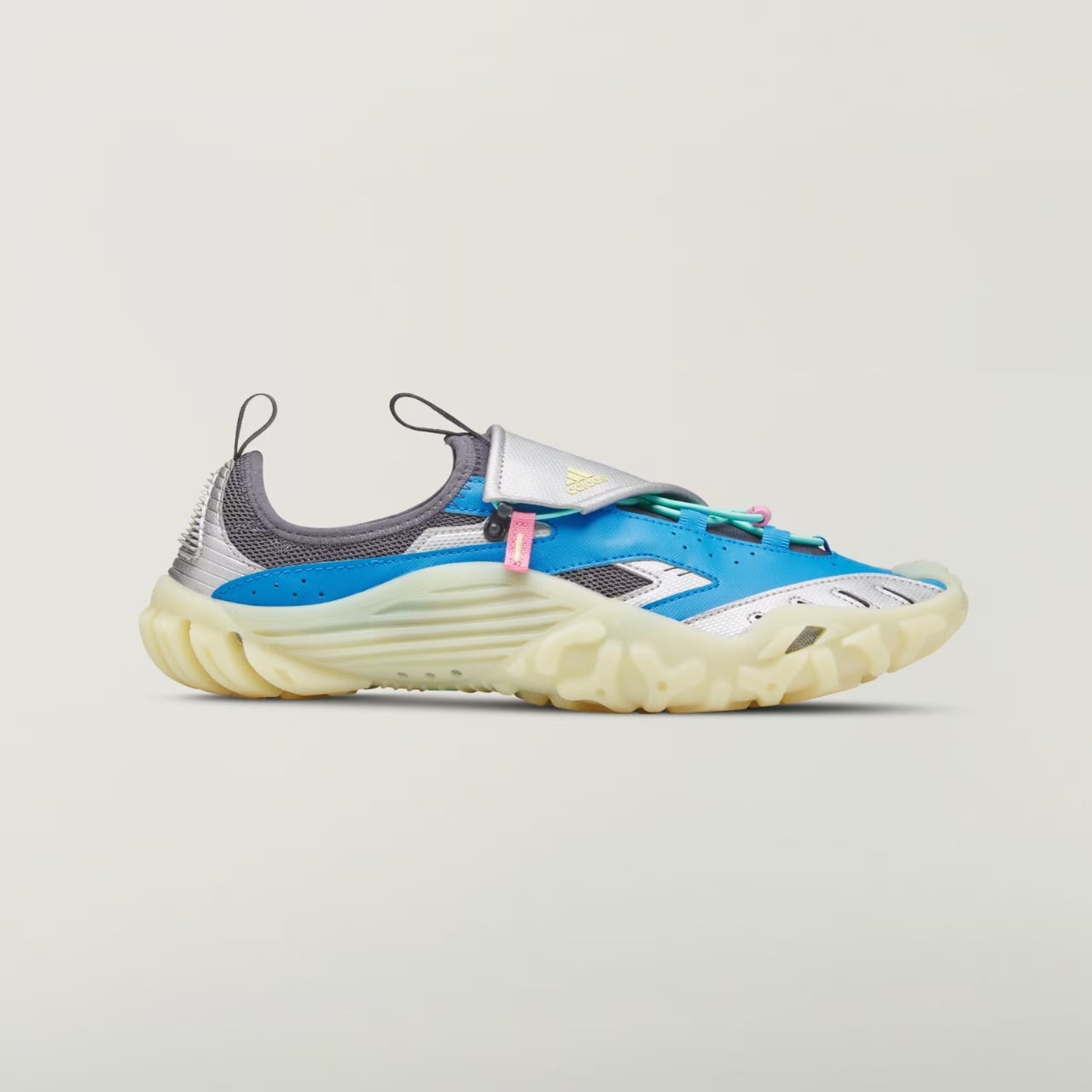
What sneaker culture has been missing lately is a bit of goofiness that still functions. So much of the current outdoor-meets-fashion movement takes itself seriously, all muted colors and technical fabric with barely any personality. The Water Moc doesn’t ask to be taken that seriously, and that’s honestly refreshing. It’s a shoe that remembers being weird was part of the appeal the first time around.
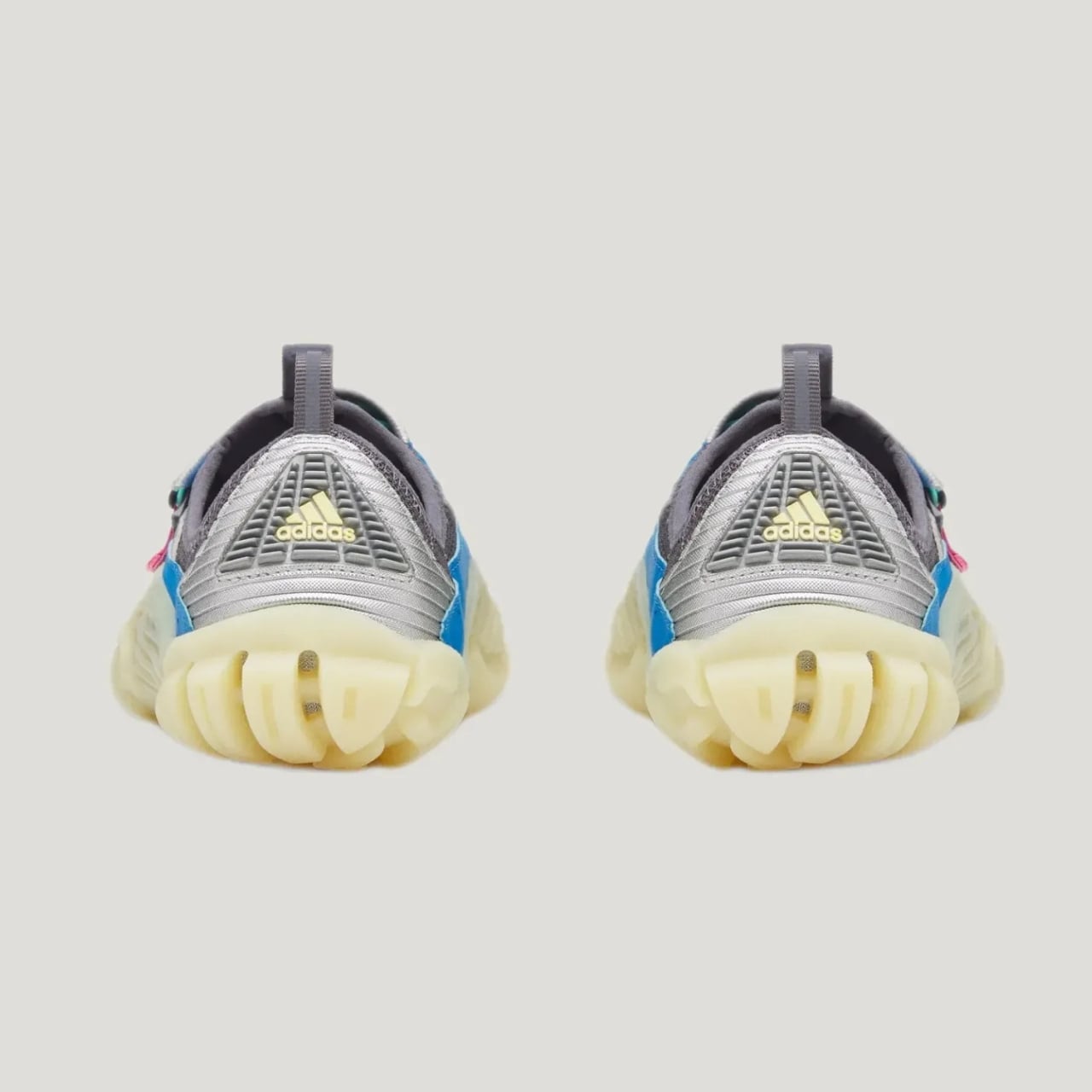
Whether it becomes a genuine wardrobe staple or just a fun seasonal pickup probably depends on how much you already like the era it’s pulling from. But as a piece of design thinking, going back into the brand’s own closet instead of reinventing the wheel, it’s one of the more honest moves Adidas has made in a while. Sometimes the best new shoe isn’t new at all. It’s just finally getting its second summer.
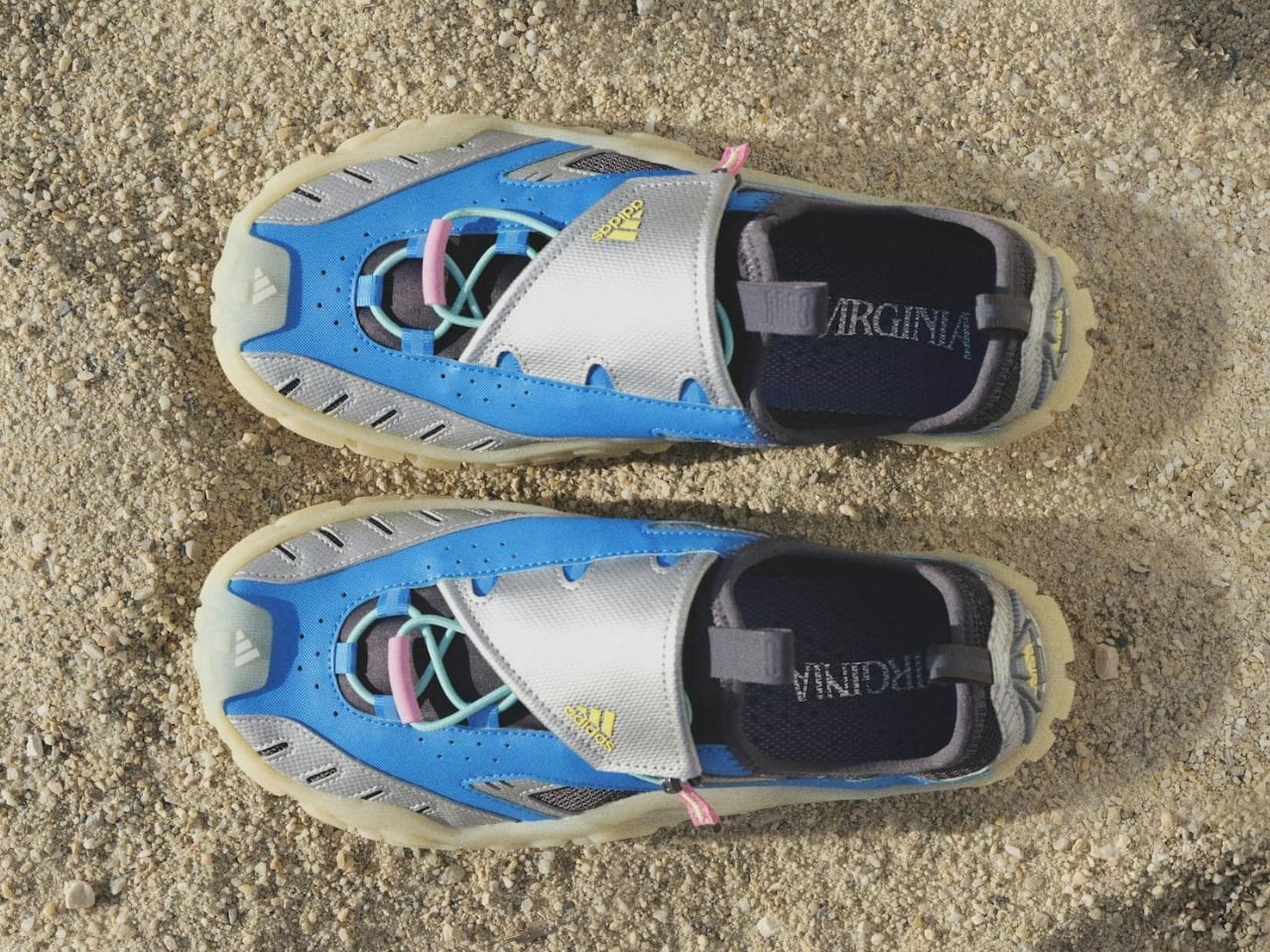
The post Pharrell Quietly Revives Adidas’ Weirdest Y2K Water Shoe for $140 first appeared on Yanko Design.

Qwen 3.8 27B introduces a notable enhancement to text generation workflows through its Multi-Token Prediction (MTP) feature. This capability enables the model to predict multiple tokens in a single step, significantly increasing processing speed without compromising output quality. With MTP enabled, users can achieve speeds of up to 17.1 tokens per second, more than doubling […]
The post Qwen 3.8 27B Hits 17.1 Tokens per Second with MTP Toggle appeared first on Geeky Gadgets.

Apple has officially unveiled the iOS 27 Release Candidate (RC), signaling the final stage before the software’s public rollout. This update introduces a range of features and refinements designed to enhance usability, functionality, and integration across Apple’s ecosystem. From a refreshed user interface to significant upgrades in Siri, Apple Music, and CarPlay, iOS 27 RC […]
The post iOS 27 RC is Out: CarPlay Adds Video Streaming and New Siri appeared first on Geeky Gadgets.