If Sci-fi Gardening met MC Escher: Meet The Holocene House’s Floating Jungle Canopy

The pool doesn’t sit beside the house. It doesn’t occupy the backyard. It runs straight through the middle of the living space, dark-tiled and creek-like, with stepping stones crossing it at the entry. This is the organizing principle of Holocene House: water as hallway, water as climate control, water as the thing everything else revolves around.

Above this central watercourse, a canopy of floating planters and geometric panels creates its own microclimate. Timber beams intersect with structural steel. Translucent jade FRP panels catch and scatter light. Plants spill from concrete boxes suspended in the grid. The whole structure has this disorienting quality, like multiple dimensions of garden folded into the same space. It’s both hyper-technical and completely organic, which makes sense for a home that’s carbon positive while feeling more like a living ecosystem than a building.

Designer: CplusC Architects + Builders

CplusC Architects + Builders designed this thing, and honestly, they went harder than they needed to. The brief could have been “nice sustainable house with pool,” but instead they built something that reorganizes how residential architecture relates to water and vegetation. The swimming pool measures roughly 12 meters long and runs parallel to the main living spaces. Dark tiles give it the appearance of a natural creek bed, which sounds precious in theory but actually works because the water is moving and filtering constantly through reed beds, polishing ponds, charcoal, and pebbles. No chlorine. The system mimics what happens in actual wetlands.

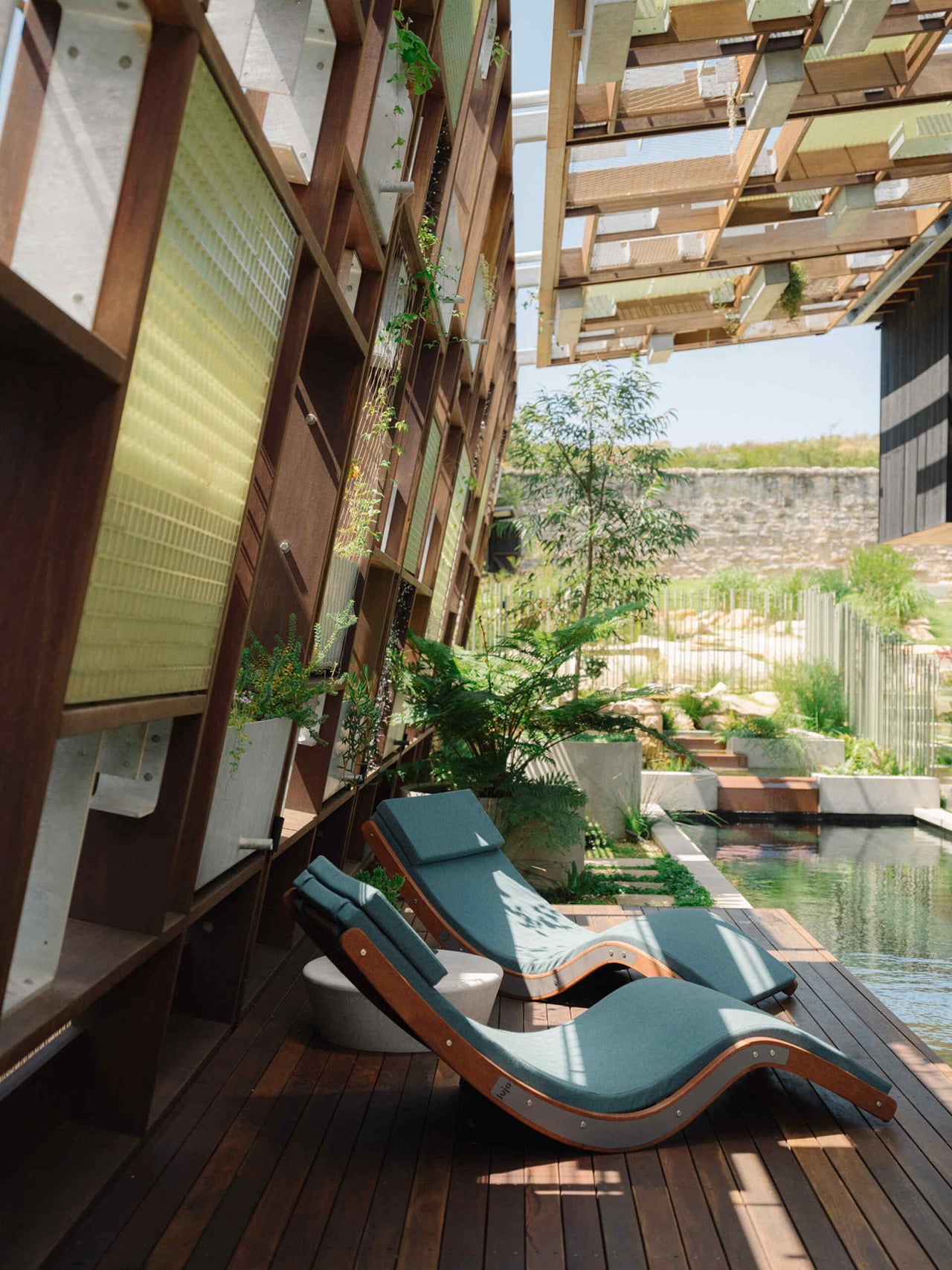
The canopy overhead is immersive and disorienting in the best way possible. Structural steel beams intersect with timber framing at multiple angles, supporting concrete planters that float at different heights. Between them, translucent jade-colored FRP (fiber-reinforced plastic) panels fill gaps in the grid. The whole assembly casts this dappled, constantly shifting light that changes character throughout the day. It’s functional shading that drops the temperature on the deck by several degrees, but it also creates this spatial ambiguity where you lose track of what’s ceiling, what’s wall, what’s garden. Very Escher. Very disorienting if you stare at it too long.


This is Australia’s first certified carbon-positive home under the Active House Alliance, which means it produces more energy than it consumes over a year. Solar panels handle the energy generation. Rainwater and greywater systems irrigate the productive garden, which includes fruit trees, vegetables, herbs, and even chickens. The spotted gum cladding on the exterior got the Shou Sugi Ban treatment, that Japanese charring technique that makes timber more resilient and gives it a charcoal finish. Low embodied energy material that will age well in the coastal climate near Shelly Beach.
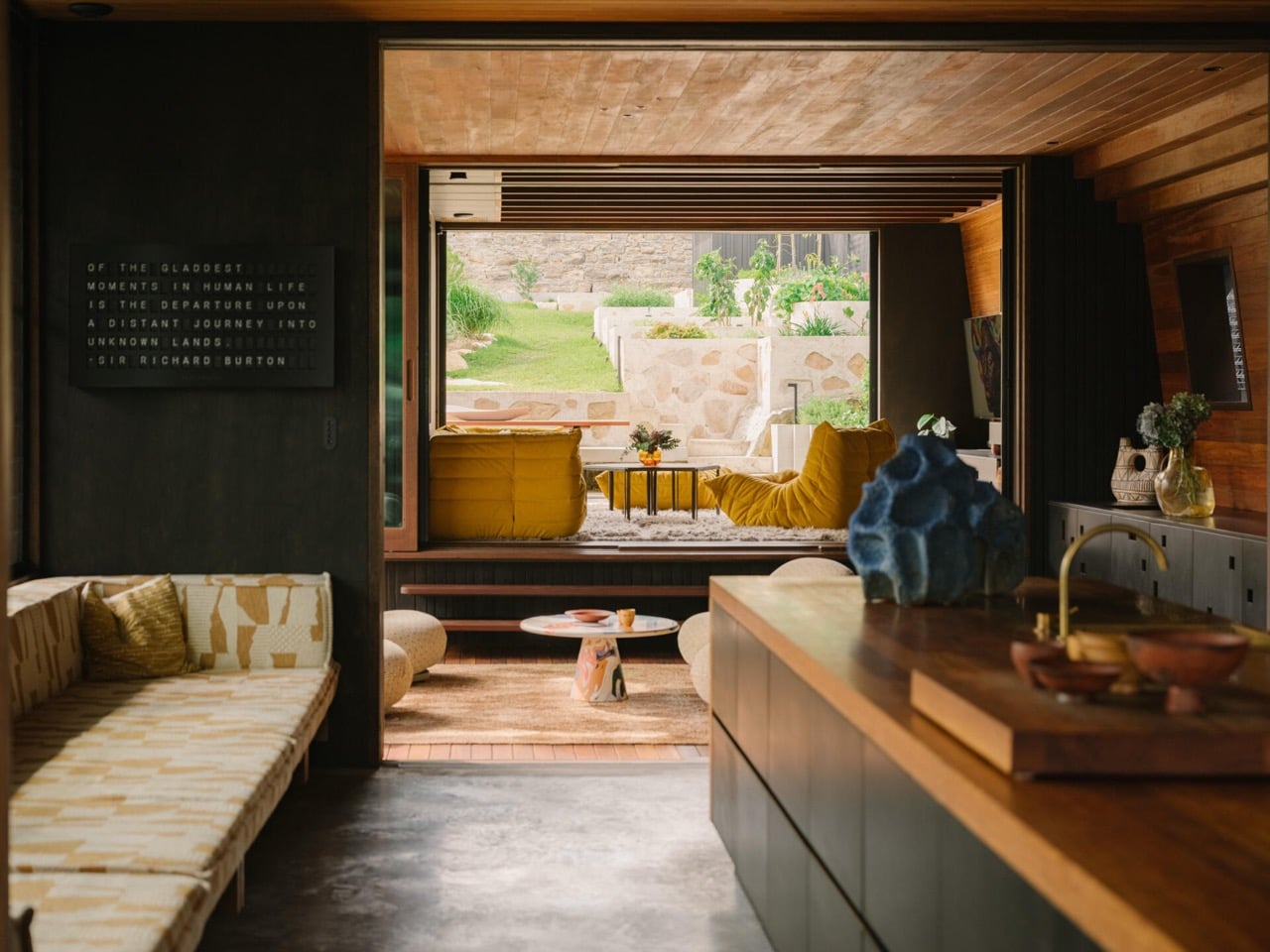
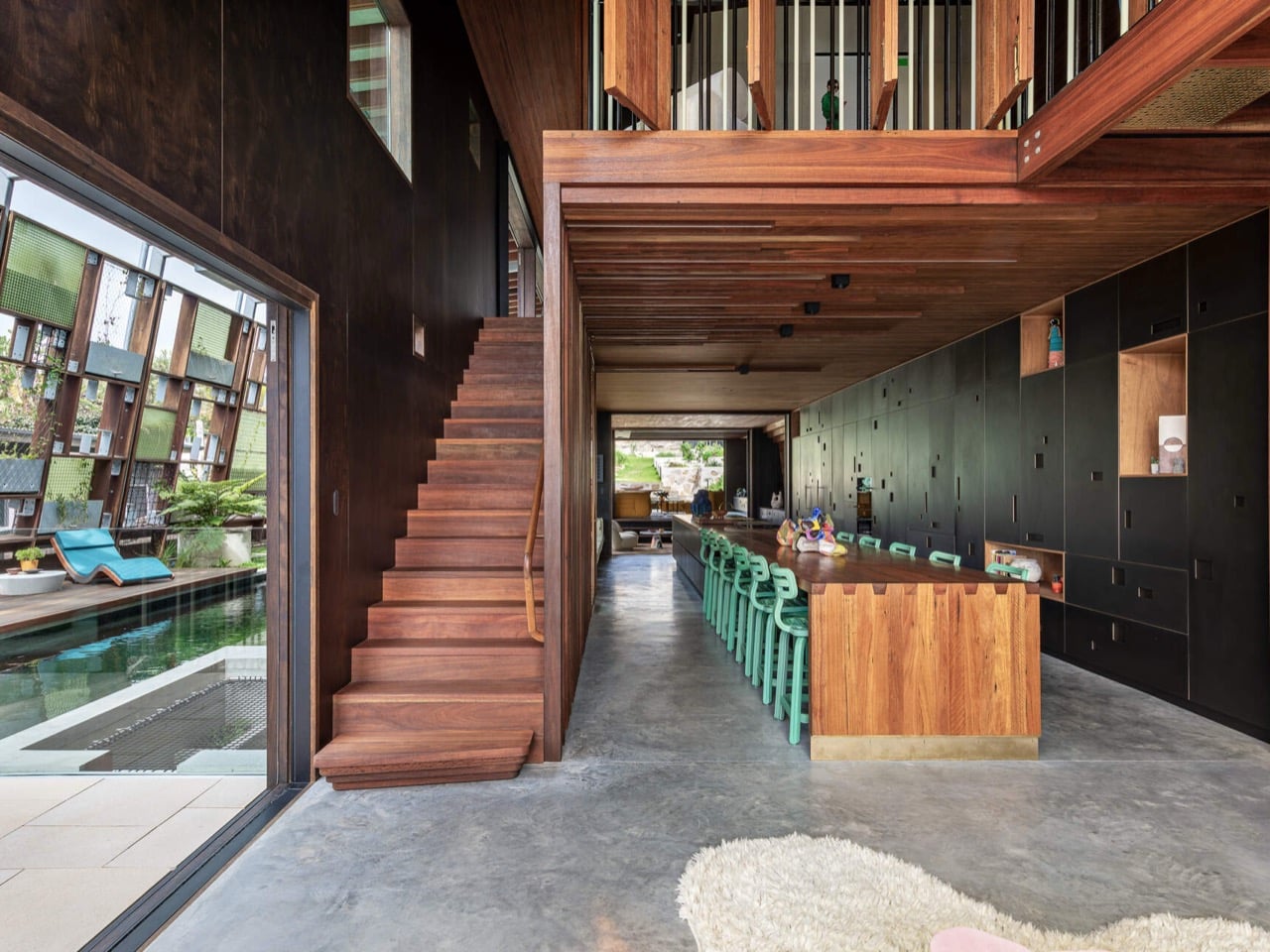
Inside, a 9.2-meter recycled hardwood island stretches through the kitchen and doubles as the dining table. That’s over 30 feet of continuous timber. The cabinetry uses Paperock, a composite material made from recycled paper and resin, formed into panels with these small perforations that create textured shadows. Floor-to-ceiling storage hides appliances and maintains clean sightlines. A built-in daybed sits in the kitchen area with views straight through to the pool and back garden. The whole spatial layout keeps pulling your attention back to that central water feature, which becomes the thing every other design decision orbits around.


What makes this work is that it’s rigorous about the systems. The natural pool filtration, the greywater recycling, the solar array, the thermal mass of the concrete, the cross-ventilation through operable walls. These aren’t aesthetic gestures. They’re load-bearing infrastructure that allows the house to function as a net positive contributor rather than just a less-bad consumer. And somehow that rigor produces spaces that feel loose and organic rather than over-engineered. You can see the thinking, but it doesn’t announce itself.

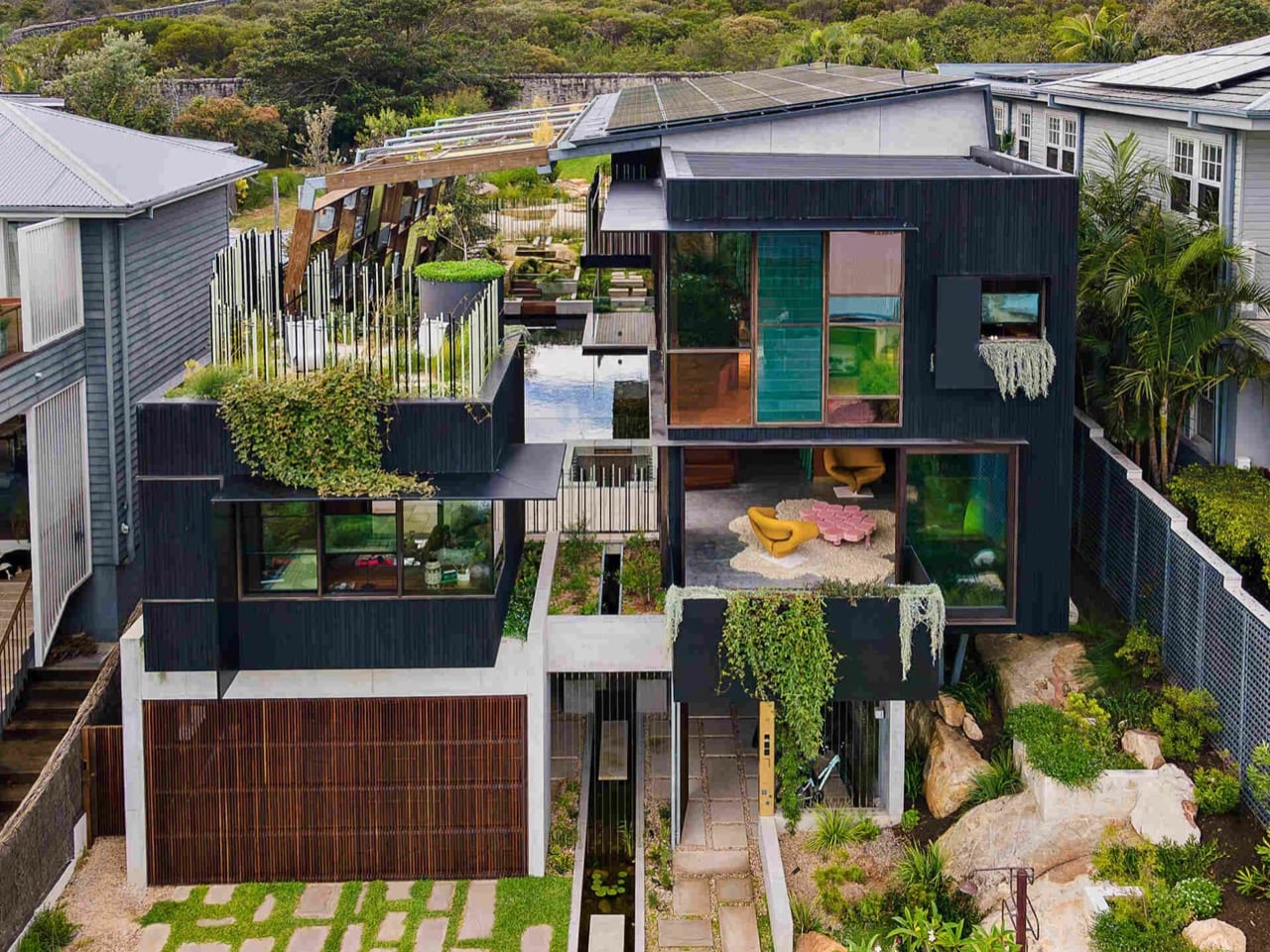
The project sits between a national park and million-dollar beach views, which is both an advantage and a responsibility. The landscape architect, Duncan Gibbs, designed the garden to support local bandicoot habitat while producing food for the residents. That’s a specific kind of design challenge: make it productive and beautiful and ecologically functional for native species all at once. The planting selections reinforce local ecology rather than importing exotic specimens that need constant maintenance. It’s a working garden that happens to look good, not the other way around.

Photos by Renata Dominik

The post If Sci-fi Gardening met MC Escher: Meet The Holocene House’s Floating Jungle Canopy first appeared on Yanko Design.
The “Shot On iPhone” Lifehack: This 235mm Telephoto Case Packs Manual Controls + MicroSD Storage

Every time you see “Shot on iPhone” superimposed over a stunning image, ask yourself what’s just outside the frame. Chances are good there’s a telephoto adapter screwed onto the phone, a stabilizing rig keeping it steady, professional lighting bouncing off reflectors, and maybe even an external monitor for the director to watch. Apple loves to showcase the iPhone’s camera prowess, but conveniently omits the ecosystem of professional gear that makes those shots possible. The phone is capable, sure, but it’s getting significant help from its friends.

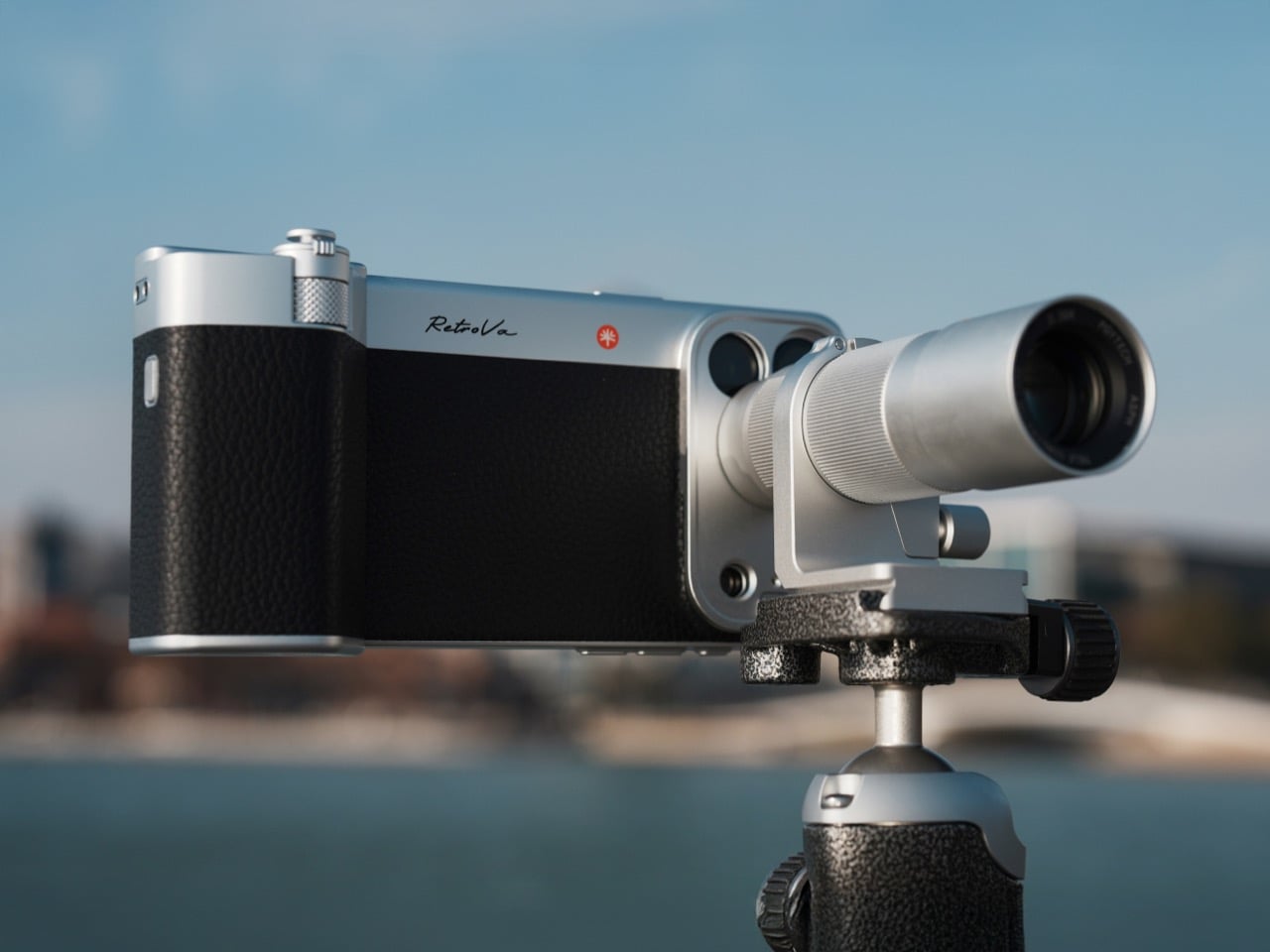
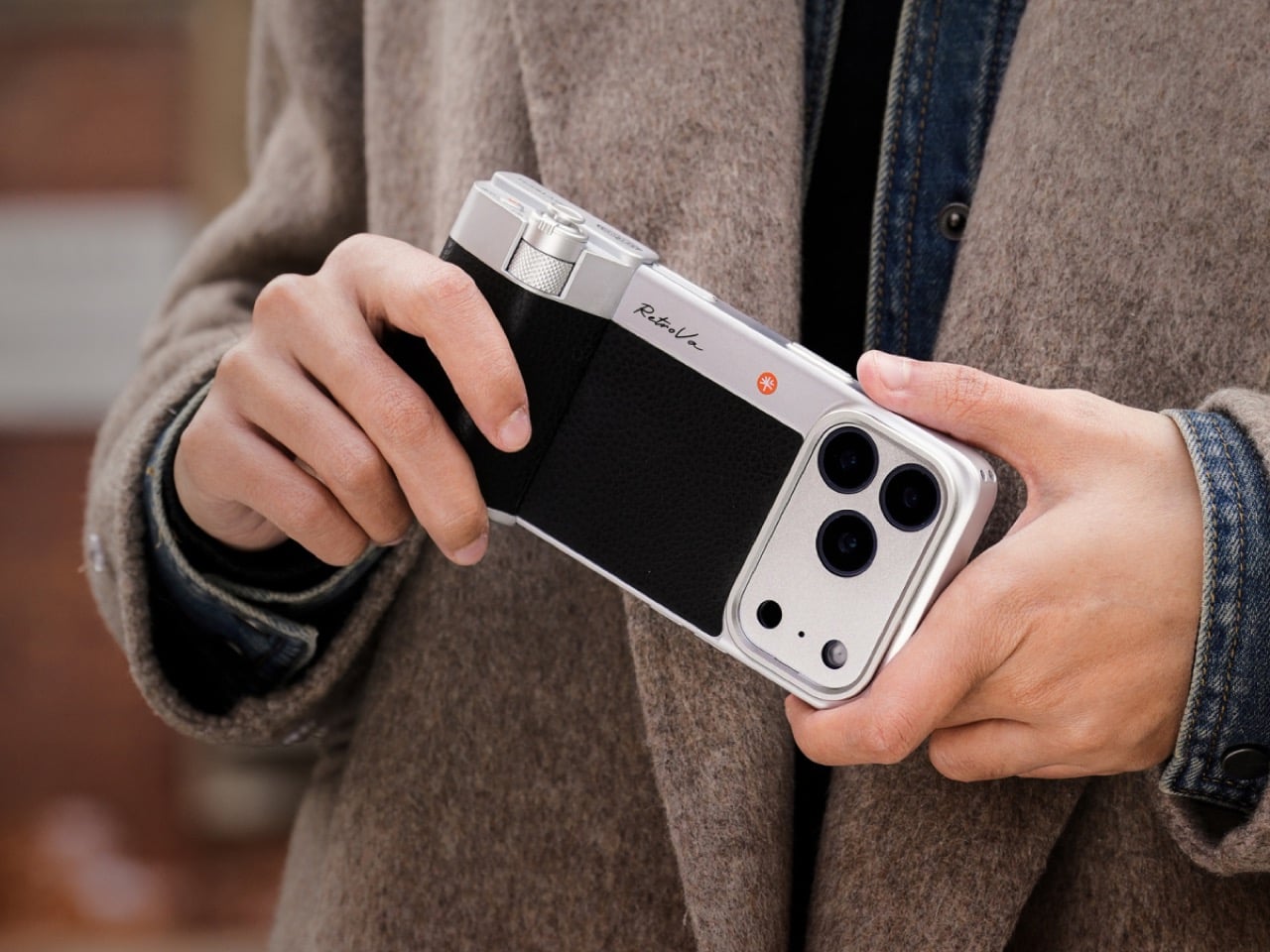
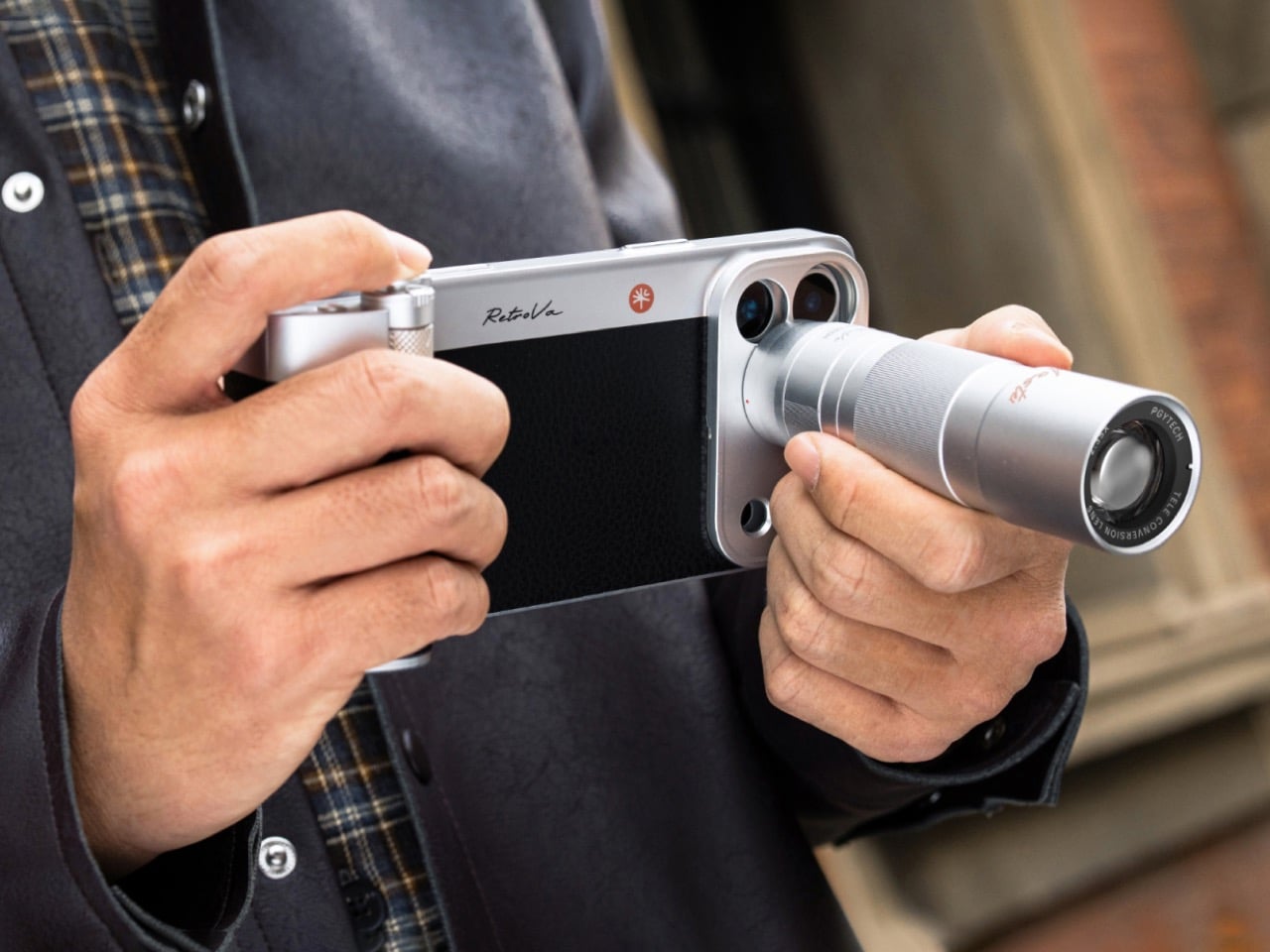
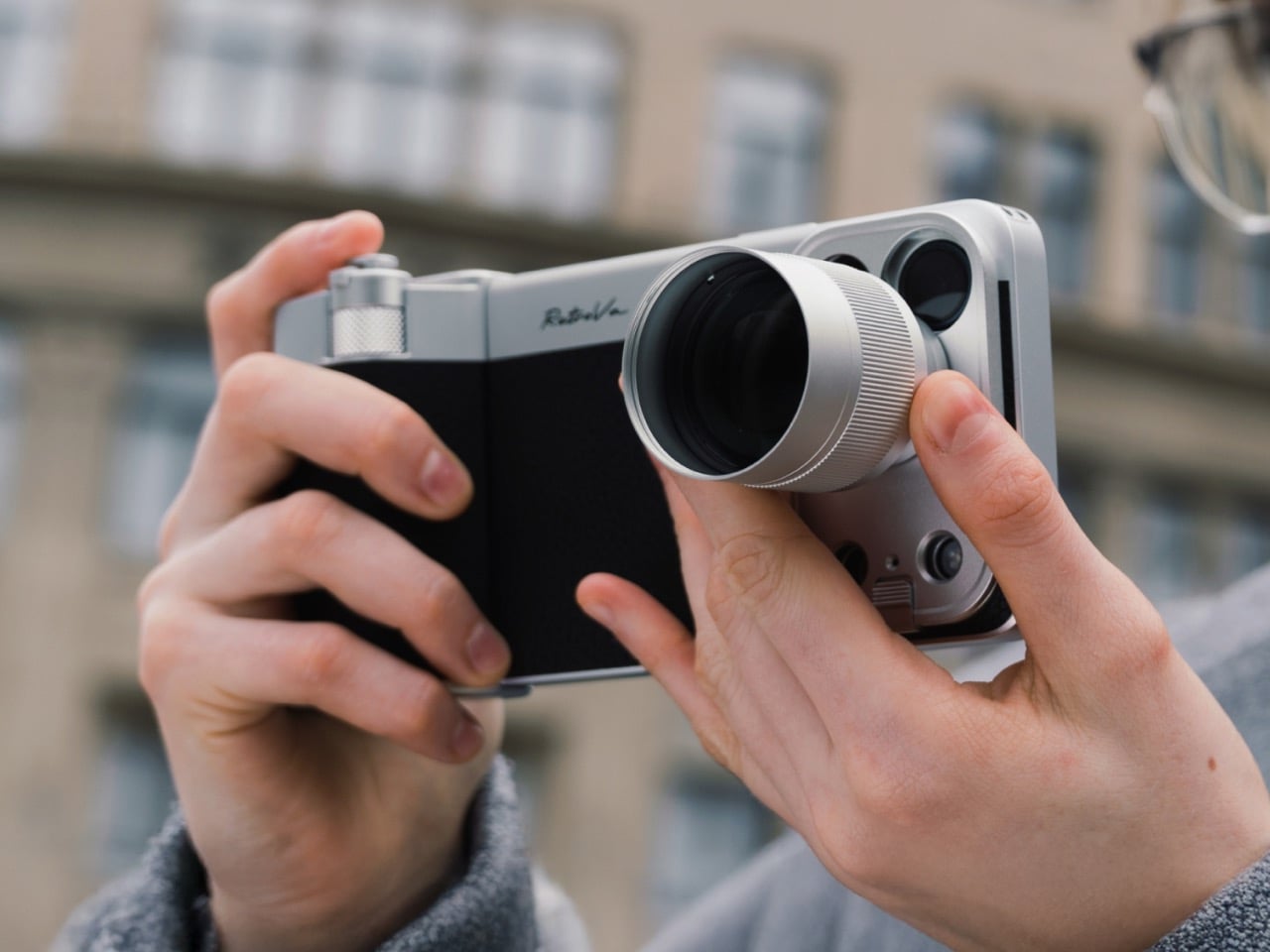
That’s exactly the gap PGYTECH’s RetroVa Vintage Imaging Kit fills, except it doesn’t hide what it’s doing. The system gives your iPhone 16 or 17 Pro a camera-inspired grip with actual tactile controls, a 13-element optical telephoto system that brings you to 235mm equivalent focal length, external storage support via microSD, and a companion app that offers film-style rendering straight out of camera. Sandmarc and Moment have been in the iPhone lens game for years, but RetroVa takes a more holistic approach by addressing not just optics, but the entire shooting experience.

Designer: PGYTECH

Click Here to Buy Now: $72 $89.95 (20% off) Hurry! Only 192 left of 300. Raised over $157,000

PGYTECH have played this game before. They’re the same company that builds the telephoto extenders for Vivo and Oppo’s flagship phones in China, smartphones that rank second and third in that market behind Apple. The 2.35X telephoto uses a professional 13-element, 3-group optical system crafted from premium ED glass, optimized specifically for the iPhone’s F2.8 aperture. Distortion sits at just 2%, which is impressive for a clip-on system. The optical design delivers razor-sharp clarity and organic bokeh without the digital noise that comes from cranking up your phone’s native zoom. Real glass doing real optical work makes a difference you can see in the final image, especially when you’re shooting wildlife, concerts, or anything else where you need serious reach without turning your photo into a pixelated mess.

The grip changes everything about how you hold and shoot with your iPhone… way more than the ‘Camera Control’ does. Physical buttons include a shutter release that half-presses to focus, just like a real camera. Control dials let you adjust ISO, white balance, and exposure value without tapping through menus on a touchscreen. A zoom lever switches focal lengths in the companion app’s vintage mode, letting you freely adjust zoom in standard shooting. There’s a multi-function button that handles power, quick start, mode switching, camera flips, and Bluetooth pairing. The whole thing weighs between 63 and 65.4 grams depending on your iPhone model, wrapped in classic black pebbled leather with a premium grip that feels like you’re holding a vintage Leica instead of a slab of glass and aluminum.

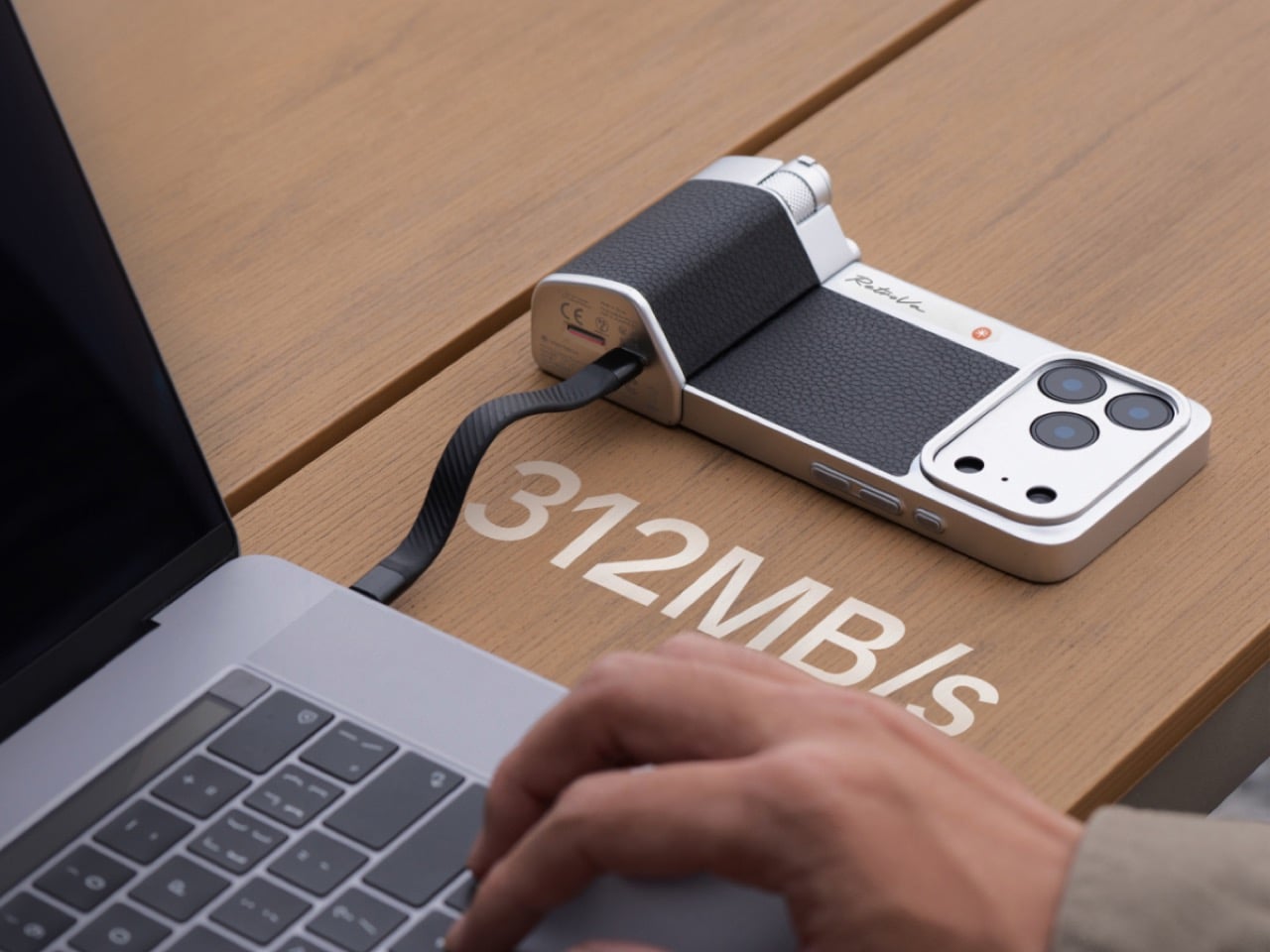
The grip also packs a built-in microSD slot to offset any storage woes you’d have from saving everything to your iPhone’s camera roll. Imagine this – you’re shooting 4K ProRes video and suddenly your phone throws up a “Storage Almost Full” warning, forcing you to stop everything and start deleting apps or old photos. An independent microSD slot avoids this problem entirely. You can record high-bitrate ProRes and RAW files directly to the card, completely bypassing your iPhone’s internal storage. The USB 3.1 connectivity delivers transfer speeds up to 312MB/s, so offloading footage to your tablet or computer takes seconds instead of the eternity you spend waiting for wireless transfers or slow card readers. The system supports external recording for ProRes, HEVC, and more formats, though 4K60+ ProRes external recording isn’t supported yet.

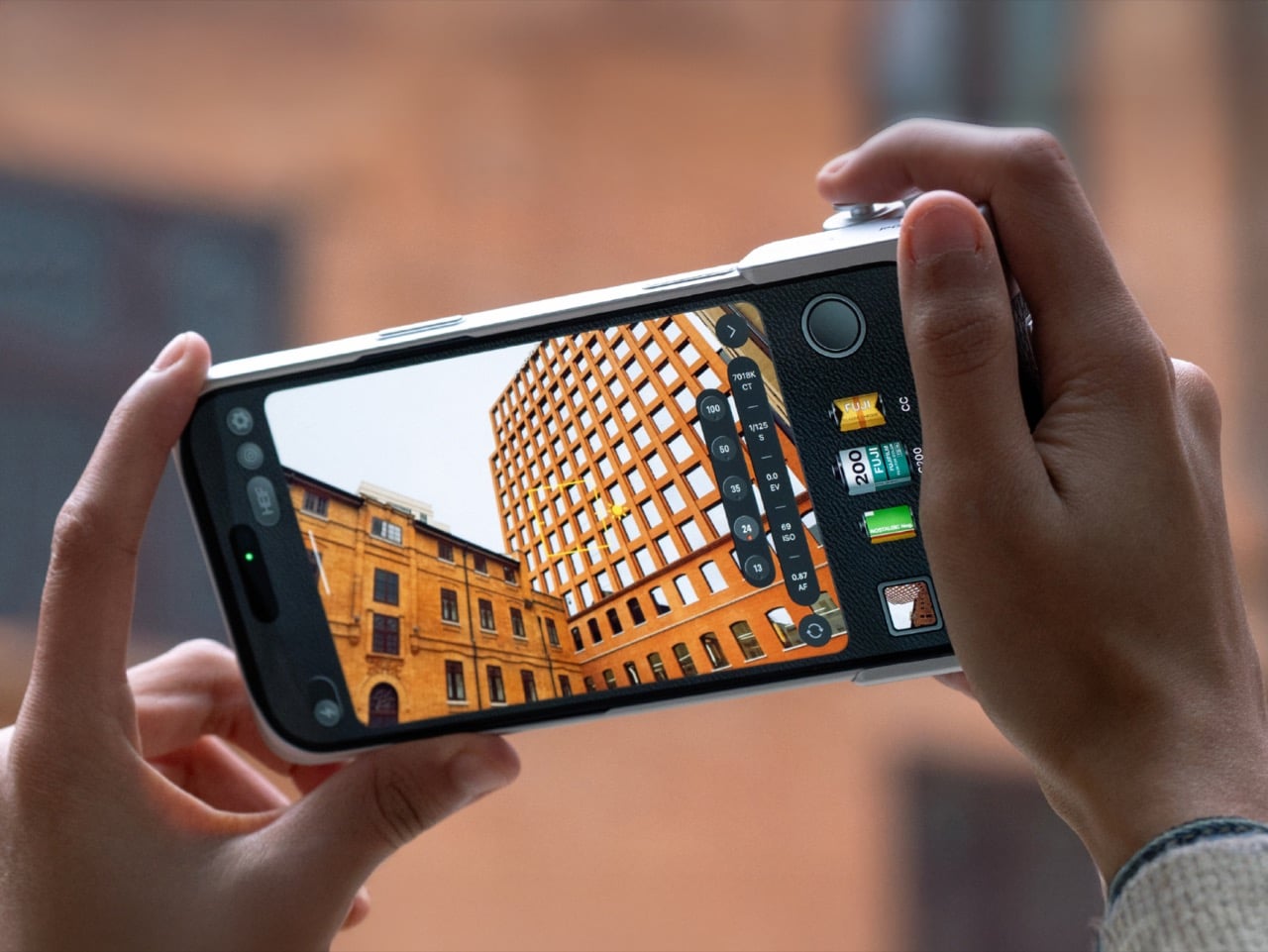
RetroVa’s companion app delivers film camera texture and mood straight out of the sensor. You get full manual control over shutter speed, ISO, and white balance, creating with the precision of a dedicated camera. The app suppresses iPhone’s built-in sharpening and algorithm processing for a more natural look, avoiding those over-sharpened phone images that scream “shot on smartphone.” You can stamp shots with instant-style watermarks and custom frames for each creation, adding your personal mark before the image even leaves the camera. Vintage film presets give you that classic camera aesthetic without needing to run everything through post-processing filters later.

PGYTECH offers the RetroVa in two distinct tiers to cover different photography styles. The Grip Kit runs $72 for street and everyday shooters who want mechanical controls and external recording support. The Ultimate Kit at $184 adds the 2.35X telephoto extender, tripod collar, lens adapter ring, photography strap, and lens pouch, building a complete creator ecosystem for street, travel, portraits, and long-distance photography. Both kits work with iPhone 16 Pro, 16 Pro Max, 17 Pro, and 17 Pro Max. First units ship globally starting this month, with future iPhone 18 Pro compatibility requiring only a case swap while the grip continues working.

Click Here to Buy Now: $72 $89.95 (20% off) Hurry! Only 192 left of 300. Raised over $157,000

The post The “Shot On iPhone” Lifehack: This 235mm Telephoto Case Packs Manual Controls + MicroSD Storage first appeared on Yanko Design.
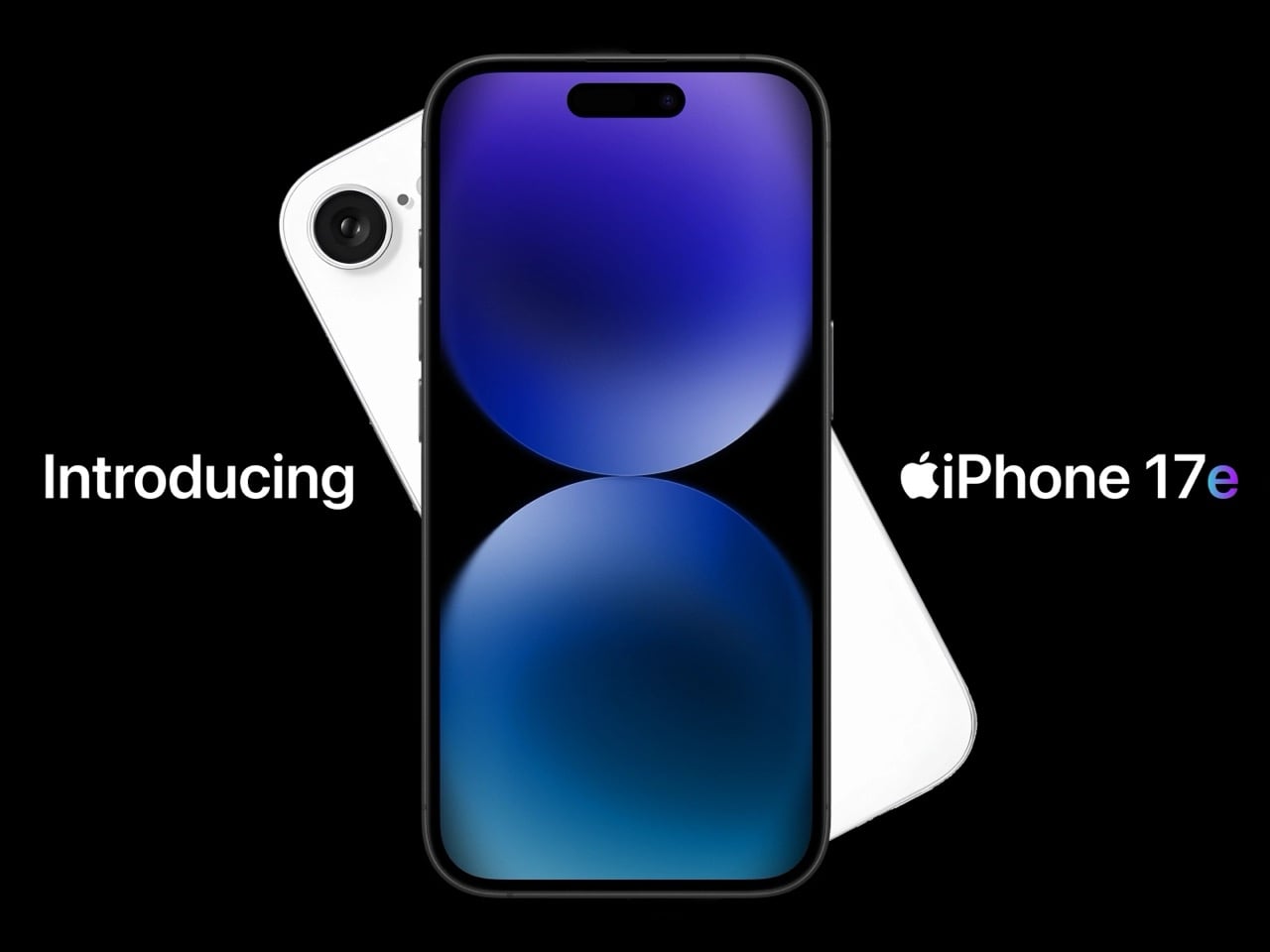
iPhone 17e Rumored for February 19 Launch With MagSafe, Dynamic Island, and a $599 Price Tag

Apple’s budget iPhone is getting less budget and more iPhone. The 17e, set to arrive later this month, is rumored to bring MagSafe charging and the Dynamic Island to the $599 price tier. For context, MagSafe has been available on iPhones since 2020, but only if you were willing to spend at least $799. Now it’s trickling down to the entry model, along with faster wireless charging speeds and compatibility with the full range of Apple’s magnetic accessories.

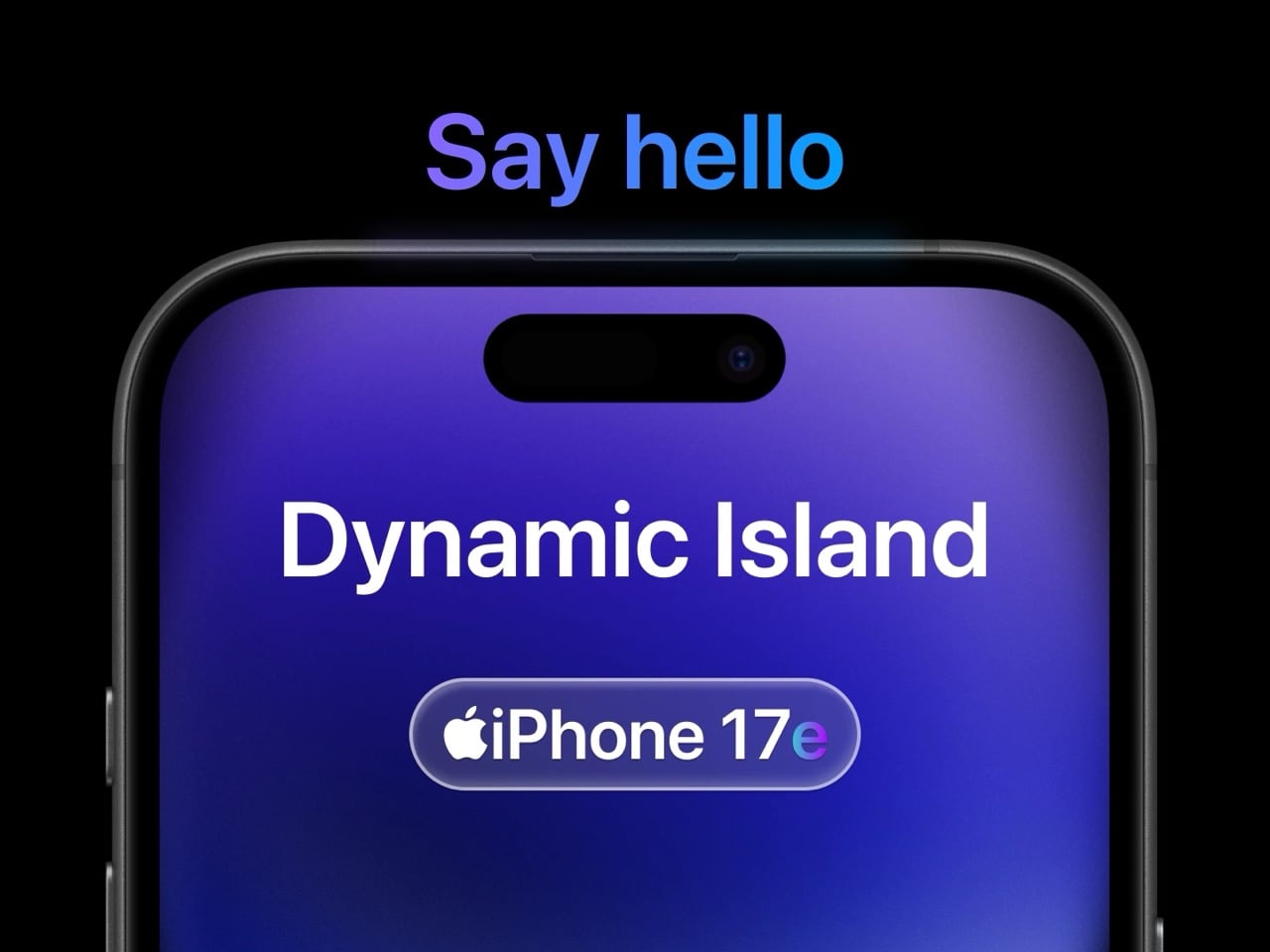
The Dynamic Island is the other headline addition. While earlier leaks suggested the notch would stick around, newer reports claim Apple is finally retiring it across the entire lineup. That would make the 17e the first budget iPhone to feature the pill-shaped cutout that handles notifications and live activities. The price is staying put at $599 despite industry-wide component shortages and inflation, which makes this one of the rare years where Apple is adding features without inflating the cost. It’s a smart play in a segment where Google and Samsung are both raising prices.

Designer: Volodymyr Lenard

Look, the 16e was fine. Competent even. But that 7.5W Qi charging was a joke, especially when every other iPhone in the lineup had been doing MagSafe since 2020. You’d slap your phone on a charging pad and hope it actually aligned properly, then wake up six hours later to find it at 60% because you were off by half a centimeter. The 17e fixes this with 20W to 25W magnetic charging, which is fast enough that you can actually top up meaningfully during the day. And yeah, you get access to the full MagSafe accessory catalog without feeling like you’re missing out on features you already paid for.

Apple’s probably sitting on a pile of iPhone 14 display panels, which is why everyone assumed the notch would stick around for another generation. Cheaper to use existing inventory than retool the production line for Dynamic Island cutouts. But multiple sources are now saying the pill-shaped design is coming to the 17e anyway, which means Apple decided it was worth eating the cost to kill the notch completely. The notch lasted nearly a decade. Watching it finally disappear from the budget tier feels like the end of an argument that stopped being interesting years ago.

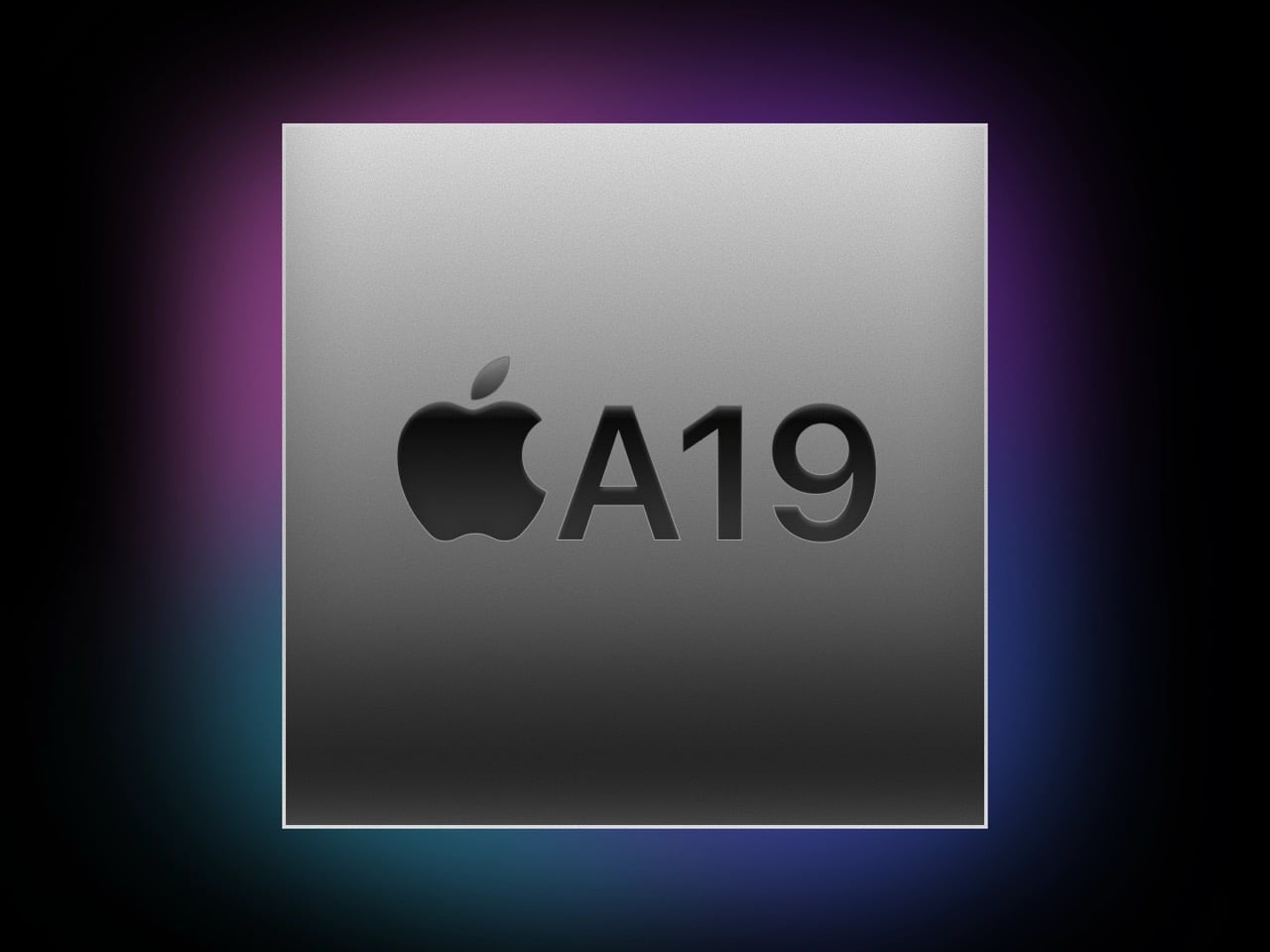
Component shortages are driving prices up across the industry. RAM is expensive, display panels are expensive, everything is more expensive than it was two years ago. Google’s probably launching the Pixel 10a at $549 or higher. Samsung’s A-series keeps inching upward. Apple could have easily bumped the 17e to $649 and blamed supply chain issues, but they didn’t. Holding at $599 while adding MagSafe and an A19 chip is either aggressive margin compression or a bet that ecosystem lock-in is worth more than short-term profit per unit.

The post iPhone 17e Rumored for February 19 Launch With MagSafe, Dynamic Island, and a $599 Price Tag first appeared on Yanko Design.

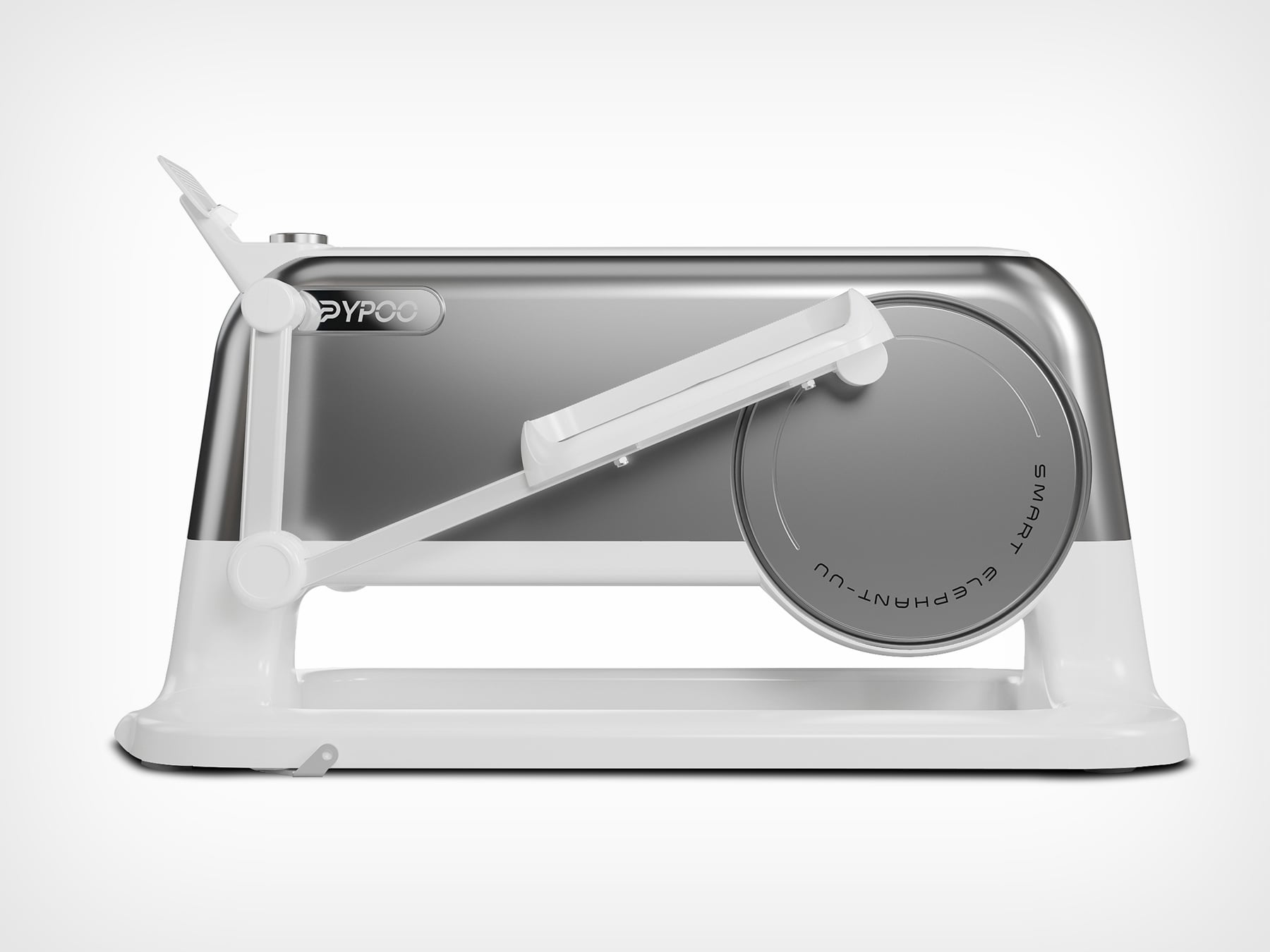
‘Scandinavian Sci-Fi’ Elliptical Machine Finally Looks Good Enough for any Modern Living Room

Look at high-end Scandinavian or minimalist Japanese interiors and you’ll notice a pattern: objects earn their presence through either pure utility or pure beauty, ideally both simultaneously. A Sori Yanagi kettle. An Artek stool. A Noguchi table. Each piece justifies its footprint by being excellent at its job while also contributing to the room’s visual composition.

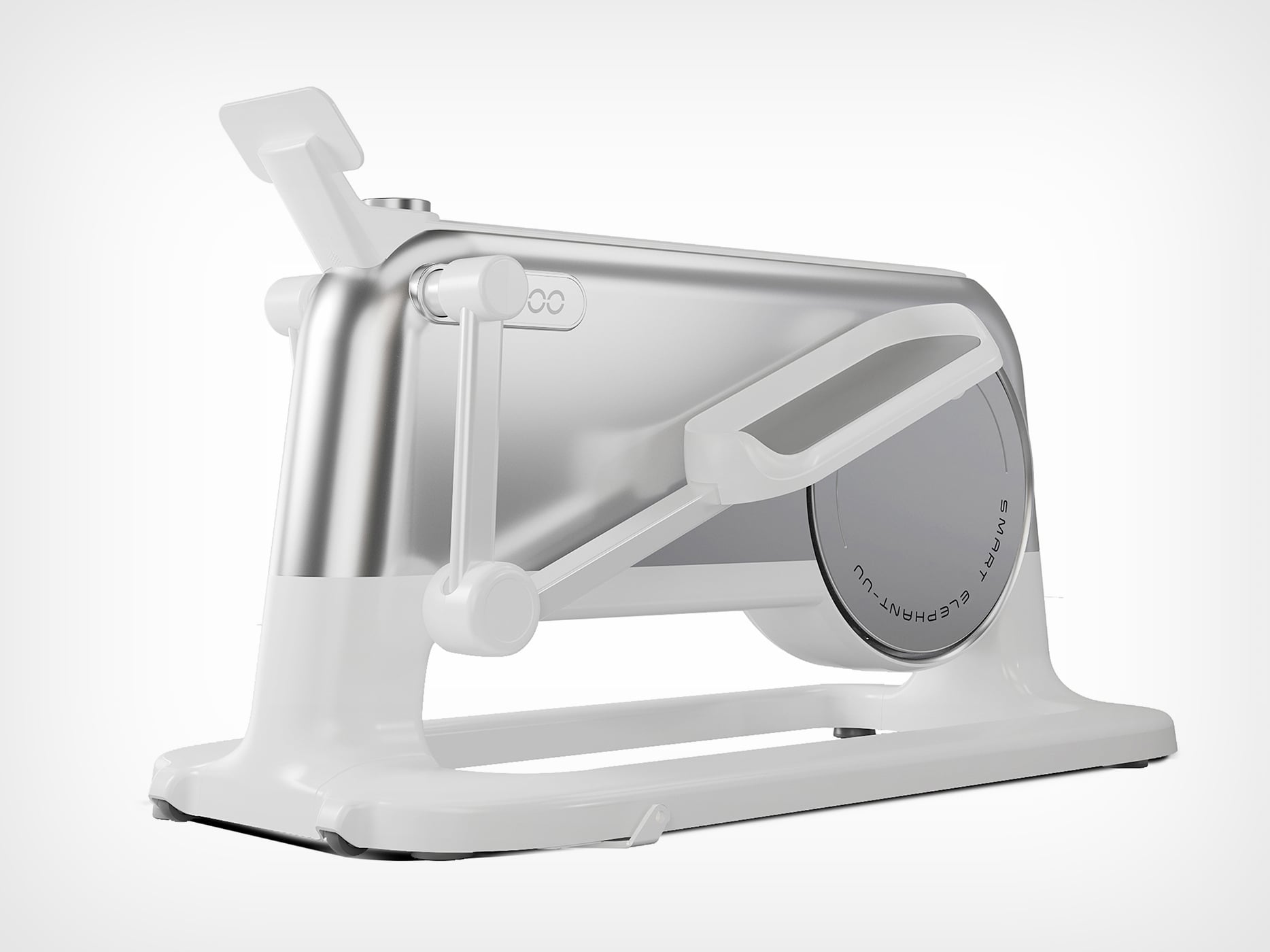
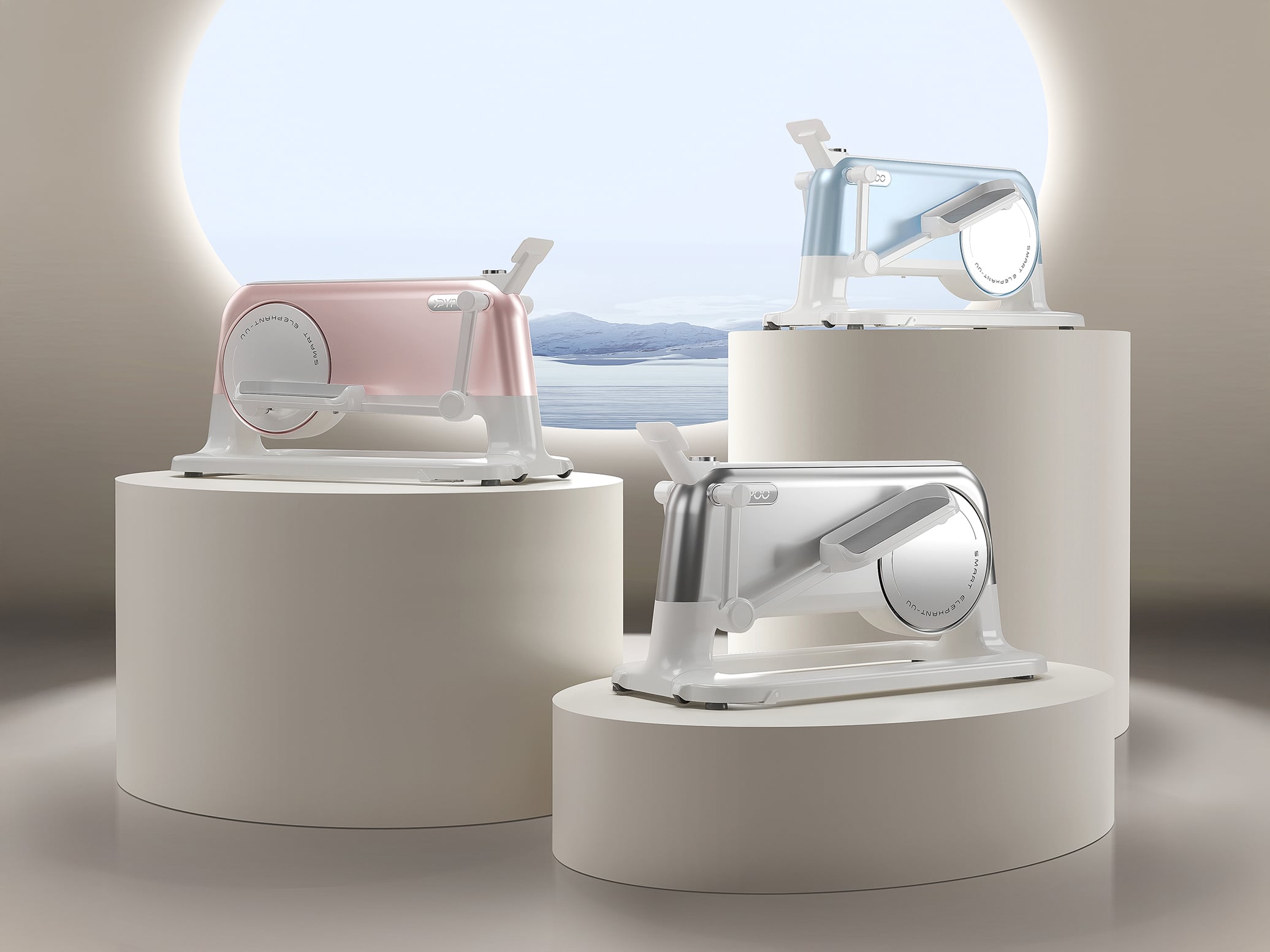
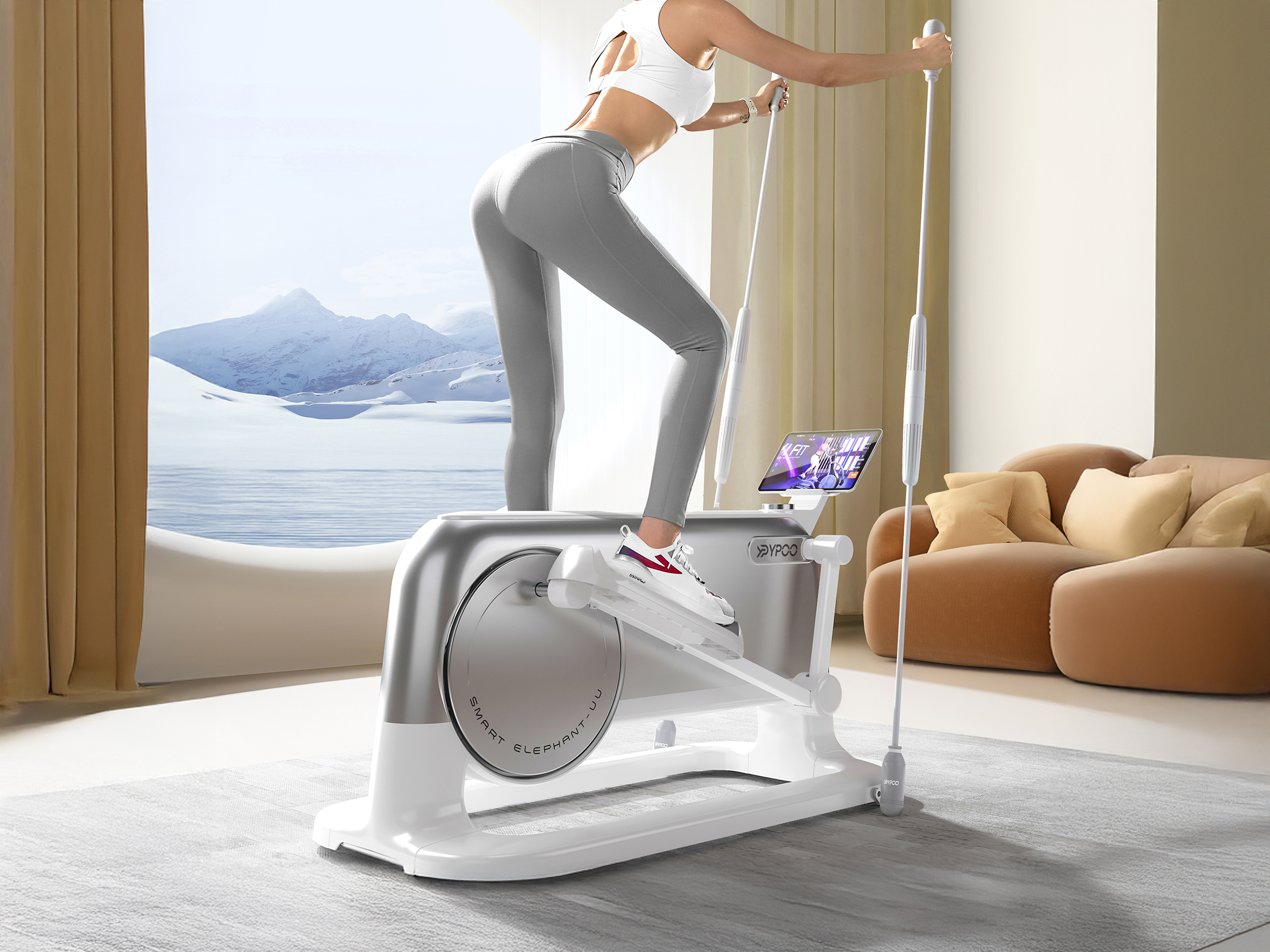
Fitness equipment rarely makes this cut. Even premium treadmills and bikes tend to occupy space through force rather than grace, their mechanical nature overwhelming any attempt at aesthetic integration. The Ypoo U U elliptical machine challenges this category assumption by treating the home as a gallery rather than a gym. The form is deliberately quiet: flowing white surfaces meet a single accent of brushed metal, creating visual interest through material contrast rather than sculptural complexity. That exposed circular flywheel housing becomes a focal point, the one moment where the machine admits its mechanical nature, but even this element feels considered, almost jewelry-like in its finish. The elastic resistance cords, rather than appearing as afterthought accessories, integrate into purposefully designed anchor points that read as intentional sculptural gestures.

Designer: Zhejiang Ypoo Health Technology Co Ltd

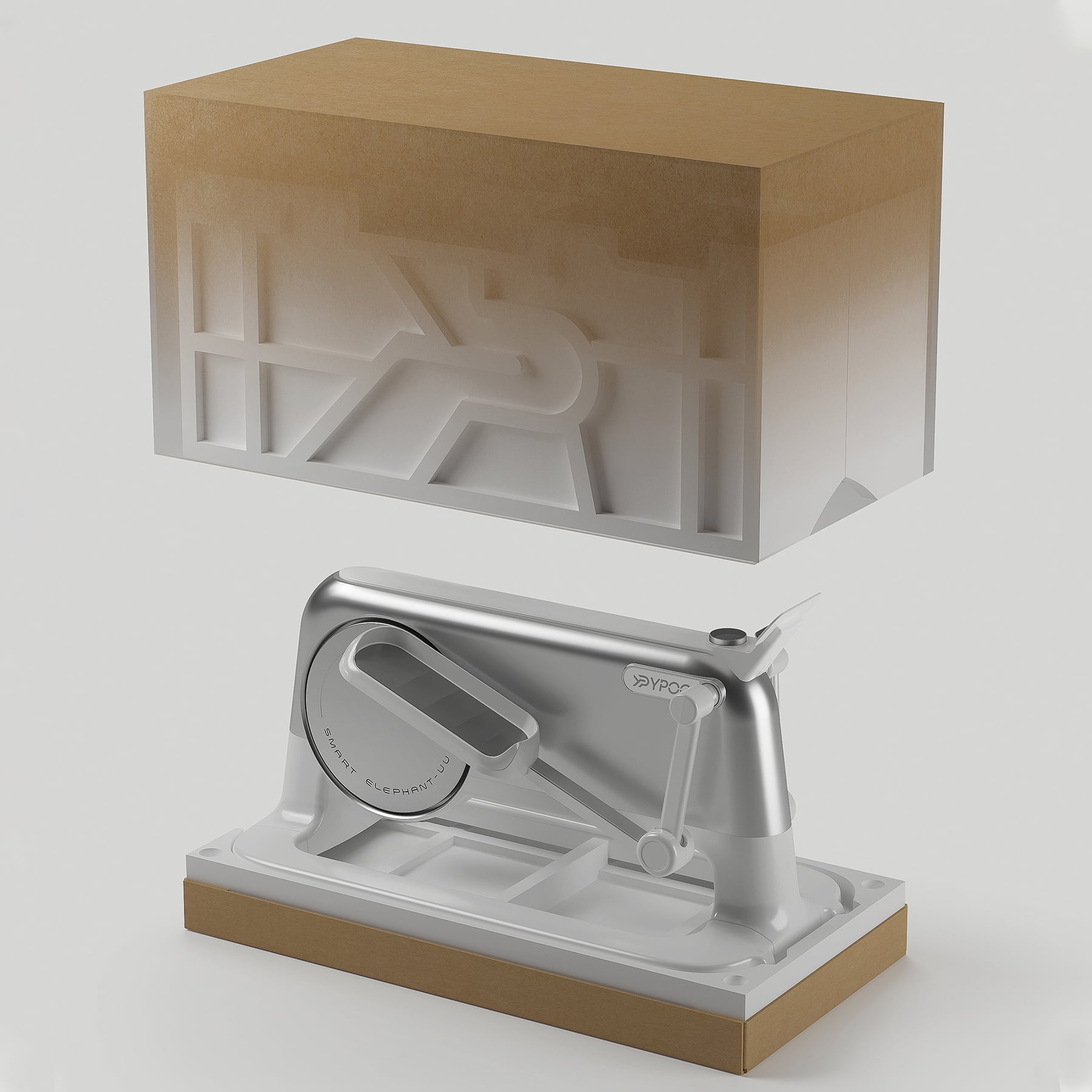
t 1030mm x 510mm x 620mm, the footprint clocks in at 0.6 square meters, roughly the size of a compact armchair. The height barely clears your knee, which means it lives below the typical sight line when you scan a room. Most ellipticals tower vertically, demanding attention through sheer mass. This one compresses its presence horizontally, spreading low and wide like a piece of modern furniture. The 31kg weight matters because it’s light enough to actually move around without recruiting help or planning an operation. Front-mounted wheels turn relocation into a casual decision rather than a semi-permanent commitment to a room’s layout.

The machine is entirely operated by self-generated kinetic energy. No power cord means no relationship with wall outlets, no visual clutter snaking across floors, no forced positioning based on electrical infrastructure. You generate the electricity through pedaling, which powers the display and resistance system. Zhejiang Ypoo claims 32 levels of magnetic resistance controlled through a visual dial, and the whole thing arrives 99 percent pre-assembled. The self-generation tech also keeps operation quiet since there’s no motor humming or fan whirring to compete with. That silence matters in open-plan spaces where sound travels freely and background noise accumulates into ambient chaos.

Matte white polymer dominates the structural elements, creating that clean, almost medical-grade aesthetic that works in contemporary interiors. The brushed metal flywheel cover provides the only material contrast, and it’s placed exactly where your eye naturally lands when approaching the machine. That’s careful composition, the kind of thinking you see in product photography but rarely in the actual product. The finish quality on the metal reads premium in photos, though I’d need hands-on time to verify if it holds up to the Dieter Rams standard it’s clearly channeling. The whole design borrows heavily from consumer electronics language, treating the elliptical like an oversized Braun appliance rather than gym equipment trying to be friendly.

Look at the side profile and you can see through the machine around the flywheel housing. That negative space keeps the form from reading as a solid mass claiming territory. Instead, it feels permeable, lighter than its actual weight suggests. Traditional ellipticals are opaque objects that divide rooms. This one allows sight lines to pass through, which psychologically reduces its presence even when it’s sitting in the middle of your living space. However, when you do end up glancing at it, it still manages to evoke less of a feeling of utility and more of an otherworldly appliance that adds a touch of minimal futurism to your house.

The post ‘Scandinavian Sci-Fi’ Elliptical Machine Finally Looks Good Enough for any Modern Living Room first appeared on Yanko Design.
Asus ProArt Mouse MD301 Takes Aim at Logitech’s Productivity Throne with Swappable Switches

The productivity mouse market has been living in a single-player game for too long. Logitech’s MX Master has dominated professional desks from Silicon Valley to Singapore, becoming so ubiquitous that it’s practically the default recommendation in every buying guide. But monopolies create the perfect conditions for an underdog, and Asus has clearly been watching, waiting, and building something that aims to shatter the status quo.

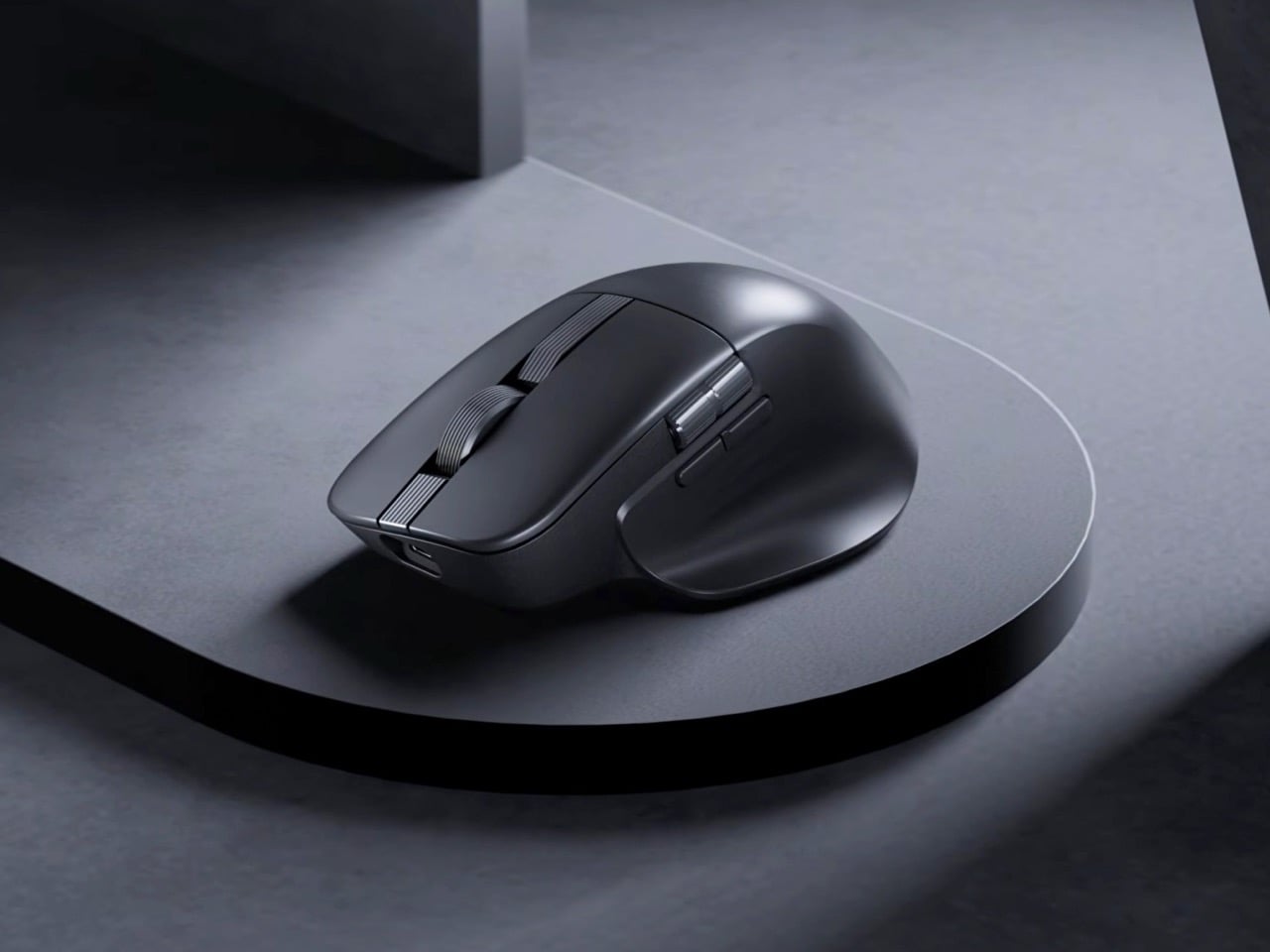
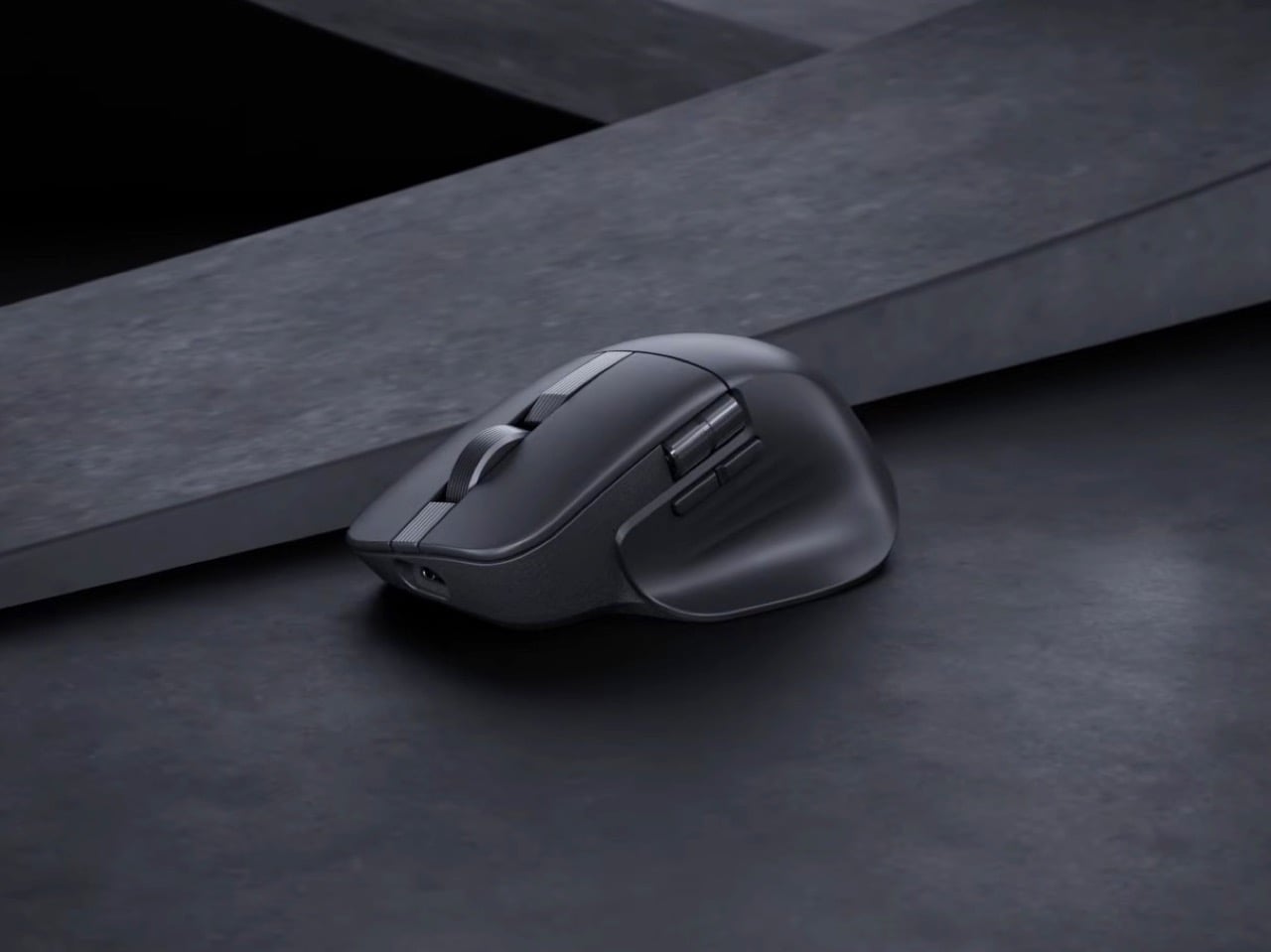
Enter the ProArt Mouse MD301, unveiled at CES 2026 with a feature list that reads like a direct response to every MX Master owner who has ever wished for something different. Swappable switches give users hardware-level customization that Logitech has never offered. A lighter 99.7-gram body addresses the wrist fatigue that marathon work sessions can bring. The SmartShift wheel matches its rival stride for stride, while six programmable buttons and an 8,000 DPI sensor deliver the precision that creative professionals demand. Asus is making a serious play for the premium productivity space.

Designer: ASUS

Most productivity mice treat their switches as permanent components, which becomes a problem after millions of clicks degrade the tactile feedback. Asus built the MD301 with user-replaceable switches for both left and right buttons, allowing a choice between optical or mechanical micro switches. Optical switches typically last longer and actuate faster with no physical contact points to wear down. Mechanical switches provide the tactile bump that some workflows demand. The ability to mix both types means asymmetric configurations where left clicks feel different from right clicks, though whether anyone actually wants that remains unclear. A switch puller tool ships in the box, suggesting Asus expects this feature to see actual use rather than existing purely for marketing differentiation.

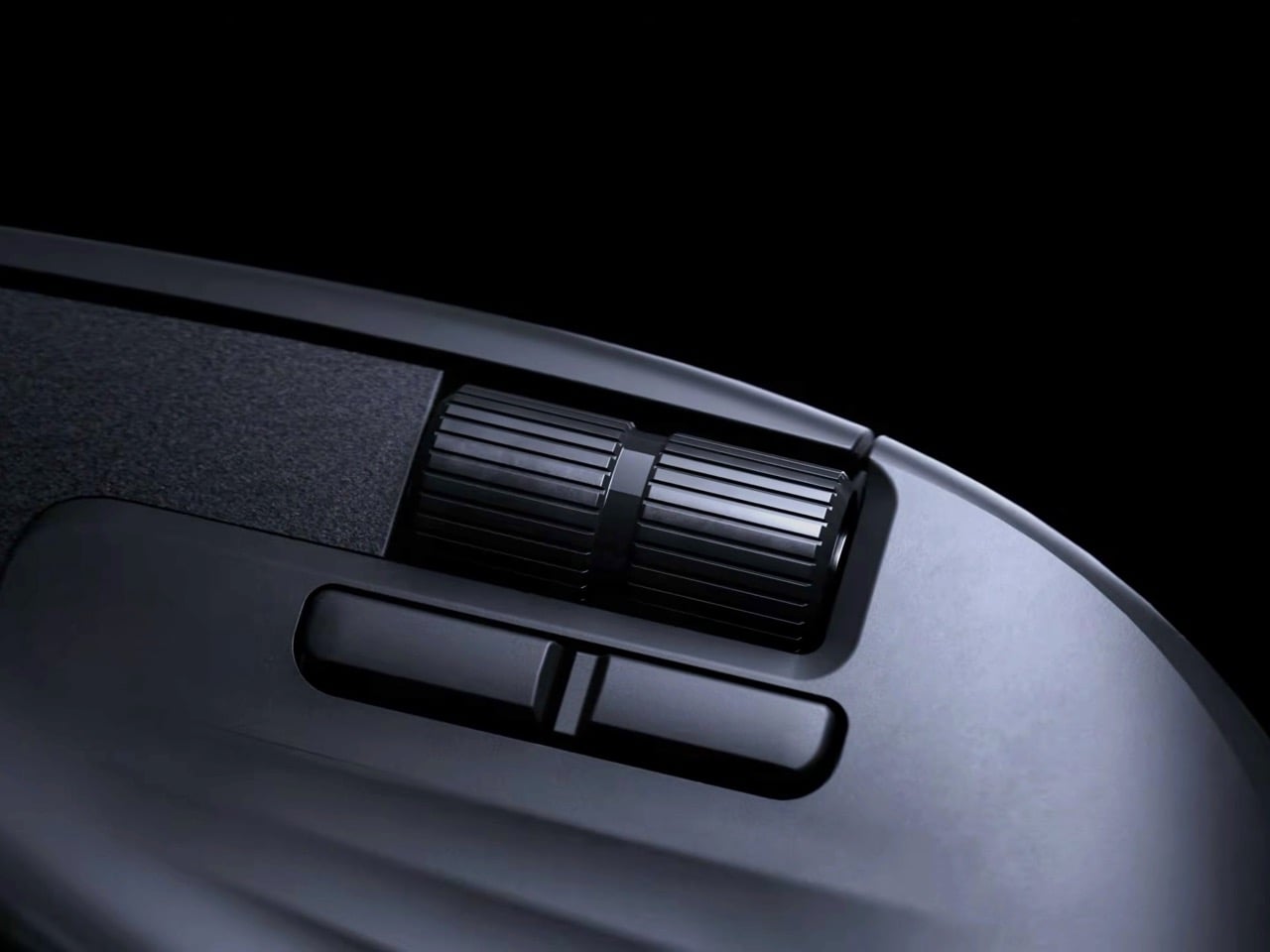
Logitech’s MagSpeed wheel technology gets directly challenged here under the SmartShift name, offering dual-mode scrolling between ratcheted line-by-line precision and momentum-based free-spin. This feature became non-negotiable for productivity mice after Logitech introduced it because working without it feels like regression. Navigating through 500-page documents or endless spreadsheets with standard scrolling wastes time that free-spin mode eliminates. Precision editing in Photoshop or Premiere needs the tactile feedback of ratcheted scrolling to land exactly on the right frame or layer. Asus recognized that competing without this capability would sink the MD301 before launch, so they matched it and focused innovation elsewhere.

Cutting weight to 99.7 grams puts the MD301 noticeably lighter than the MX Master 3S and most competitors in this category. Thirty grams might sound negligible until translated into thousands of mouse movements across a 32-inch display during marathon editing sessions. Repetitive strain injuries in creative professionals often start with seemingly minor factors that compound over weeks and months. Ergonomic shaping with wave-textured grip surfaces attempts to address comfort, though hand shapes vary enough that what works for one person irritates another. PTFE feet reduce surface friction during movement, which becomes apparent when switching between mice with and without them.

An 8,000 DPI sensor handles precision tracking across multiple surface types including glass, which used to be impossible for optical sensors but now qualifies as expected functionality. Polling rate hits 1,000 Hz through both wired USB and 2.4 GHz wireless modes, keeping cursor responsiveness high enough that latency becomes imperceptible during normal use. Bluetooth connectivity handles device switching across up to five devices, though Asus hasn’t published the polling rate for that protocol. Six programmable buttons accommodate workflow shortcuts across different software platforms, from Adobe Creative Suite to CAD applications to video editing tools.

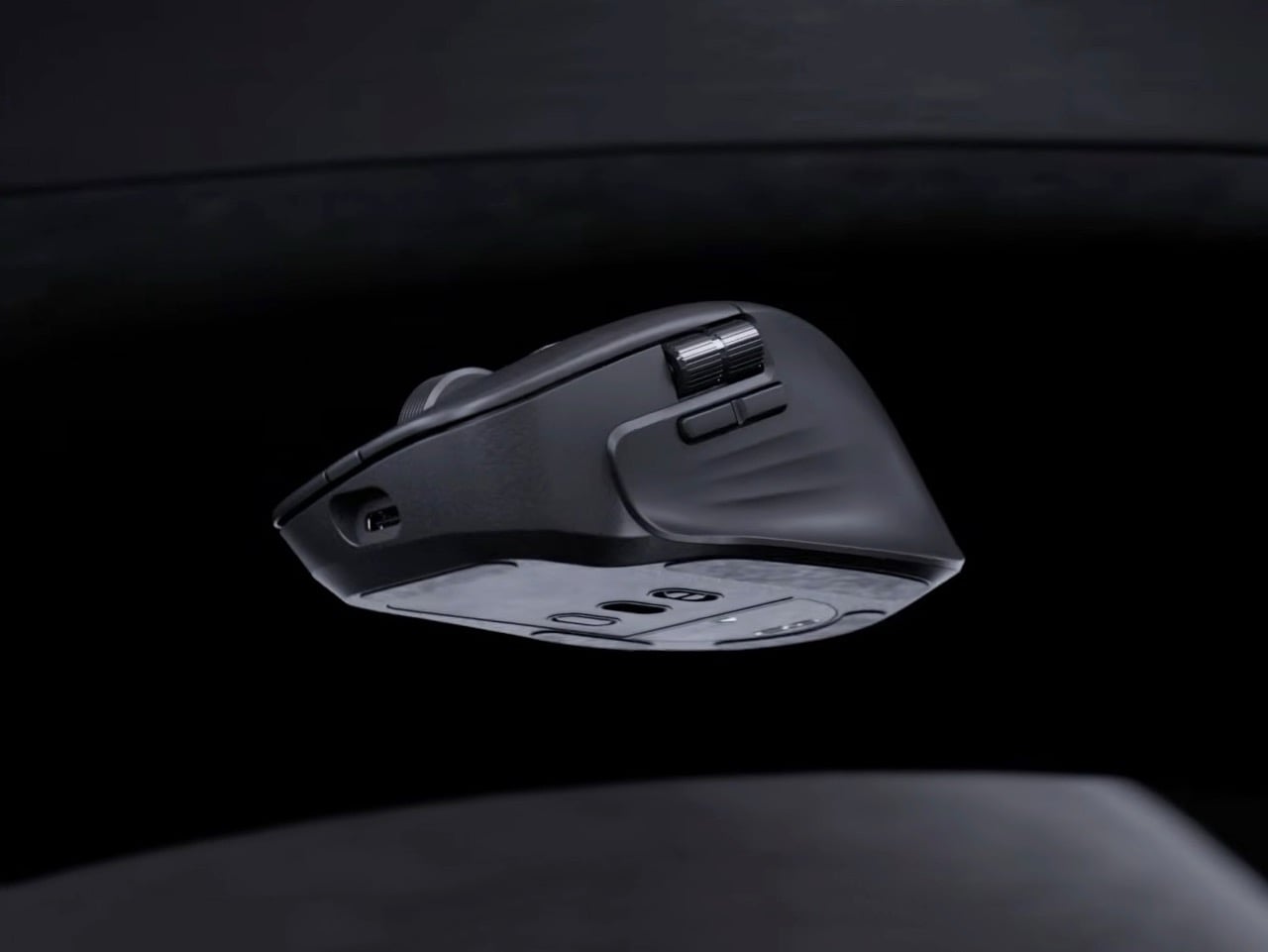
Tri-mode connectivity covers wired USB, 2.4 GHz RF wireless via an 18.9mm dongle, and Bluetooth for multi-device setups. Switching between a desktop workstation, laptop, and tablet without physically swapping cables or dongles streamlines workflows that increasingly span multiple devices. The wireless dongle’s compact size means it can stay plugged into a laptop port without protruding awkwardly or risking damage during transport. A 190cm USB-C cable handles both wired connectivity and charging, eliminating the separate power adapter that some wireless mice still require.

Asus claims up to 180 days on a full charge, though that number assumes moderate daily usage rather than continuous 12-hour workdays. Fast charging provides three hours of heavy use from one minute of USB-C charging, or eight hours of lighter work. This becomes relevant when deadlines approach and charging got forgotten overnight. Long-term battery degradation over multiple charge cycles will determine whether the MD301 maintains this endurance after a year of daily use, but lithium-ion technology has improved enough that most modern wireless mice retain acceptable battery performance longer than their mechanical components last.

Pricing hasn’t been announced, which introduces uncertainty about how Asus positions this against the MX Master 4’s roughly $100 price point. Undercutting Logitech by $20 or $30 while delivering comparable features makes the MD301 an obvious recommendation. Matching or exceeding that price requires build quality and long-term reliability that Asus hasn’t yet proven in this product category. Swappable switches provide theoretical cost savings over replacing entire mice, but only if the base unit costs less than buying a new competitor model every few years. Launch window sits somewhere before mid-2026, giving Asus months to finalize production and distribution without committing to specific dates or regional availability.

The post Asus ProArt Mouse MD301 Takes Aim at Logitech’s Productivity Throne with Swappable Switches first appeared on Yanko Design.
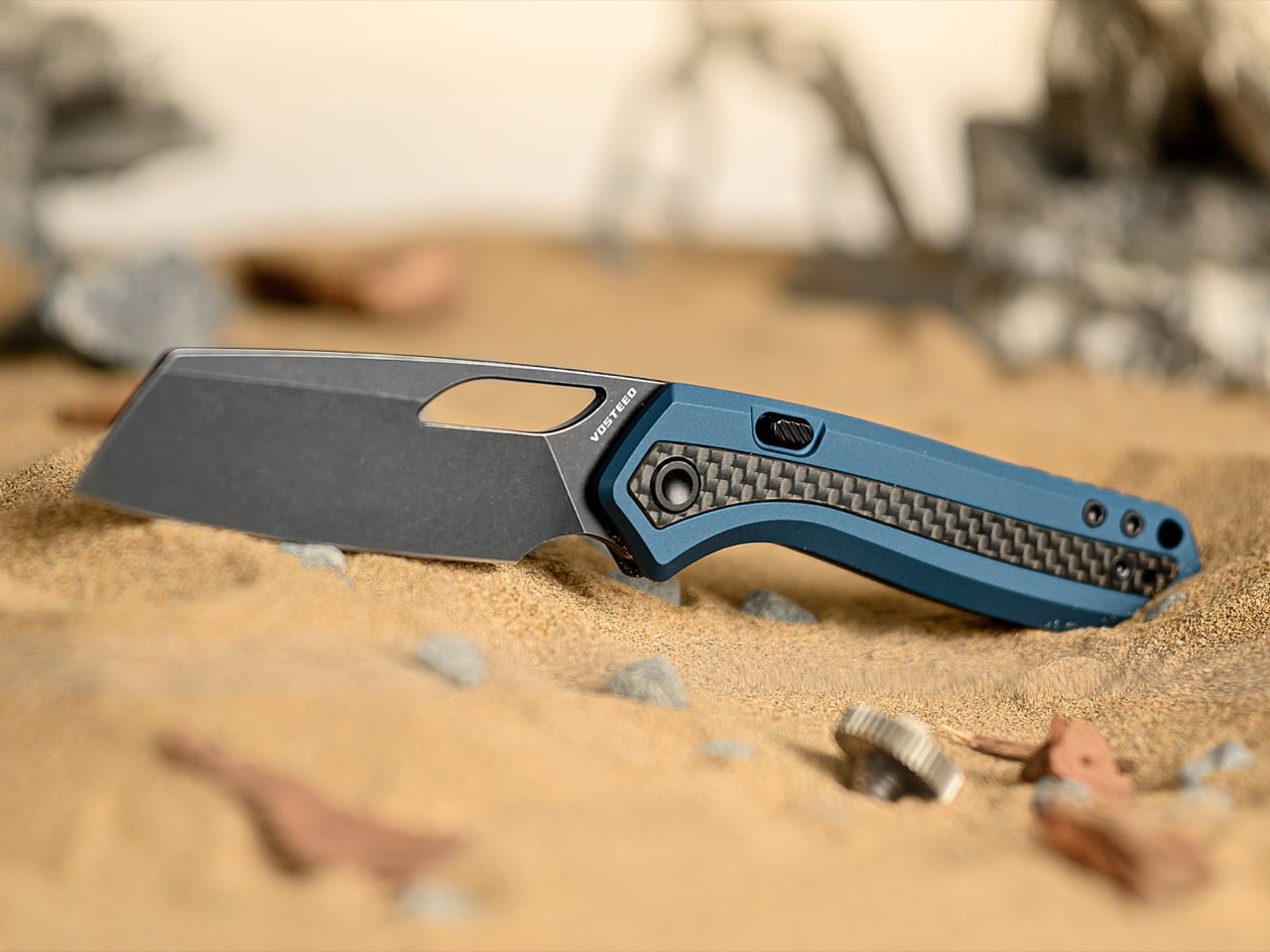
Vosteed’s “Pocket Crocodile” EDC Knife Packs a Seriously Sharp 3-Inch Sheepsfoot Blade

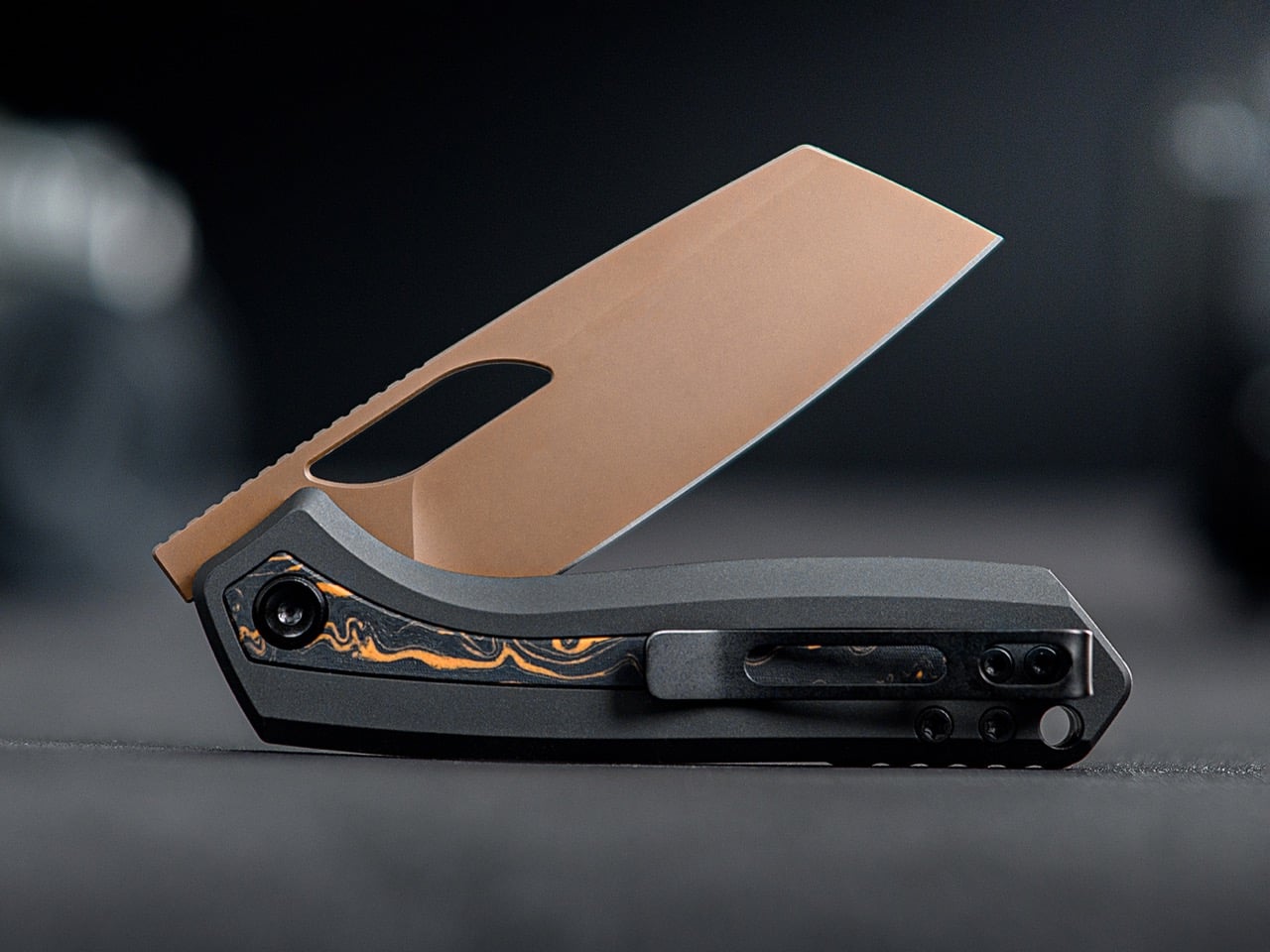
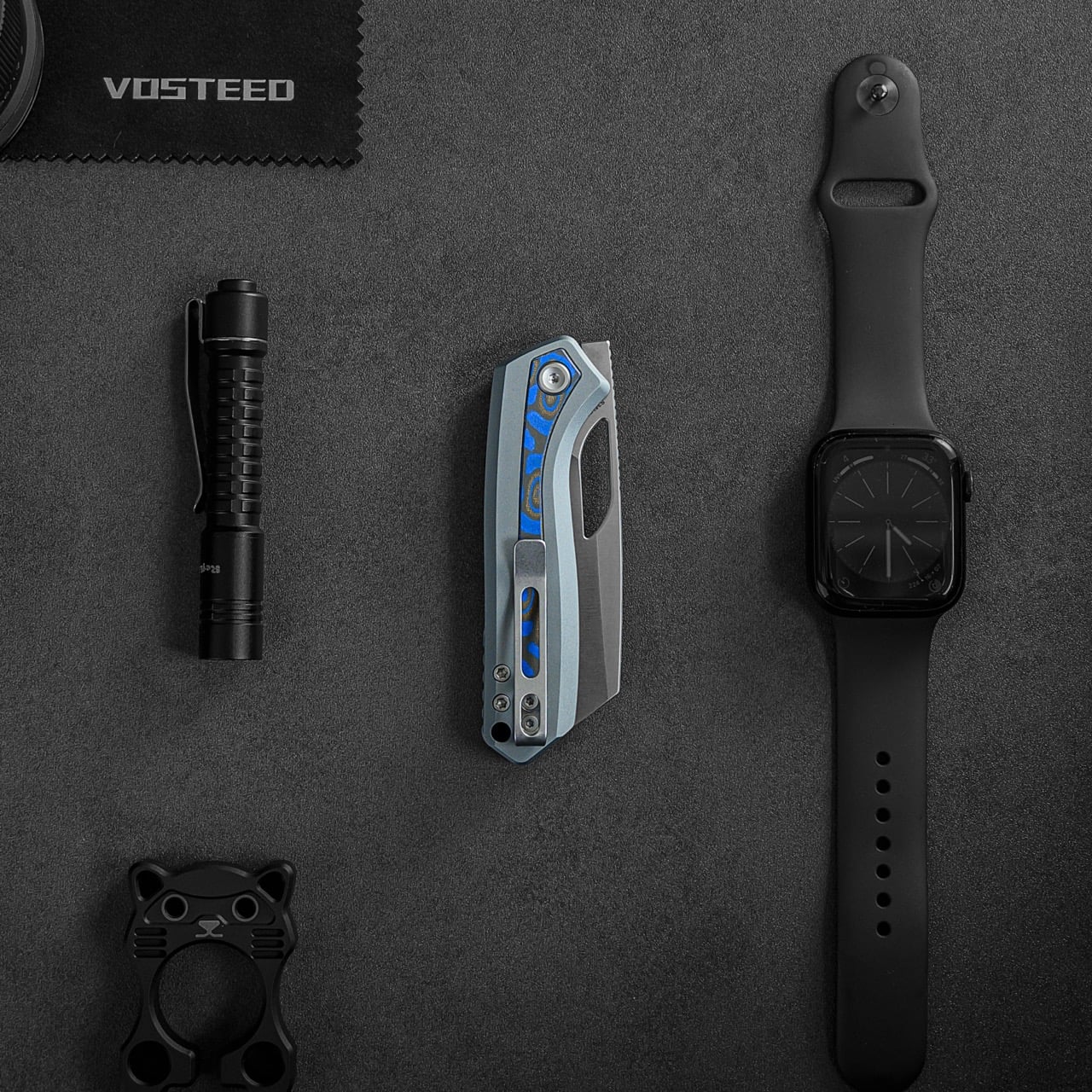
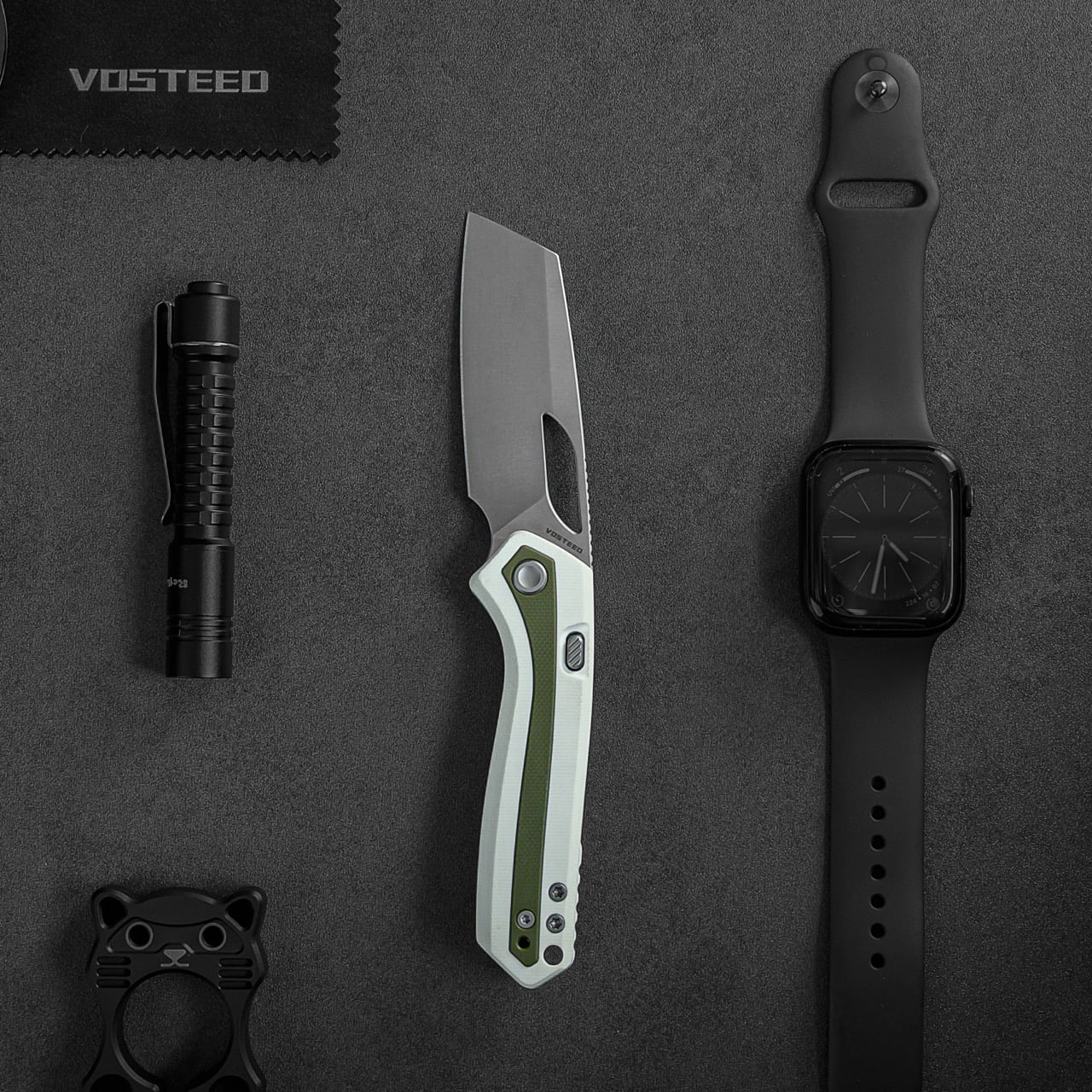
Carrying a three-inch blade shouldn’t feel like a compromise, yet most compact EDC knives sacrifice either ergonomics or capability to hit that sweet spot. Vosteed’s Kroc takes a different path. The design starts with a sheepsfoot blade that maximizes cutting edge while maintaining a sub-three-inch profile, then wraps it in a handle that somehow feels full-sized despite the knife’s 7-inch overall length. The result reads less like a miniaturized version of something bigger and more like a knife that was always meant to be exactly this size.

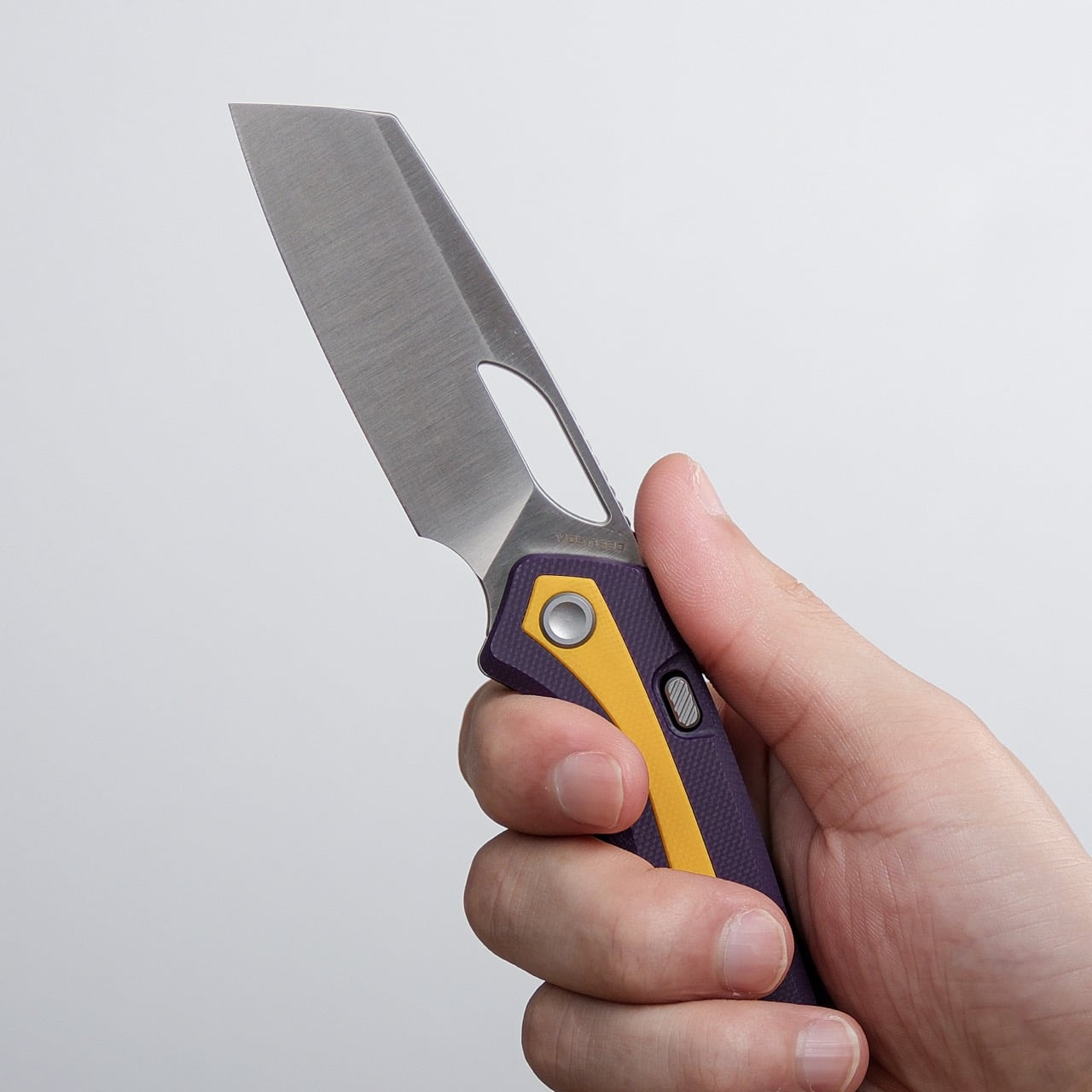
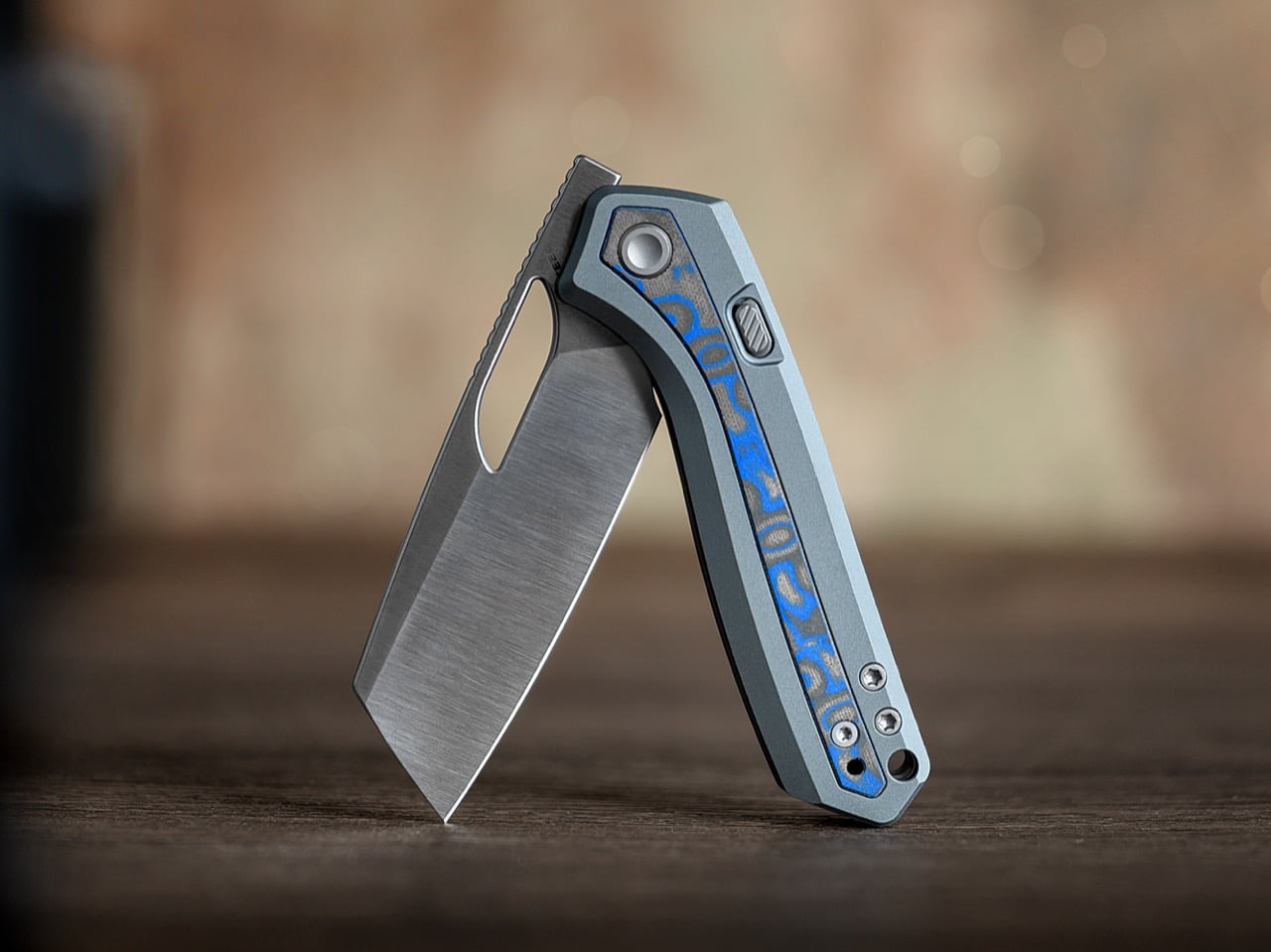
What makes the Kroc particularly interesting is how Vosteed translated this concept across nine different configurations without losing the plot. Whether you’re looking at the $69 G10 versions or the $129 aluminum models with premium S35VN steel, the silhouette remains consistent. The eye-shaped thumbhole, dual finger choils, and ceramic bearing deployment stay intact across every colorway. It’s a rare example of a knife collection that offers genuine material and budget flexibility while maintaining complete design coherence. Your pocket crocodile can be subdued ocean micarta or loud purple-and-yellow G10, but it’s unmistakably the same species.

Designer: Vosteed

Click Here to Buy Now: $116.10 $129 (10% off) Hurry! Use code “yankokroc” during checkout

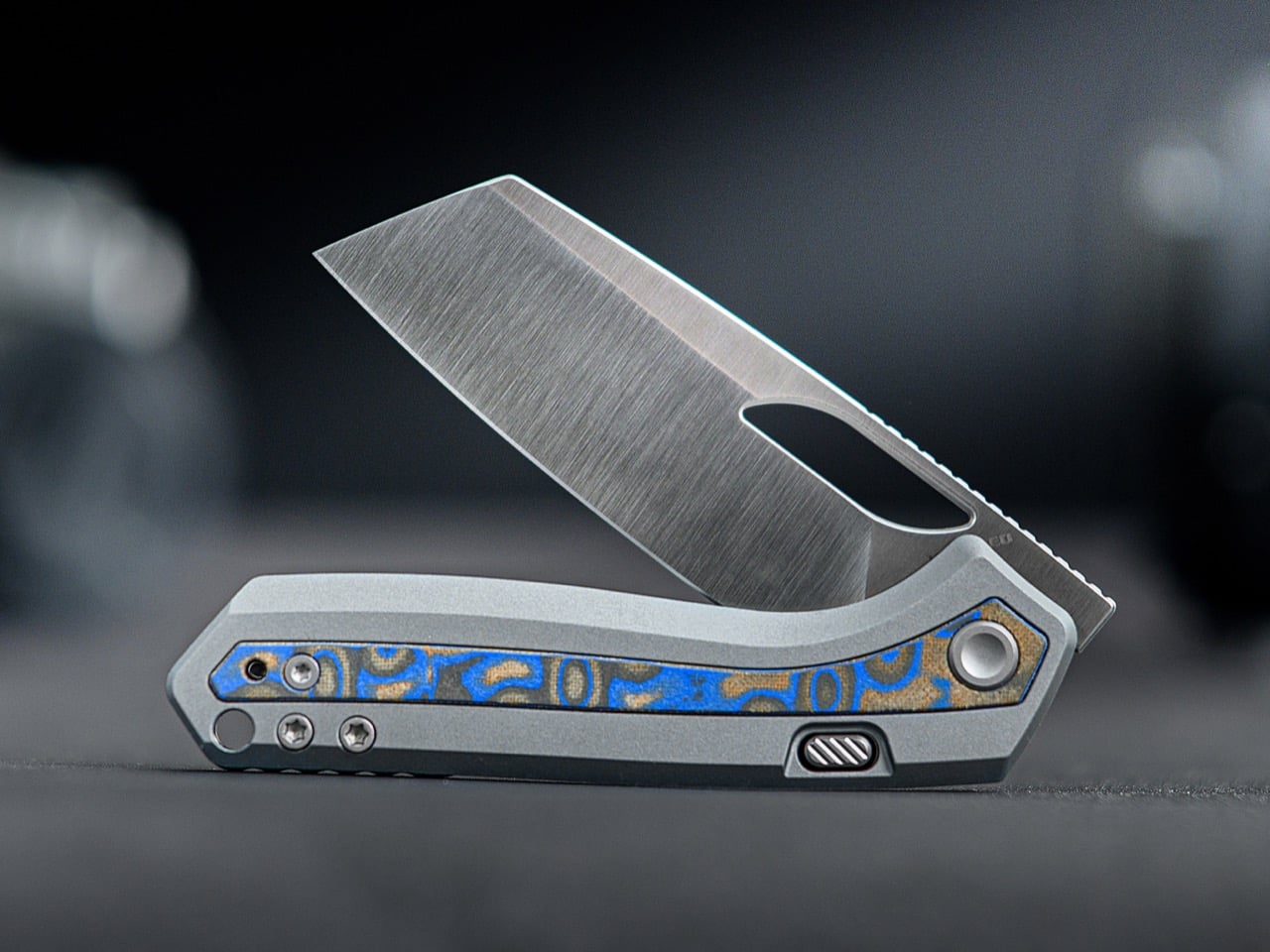
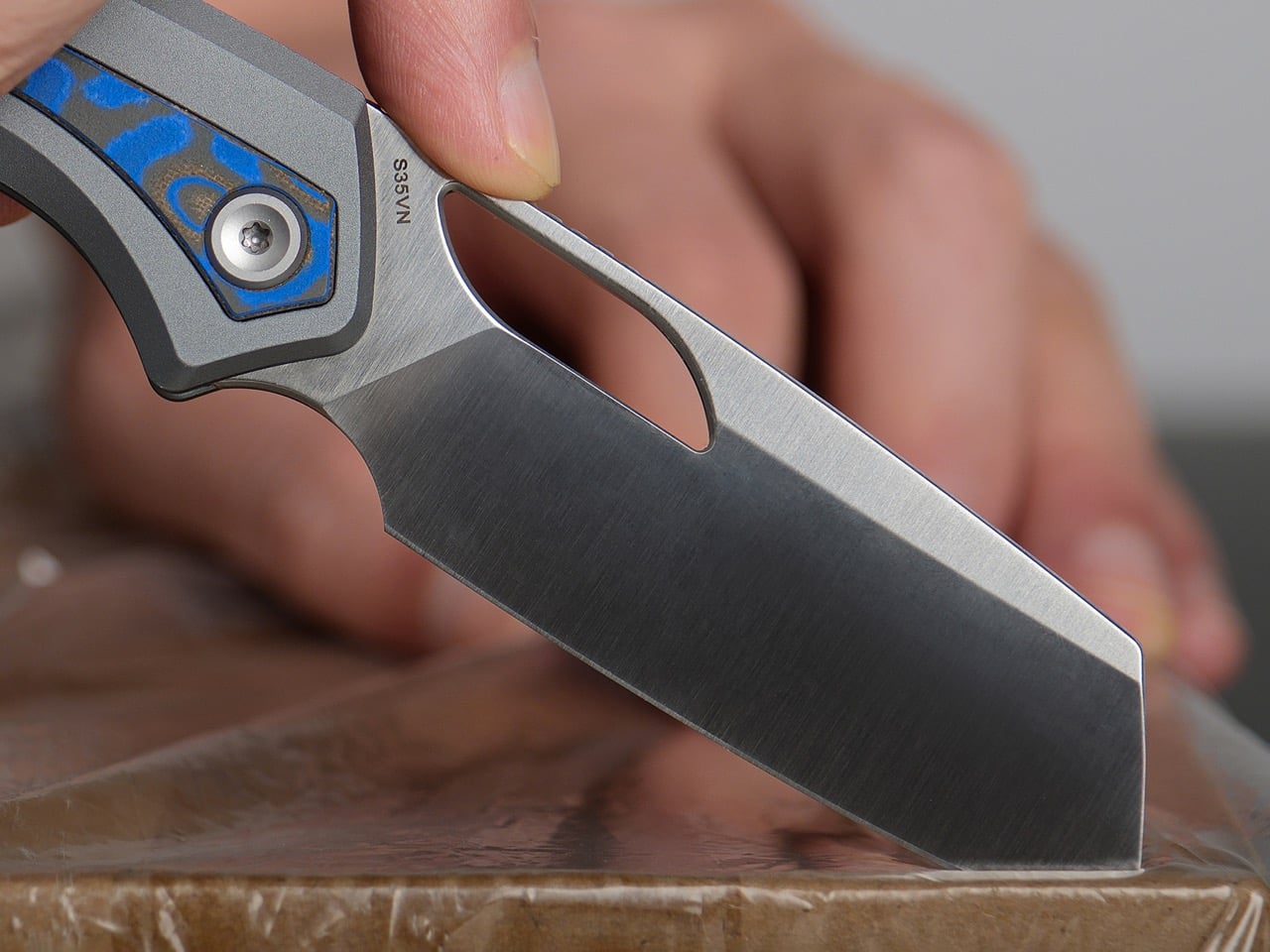
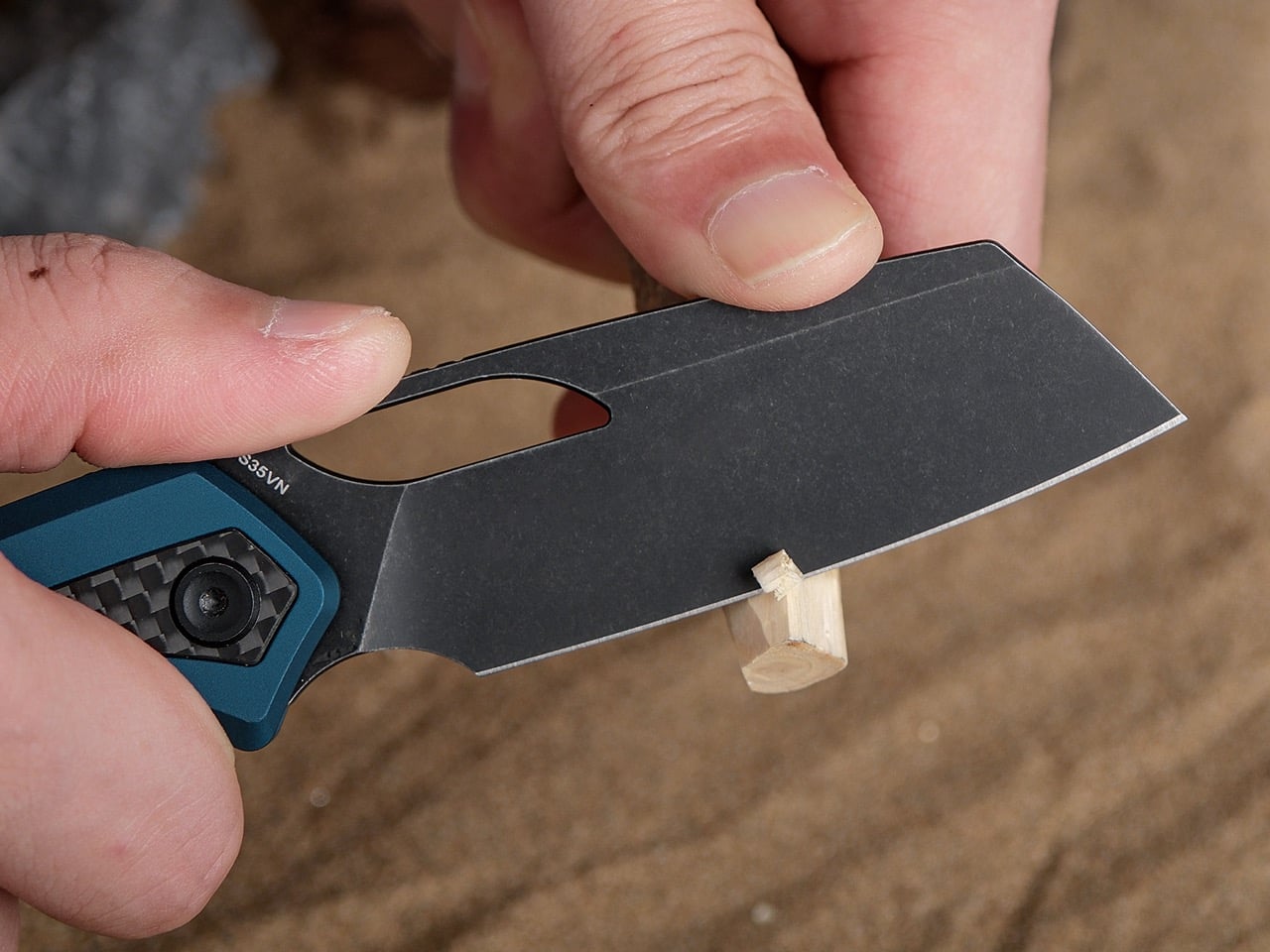
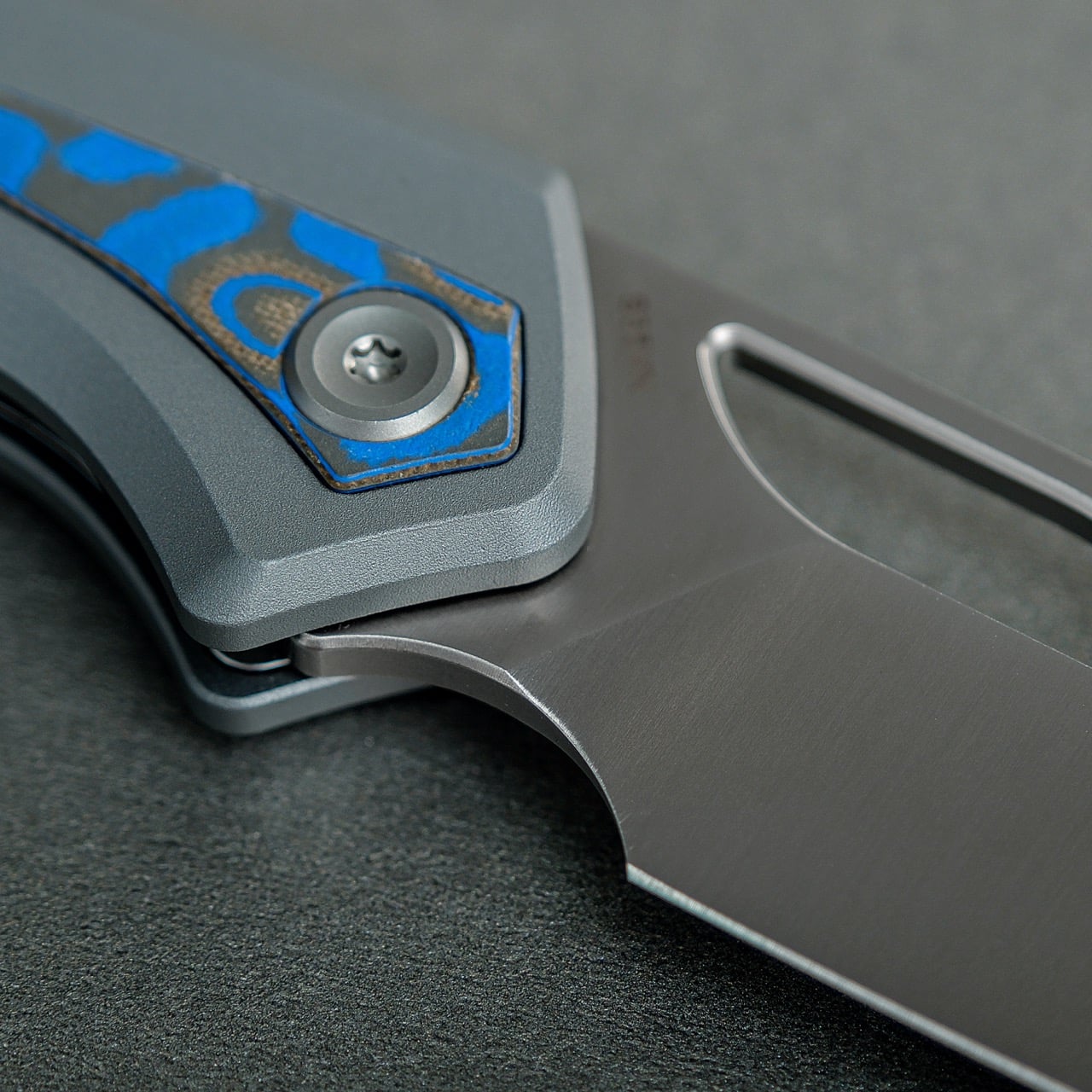
The sheepsfoot blade design with that 2.99-inch cutting edge with the flat spine gives you a blade profile that excels at controlled cuts while eliminating the stabby tip that makes carrying folders feel legally questionable in certain jurisdictions. The 1.18-inch blade width means you’re getting actual spine height here, which translates to structural rigidity when you’re bearing down on tougher materials. Vosteed ground it flat rather than going with a hollow grind, so the edge geometry stays aggressive without feeling fragile. This blade shape works beautifully for food prep, box breaking, rope cutting, anything where you need precision over penetration. The gentle belly curve keeps slicing tasks smooth instead of forcing you into that annoying push-cut motion that flatter edges demand.

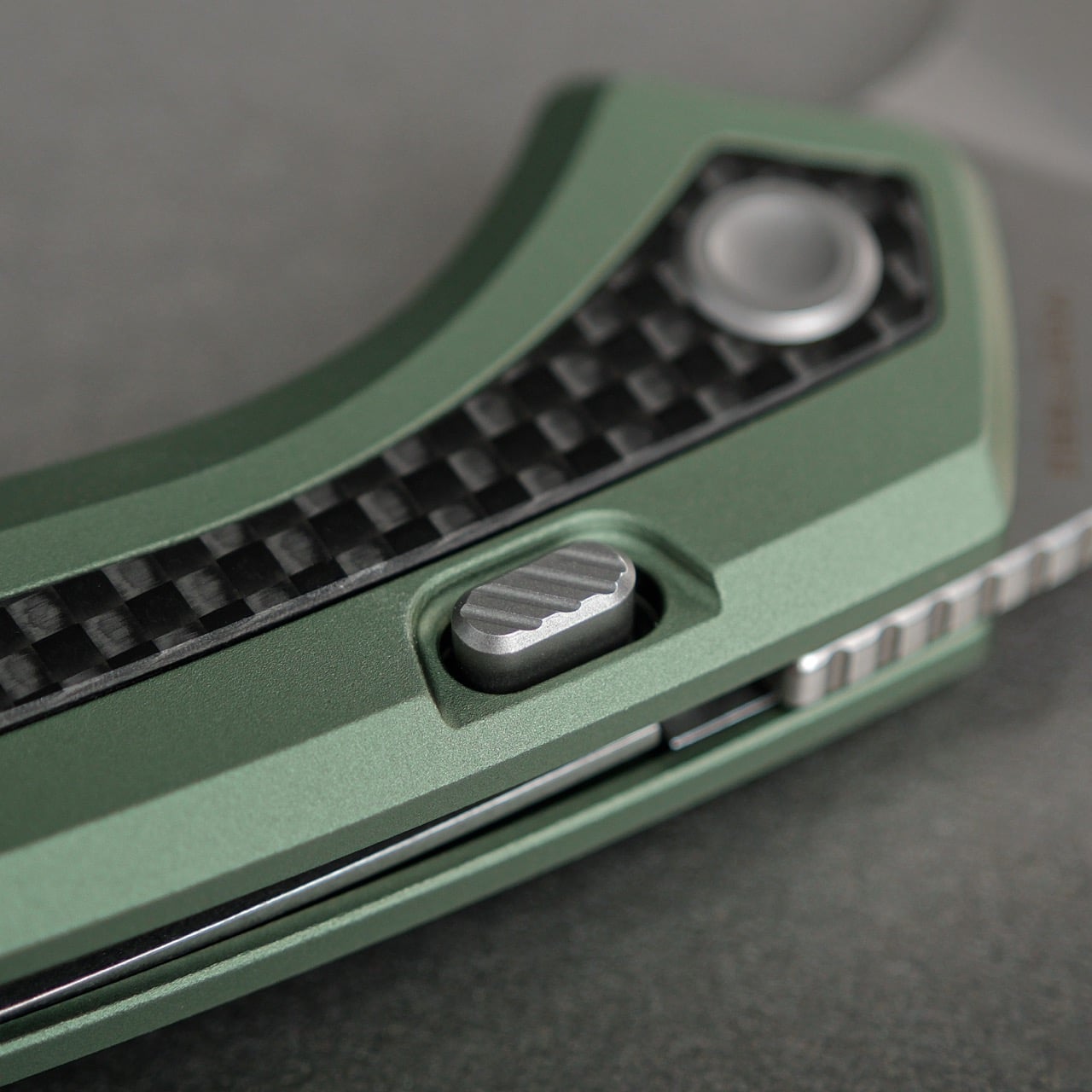
Deployment happens two ways, and both actually work instead of one being an afterthought. The eye-shaped thumbhole sits right where your thumb naturally lands, sized generously enough that deployment feels effortless whether you’re opening it traditionally or doing that satisfying middle-finger flick. The front flipper gives you a second option that’s equally smooth thanks to ceramic ball bearings doing the heavy lifting. The top liner lock mechanism is where Vosteed continues to separate itself from the usual liner lock crowd. You get a recessed, textured button that keeps your fingers completely away from the blade path when closing, combining the security of a traditional liner lock with the safety and ease of a button release. It’s genuinely one of the better locking systems in this price range, maybe any price range.

Handle ergonomics make or break compact knives, and the Kroc gets this right in ways that should be obvious but somehow aren’t. The grip flows from the pivot down to a slightly widened tail section, creating natural indexing points for your hand without aggressive jimping or finger grooves that only work one way. Those dual oversized finger choils let you choke up on the blade when you need control or settle back for regular grip positions. The recessed, skeletonized liners keep the overall weight at 3.38 ounces while the jimped aluminum backspacer adds texture where you actually need it. At 4.02 inches closed, it disappears in a pocket but fills your hand when deployed. That’s the entire game with knives this size.

The nine-knife collection splits into two distinct tiers that share everything except materials. The G10 models (A1805 through A1809) run full G10 scales in various colorways, 14C28N blades, and hit that $69 price point. The aluminum versions (A1801 through A1804) feature aluminum handles with inlay options including ocean micarta, topo G10, and carbon fiber, S35VN steel, and retail for $129. Color options range from understated (satin gray with ocean micarta) to attention-seeking (purple and yellow G10), but the core design language stays locked in across every variant. You’re choosing aesthetic preference and steel quality, not compromising on anything fundamental.

At $69 for the G10 versions and $129 for the aluminum models, Vosteed positioned the Kroc exactly where it creates maximum disruption. The budget tier delivers ceramic bearings, 14C28N steel, and that top liner lock for less than you’d pay for significantly less knife from bigger brands. The premium tier competes directly with knives costing $150 to $200 while undercutting them by $20 to $70. That pricing strategy only works if the knife actually delivers, and based on how Vosteed’s been executing lately, they’ve earned the benefit of the doubt. The Kroc looks like a knife that understands its assignment and then overdelivers on the details that matter.

Click Here to Buy Now: $116.10 $129 (10% off) Hurry! Use code “yankokroc” during checkout

The post Vosteed’s “Pocket Crocodile” EDC Knife Packs a Seriously Sharp 3-Inch Sheepsfoot Blade first appeared on Yanko Design.
Stunning LEGO Sony Walkman Replica Features a Dockable Cassettes and Wearable Headphones

It’s weird to think that Walkmans were literally in my lifetime but if I were to give one to a kid born after 2000, they’d wonder what the hell they’re staring at. Sure, an iPod still feels intuitive because it’s still a relatively digital interface, and MP3 files are still a thing. But a cassette? Having to rewind and fast forward? They’re all relics of an age youngsters wouldn’t even recognize anymore!

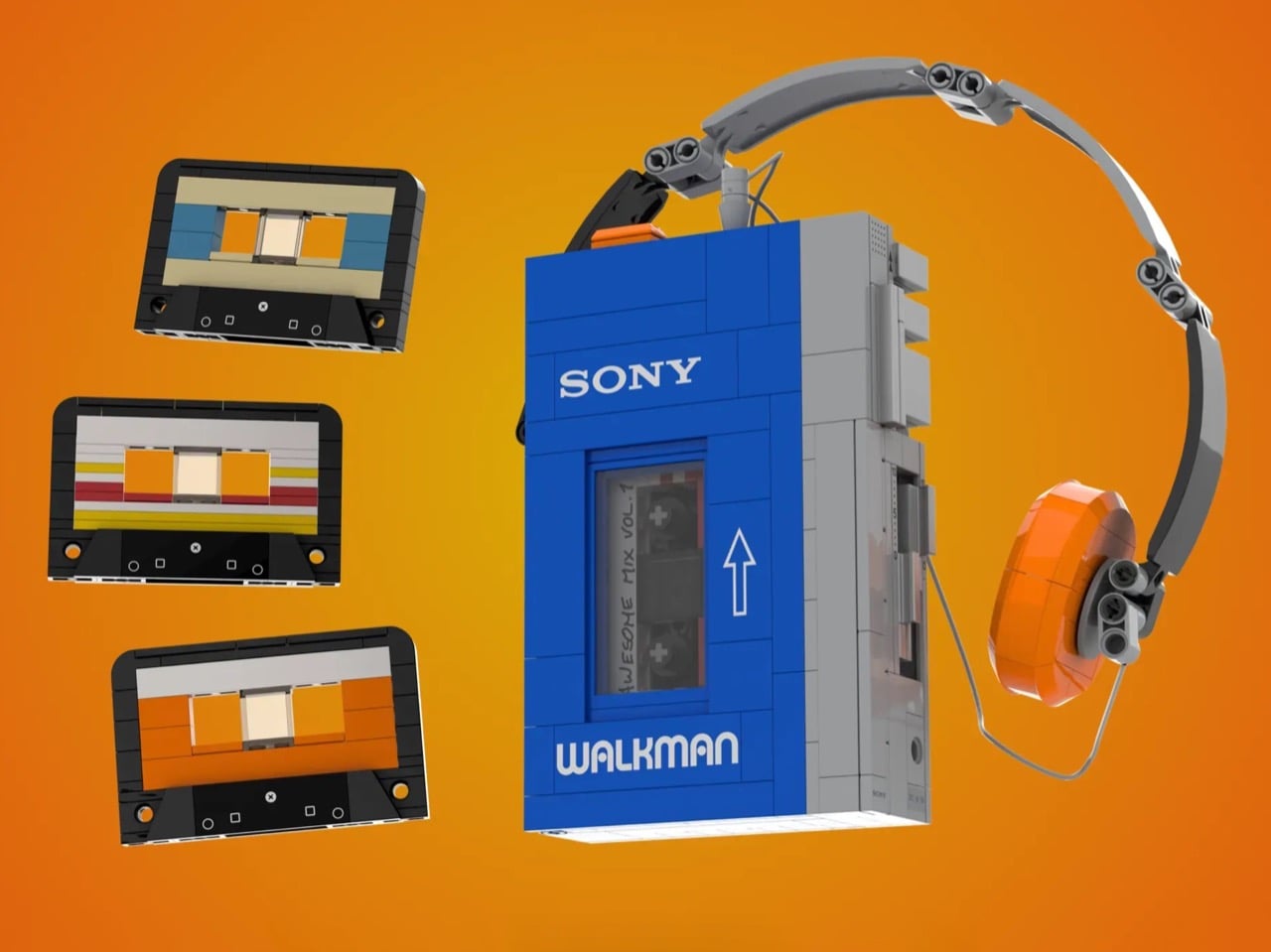
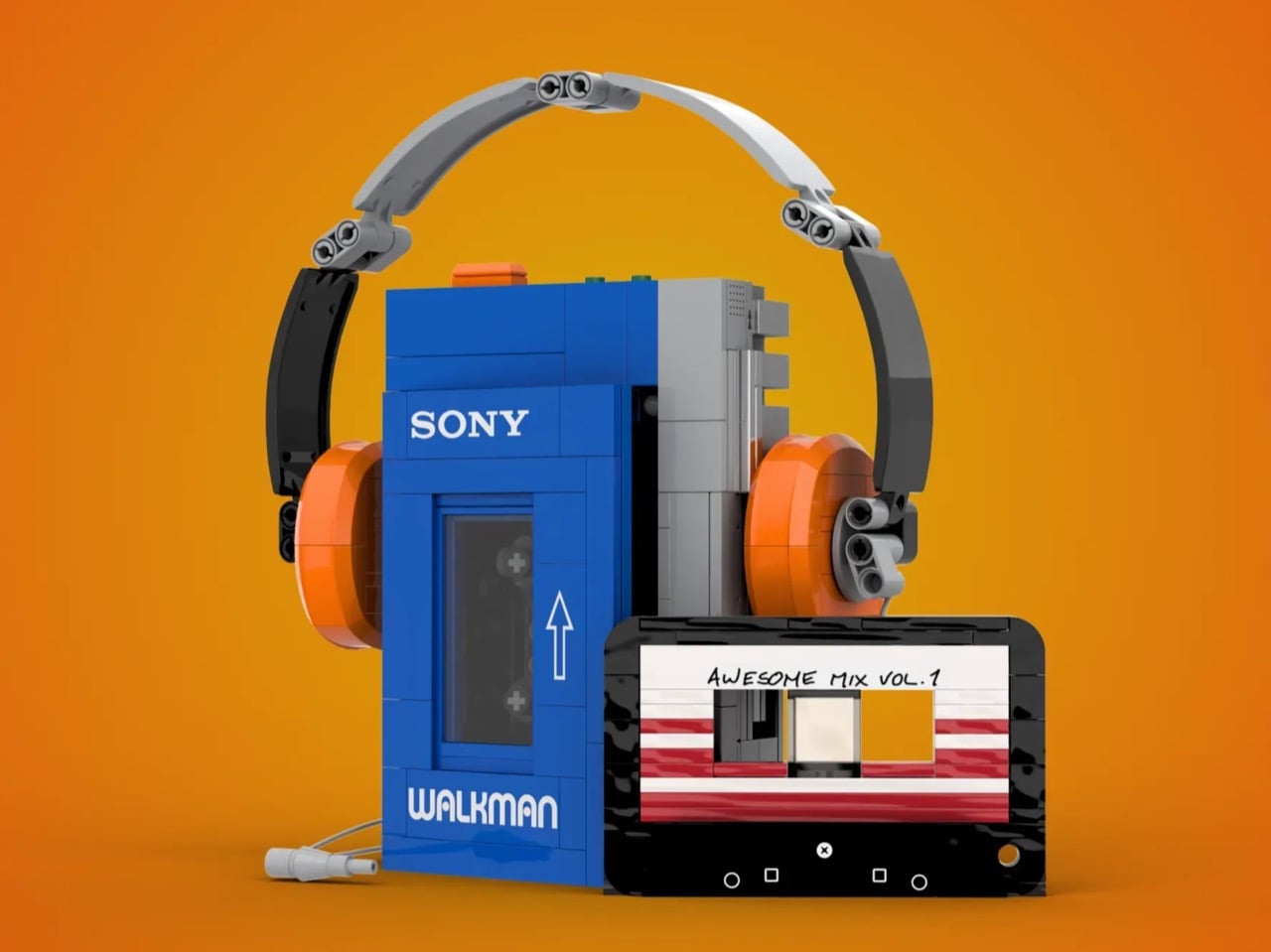
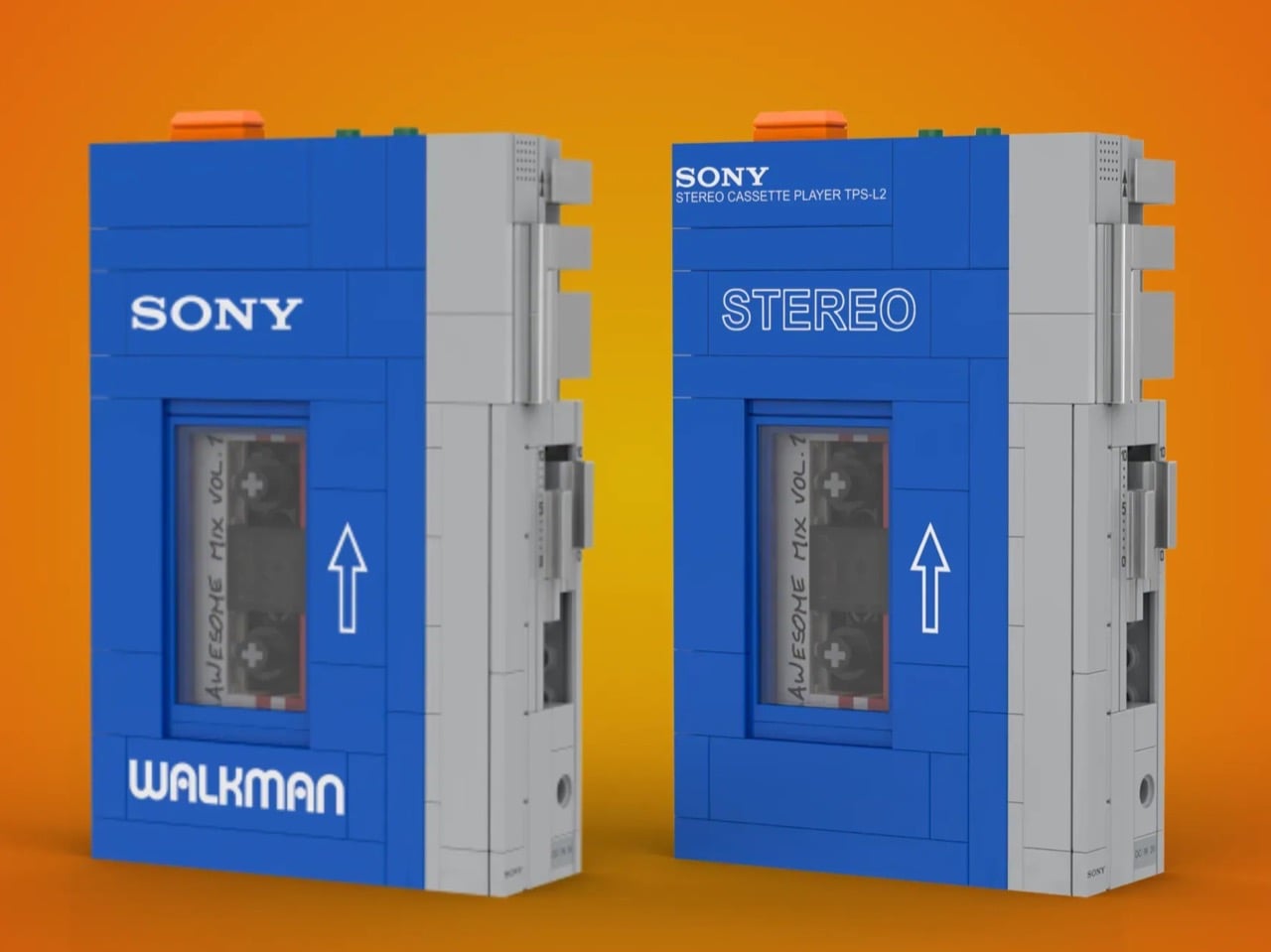
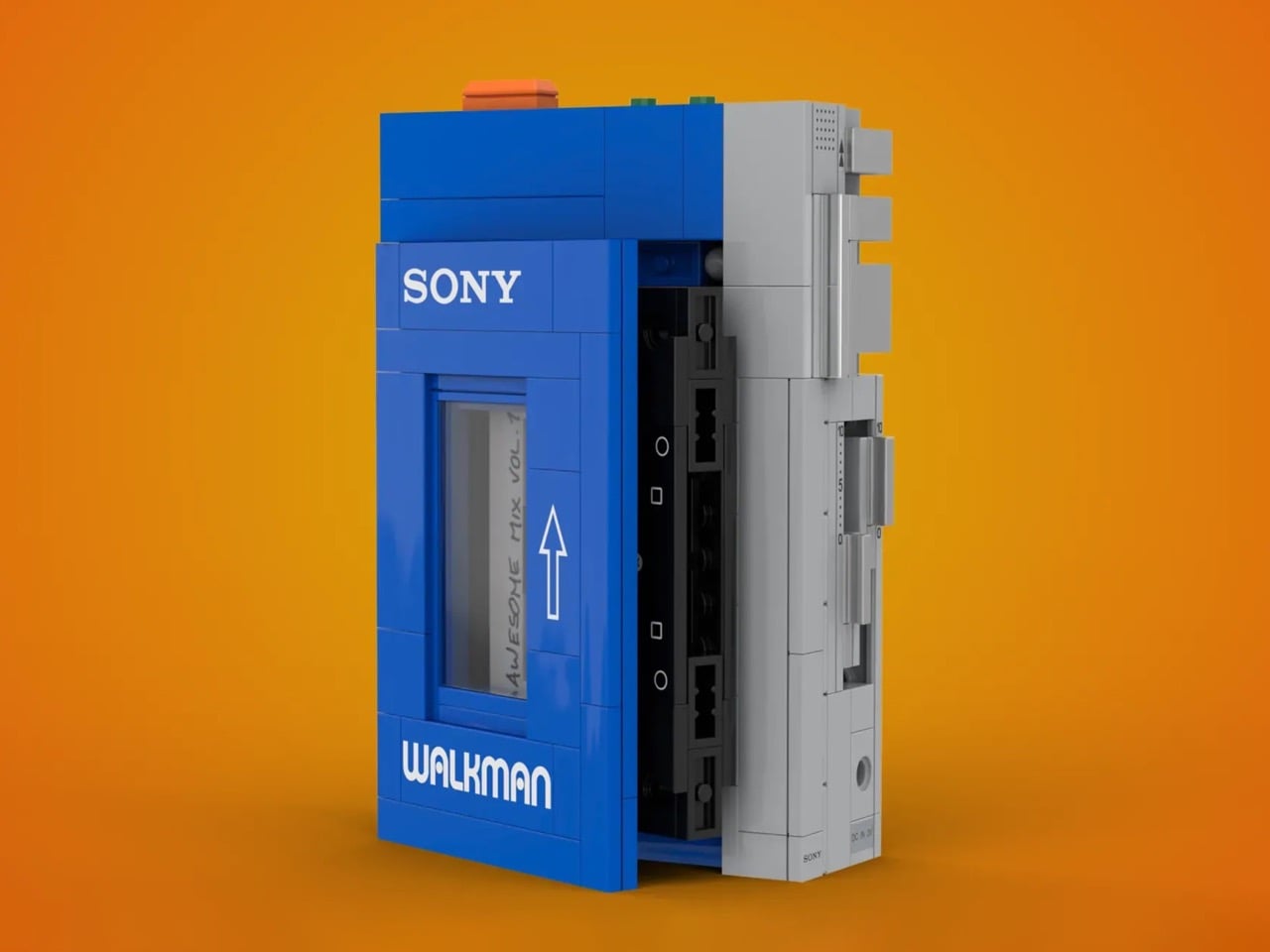
If anything, there’s hope that a kid who’s seen Guardians of the Galaxy would recognize this particular model of cassette player. Featured in the movie as the device that Star Lord operated to play his legendary mixtapes, the Sony Walkman TPS-L2 achieved something remarkable: it made cassette technology cool again for people who’d never touched magnetic tape. Enter Headlight Bricks, a creator who channeled that same Marvel-inspired obsession into a breathtaking LEGO Ideas project. Their 520-piece homage recreates every iconic element from the transparent cassette window to the individually adjustable volume controls, all wrapped in that unmistakable Sony blue. Three buildable cassette tapes let you craft your own mini mixtapes, while the poseable orange headphones complete the authentic 1979 experience.

Designer: Headlight Bricks

Each cassette measures maybe an inch and a half across but manages to pack in customizable label areas where you can swap colored tiles to create different “album art.” One of them references Awesome Mix Vol. 1 from Guardians, probably the one piece of pop culture that did more for cassettes than anything else in the past decade. The cassettes made from LEGO don’t look entirely like you’d expect. They’re missing the gears on the middle that are characteristic of a cassette tape. The reason is simple – making that out of LEGO is a headache, and it does little to add to the original build, which is the player itself. The cassette does its role of fitting into the player, and Headlight Bricks did detail spindles on the inside to complete the illusion. If you want impressive detailing, however, look at that headphone strap, which uses a LEGO Technic part to enable flexibility and movement.

That specific shade of blue paired with light gray side panels captures exactly what Sony’s industrial designers were going for in 1979. They weren’t chasing premium materials or trying to make the TPS-L2 look like jewelry you wore on your belt. It had this utilitarian confidence that said “I do one thing, I do it perfectly, and I don’t apologize for looking like a piece of equipment.” The LEGO version gets that completely right by keeping the form clean and the details purposeful. Besides, everything is perfectly to 1:1 scale, which means this MOC (My Own Creation) accurately captures every single aspect of the Walkman TPS-L2… including even functional buttons.

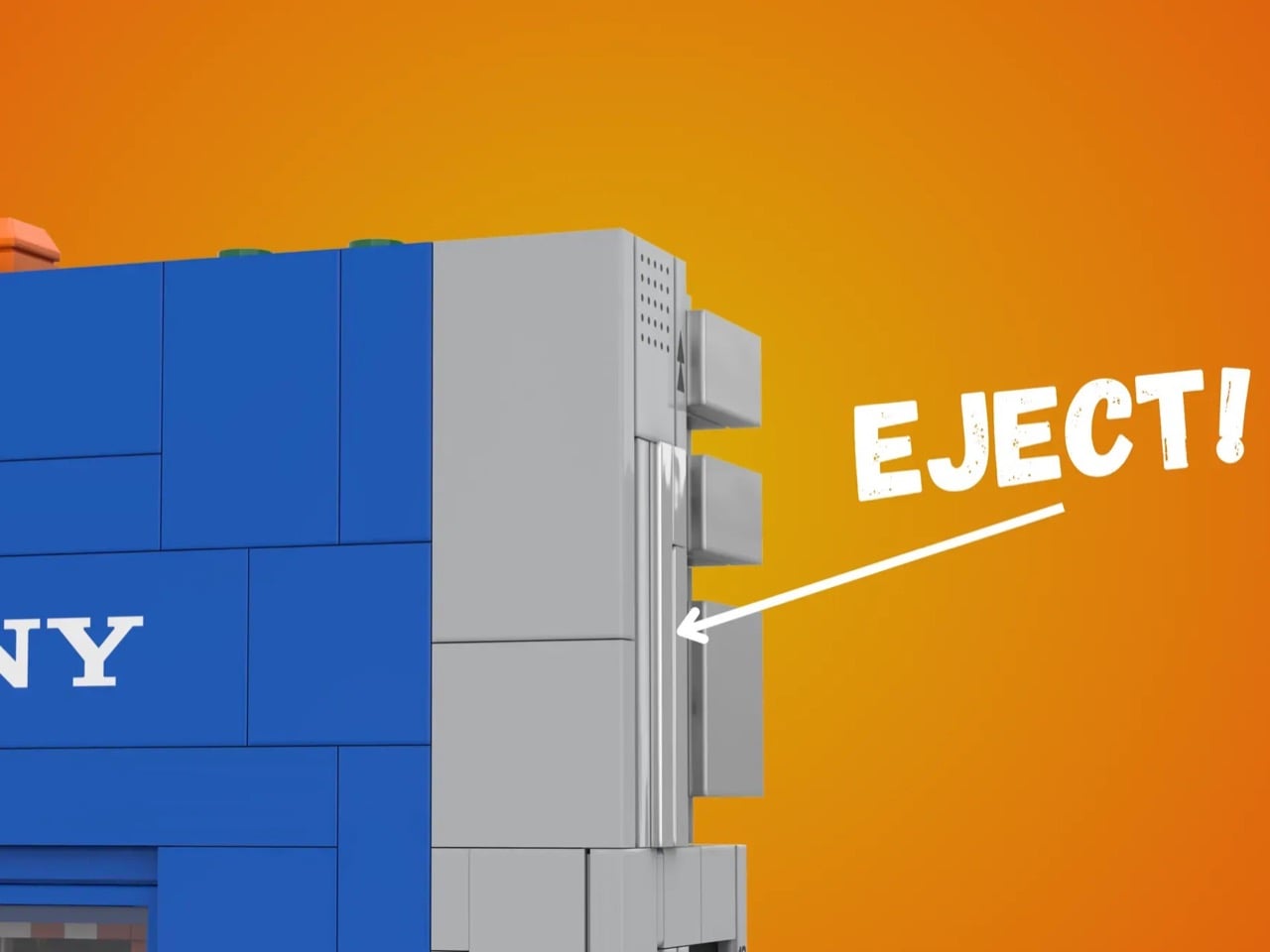
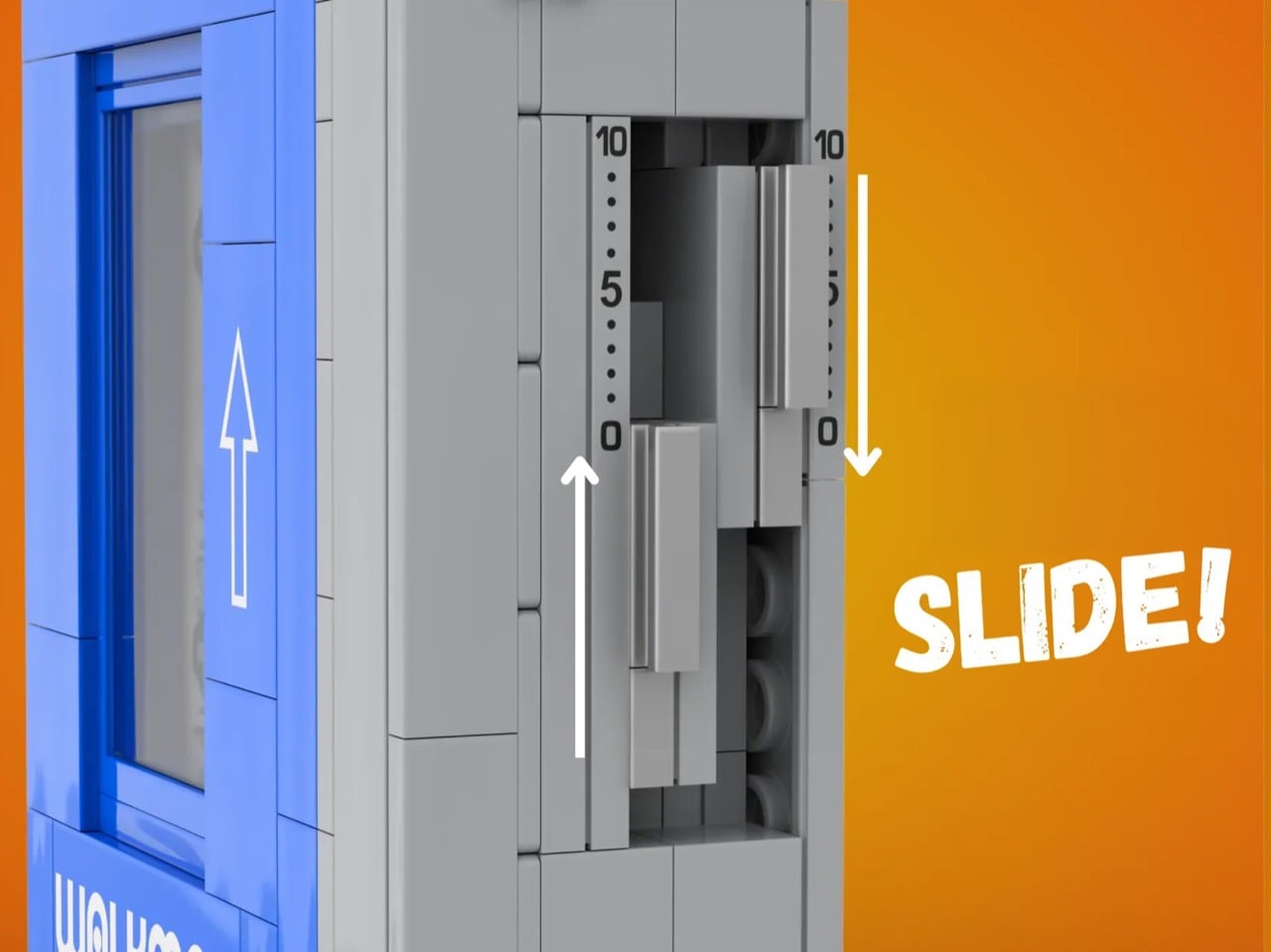
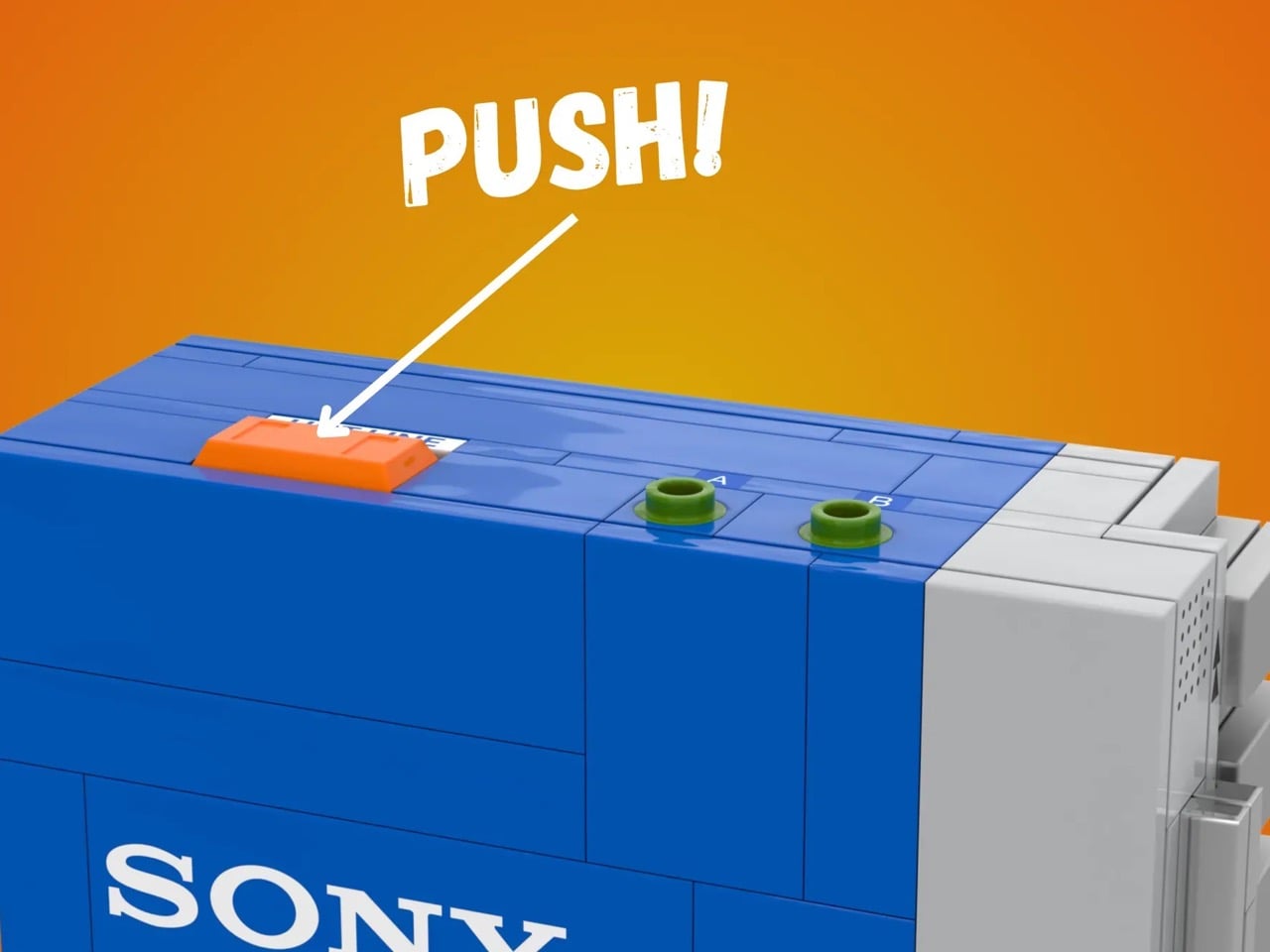
Volume buttons move independently, which means Headlight Bricks had to engineer two separate mechanical systems in a space probably no bigger than a couple of studs wide. The cassette compartment opens with a pressable eject button, and the spindles inside actually rotate when you turn them. Most builders would’ve faked it with printed tiles or stickers, called it close enough, and collected their upvotes. Instead, this thing functions like you could actually thread magnetic tape through it if you were small enough and patient enough.

Right now the project has 4,735 supporters on LEGO Ideas with 445 days left to hit 10,000 votes. Ideas works on a threshold system where fan designs need 10K supporters to get reviewed by LEGO’s actual product team. Getting reviewed doesn’t guarantee production, but it gets your build in front of the people making those calls. They evaluate marketability, licensing complexity, manufacturing feasibility, whether it fits the brand… which this one surely does, with its iconic, retro-throwback fun design. Whether Sony agrees to comply is an entirely separate issue.

You want to see this become a real product you can order? Go to the LEGO Ideas Website and hit the Support Idea button!. You need a free LEGO account to vote, takes maybe thirty seconds to set up if you don’t have one already. Hit the support button, leave a comment if you feel like it, and you’re done. At 4,738 supporters (me included), this build is inching towards the 10,000 vote mark needed to put this build into the ‘Review’ phase. LEGO managed to produce a working typewriter you can buy. A Walkman with rotating cassette mechanisms and pressable buttons feels like the obvious next move in that category.

The post Stunning LEGO Sony Walkman Replica Features a Dockable Cassettes and Wearable Headphones first appeared on Yanko Design.
‘PSP Knockoff’ Packs an AMD Ryzen™ AI Max+ 395 Processor and 1TB of Storage

The PSP died, but its body plan lives on like some kind of handheld gaming phylogenetic blueprint. Wide landscape orientation, controls on both sides, screen in the middle. It has been 20 years and we are still building variations on that theme. The GPD Win 5 takes that familiar skeleton and asks a ridiculous question: what if we stuffed desktop level computing power inside it?

The answer involves a detachable 80 Wh battery pack, a quad heat pipe cooling system that sounds like aerospace engineering, and a price tag that makes the Steam Deck feel like an impulse purchase. GPD designed hall effect triggers, capacitive joysticks with zero deadzone, and a proprietary Mini SSD slot that claims speeds far beyond conventional microSD storage. Every innovation exists to solve problems created by the central design decision, which is a refusal to compromise on performance within a handheld form factor. Whether that feels brilliant or stubborn depends entirely on whether you see yourself in the user this was built for.

Designer: GPD

Click Here to Buy Now

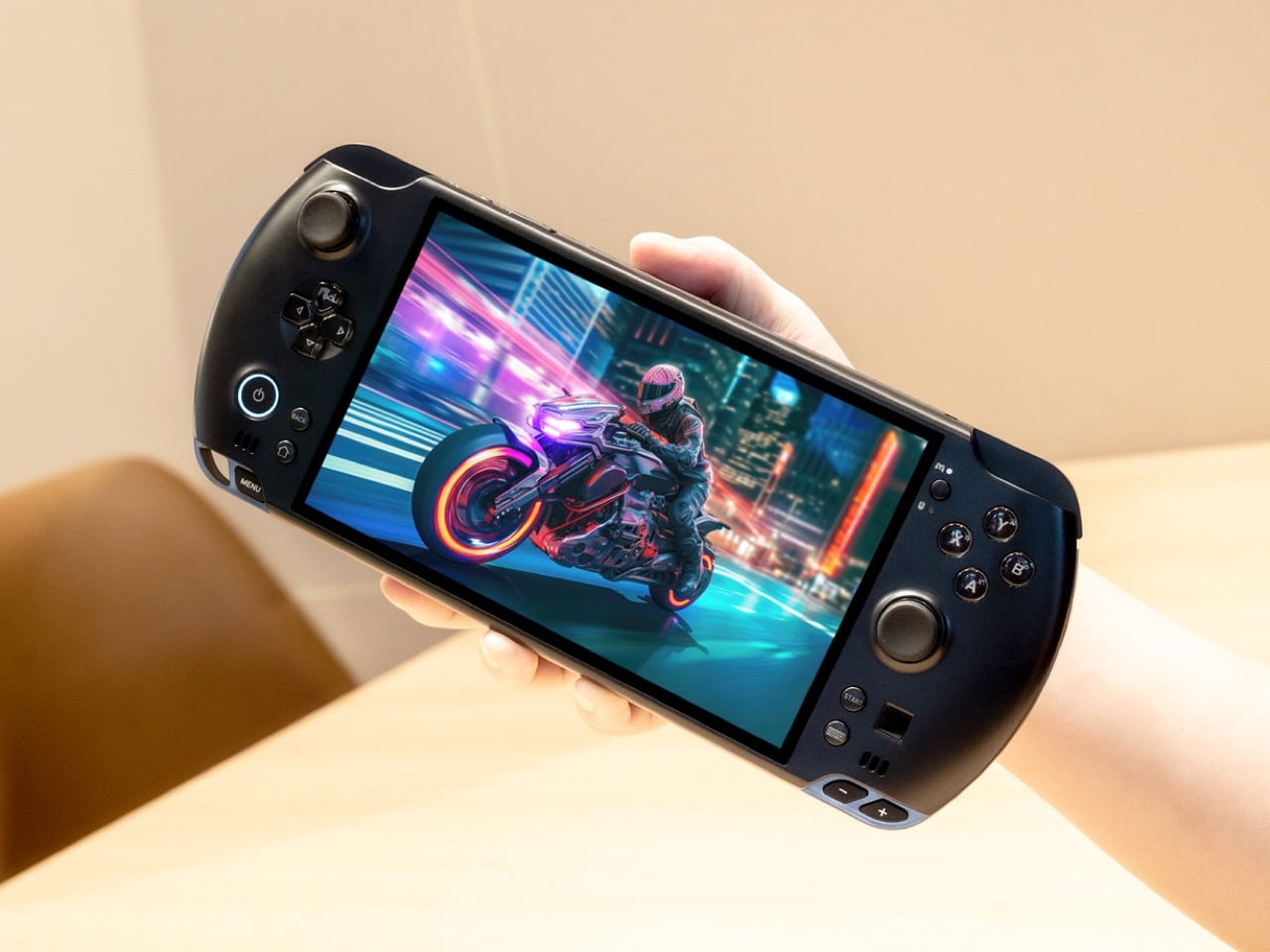
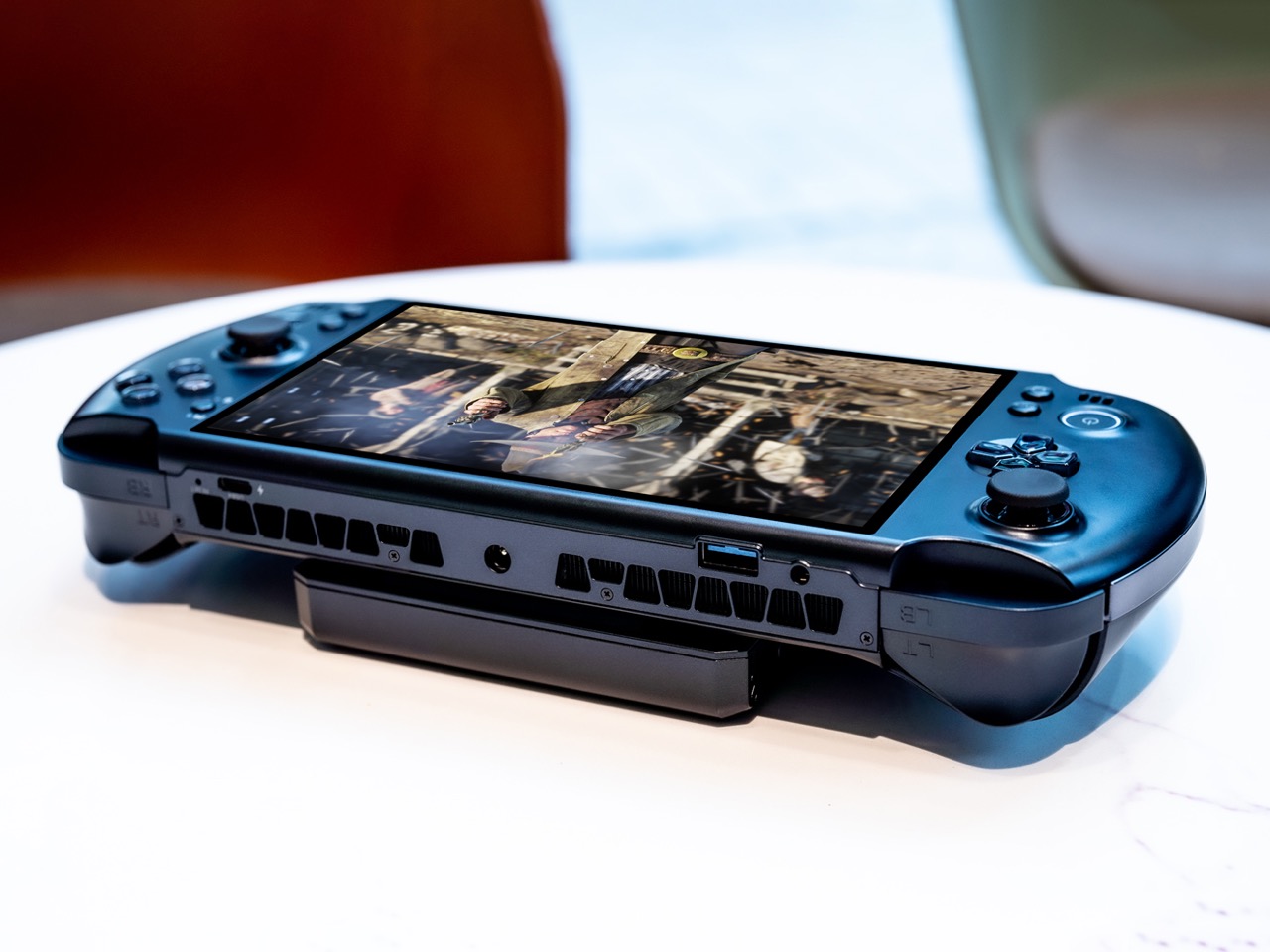
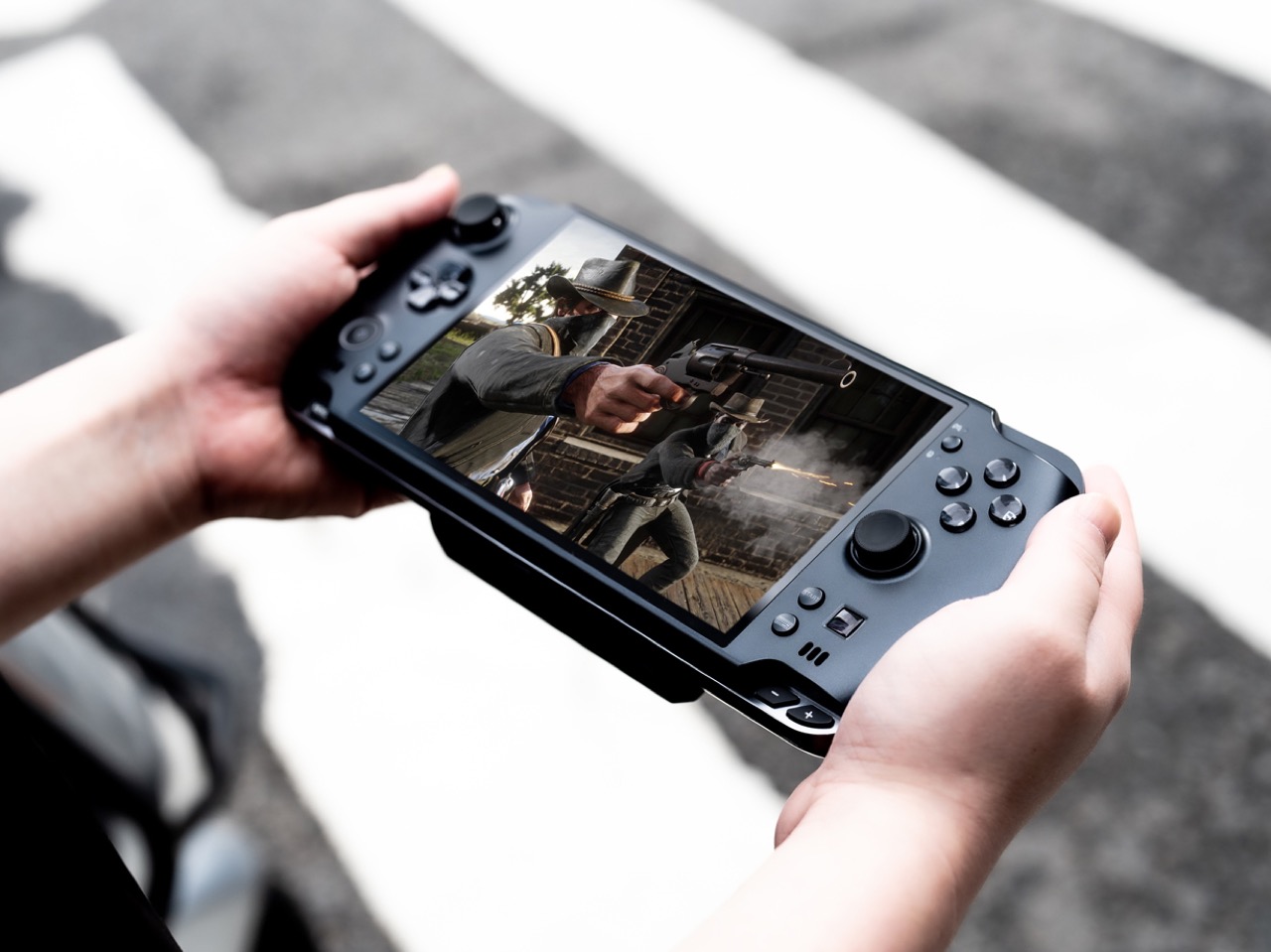
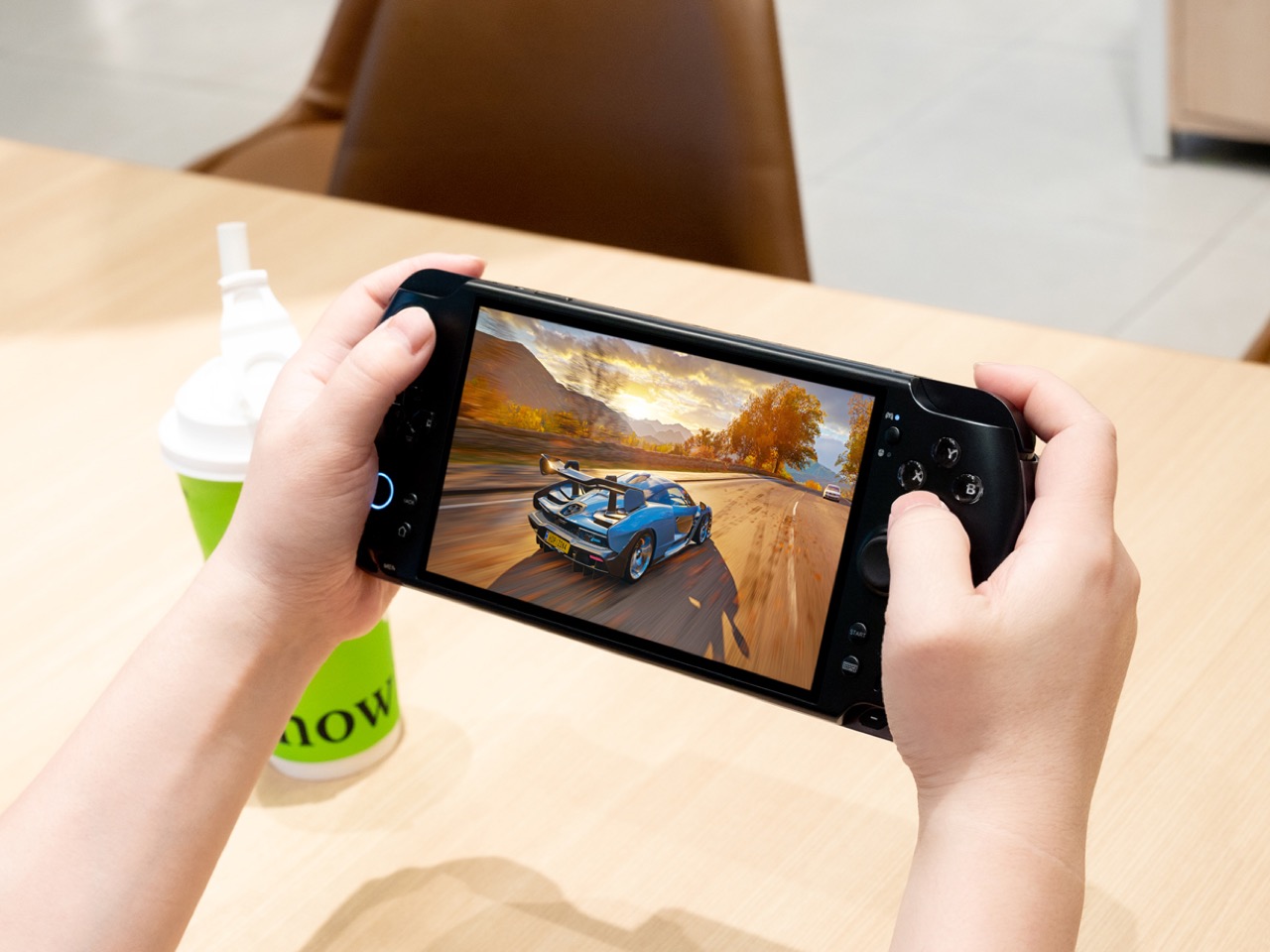
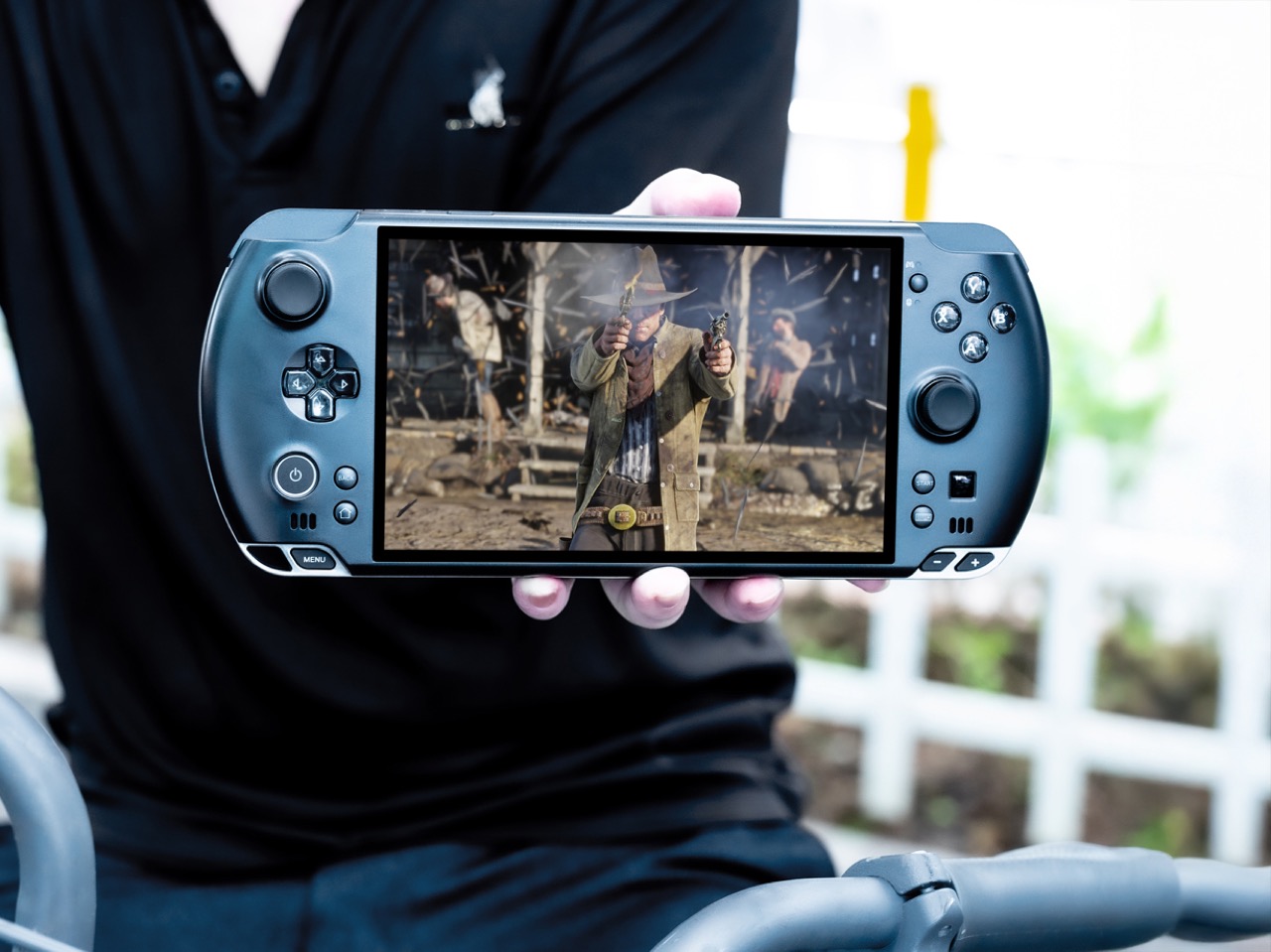
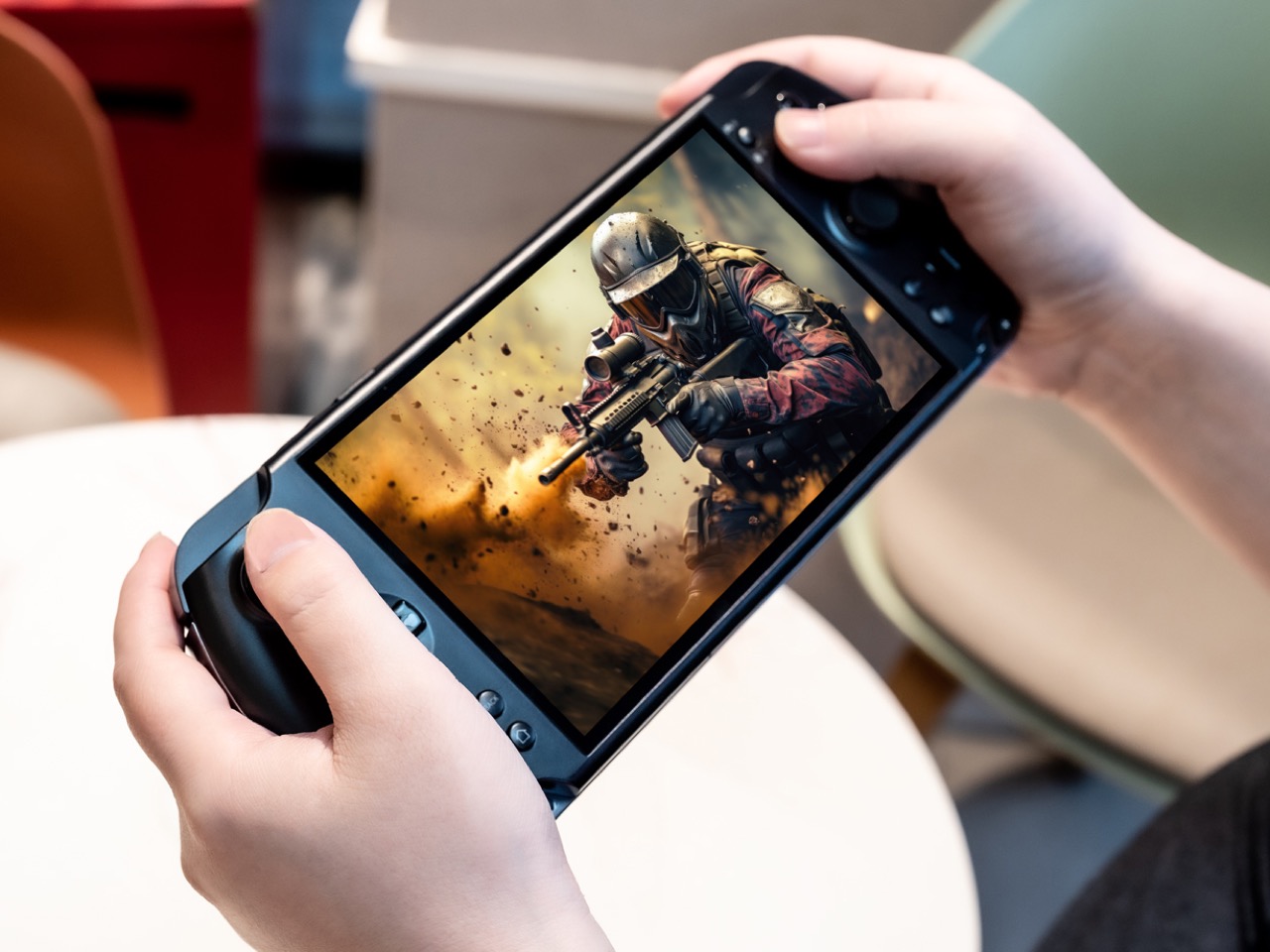
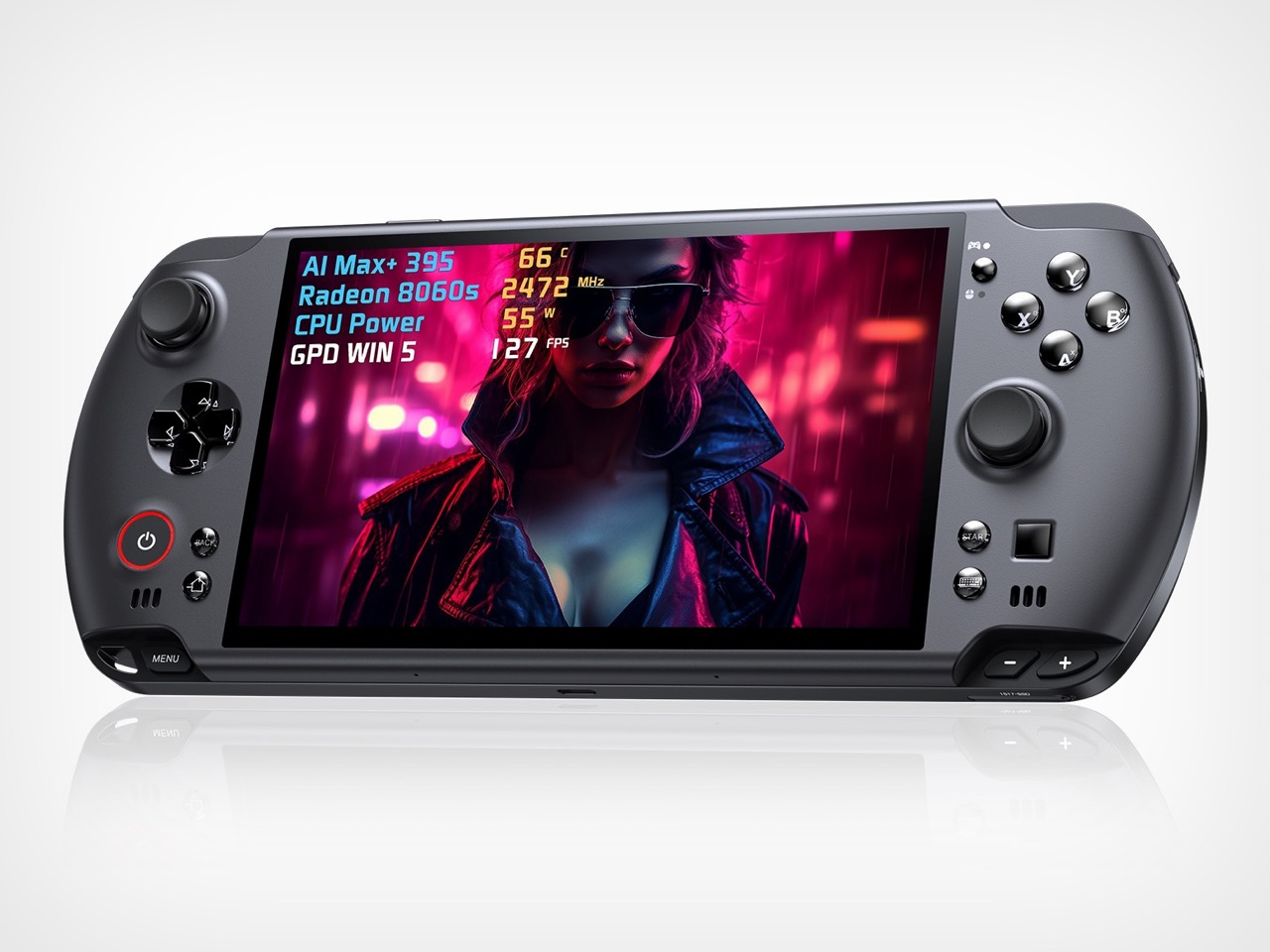
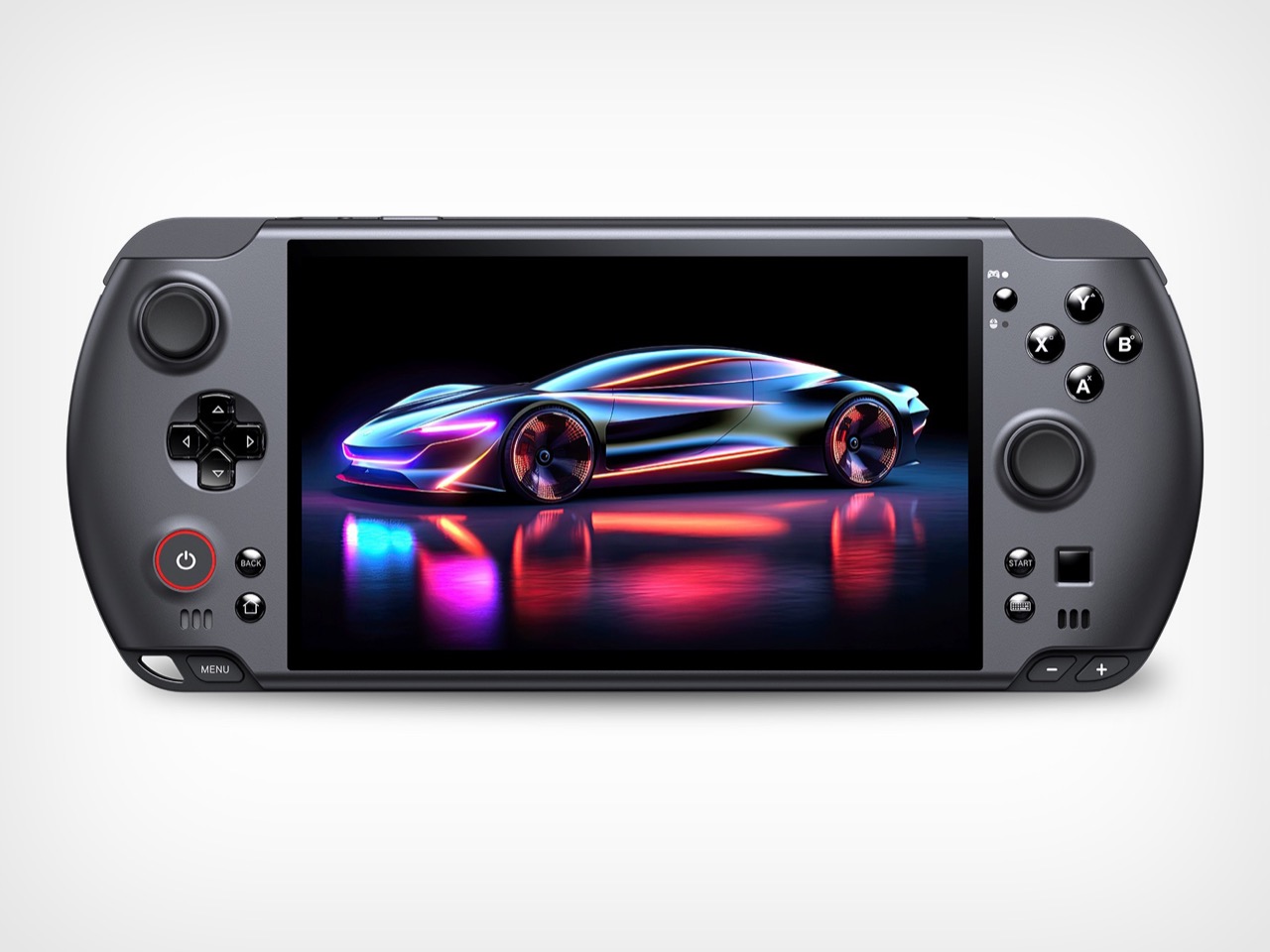
The silhouette comes straight from the PSP school of handheld ergonomics. A 7 inch 16:9 display sits in the center, framed by asymmetrical thumbsticks, a D pad, and face buttons in a layout that feels immediately familiar to anyone who has held a Sony portable. The difference lies in the thickness. The Win 5 looks dense, almost compressed, with aggressive venting along the back and sides that signals its true identity as a compact thermal solution disguised as a gaming console. The top edge bristles with ports and grilles, more reminiscent of a compact gaming laptop than a console you would toss into a sling bag.

Inside that shell lives AMD’s Ryzen AI Max+ 395, a 16 core, 32 thread processor paired with Radeon 8060S graphics. Current coverage places the Win 5’s pricing at around 1,400 dollars for a 32 GB RAM and 1 TB storage configuration, rising to about 2,100 dollars for a 64 GB and 4 TB flagship model. At those levels you are squarely in premium gaming laptop territory, which is exactly what makes this device interesting from a design standpoint. GPD is not chasing affordability or broad appeal. The Win 5 feels like a hardware manifesto about what happens when you give industrial design and engineering teams a very simple but extreme brief: handheld, Windows, desktop class performance.

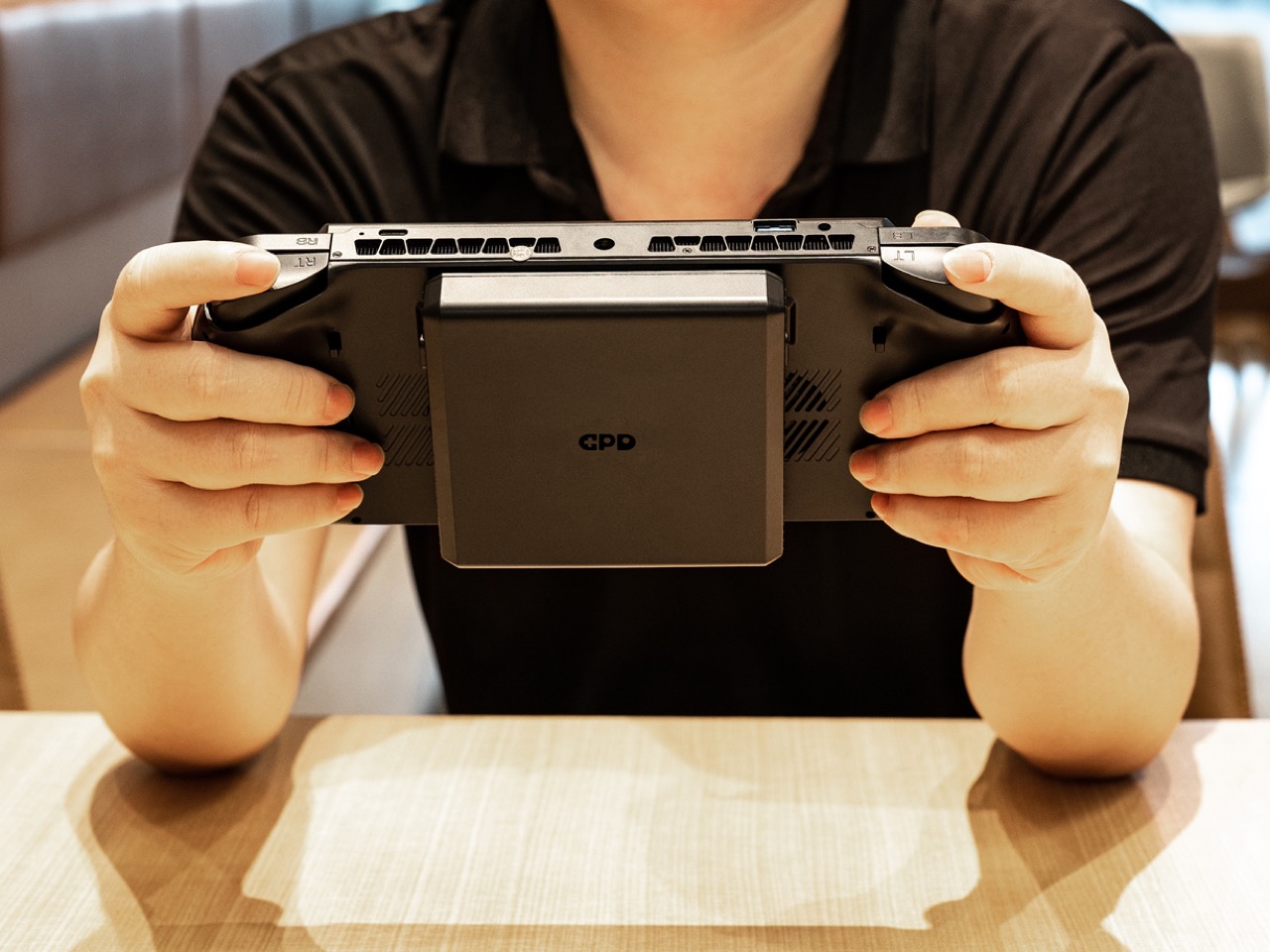
The most telling design decision is the external 80 Wh battery. Instead of burying a huge cell inside the chassis and accepting a brick like profile, GPD splits power delivery into a removable module. It can clip to the back of the unit for a self contained experience, or hang off a cable so the handheld itself stays lighter in the hands. That choice acknowledges a reality that marketing copy rarely does. Sustained high wattage gaming will drain any reasonable internal battery quickly, so GPD leans into modularity and user choice rather than pretending this is an all day couch companion.

Cooling follows the same philosophy. The marketing material highlights a FrostWind architecture with dual large fans, thick copper heat pipes, and a carefully shaped internal airflow path. You can see the consequences on the exterior. The back of the device becomes a sculpted exhaust surface, with intakes and outlets dictating the geometry as much as hand comfort does. It feels like a reversal of usual priorities. Instead of designing a beautiful shell and figuring out how to cool it, GPD appears to have designed a cooling solution and then wrapped a handheld around it.

Capacitive joysticks promise zero deadzone and pixel level aiming precision. That approach allows extremely fine analog input without the mechanical hysteresis that can appear in traditional potentiometer based sticks. Hall effect triggers offer contactless sensing for long term reliability and very granular control, a detail that matters for racing and shooting games where tiny pressure changes translate to meaningful in game responses. These are the kinds of components that typically appear in enthusiast controllers, transplanted into a portable PC.

The primary drive uses a standard M.2 2280 SSD, which aligns with desktop and laptop conventions. Alongside that, GPD introduces a miniature proprietary SSD card that occupies roughly half the footprint of a microSD card while offering significantly higher throughput. The message is clear. This device expects users who juggle large game libraries, maybe multiple operating system images, and even local AI workloads, and who notice the difference between 100 MB per second and gigabyte class transfers.

That last point is important. The Win 5 is positioned as a gaming handheld, but its specification sheet reads like a compact workstation. The unified memory options reach up to 128 GB in some configurations, a level that caters directly to users running large language models and other memory hungry tasks locally. The dock supports external GPUs over USB4, allowing the handheld to transition into a desktop style setup when connected to a monitor. In that mode the PSP inspired form factor becomes an integrated controller and display for a full Windows machine rather than a self contained console.

Current reporting places the GPD Win 5 at around 1,400 dollars for a configuration with a Ryzen AI Max 385 processor, 32 GB of RAM, and a 1 TB SSD, and around 1,600 dollars for the Ryzen AI Max+ 395 with 32 GB and 2 TB. Higher tier models reach roughly 2,100 dollars for 64 GB of RAM and 4 TB of storage. These numbers sit squarely in premium gaming laptop territory and far above mainstream handhelds such as the Steam Deck. The comparison highlights the central design question. GPD is asking users to value this specific blend of form factor, controls, and modular power over a larger display and traditional keyboard.

That being said, the Win 5 isn’t perfect by any stretch of the imagination. There are tradeoffs everywhere – weight climbs once the external 80 Wh battery is attached, bringing the total system toward the kilogram class according to early coverage. The price invites direct comparison with full size gaming laptops that deliver larger screens and more conventional ergonomics. Thermals will always be a careful balancing act with this class of hardware, even with dual fans and multi pipe cooling. Those compromises do not feel accidental. They feel accepted in service of a particular vision of computing that treats performance, portability, and physical tactility as equal priorities rather than a hierarchy.

So, the Win 5 isn’t trying to be the next Steam Deck. It’s not a safe, mass market product. It’s a statement. The familiar PSP shape pulls you in with nostalgia, and then the spec sheet hits you over the head with its wild, workstation grade numbers. That’s the whole story right there, the contrast between the old school body and the brand new, ridiculously powerful guts. It’s a fascinating, maybe even reckless, look at what happens when a company decides that classic handheld shape still has some fight left in it, and can be pushed to some truly new extremes.

Click Here to Buy Now

The post ‘PSP Knockoff’ Packs an AMD Ryzen™ AI Max+ 395 Processor and 1TB of Storage first appeared on Yanko Design.
Forget Step Counters: Dreame’s New Smart Rings Focus On ECG Reports, Sleep, And Real-Time Emotion Data

On any given game day, millions of us become amateur analysts, dissecting every play and scrutinizing every statistic that flashes across the screen. We track player performance with an almost scientific rigor, celebrating the numbers that signal a win and debating the metrics that lead to a loss. This deep dive into data has fundamentally changed how we watch sports, turning passive viewing into an interactive, analytical experience. Yet, for all the attention we pay to the athletes’ performance, our own physiological journey as spectators has remained completely invisible.

Dreame’s new AI Smart Ring proposes a fascinating shift in perspective, turning the sensor technology usually reserved for athletes inward on the audience. The ring’s most ambitious feature, an AI-powered emotion index, aims to quantify the rollercoaster of being a fan, tracking how your body reacts to every thrilling victory and agonizing fumble. It represents a new frontier for wearables, one less concerned with counting your steps and more interested in mapping your heart’s response to the passions that drive you. It is pro-level analytics for the rest of us.

Designer: Dreame

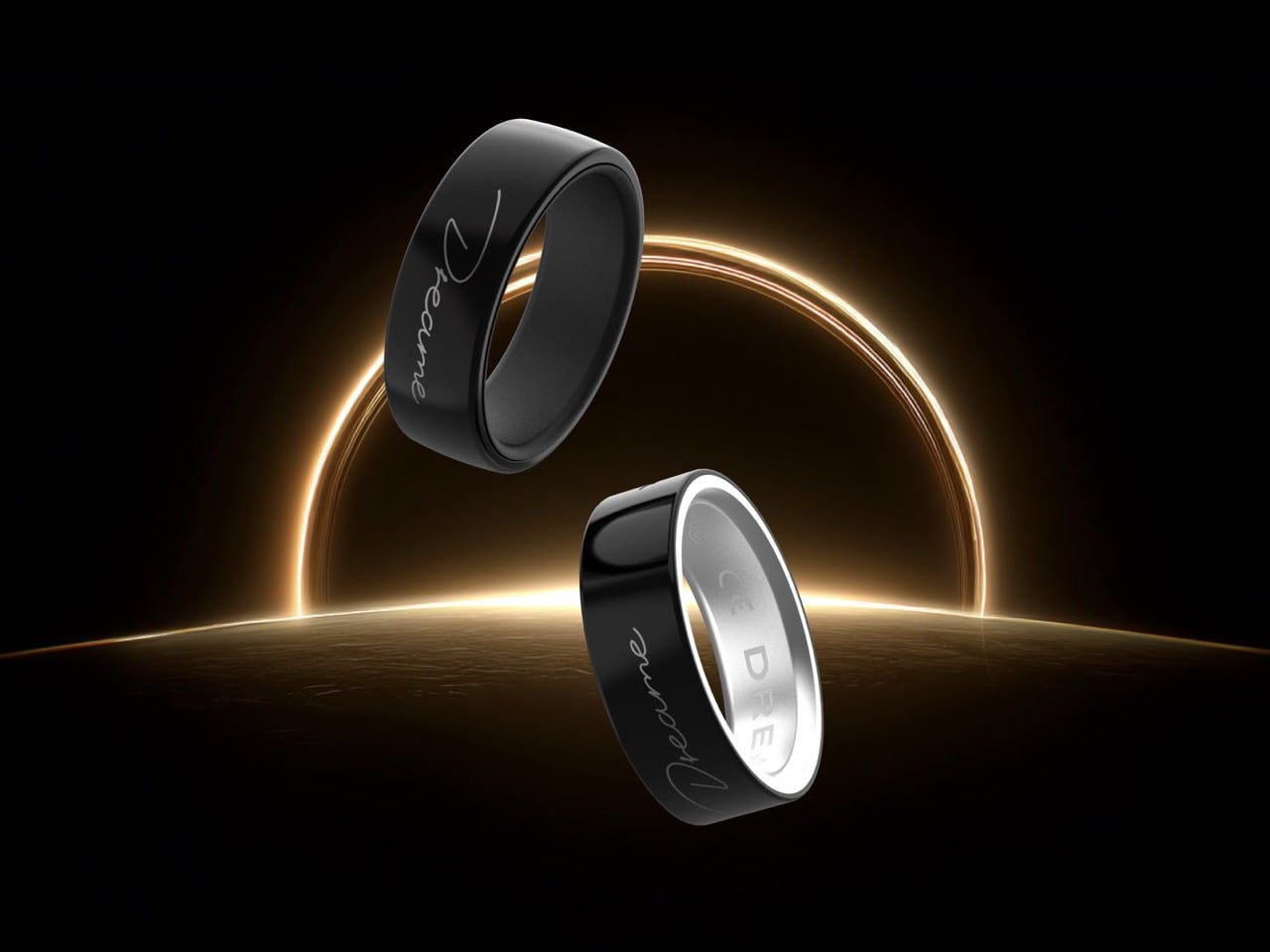
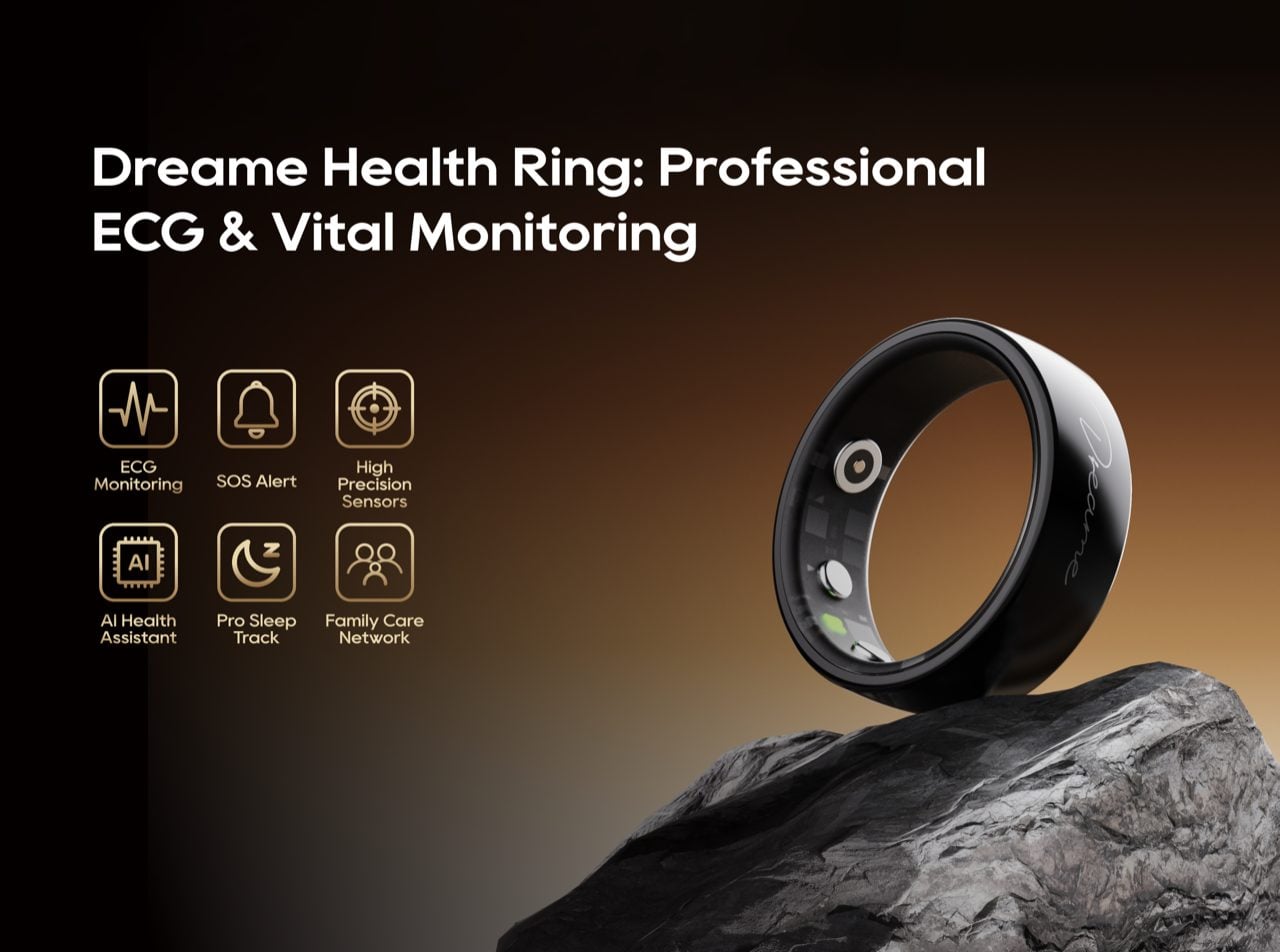
Instead of launching just one device, Dreame is splitting its ambition into a two-ring strategy, which is a seriously interesting market play. The company is effectively acknowledging that “health tracking” means different things to different people. For some, it is about hard, clinical data and safety nets. For others, it is about lifestyle, self-awareness, and emotional insight. So, rather than making one ring that tries to do everything, they have created two distinct products: the Dreame Health Ring, launching in early March, and the Dreame AI Smart Haptic Ring, which is slated for the second half of the year.

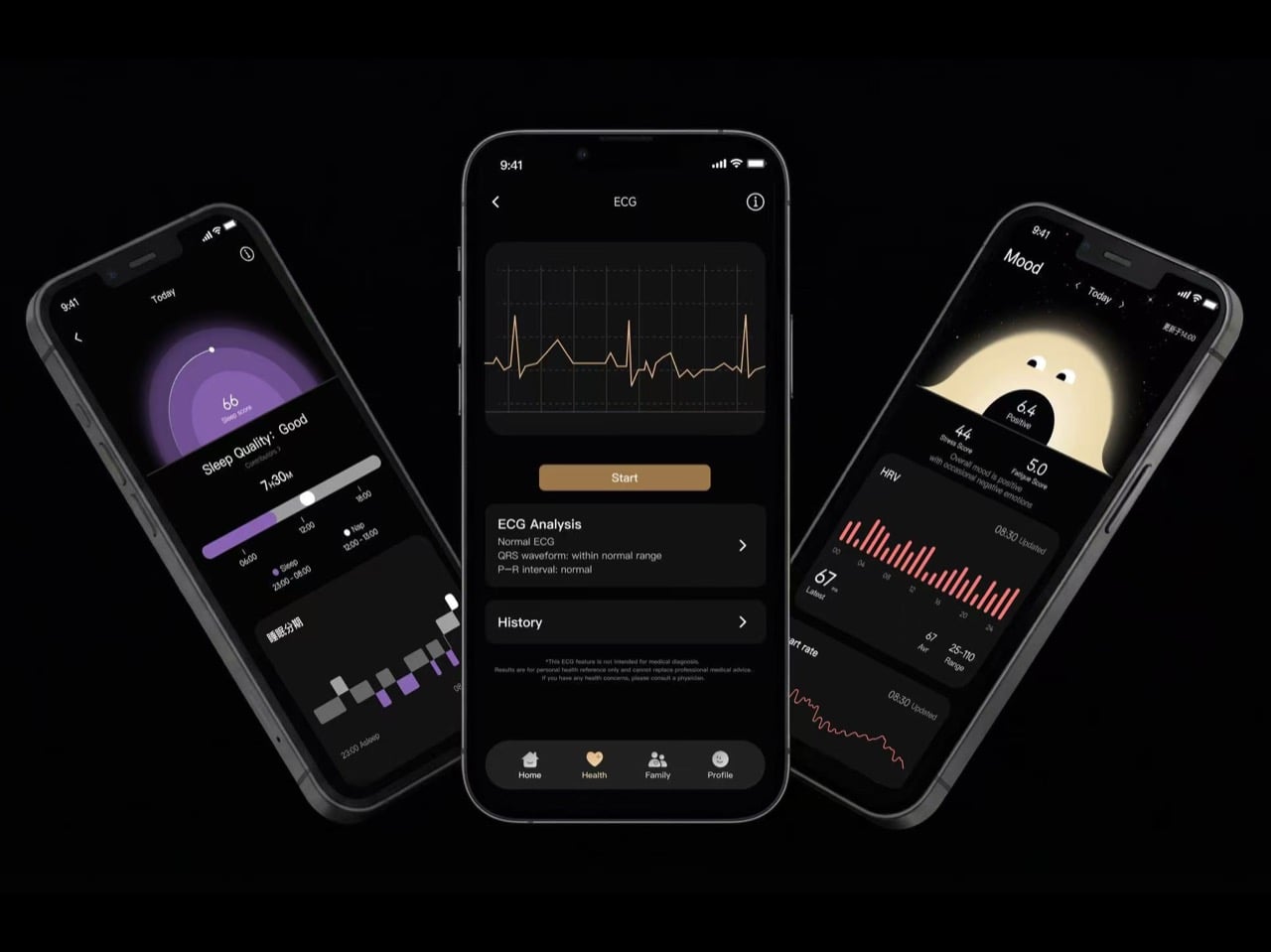
The Dreame Health Ring is the more advanced and serious of the two. This is the one aimed squarely at users who want professional-grade monitoring and peace of mind. Its headline feature is the ability to generate ECG reports on demand, moving it closer to a medical-grade device than a typical fitness tracker. It is built around a core of accurate health monitoring and safety alerts, using AI-driven analysis to flag potential issues. Think of this as the quiet, reassuring guardian, focused on delivering vital health data you can potentially share with a doctor, rather than tracking your mood during a movie.

Landing later this year, the Dreame AI Smart Haptic Ring is the lifestyle-focused sibling. You are looking at a 2.5 mm thin body that is about 7.5 mm wide and weighs a featherlight 5.2 grams. The outside is a microcrystalline zirconia nano-ceramic with a Mohs hardness of 8, while the inner band is a slick antibacterial alloy. This ring is all about AI-driven health and sleep tracking, but with a focus on interpretation and daily living. It is designed to be the wearable you forget you are even wearing.

Packed inside that tiny frame is the trifecta of modern health sensors: PPG for heart rate and SpO₂, a temperature sensor, and an accelerometer. This all feeds into the AI sleep algorithms that Dreame claims can nail your REM, deep, and light sleep stages with less than a 5 percent error rate. The AI ring tracks all your key vitals 24/7 and holds about a week of data offline, which is exactly how these trackers should work. But where the Health Ring focuses on ECGs, the AI ring uses this data to power its more experimental features.

This is where we get to the AI ring’s headline feature: the emotion sensing. It claims it can generate a real-time emotion index with 92 percent accuracy. Now, is it going to replace your therapist? Absolutely not. But that is not the point. The real value is in the biofeedback. It is a tool for spotting patterns, for seeing a data-driven trace of how your body reacted to a stressful day while your brain was telling you everything was fine. It is a fascinating, and potentially humbling, new layer of self-awareness that separates it from the more advanced Health Ring.

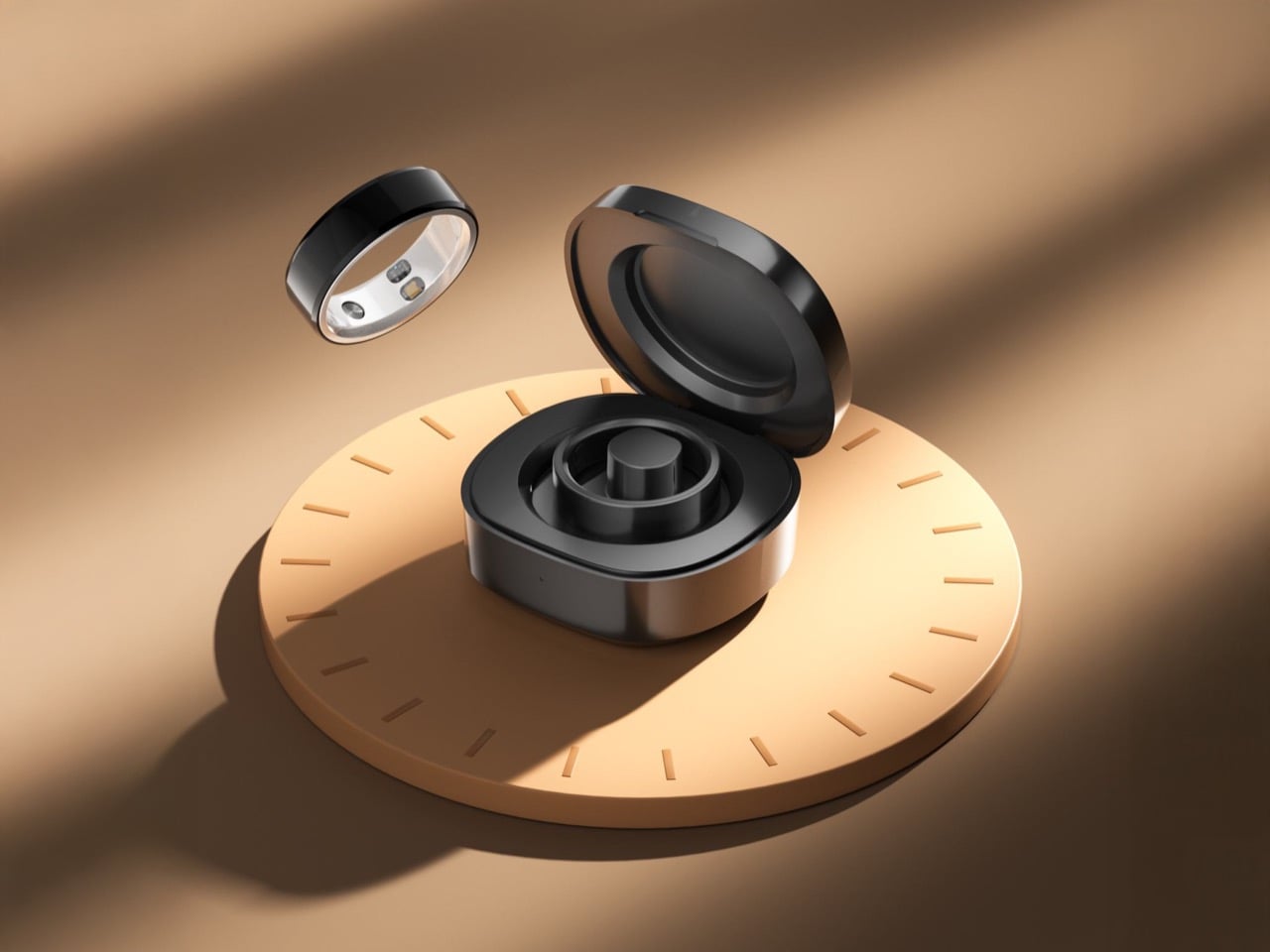
The design of the AI ring is meant to be invisible. It is a screenless, silent loop of ceramic. Instead of a screen, you get a tiny vibration motor inside for its AI Haptic Alerts, a subtle tap on your finger for a call or message, not a jarring buzz that makes everyone in the room look at you. Those haptics also support tap gestures for controlling music or snapping a photo. The battery life reflects this always-on philosophy, with about a week on the ring itself and a charging case that gives you a claimed at least a 100 days of use before you need a wall outlet.

So why are we seeing this two-ring strategy pop up around the Championship Sunday? It is a smart move. It frames the brand not as just another gadget maker, but as a company thinking deeply about the future of personal health. We are obsessed with the analytics of pro athletes, tracking every metric to understand their performance. Dreame is betting that we are finally ready to apply that same level of nerdy obsession to ourselves, and by offering two distinct paths, they are letting us choose just how deep we want that data to go.

The post Forget Step Counters: Dreame’s New Smart Rings Focus On ECG Reports, Sleep, And Real-Time Emotion Data first appeared on Yanko Design.
Apple iPhone Fold ‘Ultra’ Could Have a 5,700mAh Battery and $2,299 Price Tag

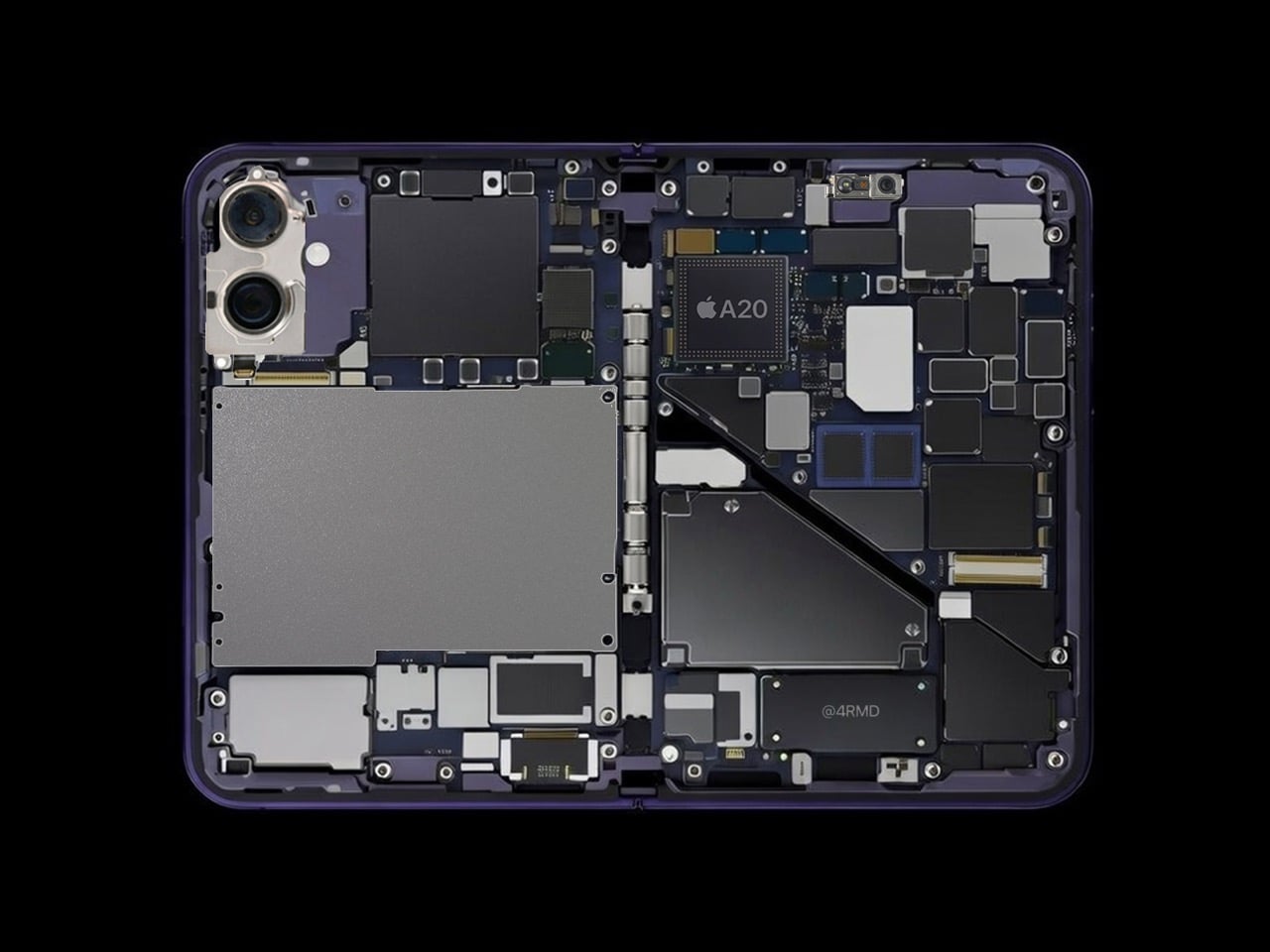
Apple got thousands of people to pay $3,499 for an ambitious “spatial computing device.” Can they convince millions to shell out $2,299 for a foldable iPhone? Let’s just take a second to piece the logic. $2,299 gets you TWO latest iPhone Pros and some duct tape to hold them together. You’d get two screens, two camera modules, two processors. Heck, for $2,299 you could almost buy three iPad minis, giving you three 8.3-inch displays with Apple Intelligence running on all of them. What could a $2,299 iPhone Fold offer that would justify such a markup? Well, here’s everything we know.

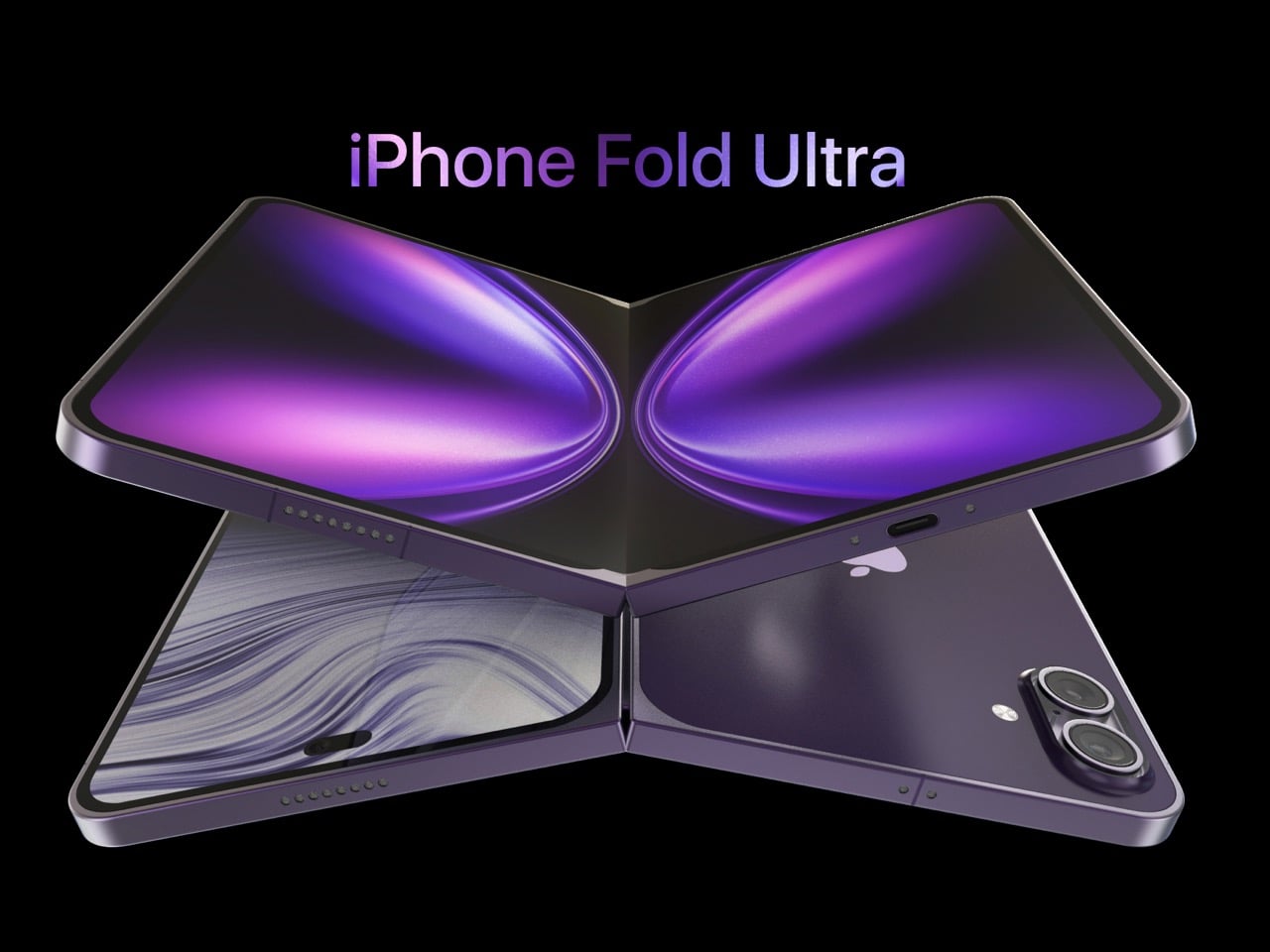
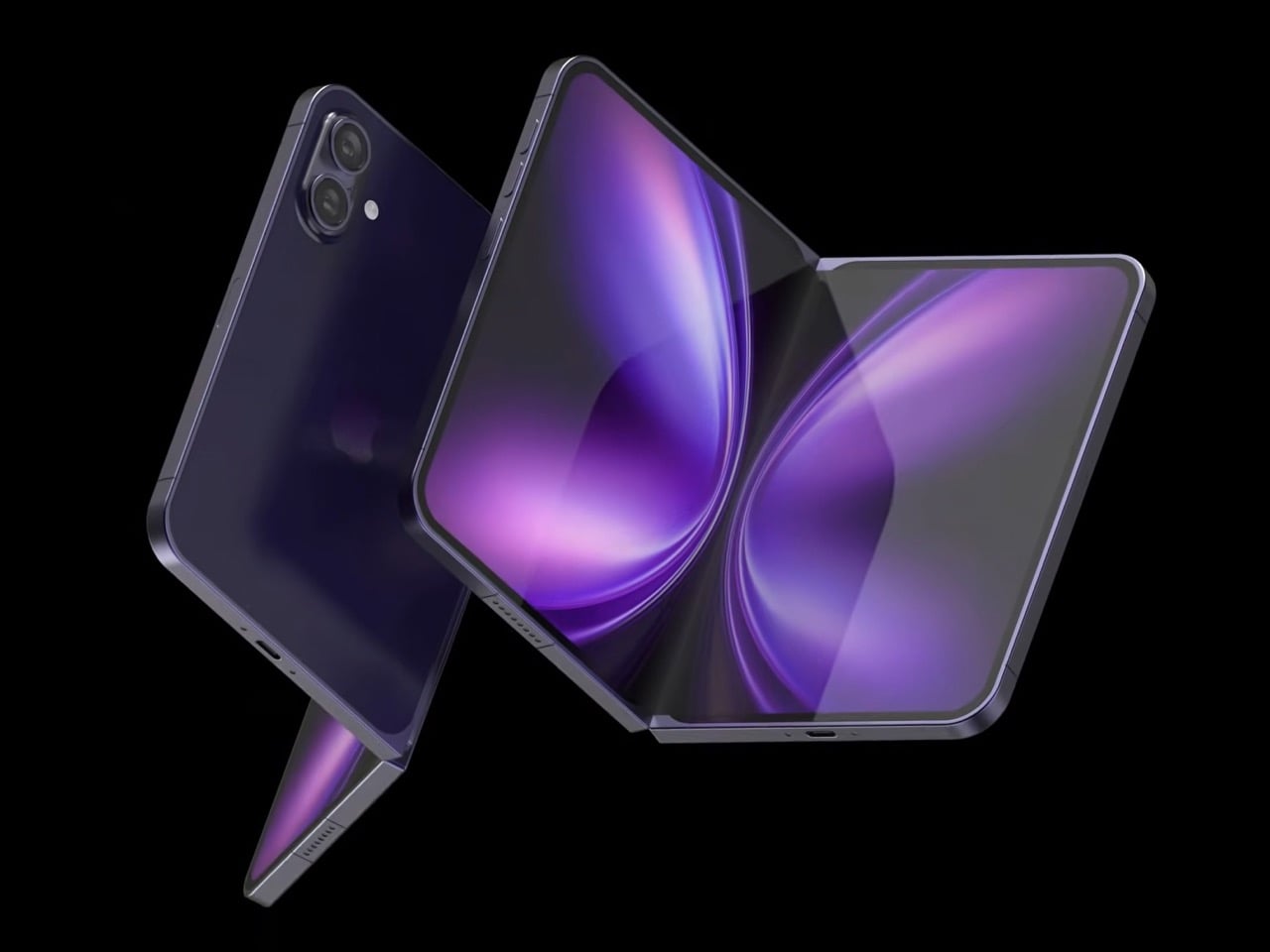
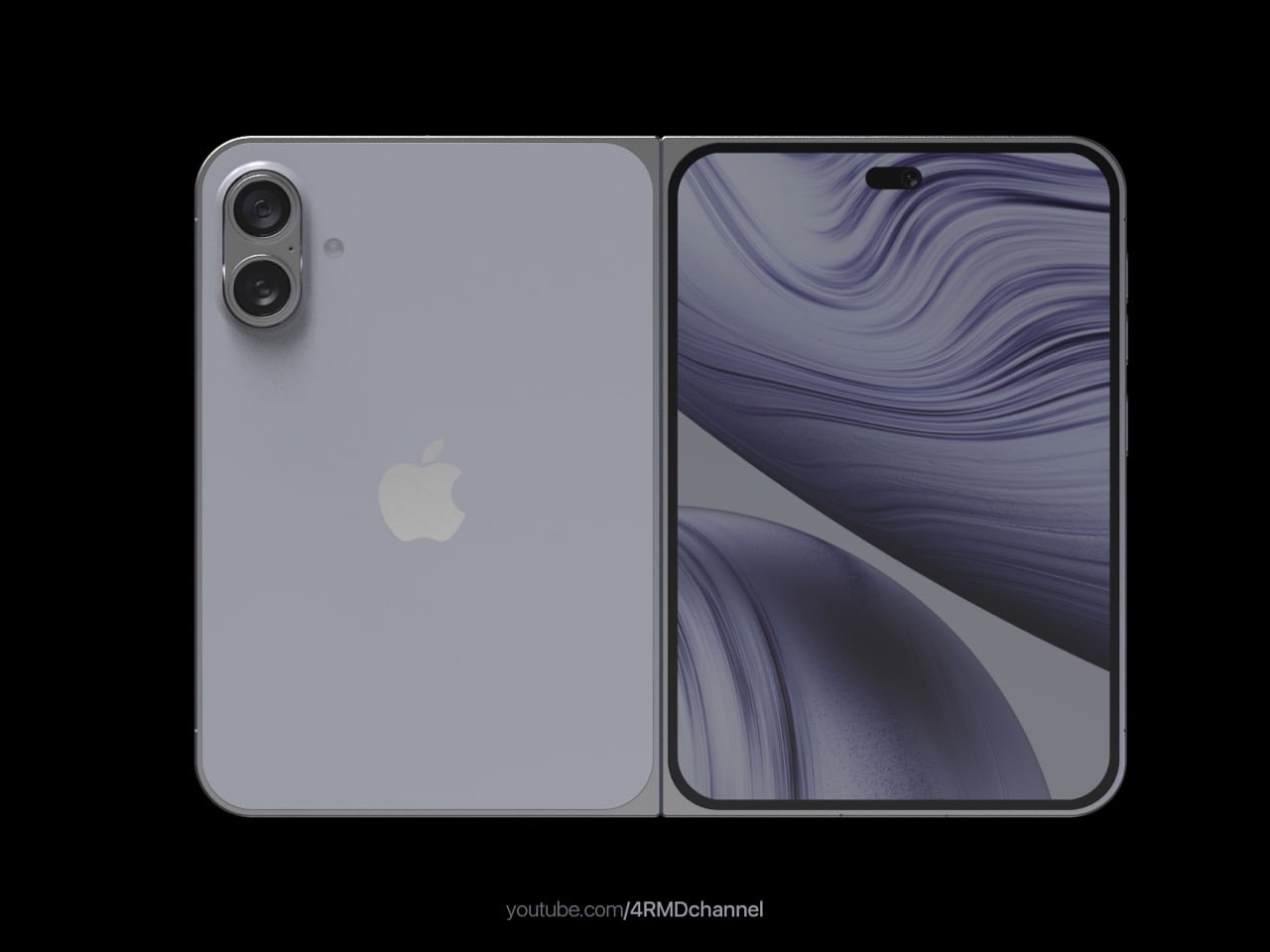
The rumored clamshell-style foldable iPhone is shaping up to be a serious piece of hardware, not just a folding parlor trick. We’re looking at a 5,700mAh battery, which would be the largest ever in an iPhone by a significant margin, promising legitimate all-day power despite running dual displays. The device is expected to feature a 7.8-inch inner display with a 4:3 aspect ratio, essentially giving you an iPad-like canvas that folds into a pocketable form. The outer 5.5-inch screen would function as a standard iPhone when closed. Apple has reportedly solved the crease problem with advanced hinge technology, and the whole package would come wrapped in titanium, measuring just 4.5mm when unfolded.

Designer: 4RMD

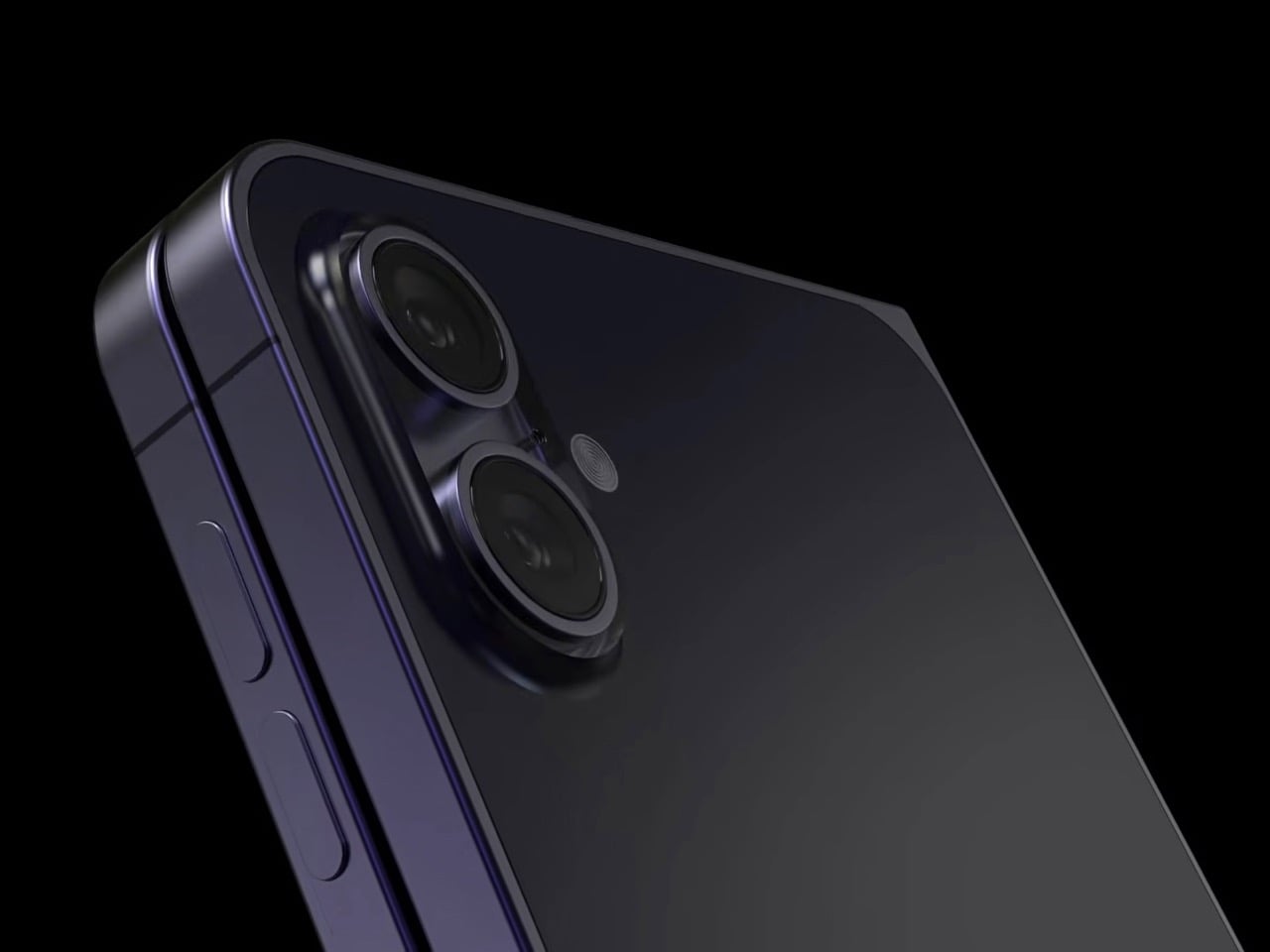
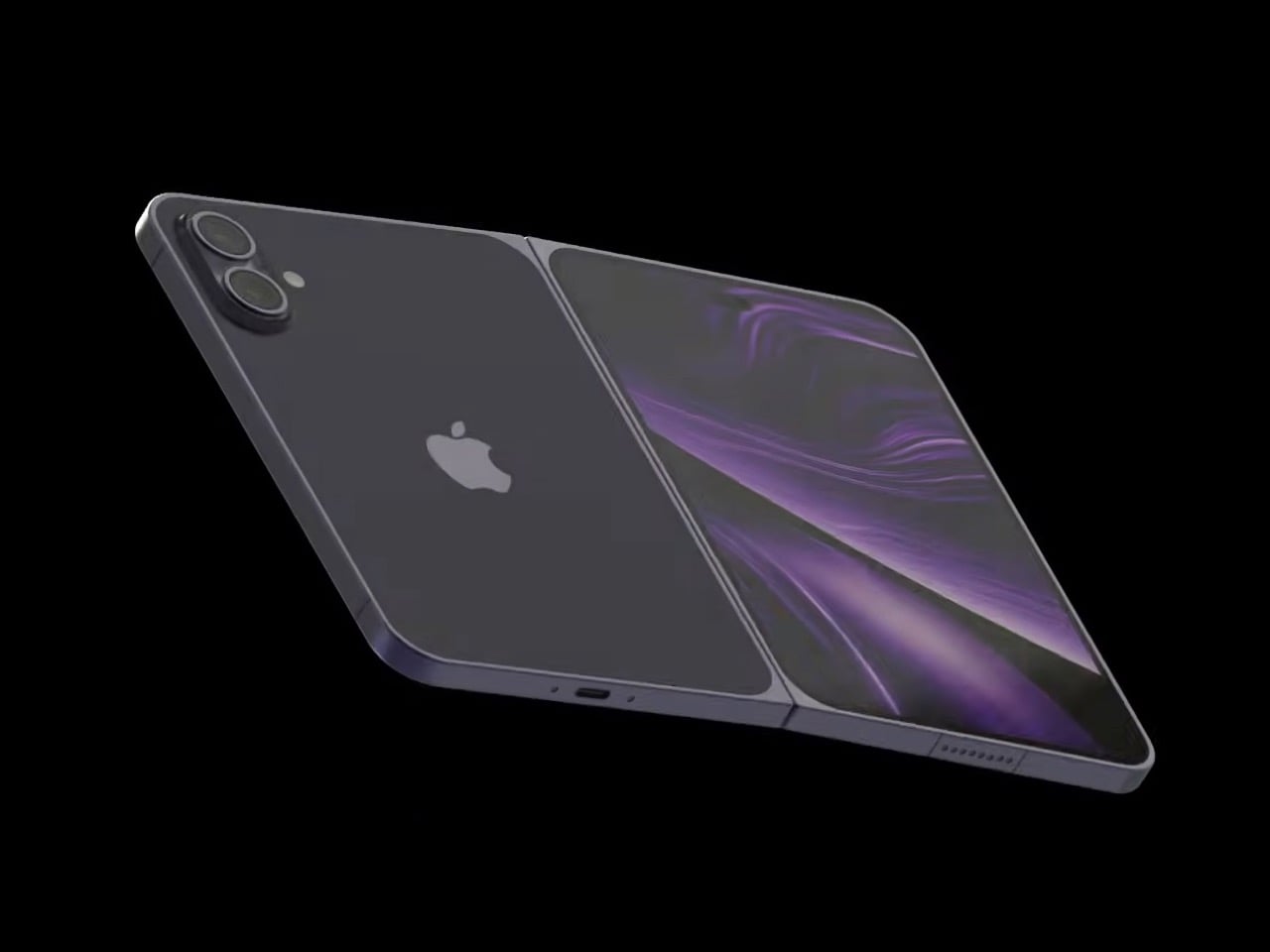
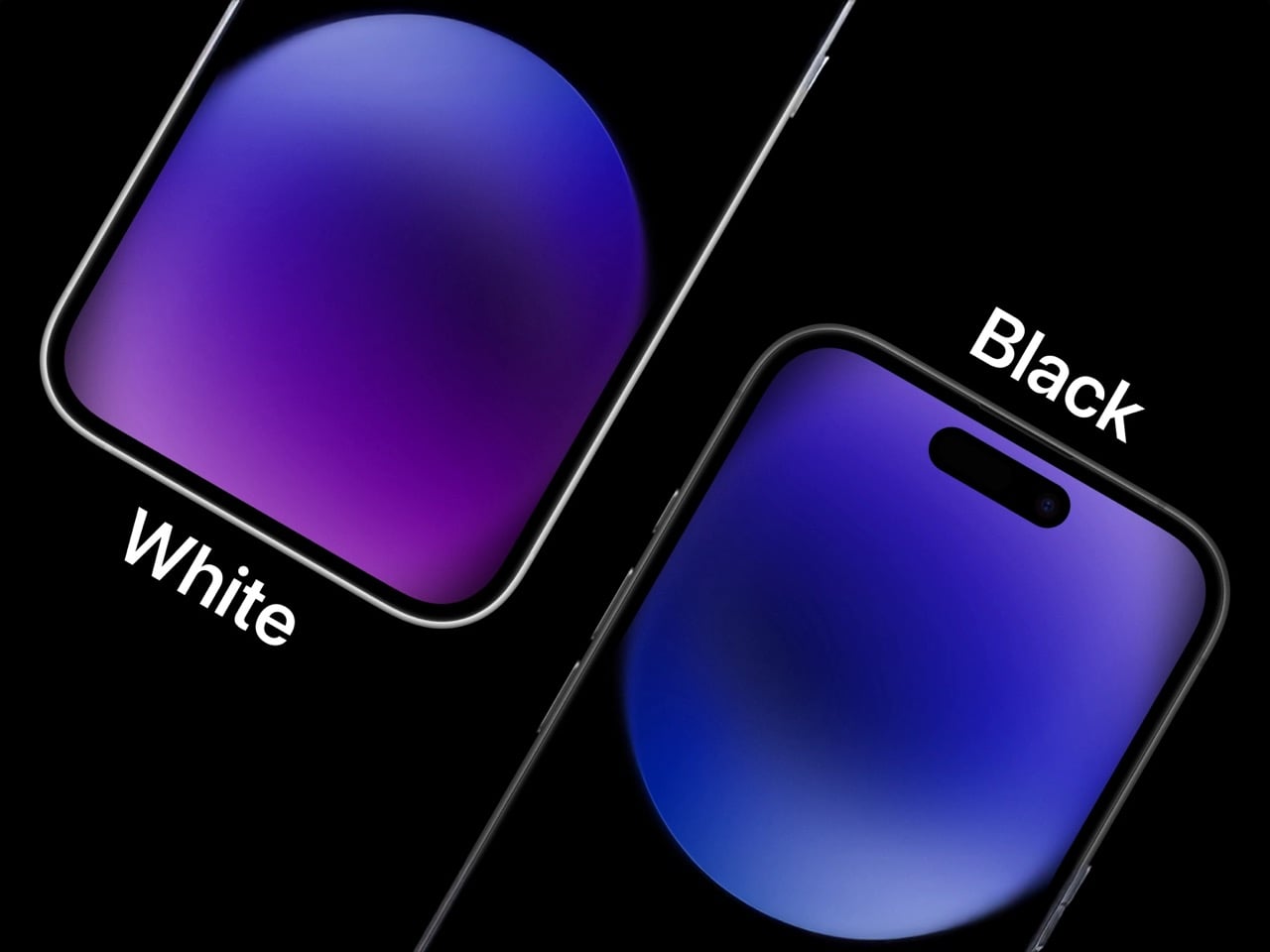
Design studio 4RMD has visualized what this device could look like, and they’ve added the “Ultra” moniker to their concept to spice things up. The specs they’ve compiled from various leaks and reports paint a picture of a device that belongs in the upper echelons of Apple’s lineup, alongside the Apple Watch Ultra and potentially justifying that eye-watering price tag. The renders show a book-style foldable with dual 48MP rear cameras and a 24MP ultra-wide front camera, all running on the upcoming A20 Pro chip built on a 2nm process. Three color options appear in the concept: White, Black, and Deep Purple, the latter being a callback to the iPhone 14 Pro’s most popular finish.

Of all those specs, the 5,700mAh battery is the one that really stops you in your tracks. It’s a direct shot at the Achilles’ heel of every single foldable currently available. Samsung’s Galaxy Z Fold 7 limps along with a 4,400mAh cell, and anyone who has used one knows that’s barely enough to get through a busy day. Google’s Pixel Fold does a bit better with 4,821mAh, but it’s still a compromise. A battery that large, combined with Apple’s legendary efficiency, means this could be the first foldable that you can actually use without constantly hunting for an outlet. That alone is a massive selling point.

Of course, stuffing a battery that big into a chassis brings up the immediate question of weight. Foldables are notoriously heavy; the Pixel Fold is a hefty 283 grams, and the Z Fold 6 is 239 grams. For context, an iPhone 16 Pro Max is around 227 grams. This is where the rumored titanium frame becomes critical. Titanium provides the necessary rigidity for a complex hinge mechanism without turning the phone into a pocket brick. If Apple can keep the weight manageable while achieving that 4.5mm unfolded thickness, they will have solved a core ergonomic problem that competitors are still struggling with.

The physical interaction model also gets a rethink, with Touch ID making a comeback on the power button. This isn’t a step backward; it’s a pragmatic engineering choice. Putting Face ID on both the inner and outer screens would mean two expensive, space-consuming TrueDepth systems. A single fingerprint sensor on the side works seamlessly whether the device is open or closed, and it’s a proven, reliable technology. If anything, it makes sense after years of FaceID not working when the phone isn’t facing you head-on. Just let me unlock my phone while it’s beside me in bed, Apple…
All this premium hardware would be for nothing if the main screen still felt like a compromise, which brings us to the crease. The concept details a nearly invisible one, which lines up with reports of Apple using advanced ultra-thin glass and a unique Liquidmetal hinge. Competitors have made progress, but you can still feel and see the fold on every device out there. If Apple truly manages to create a seamless internal display, it will remove the last major psychological hurdle for potential buyers. It would finally make a foldable screen feel like a single, uninterrupted canvas.

So, when do we actually get our hands on this thing? The consensus has been fall 2026, launching alongside the iPhone 18 Pro. That timing is now looking a bit shaky. Apple has reportedly pushed the standard iPhone 18 into 2027 because of component shortages, and the company is still wrestling with getting Apple Intelligence just right. If the Fold’s software isn’t ready (or even a better Apple Intelligence to pair with it), a delay seems inevitable. A slip from late 2026 to early 2027 would place its release right inside the window for the iPhone’s 20th anniversary. The original launched in June 2007, and it feels fitting that the 20th anniversary iPhone be one that bends in half on purpose.

The post Apple iPhone Fold ‘Ultra’ Could Have a 5,700mAh Battery and $2,299 Price Tag first appeared on Yanko Design.