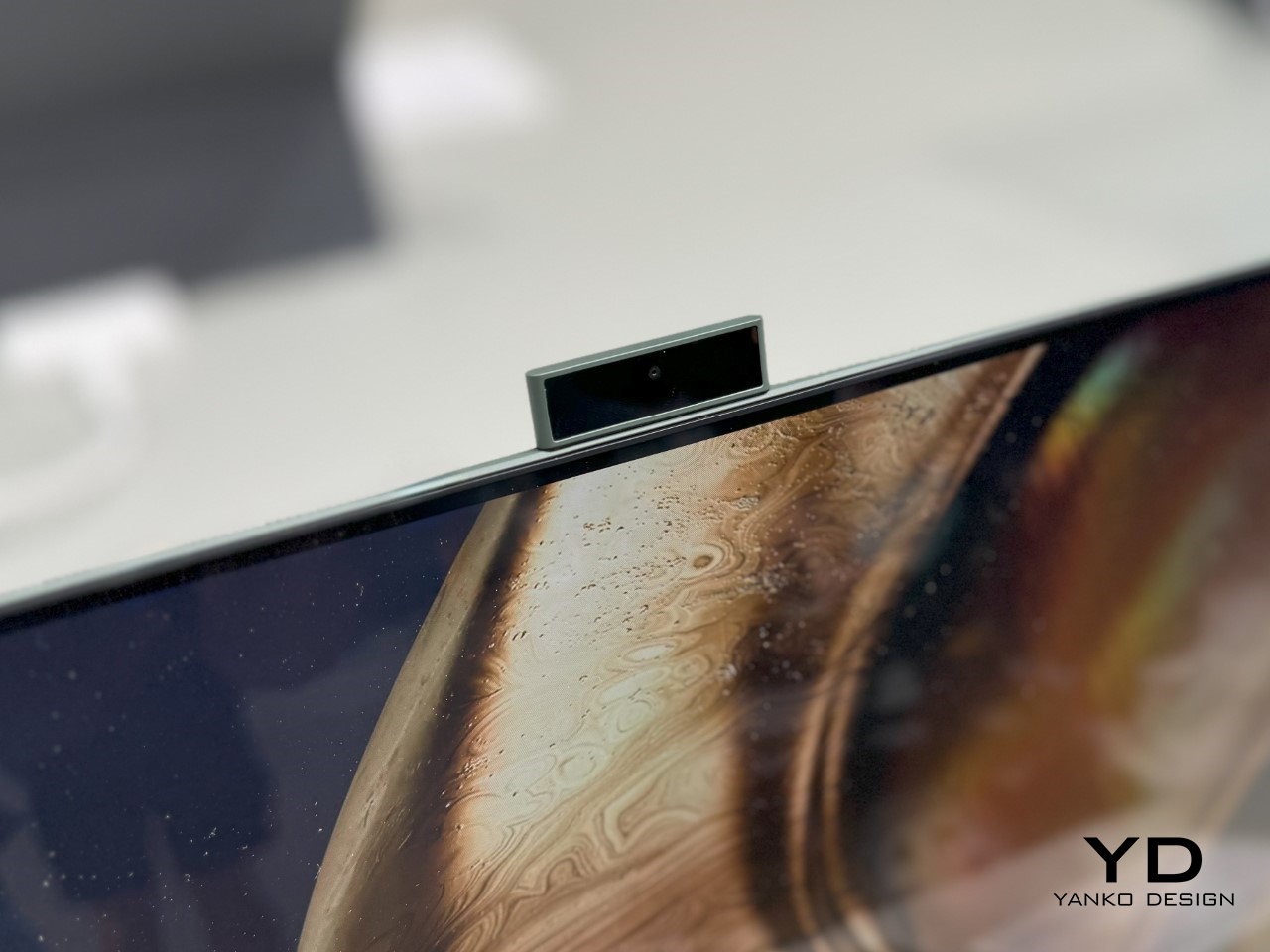
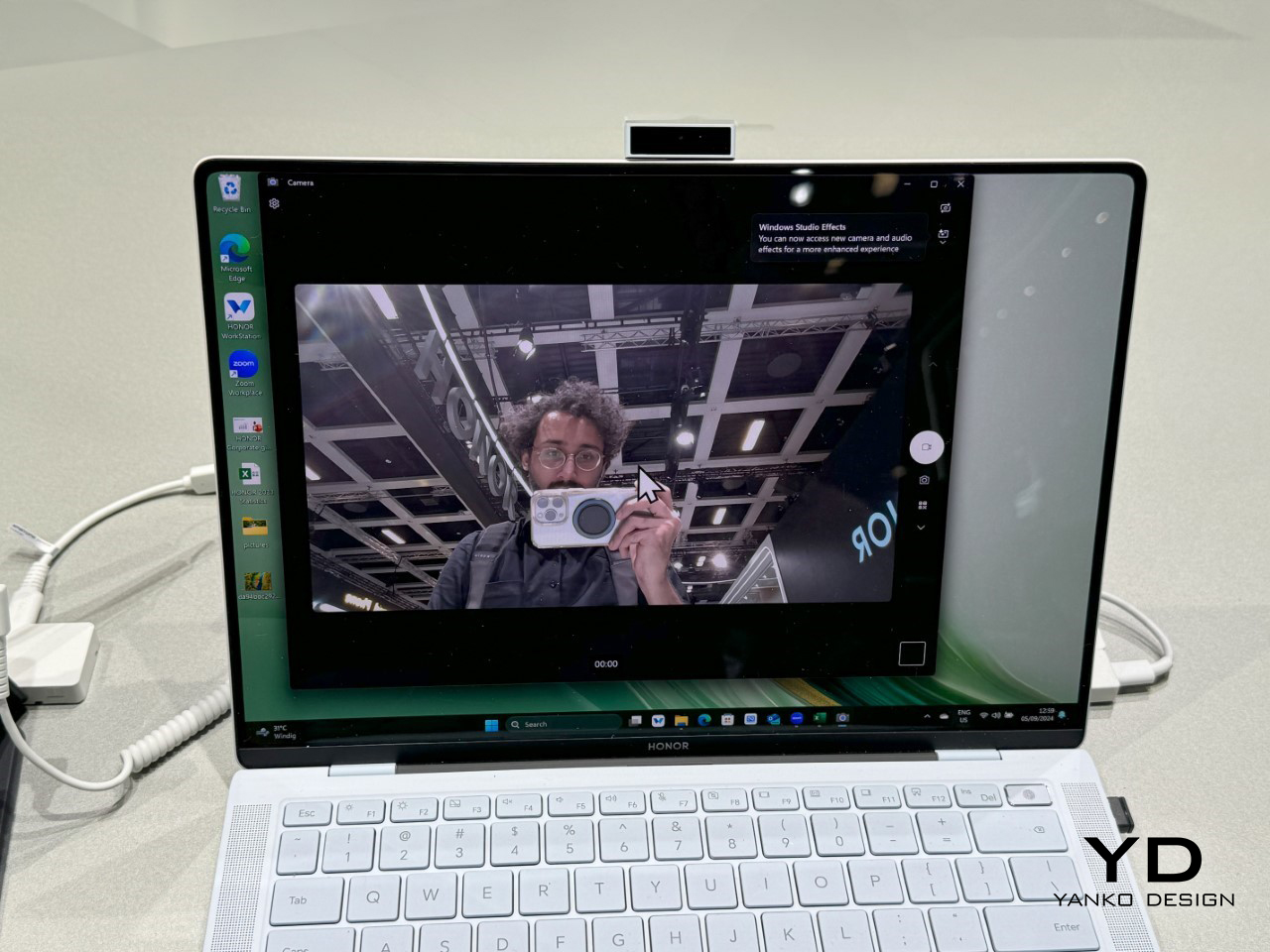
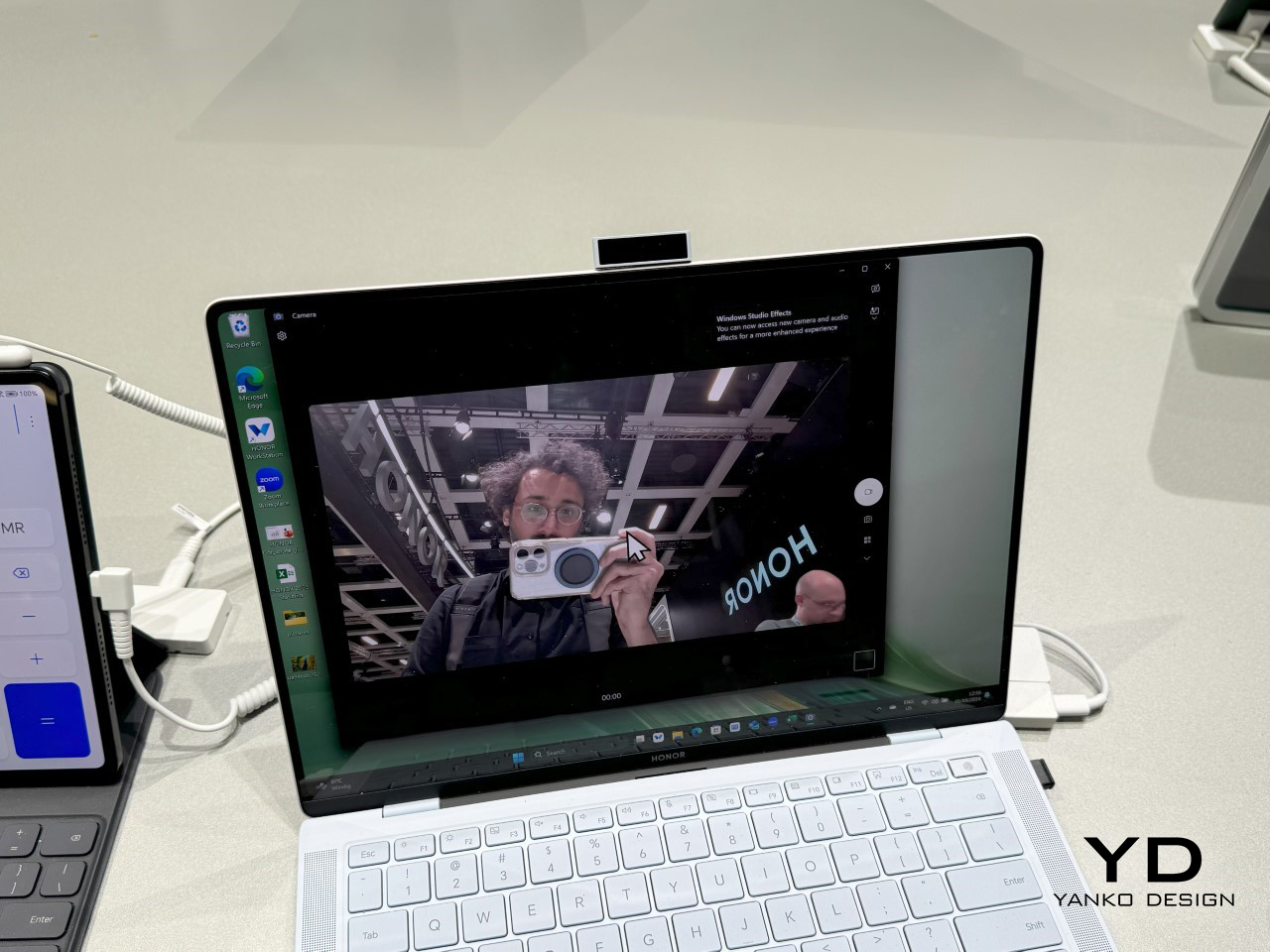
Not only is the HONOR MagicBook Art 14 thinner AND lighter than Apple’s latest MacBook Air, it happens to have more ports, thinner bezels, and a higher screen-to-body ratio. However, the most impressive part about the entire laptop is the visible lack of a notch in the screen, like the one on Apple’s MacBook series. Honor’s solution is equal parts bizarre and clever – a magnetic snap-on camera accessory that docks inside the laptop when you’re not using it.
This rather innovative camera accessory measures a few millimeters and fits right inside the laptop’s body when not in use. However, when you need to attend a video call, the camera module pops right out of the side of the laptop, and magnetically attaches to the top of the laptop screen. The solution circumvents Apple’s notch problem, while also giving you a convenient privacy filter – you can simply pull the camera off to disconnect it.
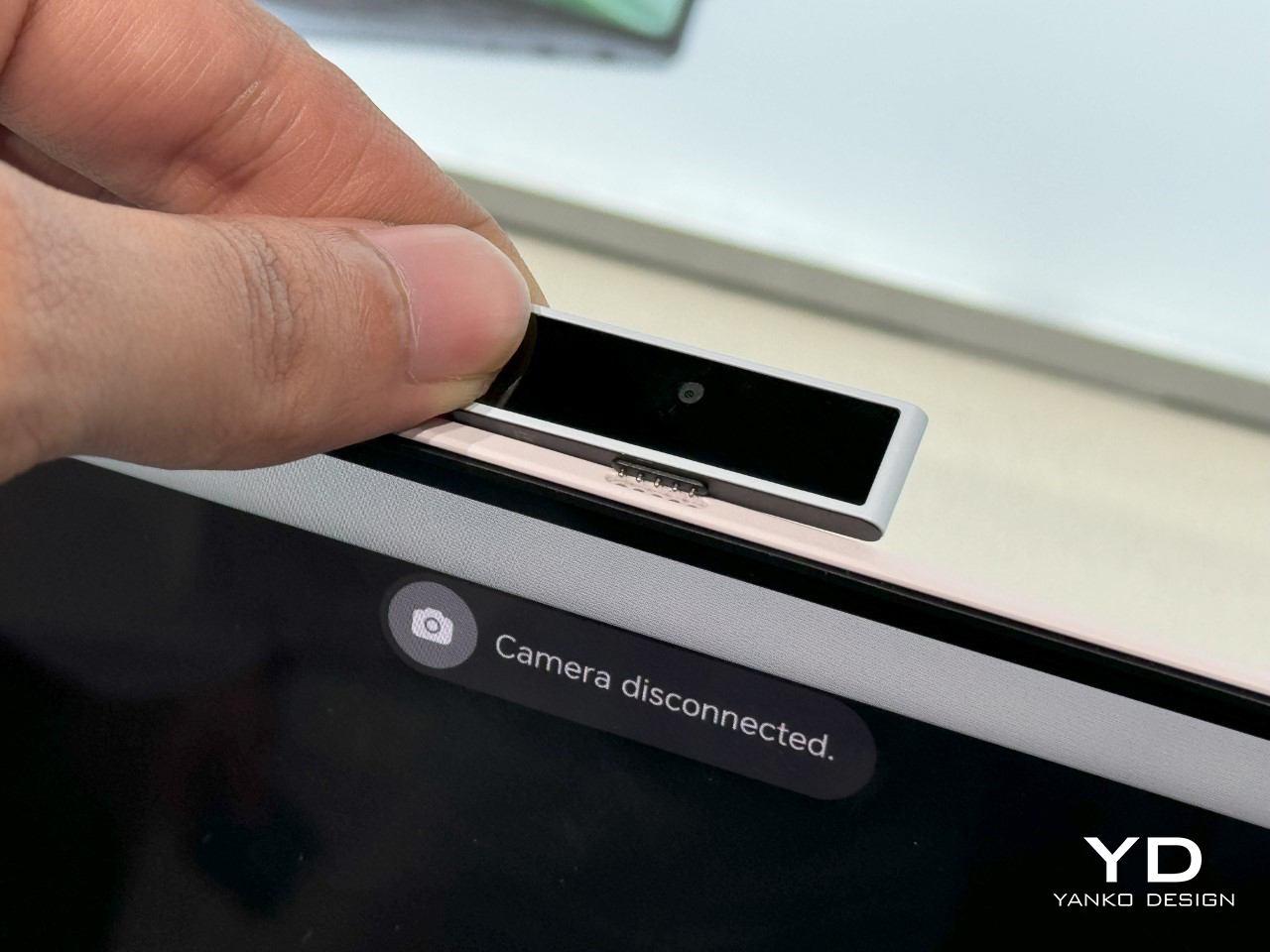
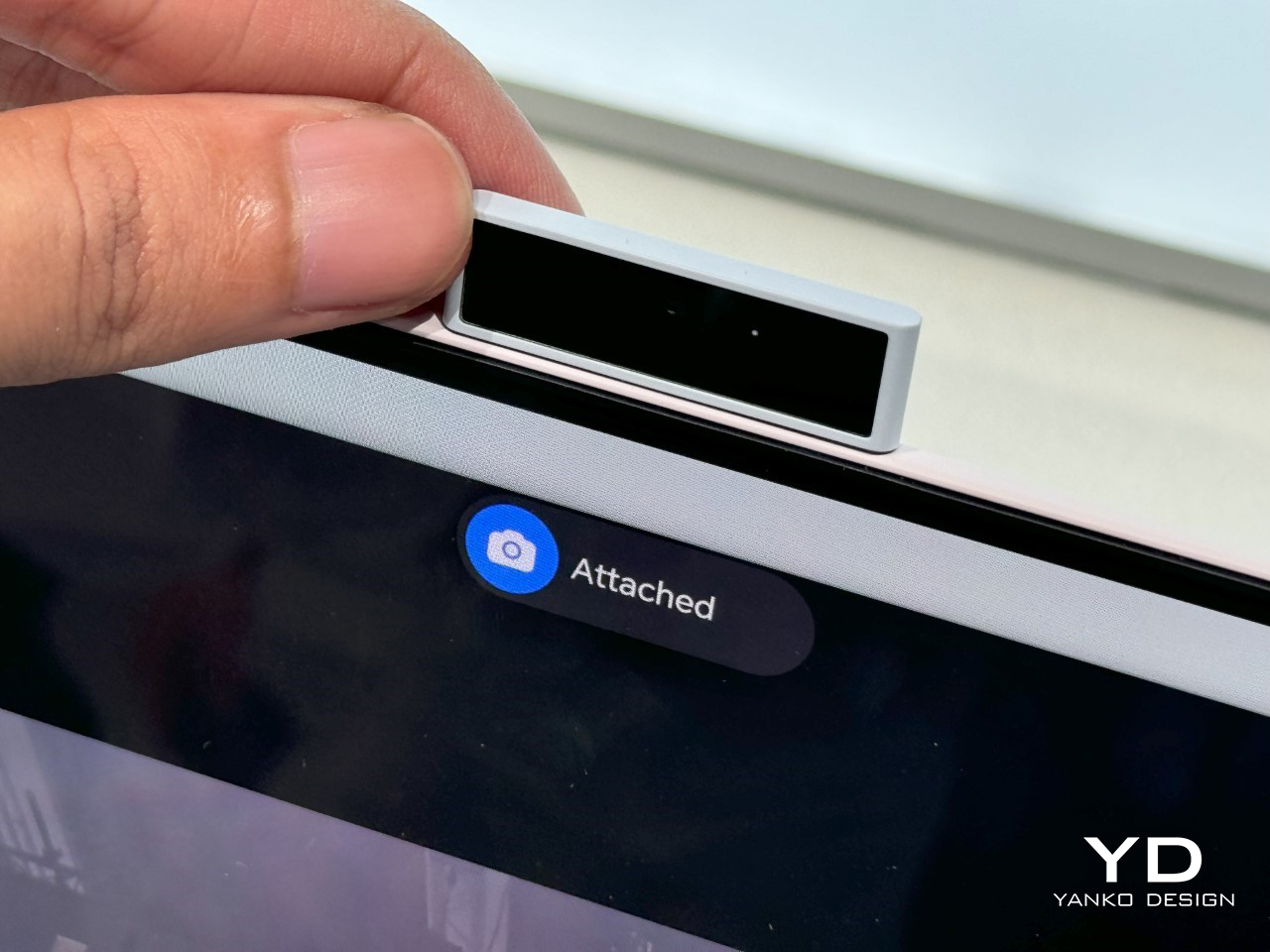
The MagicBook Art 14’s camera outputs 1080p videos, and uses a powerful set of magnets to automatically connect either to its docking point on the side of the laptop, or the connection hub on the top of the screen. The super-slim camera module doesn’t sport a battery, which means it automatically powers down if disconnected. Pogo-pins on the camera’s base let you instantly connect the module to your laptop. No software, no drivers, no Bluetooth, no configuring… nothing. Snap on, and the camera starts working… snap off, and it is physically disconnected. The only caveat is that you do stand a chance of potentially losing the webcam if you aren’t careful. Honor doesn’t mention if the webcam module is available separately (just in case you lose yours), but it does have incredibly strong magnets, so when it’s attached, you can rest assured that it won’t accidentally fall off.
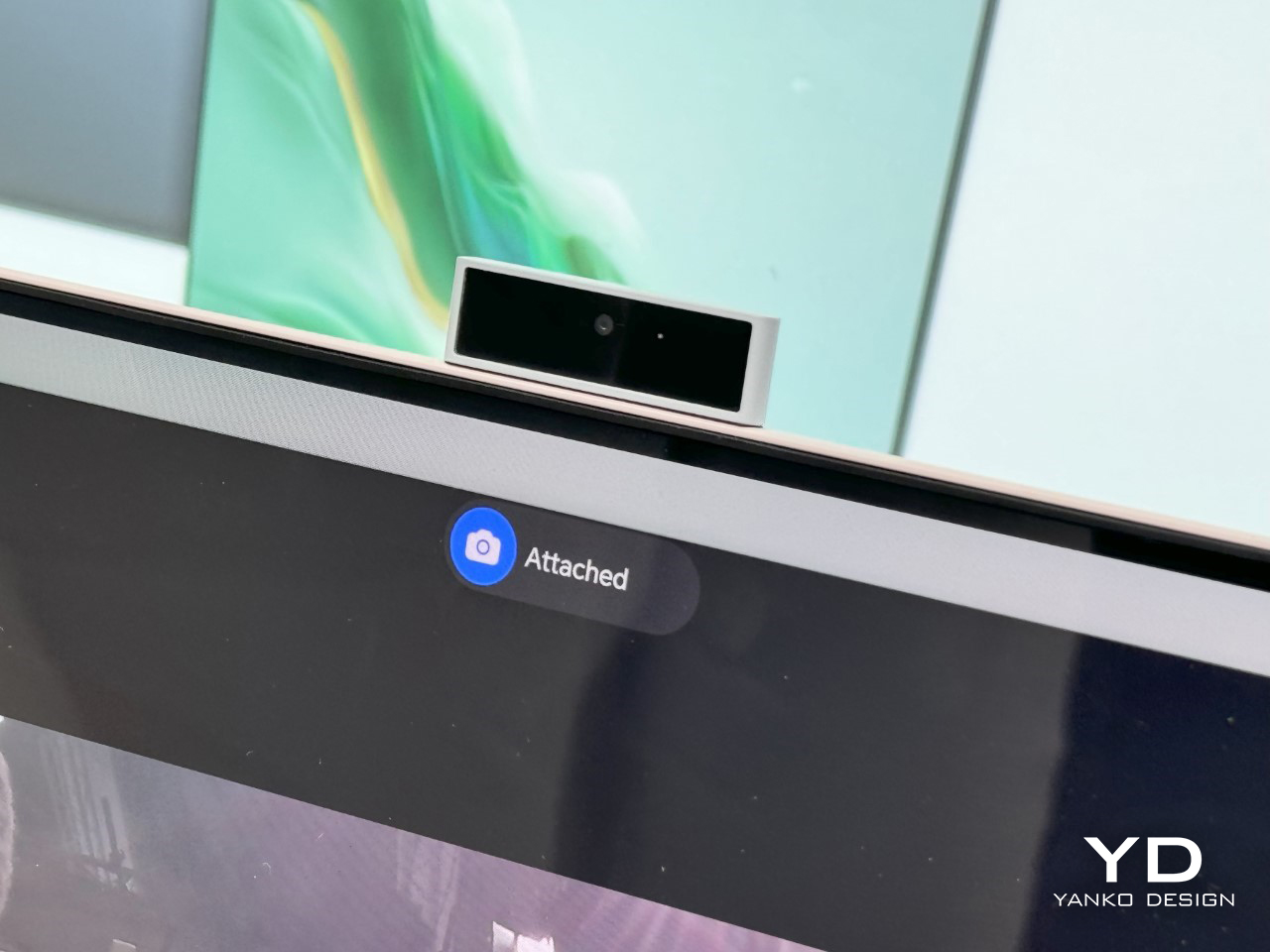
The snap-to-connect camera feels so simple and intuitive that it makes USB webcams look sluggish. The camera has the form factor of a tiny thumb drive, and includes the camera itself, the pogo-pin connectors, the powerful rare-earth magnets, and a tiny light that glows when the camera’s connected. A notification displays on the laptop screen to tell you whether the camera’s paired properly or not. It’ll even let you know if the camera is stowed in the side of the laptop.
The coolest part, however, is that the camera is reversible – another feature that allows the MagicBook Art 14 to stand out against the MacBook or any other laptop. Flip the camera over and dock it facing the other way, and you have a front-facing camera, perfect for presentations. You can literally flip the camera in the middle of a meeting and the video automatically flips over.
Flip the camera 180 degrees for front-facing video.
The HONOR MagicBook Art 14 is thinner AND lighter than the MacBook Air, while still boasting a larger 14-inch screen. Honor’s CEO pointed out that despite this, it also has a USB-A and HDMI port apart from 2 USB-C ports, outpacing the MacBook Air even in port quantity. The MagicBook Air 14 was announced at IFA 2024, although there’s no official word on price yet.
Beware: The most addictive game of 2024 is coming to a device that’s always within reach. Balatro, a clever combination of poker, deck-building and roguelikes, will arrive on iOS — as a standalone purchase and Apple Arcade — and Android later this month. (That’s plenty of time to shop for a power bank or battery pack.)
Created by Canadian solo developer LocalThunk and published by Playstack, Balatro (styled as Balatro+ on Apple Arcade) is one of Engadget’s picks for best PC games. It's one of the great indie gaming success stories of 2024.
Unlike poker, Balatro’s spin includes magical tarot cards and unique Jokers that can dramatically alter your hands. For example, one might increase the pool of cards to build your hand from, and another could raise your score if your hand hits a particular sequence. Depending on which Joker you draw, you may be forced to rethink your entire strategy. (But play them strategically because you’re limited to five per hand.)
Its presentation adds to the fun. It includes a synthwave soundtrack, trippy animations and a delightfully retro CRT filter.
If you don’t know much about poker, don’t sweat it. First, poker is only one element of the game — and, even then, it encourages you to break its rules. Balatro also includes tutorials and help pop-ups to make learning the unique deck game (and throwing away all your free time) as easy as possible.
Balatro launched in February on PC, PlayStation, Xbox and Switch (and on macOS in March). It arrives on Android and iOS on September 26. It will be a $10 standalone purchase on either mobile platform or free on Apple devices for Apple Arcade subscribers. Those in the Apple ecosystem can also play it on iPad, Mac, Apple TV and Vision Pro.
2K Sports / Apple
NBA 2K25 Arcade Edition, which continues the franchise’s mobile-friendly spinoffs for Apple devices, is also coming soon to Apple Arcade. This year’s version adds The Neighborhood, the open-world, skill-building environment first seen in the standard version of NBA 2K18. It also adds a revamped version of Greatest Mode, where you can relive iconic moments from NBA legends, past and present. 2K Sports promises new Great Mode players will be added throughout the season.
NBA 2K Arcade Edition arrives on Apple Arcade on October 3.
This article originally appeared on Engadget at https://www.engadget.com/gaming/balatro-is-coming-to-mobile-and-its-going-to-ruin-my-life-173039968.html?src=rss
More standard streaming services include live sports now — Sunday Night Football on Peacock, CBS NFL games on Paramount+, Thursday Night Football on Prime Video — but if you want a comprehensive suite of sports channels, plus other live programming and local news, Fubo might be the way to go. It came out on top for sports in our guide to the best live TV streaming services and right now you can get your first month of Fubo's Pro-tier subscription for $50 instead of $80. The Elite with Sports Plus plan is down from $100 to $70 for the first month and the top-level Deluxe package is $80 as opposed to the usual $110.
Whichever plan you go with, you'll get more sports coverage than a human person can reasonably consume — even the cheapest tier grants access to ESPN and ESPN2, FS1 and FS2, multiple NBC Sports channels, CBS Sports, Fubo's own sports networks and more. The Elite with Sports Plus tier throws in NFL RedZone and about 100 additional channels, and enables 4K streaming quality. And, finally, the Deluxe plan gets you all that plus international sports.
Fubo makes it easy to record games you want to watch later and every plan comes with unlimited DVR cloud storage with a nine-month expiration for recordings.
When you're not watching athletic matchups, you can try out the rest of what Fubo offers. When I tested it out for our guide, I found the service to be nicely organized with a clean and easily navigable interface. It really shines at showcasing live content (though browsing through VOD content wasn't quite as breezy).
This article originally appeared on Engadget at https://www.engadget.com/deals/fubo-tv-streaming-plans-are-30-off-for-the-first-month-right-now-171510242.html?src=rss
Health tech company Abbott has been working on a number of biometric wearables for regular consumers. Now, we can get our hands on one. The company just released the Lingo continuous glucose monitor.
This is an over-the-counter device, so you can just order it without prior approval. However, it’s not intended for diabetics, as it isn't designed for insulin pumps or serious medical alerts. Rather, it’s for curious people who want to keep an eye on their glucose levels.
Here’s how it works. The biosensor gets stuck to the back of the arm and can stay there for up to 14 days straight. During that time, the device continuously streams glucose data to the affiliated smartphone app. This should, in theory, translate the “body’s reaction to food, exercise and life’s daily stressors.”
Abbott
The app looks particularly robust, providing access to all kinds of related health metrics. There are glucose graphs that update in real time and something called Lingo Count, which displays data related to glucose spikes.
There’s even a place for food and activity logging and the app syncs with Apple Health to automatically track workouts. Once there’s enough information in the system, it’ll provide tailored recommendations and create challenges to encourage healthy habits.
Each Lingo biosensor costs $49, but they only work for two weeks and aren’t reusable. The company is offering combo packs, with two sensors available for $89 and six for $249.
Abbott’s Lingo device isn’t the first over-the-counter continuous glucose monitor on the market. A company called Dexcom received FDA approval for a similar sensor earlier this year. The company’s Stelo Glucose Biosensor is also $89 for two units, each working for two weeks.
This article originally appeared on Engadget at https://www.engadget.com/wearables/abbotts-otc-glucose-monitor-is-now-available-in-the-us-170036887.html?src=rss
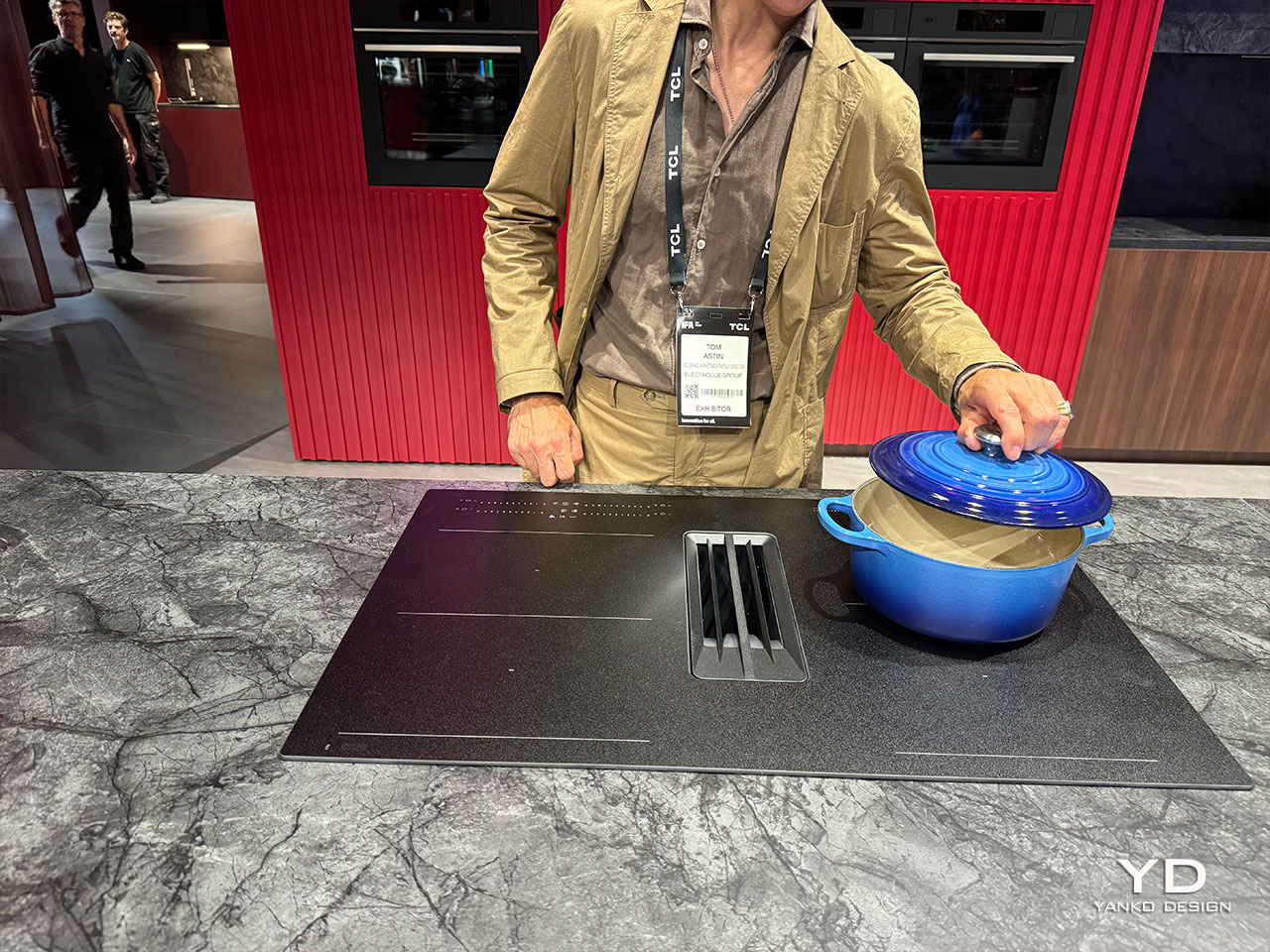
Being stuck at home for months not only gave birth to the indoor gardening trend, it also helped people rediscover the joys of home cooking. The rise of the domestic chef who’s excited to try out new recipes for themselves or for their families has also given rise to the need for more sophisticated kitchen appliances. At the same time, however, aesthetics has never been more important than it is today, with kitchens finally getting the recognition they deserve as sanctuaries that serve not only food but peace of mind as well. With so many requirements on many levels, it’s no surprise that some brands falter in meeting those needs or choose to focus on just one or two aspects. At IFA 2024 in Berlin, AEG is proudly rising up to the challenge, delivering a new range of kitchen products that deliver not only AI-assisted cooking but also elegant designs that take the cooking experience to the next level.
AI is everywhere these days, but it doesn’t have to be a complicated feature that requires an entire manual to use. With AEG’s Assisted Cooking, you have smart technologies right under your fingertips, literally, ready to help you with new recipe ideas, the best settings to use for that dish, and even the safest way to preserve the food so you can enjoy it a lot longer. From preparation to cooking to storage even to cleanup, AEG’s new full kitchen line has got you covered with innovation that’s made easy, convenient, and beautiful.
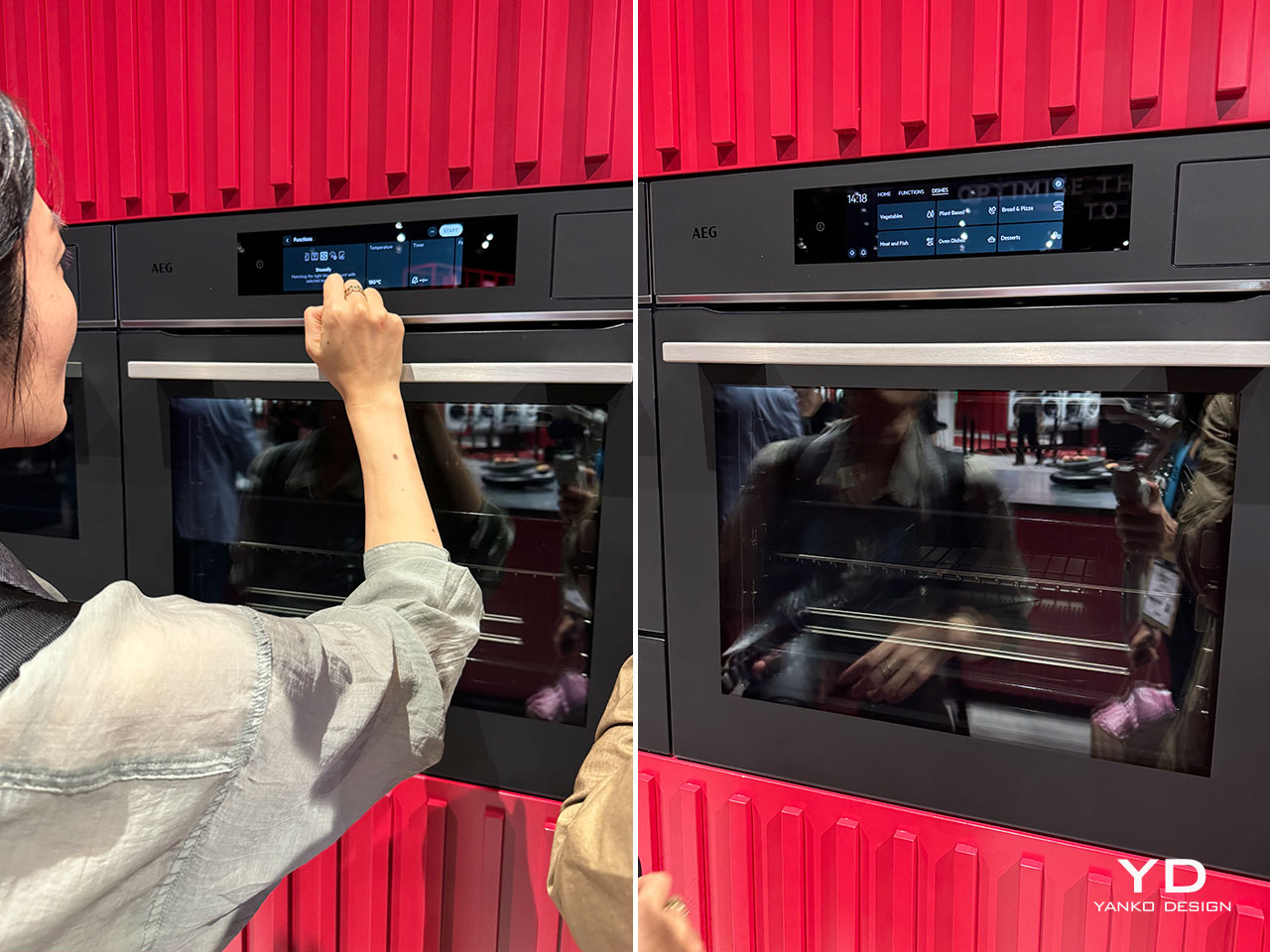
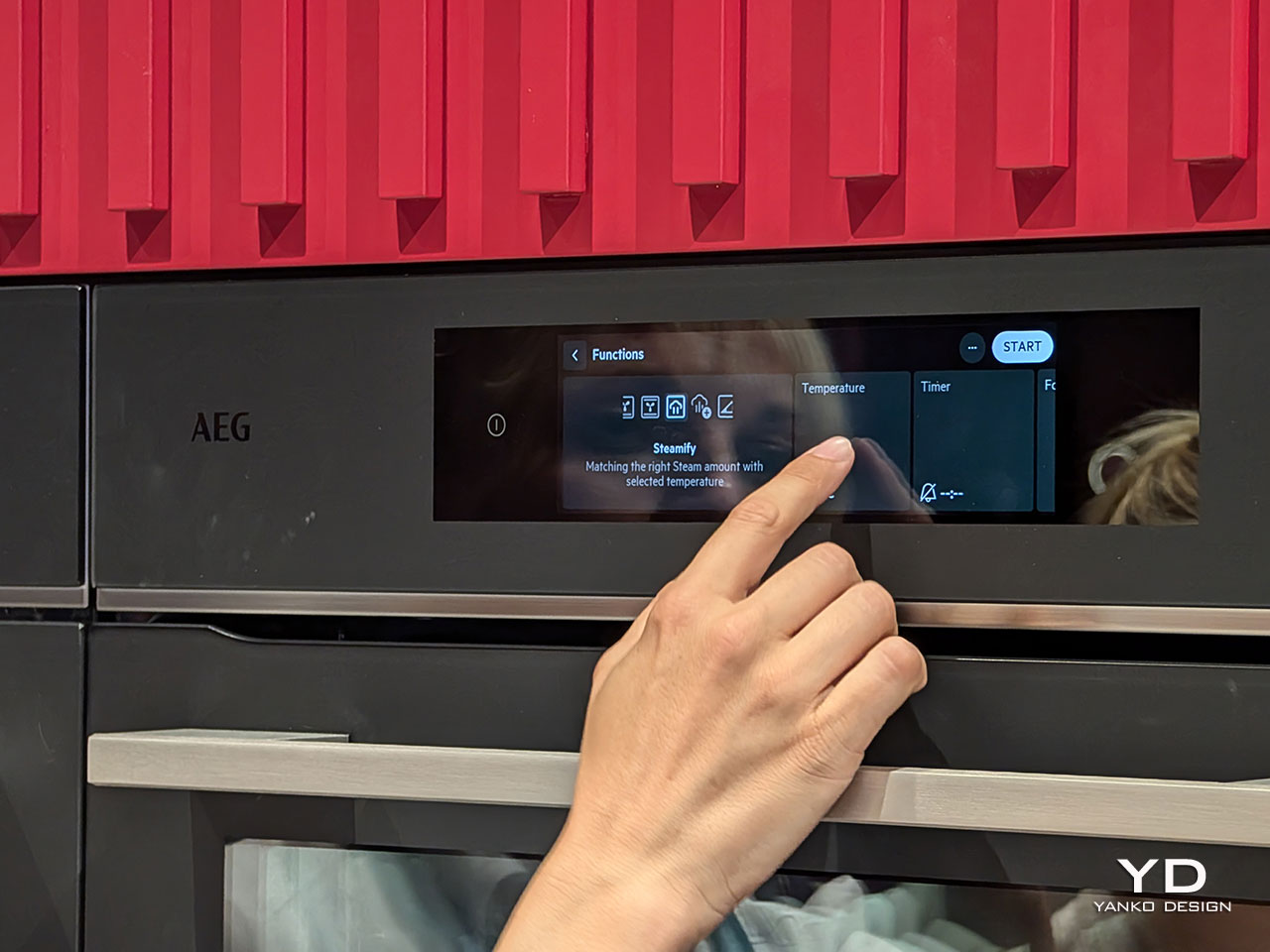
The new AEG 9000 ProAssist with SteamPro Oven, for example, features the AI Taste Assist function that helps you make efficient use of the oven. Simply throw it a recipe and, based on key facets like timing, temperature, and protein type, it will automatically select the most optimal cooking settings. It can even suggest new tasty and nutritious dishes you may have never tried before through the AEG app.
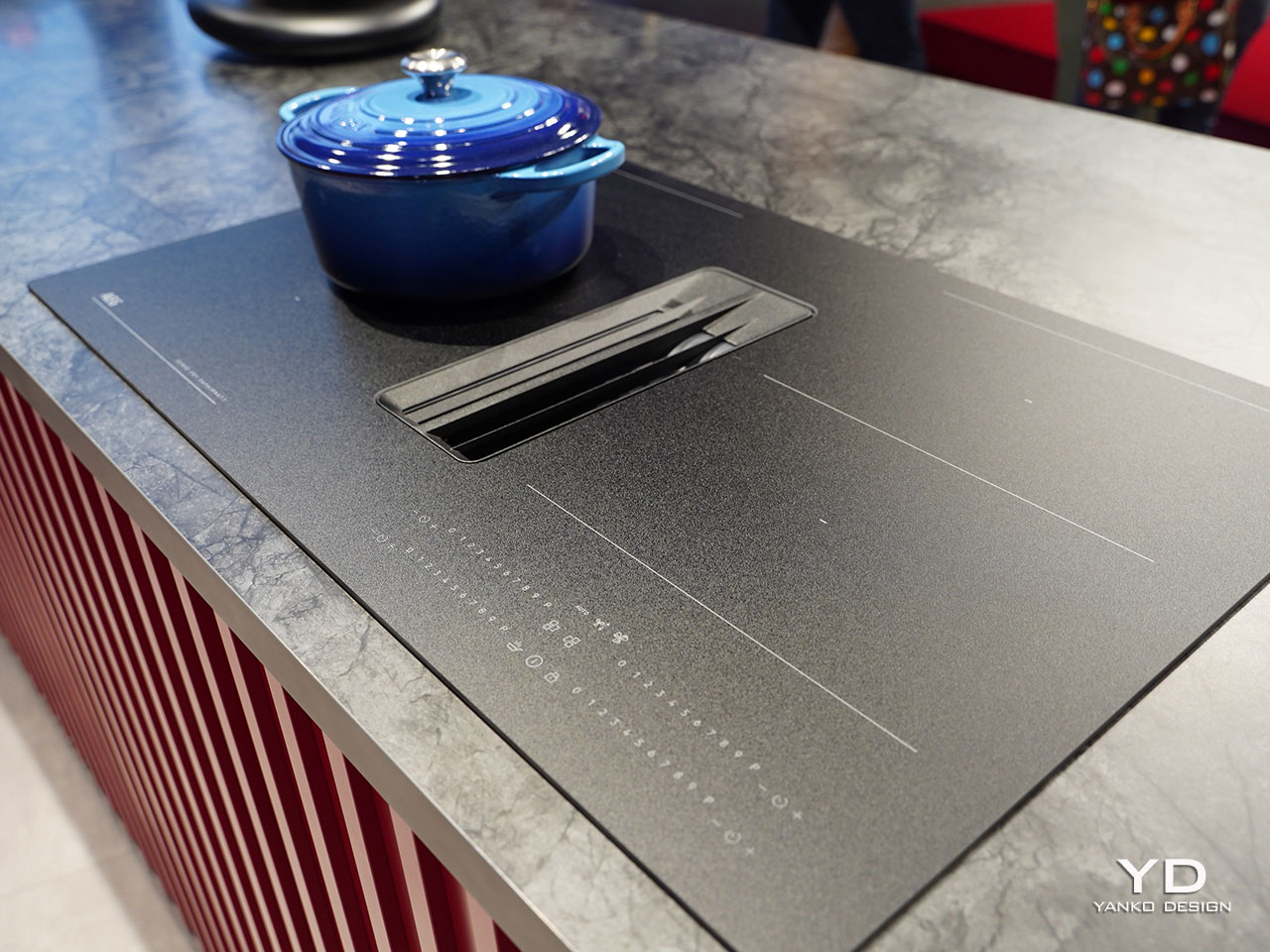
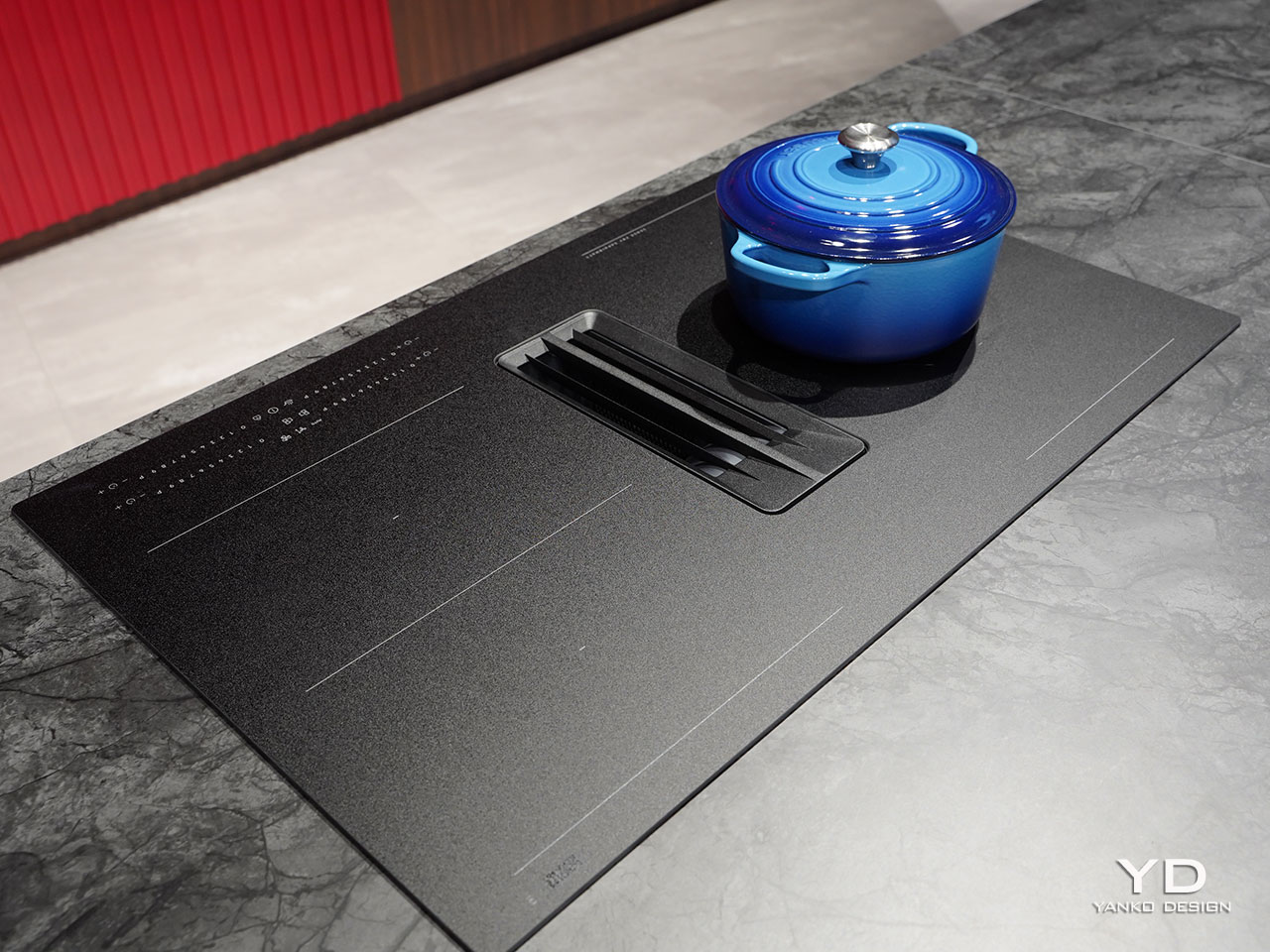
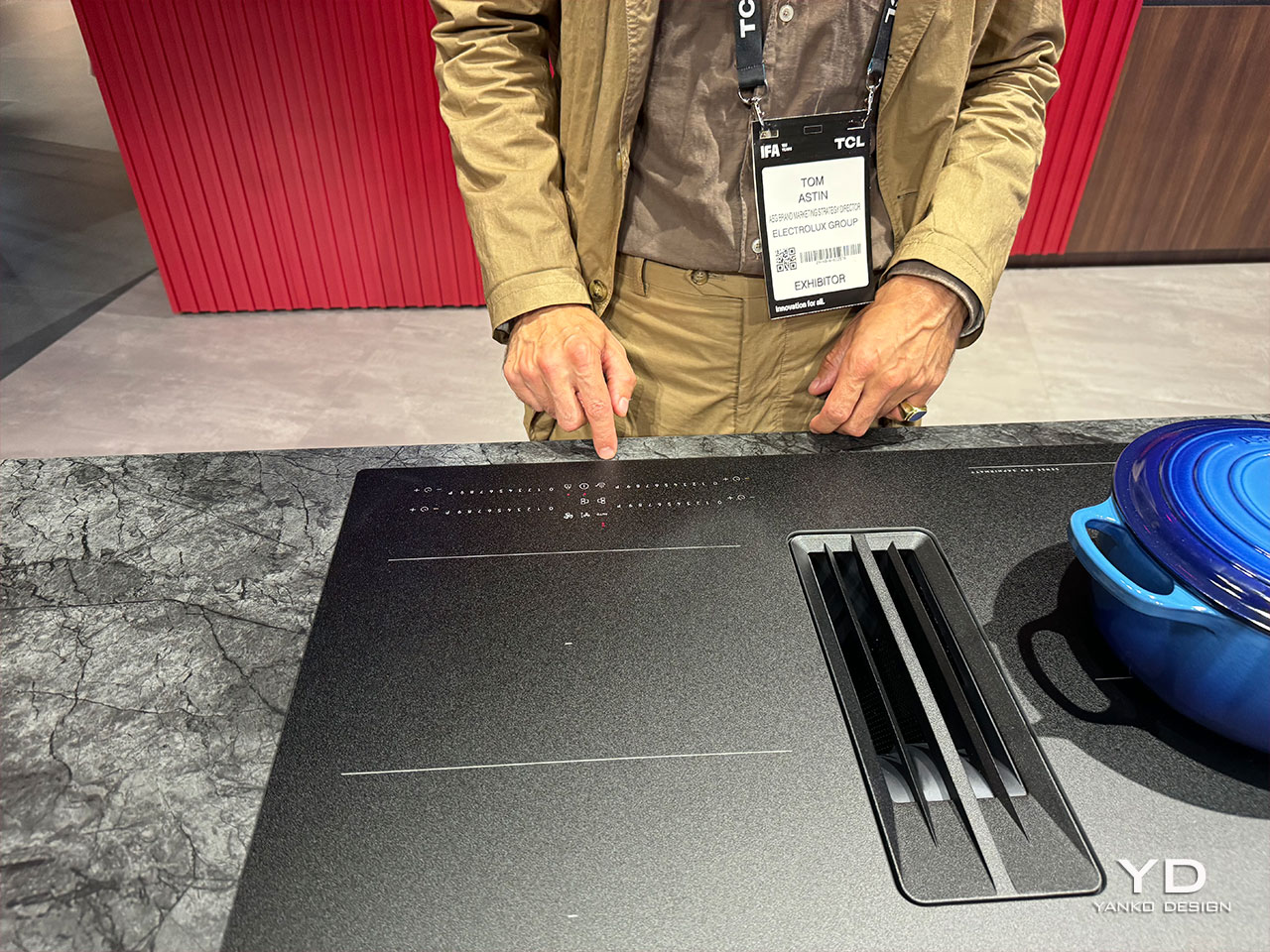
The CookSmart Touch, which is now available on hobs like the new AEG 9000 ProSense Hob, puts all the functions you need under your fingertips. With a simple touch, you can access the new Assisted Cooking function that guides you through each step to complete a dish and even suggests the accessories you’ll need to use. CookSmart Touch also lets you assign pan-frying or boiling to the hob, select different cooking modes, and generally enjoy the cooking process without breaking a sweat.
This intuitive interface is an immense help to novices just discovering the joys of cooking as well pros who want to glide through the process with as little friction as possible. And for the first time, the CookSmart Touch technology provides a seamless experience that spans AEG’s kitchen range, from ovens to hobs to built-in coffee machines. It removes much of the anxiety and uncertainty associated with cooking, adding joy and peace of mind to every meal prep.
Killer Kitchen Style
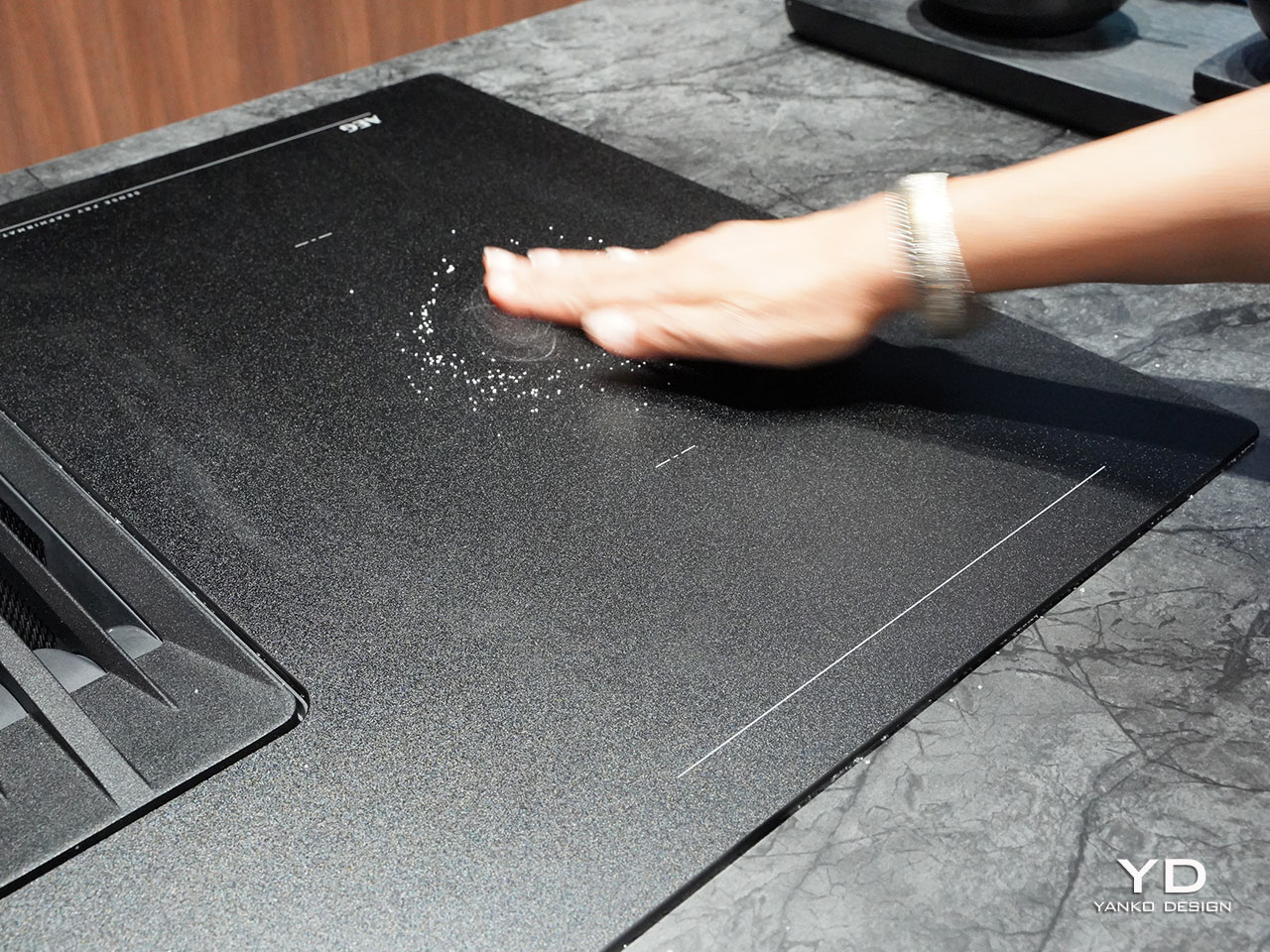
Even with all the innovative technologies, AEG hasn’t forgotten the most important aspect of its kitchen range: the human element. Designed to look dashing in any kitchen setting, AEG’s kitchen products deliver not only an effortless cooking experience but also a style that suits people’s tastes. The AEG SaphirMatt Induction Hub, for example, brings not only a handsome surface to your kitchen but also durability you can rely on when the cooking does get a bit intense.
This year’s lineup is available in Glossy Black and MattBlack, both standing out with their sleek and luxurious dark hues. Signature metal handles provide not only usability but also visual identity, making AEG designs easily recognizable in any kitchen. It’s not just the appliances either but your food that gets the beauty treatment as well. The AEG 9000 AutoSense Hood’s illumination can really make your dishes pop, adding to their already appetizing aromas. The new AEG Kitchen Range not only makes you feel in total control, it also makes you feel like a culinary master in their natural environment.
Healthy Living, Healthy Planet
Cooking your own food is one of the best ways to ensure you’re getting tasty and nutritious meals, but your health doesn’t have to come at the expense of the planet’s. Appliances naturally leave a carbon footprint, but that doesn’t mean you can’t make it significantly smaller. The new AEG Kitchen Range is not only filled with smart features, it’s also designed to be sustainable and energy efficient without you having to worry about pushing a button to activate some “Eco Mode,” helping you reduce your carbon footprint by as much as 30%.
The AEG 9000 ComfortLift Dishwasher, for example, can save up to 40% energy with some guidance from the QuickSelect with Ecometer function. The AEG 9000 MultiChill 0°C Fridge Freezer not only has better energy efficiency but also has an inner lining that’s made of 70% recycled plastic. The AEG 9000 ProAssist with SteamPro Oven can help save energy with its PreHeat and Residual Heat functions, reducing the amount of electricity needed to keep the food warm.
Selected models in this new Kitchen Range are part of the AEG EcoLine and boast high energy ratings, some of which are even higher than “A” in the EU energy efficiency class. More than just innovative performance and striking design, the new AEG Kitchen Range represents the brand’s no-compromise approach to energy efficiency, environmental responsibility, and commitment to a greener tomorrow for all.
Innovation for the Entire Home
The kitchen isn’t the only part of the modern home that AEG is upgrading with its innovative designs. The AEG 9000X AbsoluteCare Pro tumble dryer brings the same care and energy efficiency from the kitchen to the laundry. With the AbsoluteCare feature that uses a heat pump system to dry delicate material like wool and SmartDry that lets you select lower energy settings, this leading-edge machine has earned The Woolmark Company’s Wool Care Green recognition. It also features 3DScan Technology that determines the humidity in down jackets and duvets for the best drying settings that will keep their fluffiness intact.
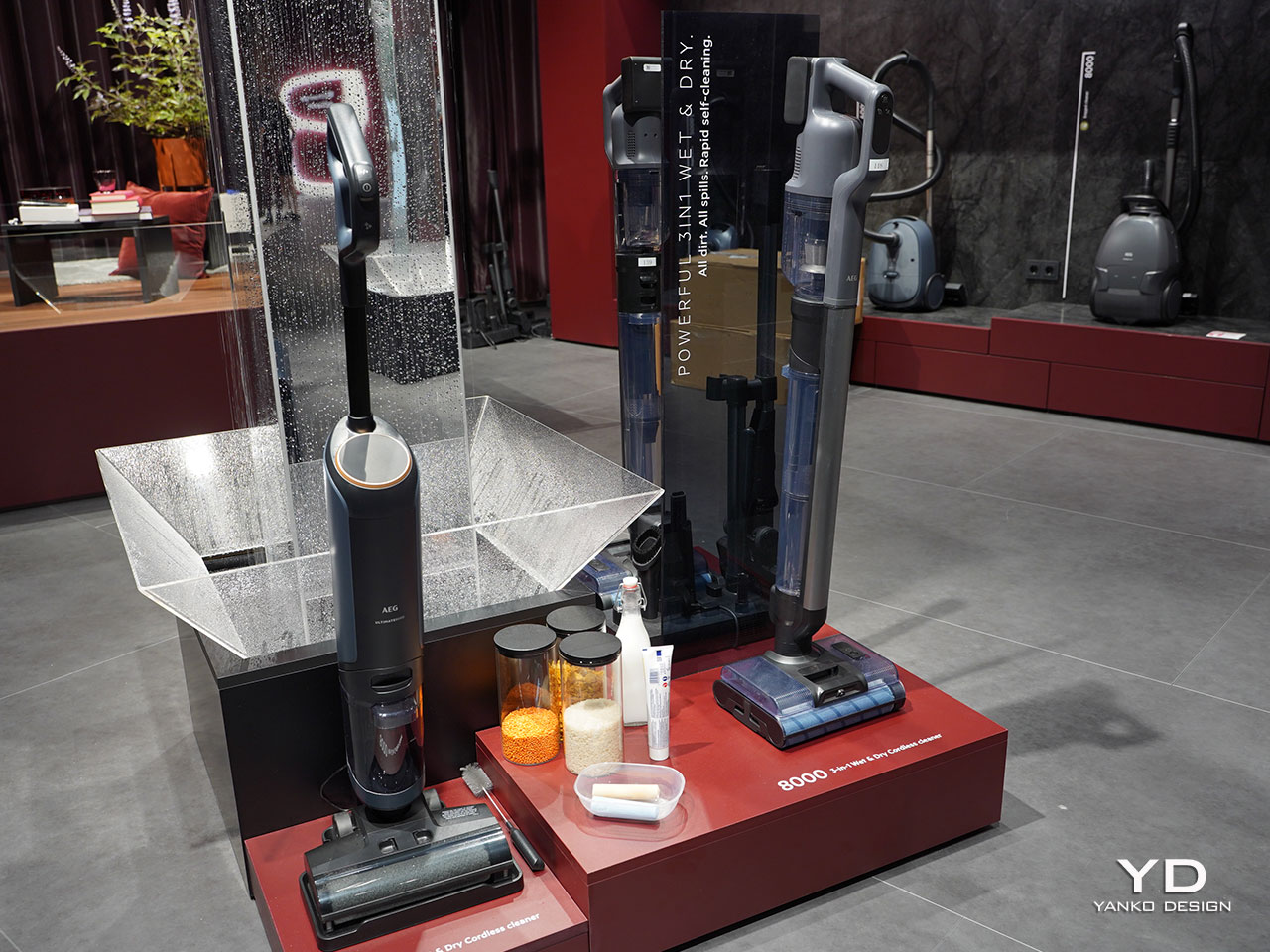
AEG is also debuting two new cordless cleaners to keep your home not only clean but also safe from harmful materials and organisms invisible to the naked eye. The AEG 6000 Cordless offers not only strong dust pick-up but also hands-free self-cleaning, emptying its 0.5-liter dust bin with just a touch of a button. The AEG 8000 is the brand’s most powerful and most versatile cordless cleaner, with the UltimatePower multi-surface nuzzle and a brushless DC motor that can capture 99% of dust on hard floors. And with the new Automatic Emptying Station, you can get the AEG 8000 ready for another round of cleaning without having to get your own hands dirty.
A North Carolina man is facing fraud charges after allegedly uploading hundreds of thousands of AI-generated songs to streaming services and using bots to play them billions of times. Michael Smith is said to have received over $10 million in royalties since 2017 via the scheme.
Smith, 52, was arrested on Wednesday. An indictment [PDF] that was unsealed the same day accuses him of using the bots to steal royalty payments from platforms including Spotify, Apple Music and Amazon Music. Smith has been charged with wire fraud conspiracy, wire fraud and money laundering conspiracy. Each count carries a maximum sentence of 20 years in prison. The US Attorney's Office for the Southern District of New York says this is its first criminal case that concerns the use of bots to artificially inflate music streaming numbers.
Prosecutors accused Smith of creating thousands of bots to stream the songs. At first, he was said to have uploaded his own music to the streaming services, but realized that his catalog wasn't big enough to produce a large sum of royalties. After other efforts didn't pan out, he's said to have turned to AI-generated music in 2018.
According to the indictment, Smith began working with two unnamed co-conspirators — the CEO of an AI music company and a music promoter — to create hundreds of thousands of songs using AI. In exchange for a cut of revenue, the CEO allegedly provided thousands of tracks per week to Smith, who is said to have randomly generated song titles and artist names for the audio files.
Smith is accused of lying to streaming services by providing phony names and other fake account details while setting up the bots, and by agreeing to rules that ban streaming manipulation. According to the indictment, he deceived streaming services by making it seem the bot accounts were legit when in fact they "were hard coded to stream Smith’s music billions of times." Smith allegedly attempted to cover his tracks by using dummy email addresses and VPNs, while telling his co-conspirators to be “undetectable.”
"Michael Smith fraudulently streamed songs created with artificial intelligence billions of times in order to steal royalties," US Attorney Damian Williams said in a statement. "Through his brazen fraud scheme, Smith stole millions in royalties that should have been paid to musicians, songwriters, and other rights holders whose songs were legitimately streamed."
The case of Smith is in stark contrast to a musician The New York Times profiled earlier this year. Matt Farley has written, recorded and uploaded tens of thousands of songs to streaming services about anything and everything people might search for, from celebrities and marriage proposals to many tunes about poop. Some songs are just a few seconds long, but the practice seems to be entirely above board. He's said to have earned around $200,000 from his music in 2023.
This article originally appeared on Engadget at https://www.engadget.com/entertainment/streaming/alleged-fraudster-got-10-million-in-royalties-using-robots-to-stream-ai-made-music-162944343.html?src=rss
Google’s AI-powered Photos upgrades are beginning to trickle in. Ask Photos, the Gemini-powered chatbot that lets you get ultra-specific and conversational with your photo searches, is launching in early access for select users in the US. In addition, the improved search for more descriptive Google Photos queries begins rolling out today for all English-speaking users.
The upgraded search in Google Photos lets you use more descriptive queries. For example, while you could have searched for “lake” before, you can now enter “kayaking on a lake surrounded by mountains.” Or, instead of merely searching for your friend Alice, you can go with “Alice and me laughing.” The idea is to make it easier to narrow things down as our cloud-based photo libraries grow.
Ask Photos, the Google Photos chatbot the company revealed at I/O in May, takes that further. Powered by Gemini, it adds a new tab at the bottom of the Photos app that lets you ask about anything in your library using natural language.
Google provided examples like “Show me the best photo from each national park I’ve visited,” which uses location data to scour your park photos and some subjective robot judgment to determine a favorite. Other examples the company provided include “What did we eat at the hotel in Stanley?” and “Where did we camp last time we went to Yosemite?”
Like other chatbot features, Ask Photos can respond to follow-up prompts. So, if it misses the mark the first time, you can ask it to tweak its parameters and give it another go.
Google says your Photos data will never be used for advertising. Although humans may review queries, they’ll be disconnected from your Google account, so the reviewers won’t know who typed the input. Real people won’t review Ask Google’s answers, including photos or videos, unless you provide feedback or (only in rare cases, according to the company) to address abuse.
If you’re in the US, you can sign up for the waitlist to try to get early access to Ask Photos starting today. Meanwhile, Google Photos’ more descriptive search powers are now beginning to roll out for English-speaking users on Android and iOS.
This article originally appeared on Engadget at https://www.engadget.com/ai/googles-gemini-powered-photo-search-arrives-in-early-access-160041679.html?src=rss
Panasonic TVs have been missing from the US market for over a decade, which is odd because, well, the company makes good stuff. In any event, our national nightmare is over. The Japanese electronics giant just released a bunch of new televisions for US customers.
The releases break down into two lines of OLED displays and another line of Mini-LED TVs. The televisions range in size from 55 to 85 inches and they’ve all been designed and developed in Japan. As expected, all of the TVs boast a 4K resolution, to showcase Panasonic’s “outstanding picture quality.”
Panasonic has also teamed up with Amazon for these displays. Each model comes with Fire TV built in. This partnership likely gave Panasonic an easy way to add an America-friendly UI into the mix, being as how the company’s been missing from these shores for ten years.
Panasonic/Amazon
Why come back now? The company says it was “driven to re-enter the US by a strong belief in the unmet demand for their televisions, particularly among consumers seeking the highest possible picture quality.” That’s just corporate mumbo jumbo, but the real reason is likely one word that rhymes with “shmoney.” The US is a huge market.
The company’s new TVs are available to order right now, though it looks like shipments won’t go out until September 16. Prices range from $1,300 to $3,200, depending on the model and size.
This article originally appeared on Engadget at https://www.engadget.com/home/home-theater/panasonic-just-returned-to-the-us-market-with-new-oled-and-mini-led-tvs-152614684.html?src=rss
Sony's MDR-7506 headphones have become a go-to option for recording studios and creators. The set of cans are only $100 and they offer crisp, clean sound so you know exactly what your audience is going to hear. Today, the company announced a more robust option for studio headphones, the MDR-M1, that has a slightly updated design, new drivers, wider frequency range and improved bass response.
Inside, the MDR-M1 packs newly developed drivers capable of frequency response of 5Hz – 80kHz. Sony explains that this ultra-wide range is crucial for things like subtle details in various recorded sound sources (Dolby Atmos and 360 Reality Audio especially). More specifically, the drivers here have a soft edge for those super low frequencies and a hard dome shape for accurate reproduction in the ultra-high range. There's also a "tuned port" on the outside of the ear cups, or Beat Response Control as Sony calls it, that provides the ventilation needed for improved low frequency control. That component works in tandem with an optimized diaphragm for "very tight bass response," according to the company.
"In recording sessions, it is important to care what musicians or singers are listening to when they play or sing," explained Akihiro Nishimura, an engineer at Power Station at Berklee NYC who worked with Sony to develop these headphones. "MDR-M1 gives you the same impression of listening in a control room headphone, which makes it easier to create music by listening to each other."
Sony
These are closed-back headphones, so you won't have to worry about sound leakage or ambient noise creeping in. Sony enhanced the replaceable ear pads for both increased comfort and better noise isolation. It also reduced the overall weight compared to the 7506, which means longer recording sessions shouldn't be as much of a burden. The MDR-M1 will come with two detachable cables with machined aluminum connections, one that has a stereo mini-plug and plug adapter (stereo mini to stereo standard) and the other a shorter option for connecting to various professional gear. Sony also took care to make the MDR-M1 more durable, as they're like to get dropped or flung around a studio or other recording and editing environments.
The MDR-M1 is available for preorder now for $250, a significant increase over the MDR-7506. If open-back headphones are more your thing for recording and editing, the MDR-MV1 carries a similar spec sheet to this new model. But, the price tag is even higher at $400.
This article originally appeared on Engadget at https://www.engadget.com/audio/headphones/sonys-mdr-m1-studio-headphones-offer-an-audio-and-comfort-upgrade-over-the-mdr-7506-150052628.html?src=rss
Last year, Lenovo showed off a fantastically futuristic concept gadget called Project Crystal, which was the world’s first laptop to feature a transparent MicroLED display. But today, in what has become a tradition for Lenovo during IFA, the company is back with yet another demo notebook, this time equipped with a motorized rotating hinge.
Dubbed the Auto Twist AI PC, Lenovo’s latest concept looks almost exactly like a traditional clamshell when closed. However, with a simple voice command, its lid raises automatically and rotates into practically any position — even all the way around into tablet mode. While there is no official pricing, or even plans to bring the device to full production just yet, Lenovo says the Auto Twist is designed to provide enhanced adaptability, improved ergonomics and possibly better security. But for now, the company’s main goal is simply to see what environments or use cases might be able to best take advantage of a laptop with this kind of novel design.
Thanks to built-in object tracking, for example, the Auto Twist can move its display and follow people as they walk around a room, which could be very helpful when making presentations. It can also detect a person’s body, and possibly even their posture, before moving its display into the best position to reduce fatigue or strain.
Sam Rutherford for Engadget
Alternatively, the laptop can detect when it’s not being used and then close its own lid to prevent unwanted users from gaining access. And while the Auto Twist’s AI tag feels a bit spurious, Lenovo hopes the laptop will be able to do many of these things on its own or through simple natural language voice control (the laptop currently supports commands to transform into laptop mode, clamshell mode and more).
After seeing it in person, the most immediate use case that came to my mind was in POS (point-of-sale) payment terminals. Here, employees often have to manually flip a screen around so that the customer can see their total or add in things like a tip. Granted, the Auto Twist does seem like overkill in that situation considering how easy it is to rotate a screen around the old-fashioned way with your hands a basic hinge. And at least from what I saw, the built-in motor wasn’t quite as smooth as you’d probably want for commercial applications. But, it is an interesting idea with potential for high-end luxury outlets.
Then there’s just the fun of it. During my demo, I watched as the Auto Twist played a clip of a dancer as its motorized hinge attempted to make its display match the person’s movements. I also saw the laptop swivel its display horizontally to present an ultra-wide panoramic photo in a more engaging way. Additionally, while other bleeding-edge tech like laptops with foldable displays suffer from a ton of added weight and bulk, the rotating servo on Lenovo’s latest concept is relatively unobtrusive and there isn’t a huge impact on the device’s overall portability.
Sam Rutherford for Engadget
So while it remains to be seen how useful the Auto Twist really is or what it might turn into down the line, I appreciate that Lenovo is still trying to come up with new ways to evolve the classic clamshell laptop.
This article originally appeared on Engadget at https://www.engadget.com/computing/laptops/lenovos-auto-twist-concept-laptop-has-a-lid-that-can-swivel-and-bow-down-at-your-command-150022971.html?src=rss