This Electrolux dishwasher lifts its bottom rack so you can load pots without bending down

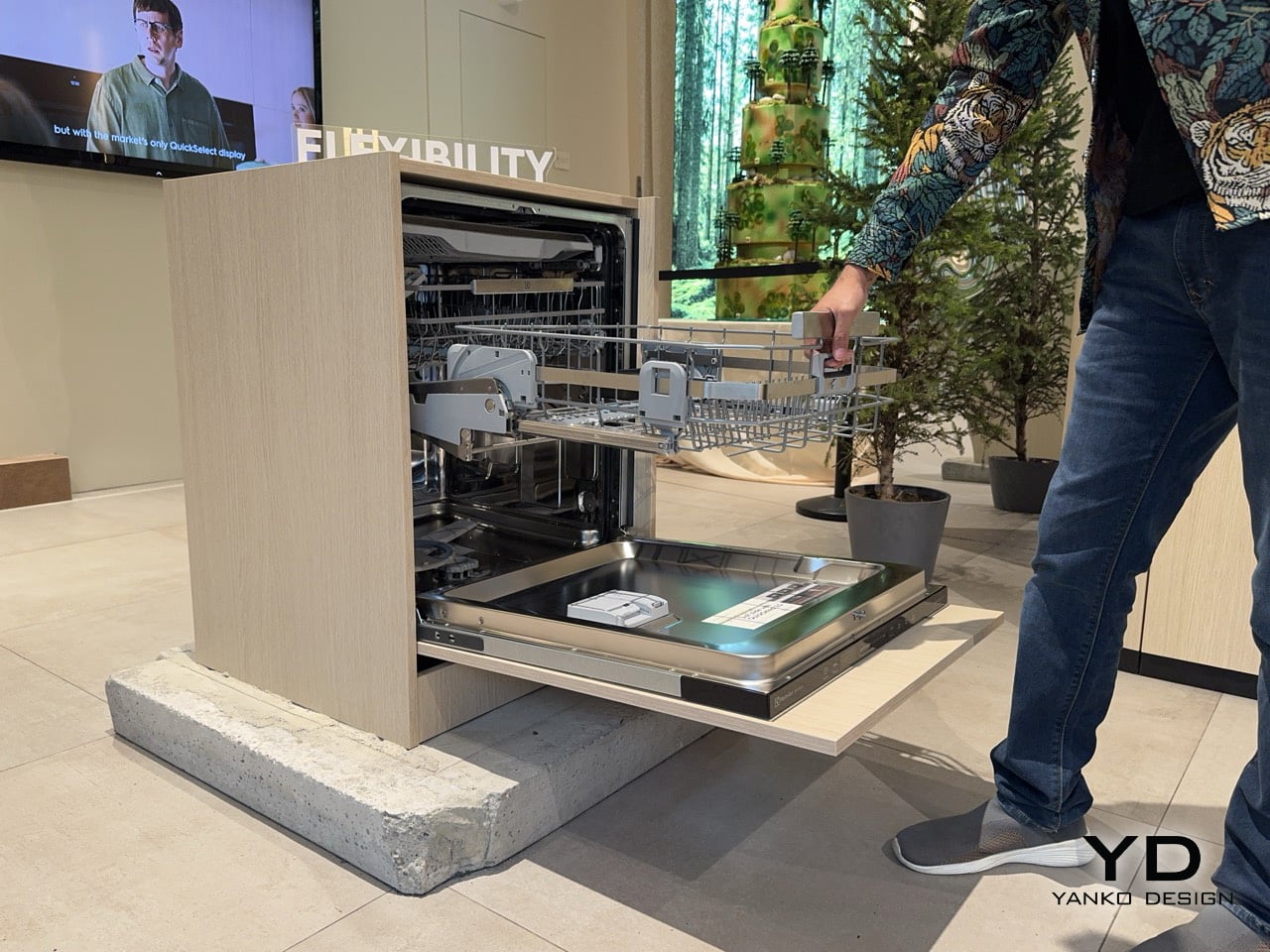
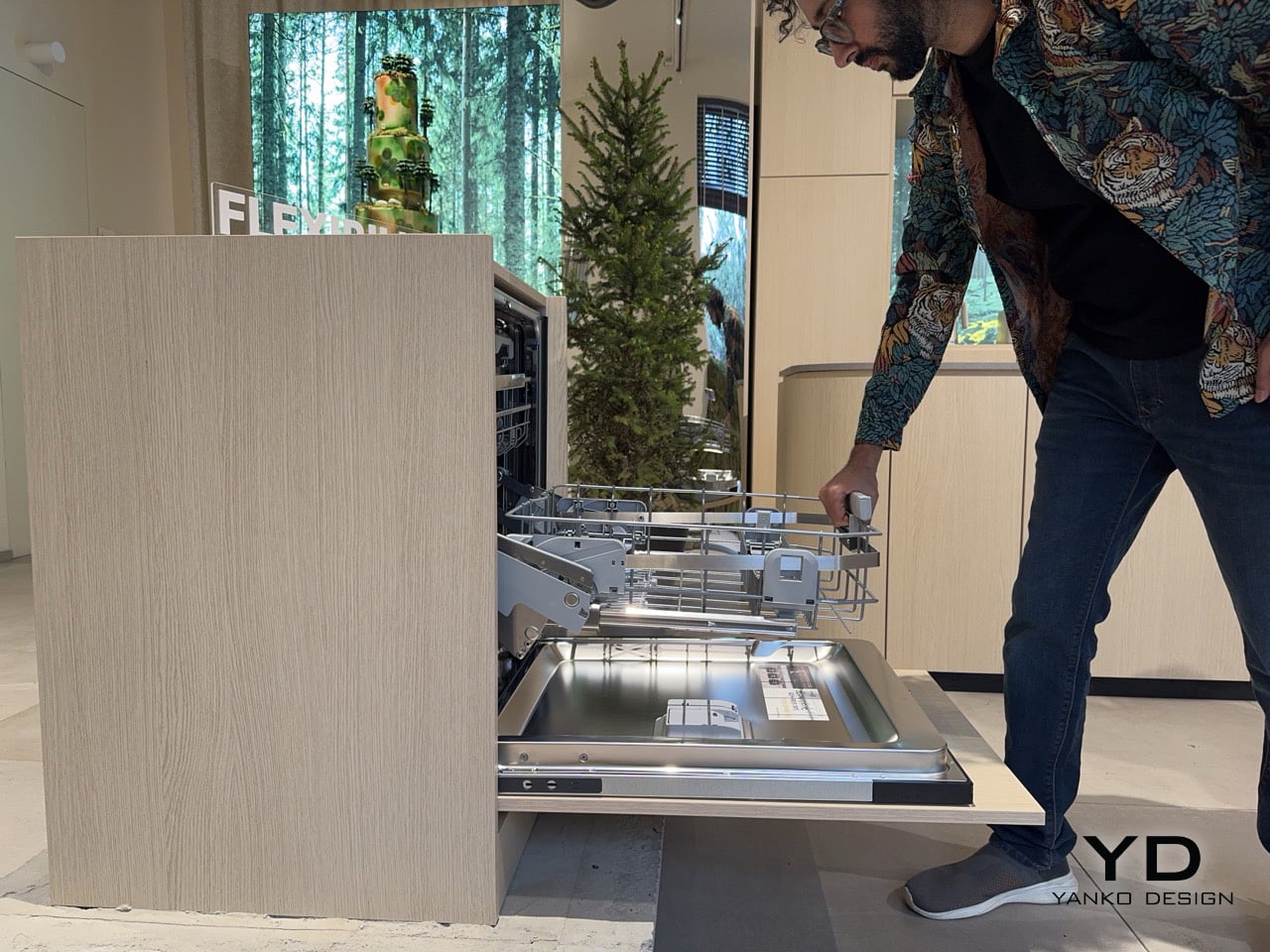
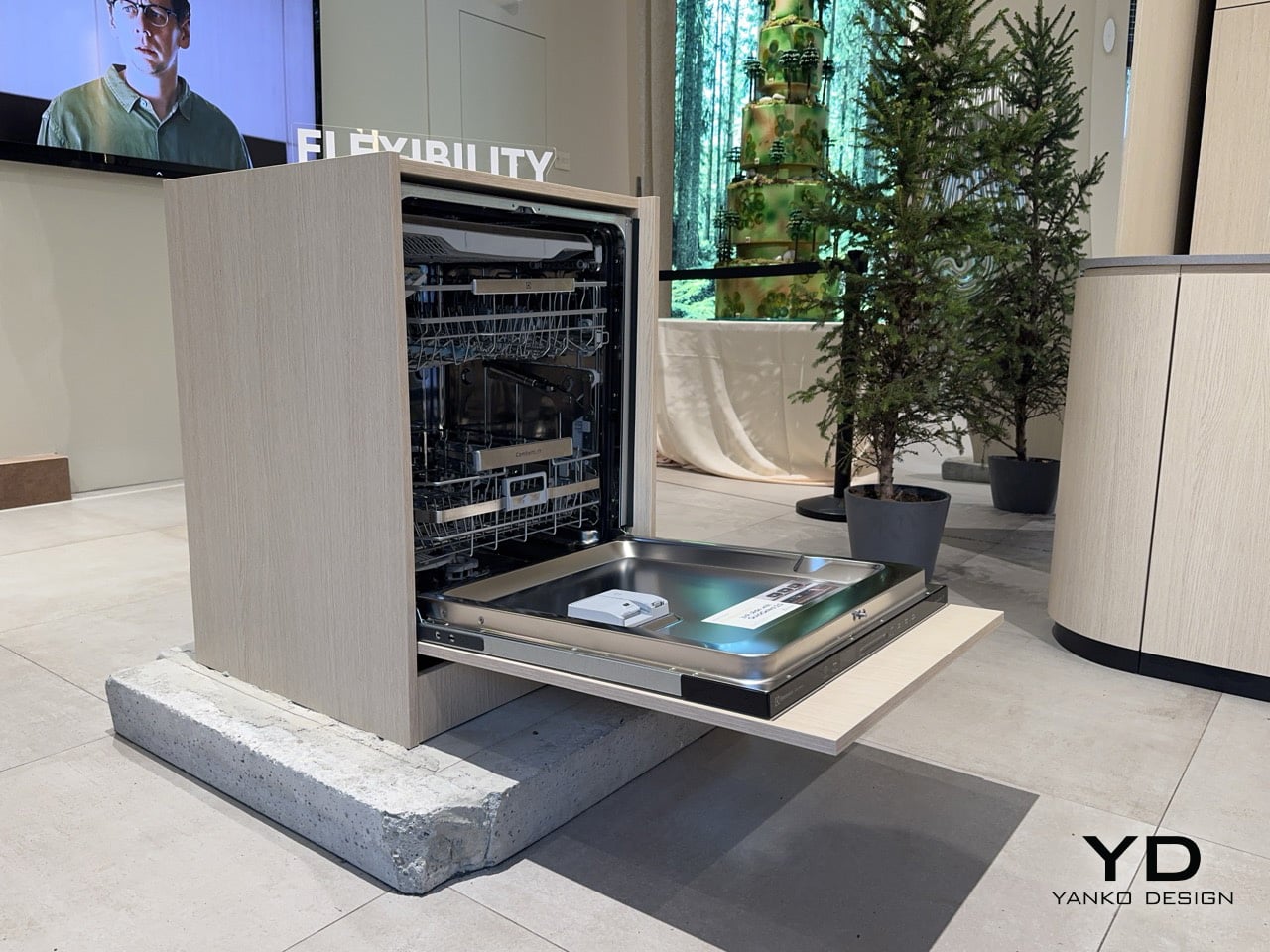
At some point, the bottom rack of a dishwasher stops being a minor inconvenience and starts being a genuine daily difficulty. For older adults and people who simply cannot bend for extended periods, loading the lower basket, which is where the heaviest cookware lives, means repeated stooping, reaching, and straightening back up with full hands. It is the kind of accumulated physical effort that kitchen appliance design has historically ignored entirely. Electrolux brought a direct answer to Milan Design Week: a lower basket that rises 25 centimetres on reinforced hinges at the squeeze of a trigger handle, meeting the user at a comfortable standing height. The feature is called ComfortLift, and it anchors the 800 series dishwasher at the heart of the brand’s Salone showcase.

The mechanism raises the lower basket to the upper basket’s level for faster, easier loading and unloading, with reinforced hinges tested to lift a fully loaded lower basket to that same height. The 800 series behind this feature delivers the cleaning power to completely remove baked-on or dried food residues on as little as 8.4 litres of water. At a fair saturated with conceptual objects and material experiments, what Electrolux demonstrated was something considerably more personal: a change to a small, daily physical struggle that millions of people live with quietly. The brand built serious cleaning performance around that ergonomic premise rather than treating accessibility as a secondary concern. Running at 42 dBA, with a noise class rating of B, the machine is also one of the quieter options in its segment.

Designer: Electrolux

The stainless steel handle integrates a trigger that initiates the lift in a single squeeze, making the operation one-handed and deliberate. Electrolux engineered the ComfortLift basket to carry up to 22 kilograms at the raised height, covering everything from a full load of dinner plates to a cast-iron braising pot. The reinforced hinge mechanism was tested to lift a fully loaded lower basket to the level of the upper basket, so the structural promise holds under real kitchen conditions rather than just showroom demonstrations. Pull the rack out, squeeze, let the basket settle at waist height, and load without contortion. The basket retracts just as smoothly, with none of the mechanical inconsistency that tends to undermine features which perform better on a spec sheet than in a kitchen.

DualZone runs two cleaning zones through the same cycle without changing water or increasing energy use, directing more water pressure at pots and pans in the lower basket while reducing it on delicate items above. A double-rotating spray arm with two nozzle types, one circular and one straight, delivers water simultaneously from multiple angles to break up stubborn residue. Electrolux had this independently tested by a third-party German institute using detergent tablets and a 90-minute cycle on a casserole with lasagna residues, with complete removal as the result. A water sensor detects the level of dirt and adjusts water consumption accordingly, while the AquaControl Waterstop System handles flood protection. Eight wash programmes span the range from a 60-minute express run to AUTOClean, which calibrates the cycle to the load automatically.

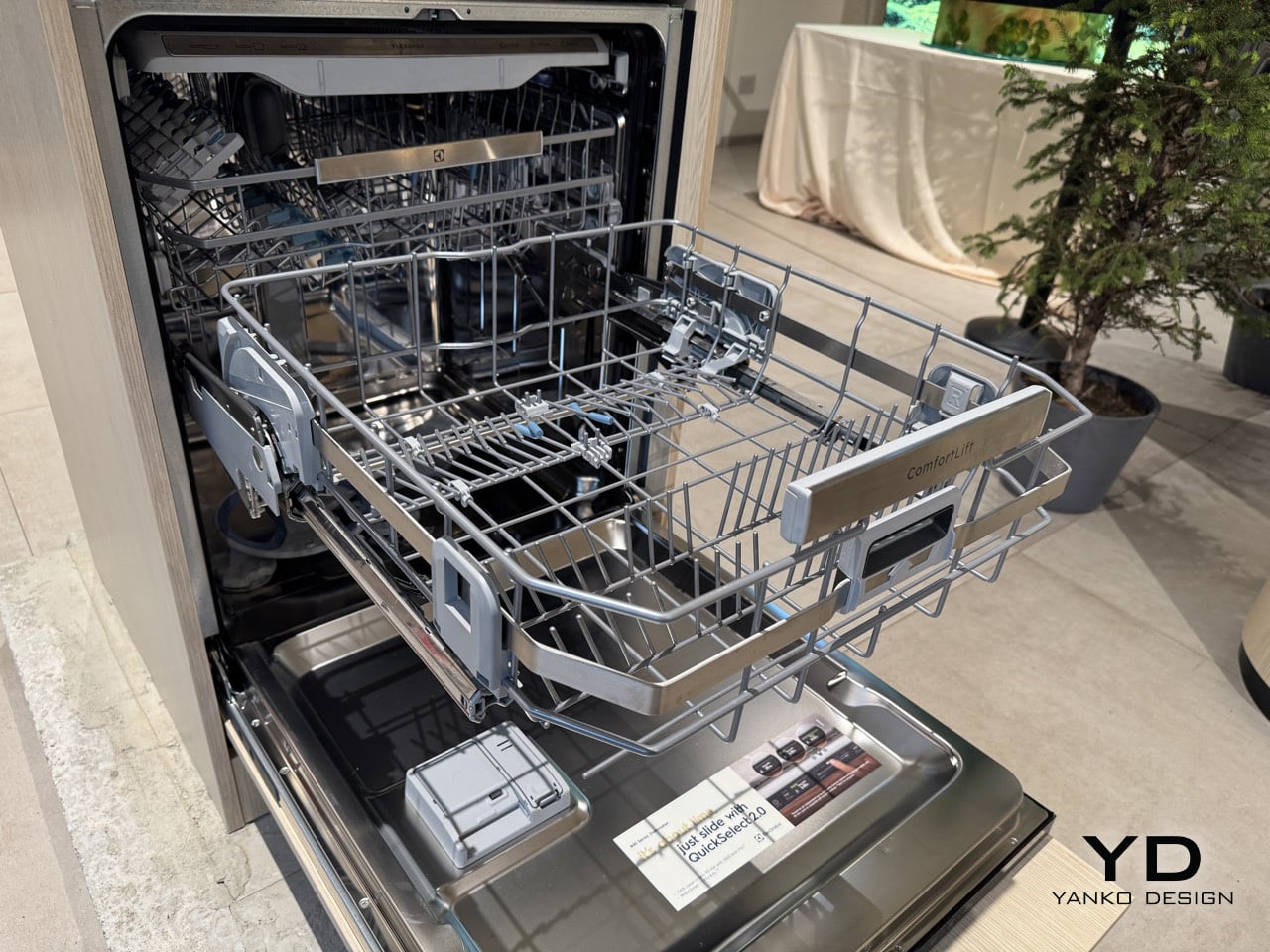
The smooth-gliding FlexiMax Plus upper basket has three folding rows for flexible loading, with anti-slip rubber grips and spikes to secure stemware and glasses and reduce the risk of collisions. The cutlery drawer has a deep middle section for cooking tools and an integrated knife holder, keeping flatware properly separated from the main wash zones. The QuickSelect display shows how energy use changes depending on the cycle length, and a slider lets the user choose the duration and see the energy graph update in real time, turning an invisible efficiency metric into something immediate and interactive. AirDry technology opens the door automatically at the end of the cycle, venting steam and drying dishes passively without a heating element. These details add up to a machine that rewards the kind of cook who treats the kitchen seriously, the same person most likely to own the cast-iron Dutch oven that ComfortLift was built to accommodate.

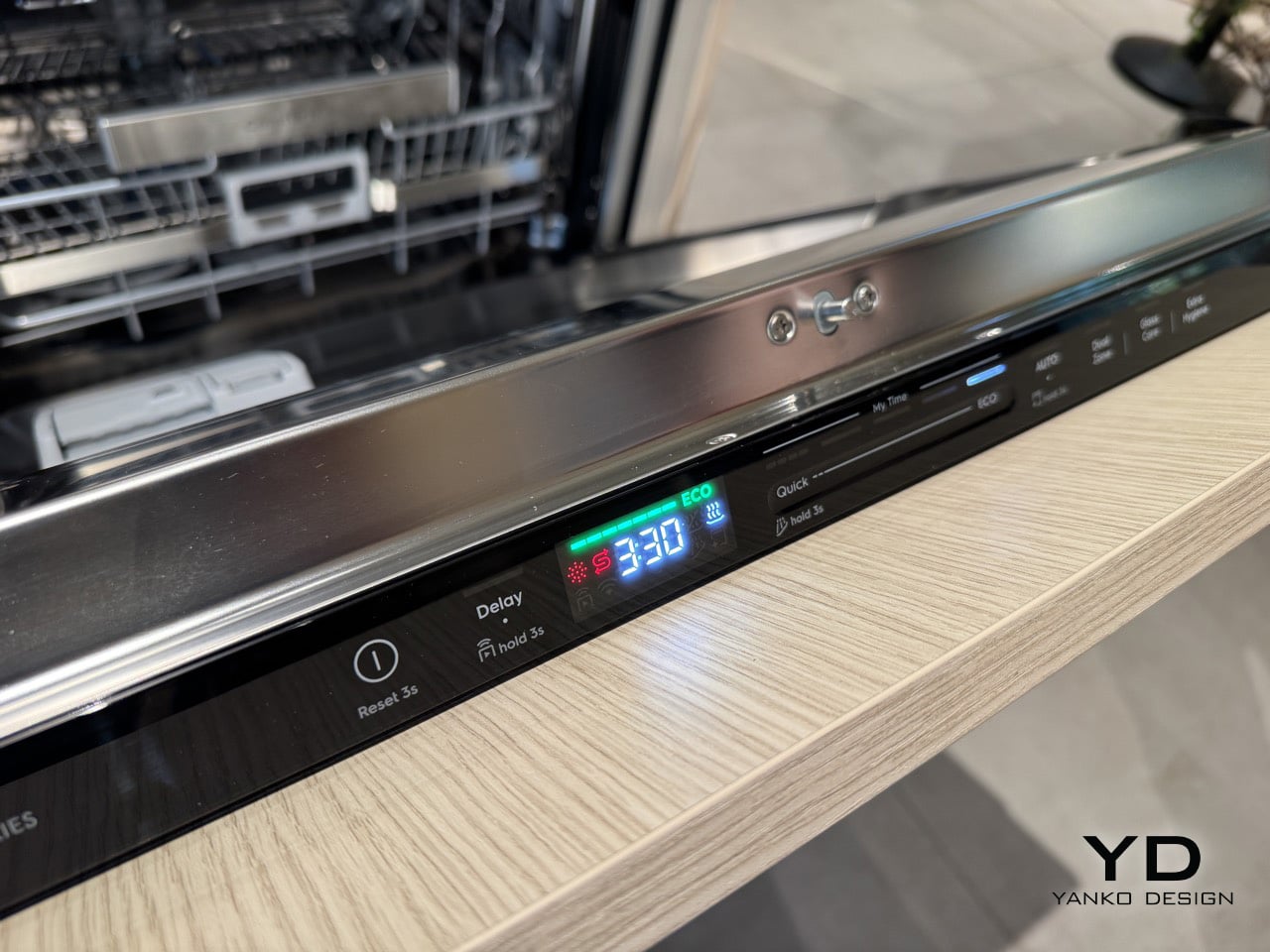
The controls sit on the lip of the door handle, positioned for direct visibility whether the user is standing in front of the machine or reaching across a counter. A sliding interface sets the cycle duration, and that choice governs energy and water consumption simultaneously, with the ECO programme activating at the longest end of the range. Electrolux made a deliberate decision to present time in 30-minute increments rather than the oddly specific figures that populate most dishwasher interfaces, the kind of readout that tells a user a cycle takes 68 or 52 minutes without explaining why. The shortest cycle runs at 30 minutes, while ECO extends to 3 hours and 30 minutes, drawing as little energy and water as the machine can manage across that duration. Rounding to half-hour intervals turns cycle selection from a guessing exercise into something legible, honest, and genuinely quick to act on.
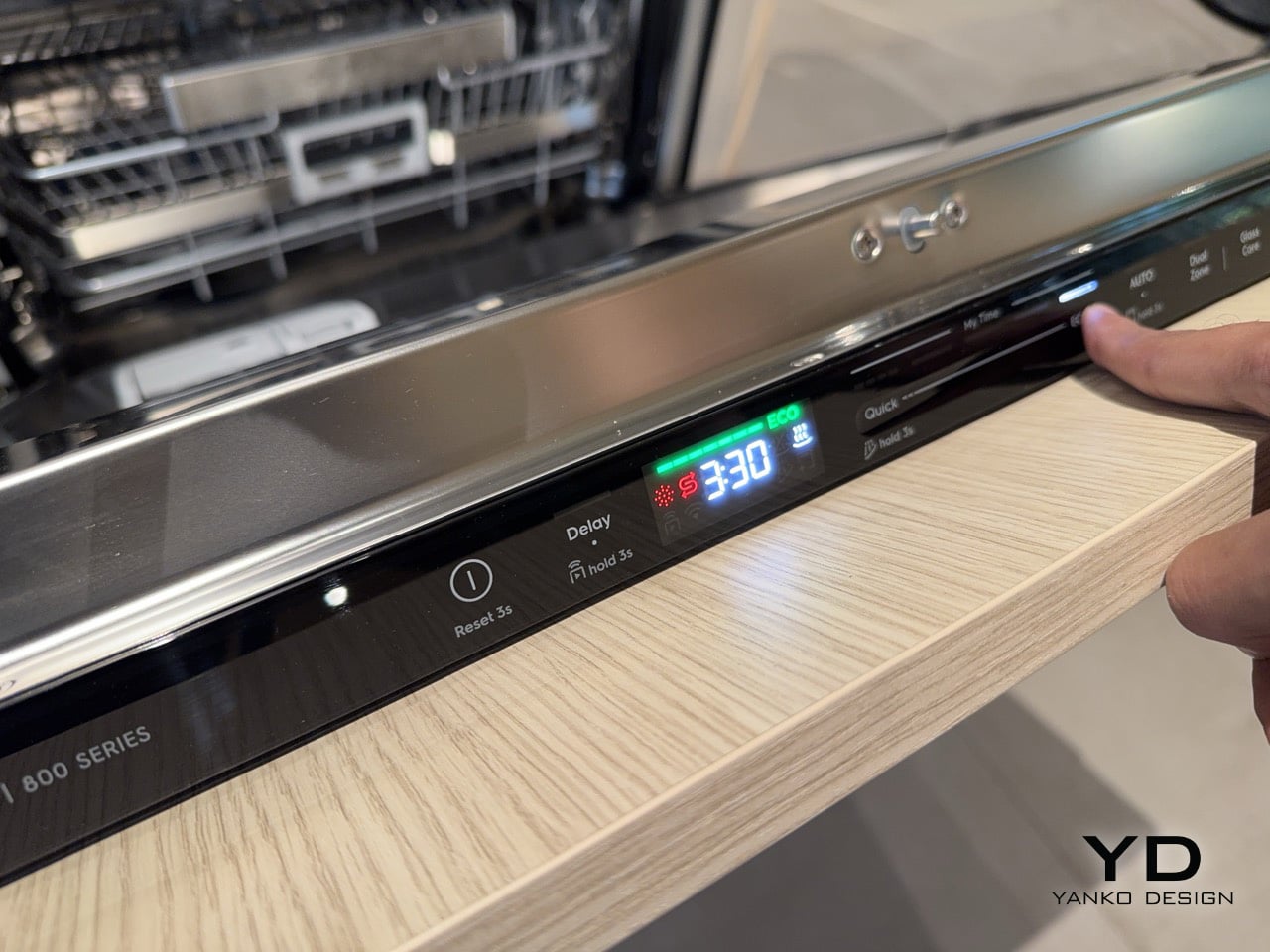
Electrolux’s Design Week showcase, titled “The Swedish Home,” is running at Via Melzo 12 in Milan’s Porta Venezia neighbourhood through April 24th. The live format suits ComfortLift especially well, because no product photograph conveys the mechanism as clearly as watching it move once with a full rack. Across a week dominated by material experiments and future-facing concepts, Via Melzo 12 is presenting something built around a very specific, present-tense problem: that the most physically demanding daily interaction in the kitchen has gone largely unaddressed by appliance design for decades. ComfortLift is Electrolux’s argument that the most consequential design decisions in the home are often the least glamorous ones. It is a strong argument, and a well-engineered one.
The post This Electrolux dishwasher lifts its bottom rack so you can load pots without bending down first appeared on Yanko Design.


Gunther Werks Project Endgame is a bespoke 911 Speedster infused with Iron Man DNA

There’s always been a theatrical edge to Gunther Werks’ reinterpretations of the Porsche 911 (993), but Project Endgame pushes that idea into full cinematic territory. Conceived as a one-off Speedster commission and effectively the closing statement for the California-based restomod specialist’s open-top series, it fuses extreme performance engineering with a design language. Something that openly channels Iron Man’s energy in both form and function.

Built on the bones of a 993-generation 911, Project Endgame undergoes a complete transformation. Its most radical element is the twin-turbocharged 4.0-liter air-cooled flat-six, developed in collaboration with Rothsport Racing. Producing an immense 840 horsepower and 660 lb-ft of torque, the engine delivers its output through a six-speed manual transmission. This preserves the tactile, mechanical connection that defines analog driving, which purists absolutely value.

Designer: Gunther Werks

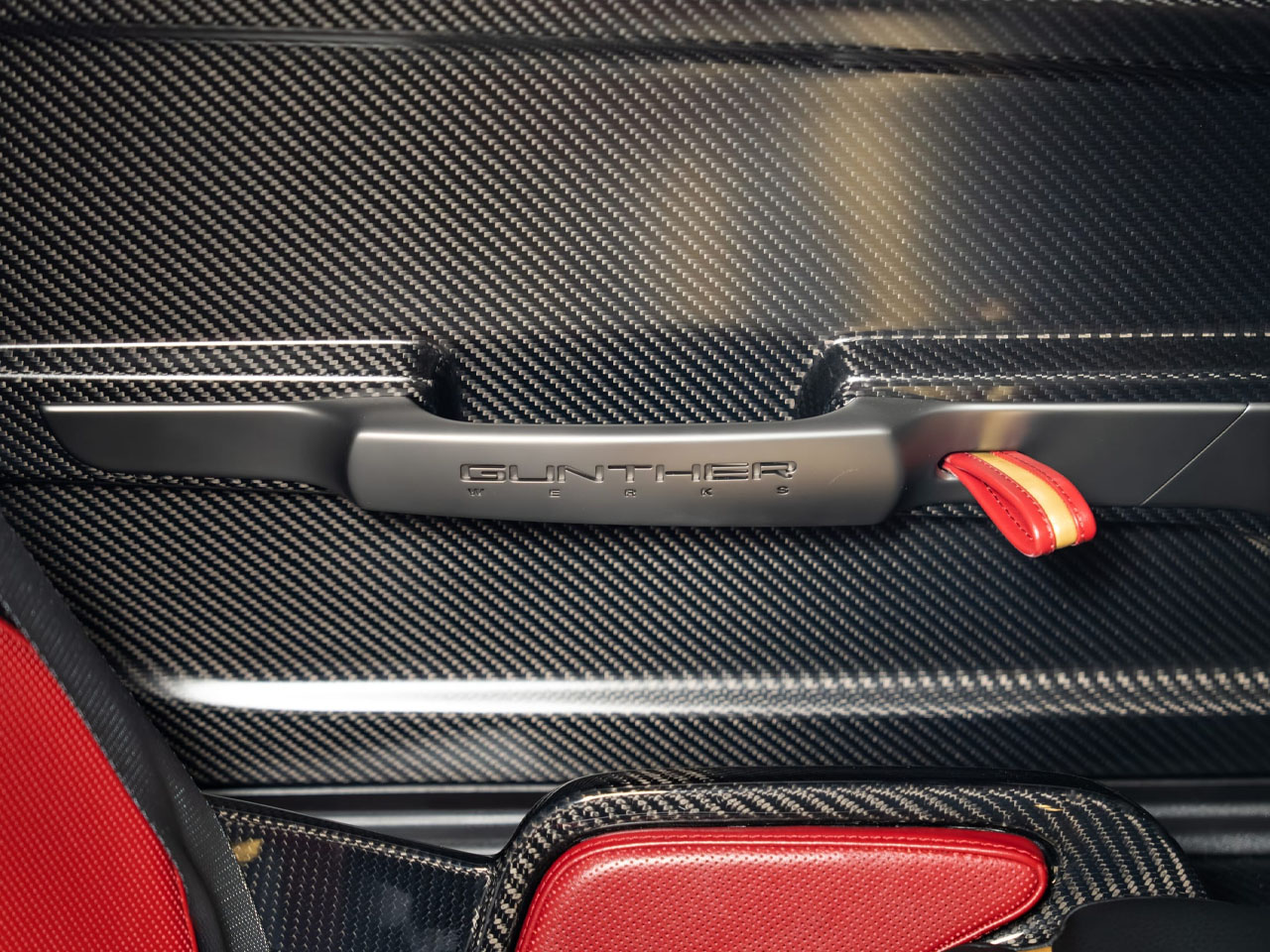
This combination of old-school air cooling paired with modern forced induction in more ways than not mirrors Iron Man’s own blend of legacy ingenuity and futuristic power. A classic example of how engineering evolves into something far more advanced. Weight reduction is equally obsessive with the experienced tuner. Extensive use of carbon fiber throughout the body keeps the car at roughly 2,600 pounds, creating a power-to-weight ratio that borders on hypercar territory. The aggressive stance, widened bodywork, and sculpted aerodynamics echo the armored silhouette of Iron Man’s suit.

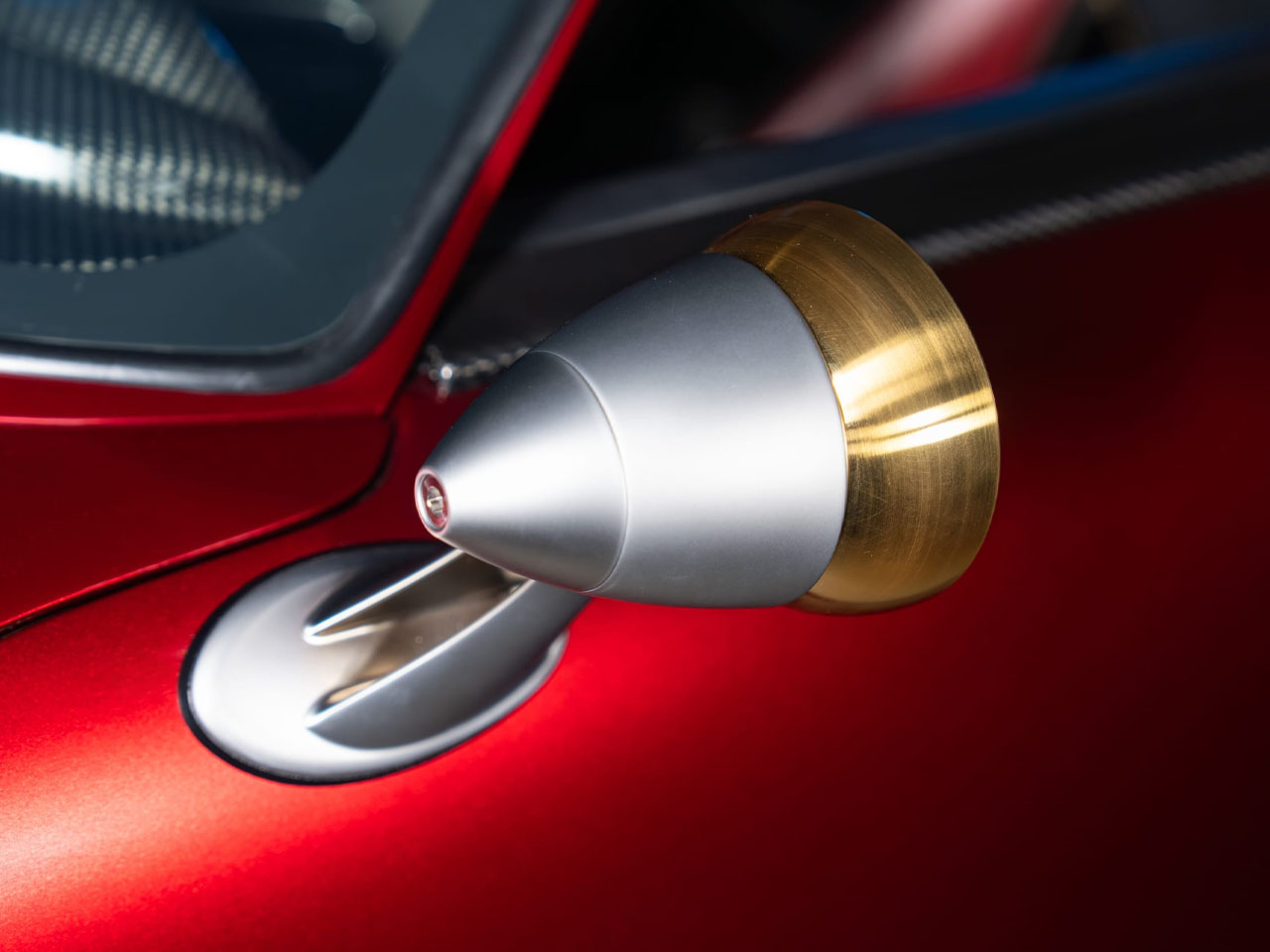
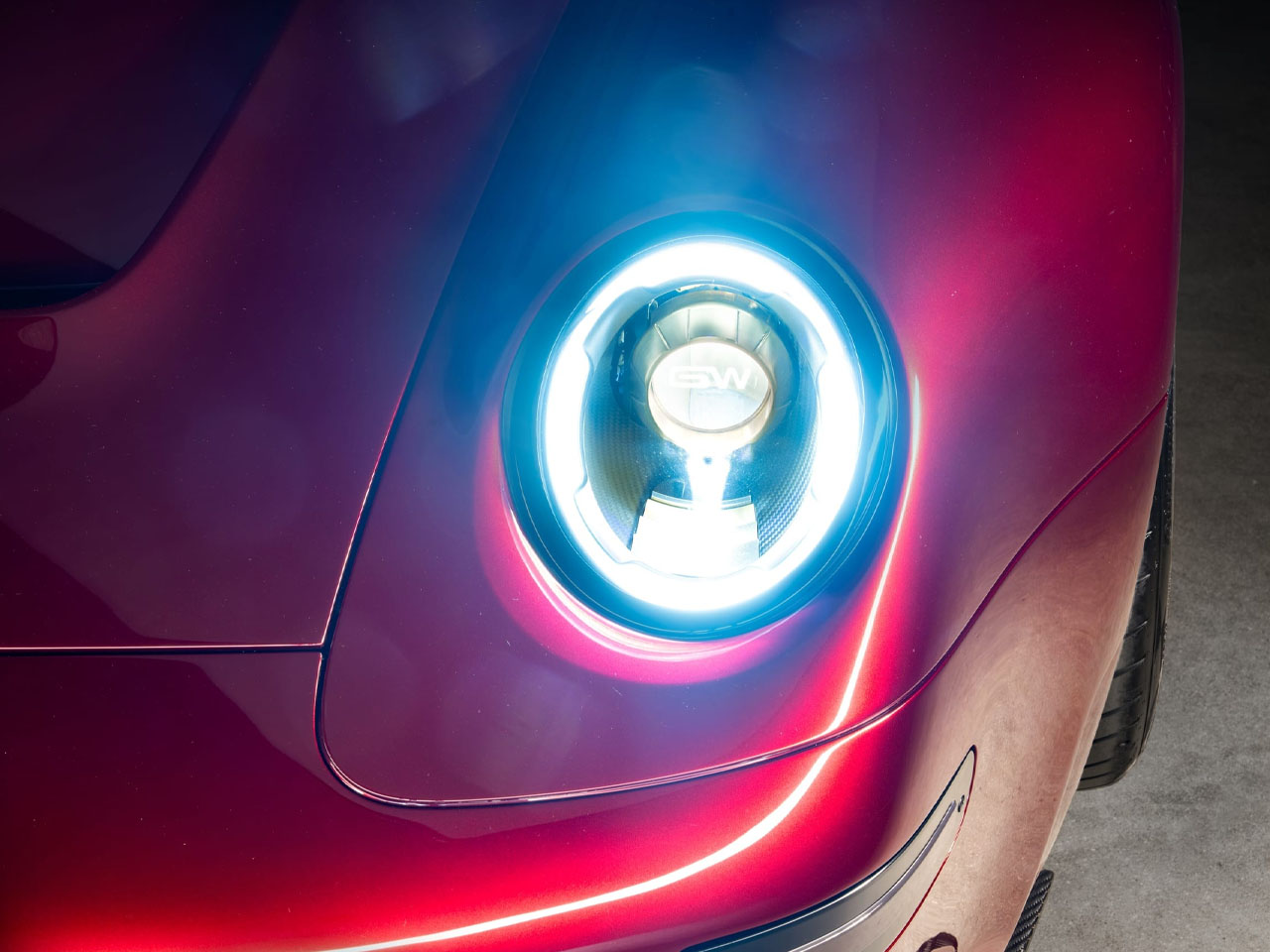
The mirrored ethos of a machine that’s muscular, purposeful, and unmistakably engineered for speed and impact. The Speedster configuration, with its low windscreen and open cockpit, adds a sense of exposure that parallels the vulnerability beneath the armor, reinforcing the duality between raw human control and overwhelming machine capability. The Iron Man influence becomes even more explicit in the detailing. The exterior’s red-and-gold finish directly mirrors the superhero’s iconic suit, but it’s not just cosmetic.

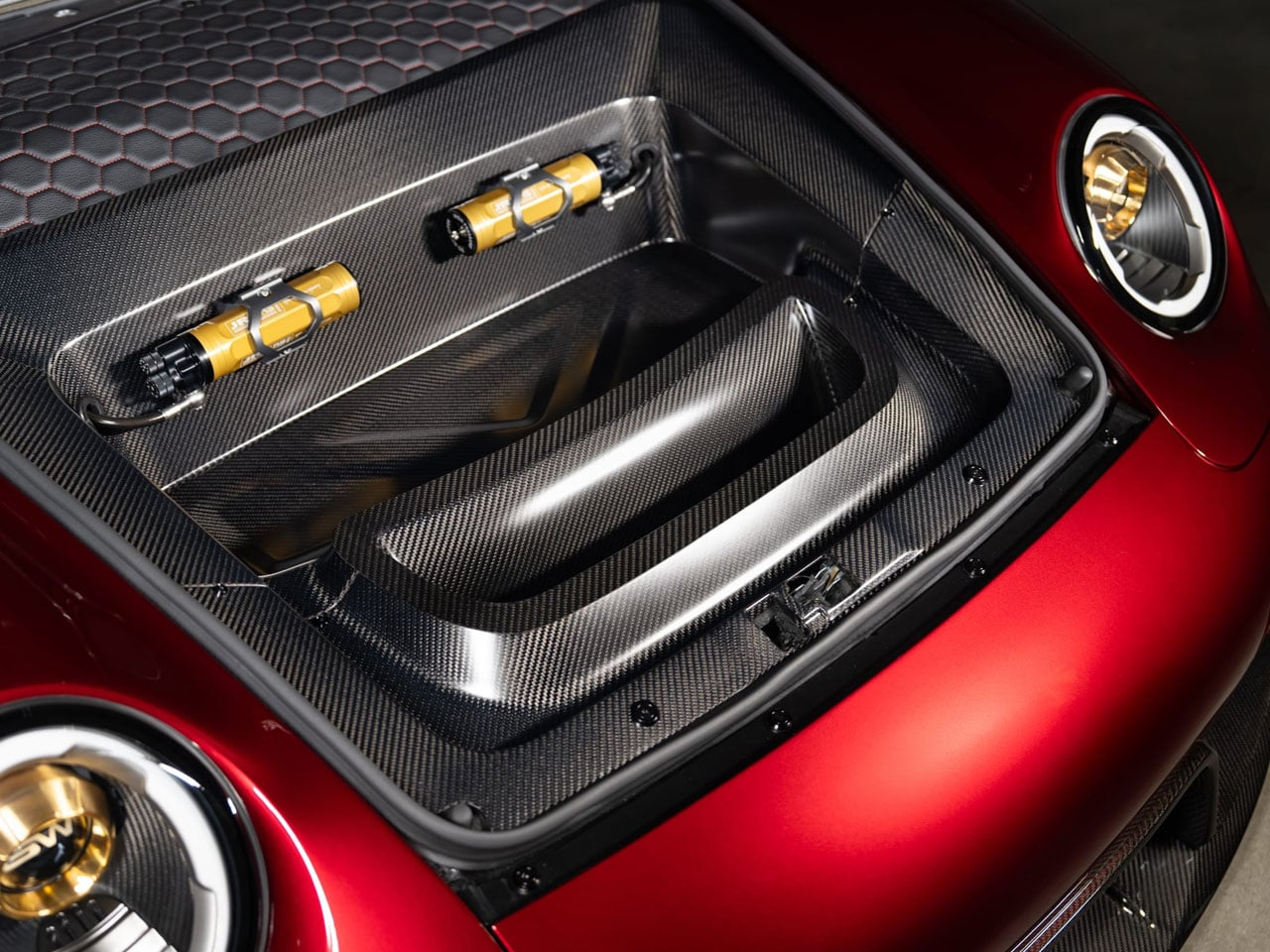
Functional components such as intercoolers receive gold plating, a detail that reflects both performance optimization and visual storytelling—much like Tony Stark’s tendency to fuse engineering necessity with stylistic flair. The interplay of metallic tones across the bodywork gives the car a glowing, almost reactor-like presence, as if energy is constantly pulsing beneath its surface.

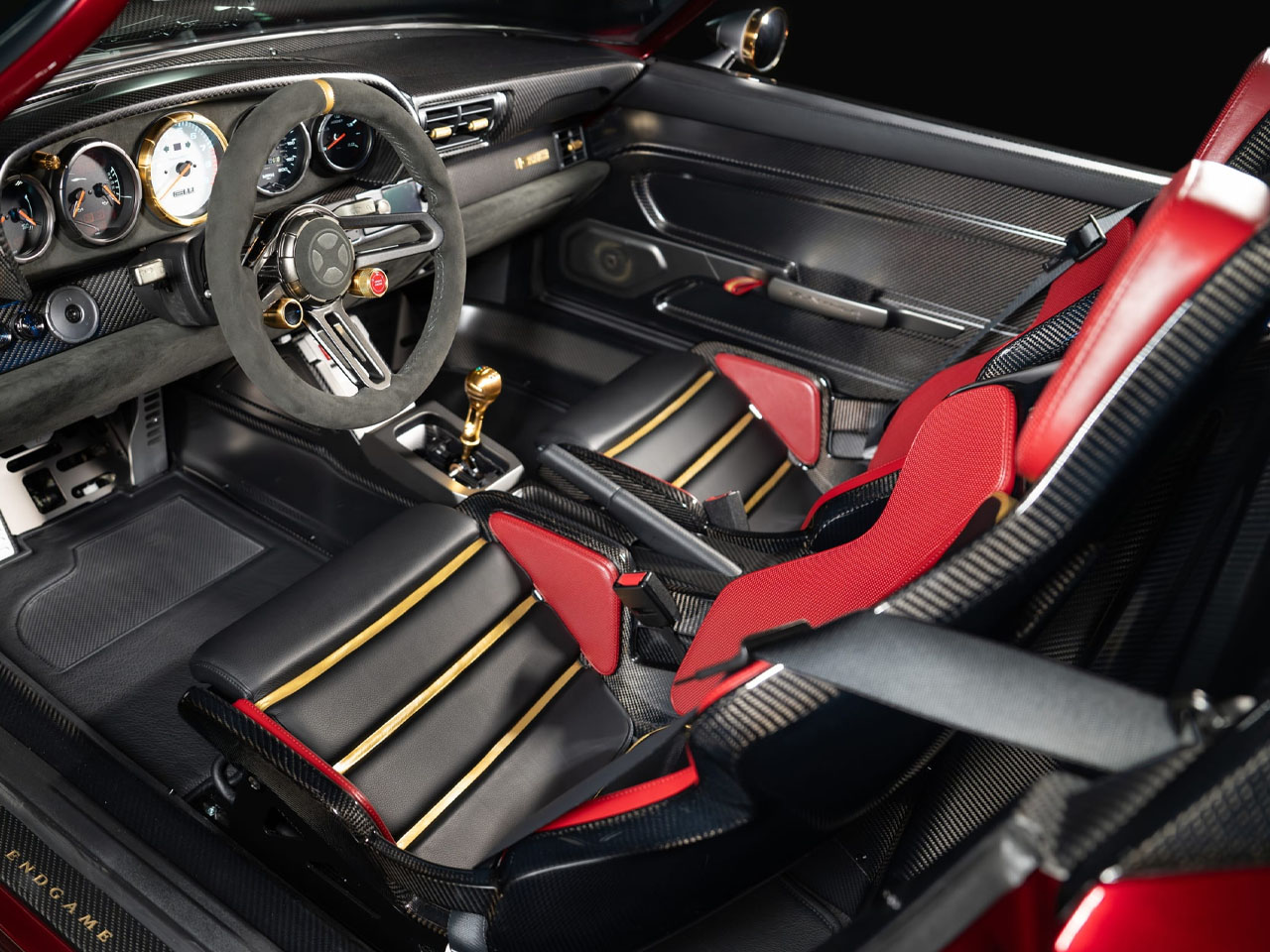
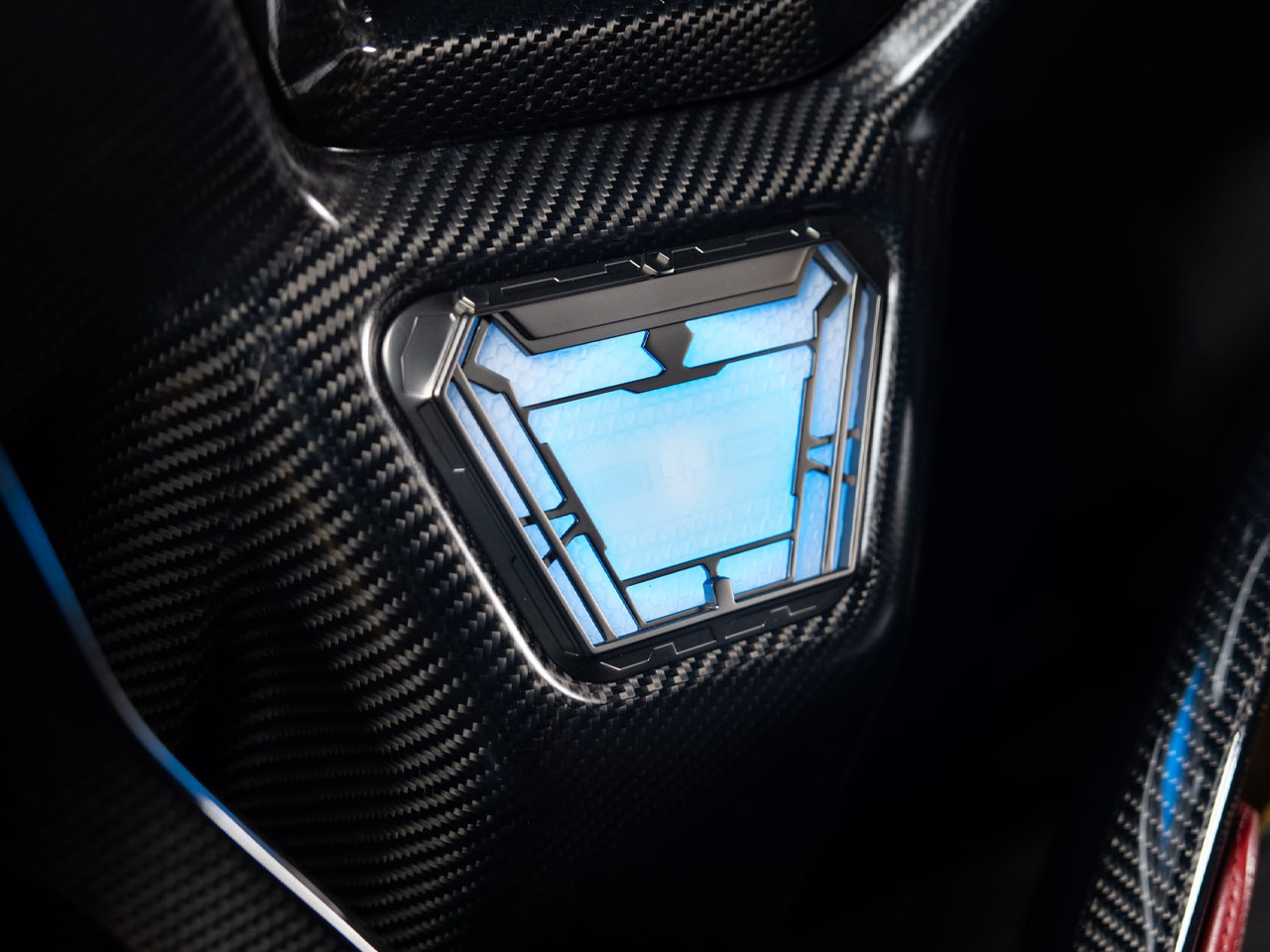
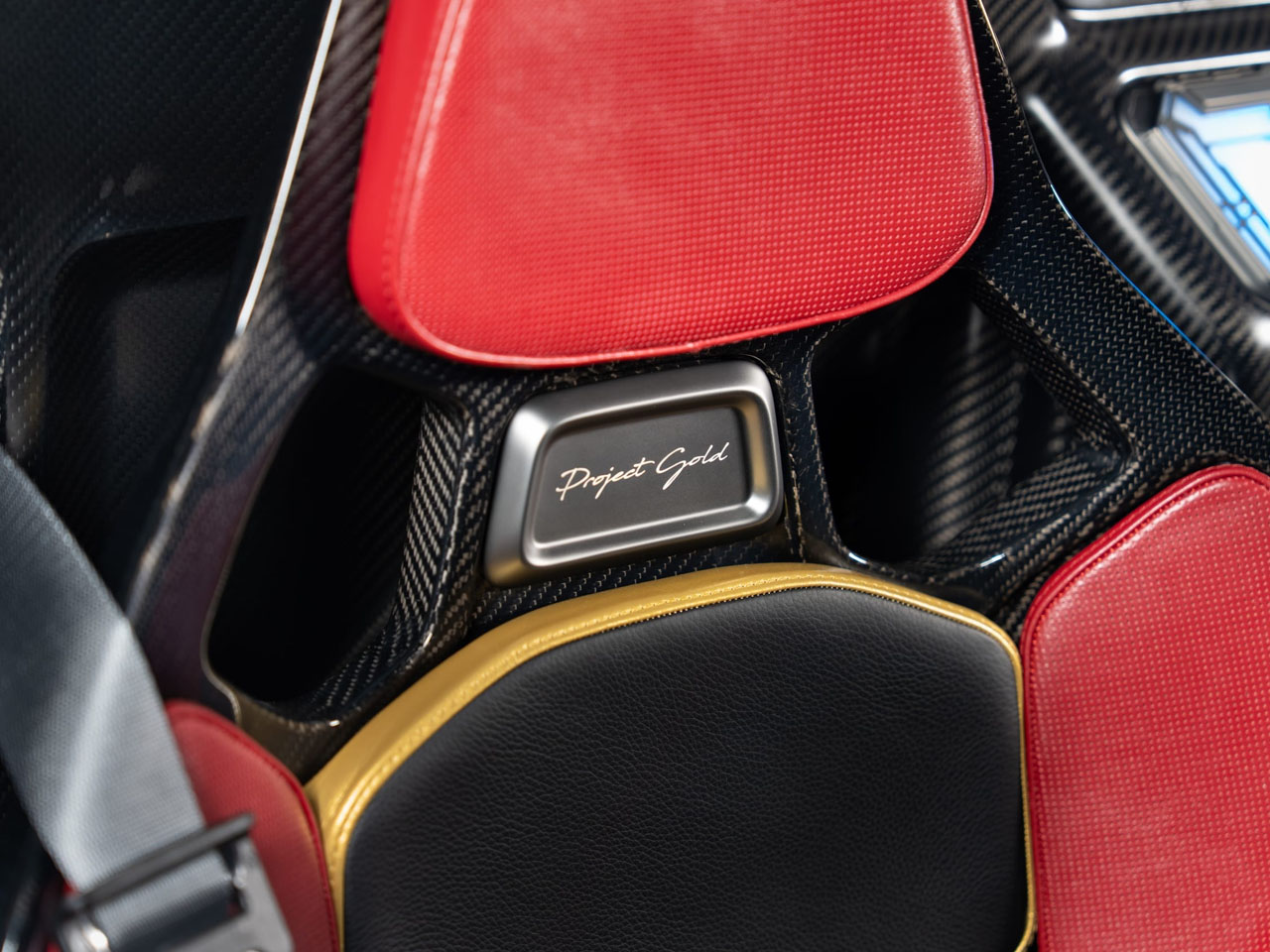
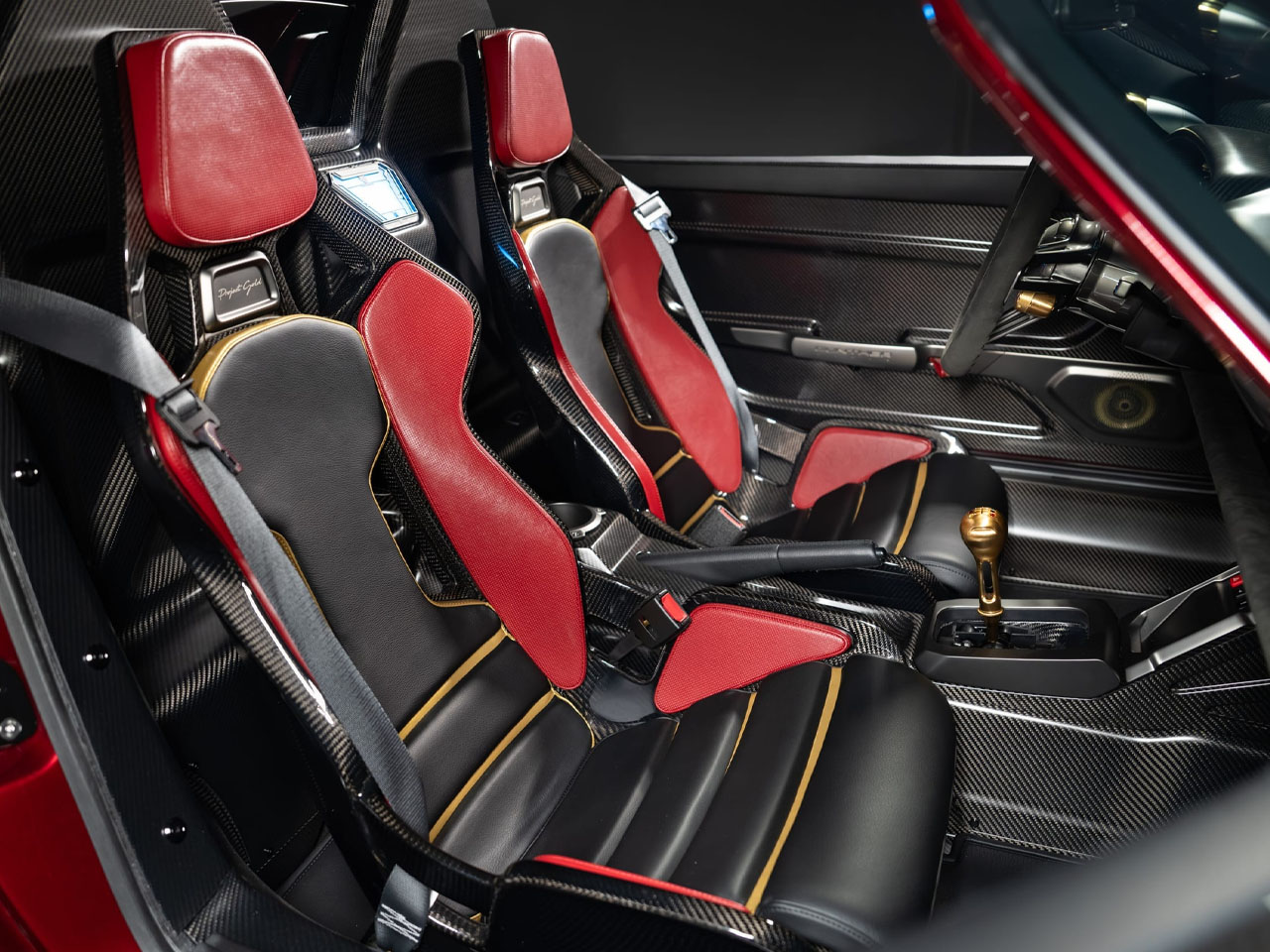
Inside, the cabin is a symphony of narrative space. A central design element between the seats evokes the arc reactor, the fictional energy source that powers Iron Man’s suit. This sculptural feature isn’t merely decorative; it anchors the interior’s identity, turning the cockpit into a symbolic command center. The gear shifter, embedded with gemstone accents, subtly references the precision and complexity of Stark’s technology, while bespoke materials and finishes throughout the cabin create an environment that feels engineered rather than assembled. Every surface, control, and accent appears intentional, reflecting the meticulous craftsmanship associated with Stark Industries.

Despite its dramatic theme, Project Endgame remains grounded in performance authenticity. The chassis, suspension, and braking systems are all engineered to handle the immense power output, ensuring that the car’s capabilities extend far beyond its visual impact. It’s not a static showpiece; it’s a fully realized driver’s machine that demands engagement and rewards skill.

As the final evolution of Gunther Werks’ Speedster program, Project Endgame serves as both a technical milestone and a creative culmination. It demonstrates how far the restomod concept can be pushed when engineering excellence meets narrative ambition.

The post Gunther Werks Project Endgame is a bespoke 911 Speedster infused with Iron Man DNA first appeared on Yanko Design.
Microsoft is reportedly offering voluntary buyouts to up to 7 percent of its employees

Microsoft is planning to get rid of more US employees via its first voluntary buyout program, CNBC reports. The buyout program will reportedly be offered to US employees at "the senior director level and below whose years of employment and age add up to 70 or higher," and could cover up to 7 percent of the company's US workforce. 

With around 125,000 employees in the US as of June 2025, that could mean up to 8,750 will be offered a paid exit when Microsoft begins its program in May. That's a smaller figure than the 15,000 or so employees the company laid off in May and July of 2025, but still significant, particularly if the majority of employees do take the buyout.

"Our hope is that this program gives those eligible the choice to take that next step on their own terms, with generous company support," Microsoft's executive vice president and chief people officer Amy Coleman shared in a memo viewed by CNBC.

Engadget has contacted Microsoft to confirm the existence of the voluntary buyout program and other details CNBC reported. We'll update this article if we hear back.

Microsoft used its 2025 layoffs to streamline layers of management and its video game business, but these new cuts may have a lot more to do with AI. Not necessarily because the company's adoption of AI tools has made employees redundant, but rather because Microsoft continues to aggressively spend on AI infrastructure. The company said it spent $37.5 billion in capital expenditures during Q2 2026, much of which went toward data center buildout.

This article originally appeared on Engadget at https://www.engadget.com/big-tech/microsoft-is-reportedly-offering-voluntary-buyouts-to-up-to-7-percent-of-its-employees-200050484.html?src=rss

Meta is downsizing by about 10 percent

Meta is making another steep cut to its staff, this time to the tune of a 10 percent reduction in its workforce. About 8,000 people will be laid off and about 6,000 open jobs will also be eliminated, according to Bloomberg.

In an internal memo from Janelle Gale, Meta's head of human resources, the latest cuts are "part of our continued effort to run the company more efficiently and to allow us to offset the other investments we’re making." Those "other investments" are likely in artificial intelligence. Meta is building its own models and apparently training them on its own staff. Its smart glasses are also leveraging ever-more AI capabilities

Today's layoffs likely don't mark the end of Meta's current contraction. A report from March suggested that Meta was planning to downsize by up to 20 percent, although no timeline was given. The company cut hundreds of jobs, primarily in its Reality Labs division, shortly after those claims circulated. It also kicked off 2026 by slashing its metaverse operations with the closure of three VR studios.

This article originally appeared on Engadget at https://www.engadget.com/social-media/meta-is-downsizing-by-about-10-percent-192658099.html?src=rss

The Glass Chair That Makes Every Other Chair Look Boring

Most chairs do their job quietly. They hold weight, fill space, and if we’re lucky, look decent in a photo. The Metal Affaire by Minimal Studio is not most chairs. It’s the kind of piece that makes you stop mid-scroll and wonder if someone just decided that furniture needed to be a little more daring.

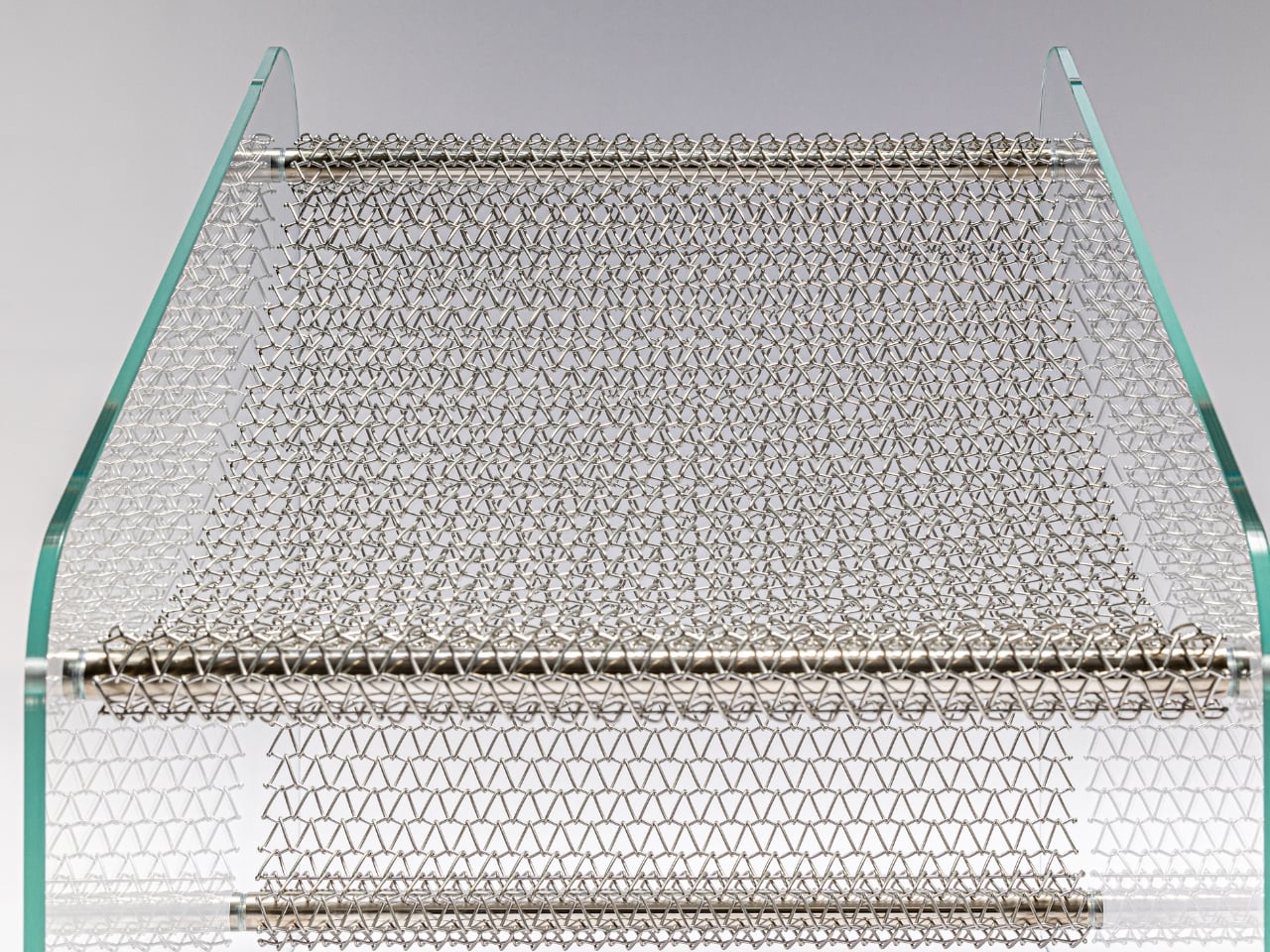
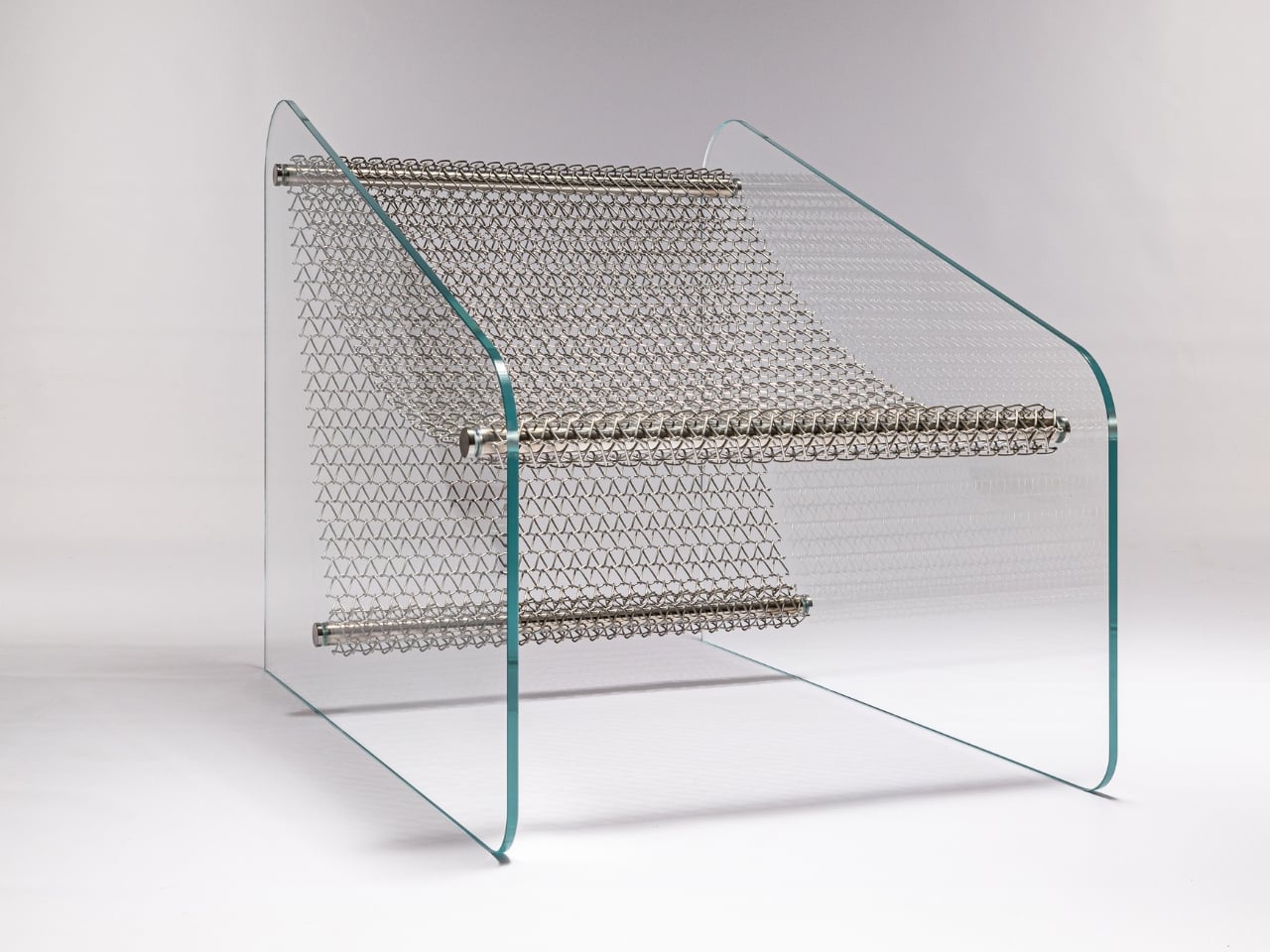
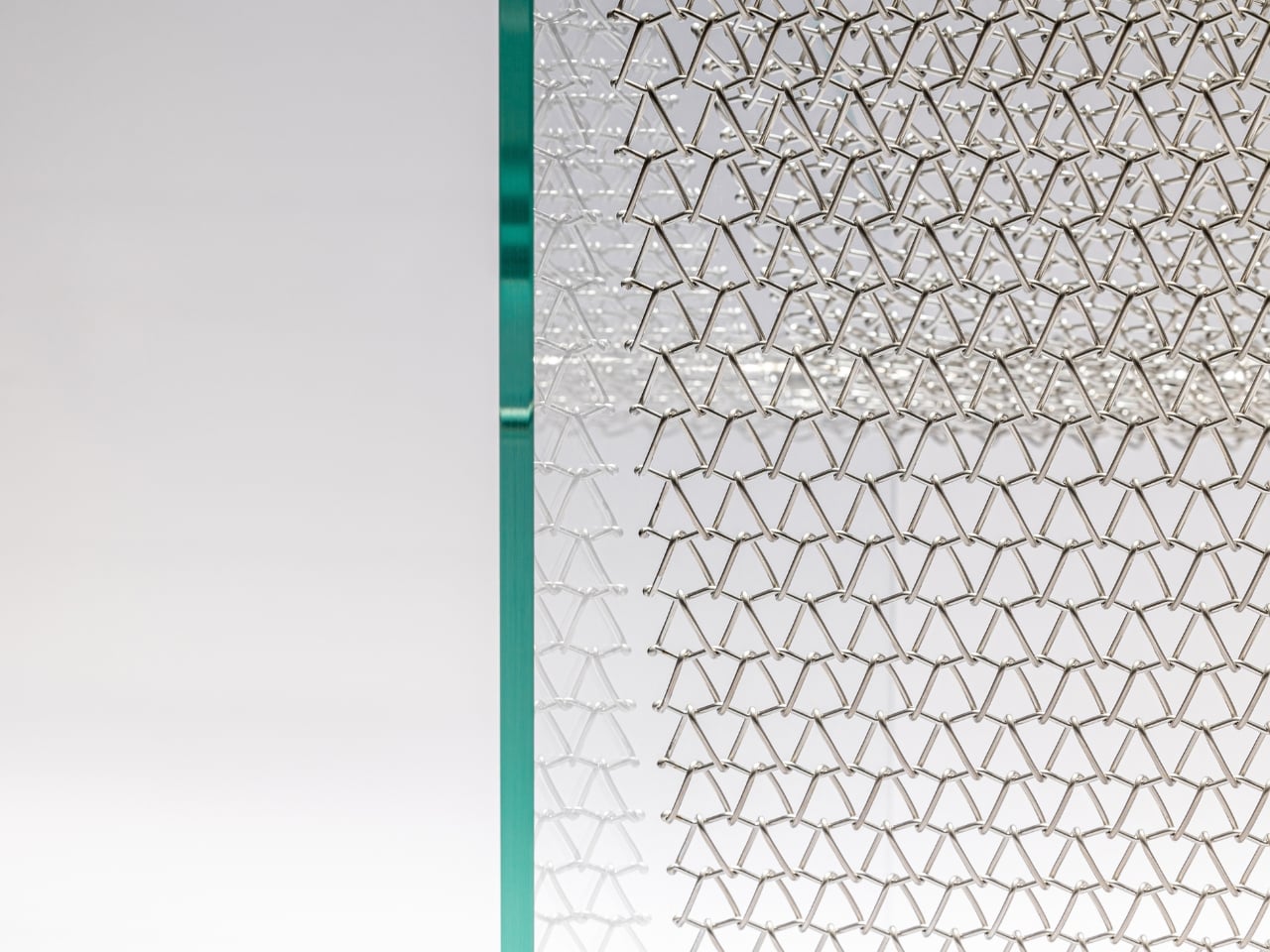
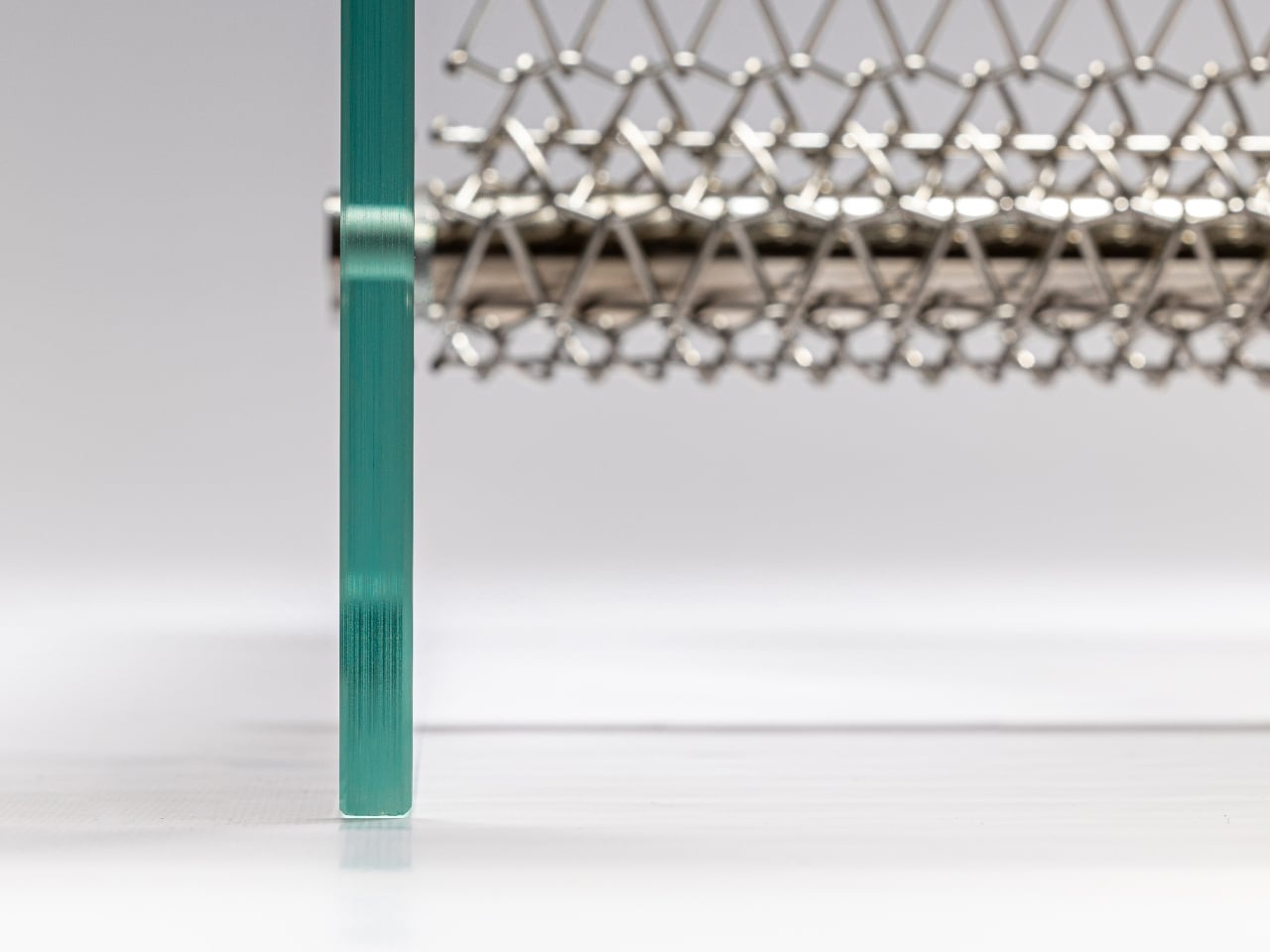
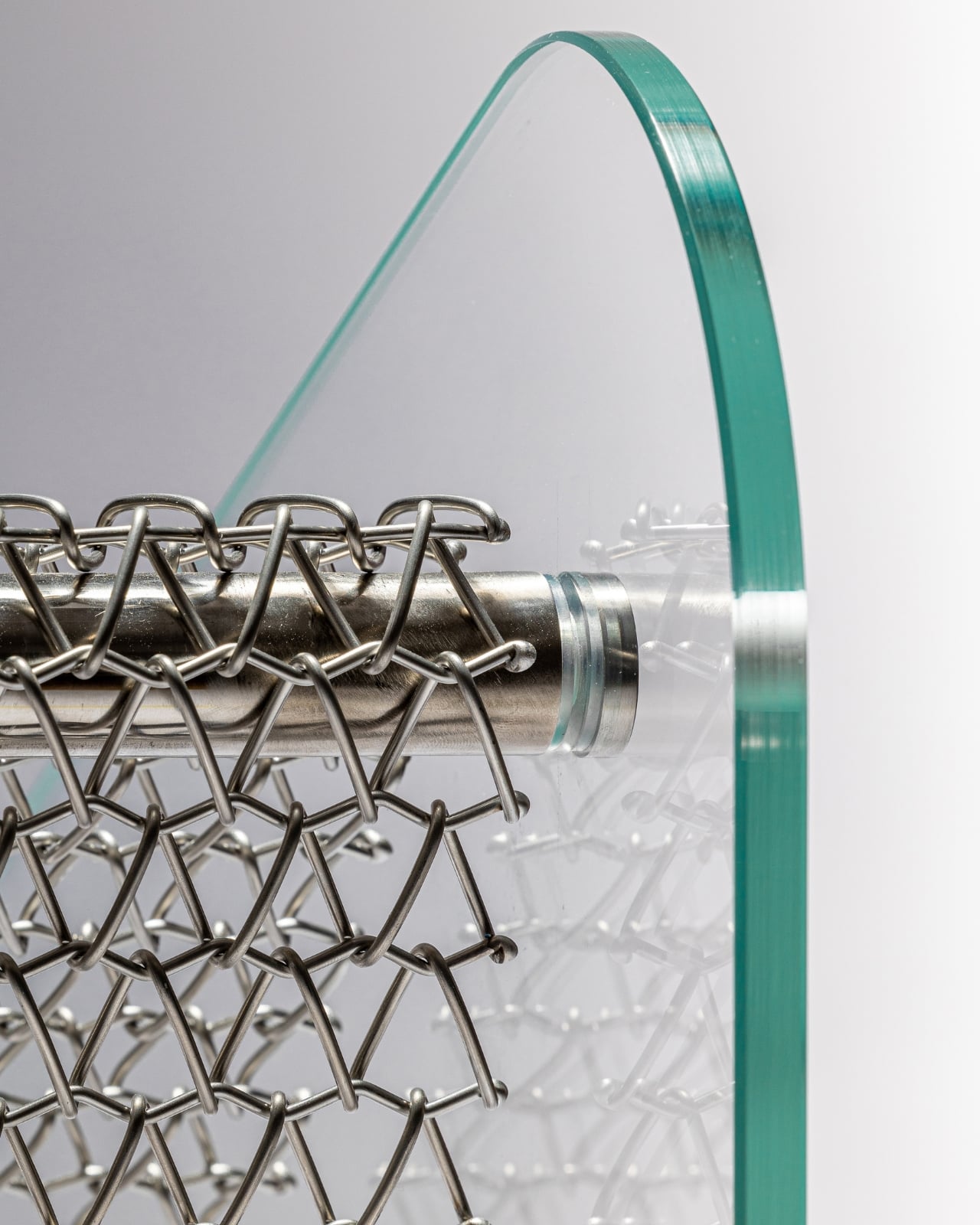
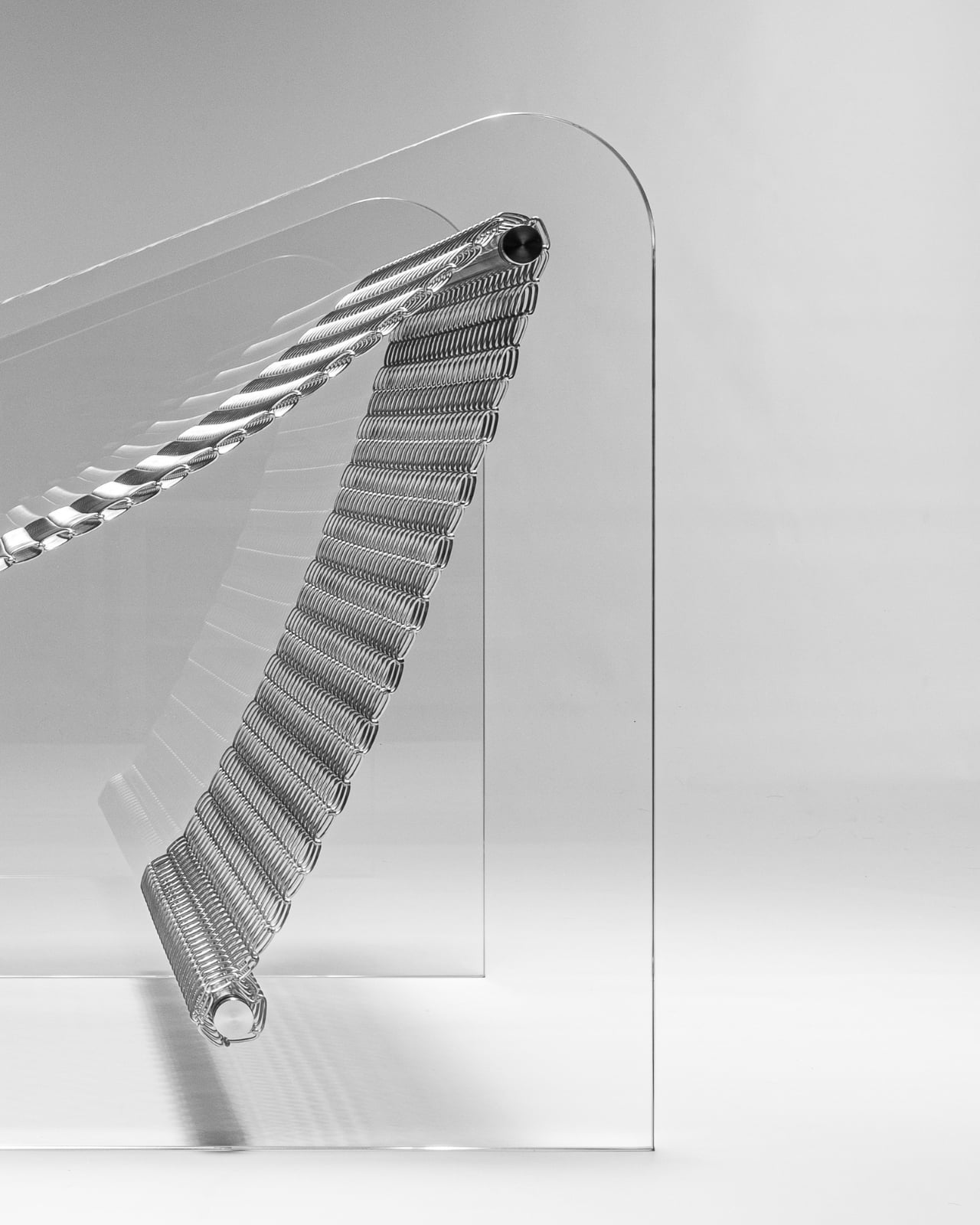
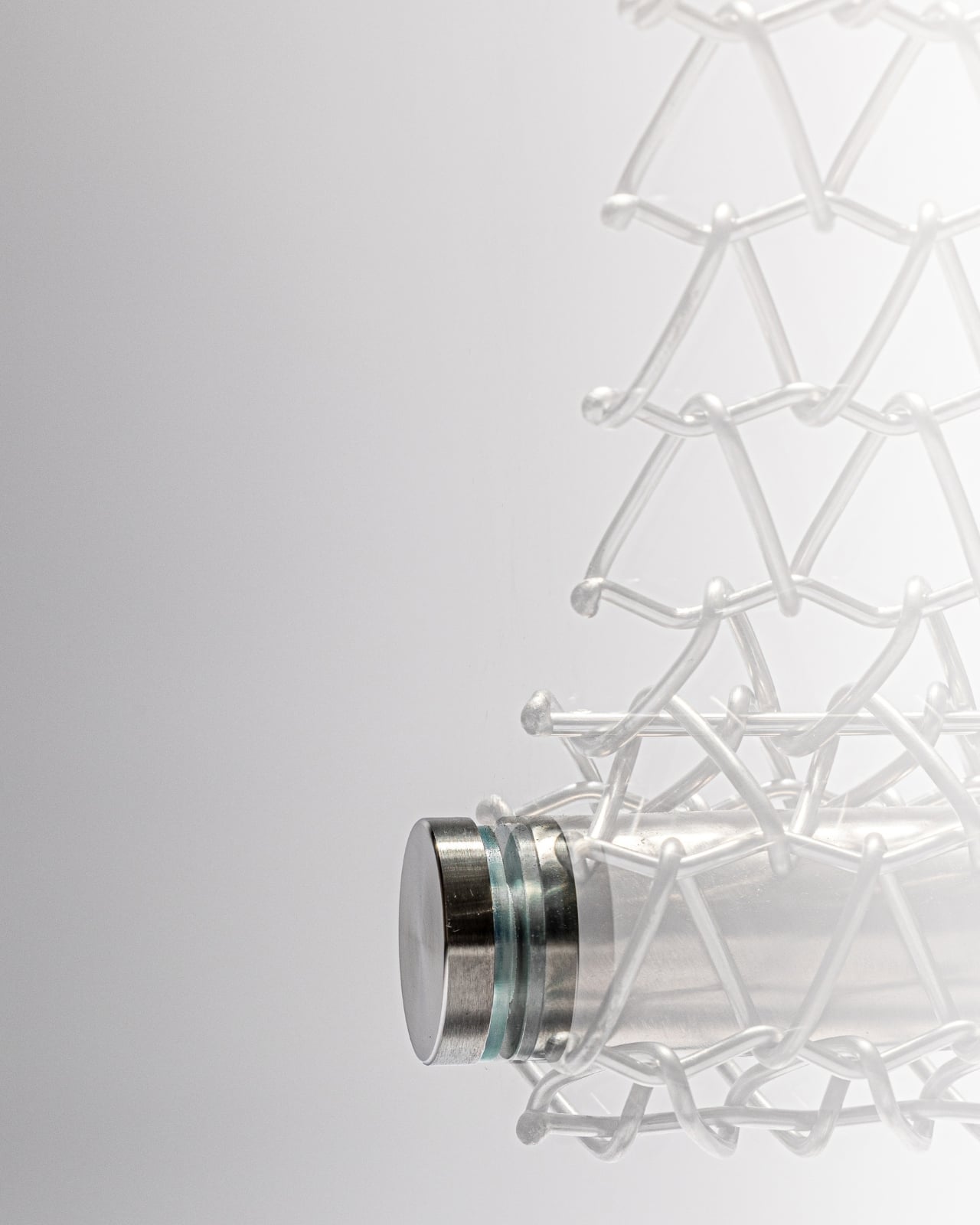
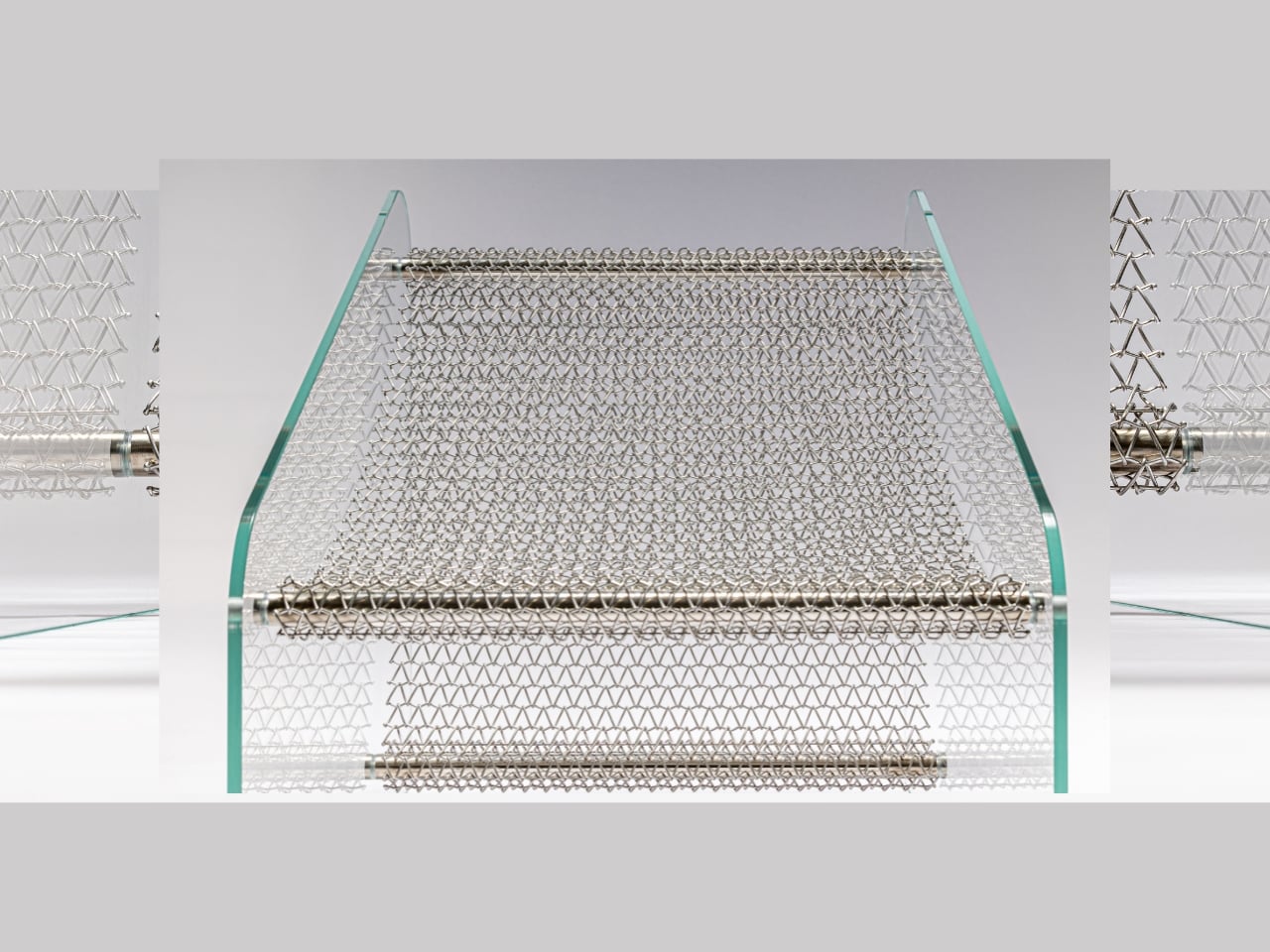
The Metal Affaire is an armchair made almost entirely of transparent laminated glass, supported by a metallic mesh base. Yes, glass. The kind of material you typically associate with windows and coffee tables, not with the thing you sit on during a long Sunday. But that counterintuitive choice is precisely what makes this design so compelling. It doesn’t try to blend in. It asks to be noticed, studied, and maybe even argued about.

Designer: Minimal Studio

Minimal Studio is a multidisciplinary design studio based in Mallorca, Spain, founded by David Martínez Jofre. The studio brings together architects, engineers, and interior designers, and their philosophy is rooted in one clear belief: simplicity is not the absence of thought. It’s the result of a lot of it. Their signature look leans into clean lines, neutral tones, and materials that let a space breathe, which is exactly what the Metal Affaire does visually. The glass shell gives the chair an almost weightless appearance, like it’s barely occupying space at all, while the metallic mesh base grounds it with enough structure to remind you it’s very much real.

The design concept comes from mimicry. The shape of the armchair echoes and mirrors its own materiality, the glass structure and the mesh base informing each other as if they grew into their final form together. That kind of design intention, where the form and material feel genuinely inseparable, is rarer than it should be. A lot of furniture design today prioritizes the photograph over the experience, optimized for an Instagram carousel rather than a living room. The Metal Affaire feels like the opposite impulse. It’s meant to be looked at closely, touched, questioned.

Of course, it raises the obvious reaction: can you actually sit in a glass chair comfortably? That’s a fair question, and it’s not one this design tries to brush off. The laminated glass is structural and load-bearing. The proportions (80cm high, 60cm wide, 60cm deep) are those of a proper armchair, not a sculptural prop. But to be honest, I don’t think comfortable seating is the only thing the Metal Affaire is asking you to think about. It’s asking whether a chair can be beautiful in the way a sculpture is beautiful, functional and considered and worth looking at from every angle.

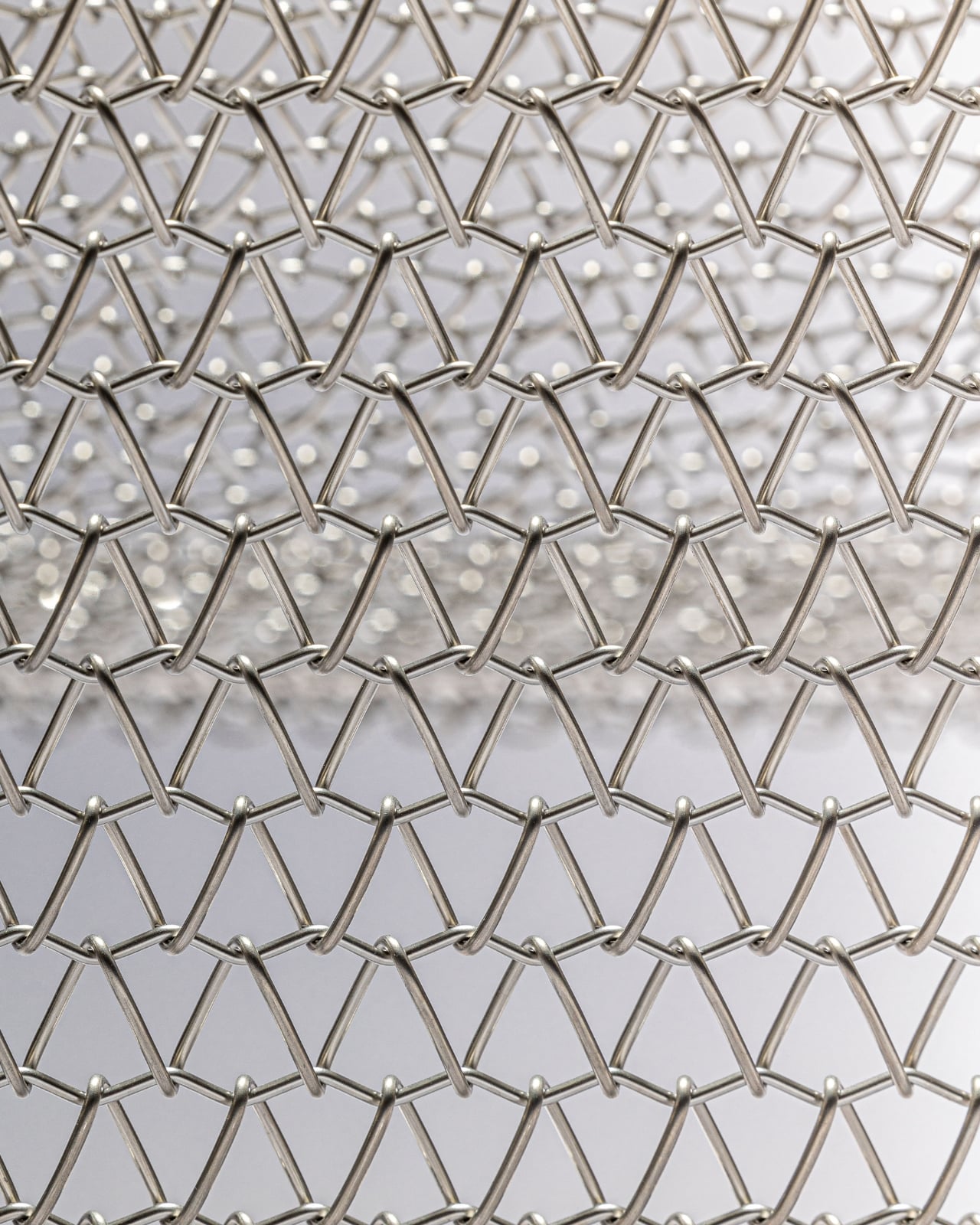
The name itself is a bit of a wink. “Metal Affaire” suggests something indulgent, a rendezvous between industrial materials and refined design sensibility. And Minimal Studio leans into that duality without apology. The metallic mesh doesn’t try to hide itself or disappear behind the glass. It asserts its presence, and the contrast between hard structure and transparent surface is the entire point. Industrial and elegant at once, which is a balance that is genuinely difficult to achieve without one quality undermining the other.

There’s also something to be said about how the Metal Affaire interacts with light. Transparent glass in a room doesn’t behave the way solid furniture does. It shifts depending on the hour, the season, the angle. The chair you see at noon isn’t quite the same chair you see at dusk. That quality, the way it refuses to be static, gives it a liveliness that most furniture simply doesn’t have. It becomes part of the room’s atmosphere rather than just an object placed inside it.

Minimal Studio has been quietly building a body of work that challenges what “minimalism” actually means in furniture design. The Metal Affaire is the clearest expression of that challenge yet. Not minimal in the sense of boring, but minimal in the way that a perfectly constructed sentence is minimal. Nothing wasted, nothing missing, and somehow, exactly what it needed to be.

The post The Glass Chair That Makes Every Other Chair Look Boring first appeared on Yanko Design.

Titanium Court mashes together genres and cultural references to tell a strange, funny tale

I would love to tell you everything about my favorite game of the year so far. But that would be doing a great disservice to Titanium Court. I'm not even sure I could explain it all, anyway.

Titanium Court is a run-based game with elements of permanent progression, so it's technically a roguelite. However, you cannot really break Titanium Court like you can with Balatro. There are multiple ways to win a run, but you have to play by the rules. Gradually learning what those are — and how the game suddenly changes them — is a big part of what makes this so effective.

I can at least break down the core gameplay loop for you. There are two stages to each battle in every run aka a "war." The first is a match-three segment (think Candy Crush Saga), in which you gather resources by lining up wheat fields, rivers, hills and forests. At the same time, you're setting up the terrain and positioning your own tile (the titular court) for the second stage. For instance, water will stop foot soldiers entirely, so you can position yourself behind a barricade of rivers to block them. But you'll need to be careful, since a chain reaction of matches can wipe out your carefully constructed defense. 

At the same time, you'll be moving around enemy strongholds. You can line up three or more matching enemy bases to eliminate them, but you don't gain any resources from those. Plus, you can only make a limited number of moves in this phase. So that makes for an interesting risk-reward conundrum. A timeline shows you which enemies will attack and when so you can plan accordingly. 

The second phase is where the tower defense element really takes hold. You'll use what you've collected to recruit soldiers to attack enemies or defend your base, add workers that will gather more resources and maybe deliver magic attacks. You can trade at shops and markets as long as you haven't wiped them from the grid, since they're bonded to terrain tiles. When you're ready to fight, you hit a play button and the battle takes place automatically.

Nothing’s as simple as it might seem at first, because this is a game that will mess with you. I was scolded for trying to buy my way to victory by trading too much, with the game calling that approach "boring" and closing the shop's doors for the round. Perfectly fair. I chuckled the first time that happened. When I thought I was being clever by using the introspective power of self-reflection (you'll see) to win a boss fight, I was swiftly shut down. 
Between wars, you'll explore the titular court as its newly anointed queen, trying to figure out what on Earth is going on and, ultimately, how to get home. Here, Titanium Court morphs into a blend of old-school adventure game and bizarre visual novel. This is where much of the magic lies, and where you gradually learn about the story and even how to play the game.

Titanium Court
AP Thomson/Fellow Traveller

Developer AP Thomson's writing is smart and funny. I lost count of the number of jokes I've laughed out loud at. His narrative takes you in startlingly unexpected directions. It feels like a grand performance and Thomson is the master of ceremonies. It’s a confidently authored experience that offers further evidence as to why absolutely no one needs a generative AI game platform that seeks to “kill the scripted RPG.”

Titanium Court won the prestigious Seumas McNally Grand Prize at the Independent Games Festival Awards earlier this year and it's not hard to see why. Thomson and his collaborators have cooked up something really special here. 

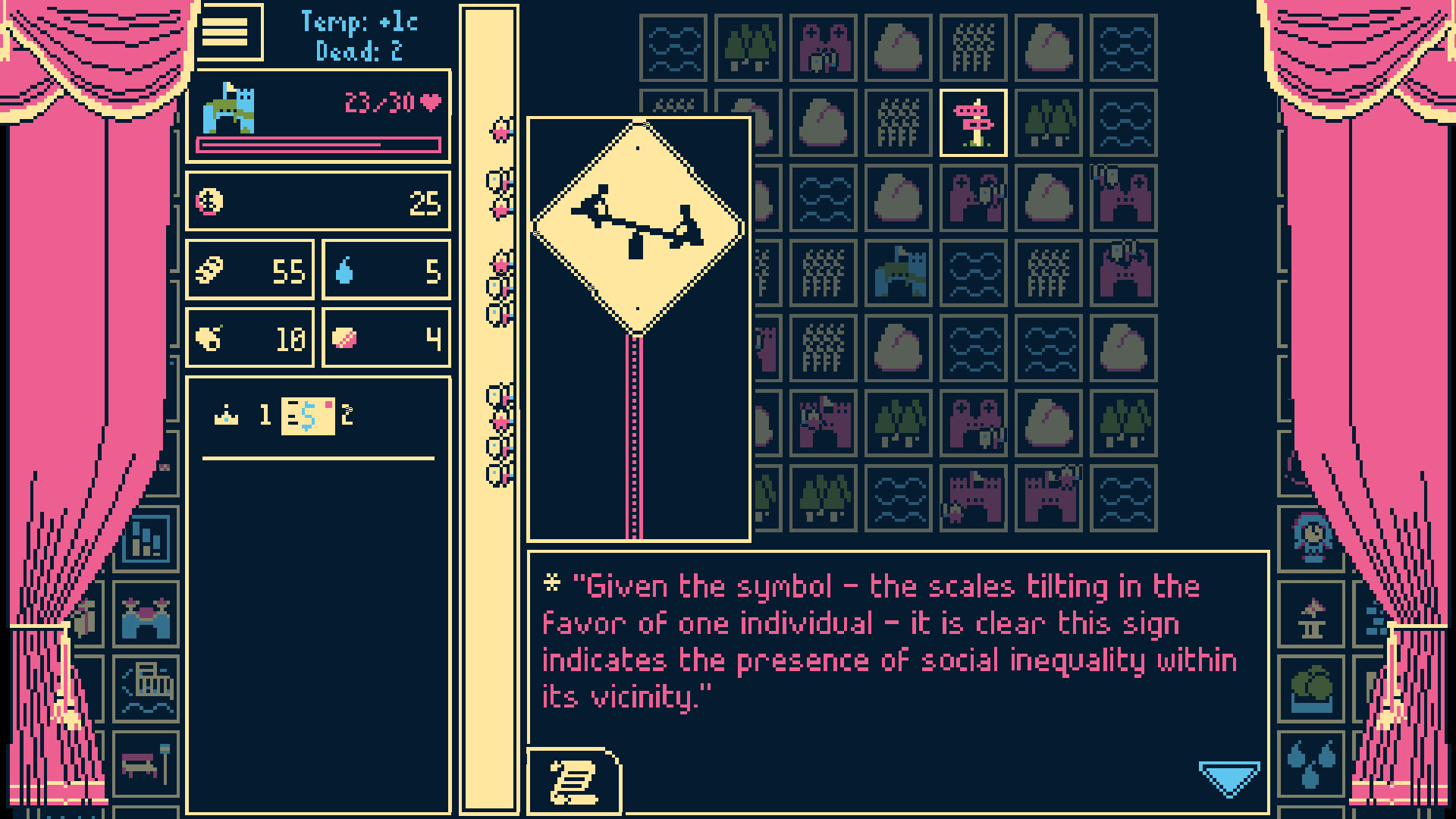
It's a game with dragons and ballet, baseball and bike races, shower thoughts and wormholes. There are road signs in a world in which faeries believe cars are a figment of your imagination. It references Catan, the Civilization series, Jenga and A Midsummer Night's Dream. It skewers capitalism and social inequality. I'll let you discover the details of the job system, which completely upends how you play the game, yourself. I haven't been this engrossed by a game since Ball x Pit. It surprises and delights at almost every turn. 

Titanium Court is certainly not going to be for everyone (there's so much reading!) and I’m going to stop here before I tell you too much about it. You can get a taste by checking out a Steam demo that’s available for PC and Mac. The full game arrived today. It usually costs $15, but it's 20 percent off until May 7.

This article originally appeared on Engadget at https://www.engadget.com/gaming/titanium-court-mashes-together-genres-and-cultural-references-to-tell-a-strange-funny-tale-184750797.html?src=rss

X is shutting down its Communities feature

X is closing its Communities feature in May, X Head of Product Nikita Bier has announced. Communities were introduced before Twitter was acquired and rebranded by Elon Musk, and act as a way for users to create, join and moderate public groups focused on a particular interest. Communities make it possible to follow a feed made up of only the people or subject matter you care about, but they haven't been used at the scale the social platform wanted.

"Communities had a great vision, but they were used by less than 0.4% of users — yet contributed to 80% of spam reports, financial scams, and malware on X," Bier said in a separate post. "It occupied half the team's time some weeks, while the rest of the app suffered." And while some real people did use groups to organize around niche topics, the most active groups were "user-acquisition channels for Kick or compensated clipper communities," according to Bier, not really the intended uses for the feature in the first place.

X's proposed replacement for Communities is its new XChat app, which can currently host group chats of up to 350 people, and will be expanded to support group chats of up to 1,000 people in the future, Bier says. Moderators are able to pin links in their Communities so members can join a group chat before the Communities feature is fully retired on May 30, an extension to the previously proposed deadline of May 6.

While that could keep groups together, a live group chat is fairly different from the asynchronous, separate-timeline-of-posts experience that Communities offered.  Group chats are typically active and demand your attention in a way a separate feed doesn't. To get a timeline of posts focused on an interest, users will now have to turn to X's new custom timelines feature, which uses Grok to automatically organize posts into feeds focused on topics like food, art or photography.

This article originally appeared on Engadget at https://www.engadget.com/social-media/x-is-shutting-down-its-communities-feature-182843958.html?src=rss

Apple, Amazon join push for looser greenhouse emissions reporting

The Greenhouse Gas Protocol, a widely used international environmental standard for measuring and reporting emissions, is considering changes to how certain types of the emissions are reported. Advocates for the new guidance argue that the current rules make it too easy for businesses to overstate their commitments to environmentally friendly operations, such as being powered by renewable energy or making progress toward net-zero emissions. 

Today, some major tech companies joined a call pushing back against the new guidance, asking for the new reporting rules to be optional rather than required. The joint statement argued that the proposed policies would reduce investments in sustainability programs and increase electricity prices. Apple and Amazon are among the more than 60 companies that signed the letter, Bloomberg reported. 

The protocol's three tiers of emissions present a clearer picture about companies' environmental efforts and how impactful they are in reducing emissions. Scope 1 includes emissions from sources directly owned or controlled by a business, while Scope 2 covers "how corporations measure emissions from purchased or acquired electricity, steam, heat and cooling." Scope 3 is the catch-all for any other emissions produced within a business' value chain. New proposed changes to the scope 2 guidance would place tighter requirements on how companies use renewable energy certificates to offset their electricity emissions. Rather than purchase clean energy certificates at any point during the year, companies would have to source clean energy that is both geographically close and simultaneously available to their grid-derived power. Any changes adopted by the Greenhouse Gas Protocol could take effect as early as next year.

This article originally appeared on Engadget at https://www.engadget.com/big-tech/apple-amazon-join-push-for-looser-greenhouse-emissions-reporting-182314690.html?src=rss

Apple TV’s upcoming For All Mankind spinoff Star City oozes Cold War-era paranoia

Apple TV just dropped a real-deal trailer for Star City, after releasing a short teaser earlier this year. It's a spinoff of For All Mankind, but this new show examines the alt-history space race from the Soviet perspective.

In other words, this is a trailer steeped in Cold War-era paranoia. Secret photos are snapped, phones are tapped and characters are disappeared, all set against the backdrop of space exploration. The vibe looks decidedly different from For All Mankind, despite the parent show occasionally dabbling in Russia-based espionage.

The vibe isn't the only shift here. Star City isn't doing time jumps, which is a hallmark of For All Mankind. The original show started in 1969 and season five is set in 2012. The spinoff "lives in the 1970s" and is "its own genre." This is according to showrunners Matt Wolpert and Ben Nedivi.

For the uninitiated, For All Mankind begins with Russia beating us to the Moon in the 1960s. This creates a butterfly effect that changes history in ways both big and small. Star City looks like it'll focus on how Russia managed to land astronauts on the Moon before America and what happened to the space program in the immediate aftermath. It stars Rhys Ifans, Anna Maxwell Martin, Agnes O’Casey and Alice Englert.

Star City premieres on May 29 with two episodes. That's the same day season five of For All Mankind concludes. The original show was recently renewed for a sixth and final season.

Apple TV really has become the best streamer for sci-fi. This summer sees not just the premiere of Star City, but the second season of the multiverse-based thriller Dark Matter and season three of the dystopian adventure Silo. The platform is also home to shows like Pluribus, Severance and Foundation, among many others.

This article originally appeared on Engadget at https://www.engadget.com/entertainment/tv-movies/apple-tvs-upcoming-for-all-mankind-spinoff-star-city-oozes-cold-war-era-paranoia-180429809.html?src=rss

A Burned-Out Xiaomi Phone Now Runs Gemini AI Inside a Retro TV Case

The smart home speaker market has settled into a familiar aesthetic. Smooth cylinders, matte finishes, and understated designs meant to disappear into a room are the default for most voice assistants. It’s a reasonable approach, but it also means most of them look exactly the same, and the hardware driving them tends to get replaced every couple of years, whether it actually needs to be or not.

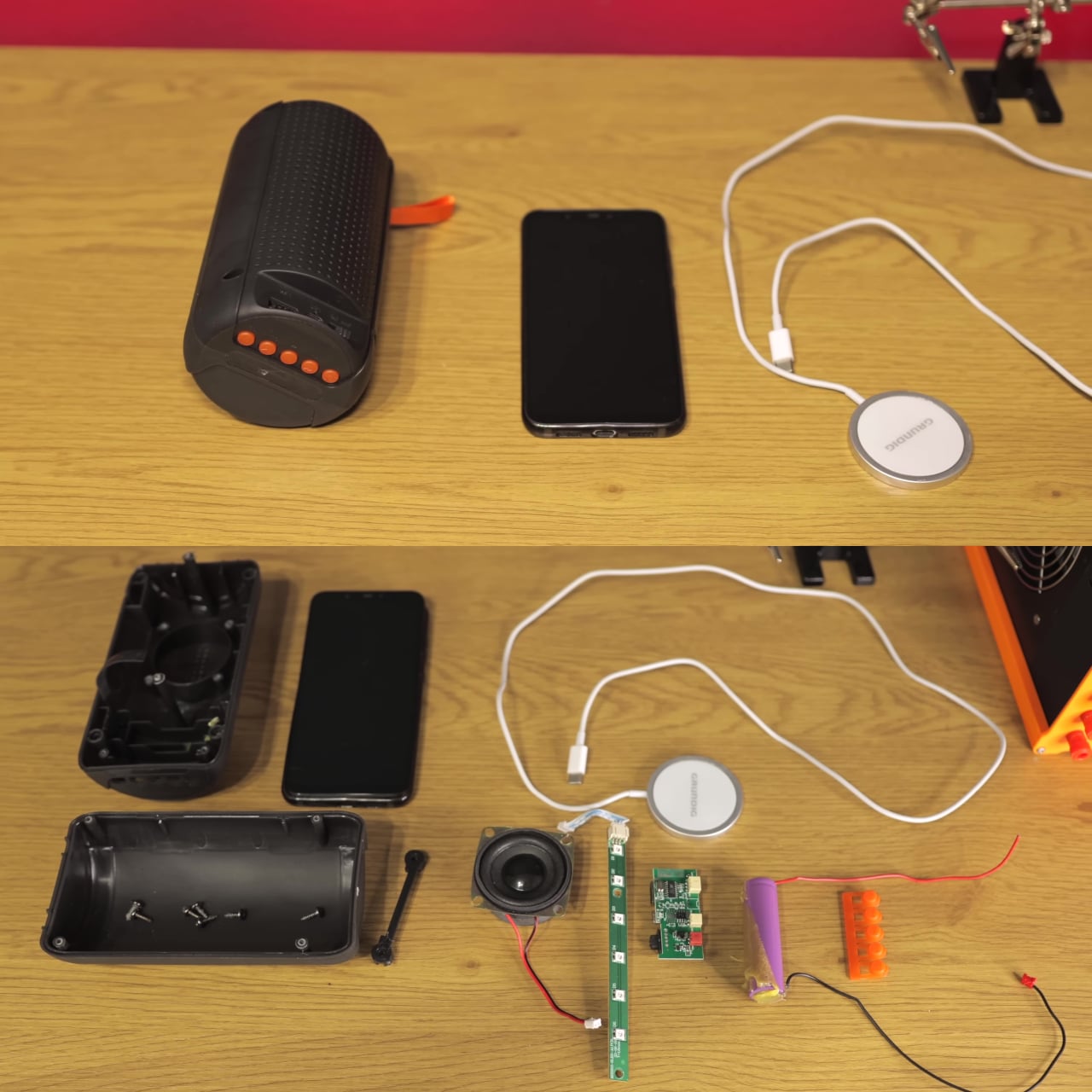
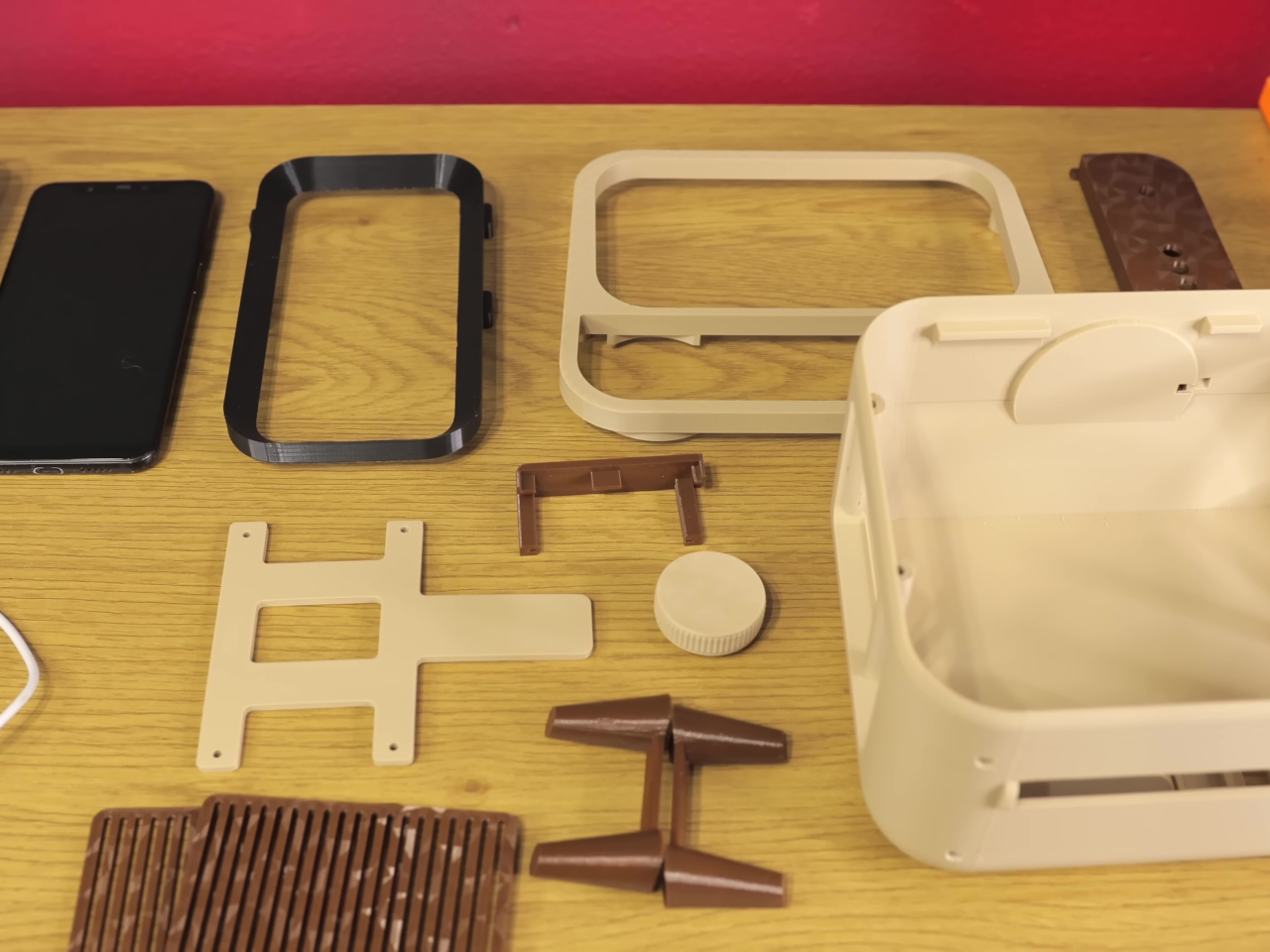
HANDMAX Workshop took a different approach entirely. Rather than buying new hardware, the build starts with a Xiaomi Mi 8 already well past its prime, complete with a burned-in display, degraded speakers, and a failing battery. The processor and software capabilities were still perfectly usable, though, and that turned out to be all this kind of project actually needs.

Designer: HANDMAX Workshop

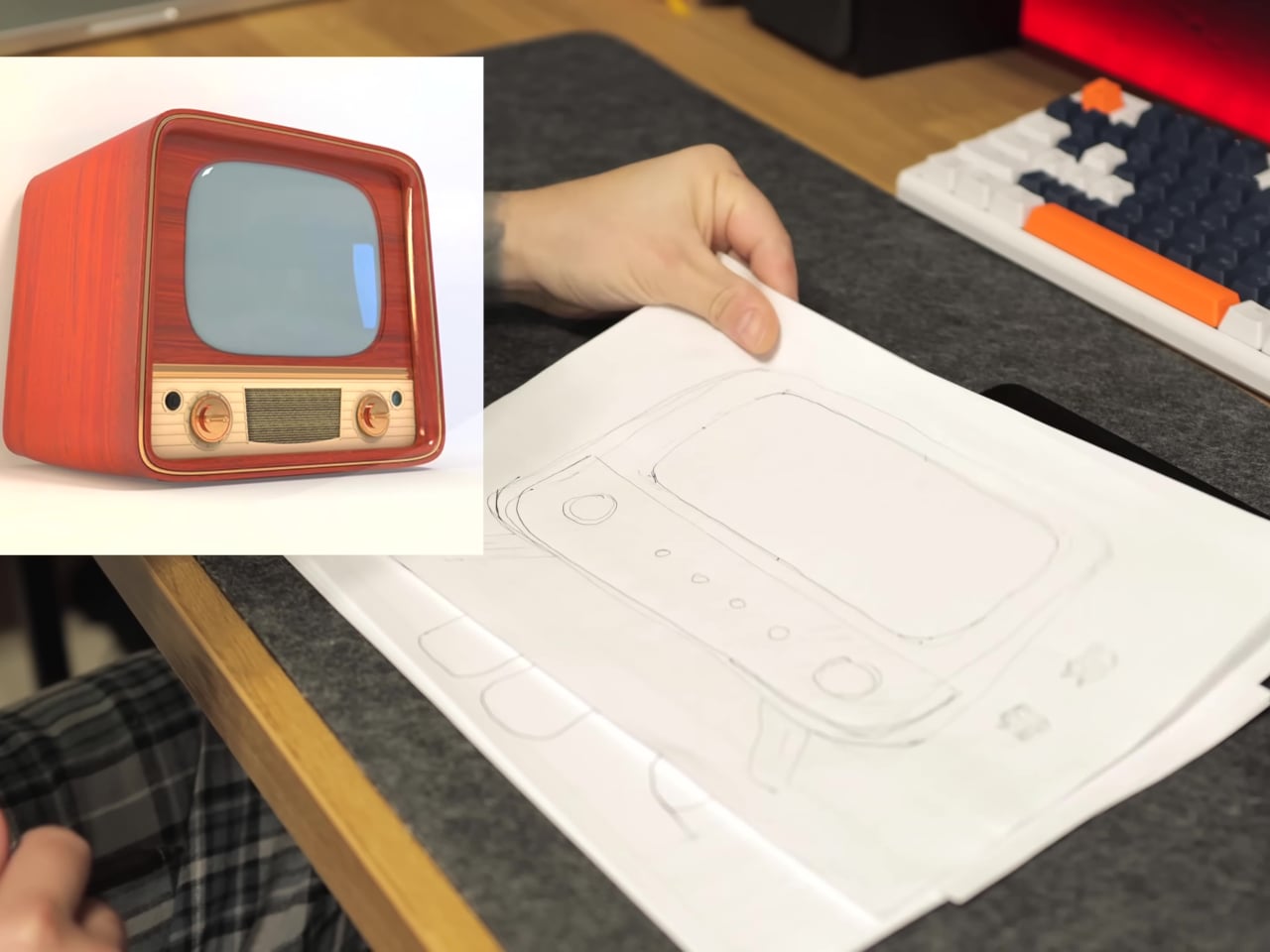
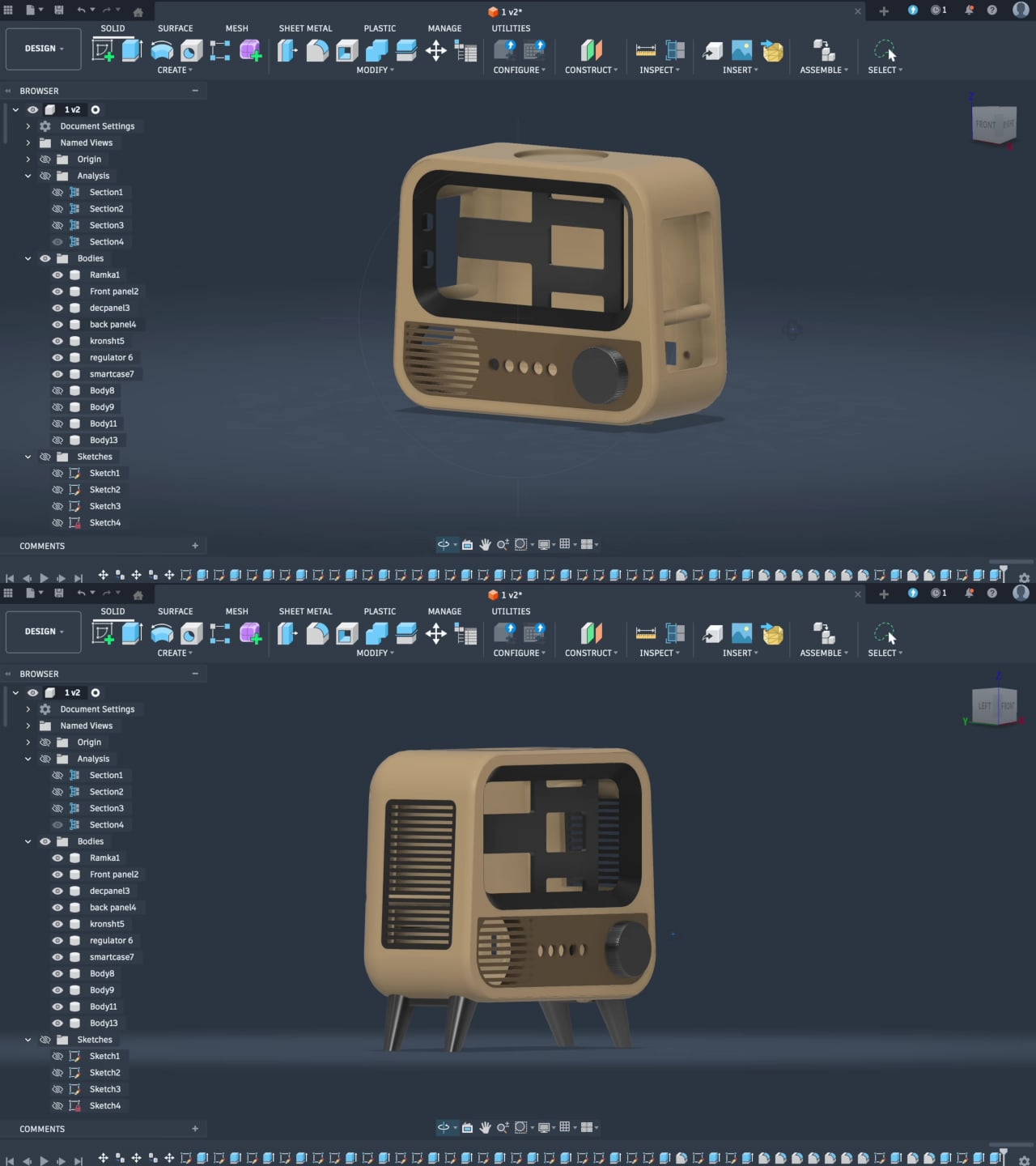
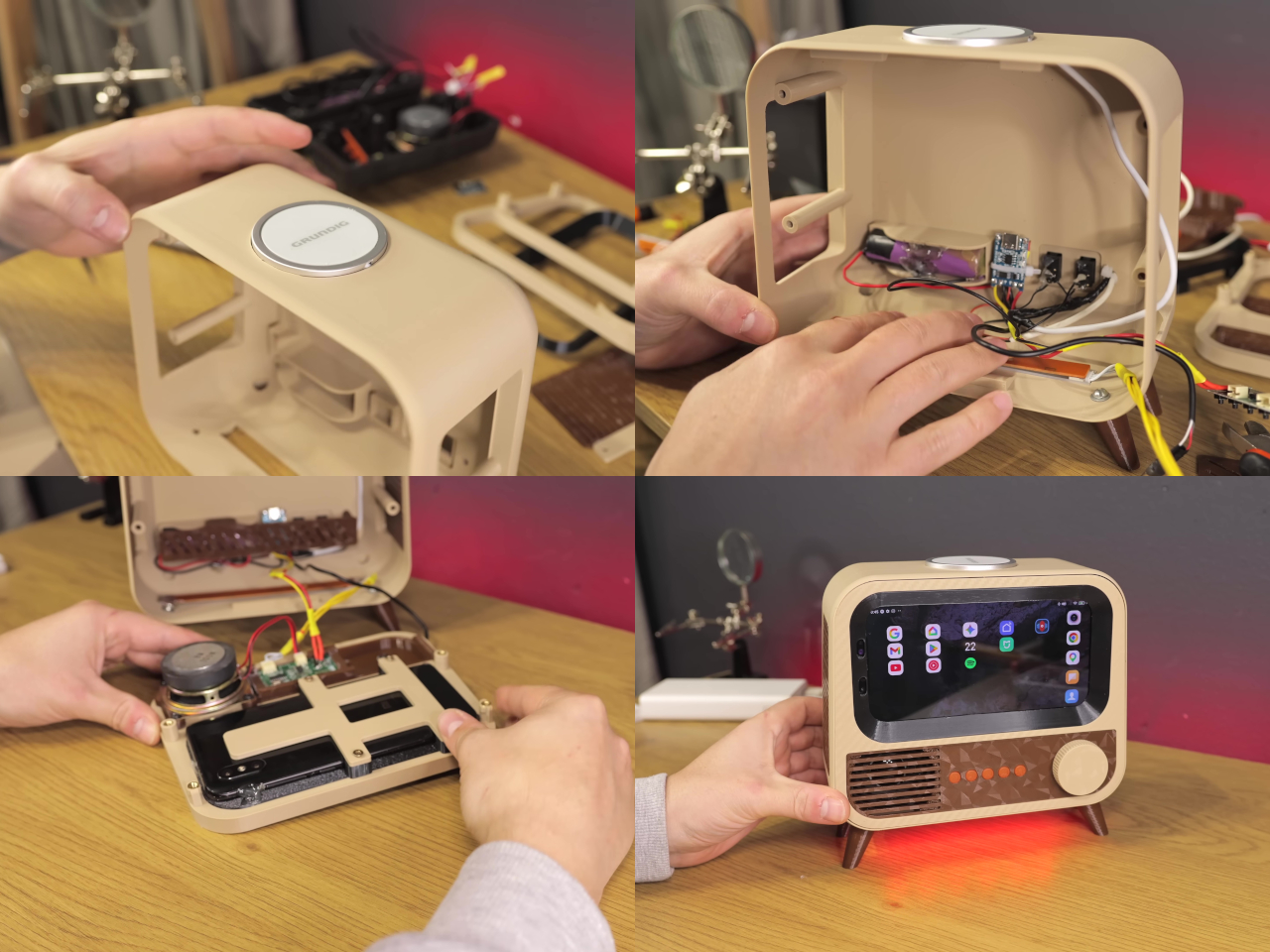
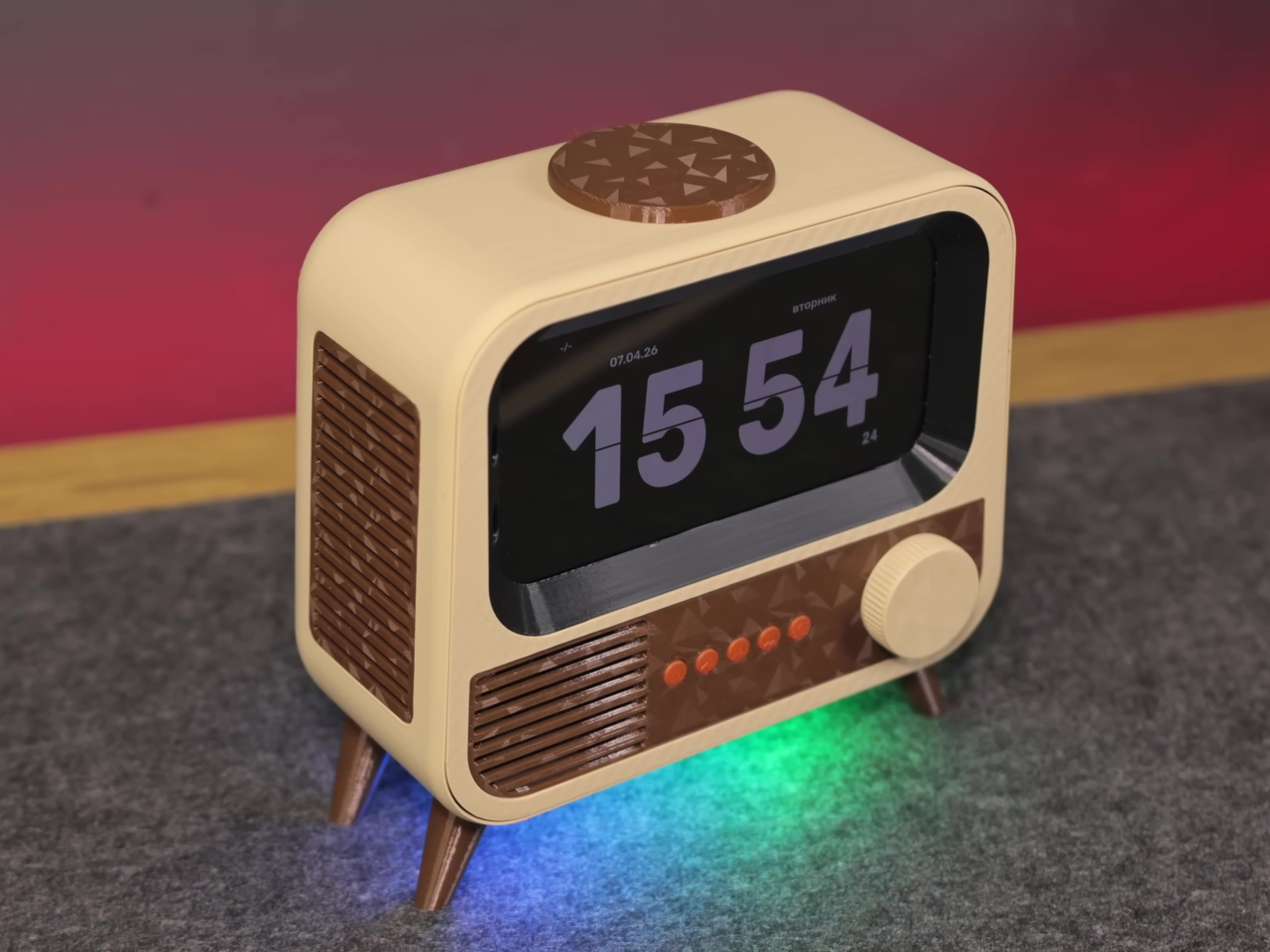
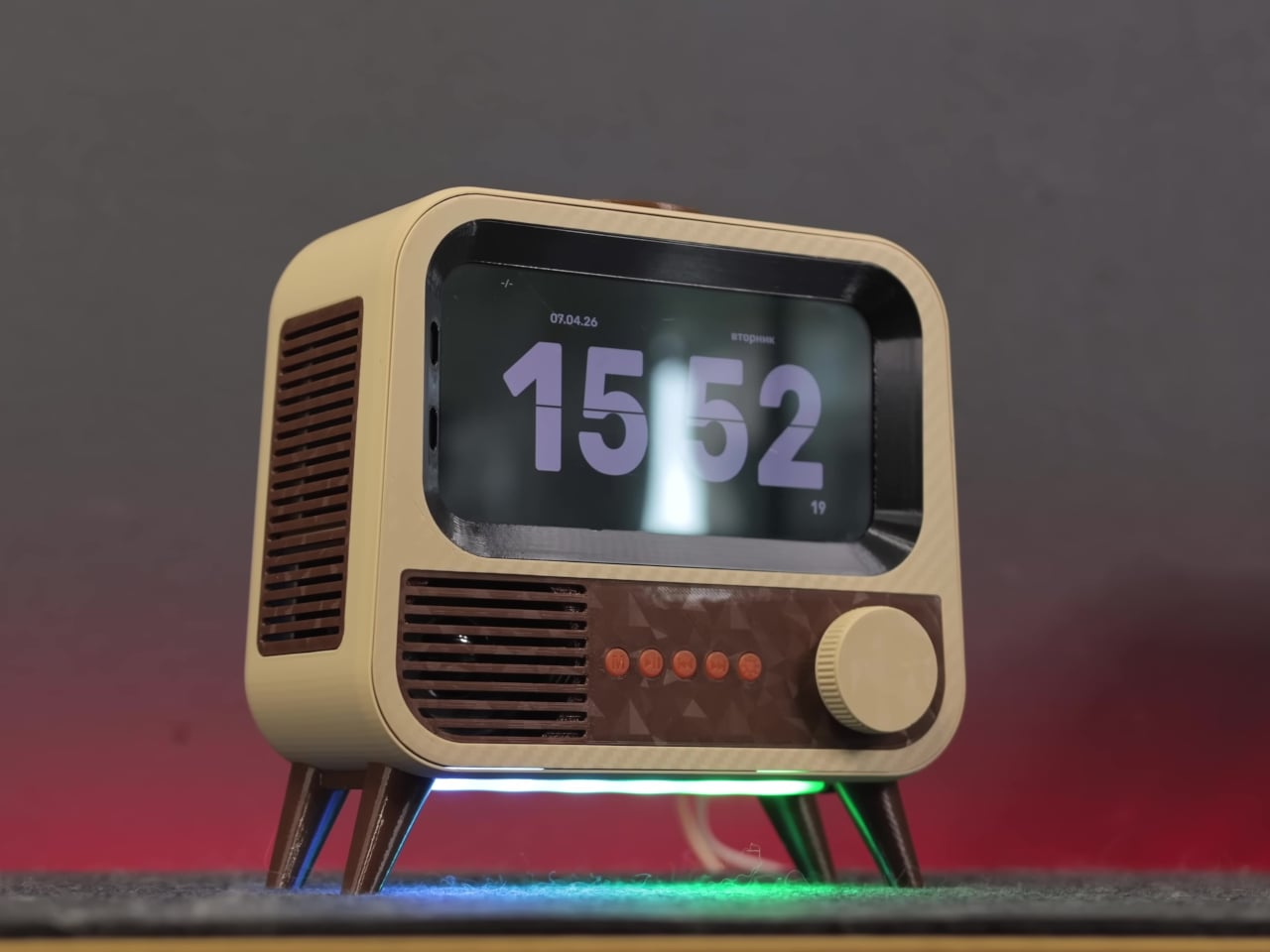
The case is where things get interesting. Instead of a sleek enclosure meant to blend in, the HANDMAX design goes full retro television, with a front grille, physical control buttons, and decorative legs completing the picture. Carefully modeled 3D-printed parts handle the practical side of things, accommodating the phone’s sensors and camera while keeping the vintage illusion intact from every angle you look at it.

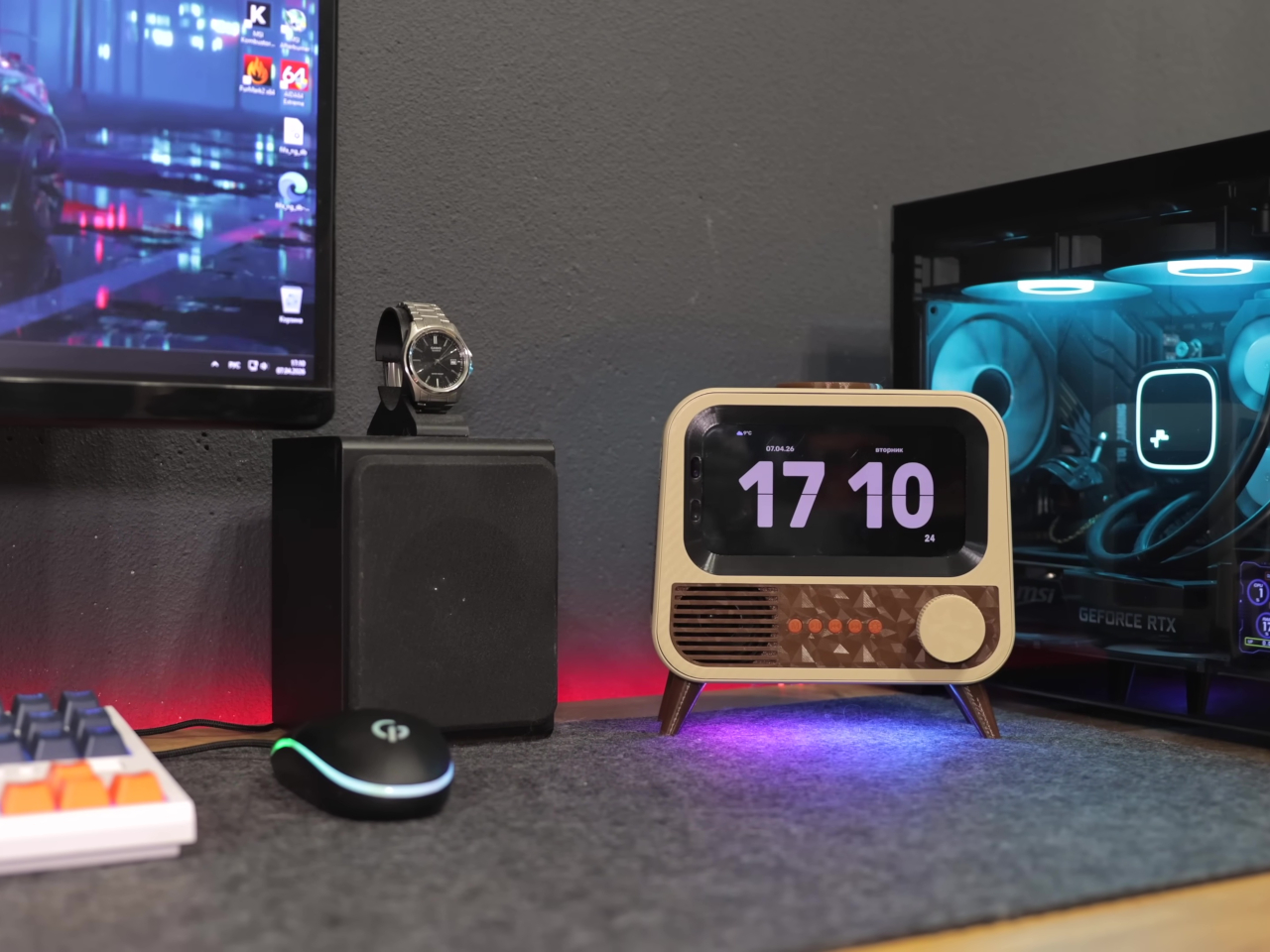
Put it on a desk, and you have a smart speaker that looks like something rescued from a garage sale, in the best possible way. Ask it a question, and Google Gemini handles the conversational side, pulling in responses without needing a dedicated microprocessor or a new development board. It’s the same AI model powering higher-end commercial devices, running on hardware that would otherwise be sitting in a drawer.

The smart home integration is what makes it genuinely useful beyond being a conversation piece. Through Google Home, the device can control smart home accessories directly, and custom routines let voice commands trigger specific actions around the house. Turning lights on, adjusting a thermostat, or running a sequence of automations becomes a spoken instruction directed at what looks like a miniature television set.

Getting there wasn’t entirely straightforward. The phone’s Bluetooth module had a habit of shutting itself down after 20 minutes of silence, which would quietly cripple the whole setup. The fix was characteristically clever, though; an inaudible 6 Hz tone runs constantly in the background, imperceptible to human ears but enough to convince the firmware that the system is still in use and shouldn’t shut down.

Beyond voice interaction, the finished device also functions as a wireless charger and a desktop display, which means it earns its counter space even when no one is talking to it. The final hardware list doesn’t include a single new component, just old parts that most people would have discarded without a second thought. That’s the more interesting design challenge of the two.

There’s an argument to be made that the best AI hardware isn’t always the most expensive, and this project makes it quietly. Commercial smart speakers are bought, used for a few years, and eventually replaced. A device built from broken hardware doesn’t follow that lifecycle, and the retro TV case that holds it together makes sure it doesn’t look like it’s trying to.

The post A Burned-Out Xiaomi Phone Now Runs Gemini AI Inside a Retro TV Case first appeared on Yanko Design.