The CAIM1 3D Printed Camera puts a security chip behind your photos as proof against AI deepfakes

Every viral video now comes with a free side of doubt. You see a cat dancing to that Nicole Kidman song, or a deepfake meme of Jensen Huang with his Asian baddie girlfriend, and before you even laugh, your brain wonders whether the rest of the world can genuinely tell the difference between the real world and AI. Josh Cowell got tired of wondering. His startup, Caimera, built CAIM1, a prototype camera that cryptographically signs every photo and 4K clip the moment you hit record. The name stands for Counter Artificial Intelligence Machine 1, and its whole job is proving you were actually there.

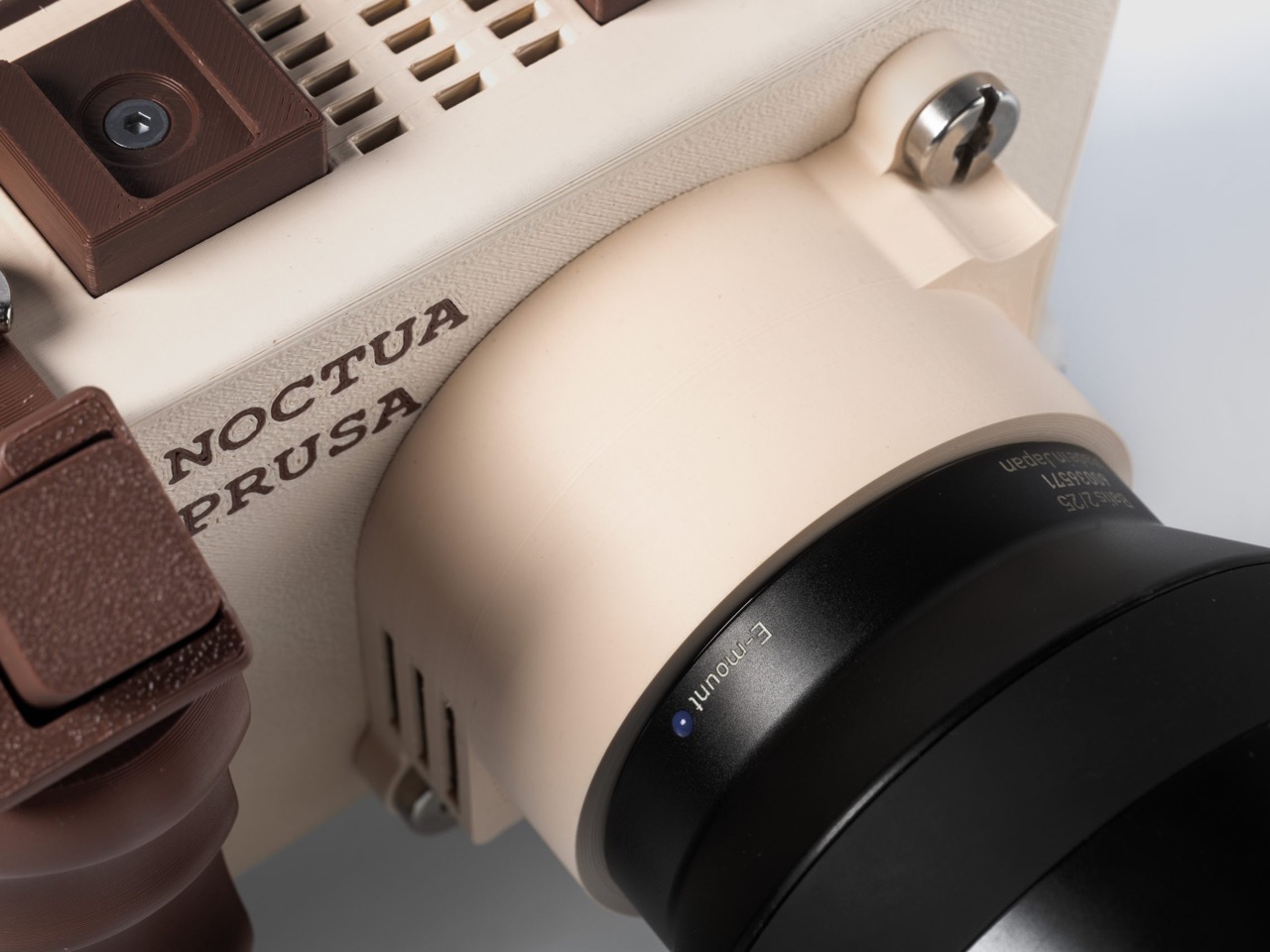
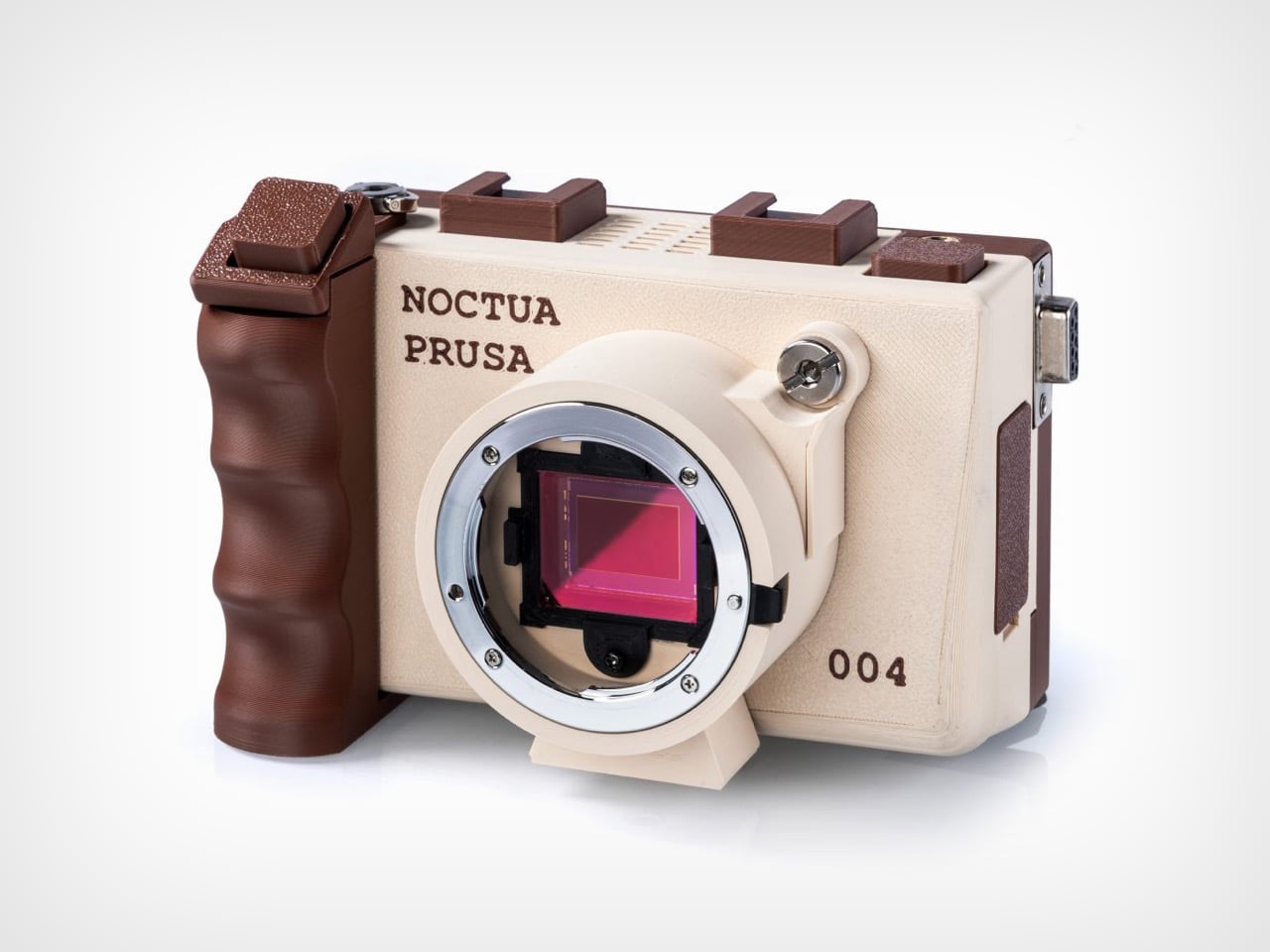
It also looks like a chocolate bar that took up photography. The beige and brown shell is 3D printed in Prusament PETG using Noctua’s signature colors, a nod to the Austrian fan maker whose tiny 40mm NF-A4x10 keeps the internals from overheating. A Micro Four Thirds sensor sits behind a native Sony E-mount, and an auditable TROPIC01 security chip from Prague’s Tropic Square handles the signing. Want proof you can hold? CAIM1 can print a paper receipt for your verified footage, and the first batch is targeted for early 2027, with pricing still under wraps.

Designer: Josh Cowell (Caimera)

One Tiny Noctua Fan Keeps CAIM1 From Cooking Itself
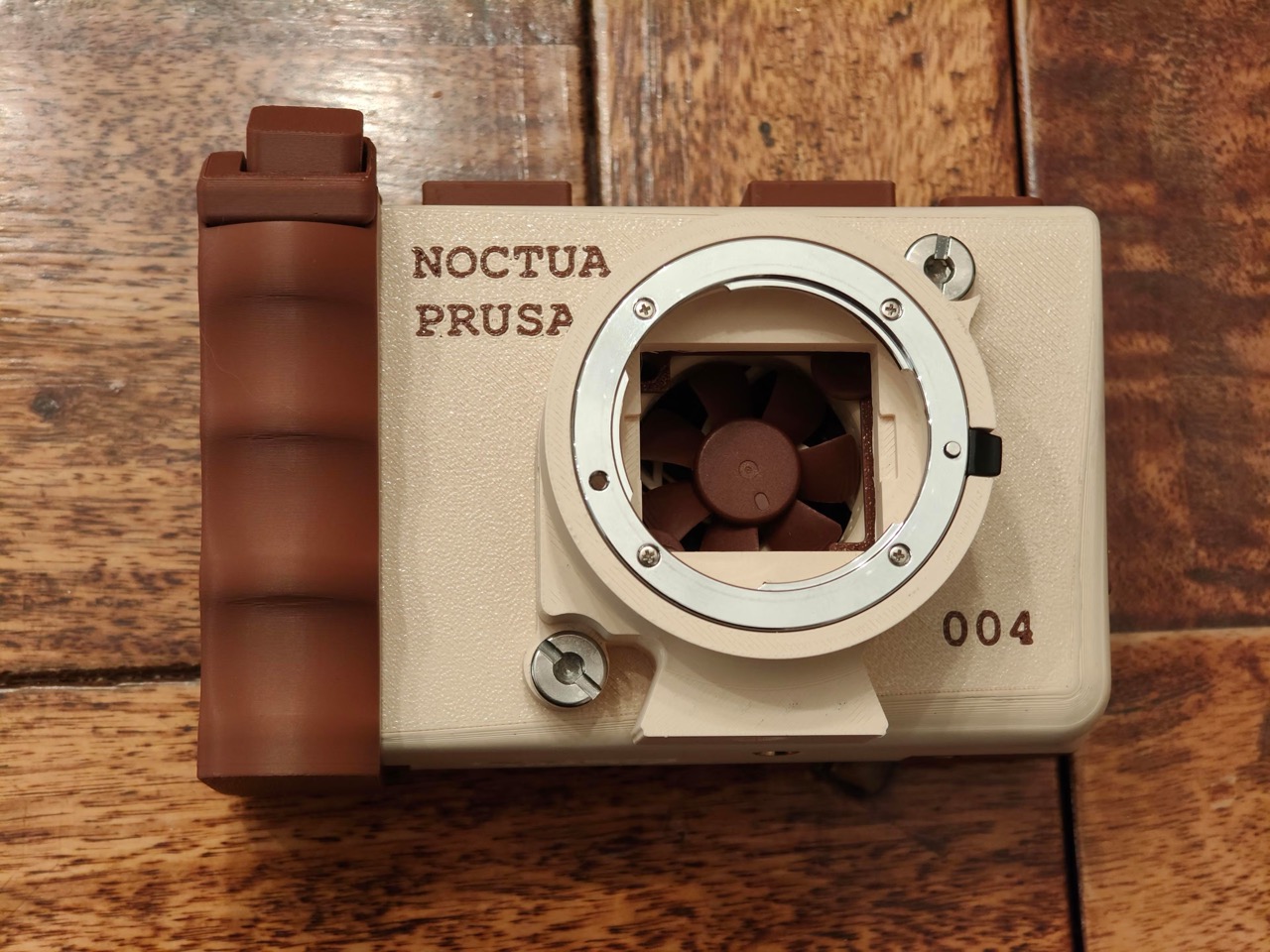
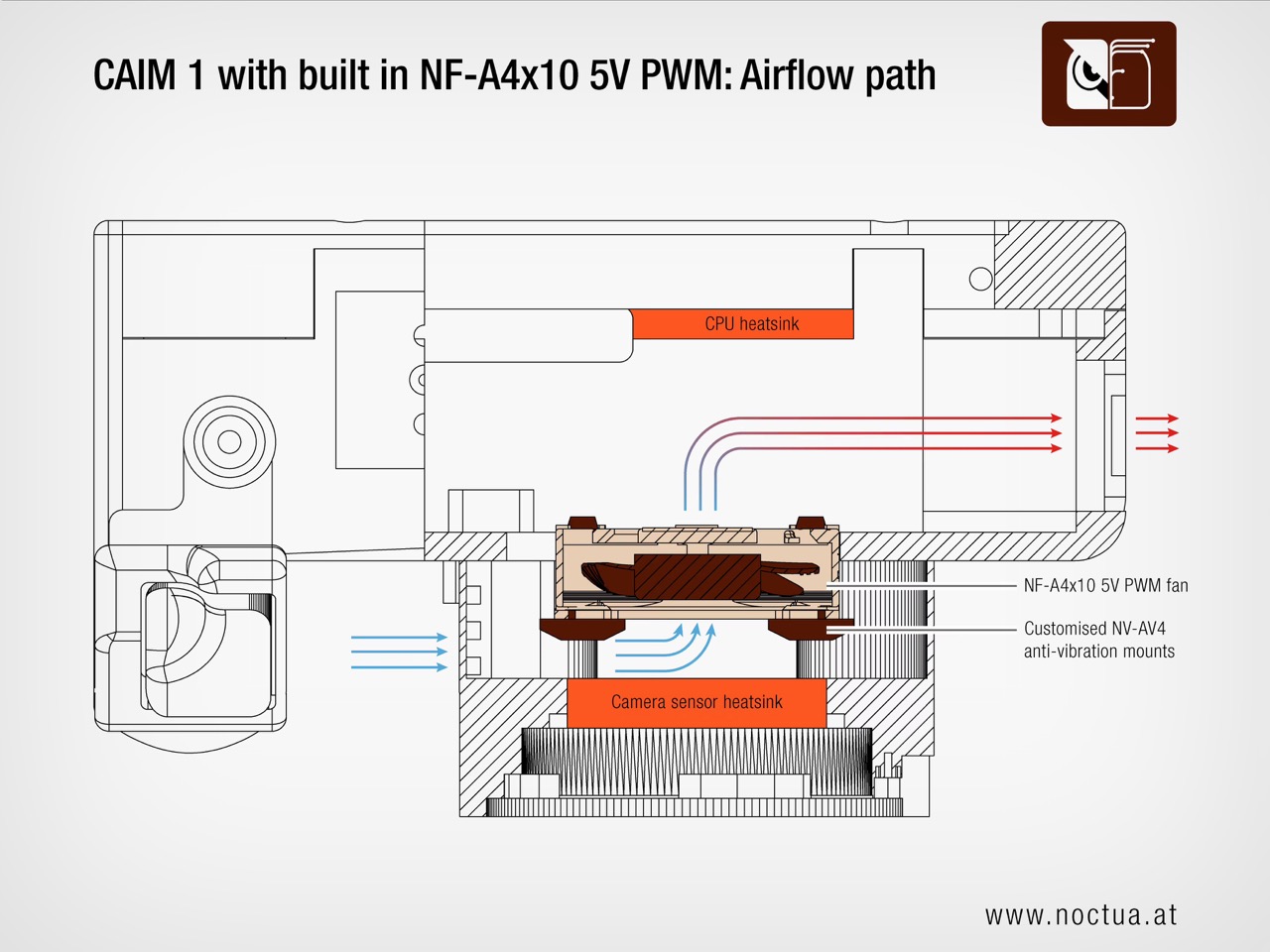
Recording 4K at a targeted 60fps while generating cryptographic proofs on the fly pushes CAIM1’s processors hard, and passive heatsinks alone couldn’t keep up. Without active airflow, the chips would throttle and start dropping frames. The fix is a single Noctua NF-A4x10 5V PWM, roughly 1.6 x 1.6 x 0.4 inches (40 x 40 x 10mm), sitting directly behind the sensor on anti-vibration mounts. Air enters through front vents, crosses the sensor’s alloy backplate, passes through the fan, then sweeps over the CPU heatsinks before exiting the side. One fan handling both heat sources saves space, saves battery, and removes a second part that could rattle.

Picking the 5V version spared the team a step-up converter, which would have eaten board space, drained the battery, and injected electrical noise right next to the image sensor. Cowell went further and redesigned the entire main circuit board around the Noctua, relocating major components to make it fit. The fan also had to stay quiet enough to keep its hum off the onboard audio, and smooth enough that micro-vibrations wouldn’t smear footage with motion blur or rolling-shutter wobble. The setup got a brutal exam at the Nürburgring in June, where a heatwave pushed temperatures to 100°F (38°C). CAIM1 held up better than the team’s phones, which kept quitting video recording from the heat.

Bring Your Own Lens, Print Your Own Body
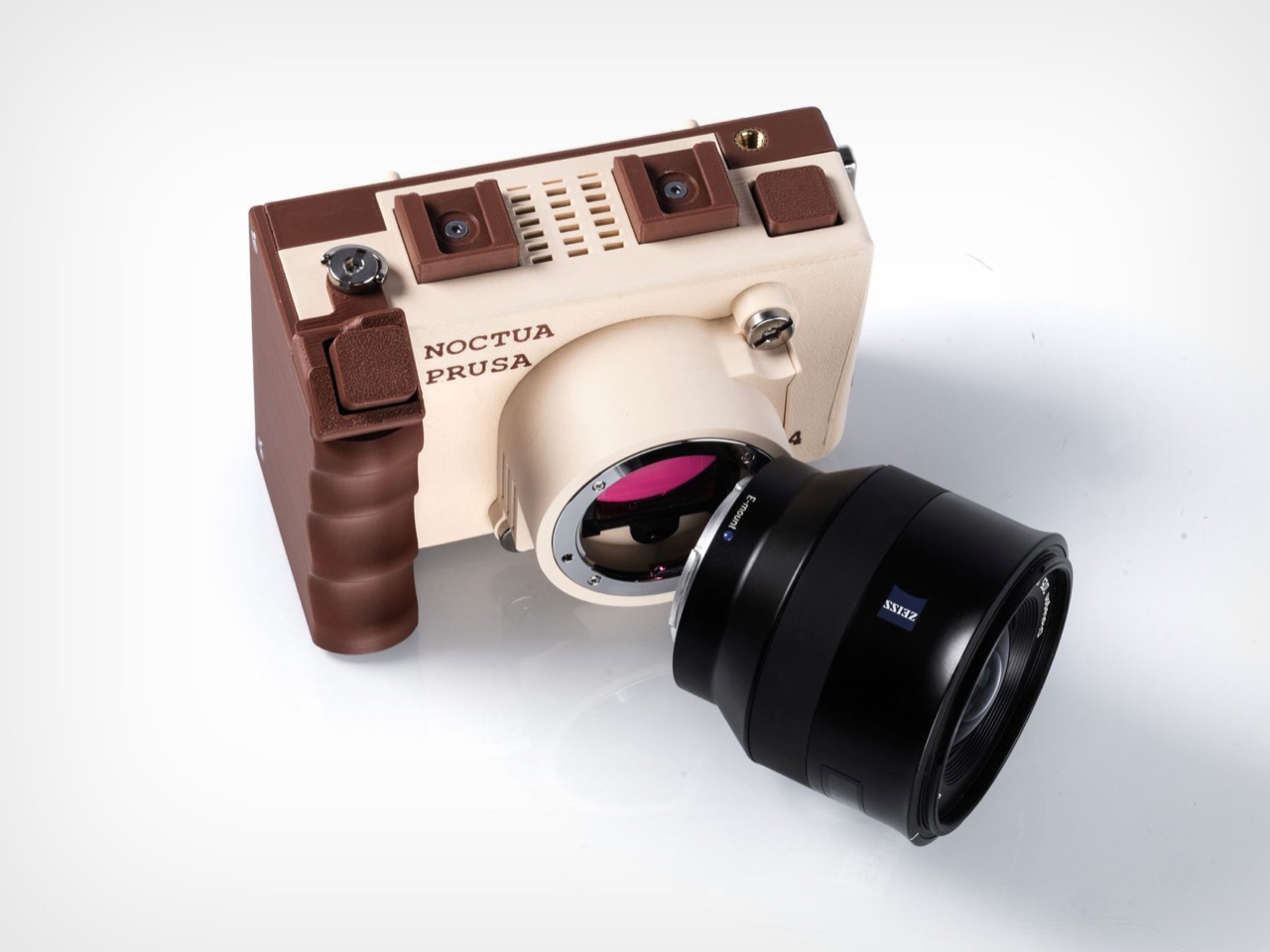
A Sony E-mount bolted in front of a Micro Four Thirds sensor sounds like a mismatch until you check the flange distance, the gap between a lens mount and the sensor. E-mount uses 18mm and Micro Four Thirds uses 19.25mm, so the two systems are practically neighbors. Every E-mount lens throws an image circle sized for a larger sensor, so it covers Micro Four Thirds easily at a 2x crop. The Zeiss Batis 25mm seen on the prototype frames like a 50mm on full frame, the classic walk-around field of view. Caimera has also shot through Kowa machine vision lenses and an adapted Cosmicar 25mm f/1.4, a vintage TV camera lens.

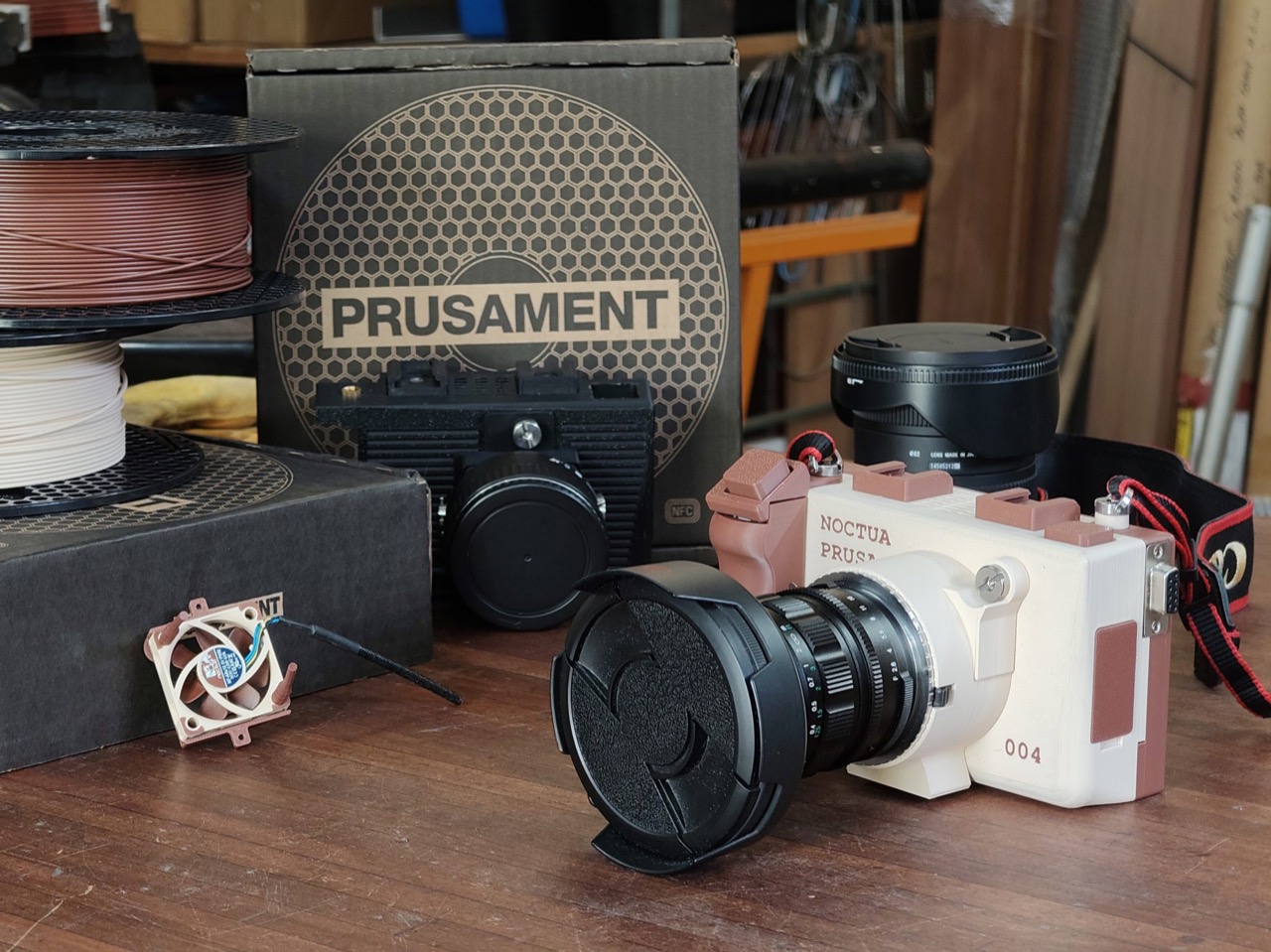
PETG beat PLA for the shell because PLA softens near hot exhaust, while PETG holds its shape up to roughly 154 to 167°F (68 to 75°C). Injection molding would have locked the design into steel tooling before the thermals were proven, so printing lets the team rework panels and ducting overnight. Cowell says a field shooter’s feedback can become a freshly printed replacement part within a couple of hours. You can spot that philosophy all over the body, from the ribbed grip and slotted cooling gills to the brass threaded insert and faint layer lines. The “004” stamped on the front reads like a serial number from a small prototype fleet, worn proudly.

Open Silicon in a Category That Asks You to Trust It
Leica got here first with the M11-P in 2023, a $9,195 rangefinder that signs photos with C2PA Content Credentials, the industry standard for tamper-evident image metadata. Nikon added the same feature to the Z6III through firmware in August 2025, then revoked every certificate after a researcher got the camera to sign images it never took. Canon announced its own authenticity system in May 2026, and Google’s Pixel 10 ships with Content Credentials built in. Cowell argues that closed security chips, Apple’s secure enclave included, ask you to take one corporation’s word for it. Tropic Square publishes TROPIC01’s design instead, so researchers and the public can audit it themselves.

That chip already guards the keys inside Trezor’s Safe 7 crypto wallet, and Ledger’s Donjon security team has audited it publicly. CAIM1 anchors each proof to decentralized storage, so verification lives on a public record instead of a single company’s servers. Caimera hasn’t announced pricing or US availability, and the first production batch is targeted for Q1 2027, with early access signups open now at caimera.one. The big camera makers bolted authenticity onto existing flagships, while Caimera built an entire beige and brown body around it. For over a century, a photograph served as its own receipt, and CAIM1 simply prints one out for you.

The post The CAIM1 3D Printed Camera puts a security chip behind your photos as proof against AI deepfakes first appeared on Yanko Design.
All I want for Christmas is this unnecessarily delightful Lego snow globe

LEGO Ideas has a snow globe situation going on, and I’m fully here for it. ItzEthqn’s trio of Christmas globes cleared 10,000 supporters in June and now sits in LEGO’s review queue, waiting to hear whether it becomes a real box. Meanwhile, The Brick Artist has resubmitted the Christmas Snow Globe, a build where a lever on the back spins the entire scene inside the dome. Two fan-made globes in the pipeline at once feels like a trend. It also feels like LEGO’s design team should start stocking up on clear parts.

LEGO’s own take on the format is set 40223, a small promotional Snowglobe with Santa, a tree, a secret gift drawer, and fourteen white round tiles that rattled around as snow when you shook it. The Brick Artist swaps shaking for spinning, which is great news for anyone whose snow globes usually end up on the floor. The original Christmas Snow Globe arrived on LEGO Ideas in late 2025 under a seamless clear sphere, with a crank poking out of its base. This November’s version rebuilds the dome from scratch and adds Santa to the cast. Down on the floor, a nutcracker stands guard over the gifts like a tiny palace guard who drew the holiday shift.

Designer: The Brick Artist

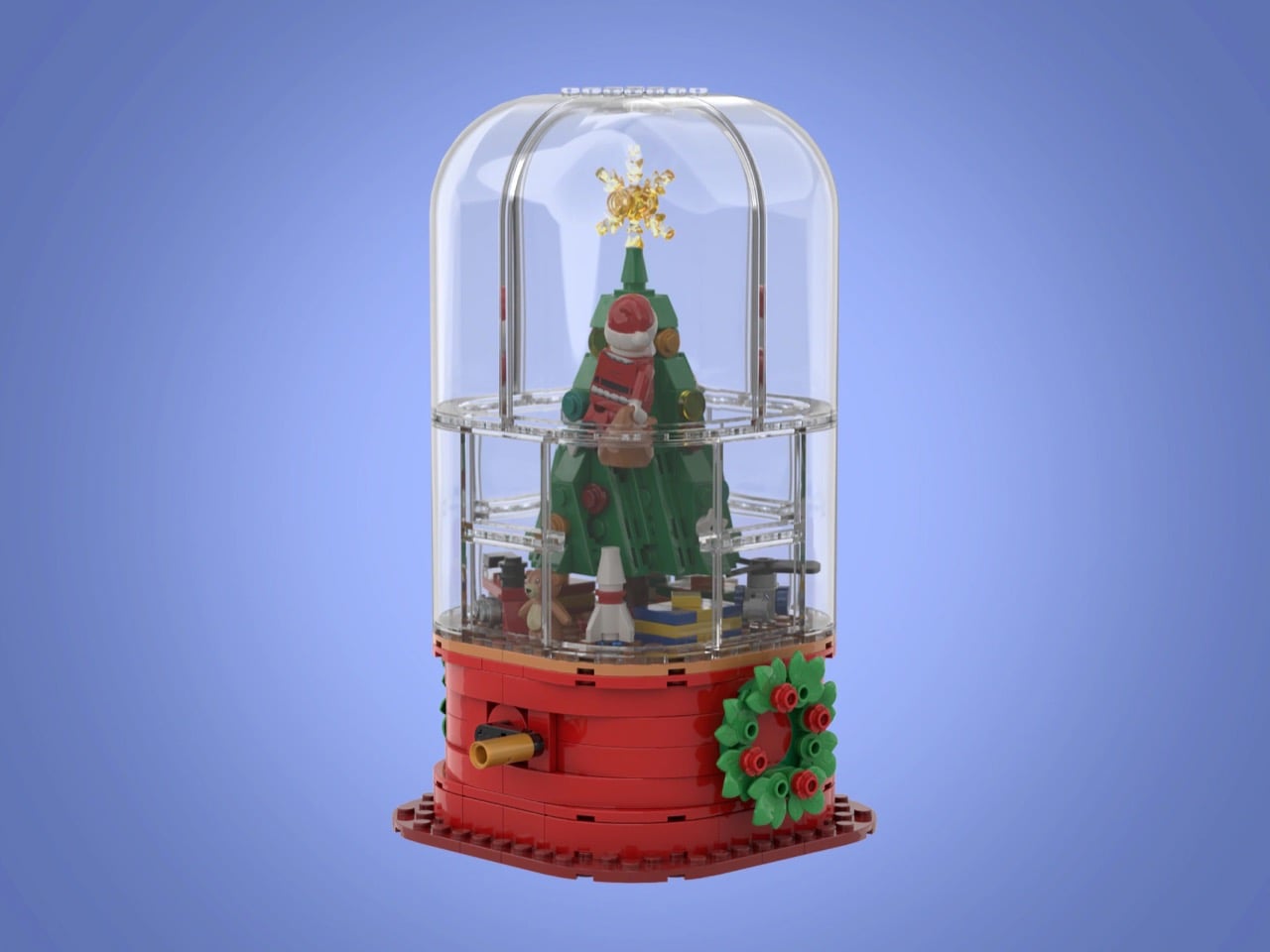
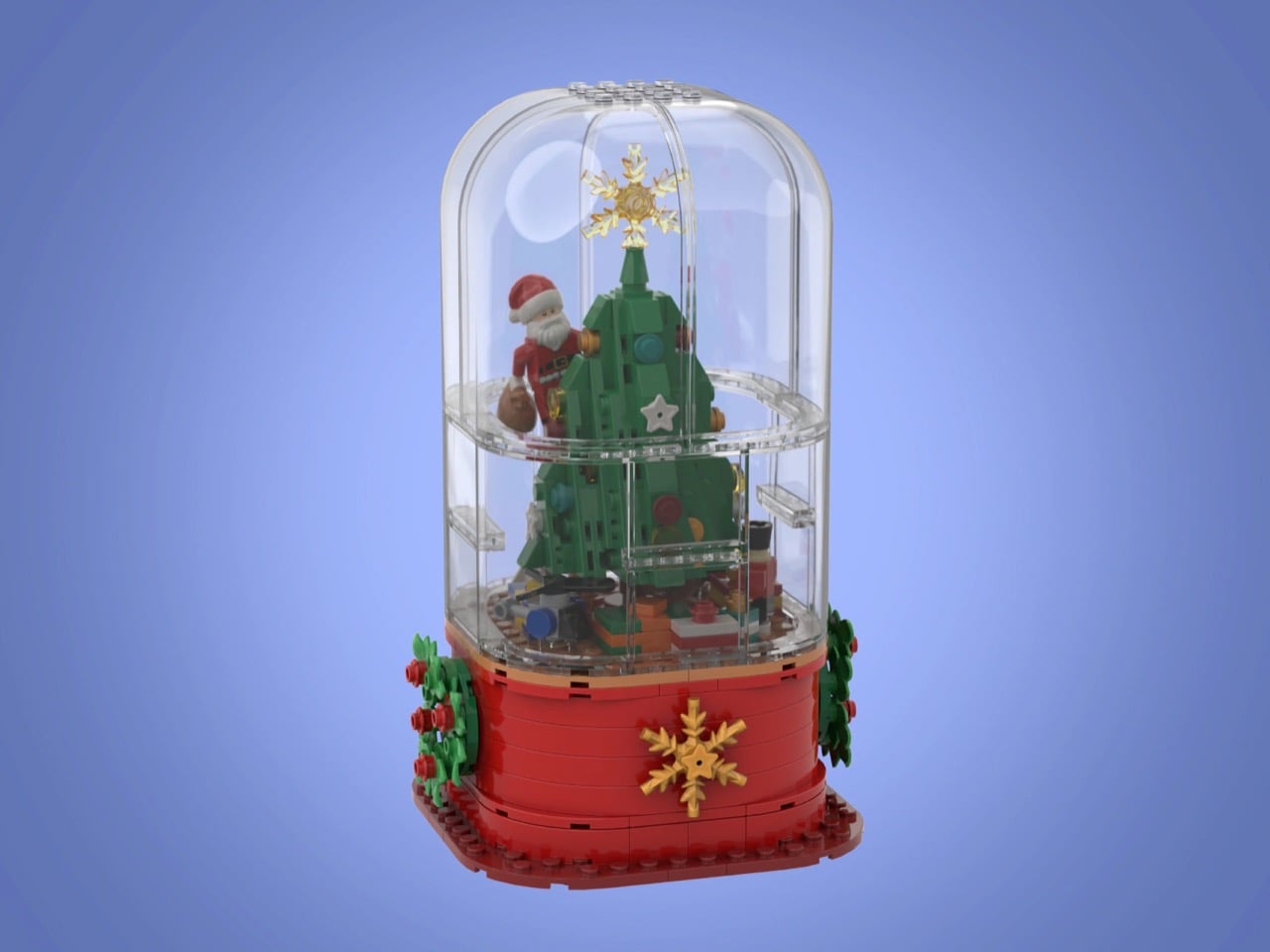
Clear curved panels stacked in two tiers now form the dome, joined at the waist by a transparent ring and finished with a flat cap of clear studs. The first version’s sphere looked gorgeous in renders, but a flawless glass bubble is hard to find in a parts catalog, and LEGO Ideas builds are expected to use real LEGO elements. The new dome shows every seam, and I’ve come around to that, since it reads honestly as something you snapped together yourself. Its taller, bell-jar silhouette also nods to the Victorian glass domes people once placed over clocks and wax flowers. That extra height turns out to be Santa’s new apartment.

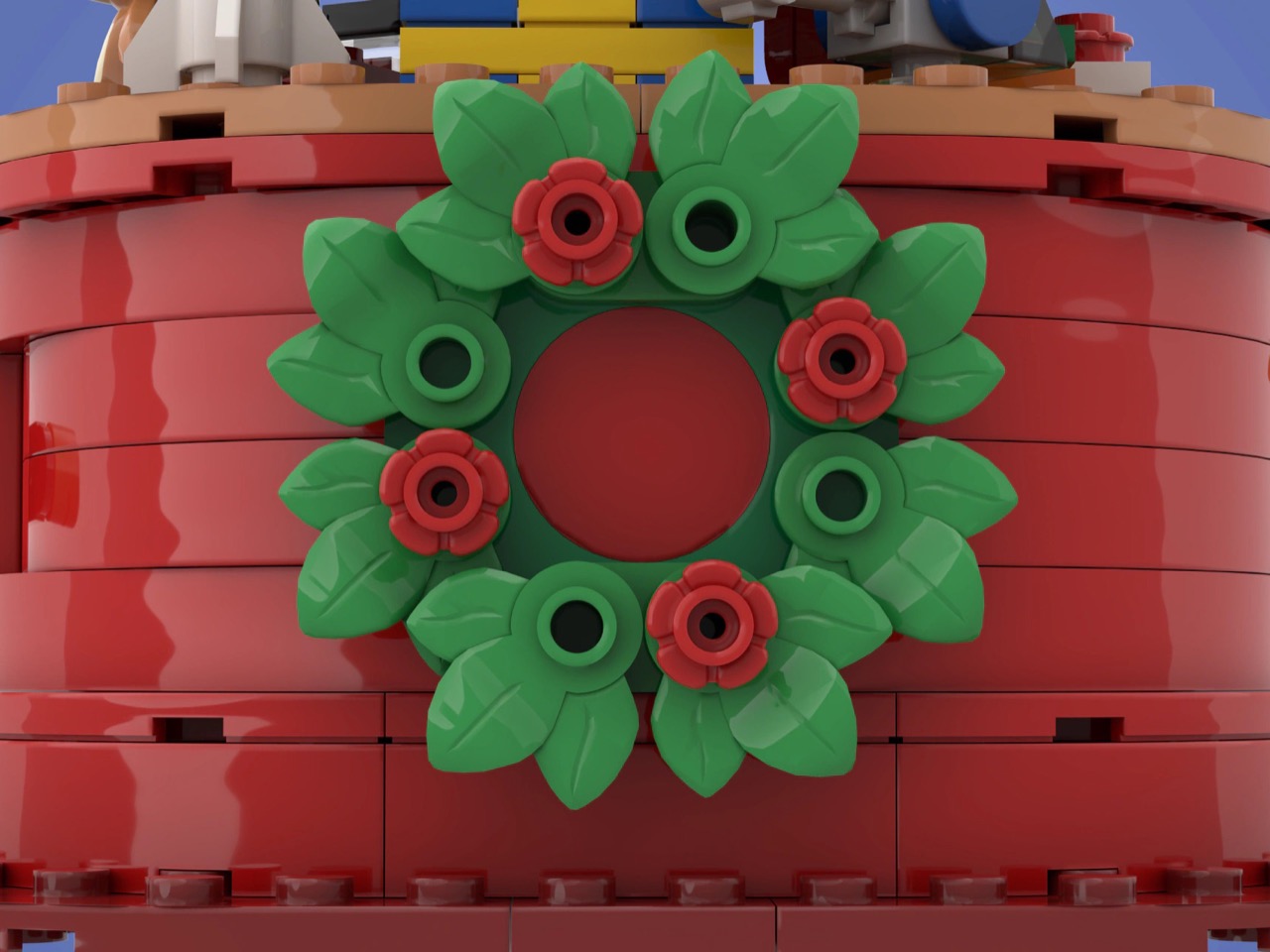
The red base carries over from the first version, built as a drum of curved bricks stacked in layered bands that look like a lacquered music box. A gold snowflake element sits front and center as a medallion, while holly wreaths dotted with red round plates for berries flank each side. A thin gold-toned band separates the drum from the dome, framing it like the bezel around a watch crystal. Pull the lever on the back and an internal gear mechanism rotates everything inside, though the builder hasn’t published the gear layout. The same hand-powered idea drove The Brick Artist’s Halloween Snow Globe in October, which spun a creaky graveyard instead of a Christmas tree.

My favorite detail, though, is Santa himself. The builder’s description jokes that even Santa deserves a snow globe of his own, and here he is, sack in hand, leaning into the tree to finish the decorating. Parking him on one side of the tree means the spin can work as a reveal, bringing him around into view as you turn the lever. He also gives the scene scale, since a minifig instantly tells you how tall that tree really is. And he answers the eternal question of who decorates Santa’s tree, which apparently is Santa, on a deadline.

The floor beneath the tree is crowded with toys, and the nutcracker leads the lineup in his red coat and tall black hat. Next to him sit a classic wooden train, a toy rocket ready for takeoff, and a remote-controlled airplane, with wrapped presents tucked into every gap. That mix spans roughly a century of Christmas mornings, from hand-carved wood to radio control. Up top, the tree is layered from green slopes studded with round baubles in red, gold, and teal, plus white star tiles and a translucent yellow snowflake topper. Every turn of the lever lands on a different gift, which is the whole point of a scene that rotates.

BrickAbe’s Lo-Fi Girl snow globe packed a two-story apartment inside its dome, and Nendo’s Invisible Snow Globe hid its scene in plain sight until the snow settled on it. The Brick Artist’s contribution to the genre is motion, which turns a shelf ornament into something you actually reach for. LEGO Ideas has already shown it will green-light Christmas, with 21330 Home Alone in its back catalog and a National Lampoon’s Christmas Vacation set on the way. Both of those are big, movie-licensed builds. A compact, spinning globe would give fans a holiday set that fits on a desk instead of eating a whole shelf.

The Christmas Snow Globe went up on LEGO Ideas on November 9, 2026, and at the time of writing it has 678 supporters with 421 days left to reach the 1K milestone. LEGO Ideas runs on community votes: fans submit builds, supporters pile up, and LEGO reviews the ones that reach 10,000. Head to the LEGO Ideas page and give it your vote so this globe can follow ItzEthqn’s into the queue. Two snow globes in review would make for a very merry meeting in Billund. Santa has waited all year for a globe of his own, after all, and he clearly has places to be by the 24th.

The post All I want for Christmas is this unnecessarily delightful Lego snow globe first appeared on Yanko Design.
Pebblebee’s Holiday Toast Trackers Bring Cranberry and Champagne to Your Keychain

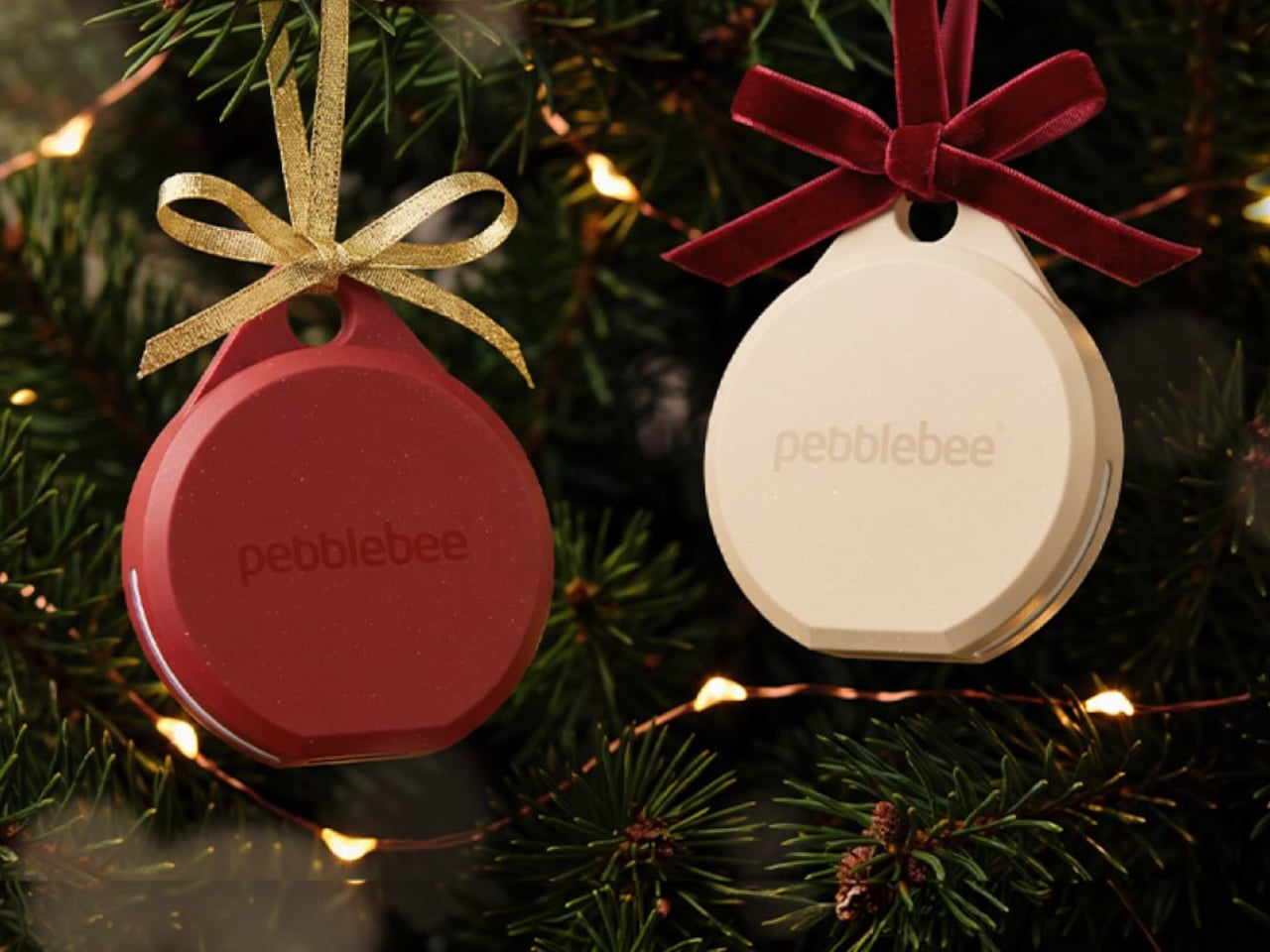
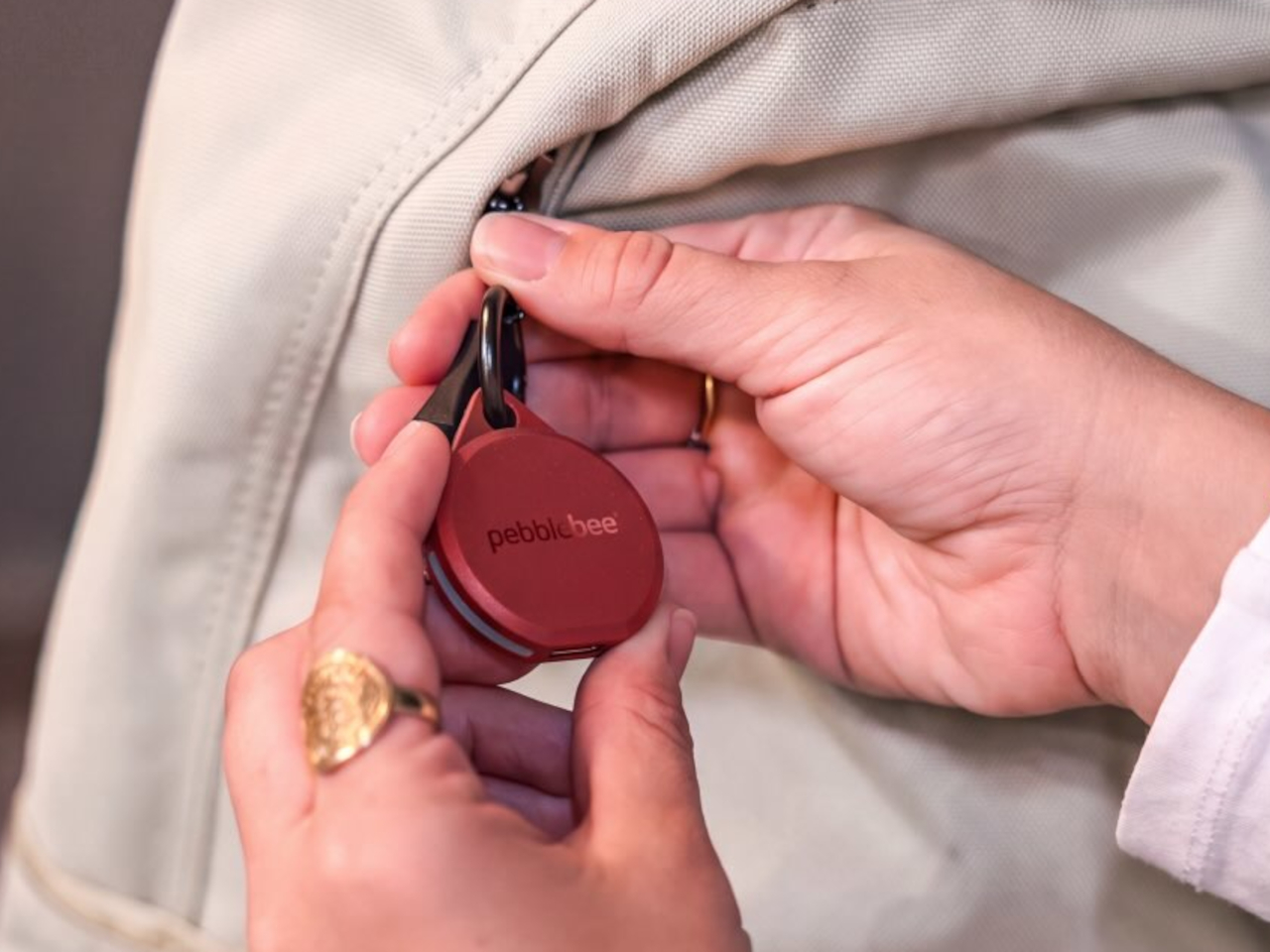
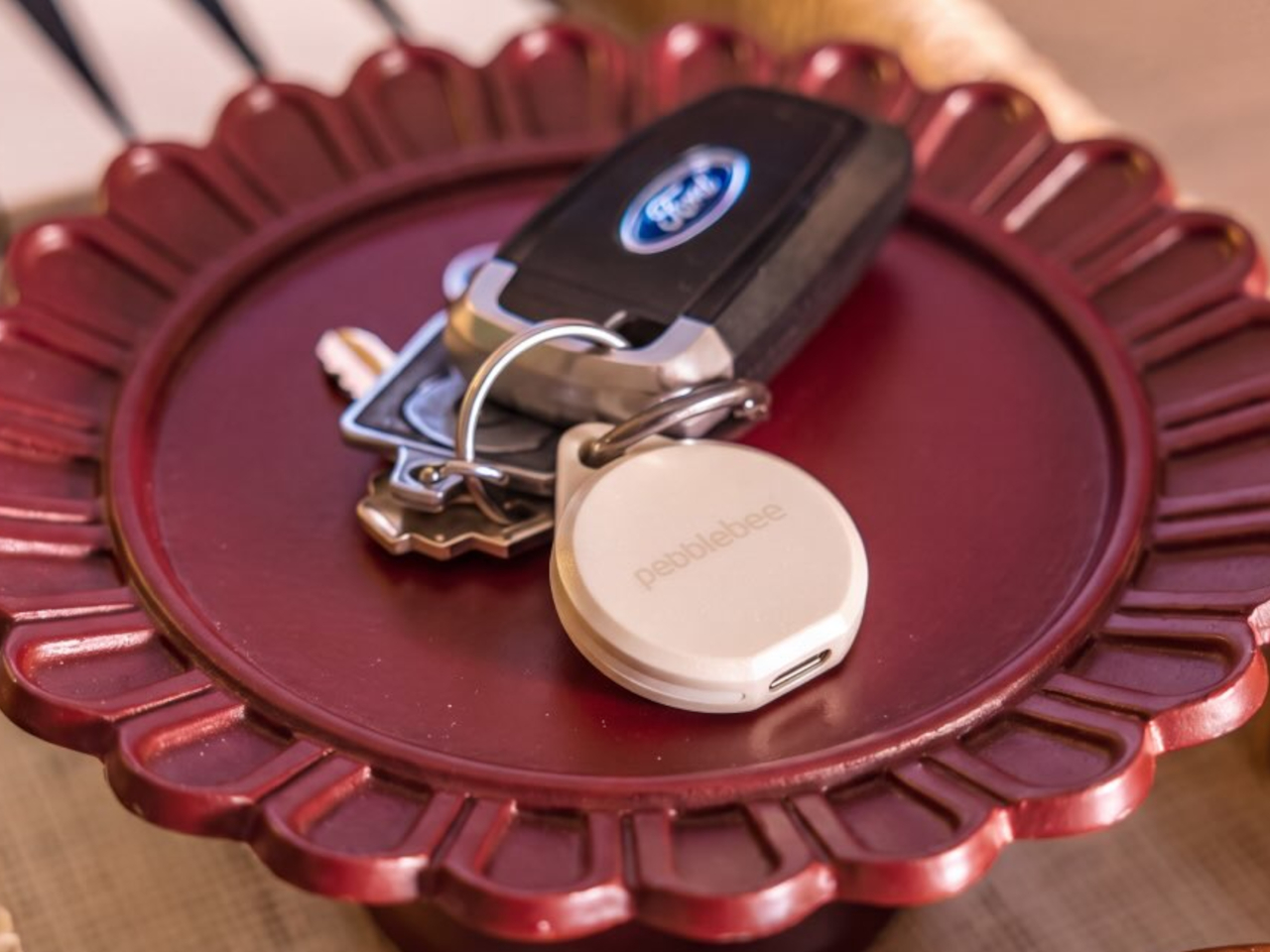
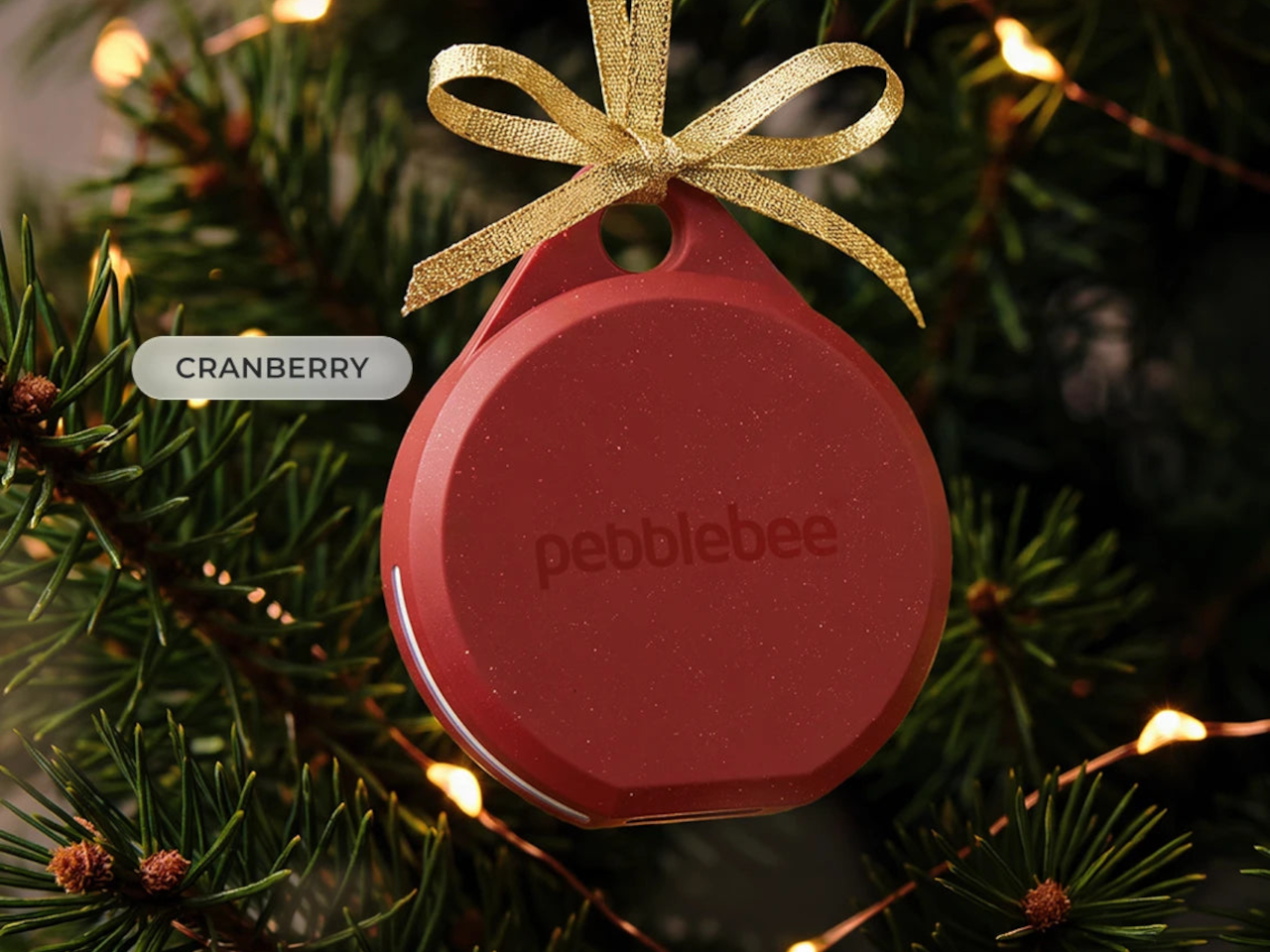
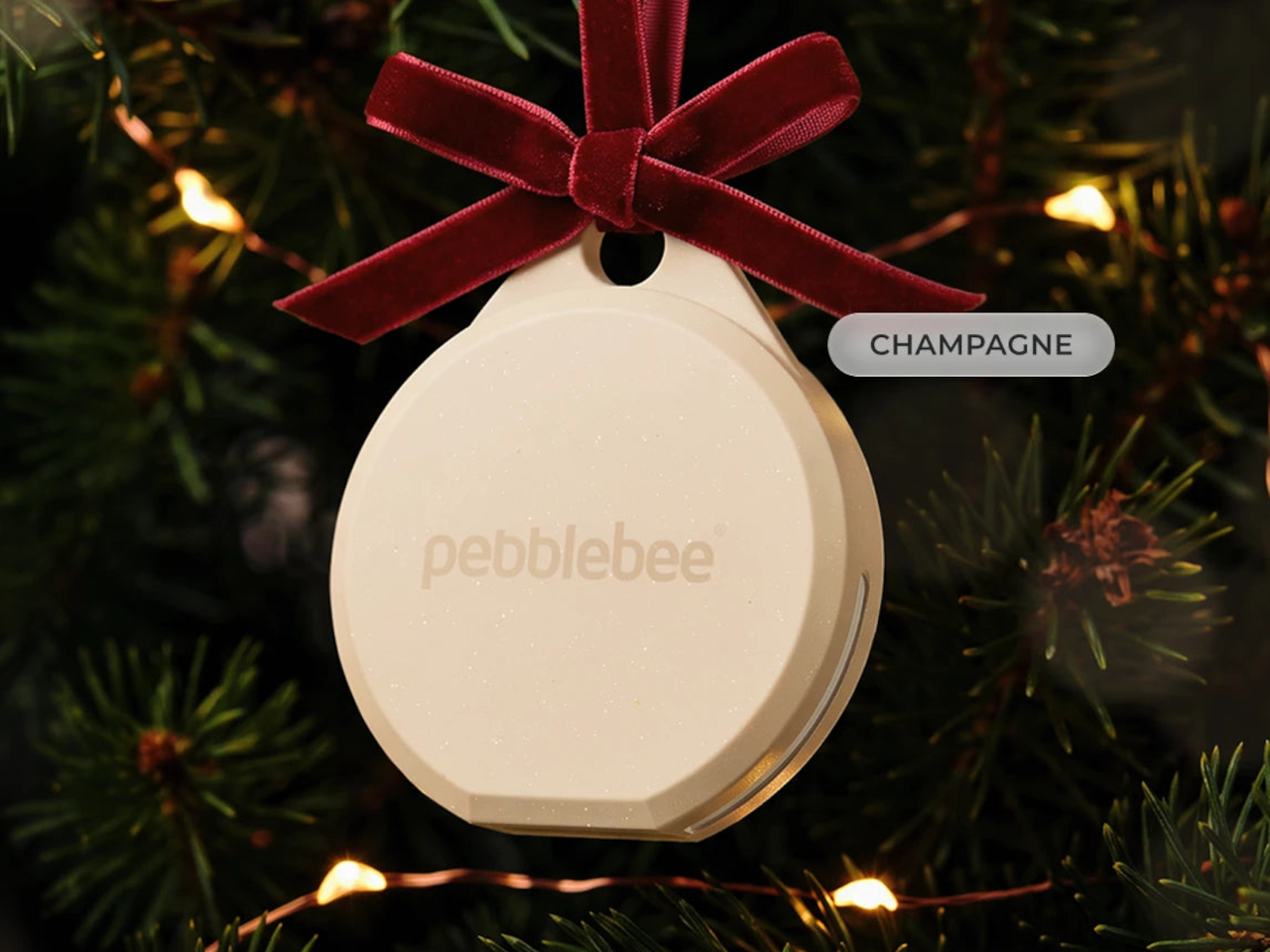
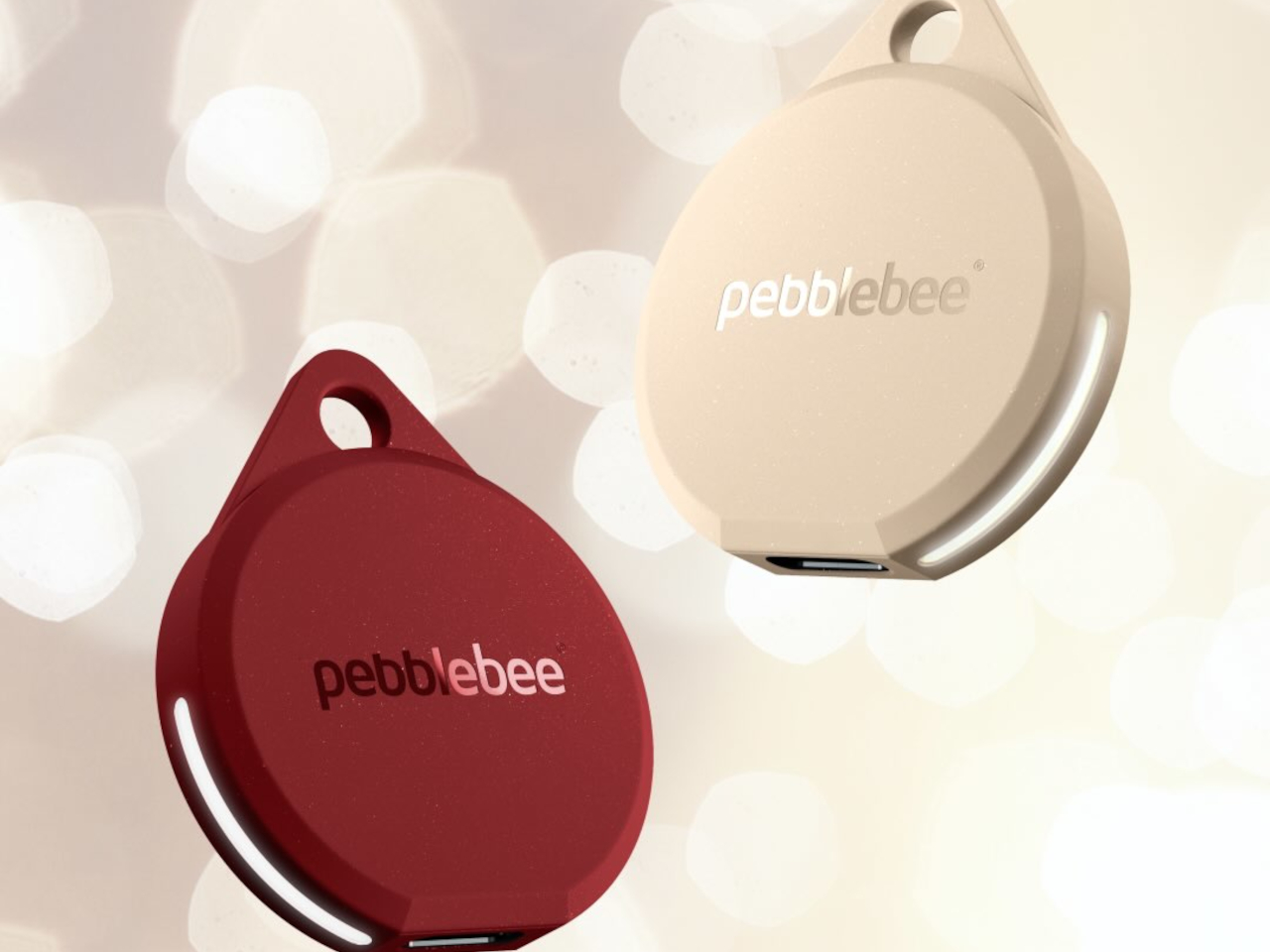
Keys spend enough time on display to deserve something better than another anonymous black tag. Pebblebee’s Holiday Toast edition gives its Clip 5 tracker two seasonal finishes, Cranberry and Champagne, without changing the hardware underneath. At $34.99 each, they’re small accessories for keeping track of bags and keys, with colors that could help you distinguish your belongings before you’ve even opened an app.

The rounded body has a flat lower edge and an integrated attachment loop, giving the tracker a teardrop outline rather than a perfect circle. A beveled border frames the broad face, while narrow LED strips curve around the sides. At 1.77 inches long and 1.49 inches wide, it’s a small addition to a keychain, with the included keyring carabiner keeping it attached.

Designer: Pebblebee

Cranberry brings a deep red to the familiar shape, while Champagne takes a quieter, creamy route. That contrast could be useful in a household where everyone’s keys land in the same bowl. Pick one for your everyday set and another for the spare, or coordinate the tracker with a favorite bag rather than immediately buying a separate cover to disguise the little gadget.

The Clip 5 works with Apple’s Find My or Google’s Find Hub, using one network at a time. That lets you match it to your phone without choosing a permanently Apple-only or Android-only accessory. Changing networks requires a reset, though, so the shared compatibility doesn’t mean both systems can follow the same tag simultaneously when different people borrow the same set of keys.

For a search closer to home, sound and flashing LEDs offer clues beyond a dot on a map. You might hear the tag beneath a cushion or notice its light beside a chair. The relationship works in reverse, too: enable Phone Finder in the Pebblebee app, and a double-press of the tracker’s button makes your nearby phone ring instead of the tag.

USB-C charging avoids the ritual of finding replacement coin cells, although there’s no charging cable in the box. Pebblebee claims up to 12 months between charges, depending on use, which should keep that port out of your daily routine. The cable needs to come out, preferably before you discover that the missing keys are attached to a tracker with an empty battery.

The same button also supports Alert, with rapid presses triggering a siren and strobe. Pebblebee’s free tier sends a one-time location message to one trusted contact through its app, rather than continuously sharing your movements. Setup and a connected phone with data are required for that notification. It’s an additional function on your keychain, not a standalone emergency communicator with its own connection.

Pebblebee says these Evercolor finishes won’t return once their limited run is gone. That’s a reason to choose a color carefully, not a reason to retire a perfectly functional tracker. Cranberry and Champagne don’t improve the finding hardware, but they do change something you see every day. The seasonal reference can fade after December, while the tag keeps its place beside your keys.

The post Pebblebee’s Holiday Toast Trackers Bring Cranberry and Champagne to Your Keychain first appeared on Yanko Design.

Tidal Wave Surfboard Prototype: Underwater Views Without Diving

I have never been on a surfboard in my life and will probably never really be on one, given my fear of open water. One thing that might convince me to at least try it is getting a great view of the ocean (and if you can guarantee that I will not drown or get swallowed by any large sea creature). However, most surfboards are designed primarily for riding waves, so ocean sightseeing is not really their main design function.

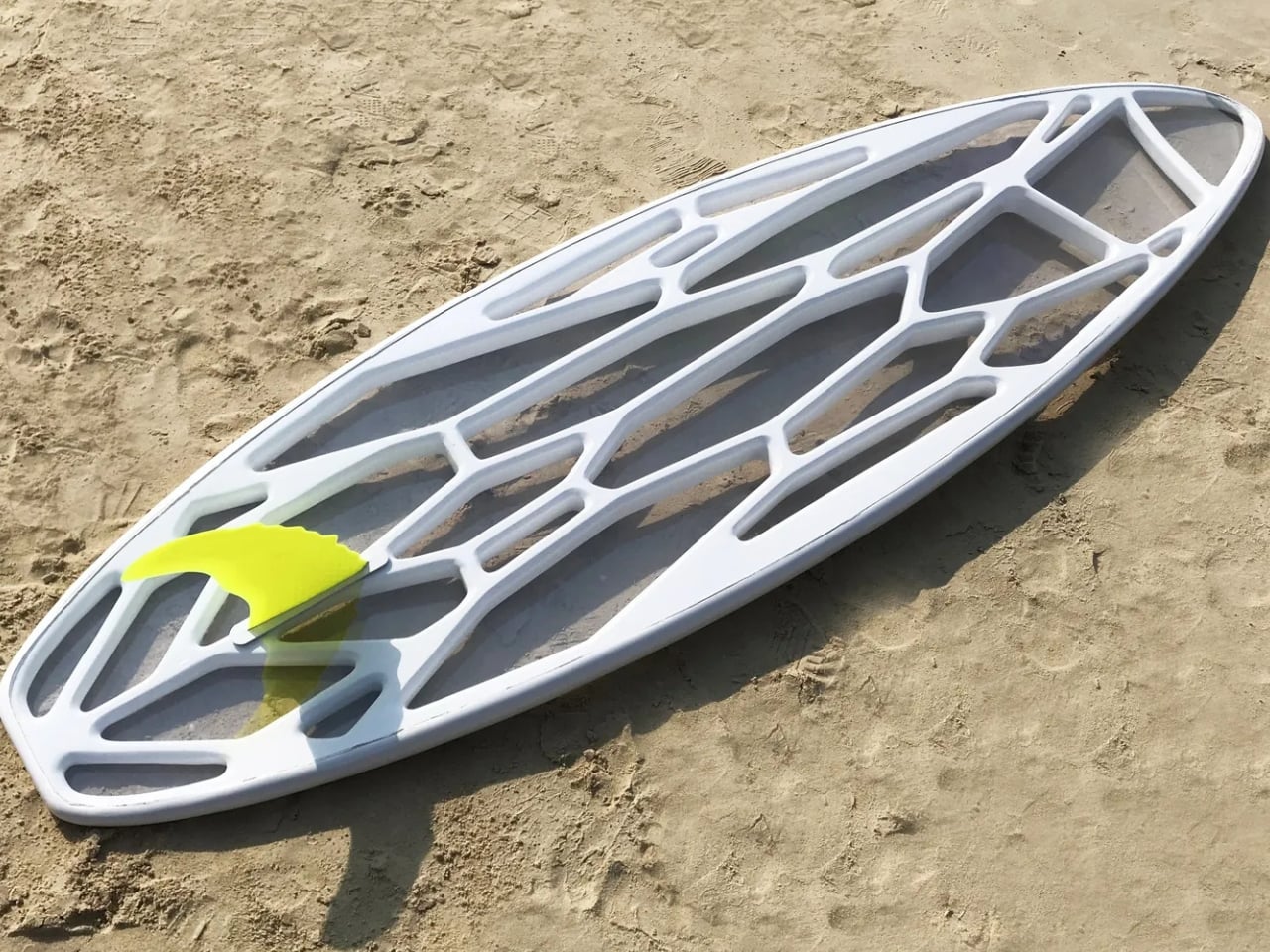
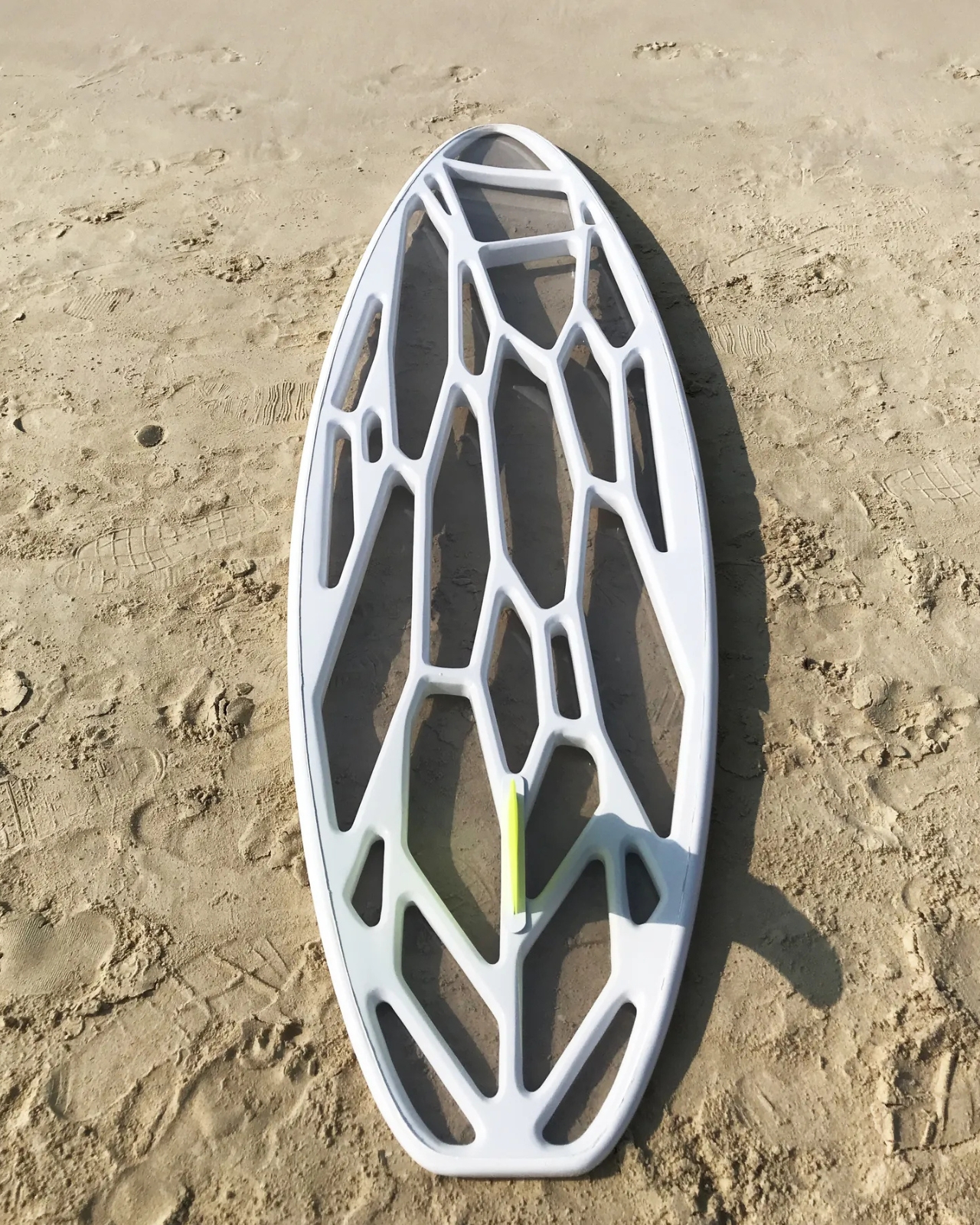
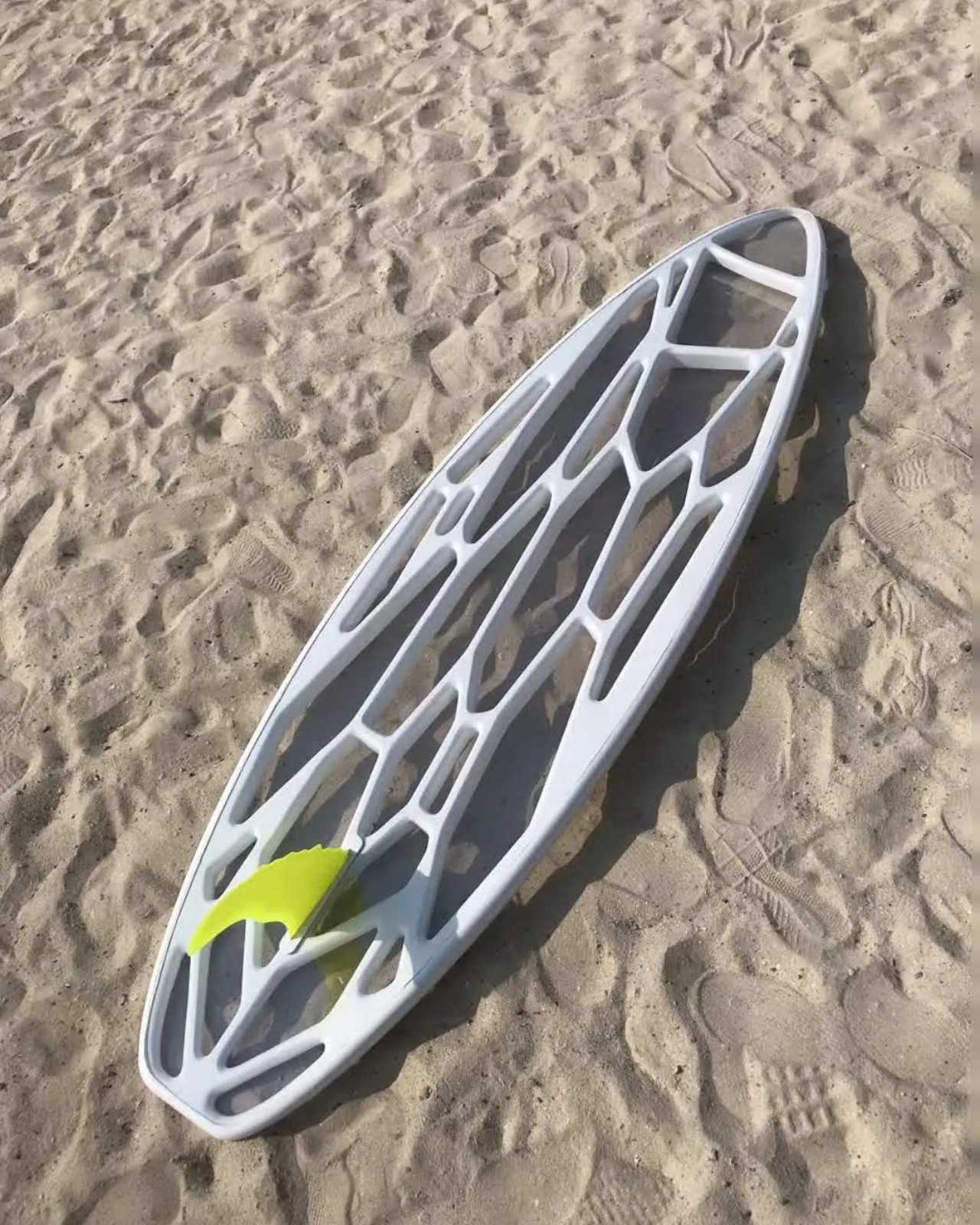
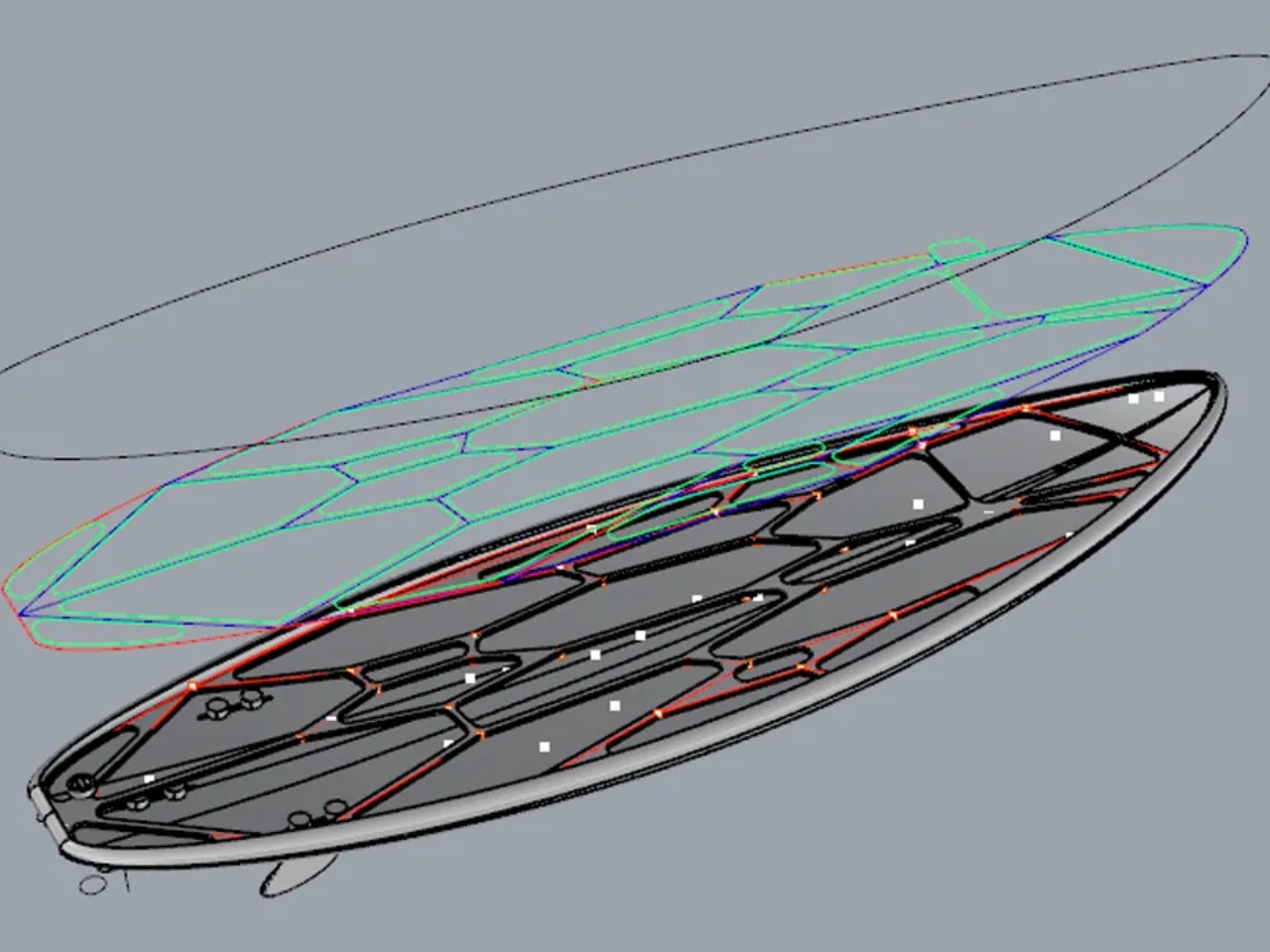
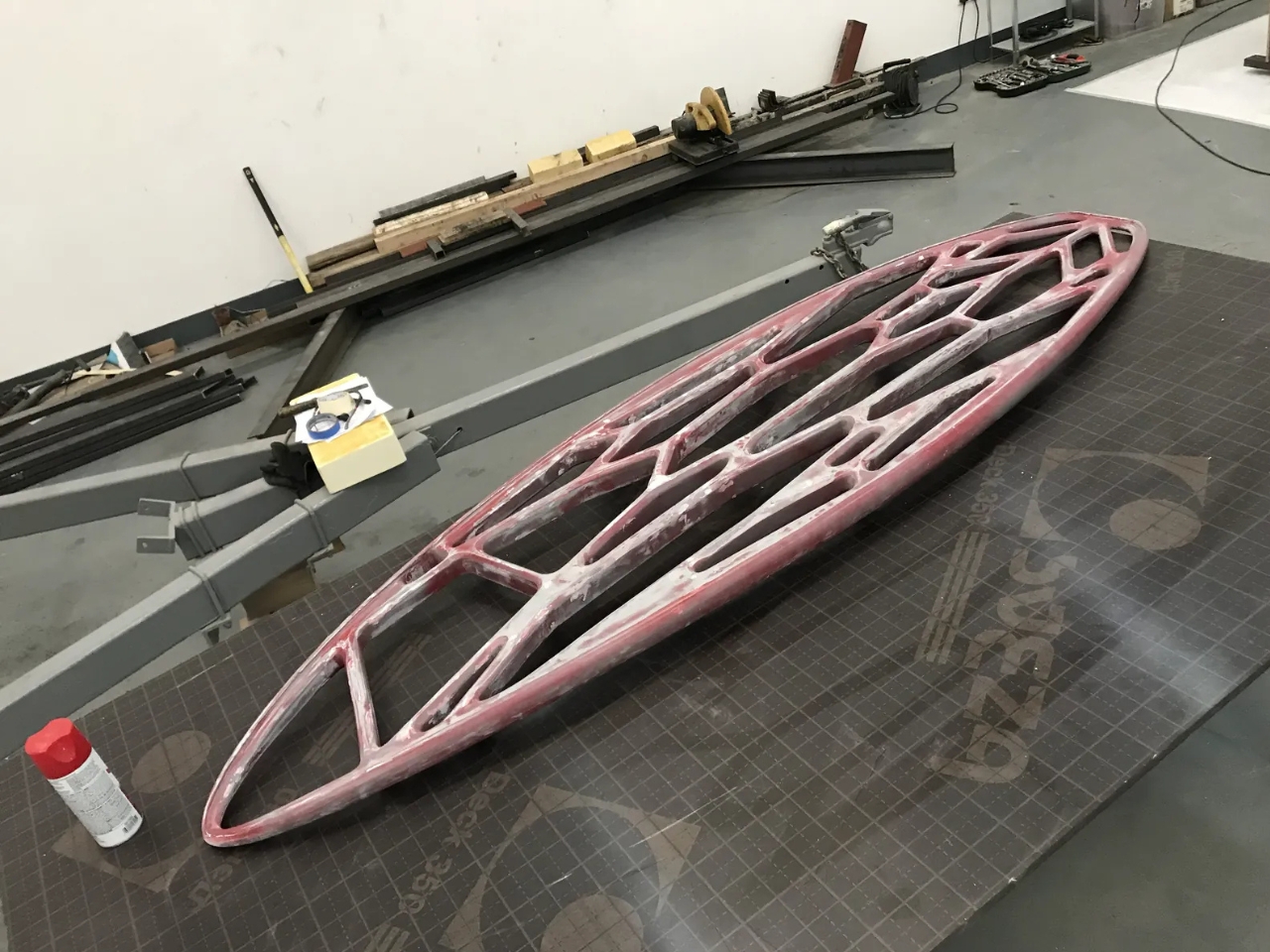
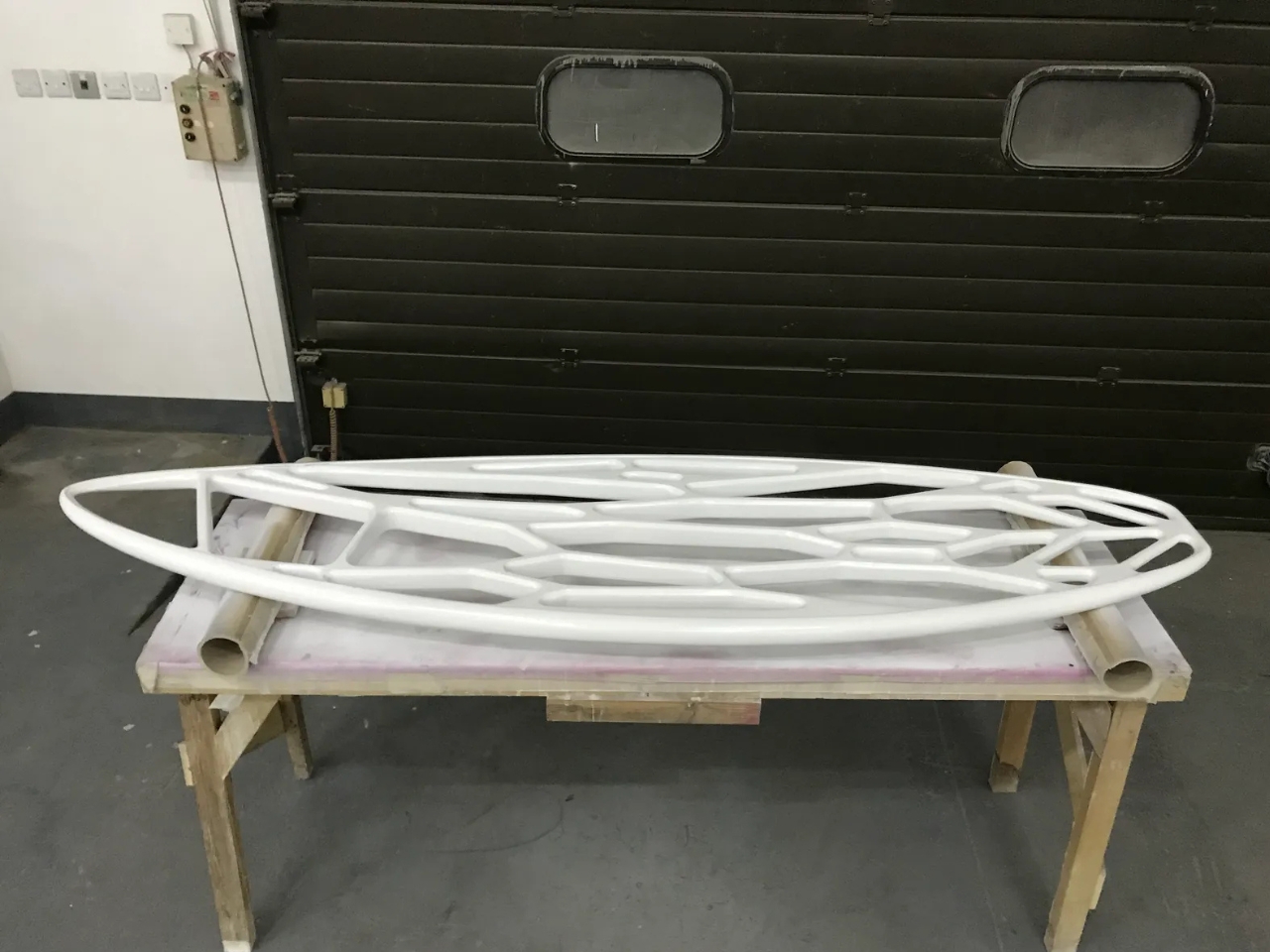
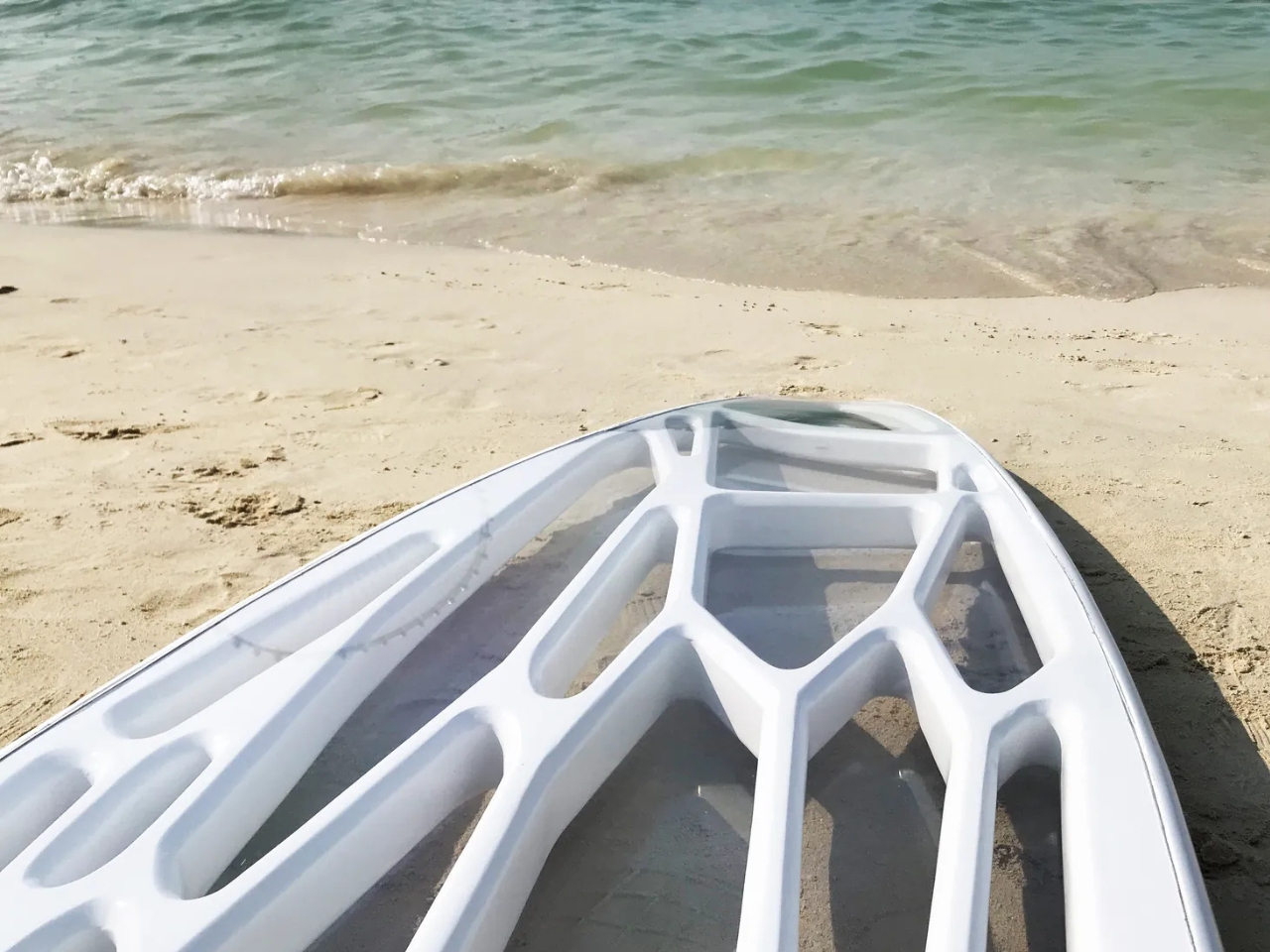
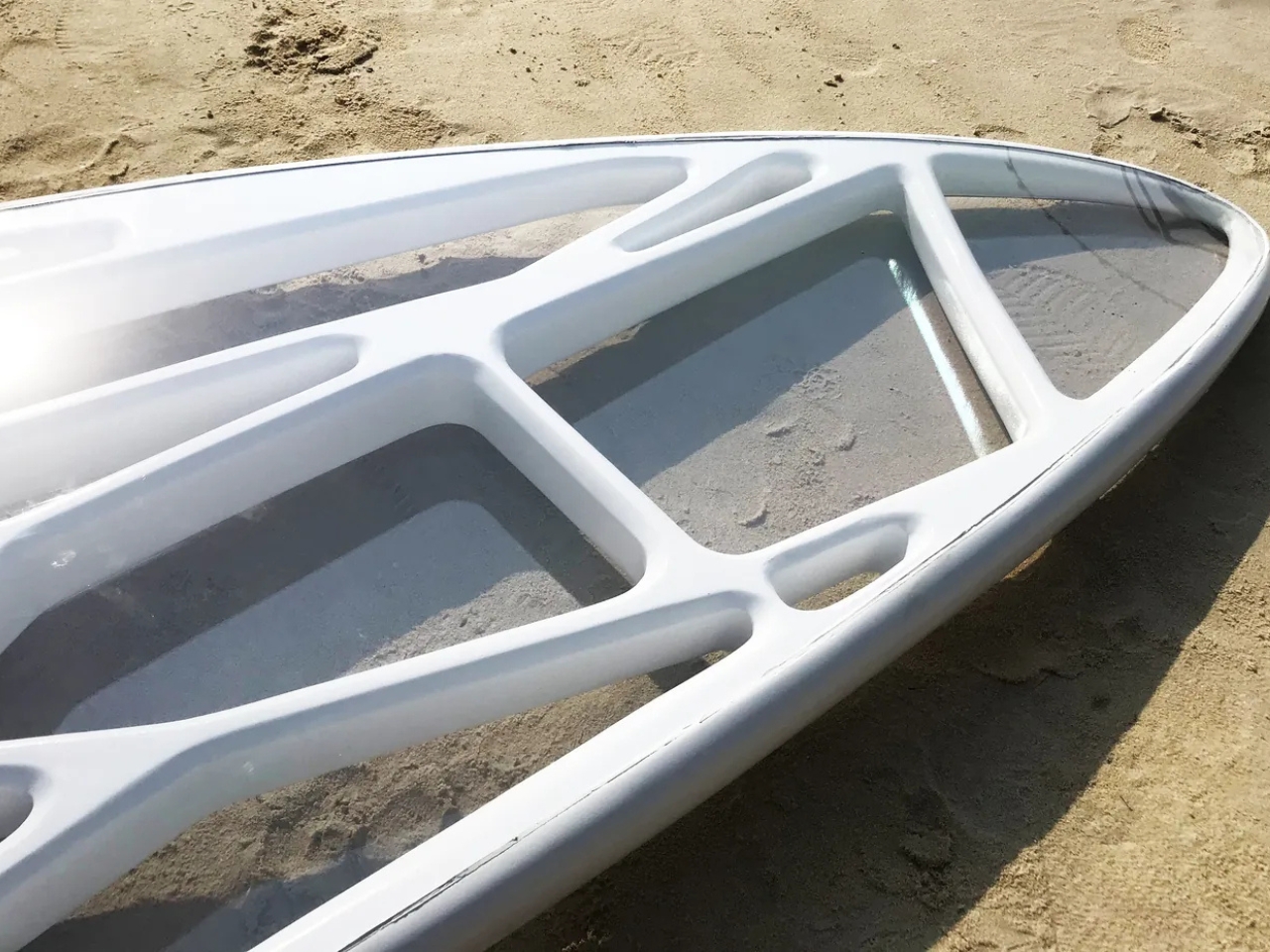
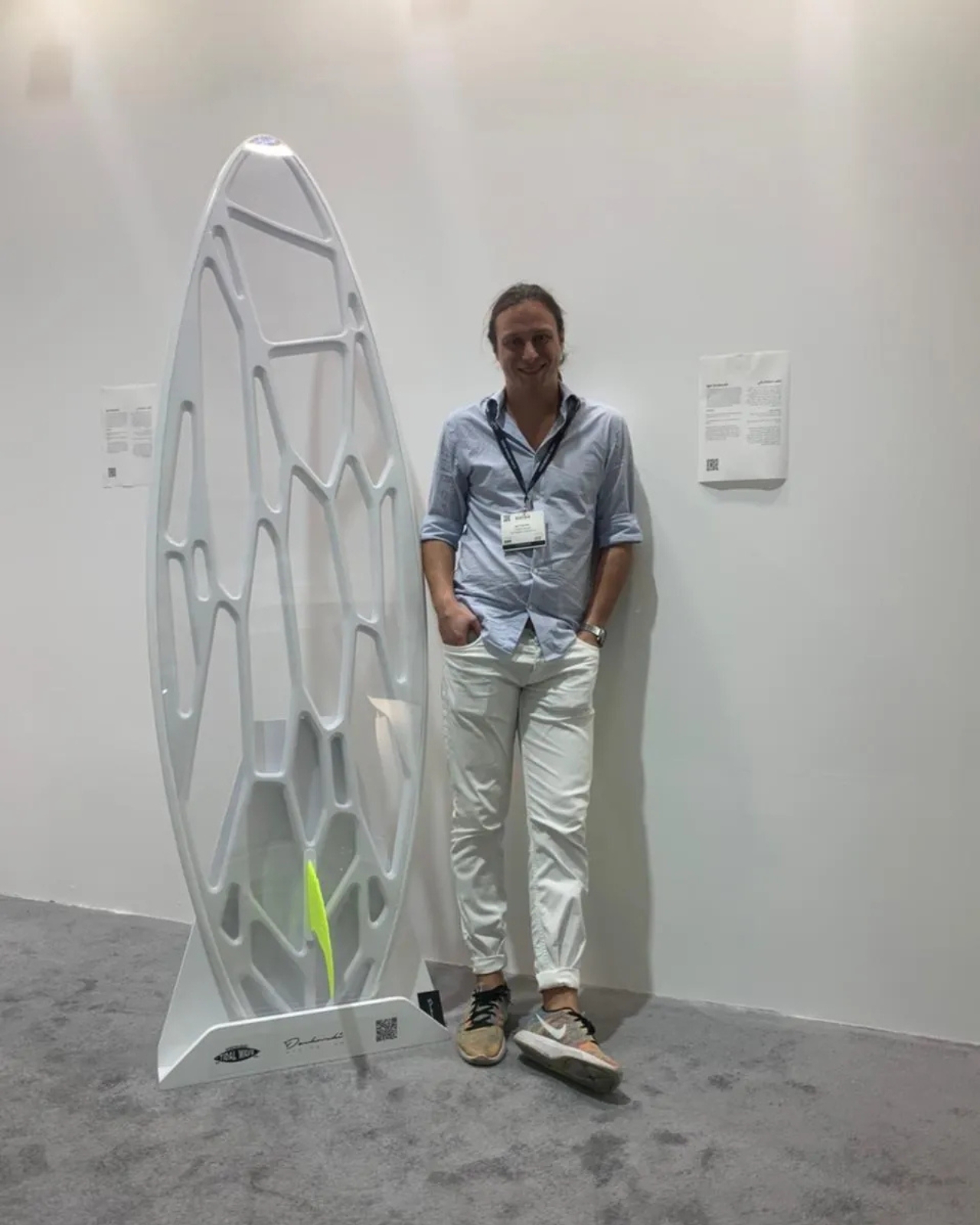
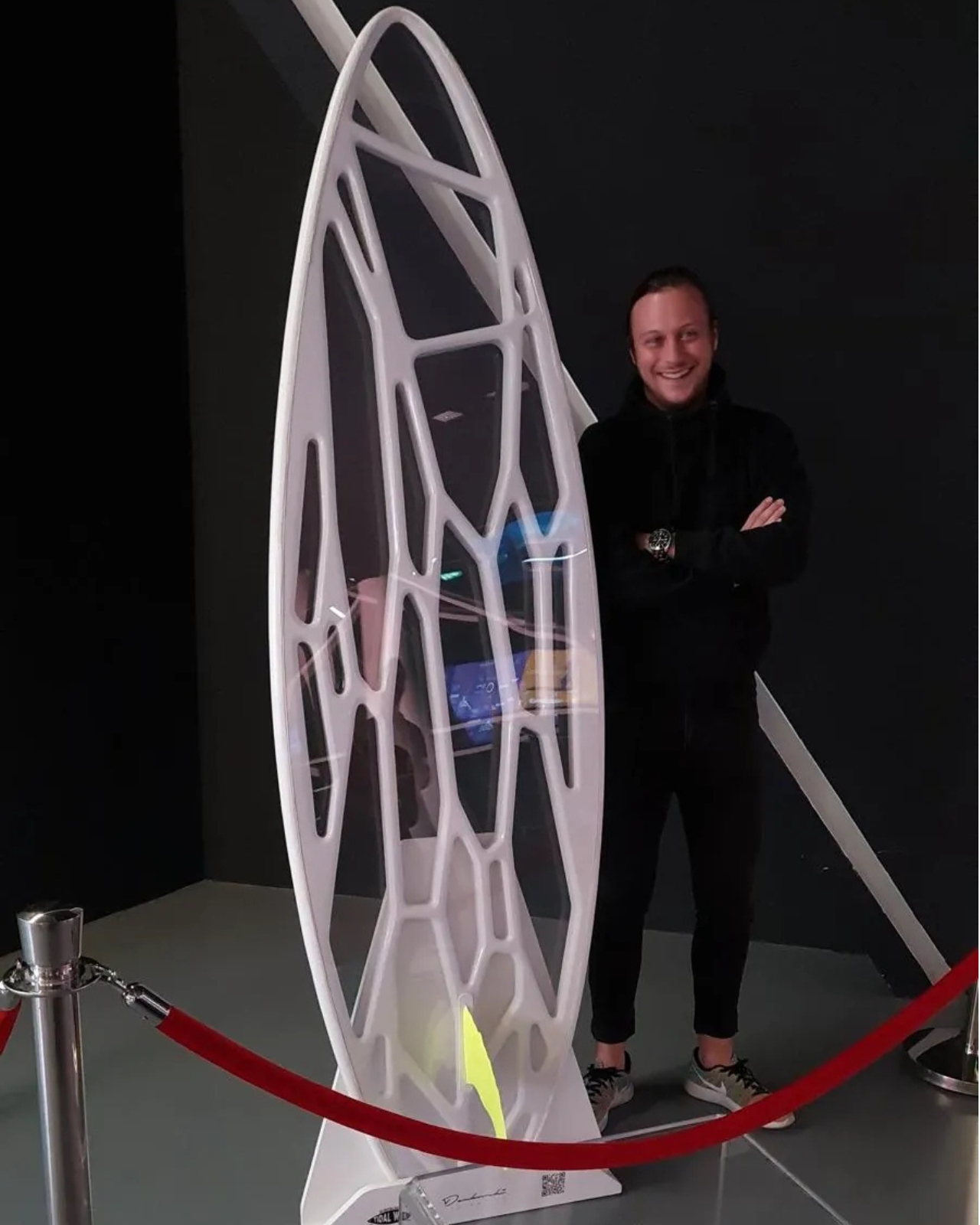
This experimental surfboard prototype called Tidal Wave, designed by Igor Dzukovski, takes a different approach. It becomes more than just a surface that you stand on or lie on in the ocean. With its carbon-fiber lattice and transparent outer surfaces, it’s intended to become a window into the water below, adding another sensory element to the surfing experience.

Designer: Igor Dzukovski

Dzukovski treats the surrounding environment as part of the surfboard’s appearance, since it would look different resting on the sand, floating in sunlit shallows, or sitting in darker water. Its white-finished carbon-fiber framework surrounds clear panels, allowing the setting to supply some of the color and movement that might otherwise come from graphics on the board.

The inspiration actually came from a swimming pool rather than a dramatic encounter with a wave. On his project page, Dzukovski explains that he noticed sunlight reflecting on the water one morning and wondered how to bring those reflections into a surfboard. Instead of reproducing them as a printed graphic, he explored how the materials and structure could give surfers a different perspective. That makes the transparency feel connected to the original idea rather than an arbitrary visual trick.

The designer describes the board as having a transparent “sandwich” construction, with the intention of letting users see plants and animals beneath the surface. The main reason for this design choice is to give you the chance to look through the board at the environment below. Under favorable conditions, that could make paddling or waiting between waves more exciting and engaging, particularly for surfers who value exploring the ocean as much as actually riding the waves.

Of course, I wouldn’t expect a perfect underwater view every time. Water clarity, lighting, surface reflections, and your position on the board would all affect what you could see. Your body would also cover some of those transparent areas while you’re lying down. But if the conditions cooperate, the possibility of seeing something beneath you gives those quieter moments on the water an additional appeal.

There’s also something interesting about leaving the board’s framework visible. Designboom describes its carbon-fiber ribs as fluid and organic, framing the transparent sections rather than disappearing beneath an opaque surface. To me, that makes the structure part of the decoration. The lines dividing the clear areas are essential to its visual identity, so the board doesn’t need a busy graphic to give you something to look at.

Still, the appeal of the idea shouldn’t be confused with proof that it’s a better surfboard. A carbon-fiber framework alone doesn’t tell us how the completed board handles, how comfortable it is to paddle, or how well its transparent surfaces hold up over time. I’d want those practical questions answered before treating it as an alternative to a conventional board, especially for someone choosing their first one.

For now, Tidal Wave is best understood as an experiment in what a surfboard can let you notice. The designer’s project page explains the intended experience but doesn’t provide a retail price or ordering information. That leaves me admiring the possibility rather than planning a purchase. I’m still not volunteering for open water, but I can appreciate a design that gives the time between waves some attention. Watching the world beneath the board sounds like a lovely way to spend that pause, as long as nothing down there decides to watch me back.

The post Tidal Wave Surfboard Prototype: Underwater Views Without Diving first appeared on Yanko Design.
Rimowa x Margiela’s White Luggage Refuses to Stay Pristine

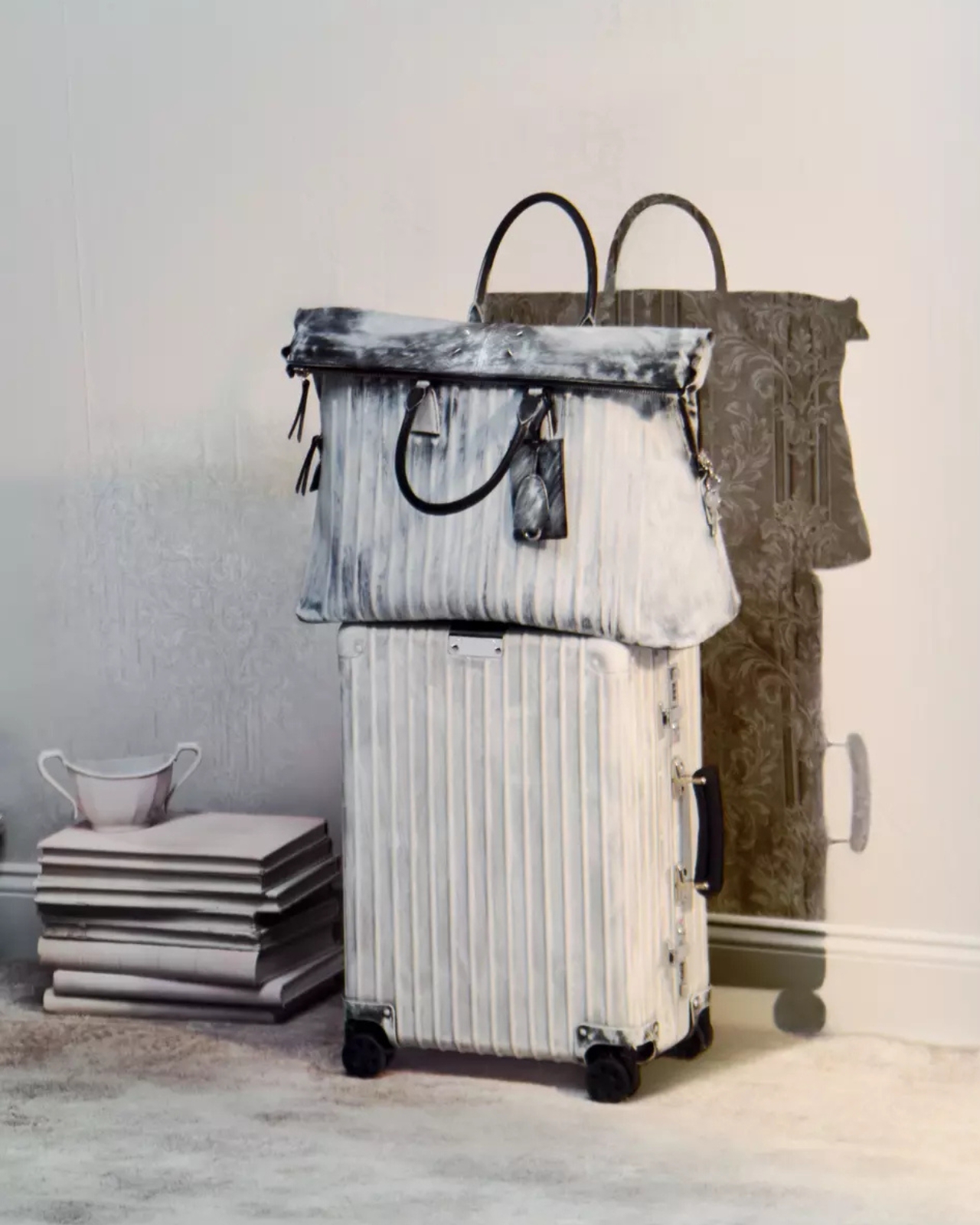
When two brands that have very distinct and iconic looks collaborate, it really has to be a well-thought-out partnership, keeping each brand’s design codes recognizable in the collection. The Rimowa x Maison Margiela collection takes on that challenge, adapting elements of each brand’s DNA into the other to create a travel pair that fans of both would appreciate.

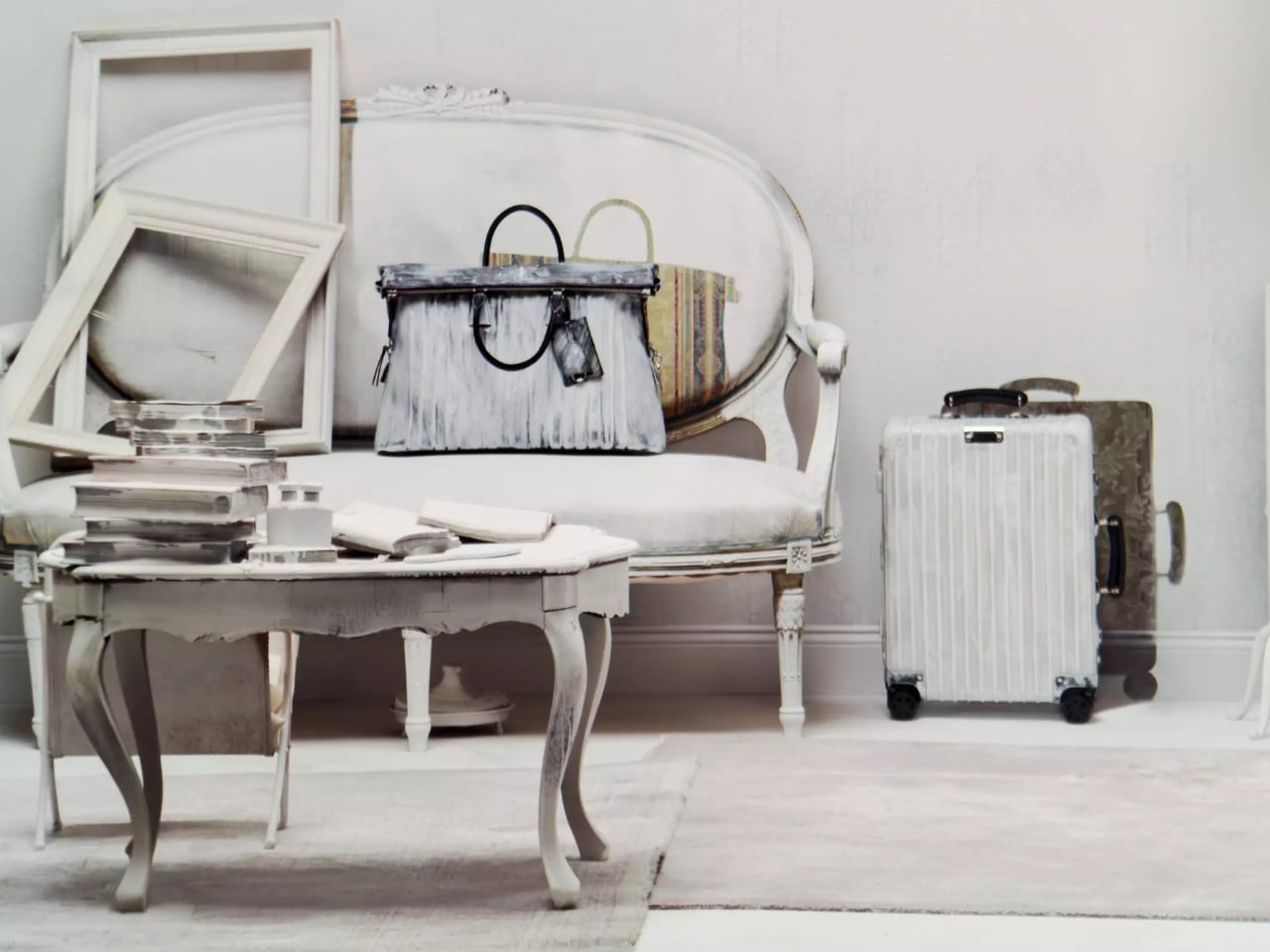
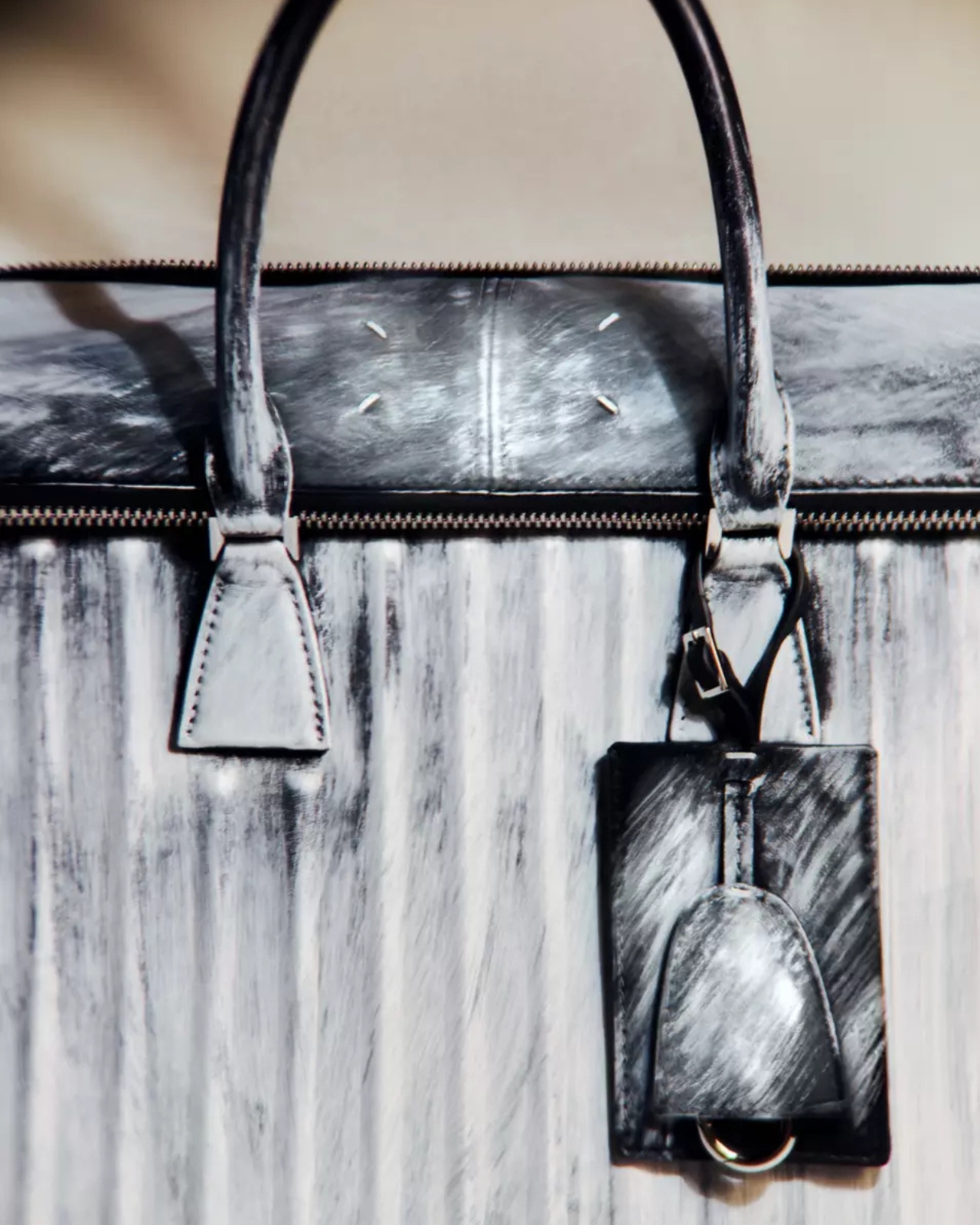
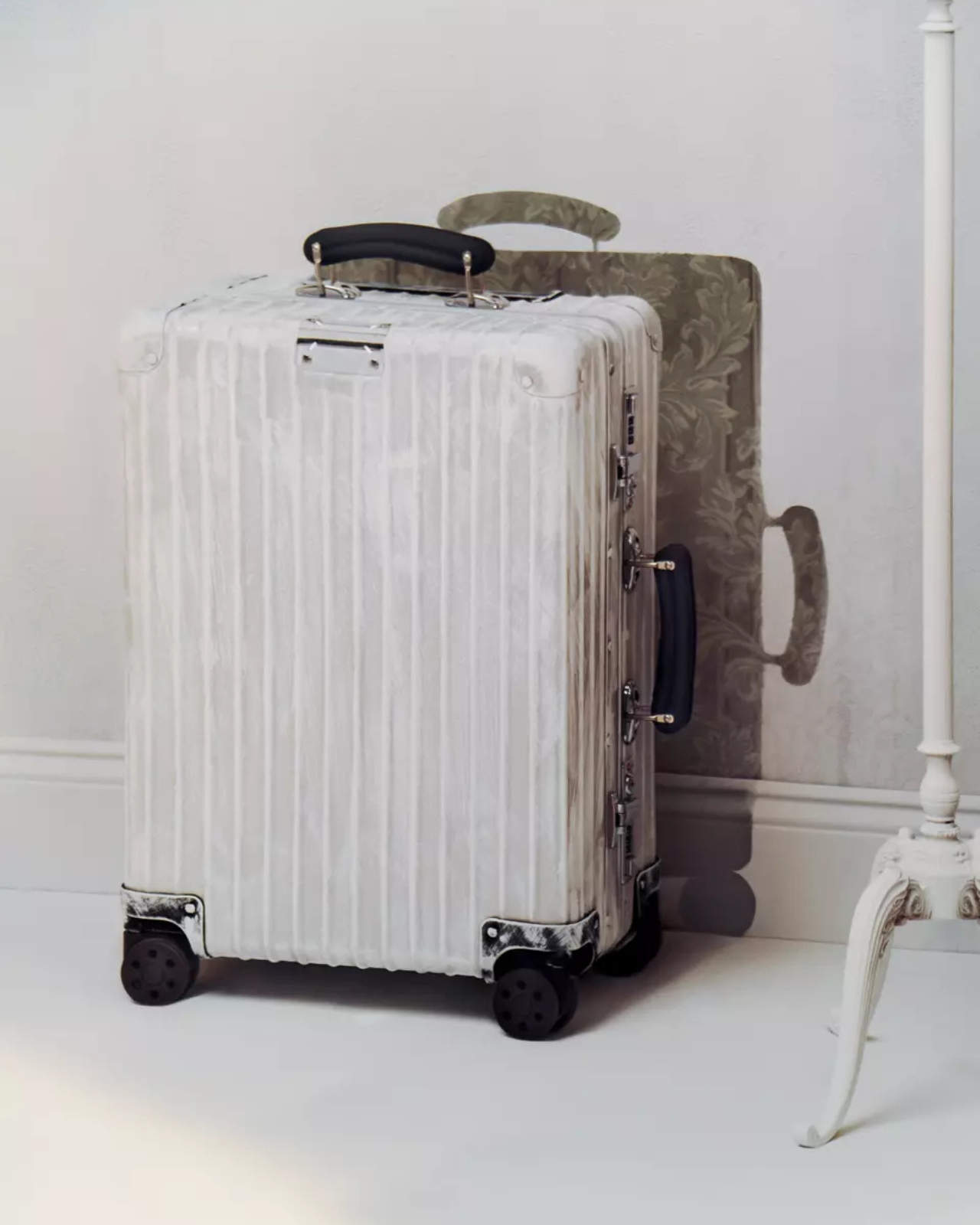
Rimowa’s Classic Cabin suitcase receives Maison Margiela’s signature hand-painted white Bianchetto finish, which the brands say develops a distinctive patina the more you use it. Meanwhile, the 5AC XL bag gets the same finish, along with the sculpted grooves that Rimowa luggage is famous for. This is a collaboration that goes beyond slapping the other brand’s logo on a suitcase and calling it a day.

Designers: Rimowa x Maison Margiela

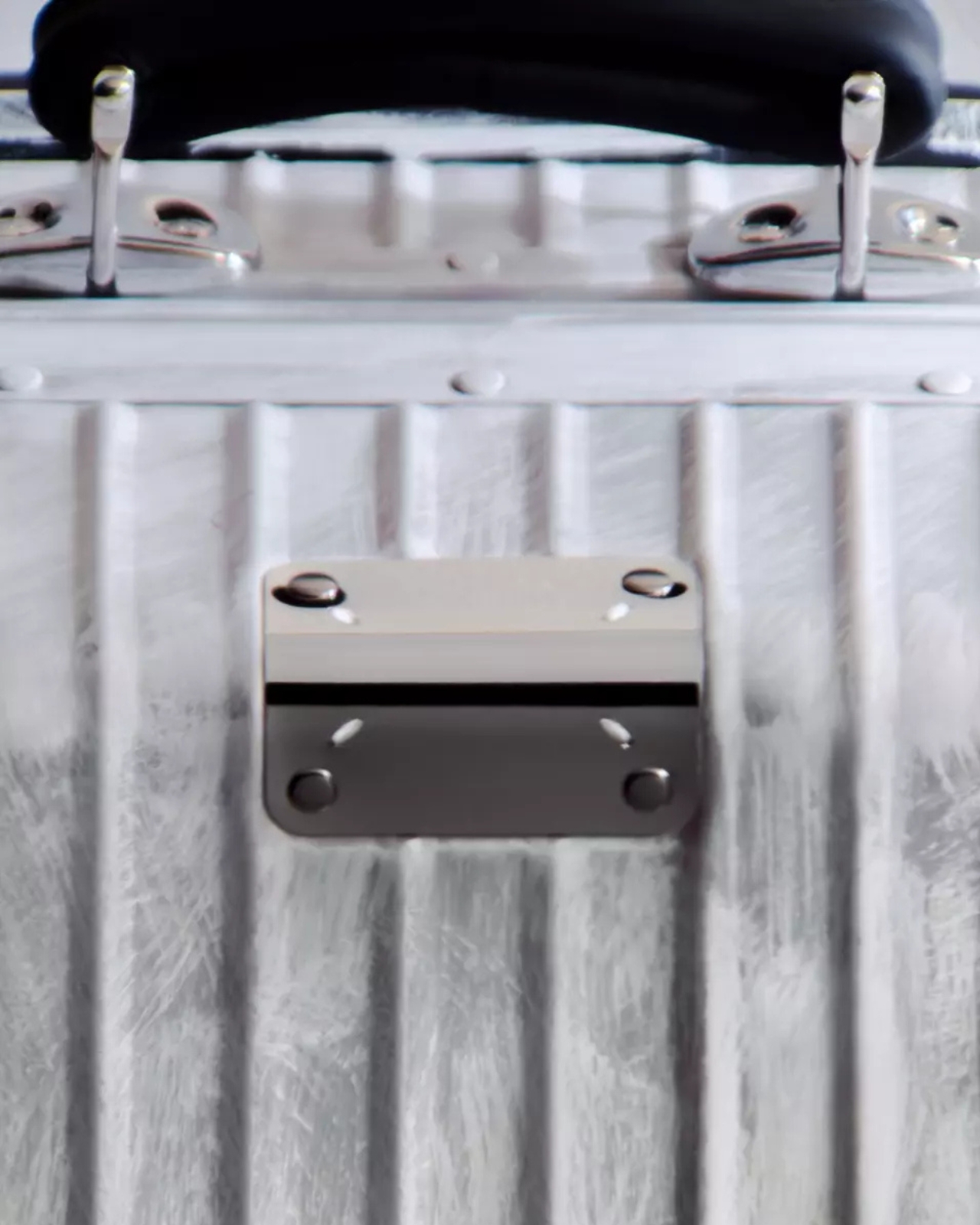
On the Classic Cabin, that treatment sits over an anodized aluminum shell. Rather than expecting it to stay pristine, the finish makes visible wear part of the design. It has an all-white interior with visible stitching, overlocked edges, and debossed white leather details. Its lining and Flex Dividers use white canvas, which Rimowa lists as polyester in its material specifications. The suitcase’s co-branded aluminum badge incorporates Margiela’s four white stitches in real thread. A removable black calfskin address tag with an integrated keyring receives a single Bianchetto brushstroke.
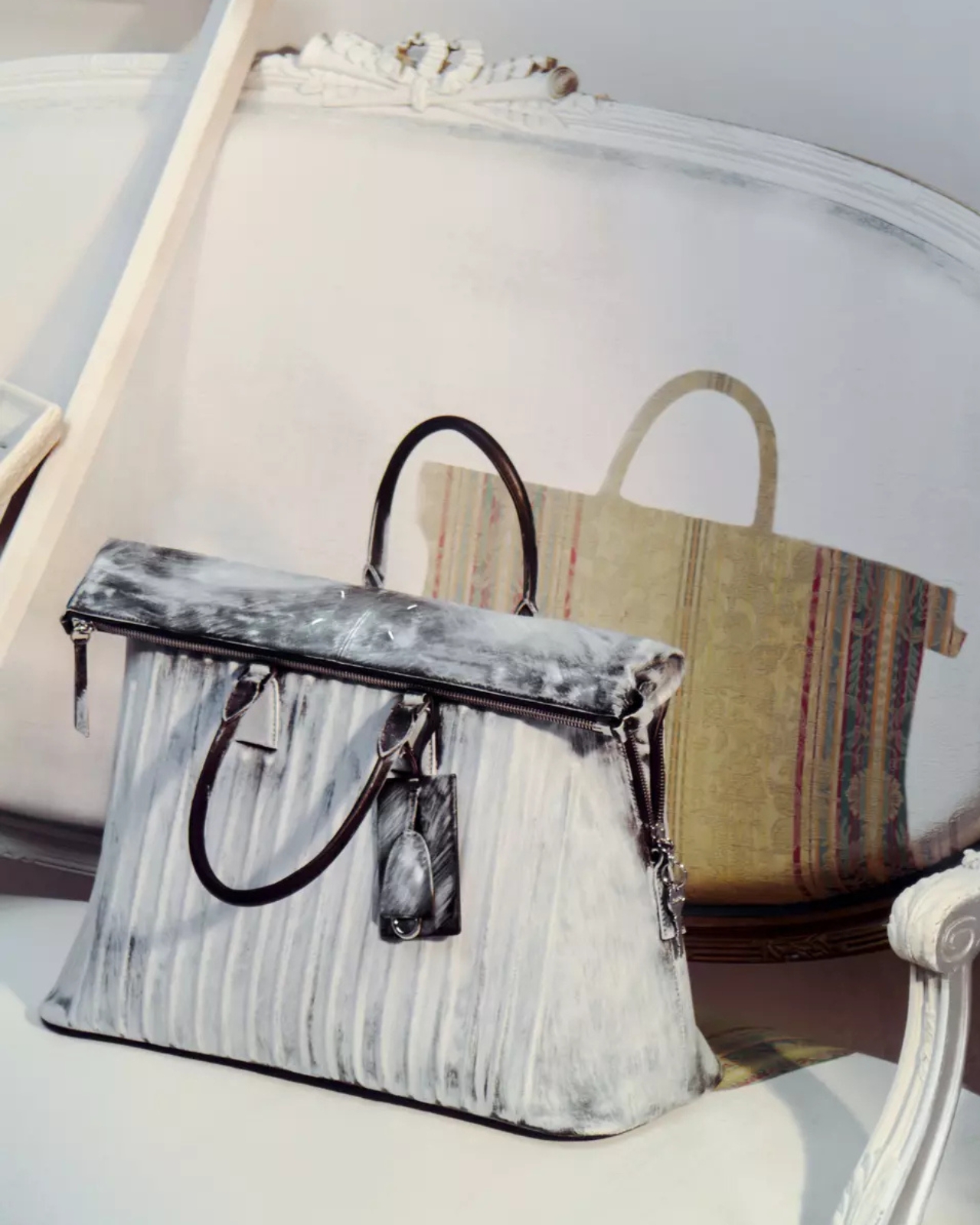
Meanwhile, the 5AC XL translates Rimowa’s recognizable grooved surface into calfskin leather. It retains its signature extended lining, bringing a normally hidden component into the bag’s outward appearance. The bag includes two removable leather loops that secure it to the cabin suitcase, alongside an adjustable, removable strap for shoulder or crossbody carrying. Five mismatched metal feet are intended to protect its base while adding another Margiela detail. Moving the grooves from aluminum to leather is an especially interesting choice: the same recognizable pattern connects the rigid suitcase with the softer bag.

Those leather loops also give the pairing a practical purpose. Attaching the bag to the suitcase means you don’t have to carry both pieces separately while rolling through a terminal. Once detached, the bag has dual handles as another carrying option. Inside, two large pockets, one with a zipper and one with a snap closure, provide separate places for smaller belongings. That’s useful organization without changing the bag’s outward appearance.

The Classic Cabin keeps the familiar travel features, too, including Rimowa’s Multiwheel system, a continuously adjustable telescopic handle, TSA-approved locks, and a Flex Divider. It has a 36-liter capacity and weighs 10.4 pounds empty, so the painted finish shouldn’t be confused with a lightweight redesign. The collaboration changes how the suitcase looks and ages, but its underlying purpose is still carrying and organizing your belongings.
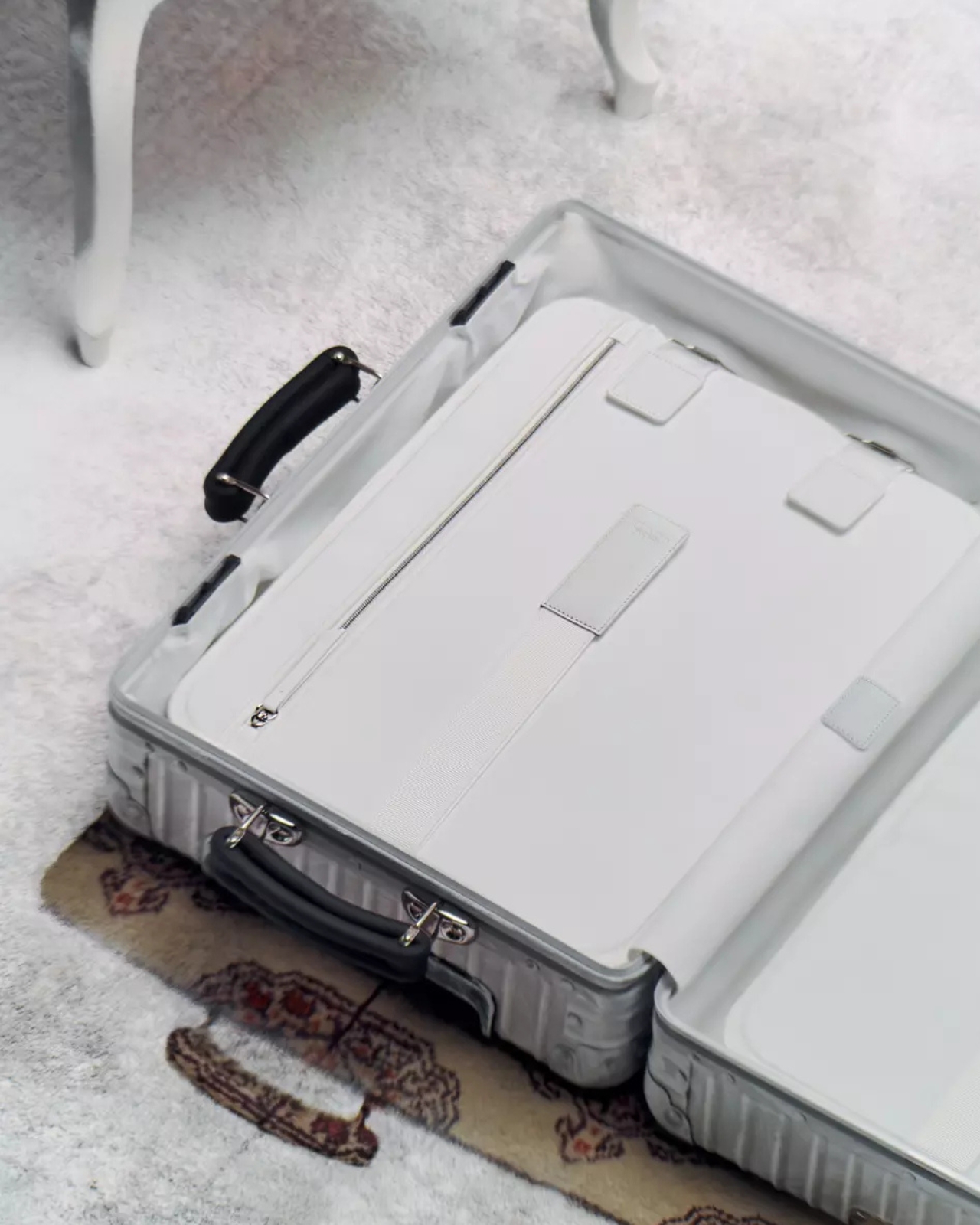
The biggest difference may be how you feel about wear. Rimowa describes the paint as gradually cracking and fading with use, so changes in the white surface are part of the intended result. That could make a scuff feel less like an imperfection to hide. It doesn’t mean the finish prevents damage, though, or that every traveler will enjoy watching the coating change.

The limited-edition collection is scheduled to become available on November 19, 2026. US pricing is $4,300 for the Classic Cabin and $4,900 for the 5AC XL bag, putting the complete pairing at $9,200. That makes this a substantial luxury purchase, even before you book a flight.

For fans of both brands, the appeal is in how much of each remains recognizable. The grooves, exposed construction, and brushwork give the partnership something to look at beyond its branding. Still, you have to want a bag that changes with use. If keeping expensive luggage spotless is part of the pleasure, this finish may be the wrong fit.

The post Rimowa x Margiela’s White Luggage Refuses to Stay Pristine first appeared on Yanko Design.