In a typical coffee lover’s home, such as mine, the first interaction in the morning is with the alarm clock followed by the coffee machine. Of course, we have been living and functioning this way for most of our lives, and if you would ask, frankly, there wouldn’t be another way we’d want. But a designer duo believes there is a way to integrate the two and perhaps deliver an alarm clock that is also a coffee machine.
Designed to simplify our wakeup process from the loud sound of the alarm to a refreshing aroma of coffee without the extra effort or toiling, the new Sunrise alarm clock coffee maker is not a typical alarm clock or a coffee machine. For the love of waking up more refreshed – in an aroma mimicking that of a café – this is what we would want by the bedside. To know more about how it functions and how the designers have perceived it, read on!
For as long as we know it, never before has someone tried to put the coffee machine on our bedside disguised as an alarm clock. The mere idea is commendable let alone the execution, which involves the assurance that you wake up to the smell of fresh coffee every morning. So, with Sunrise, you are saved the effort of setting up an alarm on the bedside clock before hitting the bed and then waking up to the loud and annoying alarm every other day.
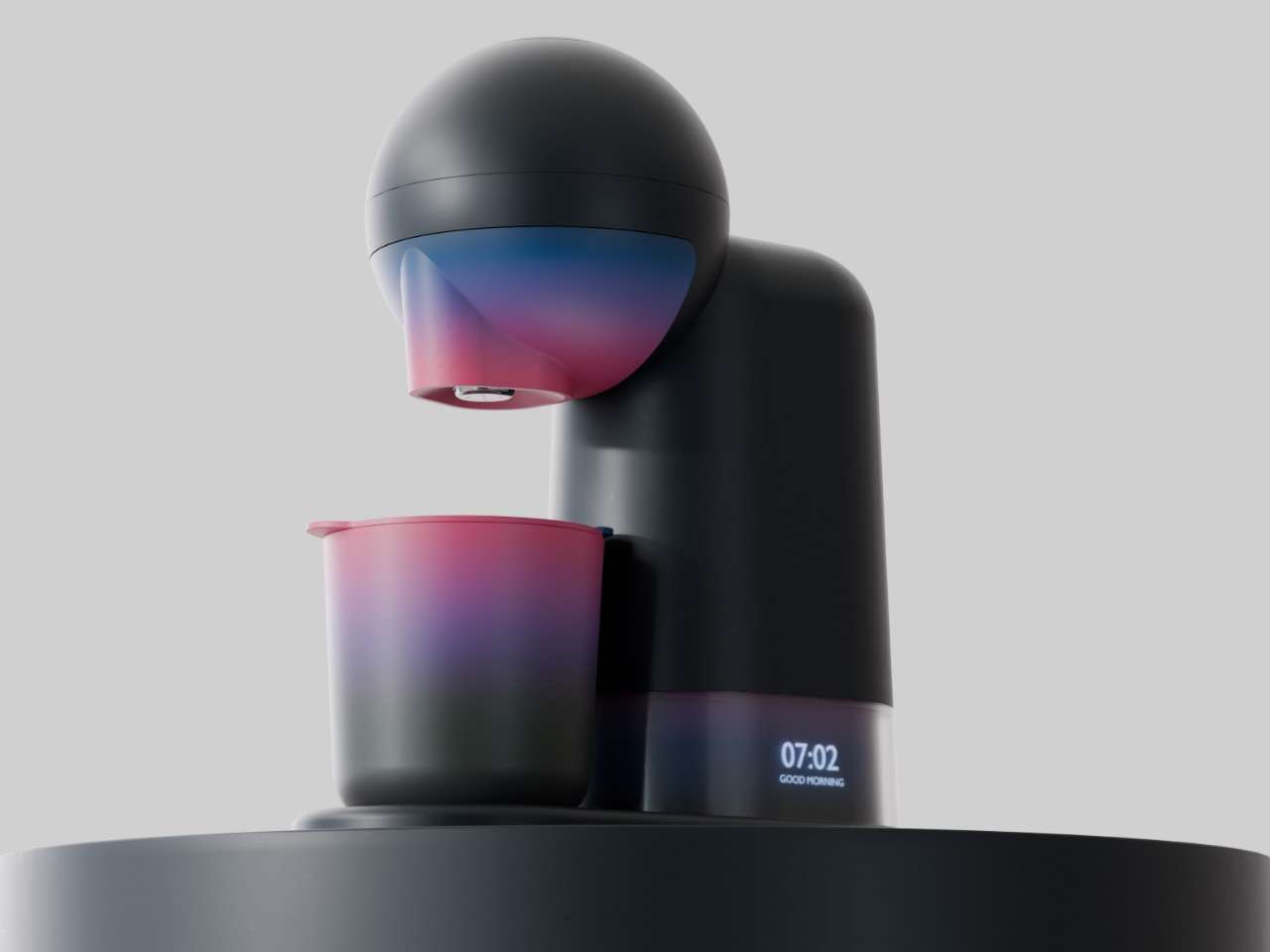
With the Sunrise alarm clock coffee machine, you get a coffee maker ready on your bedside. At the time you have set – like in a typical clock – the Sunrise would start making the coffee. There is no loud alarm, instead, as the coffee is being brewed by the bedside, your room is filled with a smell of good coffee that would set a refreshed tone to your day.
At the bedside, the Sunrise appears as a usual coffee maker but with a distinguished color theme and design language. A sublime combination of black, pink, and blue, the coffee machine with no edges has a digital clock at the base. Compact enough to settle on the bedside table or stylish enough to grab the centerstage on the countertop, the Sunrise is worth the time and comfort of every coffee buff. It definitely puts one to think, there could be one less step to waking up and getting a fresh brew first up.
A Texas judge denied Media Matters for America’s request for a dismissal on Thursday allowing X’s lawsuit over alleged anti-semitic and racist content. The Verge reported that Northern District of Texas Judge Reed O’Connor dismissed the request for a dismissal paving the way for X’s lawsuit against Media Matters to continue.
Media Matters submitted its dismissal request in early March on the grounds that X’s case lacked “personal jurisdiction,” an “improper venue” and the “failure to state a claim.” O’Connor dismissed all of those claims, according to court records.
The lawsuit filed last year in federal court seeks damages from the media watchdog group over “maliciously manufactured” images reporting that X’s platform placed Neo-Nazi and white-nationlist content next to advertisers’ images causing advertisers to flee the site. The images Media Matters used weren’t manufactured but X’s claim is that its dogged pursuit of ads’ placement with racist content by using certain accounts to bypass ad filters caused irreparable harm to the social media giant.
X owner Elon Musk’s other companies are located in Texas but aren’t directly connected to the Media Matters lawsuit. X closed its San Francisco offices earlier this month and owner Elon Musk announced in July that X’s headquarters will move to Austin. Tesla moved its headquarters from California to the Lone Star State in 2021 and SpaceX from Delaware earlier this year when a judge threw out a $56 billion pay package from the state.
However, in dismissing the personal jurisdiction argument, O’Connor noted that two of X’s “blue-chip” advertisers like AT&T and Oracle included in Media Matters’ coverage are based in Texas. He cited the landmark 2002 Internet defamation case Revell v. Lidov quoting the 5th Circuit Court of Appeals’ assertion that “if you are going to pick a fight in Texas, it is reasonable to expect that it be settled there.”
This article originally appeared on Engadget at https://www.engadget.com/social-media/judge-denies-media-matters-motion-to-dismiss-xs-not-libel-lawsuit-204732720.html?src=rss
With a dynamic capsule-shaped design that can be pivoted to face pretty much anywhere, the Zebronics Zeb PixaPlay 54 is far from those boring box-shaped projectors of yesteryear. It feels refreshing, artistic, and worthy of placing on a mantelpiece from which it can cast images and videos onto a wall. The pivoting capsule design feels fairly similar to a conceptual projector we saw back in 2018 or more recently, the $900 Samsung Freestyle. At practically a third of the price, the Zeb PixaPlay 54 feels like quite the deal, although it does come with its fair share of compromises – none too drastic if you ask me. You get exactly what you’re paying for… if not more, considering the projector has a few nifty features like auto-keystone, multiple connectivity options, and the ability to cast a 140-inch screen on any wall you point it at!
The Zebronics PixaPlay 54 LED projector is an intriguing entry-level option for those looking to enhance their home entertainment setup without breaking the bank. Positioned within the Indian market, this projector aims to deliver a solid viewing experience while keeping the price tag accessible. Despite its marketing claims of 1080p support, the PixaPlay 54’s native resolution is 720p, which is a crucial consideration for potential buyers who prioritize image clarity and detail (even more so considering the Freestyle does output 1080p). This slight dip in resolution might be a drawback for some, but it doesn’t negate the fact that the PixaPlay 54 can still provide a satisfactory visual experience for casual movie nights or presentations. Personally, 1080p at a slightly higher price would absolutely seal the deal.
The Zeb PixaPlay 54’s internal light source outputs up to 3,800 lumens of brightness. This should suffice for most indoor settings, ensuring that images remain vivid and clear even in rooms that aren’t completely dark. Moreover, the LED light source is touted to have a lifespan of up to 50,000 hours, translating to years of use without the need for a replacement bulb. This longevity is a significant advantage, especially for users who plan on using the projector frequently. However, it’s important to note that while the brightness is commendable, the native resolution may not fully leverage this feature, leading to a trade-off between sharpness and luminosity.
The cylindrical pivoting shape is perhaps the projector’s biggest visual highlight, which not only gives it a modern appearance but also allows for practical adjustments. The adjustable stand is a thoughtful addition, enabling users to tilt the projector to achieve the optimal viewing angle without the need for additional mounts or tripods. Automatic keystone correction further enhances the user experience by ensuring that the projected image remains rectangular and undistorted, even if the projector isn’t perfectly aligned with the screen. The inclusion of a lens adjustment wheel allows for fine-tuning the focus, which is essential for achieving the best possible image clarity given the projector’s native resolution limitations.
Connectivity options on the PixaPlay 54 are robust for its price range. The device supports dual-band Wi-Fi and Bluetooth 5.1, offering a range of wireless connection possibilities, from streaming content directly from your smartphone to mirroring your laptop screen. Considering its positioning as a smart speaker, it DOES come with its own OS, although you won’t find every app you need. Personally, as a Zebronics projector user myself, I find it easier defaulting to an Amazon Fire Stick for seamless content. The projector also features various ports, including HDMI, USB-C, USB-A, and AUX, which provide ample options for connecting external devices such as gaming consoles, laptops, and sound systems. The built-in speakers are a convenient feature, though they may not deliver the audio depth that dedicated external speakers can provide. Your best bet is to pair an external speaker with the projector – preferably using the aux to avoid any audio lag.
The Zebronics PixaPlay 54 is competitively priced, with an introductory offer bringing the cost down from ₹27,999 ($333 USD) to ₹10,999 (approximately $131 USD). This makes it an attractive option for budget-conscious consumers who are looking for a versatile projector without the premium price tag. Don’t expect to turn your home into an IMAX studio, given the 720p output… but rather revel in the fact that your projector looks like a million bucks, and gives you a whopping 100-plus-inch display on command!
Designed as a part of Richard Falcema’s ‘Fictronics’ (Fictional Electronics) series, the WORDLE TERM is a handheld console that lets you play NYT’s hit game Wordle anywhere you go. Although Wordle is mainly played on phones (and is even available as a board game for true-blue nerds), Falcema’s quirky gadget gives the game its own standalone handheld device with an aesthetic and interface that’s just about as adorable and fun as the game itself.
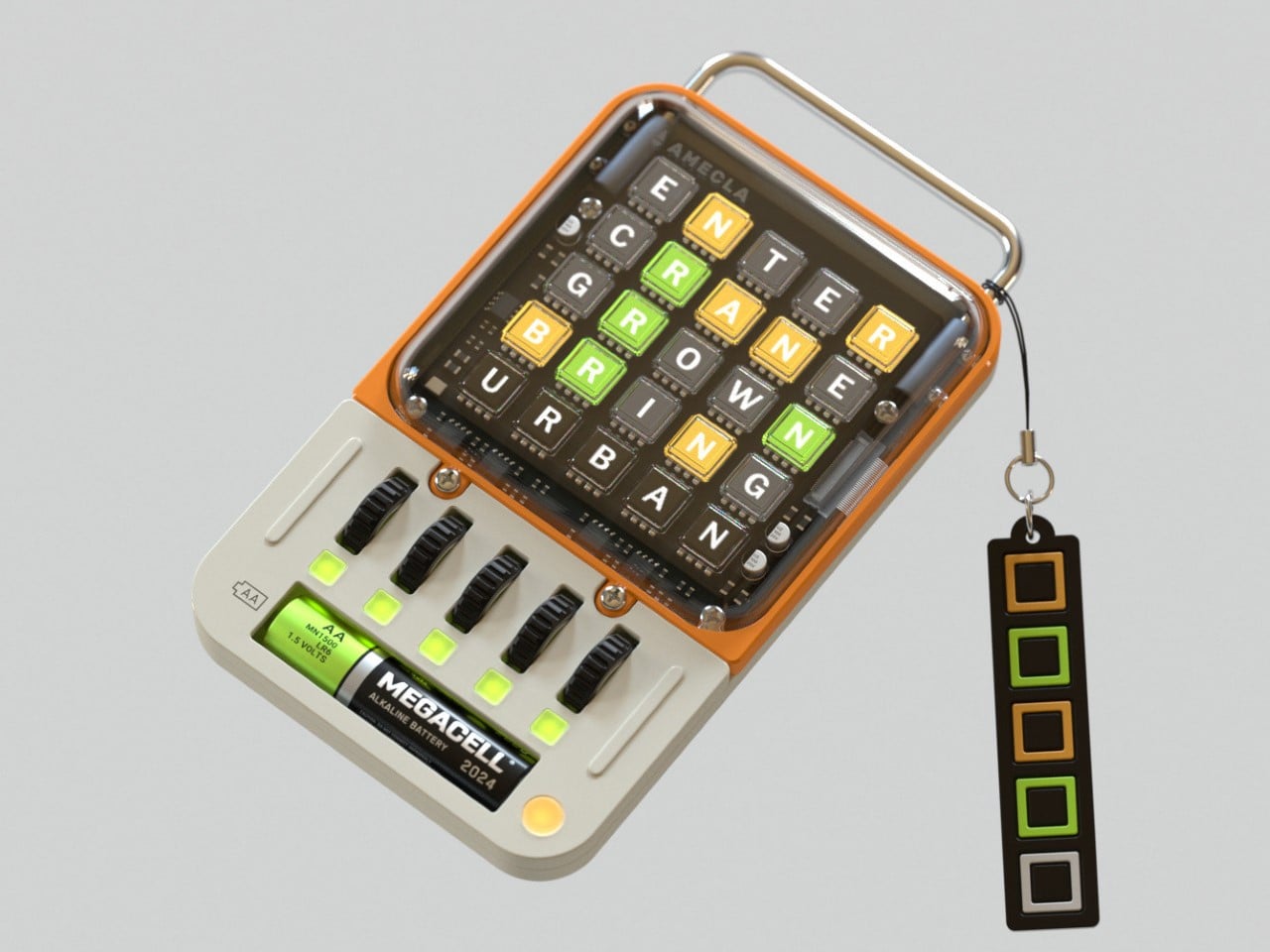
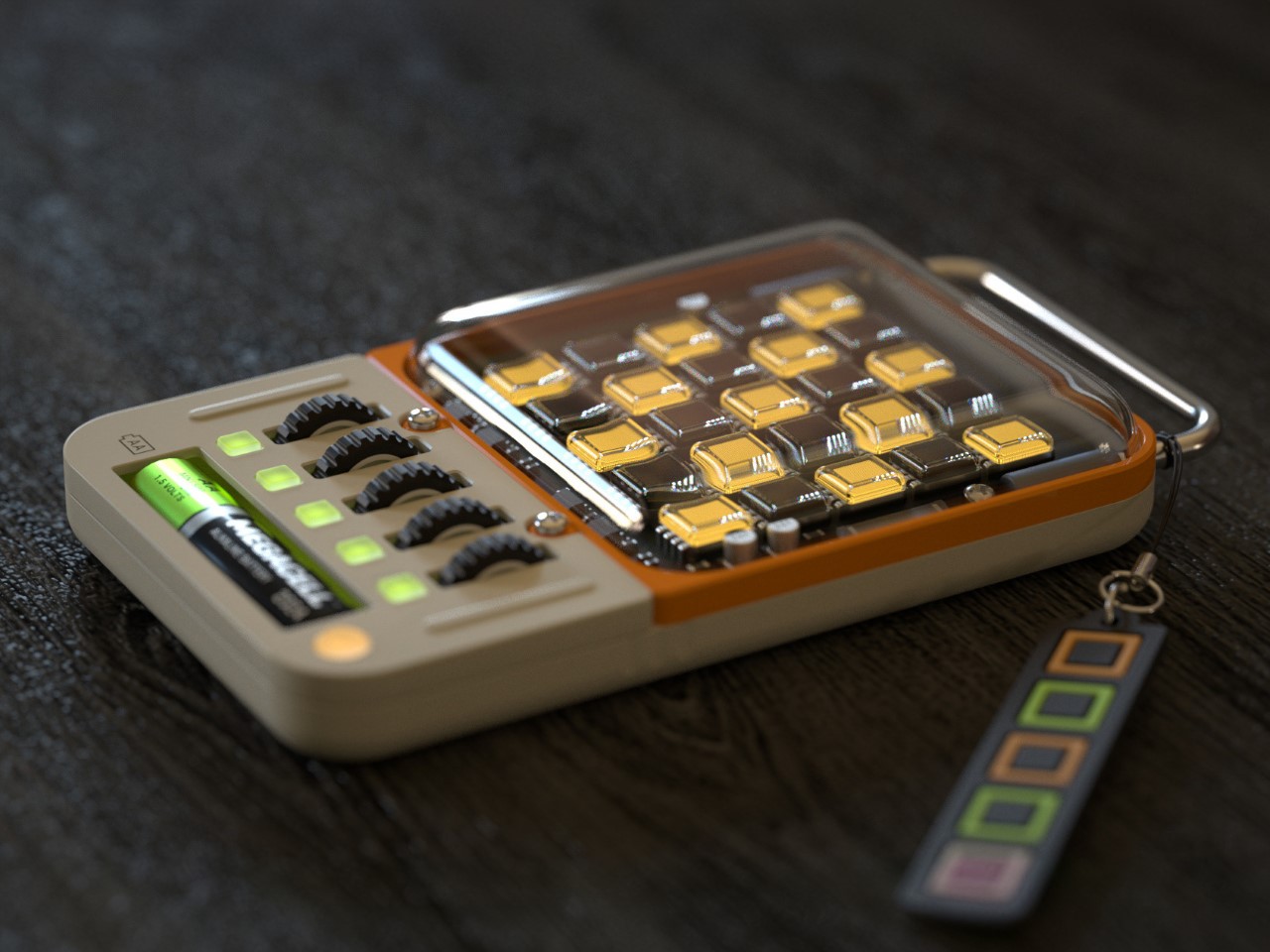
The gaming device is simple to a point of being almost a meme. You can literally ONLY play Wordle on it and nothing else, which I guess makes it even more appealing if you think about it. The device sports a 25-display grid on the top,very reminiscent of the kind seen on Elgato’s hardware, except those displays can’t be pressed. They’re controlled using a set of 5 wheels at the bottom, which let you cycle through letters in each row. Once you select all 5 letters, the device accepts your input and judges your guess. For non-Wordlers, the game involves guessing the word of the day. You have 6 chances (this game gives you just 5), and each chance gives you clues as to what the word could be. When you guess the letters, tiles either stay grey if the letter is wrong, or turn orange if the letter is right but in the wrong position, and finally green if the letter is right and at the right position. Using this color-coded system, you’re required to work your way through the 5 or 6 guesses, trying to get the word in the fewest attempts.
Falcema’s device captures the Wordle game perfectly through its quirky design. The exposed circuitry, vibrant colors, metal bar on top, and that lone AA battery at the bottom are highly reminiscent of Teenage Engineering’s design cues. The device comes with a Wordle-themed lanyard too, adding to the fun appeal of the entire device. I’m assuming that this device also lets you play as many instances of Wordle as possible, rather than having to wait 24 hours for each new challenge!
As the US speeds toward one of the most consequential elections in its 248-year history, Google is rolling out safeguards to ensure users get reliable information. In addition to the measures it announced late last year, the company said on Friday that it’s adding election-related guardrails to YouTube, Search, Google Play and AI products.
YouTube will add information panels above the search results for at least some federal election candidates. The modules, likely similar to those you see when searching the web for prominent figures, will include the candidates’ basic details like their political party and a link to Google Search for more info. The company says the panels may also include a link to the person’s official website (or other channel). As Election Day (November 5) approaches, YouTube’s homepage will also show reminders on where and how to vote.
Google Search will include aggregated voter registration resources from state election offices for all users. Google is sourcing that data through a partnership with Democracy Works, a nonpartisan nonprofit that works with various companies and organizations “to help voters whenever and wherever they need it.”
Meanwhile, the Google Play Store will add a new badge that indicates an app is from an official government agency. The company outlines its requirements for apps that “communicate government information” in a developer help document. Approved applications that have submitted the required forms are eligible for the “official endorsement signified by a clear visual treatment on the Play Store.”
This article originally appeared on Engadget at https://www.engadget.com/big-tech/google-is-rolling-out-more-election-related-safeguards-in-youtube-search-and-ai-190422568.html?src=rss
If you have an account with Comcast Xfinity, then you also have a year-long subscription to the Perplexity Pro AI answer engine. Perplexity announced the special deal on Threads. Perplexity Pro differs from the company's free option by allowing unlimited quick answers from a choice of AI models, including GPT-4o, Claude-3 and Sonar Large. Engadget hasn’t reviewed the service, but if you’re already paying for Xfinity, free seems like a good price for you to make up your own mind on its value.
All you have to do to get your free year of Perplexity is to log into your Xfinity Rewards account and obtain a promo code. You’ll punch in your code on Perplexity’s website and you can start using the AI to explore life’s most puzzling mysteries like “Who was that guy who played that squirrely dude in Office Space?” (For the record, that was Stephen Root and his character was Milton).
A Perplexity Pro subscription normally costs $20 but if you take advantage of Comcast Xfinity’s perk, you’ll get a whole year for nothing. You still might want to take Perplexity’s answers with a big grain of salt. The media company Condé Nast has accused the company of plagiarism, and the online retail giant Amazon, which hosts some of Perplexity's infrastructure, has investigated whether the AI company's actions are within its terms of service. So this isn’t exactly a ringing endorsement for Perplexity Pro but again, it’s free so you could do worse. A lot worse.
Update, August 30, 4PM ET: A previous version of this article used imprecise wording that suggested Amazon, rather than just Condé Nast, had accused Perplexity of plagiarism. The article has been updated to correctly indicate that Amazon separately investigated claims made by Wired, one of Condé Nast's publications, and has made no allegations of wrongdoing. We regret the error.
This article originally appeared on Engadget at https://www.engadget.com/ai/comcast-xfinity-customers-can-get-a-year-of-perplexity-pro-ai-for-free-183727093.html?src=rss
Wood is a favorite among designers, especially furniture designers, because of its innate beauty, unique grains, and sustainability. But although the material is indeed biodegradable and recyclable, most furniture designs still result in a lot of waste. There can be many uses for wood chips, sawdust, and unused wood pieces, but an even better solution would be to reduce the wasted material in the first place. That means making every square inch of a sheet of wood count, leaving very little behind once the piece of furniture has been put together. That’s the idea behind this beautiful minimalist side table, where designing for efficiency has also led to a very interesting organic shape in the process.
Flat-packed furniture has become trendy, especially with the minimalist designs propagated by the likes of IKEA. But while these designs are indeed space-efficient and economical, most of the time they’re mass-produced in a manner that produces plenty of offcuts and waste by-products. After all, it is also more efficient to cut all the legs of tables from the same batch of wood and all the tabletops from another, even if their shapes mean there will be plenty of scraps literally left on the cutting room floor.
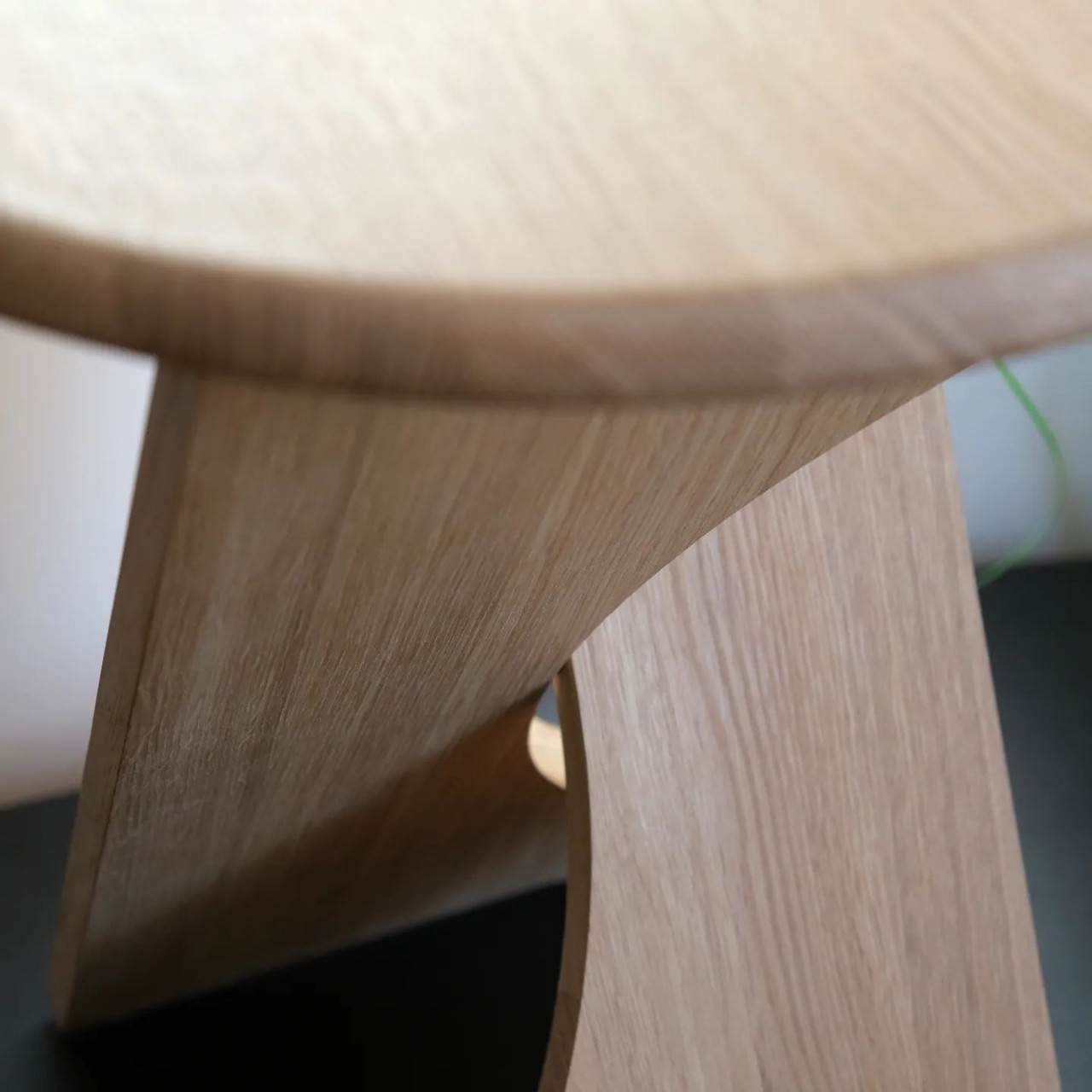
Slide Table is a design concept for a side table that advocates efficiency both in packaging as well as in manufacturing. Every part of the table is actually cut from a single sheet of wood, so even mass-produced versions would have the same qualities. Yes, there will still be some unused parts that are cut off to produce the gaps between parts, but the goal is to minimize this waste as much as possible rather than eliminate them completely.
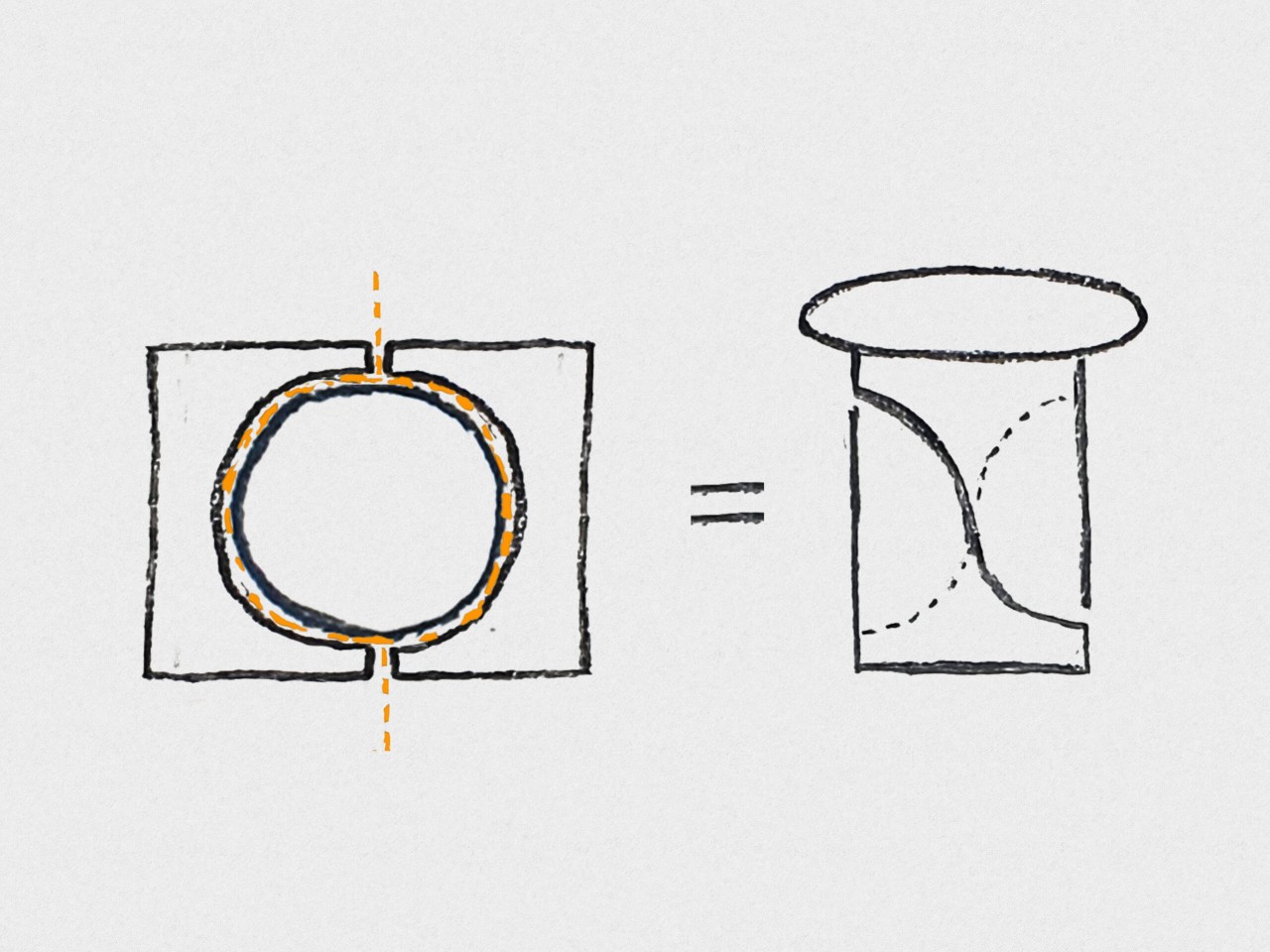
What makes this efficient use of the material is the rather unique design of the table itself. The tabletop is a disc carved from the middle of a rectangular plank of wood, and the remaining section is split in half to form the legs. The legs themselves “slide” into each other, connecting in the middle and forming a cross shape on which the circular top rests. It’s a simple yet intriguing shape that creates something like an optical illusion when viewed from the side.
While Slide Table does offer a beautiful and more sustainable design, it leaves some concerns about the stability of the furniture itself. There is no clear indication of how the legs stick together, or how the tabletop stays stable. It’s certainly possible that other smaller parts of the wooden sheet can be used as dowel rods to connect the pieces, which would further reduce the amount of wasted materials. This design, however, also has its limits in how big the table can be, as the tabletop will always be proportional to the rest of the sheet that would become its legs.
You can own a piece of electric vehicle history from one of the saddest stories in the industry to date. The British electric van maker Arrival was once valued in the billions and had a sweet deal to turn UPS’ fleet of iconic brown vans into electric vehicles. Within a couple of years, Arrival’s warehouse became an empty shell and its sleek electric vehicles and remaining parts were sold off to whoever could afford the highest bid. Now, one of the first Arrival prototypes sold at auction after the company’s downfall has found its way to eBay.
The seller says they worked for Arrival before the company went under earlier this year. They write in the description that the Arrival pre-production van is “the only known running and fully operational Arrival Gamma Van available,” and was purchased in June from Arrival’s liquidation auction for an undisclosed sum.
The Arrival Gamma van appears to be in good working order. It has sliding electric doors and a touchscreen interface on the dashboard. The shelving is still intact and the owner suggests it could be used as a “campervan.” The highest bid as of Friday is £5,600 or approximately $7,368.
Arrival aimed to do for delivery vehicles what the Tesla Model S did for automobiles. The company was founded in 2015 and built 25 vans in 2021 for testing. Arrival committed to building a fleet of 10,000 vehicles for UPS to deliver packages across the US and Europe. The company’s coffers dwindled to $205 million by the end of January of 2023. Its focus was shortened to just the US delivery market and plans were scrapped to expand its electric vehicle fleet to buses and cars for rideshare services. The company continued making cutbacks until Arrival finally closed up shop the following year.
Arrival’s attempt to make delivery vehicles more energy efficient was a noble idea and it wasn’t the only company to do so. Amazon tapped electric van maker Rivian to build 100,000 vehicles for its delivery fleet by 2030. Ford has also designed and released a fully electric E-Transit van for consumers and businesses like Walmart.
This article originally appeared on Engadget at https://www.engadget.com/transportation/evs/an-arrival-electric-van-prototype-goes-up-for-sale-on-ebay-171045360.html?src=rss
Apple on Monday released its new iOS 18 for all compatible iPhones to install — here's how download and install the new update. iOS 18 will already come installed on the new iPhone 16 and iPhone 16 Pro models (see our iPhone 16 Pro review), which will hit shelves on September 20. But not every iPhone will be able to run iOS 18, and even the ones that can won't have all the bells and whistles of the new Apple Intelligence features.
That update stratification is nothing new. Generally each year, some older iPhone models are removed from Apple's iOS eligibility list. Last year, for instance, the iPhone 8, iPhone 8 Plus and iPhone X were left off the compatibility list. That meant those iPhone owners couldn't update to iOS 17 and missed out on some notable features. On the flip side, some older hardware will get major new features: Consider the upcoming software update that effectively turns existing AirPods Pro headphones into a hearing aid, complete with a built-in hearing test. (Apple just received FDA authorization to release that feature later this year.)
We have good news: If you had an eligible phone last year when you updated to iOS 17, that device should still be compatible with iOS 18, according to Apple. That means you won't have to buy a new phone to check out most of the new software features.
iPhone SE (second generation or later)
iPhone XR
iPhone XS
iPhone XS Max
iPhone 11
iPhone 11 Pro
iPhone 11 Pro Max
iPhone 12
iPhone 12 mini
iPhone 12 Pro
iPhone 12 Pro Max
iPhone 13
iPhone 13 mini
iPhone 13 Pro
iPhone 13 Pro Max
iPhone 14
iPhone 14 Plus
iPhone 14 Pro
iPhone 14 Pro Max
iPhone 15
iPhone 15 Plus
iPhone 15 Pro
iPhone 15 Pro Max
iPhone 16
iPhone 16 Plus
iPhone 16 Pro
iPhone 16 Pro Max
Put another way, if you have an iPhone from the 2017 model year or earlier (iPhone 8 or iPhone X), you can't upgrade to the latest iOS, but your phone should continue to work — albeit without the latest and greatest features.
Is your iPhone compatible with Apple Intelligence?
While your older device will still be able to support the latest iOS, chances are that you won't get to try the Apple Intelligence beta yet next month. Unless you have an iPhone 15 Pro or iPhone 15 Pro Max — the top-end 2023 models — or one of the new iPhone 16 models, your iPhone isn't eligible.
When will Apple Intelligence features be available?
If your device is compatible with Apple Intelligence, you can start playing with some of those features in October, when they begin to hit those newer iPhones in subsequent updates.
The first round of Apple Intelligence features will be available in English in the US this October. In December, it'll become available in localized English to Australia, Canada, New Zealand, South Africa and the United Kingdom. Additional language support, including Chinese, French, Japanese and Spanish, will be available sometime next year, Apple says.
As previously reported, Apple Intelligence will not be making its way to EU countries anytime soon. The American tech giant remains locked in a battle with European regulators over enforcement details of the EU's Digital Markets Act.
The biggest new iOS 18 features
While Apple Intelligence is by far the biggest update coming with iOS 18, its features are going to be released more piecemeal over the subsequent few months. And the more advanced features won't be available on older iPhone models aside from the iPhone 15 Pro series. But the rest of the iOS 18 features are available now. Here are just some of the highlights you can expect when you download Apple's new software.
Passwords app: Securely store all your credentials in one place, including passwords and security alerts that you can access directly in the app. (While this functionality currently exists in Settings, moving it to a new app should make it easier to locate and access.)
Improved Messages app: A new iMessages experience is bringing the option to bold, italicize, underline and strikethrough your text. You'll also be able to add animations to your text messages. The update is also bringing RCS to iPhones to better support Android compatibility.
An organized photos library: The Photos app is getting a redesign, which allows you to create and pin your own collections in the app — think "wedding photos" or "trip to Aruba." It removes the current tabbed bottom and leans into a grid layout. The updated carousel view that was touted at WWDC was removed during the beta process.
Personalized home screen layout: You'll finally get the option to rearrange your apps — for instance, you can leave the middle space open to display your home screen photo, and instead have your apps alone the border of the screen. You can also change the appearance of the apps by tinting them with any color, as well as making the apps larger.
There are plenty of other tweaks and improvements to keystone apps like Maps, Calendar, Safari and more. Check out Cherlynn Low's choices for the best hidden features of iOS 18 and its sibling Apple operating system updates, based on the betas released earlier this year.
Are MacOS Sequoia, iPadOS 18, WatchOS 11 and tvOS 18 available now?
Here's when you can download the newest software updates on your other Apple devices (most are today as well).
MacOS Sequoia: September 16
iPadOS 18: September 16
WatchOS 11: September 16
tvOS 18: Apple hasn't announced an official date for its latest tvOS software update. It's still in public beta testing at this time, though it's close to the final stages, per MacRumors.
visionOS 2: September 16
As for AirPods, Apple has reportedly pushed new firmware to AirPods Pro earbuds to prep for the added features coming to that device with iOS 18. (Just note that hearing aid functionality mentioned above may not hit with the first wave of updates, despite its recent FDA clearance.)
Update, September 16, 1:55PM ET: Confirmed iOS 18 availability.
Update, September 12, 3:28PM ET: Added details about the FDA authorizing the hearing aid functionality for AirPods Pro.
Update, September 11, 12:13PM ET: New information added about new firmware pushed to AirPods Pro earbuds.
Update, September 10, 9:54AM ET: Added release dates for additional Apple OS software updates.
Update, September 9, 5:00PM ET: Added details regarding the lack of Apple Intelligence availability in EU countries.
Update, September 9, 3:37PM ET: This story has been updated with the announced release dates for iOS 18 and Apple Intelligence.
This article originally appeared on Engadget at https://www.engadget.com/mobile/apple-has-released-ios-18-to-install-but-is-your-iphone-compatible-here-are-the-eligible-devices-and-new-features-155304539.html?src=rss
MotorSkins is revolutionizing the way we interact with technology with their cutting-edge SELK technology. This innovative system exemplifies the powerful fusion of ambient computing and programmable matter, promising to profoundly transform our relationship with both the digital and physical worlds.
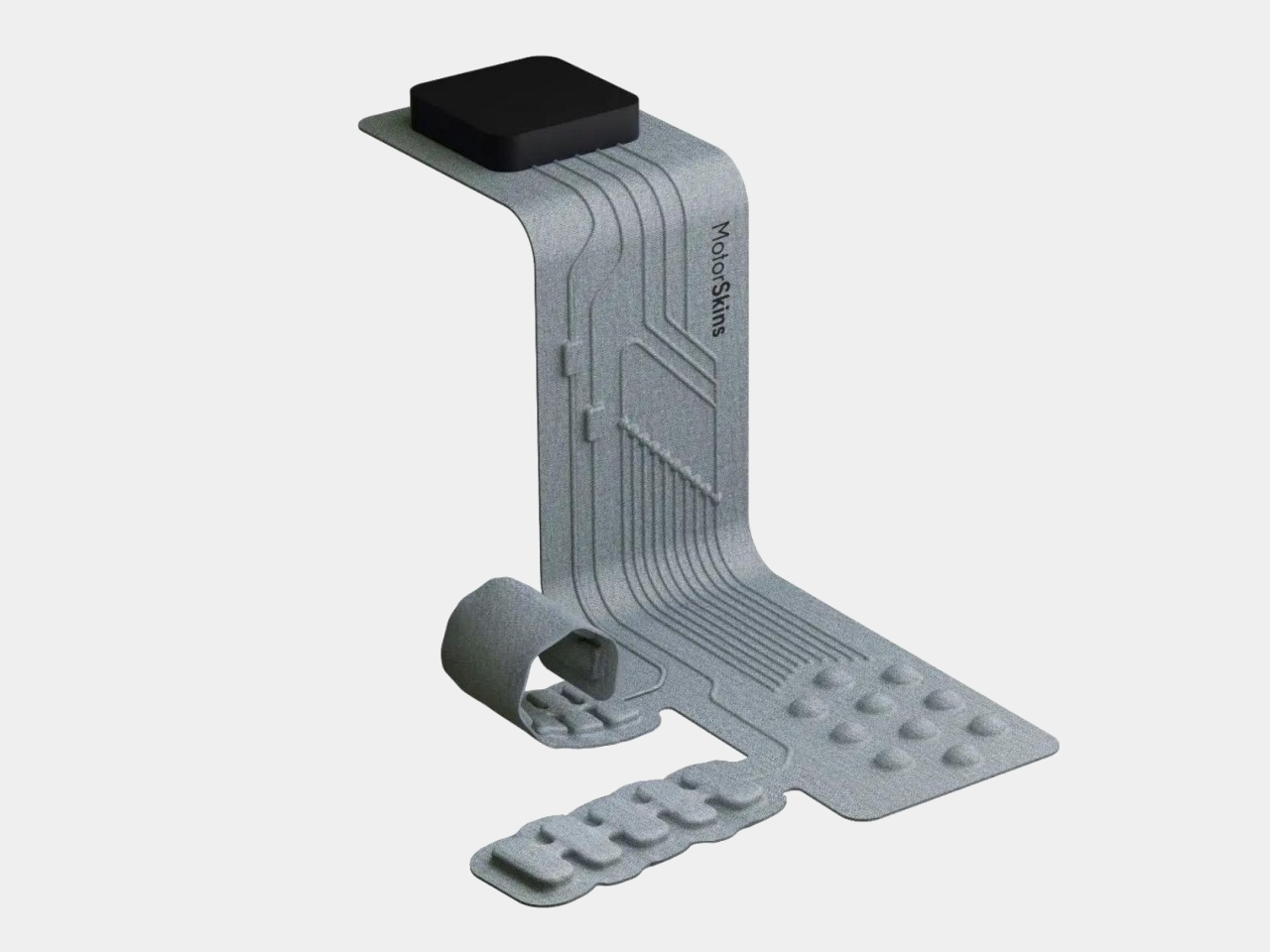
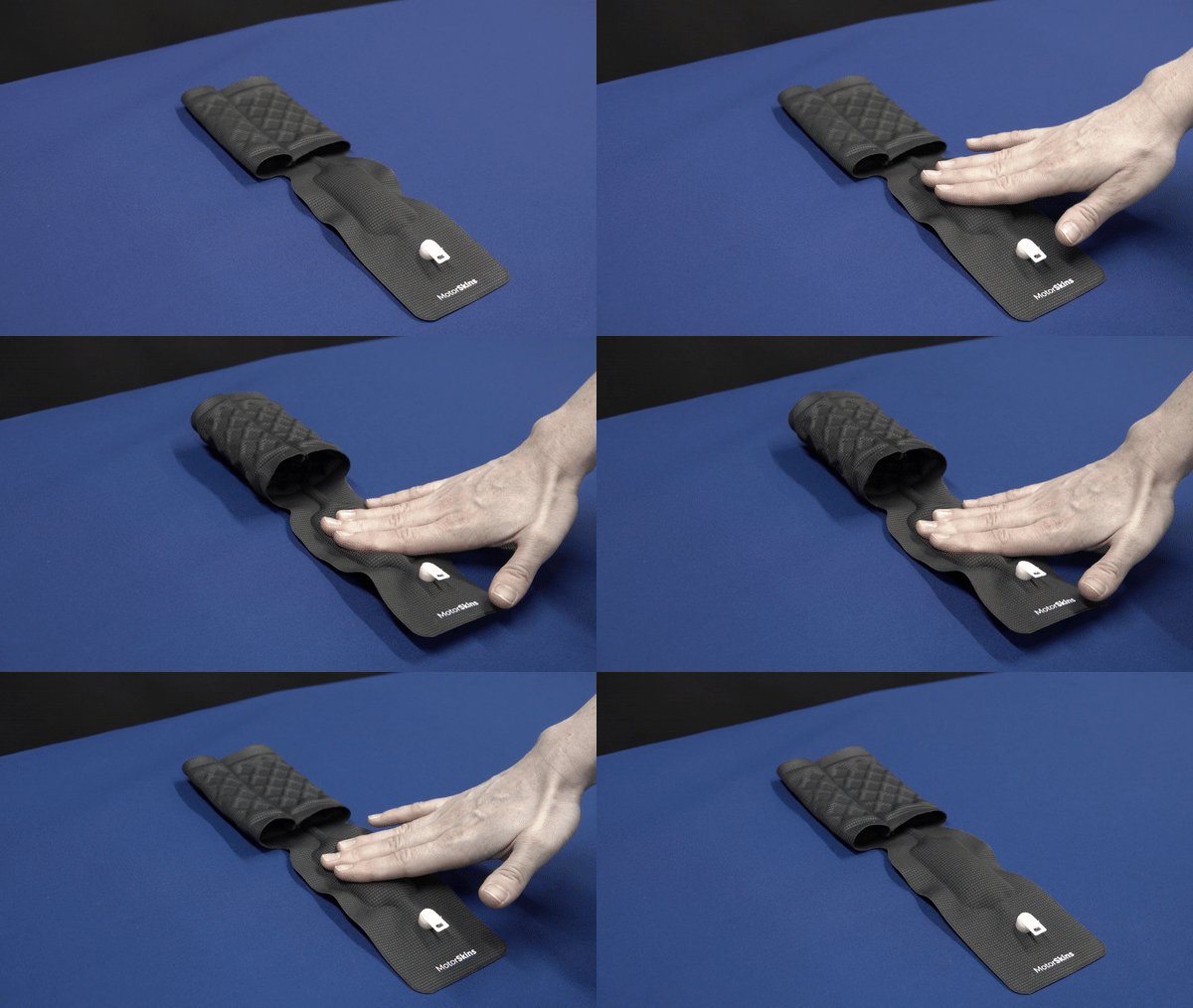
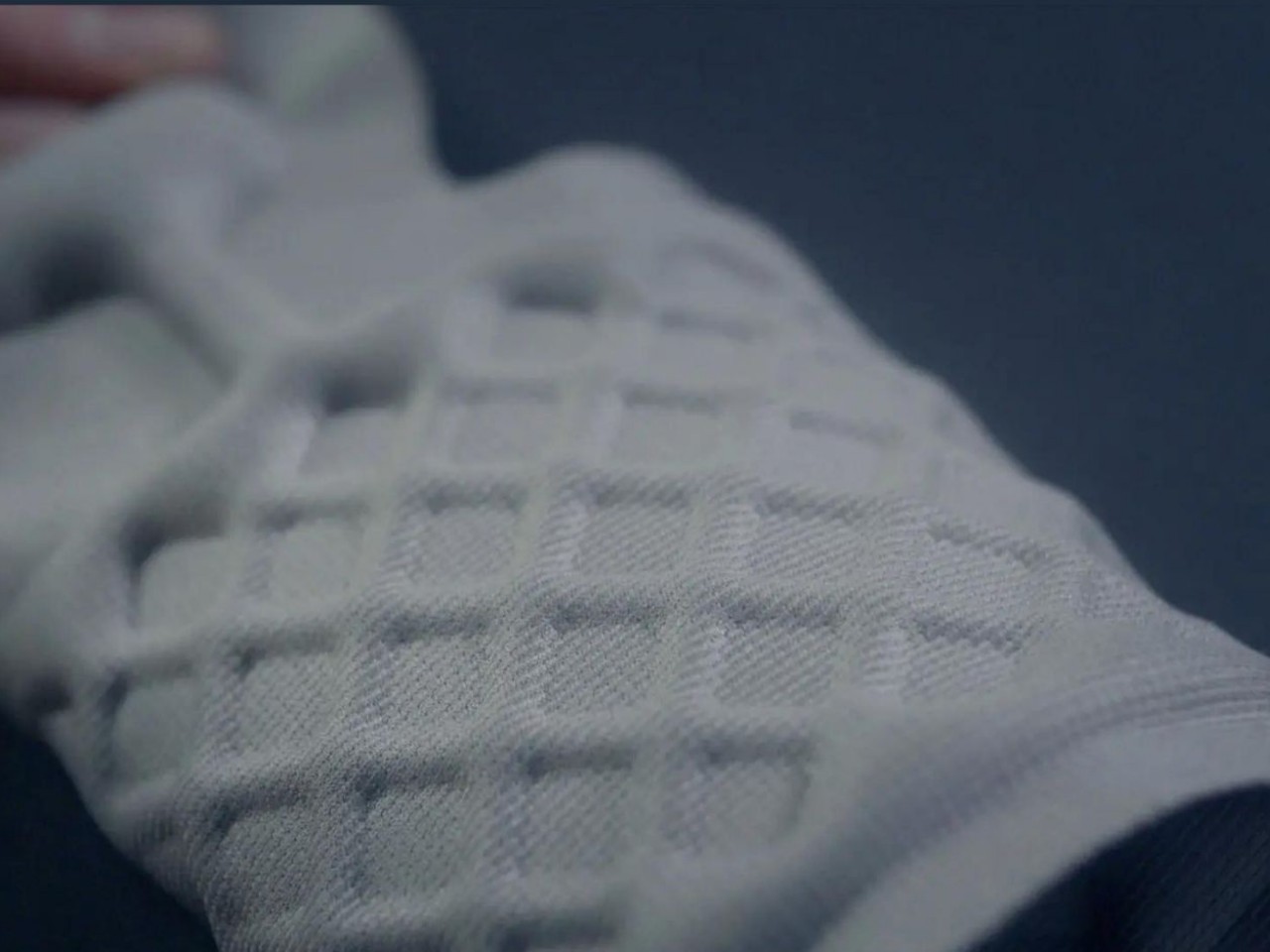
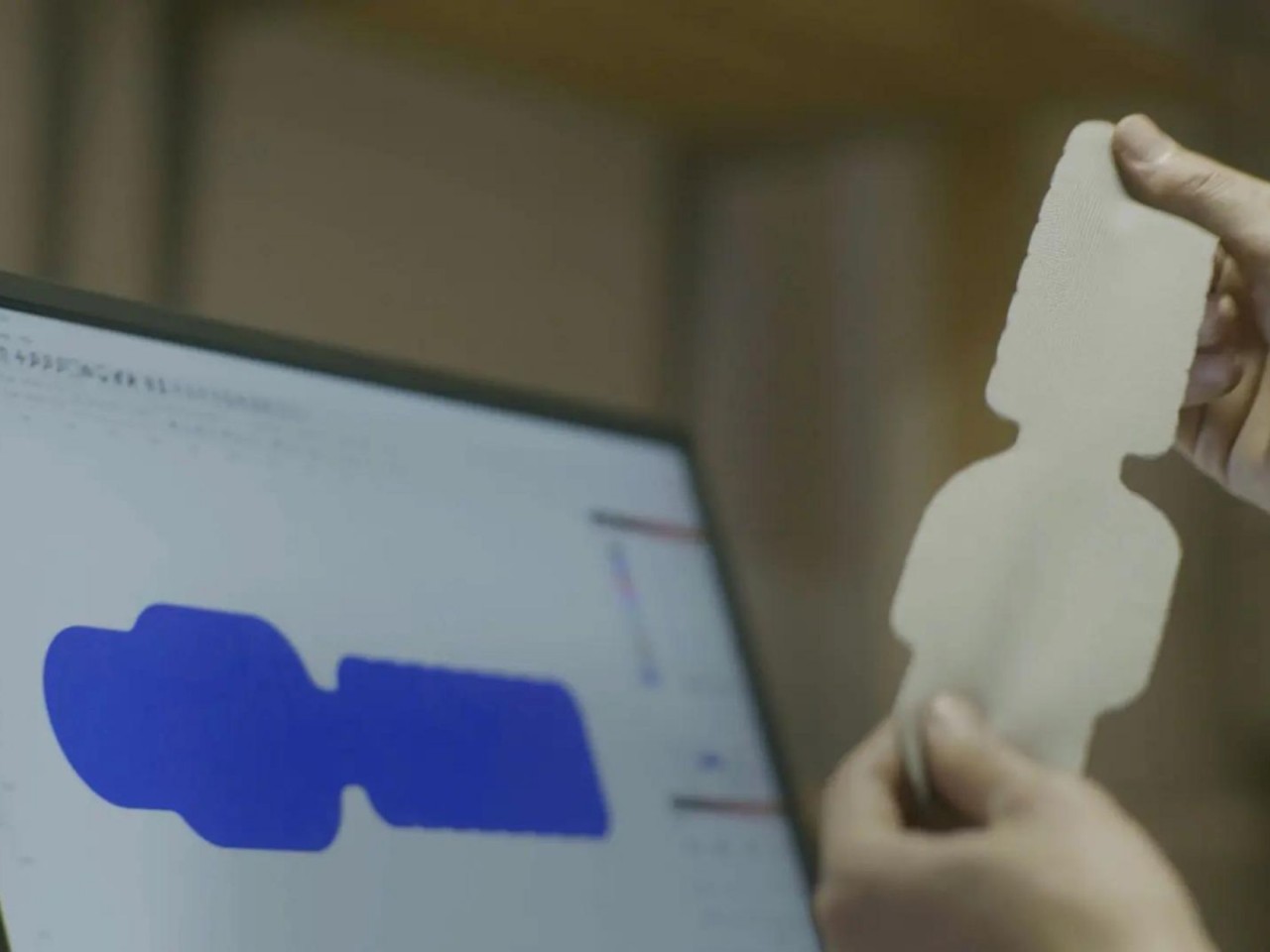
SELK technology is the flagship innovation from MotorSkins. It integrates soft robotics, fluid logic, and software/API into a cohesive and intelligent system. This sophisticated multilayered textile structure, known as programmable matter, has the ability to sense, react, and adapt to its surroundings. This makes SELK not just a piece of technology, but a dynamic and interactive material.
In today’s rapidly evolving tech landscape, ambient computing is emerging as a visionary concept for the future. It imagines a world where technology is seamlessly integrated into our environment, working effortlessly and becoming an inherent part of our daily lives. Complementing this vision is the field of programmable matter, which involves engineering materials to dynamically change their properties, such as shape or function, in response to user input or environmental changes.
MotorSkins’ SELK technology sits at the intersection of ambient computing and programmable matter. This technology transcends traditional interfaces, offering a tactile, responsive medium that not only coexists harmoniously with its environment but actively enhances it. By incorporating SELK’s smart textile actuators into everyday products, MotorSkins showcases a forward-thinking approach to material science. These actuators transform static objects into interactive, adaptable interfaces, allowing materials to respond intuitively to user inputs and environmental changes.
The company is applying SELK technology to create dynamic orthoses in the healthcare sector. These orthoses, made from SELK’s versatile material, combine simplicity in design with enhanced functionality and performance. This wearable interface adapts to the user’s movements, providing support and flexibility where needed.
In the automotive industry, SELK technology is set to revolutionize car interiors. Imagine a car cabin that adjusts to your needs, with buttons, comfort features, and haptic feedback appearing only when required. This leads to safer and more intuitive interactions between drivers and their vehicles.
MotorSkins is also exploring how SELK can improve human-machine interfaces, creating more ergonomic workspaces and interactive, responsive environments. By merging programmable matter with the principles of ambient computing, MotorSkins is not just developing advanced tech interfaces; they are fundamentally reshaping the way we interact with technology.
These efforts predict a future where technology seamlessly integrates into our daily lives, enhancing our experiences in natural and unobtrusive ways. Motorskins’ innovative work demonstrates how design and technology can synergistically improve human life, making our interactions with the world more intuitive and connected.