Laptop design concept has a creative way of hiding those ugly ports

Laptops are becoming powerful beasts that could almost match the computers sitting on top of our desks, but if there’s one thing they still can’t do is offer the same connectivity options as those towering boxes. You can only fit so many ports into a laptop without marring its slim profile, and some manufacturers have even started removing all but the small USB-C ports for the sake of aesthetics and weight. It’s a compromise imposed by current design restrictions, but it’s far from the ideal solution. If those restrictions are lifted, it might be possible to come up with a better design, like this concept for a laptop that still has a plethora of ports but can keep them out of sight when not in use.

Designer: Junichiro Yokota

A laptop’s purpose is primarily to offer computing power you can carry around with you and use anywhere, at least as long as it has some battery left. For most purposes, a laptop already has everything it needs to get the job done, but with the growing complexities of modern work, you will inevitably find yourself connecting some peripherals, such as an external storage drive at the very least. This is especially true for laptops that are used as “portable desktops” at work where you’d usually plug in a monitor, keyboard, mouse, and other accessories and then pull them all out when it’s time to leave.

Those connectivity ports give laptops their flexibility, but they also mar what would otherwise be a beautiful pristine design. You can minimize their effect with smaller USB-C ports, but you also make users’ lives complicated as Apple learned the hard way. A design that hides those ports while still making them available when needed is almost a pipe dream, at least if you only apply common conventions. This concept, however, thinks outside the box to come up with a solution that actually hits two birds with a single stone.

Commissioned by Fujitsu, this laptop concept employs a retracting mechanism to hide and then deploy ports inside a rectangular tube that sits underneath the laptop near its rear. It still has one USB-C port exposed for quick access, but all other connectors are still within easy reach once the inner bar slides out. That tube also functions as a riser to keep the keyboard at a more ergonomic angle.

The concept design uses a black and red motif to match Fujitsu’s official colors, but it’s not hard to imagine other designs being used as well. As interesting as the concept might be, it does also leave a few concerns unaddressed. The first would be the technical implementation of such a retractable design, especially when it comes to durability as well as the arrangement of electronics inside. More importantly, however, it also locks the laptop at a fixed angle determined by the riser tube, and unless it’s detachable, it also adds a somewhat unattractive protrusion to the laptop’s profile.

The post Laptop design concept has a creative way of hiding those ugly ports first appeared on Yanko Design.
Swiveling wooden stool is compact, multi-functional, and mildly uncomfortable

While all furniture needs to be stable, chairs and other seating furniture need to meet two requirements. They have to be stable enough to hold the weight of the person sitting on them, but they also have to be comfortable to encourage or even tempt those people to use them. Then again, there are some seats that seem to actually discourage lounging around, adopting a design that’s purely utilitarian and sufficient for a brief rest of a few minutes. However, there are chairs that were designed with comfort in mind but fall slightly short of that goal. This stool, for example, is undoubtedly quite useful, space-efficient, and probably even sustainable, but it might have slightly missed the mark in one of its core use cases.

Designer: Jeongchun Lee

The stool looks simple enough at first glance, with a tall box for a base and two plain boards forming the actual seat as well as a backrest. The latter element puts this design somewhere in between a typical stool and a chair, though the narrow area and absence of arms put it more in the category of a stool. Either way, it’s clearly designed for sitting, but it also does more than that.

The base of the stool has a rack for holding reading materials, either magazines or a few books. This small detail makes the design better suited for places where such an activity is conducive, such as a library, a lobby, or a common area in offices or schools. Of course, you can also place it around your home and it won’t even take up too much space because of its tall and narrow structure.

The Chair 025 design concept, however, has one trick up its sleeve. The seat can rotate 360 degrees, allowing you to actually face any direction you prefer without having to move the chair itself. That said, you might not be able to swing around so easily because your legs will hit the corners of the “stall” or base. Instead, you will just be swiveling back and forth, which could be the goal to induce a little blood circulation even while you’re sitting, although that still runs the risk of injuring your legs if you’re not careful.

The design’s low backrest can also be a point of contention, given it doesn’t exactly provide enough support and could even lead to injury or accidents if you forget that it doesn’t completely go all the way up. For a stool that seems to encourage sitting for long periods of time to read, the potential discomfort is a little counterintuitive. The economy of design and potential for using sustainable materials, however, do make the Chair 025 concept a candidate for cramped spaces and budget-constrained owners.

The post Swiveling wooden stool is compact, multi-functional, and mildly uncomfortable first appeared on Yanko Design.
Antiquated tools reinterpreted as delightful everyday products

Humanity has produced no small number of tools and objects over the course of history. Some have evolved to become the tools we use today, while others have almost faded into the background, remembered and illustrated only in history books. While these items of the past may no longer serve a practical purpose today, they could still serve as a stepping stone to inspire the designs of tomorrow. This collection of three everyday products, for example, takes a few pages from the form and even the function of these old objects, creating an atmosphere of wonder and curiosity, while also giving a few visual clues that connect us to our distant past.

Designers: Dami Seo, Dohui Kim, Dong Kyun Kim

1

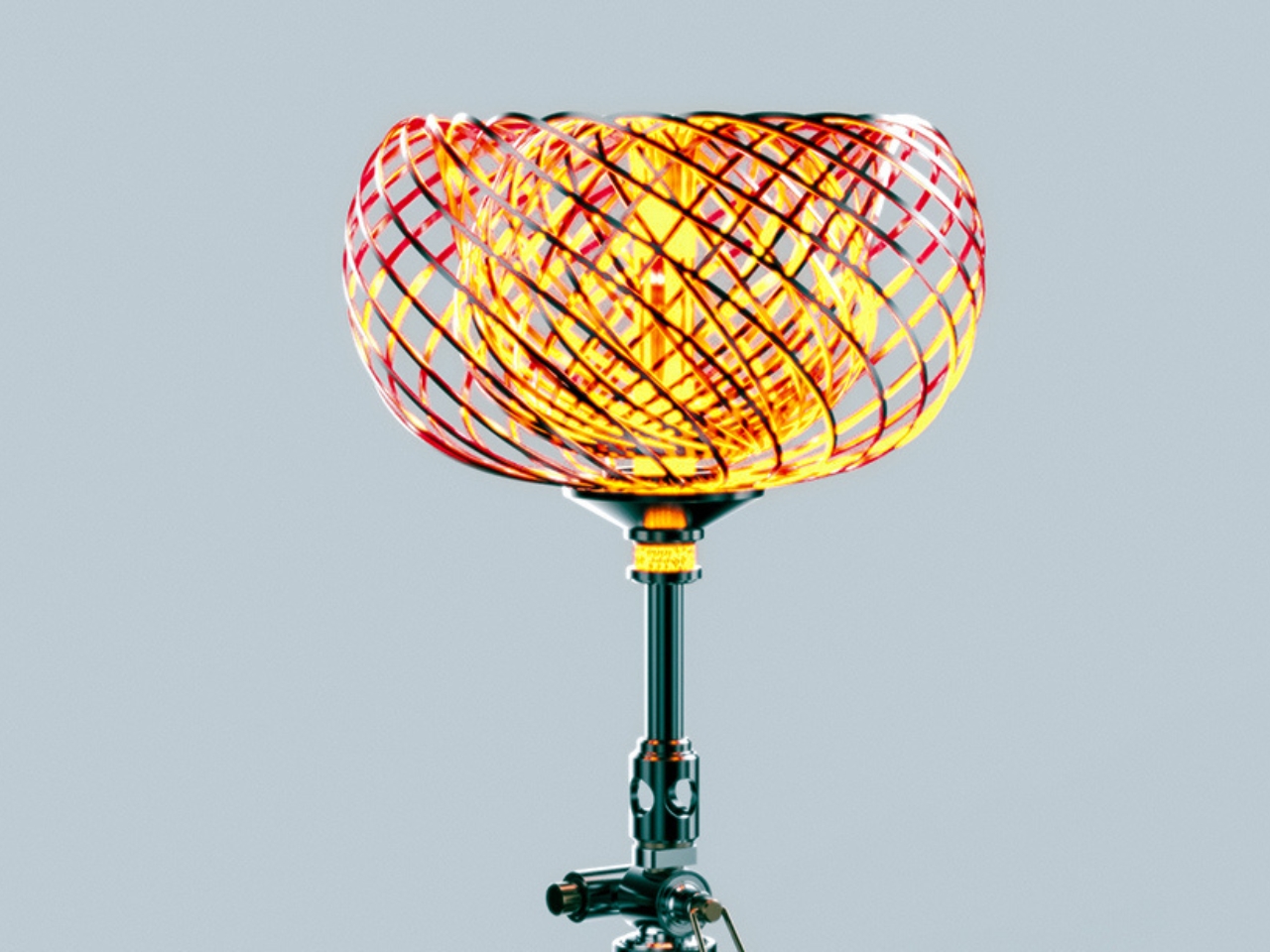
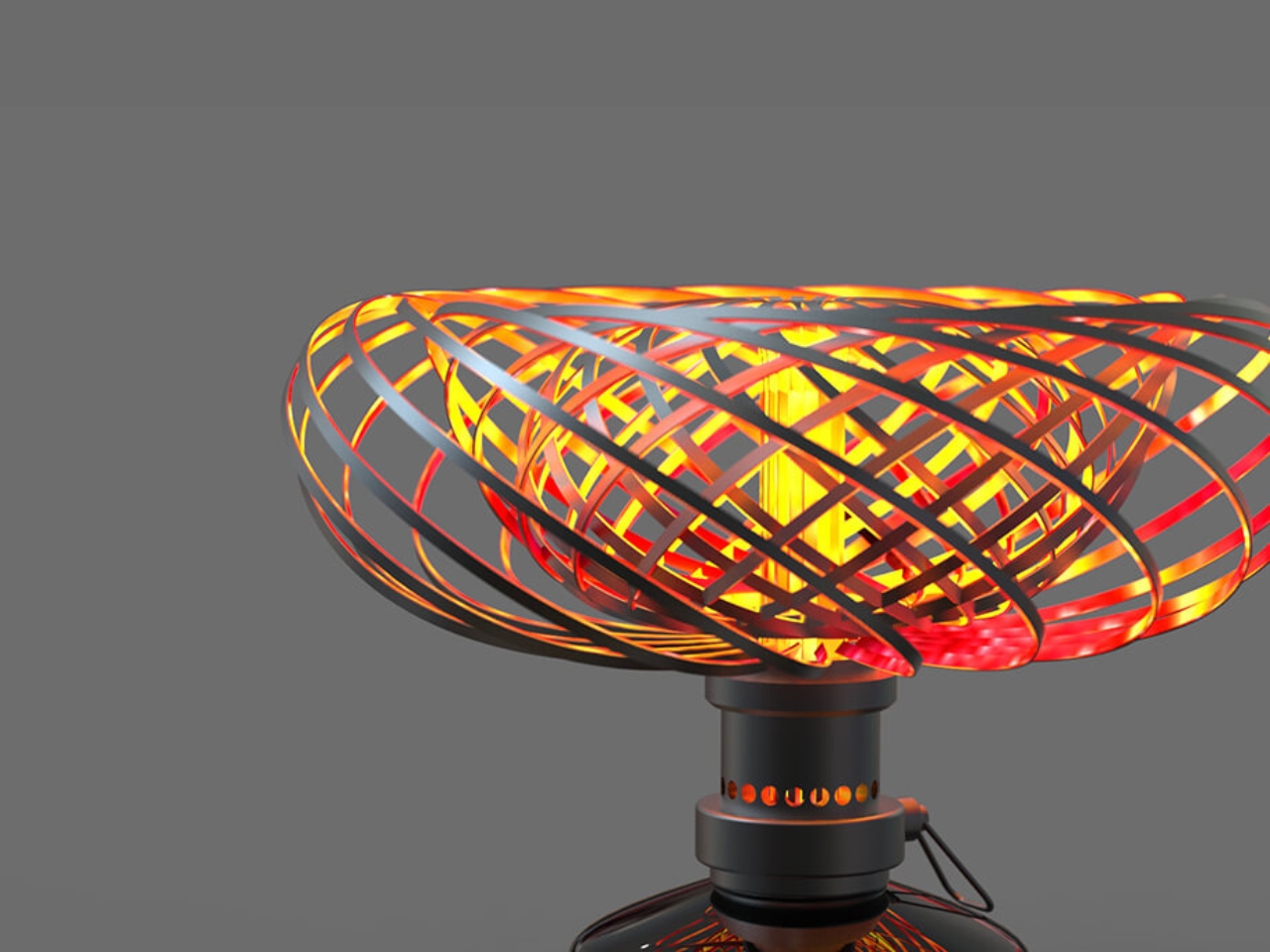
Fire-lit lamps may have once been the only way that people could see in the dark of night, but these are not only impractical today, they’re also fire hazards. That said, there’s a certain romantic charm to the shapes and curves of these kerosene lamps, an emotion that the DIDIM_Stand Light tries to replicate with modern technology. The tall floor lamp imitates the style of a lamp dangling from a metal bar, but here the lamp is a battery-powered LED lamp that you can remove and use independently of the rest of the structure. The lamp’s two-piece stand and the wavy cantilever are meant to resemble a person holding such a lantern in olden times.

1

A bucket-drawn well is almost an iconic image in many historical or fictional settings that depict periods before an industrial age, and this old contraption has come to symbolize not only life that comes from water but also the routines of life in those ages. Today, we use clocks to mark those routines, and the DIDIM_Alarm Clock combines these two concepts into a miniature well that will hopefully make you feel less annoyed when it wakes you up in the morning. Instead of a basket, the “well” has a bell that rises from within when it’s time to sound the alarm. It isn’t a real bell, however, and has a speaker inside to do the work. Amusingly, you have to hit the bell in order to silence it.

1

A little bit more obscure is the DIDIM_Tray, inspired by old grinding stones that people used to prepare grains and beans for cooking. Instead of grinding things, however, turning the “pestle” handle deploys the fan-shaped trays that have compartments for your phone, your pens, and your earbuds. When you’re done using it and don’t want the circular tray to take up space, simply turn the handle in the opposite direction to transform it into a decorative for your desk or table.

These might be mundane objects you can find in anyone’s home, but giving them a bit of a flavor not only enhances their appearance but also changes the atmosphere around them. And you don’t even have to think hard of designs that will capture your visitors’ attention. By simply looking at our past and appreciating the designs that have come before us, we can already bring a unique visual and tactile experience to these everyday products, while also helping us make a connection with the past.

The post Antiquated tools reinterpreted as delightful everyday products first appeared on Yanko Design.

Chess set concept commemorates Nakhchivan’s 100th anniversary

If you’re the type to collect special edition chess sets, you’re probably always on the lookout for those that have a pretty unique design. You also probably don’t really play these sets on a regular basis but you’re more likely to display it somewhere in your space or if you’re planning to open a chess museum or something. If you’re also into sets that seem to belong on a set of fantasy epics like Game of Thrones, then this is something you might want to look at if this becomes a reality.

Designer: Adam Yuniso and Hatam Yunisli

Nakhchivan may not be a household name when it comes to places that you’d like to visit someday but based on what I’ve “researched” (read: Googled) so far, it is a place worth considering. The official name is Nakchivan Autonomous Republic, and is a “landlocked enclave” of the Republic of Azerbaijan bordered by Armenia, Iran, and Turkey. To celebrate its 100th anniversary, a souvenir project was proposed and it’s a stunning looking chess set (that also seems expensive).

Instead of the usual chess pieces, each one is designed to represent various Nakhchivan architecture like the Garabaghlar Mausoleum, Nakhchivan Memorial Museum, and several other mausoleums that hold significance to the republic. They look like they would look right at home at a classic castle that displays awesome-looking chess sets. Instead of being positioned in the traditional way that the pieces are placed, the designers said that they are placed in relation to the other chess pieces.

Now I don’t know if that means the rules are quite different ofr this Nakhchivan Chess Set but it does look pretty impressive based on the product renders. It may also not be something you’d play on a regular basis but a chess set that can be displayed especially if you have a strong connection to Nakhchivan.

The post Chess set concept commemorates Nakhchivan’s 100th anniversary first appeared on Yanko Design.
Terrazzo side table concept seems to tempt fate and defy the laws of physics

Tables come in all shapes and sizes, but regardless of the design, they all need to have a single critical trait: they have to be stable. No matter how breathtaking a table might be, it is nothing but a piece of art if it comes crashing down under the lightest of weights. Stability can be achieved through many means, but for something like a coffee table or even a side table, that mostly means having a flat surface that doesn’t wobble or, more importantly, doesn’t tip over. That’s the behavior that people have come to expect from even the most beautiful table, which is why this side table concept is striking both for its elegant looks as well as its rather worrying composition that precariously balances the tabletop on a curved surface, or at least it would seem like it.

Designer: Stuart Cole

Objects that boggle the mind and seem to defy the laws of physics have always been a fascination for us, which is probably why balancing toys or levitating speakers have always been popular products. That, however, doesn’t apply to furniture, especially ones that we expect to be stable or fixed. Seeing a table that’s about to topple over is enough to give some people a heart attack, but fortunately, that’s not the case for the aptly named “Balance” side table design concept.

The table’s form is actually pretty simple, utilizing basic geometrical shapes like a disc and cups. It’s the tension between these shapes, however, that gives Balance its dynamic and rather unstable appearance. It’s almost as if the circular tabletop would topple and fall off the upside-down bowl shape of its base, or that the cup would similarly fall over the edge and break. Of course, it’s all just an illusion because all three parts are joined using interlocking mechanisms that prevent them from falling apart, at least not without much effort.

Balance’s appeal doesn’t stop at its eye-catching shape. Its unique appearance is due not only to the use of terrazzo but also from employing recycled materials. This gives the side table not only a distinctive visual character but also a sustainable narrative that will surely be a topic of conversation for envious visitors. You might even be tempted to use it as a coffee or center table, rather than just leaving it off to the side, though that temptation might also be tempered by unfounded worries that the table will eventually become unbalanced and send your cups and books crashing down.

The post Terrazzo side table concept seems to tempt fate and defy the laws of physics first appeared on Yanko Design.
Tactile lamp and timer concept fosters focus and mindfulness in work-from-home arrangements

Although travel and work restrictions have mostly been lifted already, the office world is really no longer the same. It has now been proven that the work your bosses claim can only be done in the office can actually be done at home or even in a coffee shop, and so more flexible remote working conditions have started to take root in many companies. At the same time, however, the pandemic also proved that working from home is far from being the idyllic scenario that many people dreamed of in the past. Maintaining focus and motivation isn’t exactly easy to achieve, but this curious desk lamp helps develop that sense of balance between work and personal life using a very visual and tactile experience.

Designers: Pinar Aydogdu, Naren Yildirim, Nurbanu Kocak

One of the oldest productivity tricks in the book involves focusing on a single task for a certain amount of time and then taking a brief break before repeating the cycle all over again. Ironic as might sound, this technique, most popular by its “Pomodoro technique” moniker, actually helps you focus during those moments you are working. It also elevates rest to its proper place in our hectic lives, presenting it not as wasted time but as an important factor in boosting productivity.

You’d probably never think that a decorative desk lamp would be the tool to encourage that productivity practice, but the Fall concept design is exactly that. At its most basic, it is composed of a conical lamp standing on a circular base that has a rippling surface, almost like the ripples in a pond. The soft diffused light that the lamp gives isn’t going to be enough to illuminate your work, but that’s not the purpose of the lamp anyway. It works in conjunction with eight balls that magnetically attach to the top of the cone, turning this productivity practice into something like a game.

Each ball represents one hour of working time, so their total makes up an entire day’s work. At the start of your work day, you stick those balls at the top, and after an hour has passed, one ball falls down on the base. Because of the undulating surface of the base, the balls won’t roll off, but you can remove each ball as you please. In fact, you remove the ball from the base to signify that you’re taking a break and you put the ball back on the base when you’re back. If you don’t bring back the ball within a set amount of time, usually ten minutes, the lamp’s light will turn red to nudge you back to your work.

Fall is an interesting idea that encourages physical involvement in juggling those work hours, making sure you’re more mindful of your time instead of simply glancing at a clock or swiping an alarm away. The lamp itself gives a rather distinctive aesthetic, one that encourages play and interactivity instead of just looking pretty. Admittedly, it’s just a concept and one that will be rather complicated to implement in a real functioning device.

The post Tactile lamp and timer concept fosters focus and mindfulness in work-from-home arrangements first appeared on Yanko Design.
Ergonomic mouse concept gives left-handed users the comfort they deserve

The vast majority of computer products are designed to favor the biggest groups of users, sometimes to the exclusion of the minority. We’re not speaking about accessibility for persons with physical disabilities, but that is especially true for them as well. Even just the common keyboard and mouse are designed with the presumption that they will be used by right-handed people. And while ambidextrous mice do exist, those tend to sacrifice comfort for the sake of a symmetrical design. That doesn’t have to be the case, as this concept design tries to prove, promising both comfort as well as proficiency, regardless of which hand you hold it with.

Designer: Sameeraj Dronamraju

There has been an increasing awareness and demand for ergonomic mice, sadly due to the equally rising cases of computer-related injuries. But while there are plenty of ergonomic designs now available, most of them only cater to right-handed users. You’d be lucky if the manufacturer produced a left-handed design, but most don’t because of the costs involved in another product with only a few minor differences.

The proper solution would be to mix ergonomics and symmetry to create a mouse that is comfortable to hold for both kinds of people. Vertrous, a portmanteau of “vertical” and “ambidextrous,” takes its cue primarily from the plethora of ergonomic mice now in existence, most of which adopt a vertical design that attempts to reduce the strain placed on the wrist by offering a more natural grip. But rather than have your hand holding it sideways, you almost grip it like a claw, with your index and middle fingers still resting on top.

At the same time, the mouse’s shape is more or less equally balanced on both sides. Great care is taken to ensure that textured areas are found on both sides, so no one hand has the advantage over the other. That said, there are some features that can really be found in only one place, like the power button, but that’s really a minor detail that has no significant impact on the use of the mouse itself.

While Vertrous does present an interesting solution, there are still some considerations left unanswered by the design. For example, gripping the mouse like a claw could actually end up being more uncomfortable and strenuous than a regular mouse. The symmetrical design also leaves out features like extra buttons that would normally be found only on one side, an absence that many power users will feel acutely. These aren’t flaws per se but more like points for further improvement, paving the road for the day that we finally land on a standard ergonomic mouse design that will really leave no one out, whichever hand they prefer to use.

The post Ergonomic mouse concept gives left-handed users the comfort they deserve first appeared on Yanko Design.
Zen-inspired aesthetic coffee maker concept may give you a peaceful morning

One of the best ways to start the day is by enjoying a cup of coffee when you wake up while things haven’t started becoming busy yet. But a lot of times, I wake up late and hurriedly go through my morning routine and sometimes I’m not even able to grab that crucial cup of caffeinated goodness. What if the things that you use for your morning (or evening) coffee routine is something that can bring you an added source of peace and tranquility so your day can actually start (or end) right?

Designer: Suckhand Saren

This is the exact idea behind the concept for a set of coffee makers aptly called Zenbrew. The goal is to achieve a zen-like mood while you’re brewing your coffee and while you’re sipping your cup in peace. Using a combination of minimalist design, elegant aesthetics, and of course much needed functionality. The designer wanted to elevate what is simply the act of brewing coffee into a “sensory experience” but keeping it simple, elegant, and peaceful. The main design inspiration is the hourglass which is not always a symbol of zen but when combined with the minimalist aesthetic, it actually fits the concept.

There seems to be two kinds of coffee makers in the concept. The first one is closer to the usual coffee maker that we see in the market with the carafe with the handle but with a glass dome at the top where the brewing magic happens. The other design seems to be a combination of a pour over device and a bunsen burner. The carafe is a bit smaller and with a straight handle rather than a curved one. Both designs also have a futuristic, space-like feel which may also contribute to the other worldly zen you may experience while brewing and drinking your coffee.

While having coffee makers as aesthetic as this will not guarantee I’ll have a peaceful morning, it might actually help me get up earlier. Having a nice coffee maker, along with delicious coffee beans and other ingredients, are sometimes enough incentive for me to try and have an unhurried morning routine. Wake me up when this concept actually gets made into coffee machines.

The post Zen-inspired aesthetic coffee maker concept may give you a peaceful morning first appeared on Yanko Design.
Smart piggy bank concept brings the Bitcoin feeling to physical coins

Cryptocurrencies like Bitcoin and its cousins were supposed to revolutionize the way the world sees and uses money, but it will take more than just a few revolutionary ideas to change a system that has been in place for centuries, even millennia. That said, the craze did reveal a few advantageous features, particularly the handling of money through digital wallets. Of course, the latter only makes sense for the money you’ve already “digitized” through banks, digital or otherwise, not so much for the money you still have at hand. That’s especially true for coins that are often chucked into containers, presuming they don’t get lost, and are almost forgotten. This concept design for a “smart piggy bank”, however, gives importance to every dime and penny, allowing you to really see where your money is going, even if still exists in physical form.

Designer: Guilherme Ferreira, Pietro Vitelo, Gustavo Billo (Breathe Design & Strategy)

Digital wallets that let you monitor the flow of your money have been around for a long time now, but it wasn’t until the cryptocurrency craze became mainstream that people started to realize the benefits that such a system has to offer. In particular, it gave people more direct control over the money they have in their accounts, especially when it comes to monitoring how much goes in and out of their savings. Real physical coins, however, aren’t as easy to handle and they often get dropped anywhere and lost, money that could have added up to big savings over time.

1

Smart Piggy is a concept that upgrades the iconic pink piggy bank into something fit for the 21st century. In a nutshell, sensors on the slot at the top of the pig-shaped device detect when a coin is inserted and pass this information to a connected smartphone. The mobile app, which is actually the center of the whole experience, is where users get to monitor the comings and goings of their savings, particularly those from the Smart Piggy. It’s a simple feature that has a significant impact on user behavior, encouraging people to actually pay attention to where those coins go.

The concept does leave a few details open to interpretation, like how the system will be able to identify different coin denominations. It also doesn’t mention anything about taking out coins from the piggy bank, so presumably, the coin detection and monitoring is a one-way street. Still, it touches on the possibility of an implementation that can take into account both cash flows, so to speak, giving people not only the tools they need to keep track of those coins but also the motivation to actually pay attention to where they go.

The post Smart piggy bank concept brings the Bitcoin feeling to physical coins first appeared on Yanko Design.
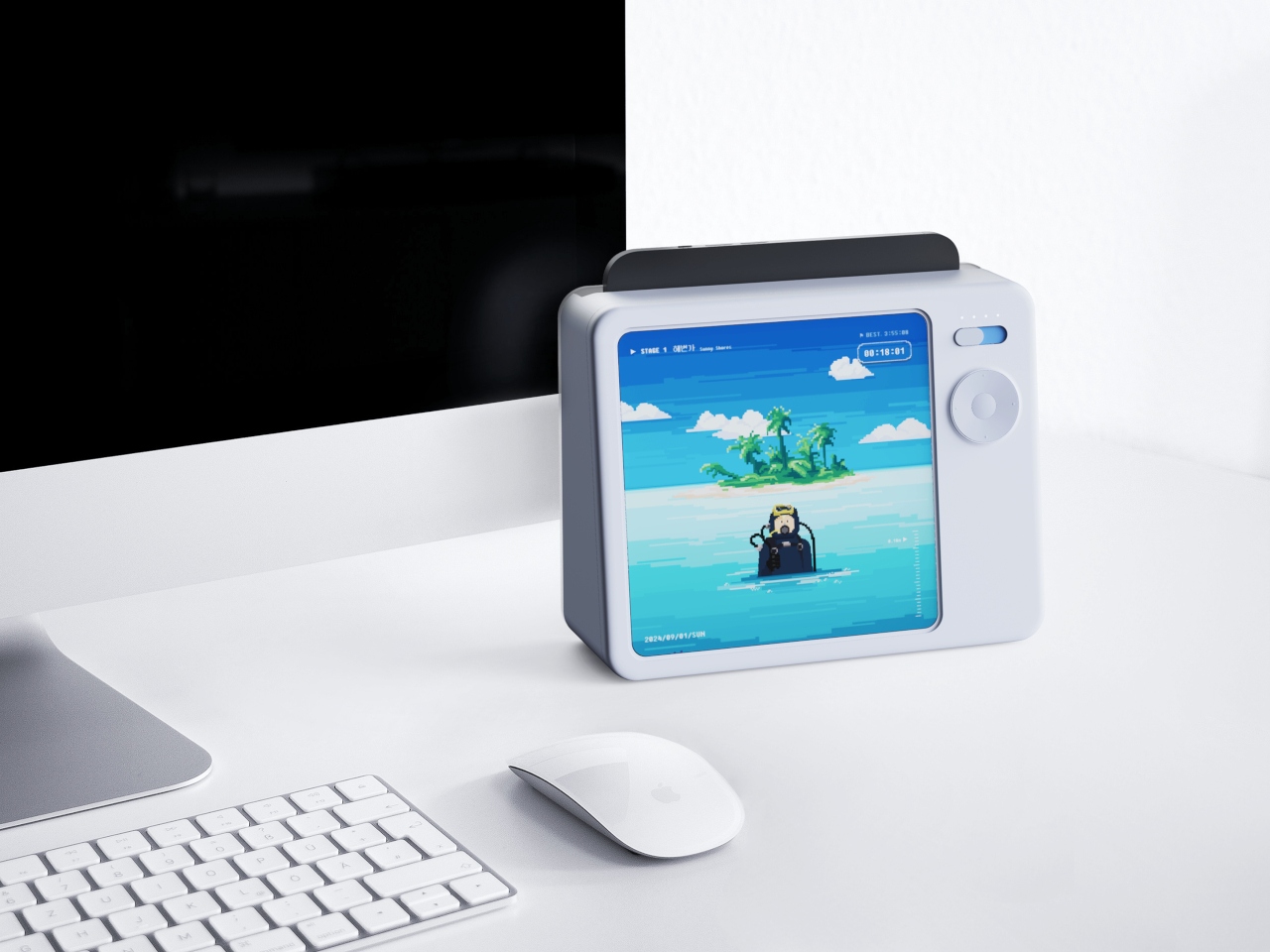
Apple-inspired alarm clock concept helps you snooze a bit longer

People buy and use alarm clocks to wake them up at the right time, but let’s face it, almost everyone ends up extending their sleep by five or ten more minutes or at least want to. With the advent of smartphones, that has become even easier with the built-in snooze functionality in apps. But just as reaching for your phone before bedtime can be bad for your health, doing the same when you just want to snooze your alarm could also end up keeping you from going back to sleep instantly. What you probably need is an alarm clock whose only purpose, ironically, is to get you to sleep longer, which is what this device concept offers in addition to looking like one of Apple’s stylishly minimalist products.

Designer: Antoine Brieux

Useful as they are, our smartphones are notorious for also being sources of distractions. At night, those incessant notifications and the screen’s blue light keep us awake, but our phones also prevent us from snoozing properly again in the morning. Few of us dare to slide the screen blindly for fear of pushing the phone over the edge and breaking it, so we’re forced to open our eyes, get blinded by the screen, and be tempted by the number of unread notifications. There goes your plan to continue that sweet dream!

You know those shows or cartoons where people simply push or smash a button on their bedside clock to silence their alarms, all without even looking at the thing? Well, that’s what this alarm clock concept design also lets you do, except it doesn’t stop the alarm from sounding. The big, though flat, button on top of the small box has one and only one purpose: to snooze the alarm and let you extend your sleep, all without pulling you out of your slumbering state completely. No fumbling over which button to push. You can even hit it with your eyes closed, which is the point entirely.

With such an extremely focused purpose, the design of the device can’t be any more complex than it needs to be. It’s a perfect opportunity to apply some of Apple’s famous minimalist design language, leaving a small cube that’s bereft of any unnecessary feature other than a small LCD screen on the front, a USB-C charging port on the back, and Apple’s iconic logo on top. That said, the design is also so simple that it can actually be easily used by other brands, for example, a LEGO-inspired yellow block.

The alarm clock does have another hidden functionality. It can charge your iPhone, but only if you place it on the iPhone’s back. It makes for an awkward position where the iPhone has to lie face down on a flat surface, which risks scratching its screen. Of course, the bigger question is whether there’s a real need for such a device that does only one thing, especially if that one thing encourages and even rewards sleeping in when you really should be getting up.
The post Apple-inspired alarm clock concept helps you snooze a bit longer first appeared on Yanko Design.