Tekto F2 Bravo EDC Folding Knife Review: Sharp, Stylish, Satisfying

PROS:


  • Handsome design exudes both style and strength

  • Black D2 steel blade is gorgeous and sharp

  • Ceramic ball bearings deliver smooth and satisfying deployment

CONS:


  • Pocket clip can't be moved for ambidextrous use

  • Straight handle might feel too slim for a solid grip

RATINGS:

AESTHETICS
ERGONOMICS
PERFORMANCE
SUSTAINABILITY / REPAIRABILITY
VALUE FOR MONEY

EDITOR'S QUOTE:

With its handsome looks, a sharp blade, and a satisfying deployment mechanism, the Tekto F2 Bravo easily carves a place for itself in any EDC.

The EDC or Everyday Carry trend has been around for quite a while and there’s no sign of it slowing down anytime soon. Just like with paper notebooks and organizers, each collection of items and tools uniquely reflects the characters that own them. Some have simple packs filled with analog writing tools while others go fully digital with the latest gadgets and accessories. Still, some have an EDC that’s ready to face any task or problem, which sometimes involves cutting or slicing things. There might be a few who are hesitant to add a knife to their kit because most of the designs that can fit in an EDC often look like they’re geared for battle. Tekto has been making a few “tactical” knives designed to cater to this market, so we give the Forged Carbon version of its F2 Bravo folding knife a few flips to see if it makes the cut.

Designer: Tekto

Click Here to Buy Now: $127.50 $149.99 (15% off with coupon code “YANKO”). Hurry, deal ends in 48-hours! Fedex 2 day shipping to all USA orders for free.

Aesthetics

Calling the Tekto F2 Bravo a tactical knife might be a little bit confusing, though depending on the exact variant you’re going for, it does fit the bill in terms of looks. The Forged Carbon with Blue Accents that we have for this review does have that camo-like appearance to the handle, but that’s pretty much the extent of the association with tactical gear. Because at the end of the day, the F2 Bravo is a handsome tool that carries both finesse as well as strength in its appearance alone.

Unlike what you might think of tactical knives or folding pocket knives in general, the Tekto F2 Bravo uses straight, clean lines to portray an image of sharpness and simplicity. The handle itself has a simple and straight structure that avoids excessive curves and embellishments that only get in the way of the knife’s utility. Titanium accents used for the custom pivot, machined clip, and milled spacer add a premium quality to the knife, again an unexpected trait for something labeled as a tactical tool.

Even the blade, made from durable D2 steel, is a cut above the rest, pun intended. While most EDC knives prefer to show off their flashy blades with shiny silver, the F2 Bravo prefers a dark, black titanium coating. It gives the knife a distinctive appearance that is cold yet also precise, perfectly complementing whatever color the handle has. While it does catch your attention, it doesn’t distract you from the task at hand without a shiny surface to reflect light or the surface of what you’re cutting through.

With its slim profile, simple geometrical shape, and handsome looks, the Tekto F2 Bravo definitely stands above other EDC knives. It’s neither flashy nor flimsy, perfectly balancing aesthetics and a solid feel that we’ll get to in a bit.

Ergonomics

Just like its comparatively small size, the F2 Bravo is also surprisingly lightweight at only 2.04oz (68g). That’s not an insignificant number, considering this knife will take up space in small EDC bags or even pockets. For the latter, there’s a deep-carry titanium clip that makes it easy to secure in pants or shirts. That clip, unfortunately, is also one of the very few flaws in this knife’s design. You can’t remove the clip to switch it to the other side, unlike Tekto’s other ambidextrous clips. It’s not a deal-breaker definitely, but it’s something that buyers might want to consider when it comes to their comfort.

Despite its lightweight body, the knife still feels solid in your hand, especially when you deploy and close the blade. The one thing you might want to take note of is the size and shape of the handle. Unlike some of those more rugged knives, the F2 Bravo’s body doesn’t have specialized nooks and crannies to rest your fingers, except for the front guard for your index finger and jimping for the thumb. Some larger hands might even find the handle too small for a secure hold, and they might find themselves gripping it more forcefully and experiencing strain over time.

In most cases, however, the Tekto F2 Bravo offers a design that gives you confidence every time you grip the handle and deploy the blade. Exactly what you need for a sharp, cutting tool

Performance

The F2 Bravo’s fine edge drop point blade is quite a beast. It easily cuts through paper, cardboard, fabric, ropes, and other materials you might meet in your day-to-day travels. Given its size and purpose, it’s not fit for heavy-duty work, especially if you need some tooth to saw through harder materials. Then again, it’s an EDC knife more than an actual outdoor “tactical” blade, an aspect that might cause some confusion due to the name chosen by Tekto’s marketing.

Ceramic Ball Bearings – Enables quick and smooth blade deployment.

A sharp blade, however, is pointless if you can’t get it out of its hiding place fast enough and with little difficulty, and this is where the F2 Bravo really shines the brightest. It uses a ceramic ball bearing mechanism to rapidly and smoothly deploy the blade, and it definitely works as advertised. The action is smooth and the trigger is easy, giving you a satisfying feeling each and every time you make the blade spring into action. It might sound like a simple thing, but you shouldn’t underestimate the feeling of fulfillment from using a tool that not only works well but also gives you joy.

In addition to its rapid deployment, the F2 Bravo also delivers much-needed safety so that you can confidently slip it in your EDC bag or even your pocket. The discreet liner lock gives all the assurance you need that the sharp blade won’t just accidentally deploy or fold at the slightest pressure. At the same time, the strategically placed jimping makes it just as stable to close the blade when you’re done with your task. More than just its handsome looks, every part of the Tekto F2 Bravo is designed to provide maximum comfort without sacrificing its cutting performance.

Sustainability

For a tool that will most likely be used for rough purposes, it’s only reasonable to expect the Tekto F2 Bravo to be made to last. It uses plenty of durable materials, primarily Forged Carbon and D2 steel, that provide longevity while also making the folding knife lightweight and comfortable to hold. And thanks to its premium design, it uses very little plastic materials, making the knife inherently sustainable.

Sooner or later, however, the knife will meet some mishap that can’t be solved simply by sharpening the blade. Unfortunately, the F2 Bravo isn’t made to be easily repairable, at least not by untrained hands. The good news is that for most damages, Tekto accepts repairs or refurbishing, though you’ll have to ship the knife back to them. That said, you can replace lost screws on your own, but you’ll have to contact Tekto to get official replacement parts. Given that Tekto has a very responsive in-house customer service center, which responds within hours and usually ships parts on the same day, getting a replacement part should be a relatively quick and painless process.

Value

There are many pocket knives presenting themselves as EDC-friendly, but most of them fall under two categories. There are larger knives that are clearly made for outdoor use, and there are smaller knives that feel like they’ll break even before you finish cutting. The Tekto F2 Bravo proudly stands somewhere in the middle, with a tactical guise that speaks to its durability and performance, all while keeping a stylish and elegant design. It’s almost the perfect EDC knife, but there are a few things you’ll want to consider before committing to buying one.

The first is that it’s not a “one size fits all” affair and larger hands might find the knife a bit uncomfortable to hold for long periods of time. It’s also not the most affordable option of its kind, give or take around $140, depending on sales or discounts. That said, you do get a quality product that looks handsome in any EDC toolbox, so if you’re the type that needs to cut or slice a lot, the Tekto F2 Bravo definitely pays for itself in the long run.

Verdict

Something billed as a “tactical” knife is probably something you’d never consider for your EDC collection. It conjures up images of rugged or militaristic tools, probably more than you’ll ever want or need for everyday use. Fortunately, that’s really just a marketing strategy, because the Tekto F2 Bravo is anything but bulky and menacing.

It has a simple yet elegant design that belies the power it hides within, literally. Its lightweight yet durable Forged Carbon body makes it a pleasure to hold, while the black titanium-coated D2 steel blade looks as cool and sharp as it really is. Ceramic ball bearings make deployment swift and smooth, while the liner lock provides the confidence you need in every cut. With its handsome looks, a sharp blade, and a satisfying deployment mechanism, the Tekto F2 Bravo easily carves a place for itself in any EDC.

Click Here to Buy Now: $127.50 $149.99 (15% off with coupon code “YANKO”). Hurry, deal ends in 48-hours! Fedex 2 day shipping to all USA orders for free.

The post Tekto F2 Bravo EDC Folding Knife Review: Sharp, Stylish, Satisfying first appeared on Yanko Design.
Tekto F2 Bravo EDC Folding Knife Review: Sharp, Stylish, Satisfying

PROS:


  • Handsome design exudes both style and strength

  • Black D2 steel blade is gorgeous and sharp

  • Ceramic ball bearings deliver smooth and satisfying deployment

CONS:


  • Pocket clip can't be moved for ambidextrous use

  • Straight handle might feel too slim for a solid grip

RATINGS:

AESTHETICS
ERGONOMICS
PERFORMANCE
SUSTAINABILITY / REPAIRABILITY
VALUE FOR MONEY

EDITOR'S QUOTE:

With its handsome looks, a sharp blade, and a satisfying deployment mechanism, the Tekto F2 Bravo easily carves a place for itself in any EDC.

The EDC or Everyday Carry trend has been around for quite a while and there’s no sign of it slowing down anytime soon. Just like with paper notebooks and organizers, each collection of items and tools uniquely reflects the characters that own them. Some have simple packs filled with analog writing tools while others go fully digital with the latest gadgets and accessories. Still, some have an EDC that’s ready to face any task or problem, which sometimes involves cutting or slicing things. There might be a few who are hesitant to add a knife to their kit because most of the designs that can fit in an EDC often look like they’re geared for battle. Tekto has been making a few “tactical” knives designed to cater to this market, so we give the Forged Carbon version of its F2 Bravo folding knife a few flips to see if it makes the cut.

Designer: Tekto

Click Here to Buy Now: $127.50 $149.99 (15% off with coupon code “YANKO”). Hurry, deal ends in 48-hours! Fedex 2 day shipping to all USA orders for free.

Aesthetics

Calling the Tekto F2 Bravo a tactical knife might be a little bit confusing, though depending on the exact variant you’re going for, it does fit the bill in terms of looks. The Forged Carbon with Blue Accents that we have for this review does have that camo-like appearance to the handle, but that’s pretty much the extent of the association with tactical gear. Because at the end of the day, the F2 Bravo is a handsome tool that carries both finesse as well as strength in its appearance alone.

Unlike what you might think of tactical knives or folding pocket knives in general, the Tekto F2 Bravo uses straight, clean lines to portray an image of sharpness and simplicity. The handle itself has a simple and straight structure that avoids excessive curves and embellishments that only get in the way of the knife’s utility. Titanium accents used for the custom pivot, machined clip, and milled spacer add a premium quality to the knife, again an unexpected trait for something labeled as a tactical tool.

Even the blade, made from durable D2 steel, is a cut above the rest, pun intended. While most EDC knives prefer to show off their flashy blades with shiny silver, the F2 Bravo prefers a dark, black titanium coating. It gives the knife a distinctive appearance that is cold yet also precise, perfectly complementing whatever color the handle has. While it does catch your attention, it doesn’t distract you from the task at hand without a shiny surface to reflect light or the surface of what you’re cutting through.

With its slim profile, simple geometrical shape, and handsome looks, the Tekto F2 Bravo definitely stands above other EDC knives. It’s neither flashy nor flimsy, perfectly balancing aesthetics and a solid feel that we’ll get to in a bit.

Ergonomics

Just like its comparatively small size, the F2 Bravo is also surprisingly lightweight at only 2.04oz (68g). That’s not an insignificant number, considering this knife will take up space in small EDC bags or even pockets. For the latter, there’s a deep-carry titanium clip that makes it easy to secure in pants or shirts. That clip, unfortunately, is also one of the very few flaws in this knife’s design. You can’t remove the clip to switch it to the other side, unlike Tekto’s other ambidextrous clips. It’s not a deal-breaker definitely, but it’s something that buyers might want to consider when it comes to their comfort.

Despite its lightweight body, the knife still feels solid in your hand, especially when you deploy and close the blade. The one thing you might want to take note of is the size and shape of the handle. Unlike some of those more rugged knives, the F2 Bravo’s body doesn’t have specialized nooks and crannies to rest your fingers, except for the front guard for your index finger and jimping for the thumb. Some larger hands might even find the handle too small for a secure hold, and they might find themselves gripping it more forcefully and experiencing strain over time.

In most cases, however, the Tekto F2 Bravo offers a design that gives you confidence every time you grip the handle and deploy the blade. Exactly what you need for a sharp, cutting tool

Performance

The F2 Bravo’s fine edge drop point blade is quite a beast. It easily cuts through paper, cardboard, fabric, ropes, and other materials you might meet in your day-to-day travels. Given its size and purpose, it’s not fit for heavy-duty work, especially if you need some tooth to saw through harder materials. Then again, it’s an EDC knife more than an actual outdoor “tactical” blade, an aspect that might cause some confusion due to the name chosen by Tekto’s marketing.

Ceramic Ball Bearings – Enables quick and smooth blade deployment.

A sharp blade, however, is pointless if you can’t get it out of its hiding place fast enough and with little difficulty, and this is where the F2 Bravo really shines the brightest. It uses a ceramic ball bearing mechanism to rapidly and smoothly deploy the blade, and it definitely works as advertised. The action is smooth and the trigger is easy, giving you a satisfying feeling each and every time you make the blade spring into action. It might sound like a simple thing, but you shouldn’t underestimate the feeling of fulfillment from using a tool that not only works well but also gives you joy.

In addition to its rapid deployment, the F2 Bravo also delivers much-needed safety so that you can confidently slip it in your EDC bag or even your pocket. The discreet liner lock gives all the assurance you need that the sharp blade won’t just accidentally deploy or fold at the slightest pressure. At the same time, the strategically placed jimping makes it just as stable to close the blade when you’re done with your task. More than just its handsome looks, every part of the Tekto F2 Bravo is designed to provide maximum comfort without sacrificing its cutting performance.

Sustainability

For a tool that will most likely be used for rough purposes, it’s only reasonable to expect the Tekto F2 Bravo to be made to last. It uses plenty of durable materials, primarily Forged Carbon and D2 steel, that provide longevity while also making the folding knife lightweight and comfortable to hold. And thanks to its premium design, it uses very little plastic materials, making the knife inherently sustainable.

Sooner or later, however, the knife will meet some mishap that can’t be solved simply by sharpening the blade. Unfortunately, the F2 Bravo isn’t made to be easily repairable, at least not by untrained hands. The good news is that for most damages, Tekto accepts repairs or refurbishing, though you’ll have to ship the knife back to them. That said, you can replace lost screws on your own, but you’ll have to contact Tekto to get official replacement parts. Given that Tekto has a very responsive in-house customer service center, which responds within hours and usually ships parts on the same day, getting a replacement part should be a relatively quick and painless process.

Value

There are many pocket knives presenting themselves as EDC-friendly, but most of them fall under two categories. There are larger knives that are clearly made for outdoor use, and there are smaller knives that feel like they’ll break even before you finish cutting. The Tekto F2 Bravo proudly stands somewhere in the middle, with a tactical guise that speaks to its durability and performance, all while keeping a stylish and elegant design. It’s almost the perfect EDC knife, but there are a few things you’ll want to consider before committing to buying one.

The first is that it’s not a “one size fits all” affair and larger hands might find the knife a bit uncomfortable to hold for long periods of time. It’s also not the most affordable option of its kind, give or take around $140, depending on sales or discounts. That said, you do get a quality product that looks handsome in any EDC toolbox, so if you’re the type that needs to cut or slice a lot, the Tekto F2 Bravo definitely pays for itself in the long run.

Verdict

Something billed as a “tactical” knife is probably something you’d never consider for your EDC collection. It conjures up images of rugged or militaristic tools, probably more than you’ll ever want or need for everyday use. Fortunately, that’s really just a marketing strategy, because the Tekto F2 Bravo is anything but bulky and menacing.

It has a simple yet elegant design that belies the power it hides within, literally. Its lightweight yet durable Forged Carbon body makes it a pleasure to hold, while the black titanium-coated D2 steel blade looks as cool and sharp as it really is. Ceramic ball bearings make deployment swift and smooth, while the liner lock provides the confidence you need in every cut. With its handsome looks, a sharp blade, and a satisfying deployment mechanism, the Tekto F2 Bravo easily carves a place for itself in any EDC.

Click Here to Buy Now: $127.50 $149.99 (15% off with coupon code “YANKO”). Hurry, deal ends in 48-hours! Fedex 2 day shipping to all USA orders for free.

The post Tekto F2 Bravo EDC Folding Knife Review: Sharp, Stylish, Satisfying first appeared on Yanko Design.

Tekto F2 Bravo EDC Folding Knife Review: Sharp, Stylish, Satisfying

PROS:


  • Handsome design exudes both style and strength

  • Black D2 steel blade is gorgeous and sharp

  • Ceramic ball bearings deliver smooth and satisfying deployment

CONS:


  • Pocket clip can't be moved for ambidextrous use

  • Straight handle might feel too slim for a solid grip

RATINGS:

AESTHETICS
ERGONOMICS
PERFORMANCE
SUSTAINABILITY / REPAIRABILITY
VALUE FOR MONEY

EDITOR'S QUOTE:

With its handsome looks, a sharp blade, and a satisfying deployment mechanism, the Tekto F2 Bravo easily carves a place for itself in any EDC.

The EDC or Everyday Carry trend has been around for quite a while and there’s no sign of it slowing down anytime soon. Just like with paper notebooks and organizers, each collection of items and tools uniquely reflects the characters that own them. Some have simple packs filled with analog writing tools while others go fully digital with the latest gadgets and accessories. Still, some have an EDC that’s ready to face any task or problem, which sometimes involves cutting or slicing things. There might be a few who are hesitant to add a knife to their kit because most of the designs that can fit in an EDC often look like they’re geared for battle. Tekto has been making a few “tactical” knives designed to cater to this market, so we give the Forged Carbon version of its F2 Bravo folding knife a few flips to see if it makes the cut.

Designer: Tekto

Click Here to Buy Now: $127.50 $149.99 (15% off with coupon code “YANKO”). Hurry, deal ends in 48-hours! Fedex 2 day shipping to all USA orders for free.

Aesthetics

Calling the Tekto F2 Bravo a tactical knife might be a little bit confusing, though depending on the exact variant you’re going for, it does fit the bill in terms of looks. The Forged Carbon with Blue Accents that we have for this review does have that camo-like appearance to the handle, but that’s pretty much the extent of the association with tactical gear. Because at the end of the day, the F2 Bravo is a handsome tool that carries both finesse as well as strength in its appearance alone.

Unlike what you might think of tactical knives or folding pocket knives in general, the Tekto F2 Bravo uses straight, clean lines to portray an image of sharpness and simplicity. The handle itself has a simple and straight structure that avoids excessive curves and embellishments that only get in the way of the knife’s utility. Titanium accents used for the custom pivot, machined clip, and milled spacer add a premium quality to the knife, again an unexpected trait for something labeled as a tactical tool.

Even the blade, made from durable D2 steel, is a cut above the rest, pun intended. While most EDC knives prefer to show off their flashy blades with shiny silver, the F2 Bravo prefers a dark, black titanium coating. It gives the knife a distinctive appearance that is cold yet also precise, perfectly complementing whatever color the handle has. While it does catch your attention, it doesn’t distract you from the task at hand without a shiny surface to reflect light or the surface of what you’re cutting through.

With its slim profile, simple geometrical shape, and handsome looks, the Tekto F2 Bravo definitely stands above other EDC knives. It’s neither flashy nor flimsy, perfectly balancing aesthetics and a solid feel that we’ll get to in a bit.

Ergonomics

Just like its comparatively small size, the F2 Bravo is also surprisingly lightweight at only 2.04oz (68g). That’s not an insignificant number, considering this knife will take up space in small EDC bags or even pockets. For the latter, there’s a deep-carry titanium clip that makes it easy to secure in pants or shirts. That clip, unfortunately, is also one of the very few flaws in this knife’s design. You can’t remove the clip to switch it to the other side, unlike Tekto’s other ambidextrous clips. It’s not a deal-breaker definitely, but it’s something that buyers might want to consider when it comes to their comfort.

Despite its lightweight body, the knife still feels solid in your hand, especially when you deploy and close the blade. The one thing you might want to take note of is the size and shape of the handle. Unlike some of those more rugged knives, the F2 Bravo’s body doesn’t have specialized nooks and crannies to rest your fingers, except for the front guard for your index finger and jimping for the thumb. Some larger hands might even find the handle too small for a secure hold, and they might find themselves gripping it more forcefully and experiencing strain over time.

In most cases, however, the Tekto F2 Bravo offers a design that gives you confidence every time you grip the handle and deploy the blade. Exactly what you need for a sharp, cutting tool

Performance

The F2 Bravo’s fine edge drop point blade is quite a beast. It easily cuts through paper, cardboard, fabric, ropes, and other materials you might meet in your day-to-day travels. Given its size and purpose, it’s not fit for heavy-duty work, especially if you need some tooth to saw through harder materials. Then again, it’s an EDC knife more than an actual outdoor “tactical” blade, an aspect that might cause some confusion due to the name chosen by Tekto’s marketing.

Ceramic Ball Bearings – Enables quick and smooth blade deployment.

A sharp blade, however, is pointless if you can’t get it out of its hiding place fast enough and with little difficulty, and this is where the F2 Bravo really shines the brightest. It uses a ceramic ball bearing mechanism to rapidly and smoothly deploy the blade, and it definitely works as advertised. The action is smooth and the trigger is easy, giving you a satisfying feeling each and every time you make the blade spring into action. It might sound like a simple thing, but you shouldn’t underestimate the feeling of fulfillment from using a tool that not only works well but also gives you joy.

In addition to its rapid deployment, the F2 Bravo also delivers much-needed safety so that you can confidently slip it in your EDC bag or even your pocket. The discreet liner lock gives all the assurance you need that the sharp blade won’t just accidentally deploy or fold at the slightest pressure. At the same time, the strategically placed jimping makes it just as stable to close the blade when you’re done with your task. More than just its handsome looks, every part of the Tekto F2 Bravo is designed to provide maximum comfort without sacrificing its cutting performance.

Sustainability

For a tool that will most likely be used for rough purposes, it’s only reasonable to expect the Tekto F2 Bravo to be made to last. It uses plenty of durable materials, primarily Forged Carbon and D2 steel, that provide longevity while also making the folding knife lightweight and comfortable to hold. And thanks to its premium design, it uses very little plastic materials, making the knife inherently sustainable.

Sooner or later, however, the knife will meet some mishap that can’t be solved simply by sharpening the blade. Unfortunately, the F2 Bravo isn’t made to be easily repairable, at least not by untrained hands. The good news is that for most damages, Tekto accepts repairs or refurbishing, though you’ll have to ship the knife back to them. That said, you can replace lost screws on your own, but you’ll have to contact Tekto to get official replacement parts. Given that Tekto has a very responsive in-house customer service center, which responds within hours and usually ships parts on the same day, getting a replacement part should be a relatively quick and painless process.

Value

There are many pocket knives presenting themselves as EDC-friendly, but most of them fall under two categories. There are larger knives that are clearly made for outdoor use, and there are smaller knives that feel like they’ll break even before you finish cutting. The Tekto F2 Bravo proudly stands somewhere in the middle, with a tactical guise that speaks to its durability and performance, all while keeping a stylish and elegant design. It’s almost the perfect EDC knife, but there are a few things you’ll want to consider before committing to buying one.

The first is that it’s not a “one size fits all” affair and larger hands might find the knife a bit uncomfortable to hold for long periods of time. It’s also not the most affordable option of its kind, give or take around $140, depending on sales or discounts. That said, you do get a quality product that looks handsome in any EDC toolbox, so if you’re the type that needs to cut or slice a lot, the Tekto F2 Bravo definitely pays for itself in the long run.

Verdict

Something billed as a “tactical” knife is probably something you’d never consider for your EDC collection. It conjures up images of rugged or militaristic tools, probably more than you’ll ever want or need for everyday use. Fortunately, that’s really just a marketing strategy, because the Tekto F2 Bravo is anything but bulky and menacing.

It has a simple yet elegant design that belies the power it hides within, literally. Its lightweight yet durable Forged Carbon body makes it a pleasure to hold, while the black titanium-coated D2 steel blade looks as cool and sharp as it really is. Ceramic ball bearings make deployment swift and smooth, while the liner lock provides the confidence you need in every cut. With its handsome looks, a sharp blade, and a satisfying deployment mechanism, the Tekto F2 Bravo easily carves a place for itself in any EDC.

Click Here to Buy Now: $127.50 $149.99 (15% off with coupon code “YANKO”). Hurry, deal ends in 48-hours! Fedex 2 day shipping to all USA orders for free.

The post Tekto F2 Bravo EDC Folding Knife Review: Sharp, Stylish, Satisfying first appeared on Yanko Design.
Plant-inspired desk accessories bring a sense of calm to your work life

There are plenty of tips and pieces of advice on how to decrease stress levels at work, particularly on your desk. Keep your workspace clean and tidy, put objects and pictures that inspire, and add green plants that remind you to take breaks and live. The latter, however, isn’t always possible in all environments, and some might not be too keen on the added responsibility of keeping that plant alive, even if it’s a succulent. That’s not to say you have to give up the benefits of having some green on your desk, especially not with this collection of accessory concept designs that try to bring life to your work by taking inspiration from Nature’s miracle workers.

Designers: Gahnghyun Yi, Jiwon Lee, Chaeyeon Ha

Plants have long been a source of inspiration for creators of all disciplines, including scientists, engineers, architects, and, of course, designers. The natural beauty these silent creatures possess is surprisingly not that easy to recreate, but we can easily distill the essence of their forms and translate them into designs that hold meaning in our lives. These desk accessories, for example, try to nudge your mind to think about real greenery, eliciting the same emotions of peacefulness, calm, and relaxation that a plant would bring if it were actually standing on your desk.

It’s not a literal imitation, of course; just an interpretation of the basic forms and shapes that plants possess. The Greenery Pencil Holder, for example, is a cylinder with a curved plate partially wrapped around it at an angle, almost like a bamboo stem with a leaf growing out of it. This “leaf” actually functions as a container as well, creating two spaces to place your pens, pencils, and other long stationery tools.

The Greenery Clock is a bit more abstract in comparison, with a stem that curves upward and a leaf that droops down from the top, forming a minimalist digital clock. There is actually a second leaf that’s less visible since it’s lying flat on the desk, creating a space to put small items on. The latter design is repeated in the Greenery Tray with two horizontal “leaves” providing the same flat container. What makes it different, other than the lack of a clock, are the elongated “stems” that act as a hook for hanging key rings and other items.

The Greenery Cable Holder is admittedly a bit of a stretch to imagine as leaves growing on a leaf vein. After all, it’s just a set of circles with cutouts for inserting a cable. One side of the circle is flat, allowing the cable holder to be stuck on desks or walls. With this set, you can add some green hues to your desk without sacrificing space, deriving both utility and aesthetic from simple designs, thanks to some inspiration from Mother Nature.

The post Plant-inspired desk accessories bring a sense of calm to your work life first appeared on Yanko Design.
Futuristic-looking chair concept immerses you in a world of sound

People are now becoming more aware of how poor-quality audio can ruin an otherwise impressive movie or game, but we can only do so much when we’re trying to experience these activities at home. Headphones and earbuds try to use smart algorithms to recreate the effects of 360-degree surround sound, but that’s only an approximation at best. You can also deck your TV room with the latest in Hi-Fi audio equipment but also lose some privacy in the process. There’s almost no middle ground, at least if you think of conventional solutions. This odd spherical chair is one such unconventional solution that tries to offer the best of both worlds to plunge you into your own personal listening space.

Designer: Swift Creatives Studio

The problem with ordinary home speakers and earbuds is that they often just blast sound in a single direction, either from our front or our sides. The way we naturally hear, however, is to take in all the audio waves around us, Which is why surround sound systems put multiple speakers around the room to emulate that effect, but at the expense of everyone within hearing range knowing what you’re doing. It would be nice if you could just sit inside a bubble and have the 360-degree listening experience without sacrificing your privacy, which is exactly what the XEO POD is promising.

Looking like a hollow polygonal sphere with its front chopped off, the pod-like chair actually hides as many as 20 speaker cones underneath the textile surface that lines the interior of the futuristic-looking furniture. It’s like having a mini surround sound system, one that’s confined to your immediate personal space to prevent sound from leaking out and bothering others. There’s a retractable overhead camera that can track your head’s movement and adjust the delivery of the sound instantly, giving the illusion of being in the middle of the scene whichever way you look.

The XEO POD isn’t just made for listening, though; it’s also made to make that activity as comfortable as it can be. Despite the hard, spaceship-like exterior, the upholstered interior offers comfort and style, regardless of the way you sit. A few extras also take the experience to whole new levels, like a swivel arm mount for a 42-inch TV and a side table with a built-in cup holder and wireless charging.

As a chair, the XEO POD isn’t limited to just one position either. You can sit upright while playing games or recline comfortably when watching a film. The pod will support you and make you forget about your surroundings, fully immersing you in the audiovisual experience in front of your very eyes and ears.

The post Futuristic-looking chair concept immerses you in a world of sound first appeared on Yanko Design.
Cute quadruped robot is actually a watermelon in disguise

We saw quite a few robots at MWC 2024 last month, but the two brightest stars were dog-like designs that were derived from the nightmare fuel that was Boston Dynamics’ Spot. Nowadays, the term “quadruped robot” would call images of that machine or its more refined descendants, but that’s only by convention and not by definition. This DIY robot, for example, also has four legs, at least for the technical definition of what a “leg” means, except it doesn’t take inspiration from canines or other four-legged animals. Instead, it tries to disguise itself as a fruit that suddenly splits into four and starts moving almost like a crab. A real-world Transformer, but in a small and somewhat cute package.

Designer: Ryota Kobayashi

Most of us probably aren’t unfamiliar with robots in disguise, at least those fictional machines that transform from a mundane shape to something truly more robotic. Of course, those fictional robots try to mimic vehicles or even animals since those things are already mobile by nature. But a spherical fruit that only rolls when the law of inertia takes effect? Really an odd choice for a disguise.

But that’s exactly what the Sherobo quadruped robot does, looking like a very fake plastic lemon in its “inactive” state. The real inspiration isn’t actually the fruit itself but what’s done with it in Japan. A game called “Suikawari” is pretty much the Japanese form of piñata, trying to split the watermelon with a stick while blindfolded. Of course, you won’t be splitting this sphere, let alone hitting it, because it splits on its own when it stretches its legs to walk around.

1

Sherobo is actually made from many off-the-shelf components for the robot’s mainboard and motors. The frame, body, and legs, however, are all custom 3D printed, of course, and the designs are sadly not available publicly. What’s interesting is that each of the robot’s four legs has three degrees of freedom or 3DoF, giving it a great deal of mobility and flexibility. That said, given its design of the legs located around the body, it walks more like a crab than any other quadruped.

1

And, of course, it doesn’t have to be a watermelon, either, and it can be any fruit or spherical object you prefer. It’s definitely an interesting experiment on robot design and one that expands the definition of a quadruped robot. It doesn’t hurt that it is perhaps more adorable those those Spot-like dog-inspired robots, that is unless you actually have a phobia of crab-like and spider-like critters.

The post Cute quadruped robot is actually a watermelon in disguise first appeared on Yanko Design.
Pebble-shaped camera concept blends object and subject in a lenticular image

Smartphone cameras have become the primary way people record memories, whether it’s a dramatic view of a travel destination, an unforgettable snapshot of a once-in-a-lifetime stunt, or viral selfies to announce to the whole world that you are here. Given how smartphones are designed, you can only take a shot either from the rear camera or the front selfie cam, never both at the same time. There are apps that do attempt that but those are rare and they only insert a small square frame of your face like a sticker on a photo. There are, however, more artistic ways to combine opposite views of the same scene, and this camera design concept applies a particular “holographic” effect that makes each photo taken even more memorable and special.

Designers: JiHoon Park, Eojin Jeon, Jagyeong Baek, Jeseok Poong, Dongheun Kang

We often use cameras to record memories, but those memories always come with an unseen element: the person taking the picture. In many cases, it is definitely better not to see the person behind the lens if the focus is on the scene or object. There are times, however, when such moments are best remembered with your presence, but perhaps in a way that makes it more unique and distinctive, without simply slapping your face or name on the photo.

Ditto is a camera concept that takes a photo both forward and backward, capturing both the object of the photo as well as the person taking it. In some aspects, it’s almost like those 360-degree action cameras, but the focus isn’t on an all-encompassing view of the world around the camera. It isn’t even something that you wear or have powered on all the time. You have to slide its top portion up to reveal the forward-facing camera as well as the viewfinder on the back that lets you frame the shot perfectly.

In truth, it’s not the camera itself that’s actually the most magical part of the design. It’s the conical printer that serves as the base of the camera that produces the biggest impact. It prints out the photo with a lenticular effect, so that you see either the target or yourself on the same sheet, depending on the angle you’re viewing it from. It is a less obnoxious yet also more dramatic way of embedding yourself in a scene, ensuring that your presence will be in each and every photo.

Truth be told, the same experience can probably be achieved using a specialized smartphone app and a special printer. Having a dedicated camera, however, adds a certain flavor to that moment as you slide open the camera and take a shot, either by yourself or with your friends behind you. The design of the camera itself is quite interesting to look at, removing the awkwardness that usually comes when taking photos and especially selfies with a phone. Practical or not, Ditto sparks the imagination and raises the question of what role the photographer’s presence plays in every shot, expressing the answer in an artistic and beautiful way.

The post Pebble-shaped camera concept blends object and subject in a lenticular image first appeared on Yanko Design.
Smartphone upcycling concept helps give your old companion a new lease on life

Mobile devices, both smartphones and tablets, have become an inescapable fact of modern life to the point that almost everyone has one. While they do empower people with their smart features, they unfortunately also inflict damage on the environment, whether it’s through their manufacturing or, more often than not, their improper disposal. Not all smartphone manufacturers have a well-established or easy process for owners to send back unused or broken devices for handling and responsible disposal, which means many of these end up in landfills where they eventually poison the soil and water. Some of these aren’t even totally broken just outdated or unused for one reason or another. Finding a different use for them delays their untimely demise, which is exactly what this upcycling concept tries to do, offering smartphones a better life after death.

Designer: Think Tank Team

There could be a variety of reasons for ditching an old but still functional smartphone. Some parts, like the screen, battery, or charging port might no longer be in tip-top shape, or the owner simply upgraded to a newer model that will last them another two years or so. Whatever the reason may be, it might not actually be enough to warrant simply throwing the phone in the waste bin, or even just keeping it in a drawer until it’s forgotten forever or, worse, becomes a safety hazard.

Project Afterlife tries to remedy that situation by upcycling rather than recycling the phone. This means it puts the device to a different use without actually modifying it or taking it apart, thereby using less energy, less resources, and less effort. This increases the likelihood that people will adopt this product because it is accessible and easy to use.

The product concept pretty much comes in a taco-like crescent shape made of recycled plastic and given a frosted finish. You simply slide in the phone from the opening and set it on a flat surface with its curved edge at the bottom. The shape is balanced in such a way that it will stay still unless you intentionally rock it, and that rocking motion actually affects its functions. Just like a game controller with motion sensors, tilting the phone lets you cycle through its different modes without having to touch the screen. Rocking also makes the “Endless Clock” change the clock face at every movement, while both the “Timeline” photo stream and the “Moment” abstract art display also react to such movement.

Admittedly, you can simply take that same old smartphone, put it on a stand, and use it in the same way as a clock or small photo frame. Project Afterlife, however, also transforms the phone into a kinetic art object that will enhance the ambiance of your desk or shelf. It’s a simple yet impressive example of how upcycling not only helps save the environment but even adds value to your experience.

The post Smartphone upcycling concept helps give your old companion a new lease on life first appeared on Yanko Design.
Modular gaming console concept embraces all types of playing styles

Handheld gaming devices are becoming more popular these days, though due to their portable and handheld nature, most of them cater to only one style of playing. These devices pretty much have game controllers split into two halves that flank a big display. Not all games are best played that way, though, but it’s almost impossible to support all kinds of input methods in a single device. That’s what made the modular design of the Nintendo Switch quite popular, but it still revolved around the same controller design. This concept for a modular gaming handheld tries to push the envelope a bit further, allowing different input methods and playing styles by simply swapping out buttons, joysticks, and knobs.

Designer: Bukvity Lorisz

There once were only two ways to play video games, one with a keyboard and mouse and another with gamepads. With the arrival of smartphones, a third, gesture-based style was added to the mix. It’s almost impossible for a single device to support all those, at least not without attaching external peripherals, but some designs try their best to do so. GPD and AYA, for example, have a few designs that add a mini keyboard to the device, but that’s more for sending brief messages rather than playing with a keyboard and mouse.

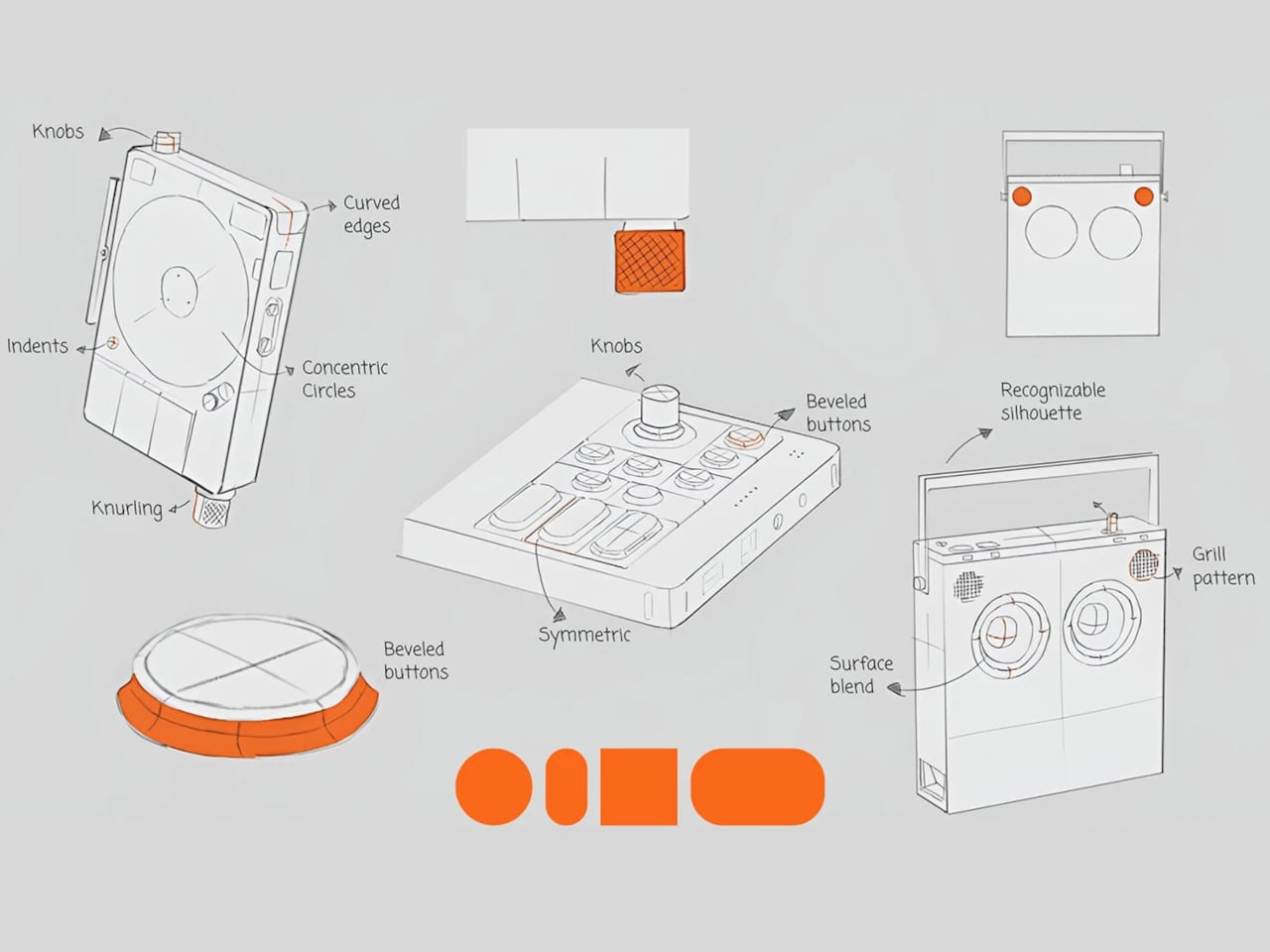
The LUMI DREAMSTATION-02 concept puts a different spin on the idea of a flexible gaming device that can embrace different playing styles instead of sticking to a single one. Yes, it doesn’t have a QWERTY keyboard, but it’s not impossible to add something like it after the fact. That’s because the biggest pull of this design is a flexible modular system that lets you mix and match different controls as the need arises.

The LUMI DS-02 is admittedly a weird-looking device compared to any gaming handheld. It has a large square screen, which means it won’t match any existing game aspect ratio, and right below it sits the controller section with two square areas for the modular controls. One side looks like a D-Pad with four separate buttons arranged in a cross while the other side has buttons and knobs. It’s not hard to imagine that many games aren’t going to be easily controlled with a knob or dial, but you can swap those out with a joystick, a regular D-Pad, another set of buttons, and more. The idea is that you can change the controls to suit the game, not the other way around.

1

The controller section itself can be detached and the screen propped up on a table, similar to the design of Nintendo Switch. This opens the console to even more use cases, like two players using the same console with different controllers. As interesting as this design might seem, it will still depend on how comfortable those controls will be and how easy it will be to swap them around. Regardless, it’s definitely a notable idea, one that tries to be more inclusive, especially if you can substitute more accessible controls for those with physical disabilities.

The post Modular gaming console concept embraces all types of playing styles first appeared on Yanko Design.
Google Pixel Fold 2 display might be even bigger, according to a leak

After MWC 2024 last month, it was clear that foldable phones aren’t going anywhere despite previous prophecies of doom. Samsung is obviously very much in the running, and Honor is pulling out the stops as well. Google is the one brand that is believed to be a bit over the fence, especially in the direction it will be taking its Pixel Fold in. There are already some expected big changes in design, but the changes might be even bigger than expected, literally. According to the latest rumor, the Google Pixel Fold 2’s screens will indeed be bigger, but they will actually be a lot bigger than previously cited, and this change could have significant repercussions for the rest of the foldable phone’s design.

Designer: Google (via Ross Young)

Although foldable phones are marketed as phones that can turn into tablets, the reality is that they can only turn into mini tablets that are even smaller than the iPad mini. This is mostly due to the requirement that these devices should still be usable as normal phones, something that’s actually near impossible if you fold a 10-inch tablet in half. Not unless you can actually fold it in three, which is what Samsung might be doing soon.

In the meantime, however, phone manufacturers have to work within that limitation, and Google will apparently be pushing the boundaries with its second-gen design. According to the newest unofficial information, the Google Pixel Fold 2 will have an external “Cover Screen” size of 6.29 inches and an internal main display of 8.02 inches. Considering the first Pixel Fold had sizes of 5.8 inches and 7.6 inches for those same screens, that’s a rather big jump in terms of screen size. For comparison, the iPad mini has an 8.3-inch screen.

That size increase won’t just be for the sake of bragging, though, as it will definitely affect the usability of the device. Yes, you will be able to enjoy more content or a less cramped space, but that could come at the cost of being bigger to hold in one hand, especially when folded as a phone. There’s also the matter of bezel size, which the Pixel Fold was notorious for. Either way, it won’t be the compact foldable that many people actually loved, so Google might lose some fans but gain others.

Unfortunately, the source didn’t confirm the other two big changes rumored for the Pixel Fold 2, particularly the aspect ratio and especially the camera design. The latter might prove to be the more controversial change for Google’s once-beautiful design, especially if the hardware upgrade doesn’t exactly warrant that change. The screens for the Pixel Fold 2 will reportedly go into production next month, so an announcement won’t be far away.
The post Google Pixel Fold 2 display might be even bigger, according to a leak first appeared on Yanko Design.