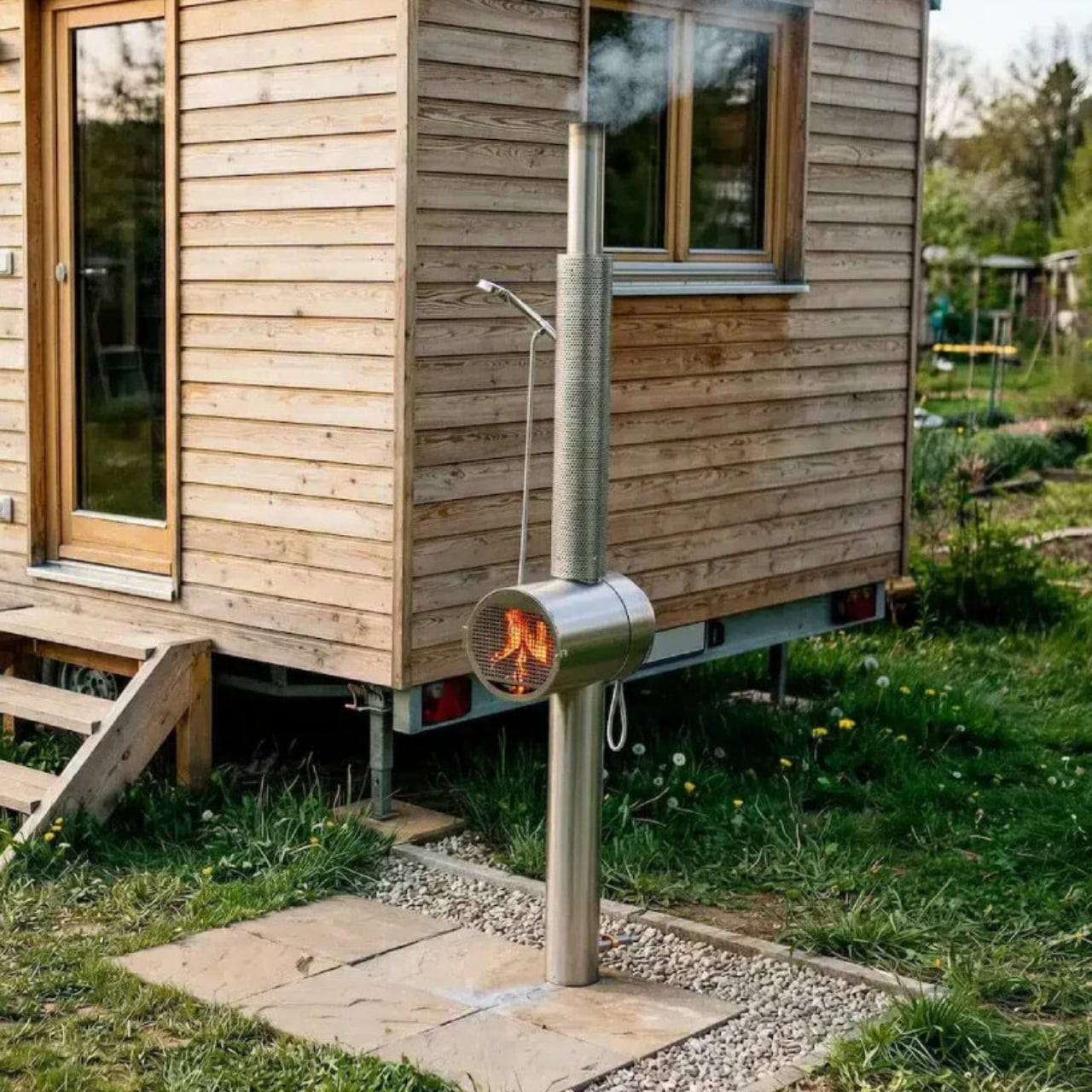
If you’ve ever dreamed of taking a hot shower in the middle of your garden, off the back deck, or somewhere completely off the grid, an Austrian brand called Feuerwasser just made that dream look really, really good.
Feuerwasser, whose name literally translates to “fire water,” is a small manufactory based in Styria, Austria, and they’ve been quietly building a cult following with their line of wood-fired outdoor wellness products. Their latest spotlight moment? A patented garden shower that heats water using an integrated wood-burning stove, with zero electricity required.
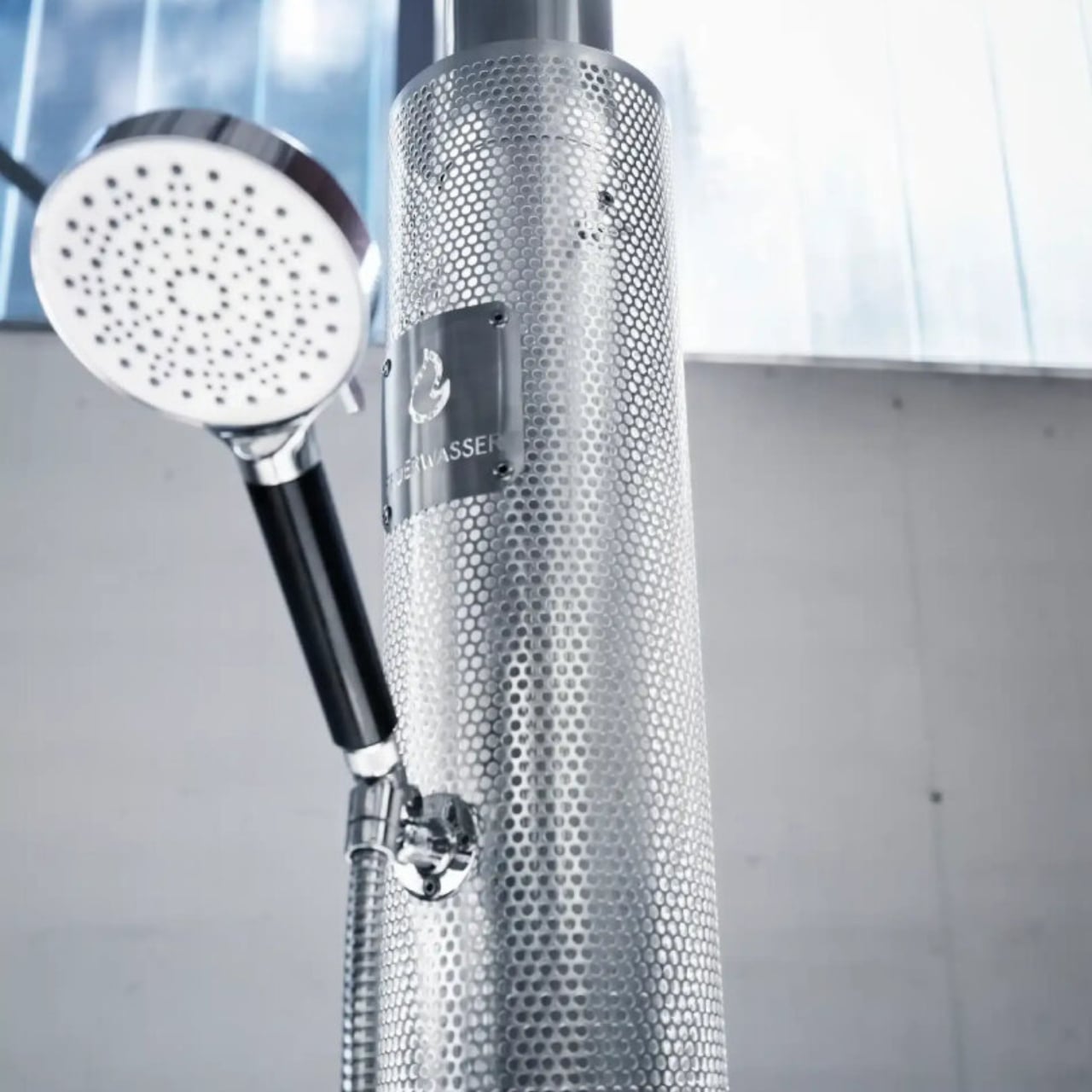
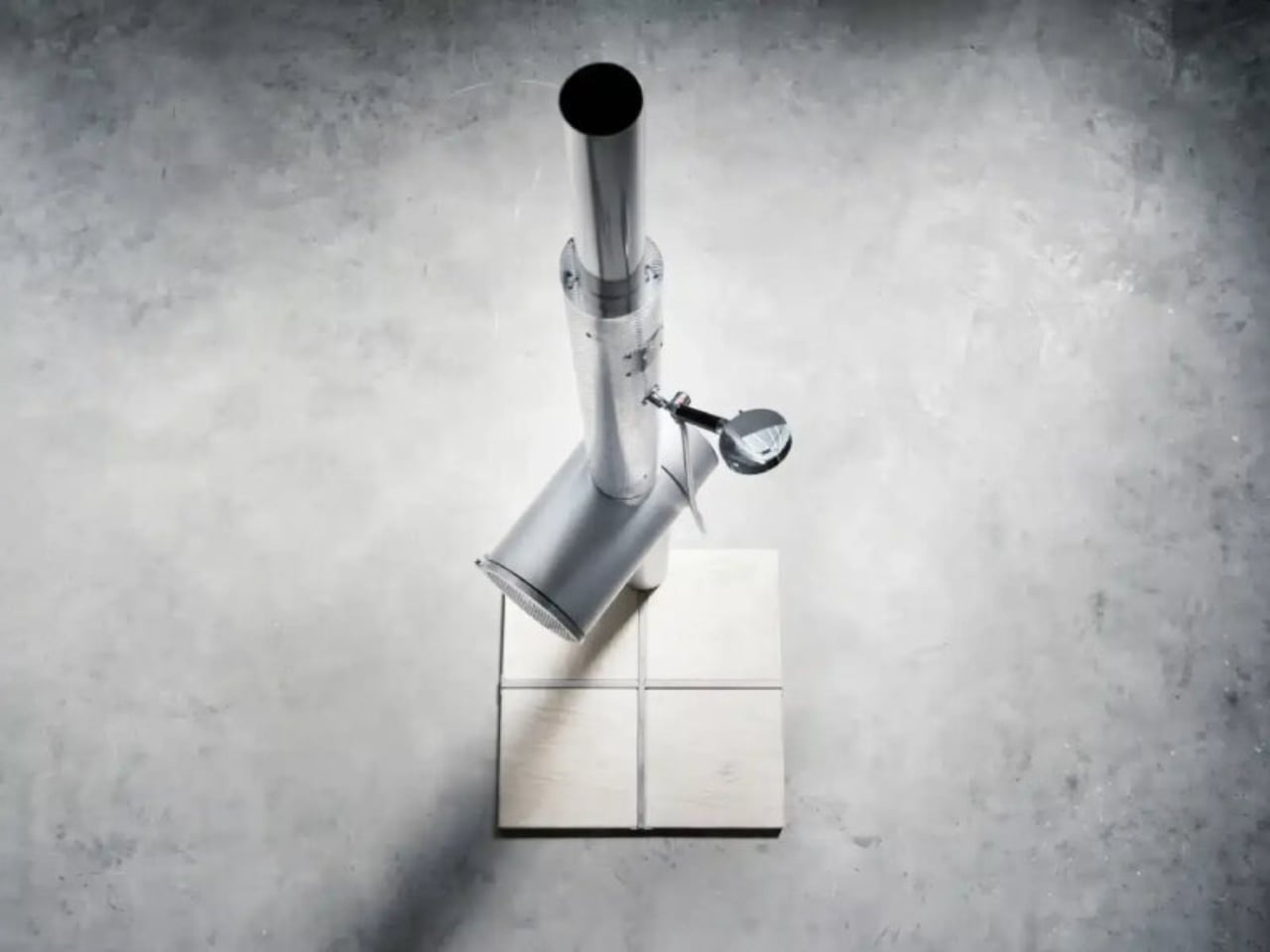
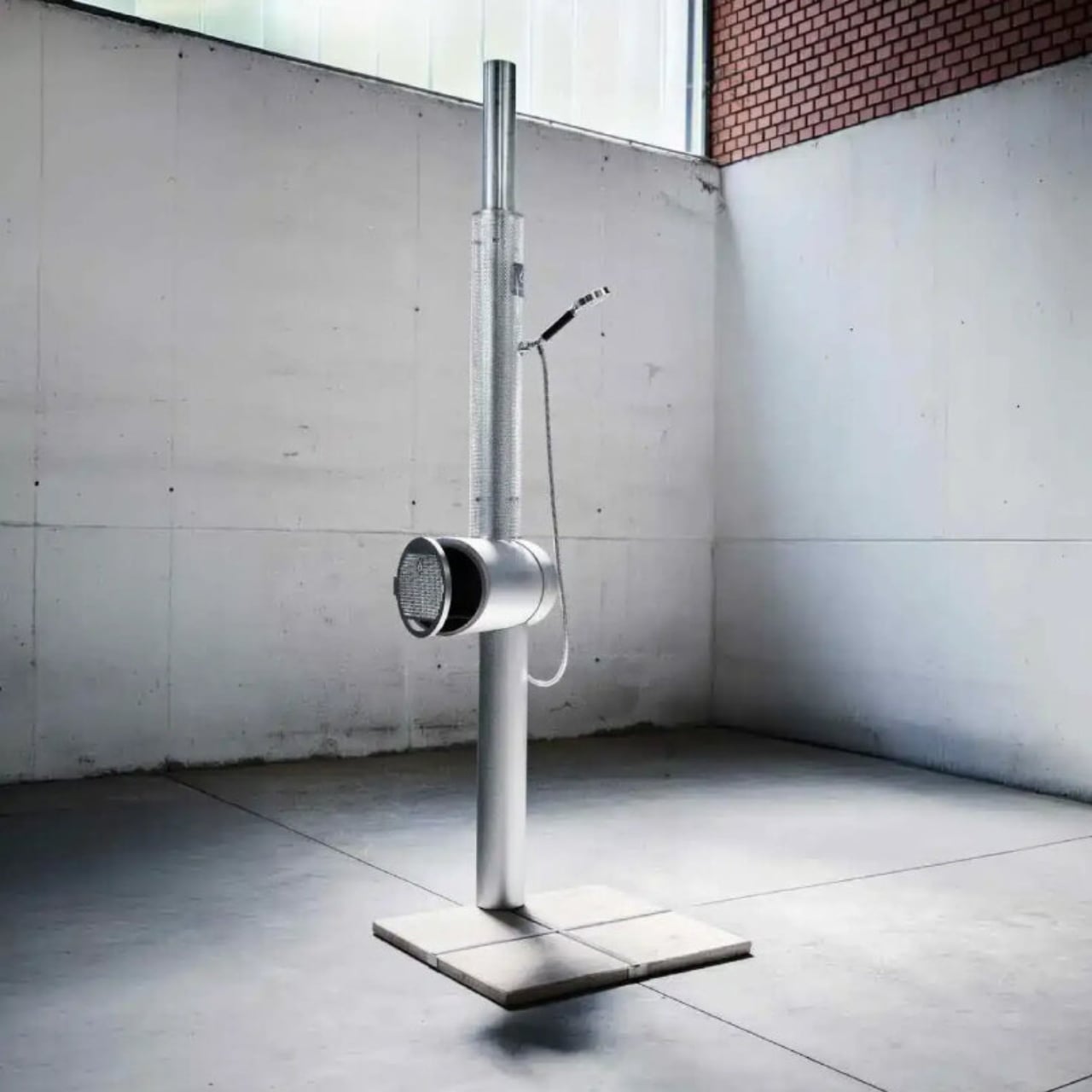
The concept is almost ridiculously simple, and that’s exactly what makes it so clever. The shower is built around a stainless steel frame with a wood-fired heater at its center. You connect a garden hose to fill the pipes with water, load up the stove with small logs, and in about three minutes, you’ve got hot water flowing through a fully functional outdoor shower. That’s it. No solar panels, no electrical hookups, no waiting for the sun to cooperate.
The fact that it works in winter is the part that really gets people talking. Most outdoor showers are a warm-weather luxury that gets packed away the moment temperatures drop. Feuerwasser’s design doesn’t care about the season. As long as you have water and a few blocks of wood, you’re showering in comfort. It’s the kind of design thinking that makes you wonder why no one did this sooner.
Temperature control comes through a mixing valve, so you’re not just getting a blast of scalding water with no say in the matter. You can dial it in to exactly where you want it, which honestly makes it feel far more intentional and refined than you might expect from something fueled by an open fire.
The structure itself is all stainless steel, which means it’s rust-resistant, easy to clean, and built to last through years of outdoor exposure. It doesn’t need to be drilled into the ground either. The shower comes with a freestanding base designed to be anchored with four stone slabs, keeping it stable without any permanent installation. That portability detail is a bigger deal than it sounds. Want to move it to a different corner of the yard? Done. Taking it to a vacation cabin? Also doable. It’s the kind of flexibility that makes a luxury product actually useful.
Since gaining wider attention online, including a viral moment with over four million views, the shower has drawn a lot of curiosity from people who never thought they’d be interested in an outdoor shower. And that’s the thing about great design: it reaches people who weren’t looking for it. Someone who camps might see it as the ultimate basecamp upgrade. A homeowner with a pool or sauna setup might see it as the missing piece. A design lover might just want it because it looks absolutely striking in a backyard setting, like sculpture you can actually use.
Feuerwasser’s garden shower starts at €3,490, which puts it firmly in the premium category. But for what it offers, a fully self-sufficient, no-infrastructure-needed hot shower that works year-round, looks beautiful, and is built from high-quality stainless steel, that price tag starts to make a lot of sense. Especially when you factor in that there’s no ongoing energy cost beyond the occasional bundle of firewood.
It’s one of those products that quietly reframes what “outdoor living” can mean. Not just a folding chair and a citronella candle, but a full, thoughtful experience that doesn’t compromise on comfort just because you’re outside. Feuerwasser has been doing this with their hot tubs and outdoor bathing products for a while now, but the garden shower is the piece that feels most universally appealing. Hot water, fresh air, the smell of a wood fire, and no electricity bill. That combination is hard to argue with.
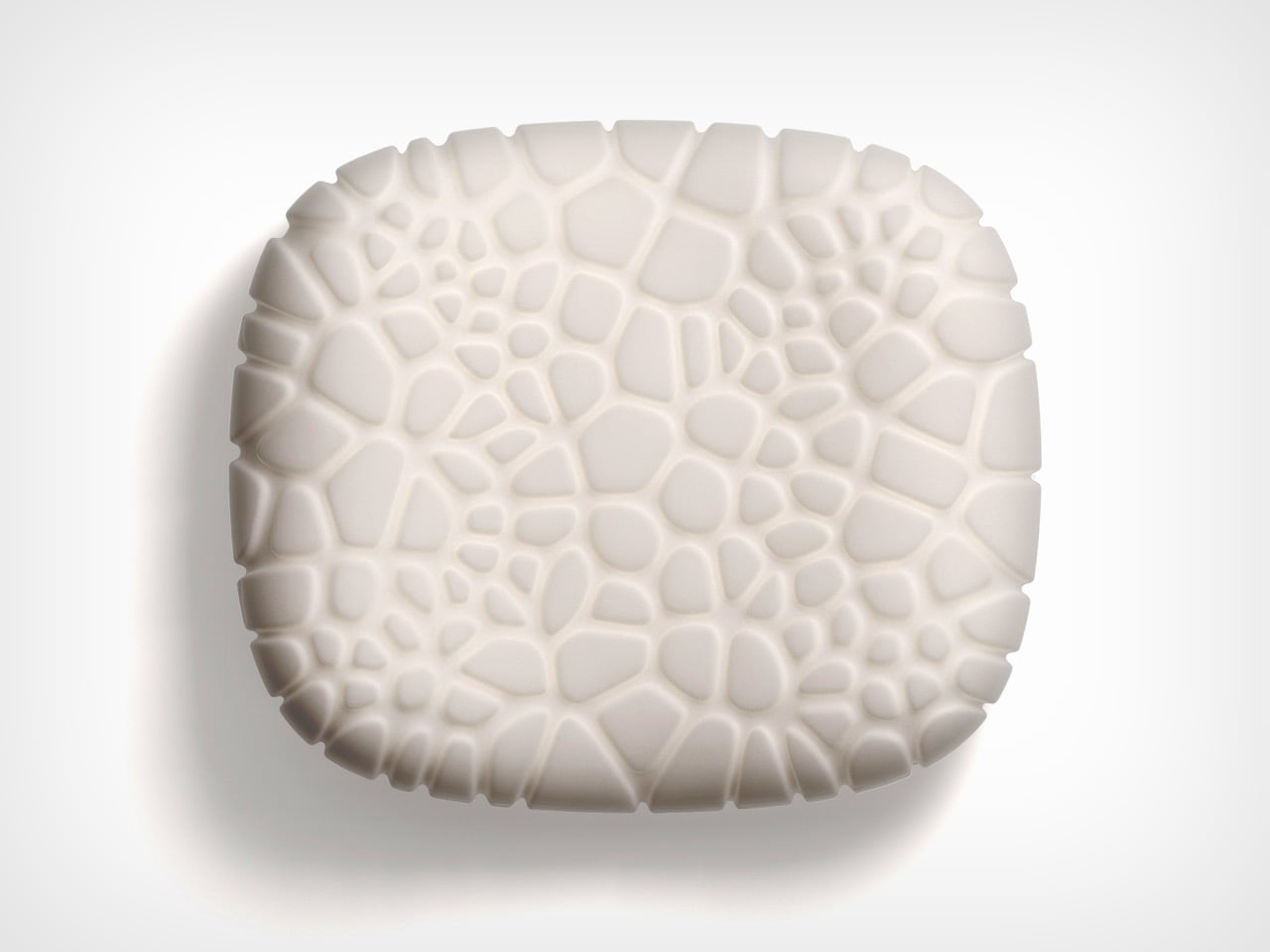
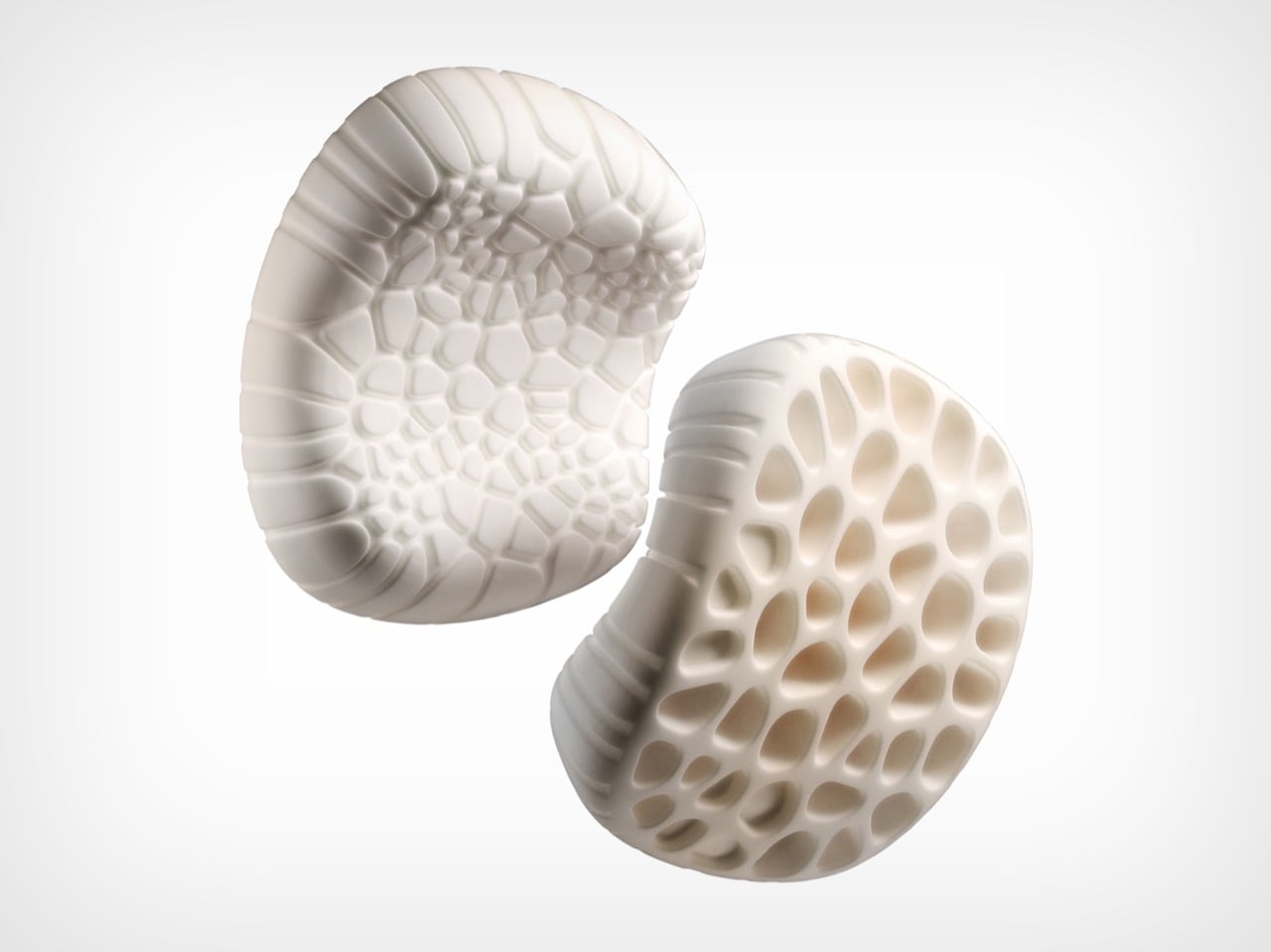
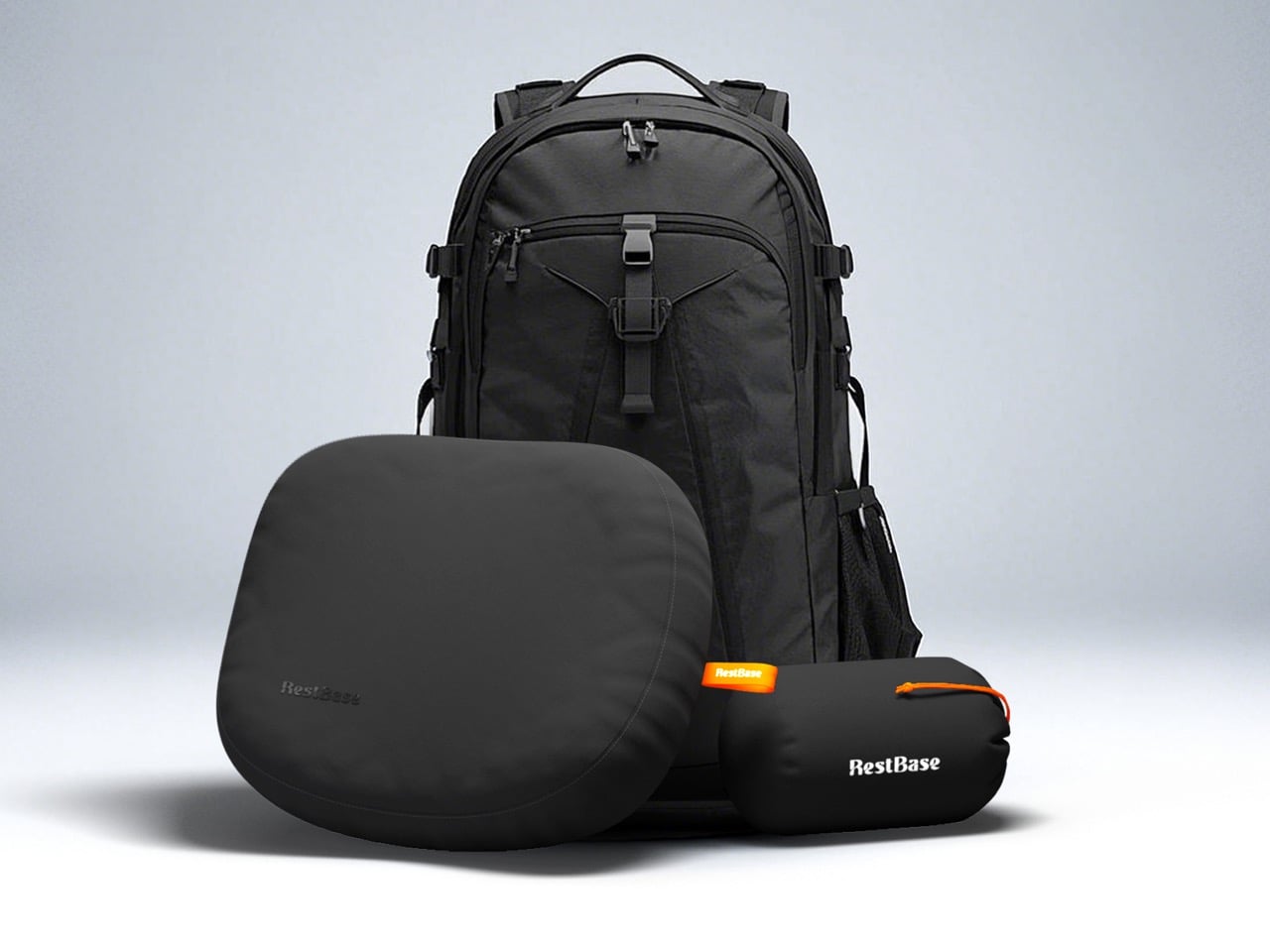
Nature has been solving the problem of lightweight, load-bearing structure for hundreds of millions of years. Chen Xu, designing for RestBase, decided to take notes. The Camp Napper is a portable camping pillow whose form is derived from two specific biological sources: the surface texture of fungal spores, which informed the pillow’s contact face, and the hollow vascular structure of plant stems, which shaped its core. The outcome is a product that performs as well as it looks.
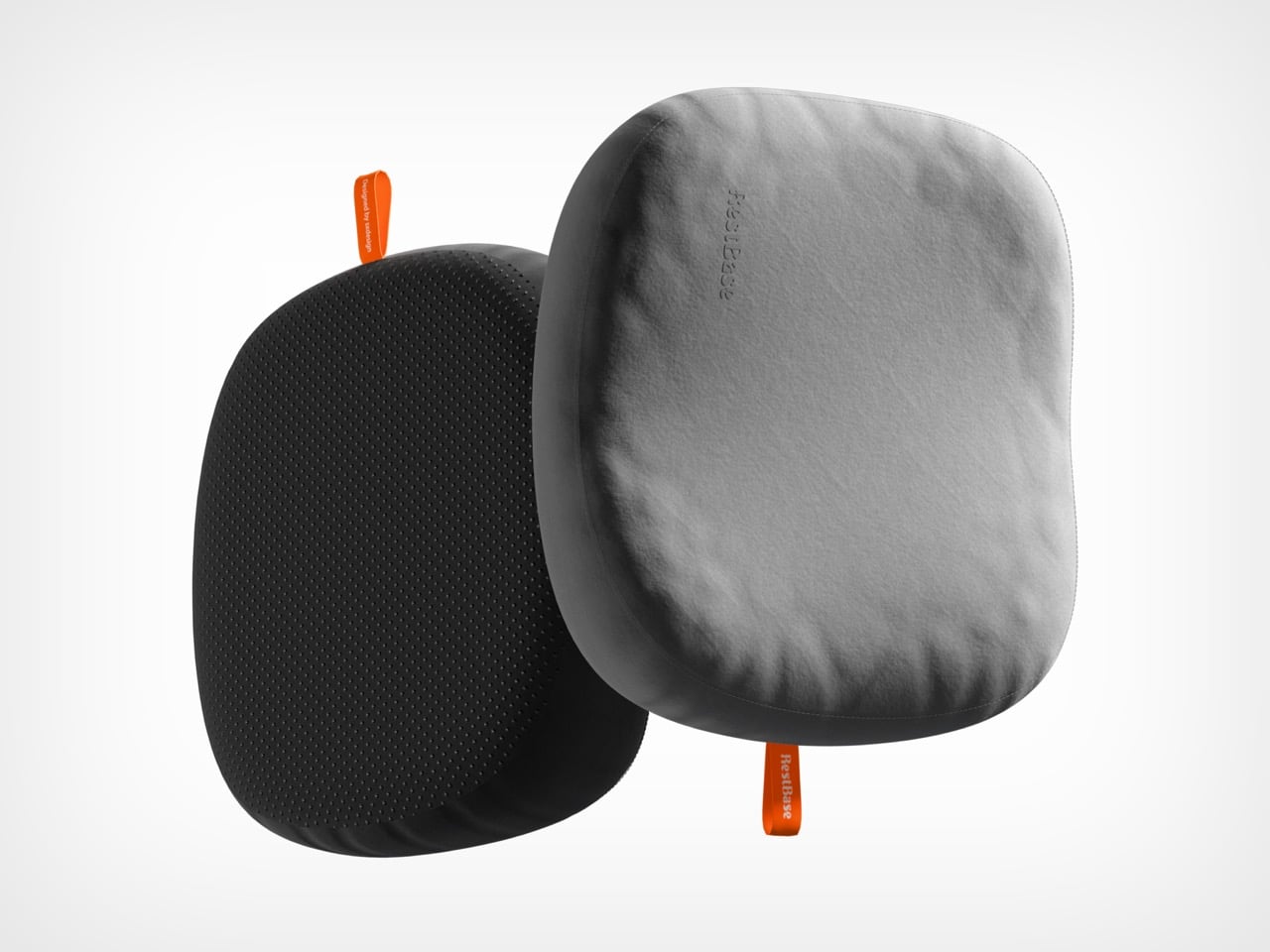
Using Voronoi polygon modelling, the design team mapped how pressure from a sleeping head distributes across the pillow’s surface, then engineered protrusions and recesses to respond to that data. The front face features raised cellular structures that increase the contact area between pillow and skin, improving comfort while simultaneously channelling airflow to keep things cool. The back face offers four distinct tactile zones depending on orientation, giving users a degree of customisation that is rare in camping gear. Also, a little warning but: trypophobia alert.
Designer: Chen Xu
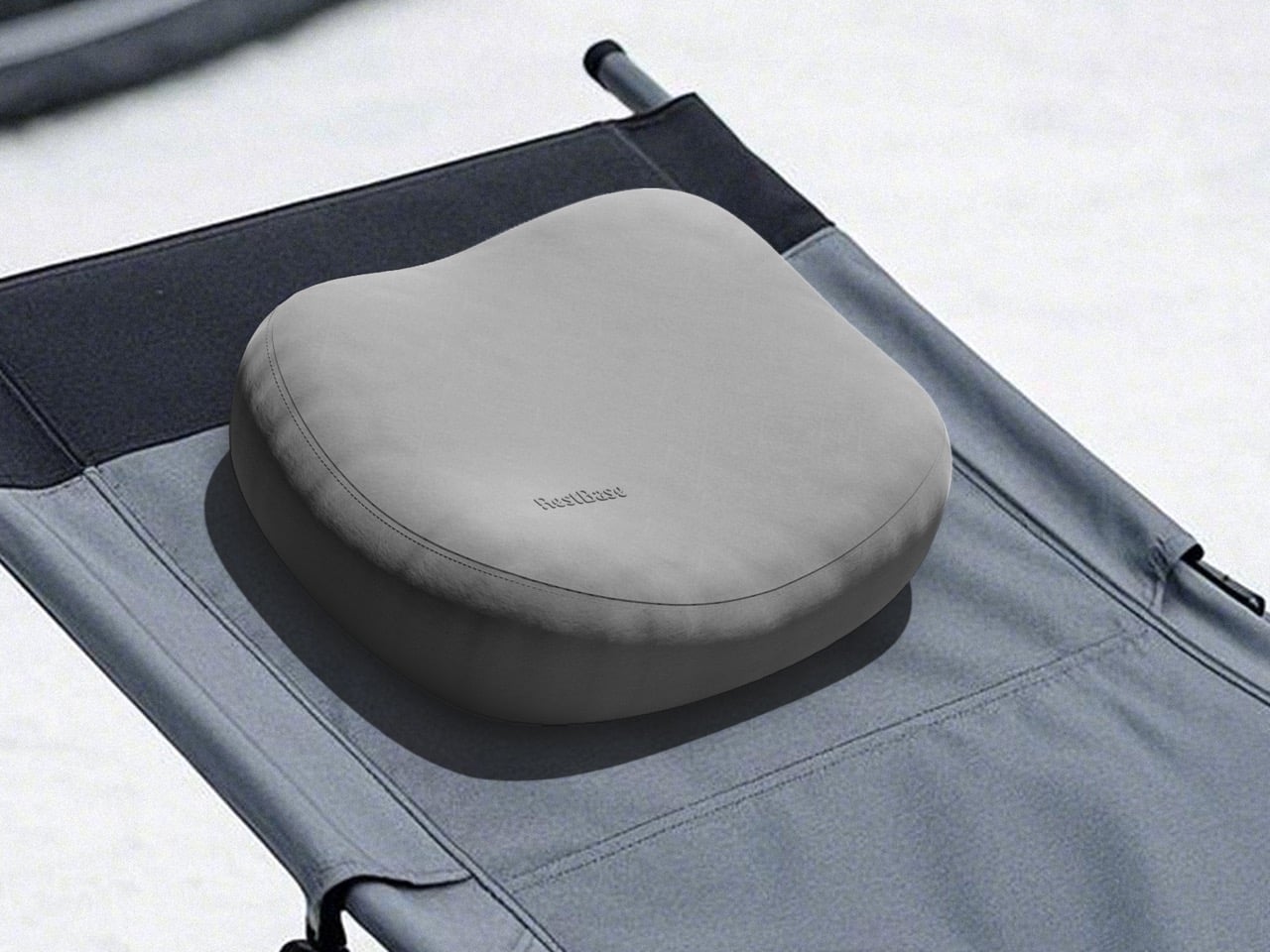
The core replicates the hollow geometry found in plant stems, achieving a structure that sheds mass without compromising its ability to hold form under repeated compression. Total weight lands at around 400 grams, and the whole pillow compresses into its storage bag at roughly the dimensions of a water cup, making it genuinely packable rather than merely marketed as such.
Memory foam was selected for its ability to conform to different sleepers while maintaining the structural geometry of the bionic surface. Anti-slip rubber particles on the base keep the pillow in place across the varied surfaces camping tends to involve, from sleeping pads to camp chairs to hotel floors. RestBase positions the Camp Napper across indoor and outdoor contexts, and the material specification backs that up without demanding a different product for each one.
The project ran from March to December 2024 in Beijing, with the team conducting pressure simulations using volunteer data before building the mathematical model that generated the bionic surface structure. Mold development required continuous adjustment of material ratios and foaming parameters to meet yield and appearance standards. The finished product carries all of that process lightly, presenting as something organic and considered rather than laboured. For a category where most innovation stops at inflation valves and stuff sacks, that is a meaningful place to arrive.
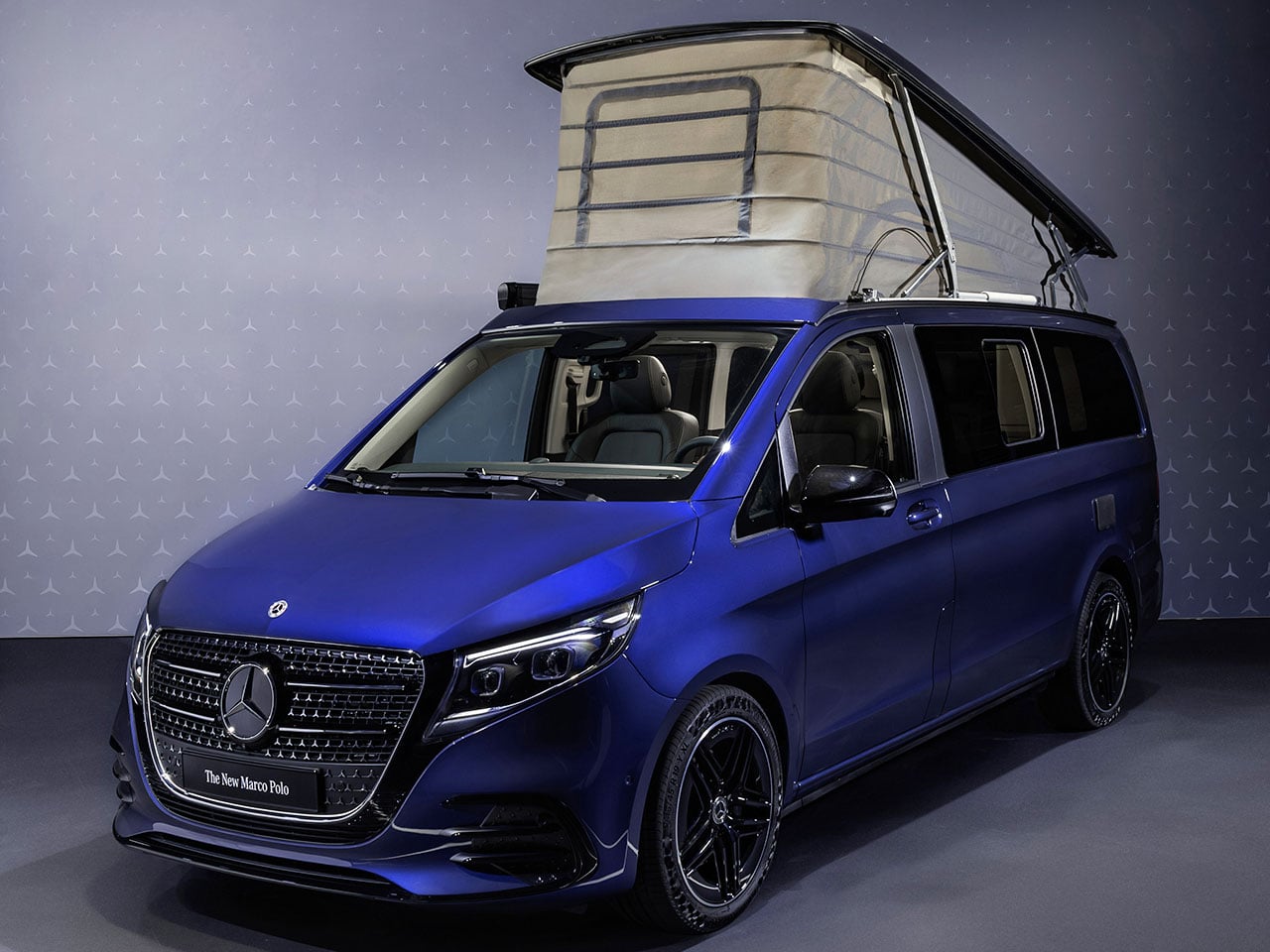
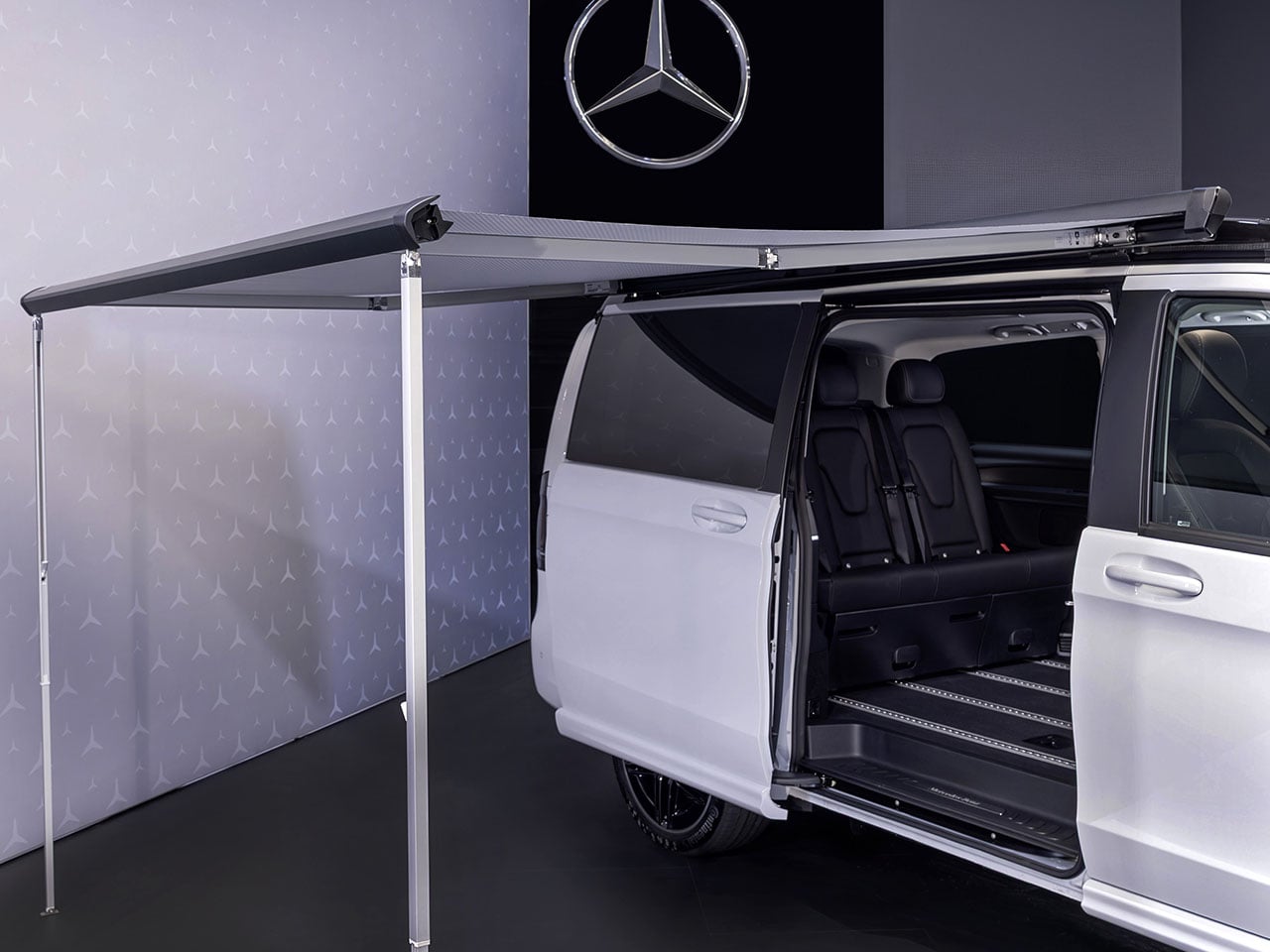
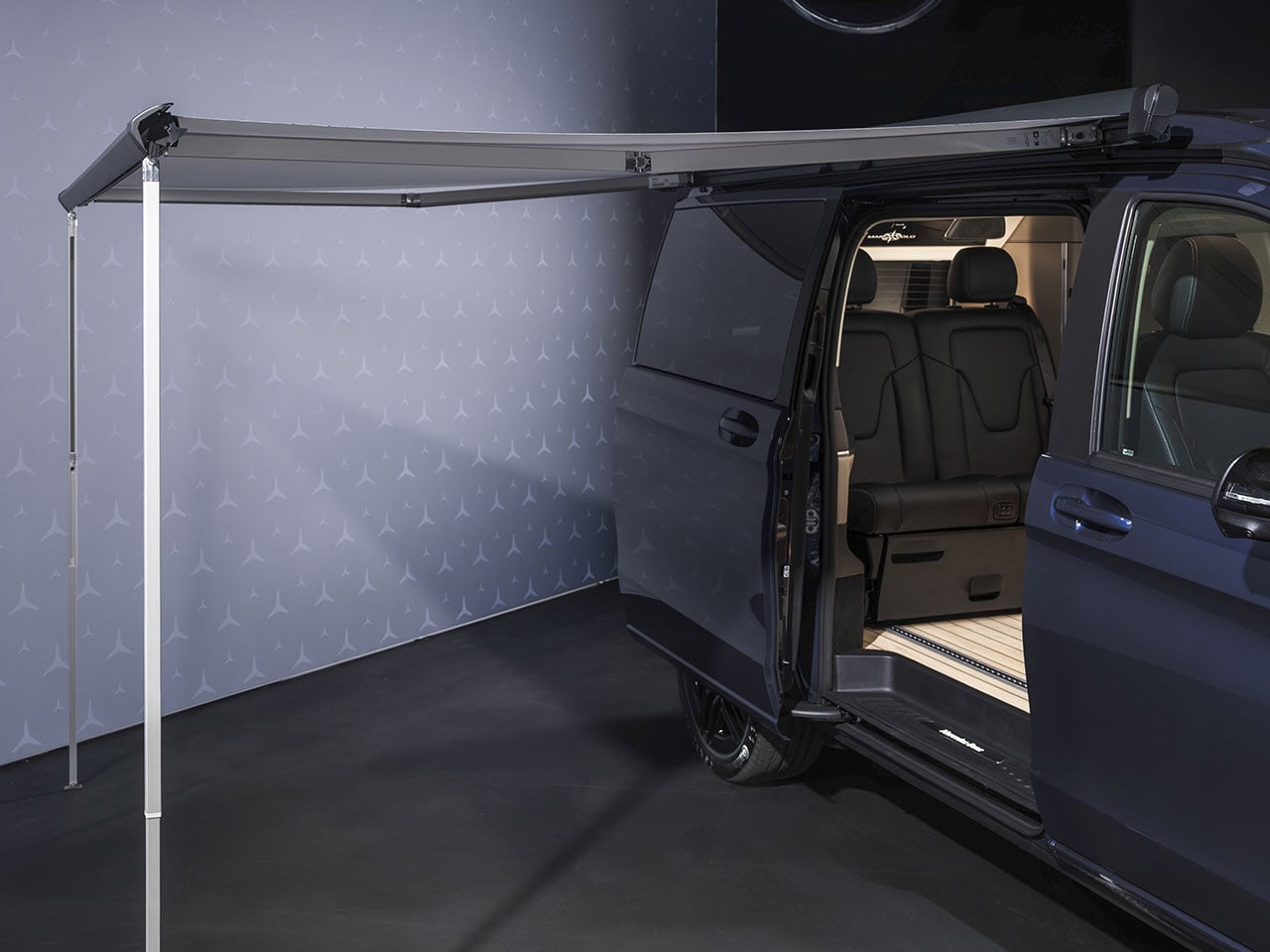
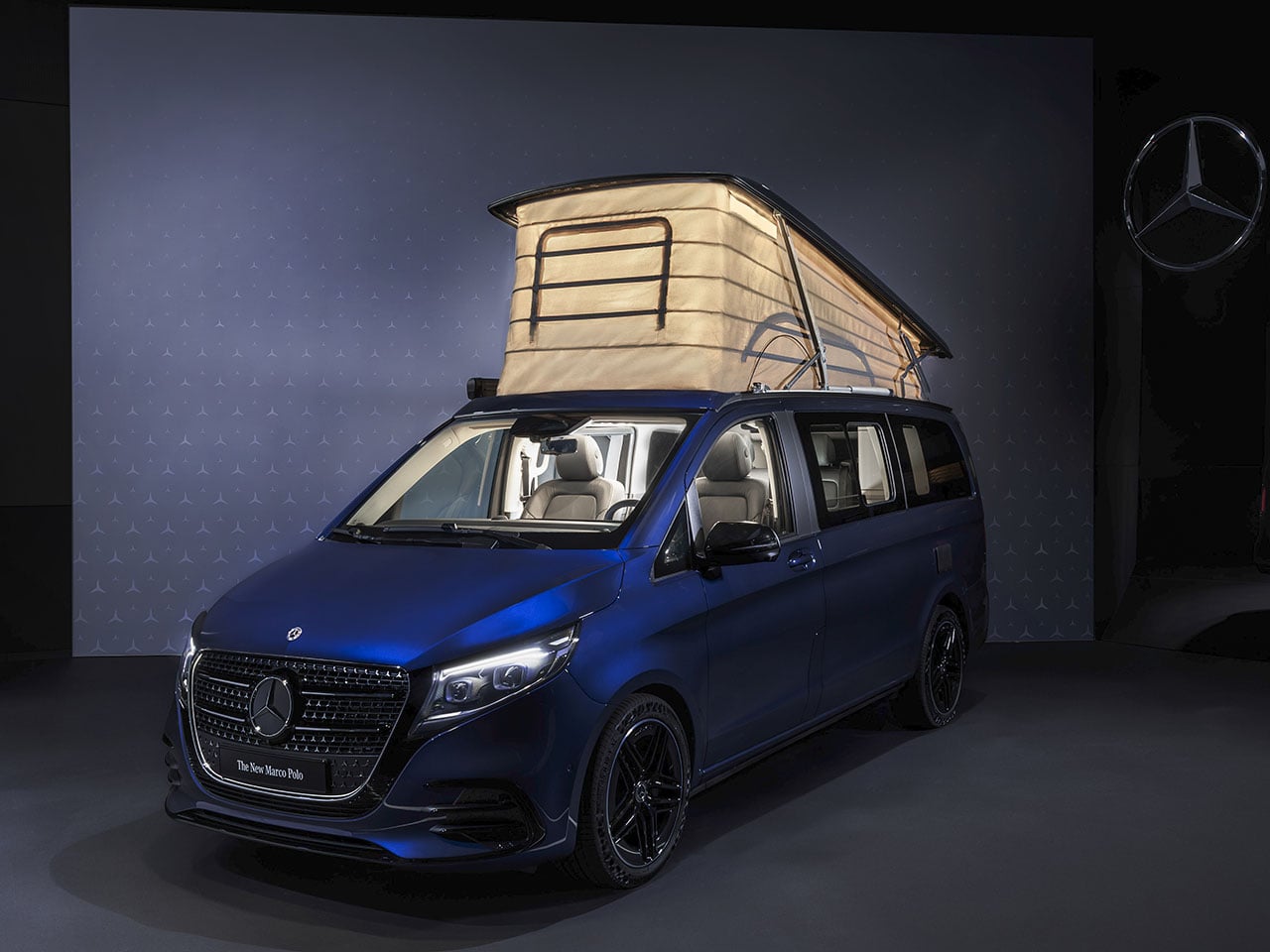
Mercedes-Benz and Volkswagen have produced some of the best camper vans on the market, and they’ve long shared a common collaborator. Now, with Mercedes-Benz taking the complete production of its Marco Polo under its wings, Volkswagen and other competitors can expect some serious competition. The newly updated 2026 Marco Polo is the first new addition to Mercedes in-house van life portfolio and flaunts an interesting pop-up roof, which is its main talking point.
According to Mercedes-Benz press information, the body of the V-Class Marco Polo is built at the company’s Vans plant in Vitoria, Spain. The vehicle is then converted into a pop-up camper van at the Ludwigsfelde plant in Germany. The overall in-house production of the Marco Polo means it’s of the “highest quality standard” and that the company has complete control over every detail and pace at which it is produced.
Substantiating the fact, Sagree Sardien, head of sales & marketing Mercedes-Benz Vans said, it is a “Mercedes-Benz through and through,” which is designed to offer buyers a more sophisticated home on wheels. “A home that effortlessly combines travel and everyday life – while making a stylish statement,” he said.
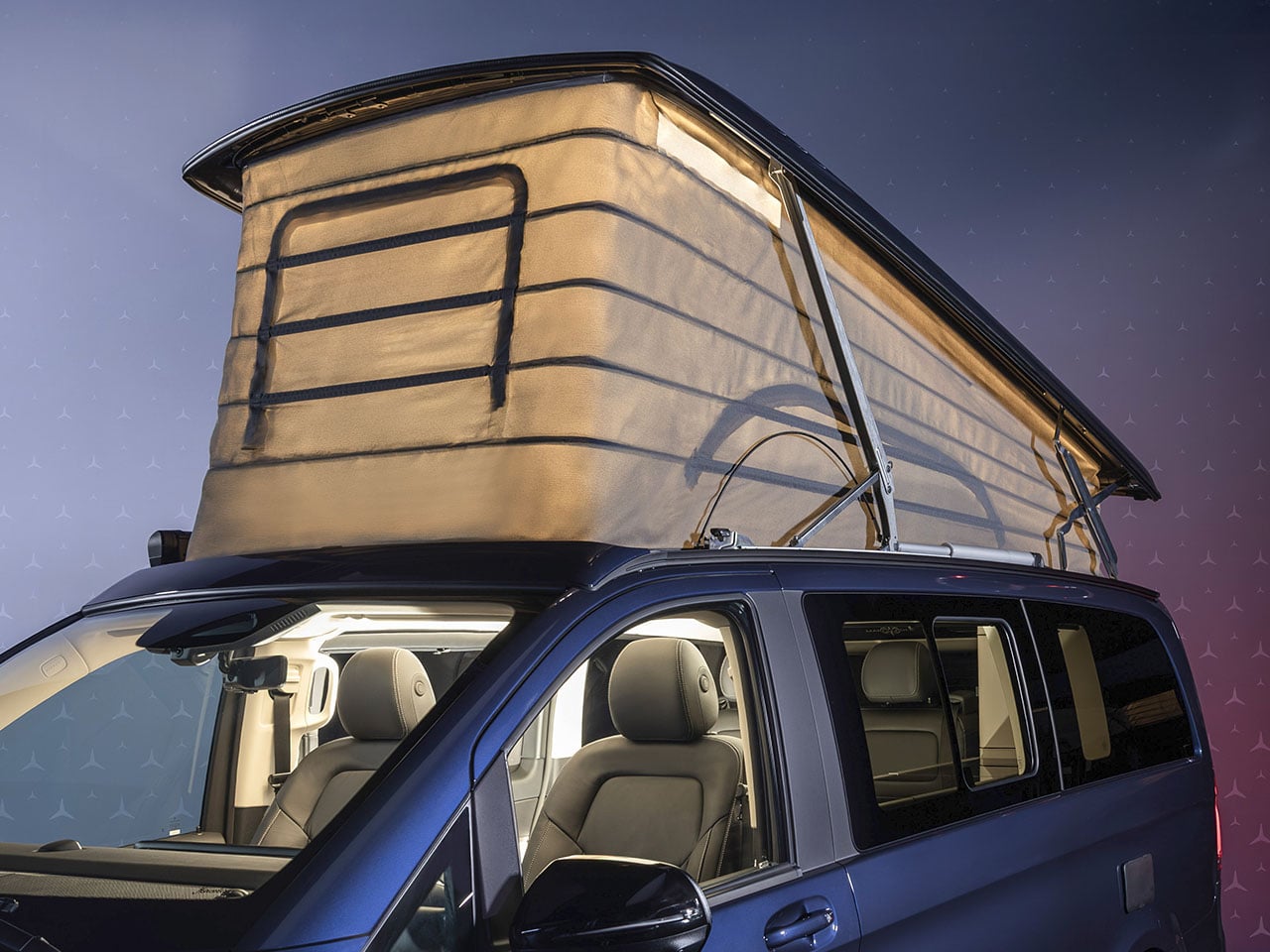
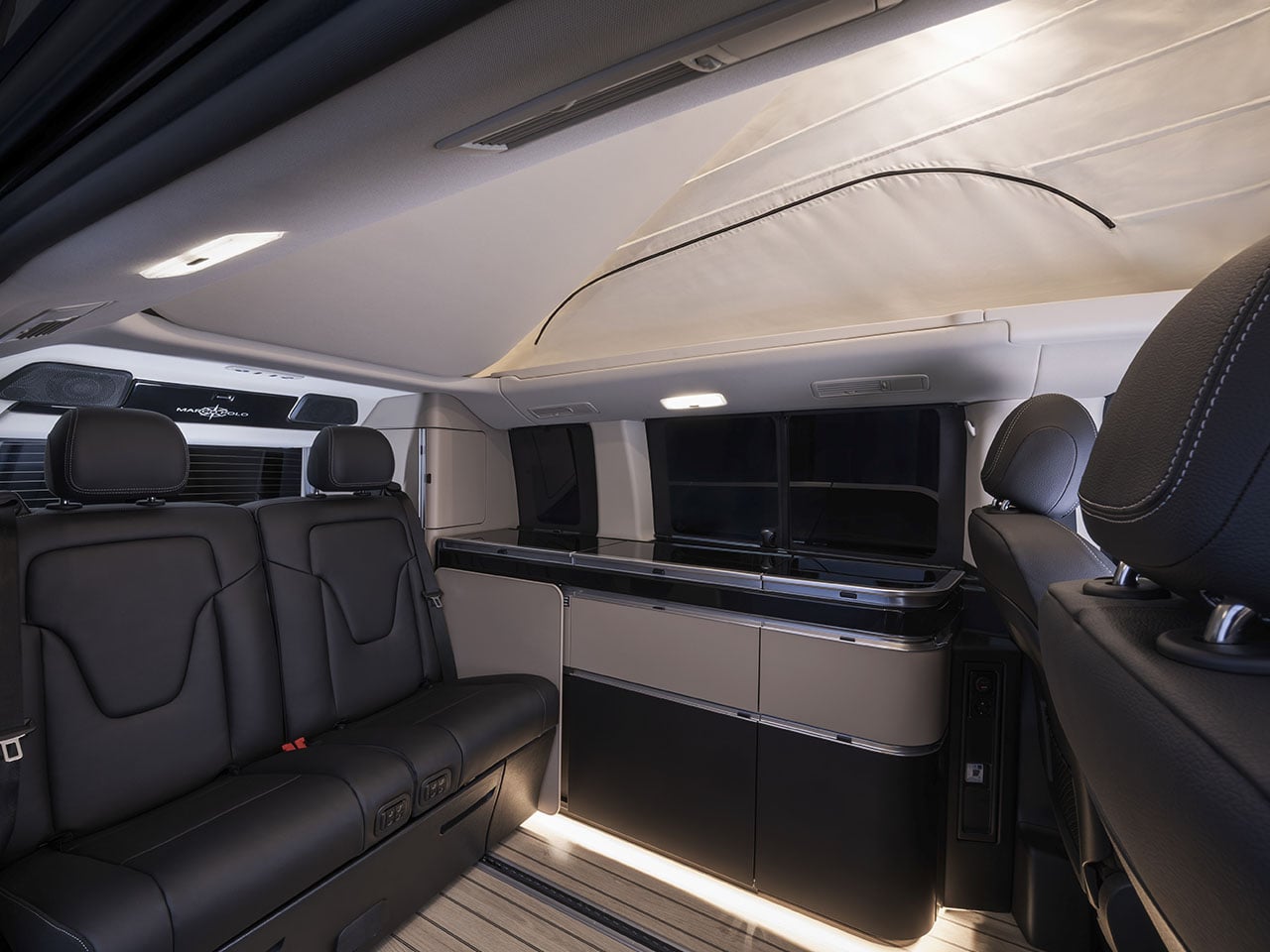
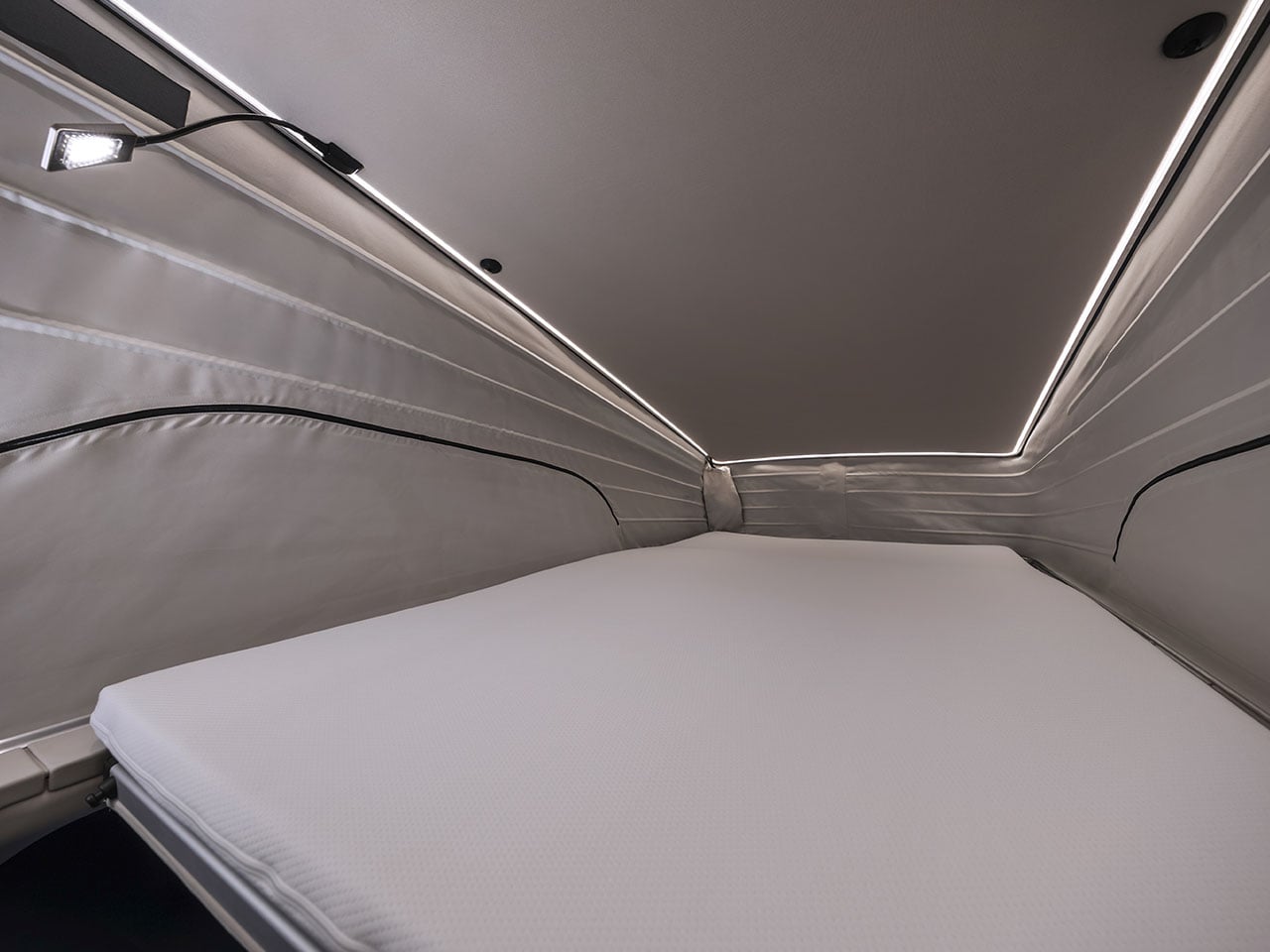
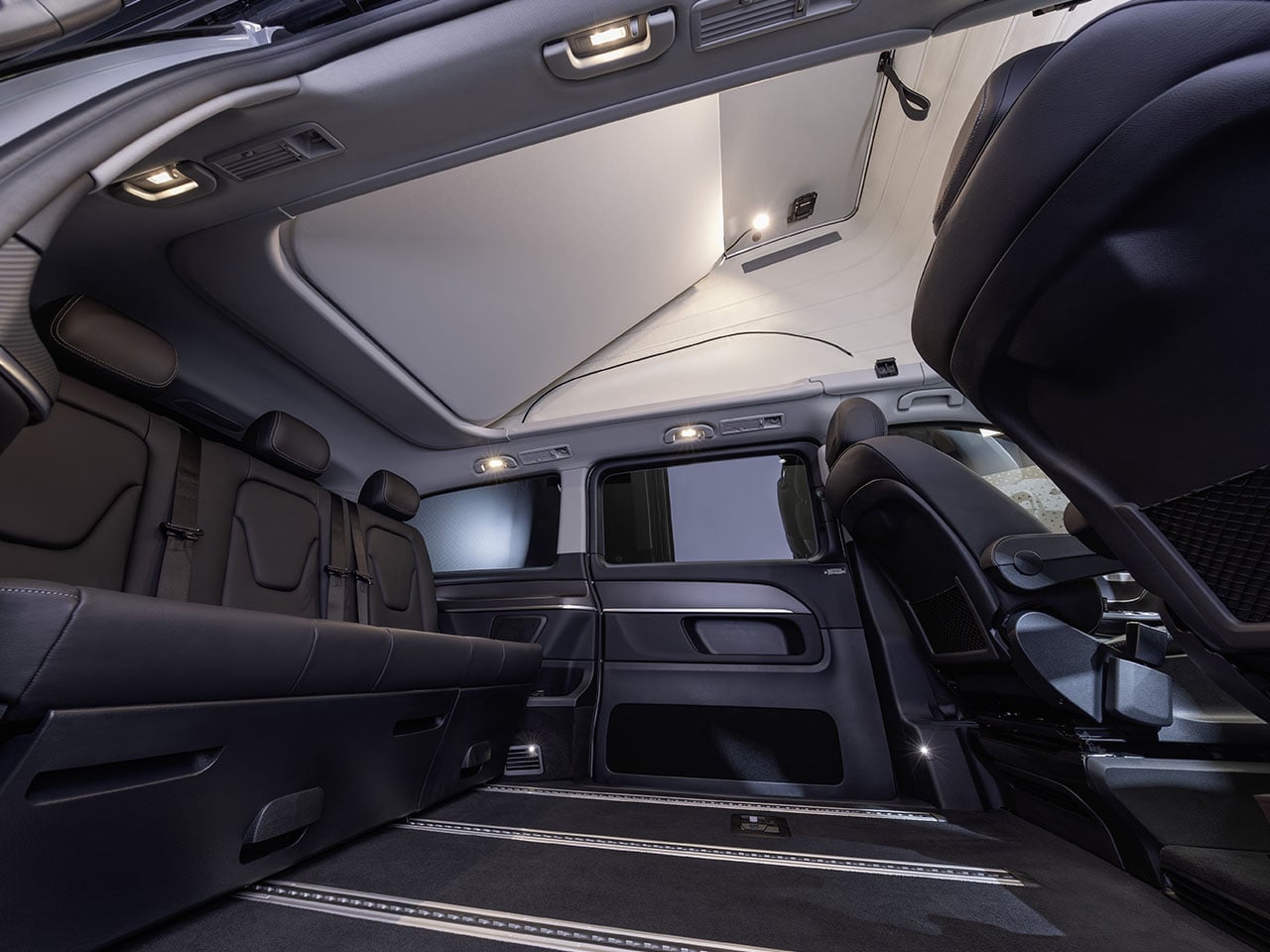
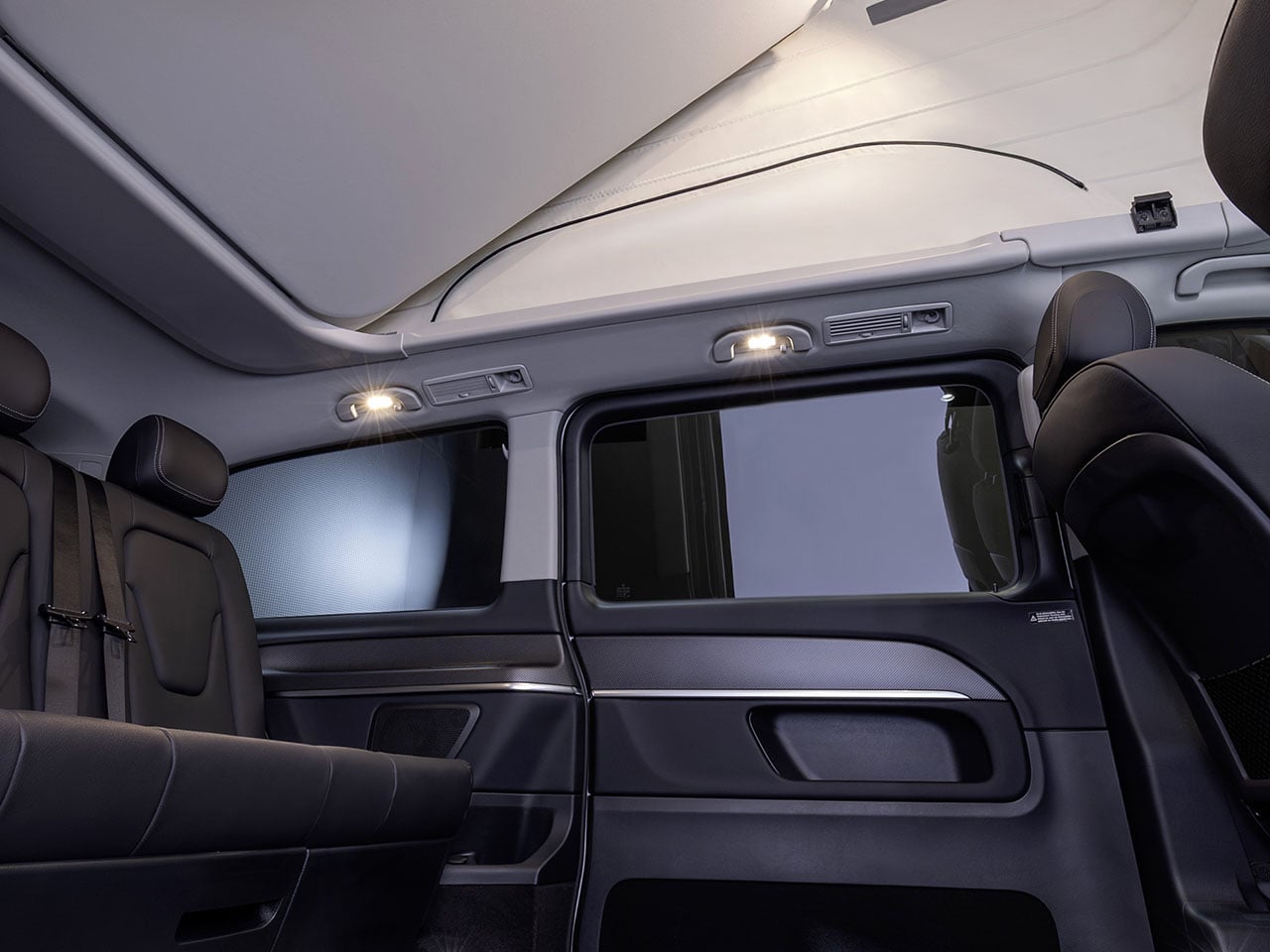
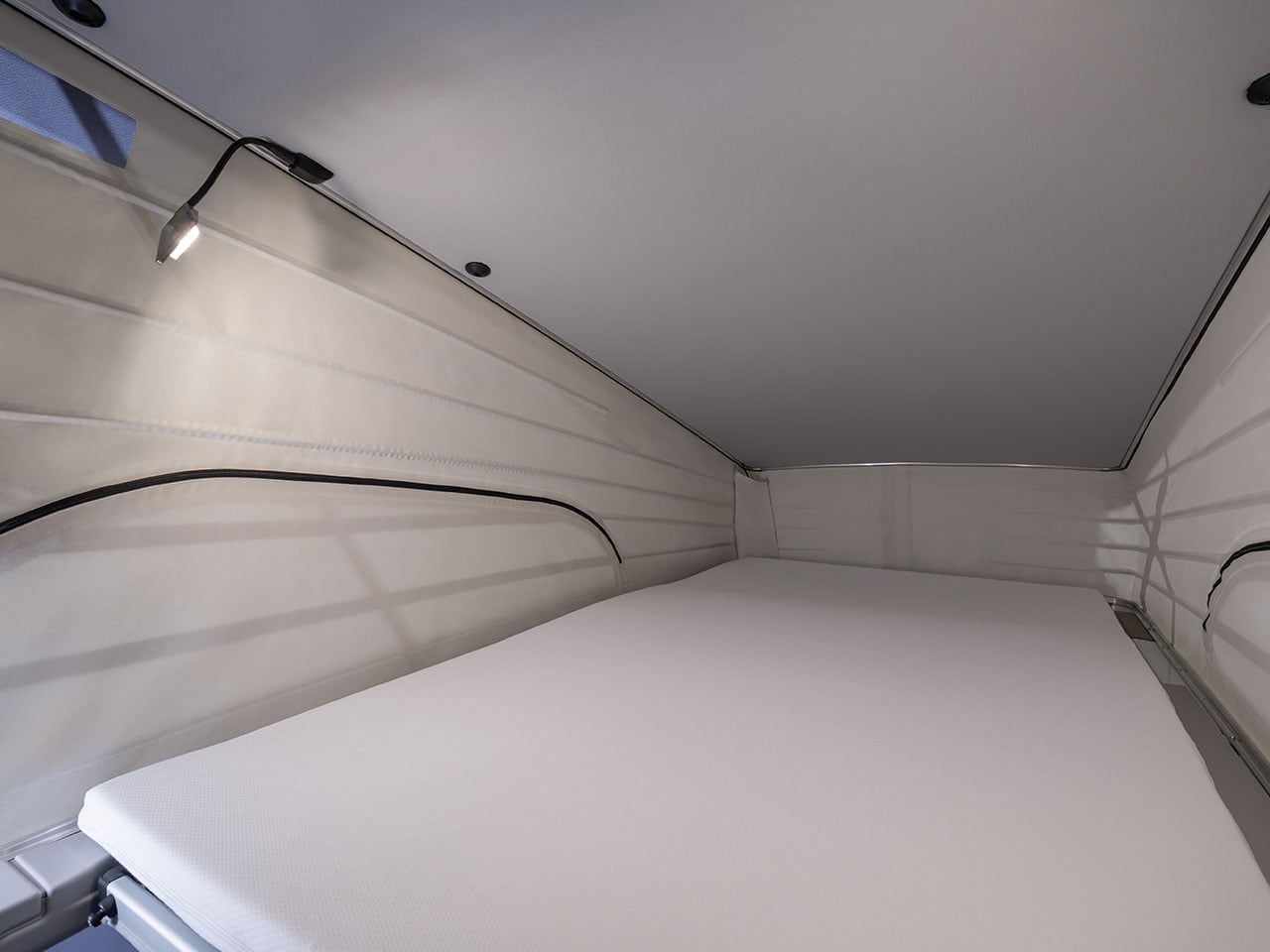
To that accord, the Mercedes-Benz 2026 Marco Polo is a compact, luxury camper van featuring a pop-up roof, convertible downstairs seating, kitchen, and ambient lighting to uplift the mood when you’re inside the van. The major update from the 2024 model of the van is focused around the improvement to the lifting roof space. The double-skinned aluminum pop-top makes for an additional 4 inches of headroom and is provided with an ambient LED system that allows the space to feel lively and inviting.
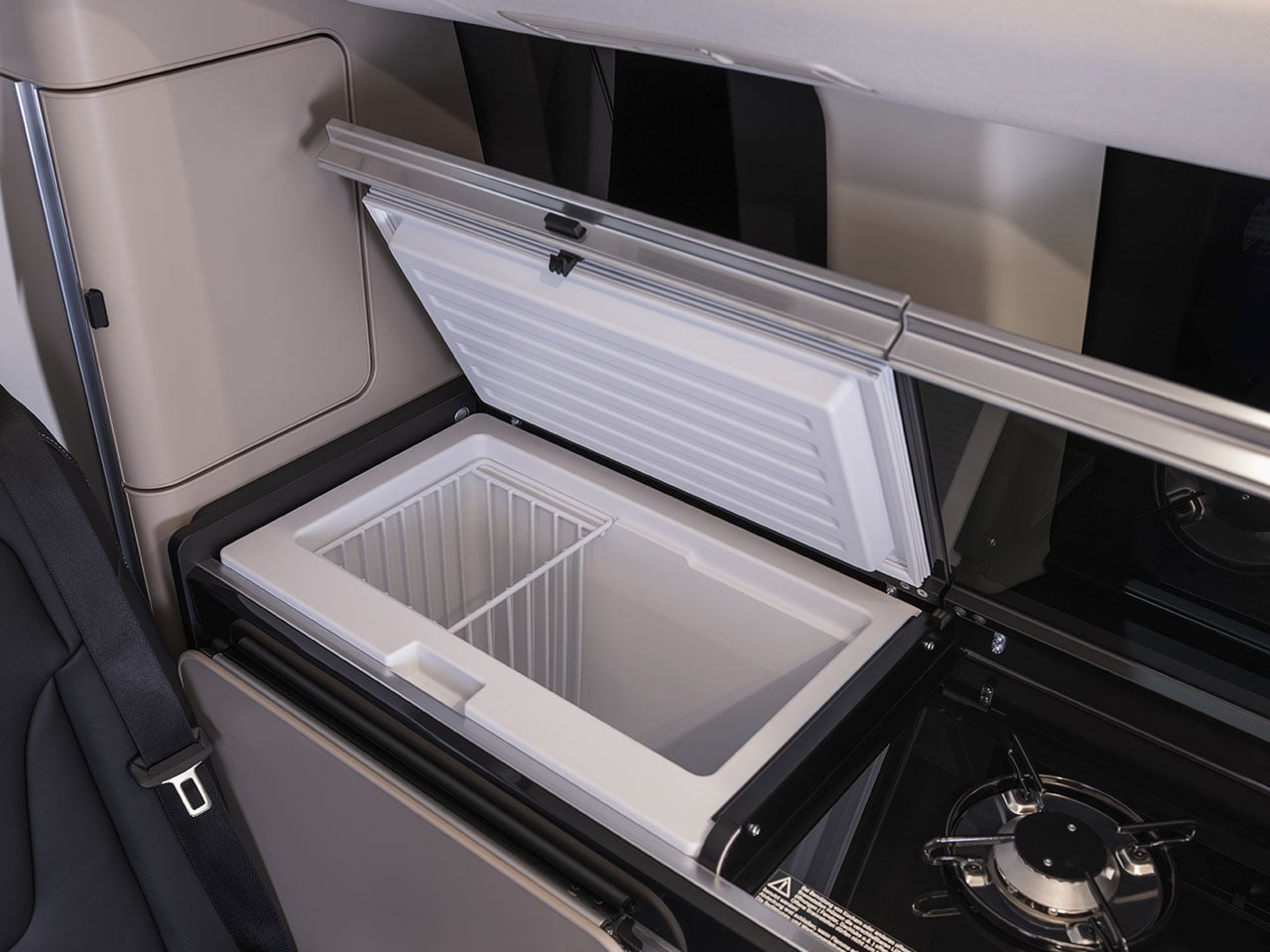
Downstairs, the Marco Polo doesn’t make many changes. It comes equipped with a kitchen featuring double burner gas stove, a sink, mini fridge, and a swiveling bench that can easily facilitate dining and sleeping. During mealtime, you have a folding table that reaches out of the kitchen block, and during the night it folds up to make room for the convertible sofa to create a double bed.
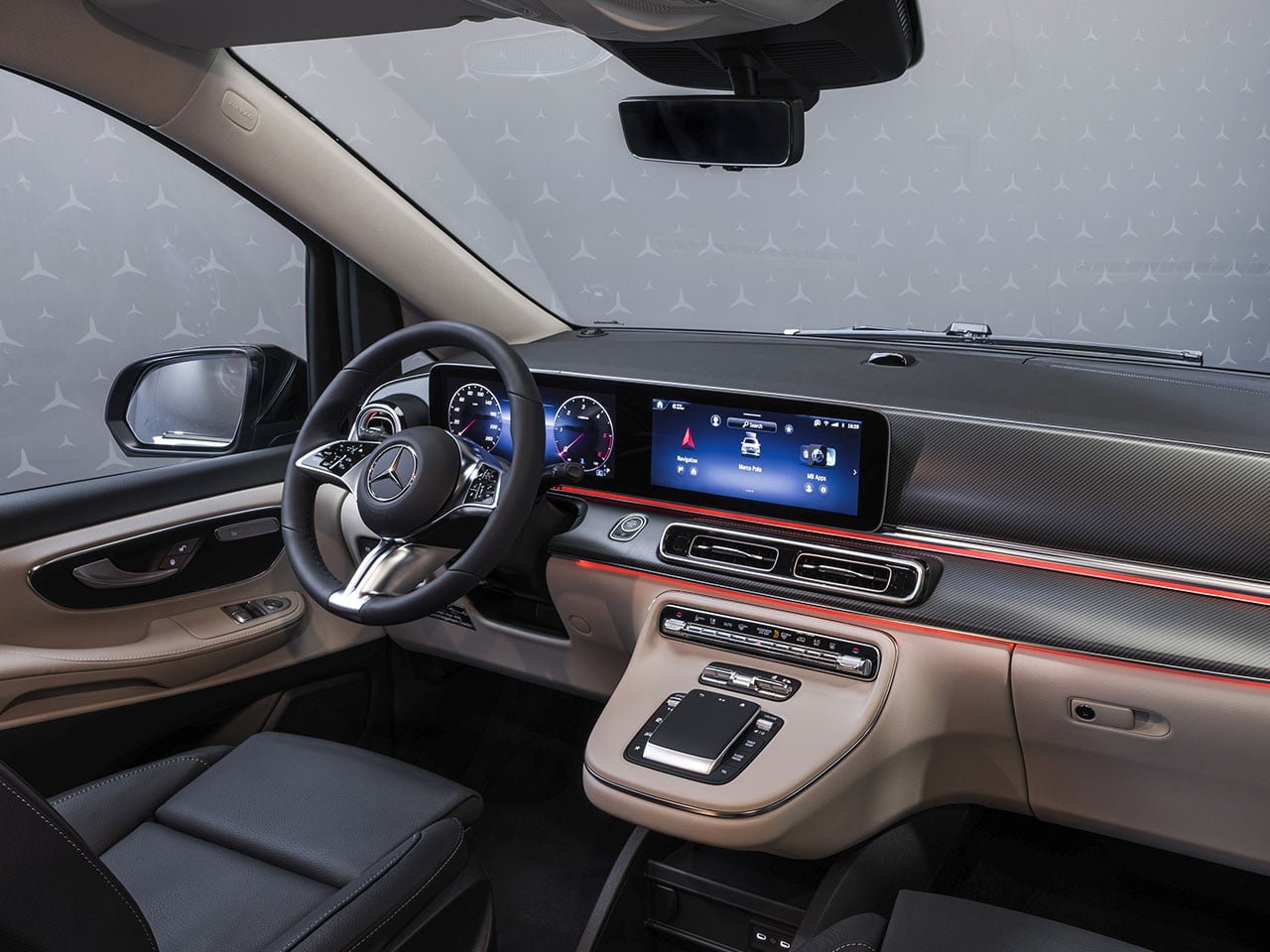
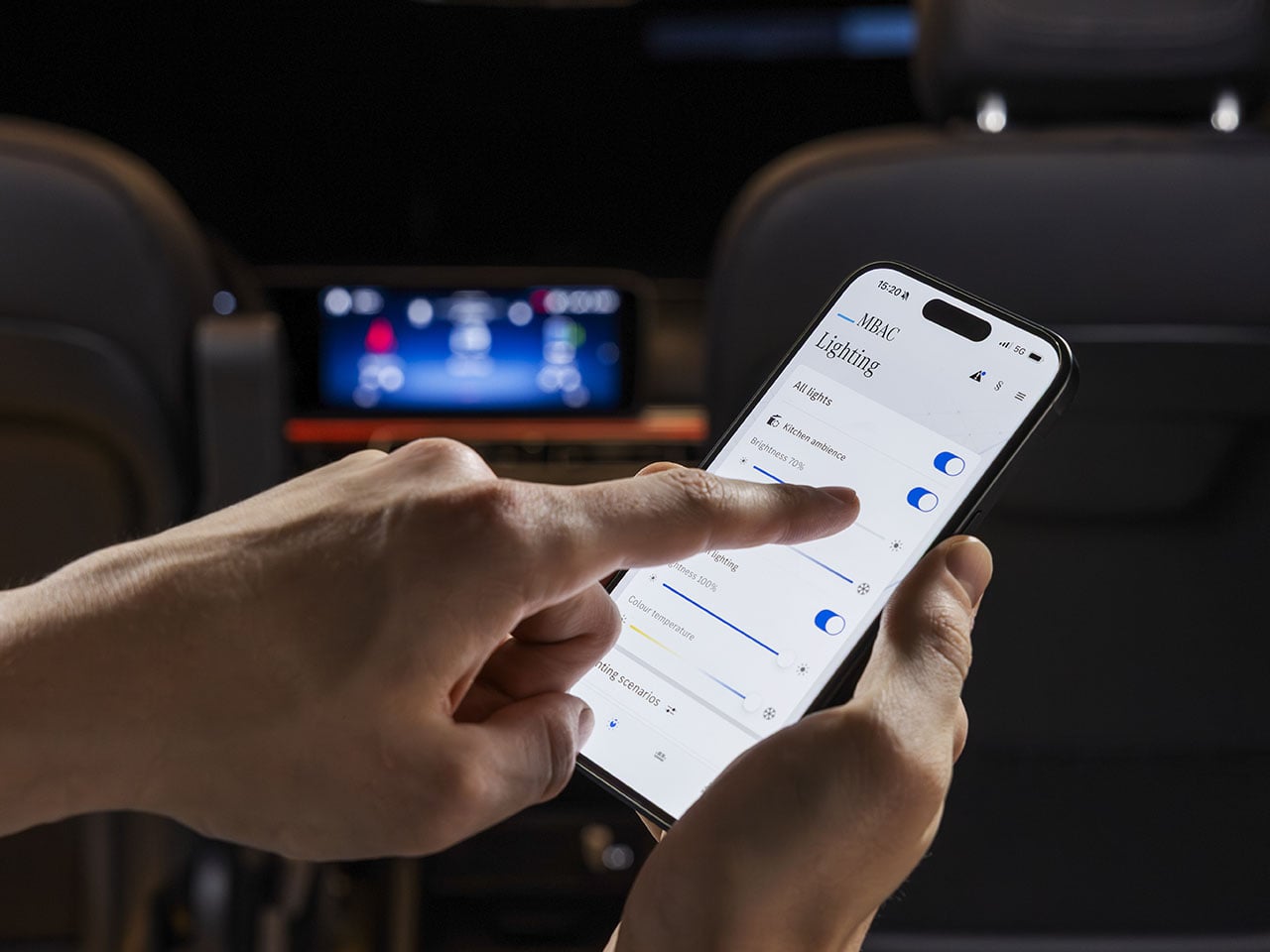
MBAC infotainment suite is another interesting facet of the new Mercedes camper van. Sitting in the cockpit, the smart touchscreen can control the interior components like the vehicle’s upgraded eight-speaker audio system and pop-up roof lighting. The infotainment system also has instant control to pop-up roof. You can deploy or retract the lifting roof remotely, while also maintaining the temperature of the van home.
The new Marco Polo will be available to order soon, Mercedes notes. It also mentions in the press release that the launch of Marco Polo Horizon is also on the cards. This model shares similar features except for the built-in kitchen unit, making it suitable for weekend outings or short holidays only.
Many people dream of bringing the comfort of indoors outside. Whether it’s a spontaneous picnic, a weekend camping trip, or simply enjoying a small balcony, creating a cozy outdoor setup has always been tricky. Traditional outdoor furniture tends to be heavy, bulky, and hard to move, forcing you to choose between convenience and comfort.
Today, that’s changing as a new wave of innovative, portable designs blends style, durability, and functionality, making it effortless to transform any space into a personal retreat. With these smart solutions, relaxation becomes simple, instant, and beautifully stylish, which is why portable outdoor furniture is quickly becoming a must-have.
1. The Shift to Ultra-Light Designs
Heavy metal and solid wood frames are being gradually replaced by ultra-light and highly durable alternatives. Materials like aerospace-grade aluminum and advanced carbon fiber are redefining outdoor furniture, allowing pieces to maintain strength while being significantly lighter. Carrying a full lounge chair or folding table with one hand is now possible, making outdoor setups far more convenient and accessible.
This transformation also improves storage and usability. Lightweight furniture is easier to move, encouraging more frequent use and reducing the effort required for setup. Additionally, these materials naturally resist rust and corrosion, ensuring the furniture remains functional and attractive through every season, making them a smart, long-lasting investment.
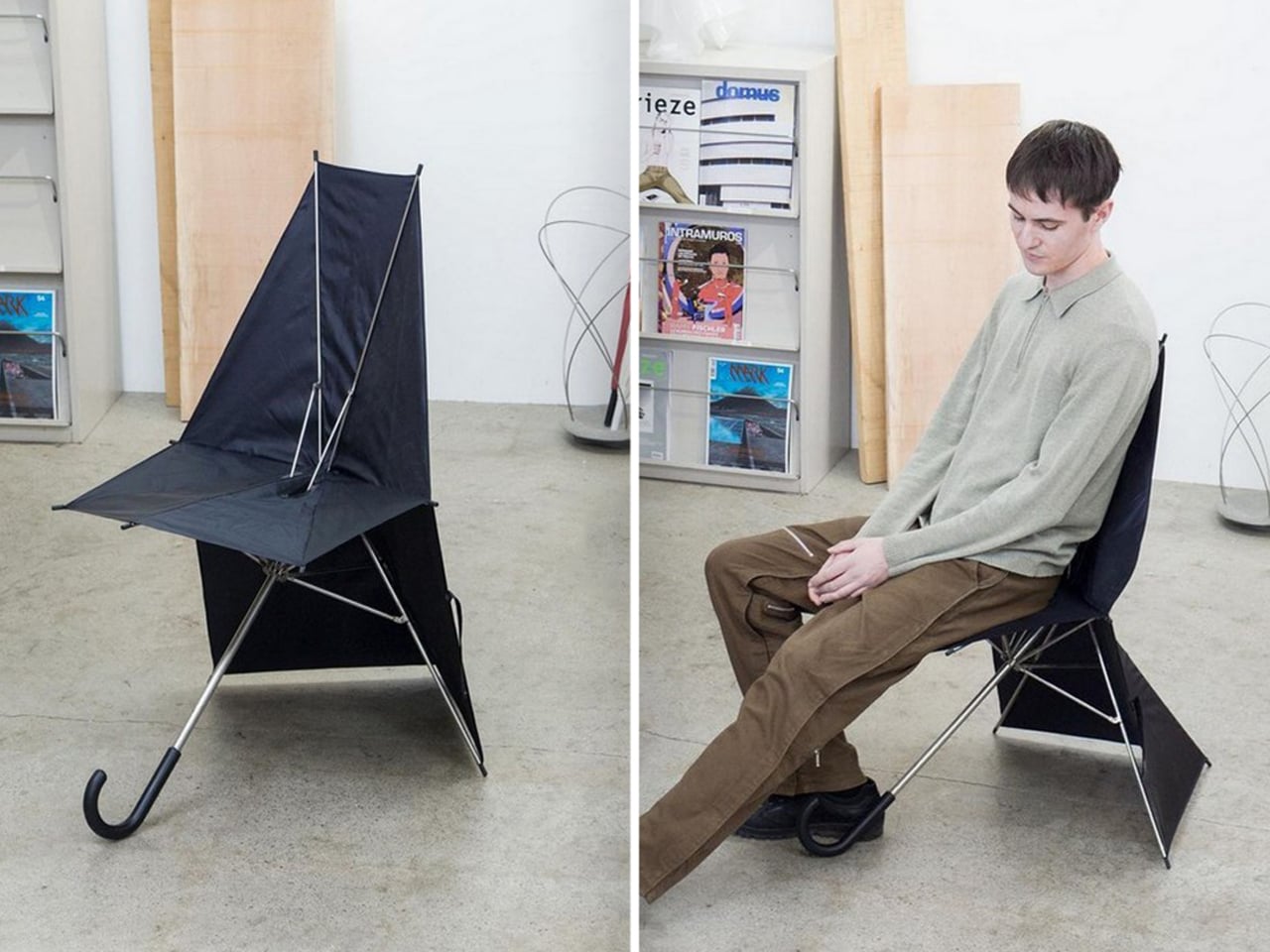
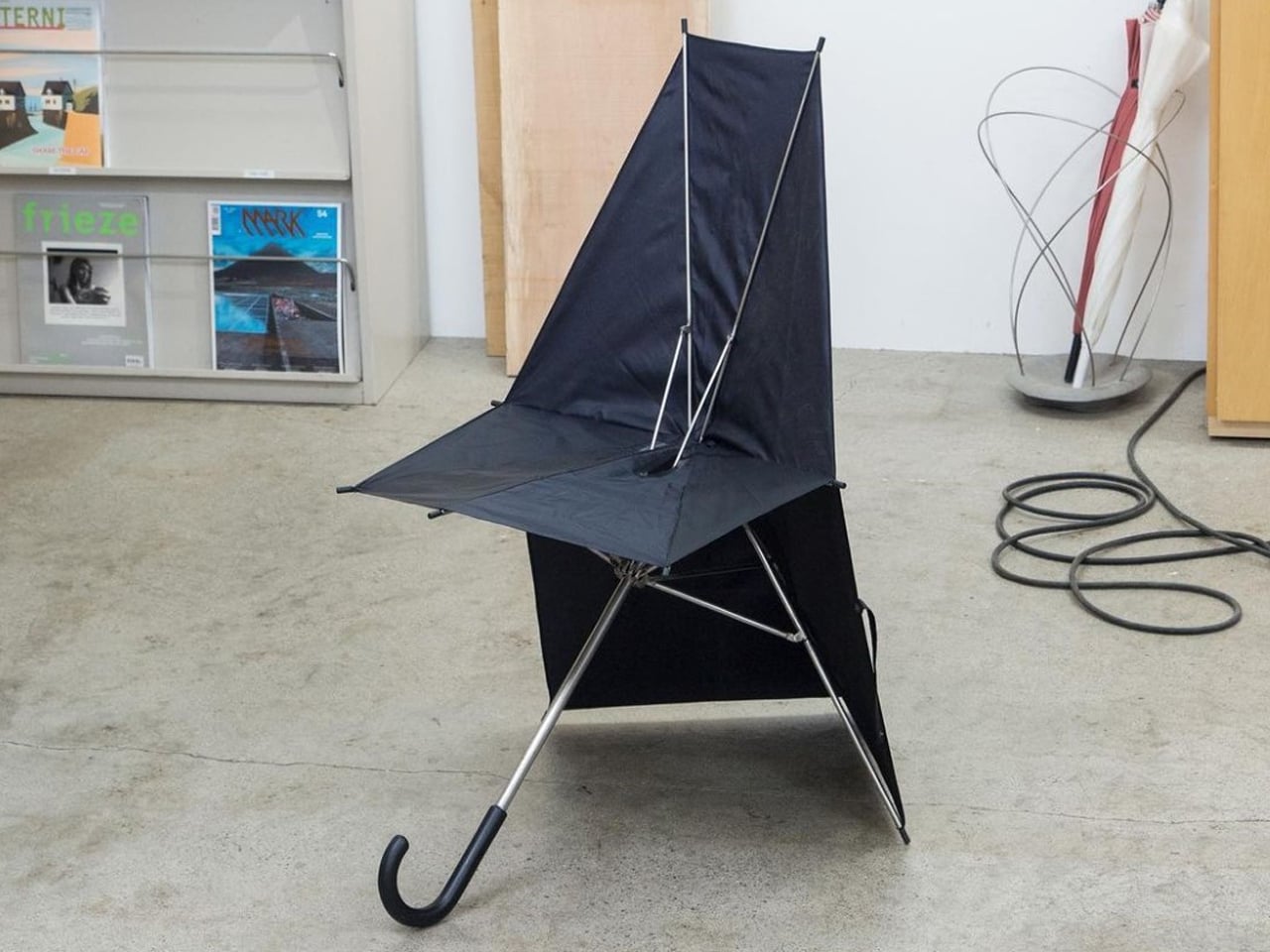
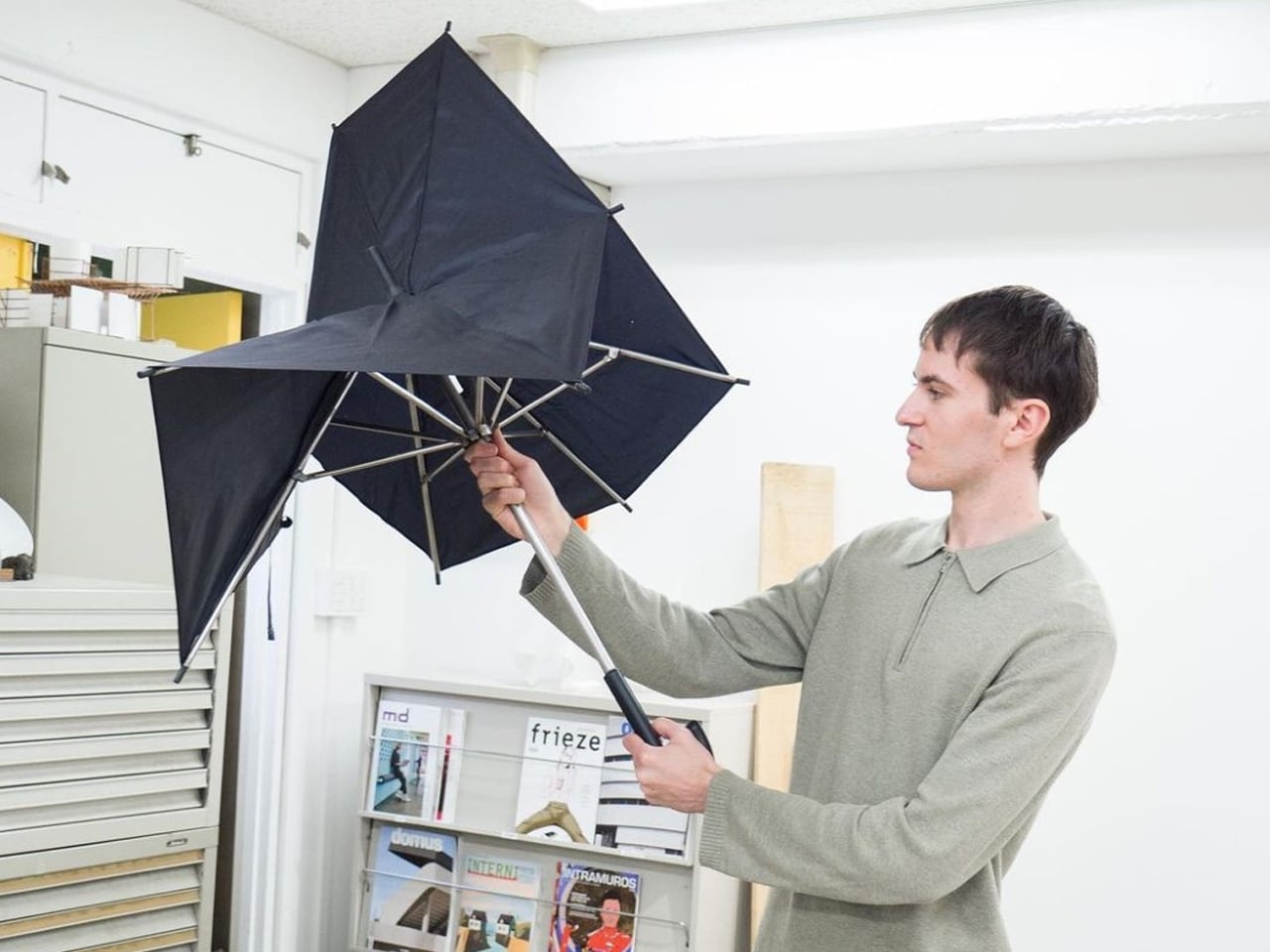
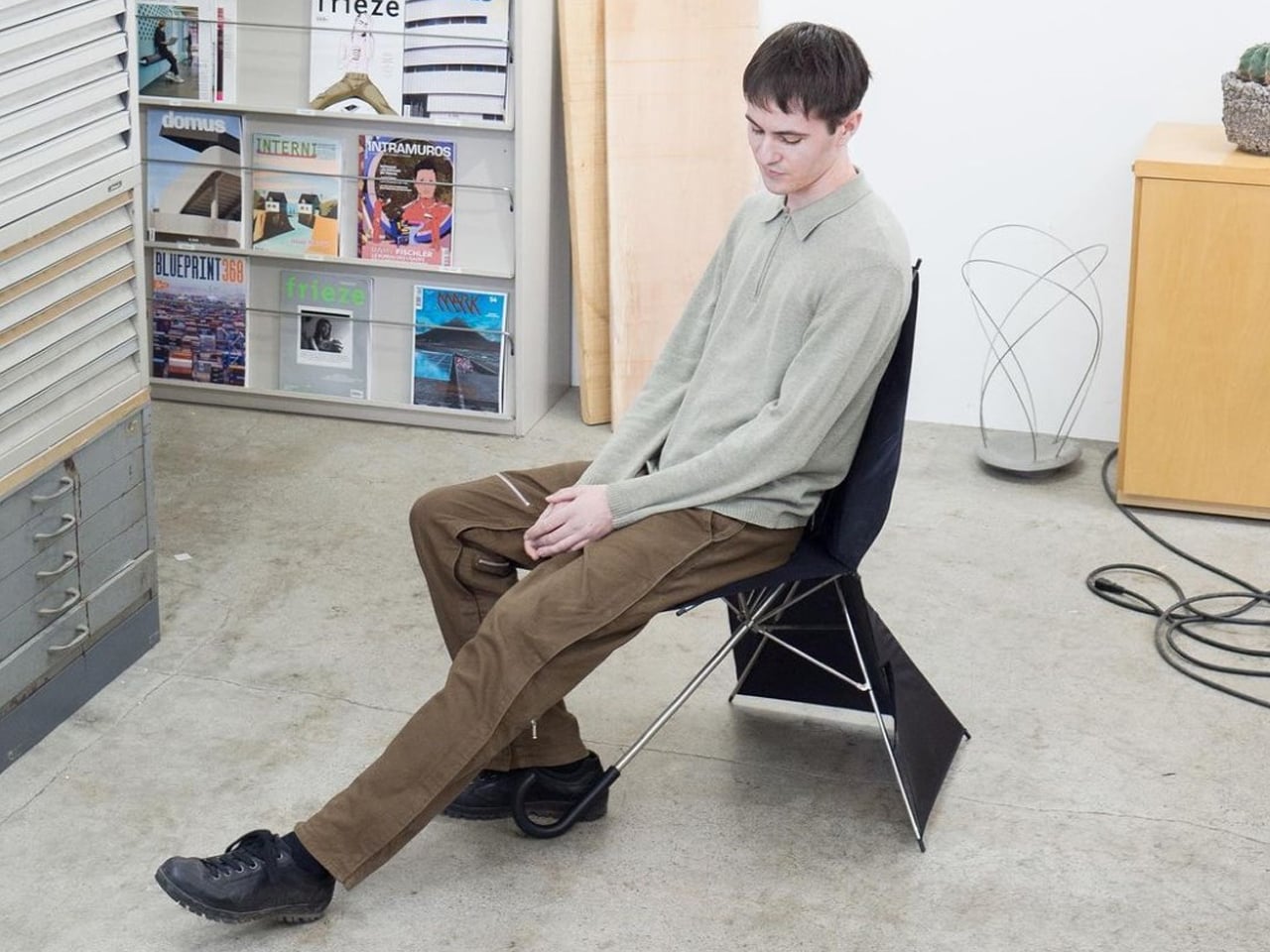
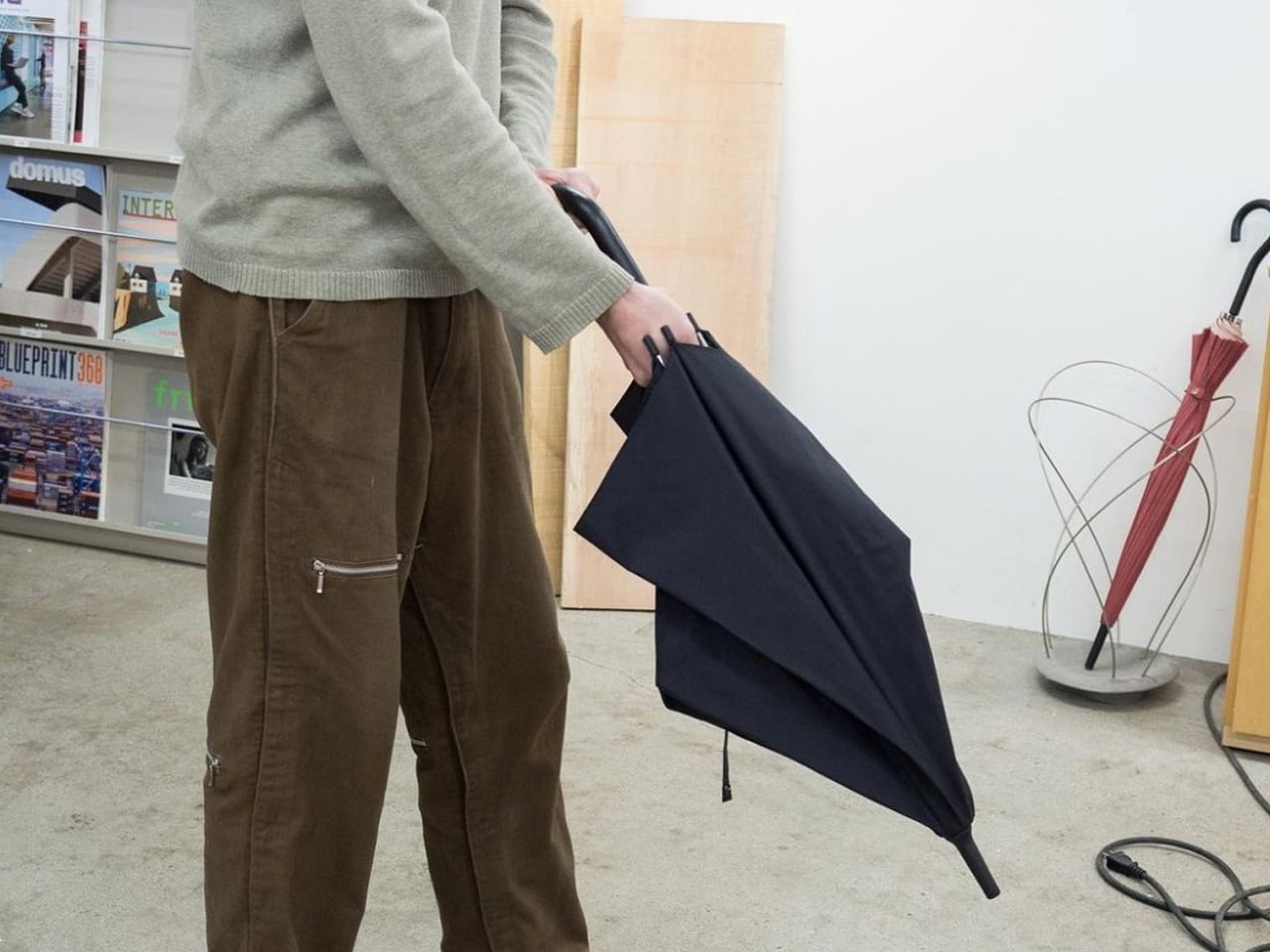
Designer Yanagisawa Sera reimagined portable seating by hiding a chair inside a standard umbrella, offering a compact, socially acceptable alternative to bulky wearable chairs. The umbrella-chair concept is playful yet practical, allowing you to carry a fully functional seat in backpacks, handbags, or even to crowded events without attracting attention. Its novelty lies in blending seamlessly into everyday life while providing a solution for spontaneous seating needs.
The chair’s stainless steel frame folds neatly into the umbrella shape, while a stretched fabric seat distributes weight to support an adult. In certain situations, it can even function as an umbrella, though it is heavier than standard models.
2. Innovation in Folding Mechanisms
Designers have replaced bulky, outdated hinges with telescopic and accordion-style systems, allowing full-sized chairs and tables to collapse into compact, easy-to-carry forms. These mechanisms are designed for smooth, safe, and quick operation, often requiring just one motion to set up or stow away, making outdoor living more convenient than ever.
This advancement is a game-changer for small-space living and frequent travelers. Entire dining sets can fit into a closet or car trunk, taking up minimal space. Secure, easy-to-use locks ensure stability, safety, and practicality.
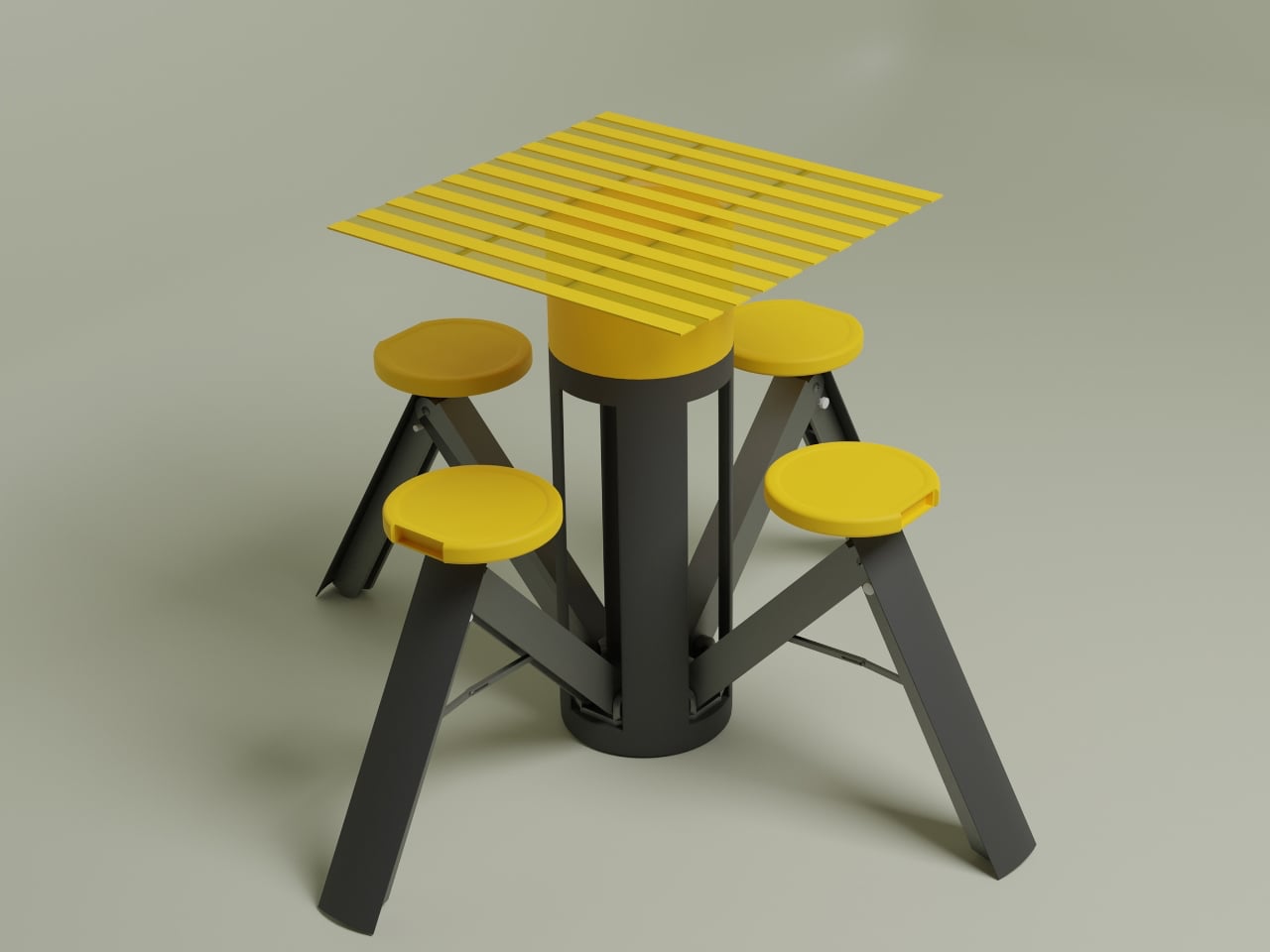
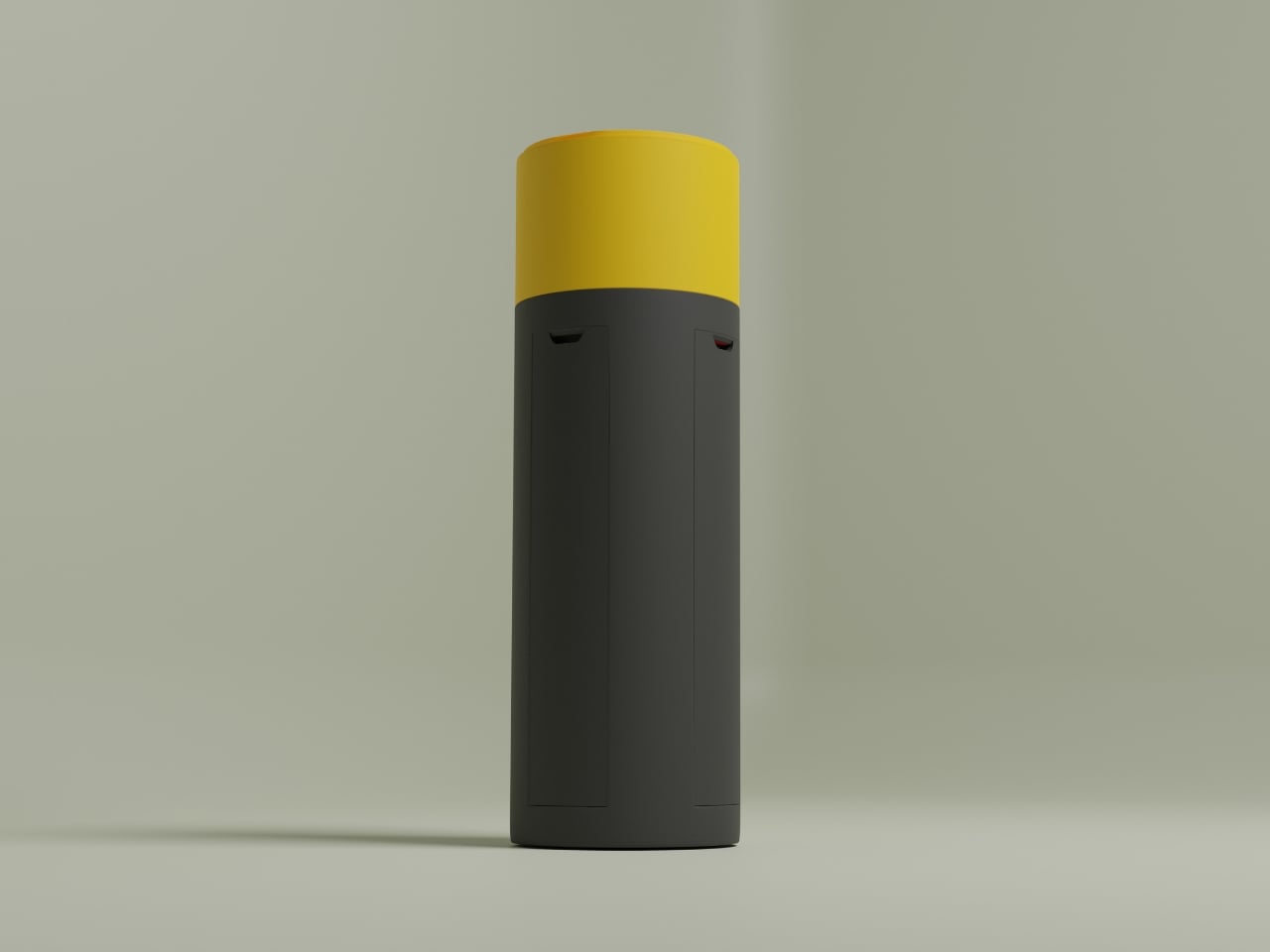
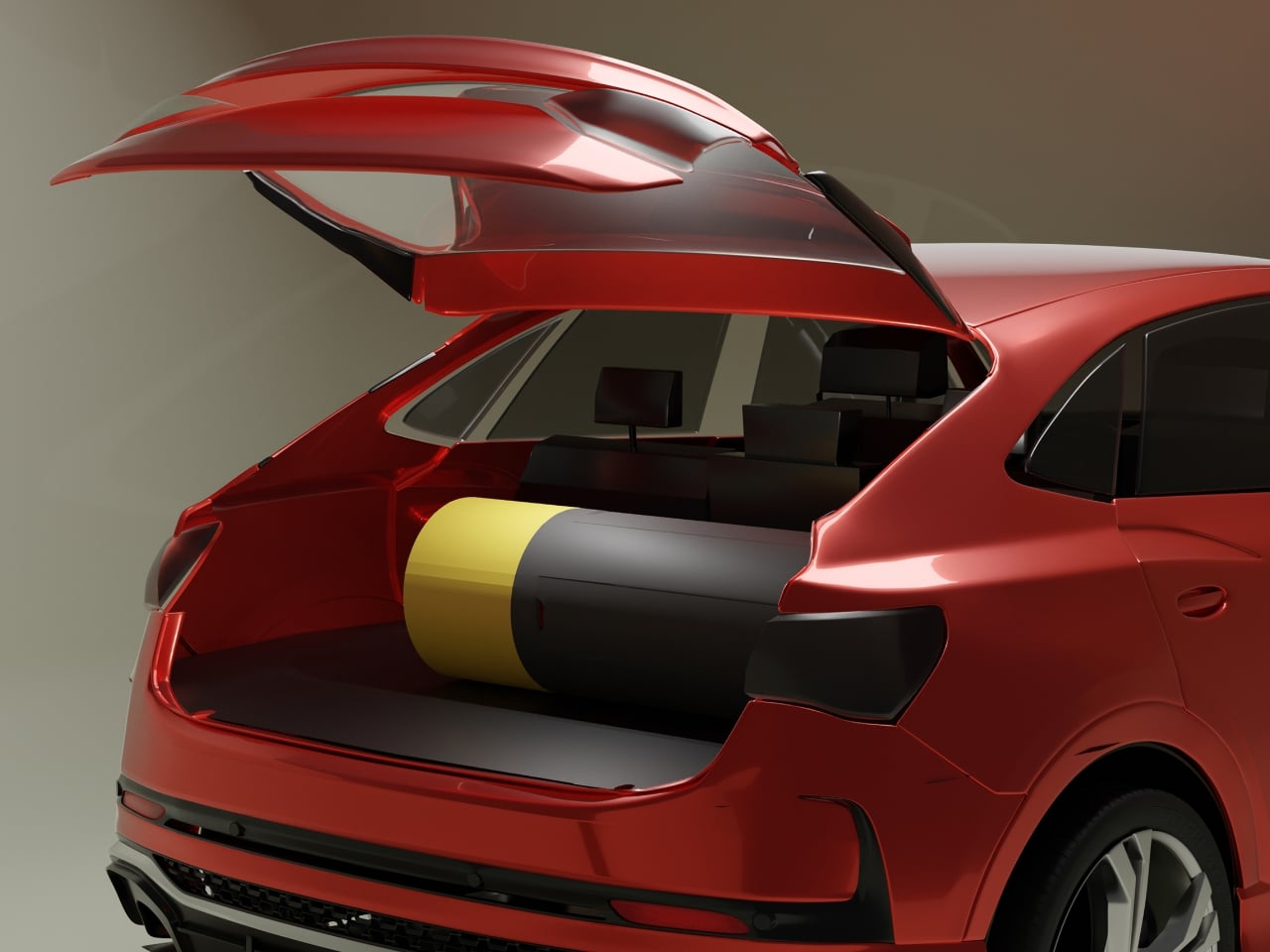
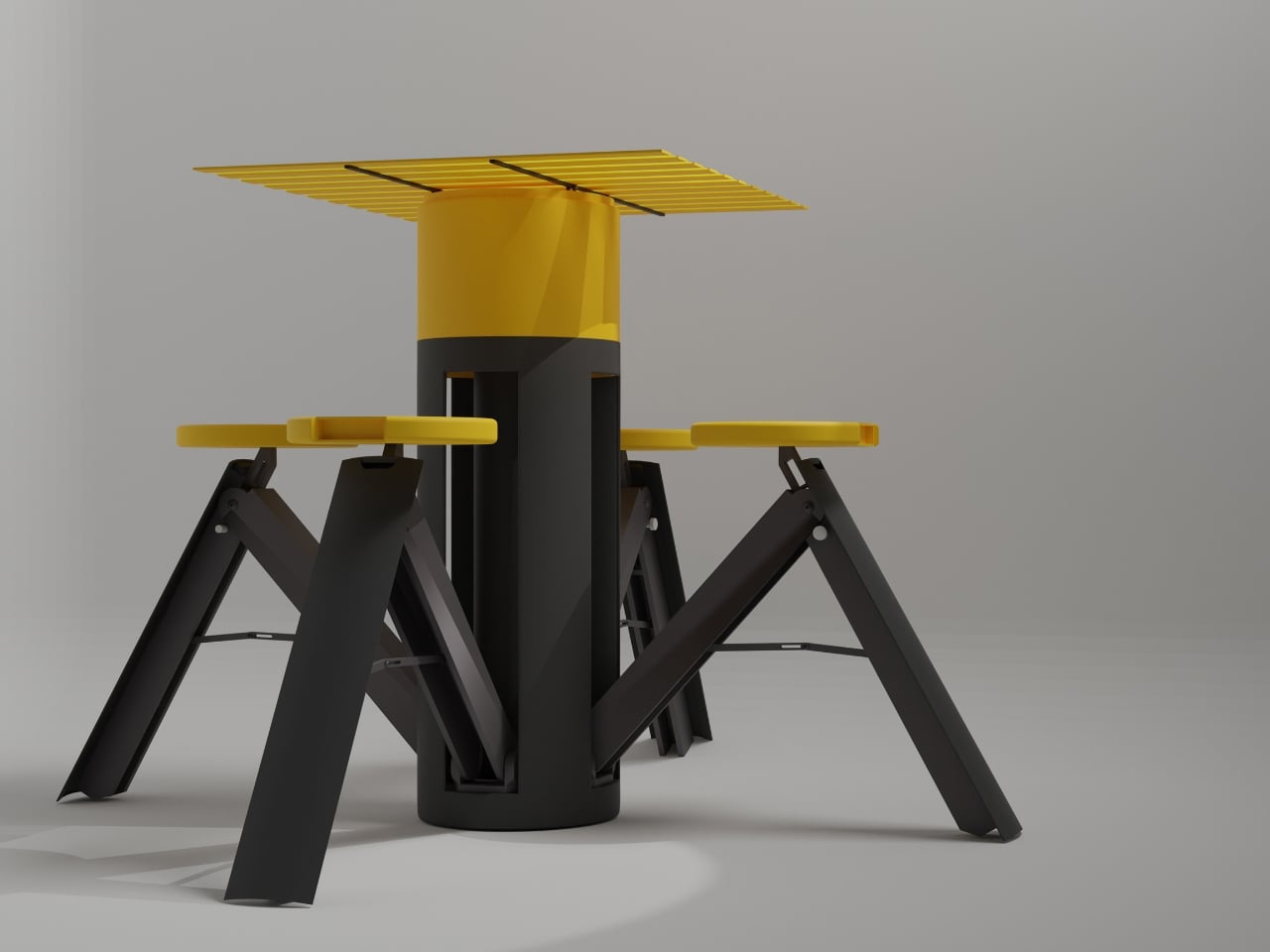
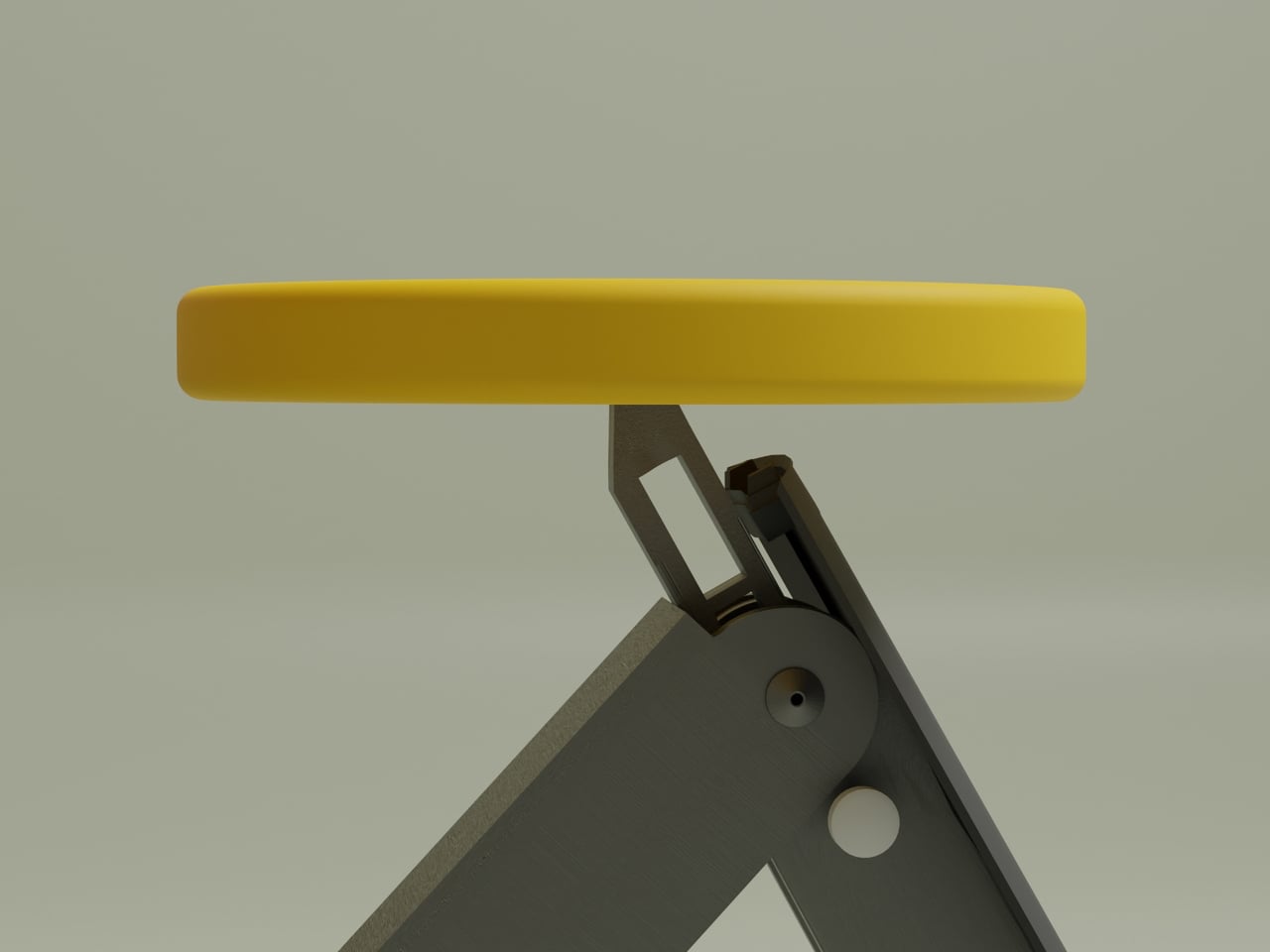
porTable by Nikhil Zachariah is an innovative outdoor furniture concept designed for mobility and convenience. Shaped like a sleek cylindrical container with a bold yellow lid, it’s lightweight, compact, and easy to carry whether heading to a picnic, camping trip, or a day at the beach. Once opened, the unit unfolds into a complete dining set for four, featuring a sturdy tabletop and fold-out seats cleverly built into the design. The charcoal gray and yellow palette adds a modern, playful touch, while its tool-free setup ensures instant usability in any outdoor setting.
Perfect for spontaneous adventures and alfresco living, porTable eliminates the hassle of heavy, bulky furniture. It fits effortlessly into a car trunk, sets up quickly for meals, games, or gatherings, and folds neatly back into its cylindrical form when done. Designed with versatility and efficiency in mind, this smart solution brings comfort, style, and functionality to the outdoors without adding clutter.
3. Available in Durable, All-Weather Fabrics
Portable outdoor furniture now relies on advanced, all-weather fabrics rather than thin, easily torn canvas. Materials like woven polyester, treated nylon, and breathable mesh are engineered for durability, UV resistance, and color retention, ensuring they stay vibrant even under intense sunlight. These fabrics combine toughness with comfort, making them ideal for regular use in any outdoor setting.
Ergonomic designs enhance relaxation by conforming to the body, while quick-drying materials are perfect for poolside lounging or unexpected rain. Easy-to-clean surfaces reduce maintenance effort, extending the life of furniture. Also, choosing quality textiles guarantees a practical, long-lasting, and enjoyable outdoor experience.
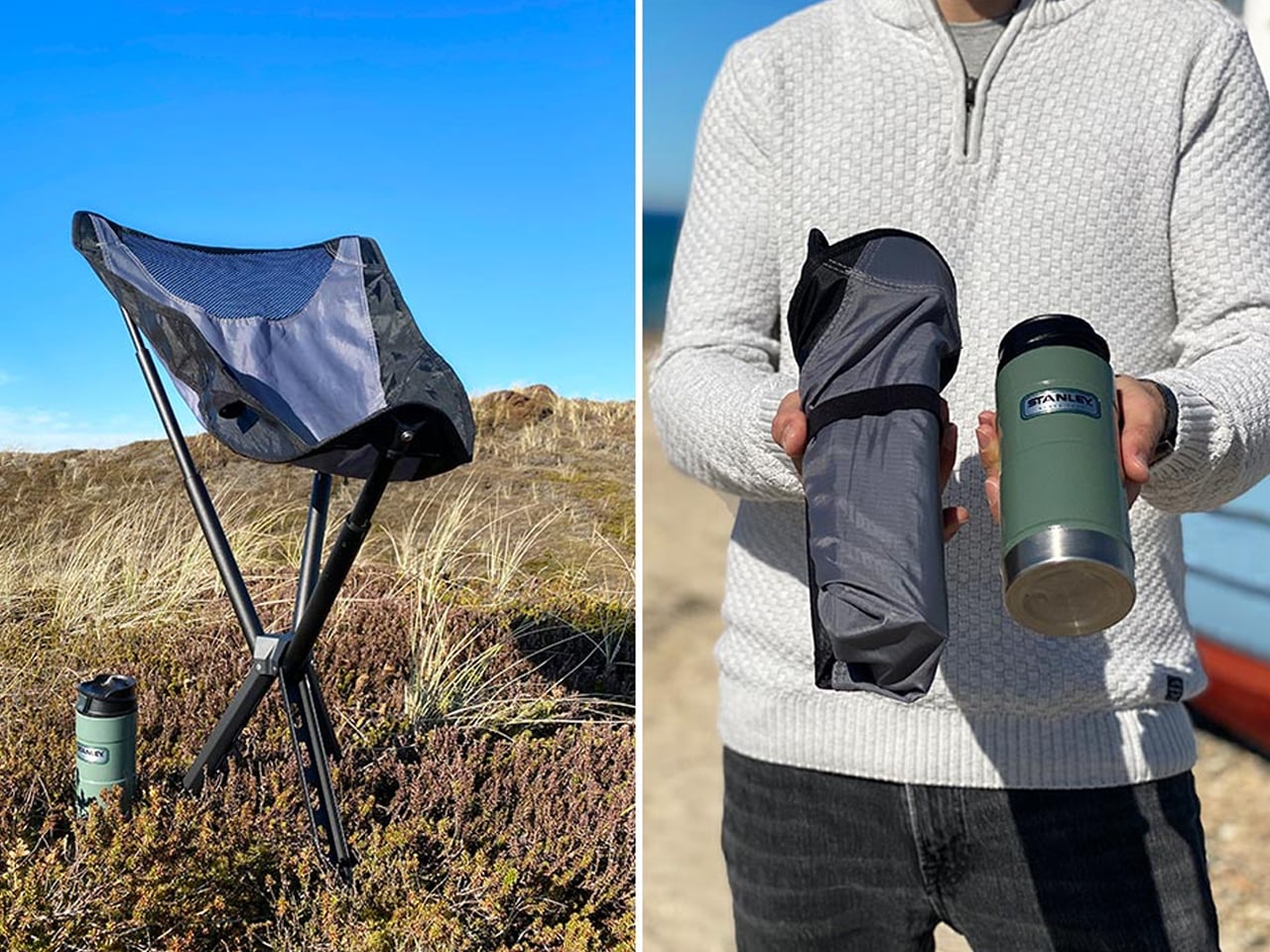
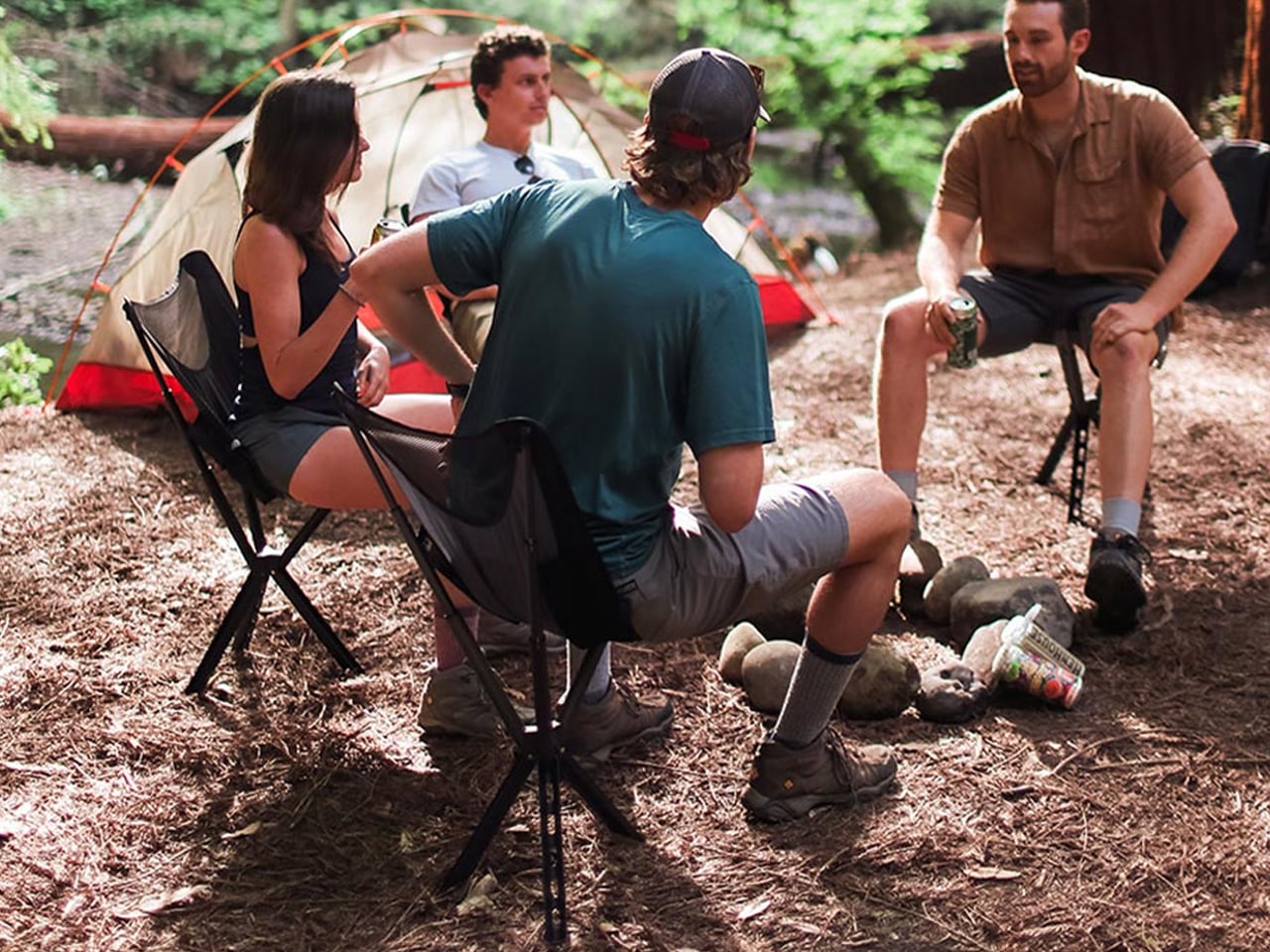
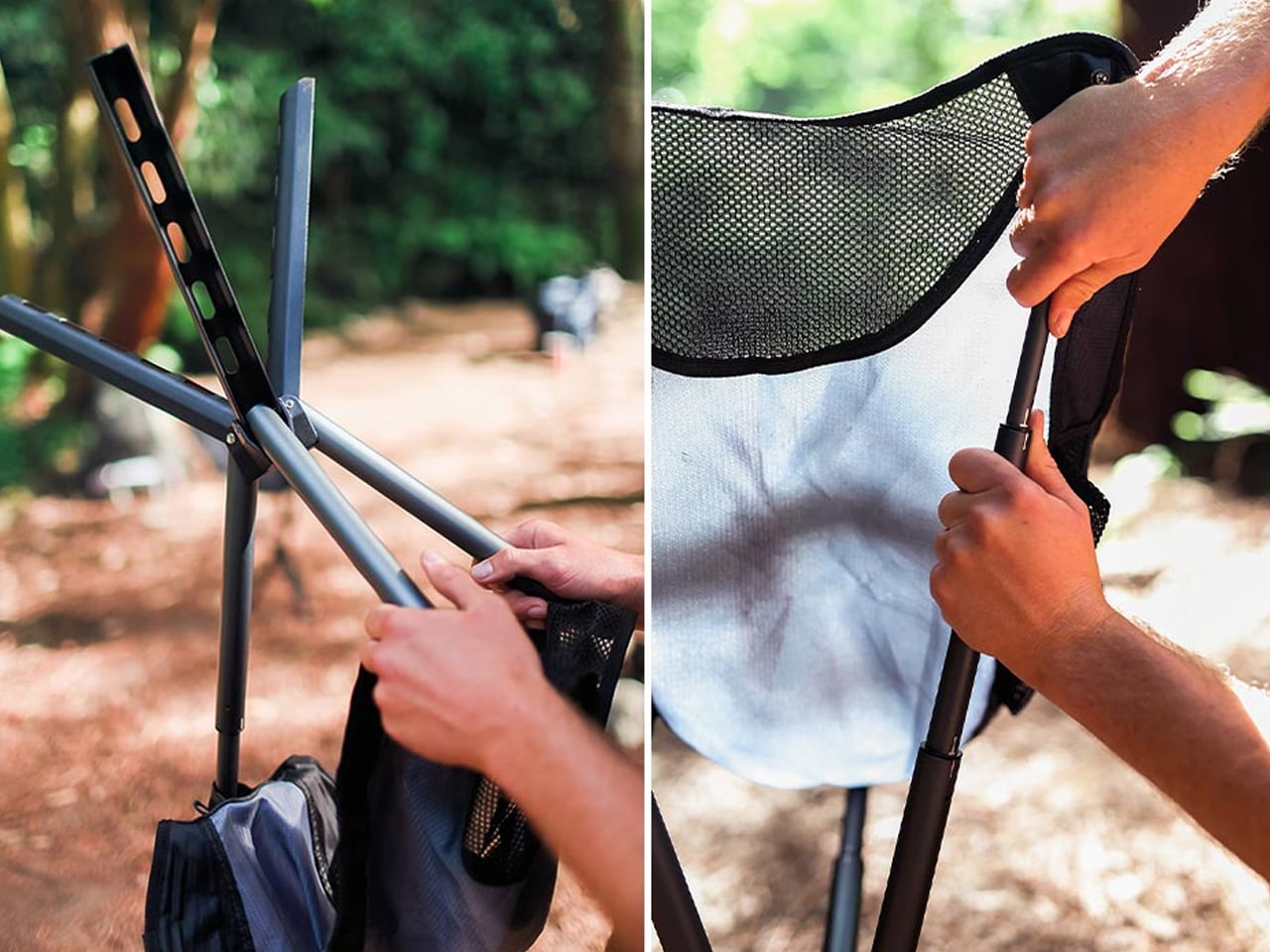
The Campster by Sitpack is a premium outdoor camping chair designed for compactness, portability, durability, and comfort. It features a three-legged structure that offers stability, easy maneuverability, and effortless use in any setting. The one-piece telescoping frame unfolds with a gravity-assisted mechanism, while Sitpack’s proprietary “one-pull” locking system guarantees a secure and reliable setup every time.
The chair features a seating height of 43 cm (17 inches), a breathable ripstop nylon seat, and a lightweight 2 lb frame capable of supporting up to 300 lbs. The pivoting backrest adjusts with user movement, providing enhanced comfort. Supplied with a multi-purpose carry bag, anti-slip feet, and an aluminum carabiner, Campster is ideally suited for outdoor activities ranging from trekking to tailgating, combining practicality, portability, and refined design in a single solution.
4. Sustainability Meets Style
Modern outdoor furniture now balances sustainability with sophisticated design. Consumers are seeking eco-friendly options, and manufacturers are responding with frames made from recycled plastics, sustainably sourced bamboo, and upcycled metals. These materials not only reduce environmental impact but also bring natural textures and a sense of calm to outdoor spaces.
Beyond sustainability, these portable pieces are designed with style in mind. Sleek, minimalist silhouettes and earthy, versatile color palettes allow them to complement patios and indoor spaces. Investing in such furniture supports thoughtful living, combining practicality, elegance, and a commitment to the environment for a truly intentional lifestyle.
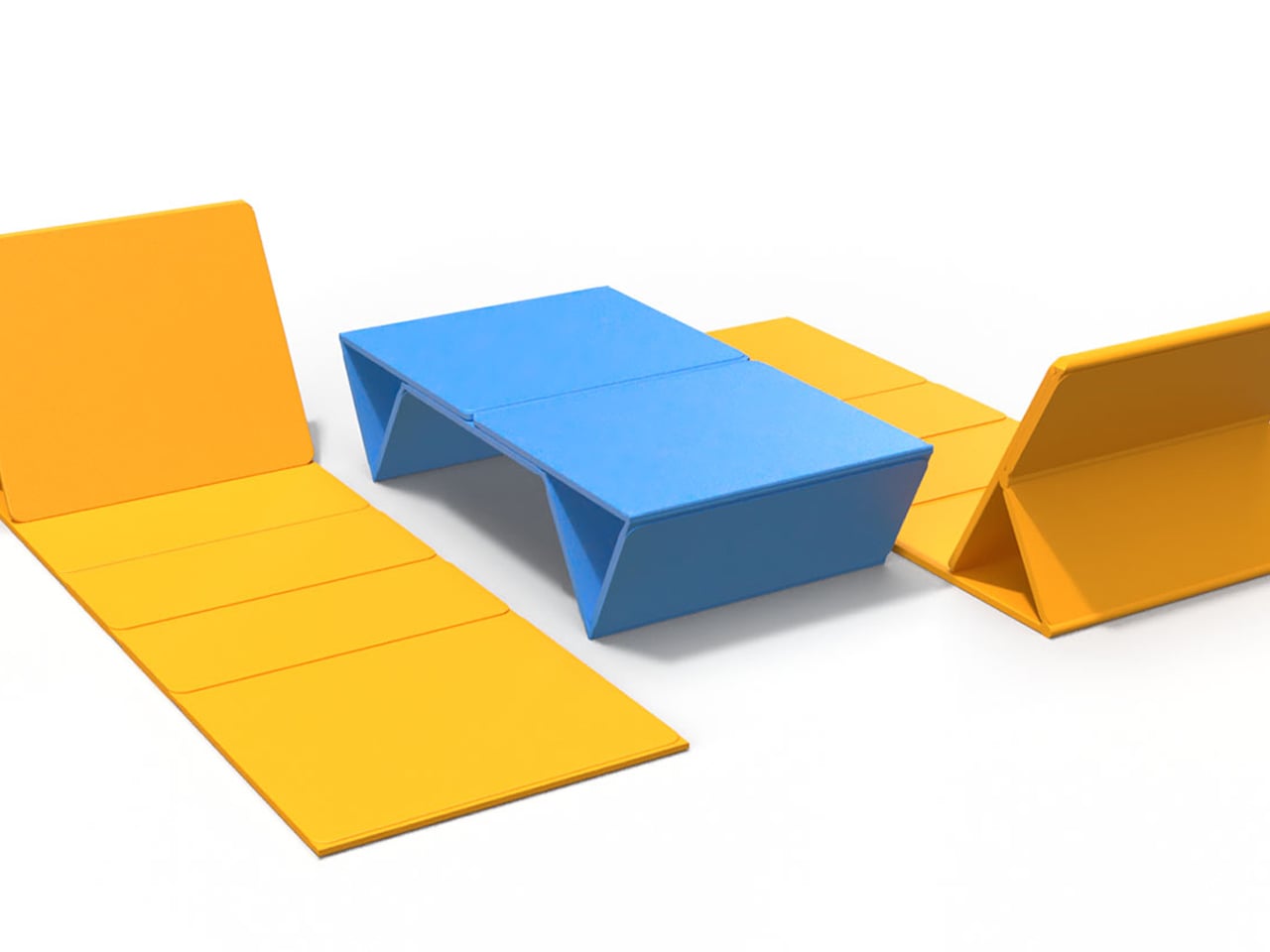
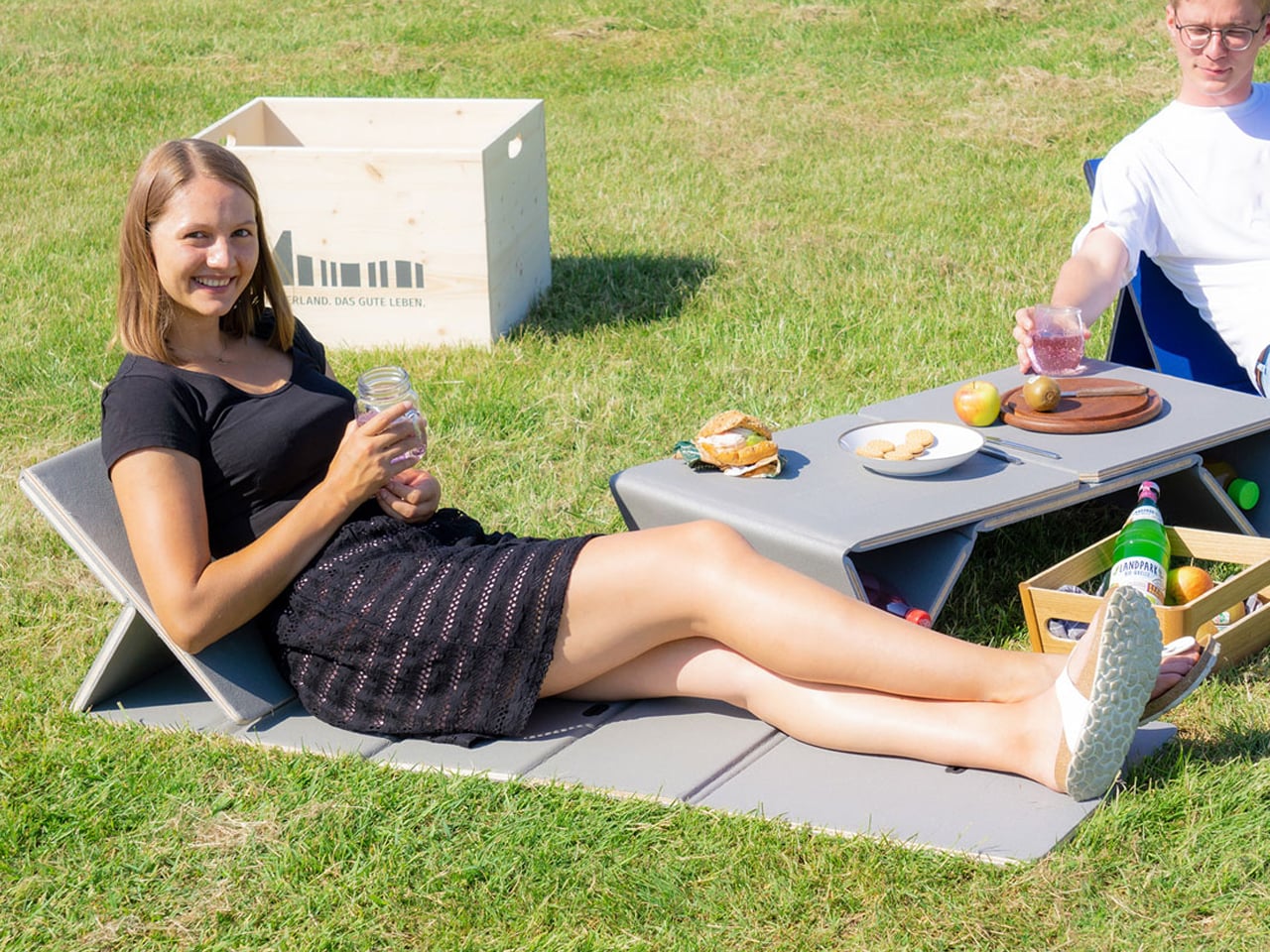
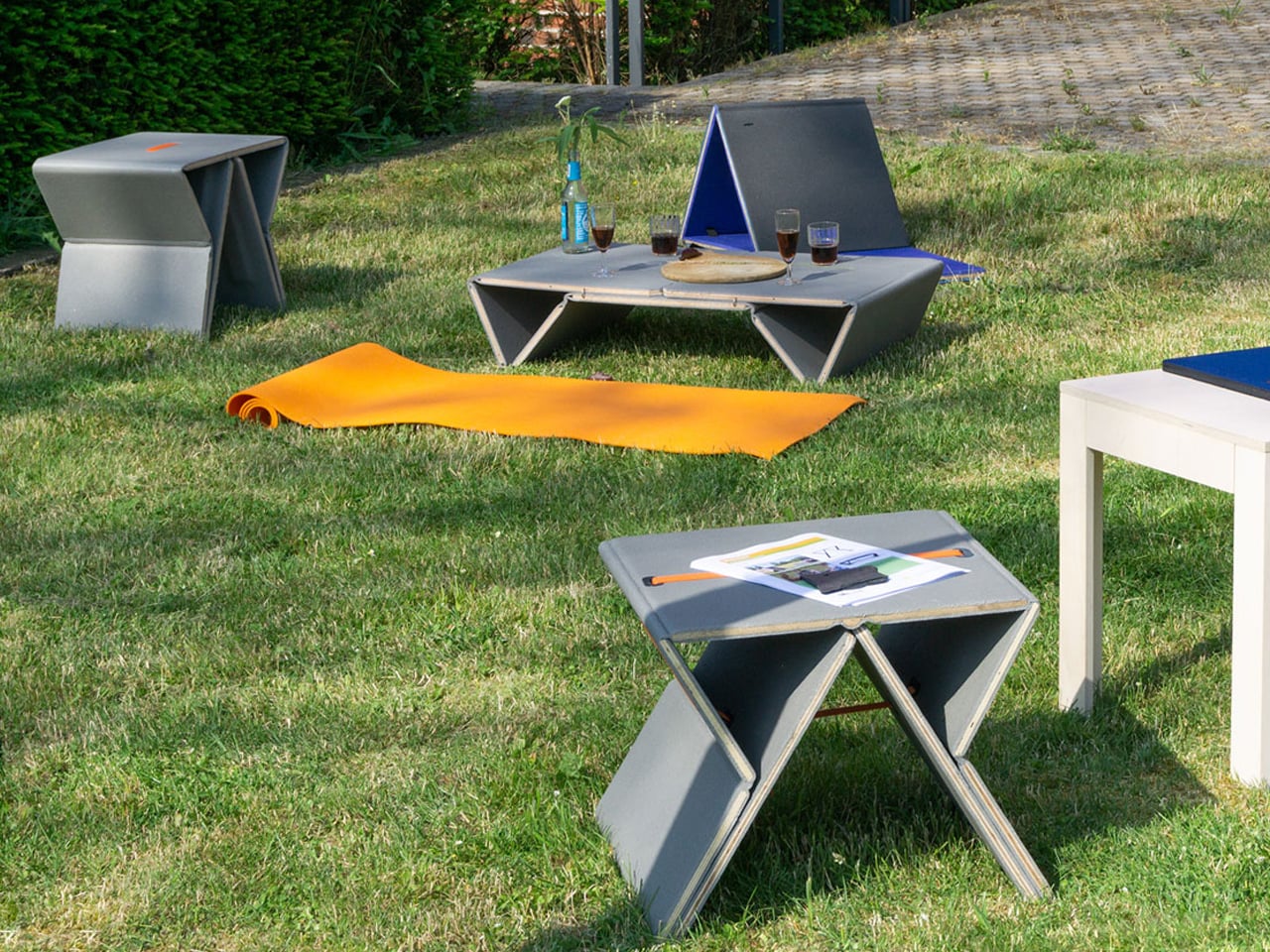
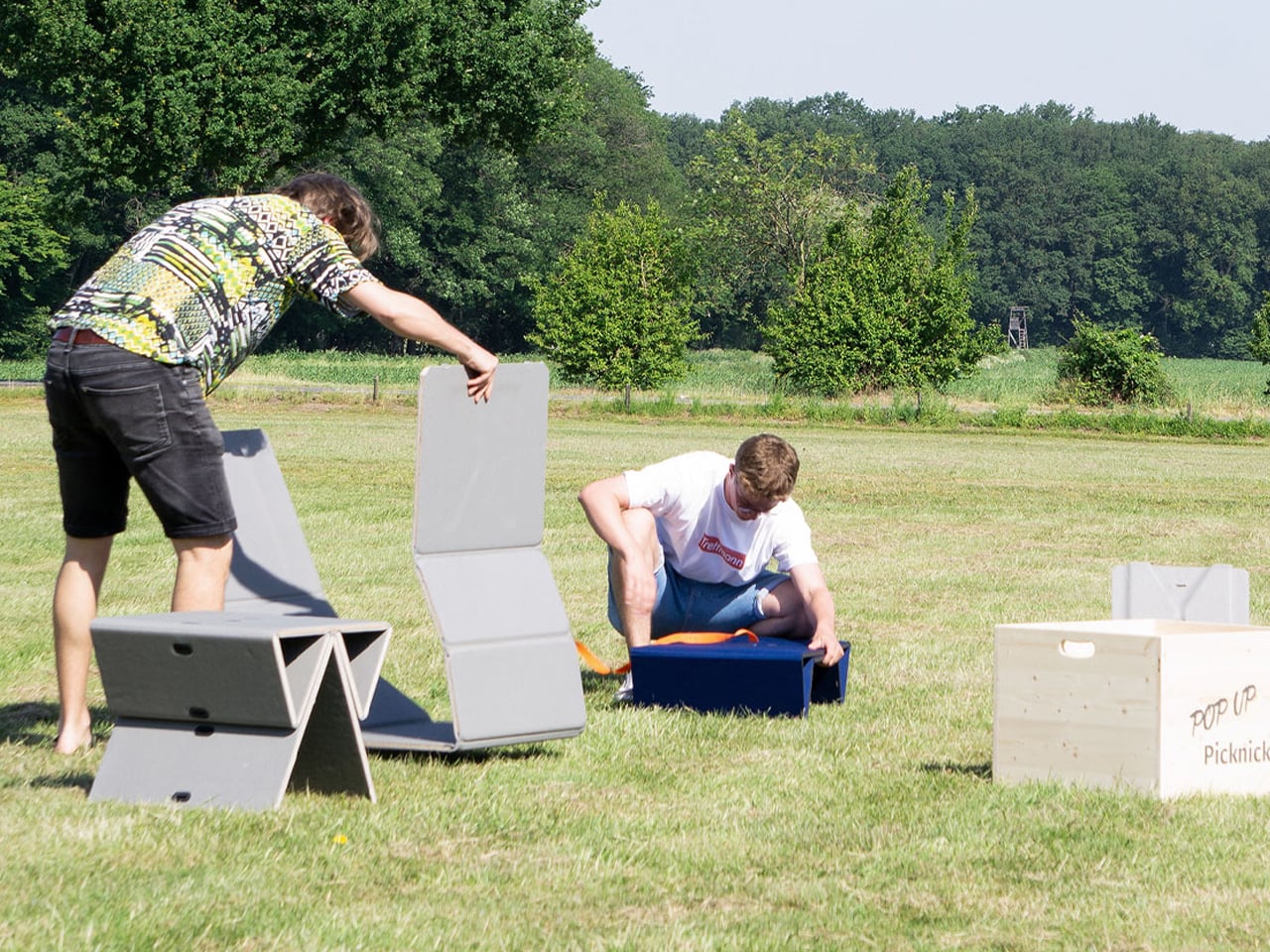
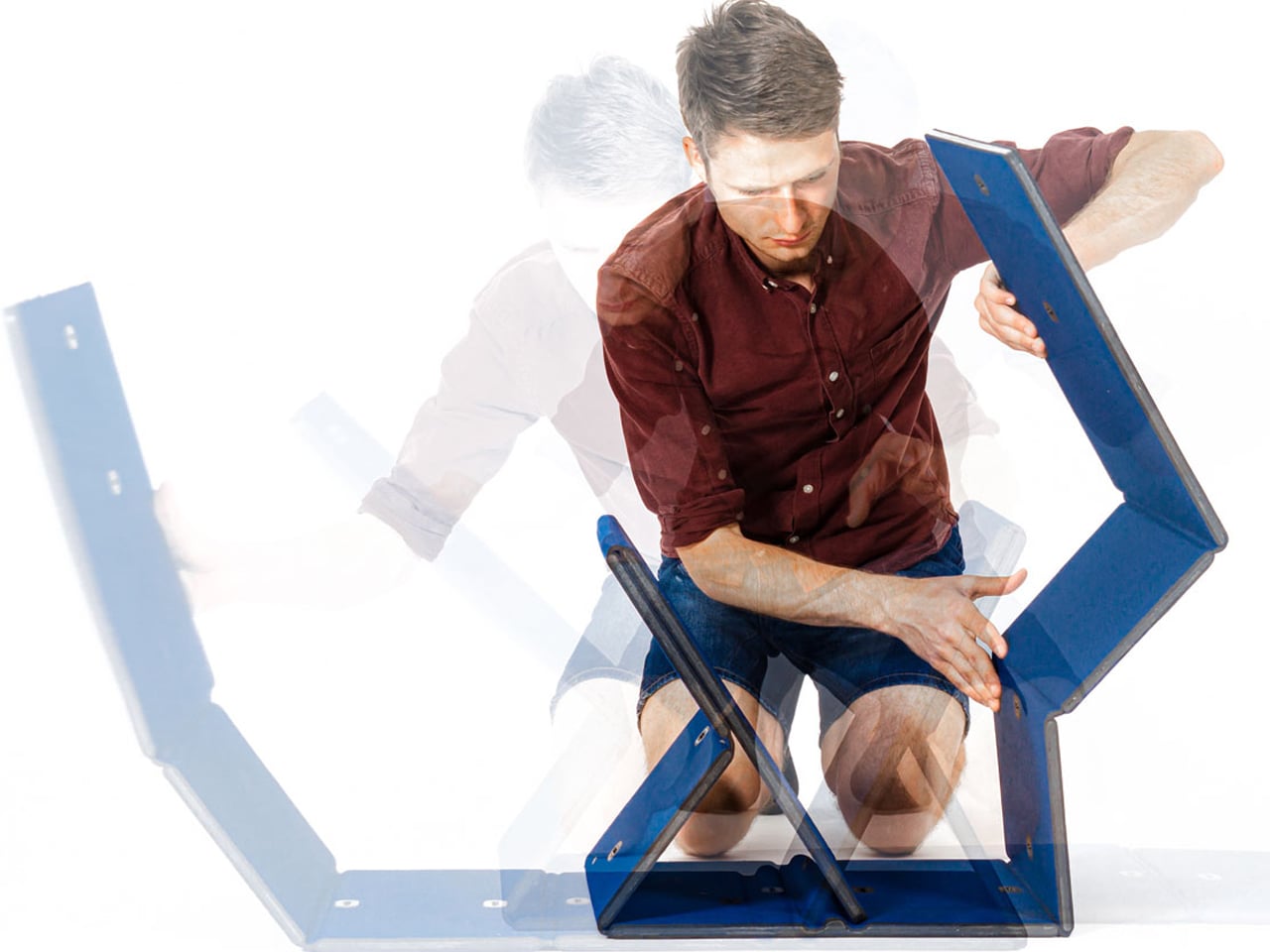
Threefold is a versatile piece of modular outdoor furniture designed to make picnics and camping trips easier and more comfortable. Unlike traditional mats that only serve one purpose, Threefold quickly transforms into a lounger, low stool, or sturdy table with simple adjustments. This adaptability means one does not need to carry extra chairs or tables, making it ideal for everyone, from those who like to stretch out to those who prefer sitting upright.
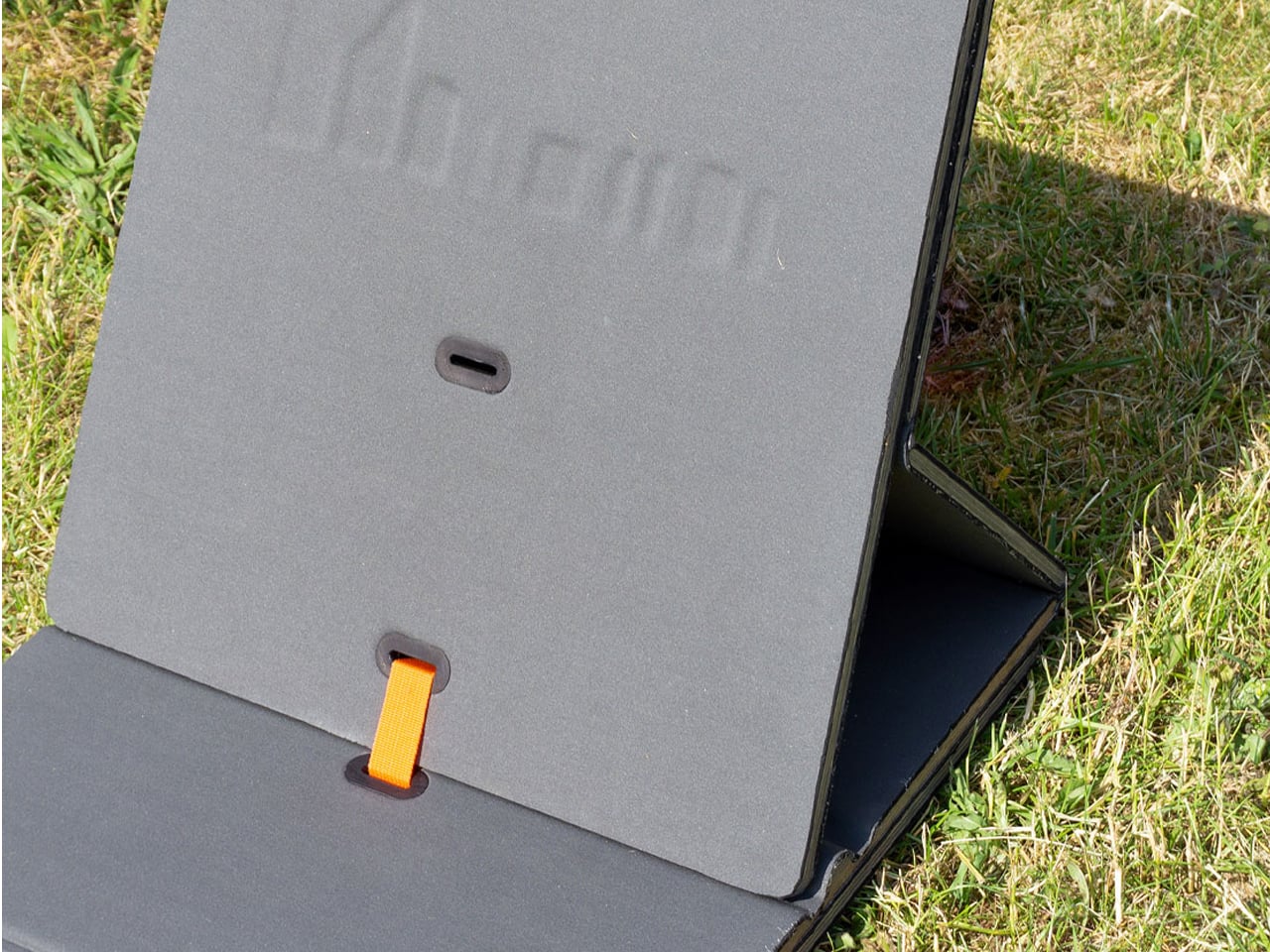
Created by wood furniture engineers Jonas and Nick, Threefold is made from laminated neoprene with a lightweight plywood core for strength and durability. It folds neatly into a compact square, making it easy to transport and store. Available in a range of colors, this smart, portable design brings convenience, comfort, and style to any outdoor adventure, turning any picnic setup into a functional, space-saving solution.
5. Practical Tips for Choosing Portable Outdoor Furniture
When selecting portable outdoor furniture, it’s important to first identify its intended use. For hiking, lightweight designs with a compact pack size are ideal, whereas car camping may call for cushioned seating and built-in features such as cup holders. Consulting reviews can provide insight into real-world setup and takedown, which is often the true measure of a product’s portability.
A modular setup brings greater flexibility, with two folding chairs and a compact roll-up table easily adapting to different spaces and gatherings. Storage solutions also play a key role, using durable carrying bags helps protect the furniture while making packing, transport, and organization far more convenient and efficient.
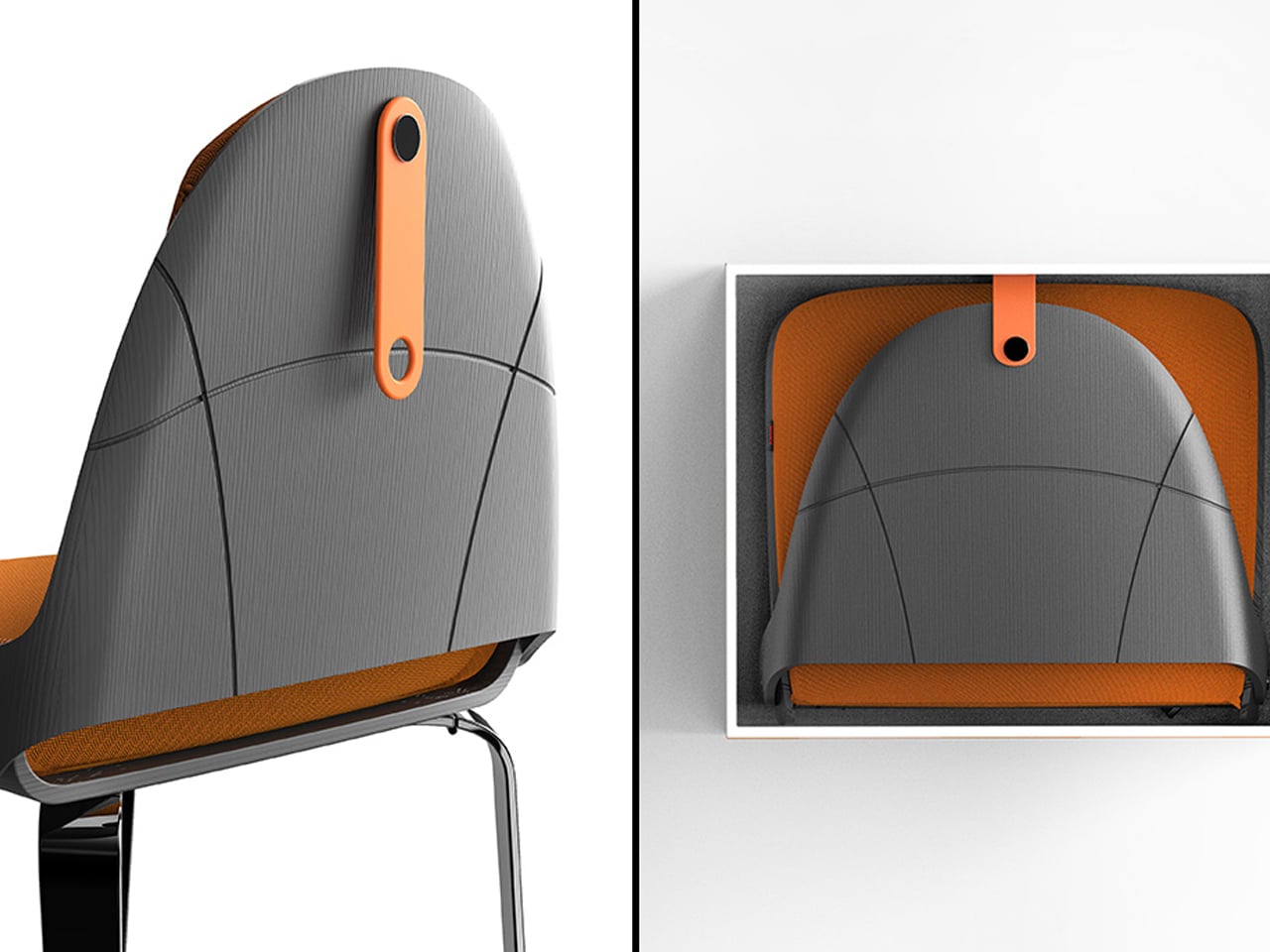
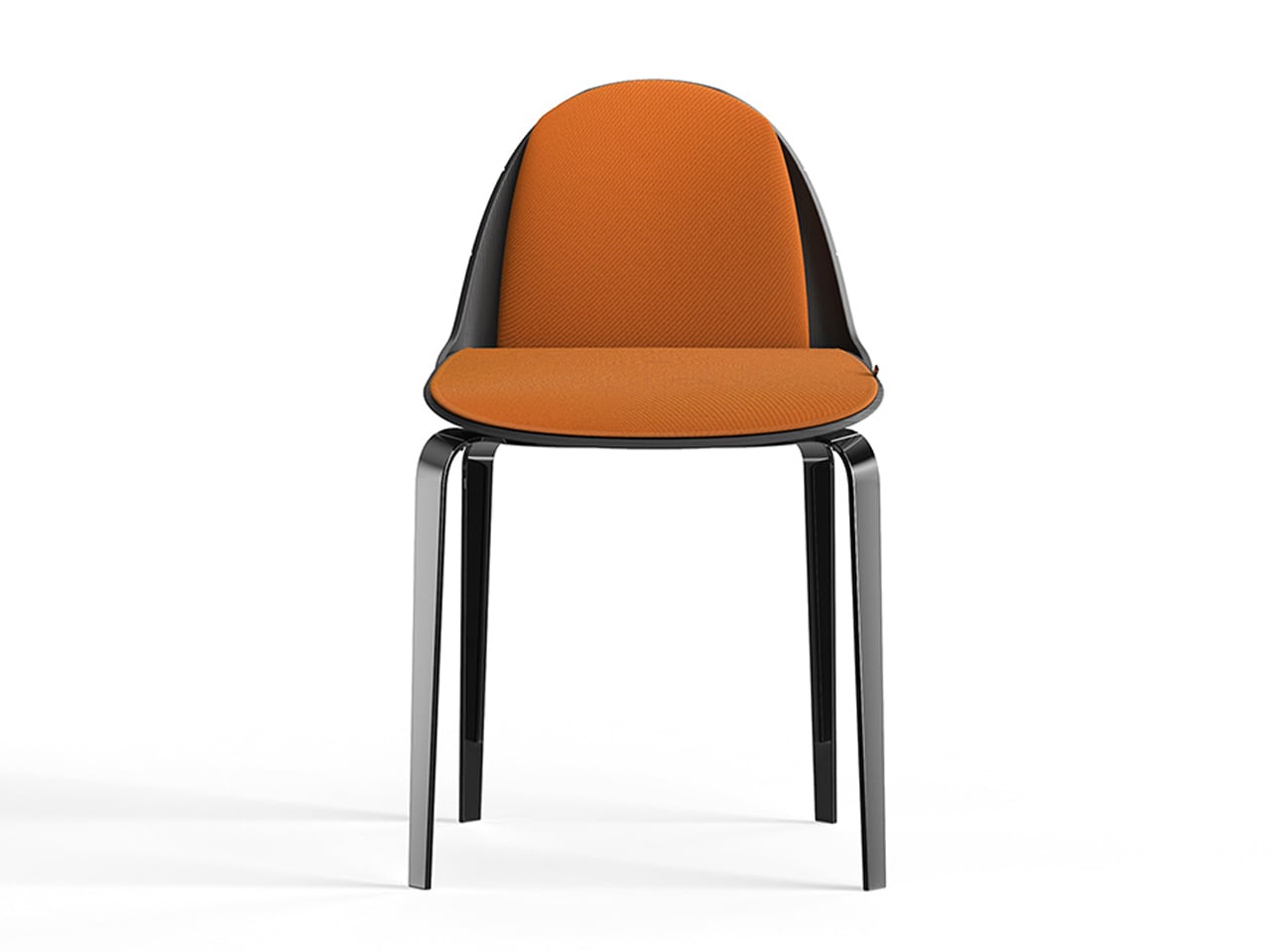
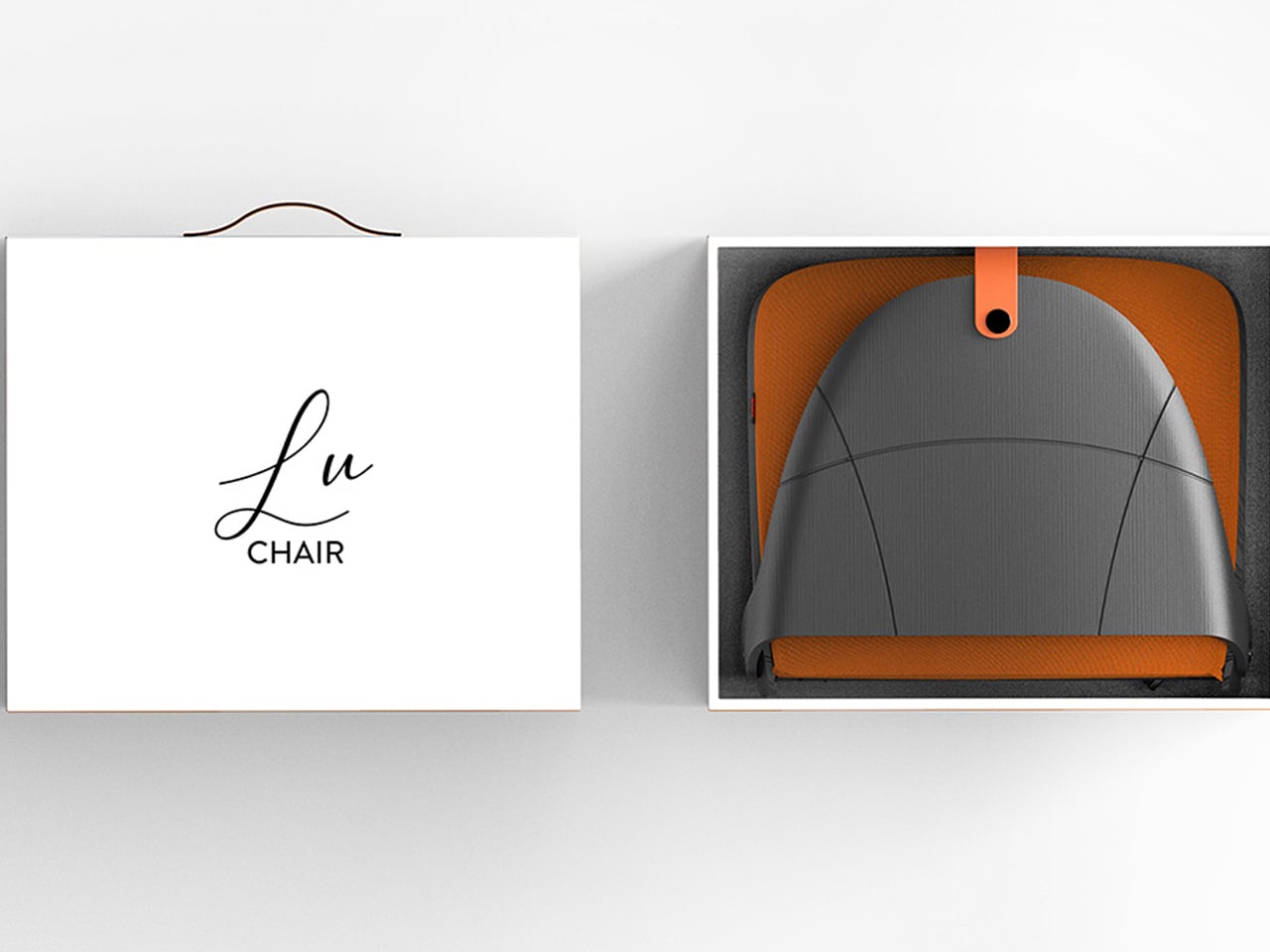
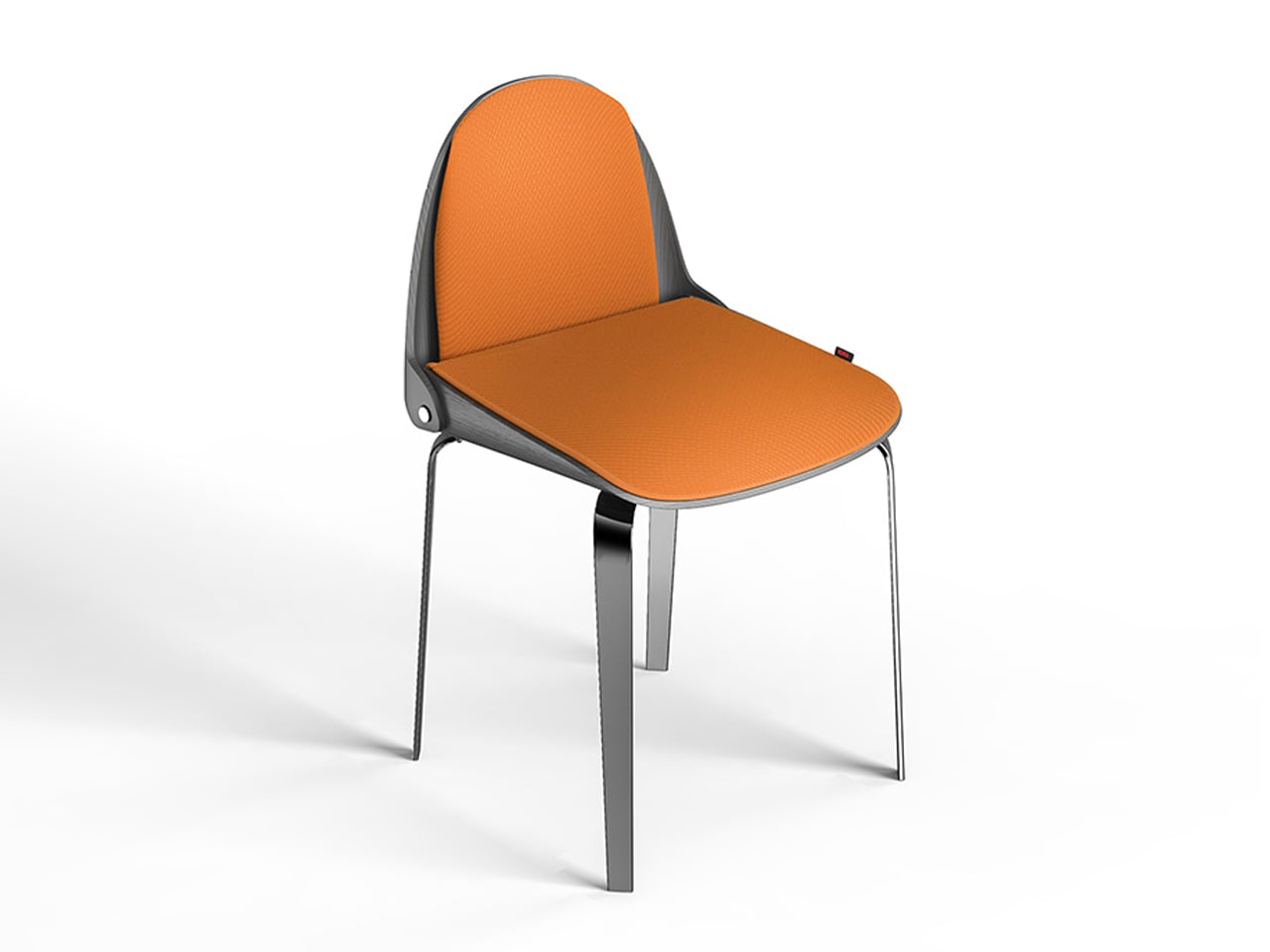
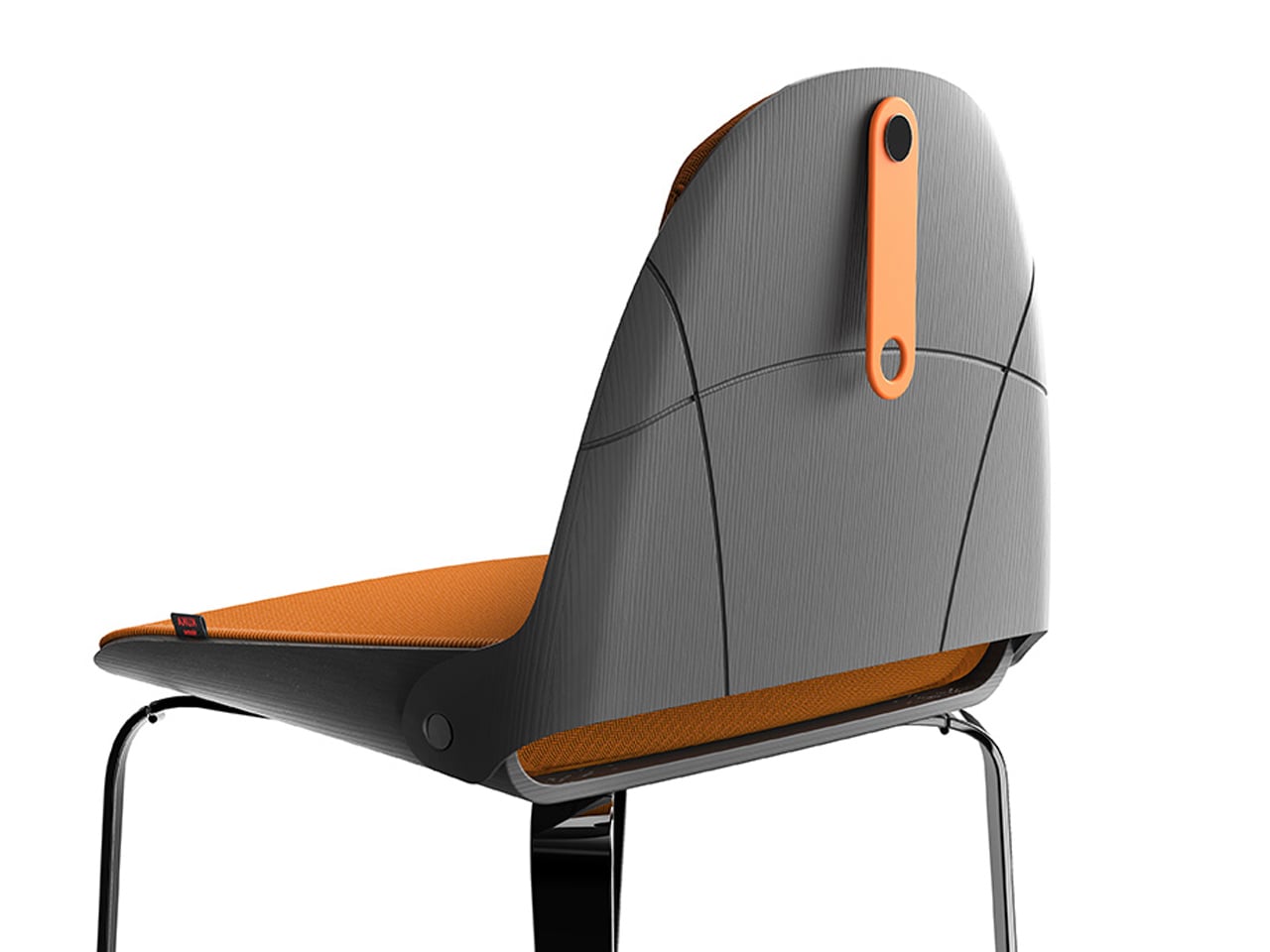
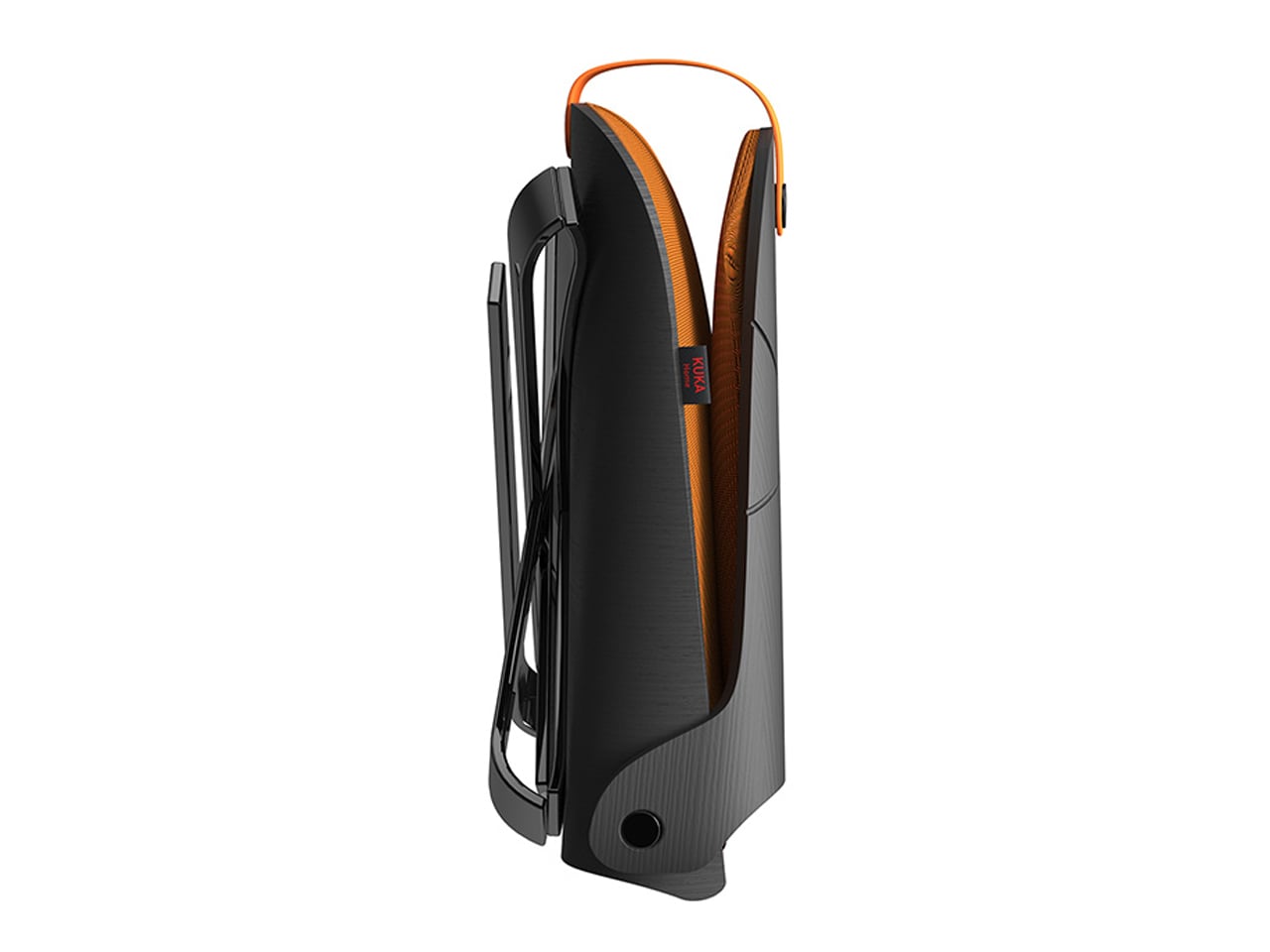
The Lu Chair redefines folding furniture with its smart, highly portable design. Crafted from durable plastic, it combines strength, style, and convenience in one compact piece. Unlike traditional folding chairs that are bulky or hard to carry, the Lu Chair folds seamlessly and can be carried like a backpack, making it perfect for small homes, picnics, or travel. Its smooth folding mechanism saves time and effort, offering a practical seating solution without compromising on comfort or elegance.
Designed with versatility in mind, the Lu Chair’s backrest and legs fold neatly and secure with a rubber strap that doubles as a handle. This compact fold makes storage and transportation effortless, whether for cleaning up a space or taking the chair outdoors. Inspired by “luggage,” the Lu Chair features a modern, minimal design that fits seamlessly into sophisticated interiors and youthful, on-the-go lifestyles.
The new wave of portable outdoor furniture brings style and relaxation to any setting. With lightweight frames, smart folding systems, and sustainable materials, these designs make comfort easy to carry anywhere. They expand living spaces by combining practicality and elegance, transforming a balcony, park, or campsite into a personal retreat for effortless and stylish relaxation.
There’s something oddly satisfying about watching outdoor gear shed its bulk. We’ve seen tents collapse into impossibly small pouches and sleeping bags compress into cylinders the size of water bottles. Now, Camprit is applying that same minimalist philosophy to camp stoves with their TiStove, and the results are kind of brilliant.
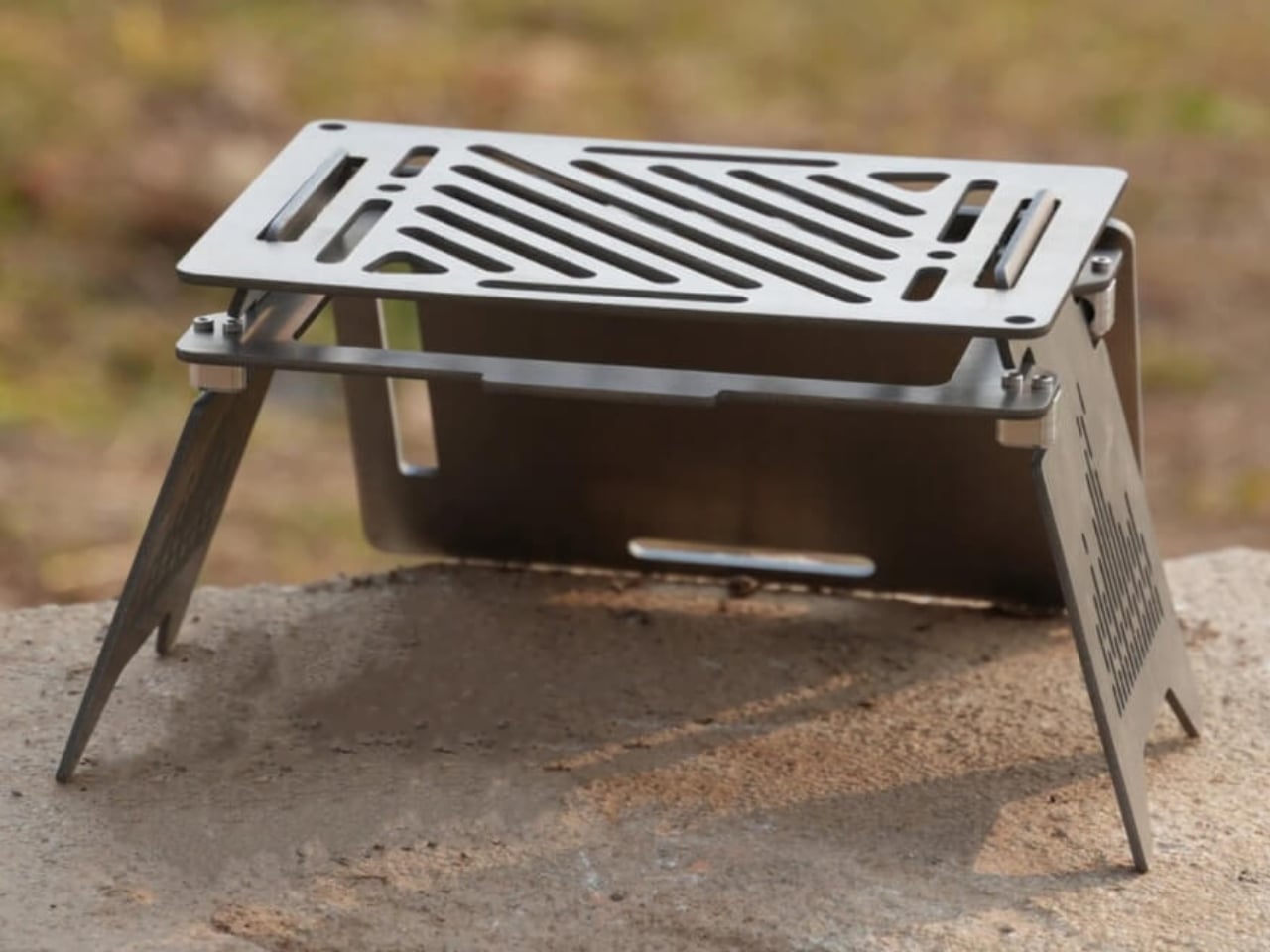
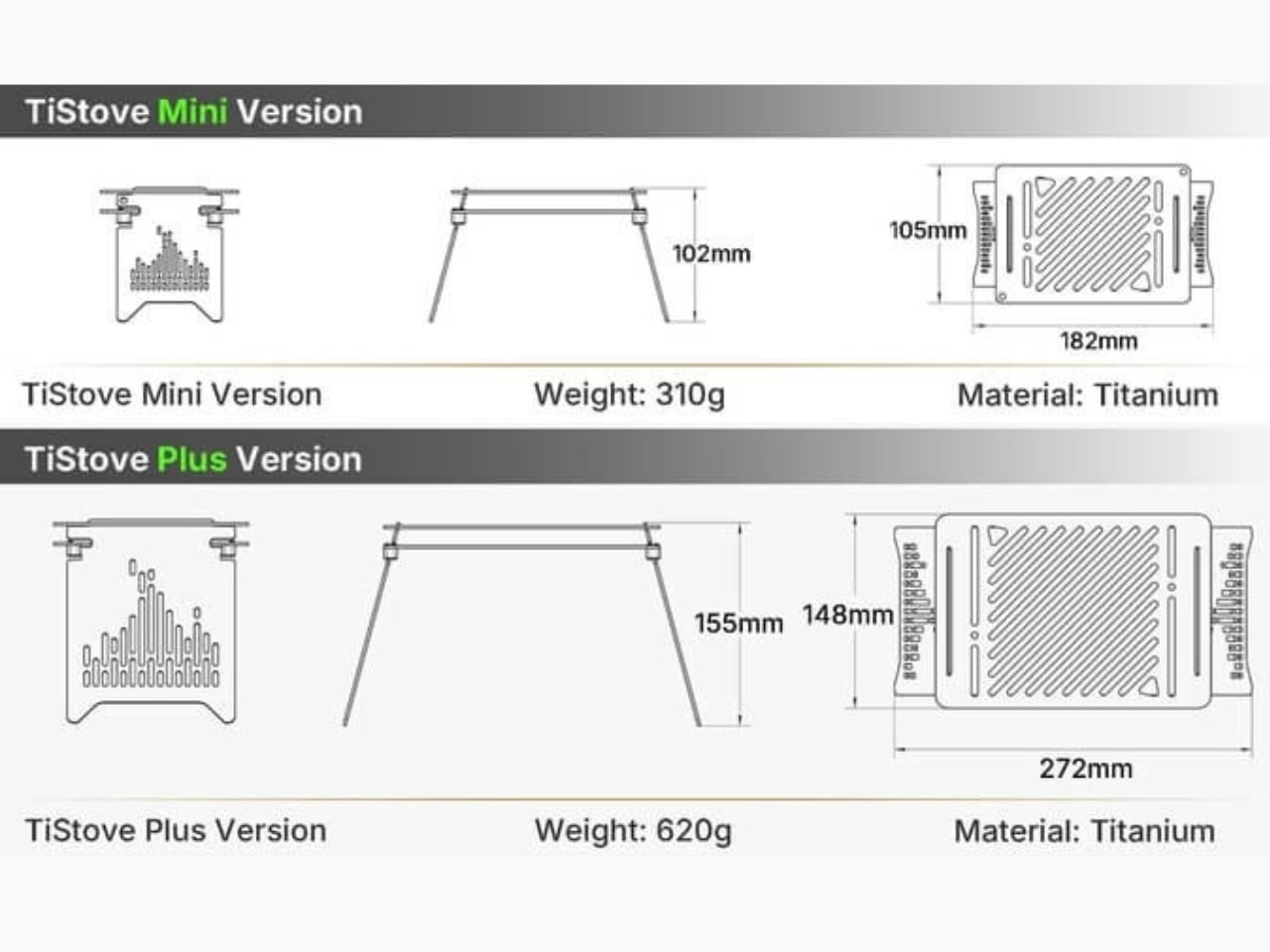
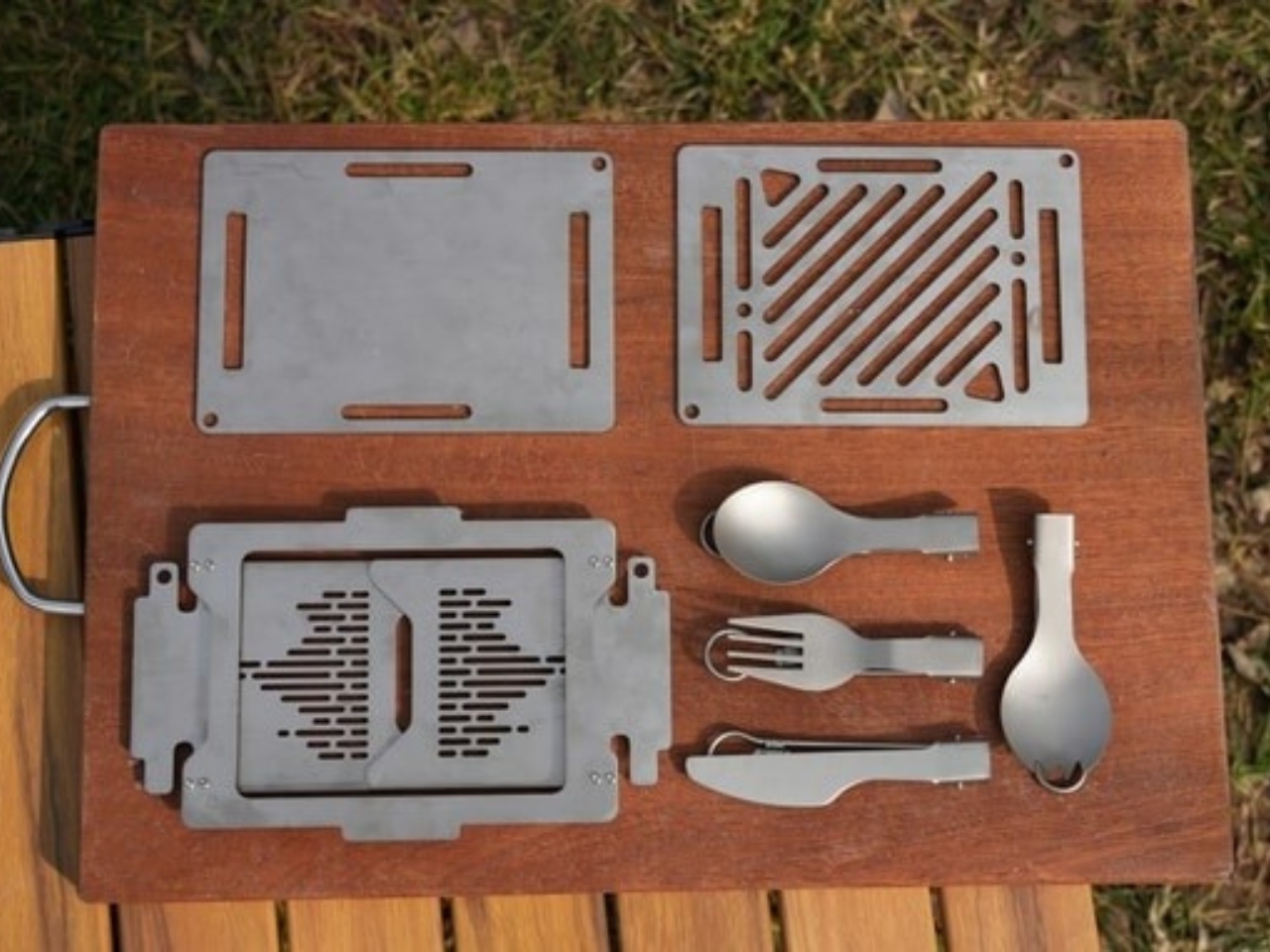
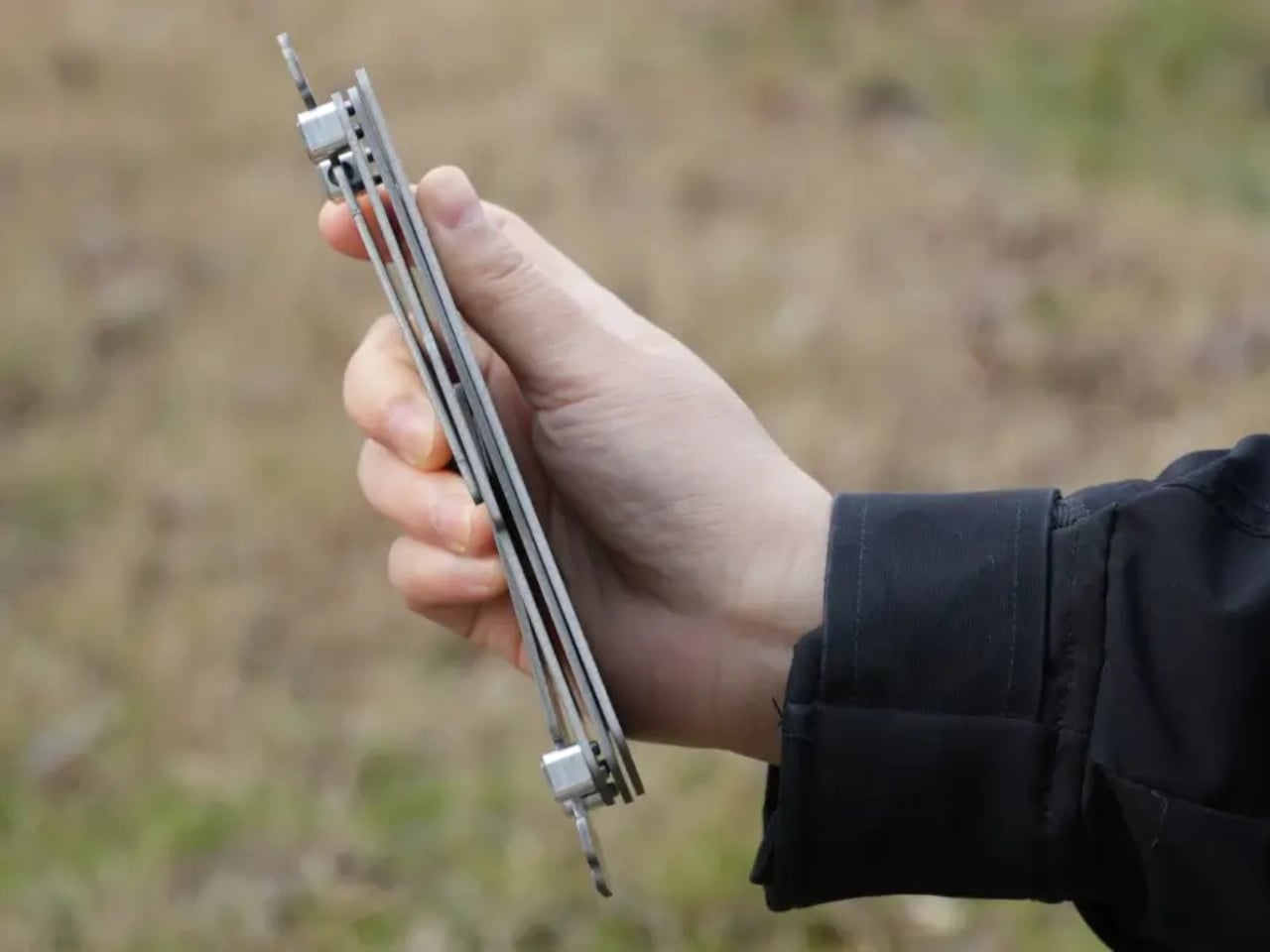
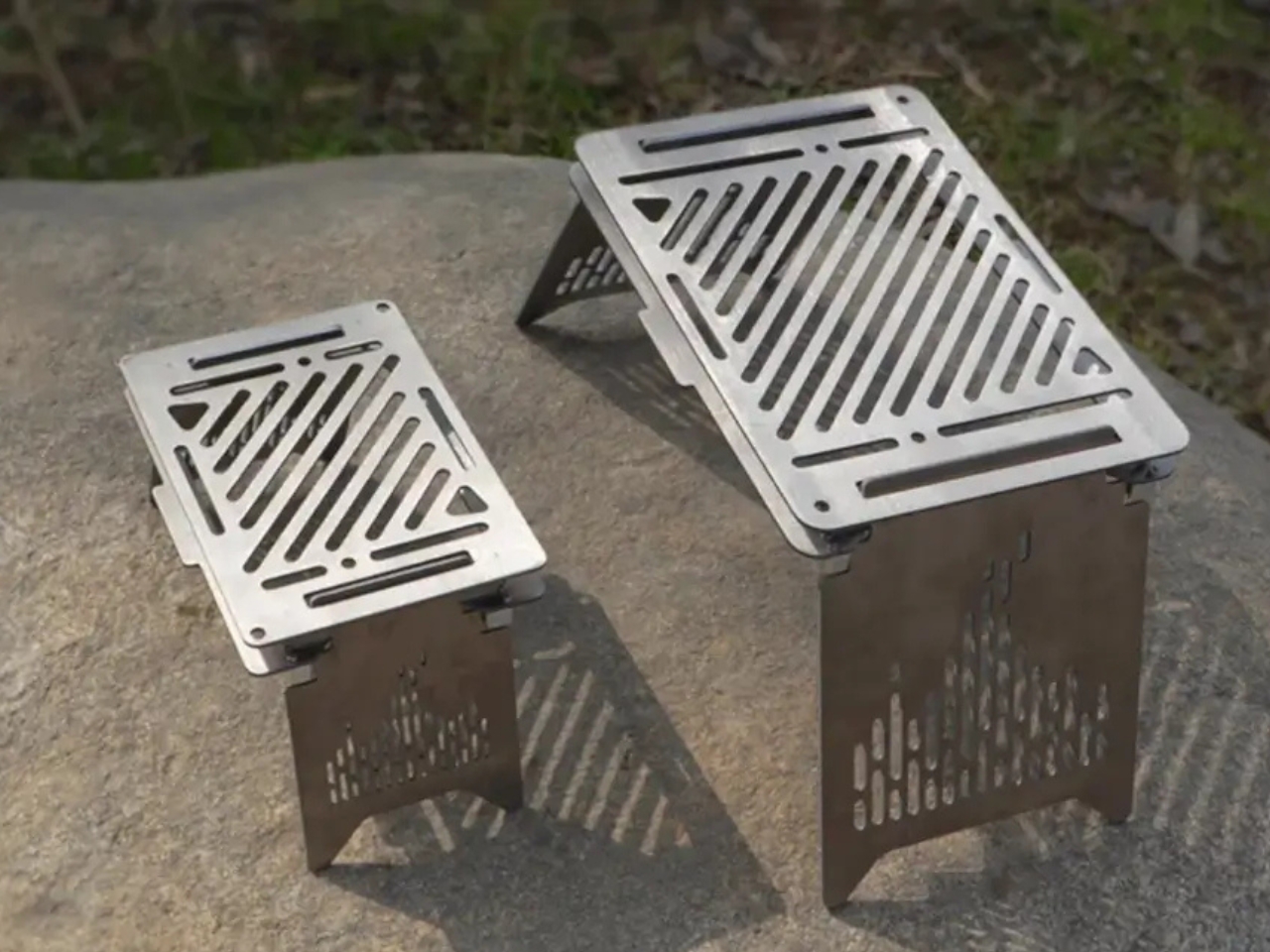
The concept is deceptively simple. Take five titanium pieces (two foldable legs and three cooking panels), make them pack completely flat, and keep the whole setup under 1.5 pounds. But what makes this more interesting than just another ultralight camping gadget is how Camprit rethought what a portable stove should actually do.
Designer: Camprit
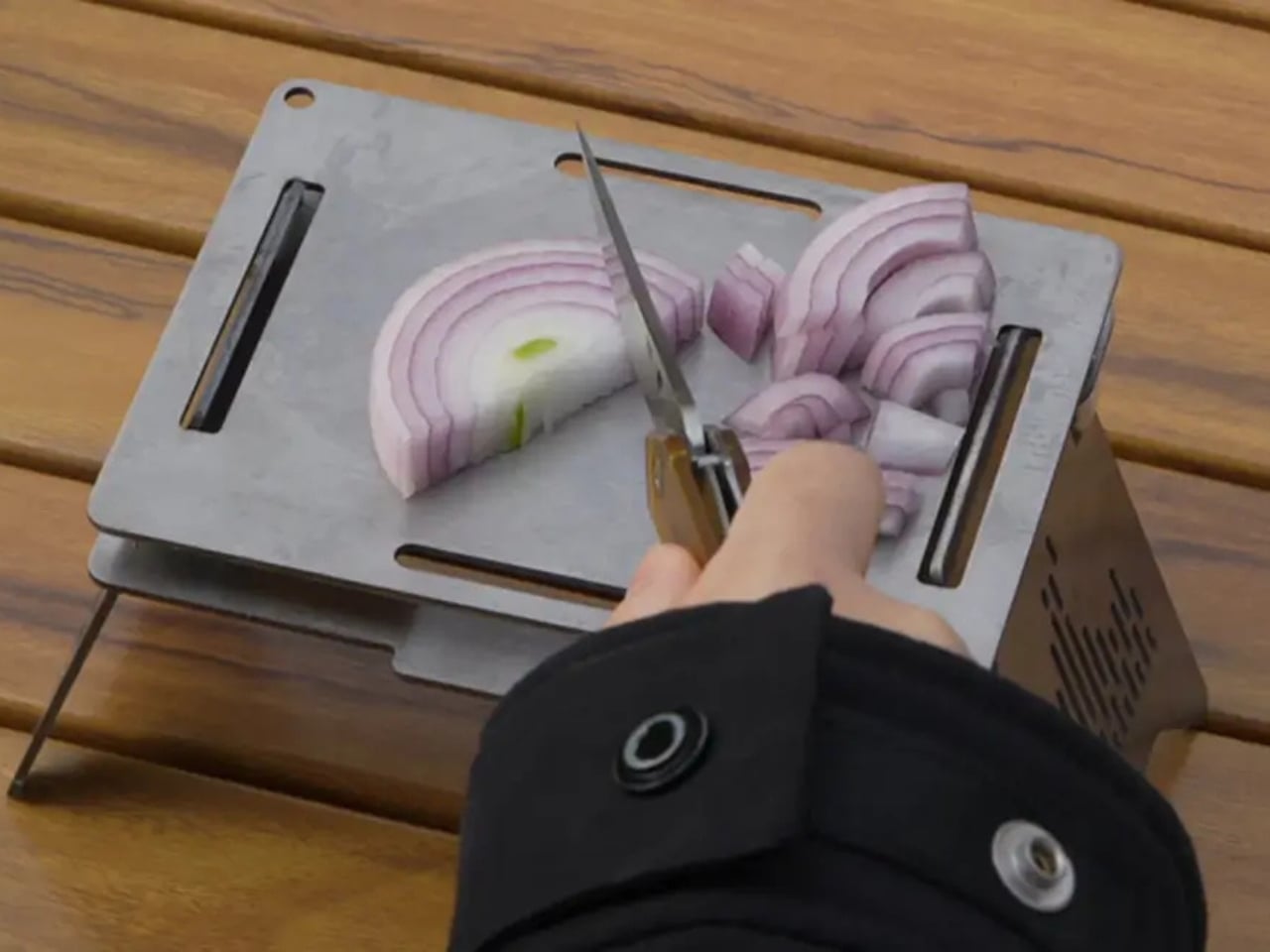
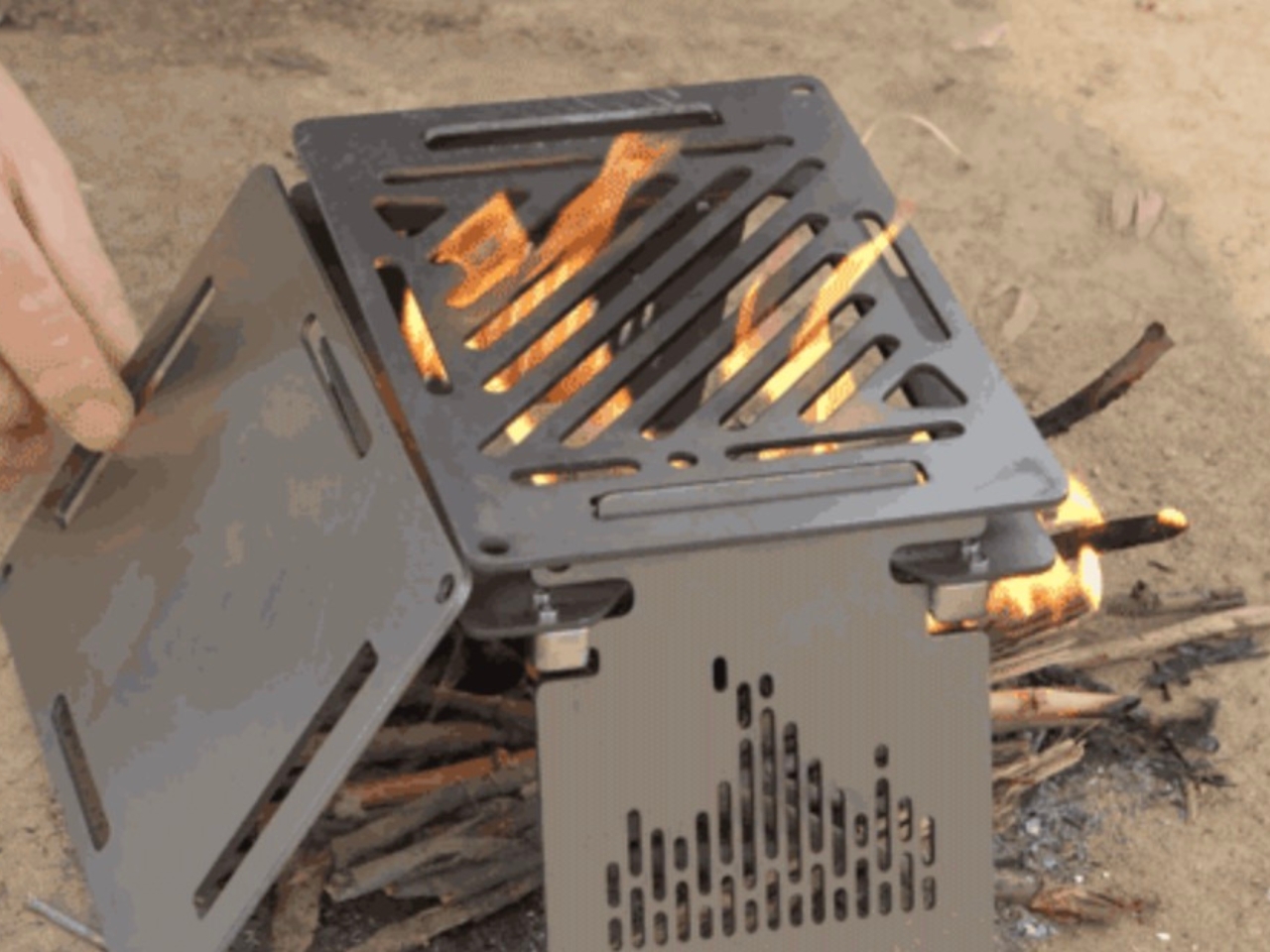
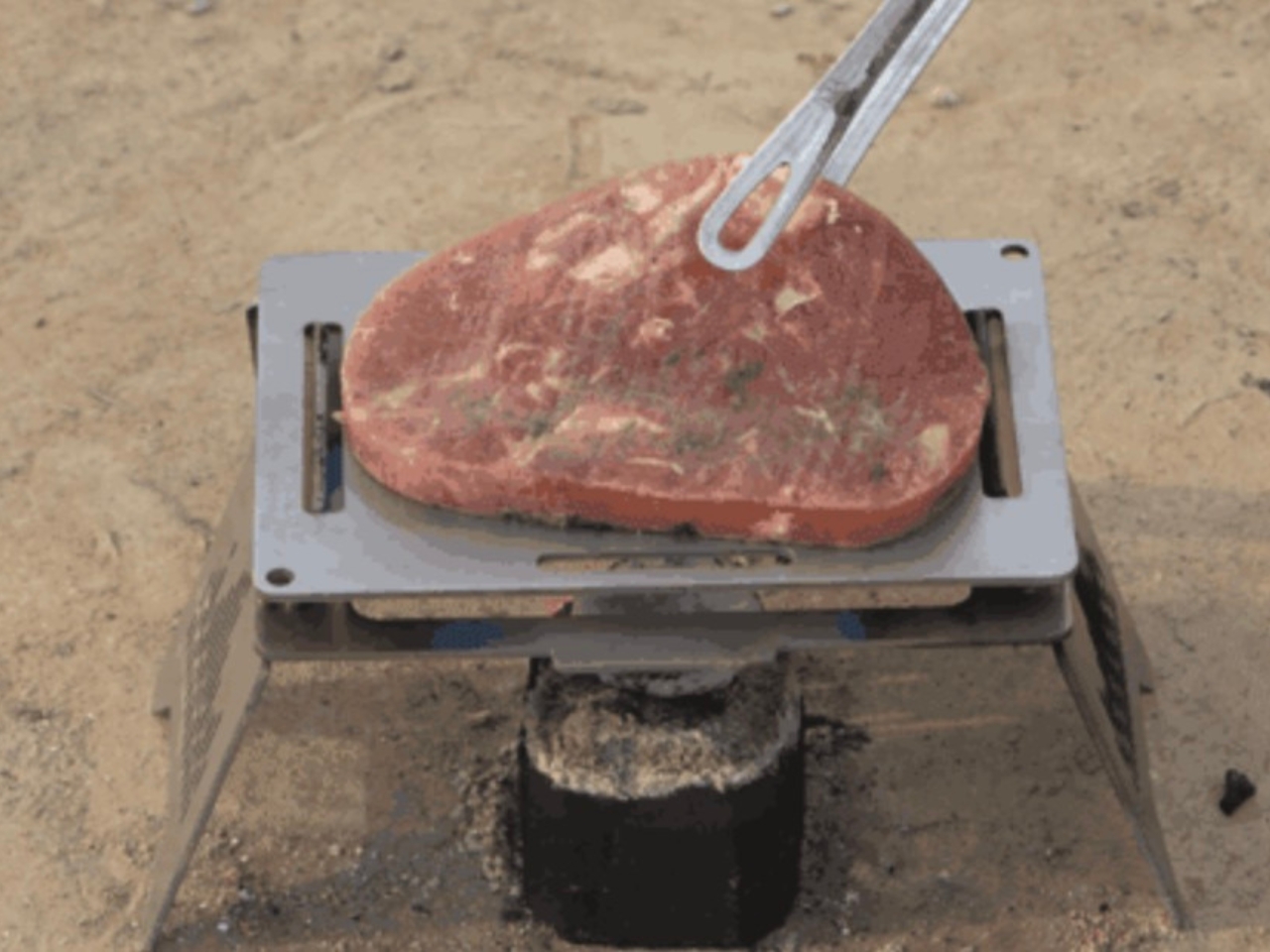
Most camp stoves force you into a specific cooking method. You’re either boiling water for freeze-dried meals or you’re lugging around a full camping kitchen. TiStove splits the difference by giving you three interchangeable panels that transform the cooking surface. The base panel handles your standard boiling needs. Swap in the grill panel and you can cook directly on the grates. Want to sear something? There’s a panel for that too. It’s modular cooking without the usual camping compromise of eating yet another packet of instant noodles.
The titanium construction isn’t just about keeping weight down, though that’s obviously a factor when you’re counting grams in your pack. Titanium brings that combination of strength and heat resistance that makes it ideal for something that needs to withstand direct flame while remaining stable on uneven ground. The material also means the stove won’t corrode when it inevitably gets wet, smoky, or covered in whatever wilderness conditions you throw at it.
What’s particularly clever is the no-assembly approach. Anyone who’s fumbled with camping gear in fading daylight knows that “some assembly required” translates to “good luck finding that tiny connector piece you just dropped in the dirt.” TiStove unfolds rather than requiring construction, which means you’re cooking faster and cursing less.
The fuel flexibility adds another practical layer. Unlike canister stoves that leave you dependent on finding the right fuel cartridge, this system burns wood, twigs, branches, basically whatever dry combustibles you can scavenge. That’s not just convenient but also more sustainable than constantly buying and disposing of fuel canisters. Plus, there’s something primal and satisfying about cooking over actual fire rather than a blue gas flame.
Camprit isn’t new to this space. They previously launched FireNest, which followed a similar modular, flat-pack titanium philosophy. With TiStove, they’ve refined the concept into something that feels more like a complete cooking system than a single-purpose stove.
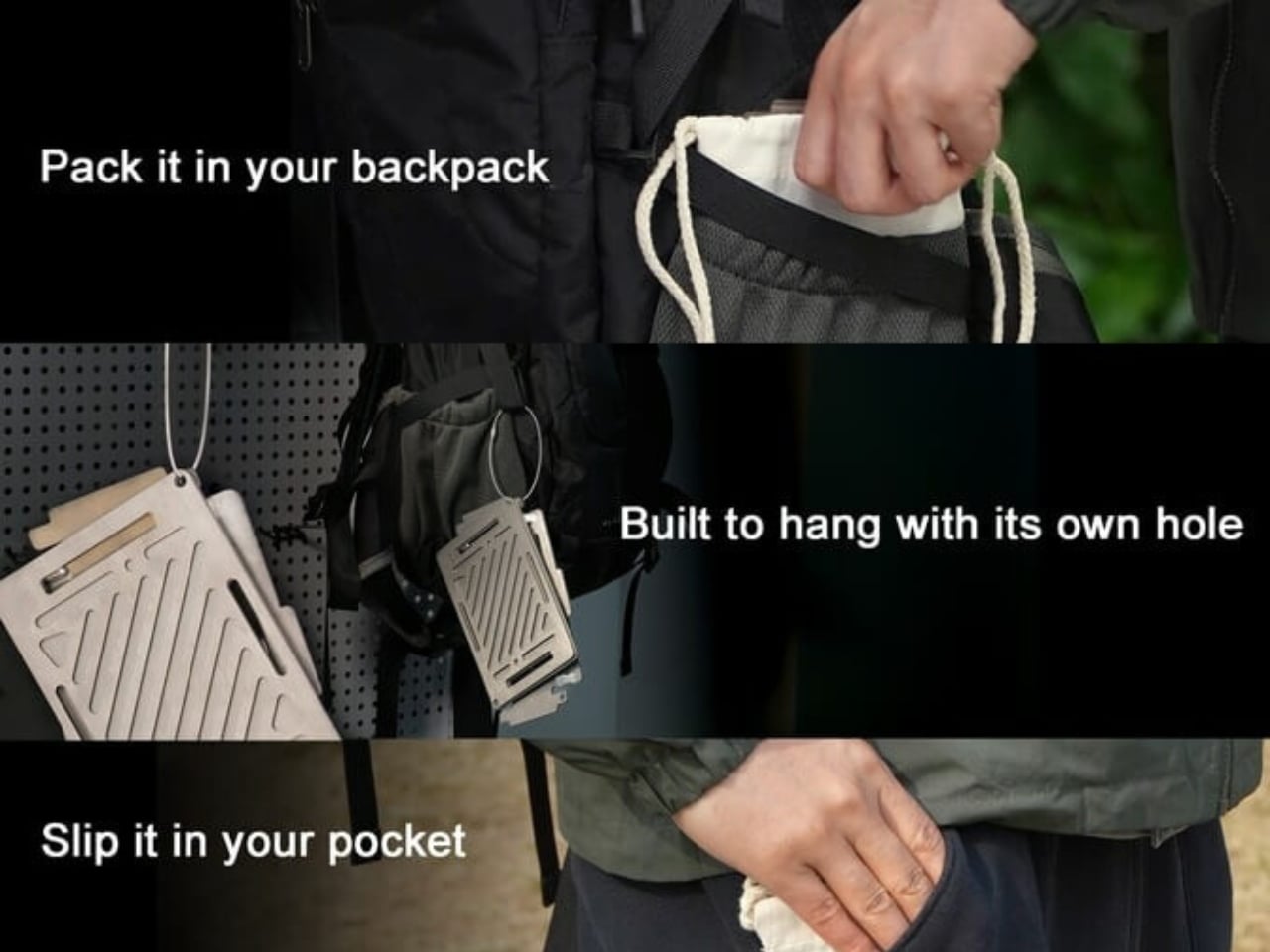
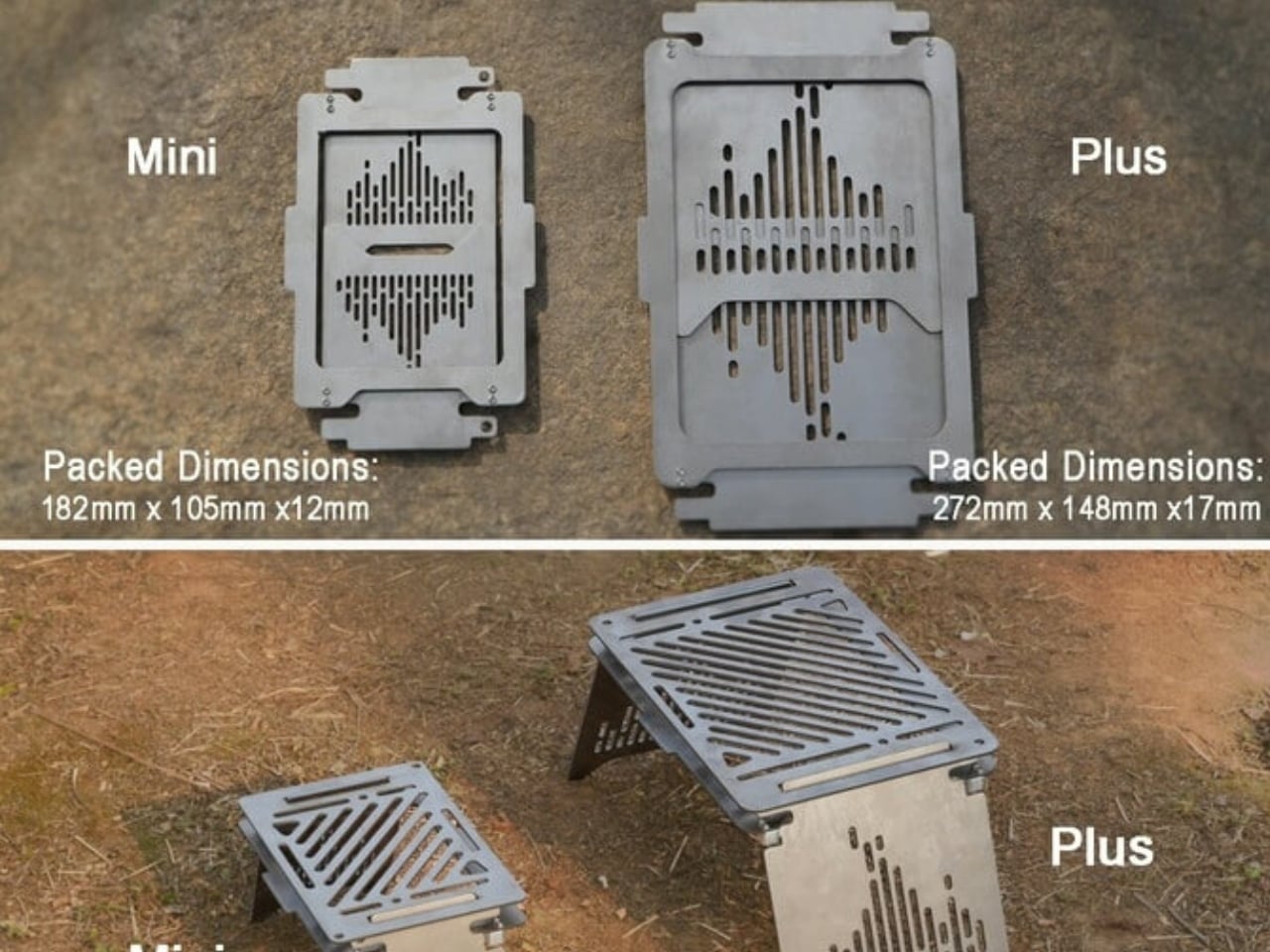
The flat-pack design also addresses one of camping’s most annoying realities: pack space is precious. When your stove collapses to basically the thickness of a laptop, it slides into spaces that bulkier gear could never occupy. That means more room for the things that actually matter, like extra food or that book you’re definitely going to read by the campfire.
There’s a broader trend here worth noting. Outdoor gear has been shedding the old “rugged means bulky” mentality for years now, but projects like TiStove show how far that evolution has come. This isn’t about sacrificing functionality for portability. It’s about questioning whether those trade-offs were ever necessary in the first place.
The Hong Kong-based company seems to understand that good design isn’t about adding features but about removing friction. Every aspect of TiStove, from the material choice to the panel system to the folding mechanism, eliminates a pain point. Can’t find fuel? Burn sticks. Pack too heavy? Here’s titanium. Tired of one-note camping meals? Swap the cooking surface.
Whether you’re a weekend warrior or someone who just appreciates clever product design, TiStove represents the kind of functional innovation that makes you wonder why it took this long. It’s not reinventing fire, just making it easier to cook over one. And sometimes, that’s exactly what good design should do.
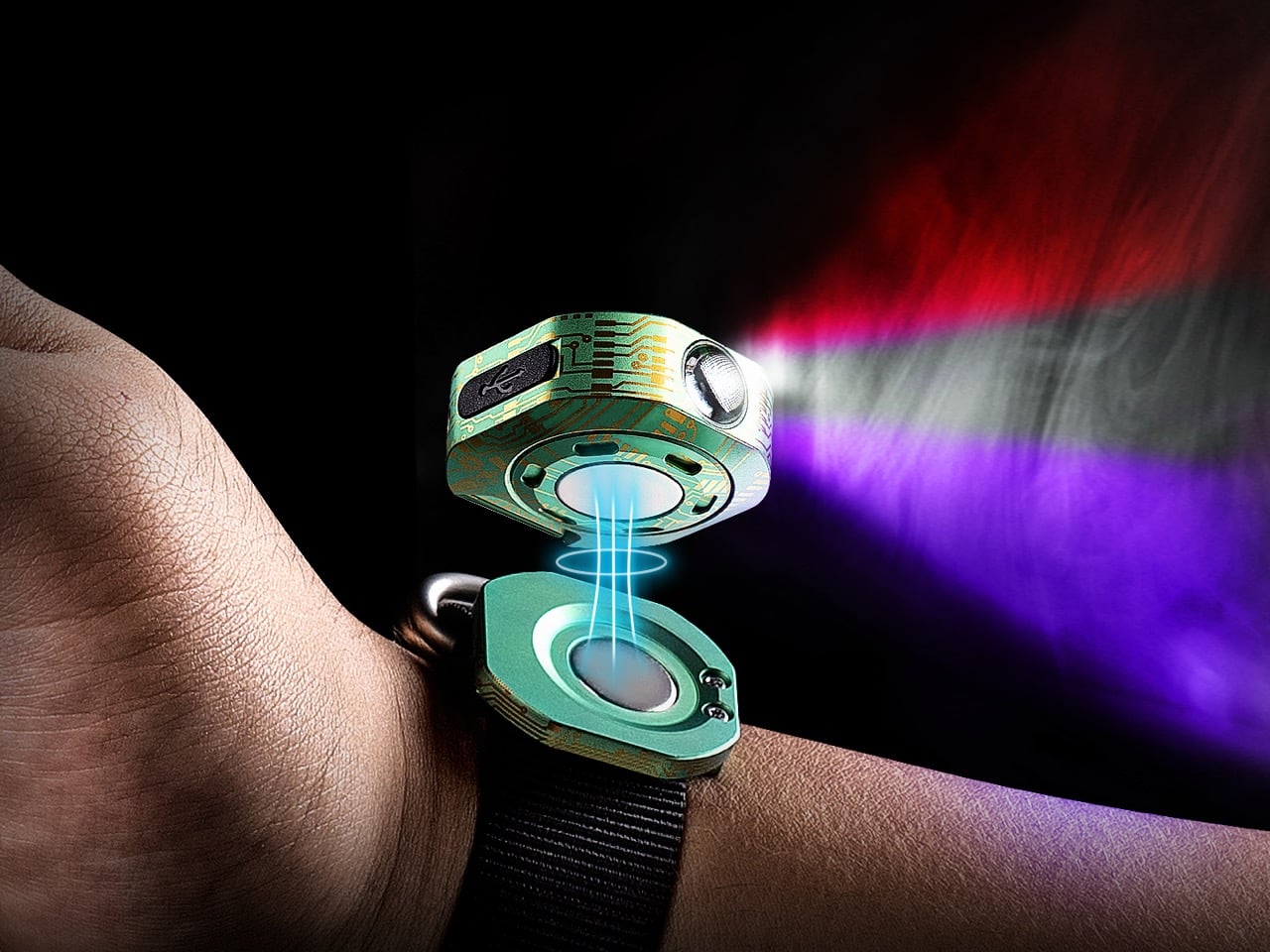
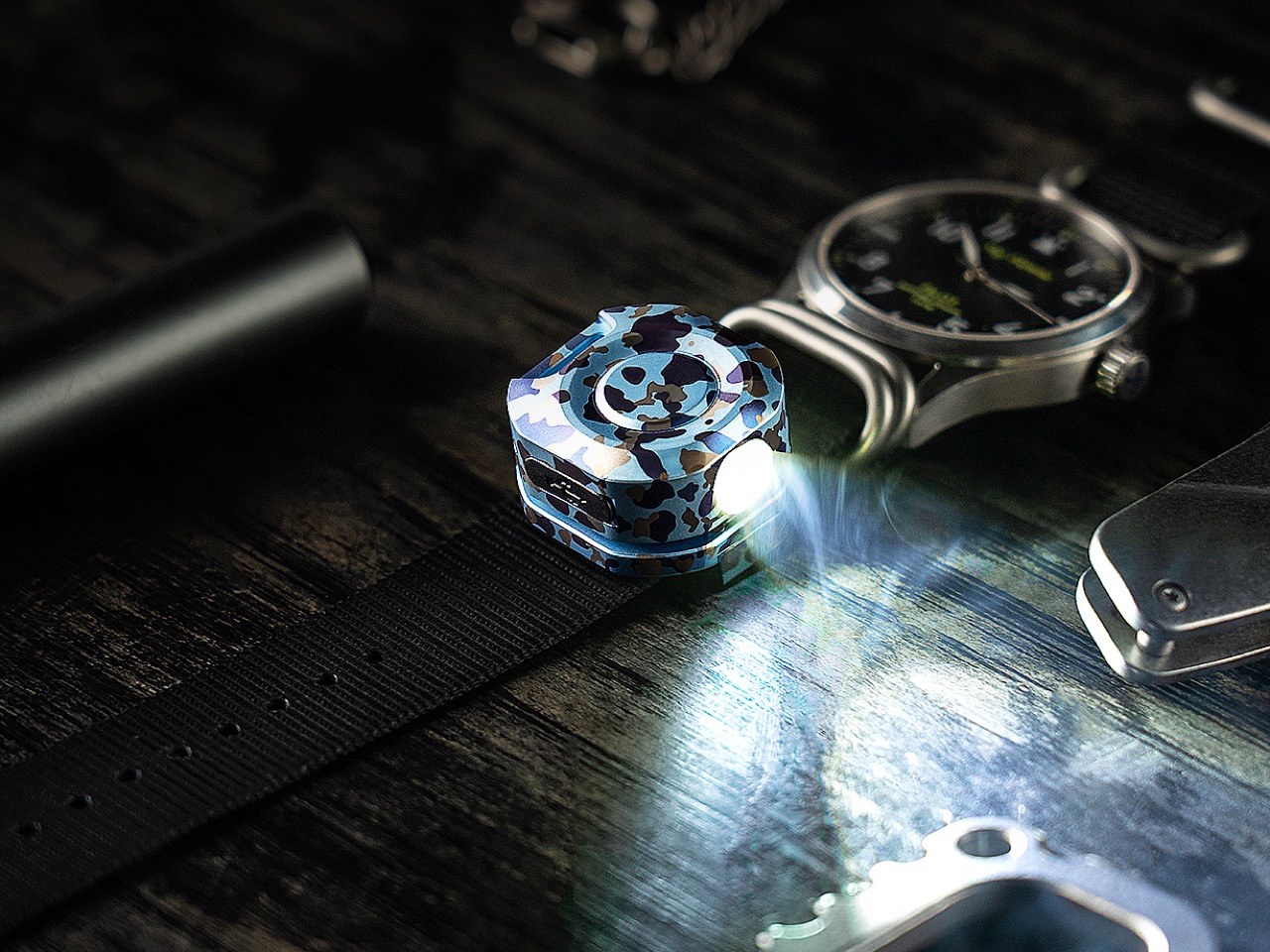
Your phone’s flashlight works fine until you’re elbow-deep in a car engine bay or fumbling with tent poles in the dark. Then you realize the limitation: you need both hands free, you need the light exactly where you’re working, and you need it to stay there without propping your $1,200 device against something greasy or precarious. The NanoB10 from Gadget On lives in that gap between “good enough” and “actually useful.”
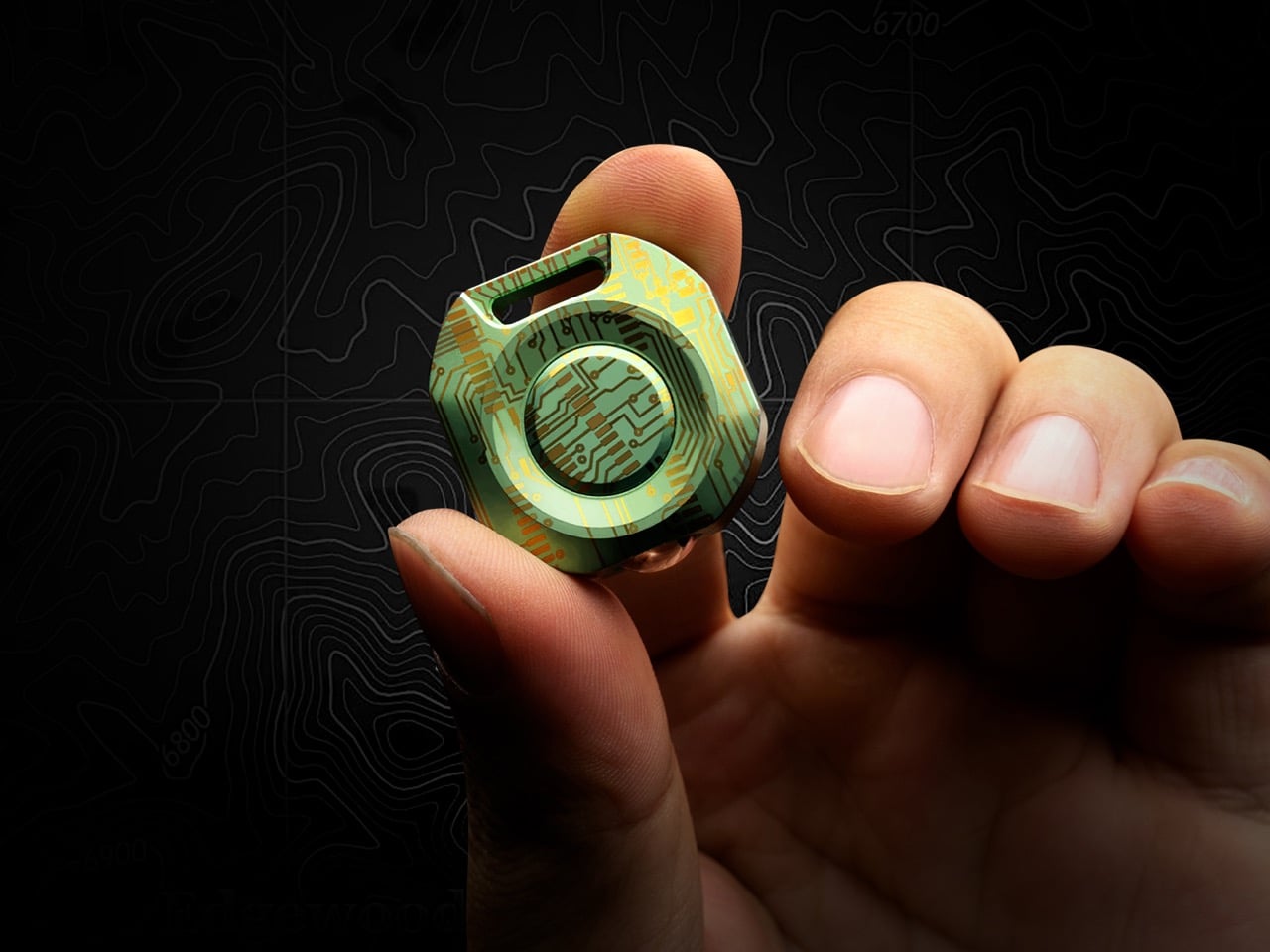
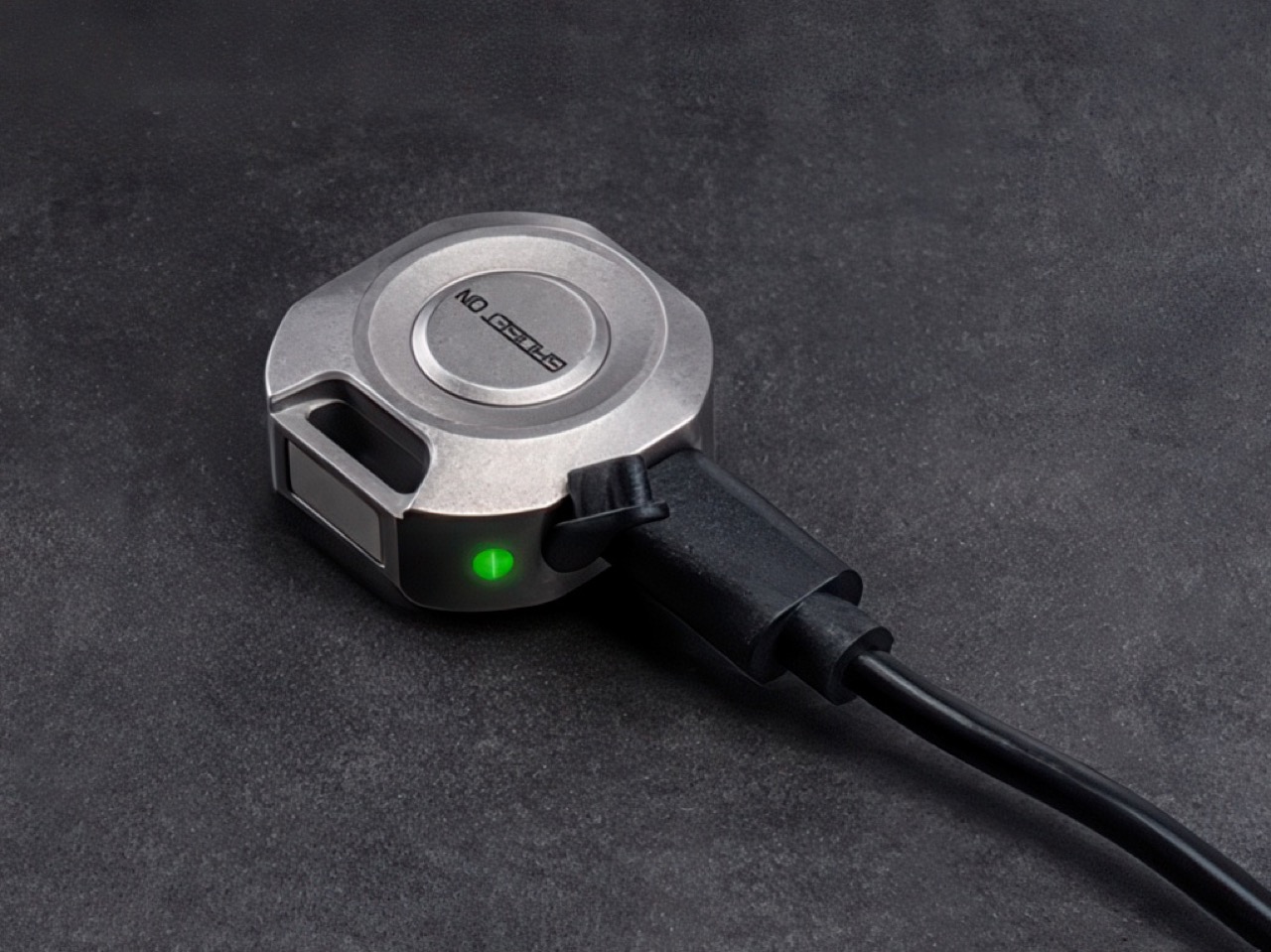
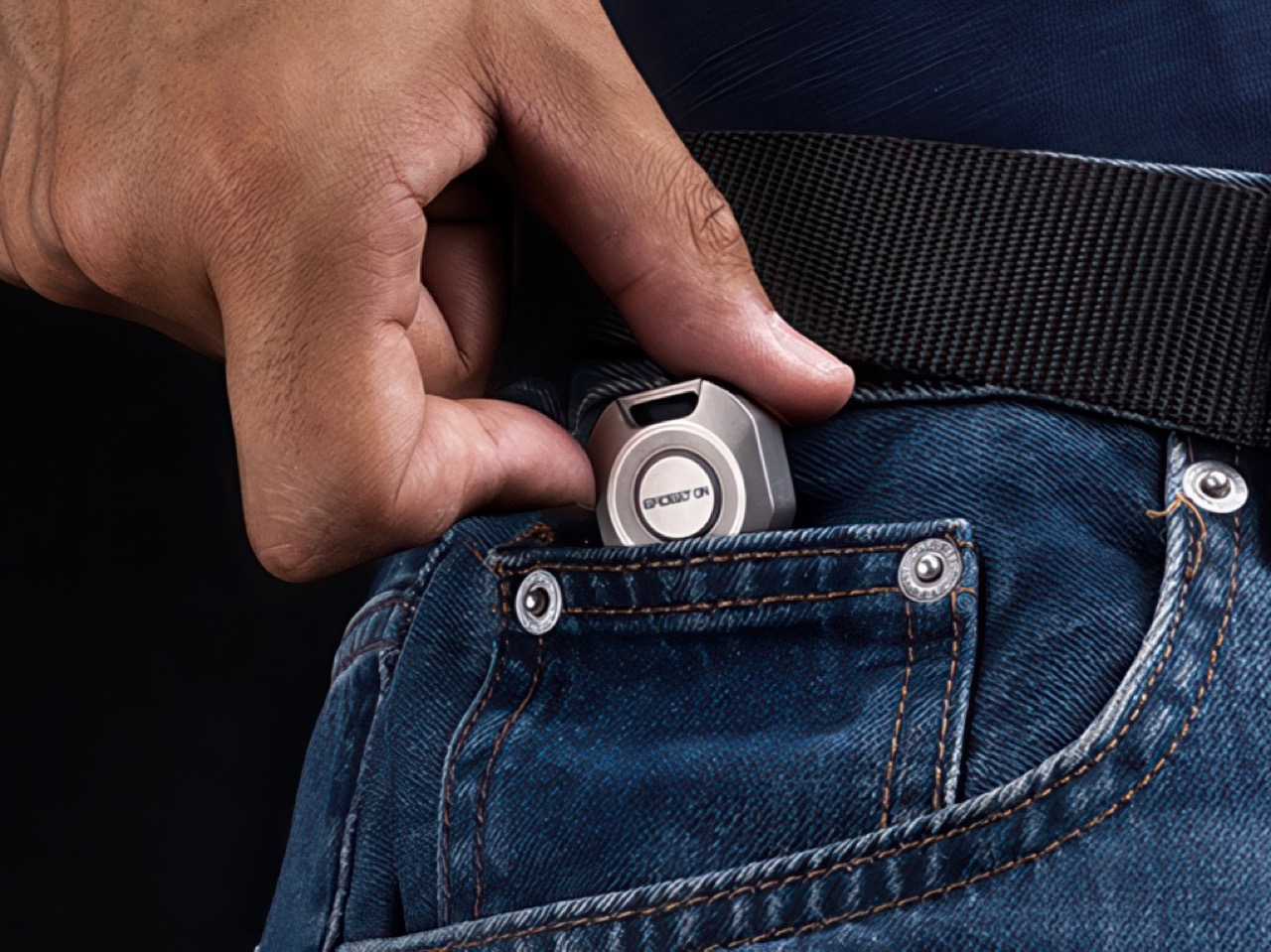
This 3cm titanium flashlight attaches magnetically to your watch strap and rotates 360 degrees once mounted. Nine lighting modes cover everything from finding your keys to emergency signaling, while the dual-magnet system means it sticks to any metal surface at the angle you actually need. The whole package weighs about 24 grams and charges via USB-C. Sometimes the best tool isn’t the most powerful one in your house, it’s the one that’s already on your wrist when you need it.
24 grams puts this roughly in the same territory as a couple of quarters or precisely 2 AirTags, which means it disappears until you remember it’s there. Anything heavier starts pulling on your watch strap in ways that make you constantly aware something’s hanging off your wrist, which defeats the whole point of EDC gear that’s supposed to integrate into your daily carry without becoming a burden. The dimensions work out to 30mm x 27mm x 13mm, slightly larger than a nickel but thinner than you’d expect given what’s packed inside. Gadget On clearly spent time solving the density problem, cramming a 60mAh rechargeable battery, nine distinct LED modes, and two separate magnet systems into a volume that fits comfortably on a NATO strap without looking like you strapped a bottle cap to your wrist.
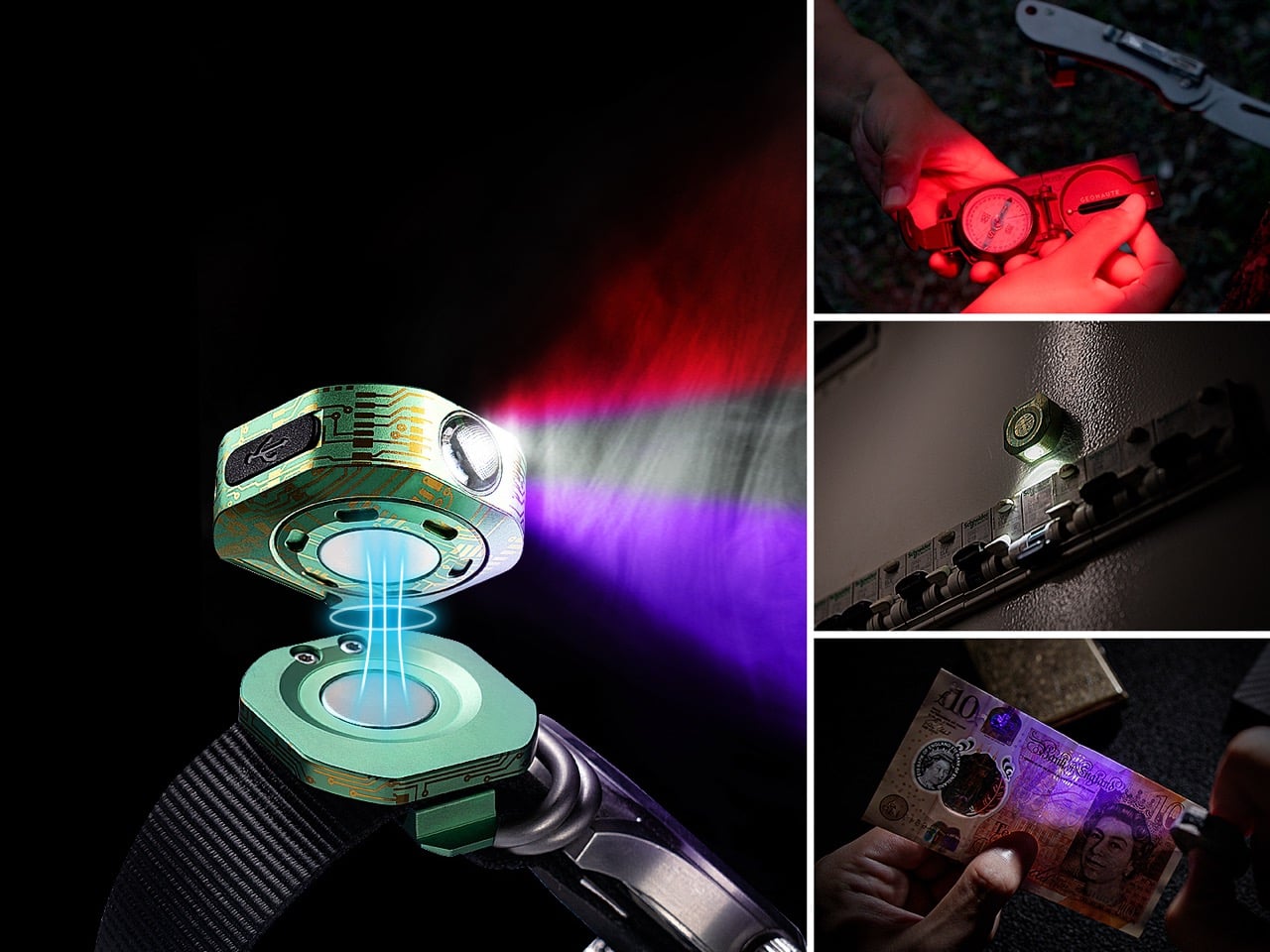
Two separate magnets handle different mounting scenarios, and the separation between them solves a problem most magnetic lights never address. One magnet lives in the body itself, letting you slap the flashlight directly onto any ferrous metal surface like a car hood, tool chest, or steel beam. The second magnet sits in the detachable clip, and this is where the 360-degree rotation becomes useful rather than just a spec sheet number. You dock the flashlight onto the clip magnetically, then spin it to whatever angle you need while the clip itself stays fixed to your watch strap, shirt pocket, or backpack strap. You’re no longer stuck with whatever angle the metal surface happens to be at, which is the usual limitation of magnetic work lights that just stick flat against whatever you attach them to.
Most keychain lights give you one brightness level and maybe a strobe if you’re lucky. The NanoB10 delivers four white LED modes at 1 lumen for night-light use, 35 lumens for low tasks, 100 lumens for medium work, and 200 lumens when you need actual throw. Add a white strobe for emergencies, two red LED modes at 2W and 3W for preserving night vision, a red SOS mode, and a 3W UV light at 365nm that’s actually useful for spotting fluid leaks or checking security features. Runtime on the 1-lumen night-light mode hits 15 hours, which becomes relevant when you’re trying to navigate a dark campsite without waking everyone up or need sustained low-level light for reading maps without killing the battery. The 200-lumen high mode obviously drains faster, but you’re using that in short bursts anyway.
Grade 5 titanium costs more than aluminum or plastic alternatives, but you can drop this thing, step on it, or leave it rattling around in a toolbox without worrying about cracked housings or stripped threads. IPX6 water resistance covers rain and splashes but stops short of submersion, which feels like the right tradeoff for something this compact. You’re not taking this diving, but you can use it in a downpour without killing it. The stonewashed titanium finish looks substantially better than the polished options in my opinion, though that’s entirely subjective. What’s objective is that titanium doesn’t corrode, doesn’t scratch as easily as aluminum, and develops a patina over time that actually improves the appearance rather than making it look beat up.
GADGET ON debuted the NanoB9 just last year, and managed to gather consumer feedback and knock out their next variant in just months. The base got redesigned for better magnetic hold and stability, machining tolerances tightened up across the body, and they added three more finish options based on user feedback from the previous version. That’s smart evolution because the core concept already worked, it just needed polish. The one-button control includes mode memory, so the light turns on to whatever setting you used last instead of forcing you to cycle through all nine modes every single time you need the flashlight. That small detail prevents the kind of annoying behavior that makes people abandon multi-mode lights entirely.
USB-C charging completes a full cycle in approximately 30 minutes, which aligns with the small 60mAh battery capacity. You’re trading extended runtime for size, but the math works when you consider that 15 hours on low gets you through most realistic use cases before you’re near a USB port again. The charging port sits under a small rubber cover to maintain the IPX6 rating, which adds one more thing to keep track of but beats the alternative of a corroded port that stops working after six months of exposure. The cover is tethered to the body, so at least you won’t lose it immediately.
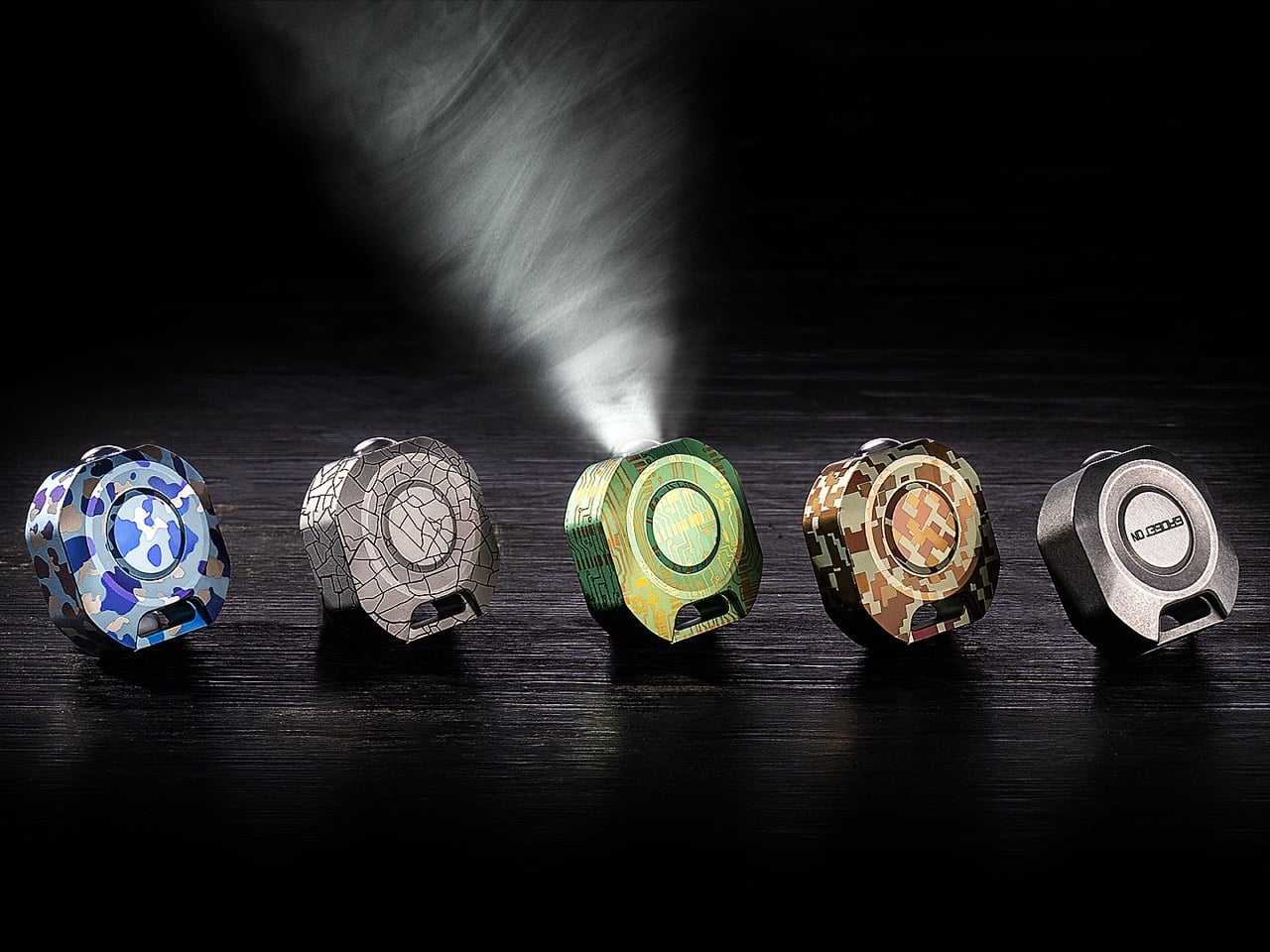
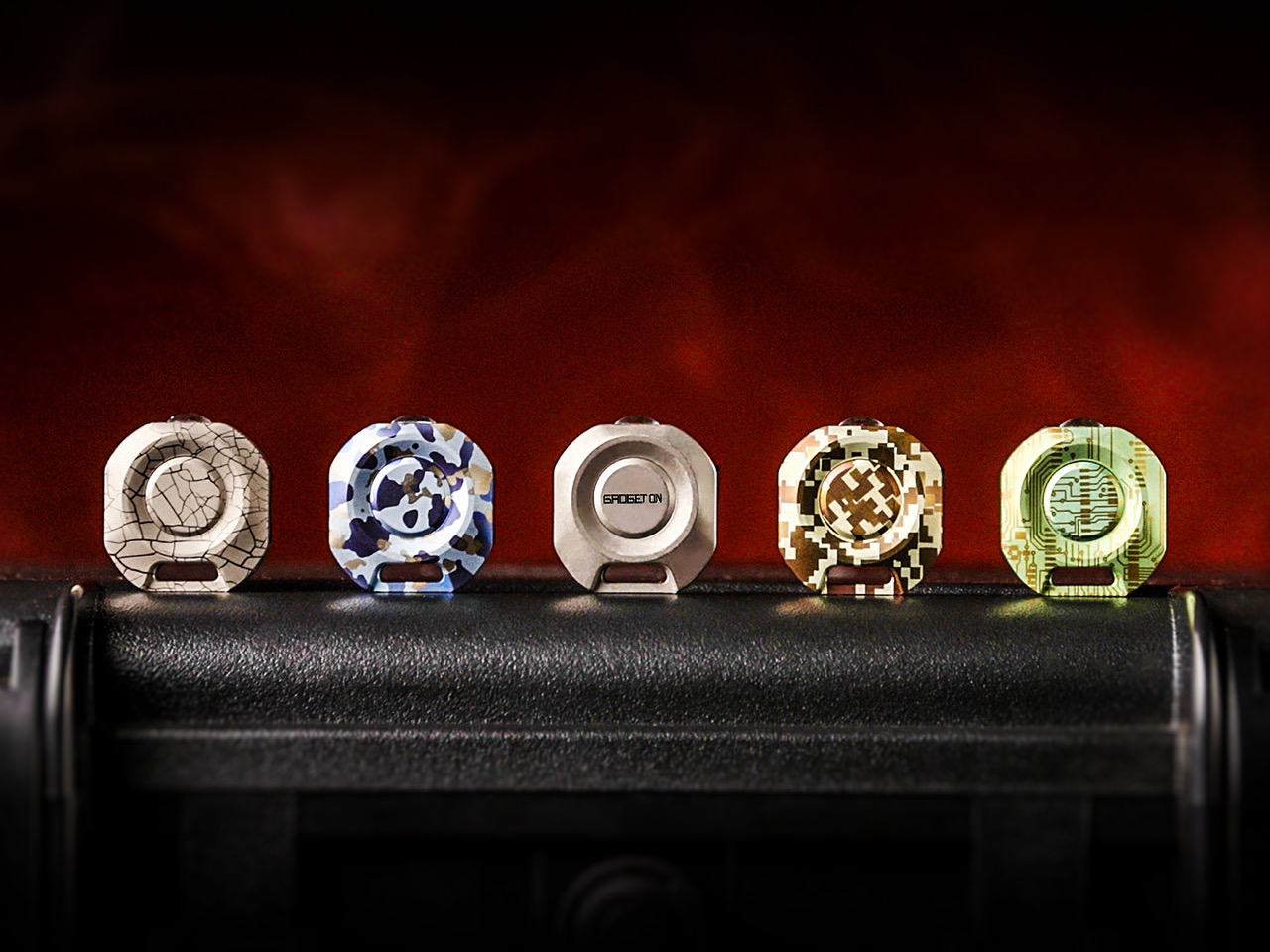
The NanoB10 comes in five finish options: Wave (blue anodized with wave pattern), Matrix (green anodized), Stone (stonewashed bare titanium), Desert (gold anodized), and Slate (natural titanium). Pricing starts at £54 for the Stone or Slate single-color versions and £66 for the anodized color options, which translates to roughly $70-85 USD depending on current exchange rates. Shipping is estimated to begin in June 2026, with the flashlight and magnetic clip sold as separate items so you can add extra mounting options if needed.
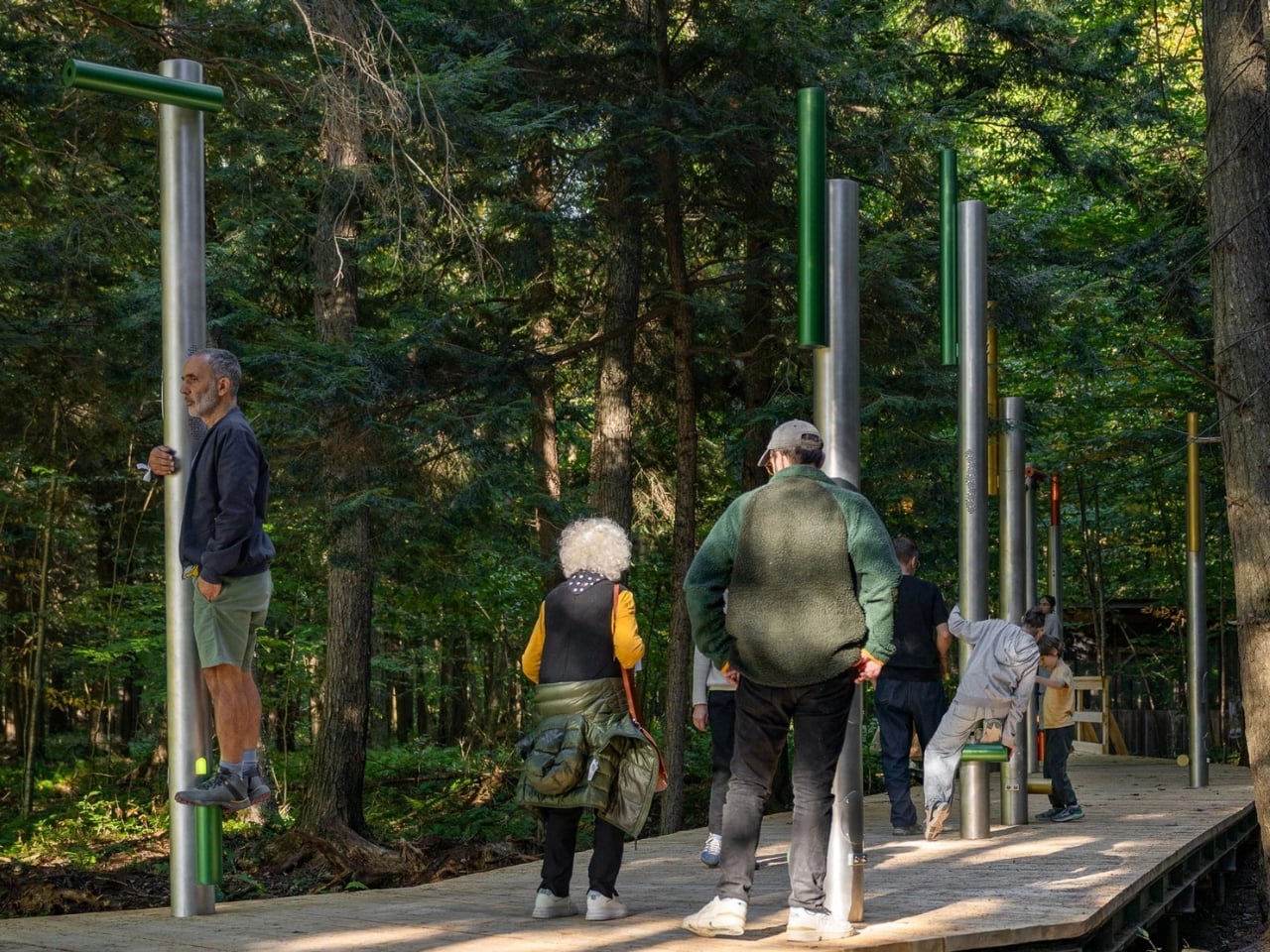
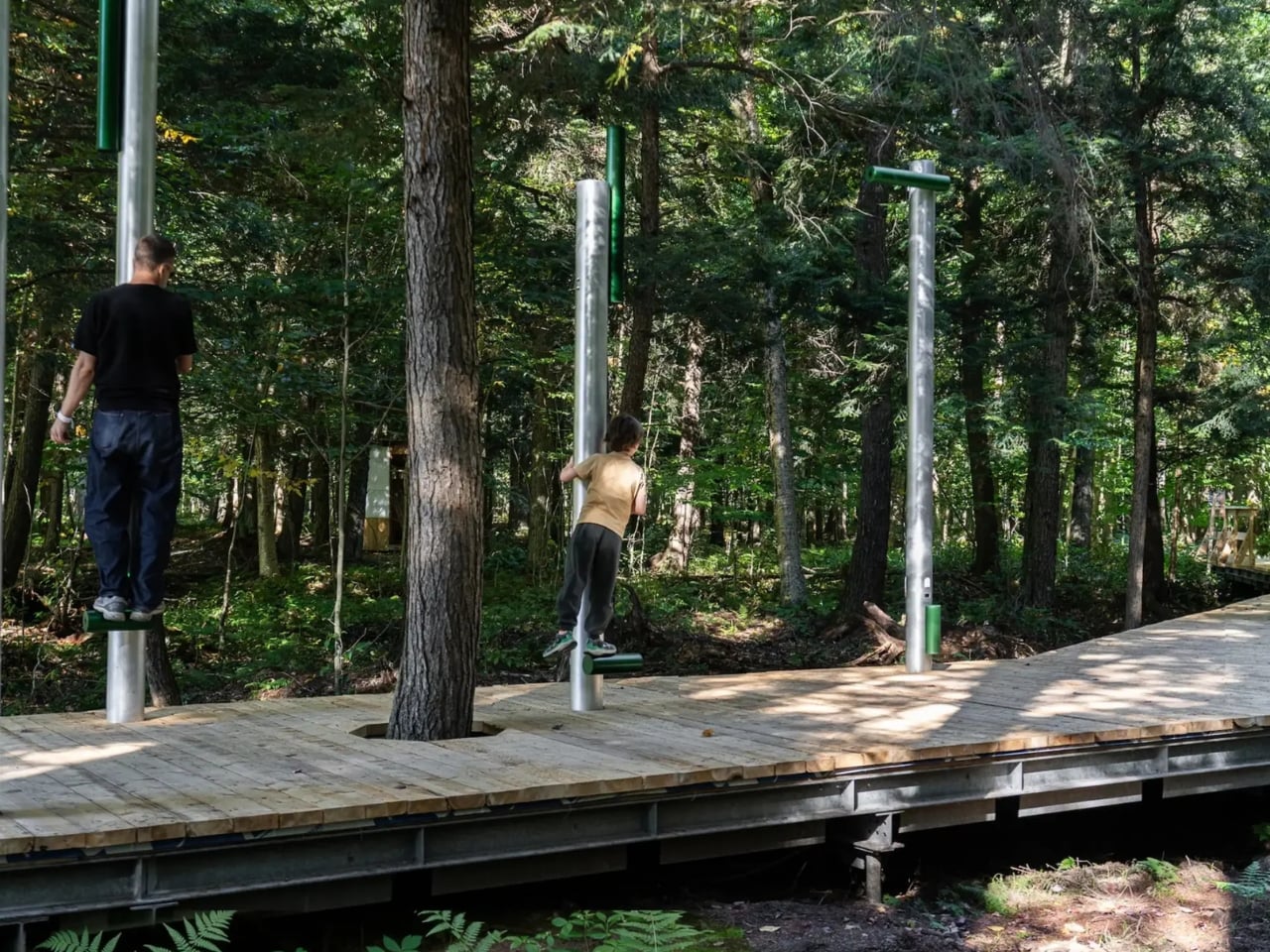
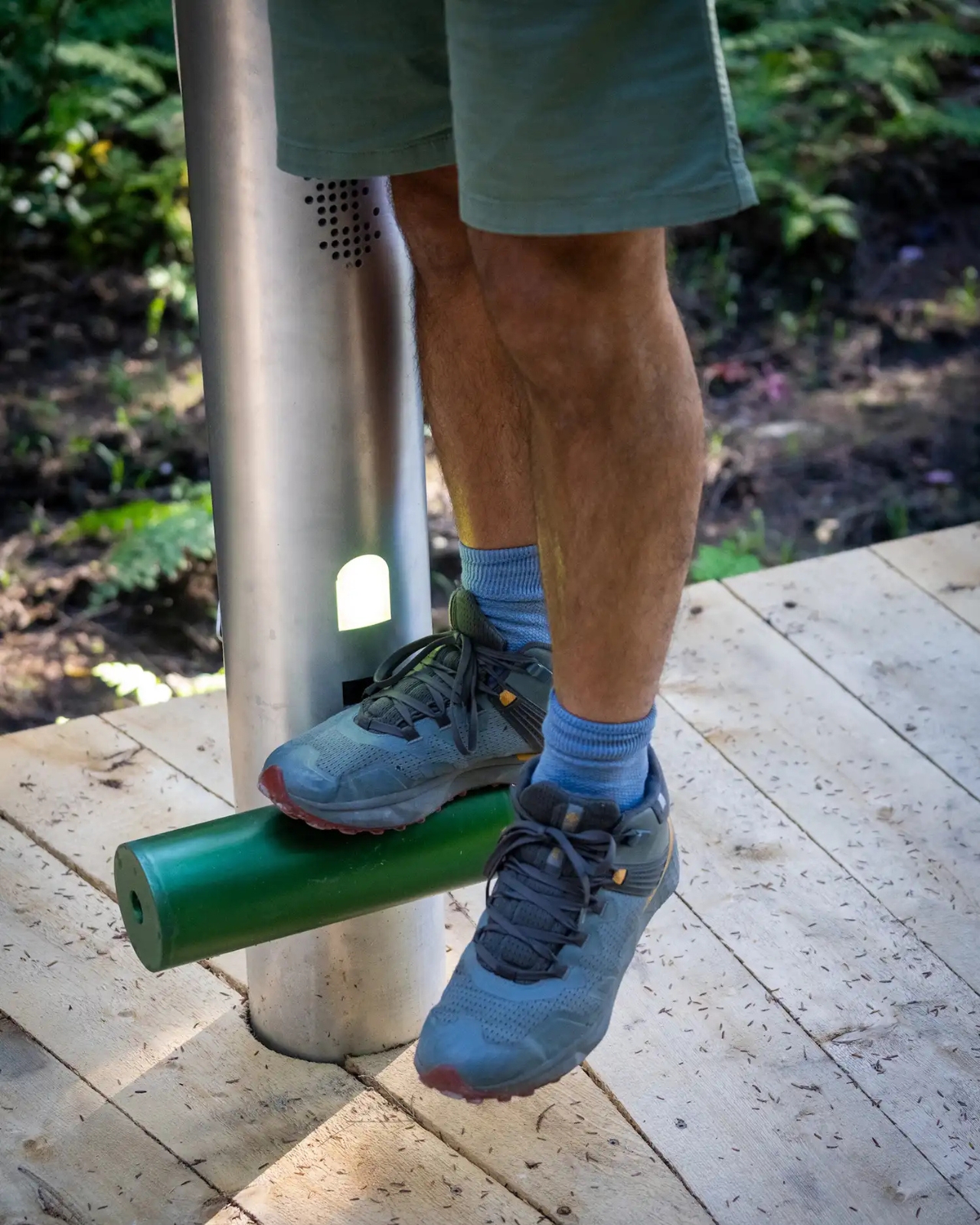
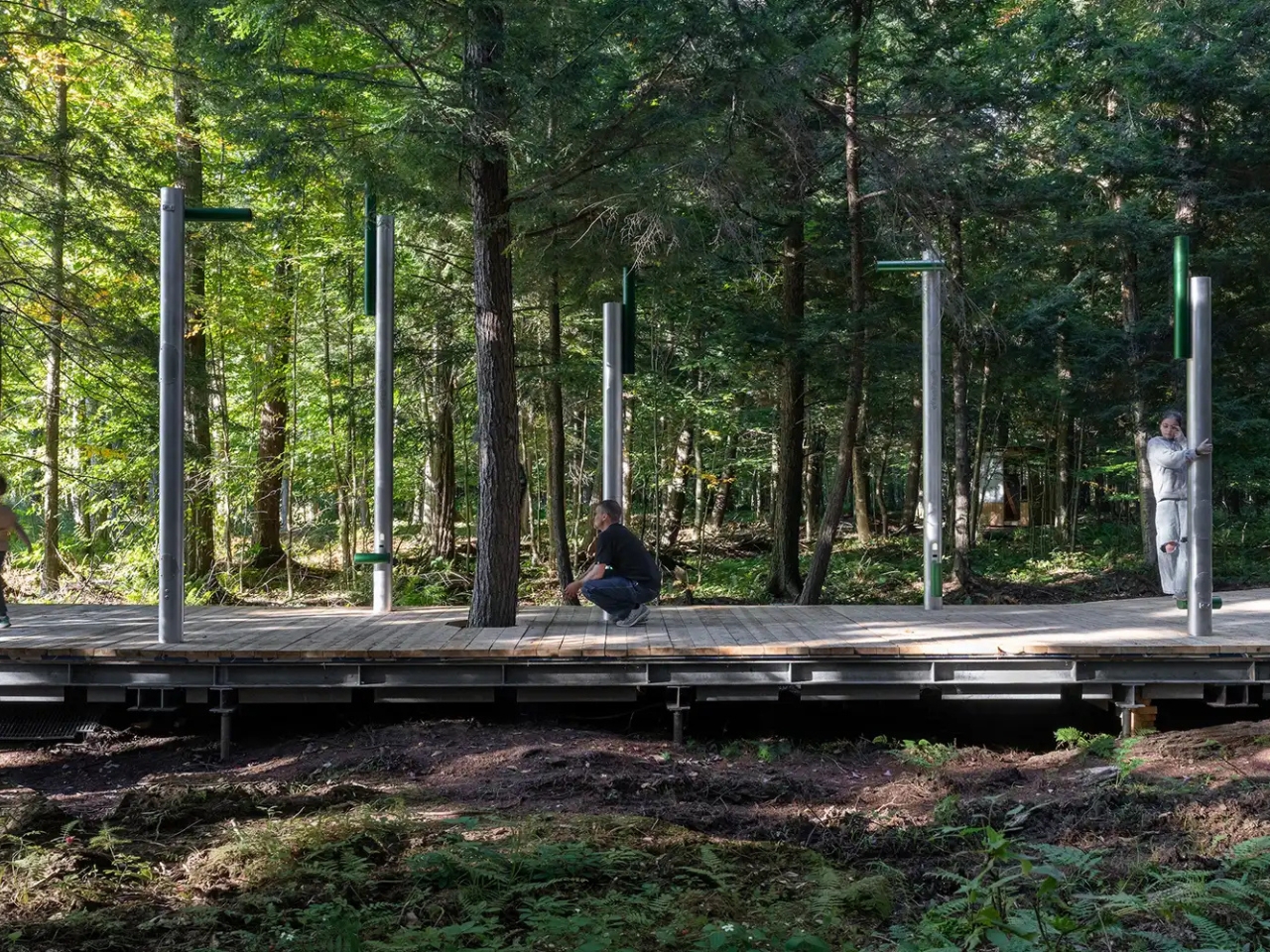
Picture yourself standing on a small platform in the middle of a Quebec forest, balancing on what feels like an oversized bird perch. The moment your weight settles, something magical happens. A bird call rings out, blending seamlessly into an ethereal soundtrack that seems to rise from the forest itself. Welcome to Human Perches, the latest installation from Montreal design studio Daily tous les jours that’s making us rethink how we experience nature.
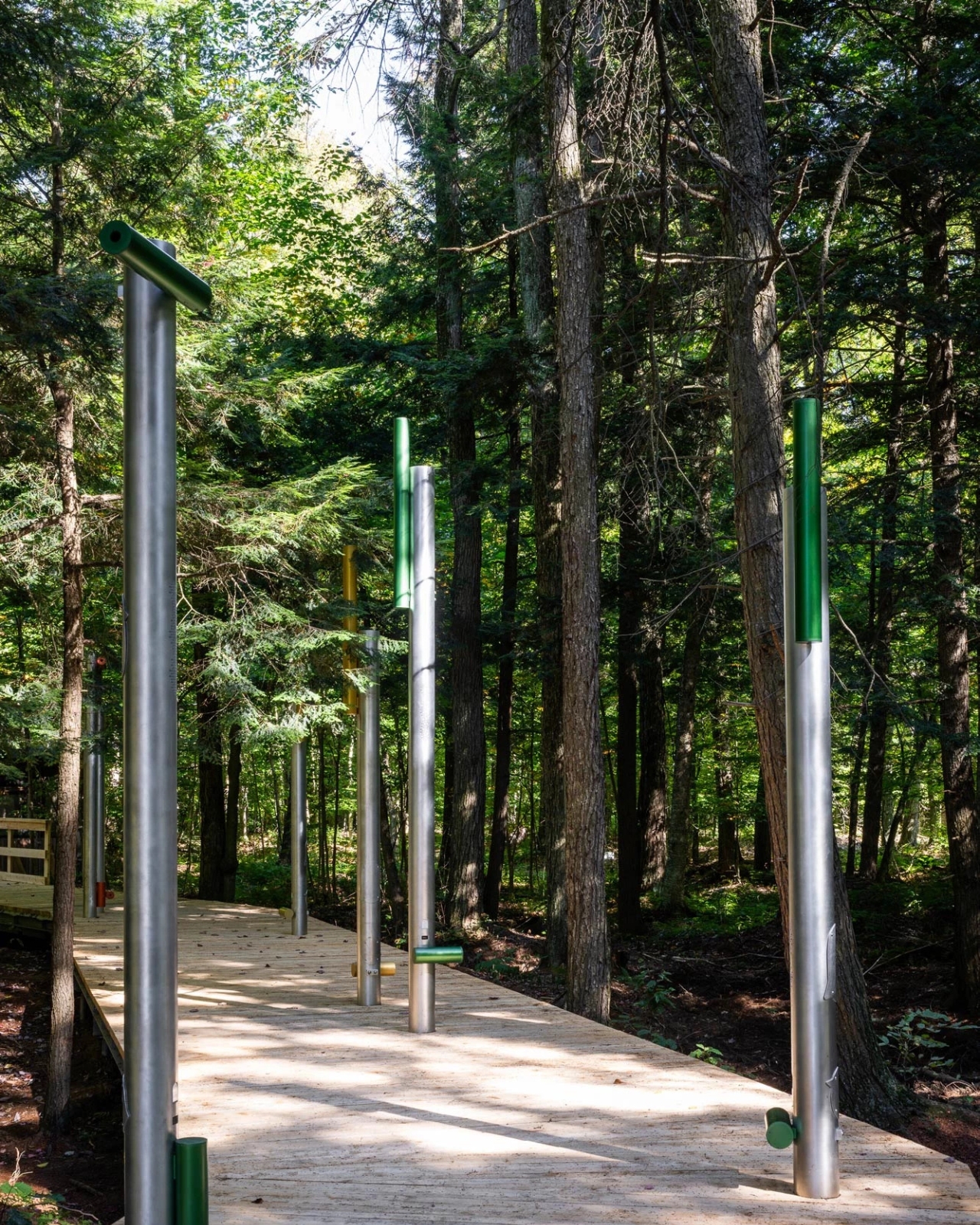
Located at Chouette à voir!, a bird of prey sanctuary in St-Jude, Quebec, this permanent installation transforms a 55-meter elevated boardwalk into an interactive musical journey through the seasons. Ten aluminum perching stations punctuate the path, each one waiting for a human visitor to activate its hidden soundscape. The design is brilliantly simple: step onto a green perch, and you become part of the forest’s symphony.
What makes this project so captivating is how it flips our usual relationship with wildlife. We’re used to being the noisy intruders, the reason birds fall silent when we approach. Here, we become the activators of sound. When humans aren’t present, the artwork stays quiet, mirroring the behavior of the sanctuary’s winged residents. It’s a poetic reversal that makes you acutely aware of your presence in the ecosystem.
The experience unfolds like a sonic story as you move along the boardwalk. Each perch represents a different season, with soundscapes that capture winter’s vigilance, spring’s courtship, summer’s protection, and autumn’s migration. The genius lies in the layering. Juno Award-winning composer Keiko Devaux crafted an evolving dialogue between abstract base compositions and actual bird calls from local species. Sometimes the bird voices appear as themselves. Other times, they’re transformed into ethereal textures or rhythmic elements that pulse beneath the surface.
Daily tous les jours, led by co-founders Mouna Andraos and Melissa Mongiat, has spent fifteen years creating participatory urban experiences, from musical swings to interactive light installations. But Human Perches marks a shift in their practice. Instead of focusing purely on human-to-human connection, they’re exploring the delicate interfaces between species. It’s part of a broader investigation into how sound vibrations can stimulate growth and communication within ecosystems, a thread that runs through their concurrent Forest Mixer project on Hornby Island as well.
The physical design is minimal but thoughtful. The aluminum perches create a striking contrast against the organic textures of the red cedar and spruce boardwalk, highlighting the intentionality of human presence in wild spaces. Each station includes sensors that detect when someone steps up, triggering both a soft light and the corresponding bird call. The act of perching itself becomes meaningful. You’re balancing, aware of your body, suspended between the marsh below and the forest canopy above. It demands a different kind of attention than simply walking through.
There’s an educational dimension here too. The sanctuary is home to various bird species, including vulnerable ones, and the installation serves as both attraction and conservation tool. “Conservation efforts to preserve our precious wildlife also involve education and enchantment,” Andraos explains. The project received significant support from Quebec’s Ministry of Culture and Communications, reflecting recognition that these kinds of immersive cultural experiences can reach audiences in unexpected ways.
What resonates most about Human Perches is how it heightens awareness without being preachy. You’re not being lectured about biodiversity or habitat loss. Instead, you’re invited to listen differently, to tune into layers of sound you might have walked past before. After experiencing the installation, visitors report hearing the forest with new ears, imagining the hidden life thrumming all around them even after they’ve left the perches behind.
In our increasingly screen-saturated world, projects like this offer something rare: a reason to be fully present in a physical space, to engage your whole body in the act of listening. It’s technology in service of slowness, design that creates space for wonder rather than distraction. The forest has always been singing. Daily tous les jours just gave us a way to finally hear it.
Valentine’s Day at a fancy restaurant sounds romantic until you’re wedged between strangers, overpaying for mediocre pasta, and rushing through dessert because another reservation is waiting. This year, skip the crowded dining room and create something unforgettable under the stars. Glamping turns Valentine’s Day into an intimate adventure, where candlelight becomes a campfire glow, and the soundtrack isn’t clinking silverware, but birdsong and the crackling of wood.
The right gear transforms outdoor romance from roughing it to luxuriating in it. Think warm firelight dancing across your setup, cold drinks elevated to craft cocktail status, and music drifting through the trees without a single Bluetooth speaker ad interrupting the mood. These seven tools prove that Valentine’s Day belongs outside, where the ambiance is real, the memories last longer, and nobody’s rushing you to leave.
1. Lumitwin DL700 Flashlight
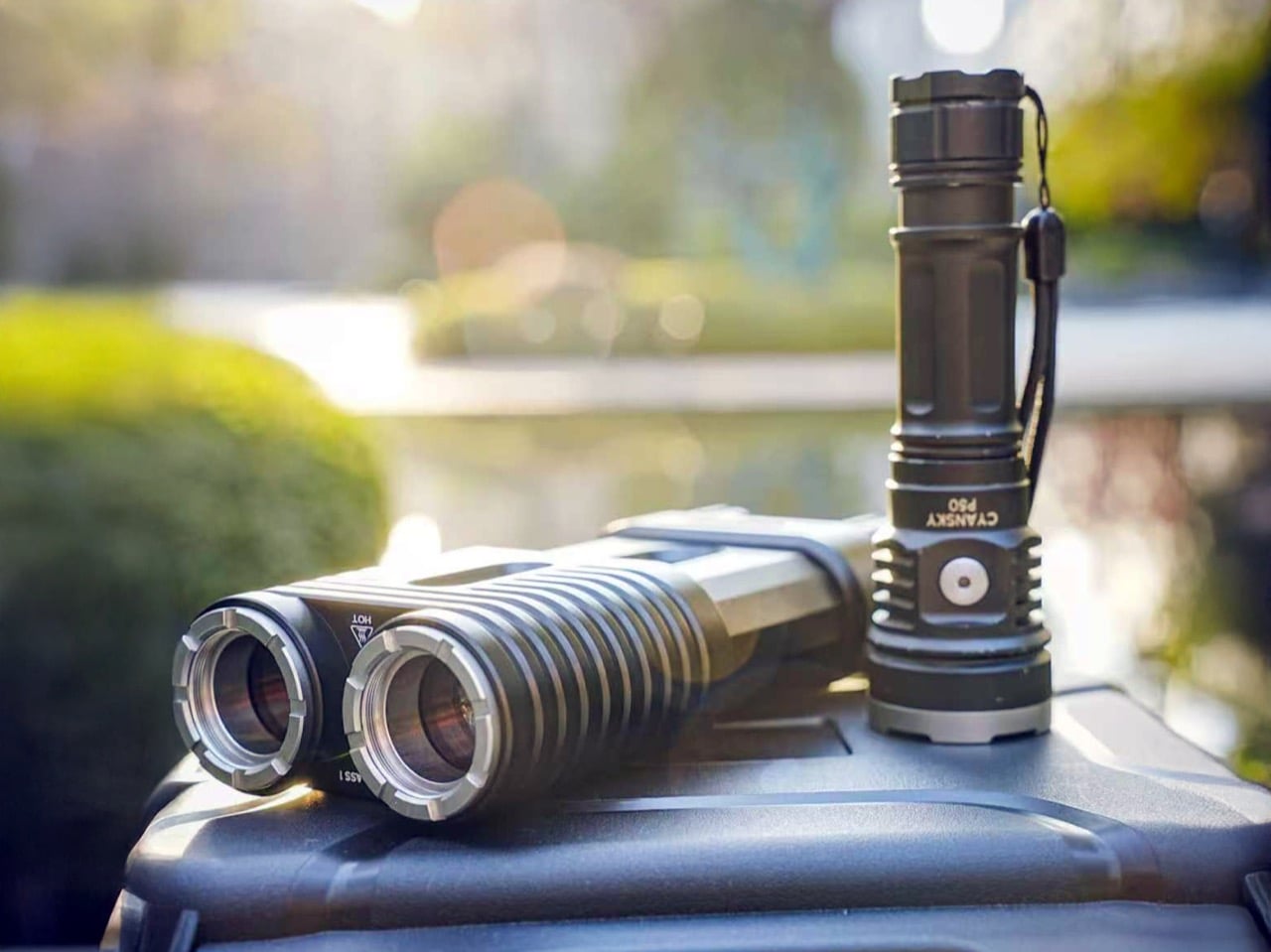
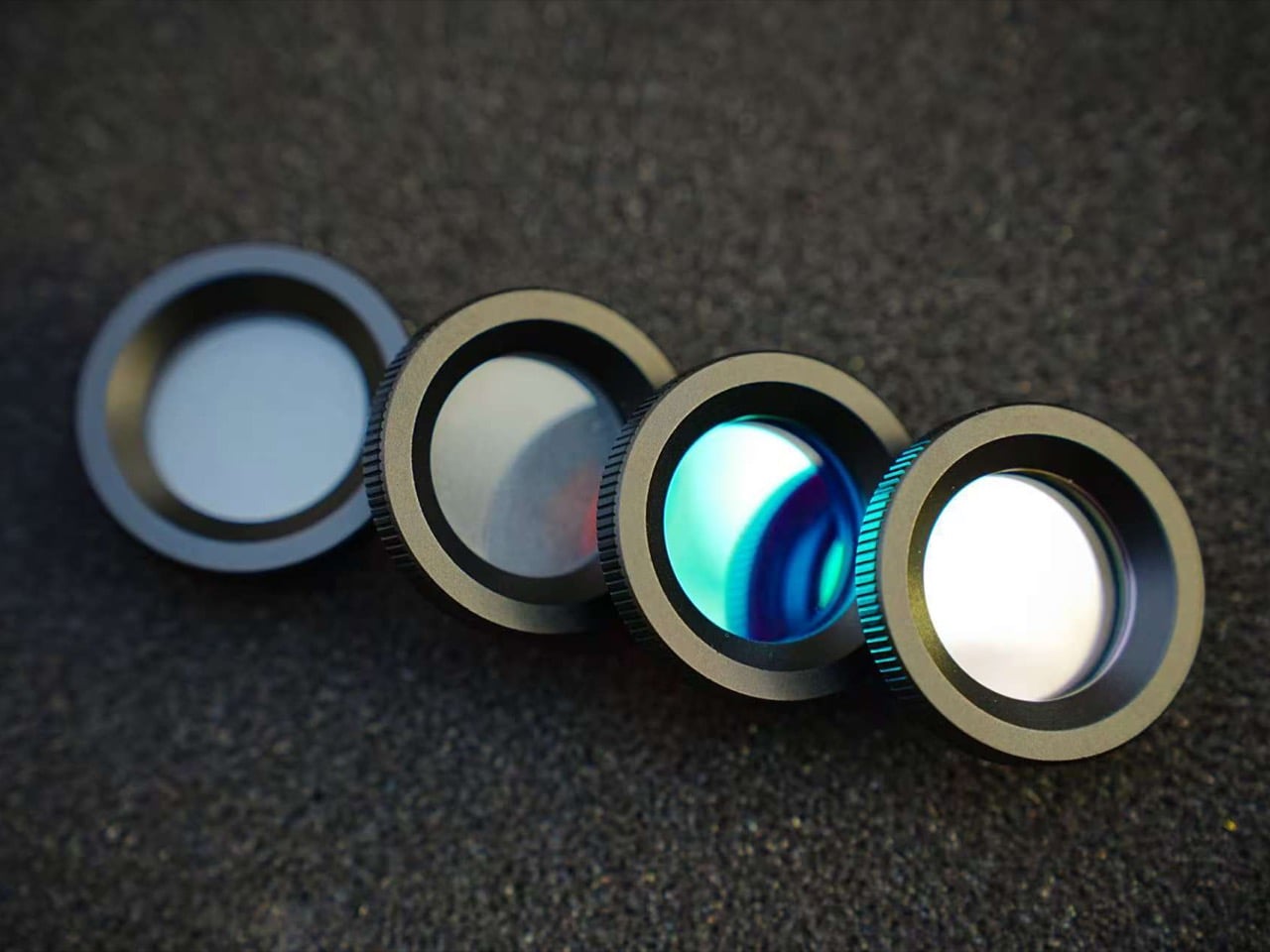
Glamping after sunset needs more than your phone’s dying flashlight. The Lumitwin DL700 throws a beam 2 kilometers into the distance, turning pitch-black wilderness into your private illuminated world. Built with dual, independently controlled barrels and laser-excited phosphor modules, this aerospace-grade aluminum flashlight weighs just over a kilogram but delivers impressive power. Swappable color filters let you switch between moods: red for preserving night vision during stargazing, green for scanning distant treelines, or flood mode for lighting your entire campsite when dinner prep gets serious.
Valentine’s Day glamping means navigating trails after dark, setting up surprise elements away from your main site, or simply ensuring your partner feels safe exploring after sunset. The DL700’s 2,000-meter throw distance and IP68 waterproofing handle torrential rain and rough handling without flinching. Machined from a single aluminum block and rated for one-meter drops, it’s the kind of tool that makes outdoor romance possible rather than stressful. When you’re creating an experience that rivals any restaurant, reliable illumination stops being optional and starts being essential.
What We Like
Throws light 1.24 miles with laser-excited phosphor technology that outperforms standard LEDs
Dual barrels operate independently for customized lighting scenarios throughout your evening
Swappable color filters adapt to stargazing, trail navigation, or ambient campsite lighting
IP68 waterproofing and aerospace aluminum construction survive anything February weather throws at you
What We Dislike
The 1,032-gram weight feels substantial compared to ultralight EDC flashlights
Premium price point reflects advanced technology that casual glampers might not fully utilize
2. TriBeam Camp Light
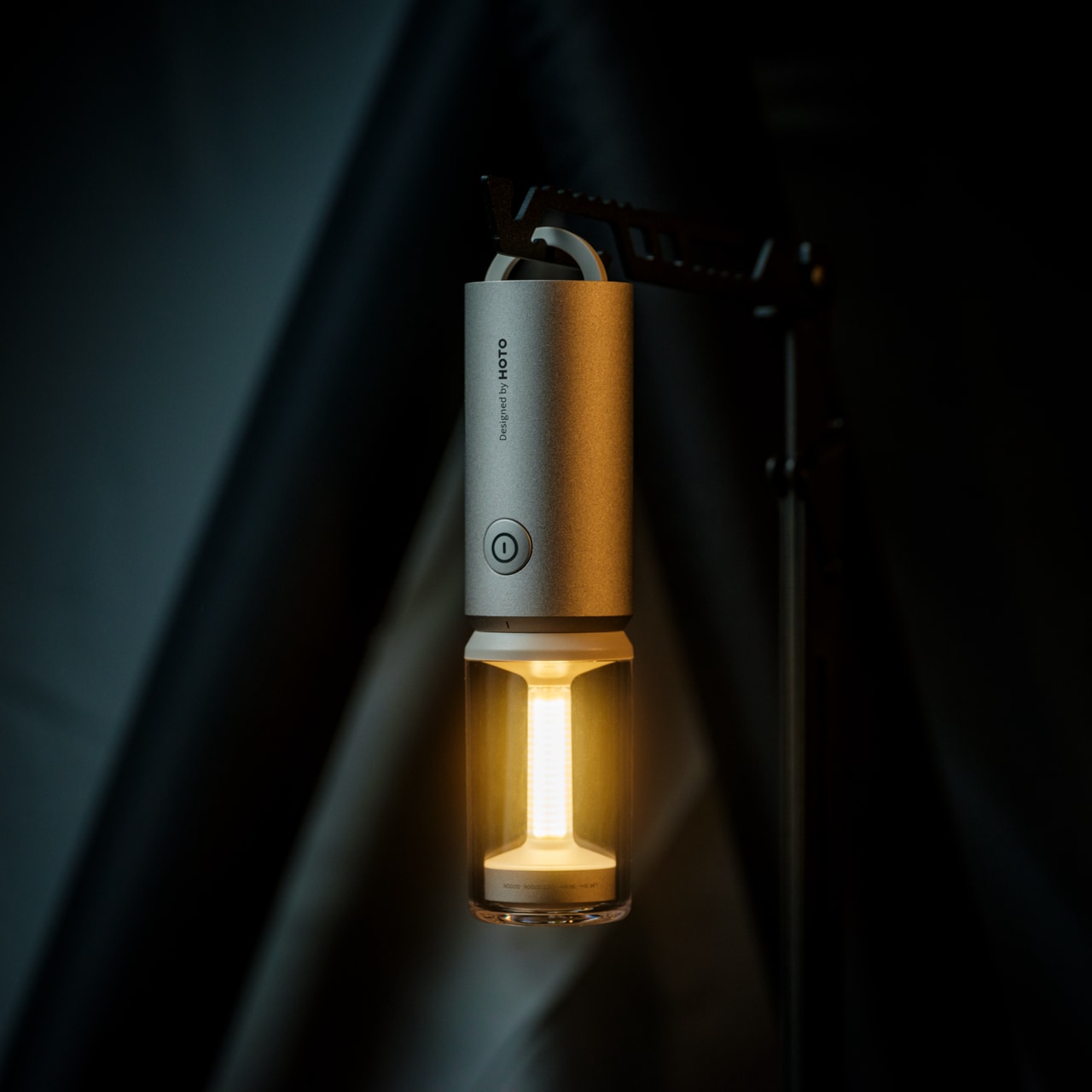
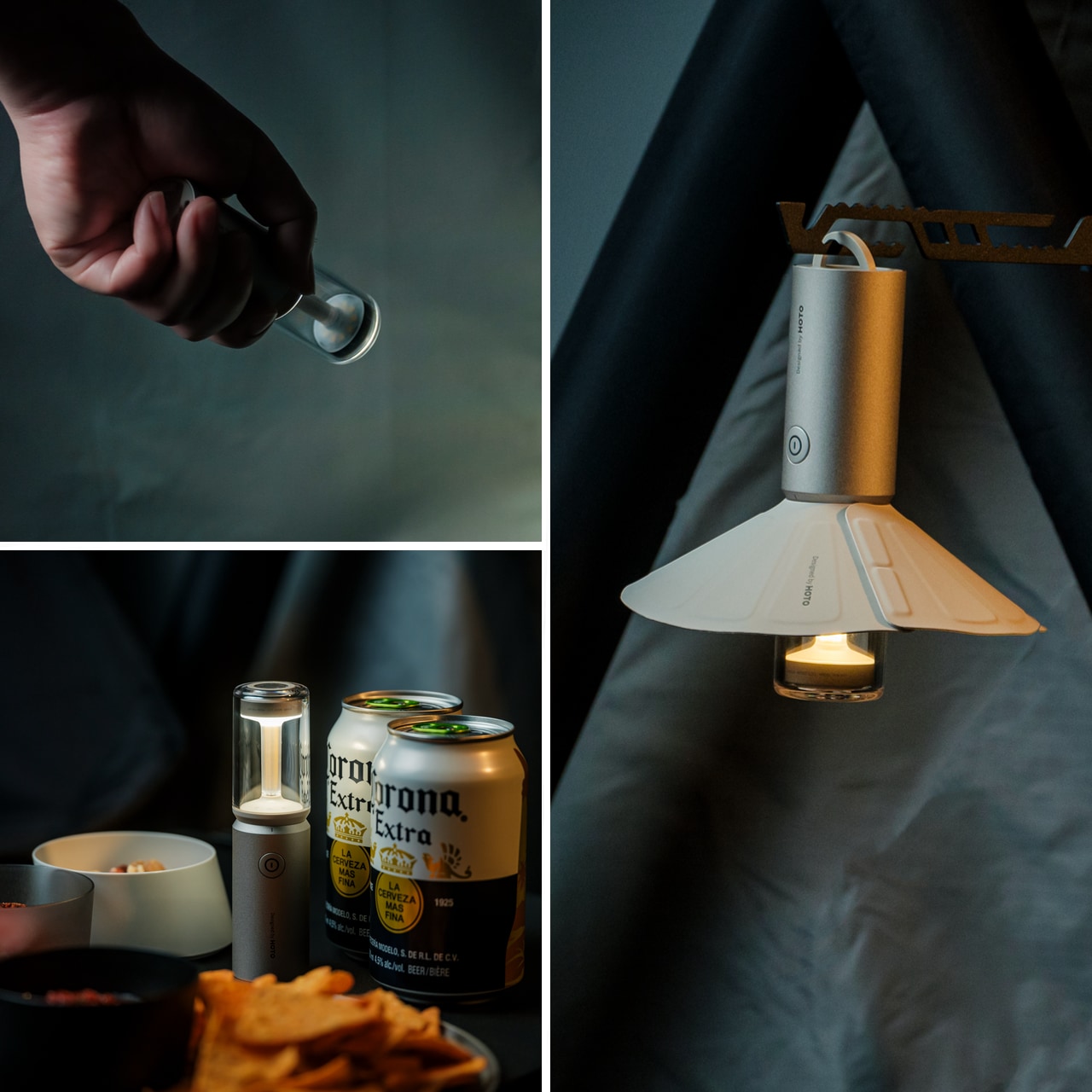
Restaurants dim the lights to create ambiance. Glamping lets you design your own. The TriBeam Camplight delivers three distinct lighting modes in one award-winning package: soft ambient glow for intimate conversation, focused flashlight for midnight trail walks, and diffused camping mode for illuminating your entire setup. At 12.8cm tall and just 135 grams, it disappears into any backpack but commands attention when you need it. Brightness adjusts from a gentle 5 lumens to a powerful 180 lumens, running up to 50 hours on a single charge.
Valentine’s Day lighting needs to be intentional. The TriBeam switches modes with a single intuitive button, letting you move from dinner prep brightness to post-meal intimacy without fumbling through menus or apps. Whether you’re packing for backcountry solitude or setting up near your vehicle, this compact companion adapts to every phase of your evening. Restaurants charge premium prices for calculated lighting design. The TriBeam hands you that control, letting you choreograph your night exactly how you want it. Romantic outdoor dinners succeed or fail on details like this.
Three lighting modes cover every glamping scenario from meal prep to stargazing
Adjustable brightness from 5 to 180 lumens lets you set the perfect mood
Runs up to 50 hours on a single charge, eliminating battery anxiety mid-date
Compact 135-gram weight makes it effortless to pack and position anywhere around your campsite
What We Dislike
Single-button control requires cycling through modes to reach your desired setting
Limited maximum brightness compared to dedicated high-lumen camping lanterns
3. RetroWave 7-in-1 Radio
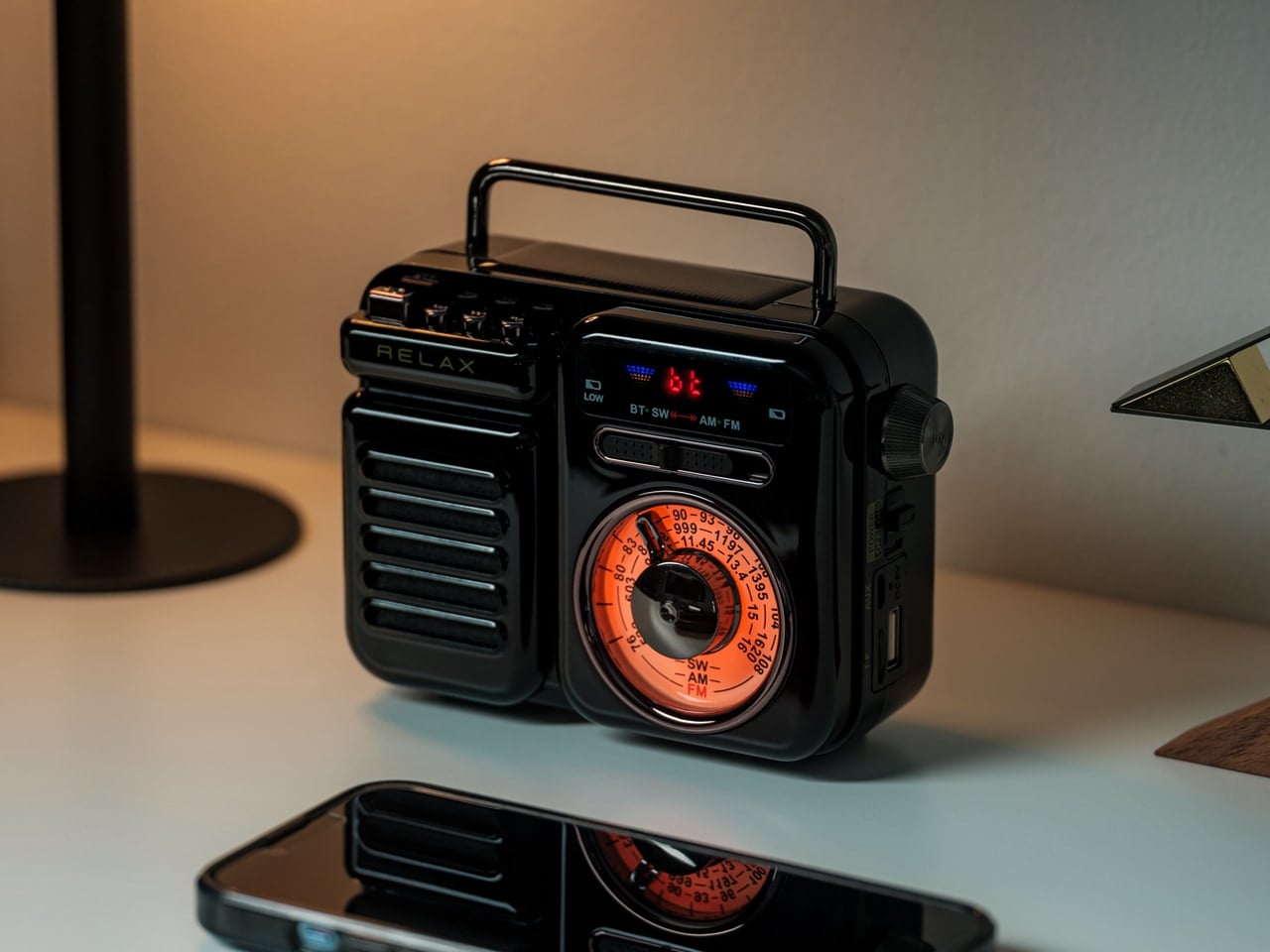
Restaurants curate playlists through ceiling speakers you can’t control. The RetroWave 7-in-1 Radio hands you the aux cord to your own romantic evening. Behind its Japanese-inspired design and tactile tuning dial sits Bluetooth streaming, MP3 playback from USB or microSD cards, and AM/FM/SW radio reception. Stream your shared playlist or tune into a jazz station broadcasting from miles away. When you’re miles from civilization, the built-in flashlight, SOS alarm, hand-crank charging, solar panel, and power bank functionality prove this isn’t just about music.
Valentine’s glamping succeeds when technology serves the experience rather than dominating it. The RetroWave delivers your soundtrack without glowing screens or notification interruptions, letting you stay present while Miles Davis or your favorite indie band fills the space between conversations. Battery anxiety disappears thanks to solar charging and hand-crank backup, meaning your music never dies mid-evening. Restaurants trap you in their aesthetic choices. This radio becomes part of yours, combining nostalgic analog charm with modern streaming convenience. The experience feels intentional, personal, and completely unlike fighting for attention in a crowded dining room.
Seven functions in one sleek device eliminate multiple gadgets cluttering your glamping setup
Bluetooth and MP3 playback provide offline music options when cell service disappears
Emergency power bank, flashlight, and SOS alarm add safety without compromising romance
Hand-crank and solar charging mean your soundtrack never runs out mid-date
What We Dislike
Retro tuning dial requires patience compared to instant digital station selection
Speaker quality prioritizes portability over audiophile-grade sound reproduction
4. DraftPro Top Can Opener
Fancy restaurants pour drinks into proper glassware. Glamping doesn’t require sacrificing that elevated experience. The DraftPro Top Can Opener removes the entire lid from beer, sparkling water, or cocktail cans, creating a smooth-edged, wide-mouth opening. Designed by award-winning Japanese designer Shu Kanno, it transforms canned drinks into draft-style sipping experiences where aroma and flavor hit properly. Add ice cubes directly into the can for instant chilling on warm February afternoons. Mix cocktails right in the container without shakers, jiggers, or cleanup.
Valentine’s Day glamping means creating restaurant-quality moments with campsite simplicity. The DraftPro elevates your celebratory toast from cracking aluminum tabs to something that feels intentional and refined. Compatible with domestic and international cans, it works with whatever craft beer, hard seltzer, or premixed cocktail you packed for the occasion. Restaurants charge premium prices for drinks you could make better outdoors. This compact tool proves sophistication doesn’t require white tablecloths. The first sip from a fully-opened can, ice clinking against smooth edges, feels worlds away from fighting for a server’s attention in a packed dining room.
Fully removes can tops for glass-like drinking experiences that enhance aroma and taste
Universal fit works with domestic and international cans without compatibility issues
Allows adding ice directly into cans for instant chilling on warm days
Creates cocktails directly in the can, eliminating shakers and minimizing cleanup
What We Dislike
The small form factor can be easy to misplace in a busy campsite
Requires careful handling to avoid sharp edges during the cutting process
5. Airflow 8-Panel Fire Pit
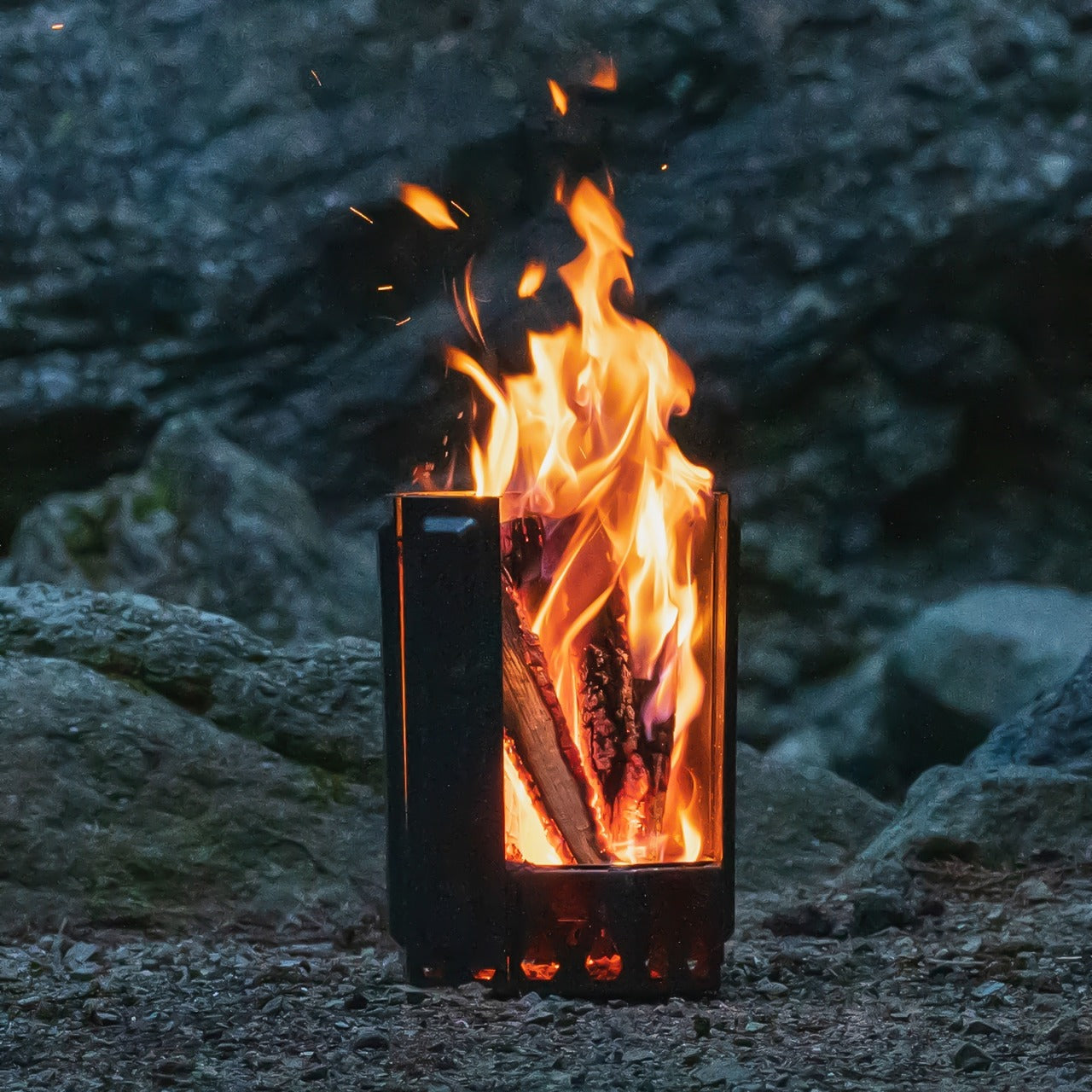
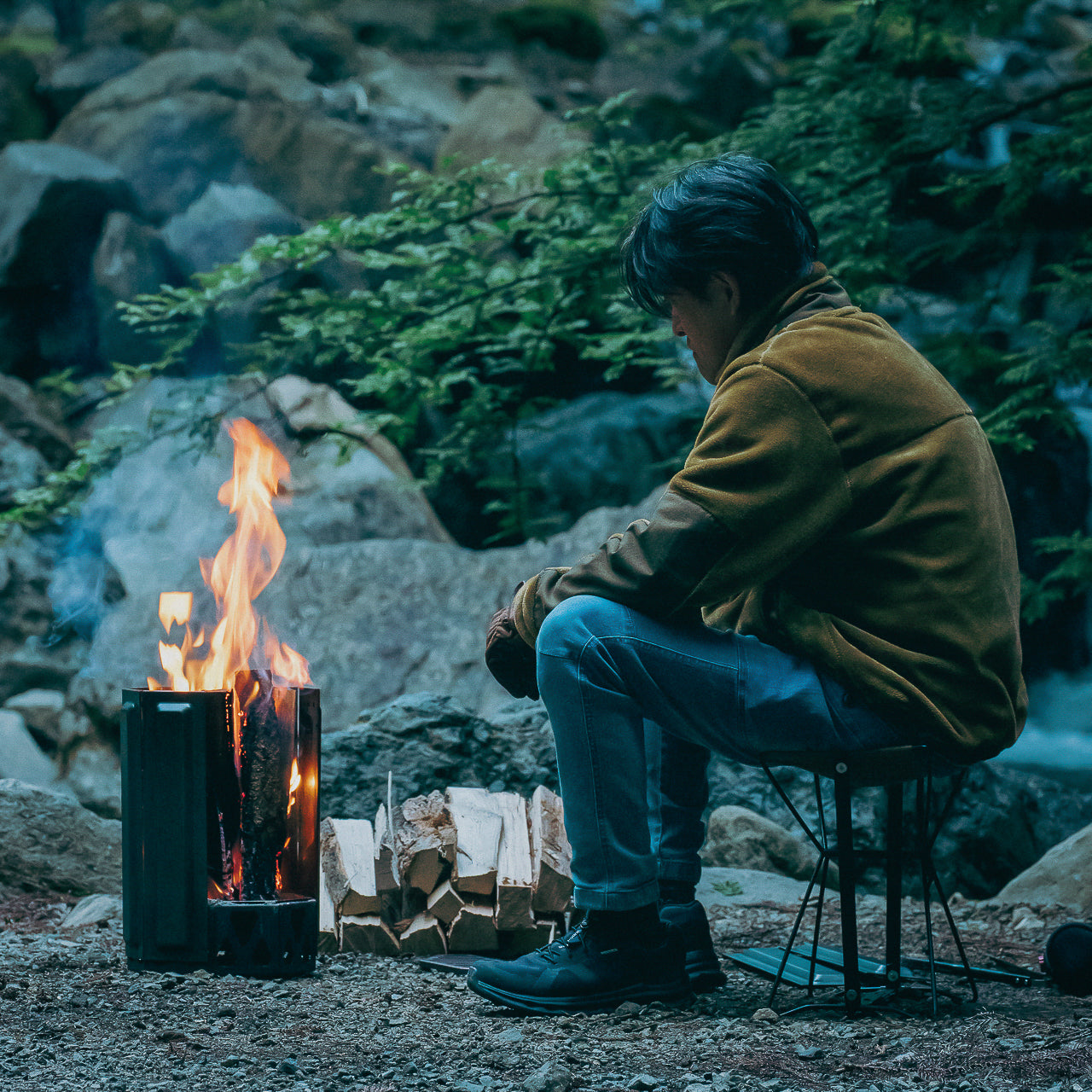
Every romantic outdoor dinner needs a centerpiece, and the Airflow 8-Panel Fire Pit delivers mesmerizing flames without the usual smoke and hassle. Sanyo Works engineered a unique removable eight-panel system that lets you adjust fire intensity effortlessly. Strategic airflow holes at the bottom channel fresh oxygen directly to the base for primary combustion. Heated air ascends through double-walled cavities and exits from top holes, creating secondary combustion that minimizes smoke. The result is a warm, enchanting fire that doesn’t require constant tending or leave you smelling like a campfire afterward.
Restaurants offer candlelight at best. Glamping gives you real fire, primal and hypnotic, without the frustration of traditional fire pits. The adjustable eight-panel design means you control the intensity throughout your evening: roaring flames during meal prep, moderate heat for post-dinner conversation, gentle embers while stargazing. Easy cleanup and optimized airflow keep the focus on your partner rather than managing logs and smoke direction. Valentine’s Day outdoors succeeds when the environment enhances intimacy rather than creating obstacles. This fire pit becomes the focal point of your setup, providing warmth, light, and ambiance that no restaurant fireplace can match.
Removable eight-panel system adjusts fire intensity throughout your evening
Secondary combustion design minimizes smoke for comfortable extended sitting
Strategic airflow optimization burns wood efficiently with less tending required
Easy disassembly and cleanup let you focus on romance rather than maintenance
What We Dislike
Metal construction requires careful handling when hot, especially in romantic low-light conditions
Requires dry firewood for optimal secondary combustion performance
6. Battery-Free Amplifying iSpeakers
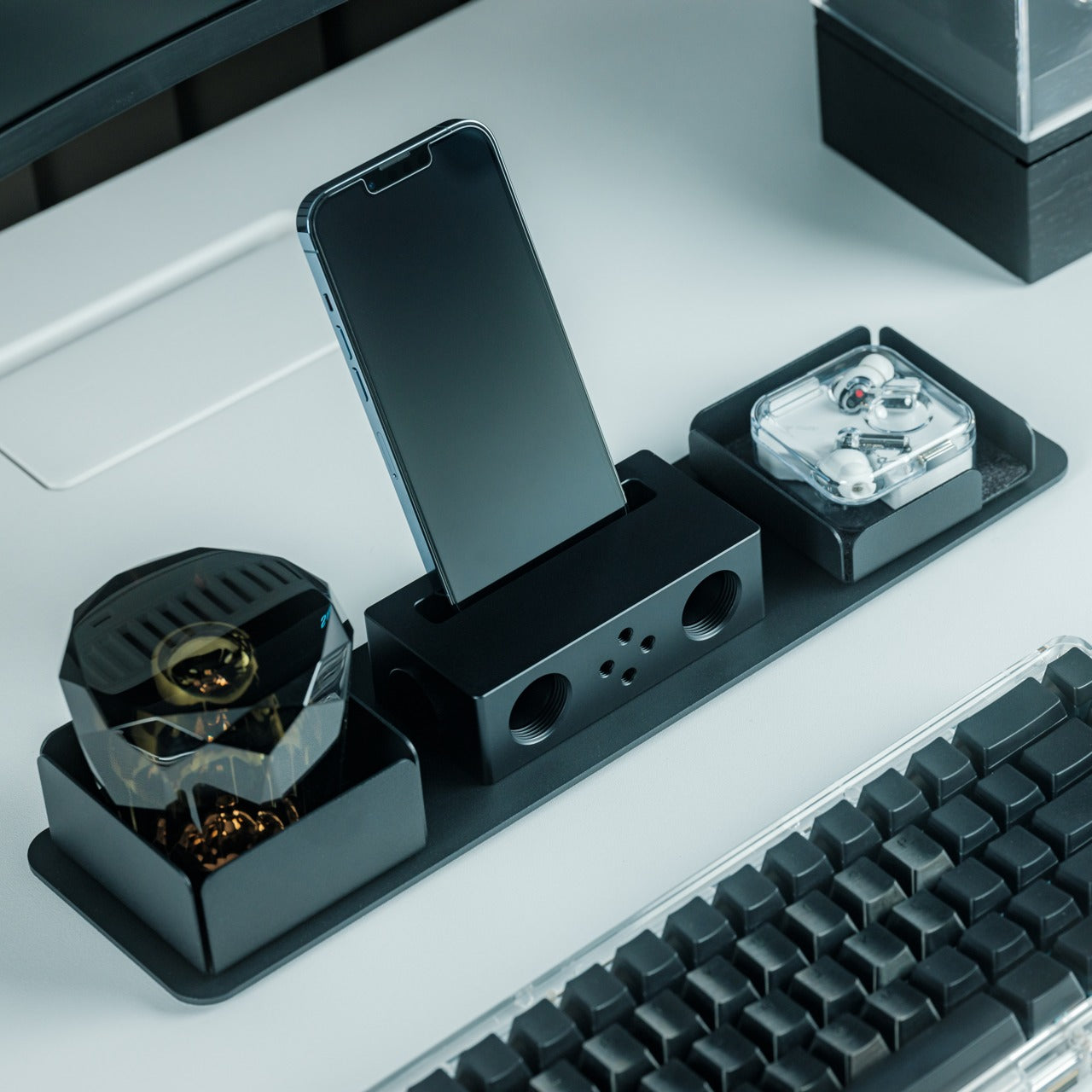
Restaurants control the volume, the playlist, and the vibe. The battery-free amplifying iSpeakers hand that controls back to you without adding another electronic device to charge or maintain. Slide your smartphone into this Duralumin metal speaker and watch physics take over. Amplified sound waves spread music across your campsite through vibration-resistant aerospace-grade metal engineered using the golden ratio. No batteries, no electricity, no Bluetooth pairing. Just elegant acoustic amplification that enhances your phone’s audio while adding sculptural beauty to your glamping setup.
Valentine’s Day glamping thrives on intentional simplicity. These speakers provide your soundtrack without glowing lights, dying batteries, or connectivity issues interrupting the mood. The Duralumin construction resists vibrations that muddy sound quality, delivering clearer audio than you’d expect from passive amplification. Compatible with optional +Bloom and +Jet mods for directing sound exactly where you want it, they blend into your aesthetic rather than screaming “gadget.” Restaurants trap you in sonic environments designed for turning tables quickly. These speakers let you curate a soundscape that supports conversation, enhances intimacy, and never needs to be recharged halfway through your evening.
Zero power requirements eliminate battery anxiety and charging cables from your packing list
Duralumin aerospace metal construction delivers vibration-resistant acoustic clarity
Golden ratio engineering optimizes sound amplification through pure physics
Doubles as sculptural decor that enhances your campsite’s aesthetic
What We Dislike
Volume is limited by passive amplification rather than powered speaker systems
Requires smartphone placement in a fixed position, reducing device accessibility during use
7. All-in-One Grill
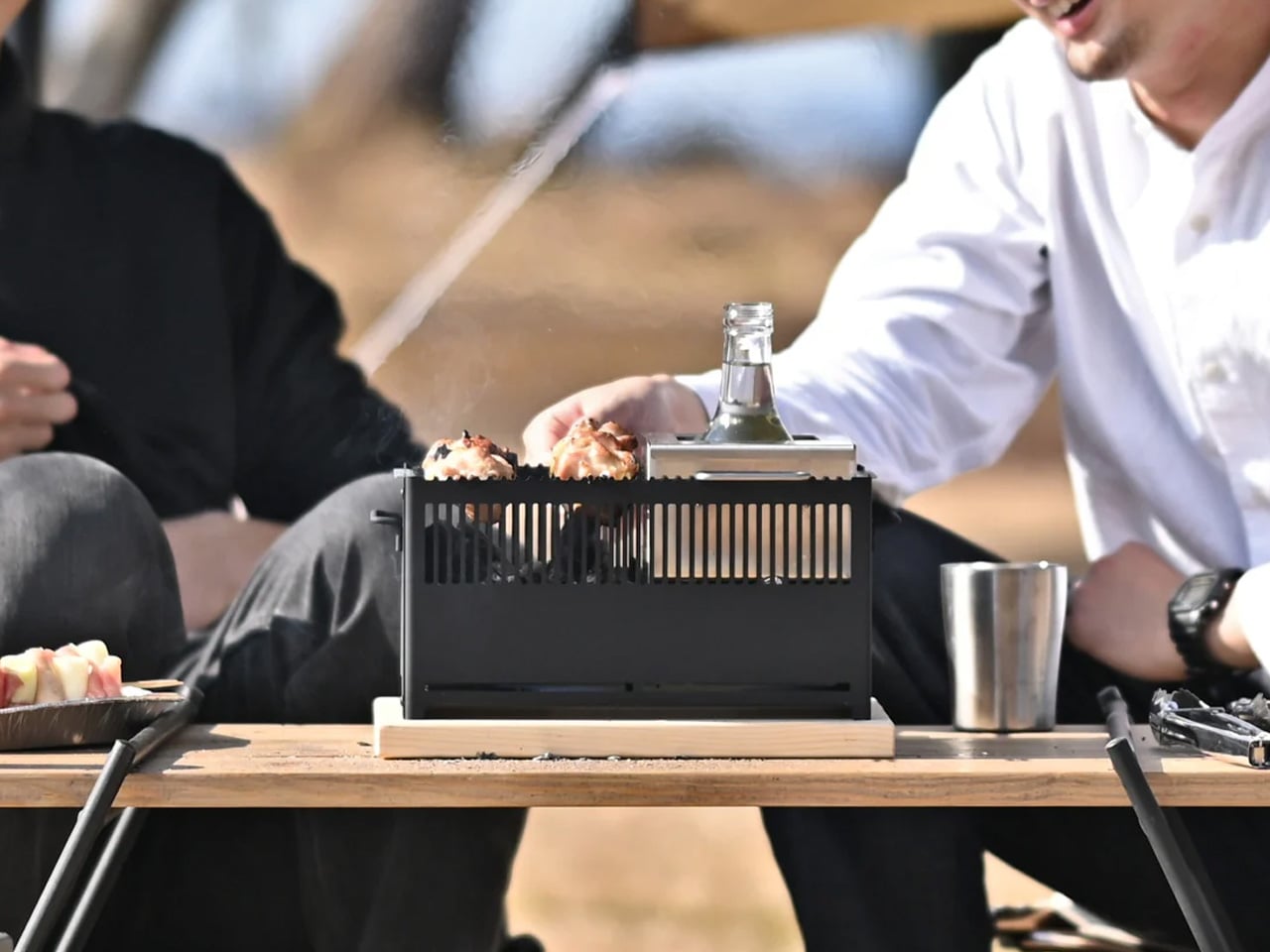
Restaurant kitchens handle everything from grilling to steaming behind closed doors. The All-in-One Grill brings that versatility to your glamping setup in one modular package. Barbecue, fry, grill, steam, smoke, or simmer a hearty stew using interchangeable parts designed for different cooking styles. A dedicated module warms bottles upright, perfect for heating mulled wine or keeping champagne at temperature throughout your meal. Compact tabletop size works on any stable surface, and disassembly takes minutes for easier cleaning. This is outdoor cooking without compromise, stress, or limited menu options.
Valentine’s Day deserves a proper meal, not dehydrated camping rations rehydrated with creek water. The All-in-One Grill lets you cook a masterchef-worthy dinner outdoors: seared steaks, grilled vegetables, smoked salmon, steamed shellfish, whatever matches your partner’s preferences. Modular versatility means you’re not locked into basic campfire cooking methods. Restaurants charge premium prices for Valentine’s dinners that rarely justify the cost. This grill proves you can create something better outdoors, cooked to your specifications, and enjoyed at your pace. Cleanup is straightforward rather than something you dread, letting you return to conversation and connection. The evening becomes about shared experience rather than outsourced service.
Modular design supports barbecuing, frying, grilling, steaming, smoking, and simmering in one tool
Dedicated bottle-warming module keeps drinks at the perfect temperature throughout dinner
Compact tabletop size works anywhere without requiring ground-level cooking arrangements
Easy disassembly streamlines cleanup, so you spend less time on dishes
What We Dislike
Multiple components require organization and packing space in your vehicle or gear
Learning curve for optimal use of different modules and cooking techniques
Why Glamping Wins Valentine’s Day
Restaurants promise romance but deliver crowds, rushed service, and overpriced meals that rarely justify the hype. Glamping flips that script entirely. You’re the chef, sommelier, and ambiance designer, creating an experience tailored exactly to your relationship rather than a restaurant’s bottom line. The effort shows thoughtfulness in ways that restaurant reservations never could. Your partner remembers the evening you cooked together under the stars, not the meal you ate in silence while waiting for the check.
These seven tools prove outdoor romance doesn’t mean roughing it. Proper lighting, curated music, elevated drinks, mesmerizing fire, quality cooking, and thoughtful details transform a campsite into something more intimate than any dining room. Valentine’s Day belongs outside, where your only deadline is sunrise, and your only neighbors are trees. Restaurants will still be there next month. This February, choose something better.
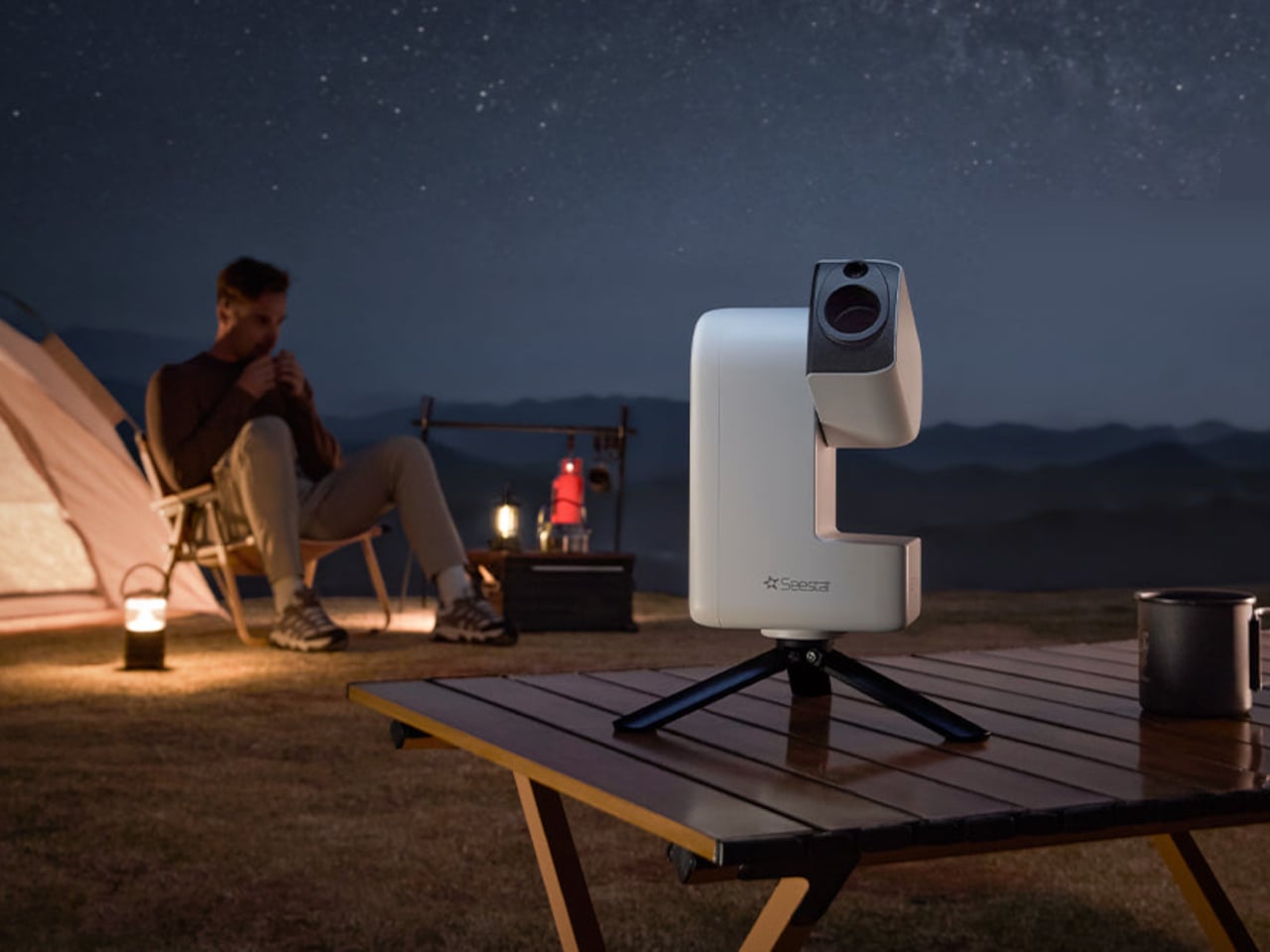
The romance of stargazing usually hits the reality of traditional astrophotography pretty hard. Heavy mounts, polar alignment, cables running from telescope to laptop, and software that can turn a clear night into troubleshooting instead of wonder. Phone cameras and basic star apps have helped, but they still leave a gap between pointing at the sky and capturing something worth keeping.
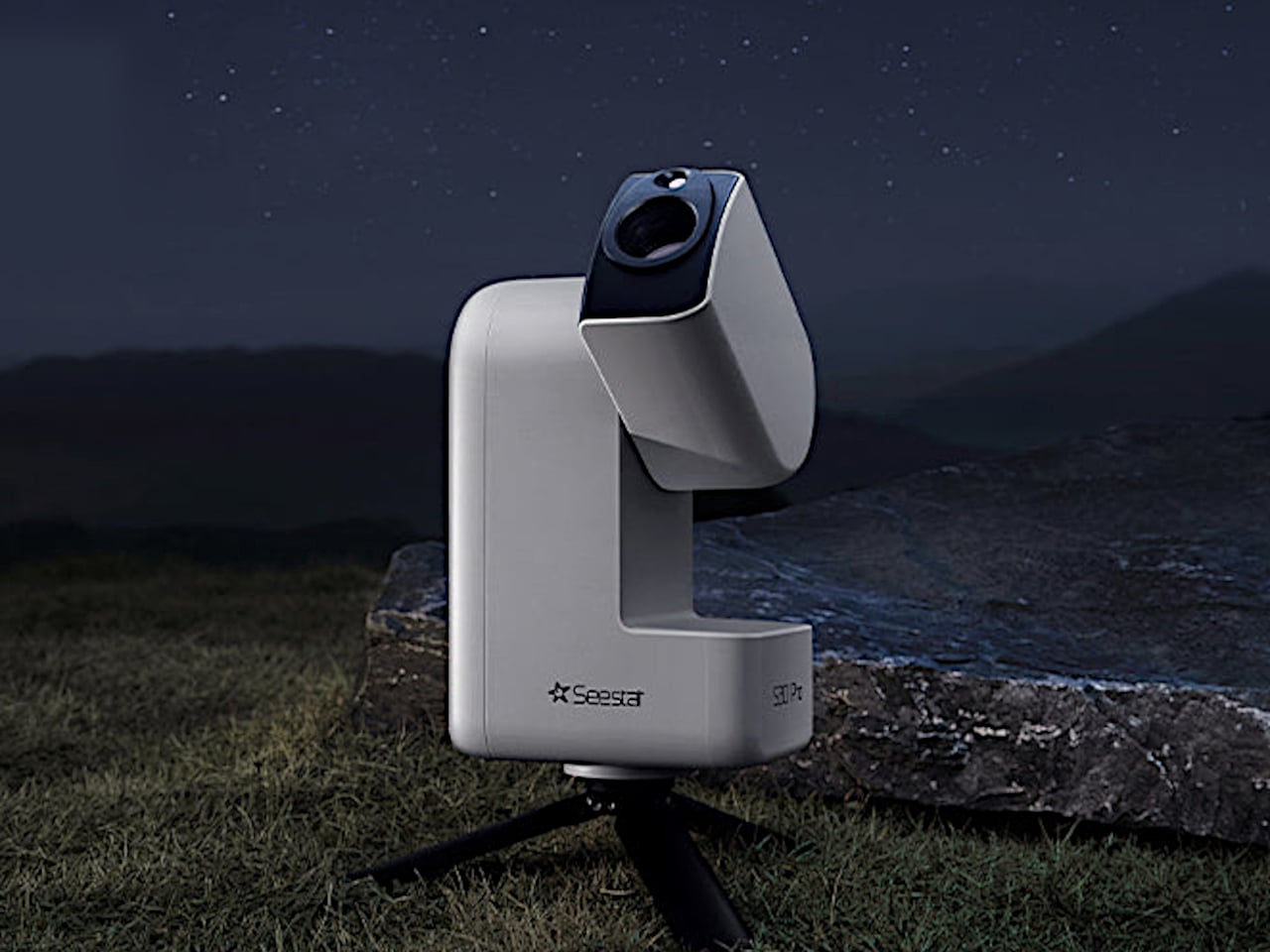
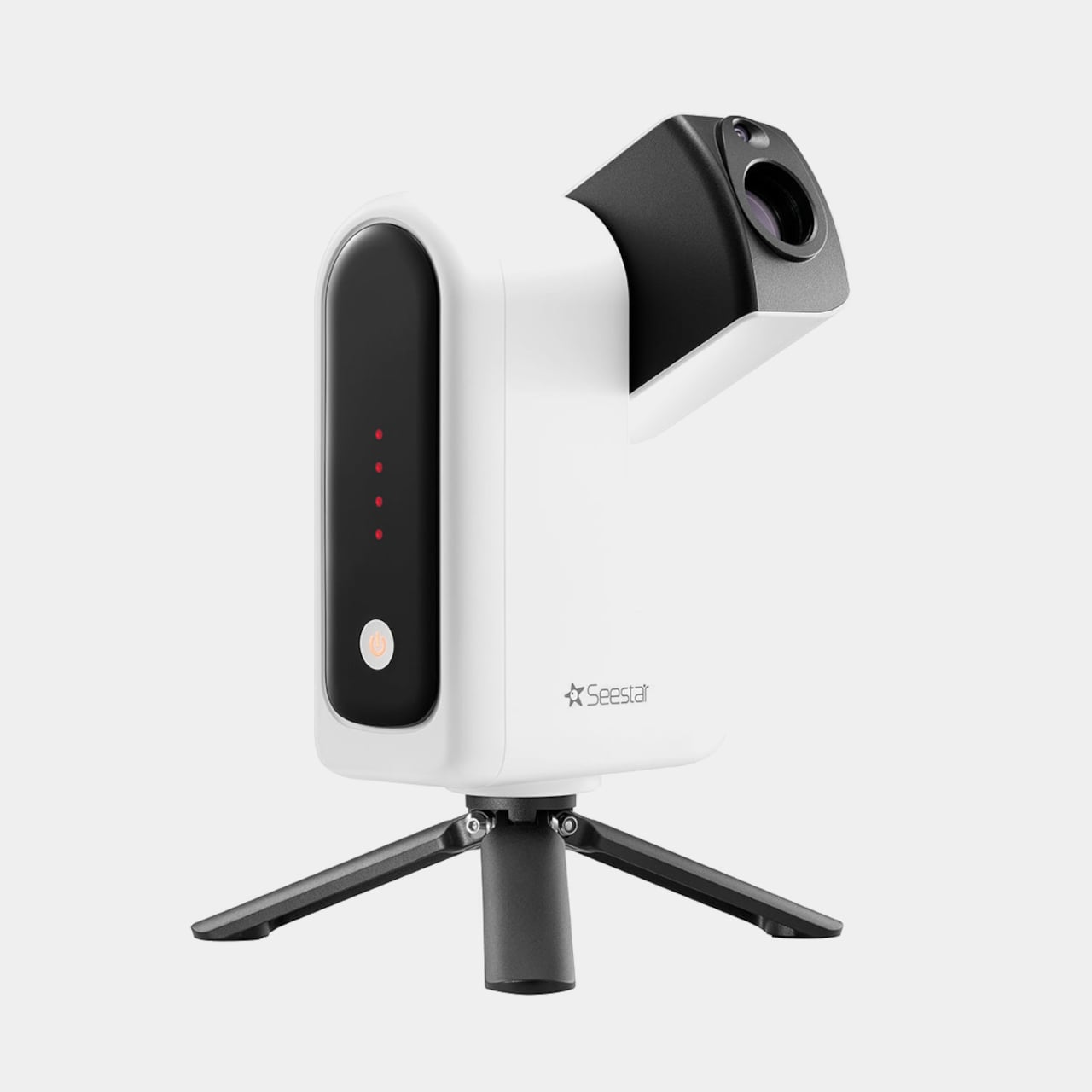
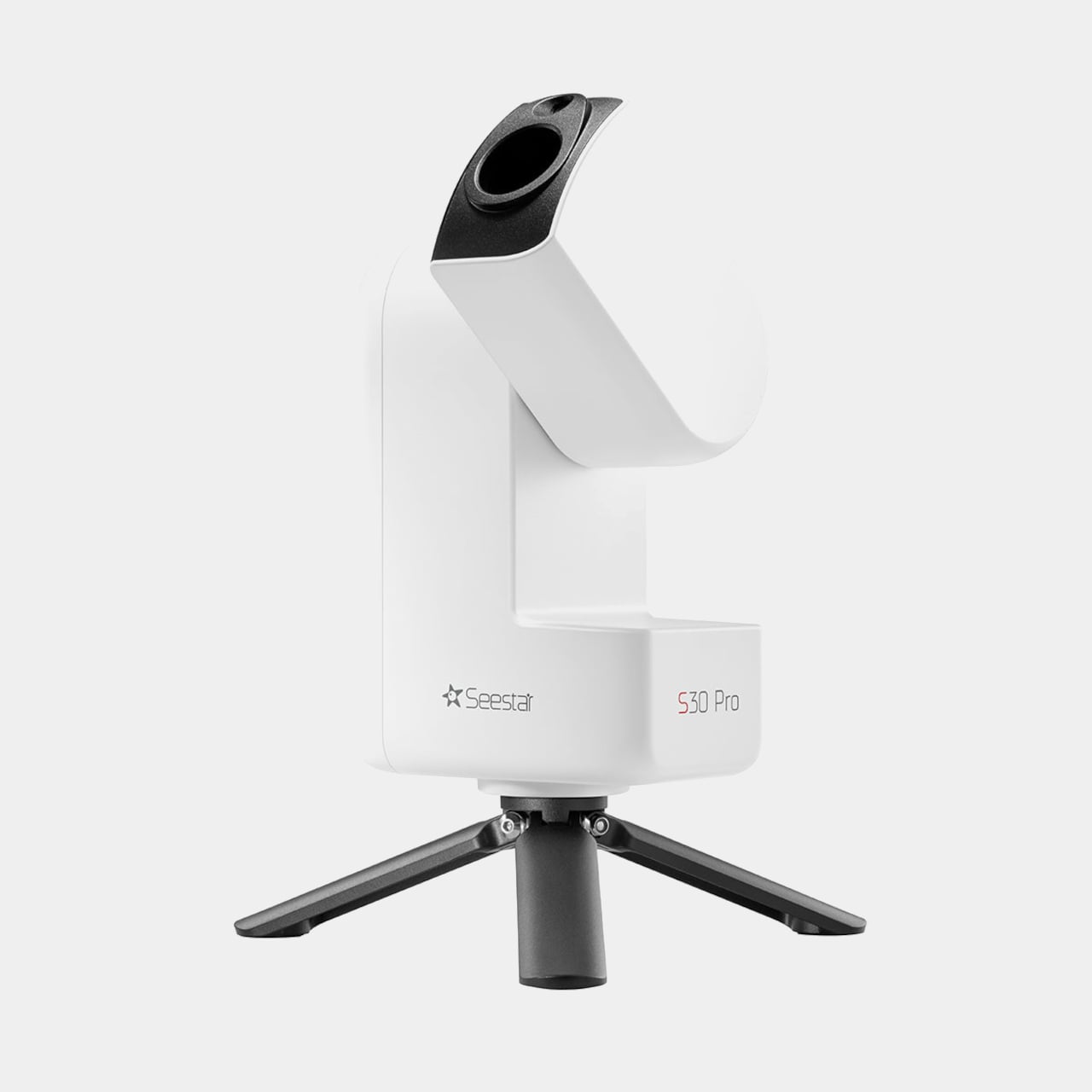
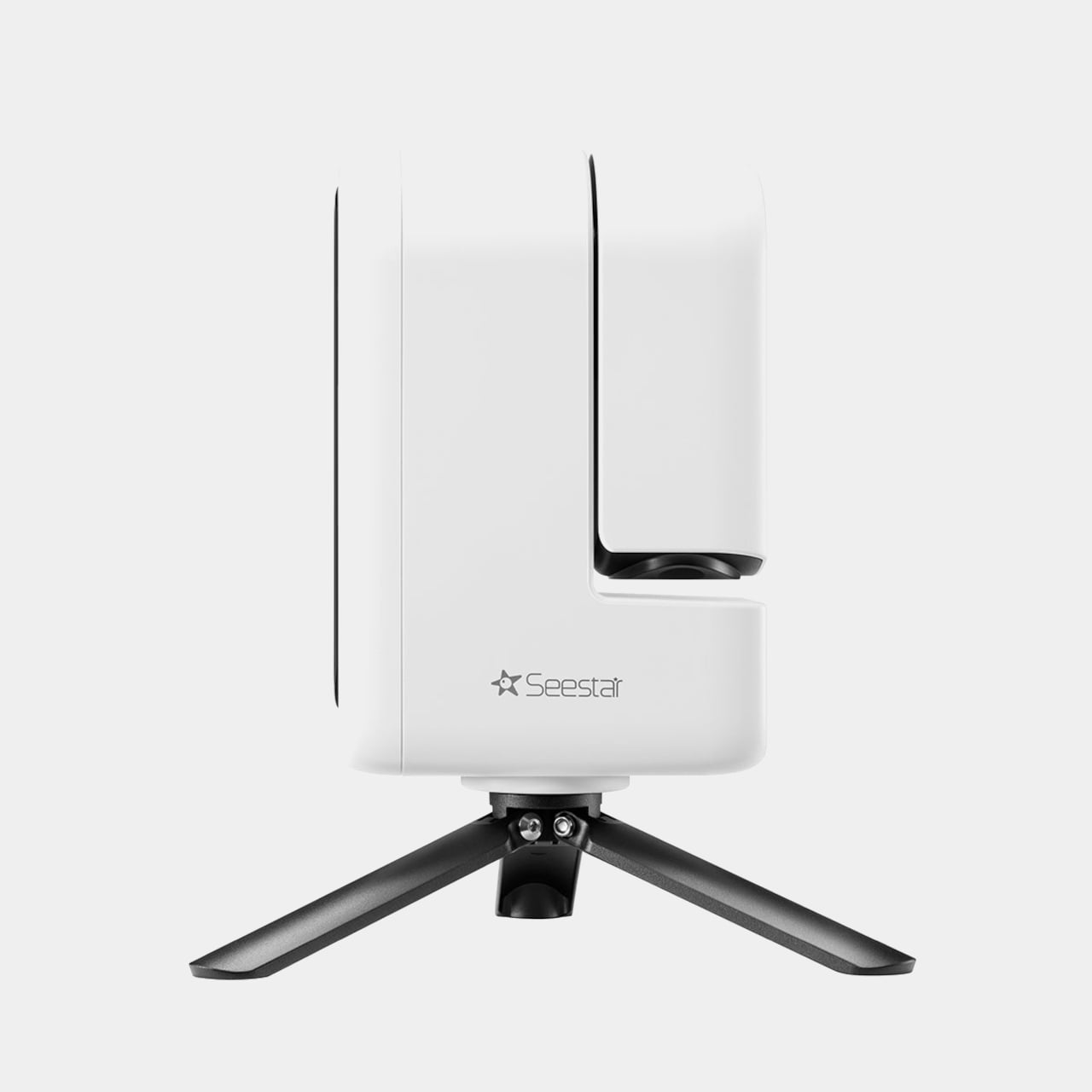
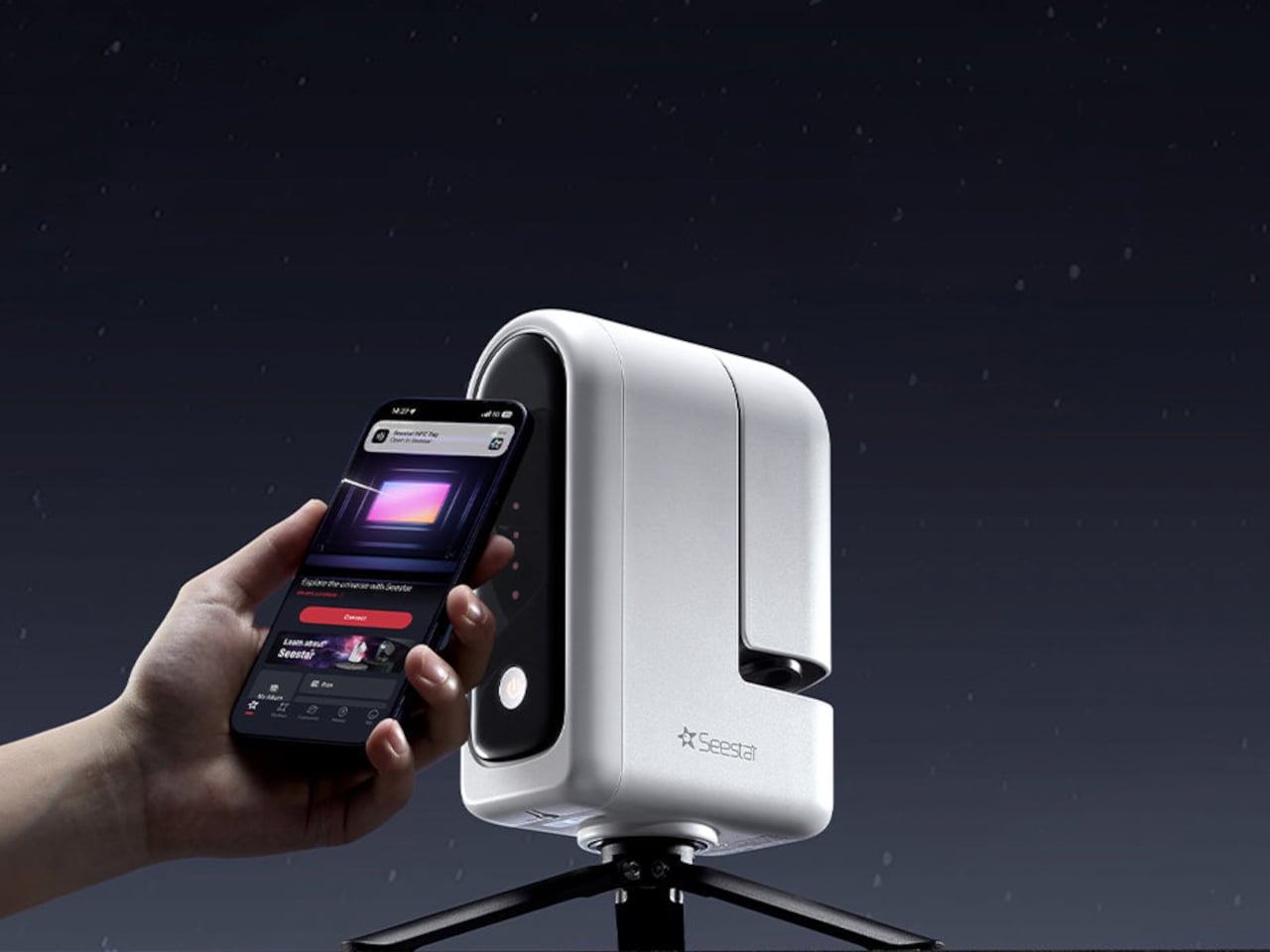
Seestar S30 Pro is a smart telescope that weighs about 1.65kg and folds a telescope, auto-focuser, camera, Alt-Az mount, filter wheel, and controller into one compact body. You power it on, tap your phone to connect, and the system is ready. The idea is to replace a trunk full of gear with a palm-sized observatory that lives in a backpack but still feels like a serious instrument.
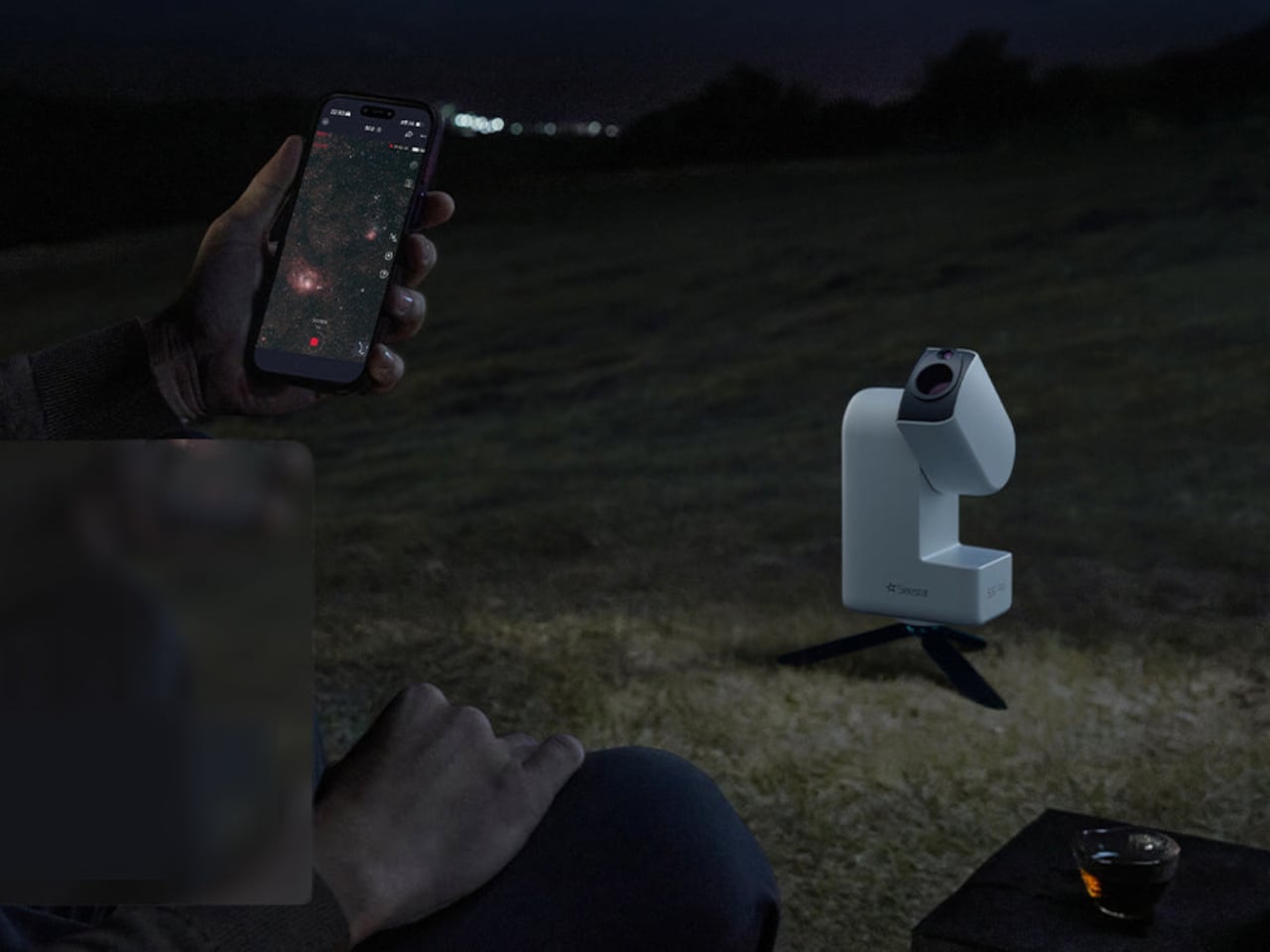
Setting it up under a clear sky, you open the app and choose from more than 80,000 deep-sky objects and 600,000 stars. With one-tap GOTO, the S30 Pro slews to the target, locks on, and starts tracking. You pick a mode, Stargazing, Milky Way, Solar System, or Scenery, and let the dual-lens 4K system with its IMX585 telephoto and IMX586 wide-angle sensors stack and refine frames.
Milky Way and star trails modes let you watch the sky drift across the frame or trace arcs over time-lapse. Built-in 8K stitching automatically mosaics horizontal or vertical panoramas, expanding the field far beyond a single frame. A freeze-the-ground feature separates foreground from sky, keeping the landscape sharp while the Milky Way stays crisp and trail-free, all from a single tap that would normally require separate exposures.
The 4-element apochromatic lens with extra-low dispersion glass minimizes chromatic aberration so stars stay round, and blacks stay neutral. A built-in triple filter system, dark field, UV/IR cut, and light pollution filter tuned for OIII and Hα, adapts to different conditions. Active anti-dew control gently warms the optics to prevent condensation, so long sessions do not end with a fogged-over lens and hours of wasted time.
Plan mode lets you schedule a target and let Seestar handle locating, tracking, capturing, and processing while you sleep, so you wake up to finished data instead of staying up all night monitoring exposures. For longer exposures, an equatorial mode with additional accessories counters Earth’s rotation. During the day, the same device becomes an ultra-telephoto camera for birds, distant landscapes, or rocket launches, with smart tracking to keep subjects centered.
The S30 Pro sits inside a broader ecosystem, from the telescope network that lets you control Seestar units across regions to the AI assistant that responds to voice commands, and ASCOM Alpaca support that opens it up to software like NINA for advanced workflows. It is framed less as a gadget and more as a platform for exploring the sky, making the first steps effortless while leaving room to grow.
Spring camping season is approaching faster than you think, and this year’s gear is already creating buzz among outdoor enthusiasts. The designs hitting the market right now represent a significant leap from the bulky, single-purpose equipment that’s dominated camping for decades. These innovations combine smart solar technology, modular systems, and compact engineering to transform how we experience the outdoors.
Smart campers know the best gear disappears quickly once warm weather arrives. The products on this list have already garnered design awards, enthusiastic early reviews, and waitlists that keep growing. Whether you’re a weekend warrior or a serious backcountry explorer, these ten camping gadgets deserve a spot in your pack before they sell out for the season.
1. Solar-Powered AC Camping Tent
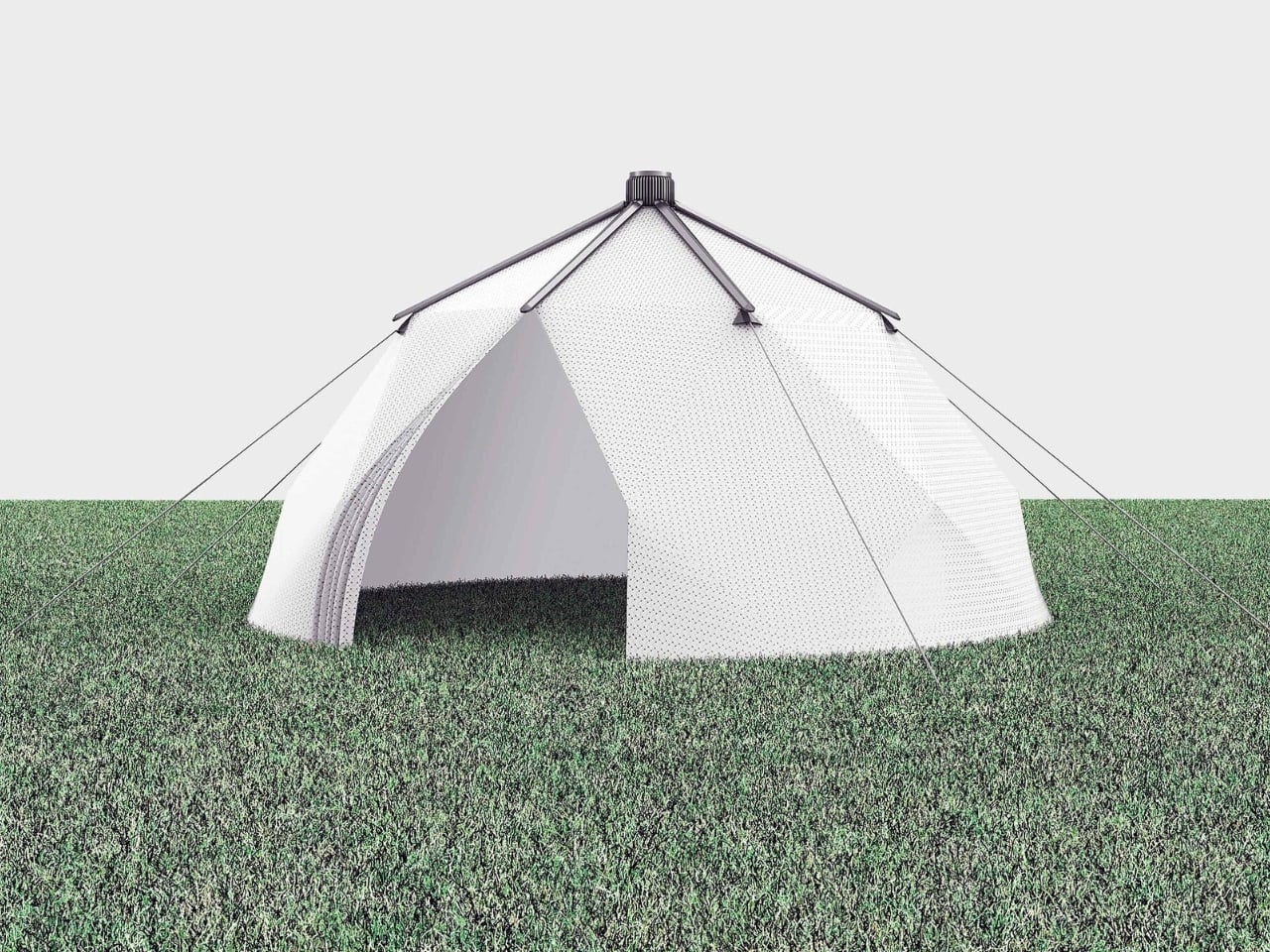
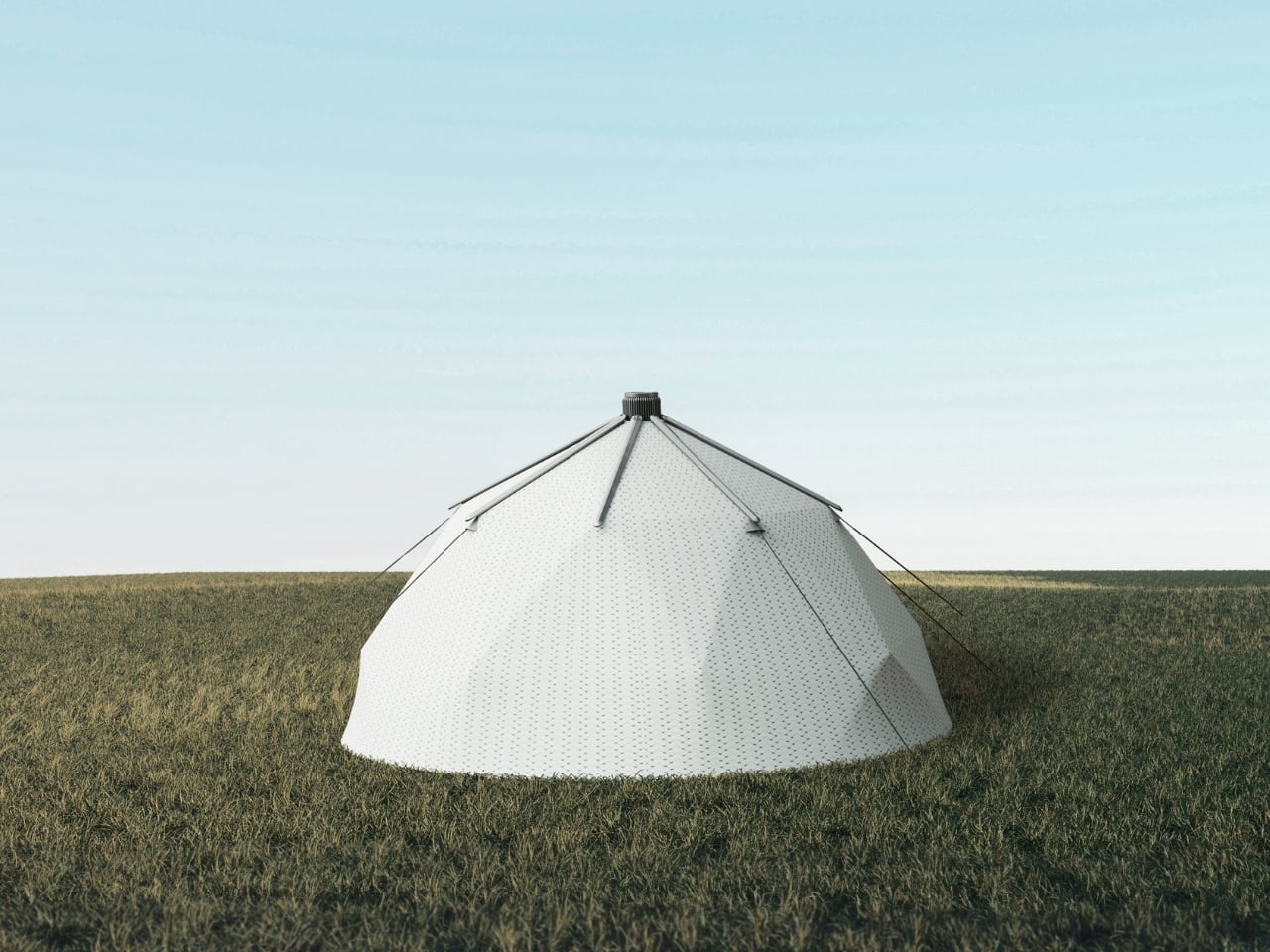
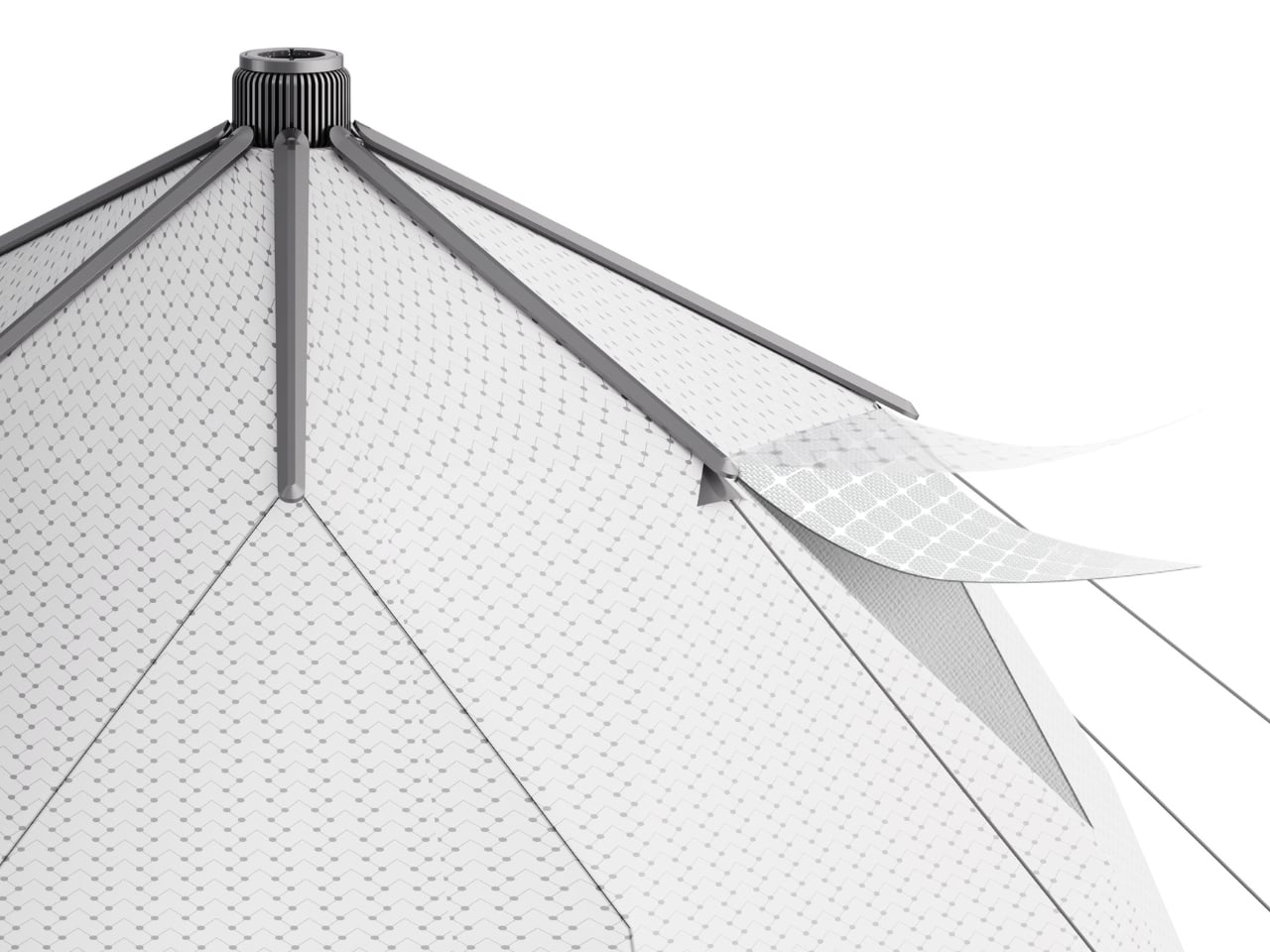
Sleeping comfortably in summer heat has always been camping’s greatest challenge. Traditional tents trap warmth, turning your shelter into a sweatbox by mid-morning. This Red Dot Design Award-winning tent tackles that problem through integrated solar technology that powers a built-in air conditioning system. Designers Zhong Xu, Li Baoyu, Pan Yiyuan, and Li Xueyan created something genuinely innovative by embedding power generation directly into the tent’s composite tarpaulin fabric.
The system works seamlessly because the tent material itself becomes your power source. While you sleep or explore during daylight hours, the fabric collects solar energy that feeds the cooling system. This integrated approach eliminates the need for separate panels, external batteries, or noisy generators. The tent maintains consistent temperatures without compromising portability or setup simplicity, making summer camping actually enjoyable rather than an endurance test.
What We Like
The composite fabric simultaneously protects from the weather while generating power for climate control.
The award-winning design demonstrates that innovative engineering can address camping’s most persistent comfort issues.
What We Dislike
Pricing details remain unclear as the product moves from concept to market availability.
The integrated technology likely means repairs require specialized service rather than simple patch kits.
2. RetroWave 7-in-1 Radio
Emergency preparedness meets vintage aesthetics in this multifunctional device that refuses to be just one thing. The RetroWave combines AM, FM, and shortwave radio reception with Bluetooth streaming, creating a bridge between analog reliability and modern connectivity. Its Japanese-inspired design features a tactile tuning dial that feels satisfying to use, while the compact build ensures it fits easily into camping gear or emergency kits.
Beyond entertainment, this radio delivers genuine survival functionality through multiple power options. The built-in solar panel and hand-crank charging mean you’re never completely powerless, even when batteries die. The integrated flashlight, SOS alarm, and power bank capability transform this from a simple radio into a legitimate emergency tool. The MP3 playback via USB or microSD adds offline music options for extended trips beyond cellular range.
Seven distinct functions packed into one compact device eliminate the need for multiple gadgets.
Multiple charging methods, including solar and hand-crank, ensure functionality during emergencies or extended off-grid adventures.
What We Dislike
The retro aesthetic may not appeal to minimalist campers who prefer sleek, modern designs.
Packing seven functions into one device means compromising on the specialized performance of dedicated single-purpose tools.
3. 8-in-1 EDC Scissors
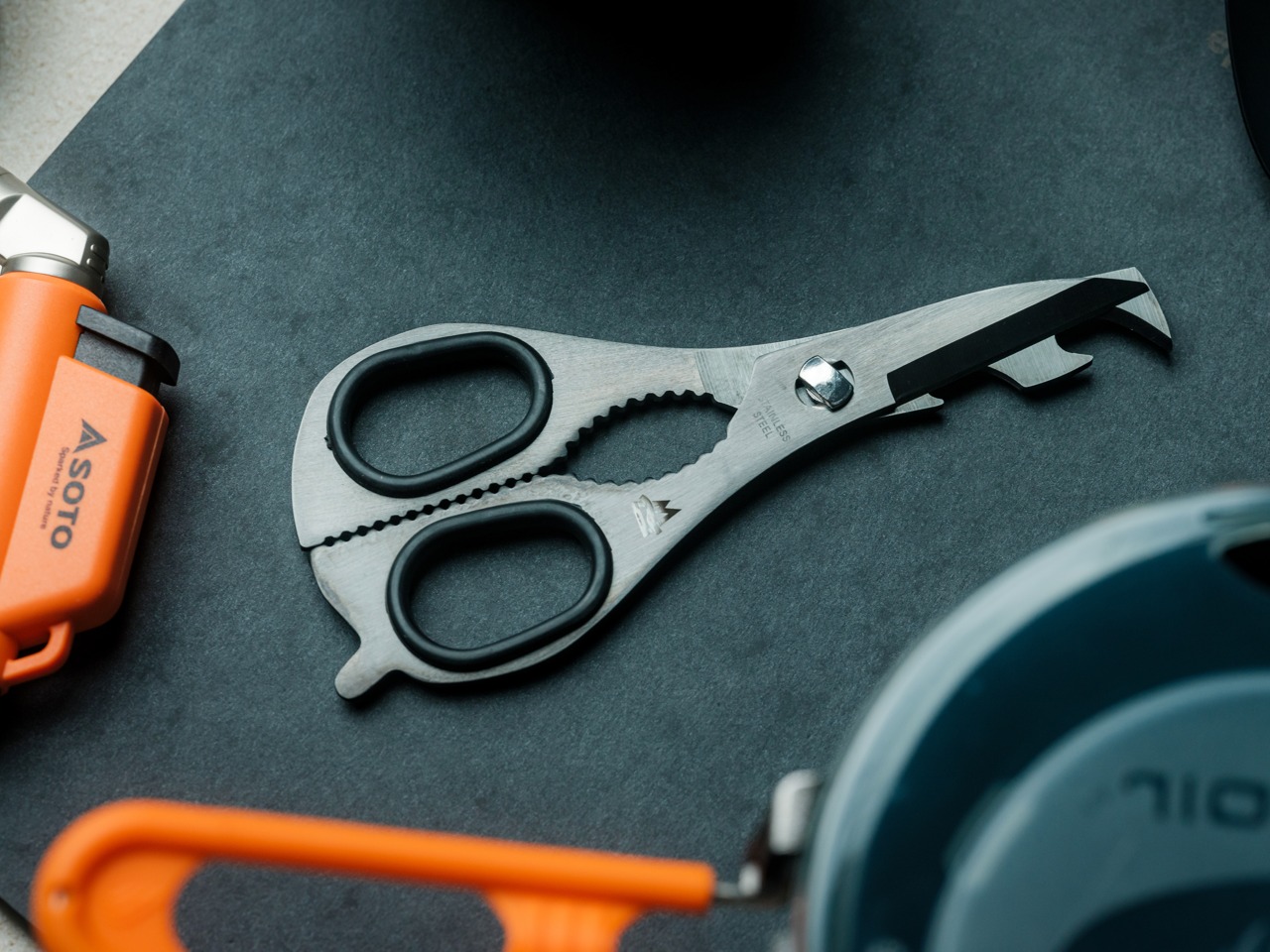
Most multi-tools sacrifice usability for portability, but these palm-sized scissors prove that compact design doesn’t require compromising functionality. At just 13 centimeters, they deliver eight distinct tools, including scissors, a knife, and various bottle openers, within a package small enough to disappear into any pocket. The oxidation film coating provides rust resistance while creating an attractive black finish that feels premium despite the modest size.
The real genius lies in making every tool genuinely usable rather than decorative. The scissors function as proper cutting implements, not the flimsy afterthoughts found on most multi-tools. Each opener type addresses different container styles you’ll encounter while camping, from beer bottles to sealed cans. The shell splitter and degasser handle specific cooking tasks that dedicated outdoor chefs will appreciate. This tool earns its pocket space through actual utility.
The compact 13-centimeter design fits comfortably in pockets without creating bulk or weight.
Eight functional tools provide legitimate utility rather than gimmicky additions that look good but perform poorly.
What We Dislike
The small size that makes it portable also limits leverage for tasks requiring significant force.
Rust-resistant coating eventually wears with heavy use, requiring maintenance or replacement.
4. Anywhere Use Lamp
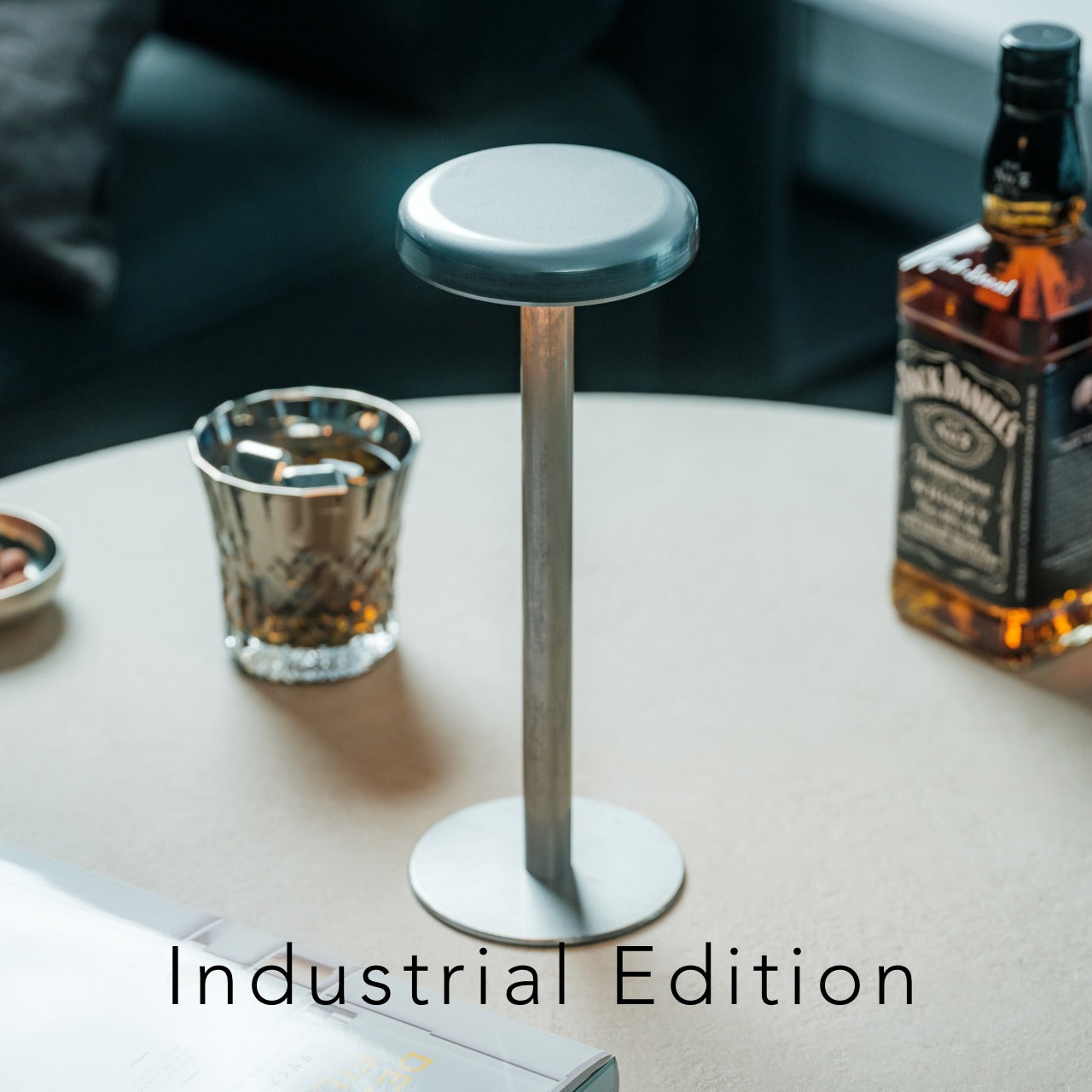
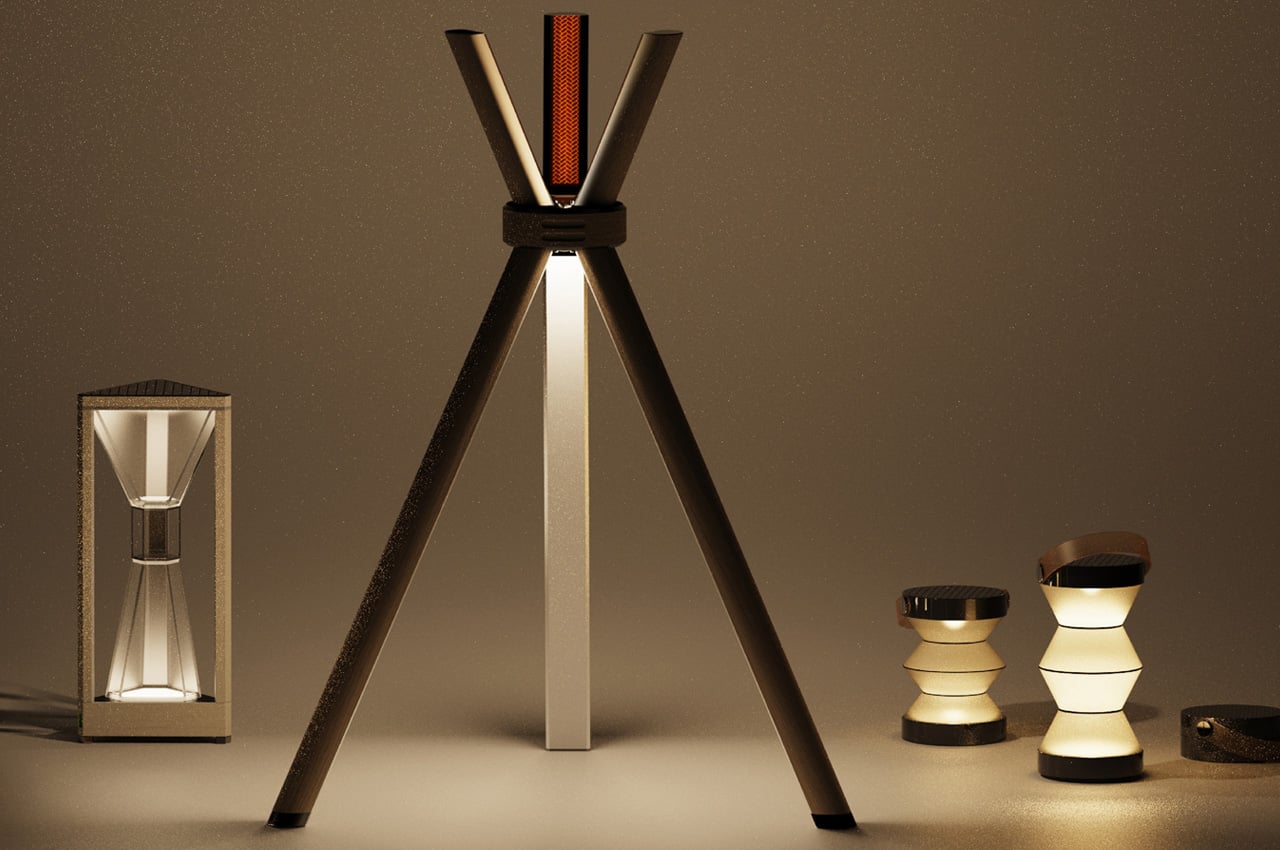
Mushroom-inspired design philosophy informs this minimalist portable lamp that pops up wherever you need illumination. The modular construction breaks down completely for transport, while standard AA batteries eliminate dependence on proprietary charging systems. Six high color rendering LEDs deliver warm, soft light that enhances atmosphere rather than just flooding spaces with harsh brightness. The interaction design feels intuitive, with pressing any edge of the lamp’s cap cycling through four brightness levels.
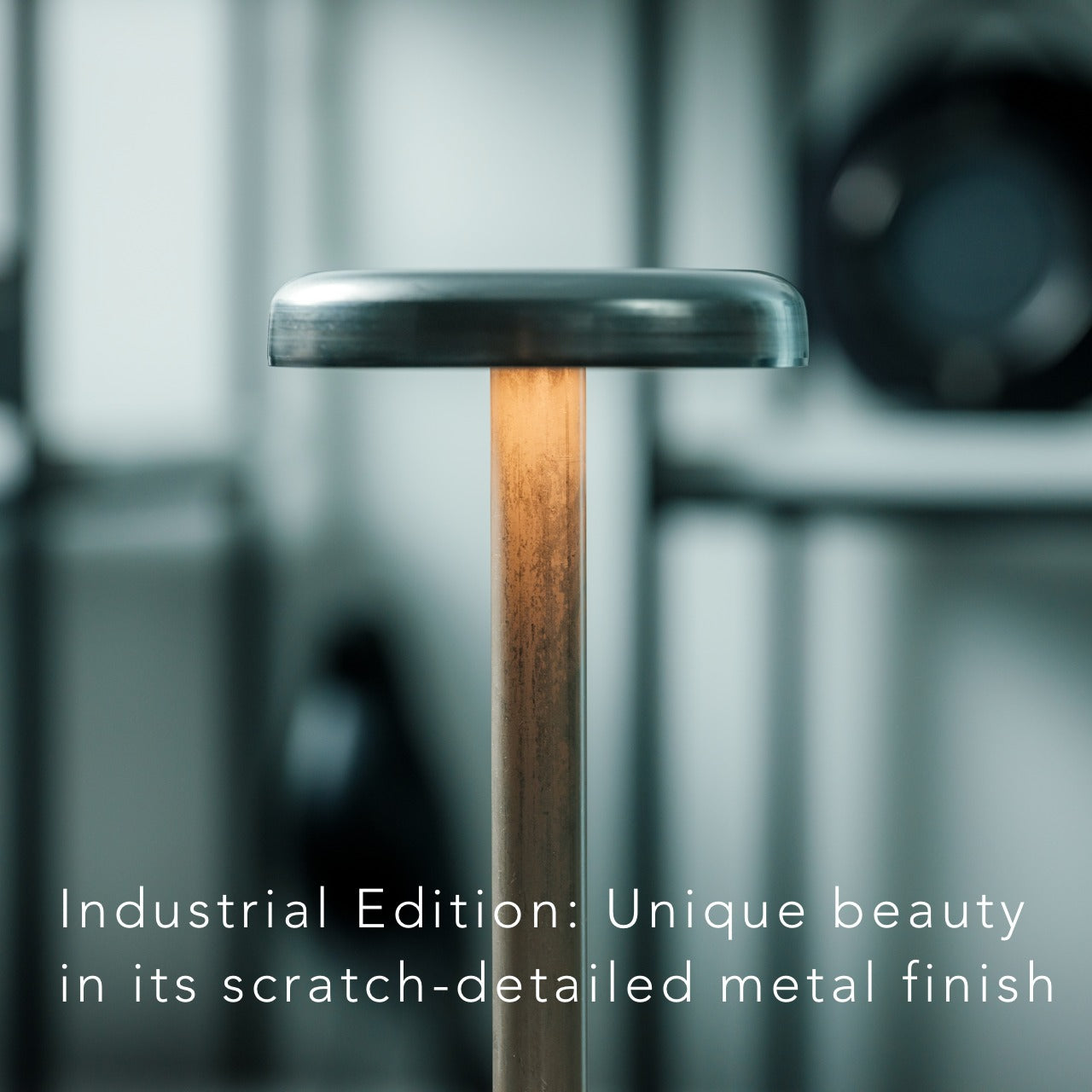
Three style options let you match the lamp to your aesthetic preferences. The standard black and white editions deliver clean minimalism, while the Industrial edition celebrates imperfection through its scratch-detailed metal base. That raw character adds personality to a design category that often feels sterile. The warm glow and haptic feedback create a sensory experience that makes adjusting brightness feel satisfying rather than purely functional.
Standard AA batteries provide easy replacement anywhere, rather than requiring specific charging cables or adapters.
The modular design disassembles completely for efficient packing in tight spaces.
What We Dislike
Battery-powered operation means ongoing costs and environmental impact compared to rechargeable alternatives.
The four brightness levels might not provide enough granular control for users wanting precise lighting adjustments.
5. Compact Modular Grill Plate
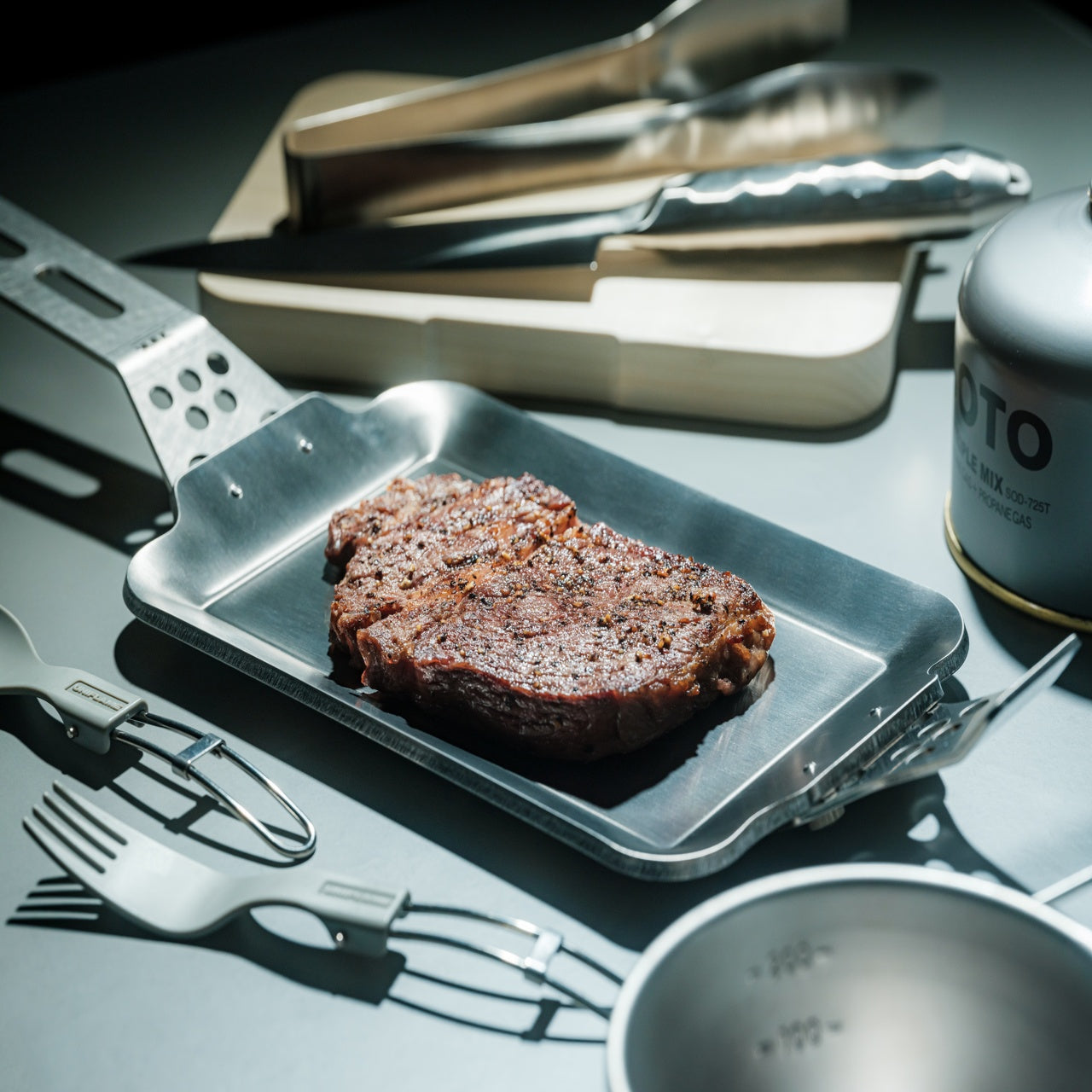
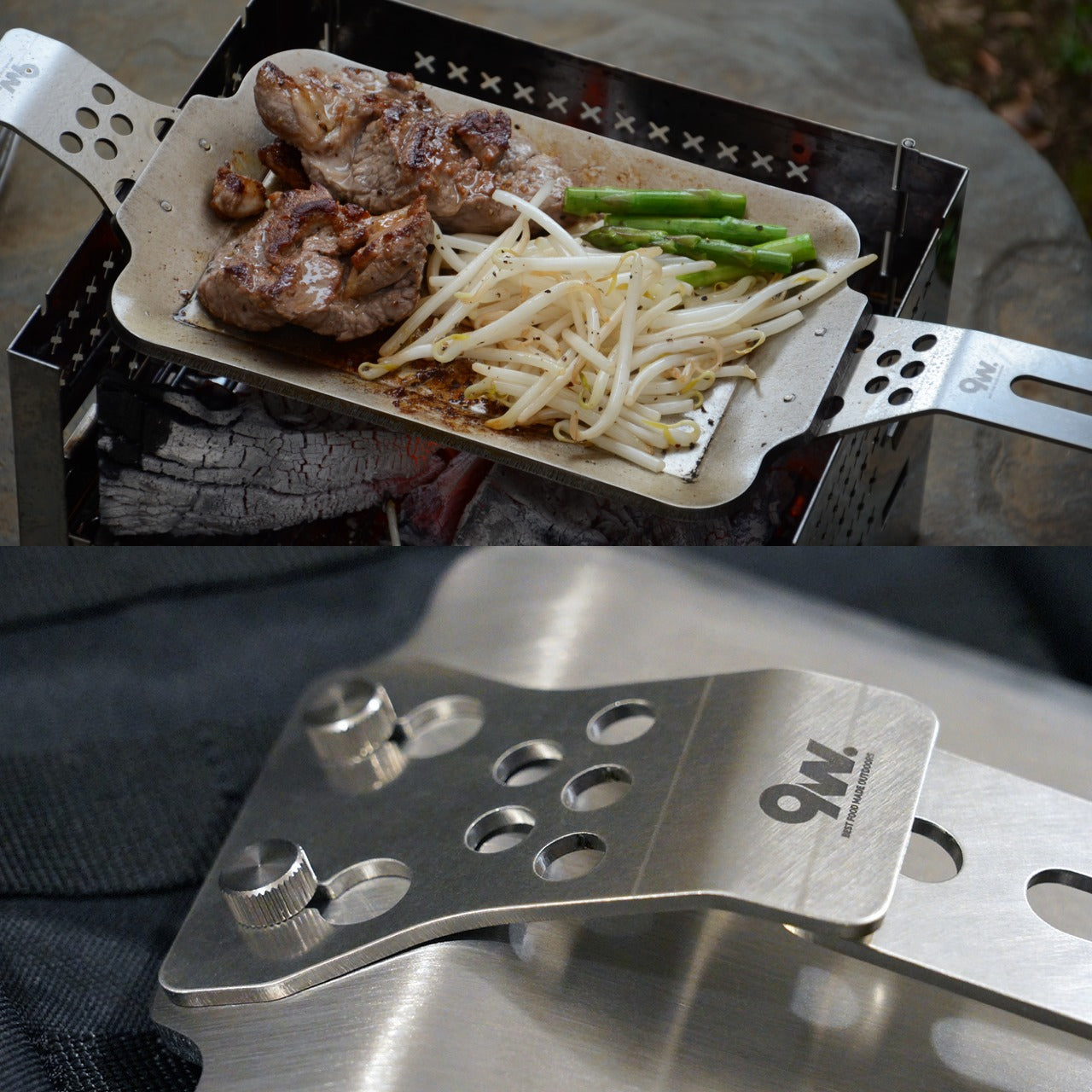
Uneven heat distribution ruins more outdoor meals than most campers want to admit. This modular grill plate solves that fundamental problem through a three-layer steel construction that maintains consistent temperatures across the entire cooking surface. The design works equally well over unstable campfires, gas burners, or induction stoves, adapting to whatever heat source your situation provides. Interchangeable handles let you optimize for different cooking scenarios, from direct flame to stable stovetop use.
The engineering focuses on delivering proper heat conduction that keeps food juicy while achieving perfect sears. That attention to cooking science elevates outdoor meals from merely edible to genuinely delicious. Cleanup becomes simple through thoughtful design that allows complete disassembly, letting you pack everything into a compact form factor. The Basic and Special set options let you choose the configuration matching your cooking ambitions and budget constraints.
Three-layer steel construction ensures even heat distribution that rivals quality home cookware.
Compatibility with multiple heat sources provides flexibility for different camping situations and cooking locations.
What We Dislike
Metal construction adds weight compared to lightweight aluminum alternatives favored by ultralight backpackers.
The modular system means tracking multiple components that could potentially get lost during packing.
6. EcoFlow Power Hat
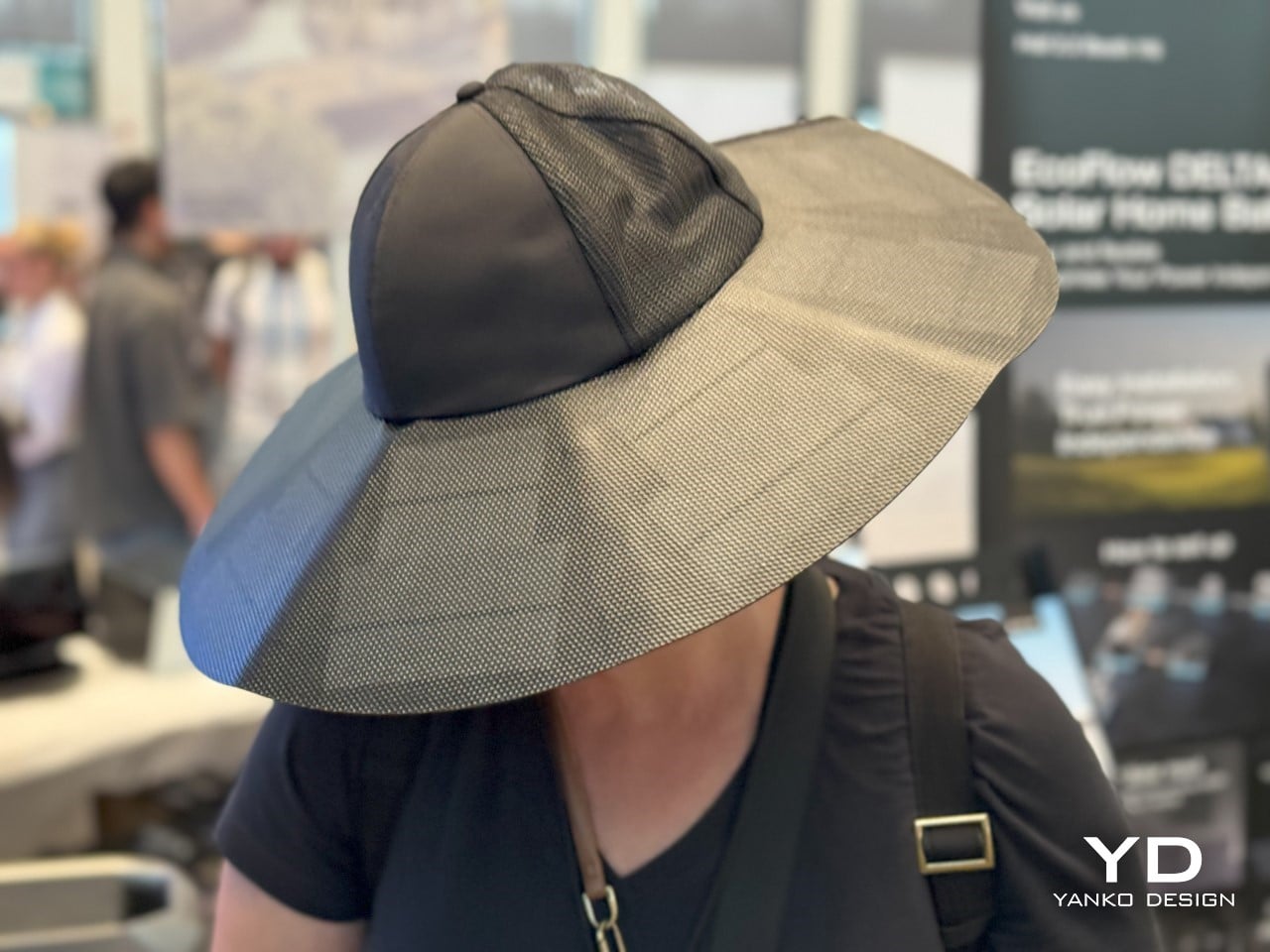
Wearable solar technology finally graduates from awkward prototypes to genuinely useful outdoor gear. The Power Hat hides flexible solar panels within its wide brim, converting sunlight into charging power accessible through a discreet USB-C port in the inner band. This approach targets the specific needs of day hikers and casual campers who need backup power for smartphones and GPS devices rather than powering entire campsites or laptops.
The design philosophy prioritizes integration over showiness, making clean energy genuinely accessible through clothing you’d wear anyway. The hat functions as normal headwear while secretly operating as a personal power plant that keeps essential communication devices alive. You won’t notice the technology until you need it, which represents the ideal balance between functionality and convenience. For outdoor enthusiasts who find themselves disconnected when power matters most, this delivers reliable backup without adding extra gear to carry.
What We Like
Hidden solar integration provides power generation without compromising the hat’s appearance or function as normal outdoor wear.
The USB-C port placement makes charging convenient while remaining discreet and protected from elements.
What We Dislike
Power generation capacity suits small devices but won’t charge tablets or power-hungry electronics.
The specialized construction likely makes washing more complicated compared to standard outdoor hats.
7. Slim Fold Dish Rack
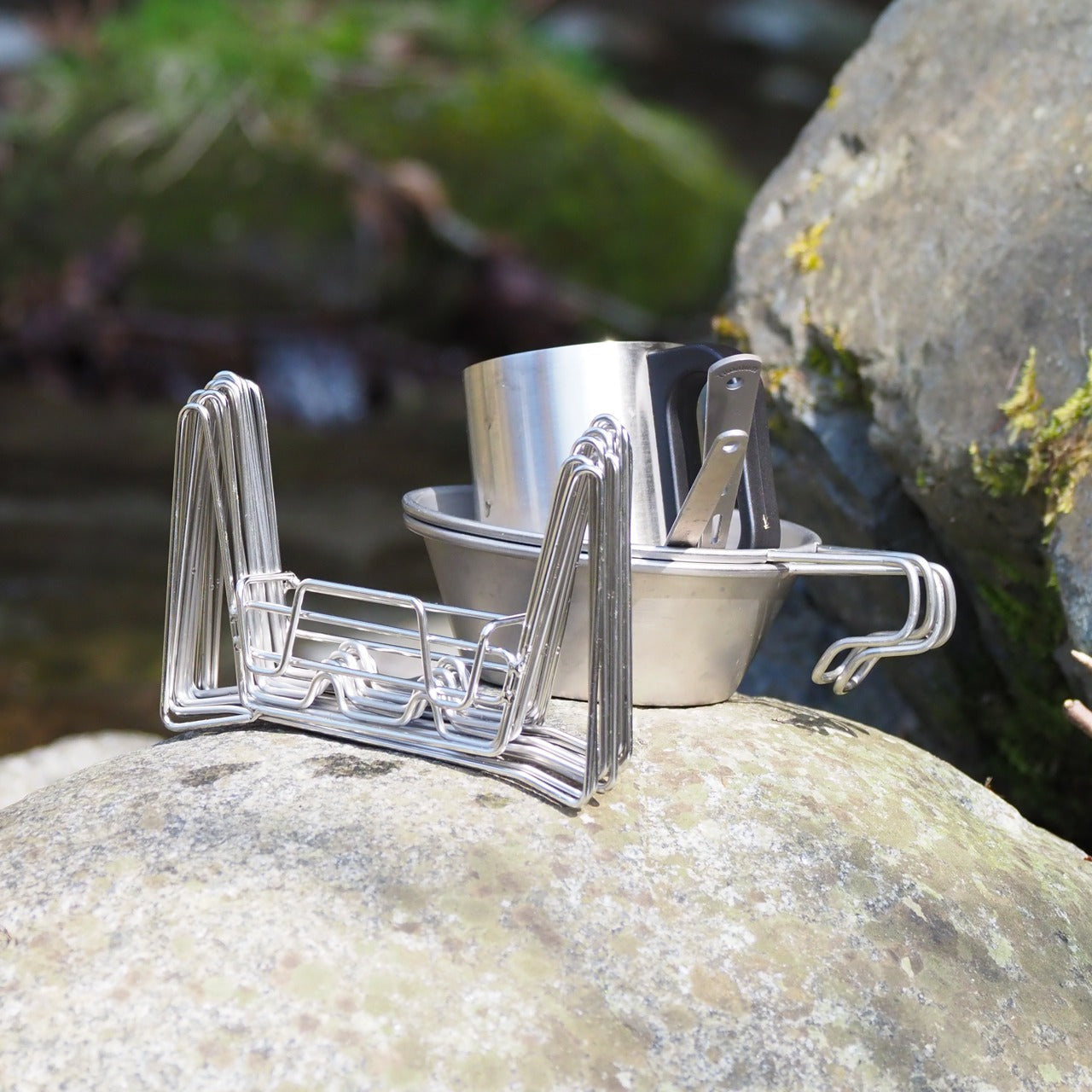
Drying dishes outdoors typically means balancing plates on rocks or draping towels across picnic tables. This collapsible dish rack transforms that frustrating process through patent-pending spring engineering that shrinks the 36-centimeter rack down to just 3 centimeters in one second. Deployment happens just as quickly, creating a full-size drying station whenever you need it. The minimalist design ensures proper ventilation and accommodates plates, utensils, and cookware of various sizes.
The collapsed form factor becomes small and light enough to fit in pockets, eliminating the storage challenges that keep most campers from bringing proper dish racks. Ventilation design accelerates drying so your tableware and cutlery are ready quickly for their next use or for packing up camp. The dishwasher-friendly construction means easy cleaning when you return home. This addresses a genuine camping pain point that most gear manufacturers completely ignore.
The one-second collapse and deployment system makes setup and storage effortless through ingenious spring engineering.
Pocket-sized collapsed dimensions eliminate the bulk that makes traditional dish racks impractical for camping.
What We Dislike
The spring mechanism represents a potential failure point that could break with heavy use or rough handling.
Ventilation design optimized for drying might not provide enough stability for heavier cast-iron cookware.
8. All-in-One Grill
Modular cooking systems finally deliver on their promise with this comprehensive outdoor grill that handles barbecuing, frying, grilling, steaming, smoking, and traditional stew cooking. The component-based design lets you configure the setup for different cooking styles without carrying separate specialized equipment. A dedicated bottle warming module keeps mulled wine toasty, showing attention to the full outdoor dining experience rather than just basic meal preparation.
The compact tabletop size works on any stable surface without requiring dedicated outdoor kitchen setups. Assembly and disassembly happen quickly, making cleanup far less daunting than traditional outdoor cooking equipment. The system frees you from worrying about preparation logistics, letting you focus your creative energy on actually cooking memorable meals with family. Each module stores efficiently, transforming from a full cooking station to packable gear without wasted space.
Modular components enable diverse cooking styles from a single portable system rather than carrying multiple specialized tools.
The compact tabletop format works anywhere you can set up camp without requiring permanent outdoor kitchen infrastructure.
What We Dislike
Multiple modules mean tracking numerous pieces that require careful packing to avoid losing components.
The versatility comes with complexity that might overwhelm campers preferring simple single-purpose cooking tools.
9. TriBeam Camp Light
Award-winning industrial design meets practical functionality in this three-mode lighting solution that adapts to different outdoor scenarios. The TriBeam switches between Camping, Ambient, and Flashlight modes through a single intuitive button, letting you quickly configure the perfect illumination for your current needs. Brightness adjusts from a gentle 5 lumens to a powerful 180 lumens, covering everything from cozy cabin nights to serious trail navigation.
The 50-hour runtime on a single charge eliminates anxiety about lights dying during extended trips. That exceptional battery performance comes from efficient LED technology paired with intelligent power management. The sleek, purposefully engineered design becomes part of the adventure experience rather than just utilitarian equipment. Portability remains central to the concept, creating a compact companion that packs easily while delivering versatile lighting wherever your travels take you.
The single-button interface might require cycling through multiple modes to reach your preferred setting.
Rechargeable battery design means eventual replacement as capacity degrades over the years of use.
10. Solar-Powered Glamping System
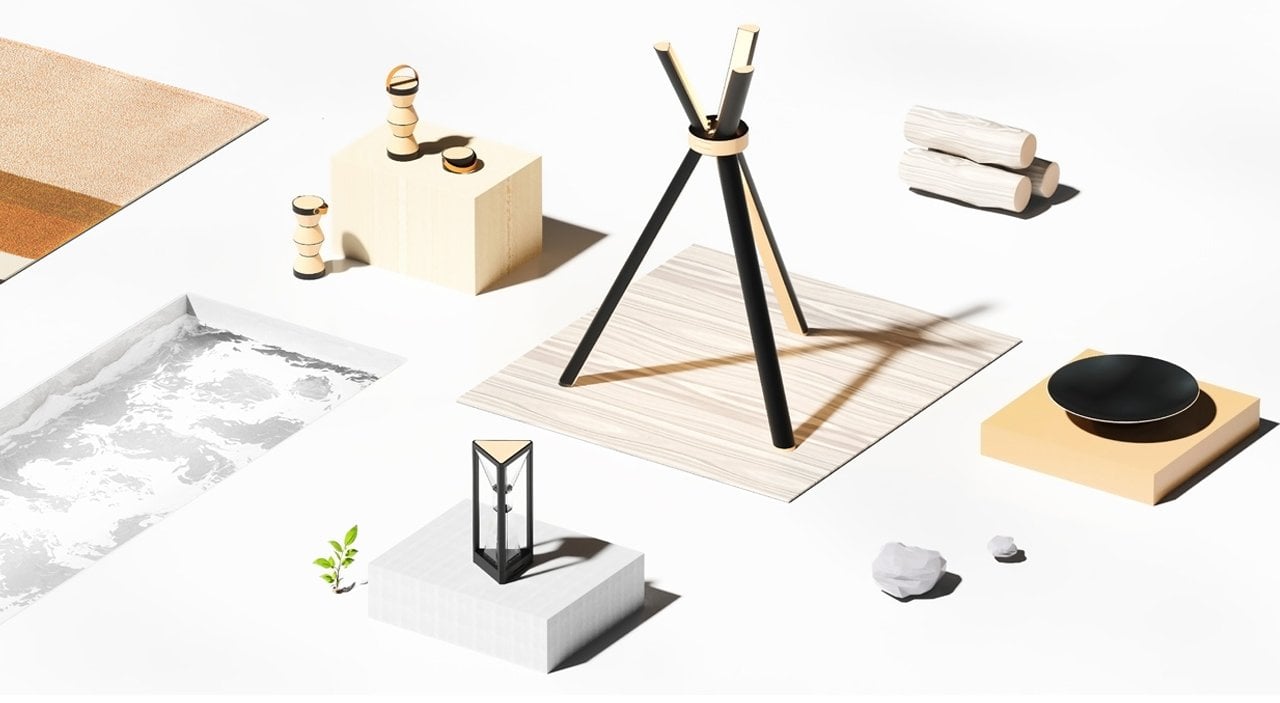
Environmental consciousness meets elevated outdoor luxury through this comprehensive collection of independent solar-powered camping accessories. The system centers around a smokeless camping fire pit that combines genuine portability with clean-burning technology, eliminating the environmental impact of traditional wood fires. Supporting accessories, including tripod coffee brewers, elegant tableware, and hanging pendant lights, all charge during daylight hours and perform throughout evening activities.
The glamping approach elevates outdoor dining and relaxation without compromising sustainability values. Every component operates on clean energy, from ambient lighting to coffee preparation, creating sophisticated wilderness experiences with zero environmental guilt. The hanging lights provide warm illumination that transforms campsites into inviting spaces rather than purely functional sleeping areas. This proves that sustainable camping gear enhances rather than limits outdoor luxury, appealing to conscious travelers seeking refined experiences in natural settings.
What We Like
A comprehensive system approach means all components work together cohesively with a shared solar power philosophy.
The smokeless fire pit technology eliminates environmental impact while maintaining the warmth and ambiance of traditional campfires.
What We Dislike
The glamping focus prioritizes comfort and aesthetics over ultralight backpacking requirements.
Solar dependency means cloudy weather significantly impacts the functionality of the entire system.
Stock Up Before the Rush Hits
Spring camping season brings predictable inventory shortages as outdoor enthusiasts emerge from winter hibernation ready to upgrade their gear. These ten products represent the cutting edge of camping technology, combining sustainability, functionality, and thoughtful design in ways previous generations of equipment never approached. The solar integration, modular systems, and compact engineering reflect where outdoor gear is heading rather than where it’s been.
Early adoption makes sense when designs earn prestigious awards and generate enthusiastic reviews before even reaching full market availability. Waiting until peak season means competing with thousands of other campers trying to secure the same innovative gear. Smart shoppers understand that the best equipment sells out quickly, leaving latecomers stuck with previous-generation products or lengthy waitlists that extend past the prime camping months.