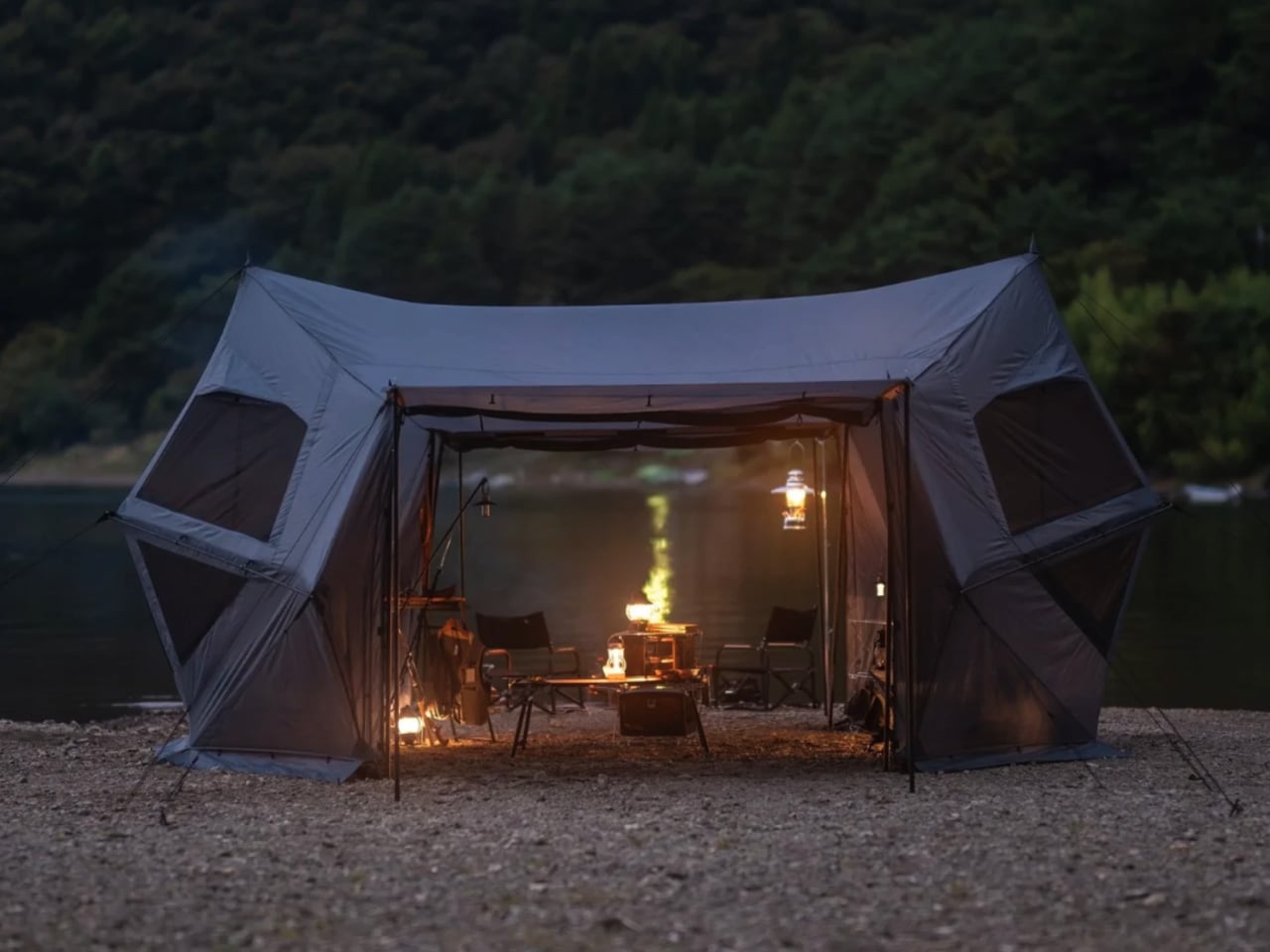
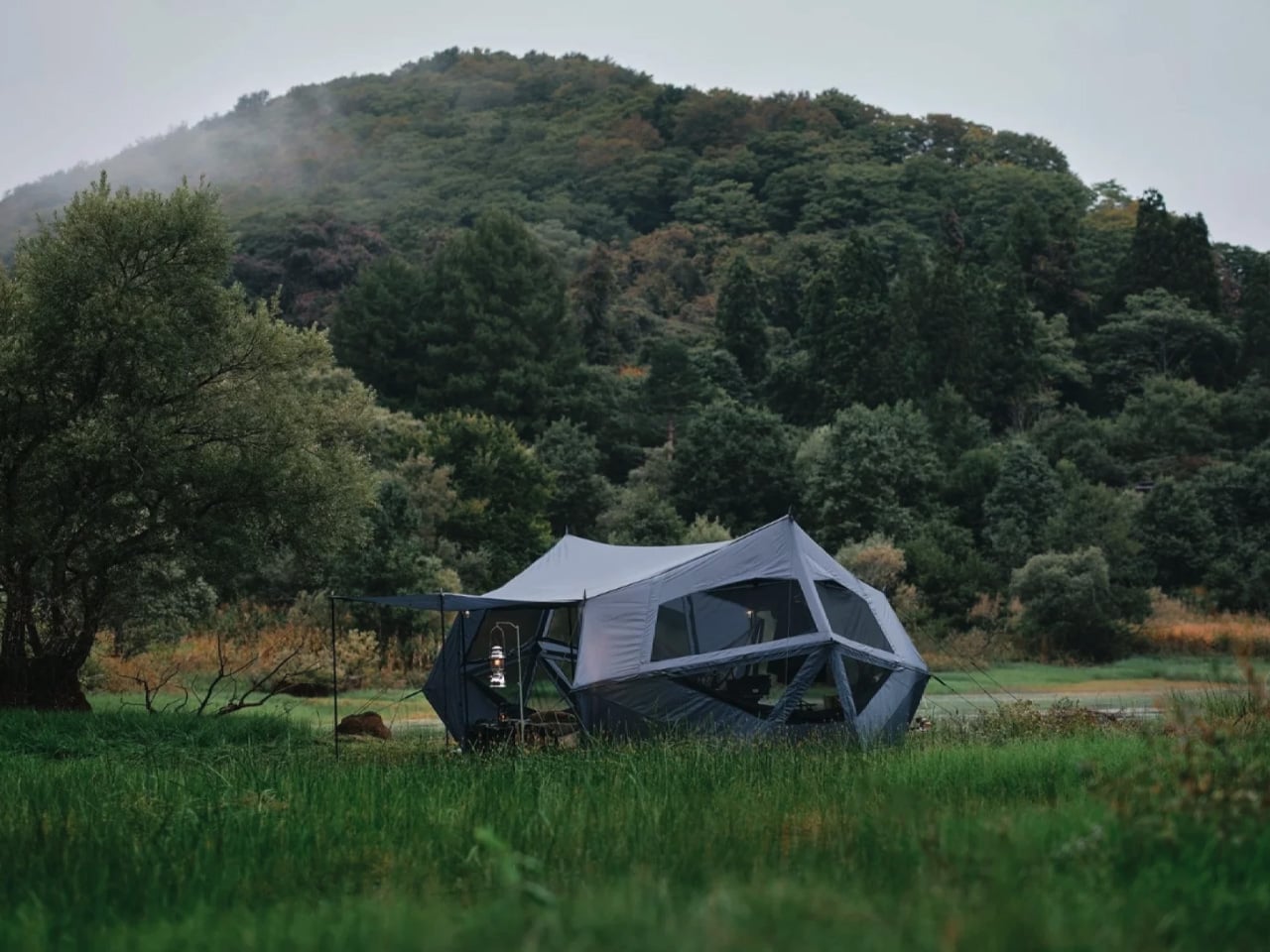
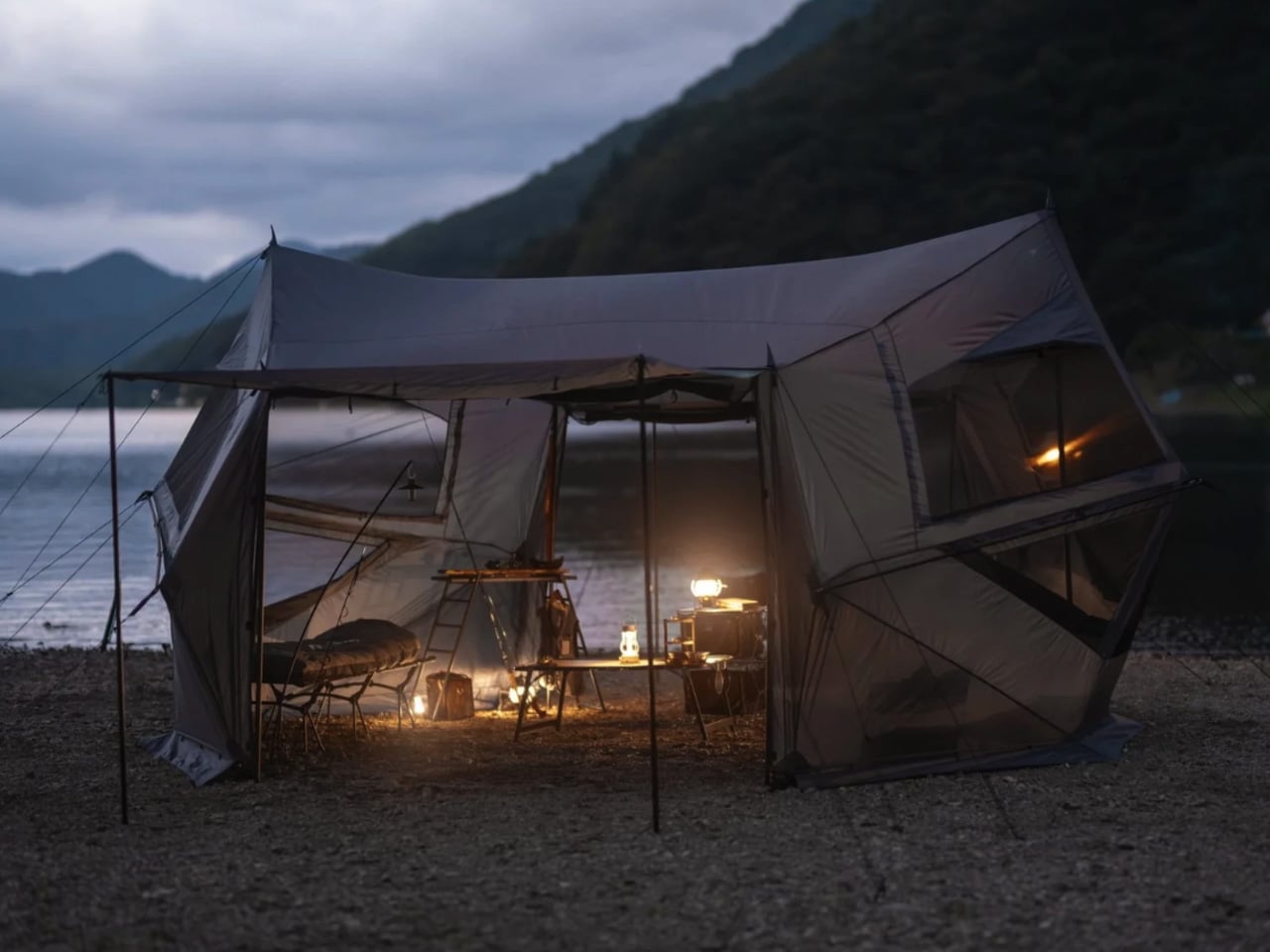
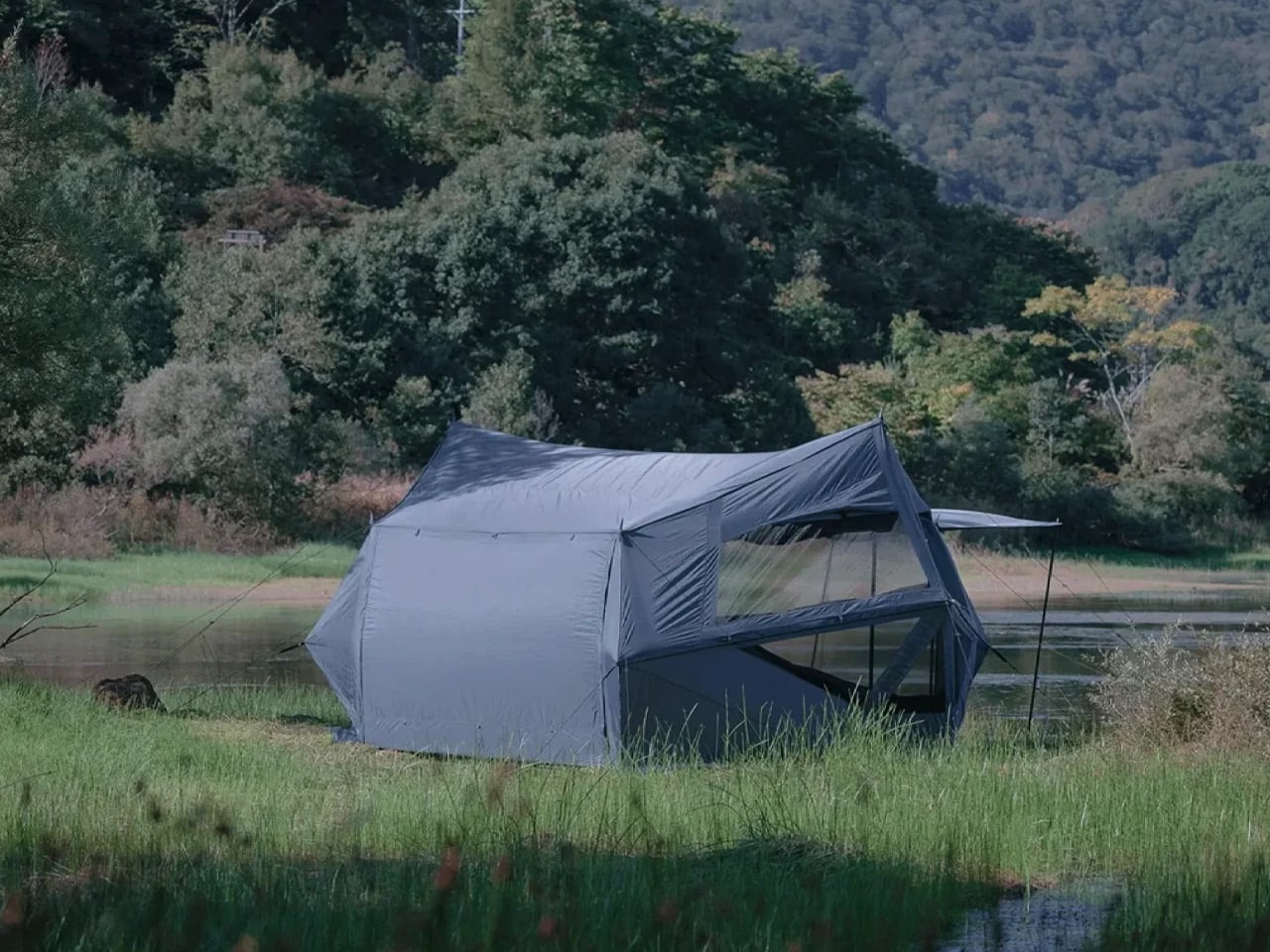
Japanese camping brand Tokyo Crafts has brought something unusual to the American market. The Grayhus tent landed stateside this past August through distributor Kōrogi, and it’s turning heads at campsites across the country. This isn’t your standard dome tent. The polyhedral shelter reads more like an art installation than camping gear, with sharp geometric angles that create an almost alien silhouette against mountain backdrops and forest clearings. It’s the kind of tent that makes neighboring campers do a double-take.
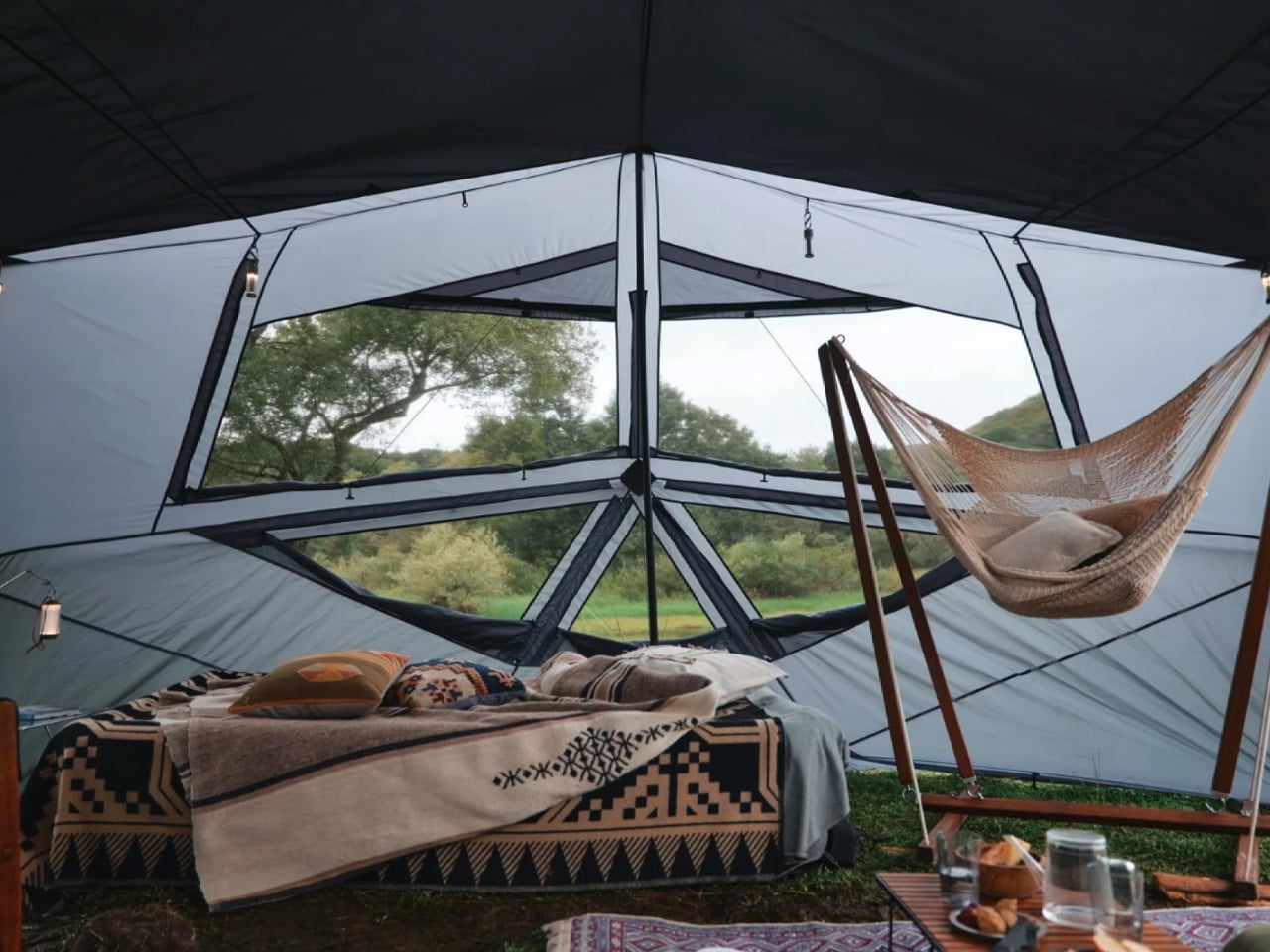
Those angular walls aren’t just for show. Large windows cut into the structure frame whatever landscape surrounds you, turning mornings and evenings into something worth lingering over. There’s something satisfying about the way the tent’s rigid geometry plays against the organic curves of nature. Set one up near a lake or in a meadow, and you’ve got an instant focal point. Tokyo Crafts clearly understands that camping gear can do more than keep you dry. The Grayhus makes a statement while it shelters you.
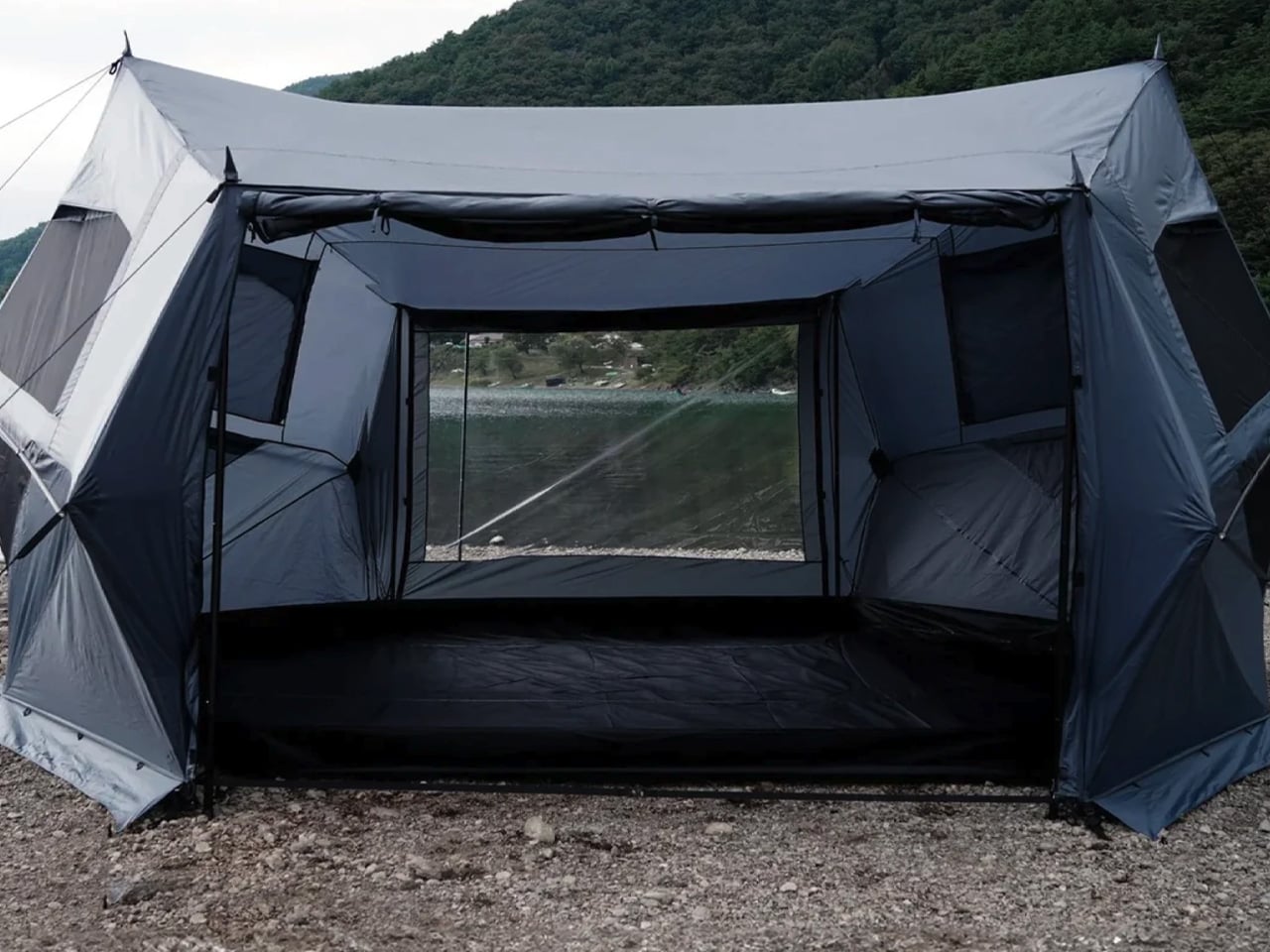
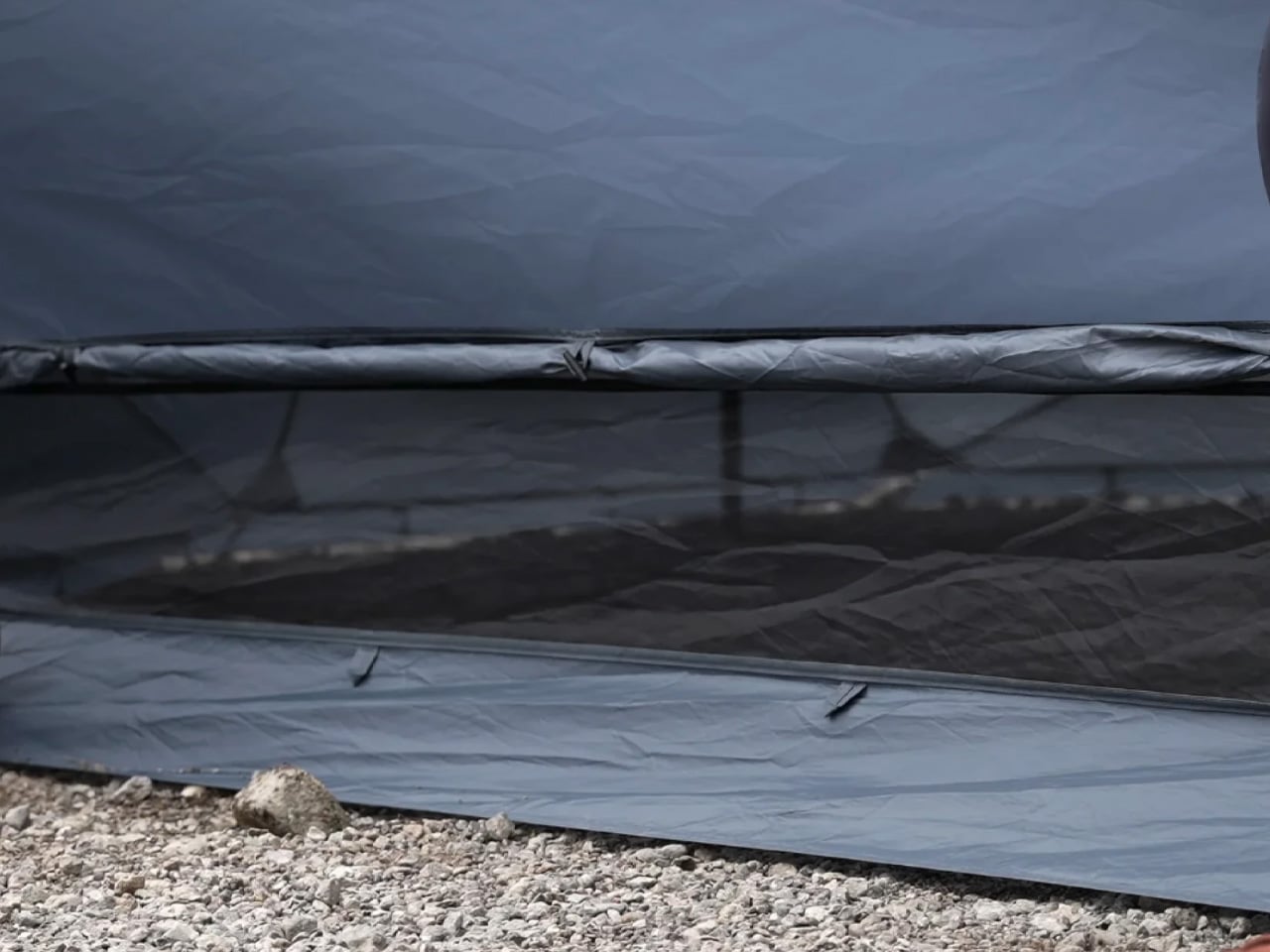
The tent’s real cleverness shows up when the weather changes. On mild days, it works as an airy canopy. When mosquitoes show up at dusk, mesh panels turn it into a screened room. If wind picks up or rain moves in, you can batten everything down into a fully enclosed shelter that’s been tested to 55 mph winds. That’s proper storm protection, not just a rating on paper. The Grayhus shifts between configurations without requiring you to pack different shelters for different conditions.
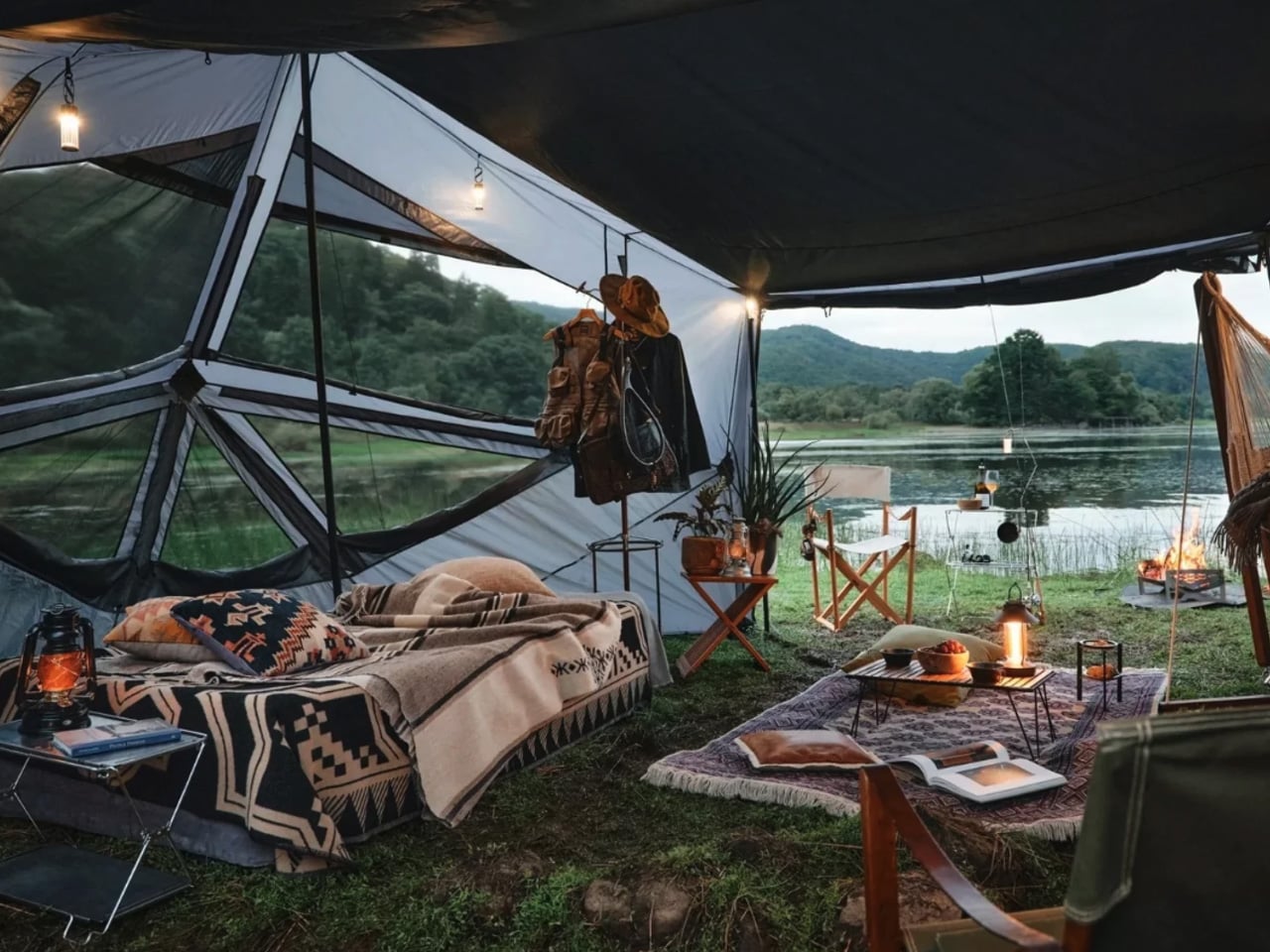
Here’s where Tokyo Crafts made an interesting call. The tent has no built-in floor. Most campers expect integrated groundsheets, but ditching that feature opens up the interior and makes setup faster. The walls and roof use waterproof, weatherproof materials that handle whatever falls from above. Below, you’re free to arrange things however you want. Throw down a tarp, layer rugs, or go minimal. The floorless design gives you options instead of locking you into one setup. It’s a smarter approach than it might first seem.
Tokyo Crafts says the Grayhus sleeps four comfortably, though the roomy interior could fit more if you’re flexible about personal space. The safari-tent vibe skews toward glamping rather than backpacking. At $1,200 for the base model, it’s not an impulse purchase. That price puts it squarely in premium territory, which makes sense given the materials and design work. You’re paying for something that stands apart from the sea of identical camping shelters cluttering outdoor retailers.
The Grayhus is part of Tokyo Crafts’ bigger push into the US market, bringing Japanese camping aesthetics to American buyers who might not know what they’ve been missing. The brand offers add-ons like living sheets and TPU windows if you want to dial in your setup. What sets Tokyo Crafts apart is the refusal to separate form from function. The Grayhus works well and looks striking while doing it. For campers who care about design as much as they care about staying dry, it’s a tent that finally treats both priorities seriously.
There’s a particular kind of panic that sets in about thirty minutes before you need to leave for the airport. You’ve thrown clothes into a suitcase, triple-checked your passport, and convinced yourself that you’ve packed everything important. Then you arrive at your destination and realize you’ve brought three chargers for devices you don’t own but somehow forgot the one thing that would’ve made your entire trip better. Last-minute travel has a way of exposing what truly matters versus what we think we need.
The beauty of spontaneous trips lies in their unpolished edges, but that doesn’t mean you should suffer through bad coffee, tangled headphone cords, or eating with your hands because the airline meal came with a flimsy plastic fork that snapped on contact. The difference between a trip you remember fondly and one you spent complaining about comes down to a handful of well-chosen essentials that solve real problems. These five designs represent the kind of thoughtful gear that takes up minimal space but delivers maximum impact when you need it most.
1. Nikon 4x10D CF Pocket Binoculars
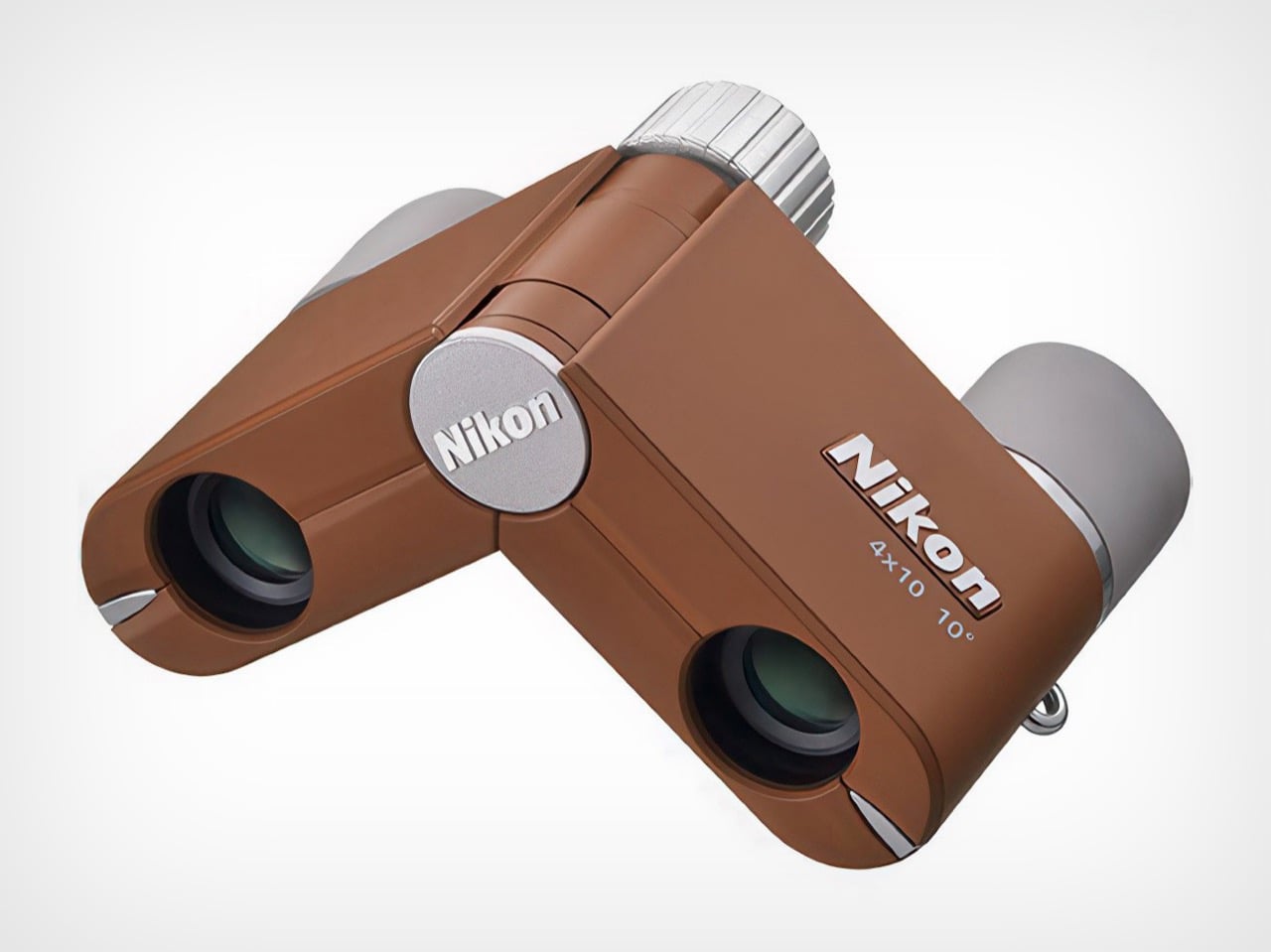
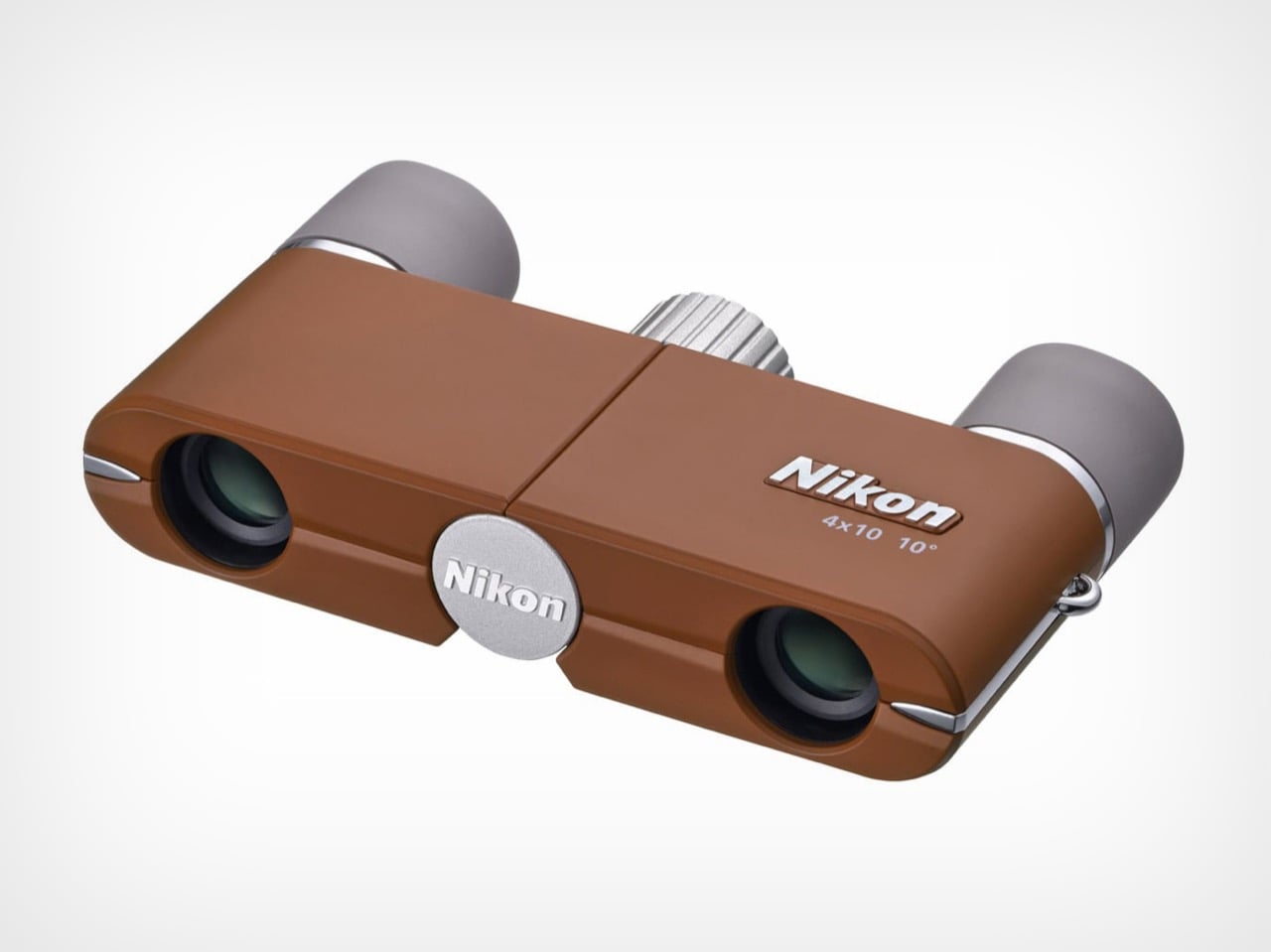
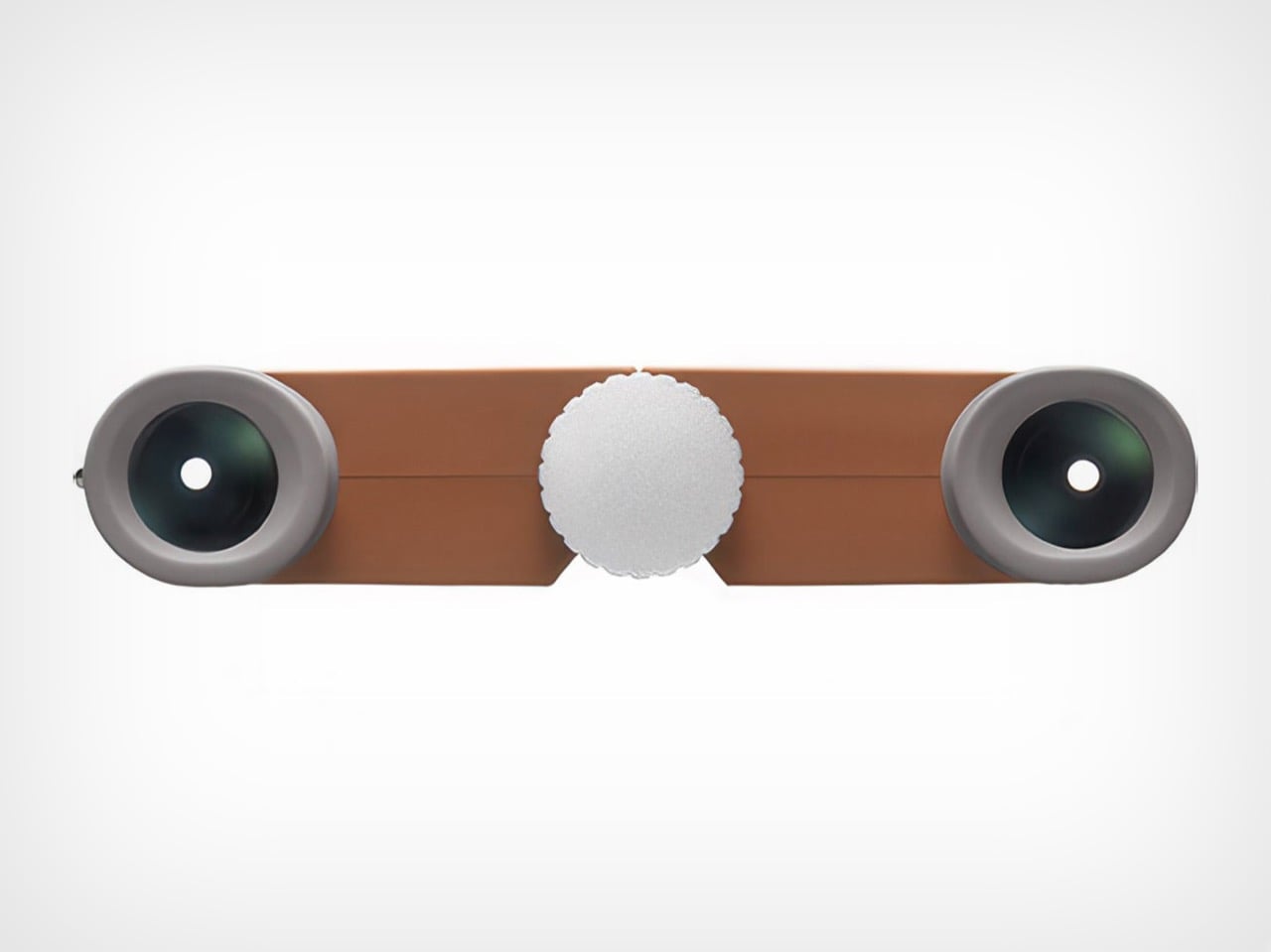
Binoculars feel like relics from another era, the kind of thing your grandfather kept in a leather case that smelled faintly of pipe tobacco. Nikon’s 4x10D CF pocket binoculars challenge that entire perception by shrinking the form factor down to something that actually fits in your pocket without creating an awkward bulge. These aren’t meant to compete with your smartphone’s digital zoom or replace professional birding equipment. They exist in a different category entirely, prioritizing the experience of optical viewing over pixel counts and processing power.
The genius lies in recognizing that people don’t carry traditional binoculars because they’re too bulky and conspicuous. Nikon solved that problem by creating something so discreet it almost disappears. The optical quality remains surprisingly sharp for such a compact device, delivering a viewing experience that feels immediate and artifact-free. Whether you’re trying to read a distant street sign in an unfamiliar city or want a closer look at architectural details without looking like a tourist with professional gear, these slip into your travel kit without demanding dedicated space or special protection.
What we like
• The form factor makes them genuinely pocketable, solving the primary reason people don’t carry binoculars.
• Optical viewing delivers a tactile, immediate experience that digital zoom can’t replicate.
• The updated colorways transform them from technical equipment into an accessory you want to carry.
• Multiple uses, from reading transit signs to appreciating distant landscapes without looking conspicuous.
What we dislike
• The 4x magnification is modest compared to traditional binoculars, limiting long-distance viewing.
• The compact size means smaller objective lenses, reducing light-gathering capability in low-light conditions.
2. StillFrame Headphones
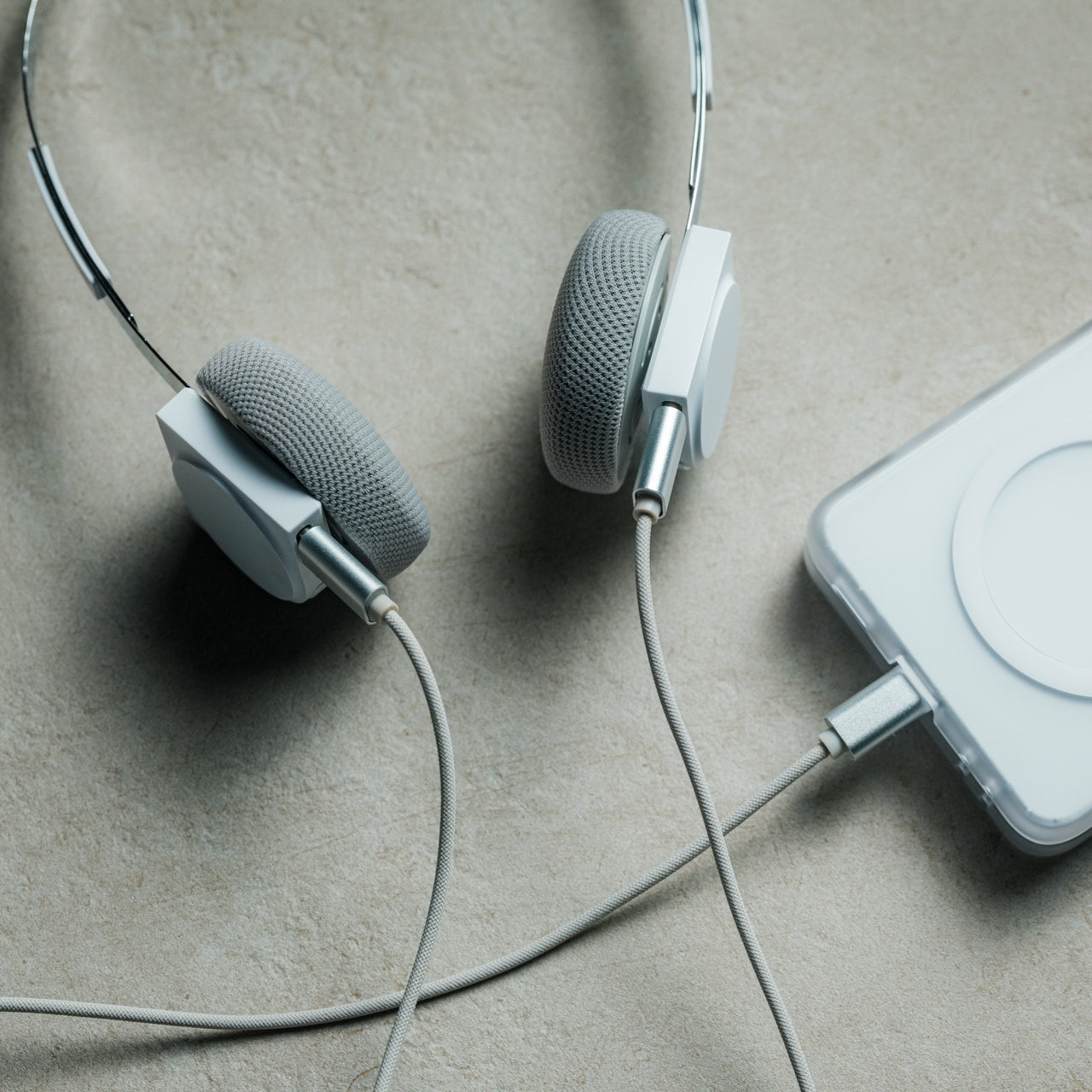
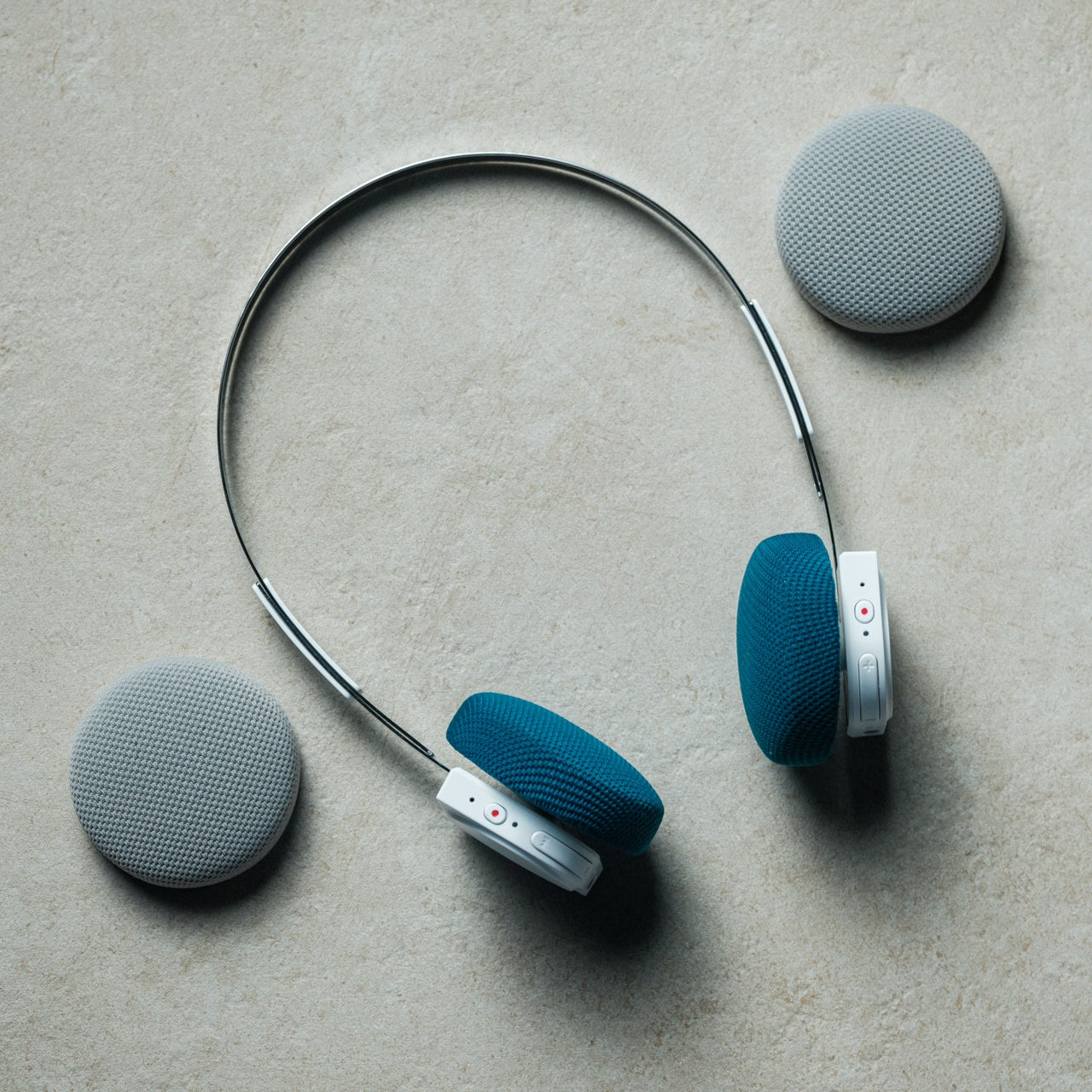
Air travel has become an endurance test for your ears. Between engine noise, crying babies, and the passenger next to you who insists on watching action movies without headphones until a flight attendant intervenes, you need something that creates a barrier between you and chaos. StillFrame wireless headphones approach this problem with a design philosophy borrowed from a time when music felt like a deliberate choice rather than background noise. The aesthetic draws from compact disc geometry, creating a visual language that feels refreshingly analog in an aggressively digital world.
Weighing just 103 grams, these headphones occupy a middle ground between intrusive over-ear designs and in-ear buds that always seem to fall out at the worst possible moment. The 40mm drivers create a soundstage that gives music room to breathe, which matters when you’re spending hours in compressed airplane cabins where everything feels claustrophobic. The combination of active noise cancelling and transparency mode means you can shift between complete isolation and situational awareness without removing them. That flexibility proves essential when navigating unfamiliar airports or wanting to hear boarding announcements without sacrificing your peace during the actual flight.
• The 24-hour battery life eliminates anxiety about running out of power mid-journey.
• Magnetic fabric ear cushions swap easily, giving you color options that match different moods.
• Dual connectivity through Bluetooth 5.4 and USB-C cable offers wireless freedom or wired stability.
• The exposed circuit board aesthetic celebrates the technology rather than hiding it behind plastic shells.
What we dislike
• The on-ear design may cause discomfort during extremely long flights compared to over-ear alternatives.
• The fashion-forward aesthetic might not appeal to travelers who prefer more conventional headphone designs.
3. 0.25 oz Aero Spork
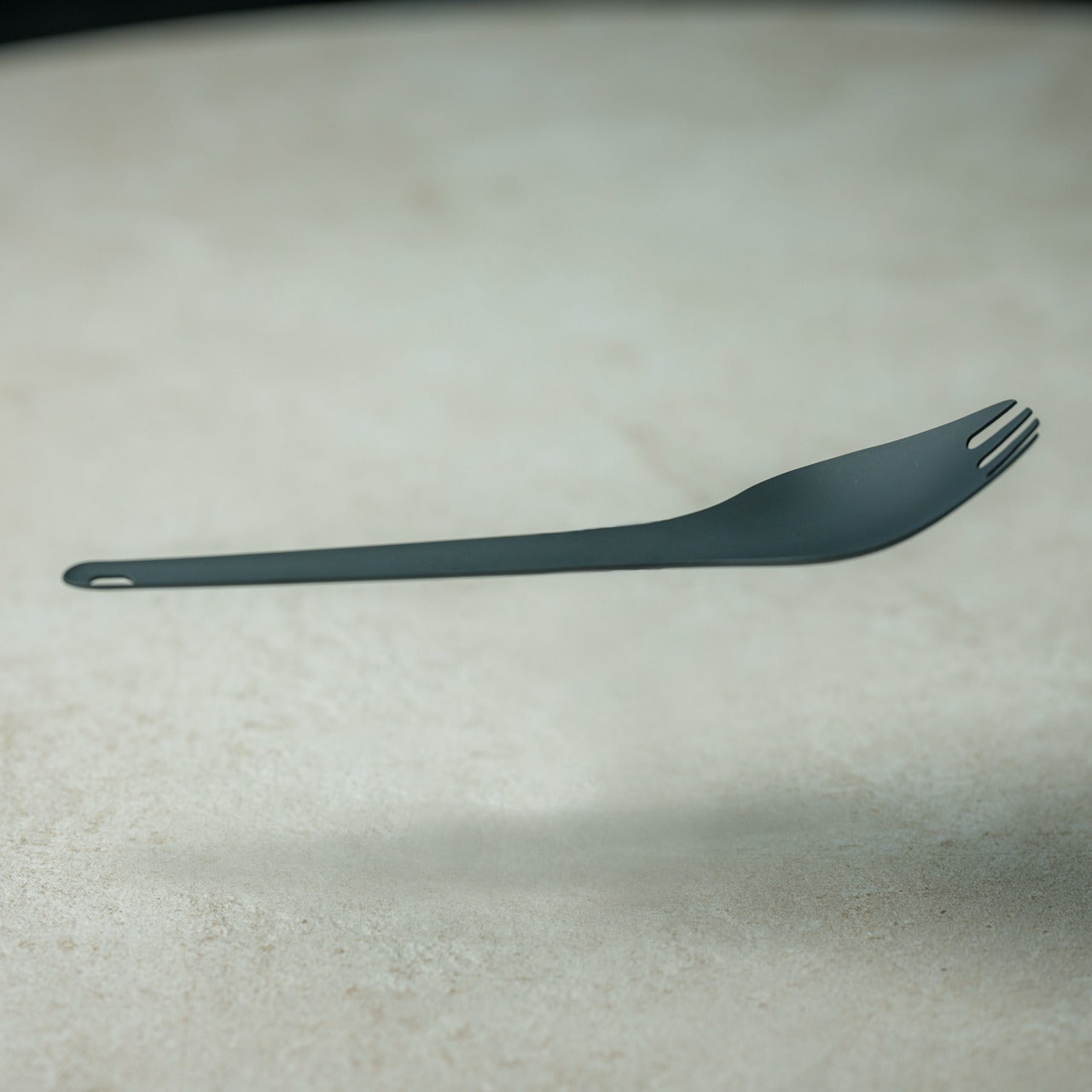
There’s something deeply frustrating about packing perfectly good food for a trip only to realize you have nothing reasonable to eat it with. Plastic cutlery snaps under minimal pressure, full-sized metal utensils add unnecessary weight, and trying to eat noodles with a standard spoon requires patience most travelers don’t have after a long day. The Aero Spork weighs less than a quarter of an ounce but manages to feel substantial enough to handle actual meals. That combination of minimal weight and genuine utility makes it the kind of item that earns permanent residence in your travel kit.
The ergonomic curve gives you a secure grip even when your hands are cold or wet, while the tapered design specifically addresses the noodle-eating problem that plagues travelers across Asia and increasingly everywhere else. The stackable design means you can carry multiple sporks without them taking up more space than a single standard utensil. This becomes relevant when you’re traveling with others or want a backup. The durability factor matters more than you’d expect; these survive being tossed into bags, stepped on accidentally, and subjected to the kind of casual abuse that destroys lesser travel utensils within weeks.
• The 7-gram weight makes it lighter than most travel accessories you’ll forget you’re carrying.
• Stackable design solves the multi-person dining situation without requiring a full cutlery set.
• The tapered shape genuinely improves noodle-eating, addressing a specific and common travel challenge.
• Metal construction means it lasts indefinitely, unlike disposable or plastic alternatives.
What we dislike
• The hybrid spoon-fork design means neither side works quite as well as a dedicated utensil.
• Cleaning can be tricky in the field without proper access to soap and water.
4. MokaMax Portable Coffee Maker
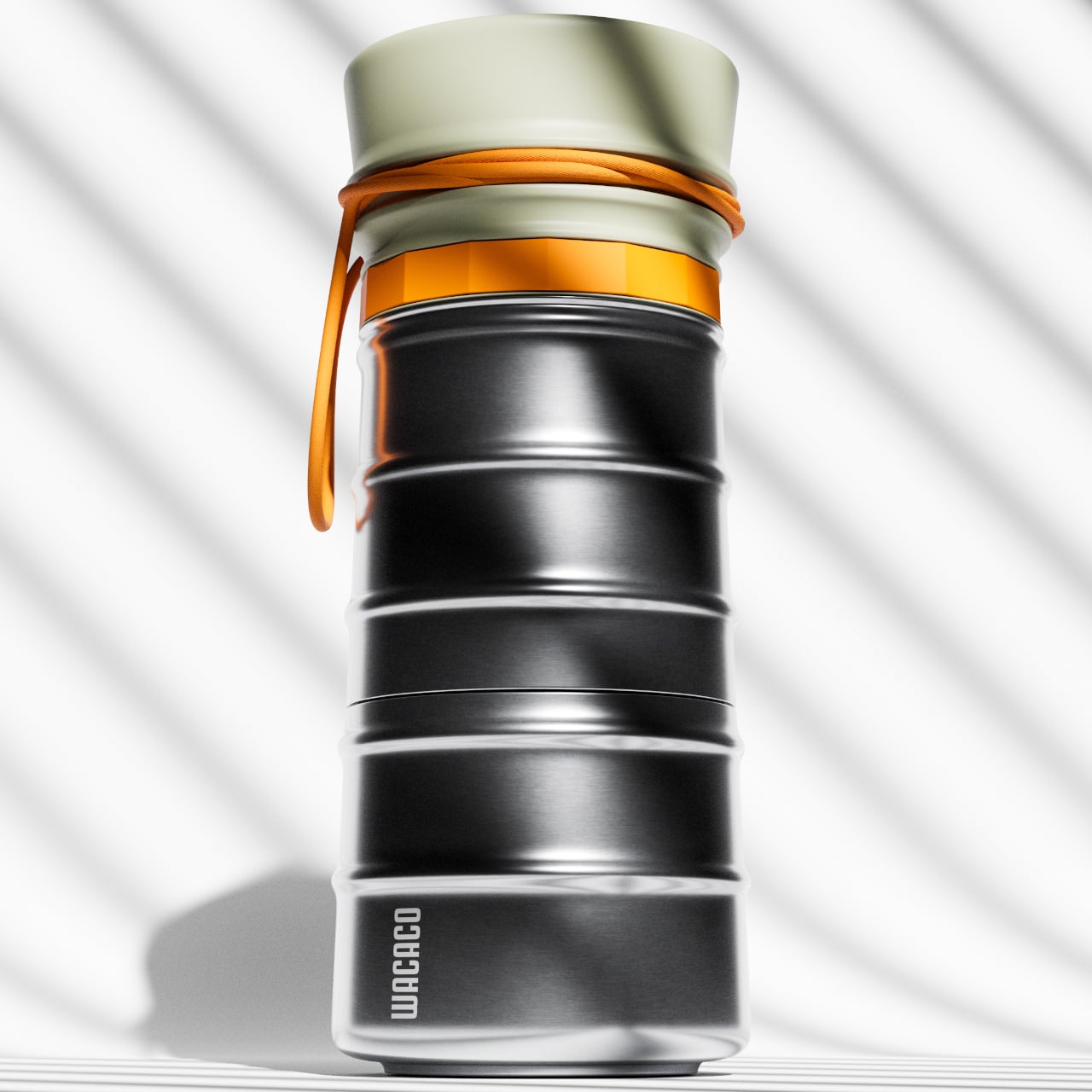
Hotel coffee represents a special category of disappointment. It tastes like regret mixed with lukewarm water, extracted from pods that somehow cost three dollars each. Even when you find a decent café, you’re either waiting in line behind seventeen people who each ordered customized drinks with five modifications, or you’re drinking something that went cold during your walk back to your hotel. MokaMax addresses this problem by building a legitimate pressure-brewing system into a form factor that looks like a standard travel mug. The ridged stainless steel body provides a secure grip while reinforcing the rugged, outdoor-ready aesthetic.
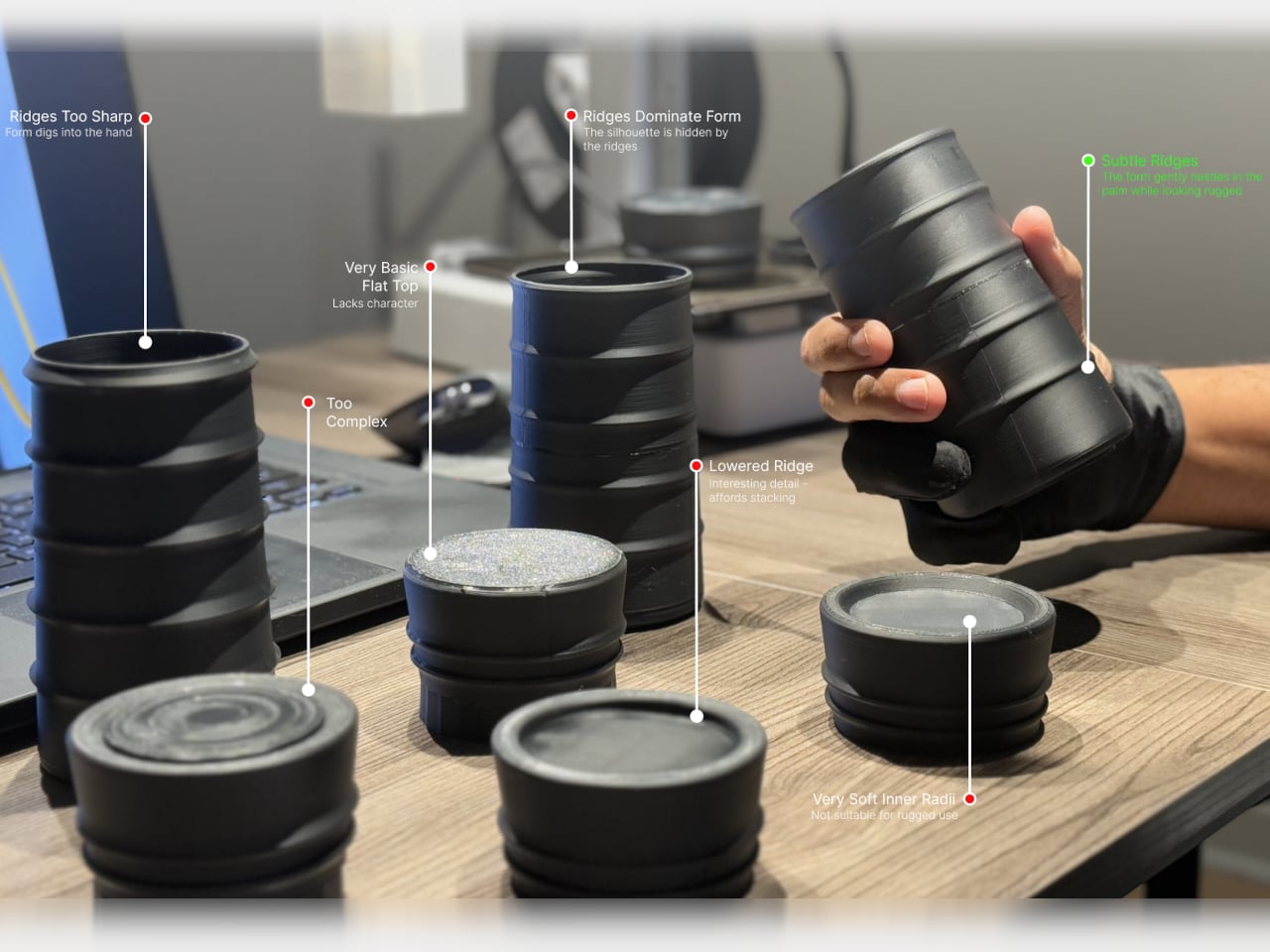
The design spent considerable effort getting those ridges right, balancing functional grip with comfortable handling and visual interest. The flexible rope attachment transforms it from just another mug into something that clips onto backpacks or hangs from hooks, integrating into your mobile gear rather than requiring dedicated carrying. The key advantage over simply buying coffee everywhere you go is consistency and timing. You control the strength, temperature, and exact moment you brew. That autonomy matters when you’re dealing with jet lag and need coffee at 4 AM when nothing is open, or when you’re hiking and want something better than instant crystals dissolved in lukewarm water.
What we like
• The pressure-brewing system delivers espresso-style coffee without electricity or complex equipment.
• Single-vessel design eliminates the need to carry separate brewing and drinking containers.
• Ridged stainless steel construction provides grip and durability for genuine outdoor use.
• The rope attachment integrates it into your travel gear ecosystem rather than requiring dedicated space.
What we dislike
• The brewing process takes longer than simply buying coffee if you’re in an area with good options.
• Cleaning requires more attention than a standard travel mug, especially after brewing dark roasts.
5. Craftmaster EDC Utility Knife
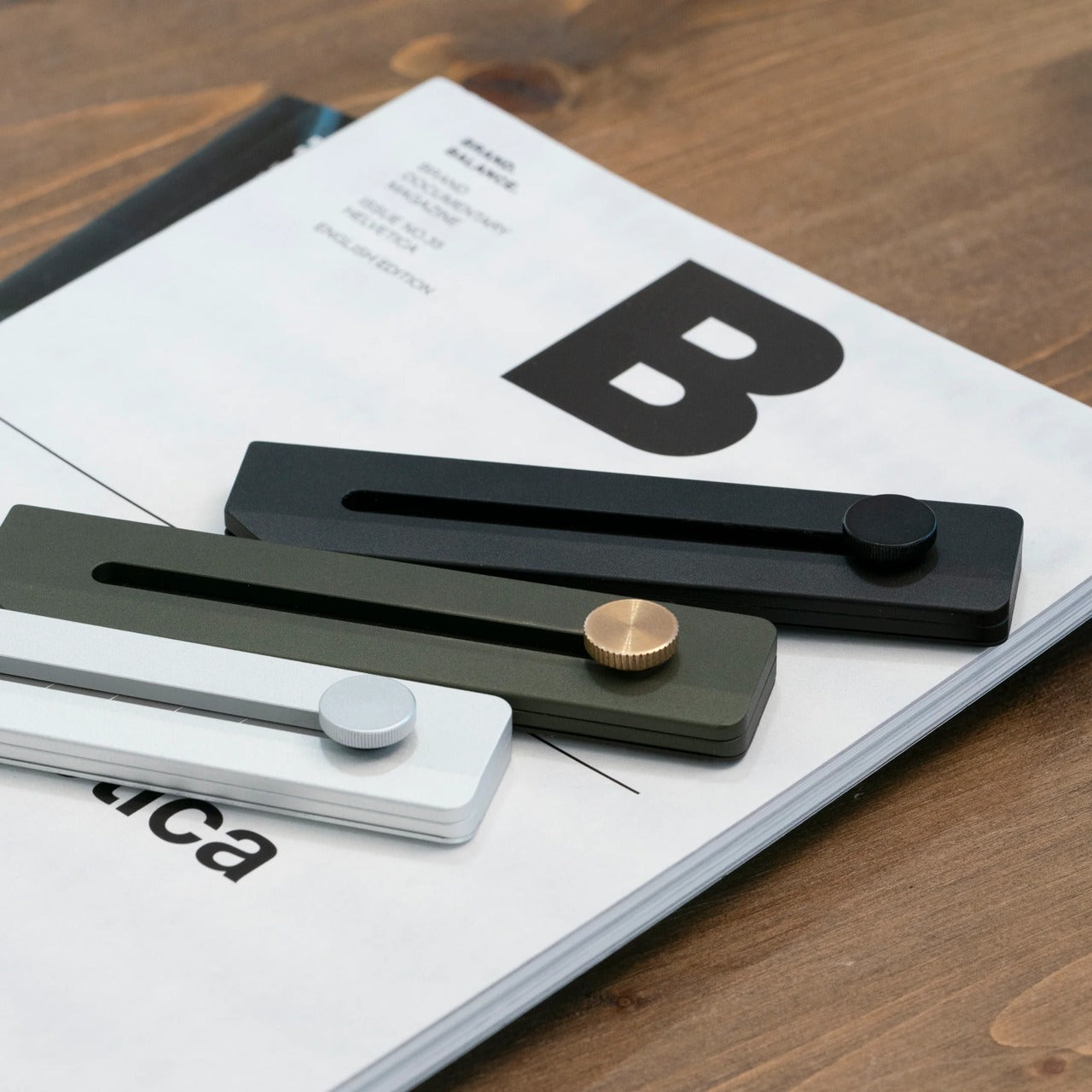
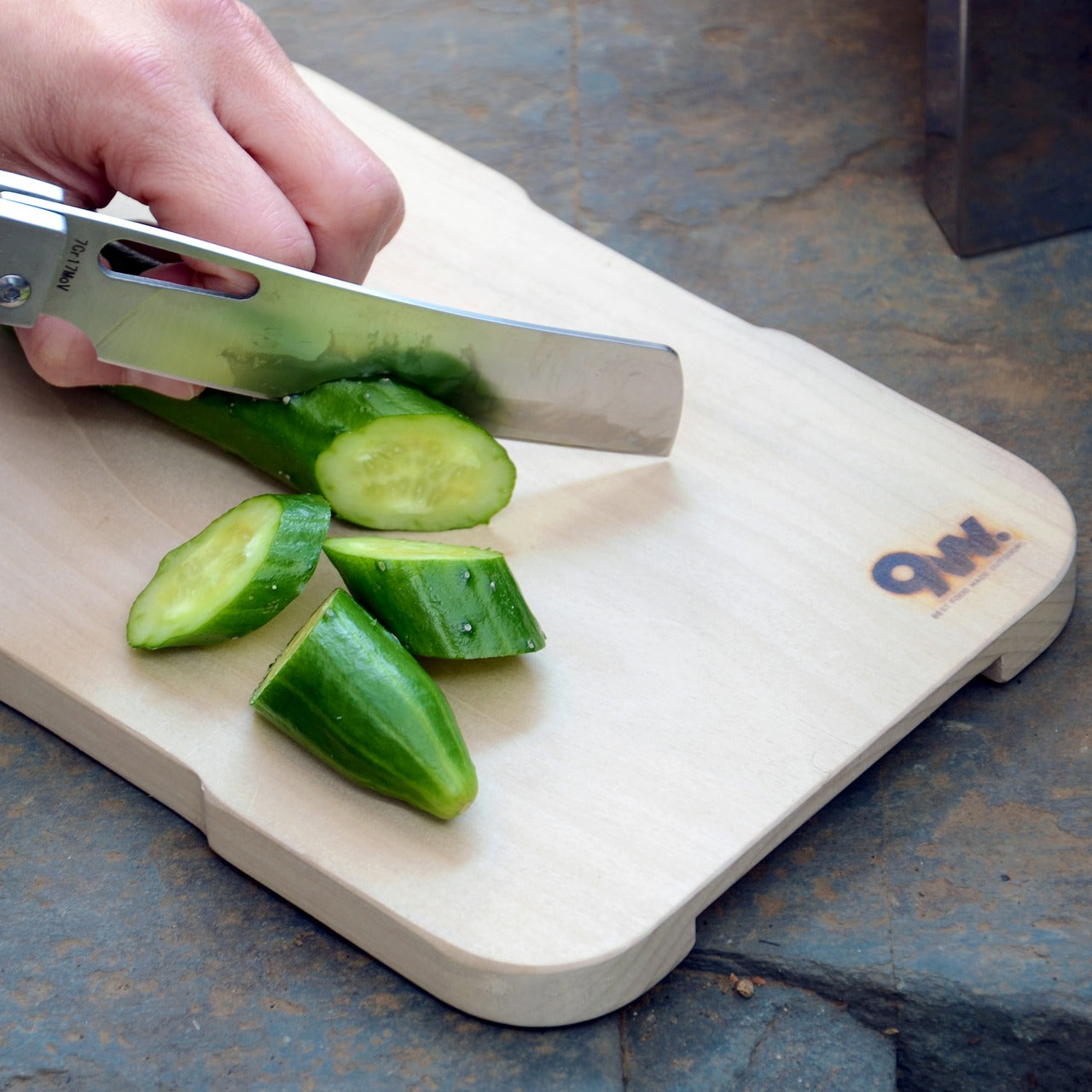
Most travelers don’t think they need a utility knife until they’re standing in a hotel room trying to open packaging with their keys, teeth, or increasingly desperate improvisation. The Craftmaster EDC utility knife occupies just 8mm of thickness and 12cm of length, making it slim enough to slip into pockets, bags, or organizer pouches without creating bulk. The metallic construction gives it heft that feels reassuring rather than burdensome, while the rotating knob deployment mechanism adds a tactile satisfaction that pure functionality doesn’t require but somehow makes the tool more enjoyable to use.
The magnetic back serves double duty by letting you dock the knife on any metal surface and providing a home for the companion metal scale. That scale includes both metric and imperial measurements, a raised edge for easy pickup, and a blade-breaker for maintaining the OLFA blade’s sharpness. The 15-degree curvature protects your fingers during cutting tasks, while the 45-degree inclination helps with opening boxes without damaging contents. These details transform a basic utility knife into something that solves multiple problems, from precise measuring for emergency clothing repairs to clean package opening without destroying whatever’s inside.
• The 8mm thickness makes it genuinely pocketable without the bulk of traditional utility knives.
• Magnetic docking turns any metal surface into convenient storage, preventing loss in hotel rooms.
• The included ruler with blade-breaker combines multiple functions without requiring separate tools.
• OLFA blades are replaceable and widely available, extending the knife’s useful life indefinitely.
What we dislike
• The minimalist metal design lacks texture that could improve grip in wet conditions.
• Airport security restrictions mean it needs to go in checked luggage, limiting accessibility during travel days.
Why These Five Items Matter for Last-Minute Travel
The connecting thread between these designs is that they solve specific problems while occupying minimal space and requiring almost no learning curve. You don’t need an instruction manual, a YouTube tutorial, or previous experience. They work immediately and continue working reliably. That reliability becomes essential when you’re already dealing with the stress of spontaneous travel, unfamiliar locations, and the general chaos that comes from not having time to plan properly.
The other advantage is that none of these items are single-use solutions. Pocket binoculars serve navigation, sightseeing, and practical reading purposes. Headphones deliver both entertainment and environmental control. A quality spork handles any meal situation. The portable coffee maker works everywhere from mountain peaks to hotel rooms. The utility knife solves dozens of cutting, measuring, and opening challenges. That versatility means carrying five items gives you solutions to dozens of potential problems, which is exactly the kind of efficiency last-minute travelers need most.
Since I live in a tropical country, I’ve never truly experienced a winter season. So I really can’t relate when I see people huddled in front of a fire, trying to get a modicum of warmth. But I can just imagine how terribly cold it can get during these times and while most of the time you’d just want to stay indoors, you do need to spend some time out on your porch or background every once in a while.
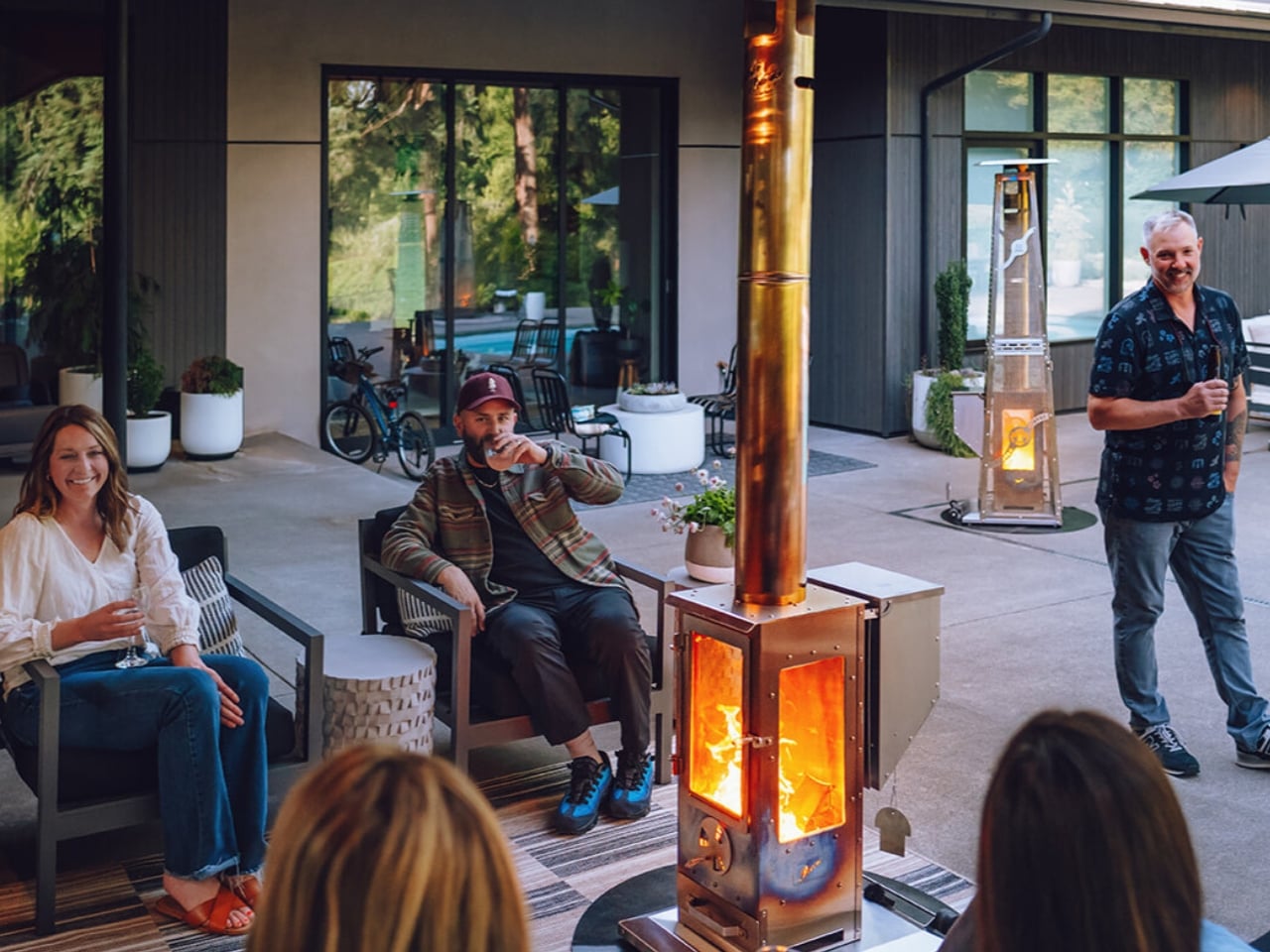
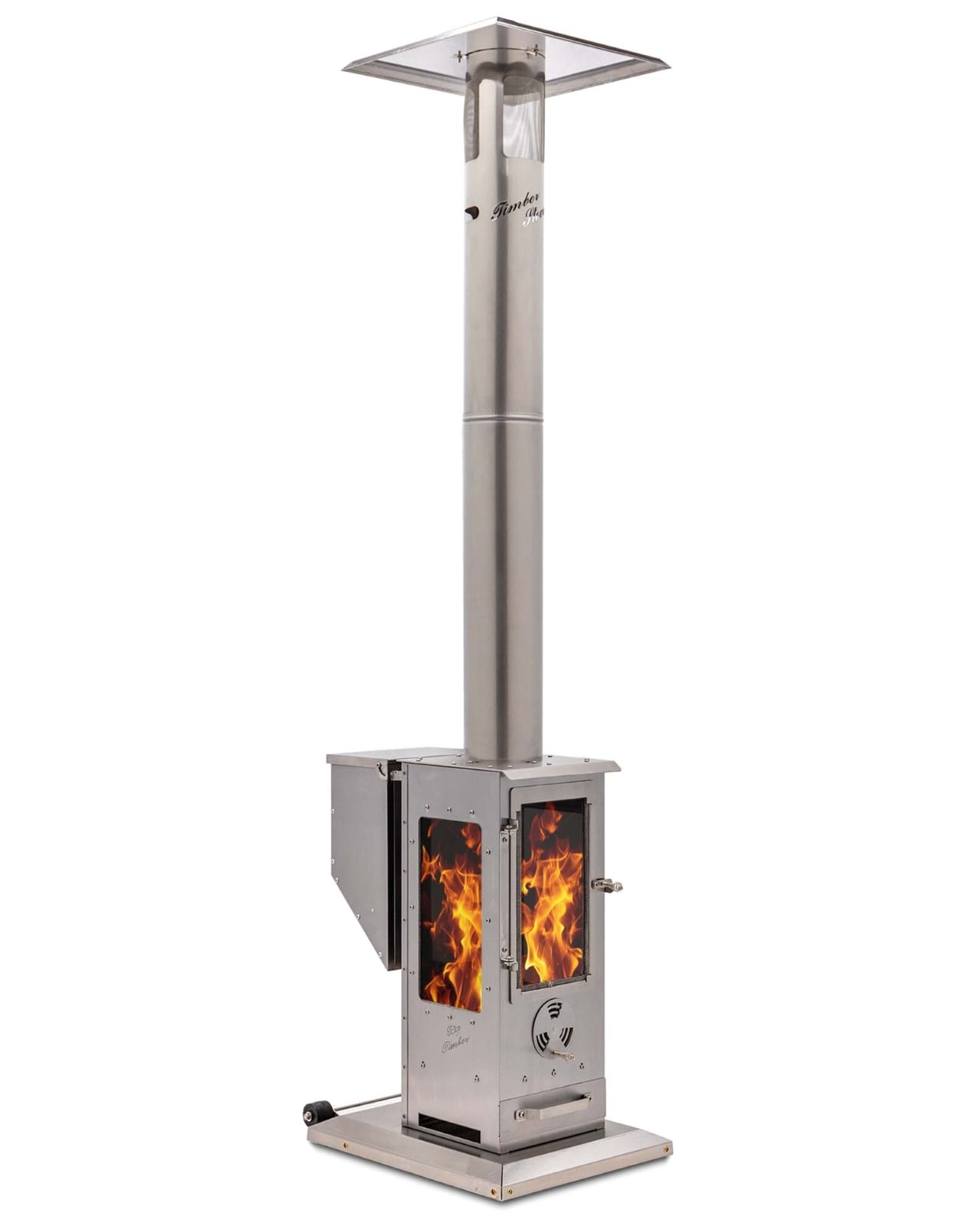
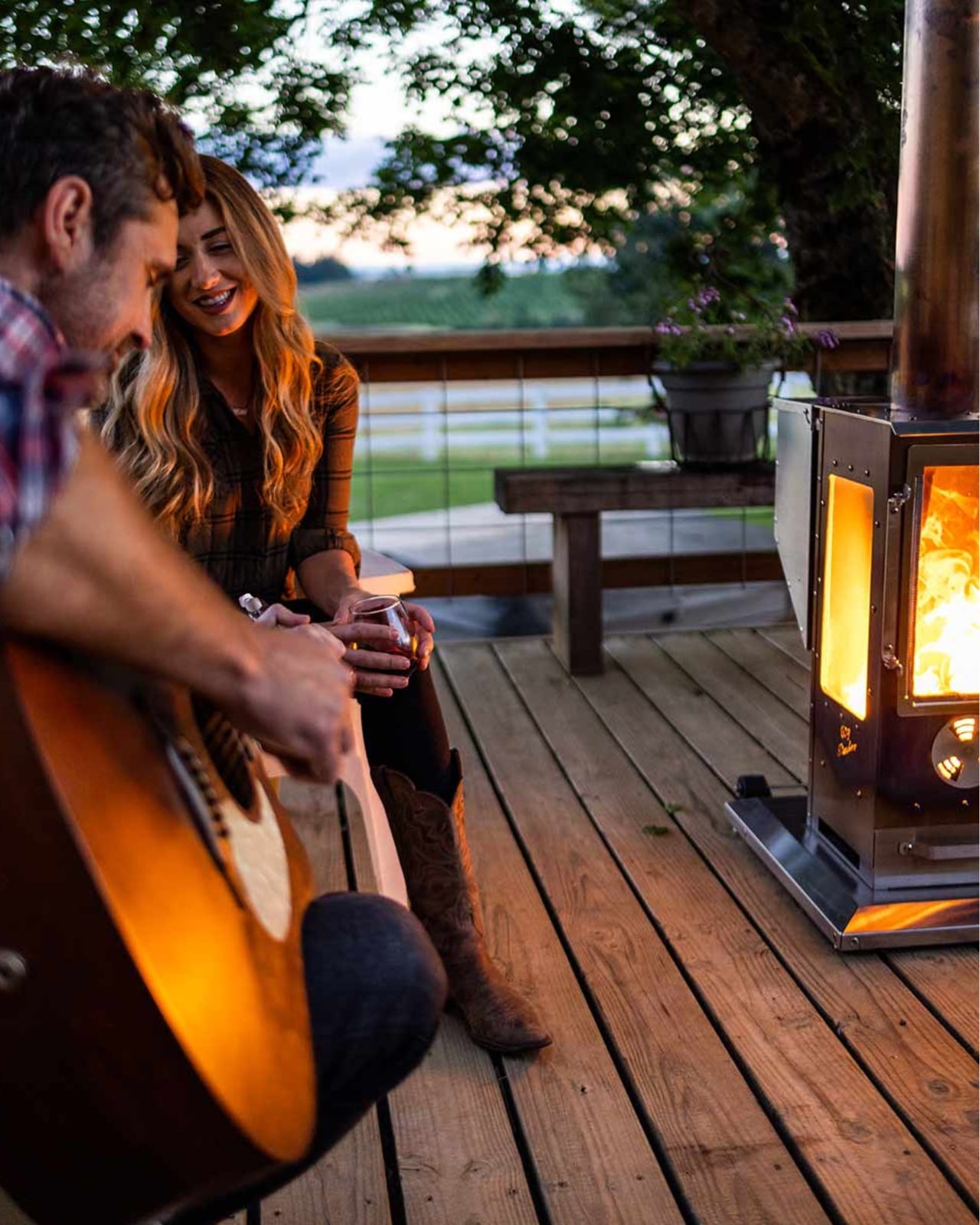
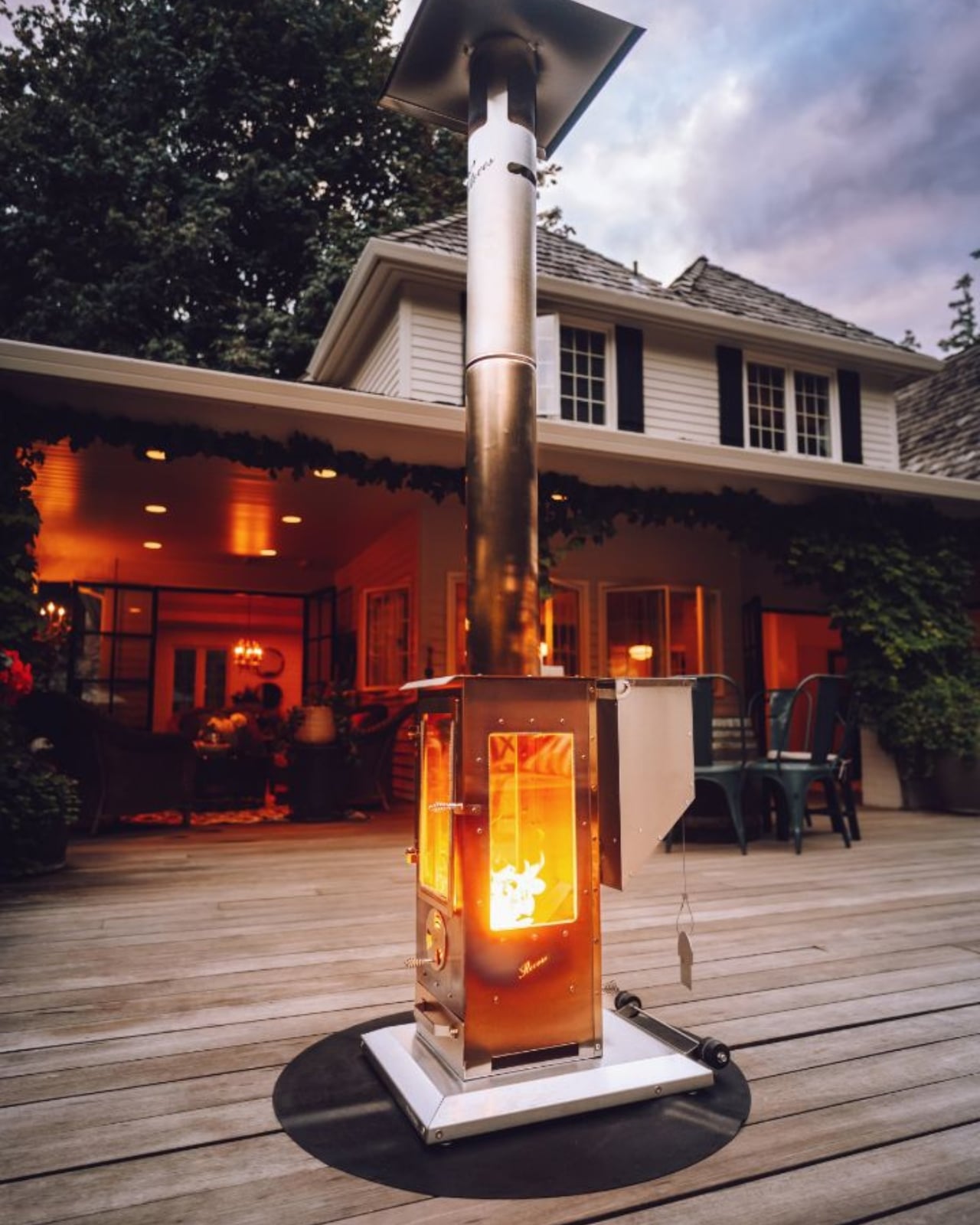
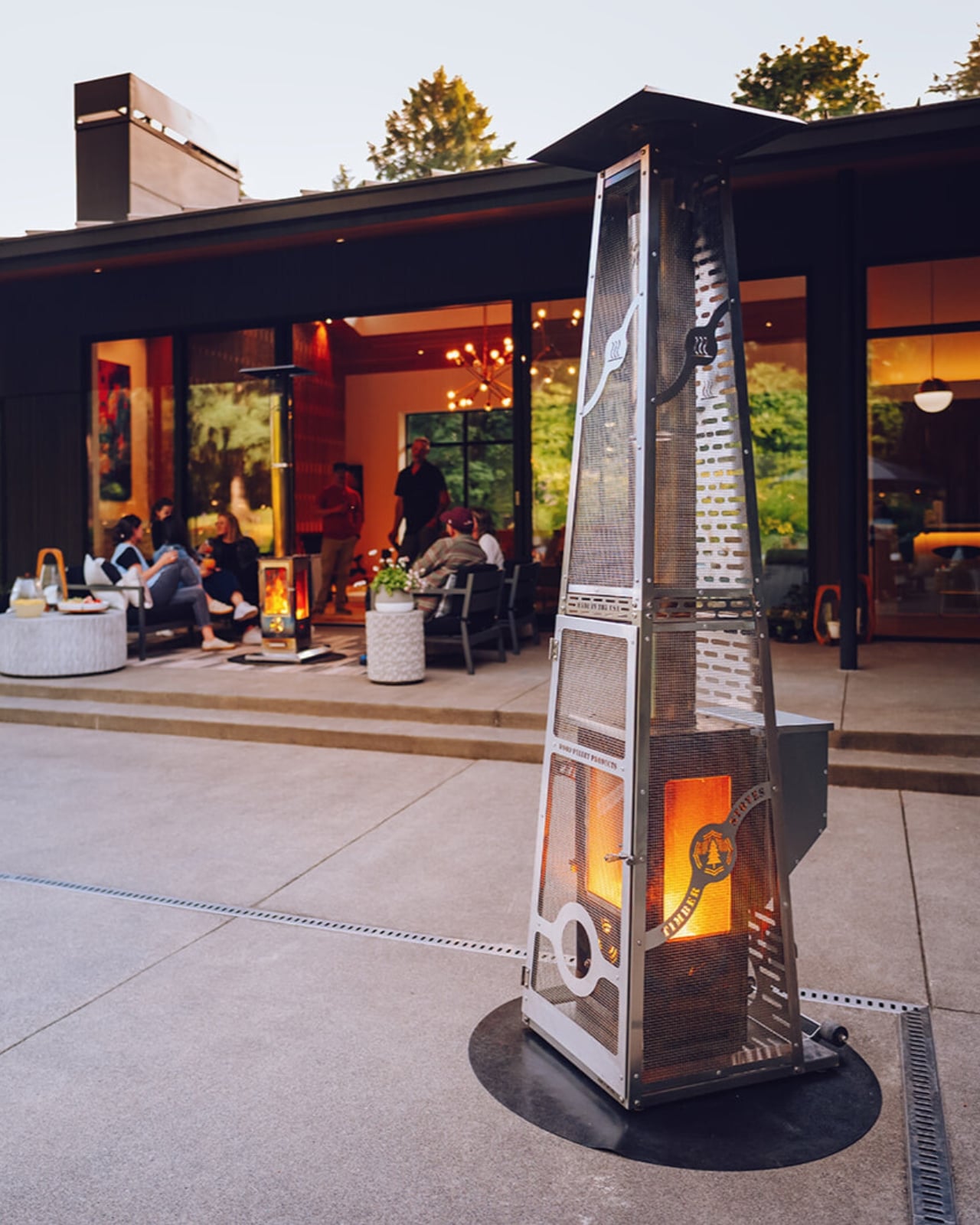
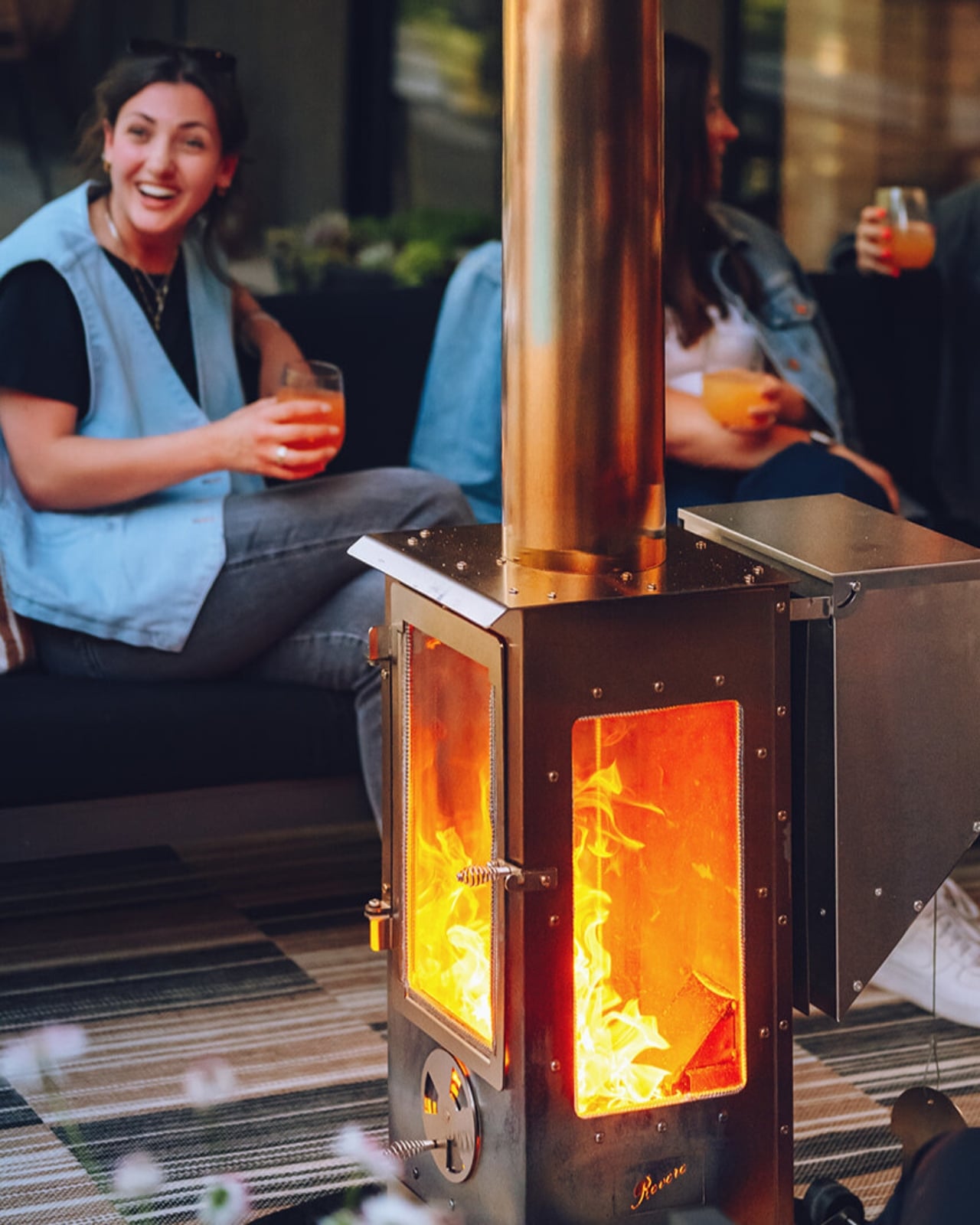
Look, most patio heaters are basically expensive lawn ornaments that happen to produce a tiny bubble of warmth if you stand directly underneath them while wearing a parka. The Timber Stoves Revere Patio Heater is not that. This American-made beast is more like a seven-foot tall sculpture that moonlights as a radiant heating powerhouse, and honestly, it’s about time someone figured out how to make outdoor heating both beautiful and brutally effective.
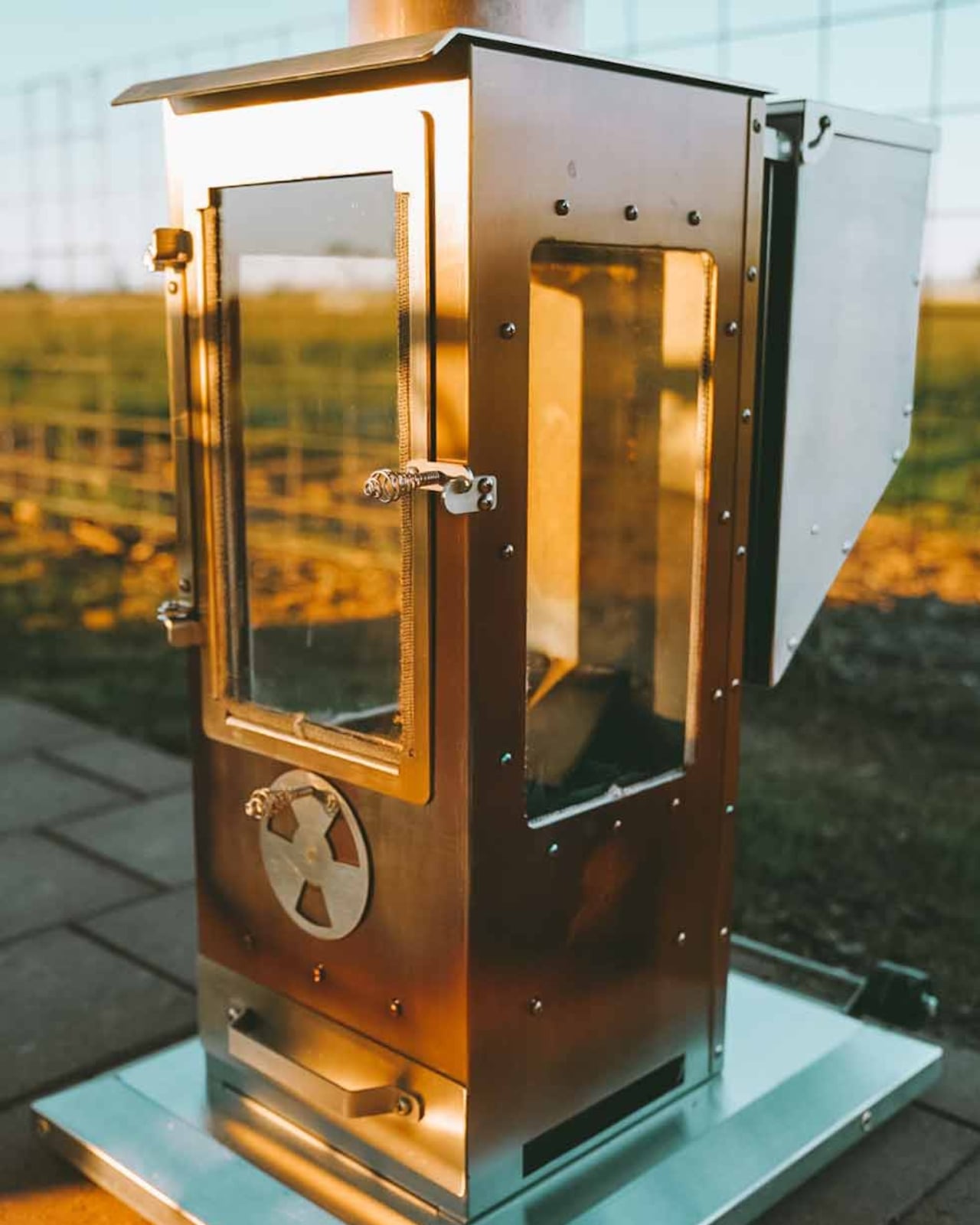
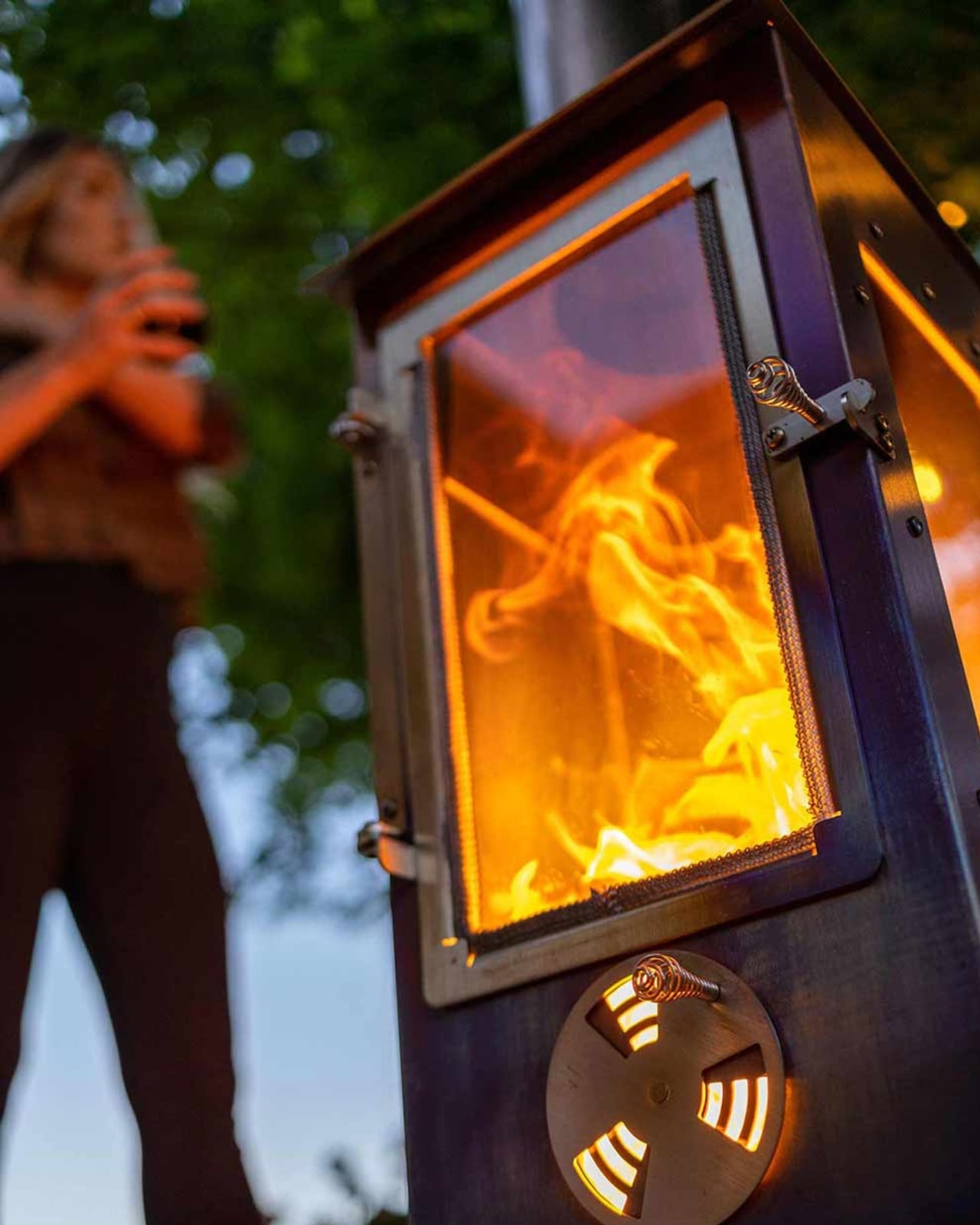
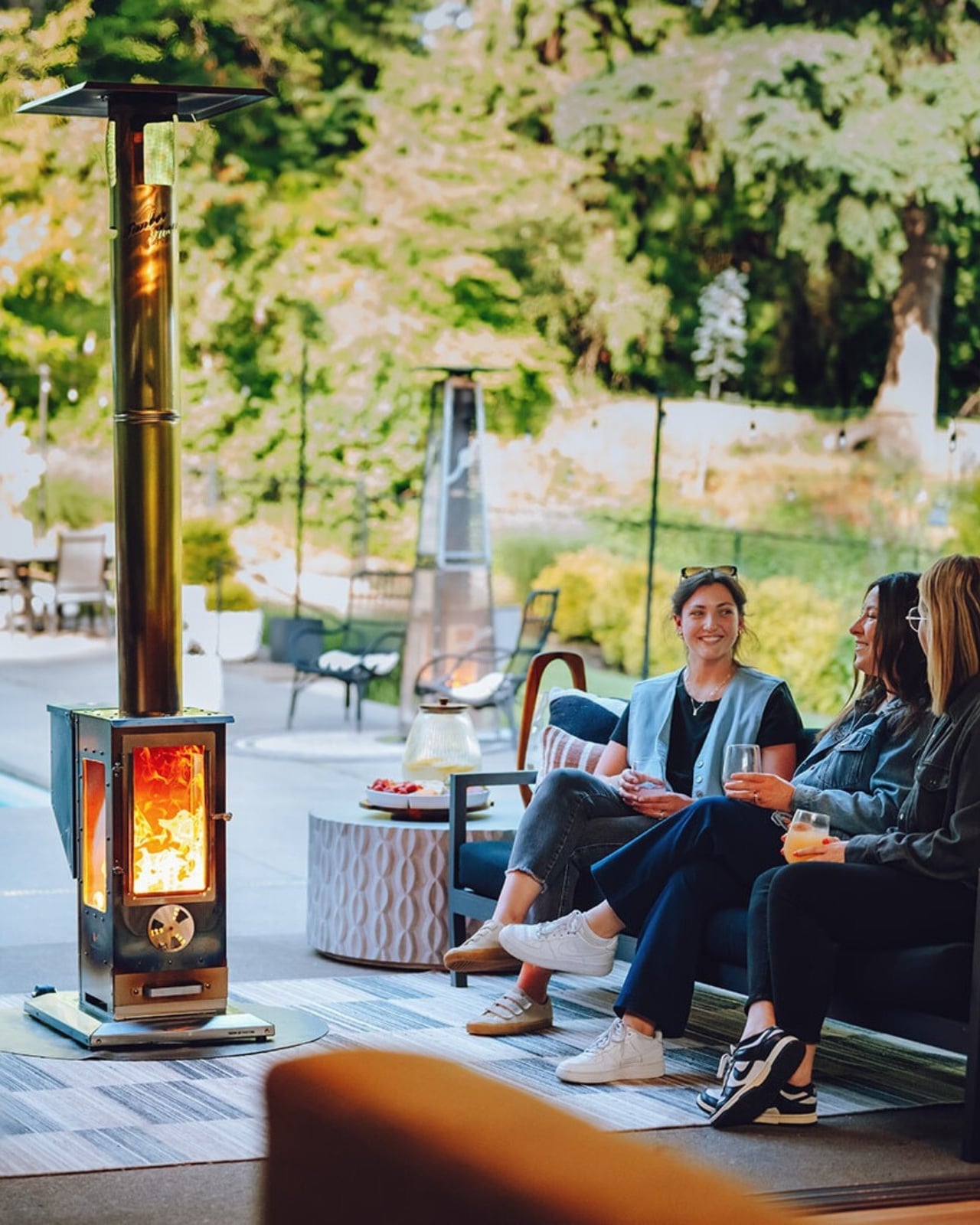
Let’s start with what makes this thing fascinating from a design perspective. At 84 inches tall and wrapped entirely in stainless steel, the Revere looks like something that belongs in a modern art museum or a very chic industrial loft. But here’s where it gets interesting: this heater requires absolutely zero electricity. The entire operation runs on gravity and thermodynamics, using wood pellets that feed down into a firepot where the draft from the stovepipe creates an almost hypnotic flame behind those generous 7.5 by 14.5 inch viewing windows. It’s basically engineering theater, and you get to watch it through the glass while staying warm.
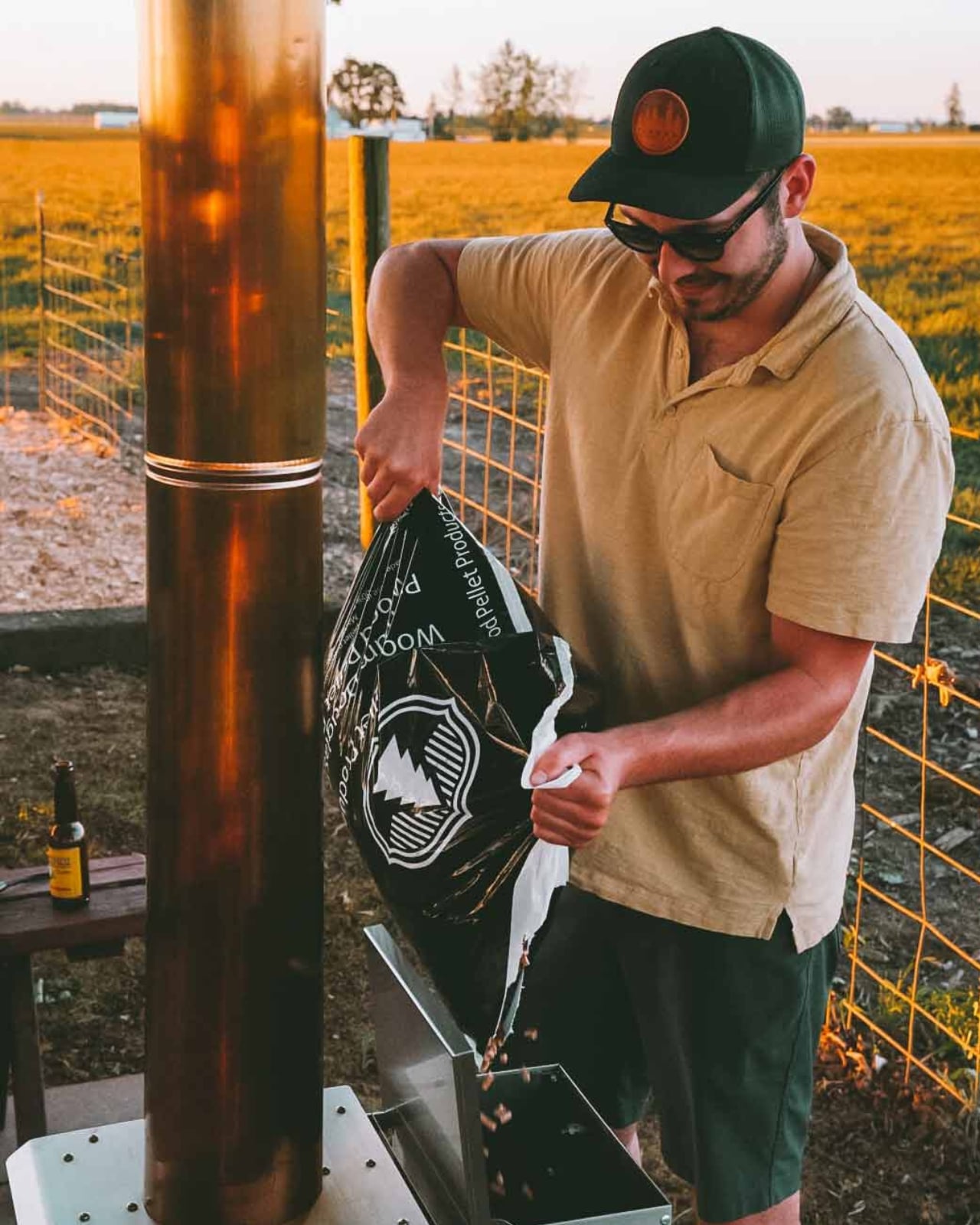
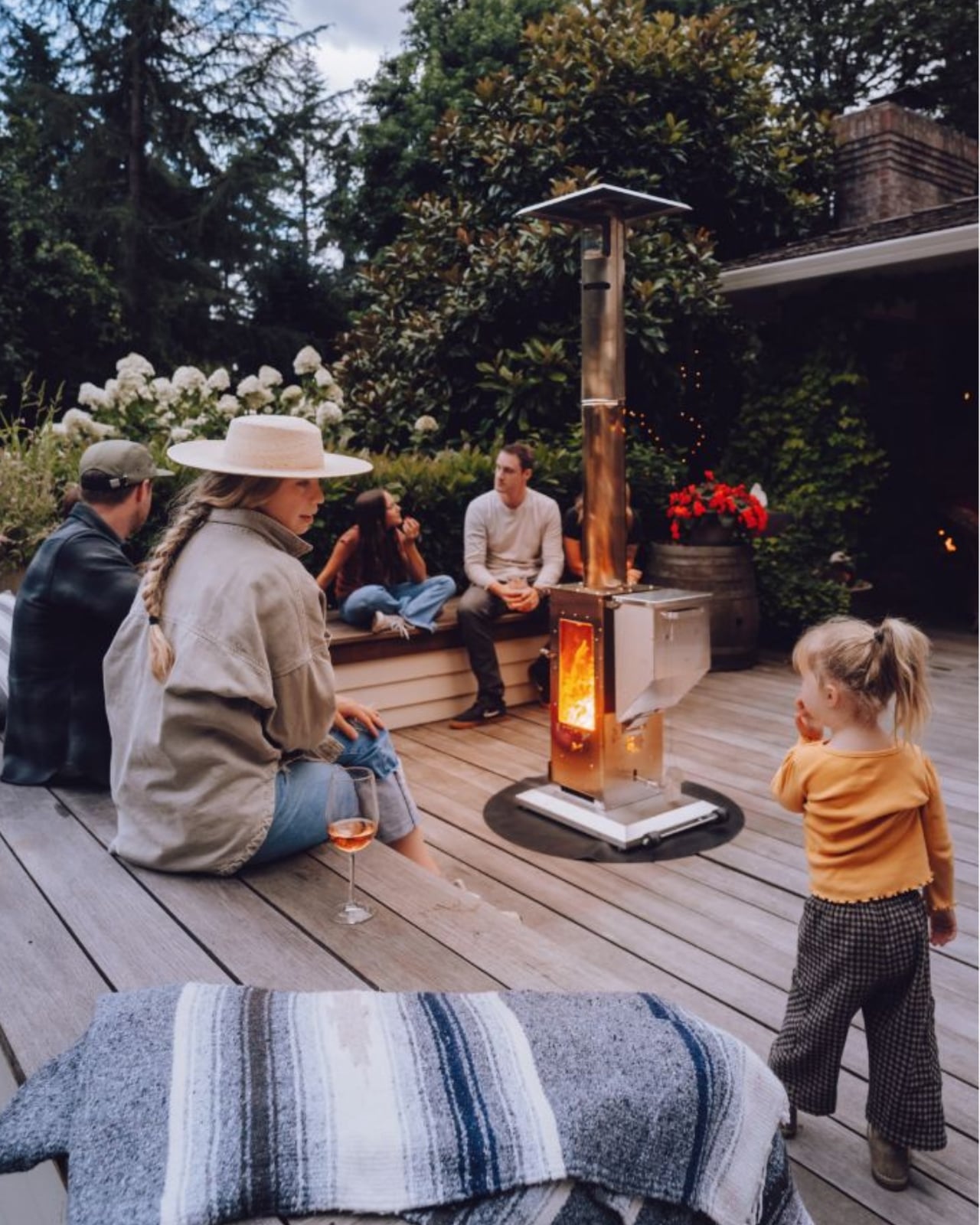
The pellet system is where Timber Stoves really shows its cards. While everyone else is fussing with propane tanks and dealing with that distinctive smell, the Revere chomps through wood pellets at roughly a quarter of the operating cost of propane while producing double the BTUs. We’re talking 90,000 BTUs of heat radiating out in a 12-foot circle, which means you’re actually warm from head to toe rather than just getting that weird sensation where your face is hot but your back is freezing. The hopper holds 25 pounds of pellets, so you’re not constantly babysitting the thing. Fill it up, let gravity do its job, and go back to being the host who actually enjoys their own party.
Now let’s talk about what happens when you use this thing regularly. The stainless steel body doesn’t just sit there looking pretty. As the Revere heats up over multiple uses, the metal begins developing these incredible patina colors: gold, purple, blue, and green. It’s like the heater is keeping a visual diary of every fire you’ve lit, every conversation you’ve had around it. Some design objects try desperately to stay pristine forever. The Revere embraces the passage of time and looks better for it.
The engineering nerd stuff matters too. That firepot at the heart of the operation? It’s crafted from a high-temperature stainless steel alloy designed to handle up to 2,100 degrees Fahrenheit, and it’s rated for approximately 1,000 hours of use before you need to think about replacement. Most outdoor equipment starts showing its age after a season or two, but Timber Stoves built this thing to last through years of entertaining, late-night conversations, and those random Wednesday evenings when you just want to sit outside with a book.
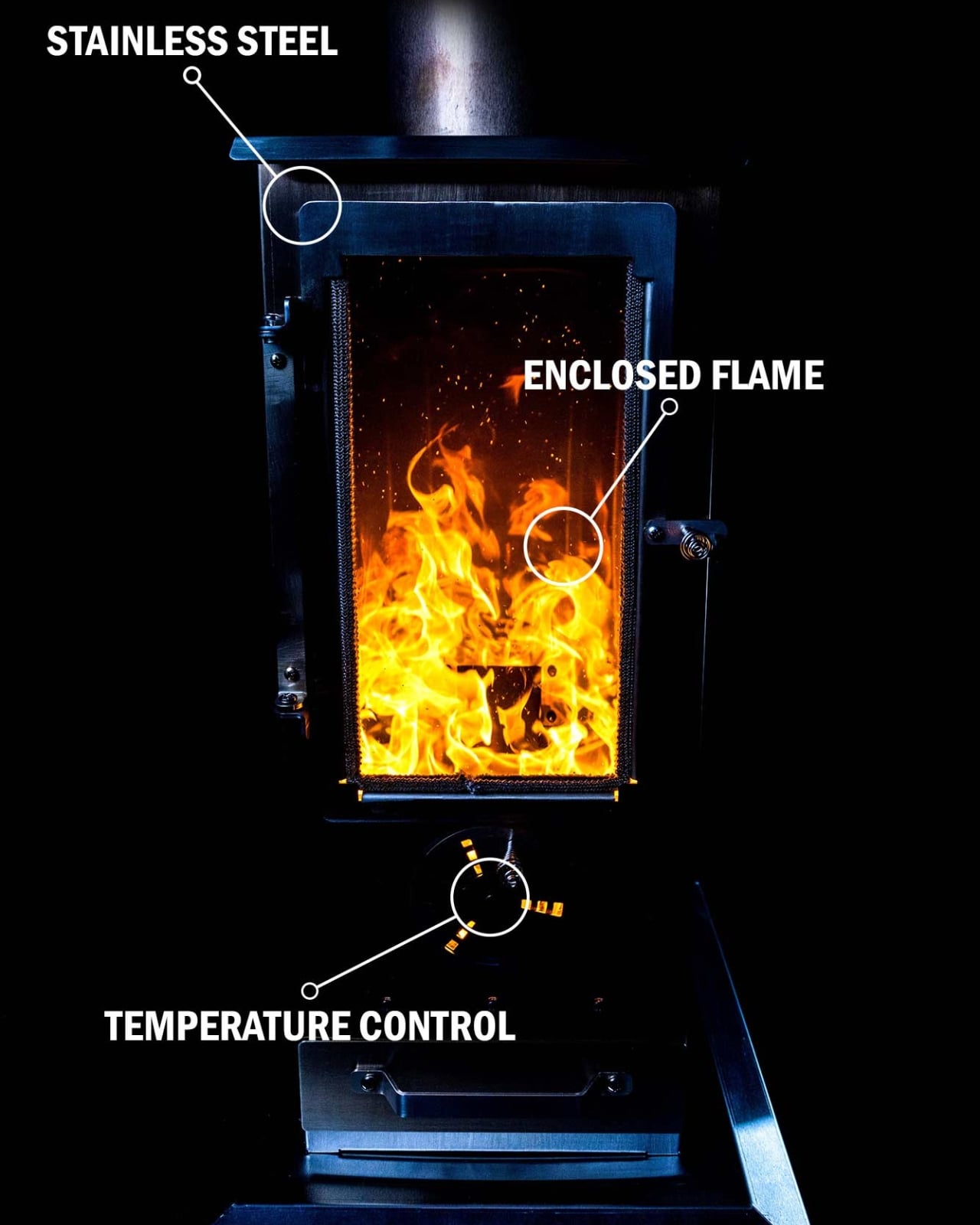
The virtually smokeless operation deserves its own paragraph because it’s a game changer. Wood pellets burn clean, which means you’re not standing in a cloud of smoke trying to remember which way the wind was blowing when you started the fire. You don’t smell like a campfire afterward unless you want to. And because everything is contained within that stainless steel body with an enclosed flame, you get all the ambiance of a traditional fire without the constant worry about sparks.
There’s something refreshingly analog about the controls too. No app to download, no Bluetooth connection that drops out randomly. You’ve got a key for easy shut-off and a damper dial that lets you adjust the temperature by up to 250 degrees. Turn it up, turn it down, walk away if you need to. The heater just keeps doing its job. The Revere weighs 75 pounds, which sounds heavy until you realize it means this thing isn’t going anywhere in a windstorm. It’s substantial, grounded, the kind of outdoor equipment that feels permanent even though it’s technically portable. At $1,299, it’s not an impulse purchase, but here’s the thing about investing in good outdoor gear: it fundamentally changes how you use your space.
Suddenly those fall evenings extend later into the season. Winter gatherings move outside. You’re not held hostage by the weather forecast anymore. The Revere turns patios, decks, and backyards into year-round destinations rather than seasonal amenities. And unlike trendy outdoor furniture that’ll be dated in three years, this is a piece of functional design that’ll still look modern a decade from now, just with better patina colors.
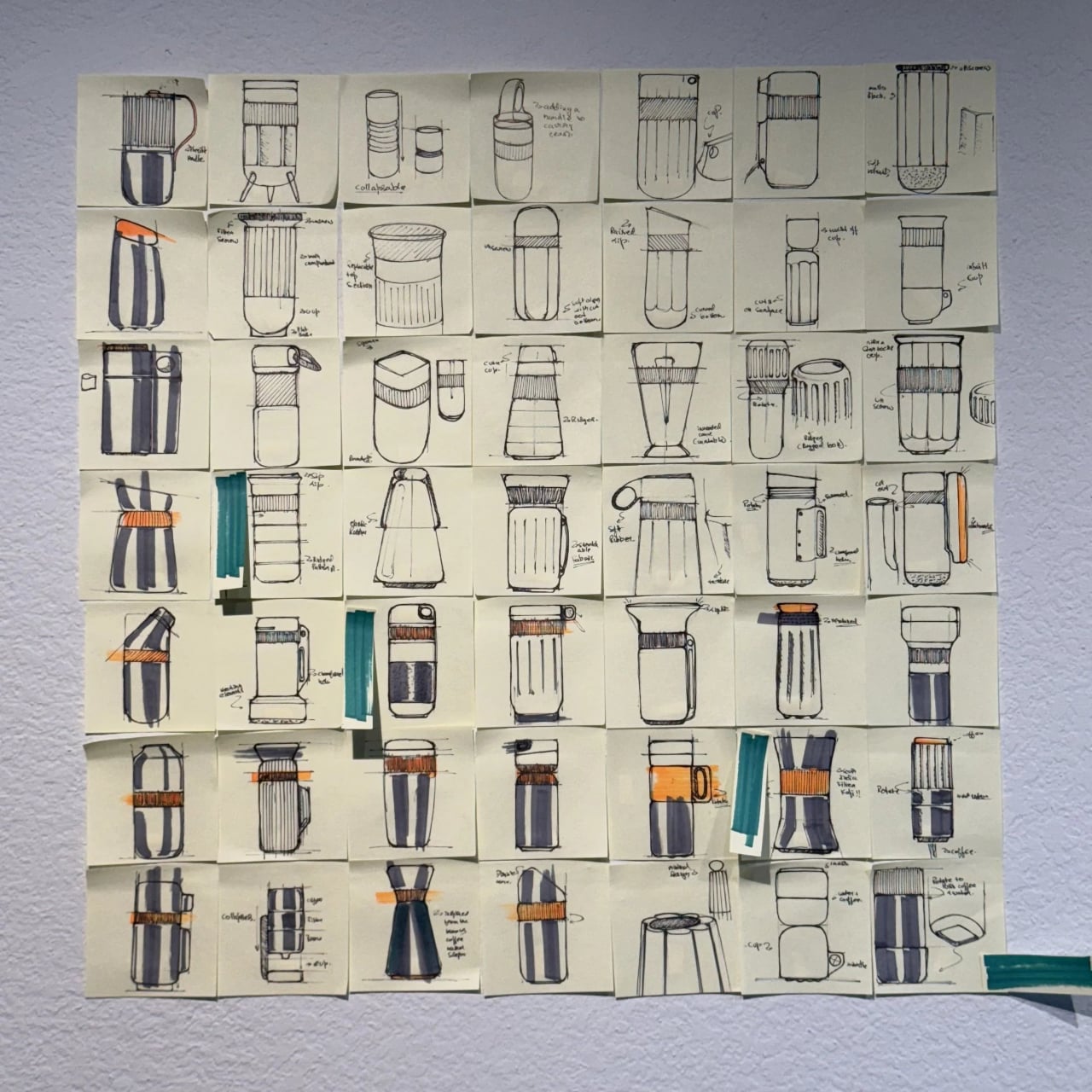
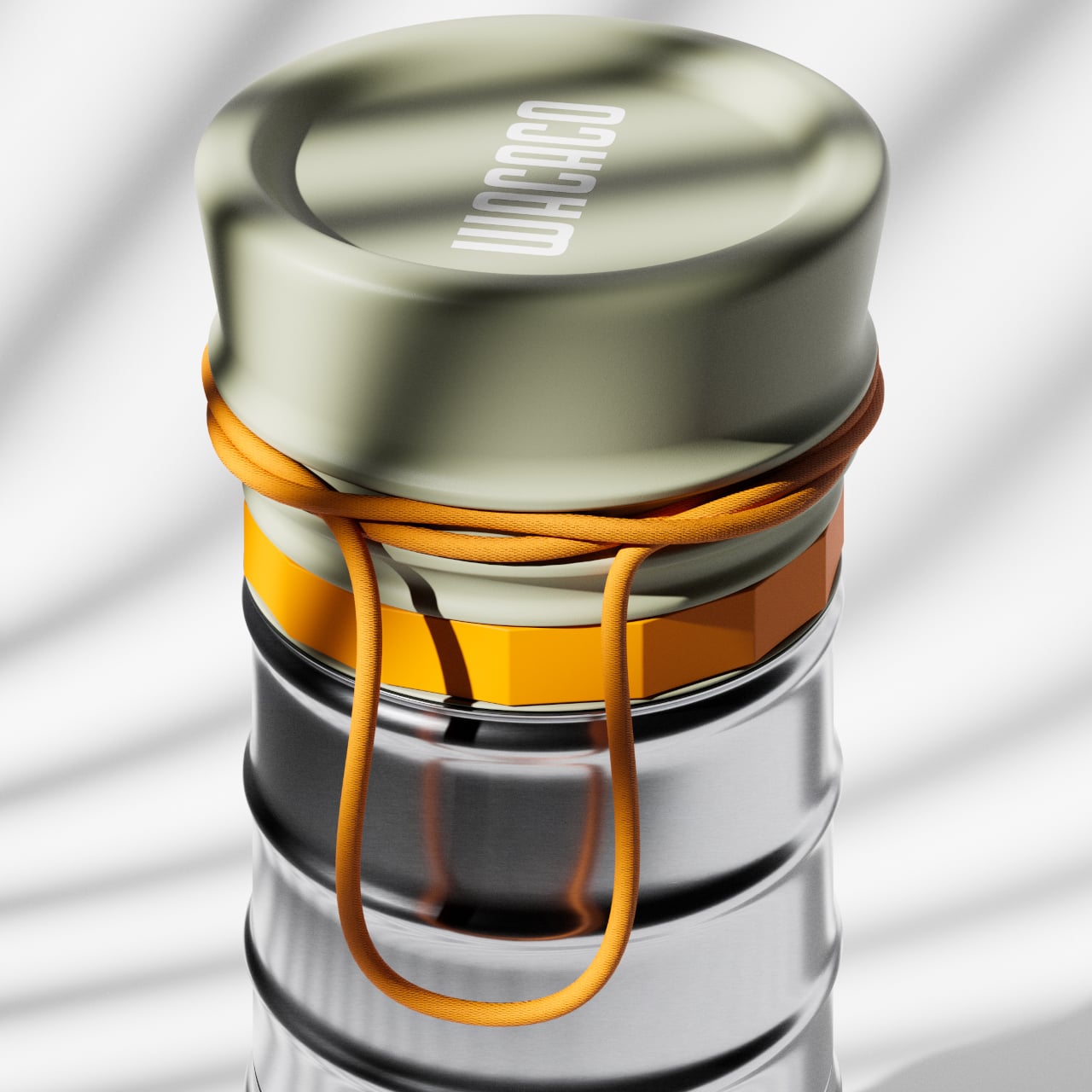
Portable coffee gear is usually a compromise. Compact brewers come with plungers, filters, cups, and lids that rattle around in a bag, and making a decent cup on the go often means unpacking a small chemistry set. After brewing, you clean it all in a cramped sink or a trailside stream. MokaMax is a response to that friction, aiming to keep the ritual but lose the clutter by collapsing everything into a single cylinder.
MokaMax is a portable coffee maker that positions itself as a true successor to Pipamoka, promising rich espresso-style coffee anywhere. It is designed for wanderers who move between libraries, trains, and mountain trails, and want one object that brews and carries coffee without a bag full of accessories. The idea is a single, rugged cylinder that feels like a travel mug but hides a full pressure-brewing system inside.
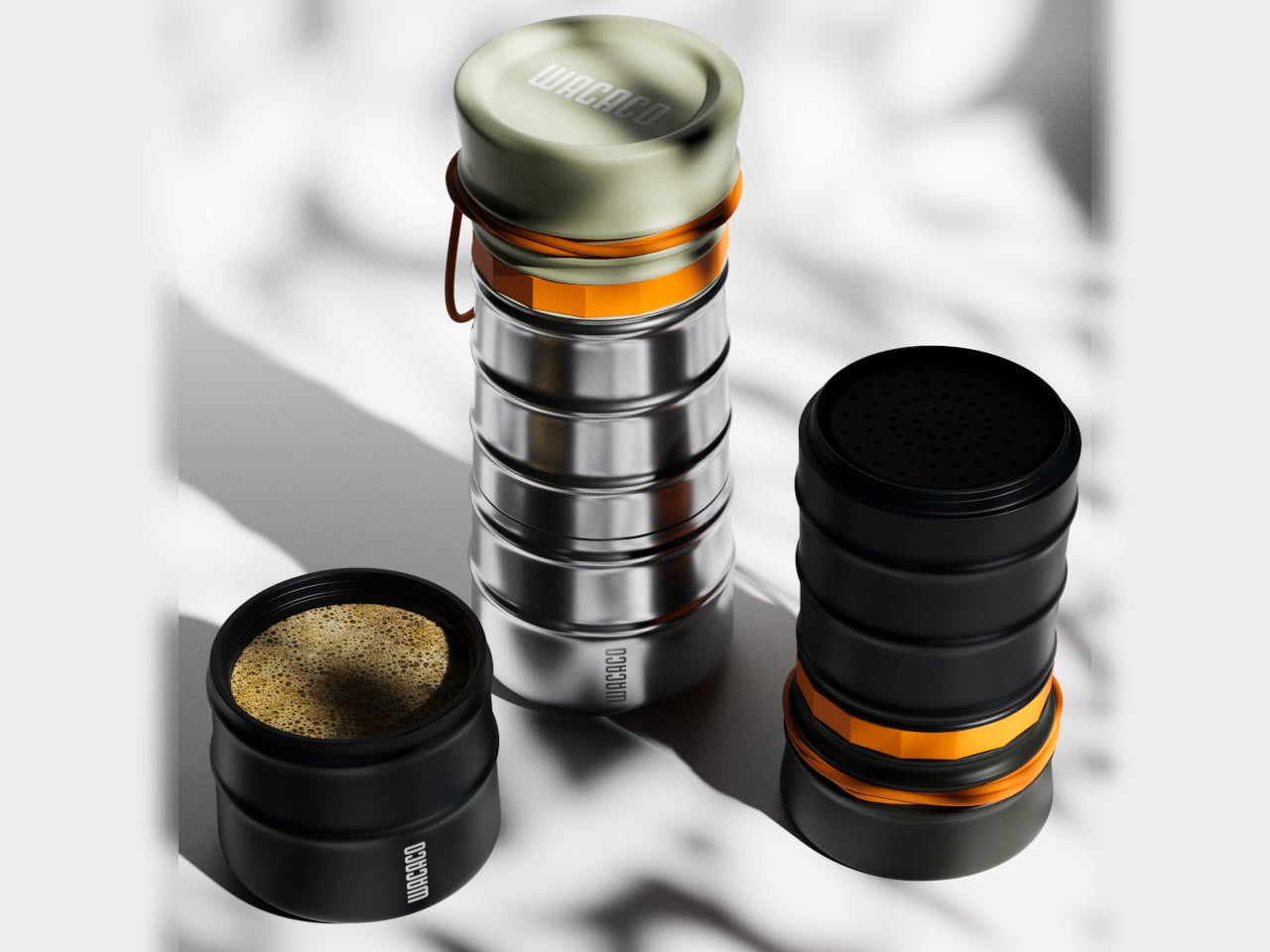
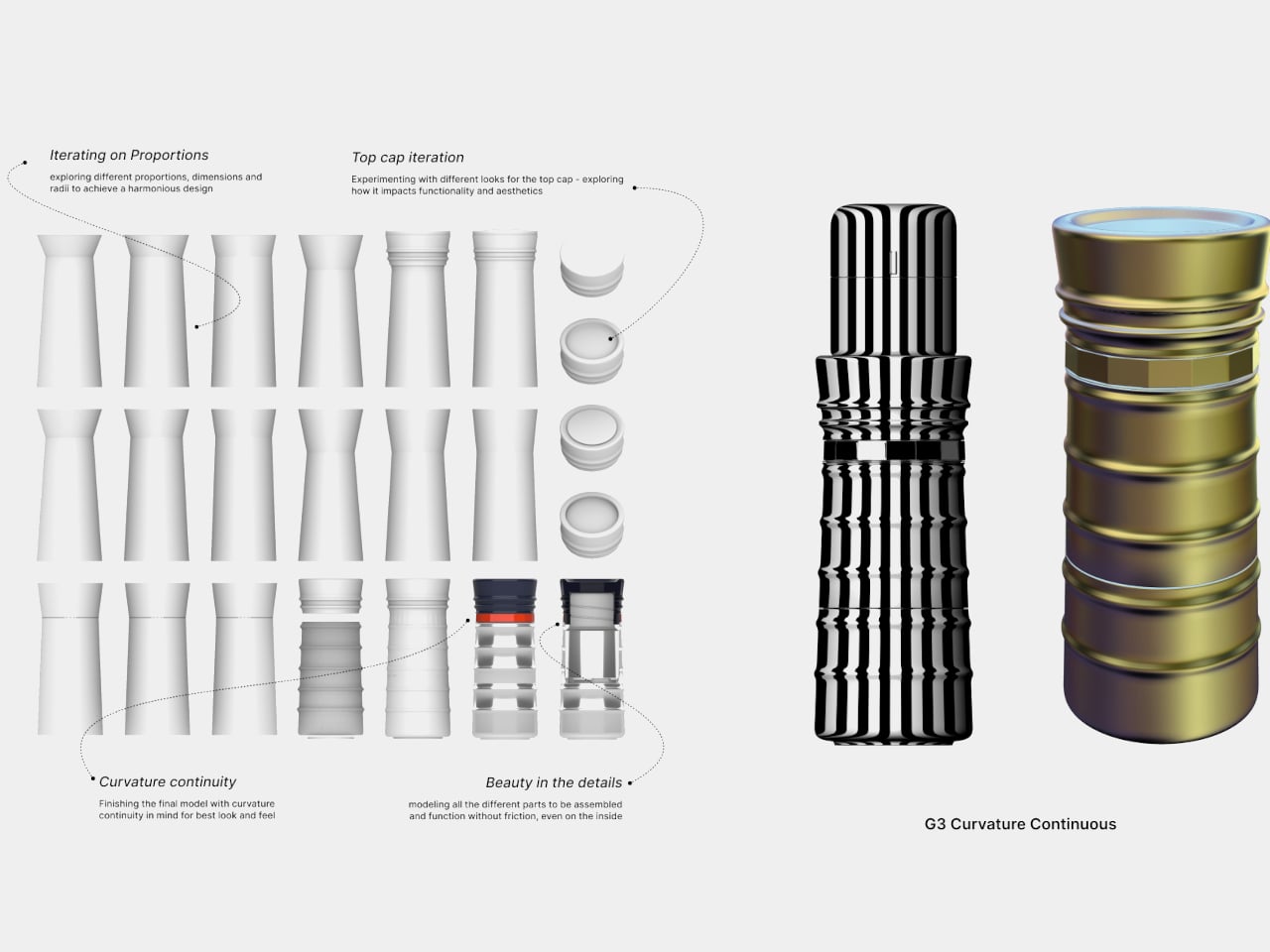
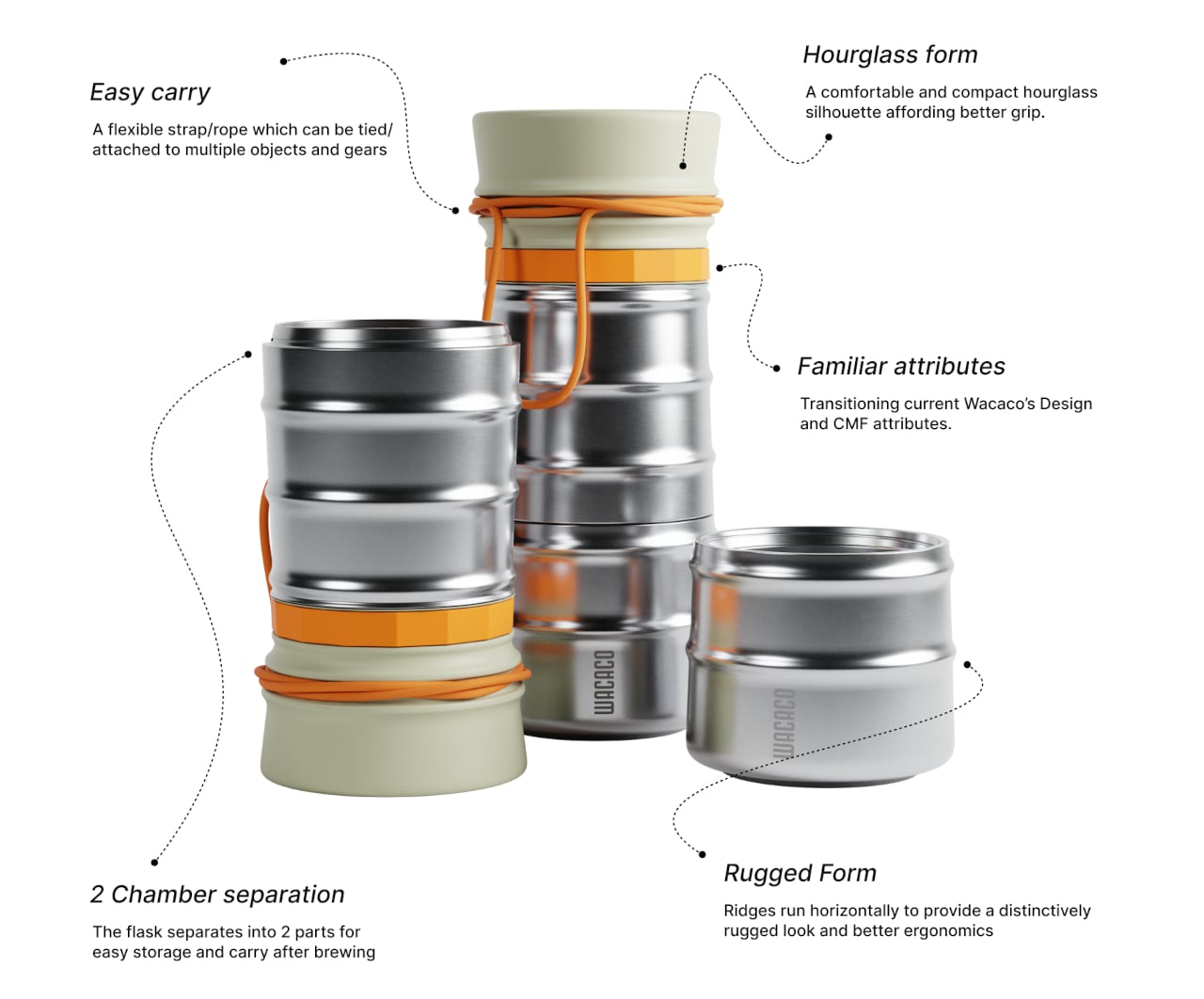
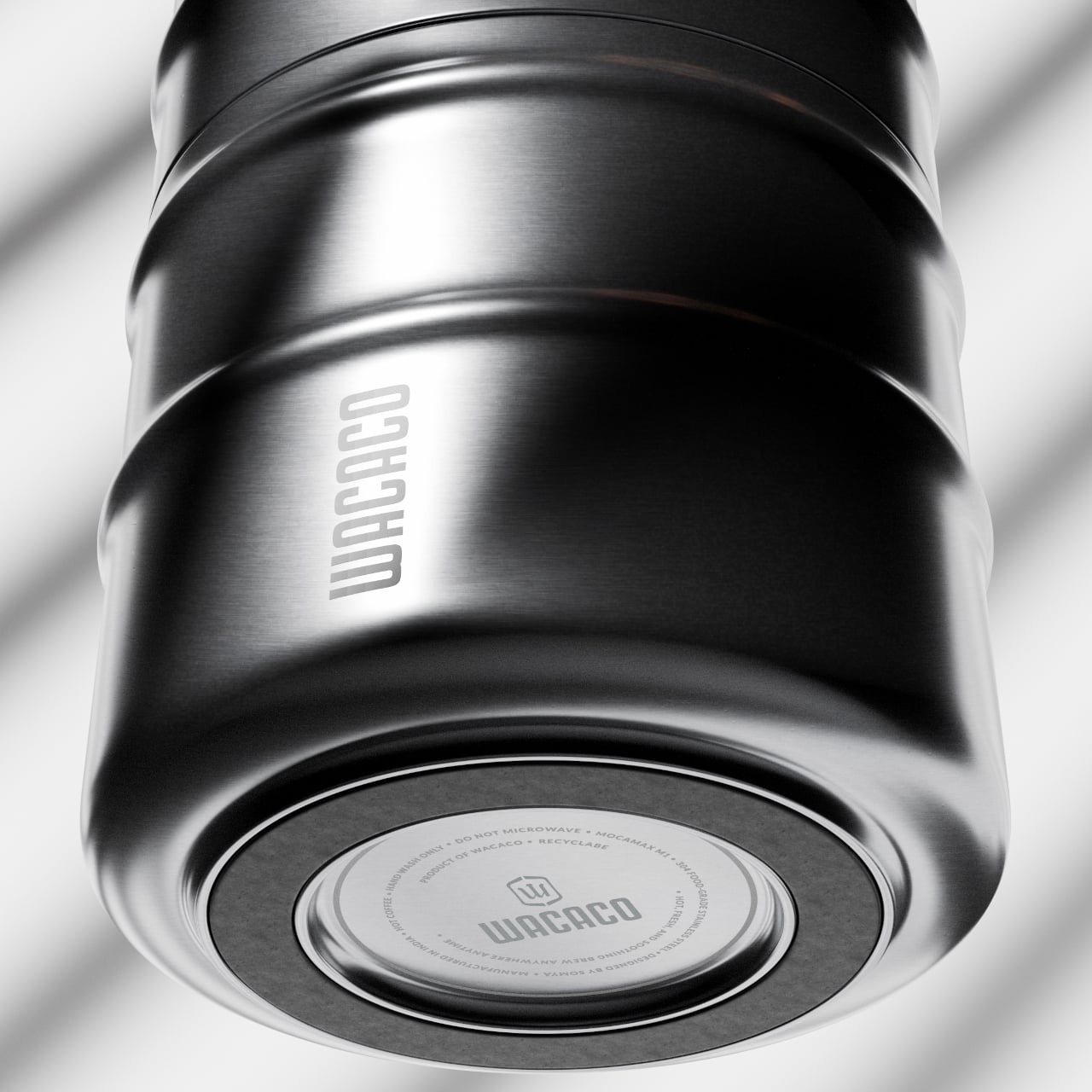
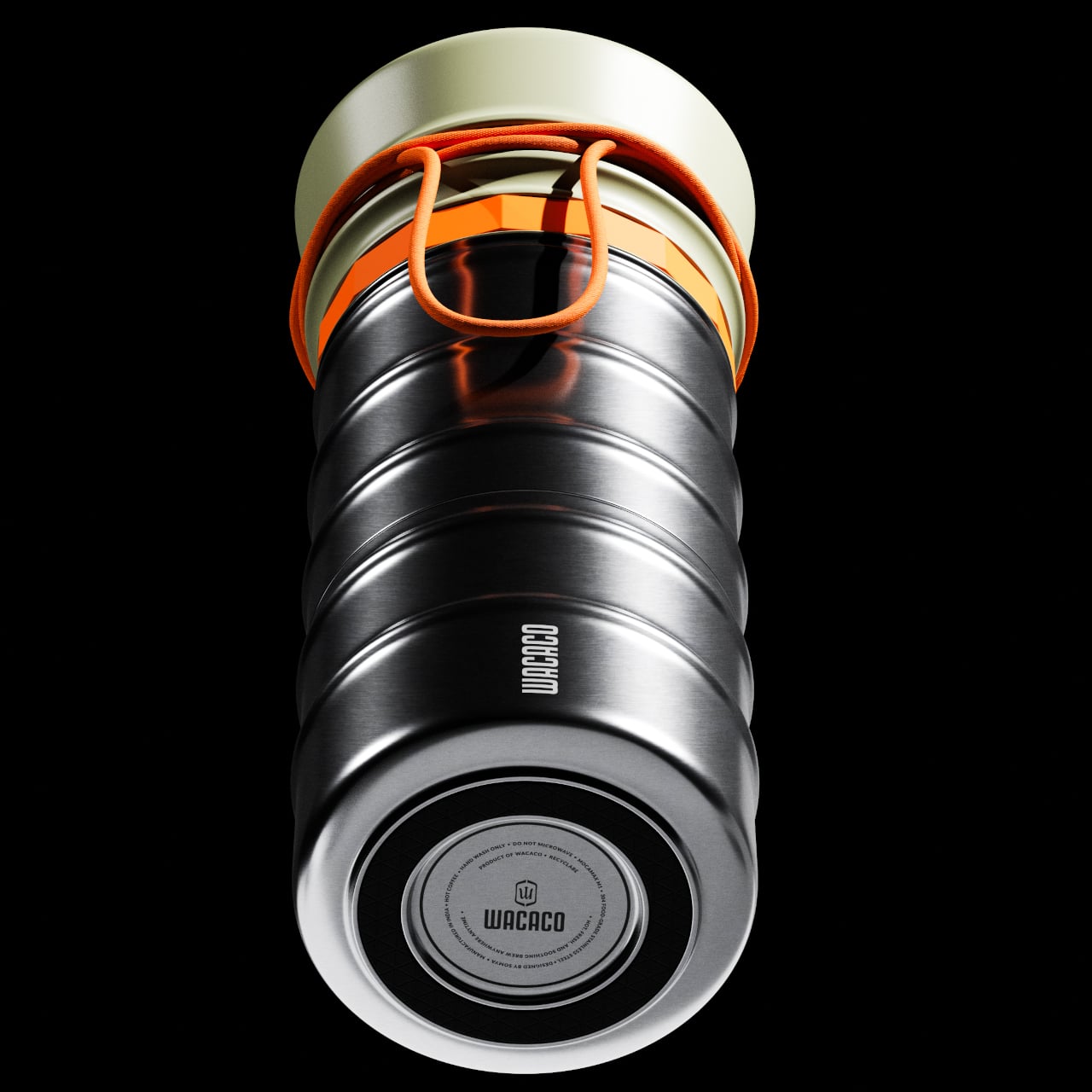
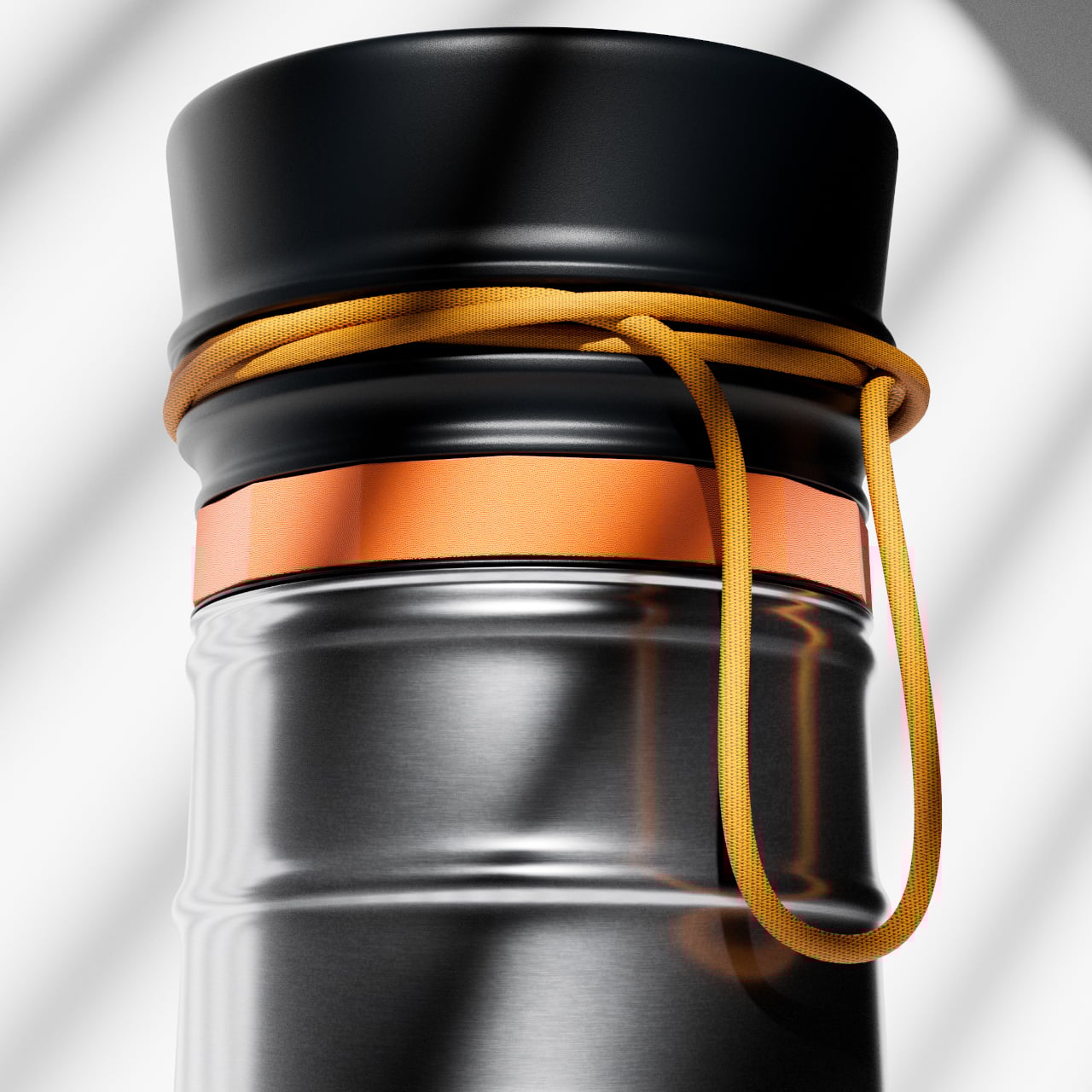
The distinctive ridged stainless-steel body gives fingers a secure place to rest and helps the mug blend in with other rugged gear. The ridges went through several iterations to balance grip and comfort, avoiding sharp edges or overly complex profiles. A flexible rope loops through the top, letting you clip MokaMax to a bag or hang it from a hook, reinforcing its role as part of a mobile kit that lives outside rather than just on a desk.
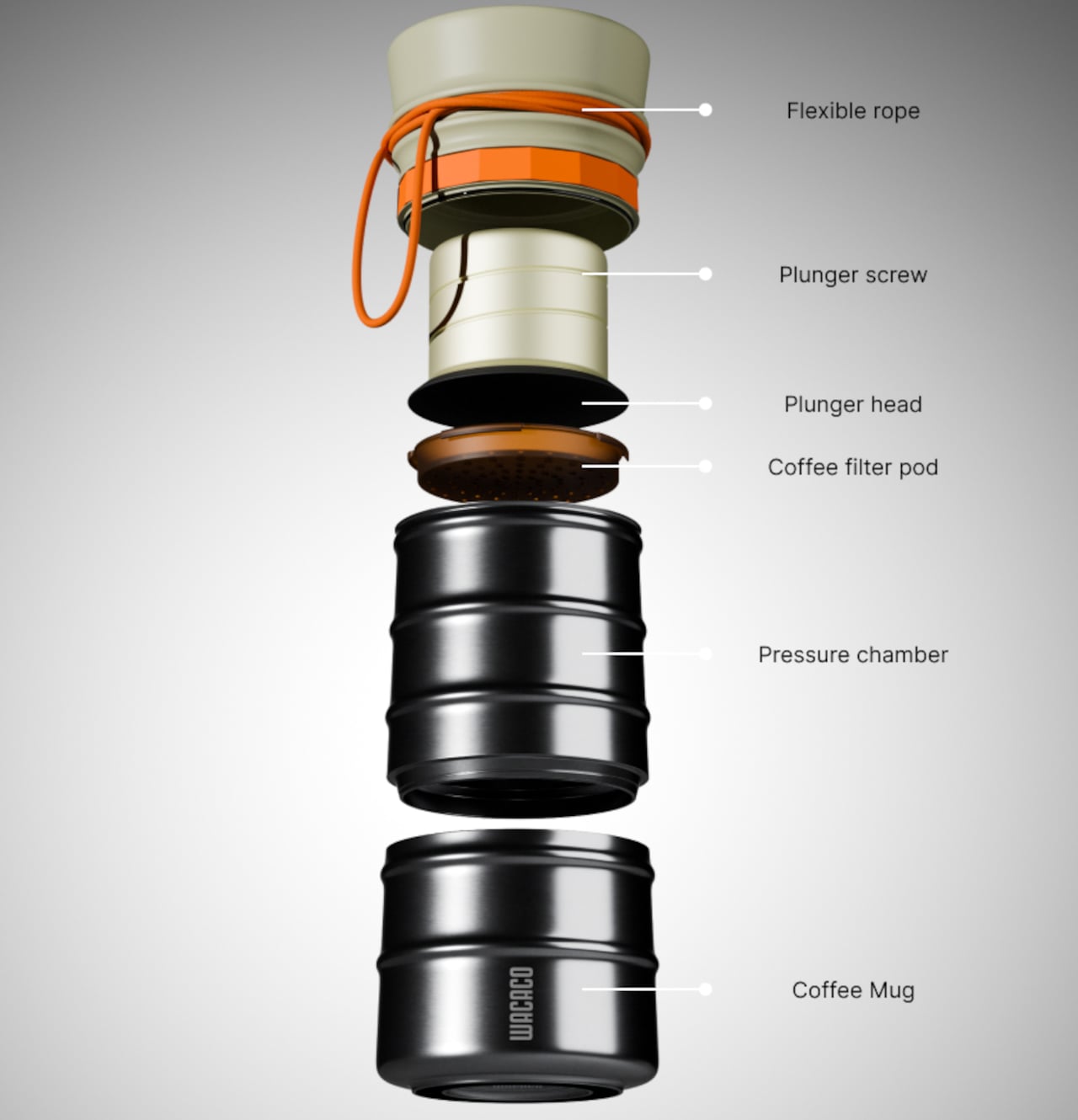
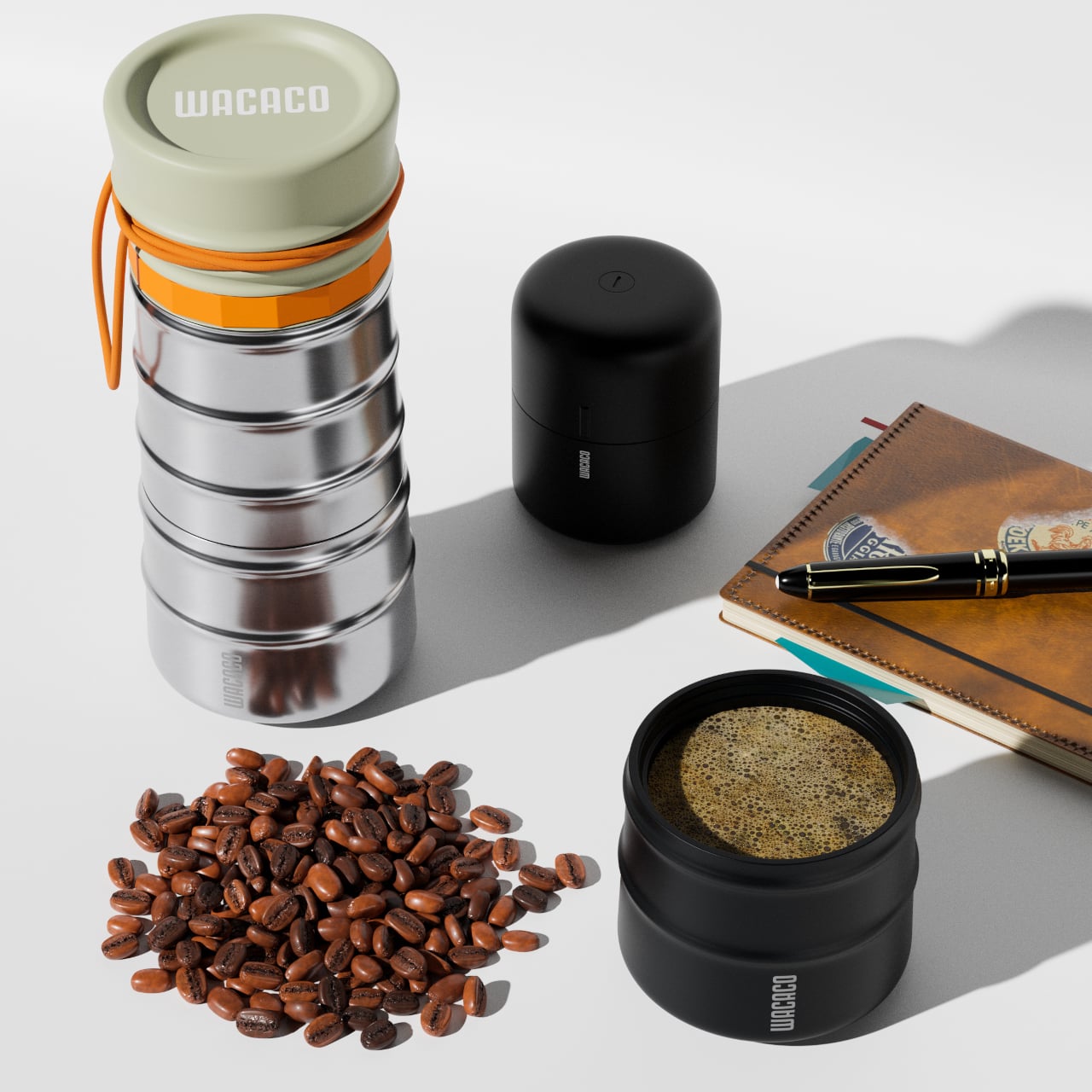
The brewing sequence is straightforward. Drop in a filter pod, add ground coffee, pour hot water, stir, close the top, rotate to filter using the pressure mechanism, then separate the top and drink. The pressure chamber and top cap fasten together and can be stowed upside down as one piece, so you are not chasing loose parts around a campsite or office kitchen when you just want a second cup.
The internal architecture breaks down into three main compartments: the pressure chamber, the coffee mug, and the top assembly with plunger and filter pod. Each section is easy to clean, and the decomposable coffee filter pods can be thrown away after use, cutting down on rinsing and scrubbing in awkward places. The “fewer parts, fewer headaches” philosophy keeps the system simple without compromising the quality of the brew or the convenience of the mug.
MokaMax is machined from food-grade stainless steel, which handles heat, knocks, and daily abuse better than plastic. The special edition black powder-coated finish leans into the rugged aesthetic, and the metal construction helps it feel like a long-term tool rather than a seasonal gadget. The combination of steel, rope, and compact form makes it feel at home in a backpack or on a desk, ready for whatever kind of wandering comes next.
MokaMax tries to change not the taste of coffee, but the friction around making it when you are away from a kitchen. By collapsing a pressure brewer and travel mug into one ridged cylinder with three main parts, it nudges portable coffee gear closer to the simplicity of a water bottle, turning the ritual into something that fits the rhythm of a day spent moving without demanding much attention or bag space.
For years, the manual coffee grinder was a necessary evil. If you wanted the freshest, best-tasting cup outside of a cafe, you had to accept a bulky plastic device or a fragile piece of glass and wood. These tools often felt clumsy, lacking the refinement and durability that modern consumers have come to expect from their high-use items.
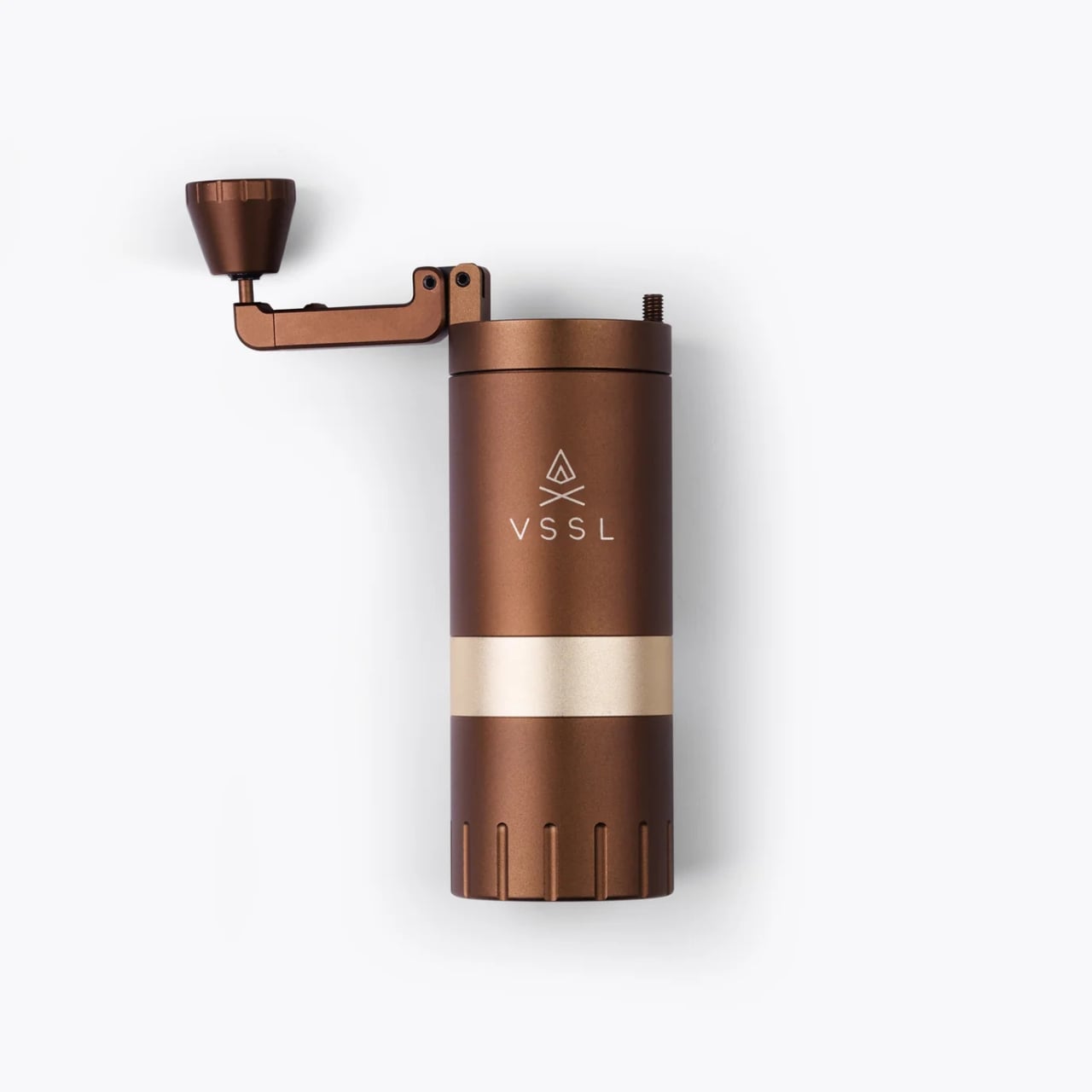
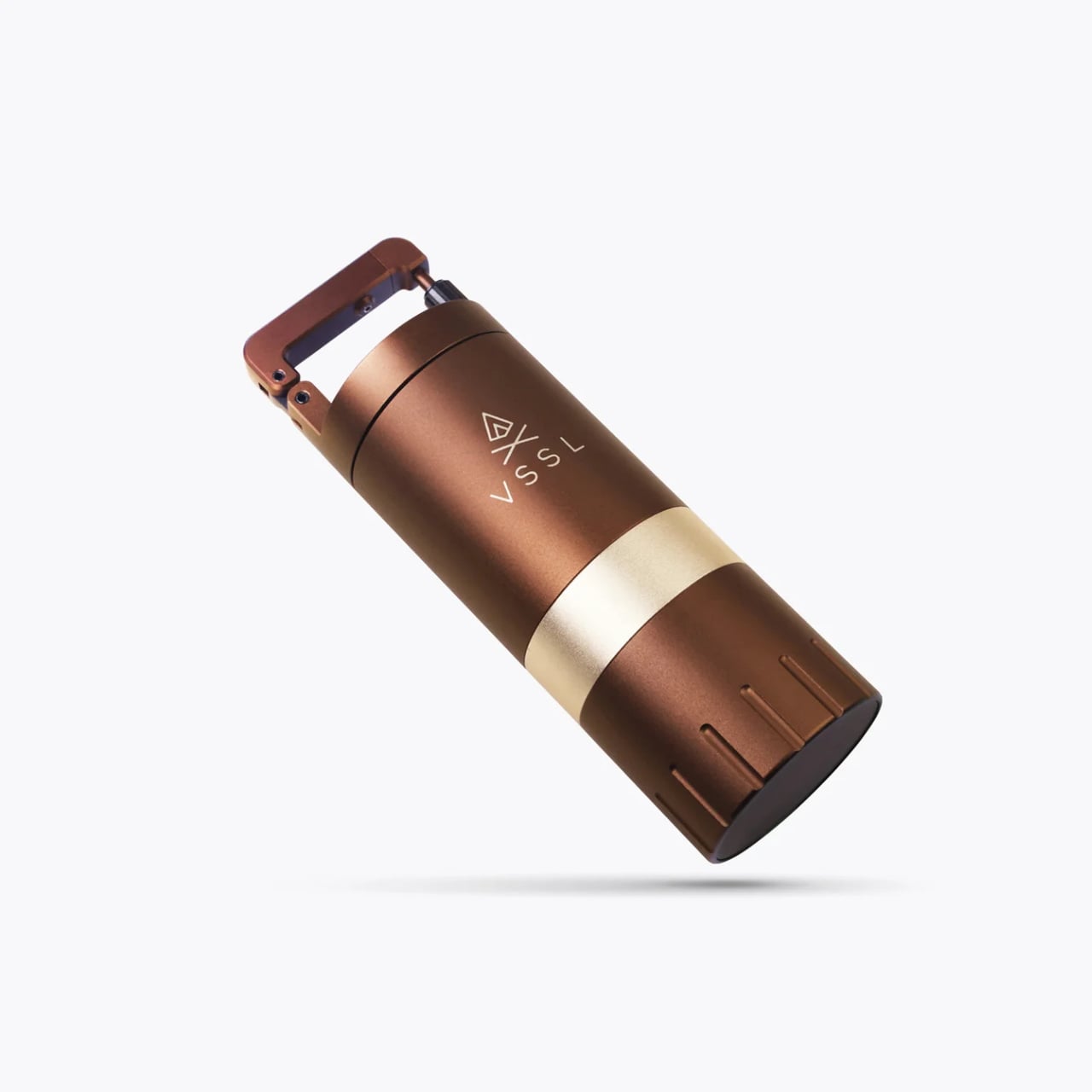
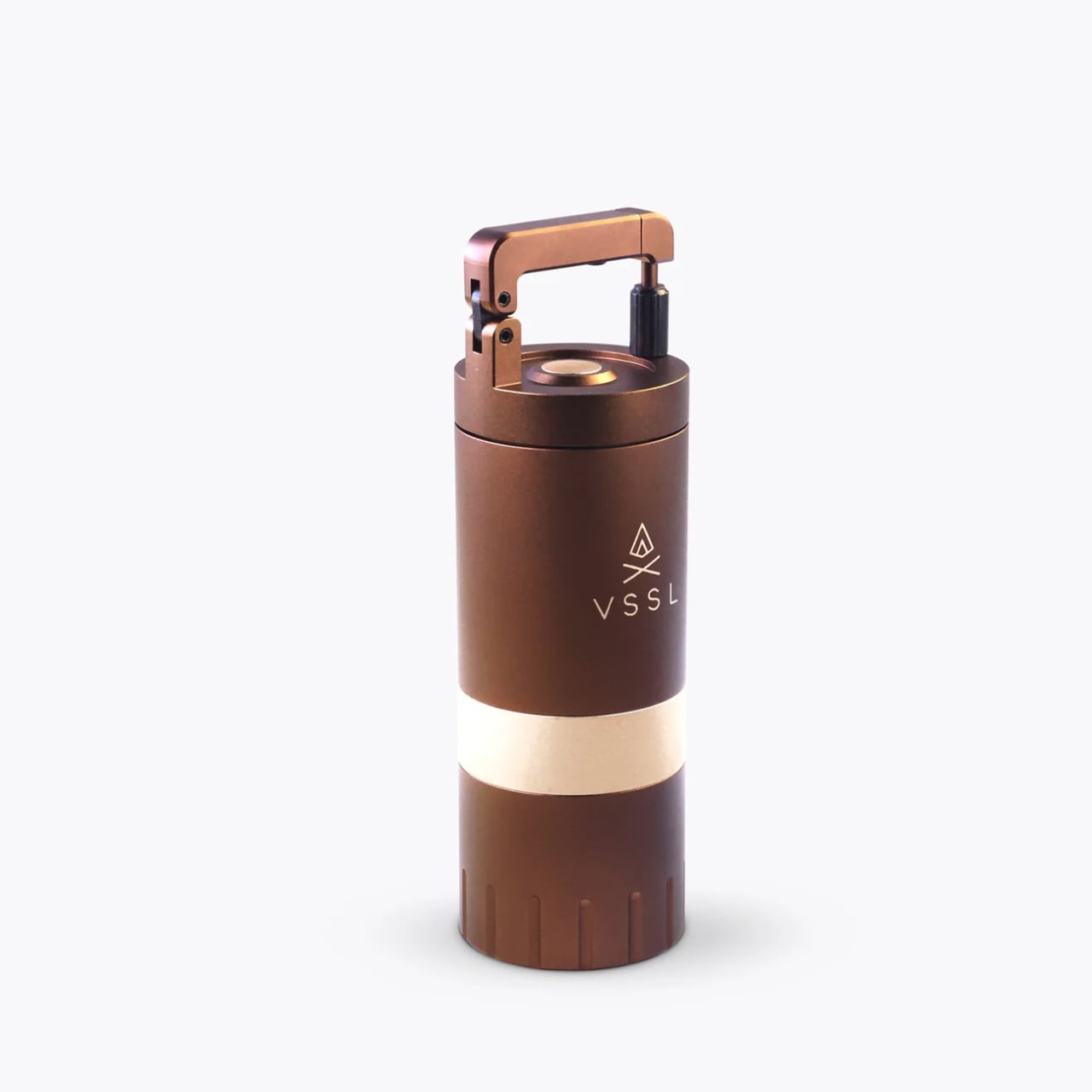
Enter the VSSL Java G25, a manual coffee grinder that doesn’t just promise a better cup; it promises a better, more rugged, and far more stylish experience. It represents a shift in thinking, elevating the grinding process from a tedious chore to an enjoyable, tactile ritual. Truth be told, I still can’t figure out the grind settings on most of the complicated, dials-and-knobs grinders that I see in the market. I probably would love to learn all these things, even if there are supposedly 50 distinct settings. The G25 somehow makes the learning curve feel like part of the adventure, a welcome challenge to master a finely tuned instrument.
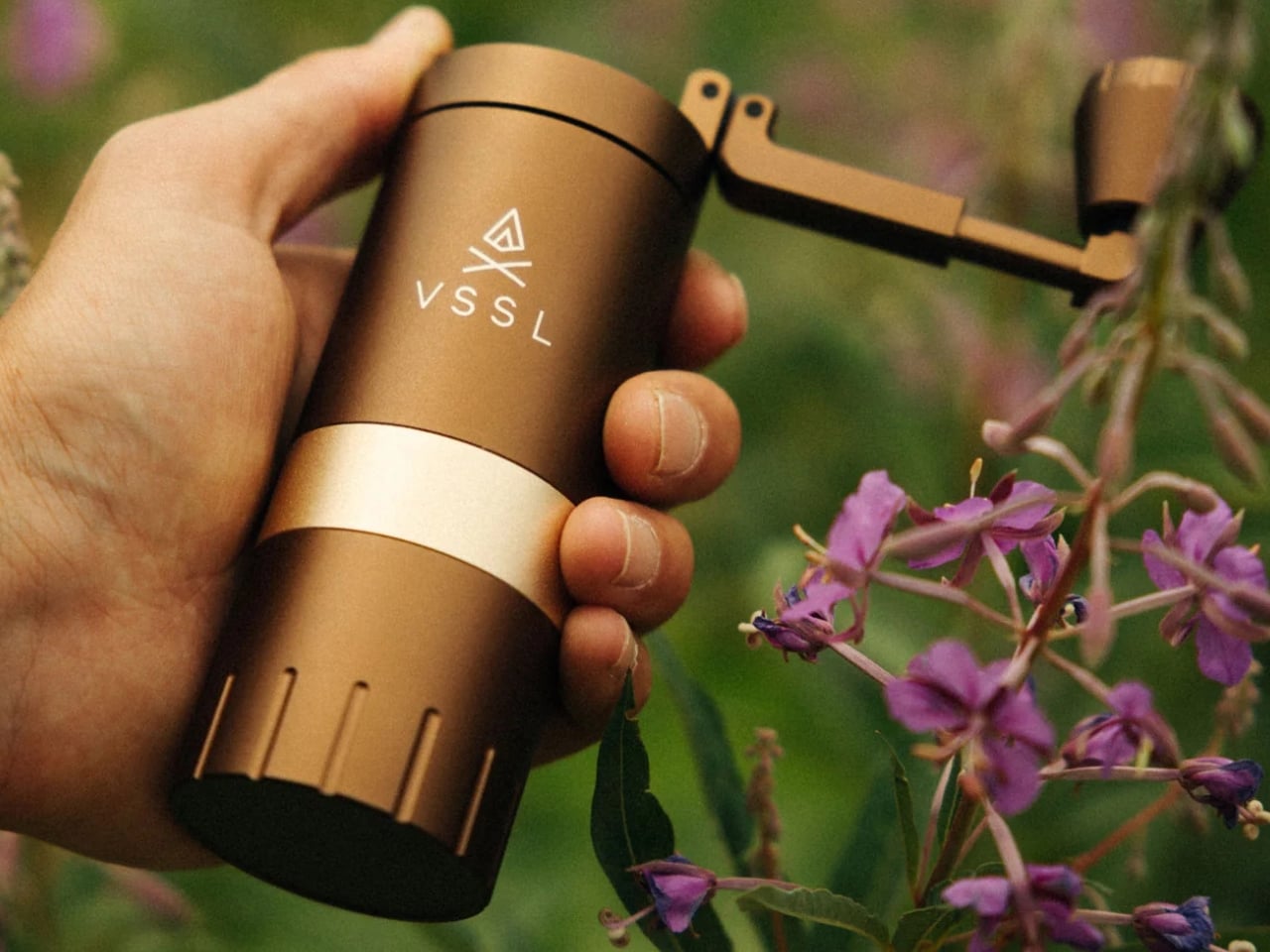
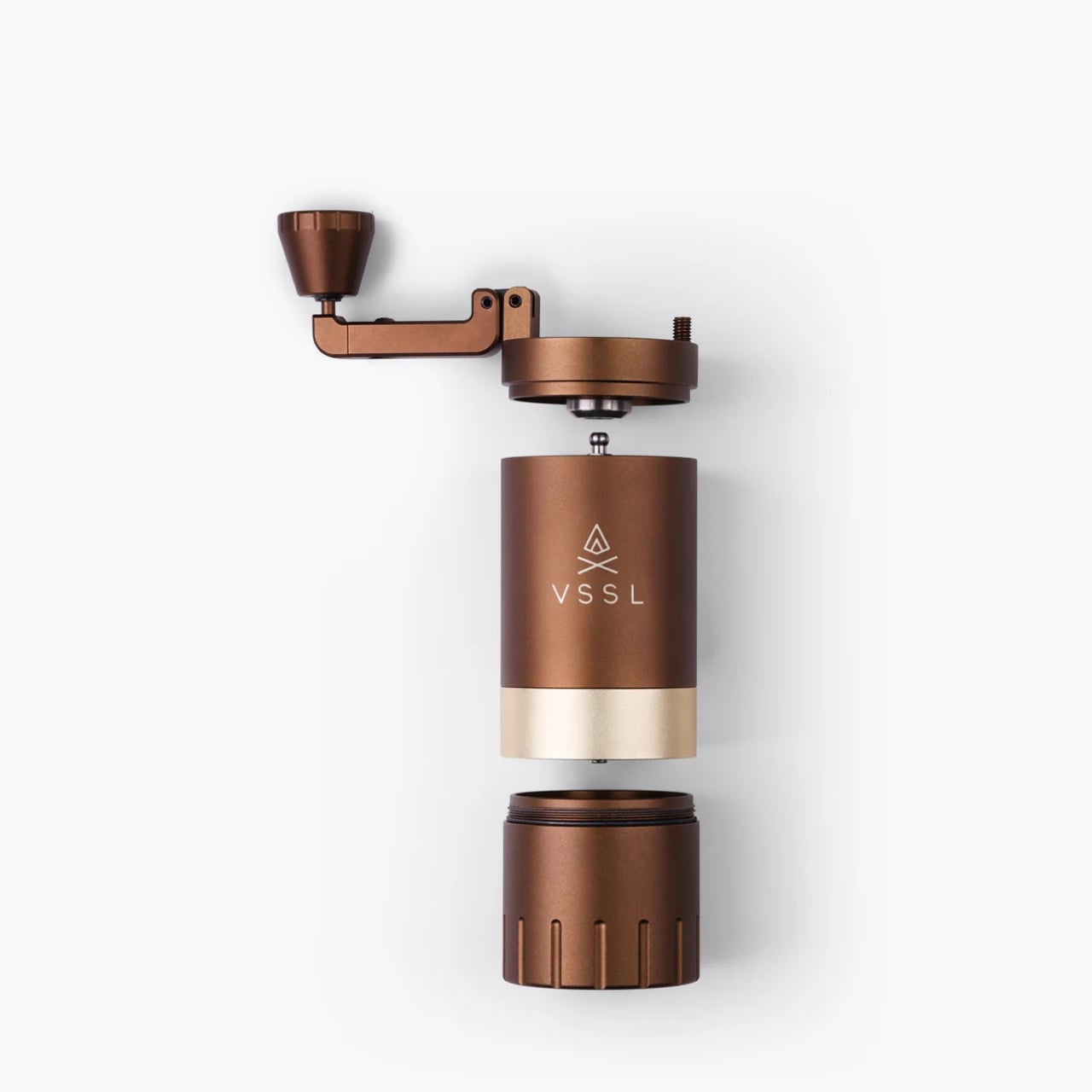
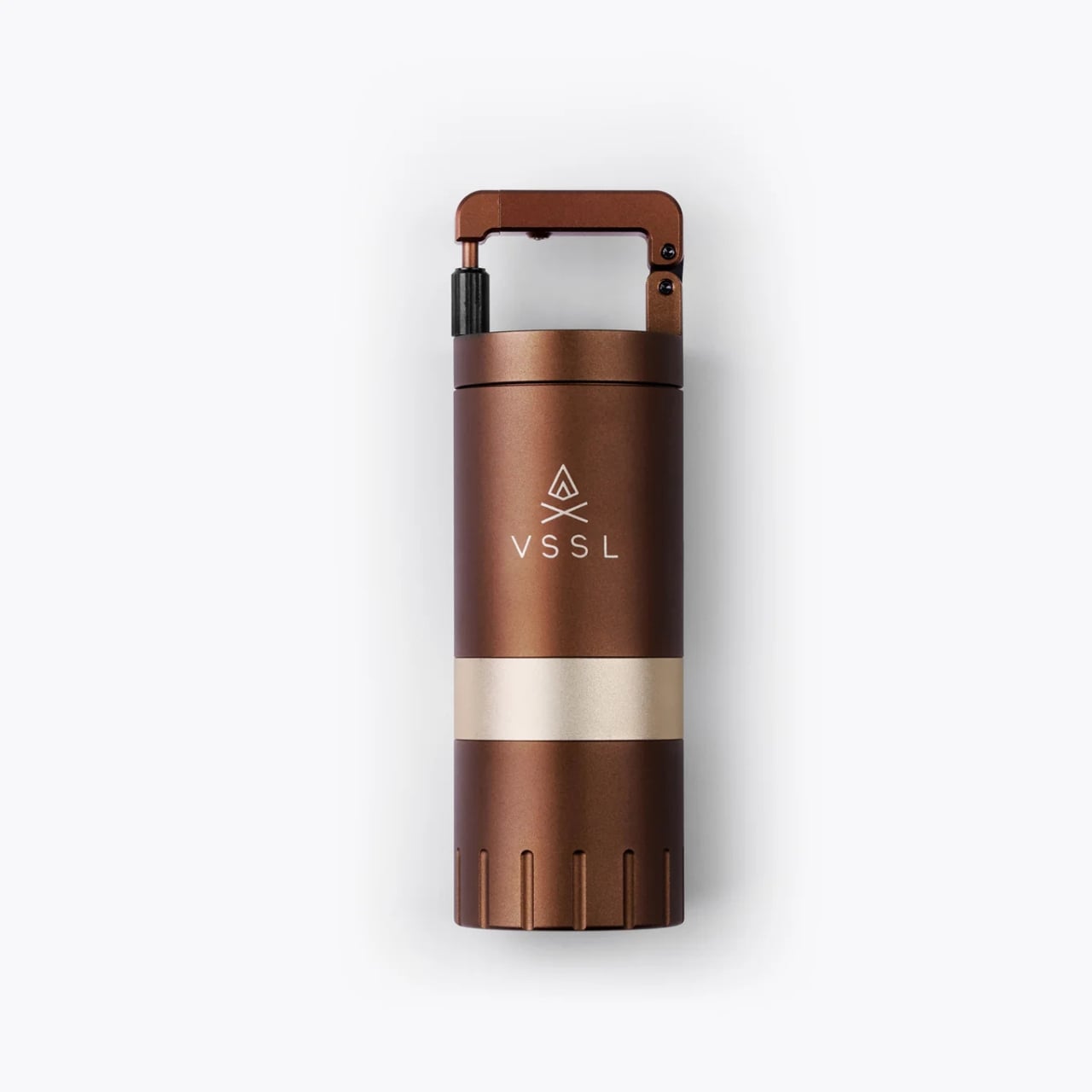
VSSL, a company known for building essential survival and gear kits into handsome, nearly indestructible canisters, has applied that same obsessive engineering mindset to the coffee ritual. Their design philosophy is clear: utility should never compromise aesthetics, and durability is non-negotiable. The result is a device that feels less like a kitchen tool and more like high-end outdoor equipment you’d find clipped to a mountaineer’s pack. Constructed from 6061 machined aircraft grade aluminum and 304 food-grade stainless steel, this grinder is built for abuse, making it equally at home on a clean, granite kitchen countertop or a cold, granite mountain outcrop. Its sleek, black cylindrical form factor is compact, ergonomic, and unapologetically cool, fitting perfectly into the gear aesthetic that dominates modern tech and design circles. It’s a piece of gear you want to show off.
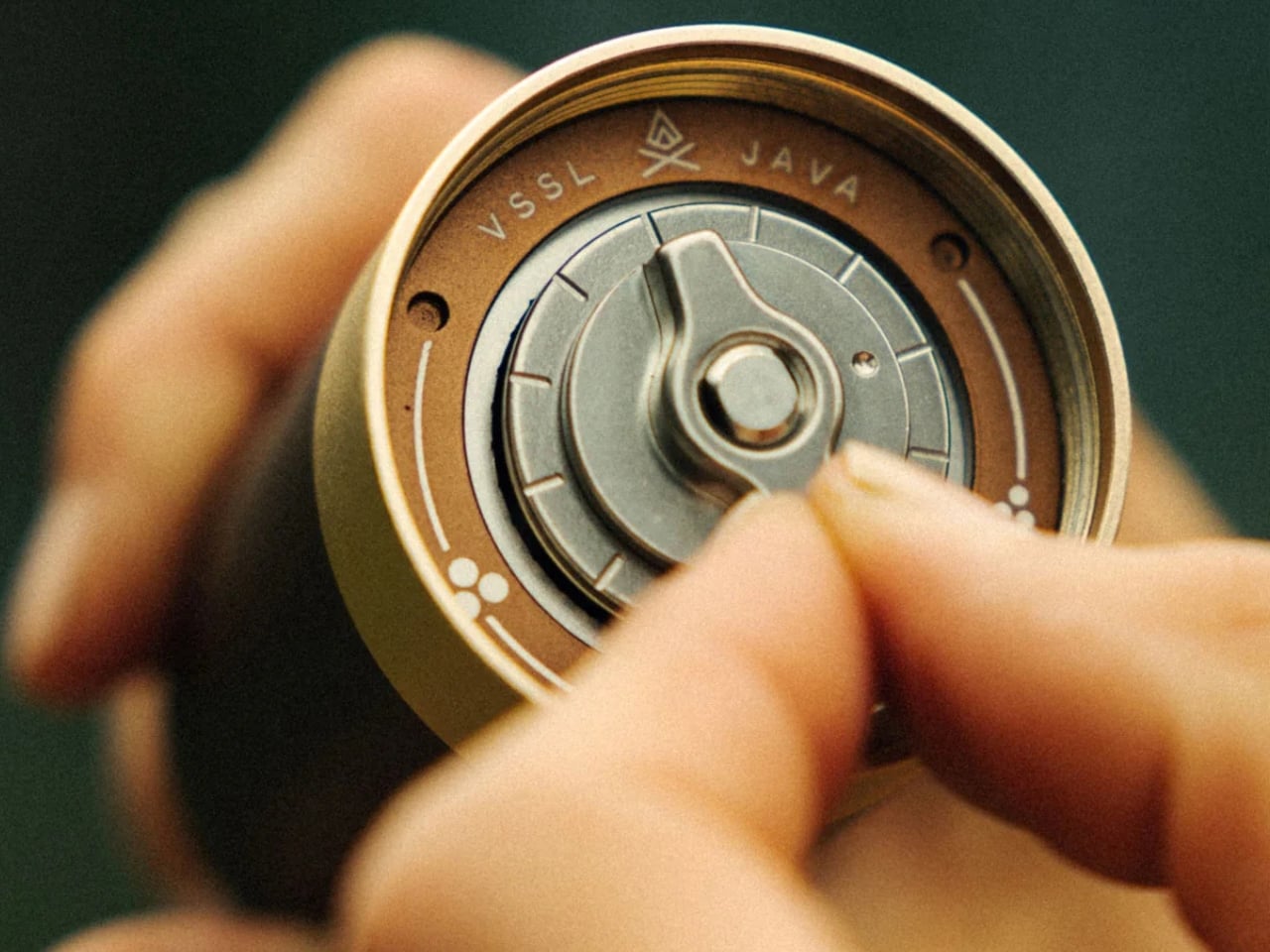
But the G25’s appeal extends far beyond its rugged good looks and durable exterior. Inside that resilient shell lies the heart of a true barista tool, engineered for uncompromising performance. The quest for the perfect grind is a core obsession in the coffee world because flavor extraction is utterly dependent on particle size consistency. VSSL delivered this crucial consistency by incorporating high carbon 420 stainless steel conical burrs stabilized by dual bearings. This is the hardware that ensures the particle size of your coffee grounds is uniform—the single biggest factor in extracting a delicious, balanced flavor without the bitterness of fines or the sourness of boulders. For those of us who appreciate precision engineering, the detail of dual bearings stabilizing the central axle is paramount; it’s the mechanical assurance of quality.
Crucially, the G25 offers 50 distinct grind settings. This level of granular control is usually reserved for professional-grade electric models that take up half your countertop. Having 50 click adjustments means the user can dial in the perfect setting for literally any brewing method. Whether you are aiming for the coarse texture required for a full-immersion French press, the near-powder fine consistency for a demanding espresso shot, the medium grit for a precise pour over, or anything in between, a quick, audible adjustment is all it takes. This expansive range eliminates the guesswork and the frustration of inferior grinders, transforming the often-frustrating manual grind into a satisfyingly accurate and repeatable process.
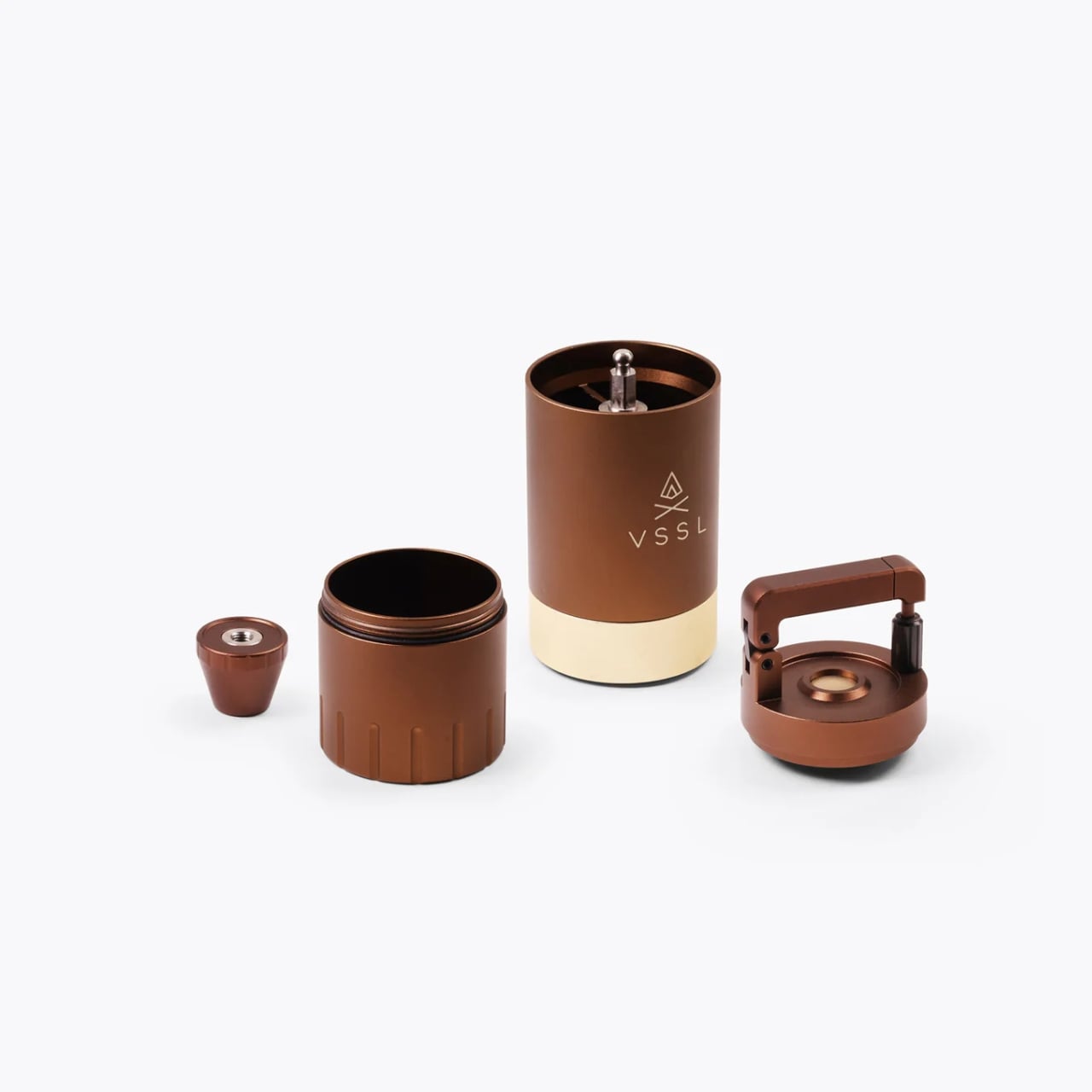
The features engineered specifically for portability truly elevate this grinder into a must-have piece of everyday tech. The handle, which expands during use to increase leverage and make the grind effortless even for light roasts, quickly retracts and cleverly doubles as a secure, locking carabiner. This isn’t just a convenient detail; it is a profound design choice that signals the product’s dual purpose: serious quality both at home and on the move. The magnetic integration keeps the grinder knob securely attached within the catch when stored, and a quick push-release top cap allows fast access to the 30-gram bean hopper—enough capacity to fuel a substantial morning ritual. Measuring only 6.3 inches long with a neat two-inch diameter, the entire unit is designed to nest seamlessly with popular travel brewing systems like the AeroPress Go.
The VSSL Java G25 is a beautiful merging of two powerful cultural trends: the rising demand for specialty, quality, at-home coffee, and the desire for durable, highly designed, and adventure-ready gear. It speaks directly to the person who refuses to compromise on quality, whether they are settling into their home office for the day or setting out for a weekend in the wild. It’s more than just a grinder; it’s an essential, beautifully executed piece of modern carry that promises a perfect cup, no matter where you are.
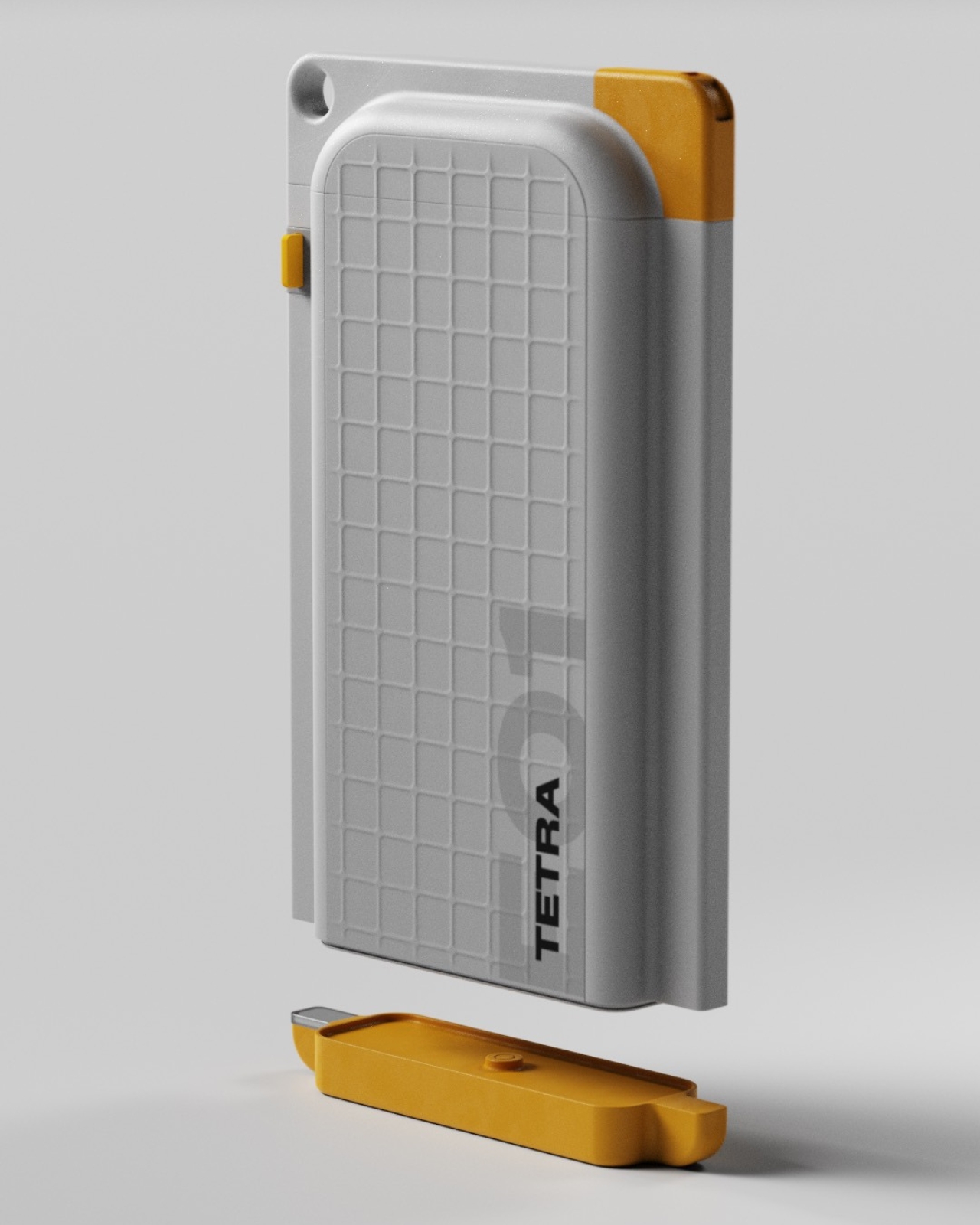
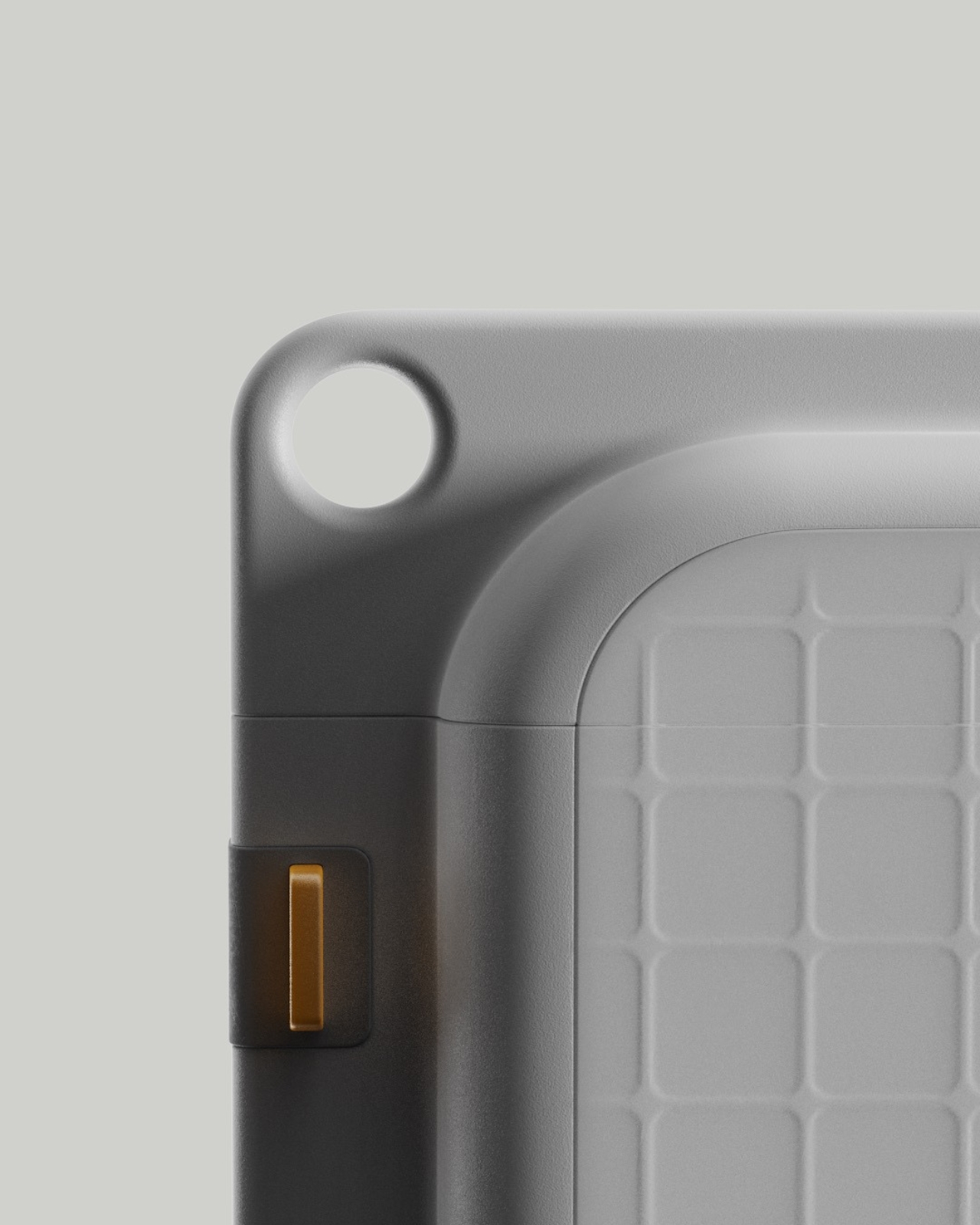
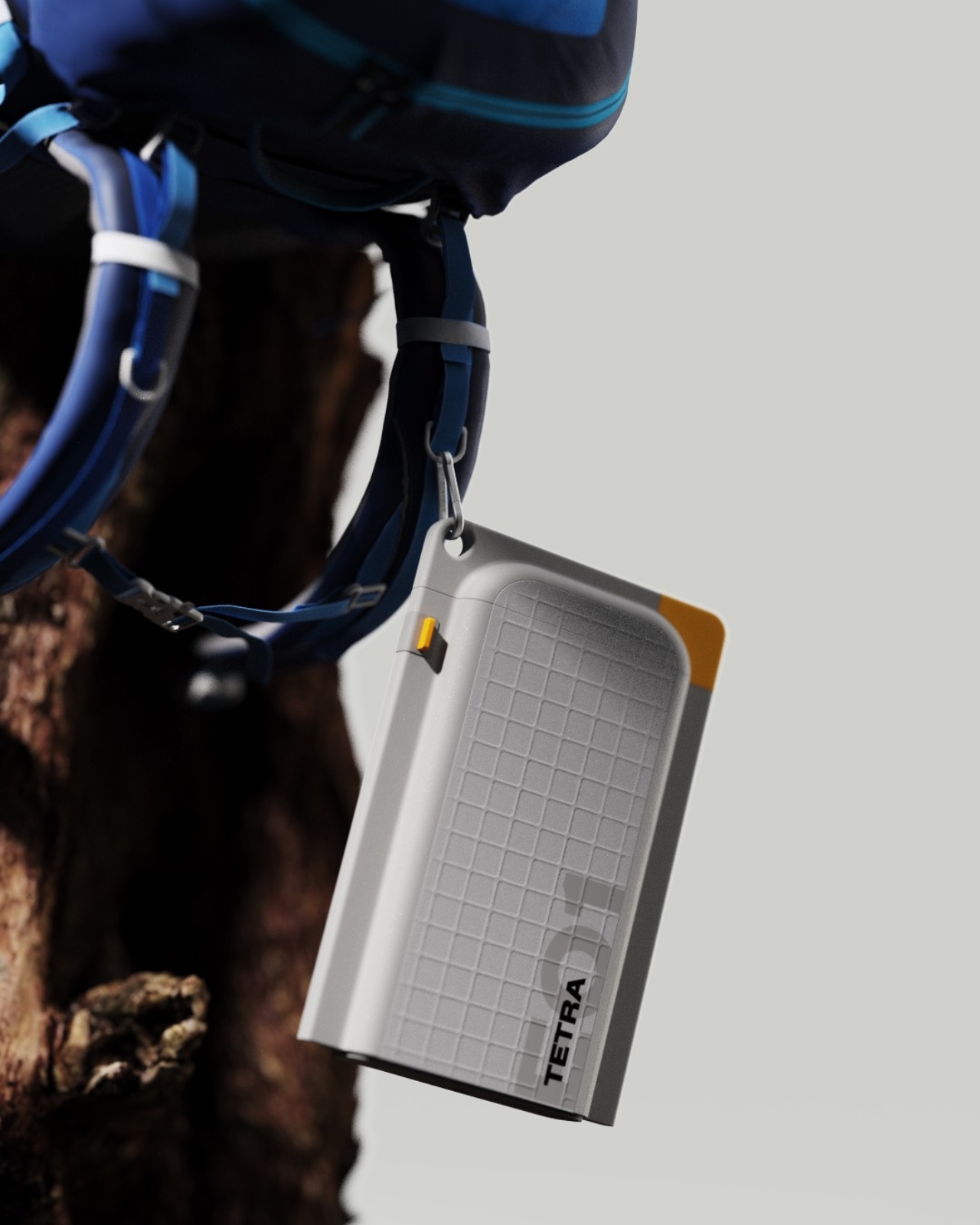
There’s something satisfying about products that do more with less. You know the feeling: when you discover a gadget that’s been cleverly engineered to solve multiple problems without adding bulk to your life. Tetra, a new travel bottle concept by designer Amal SS, nails that sweet spot between everyday practicality and outdoor functionality in a way that actually makes sense.
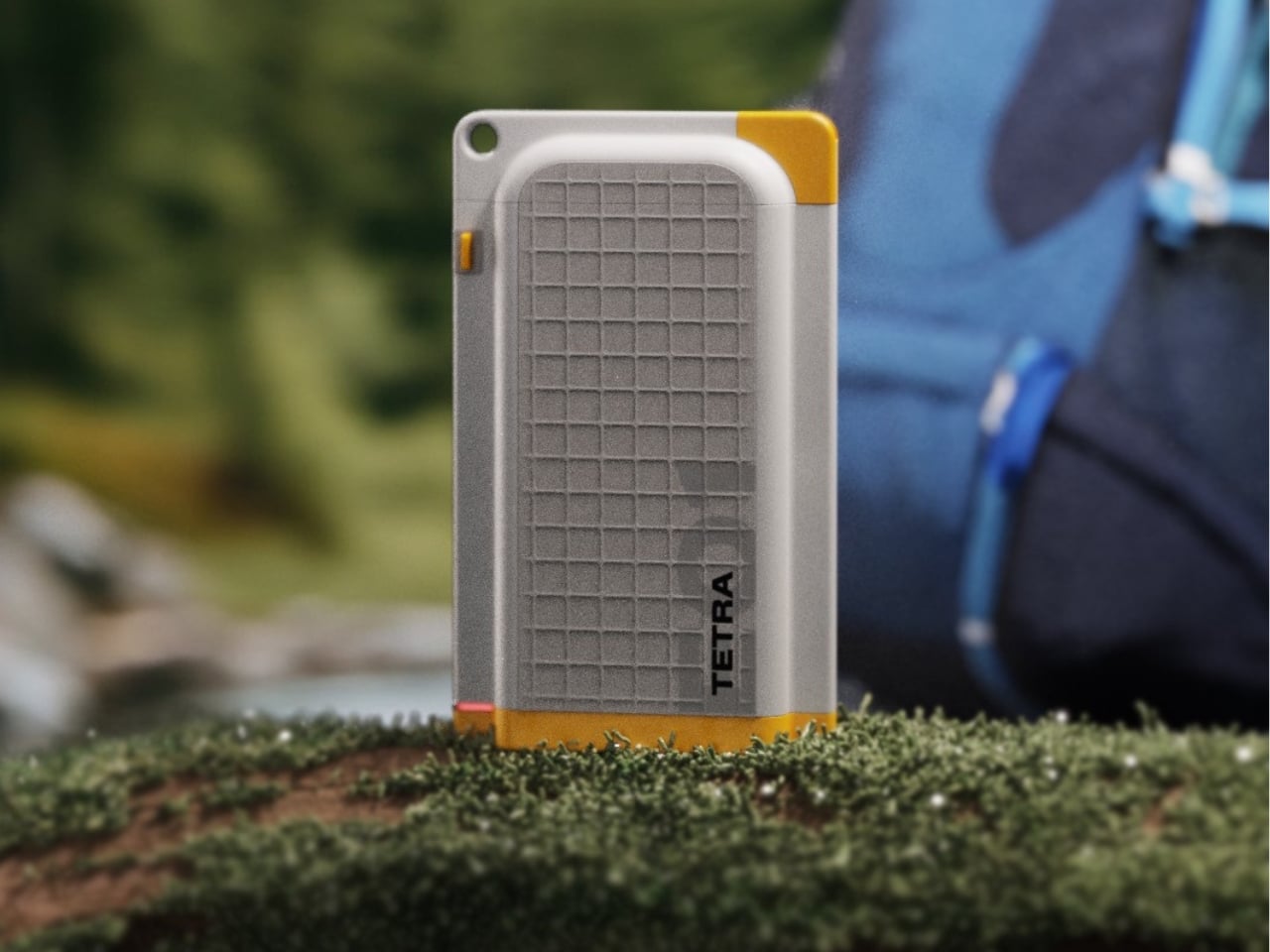
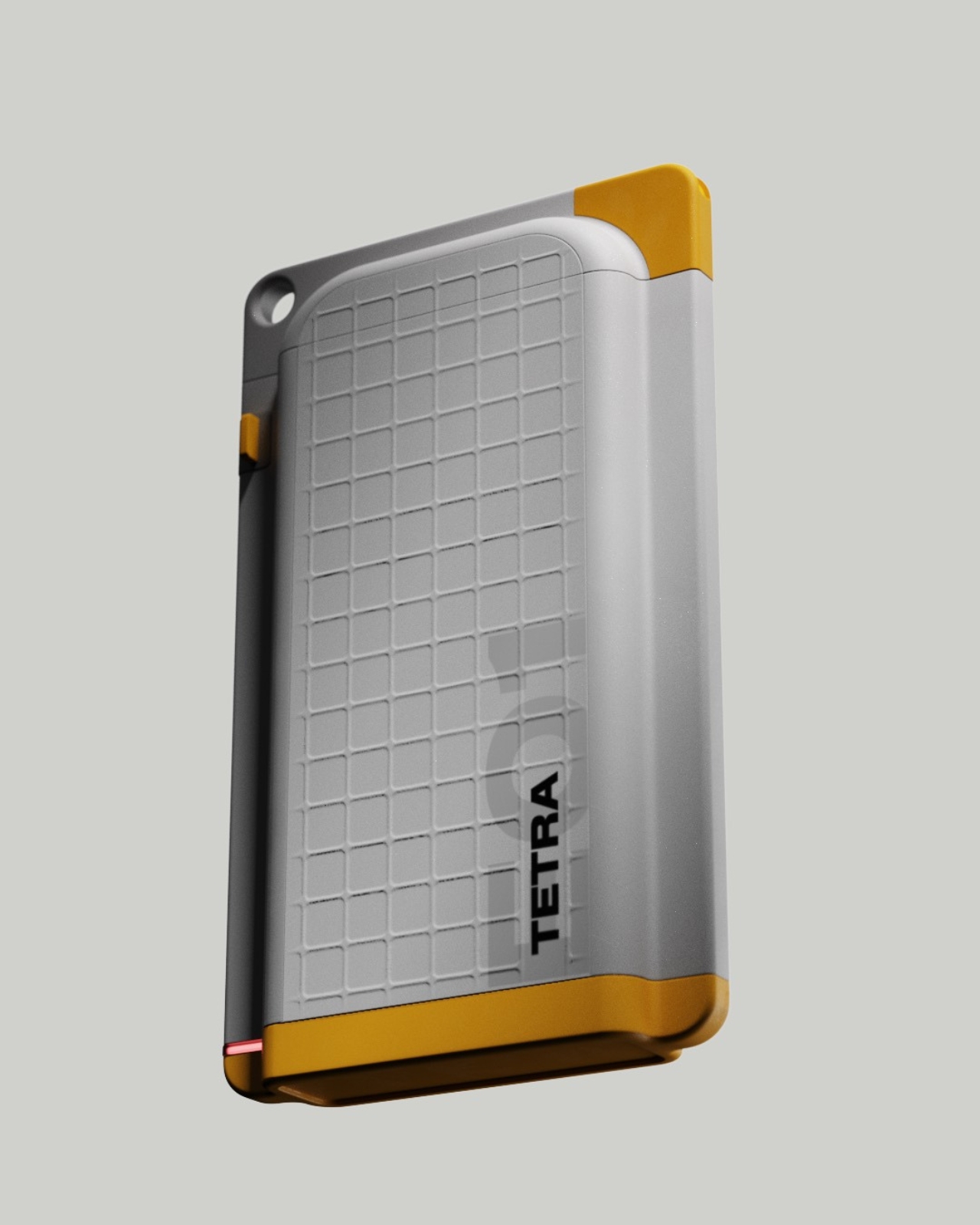
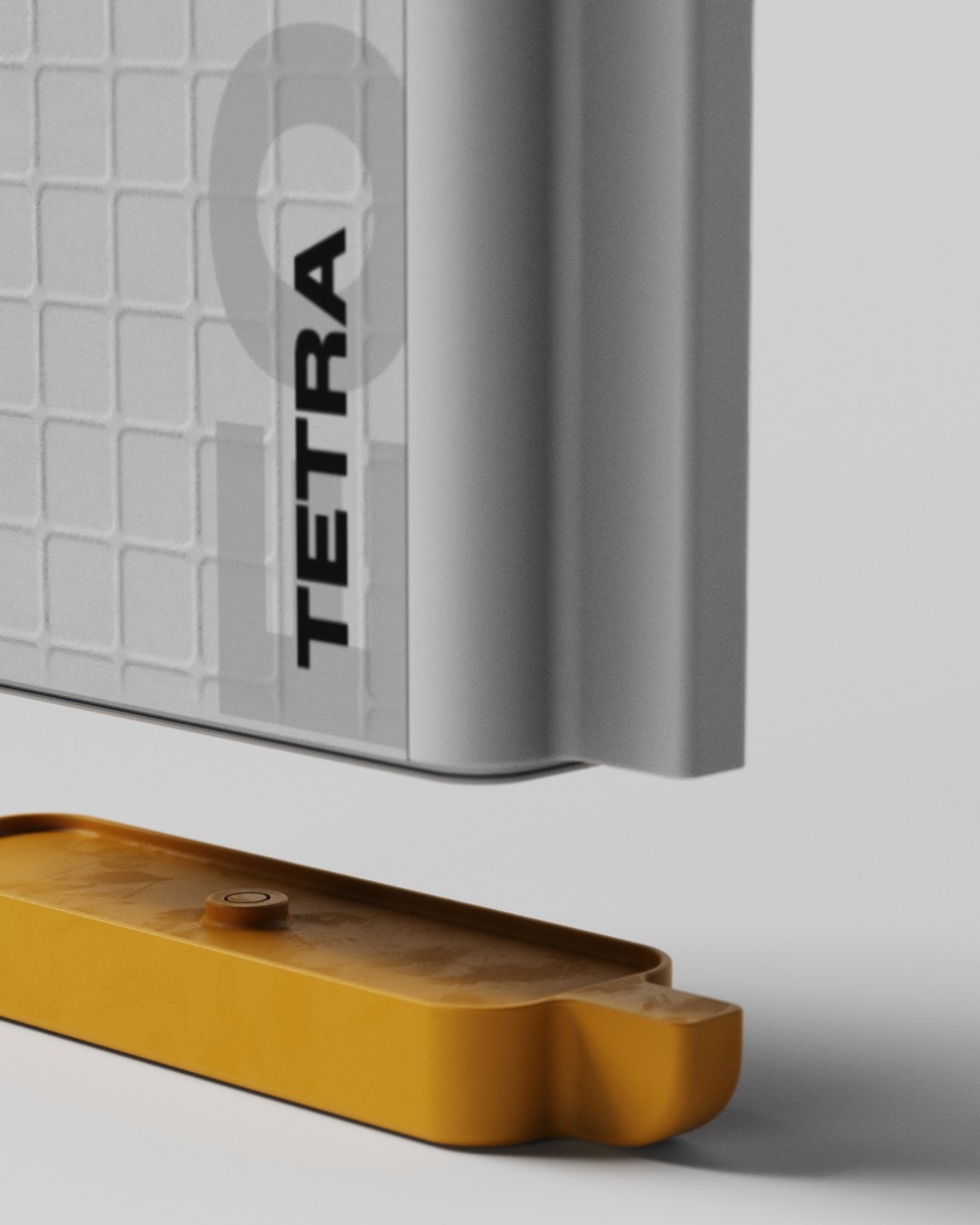
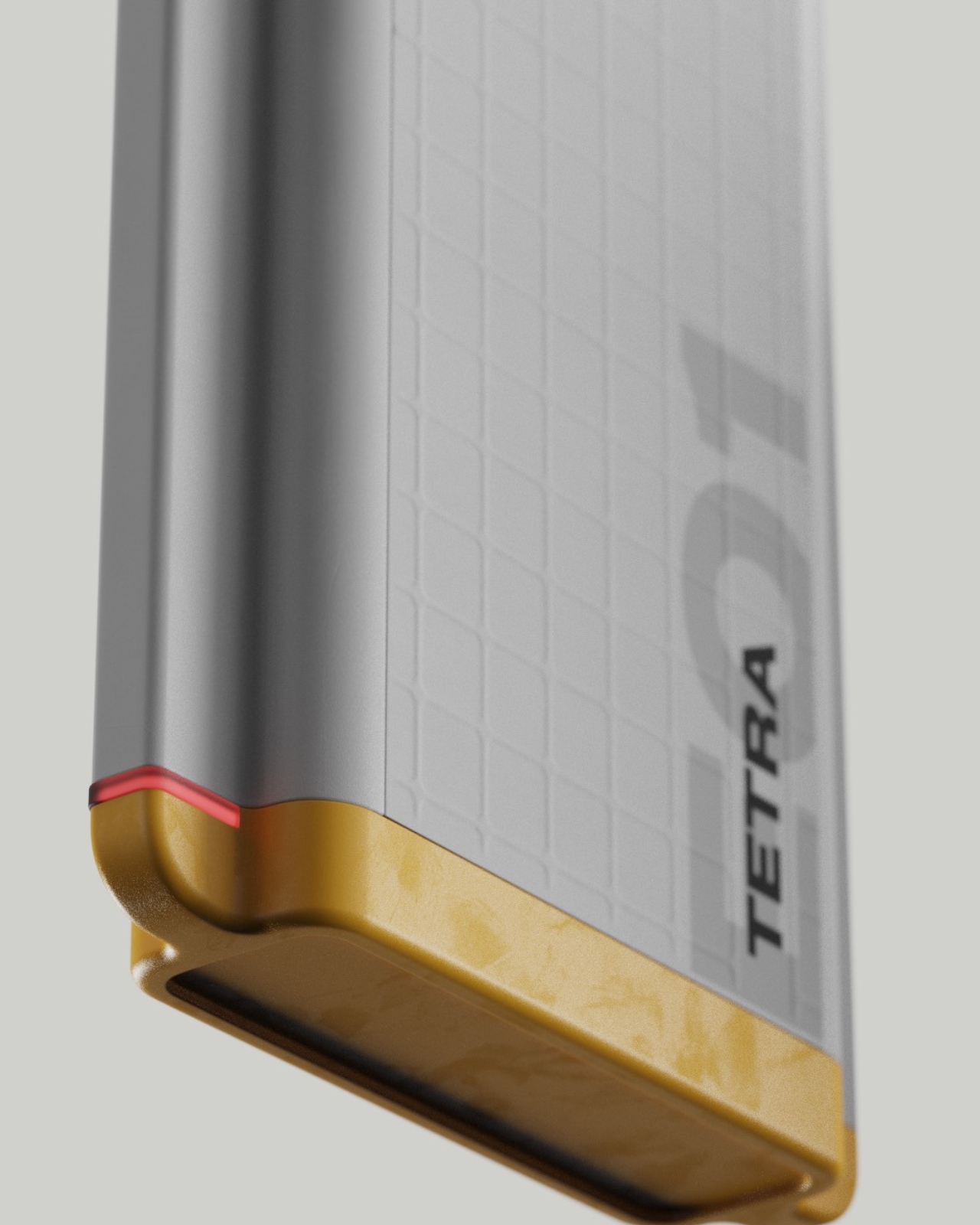
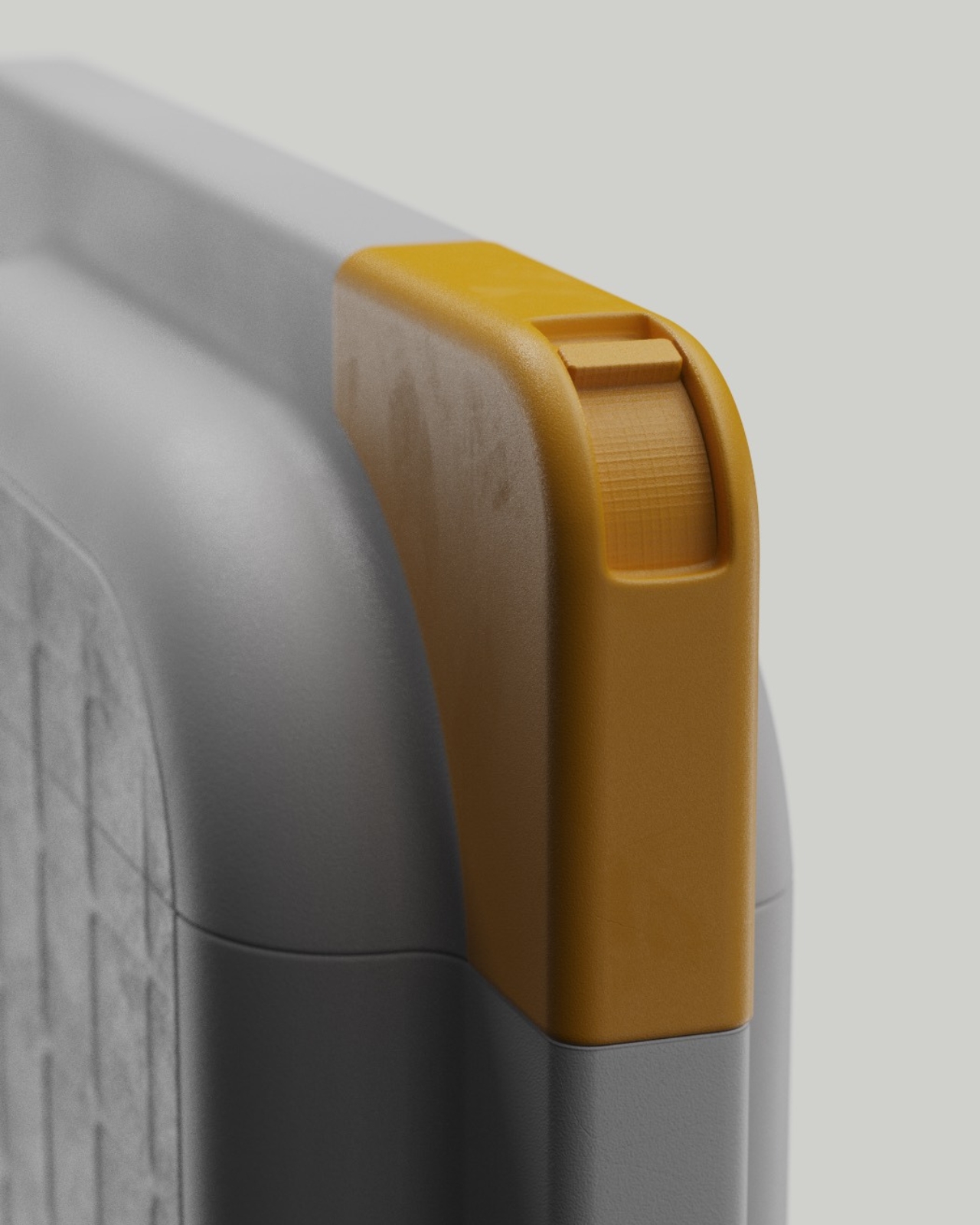
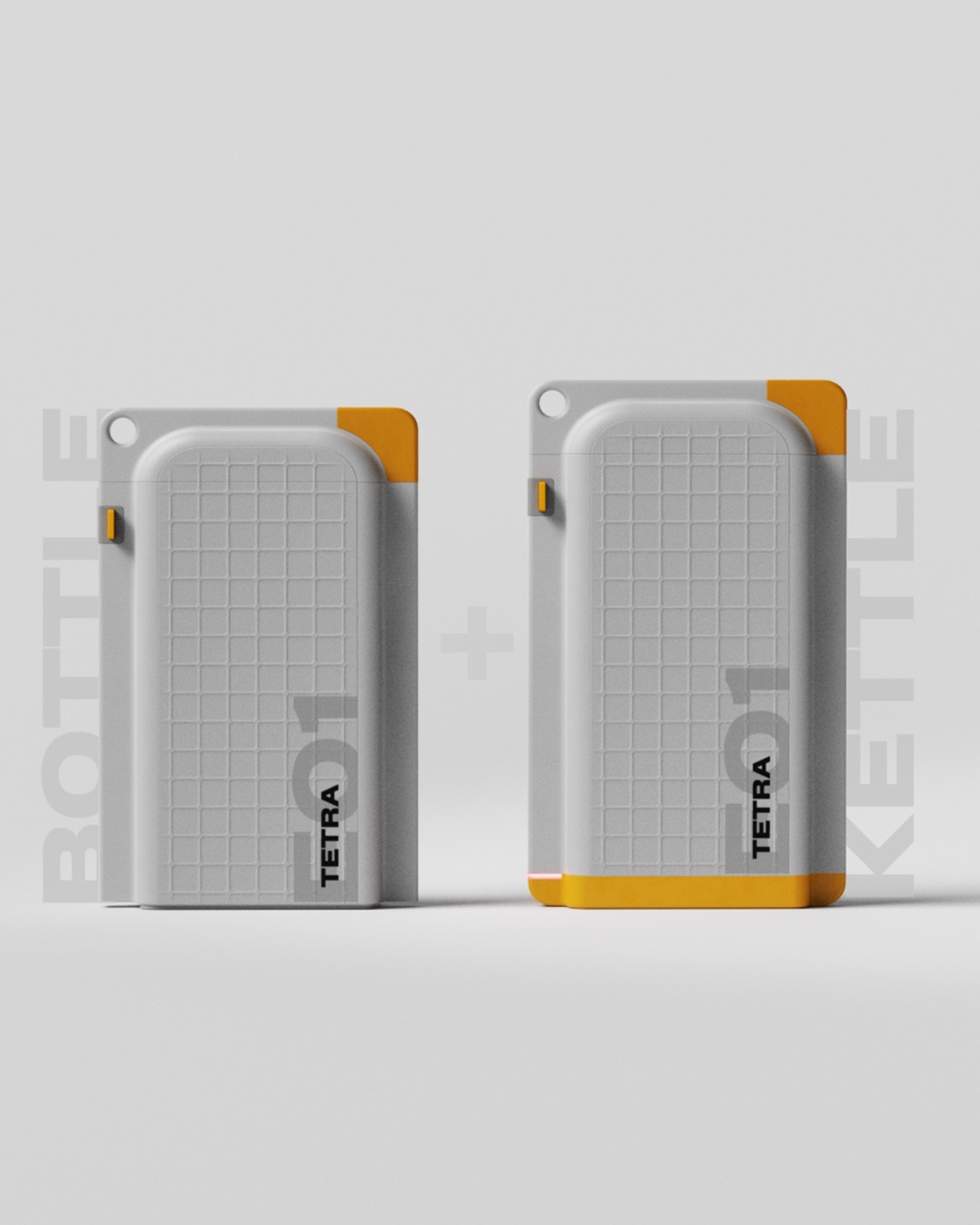
At first glance, Tetra looks like a streamlined water bottle dressed in a minimalist gray shell with sunny yellow corner accents. It’s flat, roughly the size of an A5 notebook, which immediately tells you someone thought hard about how this would actually fit in a backpack. But here’s where it gets interesting: that yellow base section? It’s not just decorative. It’s a detachable heating deck that transforms your water bottle into a portable kettle when you need it.
Designer: Amal SS
The modular approach is what sets Tetra apart from the crowded field of travel bottles trying to be all things at once. Instead of permanently integrating heating elements that add weight and complexity to something you might carry daily, Amal SS separated the functions. Need just a water bottle for your commute or gym session? Leave the Thermo-Deck at home and travel light. Heading into the wilderness for a camping trip? Snap it on and you’ve got hot water capability wherever you land.
This kind of thinking feels refreshingly practical in a world where most products seem designed to cram in every possible feature whether you need them or not. The architecture here respects how people actually use things. Your daily hydration needs don’t require heating functionality, so why carry that extra weight around? But when you’re watching the sunrise from a mountaintop or setting up camp after a long hike, having the ability to heat water for coffee or tea without packing separate equipment becomes genuinely valuable.
The design language speaks to durability and thoughtful interaction. Those yellow corner guards aren’t just visual punctuation, they’re protective reinforcement for the spots most likely to take impact when you inevitably drop this thing on a rocky trail or concrete floor. The recessed grip grid textured across the surface gives your hands something to hold onto, even when wet or wearing gloves. Every detail seems considered from the perspective of actual use rather than pure aesthetics, though the clean lines and confident color blocking certainly don’t hurt.
What really catches the eye is how Tetra manages to look tech-forward without screaming “gadget.” The flat profile feels almost architectural, like something that could live comfortably in a design studio or strapped to a hiking pack with equal credibility. The proportions are balanced, the material transitions feel intentional, and those yellow accents provide just enough visual interest without tipping into gimmicky territory.
The A5 form factor deserves special mention because it solves a genuine packing problem. Cylindrical bottles, no matter how well-designed, create awkward gaps and wasted space in bags. A flat profile nestles against laptops, books, and clothing layers much more efficiently. For anyone who’s played Tetris with their backpack contents before a trip, this thoughtful approach to dimensionality will resonate immediately.
There’s also something appealing about products that acknowledge different contexts of use. Tetra doesn’t pretend you’ll need a kettle function at your desk job, and it doesn’t force you to commit to carrying unnecessary weight just to have that option available. The snap-on, snap-off modularity respects your intelligence as a user and trusts you to configure the tool for your actual needs. This kind of flexible functionality reflects a broader shift in how we think about everyday carry items. The best products increasingly recognize that our days aren’t one-size-fits-all, and neither should our gear be. Something that works for Monday’s office routine might need different capabilities for Saturday’s mountain trail. Tetra’s modular design bridges that gap without compromise.
Whether you’re a design enthusiast who appreciates thoughtful industrial solutions, a tech person drawn to smart functionality, or an outdoor adventurer tired of juggling multiple pieces of equipment, Tetra presents an intriguing answer to the eternal question: how do we carry less while being prepared for more? Sometimes the smartest design move isn’t adding another feature. It’s knowing exactly which features to make optional.
You know what’s annoying about camping? You’re out there trying to enjoy nature, breathe in the fresh air, and cook a decent meal, but then you realize your cutting board is wedged under the cooler, your knife is somewhere in the depths of your trunk, and everything you need for meal prep is scattered across three different bags. It’s chaos, and not the fun kind.
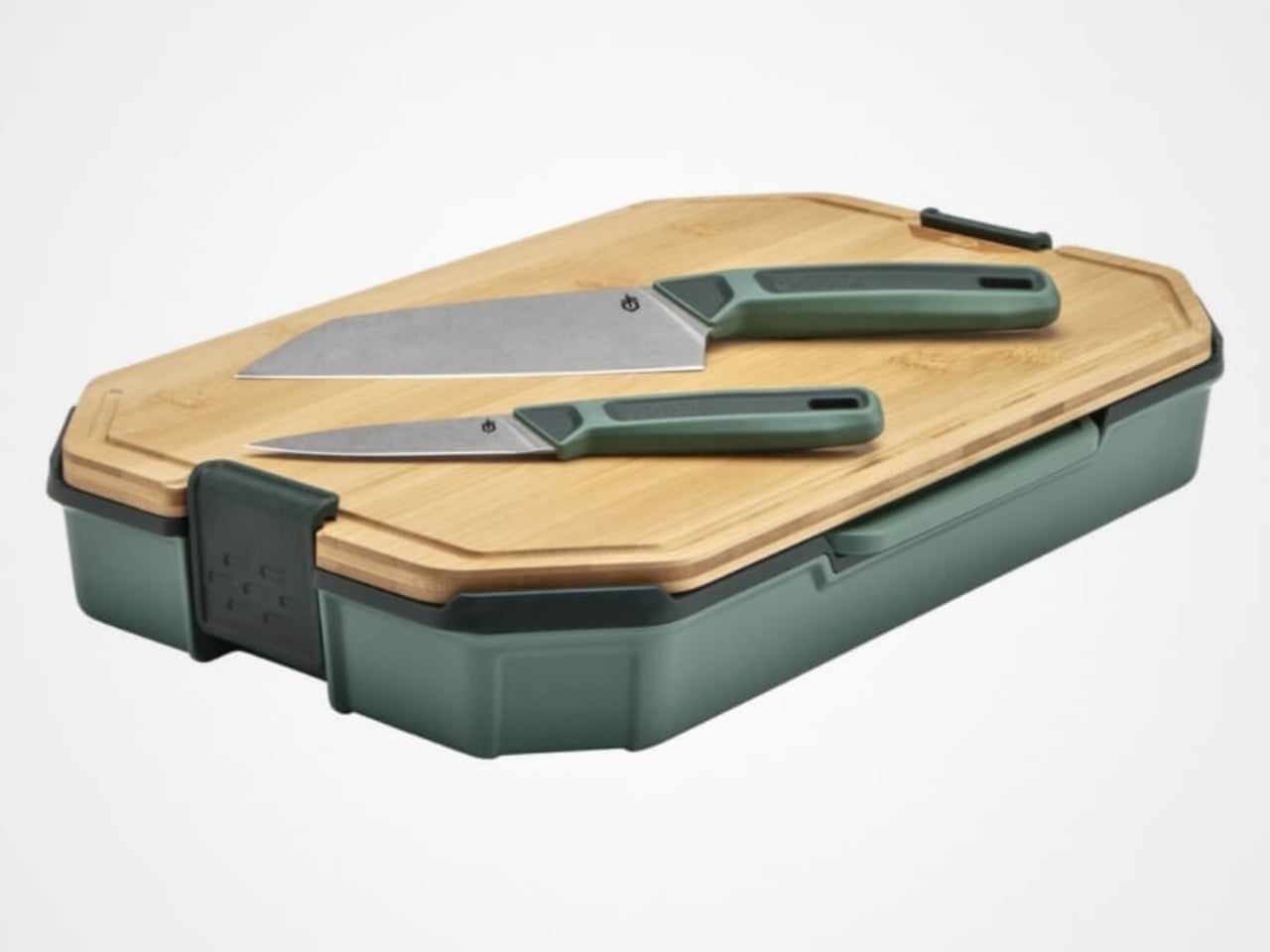
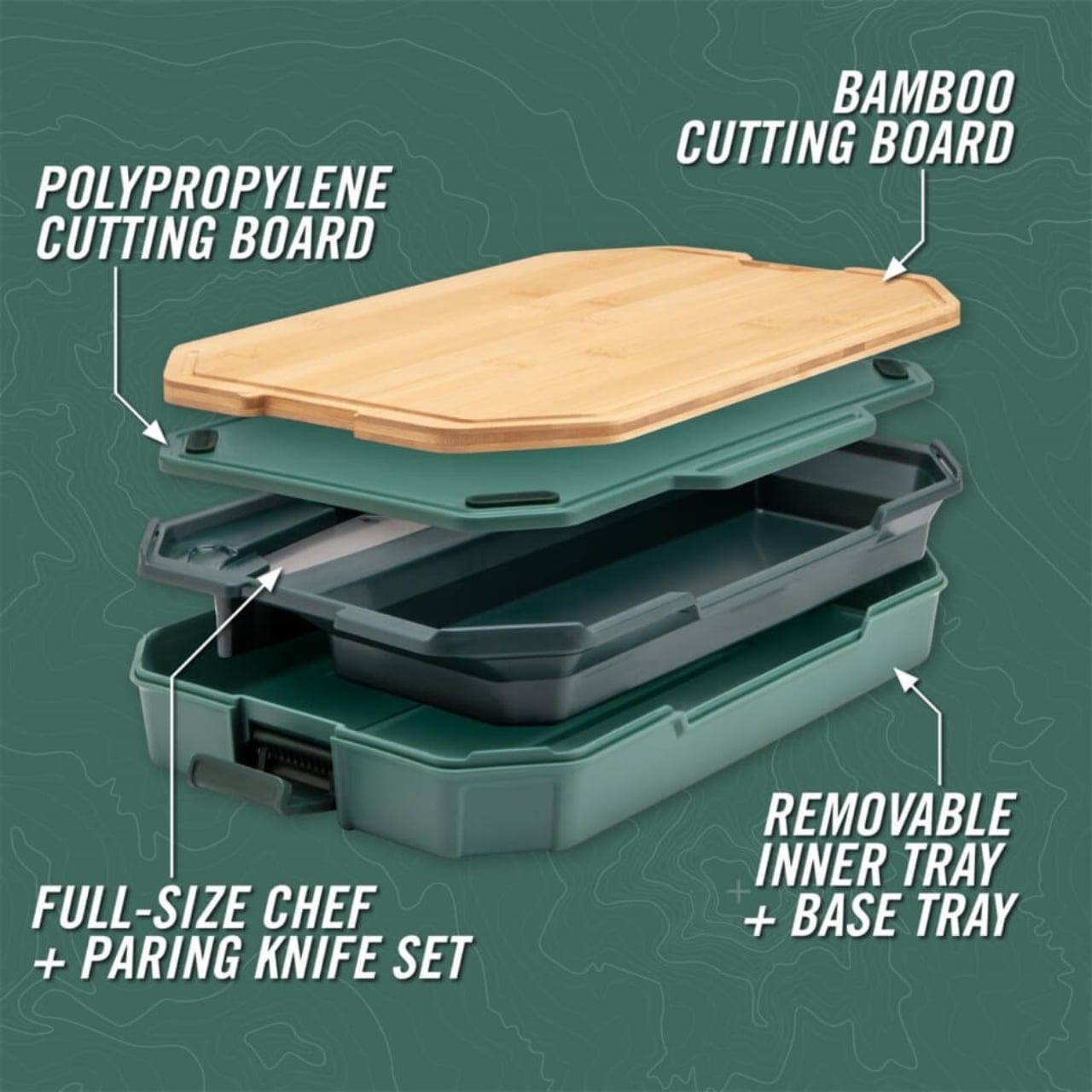
Enter the Gerber ComplEAT Cutting Board Set, which is basically what happens when someone finally asks the right question: what if your entire camp kitchen could pack itself into something the size of a shoebox? This six-piece set is like the Russian nesting doll of outdoor cooking gear, and honestly, it’s kind of brilliant.
The whole thing starts with two cutting boards. One is bamboo, measuring about 9.6 by 15.6 inches, and the other is polypropylene, slightly smaller at 8.9 by 14.3 inches. Both are dual-sided with juice grooves, which means you can flip them depending on what you’re prepping. The bamboo board gives you that nice, knife-friendly surface for vegetables and bread, while the polypropylene one handles the messier stuff like raw meat without absorbing odors or staining. It’s the kind of thoughtful detail that shows someone actually tested this thing in the real world.
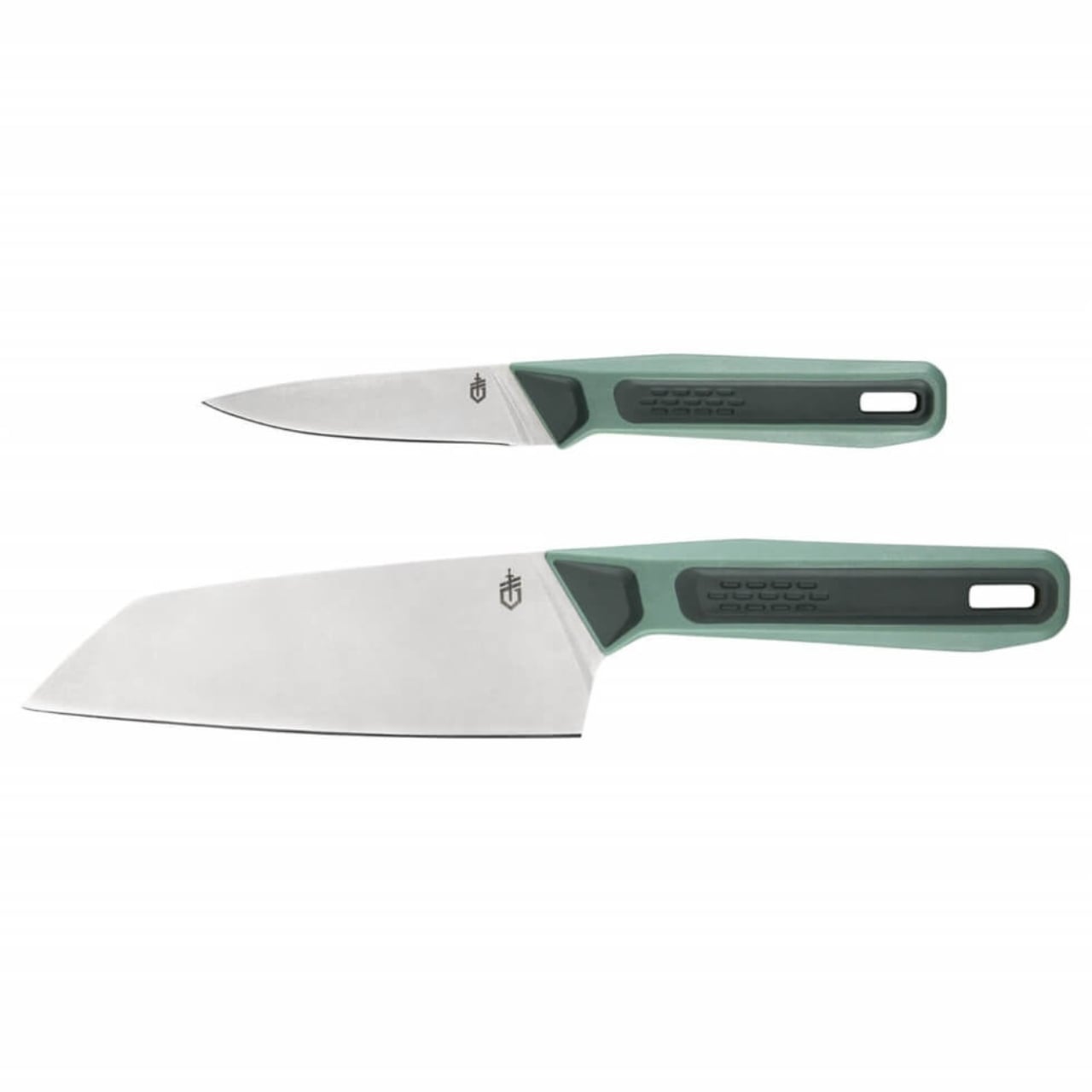
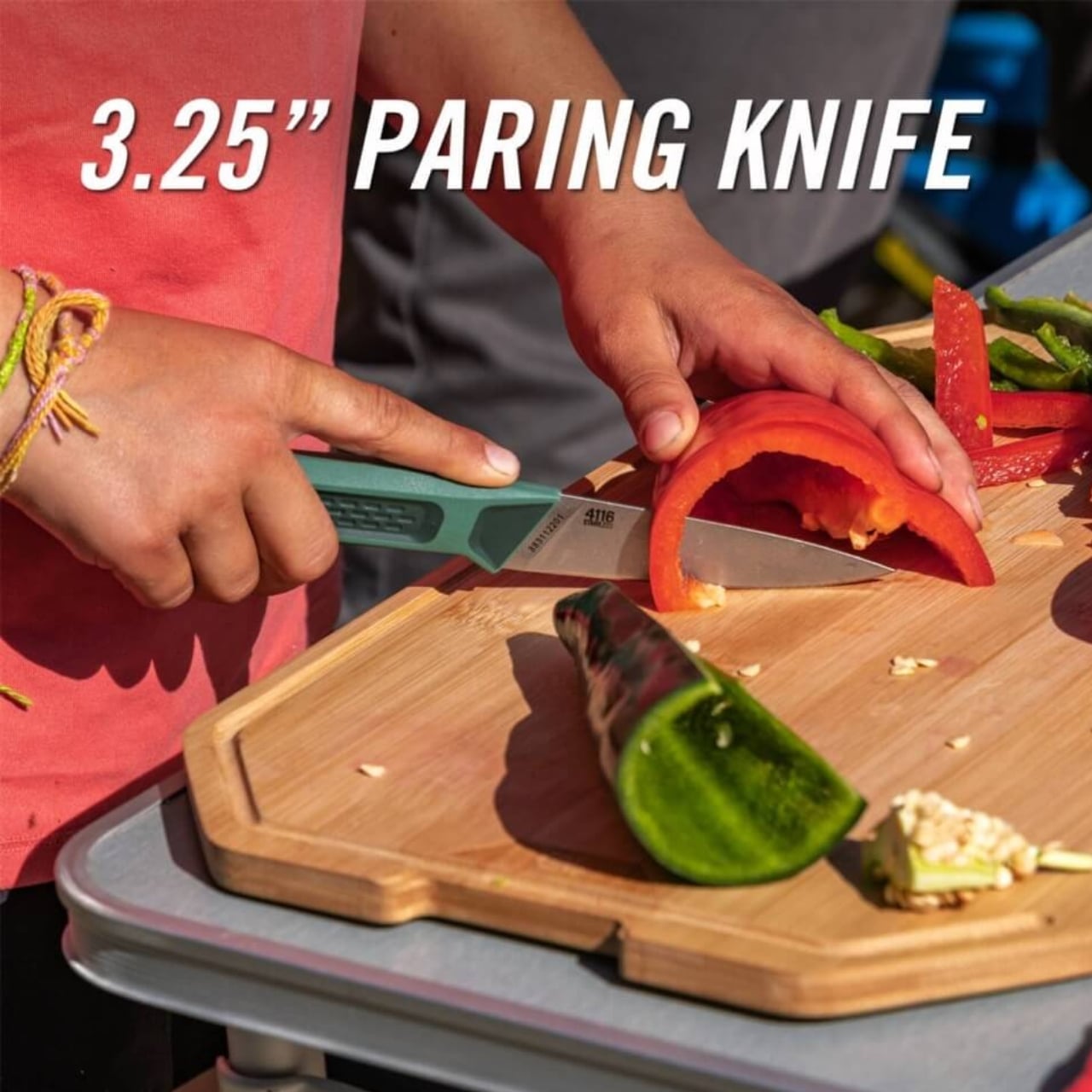
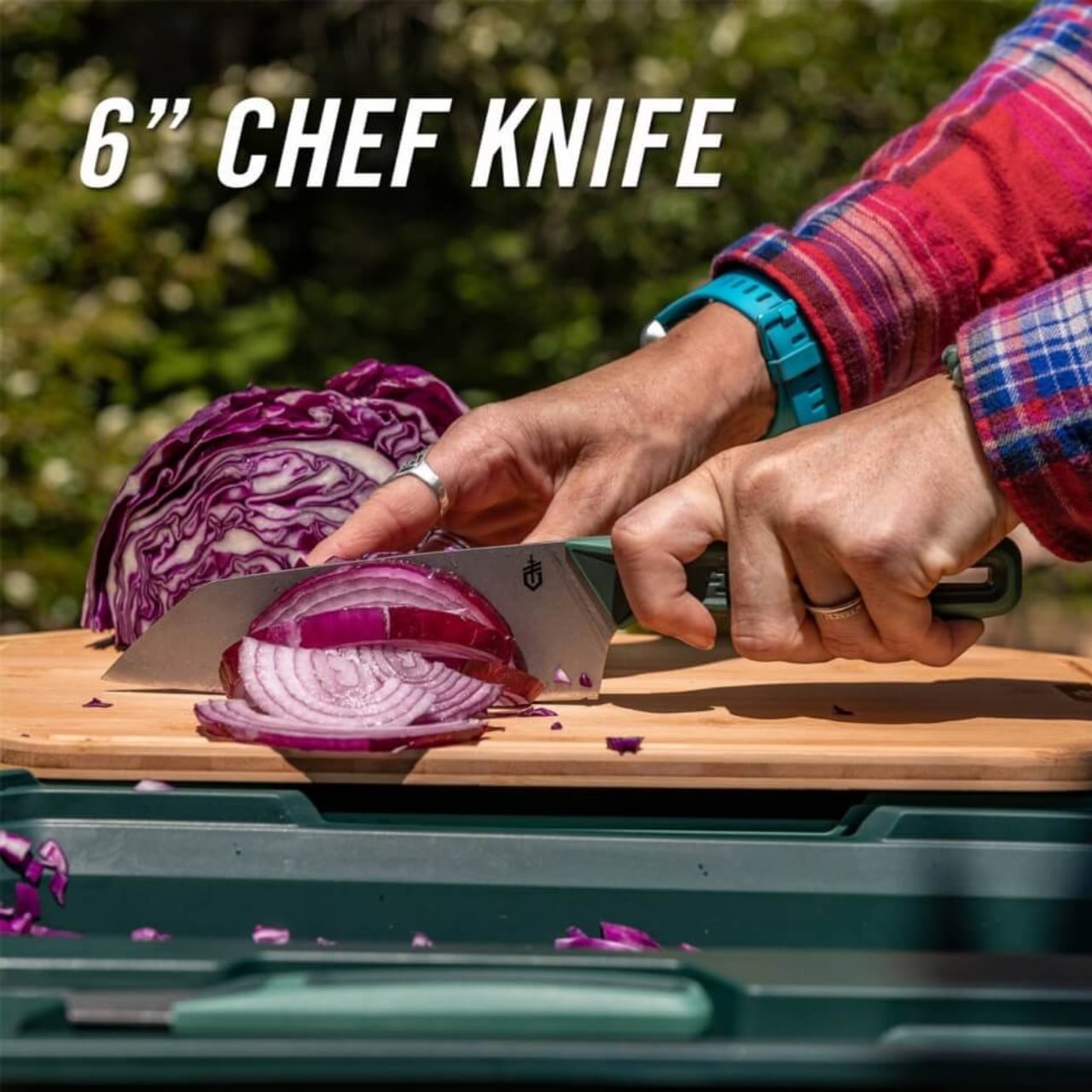
Tucked inside are two fixed-blade knives: a 3.25-inch paring knife and a 6-inch chef knife. These aren’t flimsy camping afterthoughts, either. They’re made with 4116 German stainless steel, which is corrosion-resistant and holds an edge really well. The handles are glass-filled polypropylene with a rubber overmold for grip, and there’s even a lanyard hole if you want to tether them. According to reviews, these knives are legitimately sharp, the kind you’d be happy to use in your home kitchen.
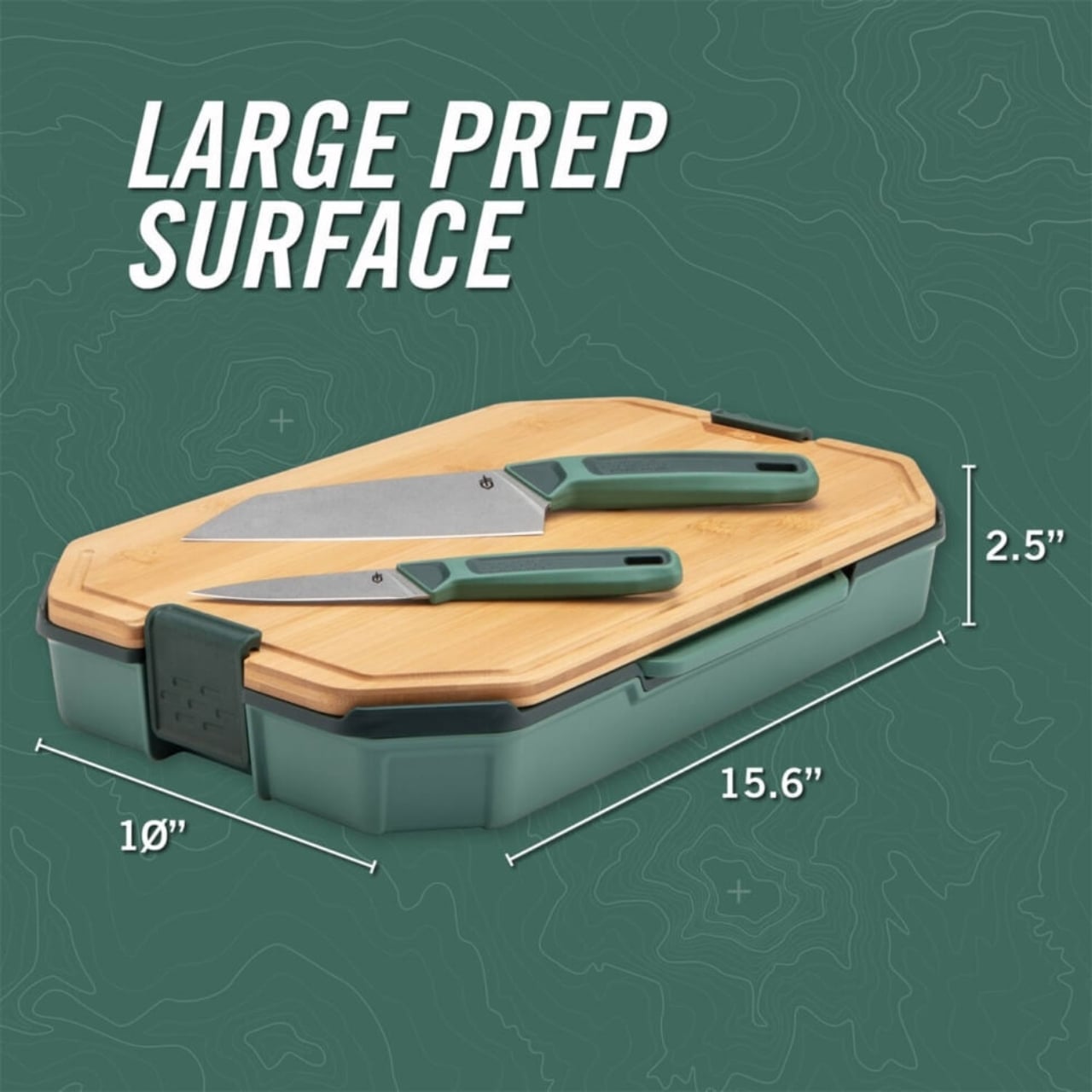
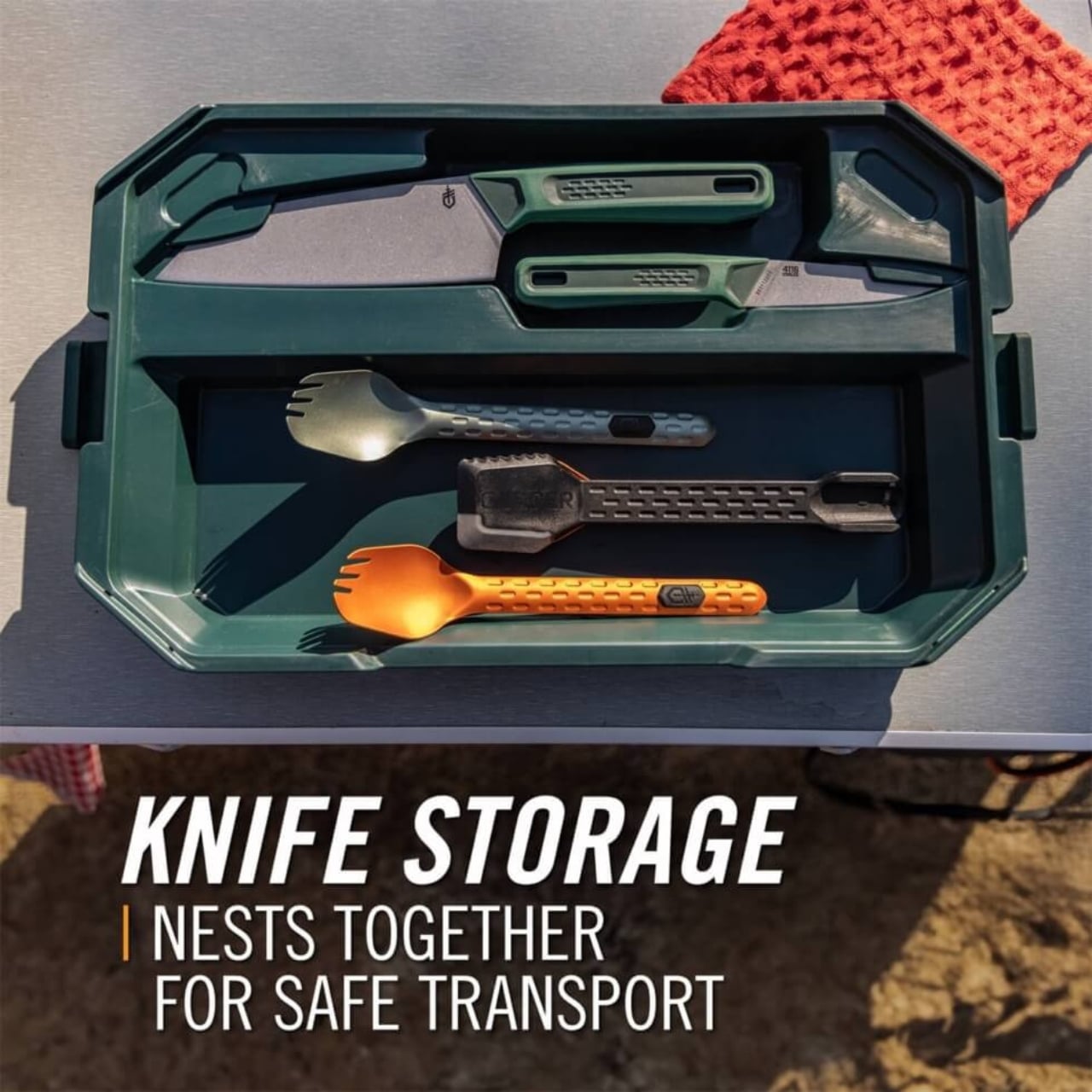
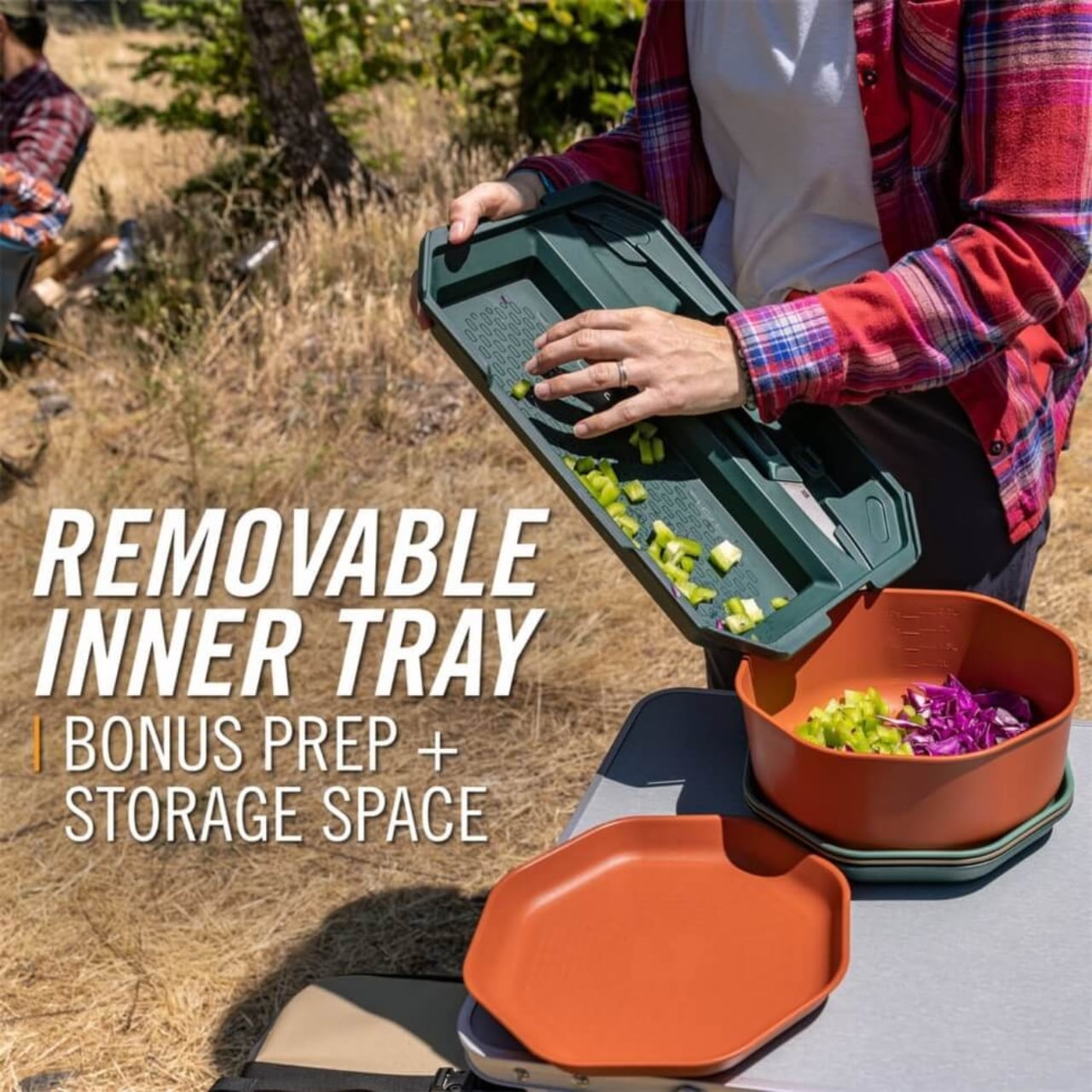
What makes this set stand out is how everything nests together. The knives fit into an inner tray, and that tray sits inside the base tray between the two cutting boards. Heavy-duty locks keep everything secure, so you’re not worried about sharp blades sliding around in your gear. When closed, the whole setup measures approximately 15.6 by 10 by 2.5 inches and weighs just over four pounds. That’s compact enough to slide into a car trunk, RV cabinet, or even a large backpack without monopolizing space.
The design is smart in those small, annoying-problem-solving ways. The cutting boards have rubber feet to keep them stable while you’re chopping on uneven surfaces, which is pretty much every surface when you’re camping. Everything is dishwasher safe, so cleanup isn’t a nightmare after a long day outdoors. And the inner tray doubles as storage for utensils or other small kitchen items, giving you a little extra organizational real estate.
Is it perfect? Well, at around $117, it’s definitely an investment. This isn’t something you casually toss in your cart unless you’re serious about outdoor cooking or you’ve had one too many experiences with bad camp knives. But if you’re the kind of person who actually enjoys making real meals while camping (or tailgating, van life-ing, or boat dwelling), the quality justifies the price. Reviews consistently mention that the knives alone make it worth it, and the fact that everything stores so neatly is a game changer.
Gerber designed the ComplEAT as part of a larger collection aimed at people who don’t want to sacrifice quality when they’re away from home. It’s for the folks who would rather grill fresh vegetables and sear a good steak over the fire than eat sad sandwiches out of a cooler. There’s something satisfying about gear that works hard and looks good doing it, and this set checks both boxes.
At its core, the ComplEAT Cutting Board Set is about solving a very specific problem: how do you bring a functional kitchen into the woods without it becoming a logistical nightmare? Gerber’s answer is elegantly simple. Pack smart, nest everything, and don’t compromise on the tools. It’s design meeting utility in the best possible way, wrapped up in a package that actually makes outdoor cooking feel less like roughing it and more like, well, eating well.
Glamping has evolved beyond simple luxury camping into a sophisticated lifestyle that demands gear as thoughtful as it is functional. The best outdoor equipment now bridges the gap between wilderness adventure and home comfort, transforming rugged landscapes into spaces where design and durability meet. These innovations aren’t just about surviving the elements—they’re about thriving within them.
The gifts featured here represent a new generation of outdoor gear that refuses to compromise. From self-inflating shelters to zero-emission speakers, each design solves real problems with elegance and ingenuity. Whether you’re shopping for the design-obsessed adventurer or the comfort-seeking nature lover, these pieces prove that beautiful living and outdoor living can be the same.
1. The Cube
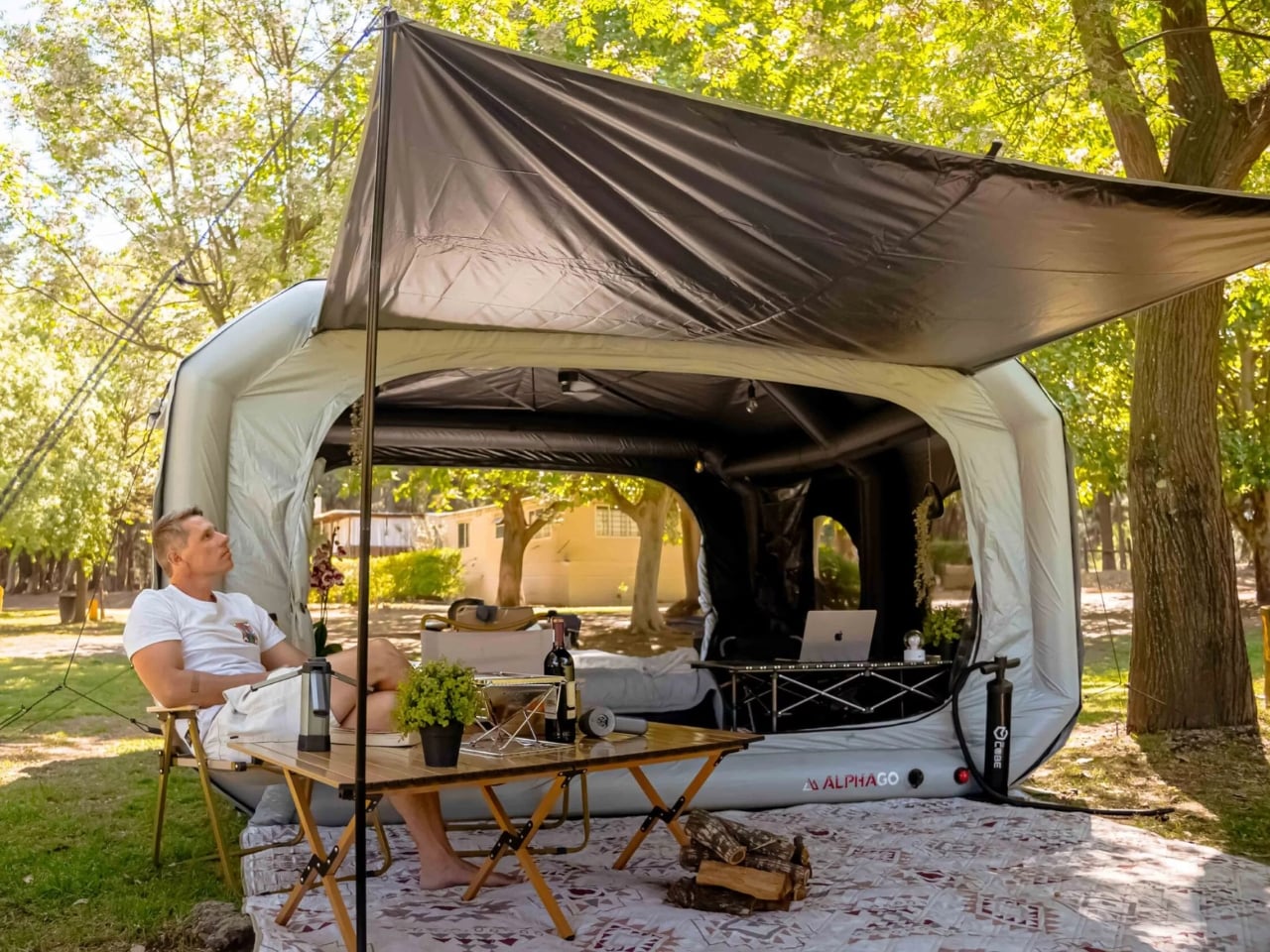
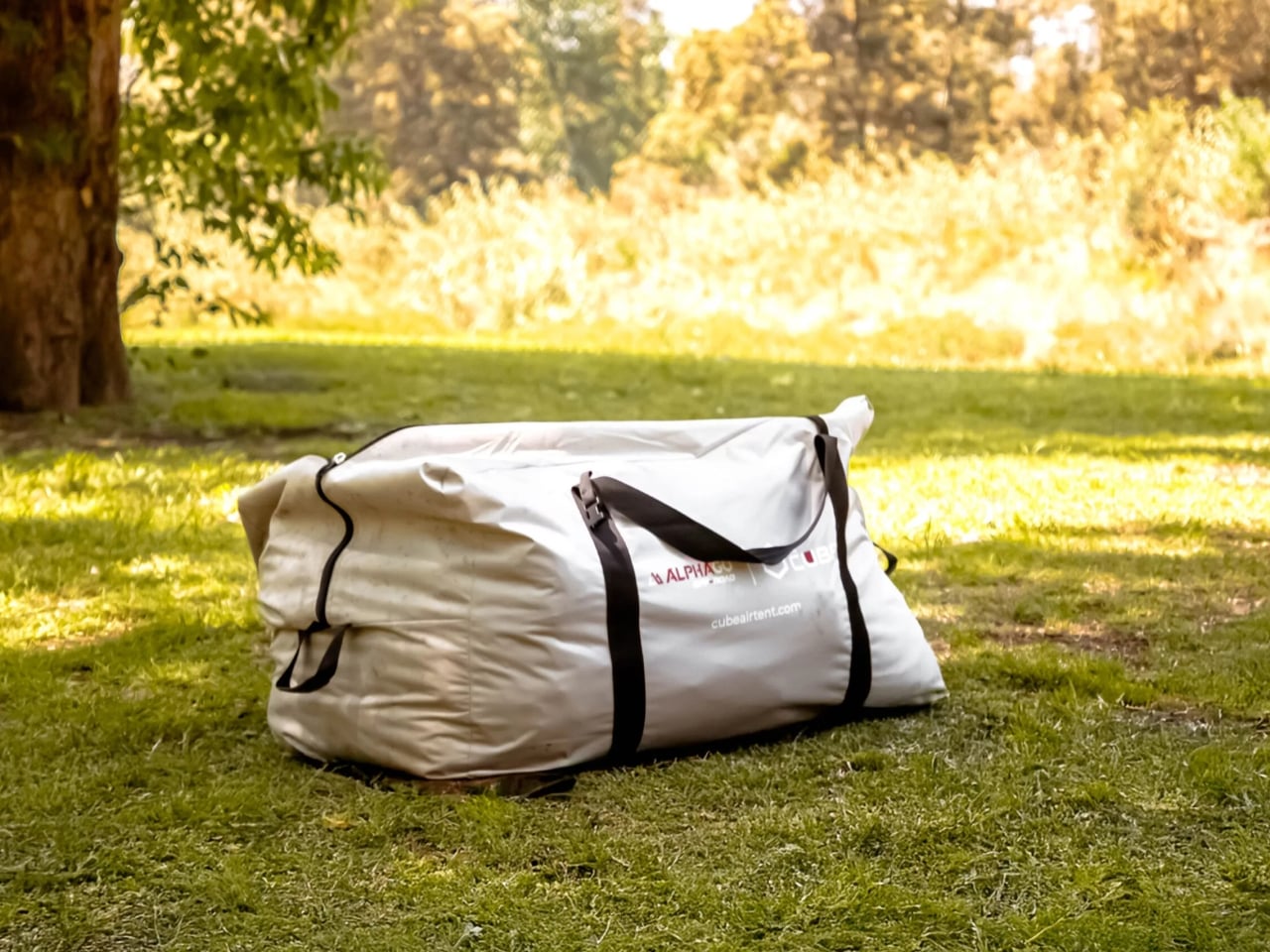
Picture this: you arrive at your campsite after hours of driving, the sun dipping low on the horizon. Instead of wrestling with poles and stakes while daylight fades, you press a button and watch your shelter inflate itself in four minutes flat. The Cube transforms a tent setup from an exhausting chore into an effortless ritual, using an air tube frame system powered by a wireless electric pump that eliminates every frustrating aspect of traditional camping shelters.
What makes The Cube genuinely special extends beyond its self-setup wizardry. This tent embraces glamping’s core promise with a stretched, oversized design that prioritizes genuine comfort over bare-bones survival. The spacious interior lets you stand upright and move freely, while the modular configuration adapts whether you’re claiming solo sanctuary or hosting friends. No more hunching, no more gear tetris, just airy living space that feels more boutique hotel than backcountry bivouac.
What we like
The four-minute inflation time eliminates setup stress entirely
The spacious, oversized interior offers actual standing room and breathing space
Modular design adapts seamlessly from solo trips to group adventures
No poles, stakes, or complicated threading required
What we dislike
Relies on battery power for the electric pump
Potential vulnerability if the air tube system gets punctured
Higher price point than traditional pole tents
Requires more storage space when deflated due to the pump equipment
2. TriBeam Camplight
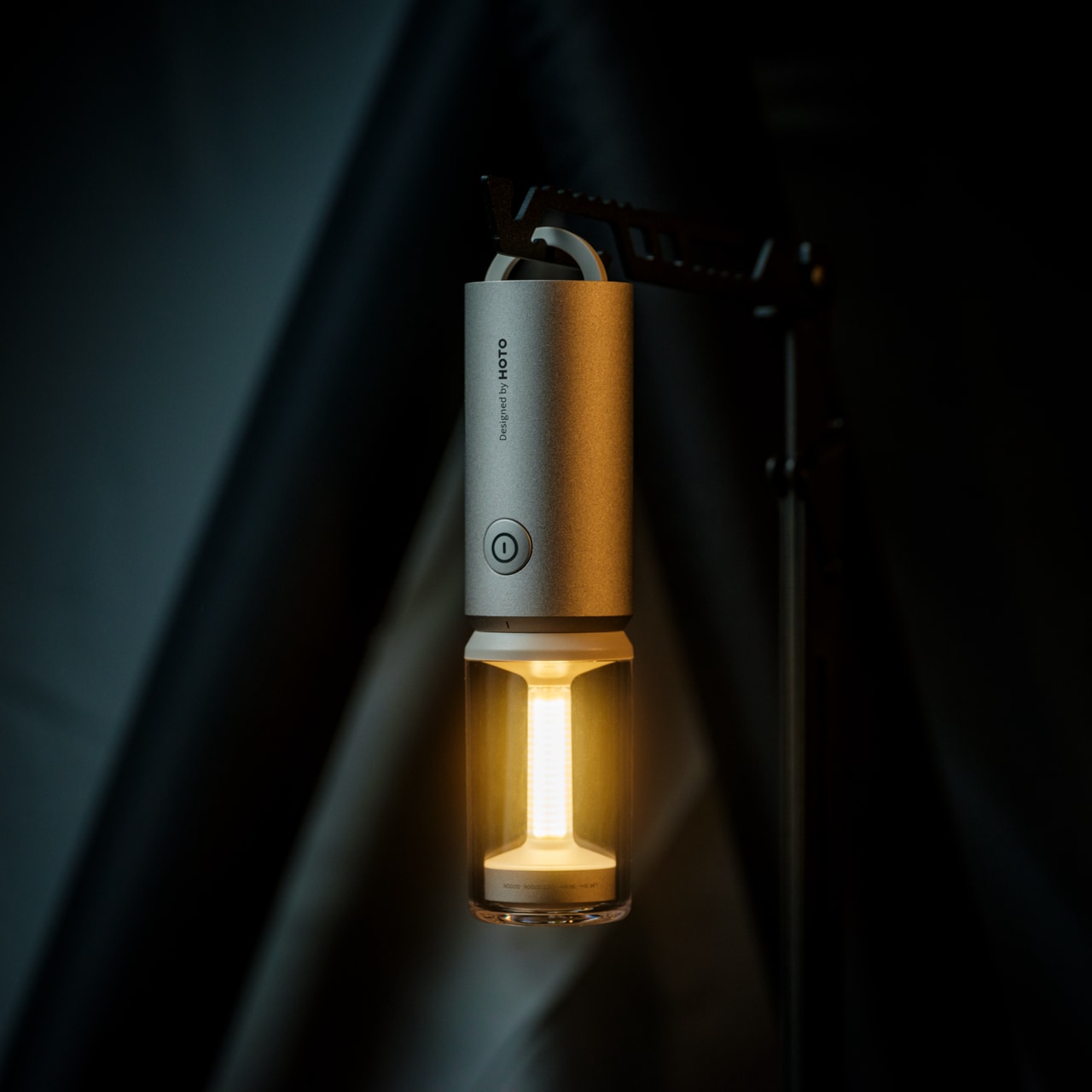
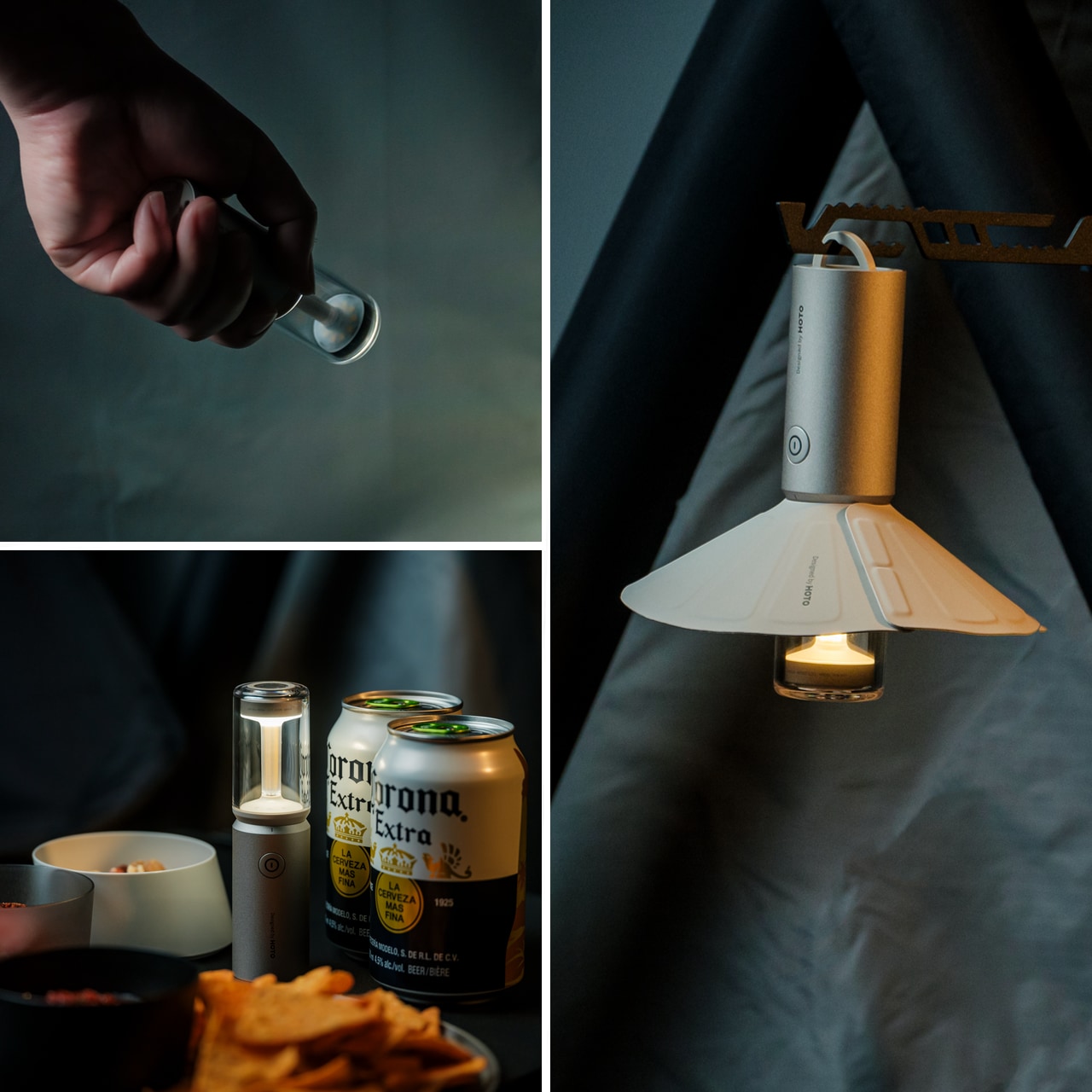
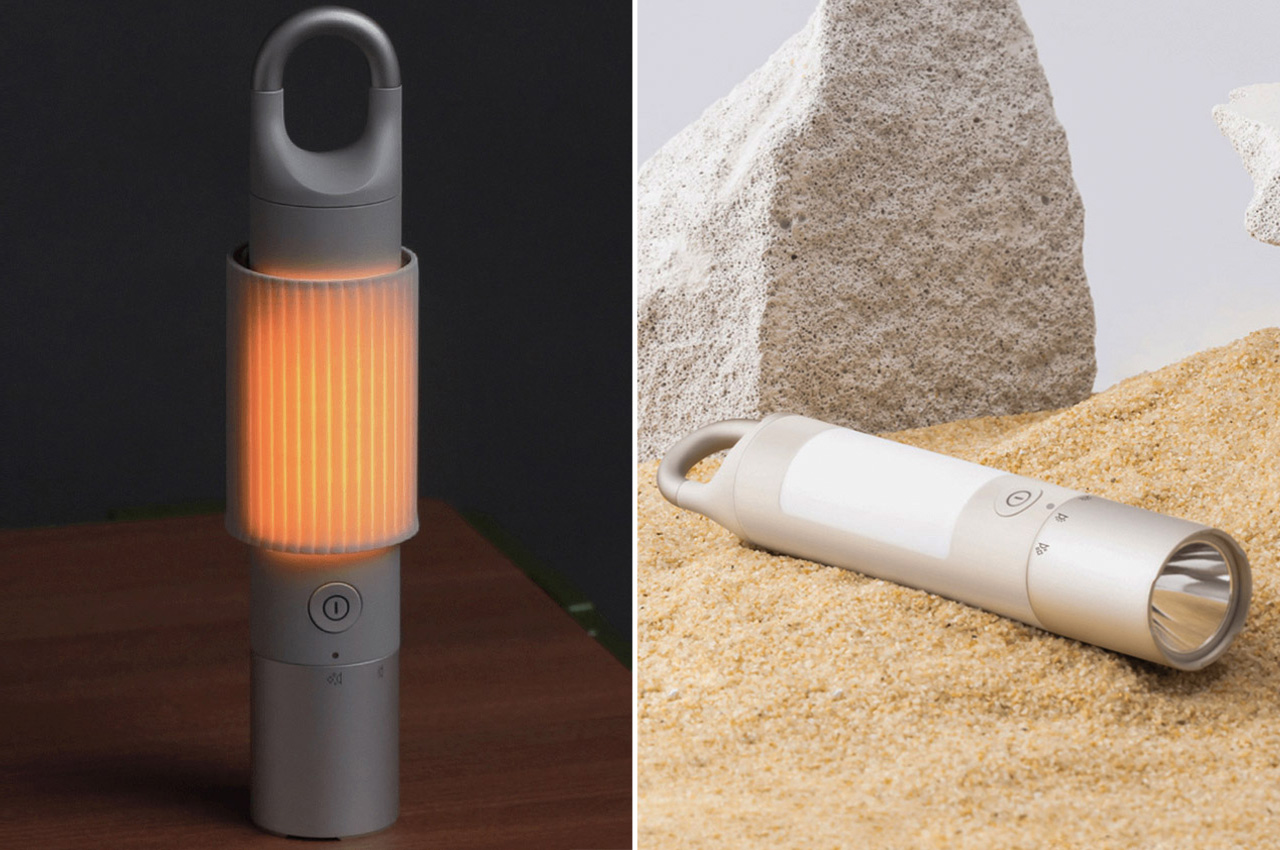
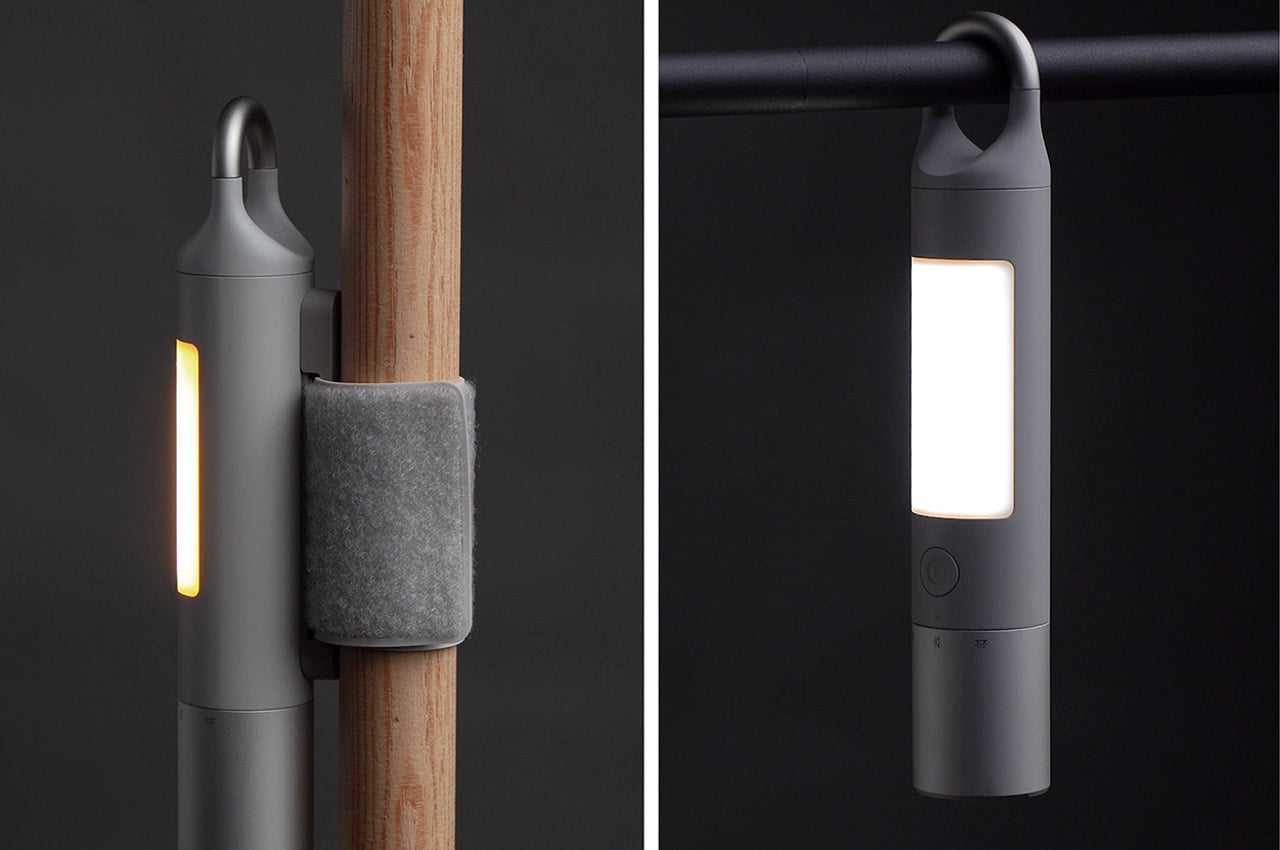
Most camping lights force you to choose between functionality and atmosphere, but the TriBeam Camplight refuses that compromise. This award-winning design delivers three distinct lighting modes—camping, ambient, and flashlight—all controlled by a single intuitive button. The brilliance lies in how it adapts: soft 5-lumen glow for intimate cabin evenings, focused 180-lumen beam for midnight trail navigation, all running up to 50 hours on one charge.
At just 12.8 centimeters tall and 135 grams, this compact powerhouse slips into jacket pockets and disappears into backpacks until the moment you need it. The detachable magnetic lampshade transforms harsh direct light into diffused ambient warmth, while the hidden handle tucks away until you want to hang it from branches, tent loops, or gear bags. It’s portable lighting that thinks like furniture, engineered to become part of your outdoor experience rather than just illuminate it.
Three lighting modes handle every outdoor scenario imaginable
Runs up to 50 hours on a single charge
Weighs only 135 grams and fits in pockets
Magnetic lampshade attachment creates instant ambiance
What we dislike
Single-button control might require cycling through unwanted modes
Magnetic attachment could separate accidentally during transport
Limited brightness compared to heavy-duty expedition lights
Small size makes it easy to misplace in crowded campsites
3. DraftPro Top Can Opener
Award-winning Japanese designer Shu Kanno understood something crucial: the vessel changes the beverage. DraftPro Top Can Opener completely removes the top of any can, transforming it into a smooth-edged, wide-mouth drinking experience that lets you catch every aromatic note and flavor nuance. That first crisp snap becomes an intentional moment, elevating beer, sparkling water, or cocktails from convenient refreshment to sensory experience worth savoring.
The genius extends beyond enhanced tasting. Drop ice cubes directly into your can for instant chilling on sweltering days when the cooler isn’t cutting it. Mix cocktails right in the can without shakers, glassware, or cleanup. The universal fit works with domestic and international cans, while the lightweight, portable design packs easily for any adventure. Used cans become mini planters or organizers thanks to the clean cut, adding sustainable versatility to everyday utility.
Removes the entire top for a draft-style drinking experience
Allows adding ice directly for faster cooling
Enables cocktail mixing without extra glassware
Universal compatibility with various can sizes
What we dislike
Creates sharp edges if not used carefully
Single-purpose tool that only works with cans
Requires proper technique to achieve a smooth cut
Small design means it’s easy to lose in camping gear
4. Airflow 8-Panel Fire Pit
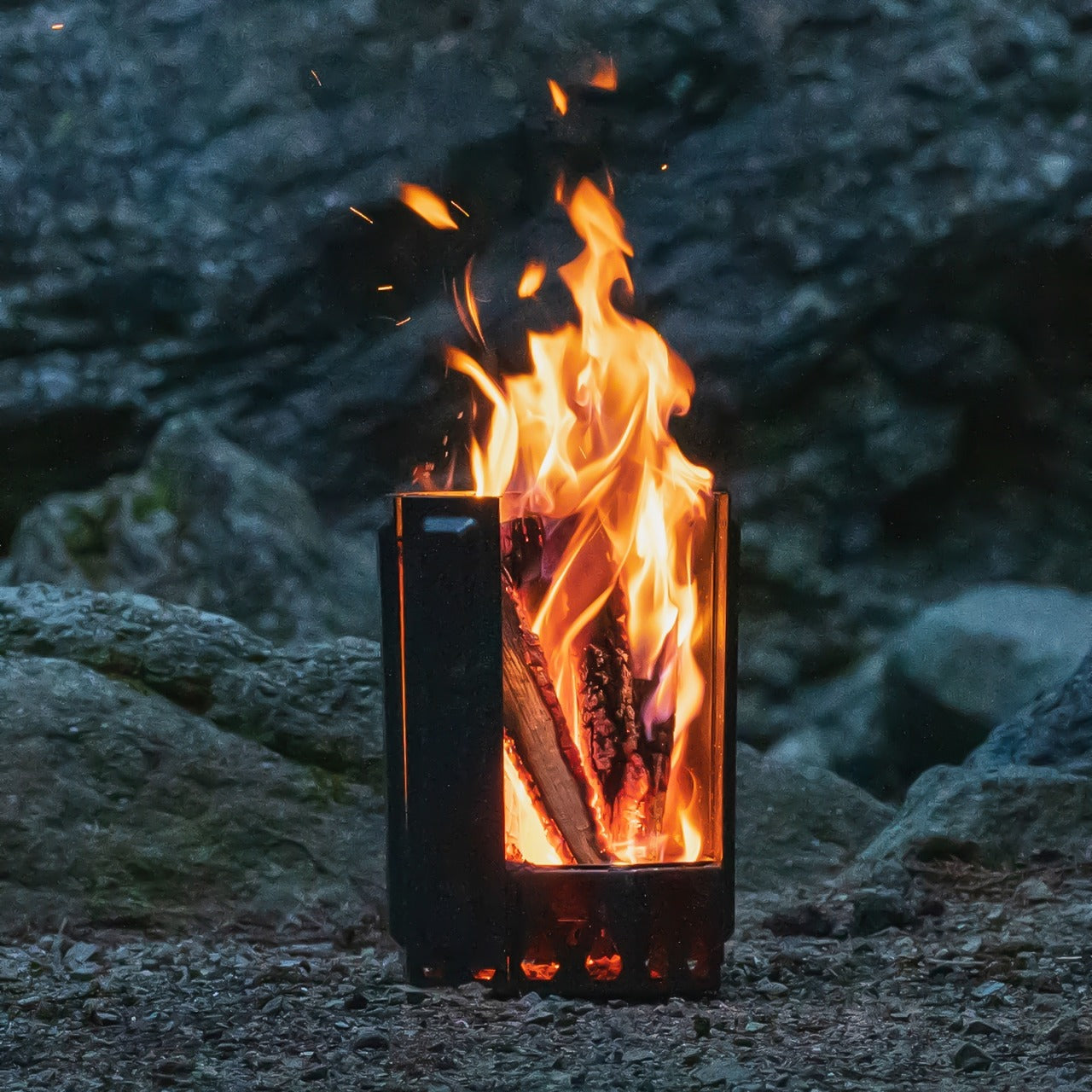
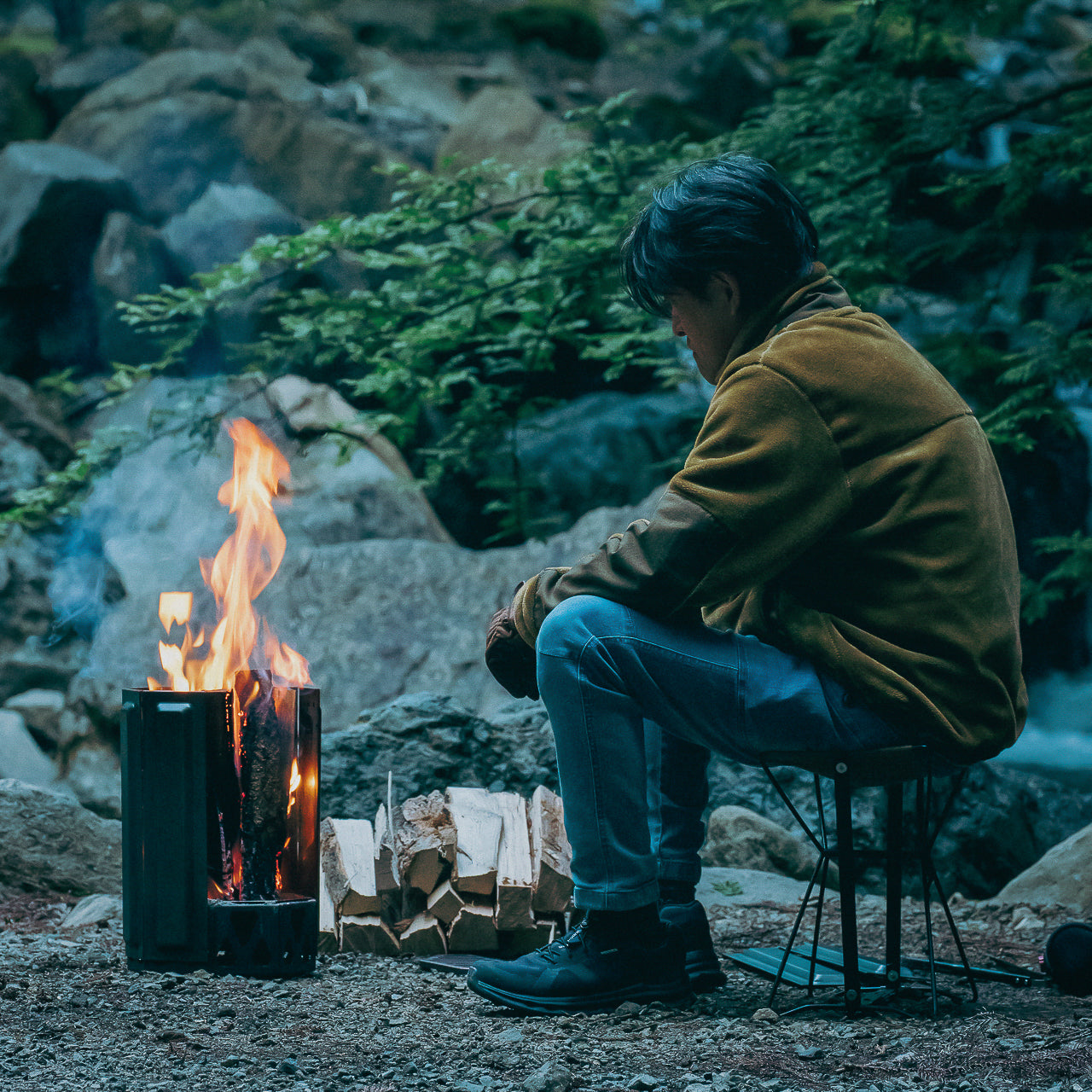
Sanyo Works drew on decades of metal processing expertise to create a fire pit that solves outdoor fires’ most persistent annoyances. The revolutionary 8-panel removable design gives you unprecedented control over fire intensity through adjustable secondary combustion. Strategic holes at each panel’s bottom channel fresh air directly to the base for primary combustion, while heated air rises through double-walled cavities and exits from top holes, creating efficient secondary combustion that dramatically reduces smoke.
Want high-intensity heat for cooking or cold nights? Enclose the fire with all panels to maximize secondary combustion and efficiency. Prefer a gentler, more open flame for ambiance? Remove panels to reduce intensity while maintaining clean burning. The engineered airflow ensures complete wood combustion, eliminating the typical smoky inconvenience that has campers constantly repositioning. This design delivers warmth and mesmerizing flame dance without respiratory irritation or smoke-dodging, letting you focus entirely on the moment.
Adjustable panel system offers complete fire intensity control
Engineered airflow produces minimal smoke
Secondary combustion creates hotter, more efficient burning
Easy cleanup thanks to complete combustion design
What we dislike
Eight removable panels create multiple pieces to track
Heavy metal construction reduces portability
Higher cost than standard fire pits
Requires a learning curve to optimize panel configuration
5. Slim Fold Dish Rack
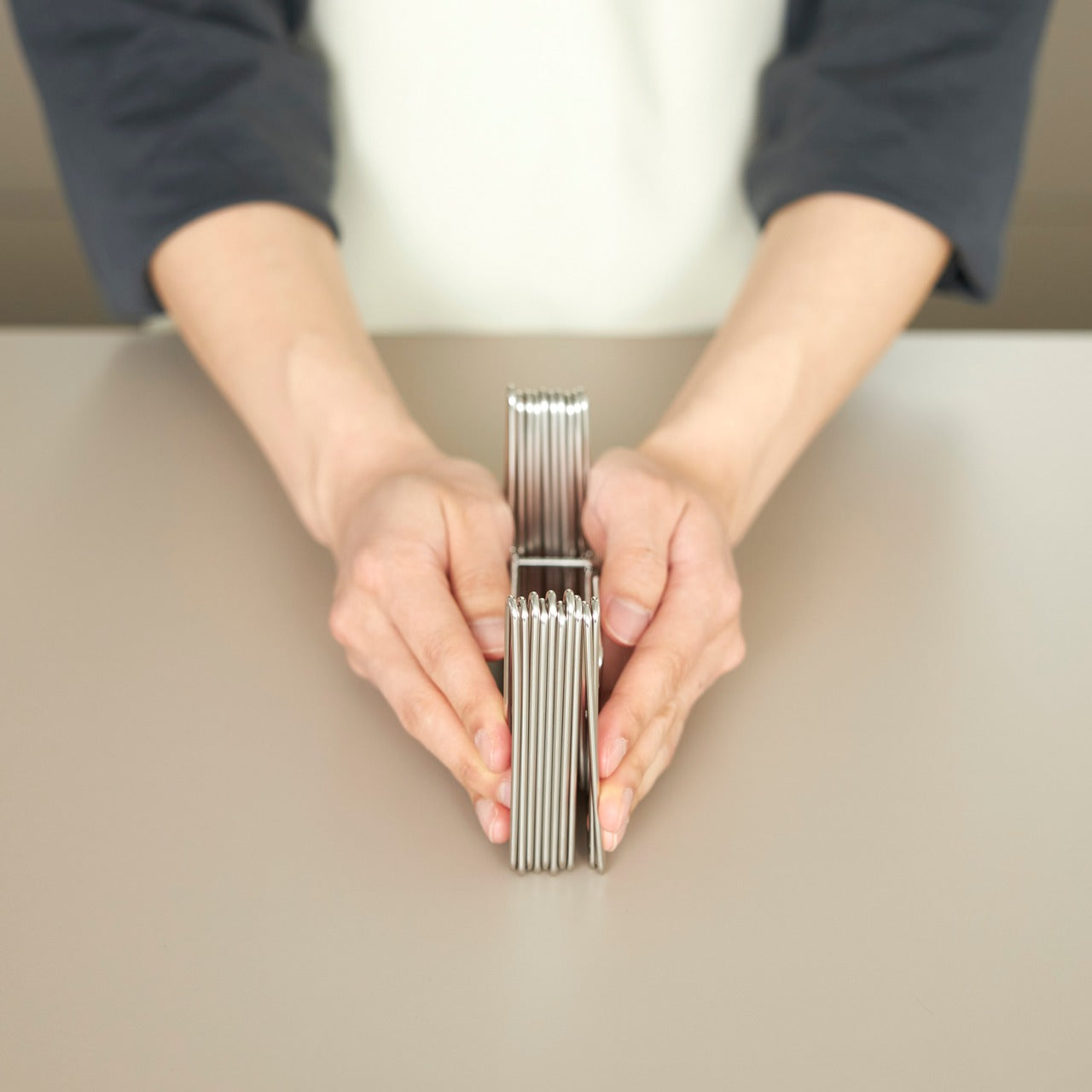
This patent-pending innovation collapses the eternal camping cleanup struggle into something almost elegant. A brilliant spring mechanism shrinks this 14-inch dish rack down to a mere 1.2 inches in one second flat, with deployment equally instantaneous. The minimalist design ensures sufficient ventilation and space for plates, utensils, and cookware of any size, while the collapsed form becomes so compact it literally fits in pockets.
Whether you’re glamping outdoors or maximizing tight kitchen quarters, this collapsible dish rack ensures tableware and cutlery dry thoroughly and quickly. The durable construction handles camping’s rough-and-tumble reality without sacrificing the sleek aesthetic that makes it equally at home in modern kitchens. Easy to clean and dishwasher-friendly, it eliminates the bulky permanence of traditional dish racks while delivering the same functionality in a package you can take anywhere.
Collapses from 14 inches to 1.2 inches in one second
Patent-pending spring system ensures reliable deployment
Pocket-sized when collapsed for ultimate portability
Dishwasher-safe for easy cleaning
What we dislike
The spring mechanism could potentially wear over time
Limited capacity compared to full-size dish racks
Collapsed form requires careful storage to prevent accidental deployment
Premium price for what’s essentially a drying rack
6. WUBEN X1 Pro Flashlight
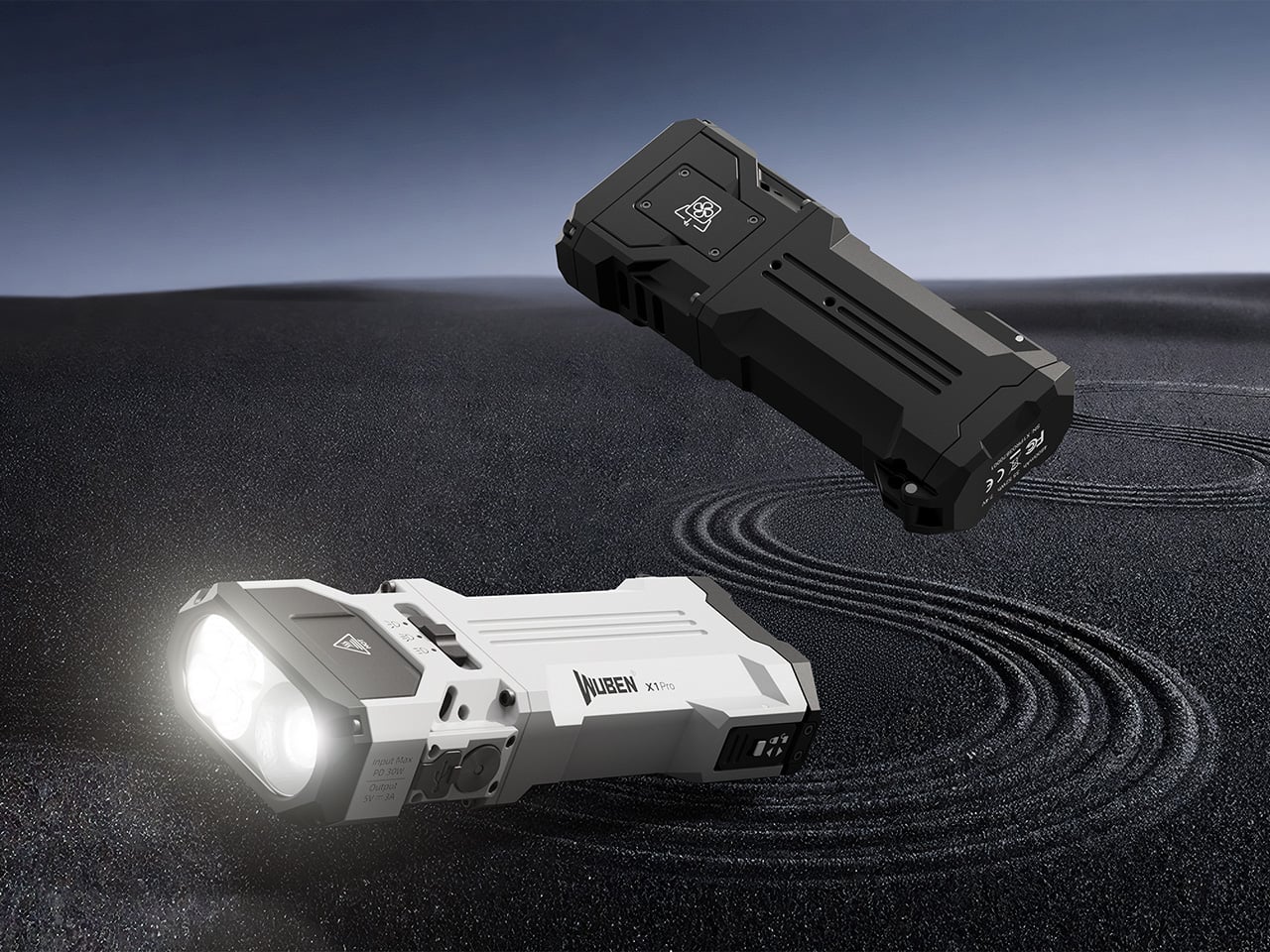
The WUBEN X1 Pro refuses to be just another flashlight, delivering 13,000 lumens of combined flood and spot light through an angular aluminum alloy body that feels substantial and purposeful in your hand. Smart cooling technology keeps things running smoothly under heavy use, while the sculpted lines and one-handed grip remain easy to hold even with thick gloves during frigid expeditions.
At 383 grams and just under 14 centimeters long, this powerhouse fits in jacket pockets or bike bags without creating annoying bulk. The rugged construction handles whatever the night throws at it, from emergencies to extended exploration. As a bonus, it functions as a power bank to charge your phone when you’re far from outlets, making it an essential gear that serves multiple critical functions without fail.
What we like
13,000 lumens provide exceptional illumination power
Smart cooling prevents overheating during extended use
Doubles as a phone charger for emergencies
Compact size despite serious output capability
What we dislike
High lumen output drains the battery relatively quickly
383-gram weight feels heavy for ultralight backpackers
Premium flashlights require a significant investment
A powerful beam might be overkill for casual camping
7. Battery-Free Amplifying iSpeakers
This ingenious metal smartphone speaker achieves something remarkable: amplified sound without batteries or electricity. Simply place your smartphone inside and let amplified sound waves spread your favorite music throughout the room. Made from vibration-resistant Duralumin—the same material used in aircraft construction—and designed using the golden ratio, this speaker enhances both your phone’s audio and your space’s ambiance.
The portable, no-power design means you can use it literally anywhere without worrying about charging or battery life. The Duralumin construction ensures the speaker itself won’t vibrate sympathetically, maintaining audio clarity while amplifying volume naturally through acoustic design alone. Compatible with optional +Bloom and +Jet mods for directing sound, it offers customization for those who want to fine-tune their listening experience while maintaining the core battery-free philosophy.
Optional mods allow customization for different spaces
What we dislike
Amplification is limited compared to powered speakers
Only works with smartphones, not other devices
Fixed amplification means no volume control
Modern phone sizes might not fit all models
8. Compact Modular Grill Plate
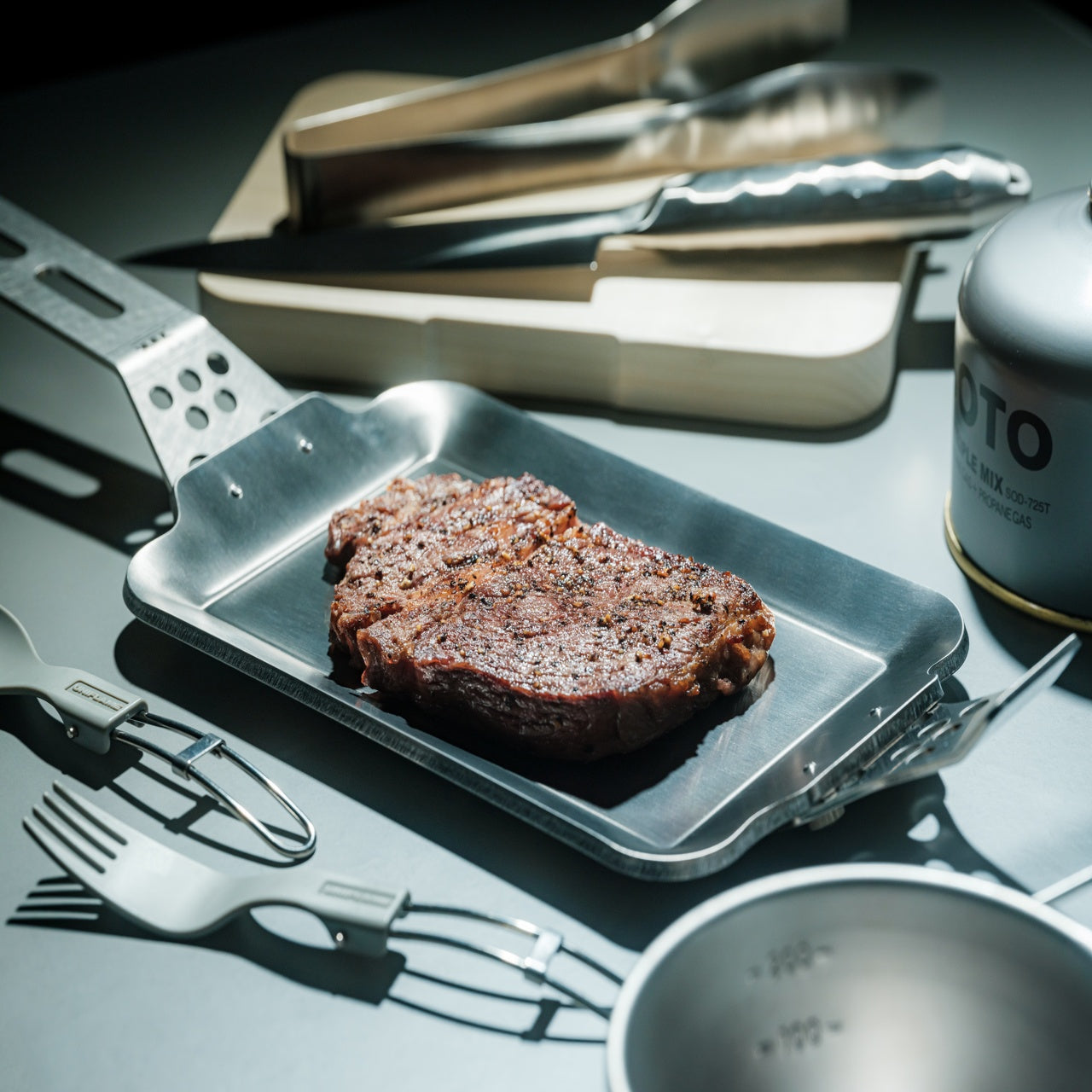
This adaptable metal grill plate transforms outdoor cooking from frustrating guesswork into reliable culinary performance. A brilliant three-layer steel plate design ensures even heat conduction across the entire surface, cooking food uniformly while maintaining juiciness for perfect steaks and dishes. The modular approach lets you swap handles depending on your situation, whether you’re working over unstable bonfires or using induction stoves at basecamp.
What separates this from standard camping cookware is its refusal to compromise. Even heat distribution means food cooks properly without hot spots or raw centers, while the compact form packs down for easy transport. Available in Basic and Special sets, it accommodates different cooking ambitions without unnecessary bulk. Compatible with various heat sources, including campfires, gas burners, and induction stoves, this grill plate adapts to you rather than forcing you to adapt to it.
Three-layer construction delivers superior heat distribution
Interchangeable handles adapt to different cooking situations
Compatible with multiple heat sources, from bonfires to induction
Compact packing size despite cooking surface area
What we dislike
Multi-piece design creates more items to pack
Steel construction adds weight to camping loads
Learning curve to master heat management
Premium sets command higher investment
9. Iron Frying Plate
JIU eliminates the middleman: the frying pan becomes your plate, letting you enjoy meals immediately after cooking them. This rust-resistant, uncoated cookware brings out exceptional flavors and textures through pure iron-to-food contact without chemical coatings interfering. Made from 1.6mm-thick mill scale steel, it arrives ready to use straight from the box, defying cast iron’s typical seasoning requirements.
The wooden handle attaches and detaches with one hand, transforming the cooking vessel into a serving plate in seconds. This beautiful boundary-blurring between cooking and eating creates intimacy with your food while eliminating cleanup steps. Rust-resistant and stick-resistant properties mean the plate maintains its character without constant maintenance, while the handsome design makes serving directly from this cookware feel intentional rather than lazy. It’s culinary efficiency meets aesthetic pleasure, wrapped in durable steel.
Rust-resistant construction eliminates maintenance headaches
What we dislike
The hot plate requires care when transitioning to eating
Single-serving size limits group meal flexibility
Iron construction retains heat, creating a burn risk
An uncoated surface still requires a proper cleaning technique
10. RetroWave 7-in-1 Radio
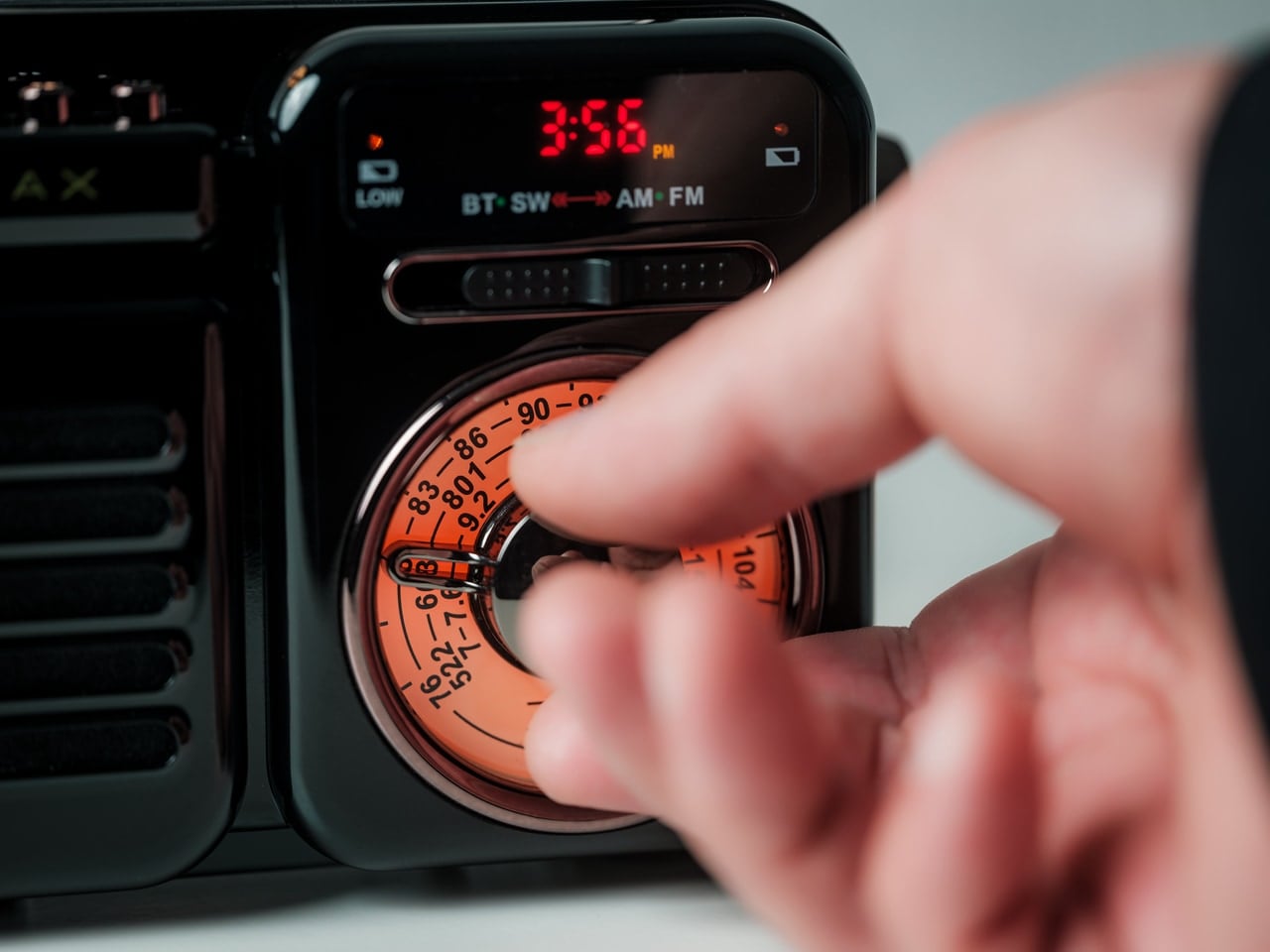
Behind its retro Japanese design and tactile tuning dial, the RetroWave 7-in-1 Radio packs serious contemporary functionality. This device serves as a speaker, MP3 player, radio, flashlight, clock, power bank, and SOS siren—designed to handle everything from daily listening to emergencies. Stream music over Bluetooth like modern life, tune into AM, FM, or shortwave stations like decades past, or rely on its emergency features when circumstances demand.
The 2000mAh battery recharges via hand-crank or solar panel when outlets disappear, while the built-in flashlight and SOS alarm provide critical safety functions. Stream from your phone, play music from USB or microSD cards, or catch local broadcasts without internet. Lightweight construction belies its capability: up to 20 hours of radio time or 6 hours of emergency lighting on full charge. Whether it’s glowing softly on your kitchen shelf during morning coffee or providing the only working station during a blackout, this radio adapts seamlessly to wherever life takes you.
Multiple charging options, including solar and hand-crank
Emergency features provide genuine safety value
Retro design looks beautiful in any setting
What we dislike
The 2000mAh battery offers limited phone charging capability
Hand-crank charging requires significant effort
Multiple functions create complexity for simple tasks
Retro aesthetic might not suit modern minimalist spaces
Final Thoughts: Where Design Meets the Great Outdoors
These ten gifts represent glamping’s evolution into a sophisticated design category where aesthetics and functionality refuse separation. Each piece solves genuine problems with intelligence and style, proving that outdoor gear can be beautiful, thoughtful, and uncompromising. They transform camping from an endurance test into a curated experience, where every detail enhances rather than distracts from nature’s magnificence.
For the glamping enthusiast in your life, these designs offer something beyond typical outdoor equipment—they provide tools that respect both their love of wilderness and their appreciation for considered design. Whether it’s a self-inflating tent, a zero-battery speaker, or a seven-function emergency radio, each gift here redefines what it means to live well outdoors in 2025.
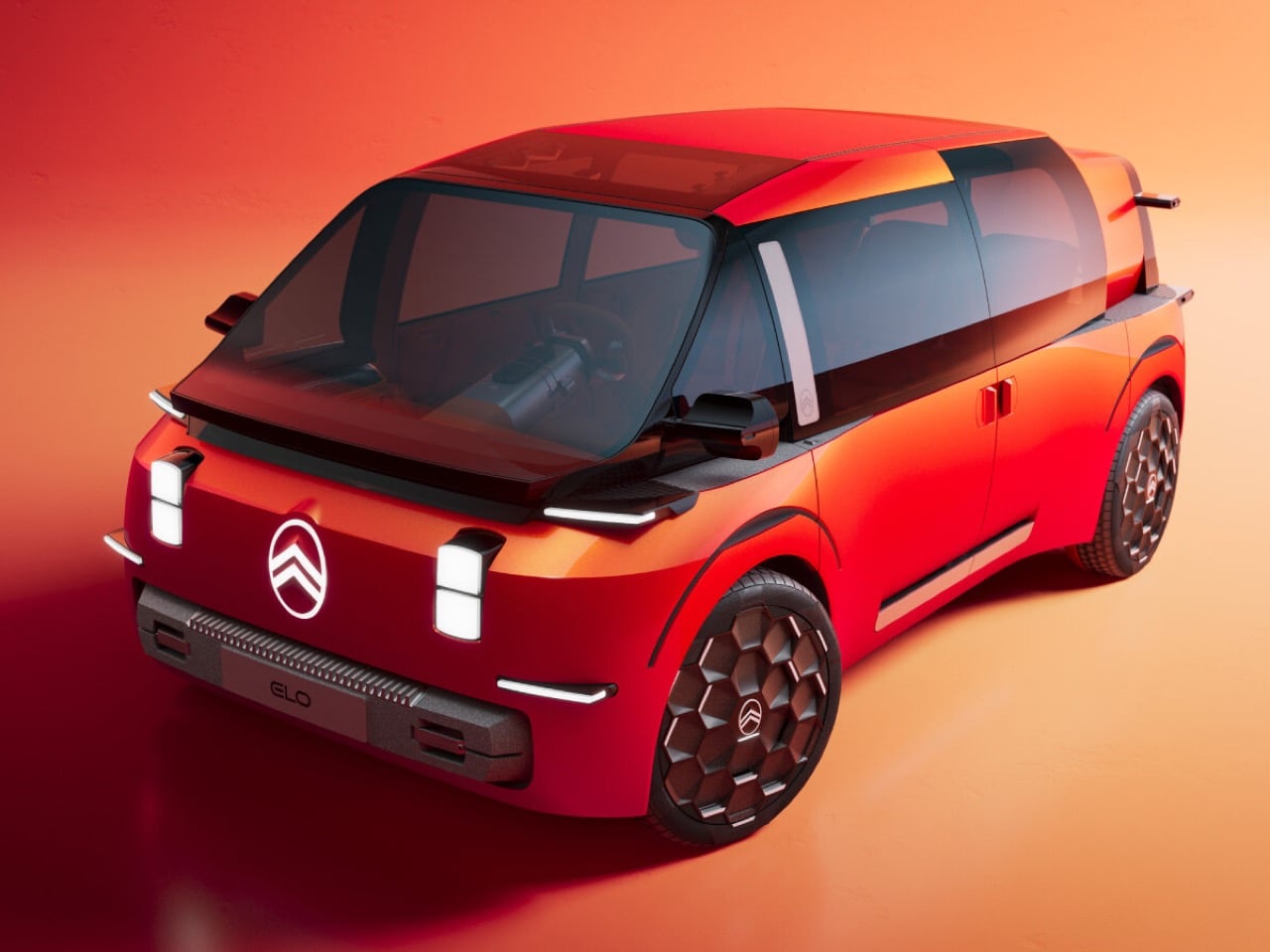
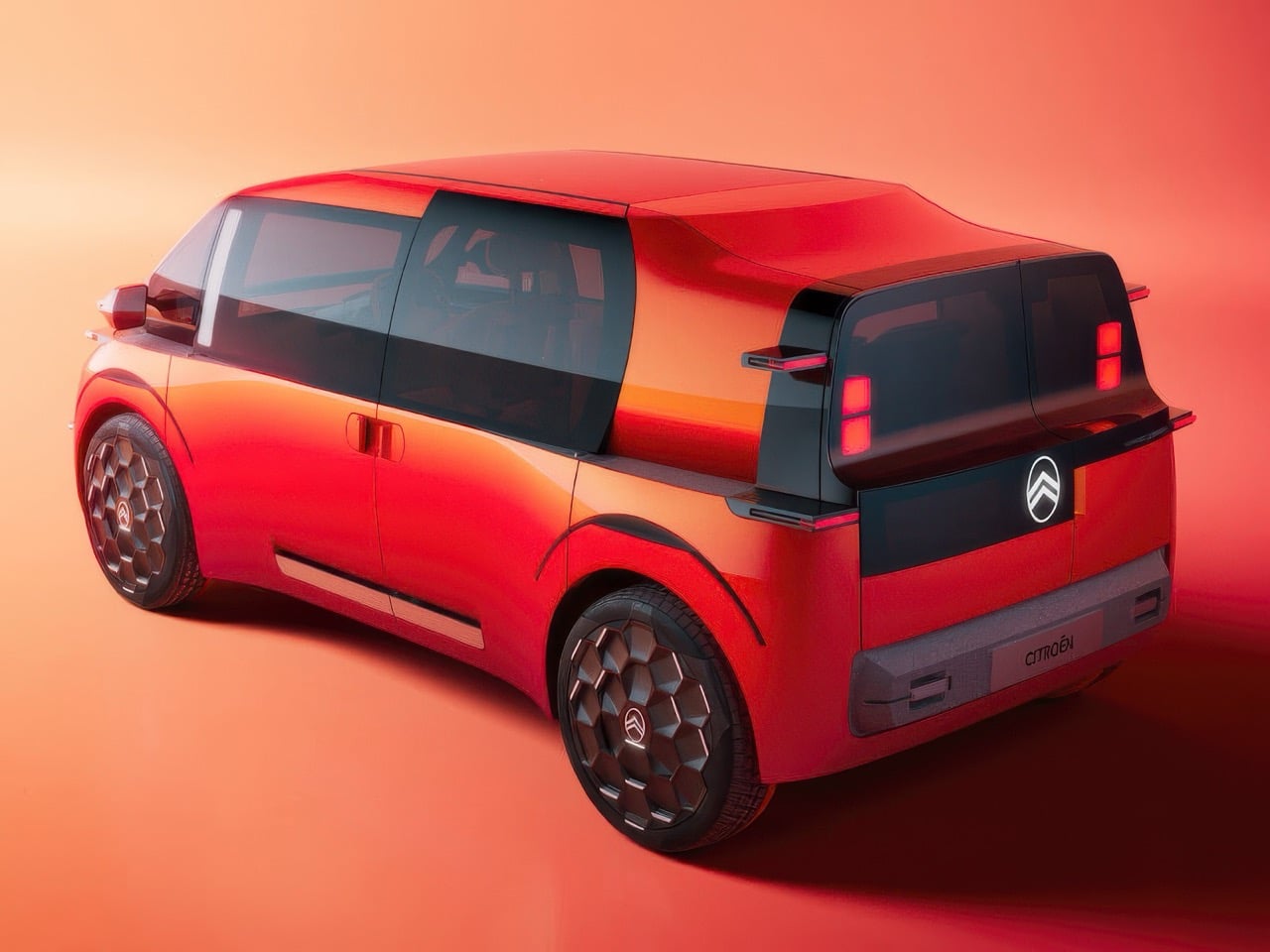
French automaker Citroën just unveiled a concept that treats your car like a Swiss Army knife for modern nomads. The ELO is an electric vehicle that doubles as a bedroom, triples as an office, and moonlights as a power station. We’ve seen plenty of concepts that promise versatility, but most end up being vaporware with a nice press kit. This one actually has me convinced someone at Citroën has spent time living out of their car.
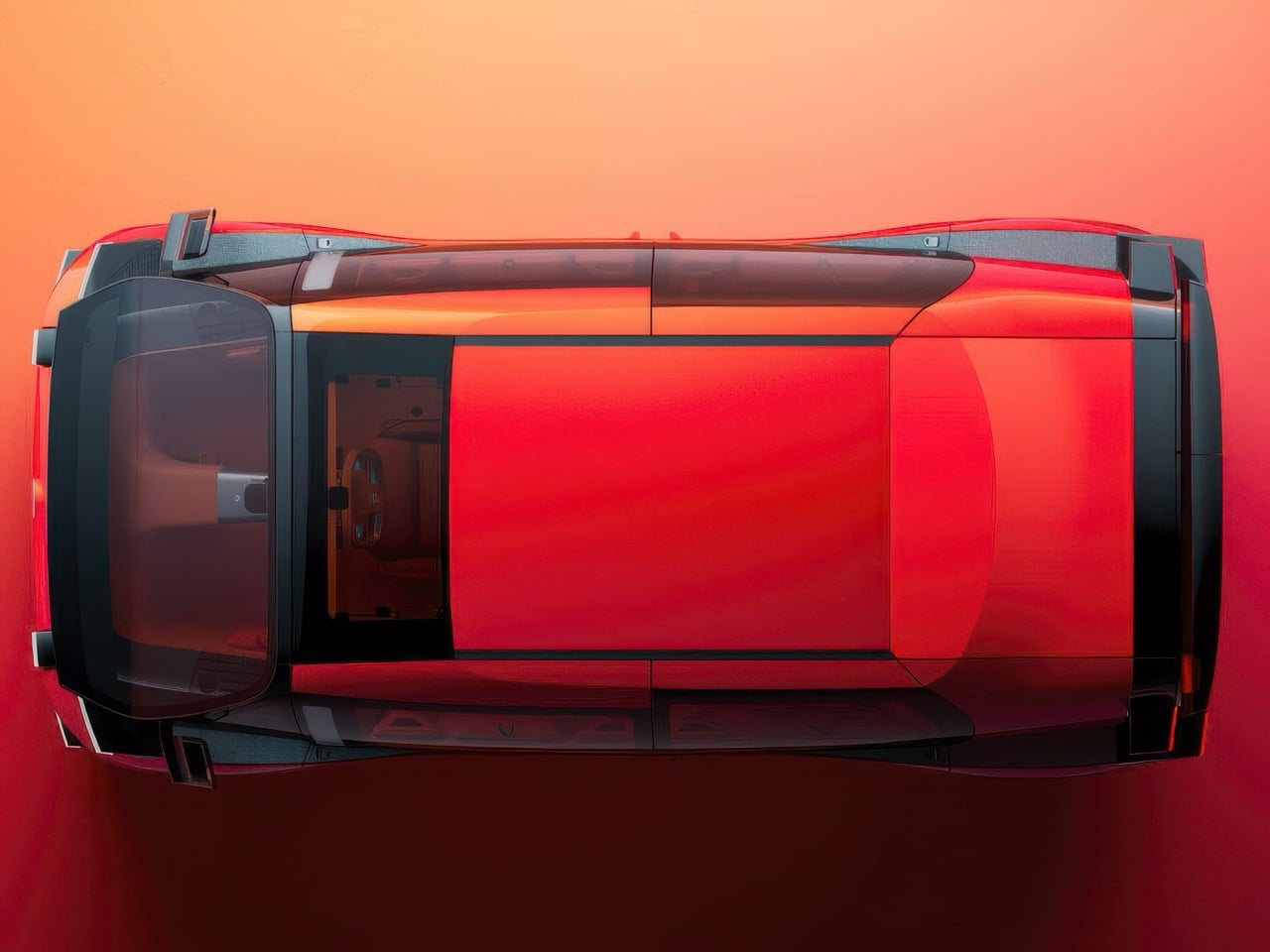
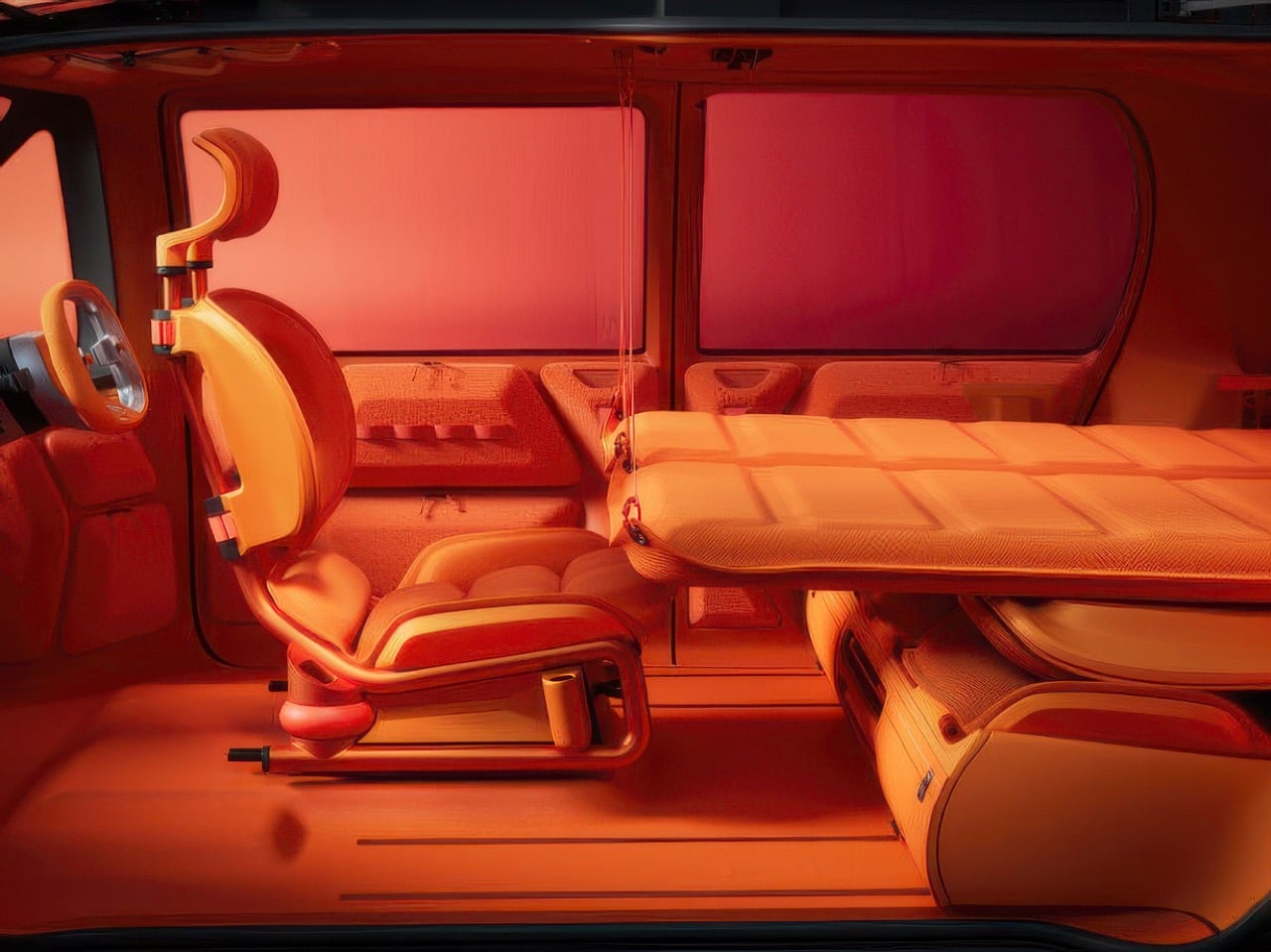
Two inflatable mattresses live in the rear cargo area, and they deploy using the car’s built-in compressed air system. You’re not wrestling with a manual pump or some finicky electric one you bought off Amazon. The mattresses fill the entire rear space to create an actual sleeping area for two adults. The roof slides open so you can stargaze without getting eaten alive by mosquitos, and the side lamps flip into bedside light mode. There’s a projector mounted inside with a pull-out screen for outdoor movies. Citroën partnered with Decathlon for the storage systems, which explains why everything feels less “auto show prop” and more “gear you’d actually use.”
Designer: Citroën
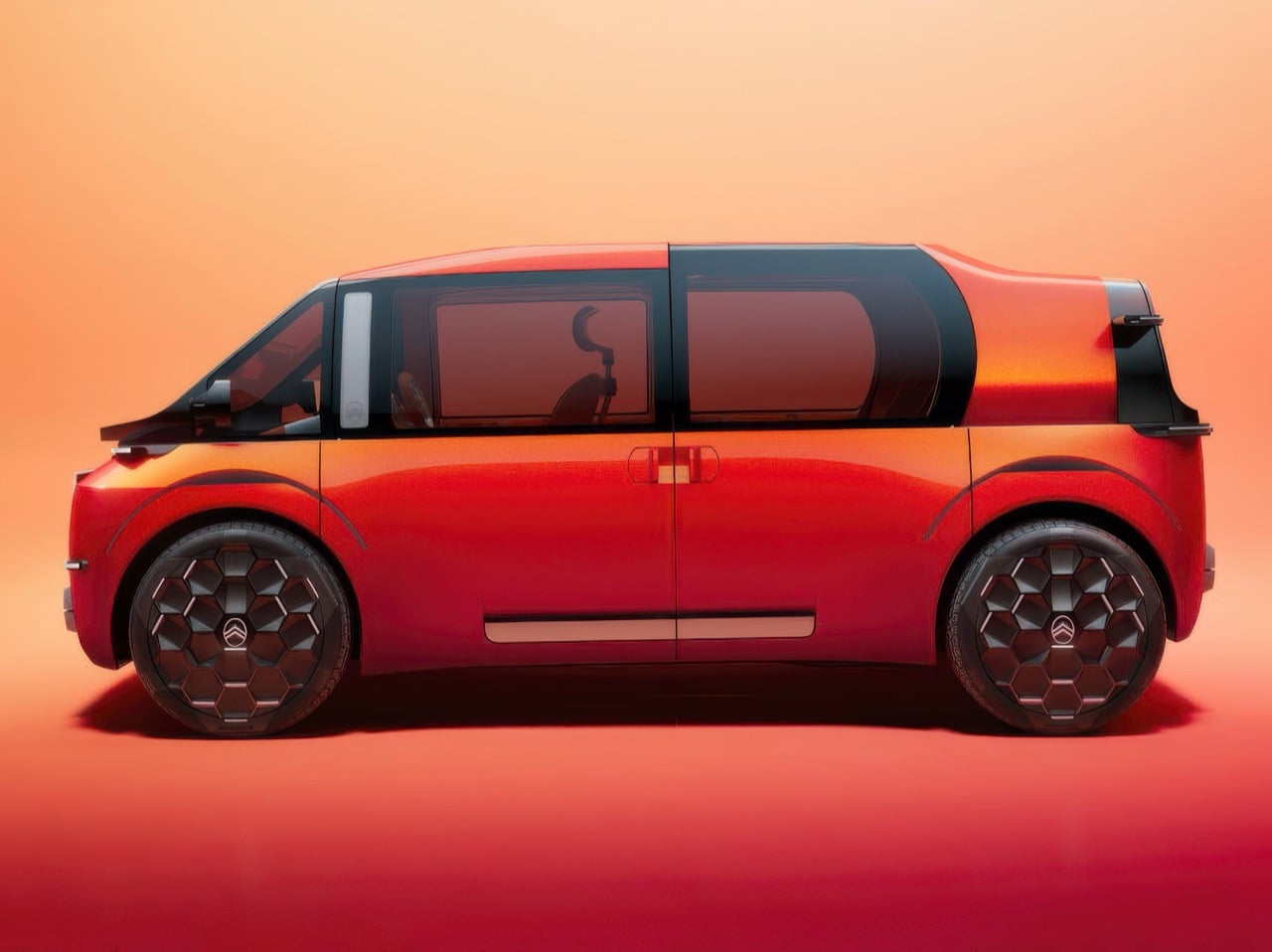
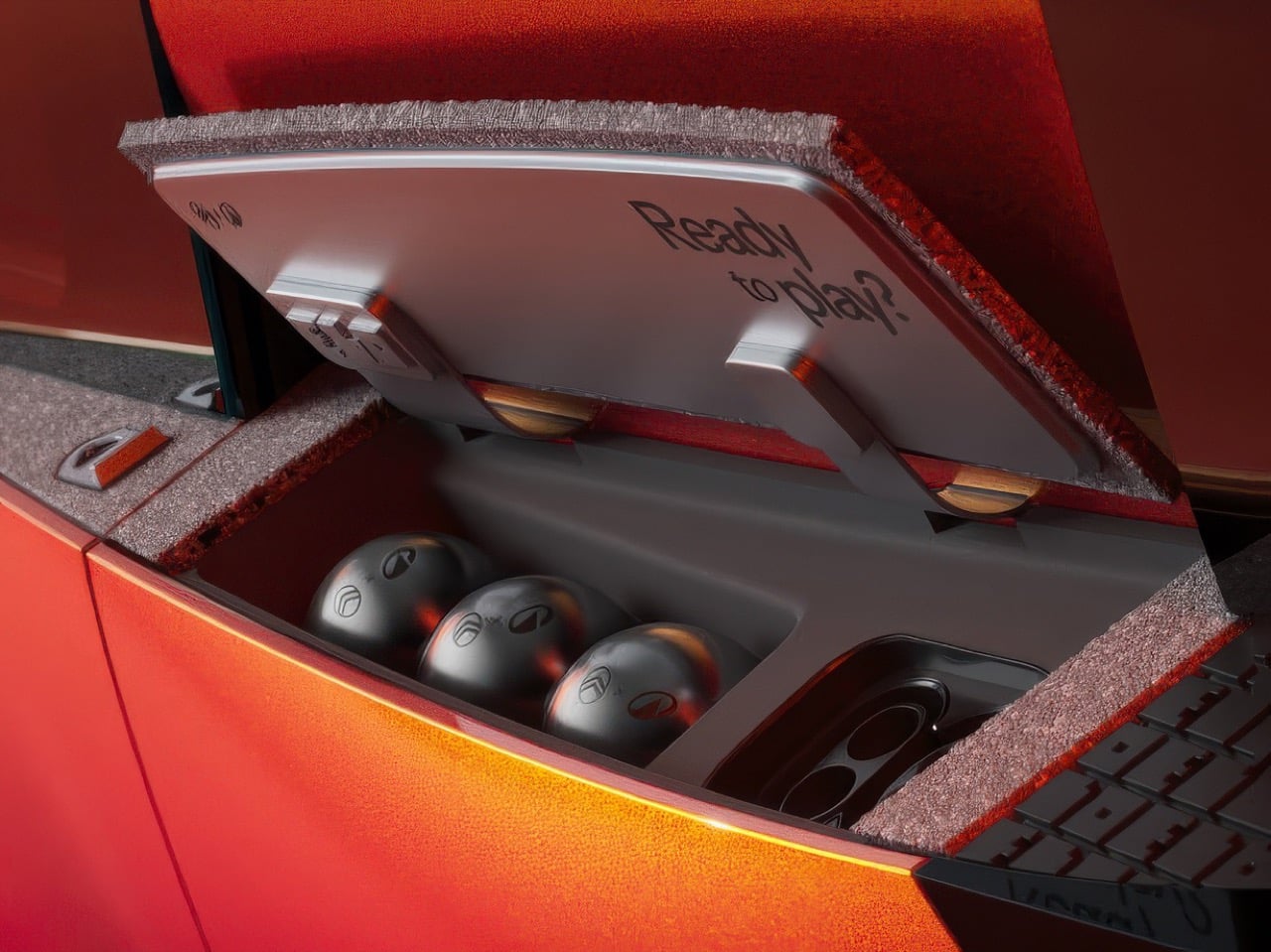
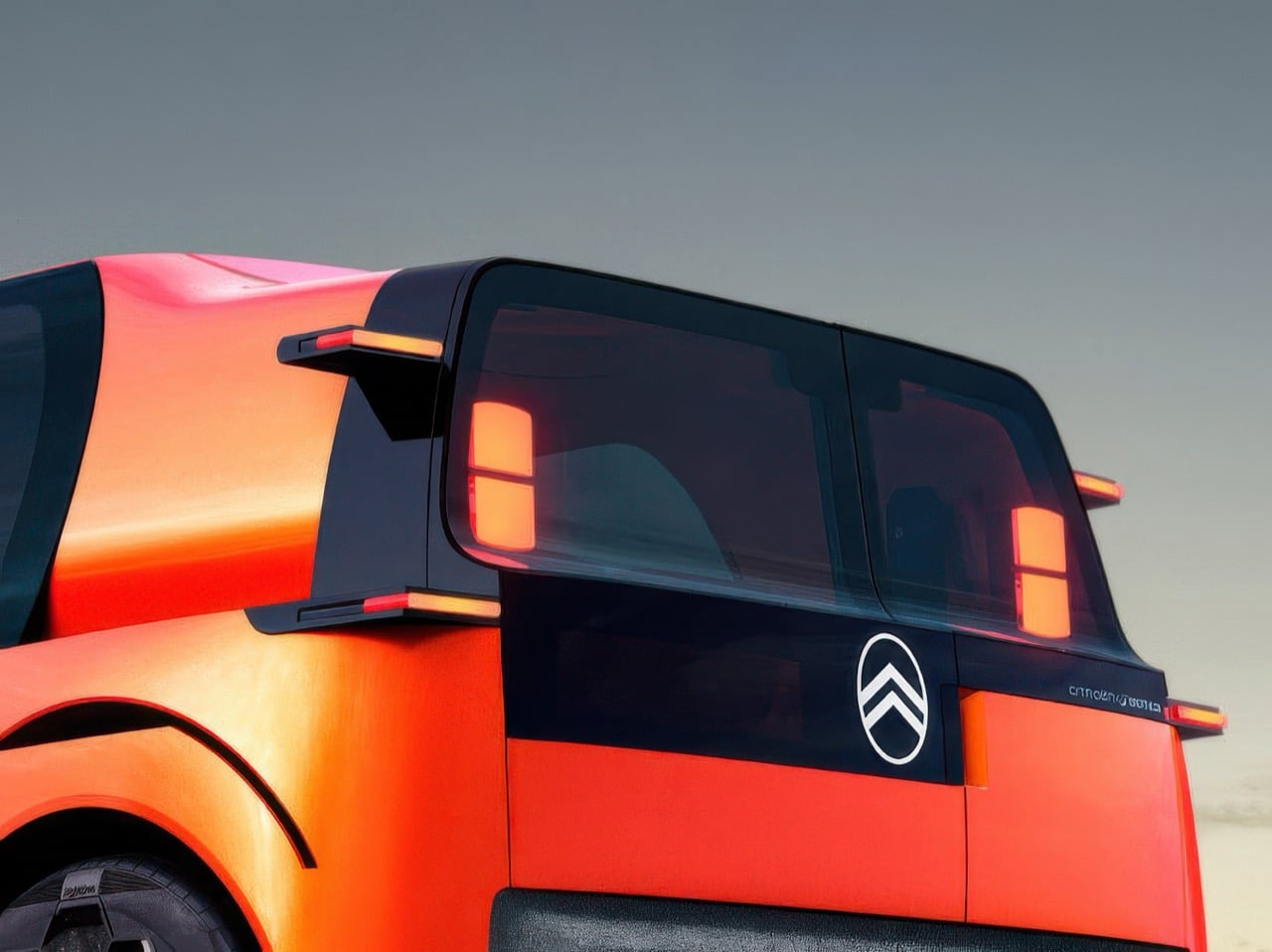
The exterior looks like Citroën told their designers to prioritize function over flash and actually meant it. The body is boxy and van-like, painted in a bold coral-orange that screams “adventure vehicle” without trying too hard. Those honeycomb wheel covers aren’t just styling exercises – they integrate the Citroën chevron logo and protect the wheels while looking distinctive. The front is minimalist with vertical LED strips flanking the badge and a textured grille pattern that’s more utilitarian than aggressive. Large glass surfaces dominate, including that massive windscreen and the sliding panoramic roof section. The doors open wide with no center pillar, making entry and exit genuinely easy instead of the usual concept car gymnastics. Above each wheel arch sits a flat platform for storing small items when parked – the photos show pétanque balls, because of course the French put boules storage on their concept car. The proportions are short and tall, maximizing interior volume without making the thing a nightmare to park in European cities.
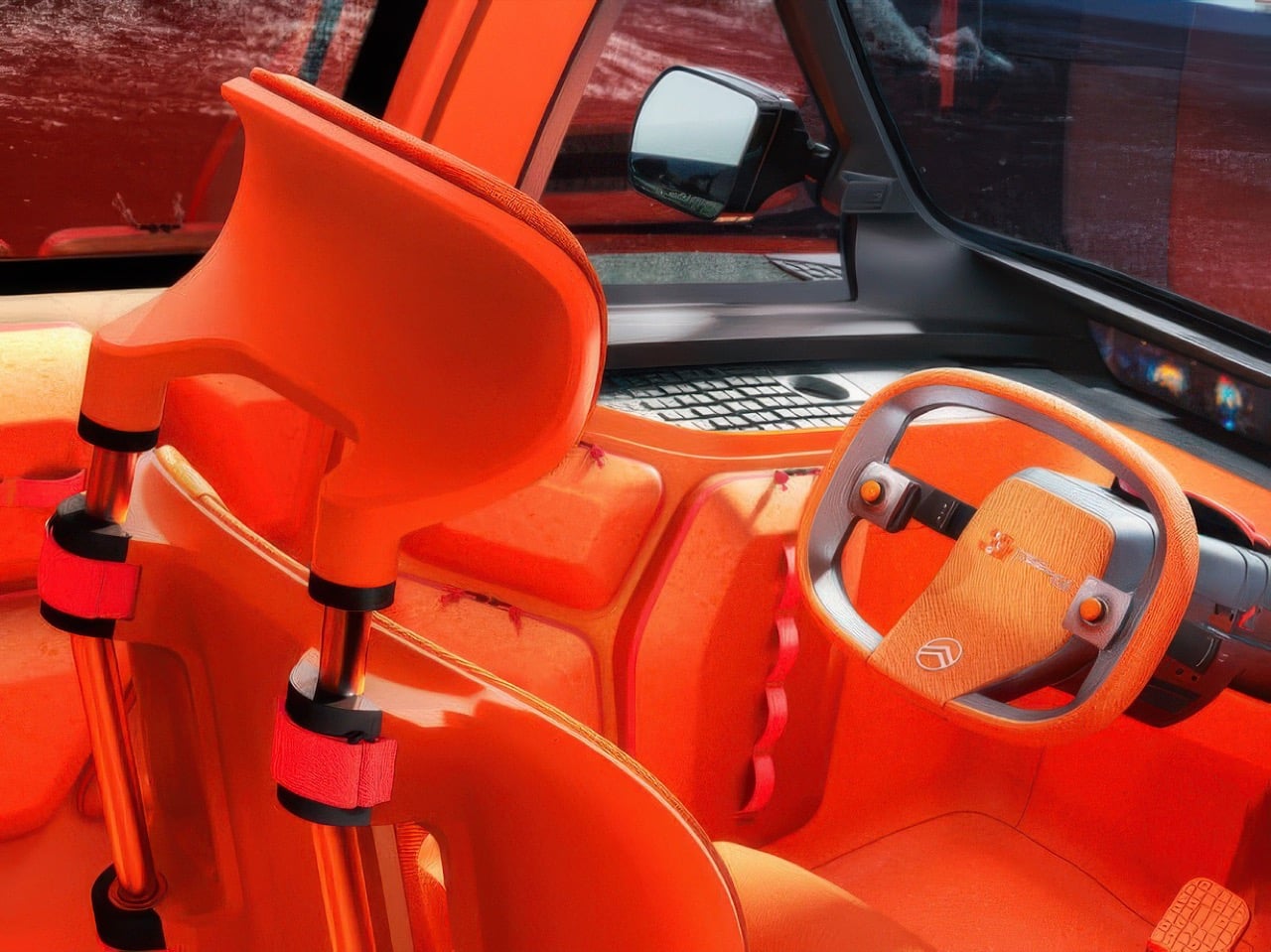
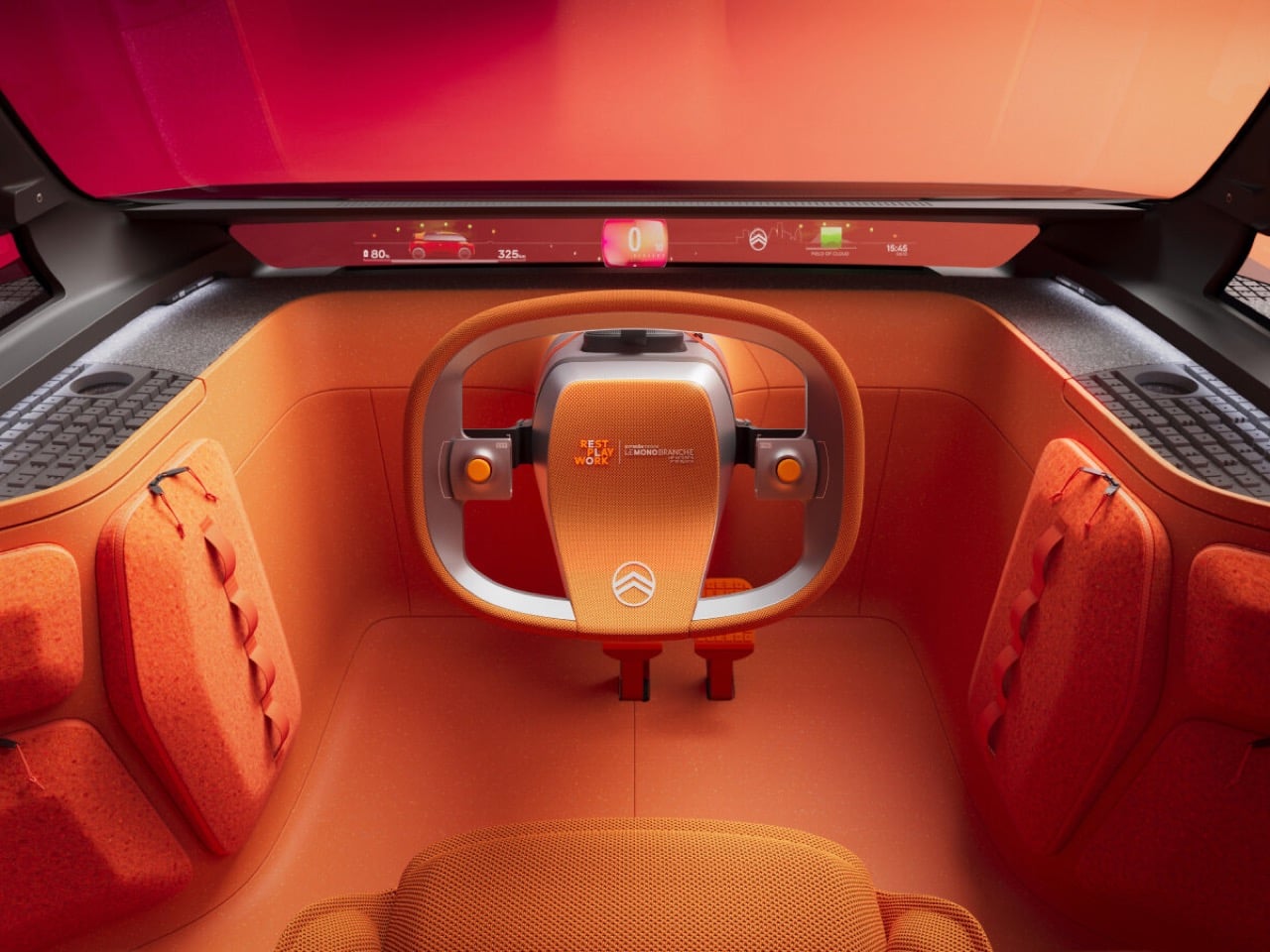
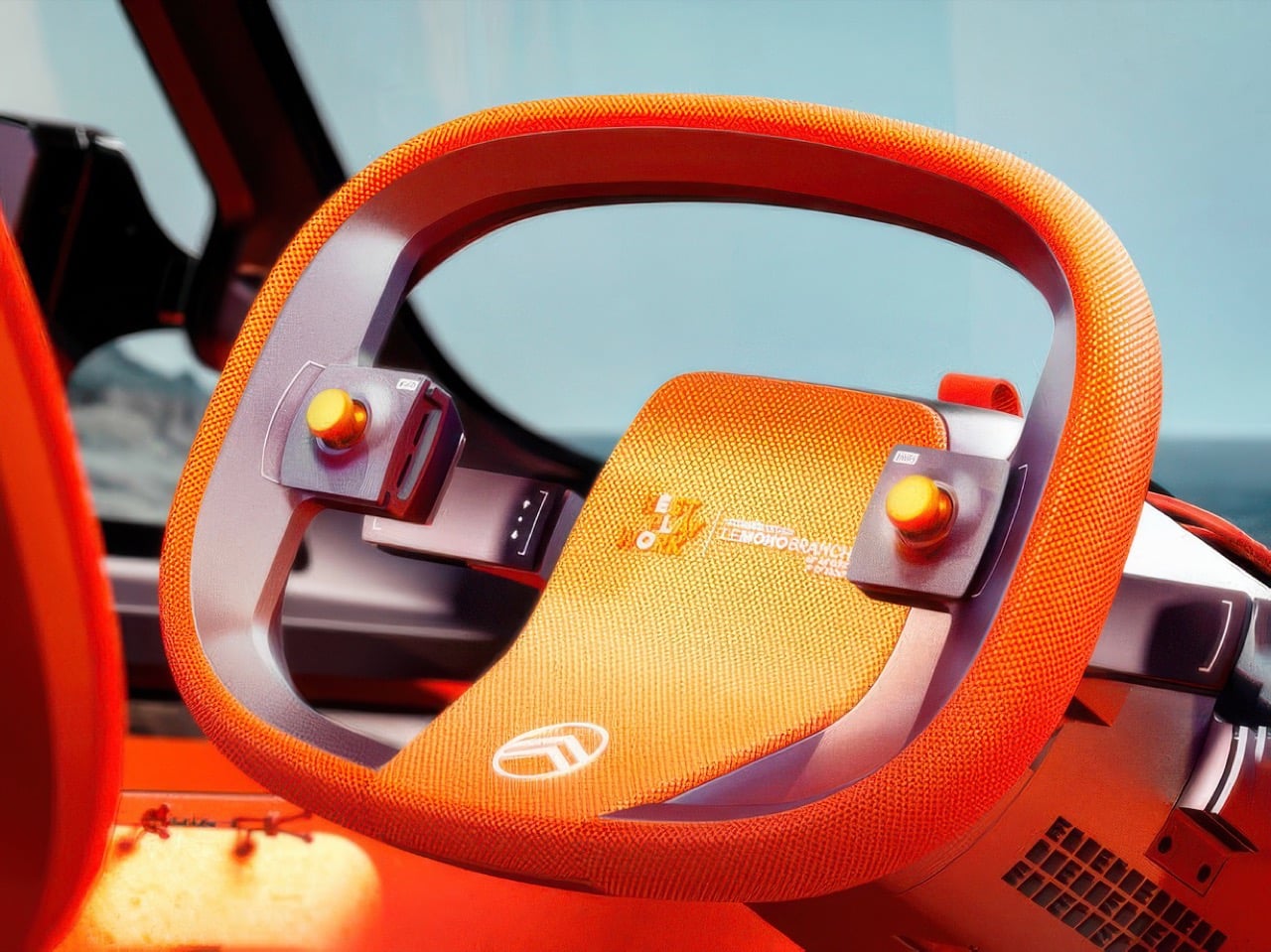
The driver sits in the center of the front row instead of off to one side. This isn’t some McLaren F1 tribute. It’s purely functional, giving you an unobstructed view through what is genuinely one of the largest windscreens I’ve seen on a vehicle this size. The steering wheel has a single spoke design with a massive opening in the middle, and Citroën ditched the traditional dashboard entirely. Everything projects onto a transparent strip across the windscreen. Two joystick controls sit on the wheel within easy reach of your thumbs. The interface is stripped down because this car needs to work when you’re tired, when you’re working, and when you’re just trying to get somewhere.
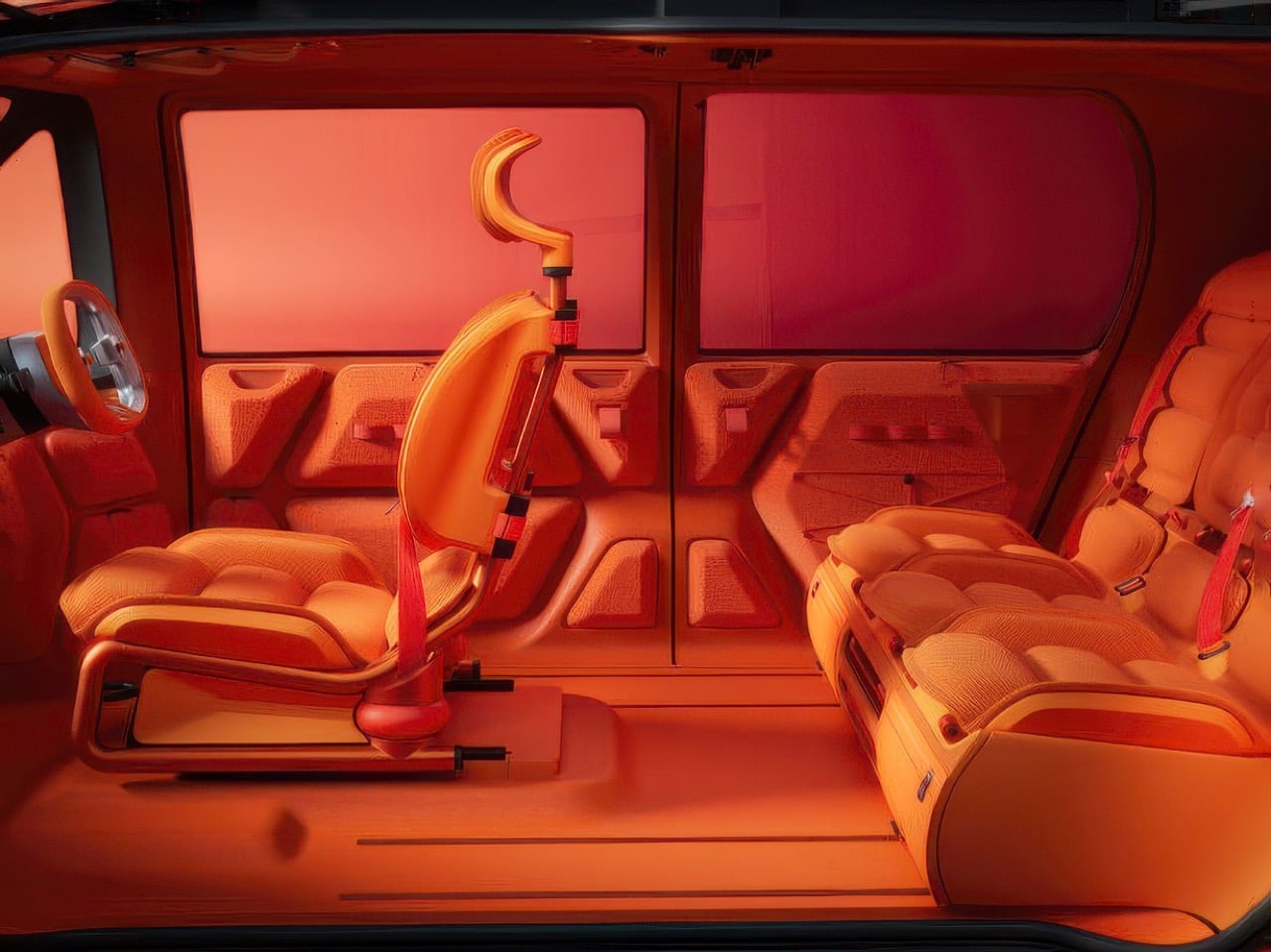
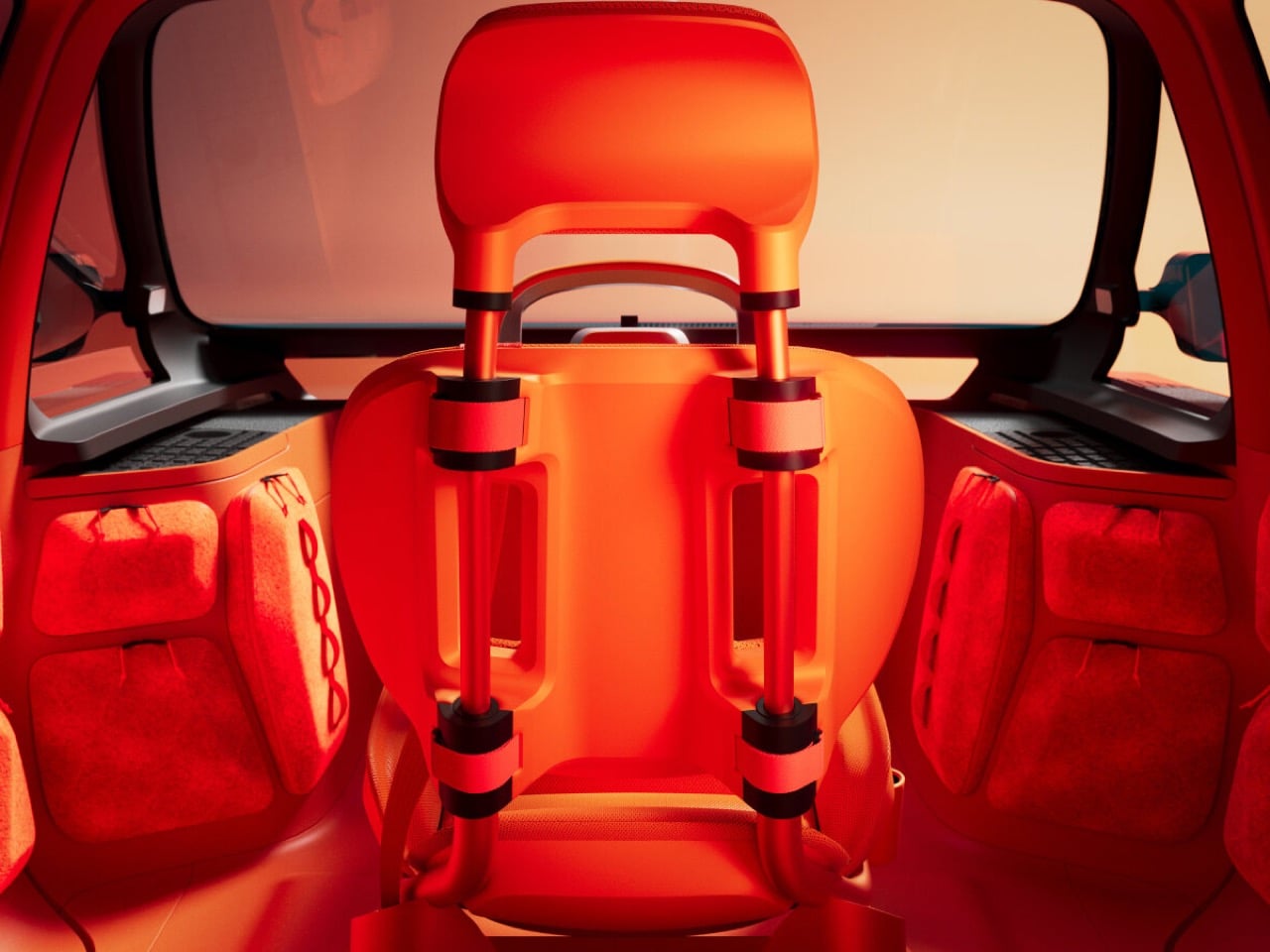
Modularity usually means “kind of adaptable if you spend twenty minutes reconfiguring things.” Not here. The second row has three identical seats that fold flat and detach completely. Use them as camp chairs. Two extra seats hide under the side seats, so you can haul six people when needed. Even with all six seats up, there’s cargo space left over. The driver’s seat spins 180 degrees to face backward. A work table folds out from under the center seat in the second row. If you forgot your laptop, the projection system works for video calls. The wheel arches have cutouts that hold phones and headphones.
Expanded polypropylene keeps weight down and recycles easily. Same stuff they use in bike helmets. Felt sections come from recycled fabric scraps from other Citroën projects. The second-row seats have water and wear-resistant covers because obviously you’re going to trash them. The exterior stays simple with huge windows and wide doors that have no center pillar. Front and rear bumpers are identical to reduce parts count.
Power options go beyond the drive battery. The V2L system lets you run speakers, charge devices, or power cooking equipment. A built-in compressor handles paddleboards, bike tires, whatever needs air. Hooks on all four doors mount a large awning for covered outdoor space. You could genuinely set up a small basecamp without bringing any extra equipment.
Citroën calls this a mobility study, which is corporate speak for “we’re not committing to production yet.” But unlike most concepts that feel like design school fever dreams, the ELO solves real problems for people who work remotely, chase outdoor activities, or just refuse to stay in one place. It’s compact enough for cities but functional enough for extended trips. Whether this becomes a real product or just influences future designs, someone finally built a car for people whose home, office, and garage are increasingly the same place.
Backcountry adventures demand gear that refuses to quit when conditions turn challenging. The right lighting solution transforms a tense moment into a manageable one, whether you’re searching for a misplaced carabiner at midnight or navigating an unexpected detour off-trail. In 2025, portable lighting has evolved beyond simple illumination, offering adaptive brightness, extended battery life, and multipurpose designs that earn their weight in any pack.
The flashlights and lighting systems featured here represent a new generation of outdoor equipment built for real-world backcountry use. From ultra-compact EDC models that clip to your gear to versatile campsite lanterns that adapt to any scenario, these designs prioritize functionality without sacrificing portability. Each brings something distinct to the table, addressing specific challenges outdoor enthusiasts face when venturing beyond cell service and reliable power sources.
1. Lumitwin DL700
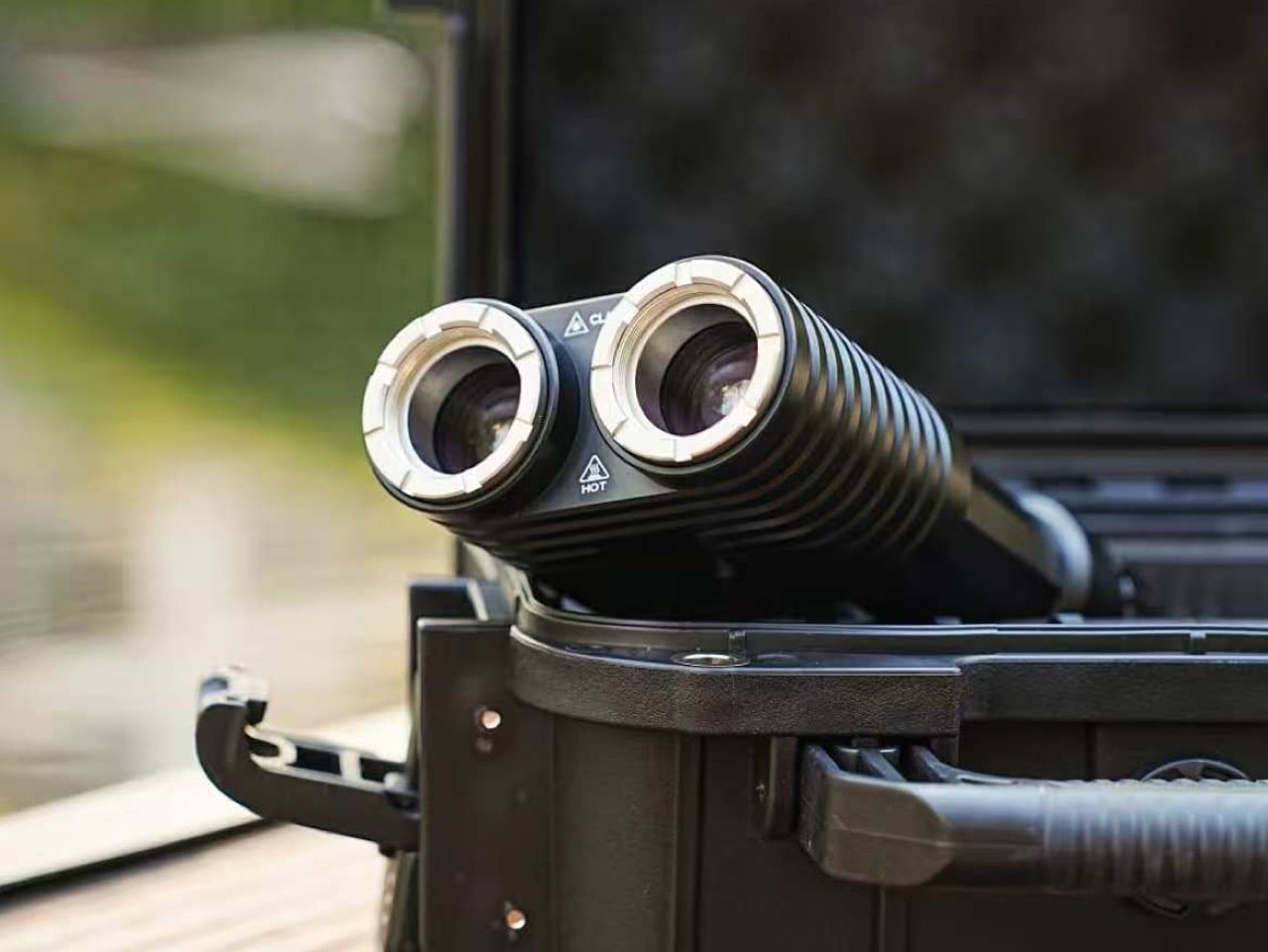
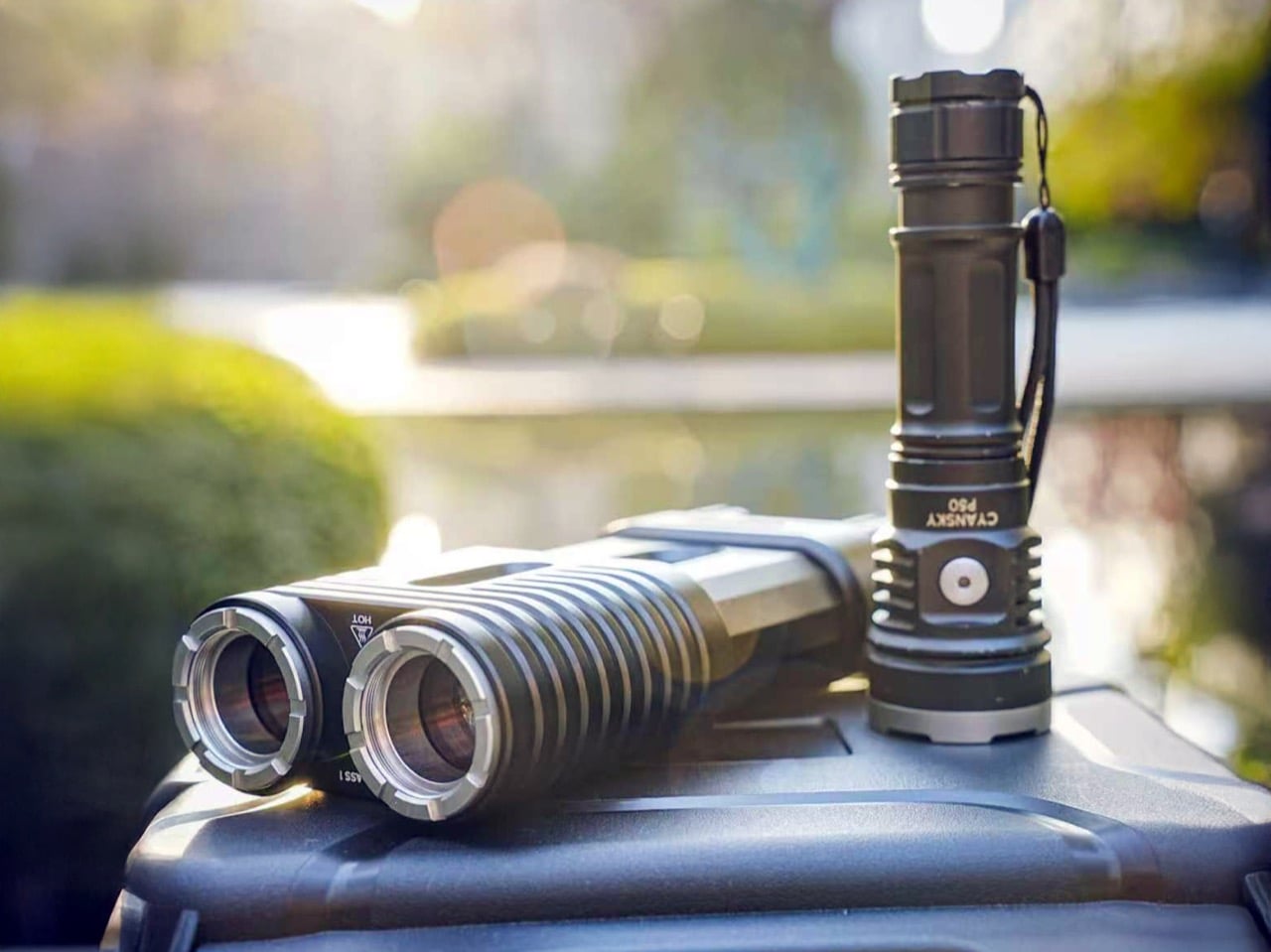
The Lumitwin DL700 redefines what’s possible in a portable flashlight with its staggering 2-kilometer beam distance and dual independently-controlled barrels. This isn’t an incremental improvement over standard LED technology. The flashlight employs laser-excited phosphor modules instead of traditional LEDs, delivering a focused throw that reaches 1.24 miles into the darkness. The dual-barrel design means you can operate each light independently, switching between them based on your immediate needs while preserving battery life on the unused barrel for extended expeditions.
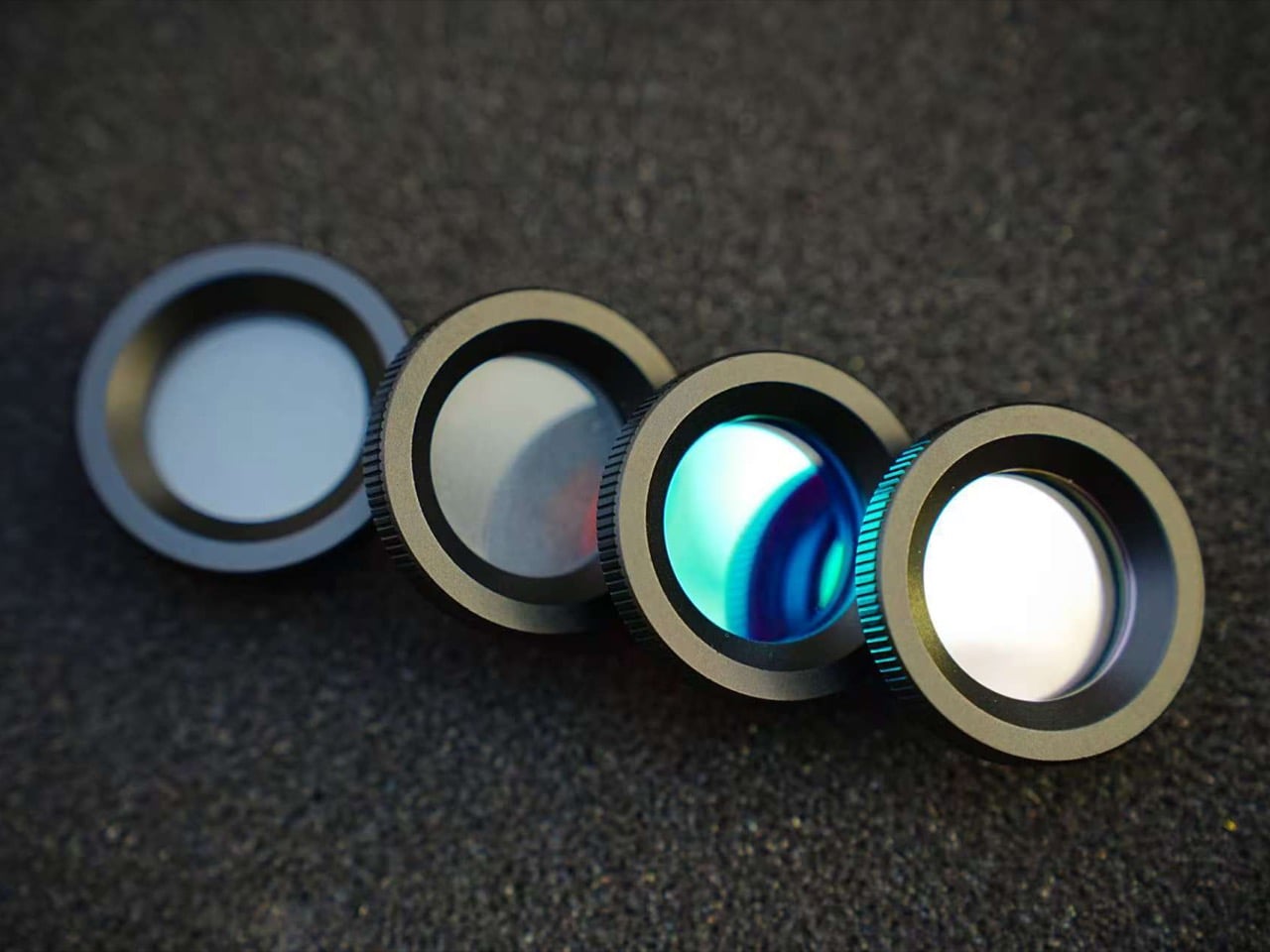
Built from aerospace-grade aluminum machined from a single block, the DL700 weighs 1,032 grams and handles abuse that would destroy lesser lights. The IP68 waterproof rating means complete submersion poses no threat, while the 1-meter drop rating accounts for fumbles in challenging terrain. Interchangeable color filters in red, green, and flood configurations adapt the light for hunting scenarios, search-and-rescue operations, or tactical applications. The carabiner clip integration makes it accessible without digging through your pack when darkness catches you mid-trail.
What we like
The 2-kilometer beam distance outperforms virtually every portable flashlight available for backcountry use
Dual independent barrels provide backup redundancy and operational flexibility
Swappable color filters eliminate the need to carry multiple specialized lights
Machined aluminum construction survives harsh conditions without compromising structural integrity
What we dislike
The 1,032-gram weight exceeds ultralight backpacking preferences for those counting every ounce
Premium laser-excited phosphor technology comes with a correspondingly premium price point
2. BlackoutBeam Tactical Flashlight
BlackoutBeam delivers 2,300 lumens of raw illumination with a 300-meter throw distance, making it one of the brightest handheld options for backcountry emergencies. The 0.2-second response time eliminates any lag between activation and full brightness, critical when you need immediate visibility or must signal for help. The industrial aluminum body construction balances durability with weight considerations, maintaining IP68 water and dust resistance that protects internal components from backcountry elements. Five distinct modes, including three brightness levels, strobe, and pinpoint, provide tactical flexibility for different scenarios.
The dual power system separates BlackoutBeam from single-battery competitors. The built-in 3,100mAh lithium-ion battery recharges via USB, but when you’re days from any outlet, the ability to swap in two emergency CR123A batteries ensures you’re never without light. The strobe mode works for emergency signaling or disorienting wildlife encounters, while the pinpoint mode conserves battery when you only need to check map details. The flashlight’s sleek design avoids the overtly tactical aesthetic that feels out of place on recreational backcountry trips.
The 2,300-lumen output provides exceptional brightness for search, rescue, and emergencies
Dual power options with USB rechargeable and backup CR123A batteries eliminate dead-battery anxiety
The 0.2-second response time delivers instant illumination without delay
Five different modes adapt to varied backcountry lighting requirements
What we dislike
Maximum brightness drains battery quickly, requiring careful power management on extended trips
The high lumen output may be excessive for routine camp tasks
3. TriBeam Camplight
The award-winning TriBeam Camplight brings three distinct lighting modes into one compact 135-gram package that measures just 12.8cm tall. The 3-in-1 design switches between camping, ambient, and flashlight modes with a single intuitive button, adapting from a gentle 5-lumen glow for reading in your tent to a powerful 180-lumen beam for trail navigation. The adjustable brightness range provides precise control over battery consumption, with the lowest settings delivering up to 50 hours of continuous use on a single charge. This versatility makes it equally suitable for intimate cabin evenings and technical night hiking.
The magnetic lampshade attachment transforms the beam quality instantly, softening harsh direct light into a diffused glow that creates a comfortable campsite ambiance. When navigation demands focused illumination, simply remove the magnetic shade, and the flashlight mode cuts through darkness effectively. The hidden handle tucks away seamlessly when not needed but deploys for hanging from tent loops, tree branches, or pack straps. IPX6 water resistance handles rain and splashes without concern, while the 3,100mAh lithium battery supports extended backcountry trips. USB-C charging ensures compatibility with modern power banks and solar chargers.
Three distinct lighting modes in one compact device eliminate the need for multiple lights
The 50-hour maximum runtime on low settings supports multi-day trips without recharging
Magnetic lampshade attachment and a hidden handle provide mounting versatility
At 135 grams and 12.8cm, it qualifies as truly packable gear
What we dislike
The 180-lumen maximum brightness falls short of high-output flashlights for long-distance visibility
Magnetic attachments can collect metal debris in dusty backcountry conditions
4. Olight Baton 4 with Premium Charging Case
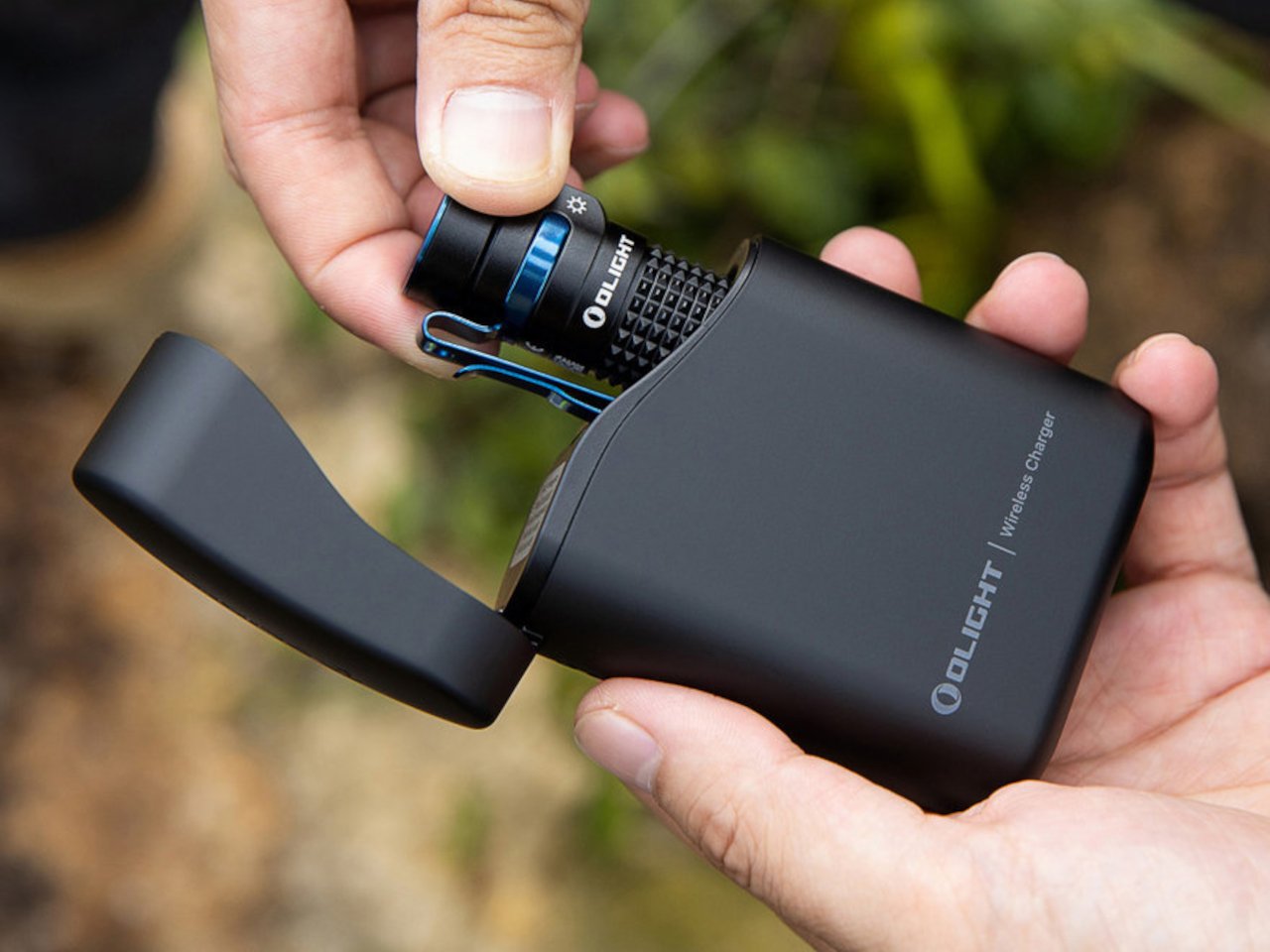
The Olight Baton 4 Premium Edition centers around its innovative 5,000mAh flip-top charging case that transforms how you interact with EDC flashlights. The case stores and charges the flashlight, but the standout feature allows you to flip open the cover, press the side button, and activate the 1,300-lumen light while it remains secured inside. This design eliminates fumbling in the darkness and speeds response time during emergencies. The charging case fits easily in jacket pockets or pack hip belts, keeping the flashlight accessible and charged simultaneously throughout your backcountry journey.
The Baton 4 flashlight itself delivers 1,300 lumens with a 170-meter throw distance in a compact cylindrical form factor. Small LED indicators display brightness level and remaining battery charge, removing guesswork about available runtime. The flashlight’s compact dimensions make it unobtrusive as an everyday carry item that transitions seamlessly into backcountry use. The charging case works with compatible Olight flashlights beyond just the Baton 4, adding value if you already own other models in their lineup. One-handed case operation means you can keep your other hand on trekking poles or maintain your grip on technical terrain.
What we like
The 5,000mAh charging case keeps the flashlight powered for extended trips without electrical access
Flip-top design with in-case activation speeds deployment in critical moments
LED indicators provide clear battery status information
The compact case design makes it practical for everyday pocket carry
What we dislike
The 1,300-lumen output and 170-meter throw are moderate compared to higher-powered options
The system requires carrying the case for the charging benefit to remain relevant
5. CasaBeam Everyday Flashlight
CasaBeam bridges emergency preparedness and intentional design with its 1,000-lumen beam and dual-mode functionality that converts from a handheld flashlight to an upright lantern. The minimalist form factor looks appropriate displayed on a bookshelf rather than hidden in a drawer, encouraging you to keep it accessible where you’ll actually use it. The 200-meter beam distance handles outdoor paths and large rooms with equal capability, while the twist-to-zoom front toggles between focused spotlight and wide floodlight distribution. This adaptability suits varied backcountry scenarios from distant trail scanning to close-range camp setup.
Standing the flashlight upright activates lantern mode, providing hands-free illumination for cooking, gear organization, or evening reading without rigging hanging systems. Five modes, including three brightness levels and two SOS settings, offer precise control over both light output and battery consumption. The 2,600mAh lithium-ion battery delivers up to 24 hours on low settings, rechargeable via USB-C for compatibility with solar panels and portable power banks. The charging port hides beneath the zoom head, protecting it from dust and moisture while maintaining the clean design aesthetic. A built-in yellow loop provides hanging options from tent peaks or tree branches when elevation improves light distribution.
The dual flashlight-lantern functionality eliminates carrying separate devices for different lighting needs
Twist-to-zoom adjustability adapts beam focus for specific tasks
The 24-hour maximum runtime supports multi-day use between charges
Award-winning design makes it attractive enough to keep easily accessible
What we dislike
The 1,000-lumen output is adequate but not exceptional for long-distance visibility
Lantern mode requires flat ground or stable surfaces to stand upright effectively
6. Portable Fire Pit Stand
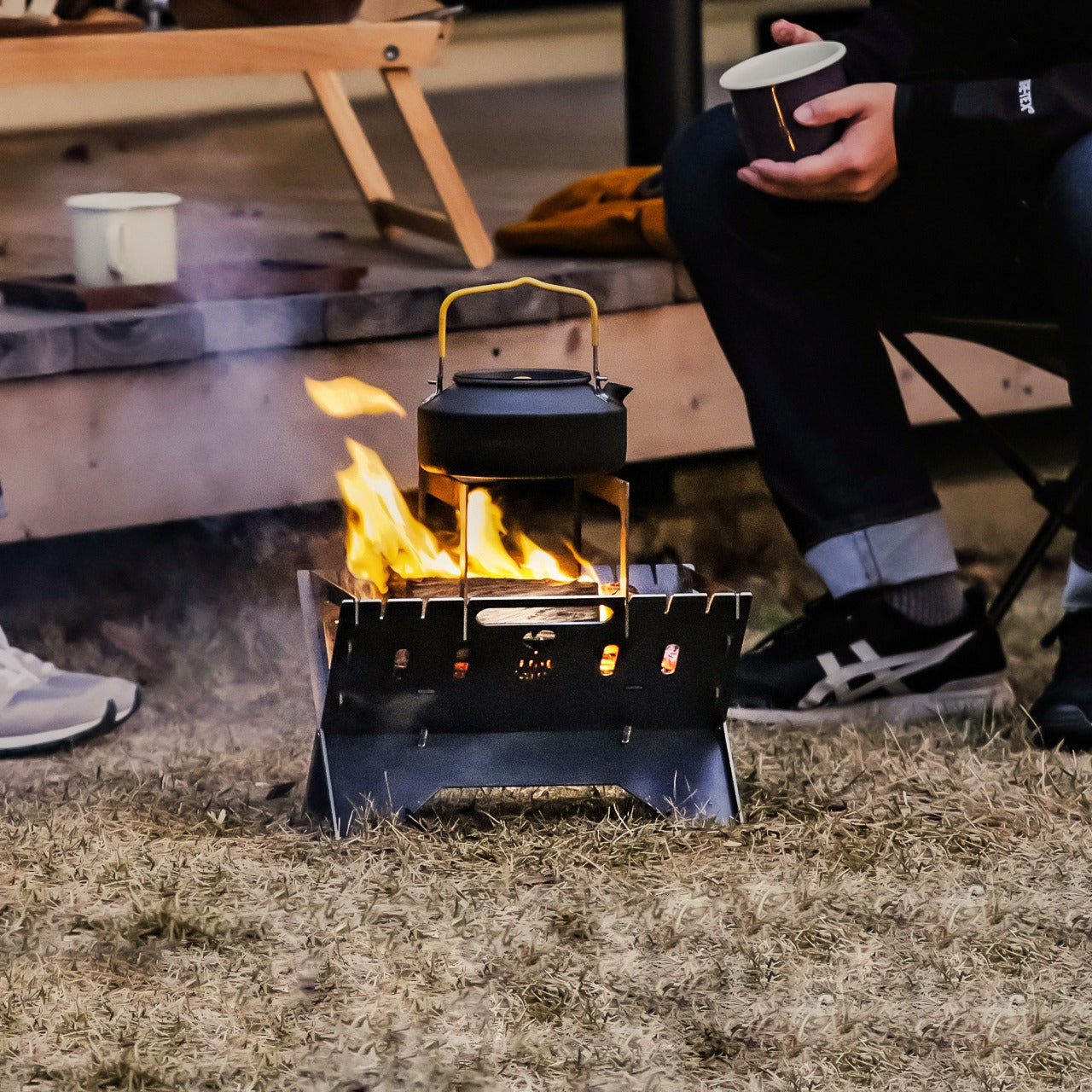
While not a traditional flashlight, the SANYO Portable Fire Pit Stand provides essential backcountry lighting through controlled fire, offering warmth and illumination simultaneously. The puzzle-like metal assembly breaks down into flat components that pack efficiently, eliminating the bulk associated with rigid fire pit designs. Special sheet metal technology prevents warping and distortion from repeated heating cycles, maintaining structural integrity across seasons of use. The distinctive industrial aesthetic comes from functional cutouts and holes that serve the dual purpose of visual interest and optimized airflow for efficient combustion.
Removable trivets expand cooking versatility beyond simple flame-based heating, supporting grilling, frying, and various preparation methods that turn the fire pit into a complete outdoor kitchen. The elevated design protects ground vegetation and reduces fire scar impact in backcountry campsites where Leave No Trace principles matter. The black steel plate construction offers durability against weather exposure and rough handling during transport. The stand’s open design allows you to monitor fuel levels and adjust burning materials easily, controlling flame size and heat output based on your lighting and warmth requirements throughout the evening.
The disassembled flat pack design stores efficiently in backpacks or vehicle storage
Removable trivets support diverse cooking methods beyond basic fire
Warp-resistant steel maintains structural integrity through repeated heating cycles
Elevated design minimizes environmental impact on backcountry campsites
What we dislike
Fire-based lighting requires fuel gathering and appropriate weather conditions to function effectively
Metal components add weight compared to traditional lightweight camp stoves or LED alternatives
7. Wuben G5 EDC Flashlight
The Wuben G5 achieves remarkable portability with its lighter-sized form factor that slips into pockets without adding noticeable bulk or weight. The built-in adjustable clip and strong magnetic base provide multiple mounting options when your hands need freedom for technical tasks. You can attach it magnetically to vehicle frames, tent stakes, or cookware, positioning the light exactly where needed without constructing elaborate hanging systems. The included lanyard adds another tethering option, preventing drops during tricky maneuvers and keeping the flashlight accessible on your person.
The compact design required trade-offs compared to Wuben’s larger X2 Pro series, eliminating the sidelight feature and electronic battery display to achieve the reduced dimensions. Despite the smaller size, the G5 delivers sufficient illumination for navigation, camp tasks, and emergencies where having any light matters more than maximum brightness. The flexible clip-on mechanism adjusts to various attachment points and materials, adapting to whatever gear you need to mount it on. For minimalist backpackers and ultralight enthusiasts, the G5’s tiny footprint makes it an effortless addition that doesn’t force compromises with other essential gear.
What we like
The pocket-sized dimensions and light weight make it genuinely unobtrusive for everyday carry
Adjustable clip and magnetic base provide versatile hands-free mounting options
The lanyard attachment prevents loss during challenging activities
Compact design doesn’t demand dedicated pack space
What we dislike
Reduced size means lower lumen output compared to full-sized flashlight options
Eliminating the sidelight and electronic battery display removes useful features present in larger models
8. Tomori Lantern Kit
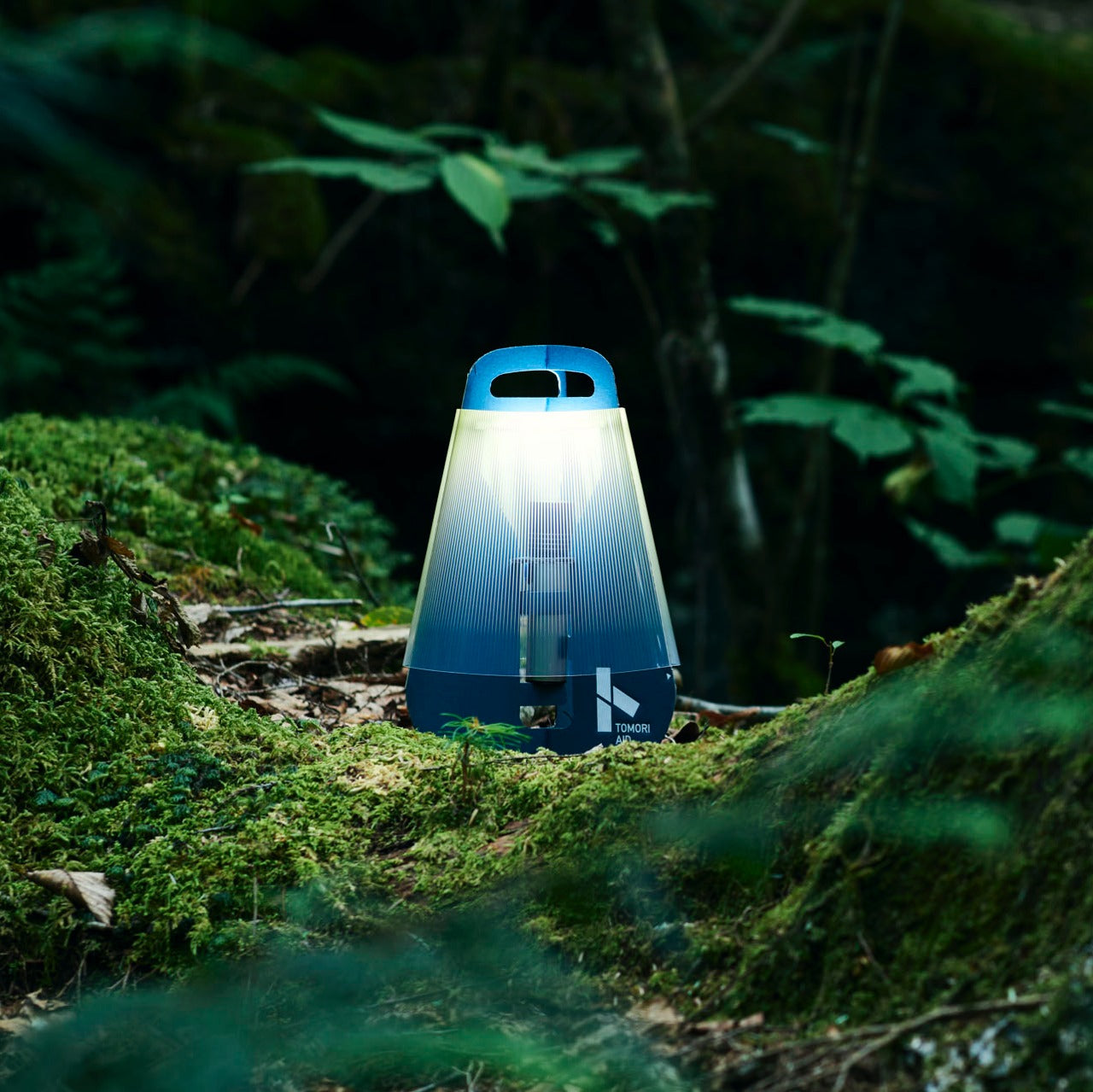
The Tomori Lantern Kit solves the storage challenge that keeps many people from maintaining emergency lighting in vehicles, offices, and multiple locations. Collapsing to A4 paper size, the kit fits into drawers, glove compartments, and backpack side pockets where bulky lanterns cannot. The sturdy cardboard base works with any standard LED flashlight that fits its clamps, eliminating dependence on proprietary bulbs or specific lamp models. This universal compatibility means you can use flashlights you already own rather than investing in dedicated lantern systems.
The polypropylene plastic cover diffuses harsh direct beams into softer, more pleasant ambient light that creates a comfortable atmosphere in tents, emergency shelters, or indoor spaces during power outages. Setup and collapse require no tools, power sources, or charging cables—you simply clamp your flashlight into the base and position the diffuser cover. The lightweight construction adds minimal weight, while the collapsed profile means you can stash multiple kits in different locations without space concerns. The included flashlight ensures the kit works immediately out of the package, though the real value comes from the ability to use it with various lights you may already carry.
A4-sized collapsed dimensions make it practical to store in multiple locations
Universal flashlight compatibility works with lights you already own
Cable-free operation requires no charging or electrical access
Lightweight cardboard and plastic construction add negligible weight to emergency kits
What we dislike
Cardboard construction is less durable than hard-shell lanterns for repeated rough handling
Diffused light output depends entirely on the brightness of the flashlight you insert
9. Airflow 8-Panel Fire Pit
The Airflow Fire Pit brings sophisticated combustion engineering to backcountry campfires through its removable eight-panel design. The unique panel system creates an eight-sided cylinder optimized for secondary combustion, dramatically reducing smoke output while increasing heat efficiency. Strategic holes at panel bottoms channel fresh air directly to the fire base for primary combustion. As this air heats, it rises through the double-walled panel cavity and expels from the top holes, igniting gases and particulates that would normally become smoke. The result is cleaner burning that improves both air quality and nighttime visibility around your campsite.
The adjustable panel system provides unprecedented fire control. Installing all eight panels maximizes secondary combustion for high-intensity heat, ideal for cooking or cold-weather warmth. Removing panels reduces combustion intensity, creating more traditional open fire aesthetics when you prioritize ambiance over maximum heat output. This flexibility adapts to different backcountry scenarios and personal preferences throughout the evening. SANYO Works drew on extensive metal processing expertise to engineer panels that withstand repeated heating without degradation. The optimized airflow design also simplifies cleanup since more complete combustion leaves less residue and unburned material. For backcountry campers who value fire as both light source and social centerpiece, the engineering refinement elevates the entire experience.
The secondary combustion system dramatically reduces smoke for cleaner burning
Adjustable eight-panel design provides control over fire intensity and heat output
Complete combustion improves efficiency and simplifies ash cleanup
Durable engineering maintains performance across seasons of use
What we dislike
Panel-based design adds weight and bulk compared to minimalist fire solutions
Secondary combustion requires proper assembly and fuel management to achieve optimal results
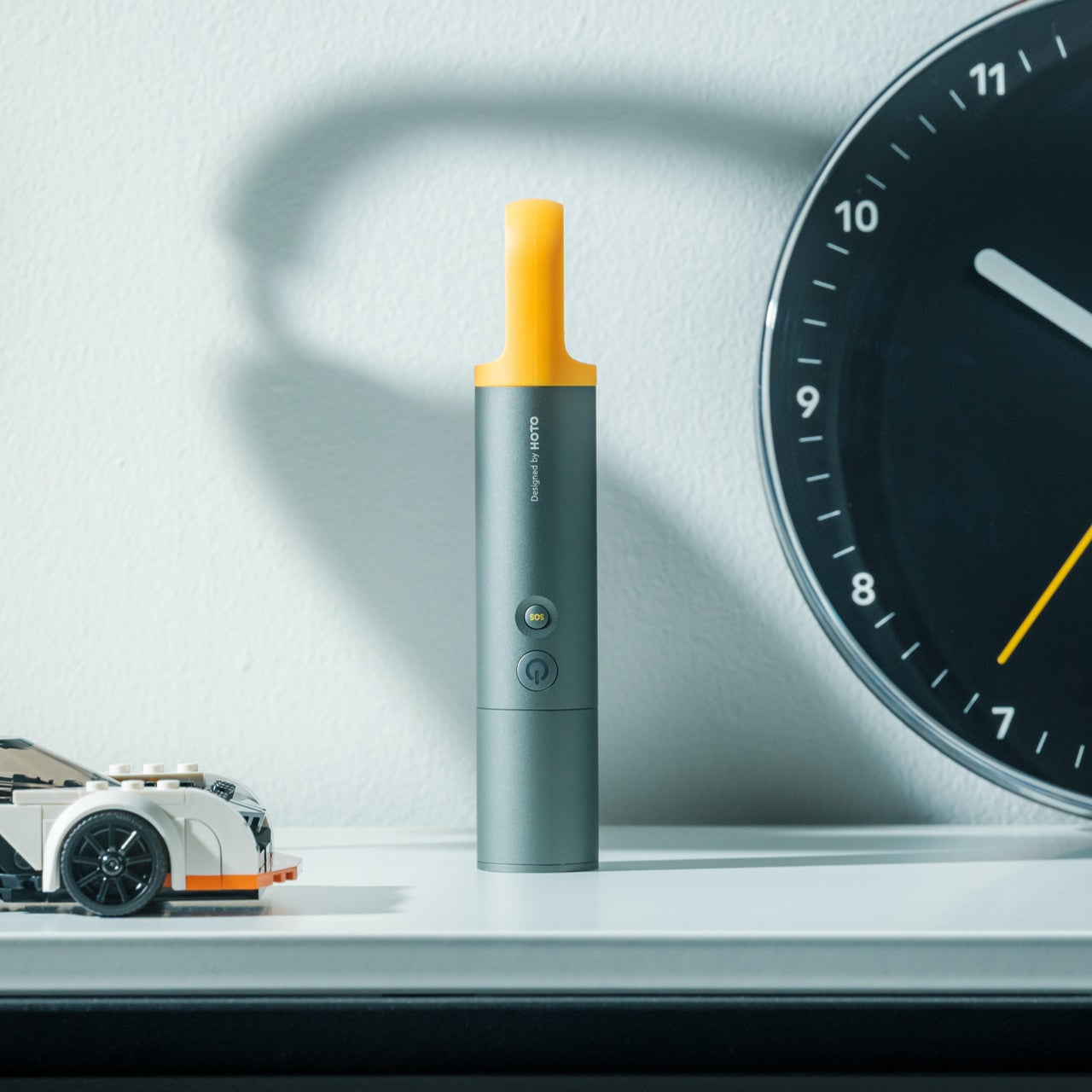
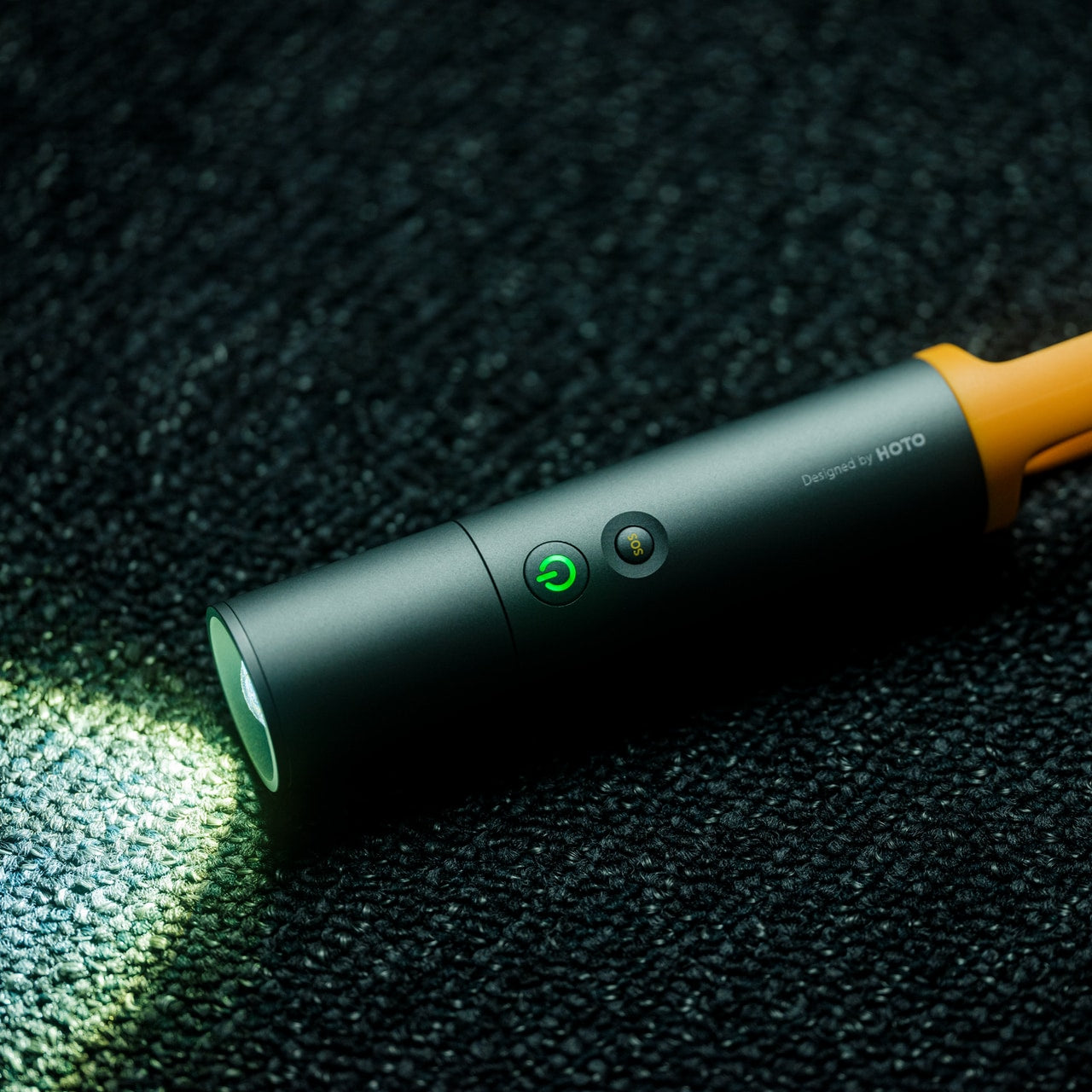
10. HOTO Flashlight Duo
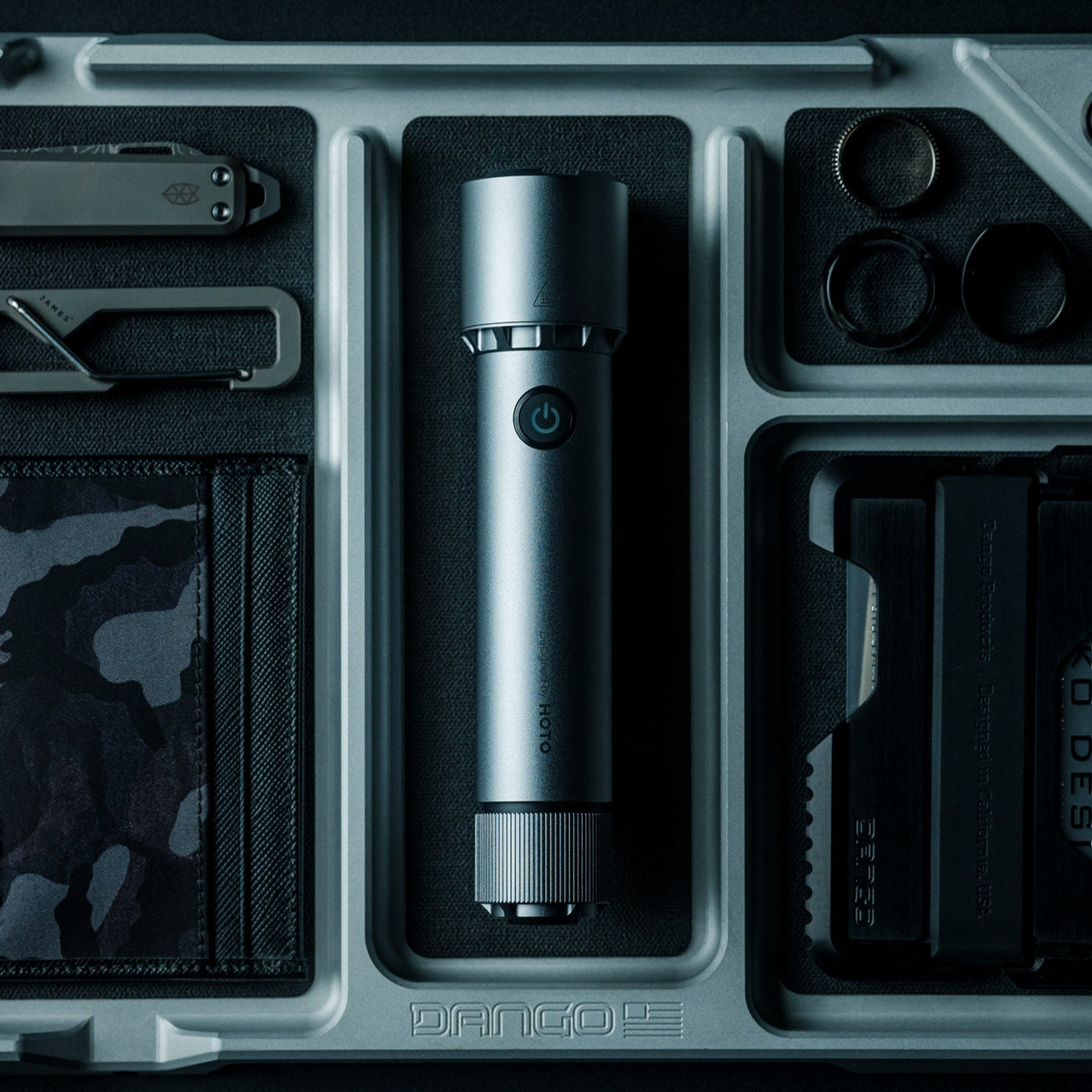
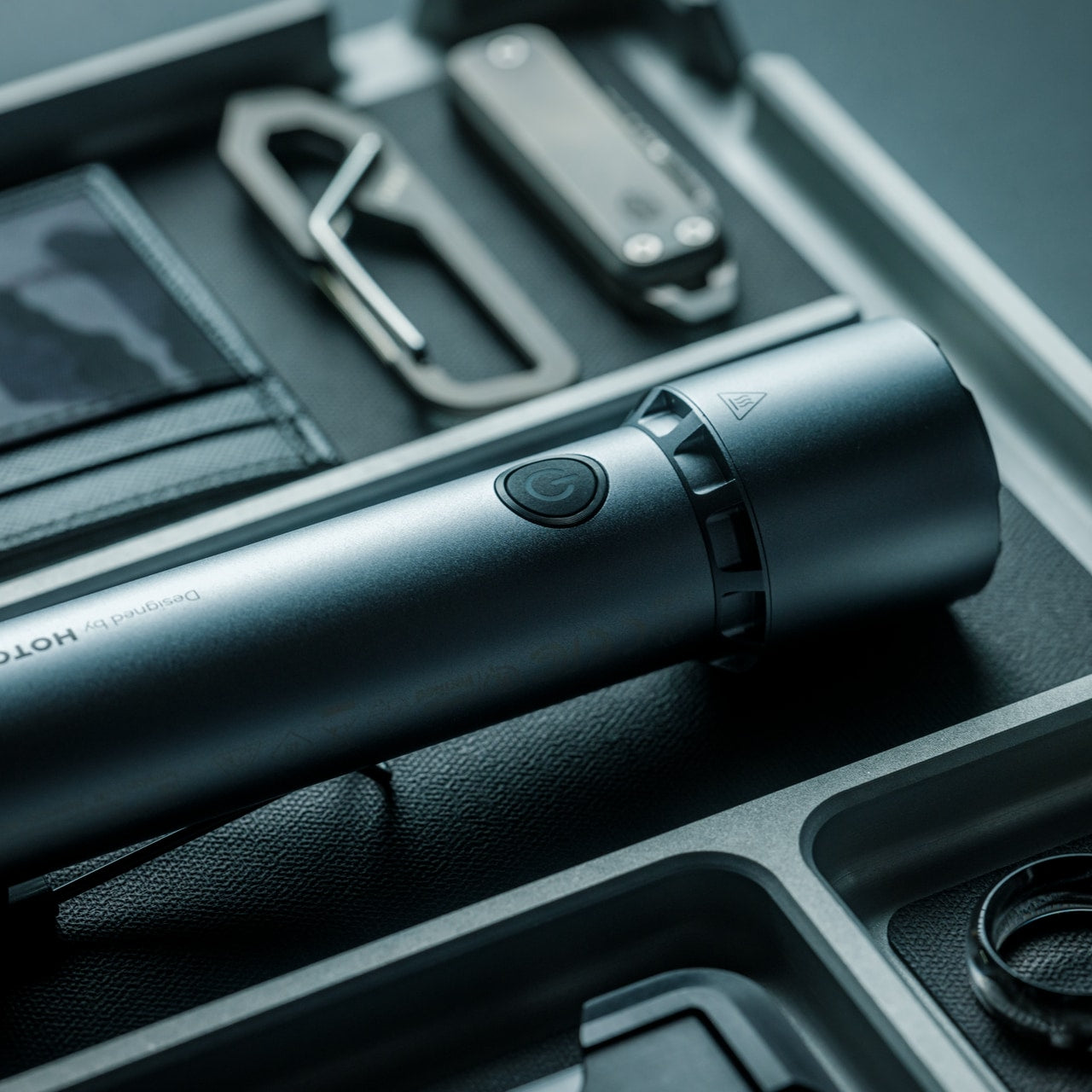
The HOTO Flashlight Duo addresses the varied lighting needs that emerge during camping through multiple modes and attachment options. A retractable magnetic hook, strap, and magnetic base ensure you can position the light appropriately for any situation without improvising precarious setups. The hands-free capability lets you focus on intricate camp tasks like tent repairs, meal preparation, or gear organization without holding a flashlight in your mouth or propping it awkwardly against unstable surfaces. Magnetic attachment to vehicles, cookware, or metal tent stakes provides secure positioning that stays put even in windy conditions.
The secondary sidelight covered in milky white plastic enables distinct lighting modes beyond the primary beam. Twisting the Mode Switching Head toggles between Mood Light, Functional Light, and Flashlight Mode, providing 13 different light combinations that adapt to specific camping needs. The simple interface using just a knob and button keeps the operation intuitive even when you’re exhausted after a long day on the trail. Mood lighting creates a comfortable evening ambiance for relaxing at camp, functional light supports task work requiring close-range visibility, and traditional flashlight mode handles navigation and distance viewing. The thoughtful design integration makes the Duo genuinely versatile rather than awkwardly multi-functional.
What we like
Retractable magnetic hook, strap, and magnetic base provide extensive mounting flexibility
Thirteen different light combinations through three primary modes adapt to varied camping scenarios
Simple knob and button interface remains intuitive during fatigue or stress
Secondary sidelight adds genuinely useful functionality beyond standard flashlights
What we dislike
Multiple features and modes increase complexity compared to single-purpose flashlights
The versatile design may add weight and size beyond minimalist requirements
Choosing Light for the Long Haul
Backcountry lighting in 2025 reflects a maturation of outdoor gear design where form and function converge without compromise. The flashlights and lighting solutions featured here demonstrate that portability no longer requires sacrificing power, versatility, or durability. Whether you prioritize ultralight minimalism, maximum brightness, or adaptive functionality, current offerings provide legitimate solutions rather than forcing uncomfortable trade-offs between competing priorities that matter in challenging environments.
The best lighting choice depends on your specific backcountry activities, trip duration, and personal preferences around weight versus capability. Extended expeditions far from resupply benefit from long-runtime options and dual power systems. Fast-and-light adventures reward compact EDC designs that disappear into pockets. Group camping scenarios make versatile lanterns valuable for shared spaces. Evaluating your typical backcountry patterns helps identify which features matter most when darkness falls, and reliable illumination becomes non-negotiable.