AEG’s IFA 2026 Lineup Is the Backstage Crew Every Home Host Needed

Hosting has become the thing to do again, but nobody said it got any easier. AEG seems to have noticed that gap. At IFA 2026 in Berlin, its Art of Hosting platform argues that appliances shouldn’t work alone. Kitchen, laundry, and cleaning tech should move as one system, clearing friction so the host stays at the table instead of disappearing into the kitchen.

The numbers back up the itch. AEG’s own research found that more than half of Europeans (51%) believe the way people host has changed in recent years, with 36% saying it has become more casual and 27% more personal and individual. Yet 7 in 10 Europeans value hosts who do things their own way, yet 59% still feel pressure to make it “perfect”. That tension is the brief AEG built its IFA showcase around.

Designer: AEG

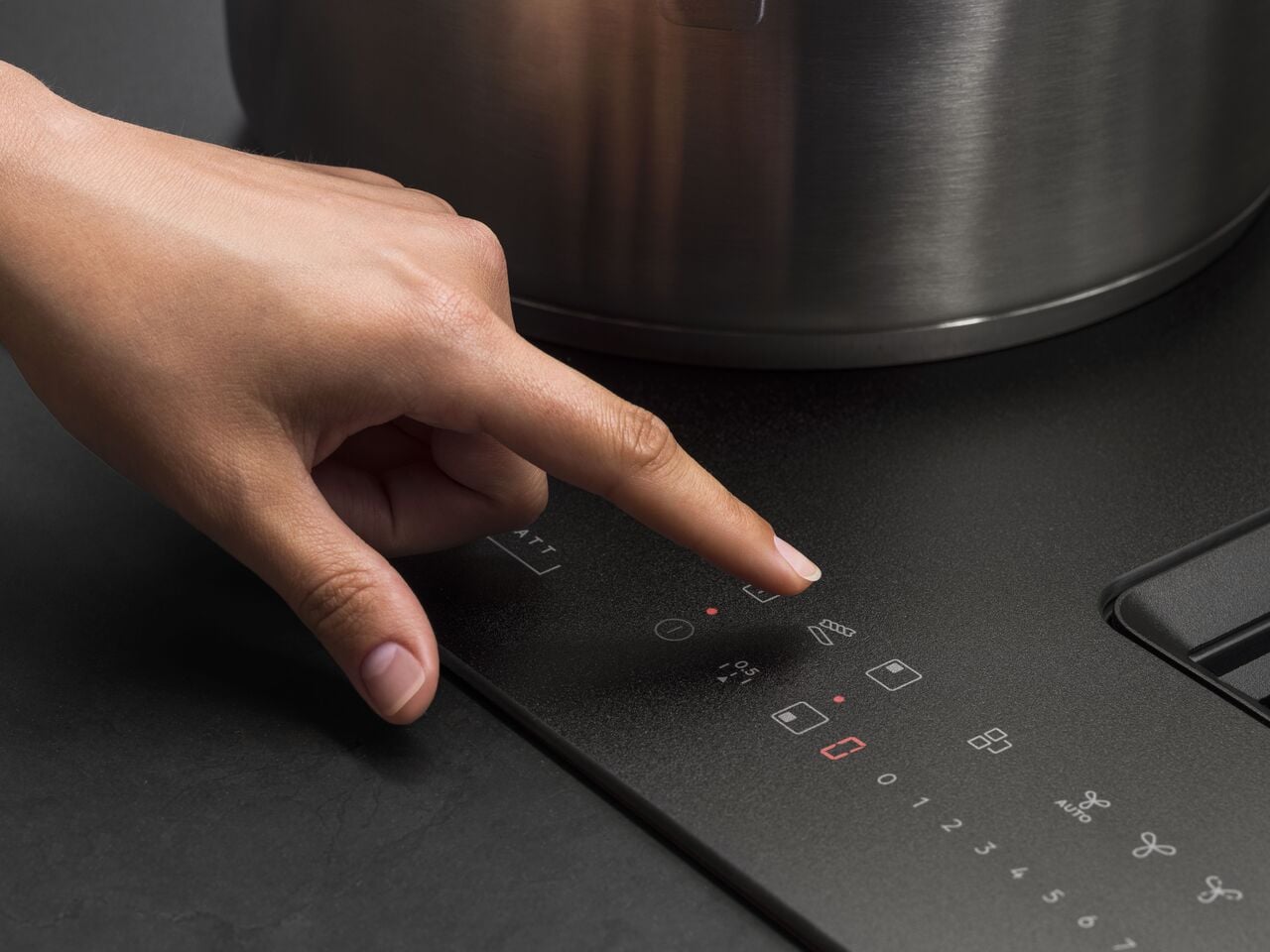
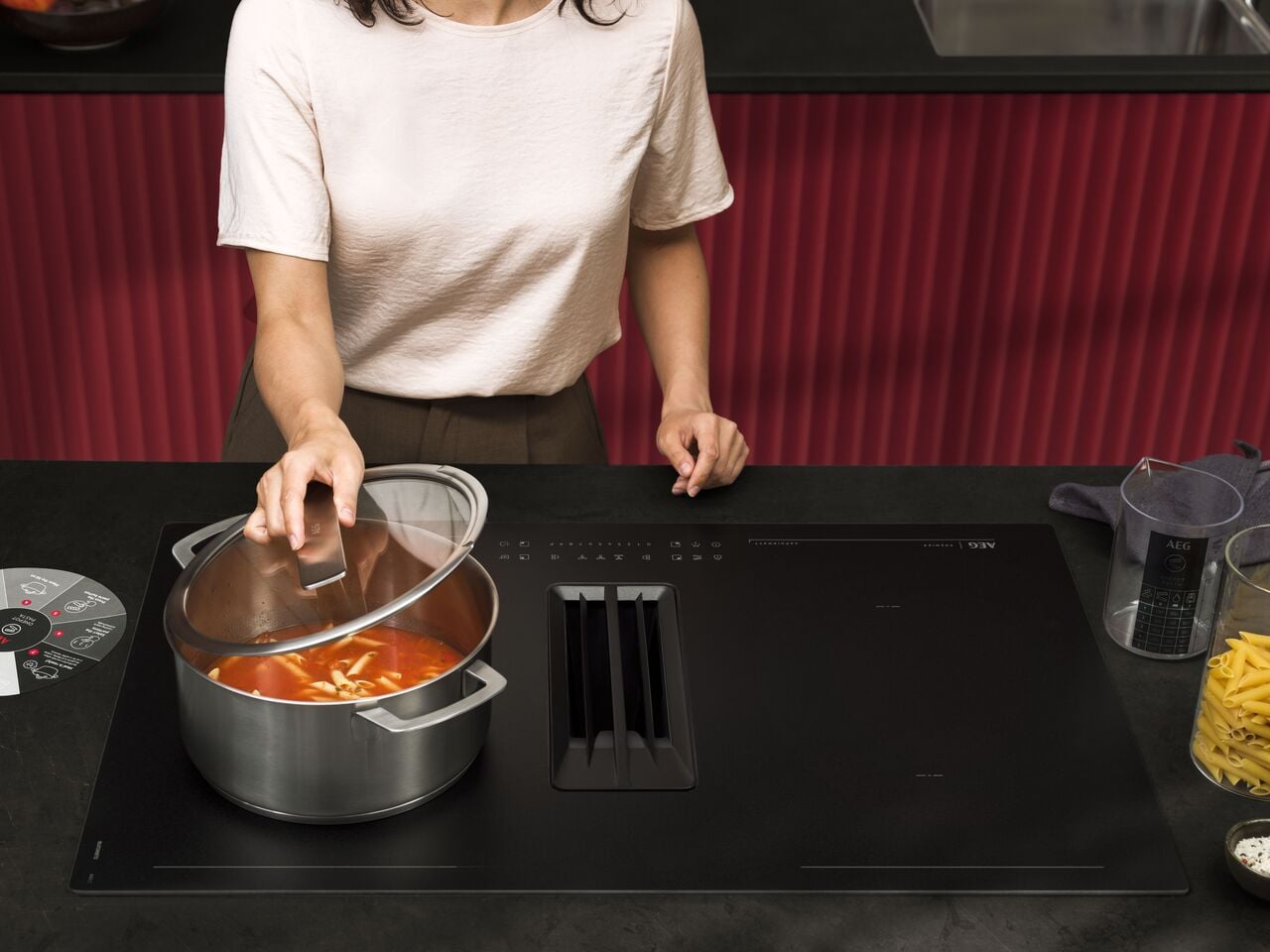
AEG 7000 OnePot Pasta Hob

Rather than parking a wall of appliances on a trade show floor, AEG is running a series of live activations where hosts from disciplines across food, art, fashion and interior design put their own stamp on different occasions. The point isn’t the performance. It’s what sits quietly behind it: ovens, hobs, dishwashers, and washing machines doing the unglamorous work so the food, the table, and the company get all the attention.

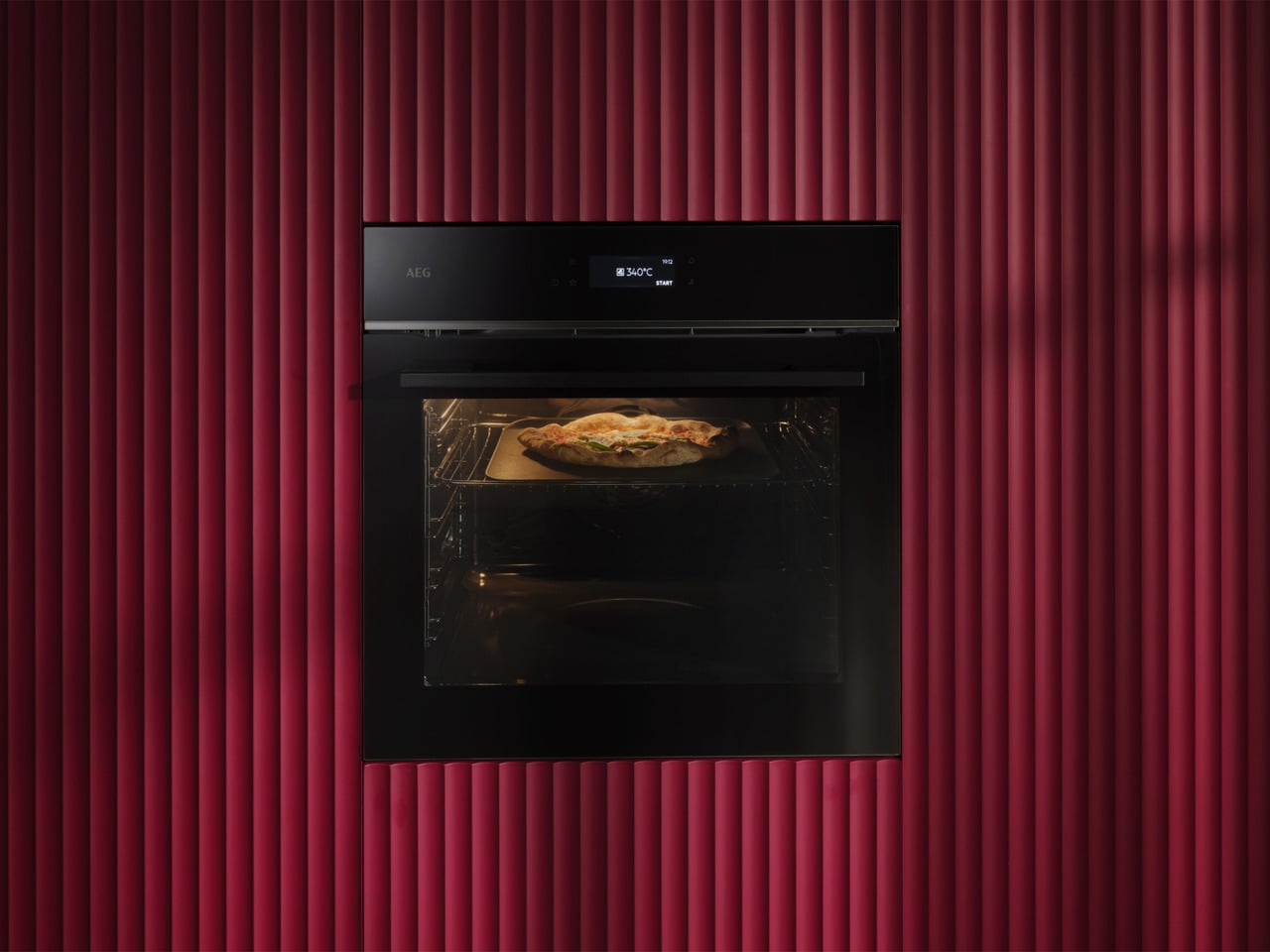
AEG 7000 Oven with PizzaExpert

Take dinner prep. The new AEG 7000 series OnePot Pasta hob answers a problem nobody quite admits to: pasta night stresses people out more than it should. Select the number of portions, add the ingredients to the accompanying pot, close the lid, and in 15 minutes, pasta al dente with a naturally creamy sauce. No constant watching, no guesswork, the hob does the hard work. Its SaphirMatt surface resists scratches too.

AEG 9000 SensePro

For the more ambitious host, the PizzaExpert oven, the only domestic oven validated by Scuola Italiana Pizzaioli to deliver restaurant-quality pizza in just 2 minutes and 30 seconds, turns out pizza faster than most delivery apps confirm an order. Elsewhere, SenseBoil technology automatically detects when water is approaching boiling point and reduces power to maintain a simmer, while the 9000 SensePro uses a wireless food sensor that measures the exact core temperature of food to within a single degree.

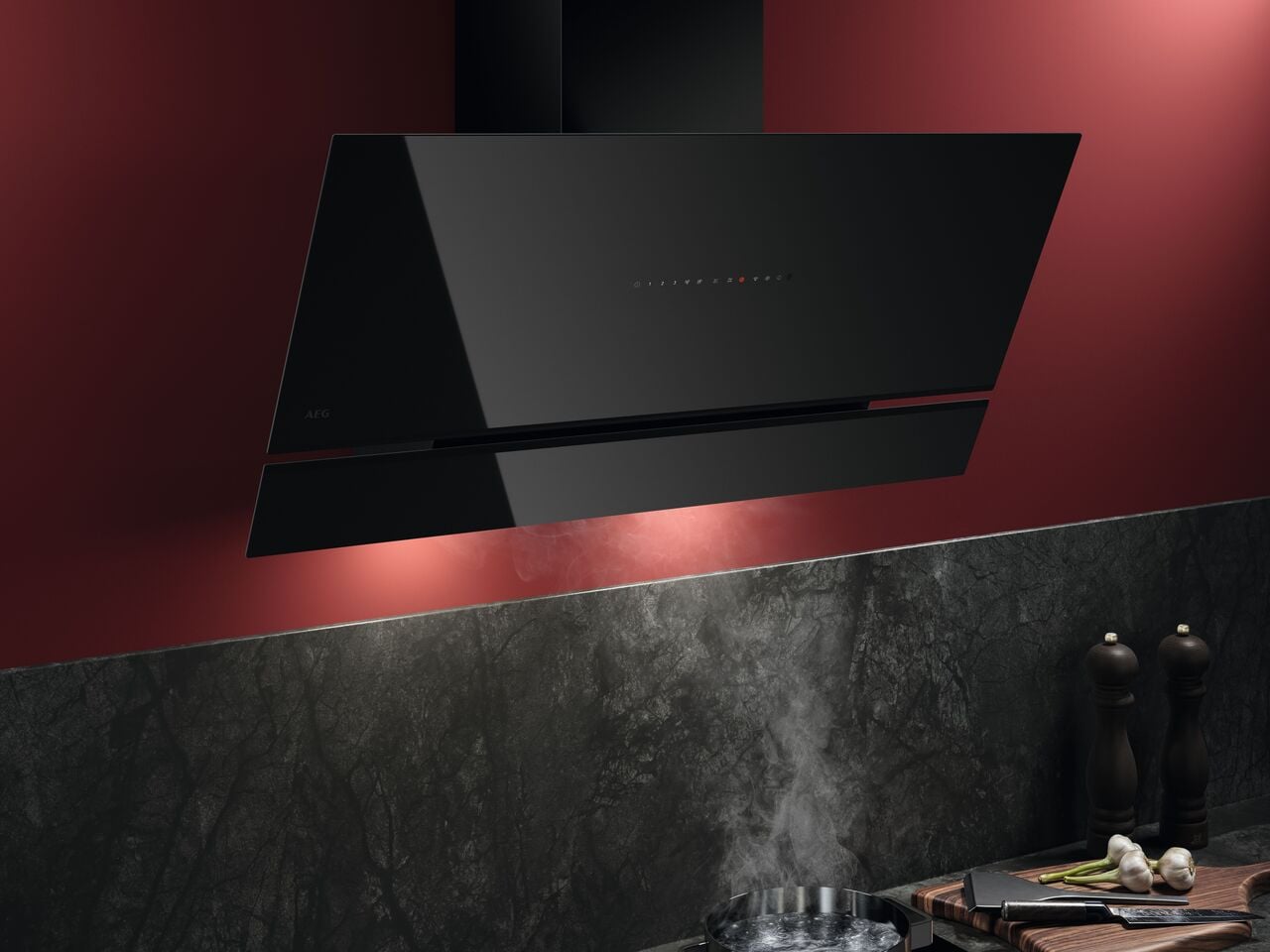
AEG 9000 Series Range Hood

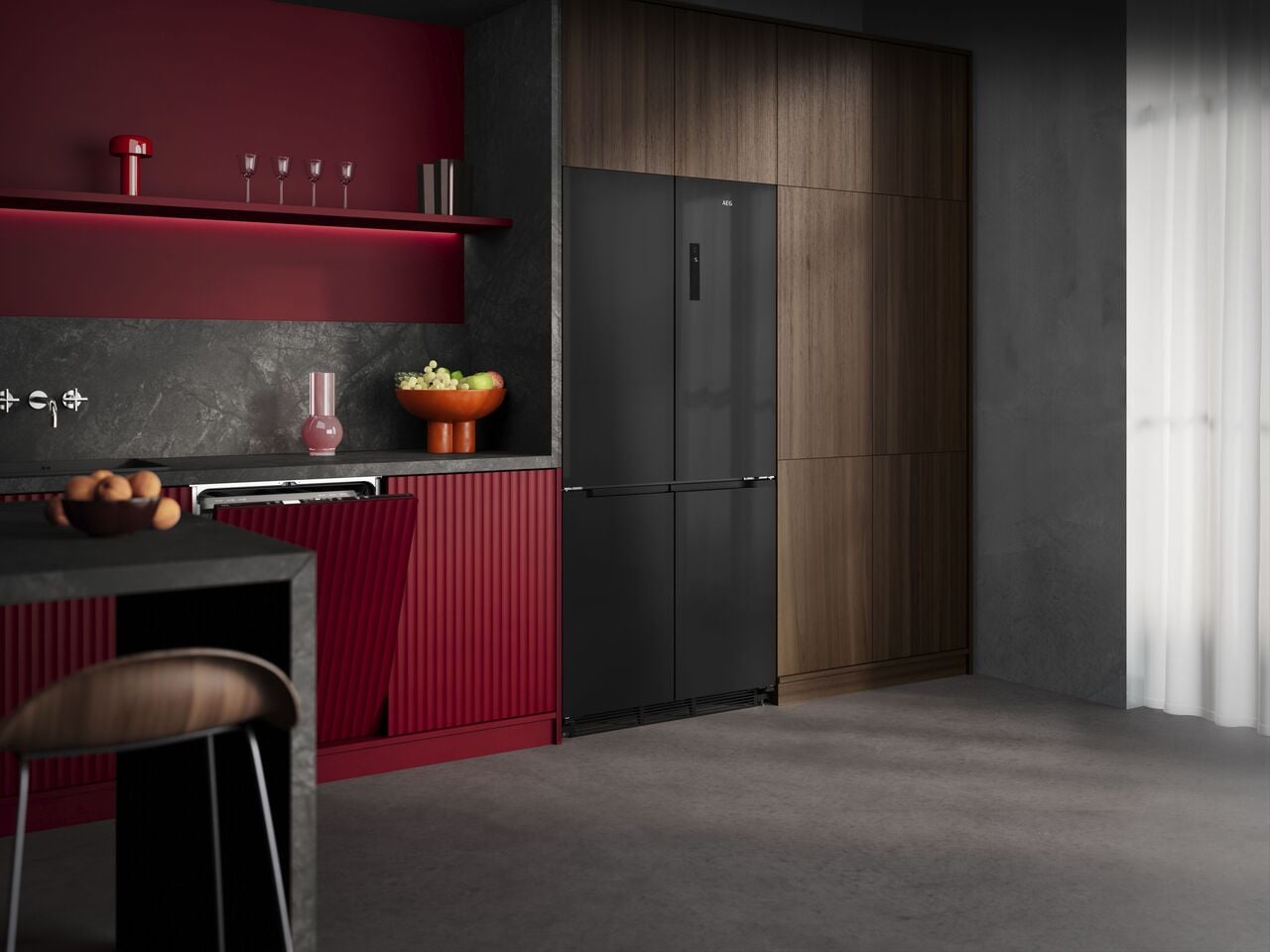
AEG Refrigerator with AI CoolAssist

The kitchen keeps adjusting itself even when nobody’s watching. The 9000 AutoSense Hood uses advanced sensor technology to adapt automatically to the kitchen environment, detecting steam, grease, and odours in real time, while the AI CoolAssist fridge learns usage patterns, saving up to 15% energy. AEG is previewing a new digital sommelier, with roll-out expected in 2027, bringing an advanced level of wine and food pairing into the home straight from its app.

Then there’s the part of hosting nobody romanticizes: cleanup. More than 8 in 10 European dishwasher owners don’t trust their dishwasher to do the job on its own, which is why people still scrub the lasagna dish before it goes in. AEG built the Favorit 8000 and 9000 series around that anxiety. The SatelliteClean Pro delivers 100% removal of stubborn baked-on lasagna residues in a standard 90-minute cycle.

AEG Favorit 9000 Dishwasher

The rest of the range solves smaller but equally familiar headaches. The EasyFlex Pro basket system features fully foldable rows that reconfigure the interior to fit even bulky, hard-to-fit items, while the 4in1 FlexHolder holds stemware and Weiss beer glasses securely without contact or collision. ZoneClean delivers two cleaning intensities in a single cycle: maximum pressure for pots and pans below, reduced pressure for delicates above. The 9000 series also operates at as little as 35dB, disappearing into dinner conversation.

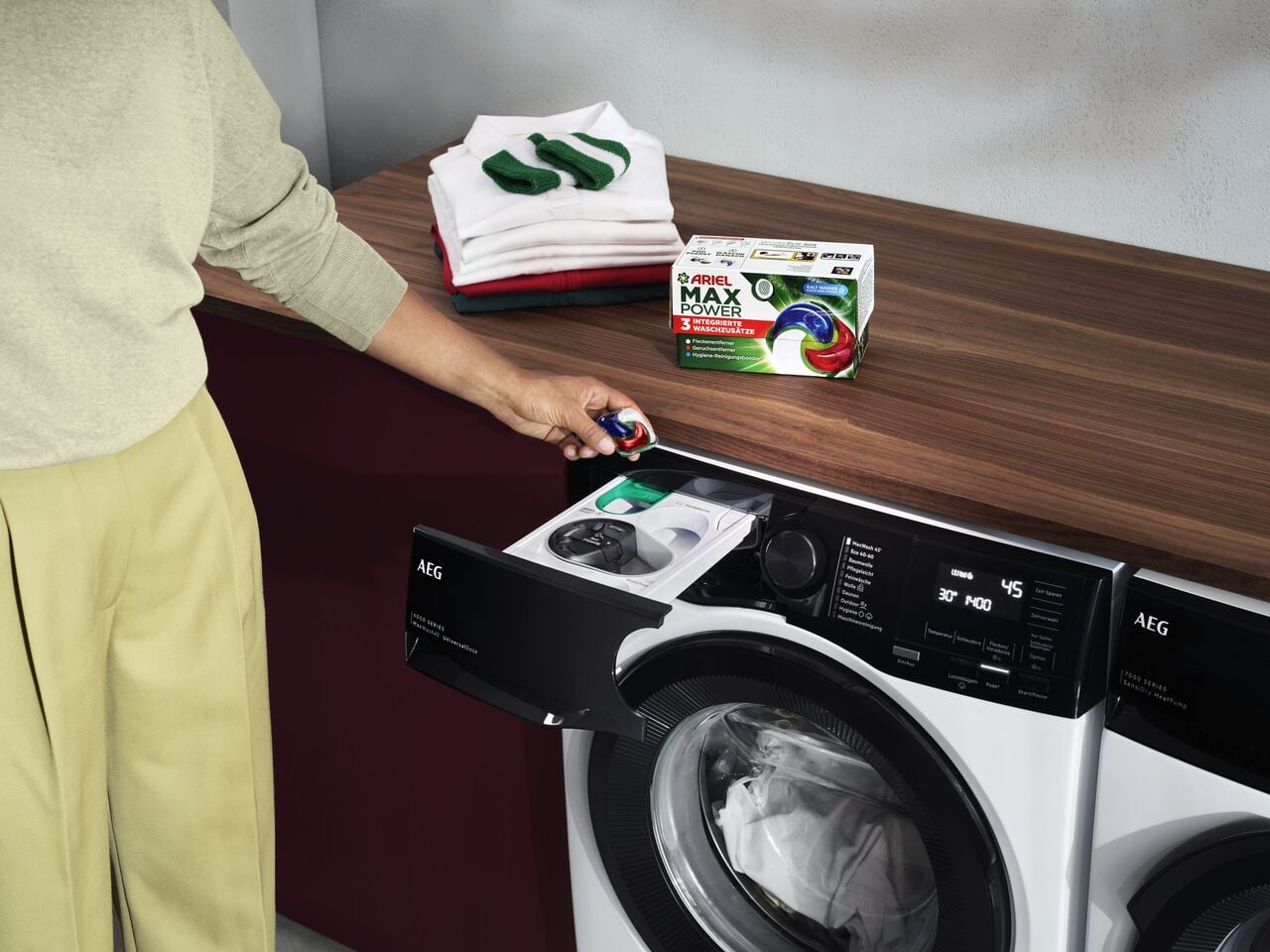
Hosting doesn’t stop once the plates are cleared. Five years of Truth About Laundry research, conducted across 14 European countries, tells a consistent story: Europeans care deeply about their clothes and want to extend the life of their garments, yet confidence in the washing machine remains low. AEG’s Woolmark-certified wool cycles use specially designed drum movements, externally verified to be as gentle on wool fibers as hand washing, so the good tablecloth doesn’t stay folded away.

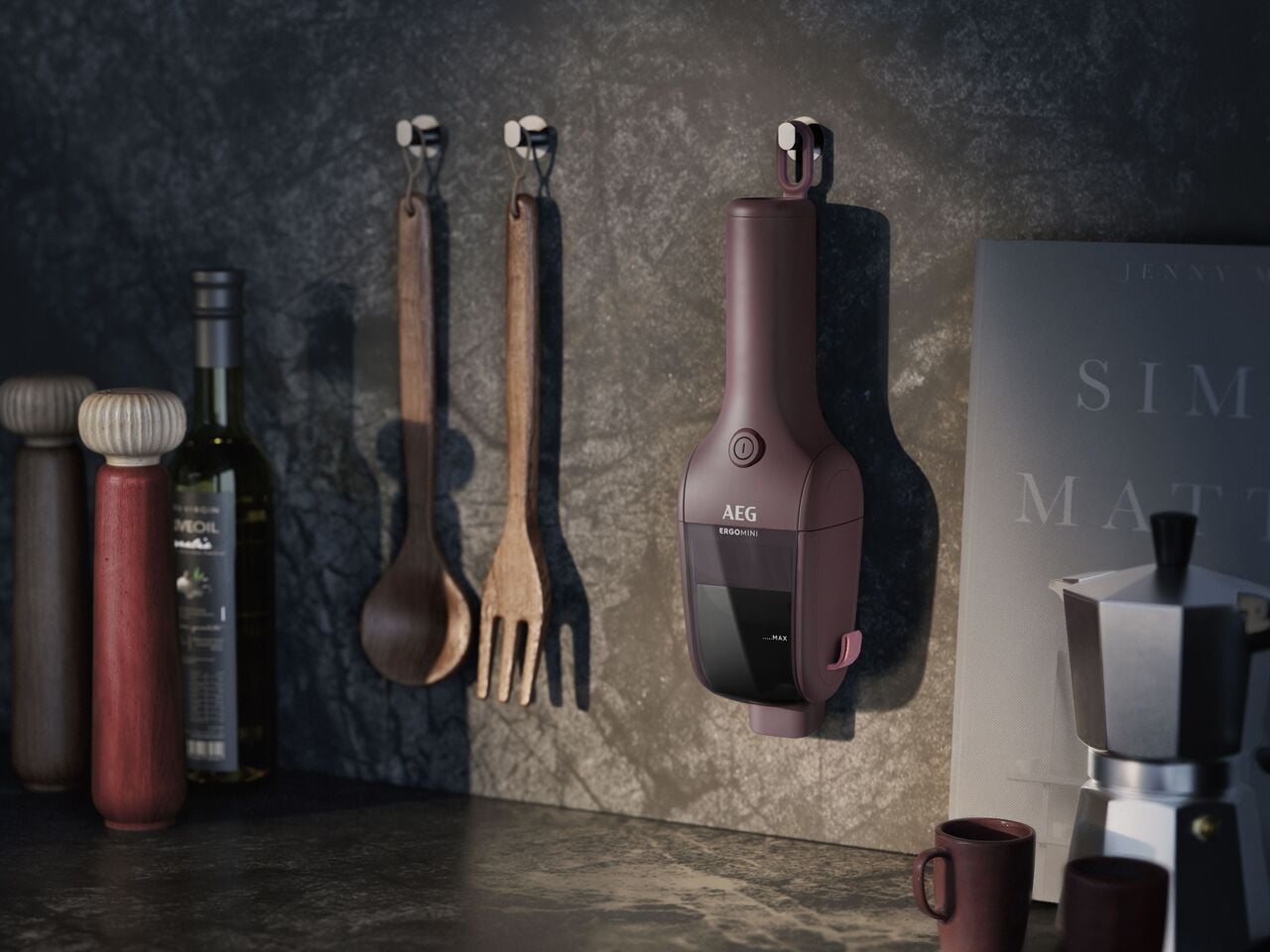
AEG ErgoMini

Speed matters just as much as gentleness when a party’s involved. MaxWash 45′ washes a full load at 30°C (86°F) in just 45 minutes while AI WashAssist automatically adjusts cycle time, water, and energy for smaller loads, reducing them by up to 30%. New this year, IntelliQuick on the AEG 9000 series washer dryer gives consumers the flexibility to wash, dry, or wash and dry in one seamless cycle, adapting automatically: 1kg in 2 hours, 3kg in 3 hours, or up to 5kg in 4 hours.

AEG ErgoMini

Once the guests leave, the floor still needs attention, ideally without anyone lifting a finger. The ultra-thin AEG Trilobite 8000 GEN2 measures 7.89 cm (3.1 in), less than the height of a standard can of drink, and vacuums, mops, self-dries, and delivers up to 40% more suction power than before. For quick spills mid-party, the AEG ErgoMini, weighing 0.55kg (1.2 lb), uses cyclonic technology to separate dust and debris before it reaches the filter.

AEG Trilobite 8000 GEN2

None of these individually would justify a headline, but that’s the point AEG is making at IFA 2026. Hosting isn’t one task, it’s a string of small ones: cooking, serving, cleaning, laundering, resetting, that pile up on one person. When the appliances behind each step do their part, the host gets to spend the evening talking to guests instead of managing a checklist nobody else can see.

The post AEG’s IFA 2026 Lineup Is the Backstage Crew Every Home Host Needed first appeared on Yanko Design.

This $99 Clip-On AI Remembers Everything You’ll Ever Forget

If you live a life full of meetings and conversations, there’s a good chance you’ve forgotten something important that was said to you. Sure, you can take notes or jot things down as you go, but not everyone likes doing that, and not everyone has the time to stop and sort through everything they hear during a busy day.

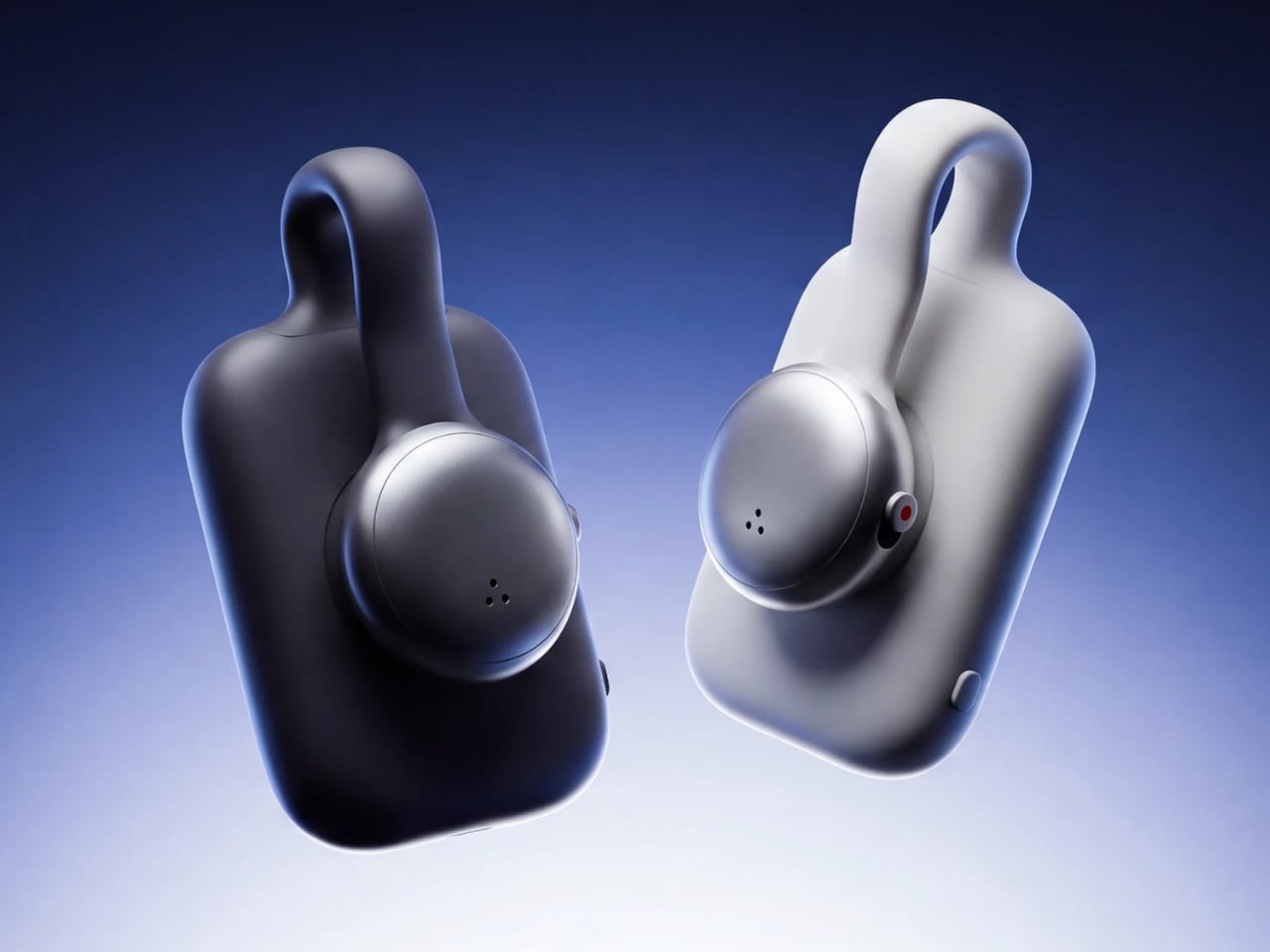
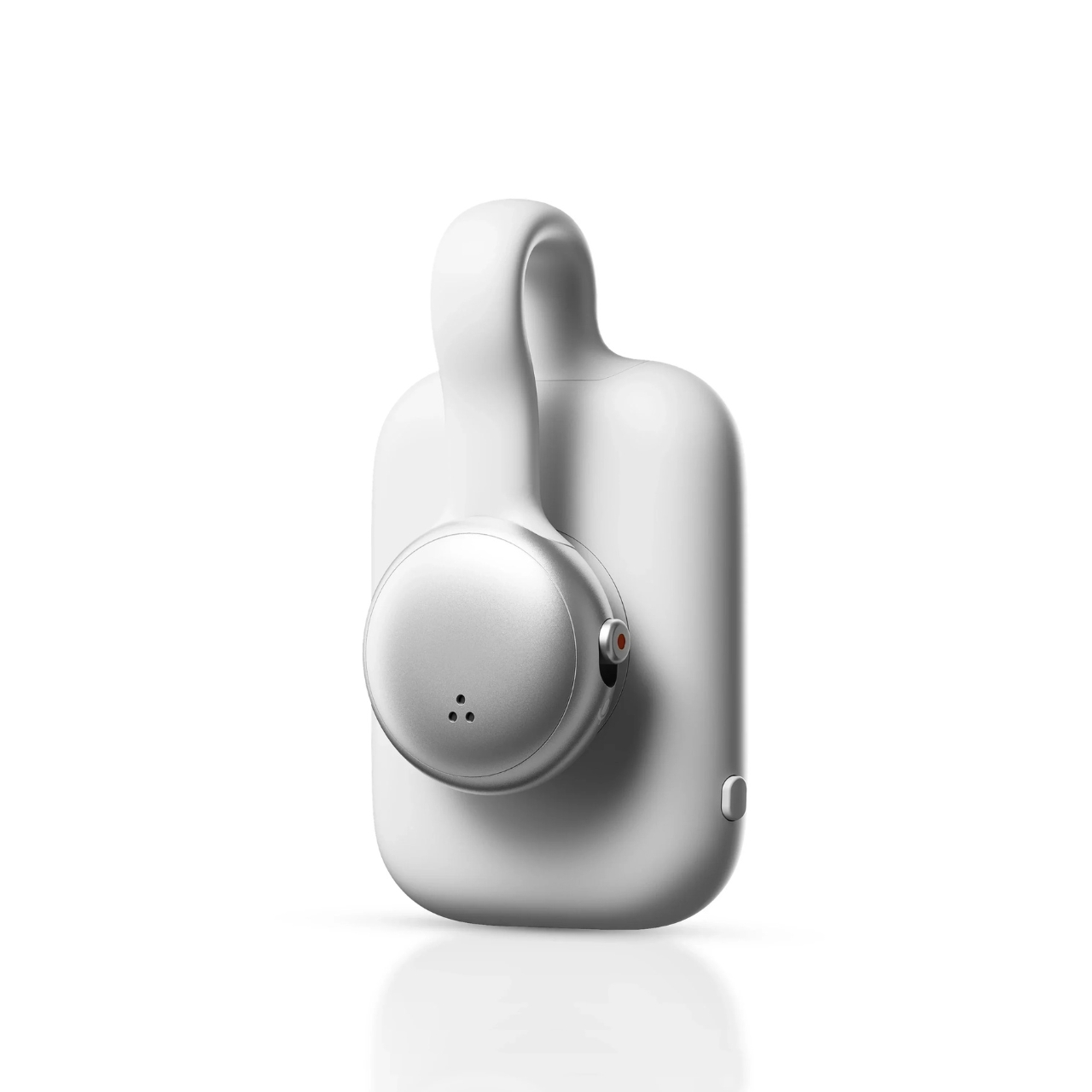
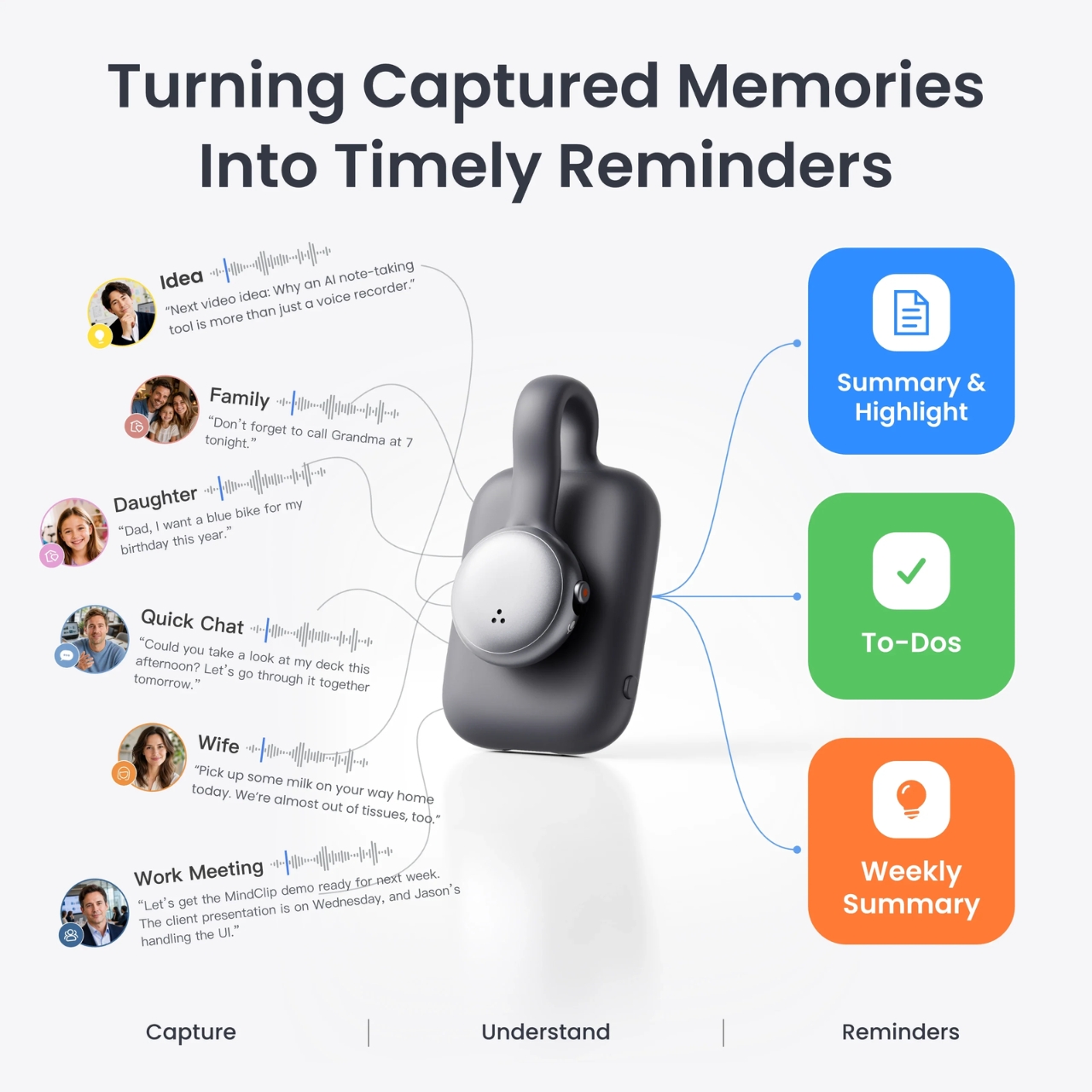
The SwitchBot AI MindClip wants to do the heavy lifting for you by creating a “second brain.” It’s a lightweight, clip-on wearable AI gadget that can record conversations and meetings while also letting you add voice notes whenever inspiration strikes. From there, it automatically transcribes, summarizes, and organizes everything so the information ends up exactly where you need it, whether that’s your calendar, your to-do list, or a searchable archive you can revisit later.

Designer: SwitchBot

Plenty of recording devices already exist, mostly built to capture meetings and interviews. But the MindClip does more than just dump everything into one long audio file. It sorts your recordings into categories like Timeline, Priority, Daily Memory, Weekly Summary, and To-Do Overview. You can even sync it with your calendar and reminder apps, turning those “overheard” details into real, actionable schedules and tasks instead of letting them slip away.

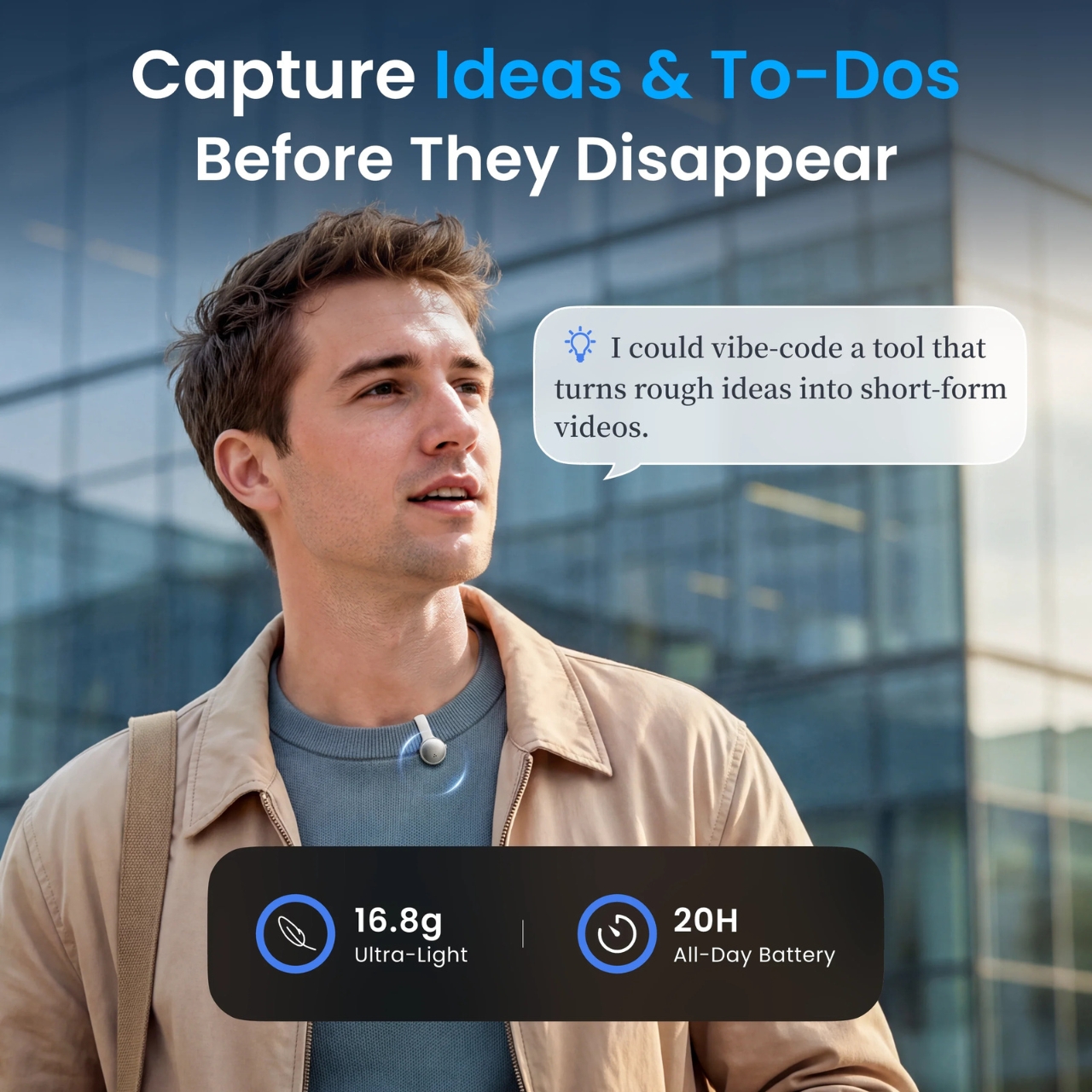
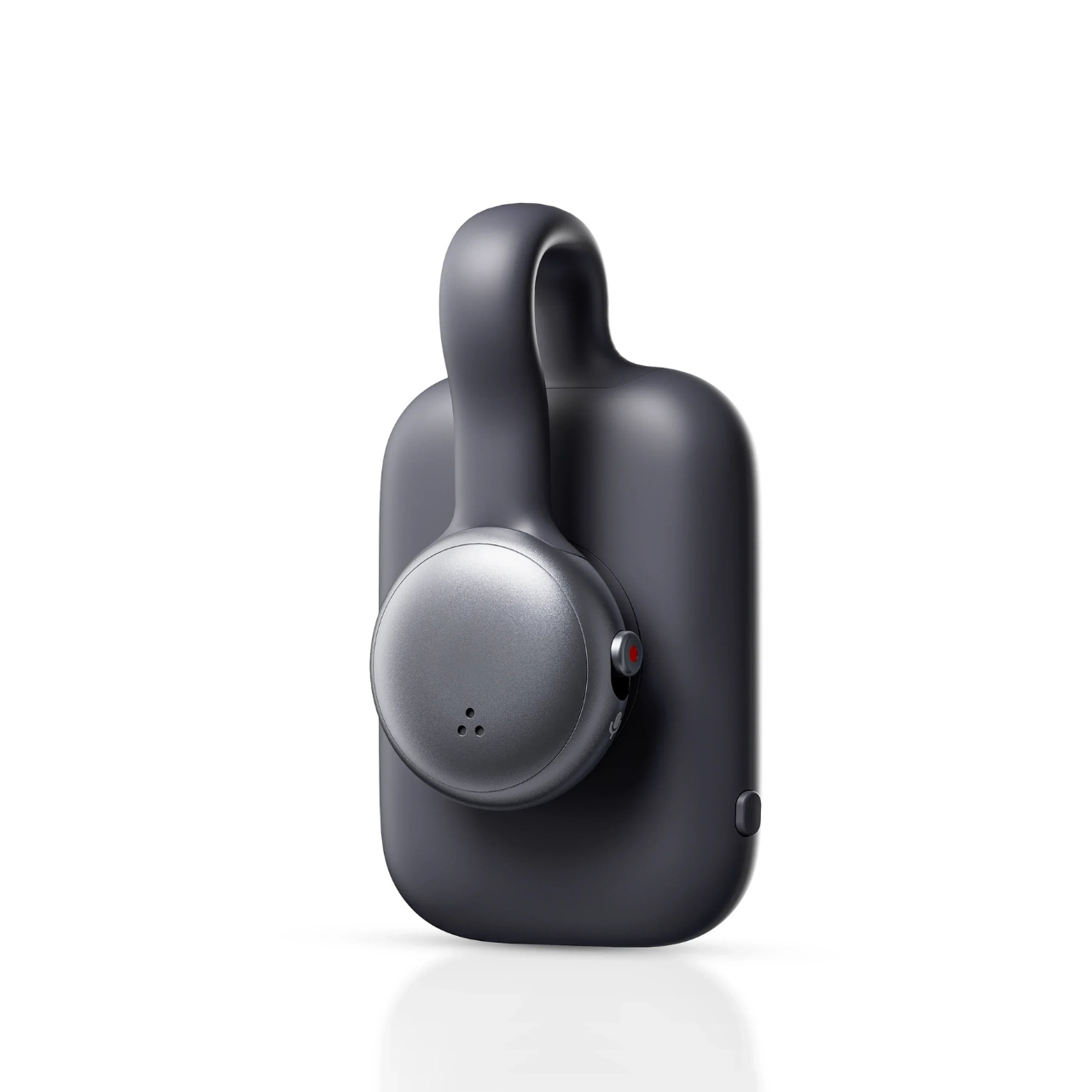
As for the design itself, the AI MindClip is a small, button-like, square-shaped clip that looks more like a tiny badge or pin than an actual recorder. It’s built to blend into whatever you’re wearing rather than stand out, which makes it easy to put on every day and take just about anywhere. The device is made from aluminum alloy and ABS plastic, giving it a premium feel while keeping it both durable and lightweight at just 16.8 grams. It comes with a clip-back mount that easily attaches to collars, jackets, bag straps, and lanyards. It’s also sweat-resistant and splash-resistant, so it’s built to handle real-world scenarios like commuting, phone calls, meetings, and everyday wear without missing a beat.

This tiny device is packed with AI-powered features, including automatic speech-to-text transcription, AI summaries built from a variety of templates, automatic to-do generation, and weekly recap summaries. You can even ask it questions about past recorded audio using its “AskAI” conversational search feature, so instead of scrolling through old notes, you can simply ask what was said and get a straight answer.

Of course, a device like this naturally raises questions about privacy and legality. SwitchBot has built in a number of in-app privacy and data management controls, along with end-to-end encryption for both pairing and file transfer. Even so, there will likely be ongoing concerns given the device’s “always recording” nature. SwitchBot will need to make it clear that these features won’t create problems for the wearer or for the people around them, especially since many U.S. states require everyone in a conversation to consent to being recorded.

Personally, I still prefer pen and paper, or typing things out on a keyboard, when it comes to note-taking and remembering things I need to act on later. But no method is foolproof, and there are definitely moments, like a packed workday or a hectic family schedule, when a tool like this could genuinely come in handy.

At the end of the day, the SwitchBot AI MindClip is an interesting bet on where note-taking might be headed. Instead of asking people to change their habits by pulling out a phone or opening an app mid-conversation, it simply rides along, quietly listening and organizing so nothing important gets lost in the shuffle. Whether it becomes a genuine everyday essential or just another gadget that ends up in a drawer will likely come down to how well the AI features hold up in daily use and whether people feel comfortable wearing something that’s always listening.

Still, for busy professionals, parents juggling a dozen things at once, students sitting through long lectures, or anyone who’s ever walked out of a meeting thinking, “wait, what did we just agree to?”, the MindClip is at least trying to solve a problem most of us know all too well. Sometimes the best kind of tech isn’t flashy. It just quietly helps you remember.

The post This $99 Clip-On AI Remembers Everything You’ll Ever Forget first appeared on Yanko Design.

Exoskeletons Always Ignored Your Knees, but Halo Doesn’t

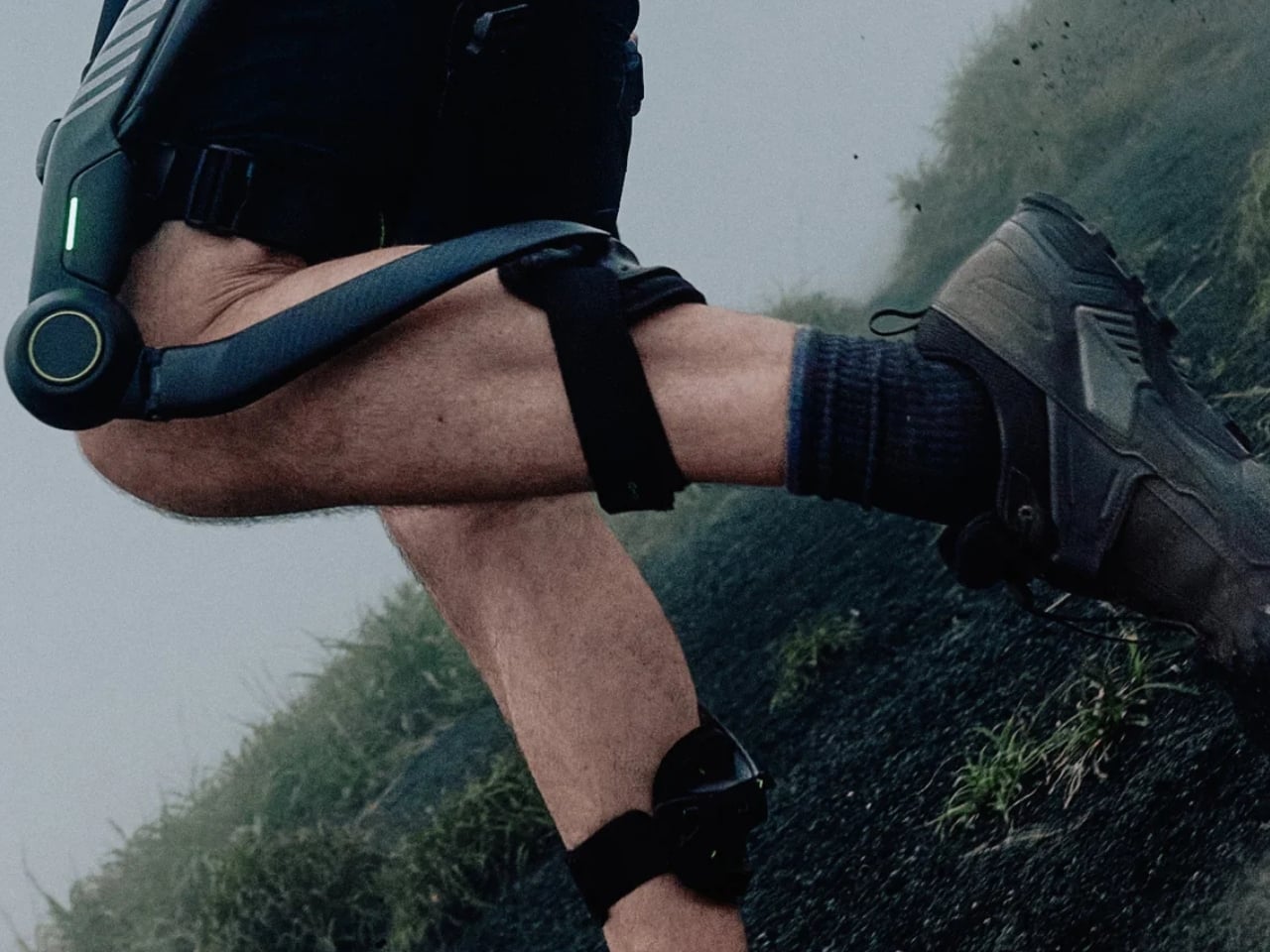
Ask anyone who hikes regularly where their body actually gives out, and it’s rarely the climb up. It’s the way down. Your quads and hips can push you up a mountain just fine, but it’s your knees that absorb the pounding on the descent, on stairs, on the last mile of a long trail when your legs stop cooperating. For years, the exoskeleton industry has quietly ignored this. Every consumer exoskeleton I’ve come across, including Hypershell’s own X series, has focused almost entirely on the hips. That’s helped people hike longer and climb steeper grades, but it never addressed the part of the leg that actually fails first.

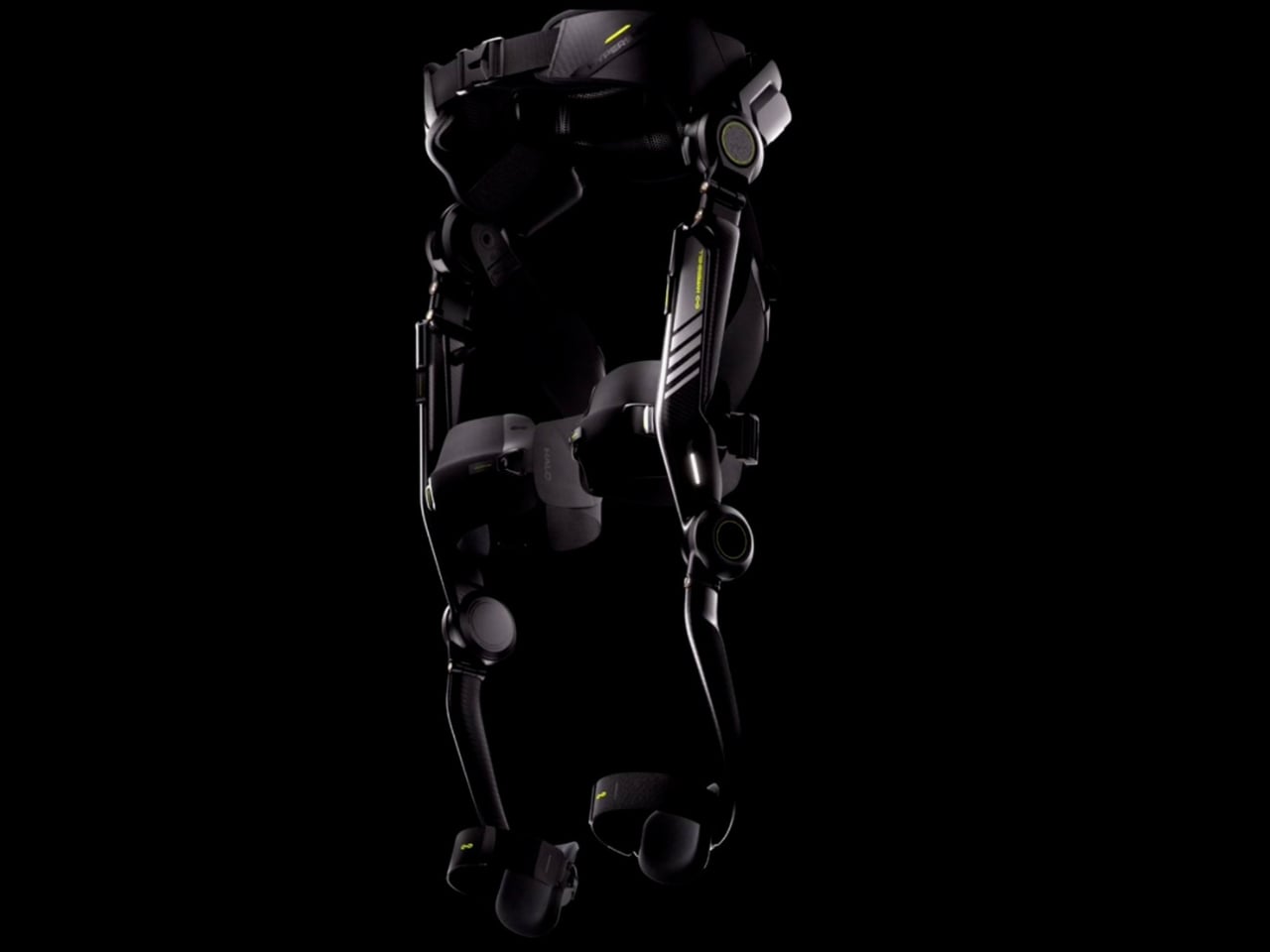
Hypershell Halo is the company’s attempt to fix that gap, and it’s the first exoskeleton I’ve seen that treats the hip and knee as one connected system rather than bolting a knee brace onto an existing hip rig. The Halo runs four motors total, two at the hips and two at the knees, and Hypershell says they’re coordinated through a single unified architecture instead of running as separate, half-communicating systems. That distinction matters more than it sounds. Earlier attempts at dual-joint support, including some of Hypershell’s own internal prototypes, were reportedly scrapped because the control systems couldn’t stay in sync with each other, which is a nice way of saying the hips and knees were fighting instead of working together.

Designer: Hypershell

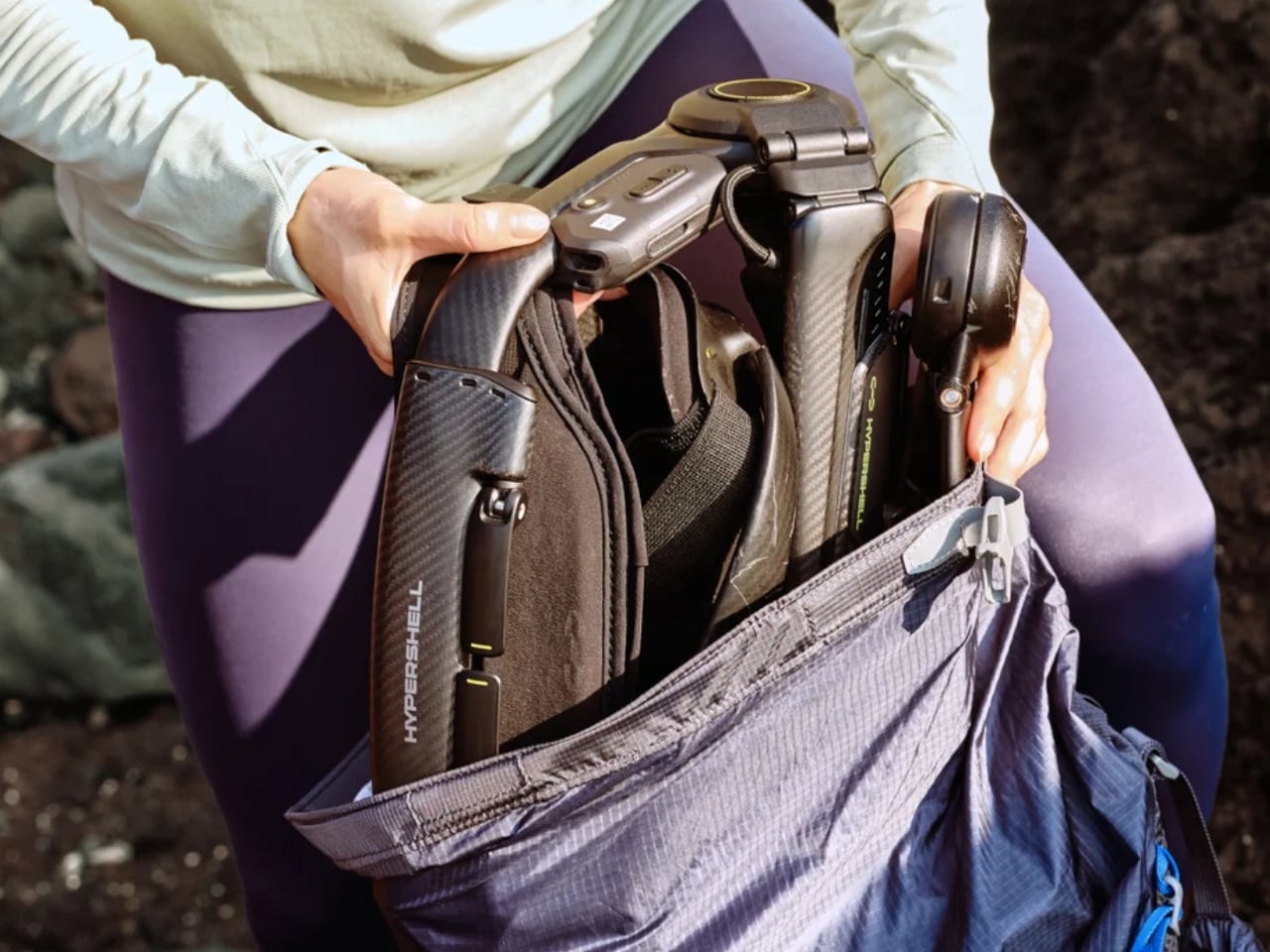
What actually convinces me the Halo is worth paying attention to is the hardware restraint. A carbon-fiber and titanium frame weighing about 2.6 kilograms, four motors producing up to 1,490 watts combined, and a swappable 370-gram battery good for roughly 20 kilometers of assisted walking. It folds down to under 8 liters, which is small enough to strap to the outside of a daypack, and Hypershell claims you can get it on in about 20 seconds, even with a full backpack already on your back. None of these numbers alone are revolutionary. Put together, they suggest a company that understands the actual friction point for anyone considering strapping a robot to their legs: if it’s heavy, slow to put on, or awkward with gear you’re already carrying, it stays in the closet.

The AI layer is where Hypershell is clearly trying to differentiate from the growing pack of exoskeleton makers chasing the same idea. HyperIntuition 2.0 is supposed to read terrain and movement in real time and adjust assistance without you fiddling with a mode dial mid-hike. There’s also Shelly, a chatbot-style assistant you control through a smartwatch, which sounds almost gimmicky until you consider that most people don’t want to stop on a trail to change settings on a phone. Whether Shelly ends up being genuinely useful or just a marketing flourish is something I won’t know until someone puts it through a real weekend hike, but the instinct behind it, reducing friction between the wearer and the machine, is the right one.

At $2,299 for the Origin Edition, the Halo isn’t cheap, and it’s priced well above the $999 to $1,999 range of Hypershell’s hip-only X models. That premium buys you the first product in this category actually built around full-leg coordination rather than partial support, and for anyone who has skipped a hike because their knees couldn’t handle the descent, that might be the entire pitch. I don’t think this device turns casual walkers into trail athletes overnight, and I’d be skeptical of any brand claiming it does. But for the growing number of people managing knee wear, recovering from injury, or just getting older and less willing to accept stairs as an enemy, a machine that finally treats the knee as seriously as the hip feels less like a novelty and more like an overdue correction.

Pre-orders are open now for the US, Canada, Europe, the UK, and China, with shipping expected in November. Whether the Halo lives up to its own architecture claims once it’s on real trails and real staircases is still an open question, but it’s the first exoskeleton pitch in a while that’s made me want to find out.

The post Exoskeletons Always Ignored Your Knees, but Halo Doesn’t first appeared on Yanko Design.

Laifen Just Made Flawless Grooming Stupidly Easy (No Skill Required)

We live in an era of life hacks, a time when everyone wants the best possible results with the least amount of fuss. We want the Michelin-star meal from a 30-minute recipe and the perfect vacation photos without a professional camera. The same is true for our personal grooming. We see the flawless curls or the perfectly smooth shave online, but the reality often involves a tangled mess of hair, a bit of skin irritation, and a whole lot of time we wish we had back. The effort and the reward just don’t always line up.

This is where clever engineering can make all the difference, by building tools that automate the tricky bits for you. Laifen seems to be running with this idea in its latest product drop. The new lineup includes an automatic curling iron for people who always wrap their hair the wrong way and a high-speed hair dryer that aims to nourish while it dries. It’s all about lowering the skill level required to look polished and put-together, which is a philosophy anyone with a busy schedule can get behind.

Laifen P3 Electric Shaver: Pocket Shaving Without Drama

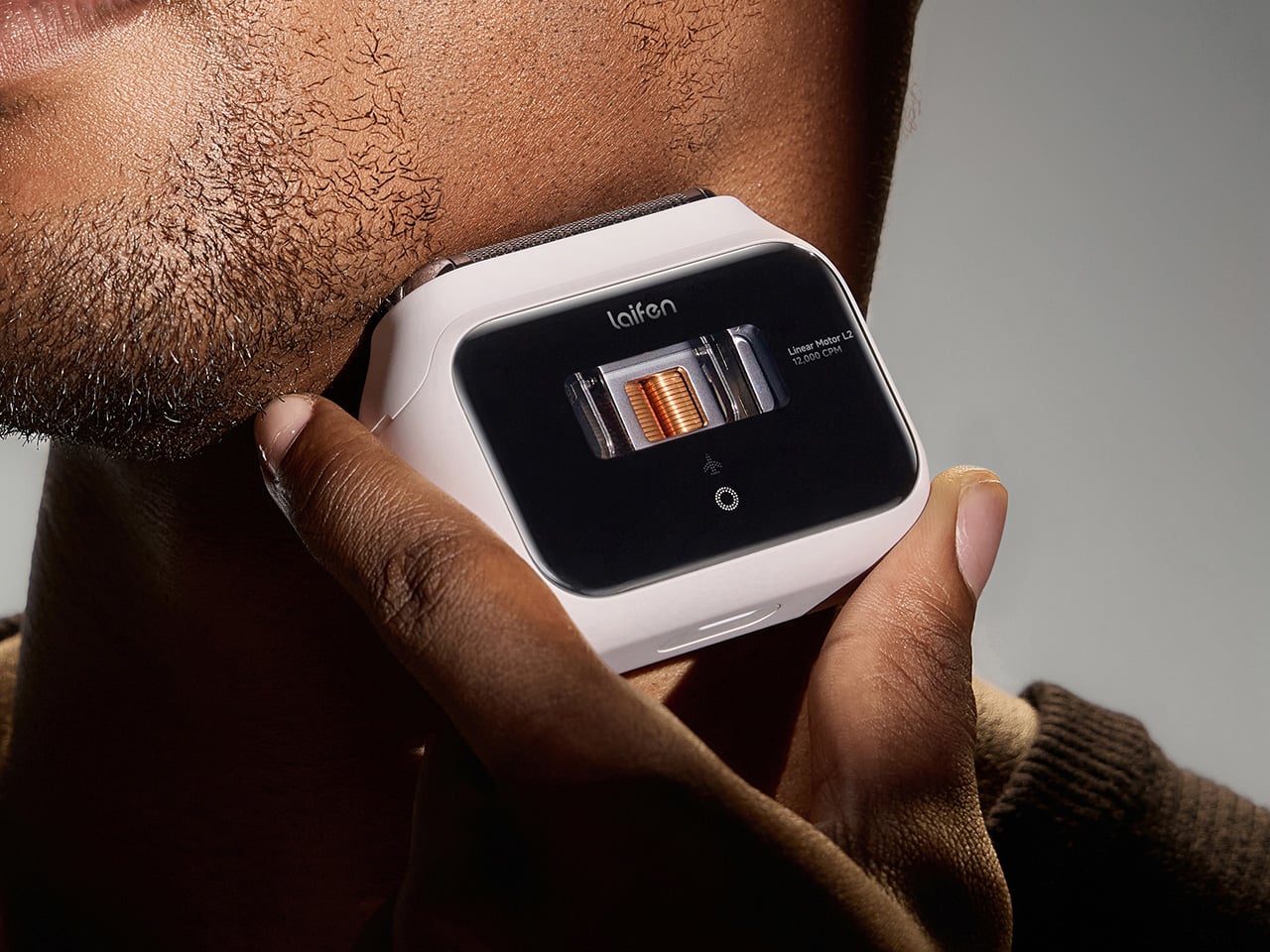
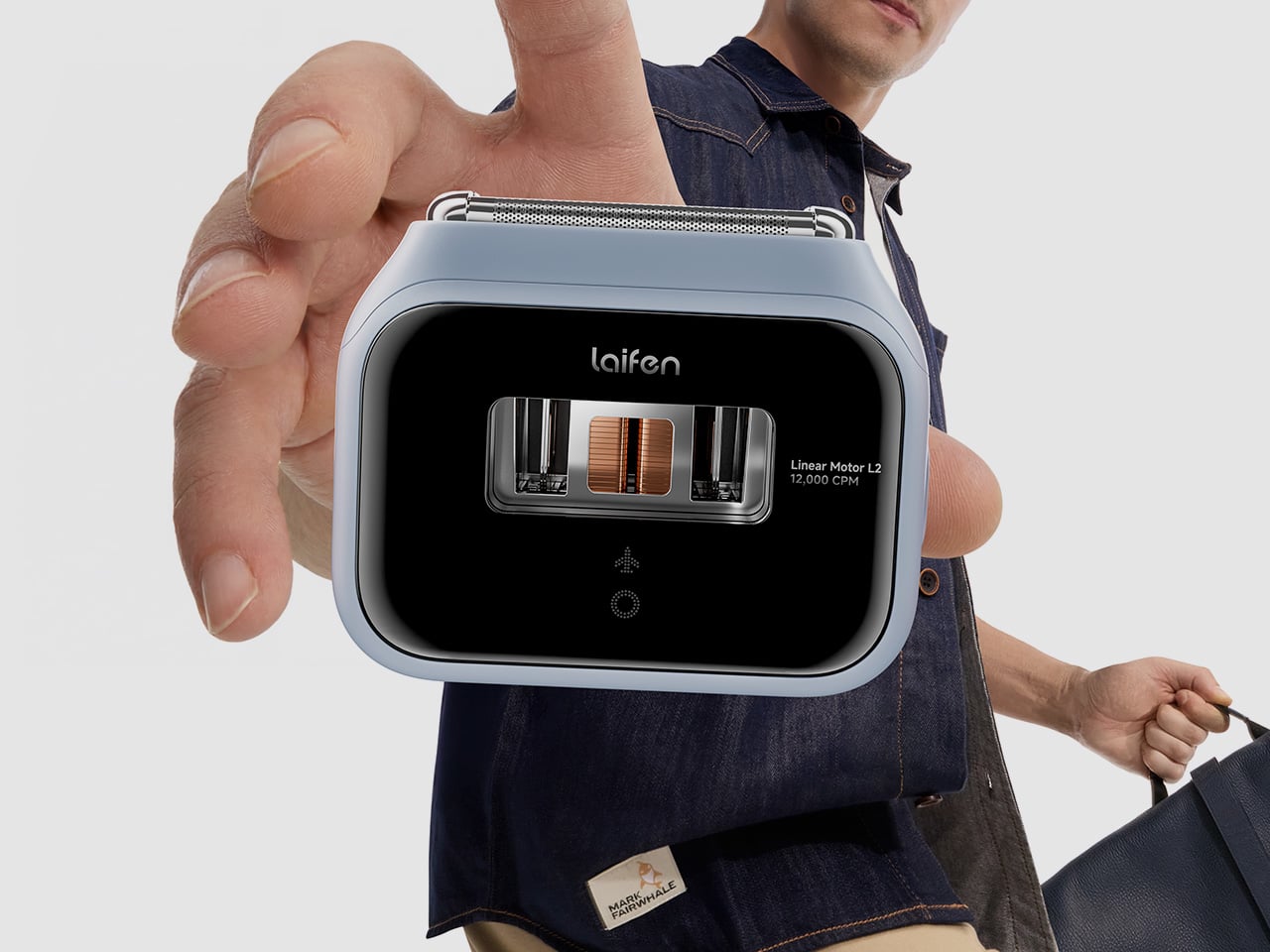
The electric shaver has had a size problem for a long time. Go compact and you sacrifice power, go full-size and you’re suddenly packing something that takes up half your toiletry bag. Most portable shavers have quietly accepted this arrangement and deliver a mediocre shave, complete with pulling, patchy results, and a bit of post-shave redness for good measure. Most guys shrug it off as the price of portability. The Laifen P3 Electric Shaver was designed with a different attitude toward that particular compromise.

Inside the P3, a proprietary dual-motor system works alongside an ultra-thin stainless-steel foil and a cutting design specifically built to reduce irritation. What that means in practice is a shave that gets close to the skin quickly, without the tugging and pulling that makes cheaper portable shavers such a frustrating experience. The low-irritation design is also a genuine win for people with sensitive skin, which is a group that compact electric shavers have historically let down pretty badly. Clean results, comfortable experience, no drama.

Roughly one-third smaller than a traditional electric shaver, the P3 comes with a dedicated carrying case that slides into any bag without making you rearrange everything else to fit it. It’s the kind of shaver that makes sense for a work trip, a gym bag, or a bathroom shelf that’s already running out of counter space. The form factor is built around how people actually move through their day, and that kind of thinking tends to show in how consistently a gadget actually gets used.

Laifen also makes the more feature-heavy P3 Pro, and the two are designed for different kinds of users rather than sitting in a simple good-better hierarchy. The P3 is its own thing, aimed at someone who wants a capable, stylish everyday shaver that travels light and delivers good results without overcomplicating the morning routine. It’s an easier sell for a larger slice of people, and honestly, that makes it the more interesting product to watch.

Click Here to Buy Now: $189.99.

Laifen Swift 4 Hair Dryer: One-Step Drying and Hair Care

Most hair dryers have one job, and that’s to get your hair dry as fast as possible. Everything else, the serums, the oils, the frizz-fighting products, happens separately, usually after you’ve already spent several minutes with a loud appliance aimed at your head. It’s a fine enough system, just a slightly inconvenient one. You dry your hair, then you treat your hair, then you style your hair, and by the end of it you’ve invested a surprising amount of time into something you do every single day. There has to be a smarter way to run that sequence.

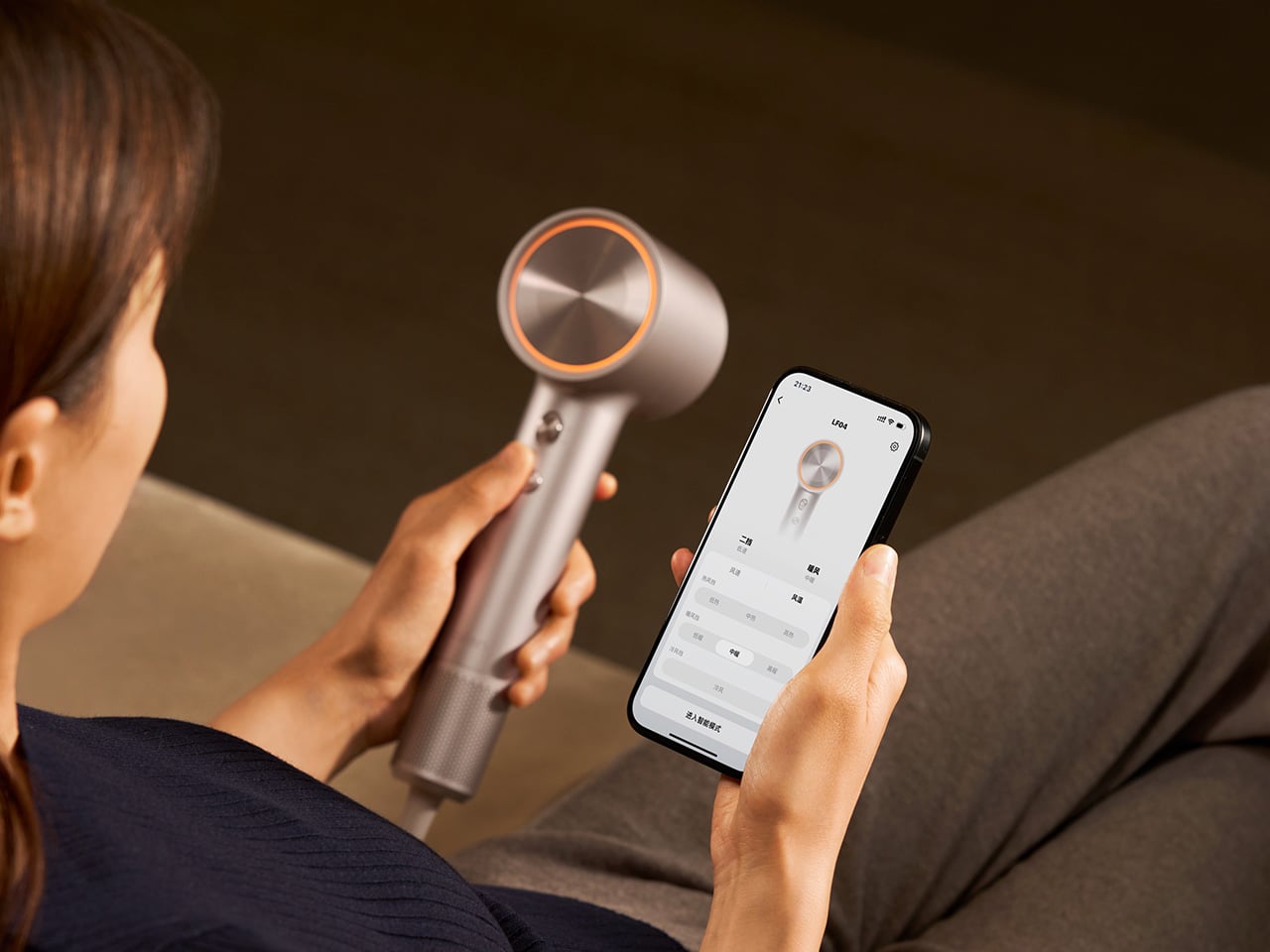
The Swift 4’s headline feature is a proprietary Nourishing Nozzle that diffuses essential oils into a micron-sized mist at a consistent 58°C while you dry. At the same time, 400 million negative ions and 70 million positive ions work to neutralize static and help balance the scalp’s environment. The result, according to Laifen, is smoother, shinier, frizz-reduced hair without extra steps after you put the dryer down. Whether you’re ready to swap your entire post-wash routine for a single nozzle is a personal call, but the concept is genuinely clever and worth paying attention to.

Speed is the other big thing the Swift 4 has going for it. A 115,000 RPM brushless motor pushes airflow at 23 meters per second, which Laifen says is enough to dry medium-length hair in around 1.5 minutes. A smart temperature control system monitors heat 1,000 times per second to prevent damage, and six customized temperature modes let you dial things in for your specific hair type. There’s also an intuitive LED ring for mode feedback and magnetic nozzle attachments that swap in and out cleanly. For anyone who has wondered whether they’re cooking their hair with the wrong heat setting, that level of real-time control is genuinely reassuring.

The Swift 4 Hair Dryer weighs just 407 grams, sits in an ergonomic handle built to reduce arm fatigue, and runs at a relatively quiet 59 decibels thanks to six layers of noise reduction technology. A Bluetooth app connection lets you set a personalized drying routine, and the magnetic filter on the back cleans in about three seconds. It has a premium aluminum alloy finish that looks sharp sitting on a vanity shelf, and at this point that’s actually a relevant design consideration. Nobody wants to leave an ugly appliance out in the open, and the Swift 4 is not an ugly appliance.

Click Here to Buy Now.

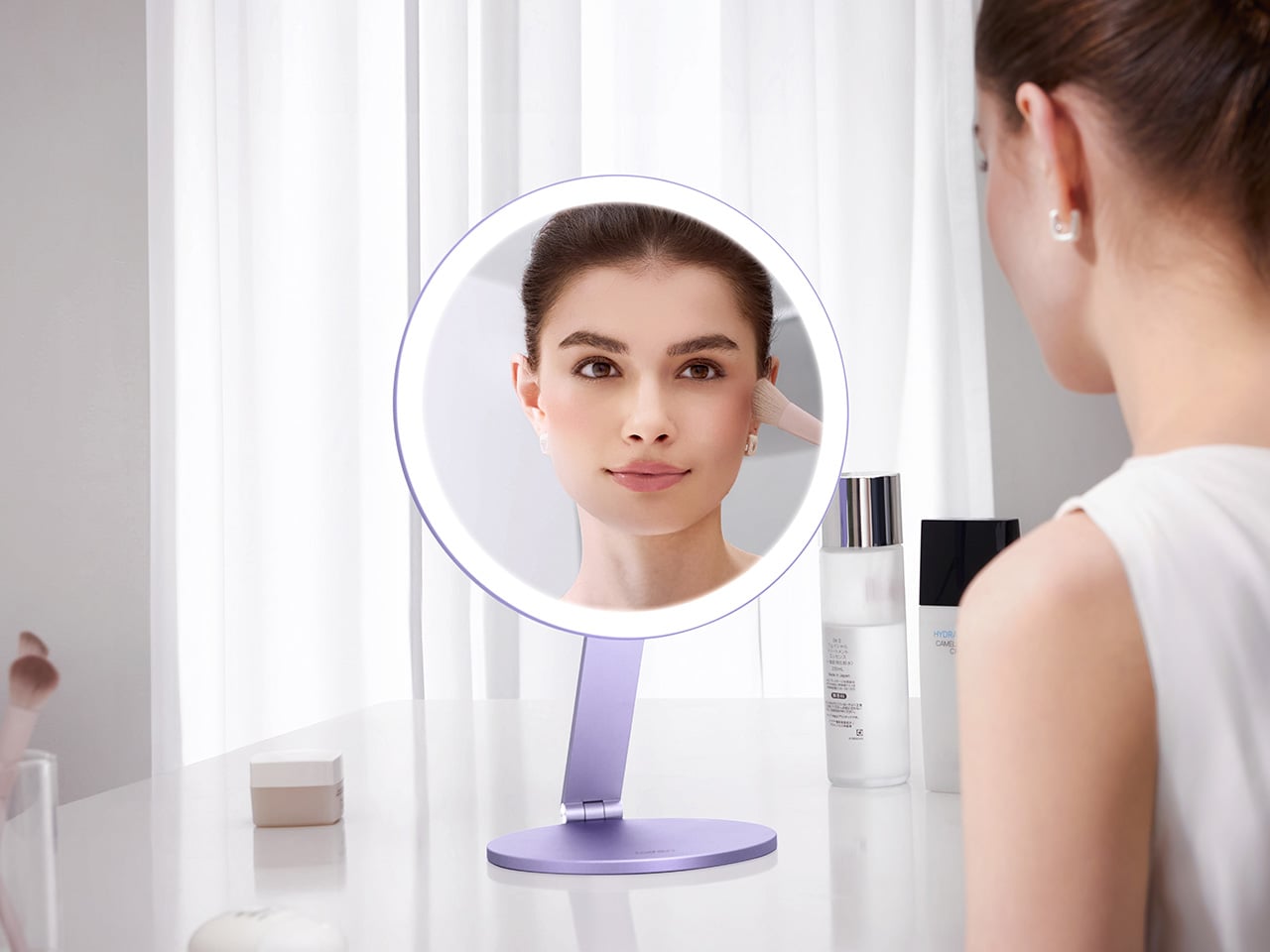
Laifen Glowy Vanity Mirror: Smart Lighting That Actually Flatters You

Makeup applied in bad lighting is one of life’s more humbling experiences. You do everything right at home, step outside, and catch a glimpse of yourself in a shop window that tells a completely different story. The culprit is almost always the light source you were working under, which was probably a single overhead bulb doing its worst. Good vanity lighting has always made a real difference to the outcome, but for a long time, getting genuinely useful light meant buying a bulky ring light and finding somewhere to put the thing.

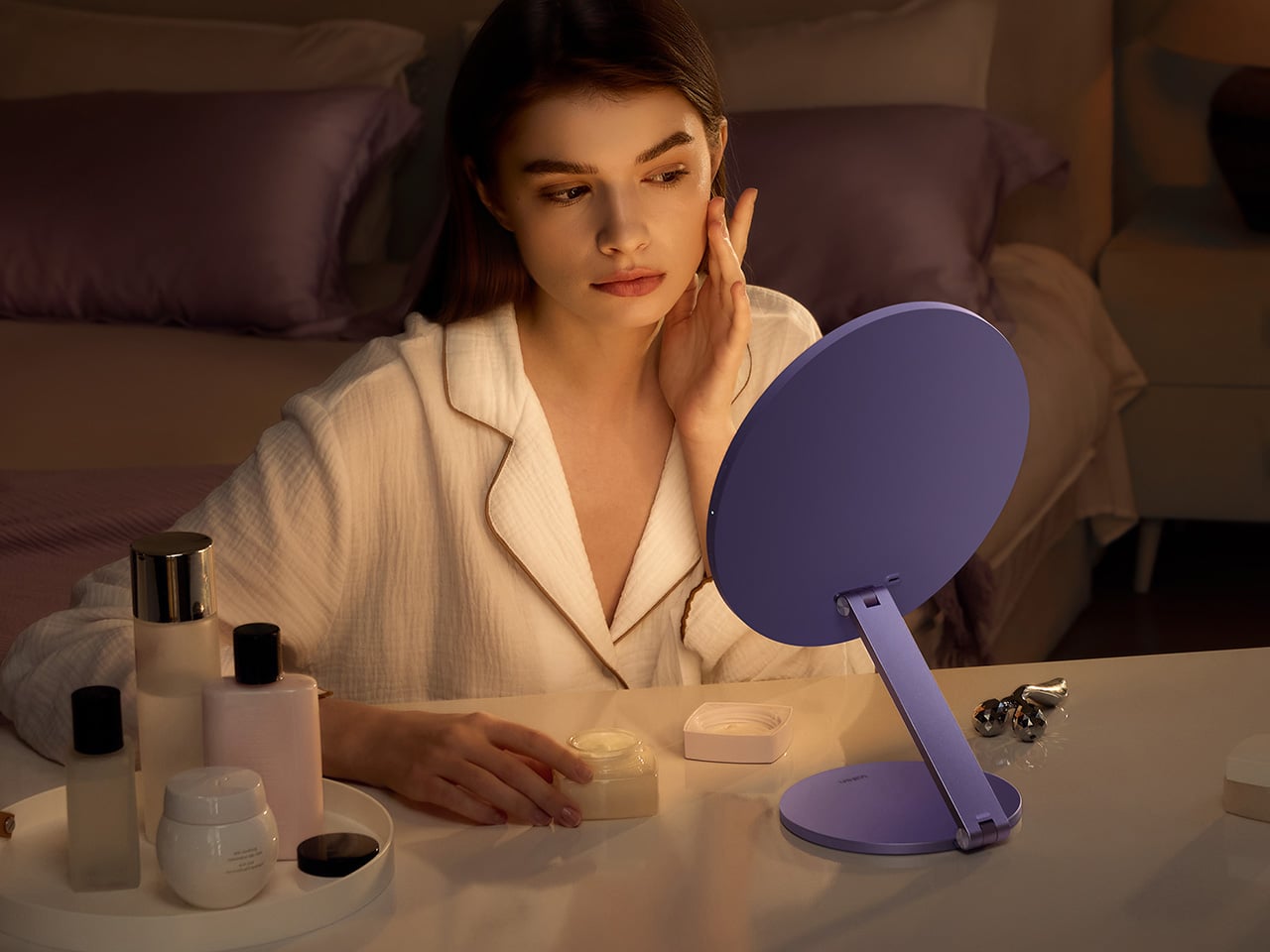
The Glowy Vanity Mirror skips the separate ring light situation entirely by building 360-degree even illumination directly into the mirror itself. The lighting is designed to replicate natural daylight, which gives you accurate color representation while applying makeup or skincare rather than the warm, flattering-but-deceptive glow that makes bathroom lighting so unreliable. There’s a large, high-definition mirror surface paired with that illumination, so every detail is visible without squinting or leaning uncomfortably close to the glass. It’s a pretty straightforward idea executed in a way that actually makes the bathroom routine more useful.

Smart features are woven in without feeling gimmicky. The mirror uses automatic motion sensing to wake up when you approach, remembers your preferred lighting settings, and offers adjustable modes for different needs. A long-lasting rechargeable battery means there’s no cord hunting involved, and the portable design lets it move around without being a production. These are the kinds of conveniences that sound minor on a spec sheet but add up to a noticeably smoother experience once they’re part of your daily routine.

The hardware itself is built around an aluminum alloy stand with a refined finish that looks at home on a vanity rather than on a film set. Eye-safe, low blue light illumination keeps things comfortable during longer sessions, reducing the kind of eye strain that comes from staring into a bright light source for extended periods. It’s a product that sits at an interesting crossroads between functional tool and considered design object, and that combination is increasingly what the best personal care gadgets look like in 2026.

Click Here to Buy Now.

Laifen AutoCurl Curling Iron: Salon Curls Without the Learning Curve

Curling irons work beautifully in the hands of someone who knows exactly what they’re doing, and they produce uneven, inconsistent, occasionally singed results in the hands of everyone else. Getting a good curl requires a specific technique with the wrist, the right timing, and a sense of which direction to wrap the hair that somehow never feels intuitive. It’s one of those skills that looks deceptively simple in a tutorial video and considerably less simple when you’re standing in your bathroom at 7am trying to replicate it.

The AutoCurl Curling Iron’s core trick is that it handles the wrapping for you. A smart system detects where the hair is placed, automatically selects the correct curl direction, and adjusts in real time to prevent tangling or pulling. Users can let the device run fully automatically in Auto Mode, or switch to Manual Mode for more hands-on control when they want it. That’s a genuinely useful split, because it makes the tool accessible for beginners without feeling restrictive for people who already know their way around a barrel.

Speed is another area where the AutoCurl earns its keep. Laifen says it delivers bouncy, full-head curls in around 16 seconds per section, with even heat distribution that keeps results consistent from the first curl to the last. Custom temperature settings adapt to different hair types, and 200 million negative ions work through the styling process to reduce frizz and add shine. Intelligent temperature control keeps heat at a safe level throughout, so you’re getting faster results without quietly frying your hair in the process.

The safety features are thoughtful without being excessive. A protective curl chamber shields the hair-contact area, auto shut-off kicks in when the device is left unattended, and the operation is near-silent, which is a bigger quality-of-life detail than it sounds. Dual-voltage support and a lightweight build round things out nicely for anyone who travels frequently. It’s a curling iron that has clearly been designed with people who have given up on curling irons in mind, and that’s a very specific and very valid target audience.

Click Here to Buy Now: $99.99.

The post Laifen Just Made Flawless Grooming Stupidly Easy (No Skill Required) first appeared on Yanko Design.

Smart Glasses, Robot Dogs, AI Tamagotchis, and Desk-Sized Supercomputers: How IFA 2026 Redefined Robots

The creator economy reshaped who makes content, and then quietly reshaped what tools are worth building. When millions of people are shooting, editing, scanning, and streaming from wherever they happen to be, the market for professional-grade hardware that works without a full production crew gets very real, very fast. That’s the underlying logic behind a lot of what’s in this roundup, running from portable LiDAR scanners and robotic camera arms all the way to ambient AI screens that sit on your desk and quietly keep track of everything.

Companionship, it turns out, is harder to engineer than most consumer tech companies have been willing to admit. Hengbot’s Sirius is a robot dog that owners can train like a real one, using a Creator Studio that requires no coding. Takway AI’s Sweekar hatches from an egg and grows through four life stages, shaped entirely by how its owner treats it. Mind with Heart Robotics built AnAn, a panda-shaped companion that has been piloted in eldercare and dementia care settings in Hong Kong and Shanghai. These are serious attempts at a genuinely hard question: what does it look like when AI lives with you, rather than just working for you? Here’s a look at some such brands and their innovative products at the Global Connect Show at IFA 2026.

INMO GO3: When Your Glasses Speak 98 Languages So You Don’t Have To
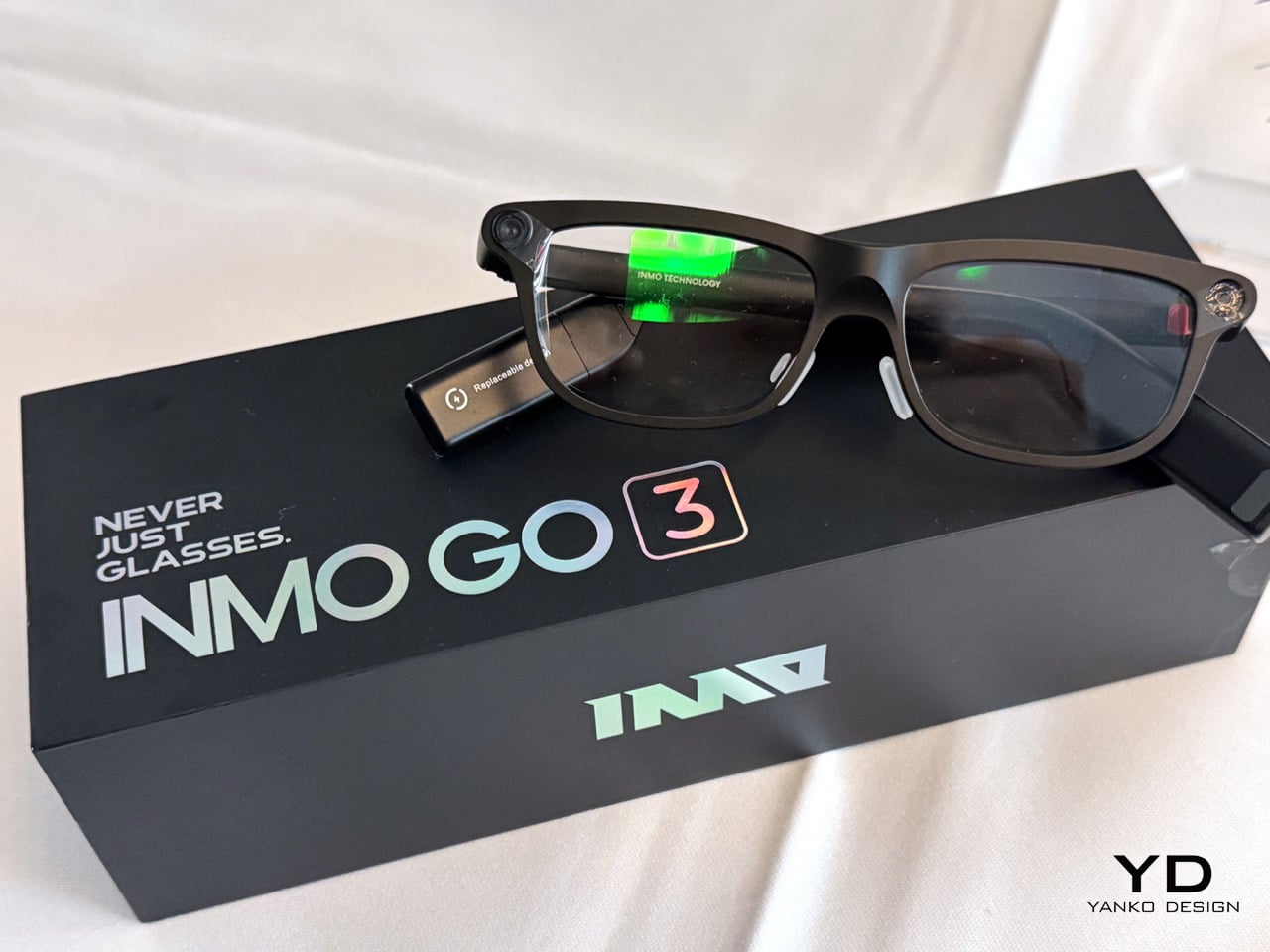
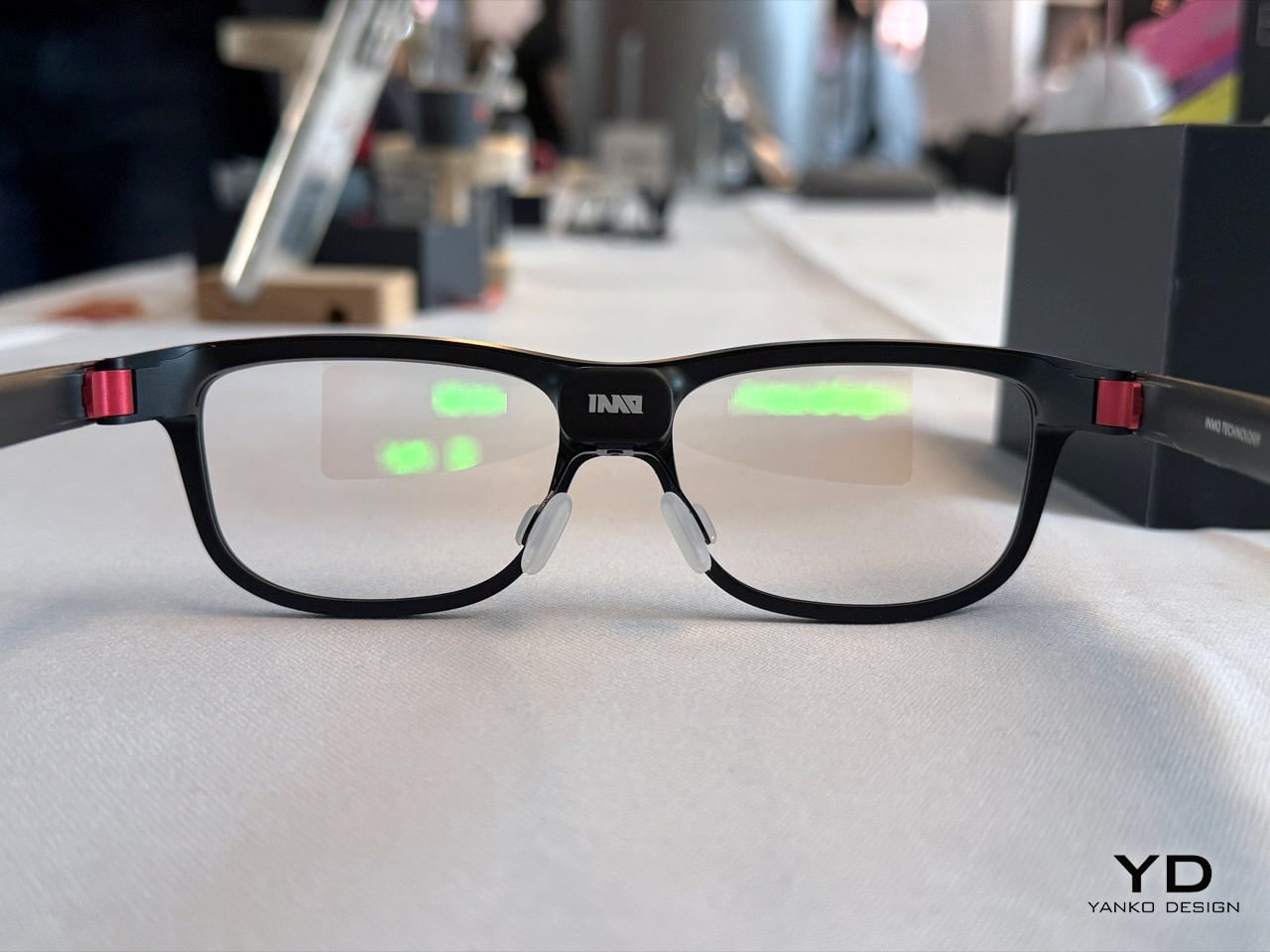
Smart glasses have had a rough decade of almost. Google Glass made everyone nervous at restaurants. The Ray-Ban Metas got people excited again, but a camera and a speaker do not a smart display make (not to mention the PR disaster they’ve been having this past year). INMO has been quietly chipping away at the real version of this category for a while now, with the Air series handling light office and audio-visual entertainment, and the GO series zeroing in on translation. The GO3 is that third iteration, and the brief is tighter and more useful than anything the brand has shipped before: a lightweight pair of glasses combining a discreet monochrome display with real-time AI assistance, in a form factor that resembles regular eyewear.

The translation engine handles 77 source languages and 98 target languages, with offline support for nine of them when you’re somewhere the internet has opinions about itself. The engineering detail that deserves more attention, though, is the battery system. Magnetic battery replacement takes approximately five seconds, and removed batteries automatically recharge in the case, enabling uninterrupted use throughout the day. The dual-eye green Micro-LED display with diffractive waveguide optics hits up to 1,500 nits at 640×480 resolution, staying visually discreet enough that nobody beside you would know you’re reading meeting notes. A built-in camera privacy cover physically shields the camera for more comfortable use in public or social settings, which is one of those small decisions that says a lot about how seriously a company has thought through the real-world context its product actually lives in.

Hengbot Sirius: The Robot Dog That Actually Learns New Tricks
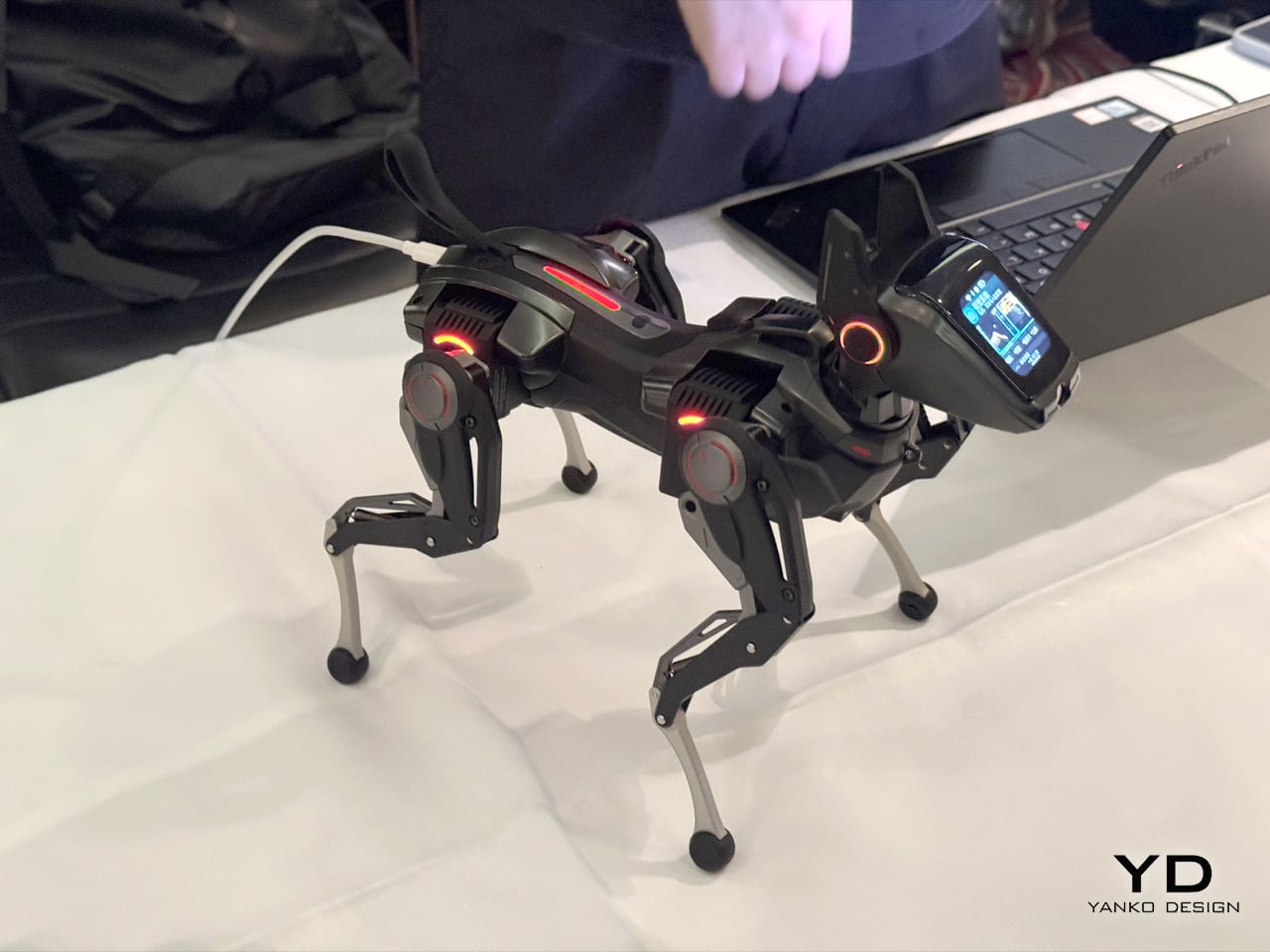
When we covered Sirius on Yanko Design last year, we noted that it sat in a gap the robot dog market had left frustratingly empty for years, somewhere between Boston Dynamics-level industrial machines that cost more than a car and toy-grade STEM kits that shuffled around like arthritic spiders. Hengbot filled that gap, and the Kickstarter campaign backed that read up with over $308,000 raised. At IFA, the story moves forward: the focus is on how continued development in voice interaction and motion control is making Sirius easier to communicate with and more capable in physical movement. You tell it to sit, move forward, or shake hands, and Sirius translates these instructions into physical actions, letting people interact with the robot without relying entirely on conventional controls.

The motion engineering is where it gets genuinely interesting. Rather than releasing physical force abruptly, Sirius can reduce it progressively, which allows certain movements and physical responses to feel smoother and less rigid while reducing sudden loads on the mechanical system. If it falls over, it can perform a recovery sequence and return to a standing position, recovering from common physical interruptions without requiring the user to reposition it manually. Packed into a body weighing just over a kilogram, with a removable 2,250 mAh battery, 30W PD charging, and developer support spanning Python, C, C++, and ROS 2 interfaces, Sirius is targeting consumers and creators in equal measure, which is a harder pitch to land than it sounds, and one Hengbot is getting noticeably better at making.

Rokid Glasses: The AI Glasses That Let You Choose Your AI
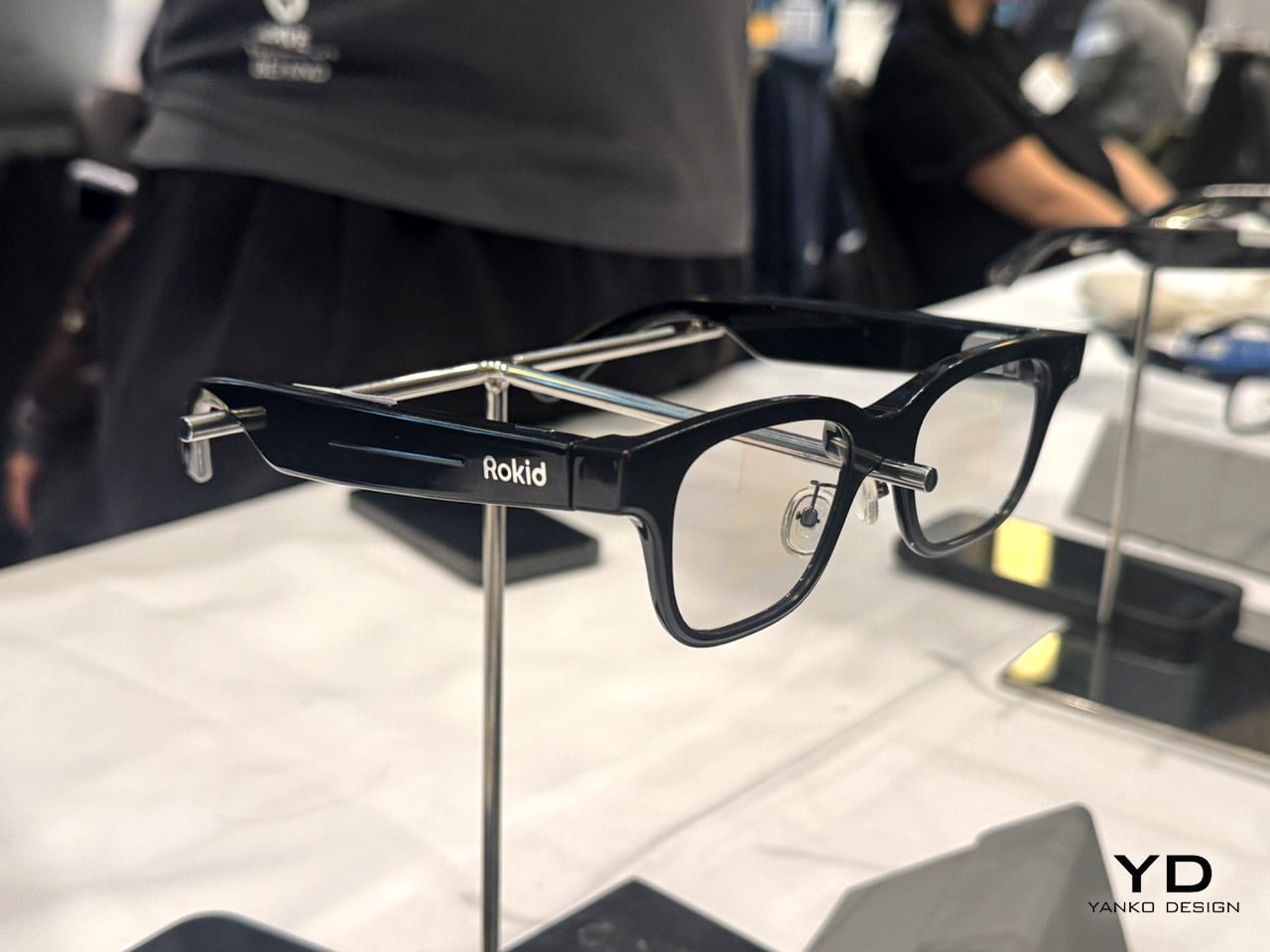
If the INMO GO3 is purpose-built around translation and teleprompters, the Rokid Glasses are playing a broader game entirely. Rokid has been in this space since 2014, long before smart glasses were a mainstream conversation, and we’ve covered the brand’s journey on Yanko Design from its early AR gaming hardware all the way through to a full profile on how it’s building the glasses that Google couldn’t. The Rokid Ai Glasses Style Pack, announced at CES 2026 and covered here in March, brings that decade-plus of development into what is comfortably the most ambitious feature set in the display-less glasses category. At just 38.5 grams, in a TR90 frame with titanium alloy hinges and a 12MP Sony IMX681 camera with electronic image stabilization, the hardware alone makes a strong case. The Power Capsule that comes bundled in the Style Pack delivers 6+ charges and gets the glasses back to 80% in 20 minutes, so battery anxiety largely exits the conversation.

Rokid is the world’s first manufacturer to natively support Google’s Gemini on a pair of AI smart glasses, with the Ai Glasses Style integrating both OpenAI’s ChatGPT and Google Gemini to answer almost any question. That’s not just a spec flex, it’s a genuine design philosophy – the glasses function as an open platform rather than a locked ecosystem, which is exactly the kind of thinking that will matter as AI models continue to evolve fast. The Agent Store, a centralized platform where developers can create and share AI apps for Rokid’s smart glasses, has already attracted more than 3,000 submissions for new agent workflows, with more than 400 agents published and available to users. Real-time translation in 89 languages, object and scene recognition, live transcription, and posture monitoring round out a feature set that makes these feel less like a gadget and more like a platform you happen to wear on your face.

Mind With Heart Robotics AnAn: The Companion Robot That Sits With You, Not For You
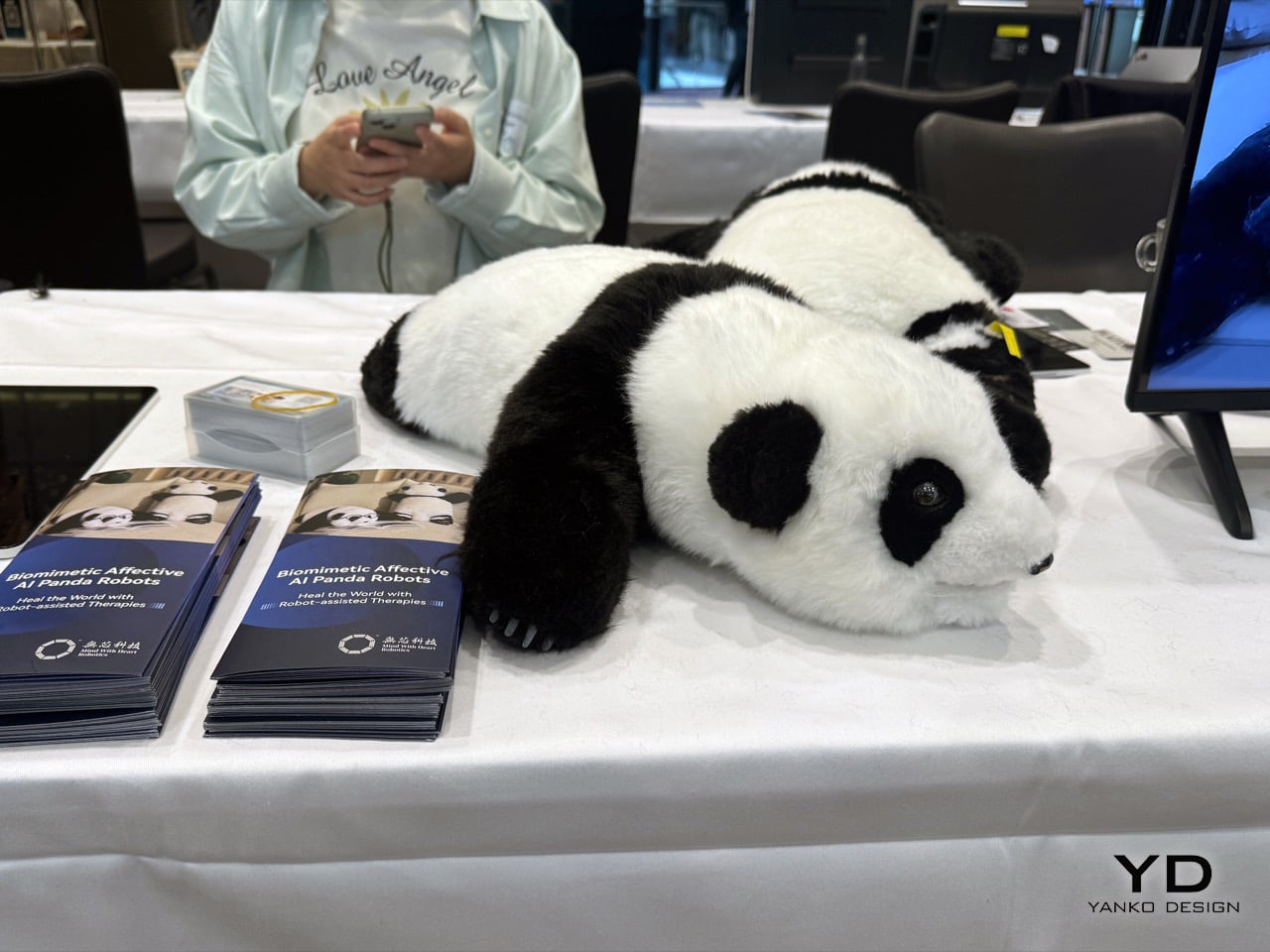
The conversation around companion robots has been building for a while on Yanko Design, from Sony’s Aibo to Hengbot’s Sirius to Sweekar, and a pattern is becoming clear: the more a robot is designed to perform, the less it feels like company. Mind With Heart Robotics took a different path entirely, and AnAn is the result. A panda-shaped companion robot built from soft, lifelike materials with full-body tactile sensing, AnAn is designed for companionship and elderly support first, and everything else second. The live demonstrations at IFA show AnAn’s full-body tactile sensing system responding to touch through gentle movements and emotional feedback, along with proactive interaction, gentle reminder functions, and its ability to learn a user’s interaction habits over time through long-term memory. That last part matters more than the spec sheet: a companion that actually remembers you is a fundamentally different product from one that resets. Mind With Heart Robotics develops emotionally intelligent companion robots across multiple form factors designed for emotional support, elderly companionship, children’s well-being, and institutional care, guided by its mission to Heal The World, backed by a patent portfolio of more than 30 filings and 18 patents granted to date.

IFA Berlin marks AnAn’s European debut, appearing at IFA’s official Robots on the Runway showcase, following its recognition as a CES 2026 Innovation Awards Honoree in the Artificial Intelligence category. The company is also debuting its Duncan Series companion robots in Europe, which are designed for neurodivergent children as well as typically developing children in early education. So the product family spans elderly care on one end and early childhood development on the other, which is a more considered and humane product brief than most robotics companies have attempted. AnAn goes on sale in Europe in September 2026 at retail pricing between $1,000 and $1,500, with distributor agreements already signed in Germany and Belgium, a completed production run of 100 units with samples available for immediate shipment, and a dedicated European repair and after-sales center in Belgium supporting customers across the region. The B2B version includes secure dashboards tracking behavioral trends and interaction patterns for care providers, meaning the product has been thought through at the institutional level too, for care homes, therapy settings, and clinical environments where the robot needs to report back as well as show up. Soft on the outside, seriously engineered on the inside.

XGrids Lixel CyberColor + PortalCam: The World Isn’t Flat, and Now Your Camera Knows It
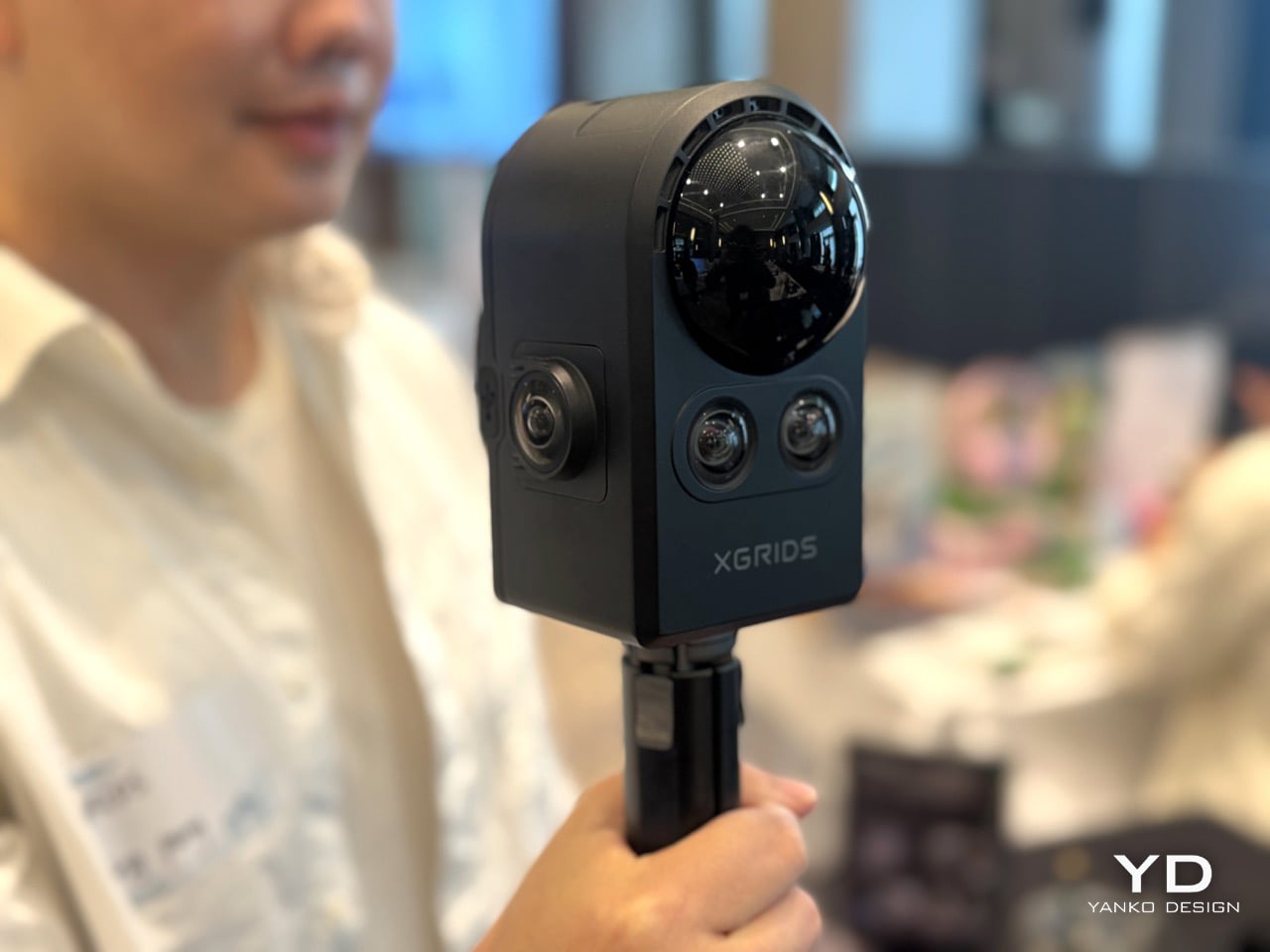
3D Gaussian Splatting sounds like something a physics PhD invented to win an argument at a dinner party, but it has quietly become one of the most consequential breakthroughs in spatial computing in years. The short version: rather than building a 3D scene out of polygons the way traditional CGI does, 3DGS represents a space using millions of tiny colored blobs, or “gaussians,” that together produce photo-realistic environments you can actually navigate through in real time. XGrids has been building its entire product stack around this technology, and the two products at IFA represent opposite ends of the same pipeline. The PortalCam is billed as the first handheld device that captures reality as interactive 3D environments using 3DGS technology, combining LiDAR, a four-camera array, and automated processing to create photorealistic spatial models you can walk through, edit, and share across platforms. At under 900 grams, it can scan 100 square metres in 10 minutes at walking speed. The LiDAR system fires 856,000 points per second across a 180-degree azimuth by 180-degree elevation field of view, while the four-camera array pairs two fisheye lenses with two front-facing cameras, each fisheye covering 200 degrees. That’s a lot of spatial data coming in very fast, from a device you can carry in a backpack.

The Lixel CyberColor platform, or LCC, is where all that captured data becomes something usable. It combines Multi-SLAM precision with optimized 3D Gaussian Splatting to create measurement-grade, photorealistic, lightweight 3D models, bridging the gap between technical accuracy and immersive visualization for professionals across industries. The compression story is particularly worth noting: a breakthrough 90% compression technology dramatically reduces file sizes without compromising quality, enabling smooth playback on cloud, edge, and mobile. That solves the problem that has always made spatial content impractical outside of specialized production environments, the files are simply too large to move around and too heavy to stream. Ready-made integration with Unity, Unreal Engine, WebGL via Cesium and Three.js, mobile apps, and XR applications means the output plugs directly into workflows that architects, game developers, and filmmakers are already using. And then there’s the surprise announcement at the show: LCC Scan, a new iOS application that enables users to transform ordinary photos and videos into detailed 3DGS models directly on their iPhones. The professional pipeline and the consumer entry point, both at IFA, in the same week. That’s a confident move.

Sweekar: You Don’t Train This Robot… You Nurture It.
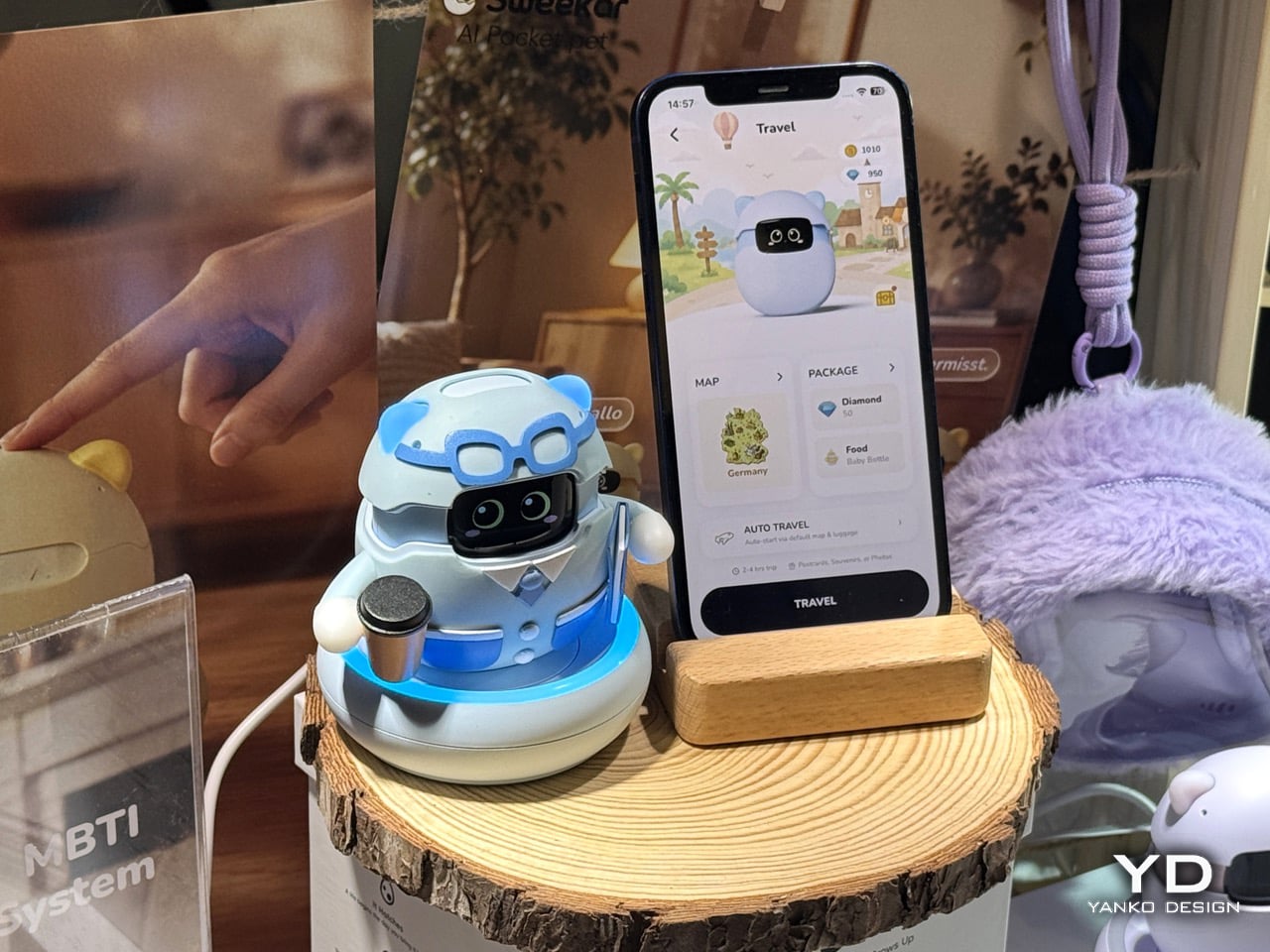
Hengbot’s Sirius is a genuinely impressive piece of engineering, a robot you put through its paces, teach tricks, and watch execute a controlled landing from an elevated surface. It rewards the tinkerer. Sweekar, from Takway AI, is asking a completely different question: what if the robot didn’t perform for you, but grew because of you? Not every AI companion needs to be a workhorse. Sometimes the whole point is that it just shows up, and keeps showing up. Sweekar is an AI pocket pet inspired by the iconic Tamagotchi, but rebuilt as a living, evolving AI companion. It hatches from a physical egg, grows through four life stages, and develops a personality shaped by the relationship you build with it. The growth mechanic has real engineering behind it: every interaction, feeding, talking, cleaning, picking it up, generates XP, and when Sweekar levels up, it physically grows a few millimetres taller, driven by a precision stepper motor, plays a special evolution animation, and unlocks new behaviors, new language, and new personality dimensions. That’s a stepper motor doing emotional labor, which is a sentence that shouldn’t work but somehow absolutely does.

The part that actually separates Sweekar from everything else in this category is the memory system. Most AI companions have the same gap: sessions reset, context vanishes, and the relationship never actually deepens. Users report the same frustration: it feels like starting over with a friendly stranger every single time. Sweekar’s long-term emotional memory retains the owner’s voice, daily habits, shared stories, favorite things, and small victories, and surfaces them naturally in future conversations. The longer you raise it, the more it sounds like it genuinely knows you. Voice recognition is trained specifically to the primary owner, and the personality develops through an MBTI-inspired behavioral framework, meaning two people who buy the same unit on the same day will have fundamentally different companions very soon, because every person raises things differently. At 89 grams it fits in a pocket, runs on a phone hotspot so it travels with you, and from Level 30 onward, Sweekar cannot die. The emotional investment compounds for years. What you build together is yours and it keeps going. That last detail is the one that sticks. Someone actually engineered emotional longevity into the product brief, and that’s worth paying attention to.

Navimow H5 Pro: The Robotic Mower That Finally Does the Edges
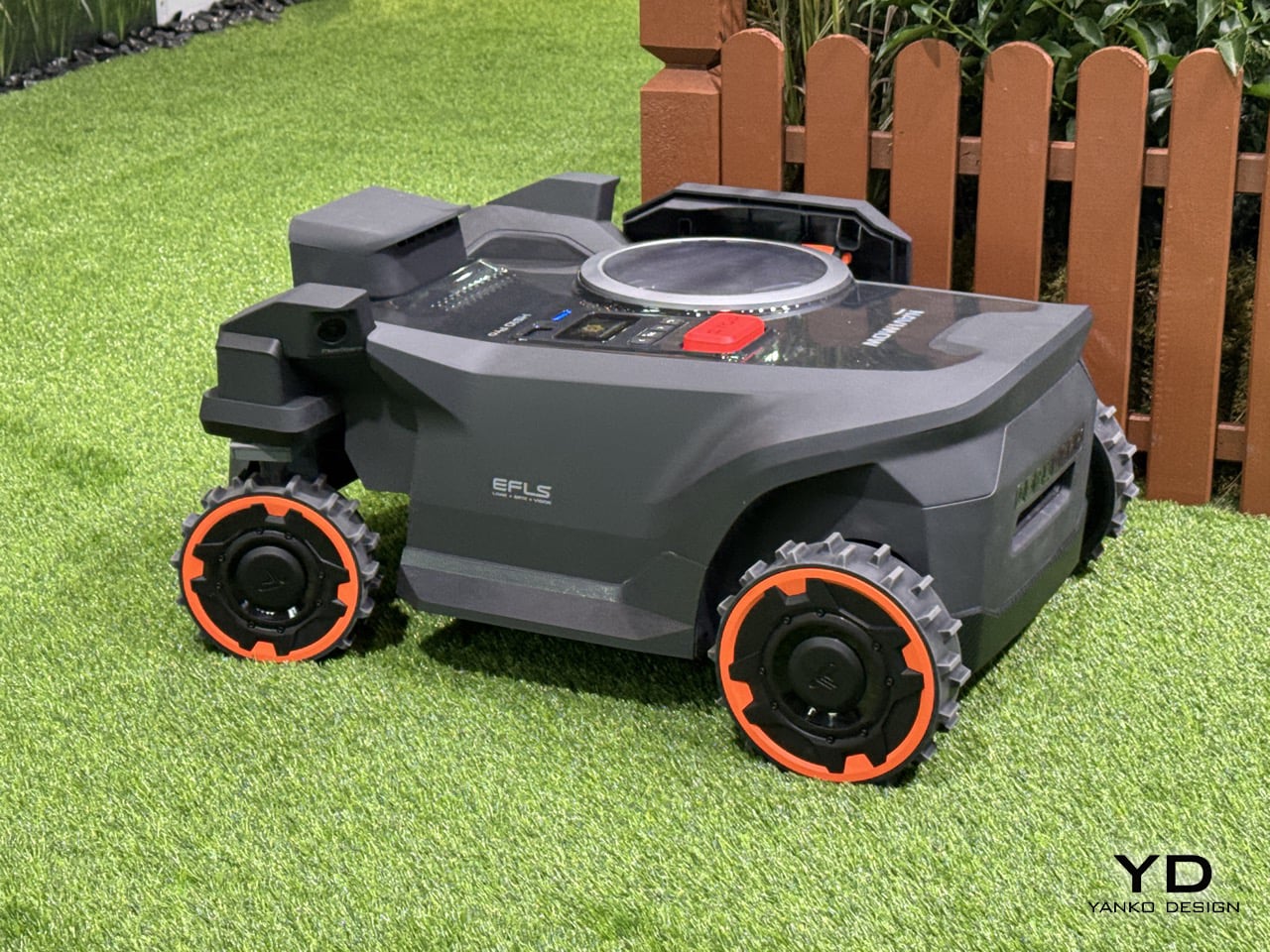
Robotic lawn mowers have gotten remarkably good at the easy 80% of the job and left everyone dealing with the same annoying leftover, the trim along fences, flower beds, and hedgerows that no autonomous mower could quite reach. Segway Navimow, the world’s No. 1 wire-free robotic lawn mower brand by retail sales volume for two consecutive years, built the H5 Pro specifically to close that gap, using a breakthrough EdgeMaestro extendable robotic arm for true zero-edge mowing. The arm pushes the cutting system out 7.7cm beyond the mower’s body, letting it trim flush against borders and obstacles instead of leaving that familiar uncut strip that sends homeowners out with a separate trimmer every weekend. It’s a genuinely clever mechanical solution to a problem that’s been treated as an acceptable limitation for years, mostly because nobody had bothered to engineer around it properly.

What makes the H5 Pro worth watching at IFA specifically is that this is Navimow’s first appearance at the show, after building its reputation almost entirely on the gardening and outdoor living expo circuit. That’s a notable shift in venue for a brand whose audience has traditionally been landscapers and homeowners rather than gadget crowds, and it says something about how robotic garden tech is increasingly being read as consumer tech rather than a niche horticultural category. The H5 Pro also carries a thermal sensor that protects hedgehogs and other small animals even in low-light conditions, a detail that fits Segway’s stated push toward mowing technology that’s thoughtful about the wildlife sharing the same lawn, not just efficient at cutting grass. Alongside the existing X4, H2, i2, and Terranox lines, the H5 Pro rounds out a lineup built for gardens of every size and complexity, and its arrival at a tech show rather than a gardening fair suggests Navimow is angling for a bigger, more design-conscious audience going forward.

QIVIKA Smart Scope: Photograph Saturn’s Rings, From Your Pocket
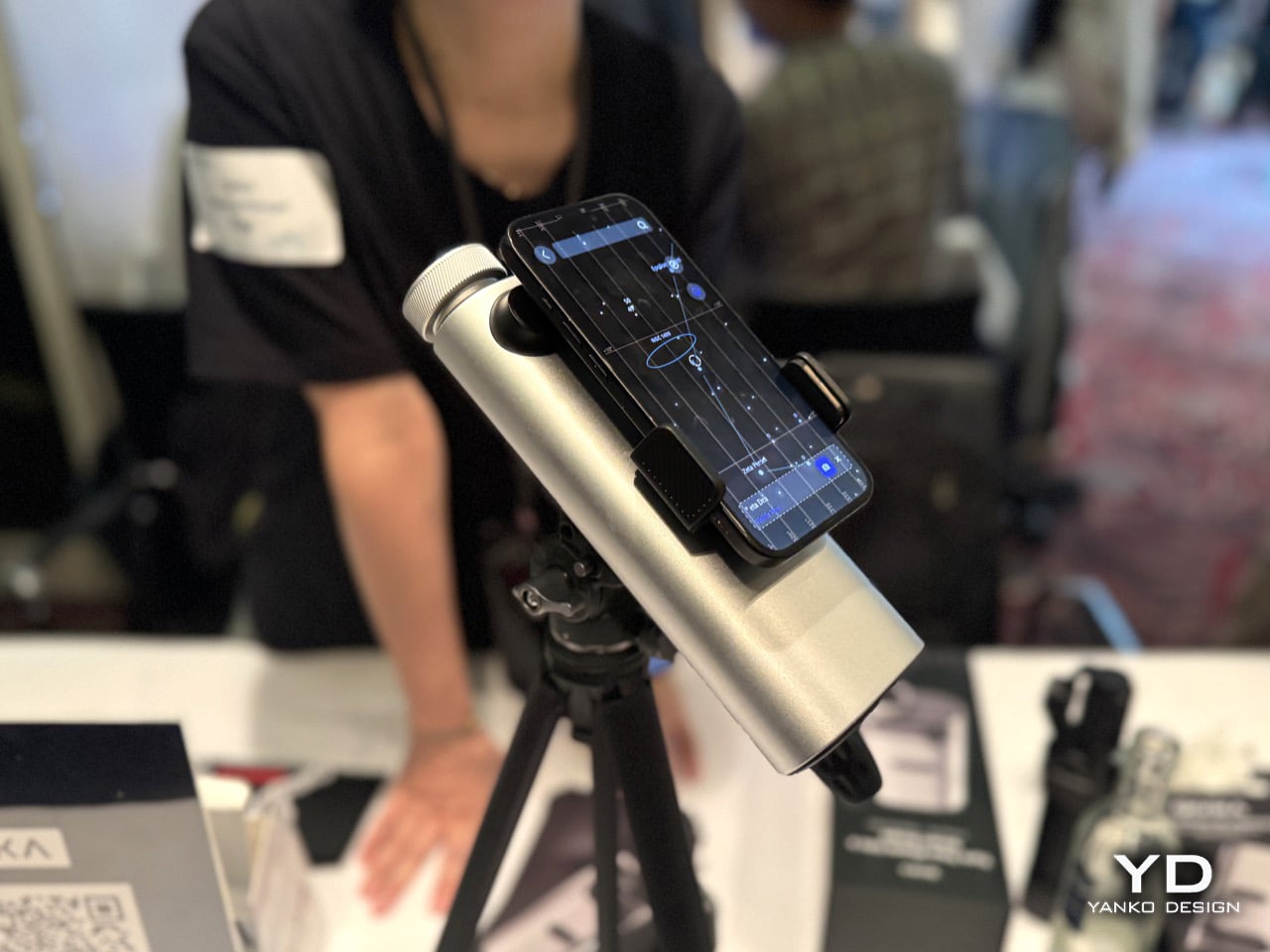
Smartphone camera hardware has had a wild few years. Periscope lenses pushed optical zoom past 5x, then 10x, then further, and the gap between a phone and a dedicated camera narrowed considerably. But there’s a ceiling, and the people who actually want to see lunar craters in detail, or pick out a bird species from 200 metres away, still had to choose between carrying dedicated optics that require setup and expertise, or making do with a phone camera that simply couldn’t bridge the distance. QIVIKA’s Smart Scope is a direct answer to that gap. Using a precision periscope optical architecture to fold the optical path into a compact form factor, it delivers 25x optical magnification and up to 3000mm equivalent focal length at approximately 300g, bringing high-performance long-range optics into a genuinely portable smartphone-based system. ED low-dispersion glass and multi-coated optics help preserve clarity and contrast, bringing distant subjects from lunar details to birds and wildlife within reach of a smartphone. That’s a meaningful spec for the price point, and the form factor is the real story: it clips onto your smartphone.

The hardware is only half the pitch. QIVIKA combines long-range optics with on-device AI composition. The AI analyzes the live view directly on the device and provides real-time framing assistance, helping users capture distant subjects more effectively, without cloud processing or an internet connection. This brings computational intelligence directly into the long-range imaging experience. The app splits into three intelligent shooting modes covering solar, explore, and deep sky use, with a Smart Sky Guide that overlays constellation lines and guides users to celestial targets with on-screen directional arrows, functioning essentially as GPS for the night sky. The birding side of the app is equally considered: AI identification supports 10,000+ bird species, while Life Lists, personal birding maps, community-shared locations, and observation records turn individual sightings into a growing personal exploration history. The whole experience is built around the loop of observe, capture, identify, remember, and explore, which means the product gets more valuable the more you use it, rather than plateauing once the novelty of the optics wears off. At $359 with a Kickstarter launch coinciding with IFA, it’s targeting exactly the kind of curious outdoor person who wants to look further without becoming an astronomer.

Yanhe Technology: The Solar Cell That Fits Inside Your Smart Glasses
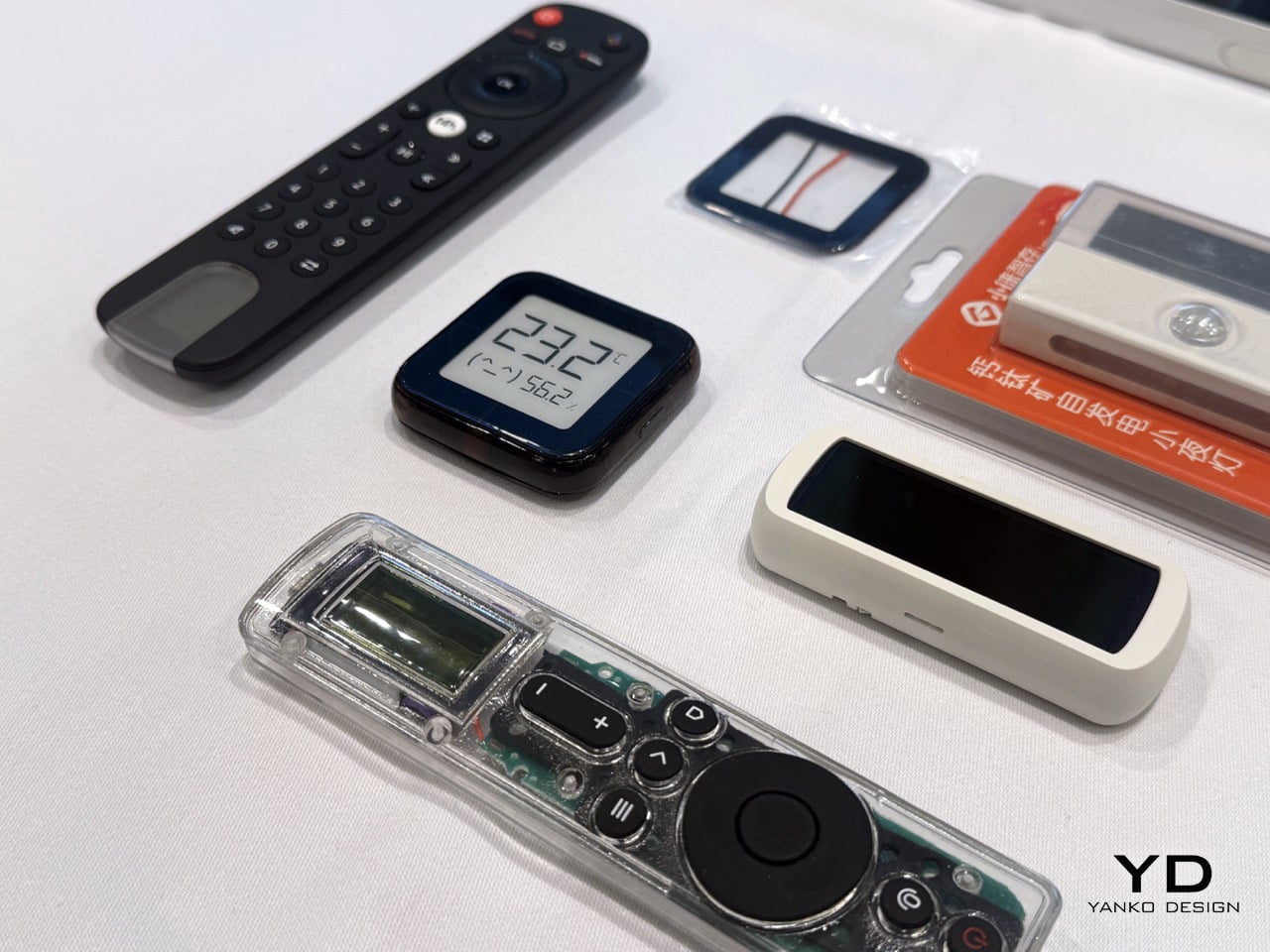
Most of the products in this roundup are end products, things you hold, wear, scan with, or talk to. Yanhe Technology is something different. It’s the infrastructure layer that makes the whole category more interesting. The pitch is elegantly simple: perovskite solar cells thin and efficient enough to build directly into everyday devices, so the smartwatch on your wrist, the AI glasses on your face, or the smart lock on your front door can top itself up from whatever light happens to be in the room. The indoor low-light power solution activates at an illuminance below 20 lux, achieves power conversion efficiency of more than 30% under low-light conditions, and carries an indoor service life exceeding 10 years, supporting devices such as keyboards, mice, smart locks, remote controls, AIoT sensors, and electronic shelf labels while reducing reliance on batteries or power cables. The component thickness sits below 0.5mm with an areal density below 0.15g per square centimetre, which means it conforms to curved and arbitrary freeform surfaces, including smart wearables and automotive aerodynamic contours. A module with a 1.7 square centimetre aperture can initiate power generation at just 20 lux, which is dimmer than most indoor spaces ever get.

The manufacturing story is what separates Yanhe from a university lab with a press release. The company has built the world’s first 100MW fully automated production line for consumer-grade perovskite modules, supporting 24-hour lights-out manufacturing, consistent product quality, and volume delivery. Yanhe is among the world’s first perovskite companies to receive TÜV Rheinland certification in accordance with IEC 63163. Its products are now available in more than 50 countries and integrated into the supply chains of over 100 brands, with collaborations established with Lenovo, Samsung, and Xiaomi. Founded in 2024 by a team out of Peking University and Columbia, that’s a remarkable amount of ground covered in a very short time. The bonus detail that makes this feel genuinely sci-fi: alongside its consumer business, Yanhe is developing perovskite photovoltaic solutions for space applications, has completed an engineering prototype of a flexible roll-out solar wing, and has begun ground-based engineering validation, with a satellite model and a space photovoltaic module also on display at IFA. So yes, they’re powering your keyboard from room light and also building solar wings for satellites. Just a Tuesday for Yanhe, apparently.

ACEMAGIC F9A Series: When the Server Room Fits on Your Desk
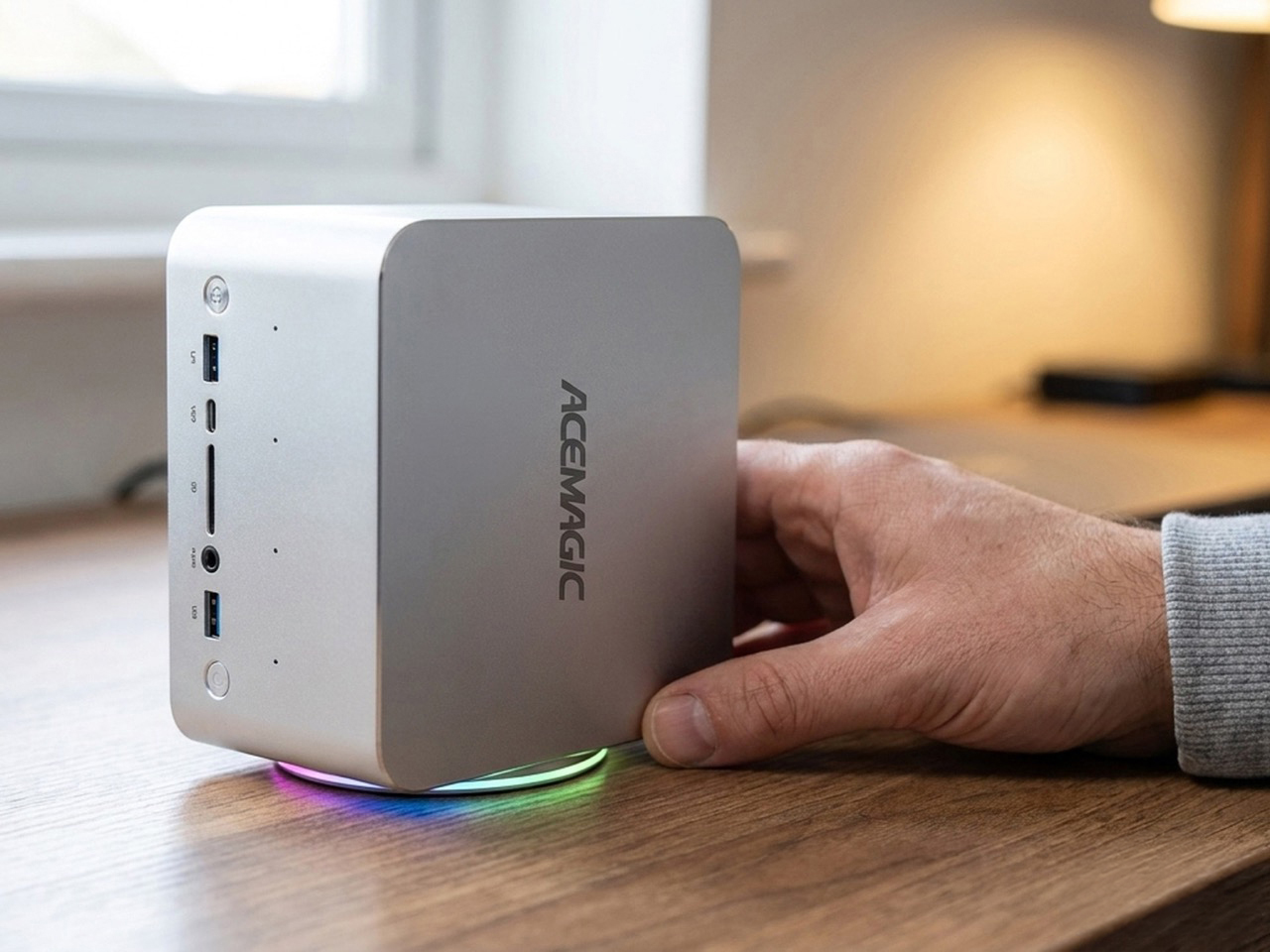
Running a local LLM at 200-billion-parameter scale on a 1.3-kilogram box that sits next to your monitor sounds like a footnote in a spec sheet, but the ACEMAGIC F9A Mini Workstation makes it the headline. The chassis comes in two configurations: the F9A-395 powered by AMD Ryzen AI Max+ 395 with 128GB of max memory at 8000MT/s, and the F9A-PRO 495 with AMD Ryzen AI Max+ PRO 495 scaling up to 192GB at 8533MT/s. On the AI inference side, the 395 supports up to 96GB of shared memory on Windows for MoE models up to 200B parameters, while the PRO 495 pushes that to 160GB of shared memory and models up to 300B parameters. Both variants share the same aerospace-grade aluminum unibody with a fingerprint-resistant finish, a hidden bottom air intake for improved airflow, and 3,000-plus ventilation holes across both sides for sustained full-power CPU performance. Keeping that thermal headroom intact is a five-heat-pipe turbo fan with a 3D air duct, sustaining 140W peak and 120W TDP without throttling during long-running AI workloads. OCuLink via PCIe 4.0×4 adds flexible expansion for external GPUs, compute cards, data acquisition cards, and industry-specific devices through an expansion dock.

The connectivity list punches well above the 2-liter form factor. Dual 2.5GbE ports handle high-speed wired data transfer for cloud computing and external services, while Wi-Fi 7 delivers twice the bandwidth of Wi-Fi 6 with support for 4096-QAM, Multi-RU, and Multi-Link Operation. HDMI 2.1, dual USB4, and DP2.1 combine to support four simultaneous 8K@60Hz displays for multi-screen creative setups. A quad-DMIC microphone array provides 360-degree far-field voice recognition with a built-in noise-canceling mic chip and 2W x 2 DTS speakers, making it viable for meeting rooms and home AI hubs. Dual M.2 NVMe slots on PCIe 4.0×4 support up to 8TB with RAID 0 and RAID 1 configurations, and both SSDs get thermal pads and aluminum plates for cooling. The broader pitch ACEMAGIC is making is a clean one: plug-and-play from a standard outlet, no server room, quiet and energy-efficient, a one-time investment with no recurring costs, and local processing for data security.

GEEKOM Mini PCs: The Mini PC That Makes Your Tower Look Embarrassed
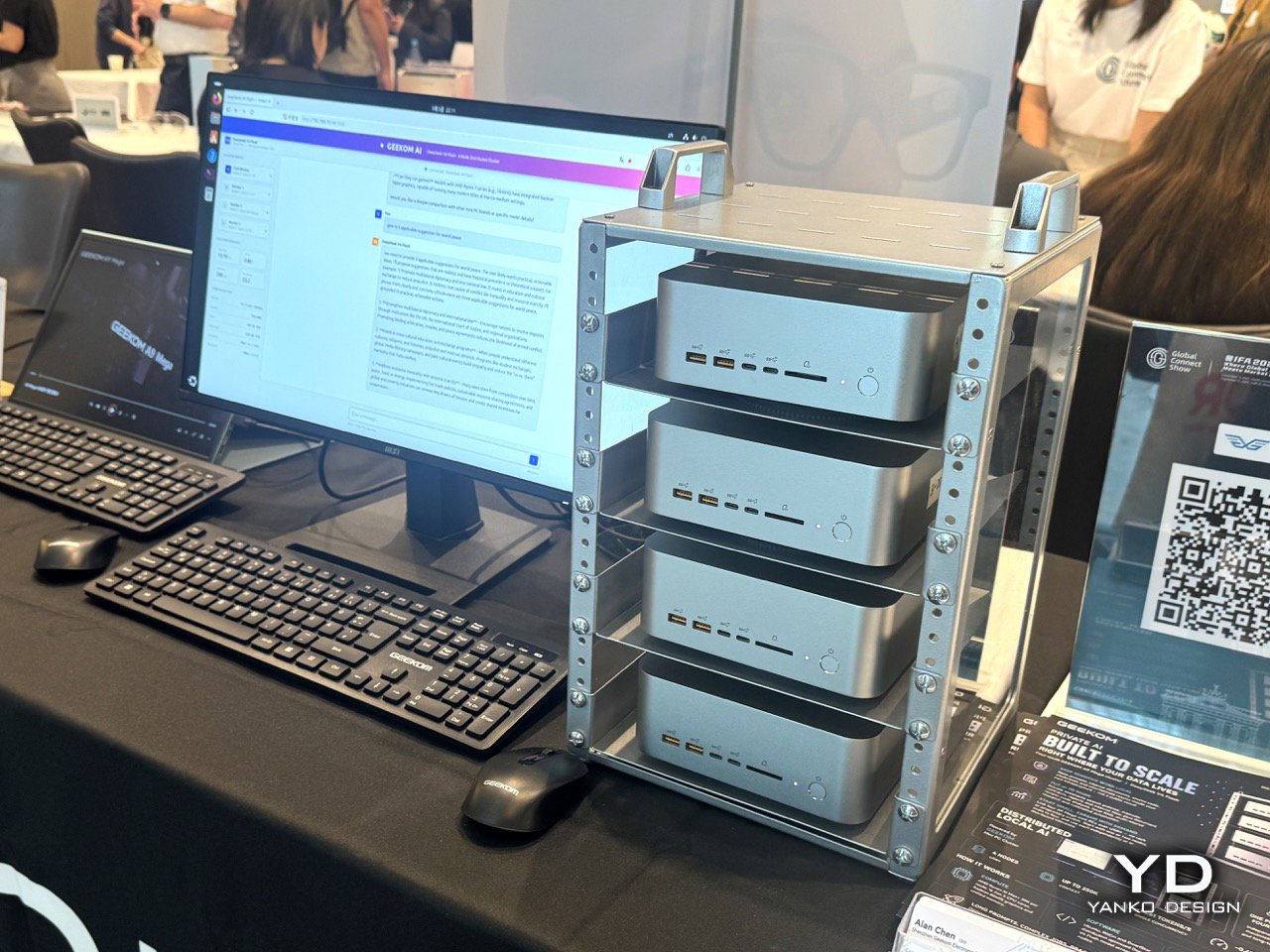
Mini PCs have had a quiet decade of steady credibility-building. What started as underpowered boxes for digital signage and light home-theater use has, thanks largely to AMD’s Ryzen and Intel’s latest mobile silicon, turned into a genuine alternative to full desktop builds for a surprising range of workloads. GEEKOM has been one of the more consistent players in that space, and we’ve covered the brand on Yanko Design before, noting that the case for a palm-sized PC has never been more compelling than right now, when the chips inside them have stopped making excuses. At IFA, GEEKOM is showing two products that sit at very different points on the performance spectrum, and together they make a pretty complete argument for the category. The A9 Mega is the AMD flagship, built around the Ryzen AI 9 HX 370 with its 12-core, 24-thread architecture, 50 TOPS of NPU performance, and up to 64GB of DDR5-5600 RAM. That NPU figure puts it squarely in Microsoft’s Copilot+ PC certification territory, meaning this is hardware built for the current wave of on-device AI workloads, local large language models, real-time transcription, and AI-assisted creative workflows, running entirely without a cloud connection.

The IT13 Max is the Intel counterpart, and it plays a slightly different game. Built on the Intel Core i9-13980HX, a 24-core, 32-thread processor with a 5.6GHz peak boost clock, it supports up to 96GB of DDR5 RAM and up to 4TB of NVMe storage across two M.2 slots. That memory ceiling is unusual for a device this size, and it’s what makes the IT13 Max interesting for professionals running virtual machines, large datasets, or memory-intensive creative applications who genuinely cannot justify a full tower but also cannot afford to compromise. Both units support triple 4K display output, meaning a three-monitor productivity setup from a box smaller than most external hard drives, which remains one of those specs that sounds made up until you’re actually looking at the back panel. GEEKOM backs both products with a three-year warranty, which is the unsexy detail that actually closes the deal for anyone considering replacing a desktop. The whole pitch across both machines is that raw performance and physical footprint stopped being a trade-off a while ago, and these are the receipts.

The post Smart Glasses, Robot Dogs, AI Tamagotchis, and Desk-Sized Supercomputers: How IFA 2026 Redefined Robots first appeared on Yanko Design.

Your Body Is the New Tech Platform: The Wildest Wearables at IFA 2026

Tech shows have always been about what’s next, and for a while that meant displays, processors, and connectivity standards nobody could fully explain. The “next” that keeps showing up now is a lot more personal. AI that tracks your muscle tension and adjusts a massage roller’s pressure in real time. Exoskeleton hardware that detects your activity type and switches support modes in under 200 milliseconds. Earbuds running a transcription service across 78 languages in the background while you go about your day. The body has become the most actively developed platform in consumer technology, and the hardware being built around it is finally starting to match the ambition.

Hearing protection for children. Clinic-style oral care without the clinic. Underwater AR navigation that projects real-time depth, air, and directional data into a diver’s field of view. Scalp wellness built around making hair loss treatment less of a chore to stick to. An AI sports camera that follows the action in 4K without anyone behind the lens. These brands at the Global Connect Show at IFA 2026 cover wildly different ground, and that breadth is exactly what makes them worth pulling into one roundup. Here’s our full breakdown.

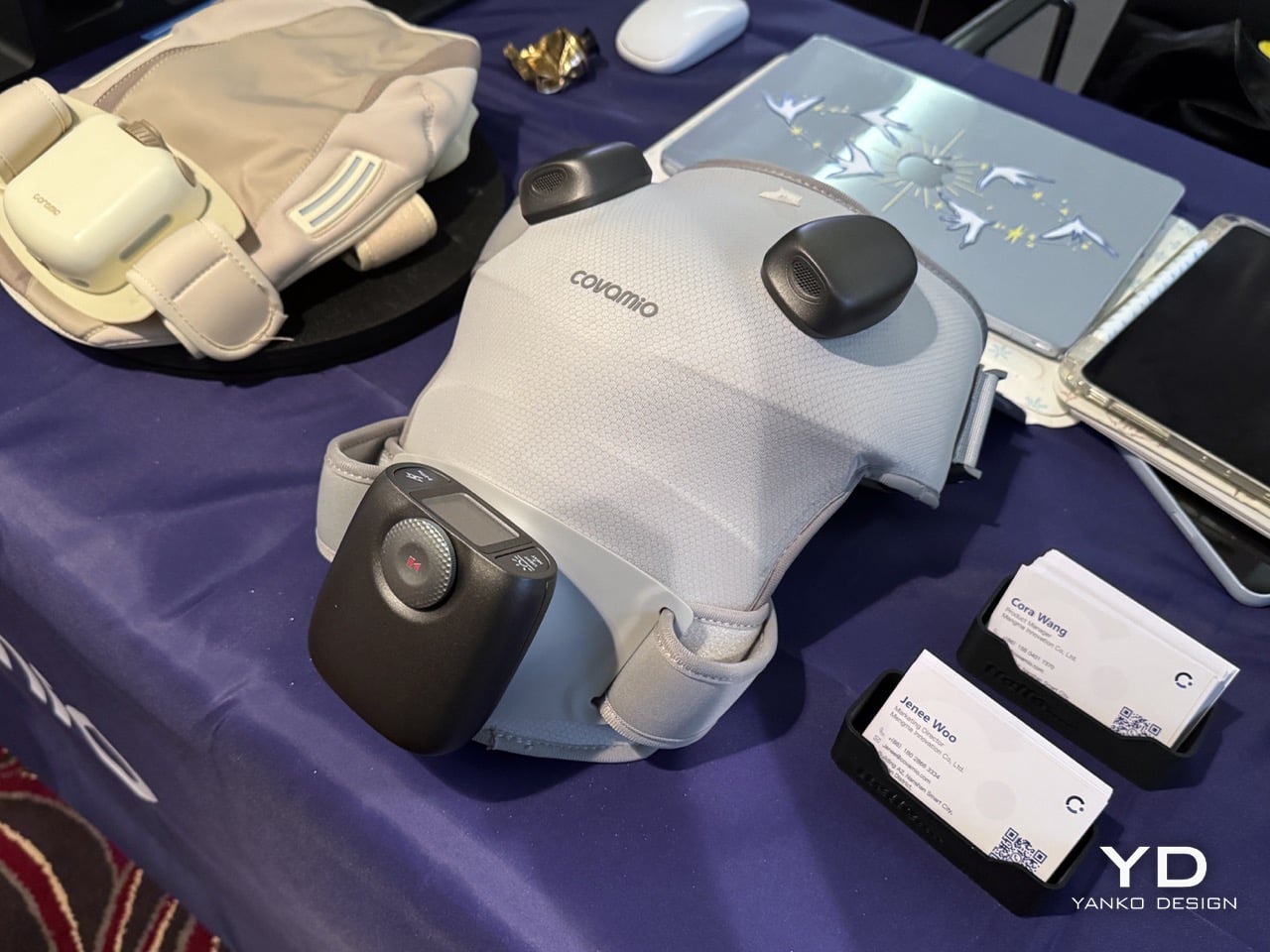
Covamio S1: Five Therapies, One Shoulder Wrap

The shoulder is a weird body part to build around. Covamio picked it deliberately as one of the most complex wearable rehabilitation scenarios, citing high daily use, complex movement and stability demands, common pain and stiffness, and a clear need for ongoing support. The S1 is their answer to what a device shaped specifically around that complexity should look like. The core proposition is consolidating five therapy modalities into one wearable: their proprietary M-sti matrix electrical pulse system running TENS and NMES programs for pain and muscle activation, red and near-infrared light for photobiomodulation, zoned heat for pre-session warmup, adaptive compression to hold everything in contact while the shoulder moves, and AI-assisted sensing monitoring fit, contact, temperature, and output during each session. The specific choice to use dry electrodes stands out, since it removes the gel-pad consumable that most TENS units depend on, which is quietly one of the more practical design decisions in the whole package.

Where the S1 gets more ambitious is the platform layer. Covamio frames this as the first node in a system rather than a standalone gadget, with a three-part software platform covering device-side sensing and control, user applications for guided sessions and activity history, and professional tools that aggregate device activity, user feedback, and progress for clinician review. The roadmap is stated openly: S1 establishes a foundation for future systems built around other joints, each wearable shaped to its own anatomy but connecting through the same platform. That’s a meaningful architectural bet, positioning the wrap as infrastructure rather than a one-off product. Worth flagging, this is still pre-commercial, and hard specs like pricing, dimensions, weight, battery figures, and wavelength details for the light therapy are not yet public. What’s available is the design reasoning, and on that front, it’s a thoughtful pitch for what shoulder recovery hardware should be doing right now.

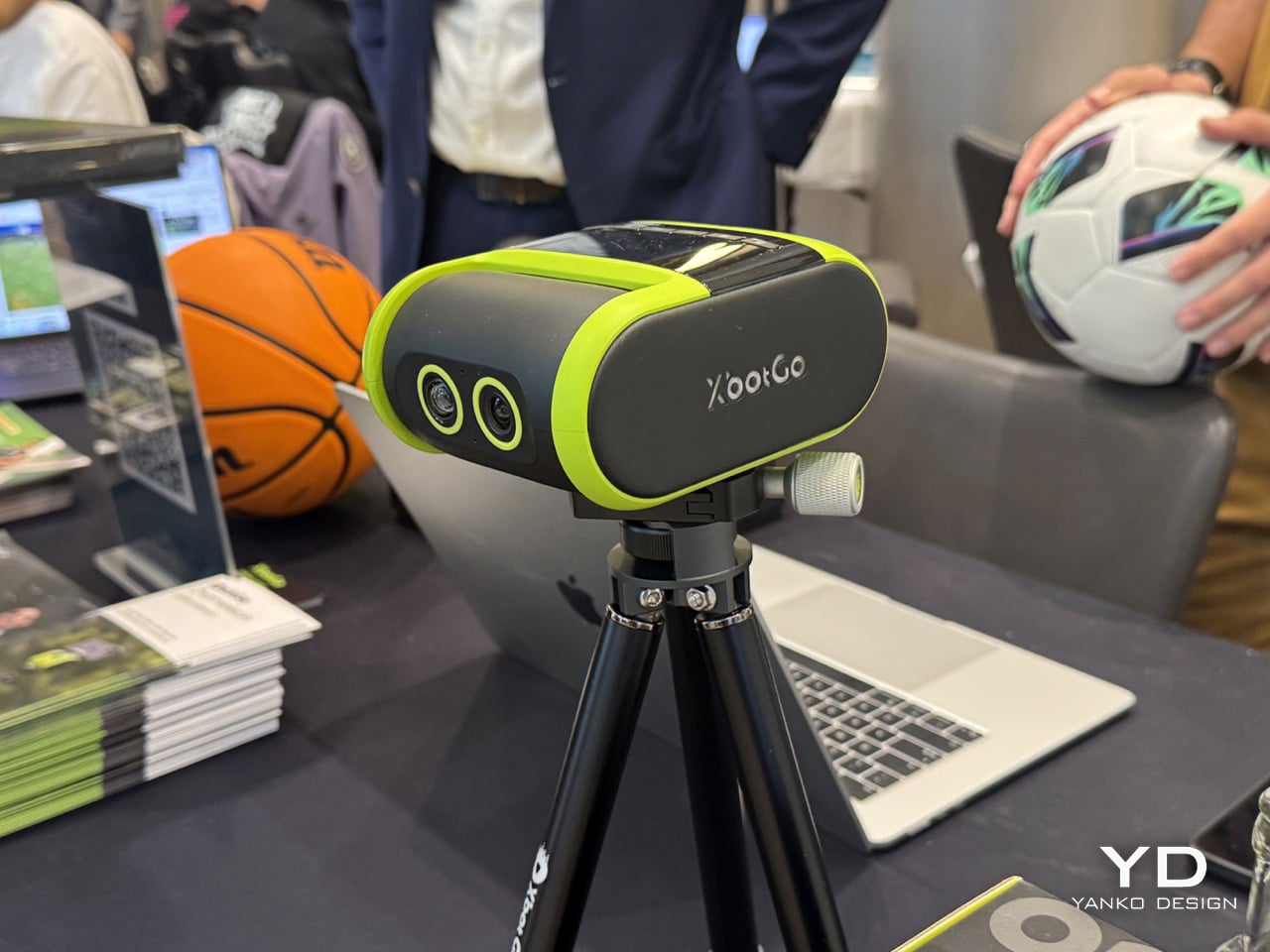
XbotGo Falcon: The Sideline Camera That Already Knows Where the Ball is Going

AI auto-tracking cameras for sports have been around for a bit, mostly in the form of school and club-level systems that require installation, licensing fees, and a monthly subscription just to access the footage you already paid to record. XbotGo is taking direct aim at that model. The Falcon is a compact, 544-gram, dual-lens camera built around a 1/1.8″ Sony CMOS sensor shooting true 4K, with a 106-degree wide-angle tracking lens working alongside the recording lens so the system always knows where the action is. A 6-TOPS AI processor handles the motion intelligence onboard, with 360-degree panoramic rotation and 160 degrees of ground-to-sky tilt giving it coverage across sports as varied as soccer, basketball, lacrosse, pickleball, and badminton. Zone Mapping lets you lock the play area through the XbotGo app so the tracking stays disciplined and doesn’t chase the wrong thing. Battery life runs to 4.5 hours, it’s IPX5 rain-resistant, and setup is fast enough that you’re recording before the warm-up is over.

The pricing sits at $799, and critically, the core AI tracking and recording intelligence comes with no ongoing subscription, which is a meaningful differentiator in a market where competitors have leaned hard into recurring revenue from the very features users expect to work out of the box. On top of that, live streaming to YouTube and Facebook is built in and free, with a Live Scoreboard overlay and AI-generated highlight reels that clip the best moments automatically. XbotGo was founded by Dr. David Tan, a computer vision researcher who reportedly built the Falcon partly out of frustration from trying to film his own kid’s games. That origin story shows in the design philosophy: this is a camera built for the parent on the sideline and the coach with no camera operator, not for a broadcast crew with a van full of gear.

iClever QuietShield Q950: The Kids’ Headphone That Actually Takes Hearing Seriously

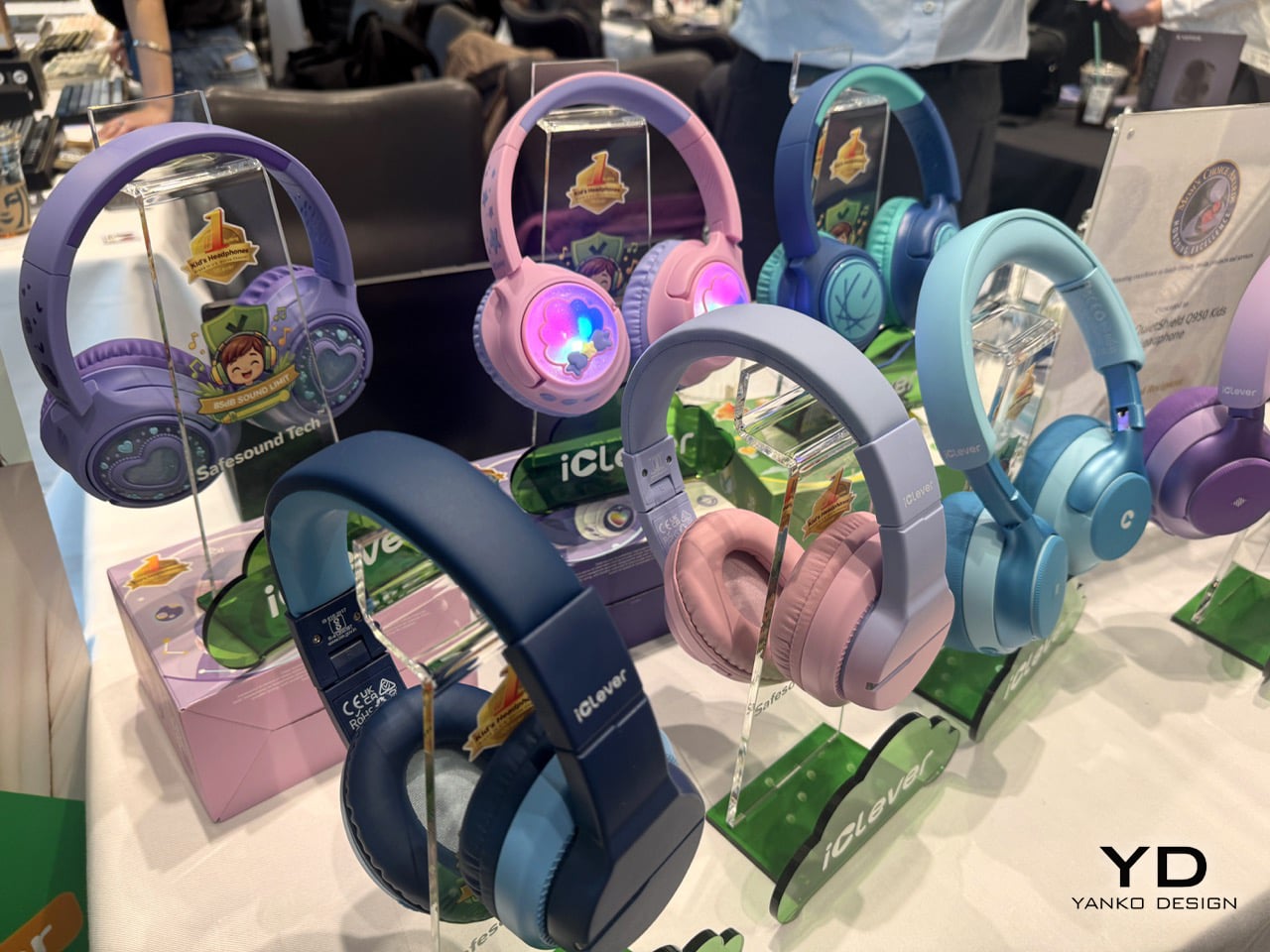
We covered the iClever Q950 back in July when it quietly became one of the more impressive sub-$70 audio products of the year, with our writer noting it was good enough they might use it themselves. The headline credential hasn’t changed: the Q950 is the world’s first kids’ headphone to earn TÜV Rheinland Hearing Care Certification, capping volume at 80dBA and delivering hybrid ANC with up to 35dB of noise reduction. That ANC works in wired mode too, which matters on planes and in classrooms where a dead battery shouldn’t mean a loud environment. It also picked up the 2026 Red Dot Award for Industrial Design, which makes it a rare thing in consumer audio: a children’s product that got taken seriously by industrial design judges.

The build is worth talking about. High-strength POK headband construction and reinforced metal hinges provide enhanced resistance to bending and drops, validated through SGS-certified 3,000-cycle twist durability and drop testing. The ear cups rotate 90 degrees to reduce pressure on younger heads, there’s auto-pause when the headphones come off, and Bluetooth 6.0 keeps the connection stable and low-latency. Battery life runs to 60 hours with ANC off, 35 hours with it on. At $54.99 on sale, this is the headphone category doing the right thing at the right price.

Viaim Rise: The Earbud Case That Thinks Faster Than You Do

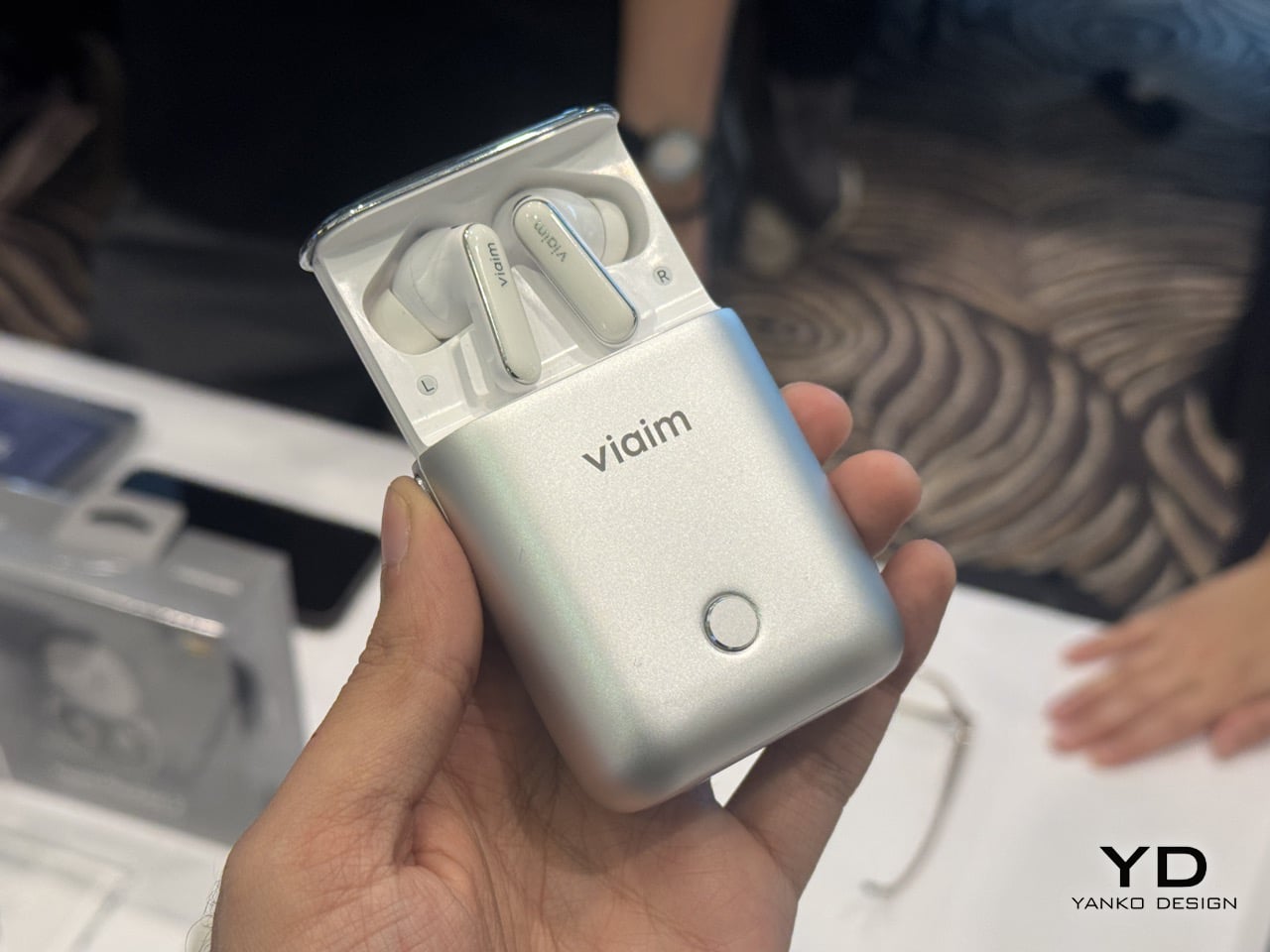
The AI note-taking space has gotten crowded fast. Standalone recorders, transcription apps, dedicated meeting hardware. What Viaim is doing with the Rise is trying to collapse all of that into something you were already going to put in your ears. The Rise is an AI Agent Earbuds system built around premium earbuds and a press-to-rise smart case that captures every meeting, call, and piece of content shaping your work, then turns it into editable notes, ready-to-send follow-ups, and agent-handled tasks. The case interaction is the hook: a mechanical press-to-rise structure opens the case and triggers instant capture with no app, no unlock, no interruption. One tap records calls, live meetings, media, and simultaneous interpretation across 78 languages and 145 accents, and the smart case captures even when the buds are off. Switch on Ambient Listening and it builds memory in the background without retaining the underlying audio.

The hardware underneath is serious. An 11mm and 6mm dual driver sits alongside an 11-mic array with VPU bone-conduction denoising, and the USB-C smart case doubles as a 3-mic PC recorder, with Bluetooth 5.4, Apple MFi, Google Fast Pair, Find My, and IP55 rated. On the software side, Space Intelligence connects recordings, documents, and project history, while Vitana, viaim’s built-in AI assistant, surfaces new risks, decisions, and next steps the moment they emerge. Task Broker routes user-approved actions into Google Workspace, Codex, Claude Code, Cursor, and Copilot, with more integrations rolling out through 2027. The Rise launched on Indiegogo on August 31, 2026, which makes IFA its first major hardware show outing, and the timing feels deliberate. This is a product that wants to be seen.

AREX ONE: The Dive Mask That Turns Your Entire Field of View Into a Dashboard

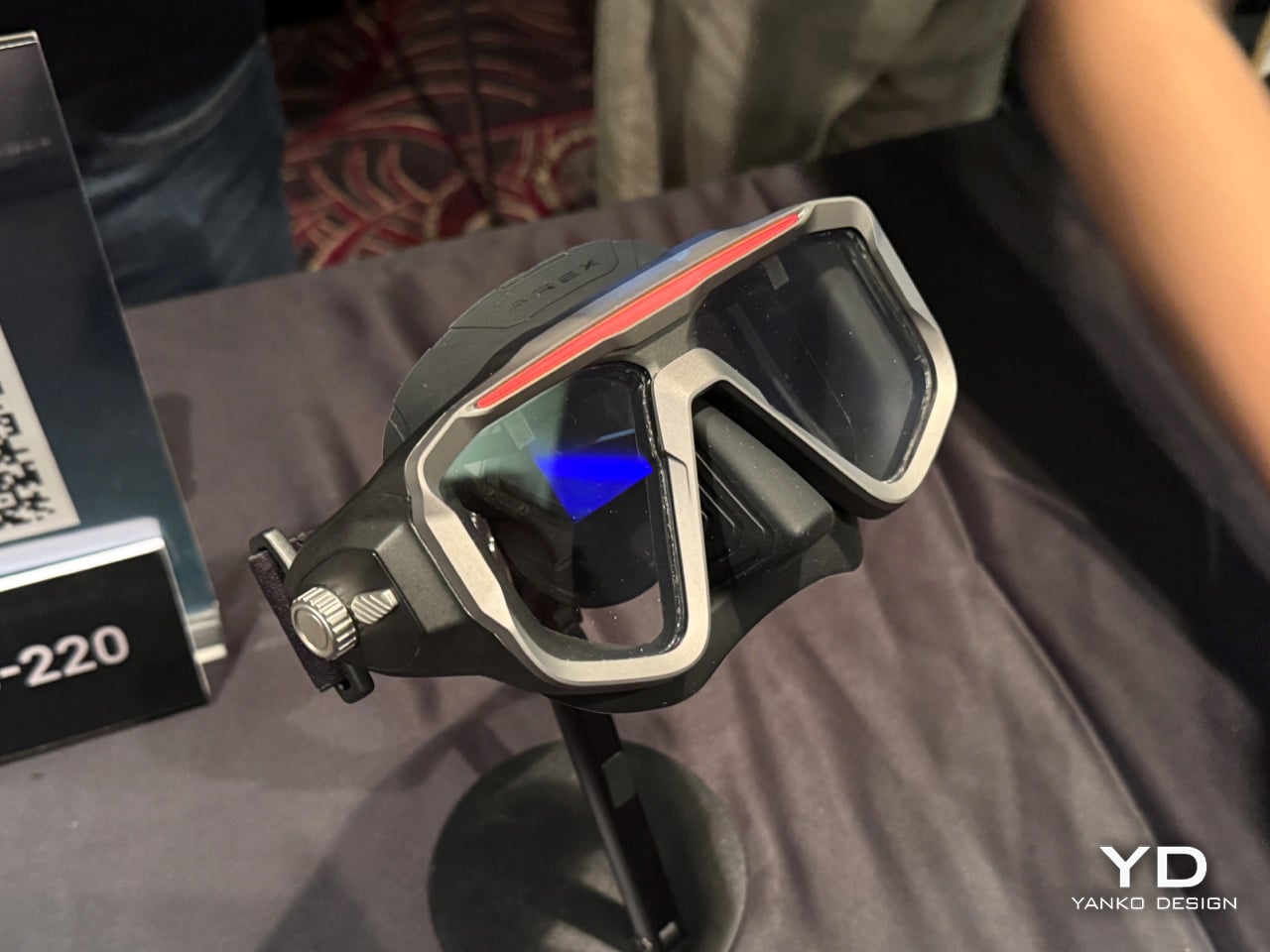
Dive computers have always had an uncomfortable irony at their core. The device keeping you safe underwater sits on your wrist, which means every critical check requires you to pull your gaze away from the environment you’re actively navigating. Underwater, that life-saving data living on your wrist means constant checking and occupying your hands during critical moments, and when your attention leaves the dive, risks arise. AREX is building its entire pitch around fixing that. The AREX ONE is positioned as the world’s first AR dive computer mask, projecting all the information you’d normally glance down at directly into your natural field of view. It’s the kind of form-factor shift that sounds obvious in hindsight, and the kind that tends to make an entire product category look overdue.

The feature set covers a built-in dive computer, AR data, a marine ID scanner, personalized RGB lights, a 120-meter depth rating at 13 ATM, tank data display, 40-hour battery life, in-sight air integration, an intuitive control dial, and a unified digital ecosystem. The dive computer side runs on an independent logic board processing real-time sensor data and ZHL-16C algorithms, which is the same decompression standard used in serious technical dive computers from Shearwater and Suunto. The modes scale from a minimal immersive mode all the way to a full technical mode with PPO2, tissue saturation charts, and gradient factors. Then there’s the marine life identification feature, which frames marine life in your natural field of view to instantly scan and identify species, turning a hammerhead passing by into a labeled data card without breaking your focus. It comes with three attachable modules: a Marine ID Scanner, a TX Pressure Pod, and a Sync Dive Torch, each feeding into the same in-mask display. The Kickstarter launch puts it in the crowdfunding category for now, but the hardware ambition here reads like something that’s been genuinely thought through, not just rendered.

Ascentiz H Series: Exoskeleton Hardware for Hikers, Commuters, and Everyone in Between

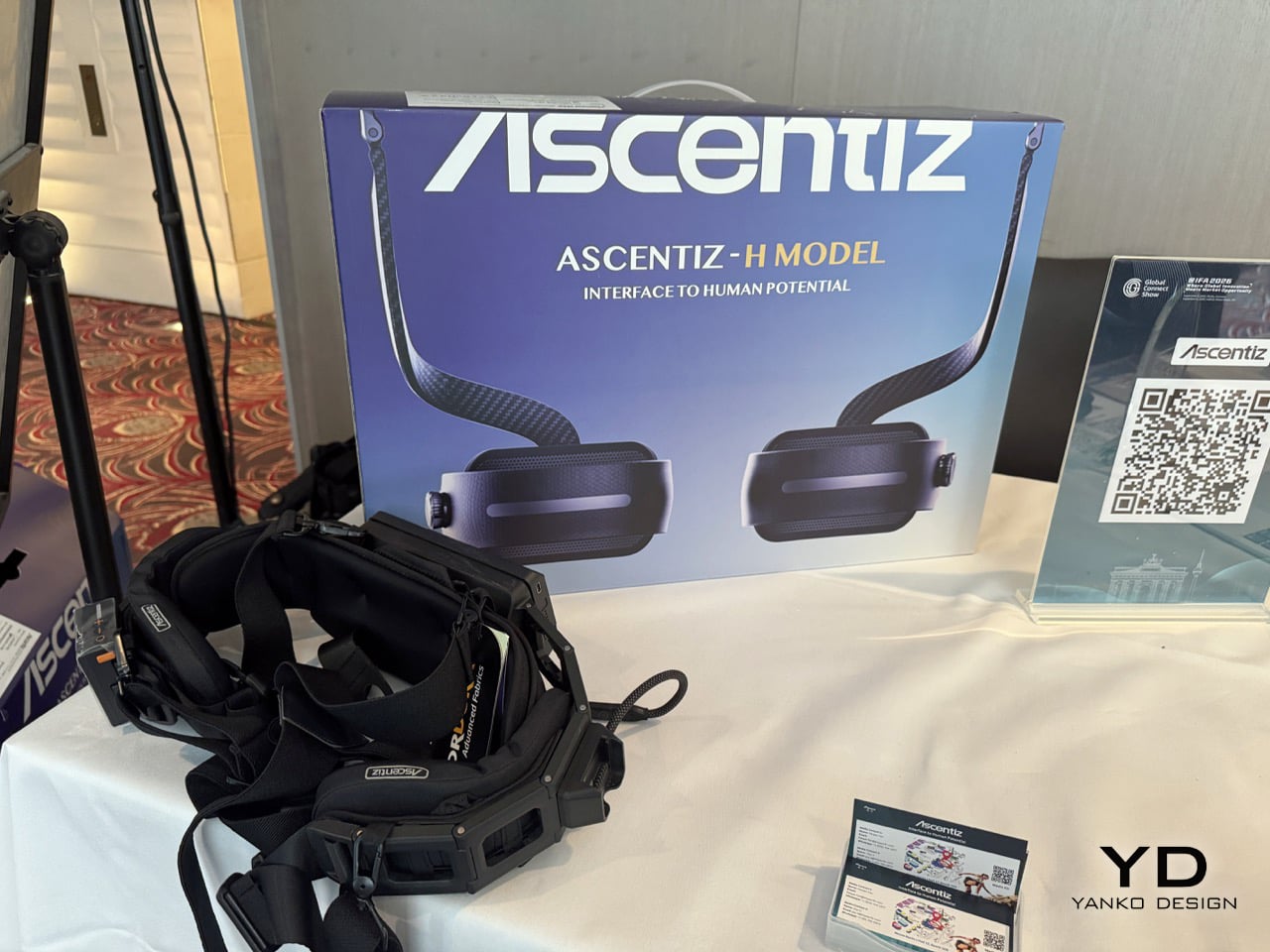
Ascentiz has been at this since 2023, building modular exoskeleton hardware that clips onto your hips or knees depending on what your body needs that day. We’ve covered them on YD before, and the brand has only gotten sharper since. The bigger picture Ascentiz is working toward is a full modular ecosystem, lower body now, upper body eventually, rather than a single fixed device you’re stuck with. The H Pro and H Ultra are the current center of that ecosystem, and both run on an AI MOTION engine that recognizes 12 terrain types on the Pro and 16 on the Ultra, covering everything from slow walks and sprints to stair climbing, cycling, and full hike up and down modes. Both models come in at around 2.5kg, operate at under 35dB, and carry IP54 weatherproofing, which covers the kind of conditions you’d actually want to wear an exoskeleton in. Kinetic energy recovery comes standard on both, charging the battery while the system is actively driving you forward.

The H Pro is the everyday option, built for fitness, commuting, and lighter outdoor use, with a 25km assisted range and a price of $1,499. The H Ultra is built for longer, harder journeys, with Toray T700 carbon fiber and a titanium-alloy Exo-Belt, a dual-battery setup, and an assisted range of up to 50km. It also adds a Boost Mode the Pro doesn’t carry, bumps motor torque from 22Nm to 24Nm, and upgrades the fabric from waterproof-coated nylon to Event waterproof and breathable material, which is the kind of detail that separates a product that’s been actually tested outdoors from one that hasn’t. Both units are airplane-portable and charge fully in 65 minutes via Type-C at up to 100W. The Ultra sits at $1,999, and between the materials, the range, and the extra terrain intelligence, the $500 gap makes reasonable sense. The hardware has already picked up the iF Design Award, Red Dot, and several others, which tracks for a company that’s clearly been thinking hard about what wearing one of these things should actually feel like.

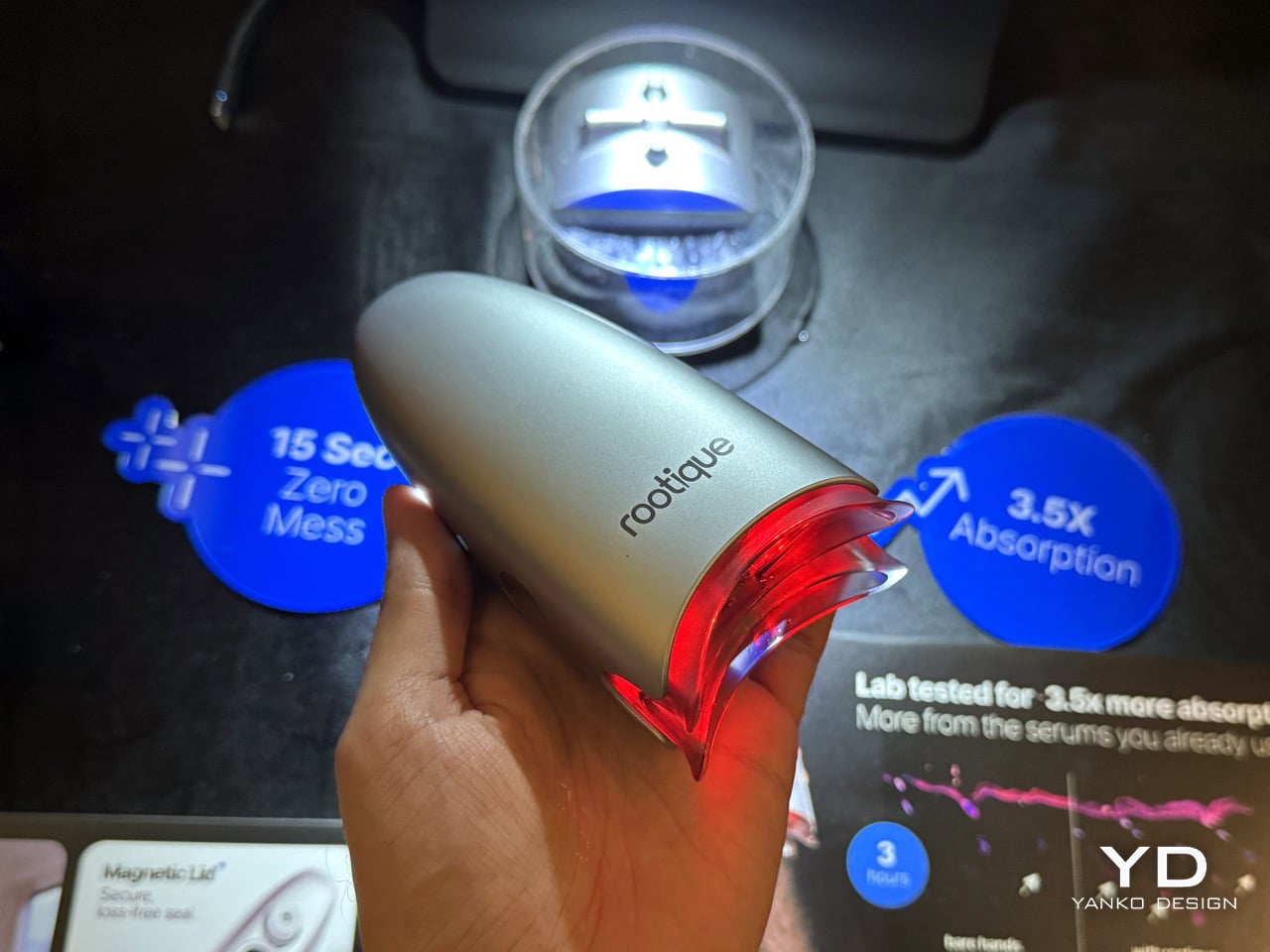
ROOTIQUE DUO: Because the Real Problem With Hair Loss Treatment Is Discipline

The data sitting behind ROOTIQUE is blunter than most brands would choose to lead with. A 2023 study in Dermatology and Therapy found that 86.3% of patients discontinued topical minoxidil treatment, not because it failed to work, but because the application process was messy, inconsistent, and easy to skip. ROOTIQUE is built entirely around that dropout problem. The DUO is the world’s first micro-misting hair tonic applicator, and its core argument is simple: consistency is the treatment as much as the tonic. IntelliMist converts tonic into 0.005mm mist particles delivered directly to the follicles, bypassing the hair fibres that absorb most of what people apply by hand. The result, per independent fluorescence-tracer testing, is up to 3.5x absorption compared to bare-hand application.

The DuoTrace teeth part the hair gently for direct-to-scalp delivery, a 660nm red light at clinically recognized wavelength supports follicle health simultaneously, and the whole session takes 15 seconds with zero residue on the hands. The 5ml tank holds enough for multiple sessions, charges to up to 40 uses, and is travel-ready without cords. One beep signals 1ml dispensed, two beeps means you’re done, so there’s no guesswork on dosage. ROOTIQUE claims 50% less tonic wasted compared to manual application, and 56% of customers self-reported increased consistency after switching to DUO. For a product category where quitting early is the norm, turning a messy two-minute ritual into a 15-second routine is, genuinely, the whole product.

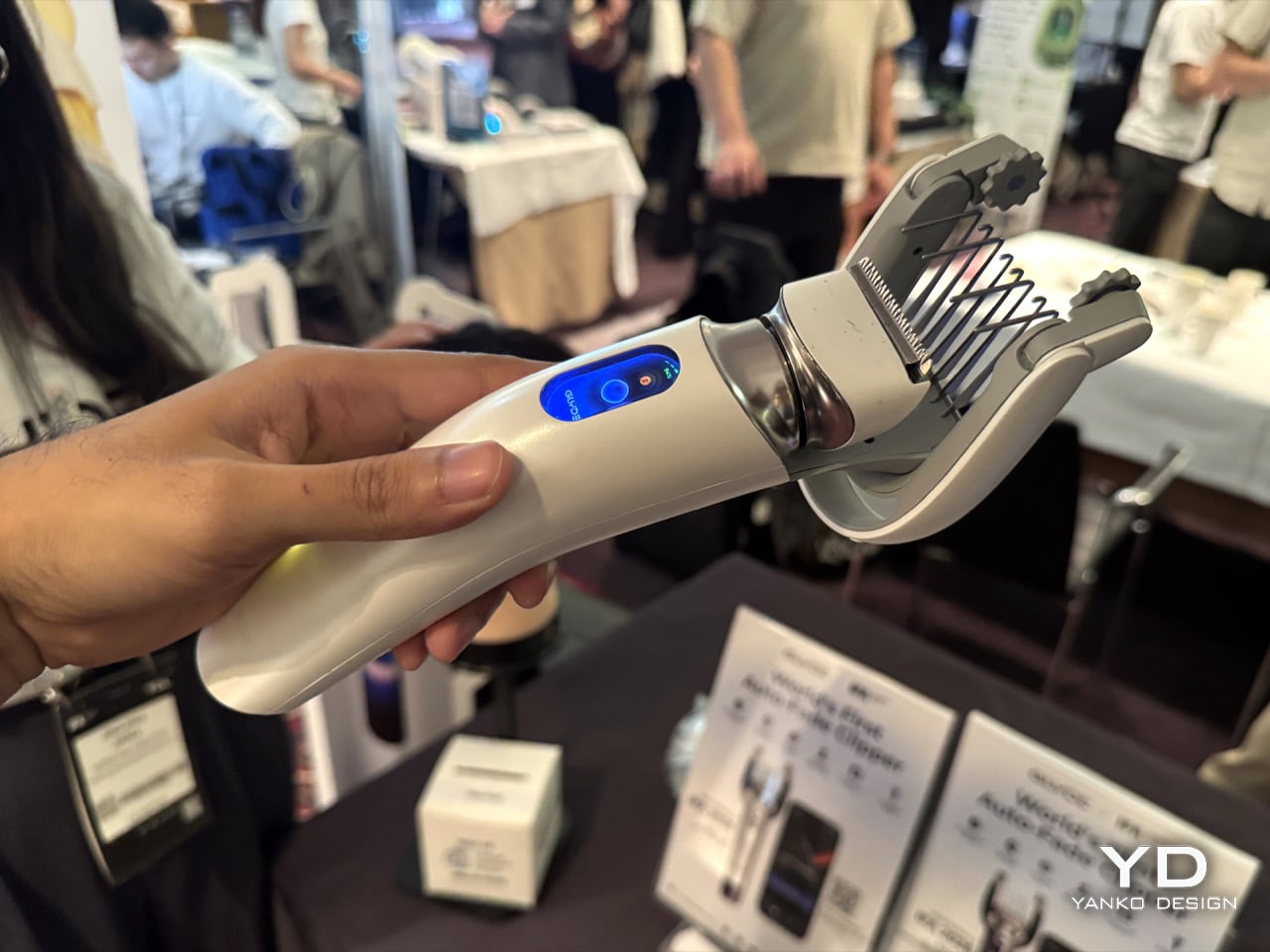
GLYDE Auto-Fade Clipper: The Clipper That Finally Handles the Part You Can’t See

For most people who cut their own hair, the actual clipping is manageable. The part that breaks everything is the fade, that gradual transition between different lengths on the sides and back that barbers make look effortless. A home user can’t see the back of their own head, can’t simultaneously judge angle, distance, and cutting length, and one wrong pass leaves a harsh line that’s impossible to fix without cutting shorter. GLYDE, the debut product from Shenzhen-based Kuaiku Innovation, is built entirely around solving that one problem. Working with a wearable Fade Band, GLYDE tracks where the clipper is relative to the fade line and adjusts the blade in real time, handling the gradual blending that makes fades so difficult and helping users get cleaner, more consistent results at home. It also solves the consistency problem by storing hairstyle profiles digitally. Once users dial in a fade they like, they save it and recall it with a single tap, and the clipper reproduces the exact same parameters every session.

That search for the right product took nearly three years, with no auto-fade clipper to reference, no established technical roadmap, and no competitor to reverse-engineer. Every mechanism and algorithm had to be defined and validated from scratch. What IFA is seeing is the result of that work, refined after an on-site CES survey where more than 60 percent of respondents said their primary concern was maintaining the sides and back, not getting a full haircut. GLYDE deliberately breaks from the traditional clipper aesthetic, with a cold-toned minimal body, polished stainless steel accents, and a signature LED light orb that reads more like consumer electronics than a grooming tool. Hardware specs for the current prototype include a 2600 mAh battery, approximately two hours of runtime, Bluetooth Low Energy, USB-C charging, a 1.47-inch display, and a weight of about 370 grams. It is still a pre-production prototype with pricing TBD, but the product logic is already sharp: GLYDE believes that a portion of men’s haircutting, especially fade maintenance, will follow the same trajectory shaving did when the electric razor moved it from barbershop to bathroom counter.

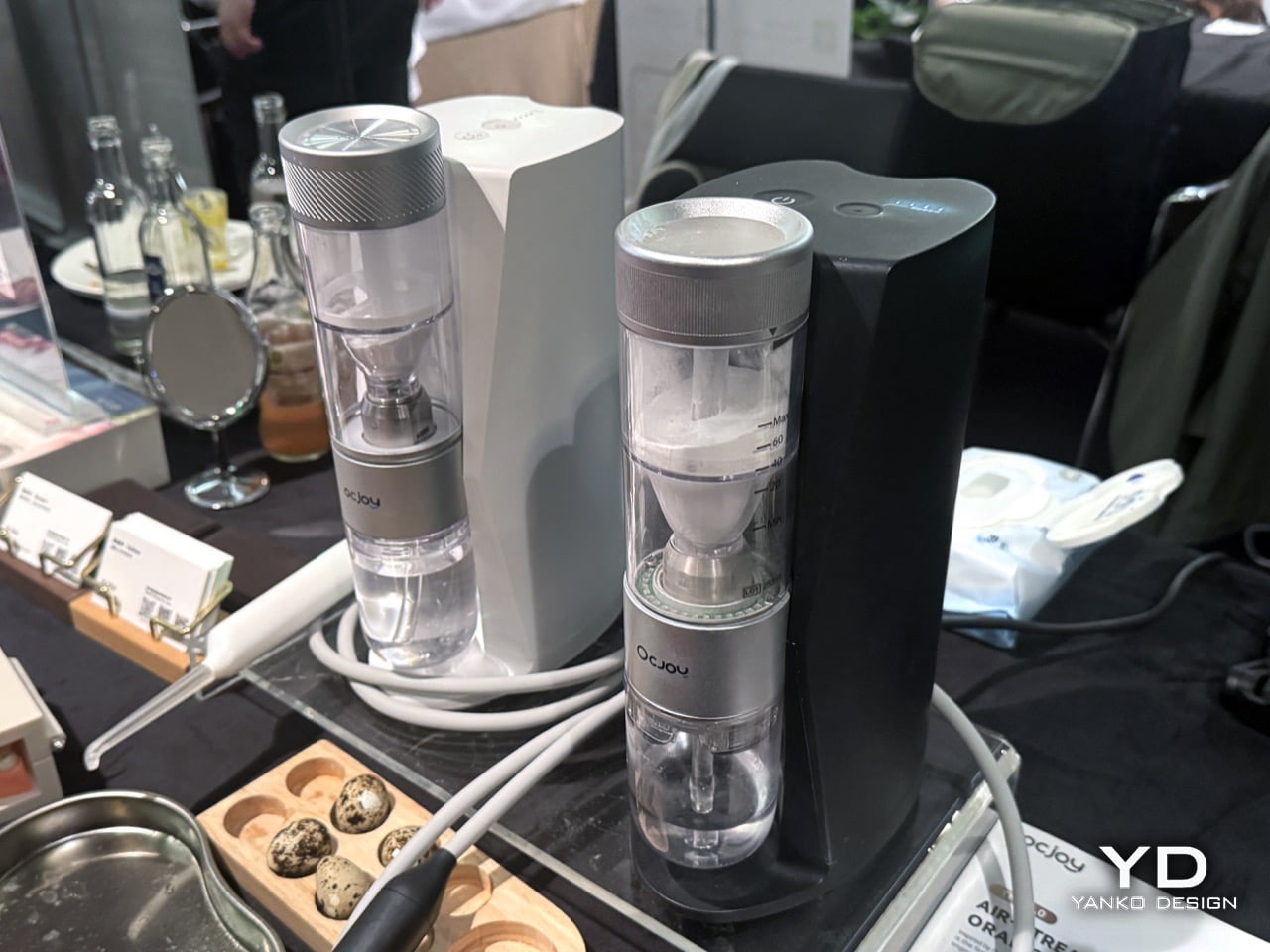
OCJOY Air-Streaming Oral Cleaner: The Dental Clinic Protocol That Now Lives on Your Bathroom Counter

Plaque gets all the marketing attention in oral care, but the real problem is biofilm, the structured bacterial colony that anchors to enamel, builds a protective shield, and starts rebuilding within hours of brushing. Bristles only clean where they make contact, leaving grooves, pits, and gumline areas routinely untouched. Water flossers reach the gaps but carry no active cleaning agent. OCJOY’s answer is Air-Streaming Technology, built on Guided Biofilm Therapy (GBT), a Swiss clinical protocol designed to gently lift biofilm using precisely controlled air, water, and fine food-grade powder. Until now, GBT has been available only in dental practices; OCJOY makes it practical for daily use, delivering a clean that bristles or water alone cannot achieve. The proprietary TriMatter system propels millions of fine particles across enamel surfaces and into grooves, pits, and interdental gaps, disrupting biofilm exactly where water flossers cannot reach.

Independent lab testing puts numbers behind those claims. In 20 seconds, OCJOY removed 99.9% of biofilm, compared to 9.2% left behind by an electric toothbrush under the same conditions. Surface stains from coffee, tea, wine, and tobacco cleared at 88% to 100% without bleach, and a 100-participant study recorded visible whitening of 2-3 shades within 3-7 days. Traditional oral care demands four separate tools, a water flosser, toothbrush, dental polisher, and mouthwash, taking up to 15 minutes for a thorough clean; OCJOY consolidates all of that into a single device in approximately three minutes. The powder chamber holds enough for about 20 uses, the 150mL magnetic water tank lifts out, refills, and snaps back in seconds, and a single tap triggers an automatic self-cleaning cycle that blows out residual moisture and flushes internal pathways to prevent clogs. Clinicians from USC, Shanghai Jiao Tong University School of Medicine, and West China Hospital of Stomatology have evaluated the technology and recommend it for daily cleaning between professional visits.

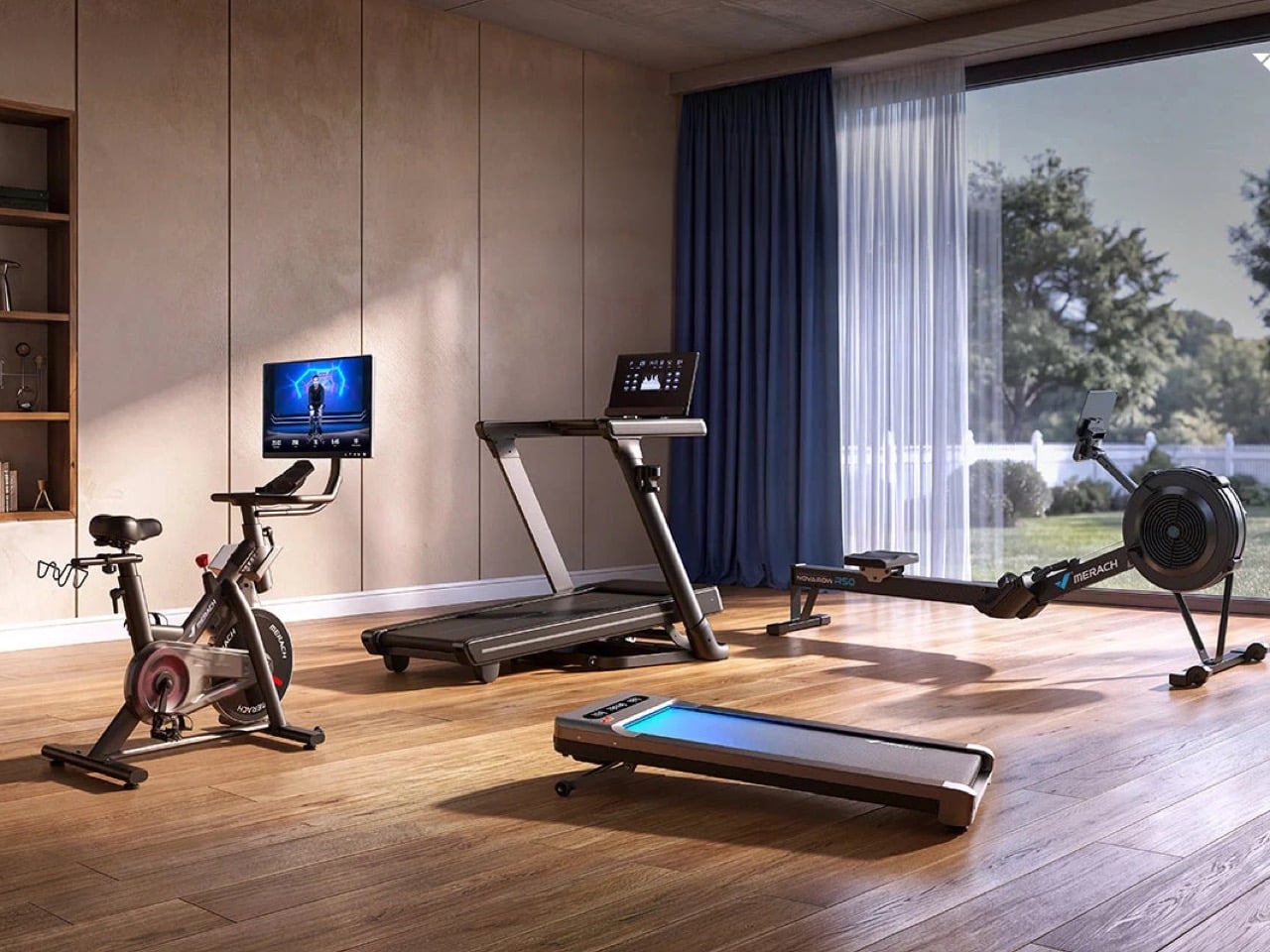
Merach Treadmills & Rowing Machines: China’s Fitness Juggernaut Makes Its IFA Debut

Founded in 2018, Merach climbed to the top of China’s fitness hardware market in a short window, building a lineup around products that treat home space as a constraint worth designing around rather than ignoring. Their rowing machines run on magnetic resistance systems with multiple adjustable levels and Bluetooth app connectivity, letting users track strokes per minute, output, and workout history without a subscription gate in the way. The walking pads fold thin enough to slide under furniture and run on motors quiet enough for apartment living, a combination that turns out to be genuinely rare at this price tier. Stationary bikes round out the core range with foldable frames and app-paired resistance adjustment, keeping the footprint manageable even when the workout is serious.

Showing up at IFA for the first time, despite already being a recognized name in European and North American markets, puts Merach in an interesting position. The brand built its international following largely through e-commerce and community word-of-mouth, so the audience arriving at their Berlin booth has often already bought something, watched a review, or at least seen the name float past. IFA gives that existing relationship a physical layer, a chance for buyers to grip a rowing handle or step onto a walking pad before committing. For a brand that converted most of its global audience through a screen, that kind of face-to-face engagement at one of the world’s biggest consumer tech stages is a logical next step.

RheoFit A1 and A1 Lite: Recovery Tech for People Who Are Tired of Doing Recovery Manually

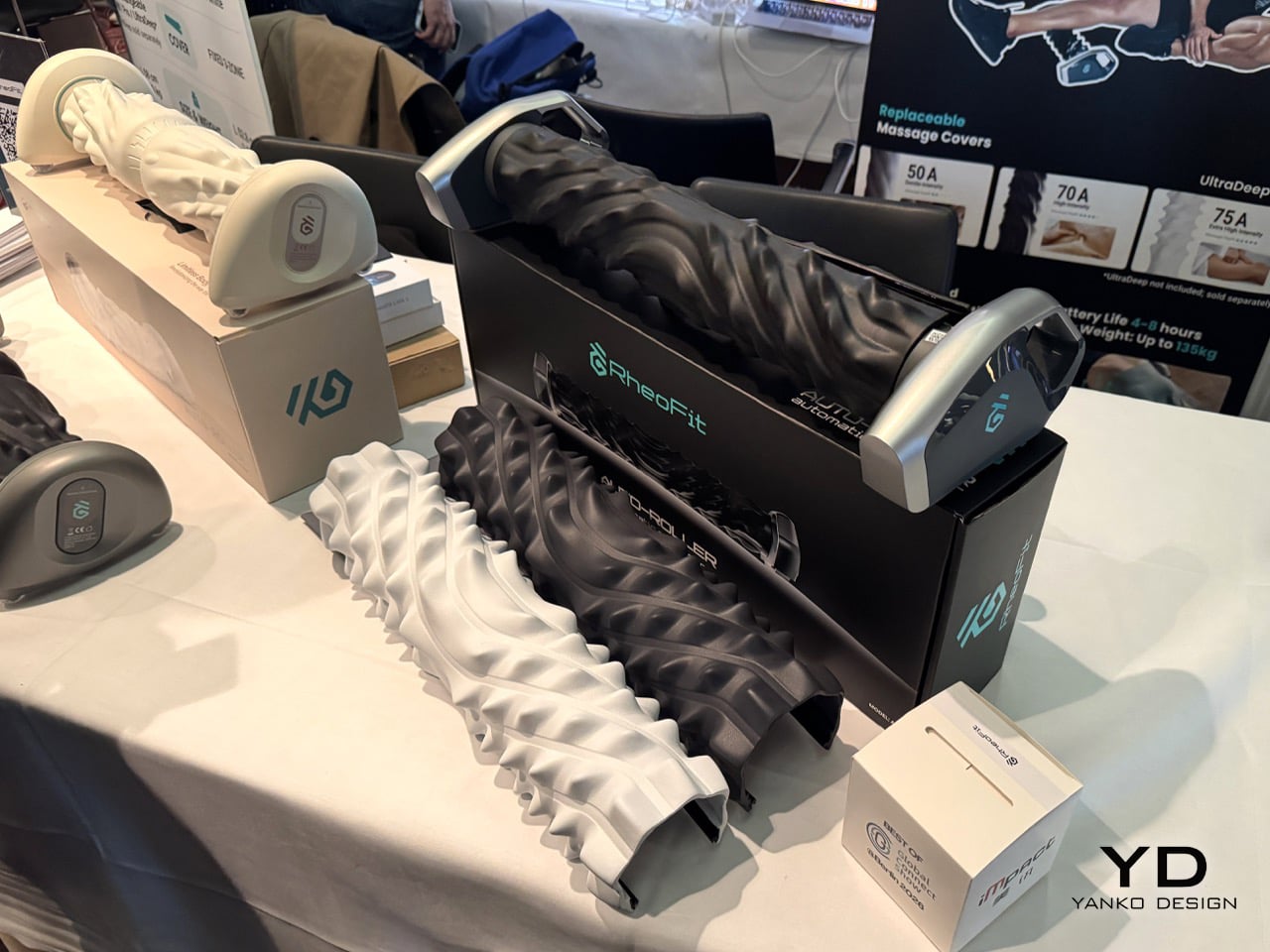
Recovery gear has spent years pretending that adding vibration is enough to count as innovation. RheoFit goes in a much smarter direction. The A1 and A1 Lite are automatic massage rollers built around the idea that post-workout recovery should be as hands-free as possible, which immediately makes them stand out in a market full of massage guns, static foam rollers, and devices that still expect you to twist yourself into awkward positions after leg day. RheoFit frames the product around rehabilitation medicine and AI, with both rollers designed to detect body contour and weight distribution, identify key muscle groups, and generate a personalized massage plan through the app. That makes the whole category feel less like gym equipment and more like body-aware hardware, the kind of product that understands recovery as a system instead of a single feature.

The A1 is the more robust version, supporting up to 300 lbs while weighing 5.4 lbs, with 4 to 8 hours of use per charge and up to two weeks between charges depending on usage. It comes with two interchangeable massage surfaces, a high-intensity serrated roller with 70A Shore hardness for deeper, knuckle-like pressure, and a gentler 50A soothing roller shaped for a broader palm-fit feel. The A1 Lite keeps the same core promise but trims the package down into a more portable format, weighing 4.4 lbs, supporting up to 250 lbs, and adding a more targeted recovery pitch with 15 recovery positions that include full-body, targeted, and upper-back modes. Together, they make a strong case for the next phase of wellness hardware, where the roller finally rolls itself and your body gets treated like something technology can actually learn from.

The post Your Body Is the New Tech Platform: The Wildest Wearables at IFA 2026 first appeared on Yanko Design.
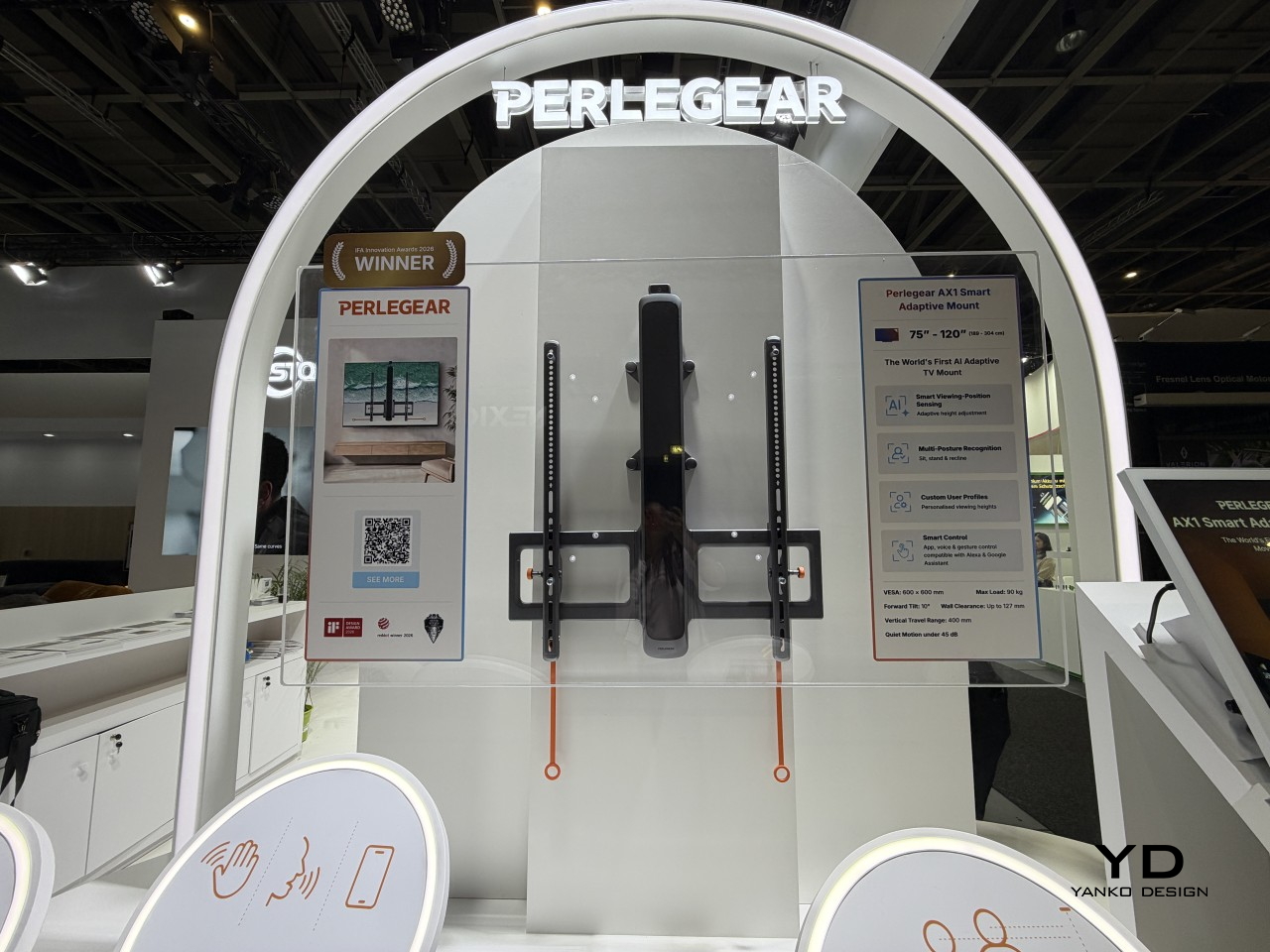
Perlegear AX1 TV Mount Knows You’re Sitting, Standing, or Lying Down

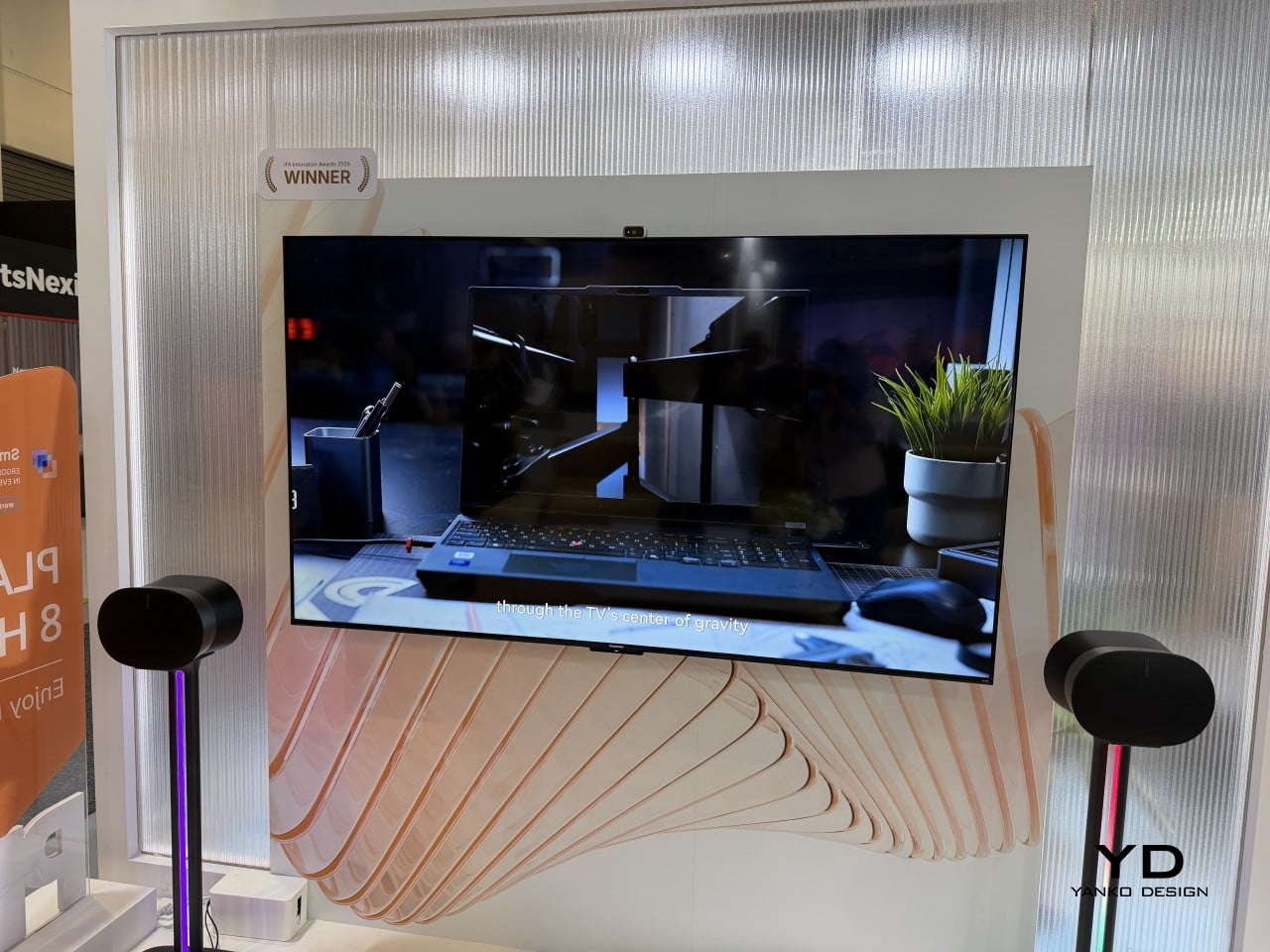
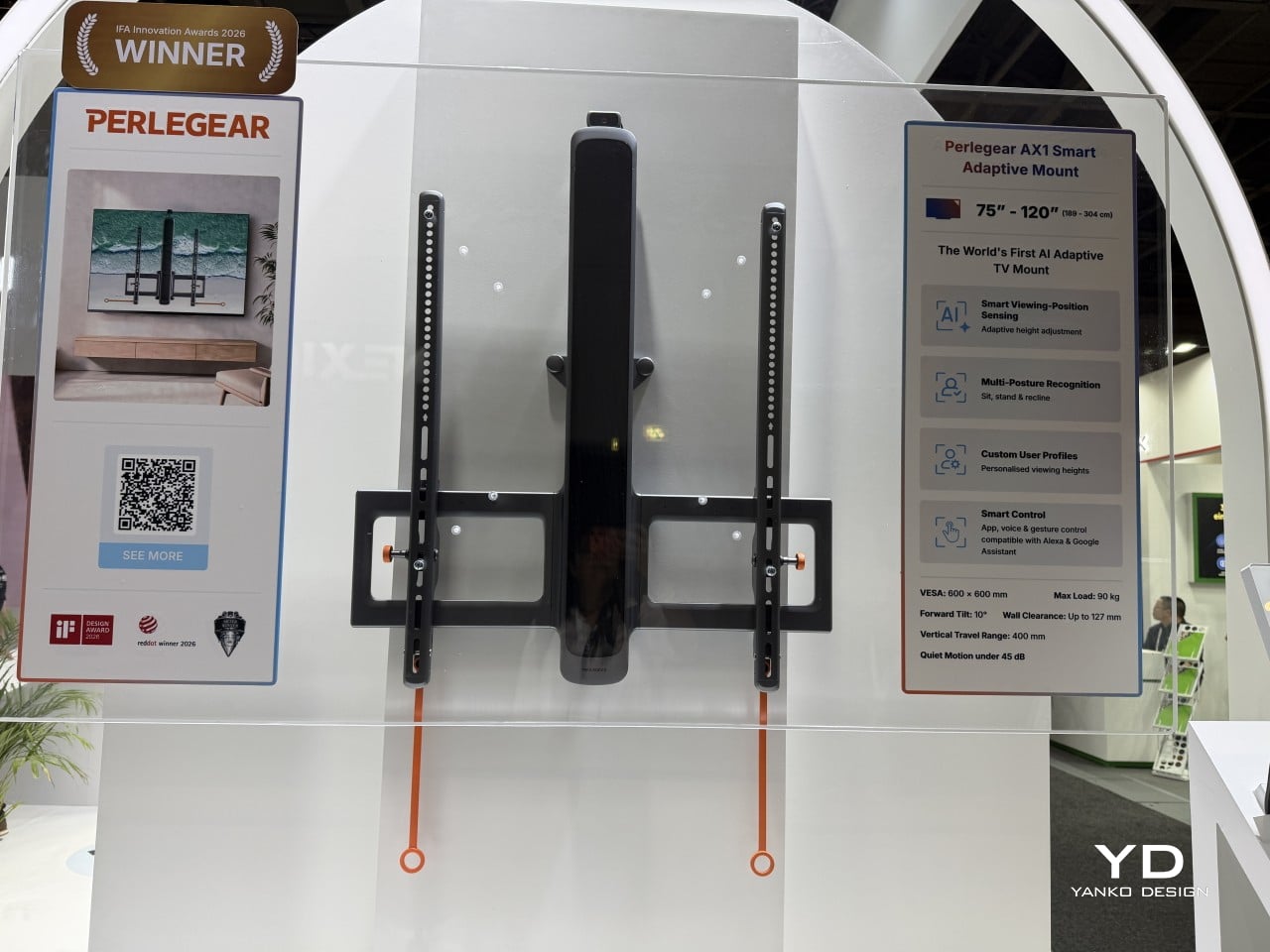
Anyone who has mounted a TV at a fixed height knows the compromise that follows. What works perfectly from the couch turns into a neck strain when standing at the kitchen counter, and a mount set for family movie night rarely suits solo reading in bed. Perlegear’s AX1 Smart Adaptive Mount, unveiled at IFA 2026, treats that mismatch as solvable, building a wall mount that repositions itself instead of asking people to keep adjusting around it.

The AX1 relies on viewing-position sensing to figure out where someone actually is in the room, then shifts the screen’s height through a motorized lift to match. Sitting on the couch, standing near the doorway, or reclining flat on the floor all call for a different sightline, and the mount recalculates rather than leaving the screen locked in one static position that only serves one posture.

Designer: Perlegear

Multi-posture recognition sits at the center of how the AX1 behaves once it is installed. The system distinguishes between sitting, standing, and reclining, adjusting the screen height for each without requiring someone to fumble with a remote or manually crank a lever. It is the kind of adjustment that used to require moving furniture or squinting at an awkward angle, now handled quietly by the mount itself.

Multiple people sharing one living room rarely share the same ideal viewing height, and the AX1 accounts for that through custom user profiles. Each person can save their preferred height setting, so the mount remembers whether someone prefers the screen slightly lower for reading subtitles or raised higher for movie night on the couch. It turns a shared TV into something closer to a personalized display, without anyone needing to remount hardware.

Control options extend beyond the mount itself, reaching into the smart home setups already running in most living rooms. The AX1 responds to a companion app, voice commands, and gestures, with compatibility built in for Alexa and Google Assistant. Someone lounging under a blanket can adjust the screen without standing up, treating the mount like any other connected device on the network.

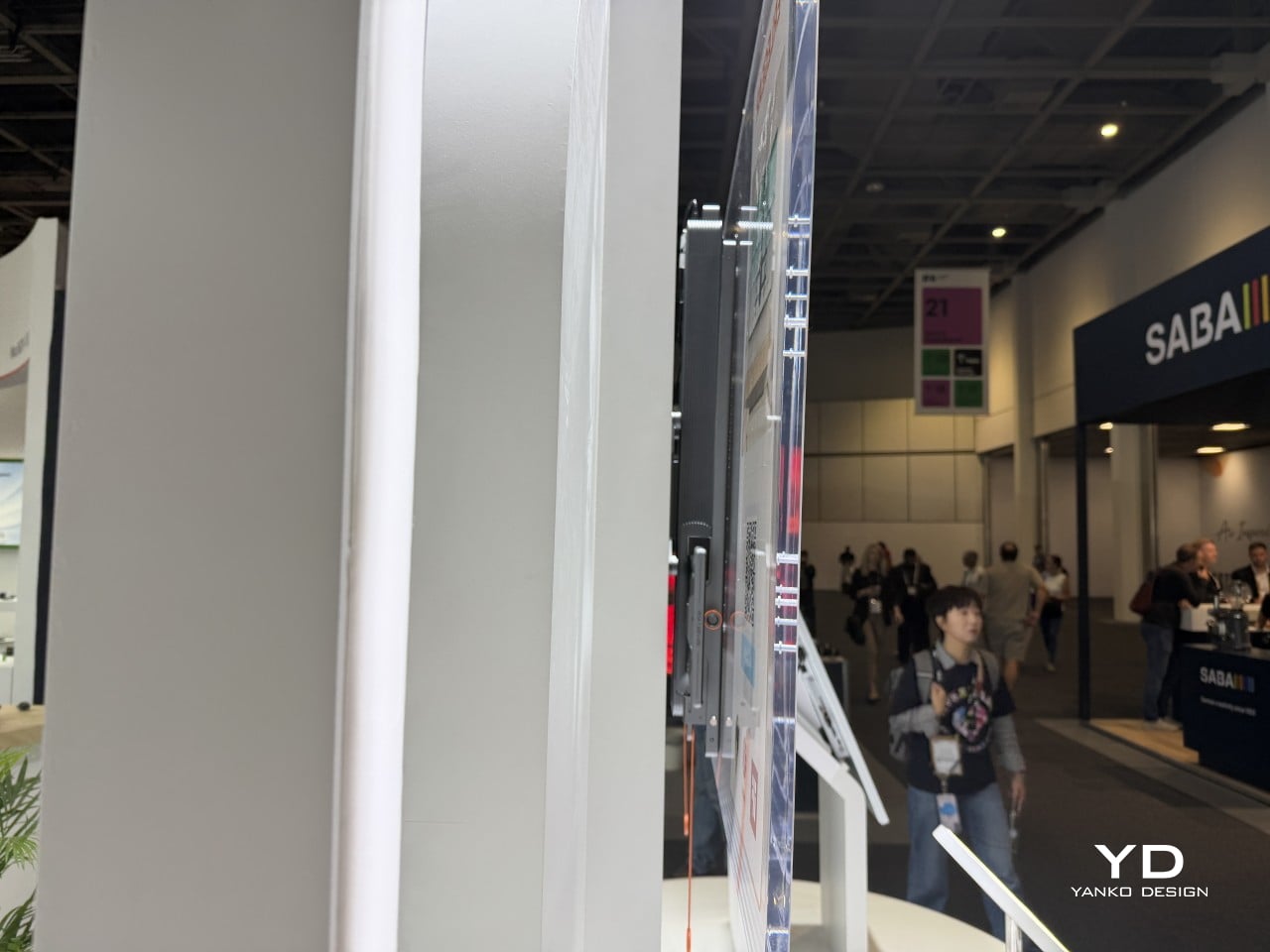
On the hardware side, Perlegear built the AX1 to fit TVs between 50 and 90 inches, pairing its motorized lift with a 10-degree tilt range and plus-or-minus three degrees of leveling after installation. That leveling detail matters more than it sounds, since most mounts get slightly thrown off during drilling and mounting, leaving screens tilted just enough to notice during a long viewing session.

None of this changes what people watch, but it quietly removes one more obstacle standing between a person and a comfortable view. A mount that moves with the room, rather than forcing the room to work around it, treats posture and viewing comfort as part of the actual design brief instead of an afterthought solved by a thicker cushion or a taller side table.

The post Perlegear AX1 TV Mount Knows You’re Sitting, Standing, or Lying Down first appeared on Yanko Design.

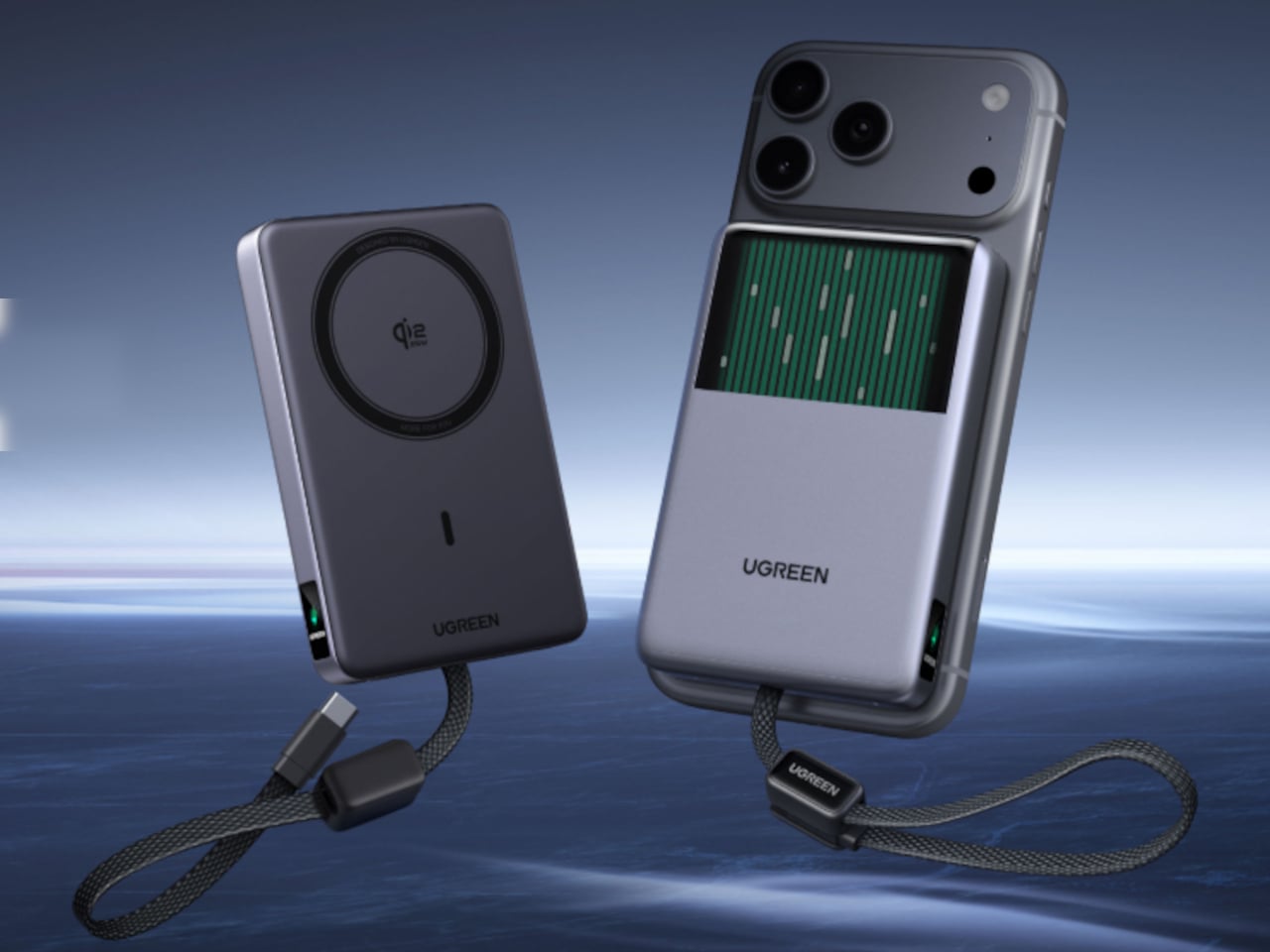
UGREEN’s Power Bank Uses Liquid Cooling, and You Can Actually Watch It

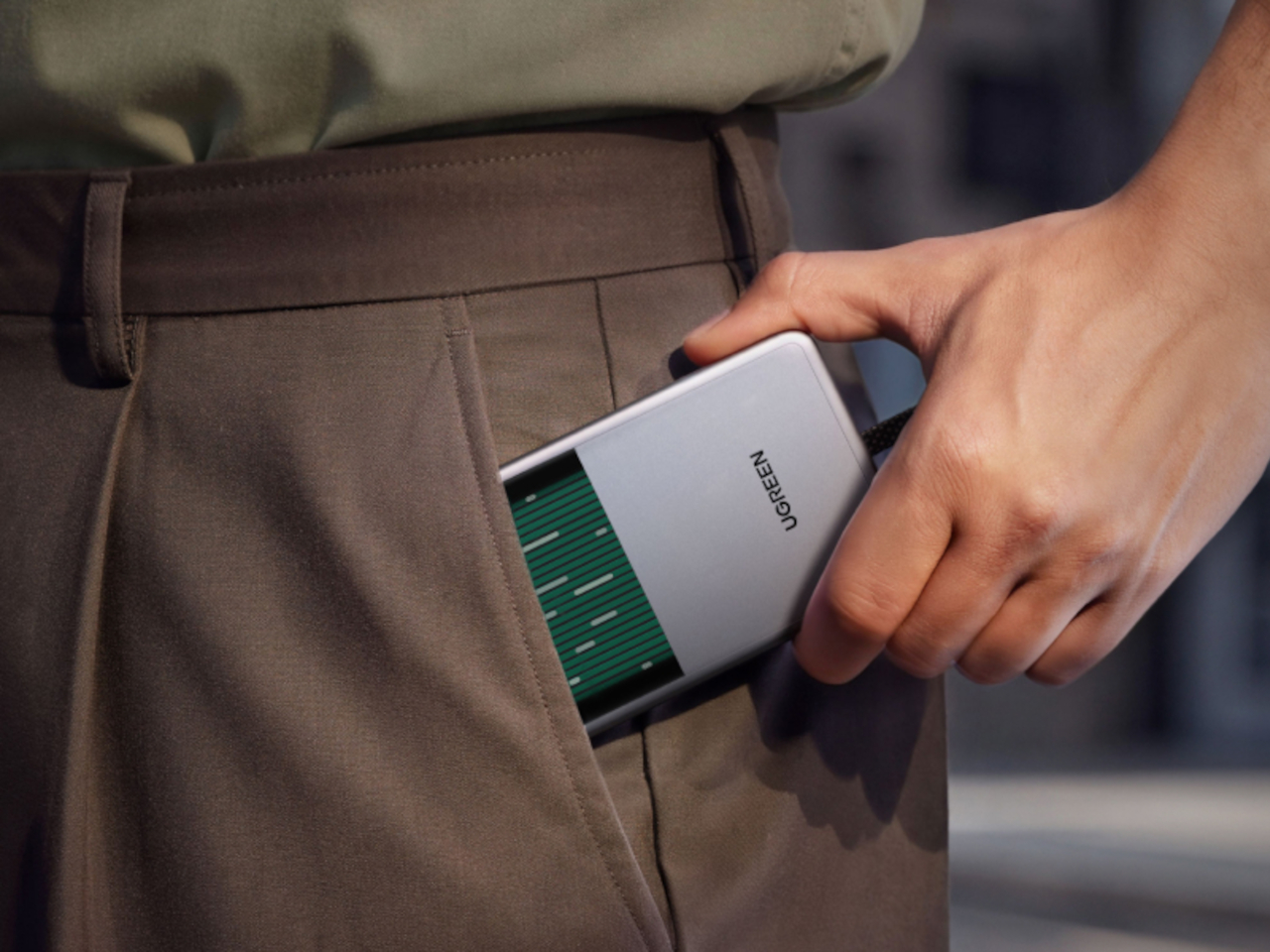
UGREEN’s MagFlow Pro treats overheating as a design problem worth solving with actual engineering, not just a bigger heat sink. This 10,000mAh magnetic power bank borrows liquid cooling from gaming PCs and squeezes it into a pocket-sized charger, aiming to keep wireless charging fast without turning your phone into a hand warmer along the way.

Qi2 charging has always had a dirty secret hiding under its magnetic convenience. Wireless systems lose up to 30% of their power as heat during transfer, which means a phone sitting at 25W often throttles down within minutes to avoid overheating. UGREEN built the MagFlow Pro around fixing that exact bottleneck rather than just chasing a bigger battery number.

Designer: UGREEN

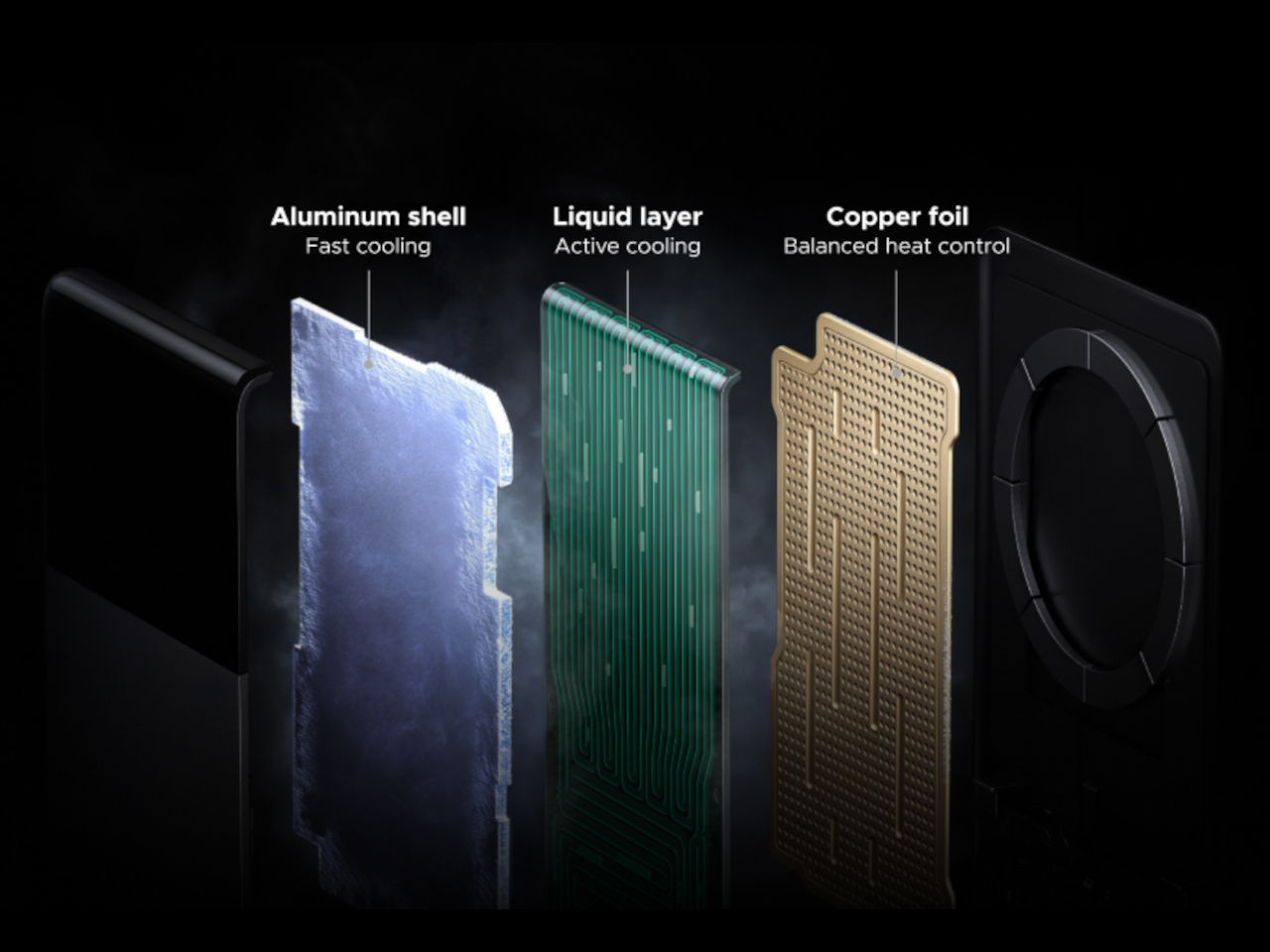
Inside sits CryoPulse, a cooling system built around a micro-pump that circulates liquid coolant past the charging coil and other heat-generating components. Copper foil spreads that heat further, while a layout that physically separates key parts keeps warmth from concentrating in one spot. It is a scaled-down version of what keeps a gaming rig from throttling under load, just built to survive inside a phone charger.

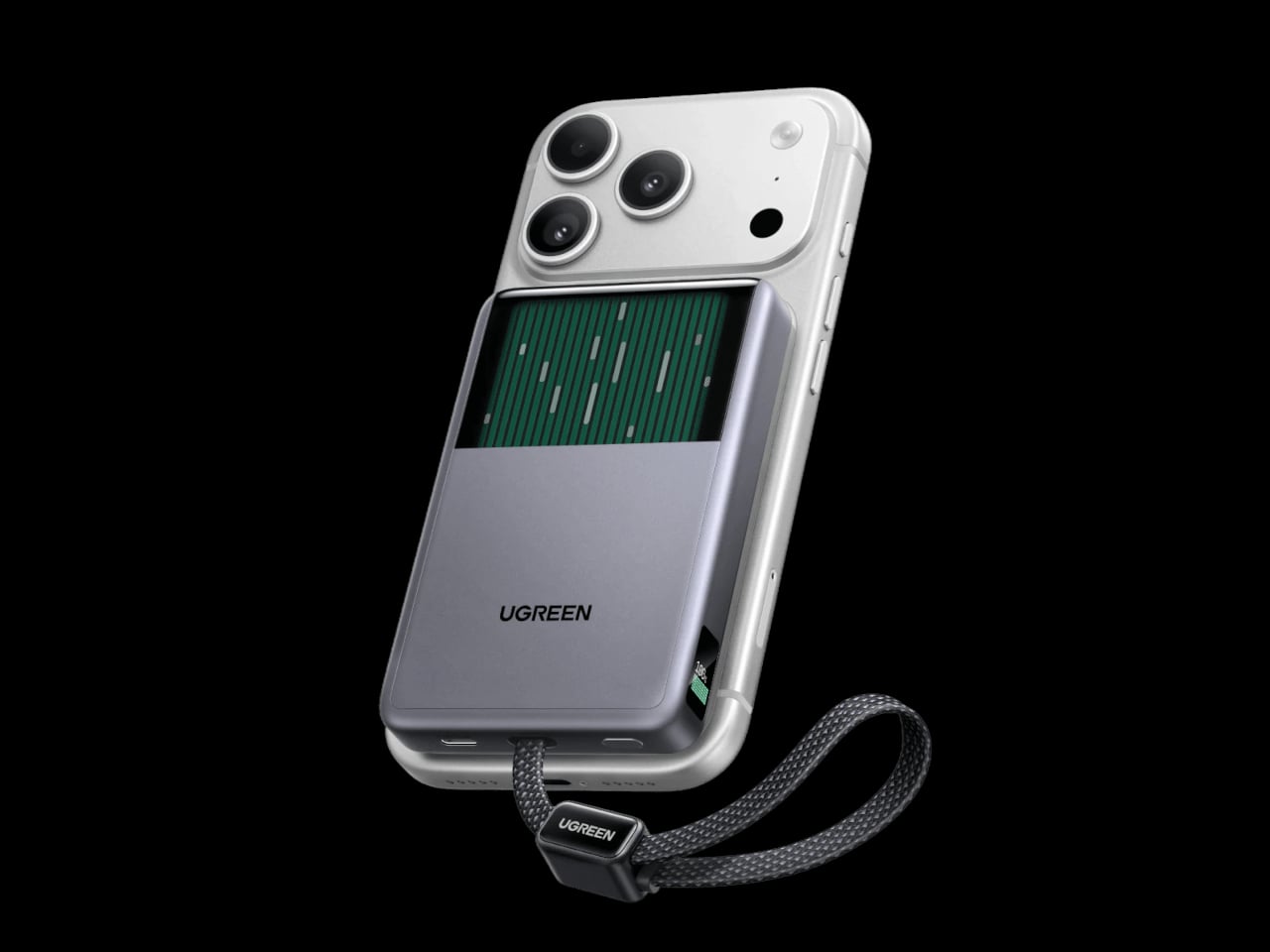
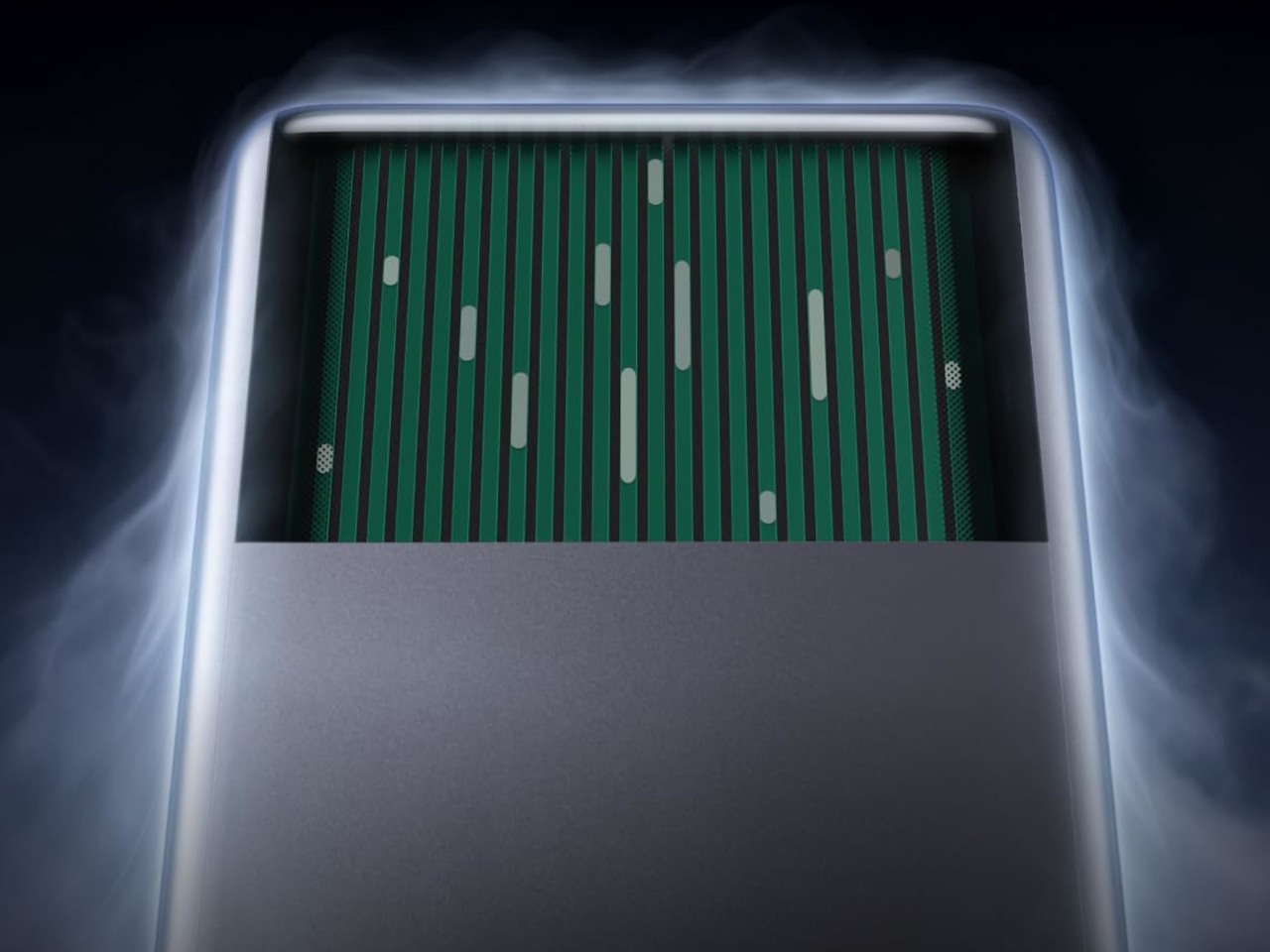
A transparent panel on the front turns that entire process into something you can actually watch, showing coolant moving through the internal channels while your phone charges. It is an odd, almost theatrical touch for a power bank, but it doubles as reassurance that the system is doing its job. UGREEN calls it the Cyber Window, and it is hard to look away from once it is running.

That cooling translates into real numbers, too. UGREEN claims the system keeps peak surface temperatures on a phone up to 18°F below its own reference benchmark, letting a device hold onto higher wattage for longer instead of stepping down early. In practice, that means someone topping up before a flight or during a commute gets closer to advertised charging speeds instead of a slow crawl once things heat up.

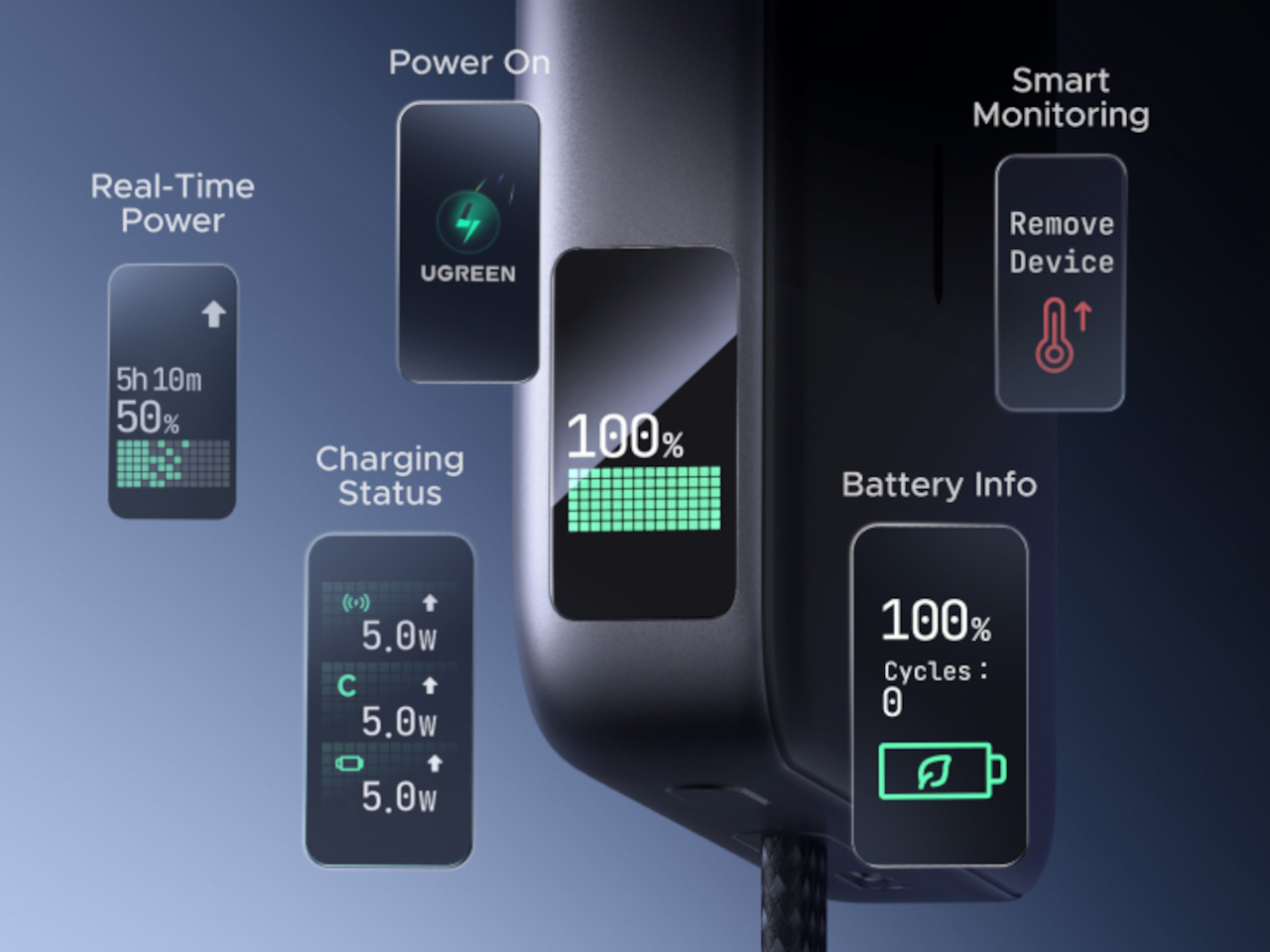
A small display embedded in the shell keeps track of charging wattage, remaining battery percentage, cycle count, and cooling status, turning what used to be a guessing game into actual visible data. Paired with a built-in USB-C cable capable of 30W and a combined output of up to 45W, the MagFlow Pro can charge a phone, tablet, and another accessory simultaneously without demanding a bag full of extra cables.

If the battery degraded quickly, all of those fancy features would be pointless, so UGREEN built the cell around Dymondcell 2.0 protection, retaining more than 80% of its capacity after 800 charge cycles. It also survived seven hours of continuous overcharge testing without failure, a detail aimed squarely at anyone who leaves their charger plugged in overnight out of habit rather than necessity.

At $149.99, the MagFlow Pro costs considerably more than other 10,000mAh power banks on the market, and that price tag puts real weight behind its cooling claims. It is a bet that people charging phones daily care as much about consistent performance and battery longevity as they do about raw capacity, and that a bit of visible engineering can justify paying extra for it.

The post UGREEN’s Power Bank Uses Liquid Cooling, and You Can Actually Watch It first appeared on Yanko Design.

TCL’s P80 Pro and Ultra Are the Phones That Replaced Your Kindle Too

TCL’s P80 Ultra and P80 Pro prove a phone screen doesn’t have to pick one personality and stick with it. Unveiled at IFA 2026 in Berlin, both handsets fold a vivid AMOLED panel and TCL’s paper-like NXTPAPER technology into the same sheet of glass, letting the display shift moods with a flick of a switch instead of forcing a trade-off between color and comfort.

Run a finger along the frame, and you’ll find a thin slider, a small physical detail that carries plenty of weight in daily use. Slide it, and the 6.83-inch panel drops its saturation, taking on a warmer, textured look that mimics a printed page. A commuter buried in a novel or someone proofreading a document late at night gets a screen that behaves like paper, without losing the sharpness underneath.

Designer: TCL

Push that same slider one notch further, and the screen drops color entirely for Max Ink Mode, a stripped layout that silences notifications except for calls and texts. It reads like a design decision as much as a software one, TCL betting people want to quiet their phone rather than mute it completely. The payoff is a battery that can stretch across roughly a week of steady reading.

That reading-first mindset carries into the software too. Both phones can convert e-books into audiobooks or podcast-style narration using on-device AI, giving Max Ink Mode a voice to lean on when eyes need a break instead of ears. It is a small addition, but it treats the slower, paper-like mode as a genuine feature rather than a bolted-on gimmick for a keynote slide.

None of that would matter if the screen looked washed out the rest of the time, so TCL leaned on a 1.5K AMOLED panel that hits 3,200 nits and covers the full DCI-P3 color range. A Nano Crystal Shield coating cuts glare enough to keep the display readable under direct sun, marking TCL’s first pairing of NXTPAPER with OLED rather than the LCD panels it used before.

The frame wrapping that screen is aluminum rather than the plastic often found at this price, giving both phones a sturdier grip without piling on bulk. TCL backs that up with an IP68 rating against dust and water, plus MIL-STD-810H certification for the inevitable drop. Buyers get to pick between Sunlit Gold, Burgundy, and Midnight Blue, three finishes that lean more toward jewelry-box color choices than typical slab-of-glass smartphone palettes.

Where the two models part ways is around the back. The P80 Ultra carries a 50-megapixel main camera next to a 50-megapixel periscope lens for 3x optical zoom, tucked into a housing shaped to avoid throwing off the phone’s balance. The P80 Pro drops the periscope for a simpler dual-camera arrangement, trading reach for a slimmer build that still shares the same main sensor and 8-megapixel ultrawide.

TCL is rolling both phones out across Europe first, with the P80 Ultra priced from €549 (around $635) and the P80 Pro starting at €429 (around $500), before a Latin American launch follows in October. A wider release is expected to reach additional regions afterward. In a category full of identical glass rectangles, these two phones actually behave differently depending on what someone needs from them that day.

The post TCL’s P80 Pro and Ultra Are the Phones That Replaced Your Kindle Too first appeared on Yanko Design.

Reolink’s OMVI 2i Ultra Wireless Security Camera can look in two directions at once: Hands-on at IFA 2026

Picture a courier walking up your driveway while someone else quietly tries your side gate. A normal pan-tilt camera picks one of them and forgets the other exists. Reolink’s OMVI 2i Ultra handles it by carrying two cameras at once: a fixed 4K wide lens on top that never stops watching the full scene, and a 5MP pan-tilt ball below that spins 355 degrees to lock onto whatever the wide lens flags. Both feeds record at the same time, and you can tap anywhere on the wide view to slew the turret straight to that spot. It debuted at IFA 2026 in Berlin, ships late October, and costs between $200 and $250.

A detachable 10,000mAh pack claims six months per charge, and the 6W SolarEase panel says it needs about thirty minutes of daily sun to stay topped up, against the one to two hours Reolink quotes for rivals like Eufy’s S340 and the Tapo C675D. Those are Reolink’s own numbers, so hold them loosely until somebody leaves one on a north-facing wall through a British winter. The rest is easier to verify. Wi-Fi 6 across both bands, up to 512GB of local microSD with no subscription attached, colour night vision from twin spotlights, a siren, and IP65 sealing. At a kilogram with the bracket, it is a proper lump of hardware rather than something you tuck on a shelf.

Designer: Reolink

Pan-tilt cameras have quietly lied to buyers since the format existed. Sell someone a camera that turns to follow motion and you have also sold them a camera that stops watching everywhere else the instant it does. Reolink’s fix is embarrassingly simple once you see it. Stop asking one lens to be both the guard and the chaser, and give it a second lens that only guards. The wide 4K unit up top runs at 110 degrees horizontal and never rotates, so the scene it opened on is the scene it keeps recording no matter where the PT ball below it wanders off to. Reolink calls this SyncTrack, but the actual idea is closer to division of labour than any clever algorithm. One camera commits to context, the other commits to pursuit, and neither has to compromise for the sake of the other.

This is the third time Reolink has built this exact idea in 2026, and each version has been a slightly different argument about what matters most. The X16 landed at CES in January as a 24MP full metal flagship with 16x optical zoom, but it needs an ethernet run to function, which puts a hard ceiling on where it can live. The 3i followed in June with PoE and wired Wi-Fi options at $319.99, still asking for a nearby outlet even in its most flexible form. The 2i Ultra drops the combined resolution to 8MP plus 5MP and, in exchange, cuts the cord entirely. The trade-off is the clever bit, because being able to pop a camera on a fence or a backyard without worrying about wiring is much more convenient than haggling over megapixels.

A squared-off dual-lens head sits above a separate motorized ball, with a solar panel tilting on its own hinge overhead, and the whole assembly weighs a full kilogram once the bracket is attached. Compare that to Reolink’s own Argus MagiCam, a 108-gram cube you stick to a fridge with a magnet, and the difference in ambition is obvious at a glance. This is not a camera trying to disappear into a bookshelf. It reads more like a small piece of maritime equipment bolted under an eave, and that visible mechanical presence is doing some of the deterrence work before the siren ever gets involved.

That dual-lens design is quite literally baked into the name. OMVI reads like omni-vision, a camera built to watch in every direction at once instead of picking a lane. Arlo’s Ultra flagship still wants a wall plug or a proprietary base station to unlock its best tricks, and Nest’s outdoor cameras have quietly stayed wired-first for years now, which makes the 2i Ultra’s fully wire-free build feel like it is actually catching up to how people install things rather than how manufacturers wish they would. No drilled conduit, no hub tucked in a closet, just a battery, a solar panel, and a spot on the fence you actually wanted the camera to go.

That is the real flex against the flagships twice its price. You are not paying for a wall socket you have to plan your whole install around, and you are not paying for a bulky base station eating an outlet indoors either. You get two lenses doing genuinely different jobs, a battery that outlasts most of the category on paper, and a name that finally means something instead of just sounding techy. At $200 to $250, the OMVI 2i Ultra is the version of omni-vision security that shows up ready to mount anywhere the moment you take it out of the box.

The post Reolink’s OMVI 2i Ultra Wireless Security Camera can look in two directions at once: Hands-on at IFA 2026 first appeared on Yanko Design.