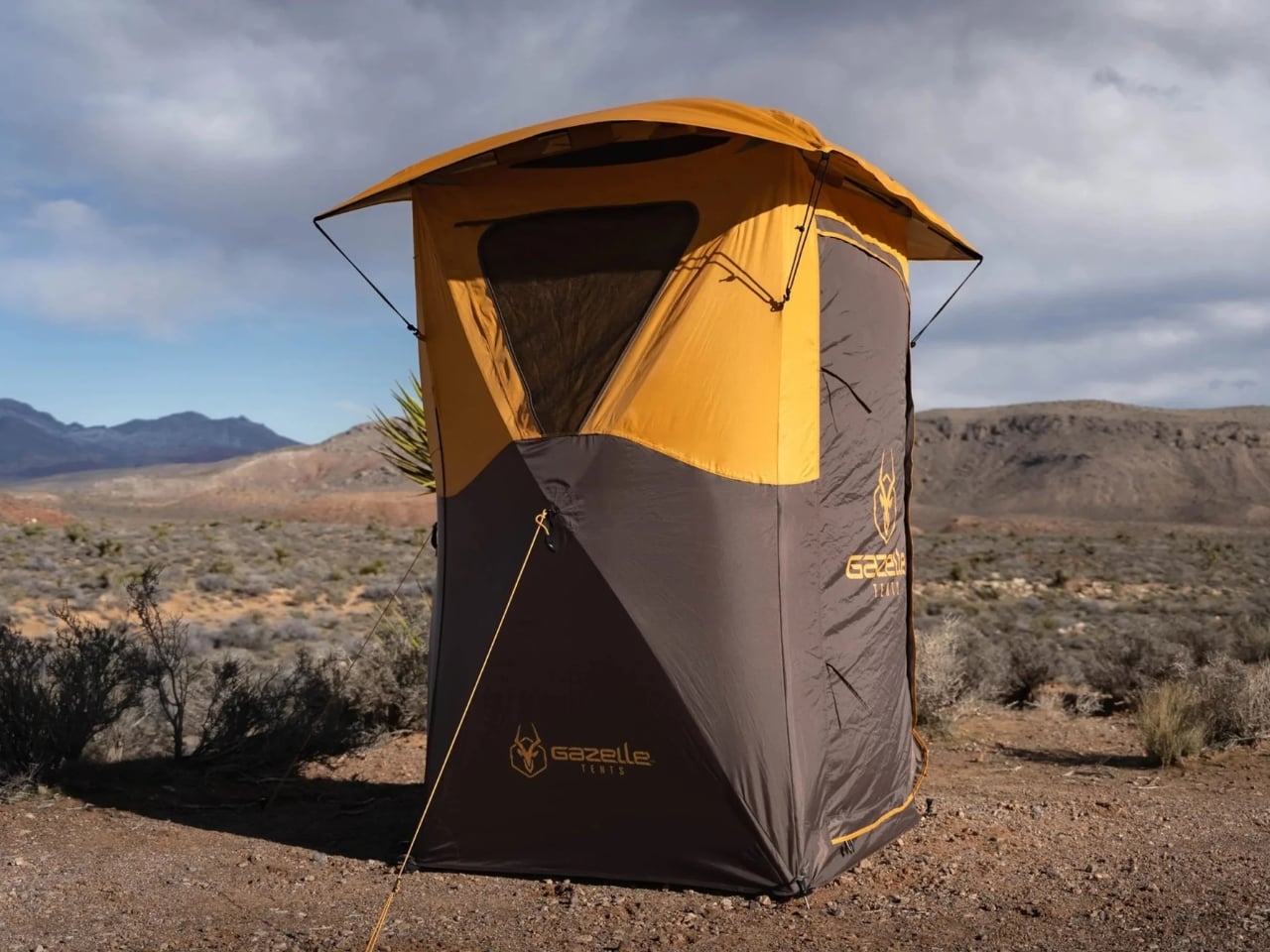
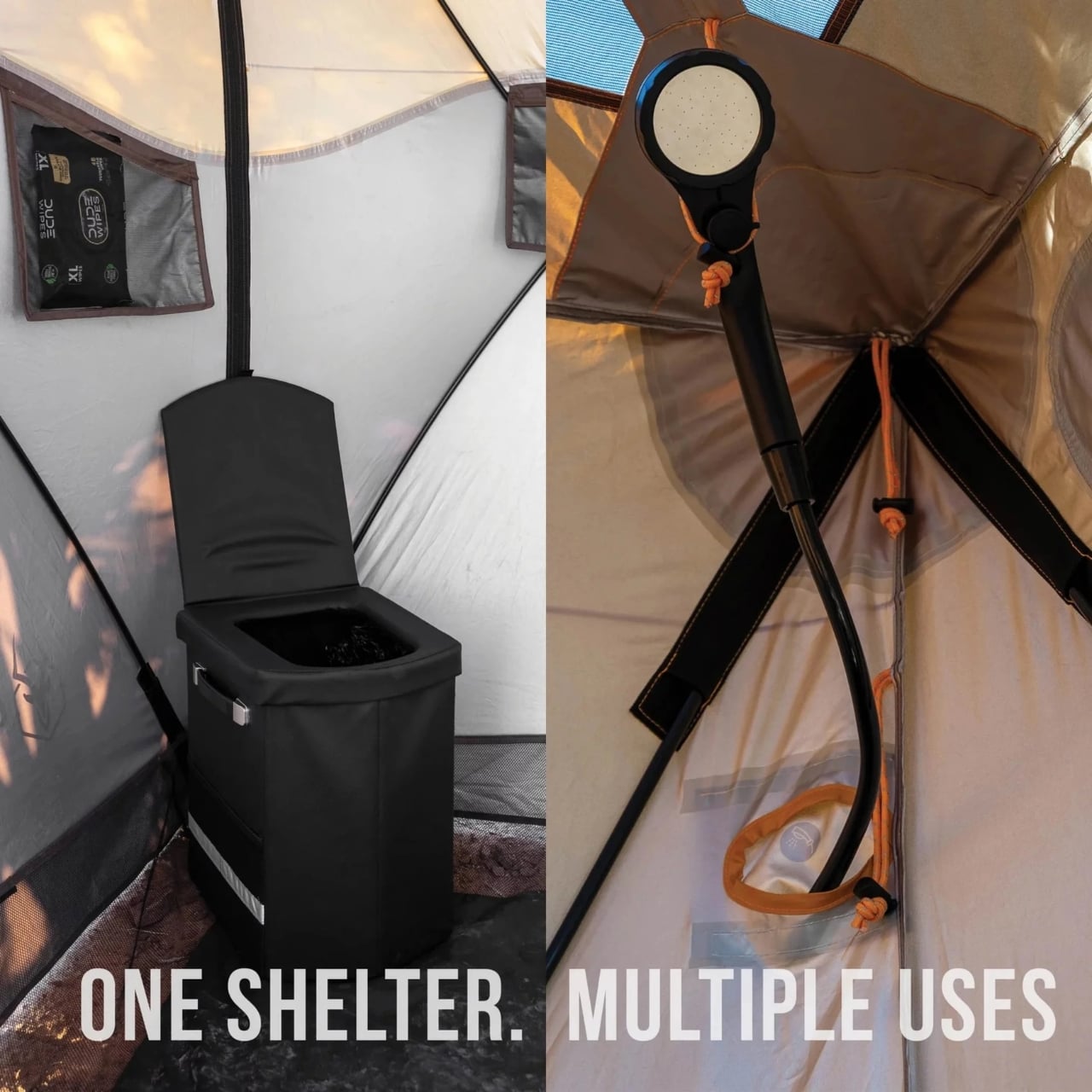
The tent industry has spent decades obsessing over sleeping quarters. We’ve seen ultralight backpacking shelters, geodesic domes rated for basecamp conditions, glamping canvas suites with chandelier hooks and welcome mats. And yet somehow, the bathroom question, the single most pressing daily concern at any campsite, has largely been left to your imagination, a folding shovel, and a lot of prayers for tree coverage. Gazelle Tents has just changed that, and it did so in a way that feels almost embarrassingly obvious in hindsight.
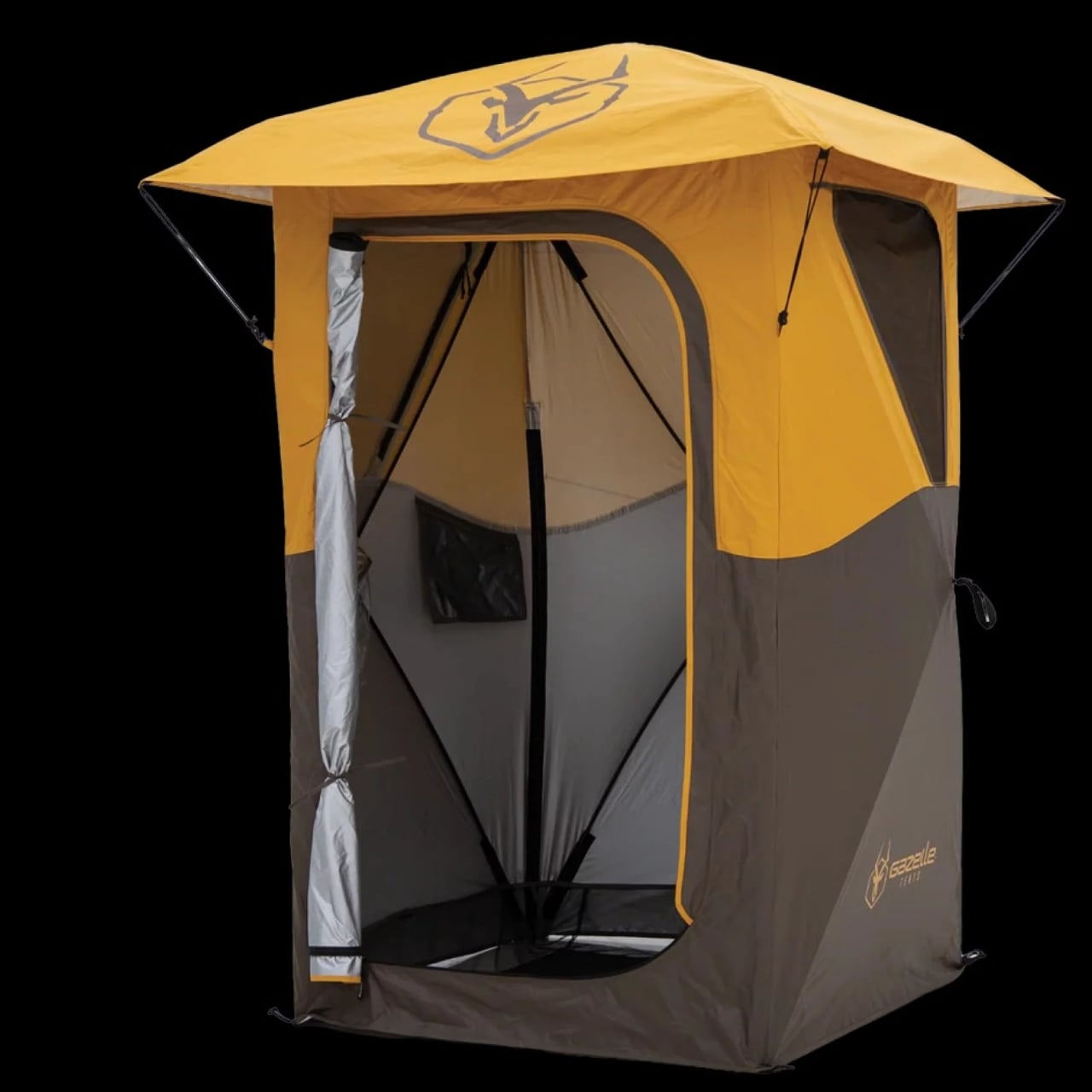
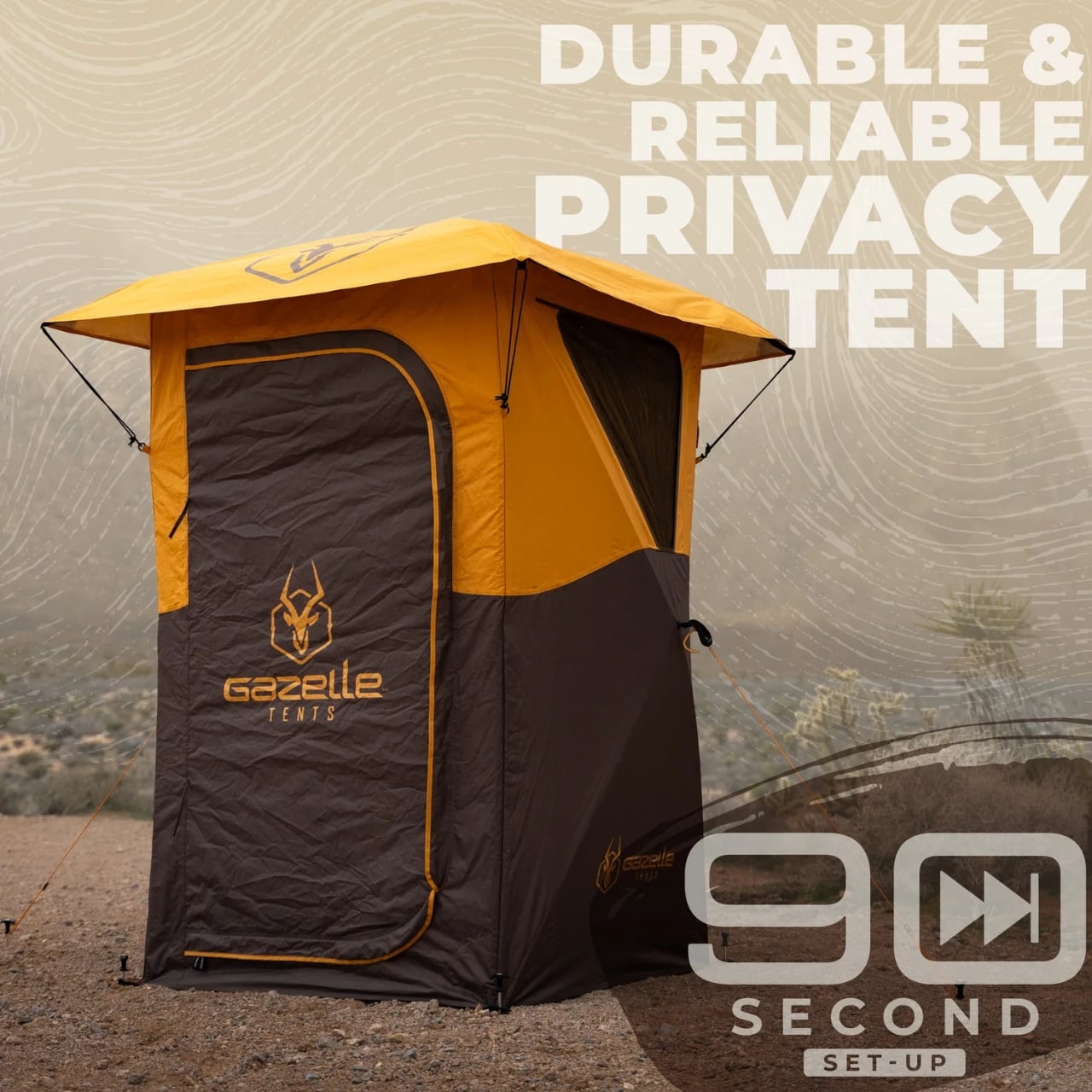
The Privacy Tent is Gazelle’s answer to what I’d call the campsite gap. It functions as a portable shower enclosure, a changing room, or a toilet privacy shelter, and it sets up in about 90 seconds. That last part matters more than it sounds. Nobody wants to spend 20 minutes wrestling with poles and stakes before handling a biological situation. The fact that Gazelle uses its signature pre-assembled hub-frame system here, the same one it’s built its reputation on for regular camping tents, means you’re pulling something out of a bag, releasing it, and watching it pop into shape almost immediately.
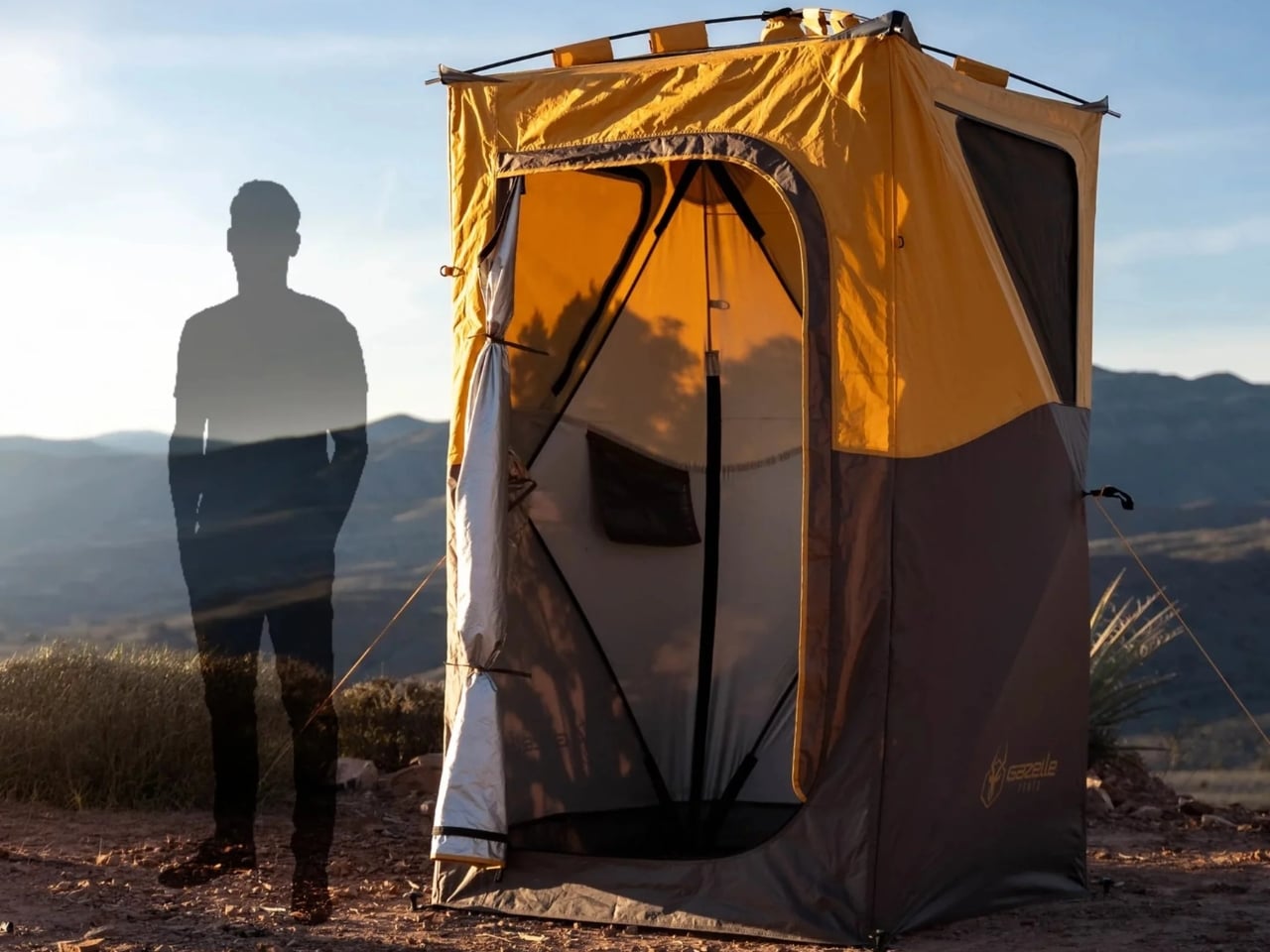
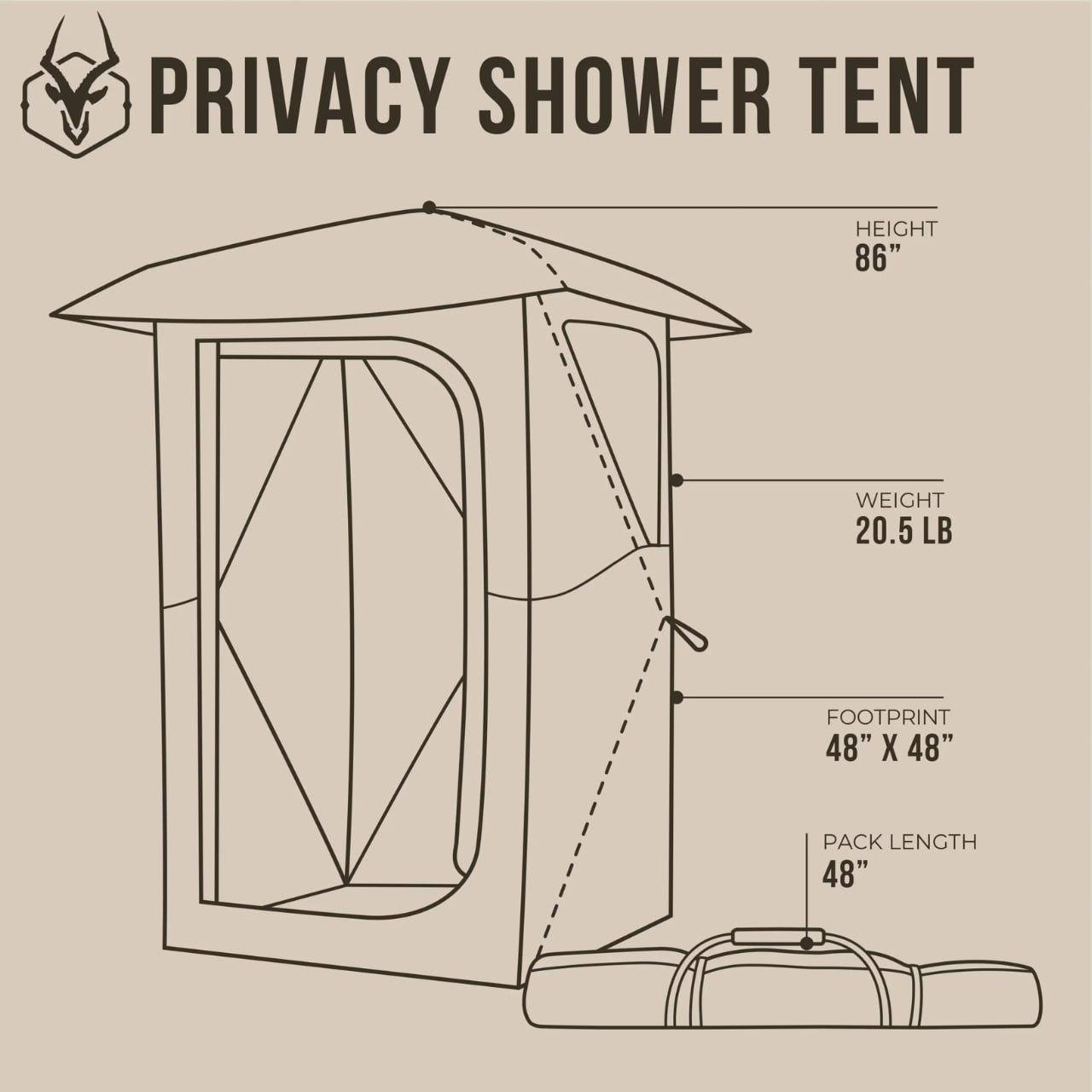
The specs are genuinely good. Standing height clears 86 inches, which means even the tallest people in your group won’t be hunched over trying to get dressed. The footprint is 48 by 48 inches, which is roomy enough to actually move around inside without the kind of claustrophobic side-wall contact that turns a quick shower into an ordeal. When you’re done, the whole thing packs down to 48 by 8.5 inches in diameter, so it slides into the back of a car, a truck bed, or the corner of an overland rig without demanding much real estate.
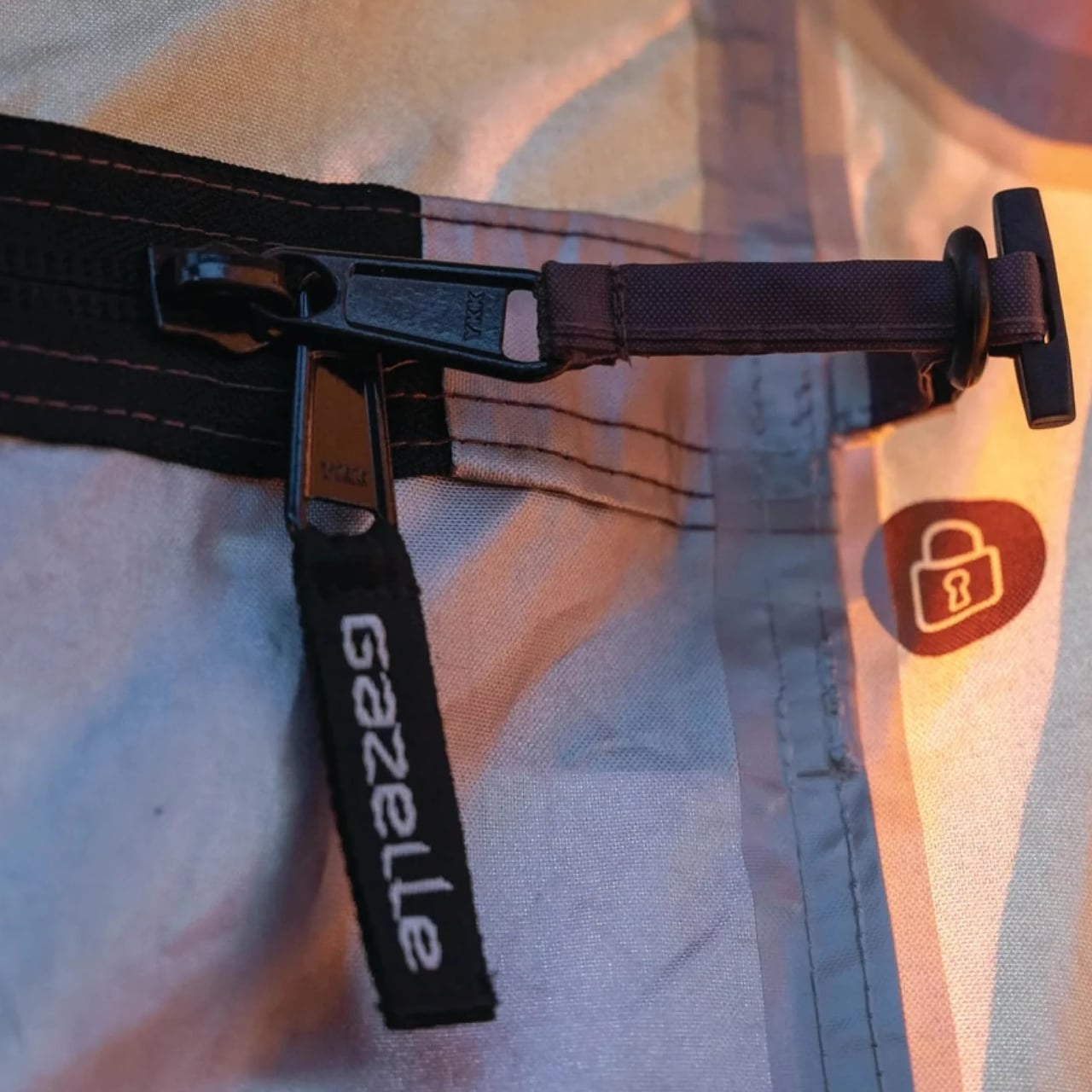
Inside, Gazelle thought through the details in ways that suggest they actually talked to people who camp regularly. There are dual hose ports and a drawstring sprayer holder for portable shower systems, an overhead gear loft, and mesh plus TPU pockets for toiletries and clothes. The fabric is 2,000mm waterproof 210D Oxford polyester, and mesh near the floor handles drainage and cleaning. You can leave the top open for ventilation on warm days, or close it off with a rainfly when the weather turns. Eight all-terrain stakes come included. The price sits at $279.99, a promotional launch price off the regular $379.99.
Is that expensive? Depends on how you camp. If you’re the kind of person who drives four hours to a dispersed site, stays five days, and considers a cold outdoor shower one of the better parts of the trip, then $280 for a genuinely thoughtful piece of kit makes complete sense. If you’re a two-night campground person with access to the facilities block, it’s probably more than you need. But for the growing number of overlanders, van-lifers, and weekend warriors who’ve committed to going further off-grid, this fills a real gap.
The overlanding and car camping space has exploded over the last few years. Gear has gotten smarter, setups have gotten more elaborate, and people have clearly decided that roughing it doesn’t have to mean suffering through the basics. A privacy shelter might not be as exciting to buy as a rooftop tent or a solar generator, but it’s the kind of thing that changes the actual texture of a trip. Getting changed in the open while strangers walk by, or figuring out a portable toilet situation without any coverage, is the stuff that makes some people swear off camping entirely.
The fact that Gazelle applied serious engineering to something this unglamorous is, to me, the most compelling thing about the Privacy Tent. Good design isn’t always about the product that gets photographed beautifully on a mountaintop at sunrise. Sometimes it’s about the one that solves the problem nobody wants to bring up at the gear store. Gazelle’s version does exactly that, quietly, quickly, and apparently in under two minutes flat.
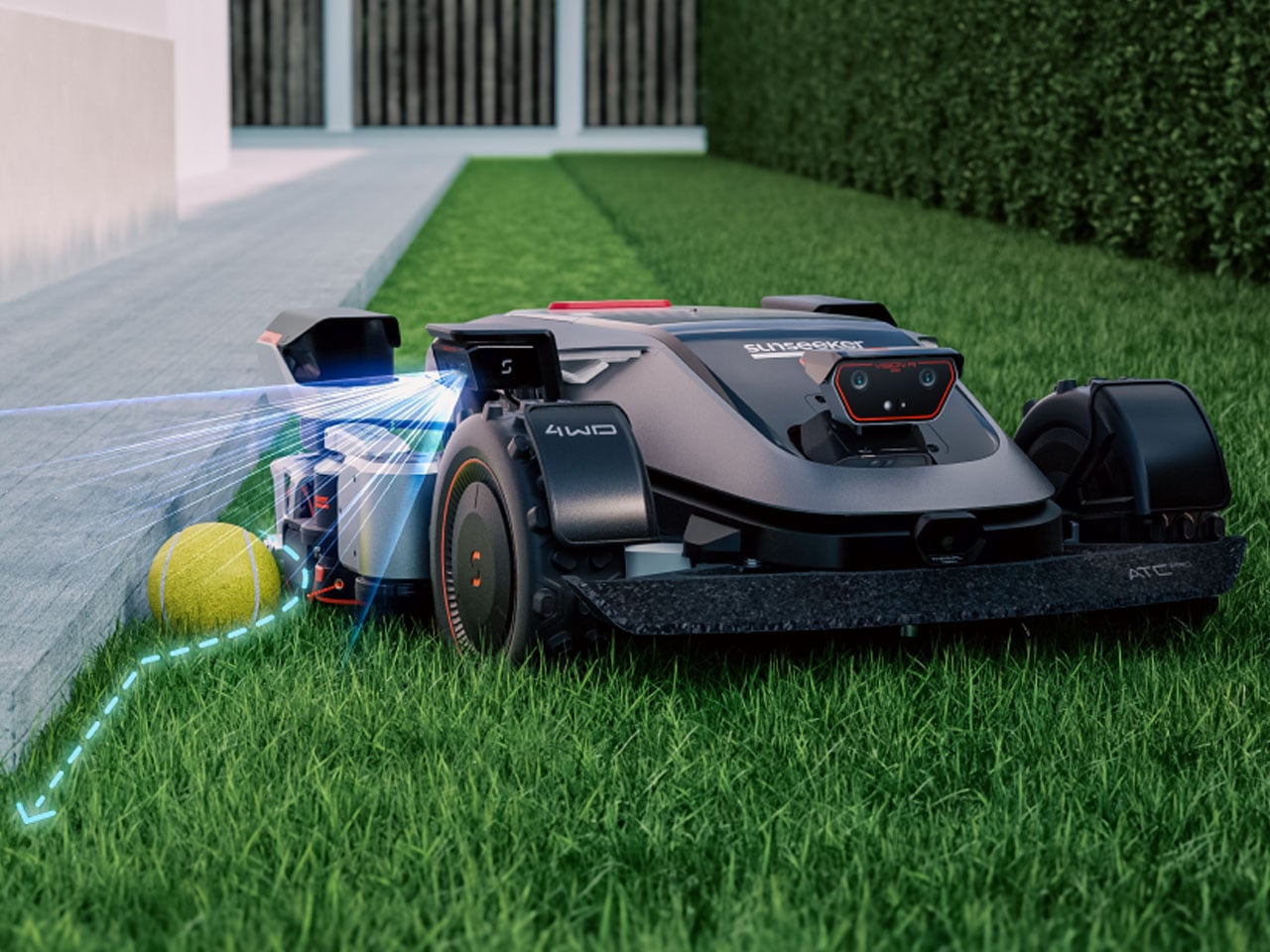
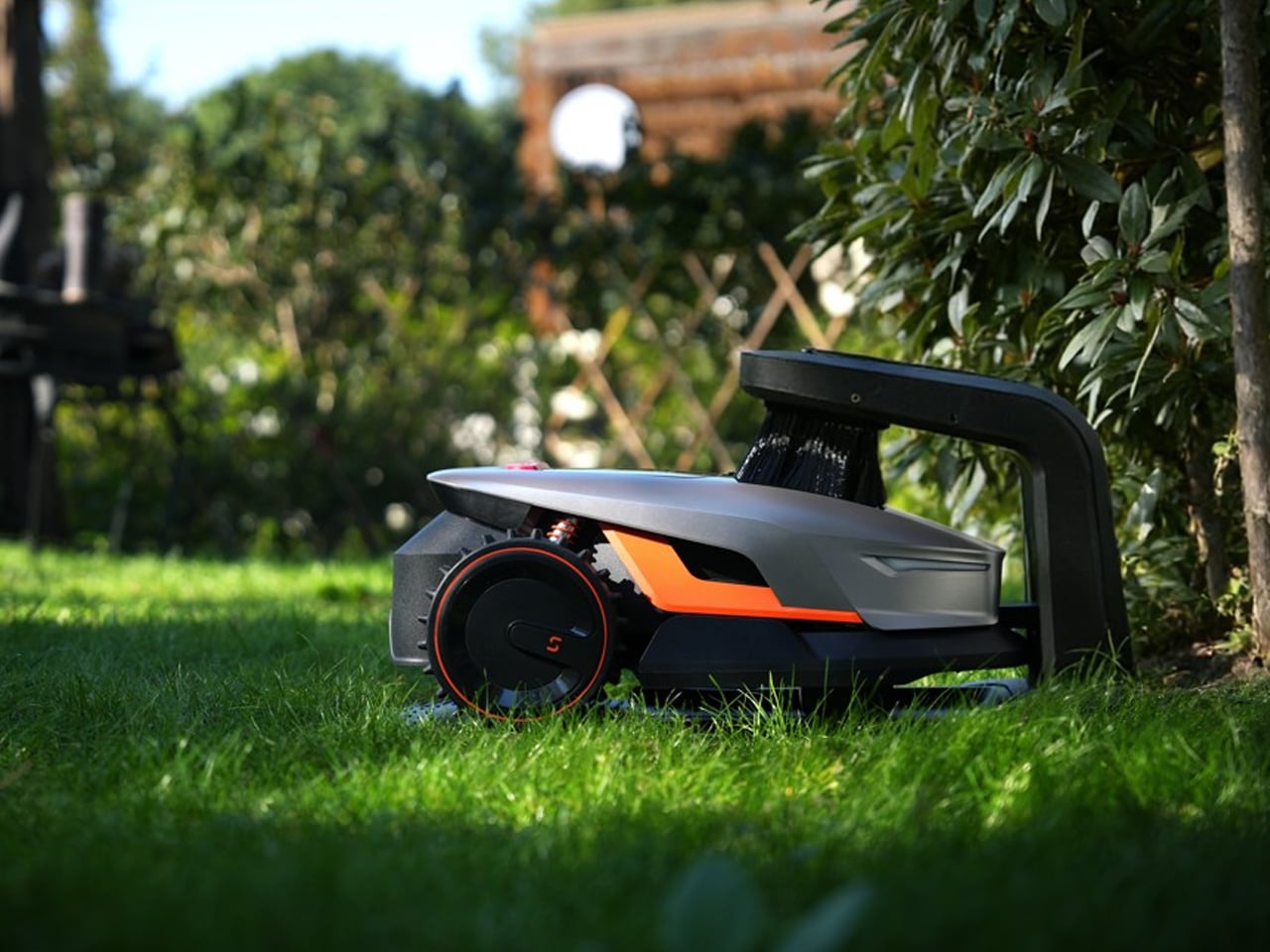
The robot lawn mower space is a saturated one at the moment. New features like artificial intelligence, satellite-based wire free navigation, and obstacle detection are becoming a common sight. To stand out from the rest, a mower needs some recognition, stamping its authority to influence consumer decisions.
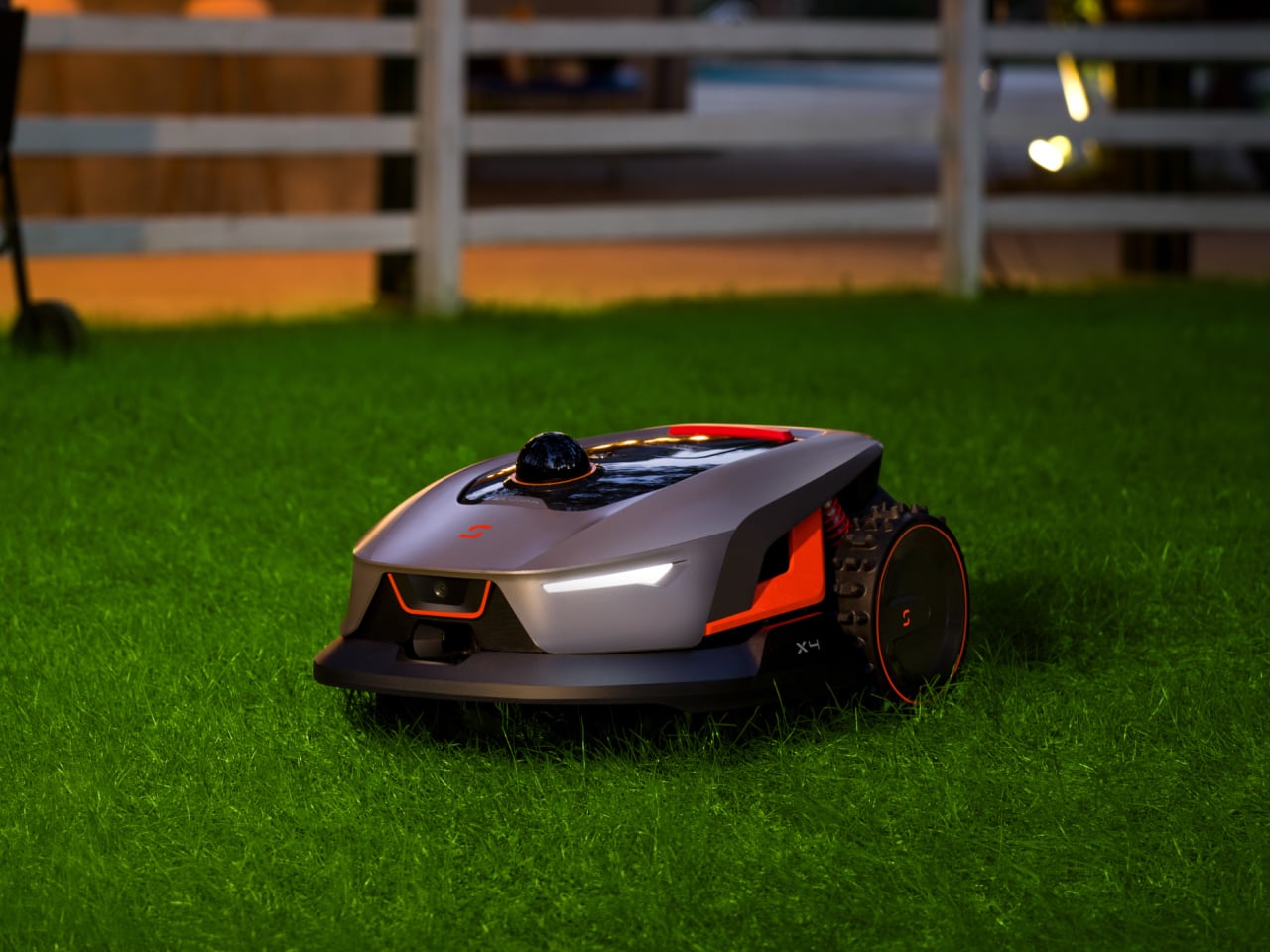
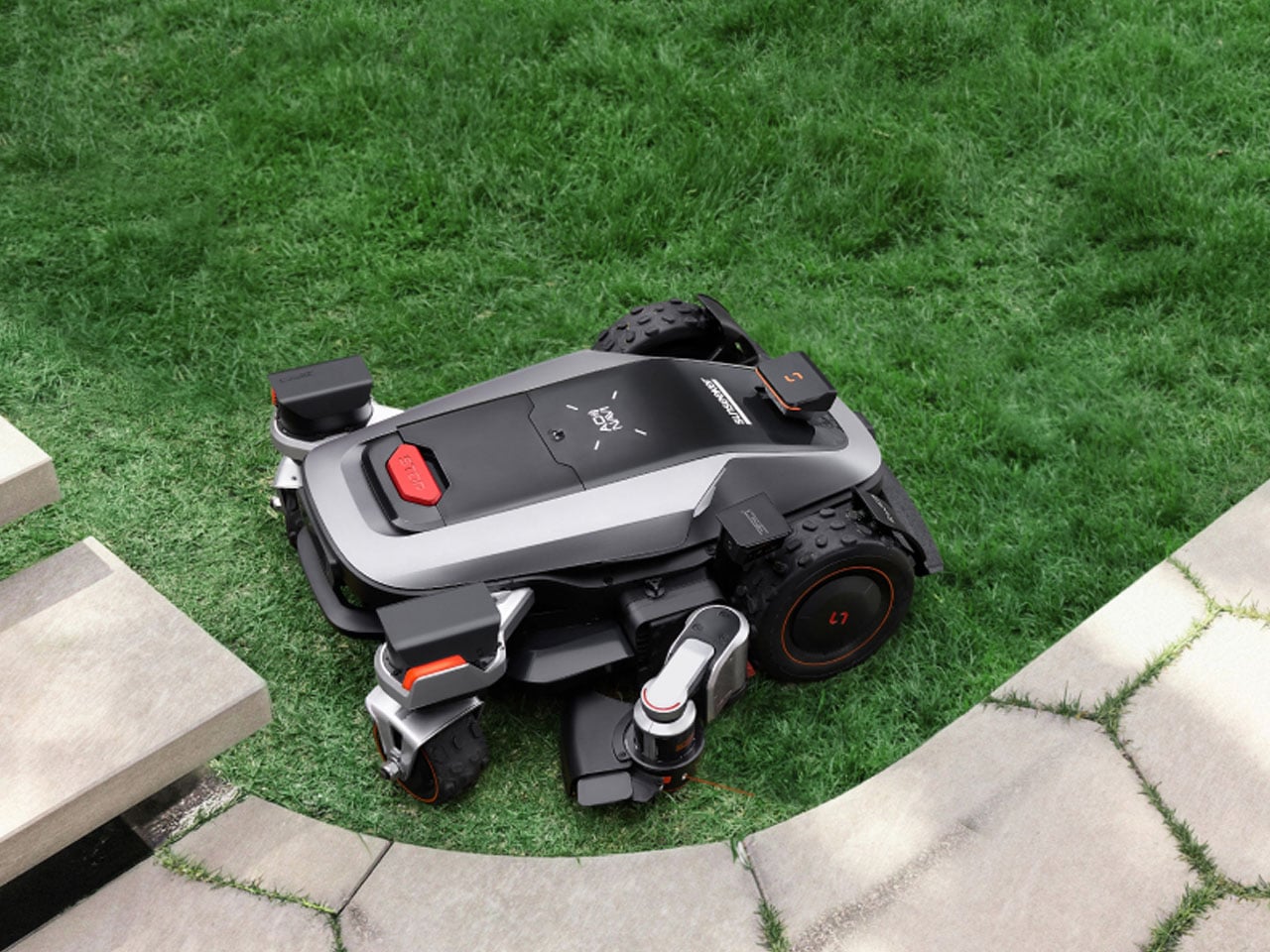
Sunseeker Elite X7 Plus Gen 2, a flagship model from the company, was recently conferred the German Innovation Awards’ prestigious Gold Award. Organized by the German Design Council, the award recognizes the Elite X7 Plus Gen 2 for its breathtaking innovation in smart lawn care. The jury also honored another Sunseeker lawn mower, the Elite X4 with the Winner Award in the Gardening Tools category.
Sunseeker mowers in the company’s Elite line-up have shown why they are cutting-edge options in the evolving robotic lawn care industry. These awards further substantiate that standing, which even the iF Design Award jury found worth appreciating. The jury at iF Design honored the Sunseeker Elite X9 with the excellence in design and innovation award.
In order to understand what really makes the three robotic lawn mowers stand out in their respective categories, let’s head down:
Sunseeker Elite X9: iF Design Excellence in Design and Innovation Award
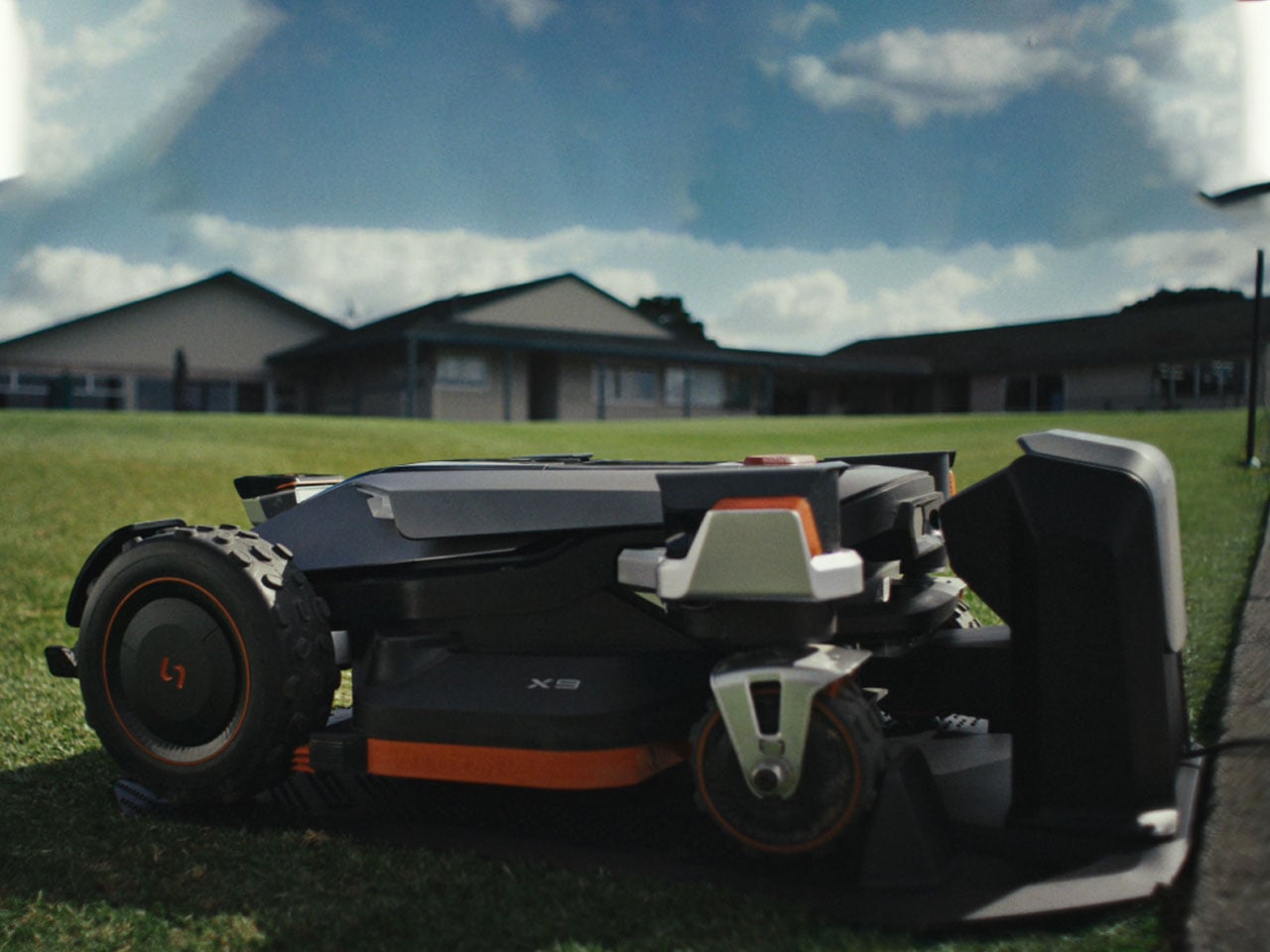
Built on the perfections derived from the residential front, the Elite X9 is Sunseeker’s debut into commercial applications. In addition to the large residential gardens, the robotic lawn mower can handle demanding expanses of a football field and municipal landscapes without breaking a sweat. For an idea, the Elite X9 can easily cover up to 12,000 m² area with precision and efficiency. The company informs that it can clean up an area that size within 48 hours.
Sunseeker Elite X9 is powered by a 16-sensor perception system and features eight cameras onboard with a 360-degree OmniSight system ensuring real-time recognition of obstacles and terrain it’s working on in both day and nighttime operations. The Always-On Navigation (AONavi) and RTK satellite positioning tech enable the X9 to work with centimeter-level accuracy without relying on boundary wires.
Since it is designed for larger, commercial settings, the four-wheel drive robot lawn mower features an independent suspension to climb up to 42-degree inclines and maneuver bumpy grounds easily. Sunseeker Elite X9 runs on a 42V, 8Ah battery system, which supports fast charging to power up in just 20 minutes.
Sunseeker Elite X7 Plus Gen 2: Gold Award
Large gardens require mowers with power, intelligence, and ability like the Elite X7 Plus Gen 2. The wire-free Sunseeker robot mower is built to handle yards up to 6000 m². Since it can manage large and complex gardens with equal efficiency, it is powered by nRTK and VSLAM 2.0 technologies and features binocular and iToF cameras for accurate positioning and navigation, whether it’s running during the day or in the night.
In our hands-on experience with Elite X7 Plus Gen 2, our editor mapped his “yard wire-free,” without “no-go zones around the beds, and ran both day and night cycles” to watch the “binocular and iToF cameras work” under each condition. The experience has been telling.
Provided with dual 14-inch cutting discs instead of a single narrow rotor, most robot mowers settle for this AWD robot has 8.7-inch all-terrain wheels. It features a smart LCD screen on top that shows battery status, connection, and the mode the mower’s running in. While it’s build-in tech allows it to map lawns, dodge more than 200 obstacles, and tackle extreme slopes with ease. All the autonomy and decision-making that the mower can do on its own is powered by 10 TOPS AI chip and fueled by a 10 Ah battery.
Sunseeker Elite X4: Winner Award
The Sunseeker Elite X4 is easily recognized for the effortless robotic lawn mowing it assures on smaller, private lawns that span not more than 1,200 m². The mower is ready before you can snap your finger: it requires no calibration and functions wire-free courtesy its 3D LiDAR and Vision AI system, mapping, navigating, and avoiding obstacles, independent of satellite signals.
Most 4th of July gifts end up on a shelf by August. The problem is rarely budget. It is that the average gift guide optimizes for novelty over usefulness, leaving the recipient with something impressive at unboxing and forgotten by Labor Day. The eight picks here work differently. Each one earns its place through daily utility, genuine design quality, or the kind of clever thinking that makes you wonder why it took this long to exist.
These are products built to be used outdoors, shared freely, and carried constantly. Every price is real, every product is available to order in time for July 4th, and every item fits the kind of man who appreciates design as much as function. That is a harder brief than it sounds. These eight cleared it.
1. RetroWave 7-in-1 Radio
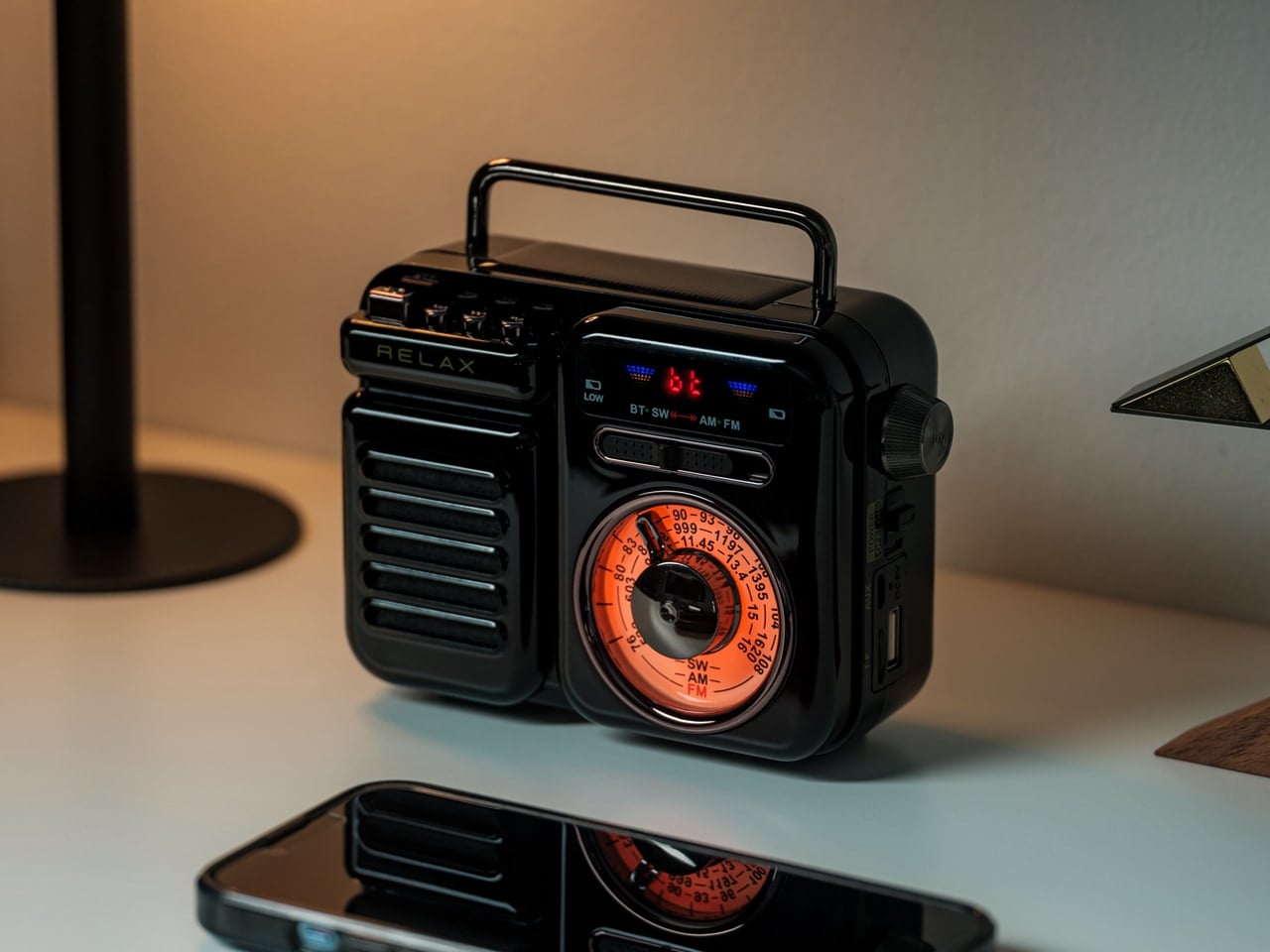
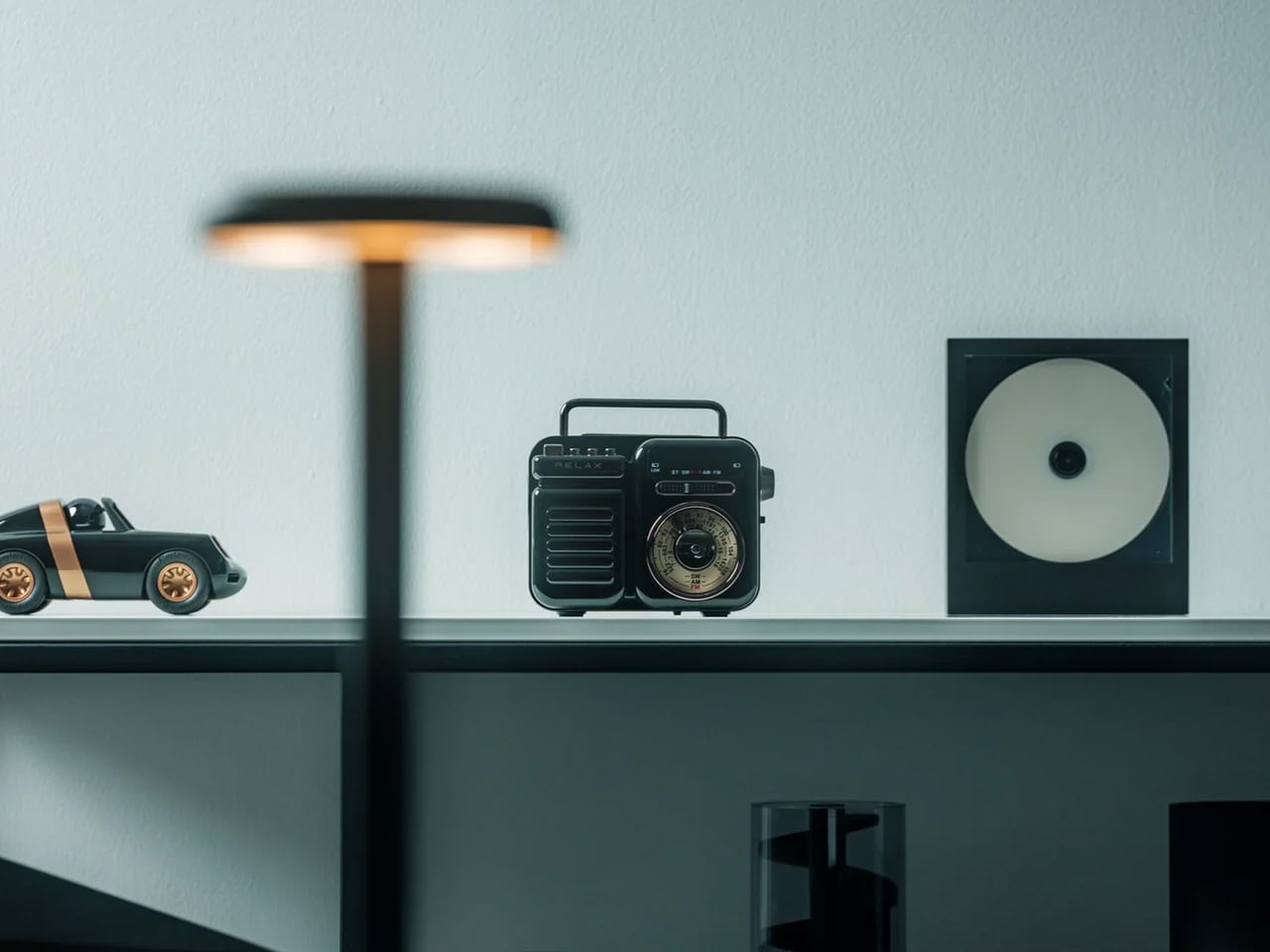
The RetroWave is not trying to be a smart speaker. That restraint is exactly what makes it work. At $89, it covers AM, FM, and shortwave reception alongside Bluetooth streaming, a built-in flashlight, a phone charging port, and a weather band — seven functions in a single object with a tactile analog tuning dial and enough visual warmth that it looks right sitting on a picnic table or a porch railing. It runs on battery or USB-C, which matters at any outdoor gathering where outlets are not a given.
What sets it apart from the wave of retro-styled Bluetooth speakers is that the RetroWave functions during a blackout. The weather band and hand-crank charging give it genuine emergency utility that most audio products ignore entirely. On a holiday weekend where fireworks, crowds, and summer storms converge, a radio that can do real work under pressure is a more interesting gift than another Spotify-only device with a personality made entirely of silicone and LED rings.
Seven-function range covers daily and emergency use without feeling cluttered
What we dislike:
The shortwave reception will delight a specific type of person and leave others indifferent
2. Anker Soundcore Boom 3i
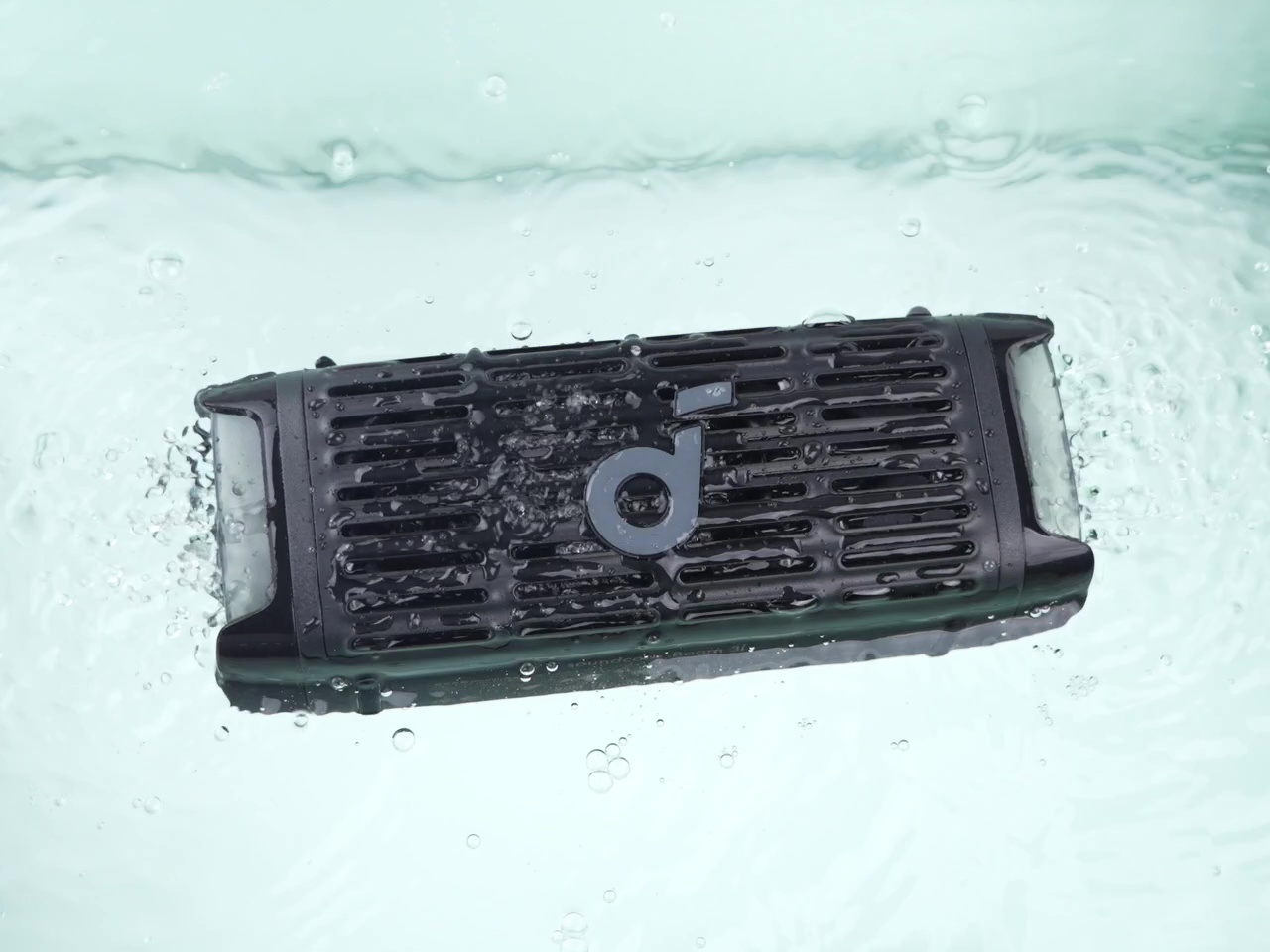
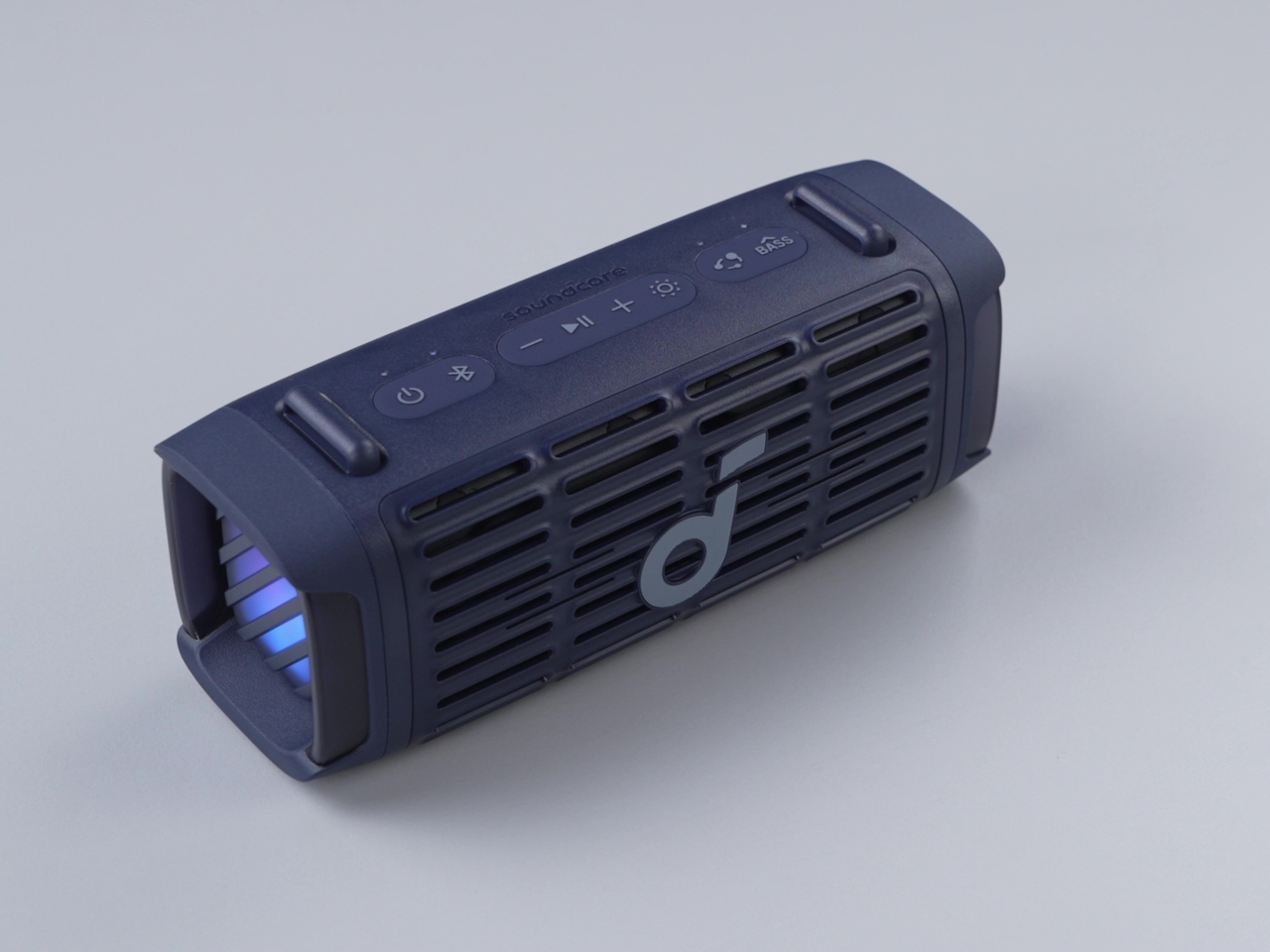
The Boom 3i was designed to survive the kind of afternoon that destroys other electronics. It floats on water. It shakes sand off its housing without clogging the drivers. The IP rating holds up in the rain and in the pool, and while most outdoor speakers are water-resistant in theory and fragile in practice, Anker engineered this one for submersion rather than splashes. It is the Bluetooth speaker you stop worrying about the moment you walk out the front door with it.
The audio output is full and wide for a speaker this compact, with enough low end to anchor a playlist over ambient crowd noise without the distortion that plagues smaller drivers at higher volumes. For a 4th of July gathering where the speaker will inevitably be nudged off a table, handed between a dozen people, and left near the cooler in a wet patch of grass, the Boom 3i is the one pick on this list that was engineered specifically for that set of conditions.
What we like:
Floating capability is the one feature that separates it from every comparable speaker at this price
What we dislike:
The design prioritizes durability over aesthetics, which shows in the bulkier silhouette
3. Leatherman Skeletool RX
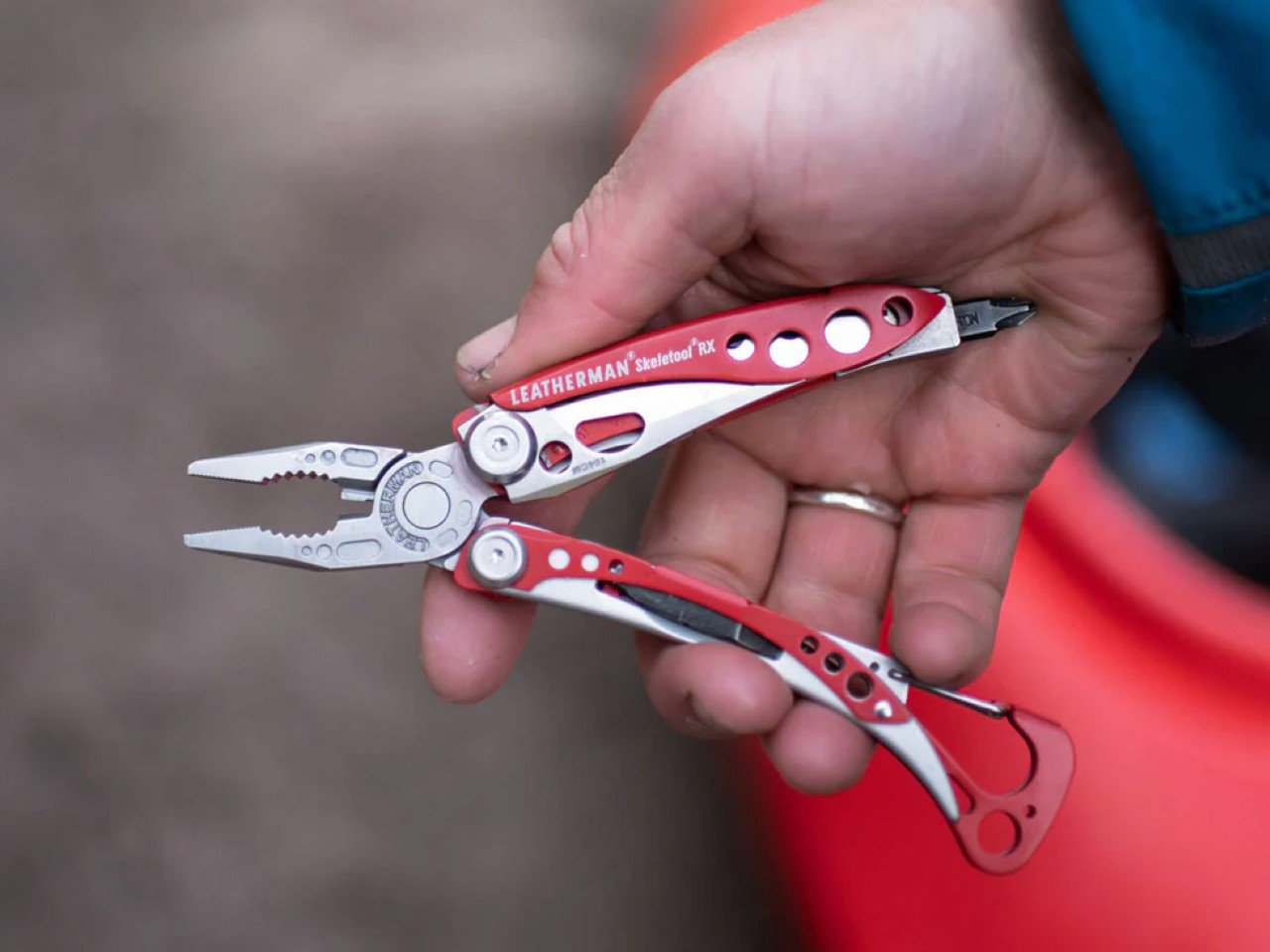
The Skeletool was built around an edit. Leatherman stripped the tool down to seven functions, removed everything that required compromise, and arrived at something genuinely elegant for a multitool: a stainless steel combo blade, needle-nose pliers, a bit driver, a removable pocket clip, and a carabiner that doubles as a bottle opener. That last detail is the most honest acknowledgment a tool manufacturer has ever made that a 4th of July multitool has a very specific social use case. Five ounces, built in Portland, Oregon.
The bottle opener earns its place at a summer cookout, but the pliers and driver mean it stays useful through the entire weekend and the weeks after. Most multitools feel like a design compromise. The Skeletool feels like a design decision. The skeletonized frame that gives it its name is functional rather than decorative, reducing weight without reducing grip. It is one of those tools that looks better the more it gets used, which is the best thing you can say about anything made from stainless steel.
What we like:
The carabiner bottle opener is a genuine design insight rather than a novelty feature
What we dislike:
Seven functions cover most use cases, but it will not satisfy anyone who needs scissors or a saw
4. TriBeam Camplight
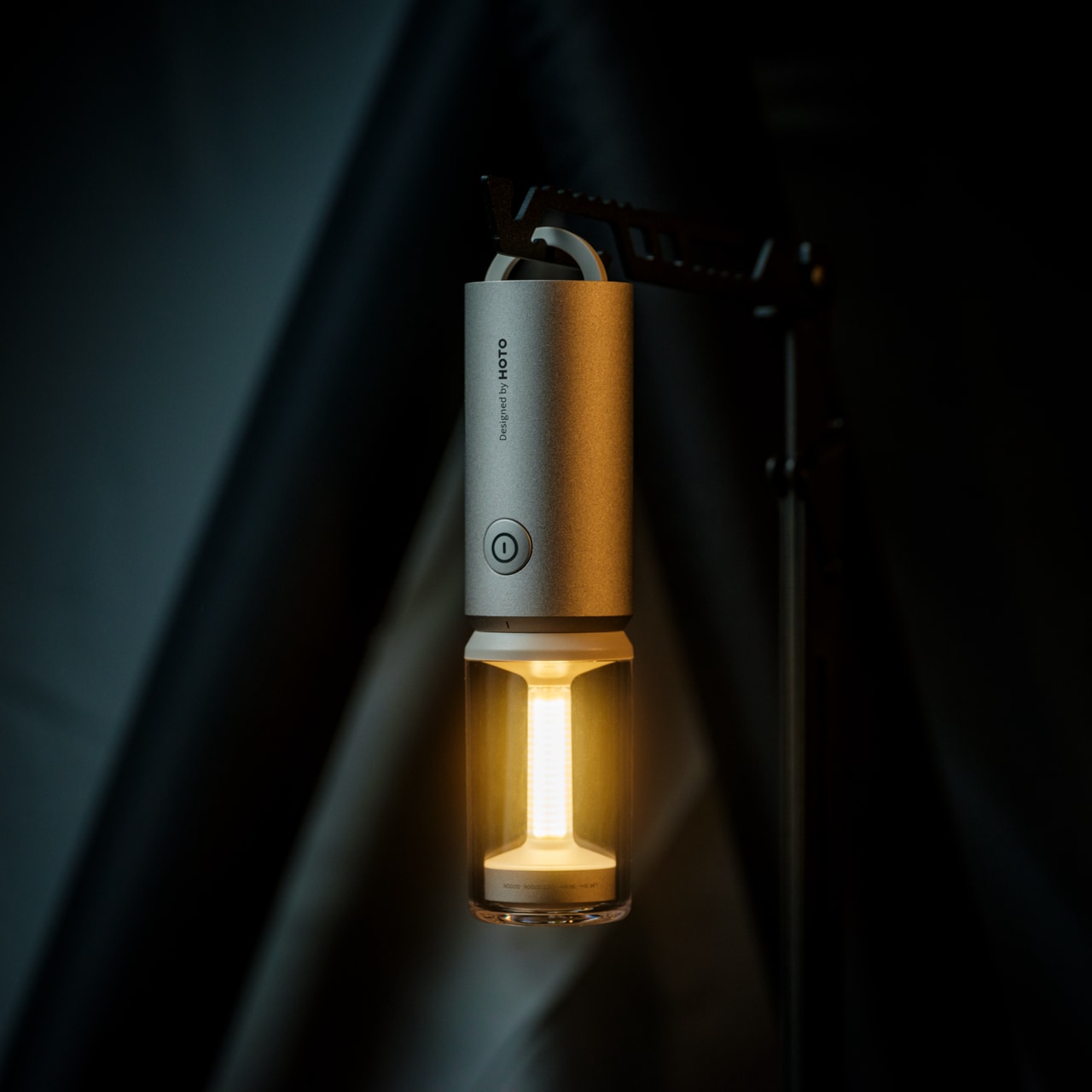
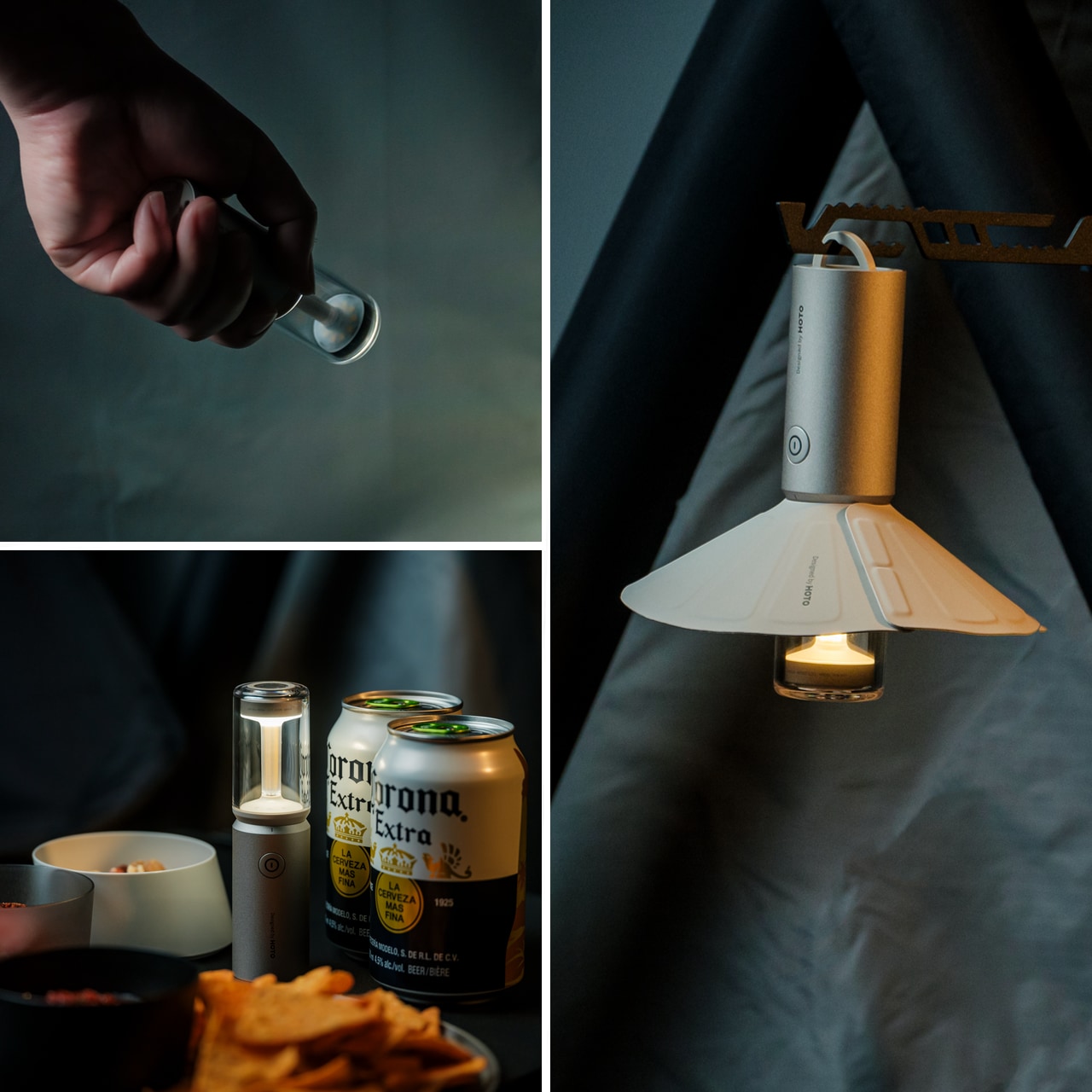
Most camp lights make you choose between utility and atmosphere. The TriBeam refuses that trade-off. At $65 and 135 grams, it switches between a soft ambient glow for conversation, a focused flashlight beam for task lighting, and a diffused lantern mode that fills a campsite evenly. Three distinct lighting behaviors in a single award-winning body that measures just 12.8 centimeters tall and fits in a jacket pocket, which is not something most camp lanterns can honestly claim.
The design is the product. Clean cylindrical housing, no unnecessary buttons, nothing that reads as cheap at close range. It earns its price through the quality of the materials and the precision of three modes that each do their job without bleeding into the others. For anyone spending part of the 4th of July weekend outdoors, whether camping or simply sitting on a dark lawn waiting for fireworks, the TriBeam handles the full range of lighting needs without requiring a second item in the bag.
Three genuinely distinct lighting modes that each solve a specific outdoor scenario
What we dislike:
The compact scale means battery life has limits on multi-night trips
5. Matador Pocket Blanket 3.0
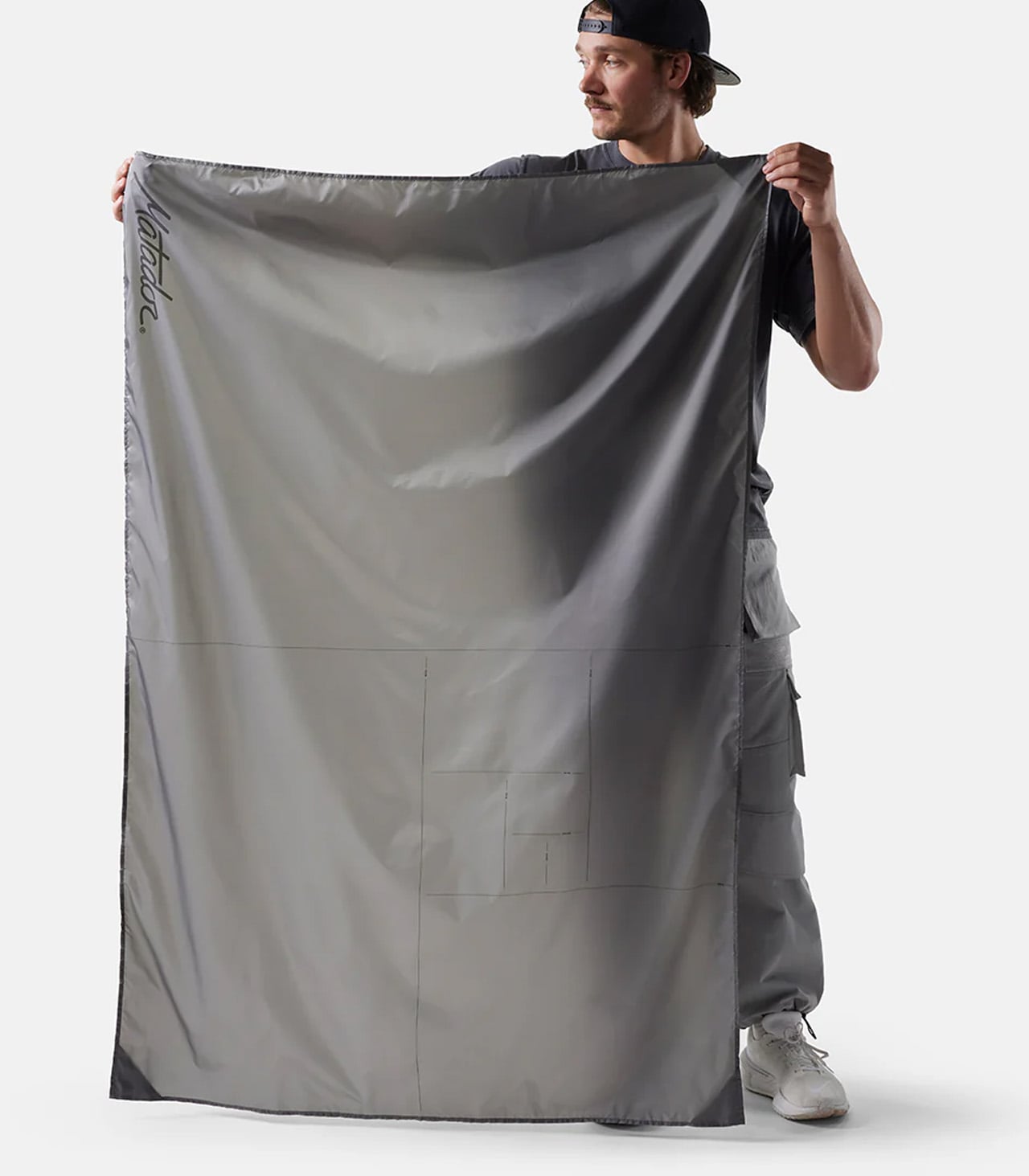
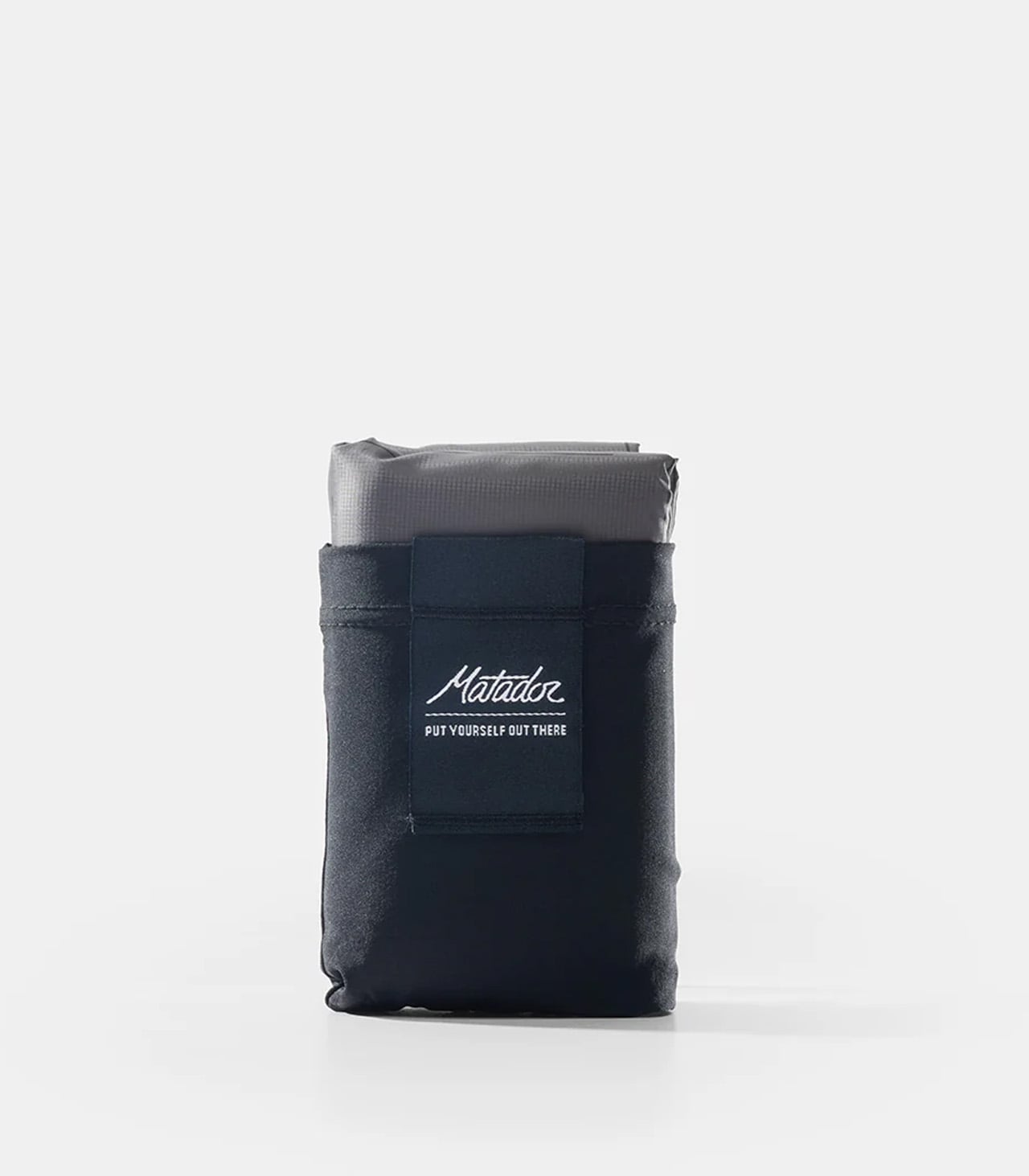
The Matador Pocket Blanket folds to the size of a carabiner pouch. Opened, it seats two to four adults on a water-resistant surface with integrated corner stakes for wind. The bottom layer blocks moisture from wet grass and damp park lawns; the top layer resists sand and water without trapping them. Everything about this object was designed for exactly the 4th of July scenario of sitting on public ground watching fireworks without wearing whatever that ground has been absorbing all afternoon.
The Easy-Pack Pattern built into the blanket’s face guides the refold intuitively, which solves the specific frustration that makes people abandon ultralight blankets within the first month of owning them. At $35 it is the lowest-price item on this list and potentially the most used, because it solves a problem that comes up every single time the weather is good enough to go outside. That ratio of price to utility is rare and worth recognizing when you find it.
What we like:
The built-in refolding guide makes packing it back down a one-attempt operation
What we dislike:
The sizing works well for two adults, but a larger group will want a second one
6. Planbok Waterproof Wallet
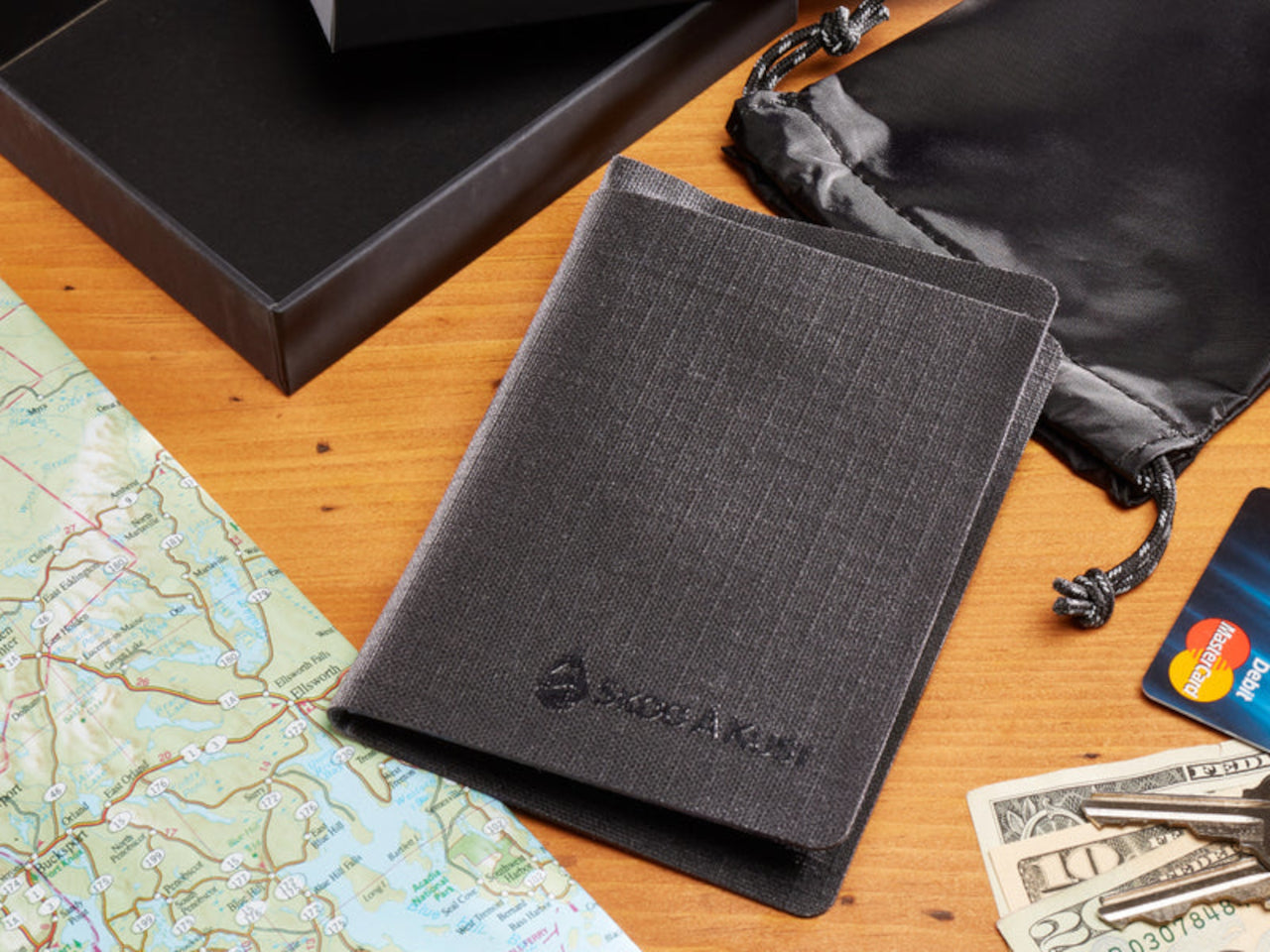
The Planbok is built from 420 denier TPU-coated ripstop nylon with fully welded seams and an IPX6 water resistance rating. It floats if you drop it in the water. That detail separates it from every slim wallet on the market, including the ones that market themselves as water-resistant. The difference between water-resistant and waterproof is invisible until it matters, and on a weekend that involves boats, coolers, rivers, or an unexpected downpour, it matters immediately and without warning.
The profile stays slim enough for a front pocket, cards slide easily, and the construction feels deliberate rather than disposable. It is not a novelty item. It is the answer to the quiet anxiety of carrying a leather bifold to a lake weekend, which is a real anxiety that real people experience every summer without ever quite solving it. Covering a genuine everyday frustration with a well-made object at a reasonable price is precisely the brief that good design exists to fulfill.
What we like:
Buoyancy is a genuine functional feature, not a marketing headline
What we dislike:
IPX6 covers heavy rain but stops short of full submersion, which the floating capability can quietly imply
7. DraftPro Top Can Opener
There is a version of cracking open a cold can on the 4th of July, and there is a better version. The DraftPro, designed by award-winning Japanese designer Shu Kanno and built in Japan, removes the entire top of a can in a single smooth motion, leaving a clean, safe edge and a wide-mouth opening that releases the full aroma of whatever is inside. Beer tastes closer to draft. Sparkling water breathes. A canned cocktail becomes something you can actually build on, adding ice directly into the can or mixing in the source without reaching for a glass or a shaker.
The opening motion is controlled and quiet — not by accident but by engineering — and the grip was shaped to sit naturally in the hand without slipping or requiring a particular angle. Nothing about it reads as a novelty. It is a tool designed with the restraint that Japanese craft disciplines demand: nothing added, nothing wasted, every detail in service of the one thing it exists to do. At a cookout full of people who have never seen one, it will be the most-passed-around object on the table.
Removes the full top cleanly, transforming a canned drink into a genuinely better sensory experience
Works as a cocktail vessel, ice bucket, and open drink in one move with no extra equipment
What we dislike:
Stock is limited — only a few units available at the time of publication, so early ordering matters
8. Nimble SharePower
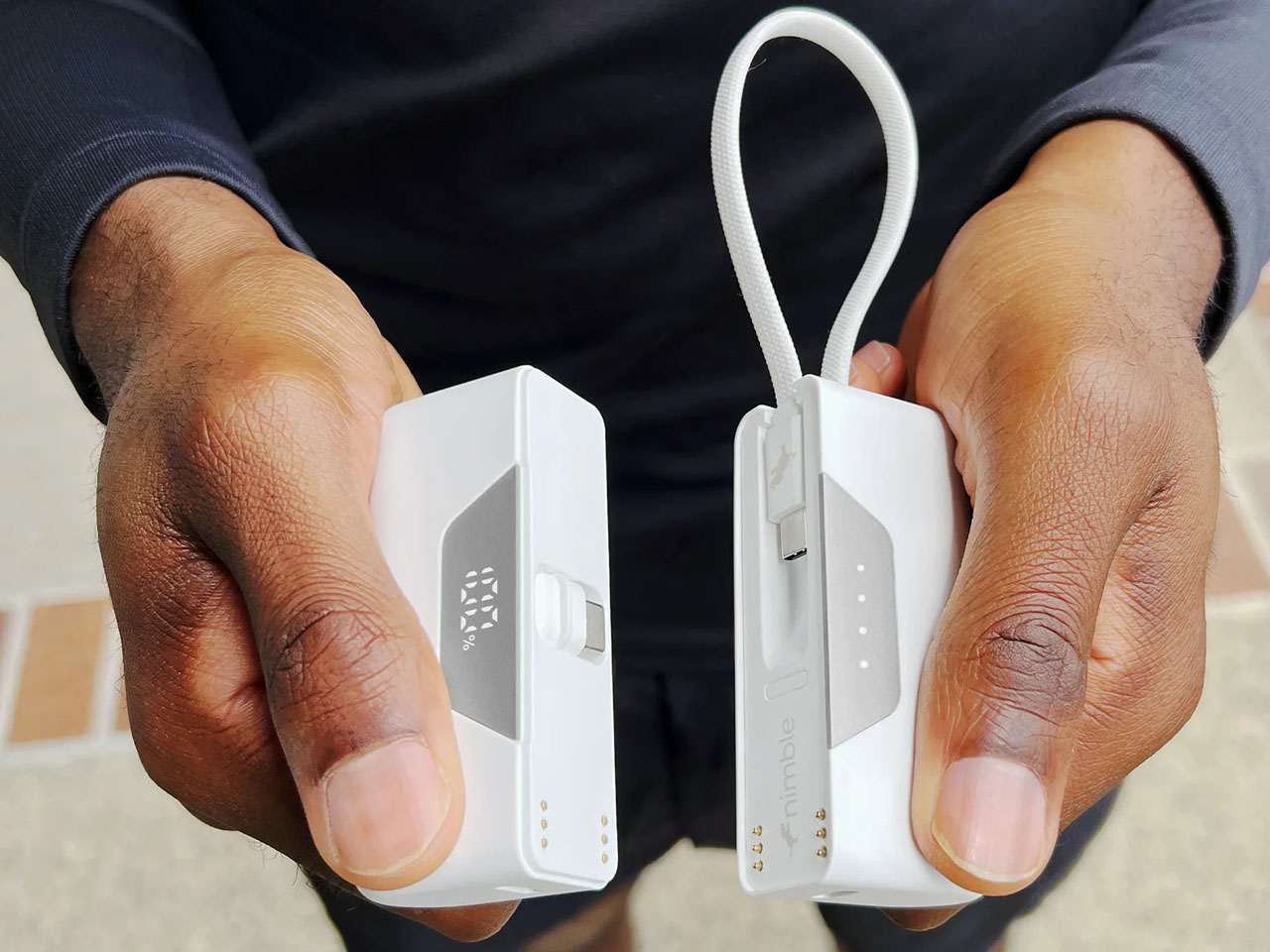
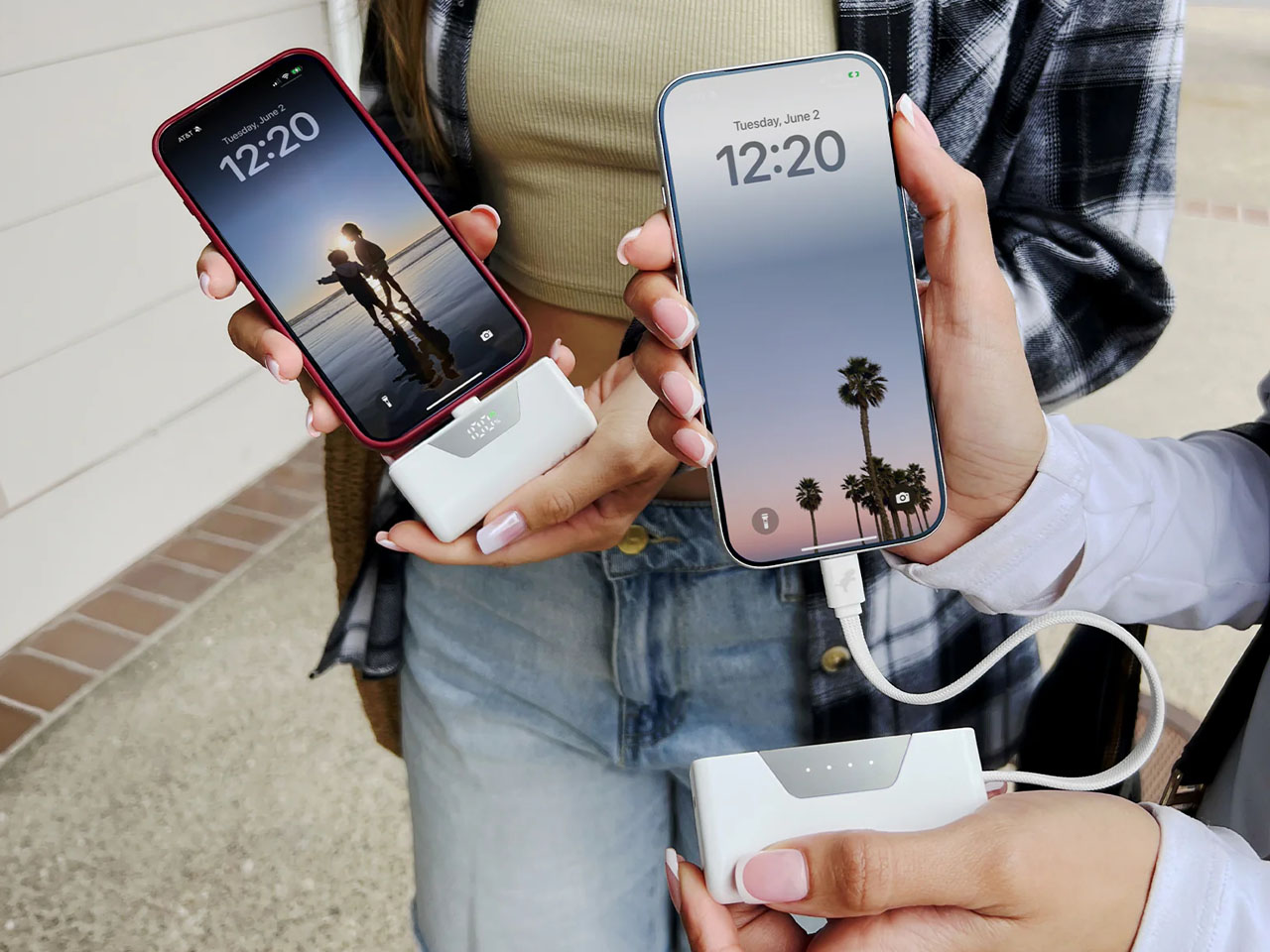
The SharePower from Nimble is a 10,000mAh power bank that splits in half. The two halves are held together magnetically and separate cleanly, with one half housing a battery percentage display and the other using four LEDs to communicate charge level. The braided lanyard connecting them opens into a USB-C cable when the halves are split apart. In joined mode, it delivers 35W charging; split, each half runs at 20W for a single device or 15W across two. The whole unit measures 3.05 by 2.75 inches at under one inch thick.
The concept is obvious in retrospect, which is the clearest sign of a genuine design insight. Every group trip produces the same conversation about who has the power bank and whether anyone can borrow it, followed by a compromise where the original owner gets it back at 30 percent. The SharePower ends that conversation by making sharing a built-in function rather than an inconvenience.
What we like:
The split-mode design solves a social problem that has existed since portable batteries were invented
What we dislike:
The translucent color options are fun in concept but may narrow the gift appeal depending on the recipient
The Only Standard That Matters
Eight products with one shared quality: each one earns its place through a specific design decision rather than a general category promise. The RetroWave works through a blackout. The Boom 3i floats. The Skeletool has a bottle opener exactly where it should. The TriBeam gives you three different lights in one hand. Good design shows up like that — not as a feature list but as a moment where something just works better than you expected it to.
That is the real standard for a gift. Not whether it looks impressive in the box, but whether it gets used on the second trip, the third, the tenth. Most of what is on this list ships before the holiday, which means the only remaining variable is whether you want to give someone something that will still be in their bag come Labor Day.
Packing for a camping trip is really just a series of small arguments with yourself about what’s worth the weight. June 2026 has produced a strong batch of designs that tend to win those arguments. Across five very different product categories, the same principle quietly surfaces: the best outdoor gear doesn’t add complexity to your trip. It takes it away.
From a hammock tent that rethinks how you sleep off the ground, to a radio that earns its keep long before conditions turn difficult, the designs ahead share something most camping gear doesn’t: a point of view. Each one started from a genuine problem and arrived at something you’d actually want to carry. These are the five that stood out this month.
1. RetroWave 7-in-1 Radio
The RetroWave looks like a deliberate throwback to classic Japanese radio design — a tactile tuning dial, compact body, warm aesthetics that earn a shelf rather than beg for a drawer. But the retro form is doing something more purposeful than nostalgia: it frames a genuinely self-sufficient piece of kit that works when conditions aren’t perfect and removes the decision fatigue of choosing every piece of music you play. AM, FM, and shortwave for signal without an app. Bluetooth streaming when connectivity holds. A hand-crank and supplemental solar panel for when it doesn’t. SOS alarm and built-in flashlight, quietly tucked in.
What the RetroWave actually solves is the fragility of modern audio. Smart speakers go silent when the Wi-Fi drops. Earbuds die at the wrong moment. Phones drain precisely when you need them most. The RetroWave doesn’t ping you with reminders or demand perfect conditions. It simply plays, charges, and illuminates across seven functions. For campers who want fewer devices in the pack and more reliability in the field, it does the work of four separate items without asking for four separate charging cables. That’s a trade worth making before any trip where things might not go smoothly.
Seven functions in a single body significantly reduce the number of individual items you need to carry and manage
Solar and hand-crank charging keep it functional entirely off-grid with no outlets and no power bank required
What We Dislike
The retro aesthetic, appealing as it is, may read as decorative novelty to buyers who haven’t yet used it in an actual off-grid context
Shortwave reception quality can vary noticeably depending on geographic location and surrounding terrain
2. Haven Spectre Ultralight Hammock Tent
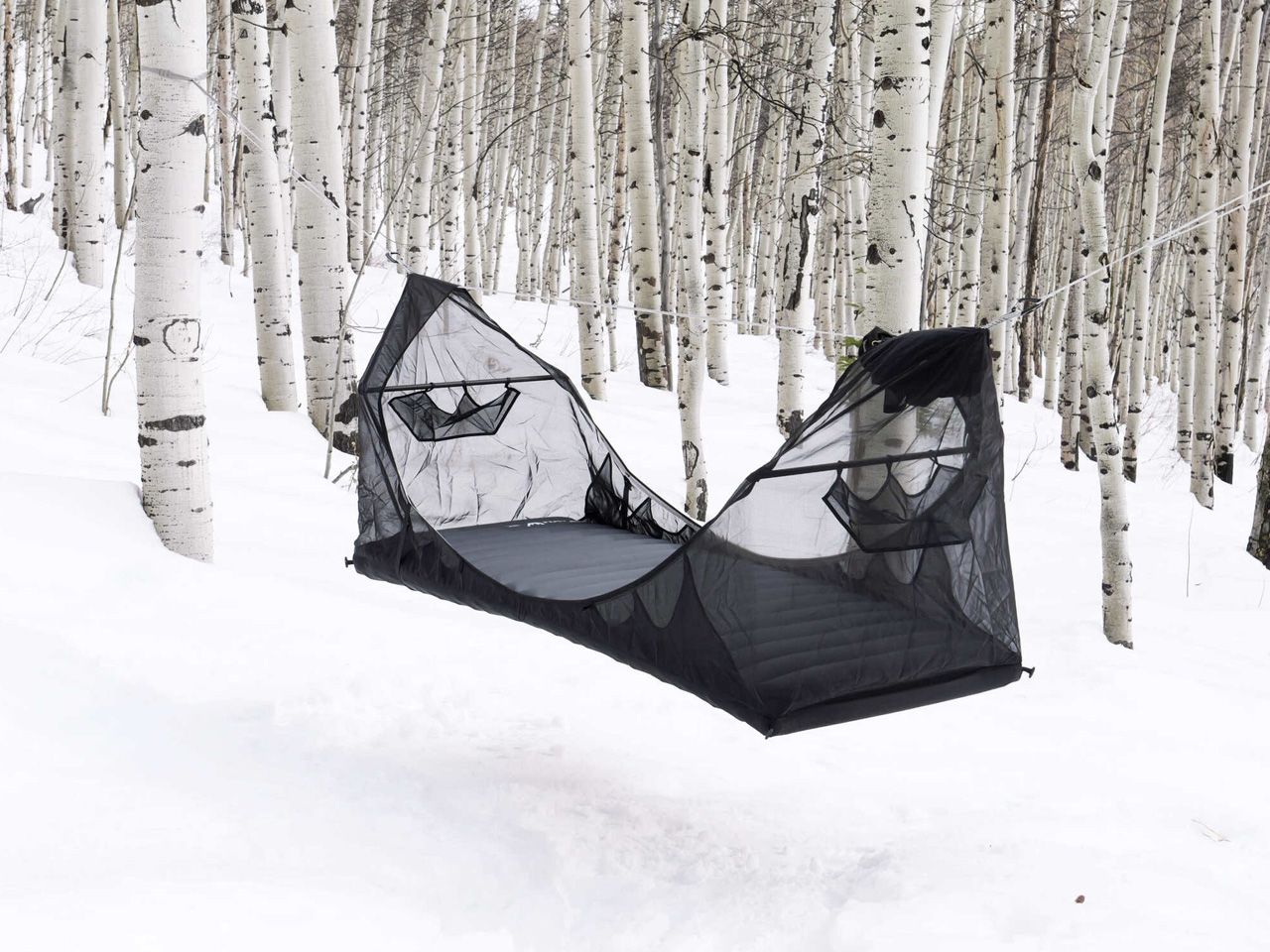
The Haven Spectre solves the problem every experienced hammock camper knows but rarely admits out loud: traditional hammocks fold your body into a shape that doesn’t encourage real sleep. The Spectre counters this with a flat-lay design that keeps your spine aligned and your night predictable. For backpackers who have tried and quietly abandoned hammock camping after a single rough night, this is the iteration worth revisiting. It’s featherlight without feeling compromised, built from years of field-tested feedback, and light enough to disappear into a pack you’re already carrying.
What separates the Spectre from its predecessors isn’t just weight reduction — it’s the thinking behind how a person actually sleeps in the field. The integrated structure holds its form without demanding constant re-adjustment mid-night. You string it up, get in, and it works. For long-distance hikers and weekend backpackers alike, that reliability reduces the cognitive load of a night outdoors. Less time fussing with rigging means more energy for the trail ahead, which is exactly the kind of trade-off a well-designed piece of kit should make for you.
What We Like
Flat-lay sleeping position solves the banana-curve problem that makes traditional hammocks genuinely uncomfortable for full nights
Years of customer-driven refinement make this Haven’s most advanced and polished iteration to date
What We Dislike
Requires trees at the right spacing and height, which limits viable campsite choices in open terrain
Premium price point puts it out of reach for casual or occasional campers who might only use it a handful of times a year
3. Blavor Power Station + Camping Lantern
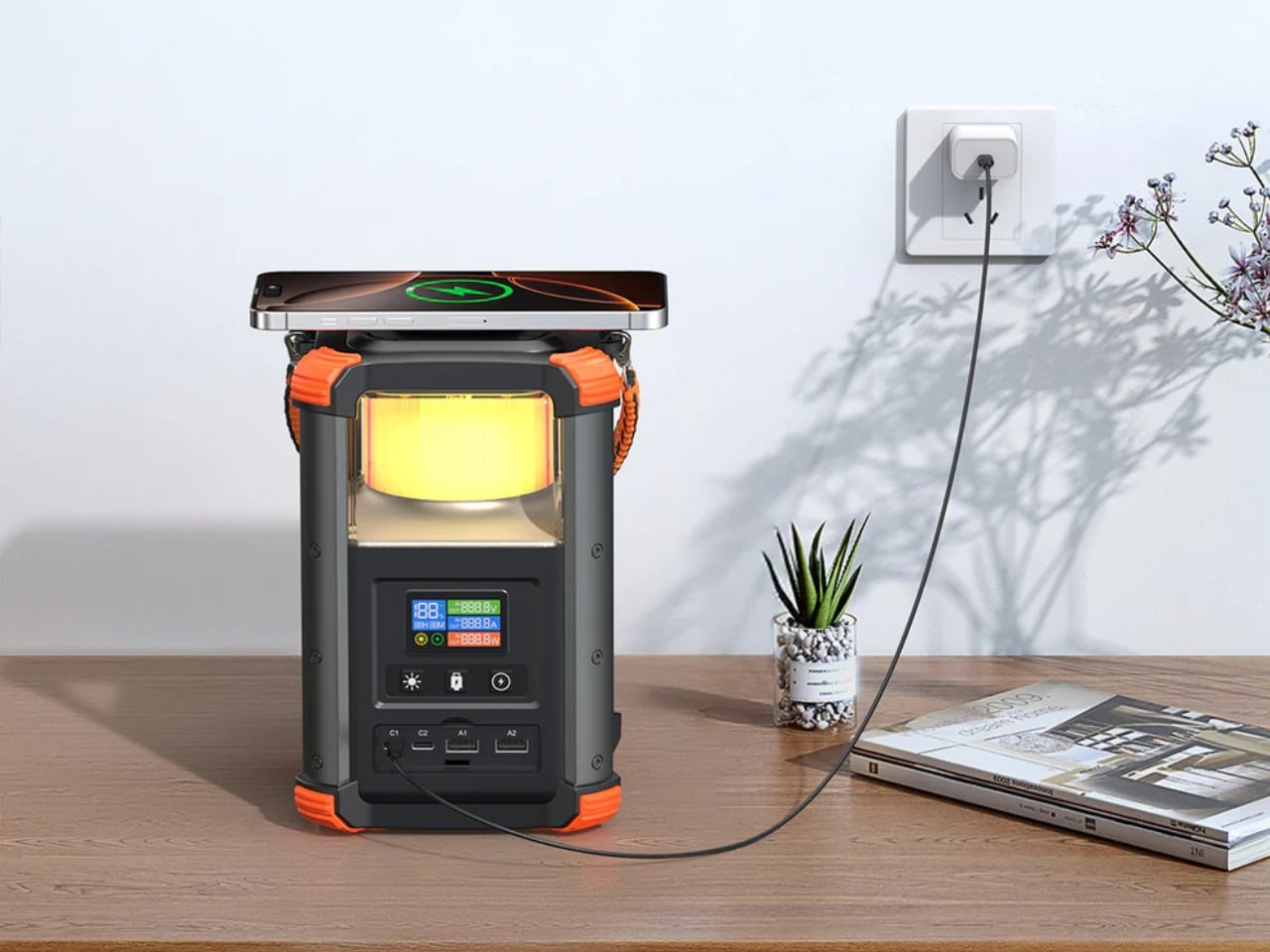
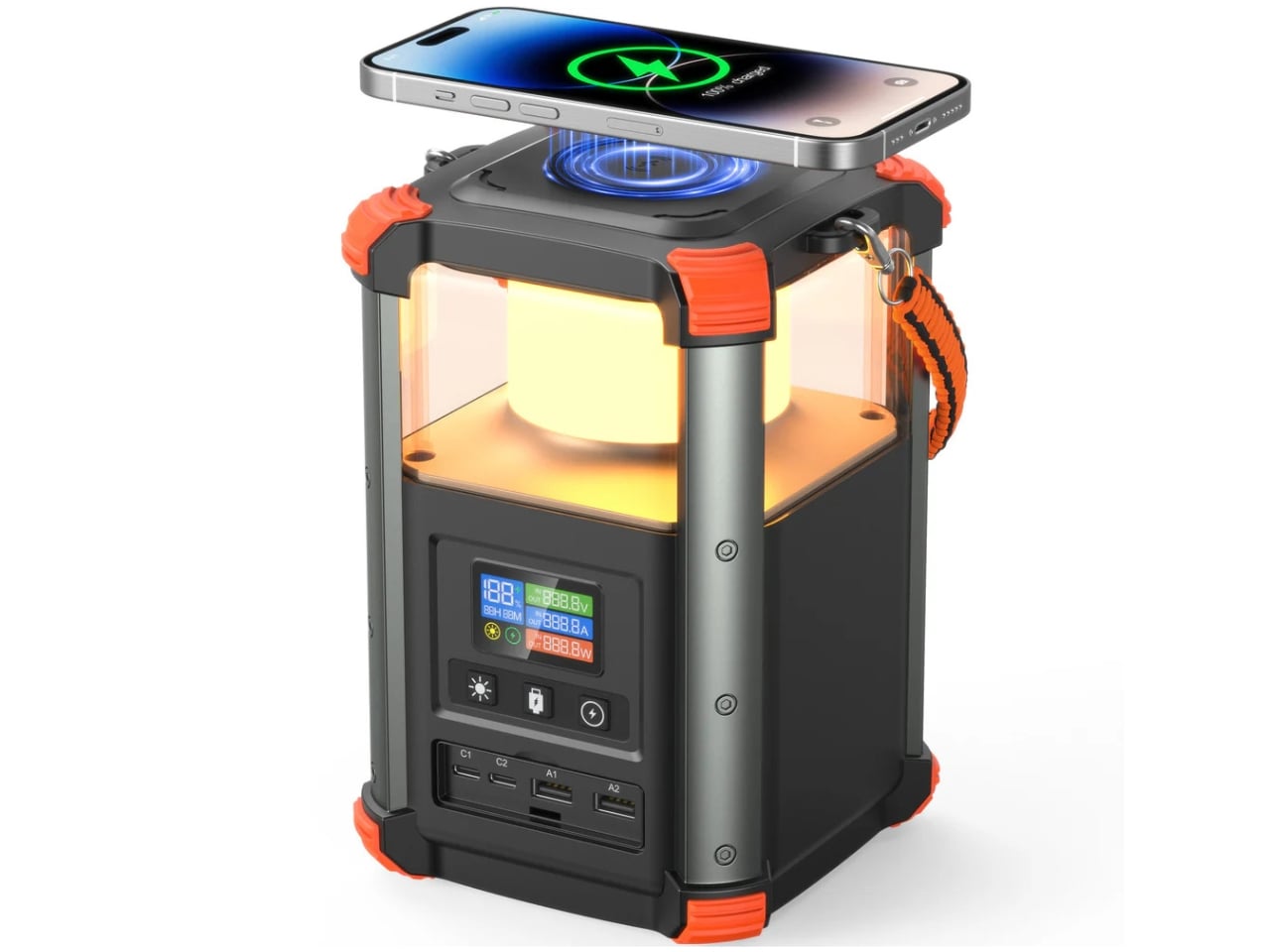
Most portable power stations look like they were designed by someone who has never spent a night outdoors. The Blavor sidesteps that problem entirely by building a camping lantern into the form factor from the start. The result is a device barely bigger than a tall water bottle that functions as both a light source and a five-pathway charging hub, covering solar, AC, car adapter, USB-C, and micro USB — with a digital display that keeps you updated on battery status without any guesswork. It’s the kind of consolidation that makes you rethink everything else in your kit.
The real value here is how naturally the two functions coexist. When the lantern is on, the power bank is right there. When you’re charging your phone overnight, the ambient glow does quiet work inside the tent without needing a separate light source. It doesn’t ask you to choose between illuminating your site and keeping your devices alive — it simply does both. For campers who’ve always carried a separate lantern and a separate battery pack, the consolidation alone is worth the price. This earns its spot in the pack before the first trip is even planned.
What We Like
Five charging pathways give it a flexibility that most single-use power banks simply can’t match across different environments
Lantern and power station coexist without compromising each other — the dual function feels designed in, not bolted on
What We Dislike
Battery capacity, while solid for a weekend, may leave multi-day off-grid users reaching for supplemental charging sooner than expected
The cylindrical form factor, while compact, can be slightly awkward to pack flush alongside flat gear in a structured bag
4. Chopsticks Maker
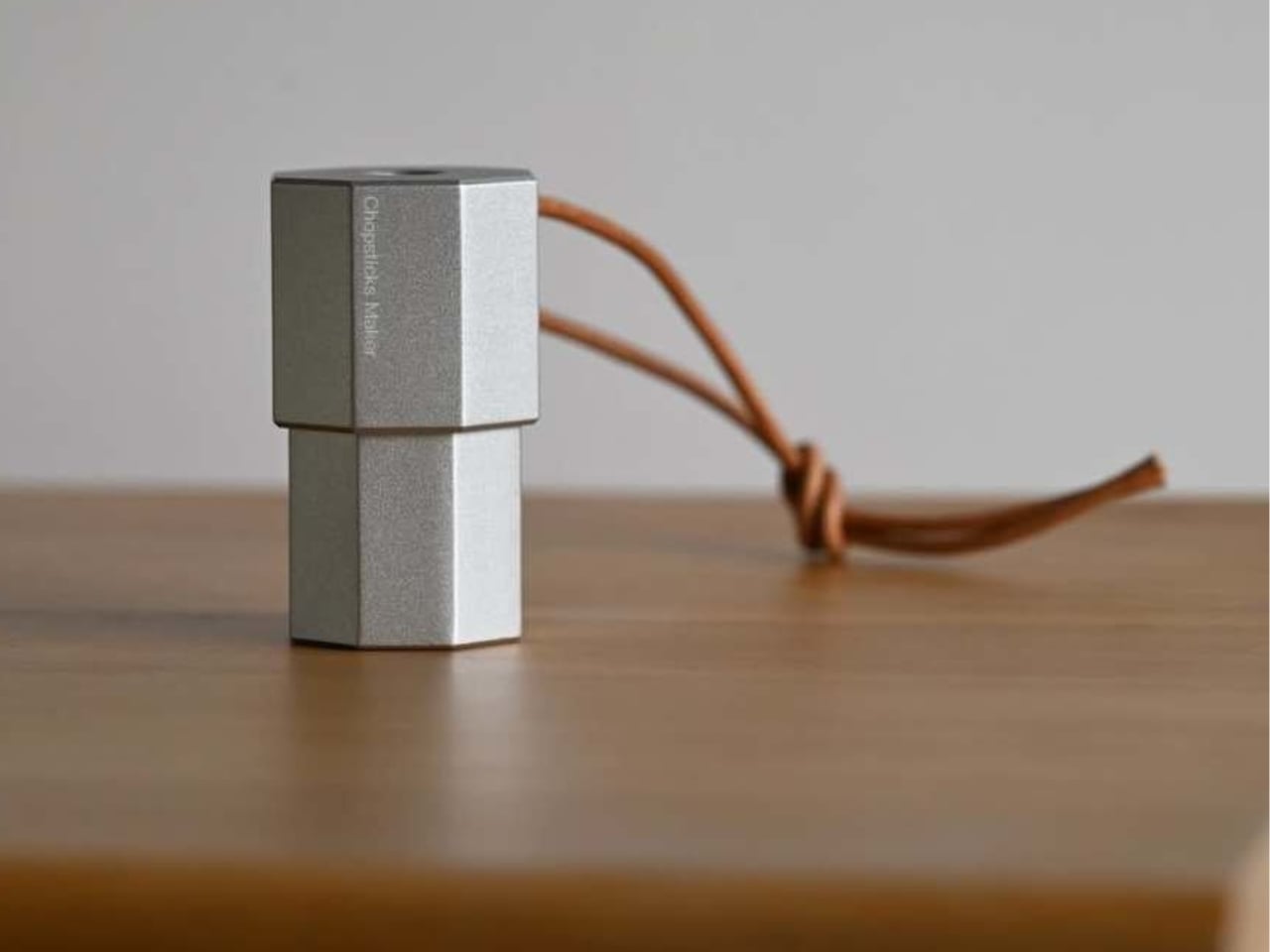
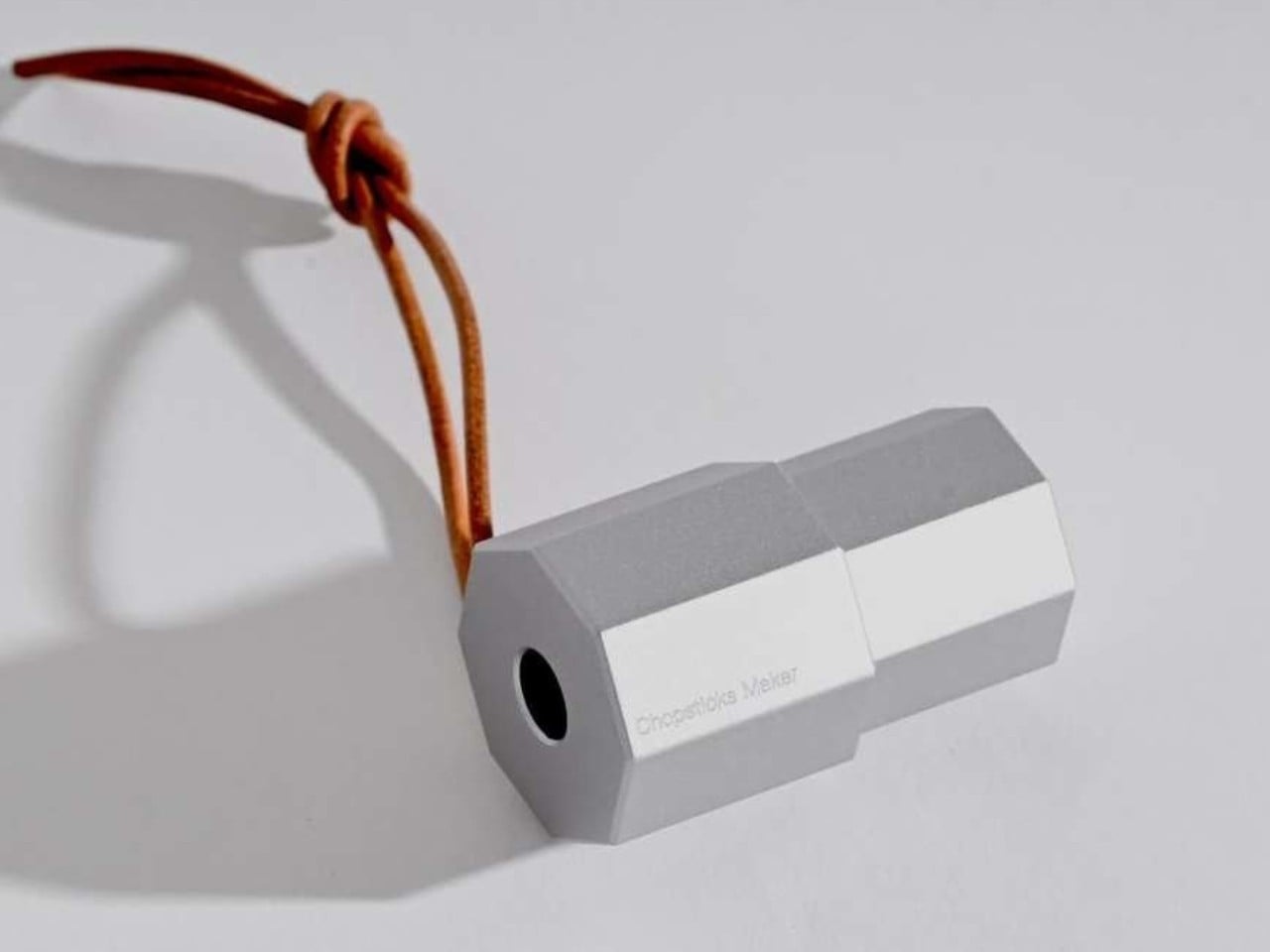
The Chopsticks Maker by Shanghai-based designer Mario Tsai is a direct reinterpretation of the pencil sharpener — same rotational mechanics, different raw material. Feed a thin foraged branch through the tool, and it carves a clean, usable chopstick in seconds. It’s a clever design move because it borrows its logic from an object whose function is already completely understood. The result is an outdoor tool with zero learning curve, an intuitive interaction, and a form compact enough to disappear into any kit without taking up meaningful space or weight.
Beyond cutlery, the same shaving mechanics produce fine wood shavings suitable for fire-starting, which quietly expands the tool’s usefulness without a single redesign. For campers who prioritize carrying less and sourcing more from the environment around them, the Chopsticks Maker represents a genuine shift in how outdoor utensils are framed as a category. It’s not about carrying better tools — it’s about carrying a tool that makes what you need from what’s already there. That’s a different design ambition entirely, and one that makes this concept one of the most interesting camping objects to emerge this year.
What We Like
Dual function as both a cutlery maker and a fire-starting aid significantly increases utility beyond its primary purpose
The foraged-material approach removes the need to carry disposable utensils or heavier stainless alternatives altogether
What We Dislike
Relies on finding suitable wood nearby, which is not guaranteed across all camping environments or terrain types
Currently a design concept, meaning production details, materials, and final pricing remain unconfirmed at time of publishing
5. TriBeam Camplight
The TriBeam Camplight fits in a jacket pocket without negotiation — 12.8 centimeters, 135 grams, three distinct lighting modes. The ambient setting runs at 5 lumens, enough to navigate a darkened tent or campsite without destroying your night vision. The diffused camping mode spreads light evenly across shared spaces. The focused flashlight pushes 180 lumens for anything that demands real visibility. What makes it compelling isn’t any single mode in isolation, but the fact that all three feel genuinely purposeful rather than checkbox features added to pad a spec sheet.
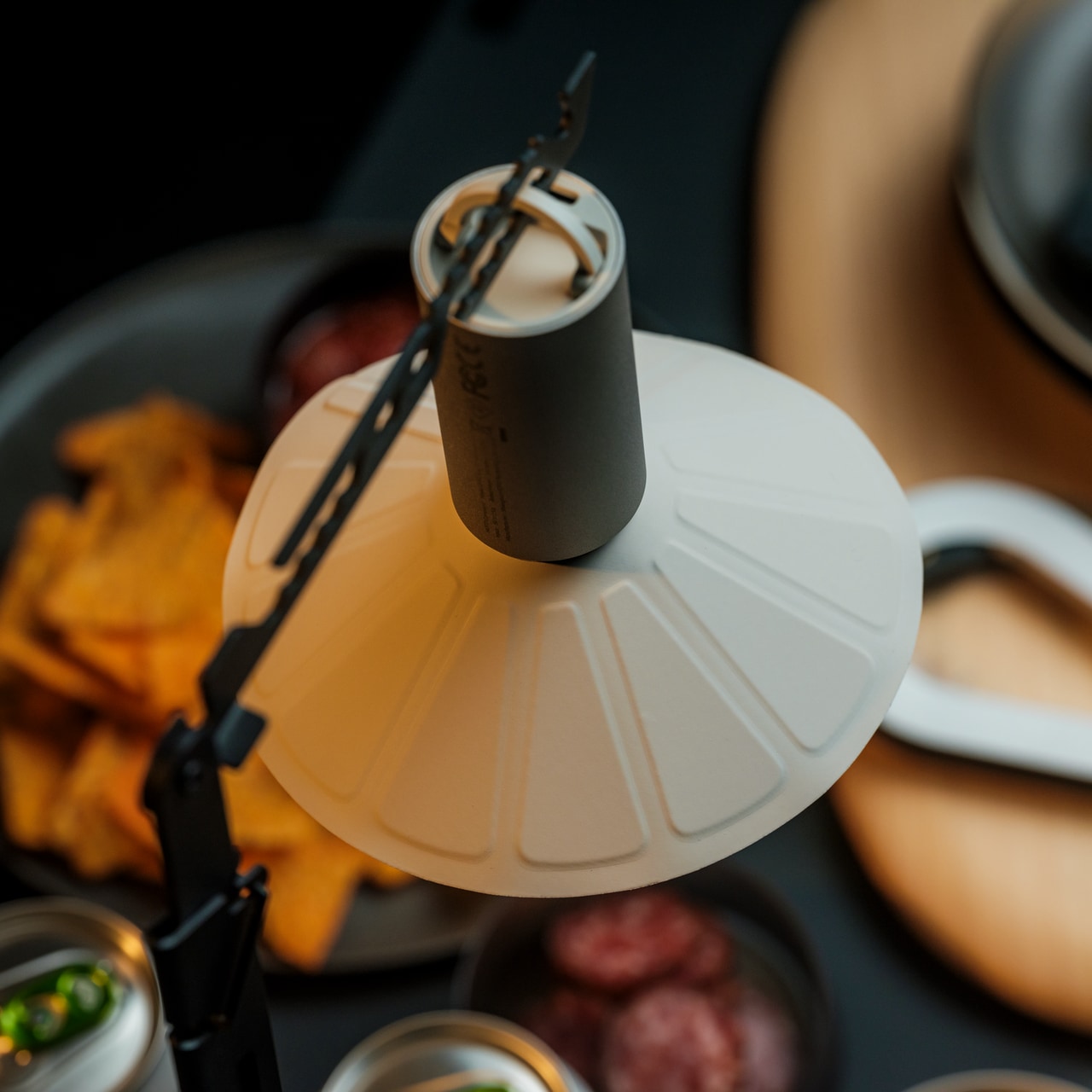
A 50-hour battery life is the detail that tips this into essential territory. For most camping trips, a single charge carries you through the full weekend with meaningful margin to spare. The detachable magnetic lampshade shifts the light quality without adding friction — snap it on, snap it off. The hidden handle tucks away cleanly until you need to hang it from a ridgeline, a tent loop, or a bag strap. The TriBeam is the kind of gear that earns a permanent place in the kit long after the trip it was first bought for.
50-hour battery life is generous enough for multi-night trips without requiring a recharge in the field
Three genuinely distinct modes that adapt to different environments without overlap or redundancy
What We Dislike
180-lumen maximum output is well-suited to camp-scale use but falls short for longer-distance signaling or search scenarios
The magnetic lampshade, while elegant, could detach unintentionally inside a packed bag during transit
The Best Camping Gear Thinks Before It Packs
What these five designs share isn’t a price point or a product category — it’s the sense that someone thought carefully about what a camper actually needs, rather than what the outdoor market has assumed they want. The Haven Spectre rethinks sleep. The TriBeam and Blavor rethink lighting and power. The RetroWave rethinks connectivity. The Chopsticks Maker rethinks what you need to bring at all. Each one narrows the gap between what’s in the pack and what actually gets used on the ground.
June 2026 didn’t produce the loudest season of outdoor gear. It produced one of the more considered ones. The standout designs this month are quieter than their competitors and more purposeful for it. If the trend holds, the next generation of camping gear will continue moving in this direction — fewer features performed well rather than many features performed adequately. For anyone who has ever come home from a trip with half their kit untouched, that’s a welcome shift in the right direction.
The beach has a design problem. Everything made for it arrives wrapped in the same visual language: neon plastic, logos scaled for visibility from twenty feet away, and product names in fonts that suggest the designer’s reference material was a county fair booth. Coolers, chairs, speakers, sunscreen dispensers. The category has collectively decided that beach gear should look exactly like beach gear, and nobody seems to have questioned whether that was actually a good idea.
These five objects have a different point of view. None of them look like they were produced for a promotional photograph on a pier. Each one earns its place through a specific design decision that makes a full day at the beach easier, quieter, or a little more considered.
1. Battery-Free Amplifying Speakers
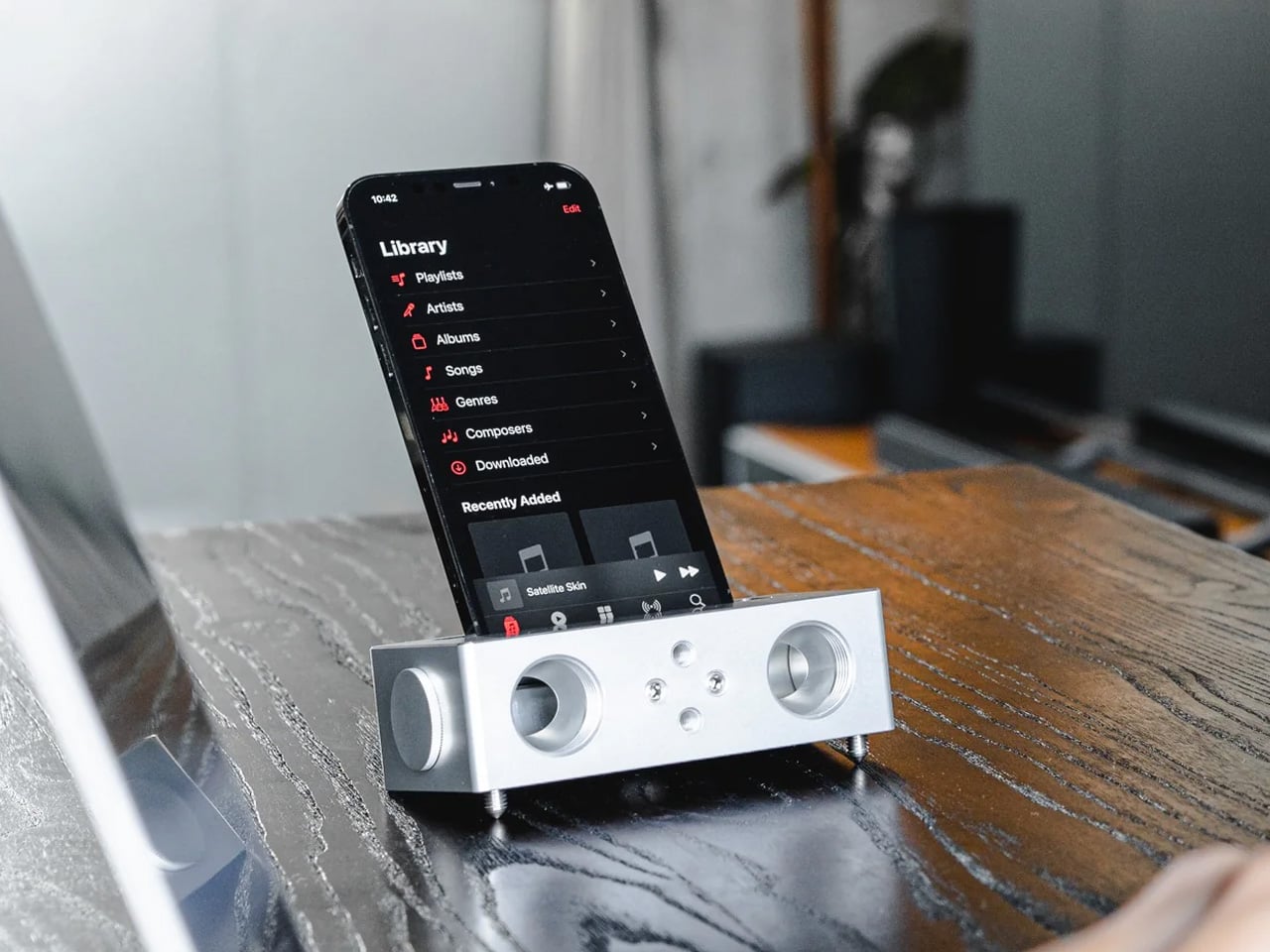
Every Bluetooth speaker brought to the beach eventually dies. The battery gives out at exactly the moment someone finds the right track, and the rest of the afternoon becomes a negotiation about whether to go back to the car. The Battery-Free Amplifying Speakers remove that problem entirely by having no battery to run out. Sound from a phone travels into the chamber and is amplified through acoustic geometry rather than electronics, with no pairing, no charging, and no indicator light to watch nervously.
The principle is the same one behind a gramophone horn or a hand cupped around a speaker: redirect sound and it gets louder. What lifts these above cheaper versions of the same idea is the internal chamber design, which reinforces rather than merely surrounds the sound. The result is noticeably fuller than the phone alone, and at the beach, where wind and open space work against you constantly, that gain matters more than a battery percentage reading or a firmware update ever could.
No charging means no dead speaker, no cables on the sand, and no quiet dread about how much afternoon remains before the battery is gone
Passive amplification means the sound scales with your phone’s own speaker rather than introducing a separate and competing audio character on top of it
What We Dislike
The volume ceiling is lower than any powered speaker, so this works for a group around a table rather than a group spread across a wide stretch of beach
Performance is tied to the quality of the phone speaker placed inside, which varies considerably from one device to another and is entirely outside the product’s control
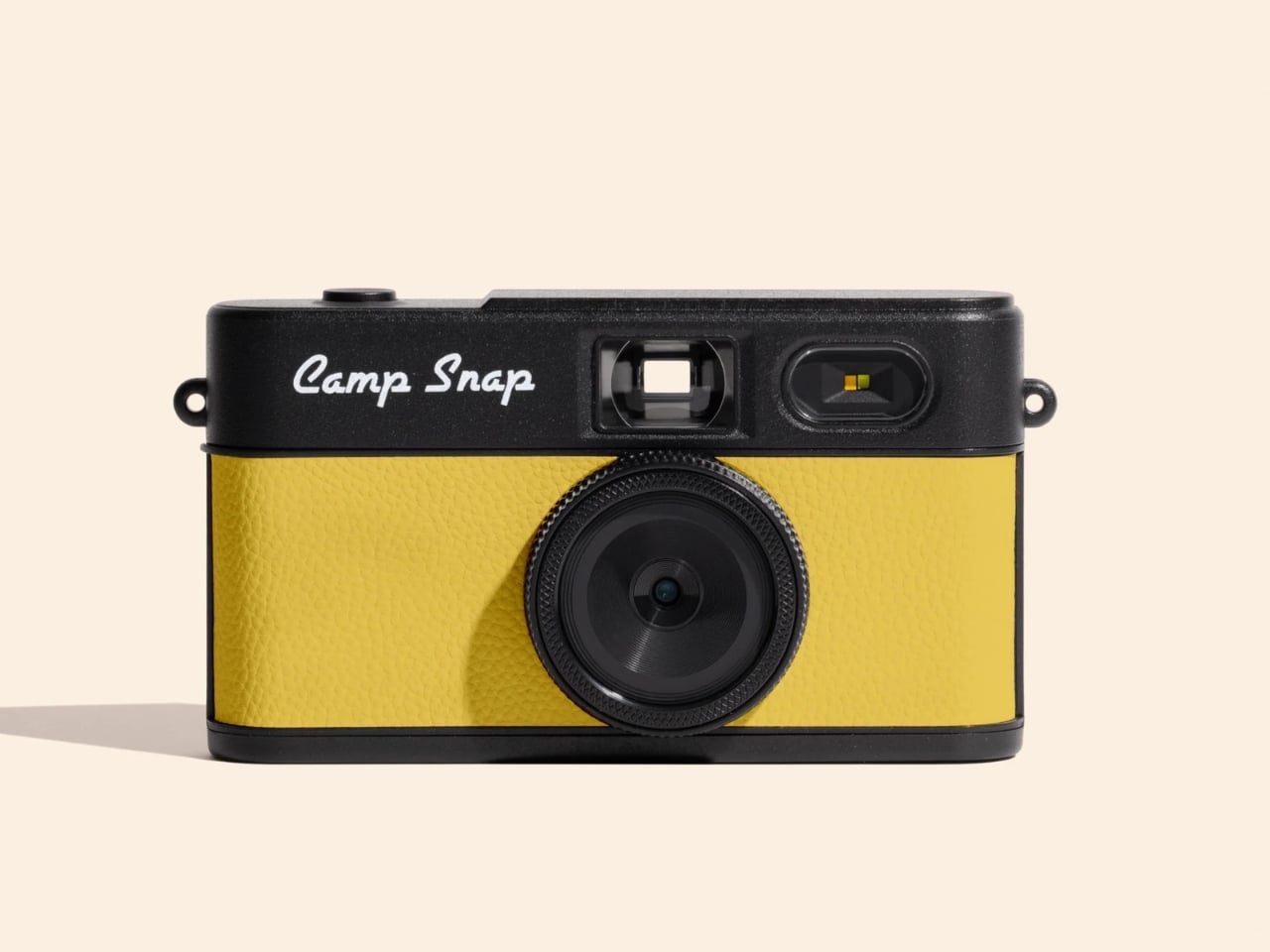
2. Camp Snap 2
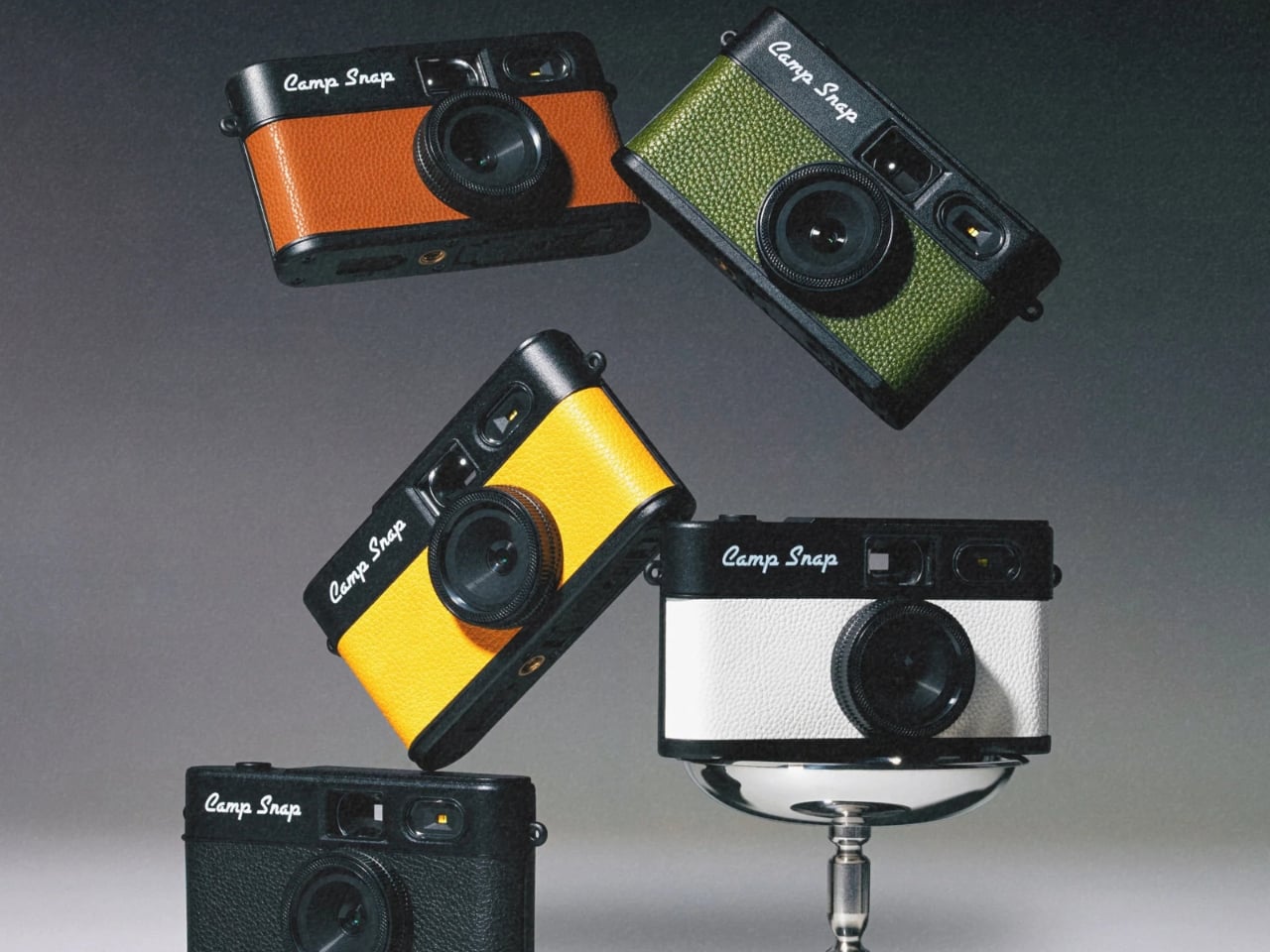
The Camp Snap 2 is a point-and-shoot with no rear screen, no Wi-Fi, and no ability to see the photograph you just took. You shoot, you download later. What sounds like a limitation turns out to be a relief. Every photograph at the beach currently involves a review session: retakes, angles held for too long, filters applied in real time while the moment moves on without you. A camera that simply takes the picture and closes the subject is a very different tool to spend a day with.
It is 15 percent slimmer than its predecessor, runs an 8-megapixel sensor, and offers six built-in looks through a physical button on the back: Standard, Vintage 1 through 3, Analog, and Black and White. It comes in nine colorways, including several translucent jelly-plastic finishes in Sunbeam Yellow, Tangerine Drift, and Strawberry Splash. It supports 30.5mm screw-in filters for anyone inclined to go further.
What We Like
The screenless design removes the retake cycle entirely, which turns out to be the most genuinely useful design feature a beach camera can offer
Six filter modes accessed through a single physical button is exactly the right level of creative control for a camera built around the idea of not overthinking things
What We Dislike
No rear screen means no way to check framing or whether someone blinked, which requires a real shift in how you think about taking a photograph in the first place
The 8-megapixel sensor produces images that are warm and characterful rather than sharp and clinical, which is either the point or the dealbreaker depending entirely on who is asking
3. DraftPro Top Can Opener
The problem with canned drinks at the beach has never been opening them. The pull tab handles that adequately. The problem is everything after: a small hole that warms the drink faster than it should, attracts every insect within range, and forces you to drink in a way that a can was never designed for. The DraftPro removes the entire top of the can in a single motion, leaving no sharp edges and turning any standard drink can into an open vessel with full and immediate access.
It locks onto the rim, cuts around the perimeter, and the lid comes away clean. What you are left with is essentially a metal cup, which changes the drinking experience from a can more than you might expect. A cold brew tastes different when you can actually smell it. A beer drinks the way a beer is supposed to drink. Canned wine, which has always suffered from its own opening, finally gets the same treatment a glass would give it.
The DraftPro removes the full lid in one clean motion with no sharp edges remaining on the rim, which is the design outcome every can opener should be working toward
Turning any standard can into an open cup changes how canned drinks taste and how you experience them, which is a significant return for something that fits in a pocket
What We Dislike
It works on standard-diameter cans only, so anything outside that size needs a different tool, which is worth knowing before the cooler is already packed
The removed lid needs somewhere to go, which is a small but real consideration when you are trying to keep a bag organised on a beach with nowhere flat to set things down
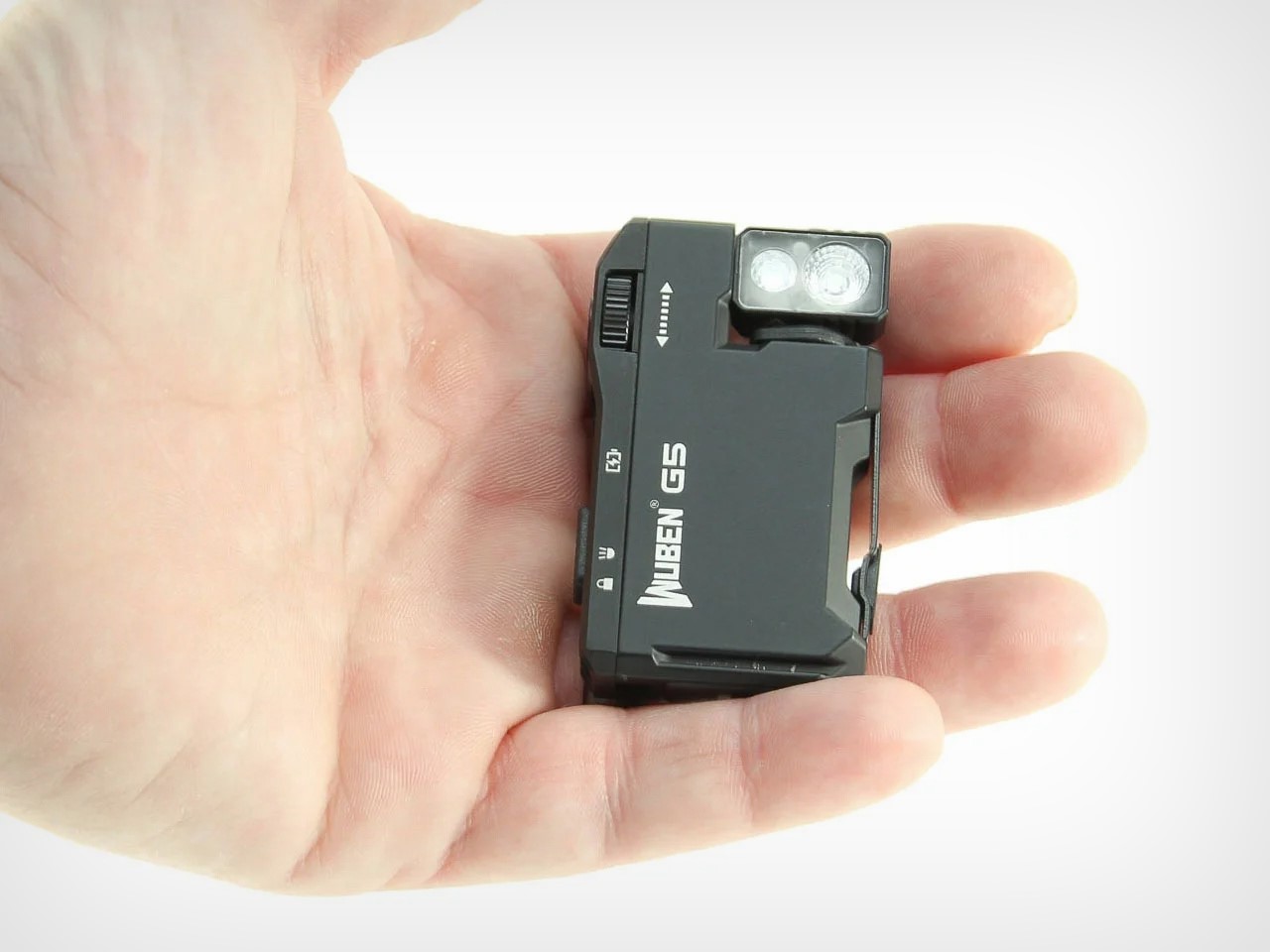
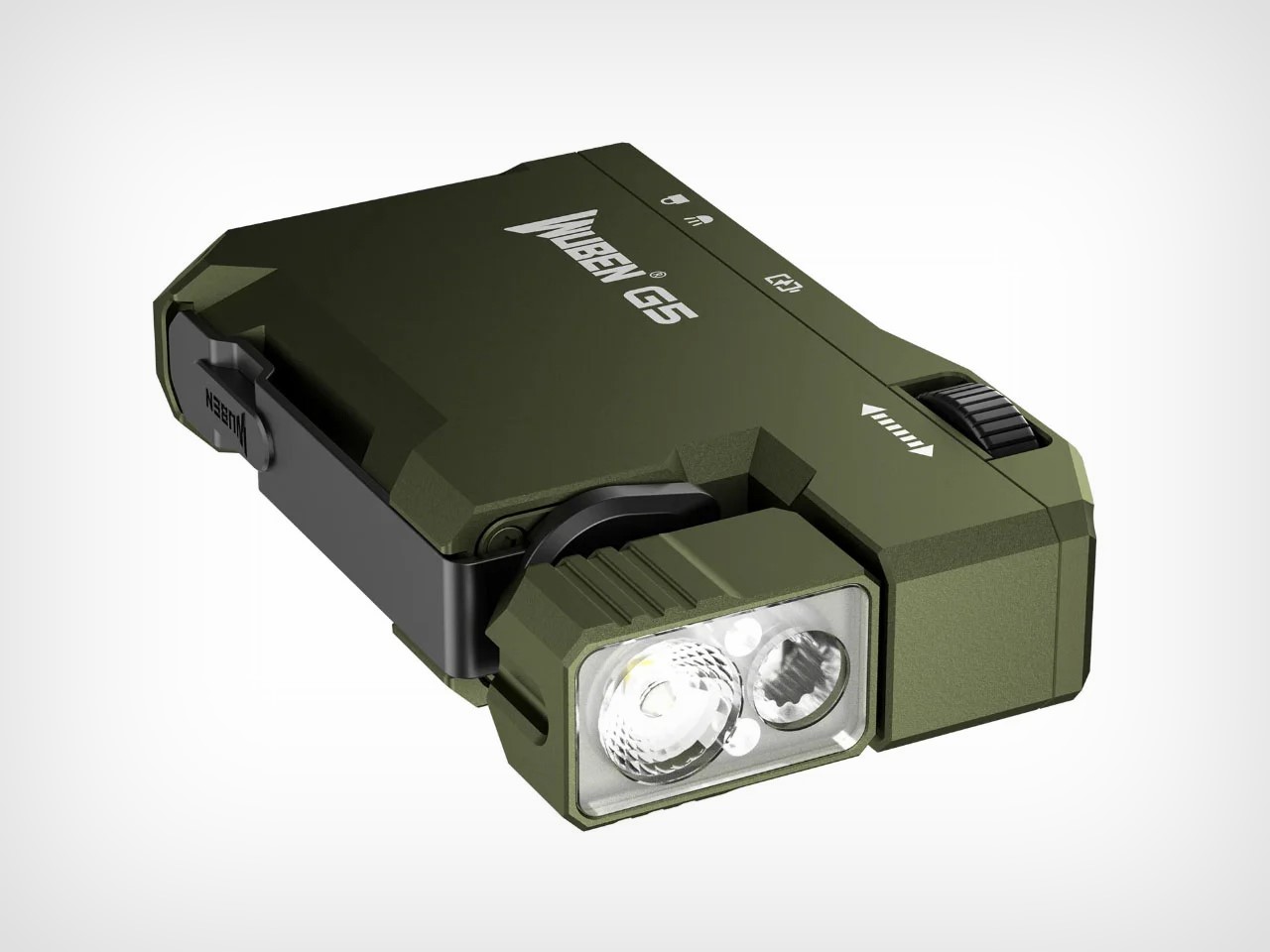
4. Wuben G5
Most flashlights are too large to bother carrying and too dim to justify the space they take up when you do. The Wuben G5 is shaped and sized like a lighter, weighs 52 grams, and carries an IP68 waterproof rating down to two metres. It reaches 400 lumens across an 82-metre beam and rotates 180 degrees at the head so the light goes where it needs to go without repositioning the hand. A spring-tensioned clip grips fabric and straps. A magnetic base holds it to any metal surface without additional accessories.
At the beach, the use cases arrive the moment the sun drops: tide pool walks after golden hour, finding something in a dark bag, navigating a car park at the end of a long day, keeping a fire going in the right direction. USB-C charging is hidden behind the rotary tactile switch, a small detail that makes the whole object feel genuinely resolved. At $25, it sits in a price bracket where most comparable flashlights are forced to choose between bright and portable. The G5 does not choose.
What We Like
The lighter-sized form factor and spring-tensioned clip mean it lives in a pocket and actually gets used, rather than sitting uncharged at the bottom of a drawer between trips
IP68 waterproofing, a magnetic base, and USB-C charging at $25 is a combination that flashlights costing three times as much regularly fail to match
What We Dislike
Battery runtime at full 400-lumen output sits around 50 to 60 minutes, which requires some forward planning on a long evening outing if you need consistent brightness throughout
The blue-and-red emergency beacon is a feature worth having and absolutely worth leaving alone unless the situation genuinely calls for it
5. Hibear All-Day Adventure Flask
The Hibear All-Day Adventure Flask won a Red Dot Design Award in 2020, carries a five-year warranty, and performs six separate functions inside a single 32-ounce insulated stainless body. The interior is lined with non-breakable glass, which keeps flavours neutral regardless of what goes in. Split the body at its midpoint, invert the top section over a filter, and you have a pour-over coffee kit. The same configuration aerates wine properly rather than asking it to breathe through a small opening in a can lid.
A mesh insert brews tea, infuses water, or cold-brews coffee depending on how long you leave it. A slatted lid converts the flask into a cocktail shaker. A thermal core chills drinks without ice and without diluting them. The silicone tumbler built into the base pops out as a cup and absorbs the impact when the flask gets dropped, which it will. Hibear contributes to 1% for the Planet on every sale. For a beach day that starts before sunrise and ends after dark, this covers all of it.
What We Like
The non-breakable glass interior keeps every drink tasting like the drink rather than the vessel, which is the detail that separates this from every other insulated flask currently available
One object handling six functions means one fewer item to pack, which is the most honest possible argument any piece of design can make for its own existence
What We Dislike
The full modular system involves multiple components that need tracking, cleaning, and reassembling, which adds genuine friction on days when simplicity is the only real priority
Most users will settle into two or three functions regularly and barely reach for the rest, which is worth sitting with before committing to the price
The Best Beach Gear Is the Gear That Disappears
None of these five objects look like they were made for a promotional shoot. They were made to do something specific well enough that you reach for them without thinking about it. The amplifying speaker has no battery to watch. The DraftPro changes how a can of beer opens. The Wuben G5 weighs 52 grams and costs $25. The Hibear covers a full day at the beach without asking you to pack anything else around it.
The Camp Snap 2 asks you to look at the beach rather than reviewing photographs of it. That is the through-line: five objects that remove a specific frustration rather than introducing a new feature. The beach already has enough going on. The best gear for it stays out of the way and earns its place by being genuinely hard to leave behind.
The numbers are hard to ignore. More than 2.4 billion workers are exposed to excessive heat globally, and according to the WHO and WMO, worker productivity drops by 2 to 3 percent for every degree above 20°C. In 2023 alone, high temperatures contributed to an estimated 28,000 workplace injuries in the United States. Yet very little of this conversation gets directed at the people who feel it most: those working outdoors, in the sun, in gear that was never designed to help them stay cool.
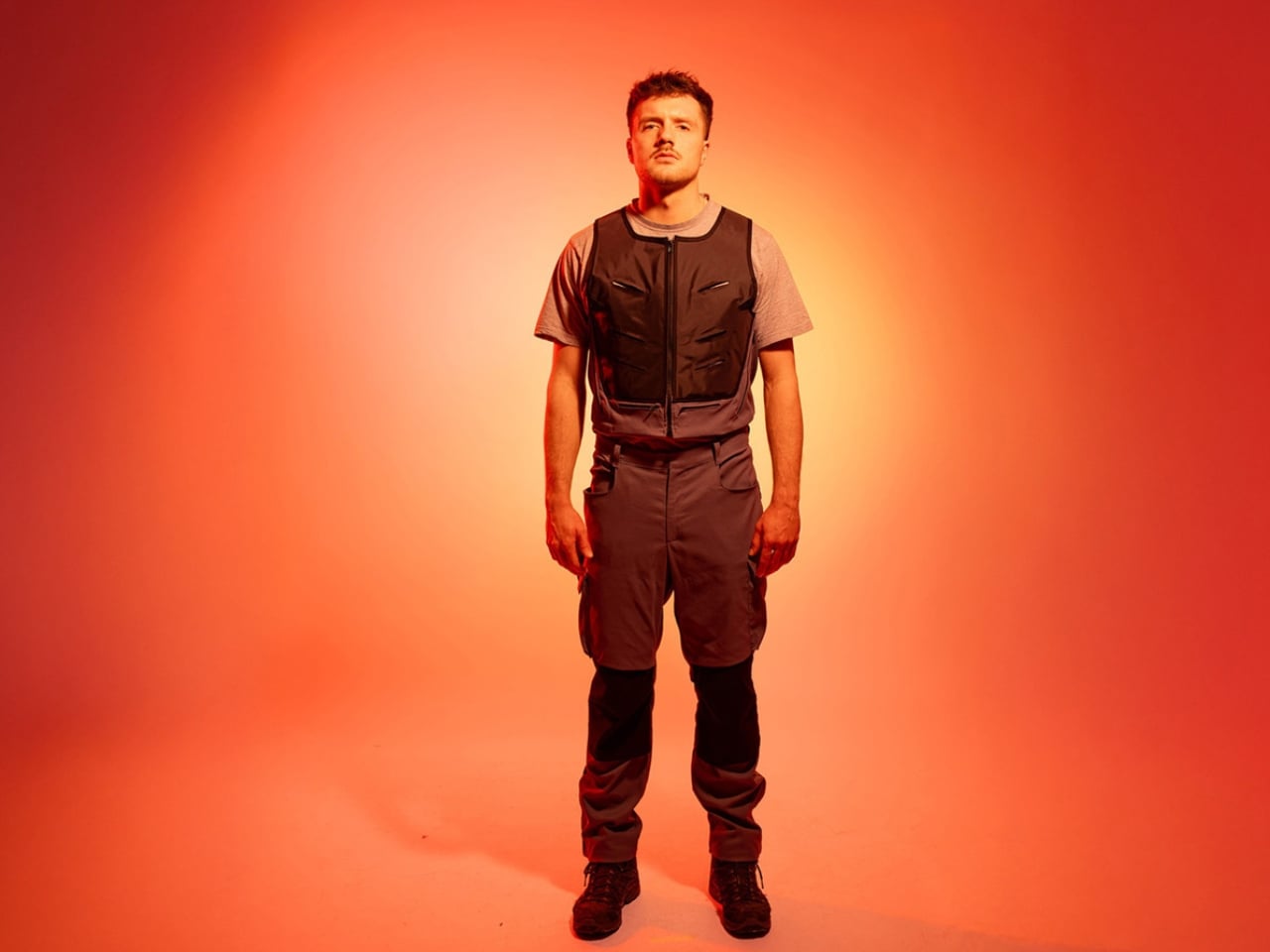
That’s what makes Teron°, a cooling workwear concept by German design graduate Jorin Frenzel, feel so refreshingly grounded. Frenzel, who completed his Bachelor of Arts in Product Design at Hochschule Hannover in early 2025, didn’t reach for a tech-heavy solution. No battery packs, no wearable air conditioning units, no app to pair it with. He went back to basics: evaporation.
Designer: Jorin Frenzel
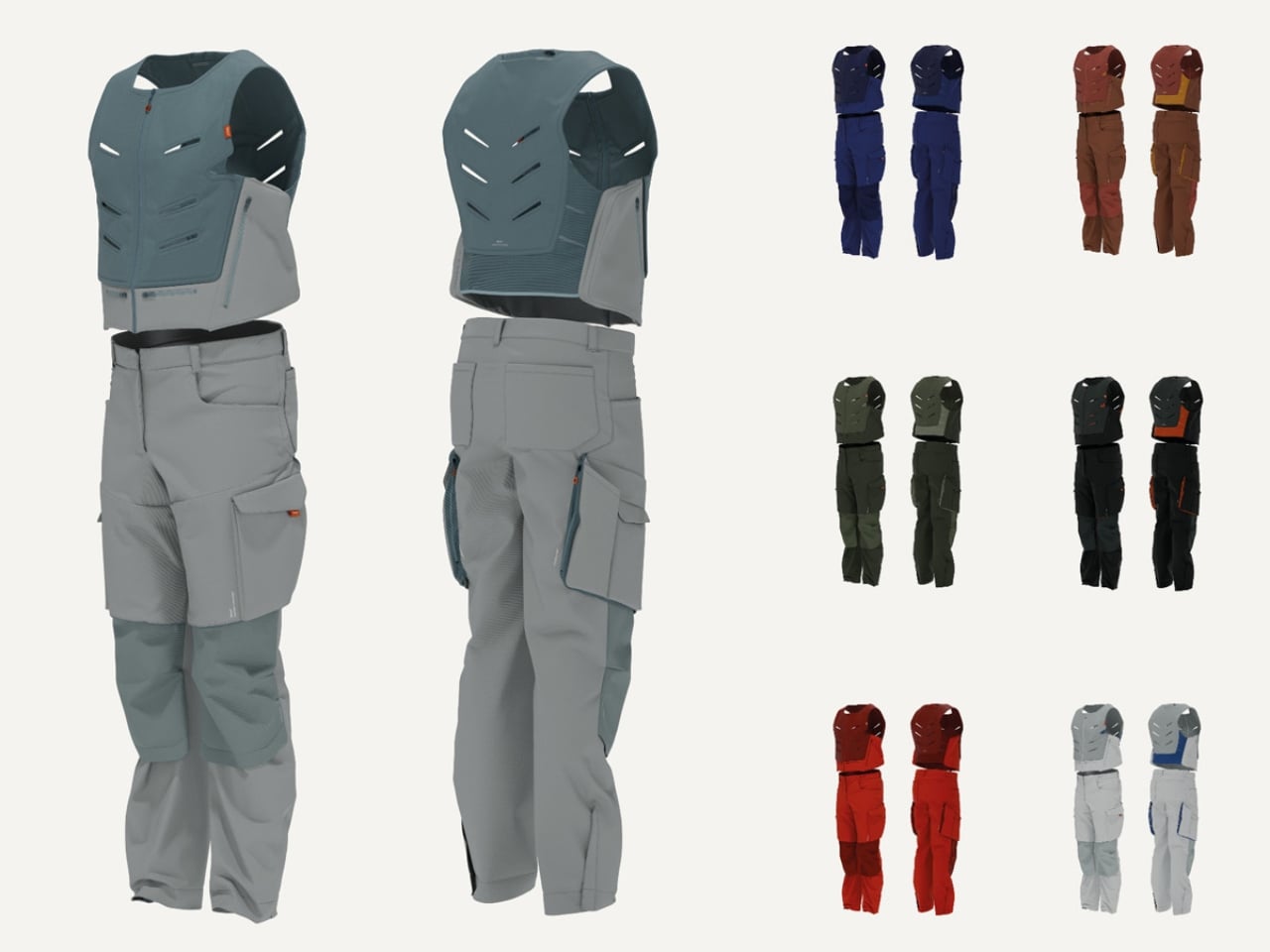
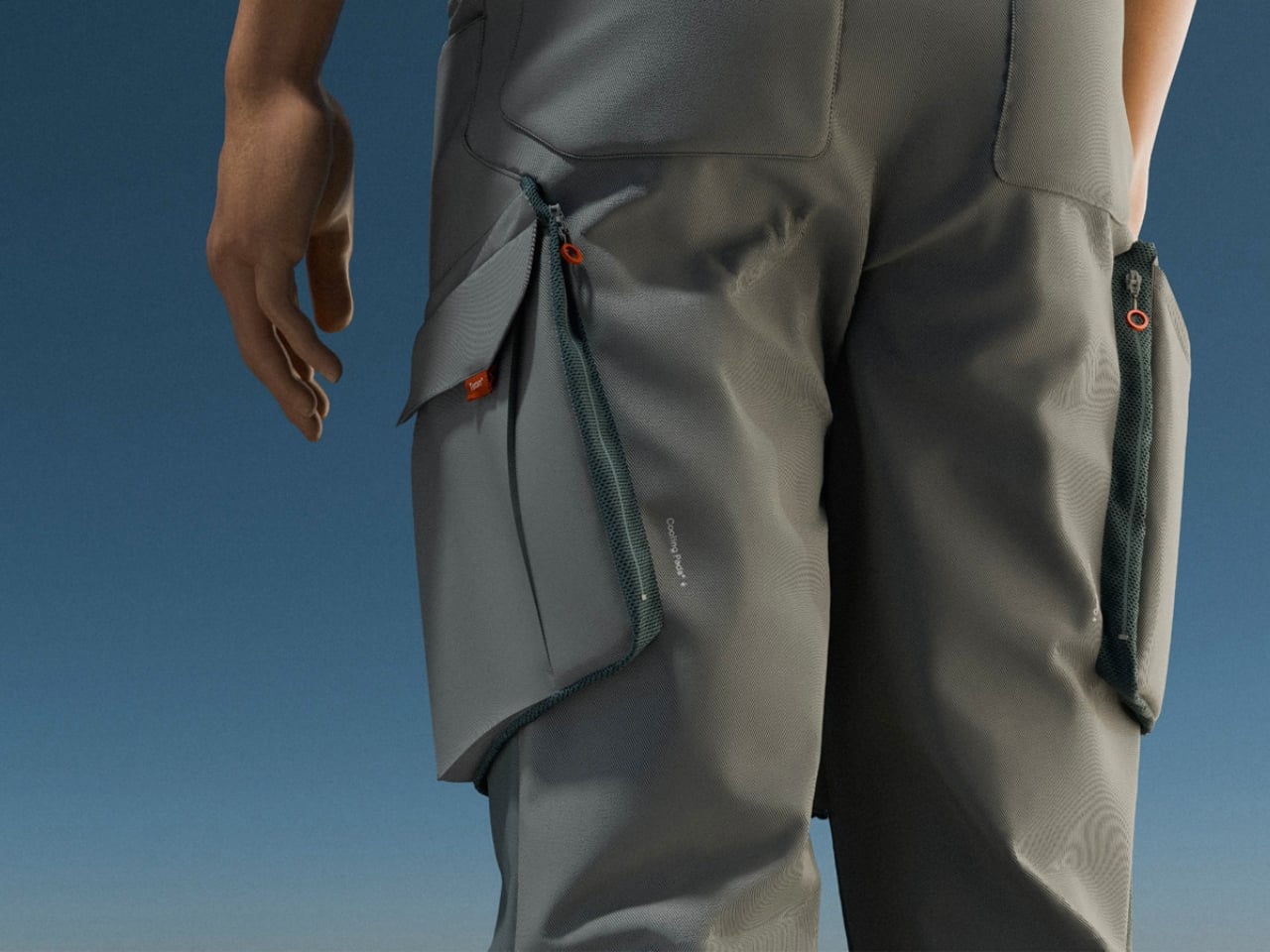
Teron° is built around the principle of natural evaporative cooling, using breathable fabrics, hidden ventilation layers, and targeted cooling zones to keep workers comfortable without introducing direct moisture to the skin. The vest, which handles upper body cooling, uses integrated elements that activate through water evaporation while keeping the wearer completely dry. The trousers take a different approach, using an overlapping cut to enhance air circulation, with additional cooling elements at the thighs to address heat where it tends to build most. The whole system prioritizes freedom of movement, which matters a lot when you’re on a construction site and actually need to get things done.
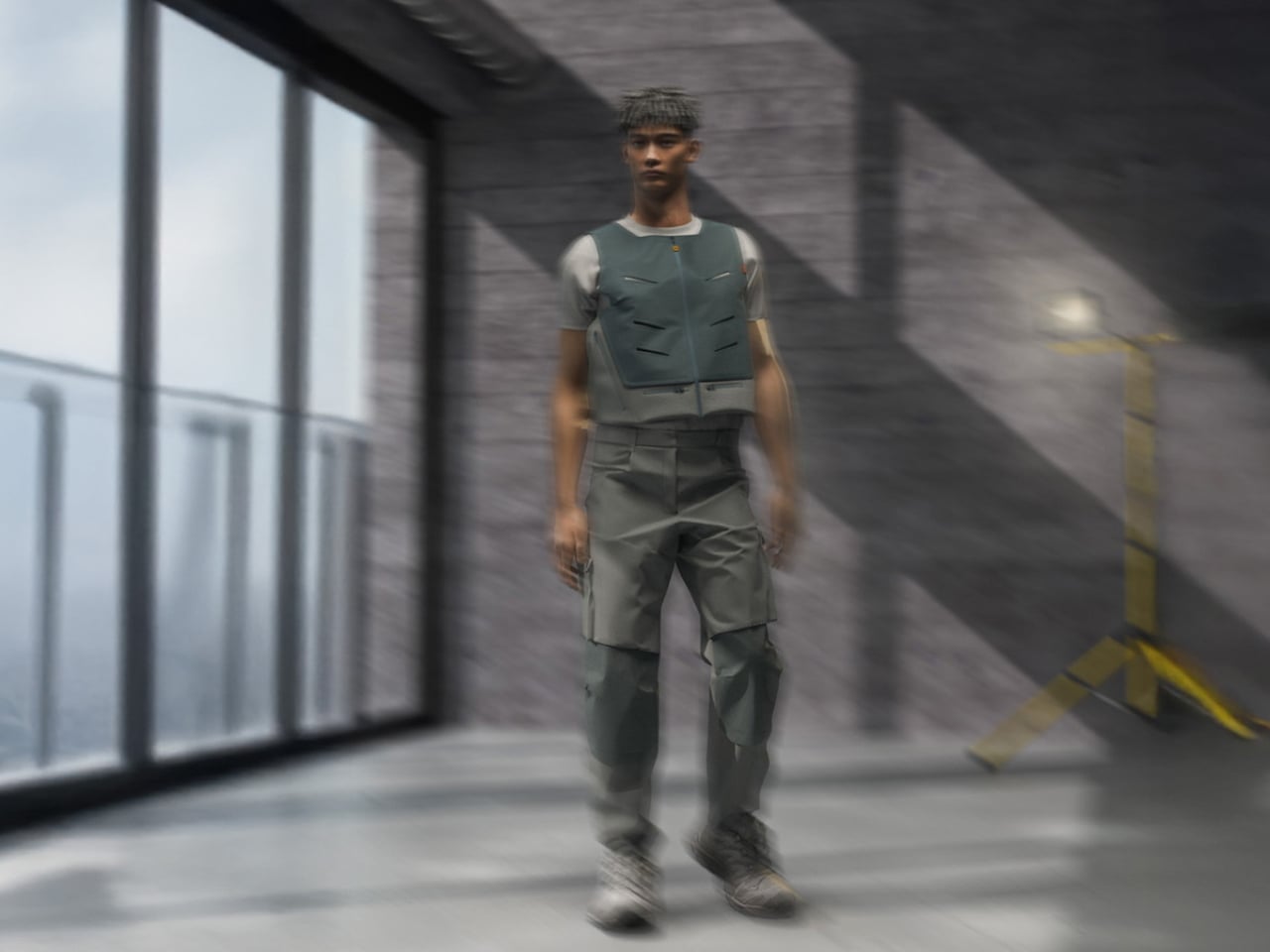
There’s a quiet intelligence to the design. Frenzel didn’t try to reinvent the trades. He listened to what craftspeople actually deal with on the job and responded with a garment that slots into existing routines rather than disrupting them. Cleverly integrated storage, breathable materials, and a sporty silhouette that communicates confidence and function without looking like a science experiment. The design conveys strength, which turns out to matter quite a bit when you’re asking tradespeople to adopt something new. That’s a layer of thinking most student projects simply don’t get to.
The timing of Teron° is not incidental. The WHO and WMO issued a joint report in August 2025 calling out occupational heat stress as a growing global health crisis, one no longer confined to equatorial regions. Europe has been having its own reckoning with this. Earlier in 2025, the death of a Spanish street cleaner from acute heat stress became a rallying point in conversations about how poorly equipped many outdoor workers still are. Design alone can’t solve climate change, but it can help close the gap between the conditions people work in and the gear they’re given to do it.
What elevates Teron° beyond a clever school project is its commitment to longevity. The garment uses durable, repairable textiles that extend its useful life and reduce waste over time. That puts it squarely in conversation with what responsible design looks like right now: not just functional and attractive, but genuinely built to last. It isn’t about making something sleek and disposable. It’s about making something that earns its place in a worker’s daily kit, season after season.
Teron° was recognized by the Green Product Award and featured among the German Design Graduates class of 2025, which is meaningful recognition for a debut project. But more than any award, what strikes me about Frenzel’s work is the clarity of its intent. He identified a real, pressing problem affecting millions of people and answered it with a solution rooted in material intelligence and plain human dignity.
The design world has a habit of celebrating the spectacular, the provocative, and the conceptually avant-garde. Projects like Teron° remind us that the most pressing problems don’t always need the most theatrical answers. Sometimes the most meaningful thing a designer can do is pay attention to who’s struggling and ask one simple, serious question: what would actually help? Frenzel asked it. The answer is worth wearing.
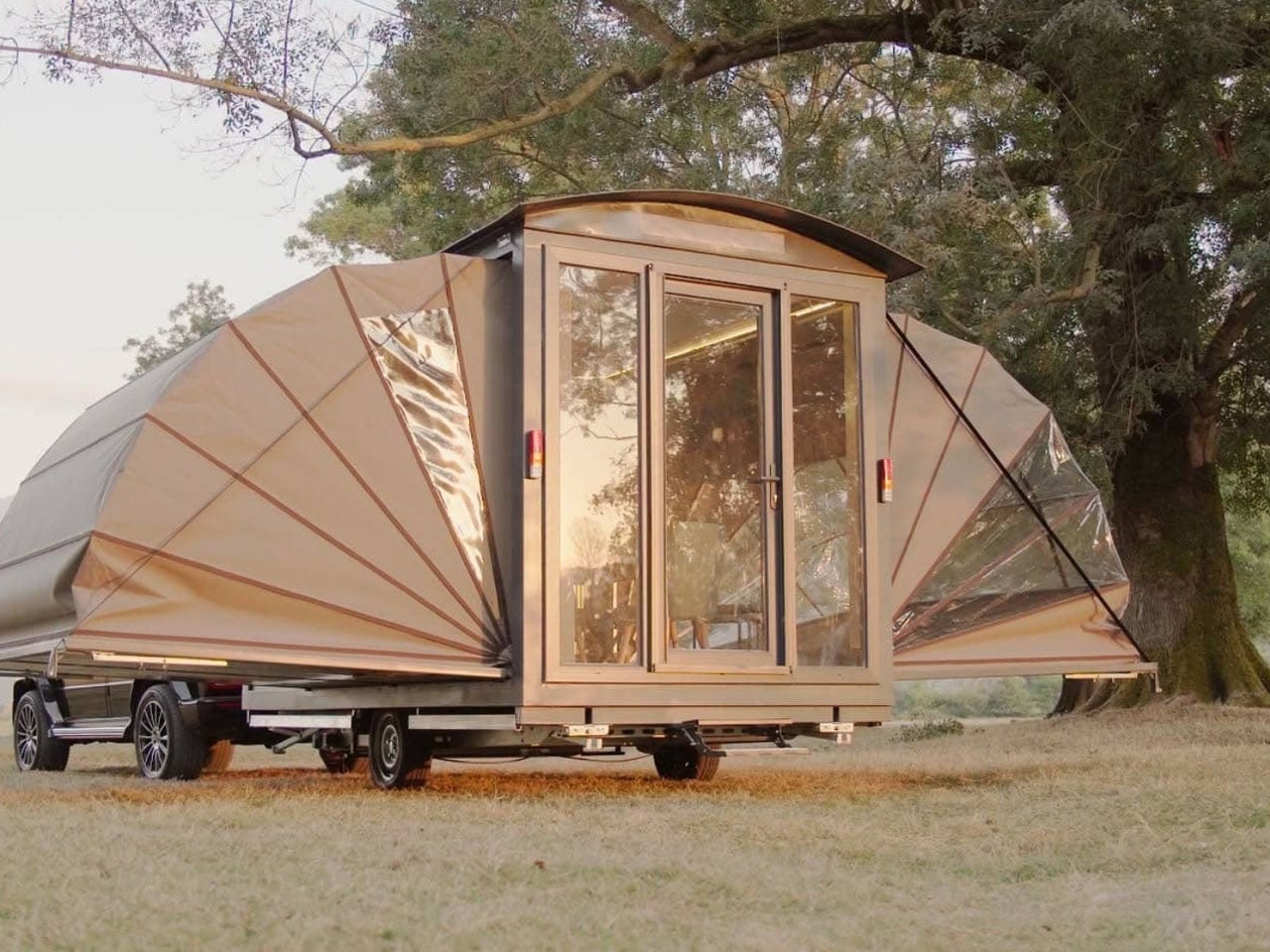
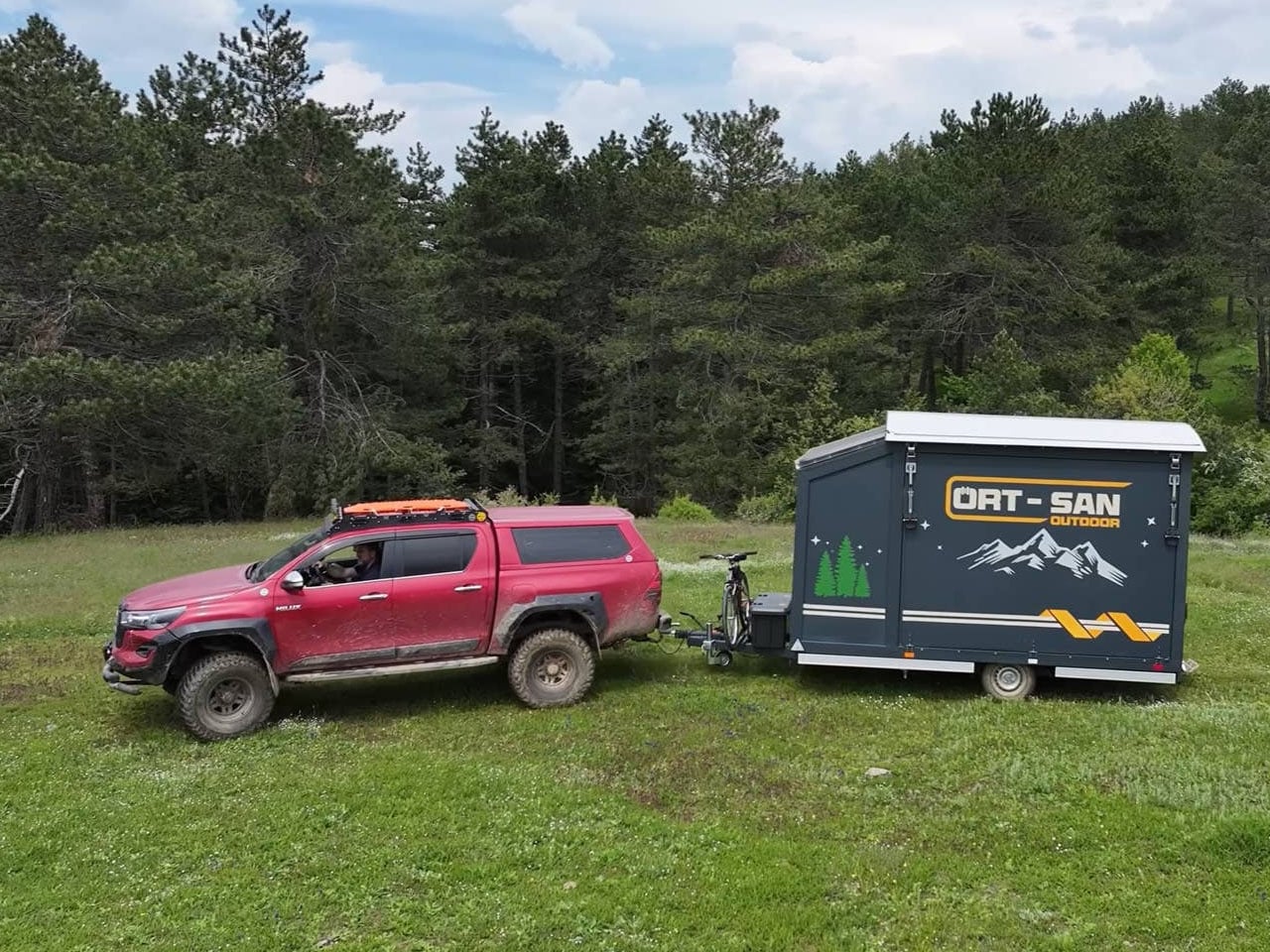
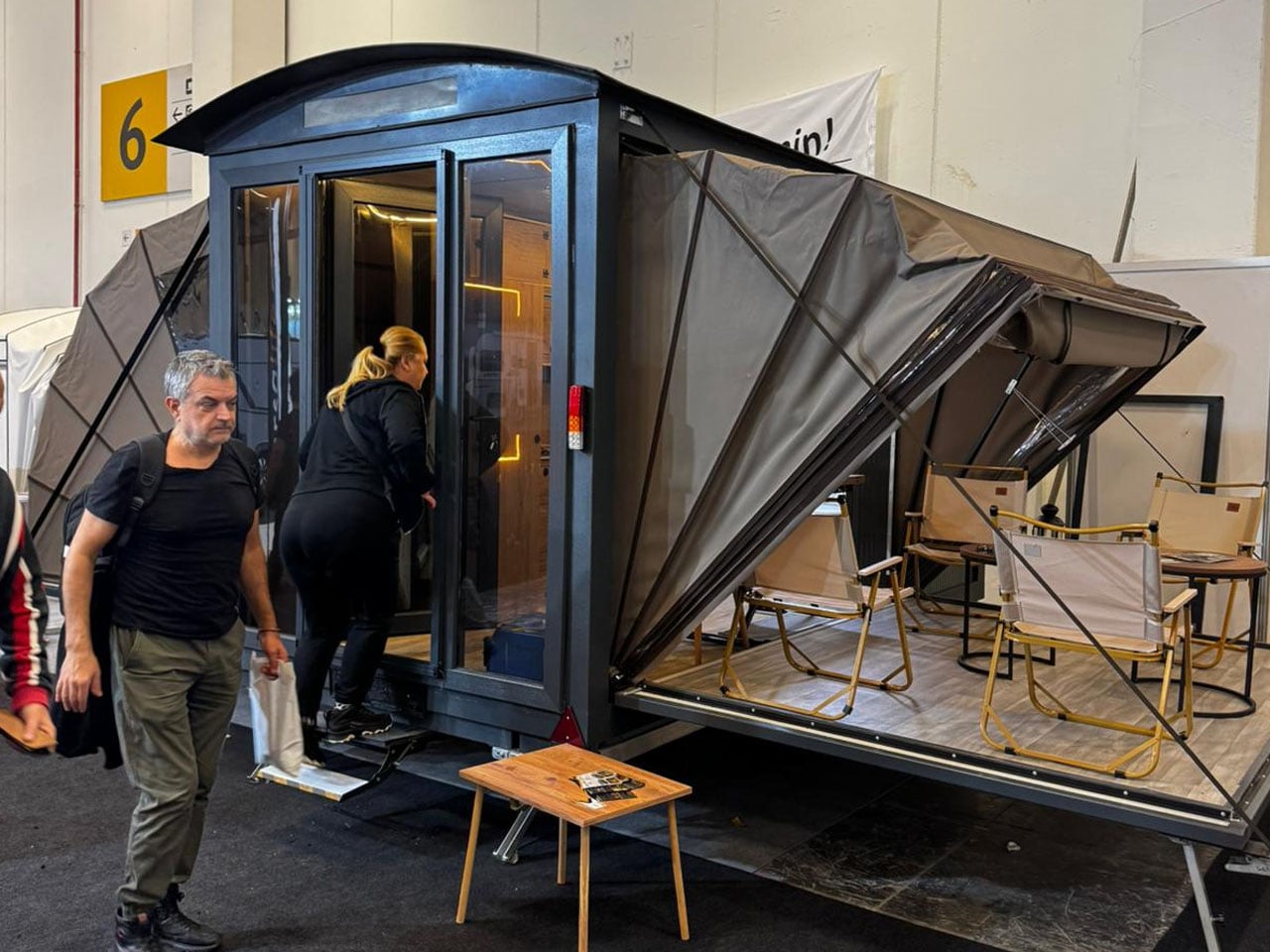
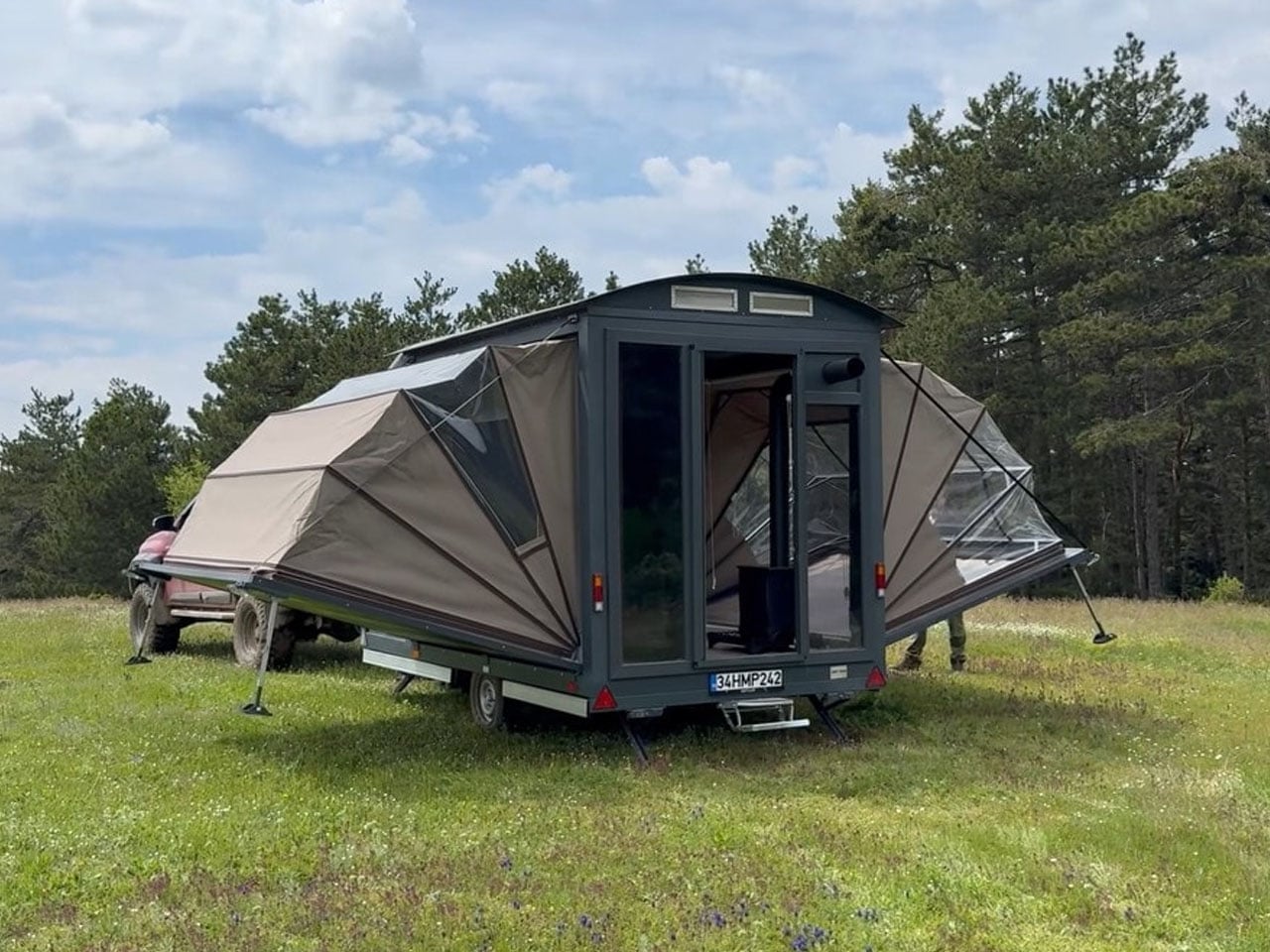
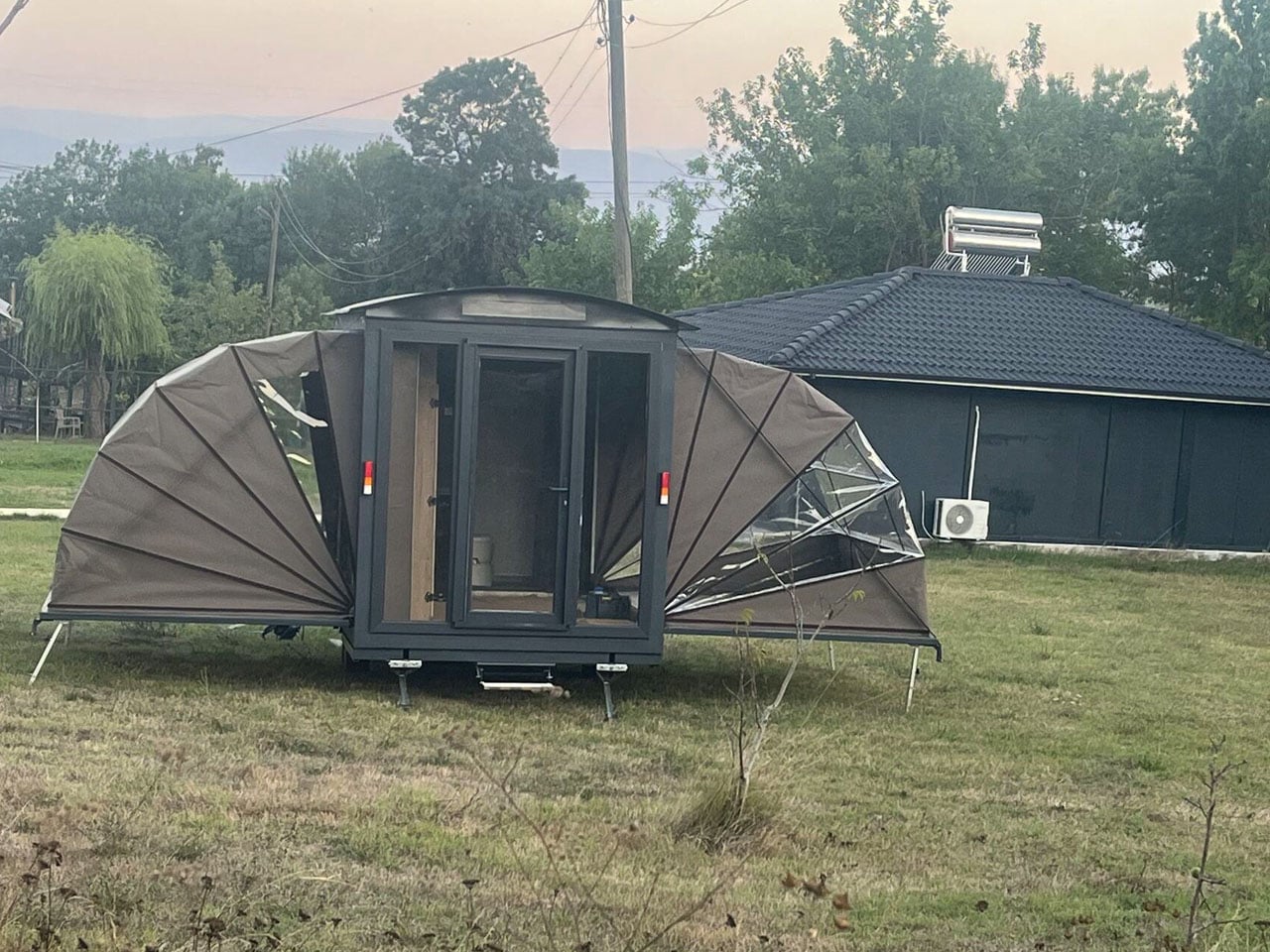
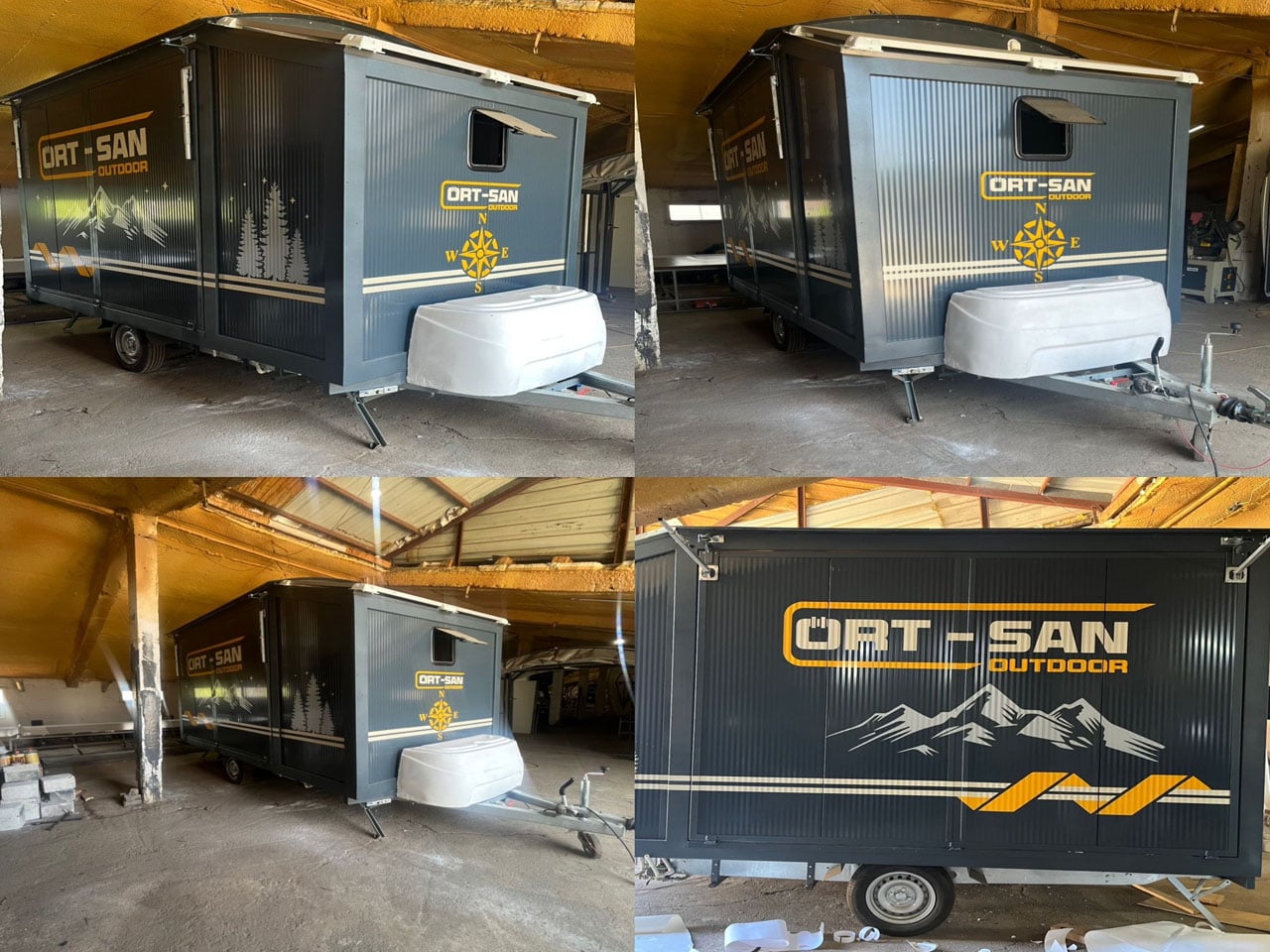
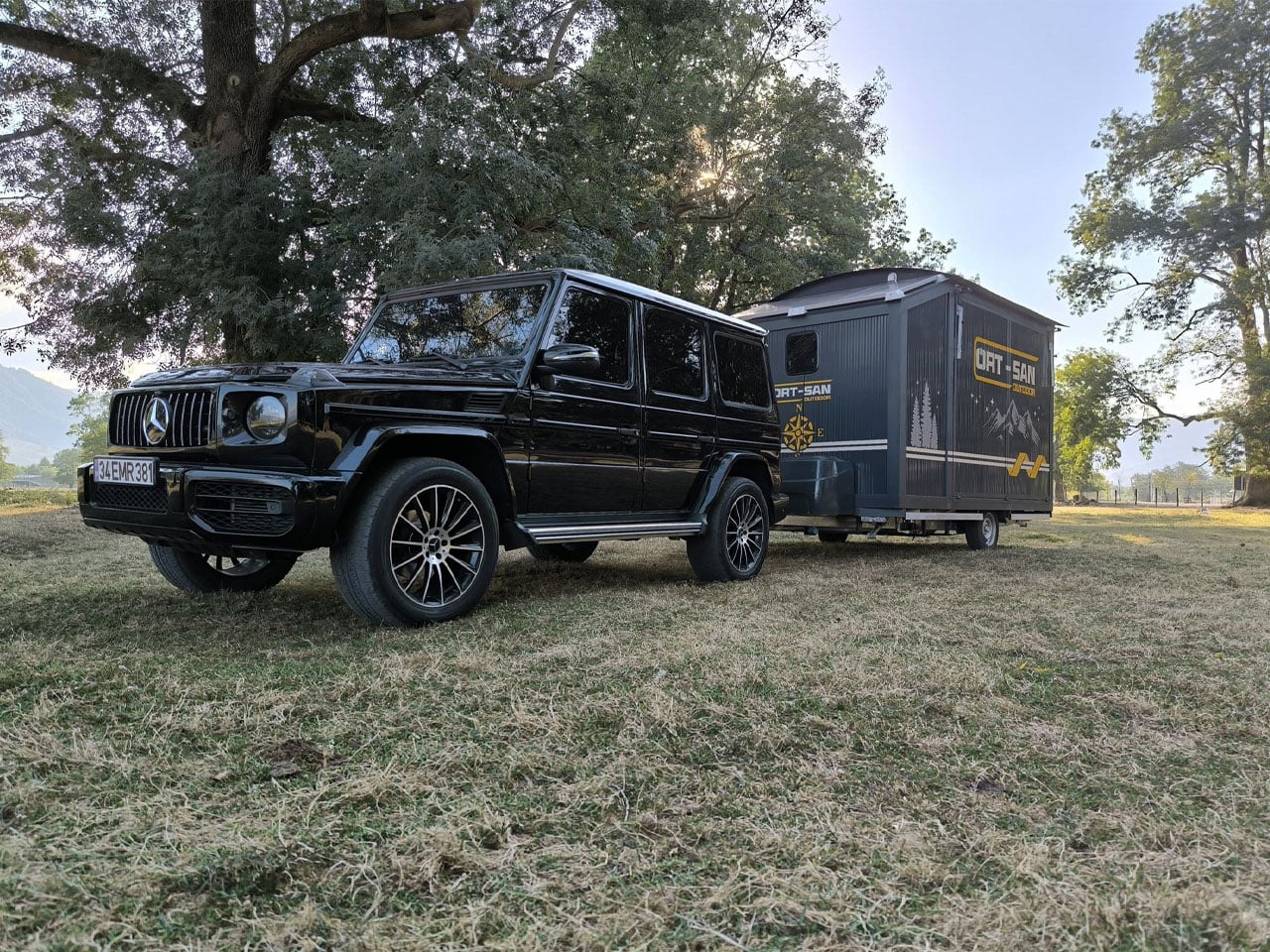
For anyone who has spent time researching compact camper trailers, the biggest challenge is often balancing portability with livable space. Smaller trailers are easier to tow and store, but they can feel cramped once you arrive at camp. The Mini House from Turkish manufacturer Ortsan Outdoor takes a different approach, combining the convenience of a compact travel trailer with the functionality of a tiny home. This is achieved with the ingenious accordion-style design that dramatically expands its footprint once parked. As Ortsan likes to put it, the RV is built to “Fold, unfold, expand” with the push of a button.
At first glance, the Mini House looks like a conventional single-axle caravan. Measuring approximately 13.1 feet long and 6.8 feet wide in transport mode, it occupies just 90 square feet of space on the road, making it considerably easier to tow than many larger campers. Built on a heavy-duty steel chassis with a low-slung design for improved stability, it is also certified to O2 international transport standards, ensuring compliance with road regulations in various markets.
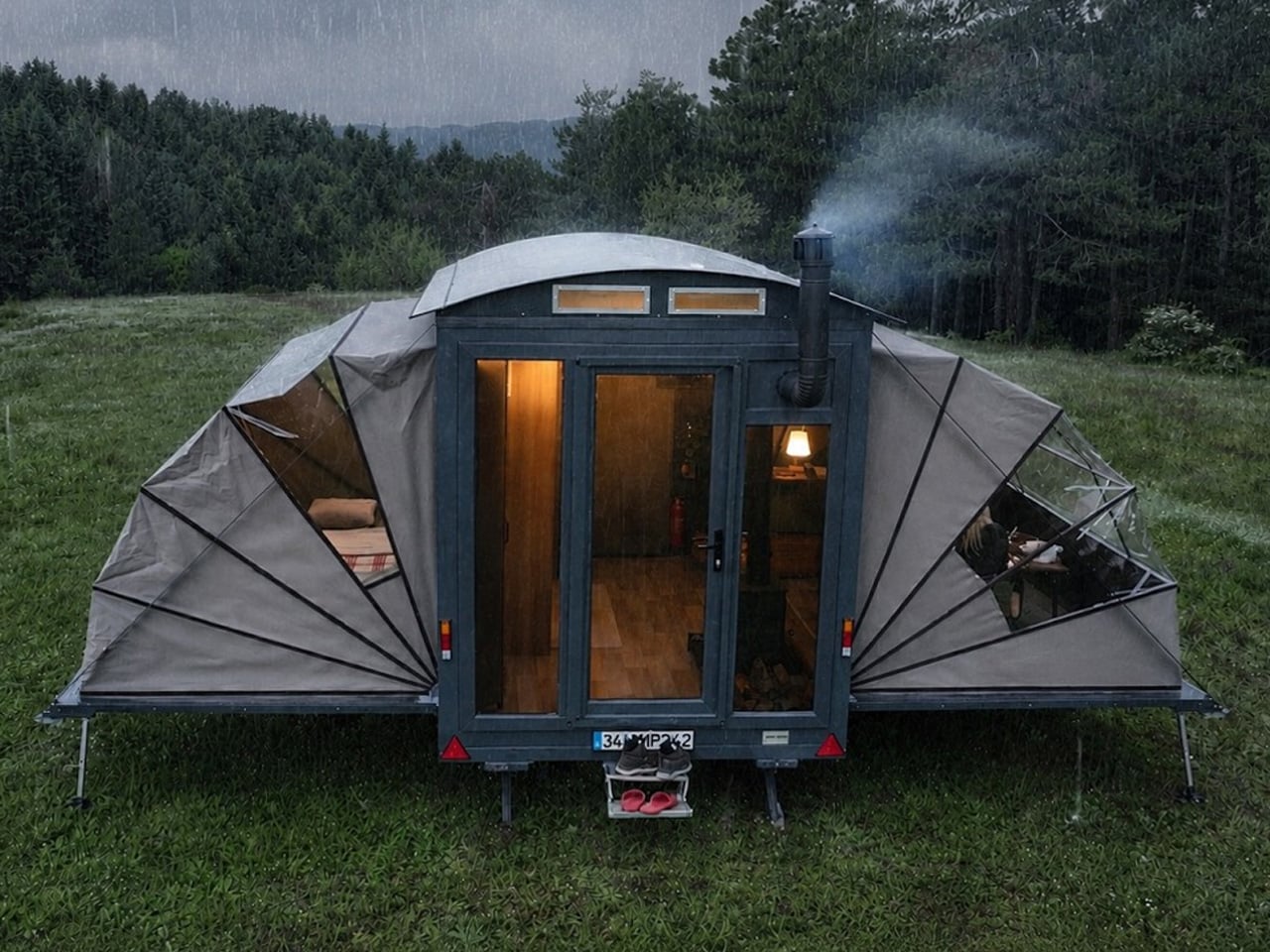
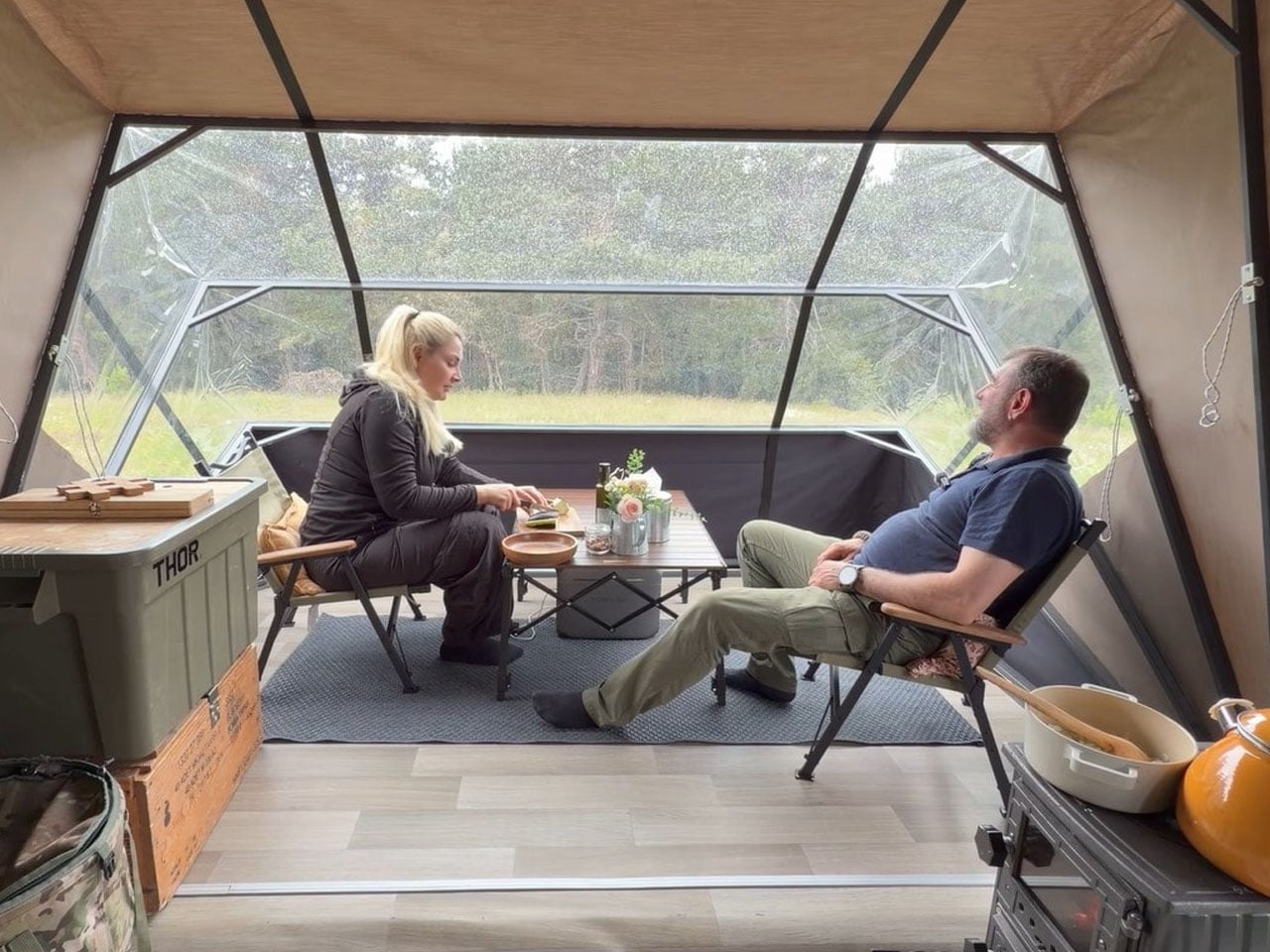
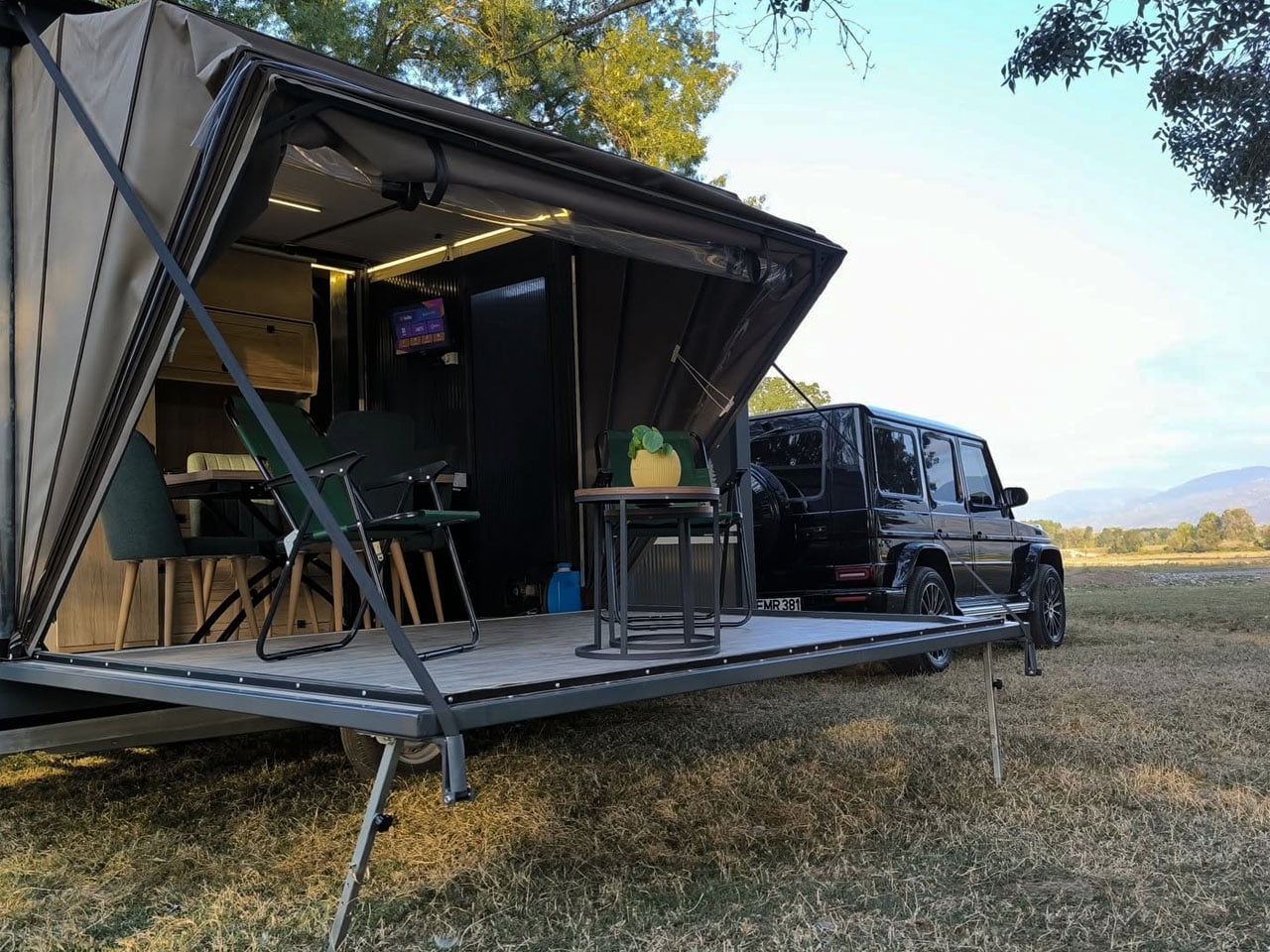
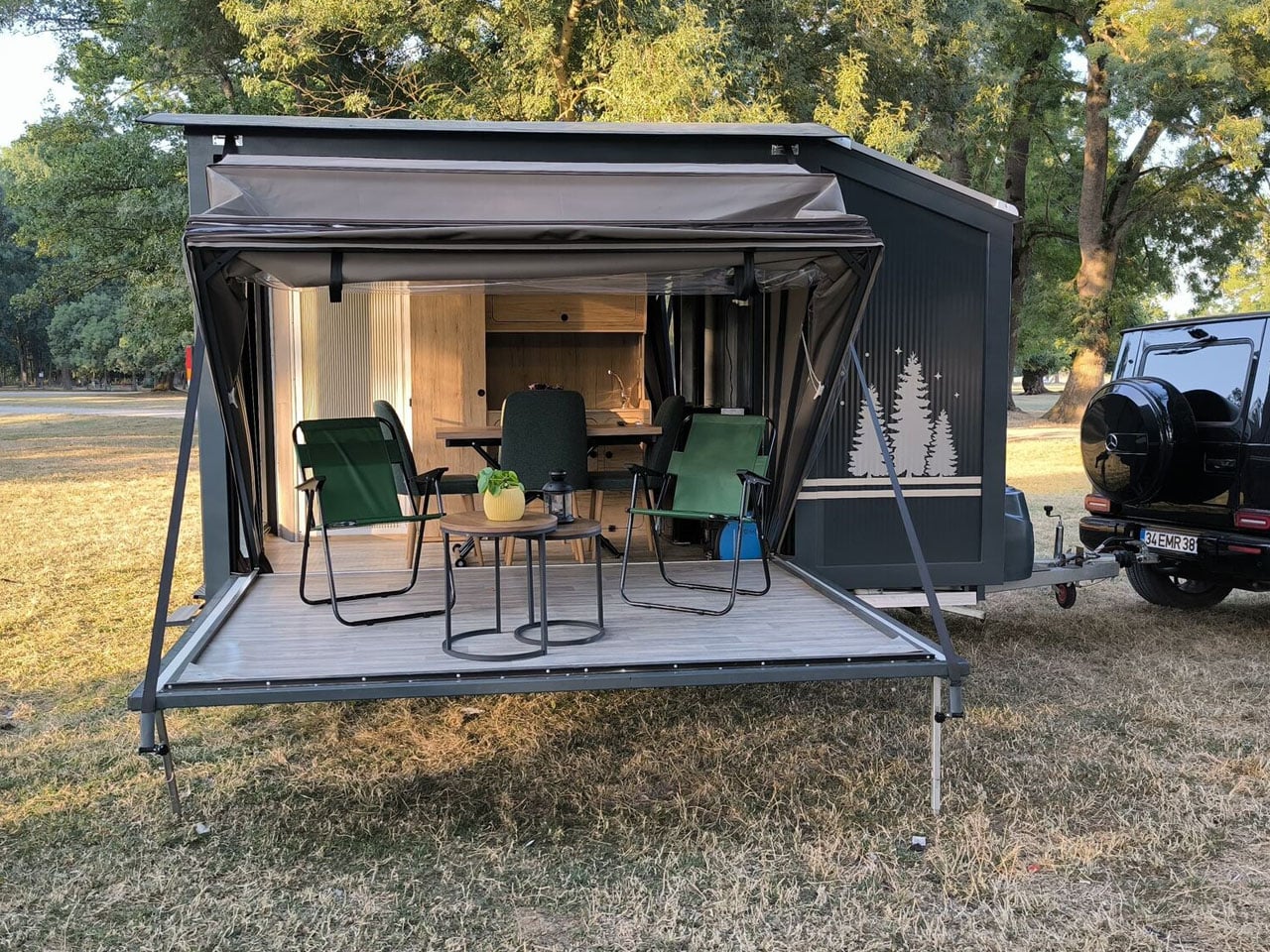
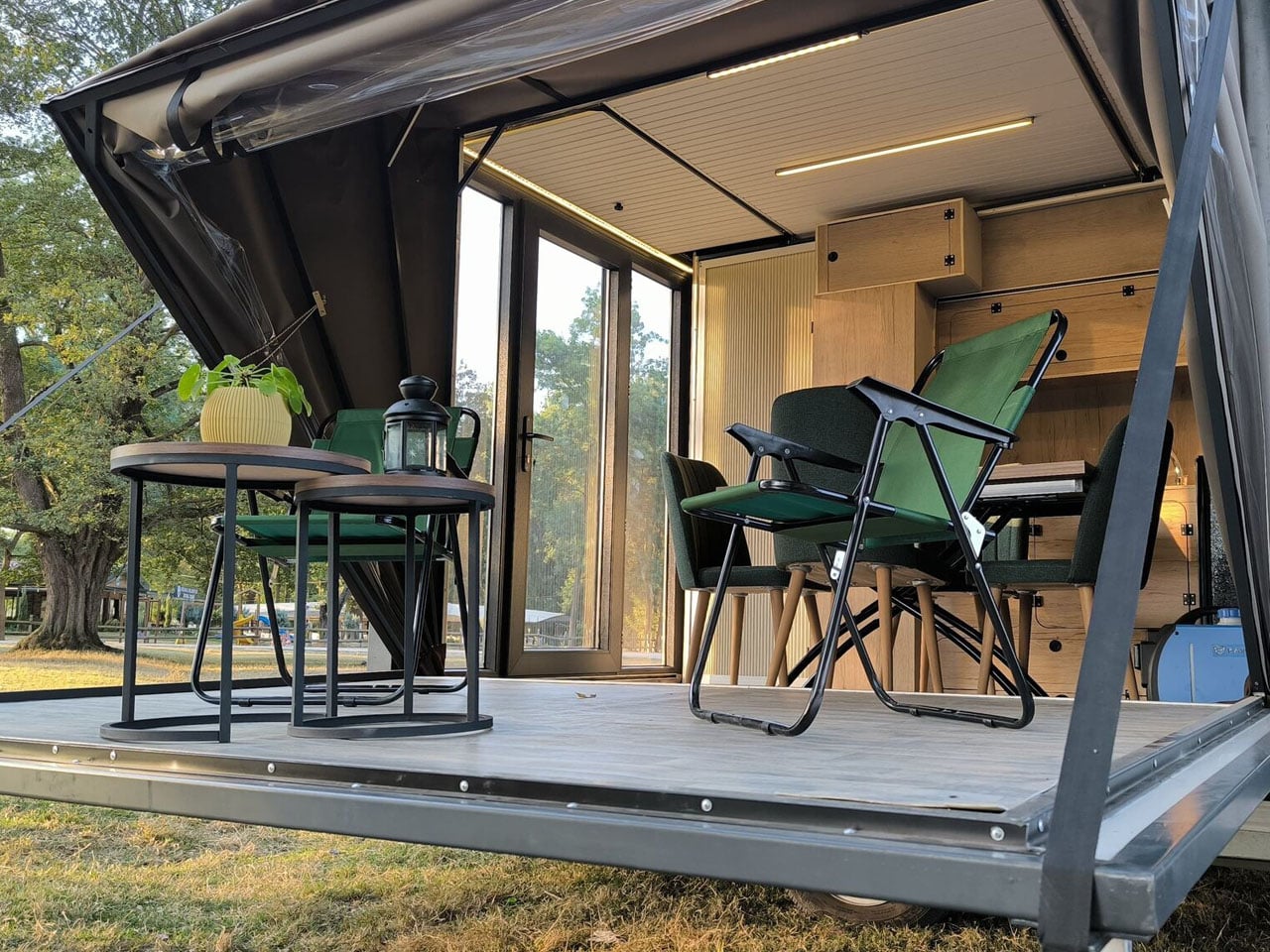
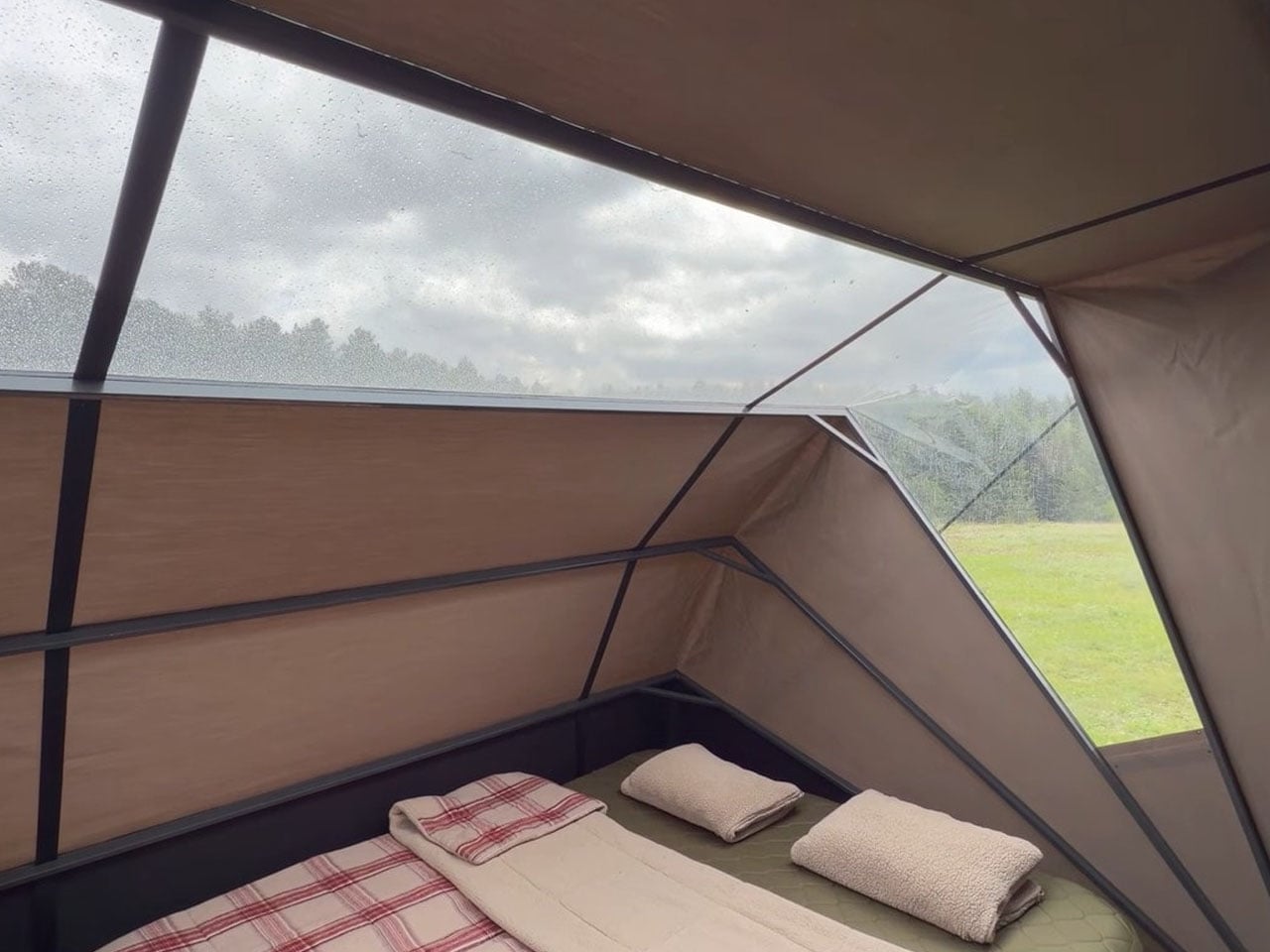
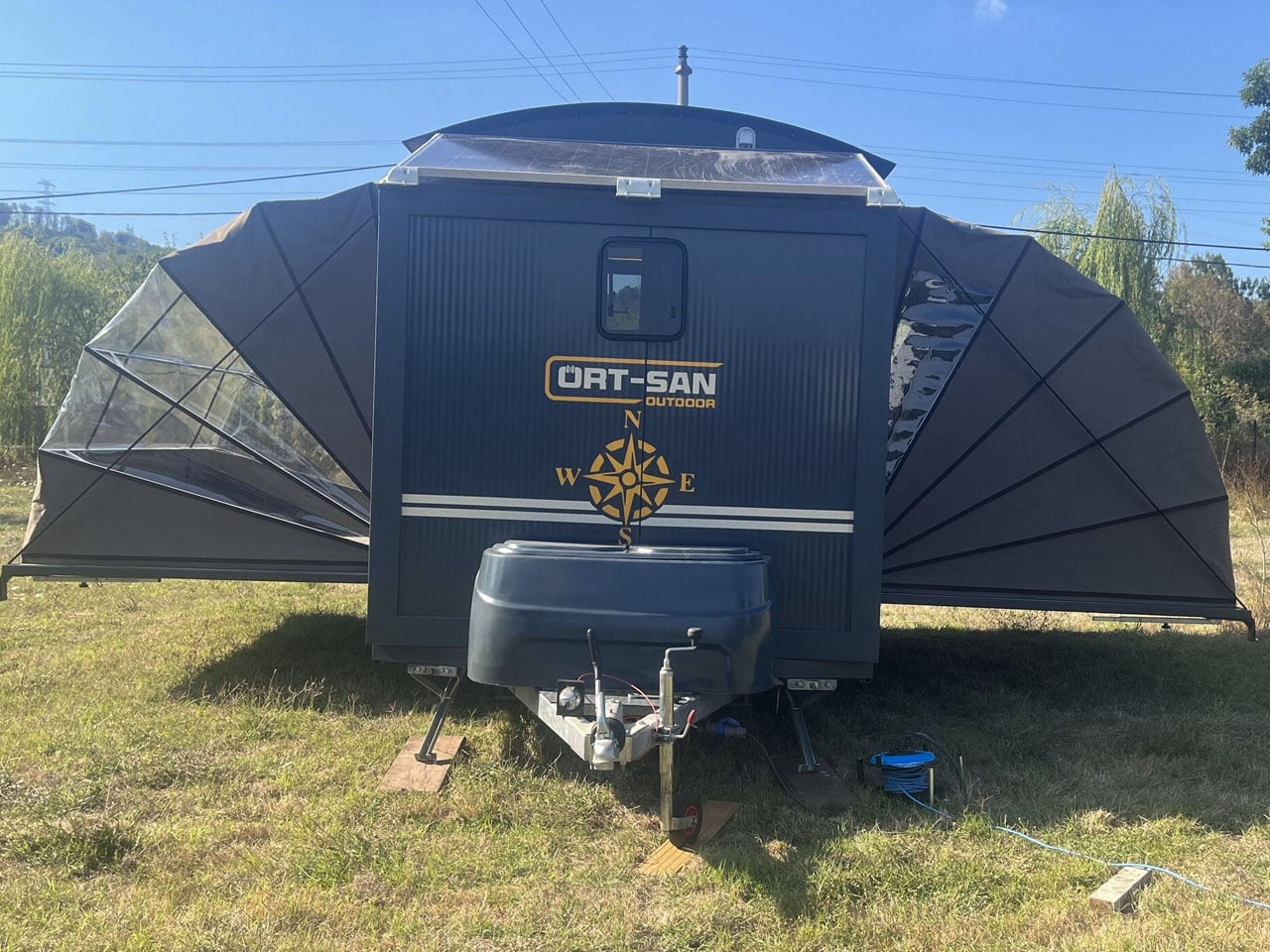
The real magic happens once the trailer reaches its destination. At the press of a button, both sidewalls fold outward, creating two expandable wings supported by canvas enclosures. This transformation more than doubles the available living area, increasing it to roughly 219 square feet. The expanded layout creates a more residential feel, separating spaces into dedicated zones rather than forcing every activity into a narrow corridor. The concept draws inspiration from accordion-style expandable structures, most notably the experimental De Markies caravan designed in the 1980s, but Ortsan has adapted the idea into a production-ready camper available on a made-to-order basis.
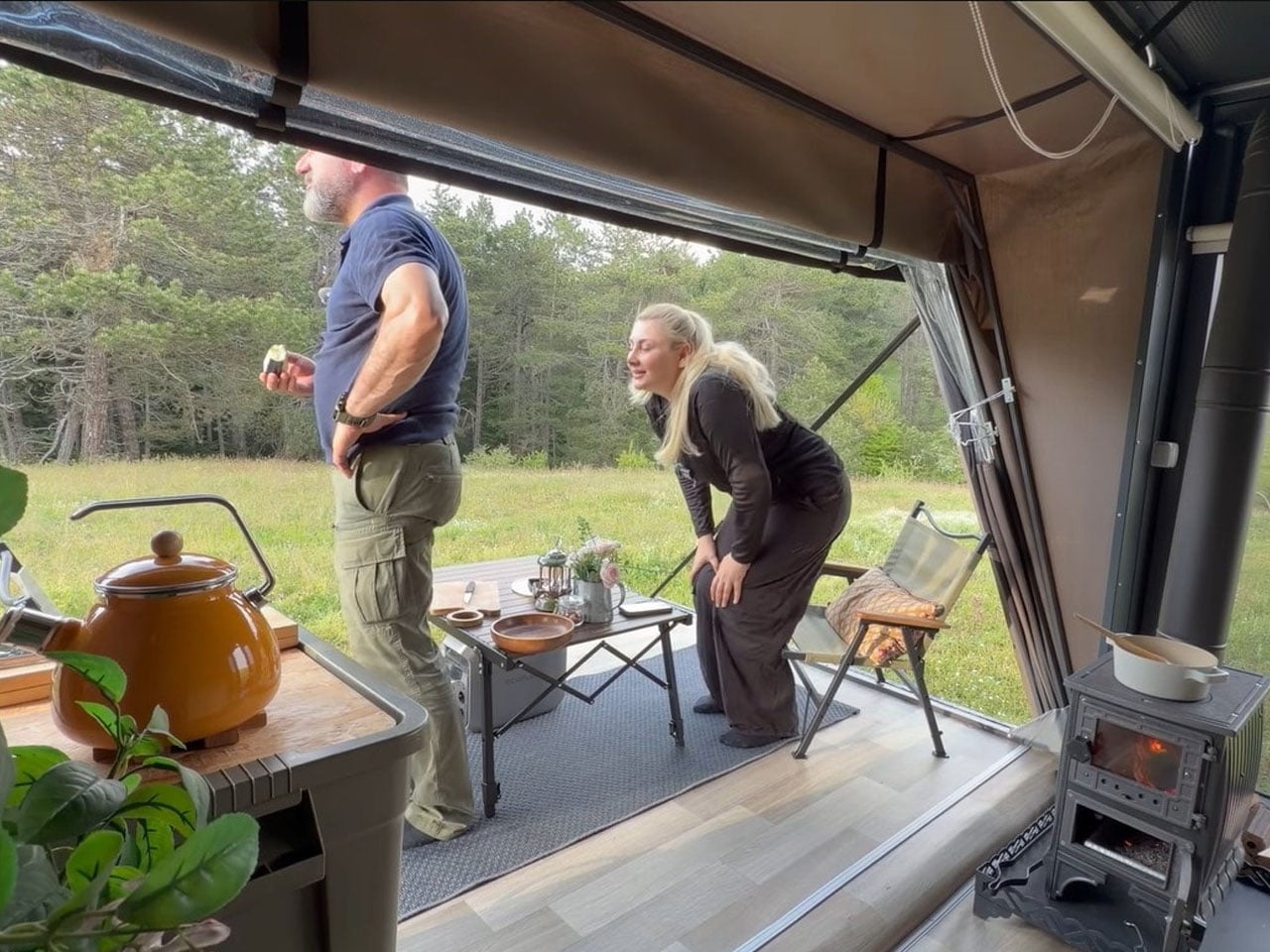
Despite its compact footprint, the interior offers a surprisingly complete living setup. A full-width bathroom occupies the front section of the trailer, while a long kitchen stretches along one side. The section includes a 90-liter 12-volt refrigerator, a two-burner gas cooktop, a stainless-steel sink, generous countertop space, multiple cabinets and drawers, and even a slide-out dining table. The bathroom also incorporates a large storage area, helping compensate for the limited storage available within the expandable wings. Additional storage can be found in a tongue-mounted box at the front of the trailer.
The Mini House is designed for off-grid travel as well. A roof-mounted 470-watt solar array works alongside a 200Ah lithium battery and inverter to provide electrical independence for extended stays. Water needs are supported by separate 200-liter fresh and gray water tanks, while a cassette toilet eliminates the need for a dedicated black-water system. These features make the camper suitable for weekend adventures and longer trips away from traditional campground hookups.
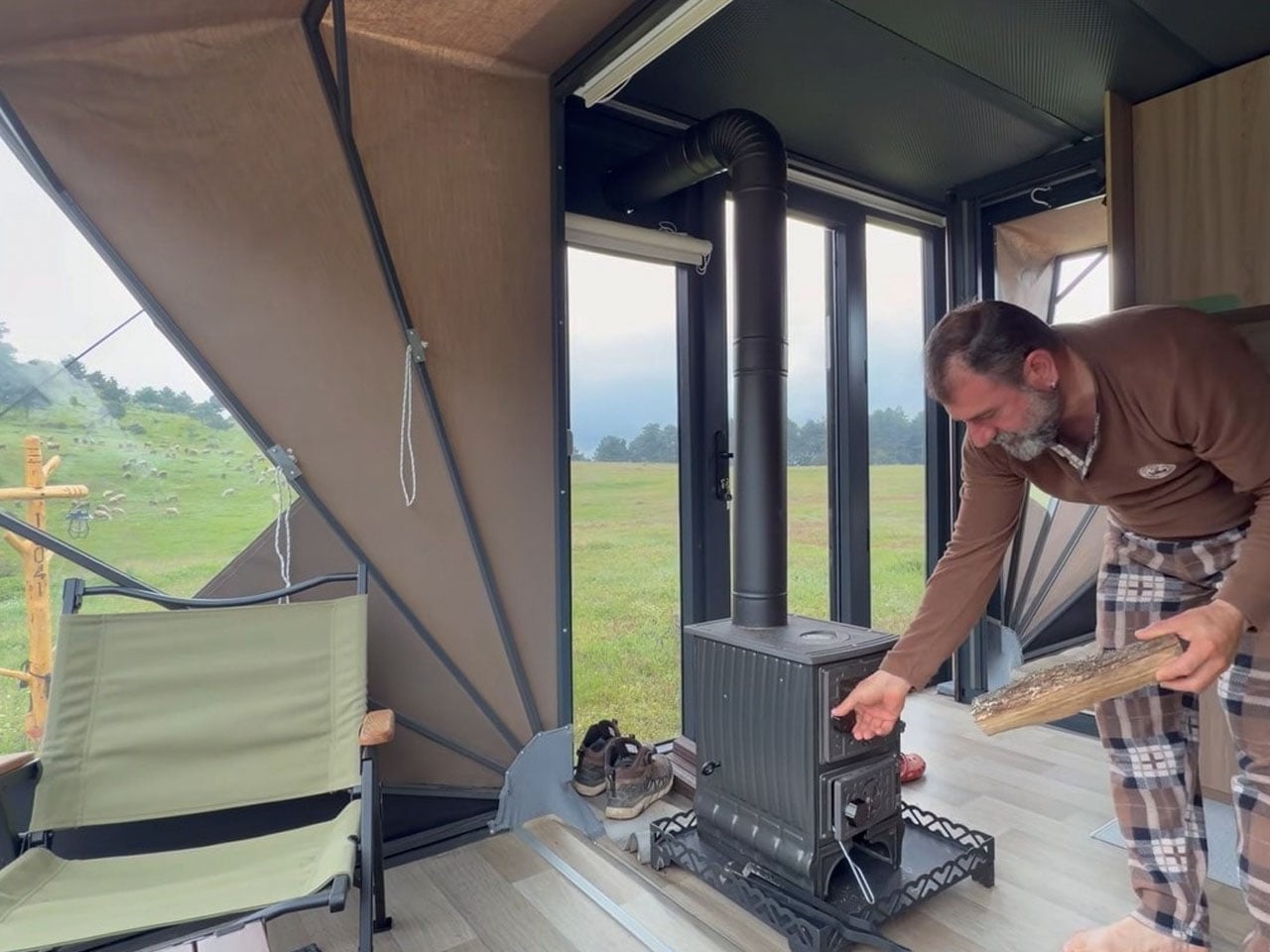
Cozy comfort is in no way compromised in the accordion-style setup. Ortsan equips the trailer with a wood-burning stove, air-conditioning system, Webasto diesel heater, and a smart TV with integrated multimedia capabilities. Many of the camper’s functions, including lighting, climate control, and the expandable sections themselves, can be managed through a tablet-based control system that serves as a central command hub.
Like any expandable design, the Mini House requires more setup than a conventional trailer and incorporates additional moving parts. However, the tradeoff is substantial as it delivers the towing convenience of a compact caravan while providing the livability of a much larger tiny home. Starting at approximately $19,300 (before taxes, shipping, and customization), the Mini House is truly a utilitarian solution for travelers seeking greater comfort without committing to a larger RV.
There is a specific kind of frustration that comes with building a carry kit piece by piece over months, selecting each object for a reason, and then clipping on an AirTag that looks like it came in a party favor bag. The titanium pen, the slim card wallet, the knife with the stonewashed blade that earns its spot every single day – and then that silicone loop. The coherence collapses, and we know it the moment it happens.
In 2026, the AirTag accessory market has split at a visible fault line. On one side: the standard silicone loop Apple sells for $29, the Spigen Rugged Armor case, and a range of injection-molded plastic clips that treat the tracker as a packaging problem rather than a design opportunity. On the other: a smaller group of manufacturers asking what kind of object an AirTag deserves to travel inside. That question is driving a genuine shift in carry culture right now, separating the kits assembled with intention from the ones that stopped one decision short.
After handling and carrying all three material variants across several weeks of daily use – commute conditions, trail carry, and air travel – the AirTag Carabiner is the most considered tracker carrier we have tested in this category.
Three Materials, Three Different Arguments
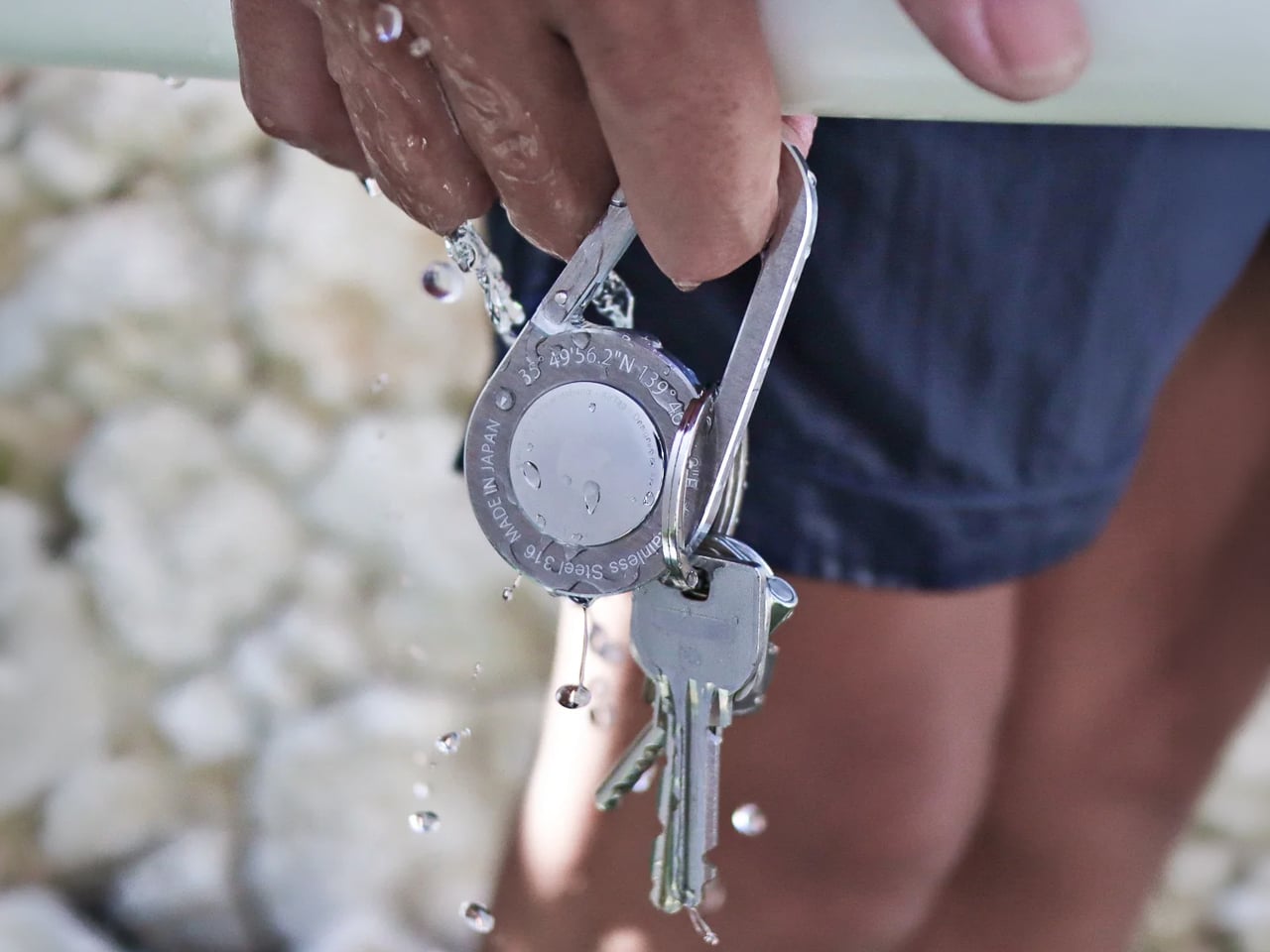
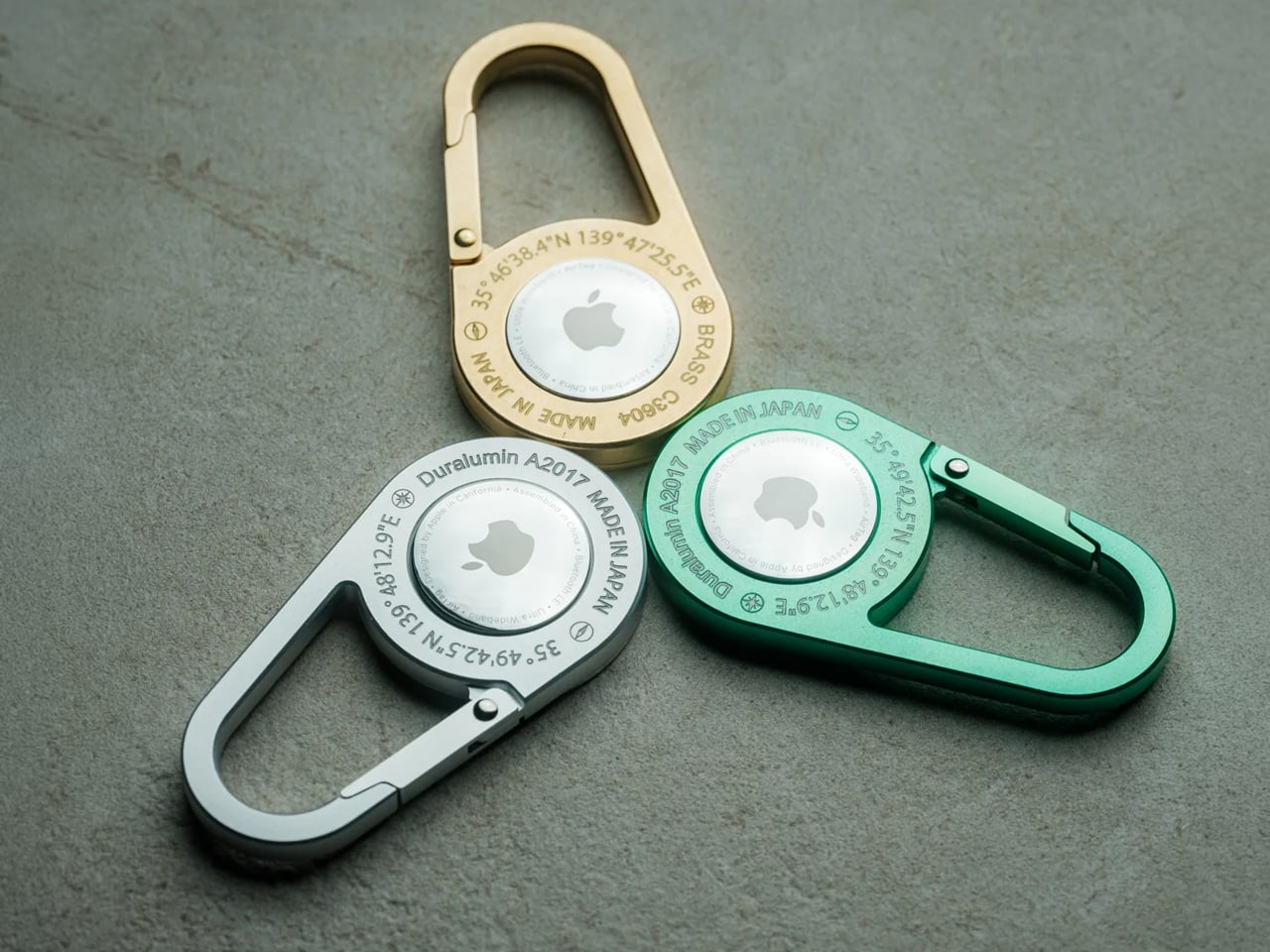
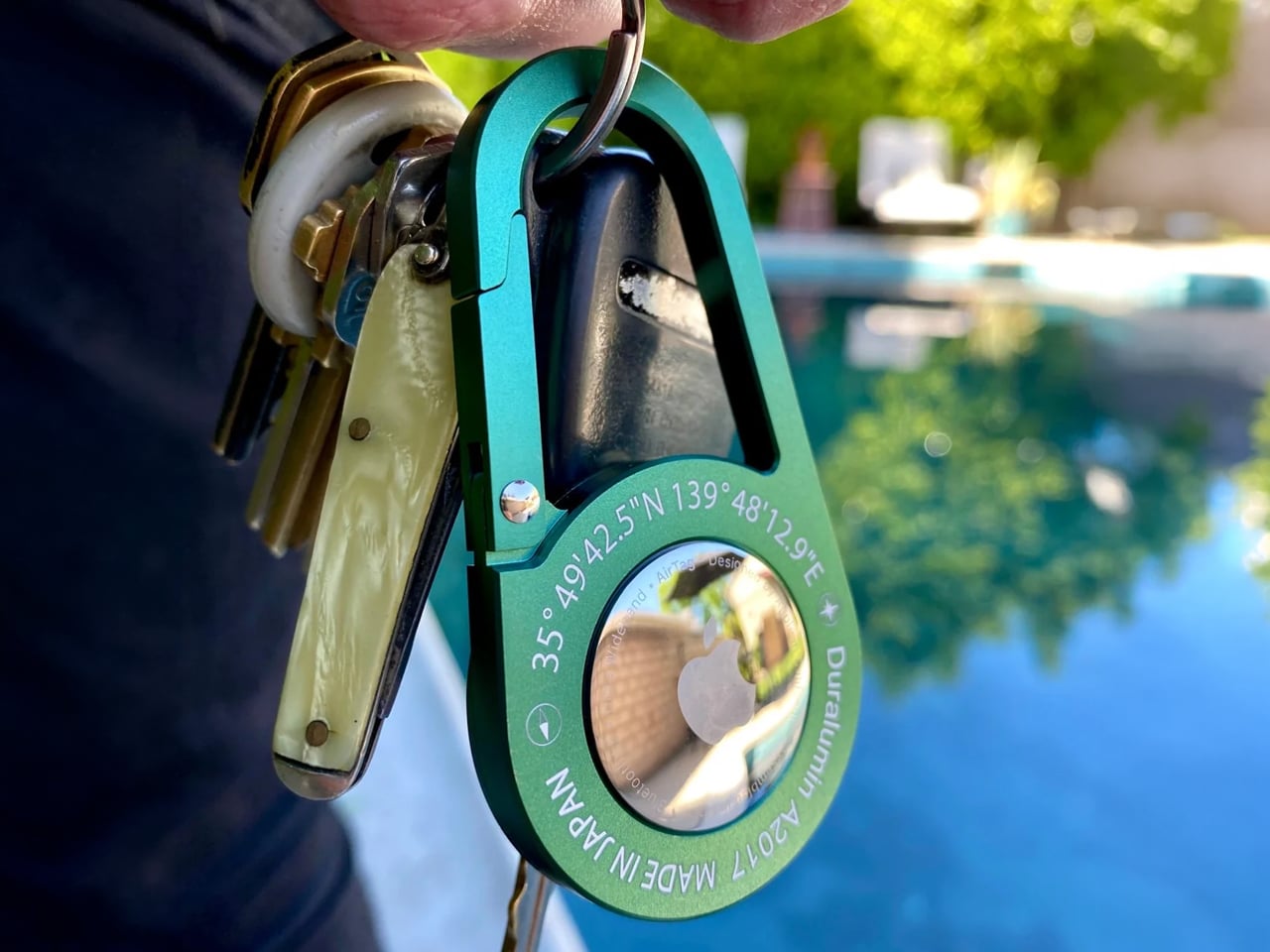
The AirTag Carabiner is made in Japan and individually hand-crafted. It comes in three materials: Duralumin composite alloy, untreated Brass, and Stainless Steel, and each variant makes a different argument for itself.
The Duralumin at 0.59 ounces – roughly the weight of a standard coin – is for those who account for every gram in a cycling kit or trail pack. It is, practically speaking, weightless in use.
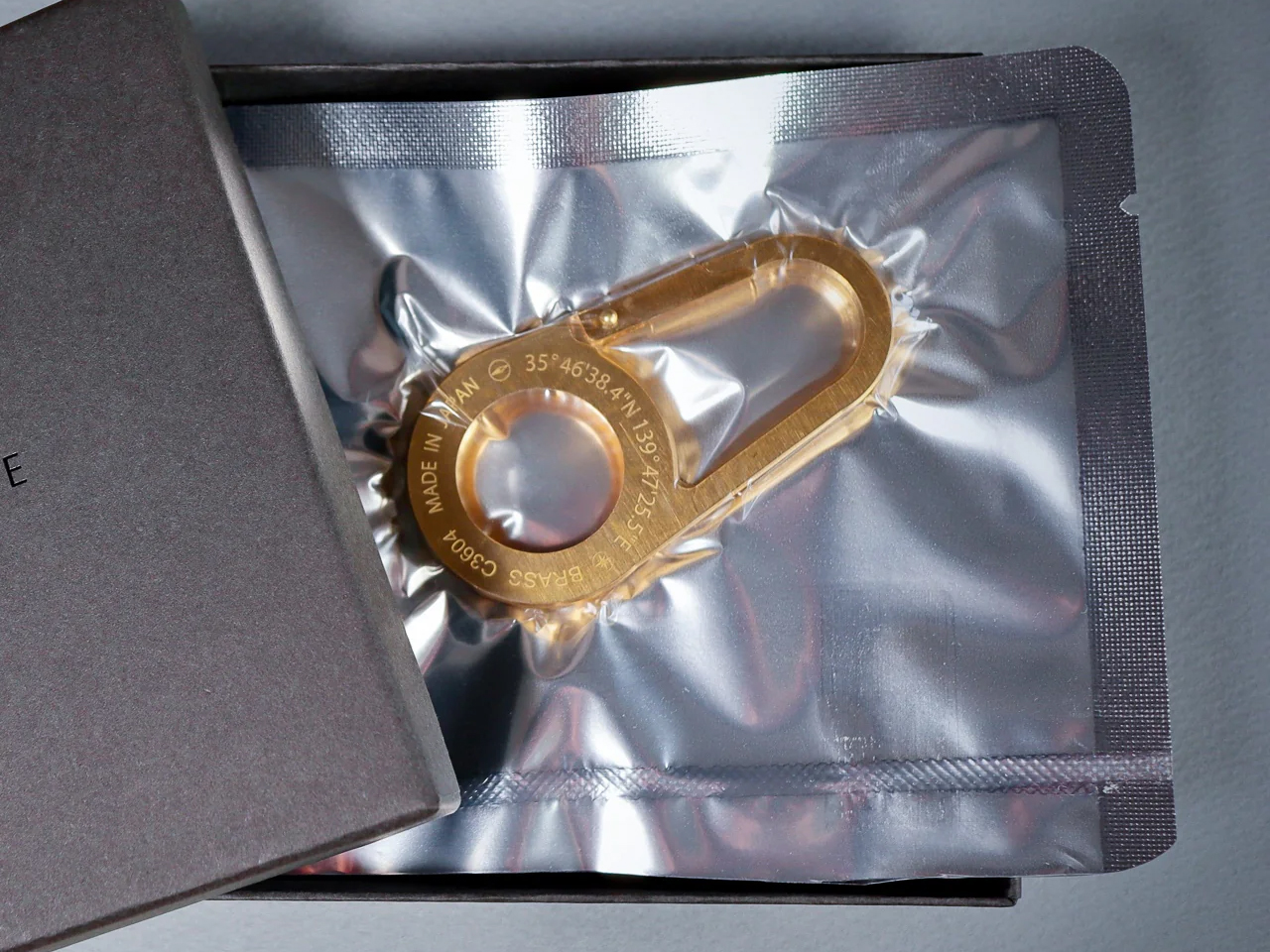
The Brass at 1.7 ounces develops surface character over time that neither alternative will.
The Stainless Steel at 2 ounces carries its weight as a tactile signal of permanence.
The Brass variant arrives with a warm matte surface that shifts toward a richer patina at contact points within the first few weeks of carry. The Stainless Steel reads as deliberately neutral – a finish that recedes into a bag’s existing hardware rather than competing with it. The Duralumin sits between them: a cool, slightly satin surface that holds its character rather than developing one. Each variant is visually distinct enough that the choice of material is also a choice about what the rest of the kit communicates.
Sized for Motion, Not the Display Case
At 3.1 inches by 1.6 inches, the carabiner is sized for function without excess. The 0.2-inch profile means it sits flat against a zipper pull or bag strap rather than protruding outward to snag on jacket fabric, handlebar bags, or adjacent gear in a pack. For cyclists on a commute or a weekend ride, that profile matters in motion.
For travelers moving through terminals with carry-on luggage, it is one fewer point of friction in a sequence of movements that accumulates quickly across a long travel day.
Why the Alloy Choice Actually Matters
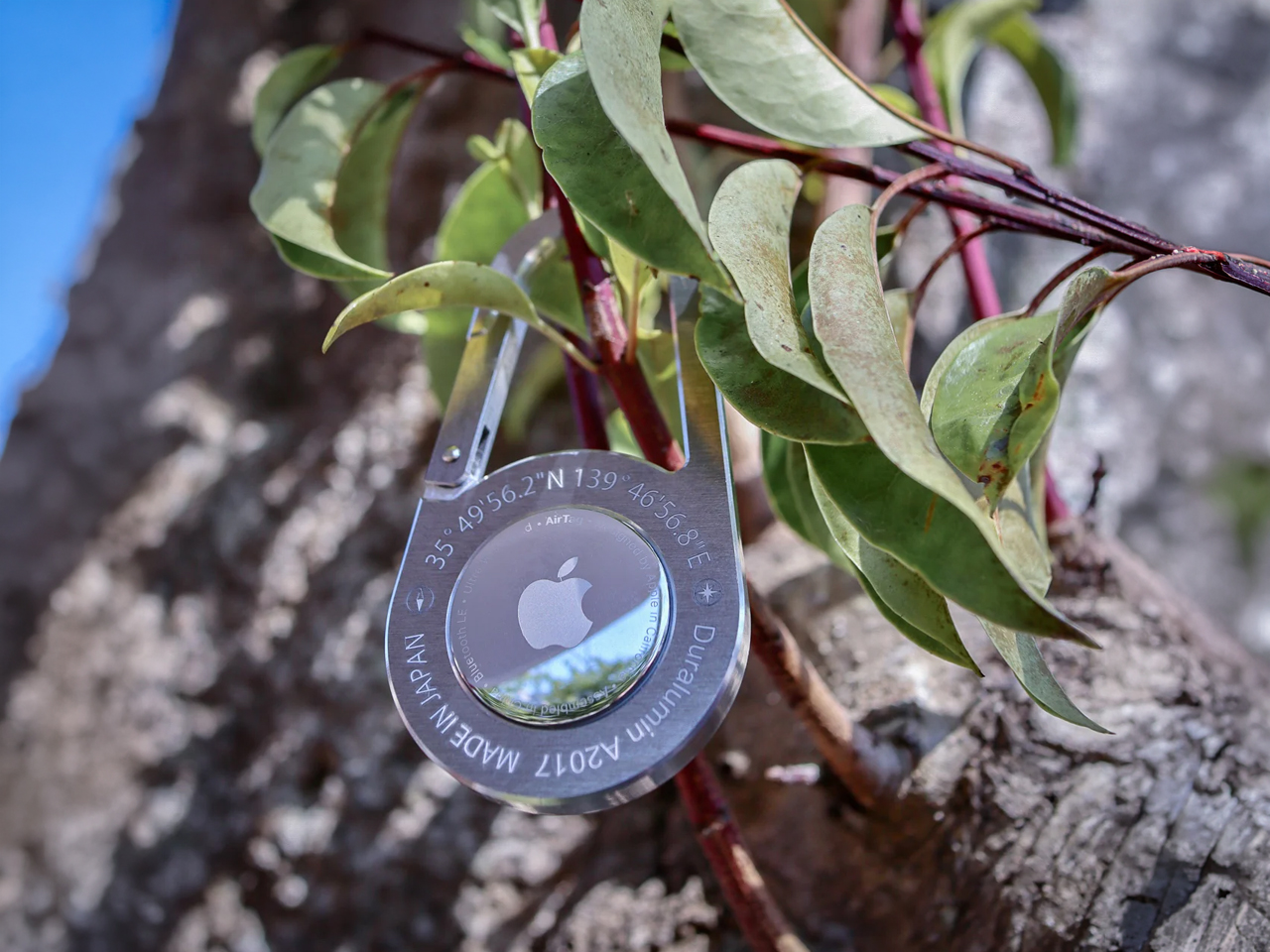
The Duralumin alloy deserves specific attention because it is not a decorative material reference. It belongs to the same alloy class used in aircraft, spacecraft, and marine applications – a pairing of low mass and high tensile strength that explains why the carabiner weighs 0.59 ounces without sacrificing structural integrity.
Applied here, it produces a carrier suited for the conditions an active kit already operates in: salt air, rain, altitude, and the sustained mechanical stress of a clip opened and closed hundreds of times a year. This is not a material chosen for its name. It is a material chosen because its properties match the job.
What Hand Production Means at This Scale
Hand production in Japan means finishing tolerances are set by a maker, not a mold. Carrying the AirTag Carabiner’s Duralumin variant daily for three weeks made that difference concrete: the gate action is consistent across hundreds of openings, the edge quality where the alloy meets at its joins has no rough transition point, and the surface shows none of the micro-scoring that injection-molded carriers typically develop within the first month of use.
These are details that do not appear in a spec sheet and do not become visible in product photography. They register in the hand, and they compound over time. At six months of daily carry, an object built to a specification and one built to a price have separated completely.
Where It Delivers
For the weight-optimized active carry: At 0.59oz – roughly a coin’s worth of mass – the Duralumin variant adds nothing measurable to a cycling pack, trail kit, or camera bag. It is the only tracker carrier in this category that does not undo the weight discipline a considered kit has already established.
For outdoor and travel conditions: The alloy’s documented suitability for water and high-altitude environments means this carabiner performs alongside the gear it clips onto – from a salt-air coastal commute to a pressurized cabin – without corrosion or gate fatigue.
For carry coherence: The hand-finished construction and material quality place this carabiner alongside machined pens and precision wallets without asking the rest of the kit to lower its standard.
What to Factor In
The Apple AirTag is not included. At $119 starting for the AirTag Carabiner alone, the full system investment clears $150 once the tracker is added. That is the honest cost of entry and should be weighed against a kit where every other object has been selected at a comparable standard.
The weight spread across variants is significant: 0.59oz for Duralumin versus 2oz for Stainless Steel – a 3.4x difference across identical dimensions. Users attaching this to a keychain or wrist lanyard will feel that gap in daily carry and should choose their variant before ordering rather than after.
The standard for AirTag carry has been a $29 silicone loop. The AirTag Carabiner sets a different standard: machined-quality construction, aircraft-grade material, and hand finishing that holds up to daily inspection after a year of use. Whether that standard becomes the category norm depends on whether the rest of the market decides the AirTag deserves to be treated as a permanent part of the kit rather than a temporary addition to it.
The AirTag Carabiner is available now starting from $119 at Yanko Design.
There is a different kind of that happens in late June. Your feed fills with gear photographed in good light, linked before the image has finished loading, and gone from stock by the time you circle back. Some of it is noise. Some of it quietly solves a problem you have been working around for years without naming it. The ten products here belong to the second category, and every one of them is genuinely worth the attention.
They cover the full arc of a summer day, from the first outdoor coffee to the last photograph before the light drops. Not one of them asks you to sacrifice design quality for function, or function for form. These are the products that spread because they earn it, objects that change something specific about the next few months. Whether you find three of them or all ten, your summer bag has room for the upgrade.
1. Camera (1)
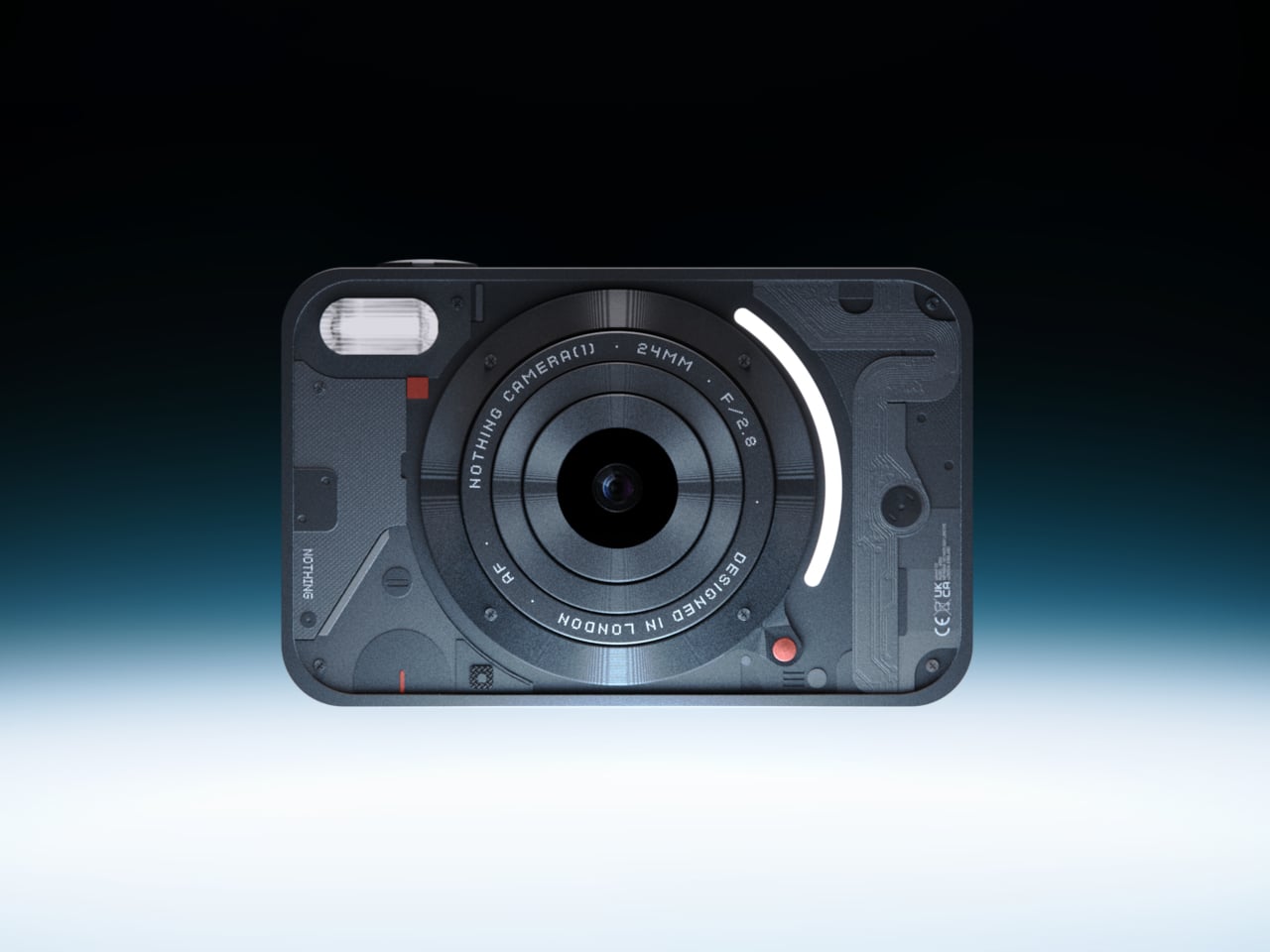
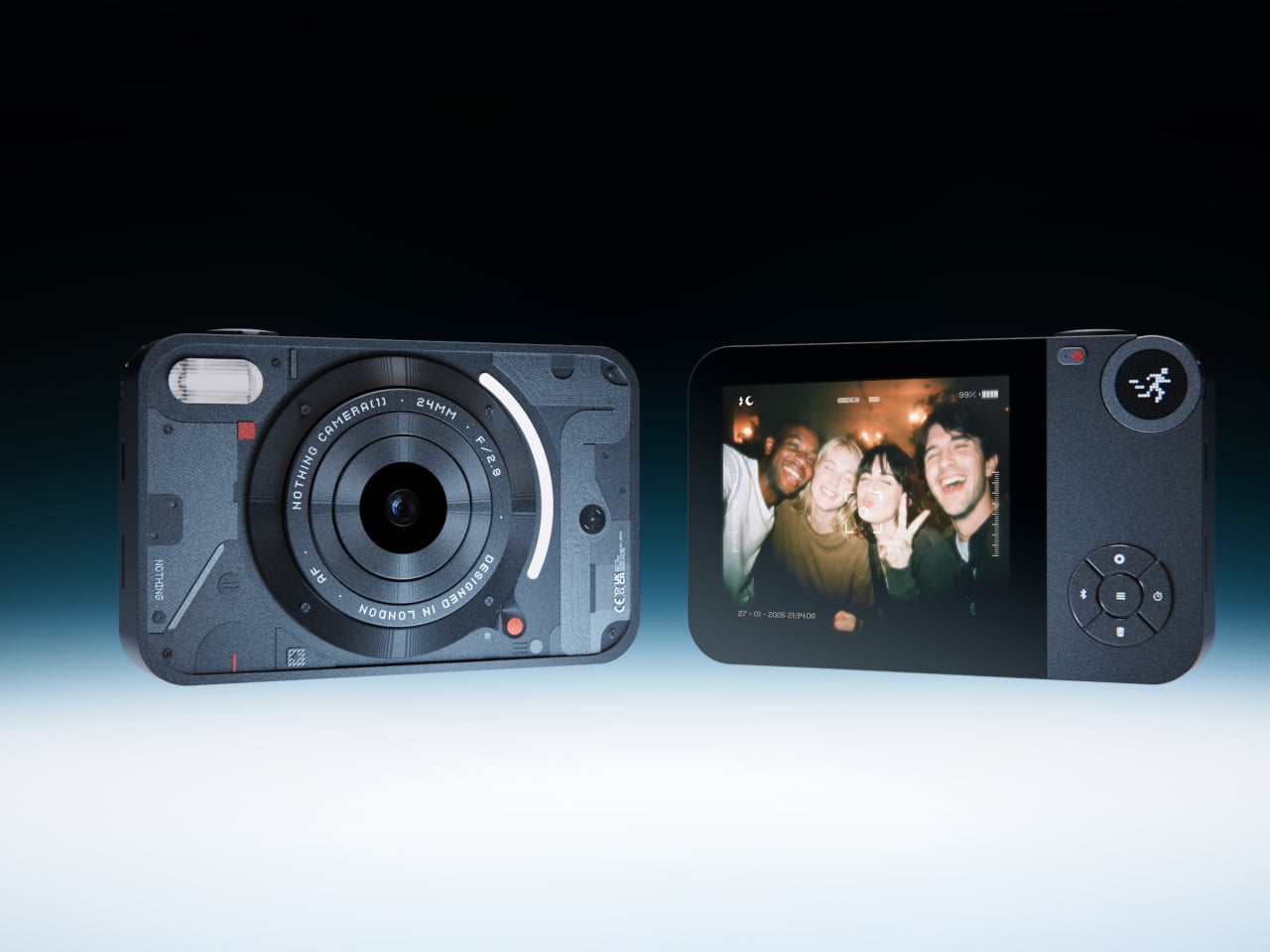
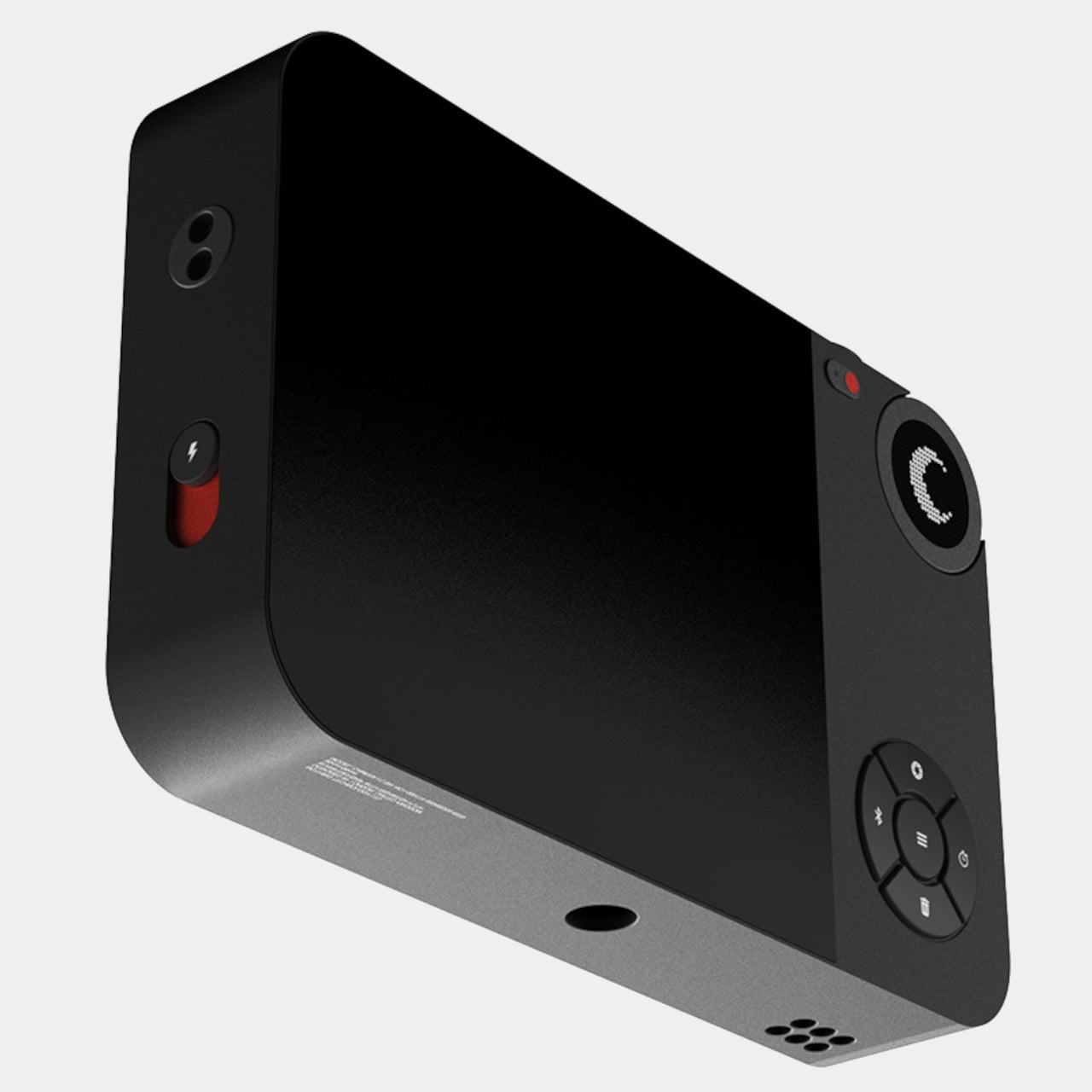
Most photographs live inside phones now, buried between notifications, grouped by algorithm, and rarely looked at twice. A growing number of people have started picking up older digital cameras to make shooting feel like a separate, deliberate act. Camera (1) is a concept design by Rishikesh Puthukudy that explores what a modern compact could feel like if built around physical controls and tactile feedback rather than software layers and touchscreen menus. All main controls sit on one edge, placing the shutter, a mode dial with a small glyph display, and a D-pad within reach of thumb and index finger without shifting grip or touching a screen.
The concept draws its design language from Nothing’s transparent, hardware-forward aesthetic. A curved light strip around the lens pulses during the self-timer, confirms focus lock, and signals when video is being recorded. The engraved lens ring, marked with focal length and aperture, turns zoom and focus into a physical twist rather than a digital pinch. A bead-blasted metal shell, circuit-like relief panel, and small red accents give it a technical, considered character.
What We Like
Physical edge controls and glyph-based mode dial put the entire interaction in the hand rather than on a screen, which is exactly what compact camera design has been missing
Bead-blasted metal body and red accent details communicate material intent and quality without relying on branding
What We Dislike
A concept with no confirmed production path means you are left admiring the idea rather than buying the object
The design draws heavily from Nothing’s visual language, which will feel derivative to those who follow that brand closely
2. Shark ChillPill
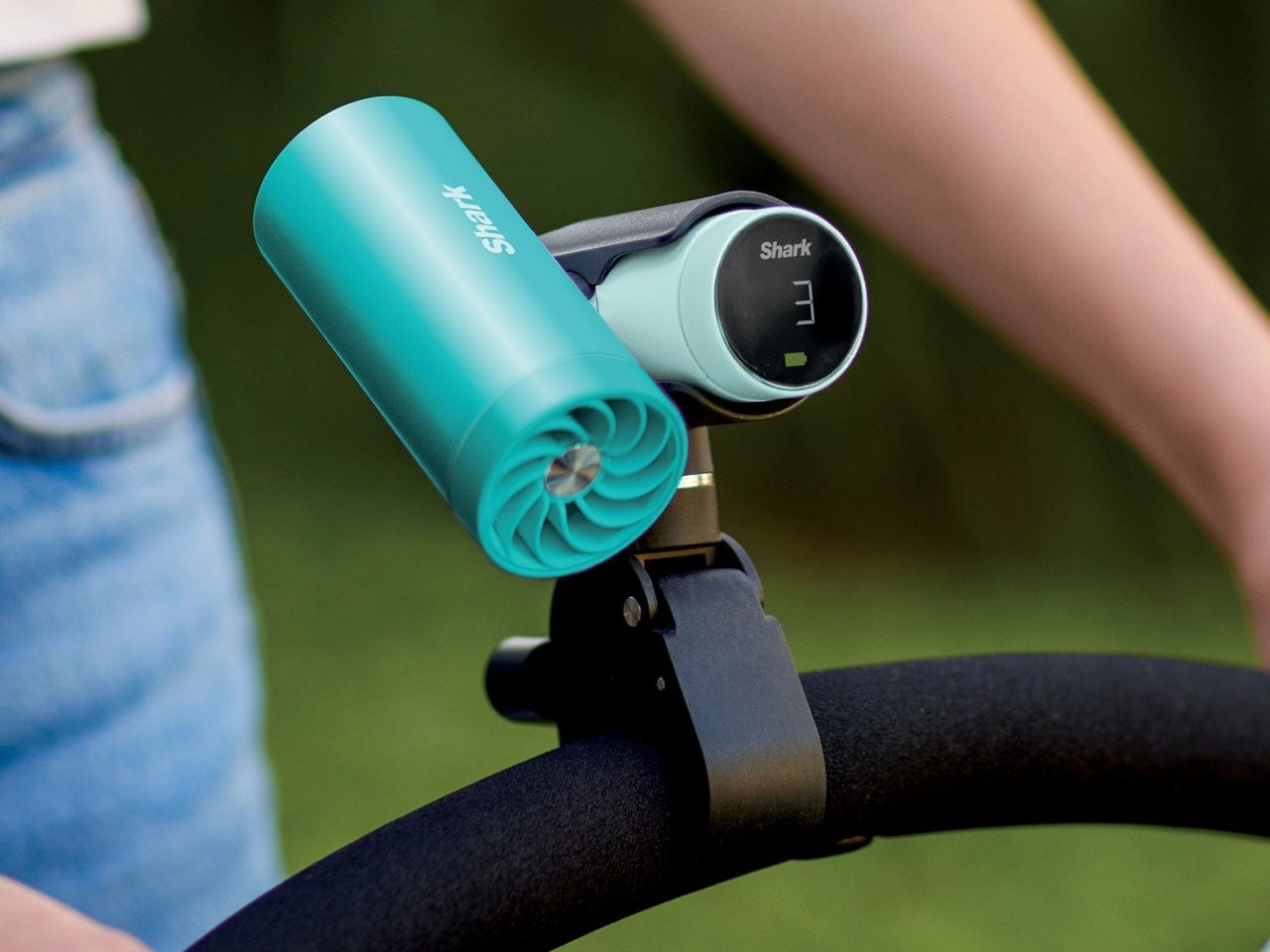
Most personal cooling devices ask you to make a simple trade: accept bulk, noise, or mediocre performance in exchange for staying cool. The Shark ChillPill declines the trade. Its three-function body is compact enough to clip to a bag strap, a wristlet, or a stroller bar, and each mode does something genuinely distinct. A bladeless fan with ten adjustable speed settings delivers steady airflow at up to 25 feet per second. An evaporative mist system produces what SharkNinja calls a dry-touch effect, refreshing skin without the soaked-fabric sensation most spray fans leave behind.
The third function sets it apart. The InstaChill cooling plate, a cryo-inspired metal surface, reduces skin temperature by up to 16 degrees Fahrenheit within seconds when pressed against a pulse point on the neck or wrist. Battery life reaches eleven hours on the lowest fan setting, with USB-C charging returning it to full in roughly three and a half hours. Priced at $149.99 and available in seven colorways including Glacier, Matcha, and Rose Gold, it is the rare piece of personal tech that adapts to the activity rather than defining it.
What We Like
Three distinct cooling modes in one portable body that clips, sits, or wears across any outdoor context
Eleven-hour battery on low covers a full outdoor day without any recharging anxiety
What We Dislike
Maximum fan output reduces runtime to around ninety minutes, requiring some planning on longer days
The premium price over single-function portable fans requires commitment before knowing how much all three modes get used
3. All-in-One Grill
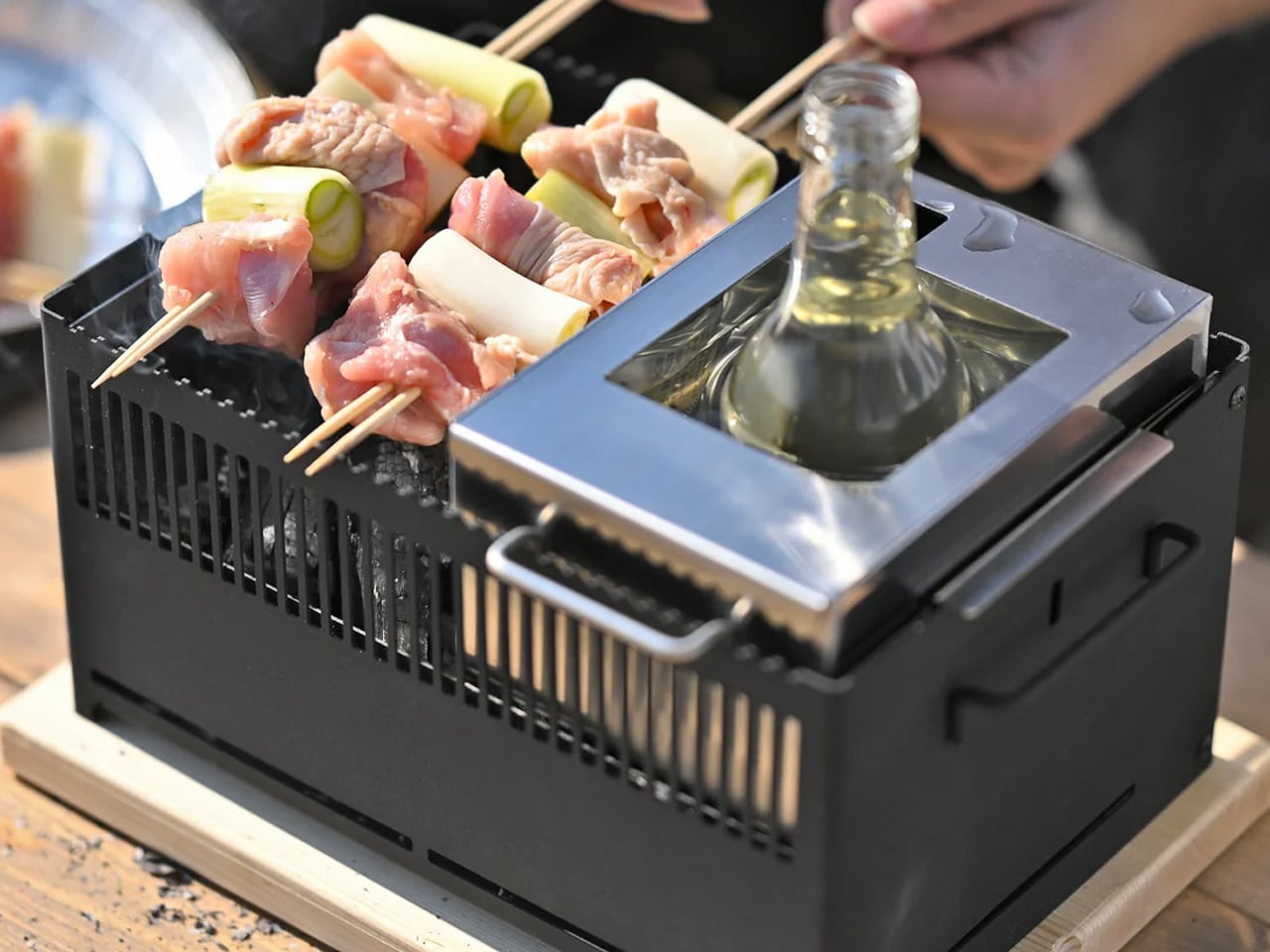
Outdoor cooking has always had a logistics problem. Bring a single-function grill and eat variations of the same thing all weekend. Haul a full kit and spend the first hour on setup rather than cooking. The All-in-One Grill, made by a small family-owned Japanese factory specializing in sheet metal fabrication, takes a third position. Interchangeable cooking modules cover barbecuing, frying, grilling, steaming, smoking, and stew cooking from a single portable tabletop base designed to maximize limited space without dominating any camp table it lands on.
A dedicated upright module warms bottles directly, mulled wine included, a specific practical detail that most outdoor cooking systems treat as someone else’s problem. The modular construction that makes it versatile also simplifies cleanup: each component can be handled independently rather than breaking the whole unit down at once. One device handles what most setups need four for, and it packs into a footprint that leaves room for everything else.
Six cooking methods from one portable base without multiple fuel sources or separate devices
Dedicated bottle-warming module covers a specific outdoor ritual that most cooking systems overlook entirely
What We Dislike
Modular systems accumulate small components that are easy to misplace in the field
Tabletop-only design limits cooking capacity for groups larger than four or five people
4. DraftPro Top Can Opener
Drinking from a can is convenient. Actually tasting what is inside it requires something better. Designed by award-winning Japanese designer Shu Kanno and built in Japan, the DraftPro Top Can Opener removes the entire lid of a standard can to create a wide-mouth, glass-like opening that changes the experience immediately. The aroma lifts the moment the top comes off. The first sip feels more direct, more open, more intentional. A smooth-edged finish removes the safety concern that has historically made full-removal openers feel like a rough trade rather than an upgrade.
The function extends well past beer. With the top removed, ice drops in directly. A mixer or citrus can be added without needing a separate cup. The can itself becomes a cocktail vessel that requires no additional tools. It works with domestic and international can sizes, making it as useful at a campsite abroad as in a backyard.
Full top removal releases aroma and creates a draft-style drinking experience that a standard can opening physically cannot deliver
The can-as-vessel format allows ice, mixers, and garnishes without reaching for additional cups or shakers
What We Dislike
Single-function design earns its place only if canned drinks appear regularly in your outdoor routine
No published specification for how the cutting mechanism holds up across extended use over time
5. TMB: The Modular Bottle
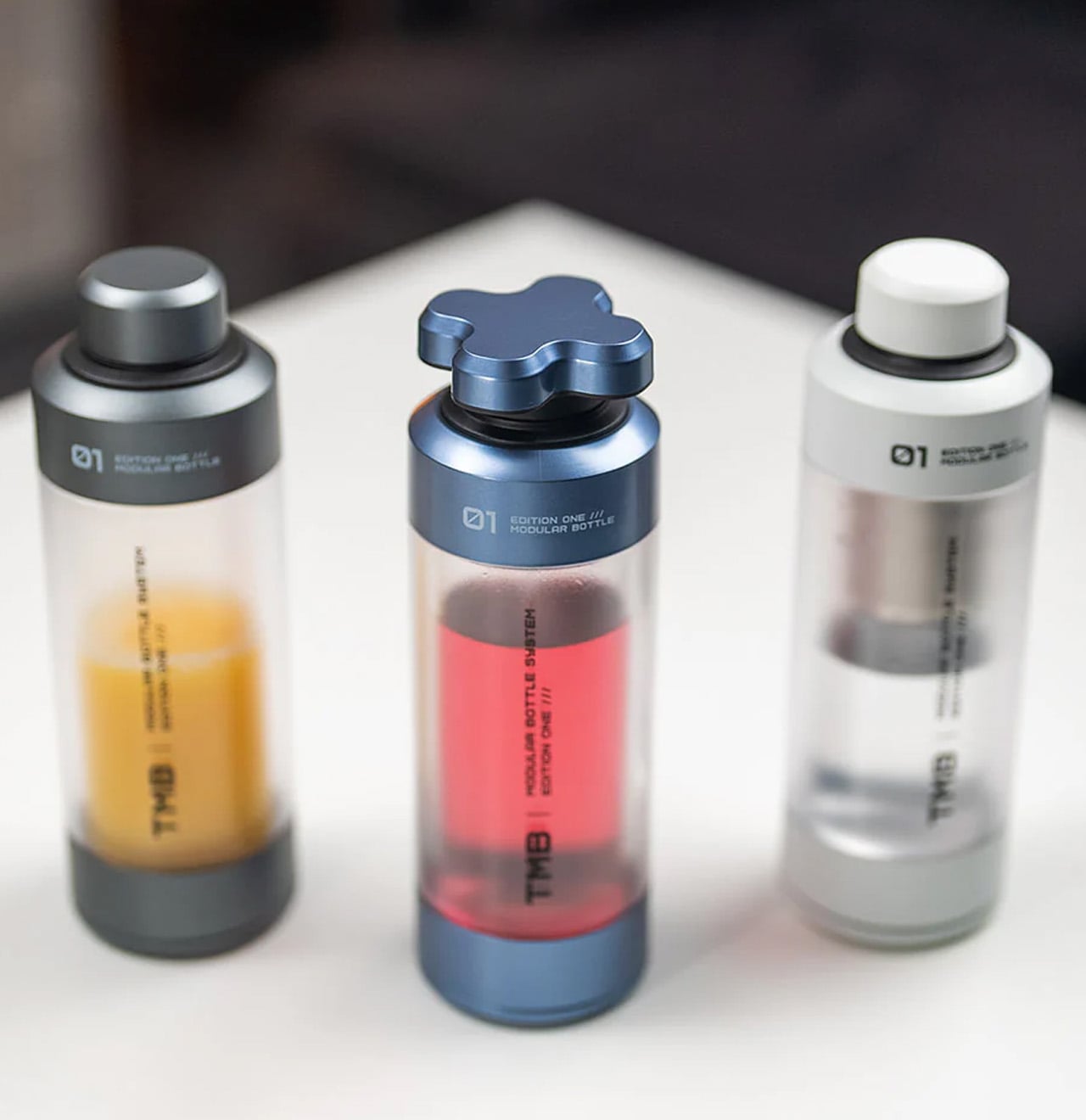
Most bottles make one implicit promise: hold liquid without leaking. The TMB Modular Bottle starts from that baseline and keeps going. The borosilicate glass interior keeps every drink tasting like itself rather than the container, a material property that separates it decisively from the steel and plastic alternatives dominating this category. A translucent mid-section gives a real-time view of remaining liquid without removing the lid. Modular tops include a tea infuser, a shaker ball, and interchangeable caps, shifting configuration based on what the day or activity requires.
A built-in secret compartment handles small EDC items, supplements, or snack portions. The glass interior cleans thoroughly without the residual odor buildup that makes most reusable bottles unpleasant after weeks of regular use. For summer travel, the modularity earns its weight because the same bottle that starts a morning with loose-leaf tea covers an afternoon of plain water and an evening cocktail shaker setup without adding anything else to the bag.
What We Like
Borosilicate glass interior preserves drink flavor without absorbing taste or odor regardless of what you put in it
Modular tops cover tea brewing, protein shaking, and standard hydration from a single body without any additional vessels
What We Dislike
Glass interior carries more breakage risk than steel alternatives under rough outdoor handling or travel
Modular assembly adds cleaning complexity compared to a straightforward single-piece bottle
6. MokaMax
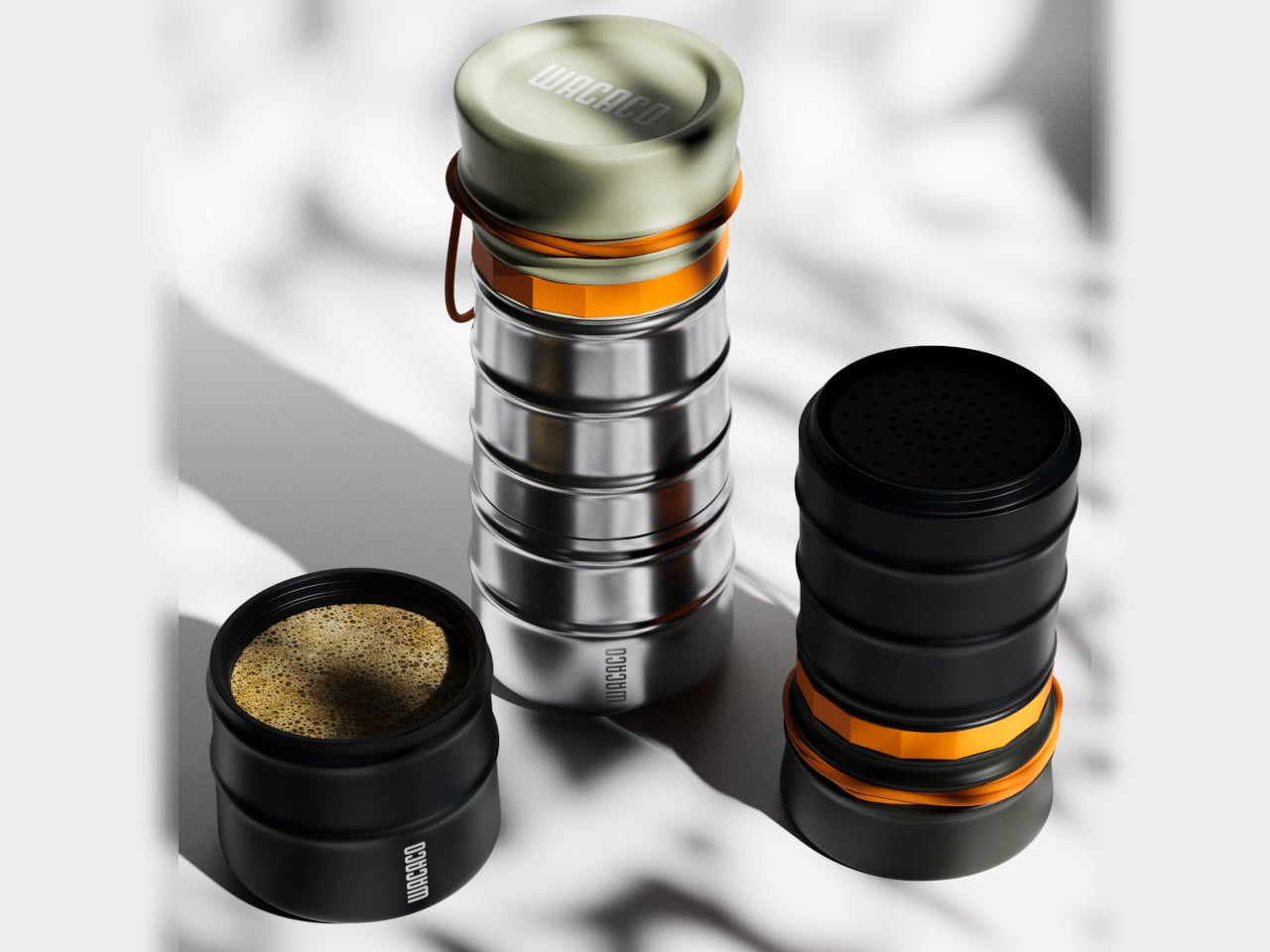
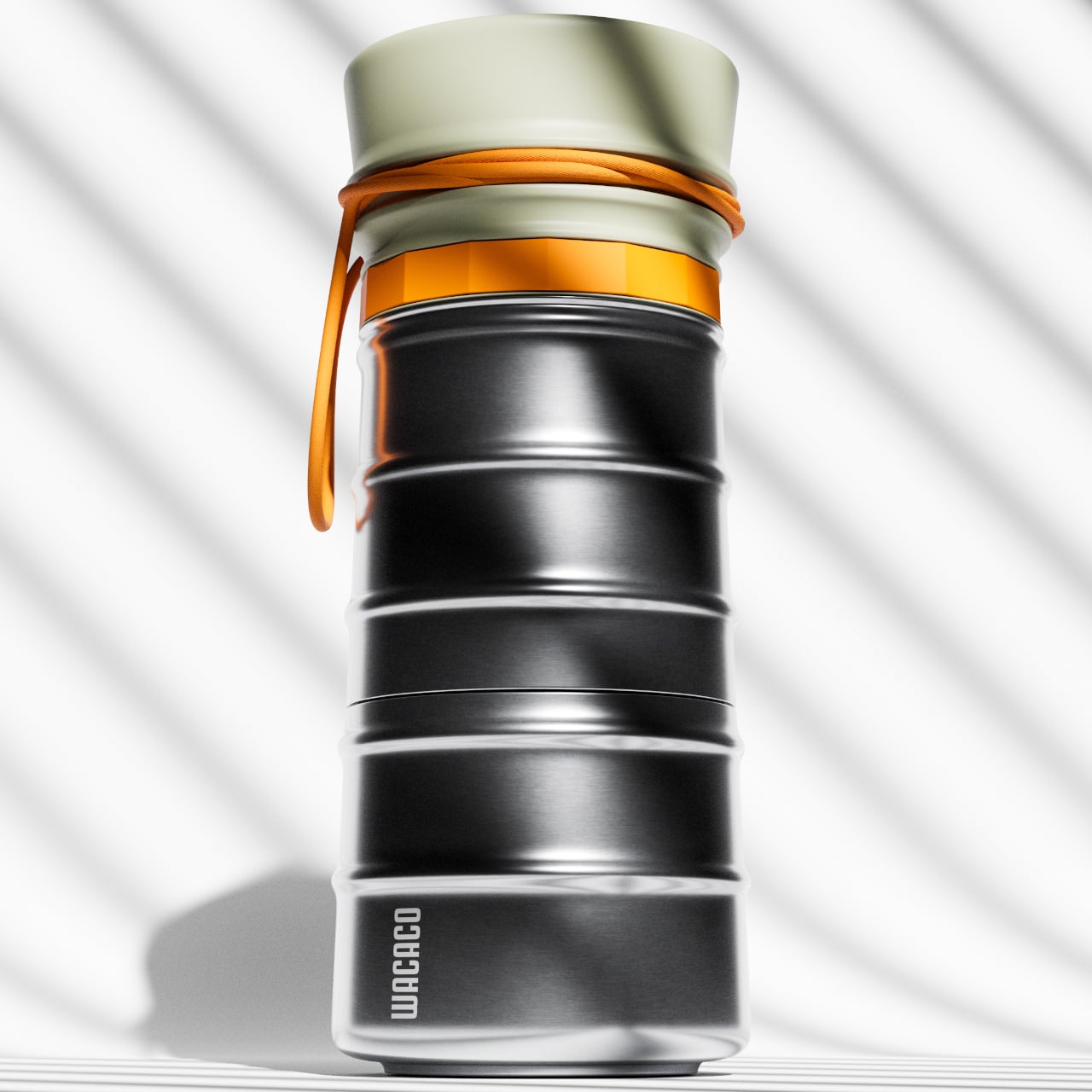
The campsite coffee situation has always been a negotiation between quality and effort. Every solution asks you to accept some version of the compromise: gritty grounds, a cold mug, a disposable capsule, a second bag of kit. The MokaMax resolves it by integrating a full pressure brewer into a ridged stainless steel travel mug, delivering espresso-style coffee in under three minutes using boiling water from any source. The brewer, the vessel, and the lid, which doubles as a cup, are a single sealed system with no loose components to lose between campsites or cities.
At 400 grams fully loaded, it fits in the front pocket of most travel backpacks and carries nothing superfluous. The ridged stainless exterior gives it a visual identity distinct from every other travel mug on a shelf, communicating outdoor utility without the rubberized bulk that most portable coffee gear defaults to. For summer mornings at a campsite, a hotel room in a new city, or a long train ride through somewhere worth paying attention to, the MokaMax handles the coffee ritual with equipment that fits the occasion without requiring a word of explanation.
What We Like
Pressure brewer and carrying vessel integrated into one sealed body means no separate components and no compromises across a summer of movement
Ridged stainless form integrates visually with quality outdoor gear rather than looking out of place beside it
What We Dislike
Cleaning the pressure chamber thoroughly on the road requires a sink and a few uninterrupted minutes that travel rarely provides on schedule
Espresso-style output will not satisfy those who prefer larger-volume filter coffee while camping or traveling
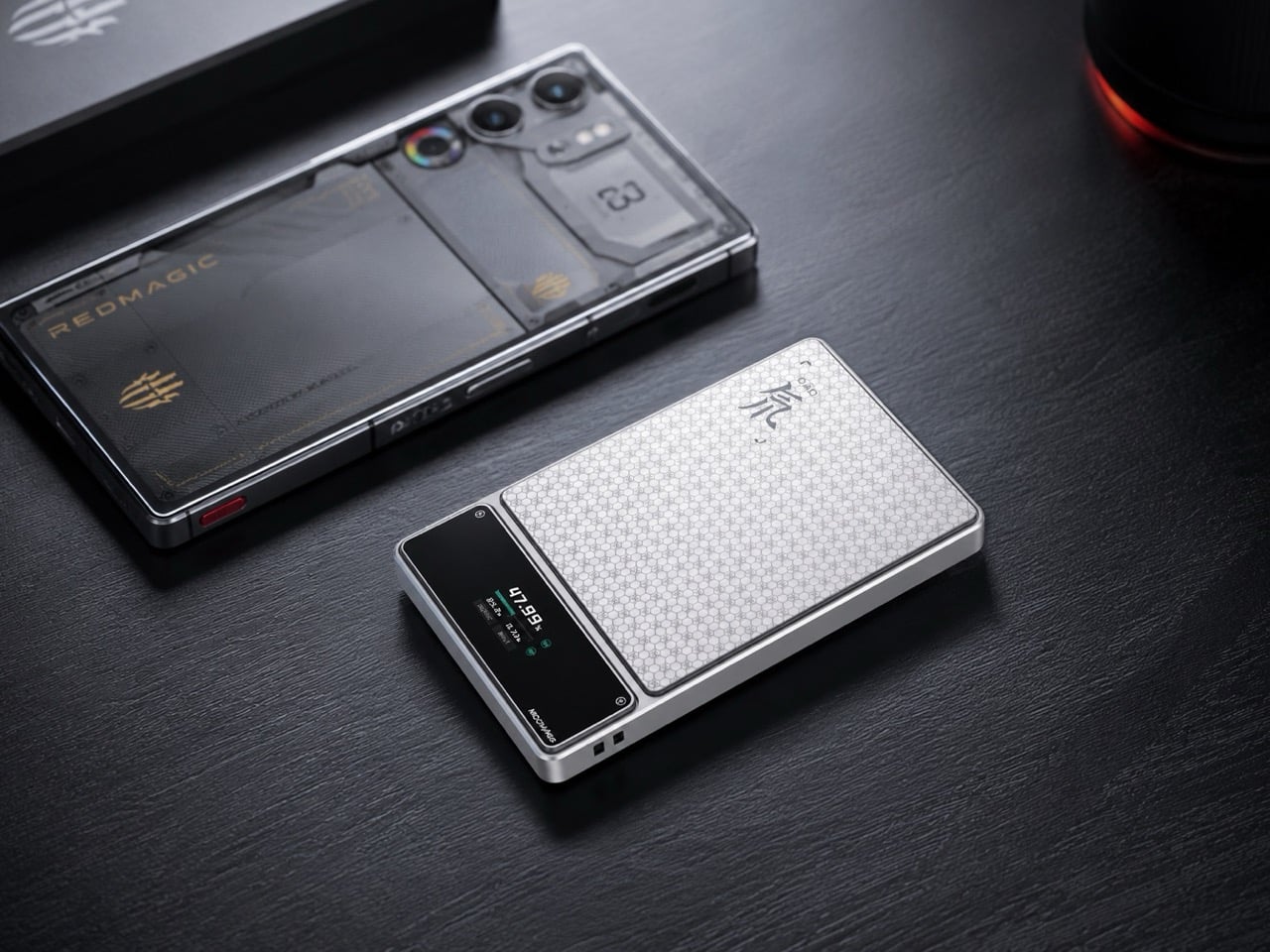
7. RedMagic Deuterium Power Card Pro
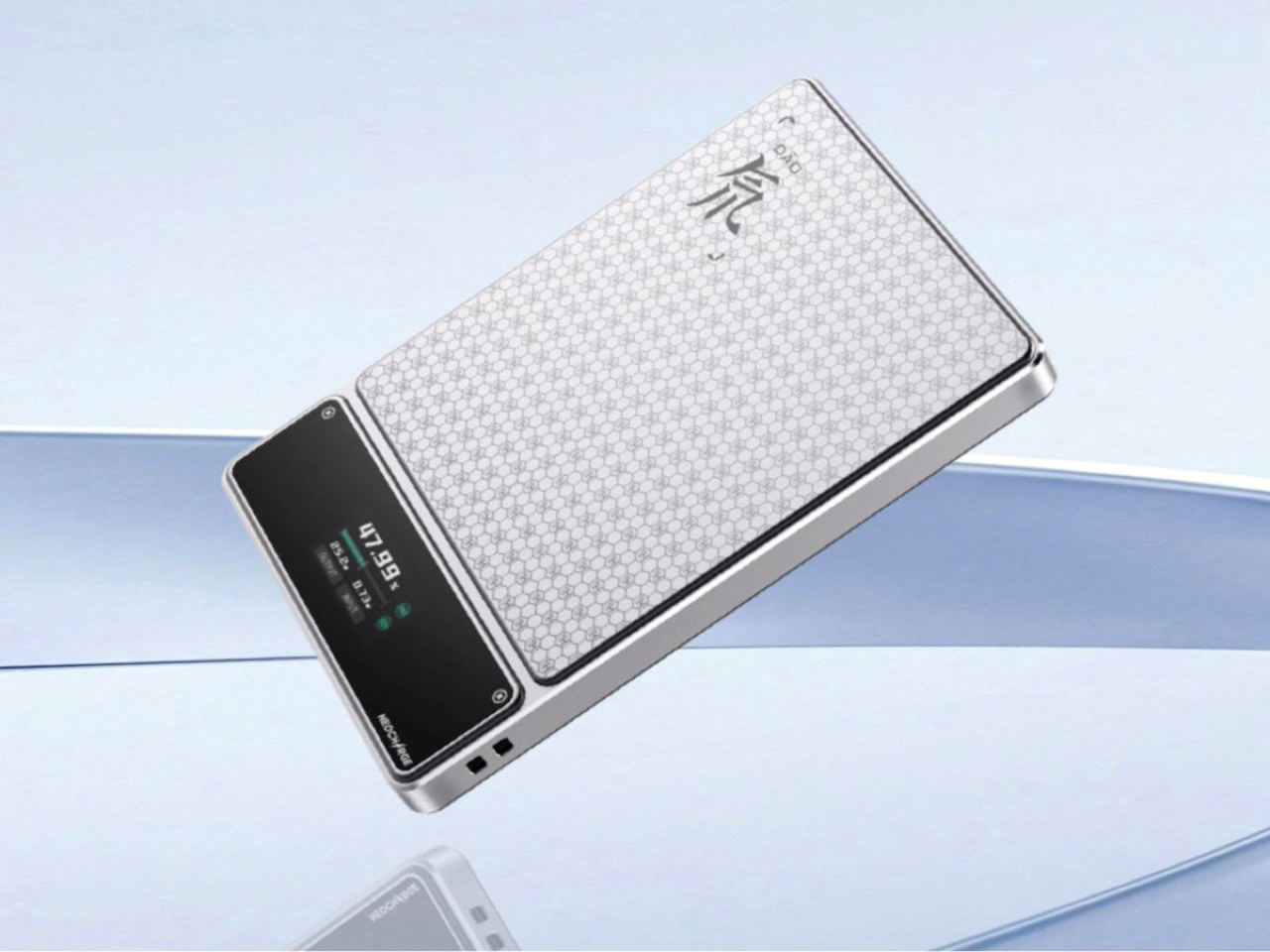
Aviation rules around lithium batteries keep tightening, and most power bank manufacturers have responded by adding a line to the FAQ. RedMagic responded by adding a dedicated hardware button to the device. The Deuterium Power Card Pro includes a one-touch flight mode that cuts wireless transmission immediately at the press of a single control, addressing the airline regulations that have turned gate-side power bank checks into a genuine inconvenience. The H21 honeycomb pattern engraved into the anodized aerospace aluminum body gives it a texture that reads as premium hardware rather than commodity carry gear.
A 25W wireless charging pad and 45W wired output handle most modern smartphones at full speed. An AI-assisted thermal management system monitors a five-layer heat dissipation stack in real time, keeping surface temperatures controlled during wireless charging where cheaper alternatives tend to run noticeably warm. A rectangular status display shows exact battery percentage rather than the single LED indicator dot that most power banks still ship with. Available in 5,000 and 10,000 mAh configurations, with pricing and a confirmed release date still pending at the time of publishing.
What We Like
One-touch flight mode solves the airline power bank regulation problem that every other manufacturer currently treats as the passenger’s responsibility
Rectangular display showing exact battery percentage is a small but genuinely useful upgrade over the LED dots most competitors use
What We Dislike
Pricing and release date remain unconfirmed, making it the most compelling item on this list that cannot yet be added to a cart
The RedMagic brand identity is built around gaming hardware, which may feel tonally mismatched for travelers whose gear skews toward neutral aesthetics
8. Benro Theta Tripod
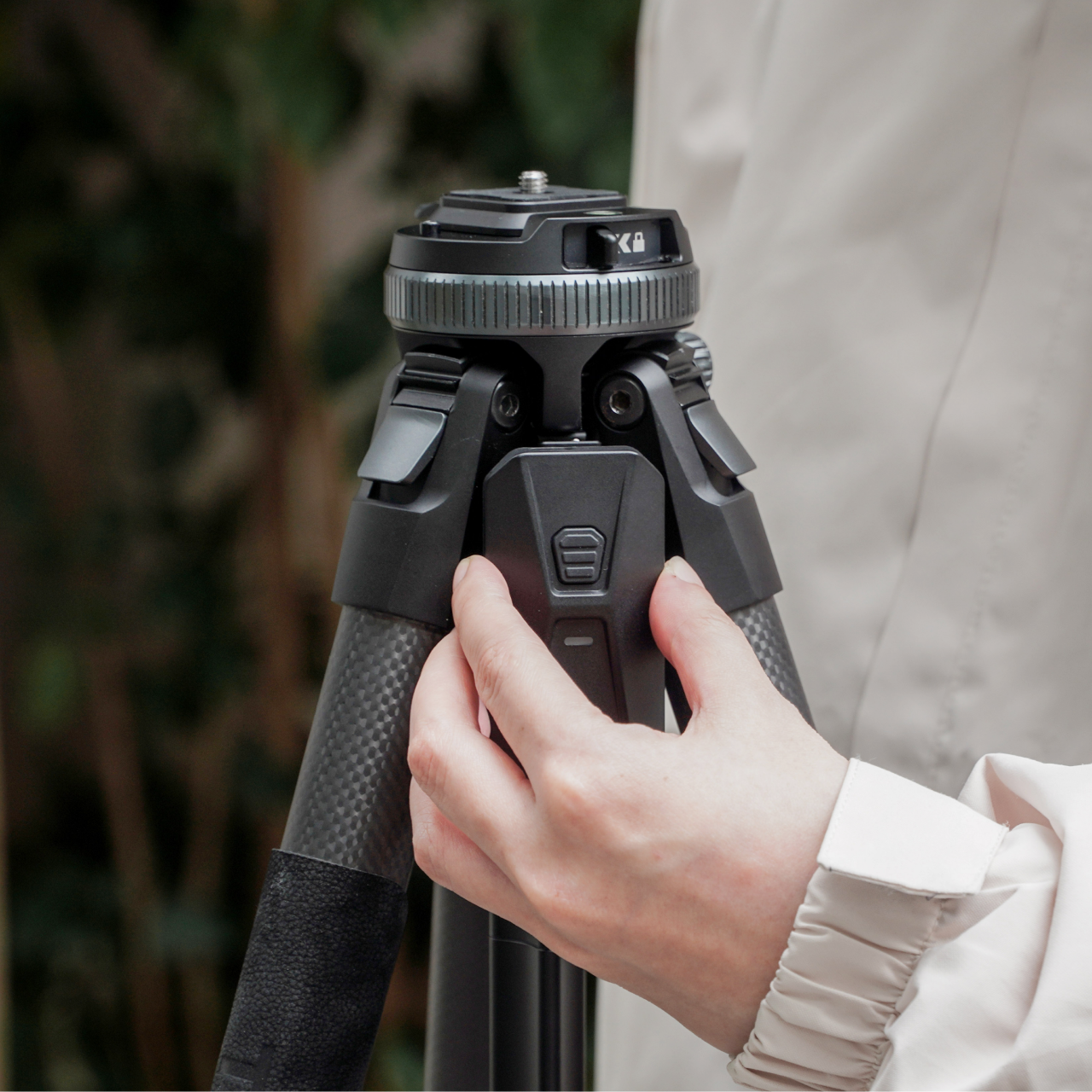
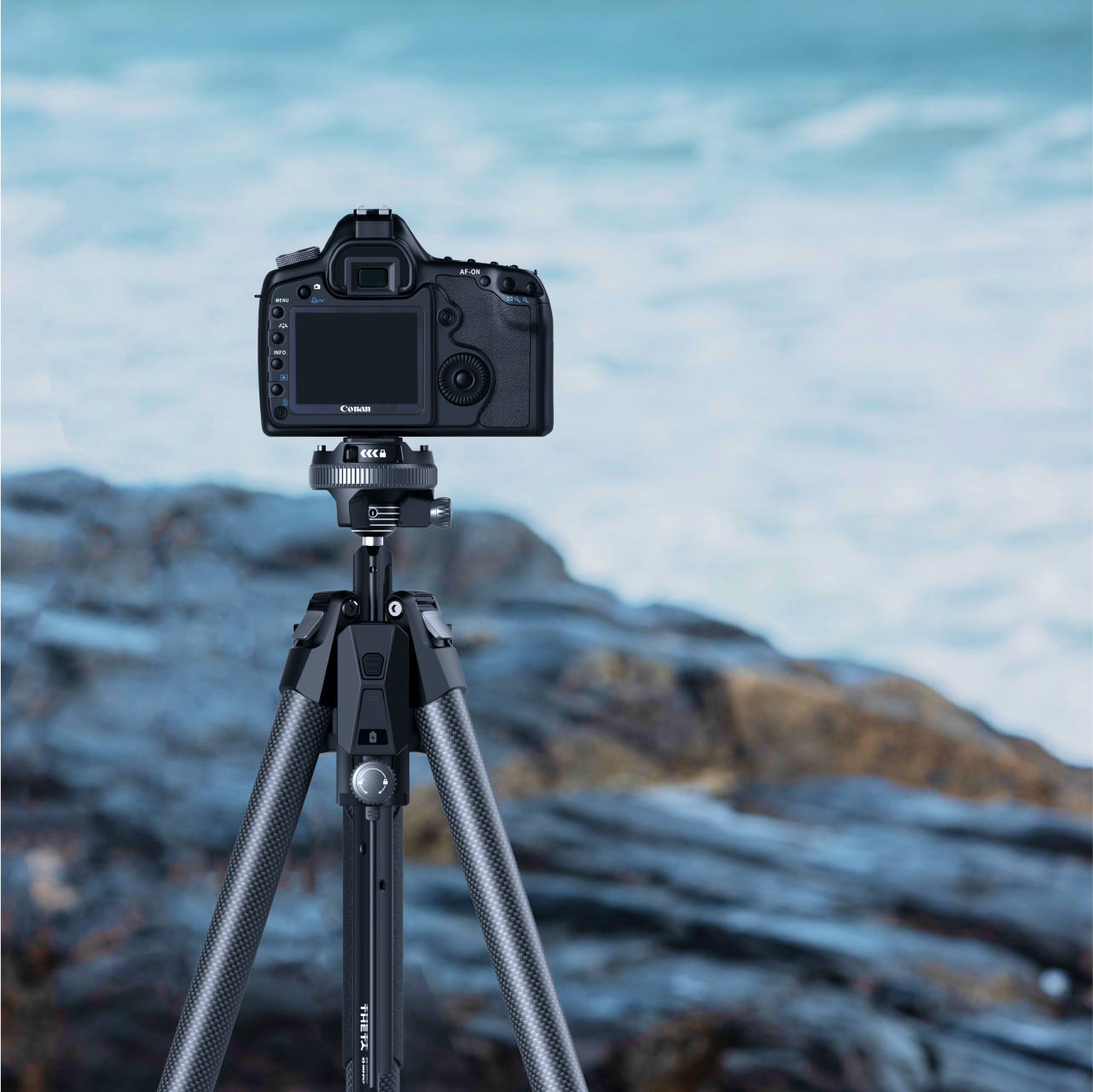
A level horizon used to be a manual discipline. You twisted the head, watched a bubble, made small corrections, twisted again, repeated. The Benro Theta removes that entire sequence with a motorized auto-leveling system that reads the surface, adjusts the head, and confirms the camera is plumb before you look through the viewfinder. Benro positions it as the world’s first smart modular travel tripod, and the auto-leveling claim holds, particularly for photographers who regularly set up on uneven terrain and have run out of patience for repeating the process twice every time.
The body weighs 331 grams and runs on a 2500 mAh battery that delivers up to three hours of motorized operation. Arca standard compatibility keeps it immediately compatible with existing head and plate systems without requiring new accessories to bridge the gap. The modular construction adapts the Theta across shooting configurations without needing a separate travel head. For the summer photographer who sets up quickly and moves rather than spending the golden hour leveling equipment, the auto-leveling feature alone covers the cost of the upgrade. Available from Benro directly at benrousa.com.
What We Like
Motorized auto-leveling removes the most time-consuming manual step in tripod setup, especially on uneven outdoor terrain
Arca standard compatibility integrates immediately with existing accessories without requiring additional purchase
What We Dislike
Three-hour battery means extended shooting sessions require either a recharge mid-day or a backup power source
Premium construction and motorized system place it above conventional travel tripods at the same weight class
9. Battery-Free Amplifying iSpeakers
The pitch is simple enough to sound too good: set your phone in the slot, and Duralumin, the aircraft-grade aluminum alloy used in aerospace construction, does the amplification. No Bluetooth pairing. No battery charging. No setup at all. The metal body channels and amplifies your phone’s speaker output through material physics rather than electronics, adding warmth and volume with zero power draw. Golden ratio proportions give it a visual presence that reads as a considered object on a surface, not another piece of audio hardware waiting to be plugged in.
For summer specifically, the always-ready quality matters in a way that becomes obvious the first time you do not have to think about it. There is no battery level to check before heading outside, no cable to remember, no update that delays the morning. Set the phone in and music plays. Optional Bloom and Jet modular accessories let you direct the sound output if the environment calls for more control.
No battery, no power, and no setup required means it is always immediately ready without any preparation
Aircraft-grade Duralumin construction shaped to golden ratio proportions is a genuine material and design achievement at any price
What We Dislike
Amplification quality depends entirely on the phone’s own built-in speaker, so the result varies significantly by device
Sound-directing modular accessories are sold separately at additional cost
10. Canon Gimbal Camera
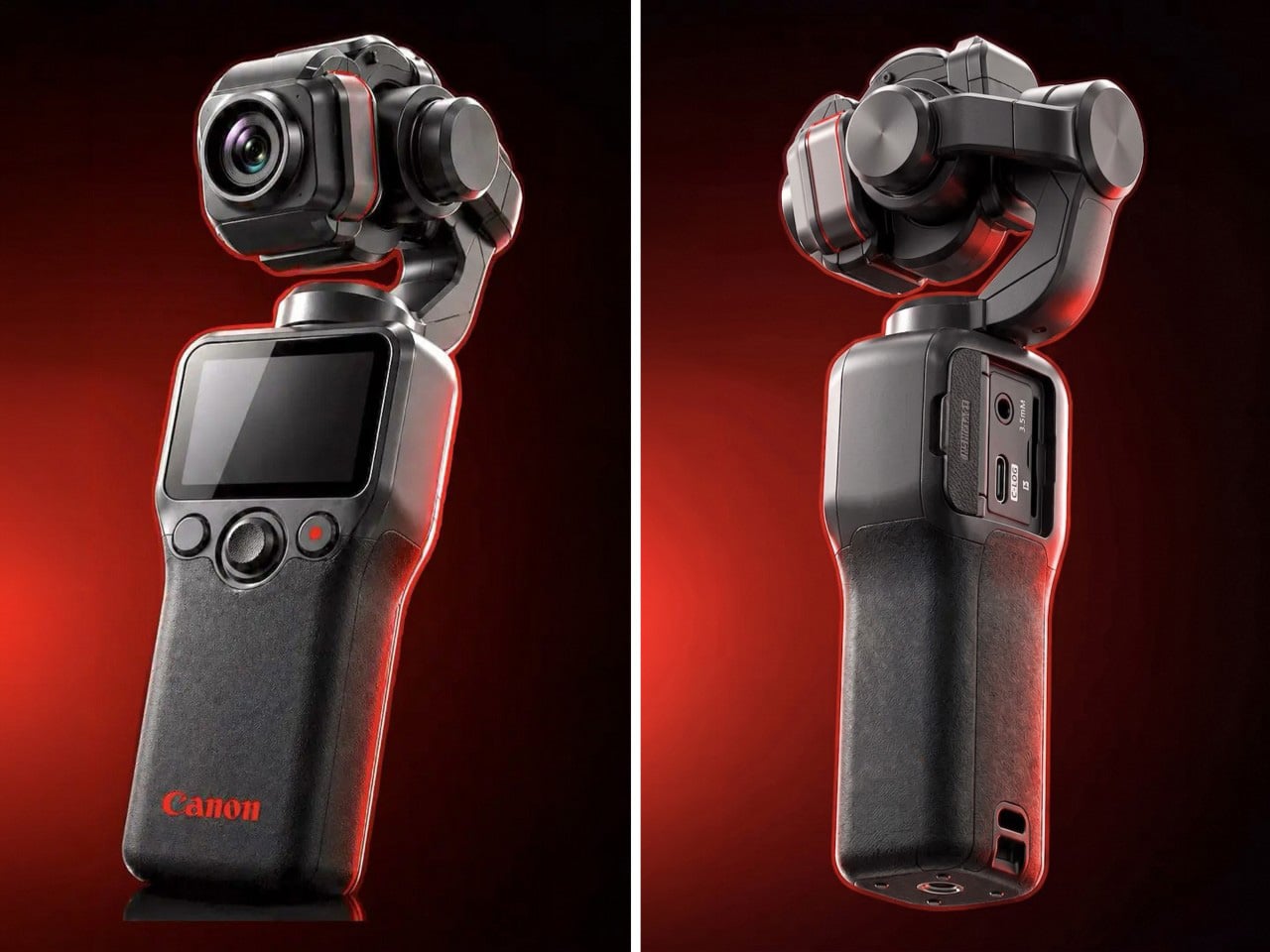
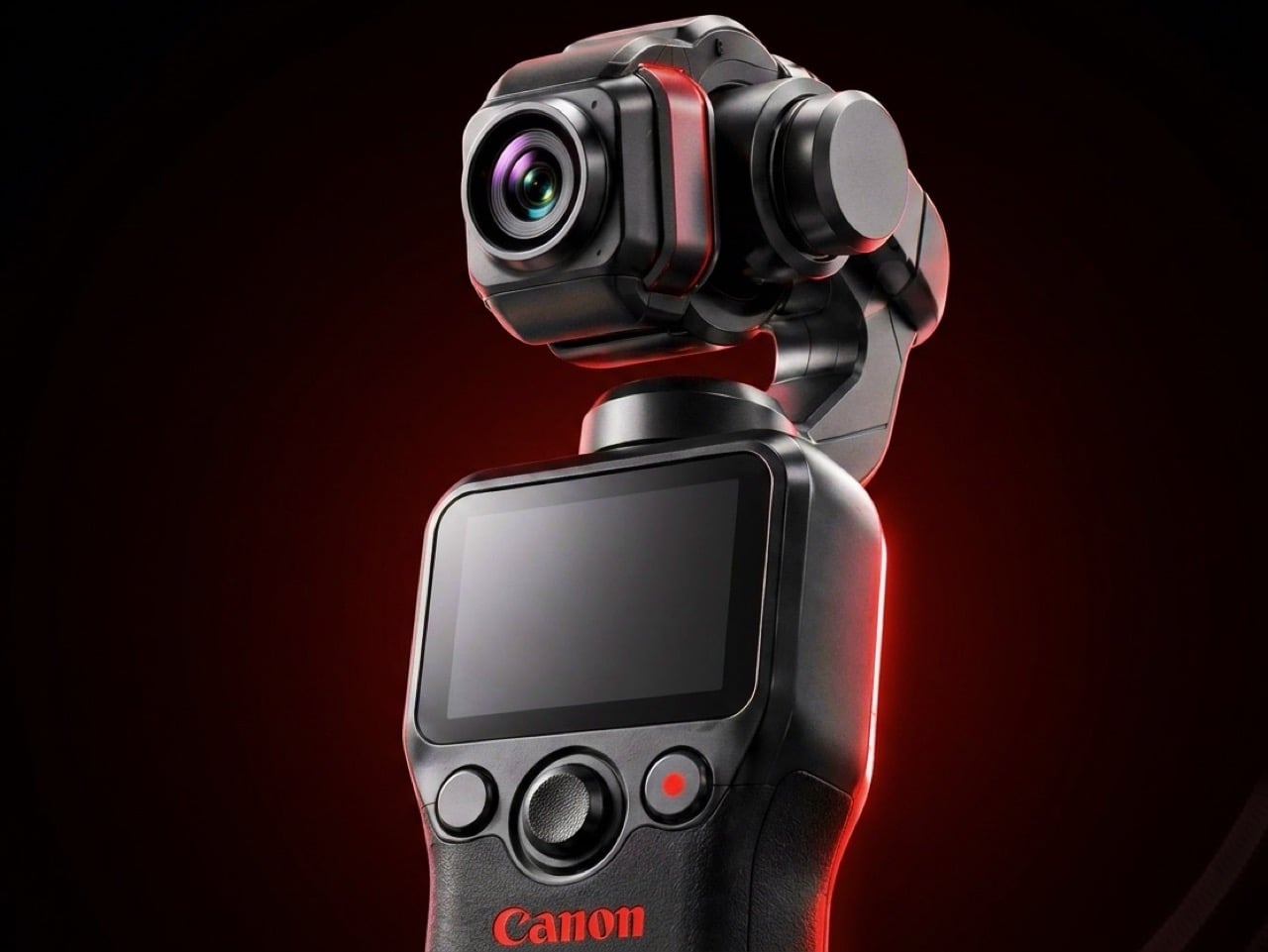
Canon has filed three gimbal camera patents since 2021, each one more practically minded than the last. The April 2026 filing describes a compact handheld body with a fixed lens, three-axis stabilization, a grip-mounted screen, and a folding mechanism that guides the gimbal head into a safe resting position before cutting motor power. That shutdown sequence is the engineering detail most readers will pass over, and the one that signals the most serious product thinking. Mechanical wear from limp-motor shutdowns is the quiet failure mode that causes cameras in this category to age faster than their owners expect.
DJI launched the Osmo Pocket 4 in April 2026 with a 1-inch sensor and 4K at 240fps. Insta360 followed closely. Canon is entering the category with five years of increasingly precise engineering, a fixed-lens form factor that prioritizes portability over interchangeable versatility, and a color science reputation that outdoor and travel shooting consistently validates. No release date has been confirmed and no pricing announced. Based on the patent arc from 2021 through 2026, this reads like a company that has done the homework carefully and is nearly ready to deliver.
What We Like
Smart folding shutdown mechanism addresses a real mechanical failure point that the rest of the pocket gimbal category has consistently ignored
Five-year patent arc spanning increasingly specific engineering detail signals a product shaped by sustained development rather than a reactive market response
What We Dislike
Remains a patent with no confirmed launch date or price, making it the most compelling item on this list and still out of reach
Canon’s track record in premium compact formats suggests a launch price that will require serious consideration before committing
The Right Gear Stays in the Bag Past August
Summer tends to reveal what gear actually holds up. The items that stay in the bag past August are the ones that solve something specific without creating new problems to manage. Not every product on this list is purchasable today. The Canon Gimbal and Camera (1) both exist in the space between a promise and a product. The RedMagic Power Card Pro is close. Everything else is available now and worth the decision.
The best summer kit is not the most comprehensive one. It is the one built around the things you actually reach for. Three of these will make more difference than ten purchased out of obligation. Pick the gaps your current setup has never filled properly, and start there. Everything on this list was designed by someone who looked at a specific problem and decided it deserved a real answer. Summer is a good time to find out which answers fit yours.
The case for a second phone has gotten easier to make over the past few years. Whether it’s for a work line, a travel SIM, or simply a device that doesn’t pull you into a scroll every time you pick it up, the idea of carrying something smaller and simpler alongside a primary smartphone has moved from eccentric habit to reasonable strategy. What that second device should actually be, though, has been harder to settle.
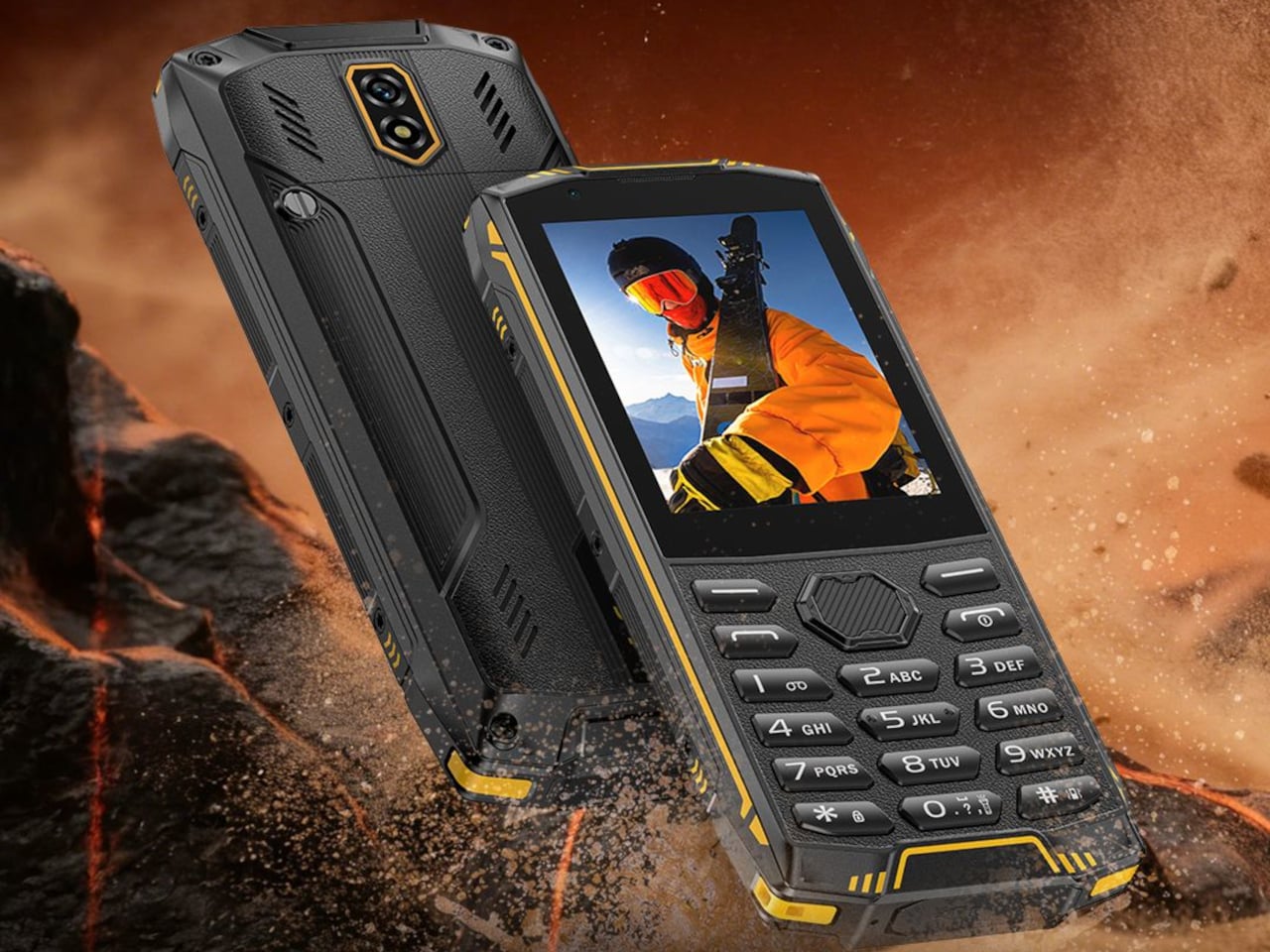
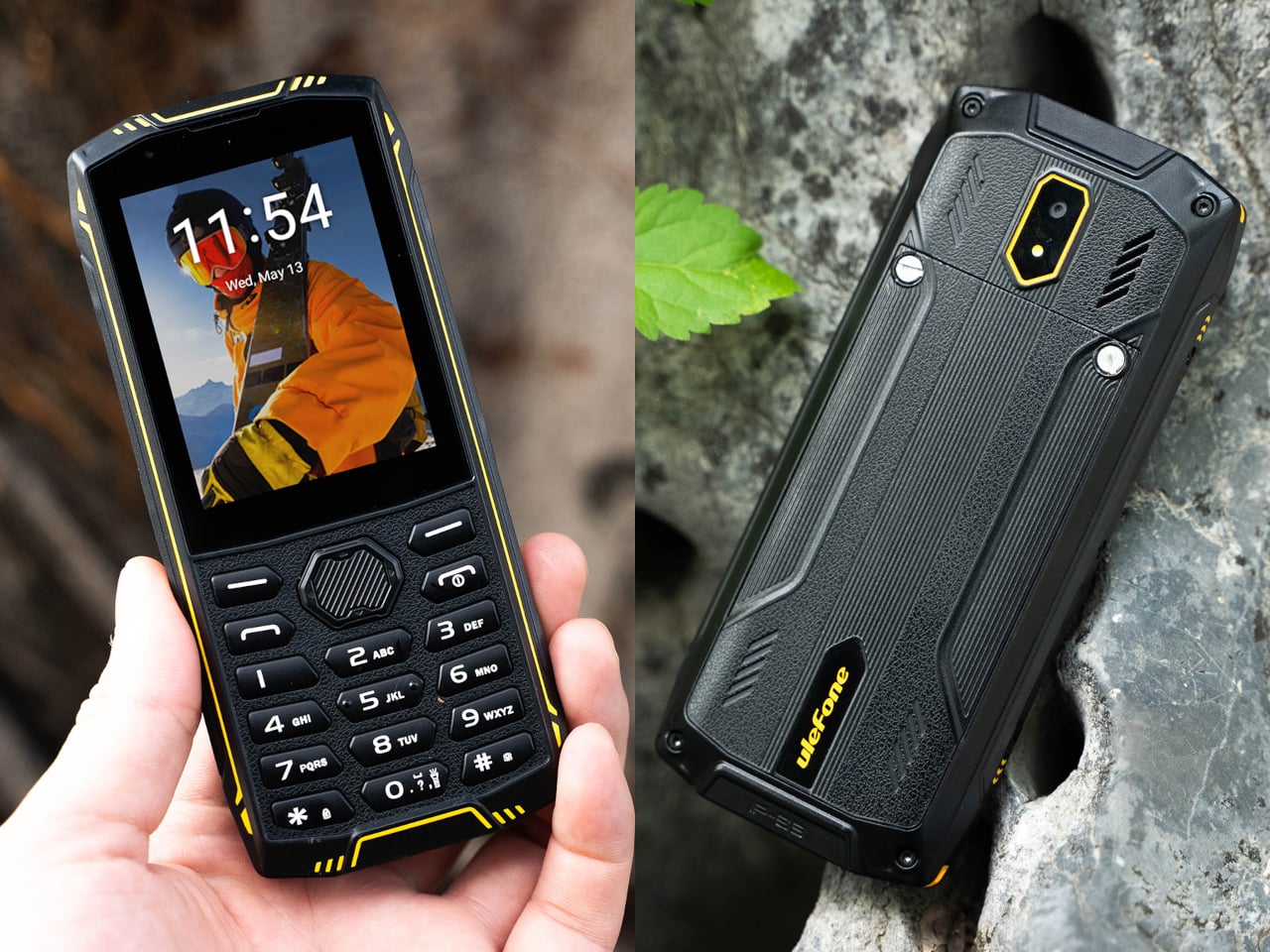
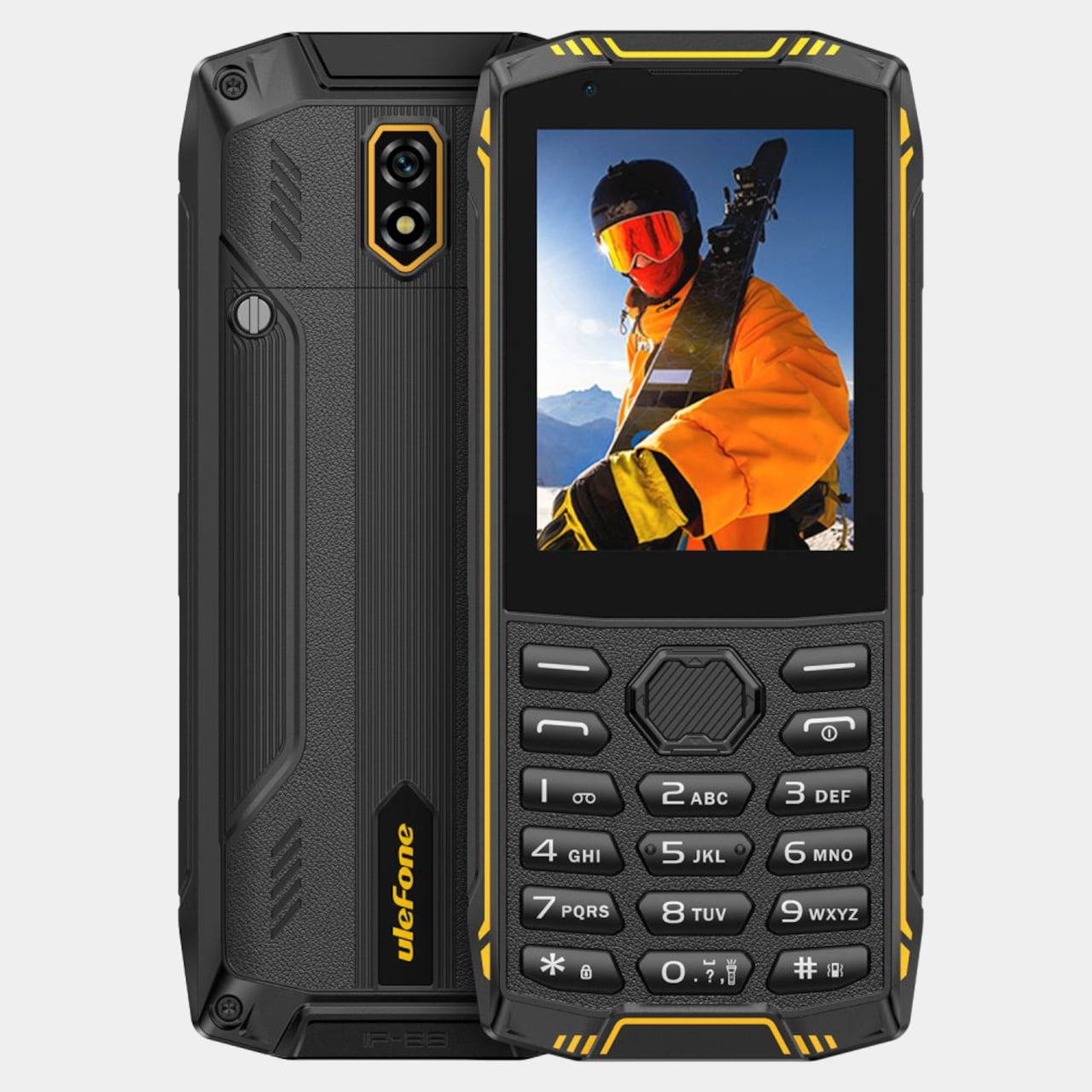
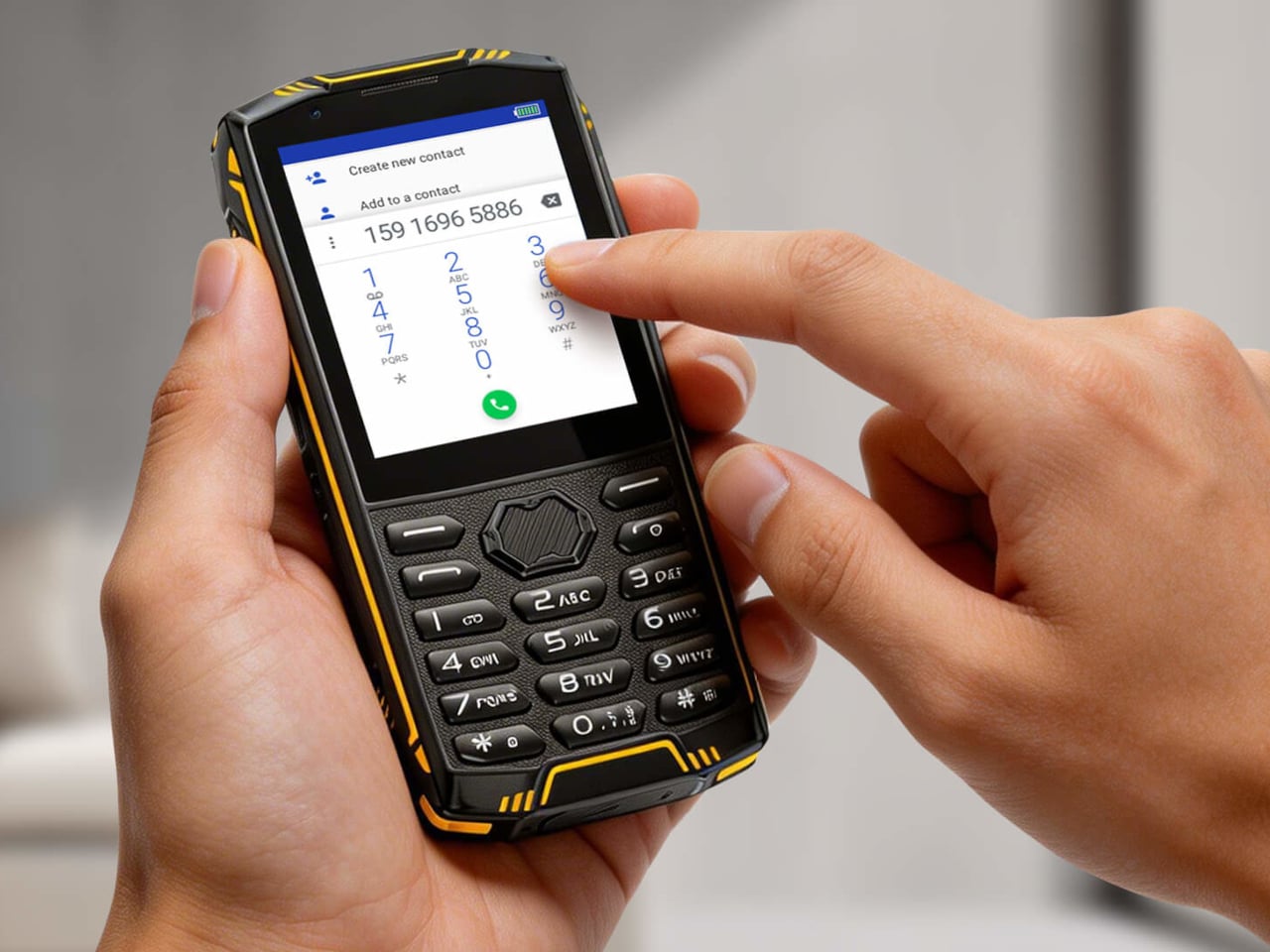
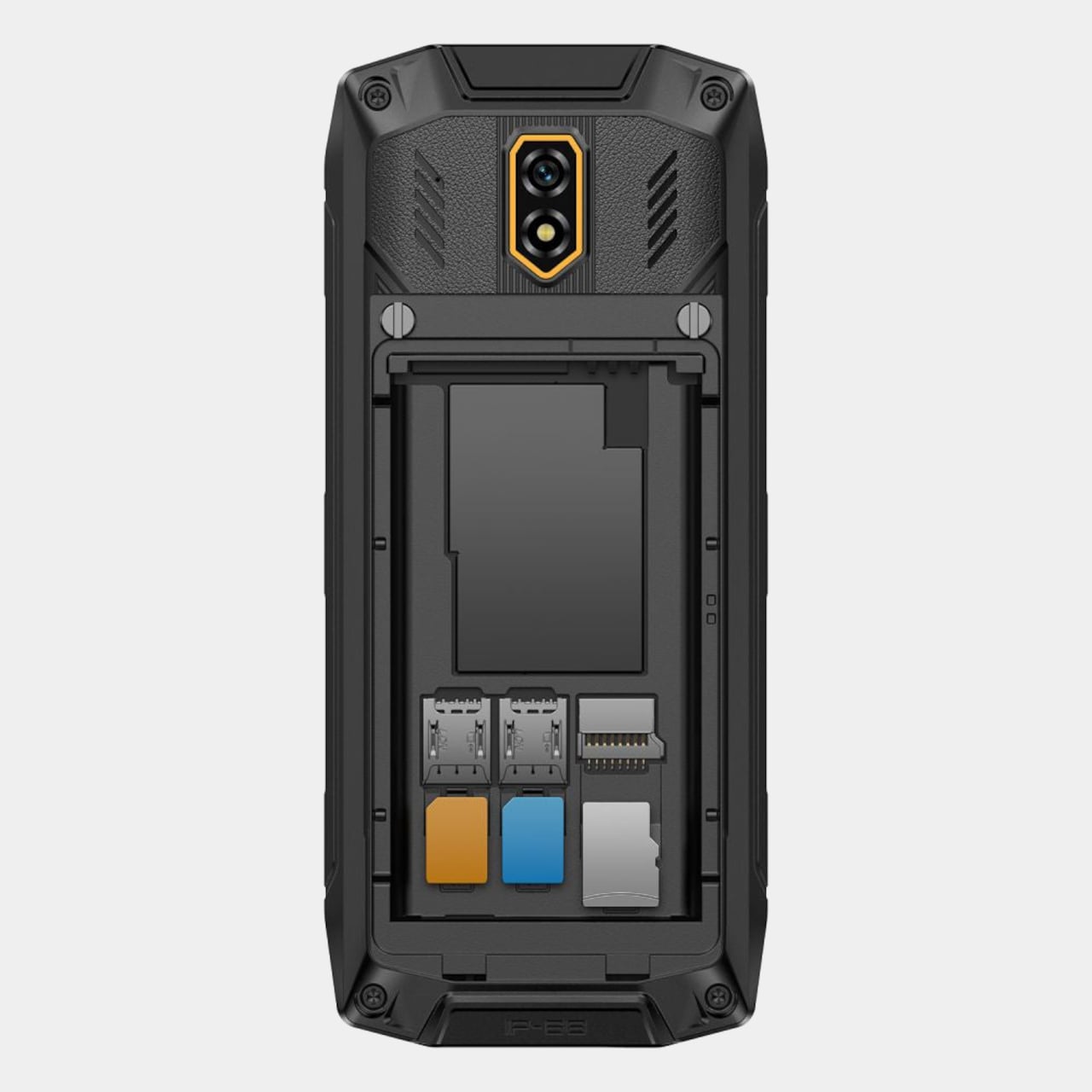
Ulefone’s Armor Mini 5 answers that question with a format that most people assumed was retired alongside early BlackBerries and Nokia candy bar phones. It combines a physical alphanumeric keypad at the bottom with a 2.8-inch touchscreen above it, runs Android 11, and wraps the whole thing in a rugged shell certified to IP68, IP69K, and MIL-STD-810H standards. The result is something that sits deliberately between a feature phone and a smartphone.
The display at 240×320 pixels isn’t going to run any graphically demanding apps, and that’s clearly the point. Ulefone pre-loads WhatsApp and markets the device explicitly as a way to stay in touch with the people you care about while sidestepping the attention-draining machinery of a modern phone. WhatsApp calls, voice messages, and texts work fine at this resolution. Instagram doesn’t, which is by design.
At 142mm x 62mm x 16.5mm and 170g, the Armor Mini 5 fits comfortably in a chest pocket where most modern 6-inch devices wouldn’t. The physical keypad keeps texting fast for anyone comfortable with predictive T9 input, and the number keys double as a quick-dial interface, the kind of interaction muscle memory that never quite goes away once it’s formed. Calls are the first-class experience here, with the touchscreen adding access to apps when needed.
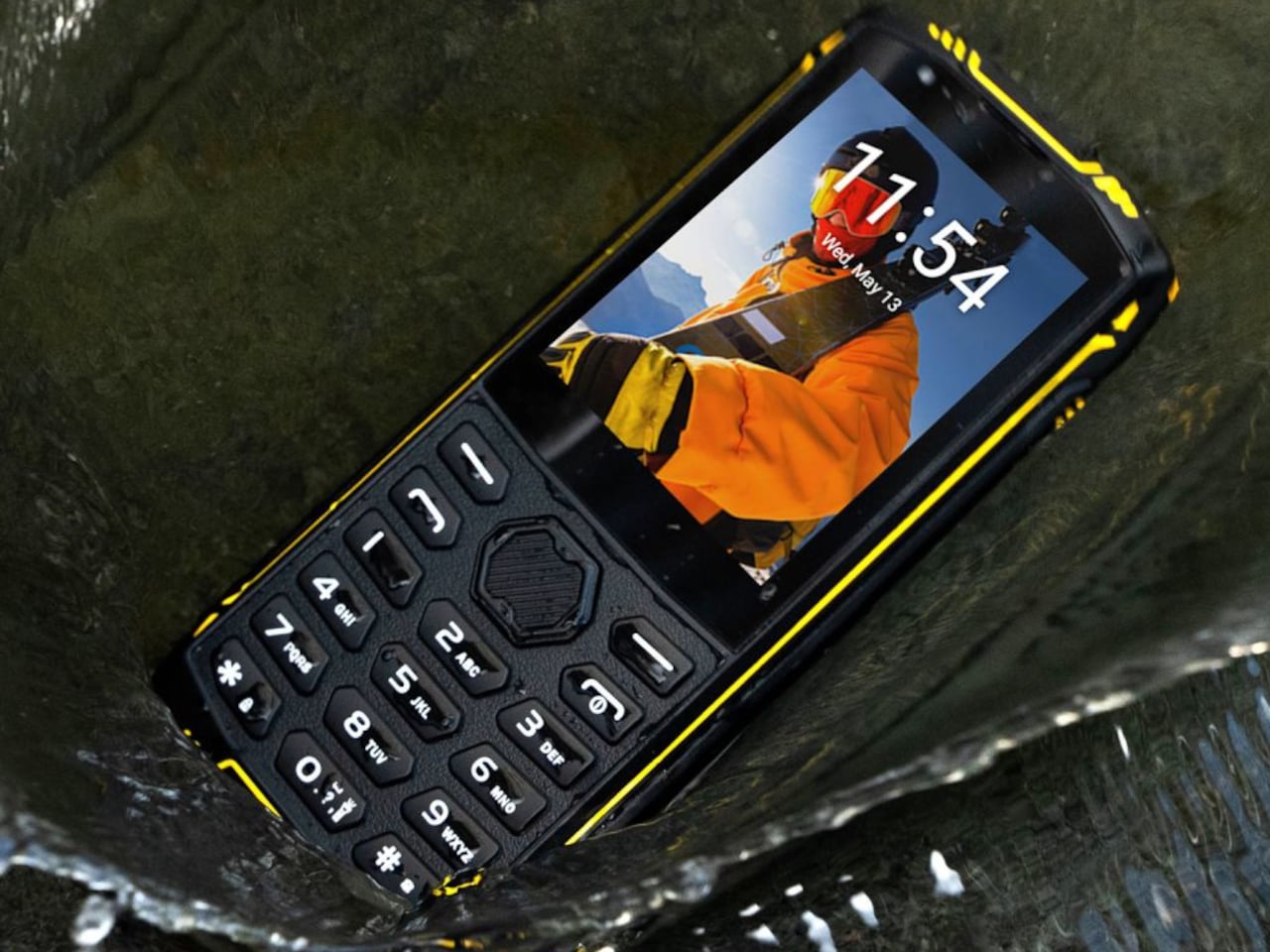
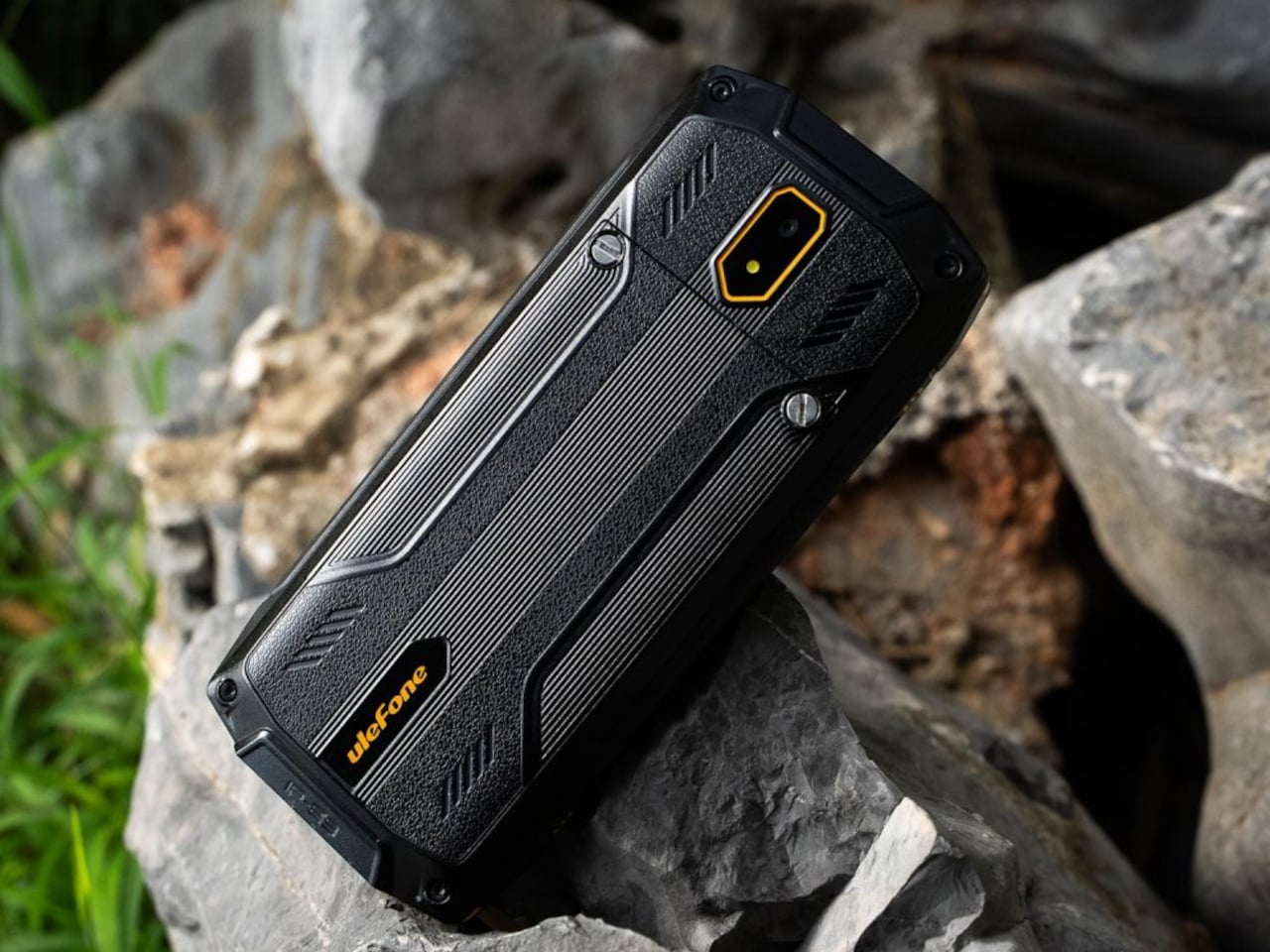
The rugged credentials are serious ones. IP68 means submersion up to 2 m for 30 minutes. IP69K adds resistance to high-pressure water jets, which is the standard applied to equipment that gets hosed down in industrial or outdoor settings. MIL-STD-810H covers drop, vibration, humidity, altitude, and temperature extremes. A phone this small is significantly more likely to be dropped than a larger device, so the reinforced shell earns its place.
Battery management is where the form factor pays its most practical dividend. The 2,500mAh cell powers up to 12 days of moderate use and reaches 311 hours of standby, numbers that come from the low-resolution display and efficient quad-core MediaTek MT6739 chipset rather than from a massive capacity. The battery is also removable, which hasn’t been a feature on most consumer phones for nearly a decade, and it means carrying a spare for genuinely extended off-grid use.
Storage is 8GB internally with 1GB of RAM, paired with a triple-card slot that accepts two nano SIMs alongside a microSD card. For a phone that handles calls, texts, and WhatsApp, 8GB is more than sufficient. The dual-SIM configuration makes it practical as a travel device, keeping a local data SIM and a home number active simultaneously without buying a second handset.
The Armor Mini 5 currently sells for $99.99, down from a regular price of $109.99. For a phone that most people would describe as a deliberate step backward in screen size and software capabilities, it makes a surprisingly coherent argument that fewer features, handled well and built to survive a job site, might actually be the more useful device for what a second phone is actually supposed to do.