Fairbuds XL Gen 2 Drivers Fit Gen 1 Headphones for a €100 Upgrade

Most wireless headphones quietly become disposable. Batteries fade, cushions peel, and people replace the whole thing every few years instead of fixing what broke. Fairphone’s first Fairbuds XL were an outlier, modular and self-repairable with screws instead of glue. Gen 2 is the next step, not a clean break but a refinement that tries to make keeping and upgrading a pair of headphones feel as normal as replacing them.

Fairbuds XL Gen 2 are over-ear headphones that keep the same modular skeleton but add new 40-mm dynamic drivers, refined tuning, and updated materials. Fairphone claims 30 hours of listening, active noise cancelling with ambient mode, Bluetooth or USB-C wired listening, and two colorways, Forest Green and Horizon Black, which deepen the original palette into something a bit more mature and less obviously plastic.

Designer: Fairphone

The drivers are the most interesting change. Gen 2 ships with new 40-mm dynamic drivers and updated tuning for a more natural, detailed sound, but those drivers are also sold separately as modules. Owners of the 2023 Fairbuds XL can open their existing headphones with a screwdriver and slot in the new drivers, keeping everything else while upgrading the sound. That turns the Gen 2 launch into both a new product and a parts catalog.

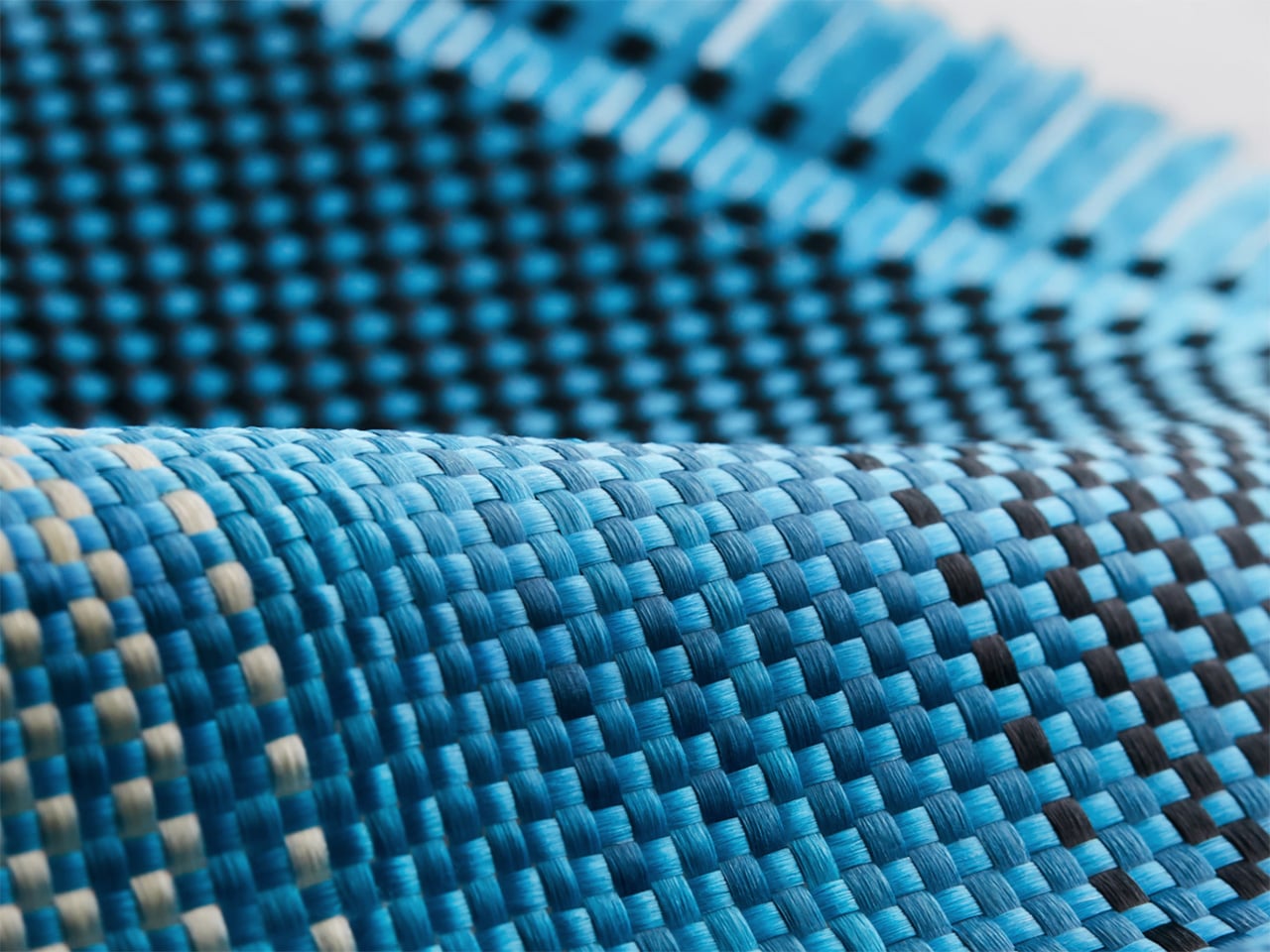
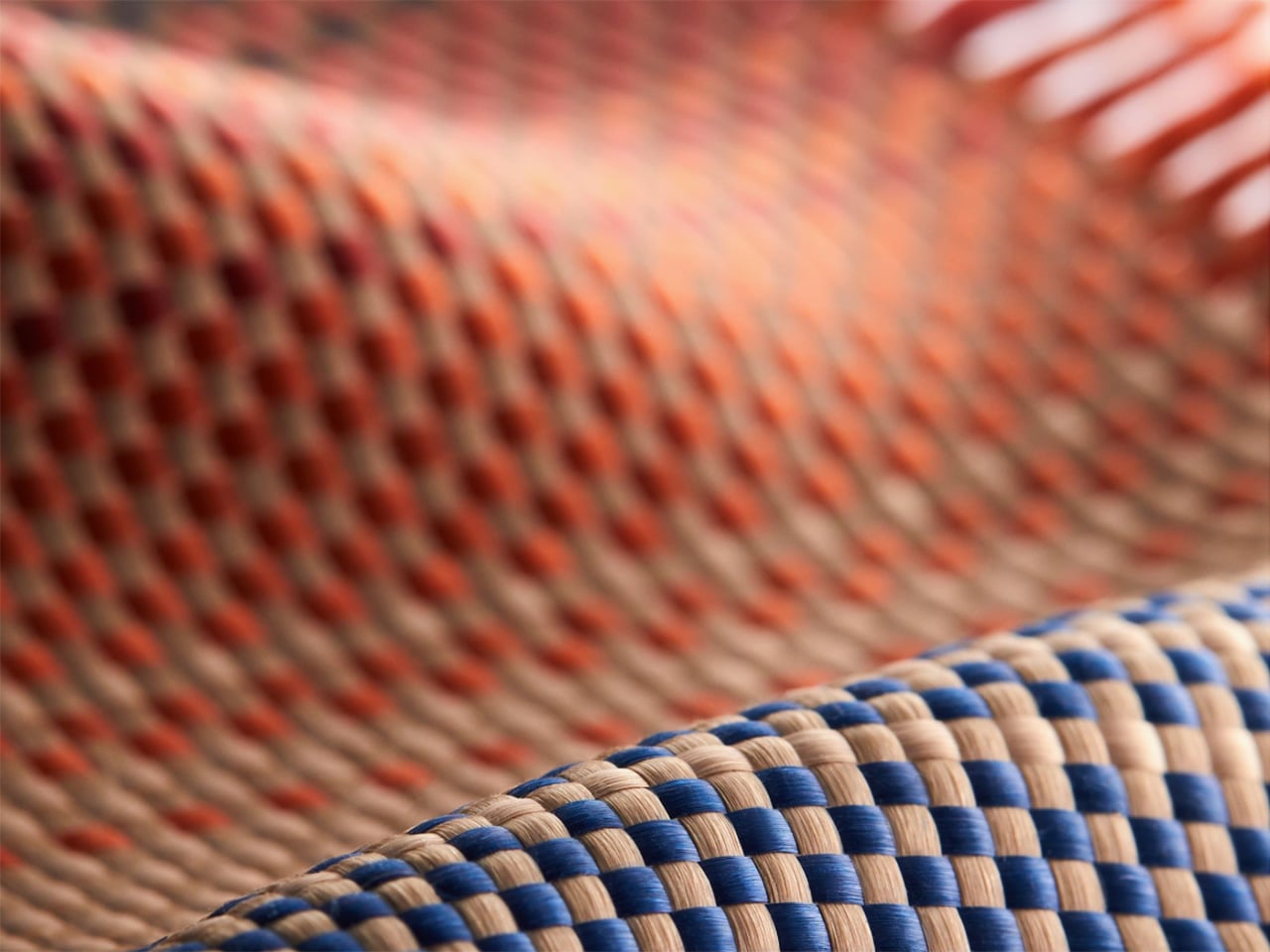
The comfort story centers on materials. The headband now uses a breathable net fabric, and the ear cushions switch to a soft birdseye mesh, which improves comfort during long sessions. The IP54 rating handles dust and splash resistance, and the new material identity balances durability with a sleeker look. The switch from PU leather to mesh is practical for warm environments and long wear, without sacrificing the ability to take everything apart when it wears.

The modular design remains unchanged, with nine replaceable parts, including the battery, cushions, drivers, headband, and covers, all held together with screws and no glue. The battery is easily removable, the three-year warranty extends the standard two years, and the LONGTIME™ label certifies products designed for longevity and repairability. The goal is to keep components in use instead of sending whole headphones to the landfill when one piece fails.

Advanced noise cancelling with a switchable ambient mode, an upgraded Fairbuds app with new presets and customizable EQ, and Bluetooth with dual-point connectivity let you move between phone and laptop. You can also plug in over USB-C for battery-free listening. Gen 2 adds auto power-off after 30 minutes of inactivity with ANC off, saving battery and extending runtime per charge, which is a small but thoughtful improvement.

Most Gen 2 products pretend Gen 1 never happened. Fairbuds XL Gen 2 ships drivers that fit both, which means the launch doubles as a parts drop for anyone who bought the original two years ago. That feels unusual enough to notice, especially at €249 for a full headset or roughly €100 to just swap the drivers. Whether or not that changes anyone’s mind about buying repairable gear, it at least shows that upgrading can be designed in from the start instead of being treated as impossible or inconvenient.

The post Fairbuds XL Gen 2 Drivers Fit Gen 1 Headphones for a €100 Upgrade first appeared on Yanko Design.
CIVIVI Elementum II EDC Knife Opens With One Hand for Holiday Wrapping Madness

Holidays mean wrapping presents, slicing tape, and trimming ribbons, and your fingers pay the price. The CIVIVI Button Lock Elementum II makes these tasks effortless with a sharp, pocket‑friendly blade that opens with one hand. It is the kind of tool that disappears in your pocket until the moment you actually need something sharper than a house key.

This flipper knife is built for those small frictions. It is a compact everyday carry folder with a blade just under three inches, a button lock mechanism that feels intuitive, and G10 handles that stay friendly rather than aggressive. The design stays approachable, with rounded lines and a drop point blade that does not announce itself across a room or make anyone uncomfortable at the office or a family gathering.

Designer: CIVIVI

Click Here to Buy Now: $57.38 $76.50 (25% off). Hurry, get a free Christmas Stocking with order over $29! Deal ends in 48-hours.

What gives the knife its practical edge is Nitro V blade steel. It is a nitrogen-enriched stainless that balances toughness, corrosion resistance, and edge retention without becoming fussy to maintain. You can slice an apple, cut wet cardboard, or trim paracord without worrying about rust. It makes for a great gift that will be used daily, not forgotten in a drawer.

Here’s a quick look at what you’ll be getting with the CIVIVI Button Lock Elementum II:

  • Overall Length: 7.06 inches
  • Knife Weight: 3.12 oz
  • Blade length: 2.96 inches
  • Blade steel: Nitro-V
  • Blade shape: Drop Point
  • Blade Grind: Hollow
  • Blade Hardness: 58-60 HRC
  • Pocket Clip: Tip-Up, Right Carry

The proportions feel right for daily carry. The blade measures 2.96 inches, the overall length sits around seven inches open, and the handle thickness is slim enough to ride comfortably in a pocket without printing through fabric. G10 scales on variants like the OD green model offer textured grip, while stainless liners add structure. A deep carry pocket clip keeps it low profile, so it disappears until needed at a desk or outdoors.

The button lock is the centerpiece. Paired with a pivot running on caged ceramic ball bearings, the action feels smooth and fidget-friendly. A press of the button releases the blade, letting it swing closed with a light shake of the wrist, making one-handed use genuinely easy. The spring under the button resists accidental opening, staying secure in the pocket while still satisfying to deploy when wrapping presents or cutting rope.

Everyday moments and holiday tasks blur together naturally with a knife like this. Slicing packing tape on deliveries, trimming threads on a sweater, cutting twine for wreaths, or sharpening a pencil all benefit from a sharp, accessible blade and hollow grind that handles both fine slicing and light utility. The drop point shape stays versatile, and the black stonewashed finish on some variants hides scratches, so it does not look worn after a few weeks.

What makes the CIVIVI Button Lock Elementum II work as a gift is how approachable it feels. The design stays simple and functional, with controls that make sense even to someone whose only knife has been a keychain multitool. CIVIVI offers a range of handle materials and colors, from G10 to carbon fiber and Damascus variants, so matching it to a personality is straightforward. This season feels like the right moment for something that earns its pocket space daily rather than sitting unused by February.

Well-designed tools change how you move through small moments, especially during busy times when everything from gift wrapping to cooking feels slightly more frantic. The CIVIVI Button Lock Elementum II feels like the result of quiet decisions about steel, mechanics, and ergonomics, all aimed at making a knife people actually enjoy carrying. That mix of practicality and satisfaction is what turns it from another folding blade into something that becomes part of the routine, in your pocket or someone else’s.

Click Here to Buy Now: $57.38 $76.50 (25% off). Hurry, get a free Christmas Stocking with order over $29! Deal ends in 48-hours.

The post CIVIVI Elementum II EDC Knife Opens With One Hand for Holiday Wrapping Madness first appeared on Yanko Design.

This teal Nothing Phone 3a Community Edition looks like a Game Boy for grown‑ups

Nothing just pulled the curtain back on the Phone 3a Community Edition, a limited 1,000-unit drop built around a vibrant teal design inspired by late-90s gaming hardware. This special release is the result of a nine-month collaboration between Nothing’s internal teams and four winners from its community design project. The phone itself is a visual statement, swapping the brand’s typical monochrome palette for a look that feels more playful and expressive. It’s a collector’s piece for those who appreciate when a company lets its community take the wheel, resulting in a product that feels both nostalgic and distinctly modern.

Underneath the colorful new shell, the device carries internals identical to the standard Phone 3a. It is powered by a Snapdragon 7s Gen 3 chipset and features a 6.77-inch 120Hz AMOLED display with 2,160Hz PWM dimming for smooth visuals. The camera system includes a 50MP main sensor with OIS, a 50MP 2x telephoto lens, and an 8MP ultrawide. A 5,000mAh battery with 50W wired charging handles power. The single 12GB/256GB configuration is priced at £379, matching the top-tier regular model and reinforcing that this is a design-focused release, not a spec upgrade.

Designer: Emre Kayganacl

The aesthetic is where the Community Edition truly sets itself apart. The translucent teal back, designed by winner Emre Kayganacl, reveals internal components arranged as clean geometric layers. This gives the rear a deliberate, compositional quality rather than a raw, tech-exposed look. The horizontal camera module sits perfectly centered, with Nothing’s signature glyph light arcs wrapping around it to signal notifications. Small, scattered circles of yellow and magenta add playful contrast, giving the phone a character reminiscent of a limited-edition handheld console without feeling like a simple throwback.

This cohesive design language extends to the front of the phone. The software experience includes an exclusive teal-gradient wallpaper and a custom lock-screen clock designed by community winner Jad Zock. The rounded, monochrome icons of Nothing OS float above the colorful background, tying the user interface directly to the physical hardware. This thoughtful integration ensures the device feels like a single, unified object. It’s a complete visual package that considers how the phone looks both when the screen is on and off, creating a more holistic product experience.


The project began with over 700 submissions from Nothing’s community, with winners selected for hardware design, accessories, software visuals, and marketing. This co-creation process is central to the phone’s story, representing a deeper collaboration than the company’s first community project. For those hoping to get one, registration is open until December 11, with a limited sales window opening on December 12 through Nothing’s website. It’s a rare opportunity to own a device that is as much a design experiment as it is a daily driver.

The post This teal Nothing Phone 3a Community Edition looks like a Game Boy for grown‑ups first appeared on Yanko Design.
F.P. Journe Turns 86 Carats of Rubies Into One Watch

Most gem-set watches treat stones as decoration. F.P. Journe’s Tourbillon Souverain Vertical Joaillerie Rubis treats them as the entire point. This unique piece took eight years to build because finding 93 rubies that match perfectly in color, then cutting 61 carats of material away to achieve that uniformity, requires a timeline most manufacturers would never approve. The result is 25 carats of baguette rubies wrapped around a platinum case that was engineered specifically to hold them.

Designer: F.P. Journe

Jeweled complicated watches have drawn serious collectors since Geneva’s golden era of the late twentieth century. Brands including Patek Philippe and Piaget established the category, and demand has only intensified over the past decade as colored stones moved from novelty to centerpiece. But what F.P. Journe delivered here operates on a different scale entirely. This is closer to a wearable ruby sculpture than a watch that happens to feature gems.

Image source: watchesbysjx.com

The arithmetic tells you everything. Eighty-six carats of rough ruby entered the workshop. Twenty-five carats survived. The remaining 61 carats were ground away in pursuit of identical size, clarity, and saturation across every stone. That ratio of loss would kill most projects before they started. F.P. Journe spent nearly a decade sourcing and recutting until the math worked.

The Case as Canvas

Every exterior metal surface carries rubies. Forty baguette-cut stones sit channel-set in the bezel, forming an unbroken red circuit around the dial. The lug hoods hold another 16 baguettes arranged in a fanned configuration that draws the eye outward and exaggerates the watch’s footprint on the wrist. The case band wraps the mid-section with 37 stones, the largest in the entire build.

Image source: watchesbysjx.com

F.P. Journe describes those 37 case-band rubies as the largest baguette-cut stones ever set in a watch. The claim matters because ruby’s natural crystal structure favors oval or cushion cuts. Producing elongated baguettes from material that resists that shape required sourcing oval-cut rubies of appropriate dimensions, then recutting them to fit the Tourbillon Vertical geometry. The case itself grew 2mm wider than the standard model specifically to receive stones of this size without leaving visible gaps between settings.

Image source: watchesbysjx.com

What you notice immediately is the seamlessness. No color variation breaks the surface. No pink tone drifts into orange. The 93 stones read as a single continuous shell rather than a patchwork of individual gems. Achieving that uniformity across bezel, lugs, and band demanded precise color matching at a level most jewelers would consider impractical.

That precision explains the eight-year development cycle. One stone that skews slightly warm or slightly cool would fracture the visual coherence of the entire case. Patience was not optional here.

Why Average Stone Weight Matters

Numbers put this in perspective. Each ruby on this watch averages 0.269 carats. Typical melee diamonds used in gem-set watches weigh under 0.02 carats and cost almost nothing because they trade as bulk commodities.

Image source: watchesbysjx.com

Patek Philippe’s fully set Grandmaster Chime carries 30.16 carats of baguette diamonds distributed across 392 stones, averaging 0.077 carats each. F.P. Journe’s diamond version of this same case averages 0.242 carats per stone. The ruby variant exceeds even that figure because ruby carries roughly 1.14 times the density of diamond: identical physical dimensions yield higher carat weight.

Image source: watchesbysjx.com

A Dial Built From Stone

The dial shifts the ruby theme into different territory. Instead of faceted gems, F.P. Journe selected cœur de rubis, a mineral combining red corundum growths with green zoisite matrix. The surface reads as ruby embedded in raw rock, textured and organic rather than polished to clarity.

Visually, the contrast works. The mottled dial recedes behind the geometric precision of the baguette case setting rather than competing with it. Thematically, the choice keeps everything on the watch connected to ruby in some form.

Image source: watchesbysjx.com

Machining corundum presents real difficulty. The material sits at 9 on the Mohs scale, just below diamond, and its brittleness makes drilling apertures for hands and the tourbillon window a high-risk operation. Scrap rates on dials like this run steep, adding another dimension of rarity to an already singular object.

F.P. Journe used ruby heart dials on the final 20-piece run of the Tourbillon Nouveau, so this represents continuation rather than experiment.

The Movement Behind the Gems

Caliber 1519 sits beneath the ruby exterior. This hand-wound movement carries one of F.P. Journe’s signature complications: a constant-force device built around a titanium blade-spring remontoir that François-Paul Journe designed in 1983 at the request of collector Eugene Gschwind.

Image source: watchesbysjx.com

The constant-force mechanism produces what the brand calls natural jumping seconds. The seconds hand advances in discrete one-second increments without requiring a separate dead-beat module. You see the hand step crisply rather than sweep, which provides immediate visual confirmation that the remontoir is functioning and makes accuracy checks against a reference signal straightforward.

Image source: watchesbysjx.com

The tourbillon departs from convention by rotating 90 degrees from the standard orientation, linked through a crown gear. This vertical positioning keeps the balance wheel perpendicular to most watch movements, theoretically reducing rate variation between dial-up, dial-down, and crown positions. Whether that translates to measurable real-world accuracy gains depends on wearing habits, but the engineering ambition registers clearly. Total power reserve runs 80 hours, with a guaranteed 42-hour chronometric window during which the constant-force system operates at full effectiveness.

Image source: watchesbysjx.com

Positioning the Piece

The crocodile strap intentionally recedes, letting the case dominate. The platinum folding clasp does not: it carries 18 additional baguette-cut rubies, extending the red-on-platinum language to every visible metal surface including the underside of the wrist.

Water resistance registers at 30 meters, a specification that signals jewelry-object status rather than any expectation of practical use. This watch exists for controlled environments, not daily wear.

F.P. Journe has not published pricing, listing availability only through boutiques with figures disclosed upon application. Given the material costs, the eight-year timeline, and the unique-piece designation, the number will occupy territory where inquiring about it implies you probably cannot reach it. More relevant than the price is what this watch demonstrates: how far an independent maker will push when schedules, budgets, and conventional production logic become secondary to a singular creative vision.

F.P. Journe Tourbillon Souverain Vertical Joaillerie Rubis

  • Case: 44mm × 13.76mm, platinum
  • Crystal: Sapphire
  • Water Resistance: 30m
  • Movement: Cal. 1519, manual wind
  • Functions: Hours, minutes, natural jumping seconds, power reserve, constant force device, tourbillon
  • Frequency: 21,600 vph (3 Hz)
  • Power Reserve: 80 hours total, 42 hours chronometric
  • Strap: Crocodile with ruby-set folding clasp (18 baguette-cut rubies)
  • Availability: Unique piece, F.P. Journe boutiques only
  • Price: Upon application

The post F.P. Journe Turns 86 Carats of Rubies Into One Watch first appeared on Yanko Design.
Japanese Startup Brings Wasabi Farming to Shipping Containers

In a shipping container parked next to Macnica’s headquarters in Yokohama, an innovative revolution in Japanese agriculture is taking root. Inside the 40-foot steel box, 1,800 premium wasabi plants thrive under LED lights, nourished by circulating purified water and monitored by AI-powered sensors. This isn’t a futuristic concept. It’s a solution to a very real crisis threatening one of Japan’s most iconic flavors. Tokyo-based AgriTech startup NEXTAGE has partnered with global technology firm Macnica to develop the Wasabi Cultivation Module. This container-based plant factory allows wasabi to be grown anywhere in the world.

The innovation comes as Japan grapples with a growing wasabi shortage driven by multiple converging pressures. Climate change, declining agricultural workers, and the strict environmental demands of traditional cultivation have created a perfect storm for this notoriously temperamental crop. Wasabi has always required clean water, precise temperature control, and meticulous soil management. Traditionally grown in cool mountain streams, the plant is particularly vulnerable to typhoons and floods. Climate change has intensified these challenges, threatening the survival of historic wasabi farms that have operated for generations. Global demand continues to surge alongside the worldwide popularity of Japanese cuisine, but supply has struggled to keep pace.

Designer: Nextage & Macnica

The cultivation module addresses these vulnerabilities through total environmental control. Each container houses five-tiered shelves equipped with sophisticated systems, including air conditioning, dehumidifiers, LED lighting, water temperature controllers, and carbon dioxide management devices. Cameras and sensors throughout the container continuously monitor conditions, tracking everything from temperature fluctuations to door usage that might affect air circulation. This data feeds into an AI-powered remote monitoring system, allowing NEXTAGE experts to provide real-time cultivation guidance to operators who may have no prior farming experience. The technology packages decades of specialized knowledge into an accessible, turnkey solution.

Perhaps most impressive is the dramatic acceleration in harvest times. The module cultivates Matsuma Wasabi, a premium variety from Wakayama Prefecture that is highly prized in high-end restaurants for its balanced aroma, spiciness, sweetness, and distinctive flavor profile. In natural conditions, this exceptional variety requires 20 to 24 months to reach maturity. Inside the precisely controlled environment of the cultivation module, the time drops to approximately 10 months. This dramatic reduction doesn’t compromise quality but rather optimizes growth conditions that would be impossible to maintain consistently in traditional outdoor cultivation, where weather and seasonal variations create unavoidable challenges.

Macnica became the pioneering customer in December 2023, installing a module at its Shin-Yokohama headquarters as both a demonstration facility and agricultural innovation laboratory. The semiconductor and IT company brought substantial technical expertise to the partnership, contributing specialized knowledge in growth visualization systems, communication technology, and customized LED development specifically designed for plant cultivation. In January 2024, following months of refinement and testing, the two companies officially launched commercial sales of the modules to businesses and agricultural entrepreneurs. NEXTAGE founder Takuya Nakamura, who started the company after witnessing the devastation of traditional wasabi fields, secured Series A funding in October 2024 to accelerate development of the automated cultivation technology.

The vision extends far beyond Japan’s borders. NEXTAGE’s ambitious slogan, “bringing ALL JAPAN MADE plant cultivation technology to the world,” signals plans to export this innovation globally. For high-end sushi restaurants that have long depended on limited supplies of fresh wasabi, the implications are transformative. The day may soon come when chefs grate wasabi grown in a container just blocks away, preserving the pungent, complex flavors that define authentic Japanese cuisine while building resilience into a supply chain threatened by our changing climate.

The post Japanese Startup Brings Wasabi Farming to Shipping Containers first appeared on Yanko Design.
These Official Squidward Crocs Will Repel Every Adult Woman In A 10-Mile Radius

Do I have a problem with Squidward? Fundamentally, no. Emotionally, maybe. He could be less of a buzzkill, but he’s truly a model neighbor and a great employee at Krusty Krabs. But do I have a problem with Squidward-themed Crocs? Overwhelmingly. I’m a Croc evangelist for life, but these footwear are so incredibly niche I wouldn’t want to be caught dead wearing them. At the same time, I want to be around people who wear then just for the opportunity to judge them!

So, Crocs has been launching Spongebob-themed footwear to mark the launch of the latest movie, and while the company already unveiled Spongebob and Patrick-inspired clogs, they decided to keep the best (subjective, of course) drop for the absolute end. You see, the Spongebob and Patrick ones look fairly benign… but the Squidward clogs, dropped today, quite literally look like you’ve slipped your feet into a hole in Squidward’s skull. The details aren’t subtle at all. Each clog has an immaculate representation of Squidward’s face, with its skeptical stare and raised eyebrow, along with that nose only a mother can love.

Designer: Crocs

Let me reiterate. I love Spongebob as a franchise. I like Squidward as a character. But these shoes are, well, repellent to say the least. Don’t expect to score any ladies with these, but if you’re a diehard fan of the franchise, it’s entirely within your rights to collect these limited-edition pairs, and probably even wear them in support of the movie, which launches in May next year.

The entire croc is molded in the iconic Squidward pale green, with the strap being white and sporting an anchor symbol on the pivot-point. Available in unisex sizes, the shoes will officially hit the shelves on December 11th, with a price tag of $80. Am I talking smack about these shoes just so that I can convince enough people to NOT buy them so that I can get a shot at owning them? Probably, you’ll never know.

Also hitting the shelves tomorrow are the Spongebob and Patrick Star clogs, in their iconic colors and designs. The Spongebob one comes with arms on the shoes’ body, along with a belt running around the midsole to denote Spongebob’s iconic pants. The insole has Spongebob’s face printed on it, so the shoes look like him from the top. Similarly, even the Patrick Star ones come with Jibbitz that are typical to the starfish, like a rock, a minifigure of Patrick himself, a bottle of sunscreen, and a jar of mayo. The straps read Patrick’s famous lines ‘Is Mayonnaise An Instrument?’, and the midsole (like Spongebob) features the green and purple print from Patrick’s pants.

The post These Official Squidward Crocs Will Repel Every Adult Woman In A 10-Mile Radius first appeared on Yanko Design.
These Keycap-Inspired Rectangular Headphones Make Nothing’s Design Look Boring

We knew Nothing was launching headphones this year, most of us imagined glyphs on them, but Nothing pulled a fast one by choosing a different design direction to stand out amongst a sea of headphones. Instead of the conventional circular or capsule-shaped cups, they unveiled rectangular headphones that took the world by surprise. A lot of us (me included) had reservations on the design, but if anything, the rectangular format was unique enough to really make an impact. The problem? I didn’t associate that design language with Nothing as a brand.

Now, if we’re designing headphones that are just meant to be different, these keycap-inspired headphones really take the cake. Designer Tougou Daciqeng calls it “Cross-border integration of tactile design and auditory technology”, which is just fancy designspeak for ‘we drew a parallel between two senses – touch, and sound’. The result is a pair of headphones that welcome your ears, but also your eyes and hands. That keycap-inspired can on the outside just begs your fingers to touch touch it, sometimes even attempt pressing it.

Designer: Tougou Daciqeng

The result is a fun design language that I don’t attribute to Nothing, but I definitely do to a brand like Teenage Engineering. Fun, funky designs, vibrant and subdued color options, and a silhouette that feels unmistakable. Teenage Engineering doesn’t lean into hyper-ergonomics, everything they make has this industrial, engineering-driven touch, resulting in very soft curves that often punctuate otherwise straight lines and geometric forms.

The beauty of such a pair of headphones lies in not its sound, but its appearance. Sure, sound is arguably the most important feature of a headphone, but what we’re looking at here is purely conceptual, so we’ve only got visuals to go by. To that end, the Keycap Headphones are a visual masterclass. They come with rectangular earcups, but the cutout is still elliptical, allowing them to fit around your ear snugly.

Everything else revolves around that key-shaped surface on the sides. Styled like a Cherry key (although a little different and a lot larger), this surface lets you control the playback through taps, swipes, etc. I’d have preferred a nice clicky key, but we work with what we’ve got. There’s one button on the top of the right earcup for powering on and off the earphones. Everything else can be done through the faux keys on the sides.

The designer definitely gets that a clicky key would be better than a touch surface, which is why they’ve built haptics into the earphones. Press the surface and a click plays through your ear, giving you a satisfactory sensory experience that affirms a key press. The rest of the headphones are fairly uncomplicated. A telescopic headband, a fairly repairable design thanks to exposed countersunk screws on the cans (for that industrial aesthetic), and USB-C charging on the bottom. The headphones come in 5 color variants too, including two metallic finishes, a retro off-white and a classic grey, and finally a fairly CMF-ish orange that’s definitely going to grab a few eyeballs.

The post These Keycap-Inspired Rectangular Headphones Make Nothing’s Design Look Boring first appeared on Yanko Design.
The Pebble Index 01 Strips the Smart Ring Down to a Single Gesture of Capture

A ring that does nothing but listen. In a category defined by biometric excess, the Pebble Index 01 arrives with radical minimalism: one button, one microphone, no display, no haptic motor, no health sensors whatsoever. Eric Migicovsky, the designer who created the original Pebble smartwatch before selling it to Fitbit, has returned with a device that treats subtraction as its primary design gesture. The result is a stainless steel band that costs $75 and exists for exactly one purpose: catching thoughts before they vanish.

The Form Language of Refusal

Where contemporary smart rings pile sensors beneath the surface, the Index 01 presents a deliberately quiet silhouette. The body arrives in stainless steel with three finish options: a matte black that absorbs light, a polished silver that catches it, and a polished gold that warms skin tones. Sizing spans from 6 to 13, covering the full range of adult finger dimensions. Submersion tolerance extends to one meter of depth, accommodating daily encounters with water but drawing the line at sustained swimming. A single tactile control rises slightly from the band surface, positioned where the thumb naturally falls during a closed fist. The metal arrives cool against skin, then gradually matches body temperature until the ring becomes thermally invisible.

This external button represents the entire interaction vocabulary. Press and hold to record. Single press for a customizable action. Double press for another. The tactile click either happens or it does not. Migicovsky designed this mechanical simplicity to eliminate the software failure states that plague capacitive touch surfaces. A button pressed is a button registered. The interaction model carries the directness of a light switch, with none of the ambiguity that haunts gesture-based interfaces where a swipe might be a scroll or a tap might be a hold.

Material Decisions and Lifecycle Architecture

The battery architecture reveals the sharpest design trade-off. The power source borrows from audiological medicine: silver oxide chemistry, the same electrochemical foundation that enables hearing aids to operate for extended periods without user intervention. Under typical usage patterns, this chemistry sustains the Index for roughly twenty-four months. The cells accept no recharge. When electrochemical capacity exhausts, the object transitions from functional tool to recyclable material, and the replacement cycle begins at the standard retail threshold.

Migicovsky frames this as liberation from charging infrastructure. No dock to pack for travel. No percentage to monitor across the day. No dead device at the moment of need. The battery simply works until it does not. Pebble accepts spent units for recycling, though the environmental calculus of disposable electronics remains uncomfortable regardless of end-of-life handling. The choice prioritizes reliability over sustainability, a trade-off that will resonate with users who have missed critical moments because a rechargeable device died at the wrong time.

Onboard storage accumulates voice data during periods of wireless disconnection. The device operates autonomously at the moment of capture, holding content until the paired phone returns to communication range. This independence from continuous connectivity means the critical instant of thought preservation never depends on signal strength. Total storage capacity approaches fourteen hours of compressed audio before the power source reaches depletion.

The component inventory reads like an exercise in restraint: a single mechanical switch, a voice-optimized transducer capable of cutting through ambient noise, and nothing else. The absence of a vibration motor removes one failure point. The absence of a screen removes another. The absence of haptic feedback removes a third. Migicovsky constructed this architecture around a singular reliability thesis: fewer components mean fewer opportunities for malfunction.

Privacy Embedded in Architecture

The conversion pipeline executes entirely within the paired phone’s processor. Voice becomes text through a speech recognition system distributed under open licensing. A secondary language model, also running locally, sorts each capture into categorical bins: reminder, timer, or unstructured thought. The data path terminates at the device boundary. No packet crosses to external infrastructure. No server receives the content. The application code itself lives in public repositories, enabling inspection of every function that touches the user’s recorded cognition.

This transparency represents a structural commitment rather than a policy promise. The architecture makes privacy violation technically difficult rather than merely prohibited. Over 100 languages receive support for transcription, and the app retains both raw audio and text transcription as a practical backup for moments when ambient noise garbles the speech-to-text conversion.

The Cognitive Friction of Remembering

Three months of prototype wear revealed Migicovsky’s personal rhythm: between ten and twenty capture events per day, most compressed into windows of three to six seconds. Micro-utterances preserved before cognitive decay erases them. The friction point he identifies sits between idea formation and idea preservation: the gap between thinking something and writing it down often exceeds the retention window of working memory. The ring attempts to close that gap by reducing the capture gesture to a thumb press.

No phone to extract from a pocket. No app to open. No interface to navigate. The ring lives on the finger, perpetually ready, requiring only mechanical activation. Recording duration extends to five minutes for longer thoughts, though Migicovsky’s own usage suggests most captures are momentary. This design philosophy treats the human mind as the bottleneck rather than the technology. The device does not attempt to augment cognition. It simply catches output before it disappears into the noise of the next distraction.

The absence of a display removes the temptation to glance. No notifications pull attention away from the present moment. The ring offers no visual feedback during recording, only the physical sensation of the button depression and the knowledge that somewhere inside, a microphone is capturing sound. This sensory reduction forces trust in the device rather than verification of it.

Market Position Through Aggressive Restraint

The market already contains an alternative philosophy. Sandbar’s Stream Ring arrives at a quarter-thousand-dollar entry point, layers a subscription model at ten dollars per month for full functionality, and frames itself as a conversational AI presence worn on the hand. Delivery timelines stretch into the following summer. The Index inverts every variable: seventy-five dollars during the preorder window, ninety-nine after the March 2026 ship date, zero recurring fees, complete feature access from activation.

The value proposition rests entirely on whether memory capture alone justifies a ring on the hand. For users who want biometric tracking, the Index offers nothing. For users who want AI interaction, the device provides only a side door accessed through a specific gesture, and Migicovsky admits this feature will not work consistently. The honesty is refreshing in a category saturated with overpromise.

The organization behind the Index operates with five employees and no external capital. Migicovsky constructed this structure deliberately after the original Pebble trajectory concluded with a Fitbit acquisition that generated minimal founder returns. The Index embodies an opposing growth philosophy: constrained scale, margin sustainability from the first unit sold, price points accessible without the pressure of venture expectations demanding hyperbolic expansion curves.

Designing for Disappearance

The Index 01 succeeds or fails based on its ability to vanish from conscious attention. A health-tracking ring demands engagement: it provides data that requires interpretation. The Index asks only to be worn and pressed. The interaction surface shrinks to a single gesture repeated throughout the day.

Whether this reduction represents design clarity or feature poverty depends entirely on the user’s relationship with their own thoughts. Some people remember what matters. Others watch ideas dissolve before they can act on them. For the second group, the Index offers external memory that requires no charging ritual, no subscription fee, and no data uploaded to distant servers. The stainless steel band catches light. The button waits under the thumb. Somewhere inside, a microphone stands ready. The design statement is the emptiness itself: a ring that does almost nothing, executing that nothing with perfect reliability.

The post The Pebble Index 01 Strips the Smart Ring Down to a Single Gesture of Capture first appeared on Yanko Design.
192 Sliding Blocks Let Anyone Sculpt This Pavilion Into New Shapes

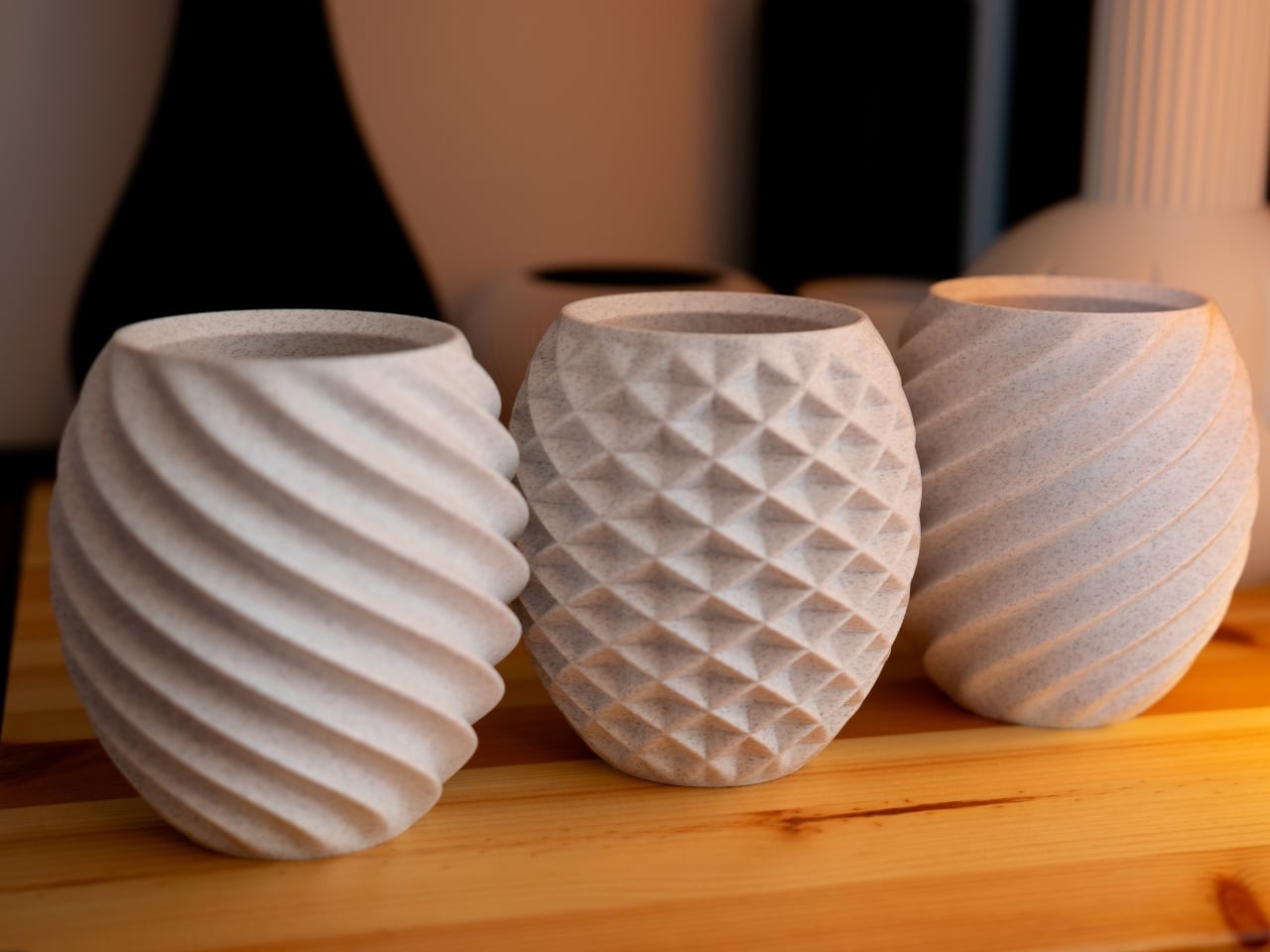
Most architecture, even the wildest parametric forms, is fixed the day it opens and stays that way until it is renovated or demolished. Michael Jantzen points out that exciting spaces are often “fixed in time” while people’s needs and desires keep shifting. The Malleable Space Pavilion is a small, clear argument for buildings that can change as easily as furniture, where space becomes something you can push, pull, and rewrite whenever you want.

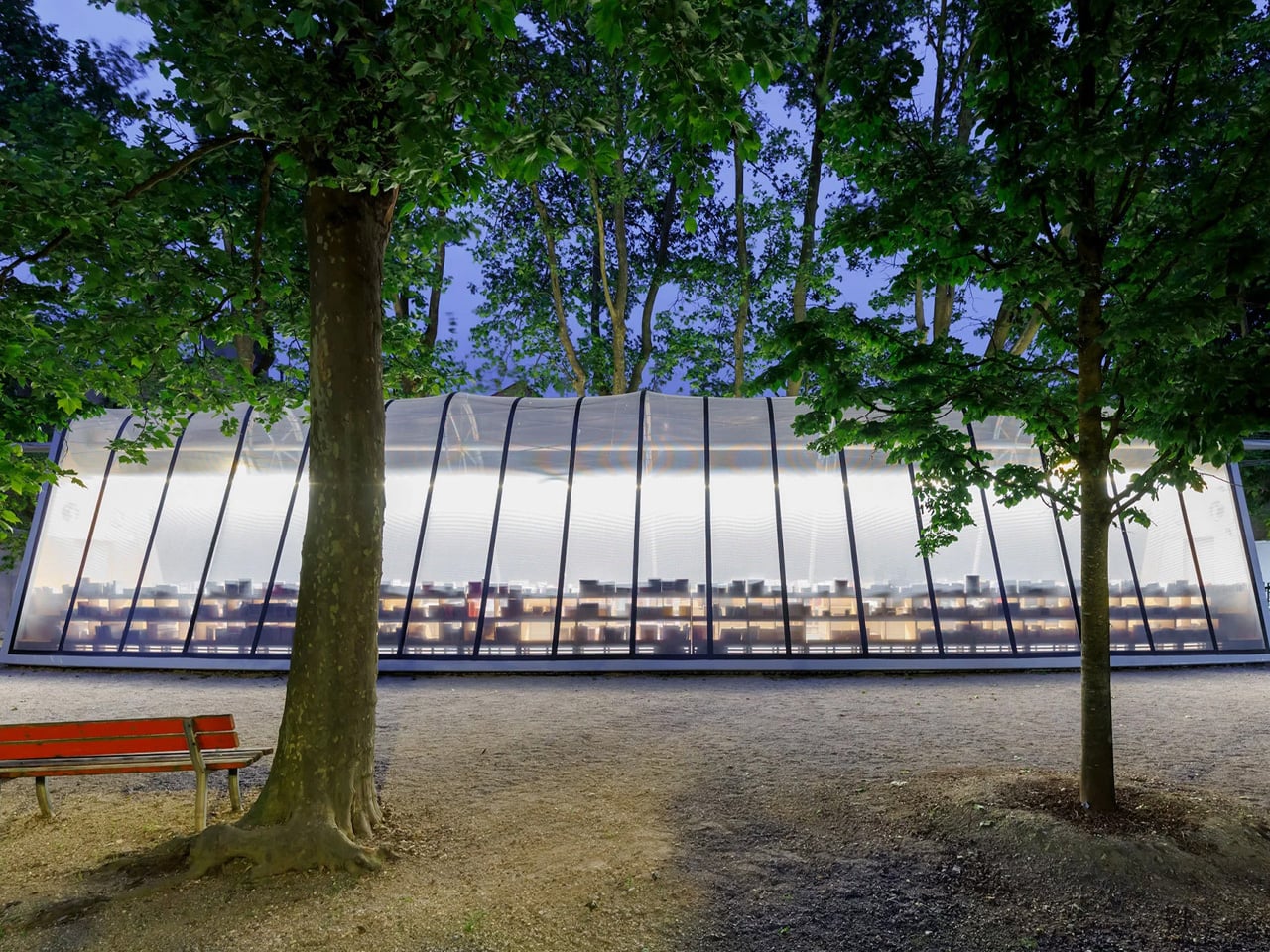
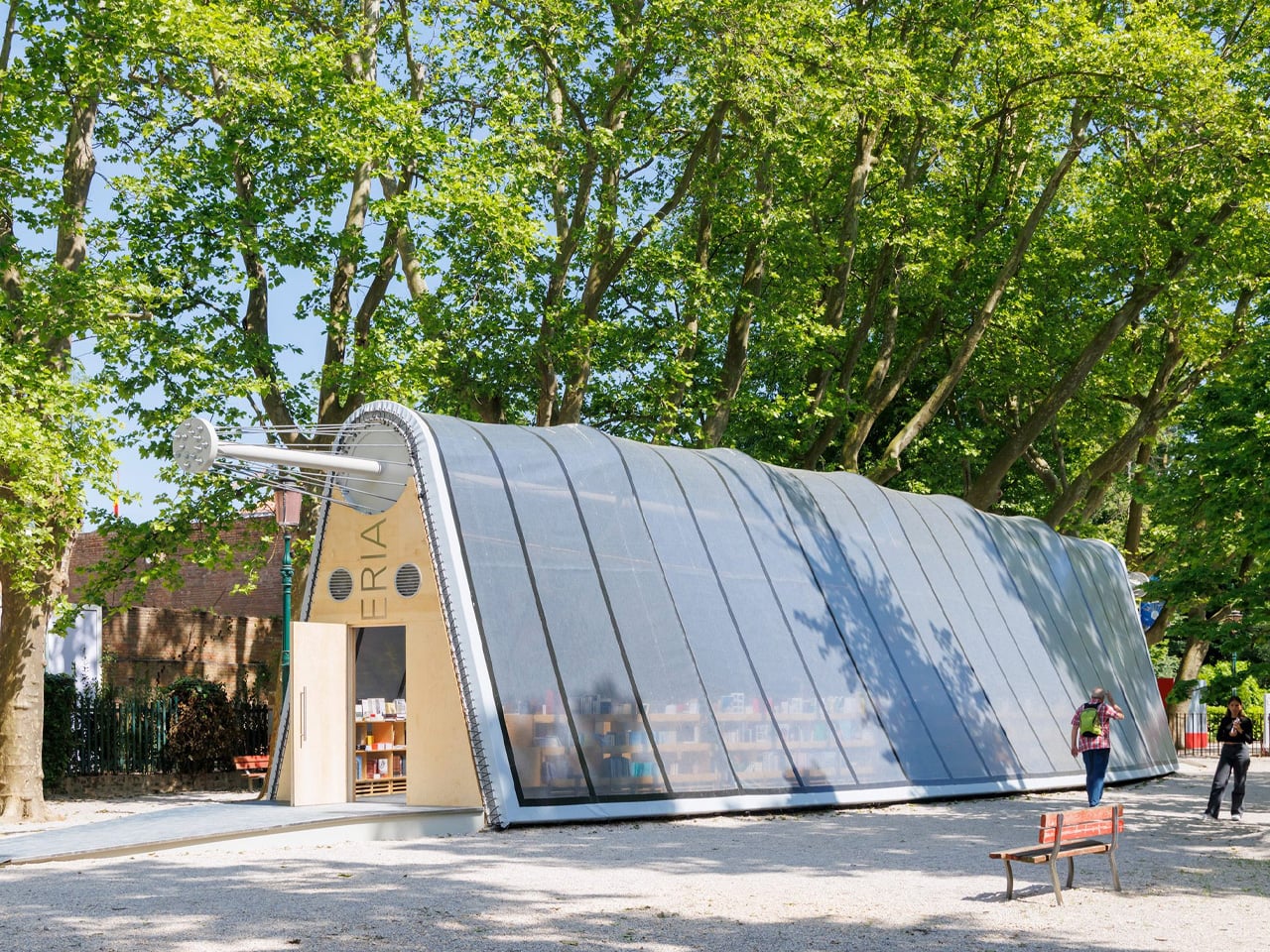
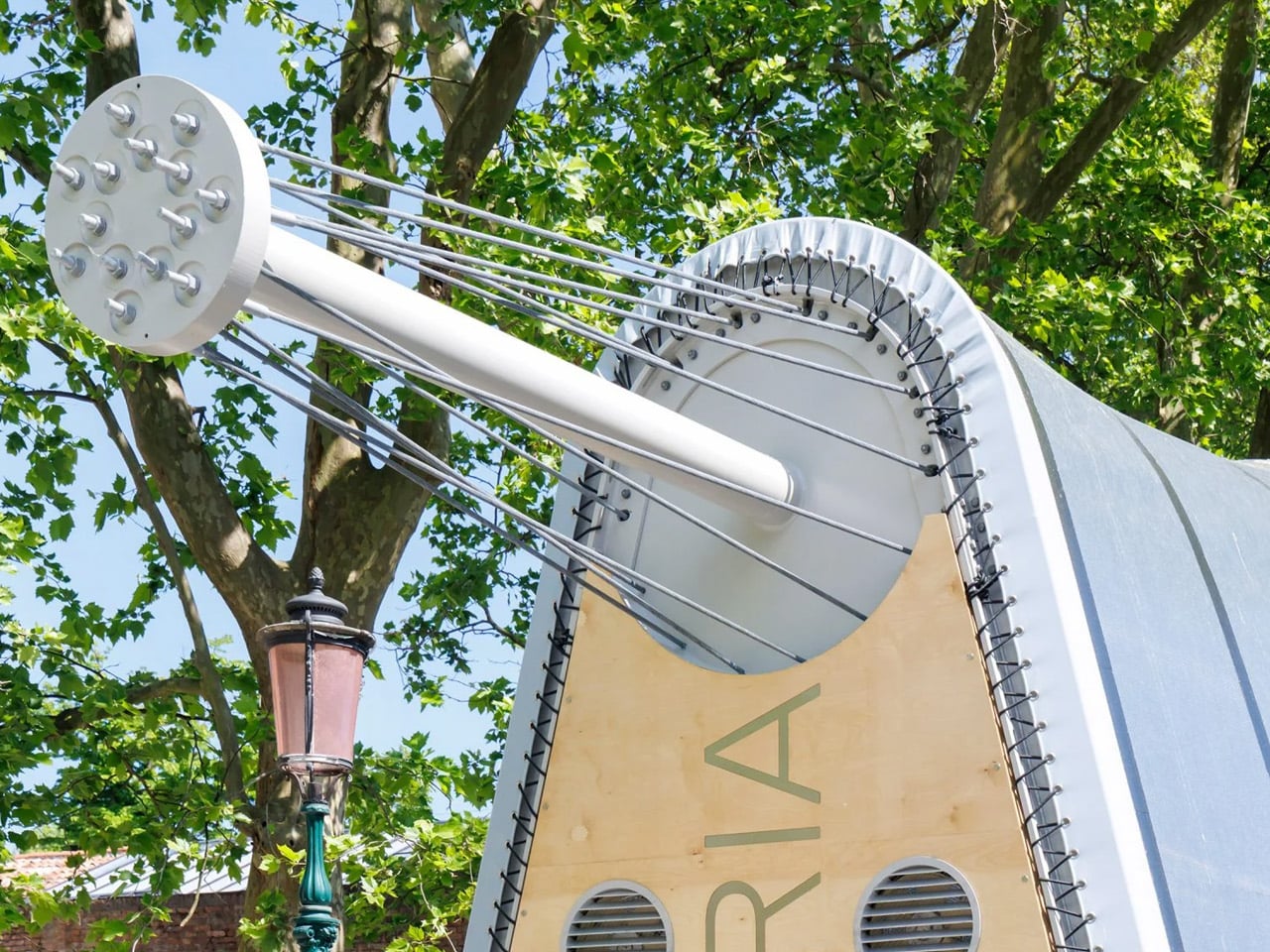
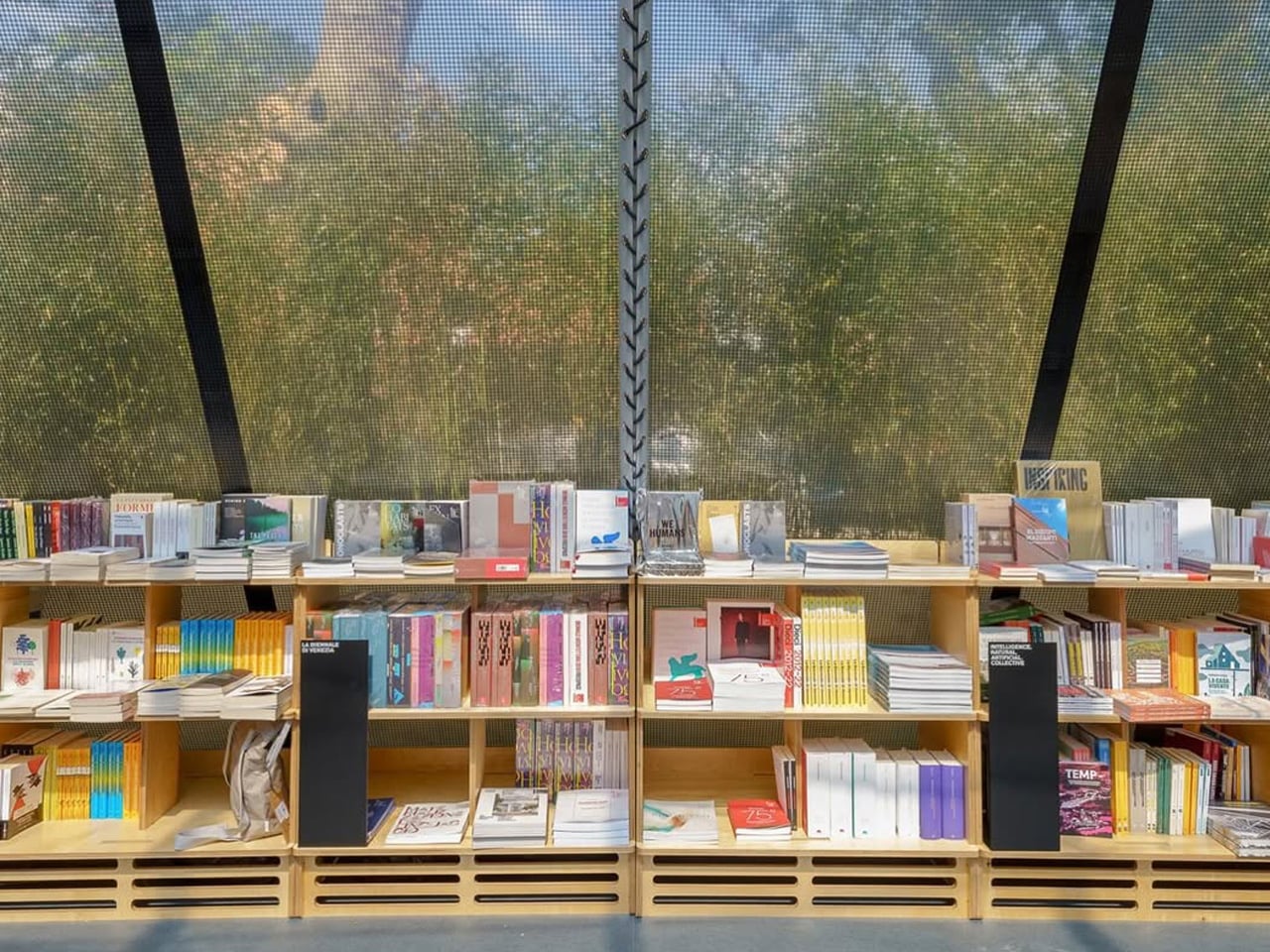
The Malleable Space Pavilion is an experimental interactive structure made from a very simple kit of parts. Two tall gray support columns anchor the design, and 192 white horizontal elements, 96 per side, are mounted on tracks between them. In the default state, they form two opposing blocks with a narrow canyon between them, a calm, almost minimalist object sitting in a field that reads more like land art than a building you can enter.

Designer: Michael Jantzen

Every white element can slide in and out independently, letting visitors pull pieces to create steps, ledges, and overhangs. Jantzen describes configurations ranging from symmetrical simplicity to chaotic complexity, and the same hardware can read as a tunnel, a grotto, or a solid bar depending on how far the elements are extended. Space is literally carved out of the blocks in real time, turning a static object into a responsive spatial machine.

One moment, you walk into a symmetrical canyon with terraced walls and a rectangular skylight, the next you find yourself in a jagged, pixelated chamber where light leaks through irregular gaps. The elements double as benches and low roofs, so you can pull out a seat or shade with the same gesture. The pavilion becomes a place to sit, play, and experiment rather than just pass through, with every configuration suggesting new ways to occupy the same footprint.

Pushing and pulling the elements is performative; visitors become visible agents of change. The stepped profiles feel like editing a low-resolution 3D model, but at a human scale and with your hands instead of a mouse. The pavilion records those actions as a temporary composition, so every group leaves behind a different spatial drawing until someone else comes along and rewrites it, turning the structure into a constantly evolving collaboration between architect and occupants.

Jantzen believes that a more advanced architecture is one that can be changed in time, and this pavilion sits within his series of transformable structures. Questions remain about full-scale mechanics, durability, and accessibility, but the value here is conceptual clarity. The project makes adaptability tangible and playful, turning a big conversation about flexible buildings into something you can push, pull, and sit on, rather than leaving it abstract and theoretical.

The Malleable Space Pavilion treats architecture less like a finished sculpture and more like an instrument waiting to be played. Instead of a single author deciding what the space should be, every visitor gets to compose their own version for a while. For a design culture used to talking about responsive environments in abstract terms, there is something refreshing about a pavilion that simply hands you the handles and lets you reshape it yourself, making change the default rather than the exception.

The post 192 Sliding Blocks Let Anyone Sculpt This Pavilion Into New Shapes first appeared on Yanko Design.
This Australian Soy Fish Decomposes in 6 Weeks, Not 400 Years

As someone who can demolish a sushi platter in minutes, I’ve always felt a pang of guilt watching those tiny plastic fish pile up on my plate. Sustainable design studio Heliograf clearly felt the same way. After five years of development, they’ve launched Holy Carp!, the world’s first home compostable soy sauce dropper that doesn’t make you choose between convenience and conscience.

The Australian team initially drew attention to this plastic problem through their brilliant Light Soy lamps made from recycled ocean-bound plastic. But they didn’t stop there. With South Australia banning those beloved little fish and other states following suit, Heliograf knew they had to create something that worked just as well. Consider this: since 1950, we’ve used between 8 and 12 billion soy fish. Each one serves us for maybe three minutes before hanging around for centuries.

Designer: Heliograf

Bagasse Pulp Meets Familiar Function

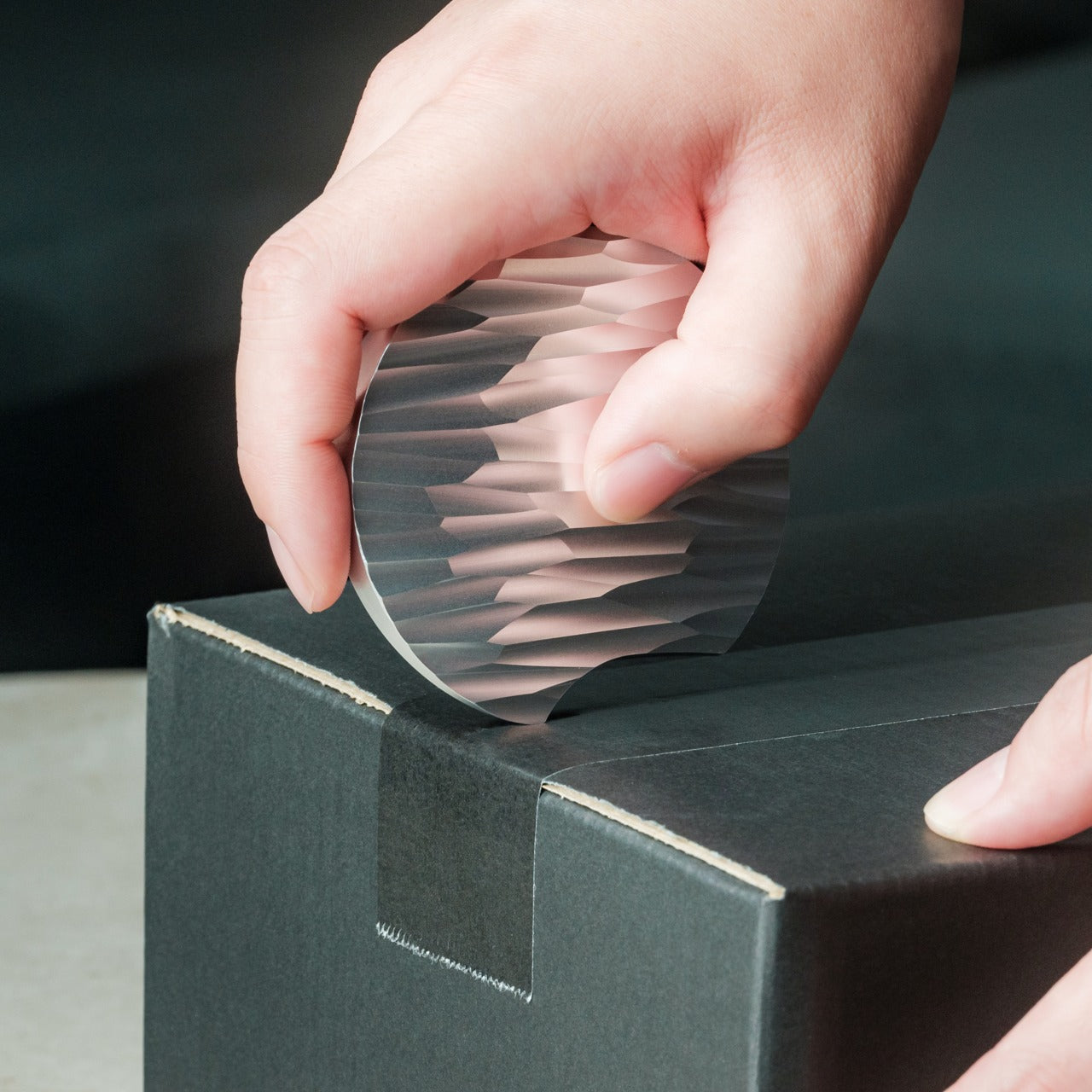
Here’s where it gets clever. Holy Carp! droppers are made from bagasse pulp—basically sugarcane waste that would otherwise be thrown away. The genius part is that these decompose in your compost bin within 4-6 weeks, not 400 years. Plus, restaurants fill them fresh instead of getting pre-filled plastic ones shipped from who-knows-where, meaning fresher soy sauce for your salmon rolls.

Working with Vert Design and actual sushi restaurants (people who understand the stakes), Heliograf kept that perfect fish shape we all love while fixing the obvious problems. The 12mL container is deliberately bigger than those frustratingly tiny plastic ones because, let’s be honest, who hasn’t grabbed three or four at once? The designers watched people do exactly that, creating even more waste.

Plant Pulp Expertise Meets Ocean Impact

What I love about this story is how Heliograf used knowledge from their existing lamp packaging to crack this problem. Sometimes the best solutions come from your own backyard—literally, in this case, since their lamps already use plastic-free packaging. The droppers hold soy sauce safely for 48 hours and won’t leak all over your takeaway bag.

“It’s a small change, but we truly believe every drop matters,” says co-founder Angus Ware. “We wanted to show that we can still create moments of joy when being sustainable.” Since 2020, their cleanup efforts have removed over 32 tonnes of plastic—equivalent to 32 million soy fish.

Available Soon for Early Adopters

The numbers are staggering: 40% of plastic waste comes from packaging, with nearly 855 billion single-use sachets used annually. For those of us who can’t imagine sushi without that perfect little fish, Holy Carp! offers guilt-free indulgence. Restaurants can register at heliograf.com/holycarp for early access. Finally, we can enjoy our California rolls without contributing to microplastic soup in our oceans.

The post This Australian Soy Fish Decomposes in 6 Weeks, Not 400 Years first appeared on Yanko Design.