When I was traveling around New Zealand last year, I was treated to a daily visual feast. Everywhere I looked, I felt like I was in a scene from Lord of the Rings. Capturing images and videos on my smartphone camera didn’t do it justice. I was wishing I invested in a good DSLR camera, although taking photos and videos on my mobile device was pretty convenient already. But a higher quality camera would probably have captured these panoramic views better than my “measly” phone camera.
Designers: Álvaro Arregui Falcón, Mireia Gordi i Vila, Lucas Seidenfaden
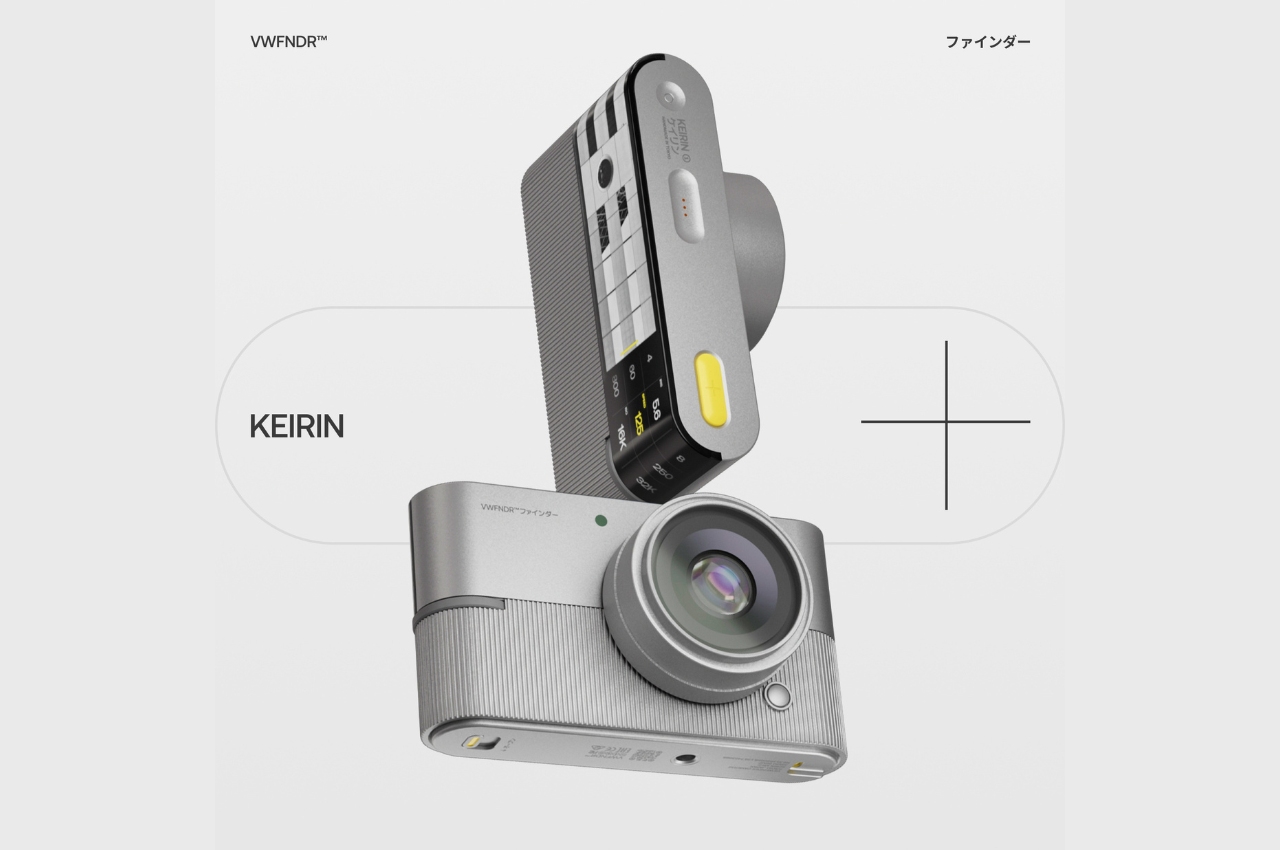
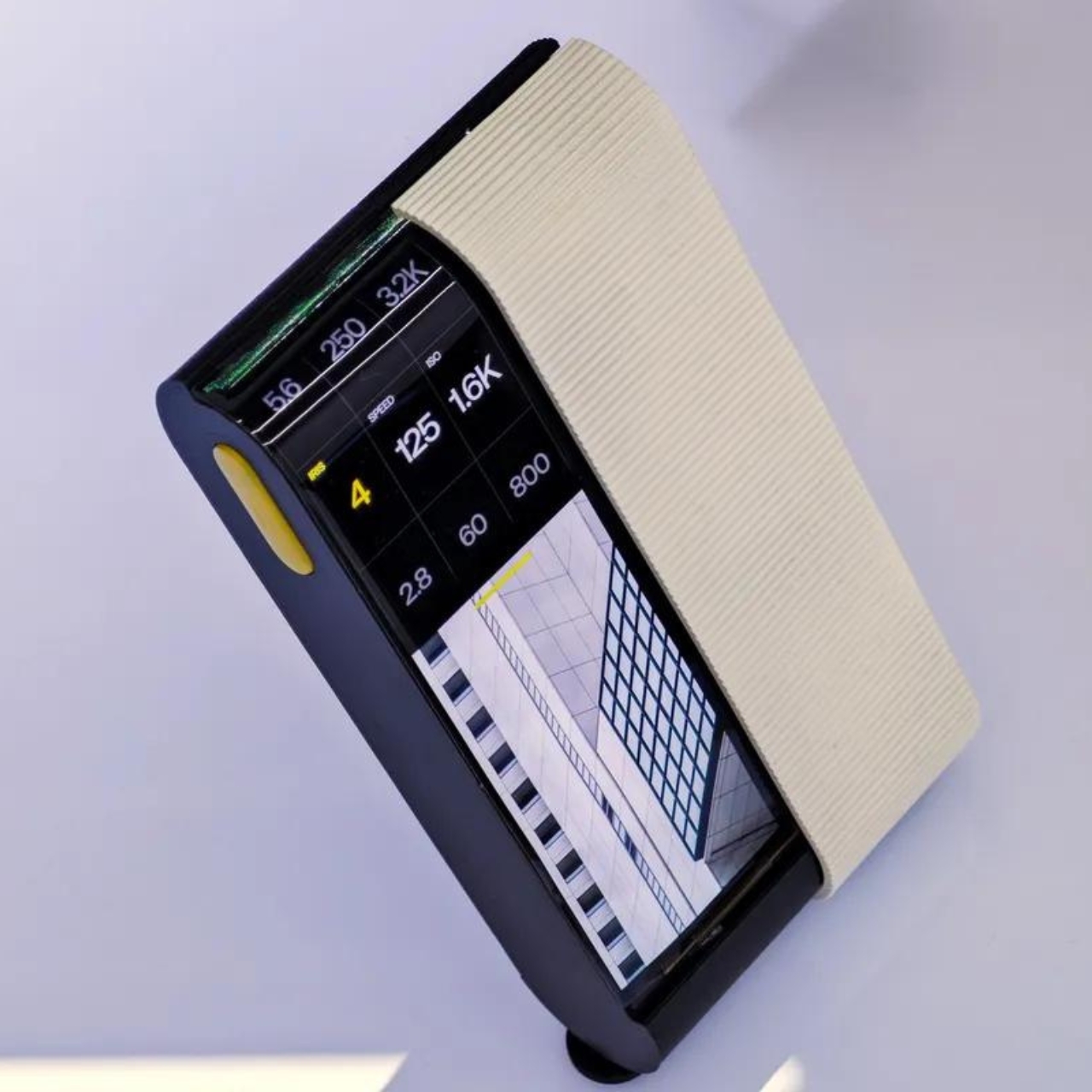
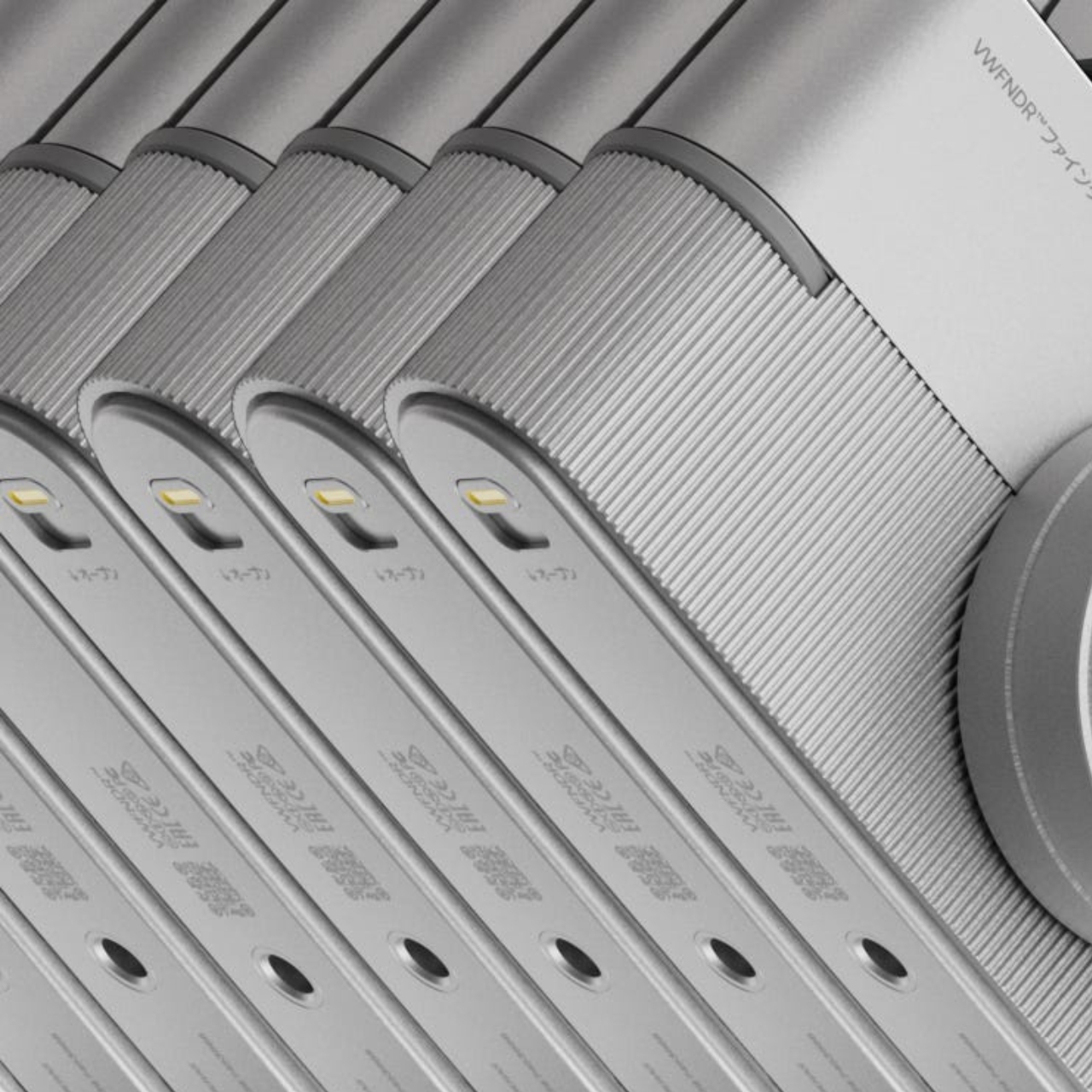
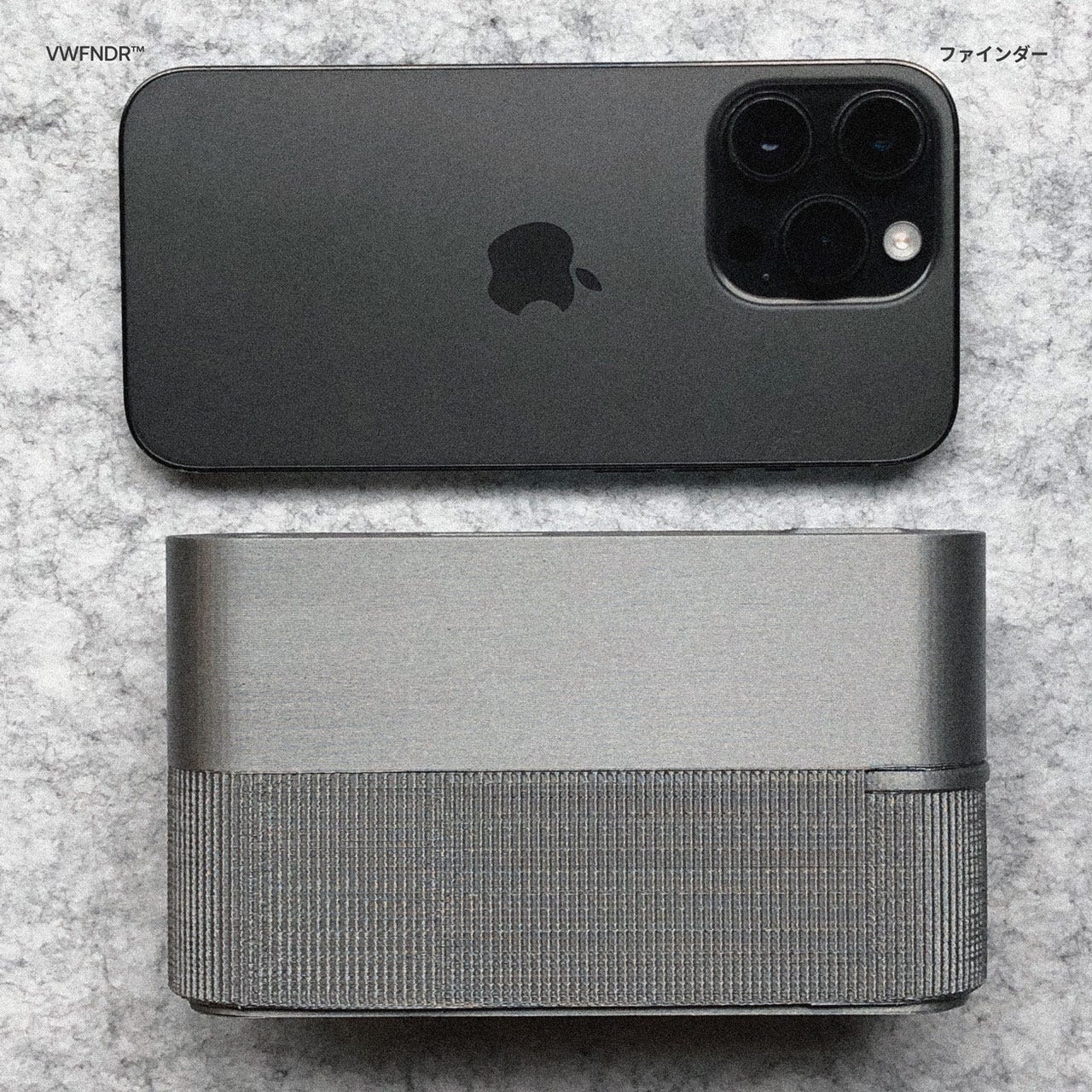
Having something like the Keirin concept camera would also have captured the scenery beter since its focus is panorama photography. The name itself actually comes from the Japanese motor-paced cycle racing which happens in an oval track. The prototype shows that it has a curved OLED touchscreen where all the controls are located and actually wraps around the back panel. The touchscreen idea for the controls should make it easier to learn how to use than the usual manual controls on cameras. It is also pretty compact and almost the same size as a mobile phone.
The prototype tries to show that the design can actually work with the UI that they’re looking to create for the camera. It has a wide rear-mounted screen that you can use as a panoramic viewfinder and swiping through it will bring you the different manual exposure controls. It assumes of course that those who want to use this kind of camera are not the point and shoot kind of photographers but those that want to control things like aspect ratios and exposure in order to better capture panoramic photos.
The plan is for the Keirin to have a 60MP full-frame sensor with a 35mm lens and it needs to have SSD storage and mobile connectivity so your images can be backed up to the cloud automatically. It can also attach other peripherals like a panoramic optical viewfinder and a wireless flash unit. It’s highly unlikely this camera will be a commercially viable product though but it’s a nice idea to have.
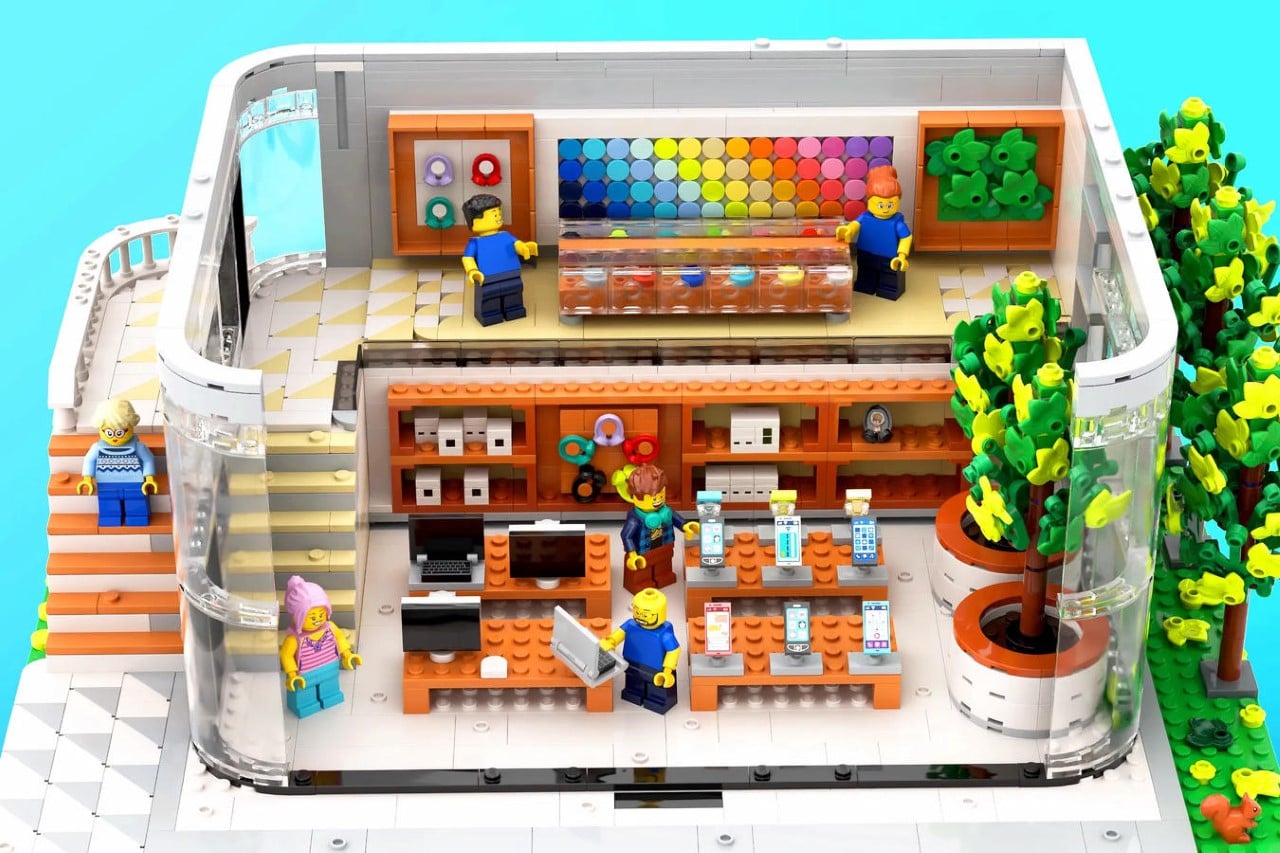
Complete with a massive white Apple logo on the front, glass facades, minimal interiors, a Genius Bar, and even tiny Apple products arranged across the display counters, this LEGO version of the Apple Store captures the minimal grandeur of the Cupertino tech company’s retail spaces. The brand may be well known for their cutting-edge products, but are masters of crafting awe-striking experience centers too. Built by seasoned brick expert ‘legotruman’ in collaboration with 2A2A, the LEGO Apple Store is a 1539-brick marvel that does true justice to its original. It comes with white interiors, glass facades, landscaping, eye-catching details, and enough easter eggs and products to keep a fan-boy entertained (from the iconic iMac G3 of the Steve Jobs era, to even the Vision Pro, which completes its 1st anniversary today!)
The LEGO Apple Store is a two-storey marvel featuring all of the company’s greatest product launches under one single roof. “Both the Apple brand and LEGO celebrates beauty and creativity, the principles and image of the two brands are a great match,” designer legotruman rightfully says. The final model isn’t based on any specific retail outlet, but rather is an amalgamation of multiple outlets’ core design philosophies. The result is something that seems familiar, with floor-to-ceiling glass panels that let you see inside the store, a white Apple logo on the front that lets people know it’s an Apple Store, and minimal interiors that let the products, posters, and display units stand out and grab eyeballs.
The design features a removable top as well as a removable front facade, letting you access the minifigures and pieces inside to arrange them how you see fit. The LEGO Apple Store comes with Geniuses in blue shirts as well as customers, creating a vibrant atmosphere inside the outlet. Multiple counters have all of Apple’s products from iMacs and MacBooks to iPhones. Look to the wall and you’ll see boxes of Apple products waiting to be sold, and AirPods Max headphones arranged decoratively to attract people.
Every part of the store’s design has something to show. The front offers a glimpse into the store, while the top features a massive black Apple Logo. On the left, a staircase guides minifigures to the upper level (where the Genius Bar is usually located), while the right has ficus trees as seen in many Apple stores. Flip over to the back and you’ve got a hidden hatch where legotruman put a few other Apple products on display, capturing the company’s history over the past twenty-five years. You’ve got an iMac G3, and iPod Classic, AirPods, an Apple Watch, and a Vision Pro, all designed out of LEGO bricks and arranged on a horizontal platform at the back of the LEGO build.
The inside of the store feels unmistakably Apple-like. Every detail brings back memories of actual stores, from the long tables with products on them, to the colorful posters and wall-art that are a signature element of Apple’s retail spaces. You’ll see all sorts of easter eggs around the build, keeping you entertained and constantly engrossed. Like every LEGO build, you do have the ability to customize the space too, moving stuff around and even adding new elements to the store.
legotruman and 2A2A’s MOC (My Own Creation) maxes out at an impressive 1539 bricks, making it a relatively complex build. The entire kit, when complete, measures 16.1-inches wide, 10.1 inches deep, and 6 inches tall. legotruman mentions that you can add this build to your LEGO city, bringing an iconic landmark to your brick-based neighborhood.
The LEGO Apple Store is currently a submission on the LEGO Ideas forum, an open space for creators to submit their own brick-builds. The community then votes for their favorite creations, following which the LEGO internal team reviews the submission before turning it into a buyable box-set. This particular fan-made creation currently stands at an impressive 4,730 votes, and if you want to vote for it too, just head down to the LEGO Ideas website and cast your vote!
The average price of a hearing aid in the US is upwards of $2,000. The average price of a pair of TWS Earbuds, on the other hand, is $150. Doesn’t that sound a little wrong to you? It would be like pricing prescription spectacles at thousands of dollars but selling sunglasses for a mere hundred bucks. There’s a pretty sizeable gap in price between hearing aids and TWS earbuds, but functionally, the two of them share a major overlap… so the folks at Olive Union just decided to bridge the massive price gap by designing the Olive Air, a set of AI-powered OTC (over the counter) hearing aids that look fashionable, bring ANC to the hearing-disabled community, and are priced in the sub-$250 category so that you don’t go bankrupt just to be able to regain the power of hearing.
Styled to look exactly like a pair of TWS earbuds, the Olive Air shatters the notion that hearing aids need to look like medical devices. Instead of a design that often is associated with awkwardness and stigma, the Olive Air comes with a stylish aesthetic that makes them look like your average pair of earbuds. They’re designed for people with mild to moderate hearing loss and are classified as FDA Class II aids that can be sold over the counter. Wear them and select one of the AI-powered preset hearing modes to start using them for everything from hearing the world around you to having conversations, listening to music, or even taking calls from your smartphone.
Built-in microphones pick up the soundscape of your environment, and Olive Air processes the signal to create “anti noise” — an opposite soundwave that effectively cancels out the noise of your surroundings.
This design bridge between the hearing aid and the TWS Earbud isn’t just a visual one, it manifests in the Olive Air’s features too. The earbuds come with active noise cancelation that helps tune outside noise out so you can focus on your music and media. ANC is a staple feature in earbuds but is unheard of in hearing aids. The Olive Air’s ANC feature puts it in lock-step with current technologies and then goes beyond with the inclusion of AI presets. Olive Union’s custom My Olive app lets you access the hearing presets as well as tinker with your earpiece’s performance. Aside from simply adjusting the volume and EQ in each earpiece, the app’s AI-powered hearing modes allow the hearing aids to intuitively focus on certain sounds. A preset for Television focuses on directional audio coming from a TV or playback device, a Restaurant preset cuts out the chatter of everyone around you, and a Meeting Room preset accentuates the voices of active speakers.
AI supported hearing presets let you swap between different hearing settings to best match your environment. Plus, customize volume and specific frequency bands with Hearing EQ and Music EQ for a personalized listening journey.
This isn’t Olive Union’s first rodeo, the Olive Air is their third iteration of affordable, attractive, and accessible hearing aids. Founded in 2016, the company has focused on eliminating hearing aid stigma by designing hearing aids that are at par with consumer-grade earphones. To that end, the Olive Air comes with a slick design and an all-day battery life. Buttons on each earpiece help you manually adjust volume/gain, while the smartphone app gives you access to the ANC and AI presets, along with EQ adjustment. Setting up the hearing aids is a breeze too, and doesn’t require you to go to a hospital or medical professional. Once you’ve set the Olive Air up, it serves its triple purpose well, as aids to boost hearing, as hands-free earbuds for music/calls/videos, and as stylish earbuds that empower you rather than perpetuating the stigma around disability-friendly medical devices.
The Olive Air starts at a discounted $229, which includes the earbuds and charging case, 8 pairs of replaceable ear-tips (of different sizes, materials, and colors), a user manual, and a USB charging cable.
There are people that love to pit technology against art or craftsmanship but those of us who know better know that the two can actually complement each other. There are products and designers out there who seek to fuse the two together and even bring innovation and improvements to the two worlds. One such product is a speaker that uses natural materials and is created by traditional craftspeople.
Designer: Mapu
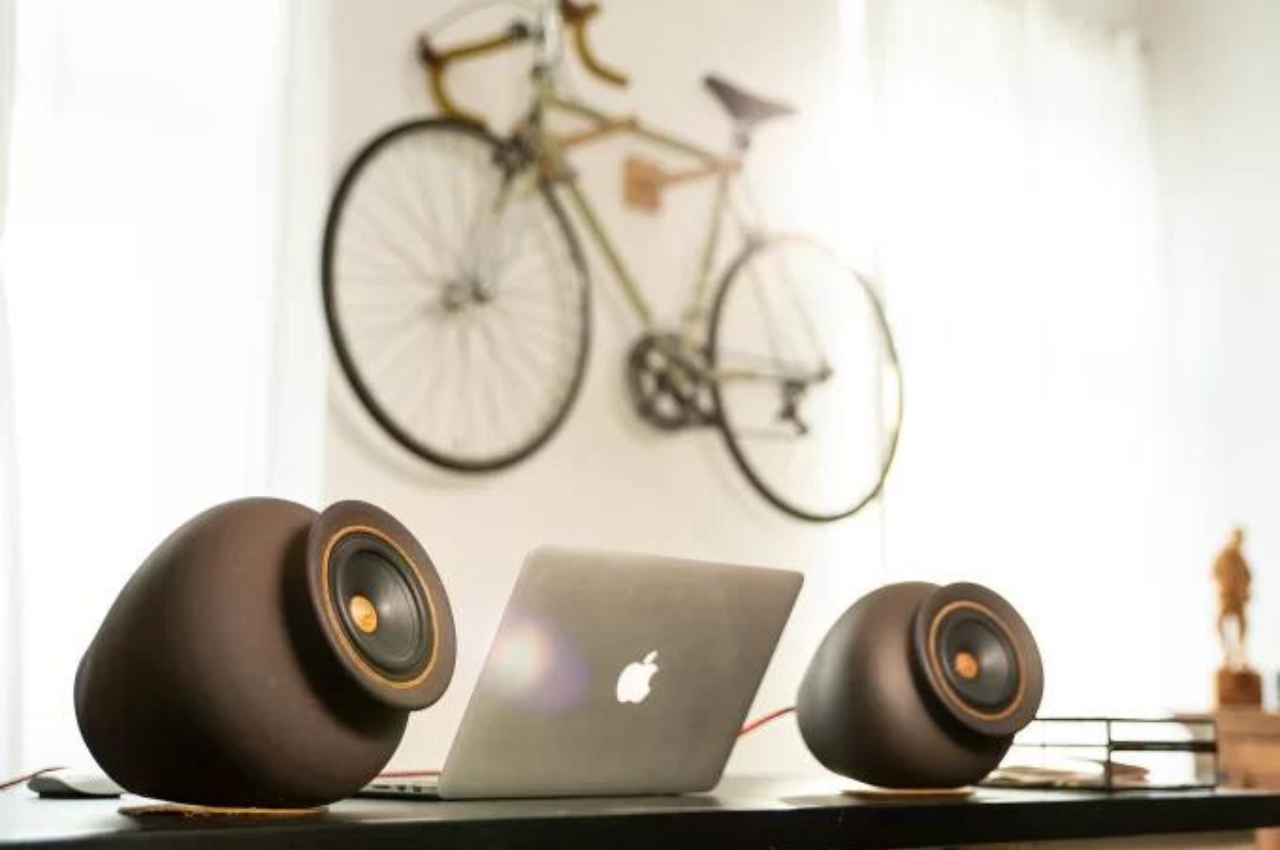
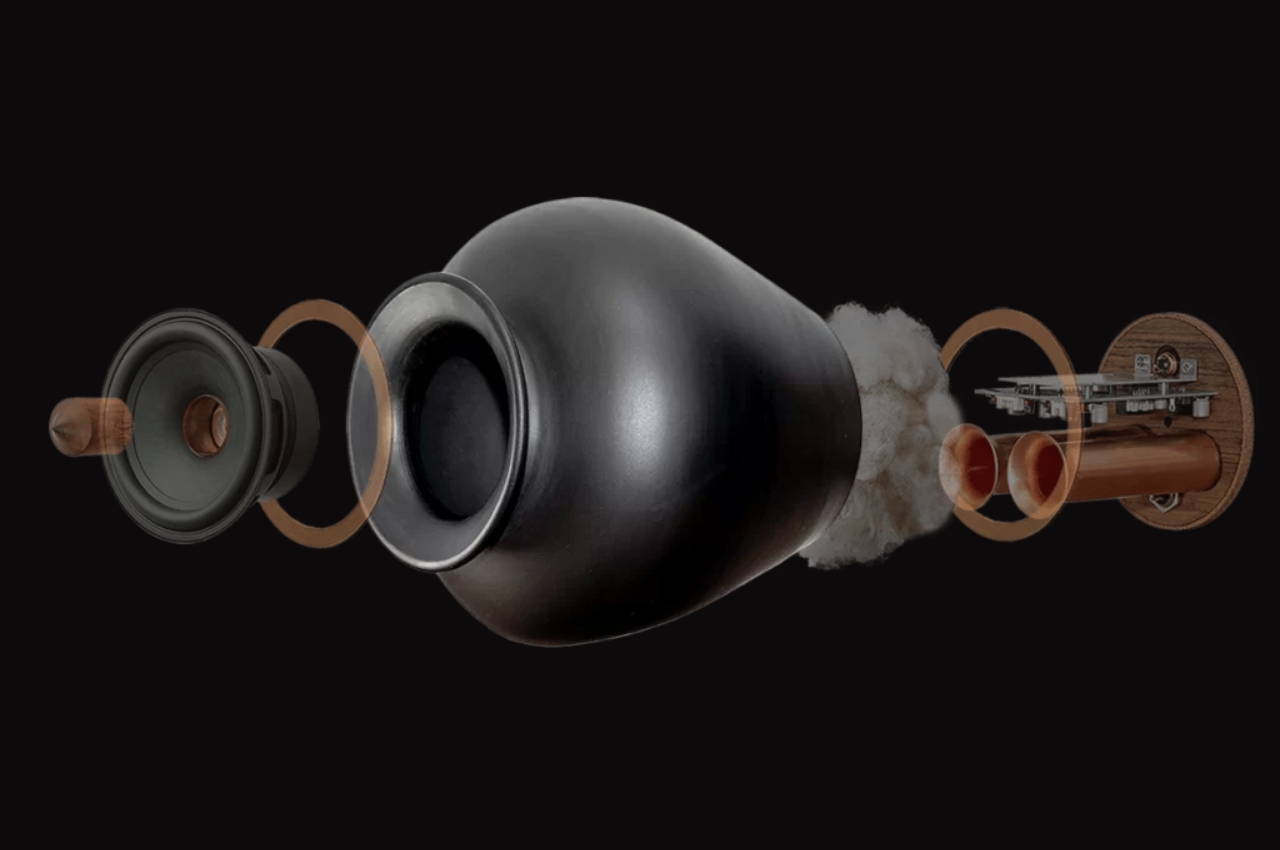
The Mapu Speakers is a line of speakers that are made from natural materials like clay, wood, cork, and wool and handcrafted by traditional craftsmen in Chile and Portugal The goal is to create a new generation of craftspeople, “building a bridge between ancestral knowledge and technology”. Aside from having quality speakers so you can listen to your music, audiobooks, and podcasts, you also get a piece of art that you can display in your space.
The wooden cones and caps that are in the center of the driveractually optimize the high frequencies so you get a “vivid, spatial, and engaging sound”. The wool is used for the internal acoustic insulation while the leather and cork are also ideal for insulation due to their high tensile strength and heat resistance. The spherical shape of the vessel also adds to the sound quality that you get so you know that it’s not just beautiful but you get a pretty good speaker.
The Mapu Speakers are also 80% biodegradable so that’s another bonus for those who are looking for something pretty different for their speakers. The Mapuguaquén is already sold out on their website but the Mapu Preto and the Mapu Soenga, available in mono and stereo versions. The vessel-like shapes of the speaker line make it pretty attractive even if you don’t know yet the handicraft story behind it.
Do you own an Apple Watch? Cause I do, and it is honestly one of the handiest devices I own. Today, the Apple Watch is considered one of the most popular smartwatches globally, and it’s not a surprising fact when you consider the number of people you see walking or jogging on the street with their Apple Watch smartly strapped around their wrists. And, if you’re someone who absolutely cannot do without their Apple Watch, then this collection of innovative and nifty accessories is for you. From an iPod-shaped cover to bands made from plant-based leather – these super cool accessories are a must-have for Apple Watch lovers.
1. RSTR Case
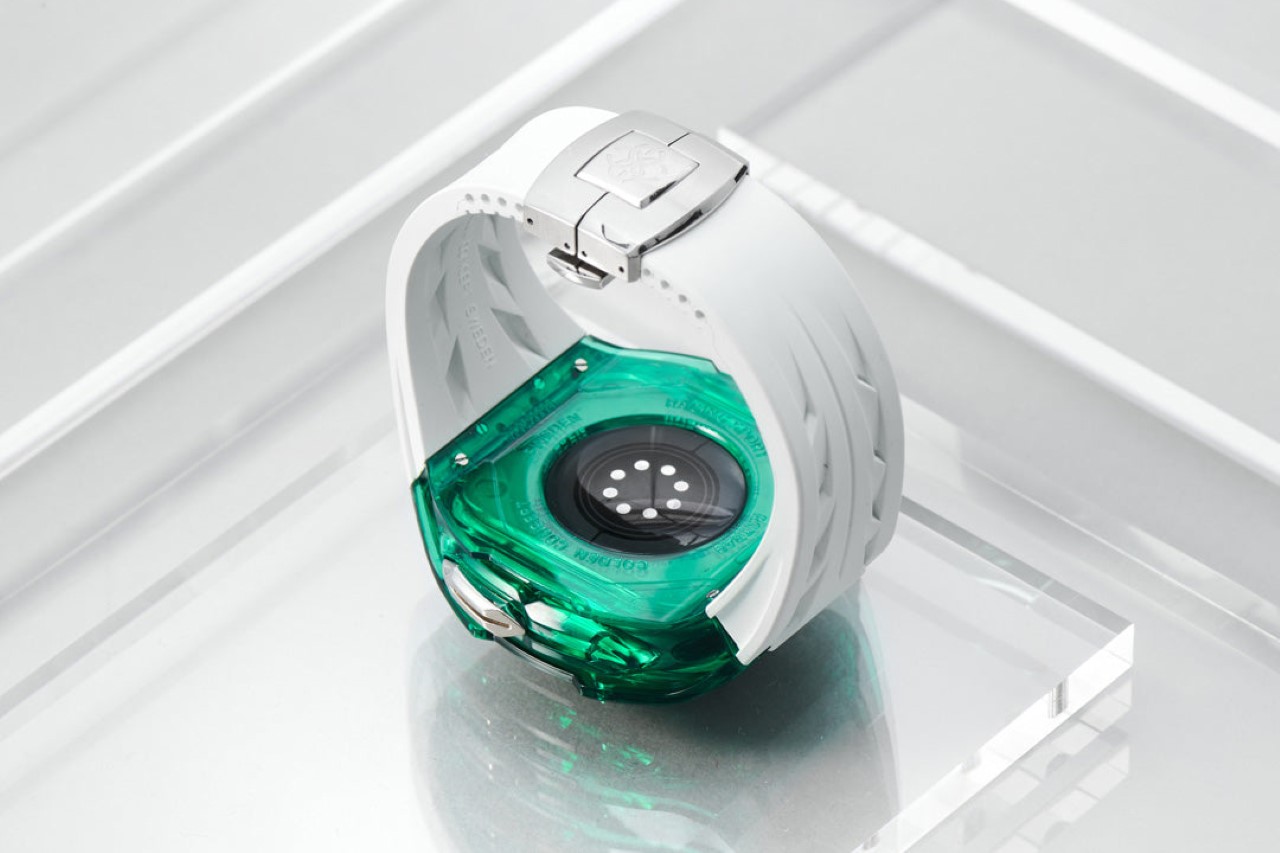
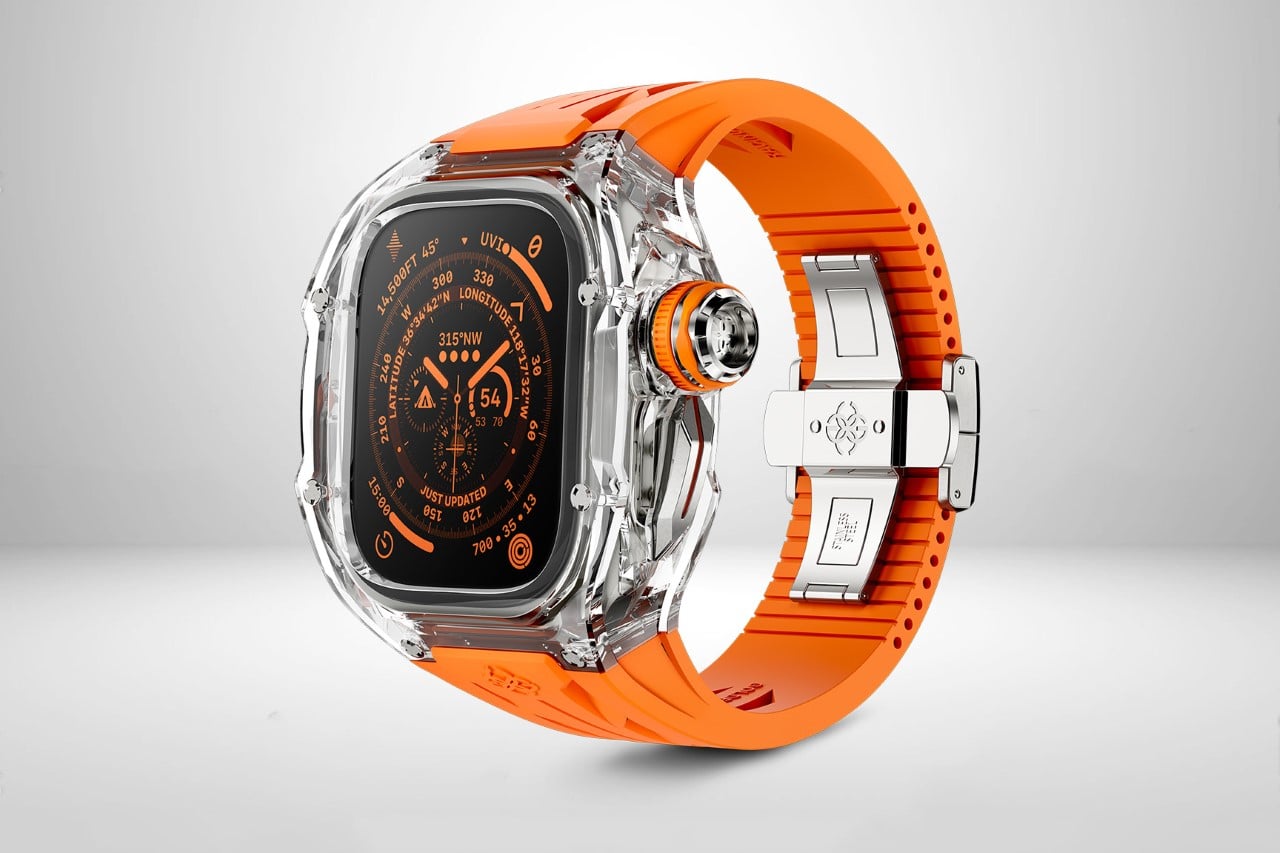
Called the RSTR Case, this beautiful transparent crystalline case for your Apple Watch is designed to be shown off. Created by Golden Concept, the case converts your Apple Watch into a lovely shimmering jewel that you can wear on your wrist. It is available in four pretty colors and is made using 50 meticulously engineered parts. Crafted from stainless steel, the home and action buttons are bigger than usual and more accessible.
2. tinyPod
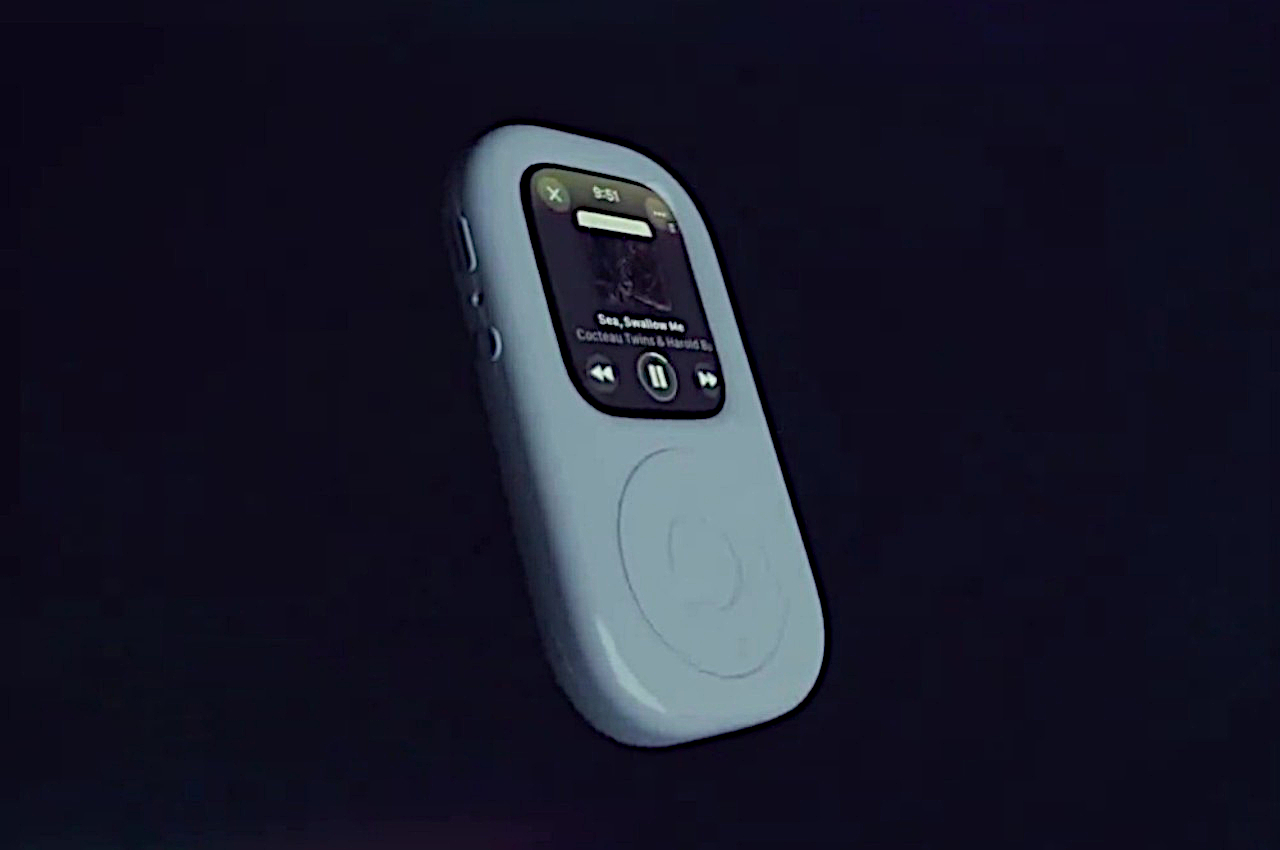
Dubbed the tinyPod, this little design wraps up your Apple Watch in a case, and it looks exactly like the iPod! the tinyPod is a perfect replica of an iPod, except that it also has a colored screen. You can control the Apple Watch via an authentic click wheel, however we’re unsure how it manages to do this. But, this is quite an important little detail, as Apple Watch’s digital crown cannot be accessed in this new and innovative form.
3. ErgonBand
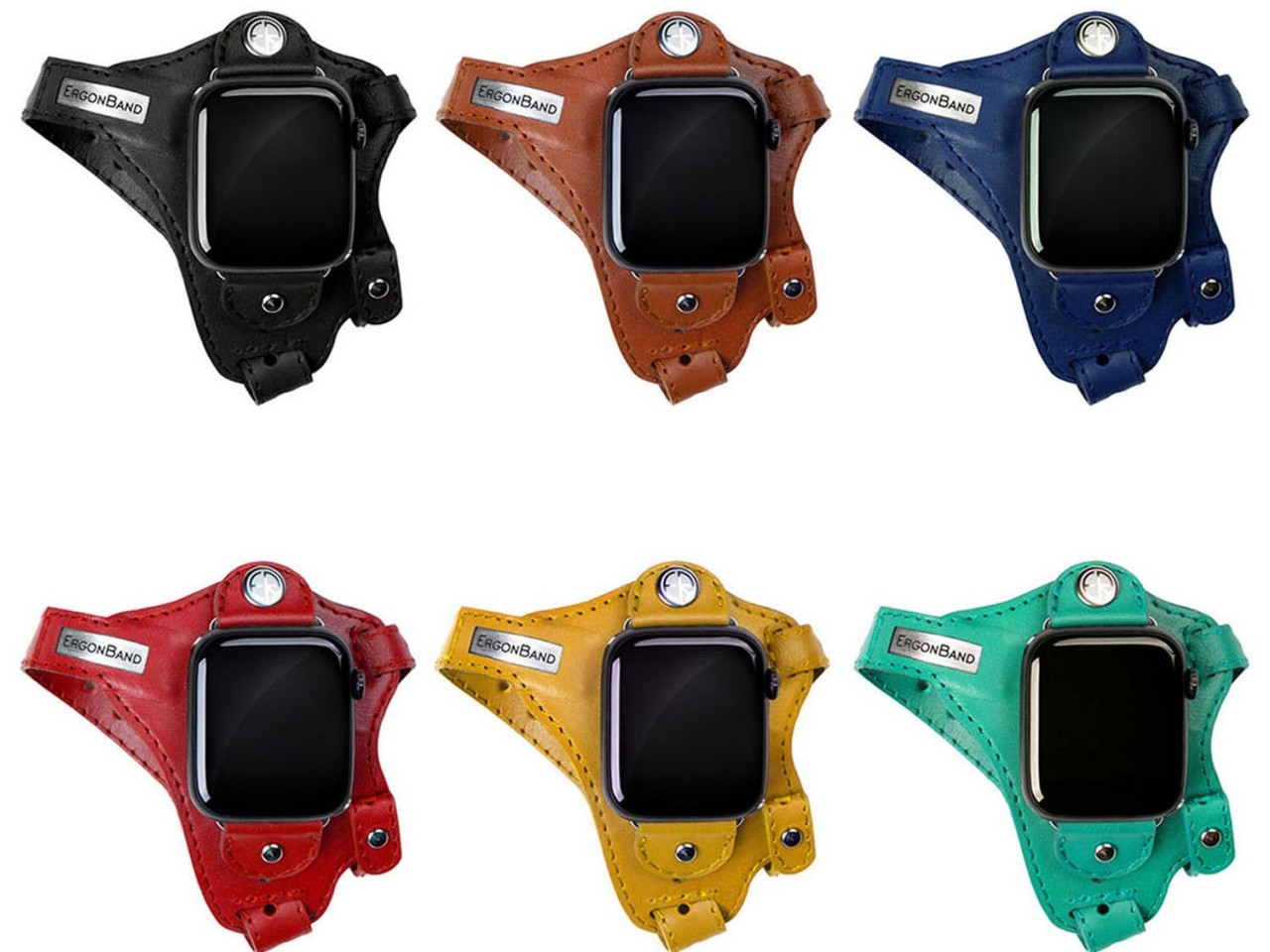
This ergonomic Apple Watch accessory may look a little ridiculous and funny, but it is quite functional. The band is designed to be more of a strap, and it resembles those thumb or hand braces used by athletes for protection. The Apple Watch is strapped into place utilizing clips that feature standard lugs, and placed below the joint of your thumb. The location was chosen as this allows the screen to be visible without the need to twist your wrist.
4. Pod Case
Designed by Joyce Kang and C.O Design Lab, this is the Pod Case that gives your Apple Watch a nostalgic touch. It introduces the watch to its ancestor which kickstarted the apple craze. The watch’s screen almost matches the screen size of the classic iPod Nanos, while its body is just a little thicker. The Pod Case is built from silicone, and it smoothly slides over the Apple Watch’s body, providing it with a refreshing yet nostalgic throwback.
5. Y24 Apple Watch Cases
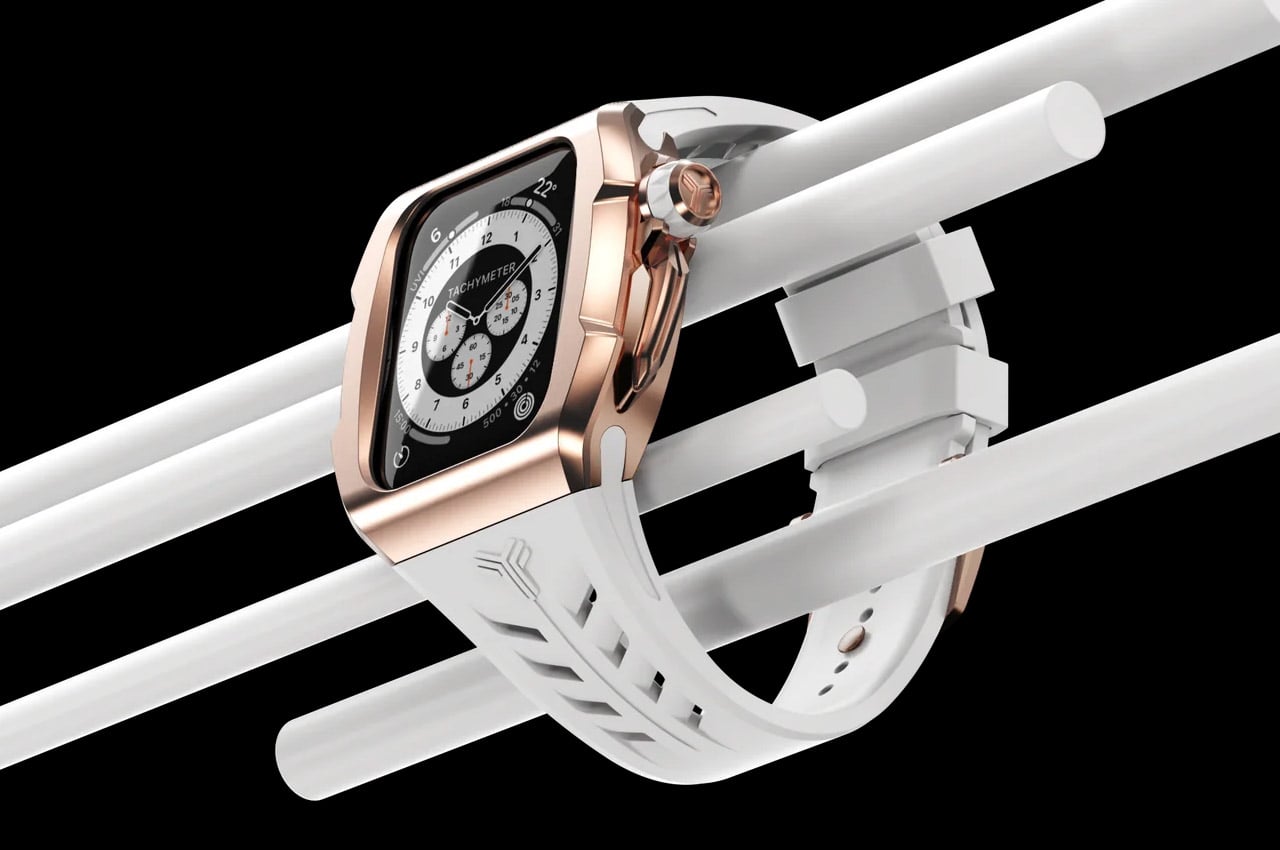
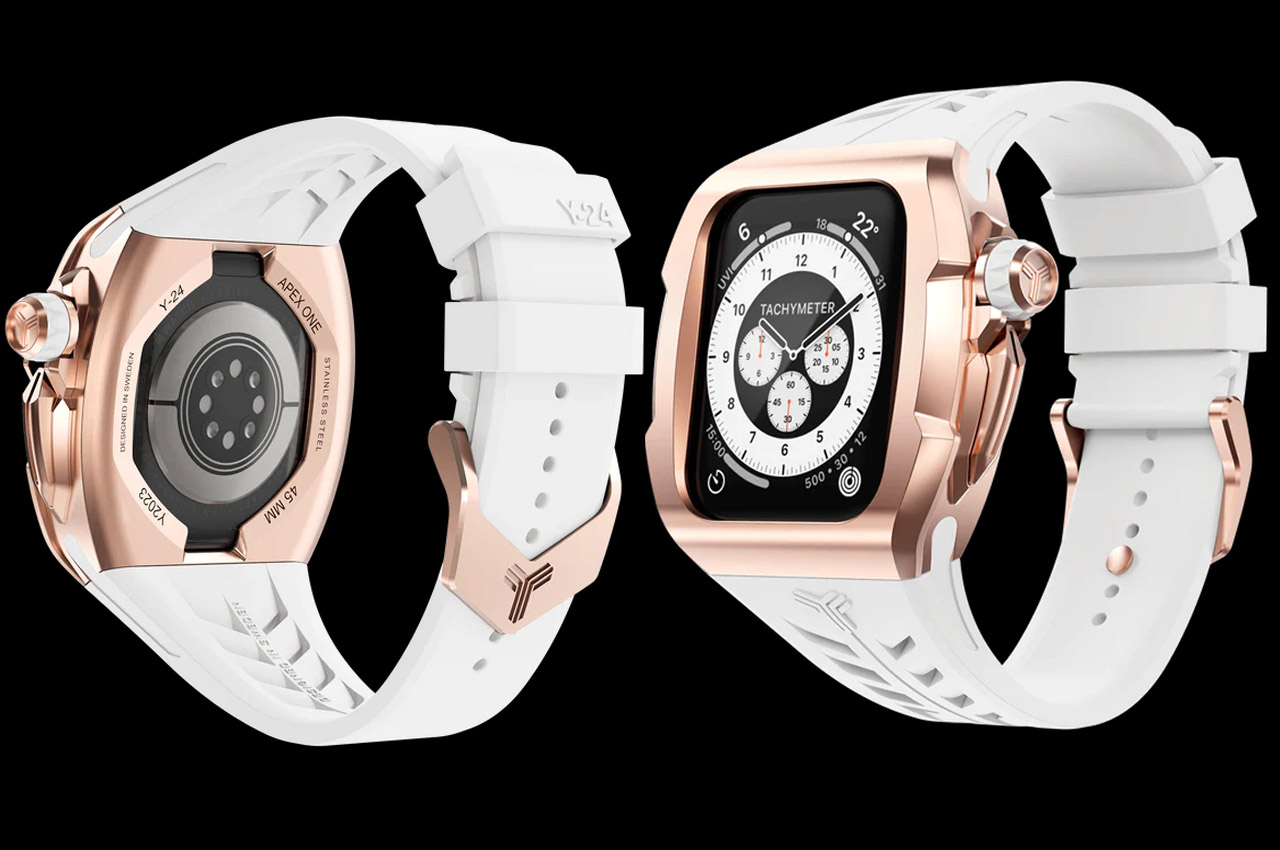
This collection of luxurious and aesthetic Apple watch cases is actually quite price-friendly. They draw inspiration from the lifestyle of Tokyo and are designed by Y24. Each watch design captures the cool and charming vibes of Tokyo and converts that fascinating culture into interesting accessories. The cases have been designed to elevate and upgrade the young generation’s style, providing them with a unique and one-of-a-kind identity, without altering Apple’s originality or personality.
6. NightWatch
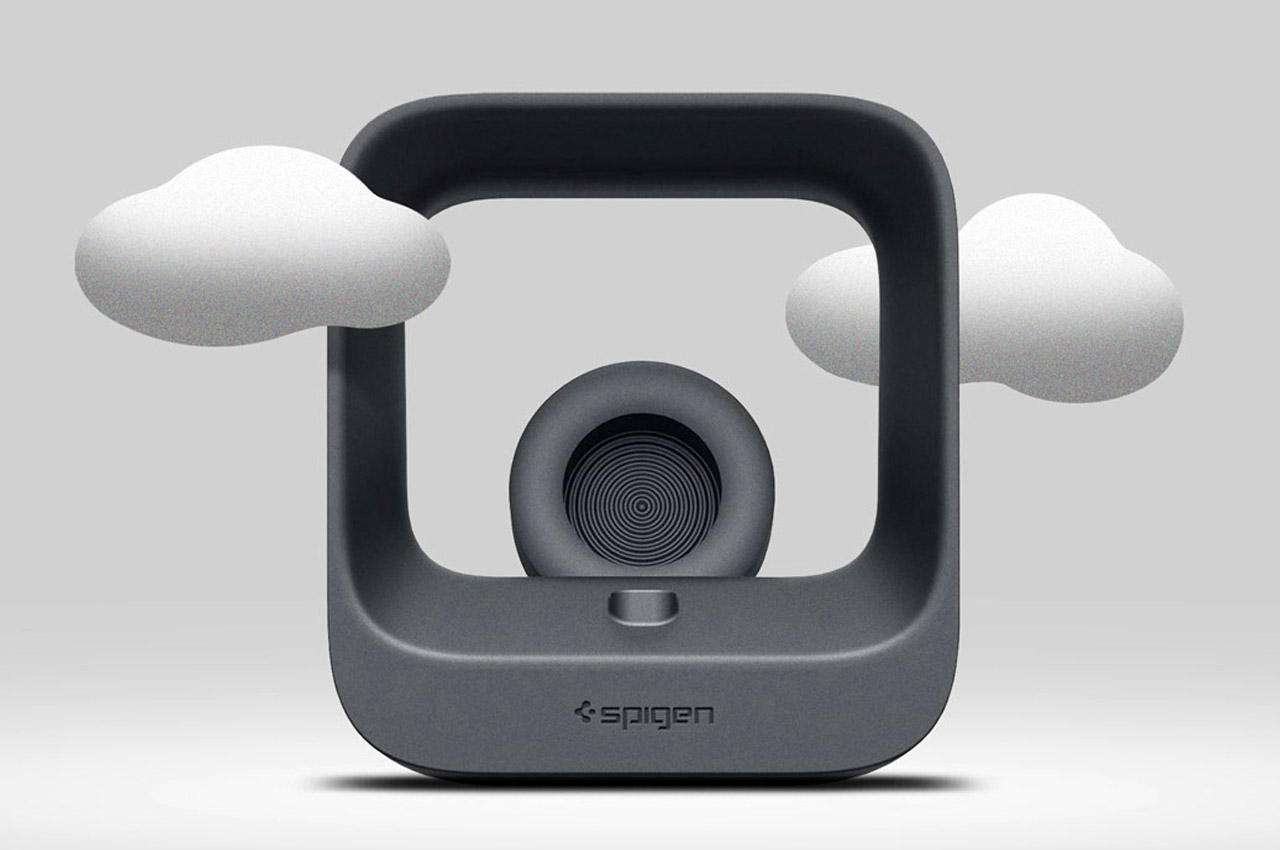
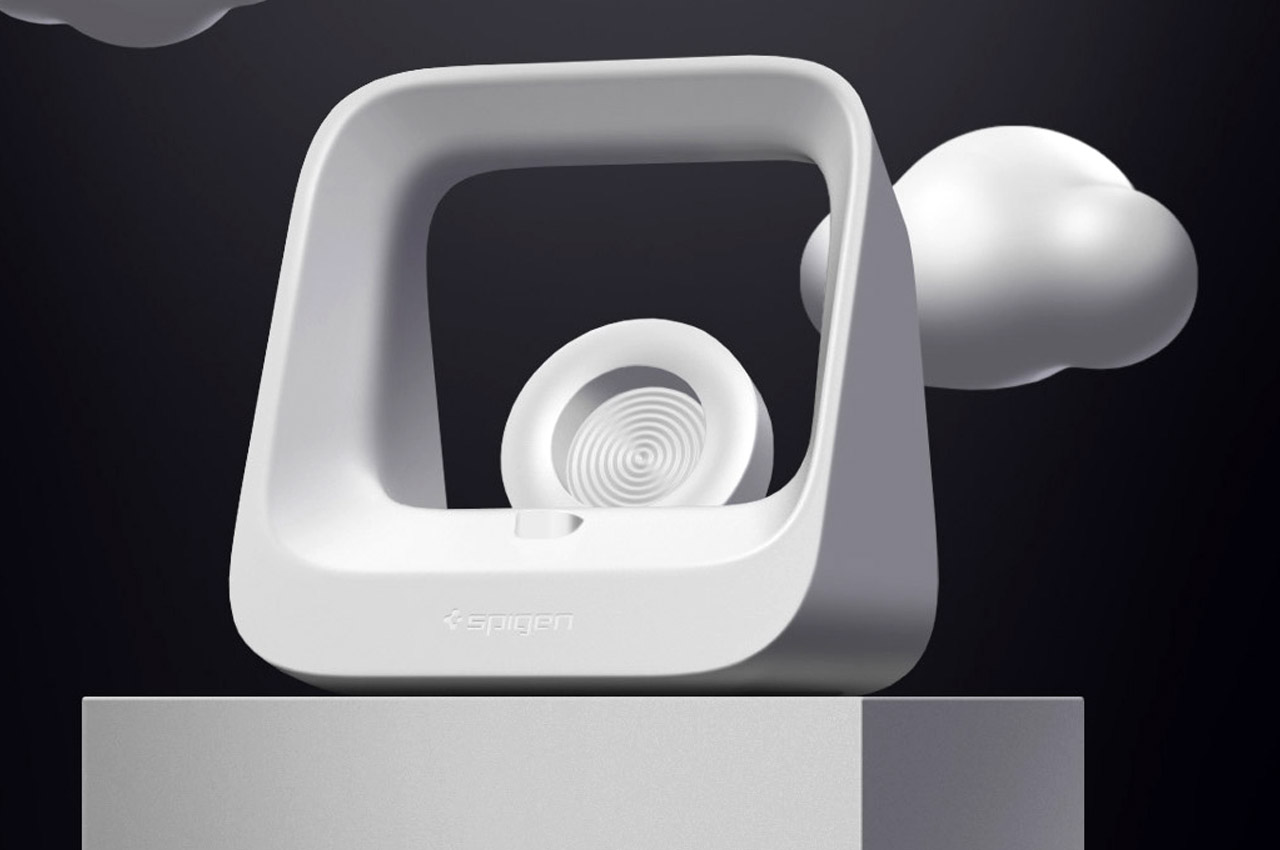
Named the NightWatch, this Apple Watch dock features a massive curved glass element on the front, which interestingly magnifies the screen. You can place your watch behind the massive lens, and it seems to enlarge the watch screen, increasing the visibility. It can transform your charging smartwatch into an innovative bedside click. It can even enhance your watch’s audio, which makes your alarm more audible.
7. Wristcam
Dubbed the Wristcam, this little device gives your Apple Watch the ability to click pictures all by itself! It features a front-mounted 8MP camera which can shoot images in 4K resolution, while also recording videos in Full HD. It has a selfie camera which can be used for video calling, or for live streaming. It is amped with 8GB of storage, as well as a long-lasting battery that can support a day’s worth of shooting and fun. It is water-resistant up to 1 meter as well.
8.(Re)Classic Band
Designed by Native Union, the (Re)Classic Band for Apple Watch is a cruelty-free Italian leather-inspired band. The unique band is built from repurposed mycelium, which is basically fungal threads that cover long distances underground. Mushrooms grow and bloom from these fungal threads. It forms a plant-based leather which is also one of the many all-natural resources used in the synthesis of Yatay by Coronet.
9. hardgraft Collector’s Watch Case
This artisanal leather product is called the hardgraft Collectors Watch case. It is designed to store your smartwatch in style and elegance. It has a soft Alcantara lining on the inside and is pretty padded. The exterior is made of vegetable-tanned Italian leather and a scratch-free zipper. It has a round compact form, which makes it portable and pretty easy to carry around. You can pick from three elegant color options – Classic, Coal, and Off Grey.
10. 2-in-1 Apple Devices Charging Stand
Designed by Taesung Yoon, and inspired by the daily sunrise, this is the 2-in-1 Apple Devices Charging Stand. The design does exactly what its name implies. It is created using feedback from data-driven research, and what people truly want from their unified Apple charging stand. It is the perfect integration of form and functionality and features a vertical stance with a slightly arched top which holds your iPhone comfortably without letting it topple over.
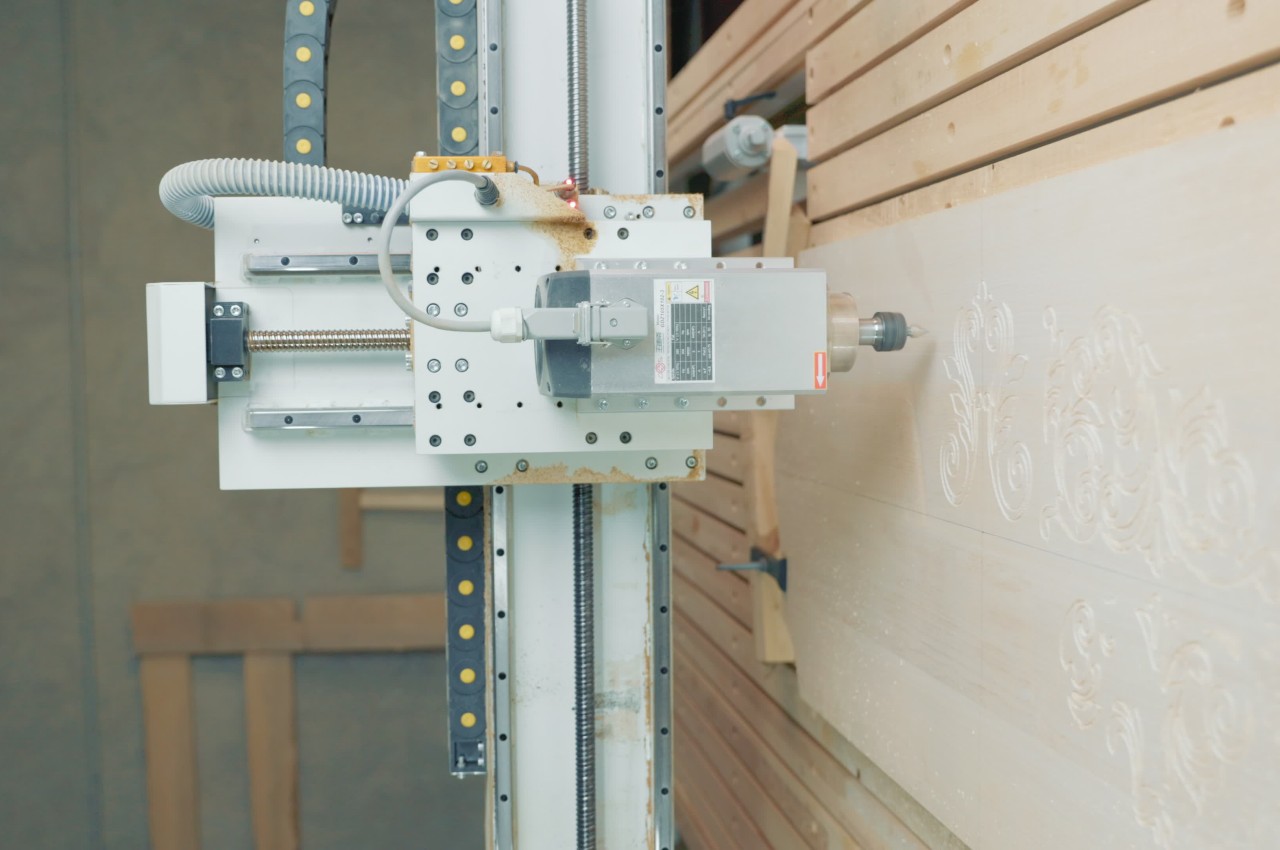
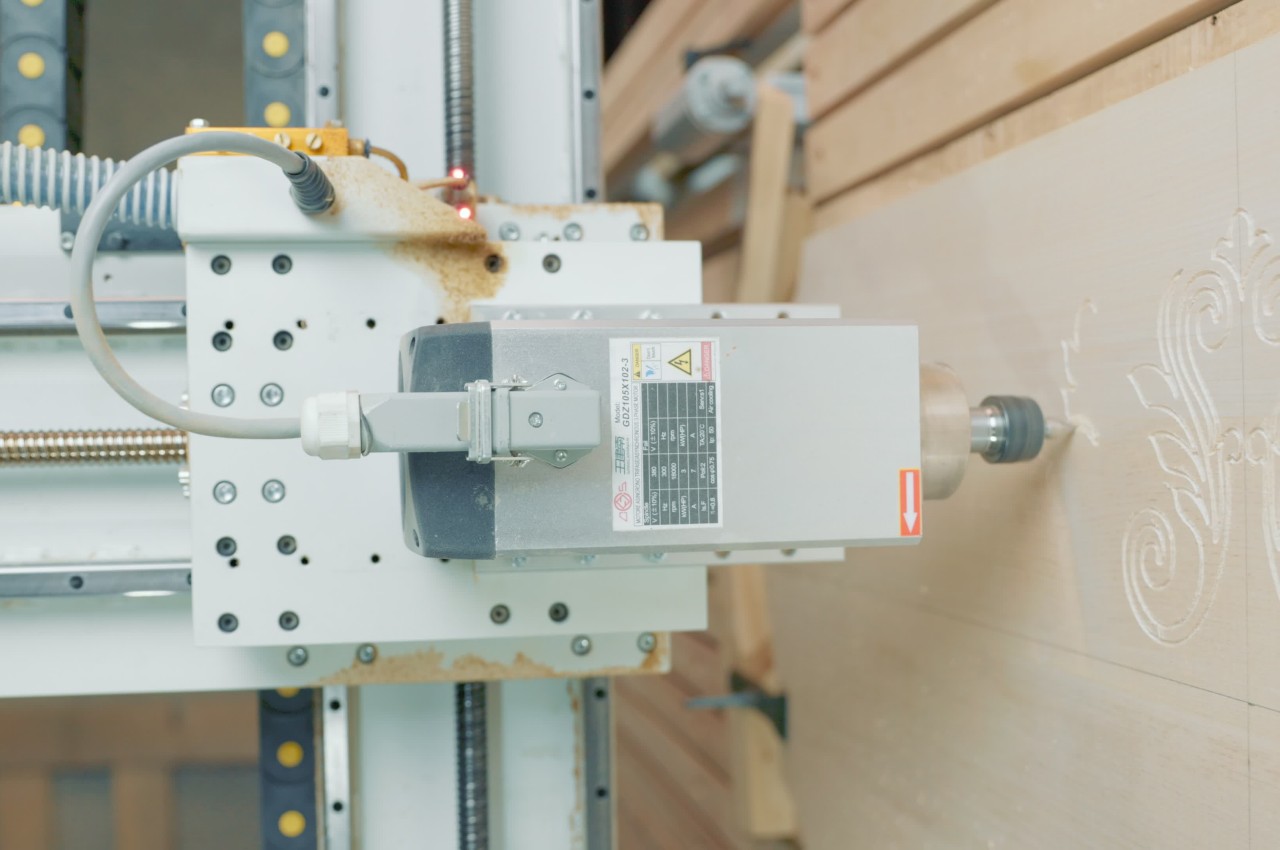
CNC machining plays a transformative role in modern manufacturing and revolutionizes product design and production by automating machine tool control through computers. Therefore, CNC machining is a high-precision solution for modern manufacturers, utilizing advanced electro-mechanical devices to move tools across various axes based on computer-programmed instructions. A typical CNC machine includes a controller, machine tool, and workpiece. The controller executes instructions from a computer program, directing the machine tool to cut or shape the workpiece.
While robots are typically associated with repetitive tasks, Primus challenges this notion by partnering with human creators to execute artistic visions. This robotic arm translates digital art into commands, creating geometric pieces reminiscent of Andy Warhol. With Primus, users can mount a canvas, calibrate, and begin painting, combining human creativity with robotic precision for a truly unique artistic experience.
What are the advantages of using CNC Machining?
1. Accuracy
Precision turning machines operate autonomously, ensuring defect-free products with consistent accuracy. Governed by codes and software, they maintain settings throughout production cycles for product consistency. Additionally, they operate continuously without compromising quality.
The Running milling machines can run at their fastest speed to meet high demands, they can work nonstop, 24/7, staying accurate and saving material. This makes production fast, efficient, and scalable without extra costs.
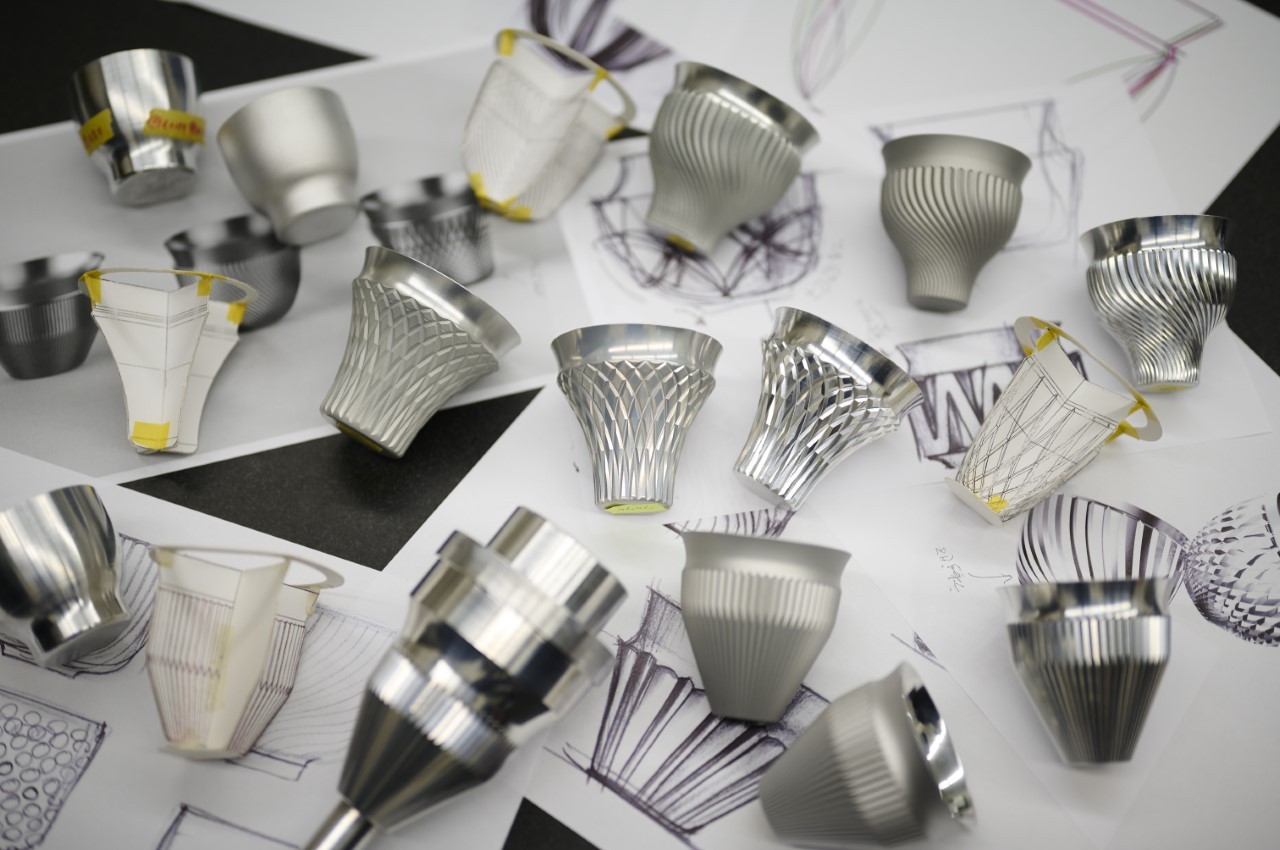
Kenji Abe’s Hakusaku series features exquisite machined aluminum saké glasses designed to elevate its visual appeal. Crafted from duralumin, these cups boast thin rims, as slim as 0.6mm, offering a unique drinking experience. Precision-machined and adorned with geometric textures, they prevent temperature transfer while enhancing aesthetics.
3. Lower Production Costs
Using CNC machines drastically cuts down production costs, enhances efficiency, and scales production without waste. It also reduces energy usage, trimming operational expenses, making it a cost-effective method without sacrificing quality. Additionally, the low overhead cost due to minimal human intervention substantially reduces expenses.
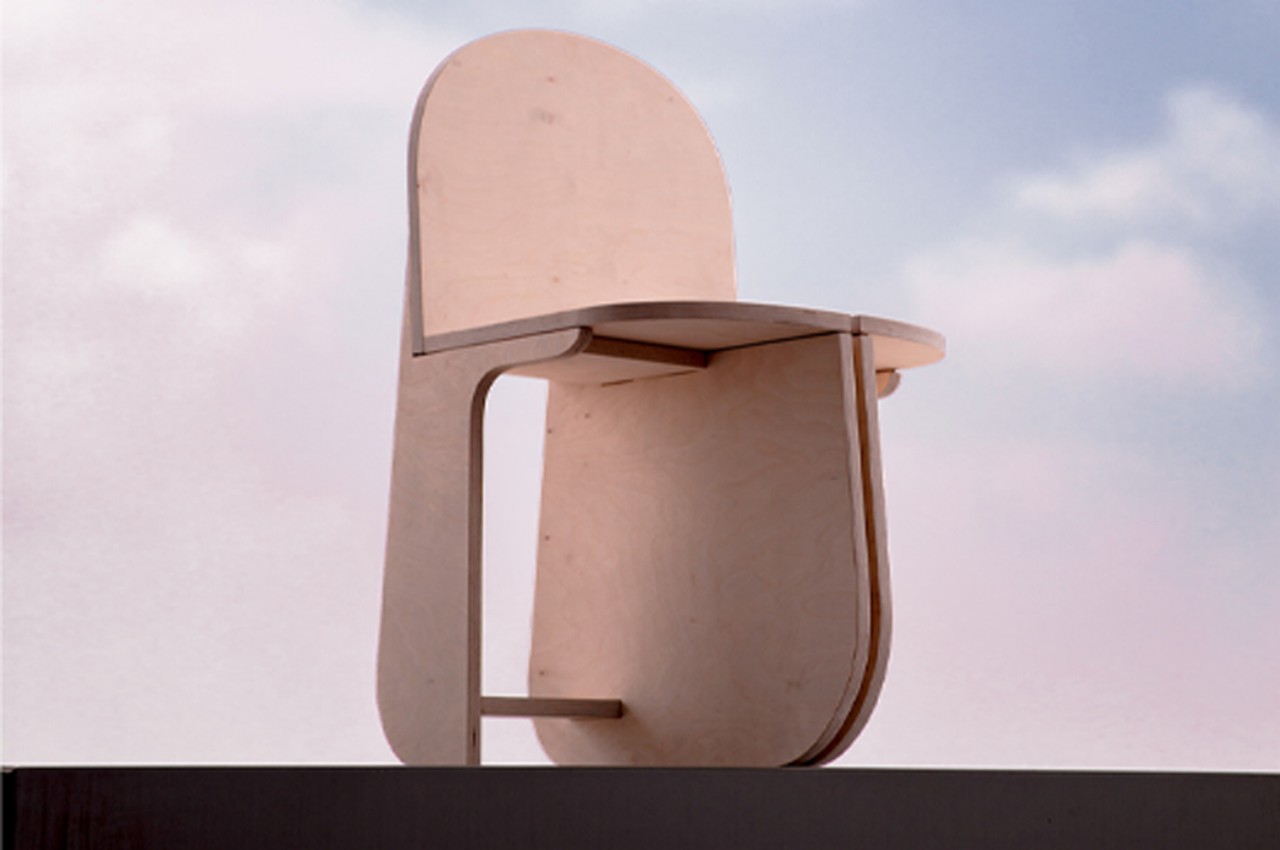
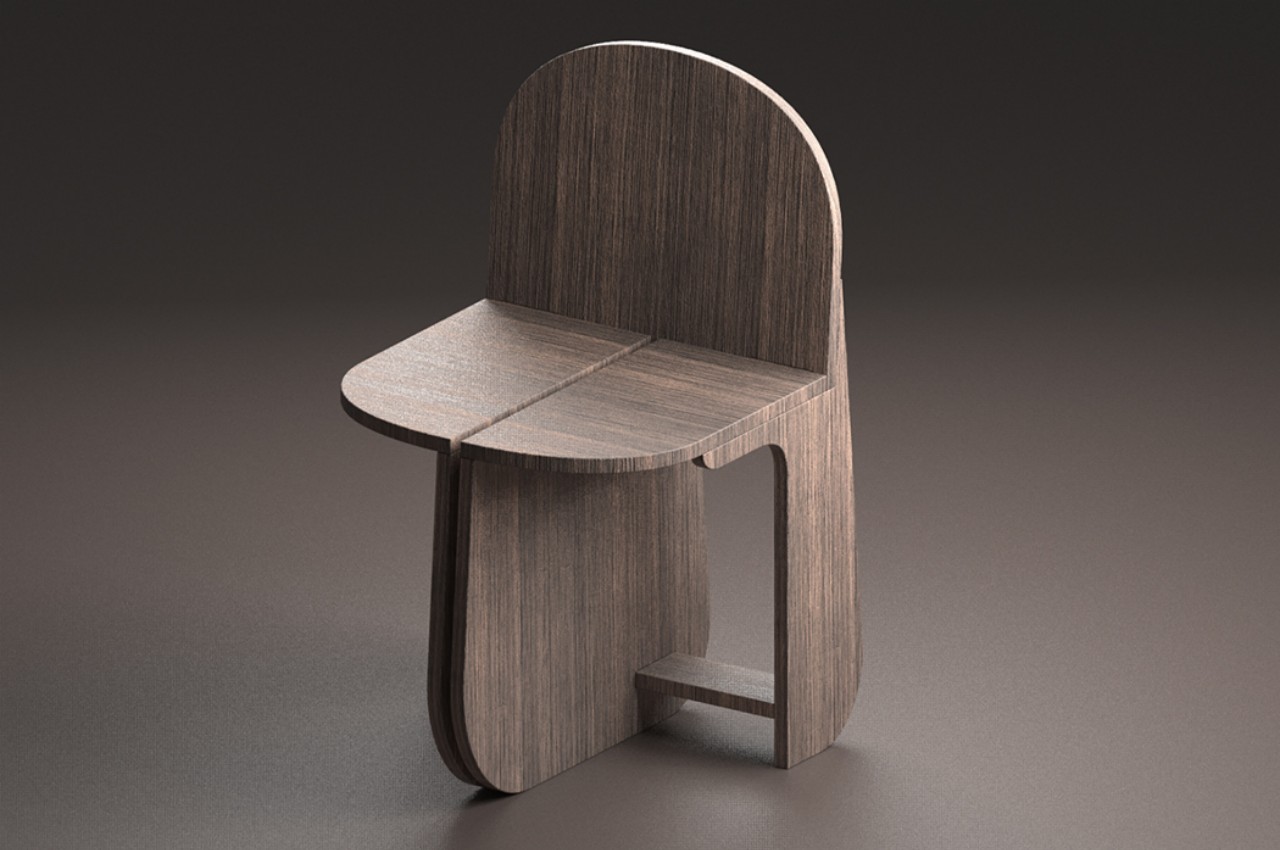
Designing unique chairs can be tough due to their long history, yet they inspire endless creativity. Seoul-based designer Yunjae Lee innovates with birch plywood and CNC milling, crafting a chair with three rounded legs, requiring no additional hardware for assembly. The Tri-Round Chair, reminiscent of IKEA projects, breaks down into eleven pieces before assembly, creating a stable structure with its interlocking design. Built from 18mm birch plywood, the chair offers stability without extra hardware, reimagining traditional chair design with a modern twist.
4. Reduced Wastage
CNC machines use iterative optimization to minimize waste and produce components efficiently. This approach, coupled with fixed tooling and routes, maximizes raw material usage and significantly reduces waste for manufacturers.
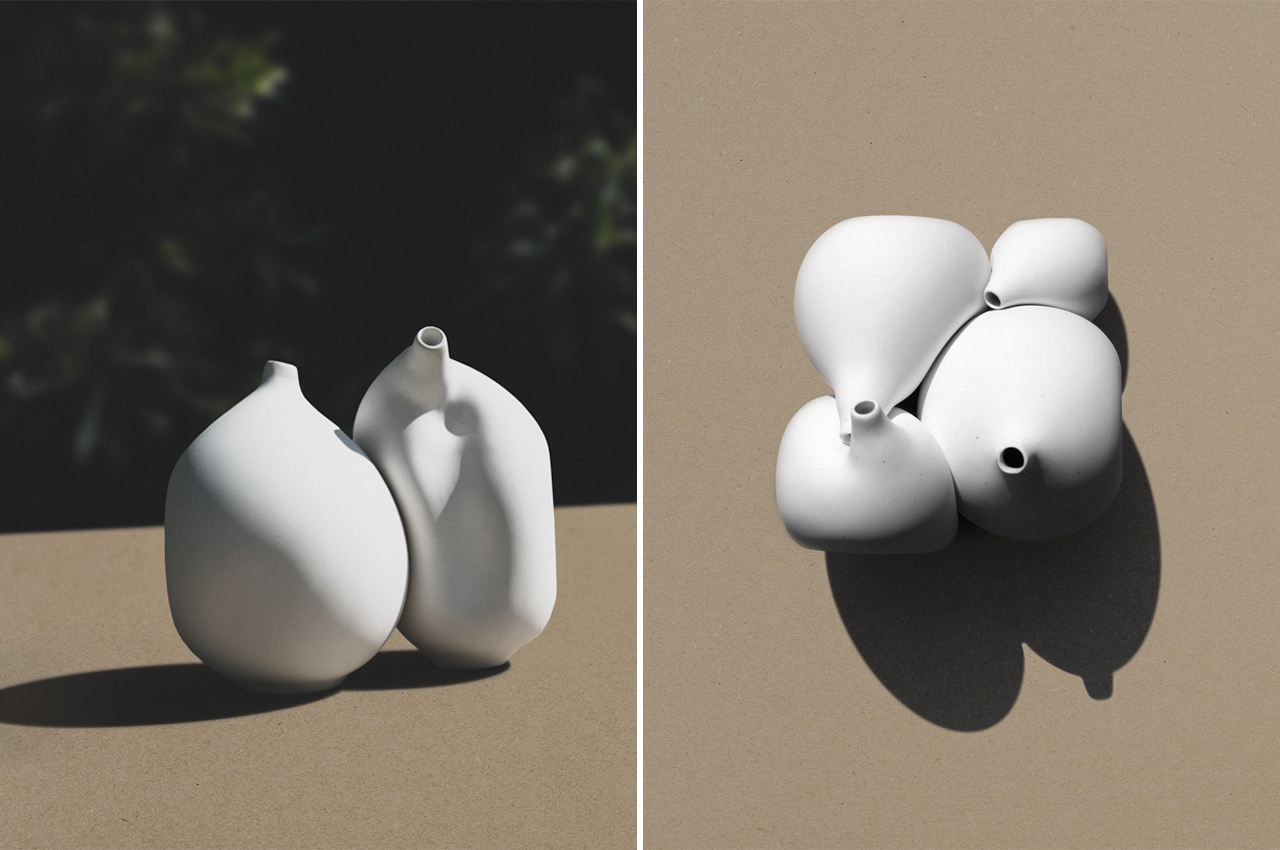
Ceramic Bodies is a collection of four porcelain vases designed by Jörg Hugo to fit together like a three-dimensional puzzle. Utilizing a blend of digital and analog design methods, Hugo creates timeless pieces that explore the relationship between materiality, form, and space. Each vase undergoes geometric optimization to minimize structural mass and energy, resulting in a visually captivating ensemble. CNC-milled plaster molds ensure precision in sizing, while 3D-scanning and modification techniques enable efficient production and customization. This innovative approach combines the craftsmanship of handcrafted ceramics with the efficiency of digital design, offering a unique and visually striking addition to any space.
5. Ensures Safety
One primary benefit for CNC machine operators is safety. CNC machines operate behind guards or enclosed, transparent safety doors, making them much safer than manually operated machines.
CNC machines work with a variety of materials, including composites, metals, foam, phenolics, and plastics. When choosing materials for CNC milling, some factors like hardness and heat tolerance need to be taken into consideration.
Dom Riccobene’s CNC-machined Mt. Fuji sculpture showcases the intricate beauty of Richlite, a durable and sustainable material. Blending data, art, and design, Riccobene creates detailed sculptures crafted by algorithms, earning him the title of “data sculptor.” With applications in various industries, Richlite’s versatility and tactile properties make it a preferred choice for residential, commercial, and industrial uses.
7. Low Maintenance Required
CNC milling machines are low-maintenance, usually requiring only periodic tool changes and light cleaning. This in-house serviceability saves money as professional maintenance engineers are not needed.
8. Consistent Output
The CNC process ensures uniformity by being computer-controlled, resulting in identical parts with no variations in quality.
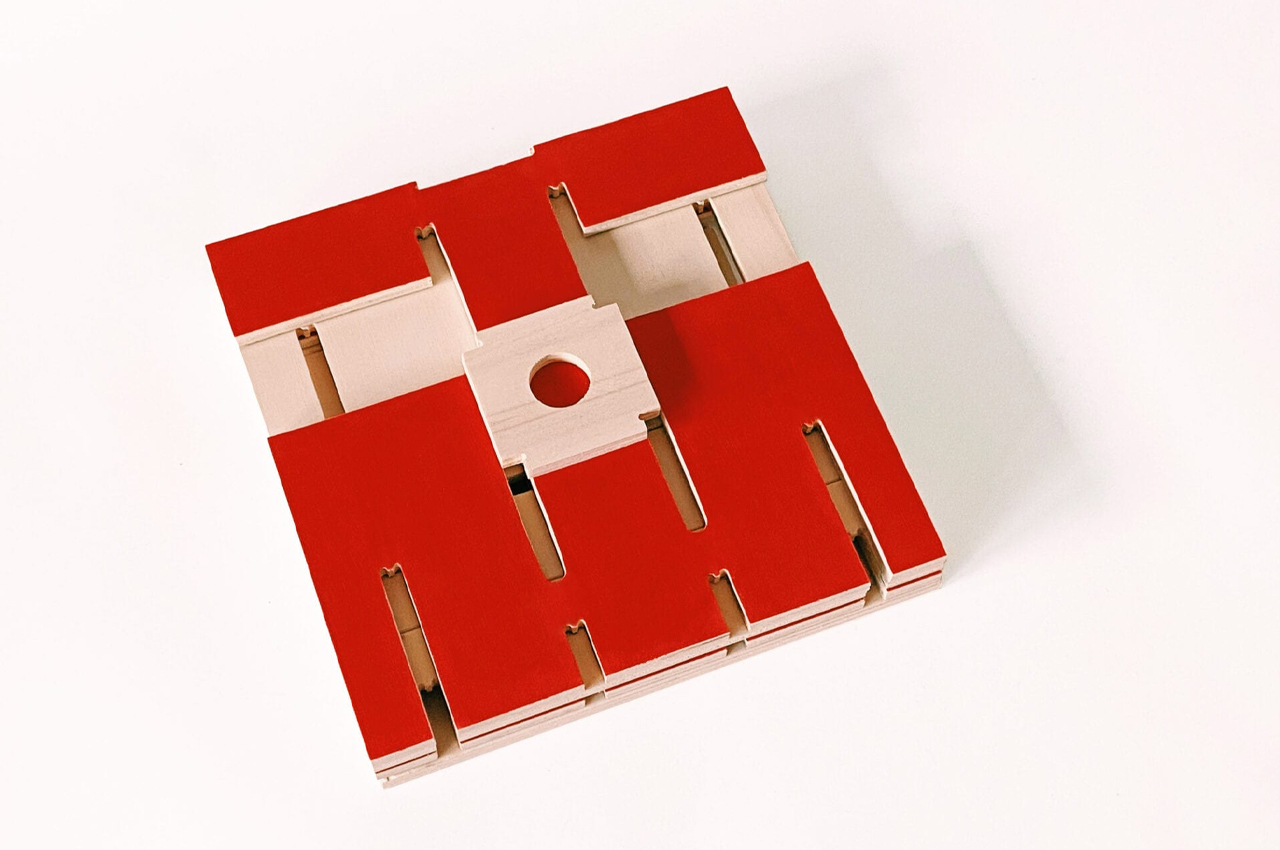
The BN! lamp, a modular table lamp crafted with CNC milling techniques, ensures precise and interchangeable assembly. Inspired by timber toys, its design guarantees symmetry and seamless operation. Delivered in a flatpack, it requires no extra hardware for assembly. Each component is meticulously crafted for easy replacement, and users can choose a bespoke brown color scheme.
CNC machines initially require a higher investment than manual machines, but as usage grows, costs decrease. Skilled technicians are still essential for programming and supervising, but finding them can be challenging, potentially impacting the quality of machined parts in some shops.
The first step involves creating a CAD (Computer-Aided Design) model using 2D or 3D design software. Note that complex designs may require skilled designers, and the CAD model serves as the blueprint for the machining process, guiding the CNC machine in executing precise instructions for material cutting or shaping.
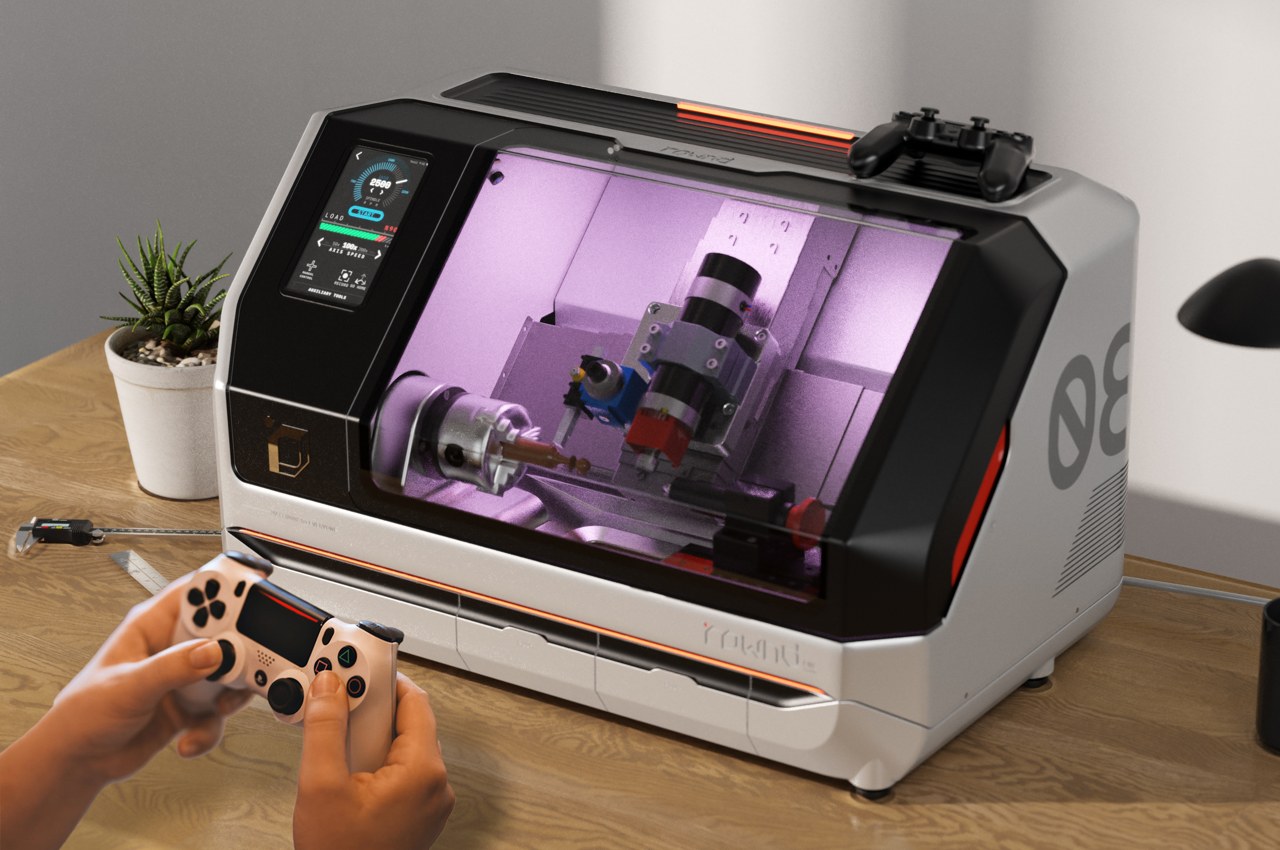
The ROWND unveils a user-friendly CNC lathe, compact and precise, suitable for new users and professionals alike. Its intuitive touchscreen interface and compatibility with various materials make it accessible and efficient for diverse projects.
Step 2: Convert CAD to CNC File
To convert CAD to CNC, use Computer-Aided Manufacturing (CAM) software or basic tools. CAM translates CAD designs into G code, which CNC machines understand. Note that basic tools offer simplicity but lack the advanced capabilities of CAM software.
Step 3: Configure the CNC Machine
Before manufacturing, the CNC machine needs proper setup, akin to configuring a printer. This involves positioning the workpiece accurately and configuring the die and other settings.
Jasper Mallinson’s Mecha-Morphis Wearable CNC Machine revolutionizes design manufacturing with its portable exoskeleton design. Small enough to fit on the arm, it provides remarkable mobility for intricate tasks, empowering creativity on the move. Versatile and sustainable, Mecha-Morphis reflects a fusion of innovation and environmental consciousness, offering a glimpse into the future of creative freedom.
Step 4: Execution
Once the configuration is complete, machine operation can proceed by executing the program on the CNC machine’s display panel. One may need to navigate program prompts for different settings. The machine runs continuously until manually stopped or due to errors or any form of power disruptions.
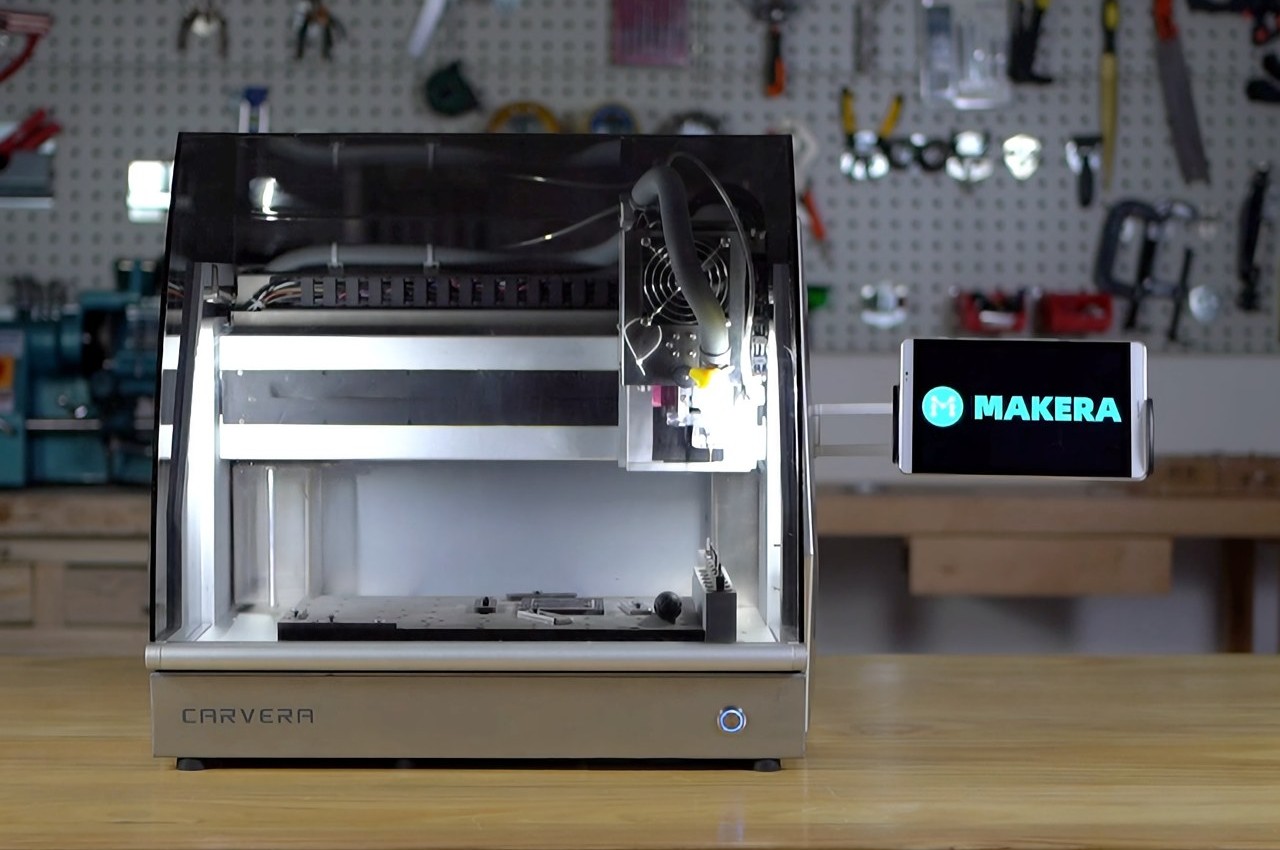
The Carvera enables one to create prototypes, designs, PCBs, and molds on your tabletop. Compact and equipped with powerful modules, it offers 3-axis CNC machining capabilities with optional laser-cutting and a 4-axis upgrade. Self-leveling and intuitive, it includes drill bits, a probe tool, and a laser module. With a robust build and versatile compatibility, it’s perfect for home or workspace use.
In conclusion, CNC-produced machines play a key role in product design as their components offer superior quality, and zero defects, alongside environmental benefits. Opting for CNC over manual machining brings advantages like precision, speed, safety, efficiency, and cost savings.
Shenzhen-based Remax has introduced a unique 10,000mAh power bank that mimics the design of a classic cassette tape. Available for $19.99 on AliExpress, this device offers fast charging capabilities up to 22.5W through USB-A and USB-C ports. Depending on the model, users can charge it via USB-C, micro-USB, or Apple Lightning cable.
Key Features:
Design: Retro cassette tape with transparent case
Capacity: 10,000mAh (rated at 5200mAh)
Output: 22.5W fast charging
Colors: Yellow, red, green (2023 model with built-in cables)
Despite its charming design, the power bank is larger than a traditional cassette and lacks moving parts. The new green model adds pull-out flexible 20W Type-C and Lightning cables, while removing the micro-USB input and LED flashlight. The product’s longevity might be a concern, with a rated capacity of 5200mAh and a lifespan of 300 charge cycles.
Overall, the Remax cassette power bank combines nostalgic design with modern functionality. For more details and to purchase, visit AliExpress.
We’ve seen a lot of horrible forest fires that have destroyed homes, properties, and whole ecosystems in an area. We see such destruction just because someone did not put out a cigarette properly or through an accident or even through a natural phenomenon. If there were better wildfire detection systems in place then maybe the damage would have been lessened or even prevented. This award-winning sensor system hopes to solve that problem and help save forests from future wildfires.
Designers: Suat Batuhan Esirger and Rana Imam
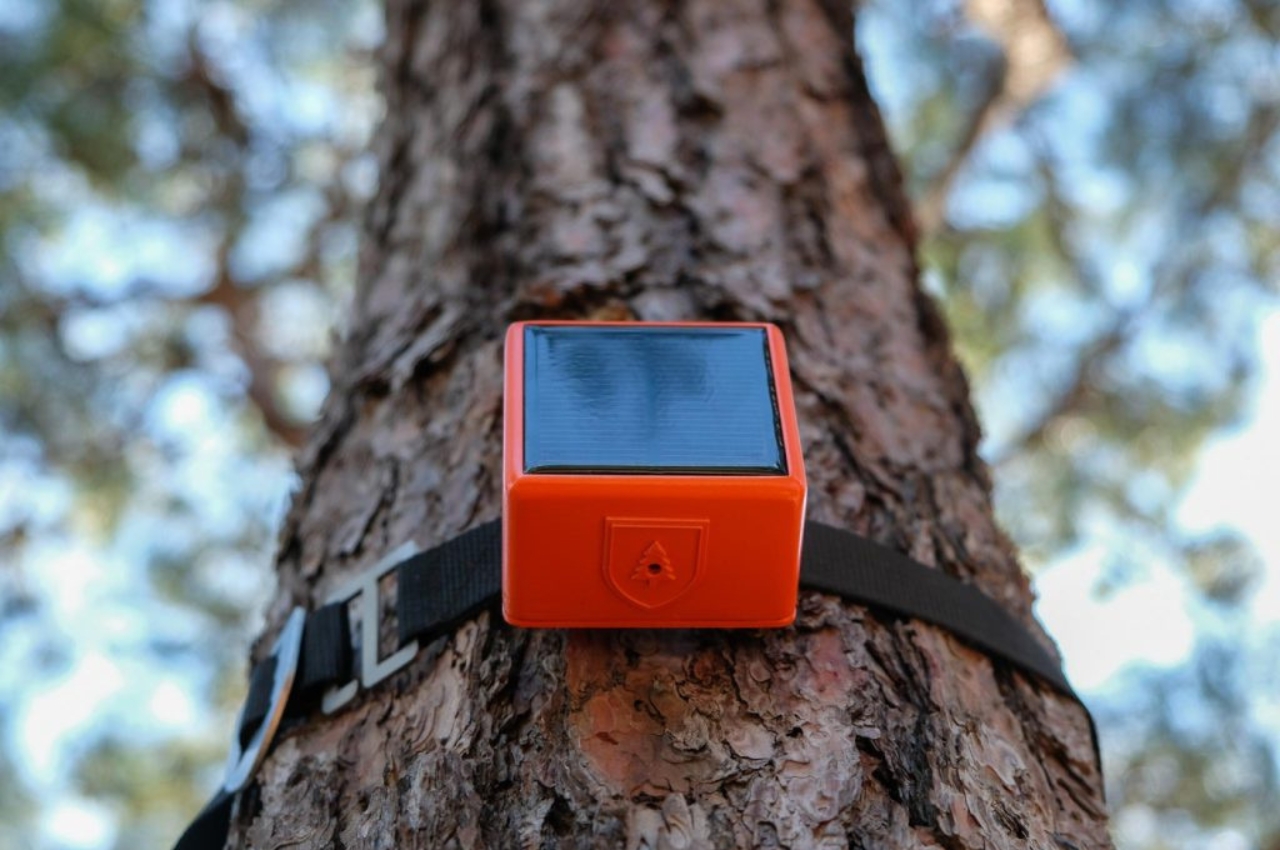
ForestGuard is a sensor system that is able to detect fires in real-time through its IoT-based, satellite-connected system. The devices are fixed on tree trunks through flexible, elastic straps that will not intervene with the tree’s growth. It is fixed at a height of 3 meters and can be placed every 16 hectares if you want an entire forest to be monitored. It also has a machine-learning algorithm that will be able to tell whether the smoke is from a vehicle’s exhaust, someone smoking a cigarette, or whether it’s an actual forest fire.
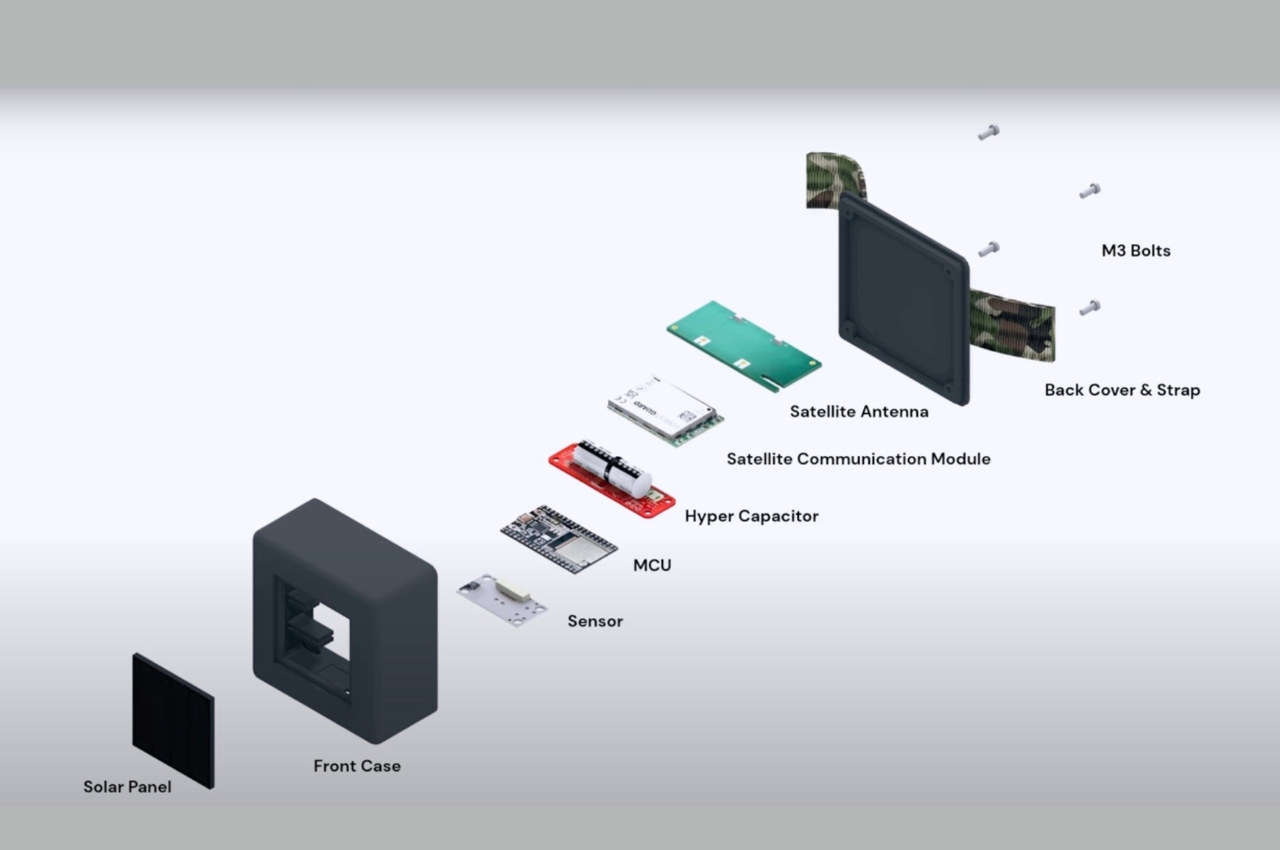
The modules actually have wide-spectrum sensors that will be able to measure gas levels, temperature, humidity, air pressure, and air quality for different scenarios. The sensor modules will transmit the data to GeoStationary satellites that will beam it back to earth and to the servers. Reaction time of authorities and firefighters can be reduced to under 15 minutes if everything works properly and the emergency condition is verified.
They have integrated Li-Ion Hyper Capacitors with the solar panels so the devices themselves will not cause a fire even if under extremely hot conditions. There is also an internal gyro sensor for anti-tamper and anti-theft features. The case manufacturing uses forest-collected plastics to helo reduce environmental impact. Hopefully more forest systems get to adapt this sensor system and help reduce the number of dangerous forest fires that occur in various places.
I have a lot of respect for those people who can create music on their own, especially ones that are able to produce earworm-y pop riffs. Sometimes I’ve thought about studying how to create and mix music especially now that there are equipment, apps and websites where you can do that, but you need to study a lot of things before you can actually use them. Sometimes I think, can’t I just have something in my head transferred to a machine without having to do so much work? Well, thanks to artificial intelligence, that is somewhat possible, for better or worse.
Designer: Haechan Ryu
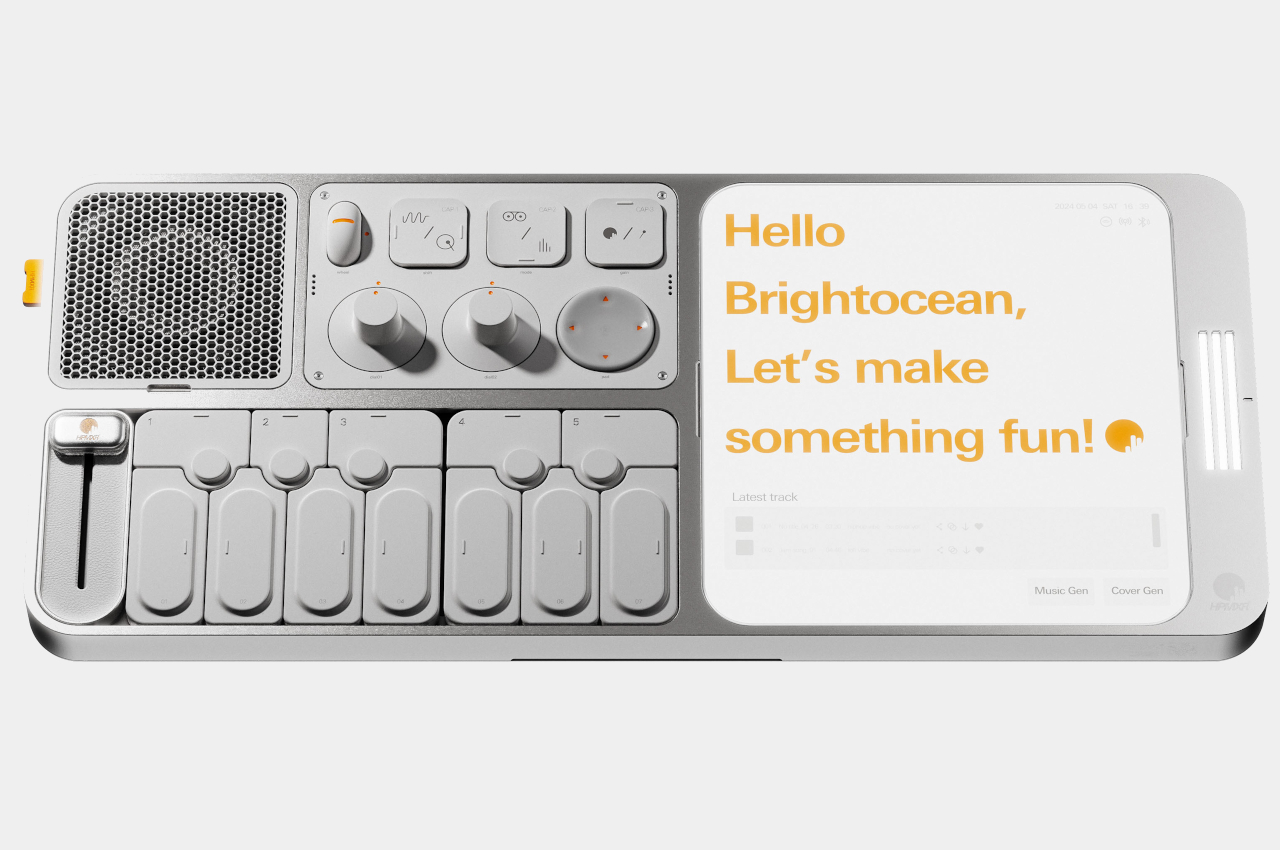
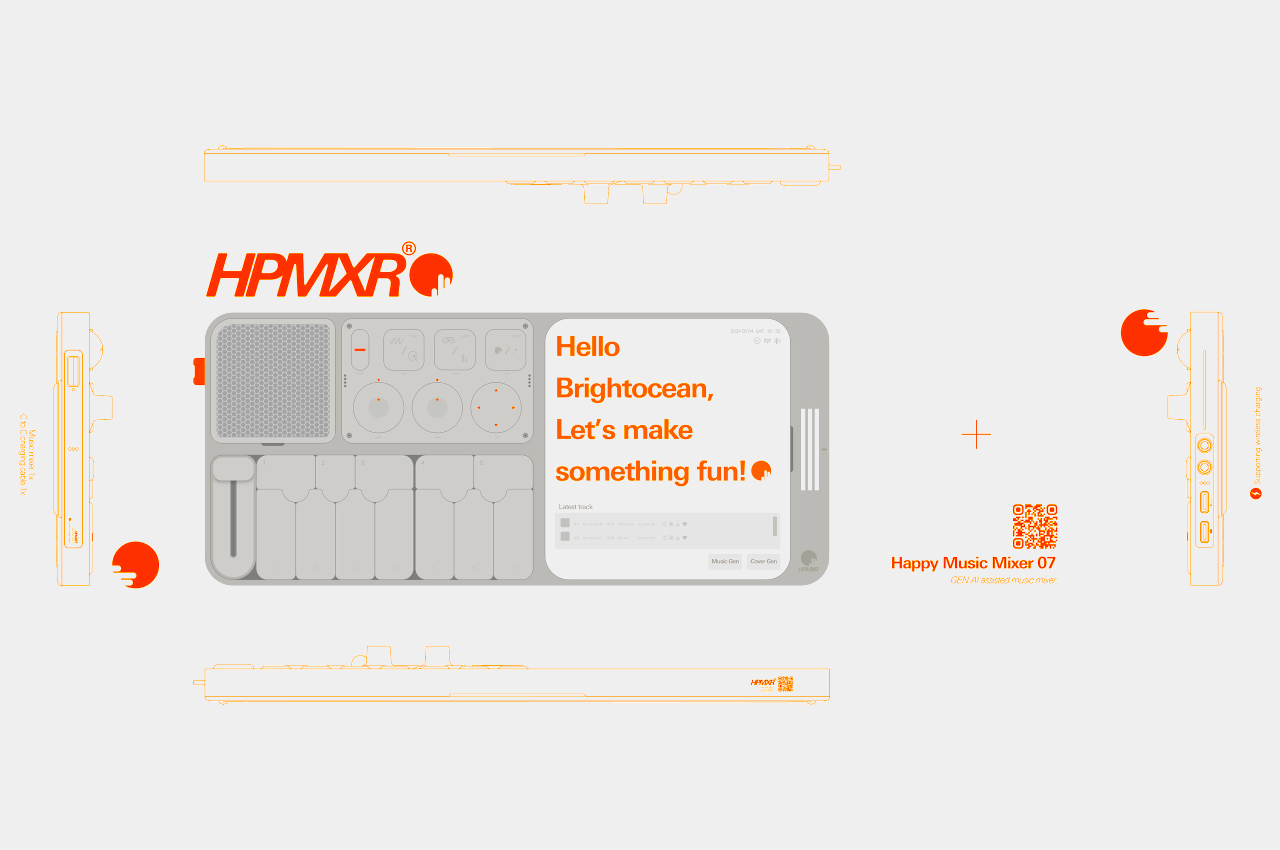
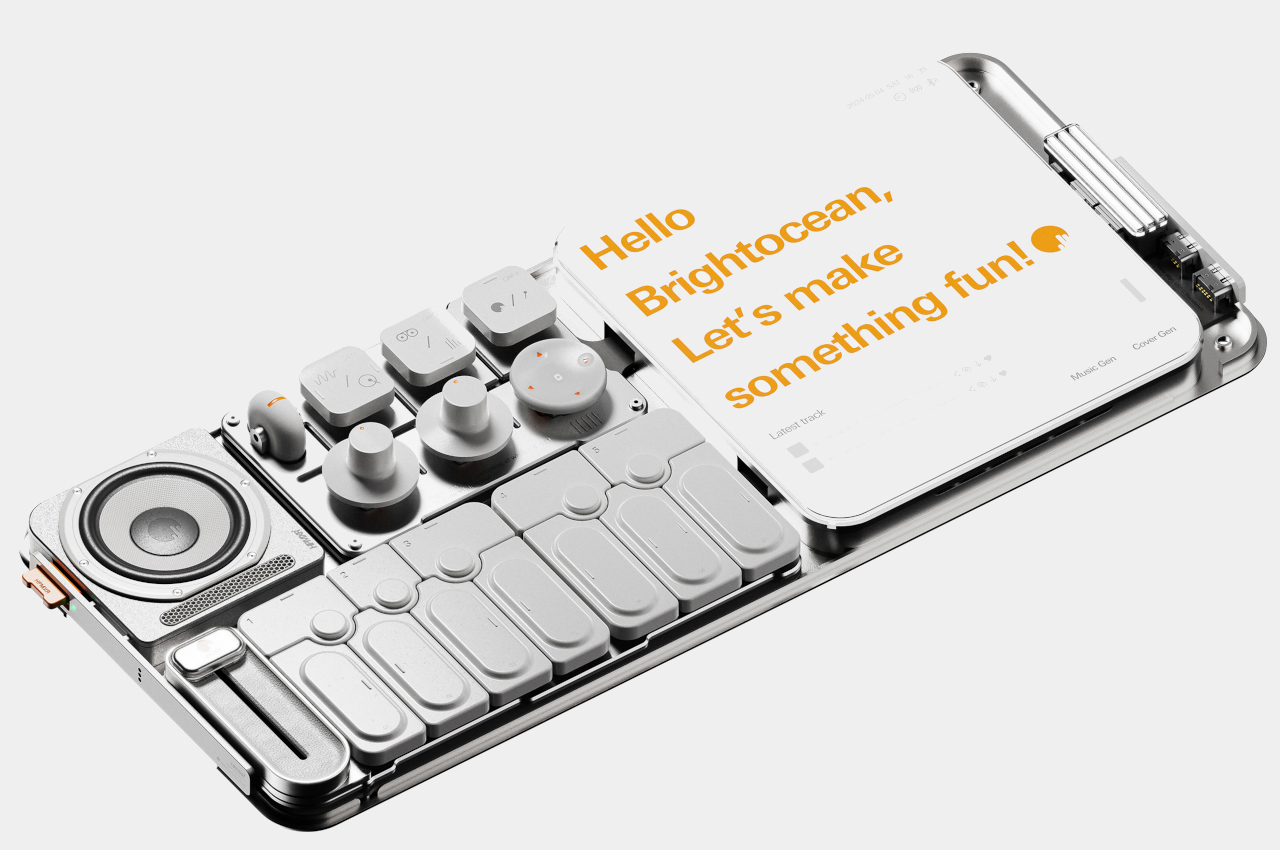
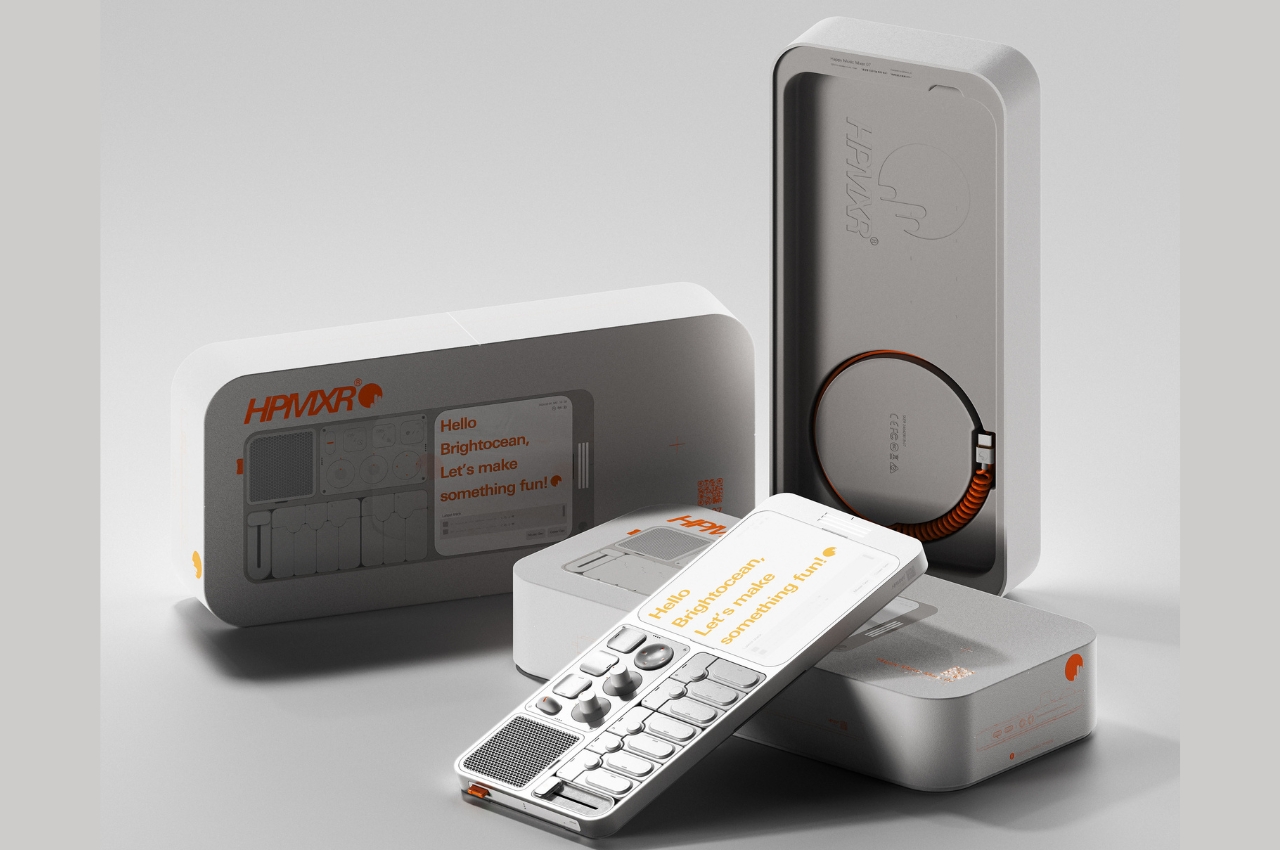
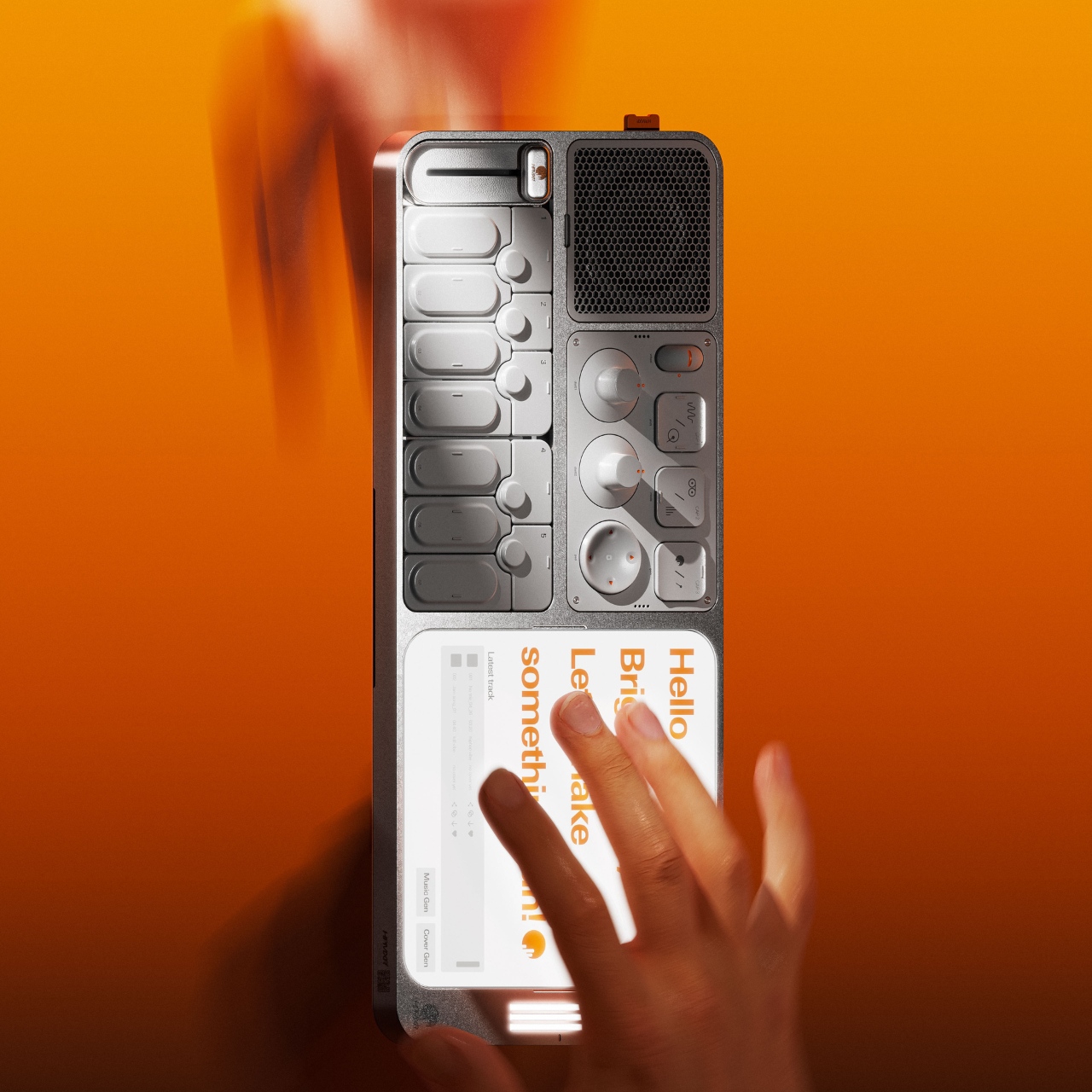
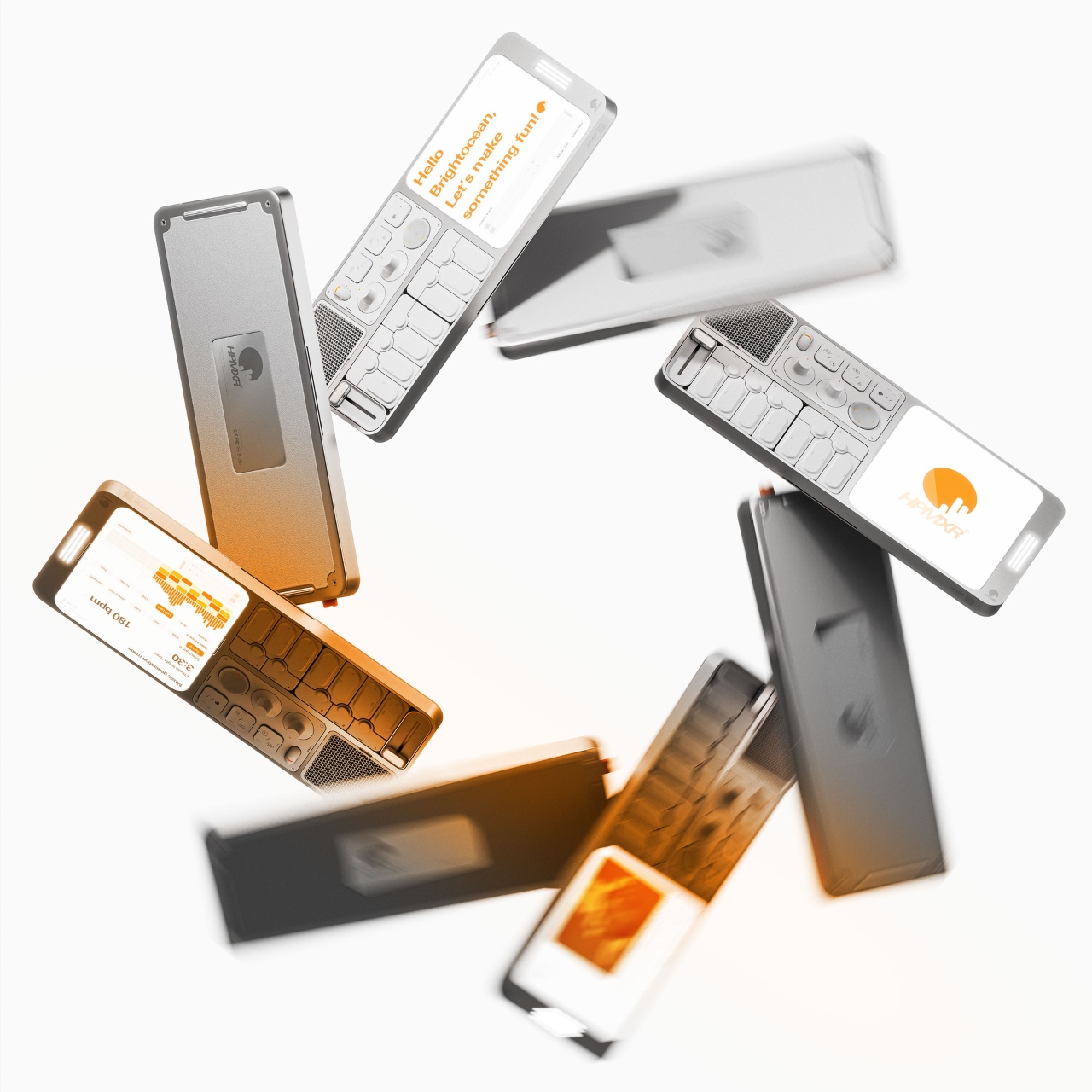
Happy Music Mixer 07 or HPMXR 07 is a music mixer that is powered by generative AI. This means, even if you don’t have knowledge on how to use mixers, you should be able to use this machine. The goal for this concept is to democratize composing music and using AI to help out with that. There are some ongoing issues in the music industry of course about using AI but it’s still an ongoing conversation that will continue to evolve. But if you are not hesitant to use AI to fuel creativity and things like music creation, then this should be of interest to you.
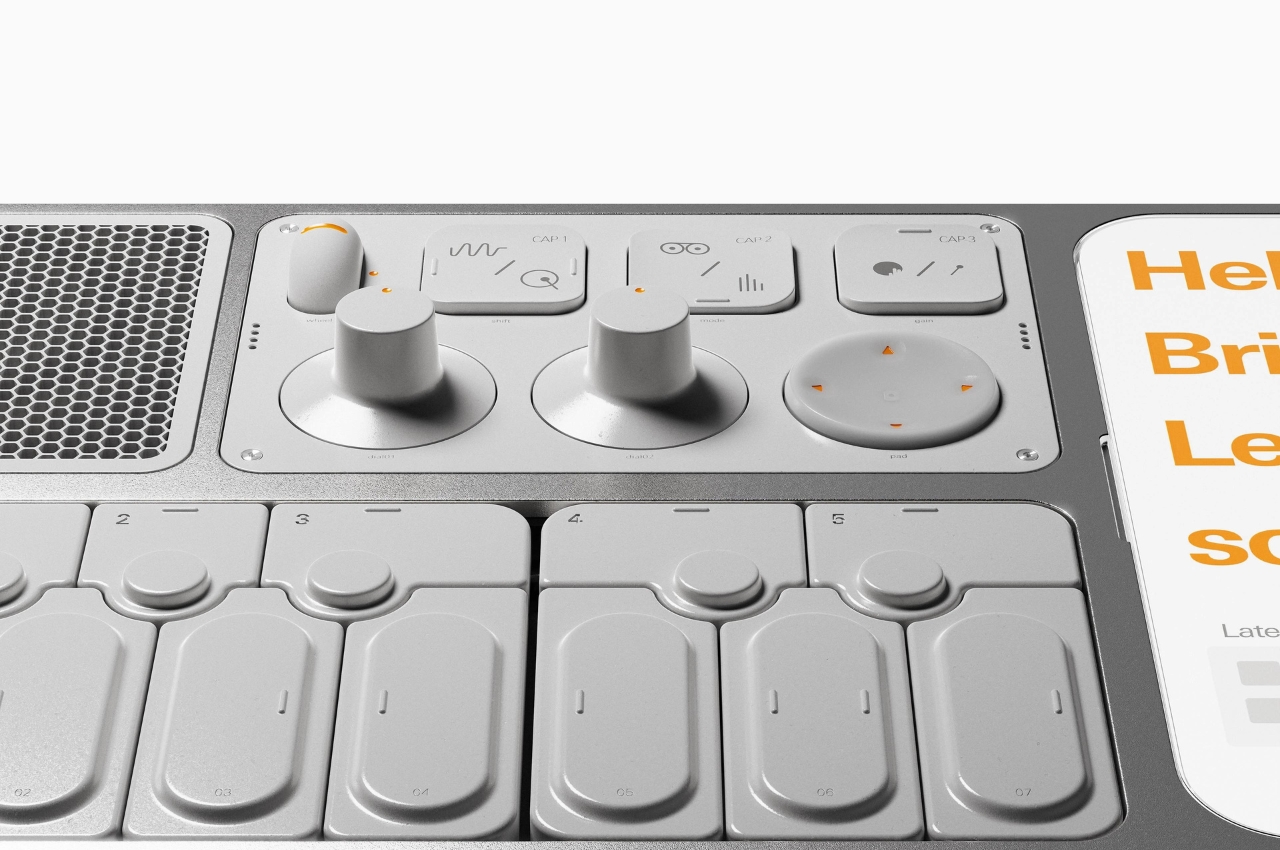
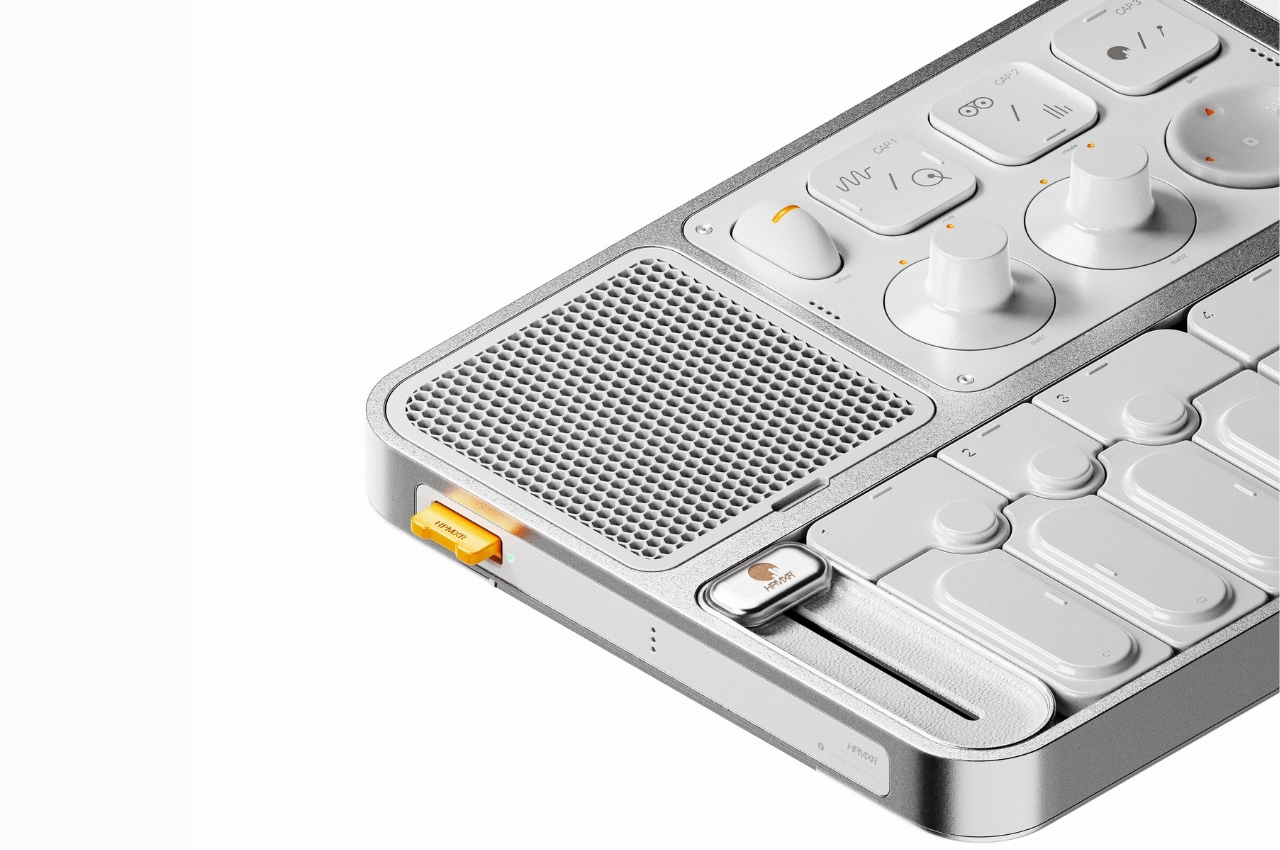
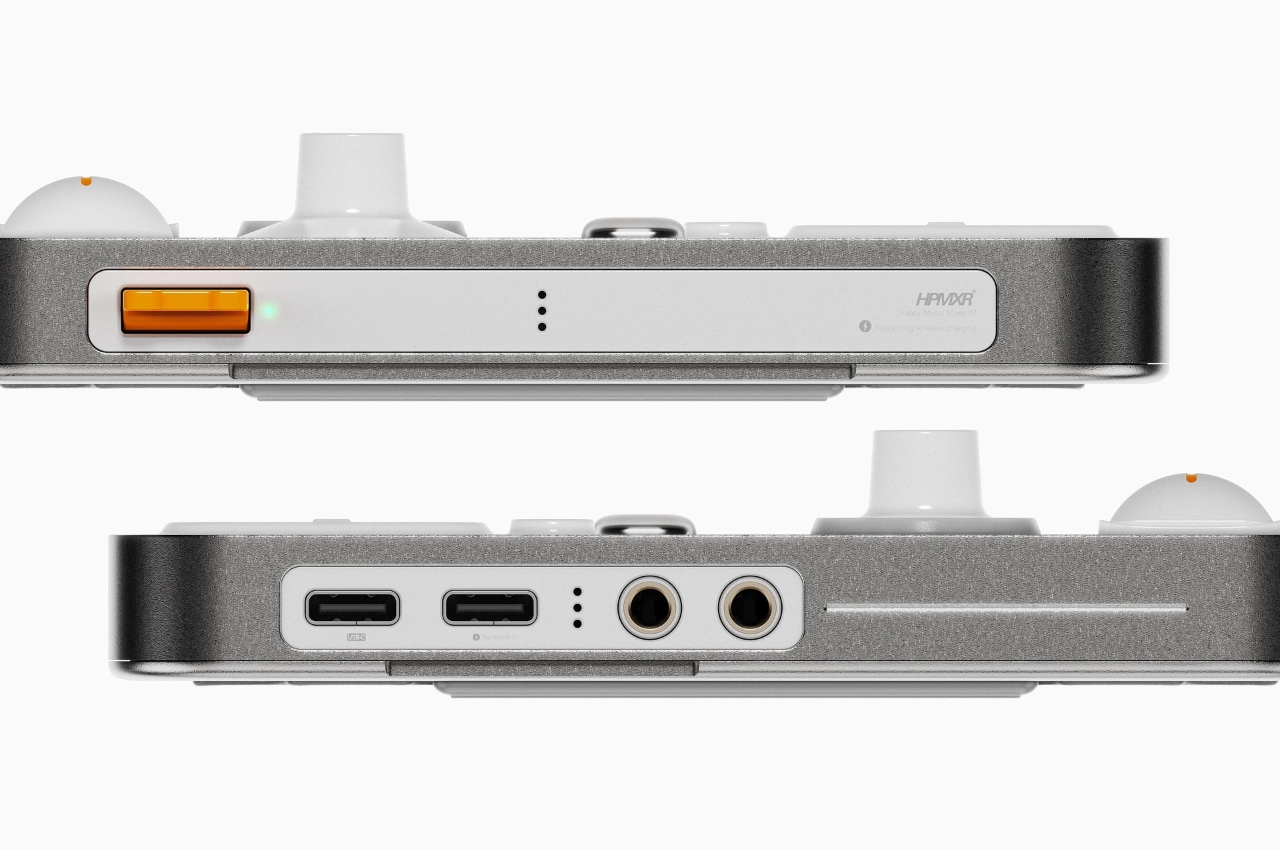
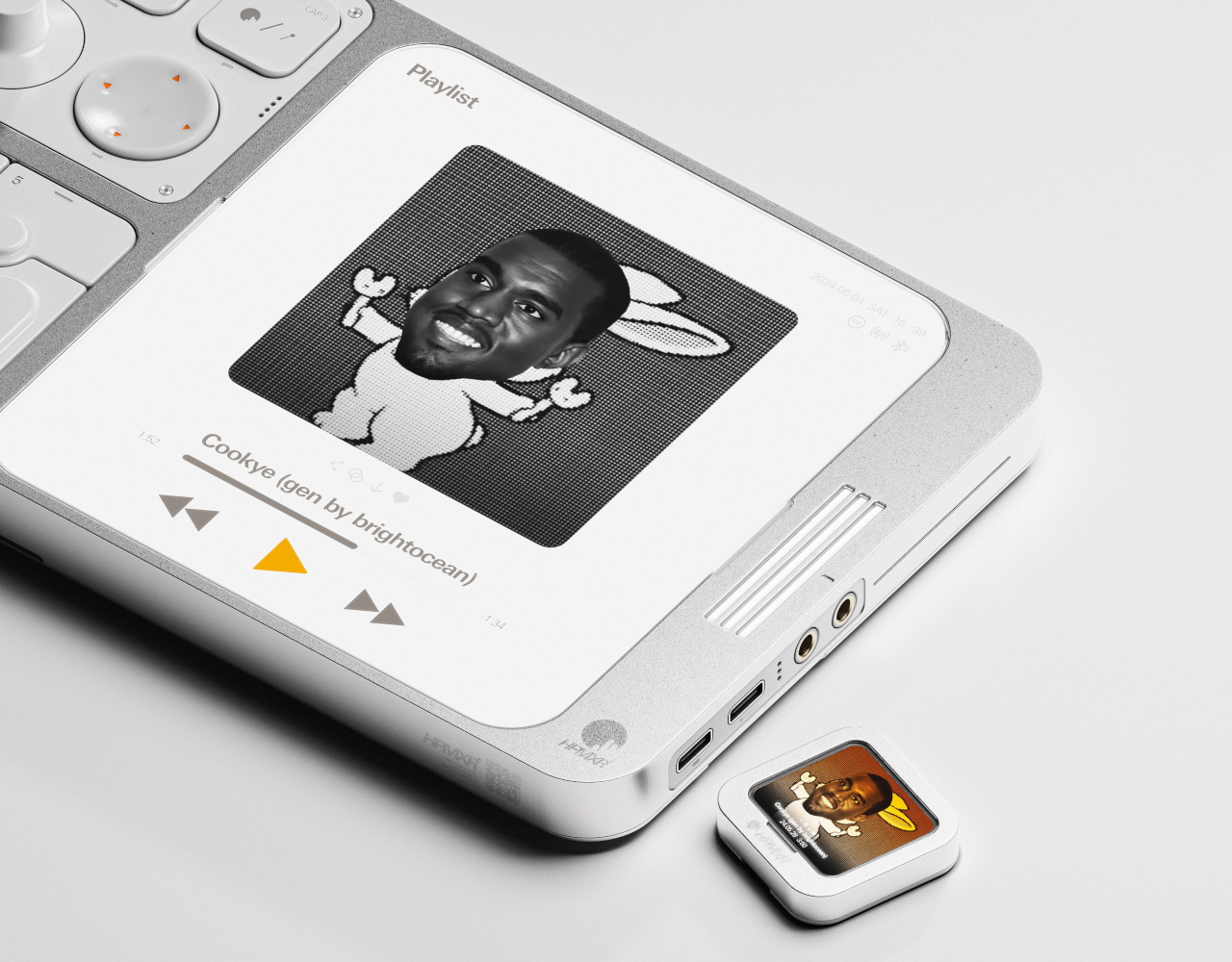
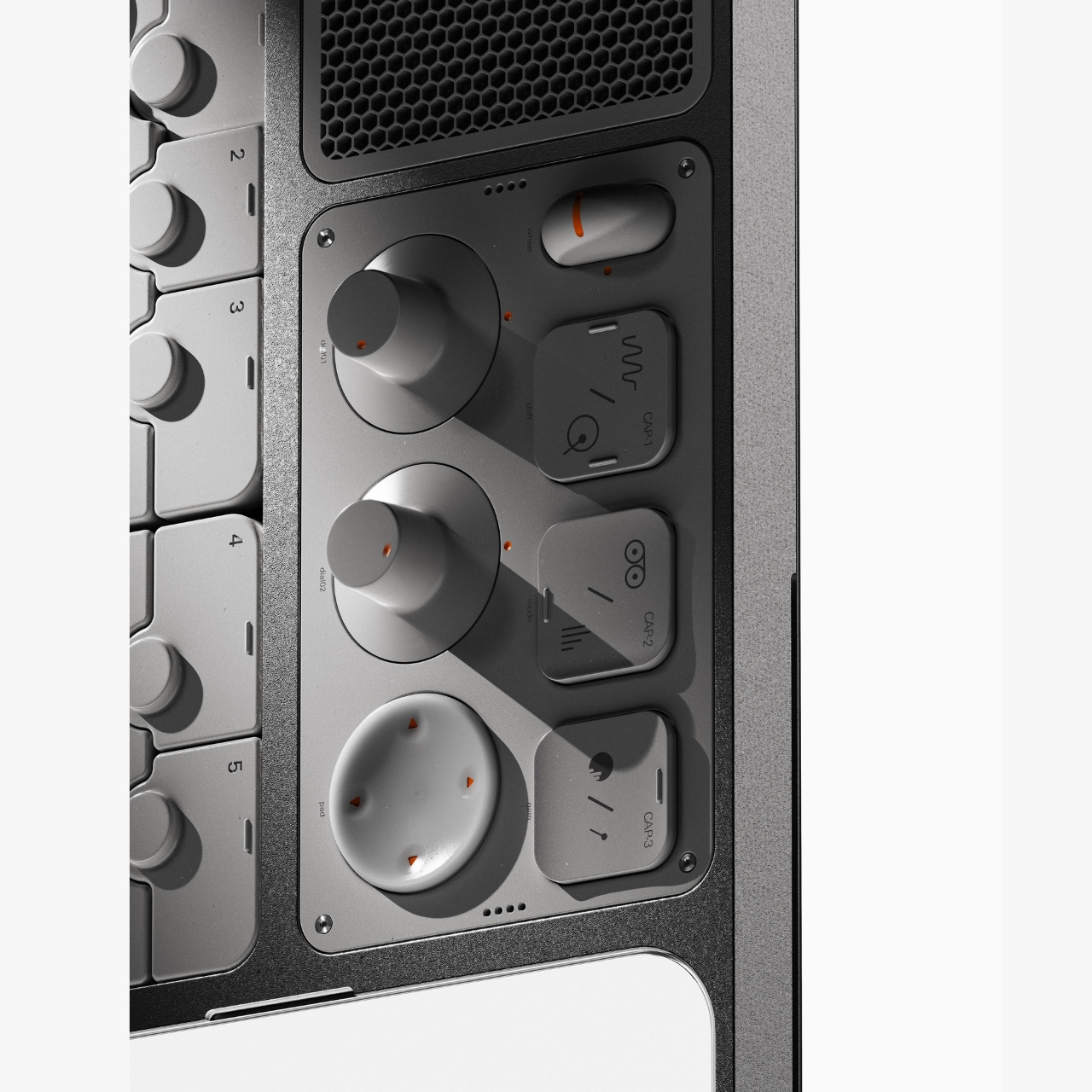
The machine looks like your typical synthesizer except that it is designed to not look so intimidating, with a clean interface and layout that should be easy to understand. The first step to using it is to describe the music that you’re thinking of, setting the length, tempo, mood, genre, prompt, mixing, and other things that may be in your brain. You can also even generate an album cover that will match your song. Once the AI has generated the song, you can also mix and adjust it according to your preference before transferring the completed song through an NFC card or a USB-C type connector.
All the buttons, knobs, and keyboard are designed in an intuitive interface. The housing of the HPMXR 07 is made from aluminum and has a monochromatic color with orange highlights. The switches and stabilizers have a tactile interface so you still feel in control even as the AI helps you generate the music that is in your head. It’s a good toy to play around with if you want to experiment with creating music but you don’t have the ability to understand more complicated mixers and synthesizers.
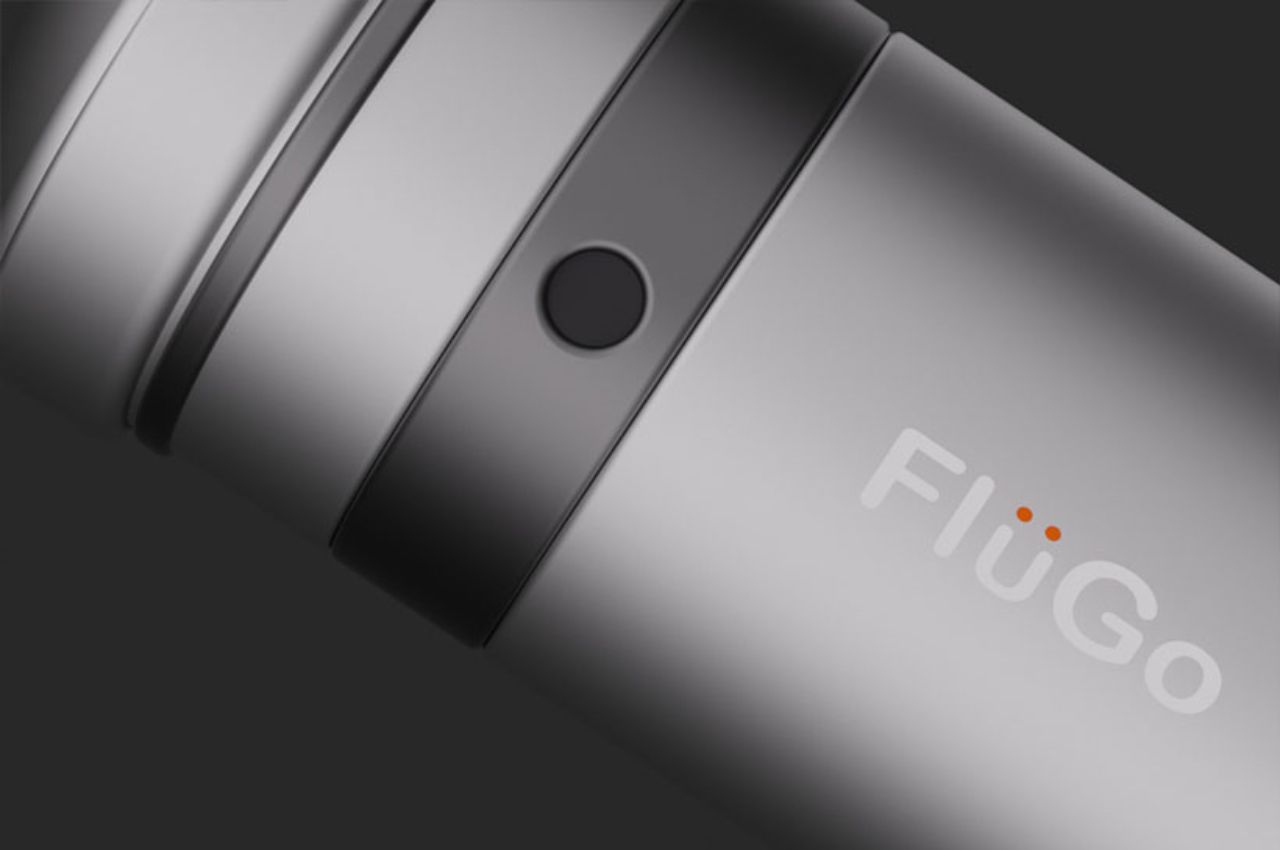
Learning a musical instrument is often a demanding yet rewarding journey that requires consistent practice, dedication, and the right environment. For many musicians, especially flutists, the challenge is not just mastering the instrument but also finding a space where they can practice without disturbing those around them. Practicing inherently involves experimenting with the instrument, which can lead to playing a few bad notes—a normal part of the learning process that others may find disturbing. Addressing this issue, FlüGo emerges as a revolutionary concept in flute training, combining technology, flexibility, and respect for others into one comprehensive solution.
Designer: Junyi Chen,Huijie Qu, Jinze Li, and Jingzhe Zhang
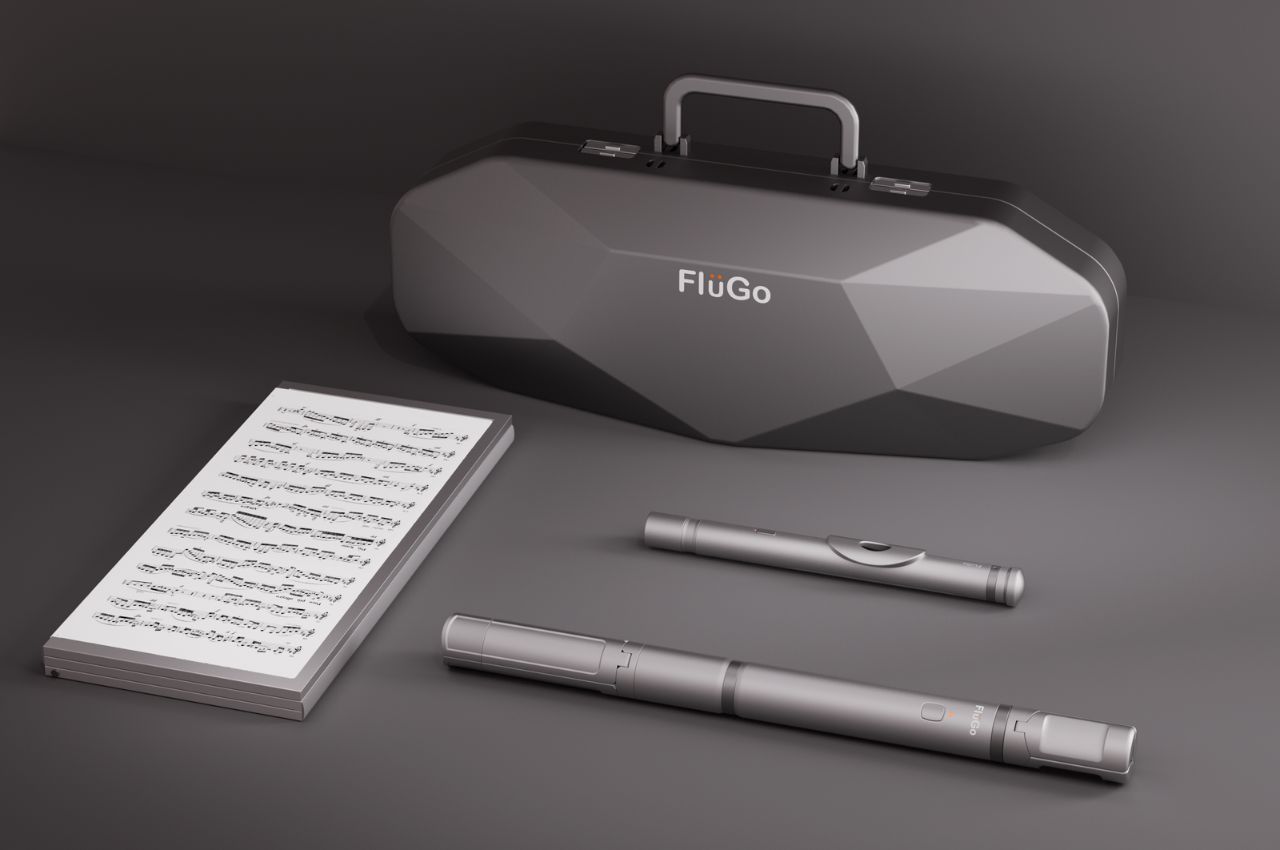
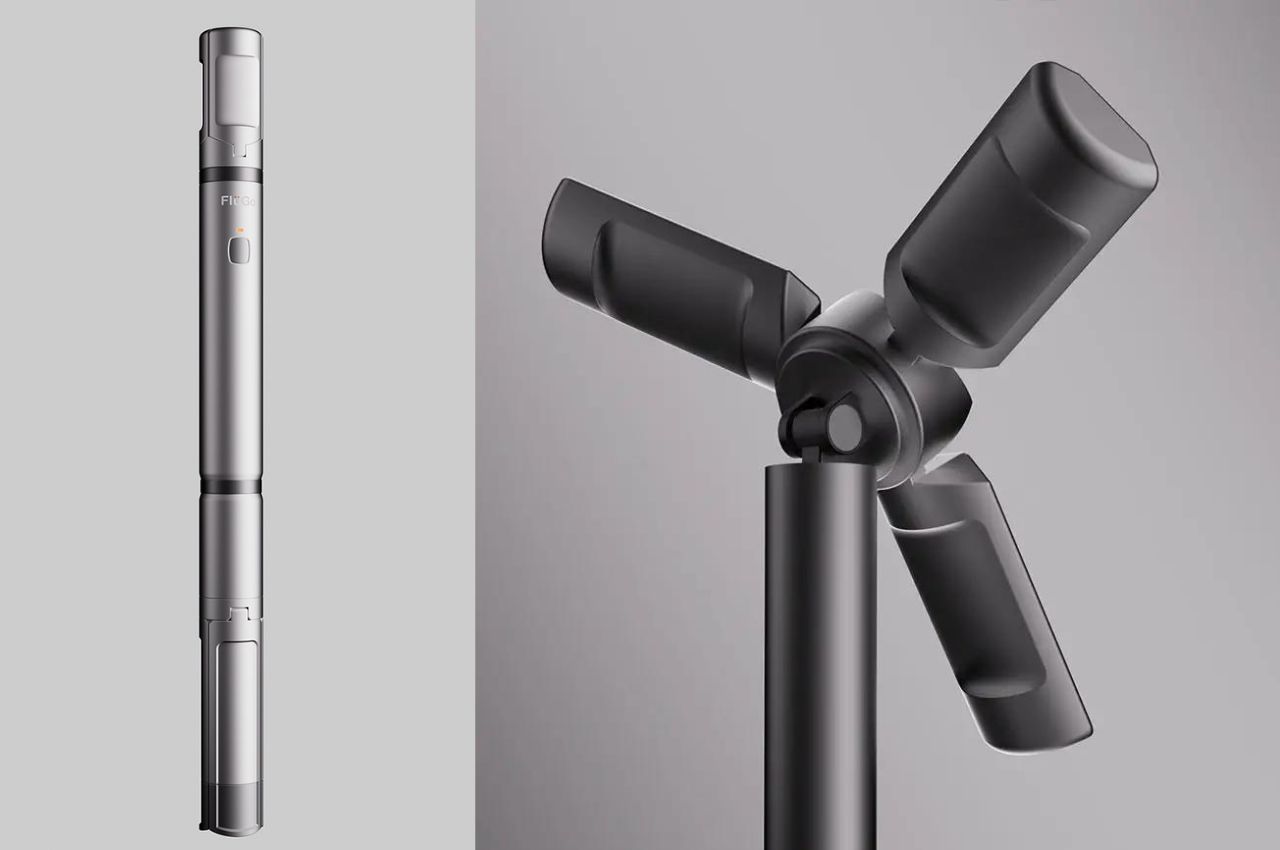
Every musician faces the challenge of creating a nuisance at some point. Even the most proficient players may need to halt their practice sessions due to noise complaints. For flutists, this challenge is particularly enunciated due to the nature of the instrument and the lack of adequate, soundproof practice spaces. FlüGo aims to tackle this issue head-on, offering a smart training kit that allows flutists to practice wherever they are without causing disturbances. The kit includes a modular instrument, a foldable music stand, and a collapsible support. This innovative setup allows for high mobility and flexibility, making it ideal for flutists who need to practice in various environments.
At the core of FluGo is an interchangeable smart head joint that integrates advanced technology to simulate realistic flute sounds. By combining data on airflow and finger movements, it emits a lifelike sound through directional speakers, ensuring that the music is confined to the player’s area. This means that the sound only reaches where it is intended, providing privacy and minimizing disturbance to others.
FluGo is more than just a practical solution for noise control. It represents a significant step forward in making musical practice more accessible and less intrusive. In a world where learning a musical instrument can be seen as a niche or even a luxury activity, it democratizes access to musical education. It breaks down logistical barriers that have traditionally isolated musicians, particularly those who play louder instruments like drums and wind instruments.
Beyond noise control, it opens up new avenues for learning and connection. The device’s ability to record and analyze performances, access interactive educational content, and connect with other flutists transforms it into a tool for growth and cultural exchange. Musicians can share their experiences, seek advice, and draw inspiration from a global community of enthusiasts.
Moreover, FluGo features a folding smart sheet music terminal that automatically turns pages, allowing flutists to focus solely on their playing. The system also records performances and offers real-time sound simulation, making it a comprehensive tool for both practice and performance review.