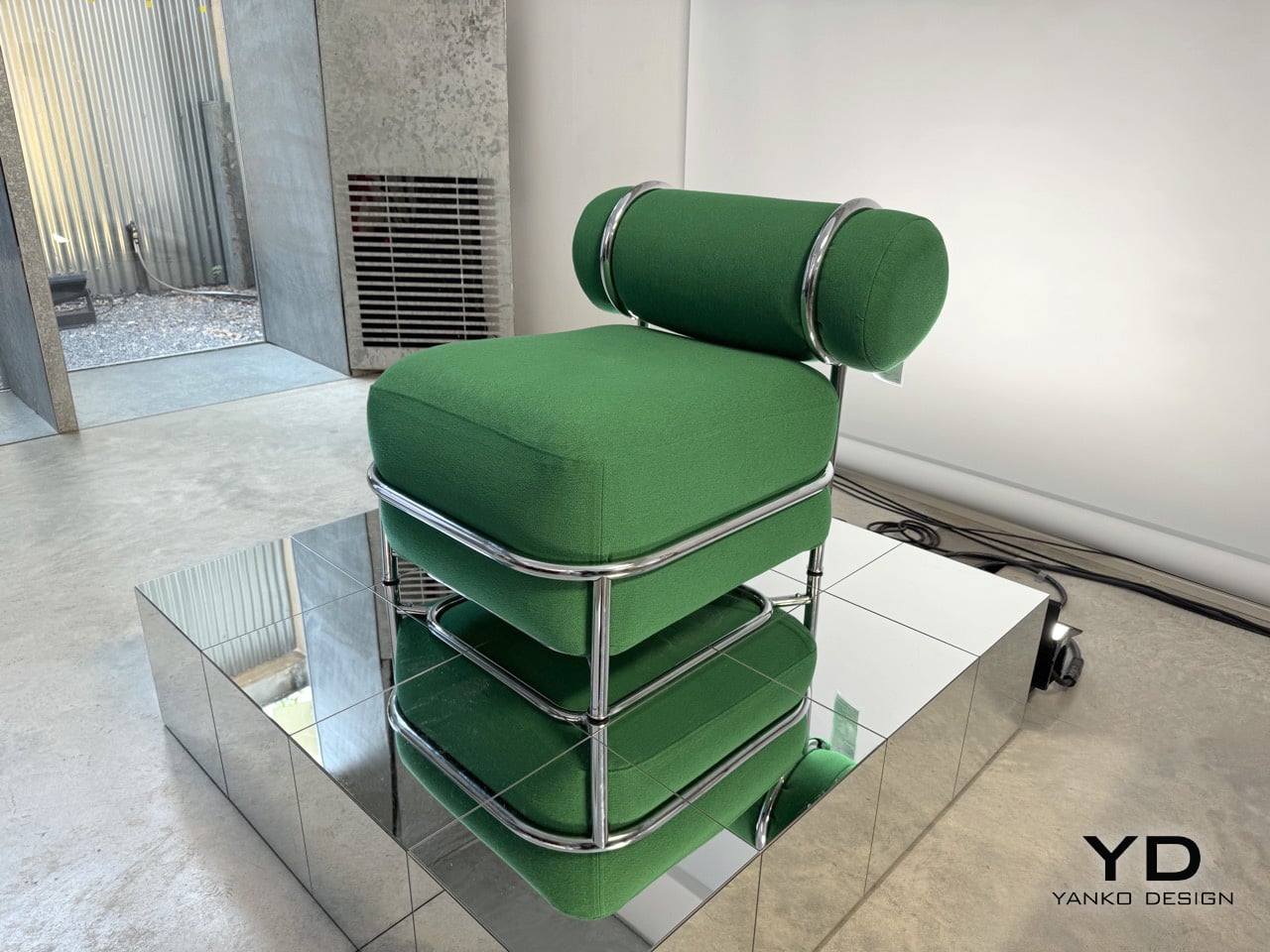
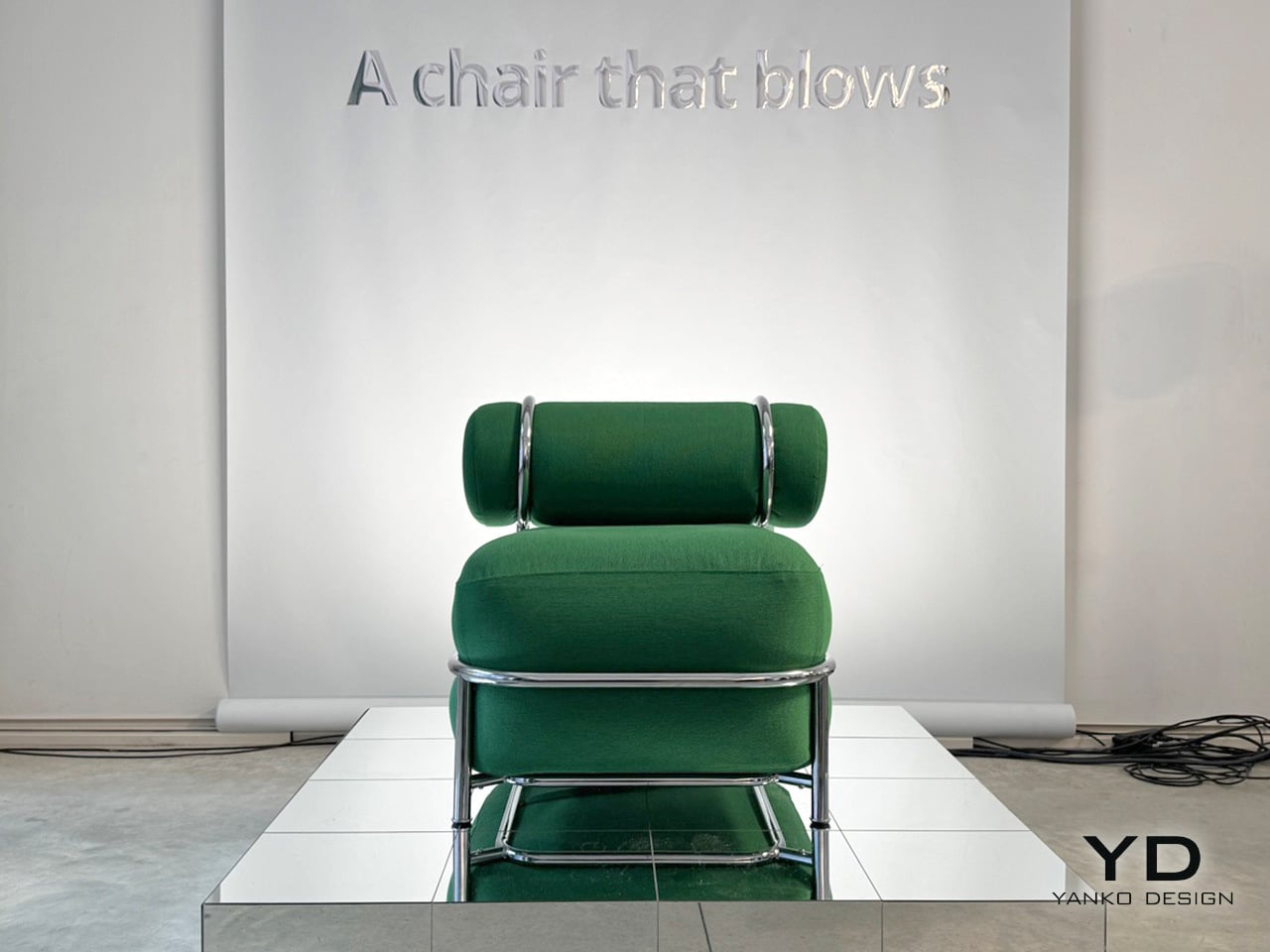
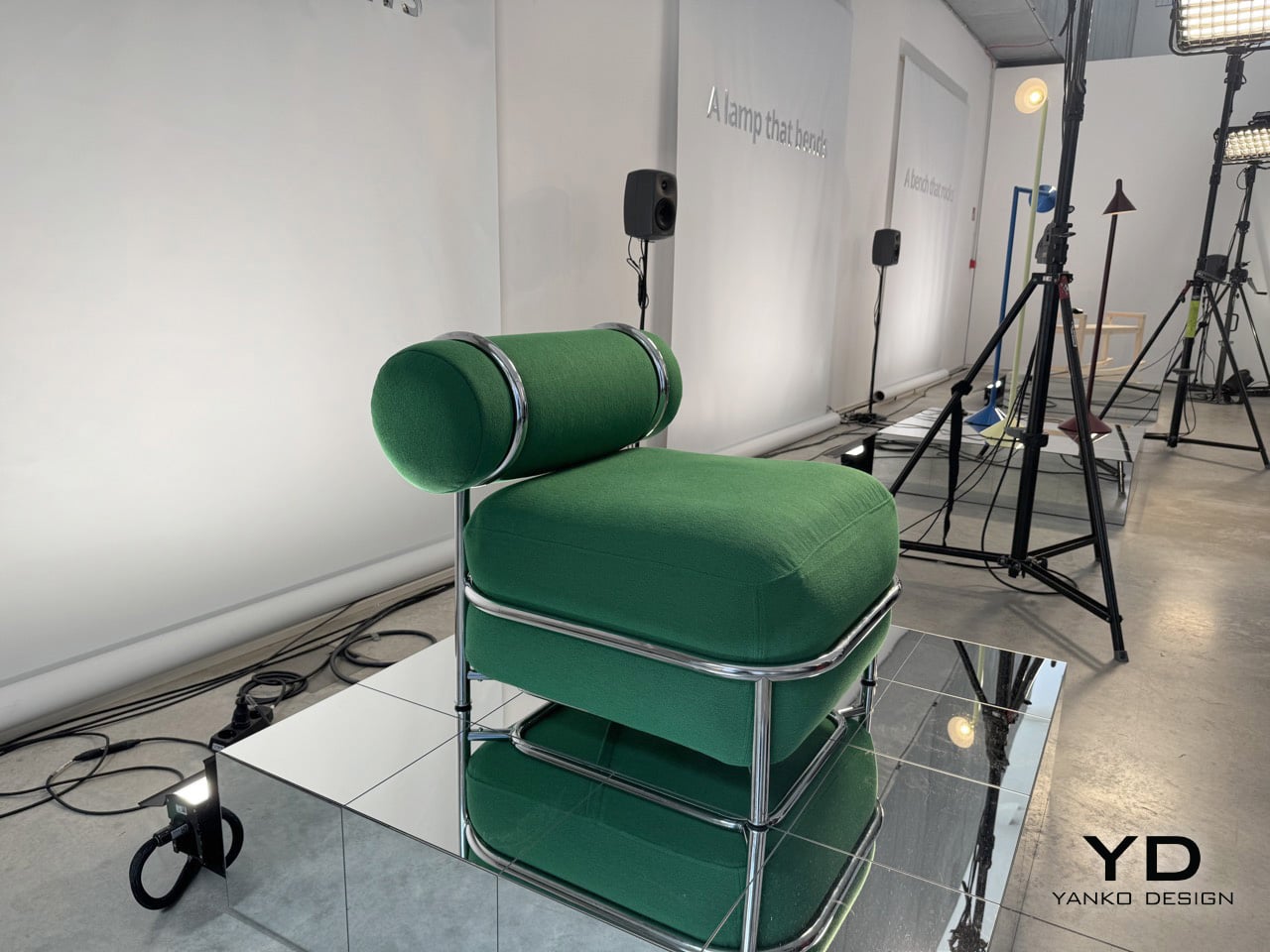
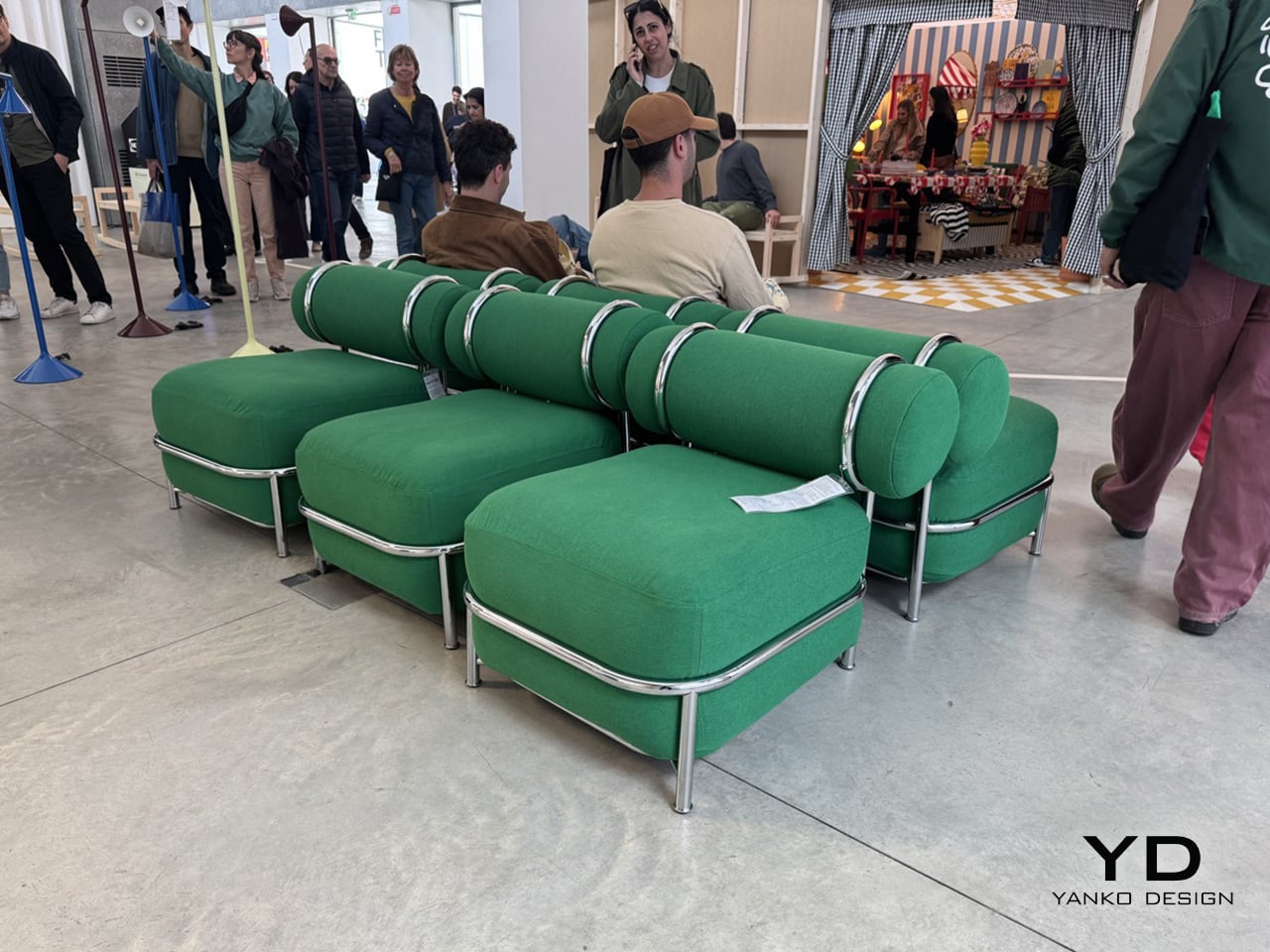
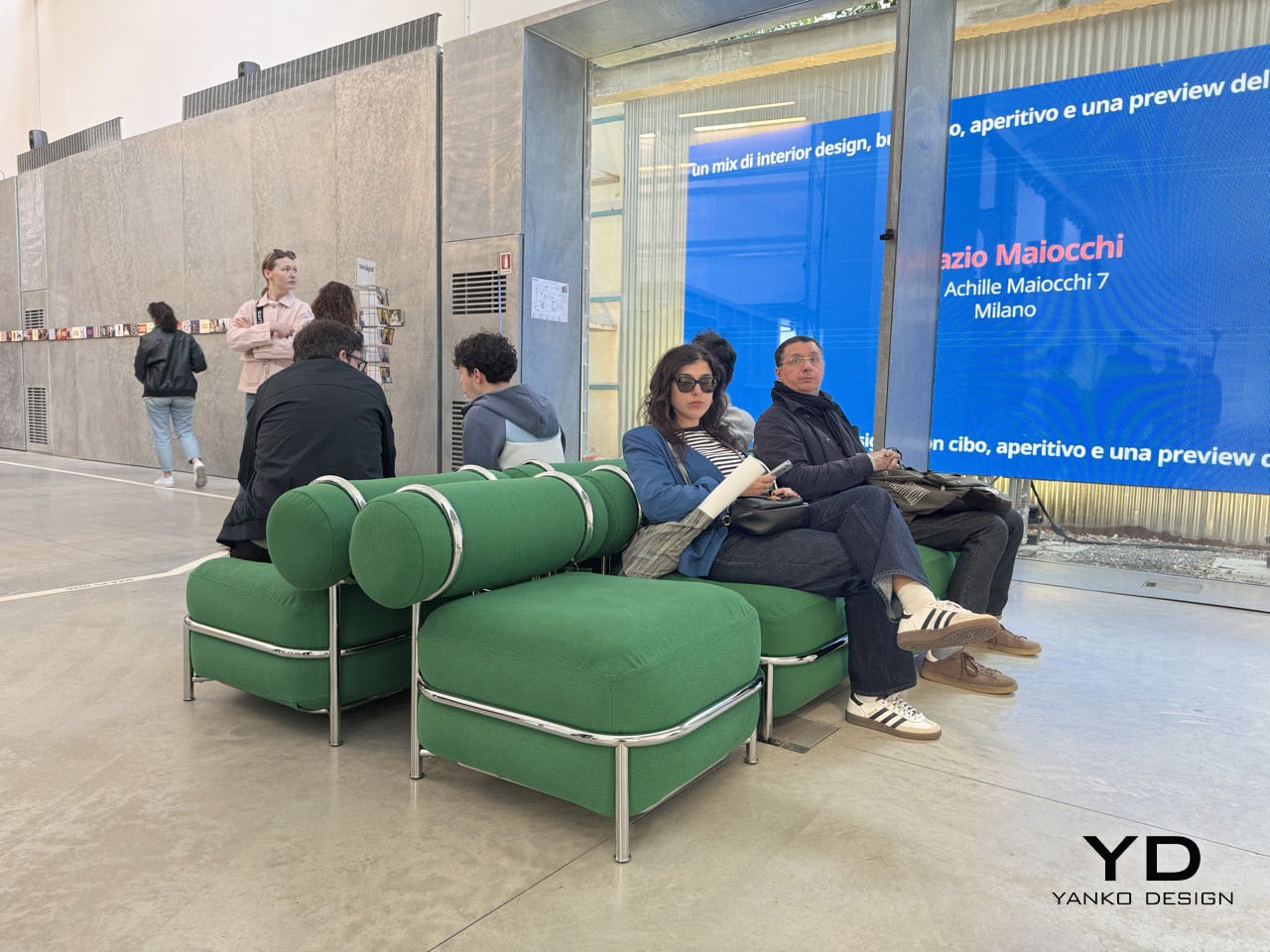
Air has always been free. IKEA designer Mikael Axelsson has been thinking about that fact for over a decade, sitting on an idea he first sketched in 2014 and shelved when no one at the company wanted to revisit inflatable furniture. The concept never disappeared, it just waited. At Milan Design Week 2026, inside the “Food For Thought” exhibition at Spazio Maiocchi, that idea finally got its moment. The PS 2026 Easy Chair arrived alongside a rocking bench and a flexible floor lamp, three pieces offering the first real look at the upcoming tenth IKEA PS collection.
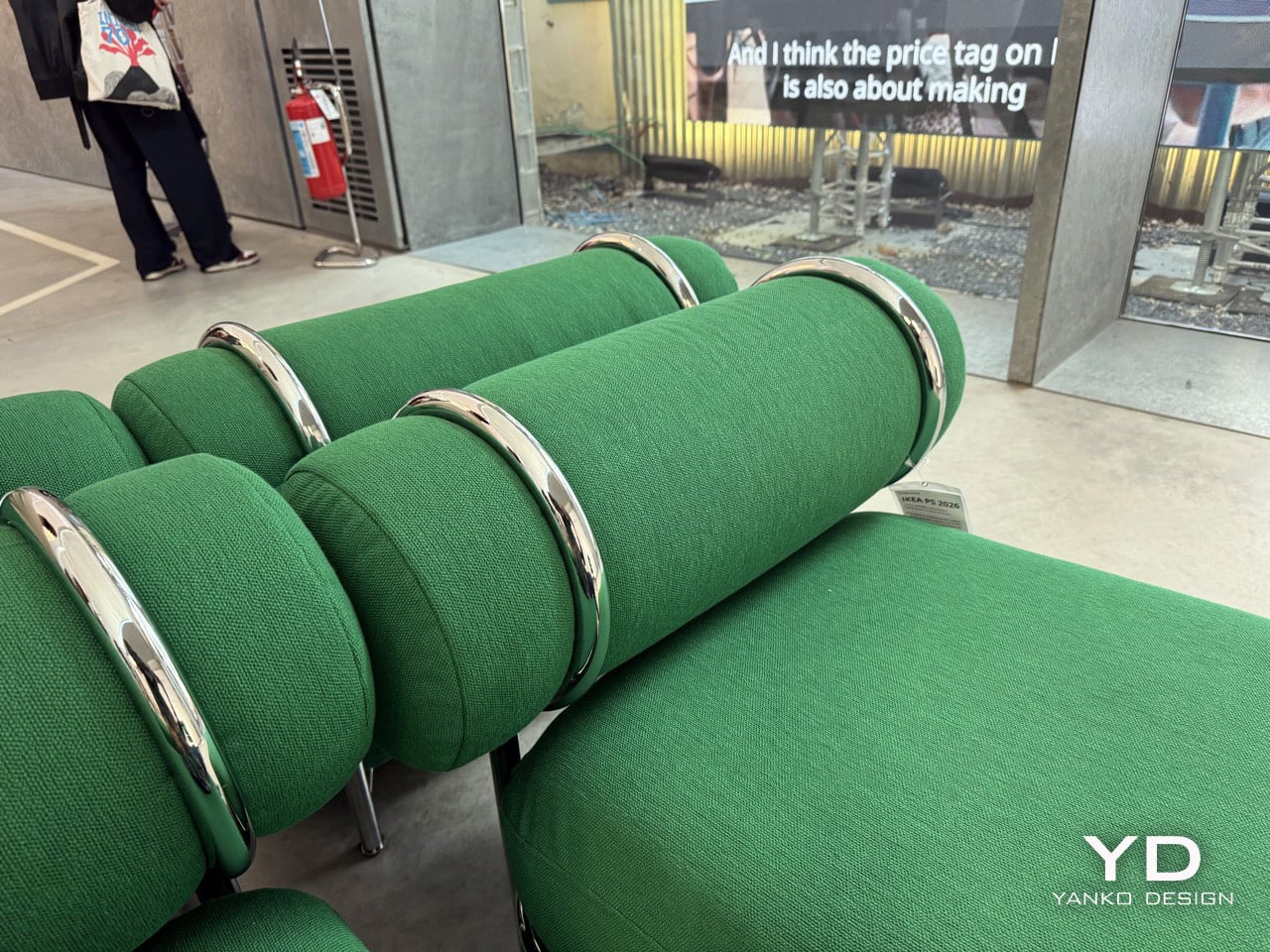
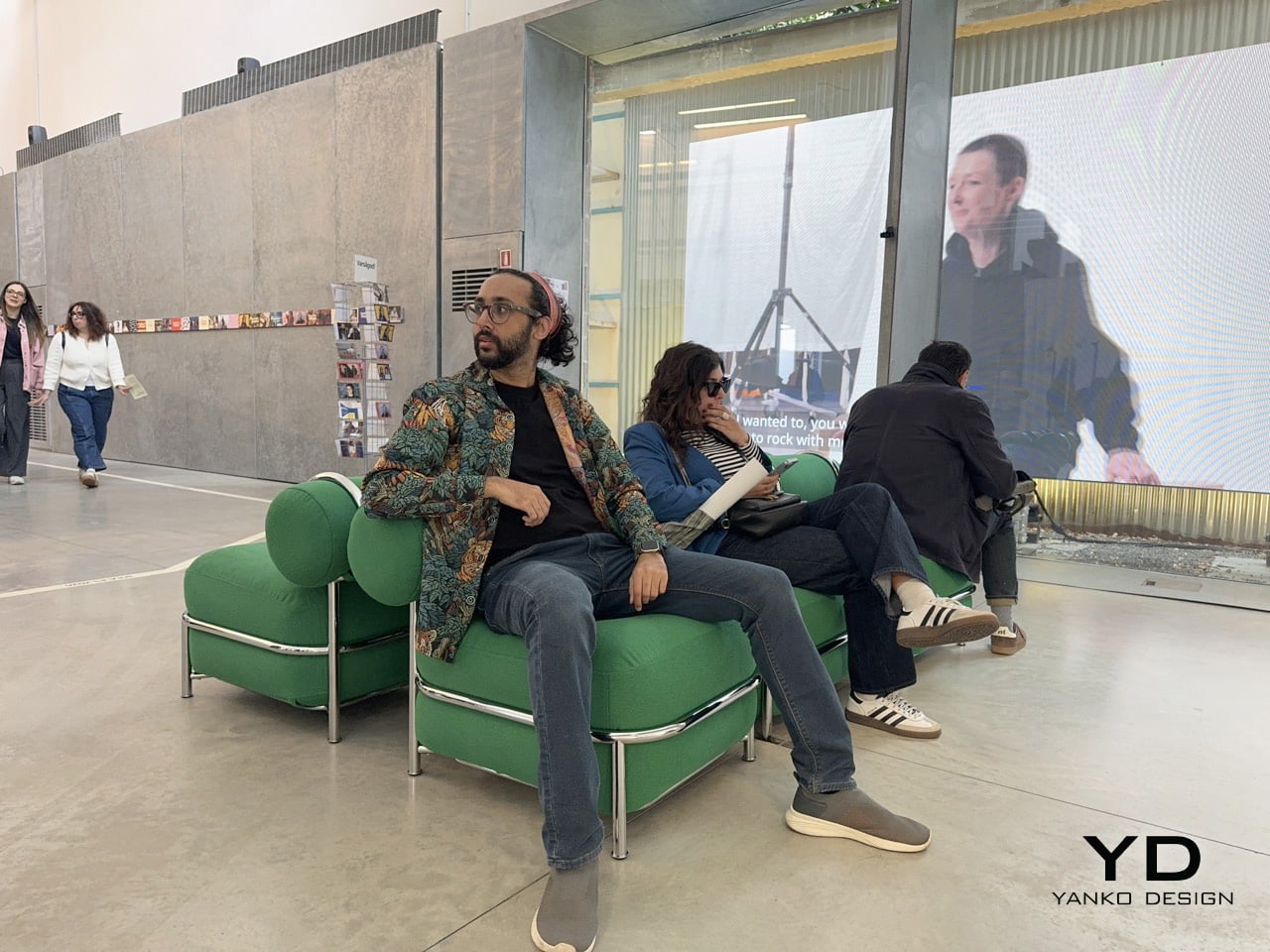
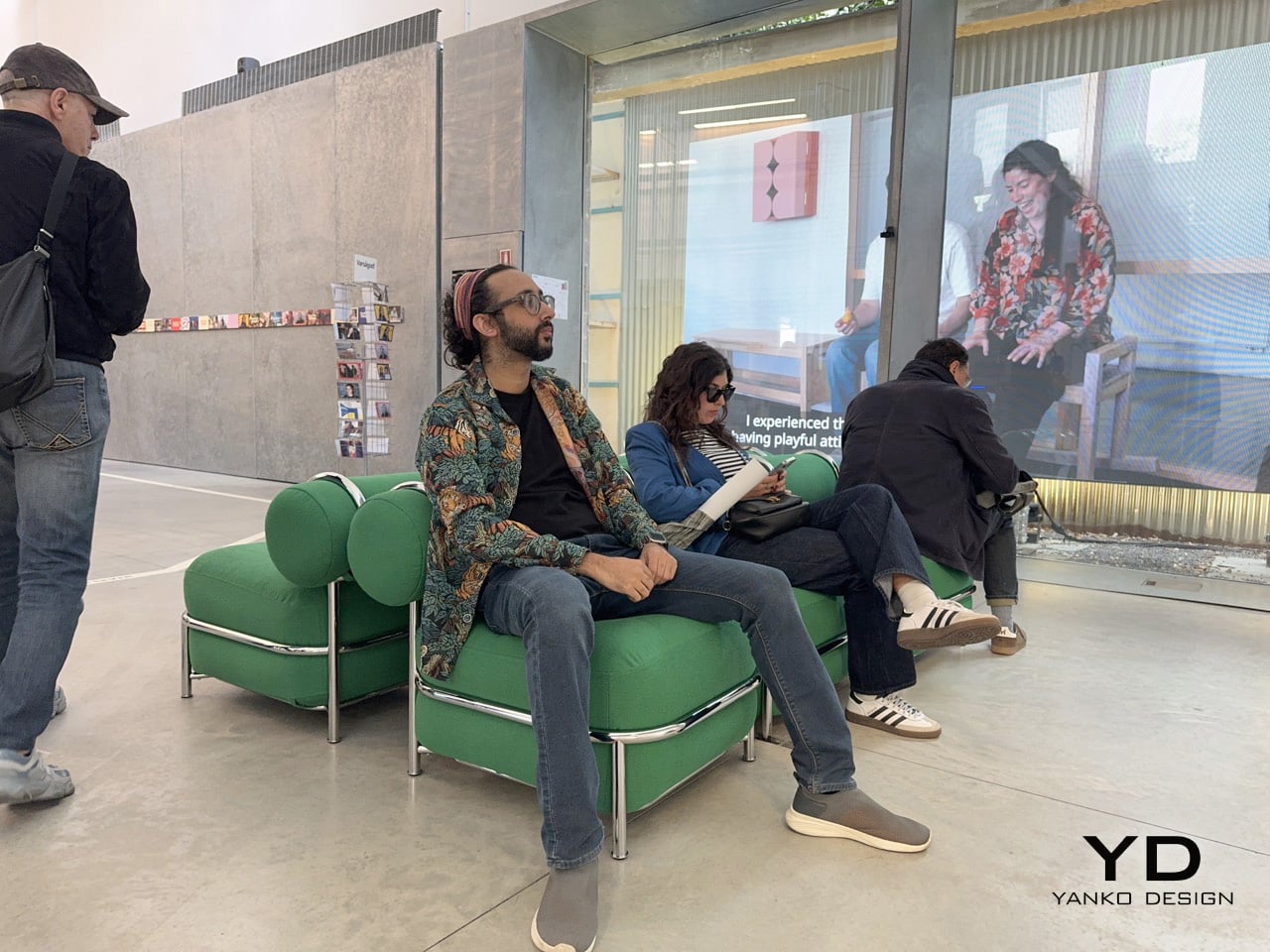
What Axelsson built reads, at first glance, like a fairly conventional lounge chair. Rich green fabric, cylindrical cushions, a compact and settled silhouette. The chrome tubing running around its perimeter is the tell, holding the inflatable volumes in place and giving the chair its shape and its credibility, keeping it far from the transparent, wobbly inflatables of the early 2000s. The separate air chambers between seat and backrest mean the sitting experience feels grounded rather than unpredictable. The lightness only reveals itself when someone actually lifts it.
Designer: Mikael Axelsson for IKEA
Mikael Axelsson is tapping into a design language that’s been trusted for nearly a century. It’s the same basic idea that made Le Corbusier’s Grand Confort a classic back in 1928: a rigid steel cage with soft cushions sitting inside. That frame is what makes the whole thing work. Without it, you’d just have a novelty green cushion that would feel out of place anywhere but a college dorm room. With the frame, the chair feels intentional and composed, and the backrest bolster sits with conviction across the top rail. The fact that it’s full of air is the last thing you notice, which is exactly the point.
The details here are just as smart. The fabric wrap gets rid of that annoying squeak and slide you might remember from old inflatable furniture, making it feel more like an actual upholstered piece. It comes with a manual foot pump instead of an electric one, which not only keeps the price down but also makes you part of the assembly process. It feels right for a chair that’s all about interacting with its materials. The deep green color seen in Milan is the kind of confident tone that can anchor a corner of a room without taking over.
The PS collection has always been IKEA’s design playground, a space for them to experiment since it first launched back in 1995. The rocking bench by Marta Krupinska has these wonderfully exaggerated runners, and Lex Pott’s floor lamp uses a simple diagonal cut so you can aim the light in three different directions. The full collection is set to launch on May 13, 2026. But the easy chair makes the sharpest point of the three. It argues that a chair built mostly on air can absolutely belong at Salone, as long as someone has thought carefully enough about the frame.
If you’re in Milan and want to see it for yourself, the chair is part of IKEA’s ‘Food For Thought’ exhibition. It’s being held at Spazio Maiocchi, located at Via Achille Maiocchi 7. The installation is open to the public and runs from April 21st through the 26th. It’s a great chance to see the chair, the lamp, and the bench in a setting that’s more about experience than just product display.
There’s a version of going off-grid that means giving things up — signal, comfort, hot coffee, reliable light. Then there’s the version a new wave of purposeful gear is quietly making possible, where disconnecting from the grid doesn’t mean downgrading your experience at all. These ten tools are built for that second scenario. Each one solves a real problem the outdoors creates, with enough design intelligence that you’d carry them anywhere.
What’s changed isn’t just the technology; it’s the design thinking behind it. Gear for the outdoors used to mean sacrificing aesthetics for function. Now the best of it does both, blending rugged performance with a considered design that makes you want to own it before you need it. The ten picks ahead span communication, power, navigation, hygiene, and comfort — a full stack of upgrades for life beyond the last cell tower.
1. HMD Terra M
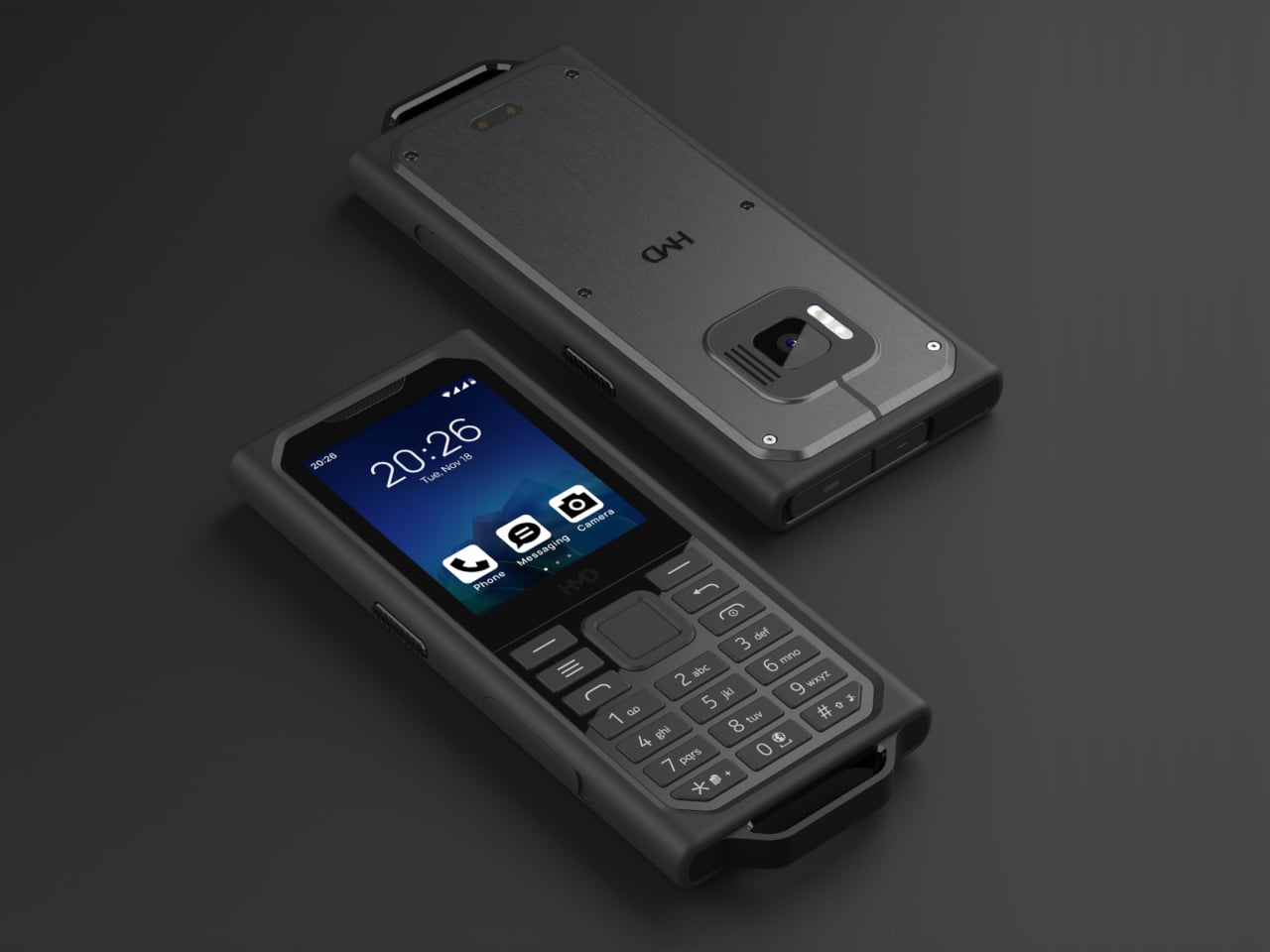
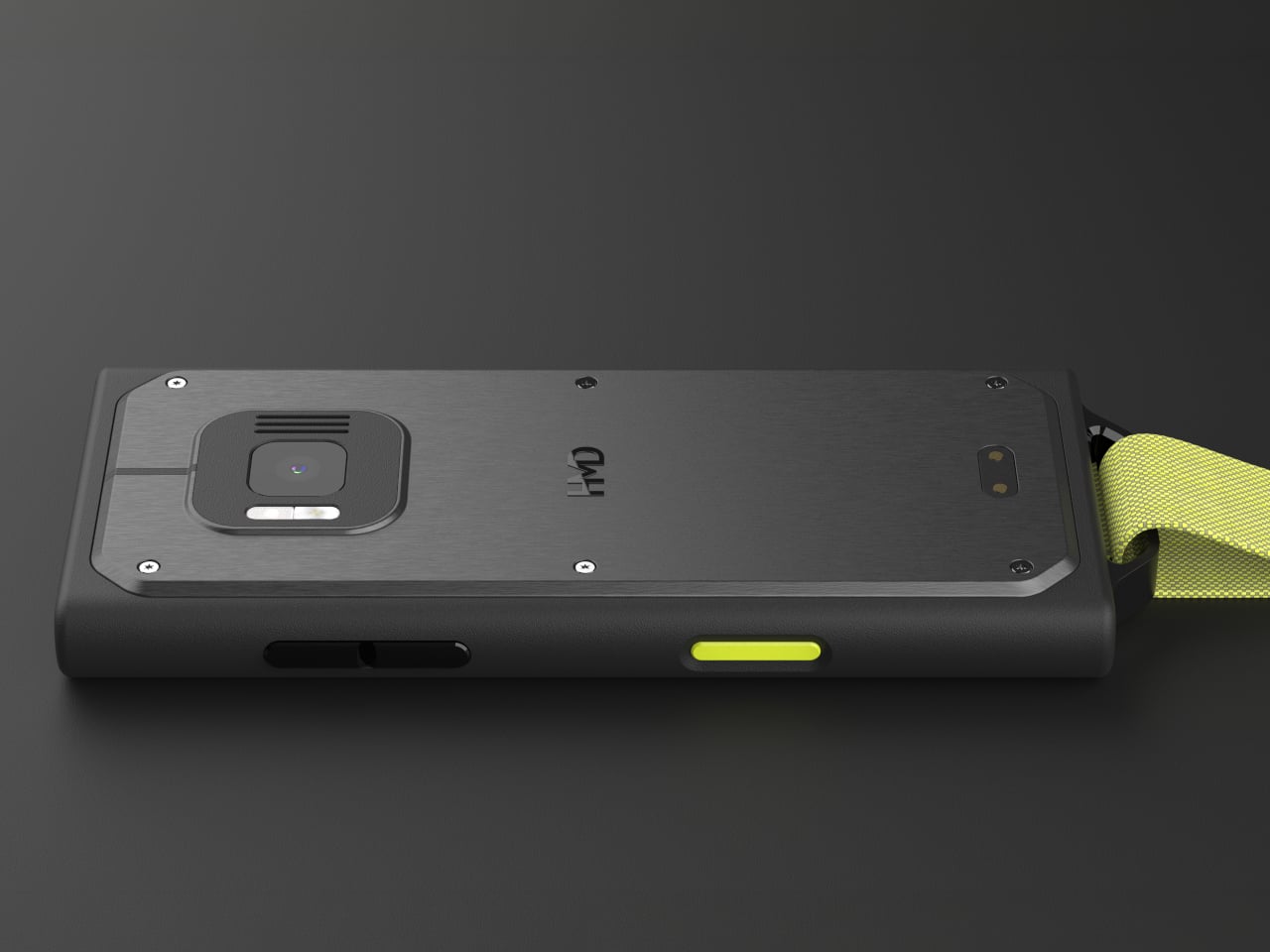
Most rugged phones solve the wrong problem. They add armor, lose usability, and end up too bulky to carry comfortably. The HMD Terra M takes a different approach. It’s compact and purpose-built for field conditions, carrying both IP68 and IP69K ratings, MIL-STD-810H military certification, and resistance to drops from 1.8 meters. It handles submersion, high-pressure water jets at 100 bar and 80°C, and exposure to gasoline, industrial solvents, and medical-grade sanitizers. That’s a resume most flagship phones would quietly fail.
What makes the Terra M genuinely useful outdoors is how it handles the small things. Large physical keys respond to gloved hands, a non-slip textured grip reduces fumbling, and a 2.8-inch display hits 550 nits behind Corning Gorilla Glass 3. These are the details that matter when you’re mid-job and can’t afford to stop and baby your device. The Terra M keeps you reachable and functional in places where most phones simply quit.
What We Like:
IP68, IP69K, and MIL-STD-810H rated for serious field conditions
Glove-compatible keys and a high-brightness display designed for outdoor use
What We Dislike:
The 2.8-inch screen limits any media or app-heavy use
The feature phone format won’t suit users dependent on smartphone functionality
2. RetroWave 7-in-1 Radio
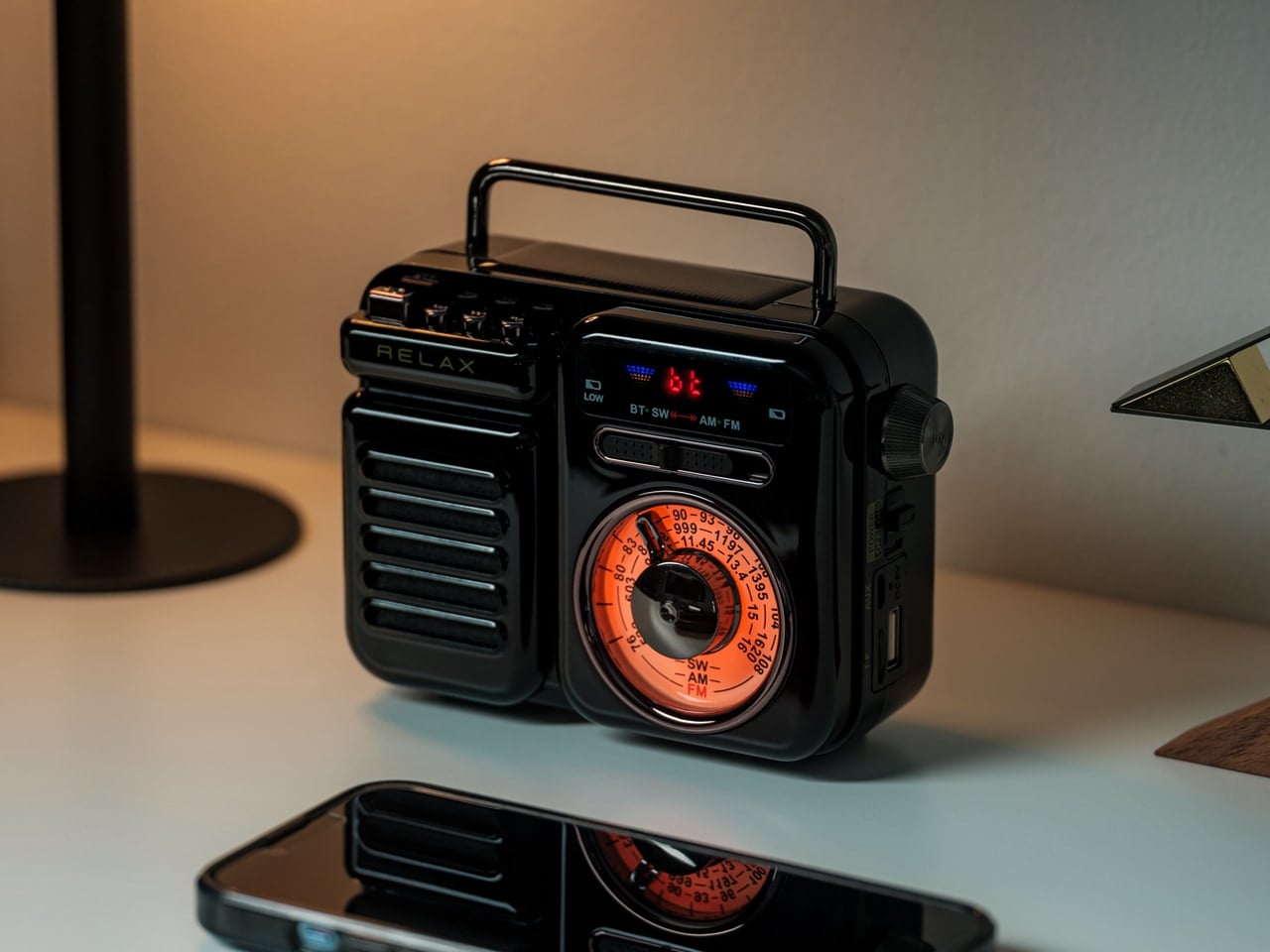
A single device covering seven roles sounds like marketing language until you’re three days into a camping trip with a dead phone and no signal. The RetroWave handles AM, FM, and shortwave reception, Bluetooth streaming, MP3 playback via USB or microSD, a built-in flashlight, an SOS alarm, hand-crank charging, a solar panel, and a power bank function. Its retro Japanese design and tactile tuning dial make it something you’d want on a shelf, not buried in a go-bag.
Off-grid, it earns its place immediately. You stop carrying a flashlight, a radio, a speaker, and a backup charger as separate items. The RetroWave collapses all of that into one object you can grab and go. Whether riding out a storm at home or deep in a campsite with no hookups in sight, the hand-crank and solar panel mean you’re never entirely powerless. That reliability, in the right situation, is the difference between anxious and settled.
Seven functions in one device significantly reduce what you need to pack
Hand-crank and solar charging operate without any external power source
What We Dislike:
Multi-function design means no single feature is best-in-class
Retro aesthetic won’t suit every minimalist gear setup
3. O-Boy Satellite Smartwatch
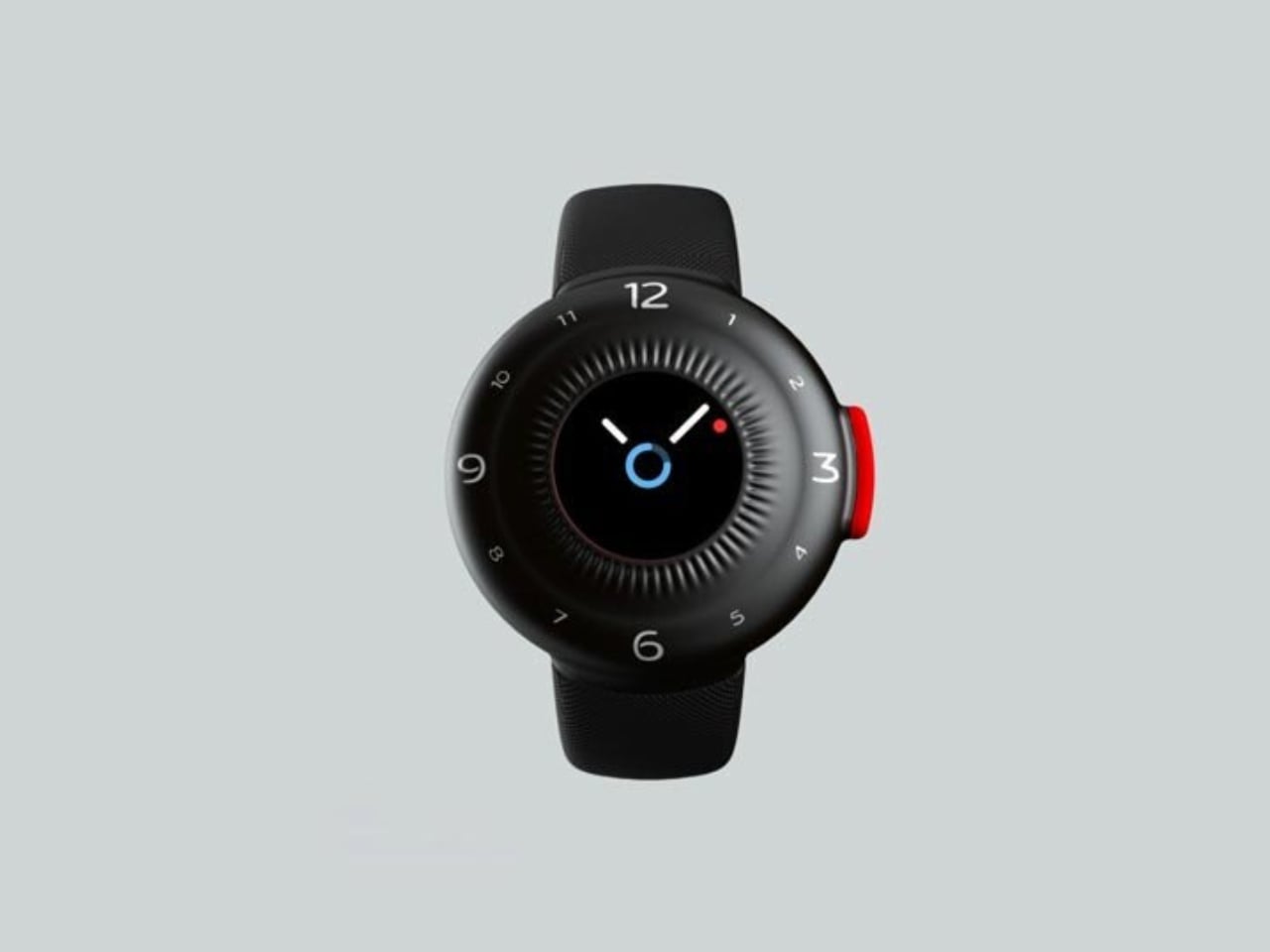
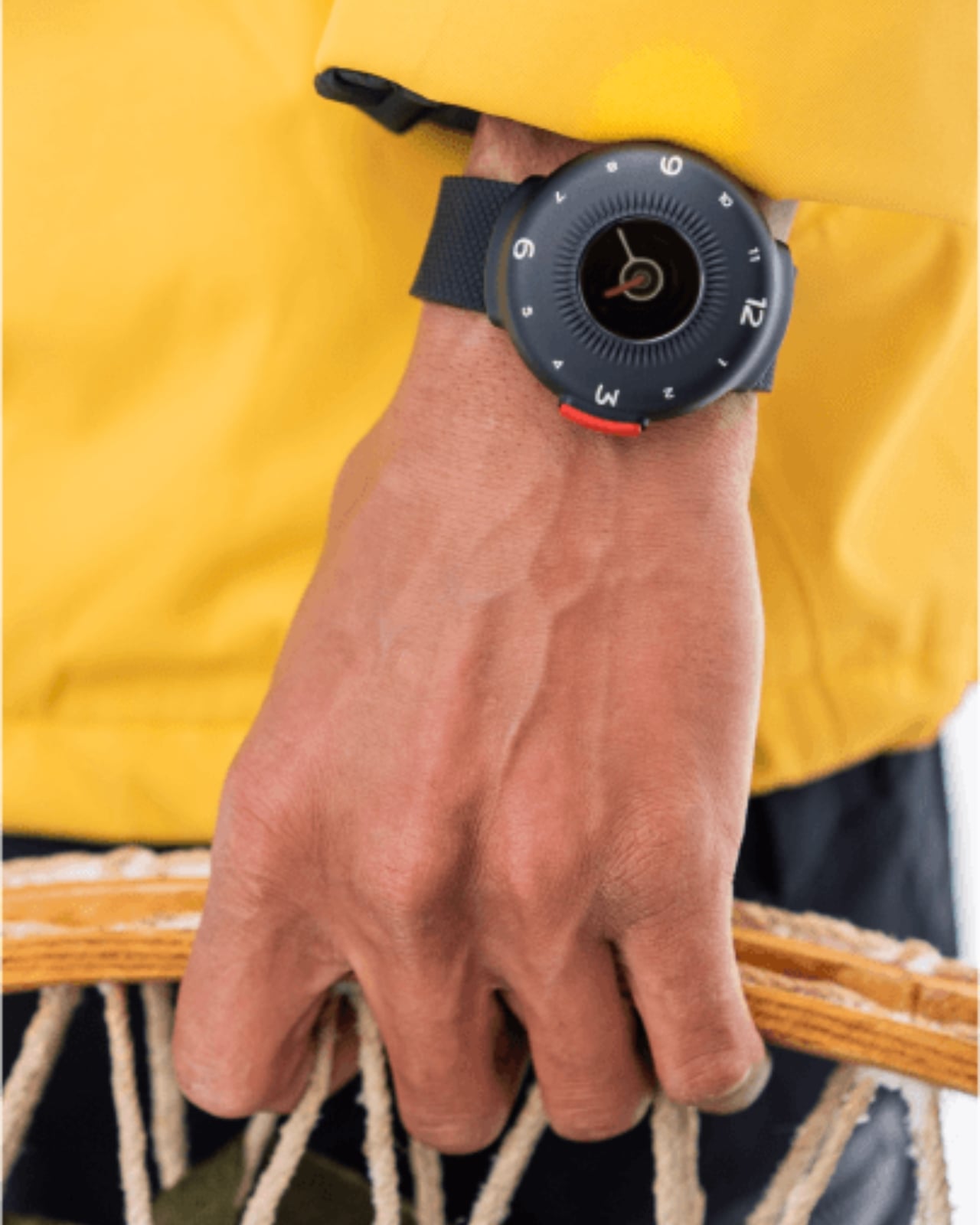
There’s a version of emergency preparedness that stops at downloading an offline map. Then there’s O-Boy. Developed by Brussels-based studio Futurewave, it’s a satellite-connected smartwatch built for environments where mobile networks simply don’t reach — mountains, open ocean, remote job sites. In those places, it functions as a direct satellite communication link, letting you transmit an emergency alert regardless of what infrastructure exists beneath your feet.
What Futurewave got right, beyond the technology, is the design brief. O-Boy doesn’t read as overtly tactical or survival-coded. It looks like something a person who spends time in remote environments would actually wear — utilitarian without being aggressive. That broader visual appeal matters because people who need a backup safety layer the most aren’t always those who identify as outdoor athletes. O-Boy is designed for anyone who ventures where their phone simply cannot save them.
What We Like:
Satellite connectivity works in locations with zero mobile network coverage
Design is wearable beyond strictly tactical or adventure-specific contexts
What We Dislike:
Satellite communication typically requires an ongoing subscription service
Smartwatch form factor means battery management becomes a daily consideration
4. BlackoutBeam Tactical Flashlight
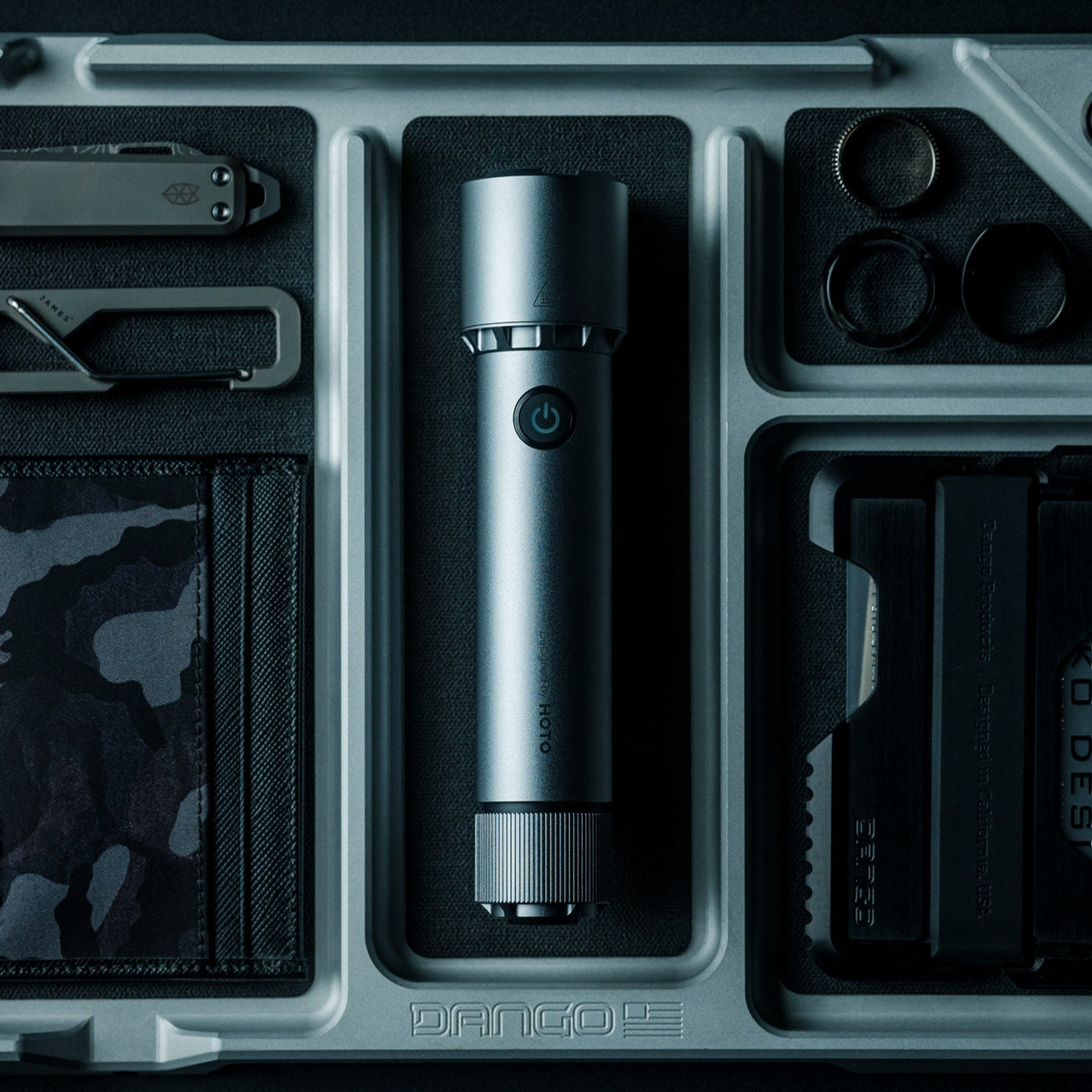
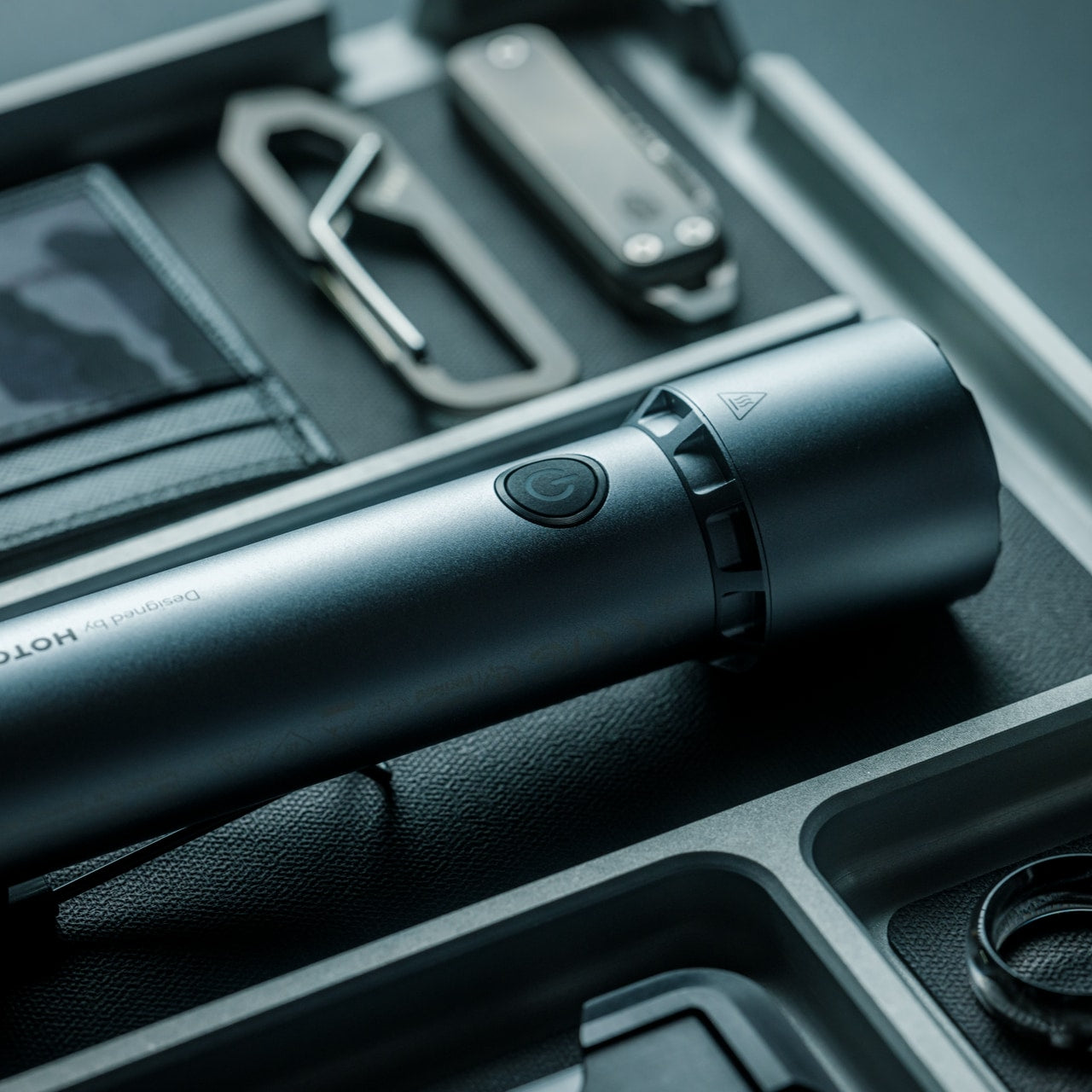
Most flashlights ask you to choose between power and portability. The BlackoutBeam doesn’t treat that as a meaningful trade-off. With 2,300 lumens of output, a 300-meter beam throw, and a 0.2-second response time, it delivers instant illumination exactly when you need it. The aluminum body carries an IP68 rating for water and dust resistance, built to handle rain, impact, and submersion without missing a beat.
What separates it from the drawer flashlight you forgot to charge is the combination of instant-on response and structural durability. In a blackout, a wildlife encounter, or a roadside situation at night, the difference between light and no light is rarely about brightness — it’s about how fast you get there. The BlackoutBeam gets there before you’ve finished reaching for it. Its industrial design keeps it from looking out of place in any context, which means it actually gets carried.
2,300-lumen output with 300-meter beam reach handles serious low-light scenarios
IP68 waterproof rating and 0.2-second response built for real-world emergencies
What We Dislike:
Maximum lumen output draws battery faster during extended use
Tactical aesthetic doesn’t integrate seamlessly into every EDC setup
5. Carabiner Power Bank
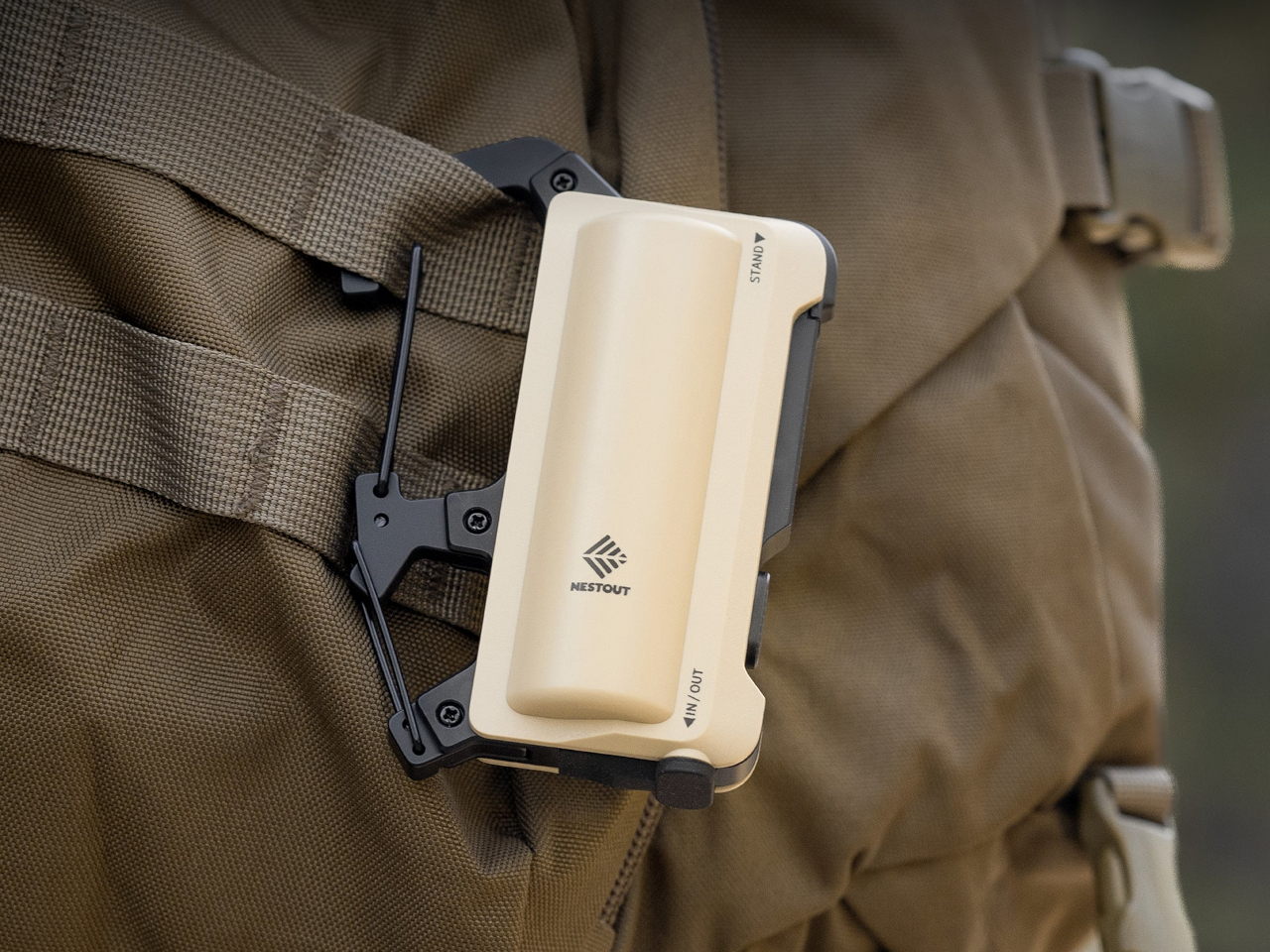
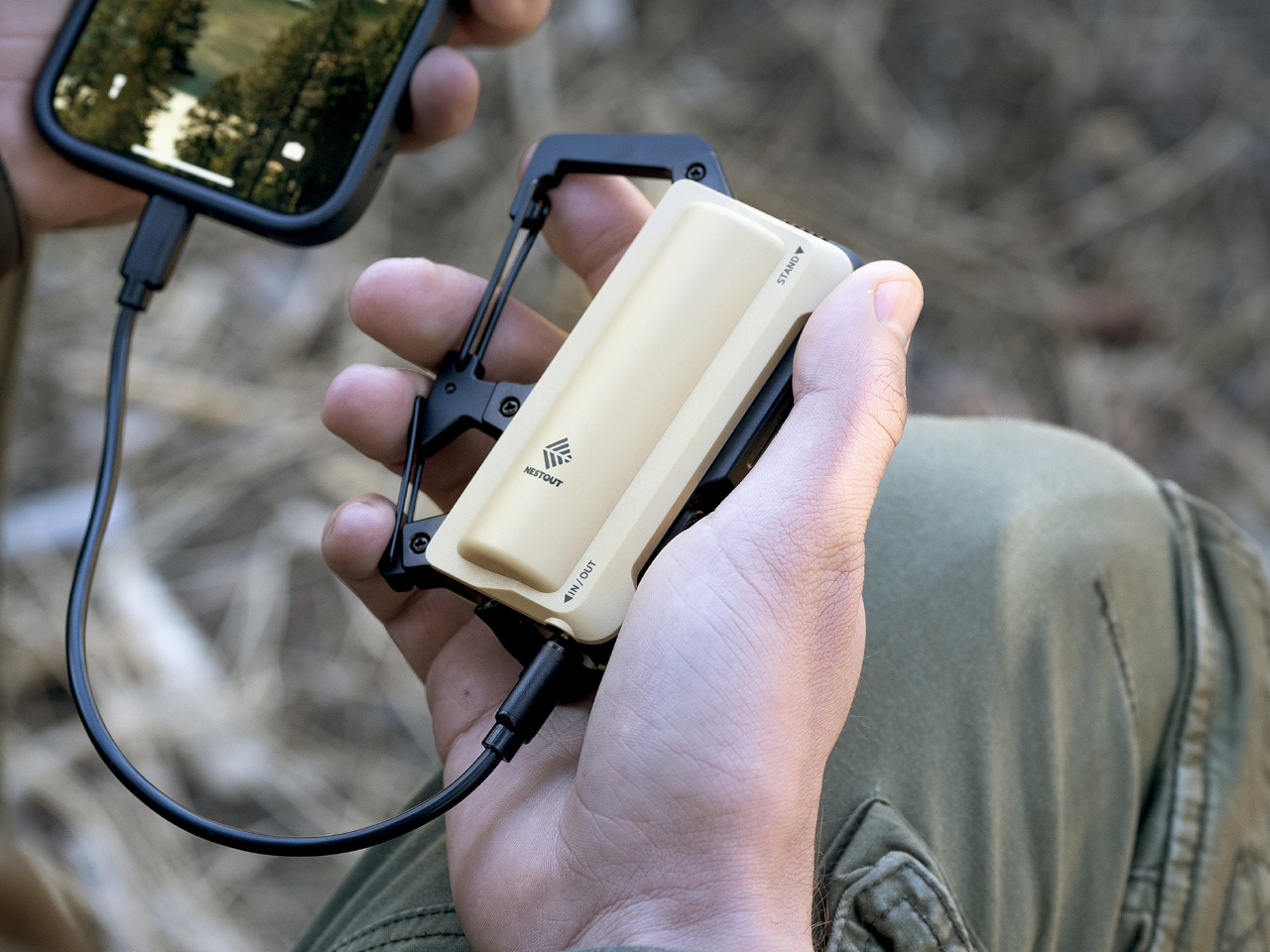
Most power banks are an afterthought in terms of how you carry them. They go loose in a pocket or rattle around at the bottom of a bag until the cable is buried somewhere unhelpful. This carabiner-shaped power bank removes that friction by making attachment the actual design concept. Clip it onto a bag strap, a jacket loop, or a belt, and your backup charge goes wherever you go without adding any mental overhead.
The real value is how it removes a common hesitation: people don’t carry a power bank until they’ve already needed one. A carabiner you clip on once and forget solves the carry problem entirely. Off-grid, that passive availability becomes genuinely important. It’s the kind of accessory that works not because it’s technically impressive, but because it respects how people actually behave and quietly builds itself into the routine.
What We Like:
Carabiner form clips directly to gear without consuming bag space
Rugged, compact design is suited to outdoor and trail use
What We Dislike:
Capacity is limited compared to a dedicated, full-size power bank
Not sufficient as a sole charging source for multi-day trips
6. X1 Portable Toilet
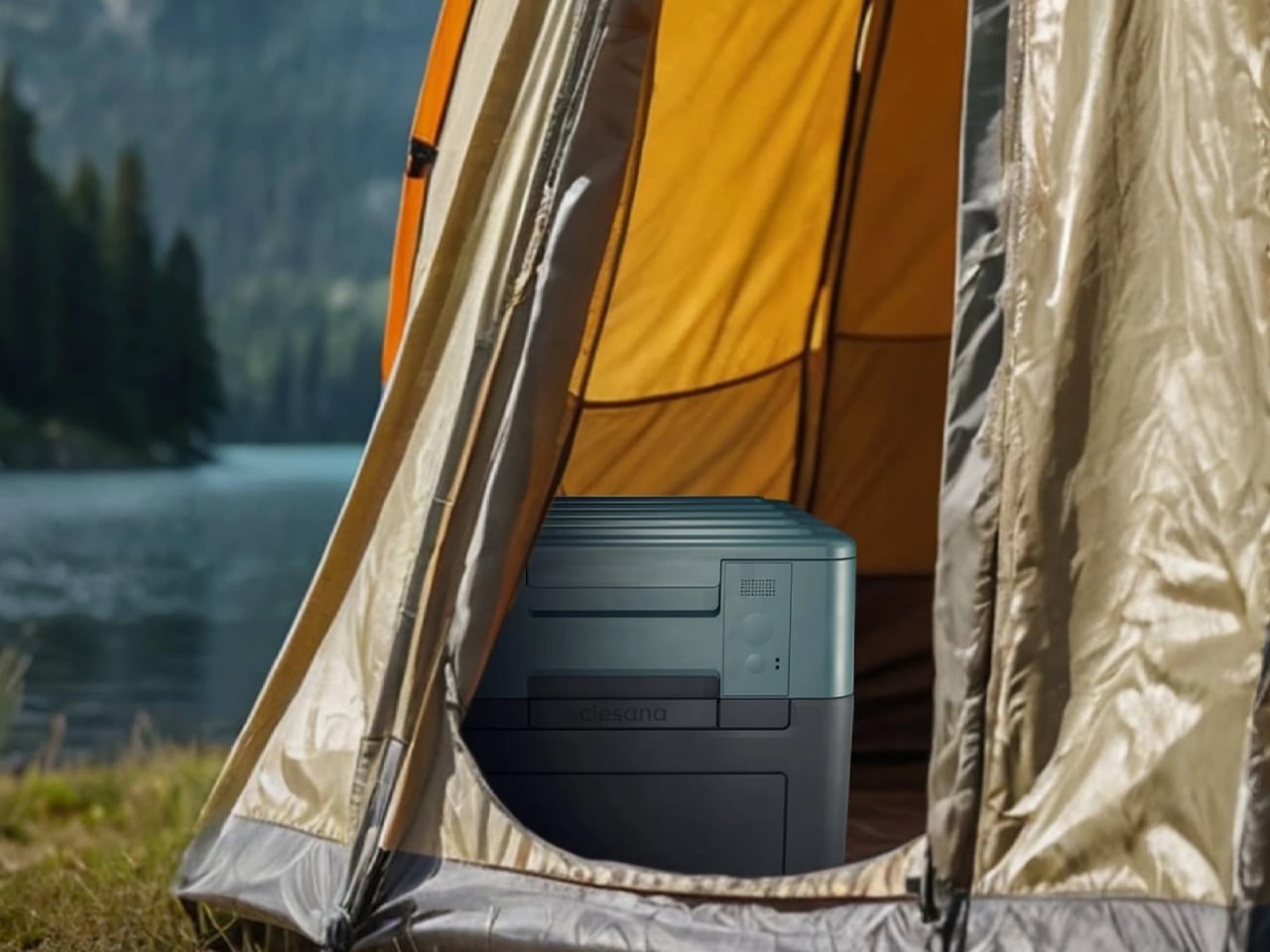
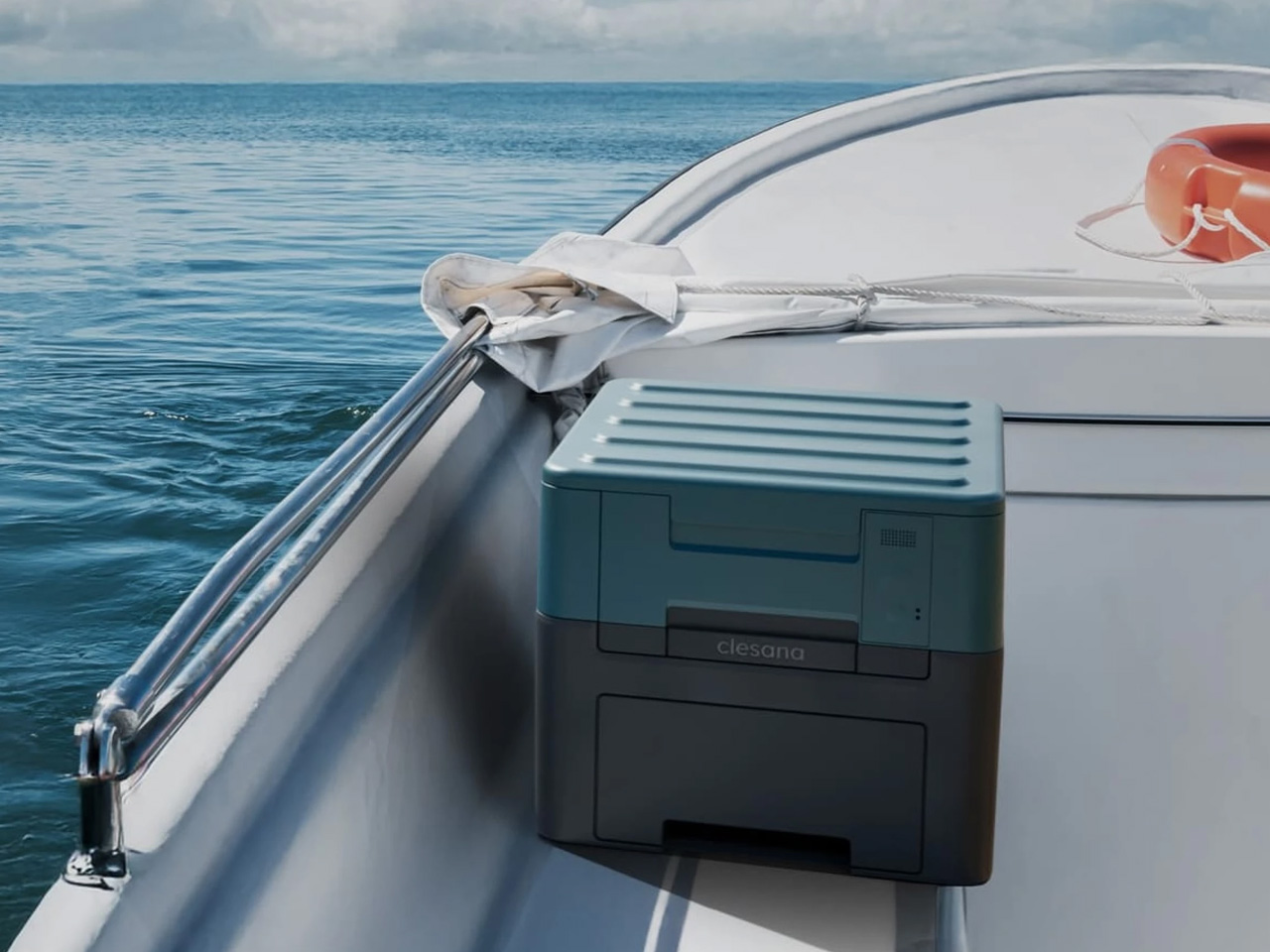
The outdoor bathroom situation is the least discussed but most universally felt problem with going off-grid. Clesana’s X1 addresses it without compromise. The battery-powered portable toilet looks like a compact cube at rest, then telescopes to full, home-equivalent height when needed. At 24 pounds with an integrated handle, one person can move it easily, and the ergonomics when deployed match what you’d expect at home, not in a festival field.
The real design achievement is what happens after use. Clesana’s patented thermoelectric sealing system wraps waste in individual sealed packages with no odor, no chemicals, and no water hookup required. Sealed waste collects in a lower chamber for clean, convenient disposal when the time comes. For van lifers, remote workers, and long-haul campers, the X1 elevates one of the most basic human needs to something approaching actual dignity. It’s a quiet but significant piece of off-grid infrastructure.
What We Like:
Telescopic design delivers home-height comfort in a fully portable format
Patented sealing system eliminates odor without chemicals or water connections
What We Dislike:
Battery dependency adds another device that needs to be monitored and charged
Sealed waste packages create an ongoing consumable cost over time
7. Loki-Nav 3-in-1 Compass
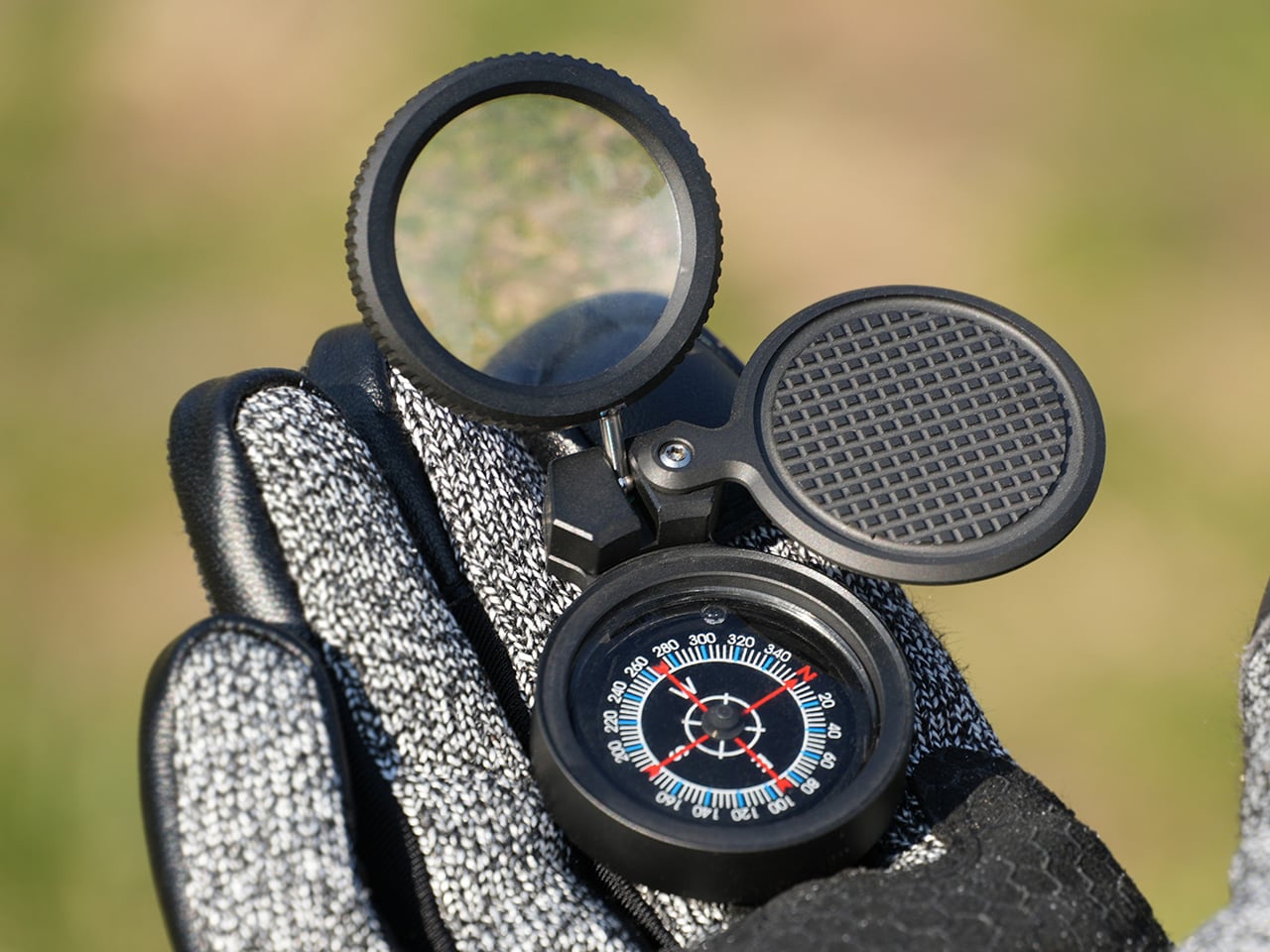
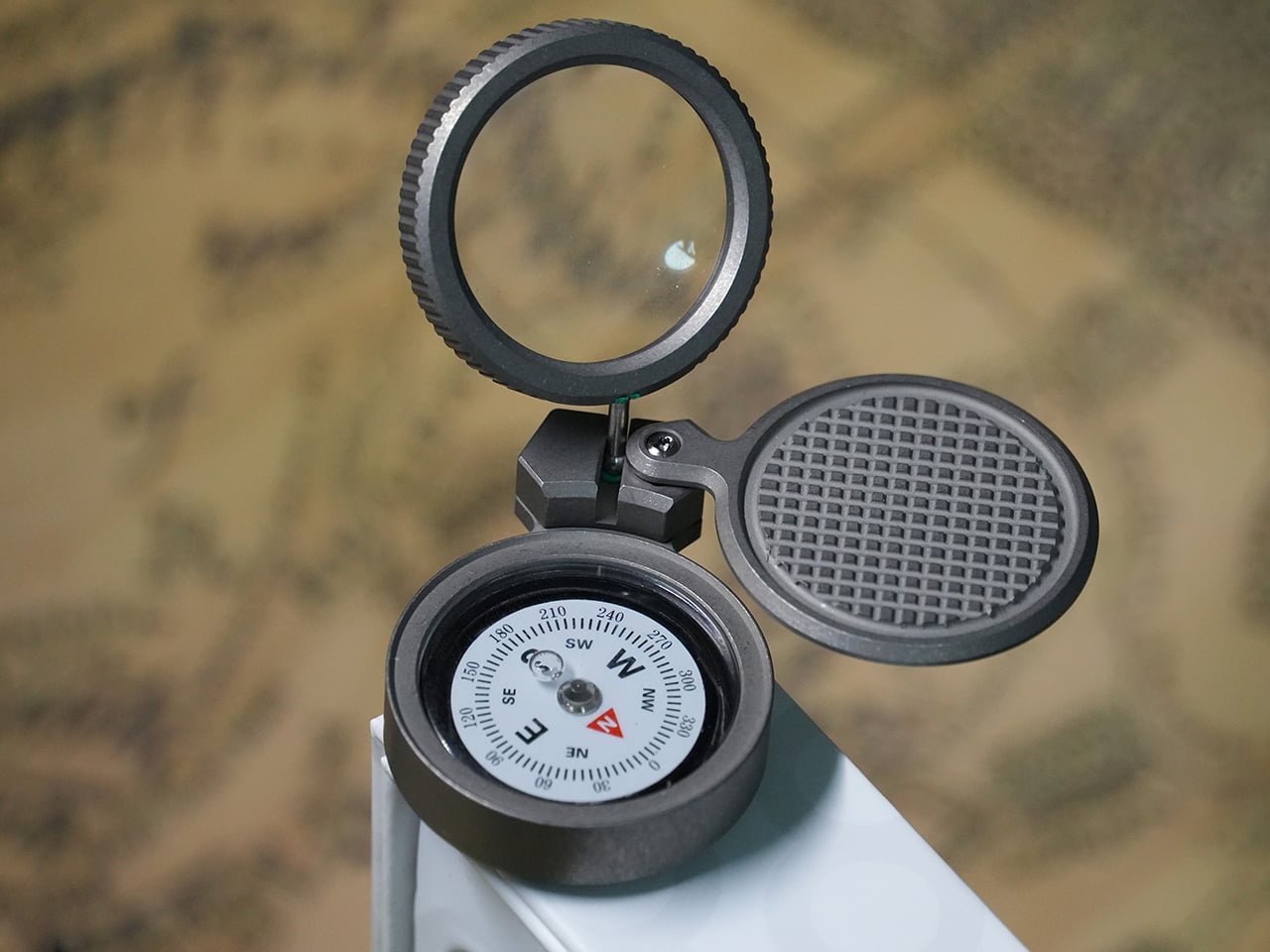
The Loki-Nav makes the case that the best survival tool is the one that actually gets packed. A standalone compass rarely does. But a compass that also works as a magnifying glass for map reading, an emergency signal mirror, and a fire-starting wood chip maker earns a permanent spot on any kit. Four tools in one object change the calculus on what’s worth carrying.
Its IPX8-rated compass is filled with premium white oil and delivers precise navigation in conditions that render most electronics useless — extreme cold, downpours, and complete darkness with the optional Luminous Compass Core upgrade. Smartphones are useful navigation tools right up until they aren’t, and coverage drop-outs and battery deaths are common enough that analog backup should be standard practice. The Loki-Nav doesn’t ask you to compromise on aesthetics to carry it, with three design options available. It’s a tool that respects the intelligence of the person using it.
What We Like:
Four survival functions in one design reduces what needs to be packed separately
IPX8-rated, oil-filled compass operates reliably in extreme temperatures
What We Dislike:
Wood chip fire-starting function is supplementary, not a primary fire tool
Each capability requires practice before relying on it in a real situation
8. Airflow 8-Panel Fire Pit
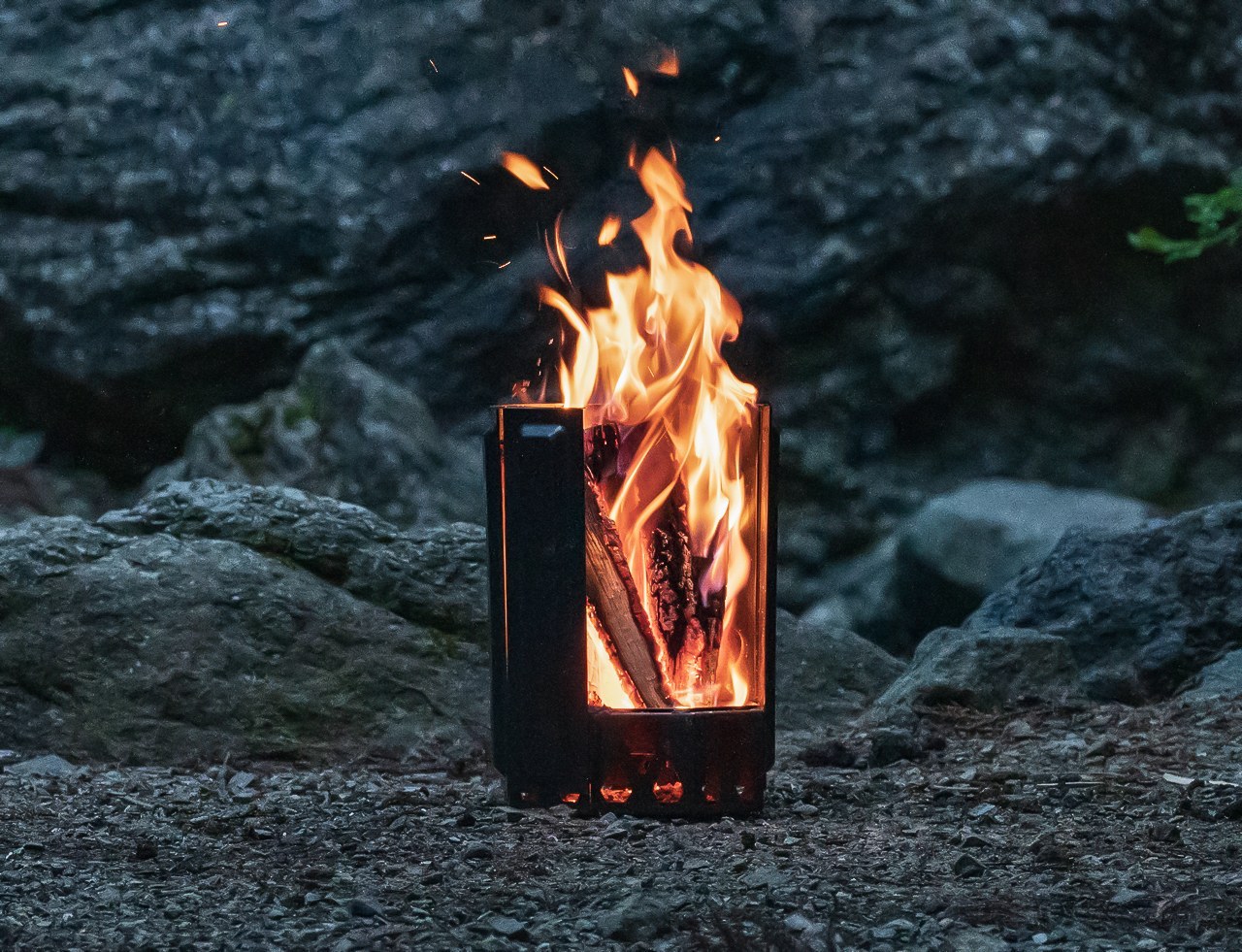
A campfire that tends itself is the dream. The Airflow 8-Panel fire pit doesn’t go that far, but its 8-panel removable design gets closer than most. Built around secondary combustion science, holes at the base of each panel channel primary airflow upward through double-walled cavities, producing a secondary burn that makes the fire significantly cleaner and more efficient. The result is minimal smoke and a fire that does more with less wood.
The adjustable panel system lets you control how open or enclosed the combustion chamber is, dialing the fire’s intensity up or down without constant prodding. Off-grid evenings deserve a real focal point, and a fire that performs well without drama is a quality-of-life upgrade that’s easy to underestimate until you’ve experienced it. Sanyo Works brings deep metal processing expertise to this design, and that background shows in how precisely the airflow mechanics are considered. Less compromise, more outdoor living.
The secondary combustion system produces minimal smoke for a noticeably cleaner burn
Adjustable 8-panel design allows real control over fire intensity
What We Dislike:
Eight individual panels mean more parts to pack and more potential for loss
Wood-only fuel system with no gas compatibility
9. COFFEEJACK V2
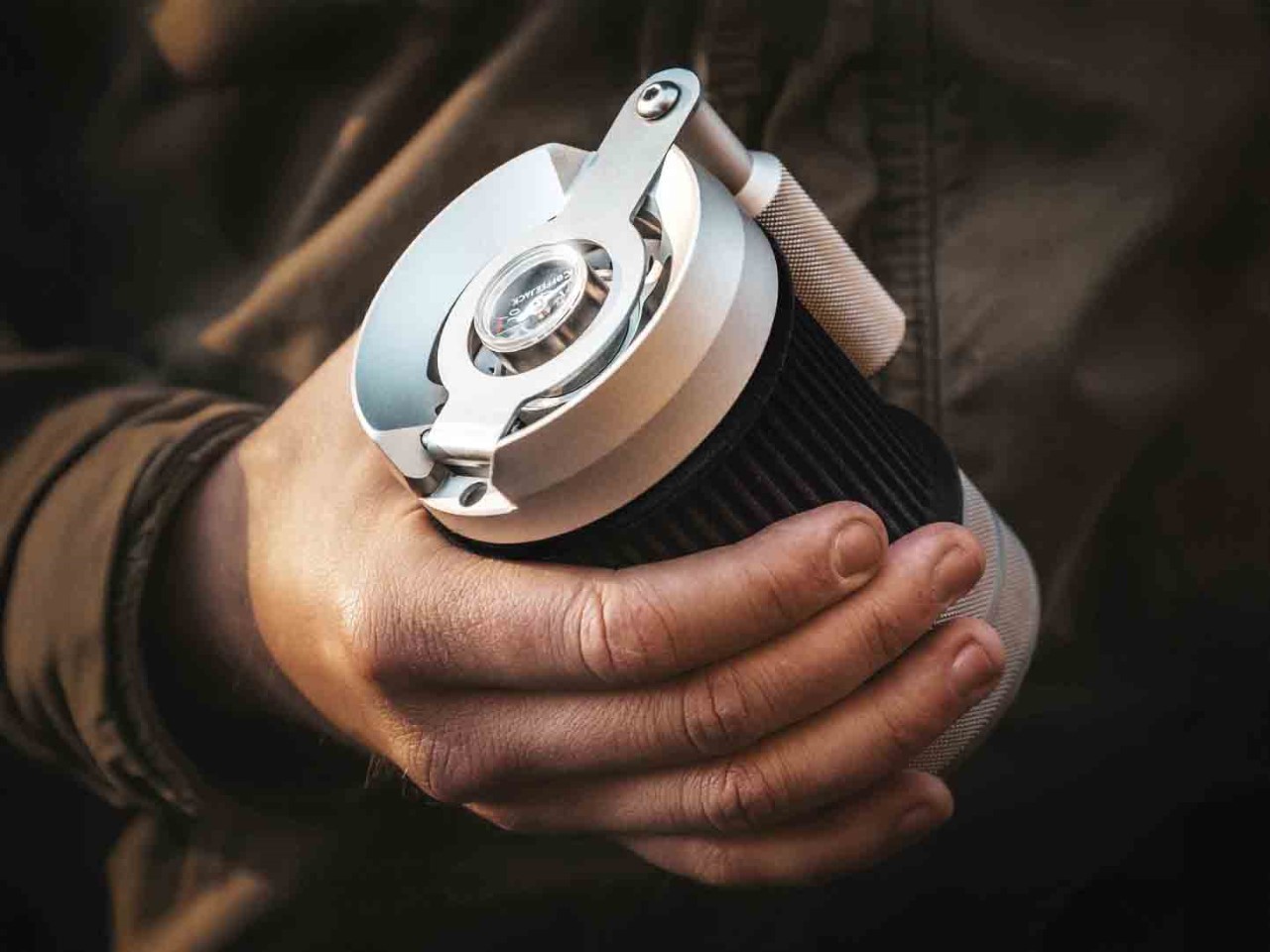
There’s something worth preserving in the process of making coffee, and the COFFEEJACK V2 understands that completely. It’s a fully manual, hand-crank espresso maker that builds up to 10 bars of pressure through rotation alone. No electricity, no battery, no automation. The crank forces hot water through a portafilter packed with a coffee puck, producing a proper espresso shot complete with crema, wherever you happen to be sitting.
The design is compact enough to pack without rethinking your kit, and the purely analog mechanism means nothing to charge and nothing to break electronically. For off-grid mornings, a proper hand-brewed espresso is a ritual worth keeping. It’s also arguably the clearest signal that going off-grid doesn’t require giving anything meaningful up. The COFFEEJACK V2 is the kind of object that makes a campsite feel intentional rather than improvised, which is the whole point.
What We Like:
Fully manual design requires zero power source or battery
Builds up to 10 bars of pressure for genuine espresso with full crema
What We Dislike:
A consistent technique is required to get the best extraction results
Hot water still needs to be sourced and heated separately before brewing
10. Giga Pump 4.0
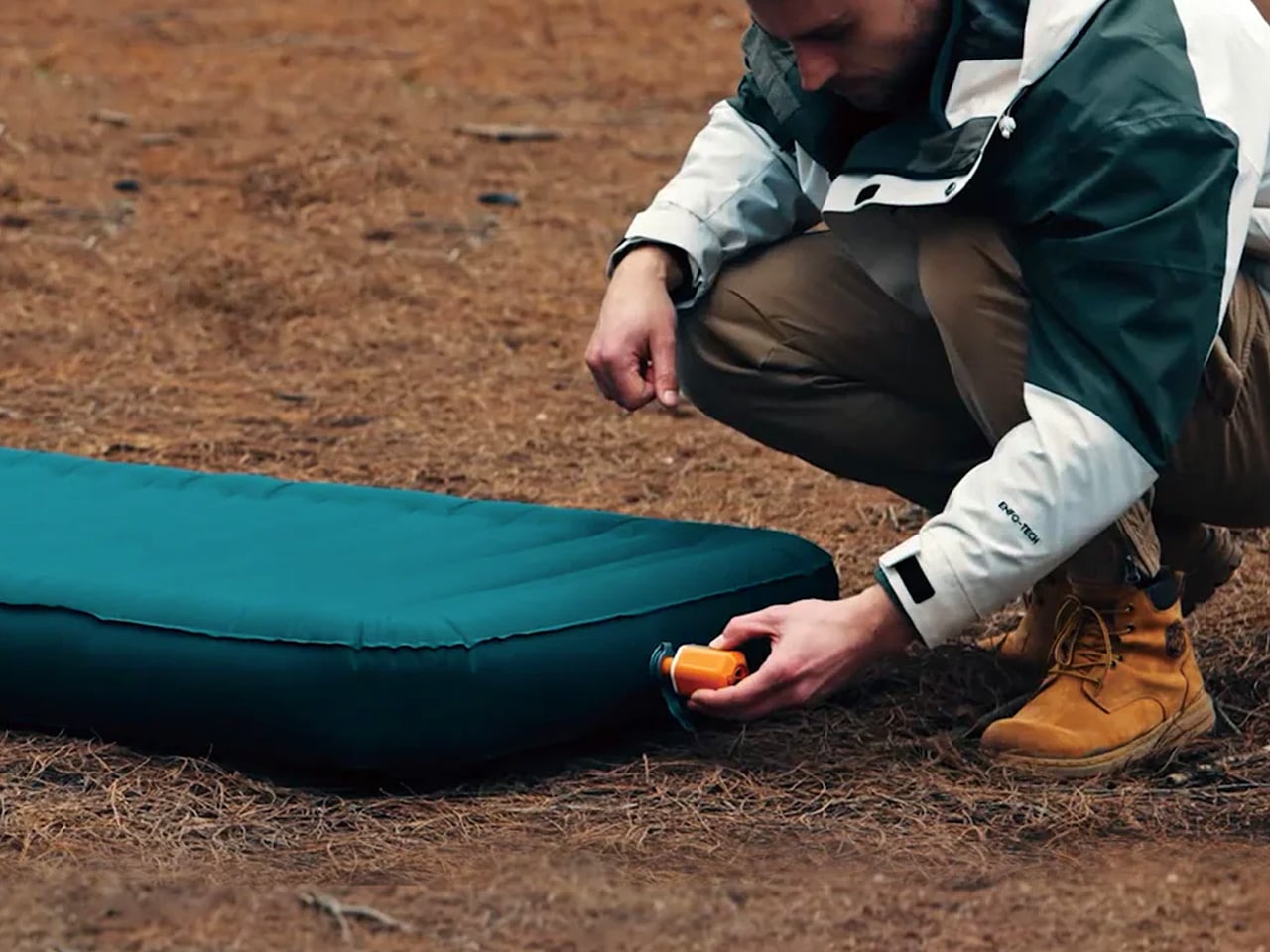
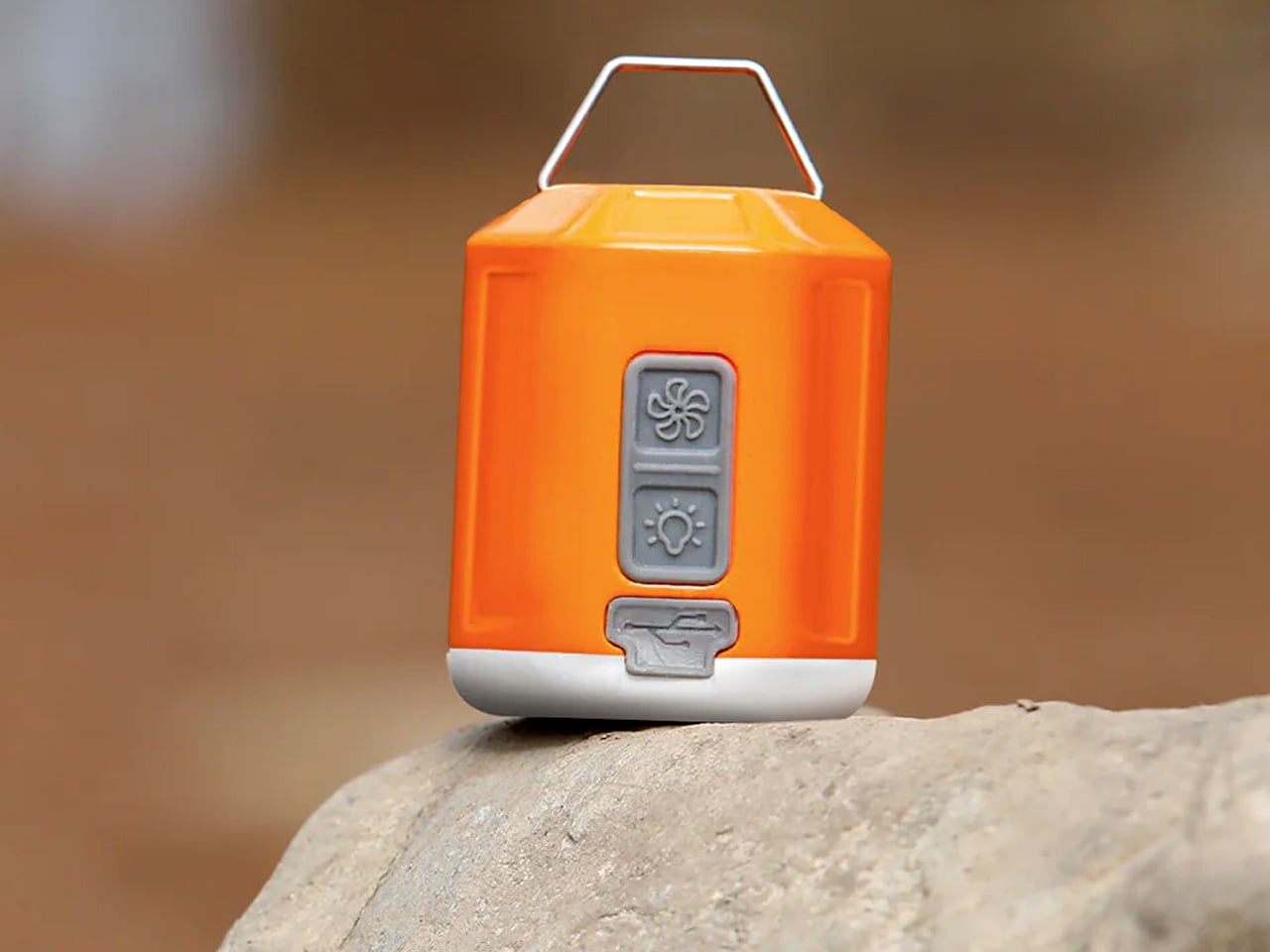
Inflating gear by mouth or with a bulky hand pump has always been the slowest, most tedious part of setting up camp. The Giga Pump 4.0 eliminates that problem. Despite its compact size, it achieves 4.2 kPa pressure and a 220L per minute flow rate, representing a 90% efficiency improvement over its predecessor. A simple toggle switches between 4 kPa for firm inflation and 2 kPa for softer fill, handling mattresses, paddle boards, and tents with equal ease.
Deflation is handled just as efficiently. The reverse suction mode pulls air out as quickly as it pushes it in, compressing gear down for storage in a fraction of the usual time. Off-grid setups live and die by how much friction each task creates. A pump that does its job quickly and quietly, without requiring you to think about it, means more time spent doing the things you actually came out there for. That’s the right kind of upgrade.
What We Like:
90% efficiency improvement delivers 220L per minute from a compact body
Forward inflation and reverse deflation are handled by one device
What We Dislike:
Battery-powered design requires charging before each outing
Compact size means slightly less sustained pressure than full-size pump alternatives
The Grid Was Always Optional
Going off-grid used to require an acceptance of compromise. You’d lose convenience, comfort, and connectivity in exchange for space and silence. These ten tools quietly dismantle that trade-off. From satellite communication on your wrist to espresso brewed by hand at a campsite, the gap between outdoor living and the standards you hold at home has never been narrower. The gear has caught up. The question now is whether you have.
None of these products asks you to rough it. That’s the point. The best off-grid gear doesn’t celebrate deprivation — it removes the friction that made leaving the grid feel like a real sacrifice to begin with. Whether you’re building a go-bag, outfitting a van, or just spending more time outdoors, this kind of kit makes the case that beyond the last signal bar is exactly where you want to be.
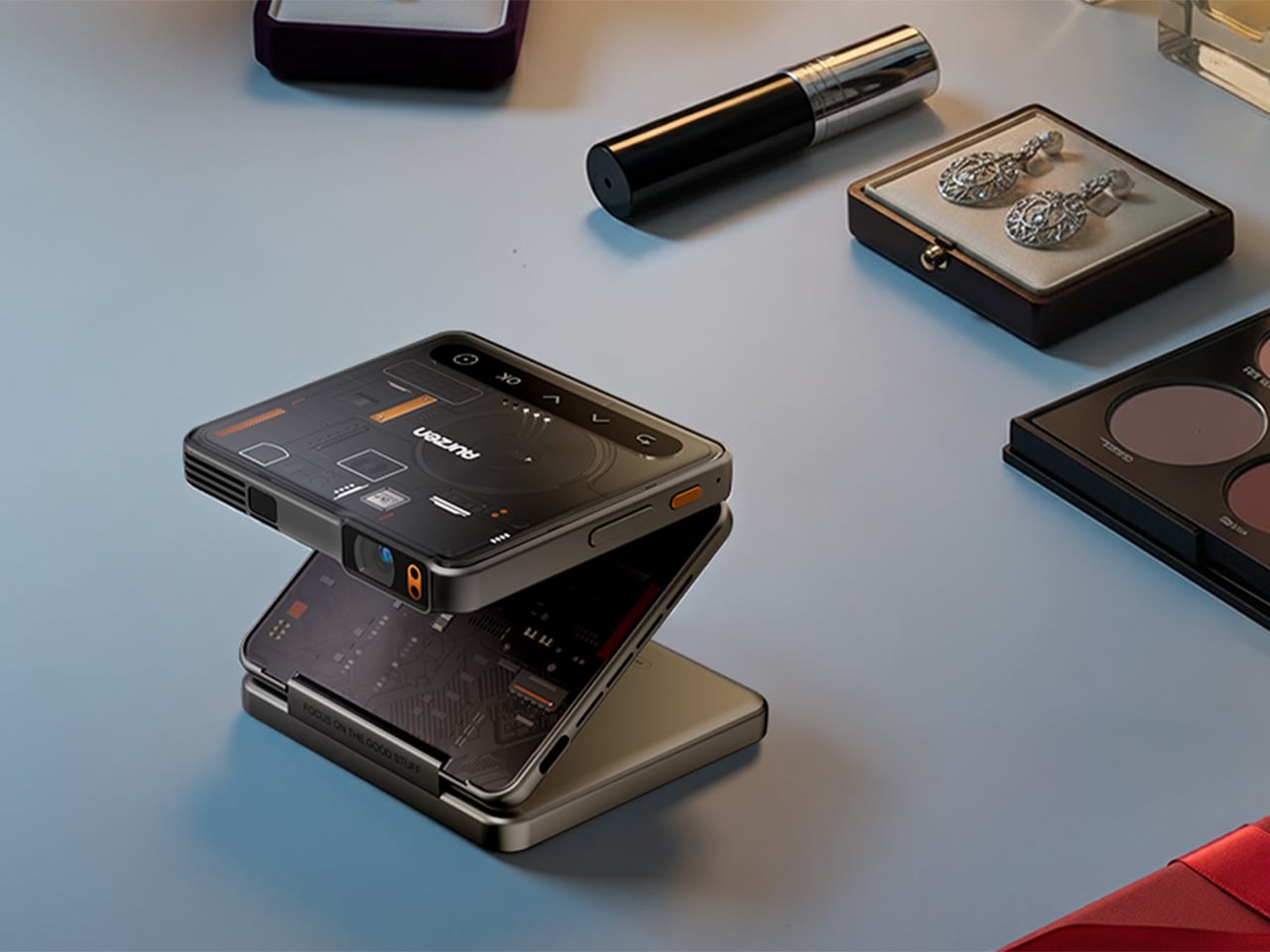
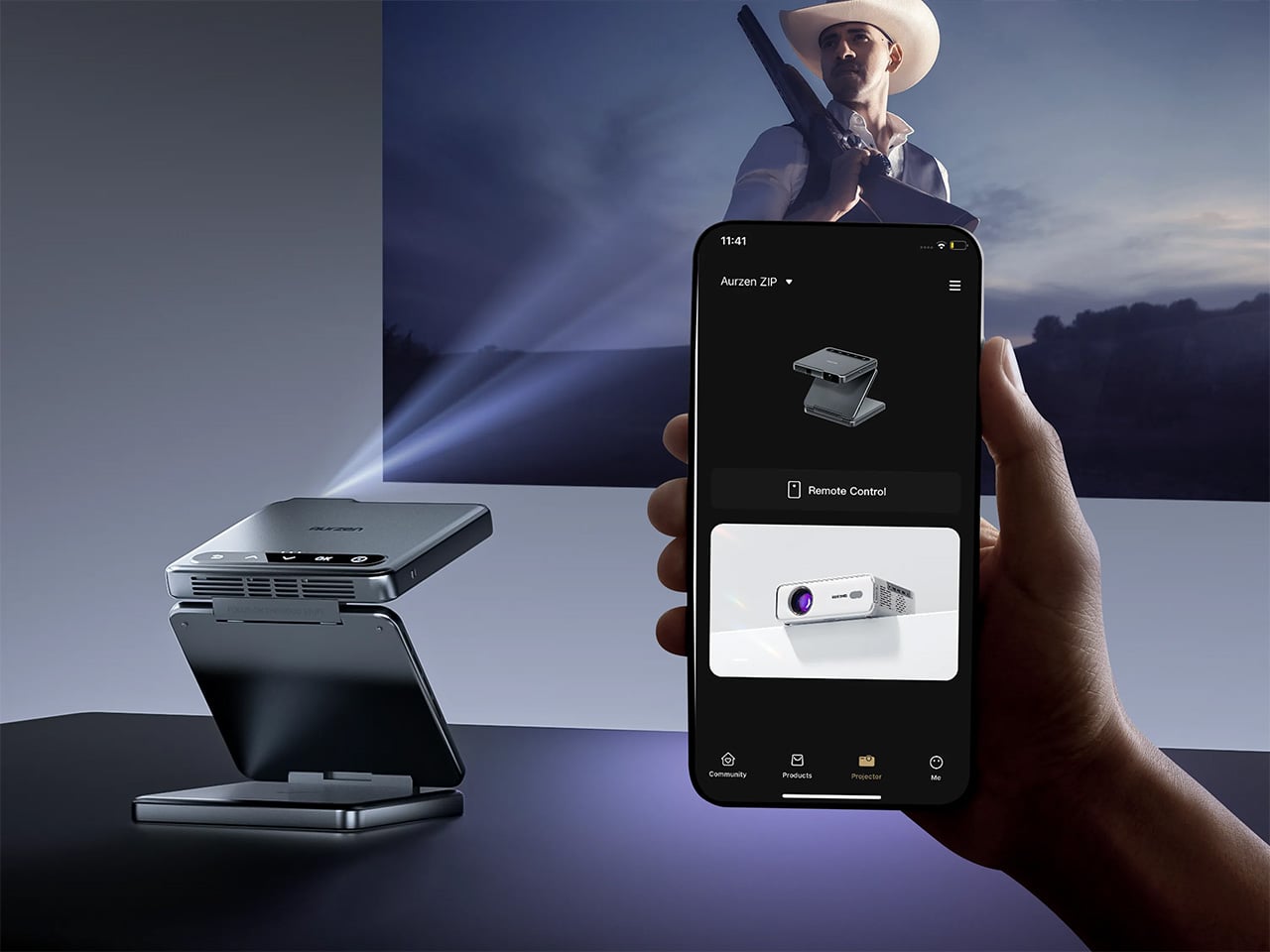
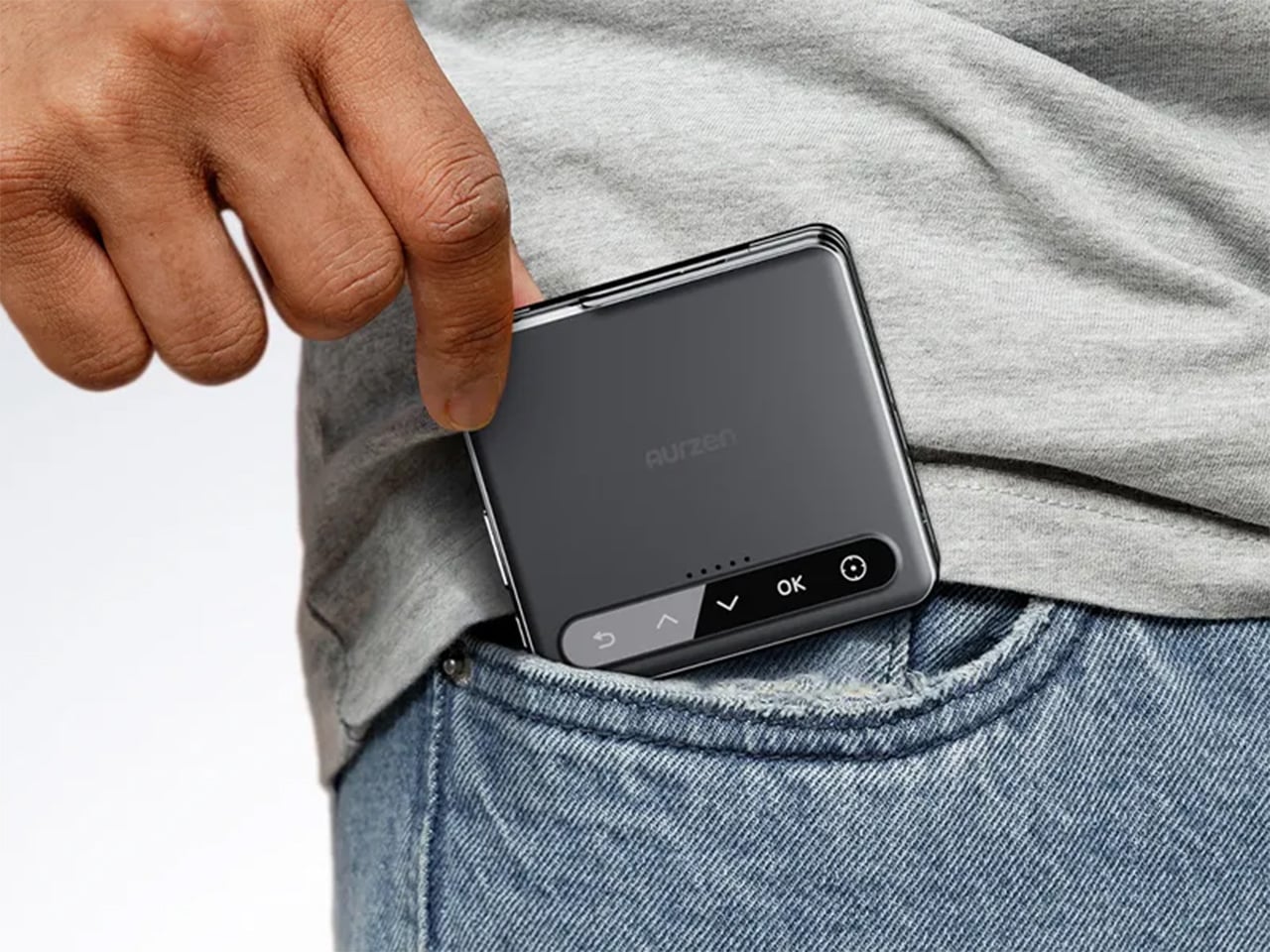
Cyberpunk stopped being a design aesthetic and became a lifestyle signifier somewhere between Blade Runner 2049 and your neighbor’s RGB-lit battlestation. We’ve seen the look applied to everything from gaming chairs to mechanical keyboards, but most of it reads like cosplay rather than genuine industrial design. Aurzen’s ZIP Cyber Edition, a limited-run variant of the tri-fold projector that debuted at IFA last year, sidesteps the usual neon-drenched clichés in favor of something that feels engineered rather than decorated. Circuit-board texturing runs across the matte black chassis, orange accent lighting traces the fold lines, and the entire device collapses down to pocket size without losing any of the visual intensity. This one was designed for people who buy gadgets the way sneakerheads buy limited drops.
The Cyber Edition shares the same core DNA as the standard ZIP: a tri-fold DLP projector measuring 3.31 x 3.07 x 1.02 inches when folded, powered by a 5000mAh battery good for about 90 minutes of runtime. You get 100 ANSI lumens in Turbo mode, native 720p resolution, ToF autofocus that calibrates 30 times per second, and Bluetooth 5.4 for wireless mirroring. What sets the Cyber Edition apart is the finish, the material detailing, and the fact that Aurzen produced it as a numbered limited release. The modular accessory ecosystem (magnetic mounts, power bank stands, USB-C streaming dongles) turns it into a configurable projection rig rather than a one-trick device. It’s the kind of gadget that belongs on a pegboard wall next to your EDC knife and custom-keycapped keyboard.
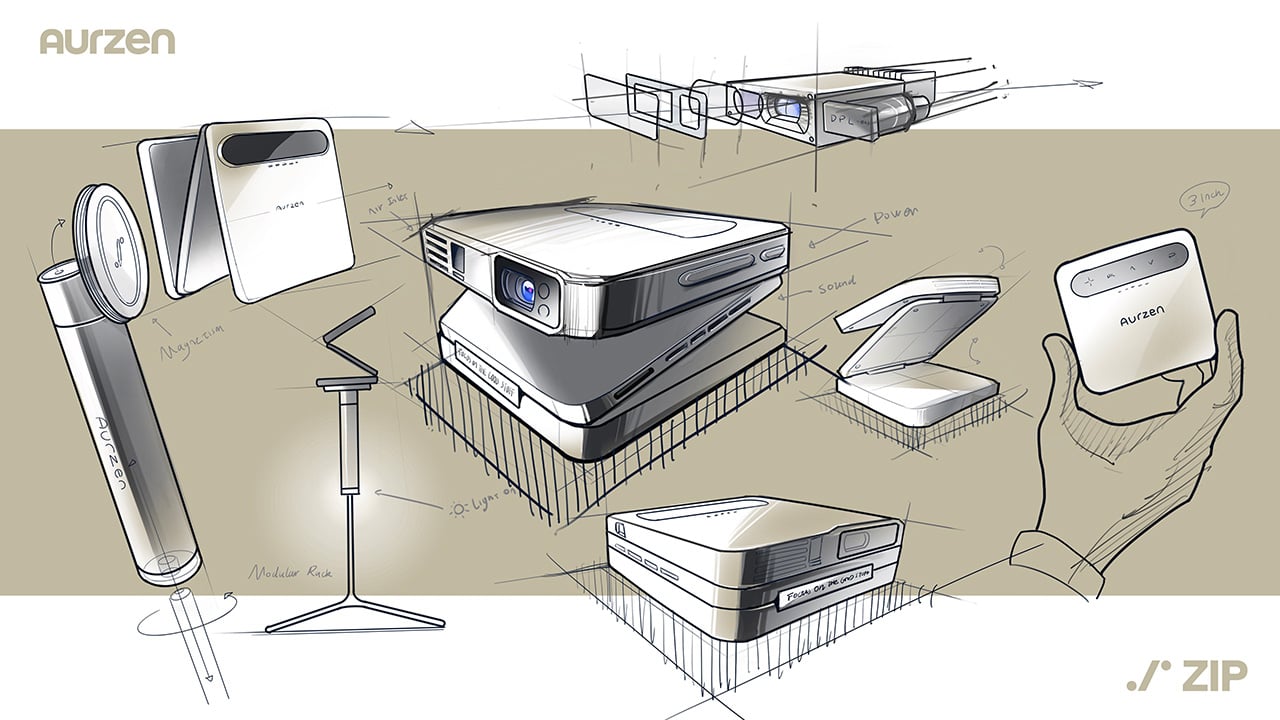
That sense of distinction starts with the physical design. The ZIP Cyber Edition folds into a compact square footprint that can slip into a jacket pocket, side pouch, or sling bag without demanding the kind of space most portable projectors still require. The tri-fold mechanism gives it a kinetic quality that makes opening and positioning the device part of the experience. On a table, shelf, or bedside surface, it does not sit there like a generic electronics block. It unfolds with intent, revealing a built-in stand that helps angle the projector quickly for casual viewing. The styling reinforces that experience. The surface graphics resemble a miniature control panel, the orange accents break up the dark body with a subtle sci-fi energy, and the overall silhouette feels sleek enough to pass for a concept gadget pulled from a design render.
Aurzen makes it clear that the Cyber Edition should be understood as a playful, gift-worthy tech object, and that framing makes sense. The supplied lifestyle assets lean into two different but complementary worlds. In one, the projector sits among headphones, a smartwatch, wireless earbuds, and a camera, framed like part of a modern everyday carry kit. In another, it appears alongside cosmetics and jewelry, presented as something stylish enough to belong in a gift spread rather than a utilitarian tech flat lay. That duality works in its favor. The ZIP Cyber Edition has enough gadget credibility to attract enthusiasts, but enough visual charm to feel approachable for gifting, especially for people who appreciate design-forward electronics that spark curiosity the second they come out of the box.
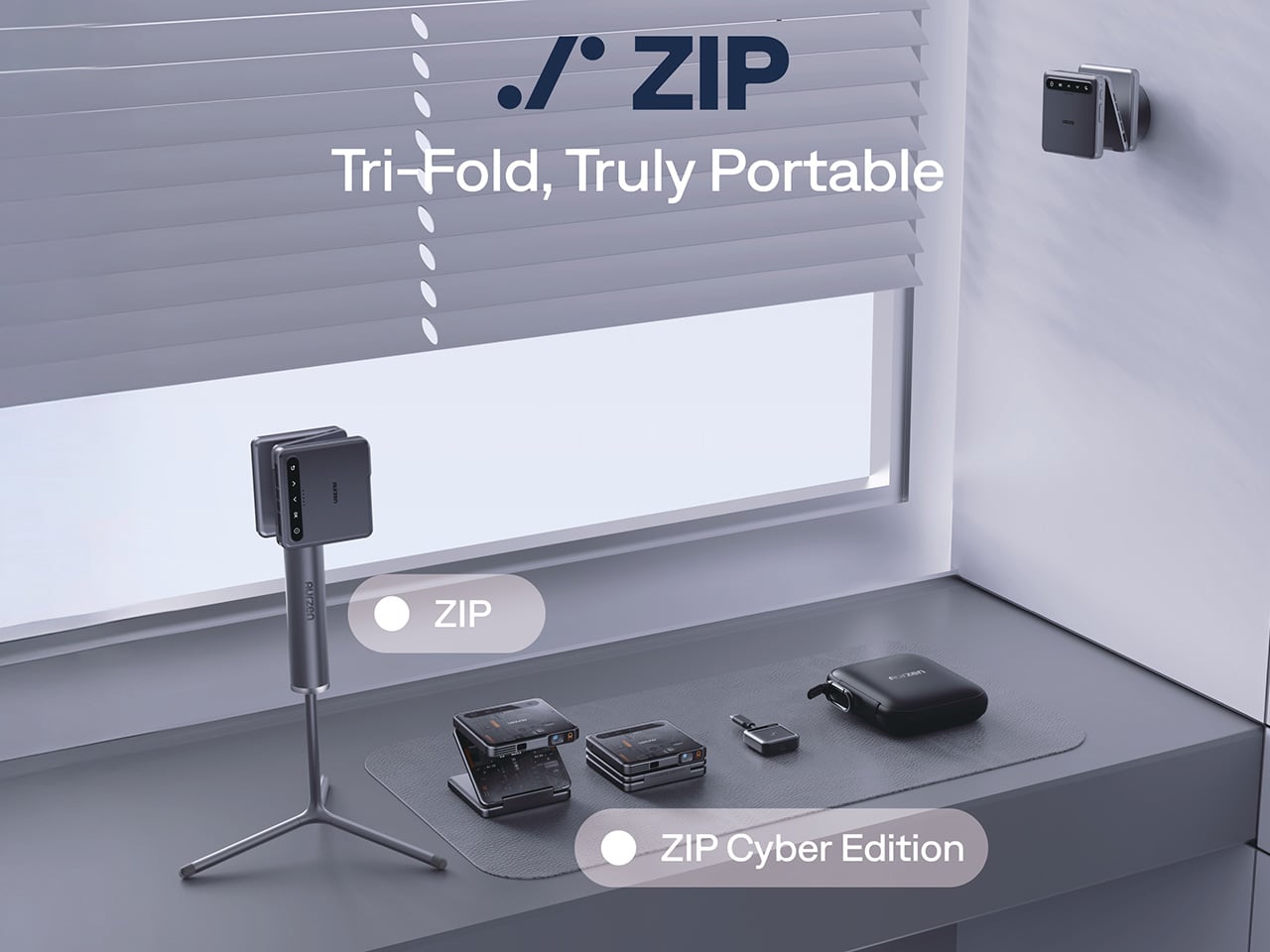
The modular accessory ecosystem gives this projector added functionality that you wouldn’t normally see in this category. Phones have accessory ecosystems – projectors, not so much… maybe just a tripod mount or a cleaning cloth. Instead of treating the ZIP as a sealed, standalone device, the company has built a set of accessories that turn it into a more flexible projection tool. The CastPlay Pro dongle connects through USB-C and is positioned as the quick route to content, making it easier to start watching without a complicated setup process. Then there is the MegaPlay dual-side mount, which uses a vacuum-lock base to attach securely to smooth surfaces such as glass, mirrors, and desks, followed by magnetic mounting that snaps the projector into place in a second.
Aurzen also offers the PowerPlay 3-in-1 stand, which doubles as an adjustable stand and a 10,000mAh power bank. That kind of accessory feels particularly well matched to the ZIP’s identity. Portable gadgets always benefit when their support hardware feels as intentional as the main device, and here the stand does more than prop the projector up. It extends runtime, offers multiple height levels, and helps the ZIP move between different environments with less friction. Taken together, these accessories give the Cyber Edition a modular personality that aligns neatly with the audience Aurzen is chasing, early adopters and gadget enthusiasts who enjoy experimenting with how their devices fit into daily life. There is a lot of appeal in a product that can move from a desk setup to a bedroom wall to a travel bag without feeling out of place in any of them.
That flexibility also helps clarify what kind of projector this is. Aurzen is not positioning the ZIP Cyber Edition as a traditional home cinema centerpiece. The better framing is that it behaves like a compact projection gadget with a sense of cool whimsy. It is easy to imagine it being used for casual streaming, spontaneous bedroom projection, dorm setups, travel use, or simply as a conversation-starting piece of hardware that people enjoy showing off. That’s because a lot of portable electronics succeed by becoming part of a lifestyle rather than by winning a spec-sheet arms race. The Cyber Edition leans into personality, portability, and modularity, which gives it a lane of its own in a category that often defaults to plain white boxes and interchangeable styling.
The strongest thing Aurzen has done with the ZIP Cyber Edition is recognize that design can be a feature in itself. Plenty of compact projectors promise convenience, and some promise performance, but very few seem interested in becoming objects people would actually want to collect, display, or gift. This one feels built for that exact purpose. The cyberpunk-inspired finish gives it character, the tri-fold construction gives it novelty, and the accessory ecosystem gives it room to evolve beyond a single-use gadget. For tech enthusiasts who enjoy hardware with a little personality and a lot of portability, the ZIP Cyber Edition feels like the kind of release that earns attention on sight and keeps it once you start exploring how it fits into everyday routines.
The Aurzen ZIP Cyber Edition is available now directly from Aurzen’s official website at $399.99, with a limited-edition production run and numbered units so you know you’re part of an exclusive clique. Although the limited edition status demands a higher price tag, YD readers can use the code 40AURZENZIP to get a whopping 40% off, bringing the price down to $239.99. And just in case you’re reading this after the Cyberpunk variant runs out, the standard Aurzen ZIP is up for grabs too, in Titanium Gold and Dark Gray.
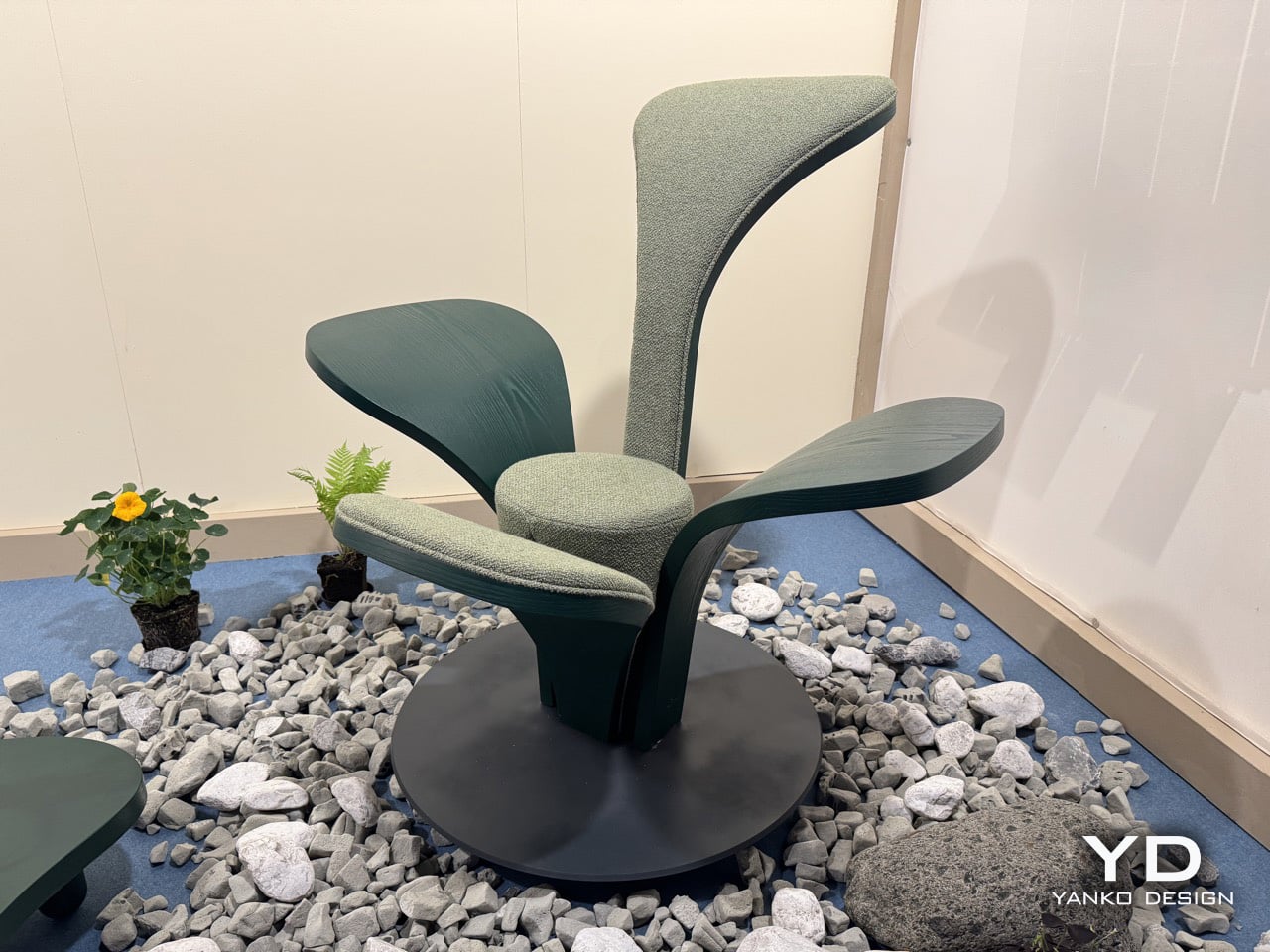
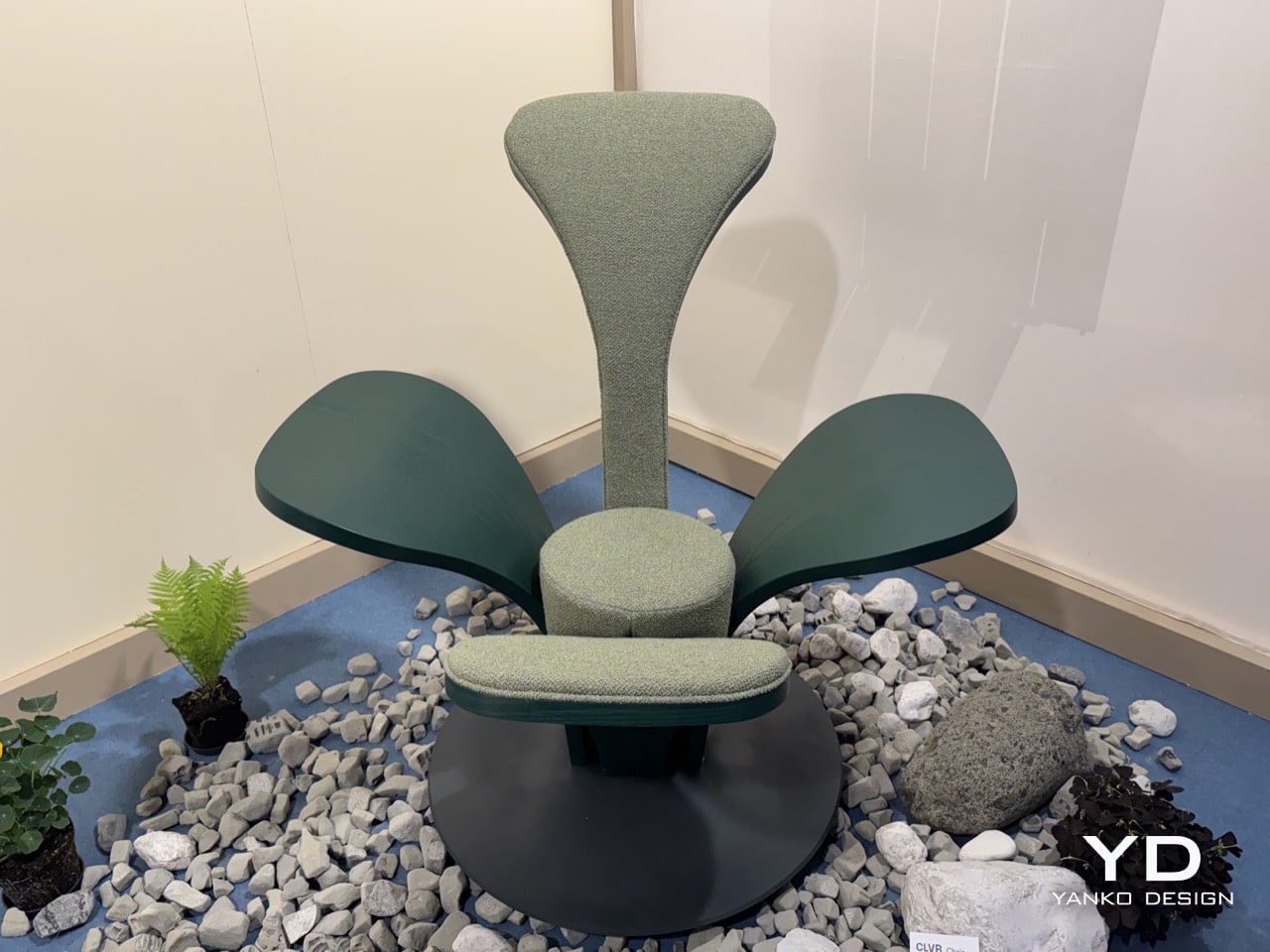
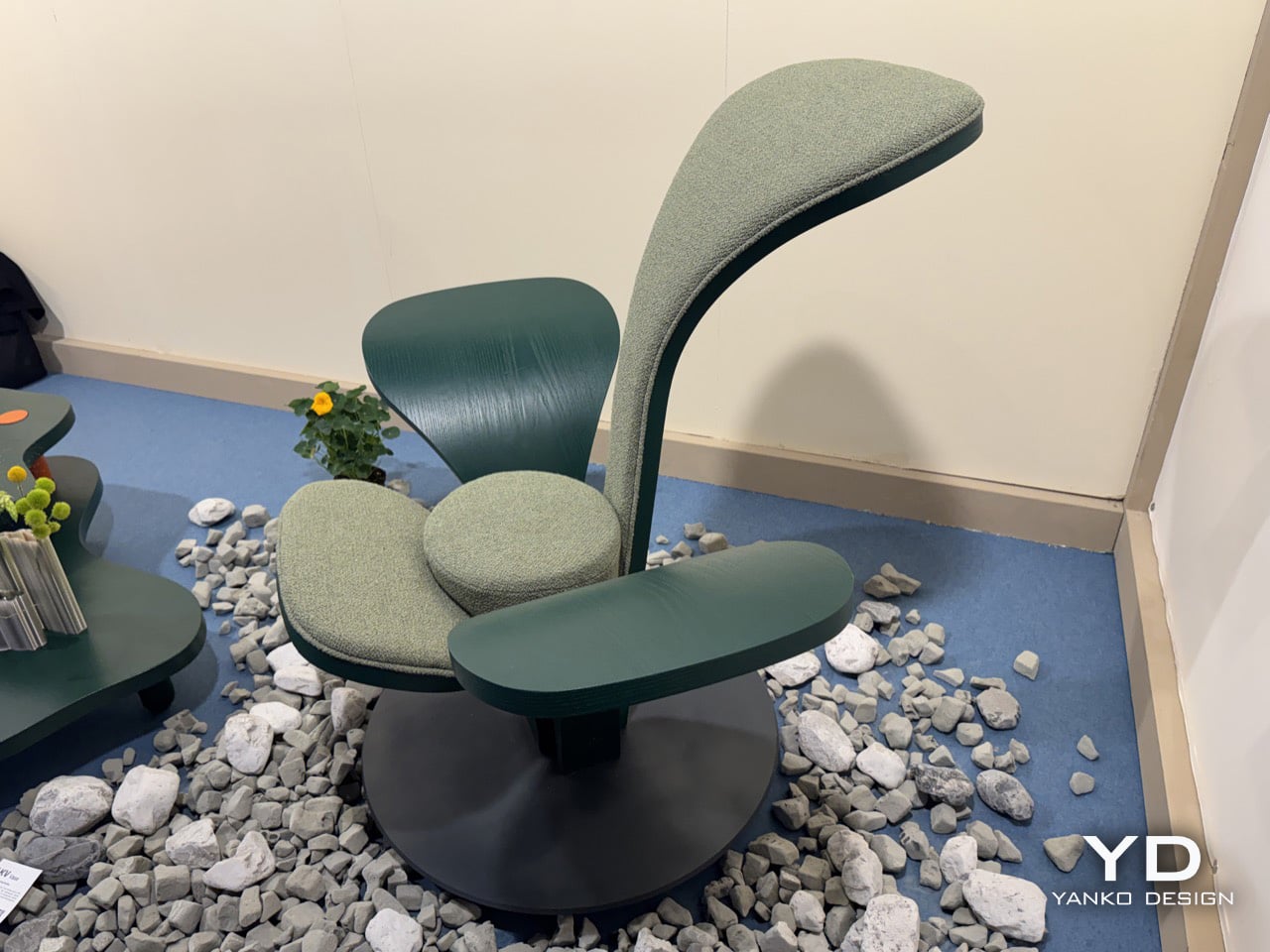
The armchair has been one of the most contested territories in furniture design for over a century, from Alvar Aalto’s bent plywood experiments to Arne Jacobsen’s Swan Chair. Designers keep returning to the seated form as a test of where material technology and formal imagination currently meet. Beltrame Breuil, an architectural practice based in Tarvisio and Vienna, took their turn at Salone Satellite 2026 with a chair that brings alpine botany directly into that conversation. Their furniture brand Picule presented CLVR, a seat assembled from four bent-wood leaf forms rising from a circular steel base, and it is the kind of debut that reminds you why Salone Satellite exists.
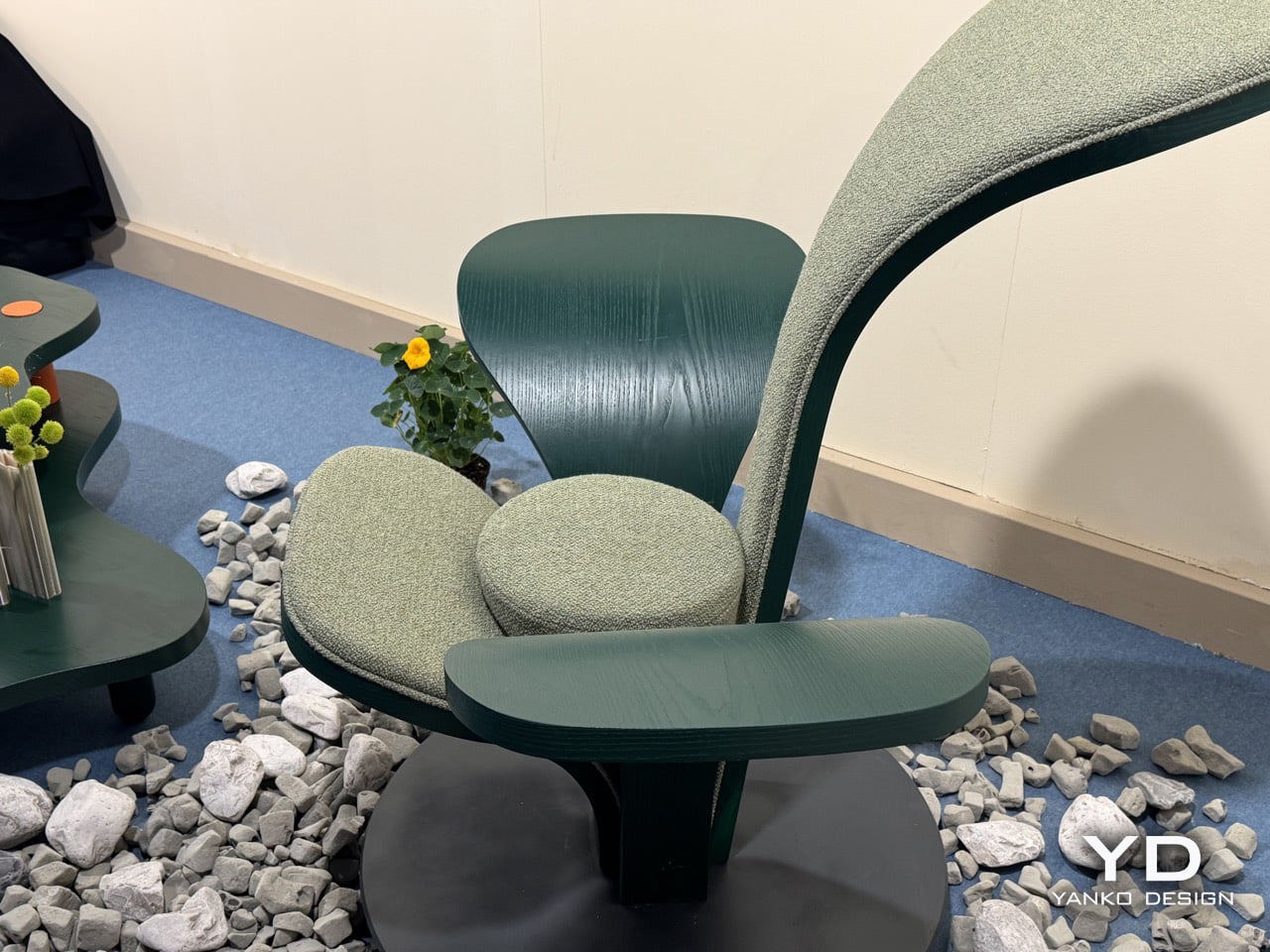
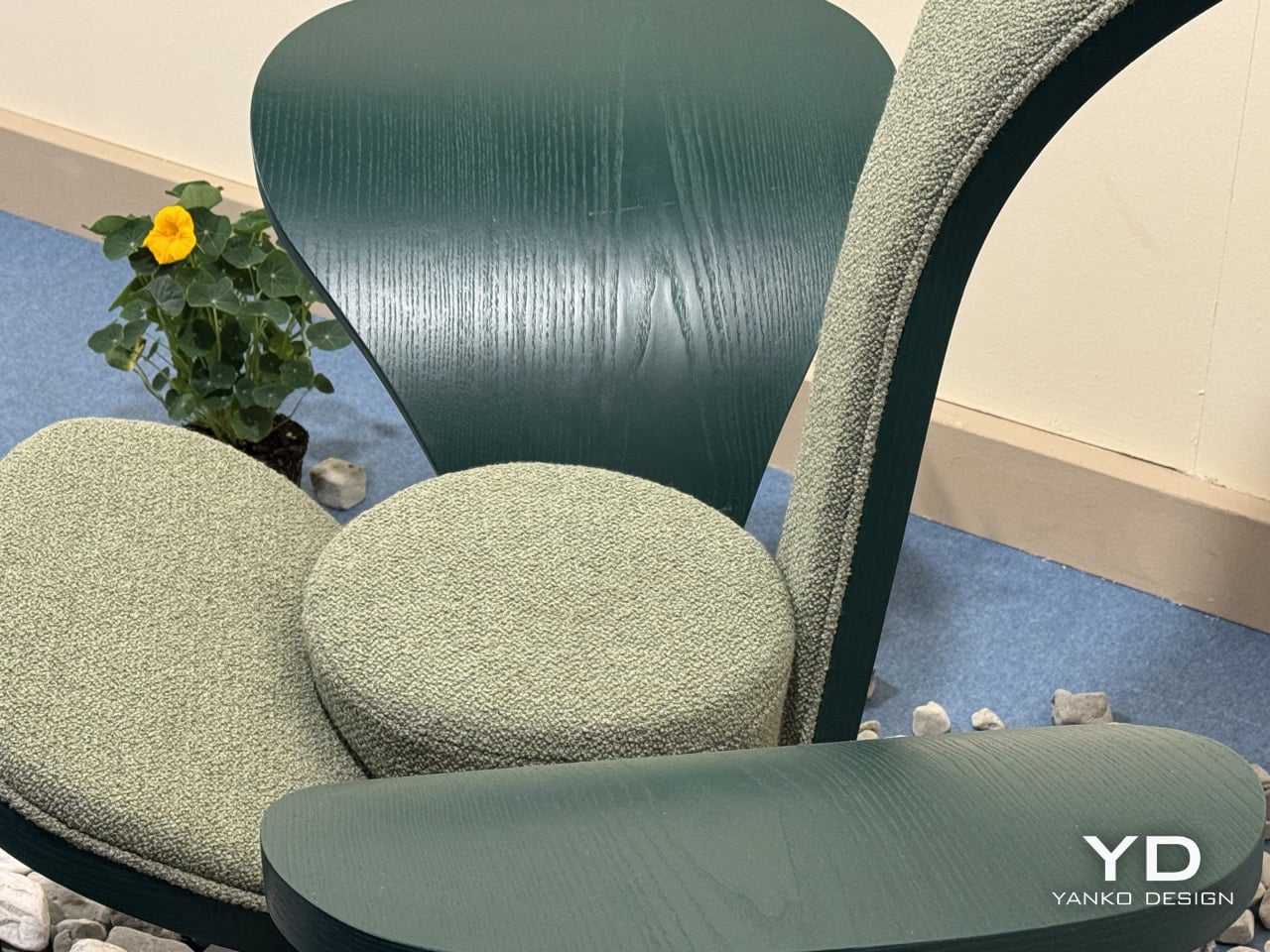
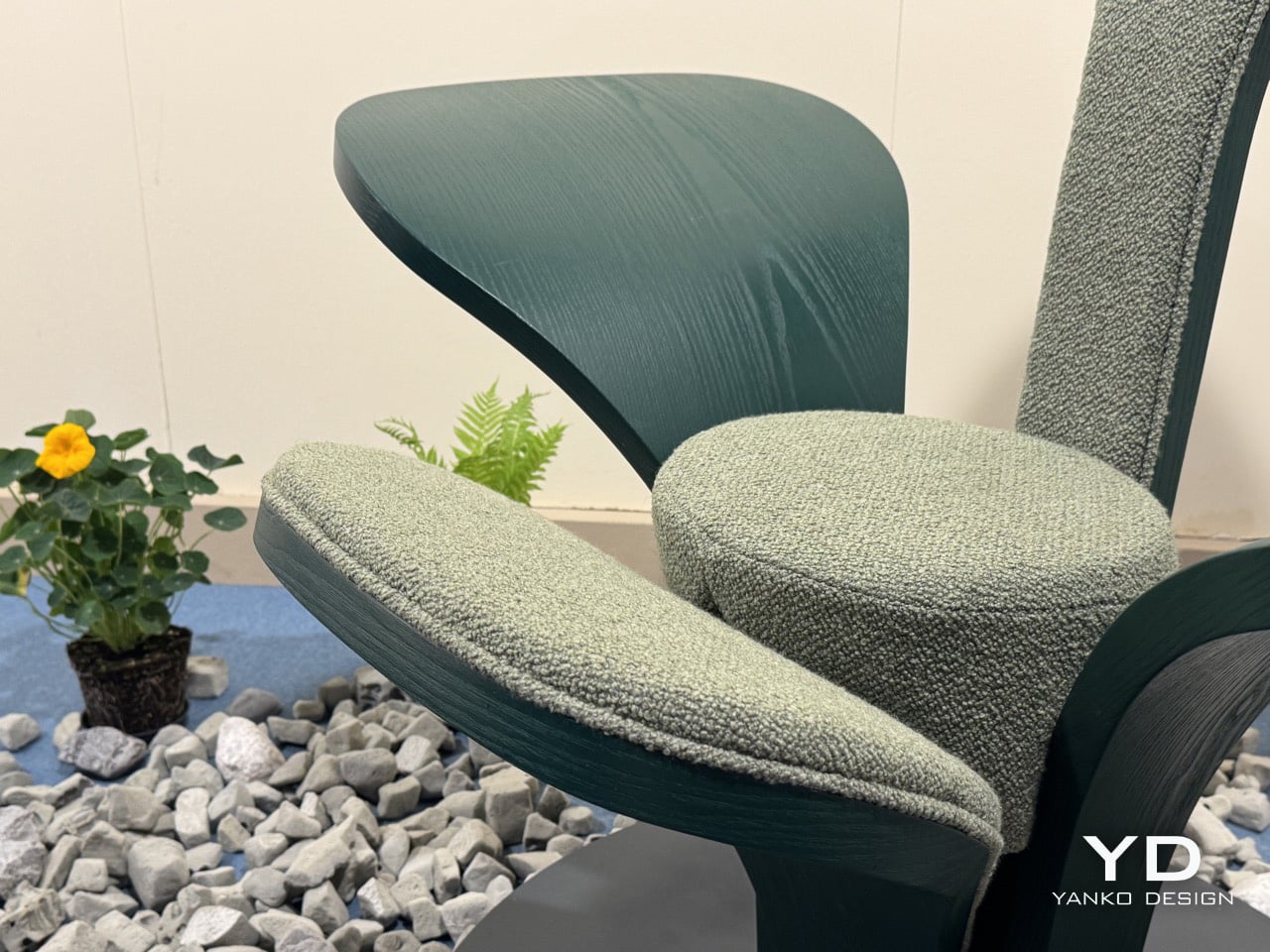
Two of CLVR’s four leaves are upholstered in a mossy, boucle-like forest green textile, covering the tall backrest and the lower front surface where the body settles. The other two are left as bare stained wood, their grain visible under the deep green finish, extending outward from the center like wings. All four share one curvature and one design logic, shaped by bent wood, which is what holds the composition together despite its apparent asymmetry. The design is coherent because its grammar is consistent, even as the function of each leaf changes.
The circular steel plate at the base functions as a pedestal, grounding the organic spread of the leaves and lending the piece a measured architectural gravity. At 112 cm tall and 125 cm wide, CLVR reads as a statement lounge object first and a chair second. It has the presence of a small throne, designed to anchor a room rather than disappear into it. The scale is deliberate, positioning the chair as a piece of functional sculpture that occupies its space with confidence.
Picule is Beltrame Breuil’s way of funneling architectural discipline into objects scaled for domestic life. The studio’s Tarvisio base sits in Italy’s northeastern corner, where the Julian Alps press against the Austrian and Slovenian borders. That geography gives CLVR its conceptual grounding; this is a studio that builds in that landscape, not one pulling a leaf motif from a mood board. The alpine forest inspiration feels earned, and it gives the chair a story that goes beyond its form.
The bent-wood forming technique reinforces that connection, requiring an intimacy with the material that keeps the work tethered to craft. The chair’s forest green palette, running across bare wood and woven textile in two calibrated tones, holds the composition together as one chromatic idea rather than a collage of parts. It’s a thoughtful detail that shows how completely the studio considered the object from every angle, ensuring the material and color choices support the core concept.
Beltrame Breuil is presenting the full Picule collection, including the CLVR chair, at Salone Satellite 2026. You can find it in Hall 5 at Stand E10 at Fiera Milano, Rho, through April 26. The photos do a fair job of capturing the silhouette, but the bent-wood grain and the textile’s tactile quality are things that land most clearly when you are standing right in front of it. Go see it before the fair closes.
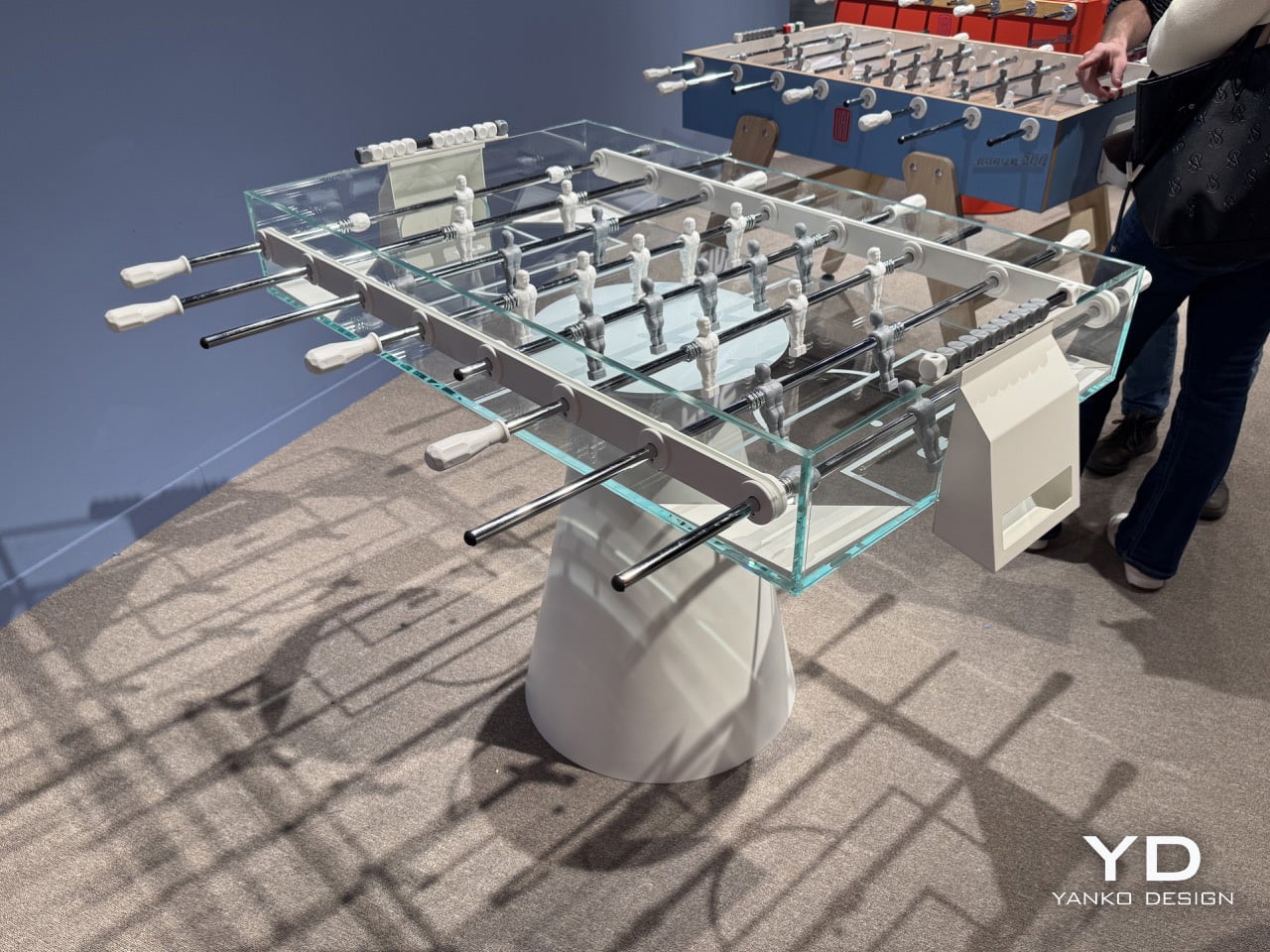
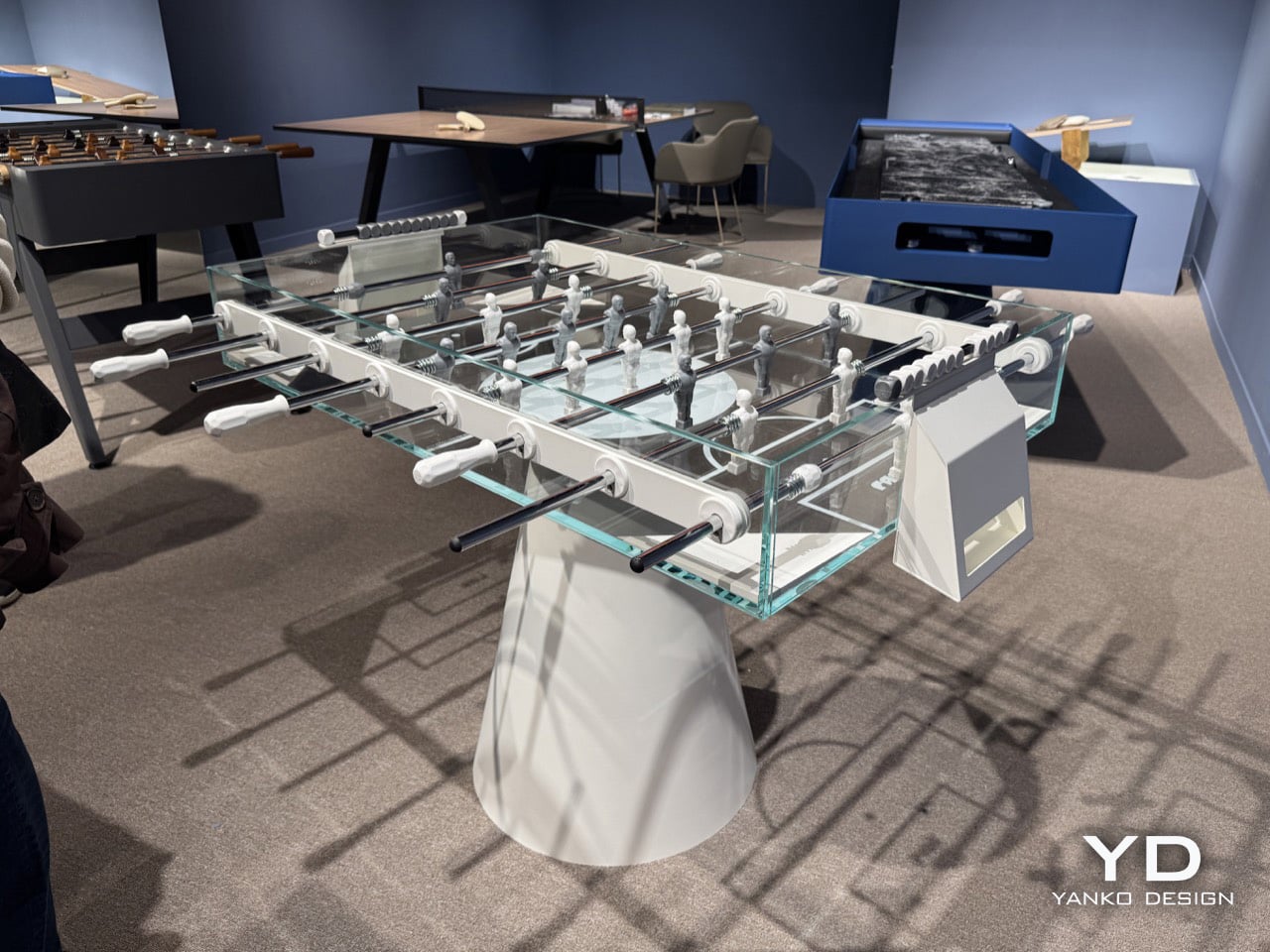
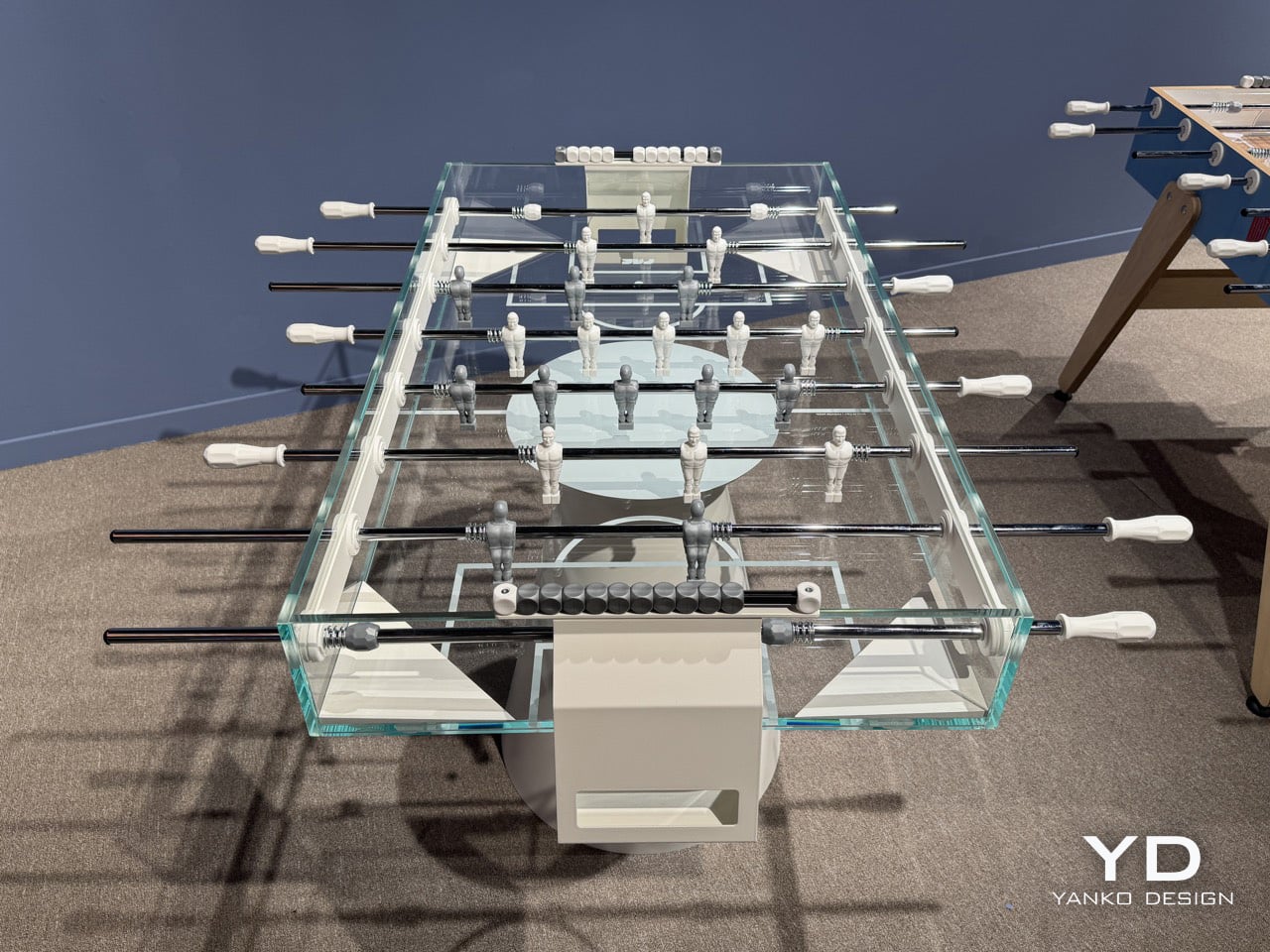
The early 2000s had a very clear idea of the future. Think of films like *Minority Report* with its PreCrime headquarters, all white rooms and glass interfaces where everything looked seamlessly bonded rather than bolted together. Or *I, Robot*, which pushed that look even further with its glossy USR tower and Audi concept car, a world that had erased any sign of how things were actually made. That aesthetic has aged remarkably well, but it’s a territory most game furniture never touches, usually favoring rich materials over making things look like they are barely there. Basaglia + Rota Nodari are the exception, and Ghost, their foosball table for FAS Pendezza, is the proof.
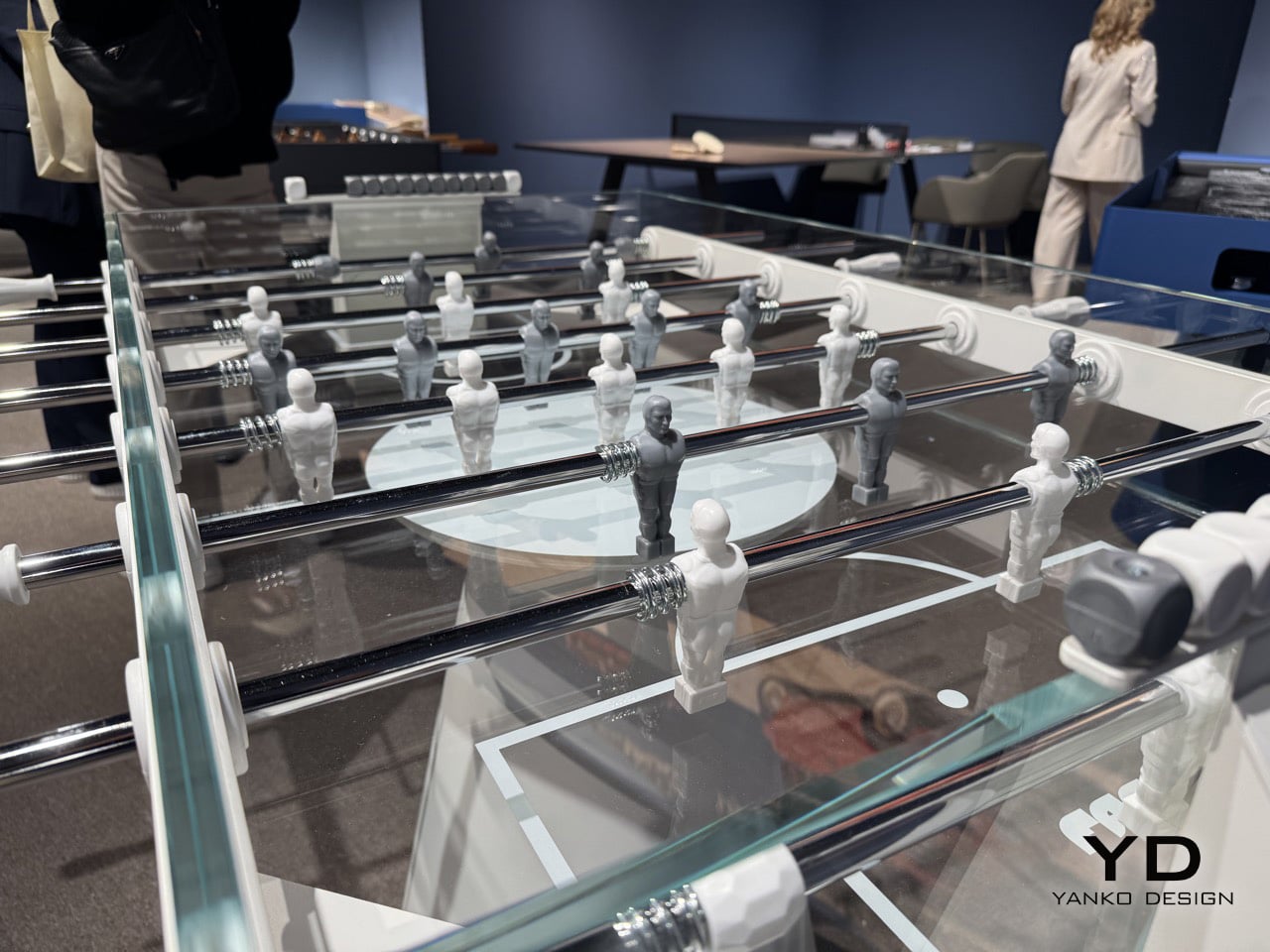
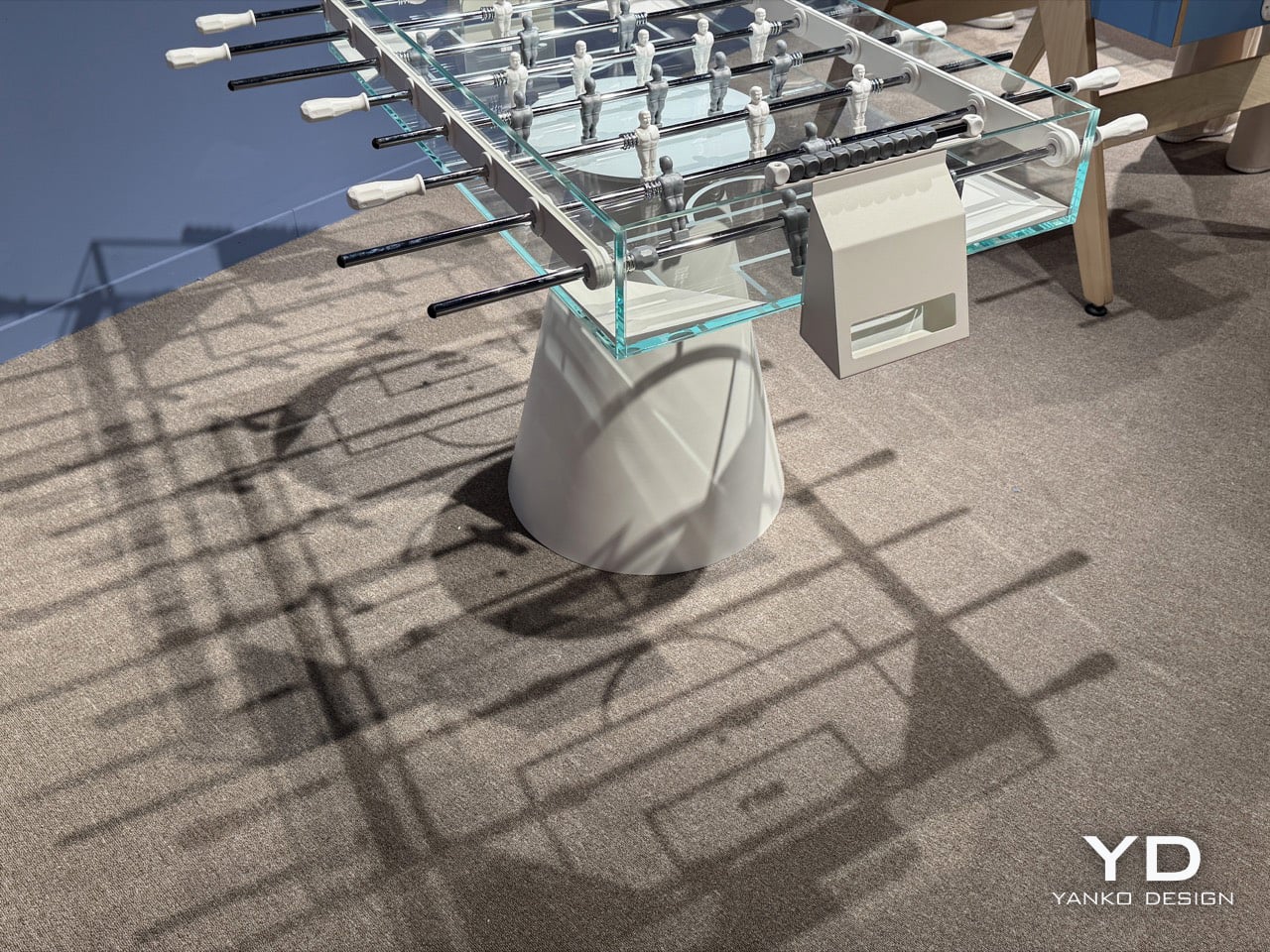
The table itself is built from thick tempered glass, laminated at 12 and 9 mm, with a playing field that’s 114.5 by 70.5 centimeters, and it’s made entirely in Italy. Its body is bonded with a special adhesive, so there are no visible screws or bolts anywhere in the frame. That’s a key decision, because if you saw hardware, the whole ghost-like vibe would fall apart. A clean, conical white metal base holds up the floating glass volume, while chrome rods and two-tone players complete a color scheme that’s intentionally minimal. At 8,900 euros, it’s priced as a piece of design, and it earns it on looks alone before a single ball gets dropped.
Designers: Basaglia + Rota Nodari for FAS Pendezza
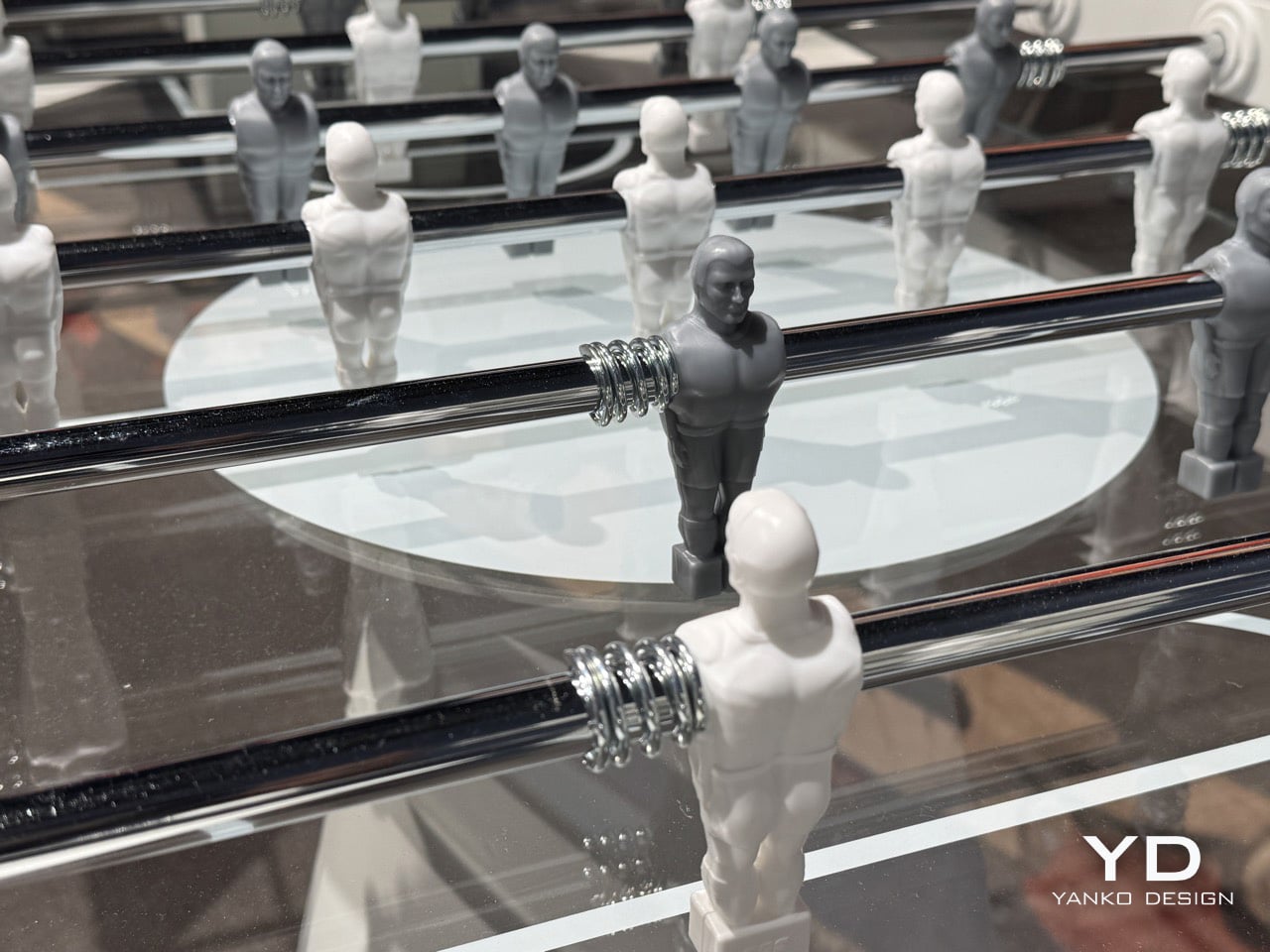
Even the players, made of white and gray resin, look like they belong in this sci-fi world. They’re somewhere between a medical illustration and a concept-car sketch, simplified to the point of anonymity. That’s exactly why they work. If they were in conventional team colors, the table would feel like just another piece of recreational equipment. Instead, these figures feel closer to the NS-5 robots of *I, Robot* than to any real athlete, which helps keep the whole look clean and unified. The chrome coil springs connecting them to the rods are the one little nod to mechanical texture, and they look almost like jewelry against all that glass.
But what really captures you are the detailed shadows the Ghost projects on the floor, if paired with the right lighting. At Salone Satellite, Ghost casts an incredible wireframe shadow on the floor, like it’s drawing a blueprint of itself in real time. Pitch markings are printed beneath the crystal surface, so they appear to float inside the glass instead of sitting on top. From any angle in the FAS Pendezza booth, you can see right through the structure, with the players and chrome rods suspended against the room itself. The name makes perfect sense when you see it in person.
FAS Pendezza is presenting Ghost at Salone Satellite this week as part of Milan Design Week 2026, in a booth where the table’s shadow alone justifies the detour. Seeing it alongside the rest of the brand’s lineup confirms Ghost as a deliberate formal departure rather than FAS Pendezza’s default register. The studio, Basaglia Rota Nodari, launched in 1997 with a stated ambition to build objects that convey emotion beyond their function, and Ghost may be their sharpest expression of that intent to date. For those who have already left Milan, Ghost is available in white and black finishes and retails at €8,900.
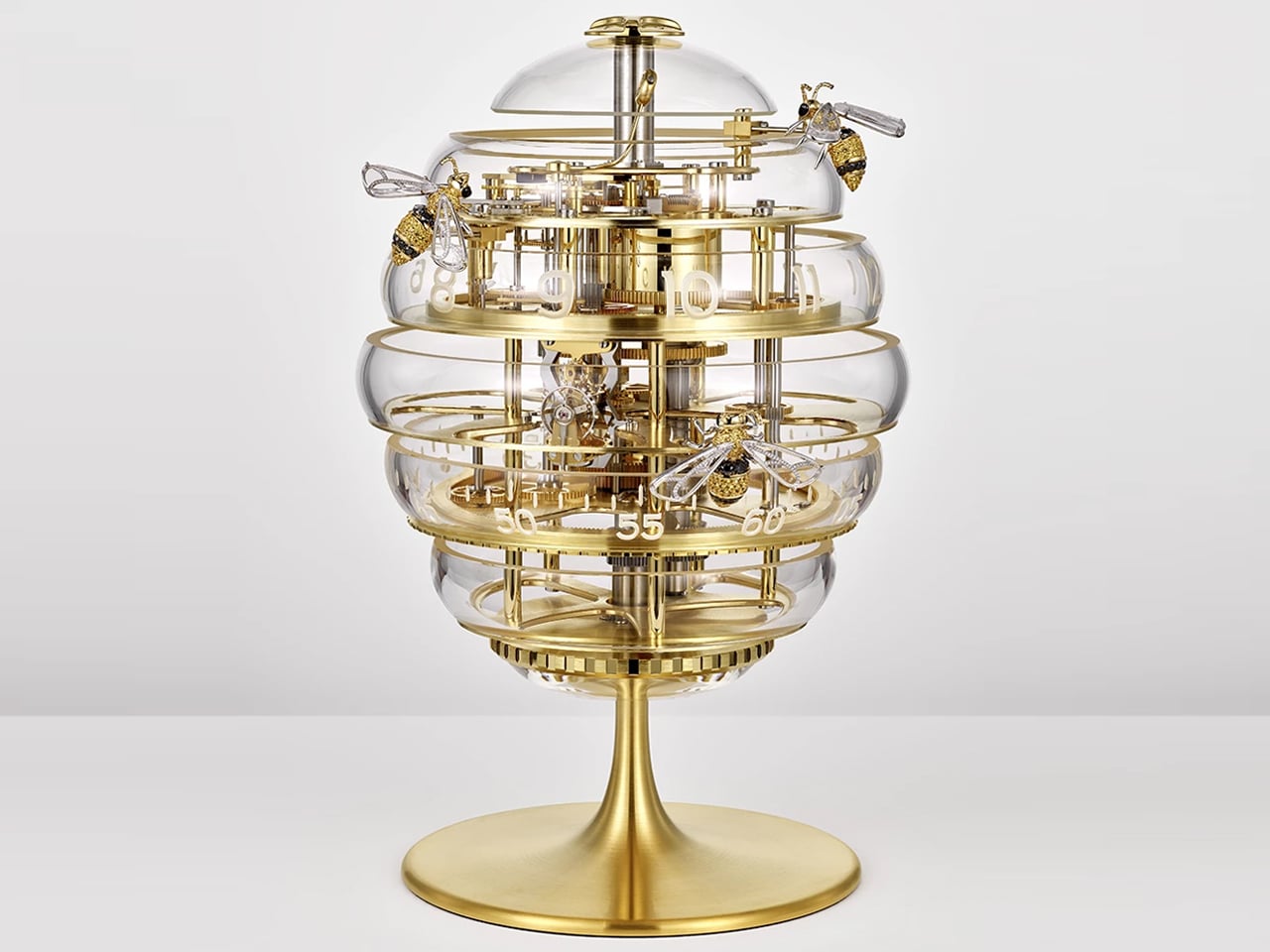
Brilliance usually comes in limited quantities. In fact, it is embodied by the new limited edition Chopard Table Clock, which stands apart from anything the horologist has created in the past three decades. To celebrate the 30th anniversary of the Chopard Manufacture in Fleurier, the company has teamed up with L’Épée 1839 – the masters of complex watches – to create the Beehive Table Clock.
After reimaging a legendary car and a colorful hand grenade as clocks, L’Épée 1839 is now giving a new horological dimension to the desk clock. Easily, one of the most complex and finely decorated Objet d’Art – spare a thought for the MB&F – the clock revives Chopard’s own iconic beehive motive originally used by the founder Louis-Ulysse Chopard in the 19th century. The bee was later adopted as the emblem of the Manufacture in Fleurier by Karl-Friedrich Scheufele back in 1996 to represent “labor, precision, and collective skill.”
Chopard timepieces are generally an embodiment of precision and strength highlighted by timeless style. Each of its creations reflects Swiss mastery with the use of dancing gems, fine artworks, and sustainable innovation. All of this is presented well in the Beehive Table Clock, which is made of steel and brass in 18K ethical yellow gold to mimic the color of an original beehive.
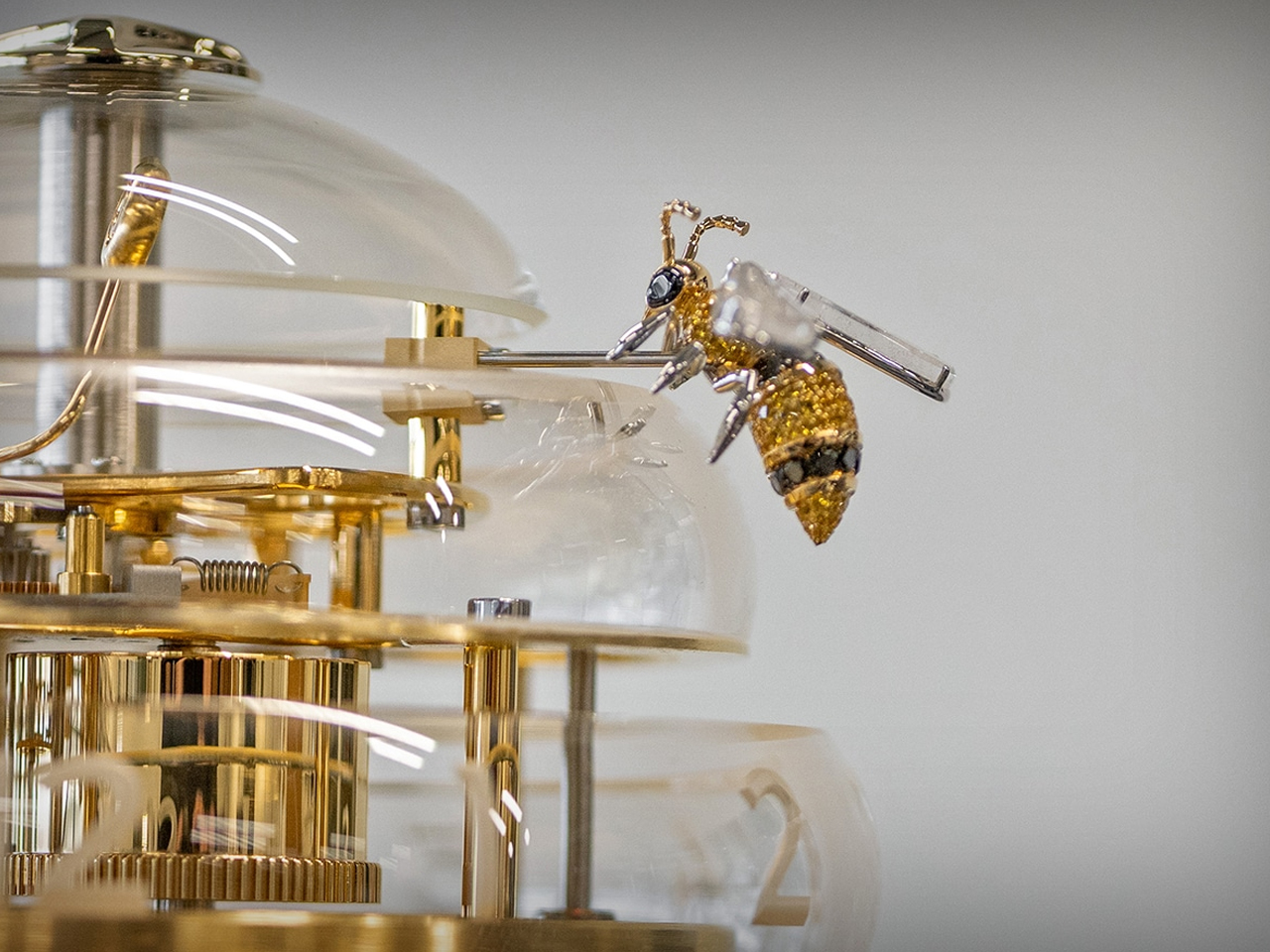
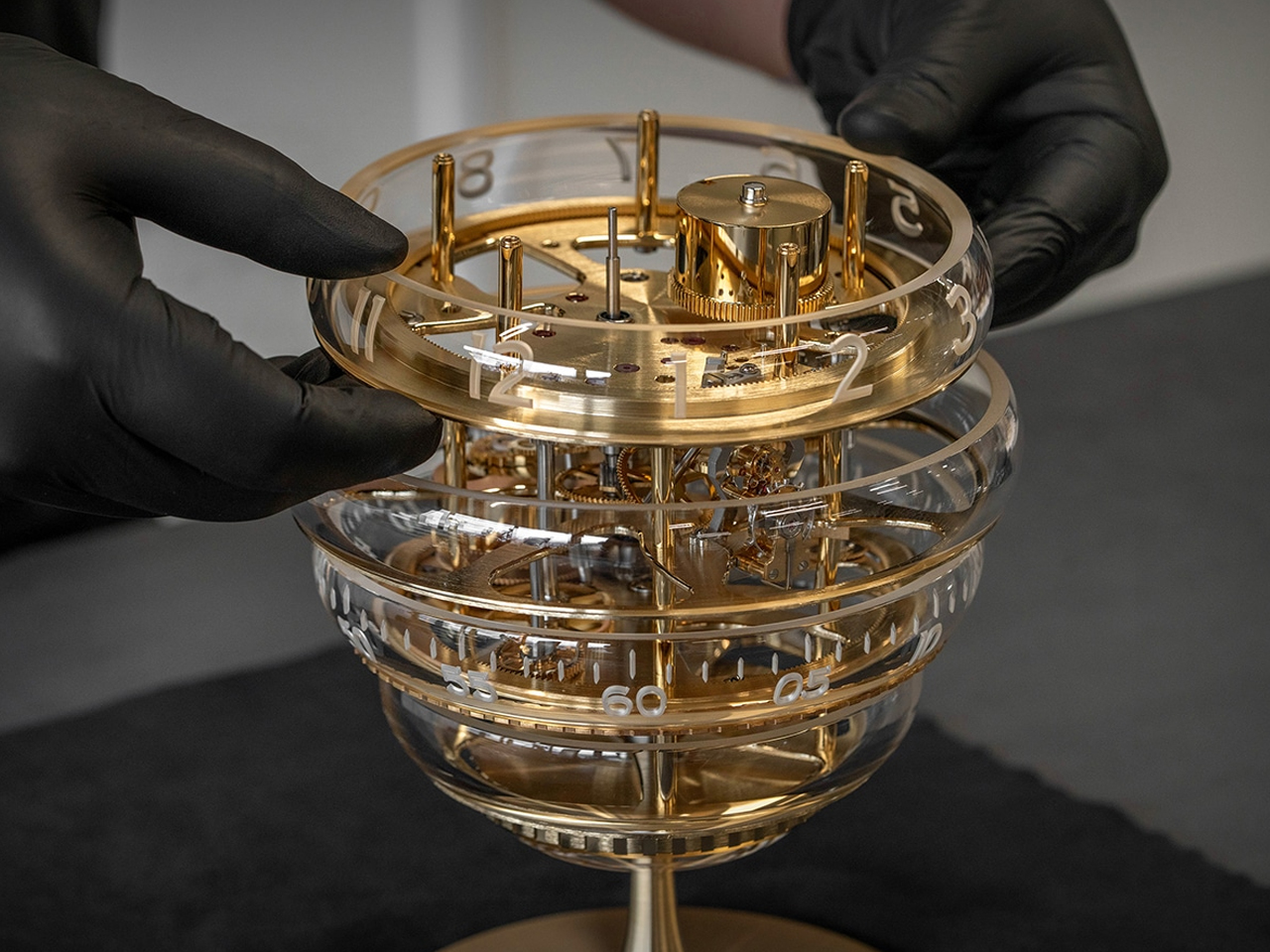
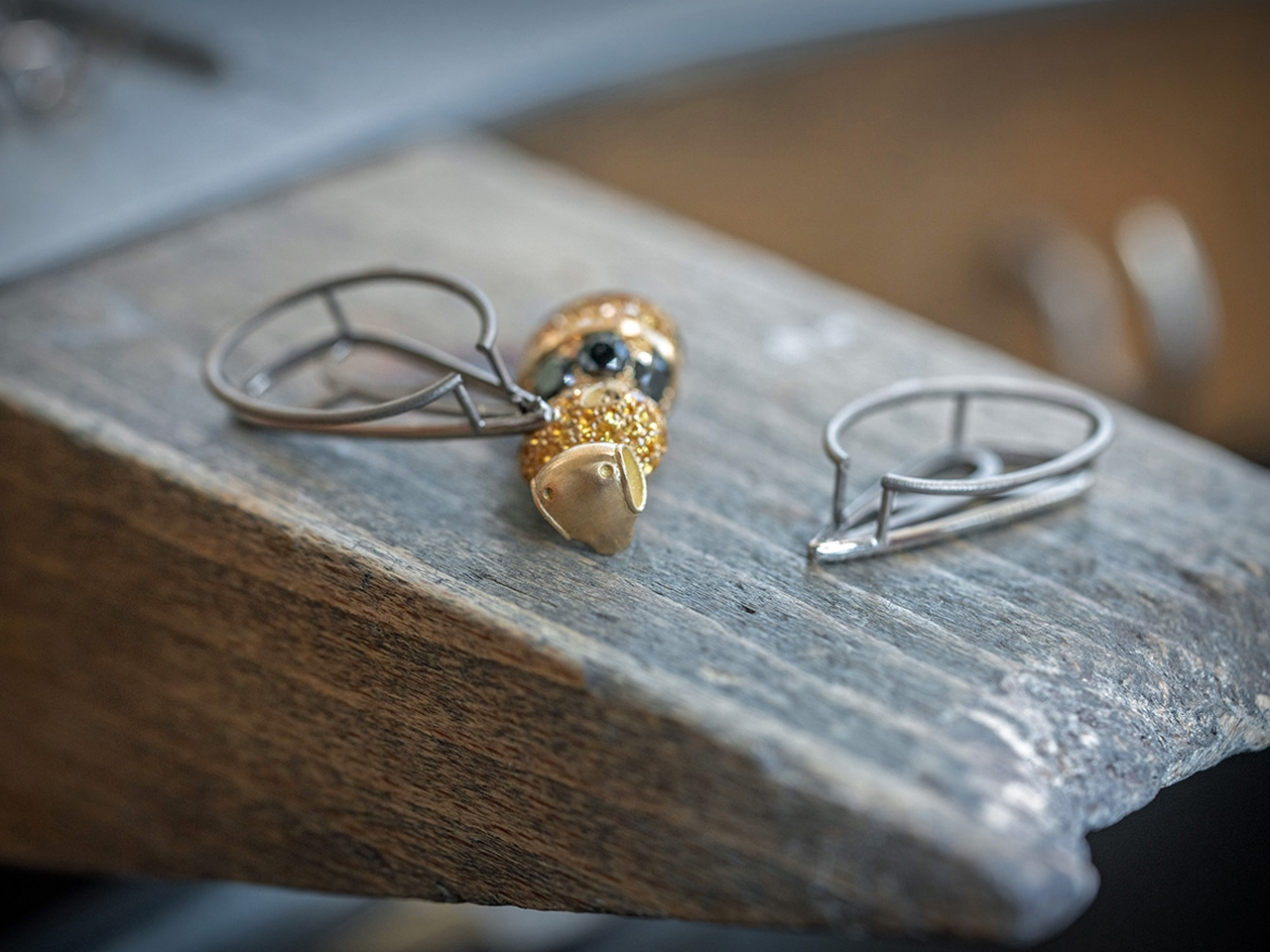
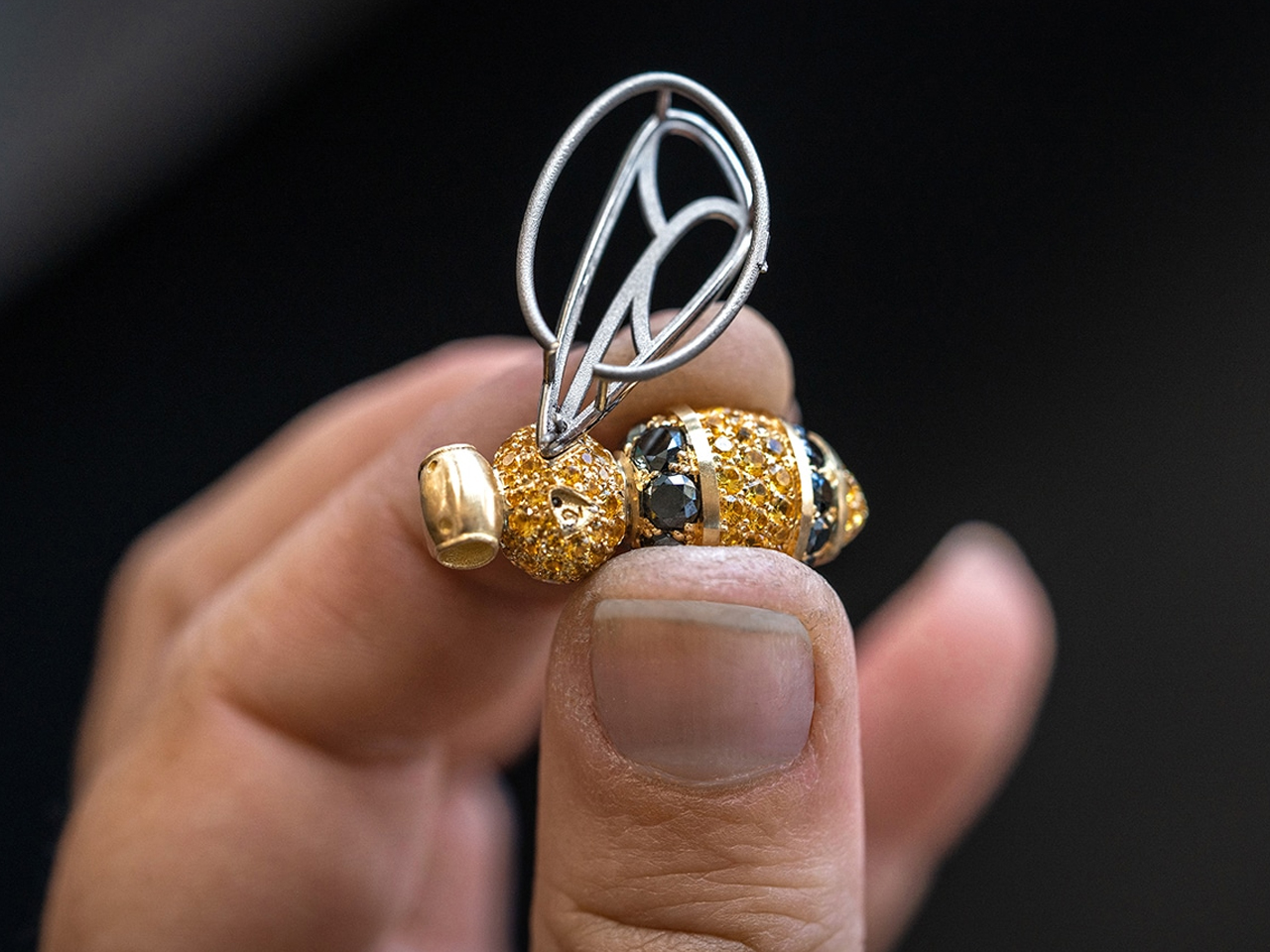
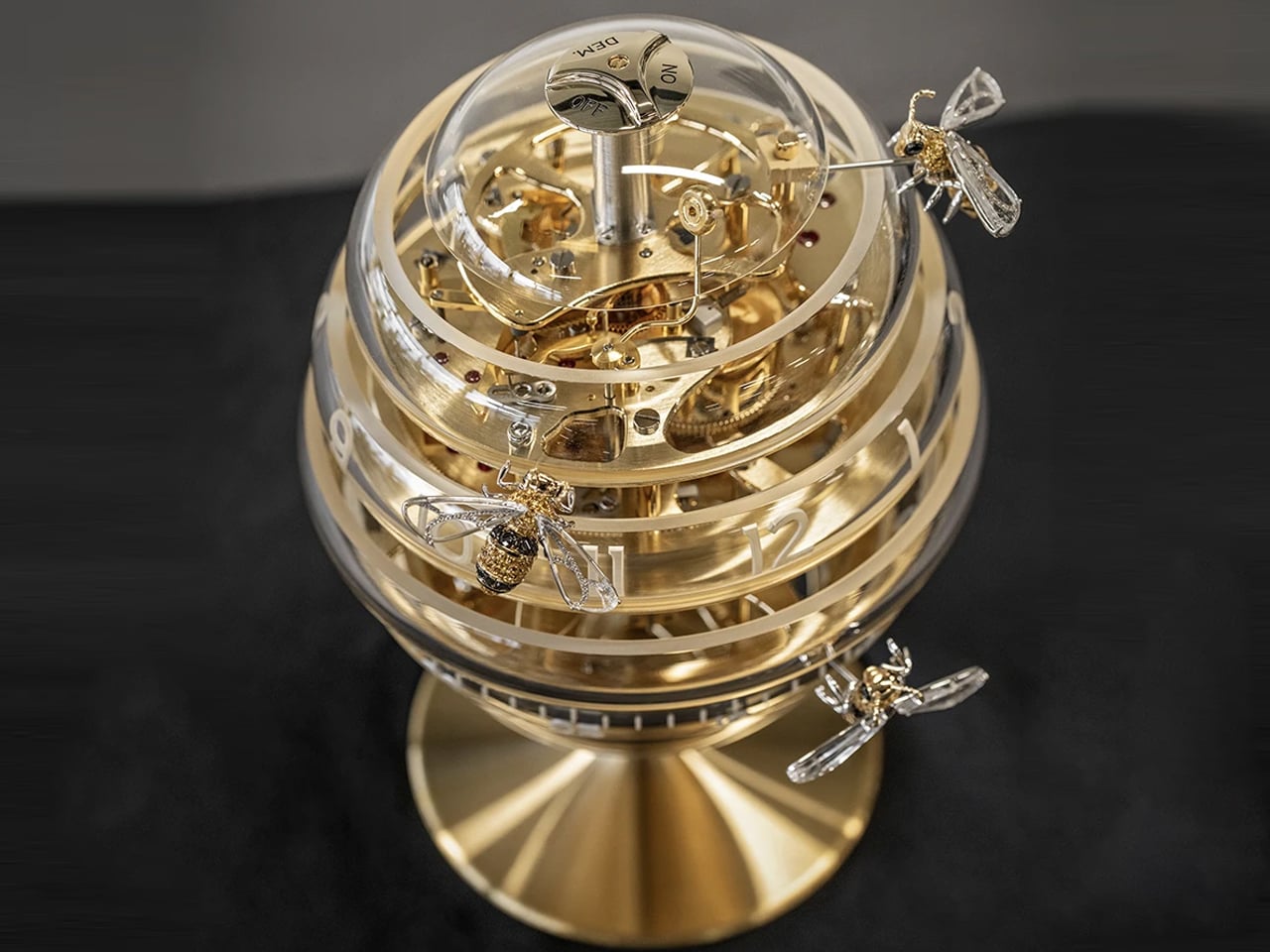
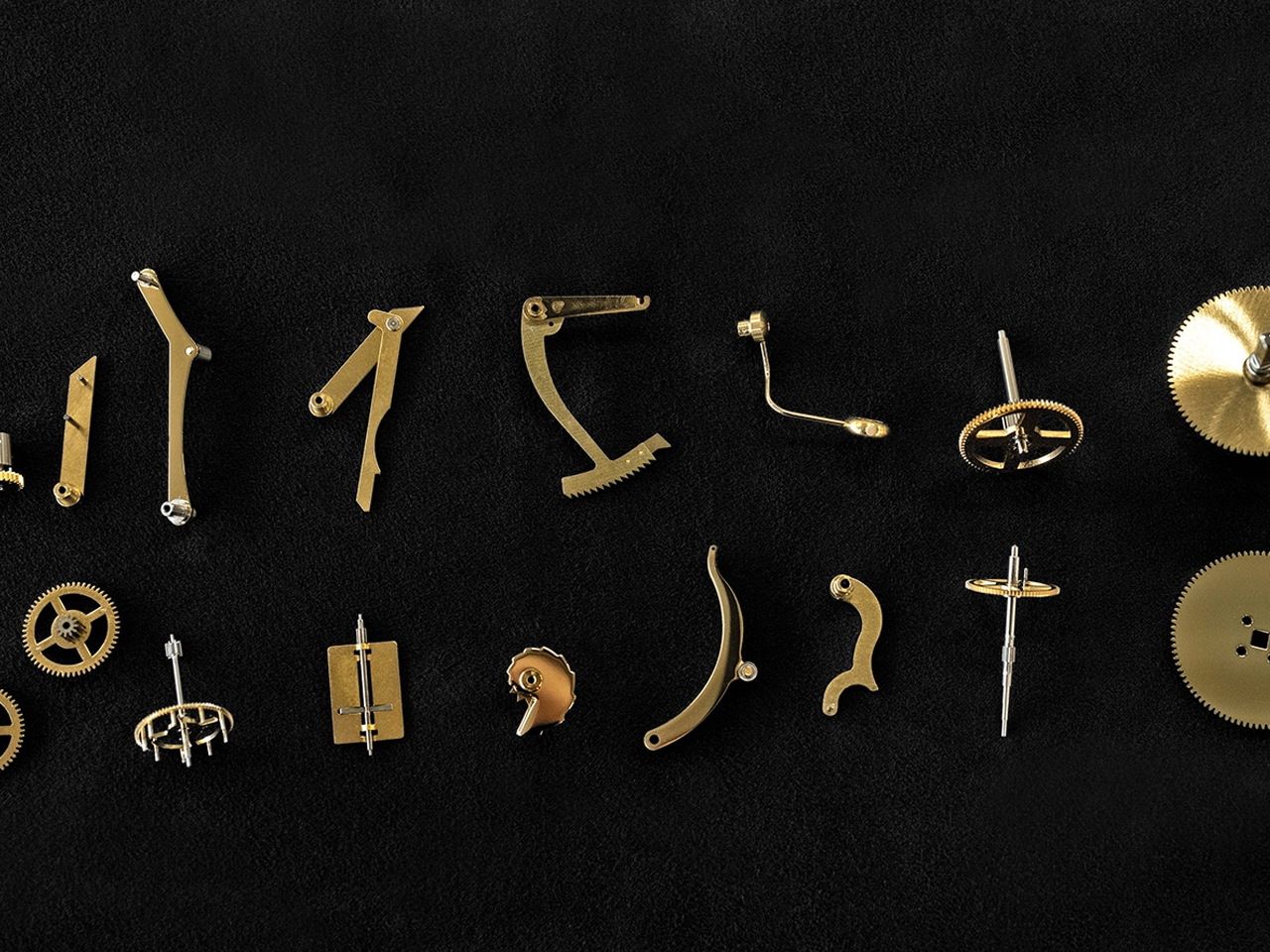
The clock, measuring 25.8 cm high and with a diameter of 16.5 cm, features three jeweled bees made in Chopard’s jewelry atelier in Geneva. The bees feature a body made using 18-carat ethical yellow gold, which is studded with gemstones, yellow sapphires, and black diamonds, and have rock crystal for wings. While the bees may feel like the most distinctive part of the clock, which comprises seven rounded tiers of borosilicate glass, two of which have the hour and minute numerals. It’s the chime mechanism of the Chopard Beehive Table Clock that’s, in fact, its best highlight.
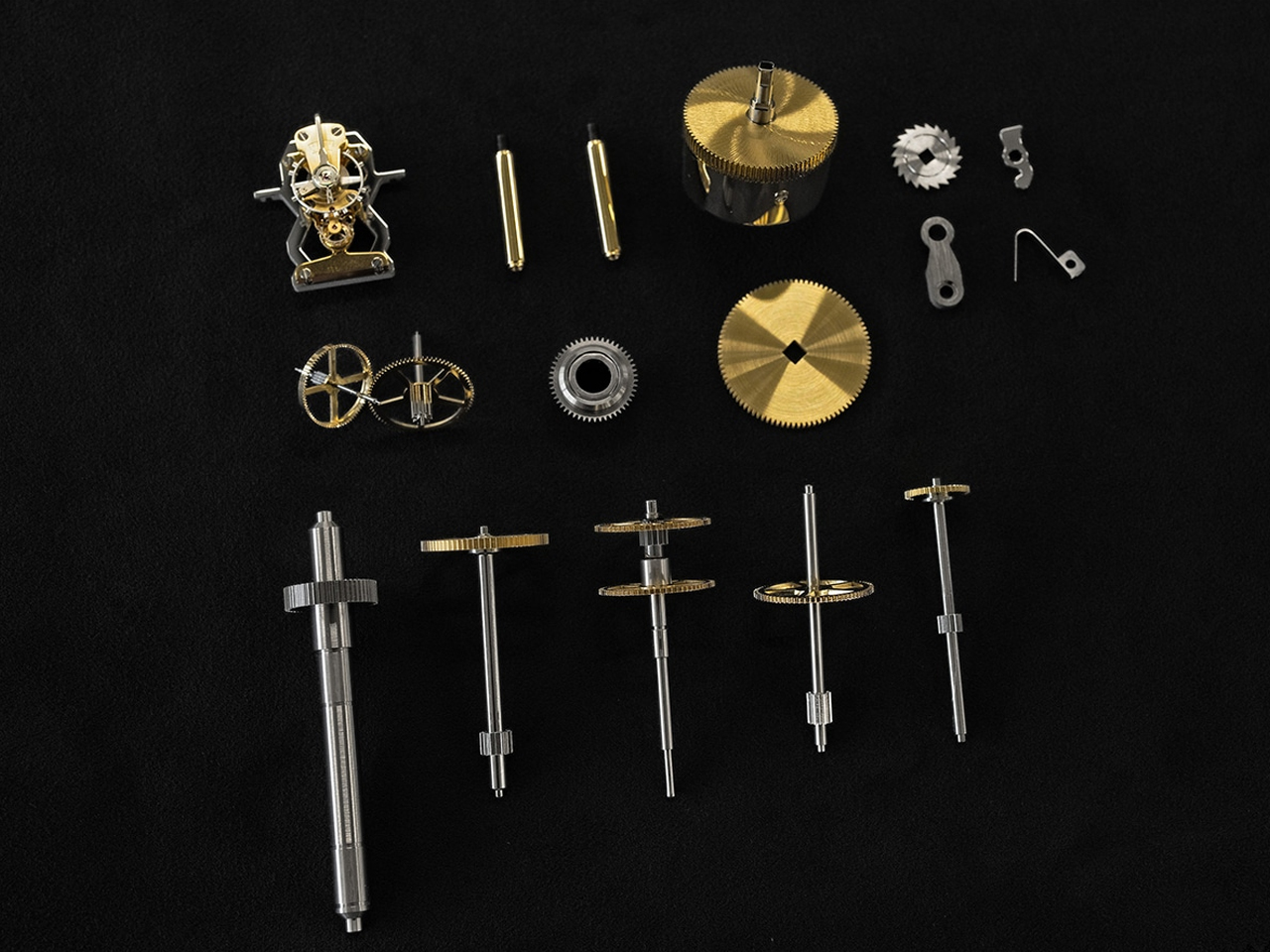
The clock’s movement plate is brass, and the base is steel, but both are finished in gold to match the beehive theme. Its chime mechanism is located at the top, where the glass dome is used as the bell struck by a small gold hammer to announce the time. There are three – Active, Silent, and On-Demand – chime modes to choose from, which can be changed by rotating the top part. In the active mode, the clock sounds the time automatically, in Silent mode, it doesn’t chime at all, and in On-Demand mode, you can manually set the clock to sound the current time.
The Beehive Clock is powered by a twin-barreled, hand-wound movement, which can be conveniently wound with a crown located at the bottom. When full-wound, the clock has a power reserve of up to 8 days. With its impressive shape, sophisticated chiming mechanism, and a legacy to live up to, the Chopard Beehive Table Clock is limited to just 10 pieces worldwide. The elusive timepiece will be sold exclusively at Chopard boutiques for an estimated $330,000.
Most rooms treat lighting as an afterthought. A fixture goes on the ceiling, a floor lamp fills a corner, and the result is illumination without real personality; technically functional, completely forgettable. The lamps that actually change a room belong to a different category entirely. They’re worth looking at before you’ve switched them on, with forms that say something specific about how light should behave and how a space should feel.
These five designs earn that standard. Some rethink where light is allowed to exist. Others change their function with a single physical gesture. A few carry material quality that improves over time rather than fade. None of them are lamps you choose because something needs filling. They’re the kind of objects that make everything else in the room feel like it’s working harder just by being there.
1. Flying Moon & Sun
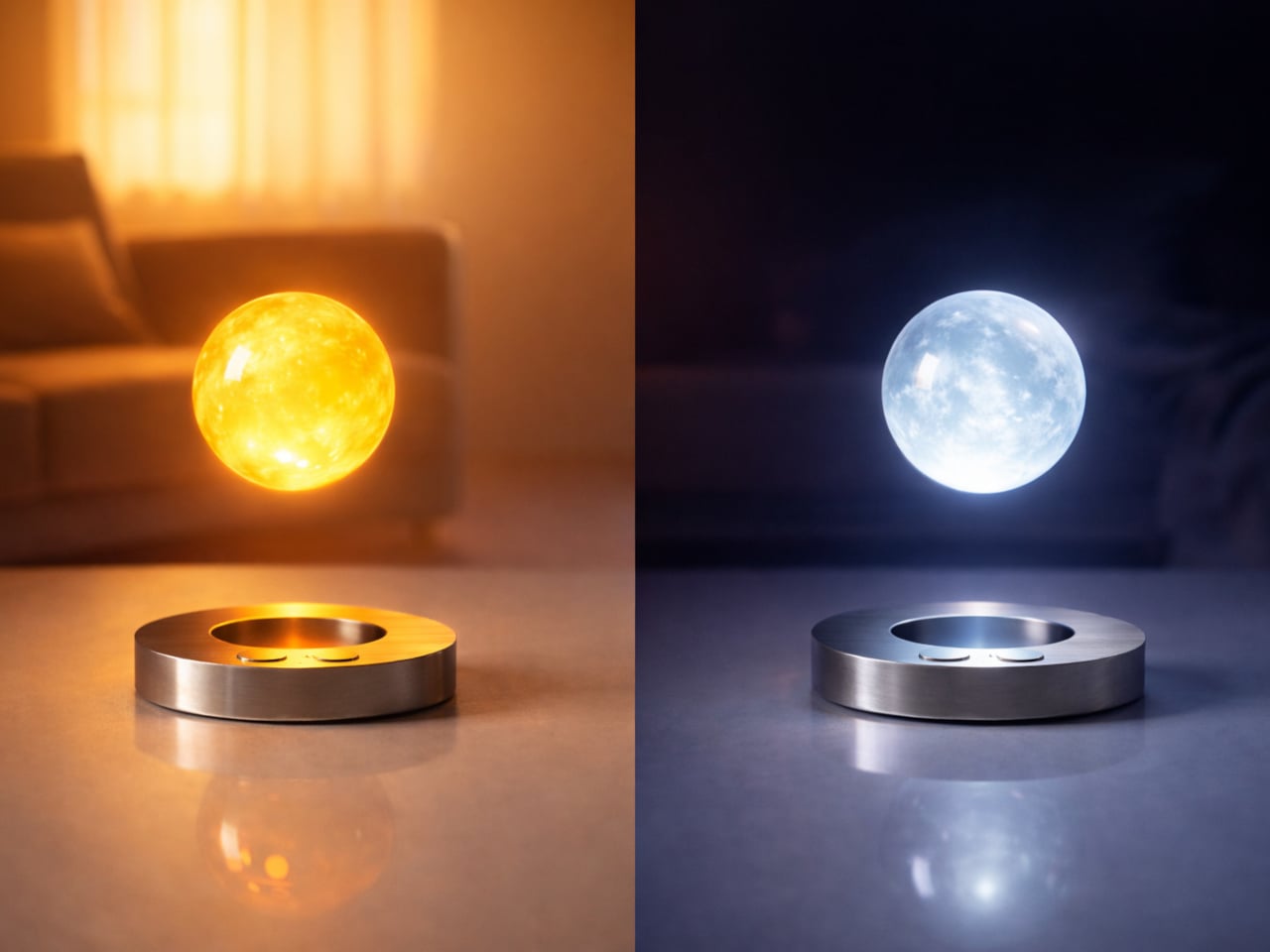
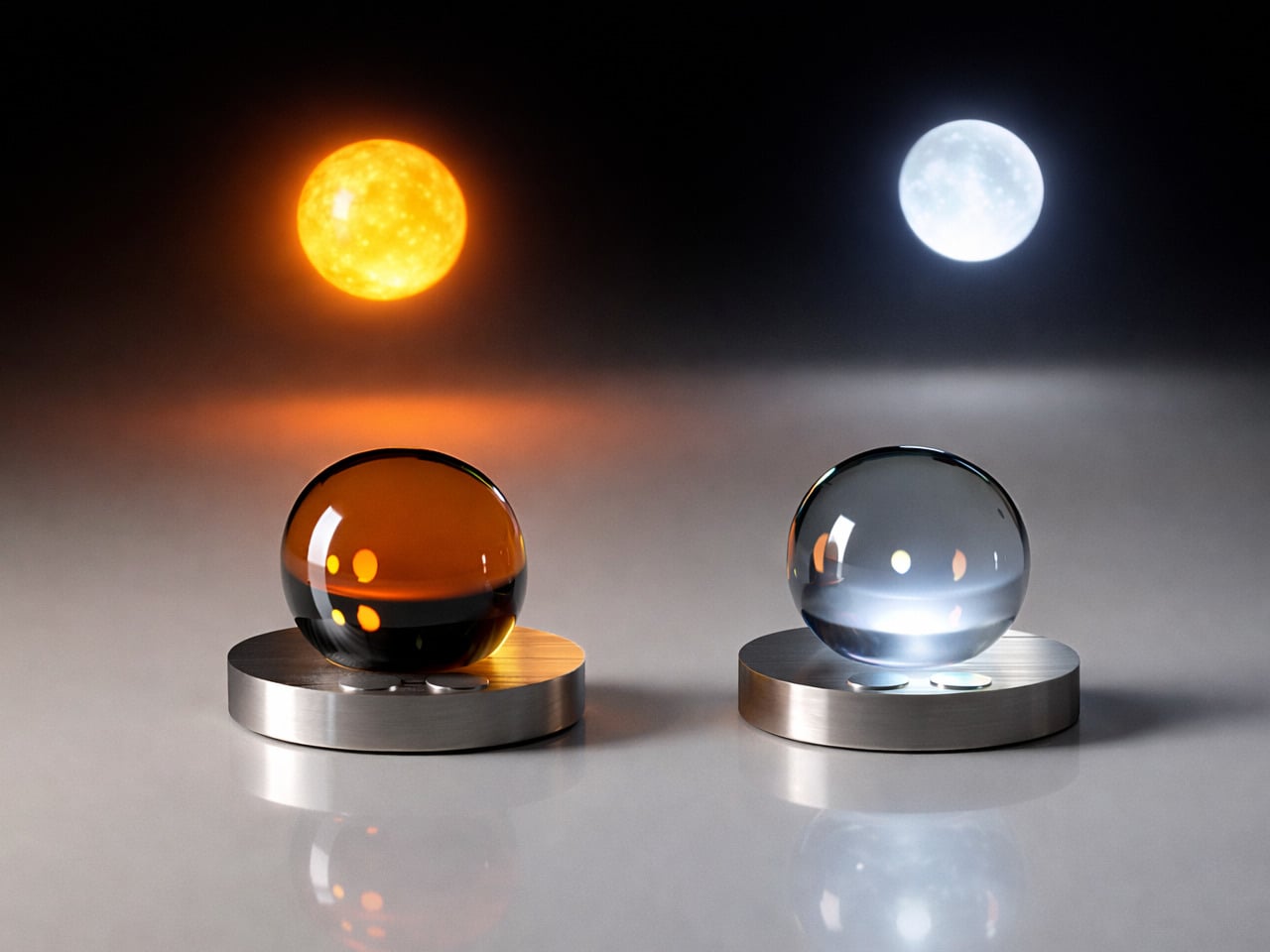
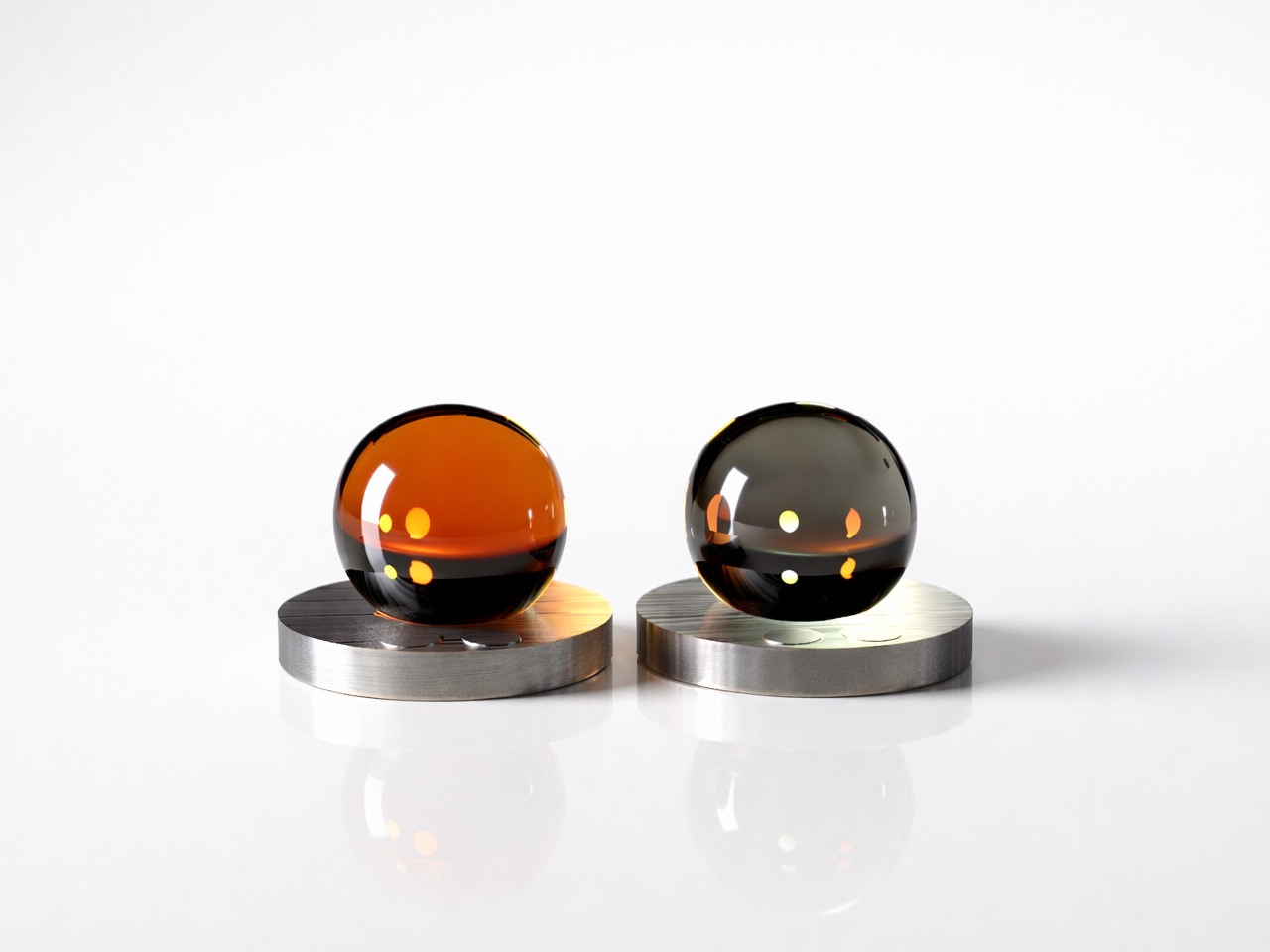
Ivana Nedeljkovska’s Flying Moon & Sun flips the usual assumption about lighting — instead of walking toward the light, the light walks toward you. The concept takes shape as two glass orbs, one in warm amber drawn from the energy of the sun and one in cool frosted blue that mirrors the moon’s quieter character. Each levitates above a brushed circular metal base through magnetic force, that floating quality expressing the central idea: a light that doesn’t need to be anchored anywhere in a room.
Living with it means giving up the idea that a room’s light is fixed and neutral. The amber orb suits an evening wind-down or a reading session, anywhere overhead lighting handles the mood badly. The cool blue shifts the atmosphere entirely, bringing a calm ambient quality that works differently in a bedroom than it does in a living room. For anyone tired of reaching for a switch, this concept points clearly in a direction worth following.
What We Like
Dual orbs deliver two distinct lighting characters — warm amber and cool blue — without any additional hardware
Levitation through magnetic force gives it a presence no cord-tethered or wall-mounted fixture can replicate
What We Dislike
Currently a concept design and is unavailable to purchase
Real-world performance around battery life, sensor accuracy, and magnetic durability remains untested
2. Anywhere-Use Lamp
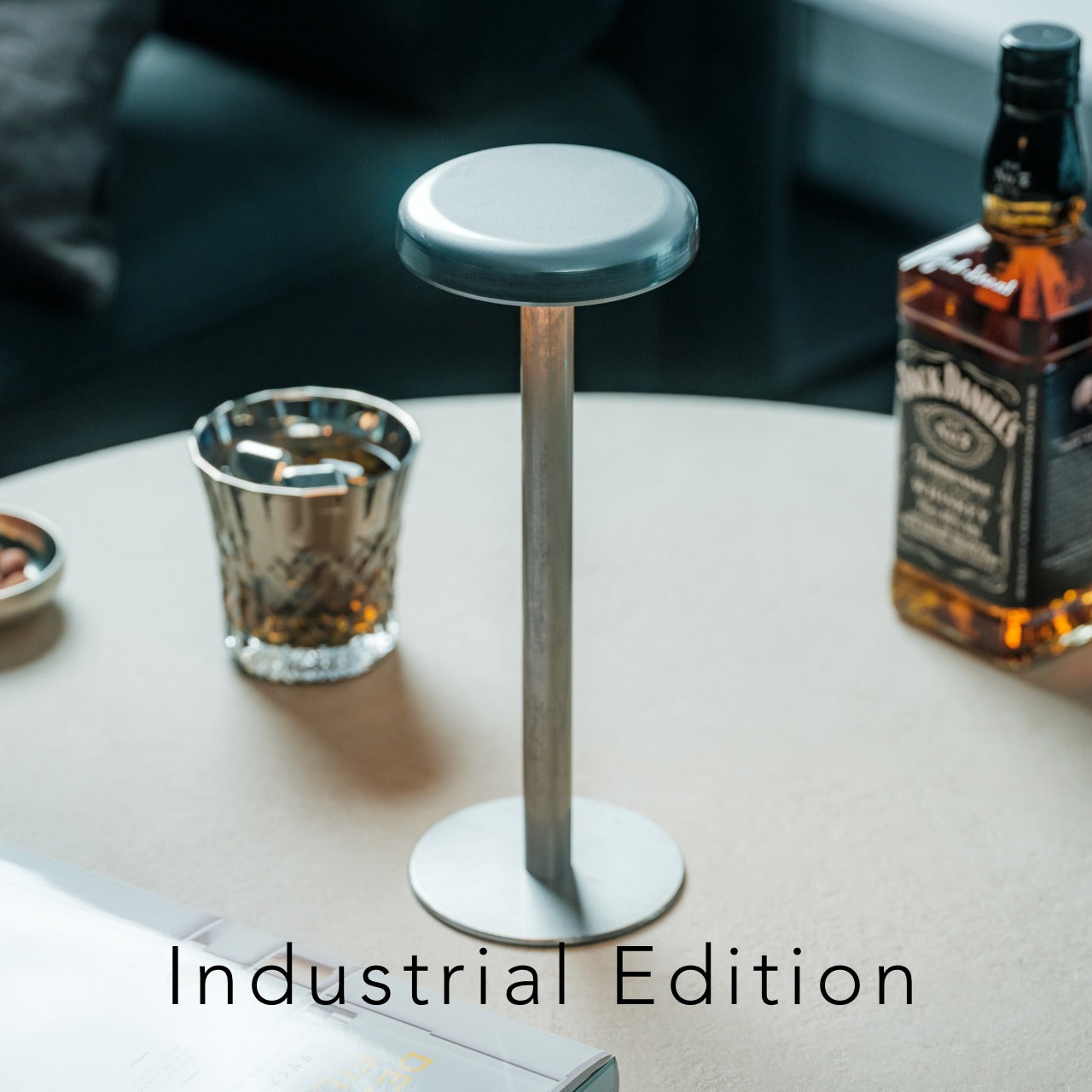
The Anywhere Use Lamp is one of the few portable lamps that actually looks like it belongs in a room. The mushroom silhouette is clean and minimal, available in black, white, and an Industrial edition with a scratch-detailed metal base that reads as honest material character rather than decoration. Six high color rendering LEDs produce a warm, soft glow calibrated toward mood over task — a distinction most battery-powered lamps in this category never bother to consider.
Running on four AA batteries, it disassembles flat enough to slide into a bag and sets up wherever you carry it. Pressing any edge of the cap cycles through four brightness levels with a satisfying tactile click — a detail that makes the lamp genuinely pleasurable to use every day. For a dinner table without an outlet nearby, a reading corner mid-renovation, or a patio gathering that deserves better than a string of bulbs, it places the right quality of glow exactly where it’s needed.
Fully modular and battery-powered — complete location freedom with no outlet planning required
Tactile click feedback on each brightness cycle is a deliberate sensory detail that elevates daily use above anything else in its portable category
What We Dislike
Standard AA batteries require ongoing replacement, adding a recurring cost that a built-in rechargeable option would eliminate
The mushroom silhouette, while clean, is familiar enough in this market to lack the full visual distinction the Industrial edition’s scratched base brings
3. Fire Capsule Oil Lamp
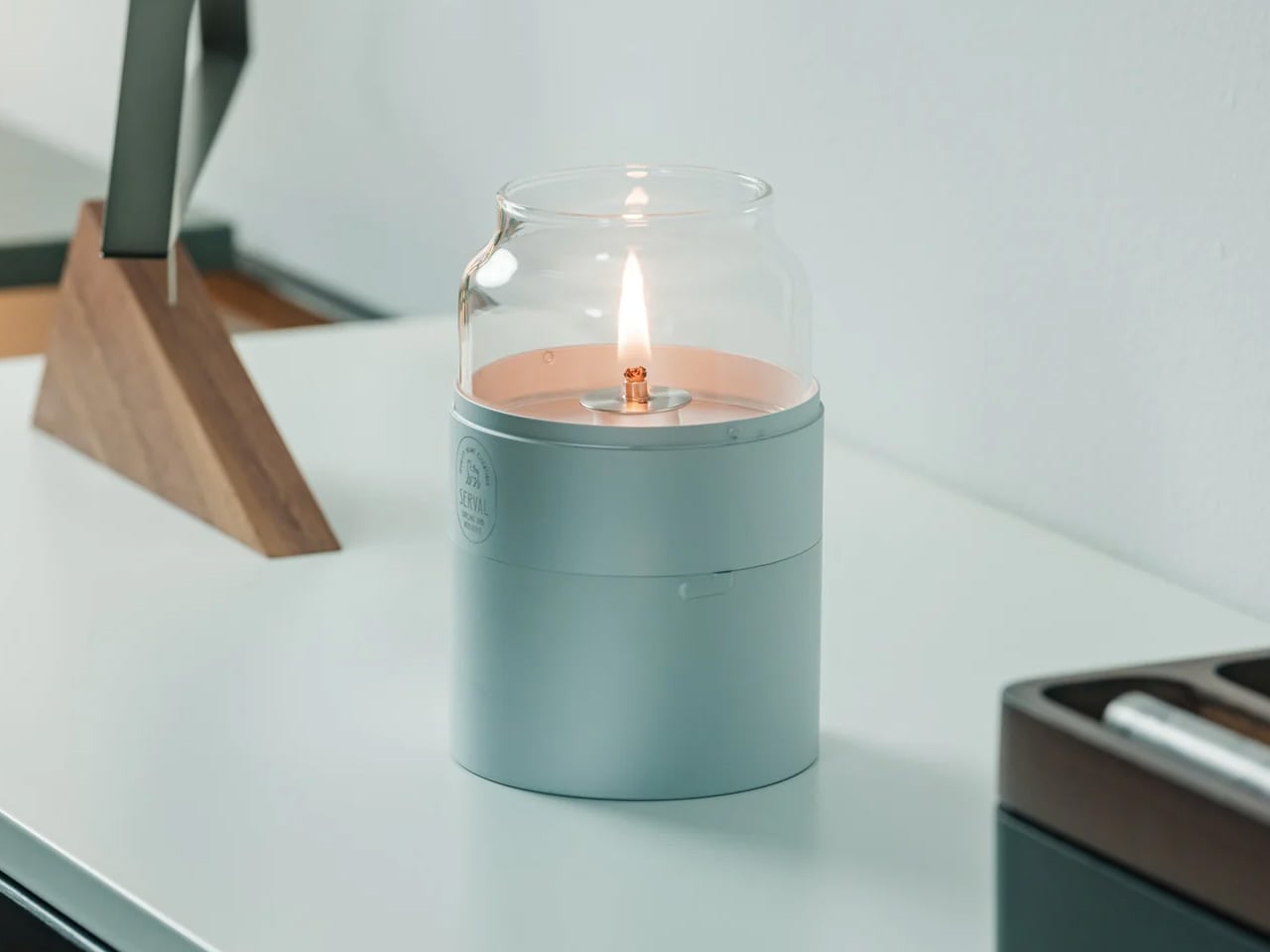
The Fire Capsule is an oil lamp in a cylindrical glass form, and it works because everything has been reduced to exactly what the object needs. A precision-engineered lid keeps the chimney clean between uses. An 80ml capacity delivers up to 16 hours of continuous light — enough for a full dinner or a slow evening without refilling. An included aroma plate lets you layer scent alongside the glow, turning the lamp into a multi-sensory presence on any surface it occupies.
The flat-topped design allows multiple units to stack cleanly, and paraffin oil with insect-repelling properties extends its usefulness outdoors — on a patio, a terrace, or any table where atmosphere and comfort both belong on the list. For a dining setup that already has overhead light and simply needs something warmer at eye level, the Fire Capsule handles it without consuming space you can’t spare. A drawstring pouch makes it as easy to carry as it is to use.
A 16-hour burn time from a single fill makes it a genuinely practical choice for extended gatherings, not just decorative use
The aroma plate adds a scent layer most lamps never attempt, turning a light source into a full atmosphere object
What We Dislike
Paraffin oil requires regular restocking, and the insect-repelling outdoor variant may need sourcing through specialist retailers
The glass chimney, while protected by the lid between uses, requires careful handling when packing for travel
4. JAL
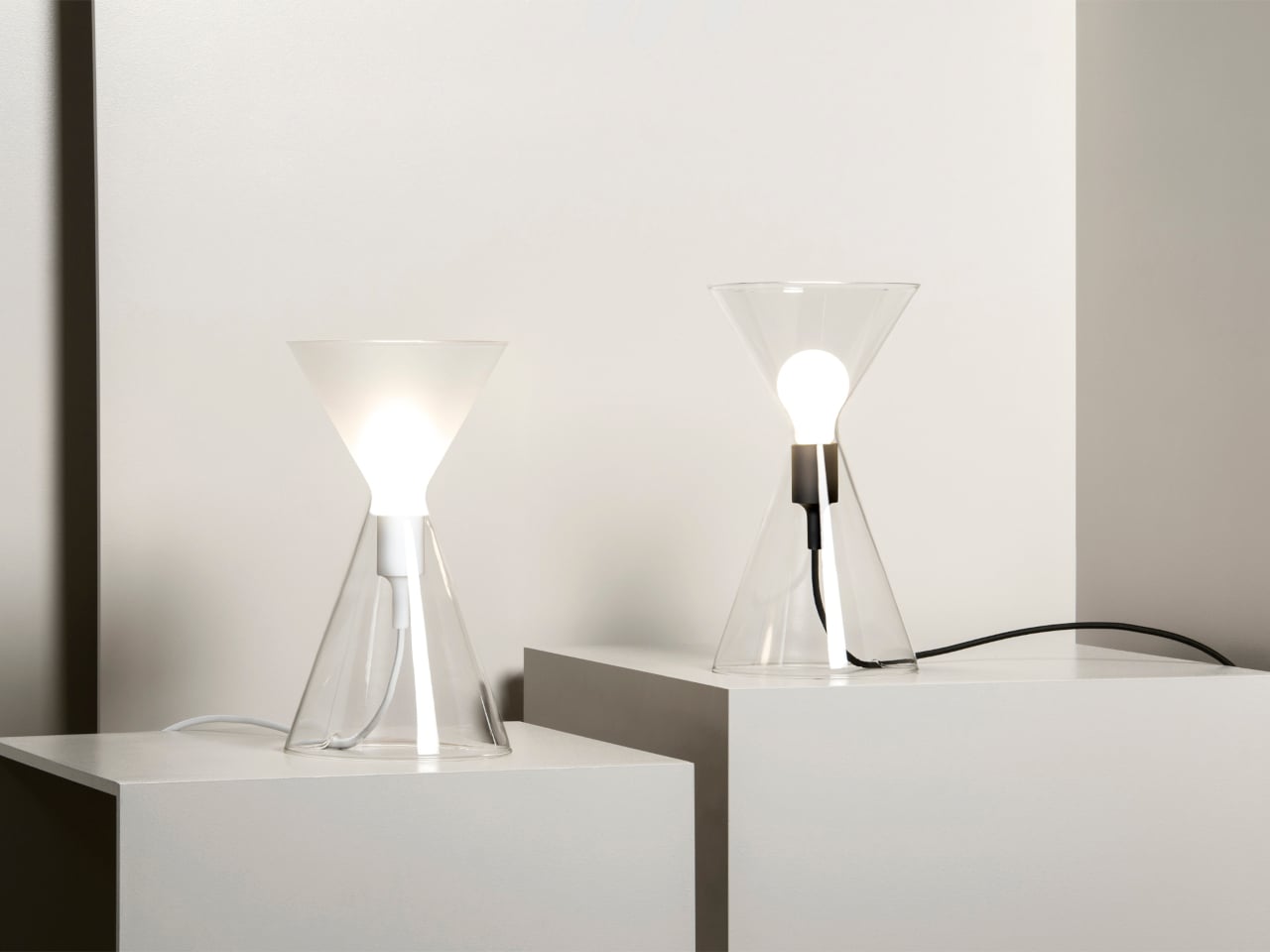
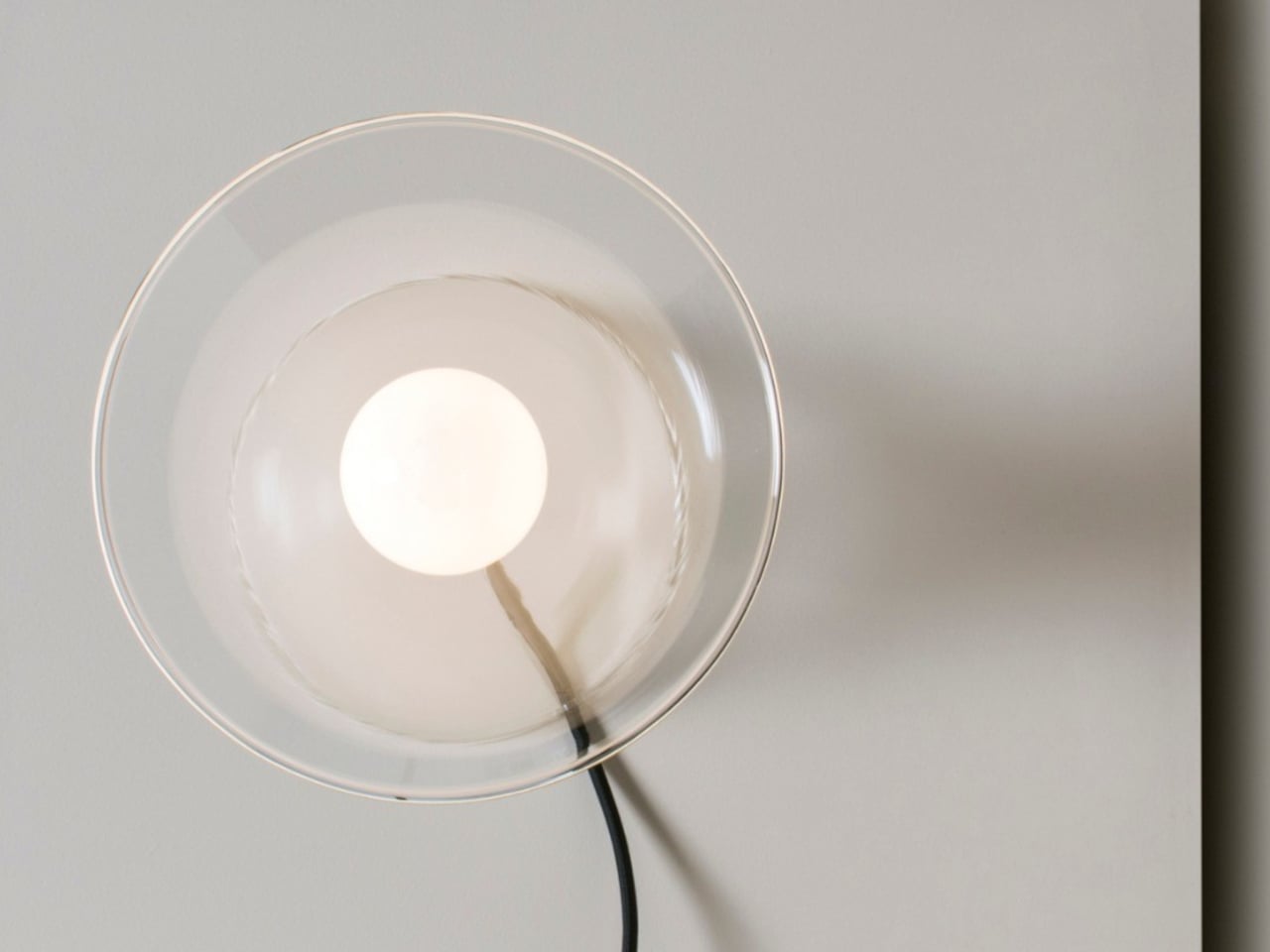
JAL is built from two glass cones joined tip to tip in a form that reads immediately as an hourglass. The bulb sits inside this sealed geometry and appears to float in mid-air — a quality that gives the lamp real presence before you’ve considered what it actually does. Available in transparent or frosted glass with a colored cable as the only other visible element, the form does all the work. It belongs on a sideboard, a console, or a bedside, and holds that position without competing with anything around it.
The more you interact with it, the more considered it reveals itself to be. Place the lamp with the bulb facing upward, and it behaves like a conventional table lamp, sending light toward the ceiling. Flip it so the bulb faces downward, and it becomes a softer source that pools light onto the surface below — closer to a glowing object than a reading companion. One rotation, two completely different functions, no settings required.
What We Like
Flipping the lamp changes its function entirely with a single physical gesture — no apps, dimmers, or remote controls involved
The hourglass form holds its own as a visual object even when it’s switched off
What We Dislike
All-glass construction requires careful handling with no obvious protection during storage or transport
The colored cable adds character but limits neutral styling options for more minimal setups
5. Harmony Flame Fireplace
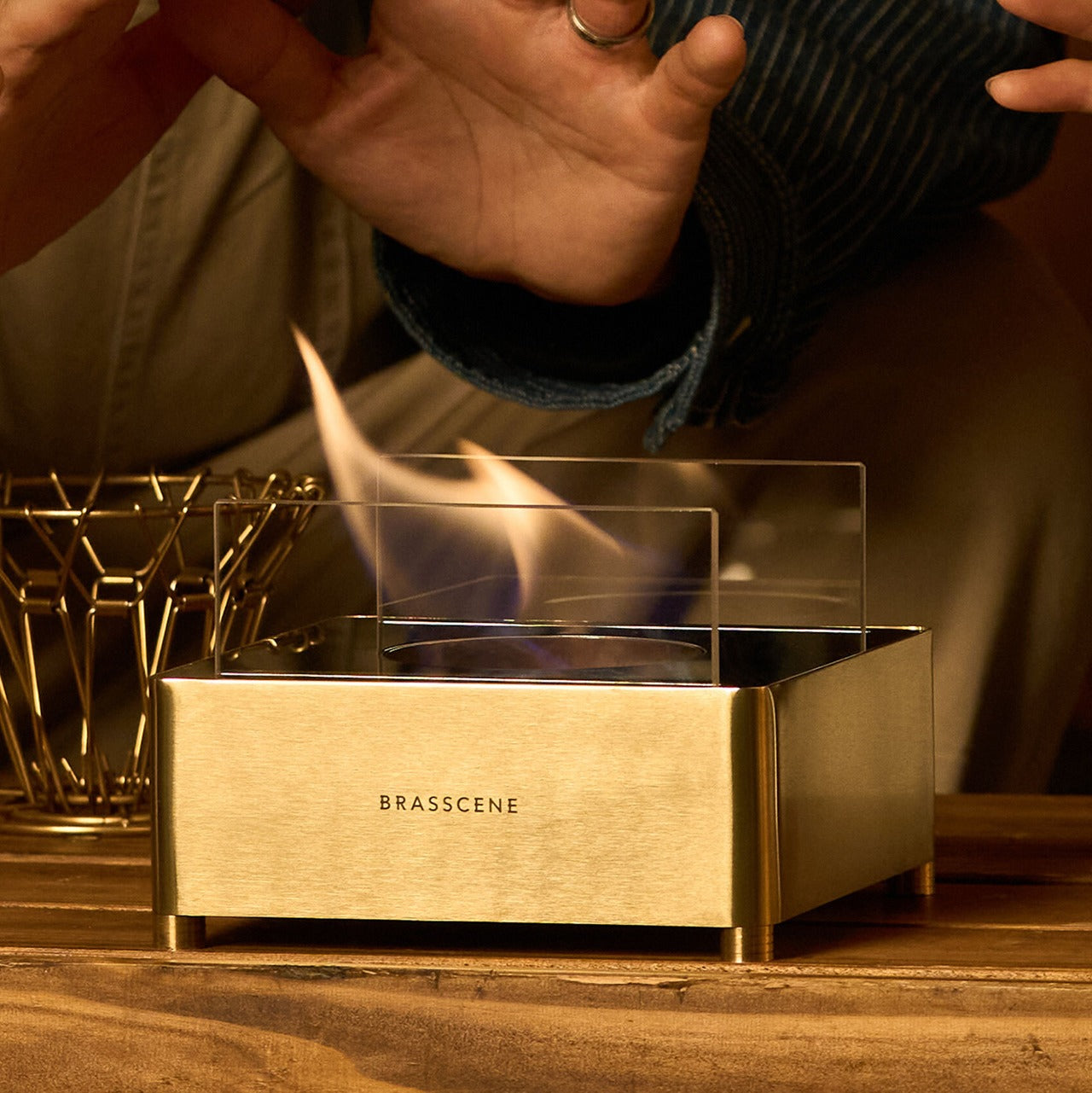
The Harmony Flame Fireplace is made by craftsmen who build brass musical instruments, and that connection is visible in the finish and felt in the weight of the object. It burns bioethanol that is odorless, smokeless, and clean enough for indoor use, and the flame plays against the reflective brass interior in a way that creates a shifting, living quality of light no bulb can replicate. Shadows move on the surrounding walls. The room feels different. No installation, no wiring, no planning — you fill it and the space changes.
Brass develops a patina over time that makes the object more interesting rather than less — a quality that cheaper materials never manage and most design objects don’t survive long enough to demonstrate. For a dining table that earns its centerpiece through material presence rather than novelty, or an outdoor setting that deserves something more honest than a string of lights, the Harmony Flame Lamp delivers with real authority. It’s also the one on this list that people are most likely to ask about by name.
Hand-crafted brass construction develops genuine character over time, giving it depth no manufactured alternative can match
Bioethanol burns without odor or smoke, making an open indoor flame genuinely practical — rare in a lamp this well-made
What We Dislike
An open flame requires standard fire safety awareness and isn’t suitable for unsupervised use around young children or pets
Bioethanol fuel is not universally stocked and may require a specialist supplier, depending on your location
The Right Lamp Changes Everything Else
Good lighting doesn’t announce itself — it changes how a room feels before you can explain why. These five designs each do something specific: one proposes a new relationship between light and movement, one turns a single rotation into a full shift in function, and one brings the right quality of warmth to wherever the evening happens to be. None of them are objects you choose simply because a corner needed filling.
One works through scent as much as one does through light. One earns its presence through material quality that only improves with time. Another proposes a concept so specific it makes every fixed lamp feel like a missed opportunity. You don’t need all five. But the right one changes how the rest of the room reads — and that’s what separates a lamp worth noticing from one that simply occupies space.
There’s a reason Mother’s Day gifts tend to pile up in the “I tried” category. Flowers wilt, spa vouchers go unused, and the scented candle collection grows to unreasonable proportions. What actually lands is something that fits into her daily life with ease, something she’d reach for without thinking, something that quietly signals she’s seen and loved. That standard isn’t hard to meet when the starting point is thoughtful design, the kind that observes how people actually live and fills the gaps they didn’t know were there.
This year’s roundup leans into exactly that idea. Every product here was chosen for how well it earns its place, whether that means sitting on a counter without looking out of place, or arriving with features that genuinely simplify something she does every day. Form matters as much as function, and ideally, the two are inseparable. If you’ve been putting off the search, consider this your shortcut.
Arzopa D14 Wireless Cloud Storage Digital Photo Frame
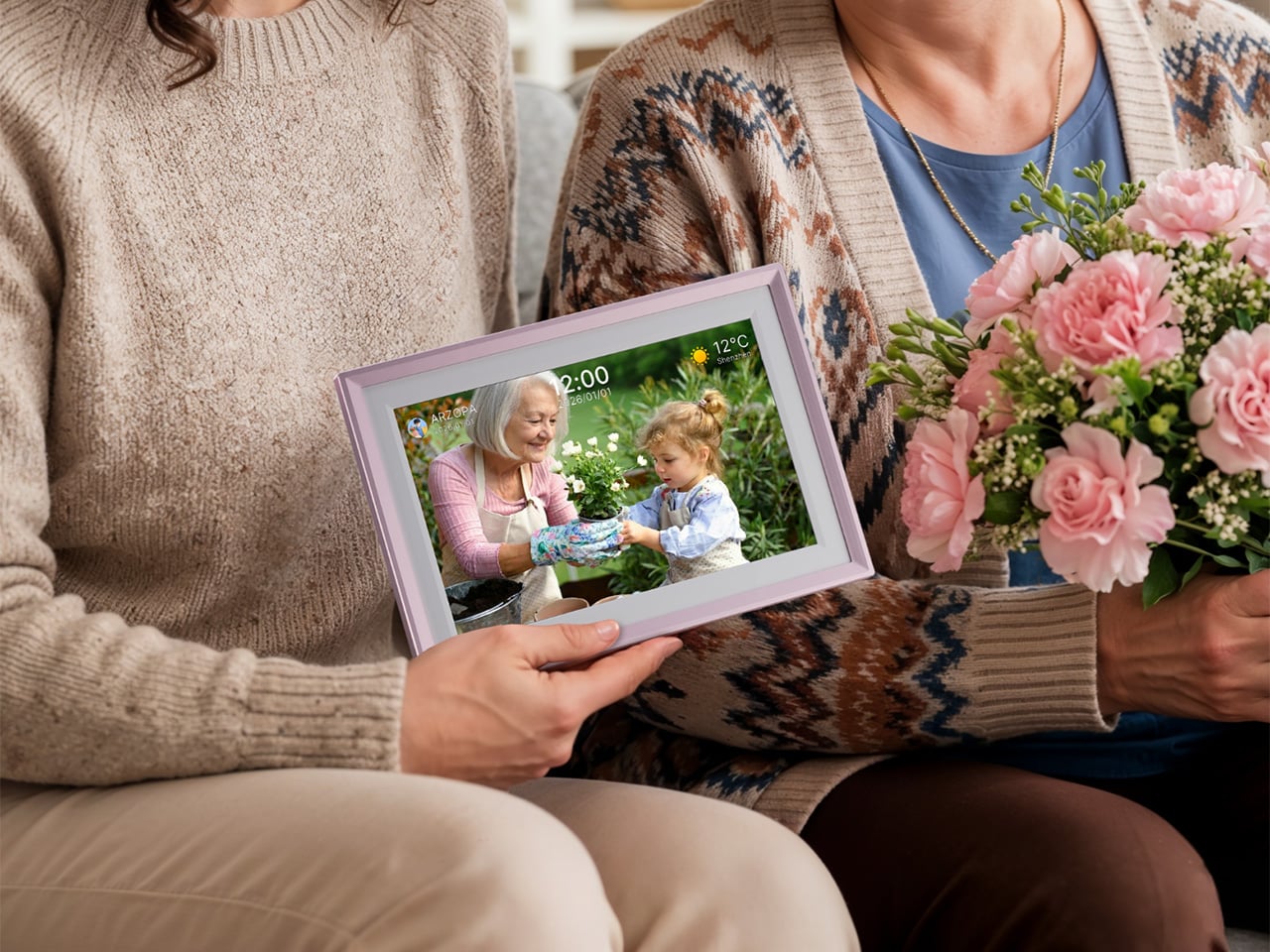
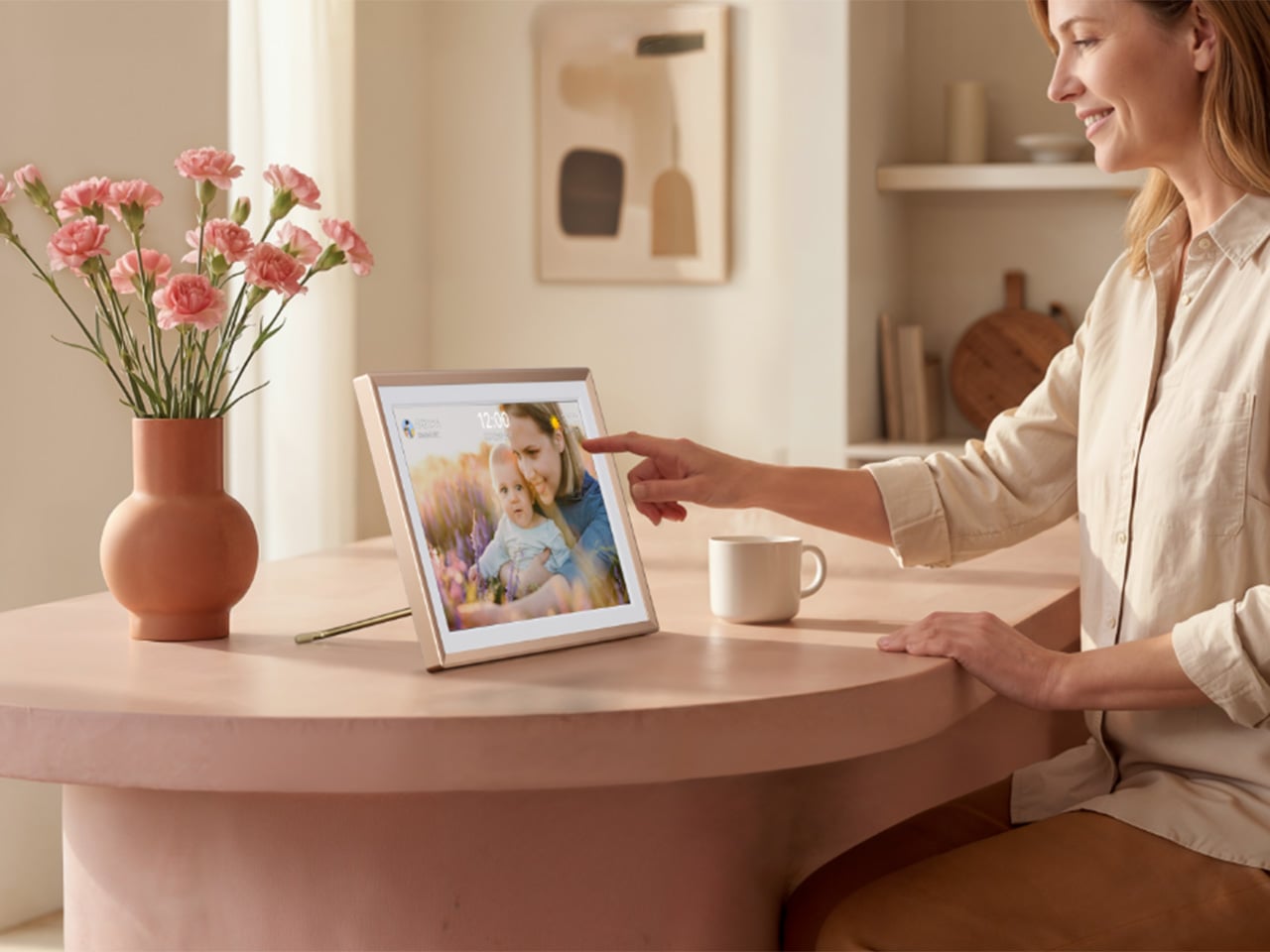
Those photos sitting three years deep in her camera roll, the ones from the holiday she keeps meaning to print, the candid from someone’s birthday that came out perfectly, deserve better than a scroll-past. The Arzopa D14 turns that ever-growing collection into a living memory gallery, one that sits on her shelf, rotates through her favorite moments, and actually gets looked at every day. It pulls photos wirelessly from a phone to a champagne gold frame that looks genuinely elegant on a shelf or bedside table, and with 8+125GB of built-in memory backed by cloud storage, there’s room for an entire family’s worth of memories without ever worrying about running out of space. The patented gold frame finish sets it apart from the sea of black plastic rectangles that tend to dominate this category, giving it the kind of presence that makes it feel like a decor choice rather than a tech gadget.
The feature that earns it a place on this list, though, is the remote transfer. Kids living in another city, a partner traveling for work, a sibling across the country, anyone in her life can upload photos or videos directly to the frame from wherever they are, and she’ll see them cycle through her display in real time. The app is designed with simplicity front and center, trimming the upload process down to just three steps from phone to frame, which means she won’t need anyone to walk her through it twice. That combination of effortless setup and ongoing remote connectivity (along with a cool 8% discount) is what separates the Arzopa D14 digital photo frame from a standard digital frame. For a Mother’s Day gift, the elevator pitch almost writes itself: she gets a beautiful object for her home, and a quiet, ongoing reminder that the people she loves are thinking of her.
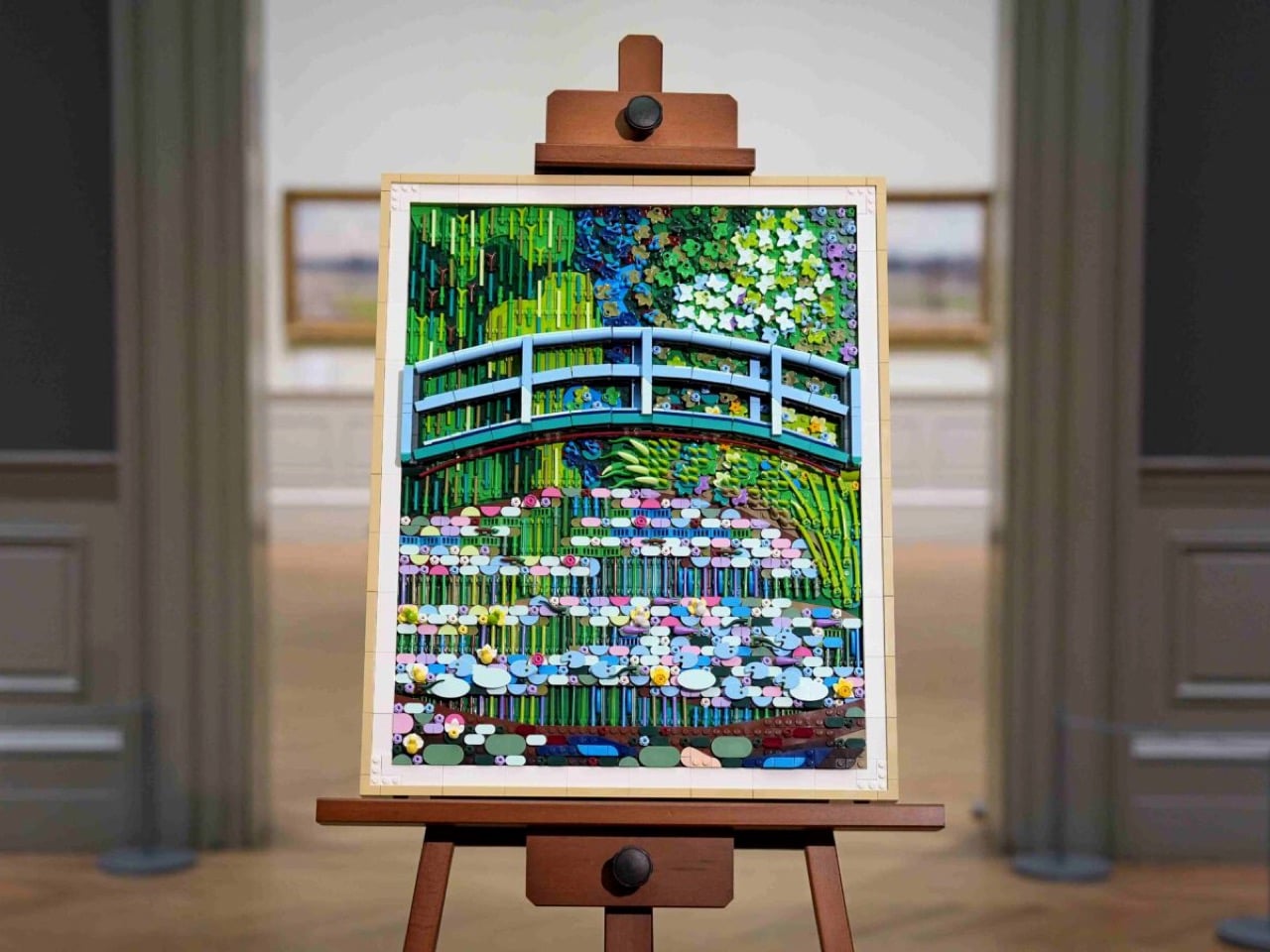
LEGO Art Claude Monet, Bridge Over a Pond of Water Lilies
Developed in collaboration with The Metropolitan Museum of Art, this 3,179-piece LEGO Art set is built around one of Monet’s most iconic works, his 1899 painting “Bridge Over a Pond of Water Lilies,” now a centerpiece of The Met’s permanent collection. The build translates Monet’s Impressionist technique into brick form with impressive fidelity, using a diverse range of LEGO elements including butterflies, flowers, and fruit to recreate the layered texture of the original. Slender willows, rounded water lilies, and the arched footbridge stretching across shimmering water are all rendered in delicate hues of green and blue that closely follow Monet’s characteristic palette. The finished piece measures roughly 20 by 16 inches and comes with a built-in wall hanging mechanism, so it goes straight from box to wall display without any additional hardware. At $249.99, it sits in a price range where it feels like a genuine gift rather than a casual impulse buy.
Rated for ages 18 and up, this is squarely positioned as an adult build, the kind that takes its time and rewards it. The LEGO Builder app offers 3D instructions to guide the process, which makes what could be an overwhelming piece count feel much more manageable. For a mother who appreciates art, has a soft spot for Impressionism, or simply enjoys a build that ends with something genuinely beautiful on her wall, this is one of the more thoughtful things on this list. The Met collaboration gives it a cultural weight that most LEGO sets don’t carry, and the fact that the original painting is one of the most recognizable works in Western art history doesn’t hurt the gifting story at all.
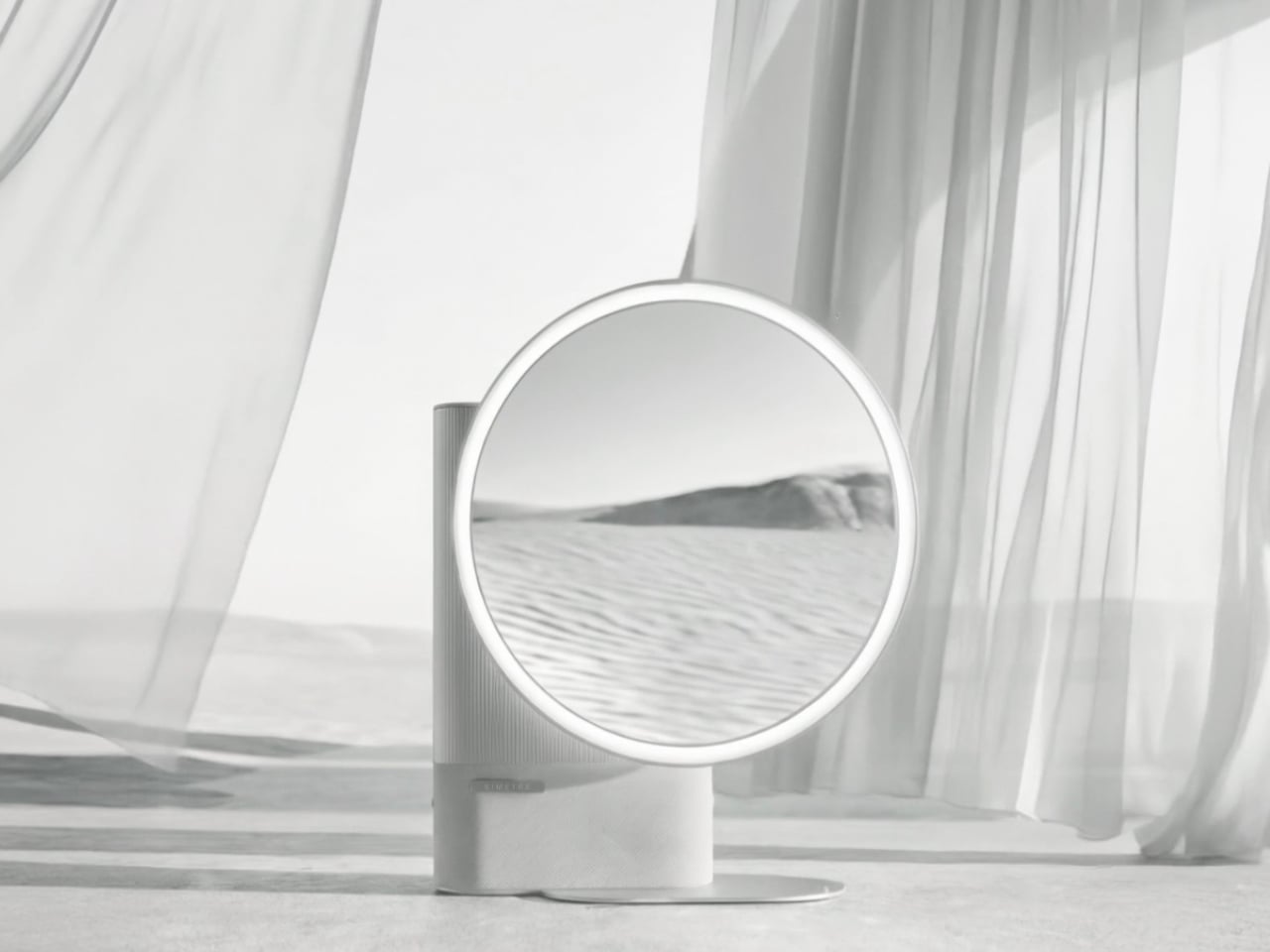
Second White SIMETRA AI Mirror
Skincare has always operated on a degree of faith. You buy the serum, follow the routine, hope something shifts, and repeat. The SIMETRA AI Mirror, designed by Second White, is built around the idea that guesswork in front of a mirror is a problem worth solving at the hardware level. Rather than functioning as a passive reflective surface, it reads light, image, and depth data in real time, translating what it captures into precise, measurable feedback about skin condition, texture, and change over time. The intelligence is specific to the person standing in front of it, which puts it in a different category from the generic skincare advice that tends to recycle the same four suggestions regardless of who’s asking.
What keeps this from feeling like a dermatologist’s waiting room transplanted into a bathroom is how restrained the design is. The form is calm and geometric, built around a circular mirror disc that sits beside a fluted, rounded column, with a fabric-covered base, brushed metal details, and soft edges throughout. The fluting gives the hardware body texture and warmth, grounding what could easily have read as clinical equipment in something that feels much more like a considered object. Second White describes the intent as precision and empathy coexisting within a single form, and looking at the result, that brief clearly held through to the final product. For a mother who takes her skincare seriously and appreciates when technology earns its place in a room without announcing itself, this is a genuinely compelling gift.
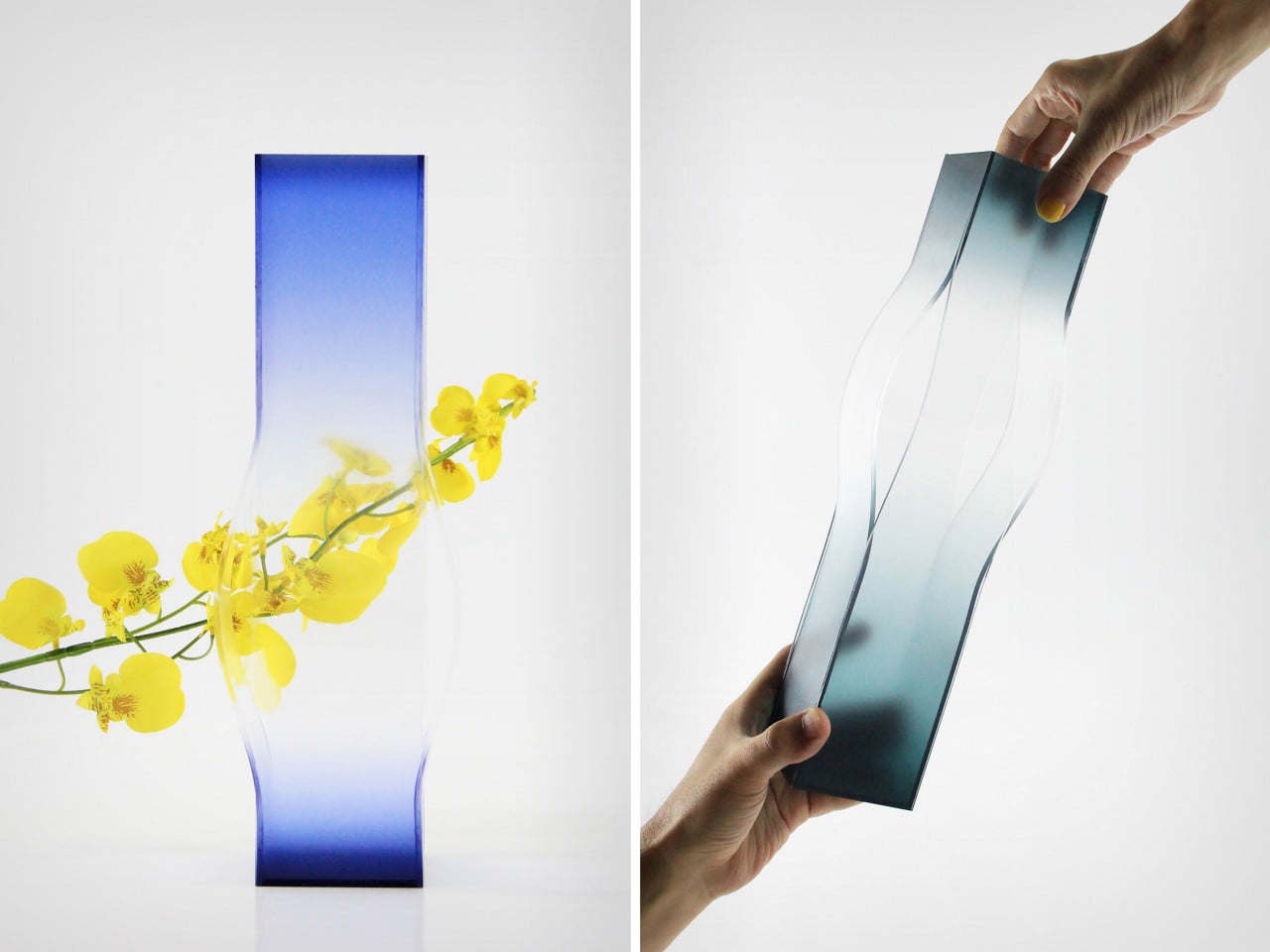
Bo Zhang Stretch Color Vases
Designer Bo Zhang’s Stretch Color series sits in that rare category of objects that reward you for simply being in the room with them. Built from layered acrylic and spray coloration, each vase in the series transitions from dense, saturated pigment into full transparency, causing sections of the form to visually dissolve depending on where you’re standing. From one angle it reads as a solid vessel; shift slightly, and the edges flatten into something closer to a painted surface, a gradient suspended in mid-air. The series comes in three sizes, with each scale altering how the color stretches and where the dissolution happens, so no two feel quite like the same object even within the same collection.
What makes this genuinely compelling as a gift is how it behaves over time in a space. The vases don’t simply sit in a room; they negotiate with it, stretching color, dissolving edges, and quietly asking whoever’s looking to reconsider what they’re seeing. That quality, of an object that keeps revealing itself, translates beautifully into a home where someone actually pays attention to the things around her. It has the visual intrigue of art without the remove of something untouchable, and the function of a vase without the plainness of one. For a mother who finds beauty in things that don’t immediately explain themselves, this is the kind of piece that earns a permanent spot on her shelf.
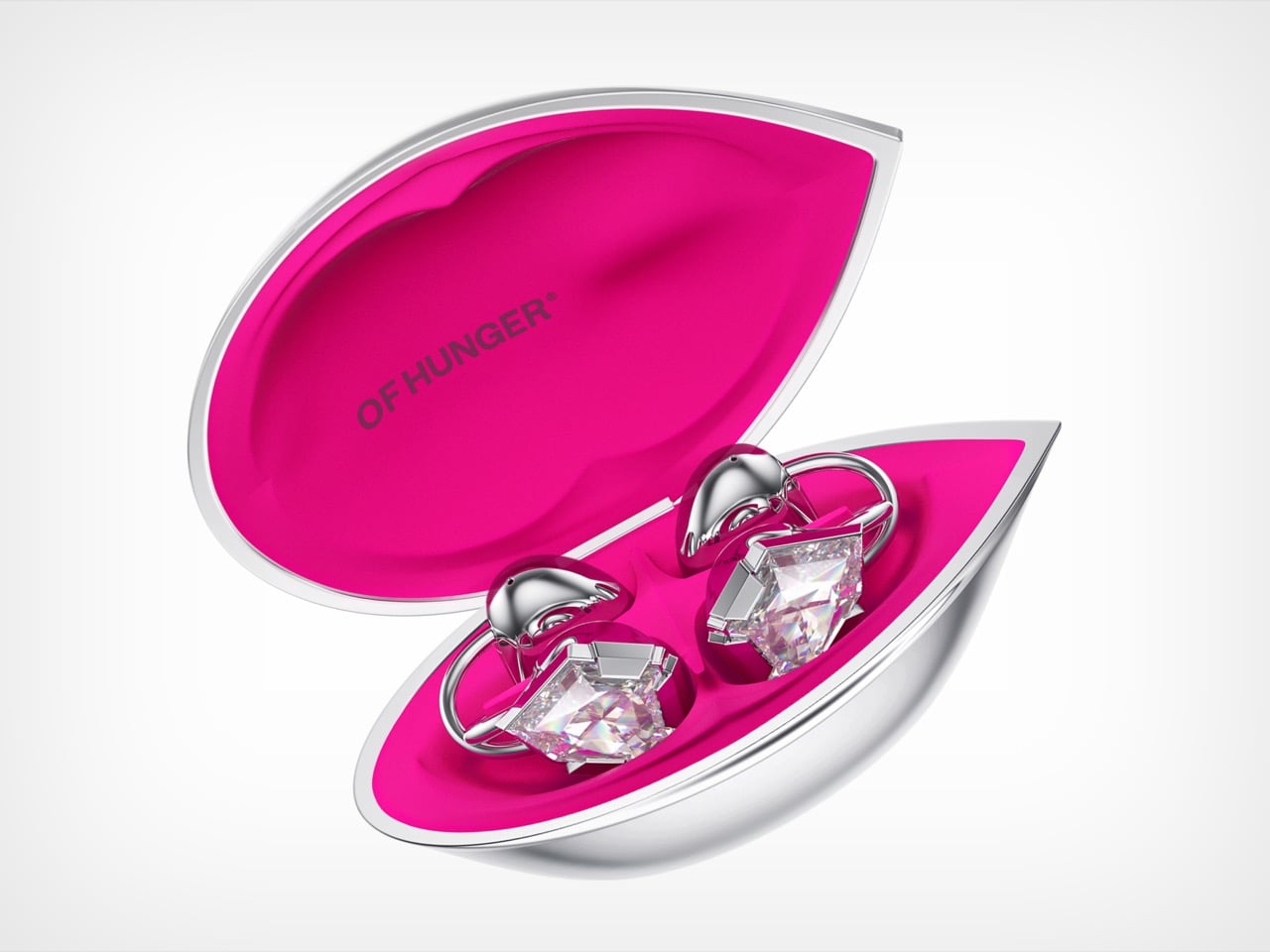
Gemstone TWS Earbuds
Wearable technology has had a persistent identity crisis for years, defaulting to plastic shells, visible sensors, and utilitarian forms that sit awkwardly against everything else a person wears. The AI Smart Gemstone Earpiece takes a genuinely different position. Rather than asking the wearer to accommodate technology, it integrates the hardware into the vocabulary of personal adornment, shaped and finished to read as jewelry before it reads as electronics. The earpieces are built around celestial gemstones, combining fine jewelry craftsmanship with AI-assisted audio in a single object that could sit comfortably alongside a pair of earrings without looking out of place. For a woman who pays attention to how things look on her, that consideration alone puts this in a separate category from anything Apple or Sony is currently shipping.
The audio capability is backed by AI that adapts to the listening environment, which makes it a legitimately capable pair of earbuds tucked inside a form that never looks like one. The design is aimed specifically at female users, and that focus shows in every detail, from the gem-forward aesthetic to the way the earpiece sits against the ear, chosen for elegance first rather than as an afterthought. It’s the kind of object that tends to invite questions, the “wait, are those earbuds?” moment that very few wearables ever manage to pull off. For a Mother’s Day gift, it lands in that appealing territory where something beautiful also turns out to be genuinely useful.
Peleg Design TriveTiles
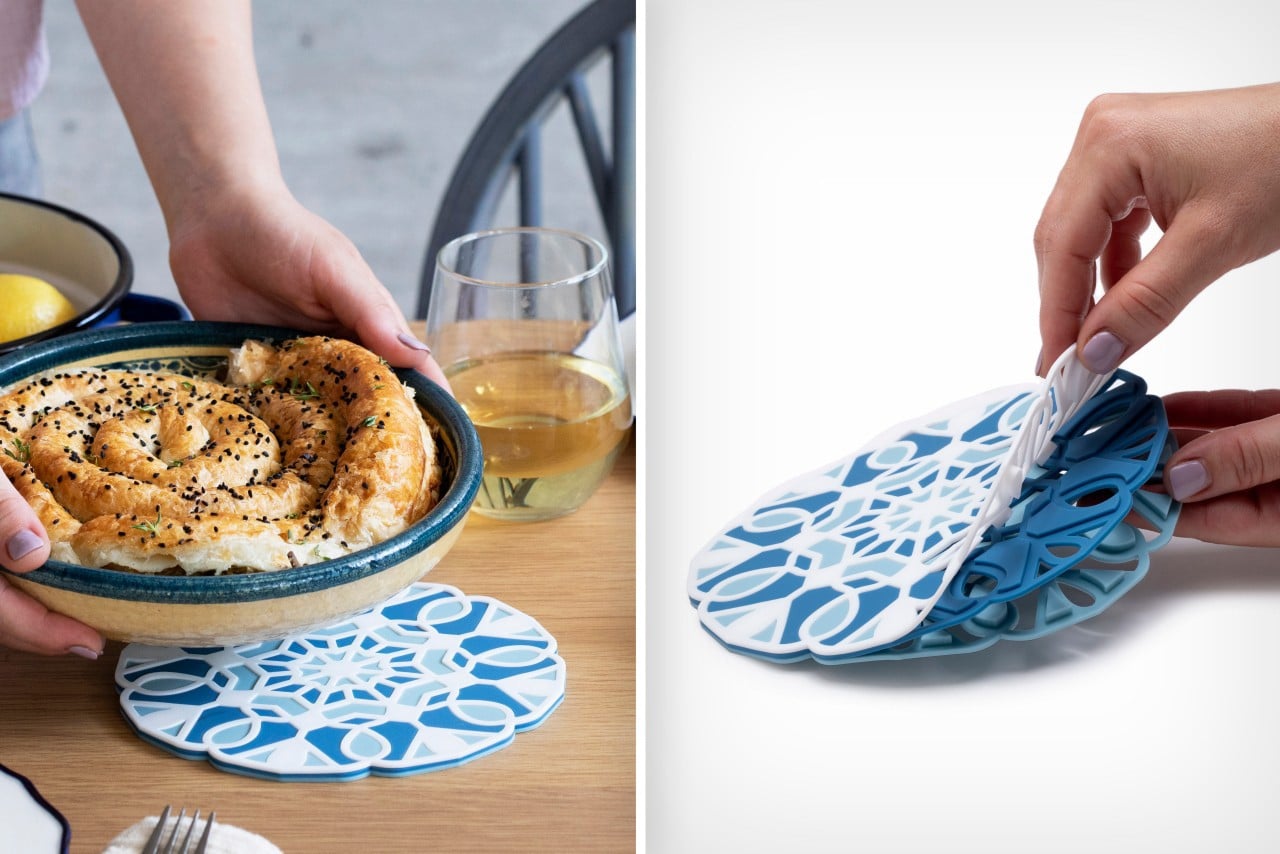
Kitchen objects that earn their counter space tend to have a double life, useful when called upon, worth looking at when not. Peleg Design’s TriveTiles land squarely in that territory. What looks at first like a single large trivet is actually three separate pieces fitted together in a Moroccan-patterned composition, each one a puzzle-cut segment that slots into the others to form a complete decorative tile. The Mediterranean-inspired geometric patterning across the surface means they look deliberate and considered whether they’re displayed together as a unit or pulled apart for individual use across a table spread. For a mother who treats the kitchen as an extension of how she decorates the rest of her home, that distinction matters more than it might seem.
The functional thinking behind them is equally strong. Laid flat and stacked together, they serve as a single large trivet for bigger pots and dishes. Separated, each piece handles a different spot on the table independently, which makes them especially practical when multiple dishes are being served at once. The stacking design also means they store compactly, with no extra drawer space needed beyond what a single trivet would take up. It’s the kind of quiet ingenuity that tends to reveal itself gradually, the more she uses them, the more she appreciates the thought behind how they were designed. As a Mother’s Day gift, they sit at that appealing intersection of beautiful, affordable, and genuinely well considered.
BloomingTables Garden-infused Furniture
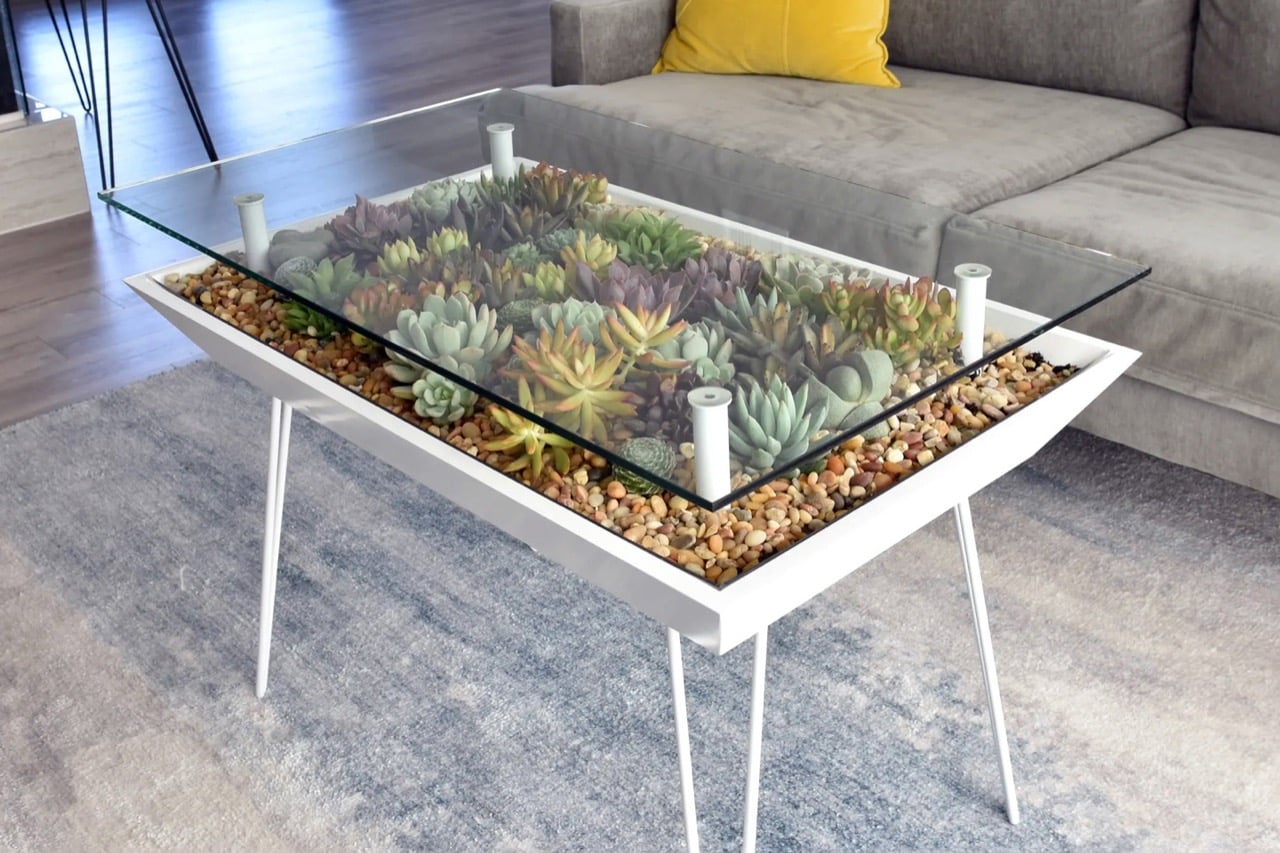
The idea of a kitchen herb garden tends to run into the same problem every time: space. A windowsill can only hold so many pots, and a separate planter competes with everything else already claiming floor or counter real estate. BloomingTables solves this by folding the garden directly into the furniture itself. The table features a planter built beneath a glass tabletop surface, turning what would otherwise be dead negative space into a fully functional growing area. Herbs, vegetables, microgreens, succulents, vining plants, the range of what can be cultivated there is genuinely broad, and the glass top means the planting below stays visible, making it a design feature rather than something hidden away. It holds the distinction of being billed as the world’s first living furniture series, with a patent pending on the concept.
For a mother who cooks seriously, tends to plants, or simply appreciates having fresh herbs within arm’s reach of the table, the appeal is fairly immediate. The design itself is minimal and clean, with the planter integrated so naturally into the table’s silhouette that it reads as intentional rather than retrofitted. As apartments shrink and outdoor growing space becomes less reliable, having greenery built into a dining table starts to feel less like a novelty and more like a genuinely smart allocation of space. It’s the kind of gift that changes something about how a room functions every single day, which is a harder brief to meet than it sounds.
For roughly six months of the year, Sweden is cold enough to keep its people reliably indoors. That is long enough to matter, and long enough to shape how a Swedish design team thinks about what a kitchen surface, a kitchen color, or a kitchen appliance should feel like when it is the primary thing a person looks at during the months when the outdoors is largely inaccessible. Electrolux, drawing on research conducted across European markets, found that nature is the single most common answer when people are asked where they go for emotional restoration. The brand’s response to that finding, expressed through a design philosophy called Lagom, the Swedish concept of balance and just enough, arrived in Milan this week at Via Melzo 12 in the Porta Venezia district.
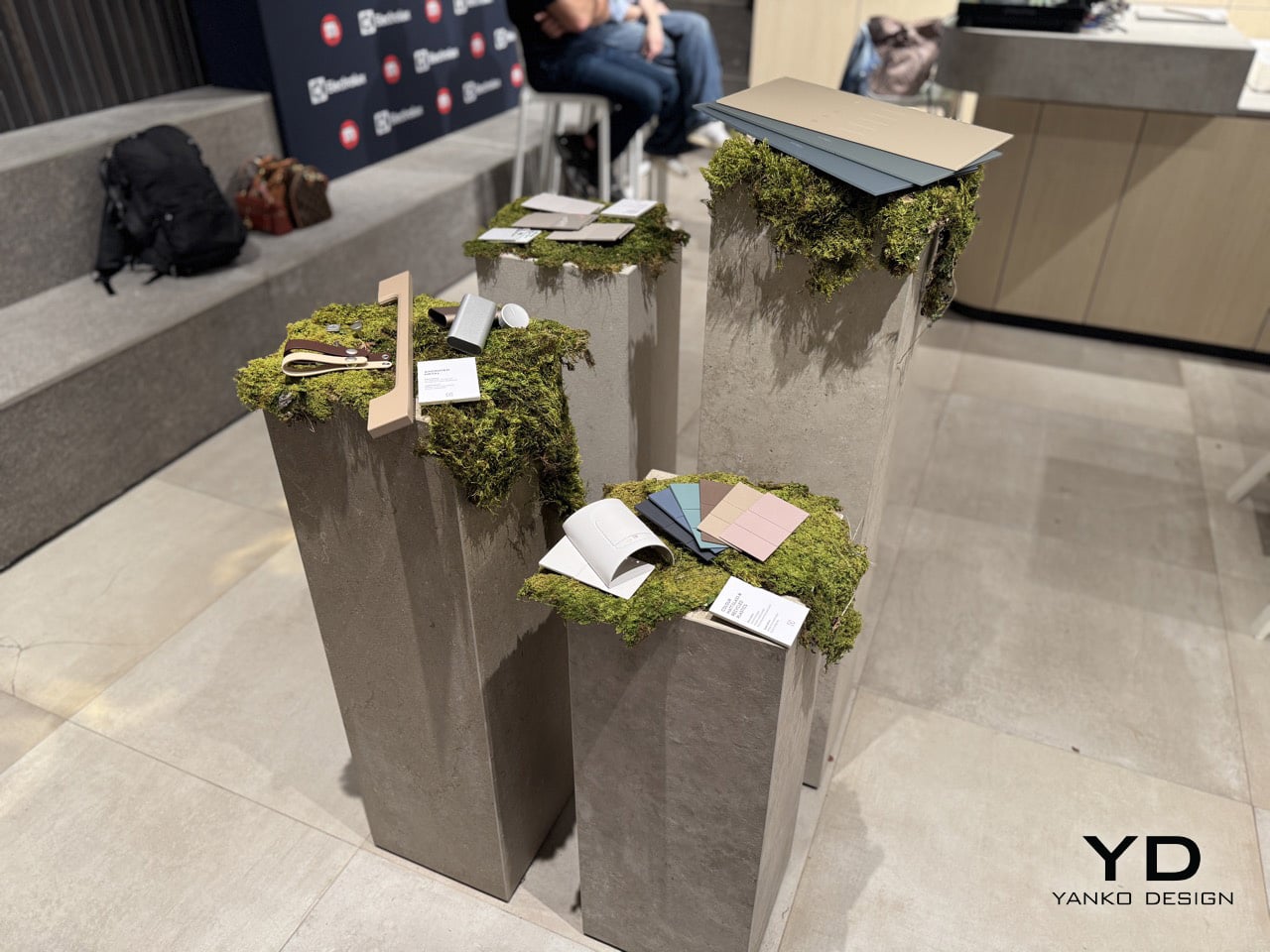
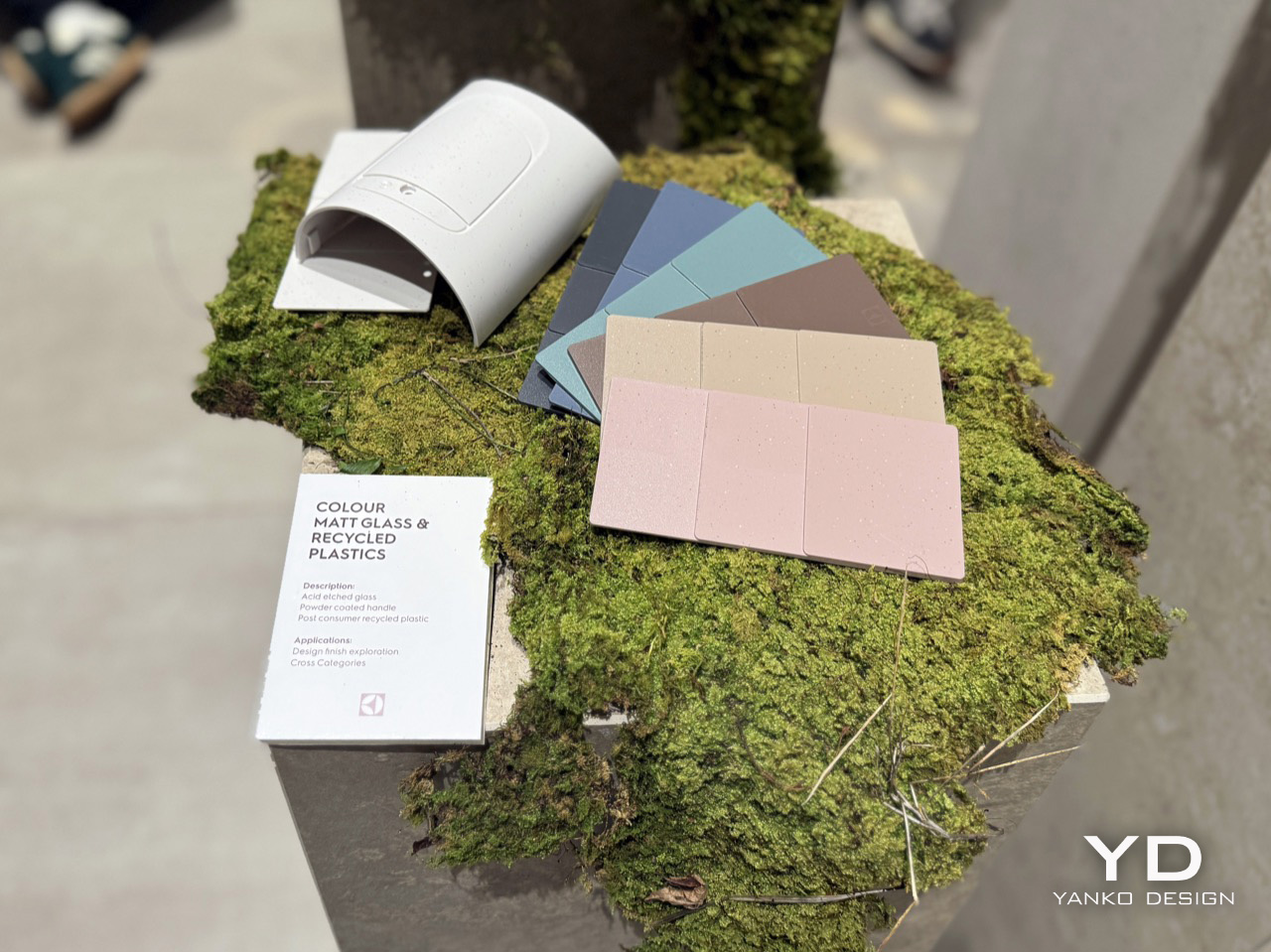
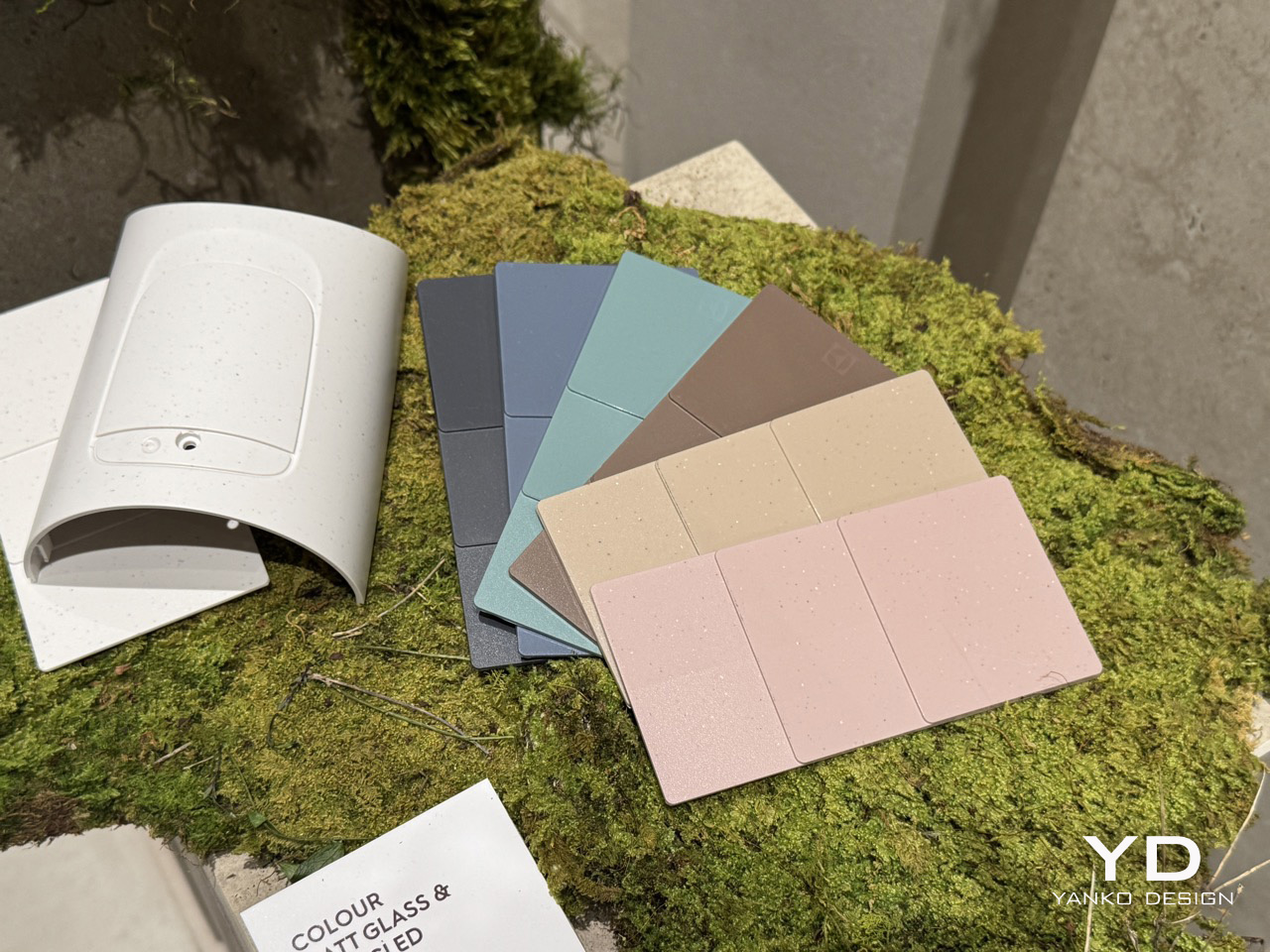
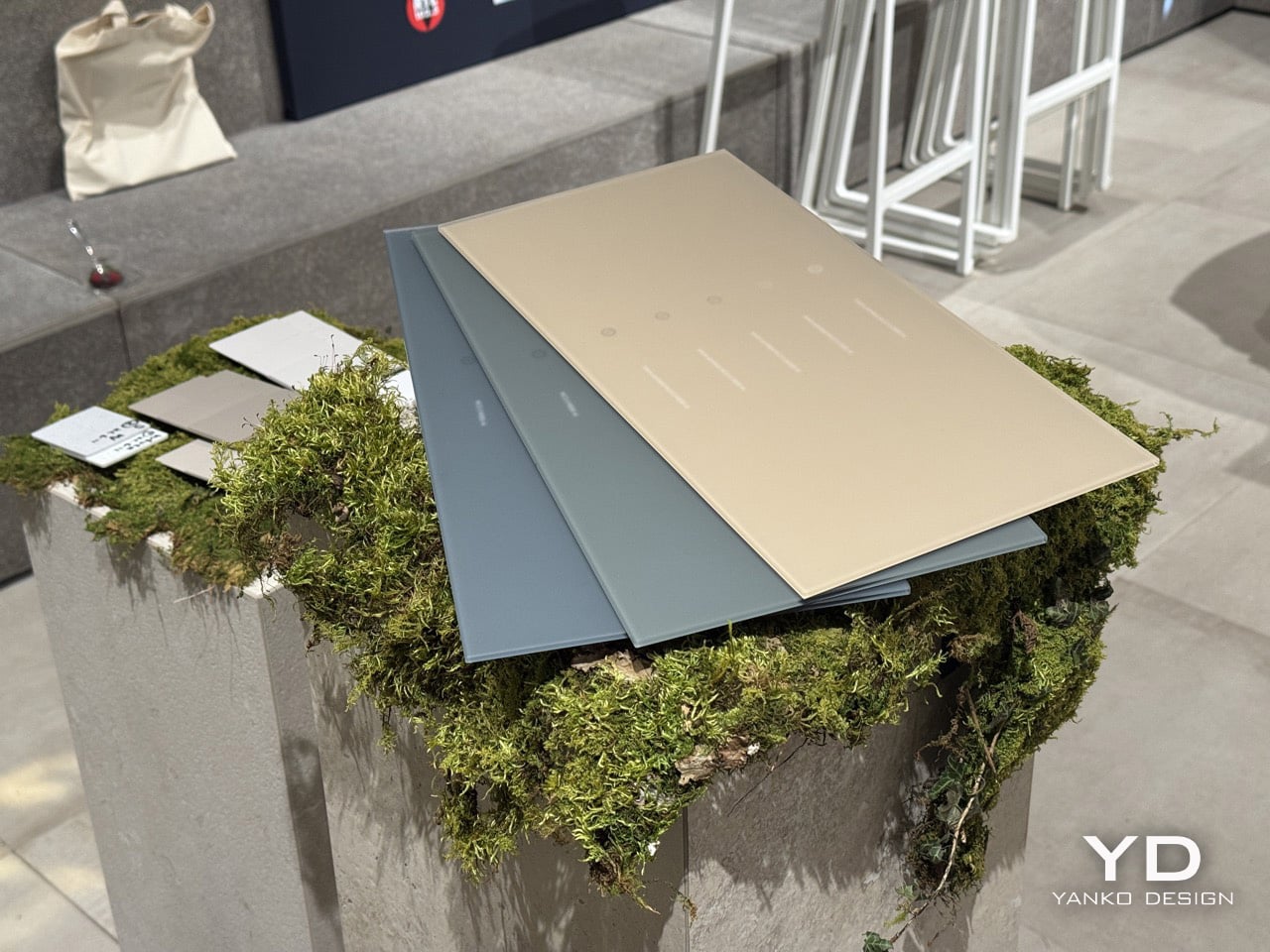
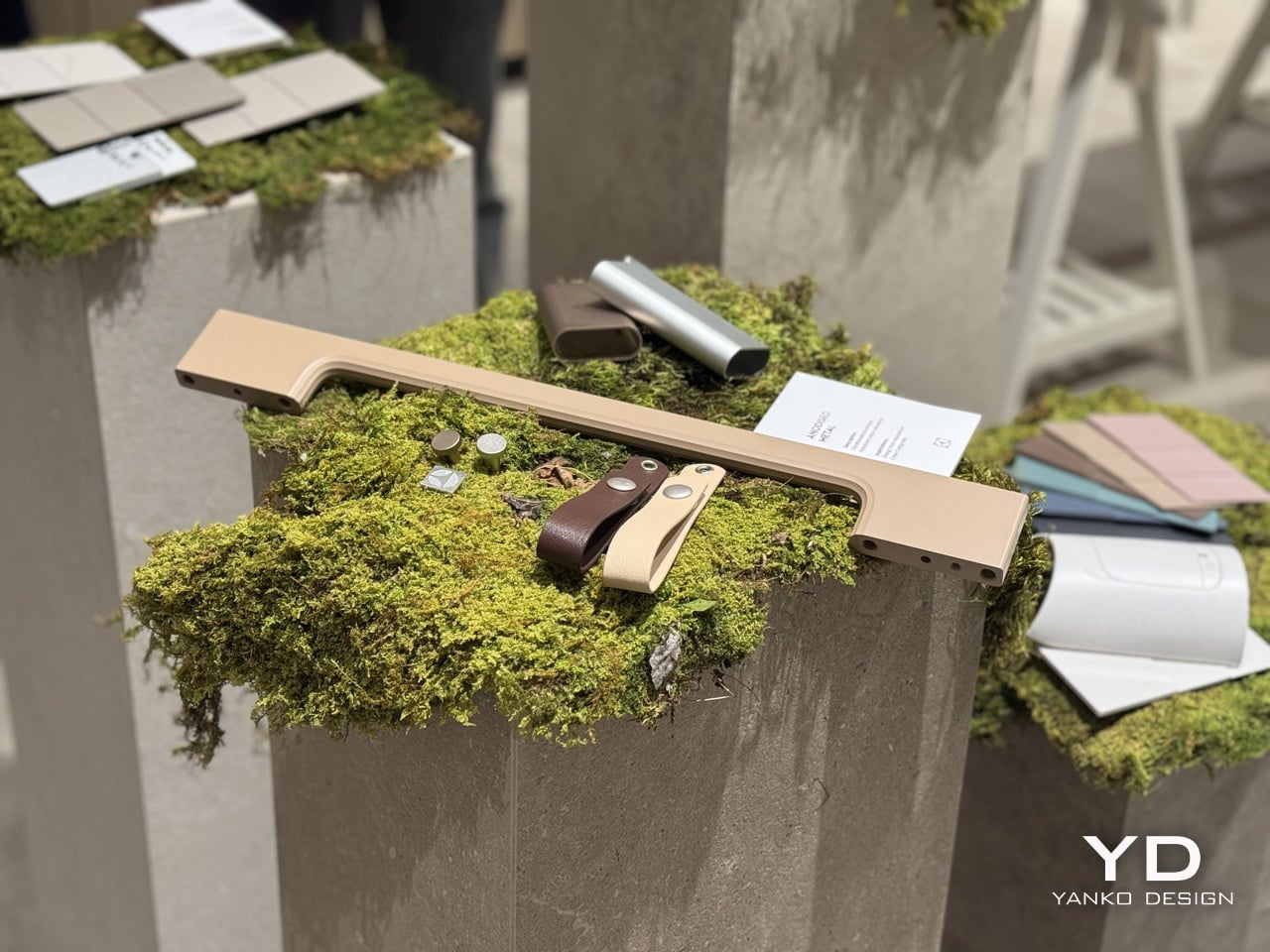
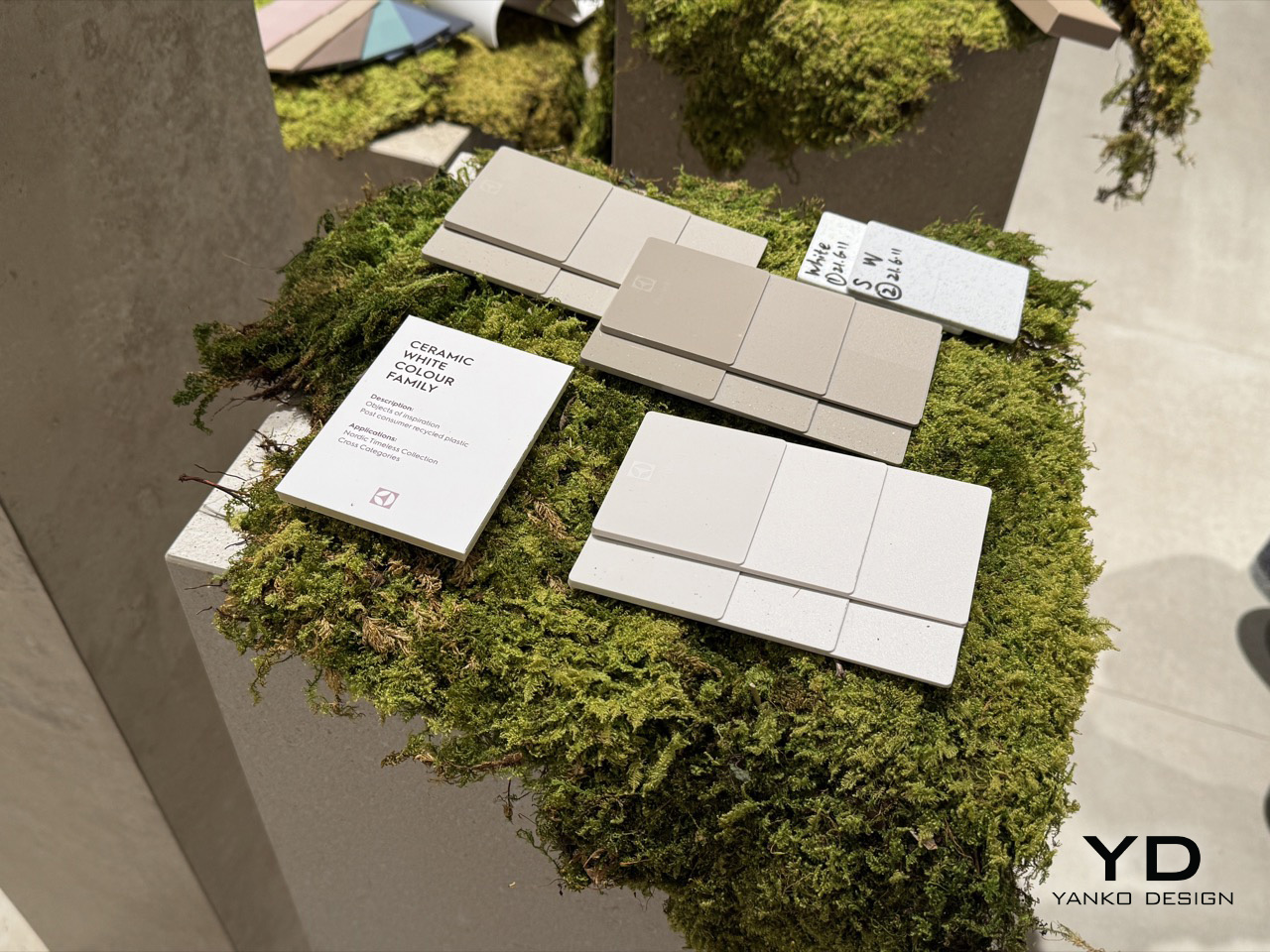
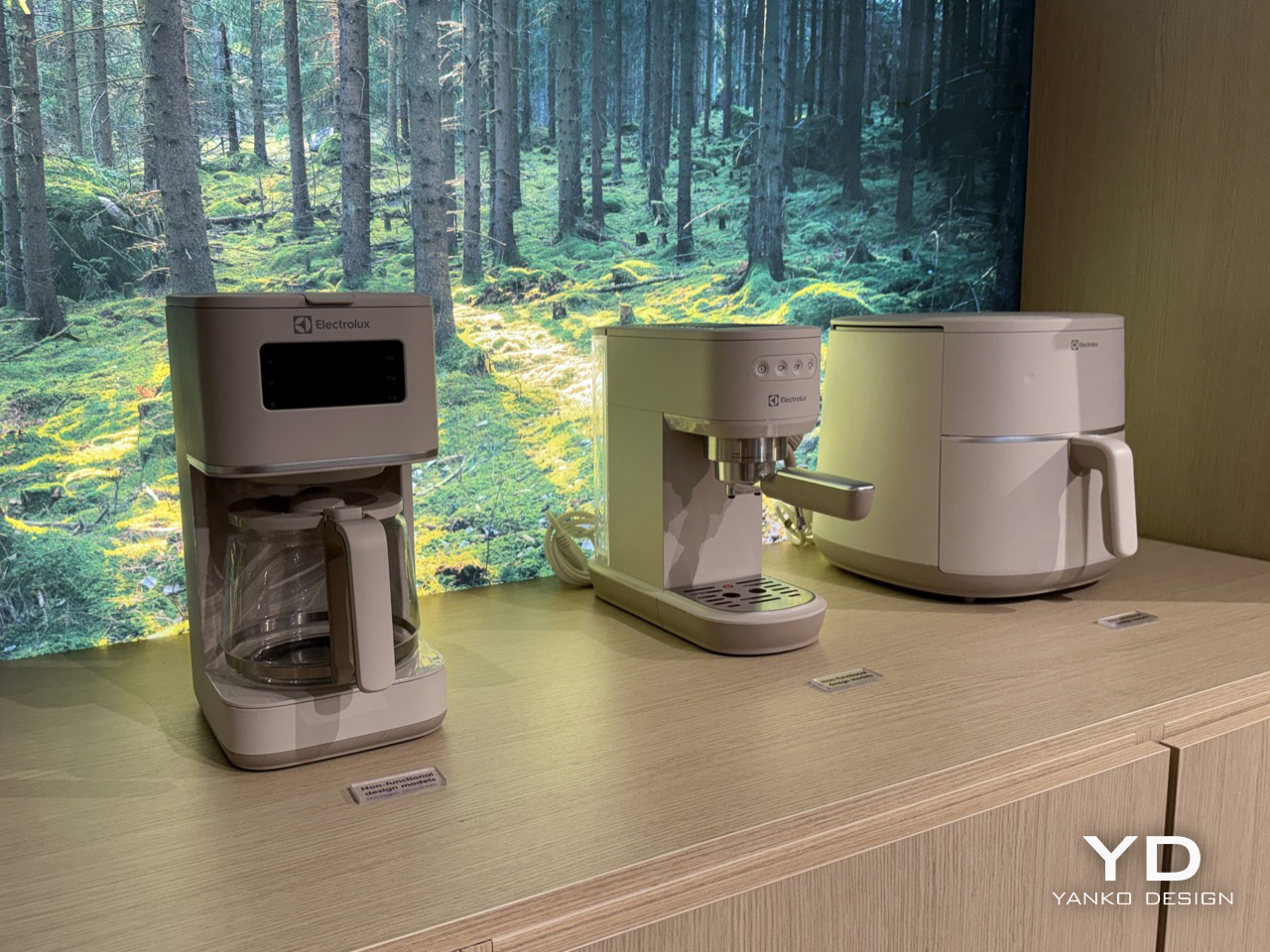
The space was staged as an argument made physical. Concrete plinths topped with living moss carried CMF swatches in muted blush, warm sand, dusty teal, and speckled stone-effect recycled plastic. A pine and wood scent developed by studio Koyia moved through the air. A breathing exercise was built into the programme, alongside a cross-country pizza competition that Turkey ultimately won. The sequence of it, material samples resting on moss, scent designed to recall a forest, appliances displayed in front of a photographic print of Scandinavian woodland, was too consistent to be coincidence. Electrolux arrived at Milan Design Week 2026 with a single, well-developed idea: that the kitchen is an emotional environment, and that the most sophisticated thing its design language can do is bring the outside in.
Designer: Electrolux
Rafael Alonso, who leads Electrolux’s Taste Design team, describes the modern kitchen plainly: a crowded space where people live, cook, manage family life, and absorb the friction of daily routine. Designing for that room means designing for that reality. Lagom, in his framing, is the response: meaningful solutions built around purpose and balance rather than specification and performance alone. The philosophy travels well beyond Sweden. Everybody needs a bit more balance in their lives, and the kitchen, as the room that absorbs the most daily activity, is where that balance is most frequently lost and most worth recovering.
Amelia Chong, based in Electrolux’s Stockholm office and leading Color, Material, Finish Design for the taste category, traces the palette back to something more concrete than trend cycles or stylistic preference. When Electrolux surveyed users across Europe about where they find emotional restoration, nature came back as the most consistent answer. For Chong’s team, that finding becomes a set of material conditions. Scandinavian light is lower in contrast and more diffused than much of Europe, and the colour preferences that emerge from living within that light tend toward the muted and the gentle. The goal is to establish colour and material in a long-lasting, timeless relationship rather than a short-term one.
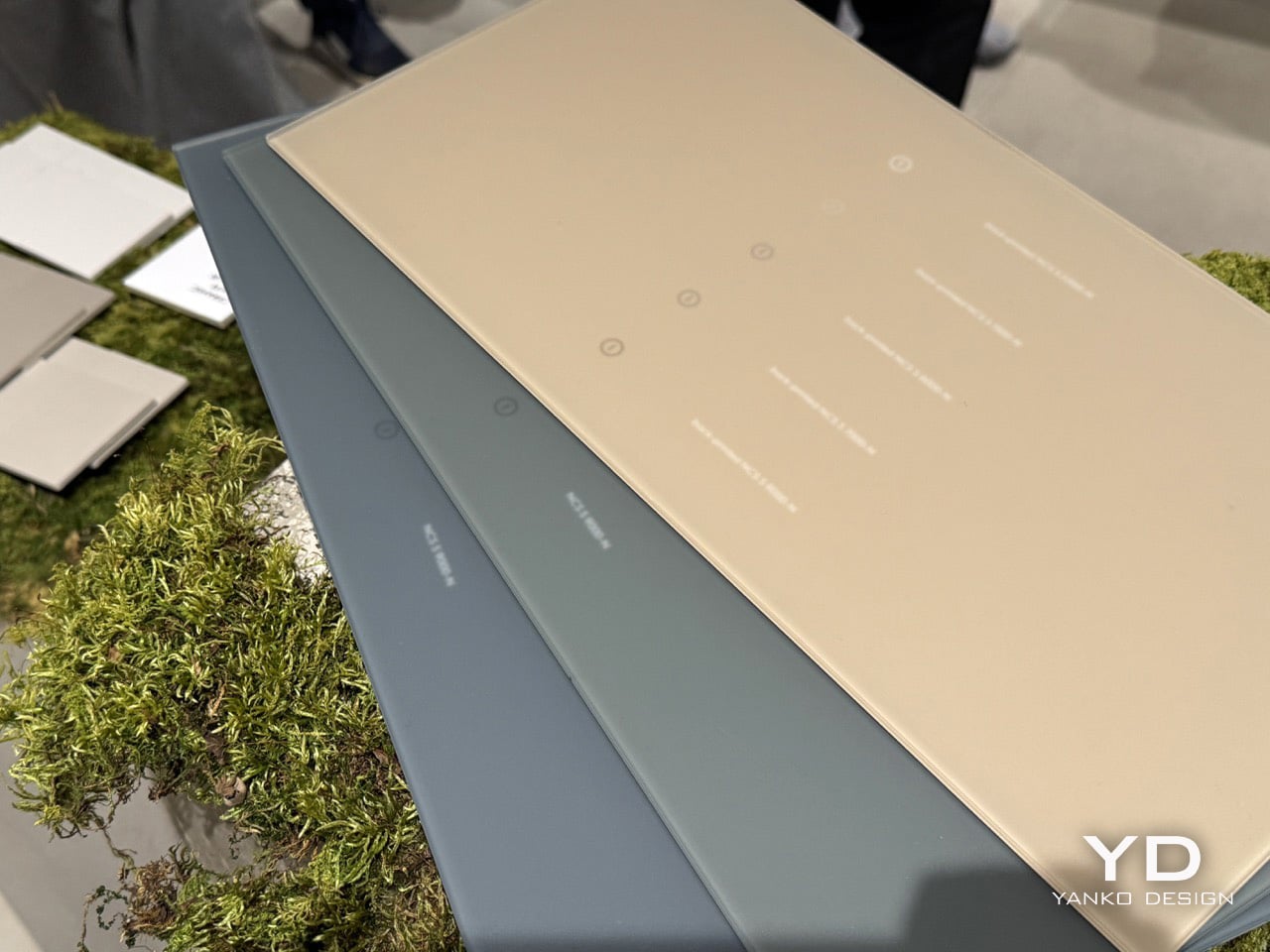
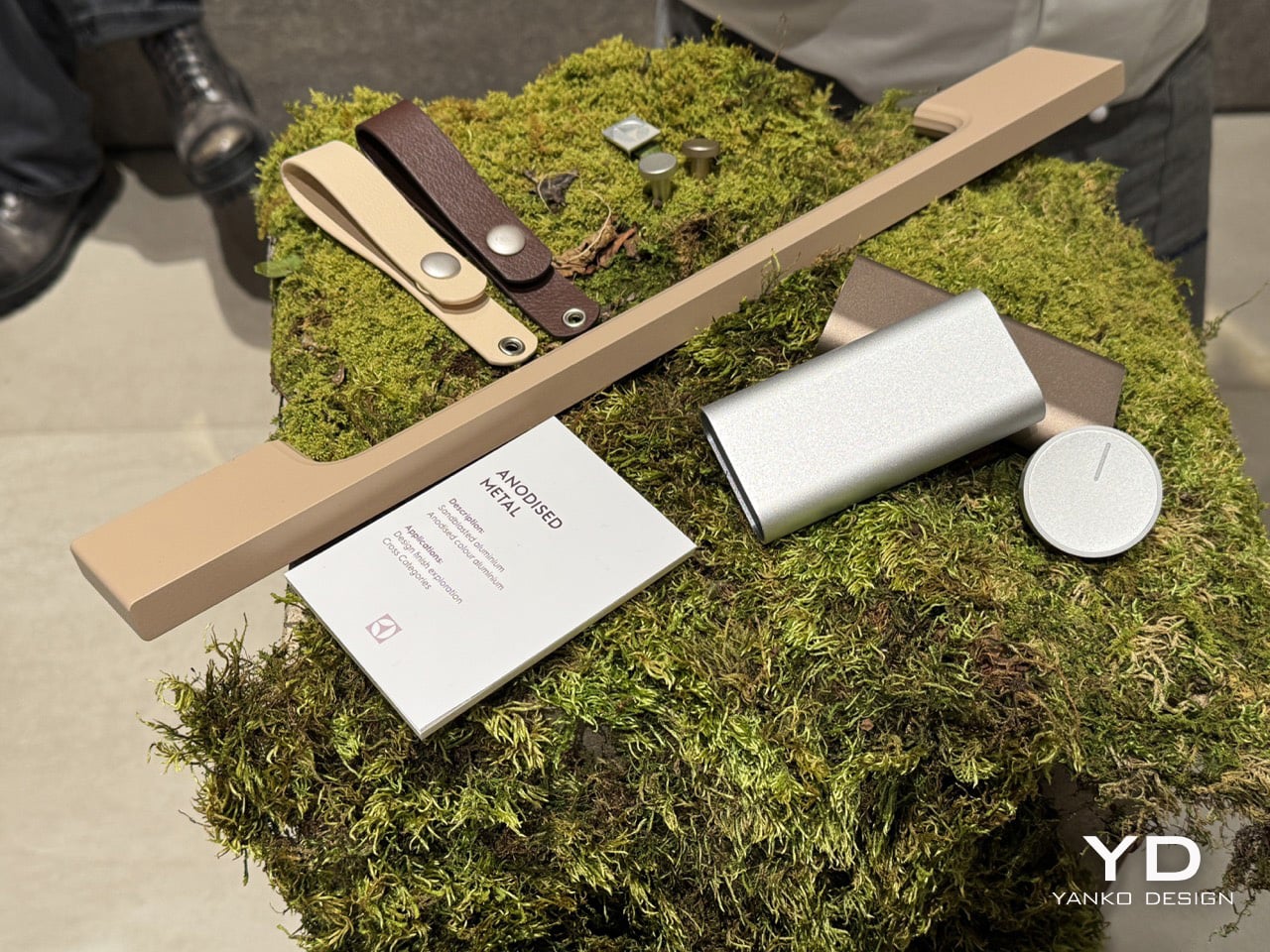
The swatches at Electrolux’s showcase make that intention legible. Across the Ceramic White Colour Family, the Colour Matt Glass and Recycled Plastics range, and the anodised metal samples, the palette holds a consistent register: warm sand and dusty teal, soft blush and speckled stone-effect off-white, warm bronze and low-sheen aluminium. Several finishes are built from post-consumer recycled plastic, and the acid-etched glass surfaces carry none of the glossy visual aggression that has dominated premium kitchen aesthetics for the better part of a decade. Chrome is absent. Matte black, another recent default for high-end appliances, does not appear either. What replaces both is a surface language that reads as organic, with textures referencing stone, compressed earth, and raw ceramic.
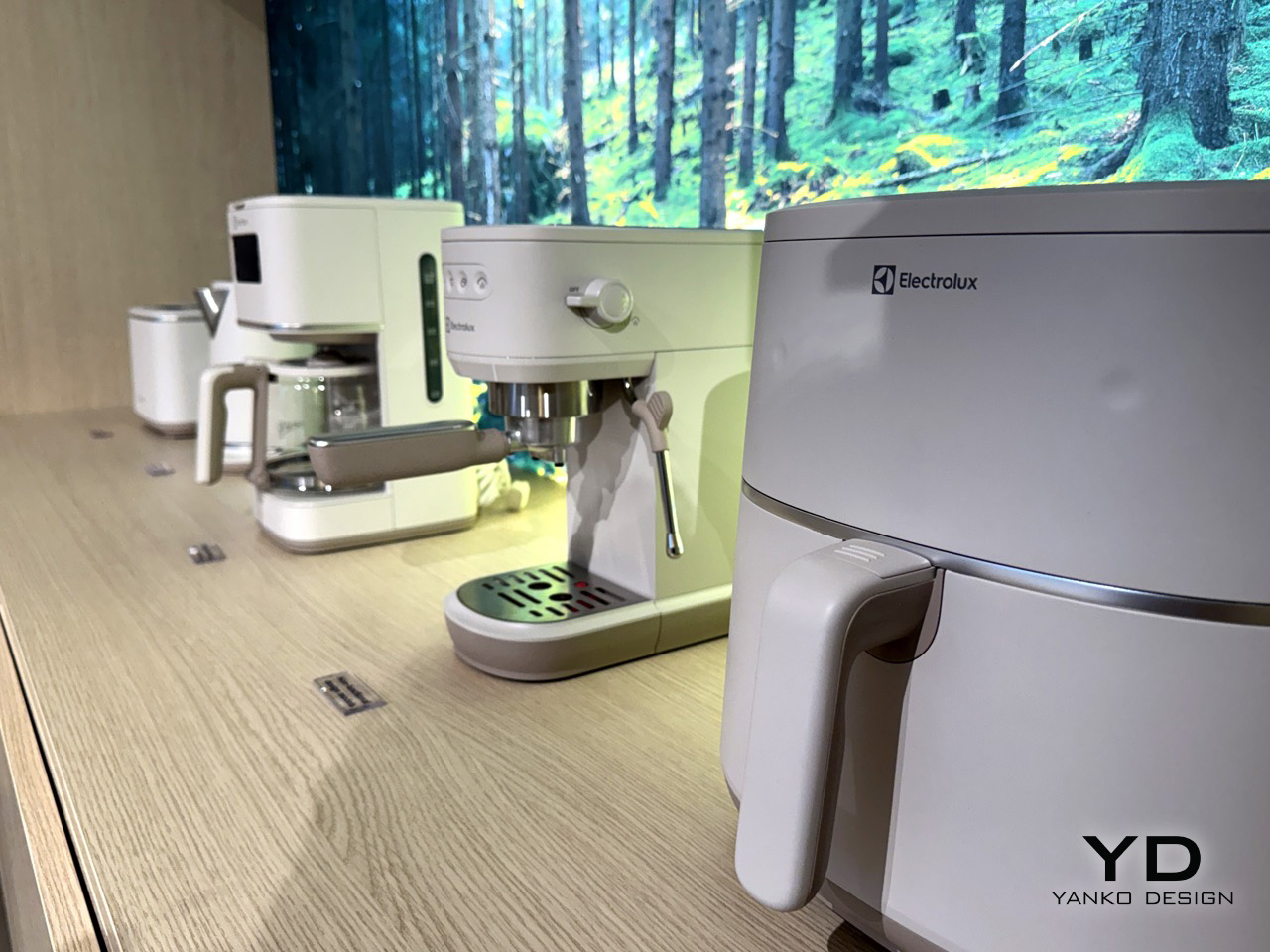
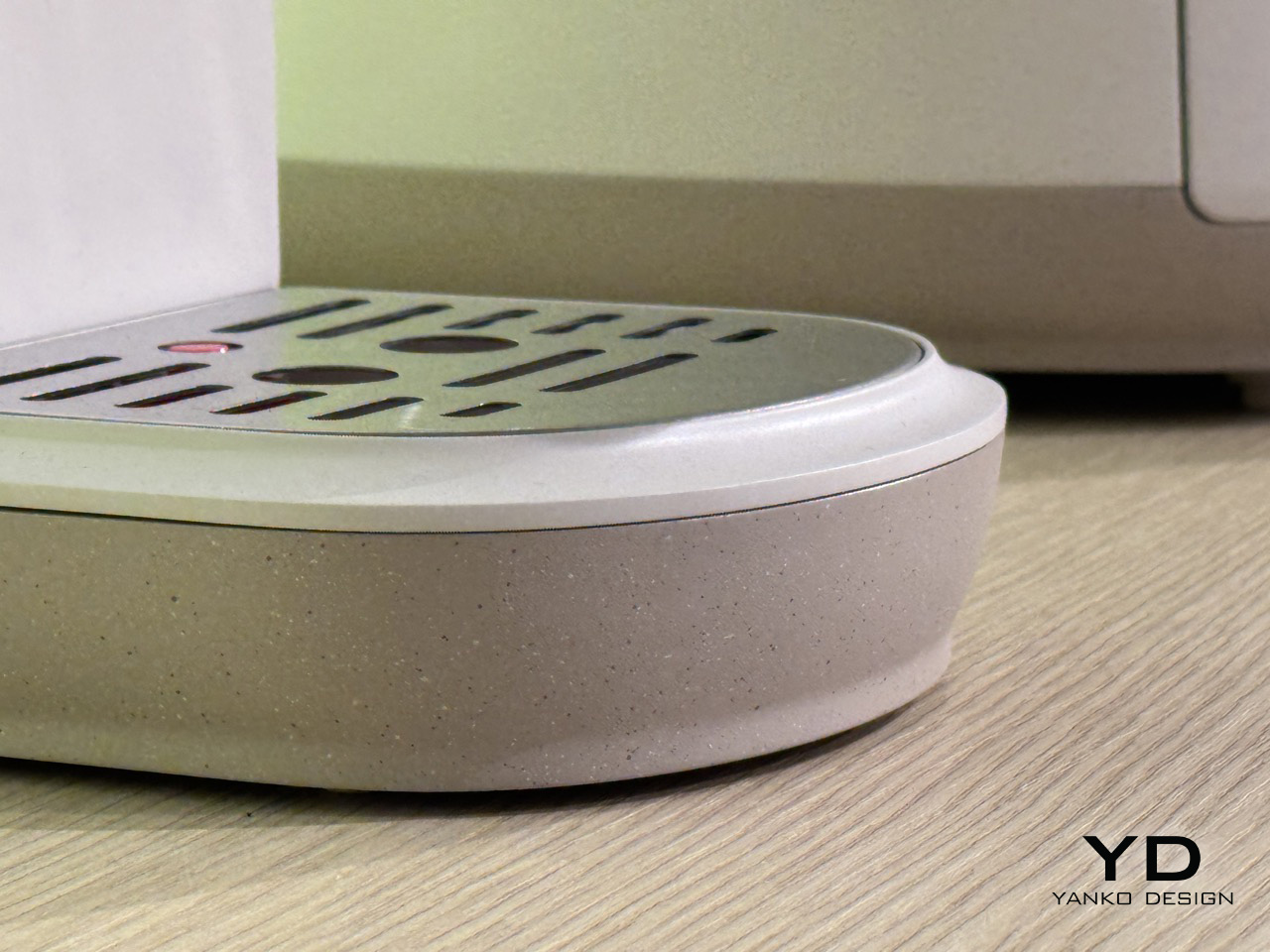
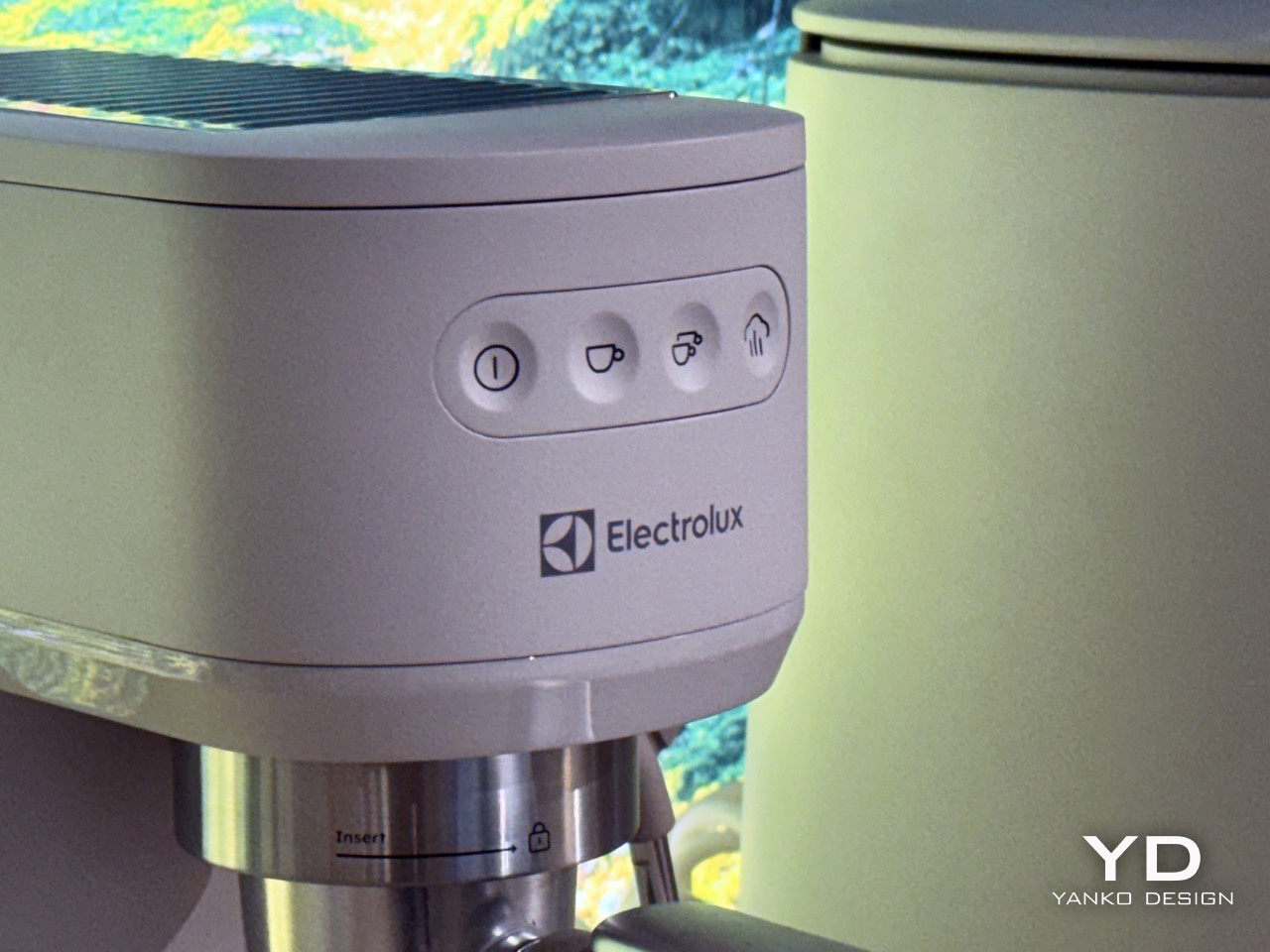
That material thinking finds its form in a new family of conceptual small appliances. A toaster, electric kettle, coffee machine, espresso machine, and air fryer were all presented with a unified design language that feels both calm and confident. Each product shares a primary body finished in a soft, linen-like white, but the most distinctive feature is the base. A warm, speckled finish, reminiscent of granite or raw ceramic, grounds each appliance, giving it a visual and textural weight that connects it to the natural materials referenced in the CMF library. The effect is cohesive and deeply considered; the appliances feel less like industrial objects placed on a countertop and more like a collection of stoneware that has grown out of it.
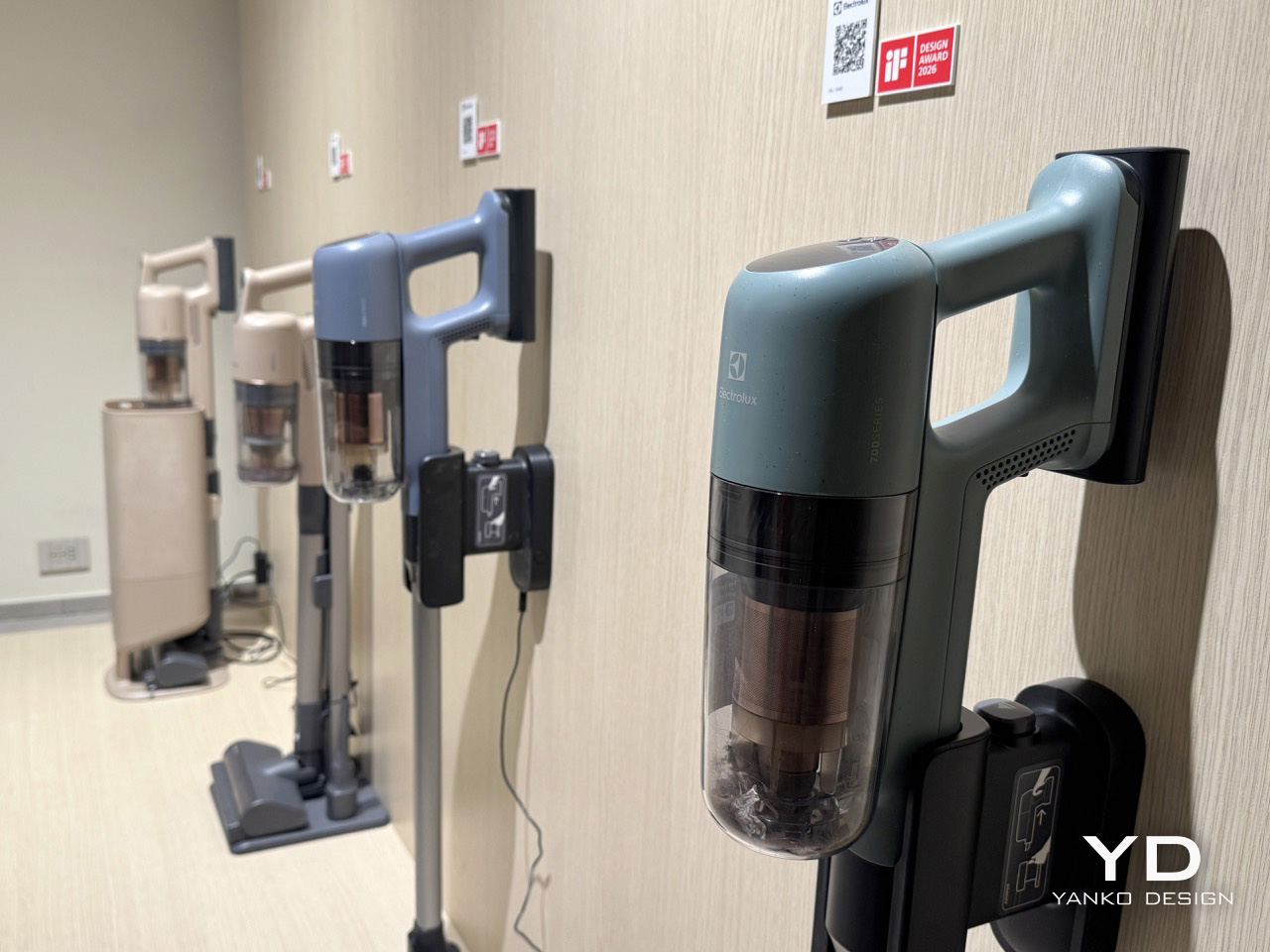
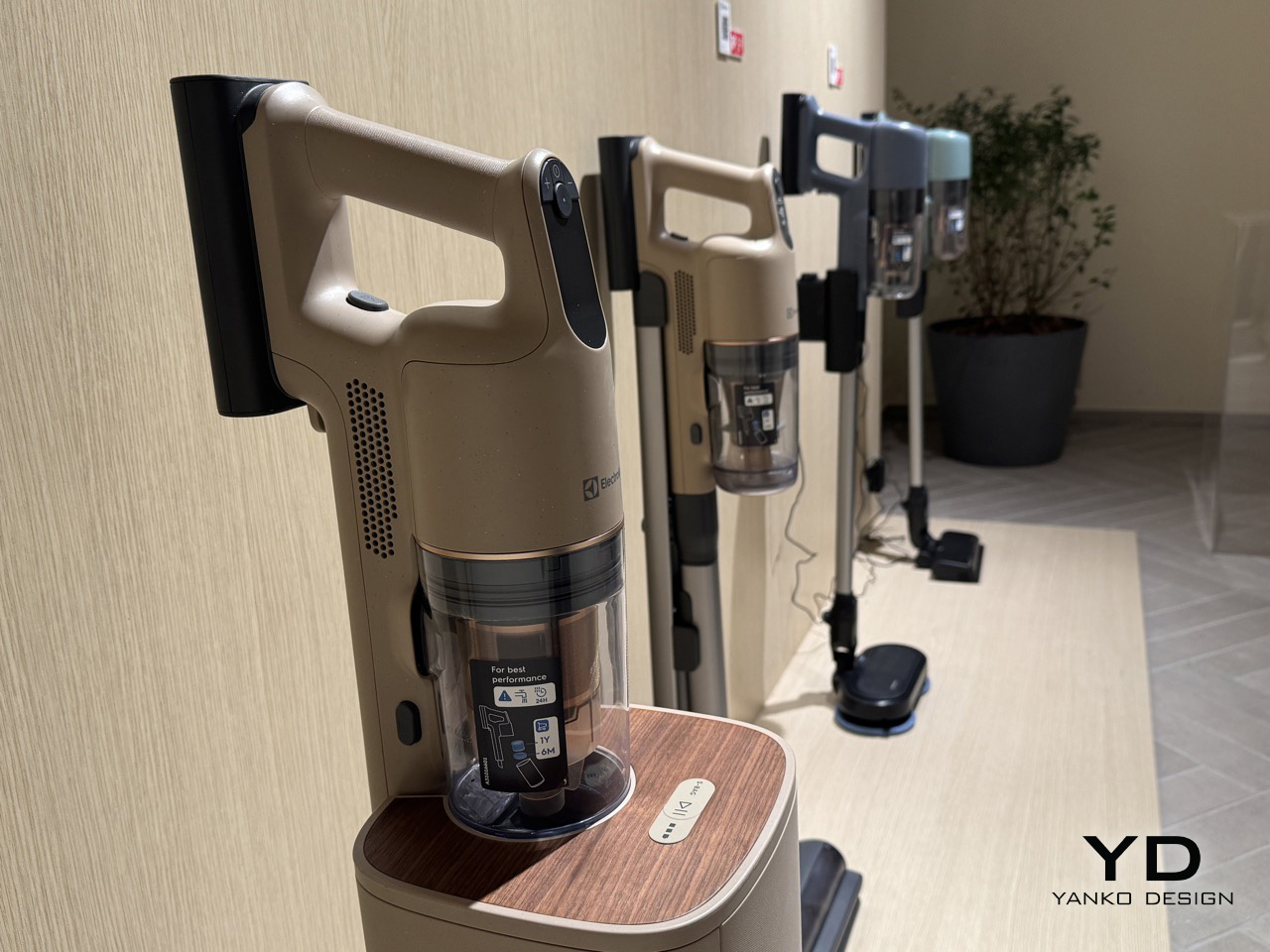
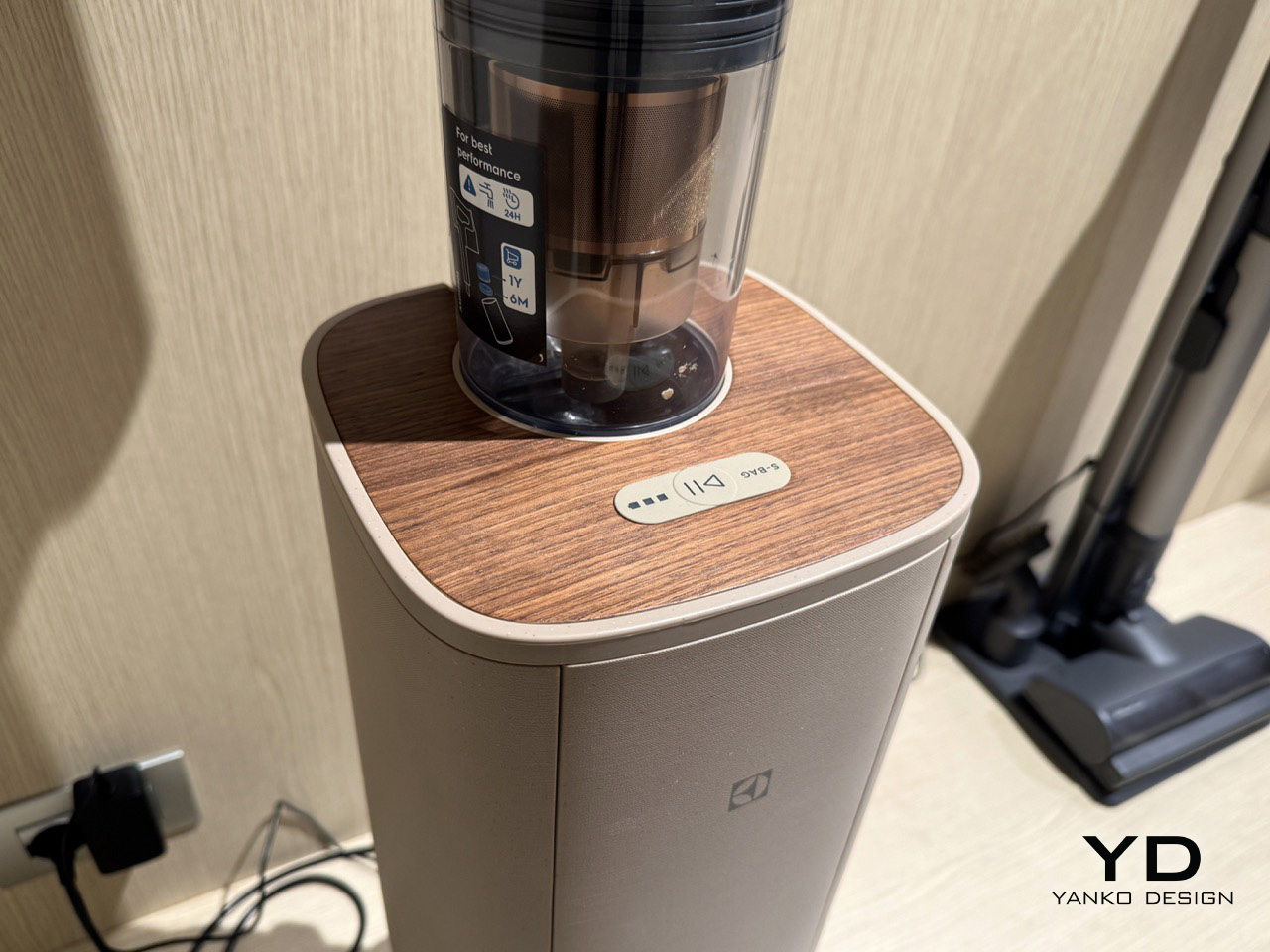
This approach is not confined to the kitchen. A vacuum cleaner, displayed with the same attention to sensory detail, extends the Lagom philosophy into the broader home. Its body carries the same muted, gentle tone as the kitchen concepts, but its top surface is finished with a warm, walnut-panel wood trim. It is a simple but effective move that transforms a utility object into something closer to furniture. The design choice suggests that balance, and the deliberate presence of natural textures in everyday objects, belongs to the whole home, softening the technological footprint of our tools and integrating them more harmoniously into our living spaces.
The neuroaesthetic research informing Chong’s approach is concrete: considered colour selection can reduce perceived stress by as much as 35%, a figure that reframes what a hob surface or a coffee machine body is quietly doing in a room. They contribute actively to the sensory quality of the spaces we inhabit. In a field where brands largely compete on technology, connectivity, and performance metrics, that may be the most quietly confident thing Electrolux brought to Milan: the conviction that calm, deliberately designed, is a specification worth meeting, and that the palette which carries it was drawn from the landscape just outside the window.
Pocket real estate is non-negotiable. Every gram you carry should earn its spot — by solving a problem you actually face, doing it better than what’s already in your rotation, or pulling off both without adding the kind of bulk that defeats the purpose of carrying light. April delivered a focused set of drops that clear that bar across the board.
The drops include a tool built on a patent that predates the first World War, a carabiner that turns an AirTag into proper hardware, a collaboration piece that turns Japanese wave motifs into functional grip texture, and a flashlight that rethinks how a carry light should deploy. None of these is an impulse purchase. They’re the work of people who thought seriously about what an object owes the person carrying it.
1. MetMo Pocket Grip — A 1913 Patent, Finally Fulfilled
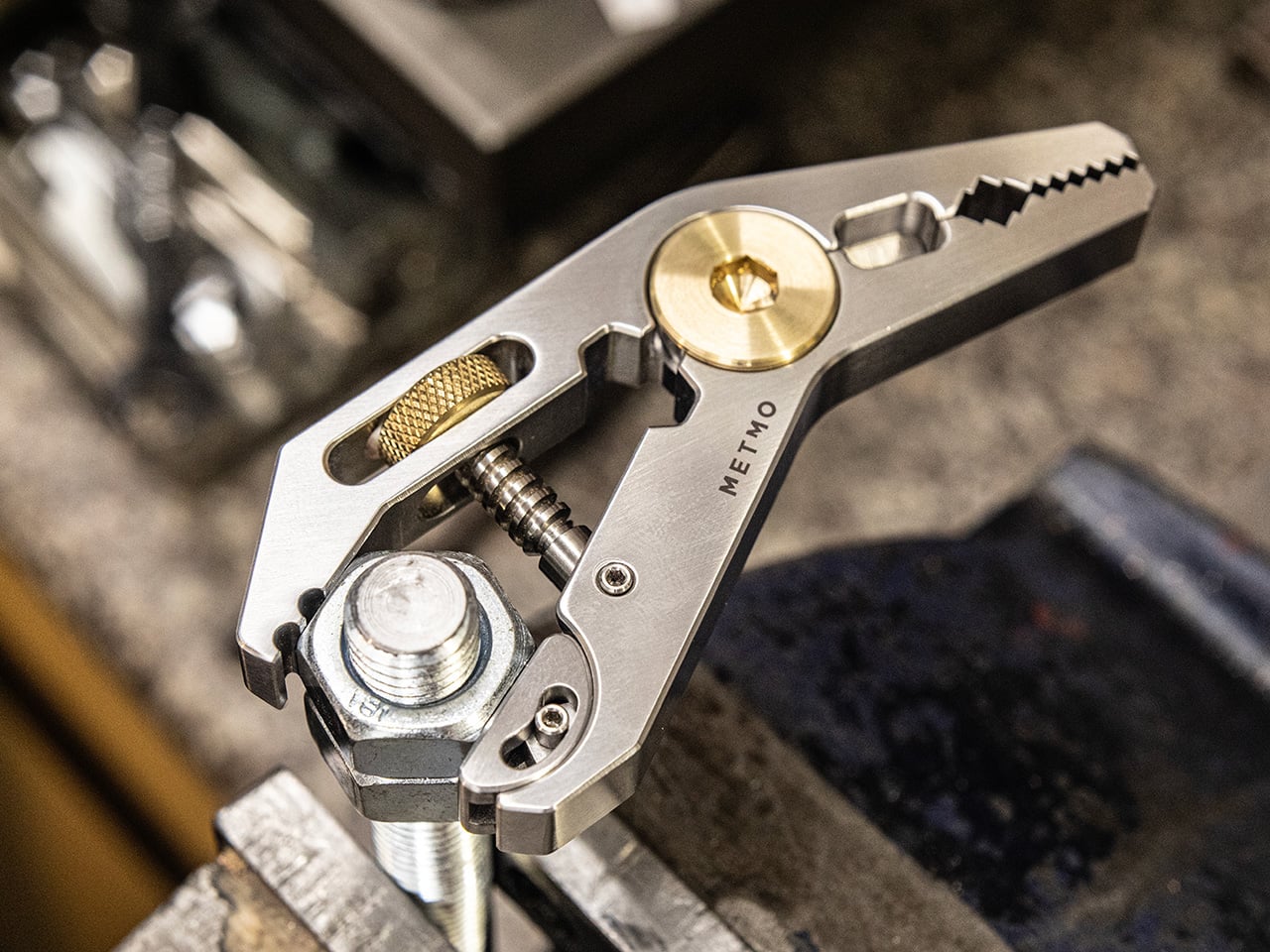
The Pocket Grip is proof that the best ideas don’t expire — they wait for the manufacturing era that can do them justice. MetMo pulled a 1913 Anderson patent from near-total obscurity and rebuilt the concept from scratch using CNC machining and modern metallurgy. The double-ended, central-pivot architecture that made the original mechanically clever is still the structural engine here, but the tolerances, surface finishing, and material quality are generations ahead of what Anderson’s era could produce. It doesn’t feel like a revival. It feels like the tool is arriving for the first time, fully formed.
What keeps it from becoming a novelty is the design discipline packed into every surface. The central pivot, a structural requirement in the 1913 concept, is machined to serve as a 1/4-inch hex drive for standard bits. The jaws split into distinct functional zones: a chomping area for raw grip, dedicated geometry for round and flat objects, and a nipping point for edge work. Nothing is decorative. Every millimeter carries a job, which is a genuinely rare quality in a category that usually trades specificity for the appearance of versatility.
What We Like
CNC precision transforms a century-old mechanical concept into a tool that performs to modern standards
Jaw geometry, divided into distinct zones, removes the clumsy generalism of traditional multi-tool pliers
What We Dislike
The central-pivot format will feel unfamiliar to anyone who’s built habits around conventional plier-style tools
Specialized architecture means it won’t replace a full multi-tool on extended technical trips
2. AirTag Carabiner — Aerospace-Grade Metal for Your Most-Forgotten Gear
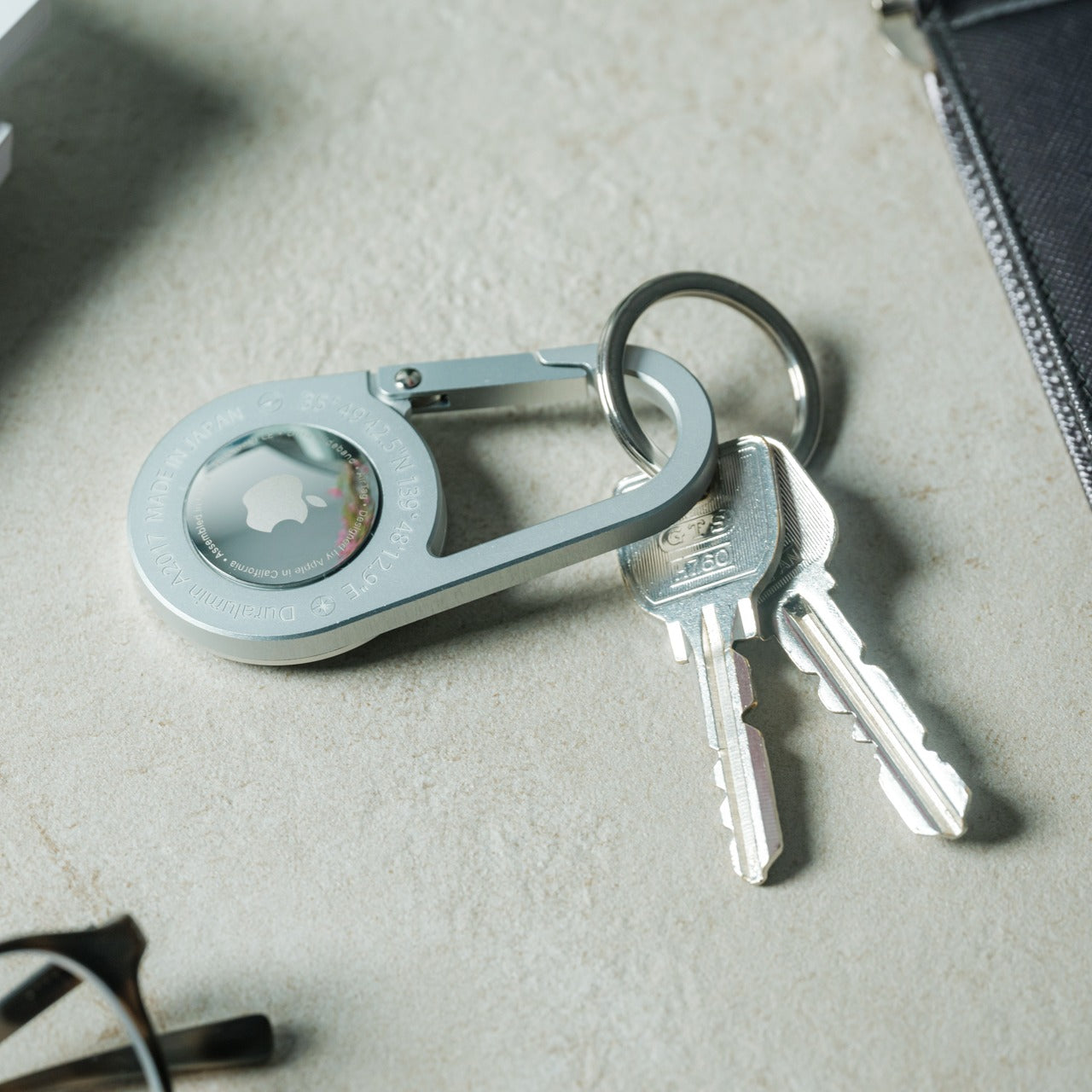
The problem with most AirTag holders isn’t the tracker — it’s the housing. Plastic shells and rubber sleeves cheapen what should feel like a permanent fixture in your carry system. This Duralumin composite carabiner takes a different position entirely, using a material cleared for aircraft, spacecraft, and marine environments to do a job most people hand off to a keyring loop. The result is a carabiner that snaps onto a bag strap, bike frame, or umbrella handle and genuinely disappears into the hardware without looking like an afterthought.
What makes it worth calling out specifically is the handcrafted construction and the material choices available at checkout. Duralumin keeps the weight negligible while delivering structural integrity that synthetic alternatives simply can’t match at this scale. Untreated brass and stainless steel variants let you match the finish to what’s already on your keychain or bag without compromising the function. The AirTag sits cleanly inside the carabiner body, turning a tracker that would otherwise rattle around a pocket into something secured, accessible, and built to last well beyond the device it’s carrying.
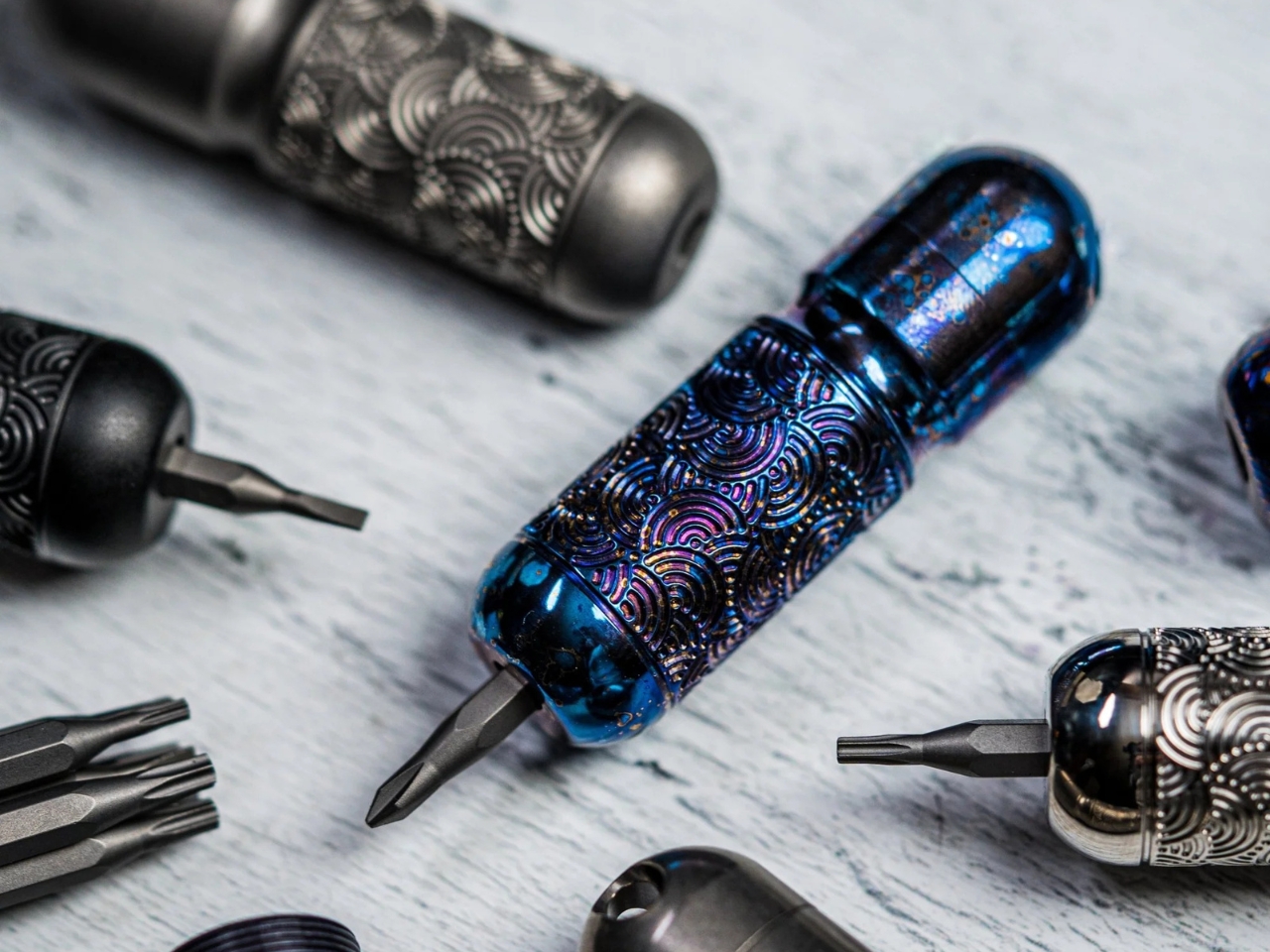
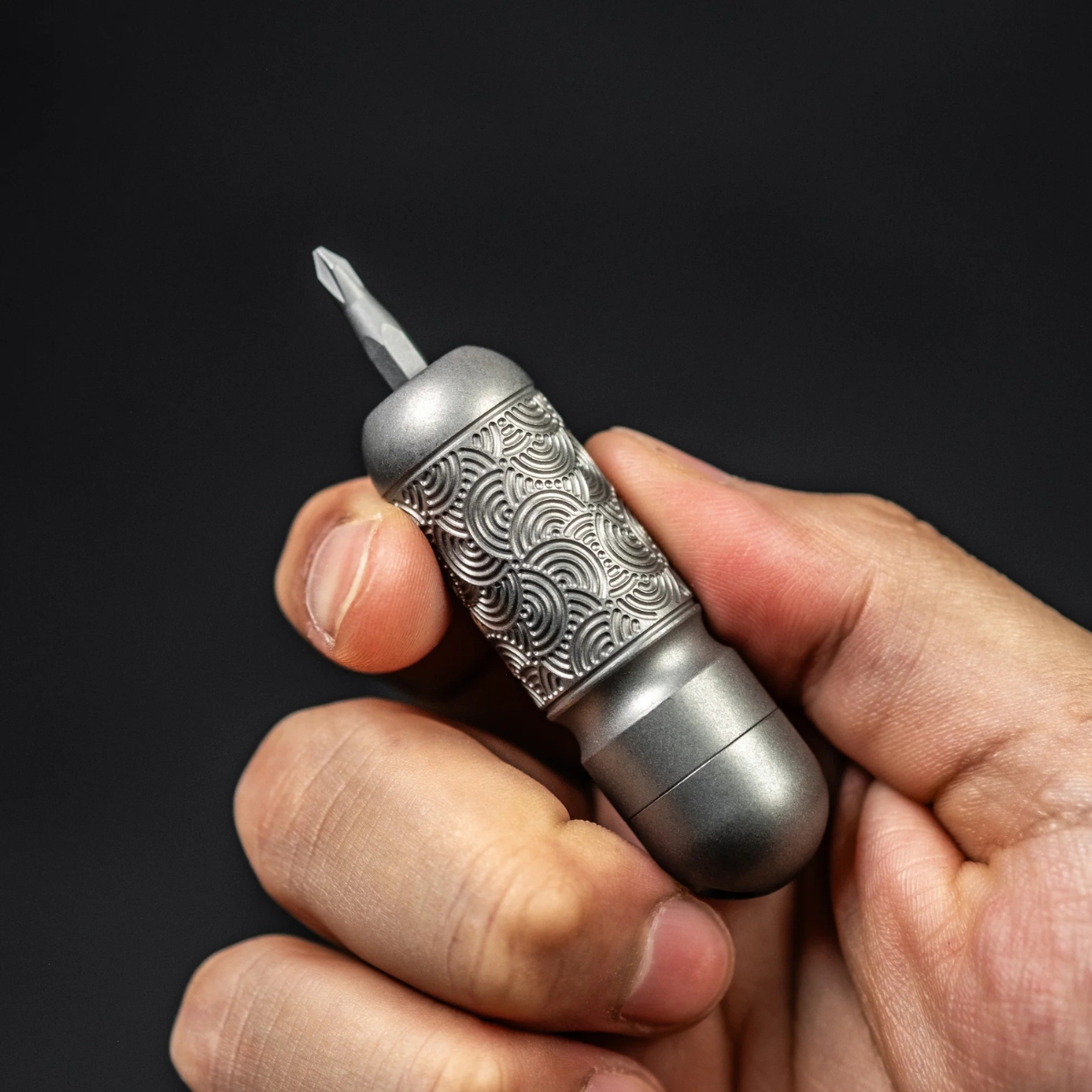
The collaboration between Audacious Concept and URBAN EDC produced something the limited-edition tool market rarely manages — a piece that’s genuinely better because of its design, not just more expensive because of its branding. The titanium body is milled with the Chaos Seigaiha pattern, a Japanese wave motif that reads immediately as art on a shelf. Hold it, and the texture resolves into a real grip surface, tactile enough to prevent slip under pressure without being rough against pocket fabric or a keychain ring. Lightweight, corrosion-resistant, and built to outlast most objects you’ll carry alongside it for the next decade.
Inside the body, a neodymium magnetic core holds seven micro bits in place and releases them cleanly on demand. The selection covers Phillips and flathead sizes, which handle the practical scope of most small-scale fastener work — eyeglass adjustments, consumer electronics, and pocket gear maintenance. Bit retention is tight enough that nothing rattles loose in a jacket pocket, but the swap is smooth and one-handed. For something designed to live on a keychain, the functional depth is serious enough to make reaching for a larger screwdriver feel unnecessary for anything outside heavy-torque work.
What We Like
The Seigaiha milling functions simultaneously as a visual identity marker and a genuine grip surface
Magnetic core bit retention secures seven micro bits without adding measurable weight to the titanium body
What We Dislike
Limited-edition status means supply is finite, and secondary market pricing will reflect that quickly
Micro bit format won’t satisfy tasks requiring full-size driver torque or a longer shaft reach
4. 8-in-1 EDC Scissors — The Tool That Benefits From Being Underestimated
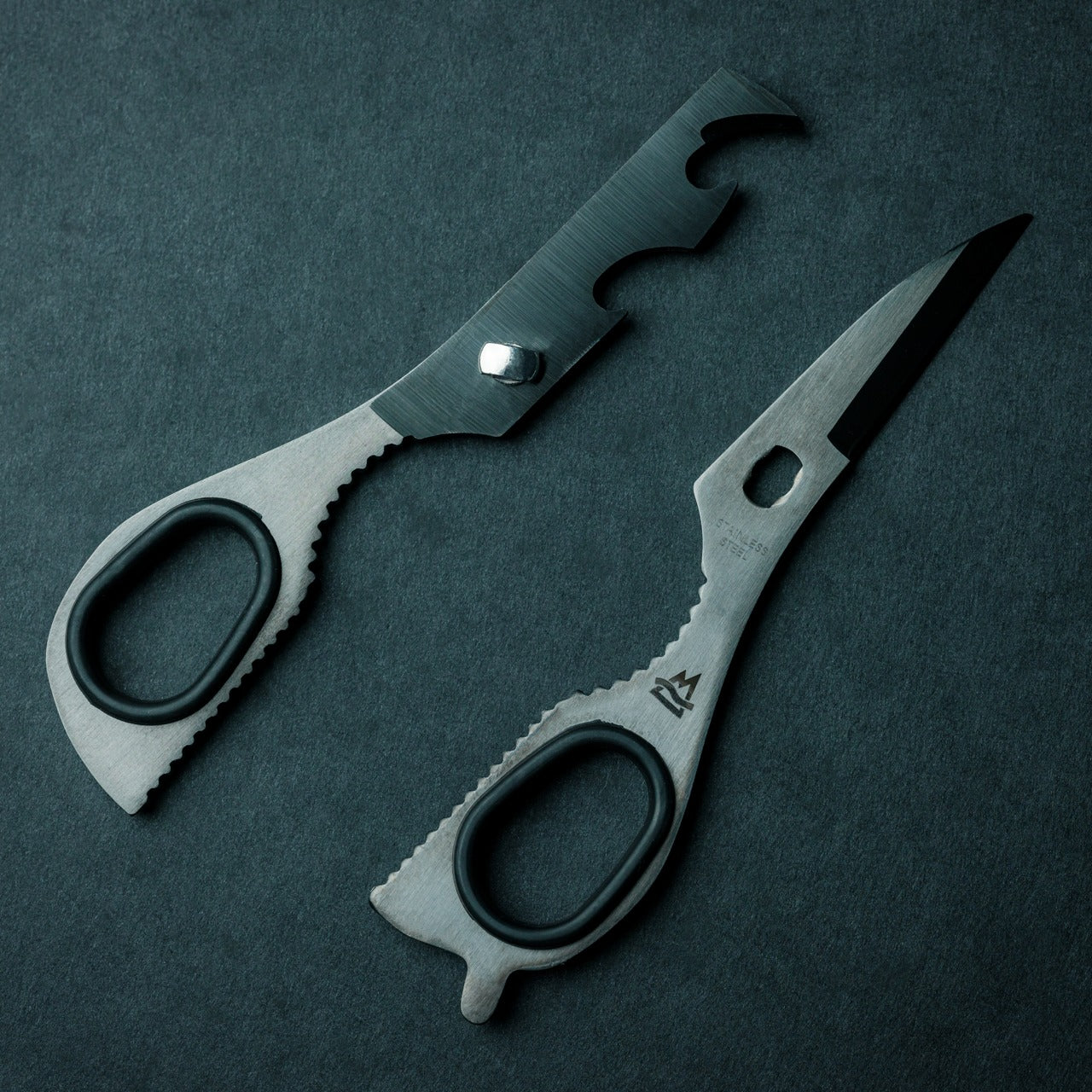
The instinct to dismiss a palm-sized pair of scissors is exactly what makes this carry piece a reliable surprise. At 13 centimeters, it disappears into a zipper pocket or bag compartment without registering as weight or bulk — but the eight integrated tools inside that frame cover a range of everyday situations that most dedicated items can’t individually match. Scissors, knife, lid opener, can opener, cap opener, bottle opener, shell splitter, and degasser. The oxidation film finish resists rust and gives the whole object a clean matte black profile that holds its look through daily contact and pocket friction without complaint.
Where compact multi-tools often make you feel the engineering compromises in your hand, these scissors stay intuitive throughout. The scissors work like scissors. The openers work without awkward repositioning or a three-step learning process. The geometry is uncomplicated, and the execution is clean, which matters more than mechanical cleverness when you’re opening a can at a campsite or dealing with packaging without a workspace. This is the kind of tool that earns its spot precisely by disappearing into the carry and only surfacing when it’s actually needed.
13cm form factor fits cleanly into zipper pockets and bag compartments without displacing other carry items
Eight functions without mechanical complexity keep the tool immediately usable under real-world time pressure
What We Dislike
Compact size limits leverage, meaning heavier cutting tasks will push past what the scissors can comfortably handle
First-time users need a short adjustment period to locate each function quickly without looking
5. Olight Baton 4 Premium Edition — The Flashlight That Figured Out Deployment
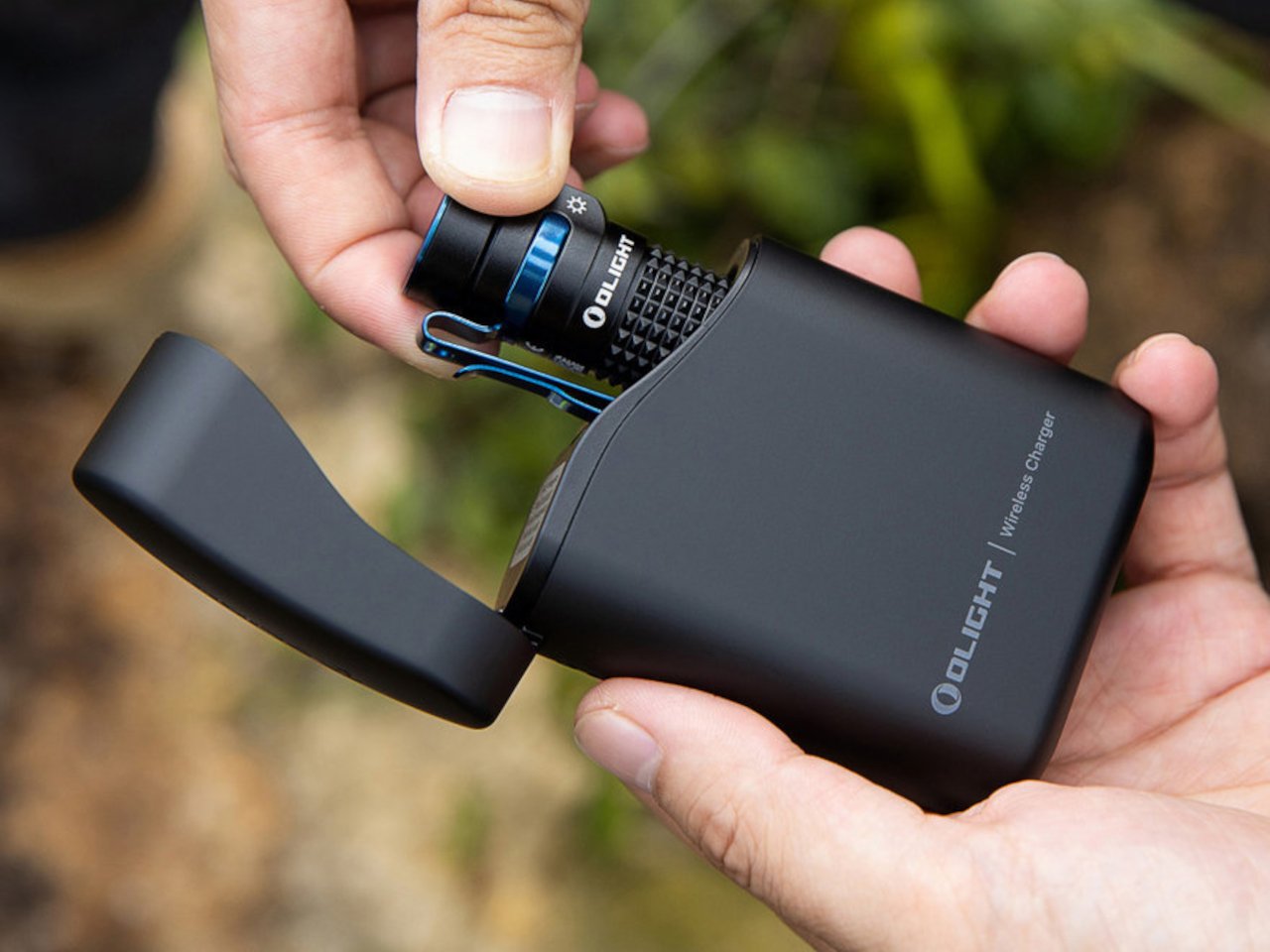
The 5,000mAh flip-top charging case is the real innovation here, and it changes how a flashlight behaves as an EDC item in a way that’s easy to underestimate until you use it in the dark. Flip the cover, press the side button, and 1,300 lumens activate while the light stays seated and secured inside the case. That one design decision removes the most persistent friction point in carry lighting — the fumble of finding, pulling, and orienting the flashlight when time actually matters. The case fits jacket pockets and pack hip belts without issue, keeping the light charged and immediately accessible across a full day of use.
The Baton 4 flashlight itself delivers 1,300 lumens at a 170-meter throw from a cylinder compact enough to stop registering as a presence after the first few carries. LED indicators display brightness level and remaining battery without guesswork, which becomes meaningful on longer backcountry trips where runtime management is part of staying prepared. One-handed case operation keeps the other hand free on technical terrain. The case charges other compatible Olight models, which adds genuine ecosystem value for anyone already carrying their hardware. For the output-to-size ratio it delivers, this is a difficult flashlight to argue against at any level of the carry conversation.
What We Like
Flip-top case enables immediate one-handed light activation without removing the flashlight from its housing
Case charges multiple compatible Olight models, turning one accessory into a multi-device carry solution
What We Dislike
Premium pricing places it well above the entry-level EDC flashlight bracket, narrowing its practical audience
The charging case adds volume that won’t suit ultra-minimalist or slim front-pocket carry configurations
The Best EDC Gear Doesn’t Ask for Attention — It Just Performs
What connects these five drops isn’t price point or category — it’s intentionality. Each one reflects a design process where the question wasn’t “what can we add?” but “what does this object actually owe the person carrying it?” That shift in thinking is what separates a tool worth carrying from one that looks convincing in product photography but quietly disappears from rotation after the first week. April’s strongest EDC offerings share that quality, and it shows.
The carry conversation has matured past the spec sheet arms race. Lumen counts, blade counts, and material callouts matter less than how an object behaves in the hand at the moment it’s needed. The MetMo earns its pivot. The RetroWave earns its seven roles. The Baton 4 earns its case. When gear is designed with that level of accountability, it doesn’t just fill pocket space — it justifies every square centimeter of it.