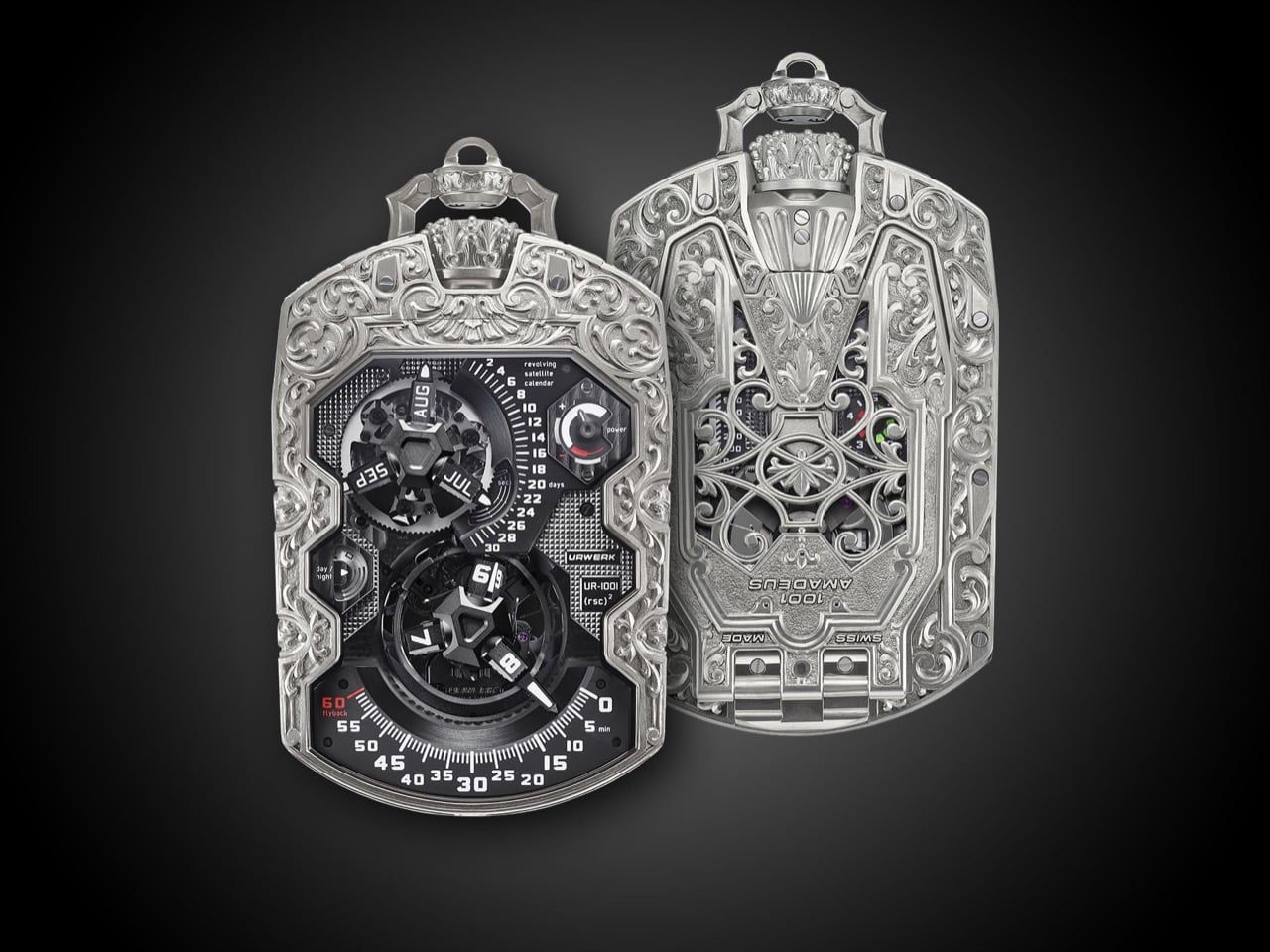
Florian Güllert spends most of his working life engraving shotguns. His bench sits in Klagenfurt, in Carinthia, an Austrian province with zero watchmaking history and a four-century run of decorating hunting weapons. Urwerk handed him a raw titanium blank and asked him to bury the most sci-fi pocket watch ever built under Baroque ornament. He said yes, spent roughly 500 hours over three months, and produced the UR-1001 Amadeus, a piece unique that looks like a cathedral swallowed a computer. Gun engraving exists because a tool meant to outlive its owner gets decorated, which turns out to be this watch’s entire argument.
The Amadeus measures 106 by 62 by 23mm and shows satellite hours, retrograde minutes, an annual calendar, day and night, and a 39-hour power reserve on the front. The hinged caseback adds an oil-change indicator that turns red through years four and five, a counter tracking 100 years of running time, and a linear scale that climbs to 1,000. Güllert laser-cut the contours before touching it by hand, since titanium galls and work-hardens under a graver in ways precious metal does not. Every engraved surface stops at the sapphire. Inside, Urwerk’s matte black instrument panel carries on as though the ornament never happened.
Designers: Martin Frei and Florian Güllert for Urwerk
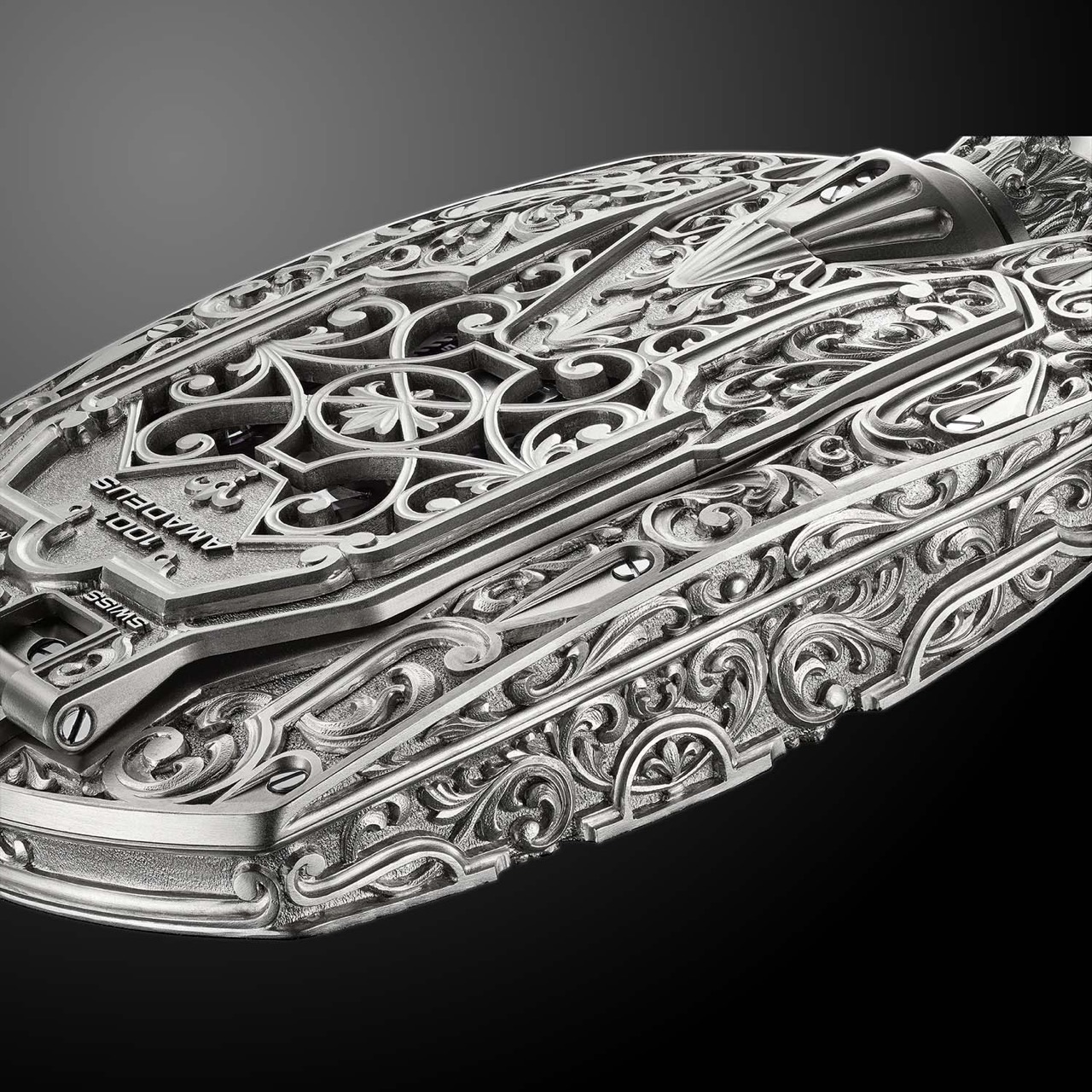
Titanium punishes a graver the way a stubborn hinge punishes a screwdriver, so Güllert’s first move was unfamiliar territory for a man used to steel. He rough-cut the relief with a laser, then went back in by hand with pneumatic chisels and files, balancing thick strokes against thin ones until the pattern read as depth rather than line. Backgrounds got textured, dotted, satin-brushed, or left matte depending on how he wanted light to catch each panel. Every edge was filed and rebalanced until the boundary between case and decoration effectively disappeared. That is a genuinely different skill set than cutting a scroll into a shotgun receiver, and it shows in how uneven the difficulty was across the piece.
The flanks and bezel run pure Baroque, scrolling acanthus leaves that could sit on an 18th century snuffbox. The caseback centerpiece is something else entirely, a quatrefoil rose-window panel with cusped Gothic arches framing the movement aperture, and the winding crown at 12 has been carved into an actual fluted coronet. Baroque excess on the outside, ecclesiastical stonework on the back, industrial sans-serif labeling the instruments inside. Three separate design languages sharing one case, none of them arguing with the others.
Three-armed satellite hours hand off to a retrograde minute display, three running-seconds hands split a minute into 20-second stretches, and a satellite annual calendar runs on three Maltese crosses riding a 93-tooth date wheel. Flip the watch over and the oil-change dial, calibrated for five-year service intervals, feeds a counter that advances in five-year steps toward a full century. Every hundred years, that counter sends a pulse to a linear scale on the caseback graduated all the way to 1,000. Yes, this pocket watch has a mechanical millennium indicator, and yes, it is exactly as absurd and wonderful as it sounds.
The UR-1001 has been Urwerk’s flagship strange object since 2011, when eight AlTiN-cased examples sold out at CHF 340,000 each, a number early buyers reportedly called cheap for what it did. We covered Urwerk’s other engraved oddities before, including the UR-210 Amadeus that first paired Güllert with the brand back in 2017, and the ambition here is visibly larger. Urwerk has not disclosed a price for this one, which tracks for a commissioned piece unique. Felix Baumgartner named it for Mozart, calling the composer a brilliant madman, and says he wanted a case as daring as the mechanics inside it.
Here is the part nobody selling this watch will say out loud. The 100-year and 1,000-year counters only advance while the movement is actually running, and a piece unique this expensive tends to spend its life in a safe rather than a pocket. Baumgartner’s own language calls the eventual buyer a custodian rather than an owner, which is a lovely way of admitting the millennium scale may never move past zero. A gunsmith spent 500 hours making sure it would look magnificent the whole time it doesn’t.
Michelangelo never gave David a fig leaf. Prudish museum directors did that centuries later, and one particularly famous plaster cast fig leaf still exists today, hanging on removable hooks at the Victoria and Albert Museum, ready to be clipped on whenever Queen Victoria or her modern equivalents came through for a tour. It is one of art history’s great compromises. You cannot un-carve marble, but you absolutely can hang a strategically placed leaf on it and call the problem solved.
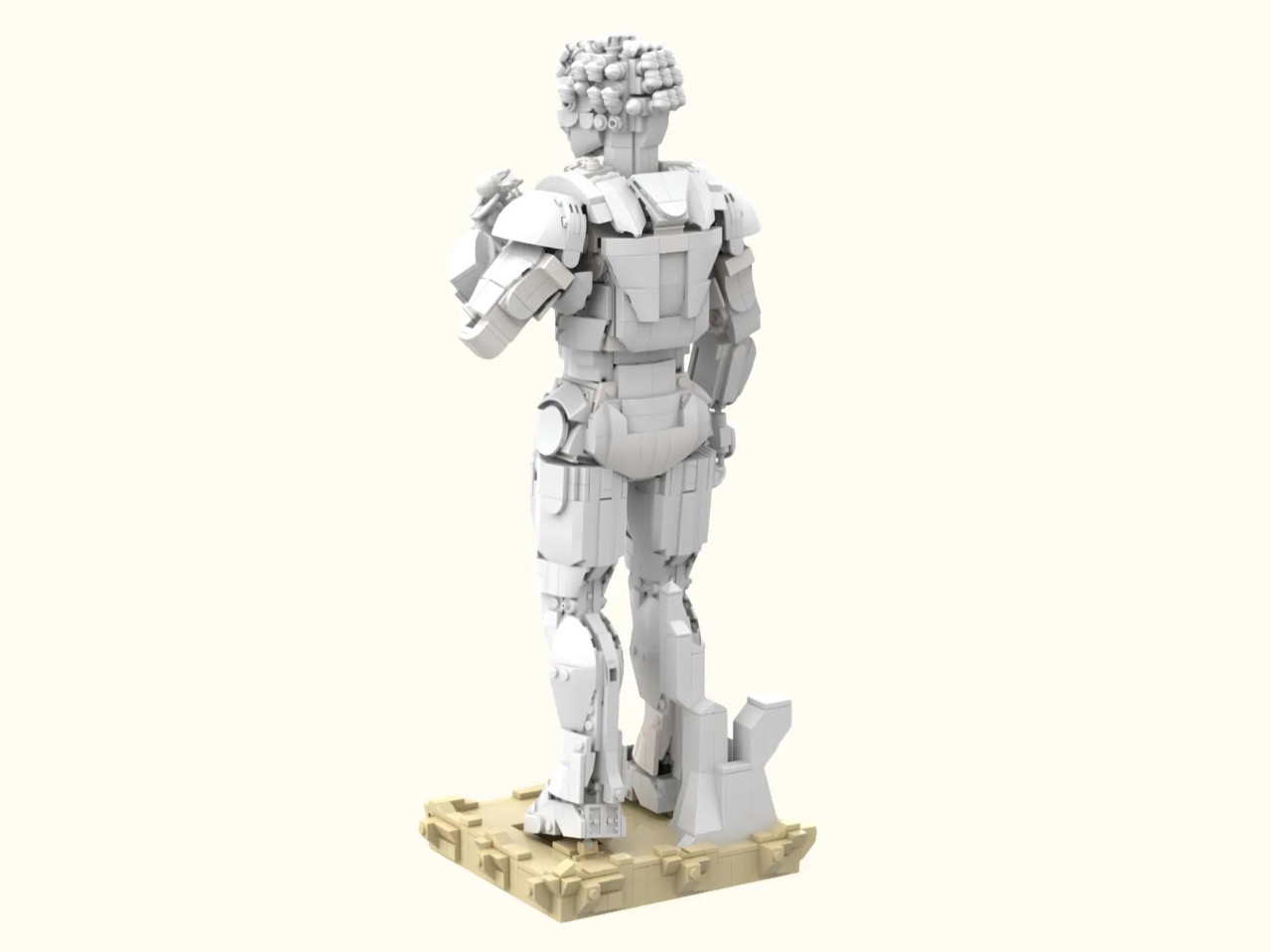
LEGO builder paaadilla.17 just pulled the same move, except this time the leaf is a single green element and the whole statue is made of ABS plastic. His Ideas submission recreates David in full, not just the bust, standing at nearly 41 centimeters tall across 1,608 pieces, fig leaf included as the build’s cheekiest and most historically accurate detail. It already has a Staff Pick badge, which tells you LEGO’s own team appreciated the joke too.
Designer: paaadilla.17
Michelangelo famously carved David before the fight rather than after it, weight shifted onto one leg, sling draped over the shoulder, torso twisted into that slight S-curve that makes the whole figure feel like it is about to move. Getting that tension across in interlocking plastic, without a single curved surface to cheat with, is genuinely hard, and paaadilla.17 leans on layered slopes and offset bricks to fake the contrapposto rather than flatten it into a stiff standing minifig pose. He also gave David a tan colored base instead of matching the white brickwork, a small choice that does the same job as gallery lighting, making the figure pop instead of blending into its own plinth.
My favorite detail, though, is the tiny Michelangelo minifigure standing beside his creation, mallet and chisel in hand, looking like he just stepped away for a coffee. It is a genuinely nice callback to LEGO’s Starry Night Ideas set from 2022, which shipped with its own Van Gogh minifig at an easel, and it suggests LEGO already knows this artist-plus-artwork formula sells. Scale wise, a true minifig-accurate David would only stand about 12 centimeters given the standard 1 to 42 ratio, so this one towers over its sculptor on purpose, which is oddly fitting since the real David was carved oversized to read correctly from 80 meters up on a cathedral roofline that never actually happened.
The build is currently sitting at 1,187 supporters and already picked up that Staff Pick badge, with 575 days left on the clock to hit the 5,000 mark before the real climb to 10,000 begins. If it gets there, LEGO’s review board takes over, and honestly, between the pose, the base, and that fig leaf doing its silent historical duty, this feels like exactly the kind of art-meets-brick submission that has a real shot. Head over to LEGO Ideas and give it your vote, David has waited five centuries for worse odds than this.
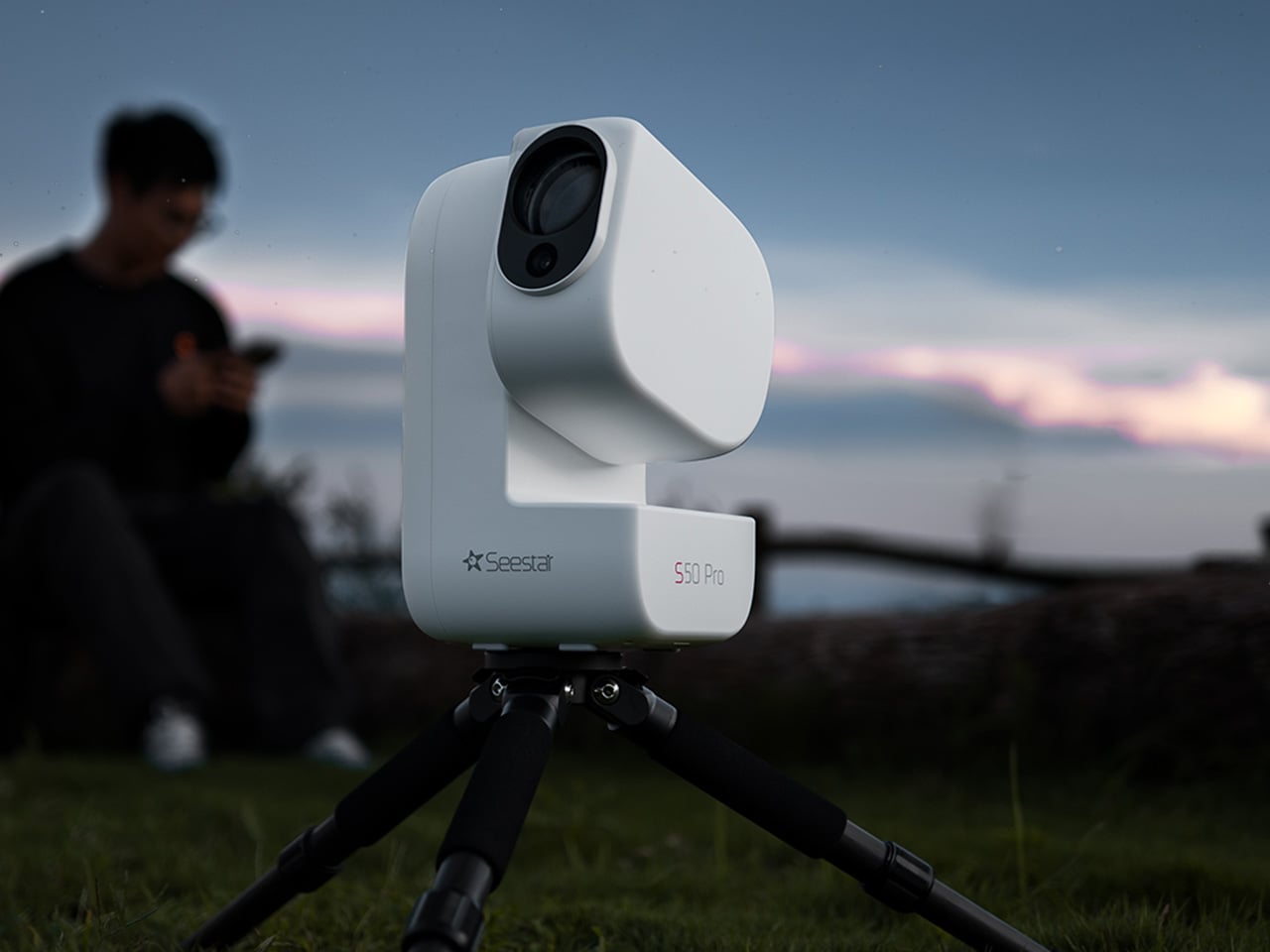
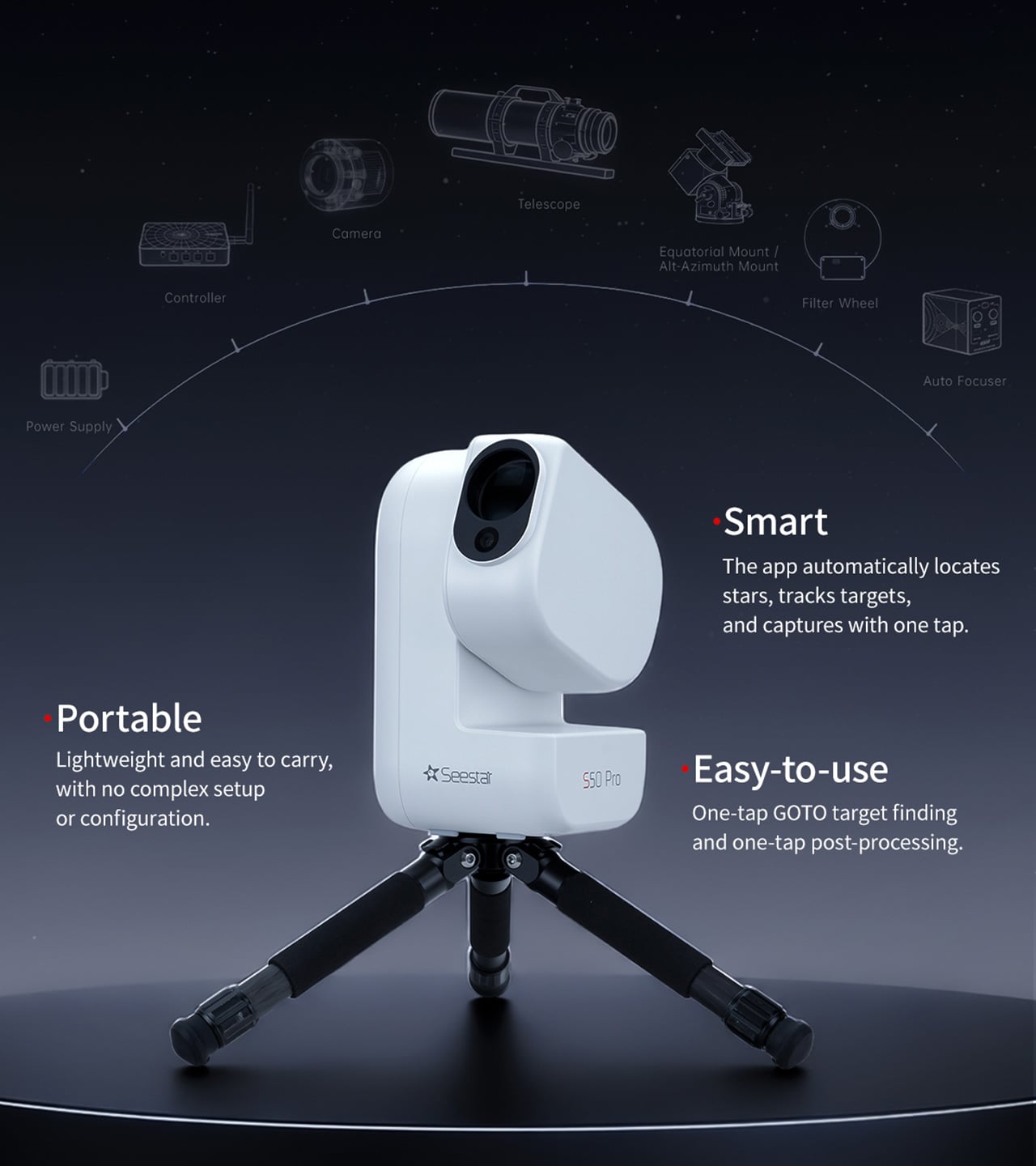
Astrophotography has always had a bit of a reputation problem. Getting a decent image of a nebula or galaxy typically means wrestling with a telescope, an equatorial mount, a dedicated camera, and enough cables to open a small hardware store. The ZWO Seestar S50 Pro changes that entirely, packing all of it into one tidy package you can carry out on a clear night.
At 2.8kg and folded down to roughly the size of a small camera bag, the S50 Pro is genuinely portable in a way that traditional astronomy rigs aren’t. There are no power cables to run, no separate computer to boot up, and no star alignment ritual to sit through. You just set it down on a tripod, open the app, and you’re already looking at the sky.
The optical heart of the Seestar S50 Pro is a four-element apochromatic lens built with extra-low dispersion glass, which is a meaningful upgrade that most beginner telescopes skip entirely. That 50mm aperture gathers substantially more light than the 30mm systems typically found at this price range, which means fainter structures become visible, and star shapes stay clean and round rather than bleeding into soft halos at the edges.
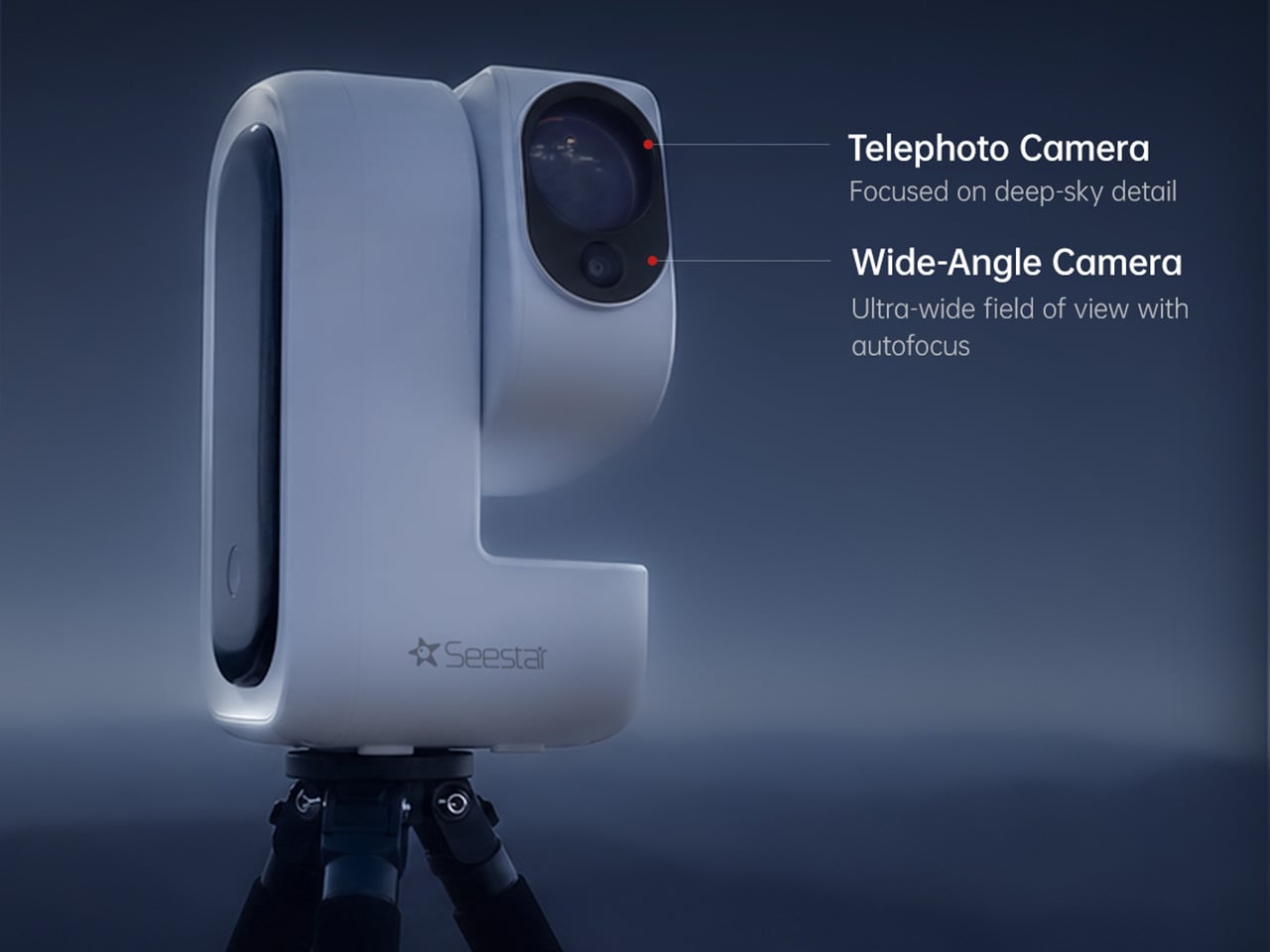
What makes the Seestar S50 Pro genuinely different from its predecessor is the dual-camera system. A telephoto camera with an 880mm-equivalent focal length sits alongside a wide-angle unit with a 63-degree field of view, and both cameras shoot at 4K resolution. The telephoto hunts for deep-sky details, while the wide-angle takes in the full sweep of the night sky above it.
That’s also where the Seestar S50 Pro makes a compelling case for shooting from cities or suburbs. A built-in triple filter system, including a dual-band light pollution filter targeting wavelengths specific to nebulae, pulls usable detail from skies that would otherwise wash everything out. A dark frame filter handles noise in longer exposures, and a magnetic solar filter handles the daytime shift.
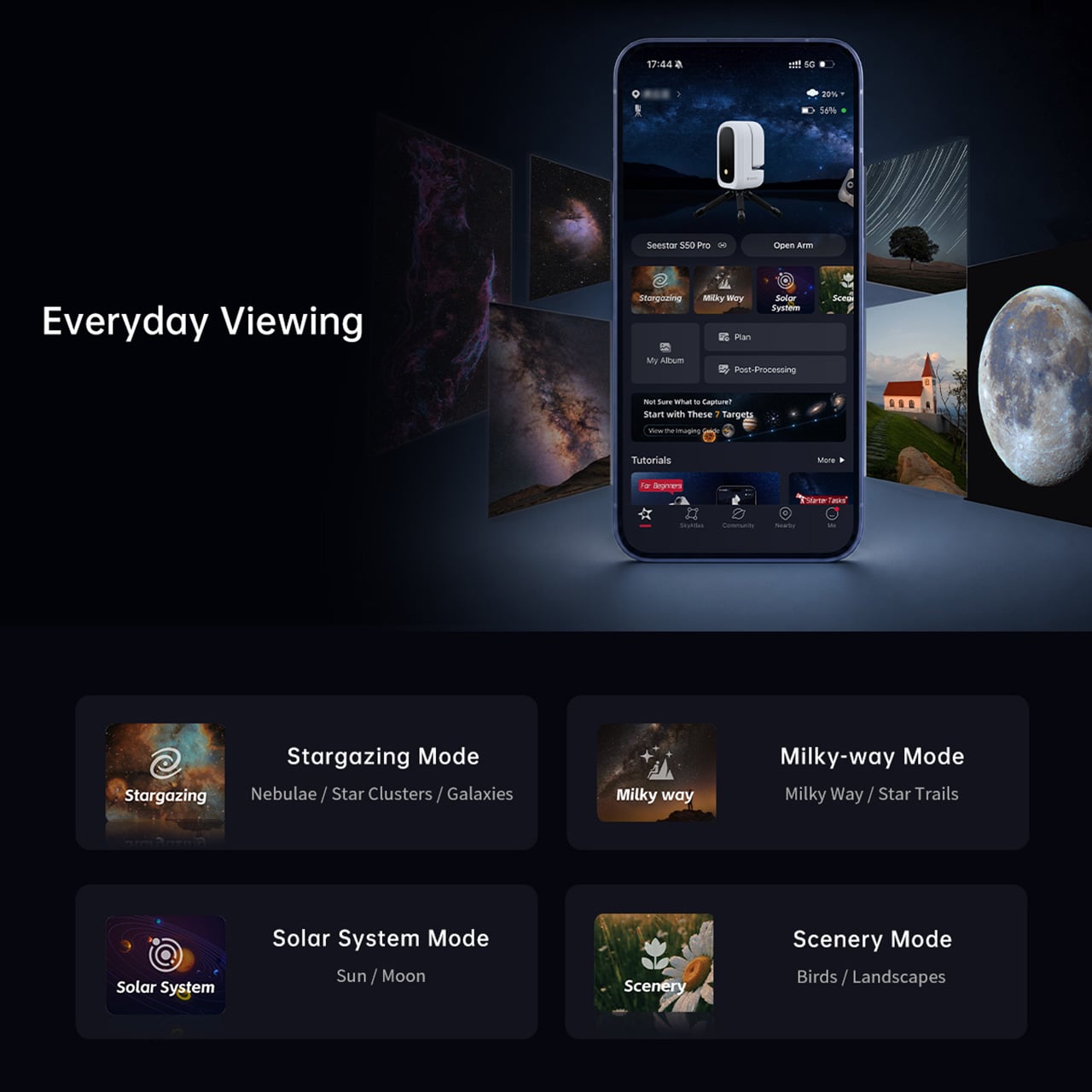
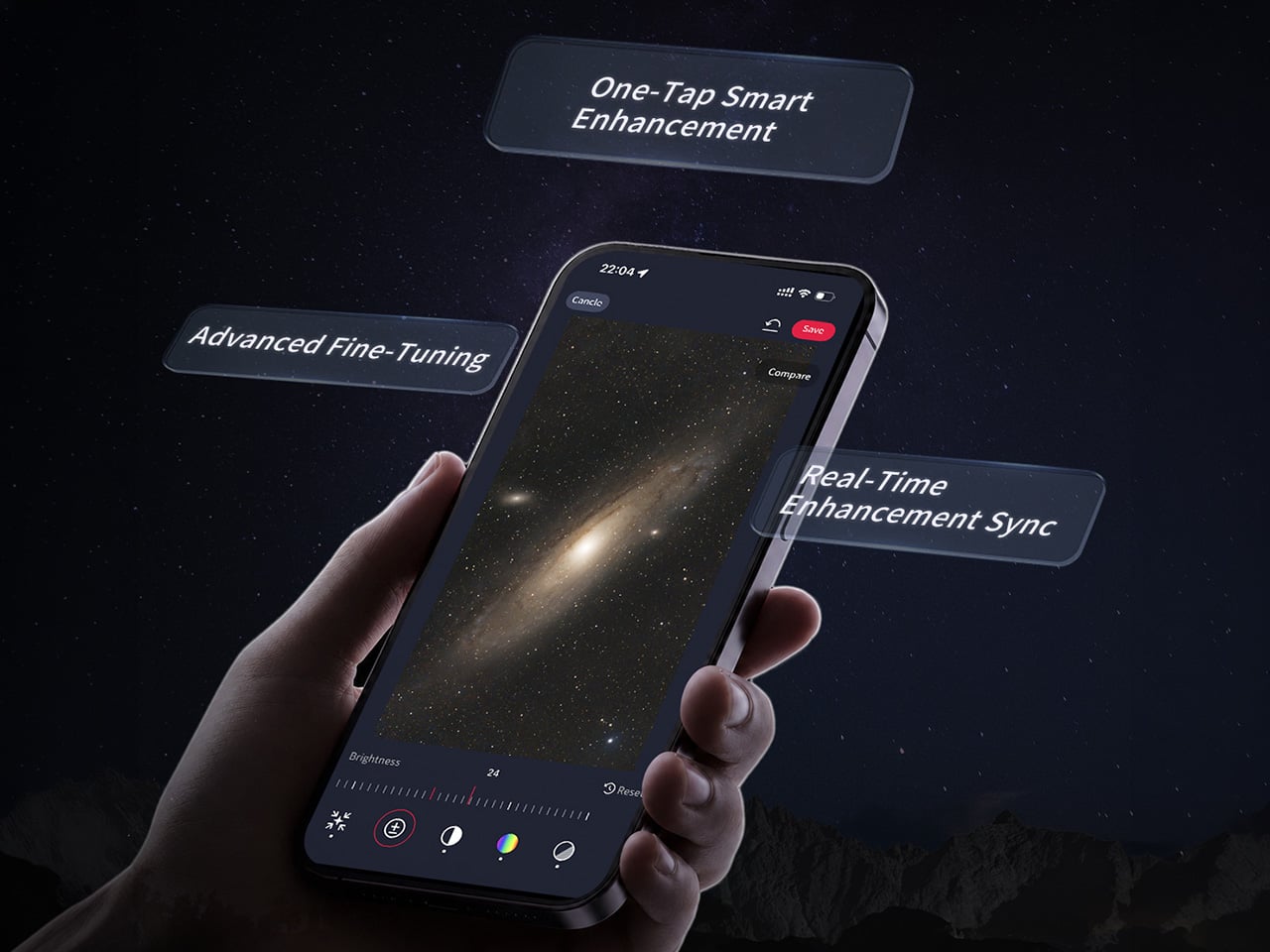
The Seestar app, which runs the whole operation, doesn’t ask you to know much astronomy to get started. You tap a target, and the telescope finds it, locks on, and begins stacking exposures automatically. There’s also an AI assistant you can simply talk to, naming the object you want to see, and it handles positioning and capture without any further input from you.
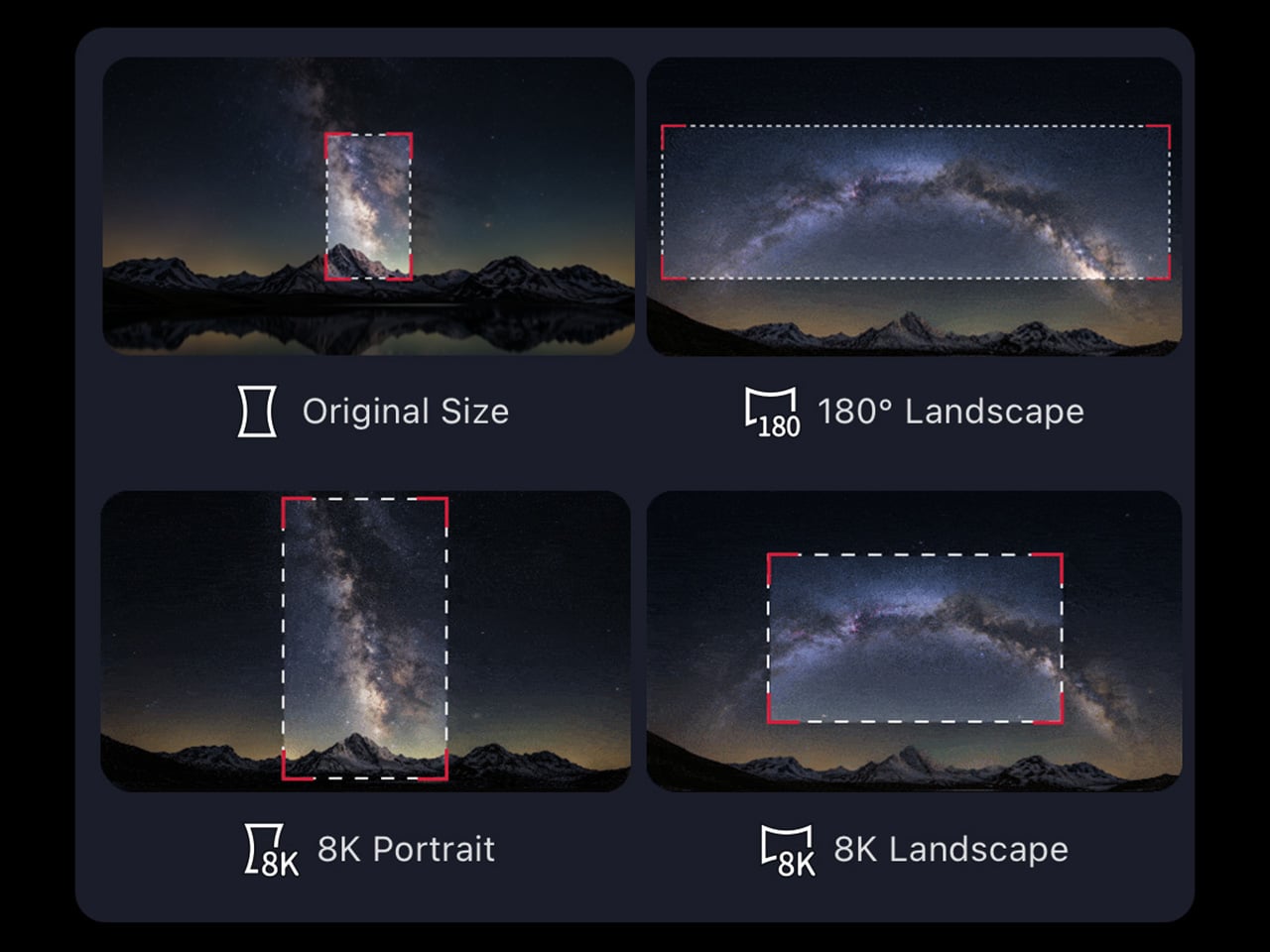
The wide-angle camera is where the more visible creative benefits live. A single tap is all it takes to stitch a complete Milky Way arch, with the device planning and capturing every frame on its own. Star trail sessions convert automatically into videos showing the sky in motion over time, and telephoto mosaic stitching can push images all the way to 8K resolution.
The S50 Pro doesn’t put itself away when the sun comes up, either. The telephoto camera, with its 880mm-equivalent reach, works just as well for birdwatching, distant landscapes, or capturing rare solar events with the included magnetic solar filter. It’s a surprisingly capable long-range daylight imaging device that transitions naturally into a serious astrophotography rig once the sky goes dark.
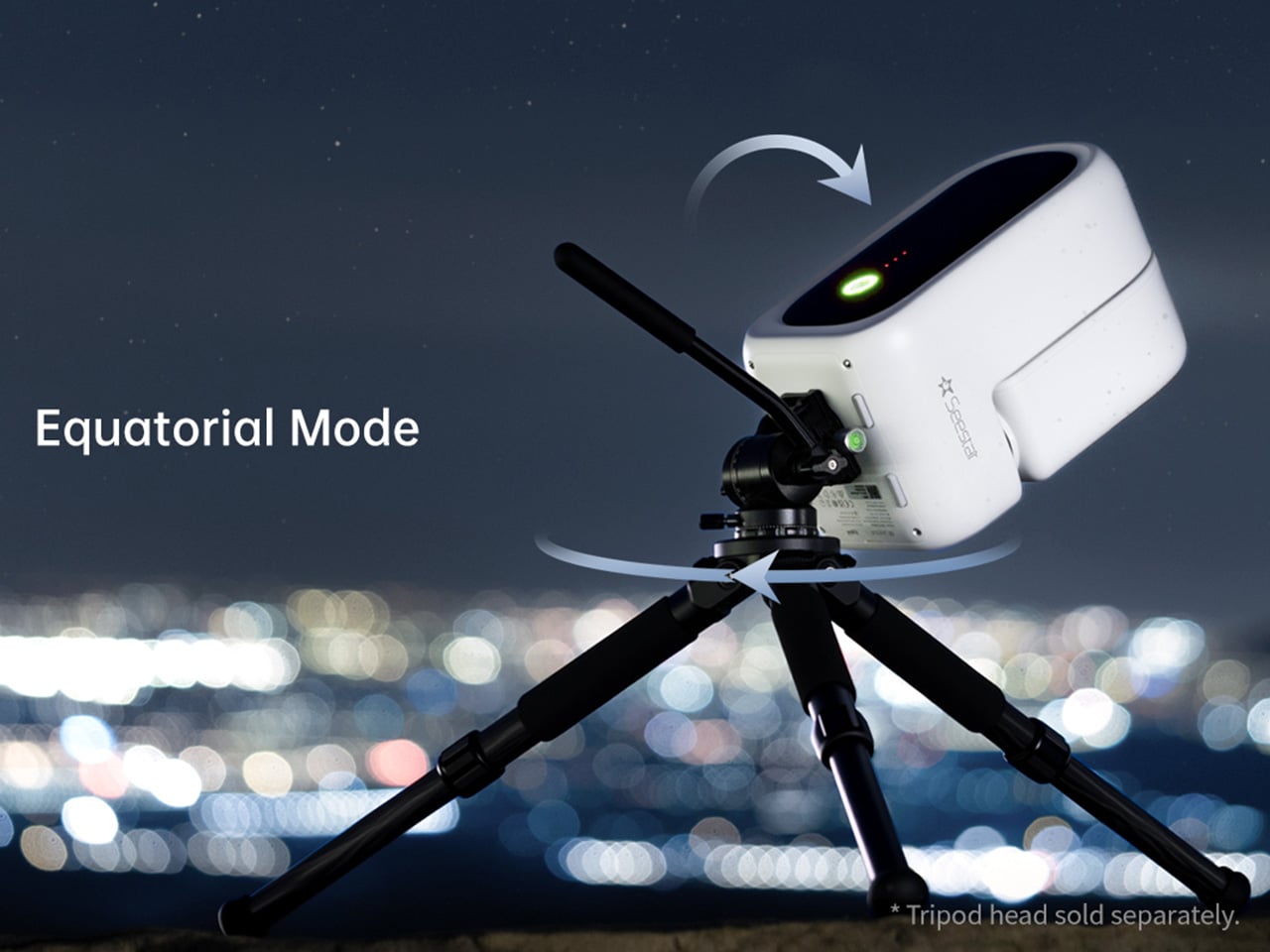
The 10,000mAh battery keeps the S50 Pro running for up to nine hours, enough to outlast most late-night sessions without a power bank nearby. Underpinning the whole tracking system is a zero-backlash precision drive that holds steady even when the wind gets involved, which is particularly useful in equatorial mode, where individual exposures can stretch to 60 seconds. The Telescope Network feature lets you control the device remotely, which means a cloudy local sky doesn’t have to end a session if the telescope is stationed somewhere clearer.
Nine hours of battery, a footprint that fits in a backpack, and no manual alignment to wrestle with before you can start shooting. That’s the version of astrophotography the Seestar S50 Pro is making a case for, and it’s a convincing one. The sky has always been worth looking at. The S50 Pro just makes it considerably harder to run out of excuses not to.
You have booked the hotel on the last night of every camping trip you have ever taken. Not because you are soft. Because your sleeping pad deflated at 2 a.m., your camp pillow was a balled-up fleece jacket, and the only working flashlight in the group was someone’s phone at eleven percent battery. That’s a gear problem. Not a character flaw. And the gear, finally, has caught up to every excuse you’ve been making.
These seven picks exist to solve the specific failures that send otherwise willing people to the front desk. A Damascus knife that looks nothing like a survival tool. A radio that doubles as your emergency kit without feeling like one. A fire pit that assembles without tools. A solar purifier that serves a real shower. A flashlight that throws light 1.2 miles. A grill plate that packs flat as a paperback. A pillow engineered from plant biology. All seven. This Labor Day.
1. Spectre Hammock Tent
You avoid hammocks not because you’re lazy. It is the banana. Every conventional hammock folds your body into a curve that feels fine for twenty minutes and becomes a spinal argument by hour three. You wake up stiff, which is the one thing a night outside should not do to you. Haven Tents, based in Sandy, Utah, has spent five years specifically fixing this. The Spectre is their most refined answer: a hammock tent built around a patented lay-flat system that creates a genuinely horizontal sleeping surface. You can sleep on your back, your side, or your stomach. That sentence should not be remarkable for a hammock. It is anyway.
The materials are Dyneema fabric and MONOLITE mesh, both chosen for strength-to-weight ratios that most outdoor gear only talks about in marketing copy. The whole system comes in under 4.5 lbs and packs to 15x6x6 inches, small enough to strap to the outside of your pack without rethinking your load. Hang it from two trees in a few minutes. No trees available? A Bivy Mode lets you set it up using trekking poles instead. Internal mesh pockets, a gear sling, and a ridgeline for your backpack handle storage without making you climb out in the dark. A translucent mesh shell gives you a 360-degree view of where you are. The detachable rainfly closes it down when the weather decides otherwise.
What we like
The lay-flat system is patented for a reason. Most people don’t believe side sleeping in a hammock is possible until they’ve done it in the Spectre. It changes the entire argument for camping over booking a room.
Dyneema and MONOLITE mesh deliver the kind of durability that justifies keeping a piece of gear for a decade, not replacing it after two seasons because the fabric wore through.
What we dislike
Bivy Mode requires trekking poles, which are sold separately. If you don’t own them, add that to your pre-trip budget.
The 15x6x6 inch packed size is genuinely compact but still needs to live somewhere on or in your pack. This is not a stuff-it-in-a-pocket situation.
2. Clip&Go Radio
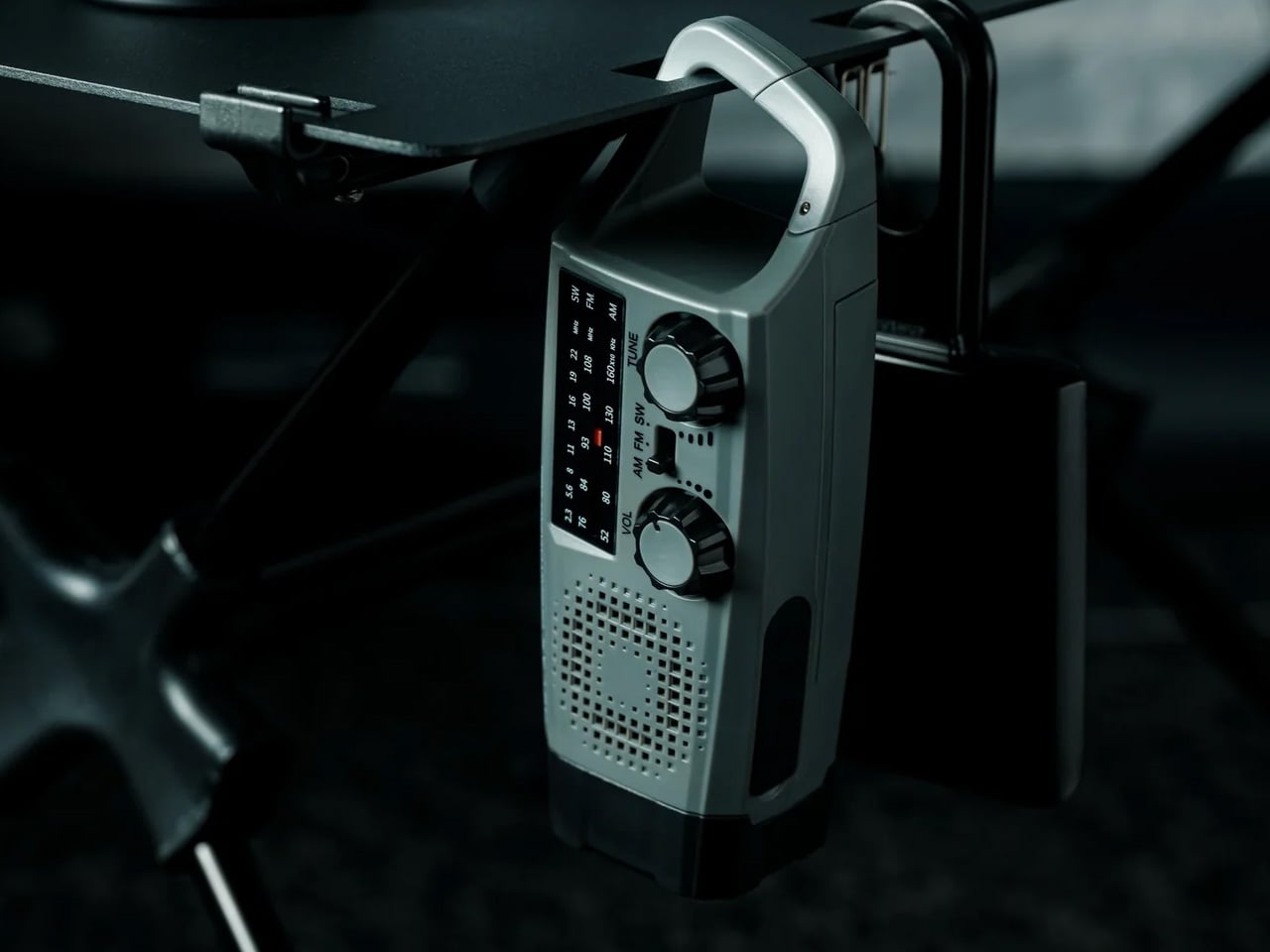
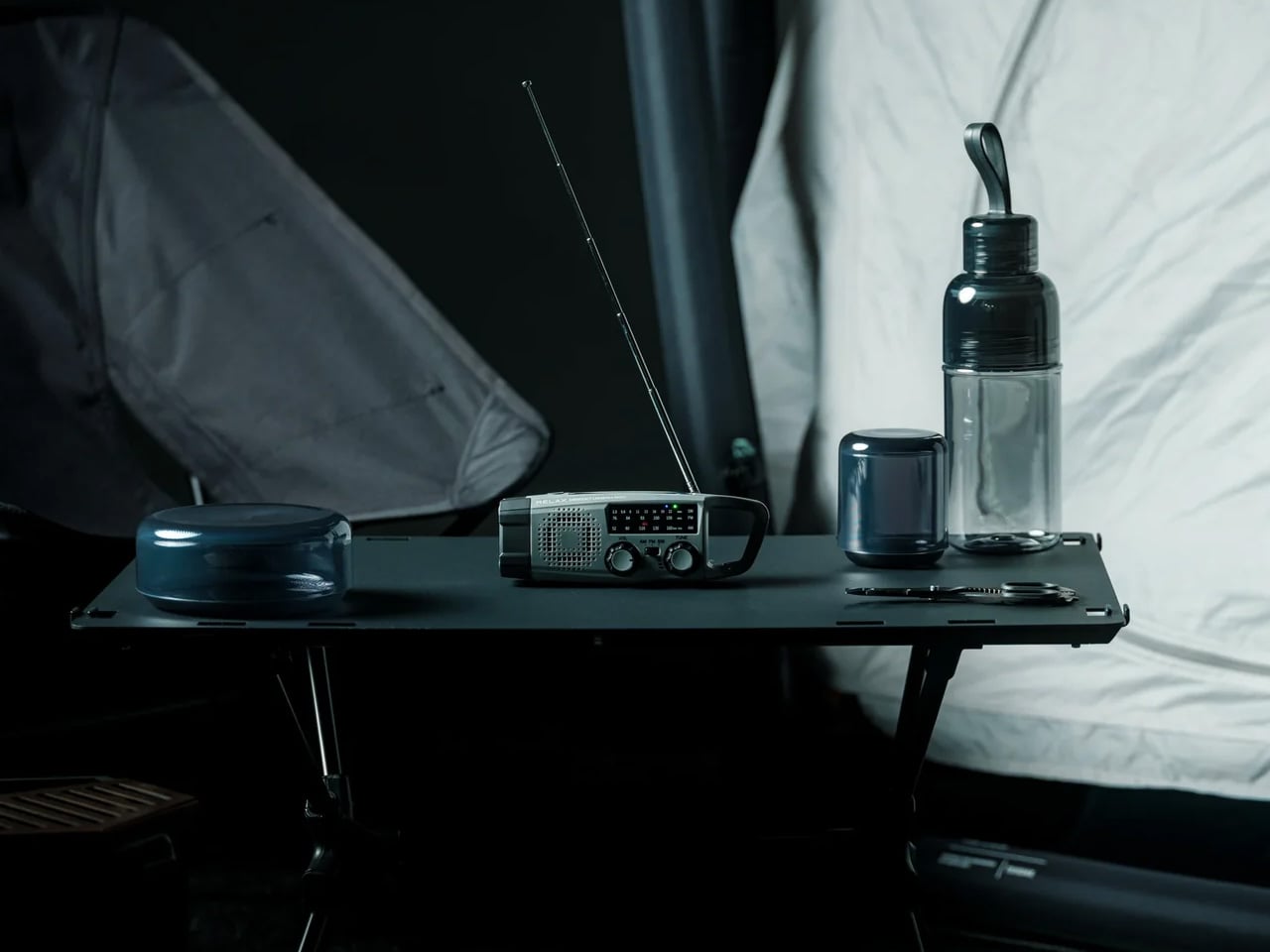
The version of you who would buy a dedicated emergency radio is the same version who bought a first-aid kit and left it under the bathroom sink. The Clip&Go works because it refuses to be emergency equipment. It is a radio first. AM, FM, and shortwave in a 7.8 oz body with a built-in carabiner that clips to your backpack strap and stays there. You bring it because you want music around the fire. The SOS button, the hand-crank, and the backup phone charging are already in the same clip you grabbed for the playlist.
The flashlight runs approximately 7 hours on a full charge. The radio runs for 13 hours. The 2,000mAh battery is a replaceable 18650 lithium-ion cell, which is the most thoughtful spec on this product. When the battery eventually degrades after years of use, you swap the cell. You do not replace the radio. USB-C charges it in about 2 hours. The hand-crank is there when USB is not. Press and hold the SOS control, and you get an audible alarm and a flashing light simultaneously. It is 6.2 x 1.9 x 2.1 inches and costs $60. Only 4 units remain in stock at the time of writing.
The replaceable 18650 battery is the single smartest spec on this list. Every other emergency radio becomes landfill the moment its sealed internal battery dies.
13 hours of radio runtime is longer than any realistic campsite evening. You will not outlast this thing.
What we dislike
Solar charging takes approximately 67 hours to reach a full charge. That is a genuine last resort, not a charging method.
Four units remaining is the actual inventory count. This is not a sales tactic.
3. Portable Fire Pit Stand
More campgrounds restrict ground fires than they did five years ago. Dry meadows, wooden deck platforms, national park sites with leave-no-trace rules. You will find out about the restriction after you’ve already gathered the wood. The Portable Fire Pit Stand is five black steel pieces that slot into each other like puzzle pieces, lift your fire off the surface below it, and meet the ground-fire restrictions at most sites that prohibit direct contact. Setup requires zero tools. Nothing to thread, nothing to tighten, nothing to forget at home.
The airflow holes cut into the panels are not decorative. They pull oxygen under the fire and produce a cleaner, more consistent burn than anything sitting on compressed dirt. Slot in the optional trivets and you have a legitimate surface for cookware. The steel is manufactured with a sheet metal process that resists warping under sustained heat. It will discolor over time. That discoloration becomes a patina that is unique to your unit. Every Portable Fire Pit Stand ends up looking different from every other one.
Five-piece no-tool assembly is exactly the design restraint that makes gear worth keeping in the truck permanently rather than reassessing each trip.
The airflow under the fire produces a noticeably more even burn. On a three-day trip, that difference compounds across every cook and every evening.
What we dislike
No integrated grill grate. The trivets hold cookware over the fire, but you’re supplying your own grate if you want to grill directly over the coals.
4. GoSun Flow
There is a specific moment at the end of day two of most camping trips. Someone asks where they’re supposed to shower tomorrow. That is the moment your group starts looking up hotels. The GoSun Flow is the answer to that question before it gets asked. It’s a solar-powered water purifier and portable shower system that compresses into a backpack. It eliminates 99.99% of waterborne pathogens and delivers one liter of clean drinking water per minute from any freshwater source you can access. A flexible faucet clamps to a branch, a table, or your truck tailgate. You’ve built a working outdoor sink from what’s already there.
The solar heater delivers a warm five-minute shower after 30 minutes of sun exposure. That’s a real shower, not a wet-wipe situation. USB power backs it up when clouds intervene. The filter handles 1,000 liters before it needs replacing, which covers multiple seasons for most groups. For a three-day Labor Day weekend, this system removes the only hygiene argument that sends your group to the checkout desk on day three. It does not make camping feel like a hotel. It makes camping feel like something you can actually finish.
What we like
Combined purifier, sink, and shower in a single backpack-compatible system is the most complete camping hygiene solution available without requiring dedicated infrastructure.
1,000-liter filter life means you are not thinking about replacement costs for multiple seasons of regular use.
What we dislike
The system cannot process saltwater. If your Labor Day trip is coastal, you need to source freshwater separately before the purifier becomes useful.
Multiple components mean multiple things to organize. Run a full checklist the night before you leave.
5. Lumitwin DL700
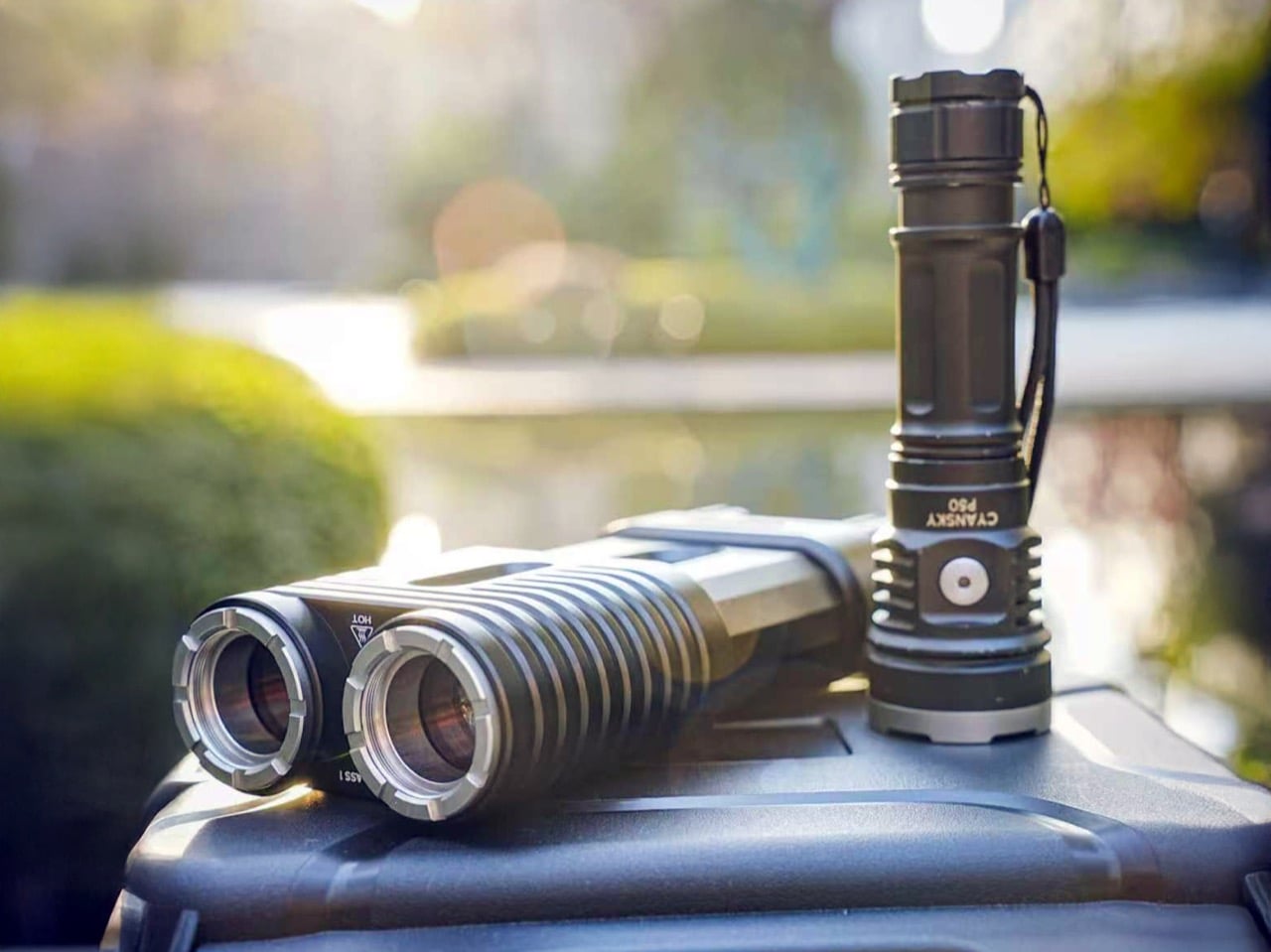
You have been in this situation. It is 9 p.m., you are trying to read a trail marker 200 yards out, and every flashlight your group has is essentially a pointed candle. The Lumitwin DL700 throws light 1.2 miles. Both barrels firing together produce 1,100 lumens and 958,000 candela using laser-excited phosphor technology, the same light source found in high-end automotive laser headlights. This is not an LED with a better reflector. The beam stays coherent across distance instead of scattering into a useless cone. At 2 kilometers of throw, you are seeing things your campsite neighbors cannot.
Each barrel runs independently with its own switch and brightness control. Swap in the included red filter for night-vision preservation. Green for cutting through fog and dense vegetation. The flood filter widens the beam for close-range camp work. Run different filters on each barrel simultaneously. The whole unit is machined from a single block of 6061 aerospace aluminum, IP68 rated for submersion to 1.5 meters, and survives a 10-foot drop. Total weight is 1,032 grams. You feel that weight. That is the trade for what the DL700 does.
What we like
Independent barrel control with swappable filters gives you six effective flashlight configurations in one unit. Red on one barrel for navigation, white on the other for distance spotting, simultaneously.
IP68 plus 10-foot drop resistance on a $329 light means you are not replacing this for years of serious outdoor use.
What we dislike
1,032 grams is a commitment. This lives on a belt clip or inside a bag. It does not disappear into a jacket pocket like an everyday carry light.
6. Compact Modular Grill Plate
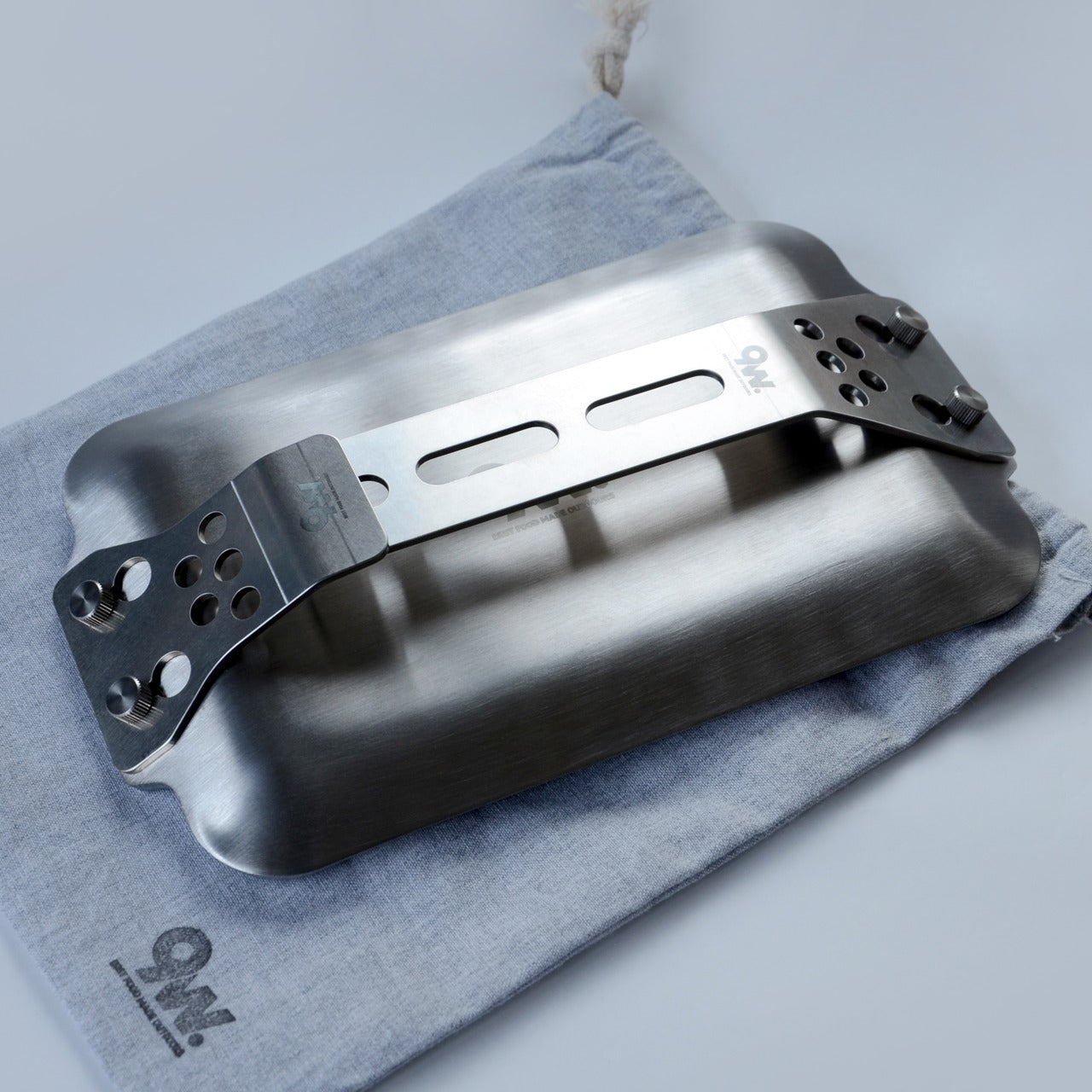
Your campsite cooking situation right now is one of two things. Either you’re eating food that doesn’t require heat, or you’re attempting to balance a pan on a grate that came welded to the fire ring and hasn’t been cleaned since a previous administration. The Compact Modular Grill Plate is a flat, modular steel cooking surface that packs to roughly the thickness of a paperback and configures around what you’re actually cooking. You stop adapting your meal to your gear. The gear adapts to the meal.
It works over an open fire or a camp stove without a conversion kit or a second piece of equipment. The flat surface cleans significantly faster than any bar grate. One wipe, or a quick rinse, and it’s done. That difference matters most on the third morning when no one wants to deal with last night’s situation. The compact form is the decision that earns this plate a permanent spot in your kit. When cooking gear is bulky, it gets left at home. When it packs this flat, it gets packed every time.
Modular configuration adapts to different heat sources and meal types without adding a second surface, a second bag, or meaningful additional weight.
Flat surface cleans in a fraction of the time any traditional bar grate requires. On a multi-day trip, that is a real, compounding gain.
What we dislike
Surface area works cleanly for two people. Cooking for four or more means staggering meals, which adds real time to every camp dinner.
No integrated heat source. This is a cooking surface. You still need a fire or a stove under it.
7. Camp Napper
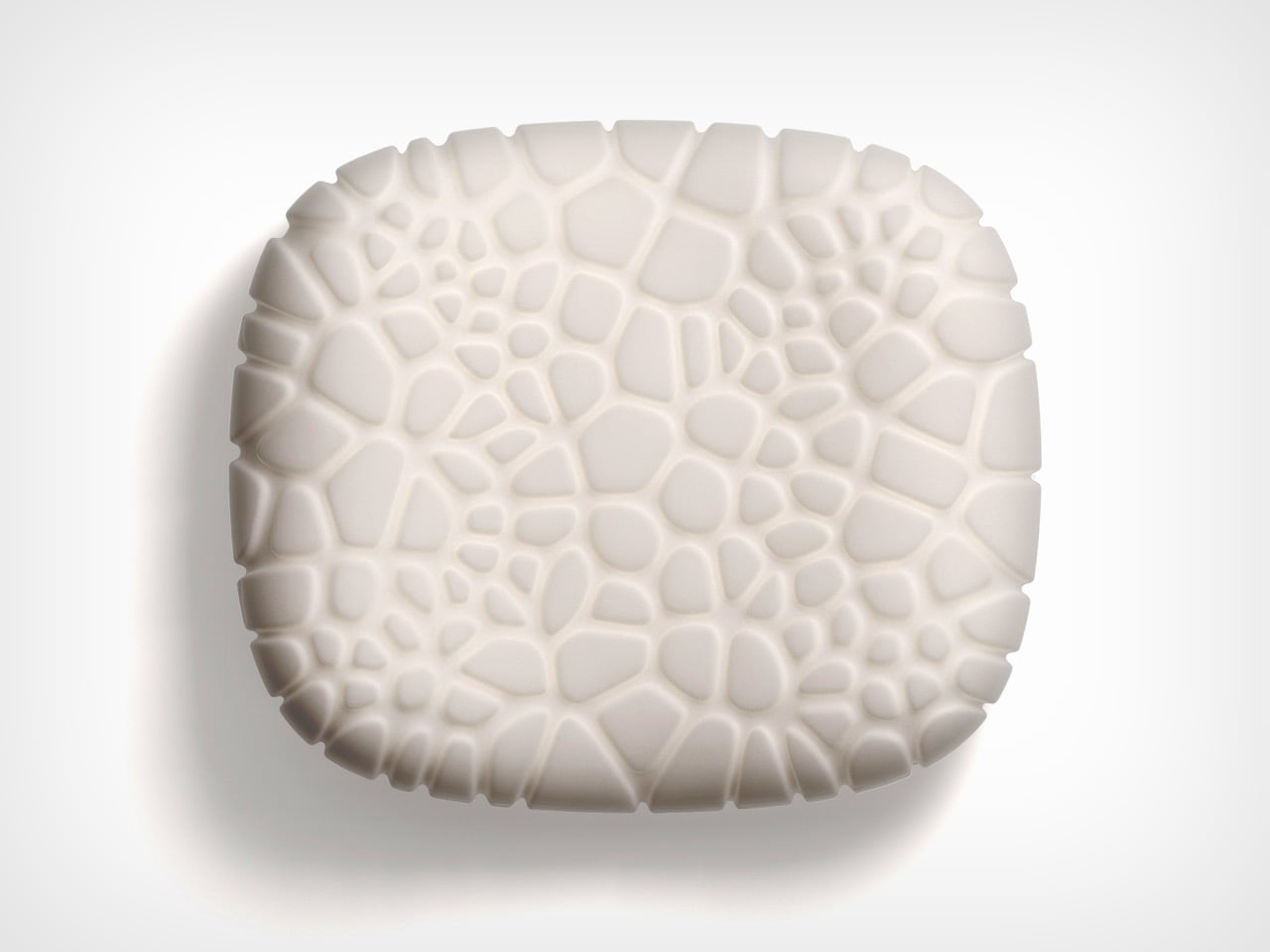
Your inflatable camping pillow has betrayed you at least once. It sounds like a pool float every time you shift your head, loses pressure by 3 a.m., and packs into a shape that somehow takes up more bag space than it deserves. The Camp Napper is what happens when a designer named Chen Xu stops treating the camping pillow as an afterthought and starts treating it as an engineering problem. The surface geometry is derived from the texture of fungal spores. The internal structure mirrors the hollow vascular channels found in plant stems. This is Voronoi polygon modeling applied to where your face actually rests.
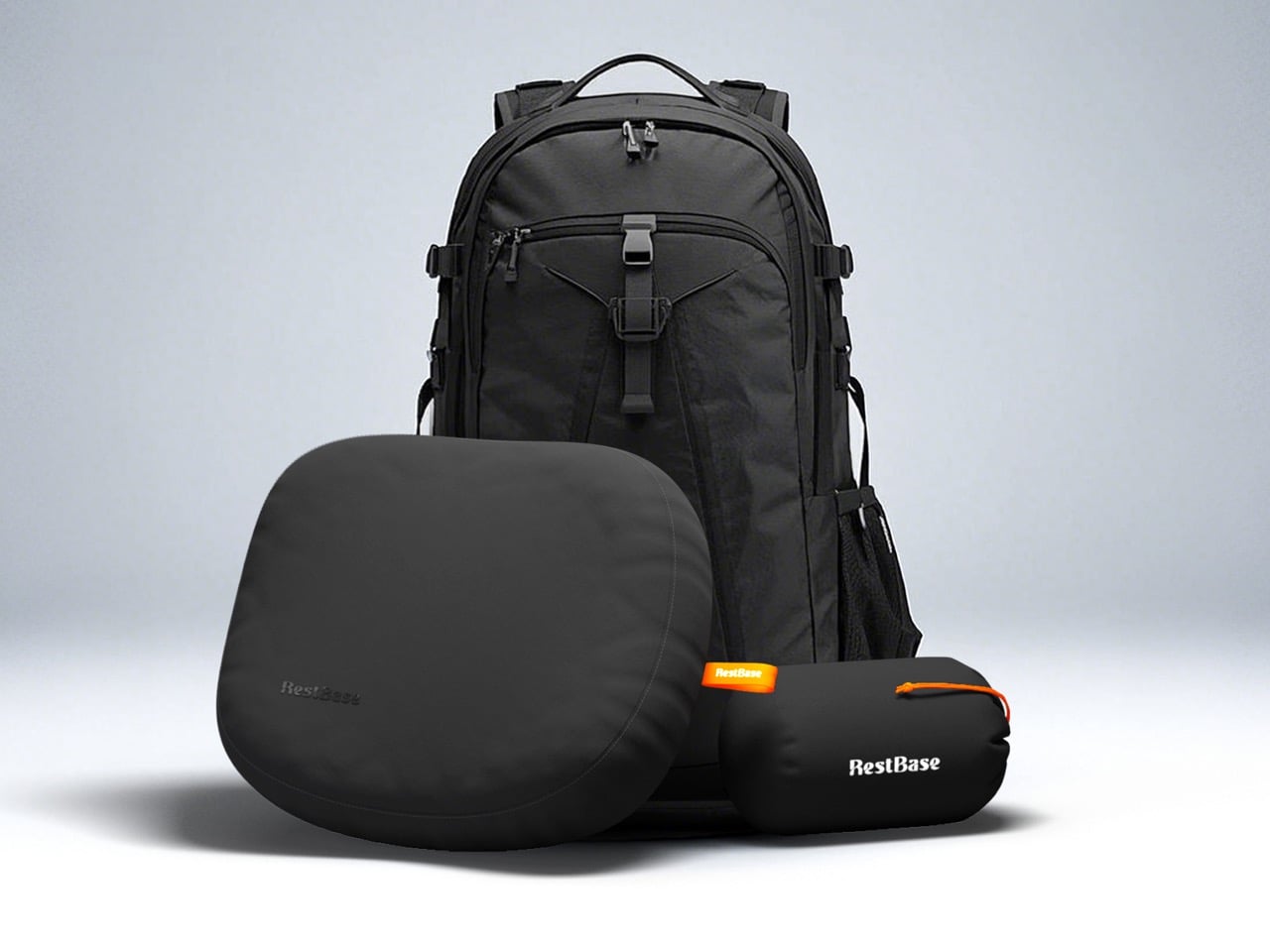
The raised cellular structures on the front face increase contact area and channel airflow simultaneously, so your skin stays cool instead of clammy through the night. Flip it, and the back face offers four distinct tactile zones depending on your orientation. Memory foam holds the bionic geometry under repeated compression without losing its shape by morning. The whole pillow weighs around 14 oz and compresses to roughly the size of a water cup, no inflation valve required. Anti-slip rubber on the base keeps it planted on your sleeping pad. This is a hotel pillow argument made entirely in materials and geometry.
What we like
Airflow channels built into the contact surface actually keep the pillow cooler than standard foam options, which matters on any night above 65°F.
Compresses to water-cup dimensions with no inflation valve to leak, fail, or wake you up at 3 a.m.
What we dislike
The raised cellular texture can be a genuine trypophobia trigger.
The Gear Makes the Decision
Every hotel booking after a camping trip is a gear verdict. The sleeping surface failed. The light died. The fire went out. The shower question didn’t have an answer. These seven picks close each of those gaps before the trip starts, so the hotel down the road stays a choice rather than a rescue. Comfortable outside is a design problem. It has design solutions.
My personal pick is the Clip&Go Radio. Not because of the SOS button. Because it is the only product on this list I would grab for an ordinary Tuesday hike without thinking about it twice. It clips to the bag, plays music, and carries every emergency feature in the same body I reached for anyway. That is the version of preparedness that actually travels with you: useful before anything goes wrong.
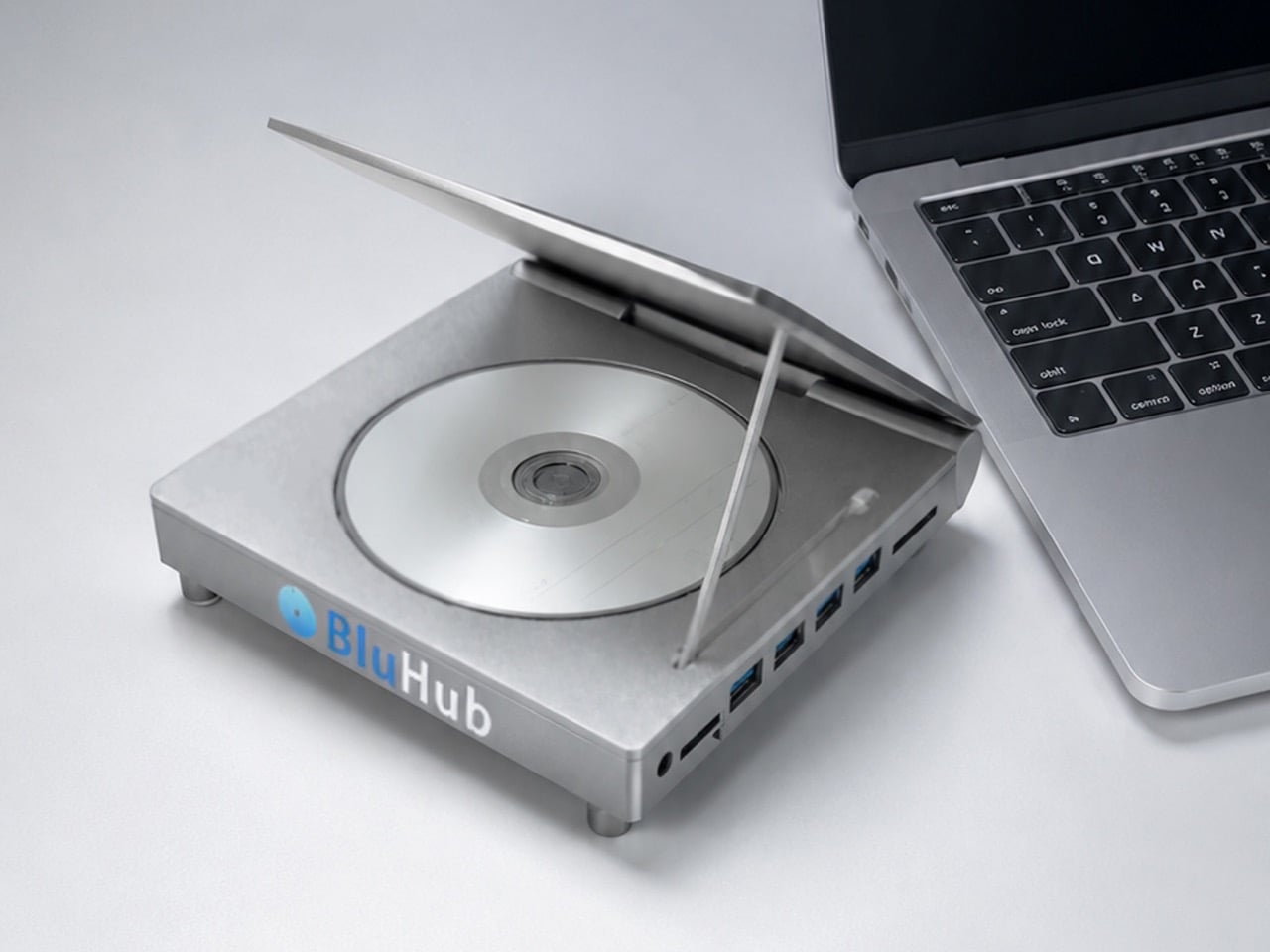
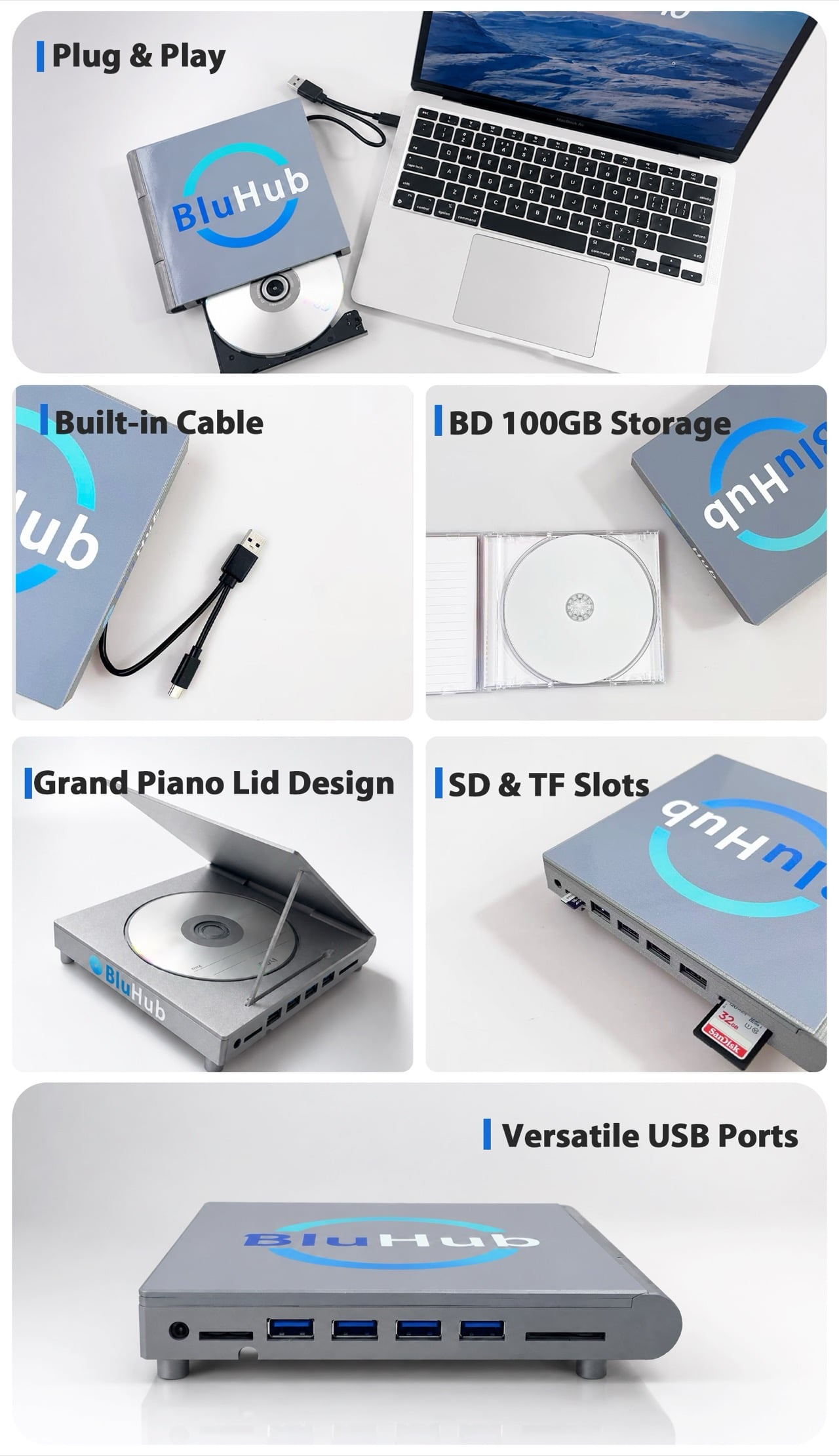
There was a window, roughly 1998 to 2006, when you could walk into a shop, buy a disc, and own the thing forever. No login, no region check, no email explaining that your library is migrating to a new tier. We traded that for the cloud and got monthly bills and films that quietly vanish from the catalog. BluHub is a 9-in-1 external Blu-ray drive built for people who want their files back on a shelf, with an aluminum lid that props open like a grand piano so a spare disc sits on display while the drive burns another. It is a strange, slightly stubborn object, and I like it.
Under the styling it reads and writes Blu-ray, DVD and CD, burns BD-R at 6x onto 100GB discs, and adds four USB 3.0 ports, SD and microSD slots and captive USB-C and USB-A cables, all in a 409g aluminum body running on bus power. Early pricing is $59 against $129 retail, with units due in November 2026. Sony ended production of all recordable Blu-ray media in February 2025, and Pioneer’s US arm has since stopped selling optical drives entirely. A three-person Los Angeles team looked at that and decided it was the perfect moment to build a nicer one.
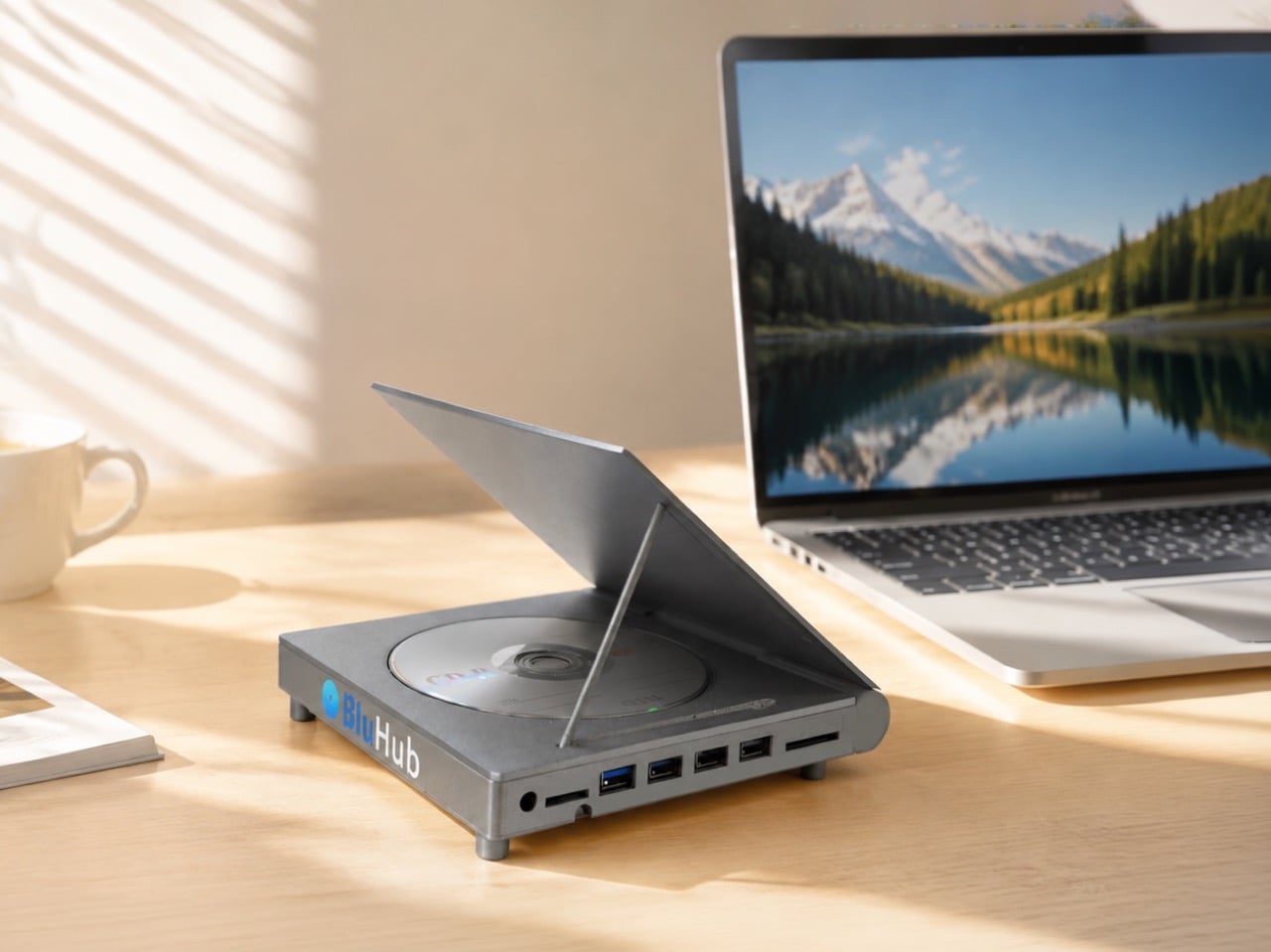
Lift the aluminum lid and it locks upright on a thin strut, holding a second disc in plain view while the internal tray reads or burns another underneath. Wang gets the credit for pushing that flip-top through, and it is the one decision here with real design lineage behind it. Dieter Rams and Hans Gugelot put a clear acrylic cover on the Braun SK4 in 1956 and people nicknamed it Snow White’s Coffin, because for the first time a machine let you watch it think. Naoto Fukasawa did the same trick differently in 2000, hanging a Muji CD player on the wall so the spinning disc became the whole point of looking at it. Laptops spent the two decades after that hiding the mechanism, then removing it. BluHub just quietly puts it back where you can see it.
Apple pulled the optical drive from the MacBook Pro in 2012 and called it progress, and every Windows manufacturer followed within a few years, chasing thinner chassis and lighter shipping weights. That trade made sense for a while, streaming was cheap, storage was cheap, and nobody missed the disc tray. It also happened to be the moment computing quietly stopped selling you a machine that could read what you owned outright and started renting you access instead. The optical drive was the last piece of hardware standing between a consumer and a library they fully controlled, no account required, no revocation possible. Bringing it back as an external accessory does not undo that shift, but it does hand the option back to anyone who wants it.
Aluminum alloy covers a 165 x 160 x 34mm footprint, sitting on four anti-vibration feet with a claimed sub-30dB noise floor while burning. A captive USB-C and USB-A cable stows in a channel underneath, so there is nothing loose to lose in a drawer. Every USB hub I have ever owned has shed its cable within a year, and building the cord into the chassis is the kind of unglamorous fix that never makes a keynote but genuinely improves daily use. Four USB 3.0 ports, an SD slot and a microSD slot round out the connectivity, all riding a shared USB 3.2 Gen2 pipe rated at 10Gbps rather than 10Gbps per port, worth knowing before a card dump and a disc burn compete for bandwidth at the same time. Compatibility spans Windows, macOS, Linux and ChromeOS, plus iPadOS and Android over OTG.
A 1TB SSD costs roughly double what it did in late 2025, chased there by an AI-driven NAND shortage that shows no sign of easing before 2027. RAM prices are climbing for the same reason. Sony confirmed this July that PlayStation physical discs stop being produced altogether by 2028, one more signal that game ownership is headed the way of movie ownership already went. Against that backdrop, a $55 hub that turns a five dollar disc into 100GB of storage nobody can revoke reads less like nostalgia and more like a hedge. The piano lid is what got me. The timing is what makes the argument.
BluHub is available through its Kickstarter campaign, with the early bird sitting at $59 against a stated $129 retail price. Multi-unit bundles run $109 for two, $159 for three and $259 for five. Shipping is estimated for November 2026, with delivery fees of $6 to $7 in the US and comparable rates internationally.
Quick pop quiz for anyone who owns Meteora on CD, RIP CD collections. Who’s the guy on the cover, crouched down in a respirator with a spray can? If you said Mike Shinoda, you’re wrong, and so was I for about fifteen years. It’s actually Boris Tellegen, a Dutch graffiti artist who goes by Delta, and the whole thing started as a giant collaborative mural before the band decided the quiet shot of one guy working was more powerful than the finished wall. Which, honestly, is a very 2003 nu-metal thing to do. Make something huge, then zoom in on the one moment that feels honest.
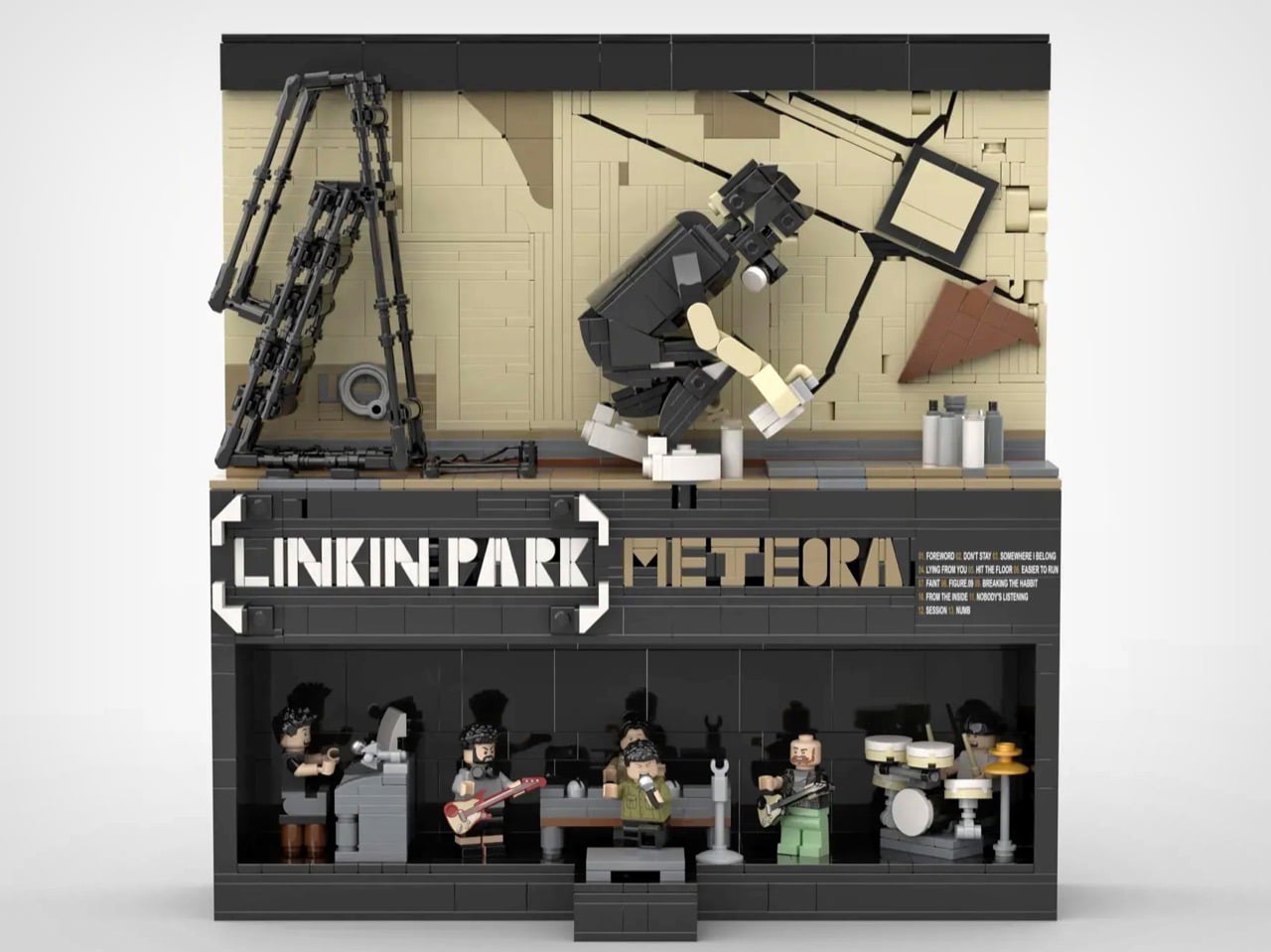
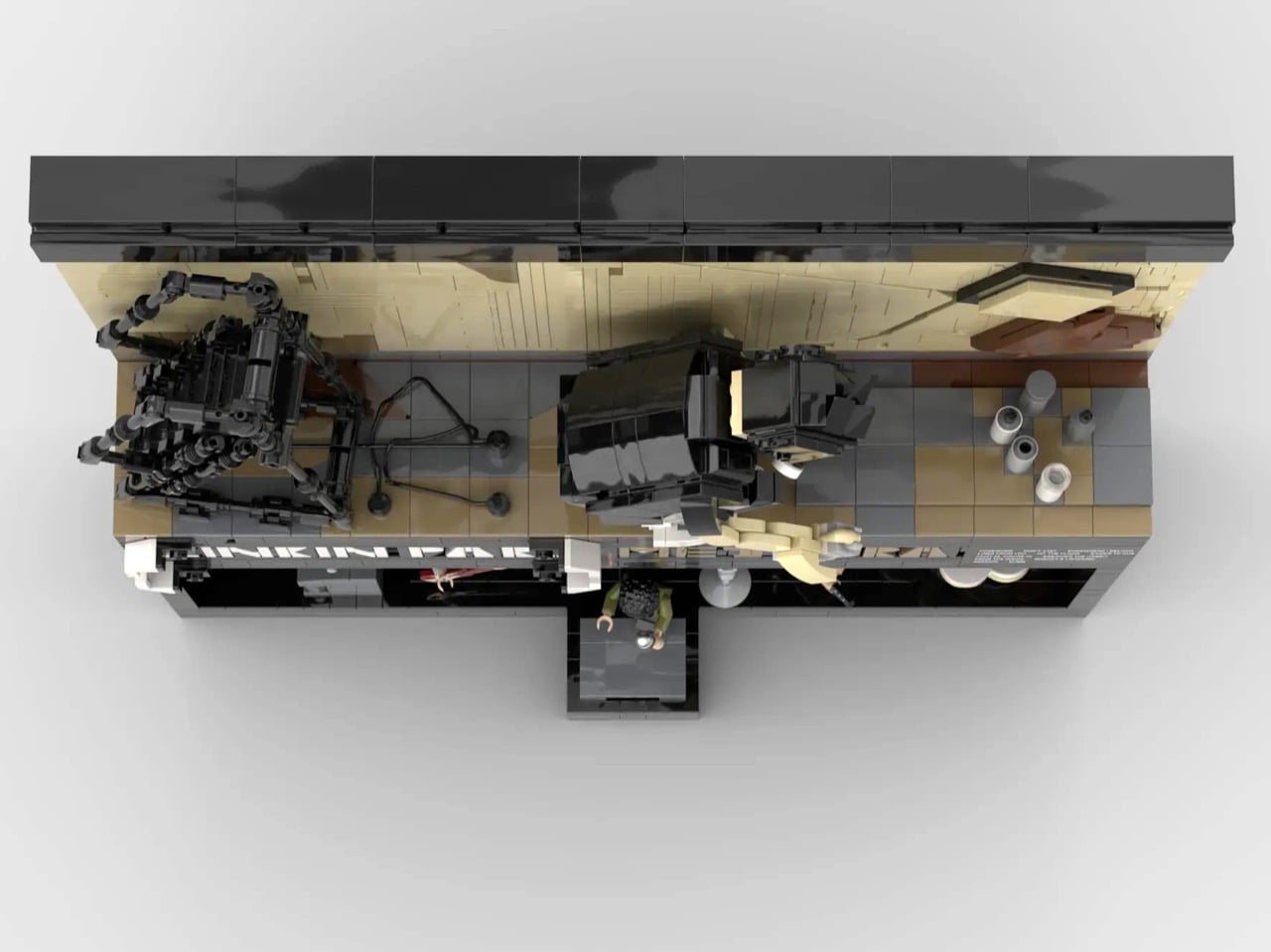
Anyway, LEGO builder Zihnisinir_61 apparently had the same reaction I did, because he went and turned that exact photo into a brick-built diorama, complete with the ladder, the scaffolding, and Delta himself mid-spray. And then, because why stop at faithful, he added an entire concert underneath it that was never part of the original artwork at all.
Designer: Zihnisinir_61
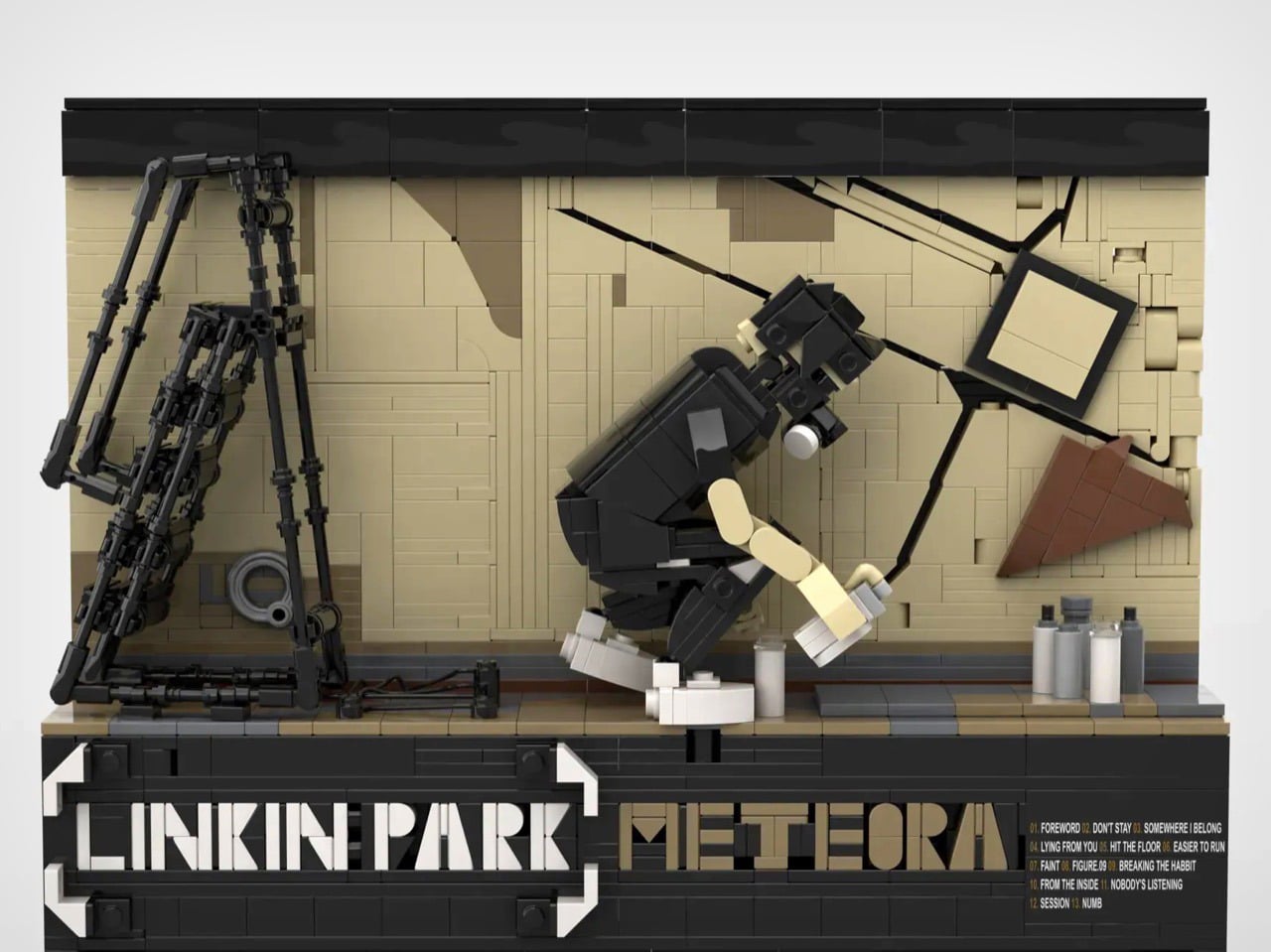
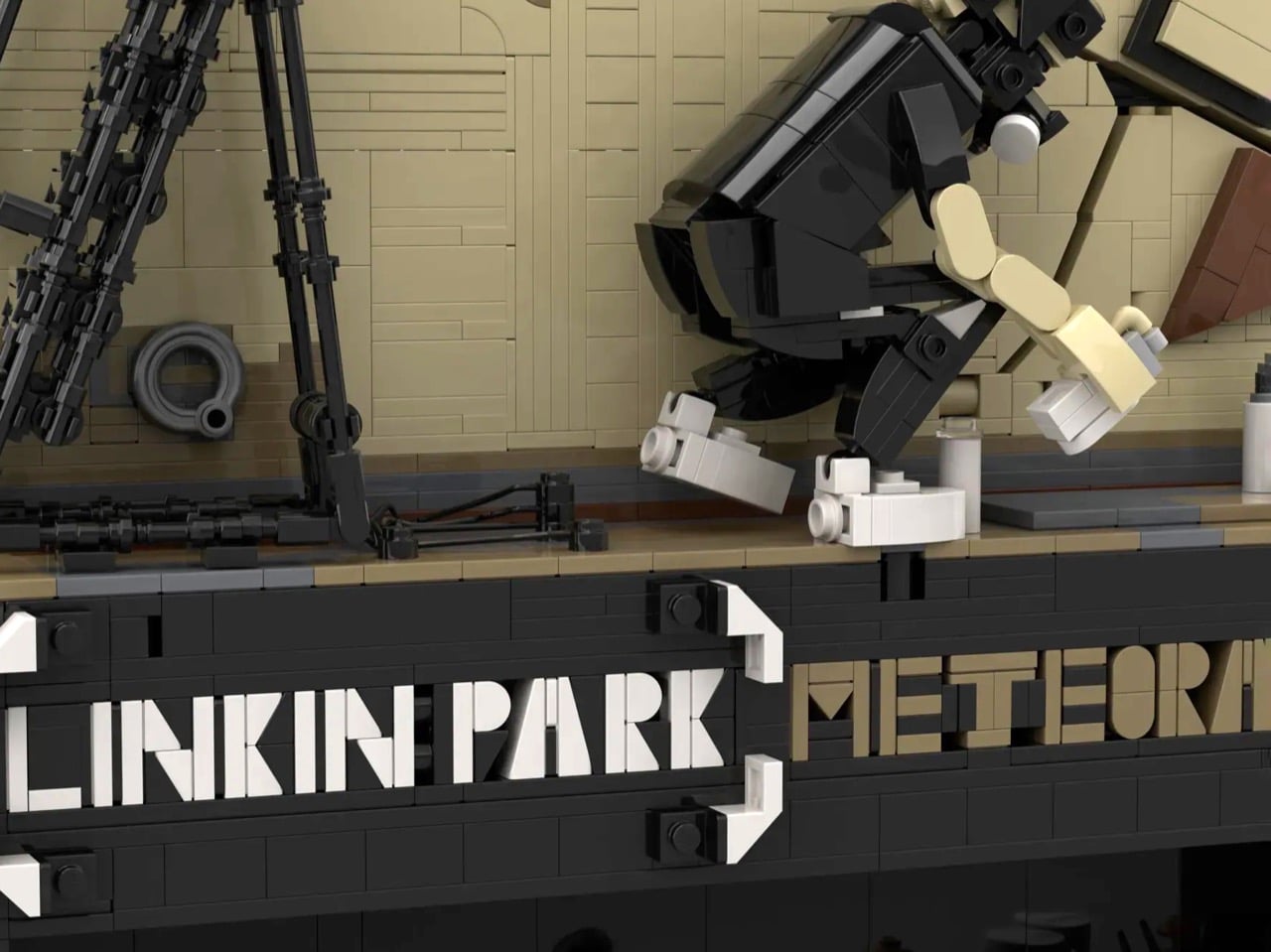
The top half of the build is the album cover you already know, rebuilt with genuinely impressive detail. The scaffolding on the left is all thin, angular Technic framing that somehow reads as rickety and load-bearing at the same time, and Delta himself is hunched over mid-spray with a tiny paint can in hand, exactly like the photo. The wall behind him is where the real craft is hiding though. It is packed with SNOT, studs not on top, techniques both inside and outside the build, and Zihnisinir_61 pointed out something I would not have caught on my own, that all those angled bricks are what create the deliberate imperfections and diagonal shadow line running through the original mural. It should not work as well as it does, but it does.
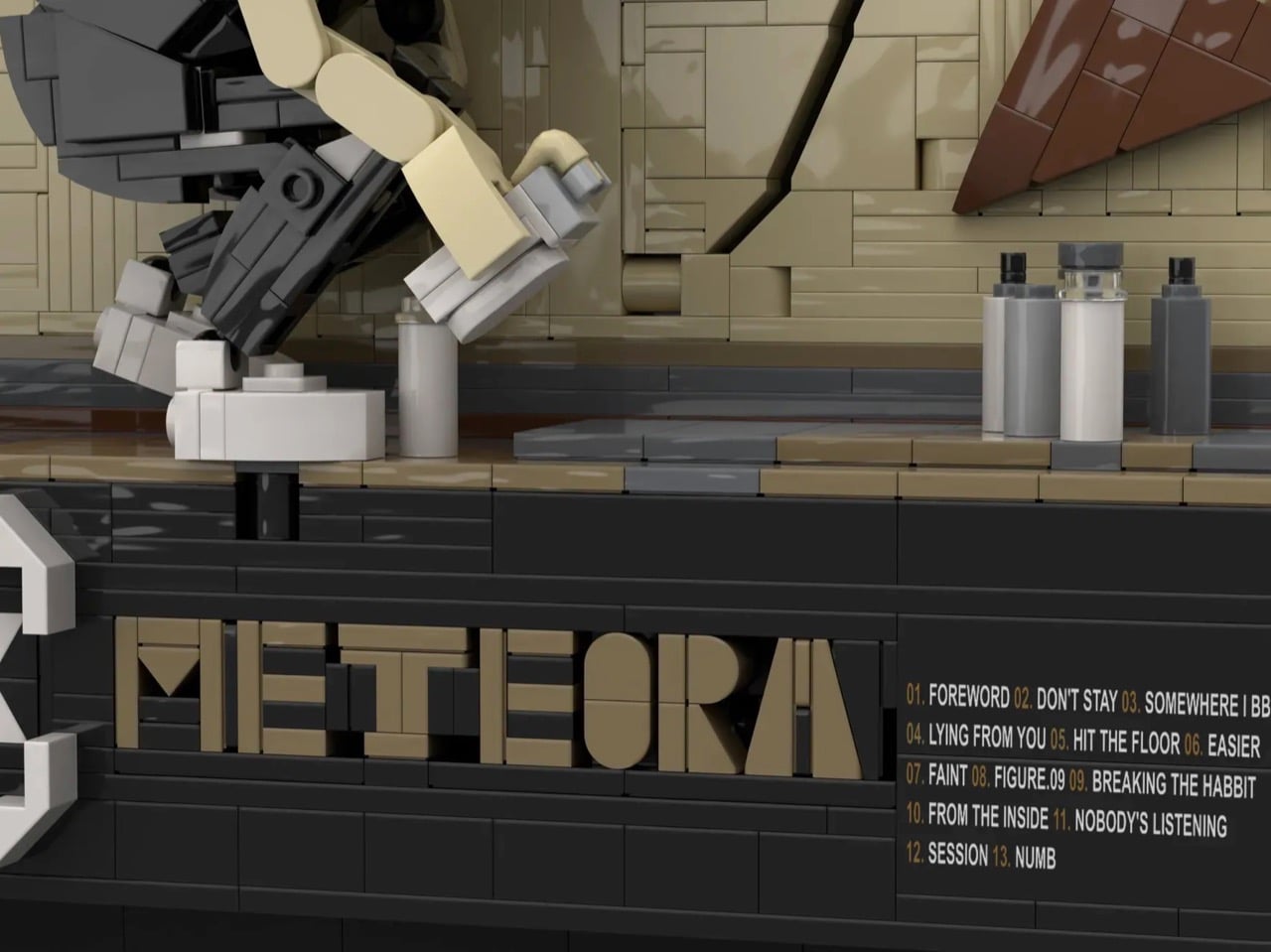
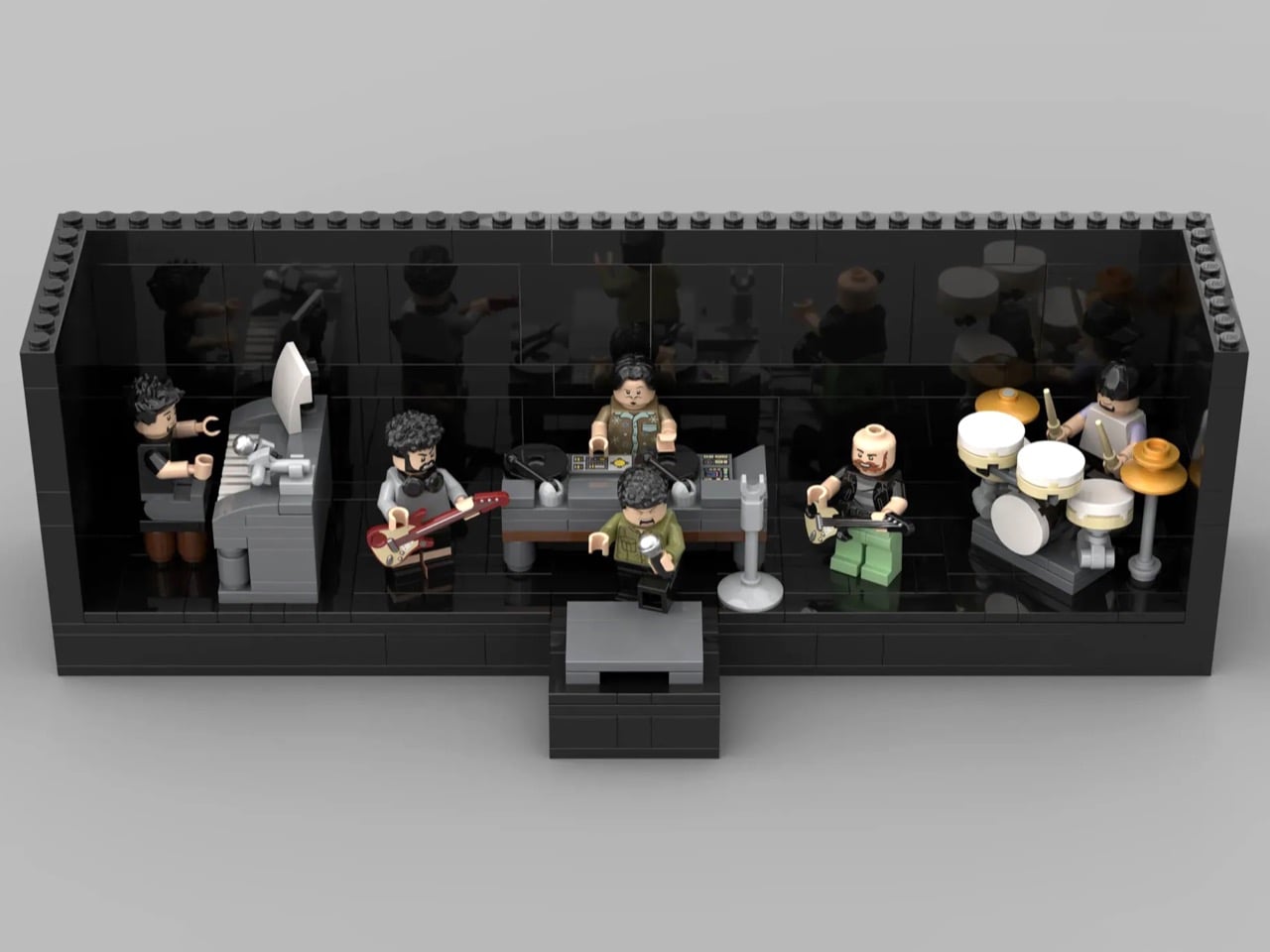
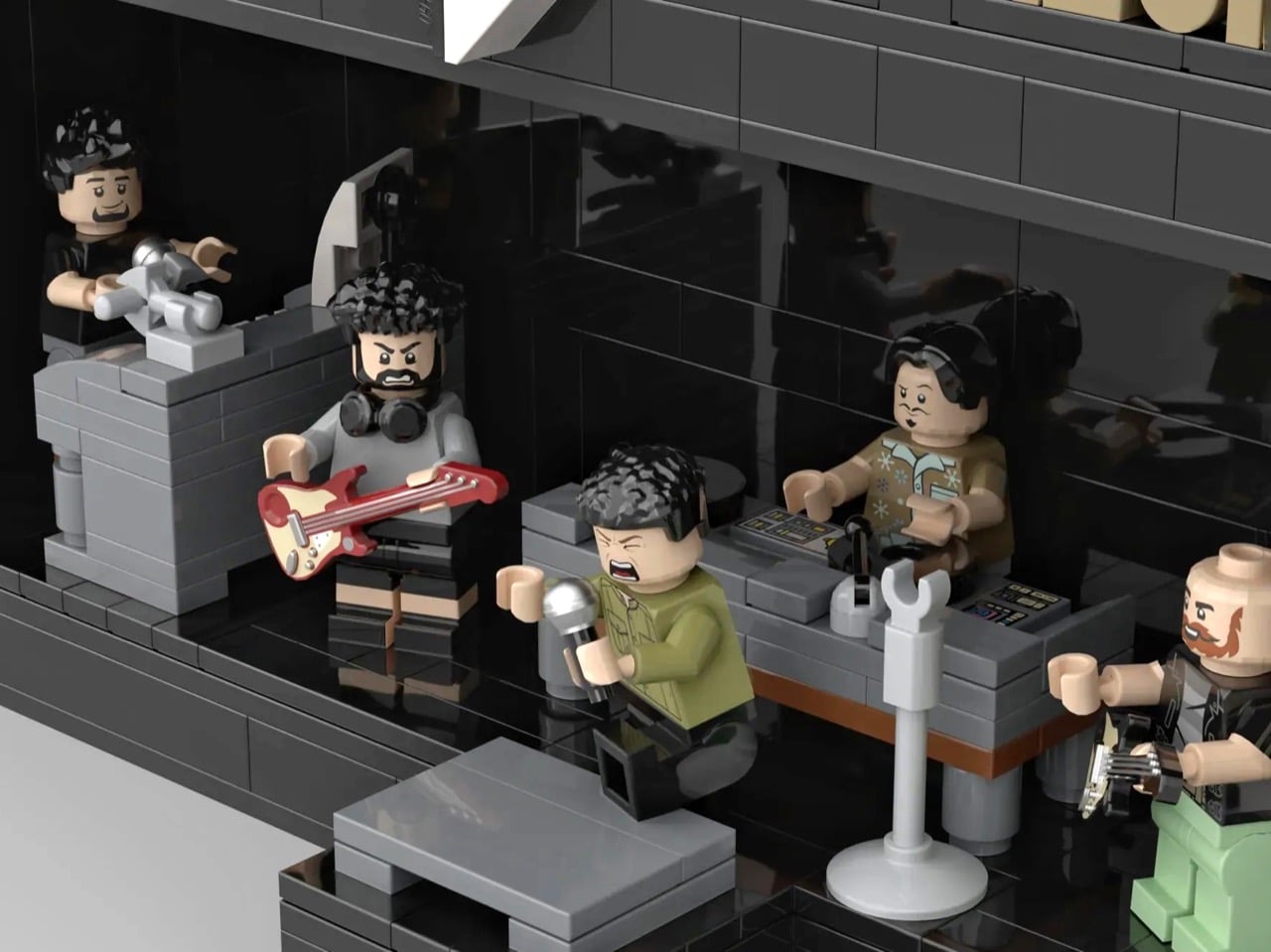
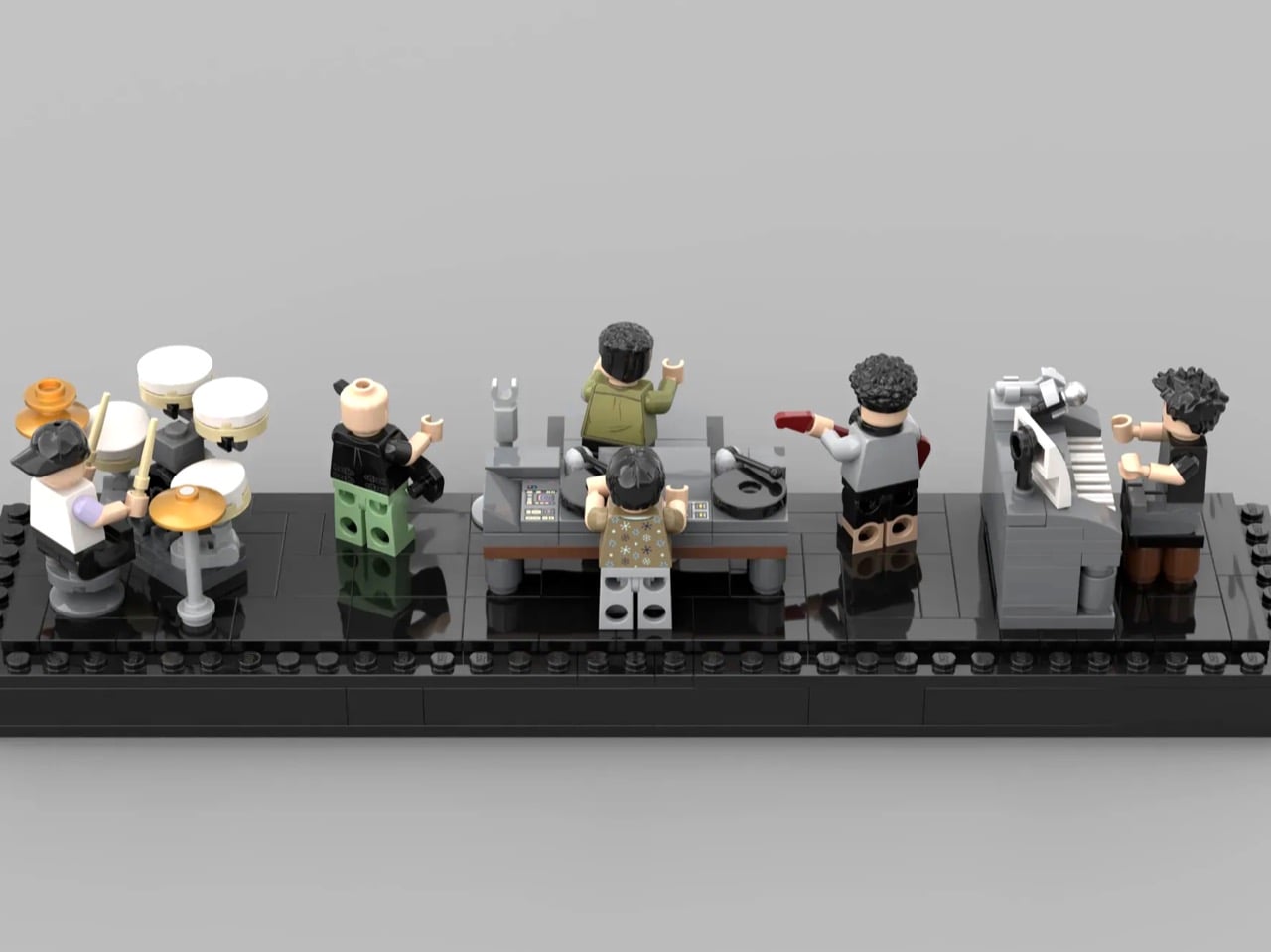
The “LINKIN PARK” and “METEORA” logos sit just below that, fully brick-built in layered plates rather than printed tiles, alongside a custom tracklist graphic listing all thirteen songs. But the real swing is what happens underneath. The original cover has a solid black lower third and nothing else. Zihnisinir_61 looked at that empty space and decided it needed a full band. Chester is mid-scream at the mic, Mike is on piano, Joe is at the turntables, Brad is on guitar, Phoenix is on bass, and Rob is behind the kit, all set against glossy black tiles that actually reflect the minifigures like stage lighting. My favorite detail is a tiny one a fan pointed out in the comments, a horn piece used as Delta’s spray-painting index finger. Once you see it you cannot unsee it.
It is a fitting way to honor an album that took its name from the Meteora monasteries in Greece, ancient structures somehow balanced on top of sheer sandstone cliffs, because Shinoda thought the word felt epic and cinematic. Meteora debuted at number one, sold around 810,000 copies its first week, and even scored a Grammy nomination for the instrumental track “Session.” This is also round two for Zihnisinir_61, who previously built Hybrid Theory’s Winged Herald cover, and one commenter already called it, joking that Minutes to Midnight has to be next.
The MOC is sitting at 207 supporters right now, with 425 days left to hit the first 1,000-vote milestone on the road to the full 10,000 needed for LEGO’s official review. You can head to the LEGO Ideas page here to add your vote. If Zihnisinir_61 really is building out the whole discography, I would not mind seeing a tiny brick-built version of that infamous label meeting where Warner almost buried this album entirely.
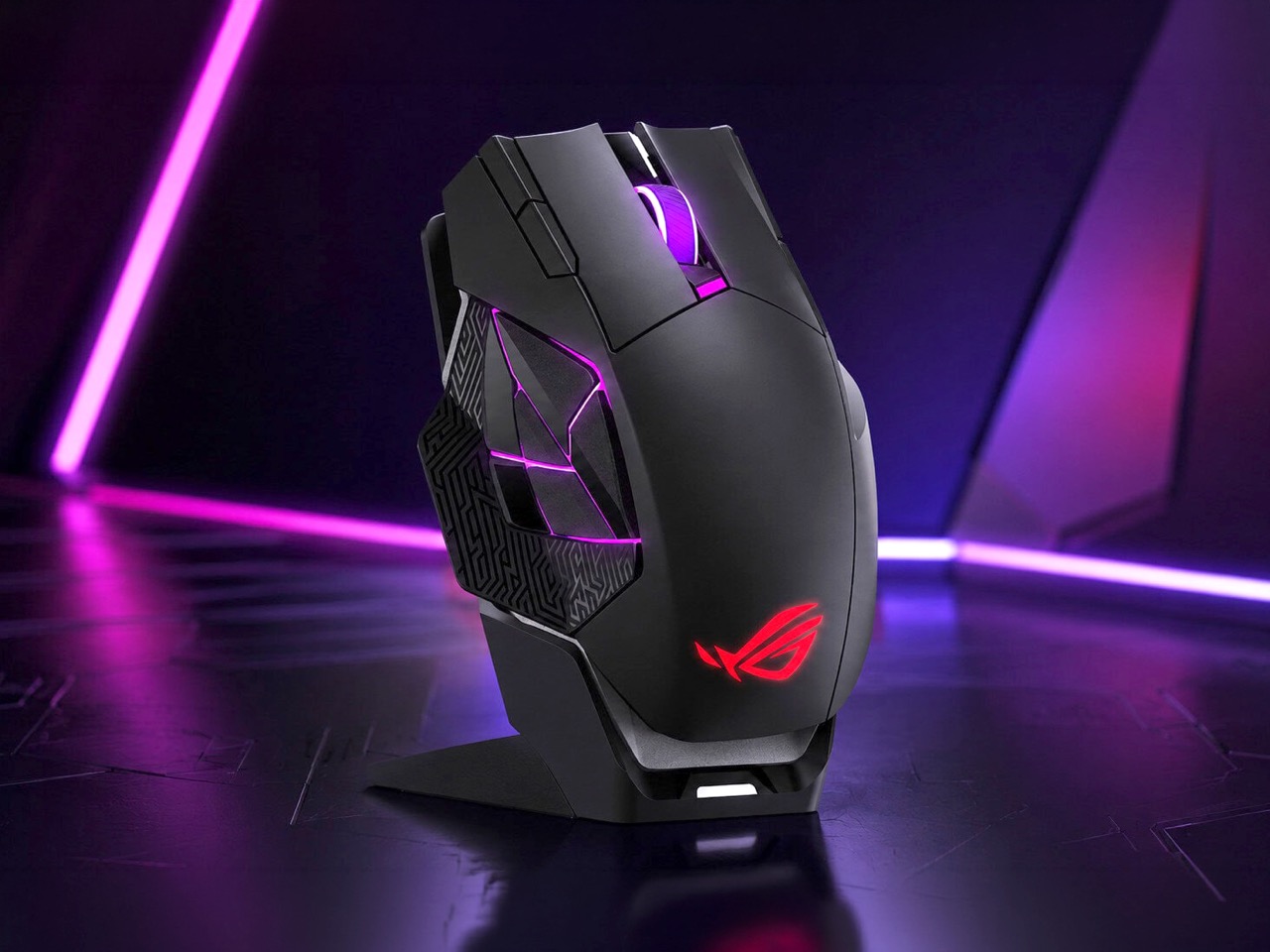
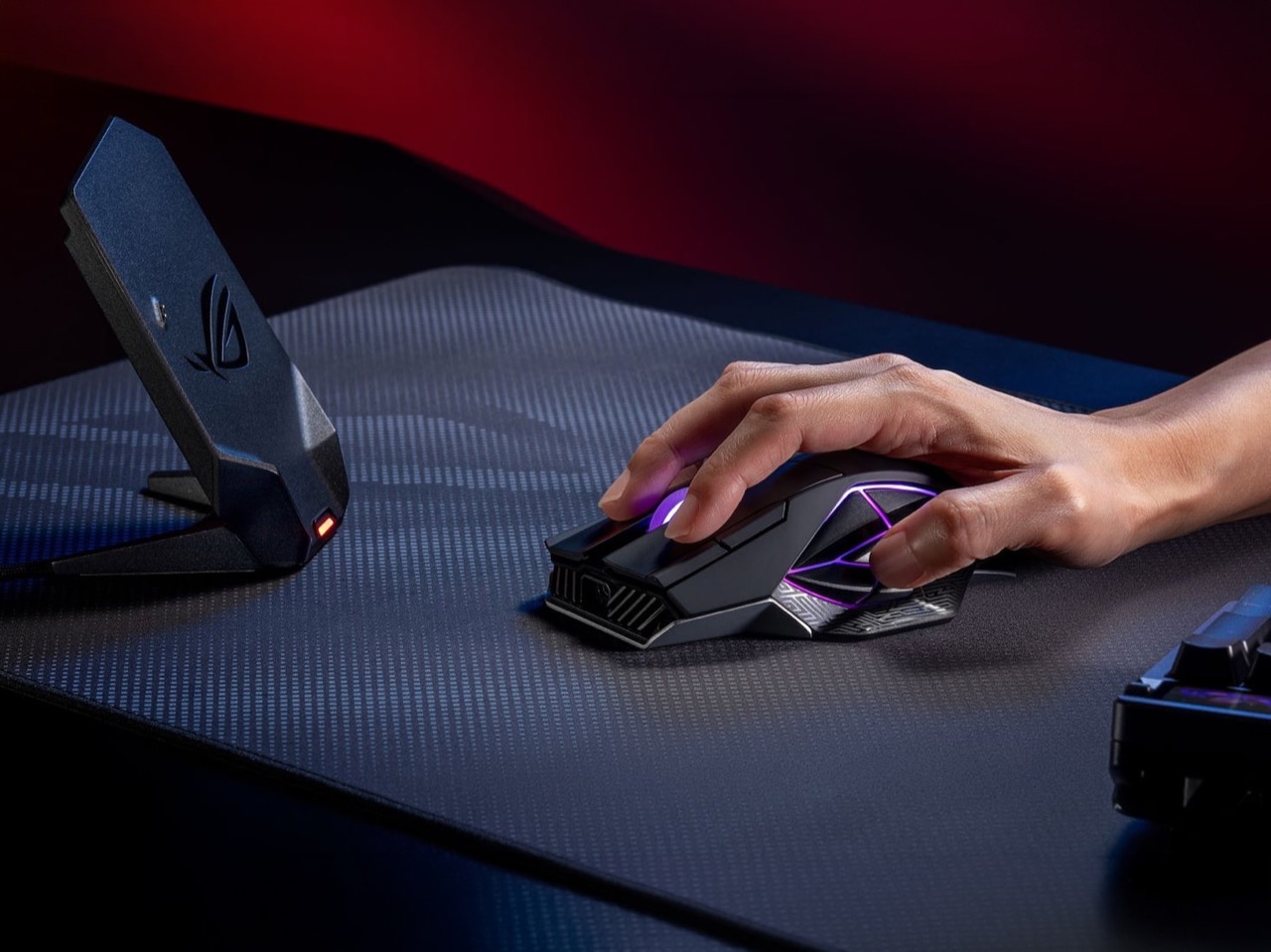
The ROG Spatha X 65K comes with a charging dock, and the dock is doing four jobs. It’s the 2.4 GHz receiver, the charger, a battery status readout with a toggle button on the back, and an angled plinth that holds the mouse nose-up like a museum piece. Fifteen minutes parked on it gets you 25 hours of gaming, which is roughly one very poor decision about bedtime.
The mouse it holds is worth the pedestal. ASUS revived its MMO flagship at Gamescom 2026 with 12 programmable buttons, a 65,000 dpi AimPoint Pro sensor, hot-swappable Push-Fit Socket III switches, and a 126-gram body that takes two 10-gram weights across five front, center, and rear configurations. On the same stage, ASUS also showed the 56-gram Gladius IV Ace. One brand, one day, two completely opposite theories of what a mouse should weigh.
Designer: ASUS Republic of Gamers
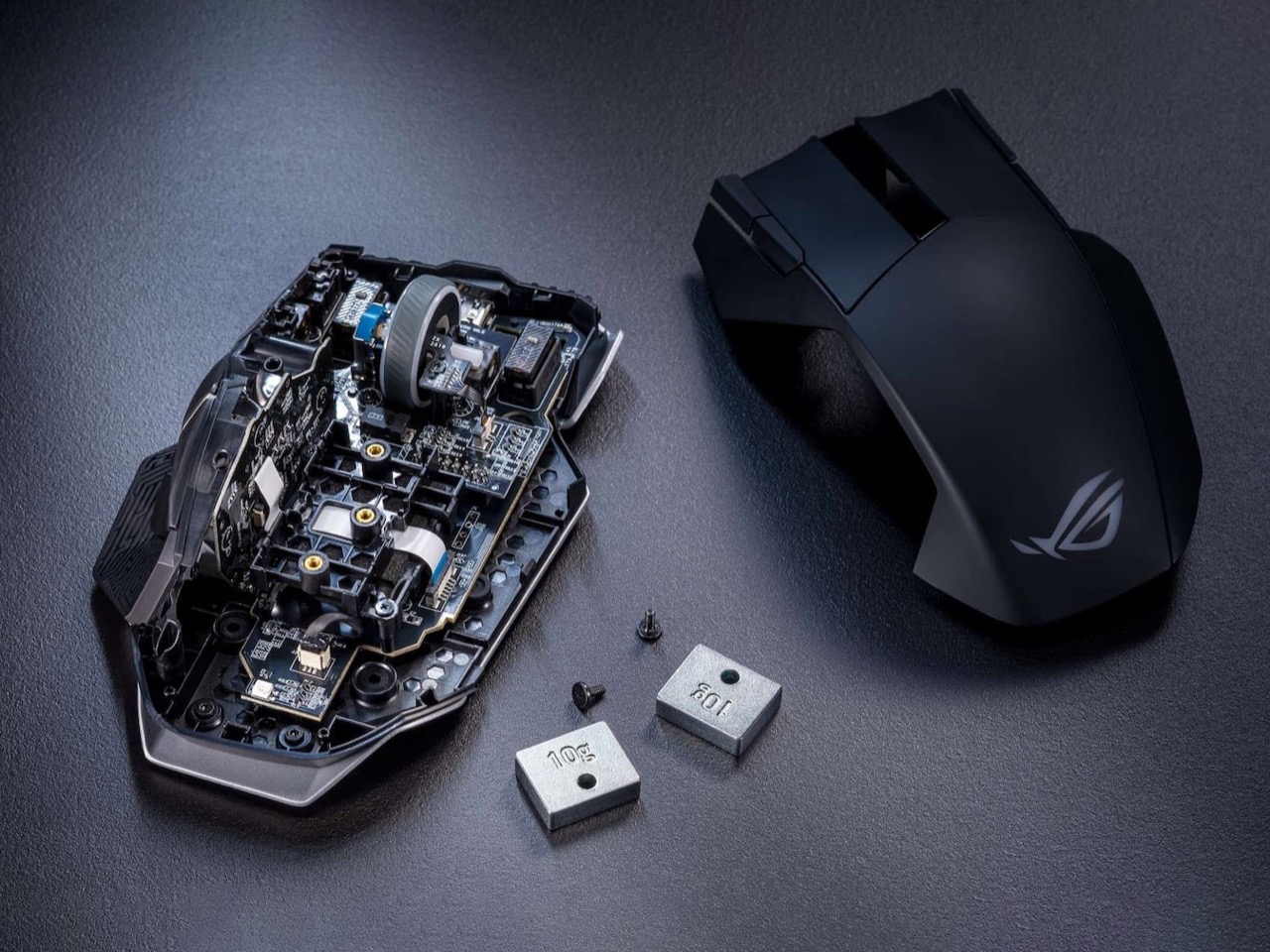
Two 10-gram modules and three mounting positions produce the five configurations ASUS advertises: bare at 126 grams, a single weight sitting front, center, or rear at 136, and both installed at 146. Three of those five options weigh exactly the same amount. What changes between them is the center of gravity, which moves the pivot point when you swing from the wrist. ASUS built a balance system and marketed it as a weight system, which undersells the more useful half. Anyone who has shimmed a mouse with coins and electrical tape will recognize the intent immediately.
Angular, deliberately mismatched thumb buttons arranged in the outline of the ROG eye carry straight over from the 2015 original, and ASUS says so out loud rather than pretending the shape is new. No two buttons in that cluster share a profile, so your thumb identifies them by edge geometry instead of counting positions. The side grip carries a Mayan-inspired pattern pressed into the surface, and the primary buttons are dished so fingertips settle into them. Eleven years on, that thumb logic holds up better than most ergonomic thinking from its era.
Nobody plays above 3,200 dpi, so the 65,000 figure exists to sit on a box next to a competitor’s smaller number. The upgrade that actually changes how the mouse behaves is the 11 preset lift-off distances, which matter enormously for a device built around low-sensitivity sweeping across a large pad. Repositioning a 126-gram body means lifting it constantly, and a badly calibrated lift-off turns every reset into a cursor jump. ASUS spent the engineering where it counts, then wrote the press release around the other thing. Standard industry practice, and mildly annoying every time.
Worn-out clicks kill more mice than dead sensors do, which makes Push-Fit Socket III the feature most likely to still matter in three years. The box ships with a switch tweezer, two spare ROG Silent Micro Switches, a PTFE feet set, and grip tape. The default ROG Micro Switch II is rated at 100 million clicks and the silent option at 50 million, with third-party switches dropping in within a few minutes. Configuration runs through Gear Link in a browser, so no Armoury Crate install is required. Anyone who has fought that software will read this as an apology.
ASUS has announced no price, no release date, no color beyond black, and no total battery life, which is a conspicuous omission for a device this heavy on radio duty. At 137mm long and 126 grams before you add anything, it also rules out small hands entirely. The 2021 Spatha X landed near $150, so budget accordingly and expect a premium on top of that. For a mouse asking you to push nearly a third of a pound around all evening, I’d want the runtime figure in writing before committing. The dock is beautiful. It should not have to work that hard.
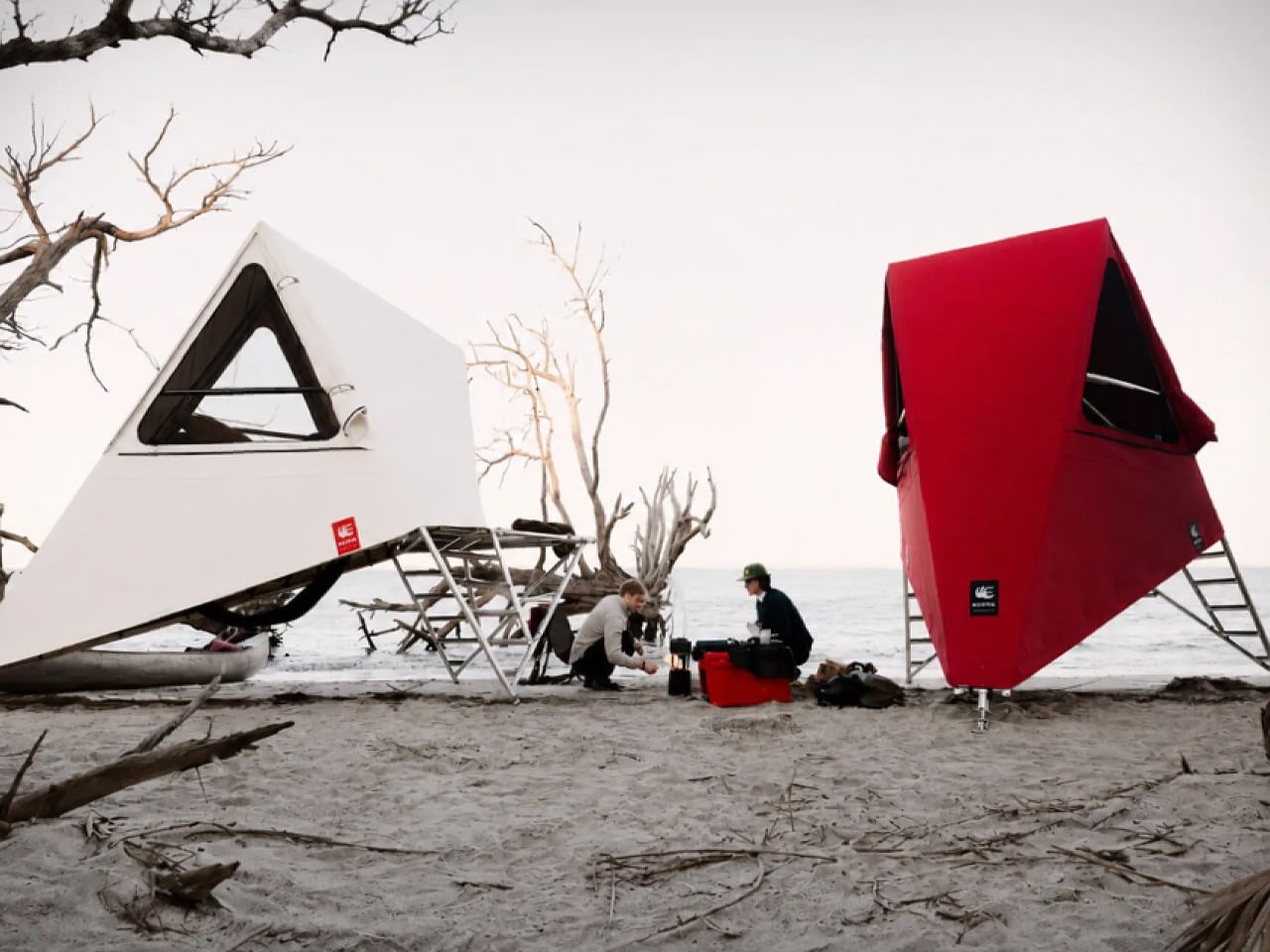
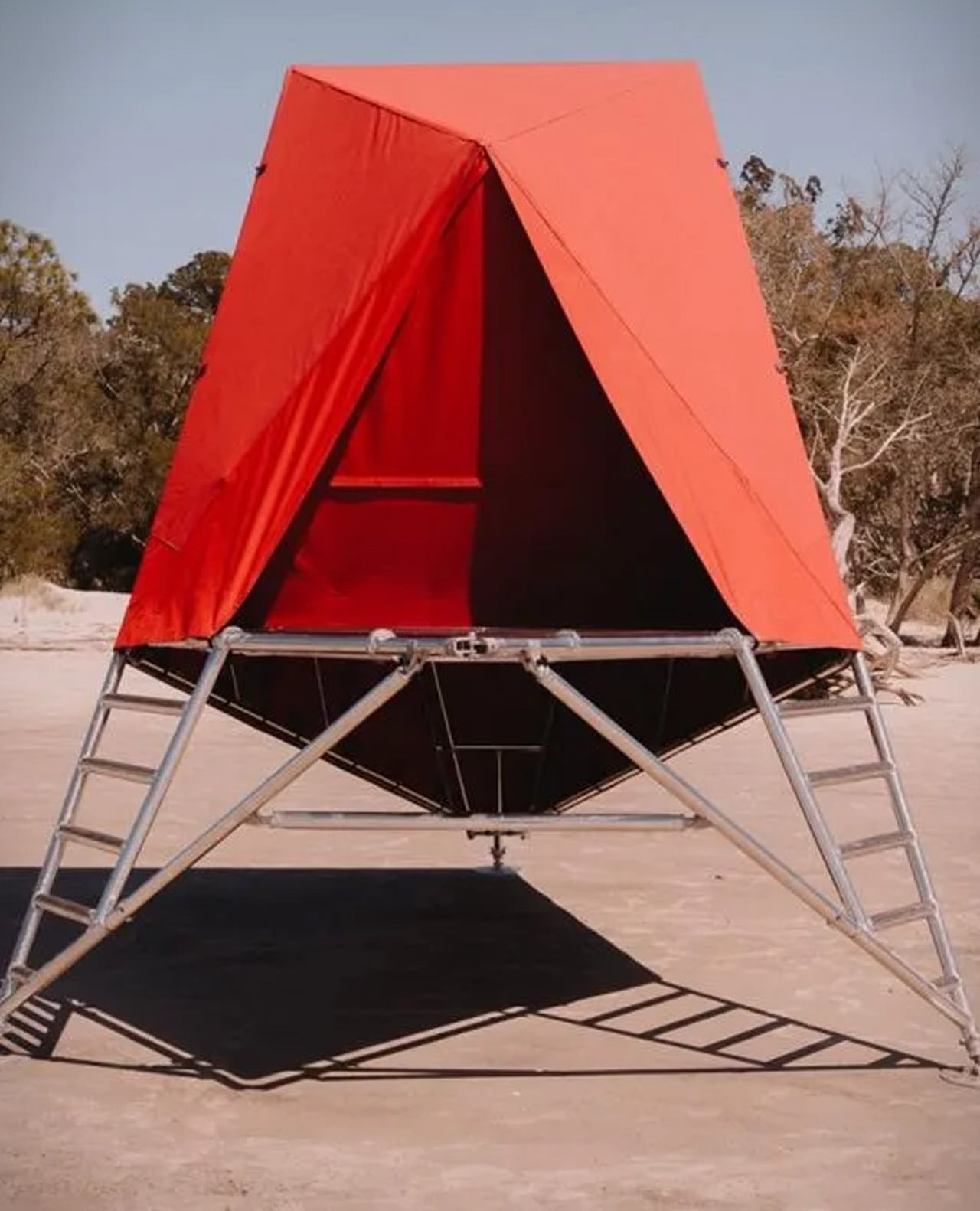
You’ve seen a building so good you immediately wanted to live in it. Ben Huggins built one you can actually move. His latest project, the Kudhva K1, is a portable elevated cabin that somehow manages to feel both seriously considered and completely untethered from the ground beneath it. Huggins is co-founder of Sandford-based New British Design, and the K1 is the kind of thing you design when you love architecture but have no patience for permanence.
The K1 grew directly out of Kudhva, the beloved off-grid retreat carved into a disused slate quarry on the north coast of Cornwall. The original cabins, perched above the landscape on angular stilts, became something of a cult object in British architectural circles. Huggins, working alongside co-designer Hannah Huggins, took that angular, treehouse-like geometry and asked a simple but ambitious question: what if you could move it?
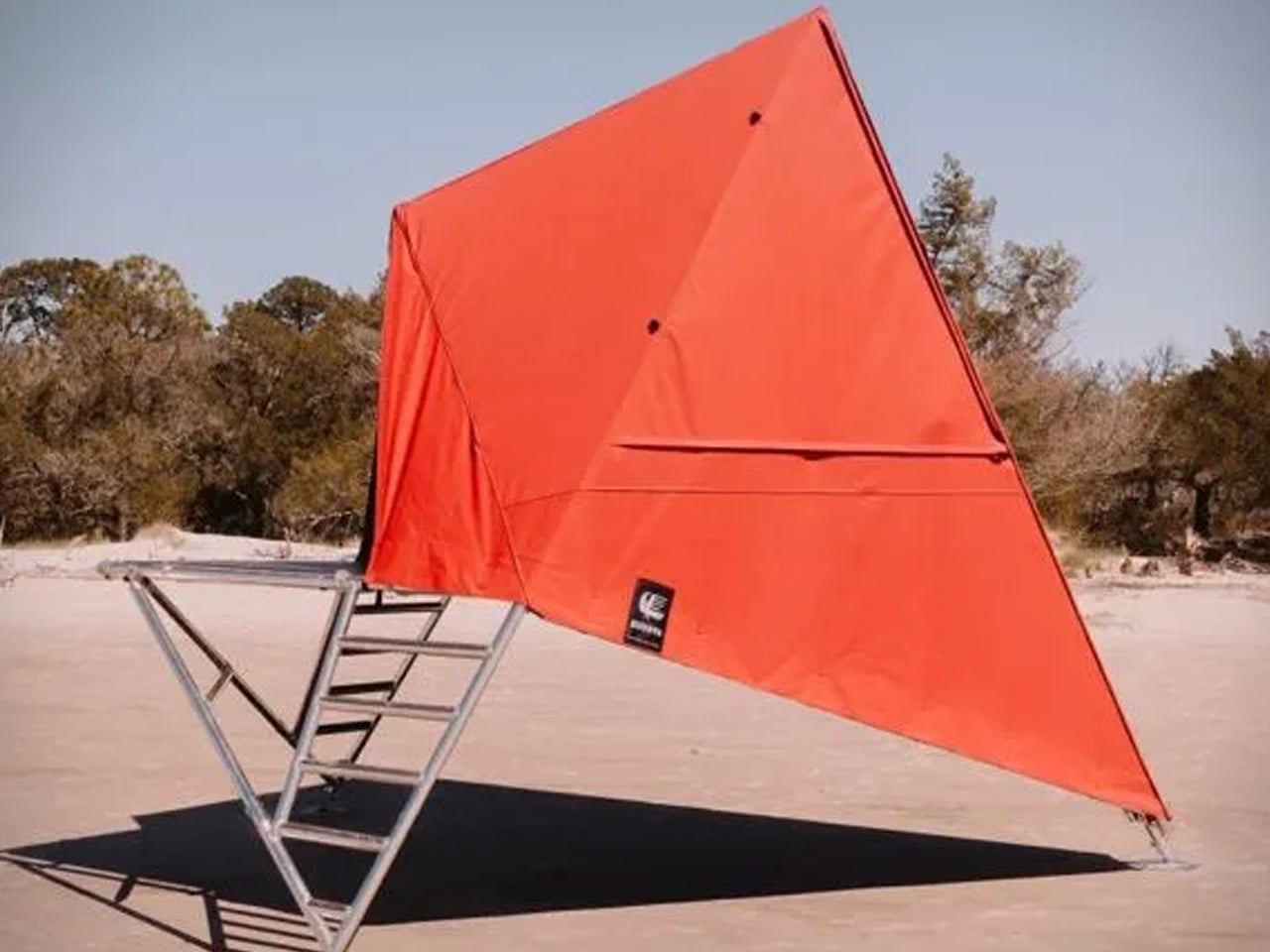
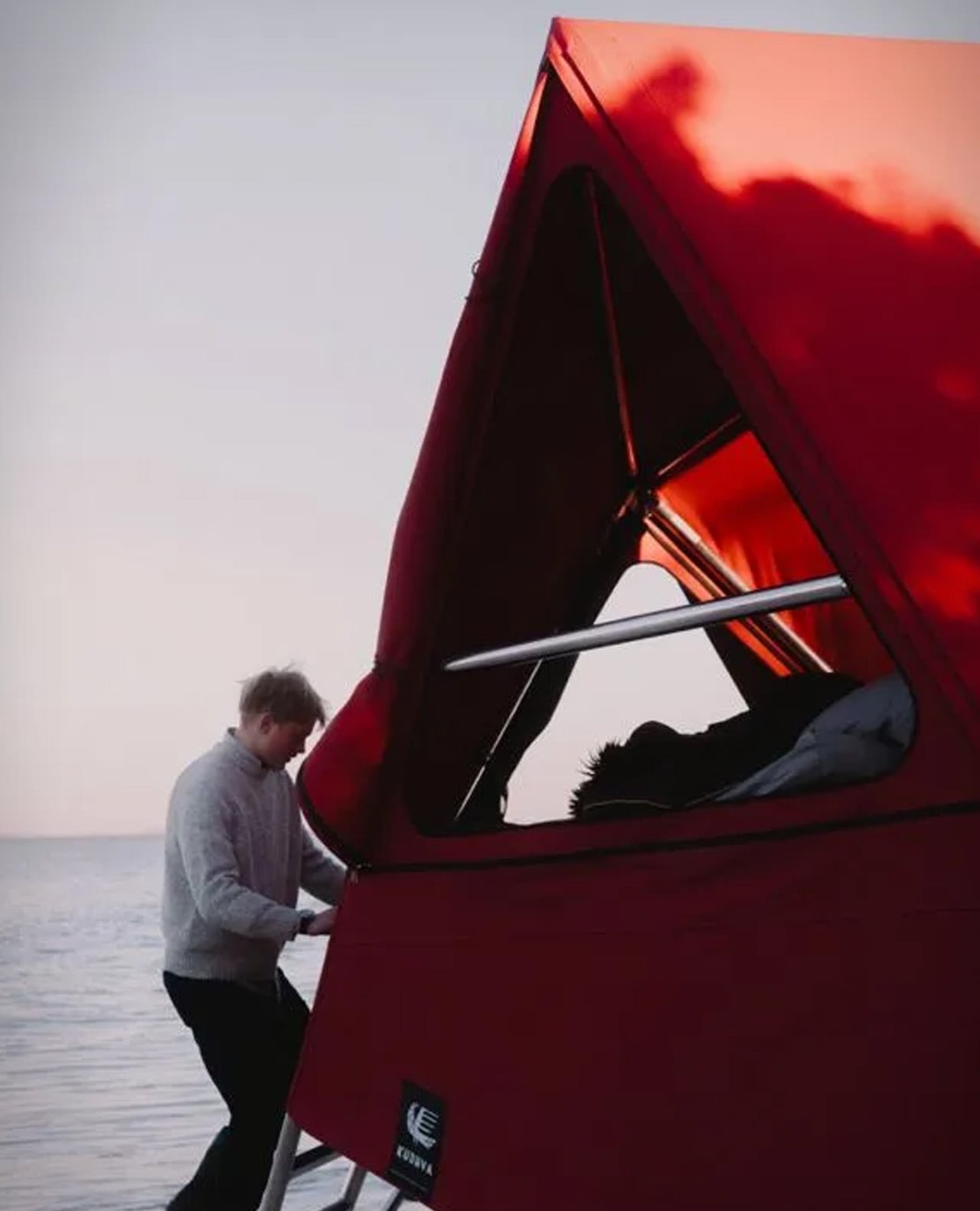
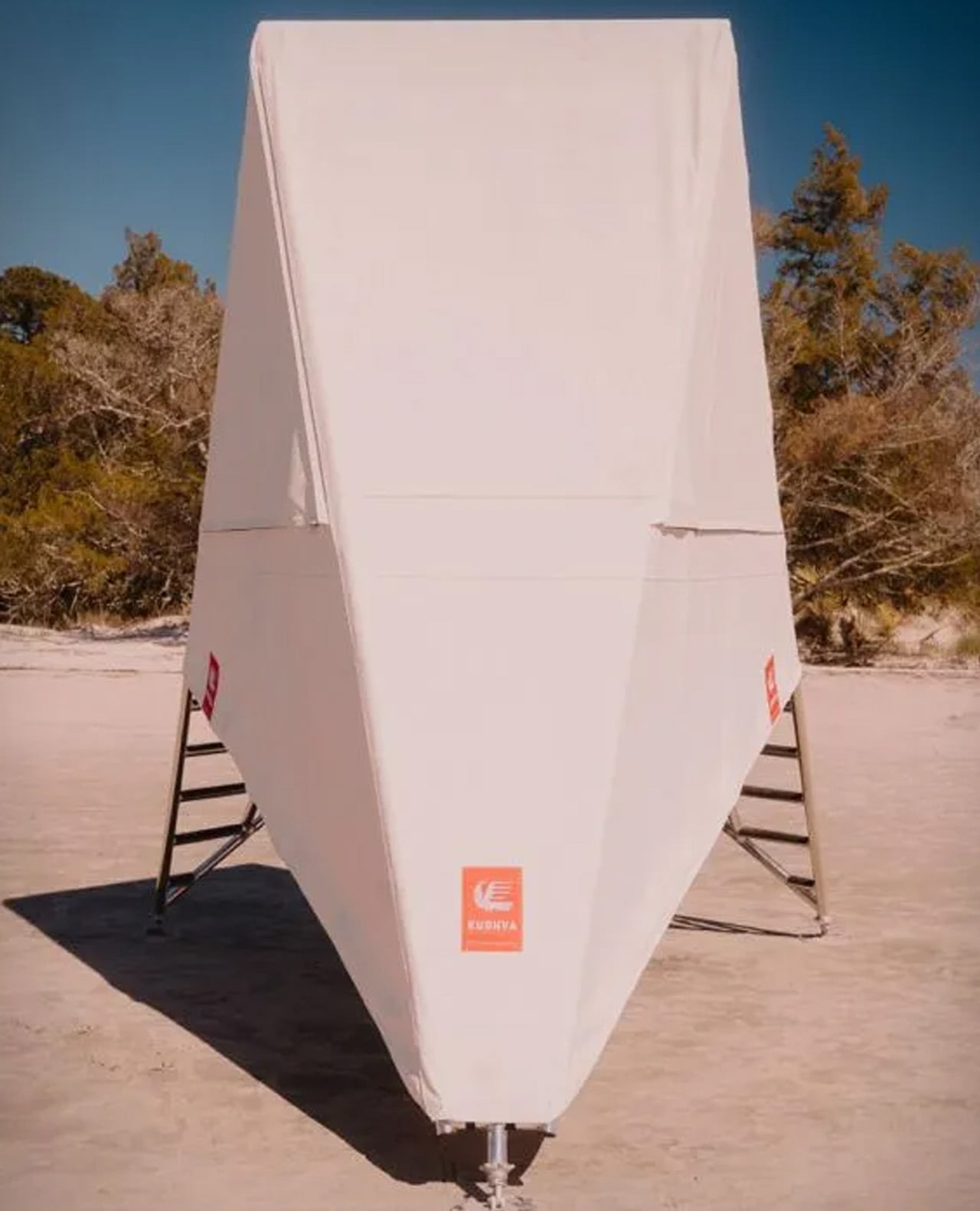
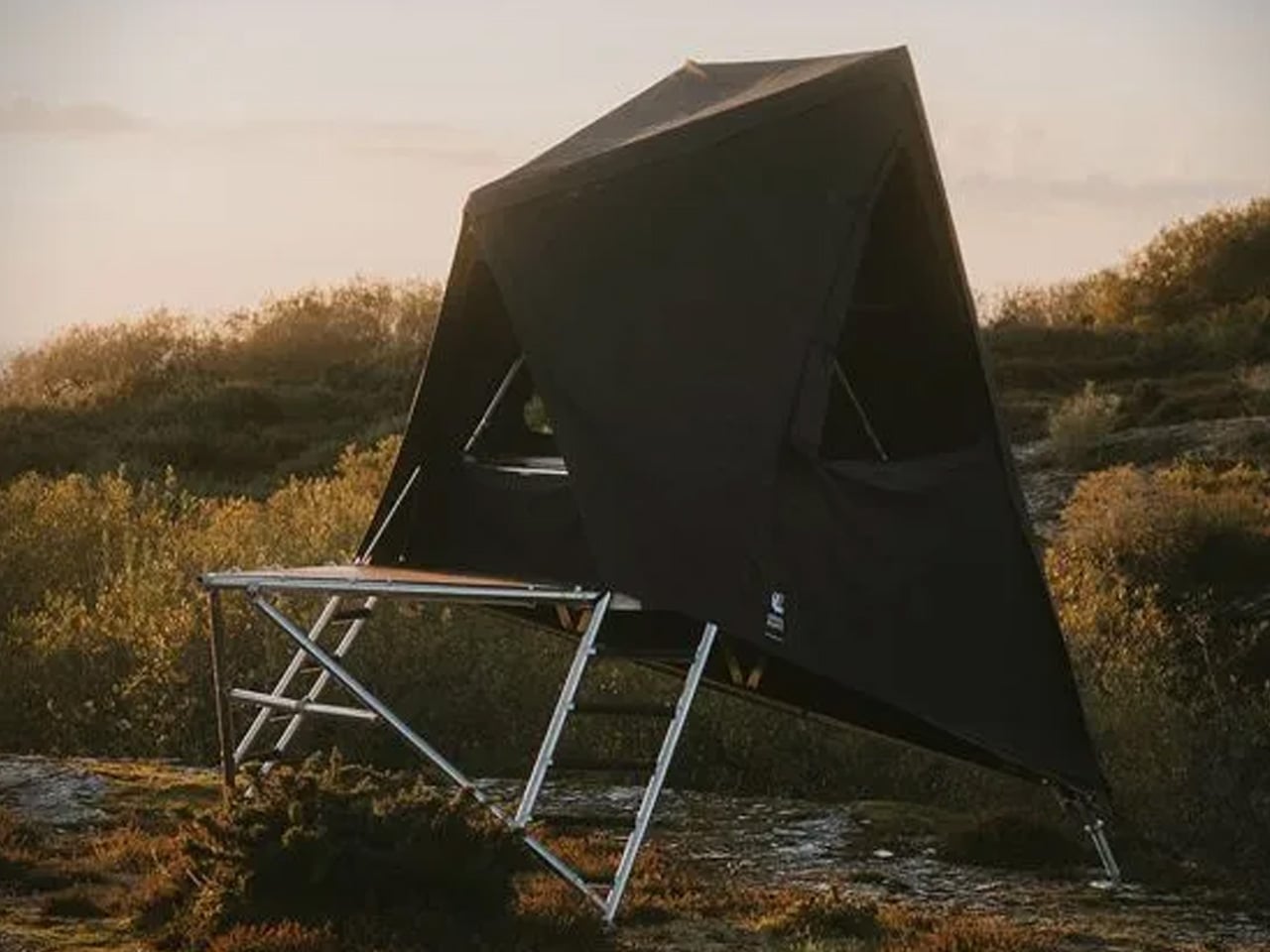
The answer is a structure built around a recyclable aluminum frame wrapped in heavy-duty British Millerain Regentex poly-cotton canvas, rated at 407g/m2. Standing 3.6 meters tall, 3.3 meters wide, and 4.9 meters deep, the K1 isn’t small. An elevated deck extends beyond the entrance, accessed by integrated ladders, giving it a genuinely architectural presence that photographs like a building and packs down like equipment. The tripod leg system adjusts independently, meaning it can sit perfectly level on rocky, sloped, or otherwise uncooperative ground without disturbing a single blade of grass below it.
That relationship with the land matters. The K1 requires no foundation, no planning permission, and leaves no trace when it leaves. Two people can have it standing in 30 to 45 minutes. At 320 kilograms, it isn’t light, but it is relocatable, which places it in a category almost entirely its own: too architectural to call a tent, too mobile to call a cabin.
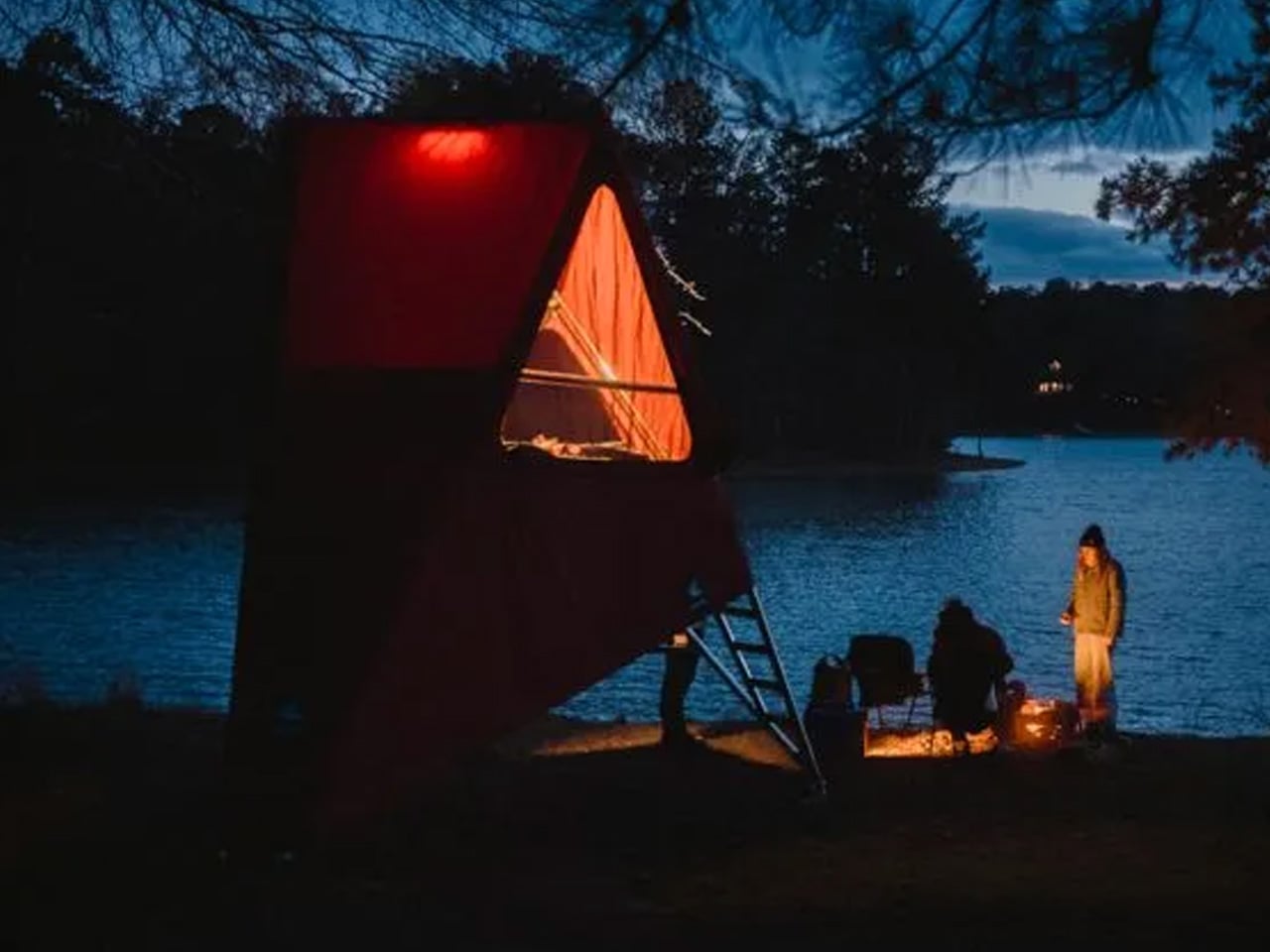
The canvas shell is built to withstand winds up to 80 mph, suggesting a product designed for real weather rather than curated glamping conditions. Inside, the two-person sleeping space carries the same minimal, considered proportions as the original Kudhva structures. The frame is described as infinitely recyclable, which fits neatly within the retreat’s broader ethos of leaving places better than you found them.
Priced at around $15,500, the K1 is now making its way to the United States through British American Camping, with initial deployments planned across glamping destinations in Georgia. The price puts it squarely in the commercial hospitality bracket, though nothing about the design reads like a product built for budget corners. It reads like a building that decided to keep its options open.
Your desk probably looks like a lot of other desks right now. Same matte black keyboard, same Bluetooth speaker with the pulsing light ring, same cable management that made sense for about two weeks. The problem is not what you spent. It is what you picked. Most desk accessories launched in the last three years were designed around a trend, which means they are already halfway through their shelf life.
These five pieces were designed well enough the first time that they are still in production, still worth buying, and will outlast whatever trend comes next. That is not the easiest thing to find in a market flooded with objects that look good in a cart and feel cheap by Friday. Each one on this list has been tested by time in a way that no review cycle can replicate.
1. 8BitDo Retro 87 Keyboard
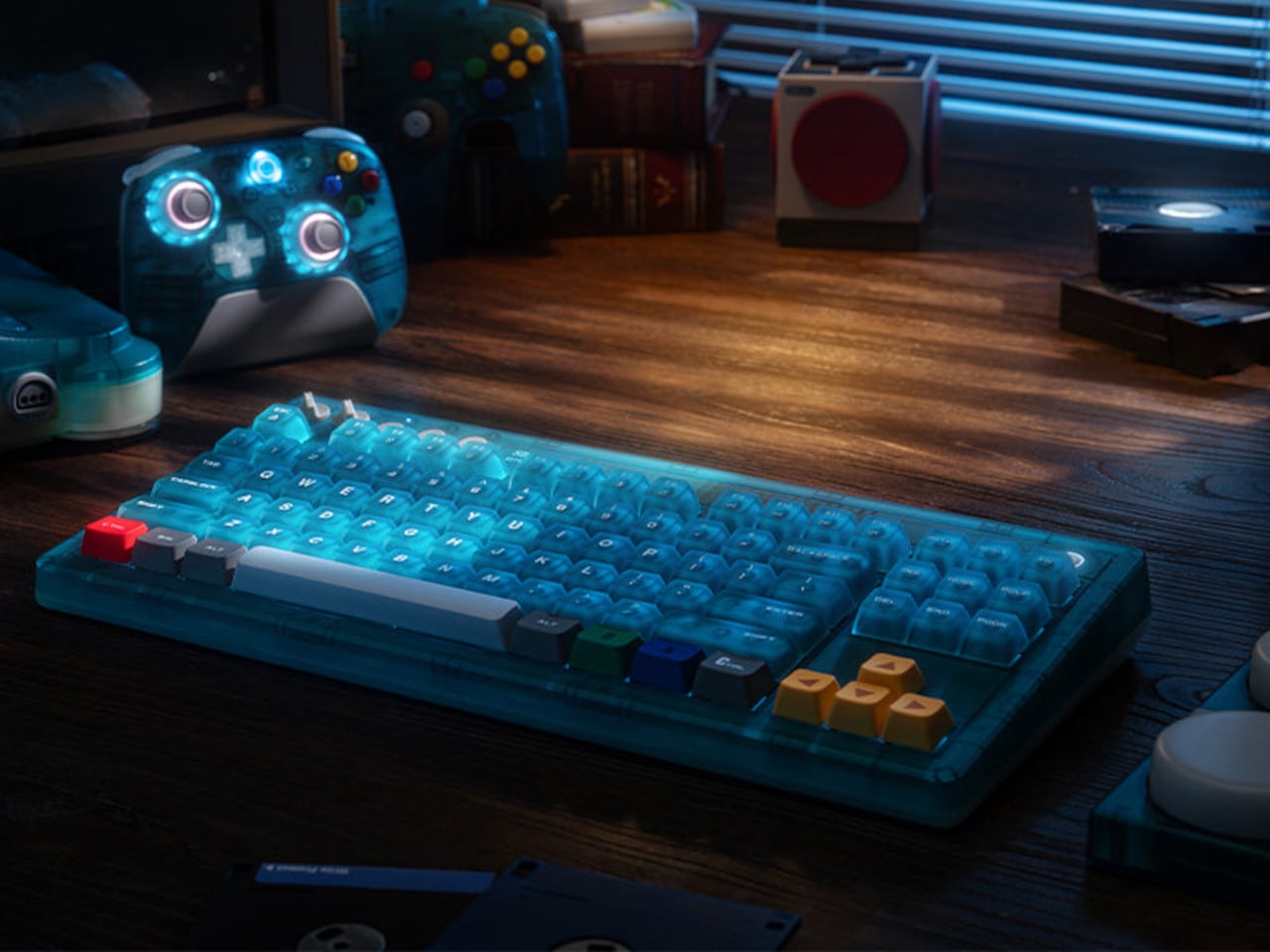
The 8BitDo Retro 87 Keyboard in Clear Blue is an 87-key tenkeyless mechanical keyboard with a translucent blue polycarbonate shell, Cloud Gray Linear switches co-developed with HUANO, and three connectivity modes. It is priced at $69.99. If you had an N64, the color coding reads immediately without needing an explanation. Yellow arrow keys for the C-buttons. Green and blue for A and B. A red left Ctrl mapped to Start. The translucent shell shows the PCB and per-key RGB backlighting through the blue tint, exactly how Nintendo’s Funtastic consoles worked in the late 1990s. The inside of the hardware was part of the design then, and it still is here.
The 87-key tenkeyless layout drops the number pad and keeps the full navigation cluster, which is the right call for a keyboard sharing space with other things you actually want to see. Bluetooth, 2.4 GHz wireless, and wired USB cover every setup without extra adapters. The 2,000 mAh battery is rated for 200 hours in wireless mode. Your hands are on your keyboard more than anything else on your desk. It might as well be something worth looking at.
What we like:
The top-mount PCB configuration gives the typing feel a cushioned, bouncy quality that cheaper keyboards skip entirely
Hot-swappable switches mean you are not committed to the Cloud Gray Linears if you change your mind later
The translucent shell with RGB underneath is better in person than any photograph suggests
What we dislike:
The two programmable Super Buttons sit outside the main typing area and take a few days to stop hitting by accident
The first week involves some unintended inputs during regular use
2. Side A Cassette Speaker
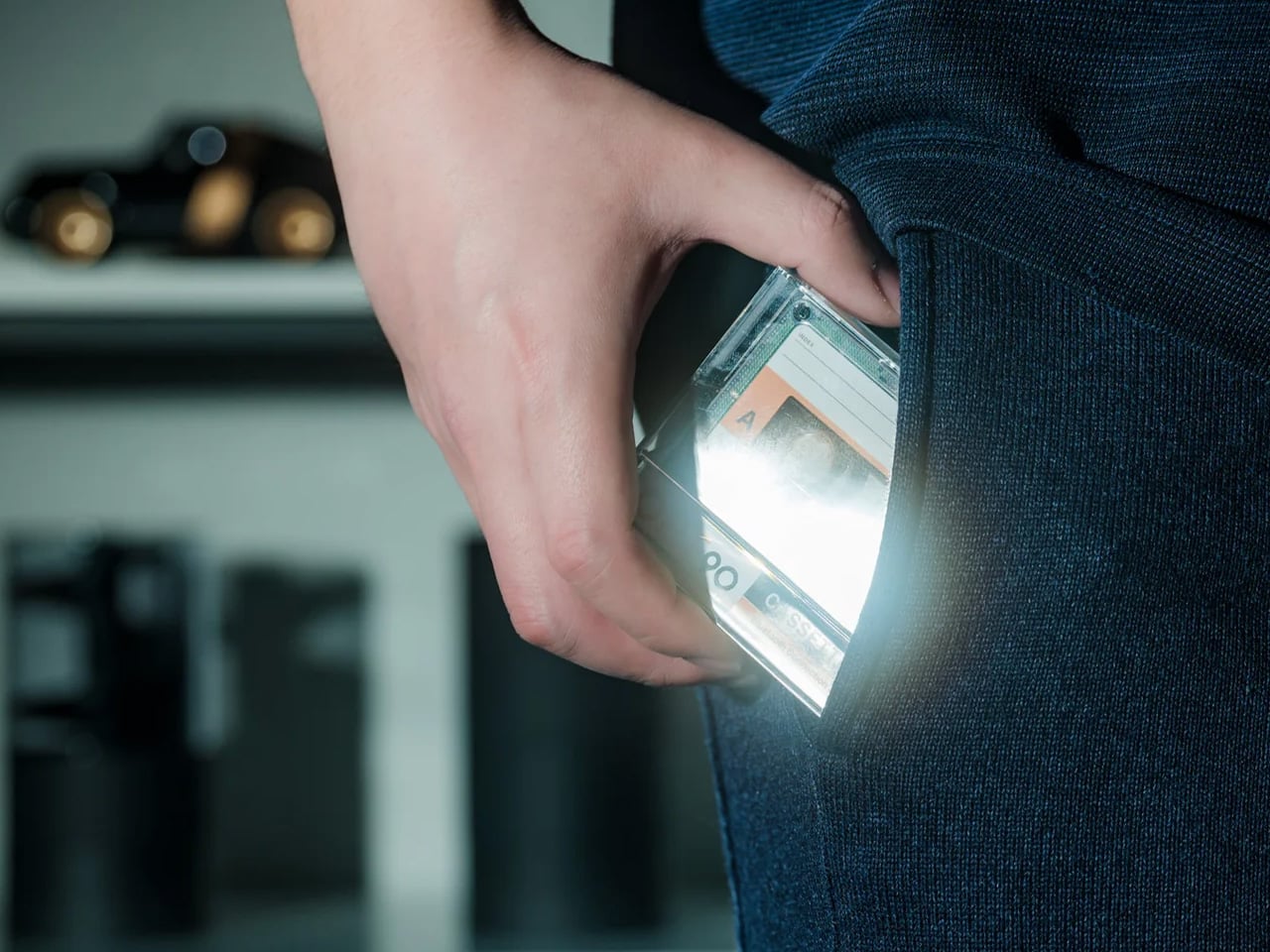
The Cassette Speaker is a Bluetooth speaker built to the proportions of a cassette tape, scaled up just enough to fit a driver inside. You probably had a shoebox of mixtapes growing up. Most of them were recorded off the radio with the DJ talking over the first two seconds of every song. The Cassette Speaker does not play tapes. What it does is put that object back on your desk in a form that actually works in 2026, pairing over Bluetooth and delivering audio from something small enough to palm in one hand.
Set it next to your keyboard, and it reads as a deliberate design choice rather than a gadget someone left behind. That is harder to pull off than it sounds. Most Bluetooth speakers designed to look interesting end up looking like they are trying too hard. The cassette form works because it is referencing something specific and doing it accurately rather than gesturing at it loosely. It belongs on a desk, a nightstand, or packed in a bag for the weekend.
The size-to-output ratio is genuinely good – something this flat and compact has no business sounding as present as it does
The form factor means it fits anywhere without planning, which is not something most design-forward Bluetooth speakers can claim
What we dislike:
There is only one natural way to set it down – flat, tape-side up, which means you cannot angle it toward you the way you would a conventional speaker
Reflective desk surfaces will affect the sound more than you expect
3. Twemco BQ-38 Flip Clock
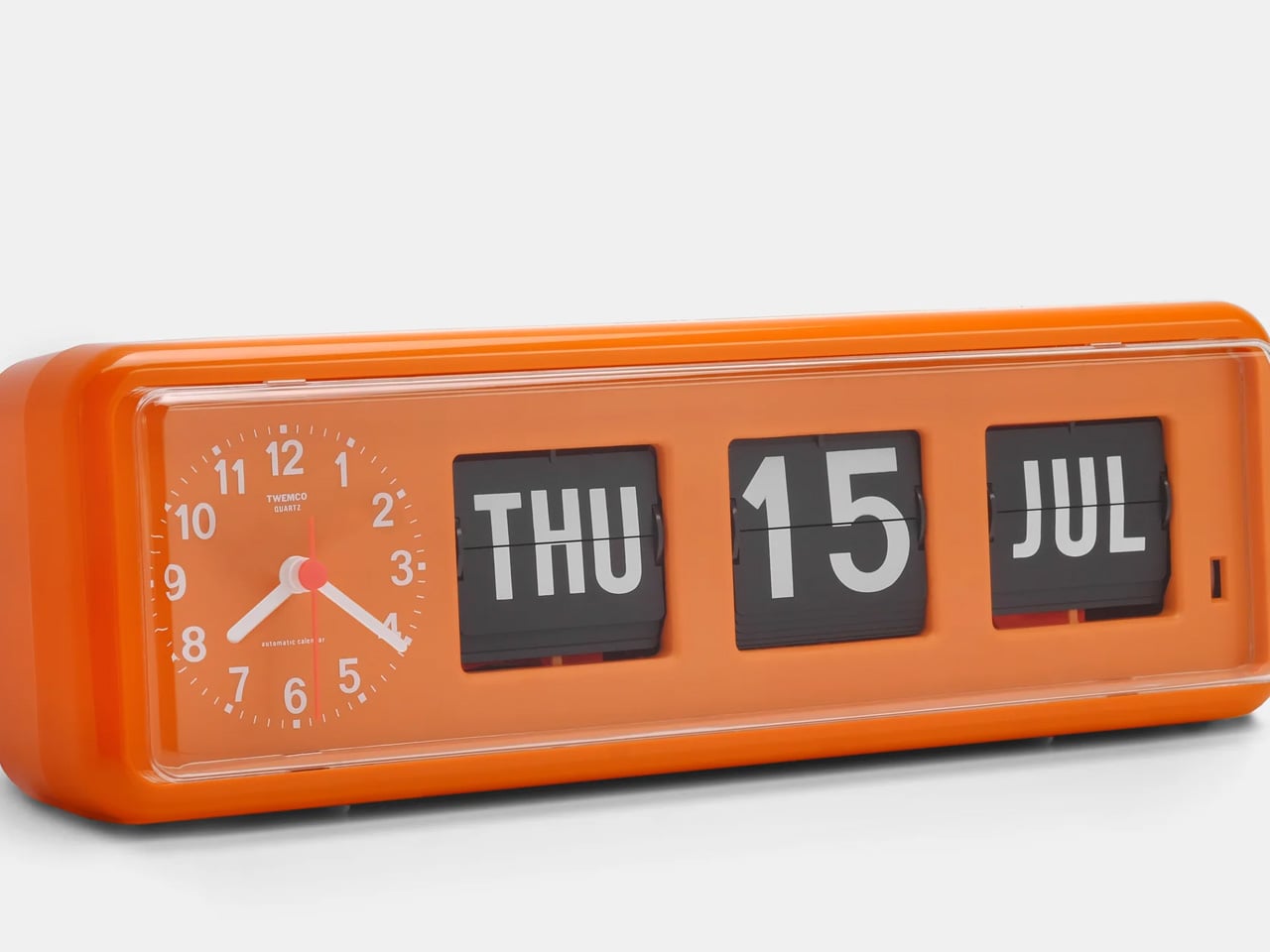
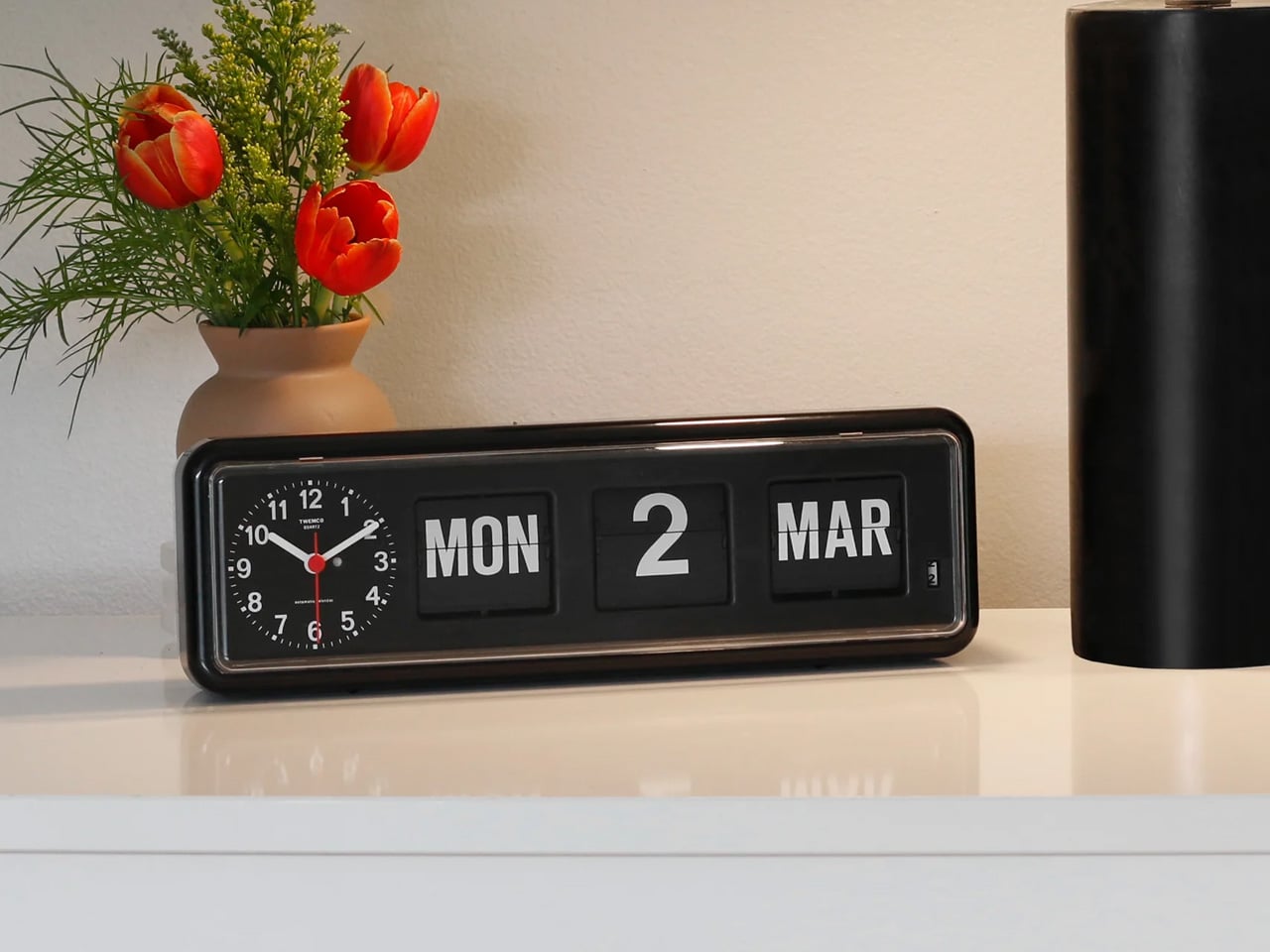
The Twemco BQ-38 is a split-flap flip clock that shows the time and date on cards that physically rotate forward each minute, made in Hong Kong using essentially the same mechanism since the 1970s. You reach for your phone to check the time and end up reading two notifications, a group text, and a headline you did not need before 9 AM. The BQ-38 solves exactly that problem. It sits on your desk and tells you the time. When a minute passes, a card flips forward with a soft mechanical sound. That is the whole interaction. Nothing else is asking for your attention.
The body is injection-molded ABS with a clear acrylic cover. Nothing glamorous about those materials, but the result is a clock that weighs 600 grams, stays exactly where you put it, and advances the date automatically without any input from you. The digits are large enough to read from across the room. No charging cable to route, no power brick to hide.
What we like:
The flip sound is genuinely good – not in a novelty way that wears off, but in the way a well-made mechanical thing sounds when it does exactly what it is supposed to do
The date display is more useful than you expect until the moment your phone is across the room and you need to know what day it is
What we dislike:
Setting the time requires a button on the back that you will need the manual for at least once
Battery-powered clocks stop silently when the battery dies, which you will discover at a moment that is never convenient
4. Anglepoise Original 1227 Desk Lamp
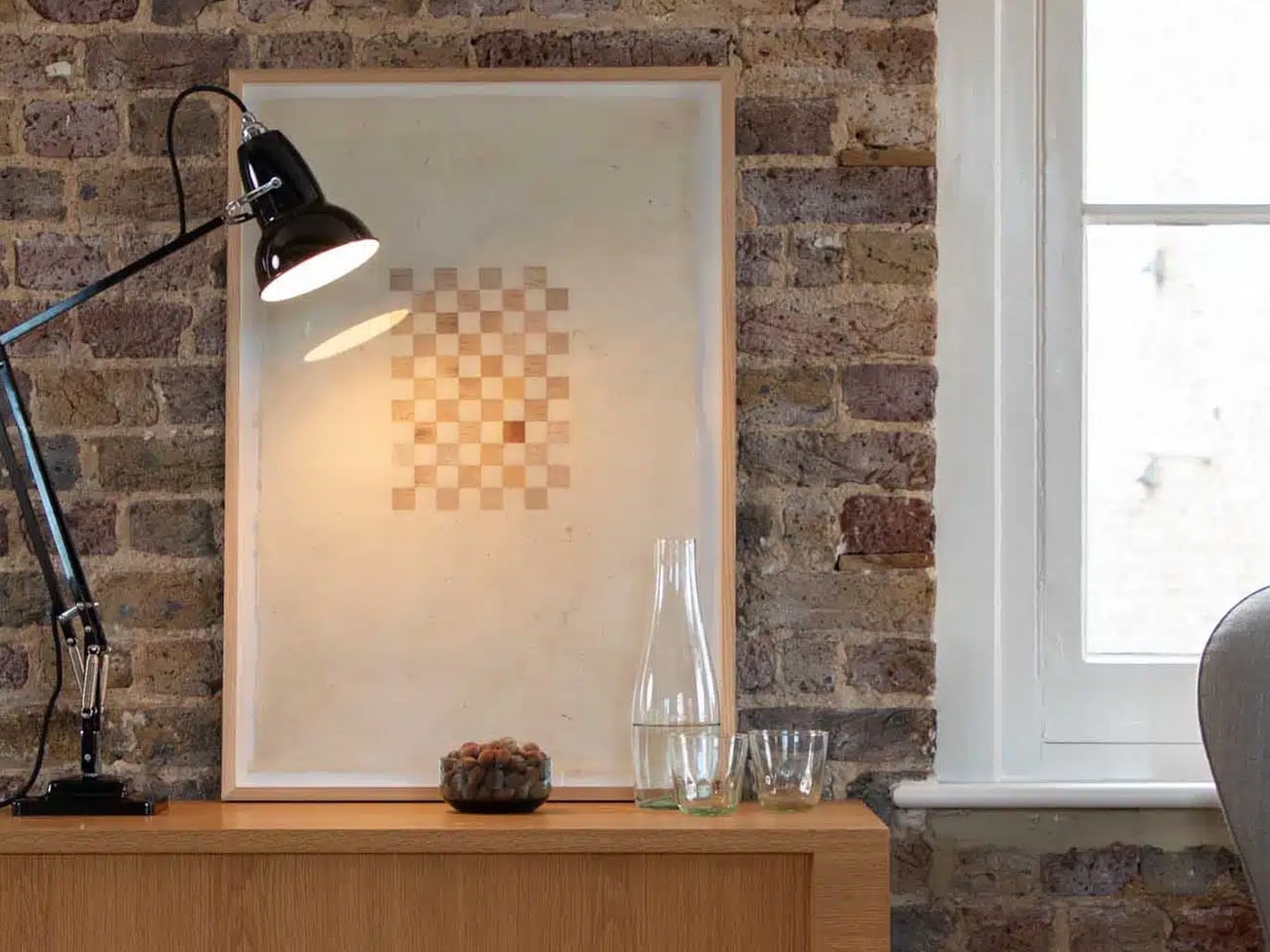
The Anglepoise Original 1227 is a task lamp designed by George Carwardine in the early 1930s and in production since 1935, built around a spring tension mechanism that mirrors the constant tension found in human joints. It starts at $256. Your current desk lamp probably has a touch sensor, three brightness settings, a USB port on the base, and an app update you keep dismissing. The 1227 has none of that. It has a spring-loaded arm you move to where you want light, and it holds that position. The difference between a lamp that stays where you put it and one that slowly droops over the course of an afternoon is not small.
The spring mechanism is why this lamp still makes sense ninety years later. Every competitor has spent decades trying to replicate what Carwardine worked out in the 1930s — that the arm needs to move like a limb rather than a scissor joint. The aluminum shade and arms carry a gloss-painted finish and come with a lifetime guarantee from Anglepoise, which is the kind of warranty that only makes sense if the manufacturer expects the product to be around long enough to need it.
What we like:
The spring tension is noticeable the first time you move it and satisfying every time after that – one-handed, no wobble, no drift after an hour
The shade is large enough to actually light a workspace rather than a six-inch circle in the middle of your desk
What we dislike:
The price is real – it starts at $256 and climbs to $360 for the brass version, which is serious money for a desk lamp
Whether the long-term value justifies the upfront cost is a fair thing to think about before buying
5. Retrowave Radio
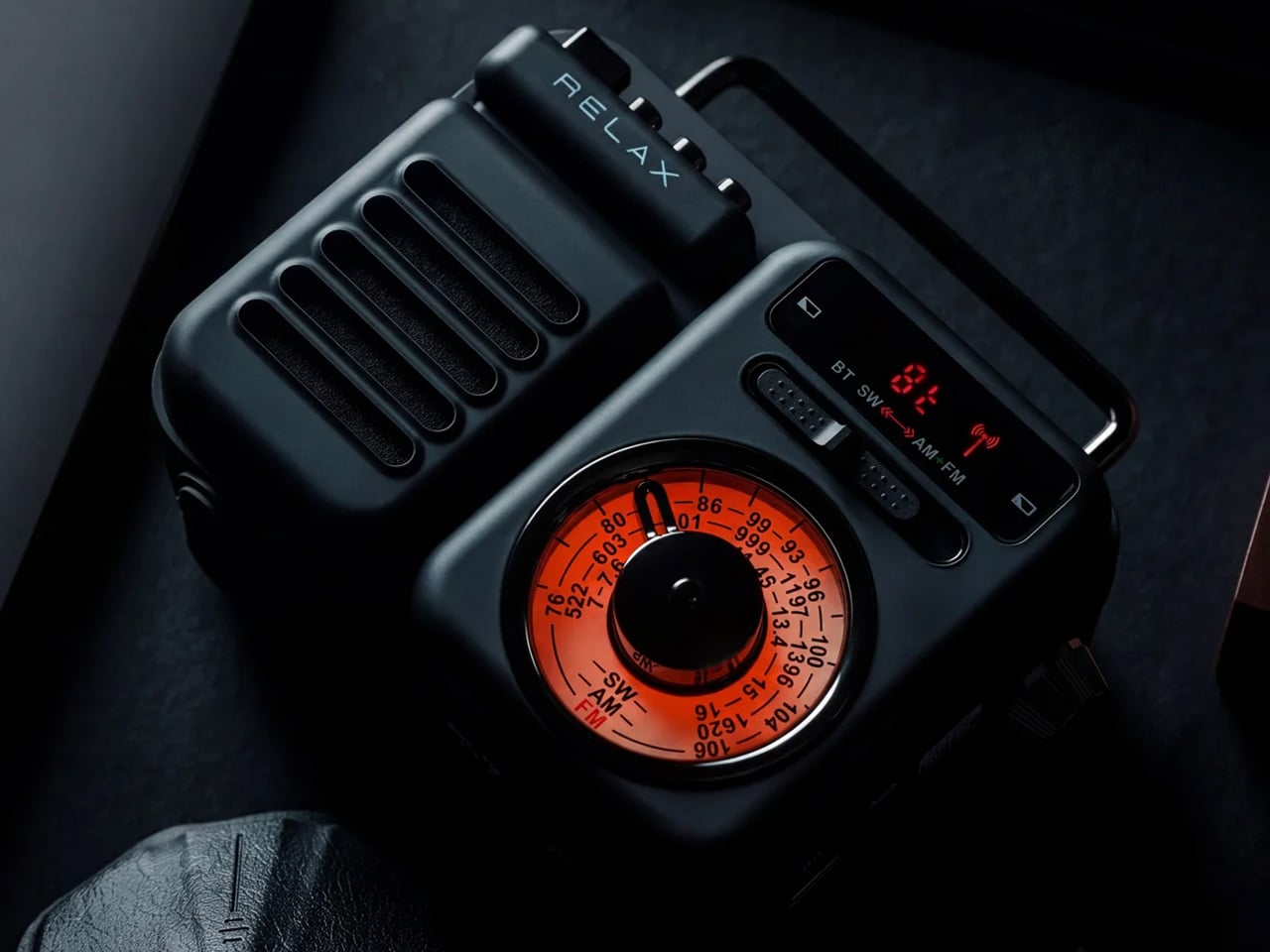
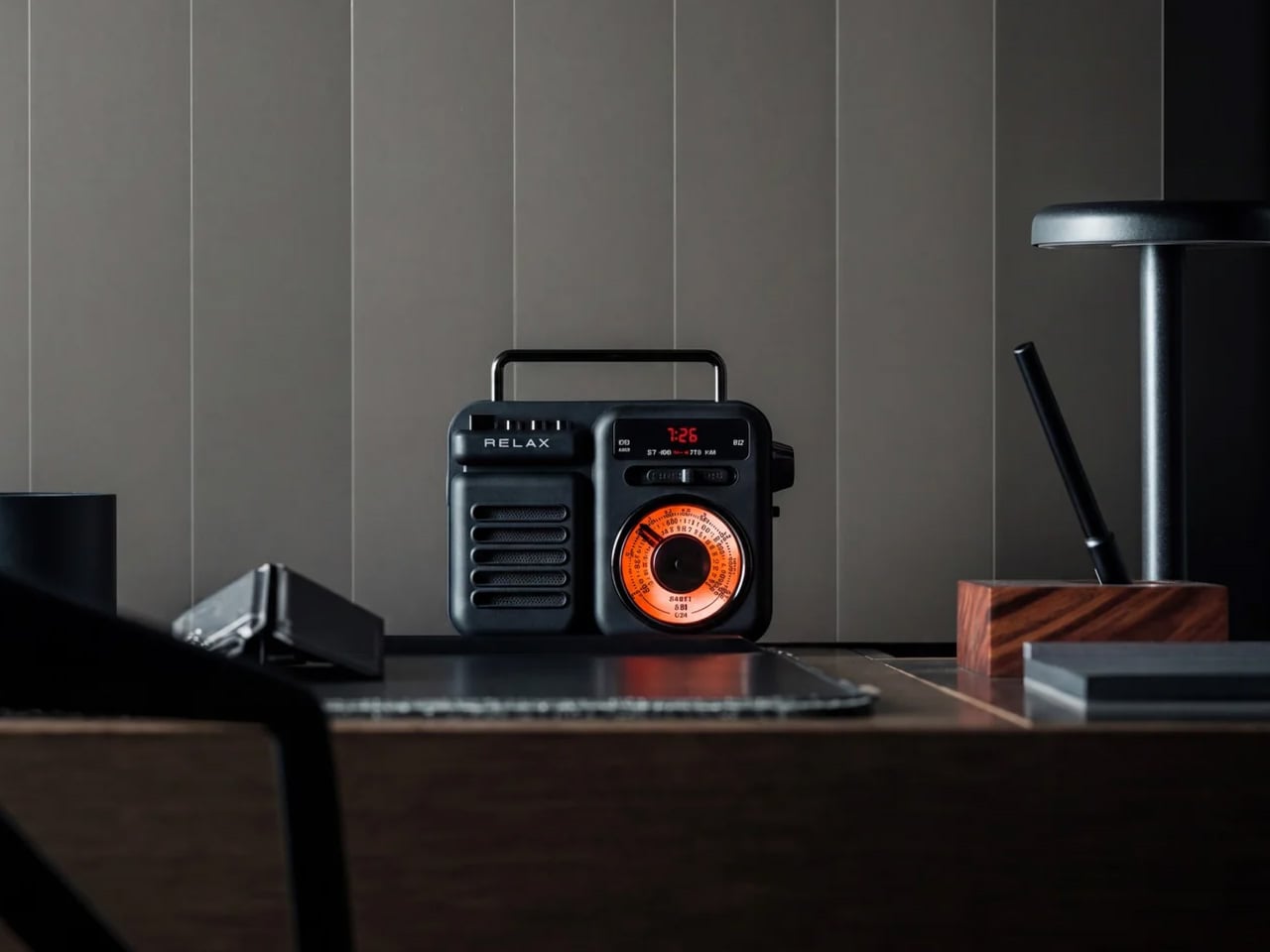
The Retrowave Radio is an AM/FM radio with Bluetooth streaming built into a compact retro-styled body. Picture Sunday morning. You want something on in the background, and you do not want to wake up a smart speaker or open another app. You spin a physical dial, land on a station, and leave it there. The Retrowave Radio is exactly that object. It sits on your desk, works without asking anything from you in return, and looks like it belongs there in a way that most tech on your desk does not.
The design is doing most of the heavy lifting. Analog dial face, physical control knobs, boxy proportions that reference the tabletop radios of the 1960s without feeling like a costume. It looks deliberate next to a keyboard and a lamp in a way that a cylindrical smart speaker never quite manages. The Bluetooth mode covers any gap when you want to play something specific off your phone. You will use it for both. Most days the radio wins.
The physical tuning dial is something you forgot you missed – spinning a knob to find a station is slower than tapping a playlist, and that slowness is entirely the point
The Bluetooth mode pulls double duty, cutting one device off your desk rather than adding another
What we dislike:
The speaker output is sized for personal use, not a room – imagine being gathered around it rather than imagine it filling the room.
This is a near-desk radio, sitting more than eight feet away at volume will remind you of that
The Ones Worth Keeping
None of these objects were designed with a trend in mind. The Anglepoise spring has not changed since 1935. The Twemco mechanism has not changed meaningfully since the 1970s. The 8BitDo keyboard references a console that is thirty years old, and the cassette form factor predates most people reading this. That is not nostalgia for its own sake. That is what happens when the fundamentals were right from the start.
If one had to earn the top spot, it is the Cassette Speaker. Not because it sounds the best or costs the most, but because it is the only object here that makes someone ask where you got it before asking what it does. That question is the whole point. Everything else on this desk is functional. The Cassette Speaker is functional and feels like something you chose on purpose.
You get light from above. You get wind from above too. So at some point, somebody was bound to ask the obvious next question, why not sound from above as well? Ceiling fans have spent years quietly doing side quests with built-in lamps, remote controls, and the occasional smart feature, but this feels like the first time one has aimed for proper living room territory. The lamp-plus-fan combo has always felt like a polite upgrade to an appliance nobody was particularly excited about.
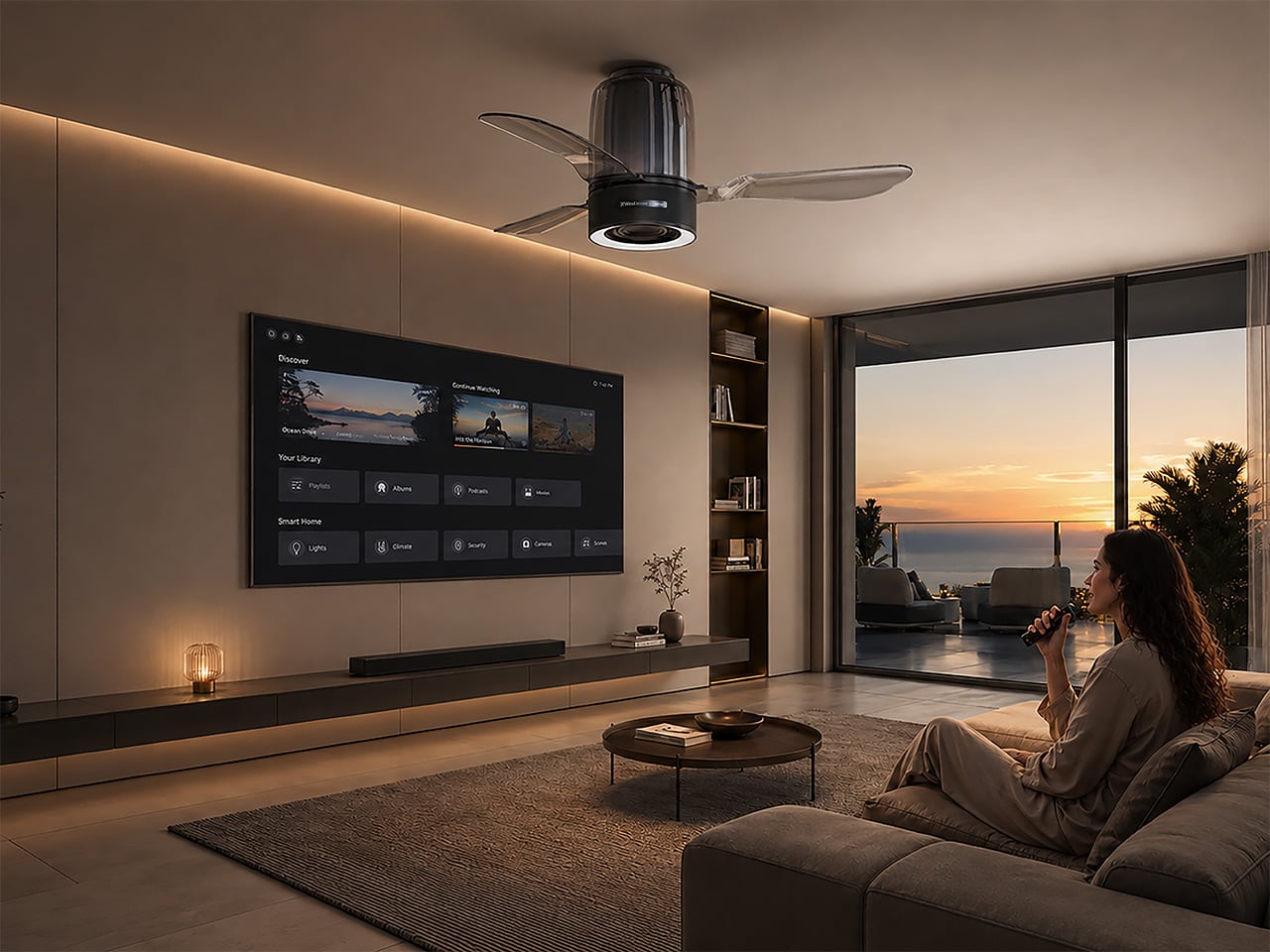
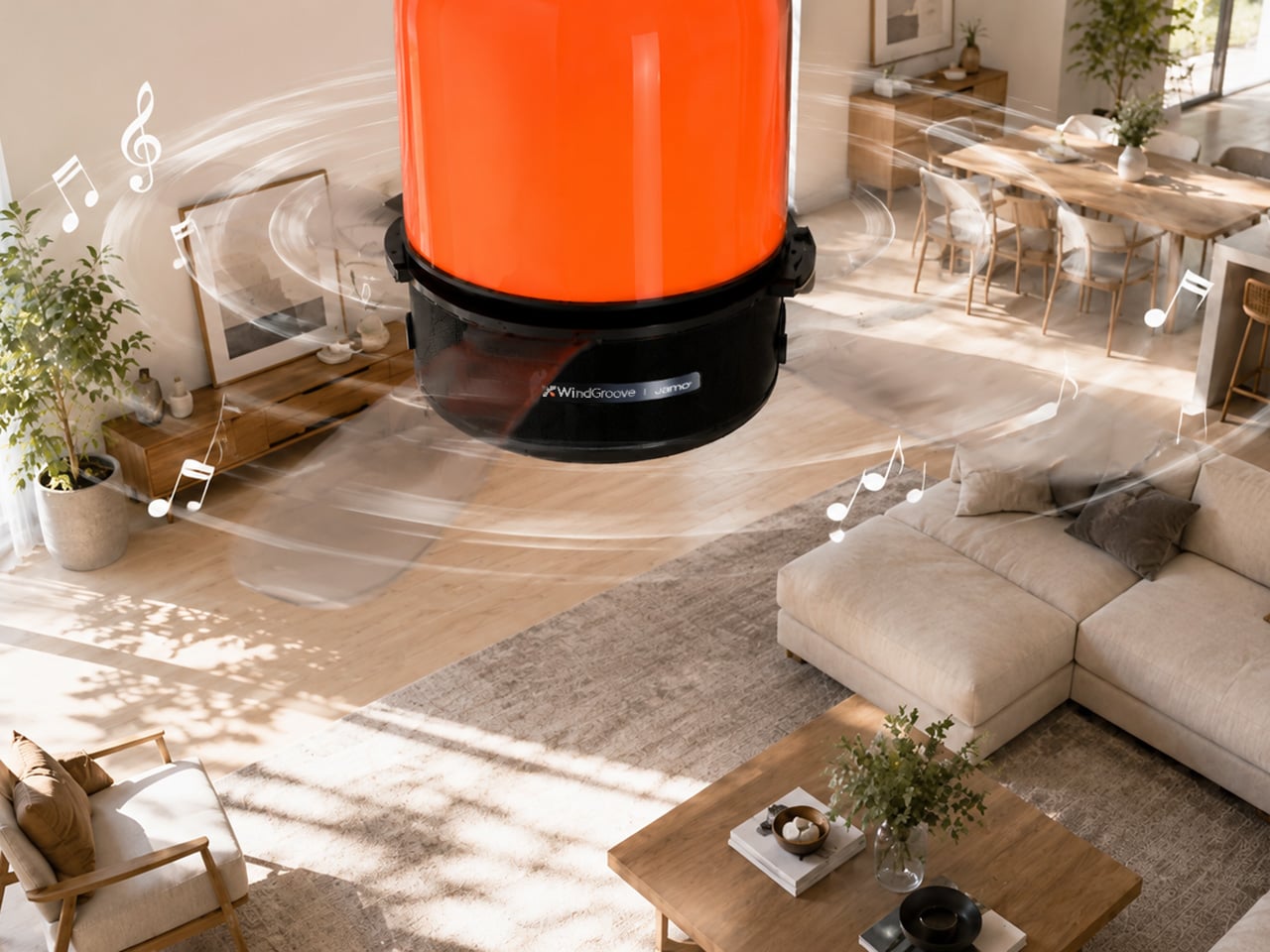
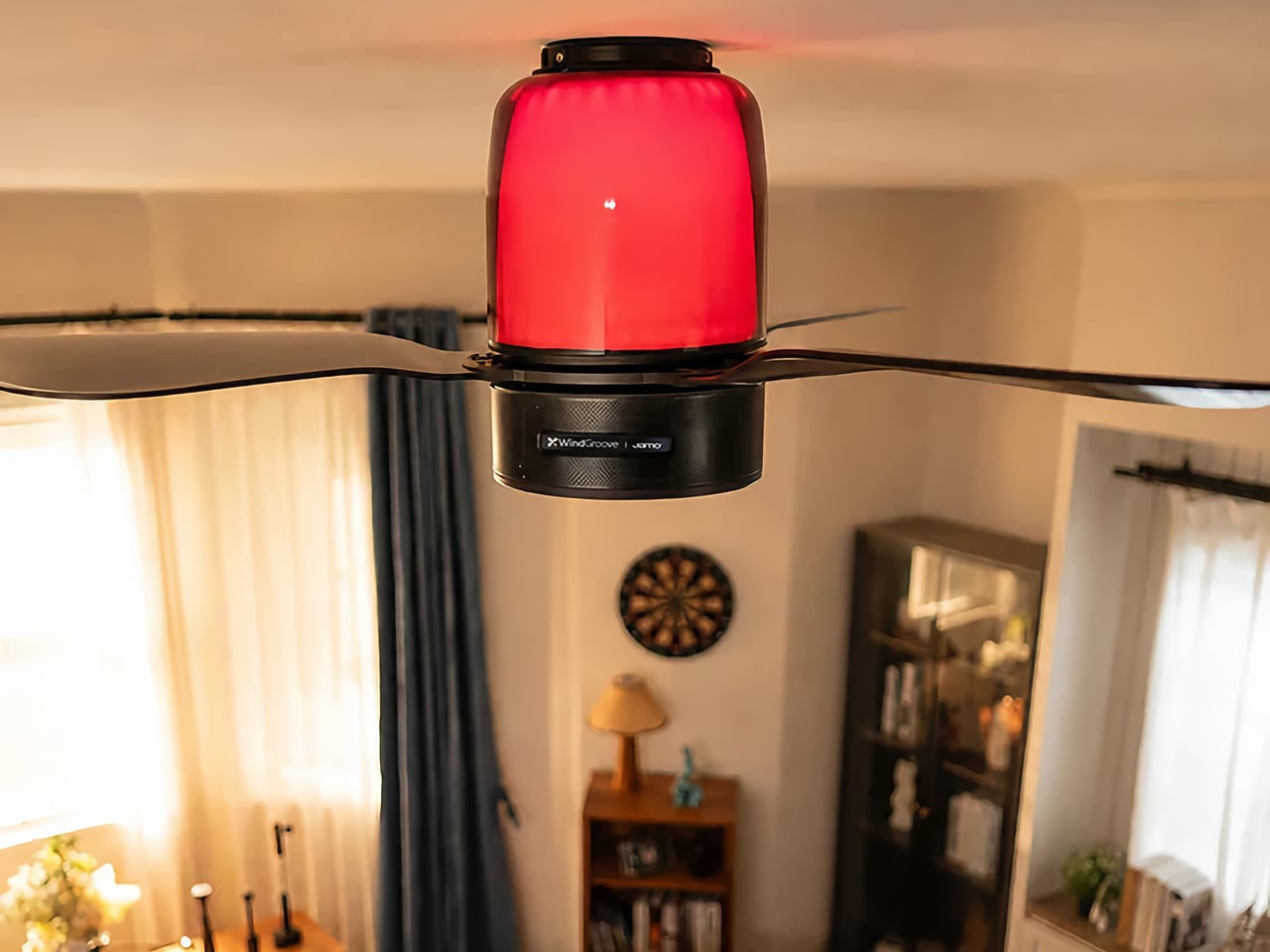
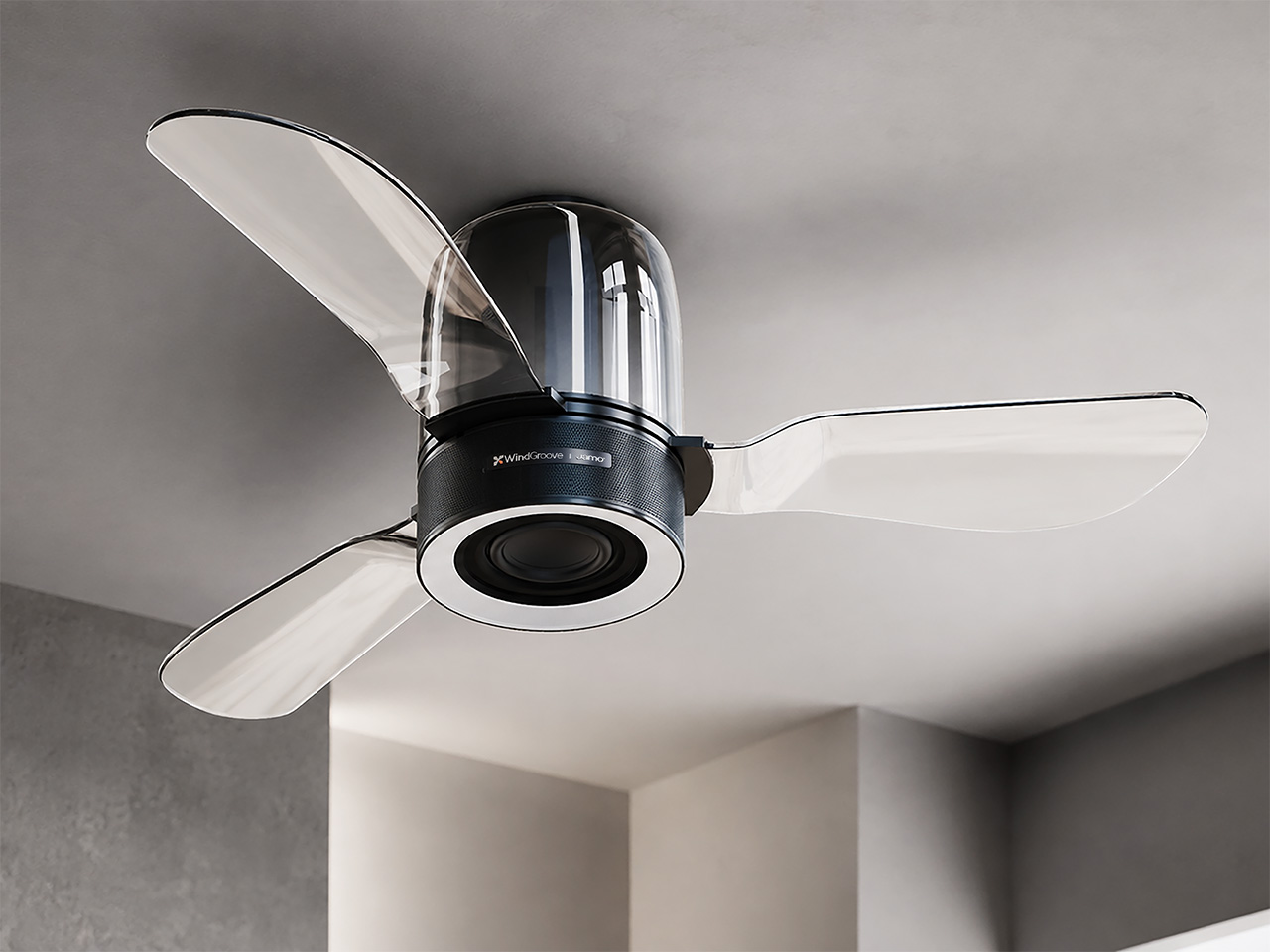
WindGroove’s AirFi One takes that idea and runs with it, folding a Hi-Fi audio system, atmospheric lighting, and airflow into a single ceiling-mounted fixture. The audio setup is co-developed with Jamo, the Danish speaker brand founded in 1968, which gives the whole thing considerably more credibility than your average gadget trying to do five jobs at once. It’s one of those products that sounds slightly absurd for about three seconds, right up until you realize how much floor space your speakers and fans have been stealing this whole time.
Putting a speaker inside a spinning mechanical system is, acoustically speaking, a problem that mostly did not exist before. Motors generate vibration, and that vibration travels through metal housings and mounting hardware until it finds a speaker driver to rattle. At higher fan speeds, the blades also create periodic air pressure variations at blade-pass frequency, a rhythmic pulse that can cause a speaker cone to flutter and introduce distortion into the output. Positioning the speaker overhead compounds the issue further, because the ceiling acts as a large reflective surface, creating phase cancellation and comb filtering effects where certain frequencies pile up while others cancel out. Nailing clean Hi-Fi sound out of a product that is also spinning at variable speeds, mounted above a live listening environment, is a genuinely impressive engineering feat.
WindGroove’s entire design thesis rests on one idea: technology should dissolve into the room, not announce itself from it. Making that happen acoustically meant solving real engineering problems, because a spinning motor introduces vibration into a speaker chassis and rotating blades create periodic air pressure pulses that can rattle a driver into distortion. Intelligent DSP processing that corrects for ceiling reflection and overhead projection in real time is WindGroove’s most elegant solution, allowing the speaker to disappear into the architecture and still fill a room properly. Total harmonic distortion is rated at 1% or below, keeping music sounding like music rather than like hardware working hard. A motor running at under 32 decibels reduces mechanical vibration at the source, so the DSP has considerably less chaos to correct for.
Jamo has been building musically balanced speakers rooted in Scandinavian design since 1968, and that acoustic philosophy is what WindGroove borrowed for the tuning here. The 80W 3-way setup, twin 15W mid-high drivers plus a dedicated 50W subwoofer, carries real Hi-Fi ambitions rather than the polite background-audio compromise most integrated appliances settle for. Frequency response runs from 45Hz to 20kHz, wide enough to cover genuine bass texture and crisp high-frequency clarity across the full spectrum of recorded music. Bringing in a heritage audio brand rather than speccing the cheapest available driver stack reflects WindGroove’s conviction that invisible technology still needs to perform at the highest level when you actually sit down and listen. Putting a Jamo-tuned 80W Hi-Fi system inside a ceiling fan is the kind of product decision that only makes sense if you believe the room should come first, and the hardware should figure itself out.
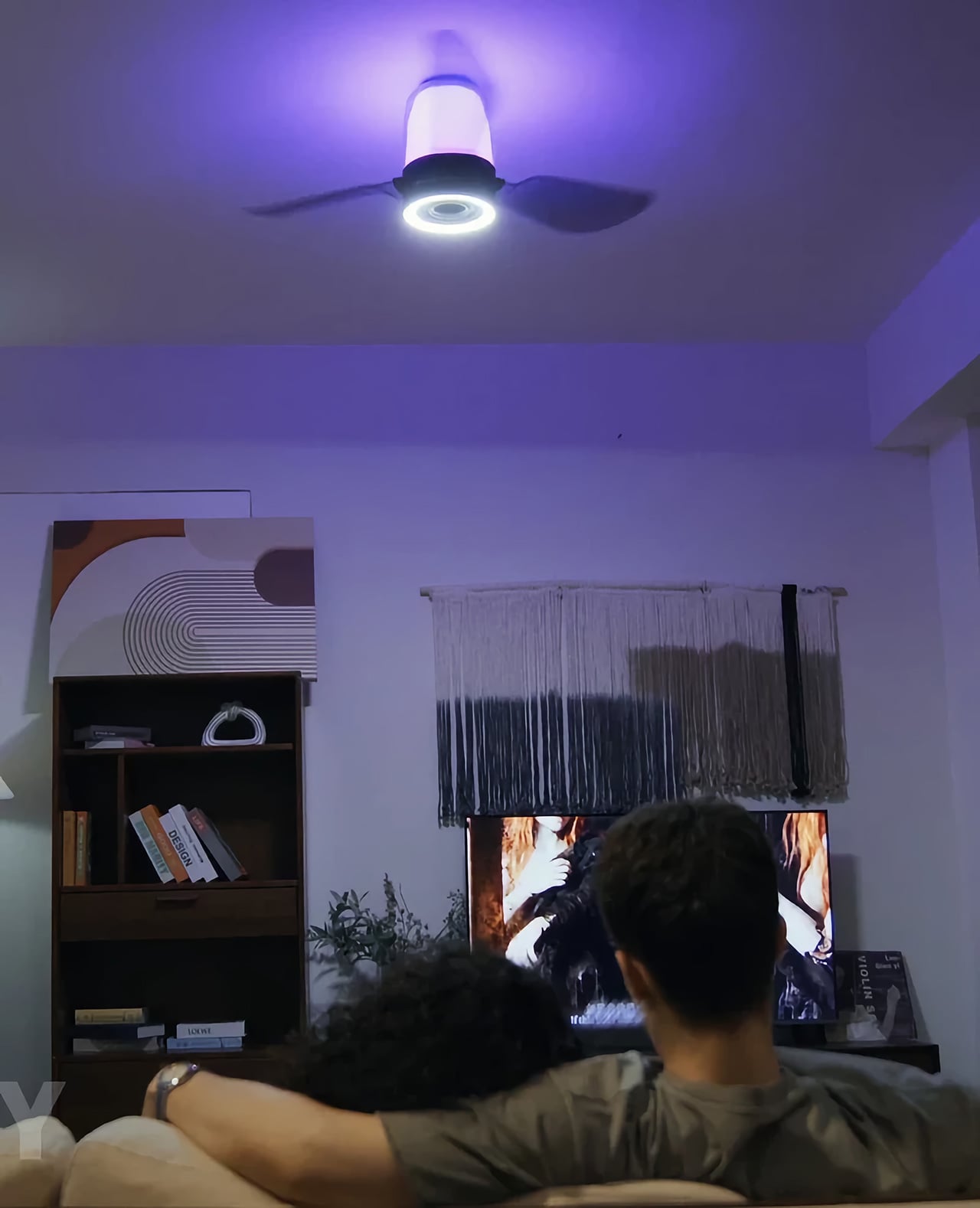
The fan boasts a maximum airflow of 4621 CFM at under 32 decibels, quiet enough to run while music is playing without competing with it, and the blade direction reverses seasonally so the unit pulls its weight year-round. The dual-zone lighting system combines everyday illumination with immersive ambience. The lower section serves as the primary light source, providing bright, even illumination for the entire room. You can choose from three color temperatures – warm white for a cozy, relaxing glow, natural white for comfortable everyday lighting, or cool white for a crisp, energizing feel. Stepless dimming lets you fine-tune the brightness to suit everything from winding down at night to working, reading, or getting ready in the morning.
Picture a Friday evening where you dim the lights, the room shifts to a warm amber glow, the fan hums almost imperceptibly overhead, and the music you put on actually sounds like the artist intended it to. No speaker on a shelf eating into the bookcase. No standing fan taking up the corner you always meant to do something with. No three apps open at once trying to get everything to behave. The ceiling handles it, and the room just feels right in a way that is surprisingly hard to explain to someone who has not experienced it.
AirFi One is priced at $499 at retail and is available for purchase right now on WindGroove’s website.. Sure, you could just duct-tape a Bluetooth speaker to your fan and call it a day – but having an 80W sound system built into your ceiling fan isn’t something everyone can boast of.