Almost every mobile controller assumes you want to play in landscape, snapping your phone into a wide handheld that feels great for modern shooters and racing games. This works for most titles, but when you fire up Game Boy-era platformers or vertical arcade classics, the experience feels slightly off, like forcing old games into a shape they were never meant to inhabit, holding them sideways while your thumbs reach for controls that never land right.
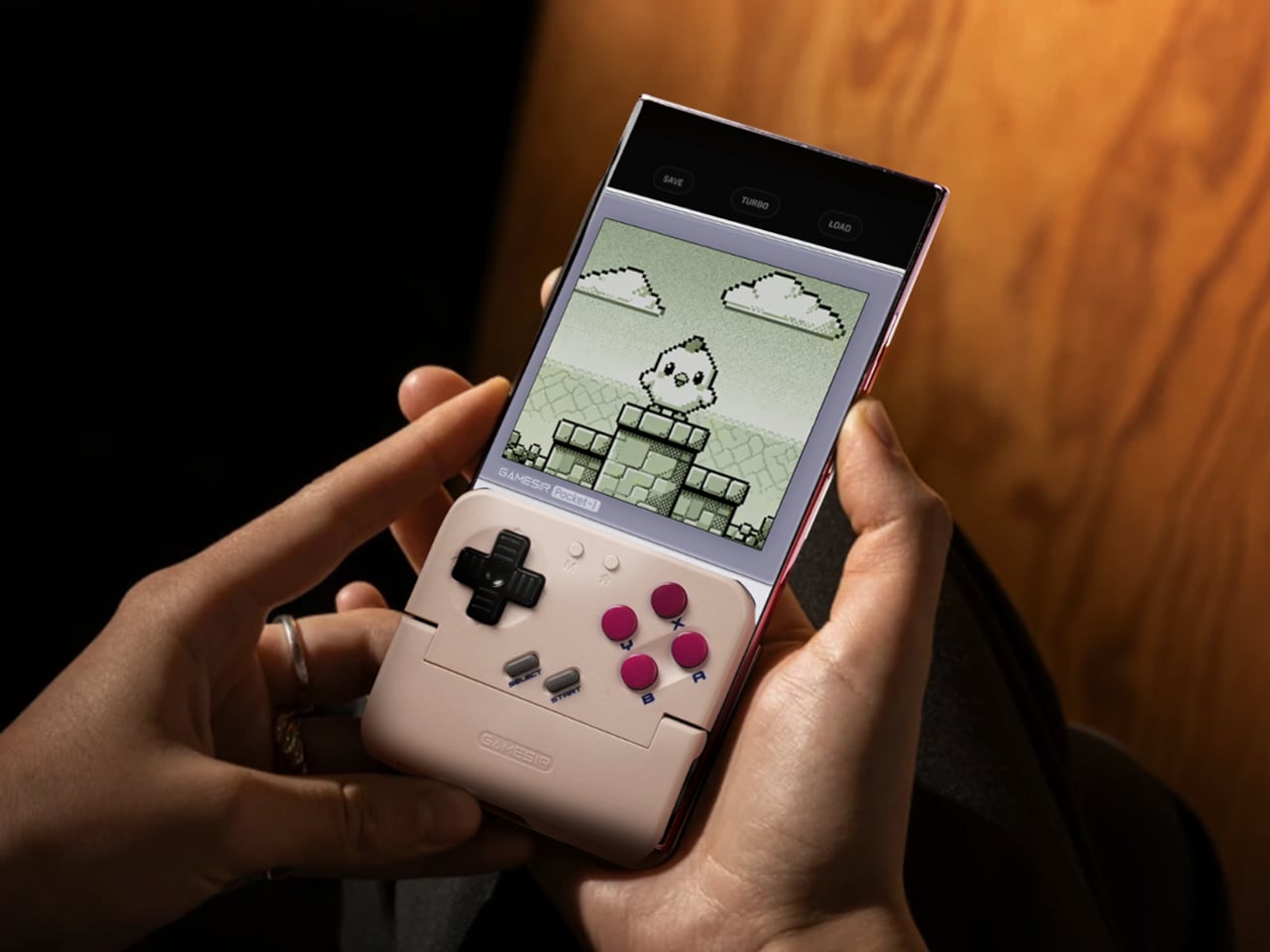
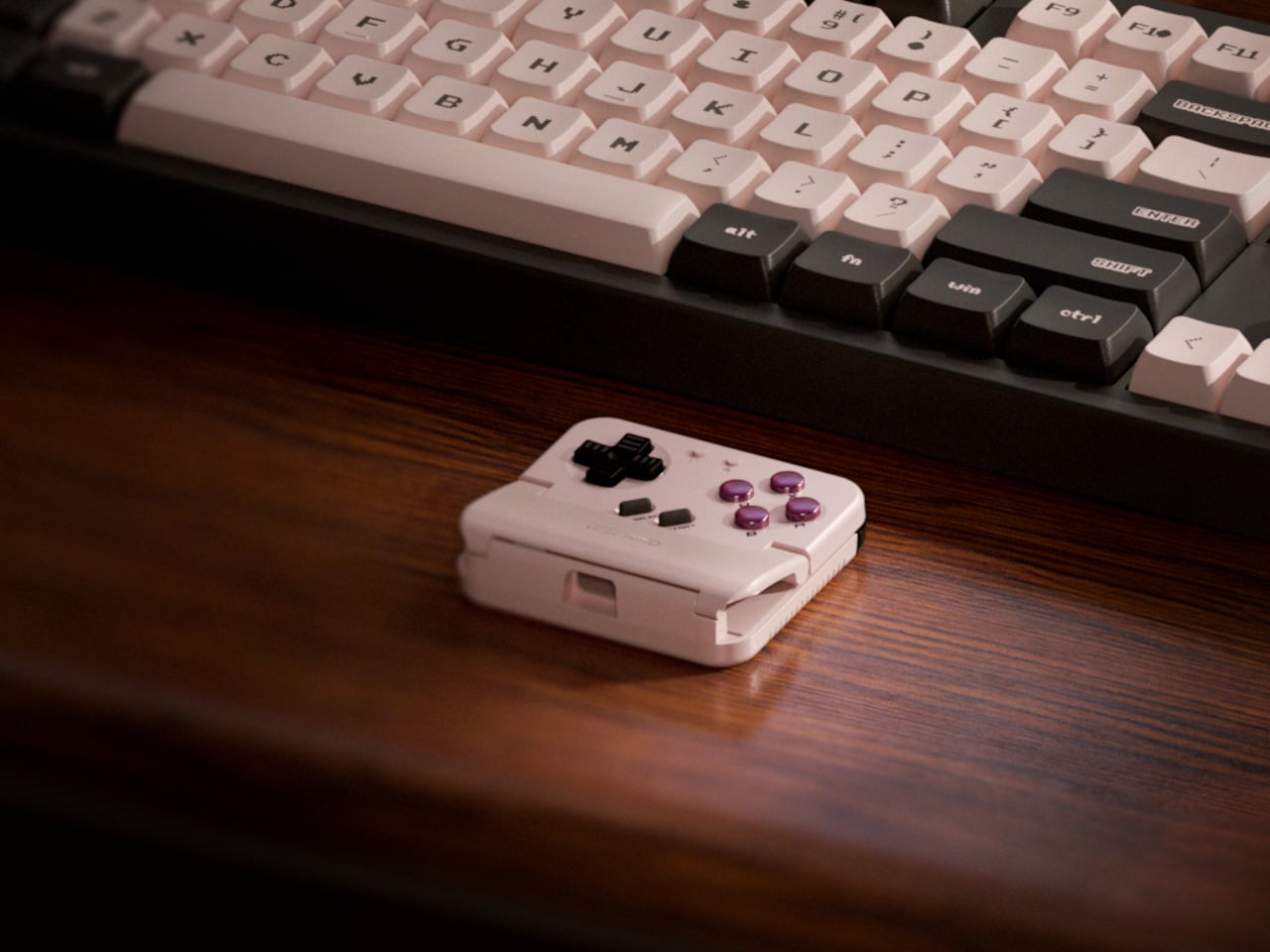
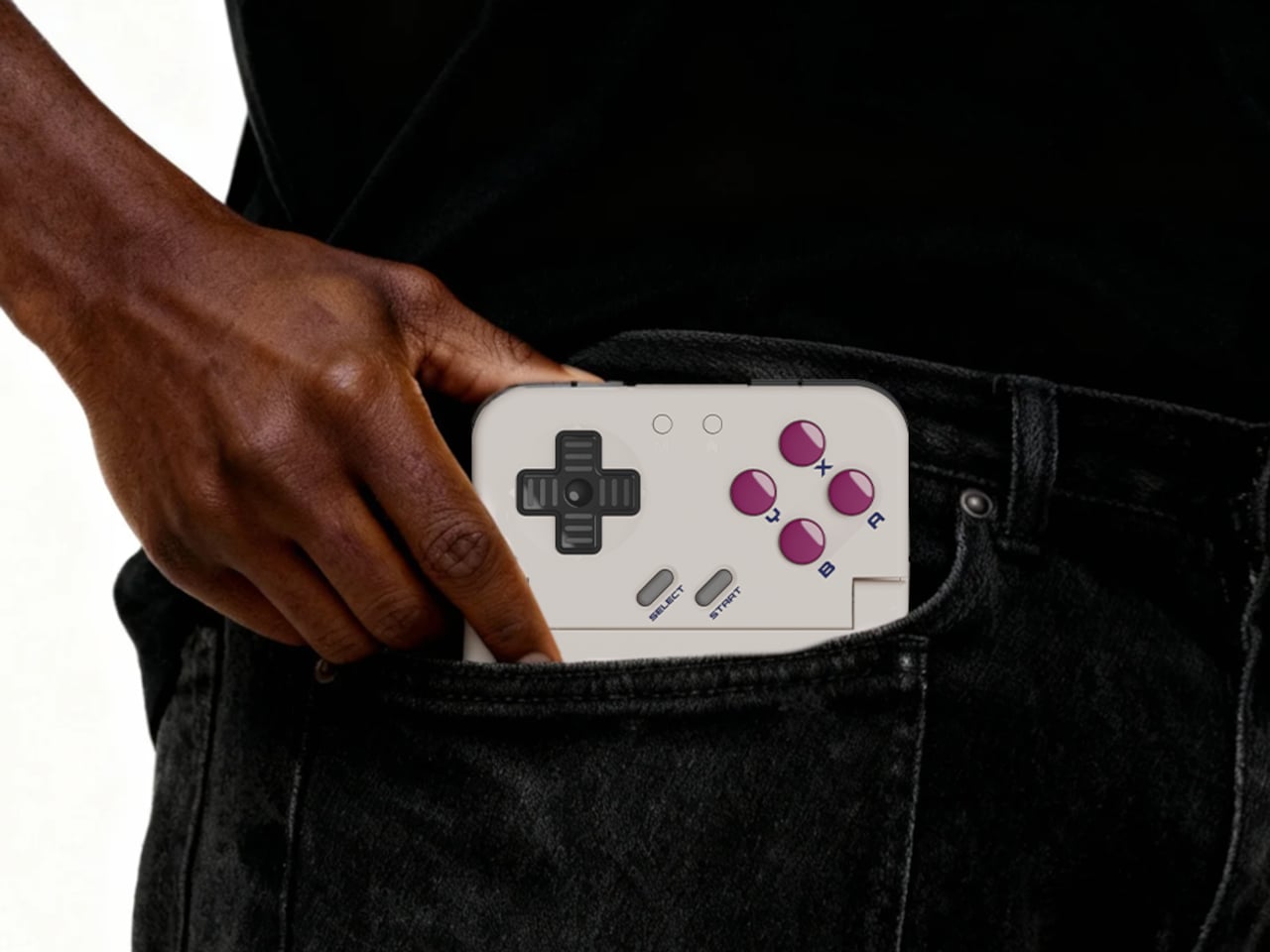
GameSir’s Pocket Taco leans into portrait play instead of fighting it, turning your phone into something closer to a classic handheld. It first appeared as the Pocket 1 at Tokyo Game Show, then resurfaced as Pocket Taco just as 8BitDo teased its own vertical FlipPad, setting up a clash of design philosophies aimed at people who want to hold their phones the way they held Game Boys.
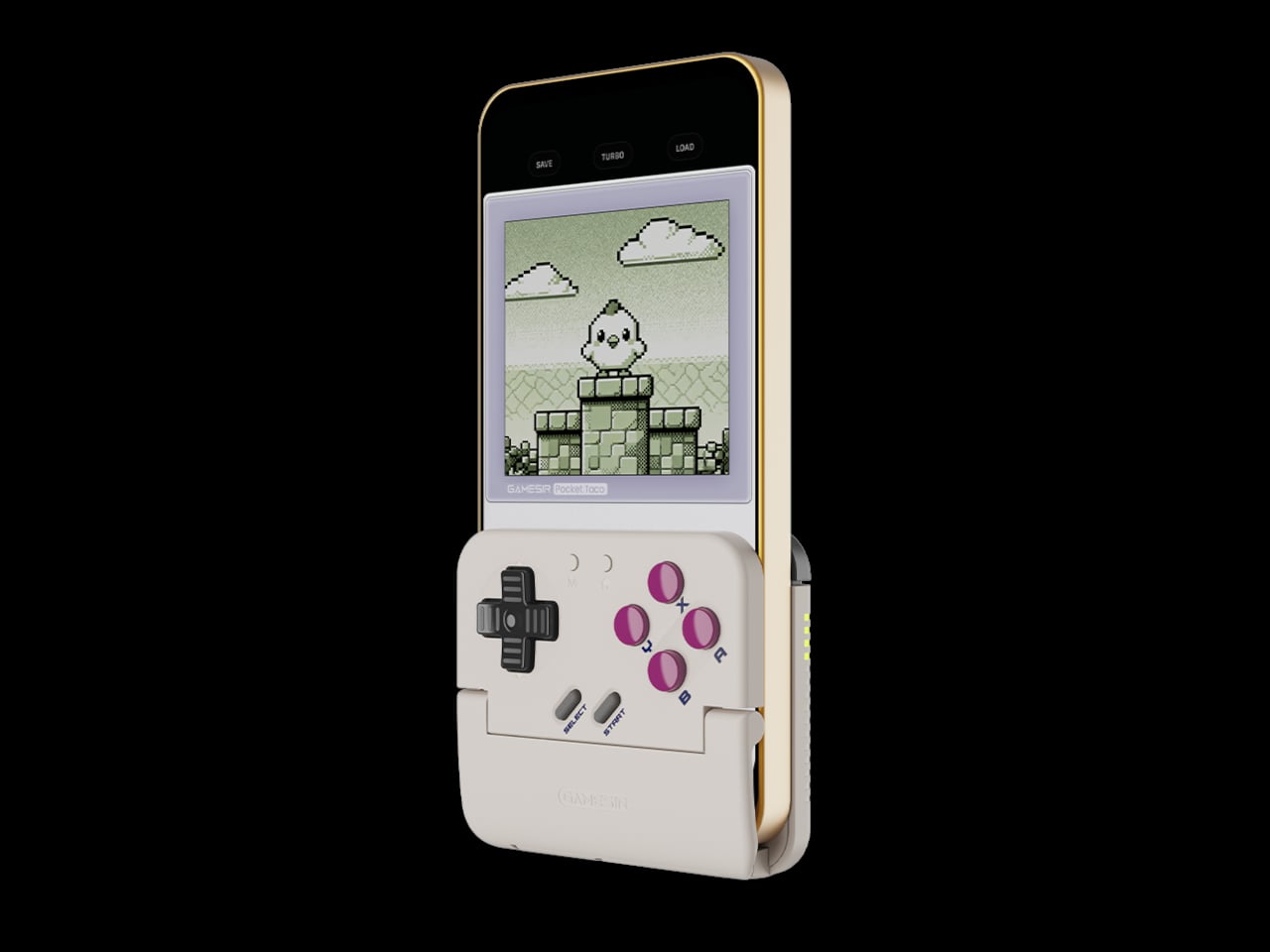
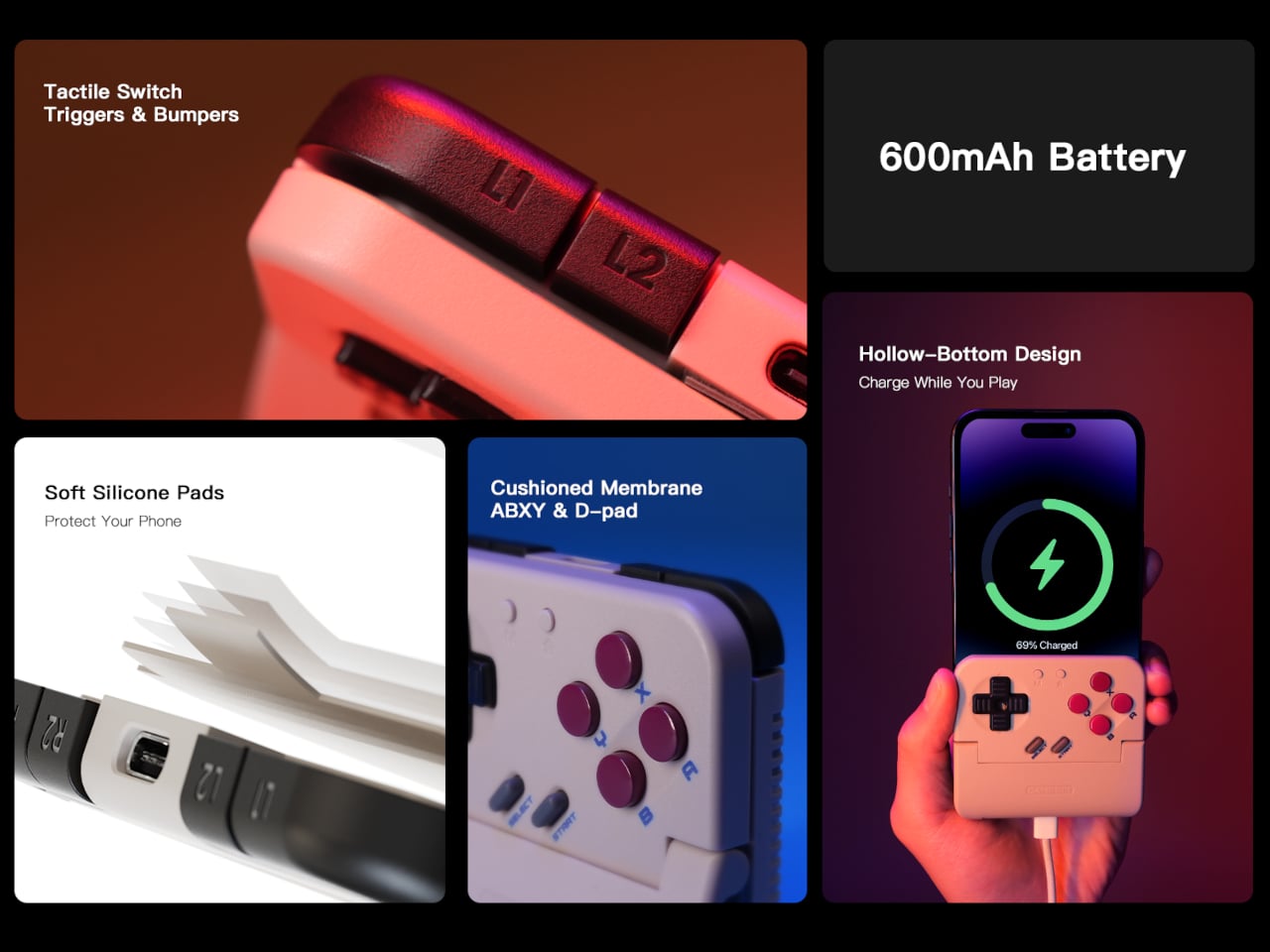
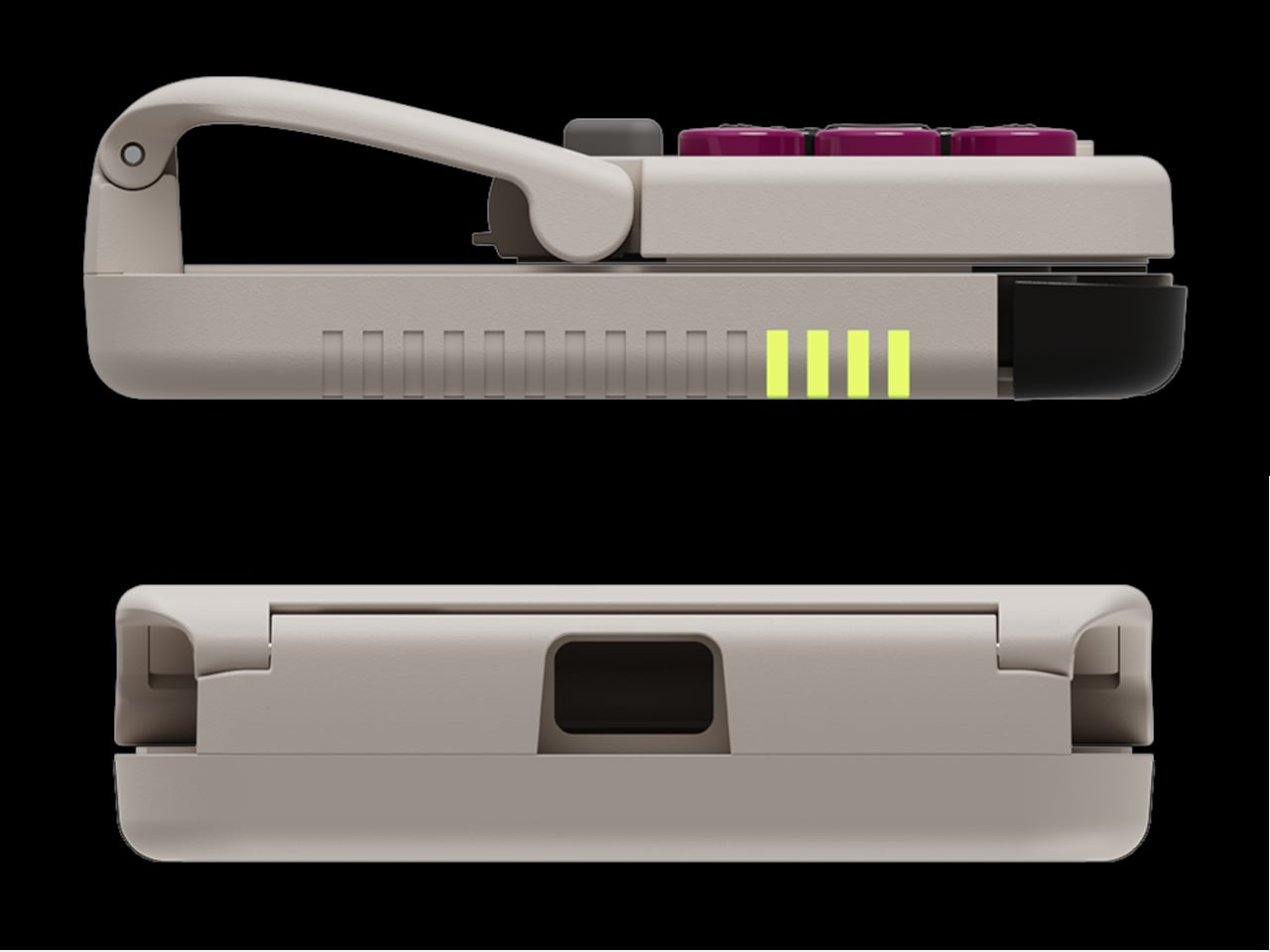
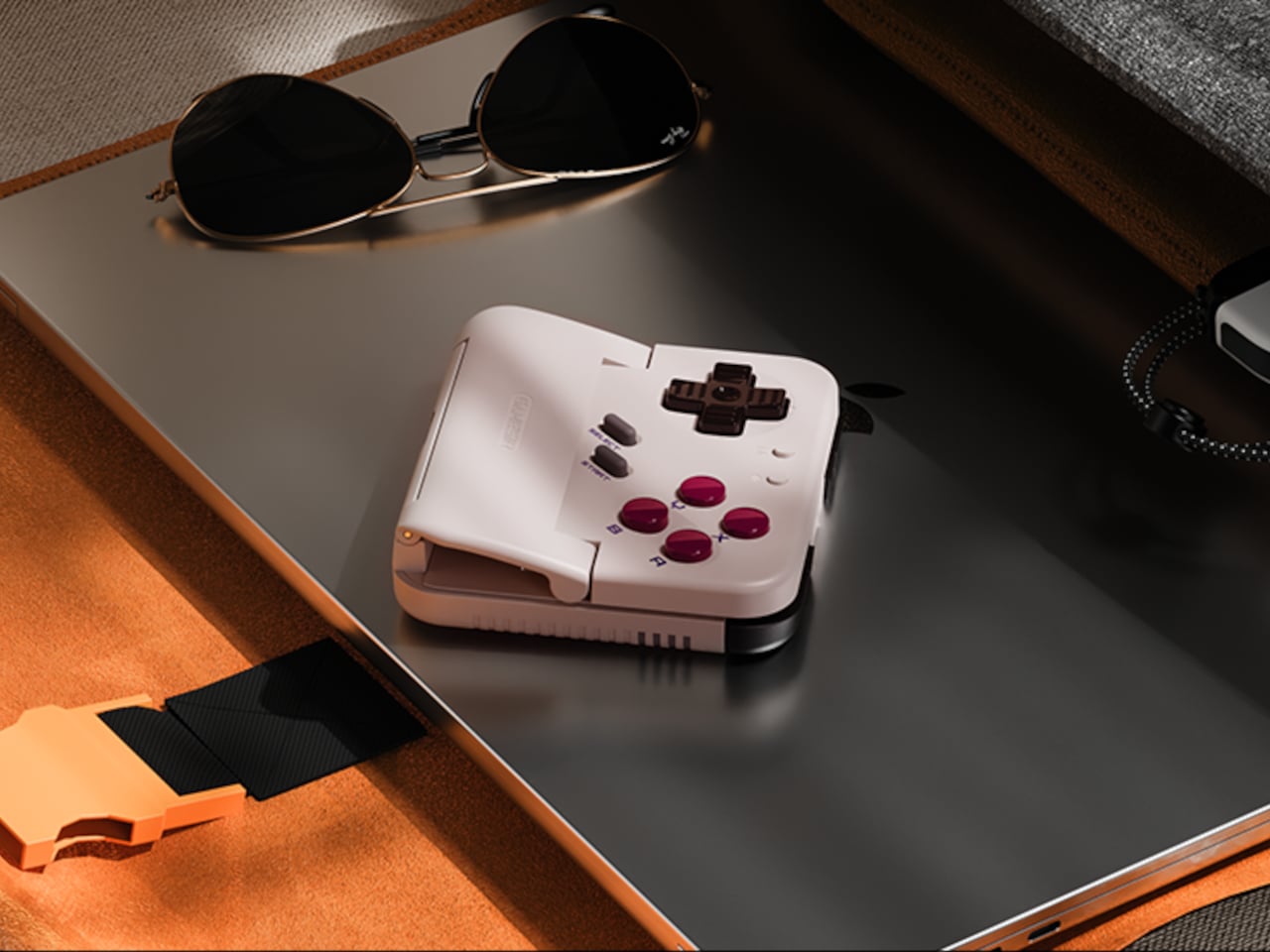
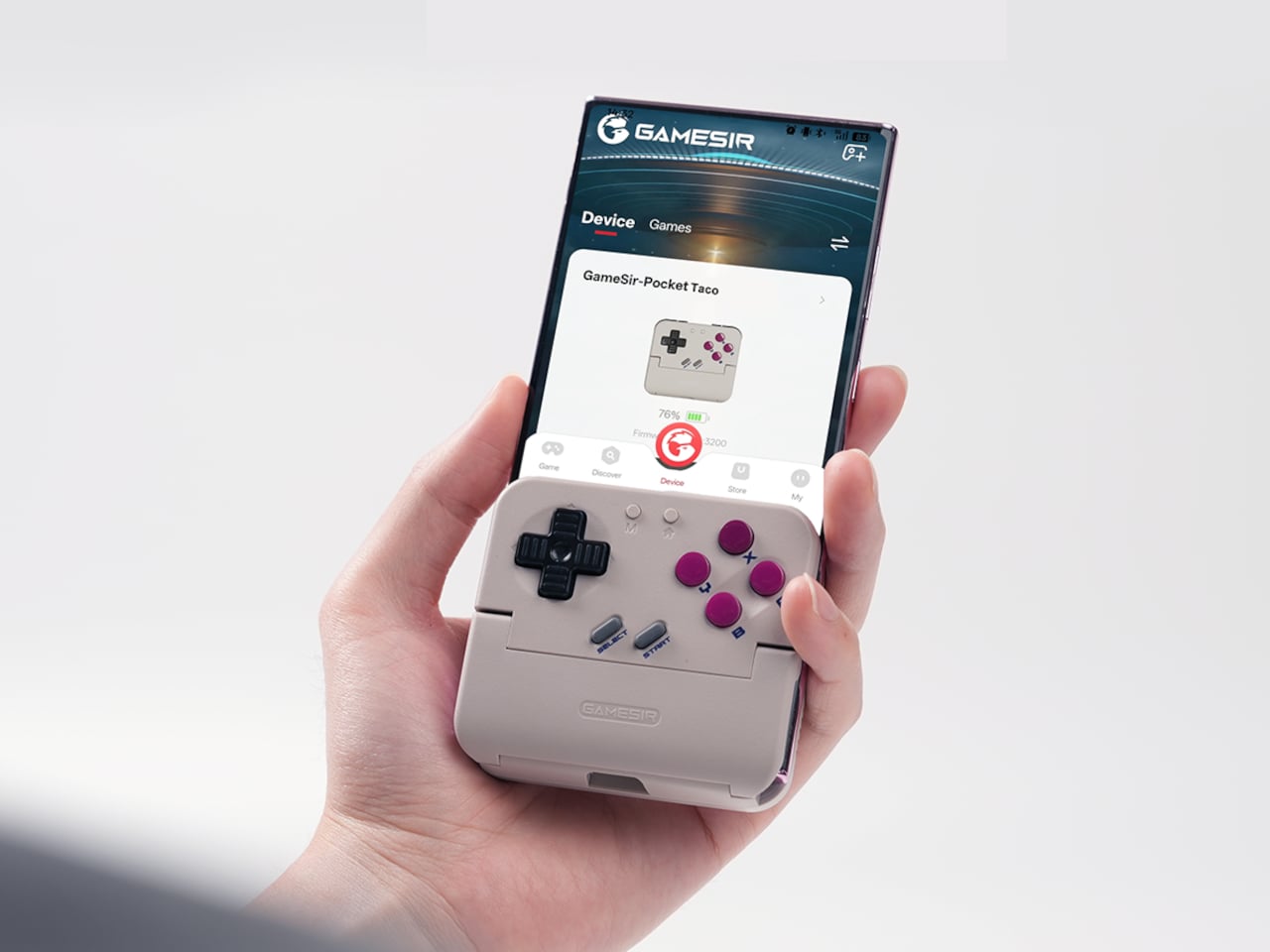
The rebrand to Pocket Taco fits the design; the controller clamps to the bottom of your phone like a taco shell. The foldable front accommodates different phone sizes, and soft silicone pads line the clamp area so you are not grinding plastic against glass every time you snap it on, which matters when you pull it out multiple times a day for quick sessions between meetings or commutes.
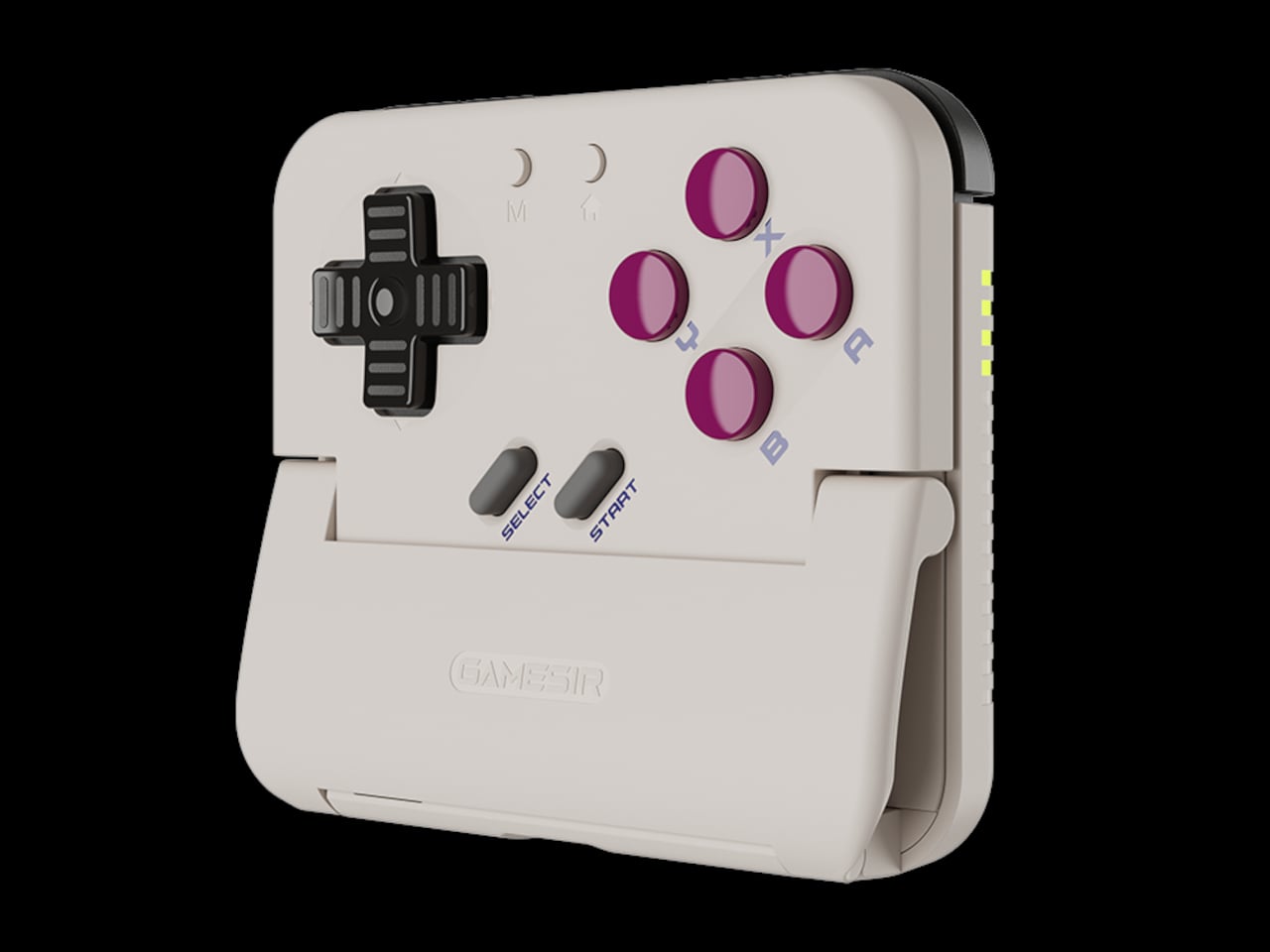
The control layout separates Pocket Taco from 8BitDo’s FlipPad. Pocket Taco gives you a traditional D-pad, ABXY face buttons, and actual triggers and bumpers on the back. FlipPad keeps everything on the front in a row of circular buttons, which is clever for compactness but less like the shoulder-button ergonomics many players expect from dedicated handhelds, especially during games with heavy simultaneous inputs.
Pocket Taco uses Bluetooth, so it can talk to Android and iOS phones, tablets, and other devices, and it still works when not clamped. FlipPad plugs in over USB-C, which keeps latency low and removes battery anxiety, but ties it to phones with that port and to a tethered style where the controller must stay attached to function at all.
One practical touch is the large cutout at the bottom that leaves your phone’s charging port accessible while the controller is attached, so you can plug in and keep going during long sessions. FlipPad occupies the USB-C port and does not offer passthrough charging, which is fine for short bursts but less ideal for marathon runs that drain the phone before you finish the dungeon.
Pocket Taco runs on a 600 mAh battery with smart power behavior, open to play, close to rest. The trade-off is one more battery to watch and slightly more bulk. FlipPad stays slimmer and battery-free, but leans on your phone for power, shifting the burden and adding a small drain to your phone’s battery during long play sessions.
Pocket Taco and FlipPad are two paths toward the same fantasy, turning a slab of glass into a dedicated retro handheld. Pocket Taco leans into wireless freedom, proper triggers, and charging-while-playing practicality, while FlipPad bets on wired simplicity and a flatter front. For anyone who grew up holding a Game Boy vertically, it is nice to have options that respect that muscle memory instead of pretending mobile gaming should feel like a miniature Xbox stuck in landscape.
We’re wrapping up coverage of the biggest tech show in the world. CES 2026 is almost over, and while we have more stories and wrap-ups to come, here are the most interesting products we’ve spotted, written about and critiqued/praised. That includes our picks for the best of CES. We gave out 15 awards as well as our best of show, and you might be surprised by some of our picks — I know I was.
Read on for some of the best things to come out of Las Vegas this week, but first up, our Best of the Best winner, which was Lego Smart Play. As Engadget’s editor-in-chief Aaron Souppouris put it, “Lego could almost be seen as the antithesis of the typical CES product.”
Regardless of trends, Lego has always persisted. And in 2026, it’s getting much smarter.
The system consists of a Smart Brick, Tags and Minifigures. They’re packed with modern technology, so they can respond to how you play with them or the sets you build. The Smart Brick has a 4.1mm ASIC chip, which Lego says is smaller than a standard Lego stud. It senses things like motion, orientation and magnetic fields, but also has a tiny built-in speaker, which produces audio “tied to live play actions,” not just canned clips.
It’s hard to explain it in only a few words (we’ve got a deep-dive hands-on right here), but what immediately drew me in was the lack of smartphone pairing and screens. The ability of each part to detect and interact with others can lead to some ridiculous setups, whether it’s ducks and police officers or a helicopter or an X-Wing.
Naturally, it’s a little pricier than basic Lego, but not out of the realm of being a special gift or birthday present. One of the first sets, with a smart Darth Vader Minifigure, one Smart Brick and one Smart Tag, is $70.
We'll be back to our regularly scheduled newsletter next week. Have a great weekend!
On Monday, which feels like an age ago, Jensen Huang shared the latest from NVIDIA. While the presentation was more a refresher than a barrage of new announcements, it was a pretty low-key presentation, with lots of AI chat. One announcement was Alpamayo, a family of open-source reasoning models designed to guide autonomous vehicles through difficult driving situations. The centerpiece is Alpamayo 1, a 10-billion-parameter chain-of-thought system NVIDIA says can drive more like a human.
When it comes to tech we all might use, we had to wait for a separate event, when NVIDIA announced DLSS 4.5 and G-Sync Pulsar. For both features, you’ll need a 50-series GPU. You got one, right?
Meta's messaging app WhatsApp could soon be subject to deeper scrutiny (and punishment) under the European Commission's Digital Services Act, Reuters reports. Because the app's broadcasting feature WhatsApp Channels grew to around 51.7 million average monthly active users in the European Union in the first six months of 2025, the feature has crossed the 45-million-person barrier that lets DSA rules apply.
A platform is designated as a "very large online platform" or VLOP once it has 45 million monthly users or more, according to the European Commission. Once an app or service passes that amount, it's subject to the DSA and all its rules about how digital platforms should operate, particularly around removing illegal or harmful content. Companies can be fined up to six percent of their global annual revenue for not complying with the DSA.
WhatsApp traditionally functions as a private messaging app, but its Channels feature, which lets users make one-sided posts to anyone who follows their channel, does look a lot more like Meta's other social media platforms. "So here we would indeed designate potentially WhatsApp for WhatsApp Channels and I can confirm that the Commission is actively looking into it and I wouldn't exclude a future designation," a Commission spokesperson said in a daily news briefing Reuters viewed.
Engadget has asked Meta to comment on WhatsApp’s possible new designation. We’ll update this article if we hear back.
The possibility that WhatsApp could become a regulatory target in the EU was first reported in November 2025, but Meta has been dealing with DSA-related fines since well before then. Meta was charged with violating the EU law in October 2025 because of how it asks users to report illegal content on Facebook and Instagram. Earlier that month, a Dutch court also ordered the company to change how it presents the timelines on its platforms because people in the Netherlands were not "sufficiently able to make free and autonomous choices about the use of profiled recommendation systems" in the company's apps.
This article originally appeared on Engadget at https://www.engadget.com/social-media/whatsapp-might-soon-be-subject-to-stricter-scrutiny-under-the-eus-digital-services-act-191000354.html?src=rss
For most designers and filmmakers, storage is the quiet problem that never gets a mood board. Projects start on phones, move through cameras and laptops, and end up scattered across drives and cloud folders that you half remember naming six months ago. CES 2026 is full of AI-driven devices and next-gen connectivity, but DigiEra’s booth is interesting because it treats storage as part of the creative environment, not just a spec to tick off on a spreadsheet.
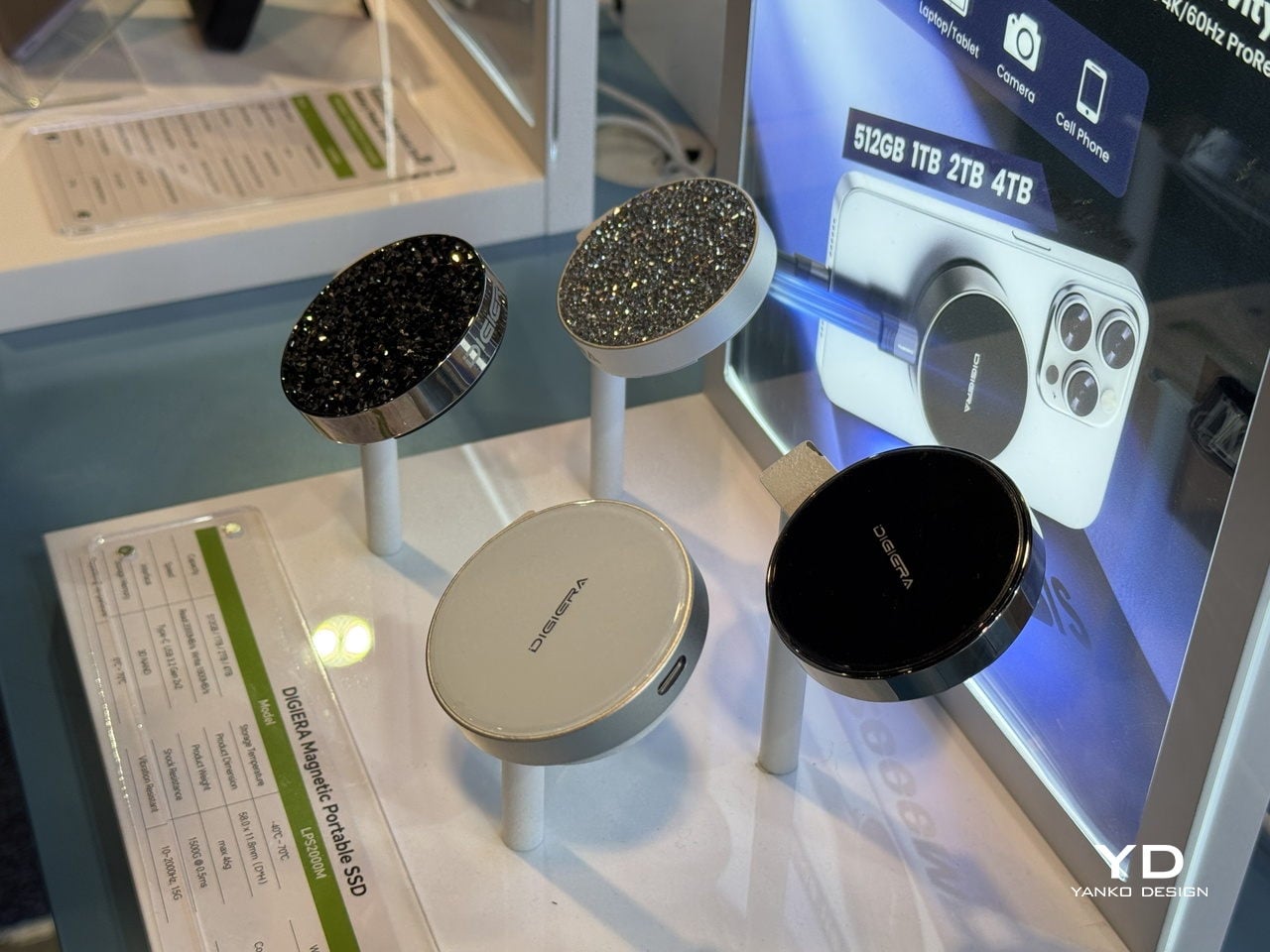
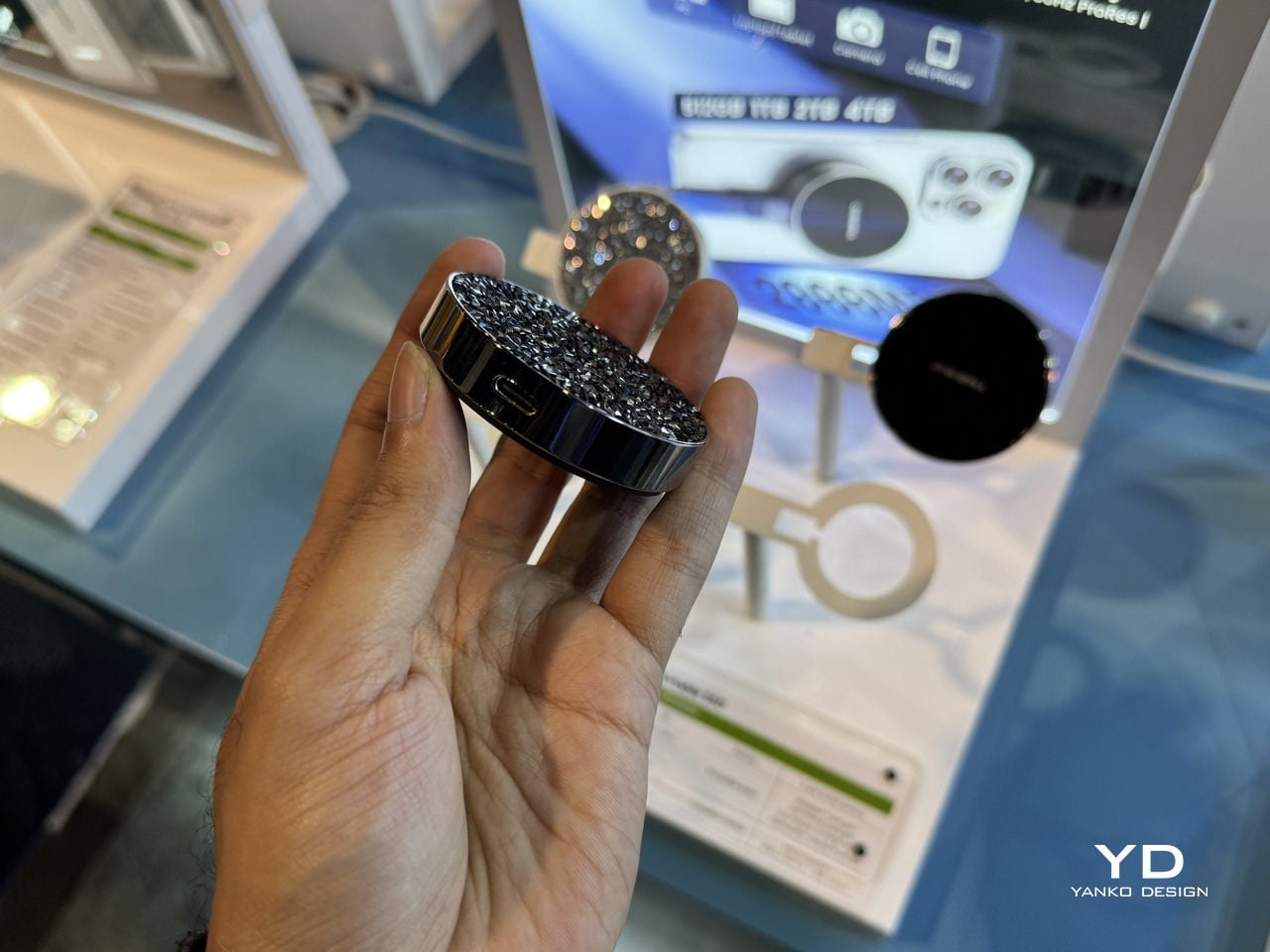
The lineup tells a single story across four products. OmniCore is the modular, all-flash AI NAS that wants to be the studio’s private brain. Endura is the rugged field drive that can live in a bag without babying. Portable Hub SSD is the tiny block that turns a phone or camera into a serious capture and editing station. The Diamond Magnetic Portable SSD is the piece that lives on the back of an iPhone, turning storage into something closer to jewelry than IT gear.
Designer: DigiEra
OmniCore: AI NAS as a Private Studio Brain
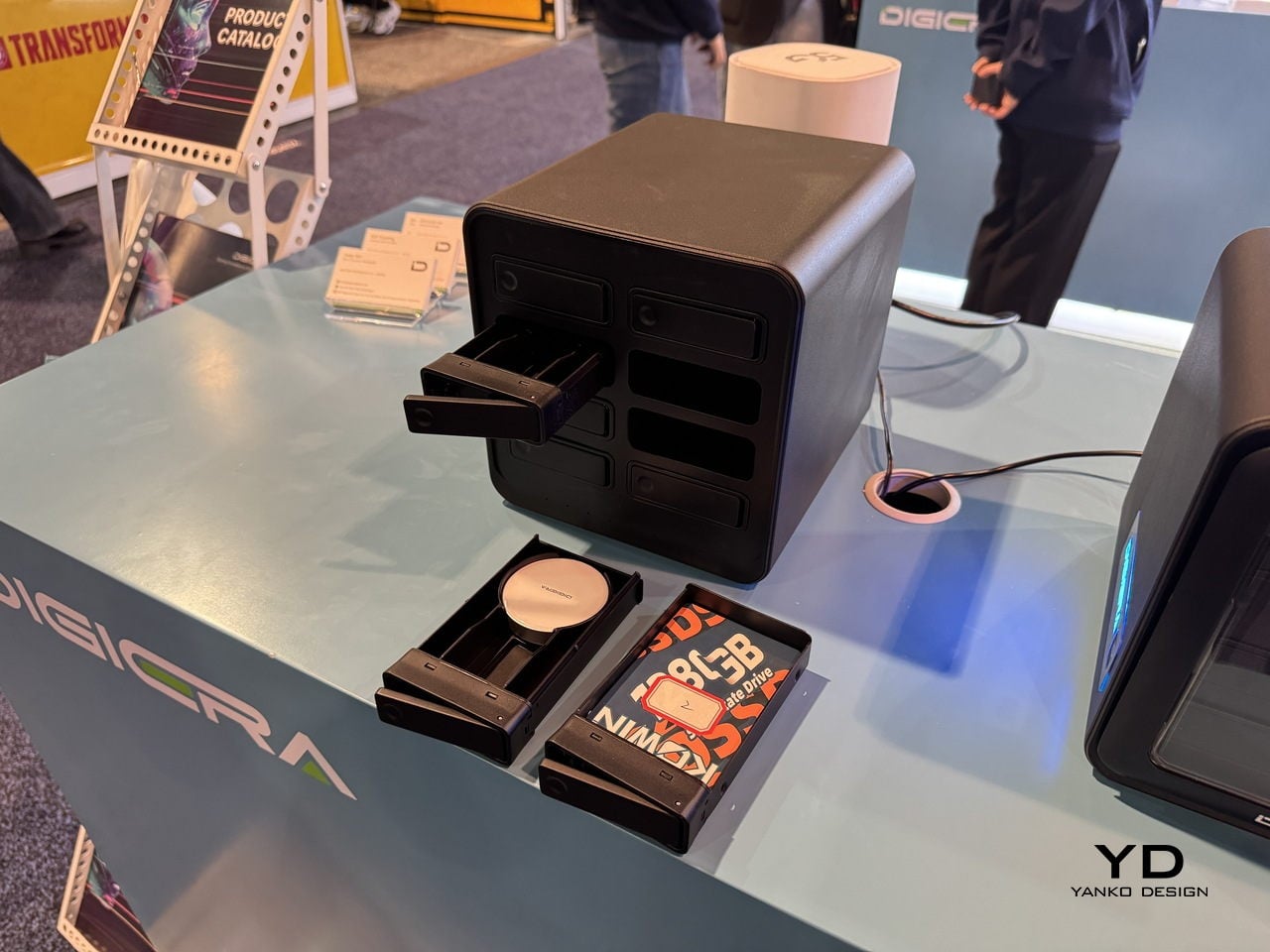
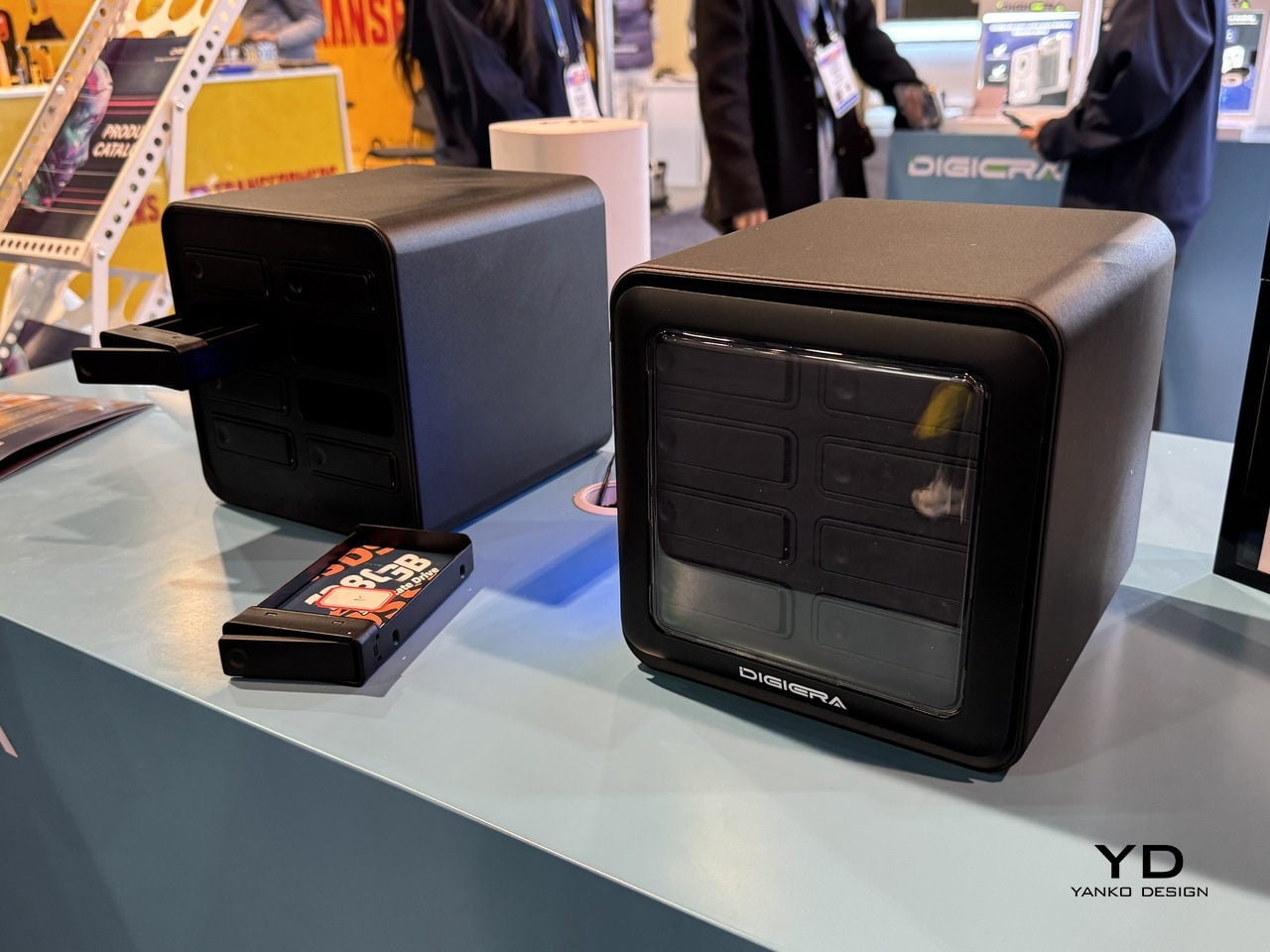
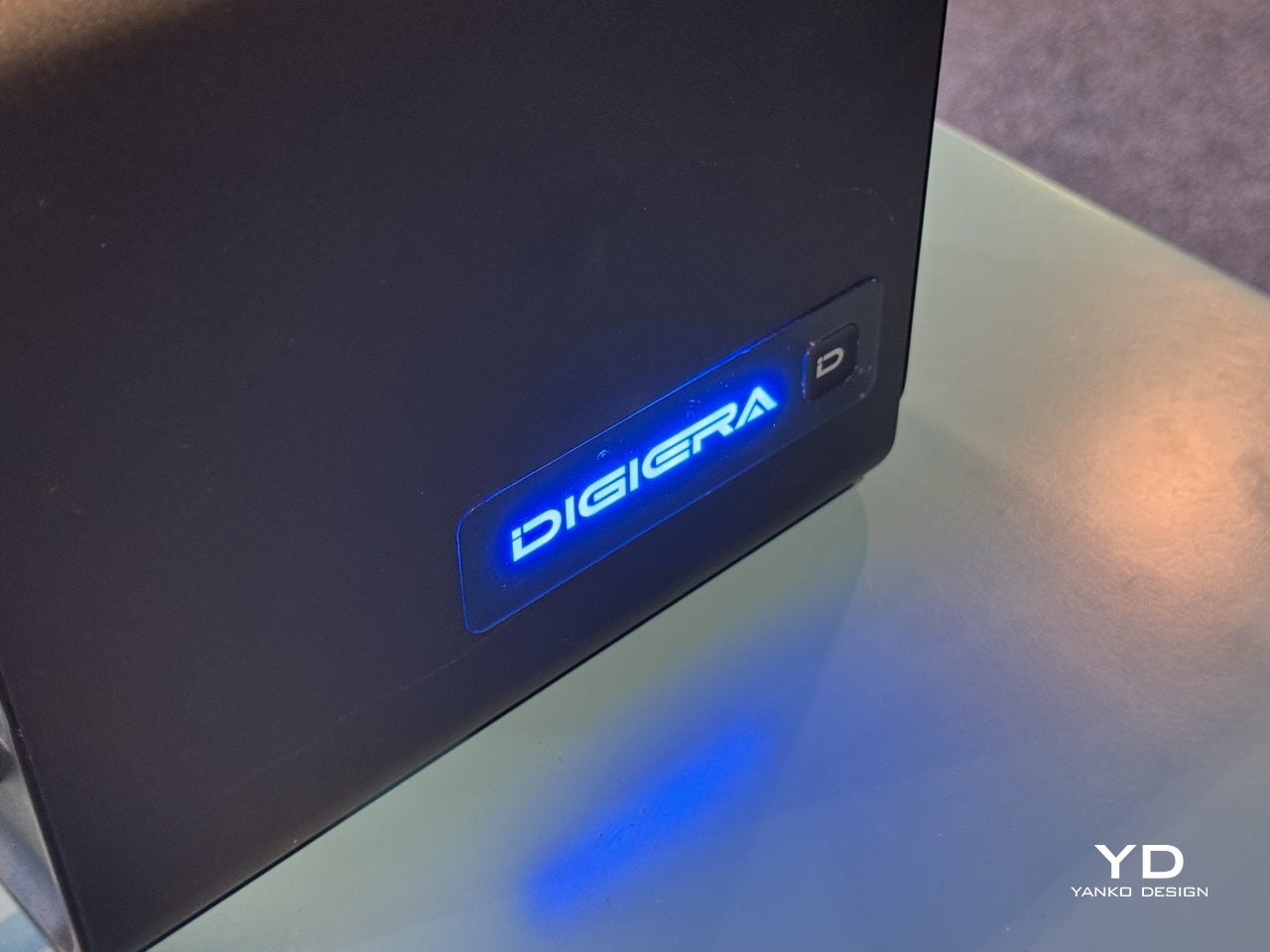
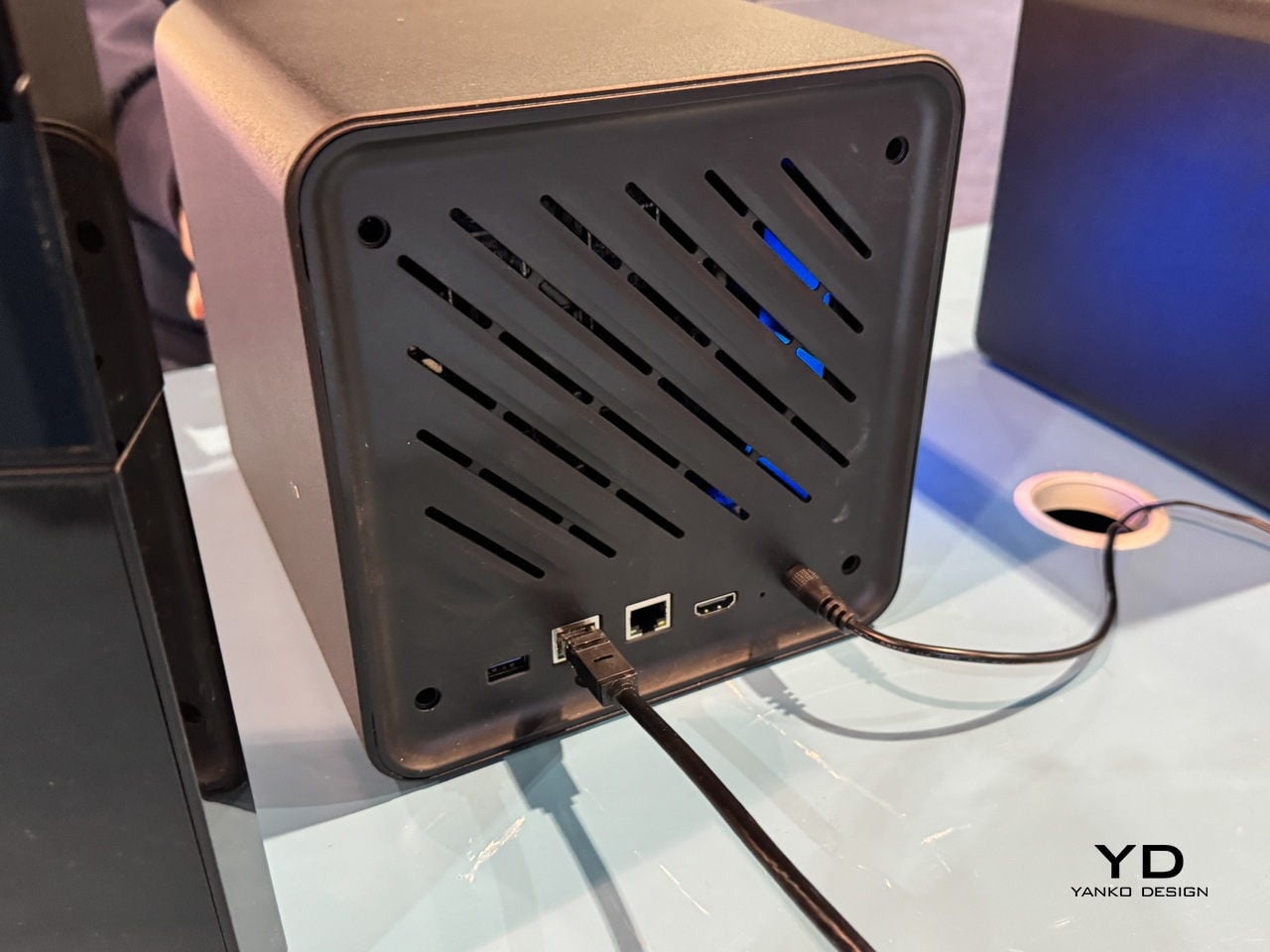
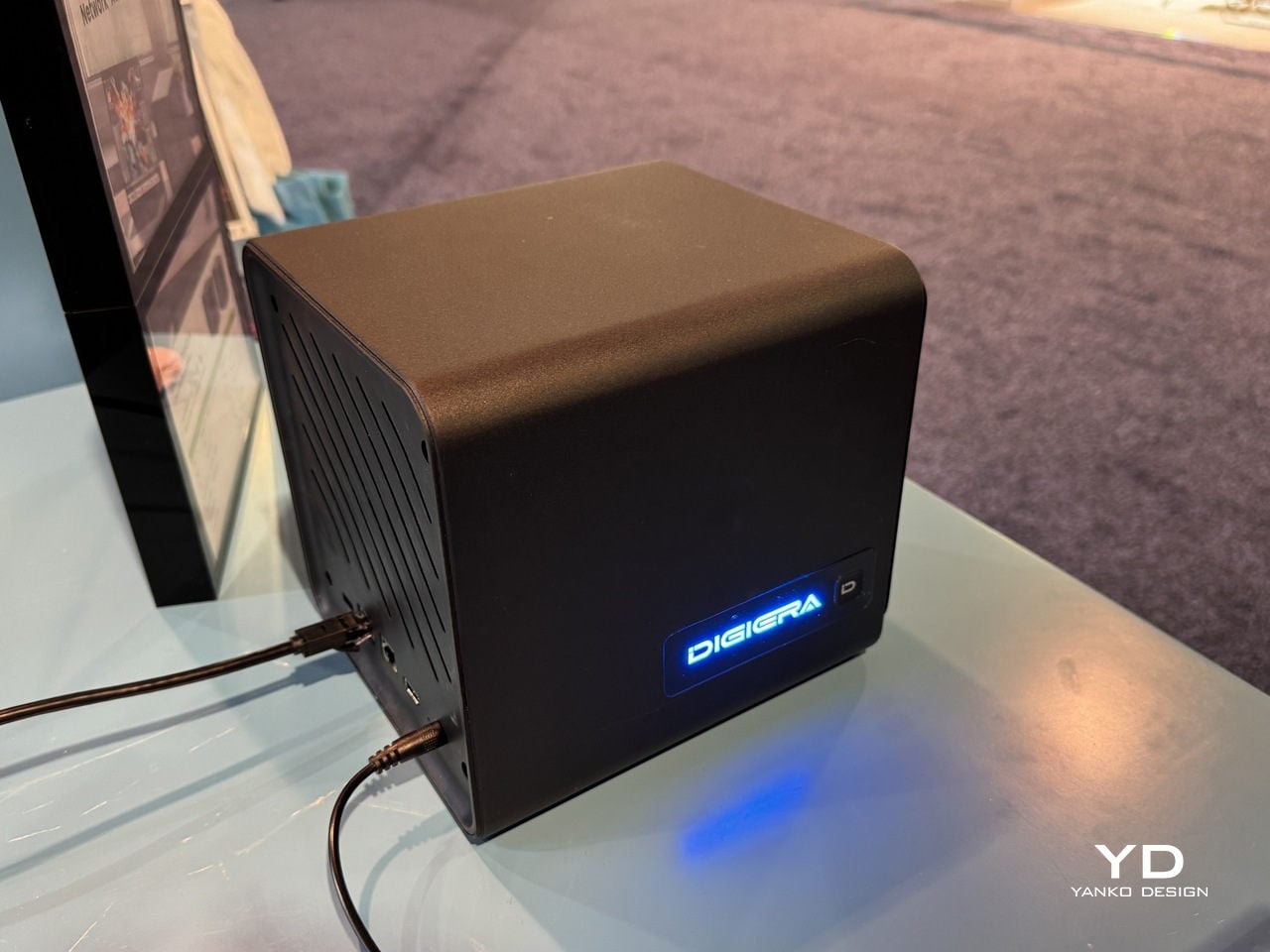
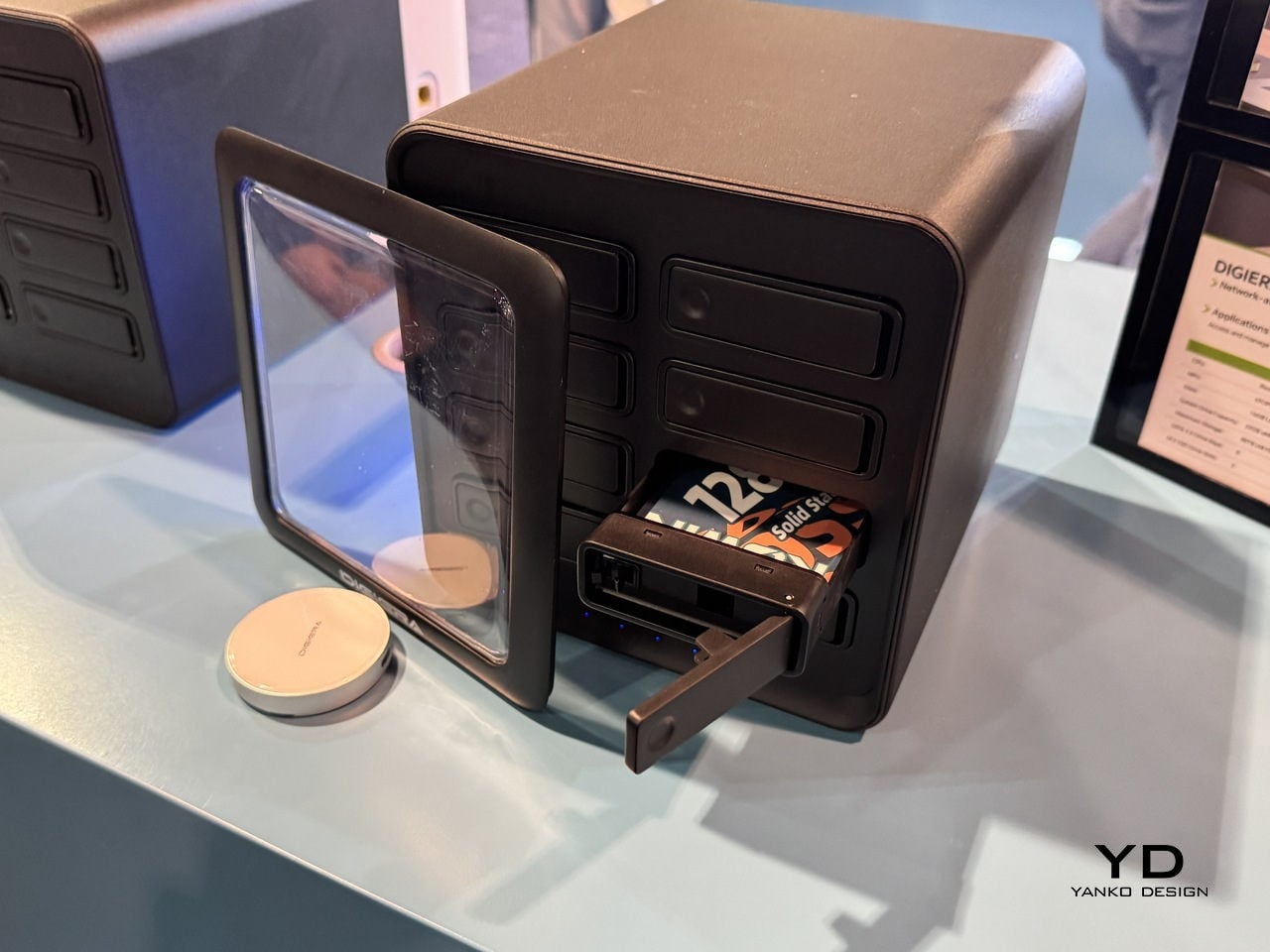
The pain of hunting for assets across old drives and cloud accounts is real. OmniCore is DigiEra’s answer, a modular all-flash AI NAS designed to sit in a studio and quietly index everything. It supports up to 80 TB of SSD storage across eight 2.5-inch SATA bays and two M.2 slots, all hot-swappable, so the box can grow with a studio instead of being replaced every time a project spikes in size or a client asks for all the raw footage from three years ago.
OmniCore is not just a fast box of drives. A Rockchip RK3588 CPU, 16 GB of LPDDR5 RAM, and a 6 TOPS NPU let it run AI tasks locally, from automatic image tagging and semantic search to transcription, document analysis, conversational chat, and clip generation. That means a designer can type “blue packaging concept with foil logo” and have the NAS surface relevant shots, instead of scrolling through folders named final underscore final underscore v3.
The privacy-first angle matters here. OmniCore is designed to work fully offline, with no cloud dependency, which is important when client work, unreleased campaigns, or personal archives cannot leave the building. Dual LAN ports, including 2.5 GbE, and Wi-Fi 6 support let it serve multiple editors or designers at once without feeling like a bottleneck, and Docker support means it can host custom tools alongside its own AI engine for people who need more than a basic file server.
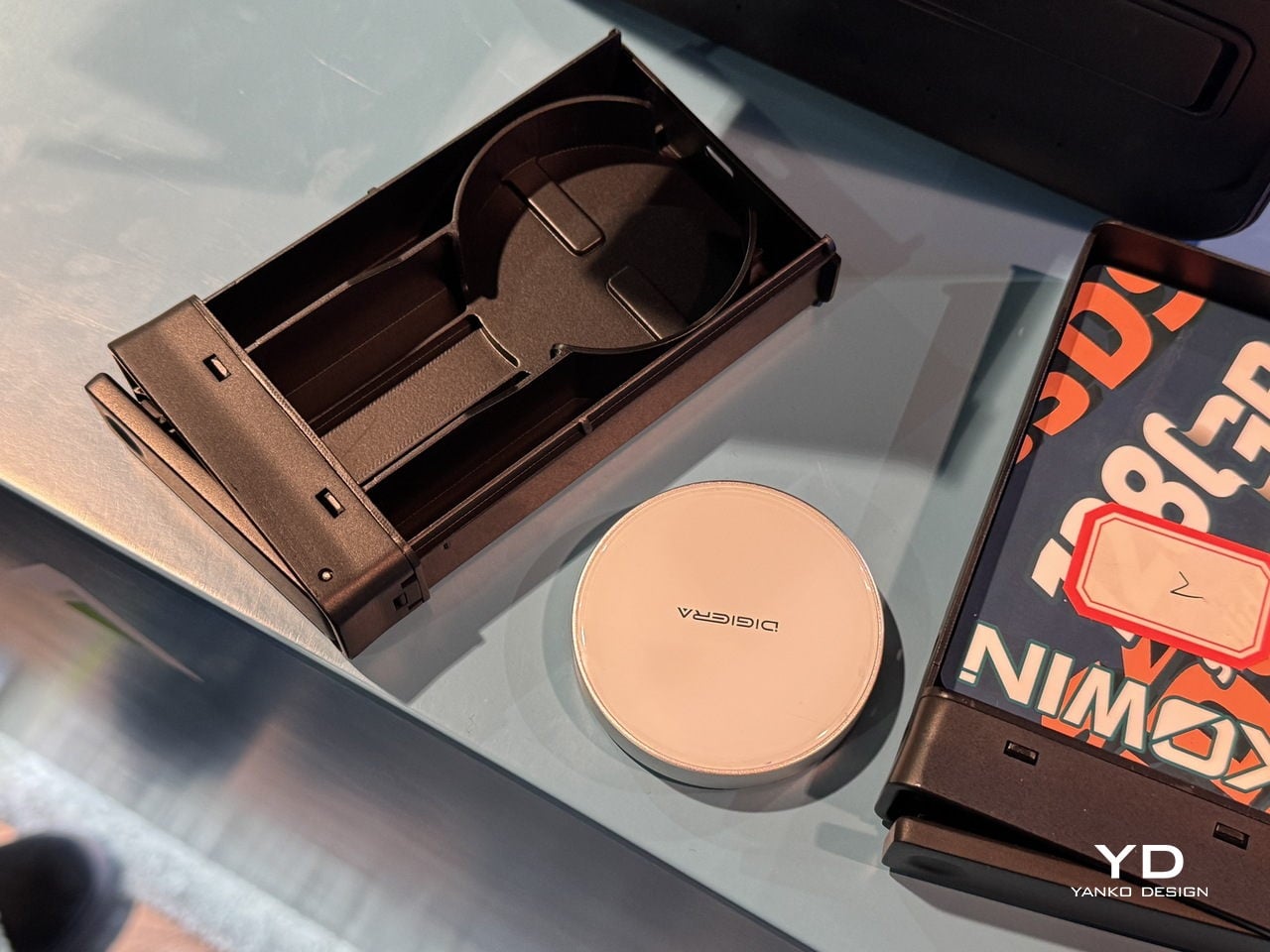
The physical experience is part of the design. The cube-like form factor with front-loading SSD modules makes storage feel tangible and approachable, more like a card catalog than a server rack. Drives slide in and out on small trays, so expanding from a few terabytes to tens of terabytes is a matter of minutes, not a weekend migration project where everything has to stop. For small studios, that kind of modularity is as much a design decision as a technical one.
Endura Portable SSD: Rugged Speed with a Material Story
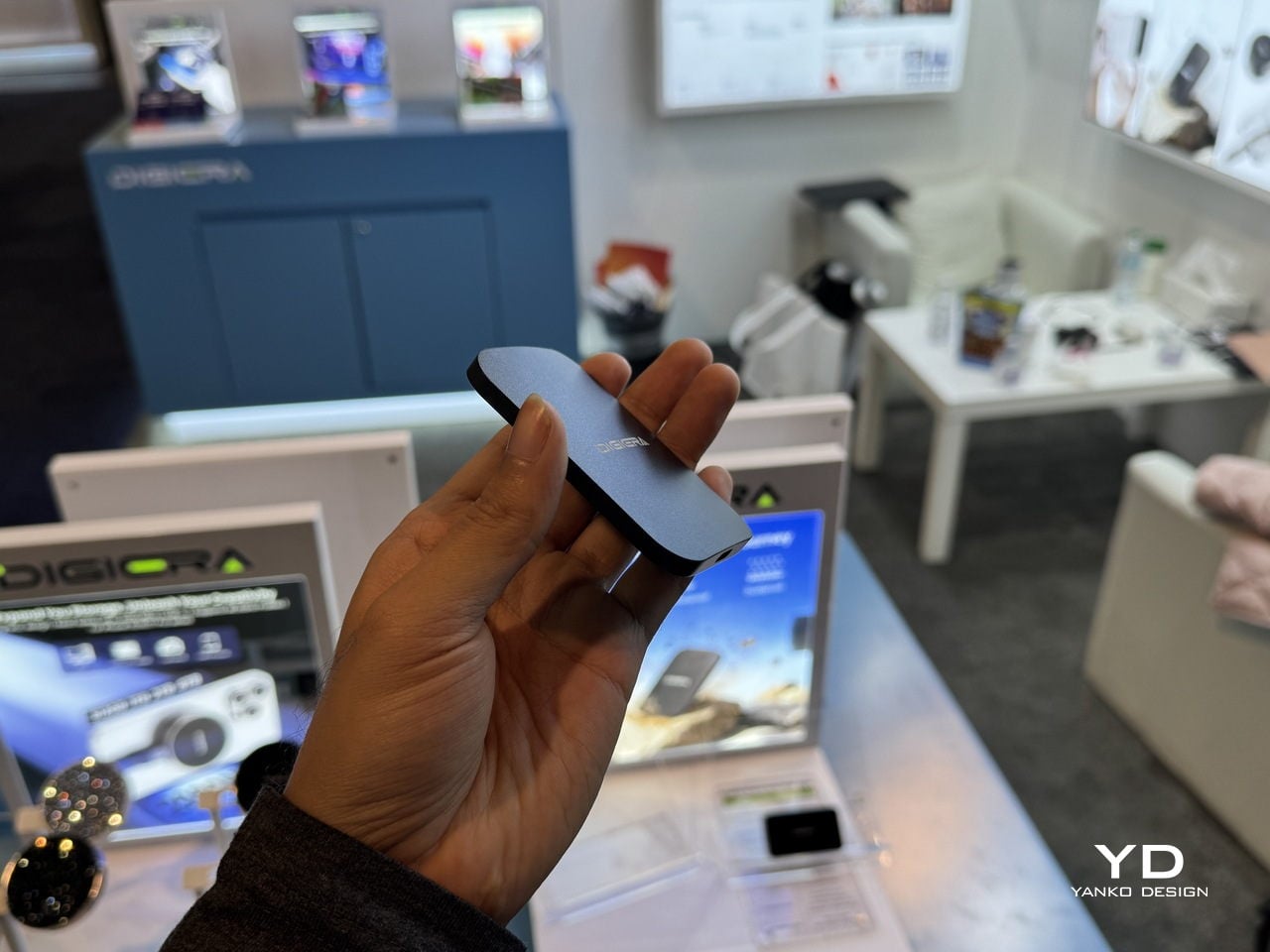
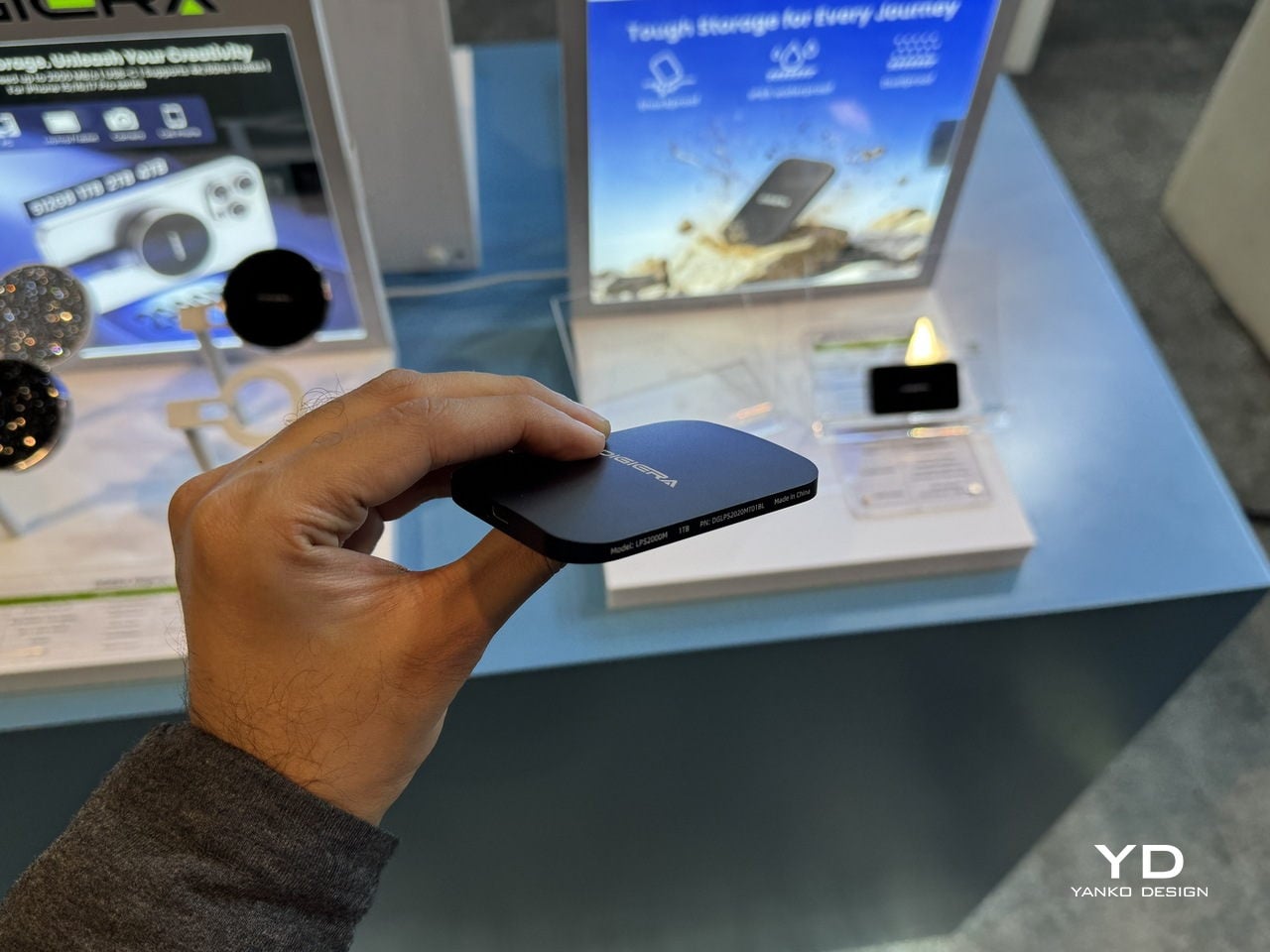
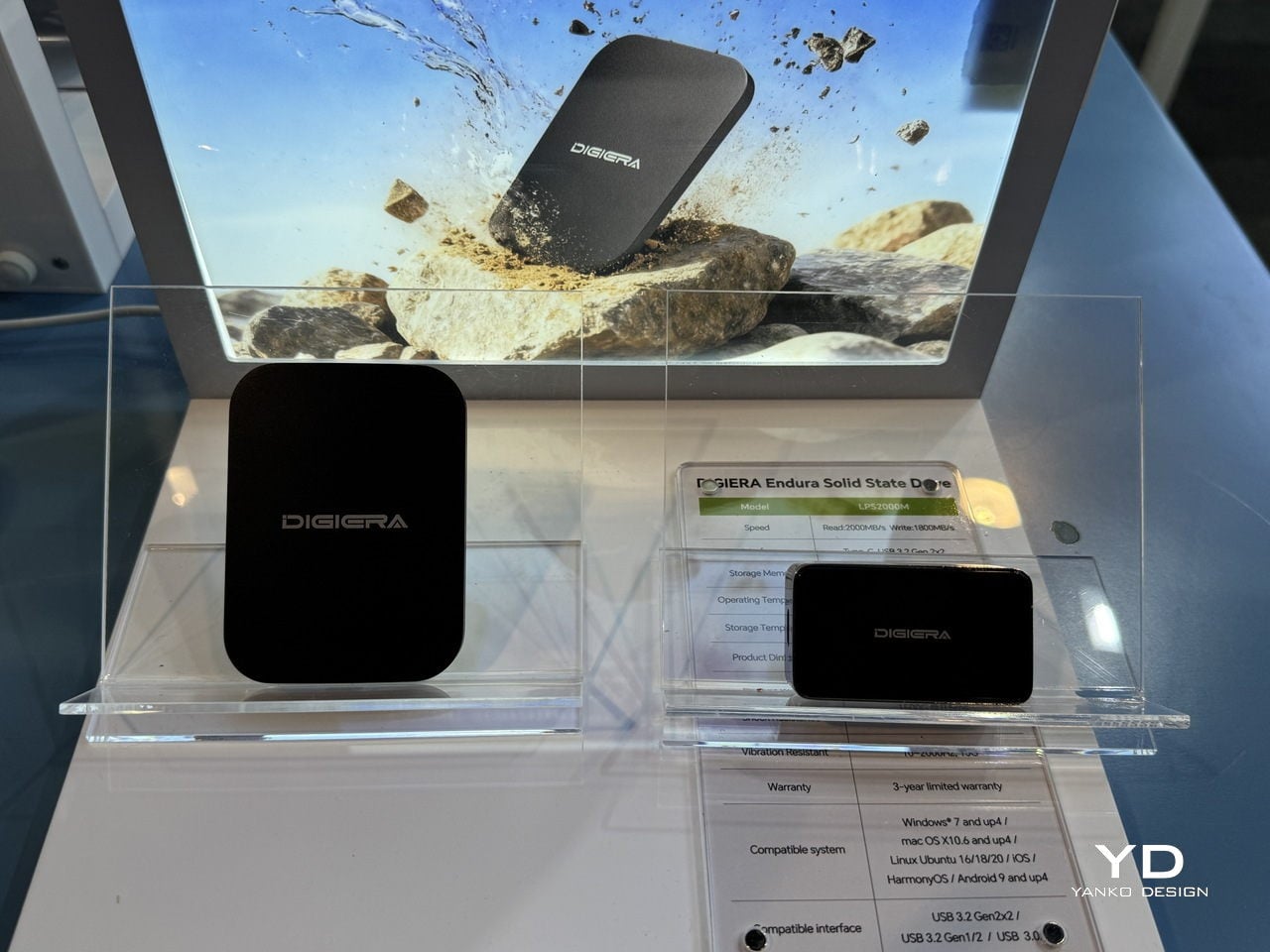
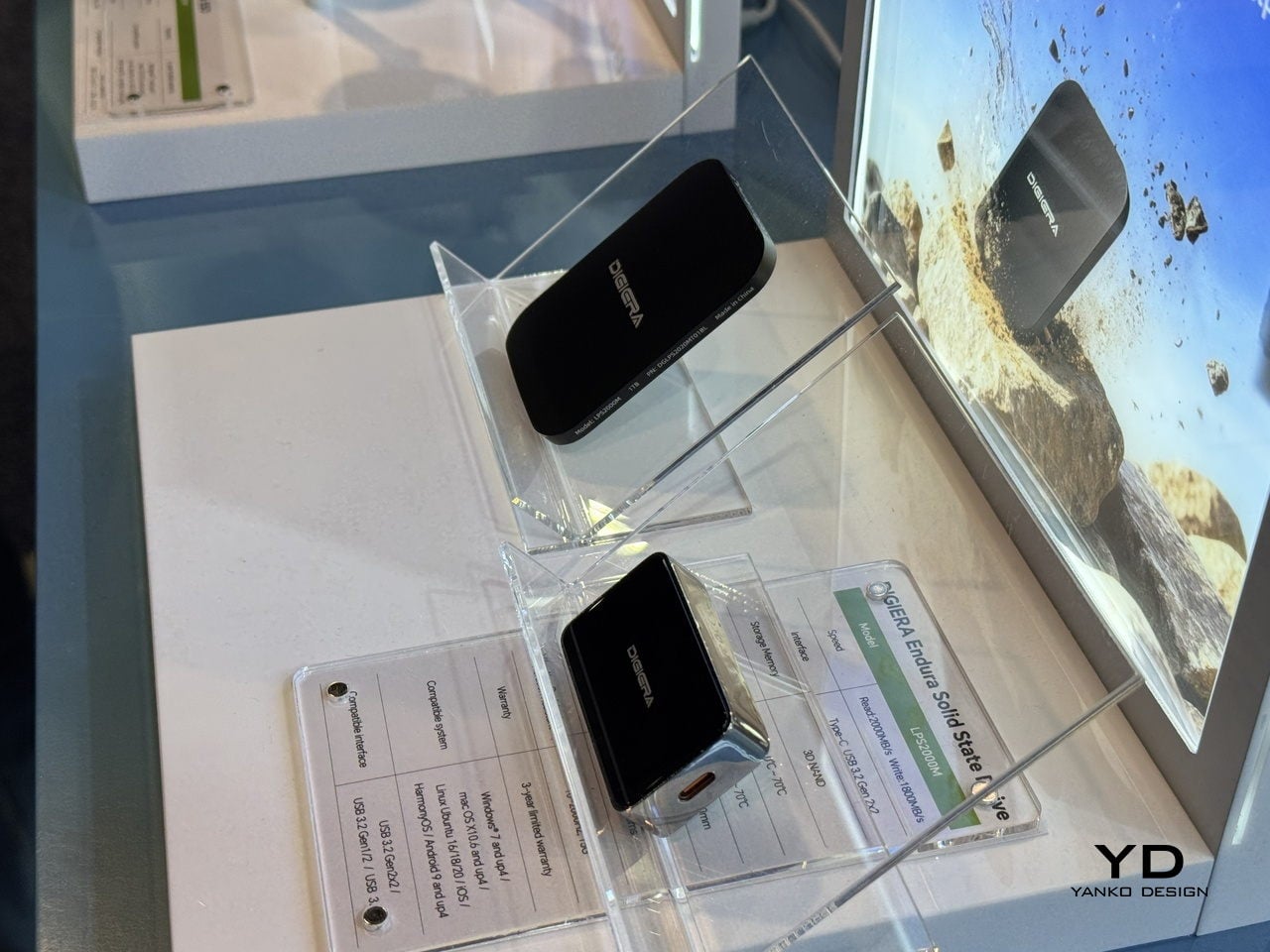
Endura is the drive that lives in the camera bag and follows people to shoots. DigiEra bills it as the world’s first portable SSD with an aluminum–carbon-fiber shell, rated IP65 for water, dust, and shock resistance. That combination of materials gives it a technical, motorsport-like feel, while also signaling that it can handle being tossed into a backpack, clipped to a rig, or dropped on a sidewalk without needing a protective case wrapped around a protective case.
Under the shell, Endura uses USB 3.2 Gen 2×2 over USB-C, delivering up to 2,000 MB/s read and 1,800 MB/s write speeds in capacities from 512 GB to 4 TB. For photographers dumping RAW stills between locations or filmmakers backing up cards on set, that means less time watching progress bars and more time shooting, with a drive that looks like it belongs in a design-conscious kit and can survive the environments where most shoots actually happen.
Portable Hub SSD: One Block to Replace the Dongle Pile
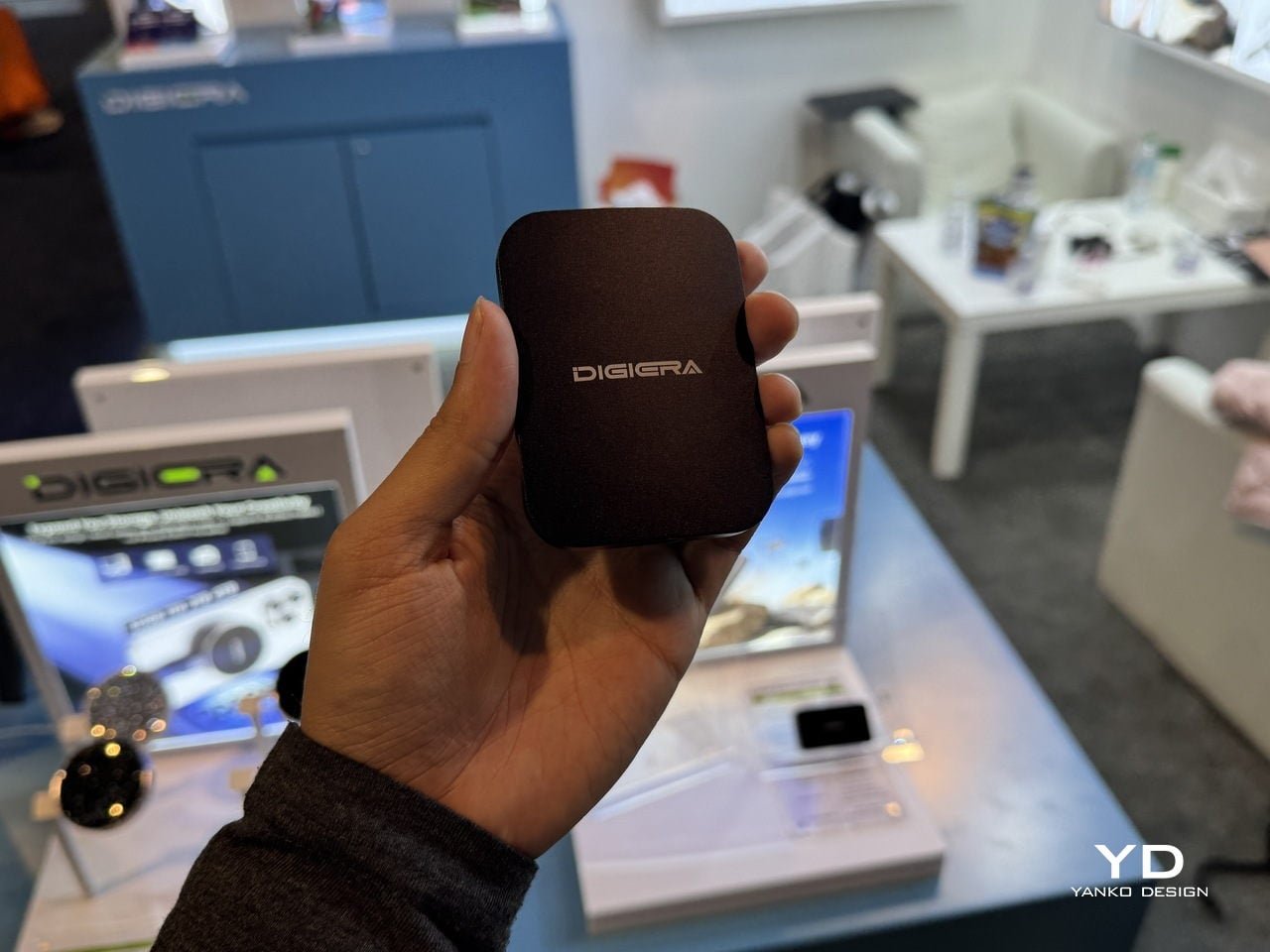
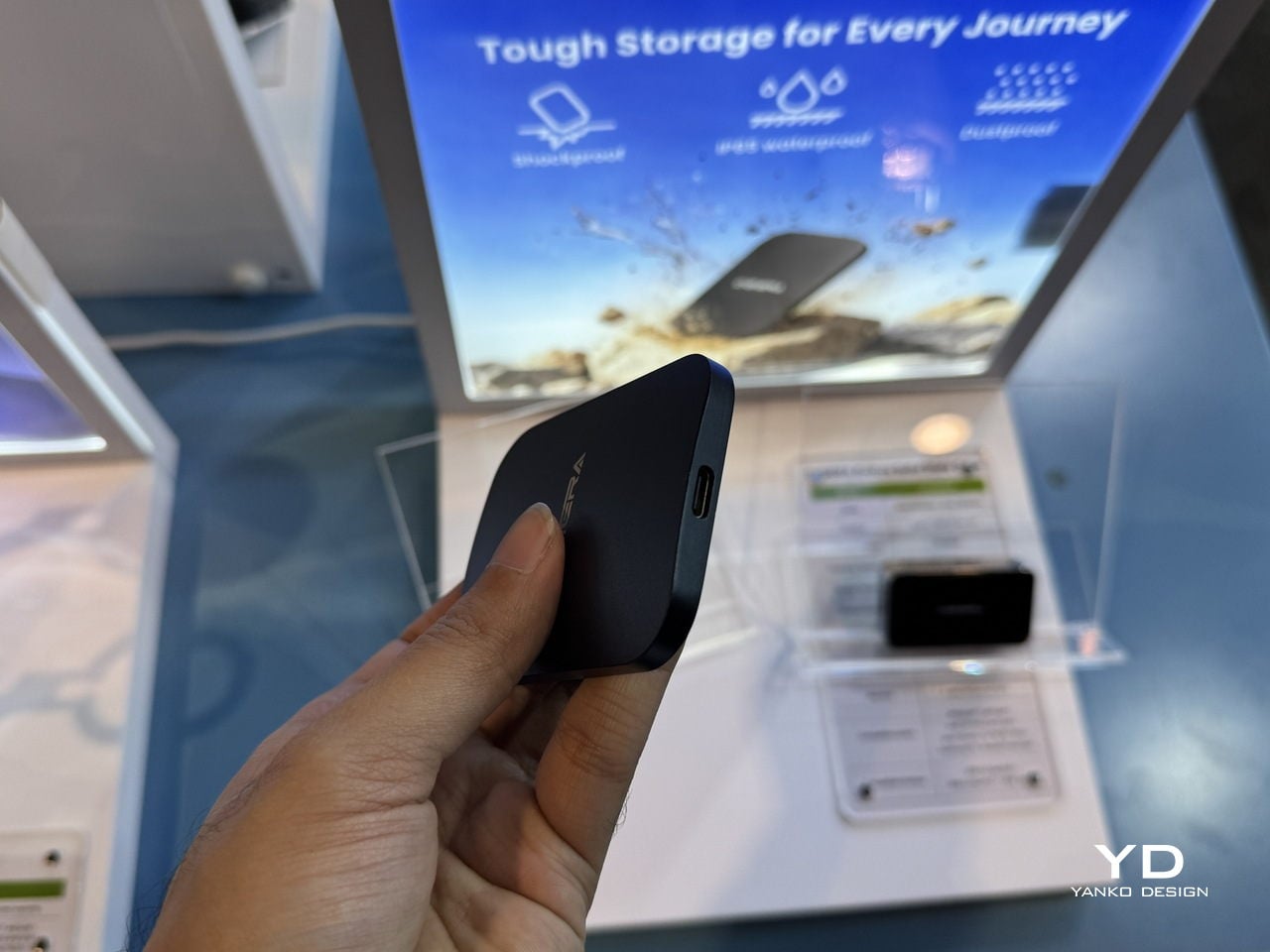
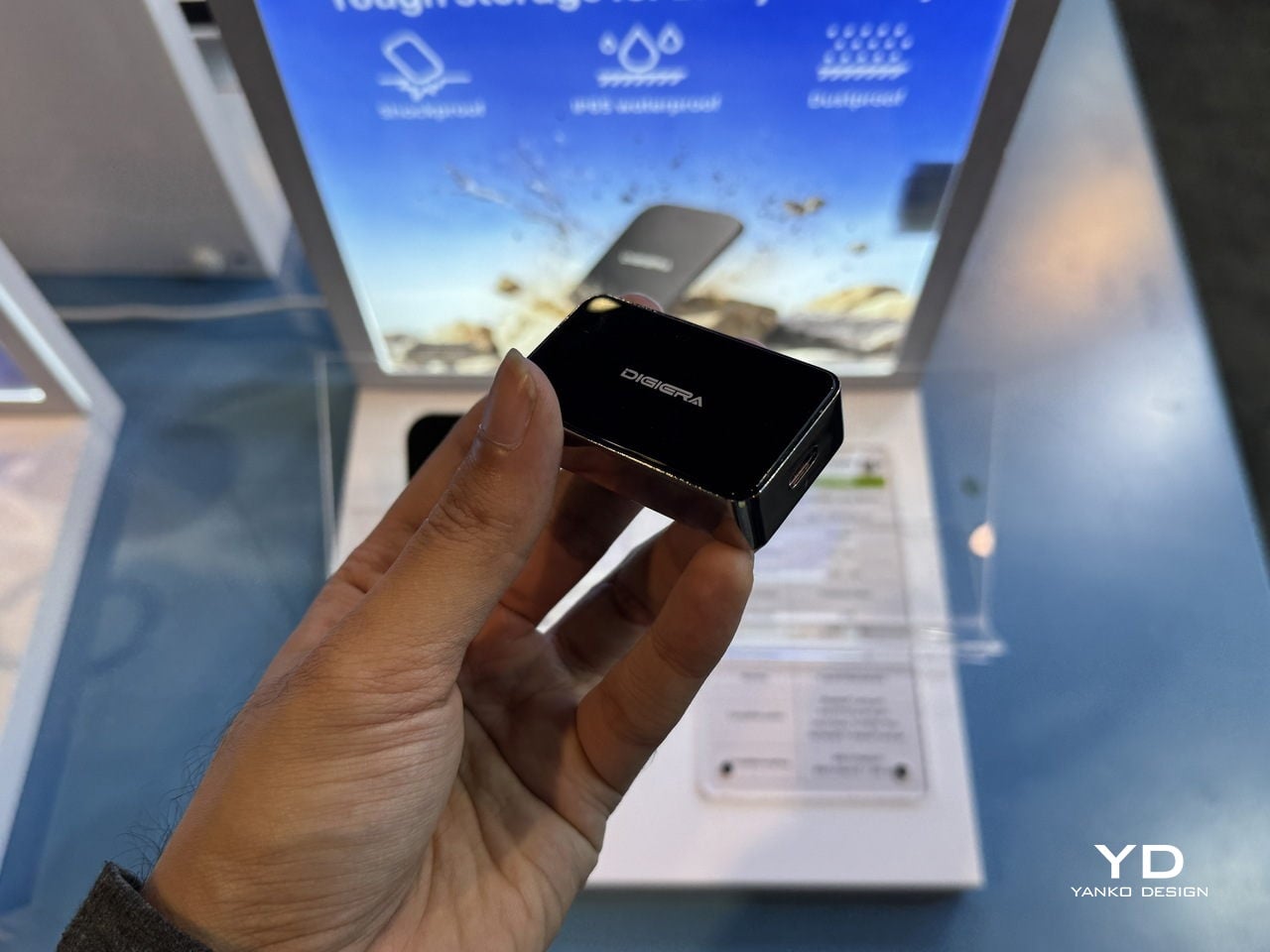
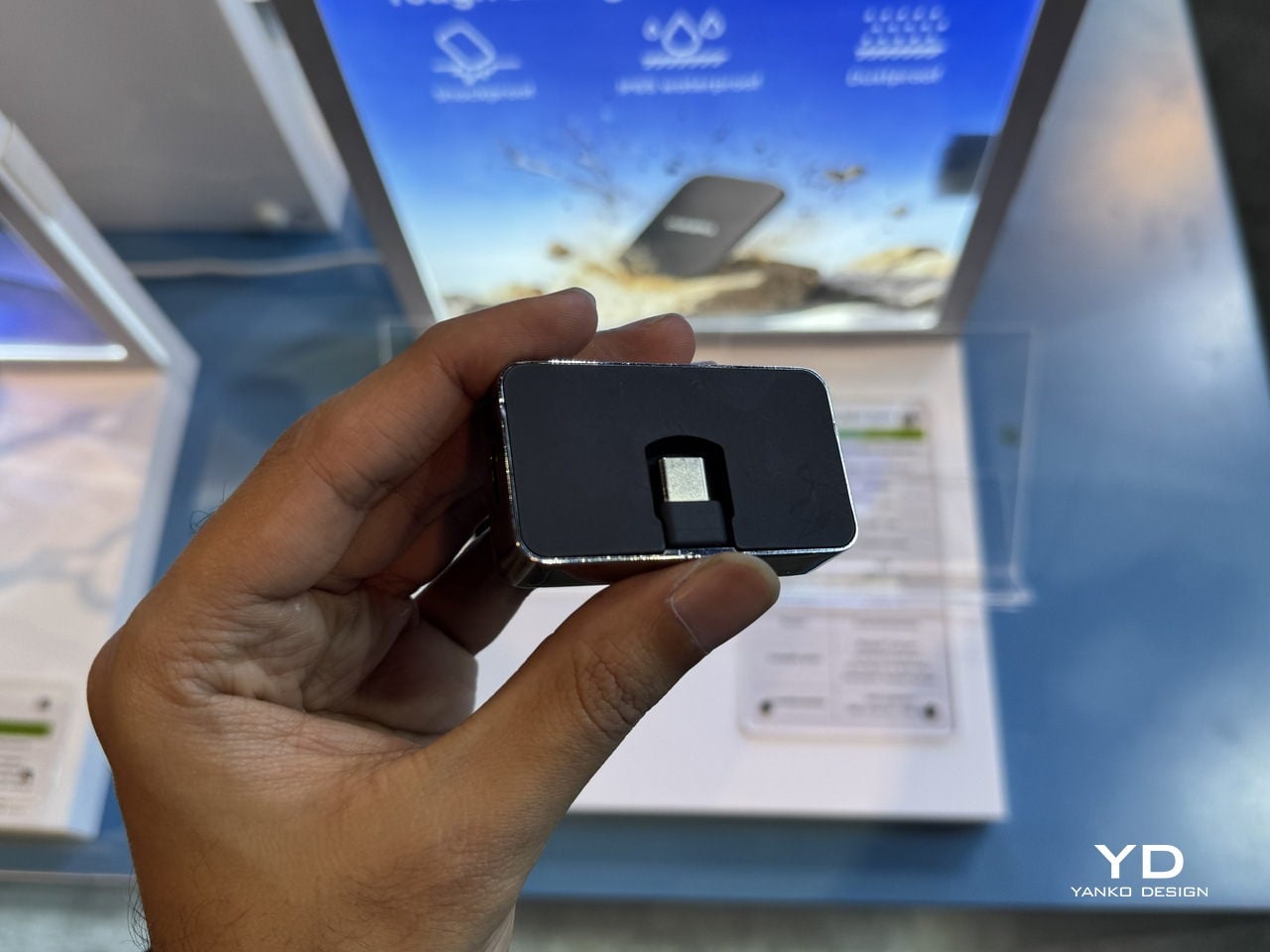
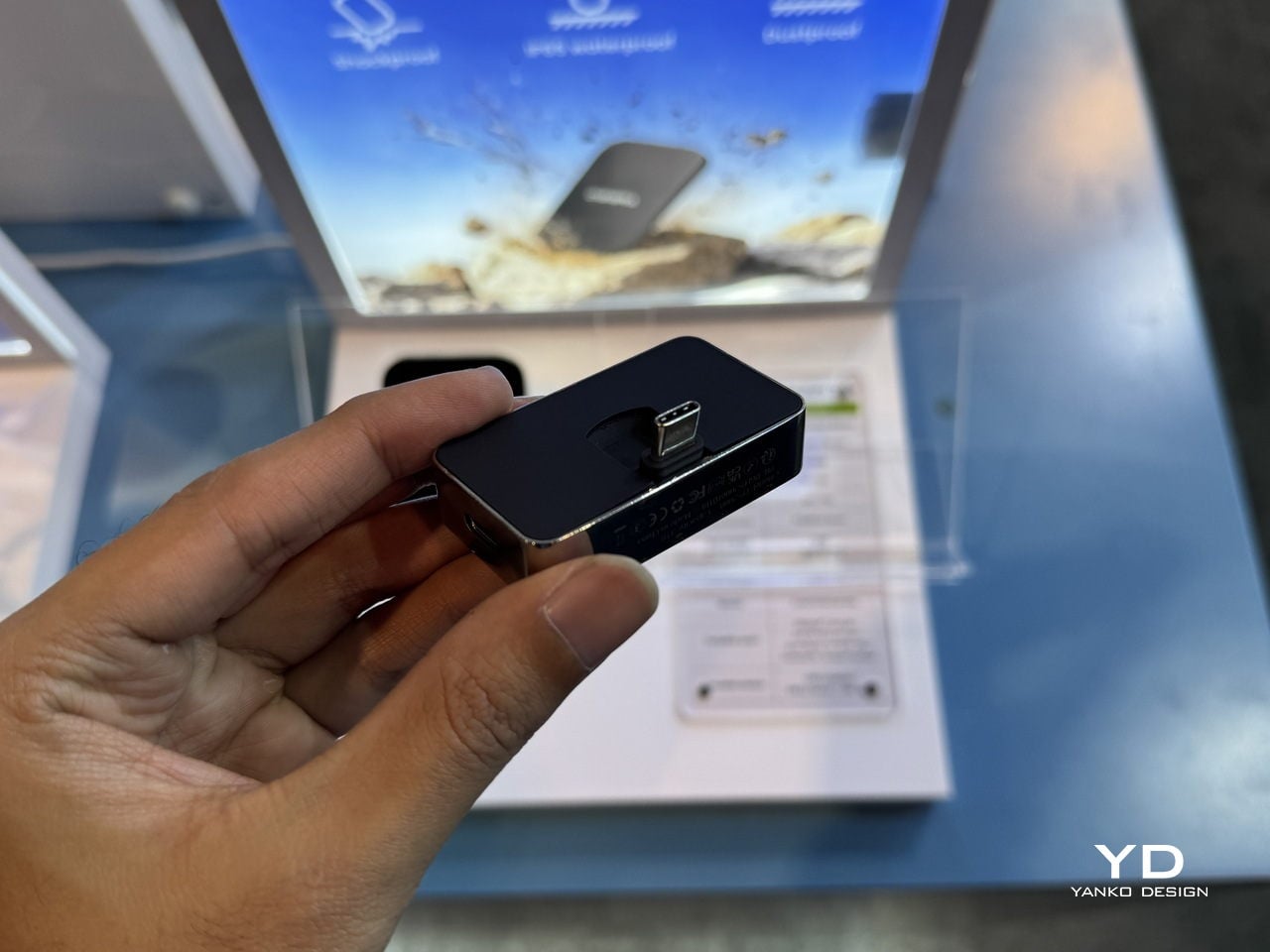
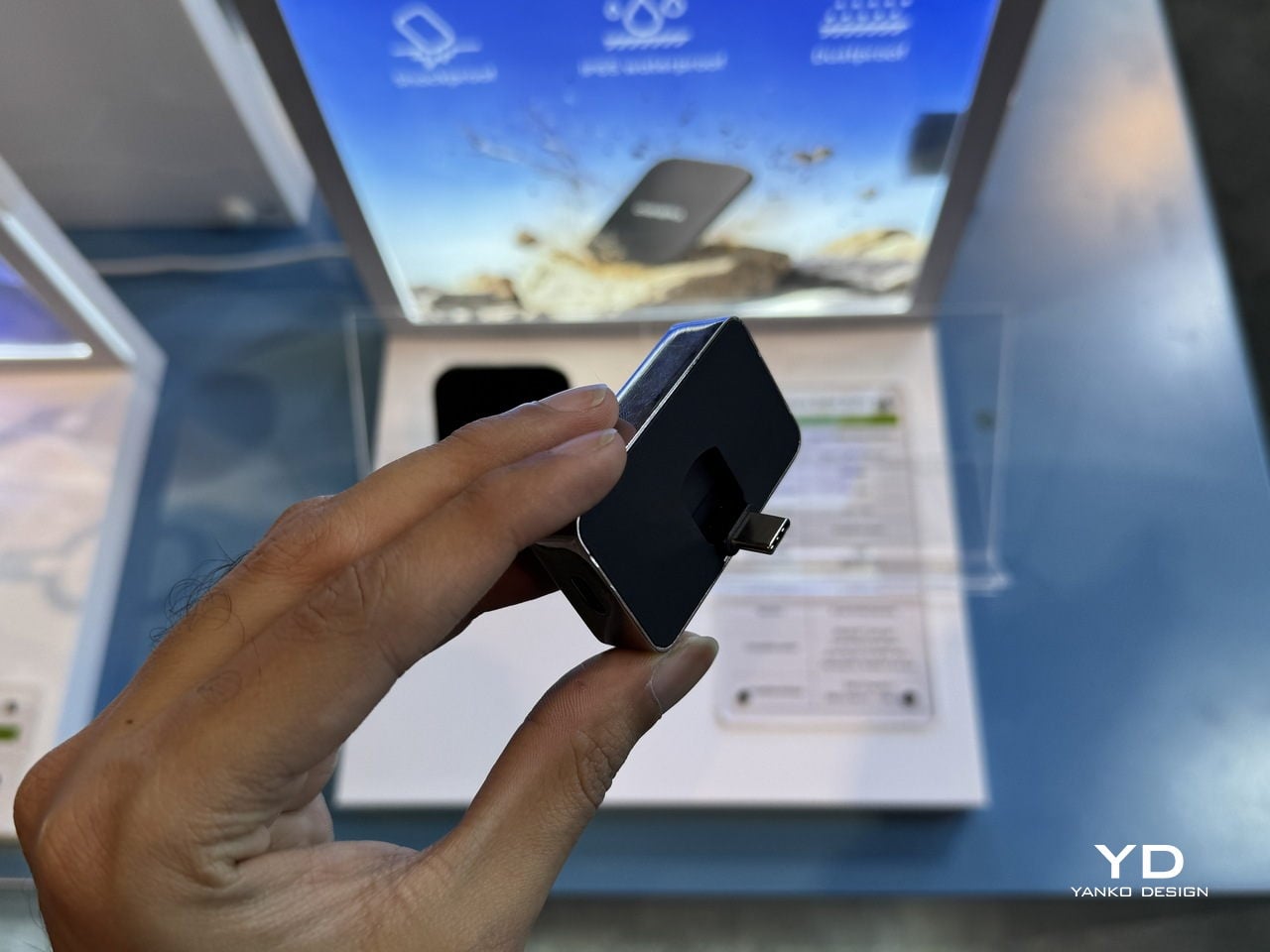
The Portable Hub SSD is the antidote to the usual tangle of hubs, drives, and chargers. It wraps the same 20 Gbps SSD core in a compact aluminum block that also acts as a hub, combining high-speed storage, PD fast charging, and extra USB-C connectivity. Plug it into a phone, tablet, or laptop, and it becomes both a scratch disk and an expansion port, turning one cable into a complete mobile workstation.
The fold-out USB-C plug and side ports make it particularly friendly to iPhones and USB-C cameras. Instead of hanging a drive and a hub off a gimbal or handheld rig, one block adds space for ProRes or LOG footage and passes power through to keep the phone or camera alive. For designers who sketch on tablets or edit on ultraportables, it is the kind of object that quietly simplifies the everyday carry, handling data and power from a single point without adding bulk or visual noise.
Diamond Magnetic Portable SSD: Storage as Visible Accessory
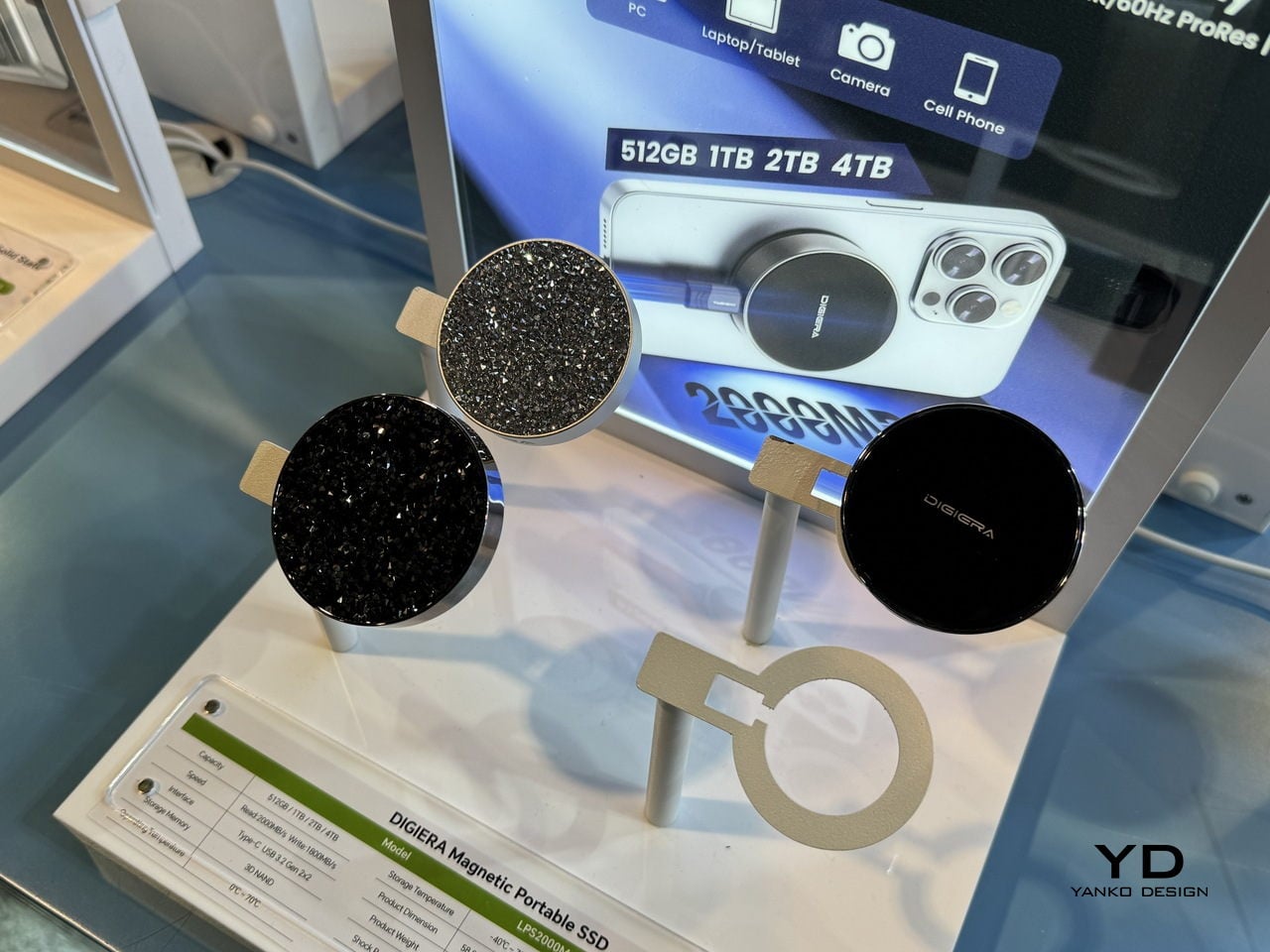
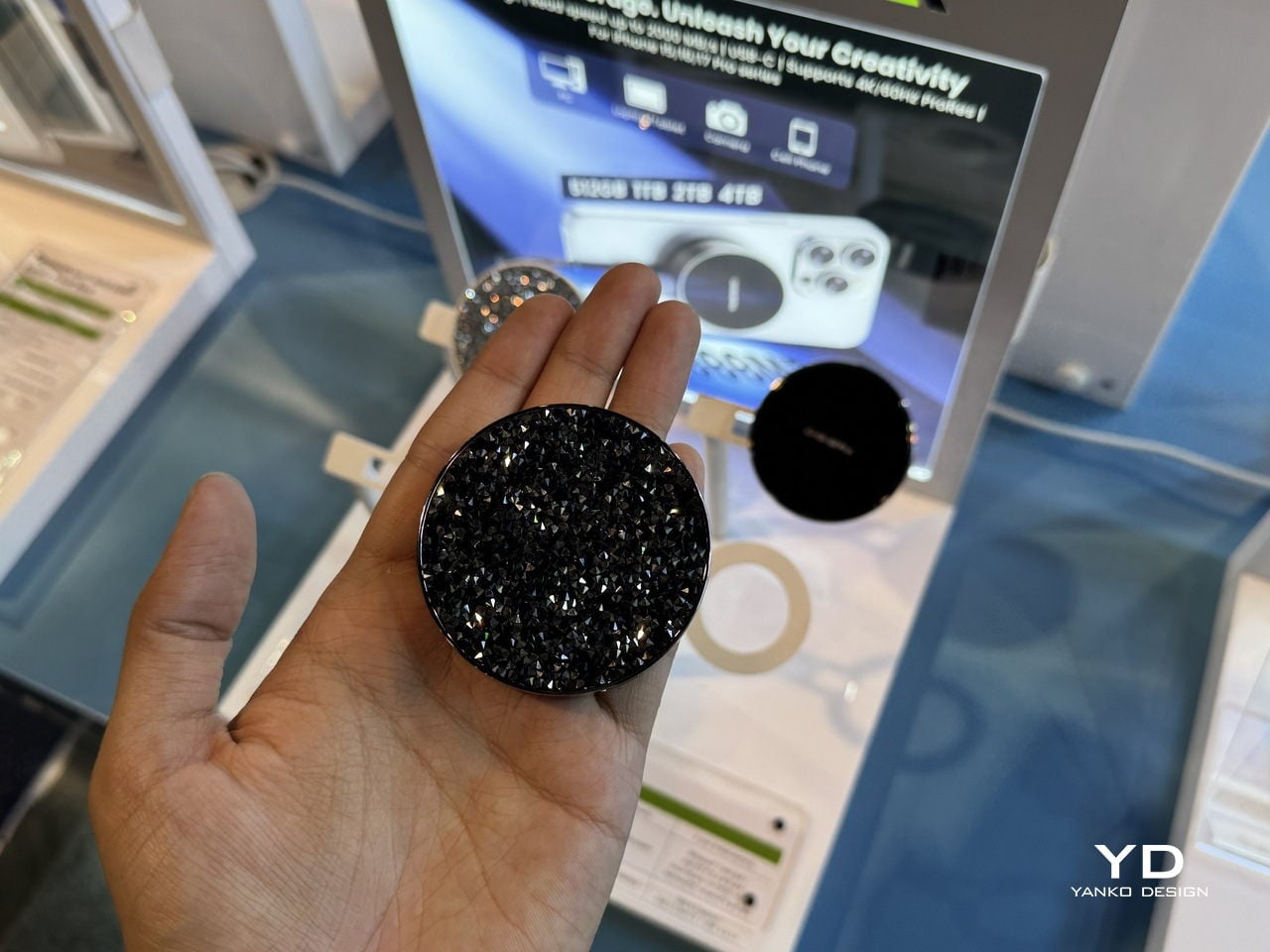
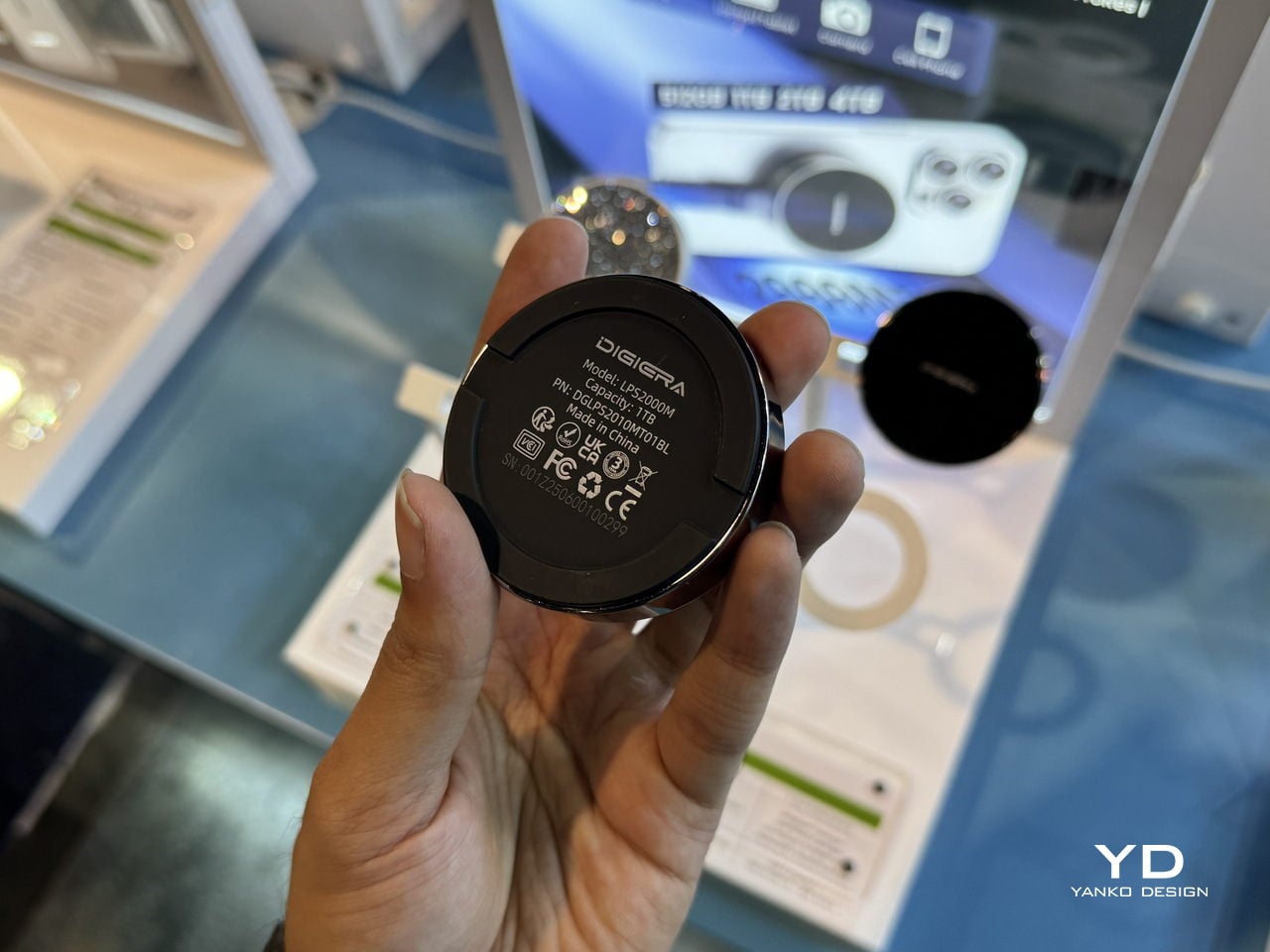
The Diamond Magnetic Portable SSD is the piece that never leaves the phone. It snaps magnetically to the back of an iPhone 15 or 16 Pro and records 4K 60 FPS ProRes video directly to external storage, lifting the ceiling on how long you can shoot without cages, rigs, or bulky battery grips. For content creators who rely on their phone as a primary camera, that is a big shift in what is possible with a pocket-sized setup.
The diamond-encrusted, circular design makes the drive look closer to a compact mirror or piece of jewelry than a tech accessory. Underneath, it still runs USB 3.2 Gen 2×2 over USB-C at up to 2,000 MB/s read and 1,800 MB/s write, in capacities up to 4 TB. That mix of performance and visual polish means it can stay on the phone in a meeting, a shoot, or a café without feeling out of place, turning storage into something you actually want to show rather than hide in a pocket until needed.
DigiEra at CES 2026: Turning Storage into a Creative Toolkit
OmniCore anchors the studio as a private, AI-enabled brain that knows where every file lives and can answer questions in natural language. Endura and Portable Hub SSD handle the messy middle, moving data safely and quickly between cameras, phones, and laptops, with materials and form factors that feel deliberate rather than generic. The Diamond Magnetic SSD lives on the phone, turning storage into something you actually want to show. That is DigiEra’s real story at CES 2026: storage treated not as an afterthought or a cloud subscription, but as a set of designed objects that respect the way creative work actually moves through the day, from the pocket to the field to the desk and back.
ExpressVPN is back on sale again, and its two-year plans are up to 81 percent off right now. You can get the Advanced tier for $88 for 28 months. This is marked down from the $392 that this time frame normally costs. On a per-month basis, it works out to roughly $3.14 for the promo period.
We’ve consistently liked ExpressVPN because it’s fast, easy to use and widely available across a large global server network. In fact, it's our current pick for best premium VPN. One of the biggest drawbacks has always been its high cost, and this deal temporarily solves that issue.
In our review we were able to get fast download and upload speeds, losing only 7 percent in the former and 2 percent in the latter worldwide. We found that it could unblock Netflix anywhere, and its mobile and desktop apps were simple to operate. We gave ExpressVPN an overall score of 85 out of 100.
The virtual private network service now has three tiers. Basic is cheaper with fewer features, while Pro costs more and adds extra perks like support for 14 simultaneous devices and a password manager. Advanced sits in the middle and includes the password manager but only supports 12 devices.
This article originally appeared on Engadget at https://www.engadget.com/deals/save-up-to-81-percent-on-expressvpn-two-year-plans-right-now-180602273.html?src=rss
Every third booth at CES showed off some new AI product or other. If you wanted to find a robotic lawn mower, throw a rock. Humanoid robots, smart locks and super thin TVs were everywhere. But if you went looking for sustainability products, you’re going to have to hunt a bit.
Last year, the Sustainability section at the Las Vegas Convention Center had 20 booths. This year, there were 38, but that’s in part due to the combination of the energy and sustainability categories. So exhibitors like South Korea’s largest electric utility company, a nuclear power company from the same country and lots of battery manufacturers. There was also an AI data platform booth in the section that had nothing to do with sustainability as far as I can tell. Guess the organizers just ran out of room for all the AI.
Within the sustainability section, and at other CES venues, I found a few encouraging displays of sustainable products — organizations and devices that were trying to address the multitude of problems the world is facing when it comes to energy production, climate and pollution.
But none of it quite achieved Engadget’s best of CES status this year. Some of what we saw was utility-scale, some wasn’t quite ready for consumer consumption and other stuff was too niche or had too many caveats to make the list. I won’t go so far as to say sustainability is dead at CES, because that sends me into dark downward spirals, but it’s getting sparse out there, friends.
Here are the companies I saw that had promise and innovative ideas. And gosh darn it, at least these guys are trying.
Shine Turbine 2.0
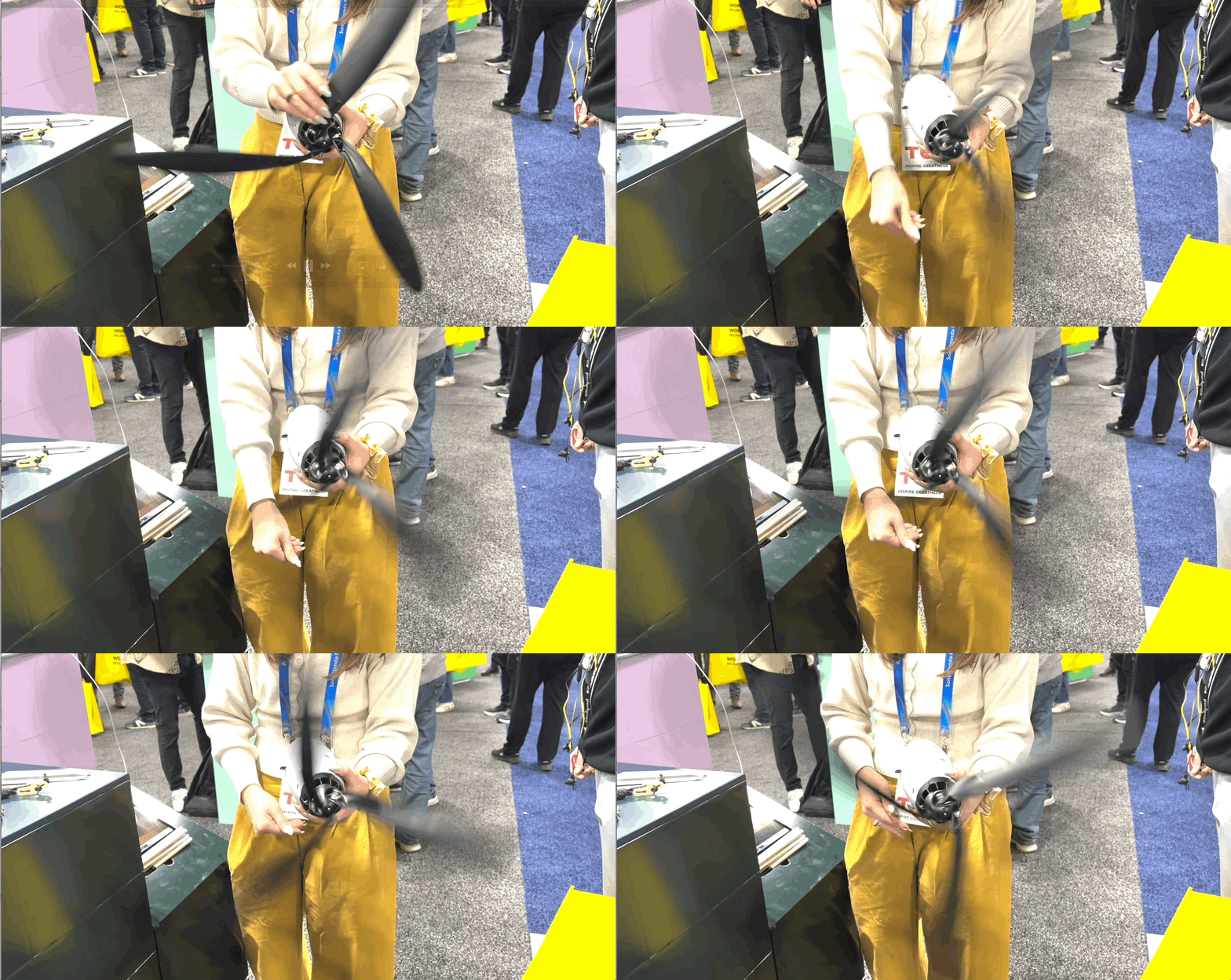
Spinning the Shine 2.0 wind turbine
Amy Skorheim for Engadget
This little guy could be a precursor to some serious personal wind power generation. That’s where the company is heading. For now, the Shine 2.0 can use as little as a light breeze to start generating power to charge your smartphones, laptops or even a power station. The whole unit weighs three pounds and sets up in around two minutes. The second generation model can output up to 75 watts and the company is working on a third version that goes up to 100 watts for even more substantial energy production.
Flint batteries break down by 70 percent in four weeks in a compost pile.
Amy Skorheim for Engadget
When I approached Flint’s booth, the rep told me the company made cellulose batteries. And I thought, like paper-wrapped batteries? Nope. The chemicals inside the batteries are made from cellulose. They have a solvent-free, lithium-free, PFAS-free chemistry and break down by 70 percent in four weeks in a composting environment. They use the same basic architecture as a lithium-ion cell, with an anode, cathode and separator with ion transfers between the two. As of now, Flint is focused on partnering with manufacturers, and consumer products are on the horizon.
The Clear Drop soft plastics compactor next to a pile of the bricks it produces.
Amy Skorheim for Engadget
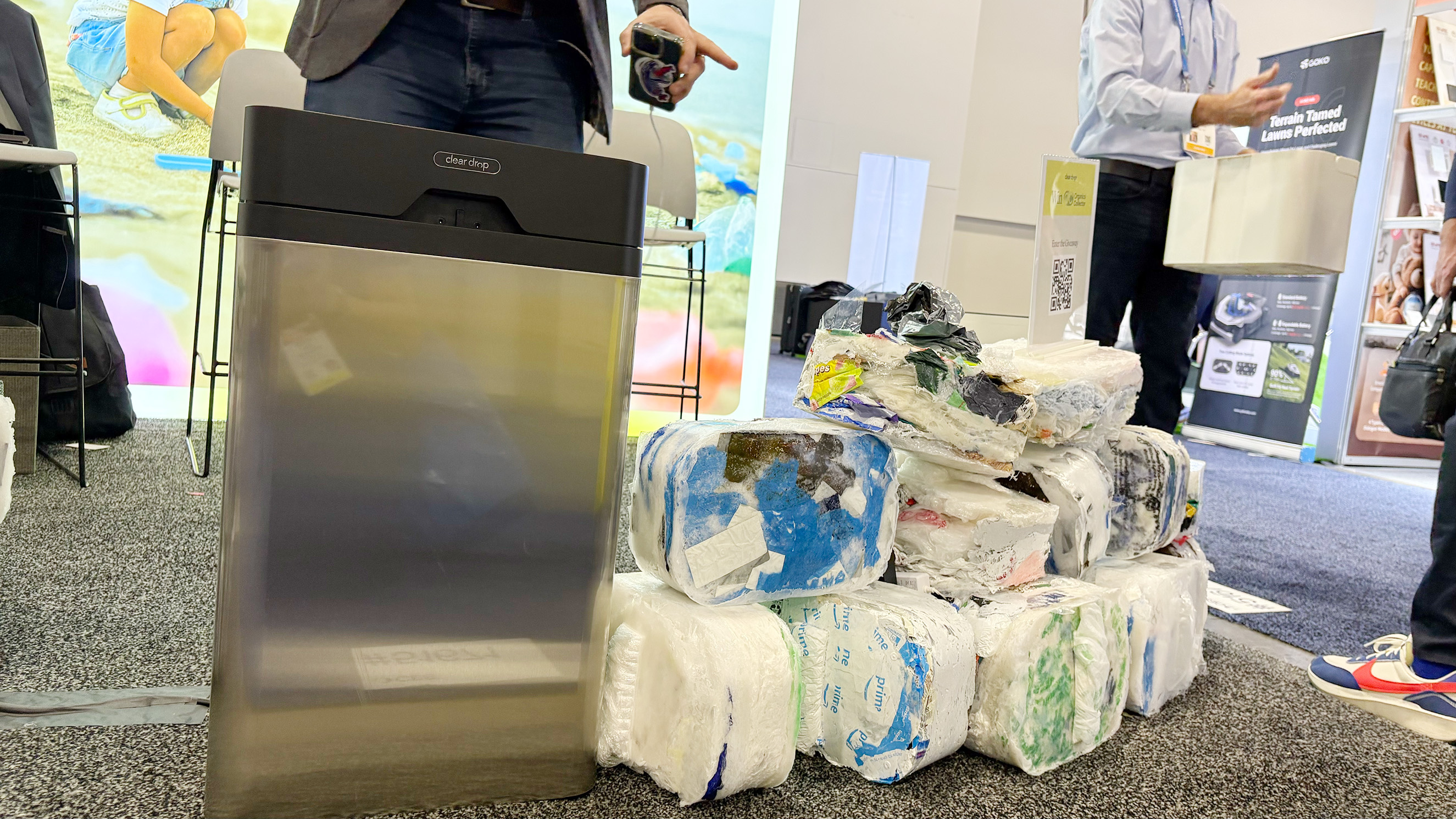
The Clear Drop is a soft plastics compactor that creates eight by twelve by four-inch bricks out of hundreds of grocery bags, bubble wrap, ziplocks and plastic packaging. One brick is equivalent to a 30-pound trash bag-worth of bags. Once the brick is created, it can be shipped to one of Clear Drop’s partner facilities in a pre-paid USPS shipping envelope. They currently work with a few US-based recycling facilities and hope to one day create an infrastructure to include municipal recycling.
From what I’ve learned at the show, perovskite is the hottest thing in solar right now. It’s a mineral compound that’s been used to create more efficient solar panels. Some so sensitive to light that just indoor illumination is enough to create usable energy. Alpha Power by CPTI creates lightweight, flexible perovskite solar panels that can conform to multiple surfaces. Again, this is a company that’s partnering with manufacturers, so look for panels built into your laptop to charge it under the glare of your too-harsh office lights.
3D models of buildings using Green Vigor technology.
Amy Skorheim for Engadget
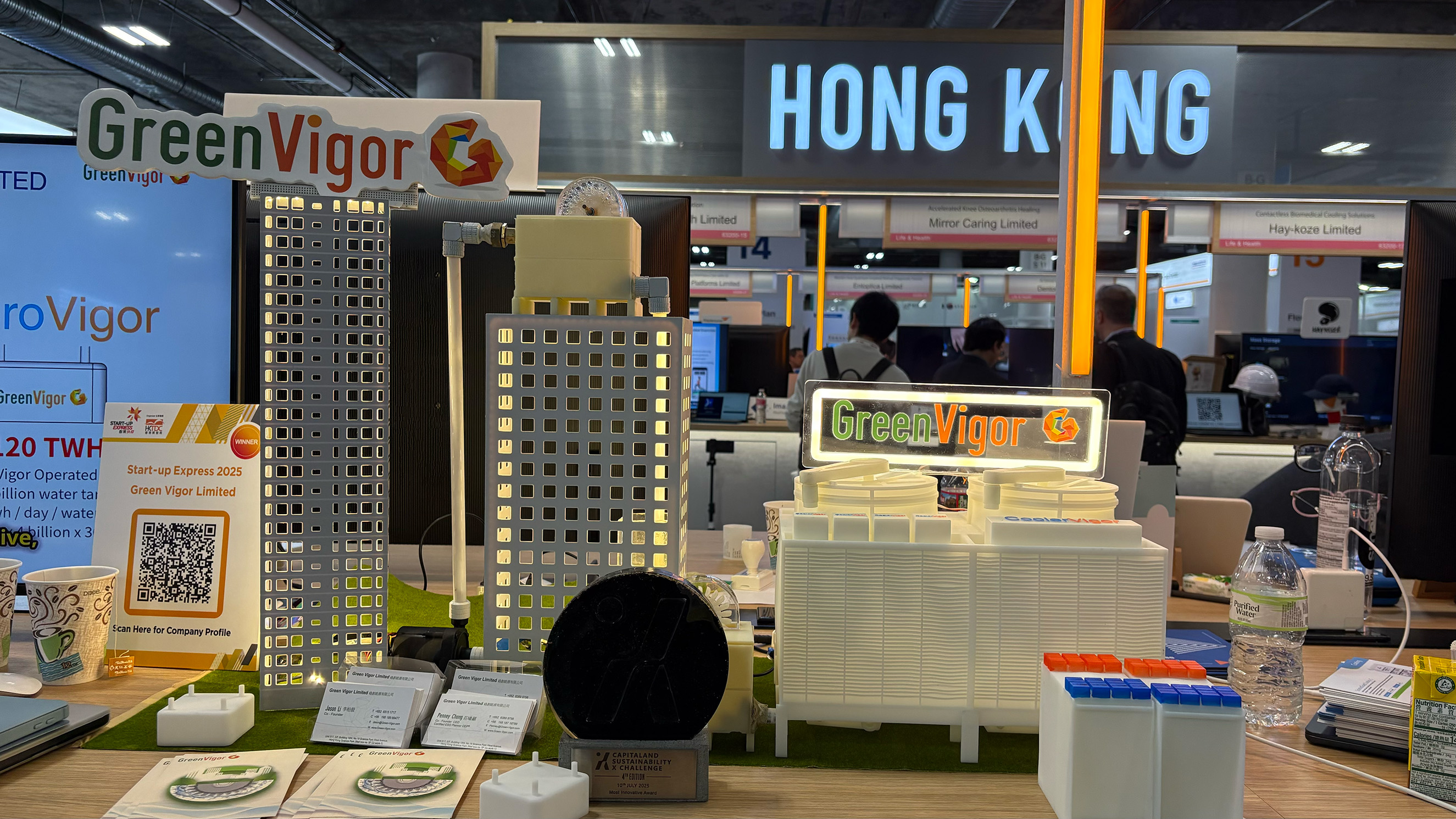
Down in the lower levels of the Venetian Expo at CES I found Green Vigor in the Hong Kong pavilion. This small company has two solutions to create energy for buildings by harnessing the potential energy from existing systems. HydroVigor generates power from water systems. So every time someone washes their hands or flushes a toilet in a building, the roof-top system generates a bit of power. CoolVigor uses the same principles to harness energy from HVAC systems. HydroVigor is currently in use in many buildings in Singapore and Hong Kong and they’re working to expand to more buildings globally.
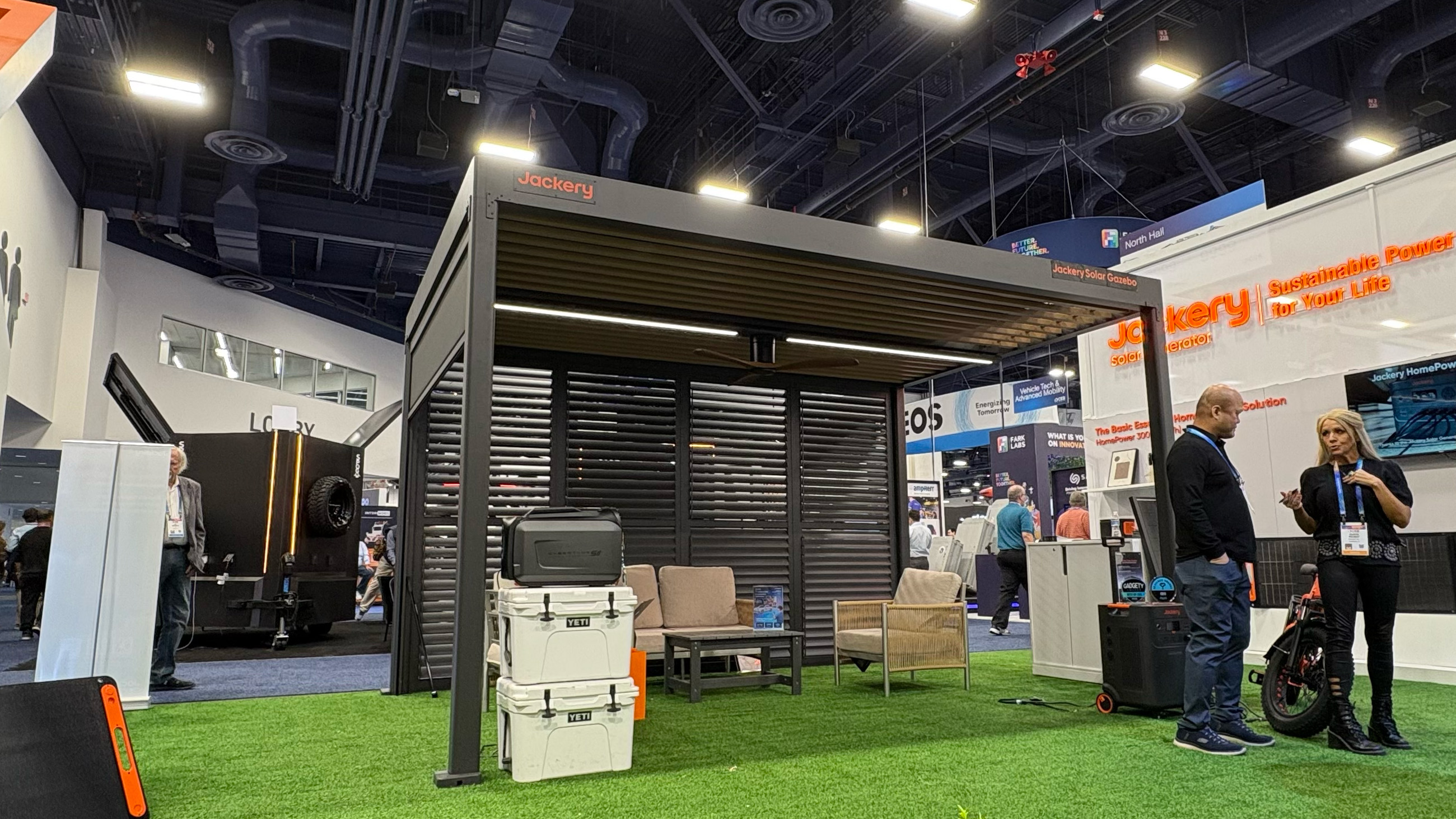
This outdoor hangout spot can produce up to 10kWh of power on a given day. It’s a modular design that lets you choose louvered walls, sunshades, lights and fans when you order it and the solar panels are so strong that a full-sized human Jackery rep was able to stand on a sample panel in front of me and nothing cracked (though the company officially rates it at 20 pounds of snow per square foot). You can use the power directly, tie it into your home system, feed it into the grid or hook it up to one of Jackery’s many power stations to save the power for later. The gazebo costs $12,000 and will ship in mid-2026.
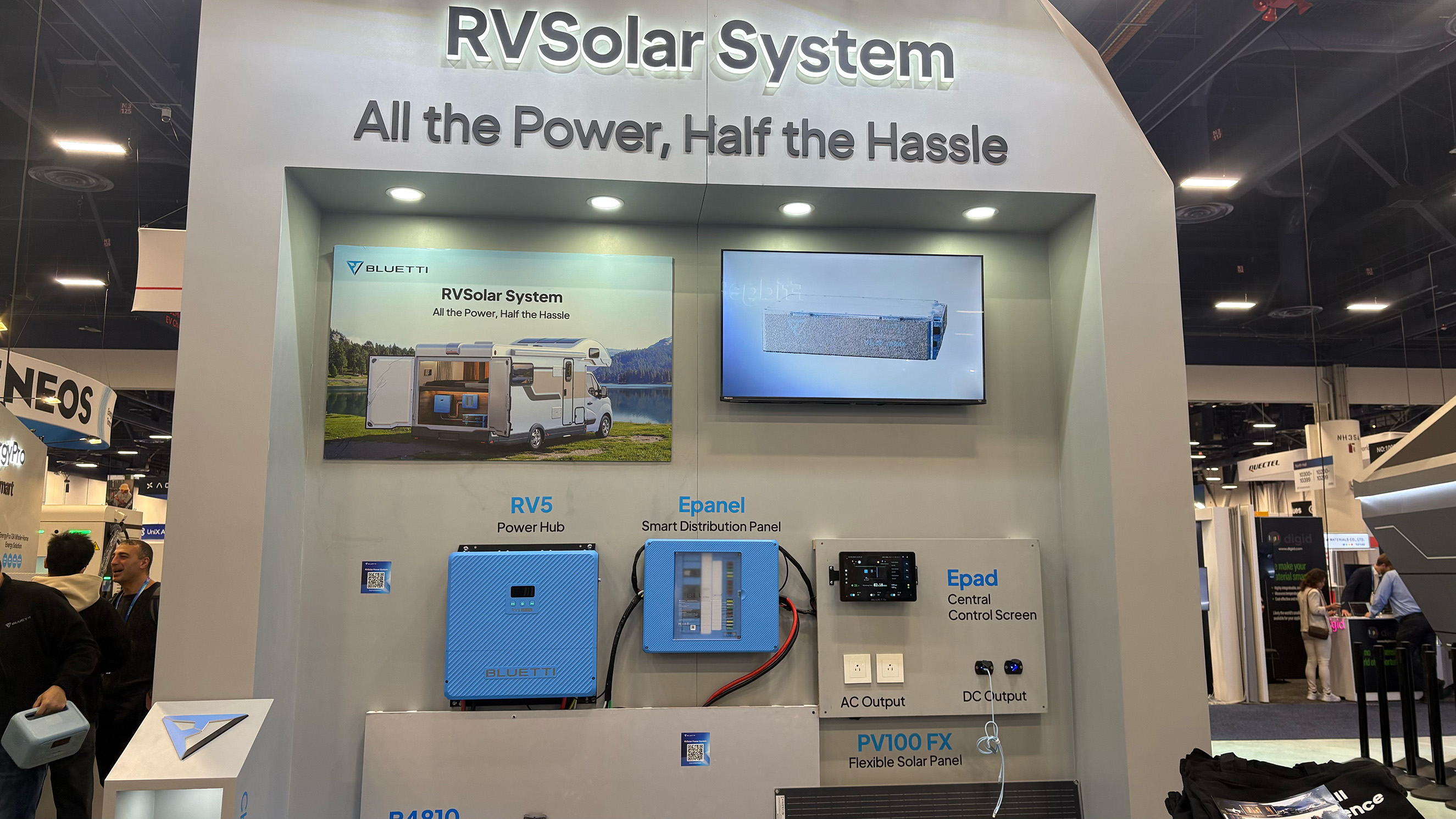
Bluetti, like Jackery, is known for its vast lineup of portable and fixed power stations and batteries. This year, it brought a new power station made with bio-based plastic as well as a DIY system for adding solar power to your existing RV.
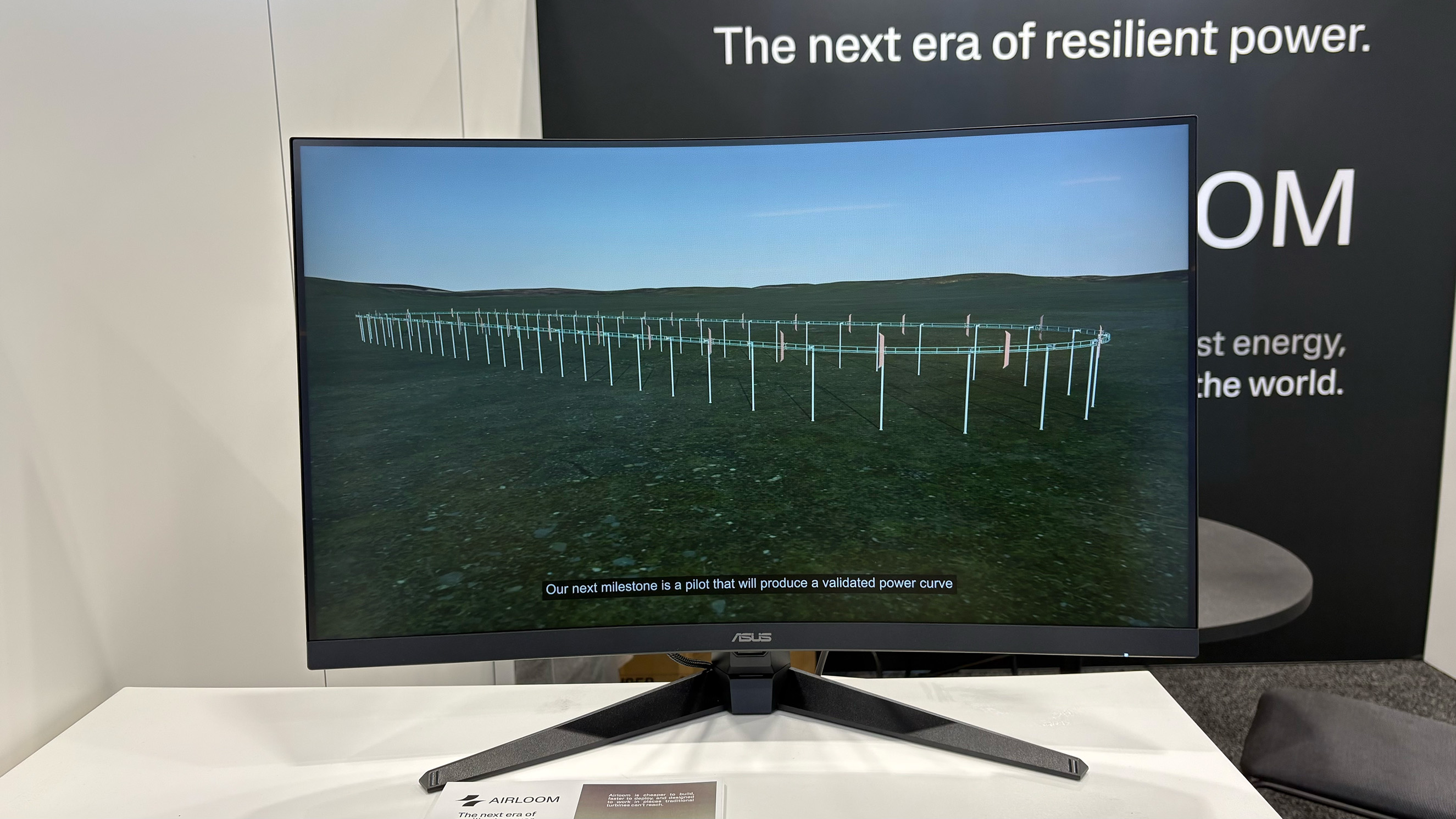
Airloom's roller coaster-like wind power generator for data centers.
Amy Skorheim for Engadget
Engadget’s Anna Washenko does a great job of explaining the tech behind Airloom. In short it’s a roller coaster for wind that’s comprised of 40 percent less mass than a standard wind turbine and uses 42 percent fewer parts and 96 percent fewer unique parts. That makes it faster to deploy and cheaper to instal. I can also be sited in more places. Again, this is a utility-scale solution, geared towards data centers and their insatiable need for energy to power Very Important AI Things.
Gaotu had a range of solar products in various formats.
Amy Skorheim for Engadget
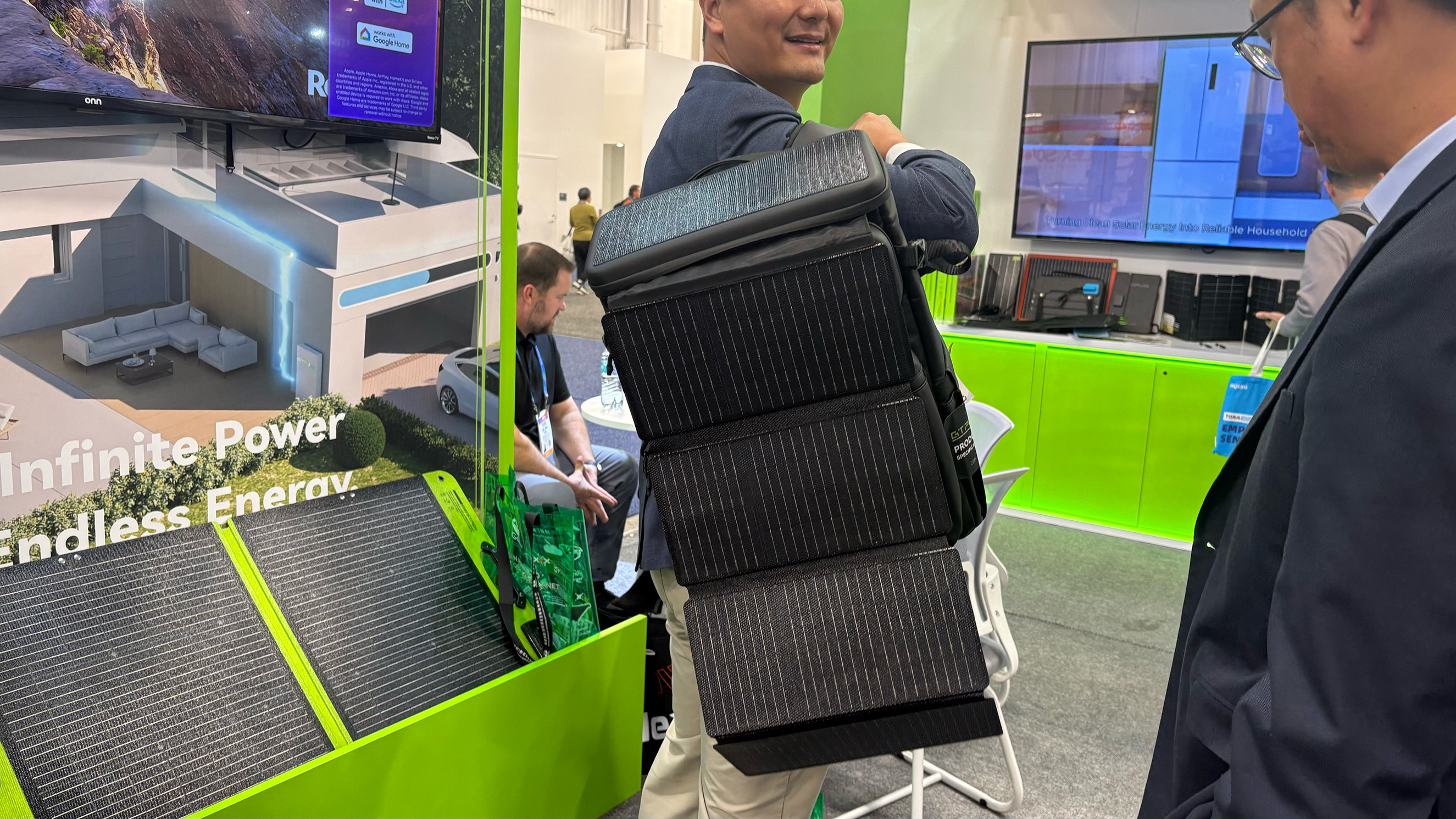
If you are looking for a solar-powered anything, hit up Gaotu. At the company’s booth, I saw hats, a fishing chair, a backpack, a sunbrella and a car roof-top enclosure that unfurls to charge up your Tesla. The Shenzhen-based company has been in business for 18 years and plans to just keep sticking solar panels on anything it can.
The single largest booth in the CES sustainability section was Segway. This year, the company showed off two new e-bikes, which our own Dan Cooper covered. This one here is the Muxi, a cargo bike with an easily swappable battery, an optional passenger seat with foot pegs and an optional middle basket. Plus a beverage cup holder.
If we don’t all fall into the ocean before then, perhaps CES 2027 will have a stronger showing of sustainability tech. In the meantime, I’ll take a modicum of comfort in these few brave organizations still dedicated to keeping us afloat.
This article originally appeared on Engadget at https://www.engadget.com/science/ces-so-very-big-so-little-sustainability-tech-180000648.html?src=rss
Dell's XPS 14 currently costs over $2,000. An AMD executive predicts that PC builders will likely make piecemeal upgrades this year, instead of building entirely new systems. And new AI supercomputers from NVIDIA and AMD are gobbling up the RAM market. At CES 2026, it was hard not to notice the dire year ahead for the computing industry, one that will likely lead to higher prices and more limited availability for consumer goods across the board.
Really, though, the show just confirmed what was apparent since RAM prices skyrocketed over the last few months, driven by demand from AI datacenters. As Samsung's marketing leader, Wonjin Lee, told Bloomberg at CES: "There's going to be issues around semiconductor supplies, and it's going to affect everyone. Prices are going up even as we speak."
At first, it appeared that Dell's new XPS 14 and XPS 16 were among the earliest systems hit by these demands. Last year's models started at $1,699 and $1,899, respectively, and we were initially told the new models would actually come in cheaper at $1,650 and $1,850. At the moment, the XPS 14 starts at $2,050, while the XPS 16 is $2,200. A Dell representative tells us these aren’t entry-level configurations, instead we can expect to see cheaper systems below $2,000 in February. While those prices haven’t been finalized, the reps say it should be similar to the earlier figures we were given.
It’s also worth noting that it didn't take much to configure the earlier models upwards of $2,000. It’s just unfortunate that Dell doesn’t have cheaper configurations available for the launch if its new systems, especially since they look so compelling. Meanwhile, Apple still hasn't budged its $1,599 MacBook Pro 14-inch pricing. At least Dell still comes in cheaper than the $2,499 MacBook Pro 16-inch.
On the desktop front, AMD's David McAfee, Corporate Vice President and GM of Client Channel Business, noted that the longevity of the company's AM4 and AM5 platforms might be a boon for gamers, since they can upgrade their CPUs without buying new RAM kits and motherboards. That allows for a pathway to better performance without paying out the nose for over-priced RAM.
"I think that will be potentially a trend that we see in 2026 with more component upgrades, as opposed to full system swap outs and, and altogether rebuilds," he said in a group interview with Engadget and other outlets. "Some of the most popular CPUs that are still running in gamers’ platforms are parts like the 2600 back to the Pinnacle Ridge days, or 3000 series... Stepping even from there into a little bit more modern 5,000 series processors in an AM4 socket and motherboard, there's a pretty big boost there."
McAfee added that around 30 to 40 percent of AMD's business still revolves around the AM4 platform, even without the specter of a wild memory market.
"There's no product that has memory in it that's immune to some of these forces around DRAM pricing and, and what it's doing to the market," he said, when asked about potential GPU price increases. "I think the, the truth is the volatility that we've seen over the past two months or so has really been unprecedented."
Looking ahead, he said he expects prices to settle within the first three to six months of the year, but he didn't discuss his reasoning further. As an aside, he also noted that AMD's X3D chips, which feature 3D V-cache, actually don't see much of a hit from slower RAM. Their high amounts of onboard L2 and L3 cache make up for less ideal memory transfer speeds, McAfee said.
That McAfee commented at all about the state of RAM is noteworthy. Every PC maker I’ve asked, including Dell and Acer, refused to comment on the volatile state of the memory industry ahead of CES. Perhaps they were hoping things would calm down before they had to price their new systems. Ultimately, they’re beholden to an increasingly limited supply of RAM.
And where is all that memory going? At CES, NVIDIA announced its new Vera Rubin AI supercomputer, which supports up to 54TB of RAM across 36 Vera CPUs and 20.7TB of memory across 72 GPUs. AMD, as well, announced its new Helios AI rack, which supports up to 31TB of memory across 72 AMD Instinct MI455X GPUs. Given the endless appetite for computing to power AI model building and inferencing, there’s likely going to be a significant demand for these beastly systems.
Put simply: Our global supply of memory is being sacrificed to appease the AI industry. That’s good news for the likes of OpenAI, Microsoft and NVIDIA, but bad news for anyone who cares about PCs and the consumer products we use every day. Get ready for a year of price hikes.
Update 1/12, 3:00p: Added a mention of lower entry-level configurations coming eventually.
This article originally appeared on Engadget at https://www.engadget.com/computing/ces-2026-proved-the-pc-industry-is-hosed-this-year-174500314.html?src=rss
Clicks is an apologetically gadgety company, making gear that feels charmingly out-of-place in a world where almost every smartphone out there is an all-screen slab. That was obviously two years ago when the company first revealed its keyboard case that brought tactile typing to the iPhone and eventually other Android devices. Rather than that being a one-off curiosity, the company had two new announcements at CES 2026: a magnetic keyboard accessory that also doubles as a battery bank and small, squat mobile phone with a keyboard. And while there isn’t a working prototype of the Clicks Communicator available for the press to see, I got to check out the new Power Keyboard talk with Clicks co-founder and former BlackBerry marketing director Jeff Gadway about where he thinks his products fit into the smartphone world.
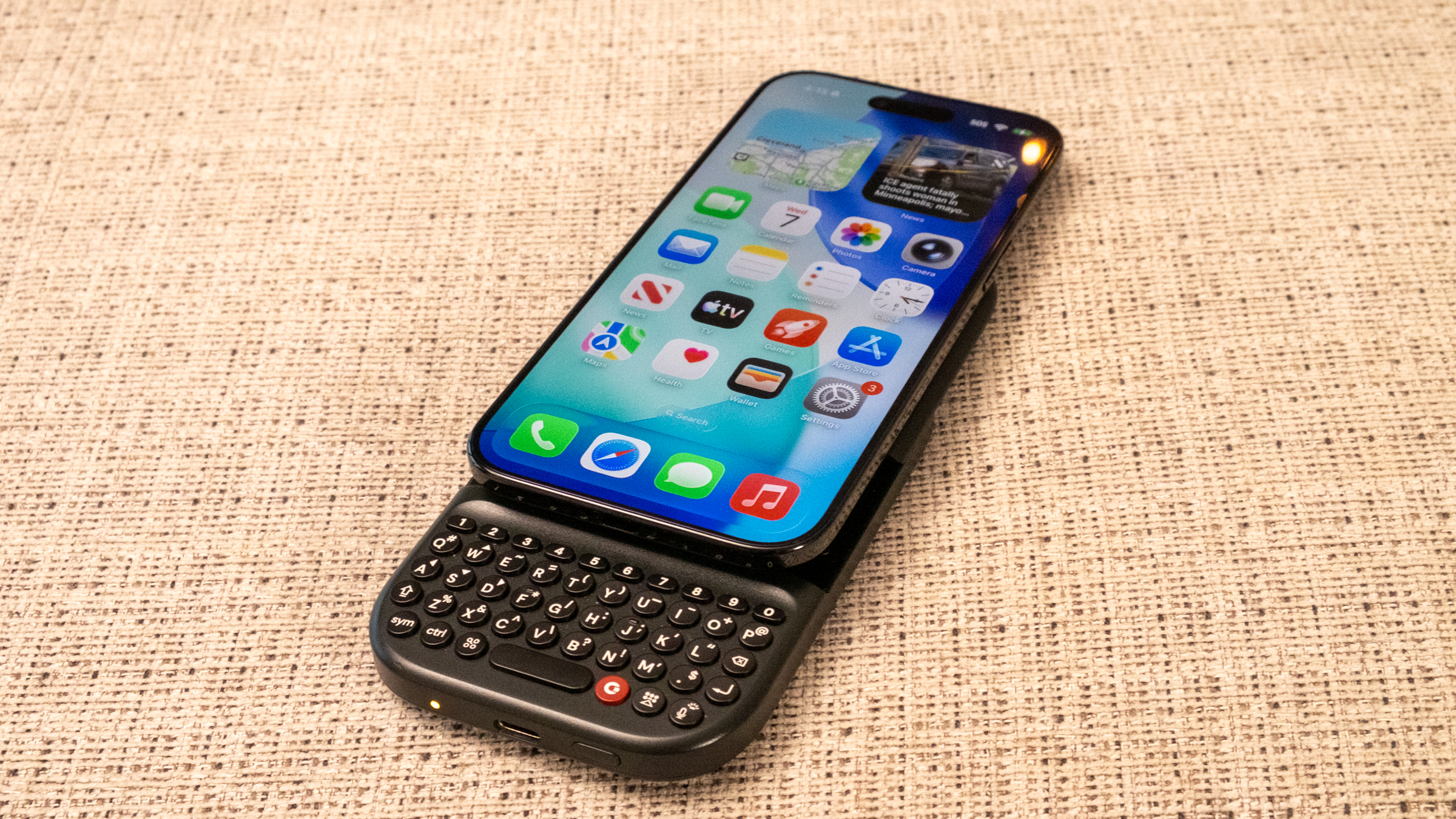
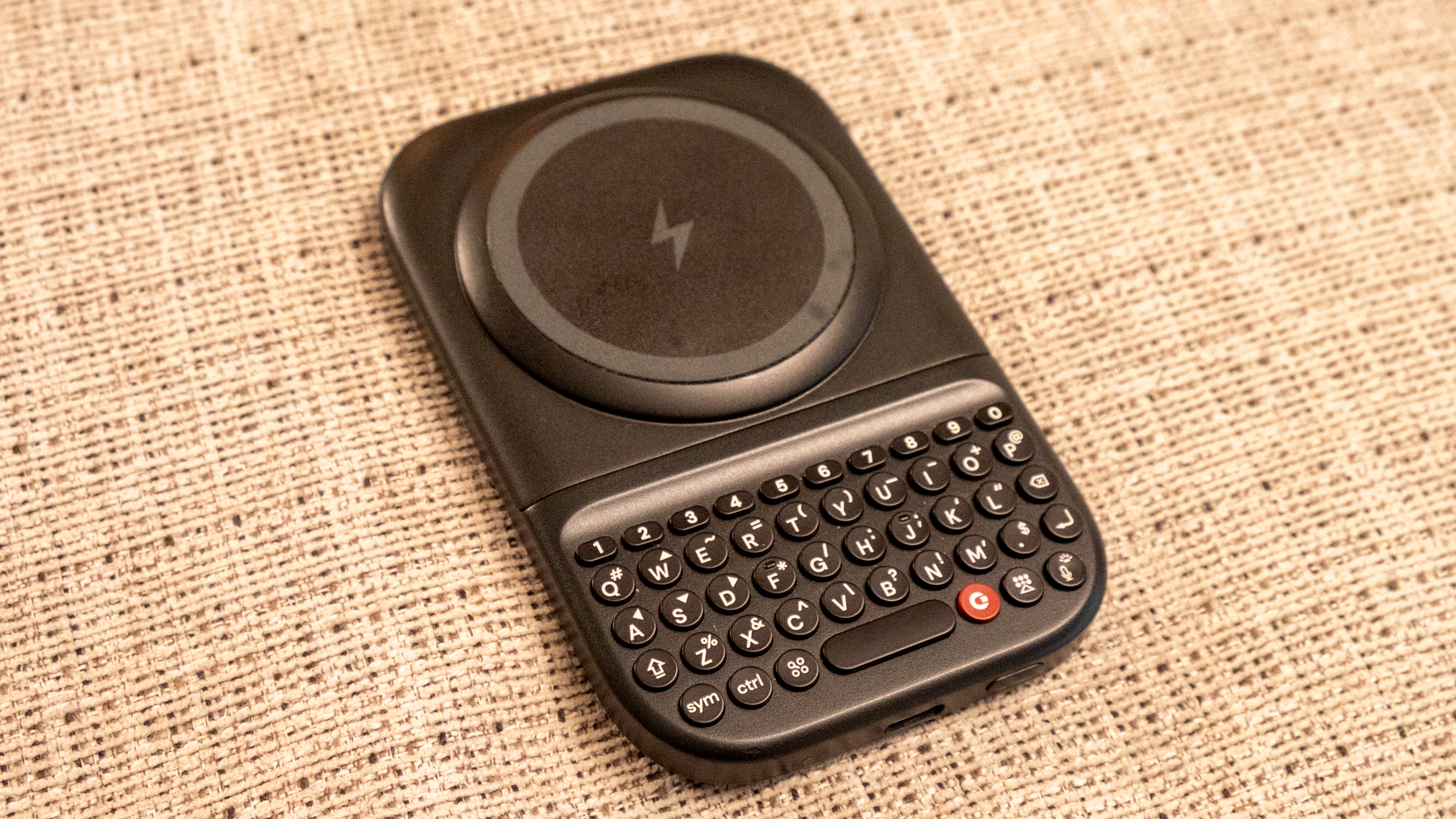
At first glance, the $79 Power Keyboard feels like a big improvement over the original Clicks Keyboard case. It magnetically attaches to any phone with Qi2 and connects over Bluetooth. The keyboard itself is similar to the original Clicks keyboard, but there’s a dedicated number row which is a nice improvement. But the thing that really caught my eye was its old-school slider form factor. When closed, the Power Keyboard sits on the back of your phone like a thick wireless battery pack — but it satisfyingly slides up to reveal the keyboard like the Palm Pre or BlackBerry Torch smartphones of old.
The magnetic, sliding Clicks Power Keyboard.
Nathan Ingraham for Engadget
The Power Keyboard’s last trick is that it can charge your phone up when attached. The battery itself isn’t huge, so you’re not going to fully recharge a modern smartphone. But it’s still a nice addition for if you need some power in a pinch. You can also set it up so it doesn’t charge your phone and instead uses all the battery to power the keyboard; in that situation, the keyboard will last weeks without a charge. Or you can designate a percentage that can only be used by the keyboard — for example, if the battery pack’s charge drops below 20 percent, it’ll stop charging your phone and instead save that power for the keyboard.
The Clicks Power Keyboard, without a phone attached.
Nathan Ingraham for Engadget
As someone who has never owned a smartphone with a keyboard, I can’t say how good the Clicks keyboard actually is — there would be a definite learning curve before I got comfortable with it. It certainly feels tiny to me, but if you just type on and trust autocorrect you should get the hang of it before too long. Whether the benefits of using a physical keyboard matter are up to you to decide. It’s nice seeing a bigger screen unobstructed by the virtual keyboard, but I feel far too set in my touchscreen ways to consider switching it up. But some people just loved their keyboards, and for them this gadget might hit the spot.
The Clicks Communicator is the more unexpected of the two new devices the comapny is working on, but without a working demo model I can’t render any judgement about how it will actually work. When it was announced, Clicks specifically said they were targeting people who used multiple devices, a demographic that I wasn’t fully convinced was large enough to justify the Communicator’s existence. But Gadway assured me the company had done plenty of research before moving into the hardware production phase.
“You've got people who are mandated to carry a second device for corporate deploy. Then you've got people who are small business owners and want to have a separate phone for their small business,” he said. “In markets like Europe, there's a requirement for employers to give people the option to have a separate device and create more separation. You've got travelers who want a second SIM, and then you've got this growing cohort of digital detox, digital minimalism, digital well-being people.” None of those segments might be huge on its own, but add it all up and the Clicks team felt like they had a decent opportunity.
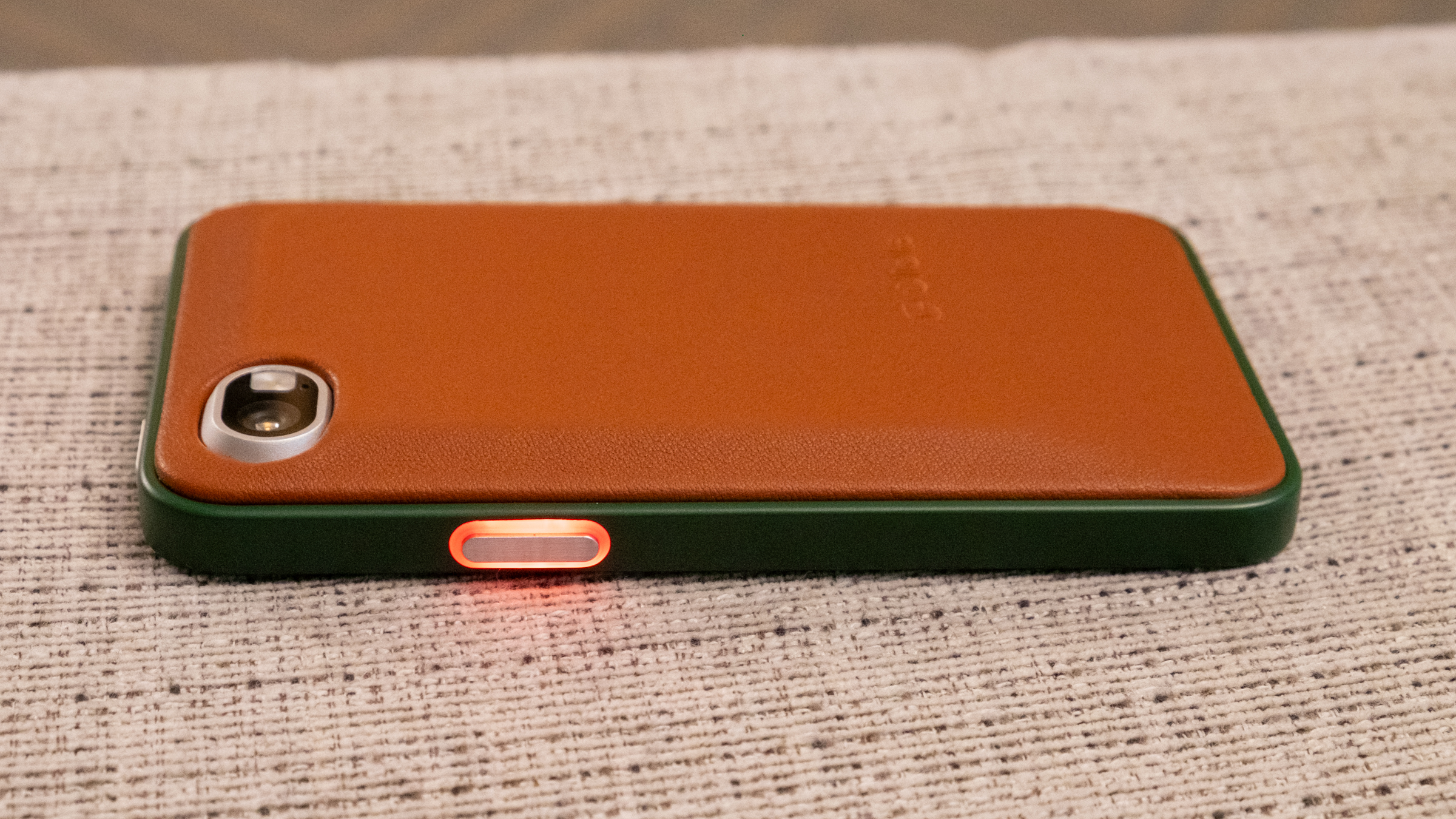
The Clicks Communicator has an LED Light on its side button that you can customize for different notifications.
Nathan Ingraham for Engadget
The other half of the thought process was making the Communicator different from an iPhone or Pixel — instead of having two essentially identical devices, Clicks wanted to make the Communicator with a distinct focus. “Our thought process was that complementary devices in tech are on the rise,’ Gadway said. “You wear an Oura Ring and you wear a smart watch; you carry an e-reader for reading and a tablet for content consumption. So why shouldn't your second phone be better at certain things than your first phone instead of just being a straight duplicate?”
That’s where the squarish, 4-inch touchscreen, keyboard and custom implementation of the Niagara Android launcher, which is a list-based UI rather than a grid of apps. The custom Clicks implementation of it focuses on your messaging apps and quickly triaging through new items (hence the Communicator name). The keyboard itself is touch sensitive and can be swiped across to navigate and take actions on what you see. But the Communicator is just an Android phone at heart which means you can install any apps that you find essential — though its form factor changes what it is best used for. “You can download whatever apps you want, but we've optimized it to be better at specific things,” Gadway said. “So, you know, do you want to watch letterboxed TikTok videos on this? Probably not. You could, but it's not the thing you're going to reach for to do that. But we're not going to give you a product that restricts what you can do.”
The good thing about being a smaller hardware maker is that Clicks doesn’t need to sell millions of these — they’re just interested in offering an alternative for people who might enjoy it, just as they’ve done with their keyboard accessories. Of course, the Communicator is a bigger investment; it’s up for pre-order now for $399 (that’s Pixel 9a territory, for comparison). Once it launches in the second half of the year, we’ll find out if it can find its audience.
This article originally appeared on Engadget at https://www.engadget.com/mobile/the-clicks-co-founder-explains-who-its-tiny-communicator-phone-is-for-170000501.html?src=rss
Meta has announced three new agreements to purchase nuclear power for its AI infrastructure as well as the Prometheus supercluster, a 1-gigawatt data center being built in Ohio. The social media giant is partnering with power companies Vistra, TerraPower and Oklo to deliver an expected 6.6 gigawatts of generation to its projects by 2035.
The company's agreement with TerraPower will fund the development of two new reactors capable of delivering up to 690 megawatts of power as early as 2032. The deal also gives Meta rights to energy from six other reactors that could deliver an additional 2.1 gigawatts by 2035. All this power would come from TerraPower's "Natrium" reactors, which use sodium instead of water as a coolant.
A partnership with Oklo will bring 1.2 gigawatts of nuclear power online as early as 2030. Meta says the agreement opens the door to the construction of multiple Oklo reactors, which it claims will create thousands of construction and long-term operations jobs in Ohio. OpenAI CEO Sam Altman is one of Oklo's largest investors, and owns just over 4 percent of the company.
Meta’s agreement with Vistra focuses on keeping existing nuclear plants running longer and boosting their output. Through new 20-year deals, Meta will buy more than 2.1 gigawatts of electricity from some of Vistra’s existing plants in Ohio, while also backing added capacity at those sites, plus another in Pennsylvania. Vistra expects the added capacity, totaling 433 megawatts, to come online in the early 2030s.
Big tech is increasingly turning to nuclear to power its AI ambitions. Meta signed a 20-year agreement with Constellation Energy for nuclear power last year. Meanwhile Microsoft is famously reopening Three Mile Island and will be the plant’s sole customer as part of a 20-year deal.
This article originally appeared on Engadget at https://www.engadget.com/ai/meta-announces-a-slew-of-nuclear-energy-agreements-165337159.html?src=rss
Every January, the Las Vegas Convention Center fills up with ideas that sit somewhere between prototype and inevitability. Some will vanish after a single news cycle, but a few feel like early drafts of how we will actually live with technology, once the spectacle wears off and the hardware shrinks into something you can forget about until you need it. Those are the ones worth bookmarking, the quiet experiments that hint at new categories rather than just new specs.
This year’s crop of emerging tech has a very particular flavor. Robots are edging closer to being housemates instead of stage acts, ambient objects are getting just enough AI to feel expressive rather than chatty, and work gear is evolving into compact appliances that reclaim space instead of stealing it. None of these ideas are mainstream yet, but they are all far enough along that you can imagine them in your home or on your desk, which is exactly what makes them so interesting to watch.
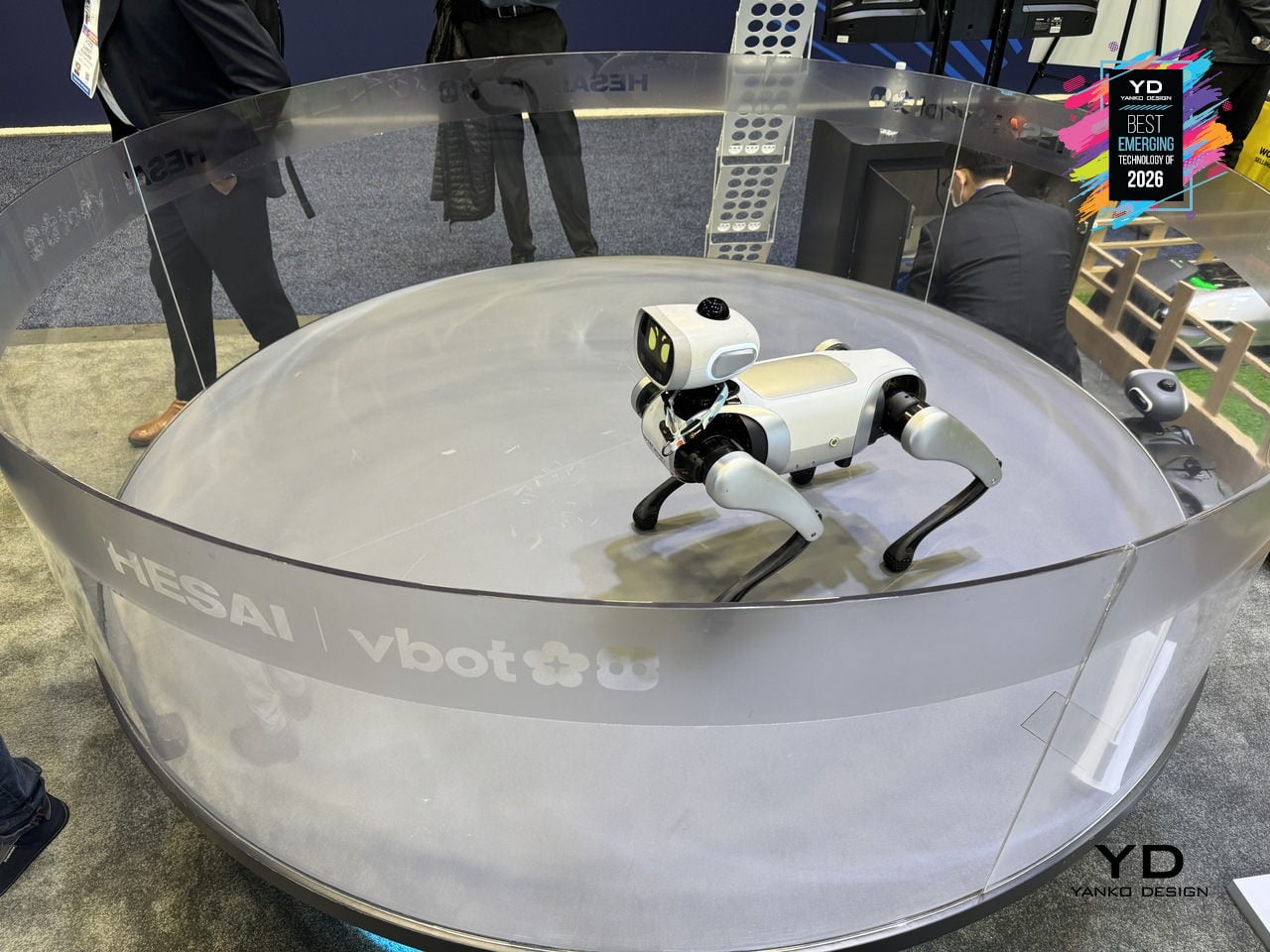
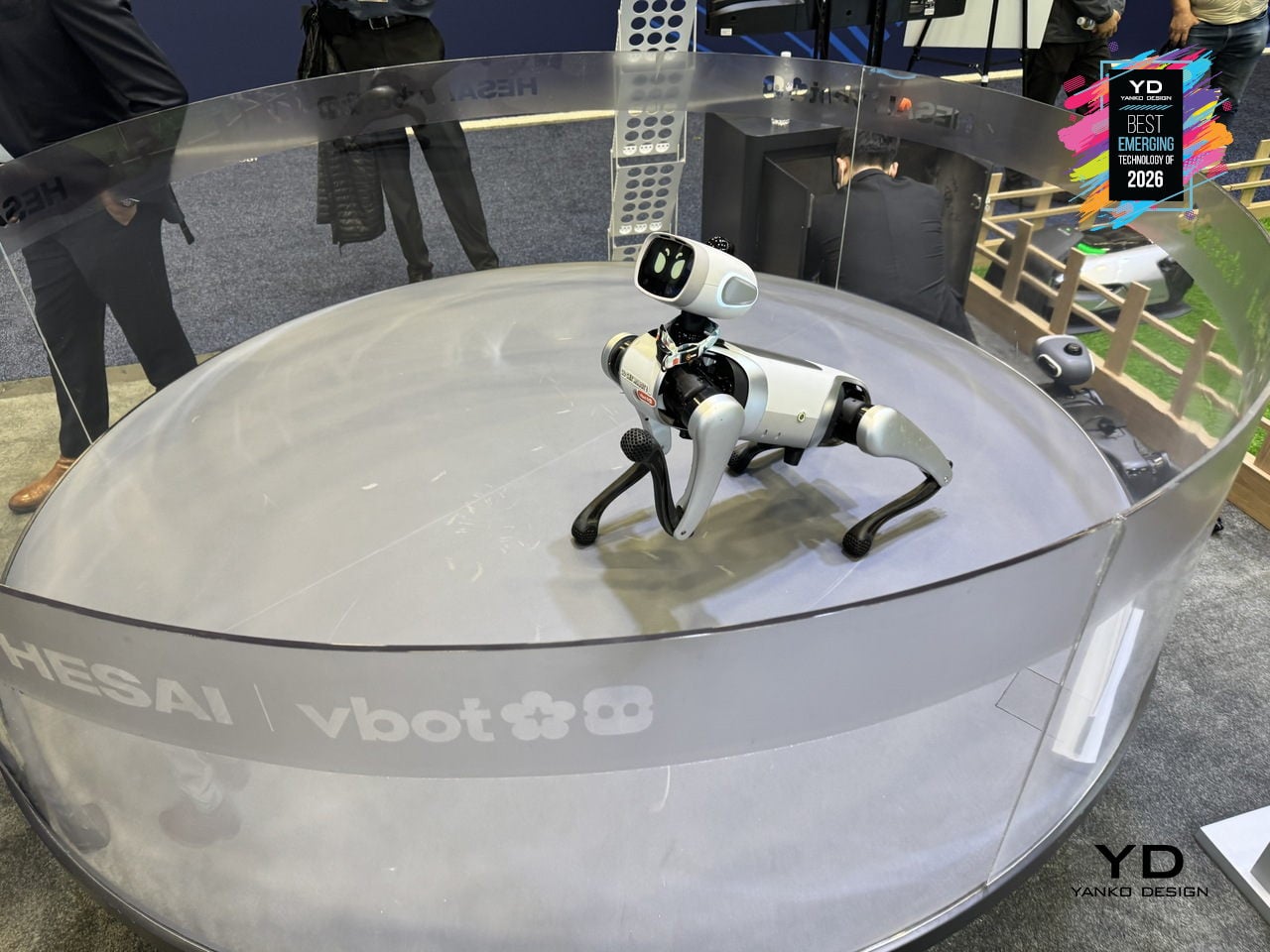
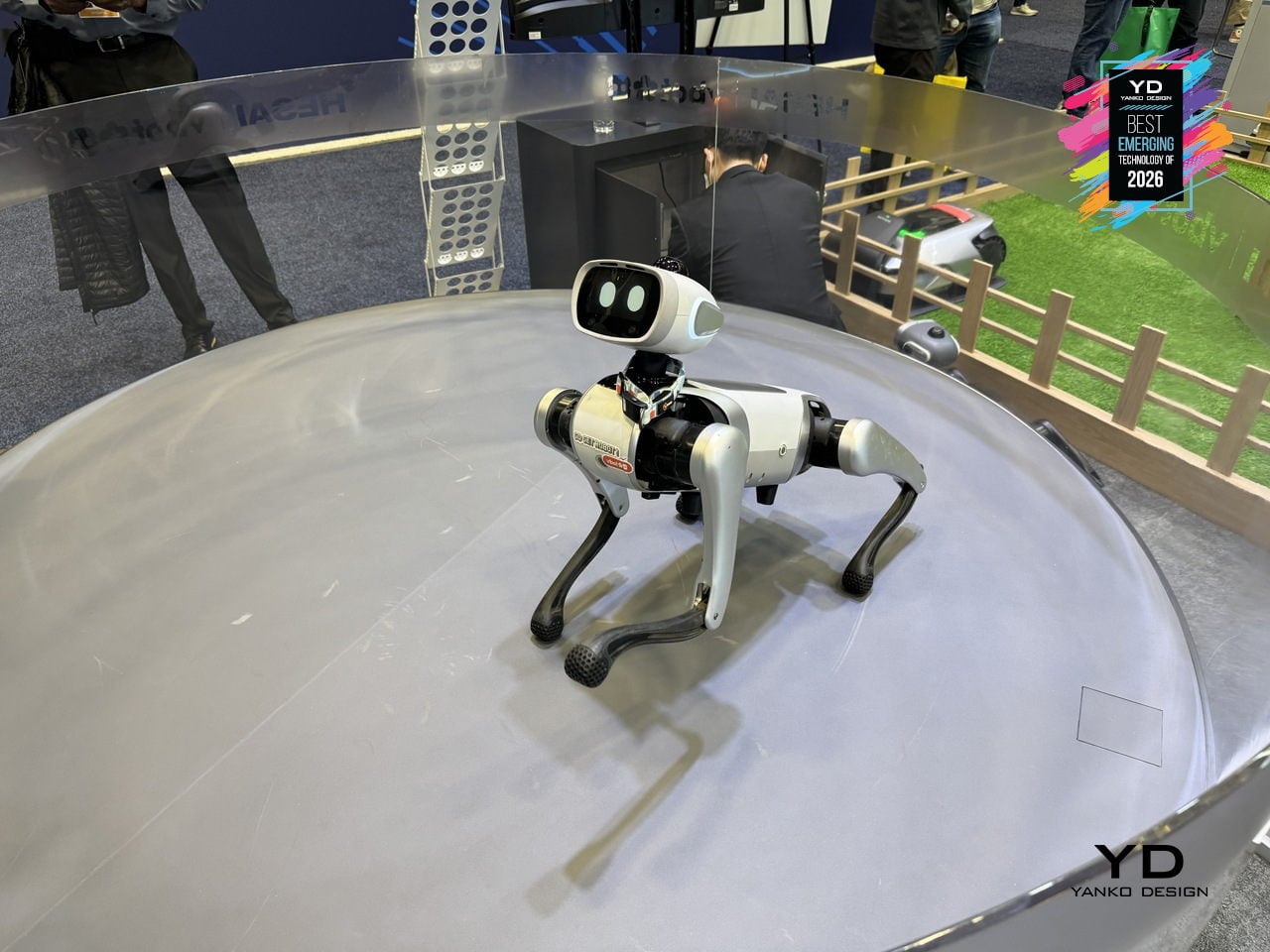
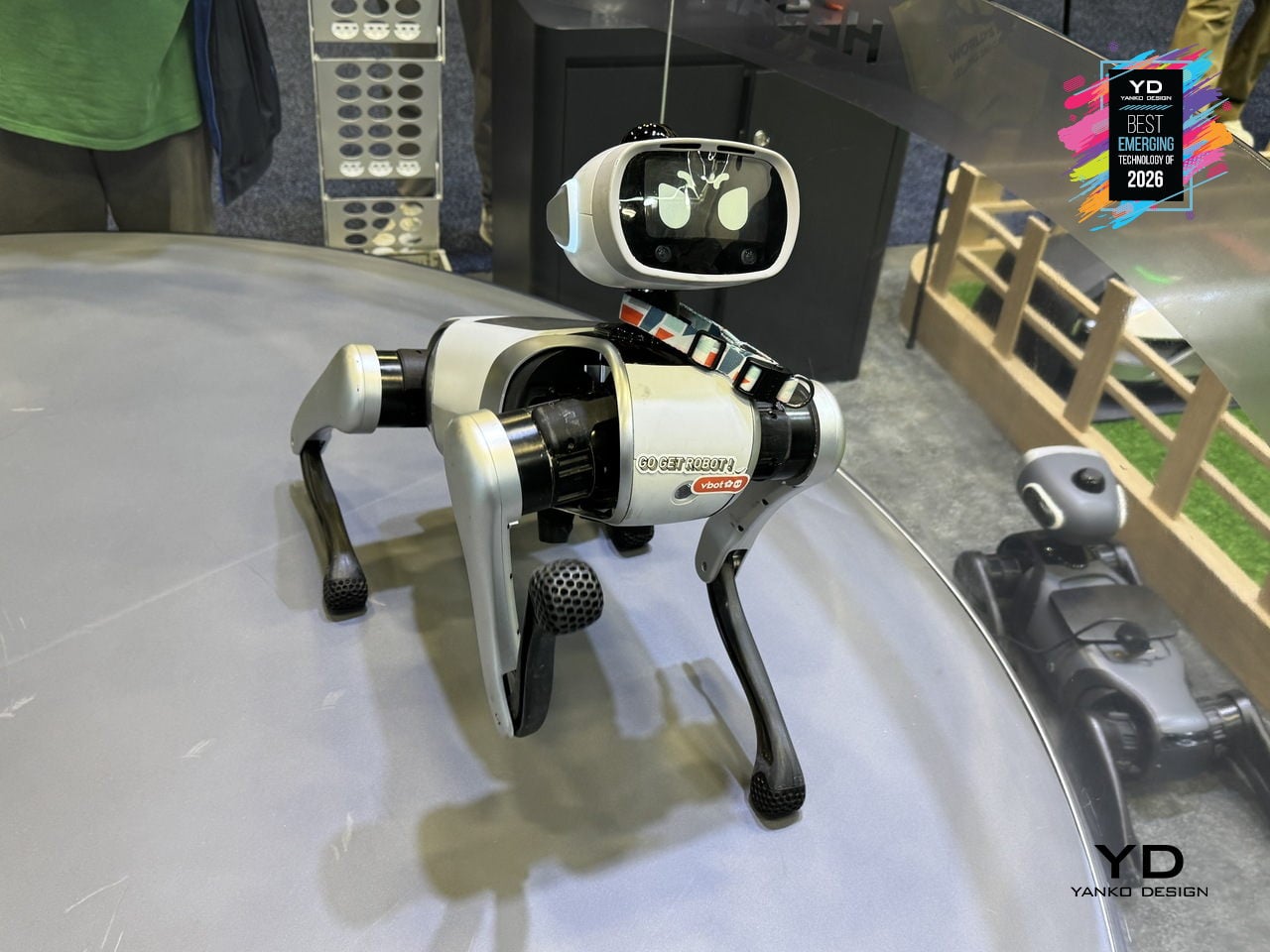
Vbot Companion Robotic Dog
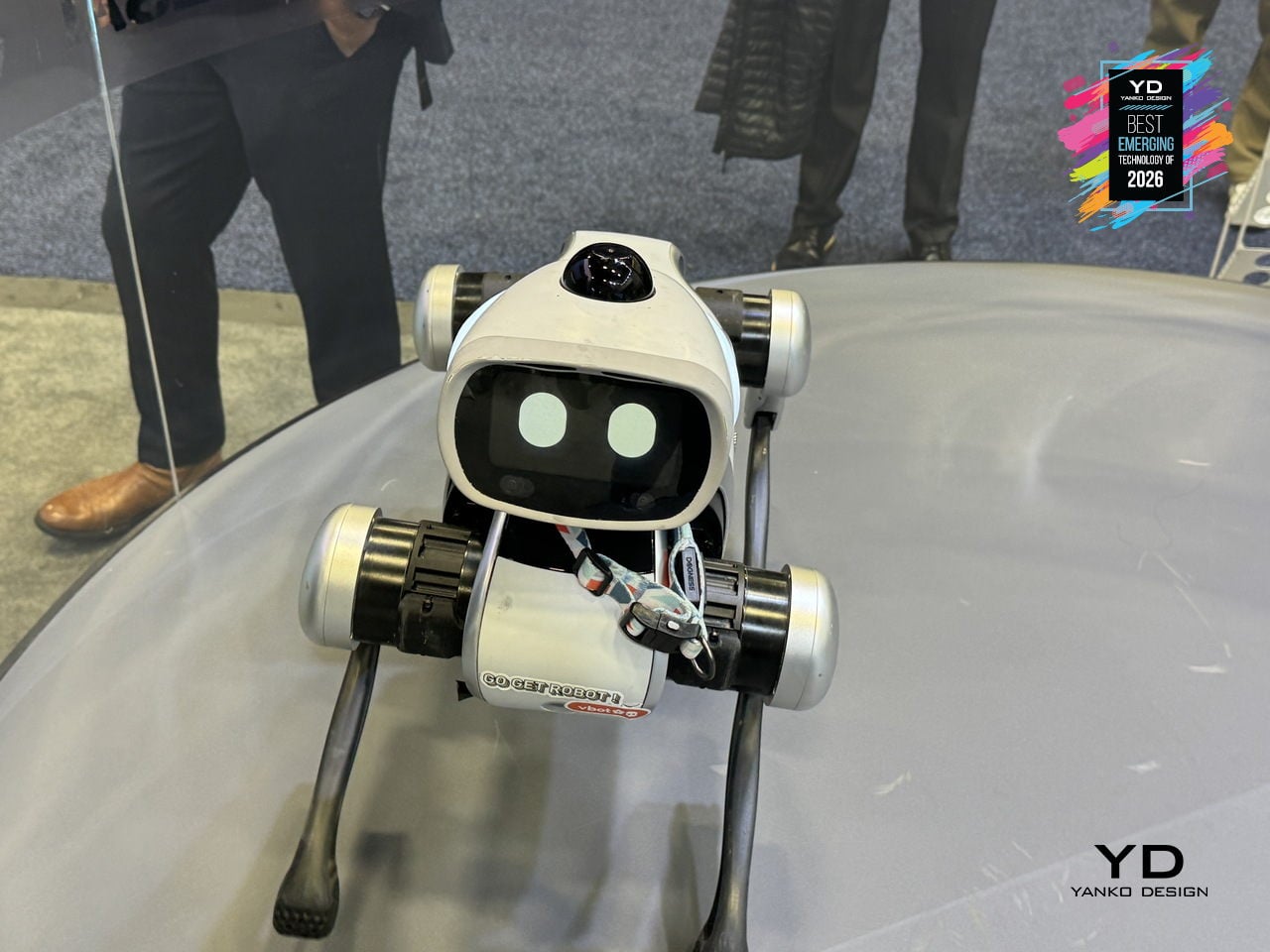
Most quadruped robots people have seen are either industrial, loud, or built for stage demos rather than living rooms. Vbot is a companion robotic dog engineered around a single principle, Made to Be Near, designed for safe, quiet, human-scale proximity. The rounded body has no sharp edges, pinch-free joints maintain 2.5cm safety gaps, and soft-touch mesh covers the mechanical core. Low-noise locomotion using 3D-printed shock-dampening feet and tuned motors makes it quiet enough to watch over a sleeping baby.
Vbot’s social intelligence turns that safe form into something that feels alive and helpful. It interprets natural-language commands through tone, context, and meaning, understanding verbs like bring, follow, lead, show, or find without a remote. Agent intelligence breaks down objectives into steps, guiding visitors, escorting someone along a route, or positioning itself as a camera buddy for hands-free filming. It matches walking pace and repositions for better engagement.
Under the skin, embodied and spatial intelligence allow Vbot to operate as a real physical agent. Its legs use 22cm segments proportioned to match 18-20cm stair standards, giving it leverage to climb steps where wheeled robots struggle. A proprietary N45 motor delivers more torque at 25% less weight, while a 594Wh battery supports more than five hours of outdoor operation. A perception system with 360-degree LiDAR and UWB positioning understands paths and obstacles without cloud latency.
Vbot signals an early consumer-grade physical AI category. Unlike robots adapted from industrial platforms, it is built from scratch around close human proximity, readable motion based on animation principles, reliable battery life, and modular interfaces for cargo baskets, cameras, and tow carts. Its three-layer intelligence, embodied, spatial, and agent, points toward robots that are sociable enough to join you outside, smart enough to anticipate intent, and gentle enough to belong in family spaces.
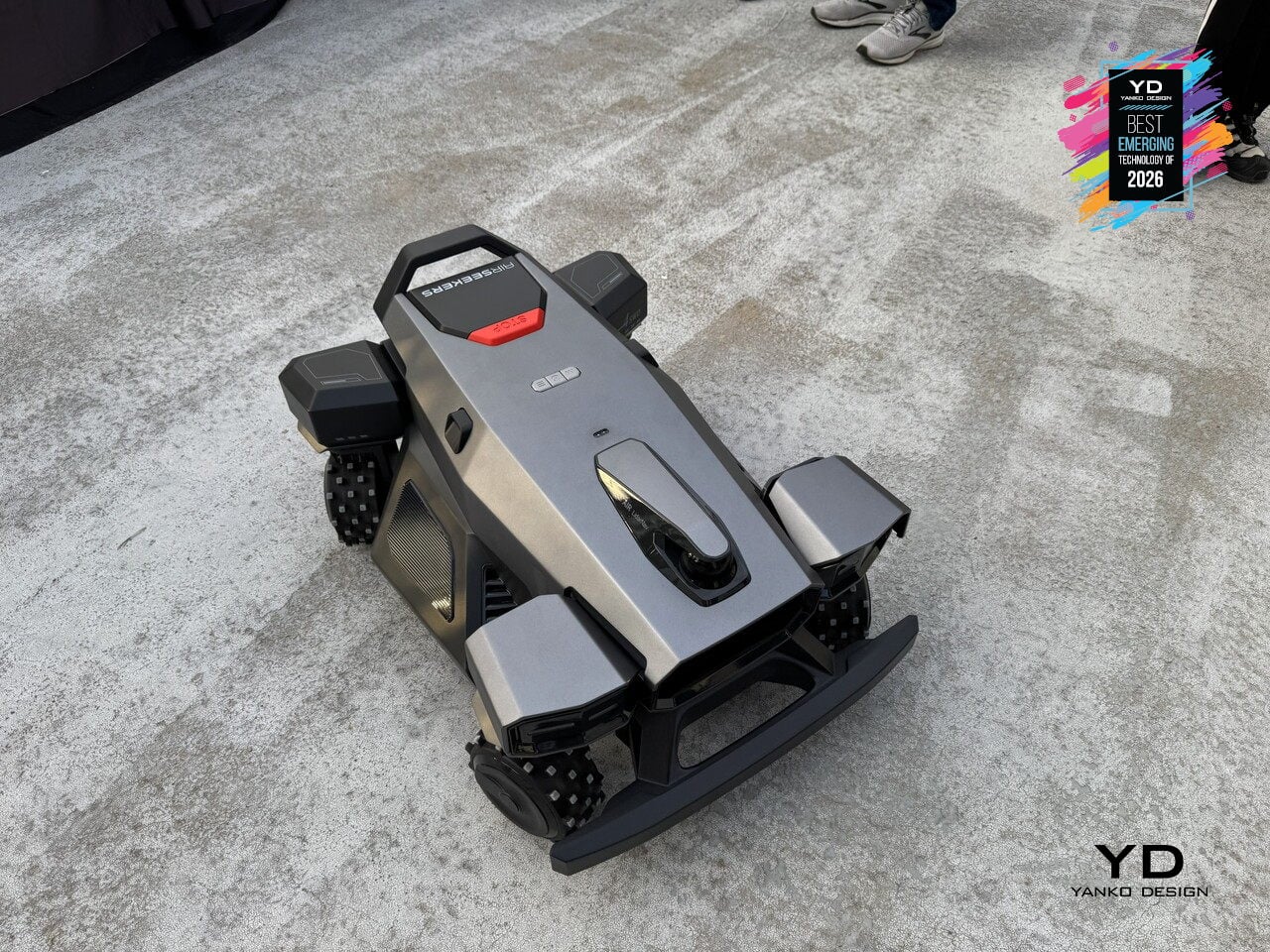
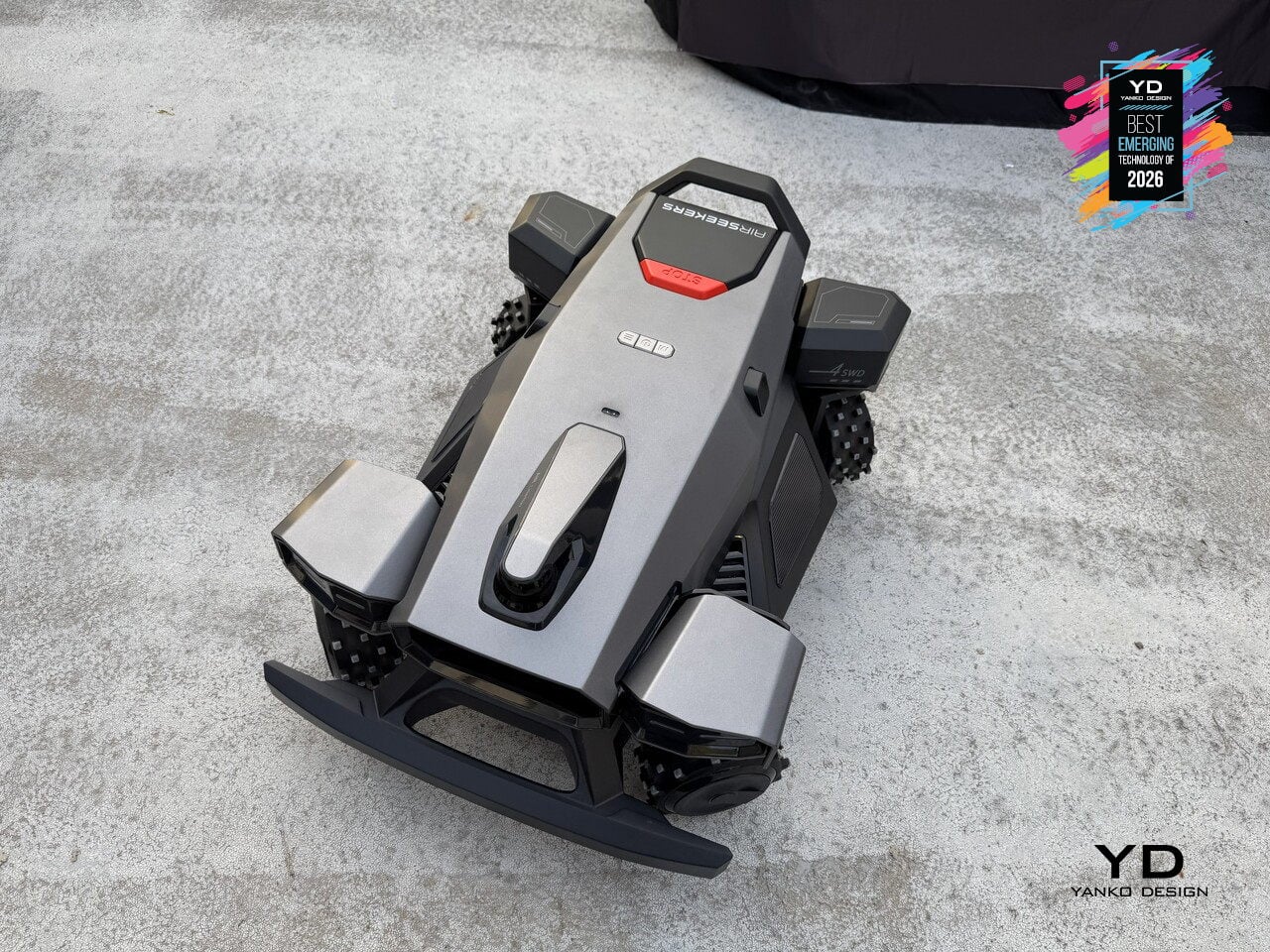
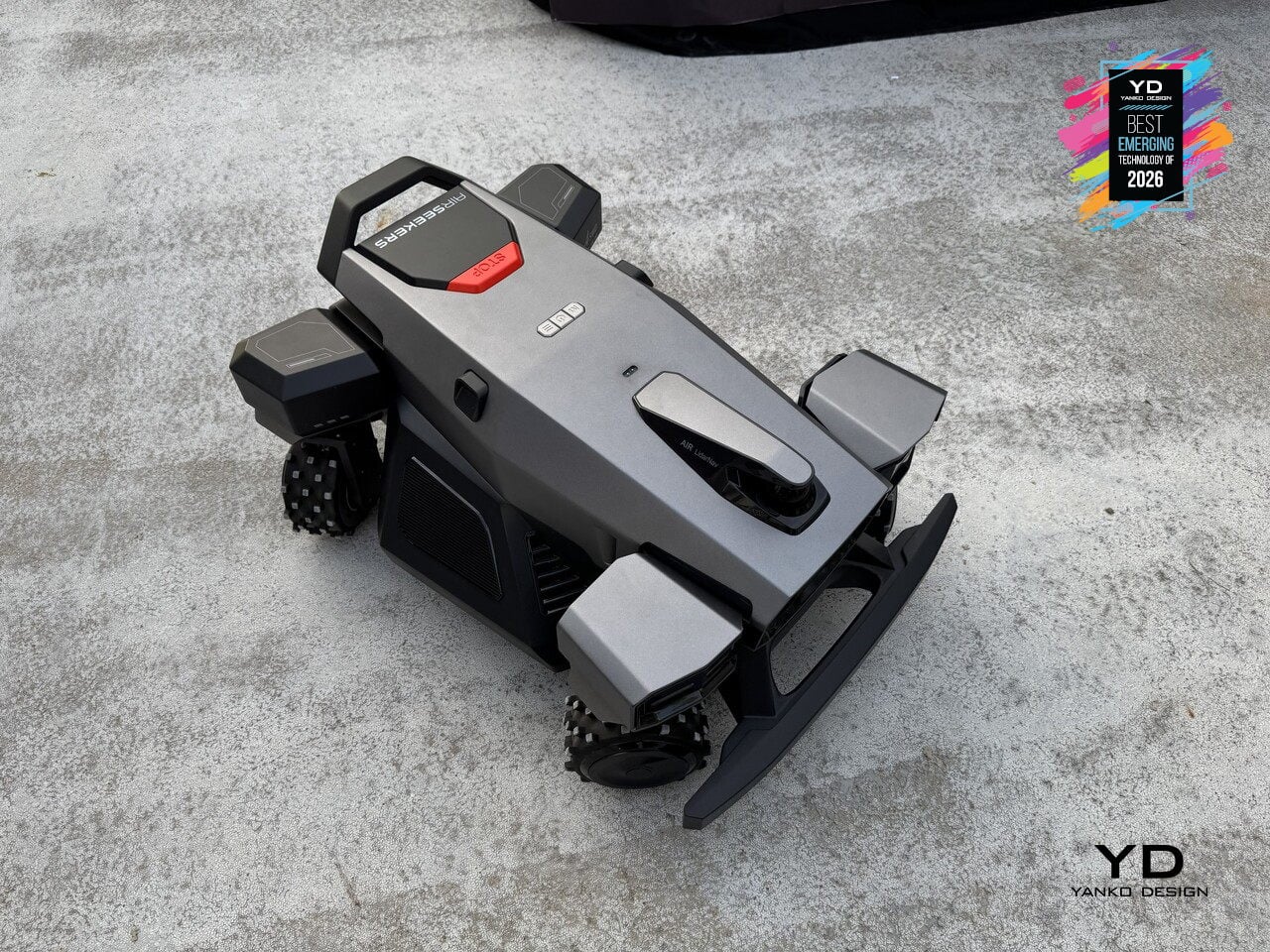
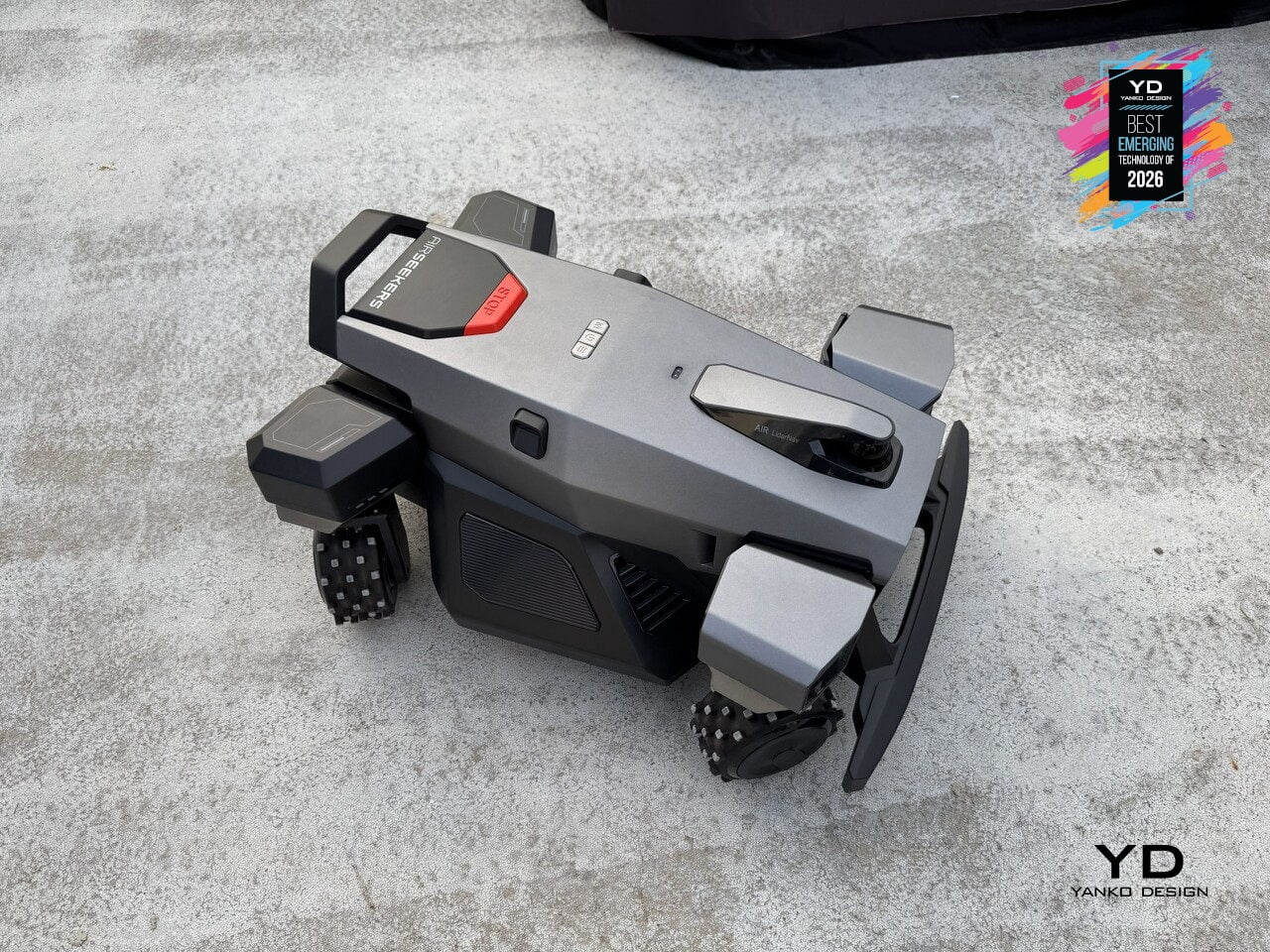
Airseekers Tron Ultra Robotic Lawn Mower
Robotic mowers have mostly relied on differential steering or front omni-wheels to navigate yards, which works for wide-open lawns but struggles with tight corners and complex obstacles. Airseekers Tron Ultra uses a 4SWD drive system with independent control of each wheel, allowing it to move in ways that feel closer to industrial robotics than consumer lawn care. The mower can rotate in place without a turning radius, shift laterally, horizontally, or even diagonally through narrow gaps between garden beds, and pivot around obstacles up to 2.36 inches tall without backing up. That four-corner independence changes how the mower approaches difficult terrain. Upgraded high-traction wheels give it the grip to climb inclines up to 85% grade and traverse wet grass without spinning out, while intelligent environmental detection adjusts power distribution per wheel to prevent soil compaction and turf damage.
Under the hood, Omni Navigation combines AI vision sensors, LiDAR, and VSLAM mapping with a 300° field of view to feed real-time data to the 4SWD controller, dynamically adjusting wheel speed and direction as terrain changes. A 594Wh swappable battery supports up to 0.49 acres per charge, with the mower autonomously returning to its dock and resuming exactly where it left off. Paired with 360° radar beacons that eliminate dead zones under trees and around structures, the Tron Ultra reduces manual intervention by over 50% compared to earlier models. It signals a shift from mowers that follow preset patterns to machines that move like outdoor robots, treating lawns as navigable environments rather than obstacle courses.
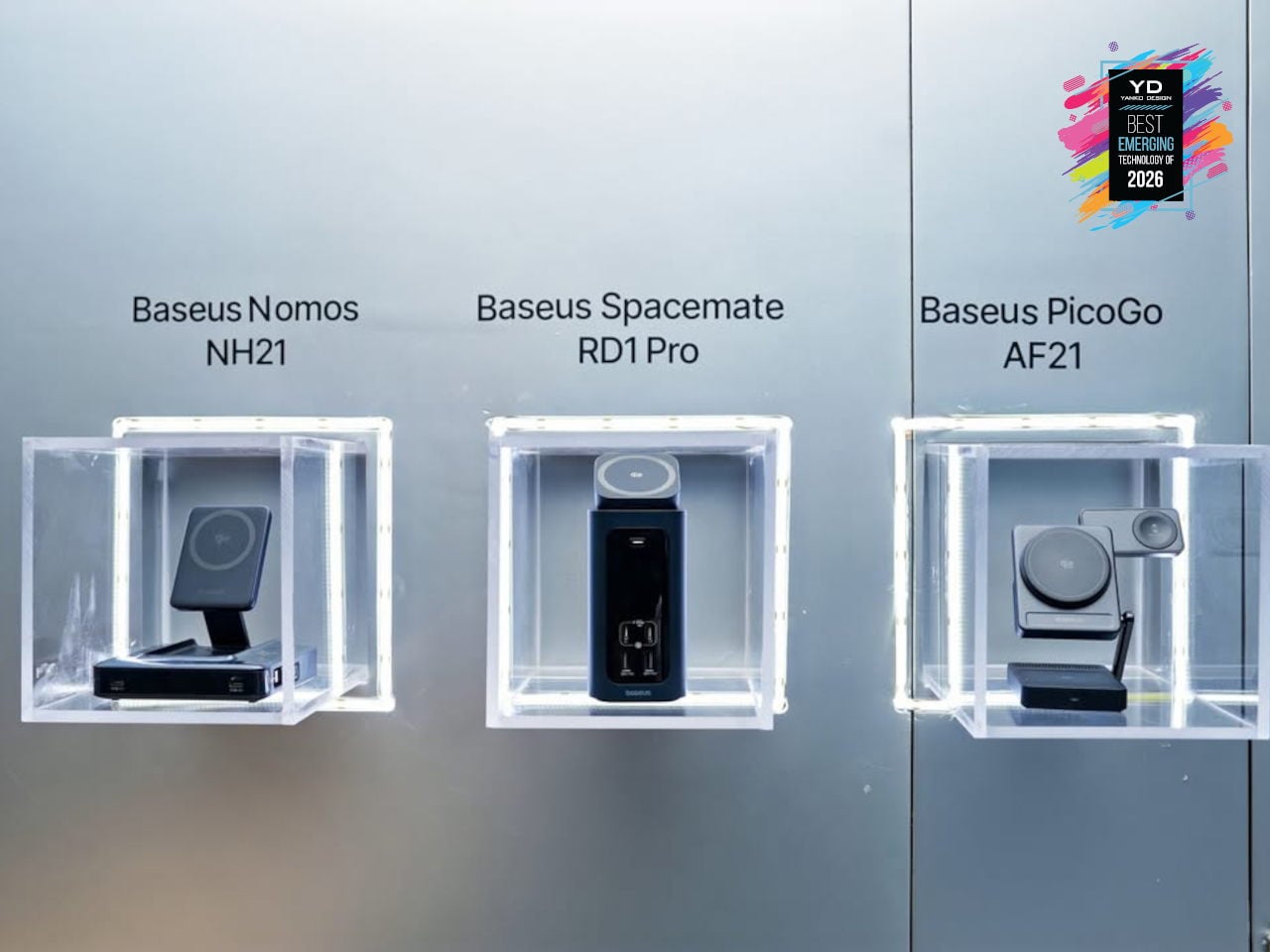
Baseus Spacemate RD1 Pro Desktop Dock
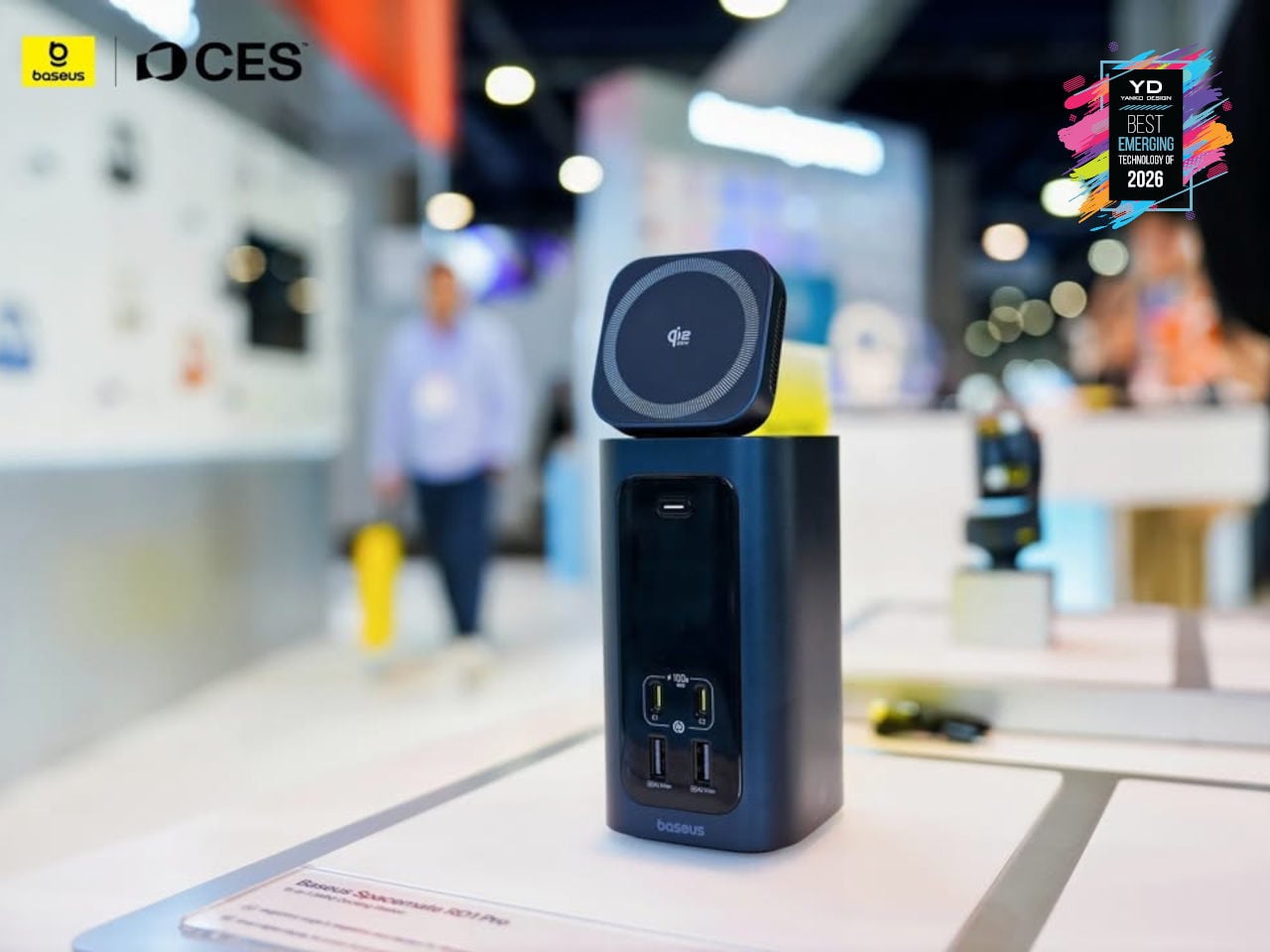
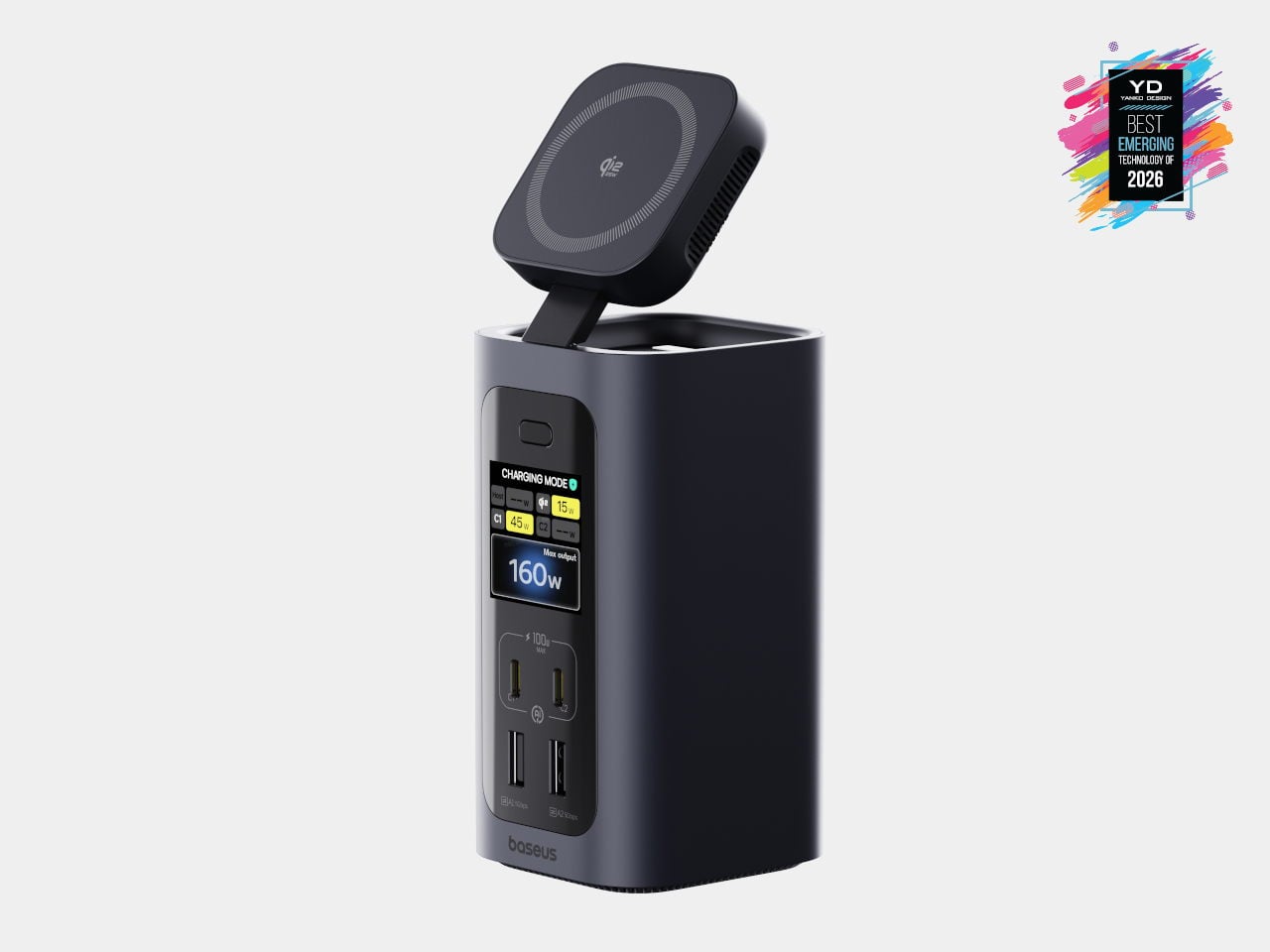
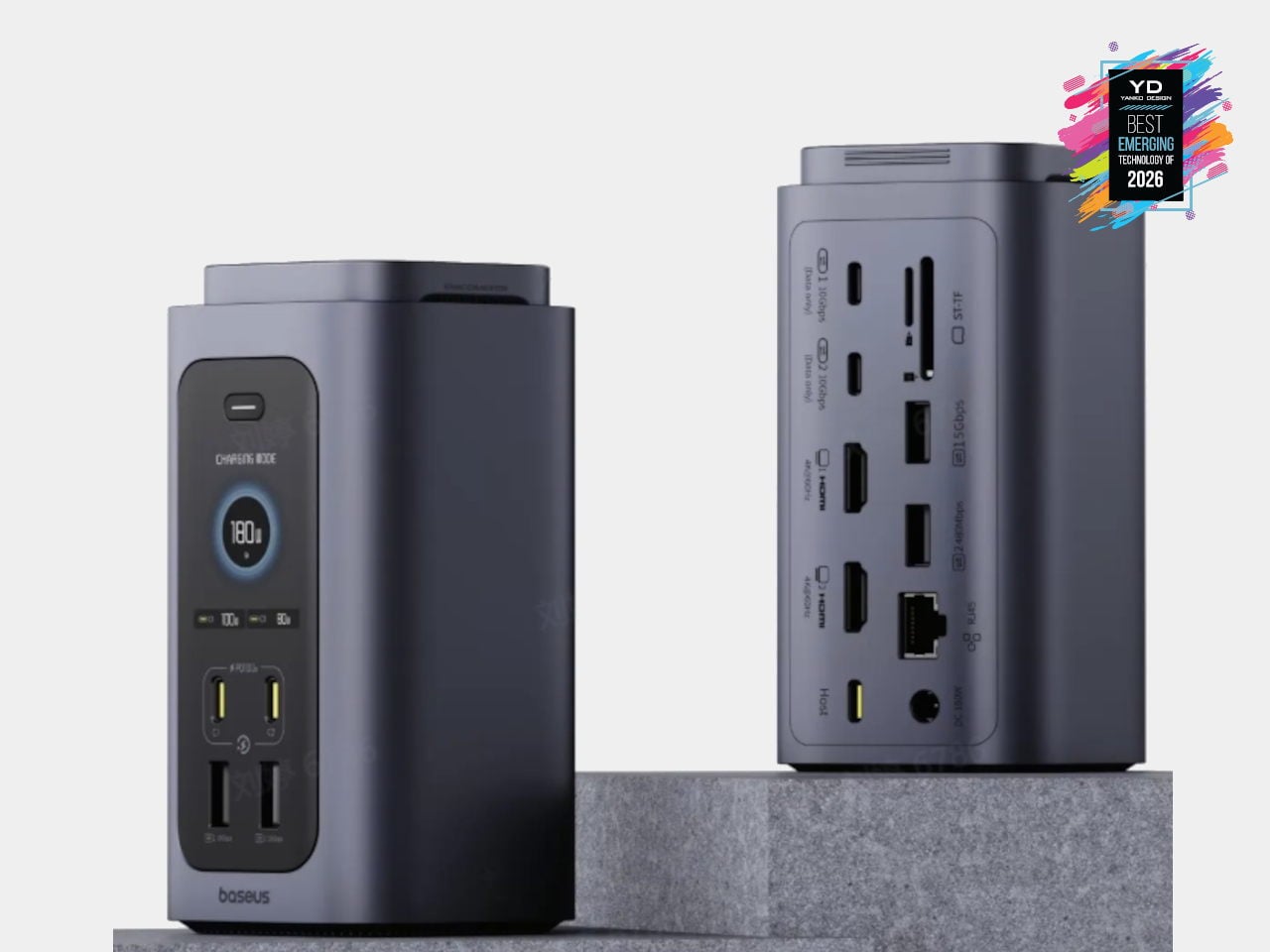
USB-C hubs and flat docks have become standard, but most still sprawl across the desk with cables radiating in every direction. Baseus Spacemate RD1 Pro is a vertical, 15-in-1 docking station that treats the dock as a compact desktop appliance instead of a dongle. A single USB-C cable links a Windows laptop to dual 4K monitors, 10 Gbps USB-C ports, SD and TF slots, and 1 Gbps Ethernet, while the tall, minimalist tower tucks ports on the back and keeps the footprint small.
The Spacemate RD1 Pro merges that connectivity with a serious GaN power stack. An included 180 W GaN adapter feeds up to 160W of total output, with 100W PD reserved for the laptop, dual USB-C 100W-capable fast-charging ports for accessories, and a retractable Qi2.2 25W magnetic wireless pad on top for phones or earbuds. Intelligent power management dynamically allocates power and surfaces status on a front LED display, showing per-port draw and alerts. It feels like an early example of vertical, multifunctional docks becoming central power-and-I/O blocks for increasingly dense, multi-device workspaces.
Switchbot OBBOTO
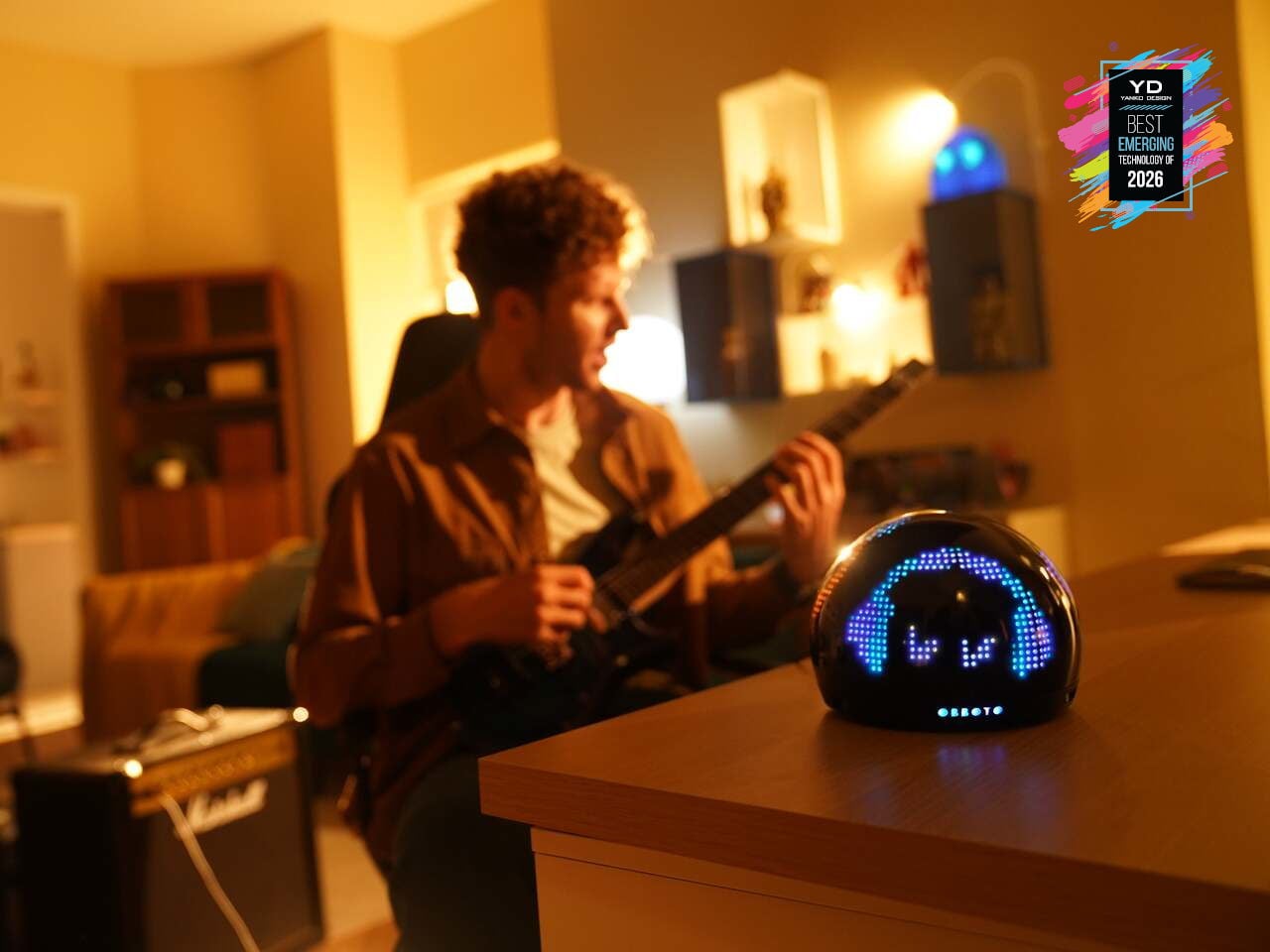
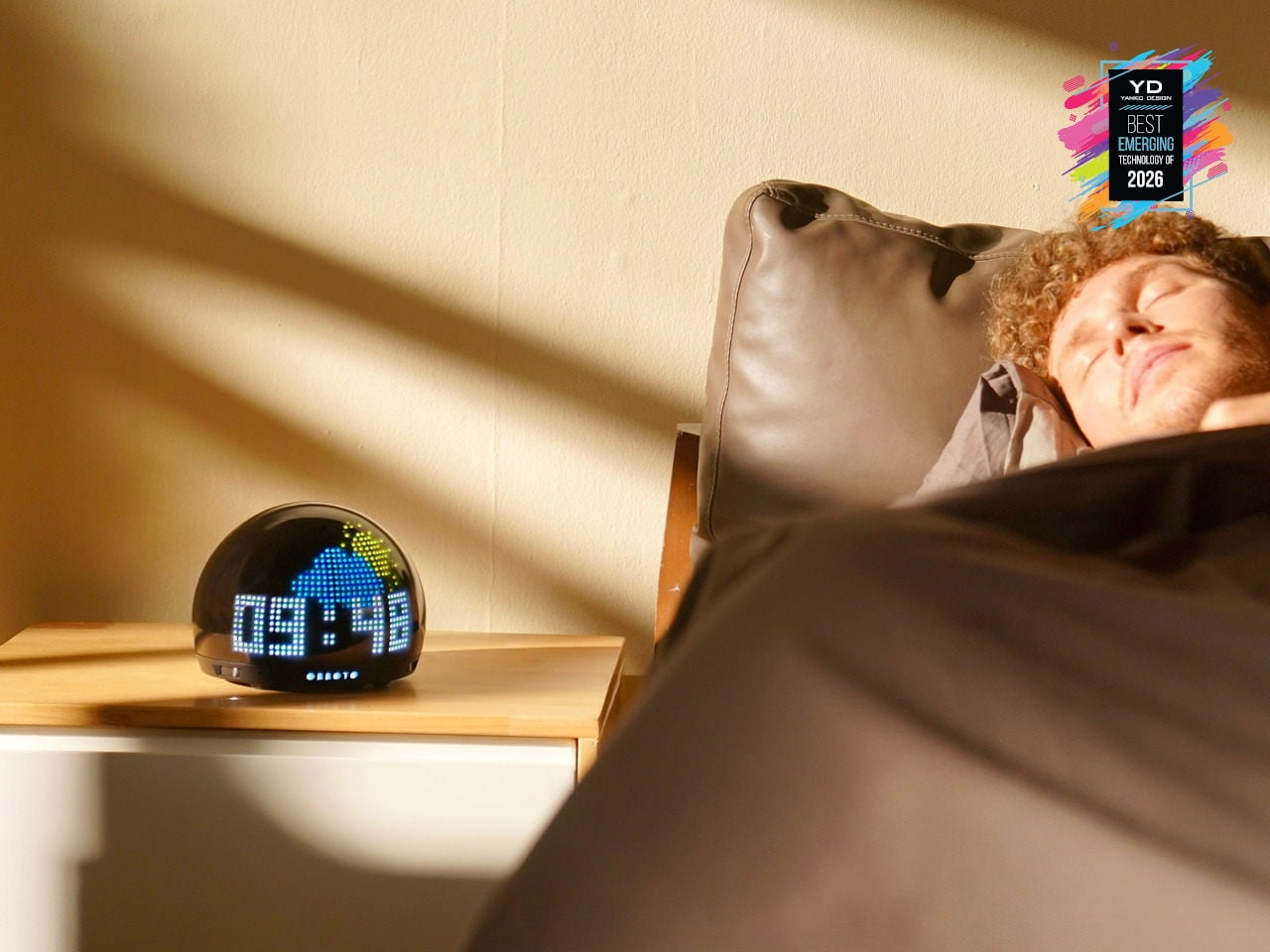
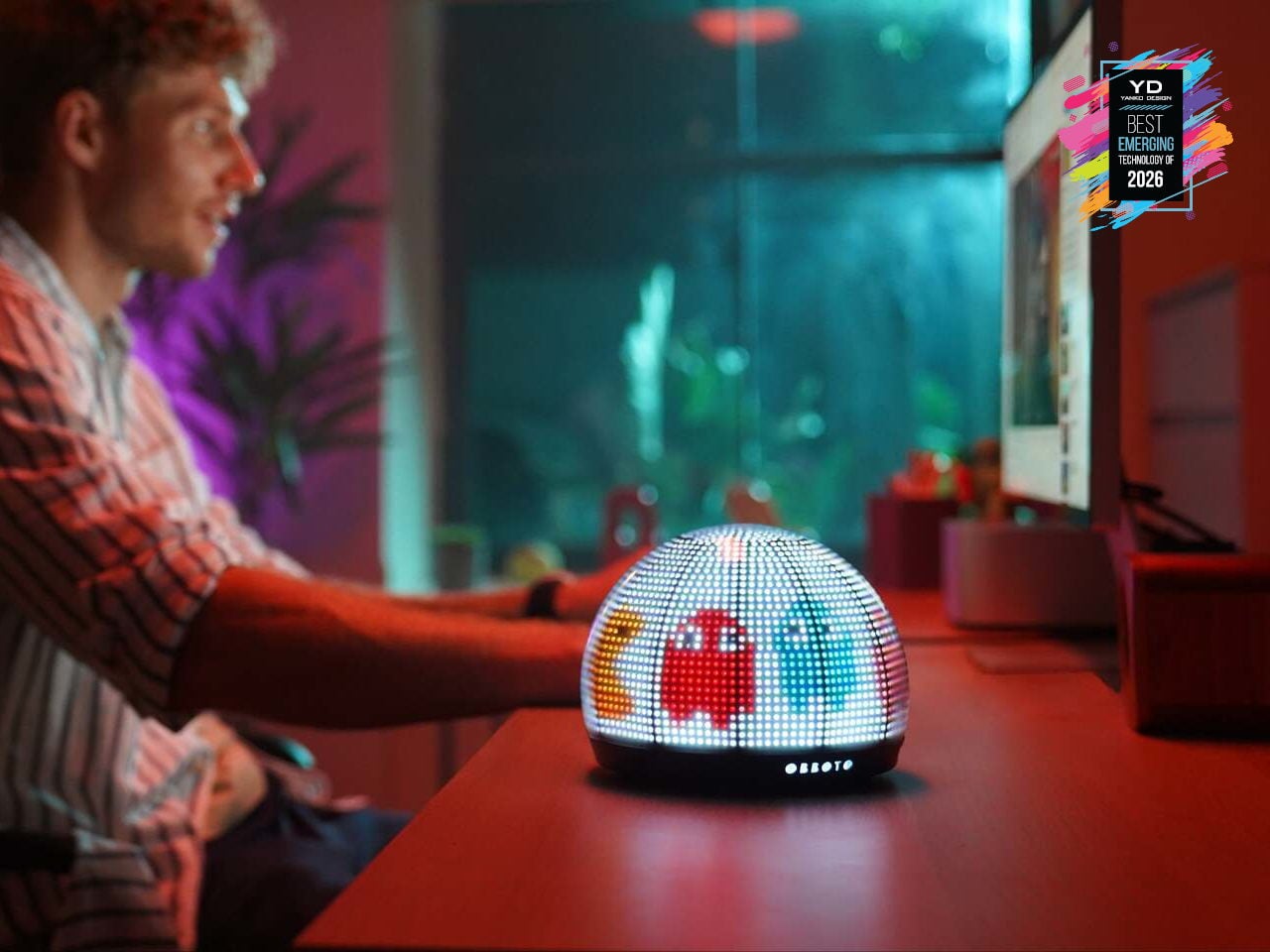
Desks and living rooms are filling up with smart lights and displays, but most still behave like obedient bulbs or tiny billboards. SwitchBot OBBOTO is a desk-sized pixel globe that tries to be something closer to a companion, using more than 2,900 RGB LEDs, motion sensing, and music visualization to turn light into an expressive presence. It can show time and weather as patterns, react when someone walks by, and sit alongside SwitchBot’s Comfort Tech lineup as the one that gives the room a bit of personality.
OBBOTO leans on AI-driven mood animations and ambiance modes to adjust to what someone is doing, shifting between sleep-friendly scenes, focus-oriented visuals, or relaxed, reactive patterns that move with music. Interactive pixel art and animations can be triggered or customized, making it as much a canvas as a lamp. It hints that tomorrow’s smart home might rely less on flat screens and more on small, characterful devices that quietly broadcast information and vibe at the same time.
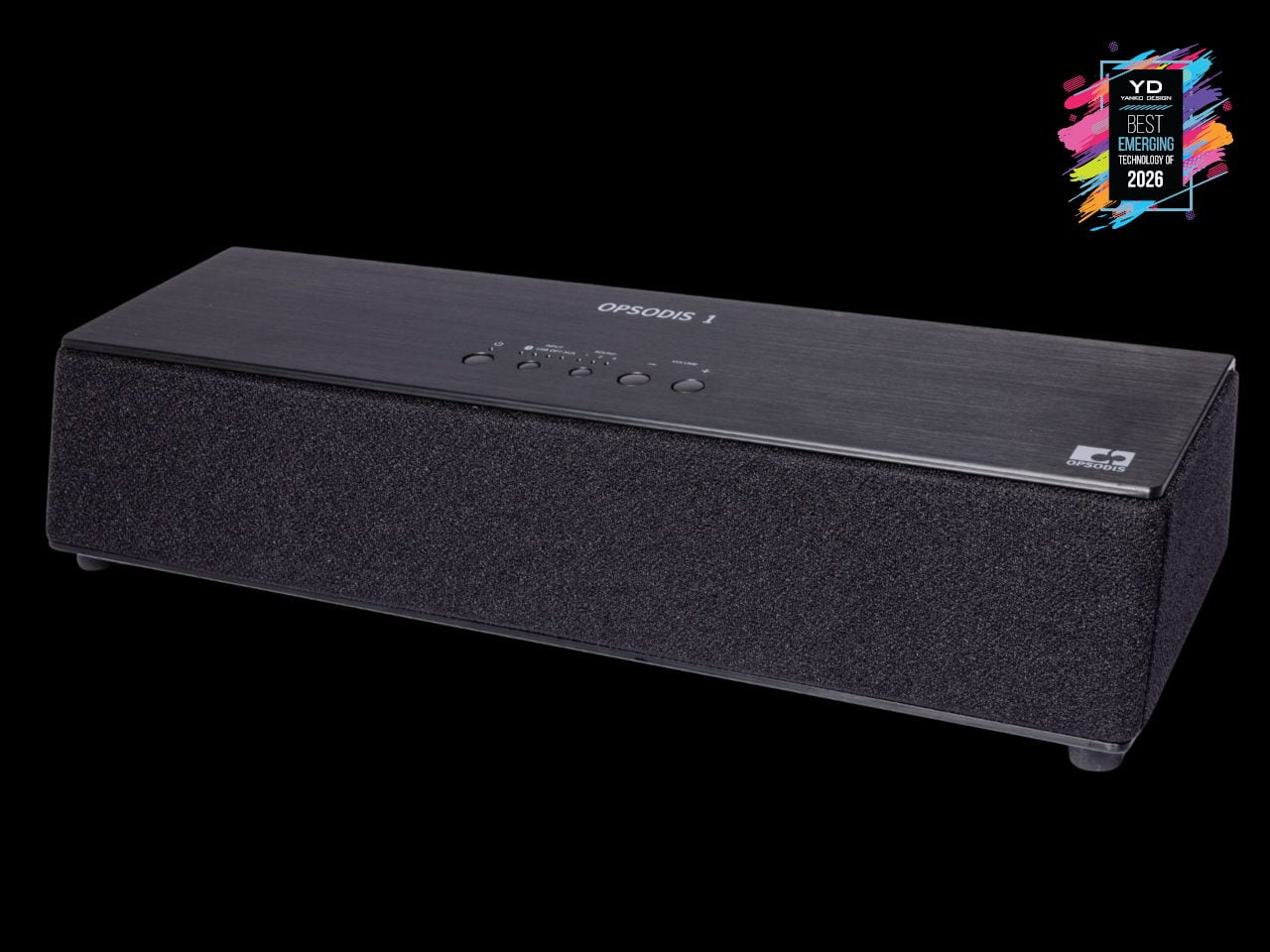
OPSODIS 1 Compact 3D Audio Speaker
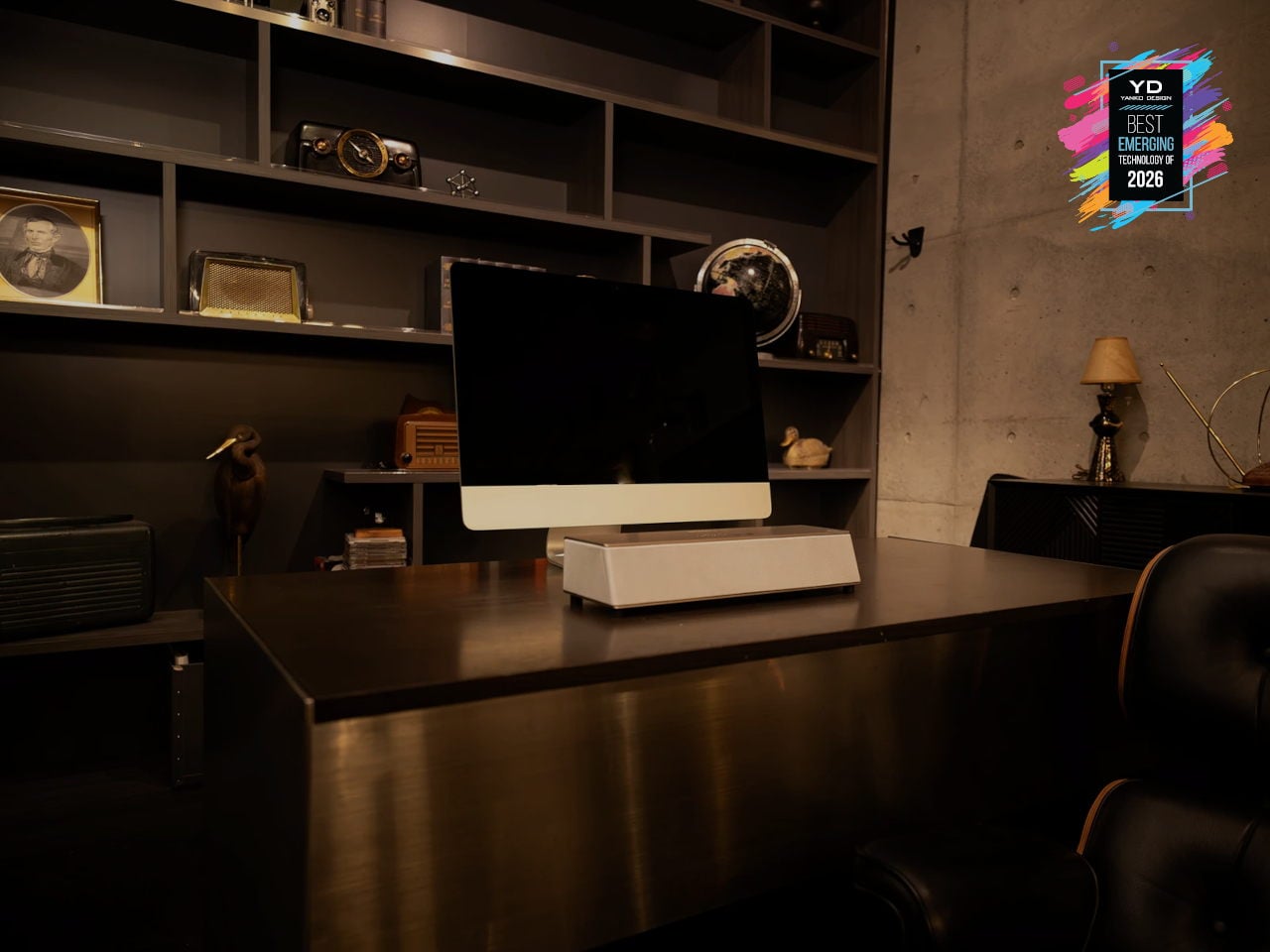
Surround sound has usually meant either a ring of speakers around the room, a big soundbar that leans on wall reflections, or headphones that lock you into a bubble. OPSODIS 1 is a compact desktop 3D audio speaker that tries a different route, using Kajima’s OPSODIS technology to project a 360-degree sound field from a single box. The 6-channel, 3-way, 6-driver array delivers natural spatial cues without depending on walls or ceilings, making it as at home on a desk as in a small living room.
OPSODIS, developed with the University of Southampton’s Institute of Sound and Vibration Research, uses optimal source distribution, crosstalk cancellation, and a symmetrical layout with high-frequency drivers near the center axis to send precise sound to your ears. Multiple inputs, from Bluetooth and USB-C to optical and 3.5 mm, plus listening modes like Narrow, Wide, and Simulated Stereo, adapt to different setups. It hints at a shift where immersive audio is moving beyond headphones and multi-box systems, toward single, research-driven speakers that create convincing 3D soundstages from one spot on your desk.
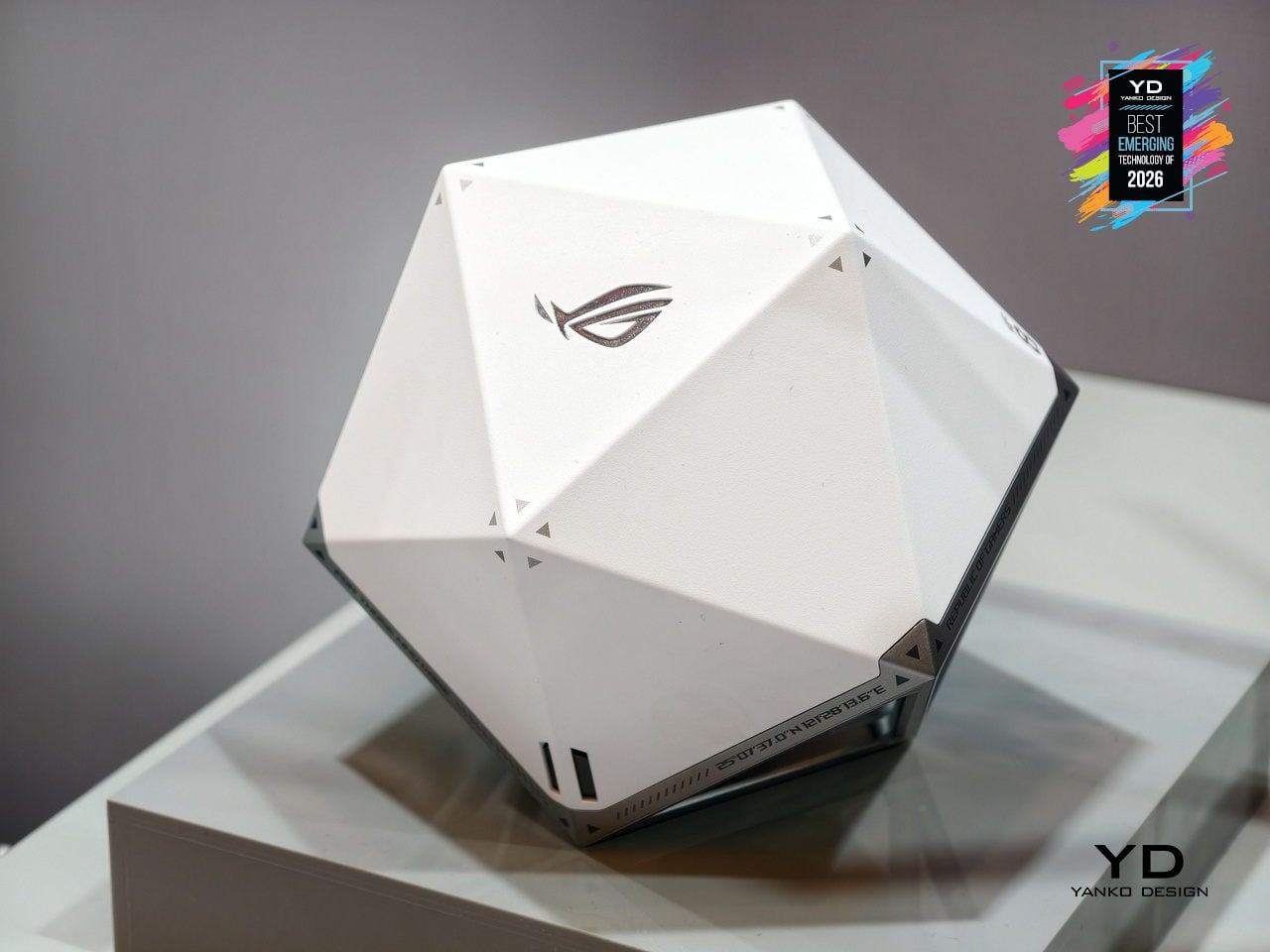
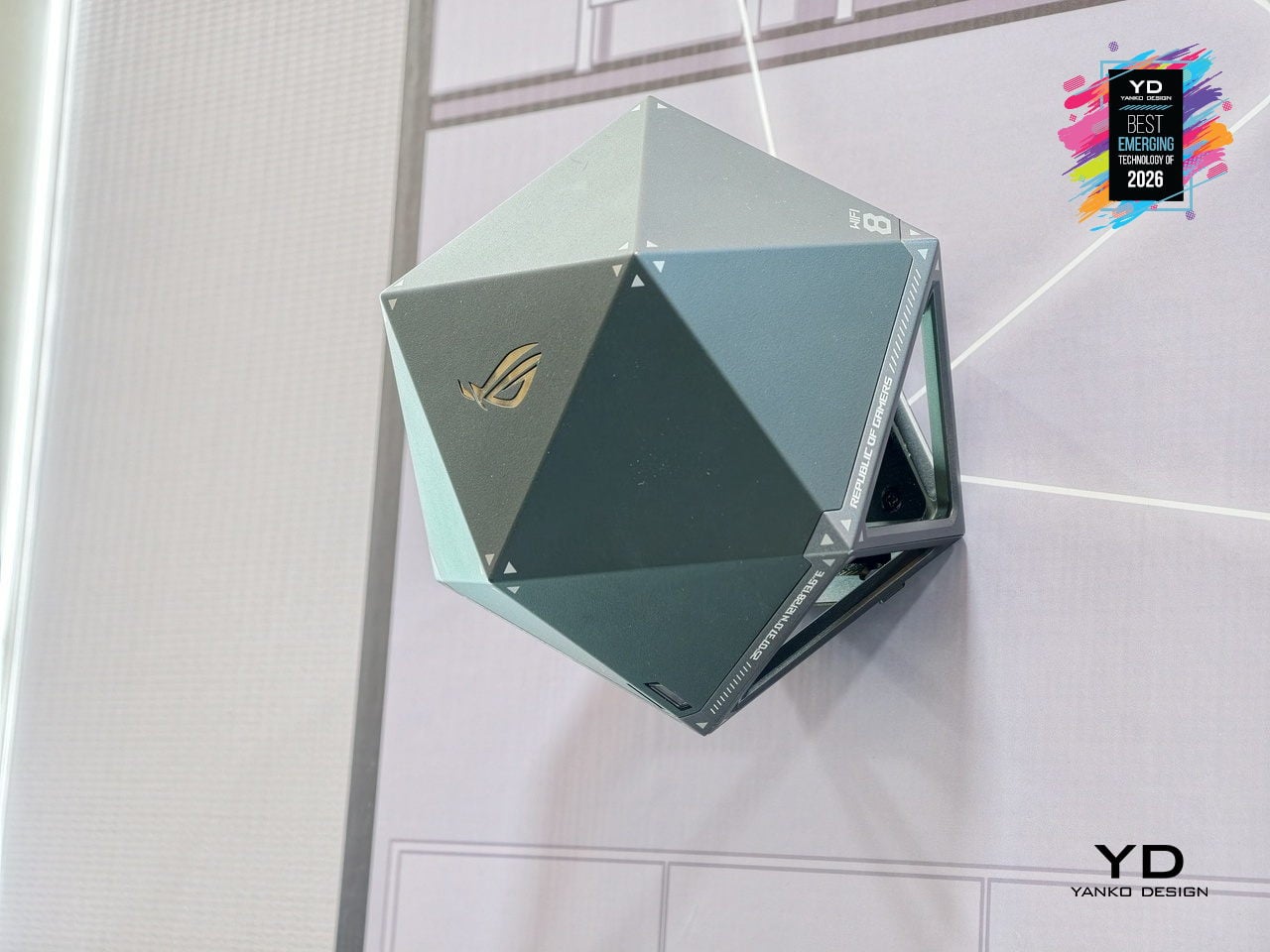
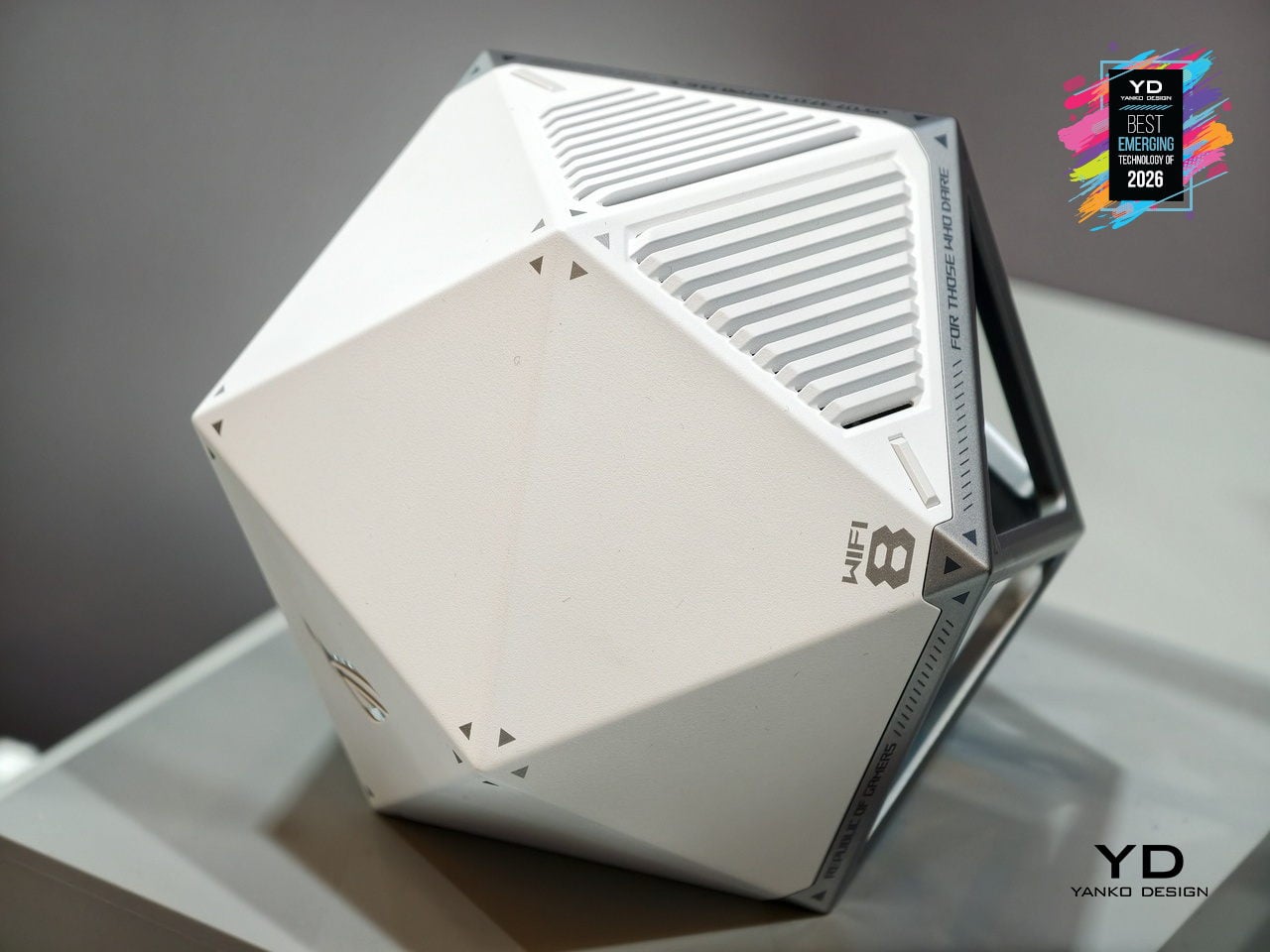
ASUS ROG NeoCore WiFi 8 Router
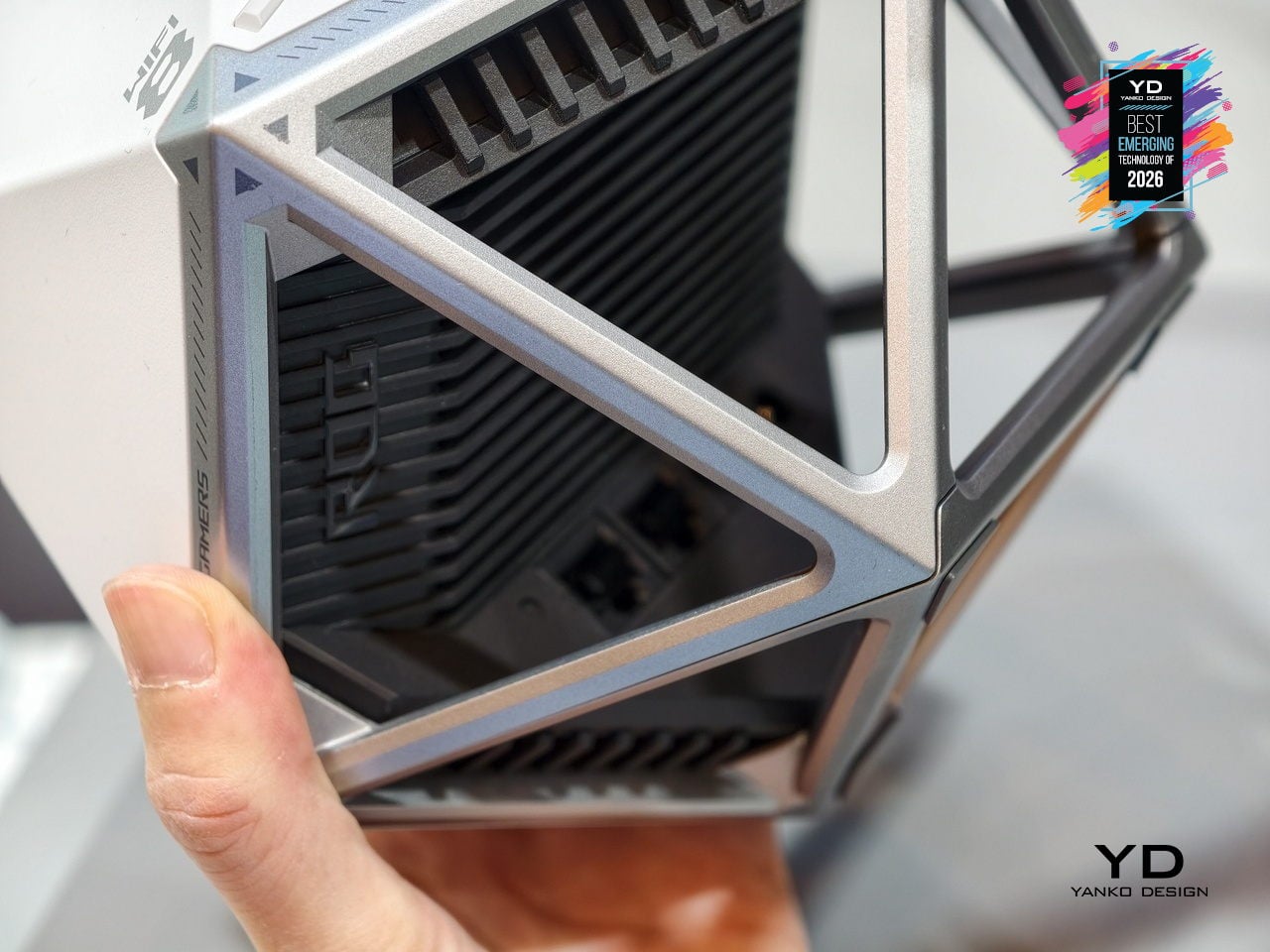
Most routers are still anonymous black slabs you hide behind a monitor or under a TV, even as they quietly run more and more of the home. ASUS ROG NeoCore takes the opposite approach, turning next‑gen Wi‑Fi 8 hardware into an object you actually want on the desk. The faceted polyhedral shell, somewhere between a gaming dice and a sci‑fi artifact, replaces the usual antenna farm with a sculptural form that can sit flat or be wall‑mounted without looking like infrastructure.
That shape is not just for show. A rigid exoskeleton frame wraps a ventilated inner core, giving the router plenty of airflow while keeping ports and heatsinks tucked into one face. The multifaceted body helps distribute antennas in three dimensions, supporting the tri‑band Wi‑Fi 8 radio stack that pushes more data, more efficiently, to many devices at once. NeoCore ends up feeling like an early glimpse of networking gear designed as part of a performance‑focused setup, where the box handling low‑latency gaming, 4K streaming, and dense device loads finally looks as intentional as the hardware it supports.
LEGO SMART Brick
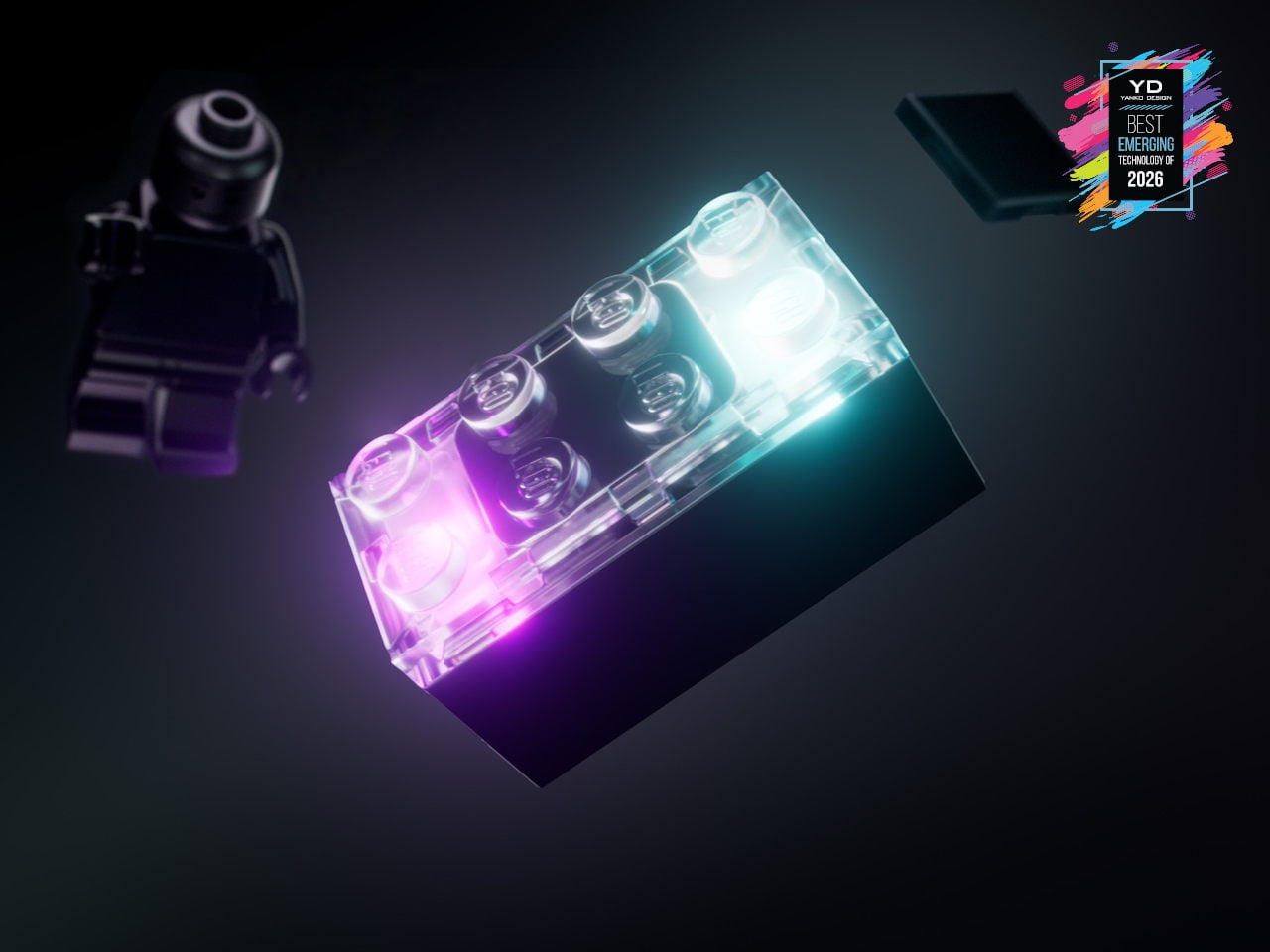
LEGO has flirted with electronics before, but usually in the form of obvious hubs or screen-tethered experiences. LEGO SMART Play shifts that by hiding a custom chip smaller than a stud inside the new SMART Brick, along with sensors, a sound engine, and wireless charging. Paired with SMART Tags and SMART Minifigures, it lets familiar builds react to swoops, crashes, and docking maneuvers with lights, motion-aware sounds, and contextual behaviors, while still feeling like pure, open-ended brick play on the table.
This platform quietly turns the entire LEGO System-in-Play into a canvas for responsive, screen-free interaction. Instead of asking kids to stare at a tablet, the SMART Brick listens through its sound sensor, feels through accelerometers, and responds through an onboard synthesizer, making ships, turrets, and throne rooms hum, fire, and react as they are moved. Because it is fully compatible with existing bricks and anchored in more than 20 patented world-first technologies, it feels like the early layer of a long-term platform that hints at everyday building blocks quietly carrying embedded intelligence.
LG CLOiD Home Robot
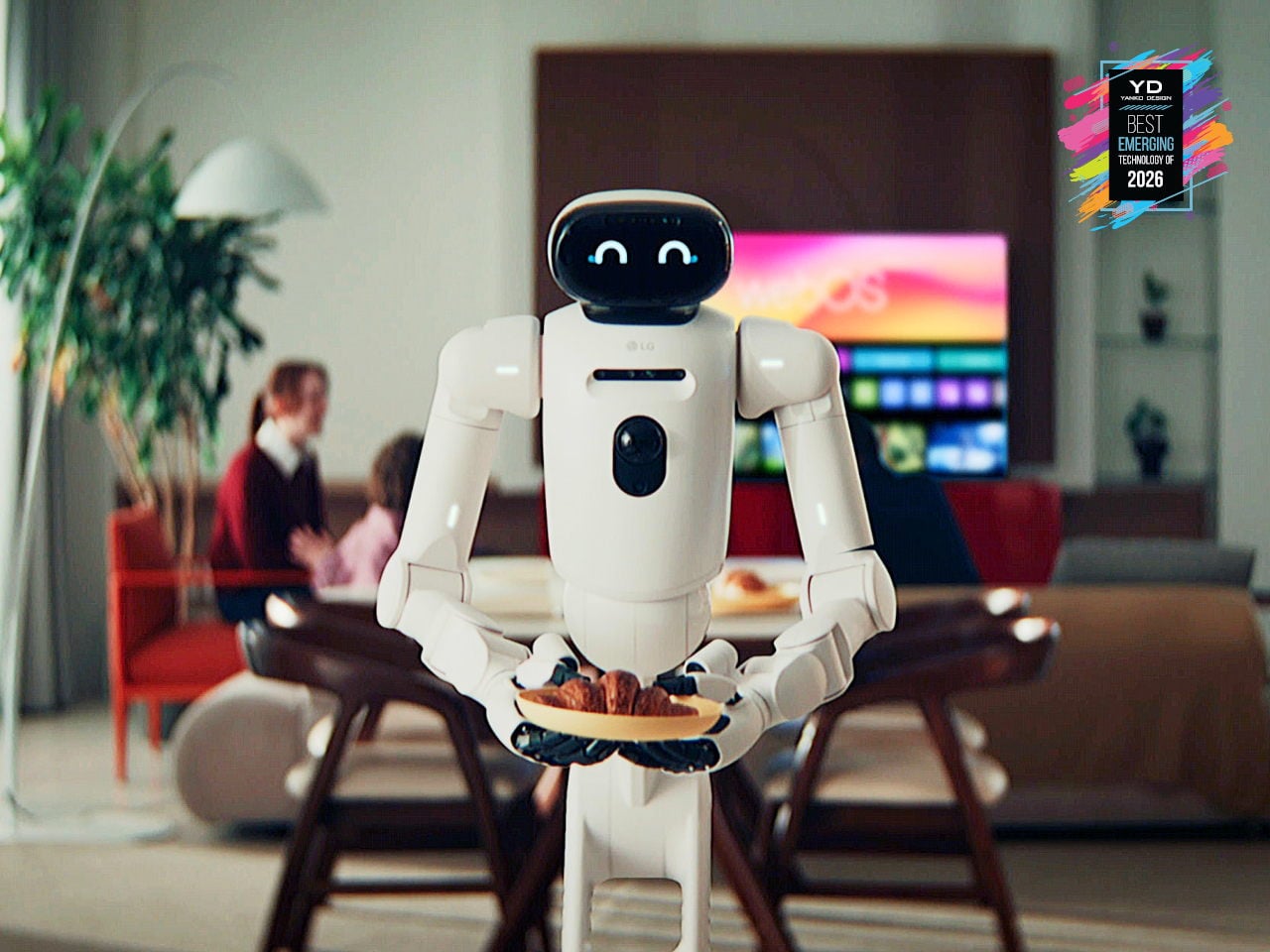
Home robots that can actually do chores are finally edging out of concept videos and into real homes. Robot vacuums are now background noise, and companies are quietly testing machines that can sort laundry or help in the kitchen instead of just answering questions from a speaker. LG’s CLOiD feels like the next step in that progression, a full-body home robot that does not just connect to appliances; it moves through the house and physically uses them.
CLOiD can take milk from the fridge, slide a croissant into the oven, start laundry cycles, and fold and stack clothes after drying. A tilting torso, two seven-degree-of-freedom arms, and five-finger hands ride on a wheeled base tuned for stability around kids and pets. LG’s AXIUM actuators give its joints compact, high-torque behavior, while a Vision Language Model and Vision Language Action system trained on tens of thousands of hours of household tasks lets it recognize appliances and coordinate with the ThinQ ecosystem, making housework automation feel less like science fiction.
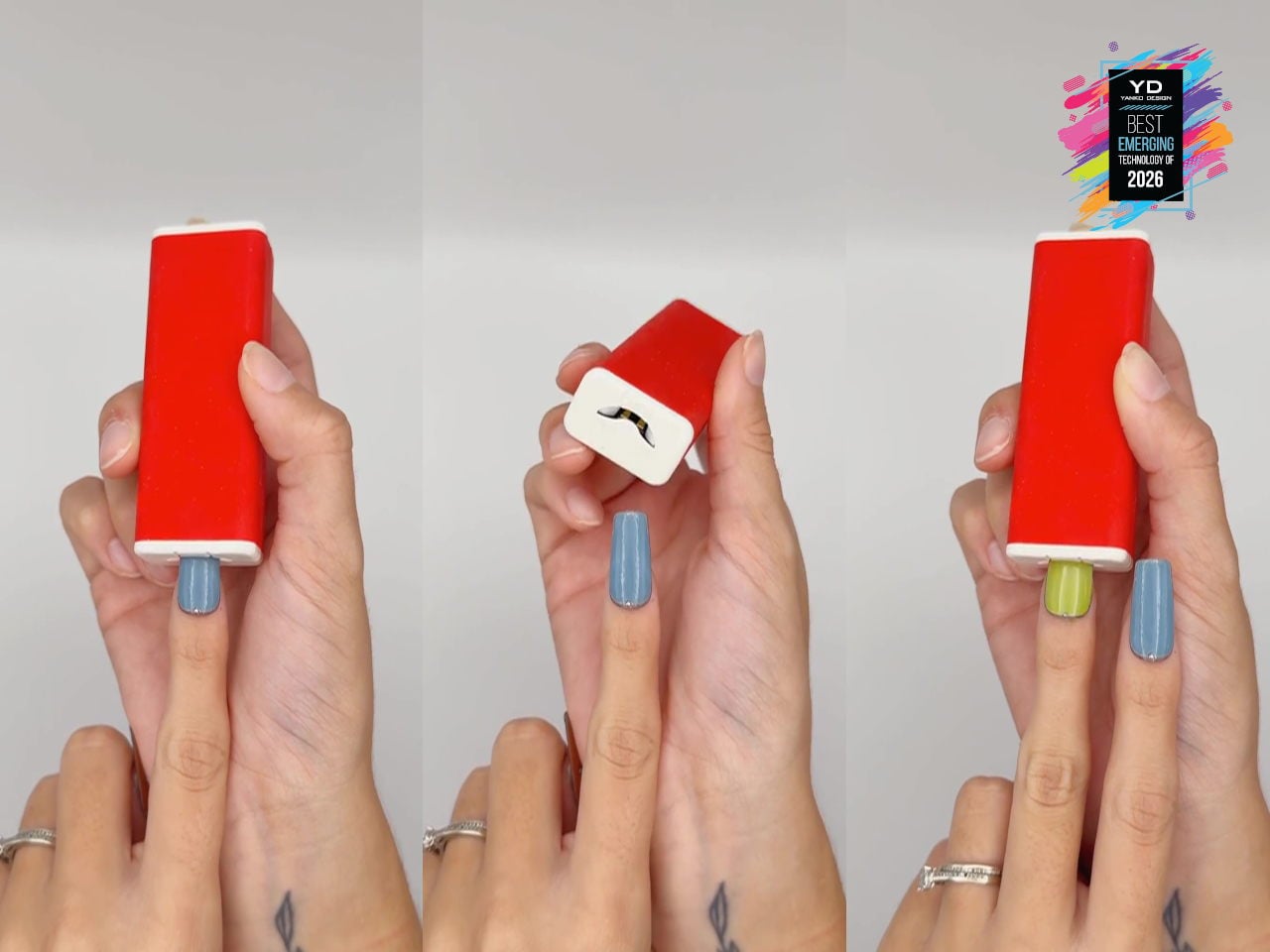
iPolish Color-changing Press-on Acrylic Nails
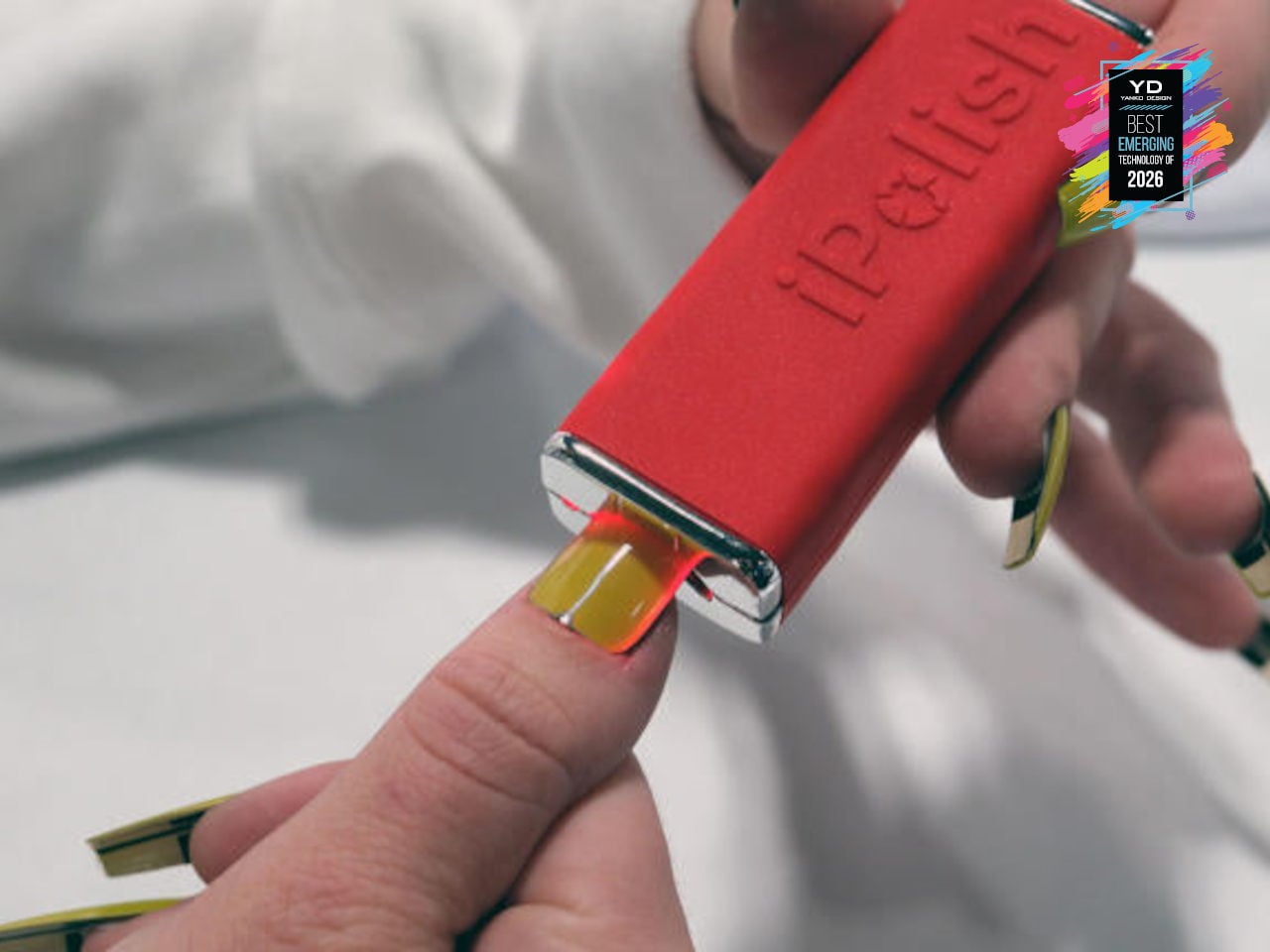
Fashion and beauty are quietly becoming the next frontier for consumer tech, from smart fabrics to LED-laced festival fits, but nails have mostly stayed analog. iPolish is a set of smartphone-driven digital press-on acrylics that behave like reprogrammable cosmetics, with wearable electronic nails that can display hundreds of rich colors on demand. You apply them like regular press-ons, then pair the iPolish app with the Magic Wand over Bluetooth to send your chosen palette, turning color changes into a quick gesture instead of a full removal and repaint.
The interaction is simple: you choose colors in the app, the Magic Wand stores them, and each nail cycles through options when inserted, pausing with a green blink at one of your selections so you can stop at the exact shade you want. Colors can last minutes, hours, or days, and if your outfit or mood changes, you just reselect and reinsert rather than soaking off layers of polish. Because the system works with accessories and fashionwear as well as nails, it feels like an early glimpse of where beauty tech is heading, where digital finishes become as swappable as makeup.